protests

Let the ICE picket begin

7

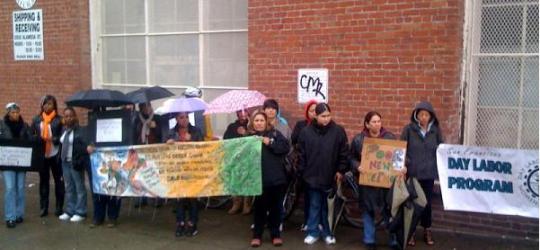
Members of the San Francisco Immigrant Rights Defense Committee launched a picket outside US Immigration and Customs Enforcement (ICE)’s Detention and Removal Operations office at 630 Sansome Street today to decry the activation of Secure Communities, which they describe as a “dangerous police-ICE collaboration program that threatens public safety.”


“In the wake of massive protests this weekend against Arizona’s anti-immigrant law, a broad coalition of immigrant rights advocates will stage a protest Tuesday in San Francisco against the implementation of a new police-ICE collaboration initiative which will harm public safety, the so-called ‘Secure’ Communities or S-Comm program,” SFIRDC’s press release states.

Concerned community members plan to form a picket line holding placards of enlarged fingerprints and multi-lingual messages “to expose the danger the program poses to the community.”

 “If we oppose Arizona’s SB1070, then we cannot stand aside while a dangerous policy with disturbing similarities to SB1070 is forced on our own city,” Carolina Morales of Community United Against Violence stated. “S-Comm gives dangerous discretion to police officers to falsely arrest or overcharge immigrant residents, who would then be automatically reported for deportation.”

The picket comes as a veto-proof majority of eight SF Supervisors stands poised to vote next week (there is no Board meeting today) on a resolution calling on local law enforcement to opt-out of S-Comm, noting that the policy “puts at risk even those subject to arrest for a minor infraction and those who did not commit any crime at all but were falsely arrested. “

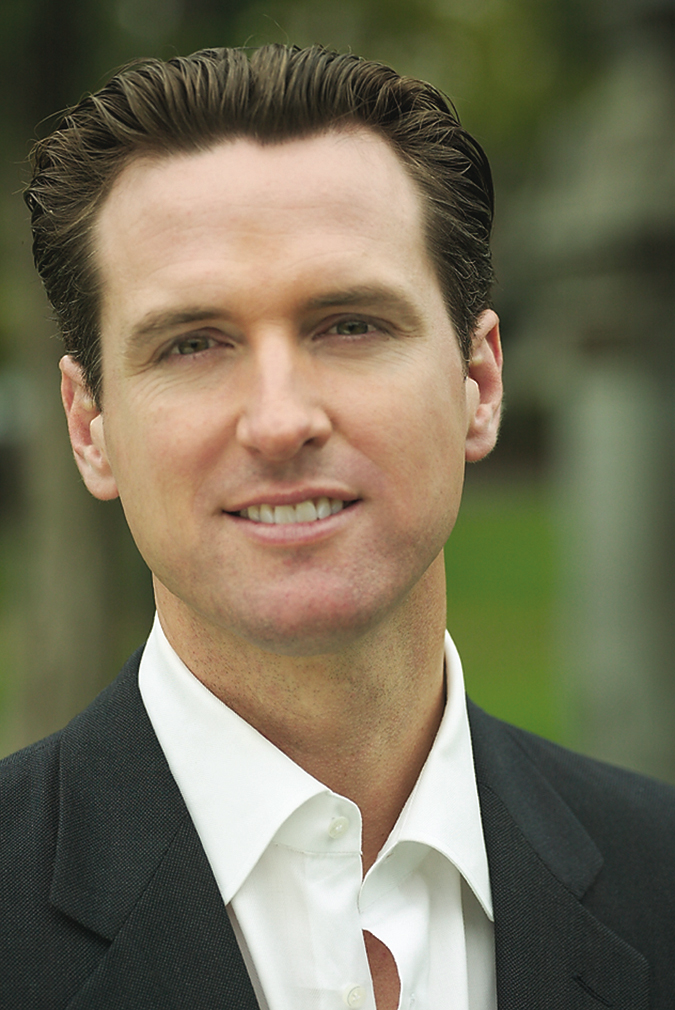
To date, the Mayor’s Office has not indicated that Newsom has any concerns with the program.
But San Francisco Sheriff Michael Hennessey, who requested to opt out of the program, has stated that S-Comm “will widen the net (of people reported to ICE) excessively” and that ICE has a “record of secrecy.”

Last year, the California Dept. of Justice signed a memorandum with ICE on the S-Comm program; the cover letter indicated that counties needed to agree to the program by signing a “statement of intent.” But last week, Attorney General Brown denied the Sheriff’s request to opt out, so community and legal advocates continue to explore their options.
 
 “The Attorney General is mistaken in believing that this program will only affect people who have already been apprehended and deported by ICE or charged with serious offenses,” said Francisco Ugarte, an immigrant rights attorney with Dolores Street Community Services.

.
 According to ICE’s own data, 5  percent of the people identified under the S-Comm program were U.S. citizens, and some 9 out of 10 of the total identified were charged with low level offenses, including property and traffic violations, not serious crimes.
And then there’s the fact that ICE’s data does not indicate whether those deported were actually found guilty of crimes, or were simply charged with crimes—a key distinction for anyone who professes to believe in human rights.

 “Our city’s families are living in fear that if they report a threat to their own safety, they or their family member may risk deportation, “ Nour Chammas with the Arab Resource and Organizing Center stated in SFIRDC’s press release. “This policy will tear at the very fabric of San Francisco’s rich and diverse culture.”

And Bobbi Lopez of La Voz Latina observed that folks are working on a federal level for immigration reform because they know real solutions to a broken immigration system.  “However, we cannot just sit idly by and wait while ICE’s police collaboration schemes threaten our families daily,” Lopez warned. “ We are proud that city officials are standing with community members to halt this attack on our San Francisco community.” 

Today’s picket was called for by the following members of SFIRDC:
African Advocacy Network, Arab Resource and Organizing Center, Asian Law Caucus,
CARECEN, Causa Justa: Just Cause, Chinese for Affirmative Action, Chinese Progressive Association, Communities United Against Violence, Dolores Street Community Services, East Bay Alliance for Sustainable Economy, Immigrant Legal Resource Center, Instituto Familiar de la Raza, La Raza Centro Legal / SF Day Labor Program, La Voz Parents Council, Mujeres Unidas y Activas, National Lawyers Guild SF Bay Area Chapter, People Organizing to Demand Environmental & Economic Rights, People Organized to Win Employment Rights, SF Pride at Work, and South of Market Community Action Network.

The Bay Citizen makes a strong debut

2

The Bay Citizen, a well-funded newsroom that is the most anticipated of several new media experiments in San Francisco, officially launched today with some solid, interesting stories that include an investigation of toxic pesticides being illegally applied to local marijuana crops and a look at how Prop. 13 has obscenely benefited the wealthiest San Francisco residents.

The organization also announced today that it has raised an additional $3.5 million in donations to supplement the $5 million in seed money that local investment banker Warren Hellman provided to the start-up. Meanwhile, another new media start-up that we profiled this week, SF Streetsblog – one of The Bay Citizen’s many local partners — has issued a fundraising plea for $50,000 that it needs by July 1 to continue its award-winning coverage of local transportation issues.

But today is a day for The Bay Citizen to bask in its initial success, which it will do tonight starting at 7:30 with a launch party at the Great American Music Hall. And then tomorrow, once the hoopla is over and the stories that have been in development for weeks or months are replaced by fresh content, San Franciscans will begin to learn whether The Bay Citizen represents a new journalistic powerhouse or just a well-funded website with some powerful friends.

I’ve heard some detractors in the local media grumble that their presentation seems “banal” and unworthy of their big budget, but I don’t agree. Personally, I think The Bay Citizen strikes the right tone and balance, emphasizing solid journalism rather than flashy gimmicks, while also drawing on multimedia tools such as the video of yesterday’s protests against President Obama’s visit to SF.

San Francisco needs relevant, well-presented, serious journalism more than the snarky, juvenile stories we see in design-heavy local start-ups such as The Bold Italic, where The Bay Citizen’s culture writer came from, or the often out-of-touch, sneering, or self-important stories that we see in corporate-run papers like SF Weekly, San Francisco Chronicle, and San Francisco Examiner.

Instead, our first peek at The Bay Citizen seems to show that it might just be up to the important task of providing relevant content for the New York Times’ twice-weekly Bay Area section – which has also demonstrated a tin ear for San Francisco values since it launched last year – providing an important new forum for those who believe in speaking truth to power.

Infectious

0

arts@sfbg.com

VIDEO What brings down a presidential campaign, makes Stephen Colbert break out his lightsabers, and inspires protest in Oakland and Tehran? The alpha and omega of online video: YouTube and my camera phone equal a jillion eyeballs and our itchy mouse finger clicking “Play” and passing it on. All those moments, all those sticky little memes, are now forever linked and embedded in the cultural fabric, touchstones certain to become engrained in our collective unconscious as the grainy image of the Beatles playing Ed Sullivan or the Challenger exploding on camera.

At all of five years old, YouTube can claim more than 2 billion views a day. Twenty-four hours of video are uploaded to the site every minute and admittedly few of those snippets find traction in the stream of life. Yet the evolution of online video is just beginning. So say knowledgeable observers like Jennie Bourne, author of Web Video: Making It Great, Getting It Noticed.

“Viral has become a dirty word in Web video because people’s concerns in going viral tend to be linked to trying to monetize a web video, and very often a video that’s getting a lot of views is not making a lot of money,” Bourne explains. And while the rise of citizen broadcast journalists and DIY documentarians is laudable, she adds, “I have to say the flip side of that — people walking around with cameras on their foreheads all the time video blogging — can get a little boring without a structure and style. I think there will be a shakeout at one point, and Web video will mature. It’s not there yet — it’s effective as a distribution medium and effective as a social medium but still developing as a commercial medium.”

For now, what do some of the last five or even (gasp) 10 years’ most widely distributed viral videos say about this generation’s particular sickness?

With the advent of camera phones, the revolution will be webcast Is it any surprise that moving images activate us more than words? The outrage over the BART station shooting of Oscar Grant was fueled by the sights captured by viewers with camera phones. Six months after Grant’s death, the killing of Neda Agha-Soltan during the Iranian election protests was captured by multiple observers, causing it to become a flashpoint for reformists and activists. The videos depicting what one Time writer described as “probably the most widely witnessed death in human history” ended up winning last year’s George Polk Award for Videography.

Pre-online video, the mainstream news media likely would have shielded the public from these images in the interest of so-called public decency. But the availability of these videos online — and the reaction they generated — triggered a rethink. The shadowy online presence of the beheading videos made by Islamist terrorists following 9/11 might have prepared some for the horrors of the very real faces of death, but obviously the intent behind more recent spontaneous acts of DIY documentation has been radically different. Consider this the nonviolent, amateur response to Homeland Security-approved surveillance — a quickly-posted flipside to the filter of traditional journalism.

We appreciate raw talent There’s the professional article, like the demo tape of Jeremy Davies’ lengthy Charles Manson improvisation. But viewers often prefer to feed on more unvarnished talent-show-esque efforts: the stoic, high-geek style of Tay Zonday’s “Chocolate Rain,” or Eli Porter of “Iron Mic” infamy. As one aficionado said of the latter, Porter is an “enigma, for no one knows where the FUCK Eli is! His battle was done in 2003, and he sort of vanished, leaving legions of fans wanting more.” The invisible — both the private ritual and the would-be performer striving for a public — is made visible. This is why recent clips such as a little girl dunking through her legs or the “Dick Slang” video of circle-jerking hip-hoppers shaking their penii like hula hoops are so wickedly sticky.

The reveal can’t be concealed You can’t hide your anger management issues, whether you’re a Chinese woman punching and kicking on Muni or Bill O’Reilly flipping out about getting played out with a Sting song (“We’ll do it live! Fuck it!”). Nor can you forget that pesky Katie Couric clip if you’re Sarah Palin: the notorious snippet of the wannabe vice president attempting to explain her nonexistent foreign policy experience lives on in a YouTube feature box. If you decide to get more than 1,000 prisoners in the Philippines to replicate the “Thriller” video, rope a slew of tarted-up tots to do the “Single Ladies” routine, or organize a flash mob of dancers for your (500) Days of Summer-cheesy proposal in New York City’s Washington Square Park, you can bet it won’t stay a secret. Especially when a good portion of the bystanders blocking your shot are hoisting up cameras and phones of their own.

We like to play with our food and gobble pet vids The dancing fountains of “Diet Coke and Mentos” and the elegiac meltdowns of so many innocent, candy-colored sundaes and ‘sicles in “The Death & Life of Ice Cream” rock our pop, though they’re no match for sneezing baby pandas, dramatic chipmunks, very vocal cats, and dogs either verbalizing, skateboarding, or balloon-munching.

Passion counts Especially when it comes to Chris Crocker’s “Leave Britney Alone” protestations, Obama Girl’s undulations, the kakapo parrot shagging a hapless nature photographer’s skull, and Zach Galifianakis’ hilariously bad “Between Two Ferns” interviews. Even Soulja Boy’s vlogs, in which the pop tell-’em-all cranks the virtues of the Xbox, seem obsessed — with getting the viewer’s attention. That also goes for the “Numa Numa” xloserkidx singing along to O Zone’s “Dragostea Din Tei” and the twirling, ducking, and capering Canadian high-schooler in the “Star Wars Kid” video, which marketing company the Viral Factory estimates has been viewed more than 900 million times.

Just gird yourself for the edit “Star Wars Kid” is one primo example: it inspired Stephen Colbert to kick off a viral loop of his own, challenging viewers to edit and enhance the green-screen video tribute of his own lightsaber routine. No one is exempt from a little creative tinkering, an inspired tweak or 2,000, be it “Longcat”; Ted Levine in Silence of the Lambs; or pre-YouTube animated vid “All Your Base Are Belong To Us,” the classic mother of all video hacks, where images ranging from beer ads to motel signs are Photoshopped with the Zero Wing Engrish subtitle. And you thought the remix was dead.

Arizona strikes out

1

By Adrian Castañeda

The backlash over Arizona’s recently enacted Senate Bill 1070, which requires law enforcement to demand proof of citizenship if an individual is suspected of being in the U.S. illegally, is spreading faster than crude in the gulf, bringing America’s favorite pastime to the political battlefront.

In nearly every city the Arizona Diamondbacks have played baseball in during the last month, they have been met by hundreds of activists protesting the law as unjust. Beginning May 29, the San Francisco Gigantes will host the unintended ambassadors of bigotry for a three-game series. San Franciscans are already gearing up for a strong show of force with a protest march that begins at Justin Herman Plaza at 4 p.m. and follows the waterfront to AT&T Park.

Although batter’s box may be far removed from the governor’s desk, as David Zirin of The Nation reported May 10 in “Diamondbacks Owner Ken Kendrick Continues to Support SB1070,” Kendrick has stated his opposition to SB1070 but held a May 20 fundraiser for Republican Arizona State Sen. Jonathan Paton. The fundraiser for Paton, a supporter of the bill who is now running for Congress, was reportedly held inside the owner’s box during the Diamondbacks 8-7 win over the Giants in Phoenix.

Even before The Nation broke the story of using the publicly-funded stadium as a hub for Republican fundraising, bloggers and commentators were railing against Kendrick for his half-hearted attempts to distance the team from the political uproar. “The fallout from recent state legislation has a direct impact on many of our players, employees, and fans in Arizona, not to mention our local businesses, many of which are corporate partners of ours,” says a press release on the team’s Web site. Many take the statement as a sign that the demonstrations are working.

Articles on Kendrick’s political activities spurred the nationwide protests, but every city’s protest seems to be locally and spontaneously organized. Brian Cruz, part of the May 1st Coalition for Worker and Immigrant Rights, said that although the May 29 event may not have much economic impact on the Diamondbacks, it is a political statement: “We are boycotting the game because we need to do what we can to stop the state from implementing this law.”

Cruz hopes the protests draw national attention to the issue and force President Obama to take action. Cruz advocates for immigration reform and amnesty for those in the country without papers. “We believe in a world without borders,” Cruz told us. Cruz believes that U.S. foreign and economic policies are to blame for immigrants leaving their home countries, and that America’s rich people are merely using undocumented people as scapegoats. “We see it as a racist attack against immigrants that demonizes those who come to this country to work,” Cruz says of SB 1070.

Jevon Cochran, a student at Oakland’s Laney College, has been organizing along with others to boycott the law he says is racist against all people of color, not just Hispanics. Cochran says the protest is crucial in overturning Arizona’s law and preventing similar laws from spreading to other states. College campuses have been huge sources of support for immigrants’ rights with a wide variety of student groups coming out against the law. Most recently, Alpha Phi Alpha fraternity, the largest black fraternity in the U.S., cancelled its 40,000-member convention in Phoenix. The move came at great personal cost to the group but represents an even greater loss in revenue for Arizona businesses. “We want to strangle Arizona financially,” Cochran said.

In addition to the city’s resolution to boycott Arizona, Sup. Chris Daly called on the city and fans to protest at the Giants games against the Diamondbacks, home and away, and asked the Giants to wear their Gigantes jerseys in solidarity with the protestors.

But the Diamondbacks aren’t the only team facing scrutiny. Many teams, including the Giants, are being asked by immigrants’ rights groups to boycott Arizona by relocating their spring training camps to other states. The site (www.movethegame.org) hosts an online petition demanding MLB move its 2011 All-Star Game to another state. According to the site, there is a historical precedent for targeting professional sports for social change. In 1987, Arizona decided to ignore the Martin Luther King Jr. holiday. The NFL responded by moving the 1993 Super Bowl to from Tempe to California, costing Arizona millions in lost revenue. When Arizona later began recognizing the holiday, the 1996 Super Bowl was held in Phoenix.

Alerts

0

Compiled by Paula Connelly

alert@sfbg.com

WEDNESDAY, MAY 26


Court date for March 4 protesters

Show your solidarity with the people who were arrested at the March 4 protests, where thousands of protesters demanded an end to budget cuts, tuition hikes, layoffs, and privatization in public education at this court date, followed by a pre-trial hearing Friday at 9 a.m. in Department 104 at the same location.

9 a.m., free

Wiley Manuel Courthouse

661 Washington, Oakl.

(510) 627-4700

THURSDAY, MAY 27


Human Rights Awards

Join Global Exchange at its eighth annual Human Rights Awards ceremony, where they honor the work of environmental justice trailblazer Van Jones and fair trade pioneer Raúl del Aguilla and celebrate over 20 years of Global Exchange’s human rights activism. Event to feature dinner, dancing, and a silent auction.

6:30 p.m., $150

Bimbo’s 365 Club

1025 Columbus, SF

(415) 575-5537

SATURDAY, MAY 29


Boycott Arizona

Join in this march and civil disobedience action during the Arizona Diamondbacks vs. SF Giants game to protest Arizona’s SB 1070 bill. The Diamondbacks’ organization, led by Ken Kendricks, is one of the primary funders of the Republican Party, which pushed SB1070 through. Demand that the MLB move the 2011 All-Star game out of Phoenix.

4 p.m., free

Meet at Embarcadero and Market, SF

March to AT&T Park

May Day Coalition

(415) 572-4112 (English)

(415) 678-0114 (Spanish)


Sister Cities Cuba Summit

Attend the annual summit conference of the Oakland-Santiago de Cuba Sister City Association, a group formed in 1998 to promote peace and friendship between Oakland and Santiago de Cuba and to exchange culture, education, humanitarian aid, music, and art. The day-long conference includes talks on international policy, current events, education, plans for future involvement, and more.

9:45 a.m.; free, donations accepted

Humanist Hall

390 27th St., Oakl.

www.oakland-santiagodecubasistercities.org

SUNDAY, MAY 30


District 8 Chili for Chile Cook-off

Watch the top four candidates for District 8 supervisor turn up the heat as they compete at this local celebrity-judged chili cook-off featuring MCs Bevan Dufty, current District 8 supervisor; Sister Roma of the Sisters of Perpetual Indulgence; and keynote speaker Alex Geiger, the Chilean consul general. Proceeds go to the Rainbow World Fund to help rebuild an orphanage for at-risk girls that was destroyed in San Vincente de Tagua Tagua.

2 p.m., $10–$20 suggested donation

Most Holy Redeemer Church Hall

100 Diamond, SF

www.rainbowfund.org


Sex Positive Discussion Group

People of all ages, genders, sexual preferences, and experience levels are invited to the East Bay Free Skool to take part in this discussion group about what sex positivity means and how to understand and create free, healthy sexual selves.

8 p.m., free

Nabolom Bakery

2708 Russell, Berk.

eastbayfs@gmail.com 2

Mail items for Alerts to the Guardian Building, 135 Mississippi St., SF, CA 94107; fax to (415) 255-8762; or e-mail alert@sfbg.com. Please include a contact telephone number. Items must be received at least one week prior to the publication date.


John Ross: To stop is to die

1

Editors note: John Ross is finishing up a book tour across the United States, and sending us his impressions of Obamalandia. You can read some of his previous posts here, here and here.


I. Baltimore/Washington


The Amtrak rumbles into the back end of Baltimore past block after block of abandoned, boarded-up row houses ripe for burning. This city of such magnificent renegades as Edgar Allen Poe, John Wilkes Booth, and Billie Holliday is mapped by grimy pocket ghettoes that made Baltimore a perfect stage-set for “The Wire.” When contrasted against the gleaming, refurbished downtown, these crime-scene neighborhoods incubate urban uprising.  Red Emma’s is one of a skein of anarcho bookstores with names like Sedition, Monkeywrench, and Bluestockings that have welcomed me on this grueling odyssey across the underbelly of Obamalandia. I’m enlivened by the energies these oases exude. Contemporary anarchists seem to have little time for the crippling ideological jousting that drained the lifeblood of my generation. Those bad old days of Marxist Leninist Maoist Trotskyist Stalinesque backbiting seem an absurd nightmare on the barricades of change these days.  

Tiffany, a tenor saxophonist who day gigs at OSHA over in D.C. and puts in after hours at the bookstore-cafe, and I pitch in to unload a busload of Bread & Puppet props for a zany, Zen show at a cavernous performance space Red Emma’s maintains in a vacated church. I get to trundle in the head of Ben Franklin, the villain in B&P’s latest mini-extravaganza in which $100 bills are the most pertinent puppets. A half century after its founding even before Vietnam caught fire, the puppeteers are still serving bread and aoeli to grateful audiences.

In D.C., I speak at the Institute for Policy Studies, a perennial leftist sounding board four blocks north of the White House and a billion light years from power, about how Washington has hooked Mexico on drug war. It is my first visit to the nation’s capitol with a black president in residence in the house that slaves once built. The Capo de Tutti Capos of the most grotesque criminal conspiracy on earth is too overwhelmed by swelling catastrophe offshore in the Gulf that will make Katrina look like a summer squall, impending car bombs in Times Square, and an economy that continues in freefall, to take time out for a chitchat.

On the day I speak in Washington, Teabaggers and their ilk are massing across the Potomac in an open-carry anti-Obama rally — newspaper photos depict white American males with what look like rocket launchers slung over their shoulders. The threats of this nativist scum are not idle ones. The economic collapse has stoked the bumfires that burn fiercely in the dormant craters of the American volcano.


II. New York
My roots on the North American landmass snake under the lower east side of Manhattan. The Ross (nee Grossinsky) DNA is imprinted everywhere on these mean streets. My grandma Mamie Zief (Ellis Islandese for “Jew”) relocated from Poland to a Rivington Street tenement at the turn of the 20th Century. Although I grew up in the West Village, I went east at an early age; after fleeing the family nest I squatted in the Shastone Monument building on Essex and Houston before escaping to Mexico in the late 1950s. Two of my kids grew up on Second Street and Avenue A, and my son the hiphop mogul still lives 500 yards away from the old homestead (Dante and I are working on a book that bounces off our mutual addictions to black music.)  

My presentations in the Big Apple fit neatly into this geographical schema. I lecture at NYU’s King Juan Carlos Center, once the site of concrete basketball courts where I expanded oodles of adolescent energies. I talk to the Friends of Brad Will at the Sixth Street Community Center where the slain Indymedia journalist, a lower east side rabble-rouser during the darkest days of the Giuliani dictatorship, regularly practiced yoga. Justice for Brad Will remains undone.
And I am lured into Amy Goodman’s state-of-the-art lair for 20 minutes of fame. Democracy Now even sends a car to fetch me up to Chelsea and I induce the stern goddess of left radio to smile — but perhaps it was merely a grimace.  

New York is chockablock with “I Love/Hate New York” minutes. One morning I descend from Dante’s sixth story inferno for a double espresso and the Lowisaida is infested with cops. I approach one of New York’s Finest, an amiable Caucasian, and inquire about the blue plague: “it’s the Will Smith show,” he smiles mischievously. Just then a motorcade of 50 bullet-proofed black vehicles swings off Houston with their lights flashing and sirens screaming and heads down the Bowery to Cooper Union where our commander-in-chief is to make a major speech addressing financial “reform” (in Mexico, we call this “plugging up the hole after the baby has drowned.”)

Goldman Sachs vultures in dark suits and furrowed brows listen intently but go mum to the press when they deadhead downtown back to Wall Street to continue fleecing the public’s pocket.

I step around the corner onto Houston, where a large enigmatic Shepard Fairey montage that references climate change has just been tagged (Dante who is well-versed in such iconography, speculates that the culprit is a tagger named “Nah” who is dedicated to dissing the public art of the stars of this genre.) Gallery slaves have been bussed in to erase the offending stains.  I am wearing my Mexican Electricity Workers tee-shirt, whose black and red colors and clenched fist logo match Fairey’s throw-up, and I am suddenly surrounded by a bevy of documenterians, at least one of whom is just off the boat from Andalusia. They pose me against Fairey’s wall for a thousand-click fashion shoot. New York New York!

Ironically (a word that doesn’t have much scratch here in Gotham), the Banksy flick “Exit Through The Gift Shop” is playing at a grind house across Houston, a cheese ball mockumentary that destroys this world-famous outlaw’s once-pristine reputation for thumbing his nose at power. Indeed, the best thing about the movie is that it is playing right next door to the Yonah Schimmil knishery. I order a kasha knish and sign the guest book with Subcomandante Marcos’s rubric.  

Also a mandatory dining stop in the old neighborhood: the immortal Katz’s (“Send a salami to your boy in the Army”) where pushy New Yorkers of the Hebraic persuasion scuffle to be next in line at the counter of this now 100% Puerto Rican-run deli. The brisket is still to die for.

New York City and environs is now home to a half million Mexicans, mostly from Puebla state, whose slow country drawls are a foil for the tropical machine-gun accents of Puerto Ricans and Dominicans. The Poblanos work in the kitchens of yupped-up food palaces (16 Oaxaquenos were burnt to a crisp walloping pots up in “Windows On The World” on the 108th floor of the Twin Towers on 9/11 day) or slave in 24-hour grocery stores run by Arabs and Hindus and Koreans.  

Mexican elites who have fled here from their imploding fatherland do not much rub elbows with their impoverished compatriots, except when they employ them as maids and babysitters One of the few upsides of the new Arizona Breathing While Brown law is that former pundit and Foreign Minister Jorge Castaneda might be jailed by Sheriff Joe Arpaio and his storm troopers and forced to don pink underwear if he were to be stopped without papers in Maricopa County.

III. BOSTON

The new Boston Tea Party that catapulted Scott Brown into the suddenly Kennedy-less Senate is not an anomaly in a city where the name of Charles Stuart (Google him up) still rings a bell.  

I speak at the Harvard Coop to a handful of bedraggled Harvard Square denizens who have found sanctuary from a driving rainstorm in this hallowed readery. I am invited to the David Rockefeller Center for Latin American Studies to rant at the future leaders of Latin America — but none show up. I spend an engaging evening with Jack Womack, whose “Zapata & The Mexican Revolution” is still the definitive text on the struggle of the incorruptible revolutionary. Jack, now emeritus in Harvard Yard, recently rebuked the Mexican government by turning down a literary prize because of President Felipe Calderon’s role in the firing of 43,000 workers in an undisguised ploy to privatize electricity generation in Mexico, and is currently chipping away at his life work, a history of working class struggle in the state of Veracruz. Jack and I converse in an argot stippled with so many arcane references to social upheaval south of the border that FBI eavesdroppers could surmise we are planning a new Mexican revolution — which, 100 years to the date of the last one, is not such a bad idea.    

I warm up for May 1st rallies by urging attendees at community meetings at the UNITE building in Chinatown and a U-U church in Jamaica Plains to join the protests. There are two marches and rallies set for International Workers Day in Beantown, the bitter fruit of a split in the movement the seeds of which I could not divine.  

On the Boston Commons, I spiel about the first May 1st back in 1886 when 80,000 immigrant workers stomped through Chicago to demand the eight-hour day, a day of solidarity and struggle around the world everywhere except in the country where it was birthed. The Haymarket Martyrs join us for a stroll through the streets of downtown Boston, held aloft by the ubiquitous Bread & Puppet comrades.  

All across Amerikkka, immigrant workers, incensed by the enactment of a law that makes inhaling the air of Arizona a jailable crime if you are a person the color of the earth, were on the march, perhaps a half million (high end estimates) strong — as many as 200,000 in Los Angeles and another 100,000 in Chicago; 25,000 more in Dallas and significant turnouts in New York and Washington but only 6,000 or so in Boston to which Mexicans have migrated in smaller numbers.  

This year’s surge, which was dwarfed by the gargantuan outpourings of 2006, featured a marked absence of Mexican flags as undocumented workers chose to cloak themselves in the Stars and Stripes in response to the feeding frenzy of the Fox News lynch mob.  

Although the condemnation of Arizona Goddamn was vibrant, it must be noted that there have been as many ICE raids under the Obaminators as under Bush and the crackdown on employers is targeting union-organized janitors. David Bacon, whose reportage remains a light in this darkness, recently noted that 175 SEIU janitors are about to be fired in San Francisco, once a sanctuary city for labor.

The People the Color of the Earth rolled through the streets of east Boston with gusto. “No One Is Illegal!” Sandra, my displaced Chilanga guardian angel, and I yodeled in unison with the compas.  “Do I Look Illegal?” read the homemade banner draped around the shoulders of a skinny pre-teener. Many high schoolers wore caps and gowns to highlight the prohibitions on financial aid that doom their college educations to MacDonald’s Hamburger U.

Speaker after speaker in a park down by the harbor  — where, indeed a few hundred years back down the pike the original Boston Tea Party was staged — raged against a system that still consigns immigrant workers to the lowest step on the American food chain. “Justicia! Justicia!” they clamored and their cries were no less relevant than those uttered by the “Martires de Chicago,” as the Haymarket martyrs are known throughout Latin America. By the time I took the mic, all the words had already been spoken but I finished up with the chant of the pensioners’ movement in Mexico City in whose ranks I am enrolled: “Parar Es Morir!” — To Stop Is To Die!

Me and the Monstruo have come to the end of our three month 66 performance journey through Obamalandia but there’s one thing you can count on: “Parar Es Morir.”  I’m not planning on stopping (or dying) any time soon.
  
John Ross will be returning to Mexico in mid- May to begin work on a new book, “From Bebop To HipHop – Fathers & Sons.”  You can consult him on particulars at johnross@igc.org  
        

PBS’s Frontline edits out single payer

1

Documentary misrepresented advocates as supporters of a public option
4/23/10

Silencing supporters of single-payer, or Medicare for All, is a media staple, but PBS’s Frontline found a new way to do that on the April 13 special Obama’s Deal–by selectively editing an interview with a single-payer advocate and footage of single-payer protesters to make them appear to be activists for a public option instead.

The public option proposal would have offered a government-run health insurance program to some individuals as an alternative to mandatory private health insurance. Not only is this not the same thing as Medicare for All, it’s an idea many single-payer advocates actually opposed, arguing that it would leave the insurance industry intact as dominant players in the healthcare business (PNHP.org, 7/20/09).

In the report, Frontline explained that insurance industry lobbyists pushed a bill in the Senate Finance Committee chaired by Sen. Max Baucus (D.-Montana) “that would include the mandate to buy insurance and kill the public option.” That “didn’t sit well with the president’s liberal supporters,” the Frontline narrator told viewers. After a clip from public-option supporter Howard Dean, a full minute and a half focused on protests: “The left counterattacked in May…. Liberal outrage arrived in Baucus’ own hearing room as healthcare activists, one after another, shouted him down.” Several of these protesters are seen in action, with a clip of an interview with Margaret Flowers of Physicians for a National Health Program (PNHP) saying that these were members of her group shut out of the hearings.

Now, Flowers and PNHP are leading single-payer advocates–but you’d never learn that from watching the Frontline program, which never mentions the single-payer concept. Instead, viewers were left to assume that Flowers and the protesters were public-option proponents, since that was the only progressive proposal that had been discussed. As Flowers explained (Consortium News, 4/15/10):

When the host, Mr. [Michael] Kirk, interviewed me for Obama’s Deal, we spoke extensively of the single-payer movement and my arrest with other single-payer advocates in the Senate Finance Committee last May. However, our action in Senate Finance was then misidentified as “those on the left” who led a “counterattack” because of “liberal outrage” at being excluded.

Viewers saw more footage of protesters being handcuffed and led away, with an unidentified voiceover from Amy Goodman of Democracy Now! describing the arrests, and finally a voice was heard saying: “This option cannot be part of the discussion at a Senate hearing? Now, I think that’s wrong.”

The audience could only conclude that “this option” referred to the public option, but this conclusion would be incorrect; this voice was actually MSNBC host Ed Schultz, a single-payer supporter, and a fuller version of his quote (5/7/09) would have made it clear that he was complaining about single-payer being excluded from the hearing:

Now, let me explain single-payer for just a minute. The money comes from one source, the government. Now, you and I pay taxes, OK. The government pays the bill. It’s that simple. Patients are not caught in the middle between doctors and insurance companies, no game-playing here. There’s no middleman. You know? There’s no decision-makers between you and your doctor. It’s a clean deal.

So what Chairman Baucus has decided, this option cannot be part of the discussion at a Senate hearing? Now, I think that’s wrong. I don’t think it’s fair.

Frontline’s editors responded to Flowers’ complaints, saying that they “understand the frustration of Dr. Flowers and others in what she calls the ‘single-payer movement,'” but that “it’s the work of journalism to report widely on a topic, then find the sharpest focus for the reporting, unfortunately leaving out much strong material along the way to shaping the clearest communication possible in the time or space allowed.”

The statement also argued that

the section that included Dr. Flowers was focused on the power of the insurance lobby and showed how activists like Dr. Flowers were excluded from the debate over the bill. The protesters themselves said they were protesting the fact that they had been excluded from the debate, so we believe we presented the protests in the proper context.

But in Frontline’s presentation, “activists like Dr. Flowers”–that is, single-payer advocates–didn’t even exist. Having itself excluded their perspective from the debate–and even misrepresented them as supporters of a position that many of them actually oppose–there’s some irony in Frontline claiming to have put this exclusion in the “proper context.”

This is not the first time that Frontline has decided that a conversation about healthcare reform should exclude single-payer (FAIR Action Alert, 4/7/09). The March 31, 2009, Frontline special Sick Around America avoided discussions of national healthcare plans. This omission led Frontline correspondent T.R. Reid–who had hosted a previous Frontline special (4/15/08) that examined various public healthcare models–to withdraw from the project.
When Frontline pushed single-payer out of the debate last year, PBS ombud Michael Getler (4/10/09) weighed in on the side of critics, calling it a “missed opportunity.” Getler today (4/23/10) published a column about the latest Frontline omissions, once again finding that ignoring a popular policy like single-payer is problematic:

It seems to me that to ignore something that was out there and popular with millions of people and thousands of healthcare professionals, but not really on the table, was a mistake. Although obviously tight on time, the producers should have found 30 seconds to take this into account, because many Americans support it, yet the deal makers never mention it, nor is the politics of discarding it addressed.

We’re thankful that Getler has once again taken this view and encouraged a more inclusive discussion of healthcare on PBS. However, his criticism misses the critical journalistic fact that single-payer advocates were not only marginalized by Frontline–they were misrepresented.

ACTION:
Tell Frontline that their recent program Obama’s Deal should have accurately explained the views of single-payer advocates.

CONTACT:
Frontline
frontline@pbs.org

You may also want to write to PBS ombud Michael Getler (ombudsman@pbs.org).

    
TAKE ACTION!

ACTION:

Tell Frontline that their recent program Obama’s Deal should have accurately explained the views of single-payer advocates.

CONTACT:
Frontline
frontline@pbs.org

Day laborers link sit-lie to Arizona crackdown

13

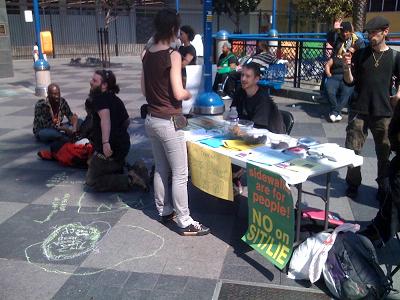
After another overwhelming vote against it last night, the sit-lie ordinance (banning sitting or lying on SF sidewalks) proposed by Mayor Gavin Newsom and Police Chief George Gascon is probably toast. But just to make sure, the activists at Stand Against Sit Lie are holding another day of creative protests on sidewalks around the city this Saturday, 4/24.

Among the 13 events scheduled so far will be immigrant day laborers sitting along Cesar Chavez Street between Mission and San Van Ness streets to protest both sit-lie and another legislative attack on immigrants, the controversial Arizona measure that essentially bans undocumented immigrants and encourages police to arrest them using racial profiling techniques.

The SF Day Labor Program is organizing the protest and today sent out a statement linking the two measures, noting that the sit-lie ordinance criminalizing otherwise lawful behavior and targets marginalized populations. Last night at the DCCC meeting, Sup. David Campos also made the point that day laborers who stand on street corners all day seeking work sometimes need to rest.

“Day laborers in San Francisco have to sit down once in awhile when they’re out on street corners waiting for work,” Jose Ramirez, a day laborer and coordinator of the SF Day Labor Program, said in today’s statement.  “Taking us to jail for sitting down in San Francisco is the same as immigrants being targeted by police for simply being Latino.”

After the Planning Commission early this month voted 6-1 to recommend against the sit-lie ordinance – finding that it violated a number of city goals and policies – the measure is awaiting consideration by the Board of Supervisors Public Safety Committee, possibly on May 3. 

The inside angle

0

rebeccab@sfbg.com

Josh Wolf’s second spell in the hot seat — and other penalties brought down against independent journalists documenting California’s defiant student movement — raise some important questions about the freedom of the press at civil disobedience protests.

Wolf, a student at UC Berkeley’s Graduate School of Journalism, faces a possible academic suspension for violating the student conduct code during a Nov. 20 student occupation of a campus lecture hall. But Wolf says he was there to document the moment as a reporter.

Brandon Jourdan, an independent journalist who was also inside the hall with Wolf, now faces his own set of misdemeanor charges after capturing footage of a March 4 student protest that broke onto a West Oakland freeway. And David Morse, a journalist and Indybay collective member who reported on a raucous Dec. 11 protest at the UC Berkeley chancellor’s residence, is now fighting the seizure of his camera and a search warrant issued by UC police for his unpublished photographs — something the First Amendment Project maintains is in violation of state law.

The footage that Wolf and Jourdan took on Nov. 20 and March 4 captured police use of physical force against protesters and documented the widely publicized actions from unique perspectives. The reports were broadcast on Democracy Now!, a popular independent news program that airs nationally on satellite television stations, public access channels, and online.

The gutsy camerapersons aren’t the first to face criminal charges. After nine reporters followed several hundred protesters seeking to block construction of the Black Fox Nuclear Power Plant onto private property in June 1979 and were arrested, an Oklahoma court of appeals ruled the First Amendment guaranteed them no immunity from prosecution for trespassing.

“That makes the position of a journalist very difficult, in areas where demonstrators are essentially exercising civil disobedience to make a point,” notes Terry Francke, executive director of Californians Aware, a watchdog organization focused on First Amendment issues. “There’s no free pass for journalists in the crowd recording what’s going on. Their principled position would presumably be yes, like [protesters] risk arrest and consequences for the greater good, they’d risk the same for the sake of giving the public … a close-up picture of what it’s like to be in those circumstances.”

Without that journalistic witness, “When you hear stories about what went on in the middle of a police and demonstrators’ confrontation … you’ll have two irreconcilable versions, from only directly interested parties,” Francke points out.

There’s been no shortage recently of civil disobedience on California college campuses, where operations have been ravaged by budget cuts. The Nov. 20 occupation was staged early in the morning at Wheeler Hall, when students barricaded themselves inside to protest a 32 percent fee hike imposed by the UC Board of Regents. While most reporters gathered outside the building or flew over in helicopters, Wolf was inside, and he’s the only student to claim being there in a journalistic capacity. He says he wore a police-issued press badge.

Wolf, a video journalist, enjoys a sort of celebrity status because he spent 226 days in jail after resisting a subpoena to testify before a federal grand jury. It started when he shot a film of a 2005 protest in San Francisco, which police tried to obtain because they believed it could help them pinpoint demonstrators who vandalized a police car and injured an officer. Since the case was pursued at the federal level, he was unable to invoke California’s shield law protecting journalists from being compelled to reveal unpublished material.

Democracy Now! aired a lengthy report of the Nov. 20 occupation featuring footage that the two embedded reporters had captured from the interior of Wheeler, coproduced by David Martinez. Show host Amy Goodman specifically named Wolf as a co-contributor when the report aired.

Now Wolf is facing a possible seven-month suspension by the campus Center for Student Conduct, which charges him with violating the student conduct code on multiple counts. “Their perspective is that I am a student and that I am a journalist,” Wolf explained. “My responsibility is no different from anyone else’s in there, and therein, my punishment should be reflective of that of everyone else.” Wolf said he had the backing of the journalism school, which confirmed to the Guardian that the dean wrote a letter of support for Wolf.

David Morse, 42, is a journalist who has covered hundreds of Bay Area protests on Indybay, an online news site that spotlights grassroots movements and protests. In a motion filed against UCPD, the First Amendment Project charges that Morse was arrested and had his camera seized Dec. 11 despite repeating six times that he was a journalist and displaying a press pass. “They told me, ‘You have a camera, we want your camera,'<0x2009>” Morse recounted. The next morning, as reports of angry, torch-wielding students storming the chancellor’s home and smashing windows made headlines, Morse was still sitting in jail in Santa Rita. “My voice as an eyewitness was completely silenced,” he said. His charges were dropped, but now he is challenging the search warrant to get his memory discs back.

When the police department sought a search warrant for Morse’s unpublished photos, they didn’t mention that he had identified as a journalist, the FAP charges. The legal nonprofit filed a motion to quash the warrant on grounds that it violates a provision in the penal code barring search warrants for journalistic work products, invoking the state shield law.

Jourdan, meanwhile, faces five misdemeanor charges after filming the March 4 freeway protest and subsequent police response, which many have characterized as excessive. (In one clip, an officer can be seen striking an individual who doesn’t appear to be resisting with a baton.) He was arrested along with two other videographers who also face criminal infractions. Footage Jourdan and Martinez captured from March 4 aired on Democracy Now!, and Jourdan’s report was also featured as a lead story on the Huffington Post. Jourdan says he wore press credentials.

“It’s unfair for them to file charges against me when they’ve dropped charges against others,” Jourdan said. The Oakland Police Department confirmed to the Guardian that Jourdan had been charged with crimes such as unlawful assembly and obstruction of a thoroughfare, but did not respond to a message asking what set him apart from other reporters.

Jourdan, who has also contributed to Reuters, The New York Times, and other outlets, has managed to capture a variety of similar events on film, including Amy Goodman’s arrest during protests outside the Republican National Convention in 2009. “Barely a month goes by that some lawyer isn’t calling me up trying to get footage of some one getting beat up,” he said. But he maintains that documenting these intense moments is crucial, not for resolving disputes, but to document these moments in history.

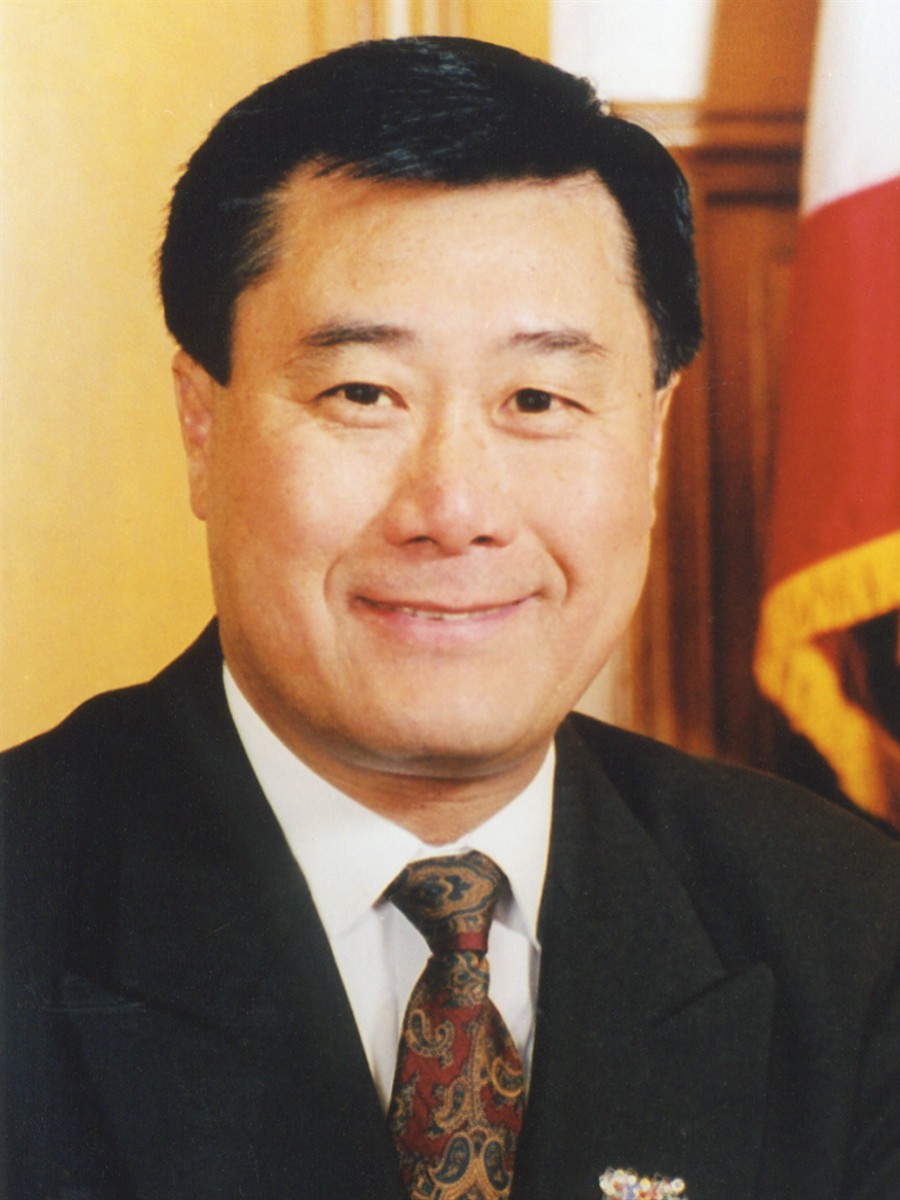
Reporters from mainstream television news programs toting bulky cameras were also filming on the freeway, but were allowed to leave. Guardian news intern Jobert Poblete and multimedia producer Cameron Burns with UC Berkeley’s Daily Californian were arrested on the freeway too, but their charges were later dropped after state Sen. Leland Yee intervened. “Journalists are generally provided greater access to cover news stories than other members of the public,” Yee wrote in a letter to the Alameda County District Attorney’s Office. “Unfortunately, law enforcement did not provide such leeway in this case.”

Adam Keigwin, Yee’s chief of staff, said the senator’s office got involved on behalf of the Guardian and the Daily Cal because he knew those publications. “We just need to know more about this,” Keigwin said. “Once credentialed media is present, it’s the senator’s perspective that journalists should have the right to cover these things and should not be charged.”

But when asked if there is a deficiency in state law since that right doesn’t technically exist, Keigwin responded, “This may be something we should consider.”

SF’s Tax Day protests: Progressives 300, Teabaggers 4

31

For all the hype about Tax Day Tea Parties, include two in San Francisco this afternoon, it was progressive causes that put the most protesters on the streets today. In fact, at a 1 p.m. Tea Party outside City Hall, the teabaggers were way outnumbered by journalists and satirical “teabaggers” doing street theater.

For awhile, 70-year-old Al Anolik – clad in his American flag shirt and NRA hat – was the only teabagger present, although he was joined by 23-year-old Odell Howard (wearing his American flag on his hat) at about 1:20 p.m. Another pair arrived later, making it four in all.

“It is San Francisco,” Anolik offered by way of explaining the anemic gathering.

Contrast that with two other rallies going on at the same time: Service Employees International Union fielding about 200 protesters on Mission Street near the federal building demanding immigration reform and respect for immigrants, and about 100 people who turned out for the Mobilization for Climate Justice, protesting a conference on carbon offsets.

“Nobody should be given credit for creating greenhouse gas emissions,” Ana Orozco, an organizer for Communities for a Better Environment, Richmond, told the gathering.

CBE was one of several groups demonstrating on Fourth Street outside the Marriott, which was hosting New Direction for Climate Action, put on by Navigating the American Carbon World, a group that promotes a cap-and-trade market for pollution credits.

The protesters said that system would only legitimize pollution and delay the strong actions needed to avert the worst impacts of global warming. “Keep the cap, nix the trade,” the group chanted at one point.

I asked one conference attendee (who wouldn’t give his name) what he thought of the protesters and he called them, “watermelons – green on the outside and red on the inside.” Longtime progressive activist Chris Carlsson said accusing someone of being a communist has always been tactic capitalists use to shut down real debate on important issues.

Anolik and Howard were also quick to play the red card, accusing the Obama administration of plotting to take away people’s guns and instituting a government takeover of the health care system, and neither would listen to arguments that their claims were demonstrably false.

But the progressives on the street today were all about sparking debate, including two members of the Raging Grannies that were at the climate event and then headed over to the Tea Party, where they satirically advocated for a health care system run by wealthy corporations.

“Billionaires for Wealthcare,” was the sign one held, while the other’s read, “Blue Cross, Palin, 2012,” advocating that we cut out the middle man and elect Blue Cross as the next president, with Sarah Palin as its running mate.

And then they broke into the song “We shall overcome,” but with a modified chorus: “We shall overcharge.”

Where’s teacher?

4

By Brady Welch

news@sfbg.com

Horace Mann Middle School principal Mark Sanchez sounded exhausted when we reached him on March 26. It wasn’t because Horace Mann is such a tough school, although the Mission District campus does have a disproportionate number of at-risk students. And it wasn’t because it was the Friday before spring break, although that might have had something to do with it.

All week Sanchez had been reeling from news that a whopping 10 out of his 20 full-time teachers had been issued pink slips by the San Francisco Unified School District. Including counselors, a vice principal, and other staff, the budget cuts essentially lopped off 24.6 percent of the school’s workforce, an unprecedented blow that speaks volumes about the state of California public education.

“A lot of the kids were wondering if the school was getting shut down,” Sanchez said. And although Horace Mann isn’t closing, with so many axed teachers, it might seem like a new school to many students come August. “If a significant number [of teachers] are moved, we don’t know what we’re in for.”

There is a legend that you will meet the person who will seal your fate long before the final event happens. And in an interesting turn of events, it was Sanchez who, as president of the Board of Education in 2007, hired current SFUSD Superintendent Carlos Garcia. Attempting to close a staggering $113 million budget gap over the next two years, it fell to Garcia on Feb. 23 to send out 645 layoff notices across the district in a list that included 163 administrators, 239 elementary school teachers, 124 high school teachers, and 104 middles school positions. Horace Mann was hit particularly hard because so many of its staff lacked seniority. Final decisions on layoffs will be made next month by the school board.

The first indications of this massive fiscal blood-letting came Jan. 20, when Garcia sent a letter to the entire district on learning of Gov. Arnold Schwarzenegger’s budget. The document was a glaring reminder of how bad things had gotten in Sacramento, and the superintendent wrote candidly of what he saw and what it meant for the district. “These numbers are large, and they will be devastating.”

Aside from the extraordinary blow to personnel, the proposed SFUSD budget will increase class sizes, freeze salaries, cancel summer school except for those who need credits to graduate, and reduce the number of days of classroom instruction to 175 annually, putting the district in conflict with a state law mandating at least 180 days. Given its deep cuts, Sacramento probably won’t enforce the statute.

“The state itself is in such a budget crisis,” Sanchez told us. “And [it’s] refusing to raise taxes. The fix has to be at the state level.”

But that’s been difficult since the passage of Proposition 13, the 1978 measure that limits property tax increases and gives control of whatever revenue is generated directly to the state. Because all state budgets must pass the Legislature with a two-thirds super-majority vote, a disciplined minority of virulently antitax Republicans block budgets that adequately fund education nearly every time.

Yet now, the bill for that political stalemate is coming due at schools like Horace Mann.

Beyond the numbers and politics, the Guardian wanted to get a closer look at how this regular cycle of cuts and layoffs is affecting teachers and students, so we spoke to a couple of eighth grade English teachers at Horace Mann who described it as dismal.

“I try to put it at the back of my mind, to be honest,” said Matt Borowsk, one of the 10 teachers at Horace Mann who received a pink slip. Borowsk reiterated a common sentiment that all teachers — potentially laid off or not — just want to do their jobs and focus on their classes. “I want to be able to stay and do my work and make improvements. And I want to do what I can for the school community and work with students,” he said. “I’m still in it, and I’m in it for the long run, despite what issues the district has about keeping their teachers.”

Gail Eigl, a teacher at Horace Mann for eight years who is tenured and therefore not at risk of a layoff, concurred. “No one I know who got a pink slip has changed their attitude. People are trying to stay focused on the present and teach.”

It’s an admirable response, and one Eigl understands well. She was laid off after her first year there in 2001. “Six of us got pink slips,” she recalled. “It was terrible.” She went looking for a job in South San Francisco, but in a strange turn of events, SFUSD called and offered her a job at Argonne Elementary in the Richmond District. A year later, she was back where she started at Horace Mann, and until now, she hadn’t really looked back.

“It’s like the school keeps having problems,” she said, an opinion that also hints at SFUSD’s skewed notion of teaching as a stable career path.

Borowski offers a similar story. This year’s pink slip is his second. Last year he received one after teaching only a year in Burlingame, which is how he ended up in San Francisco. Such rampant doling out of pink slips has nothing to do with Borowski’s performance. Rather, it has everything to do with seniority. And because the state is in such a crunch, it’s hard to stay in any school long enough before the budget’s grim reaper comes to collect.

“People who are able to stick through the first five years, they genuinely want to be a good teacher, make seniority, and not have to worry about it,” he said. And “because Horace Mann is a school where new teachers go, because it’s a tough school, then they’re the most vulnerable to layoffs. Which starts this vicious cycle.”

It’s classic Catch-22. Facing such a budget shortfall, how does SFUSD keep teachers who have little or no seniority teaching in the very schools whose litany of needs put those teachers there in the first place? In many ways, these are the most committed and passionate teachers the district has, and they represent for their classes a level of discipline and stability absent in many of their students’ home lives.

Many of Eigl’s students are low-income, speak English as a second language, or both. Some of their parents are deceased, others are undocumented immigrants, and a few are in jail.

“I honor tenure,” she told us. “I know there’s a reason for it. But right now, it doesn’t seem to be working for us.” Eigl brings up the case of a new parent liaison the school received this year, a critically important position that takes time building solid relationships with students’ families. “She got a pink slip too,” Eigl told us, the exasperation evident in her voice.

“I think people are really defeated inside. It’s so frustrating,” she continued. When asked what she meant by that, Eigl became heated. “It’s California! We’re supposed to be the richest economy. We should have money for schools. Why are other states doing so much more? We’re at the bottom. Where’s the money?” She suggested that Horace Mann should be granted special status because of its high-needs student body.

“It’s almost predictable that students who have a lot of unpredictability in their lives will suffer for this,” Sanchez told us. “It will be destabilizing for them. Teachers will get disrupted as well. A lot of what you do in schools has so much to do with outside the classroom, and it takes a lot of time to get acclimated.” At a tough school like Horace Mann, he says, “there’s been a lot of professional development and new programs.”

Borowski stresses the sentiment forcefully. “It’ll be devastating if the pink slips go through. It’ll be a huge mess.”

Both teachers participated in the massive statewide protests against the cuts on March 4. But other than letting Sacramento know how public educators feel, nothing concrete has come out of it. Sanchez suggested that it might be possible to sue the state for violating its statute on the minimum number of school days. Even SFUSD, at the last Board of Education meeting on March 23, didn’t rule out the possibility of suing the state for lack of adequate funding.

Negotiations are ongoing between the district and the United Educators of San Francisco teachers union about final layoffs. Those will be finalized May 15. Meanwhile, teachers at Horace Mann and across the district will continue to do their jobs despite how grim the outlook may be. As Eigl puts it, “It’s like out of a book from a bad future.”

Alerts

0

alert@sfbg.com

WEDNESDAY, APRIL 7

The Human Cost of Food


Join the Green Café Network, Mission Pie, and local farmers for a discussion about the different models of farm labor structure and how individual consumers, cafes, and restaurants can integrate this knowledge into their sourcing decisions and methods. It’s an idea whose time has come: fooders and foodies working together to balance social and economic justice goals with economic demands.

6:30 p.m., $5–$10 suggested donation

Kitchen at Mission Pie

2901 Mission, SF

(415) 282-1500

greencafenetwork.org

FRIDAY, APRIL 9

Berkeley Critical Mass


Join this "spring renewal ride" to celebrate Berkeley Critical Mass’ 17th year of protests on wheels. Bring noise-makers, bike decorations, food to share, and bike lights.

6 p.m., free

Berkeley BART

Center at Shattuck, Berk.

www.berkeleycriticalmass.org

SATURDAY, APRIL 10

Forum for Choice 2010


Hear candidates for governor, attorney general, and insurance commissioner take part in an in-depth discussion on a woman’s right to choose and the government’s role in making reproductive health decisions that affect all of us. Confirmed participants are Jerry Brown, Hector De La Torre, Rocky Delgadillo, Kamala Harris, Dave Jones, Chris Kelly, Ted Lieu, Pedro Nava, and Alberto Torrico.

8:30 a.m.; $50, $15 for students

Nob Hill Masonic Center

1111 California, SF

forumforchoice.com

Hilltop Park Beautification Day


Join AmeriCorps members of Habitat for Humanity as they maintain and beautify Hilltop Park, an under-utilized public outdoor space in the Bayview neighborhood that has fallen into disrepair due to budget cuts at SF’s Recreation and Park Department.

9 a.m., free

Across from 52 Whitney Young Circle construction site, SF

www.habitatgsf.org

San Francisco Green Festival


Volunteer or attend the Spring 2010 San Francisco Green Festival, a sustainability event featuring talks by authors, educators, and leaders; exhibits from ecofriendly businesses; workshops, films, activities, vegetarian food, and more.

Sat. 10 a.m.–7 p.m., Sunday 11 a.m.– 6 p.m.

$15 weekend, $10 one-day; $5 seniors, bike, and public transit riders;

free for volunteers, students, and youth.

SF Concourse Exhibition Center

635 Eighth St., SF

www.greenfestivals.org

SUNDAY, APRIL 11

Cuba and U.S.


Attend this afternoon of presentations and discussions about Cuba, the U.S. blockade, how to visit, how to get involved advocating for Cuba, and how you can get involved with freeing the Cuban Five.

3 p.m., $5

La Pena Cultural Center

3105 Shattuck, Berk.

(510) 849-2568 or email cucaravan@igc.org

Mail items for Alerts to the Guardian Building, 135 Mississippi St., SF, CA 94107; fax to (415) 255-8762; or e-mail alert@sfbg.com. Please include a contact telephone number. Items must be received at least one week prior to the publication date.

Momentum shifts against sit-lie

19

Proponents of criminalizing sitting or lying on San Francisco sidewalks have seen their prospects of success steadily dwindle in the last week, starting with the creative and well-covered Stand Against Sit-Lie protests on March 27 and continuing through last week’s Planning Commission vote against the measure to yesterday’s debate on BBC’s The World, in which opponent Andy Blue clearly bested proponent Ted Loewenberg.

In fact, Blue and his grassroots band of progressive allies deserve tremendous credit for flipping the momentum on the issue away from the narrative pushed by Mayor Gavin Newsom, Police Chief George Gascon, and the reactionary Haight area property owners from Loewenberg’s Haight Ashbury Improvement Association.

While Newsom and Loewenberg tried to argue this was about giving police another “tool” to use against violent street ruffians, Blue and the progressives have correctly pointed out that the overblown examples proponents cite (ie hoodlums punching passersby, barricading businesses, and spitting on babies) are already illegal and that the law actually punishes the simple act of lounging in public.

That argument by progressives got strong support from a Planning Department report on how the sit-lie ordinance cuts against a variety of city policies and goals that promote open space and using sidewalks for more than just transportation, a view that the Planning Commission endorsed on a surprisingly lopsided 6-1 vote, with even Newsom’s appointees crossing him on the issue.

Few members of the Board of Supervisors have embraced the push for sit-lie, so it’s likely to be dead-on-arrival when the board considers it later this month, but Blue’s group isn’t taking any chances. Stand Against Sit Lie is planning another day of creative protest – with more sidewalk picnics, games, and maybe a return of Chicken John’s sidewalk hot tub – on April 24.

John Ross: The damaged spine of America

2


I am on a low-rent book tour with my new cult classic El Monstruo – Dread & Redemption In Mexico City.  For the next three months, I will stumble across this land from sea to stinking sea probing the underbelly of Obama’s America.  The findings will be posted on these pages.


LAS CRUCES N.M. — The snow was already dusting the Organ Mountains fringing this high desert town, promising a hard winter further up the spine of Obama’s America. I ride the Mexican bus (officially doing business as the El Paso-L.A, Limousine Express) when I ply the back roads of the southwest. Greyhound, with its stern rules and regulations and surly drivers who threaten their cargos with summary expulsion for minor infractions, doesn’t much inspire me these days.  


With notable exceptions, Greyhound passengers are a harried and haunted bunch, riding the Big Dog from trouble to trouble, often with all their possessions stuffed into plastic garbage bags. In the cruelest of gestures, the Greyhound management has recently banned garbage bags as an instrument of luggage.  Zombie passengers on the Big Dog stare out at the distant horizon submerged in their worries or stab music into their ears to sever all human communication. No one talks to their fellow travelers anymore.

By way of contrast, the Mexican bus bubbles with chatter.  “Platicame!” (“Talk to me!”) my seatmates insist. The chitchat often gravitates towards work — where they have recently toiled, the job towards which they are headed. Wistful nostalgia for their families and pueblos down in Mexico are common ground. Rancheros belch from the speakers and the taste of tamales flavors the ride. It feels like going home.

Bus rides are an opportunity to reinvent oneself. I am usually the only gabacho on these long hauls through the rugged mountains and barren deserts of the southwest, but I speak colloquial, unaccented Mexican and who I really am excites curiosities. These days, my kuffiyah wrapped around my scrawny neck, I pass myself as an Arab from Mexico City hawking books from tank town to tank town, a plausible story — back home, Arabs are often stereotyped as itinerant peddlers.

North of Las Cruces, the Mexican bus is pulled into a Migra shed and the conversation modulates real quick. A blonde woman agent jumps on board and demands to see everyone’s documents. She studies the passports and green cards under the glare of her flashlight and then shines it into the eyes of the passengers to see who will blink first. One young man — he looks like a university student – is pulled off the bus and is never seen again. When the Mexican bus slides out of the shed, the chatter resumes — but with one less voice in the mix.

Clayton, a young Wobbly who used to run a bookshop down by the rail yards in Albuquerque that was mostly frequented by hobos looking for a little warmth in a cold winter world, is now teaching at a troubled middle school. Patrol cars are often parked out front and half the kids – 99.99% of who are “Hispanics” (read Mexicans) – have juvenile police records. Clayton asks me in to talk to the students, who have never seen a real author in the flesh.  

We hunker down in the library and I step into my Grandpa persona and tell tales of the Mexican revolution while Clayton projects portraits of the Great Zapata and Pancho Villa on the audio-visual screen. I recount how the two men met in a rural schoolhouse in Xochimilco, now a borough of Mexico City, in December 1914. For an hour the two sat in frozen silence until Zapata, unable to contain his bitterness, declares that Carranza, their rival, is “un hijo de puta!” The kids fall off their little library chairs in gales of Mexican mirth. Clayton frets for his job but the librarian apparently doesn’t understand Spanish.  

I show the kids my books. Helen, a boisterous tweener, grabs “Iraqigirl” from Clayton’s hand and announces she is taking it home. The next day, she returns it with a review: “this is the best book I have ever read.” Two boys sit at the round reading table with copies of “El Monstruo — Dread & Redemption In Mexico City” and “Murdered by Capitalism — 150 Years of Life & Death on the American Left” spread before them. They pour over the subversive pages all through the lunch hour. When we prompt them that we have to leave, they hide the books under their hoodies.

 “I don’t have it — check me out!” Salvador (not his real name) challenges. The librarian rushes over and promises the boys that she has just ordered the books on line for them. They will be here Monday morning.  “But this is only Thursday,” protests Manuel (not his real name.)  

Garfield middle school is the best stop so far on this monstrous book tour.

Attendance at public events in Albuquerque is sparse. A vegan spread at the Catholic Worker House drums up a dozen hungry souls, a presentation of “Iraqigirl” at the Peace & Justice Center eight, including an Iraqi woman who leaves early. I show “Corazon del Tiempo” (“Heart of Time”), the new Zapatista movie (it was previewed at Sundance) in a small room at the university – Weather veterano Mark Rudd and the remarkable investigator Nelson Valdez and a handful of starry-eyed students (“Corazon” is a love story) show up.  


I sorely miss my old pal Tilda Sosaya who fought doggedly for prisoners’ rights in the nearly wholly privatized New Mexico prison system for decades after her son was imprisoned for ten years for some dumb teenage caper. Last March, I wrote Tilda that I had been diagnosed with liver cancer and she wrote back that she had it too. The cancer took her quickly and now she is gone and her son is back in prison. We fight for justice but life in this lane is not very just.

I catch the day train up to Santa Fe to visit with the writer Chellis Glendinning. Chellis has lived for the past 18 years on a tiny plot in Chimayo, the land of miraculous dirt and a key distribution point for black tar heroin from Sinaloa and Nayarit — see her “Chiva – How One New Mexican Town Took On The Global Heroin Trade.” Now she is pulling up stakes and throwing in with Evo Morales. Her jeep flies a Bolivian flag and she is rushing to be in Cochabamba for the tenth anniversary of the landmark struggle against the privatization of that city’s water supply by the Bechtel Corporation. Adios companera — la lucha sigue y sigue y sigue!

I am back on the Mexican bus heading towards Denver. The riders get off at whistlestops like Las Vegas and Durango and Colorado Springs where they will do the dirty work of this country — walloping pots, washing cars, cleaning motel rooms, milking cows, shoveling their manure, keeping Obama’s America spic and span for the next paying customer at minimum wages if indeed they are not cheated out of them by unscrupulous contractors.  

When the guy across the aisle gets curious, I revive my new identity as an Arab peddler. “Donde esta tu mujer?” he asks (“Where is your wife?”) and I lie that she is in Iraq taking care of her people. “The Yanquis invaded her country and bombed her neighborhood…”  “Pobre gente,” he sympathizes.  Santiago (is that his real name?) is from Hidalgo de Parral, Chihuahua and says he is on his way to work the Colorado ski resorts where so many Mexicans slave for Senor Charlie these days. He knows all about exile.  

I am invited to deliver a pair of lectures at Denver University, Condoleezza Rice’s alma mater (her father was provost.)  Doug Vaughn, also a DU grad who went left at an early age, notices that I will be speaking at the same time as Cindy Courville, Condi’s roommate who followed her to the National Security Council and then became U.S. emissary to the African Union.

My talks are programmed for the Josef Korbel Center for International Studies. Josef Korbel was Madeline Albright’s father, to give you some assessment of my chances of winning converts here. Indeed, the students are polite and well-groomed, models of future CIA assets — in tracking down the announcement of Courville’s talk on a Korbel Center bulletin board, Doug encounters a CIA recruitment leaflet. The grad students have been forewarned they will be visited by a representative of the lunatic fringe and busy themselves with their e-mail under the pretext of taking notes.  

Academic acrimony flourishes in the Denver- Boulder axis.  Everywhere else in this land where my father croaked, the trials and tribulations of Ward Churchill and his ill-timed assault on the “little Eichmans” deconstructed in the Twin Towers conflagration went out with the fish wrap the next morning — but here in mile-high city, mention of Ward and Colorado AIM can still start a prairie fire. Although such Churchill accusers as the governor and the Colorado U president have long since resigned due, in fact, to other scandals after successfully silencing Ward, his detractors’ thirst for blood remains unsatiated.

Infused with the venom of the dearly departed Bellencourts (who Churchill once dissed as “Nebraska wigmakers”), Ernesto B. Vigil, author of an action-packed bio of Corky Gonzalez, the Denver-based Xicano founder of the Nation of Aztlan, is still brandishing the long knives. Ward Churchill is a fake Indian, Ernesto obsesses, a white guy whose claim to indigenousness is backed up by white people because white people only listen to white people.  White people think they know everything, he scoffs in a heated e-mail in which he disparages my whiteness a dozen times in as many lines.

Actually, I don’t give a rat’s ass if Ward Churchill is one/sixteenth Cherokee or not (the tribal government recently expelled all its black members) — Churchill remains the most lucid writer on American genocide in this benighted country.

Boulder is said to be the most over-regulated city in North America although white liberal enclaves like Madison Wisconsin and Arcata California could give Boulder a run for its money.  I accompany Joe Richey, a local alternative radio sleuth, to the Boulder dog pound to bail out his black lab “Yanqui” (as in “Yanqui! Go home!) “Yanqui” has been adjudged guilty of illicit dog-like behavior i.e. nuzzling a neighborhood garbage can.  

After Joe pays off the authorities and the mutt is released to his custody and properly admonished, we drive past a local dog park.  In a paroxysm of charitable intent, the Boulder City Council permits the homeless to encamp at night amidst the dog turds but they must be gone by daybreak when the pooches of the city’s housed residents take possession or risk a $100 fine. How the homeless, forced to bed down in dog shit nightly, can afford this astronomical sum is unclear. Such is what passes for compassion on the underbelly of Obama’s Amerikkka.


On my final day in Denver, Hank Lamport, a local schoolteacher who favorably reviewed “El Monstruo” for the Post, today the only daily in this formerly two-newspaper town, drives me out to the Rocky Mountain Arsenal National Wildlife Rehabilitation Area. Until a few years ago, the Rocky Mountain Arsenal manufactured and stored deadly nerve gas, chiefly Serin — an occasional lost canister still spooks the wildlife.  The displays at the Visitors’ Center feature photos of workers filling “Honest John” missiles with the stuff. Napalm was also cooked up here. I study the glazed eyes of taxidermied foxes and coyotes and bald eagles and hastily bid adieu.

On the way out of town, we stop to worship the victuals in an Aurora, Colorado taco shop. Hank laments that when he first became a devotee of “Tacos y Salsas,” the clientele, uniformly Mexicanos, would greet him with a “buen provecho” (“good appetite” — a universal courtesy in the Spanish-speaking world) but now the customers have become so gringo-ized that the salutation is a lost art. Nonetheless, when we polish off our orders and head for the door, two working stiffs at the next table wish us each “buen provecho.”
  
It warms the cockles of my contused heart to know that such cultural resistance still percolates out here on the damaged spine of Obamalandia.

Next stop: the frozen, melancholy flatlands of the Great Midwest.  

John Ross and “El Monstruo – Dread & Redemption in Mexico City” (“gritty and pulsating” – NY Post) will be visiting Traverse City and Grand Rapids Michigan in the final week of March. You can catch them at the Headland Café in Chicago’s Rogers Park March 31st, Toronto’s Hoggtown April 1st-4th, and St. Louis Mo. April 7th.  


In the wake of March 4, education battles continue

Two weeks after protests against cuts to education filled Bay Area streets (and one freeway) on March 4, employees in the public-education sector are still engaged in a fight against budgetary rollbacks. But it’s an uphill battle, as was made clear at a briefing organized by United Educators of San Francisco at City College of San Francisco March 18.

At El Dorado Elementary School in the Bayview, 11 of 15 teachers were issued pink slips, according to elementary school teacher Megan Caluza (featured in the video above). While this doesn’t mean all 11 teachers are on their way out the door, it does mean that none of them knows for sure whether there’s a guaranteed job in the school district in the coming year. Since the budget cuts hit, Caluza says she’s been spending just as much time “fighting to teach” as she has in the actual classroom.

Elementary schools aren’t the only places being hit hard. Statewide, more than 23,000 layoff notices were sent to K-12 teachers recently, with no one knowing for sure which recipients will stay or face job losses.

“What is more important to you, corporate tax loopholes, or teachers in your daughter’s classroom?” asked Dennis Kelly, president of United Educators of San Francisco. “A college education for your son to get ahead, or tax breaks for the wealthiest Californians?”

Meanwhile, community colleges throughout the state face fee hikes even as classes are being cancelled, summer programs are being scaled back or eliminated altogether, and staff faces layoffs and furloughs. According to AgainstCuts.org, a group that was instrumental in organizing March 4 activities, the student population at California community colleges is comprised of more than 50 percent women and people of color, with around 80 percent of students working while taking classes. Blows to this educational system impedes opportunities for career advancement for the nearly 3 million community college students, which is bad news not just for students with lifelong dreams and high hopes, but California’s economy as a whole.

On Monday, March 22, more than 3,000 students, faculty members and others from City College of San Francisco plan to hold a march and rally in Sacramento to highlight the impact of cuts to community colleges. Around 62 buses will be leaving SF early in the morning to arrive in Sacramento for a 10 a.m. rally on the steps of the State Capitol Building.

Joining students and teachers at CCSF yesterday was a representative from Californians for Democracy, an organization that is pushing a November ballot initiative, authored by University of California Berkeley Professor George Lakoff, that would change the two-thirds majority vote requirement for the state Legislature to pass a budget or raise taxes to a simple majority vote. While the initiative is still circulating petitions to gather signatures, it seems to have found allies in the growing movement against cuts to education.  

March 4 represented “the first time we’ve ever done an all-education action,” Joan Berezin, a faculty member at Berkeley City College for 20 years, told the Guardian. “We’re trying to build the broadest coalition possible.”

Anti-war movement seeks allies

7

By Jobert Poblete

This Saturday (March 20) will mark the seventh anniversary of the Iraq war and local groups are mobilizing for another round of protests to oppose the occupation of Iraq and the expansion of the war into Afghanistan. But this year’s program will also highlight local struggles as well, with speakers delving into the fight for more public education funding and the march passing by two hotels where union workers are in strained negotiations for a new contract.

The protest is being organized by ANSWER – Act Now to Stop War and End Racism – a coalition notorious for its everything-but-the-kitchen-sink approach to protest. Besides its plugs for Iraq, Afghanistan, public education, and local labor struggles, flyers promoting Saturday’s protest include demands around jobs, Palestine, Latin America, and Haiti. ANSWER organizer Chris Banks told us that these seemingly disparate issues are connected.

“There is a finite amount of resources in our society,” Banks said. “And if those resources are used on wars and to bail out banks, then we can’t use them for schools, health care, and public transit. The wall between foreign policy and domestic policy is a fictitious wall.”

This year’s protest will focus on the economic crisis and on “bailing out people instead of banks.” Students who helped organize the recent March 4 Day of Action are part of the coalition mobilizing for the Saturday protest and students and teachers will be among the speakers at the rally at Civic Center. Protest endorsers include the United Educators of San Francisco, a union that represents more than 6,000 public school employees. Dennis Kelly, president of UESF, told us that the protest “ties directly in with our concerns about the California state budget, that the priorities being set are the wrong priorities.”

The rally will be followed by a march that will pass by the Hilton and the Four Seasons, two hotels where members of Unite Here Local 2 are without a contract because of a negotiating impasse with management. The biggest point of contention between the hotels and union is over health care. (Union members currently pay $10 a month for family coverage but the hotels want to increase that to $200 a month.)

Israel Alvaran, a community organizer at Local 2, said that the health care issue provides a connective thread between the anti-war movement and his union’s struggles. “We believe in stopping the wars in the Middle East,” Alvaran said. “They’re driving the war economy that’s preventing people at home from getting affordable health care, public education, programs for creating jobs and building the economy.”

Alvaran hopes the March 20 protest will help raise the visibility of hotel workers and show the hotel corporations that the union has broad community support. He also said that including workers’ struggles in the protest is important because it exposes young activists joining the anti-war movement to labor and union issues.

Banks echoed this desire to raise public consciousness about local issues. “As much as possible, we want people to make the connection between local struggles and imperialist wars,” Banks said. “People go into political motion for different reasons. We want them to come out on March 20 and they’ll have opportunities to hear speakers representing different movements.”

Saturday’s protest will begin with a rally at Civic Center Plaza at 11 a.m. At noon, protesters will march through downtown San Francisco before returning to Civic Center. 

Yee asks DA to drop charges against reporters

0

State Sen. Leland Yee has asked the Alameda County district attorney to drop all charges against reporters who were arrested while covering the protests over education cuts. In a March 8 letter to D.A. Nancy O’Malley, Yee noted that “at least two of the individuals arrested were journalists covering a legitimate news story.”


That adds to the pressure on O’Malley not to press charges against reporters. But we’re still waiting to hear from the D.A.’s office.


You can read the letter here.

Occupation! exhibit highlights racism at SF businesses

1

By Cécile Lepage

San Francisco has always had a liberal streak, but not so its business community, as a current exhibit highlights. In 1963 and ‘64, San Francisco was hit with massive demonstrations that denounced businesses’ discriminatory hiring practices and demanded equal work opportunity for African-Americans. Crowds picketed on Auto Row, in front of Mel’s Drive-In, Lucky Store, the Sheraton Palace Hotel, and Bank of America.

The Main Library exhibit “Occupation! Economic Justice as a Civil Right in San Francisco, 1963-64” retraces a struggle for economic justice that was specific to the city by the Bay, where thousands of African-Americans had moved to during World War II to work on the shipyards. When the war effort wound down, they were the first to be fired. Only direct actions—sit-ins, sleep-ins, and shop-ins—were able to shake the status quo: they led to more than 260 employment agreements for minority workers. There’s only a few days left to discover this important yet underrepresented piece of SF history: the display ends on March 27.

We spoke with curator Nancy J. Arms Simon about the exhibit and its relevance:

SFBG: How did this exhibition come to be?

NAS: It was actually the brainchild of Susan Goldstein, from the San Francisco History Center, and Catherine Powell, the director of the Labor Archives and Research Center. They had talked about collaborating on an exhibit related to labor, drawing from both collections.

In the meantime, I had fallen in love with the photographs of the photojournalist Phiz Mezey that I had discovered at the Labor Archives. She documented the April ‘64 demonstrations on Auto Row. So, it was a perfect blending. Those pictures are amazing because esthetically they’re incredible. On every single one of them, the layout just keeps your eyes circling. And the other part is that Phiz Mezey had been removed from her position at San Francisco State University, where she had been a professor. She had refused to sign the Communist Levering Act that all public employees were required to sign. In the 1950s, anyone who worked for a state agency had to sign an anti-communist oath.

While she was petitioning San Francisco State for years to get her job back, which she did in 1978, she was also trying to support herself and her kids. And so she became a documentary photographer. So I had become intrigued with her and with that story. When I started the project, I thought it would be an exhibit on the Auto Row protests. I didn’t even realize that this was part of a greater series of events that had spanned for two years.

SFBG: What were people asking for?

NAS: What they wanted was jobs, what I refer to as front-end jobs. I don’t like the idea of using the terms skilled and unskilled labor, because too many things that are very skilled get lumped under unskilled labor.

Blacks in San Francisco were assigned to jobs where they didn’t interact with the public. Basically, they weren’t allowed to. So they were allowed to be mechanics, janitors, but they weren’t allowed to be service people: bank tellers, waitresses, salesmen. There were two big pushes conjointly going on. There was the push for equality in housing, to end the segregation in housing, and also this push for jobs. If you don’t have access to jobs, there’s so much that you lose along with that. There’s that compounded effect of not saving to send your kids to college or provide for your own retirement… 

SFBG: But during the Second World War, [President] Roosevelt had enacted the Fair Employment Practices Act that made discrimination unlawful with companies that held government contracts.

NAS: But it was slated to end once the war was over. It was voted through to continue slowly across the country state by state, but it wasn’t nationwide until ‘64, when LBJ signed the Civil Rights Act. So for 20 years, from 1945 to 1964, people who had known a certain quality of life were fighting just to maintain it. Laws to promote equality might have been enacted, or agreements might have been signed, but having the law didn’t mean anything. There was this understanding that you can never let out the pressure; you have to keep pushing to make sure that that equality is actually enacted.

SFBG: How did the protesters organize their actions?

NAS: There’s a lot of lessons on how you effectively make change. There was a lot of unity amongst the groups, CORE, the WEB Du Bois Club, and the Ad-hoc Committee to End Discrimination. They had lawyers in place. Before a protest, they would decide who could afford to get arrested, and who couldn’t. So the people who could afford to get arrested would go to a certain level, they would maybe go inside the building. And all the leaders always made a point to get arrested, because they knew that that would get more press. And they also intentionally clogged the courts. They made sure that hundreds of people would get arrested just to slow things down and make it more difficult on the system.

It was really effective. And I think there’s a lot of these lessons that we miss today. They started with Mel’s Diner and they did get the owner to sign the agreements. Over at Lucky Store grocery, they did a shop-in. This is non-violent protest at its most beautiful! They went in and filled their shopping carts, they got to the counter and got them all run through. Remember, this is all scanned by hand. And then, once everything was scanned, they would say, “I will pay for these groceries once you give better jobs to Blacks,” and then they would leave. And all these bagged groceries filled the entire floor! All this stuff had to be put away. Plus people were picketing outside the store. So not only are you creating this major headache and throwing this wrench in the wheel, you’re also blocking people from shopping. So they were significantly cutting into their income.

SFBG: The Sheraton Palace Hotel rally was the biggest protest to take place.

NAS: It was really hard to narrow it down to a few statements to get into a showcase! About 1,500 protesters surrounded the hotel on March 6, 1964. There were other events leading up to that, though, they had tried negotiations, they had started smaller pickets outside. There would have been a court order to end the picket. So this is all building up.

During the major protest, I think 450 people entered the building and wouldn’t leave the lobby. The police carried them out, but they came back. They slept in overnight. And then the mayor, Jack Shelley, stepped in. He worked on the negotiation process and made it happen. After that, literally, the day they signed the agreement, they started picketing on Auto Row. This is how well organized they were. At the same time, other businesses were signing agreements for hiring Blacks, because they didn’t want this kind of press to happen. Remember, this is all happening in “liberal” San Francisco, so the fact that this is not good press for them counted.

SFBG: In the outcomes, you were careful to underline how these events had an impact on individuals’ lives.

NAS: It’s so easy for us in hindsight to know that civil rights were the right thing to fight for. But just think about what it would take out of somebody to get arrested. Tracy Sims, who later became Tamam Tracy Moncur, basically took the fall for her group. Because there were so many people arrested, they sent them to court in groups of 10 to12 people. She ended up getting 60 days in jail, plus a $200 fine. It was horrible for her. She was an idealistic 18-year-old. She knew she was doing the right thing. They were successfully changing laws just to confirm she was doing the right thing. And then she’s punished. After she served her time, her mother was already back on the East Coast, and she went to live with her mom.

SFBG: You were able to gather artifacts to tell this story, pins in particular.

NAS: These are all part of the Labor Archive collection. Graphically, they’re so simple, easy to read. You see them in photographs and they absolutely pop out. My favorite one is this “= Quality” one. It’s timeless. You’ve got the word play of equality equals quality. It’s got the silhouettes of a white child and a black child. What does equality really mean? It means equal quality for everybody. It’s not just a word. I really love that one, because it’s still so contemporary. Objects have got a power of their own. If you can stop and think of what’s involved, why they were created, and all the places they’ve been to… Some of the old pins will have the printer’s union stamp and the sheet metal workers’ stamp Look at that! That’s pride in your work right there.

Alerts

0

By Jobert Poblete


alert@sfbg.com

WEDNESDAY, MARCH 17

Citywide community meeting


Advocates for homeless youth in San Francisco discuss the upcoming supervisor elections and the proposed sit/lie ordinance, a proposal by Mayor Gavin Newsom to criminalize sitting on sidewalks.

5:30–7 p.m., free

LGBT Community Center

1800 Market, SF

smashbangboom@gmail.com

"Shout! Art by Women Veterans"


The peace and social justice group Swords to Plowshares hosts this two-day event to honor women veterans and bring together community members working to serve them.

6–-9 p.m., $10

1632 C Market, SF

www.swords-to-plowshares.org

THURSDAY, MARCH 18

Poizner on Poizner


The Commonwealth Club hosts Steven Poizner, California’s insurance commissioner and a candidate to be the Republican nominee for governor this June. Poizner has stirred controversy recently with his anti-immigrant position, so come listen to or protest his plans for California.

5:30 p.m., $7–$45

Lafayette Veterans Memorial Hall

3780 Mount Diablo Blvd., Lafayette

www.commonwealthclub.org

Bilingually speaking


The Piedmont Appreciating Diversity Committee, Piedmont League of Women Voters, and Diversityworks screens Speaking in Tongues, a film about bilingual programs in Bay Area Schools and a 2009 SF International Film Festival Audience Award winner.

6:30–9 p.m., free

Wildwood School Auditorium

301 Wildwood, Piedmont

www.diversityfilmseries.org

FRIDAY, MARCH 19

Planetary grooving


Stomp the Stumps! brings together political rock dance bands to raise money for environmental causes. This year’s concert features the Quilt, the Funky Nixons, and the Gary Gates Band. Proceeds go to the Bay Area Coalition for Headwaters and Earth First!

8 p.m., $10 adv/$12-15 at the door

Ashkenaz

1317 San Pablo, Berk.

www.ashkenaz.com

SATURDAY, MARCH 20

Antiwar march and rally


Another year, another Iraq war anniversary. This one marks the seventh anniversary of the start of the Iraq war. This year’s march also supports city hotel workers’ contract fights by paying visits to two hotels being boycotted by their union, UNITE HERE Local 2.

11 a.m., free

Civic Center Plaza, SF

www.answersf.org

SUNDAY, MARCH 21

Great American Meatout


Thinking about going vegetarian? To get you started, the San Francisco Vegetarian Society and Unitarian Universalist Church will host its fifth Meatout Celebration, complete with a vegetarian lunch and free recipes.

12:15–3:30 p.m., $5

Unitarian Center

1187 Franklin, SF

www.sfvs.org

TUESDAY, MARCH 23

UC Regents Meeting


Today is the first day of the UC Board of Regents’ three-day meeting at UCSF. Inside, the regents will discuss buildings, grounds, and capital projects; outside, there will be fireworks of sorts as activists mobilize for protests.

2:30 p.m., free

Community Center, UCSF Mission Bay

1675 Owens, SF

www.universityofcalifornia.edu/regents

Mail items for Alerts to the Guardian Building, 135 Mississippi St., SF, CA 94107; fax to (415) 255-8762; or e-mail alert@sfbg.com. Please include a contact telephone number. Items must be received at least one week prior to the publication date.

Ecuador natives push Chevron for settlement

4

By Nima Maghame

The Rainforest Action Network, a non-profit organization that protests the pollution and destruction of natural habitats around the world, recently gathered on a bio-diesel bus named Priscilla with Ecuadorian tribal representative Emergildo Criollo and drove to new Chevron CEO John Watson’s home in Lafayette to deliver a petition demanding the company pay for the clean up of Chevron-owned Texaco’s contamination of the Ecuadorian Amazon rain forest.

“Because of contamination in the river, I have lost two sons and my wife is very ill. I have been in this battle for over 10 years,” said Criollo, who has come to the Bay Area on behalf of the Cohan and Siona people of Amazonian Ecuador as well as the organizations Secoya Indigenous Nations and Frente de Defensa de la Amazonia. They are among the local groups battling Chevron in an Ecuador court, seeking compensation and cleanup money.  

The petition, which has been signed by more than 350,000 people from all over the world, never reached the hands of Watson. The CEO was not home when the activists arrived. The Ecuadorian did have a scheduled closed meeting with Chevron executives at the company’s headquarters in San Ramon later that day. He was accompanied by a demonstration outside the corporation’s office, where a dozen RAN members listed off names of petition signers.

“We here at Chevron, believe that this is a great first step towards an ongoing dialogue between Chevron and Ecuador,” said Gary Fisher, Chevron’s Manager of Public Policy, to RAN activists after the closed meeting with Criollo. 

Criollo lived his entire life in a remote village in Ecuador where he saw Texaco – which was later purchased by Chevron — come and go, leaving oil pollution everywhere. Consumer activists reports show that an estimated 30,000 people have suffered from contamination in Ecuador, just one country out of many who have reported illnesses and mutations caused by the reported 18 billion gallons of toxic waste dumped in the region.

“[Chevron/Texaco] chose to use pumping technology that was not as advanced as the drilling technology they use in the states, which pumps excess crude back into the ground, to save two to three dollars a barrel…There is free standing oil in this pristine rainforest. It’s hot and it just boils in the sun. You can touch it, you can smell it,” said Anderson.

Chevron executives claim that the pollution is the fault of the oil company in charge of extraction now, nationally owned PetroEcuador. They also state they have funded up to $40 million in clean up efforts, a claim that RAN believes to be false. The petition calls for the oil company to fund clean up operations in the region and is estimated to cost them more than $16 billion.

“We believe we are very far away from any resolve from this company,” said Criollo.


Guardian reporter’s inside story on arrested protesters

17

Story and photos by Jobert Poblete

I thought I was keeping a safe distance, observing Day of Action protesters as they went onto Interstate 880 to block traffic rather than participating, until a line of riot cops came barreling towards where I stood by the side of a freeway offramp. But my flight instinct took over, and I found myself running along northbound 880 with my notebook and pen still in my hands. What had been an impressive but otherwise peaceful protest was taking a surreal turn. But maybe I should start from the beginning.

As a recent UC Berkeley grad, I had been on campus many times in the last few months, invited by friends to support the occupations and protests that were fueling an extraordinary movement to defend public education. So I was excited to go out on March 4th to cover the Day of Action in the East Bay. This was a new experience for me. Like any good Berkeley grad, I’ve participated in my share of protests, but now I was a Bay Guardian news intern and this was the first time I was going out as a reporter.

There was a lot to be impressed with that day. In Berkeley, activists had succeeded in creating a broad coalition made up of graduate and undergraduate students, faculty, union members, lecturers, and campus workers and staff. These constituencies were well-represented Thursday morning.

Berkeley organizers were also working to expand their movement beyond the university. Callie Maidhof, a graduate student in anthropology, told me that March 4th is the “first attempt to organize beyond a single system, to organize across California, across the public education systems, and across the nation.”

On the four and a half mile march from Berkeley to downtown Oakland, there was plenty of evidence that they were succeeding. As the Berkeley contingent marched down Telegraph Ave., it was joined by middle school and high school students who brought their own concerns about teacher layoffs and program cuts.

At the rally in Oakland, I spoke to high school students who had walked out of their schools to participate. Sophomore Sienee Dakina from Oakland’s Envision Academy told me that her school lost three teachers because of budget cuts. “We feel like it’s not right,” Dakina said. “We’re losing our teachers.” Ninth graders Victoria Romero and Andrea Barba from Life Academy told me that they were protesting so that the school district would “not take our dreams away.”

When the rally ended, some people were headed to San Francisco to take part in the big rally at Civic Center. I knew that there would already be Guardian reporters there, so I decided to stay in Oakland for what was being billed as an after-protest dance party and “snake march.”

The dance party started around 4:30 with a couple hundred people taking Broadway accompanied by a mobile sound system, black flags, and large banners that declared “We Have Decided Not to Die” and “Occupy Everything.” For the first time that day, I saw riot cops in full force. I read these as signs that something dramatic was probably in store. The dance party wound its way through downtown Oakland, stopping in front of the UC Office of the President before heading towards West Oakland.

I was at the back of the march, talking to an Oakland teacher who was telling me about layoffs at his school, when the police started warning the crowd that they could face arrest. I fell behind and was playing catch-up as a group of around 150 people took to the freeway. I decided to stick by the offramp and watched as a bicyclist, who appeared to be riding on the freeway away from the march, got violently tackled by a fast-moving line of cops.

It was at this point that another line of cops started up the offramp and I fled up the freeway. An officer on a motorcycle yelled at me to continue and join the protesters or face arrest. I ran to catch up with the crowd, which was in chaos as the police approached. (I later learned that, in the chaos, a local high school student fell off the elevated highway and was taken to Highland Hospital with serious injuries.) I saw two kids – perhaps as young as 12 or 13 – trying to get away on skateboards. I was with a cluster of journalists as a line of cops and a blur of batons fell upon a group on the far side of the southbound lanes. We retreated to the dividing wall, me still clutching my pen and notebook, holding my hands in the air.

We were ordered to lay on the ground. My pen was still out so I continued taking notes. An officer noticed me and ordered me up. I explained that I was a reporter and offered to show him proof of my affiliation with the Guardian. “But you’re on a freeway,” he said. “You’re under arrest.” He did help me secure my notes and camera.

I was handcuffed and ordered to kneel on the side of the highway with the protesters, next to a friend from Berkeley, a graduate student at the journalism school. We knelt for hours waiting for the buses that would take us to Glenn Dyer jail in Oakland and Santa Rita jail in Dublin. A handful of stranded motorists cheered, presumably for the protesters, and in one of the lofts next to the freeway, a resident had posted a sign that said “FUCK U Protesters.”

I was sent to Santa Rita with around 100 of those arrested on the freeway. We were informed that we would be charged with misdemeanors and released, but it was clear that our numbers had overwhelmed the jail’s systems. Deputies told us that we would be in there for 10 hours. Ten hours turned into 20, most of that time spent in a cold concrete cell, seven feet long and seven feet wide, with 14 other inmates. There wasn’t room for all of us to lie down at the same time. The fluorescent lights were kept on all night, and I was disoriented, groggy.

The sheriff’s deputies joked about IEDs and half-heartedly threatened us with prison clichés. An agent with U.S. Immigration and Customs Enforcement visited my cell and questioned me and another person of color, asking us for our names and where we were born. My cell mates, worried about the possibility that an undocumented student had been arrested, discussed whether we should refuse to answer their questions. An inmate in a nearby cell hurled obscenities at the “protesters.” But most of the other inmates were merely curious. A few held up their fists in solidarity as they were led past our cell.

I shared cells with a diverse group of people, some I had known for years: a teacher’s aid, a Berkeley freshman computer science major, a veteran, an older man who called himself a communist, and a handful of community college students from Modesto. There were a number of other journalists: two stringers working for Democracy Now!, a reporter from the Daily Californian, and a friend who was covering the protest for Indybay.org. I had seen other journalists with big video rigs on the freeway, but one of the other arrestees told me that they had been allowed to leave.

We passed the time as best we could. The Berkeley computer science major taught us how to fold origami cranes. One of the other reporters gave an impromptu teach-in about some Bay Area residents imprisoned in Iran. We took advantage of the concrete cell’s unique acoustic properties by humming harmonies. A few cells over, the women agitated for food and we got bologna sandwiches and a strange powdered juice that tasted like the color yellow. Mostly, we tried to sleep, in fetal positions, sitting up, or curled around the toilet using our arms, shoes, and rolls of TP for pillows.

There were also discussions about the movement: how to make it broader, how best to organize and make decisions, and what should come next. It was clear to me that many of the people I was with did not know that they would end up on a freeway, but if there were any regrets, no one in my cell let that on. One man commented that the movement was getting bigger – earlier protests had resulted in dozens of arrests, but this one had 150 people taking a freeway. Another said that only the movement “intellectuals” were taking militant action. A community college student objected to that point. Earlier, he had joked about the $6 increase in his fees, but now he spoke bitterly and passionately about how he considered himself working class and not an intellectual. The budget cuts had made him feel that a quality education at a UC was getting further from his grasp.

I was not released until around 4 p.m. on Friday, charged with two misdemeanors – unlawful assembly and obstructing a public place – and ordered to appear in court April 5. Outside the jail, a small crowd of supporters had been gathered all day and it did not take long to find a familiar face and a ride back home.

A friend who had worked through the night to rally support and secure attorneys told me that a lot of students were upset about what had happened. They were critical about what they called a lack of planning and angry that protesters had been led into an action they did not fully understand and did not fully prepare for.

But the freeway action also showed how far the movement has come. Resistance to the budget cuts has spilled out of the universities and gotten bigger, broader, and, yes, perhaps more foolhardy. From my vantage point on that elevated highway, the movement has definitely upped the ante and more and more people are calling the bet.

Making the protests count

37

It was wonderful to see so many people all over the state taking to the streets to protest cuts in education and public services. The rally at San Francisco’s Civic Center wasn’t just young radical agitators, either — most of the people there were parents with kids, families, people who are just fed up with the threats to the future of this state and don’t want to take it any more.


And now that the press and public and maybe even the elected officials are focused on the issue, it’s time to move to the next step. Politicians can talk all they want about “standing with the families” and supporting education, but in the end, there’s only one way to adequately fund K-12 and higher education in California. And that’s to raise taxes.


You can talk about waste all you want, and there’s certainly waste at the University of California. But we’re looking at a need that runs into the billions, multiple billions, tens of billions — and eliminating a few million bucks of waste here and there isn’t going to solve the problem.


You’re not going to solve it by reallocating the state’s budget money, either, since there’s no single large pot of cash that can be taken and given to the schools without devastating another necessary public service. The only real possibility is the prison system, a financial sink hole if ever there were one — but again: You can’t just cut prison spending by eliminating services to prisoners. They get so little as it is — and the federal courts won’t allow any reductions in health care and the state’s already under court order to reduce overcrowding.


You could probably solve half of the schools’ fiscal problems by releasing from prison every single inmate serving time for a drug offense; that’s the kind of dramatic steps we’re talking about. And if anyone wants to launch a political campaign to let 30,000 prisoners free tomorrow, I’m with you.


But it’s not going to happen, not in this climate. So the only real option is to get more revenue. That means raising taxes at the state level, repealing Prop. 13 to allow local property tax hikes, or raising taxes at the city level.


And here’s who the protesters need to be targeting:


1. The governor. Arnold Schwarzenegger not only refuses to allow new taxes as part of the budget, he vetoed Sen. Mark Leno’s bill that would have allowed local government to raise its own car taxes. He’s at (916)-445-2841.


2. The Republican leadership of the state Legislature. These folks go into the budget talks with the power of a minority that can block the two-thirds vote required for tax hikes, and they’ve both signed “no new taxes” pledges. These two people are among the single largest reason that the California school are facing such huge cuts. Assemblymember Martin Garrick,  916-319-2074. Senator Dennis Hollingsworth, (916) 651-4036.


3. Attorney General Jerry Brown. He’s running for governor as the Democratic candidate, and he has already announced that he won’t raise taxes and that Prop. 13 is untouchable. He won’t even support Assemblymember Tom Ammiano’s bill to legalize and tax marijuana. He needs to hear from his constituents that those positions won’t fly. (916) 322-3360


4. The mayor of San Francisco. Gavin Newsom is happy to announce that he supports education funding, but he’s never come forward with a single significant new tax increase for the city. Local taxes could be split between the general fund and the schools, and the progressives on the Board of Supervisors are looking for revenue options. Call the mayor and tell him: If Sacramento won’t raise taxes to educate our kids, we’d like to do it at home, in San Francisco. 415-554-6141.


5. Any state or local official who claims to support the schools but won’t publicly endorse and work for higher taxes. Folks, there’s no other way out of this.


And at the next rally, let’s chant: Repeal Prop. 13, Now! Tax the rich in San Francisco — Now!