Pot

Most Californians want legal weed

1

By Brady Welch

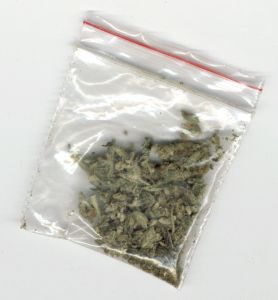
Puff, puff, pass on the good news. A new poll finds that a majority of California voters—51 percent—support the fall ballot measure to legalize, tax, and regulate marijuana for even strictly recreational uses (40 percent opposed it). And support rises a point when respondents are asked about its various benefits.

According to the poll by Oakland-based firm EMC, 69 percent agree that the initiative “will raise needed tax revenue,” arguably its largest selling point. Supporting this notion of turning green into more green, the state’s tax regulator, the Board of Equalization, issued a study last summer noting that taxing pot could bring in an estimated $1.4 billion to state and local governments’ starved coffers.

“We only need fifty plus one,” Dale Sky Clare, Executive Chancellor of Oaksterdam University, told us referring to the percentage needed to pass the initiative. “We’re excited. Even with conservative questions, the poll numbers still show support.”

Six in 10 voters believe the initiative “will save the state money.” This is in line with the nonpartisan Legislative Analyst’s office estimation of “savings of several tens of millions of dollars annually… on the costs of incarcerating and supervising certain marijuana offenders,” according to a report on its website. Even a number of state law enforcement figures have come out in support of the initiative, including Oakland City Attorney John Russo.

“Folks are becoming frustrated with the politics of pure symbols,” Russo told us, referring to the failed War on Drugs. “Marijuana is widespread among otherwise law-abiding people, and it’s viewed by people morally as no different from alcohol. We should stop pretending.”

Other polls have been floating around recently, some slightly higher in one direction or the other, but overall, the numbers suggest the political winds are moving in the right direction. More than three in four voters (77 percent) have heard of the initiative, according to EMC, and awareness is particularly high among newer voters, young folks, and independents—exactly the kind of people who voted for change in 2008, and exactly the kind of voters that will move California, and the country, into a greener (in more ways than one) and brighter future.

Quick Lit: May 12-May 18

0

Literary readings, book tours, and talks this week

Norris Chruch Mailer, Daniel Clowes, real live magic, authors on immigration, the urban farming movement, and more.

Wednesday, May 12

Cakewalk
Hear author Kate Moses disuss her new memoir about being a self-taught baker whose appetite for sugar helped her to survive a tumultuous sixties-era childhood and the friendships she forged with famous authors while working in the editorial department of the North Point Press in Berkeley.
7:30 p.m., free
The Booksmith
1644 Haight, SF
(415) 863-8688
www.booksmith.com

Chronic
Hear D.A. Powell read from his new book of poetry.
6 p.m., free
University Press Books
2430 Bancroft, Berk.
www.universitypressbooks.com

“Urban Farming Movement”
Join leaders of the urban farming movement as they discuss their aspirations to shift our culture away from chain grocery stores in favor of local urban businesses. Featuring Jason Mark, manager of Alemany Farm and editor-in-chief of Earth Island Journal, Novella Carpenter, author of Farm City, and Christopher Burley, founder of Hayes Valley Farm.
6:30 p.m., $20
Commonwealth Club
595 Market, 2nd floor, SF
www.commonwealthclub.org

Thursday, May 13

Daniel Clowes

Enjoy a visual presentation and conversation with Oscar-nominated screenwriter and award-winning cartoonist, Daniel Clowes, about his new graphic novel, Wilson.
7:30 p.m., free
The Booksmith
1644 Haight, SF
(415) 863-8688
www.booksmith.com

Jamy Ian Swiss
Enjoy some live magic and conversation with slight-of-hand artist Jamy Ian Swiss, author of Shattering Illusions and The Art of Magic. In conversation with Adam Savage.
8 p.m., $20
Herbst Theater
401 Van Ness, SF
www.cityboxoffice.com

Saturday, May 15

Unbound: A true tale of war, love, and survival
Hear author Dean King discuss his new book about 30 women who participated in China’s Long March in 1934.
2:30 p.m., free
San Francisco Public Library
Chinatown Branch
1135 Powell, SF
www.shanghaicelebration.com


West Coast Live

Attend this live radio broadcast with host Sedge Thomson and guests Norris Church Mailer, author of A Ticket to the Circus, Eric Puchner, author of Model Home, Abraham Verghese, author of Cutting Stone, and more.
10 a.m., $18
Freight and Salvage
2020 Addison, Berk.
www.wcl.org

Monday, May 17

Authors on Immigration
Hear Peter Schrag, author of Not Fit for Society, discuss the modern immigration controversy within the context of three centuries of debate and Tyche Hendricks, author of The Wind Doesn’t Need a Passport, talk about her experience in the U.S.-Mexico borderlands and the ordinary Americans and Mexicans who live there.
7:30 p.m., free
The Booksmith
1644 Haight, SF
(415) 863-8688
www.booksmith.com

Counselor: Life at the Edge of History
Hear author Theodore Sorensen recount his experience as former Special Counsel and Advisor to President John F. Kennedy, including his significant input into JFK’s most important speeches.
6 p.m., $20
Commonwealth Club
595 Market, 2nd floor, SF
www.commonwealthclub.org

The Frugal Foodie Cookbook
Learn some tips on “Frugal Beauty” from author Lara Starr like how to make “sugar-free spa candy” and “wake up and smell the coffee scrub” as she discusses her new book, The Frugal Foodie Cokbook: Waste not recipes for the wise cook.
7:30 p.m., free
Pegasus Books Downtown
2349 Shattuck, Berk.
www.pegasusbookstore.com

Norris Church Mailer
Hear Norris Church Mailer discuss her new memoir, A Ticket to the Circus, that depicts the evolution of her marriage to Norman Mailer, as well as her early years in Little Rock Arkansas, where she was a young beauty queen who dated Bill Clinton.
8 p.m., $18-$20
Jewish Community Center of San Francisco
Kanbar Hall, 3200 California, SF
(415) 292-1233
www.jccsf.org/arts

Tuesday, May 18

Point Dume
Hear author Katie Arnoldi talk about her new novel set in Malibu where she takes on the death of surf culture, human trafficking, drug cartels, and the environmental devastation caused by illegal pot farms on public lands.
7:30 p.m., free
The Booksmith
1644 Haight, SF
(415) 863-8688
www.booksmith.com

Wordcatcher
Hear Phil Cousineau discuss his new book, Wordcatcher: An odyssey into the world of weird and wonderful words.
6 p.m., $12
Mechanics’ Institute
Room 406
57 Post, SF
www.milibrary.org

Appetite: Sneak peak at Comstock Saloon

0

Bartenders extraordinaire, Jeff Hollinger (also author of The Art of the Bar) and Jonny Raglin of Absinthe, debut Comstock Saloon, scheduled for a May 20 opening date.

This long-anticipated bar is in the former SF Brewing Company on Columbus, a 1907 building on the Barbary Coast trail with a Barbary Coast past honored in the restoration of mahogany bar, Victorian furniture, turn-of-the-century saloon look and menu (Beef Shank with Bone Marrow Pot Pie, anyone?) from Chef Carlo Espinas, formerly of Piccino Cafe. Cocktails ($8-12) are the classics, the kind found in pages of The Savoy Cocktail Book or Charles H. Baker’s Gentleman’s Companion, and all-time greats like a Negroni or Sazerac (two of my favorites).  

COMSTOCK SALOON

155 Columbus Ave, SF.

(415) 617-0071

www.comstocksaloon.com


Benefits: May 5-May 11

0

Ways to have fun while giving back this week

Thursday, May 6

Art Changes Lives 2010: Celebrating Color
Attend this benefit auction for Creativity Explored programs, that positively impact the lives of artists with developmental disabilities and the community that is connected to them. Featuring mistress of ceremonies Peaches Christ, cuisine by Foreign Cinema, cocktails, live music, and more. Auction features original art by Creativity Explored artists. Guests are encouraged to wear chromatic attire.
6:30 p.m., $125
Foreign Cinema
2534 Mission, SF
www.creativityexplored.org

Hysteria
Attend this benefit for the Women’s Community Clinic, a non-profit health care provider for women in San Francisco, featuring a silent auction and a comedy performance by Maria Bamford.
6 p.m., $100
Jewish Community Center
3200 California, SF
hysteria.womenscommunityclinic.org

Kestral Sound Review
Enjoy this benefit project from a local collaborative of music lovers, where curators will showcase up and coming talent through a series of mini festivals they call “Volumes.” Proceeds from the first installment will go to help fight breast cancer. The festival to feature live performances by Bye Bye Blackbirds, Grand Lake, Misirlou, and more, art by Ted Folstand and KC Skinner, photography by Christine Zona, and more.
8 p.m., $5 donation
The Tempest
431 Natoma, SF
www.kestral.org

SF AIDS Foundation Leadership Recognition Dinner
Join other community members and allies in commending vanguards in the community’s efforts to end HIV and AIDS by honoring Dr. Grant Colfax, Director of the HIV Prevention and Research Section in the SF Department of Public Health AIDS Office, Lonnie Payne-Clark, California AIDS Hotline volunteer, fundraiser, and former board member of San Francisco AIDS Foundation and Pangaea Global AIDS Foundation, and Sports Basement, a sponsor and community partner of AIDS/LifeCycle and the Greater Than One training program.
6 p.m., $200
InterContinental Hotel
Grand Ballroom, 888 Howard, SF
(415) 487-3013

Friday, May 7

First Graduate
Attend this Cap and Gown celebration and help support First Graduate, an organization that helps local youth finish high school and become the first in their families to graduate from college. Featuring live jazz, food, dancing, and dessert.
6 p.m., $175
San Francisco City Hall
1 Dr. Carlton B. Goodlett Place, SF
www.firstgraduate.org

Saturday, May 8

National Kidney Walk
Take part in this fundraising walk to help provide resources and raise awareness for the 20 million people with kidney disease in the U.S.
9 a.m.; free to walk, walkers encouraged to raise $200
One Maritime Plaza
300 Clay, SF
www.kidneywalk.org

Peralta Elementary School Community Festival
Help support Peralta Elementary, an Oakland public school for kindergarten through fifth grades, at this spring festival featuring carnival games, sing a song and pot a plant, climbing wall, music, and edible carnival treats.
Noon – 4 p.m., free
Peralta Elementary School
460 63rd St., Oak.
(510) 658-8161

Sunday, May 9

Space Odyssey
Attend Southern Exposure’s annual fundraiser and art auction featuring live and silent art auction, creative projects, food and drink, and music. Proceeds help SoEx continue to be an independent local hub for the Bay Area visual arts community.
7:30 p.m., $35-$65
Southern Exposure
3030 20th St., SF
www.soex.org

Walk to Empower
Join over 1, 000 walkers participating in this Mother’s Day Breast Cancer Walk with a goal of raising $190,000 for those affected by breast cancer.
9 a.m., minimum group purchase of $50.00
Justin Herman Plaza
Market at Embarcadero, SF
www.networkofstrength.org

ENDORSEMENTS: National and state races

15

Editor’s note: the file below contains a correction, updated May 5 2010. 


National races


U.S. SENATE, DEMOCRAT


BARBARA BOXER


The Republican Party is targeting this race as one of its top national priorities, and if the GOP can dislodge a three-term senator from California, it will be a major blow for the party (and agenda) of President Obama. The pundits are happily talking about how much danger Barbara Boxer faces, how the country’s mood is swinging against big-government liberals.


But it’s always a mistake to count out Boxer. In 1982, as a Marin County supervisor with little name recognition in San Francisco, she trounced then-SF Sup. Louise Renne for an open Congressional seat. Ten years later, she beat the odds and won a hotly contested primary and tough general election to move into the Senate. She’s a fierce campaigner, and with no primary opposition, will have a united party behind her.


Boxer is one of the most progressive members of the not-terribly progressive U.S. Senate. She’s been one of the strongest, most consistent supporters of reproductive rights in Washington and a friend of labor (with 100 percent ratings from the AFL-CIO and National Education Association). We’ve had our disagreements: Boxer supported No Child Left Behind, wrote the law allowing airline pilots to carry guns in the cockpit, and was weak on same-sex marriage when San Francisco sought to legalize it (although she’s come around). But she was an early and stalwart foe of the war in Iraq, split with her own party to oppose a crackdown on illegal immigration, and is leading the way on accountability for Wall Street. She richly deserves reelection, and we’re happy to endorse her.


CONGRESS, 6TH DISTRICT, DEMOCRAT


LYNN WOOLSEY


It’s odd that the representative from Marin and Sonoma counties is more progressive by far than her colleague to the south, San Francisco’s Nancy Pelosi. But over the years, Lynn Woolsey has been one of the strongest opponents of the war, a voice against bailouts for the big Wall Street banks, and a foe of cuts in the social safety net. We’re proud to endorse her for another term.


CONGRESS, 7TH DISTRICT, DEMOCRAT


GEORGE MILLER


George Miller has been representing this East Bay district since 1974, and is now the chair of the Education and Labor Committee and a powerhouse in Congress. He’s too prone to compromise (with George W. Bush on education policy) but is taking the right line on California water (while Sen. Dianne Feinstein is on the wrong side). We’ll endorse him for another term.


CONGRESS, 8TH DISTRICT, DEMOCRAT


NANCY PELOSI


We’ve never been terribly pleased with San Francisco’s most prominent Congressional representative. Nancy Pelosi was the author of the bill that created the first privatized national park at the Presidio, setting a horrible standard that parks ought to be about making money. She was weak on opposing the war, ducked same-sex marriage, and has used her clout locally for all the wrong candidates and issues. But we have to give her credit for resurrecting and pushing through the health care bill (bad as it was — and it’s pretty bad — it’s better than doing nothing). And, at a time when the Republicans are trying to derail the Obama presidency, she’s become a pretty effective partner for the president.


Her fate as speaker (and her future in this seat) probably depends on how the Democrats fare in the midterm Congressional elections this fall. But if she and the party survive in decent shape, she needs to take the opportunity to undo the damage she did at the Presidio.


CONGRESS, 9TH DISTRICT, DEMOCRAT


BARBARA LEE


Barbara Lee, who represents Berkeley and Oakland, is co-chair of the Progressive Caucus in the House, one of the most consistent liberal votes in Congress, and a hero to the antiwar movement. In 2001, she was the only member of either house to oppose the Bush administration’s Use of Force resolution following the 9/11 attacks, and she’s never let up on her opposition to foolish military entanglements. We’re glad she’s doing what Nancy Pelosi won’t — represent the progressive politics of her district in Washington.


CONGRESS, 13TH DISTRICT, DEMOCRAT


PETE STARK


Most politicians mellow and get more moderate as they age; Stark is the opposite. He announced a couple of years ago that he’s an atheist (the only one in Congress), opposed the Iraq war early, called one of his colleagues a whore for the insurance industry, and insulted President Bush and refused to apologize, saying: “I may have dishonored the commander-in-chief, but I think he’s done pretty well to dishonor himself without any help from me.” He served as chair of the House Ways and Means Committee for exactly one day — March 3 — before the Democratic membership overruled Speaker Pelosi and chucked him out on the grounds that he was too inflammatory. The 78-year-old may not be in office much longer, but he’s good on all the major issues. He’s also fearless. If he wants another term, he deserves one.


State races


GOVERNOR, DEMOCRAT


EDMUND G. BROWN


Jerry Brown? Which Jerry Brown? The small-is-beautiful environmentalist from the 1970s who opposed Pacific Gas and Electric Co.’s Diablo Canyon nuke and created the California Conservation Corps, the Office of Appropriate Technology, and the Farm Labor Relations Board (all while running a huge budget surplus in Sacramento)? The angry populist who lashed out at corporate power on a KPFA radio talk show and ran against Bill Clinton for president? The pro-development mayor of Oakland who sided with the cops on crime issues and opened a military academy? Or the tough-on-crime attorney general who refuses to even talk about tax increases to solve the state’s gargantuan budget problems?


We don’t know. That’s the problem with Brown — you never know what he’ll do or say next. For now, he’s been a terribly disappointing candidate, running to the right, rambling on about preserving Proposition 13, making awful statements about immigration and sanctuary laws, and even sounding soft on environmental issues. He’s started to hit his stride lately, though, attacking likely GOP contender Meg Whitman over her ties to Wall Street and we’re seeing a few flashes of the populist Brown. But he’s got to step it up if he wants to win — and he’s got to get serious about taxes and show some budget leadership, if he wants to make a difference as governor.


LIEUTENANT GOVERNOR, DEMOCRAT


JANICE HAHN


Not an easy choice, by any means.


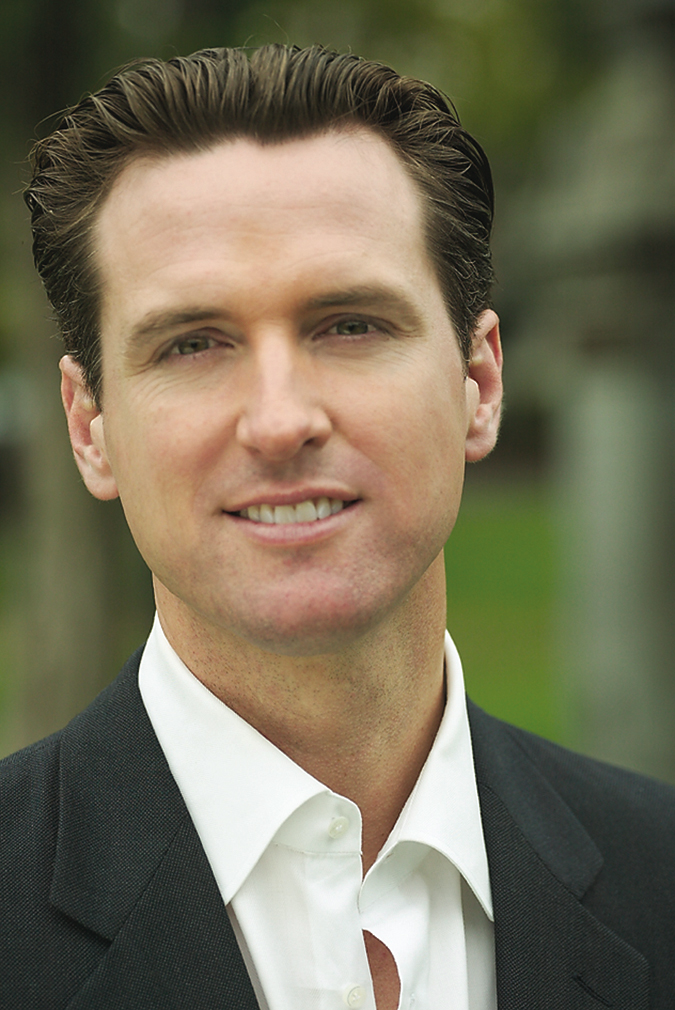
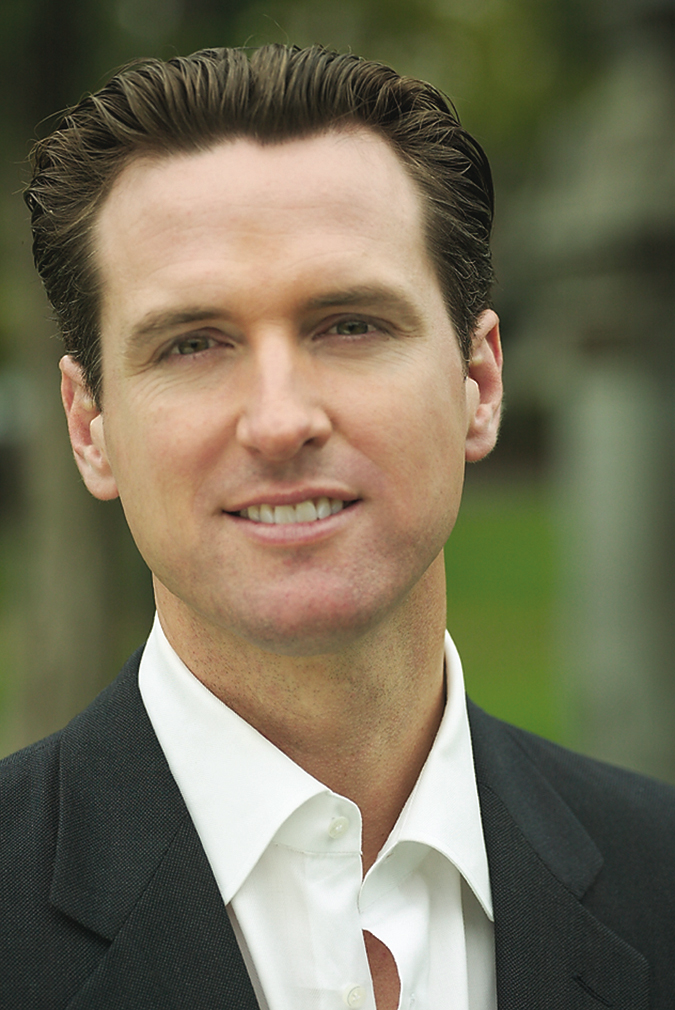
Mayor Gavin Newsom jumped into this race only after it became clear that he wouldn’t get elected governor. He sees it as a temporary perch, someplace to park his political ambitions until a better office opens up. He’s got the money, the statewide name recognition, and the endorsement of some of the state’s major power players, including both U.S. Senators and House Speaker Nancy Pelosi. He’s also been a terrible mayor of San Francisco — and some progressives (like Sup. Chris Daly) argue, persuasively, that the best way to get a better person in Room 200 is to ship Newsom off to an office in Sacramento where he can’t do much harm and let the supervisors pick the next mayor.


But it’s hard to endorse Newsom for any higher office. He’s ducked on public power, allowing PG&E to come very close to blocking the city’s community choice aggregation program (See editorial, page 5). His policies have promoted deporting kids and breaking up families. He’s taken an approach to the city budget — no new revenue, just cuts — that’s similar to what the Republican governor has done. He didn’t even bother to come down and talk to us about this race. There’s really no good argument for supporting the advancement of his political career.


Then there’s Janice Hahn. She’s a Los Angeles City Council member, the daughter of a former county supervisor, and the sister of a former mayor. She got in this race way before Newsom, and her nightmare campaign consultant, Garry South, acts as if she has some divine right to be the only Democrat running.


Hahn in not overly impressive as a candidate. When we met her, she seemed confused about some issues and scrambled to duck others. She told us she’s not sure she’s in favor of legalizing pot, but she isn’t sure why she’s not sure since she has no arguments against it. She won’t take a position on a new peripheral canal, although she can’t defend building one and says that protecting San Francisco Bay has to be a priority. She won’t rule out offshore oil drilling, although she said she has yet to see a proposal she can support. Her main economic development proposal was to bring more film industry work to California, even if that means cutting taxes for the studios or locating the shoots on Indian land where there are fewer regulations.


On the other hand, she told us she wants to get rid of the two-thirds threshold in the state Legislature for passing a budget or raising taxes. She supports reinstating the car tax at pre-Gov. Arnold Schwarzenegger levels. She supports a split-roll measure to reform Prop. 13. She wants to see an oil-severance tax to fund education. She’s one of the few statewide candidates who openly advocates higher taxes on the wealthy as part of the solution to the budget crisis.


We are under no illusions that Hahn will be able to use the weak office of lieutenant governor to move on any of these issues, and we’re not at all sure she’s ready to take over the top spot. But on the issues, she’s clearly better than Newsom, so she gets our endorsements.


SECRETARY OF STATE, DEMOCRAT


DEBRA BOWEN


Debra Bowen is the only Democrat running, a sign that pretty much everyone in the party thinks she’s doing a fine job as Secretary of State. She’s run a clean office and we see no reason to replace her.


CONTROLLER, DEMOCRAT


JOHN CHIANG


Like Bowen, John Chiang has no opposition in the primary, and he’s been a perfectly adequate controller. In fact, when Gov. Schwarzenegger tried two years ago to cut the pay of thousands of state employees to the minimum wage level, Chiang defied him and refused to change the paychecks — a move that forced the governor to back down. We just wish he’d play a more visible role in talking about the need for more tax revenue to balance the state’s books.


TREASURER, DEMOCRAT


BILL LOCKYER


Bill Lockyer keeps bouncing around Sacramento, waiting, perhaps, for his chance to be governor. He was attorney general. Now he’s treasurer seeking a second term, which he will almost certainly win. He’s done some good things, including trying to use state bonds to promote alternative energy, and has spoken out forcefully about the governor’s efforts to defer deficit problems through dubious borrowing. He hasn’t, however, come out in favor of higher taxes for the rich or a change in Prop. 13.


ATTORNEY GENERAL, DEMOCRAT


KAMALA HARRIS


There are really only two serious candidates in this race, Kamala Harris, the San Francisco district attorney, and Rocky Delgadillo, the former Los Angeles city attorney. Harris has a comfortable lead, with Delgadillo in second and the others far behind.


Delgadillo is on his second try for this office. He ran against Jerry Brown four years ago and got nowhere. And in the meantime, he’s come under fire for, among other things, using city employees to run personal errands for him (picking up his dry-cleaning, babysitting his kids) and driving his car without insurance. On a more significant level, he made his reputation with gang injunctions that smacked of ethnic profiling and infuriated Latino and civil liberties groups. It’s amazing he’s still a factor in this race; he can’t possibly win the general election with all his baggage.


Harris has a lot going for her. She was among the first California elected officials to endorse Barack Obama for president, and remains close to the administration. She’s a smart, articulate prosecutor and could be one of the few women atop the Democratic ticket this year. We were never comfortable with her ties to Willie Brown, but he’s no longer a factor in state or local politics. These days, she’s more closely allied with the likes of State Sen. Mark Leno.


That said, we have some serious problems with Harris. She’s been up in Sacramento pushing Republican-style tough-on-crime bills (like a measure that would bar registered sex offenders from ever using social networking sites on the Internet) and forcing sane Democrats like Assembly Member and Public Safety Committee Chair Tom Ammiano to try to tone down or kill them (and then take the political heat). If she didn’t know about the problems in the SFPD crime lab, she should have, and should have made a bigger fuss, earlier.


But Harris has kept her principled position against the death penalty, even when it meant taking immense flak from the cops for refusing to seek capital punishment for the killer of a San Francisco police officer. She’s clearly the best choice for the Democrats.


INSURANCE COMMISSIONER, DEMOCRAT


DAVE JONES


Two credible progressives are vying to run for this powerful and important position regulating the massive — and massively corrupt — California insurance industry. Dave Jones and Hector De La Torre are both in the state Assembly, with Jones representing Sacramento and De La Torre hailing from Los Angeles. Both have a record opposing insurance industry initiatives; both are outspoken foes of Prop. 17; and either would do a fine job as insurance commissioner. But Jones has more experience on consumer issues and health care reform, and we prefer his background as a Legal Aid lawyer to De La Torre’s history as a Southern California Edison executive. So we’ll give Jones the nod.


BOARD OF EQUALIZATION, DISTRICT 1, DEMOCRAT


BETTY T. YEE


Betty Yee has taken over a job that’s been a stronghold of progressive tax policy since the days of the late Bill Bennett. She’s done well in the position, supporting progressive financial measures and even coming down, as a top tax official, in favor of legalizing (and taxing) marijuana. We’re happy to endorse her for another term.


SUPERINTENDENT OF PUBLIC INSTRUCTION


TOM TORLAKSON


Two prominent Democratic legislators are running for this nonpartisan post, state Sen. Gloria Romero of Los Angeles and Assembly Member Tom Torlakson of Martinez. It’s a pretty clear choice: Romero is a big supporter of charter schools who thinks parents should be able to move their kids out of one school district and into another (allowing wealthier white parents, for example, to abandon Los Angeles or San Francisco for the suburban districts). She’s been supported in the past by Don and Doris Fisher, who put a chunk of their GAP Inc. fortune into school privatization efforts. Torlakson wants more accountability for charters, opposes the Romero district-option bill, and has the support of every major teachers union in the state. Vote for Torlakson.


STATE SENATE, DISTRICT 8, DEMOCRAT


LELAND YEE


Sen. Leland Yee can be infuriating. Two years ago, he was hell-bent on selling the Cow Palace as surplus state property and allowing private developers to take it over. In the recent budget crisis, he pissed off his Democratic colleagues by refusing to vote for cuts that everyone else knew were inevitable (while never making a strong stand in favor of, say, repealing Prop. 13 or raising other taxes). But he’s always been good on open-government issues and has made headlines lately for busting California State University, Stanislaus over a secret contract to bring Sarah Palin in for a fundraiser — and has raised the larger point that public universities shouldn’t hide their finances behind private foundations.


Yee will have no serious opposition for reelection, and his campaign for a second term in Sacramento is really the start of the Leland Yee for Mayor effort. With reservations over the Cow Palace deal and a few other issues, we’ll endorse him for reelection.


 Correction update: Yee’s office informs us that the senator suports an oil-severance tax and a tax on high-income earners and “believes that Prop. 13 should be reformed,” although he hasn’t taken a position on Assemblymember Tom Ammiano’s reform bill. 


STATE ASSEMBLY, DISTRICT 12, DEMOCRAT


FIONA MA


Fiona Ma’s a mixed bag (at best). She doesn’t like Pacific Gas and Electric Co. and supports public power, but comes up with strange bills that make no sense, like a 2009 measure to limit rent control in trailer parks. Why does Ma, who has no trailer parks in her district, care? Maybe because the landlords who control the mobile home facilities gave her some campaign cash. She faces no opposition, and we’re not thrilled with her record, but we’ll reluctantly back her for another term.


STATE ASSEMBLY, DISTRICT 13, DEMOCRAT


TOM AMMIANO


When the history of progressive politics in modern San Francisco is written, Tom Ammiano will be a central figure. His long-shot 1999 mayoral campaign against Willie Brown brought the left to life in town, and his leadership helped bring back district elections and put a progressive Board of Supervisors in place in 2000. As a supervisor, he authored the city’s landmark health care bill (which Newsom constantly tries to take credit for) and the rainy day fund (which saved the public schools from debilitating cuts). He uses his local influence to promote the right causes, issues, and candidates.


And he’s turned out to be an excellent member of the state Assembly. He forced BART to take seriously civilian oversight of the transit police force. He put the battle to reform Prop. 13 with a split-role measure back on the state agenda. And his efforts to legalize and tax marijuana are close to making California the first state to toss the insane pot laws. As chair of the Public Safety Committee, he routinely defies the police lobbies and the right-wing Republicans and defuses truly awful legislation. We’re glad Ammiano’s still fighting in the good fight, and we’re pleased to endorse him for another term.


STATE ASSEMBLY, DISTRICT 14, DEMOCRAT


NANCY SKINNER


Nancy Skinner has taken on one of the toughest, and for small businesses, most important, battles in Sacramento. She wants to make out-of-state companies that sell products to Californians collect and remit sales tax. If you buy a book at your local bookstore, you have to pay sales tax; if you buy it from Amazon, it’s tax-free. That not only hurts the state, which loses hundreds of millions of dollars in tax revenue, it’s a competitive disadvantage to local shops. Skinner’s a good progressive vote and an ally for Ammiano on the Public Safety Committee. We’re happy to endorse her for another term.


STATE ASSEMBLY, DISTRICT 16, DEMOCRAT


SANDRE SWANSON


Sandre Swanson represents the district where BART police killed Oscar Grant, but he wasn’t the one out front pushing for more civilian accountability; that was left to SF’s Ammiano. And while Swanson was generally supportive of Ammiano’s bill, he was hardly a leader in the campaign to pass it. This is too bad, because Swanson’s almost always a progressive vote and has been good on issues like whistleblower protection (a Swanson bill that passed this year protects local government workers who want to report problems confidentially). We’ll endorse him for another term, but he needs to get tougher on the BART police.


Newsom didn’t win in Los Angeles

5

I usually go to the California state Democratic Conventions, but I missed this one, so I’ve had to rely on news coverage to find out what happened — and it’s been pretty slim pickins. To read the Chron’s politics blog, you’d think the whole thing was silliness and parties, although Carla Marinucci got a fun comment from party Chair John Burton, who thinks the only thing that will drive the youth vote in November is pot.


But the news for people following the fate Gavin Newsom is that our mayor didn’t get the party’s endorsement for lieutenant governor. Matier and Ross spin it as a sorta, kinda victory:


Mayor Gavin Newsom didn’t get the state Democratic Party endorsement in his race for lieutenant governor, but he got the next best thing: keeping rival L.A. City Councilwoman Janice Hahn from getting it.


And technically, that’s true — Hahn ran hard for the endorsement, and really needed a boost, since she’s far behind in name recognition and money. But it was hardly a resounding win for the front-runner.


Newsom got 52 percent of the vote, short of the 60 percent needed for an endorsement. His campaign says, correctly, that he whupped Hahn, who got 42 percent.


But what’s remarkable is that Newsom had the support of all the party bigwigs — Nancy Pelosi, Dianne Feinstein, Burton — the folks who can usually pull strings and make sure that their candidate gets the nod. The truth is, Hahn never had a chance here; there was absolutely no way the L.A. council member was going to get enough votes to win the endorsement. Her only real play was to block Newsom — and she pulled it off.


So I wouldn’t call this a win for Newsom; I’d say it’s a sign that the grassroots Democrats are not entirely sold on the San Francisco mayor.

The Daily Blurgh: Sugar & Sassy & Death & Taxes (Donald Duck remix)

0

Curiosities, quirks, oddites, and items from around the Bay and beyond

The 53rd San Francisco International Film Festival takes place next week, but over in France preparations are being made to reset the international festival circuit clock when Cannes ’10 kicks off in May. The full-line up has been announced, and I am already curious about the new titles from Apichatpong Weerasethakul, Godard, Gregg Araki, Hong Sangsoo, Alejandro González Iñárritu, and many more. Here’s to some of these being snatched up for SFIFF 54. And yes, there were movies 54 years ago.

*******

Pot without THC: O’Douls for stoners or scientific breakthrough?

*******

Phil Bronstein pushes for journalist Fight Club: “But it’s much more lively to measure breath on the mirror of our business by its deathmatches, where our history is rich and passionate. In the 1800’s, San Francisco rivals in the newspaper world were shooting each other on the street. Charles de Young, a Chronicle founder, popped a cap in politician Isaac Kalloch. De Young’s brother, M.H., was shot by businessman Adolph Spreckels over an article in the paper. And James King, editor of the Daily Evening Bulletin, was killed right downtown on Montgomery.”

********

We completely surrender to Sugar & Sassy — and will beg them to join our electroclash-revival band. Or at least lend their names.

*********

Did you notice the Angry Americans today in Union Square (and I’m not talking about the moms who narrowly snatched that pair of Burberry mules at Lohman’s)?

*********

No one told us there would be a BLOOD CANNON!!!!!

*********

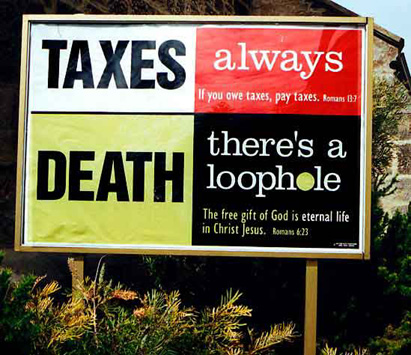
Happy tax day from Motorhead:

*********

And so, courtesy of Wonkette, does “A Walt Disney Donald Duck” — guns! guns! guns!

http://www.youtube.com/watch?v=vr9qpeOjmuQ

SF smokers kicked to curb, by the cars

9

By Adam Lesser

San Francisco smokers will be hit with the latest in a long lines of restrictions starting April 25, when they’ll be kicked to the curb, out by the cars whose tailpipes are at least as dangerous as secondhand smoke.

But drivers haven’t been as easy to demonize as smokers. Light up within 15 feet of a building entrance and you’ll be breaking the law. Other spots where smokers will be barred include outdoor areas at cafes and restaurants, farmer’s markets, and charity bingo games (grandma can take her wheelchair to the curb if she needs a puff).

But pot smokers need not fear. The new law maintains a provision allowing you to light up in licensed dispensaries. Smoking patios at bars are still okay, though smokers probably shouldn’t get too comfortable.

            The San Francisco Department of Public Health frames the smoking debate in terms of the impacts of secondhand smoke. And there’s some good data there. People tend to think lungs and cancer when they think smoking, but the real problem with second hand smoke is heart attacks.  A 2005 estimate from the California EPA put the number of heart attack deaths from second hand smoke at 3,600 annually. Second hand smoke contains a host of toxins from benzene to arsenic.

But it’s hard to know the incremental benefits of moving smokers to the curb. Almost all of the positive data on public health improvements from smoking bans has come from measures the city has already taken. But Mele Lau-Smith of DPH gave me a preview of the potential next battleground: third hand smoke.

“The new science that’s coming out on third hand smoke is interesting. Third hand smoke is everything that clings to furniture and hair and takes longer to dissipate. They’re smaller particles that get deeper into the lungs,” she says. The term was coined last year in the journal Pediatrics and a 2010 paper showed that nicotine reacts with nitrous acid to form carcinogenic molecules that hang around long after a smoker has left the room.

            So the news gets worse for smokers, and the anti-smoking crusade to completely eliminate smoking gains an inch. The smoking prevalence rate in California is among the lowest in the country at 14.3 percent. Most states are in the 18-20 percent range.

            And while it’s all well and good, one wonders if there are other problems in the air besides second hand smoke. Choosing to live in an urban area like San Francisco lowers one’s life expectancy by two years, and one of the major reasons for that is auto exhaust and illnesses related to poorer air quality.

            Mark Jacobson, Professor of Civil and Environmental Engineering at Stanford University, believes the government should keep regulating until smoking is eliminated. But when comparing deaths from automobile emissions versus second hand smoke, he added, “If you look at the mass of the automobile exhaust, then you’re looking at a much bigger figure than second hand smoke. Vehicle exhaust is still way under regulated for addressing health concerns.” Over 2 million people die globally from air pollution each year. About 500,000 die from second hand smoke.

            In the end, Jacobson says it comes down to combustion. When you start burning, you release toxins that eventually hurt or kill people. It doesn’t matter if it’s diesel fuel, gasoline, or tobacco. Combustible products harm public health, and in the case of oil, the environment.

Smokers have proven ideal targets for taxes. San Francisco smokers pay $2.08 in taxes on every pack of cigarettes. When you’re in the minority and the government needs cash, it’s a political no brainer. A 20 cent cigarette tax was tacked on by the Board of Supervisors last October, done under the argument that the money was needed to clean up cigarette butts. Recent proposals to add a local 10 cent tax on gasoline in order to help various cash strapped public transit agencies haven’t found much traction.

So smokers, enjoy the summer. It’ll be the last summer you can light up after an outdoor sunset meal. The smoking ban at restaurants won’t be implemented for another six months.

But come November you’ll be enjoying that smoke out by the curb, where you’ll also be treated to some car exhaust. But, hey, at this point you’re probably all in anyways.

Ross on the road: The great white north

1

Editors note: Guardian correspondent John Ross is traveling across the nation pomoting his new book, El Monstruo — Dread & Redemption in Mexico City, and is sending us dispatches from the road. This week: Twin Cities, Madison and Northern Michigan.


 1. BLUE IGLOO


As I deplaned the Southwest Shuttle from Denver wrapped in my blue igloo, a puffed up garment that doubles my skeletal girth, a sudden spasm of panic punched me in the gut. Had I slept through my stop and disembarked in Fargo, North Dakota instead?
Minneapolis might just as well have been Fargo. The dead winter landscape lay frozen under week-old snowdrifts and the Twin Cities shivered in negative wind chill numbers beneath a leaden sky from which a cold hard rain would pelt down for a week. Fargo or Minneapolis? It didn’t much matter where I had landed – just don’t toss me into the wood chipper.


On my first evening in this desolate region, I was invited to dialogue with the Minnesota Immigrant Freedom Network at a community center in St. Paul. About 15 transplanted Mexicans, many of them related by marriage or friendship, pulled together in a circle in the gymnasium while the kids romped in the other room. Each called out his or hers’ “patria chica,” their home state or region or town. I talked about Mexico down on the ground today in the cheerless winter of 2010, the 100th anniversary of a distant revolution. How four out of every ten heads of households are out of work. 10,000 farmers and their families forced to abandon their milpas as millions of tons of NAFTA corn inundate the country. 19,000 dead in Felipe Calderon’s disastrous attempt to beat down the drug cartels. Who will be next?


Those in the circle leaned forward on their folding chairs, bending into my words as if I was a messenger bringing bad news from home. One woman began to weep and another rose to comfort her.


Later, I pulled out my book, El Monstruo – Dread & Redemption in Mexico City to show them what I had written. Families who would probably not eat meat for a week if they bought one snapped up three Monsters and asked me to sign them for their children — Alejandra, Yesica, Jeni, Alfonso, Jonaton — so that they could learn about the country they had been forced to abandon, in their new language.


As the session wound down, Mariano (not his real name) invited the families to a Jewish Seder the next week at a progressive Minneapolis schul. Then they would get on the buses and head for Washington D.C., a 150 hour round trip, to march for immigration reform on March 21st, the first day of spring. In the nooks and crannies of Obama’s America, Mexicans were beginning to come out of four years of social hibernation to rally for immigration reform, not a hot button issue in this economically strewn landscape.


I hung up with my old camarada Tomas Johnson, one of the apostles of fair trade Zapatista coffee — similar dispensaries like Just Coffee in Madison and Higher Grounds in Michigan are sprinkled over the frigid Midwest. Café has played a diminished role in the slender Zapatista economy ever since Muk’Vitz, a Tzotzil Indian cooperative, imploded when coffee prices soared — coyotes, bottom-feeder speculators, started showing up on the members’ doorsteps offering a few pesos more than the fair trade price.


Coffee is not an ideal resource upon which to build Zapatista autonomy — the price is set far away on commodity exchanges in London and New York and the product itself is destined for the jaded palettes of the connoisseur class in the cities of the north. Moreover, the coffee crop soaks up corn land and adds nothing to indigenous nutrition.


I marked my journey into my 73rd year at a house fiesta hosted by Tomas’s steady squeeze, an audiologist who gifted me with a hearing aid so that I might be able to decipher that questions hurled at me from the small audiences I address. This time last year, I was being wheeled into a green, antiseptic operating room for a round of chemotherapy that would k.o. the tumor that had taken over my liver. This birthday is the real gift.


I entertained privileged white students at several universities during my stay in the Twin Cities, got hopelessly lost in a frigid wasteland trying to find a Lutheran college, told tall tales to a handful of Raza at the U. of Minn, and attended a showing of the Benny More bio-pic at a jam-packed local theater. Benny’s scintillating calor radiating from the screen in waves of tropical heat juxtaposed oddly against the backdrop of the frozen north. Minneapolis-St Paul, with their new populations of color – Somalis, Ethiopians, Eritreans, Hmung, and Latinos – spice up this staid old state with exotic flavors. The music has changed: Reggaeton and Rancheros have replaced Spider John Koerner. I drink in the Albert Ayler-like contortions of a longhaired white boy at a jam session downstairs at the Clown Lounge.


Politics too are not as usual in this once-upon-a-time farmer-labor socialist paradise: Keith Ellison is the nation’s first Muslim congress person and a middle-of-the-road Democrat comedian stands small in the shoes of Paul Wellstone. In the other corner, the pit viper Michelle Bachman spits her venom into the black lagoons of Obamalandia.


II. TURKEY MOLE


I’m back on the Big Dog — there are plenty of Mexicans here but no Mexican bus. On the jump over to Madison, I chat with a well-seasoned black man during a smoke break. He wants to know where I’m headed. I’m on a low-rent book tour, I explain, I move from city to city to sell my books. “I’m on a book tour myself,” he laughs, “I get off where I want to and see if I like it or not. Hung up in Oswego for eight days but wasn’t anything there for me…”


There is a down-at-the-heels traveling class — the evicted and foreclosed, laid off and uprooted — rolling around the underbelly of this damaged country with no fixed destination in mind, looking for a place to light, some place that feels like home.


Norm Stockwell, who keeps WORT-FM, the Voice of Madison’s Voiceless, choogling, picks me up at the Greyhound depot, a furniture-less warehouse that resembles an immigrant detention center on the outskirts of town, and drives me over to the once-a-month Socialist pot-luck, but only scraps and few stained paper plates are left. A few hours earlier, the Madison P.D. visited the premises at the behest of the Wisconsin Socialist Party to remove a truculent member who had been abruptly expelled from its ranks, an astonishingly unpolitical resolution to a political dispute.


Madison is a city that doesn’t leave much up to chance. Cops are ever at the ready to surveil radical meetings. One cannot post a hand-scrawled street sign protesting injustice without first obtaining a permit from the city. No household is allowed to house more than three chickens (no roosters), a law that necessitates chicken inspectors and has given birth to the Chicken Liberation Front.


The State Capitol, a knock-off the Nation’s, is forever on the eyeline in Madison to remind one of the power of the State, I expect. The city is laid out on a grid so that all avenues spoke off from its monstrous dome – you have to move out of town to escape the radiation.


On Saturday, March 20th, a fistful of eternal protestors gathered at the foot of this granite beast to mark the start of the eighth year of the illegal invasion and occupation of Iraq and the decimation of millions of its people. As I trudged up State Street towards the Capitol, I flashed back to our feverish days as Human Shields in Baghdad in March 2003 and thought about Sasha for whom the war never goes home, climbing the hills of Amman, delivering collateral repair from dawn to dusk to the million Iraqi refugees that forgotten war has exiled to the Jordanian capitol.


Our presidents invade so many foreign countries that they can’t even remember the name of the last one they destroyed. Iraq has been erased from the North American mind screen in favor of Afghanistan, the Good War on Obama’s agenda. Last month, Sasha and Mary’s Collateral Repair Project took in just $50 in donations and CRP is in danger of folding. Send them some Yanqui shekels at (www.collateralrepairproject.org.)


The annual commemoration of the Iraqi genocide draws smaller and smaller knots of humanity each year — 80 or so souls in Madison, 500 in San Francisco, not 10,000 in Washington. But the next day, as Baracko’s Dems braved the racist jibes and hard fruit of the Teabaggers to enter the hallowed halls of Congress and narrowly vote up a phony health care reform bill that excludes immigrants from coverage and leaves the insurance congloms on top, 200,000 assembled outside to back up a proposed immigration reform that smells just as cheesy as Obamacare.


The rally proved to be the largest confluence of immigrant workers since that miraculous May 1st four years ago when millions came out of the shadows to shout “aqui estamos y no nos vamos.” After that milestone moment, the immigrant rights movement was driven into the underground by Bush’s ICE raids, Lou Dobbs, the Minutemen, real-time Mexico bashing with knives and bottles, Sheriff Joe’s Arizona storm troopers, good ol’ American-as-apple-pie racism, and the squeamish response of the official Latino leadership.


Now the indocumentados are taking their first baby steps back into the maelstrom of U.S. politics. Hundreds of grassroots groups like the Minnesota Immigration Freedom Network rented buses and drove off to Washington on the first day of spring and May 1st, the day on which immigrant workers first took to the streets of America 124 years ago in the battle for the eight hour day, now looms large on the calendar of resistance.


Lester Dore is a graphic artist who operates under the influence of the king of the calaveras Jose Guadalupe Posada, the brothers Flores Magon, and the breathtaking explosion of popular art that detonated on the walls of Oaxaca during the 2006 uprising in that southern city. Lester whips up a pair of prints to celebrate the publication of “El Monstruo” and the life after death of Praxides G. Guerrero, the first anarchist to fall in the 100 year-old-this-year Mexican revolution. He serves up a big pot of Mole de Guajalote (Turkey) and invites us over. Three compas from Toluca in Mexico State share the sumptuous repast and the conversation quickly slides into Mexican. I learn the origin of the Chilango-ismo “teparocha” (falling down drunk) but eschew the vino (the liver lives on.)


III. SANCTUARY IN THE HEARTLAND


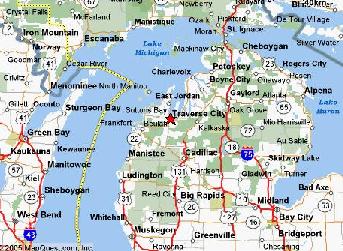
Driving the long route around Lake Superior into northern Michigan, the first tentative fingers of spring have brought a thawing to the land. The cherries that draw thousands of migrant workers to the Lower Peninsula are threatening to burst into bud. Gladys Munoz (her real name) directs Migrant Health Services for seven northern Michigan counties. She is based in Traverse City, a comfortable upper crust enclave — the billion buck mansions out on the peninsula are in the El Chapo Guzman category of ostentation (Michael Moore is rumored to be in residence in the environs ensconced in a lavish log cabin roughly the size of downtown Flint.)


Gladys knows where the bodies are buried. We ply the backroads to the labor camps hidden away down in the dank gullies. Guatemalans and Mexicans stream into this region each spring to do the stoop labor no gringo will do and pick the Maraschinos that top off the parfaits of the few upwardly mobile Americans left in the wake of the ravaged economy (Michigan unemployment clocks in around 15%.) Gladys tells me about three babies born without brains — she suspects pesticides. She speaks about a man from Chiapas who hung himself when he found out that he had contacted AIDS — a priest was called upon to perform an exorcism at the house where he expired. And a young Triqui Indian mother from Oaxaca picking cucumbers for a Vlasic pickle contractor who was stranded in a country that doesn’t recognize her language after her husband went fishing for supper without a license and Fish & Game turned him over to the Migra.


We visit with Liliana (not her real name) from the drug war-riddled hot lands of Guerrero state. The patron is a kindly old farmer who has installed cable TV for the workers and we watch Barack Obama extol the wonders of his tarnished health care bill. Liliana’s husband is picking oranges in Florida but will soon return to work the cherry. She says he doesn’t much believe that an immigration reform measure will make it out of congress – “just some more blahblahblah…” But Liliana will march this May 1st if she can get a ride — undocumented workers are not permitted drivers’ licenses in the state of Michigan.


Traverse City is good to me. I perform at a local organic coffee roaster for a roomful of social change agents. The next morning, Jody T. who gave up her life to drive this garrulous old gaffer around the bioregion, steers the Viva into a trepidatious triangle. Cadillac was once the home base for Timothy McVeigh and the Michigan Militia, a recent flashback on the Ten O’clock News after a Christian posse purportedly targeted cops for blood sacrifice in preparation for the appearance of the Anti-Christ. To the west, small towns with Dutch-inflected names like Holland and Zeeland and Vreland dot the lakeside.


White clapboard outposts of the Dutch Reform Church, the architect of South African apartheid, their steeples spiring piously into the spring breeze, hug the highway. The Dutch Reform Church is the spiritual home of the Prinz family whose most celebrated spawn, Eric, is the go to guy at Blackwater. Further south we slide into Grand Rapids where the similarly affiliated DeVos dynasty’s Amway holds sway. The Prinzes and the DeVoses (a good reason not to root for the Orlando Magic) finance such repositories of right-wing fanaticism as Focus On The Family and Operation Rescue. The largesse of Dick DeVos rivaled the Mormon Church in putting California’s homophobic Proposition 8 over the top.


Grand Rapids, once the furniture capitol of the known universe and now the home of the Gerald Ford Museum of Presidential Imbeciles, is a good boxing town (Buster Mathis and Roger Mayweather have gyms here) and a swelling Latino population has changed the complexion of the city. Despite the downturn, Grand Rapids is trying to upgrade its downtown but the further one gets from the core of the city, the seedier things look.


Koinonia House is a sanctuary near the old demolished heart of Grand Rapids — in fact, it is the only structure left standing on its block. Established by disaffected seminarians like Jeff Smith in the early 1980s when the U.S. waged war on Central America, K House became a station on the underground railroad built by the Sanctuary Movement. The first refugees were Guatemalan Indians fleeing the scorched earth genocide of Efrain Rios Montt. In recent years, K House has taken in Mexicans fleeing that “desgraciada pobreza” back home, like Carlos and Alynn (their real names) who have brought their remarkable art with them to El Norte.


Jeff kicks back and reminisces about the fates of former tenants. The big-bellied wood stove belches out waves of warmth on a chill late March morning. The big arms of the fluffy old lounger envelop a weary traveler and hold him close. K House remains a sanctuary deep in the heart of a wounded land.


Stay tuned. Chicago, St Louis, Jackson Mississippi – there is still a whole lot of traveling to do as the Monstruo tour moves eastwards.               


FIN


John Ross and “El Monstruo – Dread & Redemption in Mexico City” will visit St. Louis April 4th-7th, and Millsaps College Jackson Mississippi April 9th for a symposium on Mexico City – he will tour Baltimore, Washington, New York, and Boston April 19th through May 1st. For details write johnross@igc.org.

Editor’s Notes

4

Tredmond@sfbg.com

The pot initiative’s going to pass in November. California’s going to legalize personal use and small sales. I think that’s clear from the polls, and from the fact that the pot supporters are raising a fair amount of money, and the fact that there won’t be much effective opposition.

The state Legislature might not like it — ballot measures are impossible to amend, and with debate and discussion the measure might be a little different. But Assembly Member Tom Ammiano has tried, again and again, to get his colleagues to see the light: this is going to happen, and if the folks in Sacramento are afraid of it, then they’re not going to have any influence over the final product.

And it’s amazing to me how many people are afraid of this issue.

All three major candidates for governor, including Jerry Brown, who must have smoked pot at some point in his life (would Linda Ronstadt have gone out with a guy who never smoked weed?), are publicly opposing the measure. Ammiano can’t get a majority of the Assembly to vote yes on his legalization bill — and Democrats control things. You wonder when these people are going to understand that the voters, most of them, really don’t care if pot becomes legal. It doesn’t frighten anybody anymore — except elected officials.

Humboldt County is already preparing for this; business leaders are talking about the economic impact on the region and how the North Coast can become the Napa Valley of green bud. The Obama administration needs to get ready too — ready to tell the federal drug agents to leave California alone. And a few years from now, life will go on, and everyone will take legal pot for granted — and I wonder how silly Jerry Brown’s going to feel. *

The pot initiative’s going to win

9

It seems pretty clear to me that, with polls showing widespread support and money pouring in for the campaign, the initiative to legalize pot in California is going to pass. So why are all of the candidates for governor, even Jerry Brown (who may have smoked a joint or two in his time) coming out so strongly against it?


Jerry knows that legal pot isn’t going to create new law-enforcement problems; quite the contrary. It’s going to save huge amounts of money that the state and local governments now waste enforcing a silly law that nobody respects, will cut down on the jail population and discourage the environmentally damaging (and sometimes violent) gangs of rogue growers who plant on public land.


And he ought to know that this kind of a stand isn’t going to help him get elected. Once you take the hard-core Republicans who would never vote for Brown anyway out of the equation and look at the universe of potential Brown voters, legalizing pot probably gets more than 60 percent approval.


If you asked me back in 1978 whether I could imagine a day when Jerry Brown would oppose a marijuana legalization measure that was polling at 60 percent, I would have said: Whoa, man, no way. But then, I inhaled.

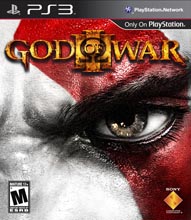
What is the plural of cyclops, anyway? “God of War III,” reviewed

0

By Peter Galvin

God of War III

(Santa Monica Studio, Sony Computer Entertainment)

PS3

A melting pot of ancient Greek myths and characters, the God of War series embodies the term “Big Game.” When the first title made its debut on the PS2 in 2005, people were blown away by the scope of the environments and the brutality of its anti-hero Kratos. A pawn in one of those tragic mind-games that Greek gods were so well-known for, Kratos was a Spartan warrior who set out to exact vengeance against the gods that betrayed him, battling his way through hell itself more than once. In this, the third and supposedly final game in the franchise, action and spectacle are amplified to their limits as Kratos ascends Mount Olympus to murder Zeus himself.

The first title to debut on a next-gen console, God of War III’s graphics are doubly incredible and the mechanics continue to be top notch, but it’s here that the story begins to falter. For the first half of the game, God of War III is a re-tread of its prequels, but that’s kind of okay when it’s also such ridiculous fun. You continue to destroy innumerable centaurs and cyclopses (cyclopsi?) and developers Santa Monica Studio have created a mechanism they coin “Zipper Technology” that aims to realistically resemble guts and organs popping out of a body. The bosses are likely the main draw, often filling the screen with their immense size, and God of War III has some of the best bosses yet in the series, including a Titan that you must scale á la Shadow of the Colossus.

Unfortunately the game climaxes early, just a little more than halfway through, and the ultimate battle with Zeus is a mostly disappointing section considering the wonderful spectacle that preceded it. Vengeance is a reliable plot-device for a reason, but eventually you’re going to have to supply answers and they better be good. As an ending to the series, perhaps Santa Monica Studio were shooting for something a little more arty but instead they nailed pretentious and repetitive. Depth was never really God of War’s strong suit anyway; for all its flash and dazzle, the series was enjoyed best as a top-notch exercise in murdering mythical creatures.

Trash Lit: Spenser says goodbye in ‘The Professional’

0

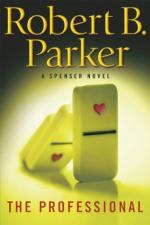
The Professional
Robert B. Parker
Penguin Books, 289 pages, $26.99

I just read the last Spenser novel, ever.

That’s a hard sentence to write. Spenser’s been around a long time, and I’ve read all 37 of Robert B. Parker’s classic tough-guy detective books, and even though they all have the same characters, similar plots, similar dialogue and similar themes, they’re all good. Every last one of them.

And I think it’s probably a good thing that this was the last one of them. I don’t know if Parker realized he was coming to the end of his life as he wrote The Professional, but you get the sense that Spenser is coming to the end of his. Not that the guy’s going to die – like Travis McGee, Spenser will long outlive his creator. But this book has a sort of melancholy sadness to it, a sweet sort of swan song feeling, and by the time you get to the end, you sense that Spenser’s pretty much done.

The plot is typical Parker: A sleazy con man is seducing young women who have rich older husbands. He videotapes the encounters and then threatens the clueless chicks with blackmail. He wants money, big money, or he’ll tell the hubbies – and the days of living large (and waiting to inherit the cash) will come to an end. The women are afraid to go to the cops, of course, so they go to Spenser. His job is to make the con man back off.

It’s the sort of thing that in an earlier version of Spenser would have been too simple to drag out into an entire novel. He’d go with his buddy Hawk, warn the sleazeball that the future was looking pretty shaky, maybe smack him around a bit just for good measure, the dude would split town and all would be well.

But this time, Spenser can’t do it. He almost kinda likes the creep, who is utterly straightforward about his lust for young women, his love for the chase and the score and his gleeful wonder at the fact that he’s figured out a way to make money at the game. Spenser and his main squeeze, Harvard shrink Susan Silverman, puzzle over the bad guy, polyamory relationships and the ethics of sex, while one of the rich hubbies, who has figured things out, sends two dumb-as-a-box-of-rocks thugs to kill Mr. Smooth. So Spenser has to stop them, but as it turns out, he kind of likes the thugs, too, since they are, after all, totally authentic: Marginal men who realize they have no value to society except for their ability to be half-rate muscle.

In the end, there’s a murder, and Spenser makes everything (almost) right. But his heart really isn’t in it.

In fact, this is the first and only Spenser book I’ve ever read that had an overdone edge to it. The dialogue is what makes Parker’s stuff work, and the interactions between Spenser and Silverman and Hawk in The Professional were predictable and dull. It’s as if the master of modern pot-boilers, the Man himself, Robert B. Parker, author of more than 50 top-rate books, was finally running out of steam.

There are the usual literary references (including a nice plug for Janet Evanovich, one of my longtime faves), but they seemed forced. The violence is tired. I was almost ready to give up, but I stuck around for the end, which was worthwhile – if only because it told me that this was the last we’d be hearing from Spenser.

The Professional reminded me of The Green Ripper, John D. MacDonald’s latter-era McGee book, where the author is clearly done with the character but cranks him up for one last stand, one final favor to the fans, a victory lap that gets more and more painful as it nears the finish line.

If you’re a Parker fan, you need to read The Professional. It’s a wake, of sorts; a chance to say goodbye. And it may have been Parker’s way to telling his fans that the fun is finally over.

Fine hike was like seeds in a bag of good weed

2

By Jobert Poblete

Legislation designed to help pot smokers instead had many of them going all like, “Dude, what the fuck?!?!” But the author is now telling everyone to chill out, no problem, he’s got it under control.

California Sen. Mark Leno (D-SF) introduced a bill last month that would make possession of up to one ounce of marijuana an infraction instead of a misdemeanor. As introduced, the bill – Senate Bill 1449 – would also raise fines to $250 from $100, which pot advocates and their allies thought was a serious bummer. But Leno called this a “drafting error” that he intends to correct with an amendment this week.

Marijuana possession is currently the only misdemeanor on the books that does not result in a jail sentence. Leno told us that SB 1449 would correct this irregularity. Leno also said that the bill would save the state time and money. Unlike infractions, misdemeanor charges give defendants the right to costly jury trials and access to public defenders.

“Because of the allowance for a jury trial, a lot of time, money, and effort is wasted when it’s an infraction, misnamed,” Leno told us. “Either we call it what it is – a $100 fine is an infraction – or if it is a misdemeanor, then increase the penalty to include jail time. But no one wants to do that.”

Similar bills have failed in the Senate before. But Leno thinks that the economic crisis and changing attitudes have changed the climate in Sacramento. He cited polls that show a majority of Californians support decriminalizing marijuana possession altogether and an initiative to do just that could appear on the November ballot.

Drug policy reform advocates supported the move to make possession an infraction instead of a misdemeanor but raised concerns about the possible increase in fines. “We have always supported making marijuana possession an infraction instead of a misdemeanor,” said Dale Gieringer, vice chair of the National Organization for the Reform of Marijuana Laws.

Aaron Smith, California policy director at the Marijuana Policy Project, raised concerns about the possible increase in fines and emphasized the need to focus on broader efforts to decriminalize marijuana. “Everyone should be focusing on making marijuana taxed and regulated instead of fiddling with the fines,” Smith said.

Leno considers his bill complementary to the broader efforts to legalize marijuana. “If we’re going to decriminalize and tax, we’re really going from infraction to decriminalization,” Leno said. “It’s really an infraction, so let’s call it that.”

Joyful noise

0

Even if Music by Prudence’s recent Oscar win for Best Documentary Short is currently garnering more blog pixels for its producer’s Kanye-like acceptance speech takedown, African music is experiencing an upsurge in attention these days. We could all use some uplift every now and again, and artists from the developing world, many of them singing through years of conflict and soul crushing poverty, somehow make that missed bus- even that found pink slip- seem like less of an end game.

Plus, some of them sing with the conviction and force of angels.

I’d like to introduce you to the Soweto Gospel Choir. A 26 singer strong troupe of some of the best singers in South Africa, the Grammy award winning Choir performs in big bright dashikis an interesting blend of traditional Zulu songs and “Many Rivers to Cross,” a combination that when stirred together in an exuberant pot yields African gospel. They’re coming to the Paramount Theater (Sat/27), and the show should be great. Their music gets soaring, it gets heartfelt, it gets jazzy- it’s an epic listening experience that recalls what it means when the people you’re watching onstage are singing to carry out their mission on earth.

So what is that mission? Well, besides to have what looks to be a grand old time dancing and singing with their bandmates in front of audiences that have included Nelson Mandela, Archbishop Desmond Tutu (the group’s “patron”) and Oprah, the aim of the Soweto Gospel Choir is to give back to the community that birthed them.

Children in South Africa nosh down thanks to Soweto Gospel Choir

South Africa has the highest amount of children left without parents from AIDS in Africa- 1.4 million by 2007 estimates- a cloudy future for the country’s next generation. Every performance by the Soweto Gospel Choir sends 50% of their net earnings towards helping these overlooked victims of the AIDS epidemic.

In 2003, the group created Nkosi’s Haven Vukani, a long term residential care center that provides safe shelter for infected mothers and their children, shelter that remains available to the children in the event that the mother passes away. So far, the group’s ecstatic sounds have garnered over $3 million for Nkosi’s- helping to feed over 9,000 kids.

Which means that watching the troupe rock and roll through their soul clapping renditions of “Amazing Grace” and “O Nkosi Yam” might get a ‘hallejuah’ out of even the nonbelievers in the stands. 

Soweto Gospel Choir

8 p.m., $25-$65

Paramount Theatre

2025 Broadway, Oakland

(415) 575-6100

www.ciis.edu

Snap Sounds: Yeasayer

0

YEASAYER
Odd Blood
(Secretly Canadian)

A creepy terminator-type robot dude rolls up to the hottest party in a cage you’ve never even been privileged enough to attend. Damn, I wish I could stumble upon a get-down like Yeasayer throws — swimming ninjas, neon martinis, laser orgies, and magical board games would definitely be something I could get into on a regular weekend basis.

It’s hard to remember you’re listening to “O.N.E.,” a track off the Brooklyn psychedelic band’s second release Odd Blood, put out earlier this year; the video is just that good. Odd Blood is lined with crazy beats, a melting pot of genres — “O.N.E.” is no different. African, disco, electro-tropix will squeeze your inner parts and beg you to groove alongside the web of lasers and glowing windbreakers featured in this stellar video.

http://vimeo.com/10044003

Yeasayer
Sat., April 17, 9pm
The Fillmore
1805 Geary, SF
www.thefillmore.com

5A5

0

paulr@sfbg.com

DINE How odd that the world’s best beef should come from Japan, a small island nation where pastureland is scarce and whose gastronomic renown largely has to do with the sea. Beef’s natural home is a big, flat place: the pampas of Argentina, say, or our own Great Plains. Throw in a few zillion acres of wheat — for the refined white flour whence come soft buns — and you have the culture of mass-produced, drive-through hamburgers that defines us. Given the powerful connection between the burger and the car, it’s a wonder that someone hasn’t yet closed the circle by putting tread marks on a burger: the Treadburger.

At 5A5, a next-generation steak house in the Barbary Coast, beef is treated as the delicacy it can be, and not surprisingly the restaurant’s tones and accents are Japanese and east Asian. Beef is a — pricey — delicacy in Japan, the Land of the Rising Sun but not the 32-ounce steak. The name refers to the wagyu beef the restaurant actually imports from Japan and sells for prices beginning at about $16 an ounce. On that scale, your 32-ounce steak would cost you … well, let’s say bailout money

But the 32-ounce steak represents life out of balance in a particularly American way — “koyaanisqatsi” is the Indian term and title of the 1982 movie — and 5A5 is all about a Zen-like equilibrium. The restaurant reposes in an unassuming brick building on a narrow, quiet street. Inside, the look is thoughtfully understated, with cream-colored, 1960s-looking chairs, nests of horseshoe banquettes, lots of open space (a witty hint at prairies?), and a ceiling of perforated concavity that looks like a giant, upside-down, backlit colander.

For a steak house, 5A5 lays a surprisingly light hand on the meat. Chef Allen Chen’s menu contains a full page-and-a-half of smaller courses, including shooters, bites, starters, soups, and salads — many of them as clever, elegant, and meatless as you would find in any temple of California cuisine — before you reach flesh country. Even the list of main dishes transcends beef to include buffalo, fish, poultry, and a vegetarian option. And vegetables here aren’t an afterthought. Behold a platter of glisteningly green-white bok choy ($8), tossed with chunks of meaty bacon and crumblings of macadamia nuts, or a berm of baby spinach ($8), sautéed with onion and garlic and topped with a fine thatch of shredded, fried naan.

Flavor patterns are polycultural but vigorous. A shooter of hamachi ($4), for instance, includes not only a small chunk of yellowtail (a fish familiar to sushi lovers) but a creamy, tangy blend of avocado, ginger, yuzu juice, and tobiko. It’s like a piece of sushi roll liquified into a health drink and presented in a wide-mouth, heavy-bottom shot glass. A plate of ribs and chips ($12) gives you several exquisitely tender spare ribs in a spicy hoisin glaze, accompanied by a stack of lacy fried-potato disks. And truffle fries ($8) introduce a distinctly occidental note, though modified by the ramekin of sriracha aioli. Sriracha is a Thai hot sauce, but in aioli it produces an outcome quite similar to cayenne or other hot red pepper.

As for the meat: even the plebeian cuts of Angus are sensuous and delicate. Like cheesecake, their texture is soft, with just enough firmness to hold their shape. And, perhaps in a nod to a pair of unsettled Zeitgeists, financial and cardiovascular, you can have either a smaller or larger portion of several of the main courses. I thought the smaller, six-ounce portion of filet mignon ($23) was just right: enough to register as a proper serving of meat but not so much as to induce that sickening feeling of overload. Better yet, the meat was juicy and flavorful, which, if you’ve ever cooked filet mignon yourself, is far from a given. Tender bonelessness does carry its price. For a bit of extra insurance (and a bit more money, $29), you can get your filet on the bone.

After all that, dessert should be light-hearted, and maybe just plain light. A nice example is the plate of green-tea doughnuts ($8), presented with a globe of macha ice cream and a pot of intense, coarse, barely sweet raspberry jam. Hints of bitter, sour, sweet, creamy, crunchy, gooey — and we have at least one small slice of life in balance.

5A5

Dinner: Mon.–Sat., 5:30–9:30 p.m.;

Sun., 5:30–9 p.m.

244 Jackson, SF

(415) 989-2539

www.5A5stk.com

Full bar

AE/MC/v

Gentle noise

Wheelchair accessible (elevator to restrooms)


Making the protests count

37

It was wonderful to see so many people all over the state taking to the streets to protest cuts in education and public services. The rally at San Francisco’s Civic Center wasn’t just young radical agitators, either — most of the people there were parents with kids, families, people who are just fed up with the threats to the future of this state and don’t want to take it any more.


And now that the press and public and maybe even the elected officials are focused on the issue, it’s time to move to the next step. Politicians can talk all they want about “standing with the families” and supporting education, but in the end, there’s only one way to adequately fund K-12 and higher education in California. And that’s to raise taxes.


You can talk about waste all you want, and there’s certainly waste at the University of California. But we’re looking at a need that runs into the billions, multiple billions, tens of billions — and eliminating a few million bucks of waste here and there isn’t going to solve the problem.


You’re not going to solve it by reallocating the state’s budget money, either, since there’s no single large pot of cash that can be taken and given to the schools without devastating another necessary public service. The only real possibility is the prison system, a financial sink hole if ever there were one — but again: You can’t just cut prison spending by eliminating services to prisoners. They get so little as it is — and the federal courts won’t allow any reductions in health care and the state’s already under court order to reduce overcrowding.


You could probably solve half of the schools’ fiscal problems by releasing from prison every single inmate serving time for a drug offense; that’s the kind of dramatic steps we’re talking about. And if anyone wants to launch a political campaign to let 30,000 prisoners free tomorrow, I’m with you.


But it’s not going to happen, not in this climate. So the only real option is to get more revenue. That means raising taxes at the state level, repealing Prop. 13 to allow local property tax hikes, or raising taxes at the city level.


And here’s who the protesters need to be targeting:


1. The governor. Arnold Schwarzenegger not only refuses to allow new taxes as part of the budget, he vetoed Sen. Mark Leno’s bill that would have allowed local government to raise its own car taxes. He’s at (916)-445-2841.


2. The Republican leadership of the state Legislature. These folks go into the budget talks with the power of a minority that can block the two-thirds vote required for tax hikes, and they’ve both signed “no new taxes” pledges. These two people are among the single largest reason that the California school are facing such huge cuts. Assemblymember Martin Garrick,  916-319-2074. Senator Dennis Hollingsworth, (916) 651-4036.


3. Attorney General Jerry Brown. He’s running for governor as the Democratic candidate, and he has already announced that he won’t raise taxes and that Prop. 13 is untouchable. He won’t even support Assemblymember Tom Ammiano’s bill to legalize and tax marijuana. He needs to hear from his constituents that those positions won’t fly. (916) 322-3360


4. The mayor of San Francisco. Gavin Newsom is happy to announce that he supports education funding, but he’s never come forward with a single significant new tax increase for the city. Local taxes could be split between the general fund and the schools, and the progressives on the Board of Supervisors are looking for revenue options. Call the mayor and tell him: If Sacramento won’t raise taxes to educate our kids, we’d like to do it at home, in San Francisco. 415-554-6141.


5. Any state or local official who claims to support the schools but won’t publicly endorse and work for higher taxes. Folks, there’s no other way out of this.


And at the next rally, let’s chant: Repeal Prop. 13, Now! Tax the rich in San Francisco — Now!

Events listings

0

Events listings are compiled by Paula Connelly. Submit items for the listings at listings@sfbg.com.

WEDNESDAY 24

SF Noir Museum of African Diaspora, Marcus Books, The Atrium, and other Bay Area locations, for more information, visit www.sfnoir.org. Wed. – Sun., $10-$75. Celebrate Black History month at this year’s culinary arts focused SF Noir, featuring food wine and entertainment that highlight the best in Black cuisine.

"World without us" Herbst Theater, 401 Van Ness, SF; (415) 561-6582. 7:30pm, $10. Attend this Long Now Foundation’s Seminar About Long-Term Thinking, where journalist Alan Weisman will discuss his experience traveling the world to investigate what happens when humans stop occupying an area.

BAY AREA

Bike Repair Class Cycles of Change APC Bike Shop, 650 W. Ranger, Alameda; (510) 898-7830. 6:30pm, $80-$150 sliding scale for all four classes. Learn how to fix your bike at this four part basic bike maintenance training program run by a nonprofit community bike shop. Classes include bike anatomy, brakes, shifting, and wheels.

Working in the Shadows Revolution Books, 2425 Channing, Berk.; (510) 848-1196. 7pm, free. Hear Gabriel Thompson discuss his new book, Working in the Shadows: A year of doing the jobs (most) Americans won’t do, about a year spent working all over the United States alongside Latino immigrants.

THURSDAY 25

God, Seed San Francisco Center for the Book, 300 DeHaro, SF; (415) 565-0545. 7pm, free. Attend this reading and slide show presentation based on Bay Area artist Lorna Stevens and poet Rebecca Foust’s new collaborative book, that is a collection of poems and art about the environment.

Historic Wineries of California California Historical Society Museum, 678 Mission, SF; (415) 357-1848. 6pm, $25. Attend this wine tasting and history lesson all in one, with winemakers representing some of the oldest, family-owned California wineries telling tales of growing up on vineyards and offering tastings of their latest vintage.

Kamau Patton and Sara Kraft Yerba Buena Center for the Arts, Gallery 3, 701 Mission, SF; (415) 978-2787. 7pm, $7. Local visual artist Kamau Patton and performance artist Sarah Kraft come together to discuss commonalities within their artistic practice, presenting samples of sounds image and text to illustrate their discussion.

Love Your Body Now Center for Sex and Culture, 1519 Mission, SF; (415) 255-1155. 7:30pm, $10-$30 sliding scale. This interactive workshop allows participants to explore the roots of their own body issues, how it has affected them, and how to combat the barrage of media that focuses on perfection.

FRIDAY 26

Pacific Orchid Exposition Fort Mason Center, Bay at Franklin, SF; (415) 665-2468. Fri. and Sun 10am-5pm, Sat. 10am-6pm; $14. Check out over 150,000 unique orchids from around the world, with educational displays and demonstration. This year’s theme of "Carnaval" will highlight the diverse natural habitats of orchids.

BAY AREA

Seed Swap Ecology Center, 2530 San Pablo, Berk.; (510) 658-9178. 7pm, food and seeds to share or $10 donation. Hang out with fellow local gardeners at this pot luck, seed swap, and party. Bring food, seeds, or a garden related treasure to raffle and you can get in for free.

SATURDAY 27

Chinese New Year Treasure Hunt Hunt begins at Justin Herman Plaza, Market at Embarcadero, SF; (415) 564-9400. 4:30pm, $30-$40. Channel your inner stealthy Tiger at this treasure hunt and urban sleuthing game taking place on the streets of Chinatown, North Beach, and Telegraph Hill. Rain or shine.

Lunar New Year Festival Chinese Cultural Center, 3rd floor, 750 Kearny, SF; (415) 986-1822. Sat.-Sun. 11am-4pm, free. Usher in the year of the Tiger at this Spring Festival celebration featuring lion dancing, performances, activities, fortune telling, art, and more.

Magazine Day Booksmith, 1644 Haight, SF; (415) 863-8688. 1pm, $5. Break out your piles of unread magazines and share them with other magazine lovers as Booksmith turns itself into a giant magazine reading room for the day featuring discussions about magazine publishing, wine, snacks, and plenty of mags to take home from the communal piles.

Art to Empower Africa Space Gallery, 1141 Polk, SF; camfedfundraisersf.org. 7pm, free. Buy donated art from local artists at this auction where all of the proceeds will go to benefit Camfed, an organization that empowers girls in Africa by using a community-based, holistic approach to long-term education, small business training, and HIV prevention.

SUNDAY 28

Ayibobo! Glide Memorial Church, 330 Ellis, SF; (415) 626-7500. 1pm, free. Join San Francisco poet Laureates Lawrence Ferlinghetti, Jack Hirschman, and Janice Mirikitani at this poetry reading and benefit for Haiti. Donations will be given to Doctors Without Borders.

Benefit for the Boob Wild Side West, 424 Cortland, SF; breastcanceremergencyfund.org. 4pm, $5-$20 donation. The Sisters of Perpetual Indulgence are hosting this fundraiser for the Breast Cancer Emergency Fund featuring burlesque performances, drag kings, comedy, sex education, raffle prizes, and more.

TUESDAY 2

Bike Touring 101 San Francisco Bicycle Coalition, Suite 1550, 995 Market, SF; www.sfbike.org. 6:30pm, free. This workshop will go over the basics of bicycle touring, like what you need, what you don’t need, and best practices to keep you happy and healthy on the road. Bring your bicycle to find out if it’s suited for bike touring.

And speaking of pot…

3

Just minutes after my last post on medical marijuana, Assembly member Tom Ammiano announced that he has reintroduced state legislation that would legalize and tax marijuana. Assembly Bill 2254 follows an earlier bill by Ammiano, AB 390, which made history in January by clearing the Assembly Public Safety Committee, only to die from failing to clear a second committee before the legislative deadline.

“Just look at what is happening in our state and it’s obvious that the existing model of prohibition has been a tragic failure. Our prisons are overflowing and it’s easier now for teenagers to get marijuana than alcohol. But yet we continue to spend our limited resources on a failed war on drugs instead of education, health care or job training. With this bill, California can finally have a policy towards marijuana that reflects reality,” Ammiano said in a prepared statement. “We simply cannot afford to continue keeping our heads in the sand and pretend that everything is fine.  It’s time for California to regain control of this issue by taxing and regulating marijuana.”

Marijuana really is medicine

5

Just in time for Medical Marijuana Week comes word that the first U.S. clinical trials on marijuana in more than 20 years has found that it is effective in relieving pain and treating multiple sclerosis and other ailments, potentially opening the way for the federal government to revisit its longstanding claim that pot has no medicinal value.

Most significant are findings that even low levels of marijuana offer significant pain relief with minimal health consequences. Unfortunately, the San Francisco Chronicle also reports that the UC San Diego researchers have almost run out of funding before all its planned tests have been completed.

San Francisco has long been a leader in the medical marijuana movement, both with its proactive approach to regulating cannabis clubs, and with the sponsorship of efforts to decriminalize pot by state legislators Tom Ammiano and Mark Leno. Oakland’s pot-cultivation school Oaksterdam University also bankrolled an initiative aimed for the November ballot that would legalize weed for even recreational use.

Day laborers protest U-haul and police crackdown

6

Every day, on my bike ride to work, I see the day laborers lined up along Alameda Street across from the U-haul office, hoping to get work. It’s a great little community, full of friendly people (mostly Latino men, but sometimes a couple young African-Americans as well), and they wave, smile, and try to get me to jingle my bell or honk my horn at them as I pass, which I always oblige.

But a couple months ago, the scene changed. Police officers now show up more often to hassle the day laborers, often demanding they clear the street. So they linger on adjacent streets, still trying to make themselves available for work, but clearly intimidated and wary of getting busted.

Well today, the workers pushed back, with the help of La Raza Centro Legal’s Day Laborer Program and nearly 100 supporters, who came to chant and protest a new U-Haul manager who they say constantly harasses them and calls the police three times a day. That manager, who was chatting with two cops at the scene, refused to identify himself or speak with me, referring me to their corporate flak (who hasn’t returned my call).

Anecdotally, we’ve heard that day laborers around the city have been rousted by police far more often in recent months, just one more of the SFPD crackdowns under new Police Chief George Gascon, which include raids on pot growers in the Sunset, mass arrests in the Tenderloin, regular raids of underground parties in SoMa, and lots more citations for drinking in Dolores Park and other parks.

Appetite: Planning ahead for V-Day

0

By Virginia Miller of www.theperfectspotsf.com. View the previous installment of Appetite here. Check out more V-Day dining ideas here.

meltingpot0110.jpg
Fondue you: The Melting Pot draws couples closer for Valentine’s

2/14 – Belgian beer and butchery at La Trappe
Many of us don’t get excited by the commercialism of Valentine’s Day – and not just because we may or not have a special someone in our lives. It could just be that we don’t like things rosy, pink and cute. No need to go the hearts and chocolate route when you can do Belgian beers and butchery, right? La Trappe does it right by making their enchanting Belgian brick-walled, candlelit basement the setting for A Porcine Valentine. Only 45 lucky people will have their run of the place, cozying up on church pews and couches with all the beers and pig they can ingest. La Trappe’s Dave and Chris will each be breaking down a whole pig, showcasing different butchering techniques between the US and Italy.
3-11:30pm
$95 per person, limited to 45 people
800 Greenwich Street
415-440-8727

www.latrappecafe.com

missionbeach0110.JPG
Mission Beach makes it sweeter

2/14 – Mission Beach Cafe sweets for the sweet
ILove Mission Beach Café. Not only is it a morning delight for weekend brunch or weekday pastries and Blue Bottle coffee, but its dinners are some of the best and most underrated neighborhood dining in the city. Valentine’s Day there is, yes, a special four-course prix fixe dinner (including white linens, roses, champagne toast, amuse bouche and sweets from fab pastry chef, Alan Carter). Knowing their track record, it won’t be the often overpriced, mediocre food one gets for Valentine’s. There’s dishes like Heirloom Chicory Salad with pomelos and huckleberries, Lobster and Dungeness Crab Ravioli or Prather Ranch organic prime rib. All this in the cozy, chic glow of a neighborhood restaurant that’s also a worthy destination.
$75 per person
198 Guerrero Street
415-861-0198
www.missionbeachcafesf.com

2/13-14 – The Melting Pot – Valentine’s fondue feast
The Melting Pot chain may not be your first thought for Valentine’s Day, but if you’re in Marin or the idea of a relaxed fondue feast (cozy in these Winter months) in a unique setting is appealing, here’s an idea (discounts for groups of 7 or more friends): head to Larkspur’s Melting Pot in an 1891 brick kiln, forced to close for economic reasons in 1915, empty for over 70 years until restored in 1989. The space has the feel of a labyrinthine Spanish wine cellar set in a circular, brick tunnel. For Valentine’s they’ve got a four-course prix fixe at $65 a person – there’s choices each course, like Quattro Formaggio Fondue (fontina, gruyere, raclette, mozzarella cheeses with roasted garlic, basil, pesto) or Crab Imperial Cheddar Fondue, a Caprese or Caesar Salad, entree fondue meats like Filet Mignon Florentine, Limoncello Basamic Sirloin, Orange Fennel Pork Tenderloin, and a finish of either Milk Chocolate Tiramisu or Dark Chocolate Raspberry Fondue. Females get a rose as they leave… if you guys want one, too, you could probably ask. 
$65 per person (10% off for group of 7 or more)
125 E. Sir Francis Drake, Larkspur, CA
415-461-6358
www.meltingpot.com

2/10 – La Cocina’s Truffle-Making Class
Community treasure La Cocina, along with fabulous Neo Co coa chocolates and ever-popular Kika’s Treats, host a hands-on evening rolling your own truf fles, either to with your sweetheart or to give as a Valentine’s gift. The theme is “how to be a bet ter lover”… I always knew chocolate was somehow involved. The class includes wine, din ner and a take-home box of your handiwork.
$65 class; $85 class + 10-piece truffle box & 5-pack of Kika’s Treats (a $27 value)
6:30-9pm
2948 Folsom Street
415-824-2729
www.lacocinasf.org


Cafe Prague

0

DINE When in Prague, one would naturally try to eat as Praguers do, and in my experience, this means lots of pizza. The city, as a physical artifact, is a gothic dream, a fantasy of spires, castellations, and cobblestones worthy of Walt Disney. And being sealed up in the aspic of communism for 40 years actually enhanced these charms. When Milos Forman was looking for a place to film Amadeus, his 1984 movie about Mozart in Vienna, he settled on Prague as the setting because it had changed so little since the 18th century.

Except for the people, that is, who emerged from behind the ruins of the Iron Curtain in 1989 with a hunger for all things western, from Bulgari to holidays in Thailand to pizza. I ate as much pizza in Prague as I did in Rome a few years later, and that is saying something. And the wonderful Czech beer, Budvar, was so cheap in the late 1990s it might as well have been pouring from the taps. What was trickier to find was a spot that served traditional Bohemian cooking in a bohemian atmosphere — a place, in other words, like our very own Café Prague.

We never found a place like Café Prague in Prague, but here you don’t have to do much searching, and you can even take BART, since the restaurant expanded last year from its home in the Financial District (once on Pacific Avenue, now on Merchant Sreet) to new digs in the Mission District — on Mission Street itself, in fact, just two blocks from the 16th Street BART Station. The set-up offers, in addition to convenience, a more authentically bohemian setting, or at least one farther removed from soaring glass towers full of bankers counting their taxpayer-funded bonuses. Inside it’s homey; the only bohemian touch that seems to be lacking is a pall of blue smoke from cigarettes being nervously puffed by sallow, Kafkaesque young men.

Today’s Kafka aspirants, from the look of it, are strapping lads (and lasses) who make quick work of huge mugs of Czechvar (Budvar’s North American label) before tucking into immense and satisfying platters of central European food. I have never seen so much food on plates. Even the appetizers are colossal. A bratwurst platter ($7), for instance, consisted of a stack of wonderful sweet and smears of mustard and ketchup to swipe them through, along with a tangle of sauerkraut, a heap of pepperoncini, coins of dill pickle, and a wealth of other pickled vegetables. There was easily enough here for a table of four, especially since we’d earlier loaded up with abandon on the seductive, warm bread in its bottomless basket.

A bowl of split-pea soup ($5) was likewise almost a meal in itself, especially with the addition of bacon and dumplings. When bacon is mentioned as an accoutrement on a menu, you might expect a few bits or crumblings, for a hint of flavor and crunch and some decorative effect. Here the bacon appeared in the guise of nicely crisped slats — enough of them to amount to some real heft. And the bacon was the meaty English kind, not the fatty American stuff. Just to make sure no one would go away hungry, the kitchen tossed in some dumplings as well.

A word on the dumplings, which are ubiquitous. They are dotted with caraway seeds and resemble large slices of the crustless white bread the English use to make their tea-time cucumber sandwiches and are not (as I was expecting) spheres of boiled potato dough. The dumplings were impressively stacked beside several flaps of sauerbraten ($15), a vinegar-marinated pot roast that seemed slightly tough but was smoothed and softened by a broad lake of velvety brown gravy, and beside the roast duck ($15), rich as a winter night. Another small pile of sauerkraut helped balance some of the duck’s fattiness.

After such an avalanche of food (plenty of protein and fat and, thanks to the dumplings, nearly limitless starch), the very thought of dessert might leave you queasy. I can’t say that Café Prague’s version of apple strudel ($5) is a pastry version of Alka-Seltzer, but it is good, with more apples than pastry for a somewhat lower center of gravity. It almost looks like (dare I say?) a slice of deep-dish pizza, except for a chocolate-speckled egg of whipped cream on each side, for a little flourish of bohemian decadence.

CAFÉ PRAGUE

Dinner: nightly, 5–10 p.m.

2140 Mission, SF

(415) 986-0269

Beer and wine

Cash only

Somewhat noisy

Wheelchair accessible