Politics

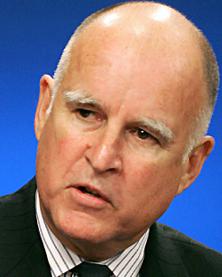
Hank Plante’s exit interview

2

Hank Plante ends a three-decade run as a political journalist with tonight’s (March 24) broadcast of the CBS 5 Eyewitness News, where he has worked since 1986 after starting his career with newspapers in Washington DC. So we took the occasion to talk politics with him, learning that his loyalties lie downtown.

Plante agreed that politics has become ugly these days. “It’s just so much more acrimonious, that’s one thing that’s changed. The other is just the money that’s involved,” Plante told us, marveling at Meg Whitman’s plans to spend $40 million of her own money to run for governor and the $1 million per day that corporations spent lobbying against the health reform bill signed by President Obama.

But the changes haven’t gotten Plante down, as they have many political junkies, who decry the crippling of government’s ability to combat corporate power and address real social and economic problems. “I’ve never become a cynic, and I think that’s one thing that sets me apart from many political journalists,” he said, adding, “I still think politicians can make a difference.”

Yet like many political journalists, when I ask who his favorite politicians have been, he rates them based on whether they’ve made good stories, not whether they good for the people. For journalists, bad is often good, whether it be natural disasters or disgraceful politicians.

“Arnold is a great story. Willie Brown was a great story. Gray Davis was a dull story until he got recalled, then he was a good story,” Plante said.

What about Mayor Gavin Newsom, who has often given Plante exclusive access (including Newsom’s first extended interview after his 2007 sex scandal), but who has also angrily walked out in the middle of an interview with Plante. 

“Personally, I like the mayor. But I have to ask him tough questions, so he can be mercurial. Right now, he’s running for office again, so he’s charming,” Plante said.

In fact, for a journalist, Plante makes clear his preference for Newsom over the progressive majority on the Board of Supervisors, joking, “If I had a month to live, I’d spend it with the Board of Supervisors because it would seem like five years.”

Plante also said that he opposes district elections — which he said have prevented the emergence of big-stature political figures like Dianne Feinstein and Quintin Kopp — and Plante said he doesn’t see the value of district elections in counteracting the political power of downtown corporations. “I’m a capitalist and I have no problem with people making money,” he said.

Yet Plante acknowledges the divide between downtown and progressives is San Francisco’s dominant political dynamic, noting, “You see how afraid downtown is of the Board of Supervisors appointing the new mayor.”

While Plante said he believes in the importance of politics, he does decry how political science and public relations have been manipulated in recent years.

“They’re taken a page out of the Karl Rove playbook to talk over the journalists right at the public,” Plante said, noting how many politicians no longer feel the need to be accessible to journalists or honestly and directly answer their questions. “They really want to control the message, so the accessibility is diminished.”

Nonetheless, Plante said he regularly emphasizes the importance of political engagement: “In a place like the Bay Area, where people are inundated with lots of information sources, you have to keep saying it over and over again.” 

Plante, 63, is retiring and moving to his home in Palm Springs with his partner, Roger. Among the many awards and accolades he earned during his career are several Emmys and a prestigious Peabody Award. His station sent out a press release praising Plante, including this comment by anchor Dana King: “There is an entire population of politicians breathing a sigh of relief at the news of Hank’s retirement. Hank was the consummate professional, never combative but he did his homework and asked tough, pointed questions. Politicians, love him or hate him, respected and answered them, every single time. Our newsroom will suffer a huge intellectual void when he leaves.”

Editor’s Notes

6

Tredmond@sfbg.com

In 2003, after the United States invaded Iraq, a San Francisco Chronicle technology columnist named Henry Norr got fired for participating in an antiwar demonstration. Marching against the war, the Chron’s managers decided, was a conflict of interest. Although Norr didn’t write about politics, or international affairs, or anything other than computers, he was sent packing.

A year later, Chronicle reporter Rachel Gordon was barred from covering the biggest story in town — Mayor Gavin Newsom’s decision to allow same-sex marriages — because she’d married her same-sex partner. Again the paper’s editors went up on their big high horses and pronounced her conflicted.

So how come it’s fine for columnist and former mayor Willie Brown — who writes about politics all the time — to work as a flak for Pacific Gas and Electric Co.?

Brown was on hand to represent PG&E March 17 at a California Public Utilities Commission hearing on Proposition 16, a statewide ballot measure aimed at blocking public power. He sat with the PG&E executives and said in public that he was there on PG&E’s behalf. PG&E has been a client of his private law firm, and he acknowledged that the company "sought my counsel" over the past few years.

Sounds like a lot more obvious conflict than anything Norr or Gordon did.

But guess what? The Chron has a different standard for celebrity former mayors who carry water for corrupt utilities. When we asked Chronicle editor Ward Bushee about Brown’s obvious conflict, here’s what he said: "Willie Brown writes a popular weekly column for the Chronicle, and readers frequently tell us that they look forward to reading his informed insights and entertaining opinions on issues ranging from politics to movies.

"Our readers like his column to a large degree because he’s the Willie Brown with a long and colorful political history and many connections," he continued. "Willie is not an employee or a member of the Chronicle staff but his columns go through standard editing procedures. He understands conflict of interest as well as anyone. I’m confident that he would not use his column to promote or benefit outside interests or clients. But if you feel differently, why don’t you contact him and ask him these questions directly."

Um, actually, Mr. Bushee, you need a history lesson. Brown was notorious for using his position as speaker of the state Assembly to promote the interests of his private law clients — something that could have gotten him disbarred in 47 states (but not this one). So he has a long history of "promoting … outside interests or clients."

And I did try to contact him. The first time I called, he answered his phone but said he was too busy to talk. I’ve left messages since then, and he hasn’t called back.

For the record, I enjoy Brown’s column too. And for the record, I have no problem with a journalist taking stands on issues. I speak about issues all the time — on panels, on the radio, at community events … anytime anyone’s willing to listen, I’ll tell you what I think. Which is pretty much what you read right here.

But I never get paid for advocating for anyone, certainly not PG&E. And I don’t like double standards.

Frankly, Bushee is wrong here. If Willie Brown can show up as PG&E’s spokesperson at a public hearing on a major political issue and still cover San Francisco and California politics as a columnist (without, by the way, ever disclosing in his column that a major player in the political world is a private client of his), then the Chron should give Henry Norr his job back. And Rachel Gordon should be able to write about the politics of same-sex marriage. Because this looks really, really bad.

Jerry Brown’s inner populist emerges

3

In the 1990s, when Jerry Brown ran for president against Bill Clinton, his whole persona had a populist streak. He crashed with supporters instead of staying in fancy hotels; he raised money with an 800 number (the precursor to netroots fundraising); he railed against big-money interests. He even once put the future president of the United States on hold while he took another phone call. (Clinton gave up after waiting about ten minutes and disconnected.) 


But then he became mayor of Oakland and turned into a friend of developers, a tough-on-crime hardass and a promoter of military school. And he ran for attorney general as that Jerry Brown, not the old one.


So I’m glad to see some of his populism starting to re-emerge, not that I really think it’s going to stick (he’s still against raising taxes on the rich), but because it’s the only way he’s going to beat Meg Whitman.


Meg’s got a problem — the incumbent Republican is now rated as the worst governor ever, with the lowest popularity ratings in history. So Brown’s going to be running against the party that, by almost all accounts, wrecked California — and Whitman will have to run like hell away from the titular head of her own party in this state.


Brown also has the advantage, if he wants to take it, of being able to rail against the very types of financial institutions that Whitman and her anti-regulation platform represents. If he can make this about Wall Street, he wins, going away.


Developers win, but just this round

16

So the developers won the first round of the 555 Washington battle — and the role of the Recreation and Parks and City Planning Commissions said a lot about the state of local politics today. In both cases, you had the equivalent of a party-line vote: Every commissioner appointed by Mayor Gavin Newsom voted in favor of the project, and every commissioner appointed by the Board of Supervisors voted against it.


And since the Rec-Park commission is entirely made up of mayoral appointees, that vote was unanimous.


The fact that there were dissenting views on the Planning Commission is a clear indication of why it’s so important that the supes and the mayor both get to name members of that panel. And perhaps it’s time to apply the same standard to Rec-Park.


A sign of how bad it was at planning: Toward the end of the discussion on the certification of the environmental impact report, after board-appointed commissioner Christina Olague complained about the threats to the redwood trees on the site, commissioner Bill Lee insisted on taking some expert testimony on the issue. And who did he call up? The landscape architect for the project sponsor. Guess what? She thought the trees would be just fine.


But this shady deal is not done yet. The Planning Commission was set to vote not only on the EIR but on the other various approvals the project needs, but Sue Hestor, a lawyer and project foe, pointed out that the developer had made some last-minute changes to the plans, and by law, the public needed more time to review the new material. And the City Attorney’s Office, to its credit, agreed, and told the commission to continue that part of the vote for two weeks.


Meanwhile, it’s pretty clear that opponents will appeal the EIR certification to the Board of Supervisors — and the board will also have to approve the zoning changes and the sale of a public street that are necessary for the project to go forward.


And interesting twist at the commission meeting: Former Sup. Aaron Peskin pointed out that in 1992, a similar project came before the Recreation and Parks Commission — similar except that it was about half as tall. And the commission rejected it because it would cast shadows on public parkland.


And yet, a much bigger project, which must more extensive shadows, sailed through Newsom’s park panel — with no discussion at all. “This thing was a greased as it gets,” Peskin told me.


Uproot: Feminism and the food movement

0

By Robyn Johnson

Peggy Orenstein’s essay “The Femivore’s Dilemma” has caused a bit of a dither, but then gender issues never make for easy conversation. Some light mocking has arisen over Orenstein’s coinage of the term femivore, which, as has been pointed out in innumerous blog comments, means one who eats women. But yes, I think we can agree it’s intended as a portmanteau of feminist and locavore. And it’s the relationship that she draws between these two movements as a way to redefine homemaking that has many people talking.


Orenstein writes:

“Femivorism is grounded in the very principles of self-sufficiency, autonomy and personal fulfillment that drove women into the work force in the first place. Given how conscious (not to say obsessive) everyone has become about the source of their food — who these days can’t wax poetic about compost? — it also confers instant legitimacy. Rather than embodying the limits of one movement, femivores expand those of another: feeding their families clean, flavorful food; reducing their carbon footprints; producing sustainably instead of consuming rampantly. What could be more vital, more gratifying, more morally defensible?”

And this had been troubling for both feminists and food movementists. Do homemakers need to be legitimized by raising their own chickens instead of shopping at Safeway? Do these gender roles even matter anymore for third-wave feminism? Is this just useless “hand-wringing” over what is really a non-issue in terms of food politics?

I, myself, am a little uncomfortable at drawing a more feminist-than-thou distinction between the urban homesteader and the regular Walmart-patronizing stay-at-home mom. But I understand the anxieties that Orenstein discusses, and I would lying if I said that never experience doubt time to time when I do traditionally sanctioned “women’s work.” The legacy of the previous waves runs deep for a lot of us.

I also agree that this conversation needs to happen as more and more dialogue, like this NYT piece by Michael Pollan, addresses the problems of processed food by imploring both sexes to return to the kitchen, a place, still very symbolically loaded for many women, that will need redefinition.

What do you think?

Editorial: Who wins with the Transamerica condos?

4

The developers aren’t offering to build something that will create permanent jobs for local residents. They want a huge favor from San Francisco: they want the city to ignore its own planning rules, ignore its park-shadow ordinance, and hand over a piece of city street, just to make their project more profitable.

EDITORIAL  As the Planning Commission prepares to vote March 18 on a pointless and overly large condominium complex next to the Transamerica Pyramid, let us take a moment to look at who would benefit from the project’s approval.

The project sponsors, Aegon USA and Lowe Enterprises, would get the right to shadow public parkland, turn a city street into a private parking garage, and construct a project far beyond the allowable height for the location. They’d construct 248 luxury condos, which the city doesn’t need and will do nothing for the housing crisis. The developers would also make a lot of money on the deal; that’s why they want spot zoning to double the allowable height. When it comes to these sorts of projects, taller is more profitable.

And the two companies asking for these civic favors aren’t exactly San Francisco outfits that share the city’s values.

Aegon is a giant insurance and finance company based in the Netherlands that bought out the local Transamerica Company in 1999. The money Aegon makes on the deal won’t stay in San Francisco; even Aegon’s American subsidiary doesn’t have a home office here.

The company’s PAC is a major contributor to Republican causes and candidates (although some Democrats get money, too, particularly the likes of Sen. Blanche Lincoln of Arkansas, one of Aegon’s top-dollar friends, who is among the main reasons the Senate won’t pass a public option for health insurance). And over the past 10 years, Aegon PAC has contributed $39,500 to Lifepac, a Columbus, Ohio-based anti-abortion group.

Then there’s Lowe Enterprises, based in Los Angeles. The company’s chairman, Robert Lowe, and his employees were among Arnold Schwarzenegger’s top donors, with a whopping $159,500 in contributions to the Republican governor. Lowe is also a big supporter of Meg Whitman’s campaign for governor, and is on her finance committee.

So here we are in Democratic San Francisco, with a mayor who will be running on a Democratic ticket for statewide office (and a mayor, by the way, who loves to talk about supporting small local business and keeping money in the local economy) preparing to give a huge financial gift to a pair out out-of-town companies that share their wealth with right-wing Republicans.

Of course, it’s no surprise that a real estate developer would support Republican candidates — and it’s no surprise an insurance company would be working against health care reform. And if the city granted or denied building permits based on the politics of the applicant, there’d be serious legal consequences (and there should be). These things ought to be decided on the merits; developers who contribute to Democrats (like the Shorenstein Company) deserve the same scrutiny as the ones who give to Republicans.

But this isn’t a typical development deal. Aegon and Lowe aren’t asking for a permit for a project that meets the current zoning laws. They aren’t offering to build something that will create permanent jobs for local residents. They want a huge favor from San Francisco: they want the city to ignore its own planning rules, ignore its park-shadow ordinance, and hand over a piece of city street, just to make their project more profitable — and to give them more money that can go to opposing health-care reform and opposing abortion rights and electing right-wing Republicans. And they’re offering the city nothing in return.

On the merits, the project richly deserves to be rejected. The only reason to approve it is to grant a civic boon to a bunch of out-of-town corporations that ought to be embarrassed to be asking a favor from San Francisco. And the Planning Commission should be embarrassed to consider granting it.

Who wins with the Transamerica condos?

0

EDITORIAL As the Planning Commission prepares to vote March 18 on a pointless and overly large condominium complex next to the Transamerica Pyramid, let us take a moment to look at who would benefit from the project’s approval.

The project sponsors, Aegon USA and Lowe Enterprises, would get the right to shadow public parkland, turn a city street into a private parking garage, and construct a project far beyond the allowable height for the location. They’d construct 248 luxury condos, which the city doesn’t need and will do nothing for the housing crisis. The developers would also make a lot of money on the deal; that’s why they want spot zoning to double the allowable height. When it comes to these sorts of projects, taller is more profitable.

And the two companies asking for these civic favors aren’t exactly San Francisco outfits that share the city’s values.

Aegon is a giant insurance and finance company based in the Netherlands that bought out the local Transamerica Company in 1999. The money Aegon makes on the deal won’t stay in San Francisco; even Aegon’s American subsidiary doesn’t have a home office here.

The company’s PAC is a major contributor to Republican causes and candidates (although some Democrats get money, too, particularly the likes of Sen. Blanche Lincoln of Arkansas, one of Aegon’s top-dollar friends, who is among the main reasons the Senate won’t pass a public option for health insurance). And over the past 10 years, Aegon PAC has contributed $39,500 to Lifepac, a Columbus, Ohio-based anti-abortion group.

Then there’s Lowe Enterprises, based in Los Angeles. The company’s chairman, Robert Lowe, and his employees were among Arnold Schwarzenegger’s top donors, with a whopping $159,500 in contributions to the Republican governor. Lowe is also a big supporter of Meg Whitman’s campaign for governor, and is on her finance committee.

So here we are in Democratic San Francisco, with a mayor who will be running on a Democratic ticket for statewide office (and a mayor, by the way, who loves to talk about supporting small local business and keeping money in the local economy) preparing to give a huge financial gift to a pair out out-of-town companies that share their wealth with right-wing Republicans.

Of course, it’s no surprise that a real estate developer would support Republican candidates — and it’s no surprise an insurance company would be working against health care reform. And if the city granted or denied building permits based on the politics of the applicant, there’d be serious legal consequences (and there should be). These things ought to be decided on the merits; developers who contribute to Democrats (like the Shorenstein Company) deserve the same scrutiny as the ones who give to Republicans.

But this isn’t a typical development deal. Aegon and Lowe aren’t asking for a permit for a project that meets the current zoning laws. They aren’t offering to build something that will create permanent jobs for local residents. They want a huge favor from San Francisco: they want the city to ignore its own planning rules, ignore its park-shadow ordinance, and hand over a piece of city street, just to make their project more profitable — and to give them more money that can go to opposing health-care reform and opposing abortion rights and electing right-wing Republicans. And they’re offering the city nothing in return.

On the merits, the project richly deserves to be rejected. The only reason to approve it is to grant a civic boon to a bunch of out-of-town corporations that ought to be embarrassed to be asking a favor from San Francisco. And the Planning Commission should be embarrassed to consider granting it.

Music for all those left behind by SXSW

0

The rapture that is South By Southwest has taken all that’s good and pure to Texas for Austin’s week of non-stop music, showcasing bands that have descended from the heavens themselves. Reading this post means you too have been left behind, your friends, family, music store clerks and critics disappeared over the weekend and didn’t even bother to leave you a mix-tape. Thou shall not fear, my friends. Austin may be wining and dining some of your favorite bands this week, or maybe each and every goddamned one, but thank the Lord San Francisco has your best interests at heart with plentiful options for entertainment.


Cheer up, my child and in the name of SXSW, expand your horizons and enjoy a new genre each night of this week. Amen.

MON/15
Get Hustle
Passionately chaotic, Portland’s Get Hustle lets their guitars run wild, tearing up the neighborhood with sharp, scissor-like vocals, psychedelic keys and erratic percussion. They are slightly scary, possibly foaming from the mouth, and definitely ready to bite. 9pm, $10, Elbo Room

TUES/16
Shotgun Wedding Quintet
This week’s Jazz Mafia night at Coda features The Shotgun Wedding Quintet, a 5-piece blend of jazz and rap that pays homage to the art of improvisation and the days when San Francisco was Mob-run and wild. 9pm, $7, Coda

WED/ 17
Madam and the Ants
The night is intended to be a salute to Irish Bands of the ‘80s and this San Francisco Adam and the Ants tribute band will bring you right back to the new-wave, post-punk era with a sassy front woman and band of fury. 7:30, $5, Make-Out Room

THUR/18
My Barbarian
Somehow this L.A.-based band promises a rock opera of choreographed dances and finely tuned numbers about cross-dressing sailors, mermen, pagan rites in the desert, and all kinds of politics with flamboyant flair. 9pm, free with museum admission, SFMOMA

FRI/19
Groove Armada
An electronic music duo that isn’t afraid to mix in a little funk. It’s been over a decade for the UK DJs and they’re still hard set on making you dance in slow-motion form. 9pm, $30, Fillmore

SAT/20
Rosin Coven
Rosin Coven are the ‘World’s Premier Pagan Lounge Ensemble” hailing from Oakland with a small string orchestra, a few horns, lots of hats, great mustaches, and feather embellishments. A carnival full of kink. 9pm, $15, Café Du Nord

SUN/21
Marabelle Phoenix
Marabelle Phoenix strums light and sets the perfect Sunday night mood with rusty tones and porch-friendly lyrics. 9pm, Bluesix Acoustic Room

Politics and redistricting: The madness in SF’s future

8

The political merry-go-round in San Francisco going to be whirling at light speed soon. It’s partially the fault of term limits — over the next couple of years, some very talented, ambitious politicians are going to be forced to leave local office, and they’re looking for the next step. Part of it is the confluence of a bunch of events, starting with Mayor Gavin Newsom and District Attorney Kamala Harris both seeking statewide office.


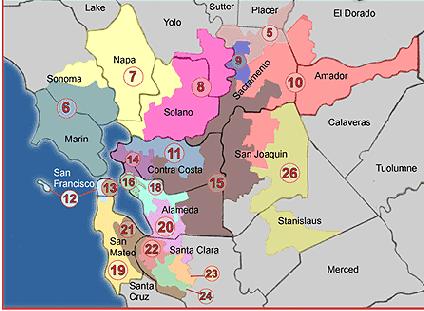
And there’s another factor that hasn’t been talked about much, but it’s really important: Next year, every Congressional, state Legislative and local supervisorial district is going to change.


After the decennial census, everyone has to draw new lines to reflect population shifts. At the state level (and Congressional redistricting is also a state function), that’s in the hands of a reapportionment commission, which I’m dubious about: The majority of the applicants are white people, and it’s supposed to have an equal number of Democrats and Republicans, although the state has far more Democratic voters. It’s anybody’s guess how they’ll actually draw the lines.


An elections task force will do the local lines, and it’s going to be harder to screw up; San Francisco supervisorial districts are supposed to reflect established neighborhood boundaries, and the population shifts within the city haven’t been that dramatic.And it’s unlikely anyone’s going to try to draw lines just to force an incumbent supervisor out of a district. But the districts will be a little bit different, and in San Francisco politics, a little bit can mean a lot.


The state Legislative districts will change significantly — and could change the politics of this area, and the state, in dramatic ways. For example, suppose Mark Leno’s Senate District moves somewhat North, to include a majority of Marin and Sonoma residents and only a small minority of San Franciscans? Suppose that district no longer includes Marin or Sonoma, but includes all of San Francisco (which would put Leno and Leland Yee in the same district)?


Suppose the 12th and 13th Assembly Districts, which now divide about East/West, shift to North and South? What if Tom Ammiano and Fiona Ma end up in the same district? (Um, I think that’s a closer relationship than either of them wants ….)


What happens if Nancy Pelosi is redistricted out of her seat? (Heh heh, won’t happen, but in theory, she and Lynn Woolsey could wind up living in the same district.)


It’s going to change the dynamics in a city that’s already poised for some upsets to the political apple cart.


Ross Mirkarimi’s termed out in 2012, and if he doesn’t run for mayor (or doesn’t get elected) he’ll be looking for the next step, which could be a run for the state Assembly; Tom Ammiano will be termed out in 2014. Of course, that’s been a gay seat for a long time (Carole Migden, Mark Leno, Ammiano) and by them someone like David Campos might be interested.


Or the district lines might have changed so much that both of them – or neither of them – can get elected.


If Bevan Dufty doesn’t get elected mayor, he’s out of a job – and he’s a political junkie who won’t easily retire. He’ll be looking at other offices, too. So will Sean Elsbernd, I suspect.


And that doesn’t even count the mayor’s race, which could, at this point, involve both state Senators, Leno and Leland Yee, and if either one wins, that opens up a Senate seat. And at the same time, if Kamala Harris is elected district attorney, that job will be open, and it’s an open secret that Board of Supervisors President David Chiu, a former prosecutor, would love to be in that office some day.


And in the background is the question of who becomes mayor if Newsom becomes lt. governor


 (and what happens to Aaron Peskin, an astute politician if ever there were one, and a potential mayor if this board of supervisors gets to make the appointment ). At lot to think about – and trust me, the thinking is already going on.

The Green Party’s nadir

2

This should be a great time for the Green Party. Its namesake color is being cited by every corporation and politician who wants to get in good with the environmentally-minded public; voters in San Francisco are more independent than ever; and progressives have been increasingly losing the hope they placed on President Barack Obama.
But the Green Party of San Francisco — which once had an influence on city politics that was disproportionate to its membership numbers — has hit a nadir. The number of Greens has steadily dwindled since its peak in 2003; the party closed its San Francisco office in November; and it has now lost almost all its marquee members.
Former mayoral candidate Matt Gonzalez, school board member Jane Kim, community college board member John Rizzo, and Planning Commissioner Christina Olague have all left the party in the last year or so. Sup. Ross Mirkarimi — a founding member of the Green Party of California and its last elected official in San Francisco — has also been openly struggling with whether to remain with an organization that doesn’t have much to offer him anymore, particularly as he contemplates a bid for higher office.
While a growing progressive movement within the Democratic Party has encouraged some Greens to defect, particularly among those with political ambitions, that doesn’t seem to be the biggest factor. After all, the fastest growing political affiliation is “Decline to State” and San Francisco now has a higher percentage of these independent voters than any other California county: 29.3 percent, according to state figures.
Democratic Party registration in San Francisco stood at 56.7 percent in November, the second-highest percentage in the state after Alameda County, making this essentially a one-party town (at last count, there were 256,233 Democrats, 42,097 Republicans, and 8,776 Greens in SF). Although Republicans in San Francisco have always outnumbered Greens by about 4-1, the only elected San Francisco Republican in more than a decade was BART board member James Fang.
But Republicans could never have made a real bid for power in San Francisco, as Gonzalez did in his electrifying 2003 mayoral run, coming within 5 percentage points of beating Gavin Newsom, who outspent the insurgent campaign 6-1 and had almost the entire Democratic Party establishment behind him.
That race, and the failure of Democrats in Congress to avert the ill-fated invasion of Iraq, caused Green Party membership to swell, reaching its peak in San Francisco and statewide in November 2003. But it’s been a steady downward slide since then, locally and statewide.
So now, as the Green Party of California prepares to mark its 20th anniversary next month in Berkeley, it’s worth exploring what happened to the party and what it means for progressive people’s movements at a time when they seem to be needed more than ever. Mirkarimi was one of about 20 core progressive activists who founded the Green Party of California in 1990, laying the groundwork in the late 1980s when he spent almost two years studying the Green Party in Germany, which was an effective member of a coalition government there and something he thought the United States desperately needed.
“It was in direct response to the right-wing shift of the Democrats during the Reagan and Bush Sr. administrations. It was so obvious that there had been an evacuation of the left-of-center values and policies that needed attention. So the era was just crying out woefully for a third party,” Mirkarimi said of the Green Party of California and its feminist, antiwar, ecological, and social justice belief system.
But he and the other founding Greens have discovered how strongly the American legal, political, and economic structures maintain the two-party system (or what Mirkarimi called “one party with two conservative wings”), locking out rival parties through restrictive electoral laws, control of political debates, and campaign financing mechanisms.
“I’m still very impassioned about the idea of having a Green Party here in the United States and here in California and San Francisco, vibrantly so. But I’m concerned that the Green Party will follow a trend like all third parties, which have proven that this country is absolutely uninviting — and in fact unwelcoming — of third parties and multiparty democracy,” Mirkarimi said.
Unlike some Greens, Mirkarimi has always sought to build coalitions and make common cause with Democrats when there were opportunities to advance the progressive agenda, a lesson he learned in Germany.
When he worked on Ralph Nader’s 2000 presidential campaign — a race that solidified the view of Greens as “spoilers” in the minds of many Democrats — Mirkarimi was involved in high-level negotiations with Democratic nominee Al Gore’s campaign, trying to broker some kind of leftist partnership that would elect Gore while advancing the progressive movement.
“There was great effort to try to make that happen, but unfortunately, everyone defaulted to their own anxieties and insecurities,” Mirkarimi said. “It was uncharted territory. It had never happened before. Everyone who held responsibility had the prospect of promise, and frankly, everybody felt deflated that the conversation did not become actualized into something real between Democrats and Greens. It could have.”
Instead, George W. Bush was narrowly elected president and many Democrats blamed Nader and the Greens, unfairly or not. And Mirkarimi said the Greens never did the post-election soul-searching and retooling that they should have. Instead, they got caught up in local contests, such as the Gonzalez run for mayor — “that beautiful distraction” — a campaign Mirkarimi helped run before succeeding Gonzalez on the board a year later.
Today, as he considers running for mayor himself, Mirkarimi is weighing whether to leave the party he founded. “I’m in a purgatory. I believe in multiparty democracy,” Mirkarimi said. “Yet tactically speaking, I feel like if I’m earnest in my intent to run for higher office, as I’ve shared with Greens, I’m not so sure I can do so as a Green.”
That’s a remarkable statement — in effect, an acknowledgement that despite some success on the local level, the Green Party still can’t compete for bigger prizes, leaving its leaders with nowhere to go. Mirkarimi said he plans to announce his decision — about his party and political plans — soon.
Gonzalez left the Green Party in 2008, changing his registration to DTS when he decided to be the running mate of Nader in an independent presidential campaign. That move was partly necessitated by ballot access rules in some states. But Gonzalez also thought Nader needed to make an independent run and let the Green Party choose its own candidate, which ended up being former Congress member Cynthia McKinney.
“I expressly said to Nader that I would not run with him if he sought the Green Party nomination,” Gonzalez told us. “The question after the campaign was: is there a reason to go back to the Green Party?”
Gonzalez concluded that there wasn’t, that the Greens had ceased to be a viable political party and that it “lacks a certain discipline and maturity.” Among the reasons he cited for the party’s slide were infighting, inadequate party-building work, and the party’s failure to effectively counter criticisms of Nader’s 2000 and 2004 presidential campaigns.
“We were losing the public relations campaign of explaining what the hell happened,” he said.
Gonzalez was also critical of the decision by Mirkarimi and other Greens to endorse the Democratic Party presidential nominees in 2004 and 2008, saying it compromised the Greens’ critique of the two-party system. “It sort of brings that effort to an end.”
But Gonzalez credits the Green Party with invigorating San Francisco politics at an important time. “It was an articulation of an independence from the Democratic Party machine,” Gonzalez said of his decision to go from D to G in 2000, the year he was elected to the Board of Supervisors.
Anger at that machine and its unresponsiveness to progressive issues was running high at the time, and Gonzalez said the Green Party became one of the “four corners of the San Francisco left,” along with the San Francisco Tenants Union, the Harvey Milk LGBT Democratic Club, and the San Francisco Bicycle Coalition, which helped set a progressive agenda for the city.
“Those groups helped articulate what issues were important,” Gonzalez said, citing economic, environmental, electoral reform, and social justice issues as examples. “So you saw the rise of candidates who began to articulate our platform.” But the success of the progressive movement in San Francisco also sowed the seeds for the Green Party’s downfall, particularly after progressive Democrats Chris Daly, Tom Ammiano, and Aaron Peskin waged ideological battles with Mayor Gavin Newsom and other so-called “moderate Democrats” last year taking control of the San Francisco Democratic Party County Central Committee.
“Historically, the San Francisco Democratic Party has been a political weapon for whoever was in power. But now, it’s actually a democratic party. And it’s gotten progressive as well,” Peskin, the party chair, told us. “And for a lot of Greens, that’s attractive.”
The opportunity to take part in that intra-party fight was a draw for Rizzo and Kim, both elected office-holders with further political ambitions who recently switched from Green to Democrat.
“I am really concerned about the Democratic Party,” Rizzo, a Green since 1992, told us. “I’ve been working in politics to try to influence things from the outside. Now I’m going to try to influence it from the inside.”
Rizzo said he’s frustrated by the inability of Obama and Congressional Democrats to capitalize on their 2008 electoral gains and he’s worried about the long-term implications of that failure. “What’s going on in Washington is really counterproductive for the Democrats. These people [young, progressive voters] aren’t going to want to vote again.”
Rizzo and Kim both endorsed Obama and both say there needs to be more progressive movement-building to get him back on track with the hopes he offered during his campaign.
“I think it’s important for progressives in San Francisco to try to move the Democratic Party back to the left,” Kim, who is considering running for the District 6 seat on the Board of Supervisors, told us. “I’ve actually been leaning toward doing this for a while.”
Kim was a Democrat who changed her registration to Green in 2004, encouraged to do so by Gonzalez. “For me, joining the Green Party was important because I really believed in third-party politics and I hope we can get beyond the two-party system,” Kim said, noting the dim hopes for that change was also a factor in her decision to switch back.
Another Green protégé of Gonzalez was Olague, whom he appointed to the Planning Commission. Olague said she was frustrated by Green Party infighting and the party’s inability to present any real political alternative.
“We had some strong things happening locally, but I didn’t see any action on the state or national level,” Olague said. “They have integrity and they work hard, but is that enough to stay in a party that doesn’t seem to be going anywhere?”
But many loyal Greens dispute the assertion that their party is on the rocks. “I think the party is going pretty well. It’s always an uphill battle building an alternative party,” said Erika McDonald, spokesperson for the Green Party of San Francisco, noting that the party plans to put the money it saved on its former Howard Street headquarters space into more organizing and outreach. “The biggest problem is money.”
Green Party activist Eric Brooks agrees. “We held onto that office for year and year and didn’t spend the money on party building, like we should have done a long time ago,” he said. “That’s the plan now, to do some crucial party organizing.”
Mirkarimi recalls the early party-building days when he and other “Ironing Board Cowboys” would canvas the city on Muni with voter registration forms and ironing boards to recruit new members, activities that fell away as the party achieved electoral successes and got involved with policy work.
“It distracted us from the basics,” Mirkarimi said. Now the Green Party has to again show that it’s capable of that kind of field work in support of a broad array of campaigns and candidates: “If I want to grow, there has to be a companion strategy that will lift all boats. All of those who have left the Green Party say they still support its values and wish it future success. And the feeling is mostly mutual, although some Greens grumble about how their party is now being hurt by the departure of its biggest names.
“I don’t begrudge an ambitious politician leaving the Green Party,” said Dave Snyder, a member of the Golden Gate Bridge, Highway, and Transportation District Board of Directors, and one of the few remaining Greens in local government.
But Snyder said he won’t abandon the Green Party, which he said best represents his political values. “To join a party means you subscribe to its ideals. But you can’t separate its ideals from its actions. Based on its actions, there’s no way I could be a member of the Democratic Party,” Snyder said.
Current Greens say many of President Obama’s actions — particularly his support for Wall Street, a health reform effort that leaves insurance companies in control, and the escalation of the war in Afghanistan — vindicate their position and illustrate why the Green Party is still relevant.
“The disillusionment with Obama is a very good opportunity for us,” McDonald said, voicing hope they Green can begin to capture more DTS voters and perhaps even a few Democrats. And Brooks said, “The Obama wake-up call should tell Greens that they should stick with the party.”
Snyder also said now is the time for Greens to more assertively make the case for progressive organizing: “The Democrats can’t live up to the hopes that people put on them.”
Even Peskin agrees that Obama’s candidacy was one of several factors that hurt the Green Party. “The liberal to progressive support for the Obama presidency deflated the Greens locally and beyond. In terms of organizing, they didn’t have the organizational support and a handful of folks alienated newcomers.”
In fact, when Mirkarmi and the other Green pioneers were trying to get the party qualified as a legal political party in California — no small task — Democratic Party leaders acted as if the Greens were the end of the world, or at least the end of Democratic control of the state Legislature and the California Congressional delegation. They went to great lengths to block the young party’s efforts.
It turns out that the Greens haven’t harmed the Democrats much at all; Democrats have even larger majorities at every legislative level today.
What has happened is that the Obama campaign, and the progressive inroads into the local party, have made the Greens less relevant. In a sense, it’s a reflection of exactly what Green leaders said years ago: if the Democrats were more progressive, there would be less need for a third party.
But Mirkarimi and other Greens who endorsed Obama see this moment differently, and they don’t share the hope that people disappointed with Obama are going to naturally gravitate toward the Greens. Rizzo and Kim fear these voters, deprived of the hope they once had, will instead just check out of politics. “They need to reorganize for a new time and new reality,” Rizzo said of the Greens.
Part of that new reality involves working with candidates like Obama and trying to pull them to the left through grassroots organizing. Mirkarimi stands by his decision to endorse Obama, for which the Green Party disinvited him to speak at its annual national convention, even though he was one of his party’s founders and top elected officials.
“After a while, we have to take responsibility to try to green the Democrats instead of just throwing barbs at them,” Mirkarimi said. “Our critique of Obama now would be much more effective if we had supported him.”
Yet that’s a claim of some dispute within the Green Party, a party that has often torn itself apart with differences over strategy and ideology, as it did in 2006 when many party activists vocally opposed the gubernatorial campaign of former Socialist Peter Camejo. And old comrades Mirkarimi and Gonzalez still don’t agree on the best Obama strategy, even in retrospect.
But they and other former Greens remain hopeful that the country can expand its political dialogue, and they say they are committed to continuing to work toward that goal. “I think there will be some new third party effort that emerges,” Gonzalez said. “It can’t be enough to not be President Bush. People want to see the implementation of a larger vision.”

Events listings

0

Events listings are compiled by Paula Connelly. Submit items for the listings at listings@sfbg.com. For further information on how to submit items for the listings, see Picks.

WEDNESDAY

Women in Publishing Intersection for the Arts, 446 Valencia, SF; (415) 626-2787. 7pm, $5-15 sliding scale. Learn more about the history and current state of feminist publishing at this panel discussion with current and former publishers and editors from the Bay Area.

THURSDAY 11

Claim the Block Contemporary Jewish Museum, 736 Mission, SF; (415) 252-4655. 7pm, free. Attend this reading by young Bay Area writers from Mission High School, Hilltop High School, and the San Francisco Public Library as part of a WritersCorps museum reading series. Visit www.sfartscommission.org/WC for info on other readings.

Original Plumbing Books Inc., 2275 Market, SF; (415) 864-6777. 7:30pm, free. Celebrate the release of the second issue of Original Plumbing magazine, a trans male quarterly that gives trans men the opportunity to express themselves in words and images. Editors Amos Mac and Rocco Kayiatos will be present.

BAY AREA

Celebrate Copwatch Ashkenaz, 1317 San Pablo, Berk; (510) 548-0425. 7:30pm, $10-20 sliding scale. Celebrate the 20th anniversary of Copwatch, founded by three women in 1990 to monitor police actions, at this Women’s Day event featuring a live performance by Sisters in the Pit, special guests, poets, and speakers.

Paper Politics Pegasus Books Downtown, 2349 Shattuck, Berk.; (510) 649-1320. 7:30pm, free. Attend this book release for Paper Politics: Socially Engaged Printmaking Today with editor Josh Macphee and others discussing politically and socially engaged printmaking and a book that showcases print art that uses themes of social justice and global equality.

Thrillville Forbidden Island, 1304 Lincoln, Alameda; (510) 749-0332. 8pm, free. Watch Forbidden Planet (1956) on Forbidden Island’s indoor drive-in at this retro pop culture cabaret featuring prizes, futuristic cocktails, and a live performance by the Tomorrowmen.

FRIDAY 12

BAY AREA

"State of Public Education" Education Public Library, UC Berkeley, 2600 Tolman Hall, Berk.; stateofeducationsymposium.eventbrite.com, registration requested. 8:15am, free. Take part in this day-long symposium bringing together scholars and policy-makers in education from across California to discuss economic, political, and social issues related to public education today.

SATURDAY 13

Bay Area Anarchist Book Fair San Francisco County Fair Building, Golden Gate Park, Lincoln and 9th Ave., SF; (415) 431-8355. Sat. 10am-6pm, Sun. 11am-5pm; free. Featuring over 55 vendors and author events featuring San Francisco poet laureate Diane di Prima, John Zerzan, Tommi Avicolli Mecca, and many more.

Queericulum Mama Calizo’s Voice Factory, 1519 Mission, SF; www.playajoy.org/queericulum. 10am, $20. Attend this day-long educational , regenerative, homocentric retreat featuring homo-focused workshops, dinner theater cabaret, and a celebratory dance party with DJs Lord Kook, Samnation, and StudlyCaps. Dinner, refreshments, and raffle tickets available for purchase. Suggested attire is "fabulous comfortable pajamas."

St. Patrick’s Day Festival and Parade Festival at Civic Center Plaza, SF. 10am-5pm, free. Parade starts at 2nd St. at Market and proceeds to Civic Center Plaza, SF. 11am, free. Celebrate Irish history and culture with a full day of performances, live music, arts and crafts, food, drinks, and more. Everyone’s Irish on St. Patrick’s Day.

Writers with Drinks Make Out Room, 3225 22nd. St., SF; 7:30pm, $5-10 sliding scale. Enjoy a spoken word variety show that helps raise money for local causes featuring Mary Gaitskill, Jerry Stahl, Michael Shea, Dylan Landis, and Alli Warren.

BAY AREA

"Artist Residencies" Berkeley Art Center, 1275 Walnut, Berk.; (510) 644-6893. 4pm, $5-10 sliding scale. Learn about the different types of artist residencies and how to research, locate, and apply for them at this panel discussion led by artist and CCA lecturer Susan Martin.

Empowering Women of Color Conference MLK Jr Student Union, UC Berkeley, Bancroft at Telegraph, Berk.; ewocc.berkeley.edu. Sat. 9:30am-5:30pm, Sun. 9:30am-2:30pm; $25 one day, $45 both days. Honor the legacy of women of color in the U.S. at this conference titled, "Intergenerational Wisdom: Celebrating Our Past, Present, & Future," dedicated to issues affecting women at every stage of their lives with workshops, speakers, panels, performances, networking, and vendors of interest to all age groups.

SUNDAY 14

Pi Day Exploratorium, 3601 Lyon, SF; (415) EXP-LORE. 1pm, $15. Celebrate Pi, the never ending number, and Einstein’s birthday by creating Pi puns, taking part in activities, rituals, and Pi-related antics, and eating a slice of pie prepared by the museum staff.

Sex Furniture and Bedroom Olympics Good Vibrations Polk Street Gallery, 1620 Polk, SF; (415) 345-0400. 5:30pm, free. Let Dr. Carol Queen, PhD show you how to incorporate sex furniture into the bedroom including instructions on how to use "the Ramp" and "the Wedge" and a contest to win a new "Axis."

The Vegetarian Myth San Francisco Public Library, Main Branch, 100 Larkin, SF; (415) 557-4484. 12:30pm, free. Hear author Lierre Keith discuss her new book, The Vegetarian Myth: Food, Justice, and Sustainability, which examines the destructive history of agriculture, champions eating locally, and reveals the risk of a vegan diet.

MONDAY 15

BAY AREA

Re:Imagining Change Pegasus Books Downtown, 2349 Shattuck, Berk.; (510) 649-1320. 7:30pm, free. Hear author Patrick Reinsborough discuss his new book that provides resources, theories, hand-on tools, and case studies which outline practical methods for amplifying progressive causes in popular culture.

"We Need a Total Revolution" Pacific Film Archive Theater, 2575 Bancroft, Berk.; (510) 848-1196. 4pm, $10-$20. Hear Sunsara Taylor, writer and activist, make the case for why there is no biological, god-given, or man made reason why the oppression of women throughout the world has to remain this way and how we can change things through communist revolution.

TUESDAY 16

Persian New Year Persian Center, 2029 Durant, Berk.; (510) 548-5335. 6pm, free. Welcome spring by taking part in the Persian custom of jumping over a bonfire to welcome spring. Featuring Persian food, music, and dance.

Stage listings

0

Stage listings are compiled by Molly Freedenberg. Performance times may change; call venues to confirm. Reviewers are Robert Avila, Rita Felciano, and Nicole Gluckstern. Submit items for the listings at listings@sfbg.com. For further information on how to submit items for the listings, see Picks. For the complete listings, go to www.sfbg.com.

THEATER

OPENING

Death Play EXIT Theatre, 156 Eddy; 673-3847, www.theexit.org. $15-$20. Opens Thurs/11. Runs Thurs-Sat, 8pm. Through March 27. Thunderbird Theatre Company presents the third installment in the comedy series by Sang S. Kim.

…And Jesus Moonwalks the Mississippi Cutting Ball Theater, 277 Taylor; (800) 838-3006, cuttingball.com. $15-$30. Previews Fri/12-March 18. Opens March 19. Runs Thurs-Sat, 8pm; Sun, 5pm. Through April 11. Cutting Ball presents this deeply personal fantasy play inspired by the myth of Demeter and Persephone and directed by Amy Mueller.

KML Preaches to the Choir Jewish Theater, 470 Florida; www.killingmyblobster.com. $15-$20. Opens Thurs/11. Runs Thurs-Fri, 8pm; Sat, 7 and 10pm; Sun, 7pm. Through March 28. The award-winning sketch comedy group takes aim at the higher powers in this piece directed by Paco Romane.


ONGOING

Beauty of the Father Phoenix Theatre, 414 Mason; (800) 838-3006, www.offbroadwaywest.org. $30. Thurs/11-Sat/13, 8pm. Off-Broadway West’s season opener offers the Bay Area a first look at the somewhat messy but ultimately rewarding 2006 drama by Cuban American Pulitzer Prize–winner Nilo Cruz ("Anna in the Tropics"). (Avila)

Caddyshack: Live! Dark Room, 2263 Mission; 401-7987, www.brownpapertickets.com/event/99361. $20. Fri-Sat, 8pm. Through March 27. The Dark Room presents Jim Fourniadis’ live adaptation of the iconic movie.

*The Caucasian Chalk Circle A.C.T., 415 Geary; www.act-sf.org. $10-$82. Tues-Sat, 8pm; Wed/10, Sat/13, and Sun/14, 2pm. After bringing his acclaimed pared-down "Sweeney Todd" to ACT in 2007, director John Doyle returns with Bertolt Brecht’s inspired take on the biblical Judgment of Solomon, a story whose faith in the essential decency of people—especially those not completely corrupted by power over, and under, others—is here counterpart to a damning and rousing dissection of war, politics and the justice system/racket. (Avila)

Death Play EXIT Theatre, 156 Eddy; 289-6766, www.thunderbirdtheatre.com. $15-$20. Thurs-Sat, 8pm. Through March 27. Thunderbird Theatre Company presents the third installment in the critically acclaimed sketch comedy series "Serve By Expiration" by Sang S. Kim.

Desperate Affection Royce Gallery, 2901 Mariposa; www.expressinproductions.com. $28. Thurs-Sat, 8pm. Through April 10. Expression Productions presents a dark comedy by Bruce Graham.

Eat, Pray, Laugh! Off-Market Theaters, 965 Mission; www.brownpapertickets.com. $20. Wed, 8pm. Through March 31. Off-Market Theaters presents stand up comic and solo artist Alicia Dattner in her award-winning solo show.

*Loveland The Marsh, 1074 Valencia; 826-5750, www.themarsh.org. $15-$50. Sat, 8:30pm; Sun, 7pm. Through April 11. Los Angeles–based writer-performer Ann Randolph returns to the Marsh with a new solo play partly developed during last year’s Marsh run of her memorable Squeeze Box. Randolph plays loner Frannie Potts, a rambunctious, cranky and libidinous individual of decidedly odd mien, who is flying back home to Ohio after the death of her beloved mother. The flight is occasion for Frannie’s own flights of memory, exotic behavior in the aisle, and unabashed advances toward the flight deck brought on by the seductively confident strains of the captain’s commentary. The singular personality and mother-daughter relationship that unfurls along the way is riotously demented and brilliantly humane. (Avila)

*Mirrors In Every Corner Intersection for the Arts, 446 Valencia; 626-2787, www.theintersection.org. Thurs-Sun, 8pm. Through March 21. Try to ask someone who’s ever felt marked by the color (any color) of their skin if they believe in a post-racial society, and see what kind of a response you elicit. That there is no tidy answer to this potentially messy question is a conundrum well-illustrated by playwrite Chinaka Hodge’s hypothetical fable of a white-skinned baby born into an African-American family. Each member of the family has a different reaction to and relationship with the mysterious blonde-haired changeling Miranda, dubbed "Random". Her father, who dies when she is young, is reported to have hated her. Her oldest brother Watts (Daveed Diggs) claims to understand her best, but in trying to get her to unravel what it means to be "black" vs. "white", reveals himself to be as confused as anyone by the lack of a single definition. Her mother Willie—played tough and no-nonsense by Margo Hall (who also plays the teenaged Miranda)—loves her unconditionally, yet ultimately sacrifices her for the well-being of the greater family unit. Hodge’s first full-length play, Mirrors succeeds in strong performance, warm humor, and crackling, poetic dialogue, but fails to adequately resolve how it is that the otherwise uncompromising Willie lets the low card of an unfortunate accident trump her otherwise strong hand of "colorblind" maternal loyalty. With Dwight Huntsman and Traci Tolmaire. (Gluckstern)

Now and at the Hour EXIT Stage Left, 156 Eddy; 673-3847, www.theexit.org. $15-$25. Fri-Sat, 8pm. Through March 27. EXIT presents the subtly unnerving show by theatrical magician Christian Cagigal.

Oedipus el Rey Magic Theatre, Building D, Fort Mason Center; 441-8822, www.magictheatre.org. $20-$55. Days and times vary. Through Sun/14. Luis Alfaro transforms Sophocles’ ancient tale into an electrifying myth, directed by Loretta Greco.

Pearls Over Shanghai Hypnodrome, 575 Tenth St.; 1-800-838-3006, www.thrillpeddlers.com. $30-69. Sat, 8pm; Sun, 7pm. Through April 24. Thrillpeddlers presents this revival of the legendary Cockettes’ 1970 musical extravaganza.

The Real Americans The Marsh, 1062 Valencia; 826-5750, www.themarsh.org. $15-$50. Thurs-Fri, 8pm; Sat, 5pm. Through April 18. The Marsh presents the world premiere of Dan Hoyle’s new solo show.

Shopping! The Musical Shelton Theater, 533 Sutter; (800) 838-3006, www.brownpapertickets.com. $27-$29. Fri-Sat, 8pm. SF’s longest running original musical begins its fifth year at Shelton.

Something You Might Want Stagewerx Theatre, 533 Sutter; catchynametheatre.org. $16. Fri-Sat, 8pm; Sun, 3pm. Through March 28. CatchyNameTheatre presents this dark comedy written and directed by Jim Strope.

Suddenly Last Summer Actors Theatre, 855 Bush; 345-1287, www.actorstheatresf.org. $15-$35. Thurs-Sat, 8pm. Through March 27. Actors Theatre presents one of Tennessee Williams’ finest and most famous plays.

The Sugar Witch New Conservatory Theatre Center, 25 Van Ness; 861-4914, www.nctcsf.org.

Various days and times through April 4. NCTC presents the premiere of Nathan Sanders’ crime story.

What Just Happened? The Marsh, 1062 Valencia; (800) 838-3006, www.themarsh.org. $20-$50. Fri/12-Sat/13, 8pm. The Marsh presents Nina Wise’s improvisation-based sow about personal and political events which have transpired over the previous 24 hours.

What Mama Said About ‘Down There Our Little Theater, 287 Ellis; 820-3250, www.theatrebayarea.org. $15-$25. Thurs-Sun, 8pm. Through July 30. Writer/performer/activist Sia Amma presents this largely political, a bit clinical, inherently sexual, and utterly unforgettable performance piece.


BAY AREA

Beebo Brinker Chronicles Brava Theater Center, 2781 24th St; 641-2822, www.brava.org. $20-$30. Thurs/11-Sat/13, 8pm. The regional premiere of Kate Moira Ryan and Linda S. Chapman’s play adapted from a series of pulp novels.

Concerning Strange Devices from the Distant West Roda Theatre, 2015 Addison, Berk; (510) 647-2949, berkeleyrep.org. $13.50-$27. Days and times vary. Through April 11. Berkeley Rep presents a sexy and intriguing new show from Naomi Iizuka.

*East 14th Laney College Theatre, 900 Fallon St, Oakl. www.east14thoak.eventbrite.com. $10-$50. Fri-Sat, 8:30pm. Through March 28. Also at the the Marsh Berkeley in March. Don Reed’s solo play, making its Oakland debut after an acclaimed New York run, is truly a welcome homecoming twice over. (Avila)

Handless Central Stage, 5221 Central, Richmond; (800) 838-3006, www.raggedwing.org.$15-$30. Thurs-Sat, 8pm. Through March 27. Ragged Wing Ensemble presents Amy Sass’ re-invention of the folk-tale The Handless Maiden.

*Learn to be Latina La Val’s Subterranean, 1834 Euclid, Berk. impacttheatre.com. $10-$20. Thurs-Sat, 8pm. Through March 27. Impact Theatre continues its 14th season with the world premiere of Enrique Urueta’s play.

Singin’ in the Rain Julia Morgan Center for the Arts, 2640 College, Berk; (510) 665-5565, www.berkeleyplayhouse.org. Check Web for days, times, and prices. Through March 21. Berkeley Playhouse presents this classic musical.


PERFORMANCE

"All Star Magic & More" SF Playhouse, Stage 2, 533 Sutter; 646-0776, www.comedyonthesquare.com. Sun, 7pm. Ongoing. Magician RJ Owens hosts the longest running magic show in San Francisco.

30th Anniversary Celebration of New Works African American Art and Culture complex, 762 Fulton; 292-1850, www.culturalodyssey.org/tickets. Thurs-Sat, 8pm; Sun, 3pm. $20. In celebration of Black History Month and National Women’s Month, Cultural Odyssey presents a festival featuring The Love Project, The Breach, and Dancing with the Clown of Love.

BATS Improv Theatre Bayfront Theater, Fort Mason Center, B350 Fort Mason; 474-6776, www.improv.org. Fri-Sat, 8pm. $17-$20. The Theatresports show format treats audiences to an entertaining and engaging night of theater and comedy presented as a competition.

"Cabaret Showcase Showdown" Martuni’s, 4 Valencia; www.dragatmartunis.com. Sun, 7pm. Katya Ludmilla Smirnoff-Skyy and Mrs. Trauma Flintstone are proud to continue the individual contests.

The Capitol Steps Kanbar Hall, JCCSF, 3200 California; 292-1233, www.jccsf.org/arts. Sun, 4 and 7pm. $46-$50. The musical political satire troupe made up of former Congressional staffers, return with a new administration to poke fun at.

"Death as a Salesman" Jellyfish Gallery, 1286 Folsom; deathasasalesman.org. Fri-Sat, 8pm. Teahouse of Danger Productions present Douglass Truth’s one-woman musical.

"Performance Art in Front of an Audience Ought to be Entertaining" The Garage, 975 Howard; 975howard.com. Fri-Sat, 8pm. Resident Art Workshop presents Sean Fletcher and Isabel Reichert in a sordid art-world drama.

PianoFight Studio 250 at Off-Market, 965 Mission; www.pianofight.com. Mon, 8pm. Through March 29. $20. The female-driven variety show Monday Night ForePlays returns with brand new sketches, dance numbers, and musical performances.

"Rocky Horror Picture Show" Roxie, 3117 16th St; www.barelylegal.rhps.org. Sat, 11:30pm. Barely Legal presents the cult classic.

"Sex and the Bible: The Opera (Part I)" Community Music Center, 544 Capp; (707) 474-7273, www.goathall.org. Fri-Sat, 8pm; Sun, 7pm. $10-$15. San Francisco Cabaret Opera presents the world premiere of Mark Alburger’s 8-=minute work-in-progress.

"Slaughter City" Zellerbach Playhouse, UC Berkeley Campus, Berk; (510) 642-8827, tdps.berkeley.edu. Fri-Sat, 8pm; Sun, 2pm. $10-$15. Naomi Wallace’s labor play plays, ingeniously, on the great tropes of history and labor struggle but it also labors, a little too hard, in accomplishing it all. Its poetical realism provocatively mingles the gritty, visceral, blood-and-cartilage realities of labor, laboring bodies and labor history (in all its racial and gendered complexity) with a supernatural time-tripping duo—something like the dialectic personified—to sometimes powerful, and sometimes muddled effect. Nevertheless, the 1996 work—about a group of meatpacking workers organizing, fighting, and flirting among themselves, and the odd outsider who joins them—has never seemed more timely, and the production offered by UC Berkeley’s theater department, directed by Catherine Ming T’ien Duffly, sports expansive and powerful aural and visual landscapes (courtesy of composer–sound designer Chris Huston, scenic designer Eric E. Sinkonnen, lighting designer David K.H. Elliott and video designer Kwame Braun) and competent, sometimes truly compelling acting from its student cast. (Avila)

"Unscripted: unscripted" Off-Market Theater, Studio 205, 965 Mission; 869-5384, www.un-scripted.com. Thurs-Sat, 8pm. The Un-Scripted Theater Company kicks off its eighth season with an improvised improv show.

Virgin Play Series Locations vary. Mon, 6pm. Through March 29. Magic Theatre presents Martha Heasley Cox’s series of staged readings of works currently in development.


BAY AREA
"Eemax and Zurno’s Amazing Circus Humans" Kinetic Arts Center, 785 7th St, Oakl; (510) 444-4800, www.kineticartscenter.com. Sat, 7pm; Sun, 2pm. $10-$15. Circus Spire presents a circus show featuring theatre, puppets, contortionists, acrobatics, circus aerials, and clowns.
"Flamefuze" Art House Gallery and Cultural Center, 2905 Shattuck, Berk; (510) 472-3170. Sun, 3pm. $10. Take a neo-gypsy trip through time and space with traditional flamenco and fusion with Dani Torres and Amigos.

Alerts

0

By Adrián Castañeda

alerts@sfbg.com

WEDNESDAY, MARCH 10


Courage to Resist

Come help fill envelopes at a mailing party — with pizza — for this antiwar group’s newsletter and appeal for support.

5:45–10:45 p.m., free

55 Santa Clara. No. 126, Oakl.

www.couragetoresist.org


Eat up, America

Hear a conversation on food politics with Jill Richardson, author of Recipe for America. Issues include the farm bill, community food projects, and school lunches. Be part of the conversation to learn how you can take action by voting with your fork.

7:30 p.m., free

101 Morgan Hall, UC Berkeley campus

www.agrariana.org/programs

FRIDAY, MARCH 12


Berkeley Critical Mass

Help revive Berkeley Critical Mass. Meet at the Ashby BART Station for a musical and mellow bike ride thought the East Bay. Ride ends at Long Haul Infoshop for Slingshot newspaper’s 22nd birthday party.

6 p.m., free

3124 Shattuck, Berk.

www.thelonghaul.org

SATURDAY, MARCH 13


Dance for Buck

Join this dance party-plus-art-auction fundraiser for jailed activist Marilyn Buck, who will be released after 25 years at the Federal Corrections Institute in Dublin. Speakers include Jewell Gomez and Phavia Kujichagulia.

7 p.m., $10–$50

401 26th St., Oakl.

Sparksfly2010@gmail.com


To women!

Attend a Women’s Day event with more than 30 community organizations to celebrate the role of women in society. Local dancers, musicians, and speakers, including KPFA’s Lakota Harden.

10 a.m., free

3400 Macdonald, Richmond

(510) 620-6502

SUNDAY, MARCH 14


California’s next act

Come learn about the California Democracy Act, a proposed initiative to repeal the two-thirds majority requirement in the state Legislature, and what you can do ensure it makes the ballot. Hosted by theological firebrand, the Rev. Byron Williams.

7 p.m., free

1924 Cedar, Berk.

www.bfuu.org


Radical changers

Celebrate International Women’s Day with a rousing discussion on the role of education in the fight for women’s liberation. The eventl features a panel of feminist activists and a performance by MC Aima the Dreamer. Proceeds benefit Bay Area Radical Women.

3 p.m., $5

625 Larkin, SF

www.radicalwomen.org

MONDAY, MARCH 15


Squatting, Barcelona style

Hear author and activist Peter Gelderloos on the social activist movement and use of autonomous space in Barcelona. Discussion will focus on how the prevalence of squatted spaces has affected the architectural structure of Europe and how this differs in the U.S..

7 p.m., $3

Station 40

3030B 16th St., SF

www.anarchist-studies.org

TUESDAY, MARCH 16


Tip one for Earth

It’s time for Henry George Historical Society’s gathering of environmentalists and social drinkers. Peter Brastow, director of Nature in the City, will speak on local environmental issues.

7 p.m., free

189 Ellsworth, SF

www.henrygeorgehistoricalsociety.org Mail items for Alerts to the Guardian Building, 135 Mississippi St., SF, CA 94107; fax to (415) 255-8762; or e-mail alert@sfbg.com. Please include a contact telephone number. Items must be received at least one week prior to the publication date.

Great piece on the fate of public education

3

There’s a great piece on Calitics about the fate of public education. It’s not alarminst or conspiratorial, just an accurate assessment of how the radical right wants to destroy public schools (and has ever since the 1950s and the era of desegregation) and how the other arm of the Republican Party, big business, is playing its role. A key passage:


Corporate interests want public education that they don’t have to pay for. They also would love to see the entire education sector privatized and paid for through tax revenue-the only way that supposedly anti-socialist entrepreneurs have made any money in the last decade, the way Blackwater made money, the way the banks made their money, the way private prisons have made theirs. Privatized and milked, yes, but not destroyed.


Therefore, we have reached the point where the interests will part between the two sides of the right. The grand strategy to destroy public education by making people hate it achieves a D-Day size victory every year the teachers’ unions are broken-those silly teachers paying money to lobby for actual good education policy while they’re at it! Because there is no one else that wants to make the public schools something worth saving in the public’s eyes. You’ve heard the criticisms. The teachers that can’t be fired for anything. No “God in school.” The assault on science, which both works to antagonize religious parents and the parents of children who want science education. They want to keep pushing it to the tipping point.


Pretty soon, parents start wanting to send their kids to the charter school funded by big corporate money or the private school that teaches that dinosaurs are 5,000 years old. A whole new segregation appears. The grand strategy succeeds.


Big Business has a choice. They can realize that public sector workers are no threat to them since they don’t employ them and they keep the infrastructure running that gives them a country where they can make money and live a big life, or they can watch it burn.


Worth reading. Check it out.

Newsom’s silly trick

19

Gavin Newsom’s got a plan: He’s going to stop those damn district-elected progressives from appoining a new mayor even if it takes some wacky legal footwork. According to the Chron’s Matier and Ross:


For the past two weeks, Newsom’s political team has been combing the state Constitution to determine if the mayor, assuming he’s elected statewide, could legally push back his Jan. 3 swearing-in for the new job until after Jan. 8.


If he can, the job of naming his successor would go to the newly elected Board of Supervisors, which is sworn in Jan. 8, instead of the current lineup.


I don’t know where that team is looking in the state Constitution, but the language seems pretty clear to me. Article V, section 2, provides that the “Governor shall be elected every fourth year…and hold office from the Monday after January 1….” In 2011, that’s Jan. 3. It also says (article V, section 11) that “The Lieutenant Governor, Attorney General, Controller, Secretary of State, and Treasurer shall be elected at the same time and places and for the same term as the Governor.”


And since the mayor of San Francisco is, by Charter, a full-time job, Newsom can’t be both mayor and lt. governor. Which means, I think, that he’s got to start the new job Jan. 3, and the new Board of Supervisors doesn’t take office until a week later.


There’s another twist here: The City Charter discusses a “vacancy” in the office of mayor, and authorizes the Board of Supervisors to select someone to fill the remainder of a vacant term. If Newsom wins in November, it will be clear that a vacancy is looming — and there’s no reason why the supervisors can’t pass a motion right away designating the person who they intend to have fill that vacancy. In other words, this current board could select the next mayor even before Newsom officially resigns.


Now, it’s also true that the motion wouldn’t become effective until the mayor actually left office, and could be rescinded at any time up until that moment. But if the supervisors find six votes for a candidate, and designate that person as Newsom’s successor, it’s unlikely the board would decide to change its mind and rescind in just a few weeks.


And even if all that doesn’t fly, there’s a very good chance that progressives will still control the next board. Four progressive supes will carry over — Ross Mirkarimi, John Avalos, Eric Mar and David Campos. If progressive candidates win two of the three swing races — in districts 6, 8 and 10 — then the overall politics of the board won’t change dramatically.


So there’s actually a chance that a progressive mayor could take office next January. Whether Newsom likes it or not


SF State students march

0

Story and photos by Nima Maghame

San Francisco State University added pageantry to the Day of Action protest, one of the many schools from around the Bay Area from Kindergarten to Ph.D that united on the steps of San Francisco City Hall yesterday.

Students, faculty and staff painted their faces, wore colorful t-shirts and paraded 10-feet high puppets depicting a skull-faced grad, a crying queen and a fossilized dinosaur; each representing greedy politics and the killing of education.

SF State students started the day with blocking traffic on Holloway and 19th streets, an echo of the 1968 student strike when SF State students did the same thing to protest civil rights. Police were ordered to clear the protesters out of the streets, but students continued on the sidewalk before merging with several other organized demonstrations in Malcolm X plaza.

Hundreds of students filled the open-air plaza to dance to music, hear spoken word poetry and chant. By 3:30 p.m. the festivities moved to City Hall where university students marched along side elementary, middle and high school students. “We’re in solidarity with everyone in this protest. Not centralized but many coming together to send one message. We have elementary students protesting, for the first time ever all facets of education are joining up. It’s beautiful and it’s healthy,” Phil Lassky, an Ethnic Studies teacher.

Empowerment was the feeling in the air. Many who participated had stories about how budget cuts have kept them from graduating, sitting on the floor in classrooms and not receiving their financial aid checks. “They have forgotten about us. Here we are paying for the bank’s debt and we get our budgets cut? Time for this to stop,” said Andrea Thomas a senior at SF State. Some teachers were uncertain if they’ll have work in the fall, and some were certain they would have no classes to teach.

Not all on the Gator campus were eager to spray paint a sign. Some students said they thought the Day of Action was futile and contradictory. “Ditching class is a hypocritical message that goes against what we are all trying to do,” said Travis Northup, SF State sophomore. “Instead of posters with vague statements we should be trying to find solutions that are reasonable.”

But most of the campus community seemed down with the cause. Ramon Castellblanch, health professor and California Faculty Association president for the university, was one of the leading protest organizers for SF State. Planning had begun back in January and he was astounded by the number of students willing to volunteer. Speaking on those who have chosen not to join in, Castellblanch remarked, “They need to decide the best way to spend their time, usually it’s being in the classroom, other times it’s not. If something doesn’t happen, there may not be any classes left to be in.”

Safe at last?

0

Dick Meister, former labor editor of the SF Chronicle and KQED-TV Newsroom, has covered labor and politics for a half-century. Contact him through his website, www.dickmeister.com, which includes more than 250 of his recent columns.

It’s called musculoskeletal disorder or MSD, the most common of the serious injuries suffered by U.S. workers. But because corporate employers fear that greater public awareness would force them to spend more on job safety, MSD has remained one of the least understood of injuries.

The latest government figures show that more than 60 percent of the million or more on-the-job injuries reported annually are MSD-related. Some of the victims are permanently disabled, and many more have to take time off from work while their injuries heal.

The victims include computer operators, factory and construction workers, meat and poultry processors, hospital and restaurant employees, supermarket clerks and many others.  They suffer serious neck, shoulder and back problems, chronically sore arms and wrists and other repetitive motion injuries resulting from work that requires them to be in almost constant motion, bending, reaching, typing, or frequently lifting heavy objects.

The first serious government efforts to combat the rapidly growing problem of MSD came ten years ago, in the final days of the Clinton administration. The Occupational Safety and Health Administration (OSHA) issued a lengthy set of so-called ergonomic regulations that were designed to lessen the dangers of MSD.

The regulations, which had taken three years to draft, covered such things as how long and how many breaks workers in particular occupations should get, what protective equipment should be issued to them, how their work stations should be designed and hundreds of related matters.

That was way too much for the U.S. Chamber of Commerce and other corporate employer representatives. They got their Republican allies, who controlled Congress, to repeal OSHA’s regulations just before the decidedly anti-labor George W. Bush succeeded Clinton.

Certainly neither Bush nor his OSHA appointees would even consider such impingements on their corporate friends. Signing the legislation that repealed the ergonomic regulations was one of Bush’s first acts as president. He followed that quickly by revoking 19 previously approved grants that were to go to unions, universities and labor-management groups to finance safety and health training programs for small business employers and particularly vulnerable groups such as construction workers and immigrants.

Bush’s OSHA appointees, many of them former executives of the industries they were supposed to regulate, blocked, withdrew or weakened dozens of other safety regulations in addition to those covering MSD. They discontinued safety education and training programs, worked with Congress to cut their own barely adequate budgets and instead of enforcing the safety laws, stressed  “voluntary compliance” by employers.

But now comes Barack Obama and his labor and Democratic Party allies to resume the fight for the ergonomic regulations President Clinton had been forced to abandon.

The initial proposals of President Obama’s OSHA appointees are modest. They’re asking merely that employers note, on the accident reports they are required to file, whether the injury was MSD-related. No such designation is currently required, which makes it difficult – if not impossible – for OSHA to collect the accurate data required to develop a program for effectively dealing with MSD, the most serious safety problem faced by American workers.

Corporate employers headed by the Chamber of Commerce oppose even that simple reform. They fear it would be a first step toward development of an ergonomic safety program that could cost employers millions of dollars to implement.

It also could bring badly needed protections to U.S. workers. But workers’ concerns are, of course, of secondary interest to the Chamber of Commerce and its Republican friends. They’re not much interested in helping working people. Their role is to further the profit-seeking of employers, even if that should come at the expense of the men and women who do the nation’s work.

Dick Meister, former labor editor of the SF Chronicle and KQED-TV Newsroom, has covered labor and politics for a half-century. Contact him through his website, www.dickmeister.com, which includes more than 250 of his recent columns.

Editorial: Where landlords, developers, and cars are king

1

EDITORIAL Are cars more important than people? Is it OK to evict a tenant just to make space for a garage? Should new garages be designed to preserve on-street parking too? Seems like a no-brainer to us. But legislation by Sup. David Chiu that would put some limits on the expansion of garages — an increasing problem in Chinatown and North Beach — has infuriated some real estate interests, and it’s possible that this eminently reasonable bill might fail.

It’s a sad statement on San Francisco politics, and the implications go way beyond this one planning measure.

The problem has its roots in the Ellis Act, the state law that allows landlords to clear all the tenants out of a building, then sell it to wealthier people who want to buy their units as tenants in common (TICs). The Ellis Act has been responsible for thousands of San Franciscans losing their homes — and a new twist has been developing in Chiu’s district.

In the crowded Chinatown-North Beach area, parking is at a premium and people who are buying TICs want a place to put their cars. So landlords and speculators are throwing out tenants not just for new owners, but to make room for garages.

Chiu’s law — which would apply only in parts of District 3 — would deny building owners a permit to construct a new garage if a tenant was evicted under the Ellis Act in the past 10 years. And it would require a conditional use authorization from the City Planning Department for any new garage construction.

Chiu also wants new rules for curb cuts — the openings in sidewalks that allow cars to drive into garages. The cuts would have to be as small as possible and designed to preserve on-street parking.

On a larger level, the bill would make it easier to construct new housing without parking — a significant change in how San Francisco has handled off-street parking for many years. Instead of mandating garages in new apartment buildings, Chiu wants to discourage them. He’s saying, in essence, that space for people is more important than space for cars.

That’s a logical step in a city that is trying to enforce a transit-first policy. It’s a small piece of a larger political battle to transform a city planning system that for too long has been driven by the needs of the private automobile. It should have passed unanimously and Mayor Newsom should sign it into law.

In fact, the bill passed on first reading Feb. 9, with only Sups. Sean Elsbernd and Carmen Chu voting against it. But Sup. Bevan Dufty now says he has concerns about the measure, and Chiu has agreed to postpone the final vote until March 9.

Dufty’s a key vote, because it’s likely at this point that the mayor will veto the measure. And with Elsbernd and Chu opposed and Michela Alioto-Pier still out with health problems, supporters can’t override a veto without Dufty.

We couldn’t reach Dufty, but supporters of the bill say he wants the measure watered down to eliminate the conditional use requirement — which would force city planners to check and make sure the builder or landlord was following the rules — and replace it with a discretionary review requirement, which would allow the garage construction unless someone objected. That puts the burden on the tenants (who in many cases are low income people whose primary language isn’t English) to protect themselves. And it would undermine much of the power of the bill.

It’s insane for Dufty to oppose a reasonable measure that only applies to a small part of one district, protects vulnerable tenants, and pushes the city away from further automobile dependence. It’s insane that the mayor is expected to veto the bill. It’s insane that it’s even an issue. And if the ordinance fails, it will be a sign that even in San Francisco, in 2010, landlords, developers, and cars are still king.


Obits for sale

0

Dick Meister, former labor editor of the SF Chronicle and KQED-TV Newsroom, has covered labor and politics for a half-century. Contact him through his website, www.dickmeister.com, which includes more than 250 of his recent columns.

Like most daily newspapers these days, the San Francisco Chronicle is hustling to increase declining profit margins.  But let me offer some advice to my former employer: Quit gouging grieving readers as part of your profit chasing. I mean those who pay the Chronicle for running their loved ones’ death notices on the paper’s obituary pages.

Sure, the paper’s not making anywhere near as much as it once did from other classified ads, but don’t try to make up for it by outrageously exploiting the saddened friends and families of the recently deceased.

The basic price for death notices is $16 per printed line per day – $112 per column inch (about seven lines of type).  Those 1×1½ inch photos that sit atop many obits cost about $135 more. If you also want the obit on the Chronicle’s website, that will be another $25, please. And if you want the obit to run for a longer period, for say a week, that can get quite pricey – as much as  $784 per inch.

On a typical day this week, 40 notices ran on the Chronicle’s three pages of paid obits, 21 with photos. They ranged from two to 14 inches each and cost from about $225 to about $1570 to run for that one day. That’s right – $1570, plus the $135 charge for those with photos.

Like all papers, the Chronicle also runs unpaid news obituaries of particularly prominent people that are researched and written by the newspaper’s staffers or by an outside news agency that serves the paper. The paid obits are usually written by members of the deceased’s family or by employees of the mortuary that’s involved.

So, it’s like this: If you’re well known, it probably won’t cost your family or friends a dime to notify the public and remind people of your life story. But if you’re just plain folks, it’ll cost family or friends – and probably cost them dearly.  But at least your story will be told by friendly observers, eager to stress the good over the bad, eager to give you a proper send-off – if they can afford the Chronicle’s price for doing so.

Dick Meister, former labor editor of the SF Chronicle and KQED-TV Newsroom, has covered labor and politics for a half-century. Contact him through his website, www.dickmeister.com, which includes more than 250 of his recent columns.

Stage listings

0

Stage listings are compiled by Molly Freedenberg. Performance times may change; call venues to confirm. Reviewers are Robert Avila, Rita Felciano, and Nicole Gluckstern. Submit items for the listings at listings@sfbg.com.

THEATER

OPENING

Caddyshack: Live! Dark Room, 2263 Mission; 401-7987, brownpapertickets.com. $5-$20. Opens Fri/5. Runs Fri-Sat, 8pm. Through March 27. The Dark Room presents Jim Fourniadis’ live adaptation of the iconic movie.

Death Play EXIT Theatre, 156 Eddy; 289-6766, www.thunderbirdtheatre.com. $15-$20. Opens Sun/7. Runs Thurs-Sat, 8pm. Through March 27. Thunderbird Theatre Company presents the third installment in the critically acclaimed sketch comedy series "Serve By Expiration" by Sang S. Kim.

Men Who Have Fallen In and Out of Love with Me Off-Market Theatre, 965 Mission; www.fallenmadlyinlove.com. Opens Fri/5. Runs Fri-Sat, 8pm. Through March 20. Award-winning SF playwright and journalist Beth Soloway teams up with her daughter for the world premiere of this comedy about romance.

Now and at the Hour EXIT Stage Left, 156 Eddy; 673-3847, www.theexit.org. $15-$25. Opens Fri/5. Runs Fri-Sat, 8pm. Through March 27. EXIT presents the subtly unnerving show by theatrical magician Christian Cagigal.

Something You Might Want Stagewerx Theatre, 533 Sutter; catchynametheatre.org. $16. Opens Fri/5. Runs Fri-Sat, 8pm; Sun, 3pm. Through March 28. CatchyNameTheatre presents this dark comedy written and directed by Jim Strope.

The Sugar Witch New Conservatory Theatre Center, 25 Van Ness; 861-4914, www.nctcsf.org.

Opens Sat/6. Runs various days and times through April 4. NCTC presents the premiere of Nathan Sanders’ crime story.

BAY AREA

Singin’ in the Rain Julia Morgan Center for the Arts, 2640 College Ave, Berk; www.berkeleyplayhouse.org. Opens Sun/7. Runs Fri-Sun, times vary. Through March 21. Berkeley Playhouse presents an exciting stage adaptation of the ’20s classic.


ONGOING

Bay One Acts Festival Boxcar Theatre, 505 Natoma; 776-7427, www.threewisemonkeys.org. $12-$24. Dates and times vary. Through March 13. Three Wise Monkeys presents eleven short plays by Bay Area playwrights, including Cris Barth, Stuart Bousel, and Lauren Yee.

Beauty of the Father Phoenix Theatre, 414 Mason; (800) 838-3006, www.offbroadwaywest.org. $30. Thurs-Sat, 8pm. Through March 13. Off-Broadway West’s season opener offers the Bay Area a first look at the somewhat messy but ultimately rewarding 2006 drama by Cuban American Pulitzer Prize–winner Nilo Cruz ("Anna in the Tropics"). Set in contemporary Andalusia, in the south of Spain, it’s the story of an aging painter named Emiliano (Durand Garcia) whose best friend and near-constant companion is the ghost of Federico García Lorca (Michael Carlisi), poet and playwright long ago murdered by the fascists during the Spanish Civil War. Emiliano also lives with his mostly platonic sweetheart (Jeanette Sarmiento), whom he plans to marry after she divorces his other housemate, a young Moroccan immigrant named Karim (Chris Holland) who is tied to her for the green card but is also Emiliano’s sometime lover. When his long-estranged ex-wife back in the U.S. dies, he invites his grown daughter (Natasha Chacon) to come live with him, feeling the urge "to father her" again. She arrives for an indefinite stay instead, shedding the gloom of her mother’s death in the embrace of life under the Andalucian sun—and a smitten Karim in particular. There’s some piquancy to the unraveling of this romantic ménage, and real poetry in the language and perspective afforded through the magical realistic presence of Lorca, but despite Cruz’s muscular writing and ambitious thematic canvas, the drama flags at points and sometimes seems unsure of where it would take us or even the proper tone or color to employ. Nevertheless, artistic director Richard Harder helms a strong cast, which helps make the going worthwhile. (Avila)

*The Caucasian Chalk Circle A.C.T., 415 Geary; www.act-sf.org. $10-$82. Tues-Sat, 8pm; Wed, Sat, and Sun, 2pm. Through March 14. After bringing his acclaimed pared-down "Sweeney Todd" to ACT in 2007, director John Doyle returns with Bertolt Brecht’s inspired take on the biblical Judgment of Solomon, a story whose faith in the essential decency of people—especially those not completely corrupted by power over, and under, others—is here counterpart to a damning and rousing dissection of war, politics and the justice system/racket. Newly translated in fresh and piquant tones by Domenique Lozano, the text rings with contemporary significance, including a chiding reference to "change we can believe in" that neatly updates Brecht’s radical insistence on popular action over hopeful acquiescence to powerful leaders. The set is a junk-strewn yard, with various bits of theater rigging doubling as stage properties (like a descending bank of stage lights during a battle sequence). The ensemble cast, meanwhile, sings profusely—a cappella or to its own spare accompaniment—and renders characters in a hodgepodge of accents not entirely arbitrary (rulers talking like New York mobsters, for example, or upper-class war refugees speaking like Southern belles). The comedy can veer distractingly toward the hammy, and there’s probably a bit too much stylized abstraction at the outset (hard to imagine anyone unfamiliar with the story understanding exactly what’s going on from the chorus), but despite faults this is a welcome, timely production, engagingly realized in Doyle’s winkingly "makeshift" staging and the bold, eclectic performances he garners from ACT’s core company members, conservatory students and associates. (Avila)

Eccentrics of San Francisco’s Barbary Coast: A Magical Escapade San Francisco Magic Parlor, Chancellor Hotel Union Square, 433 Powell; 1-800-838-3006. $30. Fri-Sat, 8pm. Ongoing. This show celebrates real-life characters from San Francisco’s colorful and notorious past.

The Gilded Thick House, 1695 18th St. www.thegilded.com. $18-$30. Thurs/4, 7pm; Fri/5-Sat/6, 8pm; Sun/7, 2pm. The Curiouser Group presents a new musical by Reynaldi Lolong.

The Greatest Bubble Show on Earth Marsh, 1062 Valencia. (800) 838-3006, www.themarsh.org. $7-$50. Sun, 11am. Through April 3. The Amazing Bubble Man returns with his extraordinary family-friendly show.

Hearts on Fire Teatro ZinZanni, Pier 29; 438-2668, www.zinzanni.org. $117-$145. Wed-Sat, 6pm; Sun, 5pm. Through May 16. Teatro ZinZanni celebrates its 10th anniversary with this special presentation featuring Thelma Houston, El Vez, and Christine Deaver.

*Loveland The Marsh, 1074 Valencia; 826-5750, www.themarsh.org. $15-$50. Sat, 8:30pm; Sun, 7pm. Through April 11. Los Angeles–based writer-performer Ann Randolph returns to the Marsh with a new solo play partly developed during last year’s Marsh run of her memorable Squeeze Box. Randolph plays loner Frannie Potts, a rambunctious, cranky and libidinous individual of decidedly odd mien, who is flying back home to Ohio after the death of her beloved mother. The flight is occasion for Frannie’s own flights of memory, exotic behavior in the aisle, and unabashed advances toward the flight deck brought on by the seductively confident strains of the captain’s commentary. The singular personality and mother-daughter relationship that unfurls along the way is riotously demented and brilliantly humane. Not to be missed, Randolph is a rare caliber of solo performer whose gifts are brought generously front and center under Matt Roth’s reliable direction, while her writing is also something special—fully capable of combining the twisted and macabre, the hilariously absurd, and the genuinely heartbreaking in the exact same moment. Frannie Potts’s hysteria at 30,000 feet, as intimate as a middle seat in coach (and with all the interpersonal terror that implies), is a first-class ride. (Avila)

Mirrors In Every Corner Intersection for the Arts, 446 Valencia; 626-2787, www.theintersection.org. Thurs-Sun, 8pm. Through March 21. Intersection for the Arts, Campo Santo, and the Living Word Project present the world premiere of Chinaka Hodge’s provocative show exploring race and identity from new perspectives.

Oedipus el Rey Magic Theatre, Building D, Fort Mason Center; 441-8822, www.magictheatre.org. $20-$55. Days and times vary. Through March 14. Luis Alfaro transforms Sophocles’ ancient tale into an electrifying myth, directed by Loretta Greco.

Pearls Over Shanghai Hypnodrome, 575 Tenth St.; 1-800-838-3006, www.thrillpeddlers.com. $30-69. Sat, 8pm; Sun, 7pm. Through April 24. Thrillpeddlers presents this revival of the legendary Cockettes’ 1970 musical extravaganza.

The Real Americans The Marsh, 1062 Valencia; 826-5750, www.themarsh.org. $15-$50. Thurs-Fri, 8pm; Sat, 5pm. Through April 18. The Marsh presents the world premiere of Dan Hoyle’s new solo show.

Suddenly Last Summer Actors Theatre, 855 Bush; 345-1287, www.actorstheatresf.org. $15-$35. Thurs-Sat, 8pm. Through March 27. Actors Theatre presents one of Tennessee Williams’ finest and most famous plays.

What Just Happened? The Marsh, 1062 Valencia; (800) 838-3006, www.themarsh.org. $20-$50. Fri-Sat, 8pm. Through March 13. The Marsh presents Nina Wise’s improvisation-based sow about personal and political events which have transpired over the previous 24 hours.

What Mama Said About ‘Down There Our Little Theater, 287 Ellis; 820-3250, www.theatrebayarea.org. $15-$25. Thurs-Sun, 8pm. Through July 30. Writer/performer/activist Sia Amma presents this largely political, a bit clinical, inherently sexual, and utterly unforgettable performance piece.

Wicked Orpheum Theatre, 1182 Market; 512-7770, www.shnsf.com. $30-$99. Tues, 8pm; Wed, 2pm; Thurs-Fri, 8pm; Sat, 2 and 8pm; Sun, 2pm. Ongoing. Assuming you don’t mind the music, which is too TV-theme–sounding in general for me, or the rather gaudy décor, spectacle rules the stage as ever, supported by sharp performances from a winning cast. (Avila)


BAY AREA

An Anonymous Story by Anton Chekhov Berkeley City Club, 2315 Durant, Berk; (510) 558-1381, centralworks.org. $14-$25. Thurs-Sat, 8pm; Sun, 5pm. Through March 28. Central Works presents a new play adapted from the Checkhov novella.

Beebo Brinker Chronicles Brava Theater Center, 2781 24th St; 641-2822, www.brava.org. $20-$30. Thurs-Sun, 8pm. Through March 13. The regional premiere of Kate Moira Ryan and Linda S. Chapman’s play adapted from a series of pulp novels.

Concerning Strange Devices from the Distant West Roda Theatre, 2015 Addison, Berk; (510) 647-2949, berkeleyrep.org. $13.50-$27. Days and times vary. Through April 11. Berkeley Rep presents a sexy and intriguing new show from Naomi Iizuka.

*East 14th Laney College Theatre, 900 Fallon St, Oakl. www.east14thoak.eventbrite.com. $10-$50. Fri-Sat, 8:30pm. Through March 28. Also at the the Marsh Berkeley in March. Don Reed’s solo play, making its Oakland debut after an acclaimed New York run, is truly a welcome homecoming twice over. It returns the Bay Area native to the place of his vibrant, physically dynamic, consistently hilarious coming-of-age story, set in 1970s Oakland between two poles of East 14th Street’s African American neighborhood: one defined by his mother’s strict ass-whooping home, dominated by his uptight Jehovah’s Witness stepfather; the other by his biological father’s madcap but utterly non-judgmental party house. The latter—shared by two stepbrothers, one a player and the other flamboyantly gay, under a pimped-out, bighearted patriarch whose only rule is "be yourself"—becomes the teenage Reed’s refuge from a boyhood bereft of Christmas and filled with weekend door-to-door proselytizing. Still, much about the facts of life in the ghetto initially eludes the hormonal and naïve young Reed, including his own flamboyant, ever-flush father’s occupation: "I just thought he was really into hats." But dad—along with each of the characters Reed deftly incarnates in this very engaging, loving but never hokey tribute—has something to teach the talented kid whose excellence in speech and writing at school marked him out, correctly, as a future "somebody." (Avila)

*Learn to be Latina La Val’s Subterranean, 1834 Euclid, Berk. impacttheatre.com. $10-$20. Thurs-Sat, 8pm. Through March 27. Impact Theatre continues its 14th season with the world premiere of Enrique Urueta’s play.


PERFORMANCE

AIRspace Queer Performance Showcase The Garage, 975 Howard; 885-4006, 975howard.com. Wed-Thurs, 8pm. $10-$20. Kirk Read, Philip Huang, Baruch Porras-Hernandez, Dominika Bednarska, Jorge De Hoyos, and Awilda Rodriguez Lora perform.

"All Star Magic & More" SF Playhouse, Stage 2, 533 Sutter; 646-0776, www.comedyonthesquare.com. Sun, 7pm. Ongoing. Magician RJ Owens hosts the longest running magic show in San Francisco.

30th Anniversary Celebration of New Works African American Art and Culture complex, 762 Fulton; 292-1850, www.culturalodyssey.org/tickets. Thurs-Sat, 8pm; Sun, 3pm. Through March 14. $20. In celebration of Black History Month and National Women’s Month, Cultural Odyssey presents a festival featuring The Love Project, The Breach, and Dancing with the Clown of Love.

BATS Improv Theatre Bayfront Theater, Fort Mason Center, B350 Fort Mason; 474-6776, www.improv.org. Fri-Sat, 8pm. $17-$20. The Theatresports show format treats audiences to an entertaining and engaging night of theater and comedy presented as a competition.

"Celestial Science" EXIT Theatre, 156 Eddy; 440-8825, www.stallionmagic.com. Wed-Sat, 8pm. $15-$25. Stallion presents an interstellar voyage designed to empower, enlighten, erich, and encourage.

Don Carbone Dark Room, 2263 Mission; 401-7987, darkroomsf.com. Sat, 10pm. $8. The absurdist writer and performer presents an evening of two award-winning solo performances.

"In the Loop" Space Gallery, 1141 Polk; audreyheller.com. Sat, 8pm. Space Gallery presents a multi-media event featuring looped photography, video, installations, dance, and music.

"A Musical Seance" Hypnodrome, 575 10th St; www.brownpapertickets.com. Sun-Mon, 7:30pm. $20. Jill Tracy and Paul Mercer present their latest collaboration.

PianoFight Studio 250 at Off-Market, 965 Mission; www.pianofight.com. Mon, 8pm. Through March 29. $20. The female-driven variety show Monday Night ForePlays returns with brand new sketches, dance numbers, and musical performances.

"Reply/catalog for circles and unfinished cities" The Garage, 975 Howard; 885-4006, 975howard.com. Fri-Sat, 8pm; Sun, 4pm. $10-$20. RAW presents this performance work by Tableau Stations/Floor of Sky.

"Sex and the Bible: The Opera (Part I)" Community Music Center, 544 Capp; (707) 474-7273, www.goathall.org. Fri-Sat, 8pm; Sun, 7pm. Through March 14. $10-$15. San Francisco Cabaret Opera presents the world premiere of Mark Alburger’s 8-=minute work-in-progress.

"Slaughter City" Ezellerbach Playhouse, UC Berkeley Campus, Berk; (510) 642-8827, tdps.berkeley.edu. Fri-Sat, 8pm; Sun, 2pm. Through March 14. $10-$15. UC Berkeley’s Department of Theater, Dance, and Performance Studies presents a play by Naomi Wallace.

"Unscripted: unscripted" Off-Market Theater, Studio 205, 965 Mission; 869-5384, www.un-scripted.com. Thurs-Sat, 8pm. Through March 13. The Un-Scripted Theater Company kicks off its eighth season with an improvised improv show.

Virgin Play Series Locations vary. Mon, 6pm. Through March 29. Magic Theatre presents Martha Heasley Cox’s series of staged readings of works currently in development.

Zambaleta Carnaval Zambaleta, 2929 19th St; www.zambaleta.org. Sat, 11am-11pm. Free. San Francisco’s new school for world music and dance will transform its campus into an eclectic all-day jam session celebrating the spirit of Carnaval.


BAY AREA

"Hamlet: Blood in the Brain" Oakland Tech Auditorium, 4351 Broadway, Oakl; (510) 548-9666, www.calshakes.org. Mon, 6:30pm. California Shakespeare Theater and Oakland Tech High School host an evening of select scenes from the Advanced Drama Department’s award-winning production moderated by Jonathan Moscone.
"Something to be Proud of" PMCCA, 1428 Alice, Oakl; www.ticketweb.com. Sat, 7pm. $10-$20. Malonga Casquelourd Center for the Arts Dimensions Extensions Performance Ensemble presents this youth performance.
Upright Citizens Brigade Pan Theater, 2135 Broadway, Oakl; www.pantheater.com. Fri, 8 and 9:10pm. Ongoing. $14-$18. Upright Citizens Brigade Touring Co. brings the NYC funny to Oakland with this improve comedy show with guest performing troupes.

Where landlords, developers, and cars are king

3

EDITORIAL Are cars more important than people? Is it okay to evict a tenant just to make space for a garage? Should new garages be designed to preserve on-street parking too? Seems like a no-brainer to us. But legislation by Sup. David Chiu that would put some limits on the expansion of garages — an increasing problem in Chinatown and North Beach — has infuriated some real estate interests, and it’s possible that this eminently reasonable bill might fail.

It’s a sad statement on San Francisco politics, and the implications go way beyond this one planning measure.

The problem has its roots in the Ellis Act, the state law that allows landlords to clear all the tenants out of a building, then sell it to wealthier people who want to buy their units as tenants in common (TICs). The Ellis Act has been responsible for thousands of San Franciscans losing their homes — and a new twist has been developing in Chiu’s district.

In the crowded Chinatown-North Beach area, parking is at a premium and people who are buying TICs want a place to put their cars. So landlords and speculators are throwing out tenants not just for new owners, but to make room for garages.

Chiu’s law — which would apply only in parts of District 3 — would deny building owners a permit to construct a new garage if a tenant was evicted under the Ellis Act in the past 10 years. And it would require a conditional use authorization from the City Planning Department for any new garage construction.

Chiu also wants new rules for curb cuts — the openings in sidewalks that allow cars to drive into garages. The cuts would have to be as small as possible and designed to preserve on-street parking.

On a larger level, the bill would make it easier to construct new housing without parking — a significant change in how San Francisco has handled off-street parking for many years. Instead of mandating garages in new apartment buildings, Chiu wants to discourage them. He’s saying, in essence, that space for people is more important than space for cars.

That’s a logical step in a city that is trying to enforce a transit-first policy. It’s a small piece of a larger political battle to transform a city planning system that for too long has been driven by the needs of the private automobile. It should have passed unanimously and Mayor Newsom should sign it into law.

In fact, the bill passed on first reading Feb. 9, with only Sups. Sean Elsbernd and Carmen Chu voting against it. But Sup. Bevan Dufty now says he has concerns about the measure, and Chiu has agreed to postpone the final vote until March 9.

Dufty’s a key vote, because it’s likely at this point that the mayor will veto the measure. And with Elsbernd and Chu opposed and Michela Alioto-Pier still out with health problems, supporters can’t override a veto without Dufty.

We couldn’t reach Dufty, but supporters of the bill say he wants the measure watered down to eliminate the conditional use requirement — which would force city planners to check and make sure the builder or landlord was following the rules — and replace it with a discretionary review requirement, which would allow the garage construction unless someone objected. That puts the burden on the tenants (who in many cases are low income people whose primary language isn’t English) to protect themselves. And it would undermine much of the power of the bill.

It’s insane for Dufty to oppose a reasonable measure that only applies to a small part of one district, protects vulnerable tenants, and pushes the city away from further automobile dependence. It’s insane that the mayor is expected to veto the bill. It’s insane that it’s even an issue. And if the ordinance fails, it will be a sign that even in San Francisco, in 2010, landlords, developers, and cars are still king.

A progressive primary for District 6

8

By Supervisor Chris Daly

OPINION Ten years ago, the newly drawn District 6 (which includes the Tenderloin, South of Market, and North Mission) was thought to be politically up for grabs. With an aggressive grassroots campaign and a progressive sweep across the city, we won the seat. Despite small demographic shifts to the right over the years, we’ve built a clear progressive identity for our district. Community stakeholders and all of progressive San Francisco should be proud of this accomplishment.

In 2006, despite downtown’s major effort to unseat me, I held on with a nine point, or 1,600-vote, margin. I would guess that this is generally reflective of the current political dynamics in the district. In other words, District 6 is roughly a progressive +10 district.

But heading into the first open-seat race in the district in 10 years, we have to take care to not become victims of our own success. Already, four serious progressive candidates have declared for the seat and are now raising money, seeking endorsements, formulating campaign strategy, and assembling their teams.

Our system for electing supervisors allows voters to rank their top three choices. In other words, even if all progressive voters ranked three progressive candidates on every ballot, a certain number of those votes would not transfer to the strongest progressive candidate. In District 6, where the political contests have been pretty black and white for a decade, it’s a safe bet we’ll have more than our share of voters who only vote for one candidate. (In 2006, a number of voters even marked me as their first, second, and third choice.)Sensing an unexpected political opportunity, downtown is working to coalesce around a single candidate to steal away the seat and the progressive majority on the Board of Supervisors. We can’t afford to let that happen. Our 10-point margin of error is too small to risk moving forward on our current path.

That’s why I have asked all the major progressive candidates in the race to participate in a progressive primary early this summer. A central polling place will be open to all District 6 voters. We will have a ranked-choice ballot that will include the progressive candidates who have qualified for public financing (raised more than $5,000 in qualifying contributions.) Permanent absentee voters will be able to mail in their ballots. In most respects, the progressive primary will look like an officially sanctioned election.

The primary will give district voters an opportunity to signal their early preference in candidates and will give the progressive campaigns much-needed experience identifying and turning out their supporters. More important, it will give the rest of us a window into what otherwise could become a very confusing progressive cluster.

The winner of the primary will become the beneficiary of my endorsement and campaign support. It also will be a momentum-builder for the campaign that is already strongest within the district and will signal to all progressive voters that, even if they’ve committed to another candidate, they need to make sure they rank the progressive primary winner on their ballot.

As progressives continue to build our politics, we need to keep creating democratic forums and structures. I hope the Progressive Primary becomes a useful component of our political movement.

Supervisor Chris Daly represents District 6.

Jerry Brown releases forceful announcement speech

6

Jerry Brown announced his candidacy for governor by posting a three-minute speech on You Tube that was forceful and direct, making the case that California is in crisis and needs experienced, knowledgeable leadership, not an anti-government outsider who’s new to politics.

“We tried that and it doesn’t work. We found out that not knowing is not good,” Brown said in a veiled swipe at both Gov. Arnold Schwarzenegger and likely Republican nominee Meg Whitman, a former CEO with no political experience who has rarely even voted.

This speech was right on the money, and a sharp contrast to his recent Sierra Club speech, which I criticized here – demonstrating that when Brown gets his game face on, he’s still a formidable political pro.

“It’s no secret that Sacramento isn’t working today. Partisanship has become poisonous, political posturing has replaced leadership, and the budget: it’s always late, it’s always in the red, and it’s always wrong,” he said.

It was short on specifics, but that’s probably understandable at this stage. He talked about created a “leaner” state government, but also decried the cuts in education spending, and ended up staking out an interesting position on the critical issue of taxes, pledging, “No new taxes unless you the people vote for them.”

Perhaps Brown is just the guy to begin to persuade Californians that we can’t have it all, and that we’ll have to raise taxes on rich individuals and corporations if we want to do something about our underfunded infrastructure and declining public services. After all, he described our current situation as “a crisis” and said, “You deserve the truth and that’s what you’ll get from me.”

If he wins, this will likely be this septuagenarian’s last job in politics, one in which he’ll hopefully be willing to push for what needs to be done, even if that hurts his popularity. “At this stage in my life, I’m prepared to focus on nothing else but fixing the state I love.”