Police

Yee blocks traffic camera at Octavia

37

The Market-Octavia intersection is one of the most dangerous places in the city for bicyclists. Cars making an illegal right turn onto the freeway ramp hit riders; there were nine collisions in 2008 alone, and there have been 20 injury accidents since the freeway ramp opened. The city’s built barriers and traffic signs, but the illegal turns continue.


So with the backing of the SF Bicycle Coalition, Assemblymember Tom Ammiano introduced a bill that would allow the city to install a trafic camera to monitor illegal turns at that intersection. It’s a modest pilot project, a test run until 2014. It cleared the Assembly easily, with bipartisan support, and right now it’s just one state Senate vote away from the governor’s desk. That is, Ammiano is one state Senate vote short.


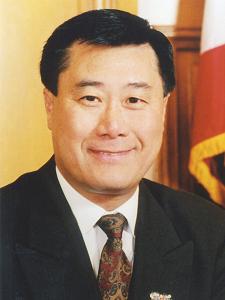
And Sen. Leland Yee of San Francisco is refusing to vote for it.


That kind of mystified me; why would Yee be against a fairly common-sense safety measure? I called Yee’s aide, Adam Keigwin, who said it was a matter of principle: “He’s never voted for traffic cameras,” Keigwin said. “He sees it as a police state issue. Once they take pictures of you driving, what else are they going to take pictures of?”


Again: That’s a bit odd. Yee’s usually a law-and-order type of guy. And I’m not for cameras everywhere; I have problems with the cops wanting to put “crime cameras” in neighborhoods. But this one seems fairly harmless — it’s a busy intersection where someone’s going to die one of these days, and I don’t think a traffic camera is going to take us down a slippery slope to a police state.


In fact, the bike coalition’s acting director, Renee Rivera, told me that she understands Yee’s concern, but “in this case, the safety concern takes precedence. This camera enforcement is going to make it safer for people walking and biking.”


Anyway, if you want to express an opinion on this, Yee’s office is (916) 651-4008.

SF Chamber attacks — lamely

0

The right-wing San Francisco Chamber of Commerce has had a pretty bad track record in local electoral politics in recent years, and its latest attack ads on progressive members of the Board of Supervisors demonstrates why: the group’s muddled and hypocritical messaging is barely comprehensible to the average San Franciscan.

The San Francisco Chronicle this morning announced the new ad campaign, the first salvo resulting from strategy sessions with Mayor Gavin Newsom and other downtown players, and the article included a funny conflict about whether or not the Chronicle is giving free advertising space to the effort.

But the ads themselves are even funnier – although inadvertently so – asking voters whether “your city supervisor” prefers “buses or benefits,” “parks or pensions,” or “paychecks or pinkslips.” Apparently, the Chamber is trying to capitalize on this political season’s fashionable attacks on public employee pensions and benefits, but the false choices that the Chamber sets up actually say more about its own promotion of this sort of zero-sum game within the public sector.

Hundreds of city employees have gotten pink slips in the last couple years directly because Newsom and the Chamber have sabotaged proposed revenue measures, even those that would help small businesses. They’ve played cynical political games that have cut Muni service and caused fares to double since Newsom became mayor, with Muni money diverted to help fund the paychecks, benefits, and pensions of police and firefighters – core Newsom constituencies to whom he gave overly generous deals to secure their early support for his 2007 re-election – while recently negotiating a deal that would exempt them from being affected by Jeff Adachi’s pension reform measure for another two years.

But targets of the ads don’t even need to know this whole backstory to see that the ads are simply false choices, lamely presented. Another swing and a miss from the once-mighty Chamber.

Lights out!

0

NOIR (AND NOT) FILM SERIES Like many of its hardboiled antiheros, film noir is a career criminal on the lam. Constantly eluding the clutches of the historically particular and categorically retentive, it’s especially skilled at flying under the radar only to stealthily reappear years down the line. Just look at the number of times it has been sighted (as well as cited) since its initial appearance in postwar France, when critics first identified something particulier about the 1930s and ’40s American films that filled Parisian cinemas.

Noir’s notorious elasticity is on full display in “Not Necessarily Noir,” an extraordinary police lineup of double bills organized by the Roxie’s resident noir programmer Elliot Lavine. Following on the heels of Lavine’s May series “I Still Wake Up Dreaming,” which celebrated the down and dirty world of B pictures, the two-week long “Not Necessarily Noir,” as its title indicates, includes films that scan as noir more in terms of their sensibility than which video store shelf they’d sit on. From Cold War sci-fi (the original 1956 Invasion of the Body Snatchers kicks off the series) to more contemporary dramas such as Abel Ferrara’s Bad Lieutenant (1992) — and let’s not forget the 1983 WTF remake of Breathless starring Richard Gere — “Noir” plays fast and loose with genre and decade but ensures that at the core of each of its titles gleams a heart of darkness.

I’m hoping that the recent return of Mad Men will boost interest in the early 1960s rarities Lavine has programmed, all of which make the bad behavior and private tribulations of the Sterling Cooper Draper Pryce suits look like kid stuff. Let’s start with The Sadist (1961), James Landis’ lean and nasty B&W attempt to jump on Psycho‘s bandwagon. The picture’s reputation as an honorary precursor to 1974’s The Texas Chainsaw Massacre is much deserved thanks to Arch Hall Jr.’s gonzo performance as the titular thrill-killer.

With his incessant giggle, bleached pompadour, 10-yard stare, and an overhanging brow worthy of Ansel Adams, Hall Jr. is hillbilly nut-job personified, and it’s a pleasure to which him terrorize a trio of uptight schoolteachers stranded at a remote gas station. Credit is also due to the striking compositions of cinematographer Vilmos Zsigmond, who would in later decades become the Oscar-winning go-to man for Hollywood blockbusters such as The Deer Hunter (1978) and Close Encounters of the Third Kind (1977).

The psychological thriller Mirage (1965) is another title that tips its hat to Hitchcock (as does Brian De Palma’s 1976 Vertigo redo Obsession, which screens in the series’ second week). Gregory Peck stars as a bewildered accountant whose world starts to fall apart when he realizes that his daily routine has actually been a byproduct of long-term amnesia. As he attempts to recover his life pre-memory loss, first with the aid of a hired detective (Walter Matthau in a great supporting bit) and then with an old flame (Diane Baker), he discovers that someone is invested in keeping him in the dark — for good.

The real gem, though, is Jack Garfein’s criminally unavailable Something Wild (1961), which plays with his only other feature, the homoerotic military school drama The Strange One (1957). You know the gloves are off when within its first five minutes the ravishing Carroll Baker, the film’s star and director’s then-wife, is graphically raped. After running away to Manhattan, Baker’s traumatized victim is rescued from a suicide attempt by Mike (Ralph Meeker, star of 1955’s Kiss Me Deadly), a drunken mechanic who locks her in his rundown flat. Though, at times, Meeker and Baker lay on the Method acting pretty thick, Aaron Copland’s dissonant original score and cinematographer Eugen Schüfftan’s remarkable black and white photography of New York’s slums and skyscrapers push Something Wild into wonderfully strange, surreal places.

Week two, which focuses more on recent incarnations of noir, might rankle purists, but offers plenty of bullets, bloodlust, and good men turned bad. Quentin Tarantino favorite Rolling Thunder (1978) offers much gruesome fun as its claw-wielding, Vietnam vet protagonist hunts down his family’s murderers. Also worthy of rediscovery are Ivan Passer’s harrowing Cutter’s Way (1981), which also centers around a group of dissolute ‘Nam vets, and neo-noir proponent Paul Schrader’s Blue Collar (1988), a similarly working-man-minded drama about the fallout of a union office heist bungled by a group of broke Detroit auto workers.

NOT NECESSARILY NOIR

Aug. 20–Sept. 2, $5–$ 9.75

Roxie Theater

3117 16th St., SF

(415) 863-1087

www.roxie.com

Film Listings

0

Film listings are edited by Cheryl Eddy. Reviewers are Kimberly Chun, Michelle Devereaux, Max Goldberg, Dennis Harvey, Johnny Ray Huston, Louis Peitzman, Lynn Rapoport, Ben Richardson, and Matt Sussman. 

OPENING

*Animal Kingdom More renowned for its gold rush history and Victorian terrace homes than its criminal communities, Melbourne, Australia gets put on the same gritty map as Martin Scorsese’s ’70s-era New York City and Quentin Tarantino’s ’90s Los Angeles with the advent of director-writer David Michôd’s masterful debut feature. The metropolis’ sun-blasted suburban homes, wood-paneled bedrooms, and bleached-bone streets acquire a chilling, slowly building power, as Michôd follows the life and death of the Cody clan through the eyes of its newest member, an unformed, ungainly teenager nicknamed J (James Frecheville). When J’s mother ODs, he’s tossed into the twisted arms of her family: the Kewpie doll-faced, too-close-for-comfort matriarch Smurf (Jacki Weaver), dead-eyed armed robber Pope (Ben Mendelsohn), Pope’s best friend Baz (Joel Edgerton), volatile younger brother and dealer Craig (Sullivan Stapleton), and baby bro Darren (Luke Ford). Learning to hide his responses to the escalating insanity surrounding the Codys’ war against the police — and the rest of the world — and finding respite with his girlfriend, Nicky (Laura Wheelwright), J becomes the focus of a cop (Guy Pearce) determined to take the Codys down — and discovers he’s going to have use all his cunning to survive in the jungle called home. Stunning performances abound — from Frecheville, who beautifully hides a growing awareness behind his character’s monolithic passivity, to the adorably scarifying Weaver — in this carefully, brilliantly detailed crime-family drama bound to land at the top of aficionados’ favored lineups, right alongside 1972’s The Godfather and 1986’s At Close Range and cult raves 1970’s Bloody Mama and 1974’s Big Bad Mama. (2:02) Metreon, Shattuck. (Chun)

Army of Crime In 1941 Paris, a group of resistance fighters — mostly foreign-born, many Jewish — form an underground network to sabotage the ever-growing Nazi presence in France. Their schemes range from the clever (playing loud piano to disguise the sound of a printing press) to the violent (grenades tossed under buses). Tension builds as the film progresses, though we learn in the first three minutes which characters will have “Died for France” at the end. In addition to its important historical lesson (with a modern-day nod toward the shifting definition of what makes a terrorist), Army of Crime also boasts a strong, easy-on-the-eyes ensemble cast and a depiction of wartime Paris that favors glamorous nostalgia. (2:13) Sundance Kabuki. (Eddy)

Hugh Hefner: Playboy, Activist, and Rebel See “Bunny Business.” (2:04) Lumiere, Shattuck.

Lebanon Das Boot in a tank” has been the thumbnail summary of writer-director Samuel Maoz’s film in its festival travels to date, during which it’s picked up various prizes including a Venice Golden Lion. On the first day of Israel’s 1982 invasion (which Maoz fought in), an Israeli army tank with a crew of three fairly green 20-somethings — soon joined by a fourth with even less battle experience — crosses the border, enters a city already halfway reduced to rubble, and promptly gets its inhabitants in the worst possible fix, stranded without backup. Highly visceral and, needless to say, claustrophobic (there are almost no exterior shots), Lebanon may for some echo The Hurt Locker (2009) in its intense focus on physical peril. It also echoes that film’s lack of equally gripping character development. But taken on its own willfully narrow terms, this is a potent exercise in squirmy combat you-are-thereness. (1:33) Embarcadero, Shattuck, Smith Rafael. (Harvey)

Lottery Ticket When Bow Wow wins $370 million in the lottery, his neighbors are, understandably, a bit jealous. The all-star ensemble also features Ice Cube, Loretta Devine, Mike Epps, and Charlie Murphy. (1:39)

*Mao’s Last Dancer Based on the subject’s autobiography of the same name, this Australian-produced drama chronicles the real-life saga of Li Cunxin (played as child, teen, and adult by Huang Wen Bin, Chengwu Guo, and Chi Cao), who was plucked from his rural childhood village in 1972 to study far from home at the Beijing Dance Academy. He attracted notice from Houston Ballet artistic director Ben Stevenson (Bruce Greenwood) during a cultural-exchange visit, and was allowed to go abroad for a Texas summer residency. At first the film looks headed toward well-handled but slightly pat inspirational territory pitting bad China against good America, as it cuts between Li’s grueling training by (mostly) humorless Party ideologues, and his astonishment at the prosperity and freedom in a country he’d been programmed to believe was a capitalist hellhole of injustice and deprivation. (Though as a Chinese diplomat cautions, not untruthfully, he’s only been exposed to “the nice parts.”) Swayed by love and other factors, Li created an international incident — tensely staged here — when he chose to defect rather than return home. But Jan Sardi’s script and reliable Aussie veteran Bruce Beresford’s direction refuse to settle for easy sentiment, despite a corny situation or two. Our hero’s new life isn’t all dream-come-true, nor is his past renounced without serious consequence (a poignant Joan Chen essays his peasant mother). The generous ballet excerpts (only slightly marred by occasional slow-mo gimmickry) offer reward enough, but the film’s greatest achievement is its honestly earning the right to jerk a few tears. (1:57) Albany, Embarcadero. (Harvey)

Nanny McPhee Returns Emma Thompson reprises her role as the magical nanny, this time helping out harried mother Maggie Gyllenhaal. (1:48) Presidio, Shattuck.

The Switch Sperm-donor humor: now officially a tired trend. (1:56) Shattuck.

Vampires Suck And they’re ripe for parody, too. (1:40)

ONGOING

Agora (2:06) Shattuck.

*Alamar (1:13) Roxie.

Cats and Dogs: The Revenge of Kitty Galore (1:40) 1000 Van Ness, SF Center.

The Concert (1:47) Clay.

Despicable Me (1:35) 1000 Van Ness, SF Center.

Dinner for Schmucks (1:50) 1000 Van Ness, SF Center.

*The Disappearance of Alice Creed (1:40) Sundance Kabuki.

Eat Pray Love The new film based on Elizabeth Gilbert’s chart-busting memoir, Eat Pray Love, benefits greatly from the lead performance by Julia Roberts, an actor who can draw from her own reserves of pathos when a project has none of its own. The adaptation, about a whiny American author farting around the globe in search of what amounts to spiritual room service, is nothing without her. The journey begins with the Type-A, book contract-inspired premise that Gilbert will travel to three appointed countries over the course of a year in order that, having thrice denied herself absolutely nothing, she might come out the other end a better-balanced human being. The first stop is Italy, where her entire plan is to finally unbutton her jeans and indulge in a celebrated cuisine, as if her home base of Manhattan were a culinary backwater. But this film is all about tired equivalencies, so Italy equals food, and expressive hand gestures, and “the art of doing nothing.” India, her next stop, equals enlightenment (her discovery that the guru she’s come to see is currently at an ashram in New York is an irony lost on the movie). And Bali, her final getaway, apparently equals contradictory but flattering aphorisms and thematically hypocritical romances. The sole appeal to a moviegoer here is aspirational. What’s so embarrassing about Eat Pray Love is its insistence that this appeal sprouts from the spiritual quest itself, and not just from the privilege that enables Gilbert to have such an extravagant quest in the first place. But then, self-awareness is supposed to be a obstacle to enlightenment. She’s got nothing to worry about there. (2:30) Cerrito, Elmwood, Empire, Marina, 1000 Van Ness, SF Center, Sundance Kabuki. (Jason Shamai)

The Expendables Exactly what you’re expecting: a completely ludicrous explosion-o-thon about mercenaries hired by Bruce Willis to take down a South American general who’s actually a puppet for evil CIA agent-turned-coke kingpin Eric Roberts. Clearly, Sylvester Stallone (who directed, co-wrote, stars, and even coaxed a cameo out of Schwarzenegger) knows his audience, but The Expendables — bulging with a muscle-bound cast, including Dolph Lundgren, Terry Crews, Jason Statham, and Steve Austin, plus Jet Li, who suffers many a short-guy joke — is content to simply tap every expected rung on the 80s-actioner homage ladder. There’s no self-awareness, no truly witty one-liners, no plot twists, and certainly no making a badass out of any female characters (really, couldn’t the South American general’s daughter have packed some heat, or kicked someone in the balls — anything besides simply heaving her cleavage around?) The only truly memorable thing here is the inclusion of Mickey Rourke as Stallone’s tattoo-artist pal; I would possibly wager that Rourke was allowed to write his own weepy monologue, delivered in a close-up so extreme it’s more mind-searing than any of the film’s many machine-gun brawls. (1:43) 1000 Van Ness, Sundance Kabuki. (Eddy)

The Extra Man (1:45) Elmwood, Embarcadero.

Farewell (1:53) Opera Plaza, Shattuck.

Get Low Born from the true story of Felix Bush, an eccentric Tennessee hermit who invited the world to celebrate his funeral in advance of his own death, Get Low is a loose take on what might inspire a man to do a thing like that. It’s a small story, and unlikely to attract the attention of popcorn-addled viewers in the midst of the summer blockbuster season, but Get Low has a whopper of a character in Felix Bush. Robert Duvall becomes Bush, constructing a quiet man who sees it all and speaks only when he has something to say, and supporting roles from Sissy Spacek and Bill Murray are expectedly solid, but the real surprise is what a strong eye director Aaron Schnieder has. In allowing scenes to unfold on their own terms and in their own time, Schneider gives a real humanity to what could have been a Hallmark movie. (1:42) Albany, Embarcadero, Piedmont. (Peter Galvin)

*The Girl Who Played With Fire (2:09) Embarcadero, Piedmont, Shattuck, Smith Rafael.

*The Girl With the Dragon Tattoo (2:32) Shattuck.

Harimaya Bridge (2:00) Four Star.

*I Am Love (2:00) Elmwood, Opera Plaza.

Inception (2:30) Empire, Marina, 1000 Van Ness, Sundance Kabuki.

*Joan Rivers: A Piece of Work (1:24) Opera Plaza, Red Vic.

*The Kids Are All Right In many ways, The Kids Are All Right is a straightforward family dramedy: it’s about parents trying to do what’s best for their children and struggling to keep their relationship together. But it’s also a film in which Jules (Julianne Moore) goes down on Nic (Annette Bening) while they’re watching gay porn. Director Lisa Cholodenko (1998’s High Art) co-wrote the script (with Stuart Blumberg), and the film’s blend between mainstream and queer is part of what makes Kids such an important — not to mention enjoyable — film. Despite presenting issues that might be contentious to large portions of the country, the movie maintains an approachability that’s often lacking in queer cinema. Of course, being in the gay mecca of the Bay Area skews things significantly — most locals wouldn’t bat an eye at Kids, which has Nic and Jules’ children inviting their biological father (“the sperm donor,” played by Mark Ruffalo) into their lives. But for those outside the liberal bubble, the idea of a nontraditional family might be more eye-opening. It’s not a message movie, but Kids may still change minds. And even if it doesn’t, the film is a success that works chiefly because it isn’t heavy-handed. It refuses to take itself too seriously. At its best, Kids is laugh-out-loud funny, handling the heaviest of issues with grace and humor. (1:47) Bridge, California, Cerrito, 1000 Van Ness, Piedmont, Presidio, SF Center. (Peitzman)

*Life During Wartime The Kids Are Alright isn’t the only film this summer that subtly skewers the suburban upper-middle class by following a seemingly well-adjusted family as they’re thrown into crisis when a shadowy father figure attempts to enter their orbit. Only in the case of Todd Solondz’s Life During Wartime, instead of a sperm donor, Dad is a convicted child molester. A quasi-sequel to 1998’s Happiness, Life picks up 10 years later to survey the still-damaged Jordan sisters. After discovering that her husband Allen (Michael Kenneth Williams) is still making sexually harassing phone calls, mousy Joy (squeaky-voiced British actress Shirley Henderson) flees to Florida, where her older sister Trish (Allison Janney) has attempted to start a new life for herself and her children. Oldest Billy (Chris Marquette) is now a bitter college student, and youngest son Timmy (Dylan Riley Snyder) still doesn’t know the horrible truth about his father Bill (Ciarán Hinds), who has just been released from prison. Third sister Helen (Ally Sheedy), has had success in Hollywood, but still feels victimized by her family. Despite the entirely new cast, happiness remains just as elusive as before. Pleasure, when it can be found, is fleeting. Characters’ awkward conversations with each other inevitably sputter and stall, and even the best intentions are no measure against disaster. Solondz may be a scathing observer, but he is not above being sympathetic when its called for. Neither does he gloss over the serious questions — what are the limits of forgiveness? When is forgetting necessary? (1:37) Lumiere. (Sussman)

Lourdes (1:39) Roxie.

Middle Men (1:45) 1000 Van Ness, Sundance Kabuki.

The Other Guys (1:47) California, 1000 Van Ness, Presidio.

Patrik Age 1.5 (1:38) Lumiere.

Peepli Live (1:46) Balboa.

Salt (1:31) 1000 Van Ness, Sundance Kabuki.

*Scott Pilgrim vs. The World For fans of Bryan Lee O’Malley’s just-completed comics saga Scott Pilgrim, the announcement that Edgar Wright (2004’s Shaun of the Dead, 2007’s Hot Fuzz) would direct a film version was utterly surreal. Geeks get promises like this all the time, all too often empty (Guillermo del Toro’s Hobbit, anyone?). But miraculously, Wright indeed spent the past five years crafting the winning Scott Pilgrim vs. the World. The film follows hapless Toronto 20-something Scott Pilgrim (Michael Cera), bassist for crappy band Sex Bob-omb, as he falls for delivery girl Ramona Flowers (Mary Elizabeth Winstead), only to find he must defeat her seven evil exes — like so many videogame bosses — before he can comfortably date her. As it happens, he’s already dating a high-schooler, Knives (Ellen Wong), who’s not coping well with Scott moving on. Cera plays a good feckless twerp; his performance isn’t groundbreaking, but it dodges the Cera-playing-his-precious-self phenomenon so many have lamented. The film’s ensemble cast maintains a sardonic tone, with excellent turns by Alison Pill, Aubrey Plaza, and newcomer Wong. Jason Schwartzman is perfectly cast as the ultimate evil ex-boyfriend — there’s really no one slimier, at least under 35.The film brilliantly cops the comics’ visual language, including snarky captions and onomatopoetic sound effects, reminiscent onscreen of 1960s TV Batman. Sometimes this tends toward sensory overload, but it’s all so stylistically distinctive and appropriate that excess is easily forgiven. (1:52) California, Four Star, Presidio, Shattuck. (Stander)

Step Up 3D (1:46) 1000 Van Ness, SF Center.

Tales from Earthsea Drawn from Ursula K. Le Guin’s Earthsea series of fantasy novels, the feature debut of Goro Miyazaki, the legendary Hayao Miyazaki’s son, is the latest to come out of Japan’s Studio Ghibli. It tells the story of angsty patricidal prince-refugee Arren, who finds himself in the company of the wise Archmage Sparrowhawk and must help him and his friends defeat a Maleficent-esque evil sorcerer. But this film’s fantastical world tends too often toward the unengagingly mundane, with a cast of half-baked archetypes battling over overwrought metaphysical concepts. To boot, too many of the weird creatures and unreal elements seem reminiscent of the elder Miyazaki’s creations in films like Princess Mononoke (1997) and Spirited Away (2001). Ghibli is famed for its relentlessly creative productions, but Earthsea misses the mark, even if it is entirely watchable. It’s worth noting that Le Guin herself has written a lengthy piece on the film’s many problems. (1:55) Sundance Kabuki. (Sam Stander)

*Toy Story 3 (1:49) 1000 Van Ness, Shattuck, Sundance Kabuki.

Vengeance Prolific Hong Kong director Johnnie To’s two best films to date are 1999’s The Mission and its sorta-sequel, 2006’s Exiled. Both are about hired killers going about their business — a favored To plot that allows him to explore his fascination with male bonding, particularly amid crooks who fiercely adhere to the underworld’s sticky loyalty codes. His latest stateside release is 2009’s Vengeance; I had to double-check to make sure this was a new movie, because how could To have not made one called Vengeance already? The turf is classic To; The Mission and Exiled star Anthony Wong is, of course, the chief assassin; as always, he’s a cool, stone-faced cat of the sunglasses-at-night variety. There are elegantly staged gun battles, a post-skirmish tending-our-wounds scene, a daring getaway via a series of fire escapes, and lots of slo-mo. But there’s one new element here: 60-something Johnny Hallyday, dubbed “the French Elvis” in the 1960s. His Costello is a killer-turned-chef seeking revenge for the death of his Macau-based daughter’s family. He hasn’t been in the game for decades, so he hires Wong and co. to help him annihilate the bad guys. Hallyday has a certain glamorous presence, but at times it feels like he’s been grafted onto Vengeance just so it won’t feel like To is repeating himself (again). Costello is losing his memory at a rapid rate, so much time is spent waiting for him to shuffle through his Memento-style sheaf of Polaroids, struggling to recall who he’s with, why he’s there, and finally, “What is revenge?” Indeed, as another character points out, “What does revenge mean when you can’t remember anything?” Wong’s gunslingers may have just met Costello, but he’s paid for their loyalty — and earned their respect. Plus, his Paris restaurant is called “Frères,” so of course his newfound “brothers” will finish the job. (1:48) Four Star, Sundance Kabuki. (Eddy)

The Wildest Dream: Conquest of Everest (1:33) Opera Plaza.

*Winter’s Bone (1:40) Empire, Lumiere, Shattuck.

Alerts

0

alert@sfbg.com

THURSDAY, AUG. 19


Celebrating Young Activists

Mingle with environmental activists and community group members of all ages at the networking event Celebrating Young Activists: Building a Green Movement and Changing the World. The event features talks by inspirational young leaders, winners of the Brower Youth Awards, environmental and social justice organization information tables, and live jazz.

6:30 p.m., $10–$20

Richard and Rhoda Goldman Theater

David Brower Center

2150 Allston, Berk.

(510) 859-9100

SATURDAY, AUG. 21


Shoot Hoops, Not Guns

Commemorate the 25th birthday of Elliot Jemar Noble, who was killed by an Oakland police officer in 2005, at this combination march, basketball tournament, and gospel concert. The event is a benefit for the Elliot J. Noble Multiservice Family Organization, a nonprofit that provides support for families affected by violence. The parade begins at 10 a.m. at Eldridge and Darien streets, progresses to a 1 p.m. basketball tournament where players assume the names of slain or incarcerated loved ones, and ends with a gospel concert at 6 p.m.

10 a.m., $5–$10 for the concert

Ira Jinkins Recreation Center

9175 Ededs, Oakl.

(510) 895-5234

SUNDAY, AUG. 22


Tour Alameda Naval Air Station

Find out more about Alameda’s Naval Air Station, which closed in 1997 and remains the subject of much controversy and public debate over what to do with this prime piece of real estate. This guided tour combines a two-hour bus tour followed by a self-guided walking tour of the businesses engaged in adaptive reuse of the buildings. Reservations required.

1 p.m., 3 p.m.; $10

Meet in front of Alameda Naval Air Museum

2151 Ferry Point Road, Alameda

(510) 479-6489


Mobilization for Climate Justice

Get involved in the effort to stand up to big oil companies by attending this public action planning meeting for an Aug. 30 march and protest on the five-year anniversary of Hurricane Katrina. The protests will target the offices of BP and Chevron for their roles in environmental and community destruction in the gulf, the Bay Area, and around the world.

Noon, free

Mission Cultural Center

2868 Mission, SF

www.actforclimatejustice.org/west


Nuevos Horizontes

Attend a benefit dinner and show for Nuevos Horizontes, a domestic violence shelter in Guatemala that provides long-term housing, psychological counseling, legal advice, job training, and health care for women and children. There will be vegan and vegetarian options for dinner, bands, and speakers.

6 p.m., $8–$10

Call (510) 878-8879 or e-mail bigcavecomix@live.com for Oakland location

www.ahnh.org


Street Food Conference

Following the San Francisco Street Food Fest, attend this conference dedicated to the exploration of food, policy and economics. Participants will engage in discussions about the creation of viable economic models that allow small-scale food entrepreneurs to bring the foods they love to the cities in which they live.

Sat. Noon-5pm, Sun. 9 a.m.–3:30 p.m., $20–$50

Hotel Vitale

8 Mission, SF

sfstreetfoodconference.eventbrite.com

Mail items for Alerts to the Guardian Building, 135 Mississippi St., SF, CA 94107; fax to (415) 437-3658; or e-mail alert@sfbg.com. Please include a contact telephone number. Items must be received at least one week prior to the publication date.


Two steaming non-scandals

24

The political press is all over two of the big non-scandals of the day, Jerry Brown’s pension and Jeff Adachi’s budget. Let’s start with ol’ Jer’.


You can say a lot of things about Jerry Brown, and I’ve said a lot of them myself, but the guy has never tried to enrich himself off the public dollar. Fact is, Jerry’s about as cheap as you can get, and hates to spend money — his money, campaign money, public money. In some ways, he’s responsible for Prop. 13, because he was such a cheapskate as governor in the 1970s that he ran up a huge billion-dollar-plus surplus in Sacramento at a time when property taxes were soaring.


But Matt Drudge, playing off public anger at state employee pensions, decided that Brown was “double dipping,” citing and OC Register report, and suddenly, the former gov’s secret pension was big news. But wait, the Chron actually figured it out: Brown isn’t drawing any pension at all right now. If he were to retire after about 25 years of service as secretary of state, governor, mayor of Oakland, attorney general and a Supreme Court clerk, he’d be eligible for a pension of $78,450 — considerably less than your average San Francisco cop or firefighter. Knowing Jerry, he’ll probably decline it anyway.


In other words: No story.


Then there’s Jeff Adachi’s budget. I know, it looks bad for a guy who’s trying to cut worker pensions and health care to be seeing budget increases and still leave the city with a $2 million legal tab for work he refused to handle. But really, this is old news — Adachi’s been warning for a couple of years that he was going to have to decline cases (and thus stick the city with a private legal bill). And let’s remember: The staff in the Public Defender’s Office handles almost twice as many cases as they ought to.


Adachi’s ballot initiative annoys me — he’s going after city employee benefits instead of looking at where the city can raise new revenue. And he’s acting like a lone wolf, demanding that his office is properly staffed and launching an initiative that attacks public employee unions instead of trying to work with them.


But I don’t blame him for being agressive in pushing for adequate funding for his shop — I wish the director of public health was willing to try as hard to avoid cutbacks instead of going along with whatever the mayor proposes. And his current budget is nowhere near as scandalous as what happens every single year with police and fire.


Man charged in fatal hit and run

Last week’s Guardian cover story highlighted a number of efforts to make cycling safer and more viable in San Francisco, such as ongoing San Francisco Bike Plan projects that will create separated bike zones. Sadly, none of it was enough to prevent the tragic death of a German tourist who was hit while riding a bike on Friday, Aug. 13, by an intoxicated driver behind the wheel of a 1989 Mercedes Benz.

Police had little information about Nils Linke, who would have turned 22 next month, other than that he was visiting San Francisco from Germany. Linke was hit at 10:39 p.m. Friday night on Masonic Avenue near Turk Boulevard, according to police spokesperson Lt. Lyn Tomioka. “They are really working very hard on this case,” Tomioka said. “It is an active and ongoing investigation.”

Joshua Calder, 37, was arrested and charged with gross vehicular manslaughter while intoxicated, felony drunk driving, felony hit-and-run causing death, driving with a blood-alcohol content above the legal limit, and driving without proof of insurance. Police originally believed Calder to be an Oakland resident, but he gave a San Francisco address, Tomioka said.

SF Streetsblog picked up the story, providing an insider’s scoop on efforts to address traffic conditions in that area. Here’s an excerpt:

“For years now, advocates and residents who live on and near Masonic Avenue have been trying to get the SFMTA to turn Masonic into a complete street, replete with bicycle and pedestrian amenities that would slow traffic, and make it a safer place for everyone. At a recent community meeting, the agency offered four options to do that, including a cycle track.

The [San Francisco Municipal Transportation Agency] has been hearing loud calls to fix Masonic since 2008 when 500 residents signed a petition citing speed concerns. It was hand delivered to SFMTA Chief Nat Ford. … “We’ve put about four options out there now to really look at how to redesign that street,” said Ford. “Unfortunately, Masonic could use some traffic calming. I have to be cautious, because you can imagine, this is a very litigious situation. Our hearts go out to the family of the young man who got killed, but we have to also make sure that we’re making prudent legal steps going forward in dealing with this issue.”

The Streetsblog report also notes that a group called Fix Masonic — which has been working to improve safety conditions in that area — has been receiving phone calls about the incident.

Linke is the second German tourist to be killed in San Francisco since the start of August. On Aug. 8, Mechthild Schroeer, 50, was killed after being caught in the crossfire of a gun battle near a Union Square venue. Efforts have been made recently to clamp down on violence outside San Francisco nightclubs, with Mayor Gavin Newsom signing legislation last week to strengthen the Entertainment Commission’s ability to revoke permits for clubs that attract trouble. While drunk driving was clearly a factor in this latest hit and run, city efforts to adress community concerns near Masonic and to crack down on dangerous driving that endangers cyclists could serve to prevent tragedies like the one that took Linke’s life.

Immigrant advocates accuse ICE of “pattern of dishonesty”

13

A coalition of national civil rights organizations held a August 10 press conference to discuss recently released internal government documents that they say reveal “a pattern of dishonesty” regarding Immigration and Customs Enforcement (ICE)  “Secure Communities” (S-Comm) program.

Representatives with the National Day Laborer Organization Network (NDLON), the Center for Constitutional Rights (CCR), and the Kathryn O. Greenberg Immigration Justice Clinic of the Benjamin N. Cardozo School of Law noted that though ICE officials have declared their intention to expand S-Comm into every jurisdiction in the country by 2013, information about the program has been scarce, and development of its operational details has been shrouded in secrecy.

The coalition also pointed to a July 27 letter that U.S. Congresswoman Zoe Lofgren recently wrote to Secretary Janet Napolitano and Attorney General Eric Holder as evidence that ICE led Congress to believe that SecureComm is a voluntary, and not a mandatory, program.

In her letter, Lofgren, who is chair of the House of Representatives’ subcommittee on Immigration, Citizenship, Refugees, Border Security and International Law,  asks for “a clear opt-out procedure for municipalities that do not wish to participate in the S-Comm program.”

“As we discussed, Secure Communities is a voluntary program that relies upon the resources of both of your agencies [referring to DHS and DOJ] in order to provide State, local, and federal law enforcement agencies with information related to the immigration status of persons booked into our nation’s jails and prisons,” Lofgren wrote.

“I am aware that some local law enforcement agencies have expressed concern that participating in Secure Communities will present a barrier to their community policing efforts and will make it more difficult for them to implement a law enforcement strategy that meets their community’s public safety needs,” Lofgren observed.

“There appears to be significant confusion about how local law enforcement agencies may ‘opt out’ of participating in Secure Communities,” Lofgren continued.

Lofgren notes that staff from her House subcommittee were briefed on this program by ICE and were informed that localities could opt out simply by making such a request to ICE, while subsequent conversations with ICE and FBI CJIS added  to the confusion by suggesting that this might not be so.

“Please provide me with a clear explanation of how local law enforcement agencies may pot out of Secure Communities by having the fingerprints they collect and submit to the SIBs checked against criminal, not immigration, databases,” Lofgren concludes.

To date, Lofgren has not received a reply, a press spokesperson in her office confirmed.

Immigration rights advocates charge that S-Comm, which is operative in 544 jurisdictions in 27 states, functions like the controversial 287(g) program and Arizona’s SB1070, making state and local police central to the enforcement of federal immigration law.

They say the program, which automatically runs fingerprints through immigration databases for all people arrested, targets them for detention and deportation even if their criminal charges are minor, eventually dismissed, or the result of an unlawful arrest.

After reviewing the recently released ICE documents and other information, advocates for NDLON said they found evidence supporting their claim that ICE has been dishonest with the public and with local law enforcement regarding S-Comm’s true mission and impact.

“While ICE markets S-Comm as an efficient, narrowly tailored tool that targets ‘high threat’ immigrants, it actually functions as a dragnet for funneling people into the mismanaged ICE detention and removal system,” stated a NDLON press release. “ICE’s own records show that the vast majority (79 percent) of people deported due to S-Comm are not criminals or were picked up for lower level offenses.”

They also charge that the program serves as a smokescreen for racial profiling, allowing police officers to stop people based solely on their appearance and arrest non-citizens, knowing that they will be deported, even if they were wrongfully arrested and are never convicted.

“Preliminary data confirms that some jurisdictions, such as Maricopa County Arizona, have abnormally high rates of non-criminal S-Comm deportations,” NDLON continued.

 “Lastly, the impression ICE fosters that S-Comm is not mandatory and jurisdictions can opt out is riddled with questions,” they conclude.

 “These records reveal a dangerous trend,” said NDLON Executive Director Pablo Alvarado. “This program creates an explosion of Arizona-like enforcement at a time when the results have proven disastrous. Thanks to S-Comm, we face the potential proliferation of racial profiling, distrust of local police, fear, and xenophobia to every zip code in America.”

 “S-Comm co-opts local police departments to do ICE’s dirty work at significant cost to community relations and police objectives,” said CCR attorney Sunita Patel. “Without full and truthful information about the program’s actual mission and impact, police are operating in the dark. The bottom line is that thrusting police into the business of federal immigration enforcement isn’t good for anyone.”

 “ICE is racing forward imposing its S-Comm program on new states and localities every day, without any meaningful dialog or public debate,” warned Bridget Kessler, a teaching fellow at the Immigration Justice Clinic of the Benjamin N. Cardozo School of Law.

The three organizations vow to litigate for the release of more data and records “to uncover the truth behind S-Comm and other ICE efforts to draft local police into immigration enforcement.”

Also speaking at the Aug. 10 press conference was San Francisco Sheriff Mike Hennessey. Earlier this summer, Hennessey blew the whistle on S-COmm, after attending a meeting in May at which ICE revealed it was going to switch the program on in San Francisco in June.

But despite Hennessey’s efforts to opt San Francisco out of the program, S-Comm went live June 8 in San Francisco.

“We were told we could opt out through the State Attorney General’s Office,” Hennessey said, recalling how AG Jerry Brown’s office told him that San Francisco could only opt out through the feds.

“We were given the run around,” Hennessey said.“It’s a program forced upon individual local law enforcement agencies, no matter what the local community wants,” Hennessey said.

Henessey worries that the program is having a chilling effect on community policy efforts.

“Witnesses and victims of crime won’t come forward for fear they will be deported,” he said.

Henessey notes that ICE has detained folks who were arrested for minor traffic violations, and whose charges were subsequently dropped, as well as folks with no criminal records.

“My Board of Supervisors, my Police Commission and my mayor have said they would rather not participate in deportations at that level,” Hennessey noted.

He worries that the program could be expanded to include employment record checks.

“They say the program won’t be used for civil purposes, but it’s already being used for federal employment checks,” Hennessey said. “This further isolates minority communities from the mainstream.”

Si se puede, making a difference: El Tecolote turns 40

0

It was with relish that I awaited my interviews with El Tecolote’s managing editor, Roberto Daza, and its founding editor Juan Gonzales on a homey couch in the paper’s modest office on 24th Street. Being a community journalist, it isn’t every day that you are able to check out the digs of another community newspaper – particularly one with as storied a history as the Mission’s bilingual go-to for news on social issues that affect the historically Latino and working class neighborhood. El Tecolote is celebrating forty years of activist journalism this month, kicking off with an opening reception tonight (Wed/11) at the Mission Cultural Center for Latino Arts of an exhibit featuring their extensive photo archives. 

I’m stoked to be there, so I chill and savor the feeling that good work is being done around me. Reporter-advertising manager Francisco Barradas’ computer keys are nearly the only sounds in the office, though passing staff assure me that this is a deadline day in the office. He answers the phone and speaks alternately in Spanish and English, most often a genial mixture of the two. Calendar editor Alfonso Texidor stalks past me multiple times, his distinctive hat and cane combo instantly marking him as one of the driving forces of last week’s popular literary review issue as identified by Eva Martinez, executive director of Accion Latina, the organization which houses Tecolote. 

The office itself reads – as many of the headquarters of these rags will do – like desks and computers framed by a collection of events past. Owls (the newspaper’s namesake) stare at me wide-eyed from the corners. An owl cuckoo clock here, a mascot originally meant to frighten birds away from property perched on a potted tree next to the couch there, a kite on the back wall, the reception desk lined with a cache of ceramic hooters. The walls have a bright collection of silk-screened posters announcing EL Tecolote fundraisers going back through the history of the paper, some which announce that proceeds will also go “for Chile democratico.”  

Later, after it is determined that rush hour traffic and recent hip replacement surgery have held up Daza and Gonzales, respectively, we settle on phone interviews all around. Still sitting on the couch in the office, I ask Gonzalez which stories he is most proud of looking back on the past forty years. His three examples are all moments in which his paper made a difference in the lives of Missionites. In the ’70s, a woman came to them who had recently lost a child. She had gone to SF General Hospital complaining of stomach pains and bleeding, but with no Spanish translators on hand, staff sent her home, told her to lay down. When she returned with her English-speaking son later that day they admitted her, but it was too late: she miscarried soon thereafter.

“We jumped on it,” Gonzales tells me. The newspaper discovered woefully inadequate translator staffing levels at General, and impelled their readers to act. “We mobilized the community,” says Juan. The hospital was forced to sign an agreement with activists from the neighborhood to guarantee translators on duty – the first such accord between a hospital and a community group. El Tecolote pursued similar campaigns with telephone emergency services in the ’80s, and more recently has supported tenants in a fight against Mission Housing Development when they attempted to raise rents in one of their apartment buildings.

“It’s one thing to make people see a newspaper around all the time. It’s another one to speak to the heart of the community,” Gonzales reflects.

From the get, the creation of El Tecolote was meant to give voice to those whom it was elusive. Gonzales started the paper as an off-shoot to his work in SF State’s fledgling Ethnic Studies program, itself born of the Alcatraz occupation and its own student strikes. A recent journalism graduate from the university himself, Gonzales was tapped by the administration to put together a course syllabus that analyzed media coverage of Latinos and taught ways to talk about issues that affected the population. He called it La Raza Journalism, but also craved a place where his students could get on the job experience.

So he held a series of fund-raising events, including an amateur talent show which drummed up the necessary $300 to publish the first El Tecolote on August 24th 1970. And then some. “At that time $50 was enough to publish 500 copies,” Gonzalez muses. His team chose to locate its office in the Mission, in a space donated by non-profit organization Centro Latino on 25th Street and Potrero to avoid reliance on university funding, which they felt could be pulled at any time. Already known to the community from his efforts in covering the area for the SF State paper, Gonzales and his paper were off and running.

“The bottom line is, the paper had to reflect the neighborhood,” he tells me. In those early days, the issues weren’t that much different than now: housing, tensions with the police, immigration, bilingual services and education, schools. They took care to represent all the facts of the controversies. “Don’t be afraid to ask the other side their reaction,” Gonzales says. “They could say things that help the cause.” El Tecolote, running as it does today 90-95% on the efforts of dedicated volunteers, also published pieces on young artists, many of which were at the center of an exciting new push for Latino-centric art forms. “We had to reflect how the cultural movement was really expanding,” its founder tells me. 

Nowadays, the paper experiences its share of the challenges to adapt that are facing most print publications. “We’ve had to make concessions: the quality of the paper we print on, the number of pages,” says Daza, who at a chipper 25 years old comes to the paper as another recent SF State grad. He first entered the Tecolote offices two years ago on a field trip as part of a technical writing class, and tells me the paper’s website upgrade earlier this year was much needed. “The running joke prior to that was that we didn’t want to tell people we even had a website.” 

Which is not to say that they are moving past the paper page. “For us,” Daza says “the print edition represents something completely different. It’s for people that don’t have an iPhone, don’t spend a good percentage of their lives online. That’s the kind of people we want to provide for.” Many community members still use El Tecolote to learn a language – initially, scanning the English articles for new vocabulary words, but more recently, with changes in the neighborhood’s demographics, checking out the Spanish pieces to develop new skills in español.

Daza makes it in after the majority of our interview, in time before his staff meeting to escort me through the paper’s recently organized binders of historic photos (from which we selected this piece’s graphic of Cesar Chavez’s visit to the paper’s office for a press conference on a UFW boycott). We flip to it past shots of a struggle immortalized. Demonstrations in the playgrounds of schools, under murals who this week I will recognize as I fly past them on my bicycle. Fists raised, hands extended, changes wrought – and it’s all there in El Tecolote, typed down in two different languages so that we can remember that this neighborhood has a past (and present, and future) worth remembering. 

“El Tecolote is all about making a difference in the struggle for social change,” says Gonzales, who will reassume the managing editor position when Daza heads across the Bay to pursue a graduate degree at UC Berkeley this fall, tells me. Safe to say the paper has, and will continue to do so, si se puede.


Imagining the Mission: El Tecolote’s 40th anniversary

Wed/11 6:30-9:30 p.m., $5

Mission Cultural Center for Latino Arts

2868 Mission, SF

(415) 643-2785

www.missionculturalcenter.org 


Unions sue to block Adachi measure

53

Five city-employee labor unions have filed suit to stop  Public Defender Jeff Adachi‘s “Sustainable City Employees Benefits Reform Act” (or Prop. B) from making it onto  the November ballot.

The San Francisco Fire Fighters Local 798, International Federation of Professional & Technical Engineers Local 21, Service Employees International Union Local 1021, the San Francisco Municipal Executives’ Association, and the San Francisco Police Officers Association filed suit August 10.

In a press release, Adachi said the suit attempts to discredit the Civil Grand Jury, the Department of Elections, the City Attorney and the rights of over 77,000 San Franciscan’s who signed the petition and, of course, Adachi himself..  

“The law has very specific requirements that must be followed in order to receive the approval from the Department of Elections for a measure to qualify for the ballot,” Adachi observed. 
“The democratic process by which the Sustainable City Employees Benefits Reform Act was approved both by the City Attorney through granting title and summary to the petition and by the Department of Elections when the signatures of 49,178 San Francisco voters were verified and accepted,” Adachi continued. “We as Americans have the freedom afforded to us by the Constitution to have our choices heard at the ballot box and the taxpayers have the right to address how their tax dollars are spent in San Francisco without interference from special interest groups.”

Representatives from the unions filing suit have yet to return my calls, but I’ll update this post, when they get back to me on the Adachi amendment, which is shaping up to be the hottest political potato on the November ballot.

What DCCC questionnaires reveal about Adachi reform, sit-lie and marijuana

20

The DCCC makes its endorsements for the November election on August 11. And in preparation for that crucial endorsement, candidates filled out questionnaires that are posted online, providing fodder for those interested in Jeff Adachi’s pension reform, Mayor Gavin Newsom’s sit-lie ordinance, and the legalization of marijuana, amongst other measures.

But before we get to those issues, I have to admit I was a bit surprised to see that D. 10 candidate Malia Cohen, who has already secured the endorsements of Sally Lieber, Fiona Ma and Aaron Peskin, says on her DCCC questionnaire that she supports the death penalty.

Now, to be fair, advocating for or against the death penalty isn’t the duty of the Board of Supervisors. And I haven’t yet caught up with Cohen yet to clarify why she holds this stance, (or whether it was one big typo, though I somehow doubt it). So, I’ll be sure to update this post, once I have a chance to talk to Cohen, who was busy at yet another candidate forum, when I was writing this entry. UPDATE: Cohen says she does not support the death penalty, and that she inadvertently misanswered the question. (Thanks for clearing up the mystery, Malia, and being gracious about it in the process.)

I should mention that Peskin also endorsed D. 10 candidate Tony Kelly.

And I should also note that while D. 10 candidate Lynette Sweet’s questionnaire says she supports Jeff Adachi’s pension and healthcare reform, Sweet’s campaign says that’s not the case, pointing to how Sweet said at the Potrero Hill Democratic Club’s August 2 D. 10 forum that what Adachi did wasn’t a bad thing, but the way he went about it was.

I quoted Sweet saying those very words in a previous post, and Sweet’s campaign manager Shane Mayer told me that he forwarded what I wrote about that meeting to the DCCC to clarify Sweet’s position. But Mayer got testy when I asked him about the rent, or rather the lack of rent, that Sweet, who Mayor Gavin Newsom has already endorsed, appears to be paying for her campaign headquarters at 25 Division Street (at Rhode Island).

As Beyond Chron tells it, the deal looks more than a bit fishy, and appears to be bankrolled by the Visovichs, a family with Republican leanings that supported Mayors Willie Brown and Newsom in past election campaigns.

 Mayer tried to dismiss the Beyond Chron article as a “hit piece”.

“The article focuses on only one candidate,” Mayer said. “We’re paying fair market rate, and using only a small portion of a warehouse. When we moved in, we didn’t have lights.”

But Sweet isn’t the only D. 10 candidate to come under Beyond Chron’s fire in recent days: fellow D. 10 candidate Steve Moss also took flak for receiving $500 from Andrew Zacks, the landlord attorney famous for doing Ellis Act evictions.

While on the phone with Moss recently, I asked what he thought about Newsom’s sit-lie ordinance, Moss said he hadn’t made up his mind yet.

And in his DCCC questionnaire, Moss also waxes ambiguous on sit-lie. “There’s clearly a lack of civility in certain areas of the city,” Moss wrote. “And in Bayview-Hunters Point, youth loitering can create conditions that create violence. However, it’s not clear to me that sit-lie is an appropriate response to this issue, and that it won’t result in unintended consequences. For example, sidewalks in Bayview-Hunters Point are also often used for peaceful gathering of neighbors, which is community-building and non-threatening.”

Makes me wonder what Moss and the rest of the candidates think about City Attorney Dennis Herrera’s recent gang injunction in Viz Valley…

UPDATE: I should add here that termed-out D.6 Sup. Chris Daly has just endorsed legislative aide and D.6 candidate James Keys, whose DCCC answers I’ve included in my round up of some of the candidate responses to this year’s DCCC questionnaire. UPDATE: And for all the Glen “Anna Conda” Hyde supporters, my humble apologies for omitting your candidate’s positions in my first post on this issue:

Chiu’s non-citizen voting in School Board elections
Supportive of non-citizen voting:  Adachi, Sup. Michela Alioto-Pier and D. 2 challenger Janet Reilly, D. 6 candidates Glen “Anna Conda” Hyde, James Keys, Jane Kim, Jim Meko, Debra Walker and Theresa Sparks. D. 8 candidates Rafael Mandelman, Rebecca Prozan and Scott Wiener. D. 10 candidates Isaac Bowers, Cohen, Chris Jackson, Tony Kelly, Dewitt Lacy and Eric Smith.
Opposed: D.2 candidates Farrell and Berwick, D. 4 incumbent Carmen Chu, and D. 10 candidates Kristine Enea and Lynette Sweet.

Newsom’s ban on dual office holding

Supportive: Berwick, Farrell, Glen “Anna Conda” Hyde, Meko, Enea.

“Yes. Better distribution of power,” Anna Conda said.

Opposed: Adachi, Alioto-Pier, Reilly, Keys, Kim, Walker, Sparks, Mandelman, Sweet, Lacy, Kelly, Cohen, Wiener, Jackson, Smith and Prozan.
“This measure is the result of petty politics between the mayor and the Board,” Prozan, who contributed S100 to Newsom’s Lt. Governor campaign, famously wrote on her DCCC questionnaire.

Newsom’s Sit-Lie Ordinance
Supportive: Farrell, Alioto-Pier, Reilly, Chu, Sparks, Wiener and Sweet.
Opposed: Adachi, Berwick, Glen “Anna Conda” Hyde, Keys, Kim, and Walker. Mandelman and Prozan. Cohen, Jackson, Kelly, Lacy and Smith.

Adachi’s Pension Reform
Supportive: Adachi, Berwick, Meko, and Sweet
Opposed: Chu, Farrell and Reilly. Glen “Anna Conda” Hyde, Keys, Kim, Walker and Sparks. Mandelman, Prozan and Wiener. Cohen, Jackson, Kelly, Lacy and Smith.
No position, yet: Alioto-Pier.

Legalization of pot (Prop. 19)
Supportive: Adachi, Berwick. Glen “Anna Conda” Hyde, Keys, Kim, Meko, Sparks, and Walker. Mandelman, Prozan and Wiener. Cohen, Jackson, Kelly, Lacy, Smith and Sweet.
Opposed: Chu and Farrell

No position, yet: Alioto-Pier, Janet Reilly.

Hard to tell: Moss.

“I philosophically support this measure but am concerned that its economic and social implications haven’t been carefully considered, nor its interaction with federal law,” Moss wrote on his DCCC questionnaire.

Sparks for her part just clarified that she mistakenly answered “No” on two DCCC questionnaire items: “Do you opposeprivatization of essential government services,” and “Will you oppose anti-worker initiatives that seek to undermine the ability of union leaders to carry out will of members and engage in political activities.”

“I meant to answer yes, as I explained at my DCCC interview,” Sparks said. “I was confused by the double negatives.”

While she was on the phone, Sparks also admitted that the pace on the campaign trail is getting intense with forums and meetings every night.

“David Campos, who has been a good friend since we were both on the Police Commission, recently told me, ‘win or lose, you need to schedule a few weeks off in November when the election is over,’” Sparks said.

Campos is right. To all the candidates on the campaign trial, here’s wishing you lots of energy and calm in the weeks to come. And see you at the DCCC forum.

<!–[endif]–>

Our Weekly Picks: August 11-17, 2010

0

WEDNESDAY 11

MUSIC

Carla Bozulich’s Evangelista

Anyone who’s witnessed Carla Bozulich live knows the former Geraldine Fibbers frontperson is a true force of nature, bravely following her muse into the flatlands of Texas, onto arena-sized stages, or to the ear-scorching reaches of experimental music. For the past month, the Bay Area has been home to the artistically restless Bozulich, who says she never stays anywhere for very long. Still, this is her refuge as she writes her fourth album with Evangelista for the respected Constellation imprint — recording once again with players in Godspeed You! Black Emperor — before she heads out again. This fall, she’ll be directing and performing at a massive multiday installation-performance in Krems, Austria. Godspeed you, Ms. Bozulich, who hopes to “shake things up a bit” at her favorite old haunt, Cafe Du Nord, with guests Ava Mendoza on guitar and John Eichenseer on viola. (Kimberly Chun)

With Common Eider, King Eider

9:30 p.m., $14

Café Du Nord

2170 Market, SF

(415) 861-5016

www.cafedunord.com


EVENT

Henry Lee

Once a prolific Chronicler of one of the biggest media snafus in recent Bay Area memory, Henry Lee adapted and expanded his coverage of the Hans Reiser murder case for his true crime book Presumed Dead. What elevates it beyond a sensationalist paperback is Lee’s cogent reportage and willingness to think more about the unthinkable (spousicide, for one) than most would ever dare. He starts with the life of murder victim Nina Sharanova and weaves his way into the nitty-gritty of the case. Even before this summer’s publication, Lee proved himself a stalwart for local journalism — and for all the other strong stomachs out there delivering cold, hard truths. (Ryan Lattanzio)

7 p.m., free

Books, Inc.

1760 Fourth St., Berk.

(510) 525-7777

www.booksinc.net


THURSDAY 12

EVENT


Infinite City: Right Wing of the Dove”

The release of Rebecca Solnit’s Infinite City: A San Francisco Atlas — a book that digs through the dense and dirty histories, cultures, and sites of the Bay Area with help from cartographers, artists, and writers — is preceded by a series of cartographic “live art” events at the San Francisco Museum of Modern Art and in the Bay Area at large. Part two of this series is a screening of In Smog and Thunder: The Great War of the Californias (2003), written and art-directed by Sandow Birk. Drawing from his own experience amid the antagonisms of these two cities, Birk satirically envisions a civil war between Los Angeles and SF, and his 100-plus artworks comically probe the ongoing geo-ideo-cultural tension. Afterward, Solnit leads a post-screening discussion on the contradictory relationship between our liberal values and local economy. That SF and LA are cultural foils is well-known. But Solnit points out, friction is being made closer to home. (Spencer Young)

7 p.m., free with museum admission ($9–$18)

SFMOMA

Phyllis Wattis Theater

151 Third St, SF

(415) 357-4000

www.sfmoma.org


THEATER/DANCE

Rapid Descent Physical Performance Company

Love ain’t easy. Relationships are intense, emotionally draining, and take up too much time. What then (besides cuddling) keeps us coupling up? New Zealand playwright Gary Henderson might have the answer. And thanks to choreographer Megan Finlay and her physical performance company Rapid Descent, you won’t have to go all the way to New Zealand to find out. Finlay brings Henderson’s Skin Tight to San Francisco and reworks the original script to incorporate dance as well as live music by trumpeter Aaron Priskorn. Centering around the enduring love of one couple (played by Beth Deitchman and Nathaniel Justiniano), Skin Tight exposes the visceral complexity of hostility and attachment. (Katie Gaydos)

Through Aug. 28

Thurs.–Sat., 8 p.m., $20–$35

CounterPULSE

1310 Mission, SF

www.counterpulse.org


ROCK

Dawes

The California Academy of Sciences, a place that puts nature on its proper pedestal, is a great venue for Dawes. The band has appreciation not just for its own musical genealogy, but also for the mysteries of the American landscape. This folk rock quartet, helmed by the Goldsmith brothers, saw Americana anew on the debut album North Hills, undoubtedly a nod to that small-town Louisiana region. The songcraft recalls the harmonic pastures of Crosby, Stills, and Nash. Like a pair of Levis, Dawes’ faded wear-and-tear is contrived — yet it feels genuine, and that’s what counts. A song like “Take Me Out Of The City” gives a microcosmic view of the band’s guitar-plucking, straw-gnawing aesthetic. (Lattanzio)

6 p.m., $12

California Academy of Sciences

55 Music Concourse Dr., SF

(415) 379-8000

www.calacademy.org


MUSIC

Reverend Horton Heat

It may be hard to believe, but the rockabilly juggernaut that is the Reverend Horton Heat will be hitting the 25 year mark soon — and as fans of the Texas trio know, the band’s strong suit is its live show. So in fitting fashion, it has decided to celebrate its upcoming milestone by filming a live set in our fair city’s legendary music venue, the Fillmore, for a special release next year. Although the band will be sure to touch on material from its latest album, Laughin’ and Cryin’ With The Reverend Horton Heat, expect Jim Heath, Jimbo Wallace, and Paul Simmons to dig into their back catalog for some oldies and goodies as well. (Sean McCourt)

With Split Lip Rayfield, Hillstomp

9 p.m., $25

Fillmore

1805 Geary, SF

www.thefillmore.com


FRIDAY 13

EVENT

Terry Zwigoff

On Aug. 10, there were two things of utmost importance you should’ve celebrated: National S’mores Day and the arrival of Terry Zwigoff’s 1995 documentary Crumb on Criterion Collection DVD. Zwigoff, personal hero of many (including myself), will be at Amoeba to sign copies of that new release plus his 1985 film Louie Blue, also slated for Criterion treatment. Blues musicians Frank Fairfield and Blind Boy Paxton will accompany, which fits the bill since Zwigoff has made the blues and its many subgenres a focus of his films. He probably saw some of himself in Seymour, the LP-loving and lovable schlub in Ghost World (2001), just as he understood artist R. Crumb’s grotesque genius. (Lattanzio)

6 p.m., free

Amoeba Music

1855 Haight, SF

(415) 831-1200

www.amoeba.com


COMEDY

Bobcat Goldthwait

Although he is perhaps most initially recognizable for his high-pitched, scratchy voice and wacky mannerisms from his appearances in 1980s movies and comedy specials, Bobcat Goldthwait is a man of many talents. From his breakout acting roles in flicks, including the Police Academy series, to his live album Meat Bob, to directing his first film Shakes The Clown in 1991, the versatile performer has had an ever-expanding resume. He even opened for Nirvana on its 1993 U.S. tour. Last year saw the release of his critically acclaimed film World’s Greatest Dad, and his newest project is directing a U.K. musical production based on the Kinks’ Schoolboys in Disgrace album. Be sure to catch the hilarious — and busy — man live on stage while you can. (McCourt)

Through Sat/14

8 p.m. and 10:15 p.m., $20.50

Cobb’s Comedy Club

915 Columbus, SF

(415) 928-4320

www.cobbscomedyclub.com


SATURDAY 14

MUSIC

Stone River Boys

Although their recent debut album Love On The Dial was born in the midst of enduring personal tragedies, the Stone River Boys created a collection of inspiring tunes that meld country with a host of other roots rock influences. Featuring guitarist Dave Gonzalez (the Paladins and the Hacienda Brothers) and singer Mike Barfield (the Hollisters), the group came together a couple of years ago while the two were trying to help raise money for friend and fellow musician Chris Gaffney’s cancer treatments. “Gaff” passed away before the benefit tour could begin, but the resulting music is a fitting tribute, carrying the torch and keeping the infectious spirit of their friendship alive. (McCourt)

With Carolyn Wonderland, Mother Truckers

9 p.m., $15

Slim’s

333 11th St., SF

(415) 255-0333

www.slims-sf.com


SUNDAY 15

MUSIC

Dan Sartain

How did a lip-stachioed rocker from Birmingham, Ala., become the poster child for the garage roots revival? Well, he didn’t really; Jack White already had that crown. But years of paying tribute to the gods of garage and blues eventually landed Sartain on a tour with the White Stripes in 2007 — the subsequent 7-inch release for White’s Third Man label now seems like your textbook well, of course! facepalm moment. The pair’s aesthetics of “garage-a-billy” with a Morricone spaghetti western tinge are invariably complementary. And although it may seem a disservice to all the time Sartain put into his sound before this epic meeting of minds, you have to admit there are worse career maneuvers than being linked to Jack White. (Peter Galvin)

With Leopold and His Fiction, Twinks

9 p.m., $8

Hemlock Tavern

1131 Polk, SF

(415) 923-0923

www.hemlocktavern.com


MUSIC

Rasputina

Fourteen years on from the advent of Rasputina’s cello-goth-lite musical stylings on Thanks for the Ether, the trio is touring behind its latest record Sister Kinderhook. Vocalist-songwriter-cellist Melora Creager is the only remaining original member (in fact, the band’s lineup has even changed since recording the album, with percussionist Catie D’Amica stepping down). Rasputina seems to be maintaining its historical fascination here — the album’s embroidered cover anachronistically purports that it was “wrought by Rasputina circa 1809.” They’re well-matched with supporting act Larkin Grimm, a skilled practitioner of weird folk and one-time member of Dirty Projectors whose riveting life story incorporates being born into a cult, studying at Yale, and spending time in Thailand and Guatemala. (Sam Stander)

With Larkin Grimm

8 p.m., $16

Great American Music Hall

859 O’Farrell, SF

(415) 885-0750

www.gamh.com


MONDAY 16

EVENT

Alison Gopnik

UC Berkeley psychology and philosophy professor Alison Gopnik is responsible for groundbreaking work exploring the ways young children think and learn. She’ll be reading from her latest book, The Philosophical Baby, just a few blocks from Berkeley campus. A Chronicle bestseller, the book continues to delve into developmental psychology for new insight into some momentous topics (it is, after all, subtitled What Children’s Minds Tell Us About Truth, Love, and the Meaning of Life). Heavy subject matter, to be sure. But since it’s also about babies, you can temper those overwhelmingly deep thoughts with cuteness and chortling. Oh, and an inborn template for the scientific method, apparently. (Stander)

7:30 p.m., free

Pegasus Books Downtown

2349 Shattuck, Berk.

(510) 649-1320

www.pegasusbookstore.com


TUESDAY 17

EVENT

“Idiolexicon”

It’s changed over the years, for better and for worse, but the Bay Area is still a hospitable place for poets. Just look at the newly opened café-performance space Rancho Parnassus. According to its website, RP’s goal is “to get the abundant untapped talent around Sixth Street working together.” Toward this end, the venue is hosting an installment of the “Idiolexicon” series, with readings from local poets Carrie Hunter, Della Watson, and Jessica Wickens. All three are billed as experimental, but their work also bears more than a hint of high-modernist influence. Watson’s unconventional syntax is reminiscent of Gertrude Stein, while Hunter’s “Kine(sta)sis” evokes Poundian Imagism. On the page, it’s all pretty effective stuff. Come to the reading, and you can decide how it plays live. (Zach Ritter)

7 p.m., free

Rancho Parnassus

132 Sixth St, SF

(415) 503-0700

www.idiolexicon.com 


The Guardian listings deadline is two weeks prior to our Wednesday publication date. To submit an item for consideration, please include the title of the event, a brief description of the event, date and time, venue name, street address (listing cross streets only isn’t sufficient), city, telephone number readers can call for more information, telephone number for media, and admission costs. Send information to Listings, the Guardian Building, 135 Mississippi St., SF, CA 94107; fax to (415) 487-2506; or e-mail (paste press release into e-mail body — no text attachments, please) to listings@sfbg.com. We cannot guarantee the return of photos, but enclosing an SASE helps. Digital photos may be submitted in jpeg format; the image must be at least 240 dpi and four inches by six inches in size. We regret we cannot accept listings over the phone.

Call of the grisly

0

arts@sfbg.com

LIT With volumes devoted to numerous U.S. cities and quite a few foreign capitals, it sometimes seems as if Akashic Books’ expanding line of noir story anthologies will wind up covering virtually every major metropolis on earth. Because less gritty burgs like Portland, Ore.; Seattle; and Phoenix all have entries in the crime fiction series, it’s only fair that Mexico City gets a nod.

Akashic must be commended for waiting several years until the great novelist Paco Ignacio Taibo II agreed to take on editing duties for Mexico City Noir (Akashic Books, 250 pages, $15.95). Taibo, who was born in Spain but has lived in Mexico since 1958, is the author of wildly entertaining and internationally successful mysteries that push the genre’s boundaries in interesting directions. In addition to a dense biography of Che Guevara, he has written a doorstop-size book about Pancho Villa that should have been translated into English years ago.

In his introduction to Mexico City Noir, Taibo describes the capital city as having “the most corrupt police force on the planet.” (A recent guidebook cites research showing that 13 percent of the megacity’s incarcerated population are veterans of the police corps.) Taibo writes of the corruption and mayhem sewn by members and ex-members of “security” forces: “If you’re lucky, you can stay away from it, you can keep your distance … until, suddenly, without a clear explanation of how, you fall into the web and become trapped.” He concludes, “You wake up in the morning with the uneasy feeling that the law of probabilities is working against you.” If that’s not noir, what the hell is?

The stories Taibo assembles shine a harsh light on systematic injustice and dire poverty amid, as Taibo puts it, “an economic crisis that’s been going on for 25 years.” Among the book’s highlights are a street drunk who may have witnessed a police killing, a demented priest with some unsavory urges, and plenty of street-level contemplation of the violence of everyday life. There’s also enough grisly narco-related mayhem to satisfy fans of the Saw movie franchise (assuming they can read).

But while stateside crime fiction often achieves such levels of violence at the expense of a moral center, and rarely works on more than one fairly obvious (if lucrative) level, these short stories are rooted in rage at the injustice that permeates life in Mexico City. The sometimes experimental narratives lay out the harsh socioeconomic realities of post-NAFTA Mexico, where the less-than-magical realism of the market makes the rich richer and the poor poorer — and the U.S.-backed drug war provides plenty of bad men with more guns. The warped humor here, especially in Taibo’s contribution about the struggle for the soul of an embattled street corner, is part of the survival mechanism of people who have seen too much of life at its worst but must keep laughing anyway.

Akashic is complementing the release of Mexico City Noir by reissuing The Uncomfortable Dead (Akashic Books, 268 pages, $15.95), the novel Taibo wrote in collaboration with Zapatista spokesperson and strategist Subcommandante Marcos. In an interview included as part of the new edition’s supplementary materials, Taibo describes the frenetic pace at which he and Marcos wrote alternate chapters for serialization in Mexican paper La Jornada, for a total of 12 chapters over 12 weeks. That ongoing deadline pressure has produced a giddy read, and if it doesn’t deliver the kind of straightforward narrative and tight plotting that U.S. mystery readers look for, the literary pyrotechnics of these two impressive wordsmiths offer undeniable pleasures that eschew formulaic predictability.

Taibo’s chapters feature his Coca-Cola-and-tobacco-addled, one-eyed detective Hector Belascoarn Shayne on the trail of a murderer named Morales. Marcos in turn writes about a Zapatista investigator named Elias, who is also searching for a man named Morales. The two stories wind up intersecting in a sometimes surreal jumble in Mexico City, where, in Taibo’s words, there are “more movie theatres than Paris, more abortions than London, and more universities than New York.”

The 1968 Mexico City police massacre of student activists is a key reference point in both books. That bloody repression was clearly a watershed period for Taibo and Marcos, profoundly influencing both of them. In the early 1980s, Marcos went south to Chiapas and joined the guerrillas who evolved into Zapatistas. Taibo became a history professor at the Metropolitan University of Mexico City and president of the International Association of Political Writers; He also went on to write ‘68, a memoir of sorts available in English from Seven Stories Press, and the experimental novel Calling All Heroes: A Manual for Taking Power (which features a survivor of the 1968 police massacres who enlists the aid of his childhood heroes Sherlock Holmes, Doc Holliday, Wyatt Earp, and D’Artagnan to help him in a new reform movement) just reprinted by local publisher PM Press.

Both Taibo and Marcos retained their radical politics and commitment to class struggle. They also share a fondness for absurdist humor, and both display an endearing willingness to laugh at themselves. Self-effacing humor is not a trait one usually associates with committed leftists, alas. The writing of Taibo and Marcos is a fine corrective to the unfortunate association of strident humorlessness with radical activism.

To try a cop

0

news@sfbg.com

Proponents of civilian oversight for the San Francisco Police Department are hopeful that fresh blood on the Police Commission, along with a new set of rules designed to expedite disciplinary hearings, will improve the often-criticized, delay-plagued system of citizens policing cops.

The commission’s backlog of pending cases — which at its worst ballooned to more than 70, with at least one more than nine years old — prompted massive media coverage in 2009; a San Francisco Chronicle editorial calling for the system to be reformed early this year; and former Police Commissioner and District 10 Candidate Theresa Sparks’ recent statements to the Guardian that SFPD’s civilian oversight system is “broken” and that the power to fire police officers should go to the chief.

As it stands now, SFPD Chief George Gascón can handle any case in which punishment will not exceed more than a 10-day suspension, whether initiated from within the department and investigated by the Management Control Division — SFPD’s version of internal affairs — or resulting from complaints made by civilians through the Office of Citizen Complaints. The Police Commission must hold hearings for any case in which more severe discipline is recommended by either office.

“There are litigation delays that occur outside the control of the commission,” OCC Director Joyce Hicks told the Guardian. Appeals to superior courts can indefinitely stall cases before the commission, she said.

The OCC has its own backlog of investigations, which Hicks primarily attributes to budget constraints. San Francisco’s charter dictates that the OCC have one full-time investigator for every 150 SFPD officers. There are 2,317 sworn officers in the SFPD, according to the department’s most recent citywide CompStat report, which means that the OCC should have at least 15.5 investigators. Hicks says she has 14, and that supervising investigators are taking on cases to pick up the slack. OCC’s 2010 second-quarter report states that, due to budget constraints, the office will not be able to meet its full compliment of 17 front-line investigators.

“We do not have an adequate number of investigators for the size of our caseload,” Hicks said. “We are working very hard with the Police Commission to reduce the backlog. But they have to be scheduled by the commission for us to prosecute them.”

Hicks would like to see the number of investigators dictated by the number of complaints the OCC receives instead of the size of the SFPD, as a critical 2007 report by the Controller’s Office suggested.

Police Commissioner Jim Hammer, who was appointed by the Board of Supervisors early this year and has been instrumental in crafting new rules to speed hearings before the commission, said he believes the current system is beginning to work better and will continue to improve with future tweaks.

“I would not be opposed to the chief having more authority to impose discipline as long as a civilian body has the authority to make the final check on it,” he told the Guardian. “This isn’t just about Chief Gascón — this is about the system. Someday there will be another chief.”

A swelled backlog at the commission has real consequences for the city’s available police force and overall budget. Despite numerous attempts, no one in SFPD’s media relations unit, chief’s office, personnel division, or MCD could provide the Guardian with the number of officers taken off active police duty to work a desk while their complaint cases stall before the Police Commission.

Gascón refused to comment directly for this story, stating through SFPD spokesman Sgt. Troy Dangerfield that his thoughts on police discipline were “already out there.” But the chief did tell the Board of Supervisors Budget Committee that the lag in the discipline process was hurting the usable number of officers at his disposal. San Francisco’s charter mandates that the number of full-duty sworn police officers cannot fall below 1,971.

“Two weeks ago, we had an individual who had a case that was pending for nine years,” Gascón told the Budget Committee in June. “I am unable to use him in the field. He will be one of the many who will not be able to do police work as we would expect of someone with a police officer rank.”

And when Budget Committee Chair John Avalos asked if the officer was still on the payroll, Gascón responded: “Absolutely.”

The commission’s Procedural Rules Governing Trial of Disciplinary Cases, which were adopted in April, limit hearings to less than four hours and state several times that requests for delays, called continuances, are generally disfavored. “In the past they’ve turned into trials,” Hammer said. “But these are administrative hearings.”

Angela Chan, a stalwart San Francisco immigrant rights advocate and staff attorney for the Asian Law Caucus and new police commissioner appointed in May, said the commission is prioritizing tackling the backlog. “I know how to manage a docket,” she told the Guardian. “The very first thing I do when I have an initial conference call is set a hearing date.”

But if officers say their attorneys can’t make that date and request a continuance? “My response is to get another attorney,” Chan said. “There is no haggling. As a commission, we have to stay on top of the docket.”

In addition to the rules pushing police commissioners to hold prompt, fair hearings, Hammer and former Police Commissioner David Onek instituted an accountability report for the commission. The commissioners envisioned a monthly report published on the commission’s website — similar to the OCC’s quarterly reports — that outline the total number of disciplinary cases before the commission, the number of cases assigned to each commissioner for evidence intake, and measurements to gauge how well the commission was sticking to the rules adopted in April.

The actual document is a far cry from what the commission envisioned, listing only active cases before the commission, cases filed to date for 2010, and individual commissioner’s number of assigned hearings. It is not available online.

As of July 31, the commission has 44 pending cases, including appeals. Police Commission President Joe Marshall, whose recent reappointment stalled in the Board of Supervisors because of ambiguity about his position on the Secure Communities program, completed no hearings in 2010. He has been assigned eight. Hammer completed six hearings, has an additional three in progress, and has two more scheduled.

Commission Vice President Thomas Mazzucco has held and decided two hearings this year and has three more scheduled. Petra DeJesus completed one hearing, settled two cases, and has two more hearings scheduled. Angela Chan has scheduled four of the five cases she has been assigned. New mayoral Police Commission appointee Carol Kingsley was not included in the latest report because she began her term Aug. 4.

Hammer also wants to refine what is known as the hearing officer process, in which accused officers can elect to have the evidence portion of their case heard by a hearing officer. That officer then reports to the full commission, which makes the final ruling on disciplining the officer. The problem is that getting all parties to agree on a hearing officer takes a lot of time. In addition, final reports to the commission sometimes can take months to generate.

“They’re agreeing to it [using hearing officers] now because it builds in a huge delay,” Hammer said.

Chan wants to convince officers that quickly airing a hearing is just as likely to exonerate them as to create a headache, long suspension, or termination. Hicks, Chan, and Hammer all agreed that the value of civilian oversight of the SFPD outweighed slow, sometimes messy system. “The overwhelming majority of police officers are conscientious, hard-working public servants,” Hammer said. “The overwhelming majority of cops and citizens have a strong interest in making sure the few bad apples are weeded out.”

DCCC endorsements will test progressive unity

2

When the San Francisco Democratic County Central Committee convenes tomorrow (Aug. 11) evening to vote on its endorsements for the November races and ballot measures, the clout and unity of its slim progressive majority will be tested in a few high profile contests where the outcome isn’t entirely clear.

As I reported last week, progressives occupy only about 17 of the 33 seats, so any defectors from the slate that won in June could create some squirrely politics or backroom deals. Progressive supervisorial candidates Rafael Mandelman from District 8 and Debra Walker from District 6 are widely expected to get the top endorsements in their races, but Rebecca Prozan in D8 and Jane Kim (and possibly Jim Meko) in D6 each have some progressive supporters on the committee and could make a play for the second slot in the ranked-choice voting election. D8 candidate Scott Wiener, the former DCCC chair, will probably also try to get some kind of spot on the slate but is likely to be met with fairly unified progressive opposition.

The District 10 endorsement will be a free-for-all with no clear progressive consensus alternative to downtown-backed candidate Lynette Sweet yet emerging from the crowded field. Party chair Aaron Peskin has endorsed Malia Cohen and Tony Kelly in that race, but Chris Jackson, Dewitt Lacy, Kristine Enea, and other candidates also have progressive backing, so it could be tough for any of them to get to 17 votes at this point. But in District 2, Janet Reilly appears to have the endorsement locked down, despite a judge allowing incumbent Sup. Michela Alioto-Pier to run for a third term.

On the local ballot measures, the progressive majority is likely to endorse the revenue measures (a hotel tax increase pushed by labor, a transfer tax on properties worth over $5 million, and a small local vehicle license fee surcharge) and reject Public Defender Jeff Adachi’s measure to increase how much city employees pay for health care and into their pensions and Sup. Sean Elsbernd’s measure to end pay guarantees for Muni drivers (although not even progressives are feeling much love for the recalcitrant Transportation Workers Union these days).

The aggressive effort by the legal community to overturn the DCCC endorsement of Michael Nava for judge – waged on behalf of Judge Richard Ulmer, a recent appointee of Gov. Arnold Schwarzenegger, ostensibly over judicial independence but also as a way of sucking up to judges that lawyers want to curry favor with – is expected to fail, mostly because it requires a two-thirds vote. An ordinance to ban sitting or lying on sidewalks that is being pushed by Mayor Gavin Newsom, Police Chief George Gascon, and San Francisco Chronicle columnist CW Nevius is also likely to be soundly rejected by the party.

DCCC endorsements usually carry quite a bit of weight in heavily Democratic San Francisco, getting the candidates on party slate cards and entitling them to other party resources. Any races that don’t yield a majority endorsement this week would get pushed back to the September meeting, when the DCCC will consider school board endorsements.

The fun starts at 6 p.m. at the Unite-Here Local 2 office at 209 Golden Gate Avenue.

Chiu left out of Gascon’s Community Ambassadors loop

2

SFPD Chief George Gascon kicked off today’s press conference about a Community Ambassadors program on the Third Street corridor by saying that it’s a grassroots pilot.

“This is not a police program, it’s a community program,” Gascon said, as he introduced Adrienne Pon from the Mayor’s Office to speak about what is being framed as a trailblazing effort to address violence on public transit at a time when money is tight all around.

Board President David Chiu, Sups. Carmen Chu, Sophie Maxwell and Eric Mar, and Chinese Chamber of Commerce consultant Rose Pak were also in attendance and everyone was all smiles and put on an apparent show of solidarity for what appears to be a desperately needed program

But Chiu did not know that the press conference was happening, when I called him last night for details. I’d assumed that he would be in the loop as the Board President and the most visible of the city’s top Asian American political leaders. But as Chiu confirmed today, he only was briefed a few hours before it took place.

Asked what was going on, Chiu waxed diplomatic.
“As you know, I didn’t know about it yesterday when you called,” Chiu said. “So, when I heard about it, I called the Chief and he sent the information. I’m happy this is happening.”

Oddly, when I called the SFPD this morning to confirm that today’s press conference was happening, I was asked who had told me about it. By then, I also knew that D. 10 candidate Marlene Tran was going to be speaking at the press conference. And while it’s great that Tran is an advocate for public safety programs, it’s weird that a candidate on the November ballot was in Gascon’s press conference loop, when Board President Chiu was not.

“We are in a neighborhood with serious public safety concerns,” Chiu told reporters today. “The issues that come from one of our ethnic communities are of concern for us all.

“We are working with the Mayor’s Office and the Chief,” Chiu continued, noting that the Board has been working hard to restore funding for violence prevention programs and to ensure there is funding for a new program for translation services.

“A multi-ethnic program is the type of program we need to move the healing process forward,” Chiu said, thanking the SFPD and the District Attorney’s Office for working to help victims of violence get help and translation services.

Sup. Maxwell talked about how the Ambassadors Program will be good for seniors, young people and very very young people.
“We need to make sure we continue these kinds of programs,” Maxwell said.

Sup. Eric Mar thanked AT& T for providing cell phones to the 12 outreach workers who have been trained as Community Ambassadors.
And Pon of the Mayor’s Office promised that this would be the first of many efforts to address public safety concerns.
‘There is no place for violence in the community,” Pon said. “Any time anyone gets hurt, it rips a hole in the fabric of society. It’s not just the recent acts of physical violence and threats against some of our residents. No one should have to contend with being spit upon and name-calling and threats.”

Thanking Sharen Hewitt, Rose Pak and “the courageous community members who came forward,” Pon said the pilot program will last until mid-September and will focus on the Number 9-San Bruno bus and the T-Third line. Funding is coming from the city’s general fund and federal job stimulus funds.

“Unfortunately, those funds are going to end in September, so we’re looking for funding from the corporate community,” Pon said, referring to AT&T.

She described the Community Ambassadors program as a “non-law enforcement presence.”
“People can get along regardless of their cultural and linguistic differences,” Pon said.

AT& T California President Ken McNeely talked about his company’s “long and storied history”, noting that the first transcontinental call happened over 100 years ago and involved a call from San Francisco’s Chinatown to New York City.

“We’re in the business of really connecting people,” McNeely said.

Sup. Carmen Chu said the pilot program is the beginning of efforts to build community across ethnic lines.
“It starts to sends a message about what we want to accomplish,” Chu said.
“Crime is not something we want to see tolerated,” Chu continued.

On August 3, the Board considered legislation that Chu authored to implement higher penalties for crimes on and around Muni. Like the Community Ambassadors program, Chu’s legislation came in response to recent attacks on Asian Americans by African-American teens. In one case, a group beat a 57-year-old woman then pushed her onto the tracks. In another, an 83-year-old man died in the hospital after he was assaulted.

If passed, Chu’s legislation would increase the penalties for aggressive pursuit and loitering while carrying a concealed weapon to $1,000 if the crime occurred on or around MUNI (as opposed to $500 for the same crime committed elsewhere.) The Board also recommended that juveniles convicted of these crimes be given community service or in-home sentences instead of probation or juvenile hall.

Police Commission President Dr. Joe Marshall was also on hand today to voice his enthusiasm for the Community Ambassadors pilot.
“This is pretty cool,” Marshall said. “We got a model. I don’t know if any other cities are doing this, but they should be. I commend the ambassadors for being involved.”

And D. 10 candidate Marlene Tran said the program represented an opportunity to work “for peace and harmony.”
“This is an auspicious occasion,” Tran said, noting that there would be “double happiness” in the Asian American community over two community hubs, one in Viz Valley, the other in the Bayview.
“We encourage more collaboration amongst our community,” she said.

Rose Pak, consultant to the Chinese Chamber of Commerce, hinted that she would be squeezing more money out of AT&T.
“I knew we had a problem, and I knew who to go to,” Pak said, noting that she wasn’t not going to let AT&T “get away with pilot support.”
“I expect them to write a big check,” she said.

Pon told reporters that the Community Ambassadors speak a total of seven languages: English, Cantonese, Mandarin, Vietnamese, Spanish, Samoan and Hawaiian.

But when reporters asked how City Attorney Dennis Herrera’s newly announced gang injunction against two warring street gangs, the Down Below Gangsters and Towerside Gang, in Viz Valley, might be compromised by the Community Ambassadors program, Gascon stepped forward.
“If thoughtfully implemented, gang injunctions can be a powerful tool,” Gascon said, noting he believes the Community Ambassadors will be a model that “we’d like to take to other neighborhoods.”

But how can 12 people armed solely with AT&T cell phones and fluorescent yellow jackets tackle what seems primarily to be youth violence against Asians? And what will happen in six weeks when the pilot program’s funding dries up?
“For the past two weeks, and continuously until mid-September, they are going through training at the SFPD and the MTA,” Pon said, noting that some of this training involved cultural and linguistic competency training.

“We’re building a pilot,” Pon continued. “The phones are preprogrammed to speed dial the SFPD, and we recruited these 12 ambassadors from over a hundred candidates in the Jobs Now program’s census outreach team. So, they are used to working in public and are comfortable with working with individuals of diverse backgrounds and ethnicities.

Pon acknowledged that the pilot has a shoestring budget.
“We are seeking private and foundation funding, so I’ll be doing lots of grant writing,” Pon continued, noting that a permanent program would need “at least half a million dollar budget.”

Asked if the Mayor’s Office was kept in the loop about today’s event more than Chiu, Pon smiled.

“SFPD called the conference and we are all making sure that we are working together,” Pon said.

But AT&T’s Ken McNeely was happy to talk about his company’s efforts to provide cell phones for connecting with first responders.
“Public-private partnerships are critically important,” McNeely told the Guardian.
“We’ve made education one of our key pillars for giving back,” he said. “ For us all to do well, it’s going to take public private partnerships.”

Viva La Vanguardia!

0

The folks behind San Francisco’s Cutting Ball Theater have a lot to celebrate after ten years, so they are. The tenth anniversary of the company recently voted Best Theater in SFBG’s Best of the Bay readers poll is being marked by a year’s worth of special programs, all culminating in a season-opening party they’re calling “10-10-10 Tempest!” on October 10. But first, this Sat/7, the theater founded by Rob Melrose and Paige Rogers continues to advance its experimental mission with a rare (and free!) program of staged excerpts from new work by Latino and Latina playwrights called “Vanguardia.”

This is the first time Cutting Ball has featured the work of living Latino playwrights (they promise it won’t be the last either) and the evening will feature some of the country’s most vital voices — meaning both alive and ass-kicking: Kristoffer Diaz (author of Pulitzer-finalist The Elaborate Entrance of Chad Deity), Marisela Treviño Orta, Octavio Solis, Caridad Svich, Enrique Urueta (of the recent Impact Theatre hit Learn to Be Latina), and Karen Zacarías.
Cutting Ball is matching the lineup with top-notch directing and acting talent too. Take, for example, fucking vigwan by Kristoffer Diaz, which will be helmed by Campo Santo cofounder Sean San José. The snarky warning on the company’s website only whets the appetite:

“There are a lot of horrible people in the world. fucking vigwan is a horrible play about some of those horrible people. Warning: play contains sex, drugs, police brutality, horrendously (and stupidly) foul language, necrophilia, neo-colonialism, and some approximation of true love. This play should probably not be seen by anyone.”

Capped by an after-party featuring a DJ and (por supuesto) tequila shots, Vanguardia promises to be a high-spirited celebration all around. You can read more about the lineup and other important details at http://cuttingball.com/10th-anniversary.

Sat/7, 8 p.m. (pre-show soiree at 6 p.m.), free (donations accepted)

Cutting Ball Theater

In residence at the Exit on Taylor, 277 Taylor, SF

http://cuttingball. com

Is a serial killer with a knife on the loose in SF?

6

That’s the question Melissa Nix, ex-girlfriend of Hugues de la Plaza posed, on reading in the Examiner that Philp DiMartino, 36, had been found dead from multiple stab wounds inside an apartment in San Francisco.
It’s definitely a scary thought—one that Nix kept raising when she was fighting with the San Francisco Police Department over de la Plaza’s cause of death. The San Francisco Medical Examiner initially ruled that de la Plaza’s cause of death was “undetermined.”
But Nix, who challenged the notion that de la Plaza would ever have killed himself, kept worrying that de la Plaza had been murdered—and that his killer was still on the loose, and possibly walking the streets of San Francisco.
In February, de la Plaza’s father announced that the SFPD was now considering the case as a murder. And Nix uncovered another forensic report that supported her belief that her ex had been stabbed by someone else.

Either way, the two men certainly died in close proximity to one another: de la Plaza’s apartment was on Linden Street, Martino’s was at 138 Hermann Street.

Big Brother? Body cams, face-recognition apps, and liquid body armor

The San Francisco Chronicle reported yesterday that several police departments in California are equipping officers with tiny cameras to wear while on duty. San Jose and Oakland police departments are reportedly testing out similar technology, and the so-called body cams are under consideration in Seattle too.
To be sure, this could be a welcome development for police-watchdog organizations who’ve found that it is difficult to hold an officer accountable for misconduct when you have little to go on besides an officer’s word versus that of the person alleging abuse.

According to a Popular Mechanics article about the Axon, a body cam worn behind the ear manufactured by Taser International, the technology was conceived of to fend off abuse allegations against police officers. It’s an ironic twist, considering that for 20 years activists affiliated with volunteer-run Copwatch groups have shadowed cops with their own cameras to capture police misconduct on film. Taser International also makes a miniature camera that clips onto a Taser and starts recording when the weapon is deployed.

Steve Tuttle of Taser International is quoted in the article explaining how body cams could benefit police:

“At first blush, it sounds like Big Brother. But if we’re not doing it, it’s the kid next door recording it with his cellphone. And what if he didn’t flip it open in time, and he doesn’t catch his buddy making verbal threats or attacking the officers first? What happens then?”

The presence of a camera lens could possibly deescalate situations by inducing violent offenders to think twice about their actions, or dissuading officers from using excessive force. But it gives rise to plenty of questions. What if people are recorded without probable cause? What if an officer decides to stop recording just before delivering a baton blow to someone’s head? Will the technology further erode community trust in law enforcement? Will police officers experience more anxiety because their every move could be subject to scrutiny?

Kellie Evans, associate director of the American Civil Liberties Union of Northern California, said the body cams have the potential to benefit police and police watchdogs, but warned that success would depend on regulations pinned down during implementation.

“Departments need to have very clear rules about when the camera will be turned on,” Evans said. It’s essential that departments clearly spell out how the recordings will be used and how the integrity of the footage will be preserved, she added. “We all know that police misconduct is taken more seriously when a video tape is involved,” she said.

We put in a call to the San Francisco Police Department to find out if anything is in the works to test out police body cams in the city, but haven’t received a response yet. Media Relations Officer Samson Chan did, however, chuckle ruefully and offer that he doubted if the department’s budget would permit such a thing. Axon cameras cost $1,700 each, according to the Chronicle story.

Meanwhile, there are other noteworthy developments on the high-tech police gear front. A new iPhone app that can instantly identify suspects is being tested out by a Massachusetts police department, PC World reports. Using facial recognition software, the app — called MORIS (Mobile Offender Recognition and Identification System) — allows officers to point their mobile phones at a person to call up identifying information. If a biometric match is found, information associated with that person is immediately sent back to the iPhone.

Asked what she thought about the app, Evans — who hadn’t heard anything about it before we forwarded her the article  — told us, “This technology isn’t a substitute for traditional police work.”

Facial recognition technology is fraught with problems, she said, and agencies have abandoned it before because it tends to churn out a high degree of false positives and false negatives. “Too many mistakes can be made,” she cautioned.

“This does raise a lot of red flags for us,” Evans added. “It would be critical that police not be using it in some roving fashion.”

The third new product to land on our radar is perhaps the most sci-fi of all. Fast Company reports that team of U.K. scientists has unveiled liquid body armor that hardens on impact to become bulletproof, using something called “non-Newtonian fluid mechanics” that we do not pretend to understand.

We didn’t bother asking if police departments in Oakland or San Francisco have any plans to outfit their officers with liquid body armor just yet. Apparently, it’s anyone’s guess when it would be put to use in the field, and even then it will likely be shielding U.S. soldiers.

Film listings

0

Film listings are edited by Cheryl Eddy. Reviewers are Kimberly Chun, Michelle Devereaux, Max Goldberg, Dennis Harvey, Johnny Ray Huston, Erik Morse, Louis Peitzman, Lynn Rapoport, Ben Richardson, and Matt Sussman. For rep house showtimes, see Rep Clock. For first-run showtimes, see Movie Guide at www.sfbg.com. Due to early deadlines for this issue, theater information was incomplete at press time.

SAN FRANCISCO JEWISH FILM FESTIVAL

The 30th San Francisco Jewish Film Festival runs through Aug 9 at the Castro, 429 Castro, SF; Roda Theatre, 2025 Addison, Berk; CineArts@Palo Alto Square, 3000 El Camino Real Bldg Six, Palo Alto; and Christopher B. Smith Rafael Film Center, 118 Fourth St, San Rafael. Tickets (most shows $11) are available by calling (415) 256-TIXX or visiting www.sfjff.org. All times pm unless otherwise indicated.

WED/28

Castro Mrs. Moskowitz and the Cats 11:30am. Ingelore with "Surviving Hitler: A Love Story" 1:15. Budrus 4. Arab Labor: Season Two 6:30. Army of Crime 9.

THURS/29

Castro "Panel: Is Dialogue Possible? How Films Help Us Talk About Israel (…Or Not) 11:30am. Bugsy 1. Sayed Kashua: Forever Scared with Arab Labor: Season One, Episode 10 3:45. A Film Unfinished 8:45. The Klezmatics: On Holy Ground with "Seltzer Works" 8:45.

SAT/31

CineArts A Small Act noon. Jews and Baseball: An American Love Story 2. A Film Unfinished 4:15. Saviors in the Night 6:45. Father’s Footsteps 9.

Roda Bena noon. "Arab Labor: Season Two" 2. "Utopia in Four Movements" (live event) 4:30. The Klezmatics: On Holy Ground with "Seltzer Works" 7. Protektor 9:45.

SUN/1

CineArts My So Called Enemy noon. My Perestroika 2. The Worst Company in the World with "Baabaa the Sheep" 4. Anita 6:30. "Arab Labor: Season Two" 8:45.

Roda "Grace Paley: Collected Shorts" (shorts program) noon. Jews and Baseball: An American Love Story 2:15. A Film Unfinished 4:15. Budrus 6:45. Gruber’s Journey 9:15.

MON/2

CineArts Ahead of Time 2. Surrogate with "Guided Tour" 4. Te Extraño (I Miss You) with "Escape from Suburbia" 6:15. Bena 8:30.

Roda Long Distance with "You Can Dance" 2:15. Sayed Kashua: Forever Scared with "Arab Labor: Season One, Episode 10" 4. A Room and a Half 6. "Jews in Shorts: Focus on Israeli Narratives" (shorts program) 8:45.

TUES/3

CineArts Mrs. Moscowitz and the Cats 2. Long Distance with "You Can Dance" 4. The Wolberg Family with "Perfect Mother" 6. Jaffa with "The Orange" 8.

Roda 9 Years Later with "Perin’s Dual Identity" 2:30. Amos Oz: The Nature of Dreams 4:30. Anita 6:30. Illusiones Ópticas with "What About Me?" 8:45.

OPENING

*Alamar Pedro González-Rubio’s gorgeous Alamar ("to the sea") is set between landscapes (land and sea) and ways of telling (fiction and documentary). The bare frame of a plot places a young boy with his father and grandfather, Mayan fishermen working the Mexican Caribbean. The sweetness of this idyll is tempered by its provisional bounds: the boy will return to his mother in Rome at the end of his compressed experience of a father’s love. Every shot is earned: there are several in which the camera bucks with the boat, physically linked to the actors’ experience. The child is at an age of discovery, and González-Rubio channels this openness by fixing on the details of the fisher’s elegant way of life and the environmental contingencies of their home at sea. (1:13) Sundance Kabuki. (Goldberg)

Cats and Dogs: The Revenge of Kitty Galore Secret agent pets return, in 3-D. (1:40)

Charlie St. Cloud Zac Efron goes boating. (1:40)

Countdown to Zero This documentary takes on the nuclear arms race. (1:30) Embarcadero, Shattuck.

Dark House On a dare, a little girl enters the house "where the weird kids live," and finds a slew of children slaughtered, their murdering foster mother in suicidal death throes. Fourteen years later, Claire (Meghan Ory) is plagued by nightmares. Her therapist has the bright idea that she should "face the past" and unlock her repressed memories by visiting the house in question. Yeah, that’ll work. The arrival of high-tech spookhouse impresario Walston (Jeffrey Combs) provides a convenient plan of action, as he wants to hire her entire college acting class as live performers in a press preview of his latest creepy creation, a house of holographic horrors tastelessly located in the still-vacant site of that child massacre. Natch, before you can say "avenging evil spirit," the illusory frights turn into cast-winnowing real perils. This allows director-scenarist Darin Scott (who previously wrote 1995 horror omnibus Tales from the Hood) to toss in a bevy of genre familiars, from zombies to an axe-wielding scary clown. But Dark House isn’t meta-horror so much as a fairly ordinary slasher that’s more silly than it is self-aware (let alone scary). Meh. (1:26) Opera Plaza. (Harvey)

Dinner for Schmucks When he attracts favorable notice and a possible promotion from his corporate boss, Tim (Paul Rudd) is invited to an annual affair in which executives compete to see who can dig up the freakiest loser dweeb for everyone to snicker at. He literally runs into the perfect candidate: Barry (Steve Carrell), an IRS employee whose hobby is making elaborate tableaux with stuffed dead nice in tiny human clothes. He’s also the sort of person who, in trying to be helpful, inevitably wreaks havoc on the unlucky person being helped. Which means the 24 hours or so before the "Biggest Idiot" contest provide plenty of time for well-intentioned Barry to nearly destroy Tim’s relationship with a girlfriend (Stephanie Szostak), reunite him with Crazy Stalker Chick (Lucy Punch), and imperil his wooing of a multimillion-dollar account. Director Jay Roach (of the Austin Powers and Meet the Fockers series) has a full load of comedy talent on board here. So why are the results so tepid? This remake softens the bite of Francis Veber’s 1998 original French The Dinner Game by making Tim not a yuppie scumbag but a nice guy who just happens to have a jerk’s job (his company seizes ailing firms and liquidates them), and who doesn’t really want to expose hapless Barry to humiliation. But even with that satirical angle removed and a wider streak of sentimentality, it should cough up more laughs than it does. (1:50) (Harvey)

Farewell In Joyeux Noel (2005) director Christian Carion’s new drama, a KGB agent slips top-secret documents to a French businessman, hoping to bring about the end of the Cold War. Fun fact: Fred Ward plays Reagan. (1:53) Embarcadero, Shattuck, Smith Rafael.

*Kisses Sweet as a lingering caress or a smooch swiftly snatched, Kisses is besotted with the feel, lights, and ambiance of Dublin and the sensation of being young, free, and all too ready to plunge into the mysteries of adulthood. Next-door neighbors living on the outskirts of the big city, Kylie (Kelly O’Neill) and Dylan (Shane Curry) have a few things in common: they’re both children forced to grow up far faster than they like. When Dylan strikes back at his abusive father, the two flee, vowing never to return. Their goal is to find Dylan’s older brother, who ran from their father’s beatings long ago. And through their street-wise but still innocent eyes — and Kisses‘ gradual, graceful transition from black and white to color — Dublin takes on a subtle magic, one that darkens as the night and its dangers progress. To his credit, director and writer Lance Daly avoids striving for epic statements with Kisses. Rather, he keeps his unashamedly romantic focus tight on the moment and his two riveting leads, coaxing a wonderful performance in particular from O’Neill, whose angelic contenance, giving-as-good-as-it-gets lip, and bulldog feistiness stays with you long after Kisses‘ tender touch has faded. (1:15) (Chun)

*Orlando The director Sally Potter recently revealed during a panel discussion in New York that she was once told, "There’s only one golden rule: nobody should ever try to adapt Virginia Woolf!" Eighteen years later Potter’s fantastic Orlando (1992) stands as proof to the contrary. As whip smart and thick with history and allusion as Woolf’s 1928 "biography" of its titular time-traveling, gender-bending hero, Orlando feels less like an adaptation of its source material than a collaboration with it. While the sumptuous costumes and lush production design certainly do their part, Woolf’s sharp humor and nuanced observations about art, nature, gender, and, well, nearly everything else, truly come alive thanks to Tilda Swinton’s performance in the title role. With her androgynous features, dry delivery, and winking, direct addresses to the camera, Swinton carries Orlando‘s journey from male consort to Queen Elizabeth (Quentin Crisp, in a brilliant bit of casting that would be his last onscreen appearance), to the most desired woman in 18th century London, to modern day published author and mother, with the practiced ease of a prima ballerina. Orlando elevated the flame-haired actor from Derek Jarman-muse to full-blown art house star. Come and see why. (1:33) Lumiere, Shattuck. (Sussman)

Winnebago Man This documentary tells the strange story of Jack Rebney, a YouTube sensation (thanks to a cussin’-tastic RV commercial outtake) who has no idea of his viral fame. (1:15) Shattuck.

ONGOING

Agora There’s a good movie somewhere in Agora, but finding it would require severe editing. It’s not that the film is too long, though it does drag in stretches. The problem is that there are too many stories being told: Hypatia of Alexandria, the central figure, only emerges as the focus well into the film. Meanwhile, there’s Davus (Max Minghella), the slave boy in love with her; Orestes (Oscar Isaac), the student who tries to win her affection; Synesius (Rupert Evans), the devout Christian. We jump from character to character and plot to plot — the conflict between the pagans and the Christians, the conflict between the Christians and the Jews, and Hypatia’s studies in astronomy. Agora is so scattered that by the time it reaches its tragic conclusion — only a spoiler if you haven’t already Googled Hypatia — there’s little room to breathe, let alone grieve. While Hypatia herself is a fascinating subject, Agora is weighed down by all the stories it’s intent on cramming in. (2:06) (Peitzman)

*Anton Chekhov’s The Duel Conformity vs. freedom, small-town whispers vs. the heavy hand of the law — Georgian director Dover Kosashvili successfully teases out some of the tensions in the Anton Chekhov novella, encapsulating the provincial pressures brought to bear on deviants and nonconformists during a steamy summer in a seaside resort town in the Caucasus. Dissolute civil servant and would-be intellectual Laevsky (Andrew Scott) is in the bind, as he gripes to the town doctor Samoylenko (Niall Buggy). Laevsky has everything he wants: he’s coaxed the creamy, married Nadya (Fiona Glascott) into living with him openly, yet now that her husband has died, he desires nothing more than to be free of her. In the meantime upstanding zoologist Von Koren (Tobias Menzies) simmers in the background, gaging Laevsky’s social mores and practically oozing contempt. Matters come to a head as Laevsky begs a loan from Samoylenko to escape his ripening paramour, who is also beginning to feel the gracious perimeters of the town closing in around her. From the buttons-and-bows millinery details to the oppressive dark wood furnishings, Kosashvili even-handedly builds a compelling Victorian-era mise en scene that seems to perfectly evoke the Chekhov’s milieu — it’s only when the title entanglement comes to pass that we finally see which side he’s on. (1:35) Smith Rafael. (Chun)

Beetle Queen Conquers Tokyo Opening with the humid buzz of crickets and the probings of bug aficionados in the thick of a forest, first-time documentarian Jessica Oreck puts Japan’s fascination with insects under the microscope. Preferring to let the images and interview subjects speak for themselves, she turns a lens to young children who clamor to buy sleek, shiny, obsidian beetles, as well as the giant big city gatherings of insect collectors — events that likely are less than familiar to western audiences. Oreck’s intent is to get at the ineffable attraction behind such astonishing sales as that of a single beetle for $90,000 not so long ago, and to that end, she weaves in looks at insect literature and art, visits to Buddhist temples, and historical factoids about, for instance, the first cricket-selling business in the early 1800s. (1:30) (Chun)

Breathless (1:30)

*City Island The Rizzo family of City Island, N.Y. — a tiny atoll associated historically with fishing and jurisdictionally with the Bronx — have reached a state where their primary interactions consist of sniping, yelling, and storming out of rooms. These storm clouds operate as cover for the secrets they’re all busy keeping from one another. Correctional officer Vince (Andy Garcia) pretends he’s got frequent poker nights so he can skulk off to his true shameful indulgence: a Manhattan acting class. Perpetually fuming spouse Joyce (Julianna Margulies) assumes he’s having an affair. Daughter Vivian (Dominik García-Lorido) has dropped out of school to work at a strip joint, while the world class-sarcasms of teenager Vinnie (Ezra Miller) deflect attention from his own hidden life as an aspiring chubby chaser. All this (plus everyone’s sneaky cigarette habit) is nothing, however, compared to Vince’s really big secret: he conceived and abandoned a "love child" before marrying, and said guilty issue has just turned up as a 24-year-old car thief on his cell block. Writer-director Raymond De Felitta made a couple other features in the last 15 years, none widely seen; if this latest is typical, we need more of him, more often. Perfectly cast, City Island is farcical without being cartoonish, howl-inducing without lowering your brain-cell count. It’s arguably a better, less self-conscious slice of dysfunctional family absurdism than Little Miss Sunshine (2006) — complete with an Alan Arkin more inspired in his one big scene here than in all of that film’s Oscar-winning performance. (1:40) (Harvey)

Cyrus It’s tempting to label Mark and Jay Duplass’ Cyrus as "mumblecore goes mainstream." Yes, the mumblecore elements are all there: plentiful moments of awkward humiliation, characters fumbling verbally and sometimes physically in desperate attempts to establish emotional connections, and a meandering, character-driven plot, in the sense that the characters themselves possess precious little drive. The addition of bona fide indie movie stars John C. Reilly, Catherine Keener, and Marisa Tomei — not to mention Hollywood’s chubby-funny guy du jour, Jonah Hill — could lead some to believe that the DIY-loving Duplass brothers (2005’s The Puffy Chair, 2008’s Baghead) have gone from slacker disciples of John Cassavetes (informally known as "Slackavetes") to worshippers at the slickly profane (with a heart) altar of Judd Apatow. But despite the presence of Apatow protégé Hill (2007’s Superbad) in the title role, Cyrus steers clear of crowd-pleasing bombast, instead favoring small, relatively naturalistic moments. That is to say, not much actually happens. Mumblecore? More or less. Mainstream? Not exactly. Despite playing a character with some serious psychological issues, Hill comes off as likeable. Unfortunately the movie is neither as broadly comic nor as emotionally poignant as it needs to be — the two opposing forces seem to cancel each other out like acids and bases. (1:32) (Devereaux)

Despicable Me Judging from the adorable, booty-shaking, highly merchandisable charm of its sunny-yellow Percocet-like minions, Despicable Me‘s makers have more than a few fond memories of the California Raisins. That gives you an idea of the 30-second attention-span level at work here. Thanks to Pixar and company, our expectations for animated features are high, but despite the single lob at Lehman Brothers aimed toward the grown-ups, the humor here is pitched straight at the eight and younger crowd: from the mugging, child-like minions to the all-in-good-fun, slightly quease-inducing 3-D roller-coaster ride. Gru (Steve Carell) is Despicable‘s also-ran supervillain — a bit too old and too unoriginal for a game that’s been rigged in the favor of the youthful, annoyingly perky Vector (Jason Segel), who’s managed to swipe the Giza Pyramids and become the world’s number one bad dude. When Vector steals away the crucial shrink ray needed for Gru’s plot to thieve the moon, the latter pulls out the big guns: three adorable orphans who have managed to penetrate Vector’s defenses with their fund-raising cookie sales. It turns out kids have their own insidiously heart-warming way of wrecking havoc on one’s well-laid plans. Filmmakers Pierre Coffin and Chris Renaud do their best to exploit the 3-D medium, but Avatar (2009) this is not. Nor will many adults be able to withstand the onslaught of cute undertaken by all those raisins, I mean, minions. (1:35) (Chun)

*Exit Through the Gift Shop Exit Through the Gift Shop is not a film about the elusive graffiti-cum-conceptual artist and merry prankster known as Banksy, even though he takes up a good chunk of this sly and by-no-means impartial documentary and is listed as its director. Rather, as he informs us — voice electronically altered, face hidden in shadow — in the film’s opening minutes, the film’s real subject is one Thierry Guetta, a French expat living in LA whose hangdog eyes, squat stature, and propensity for mutton chops and polyester could pass him off as Ron Jeremy’s long lost twin. Unlike Jeremy, Guetta is not blessed with any prodigious natural talent to propel him to stardom, save for a compulsion to videotape every waking minute of his life (roughly 80 percent of the footage in Exit is Guetta’s) and a knack for being in the right place at the right time. When Guetta is introduced by his tagger cousin to a pre-Obamatized Shepard Fairey in 2007, he realizes his true calling: to make a documentary about the street art scene that was then only starting to get mainstream attention. Enter Banksy, who, at first, is Guetta’s ultimate quarry. Eventually, the two become chummy, with Guetta acting as lookout and documenter for the artist just as the art market starts clambering for its piece of, "the Scarlet Pimpernel of street art," as one headline dubs him. When, at about three quarters of the way in, Guetta, following Banksy’s casual suggestion, drops his camcorder and tries his hand at making street art, Exit becomes a very different beast. Guetta’s flashy debut as Mr. Brainwash is as obscenely successful as his "art" is terribly unimaginative — much to the chagrin of his former documentary subjects. But Guetta is no Eve Harrington and Banksy, who has the last laugh here, gives him plenty of rope with which to truss himself. Is Mr. Brainwash really the ridiculous and inevitable terminus of street art’s runaway mainstream success (which, it must be said, Banksy has handsomely profited from)? That question begs another: with friends like Banksy, who needs enemies? (1:27) Roxie. (Sussman)

Get Him to the Greek At this point movie execs can throw producer Judd Apatow’s name on the marquee of a film and it’s a guaranteed blockbuster. It’s hard to say whether this Forgetting Sarah Marshall (2008) spin-off benefits from the Apatow sign of approval or if it would be better off standing on its own, but it definitely doesn’t benefit from comparisons to its predecessor. Russell Brand returns as the British rock star Aldous Snow, and Jonah Hill, playing a different character this time, is given the task of chaperoning the uncooperative Snow from London to LA in 48 hours. Despite a great cast, including a surprisingly animated P. Diddy, the story is pretty bland and can’t match the blend of drama and comedy that Marshall achieved. Of course, none of that matters because the movie execs are right: if you like Apatow’s brand of humor, you’re going to have a good time anyway. (1:49) (Peter Galvin)

*The Girl Who Played With Fire Lisbeth Salander is cooler than you are. The heroine of Stieg Larsson’s bestselling book series is fierce, mysterious, and utterly captivating: in the movie adaptations, she’s perfectly realized by Noomi Rapace, who has the power to transform Lisbeth from literary hero to film icon. Rapace first impressed audiences in The Girl With the Dragon Tattoo (2009), a faithful adaptation of Larsson’s premiere novel, and she returns as Lisbeth in The Girl Who Played With Fire. The sequel, as is often the case, isn’t quite on par with the original, but it’s still a page-to-screen success. And while the first film spent equal time on journalist Mikael Blomkvist (Michael Nyqvist), The Girl Who Played With Fire is almost entirely Lisbeth’s story. Sure, there’s more to the movie than the hacker-turned-sleuth — and the actor who plays her — but she carries the film. Rapace is Lisbeth; Lisbeth is Rapace. I’d watch both in anything. (2:09) Smith Rafael. (Peitzman)

*The Girl With the Dragon Tattoo By the time the first of Stieg Larsson’s so-called "Millennium" books had been published anywhere, the series already had an unhappy ending: he died (in 2004). The following year, The Girl With the Dragon Tattoo became a Swedish, then eventually international sensation, its sequels following suit. The books are addicting, to say the least; despite their essential crime-mystery-thriller nature, they don’t require putting your ear for writing of some literary value on sleep mode. Now the first of three adaptive features shot back-to-back has reached U.S. screens. (Sorry to say, yes, a Hollywood remake is already in the works — but let’s hope that’s years away.) Even at two-and-a-half hours, this Girl With the Dragon Tattoo by necessity must do some major truncating to pack in the essentials of a very long, very plotty novel. Still, all but the nitpickingest fans will be fairly satisfied, while virgins will have the benefit of not knowing what’s going to happen and getting scared accordingly. Soon facing jail after losing a libel suit brought against him by a shady corporate tycoon, leftie journalist Mikael Blomkvist (Michael Nyqvist) gets a curious private offer to probe the disappearance 40 years earlier of a teenage girl. This entangles him with an eccentric wealthy family and their many closet skeletons (including Nazi sympathies) — as well as dragon-tattooed Lisbeth Salander (Noomi Rapace), androgynous loner, 24-year-old court ward, investigative researcher, and skillful hacker. Director Niels Arden Oplev and his scenarists do a workmanlike job — one more organizational than interpretive, a faithful transcription without much style or personality all its own. Nonetheless, Larsson’s narrative engine kicks in early and hauls you right along to the depot. (2:32) Smith Rafael. (Harvey)

*Great Directors Sussing taste in movies isn’t always as easy as perusing a shelf — not everyone necessarily cares to watch repeatedly even the films they esteem most. (Of course 1941’s Citizen Kane is brilliant, but do I own that? Nix. But 2000’s Dude, Where’s My Car? Yup.) Thus Angela Ismailos’ new documentary Great Directors is as interesting for what it reveals about the curator as for insights from "great" filmmakers themselves. Ismailos has tony taste: good if idiosyncratic, the kind you can respect yet argue with. She’s a real cineaste. And a narcissist, falling into that realm of filmmakers who make movies about other people yet incessantly insert themselves into the frame. Still, there have been far worse offenders in the realm of Gratuitous Me: The Documentary, and Ismailos chooses her subjects — plus filmic excerpts — with beguiling intelligence. The interviewees are very articulate. Are all "great"? Well, it’s hard to argue against Bernardo Bertolucci and David Lynch. Richard Linklater and Todd Haynes are inspired next-generation American choices. With John Sayles we enter the land of good intentions. Likewise Ken Loach and Stephen Frears. The jury’s still out on Catherine Breillat, while one truly odd choice is Liliana Cavani (1974’s S–M Nazi romance The Night Porter); offering contrast is Agnès Varda, whose puckish cinema is hobbit-like in its denial of sex. Several participants share tales of production travails, like Lynch claiming "It’s beautiful to have a great failure" (i.e., 1984’s Dune) since it freed him to make smaller, more personal projects like next-stop Blue Velvet (1986). Preening and adoring her idols in camera view, Ismailos flashes her good taste around. This would be more annoying if her taste wasn’t, in fact, pretty choice. (1:26) Opera Plaza, Shattuck. (Harvey)

Grown Ups In order of star power, Grown Ups casts Adam Sandler, Kevin James, Chris Rock, Rob Schneider, and David Spade as five fortysomething friends who reunite to attend the funeral of their high school basketball coach, and play catch-up over a long weekend together at a cabin by the lake. If you’re expecting five of America’s biggest comedy stars to form like Voltron and make the most hilarious movie of the year, you’ve got a sad day coming. Grown Ups is never the sum of its parts, it’s about on par with Sandler’s other producing/starring affairs, and probably features a lot of the same jokes. People fall in poop and little kids say cute things designed to make audiences awww, but history has shown that’s exactly what a popcorn viewer is looking for. By these standards, Grown Ups is a perfectly summer-y movie. (1:42) (Galvin)

*I Am Love I Am Love opens in a chilly, Christmastime Milan and deliberately warms in tandem with its characters. Members of the blue-blood Recchi family are content hosting lavish parties and gossiping about one another, none more than the matriarch Emma (Tilda Swinton). But when prodigal son Edoardo befriends a local chef, Emma finds herself taken by both the chef’s food and his everyman personality, and is reminded of her poor Soviet upbringing. The courtship that follows is familiar on paper, but director Luca Guadagnino lenses with a strong style and small scenes acquire a distinct energy through careful editing and John Adams’ unpredictable score. Swinton portrays Emma’s unraveling with the same gritty gusto she brought to Julia (2008), and her commitment to the role recognizes few boundaries. You’ve probably seen this story before, but it has rarely been this powerful. (2:00) (Galvin)

Inception As my movie going companion pointed out, "Christopher Nolan must’ve shit a brick when he saw Shutter Island." In Nolan’s Inception, as in Shutter Island, Leonardo DiCaprio is a troubled soul trapped in a world of mind-fuckery, with a tragic-vengeful wife (here, Marion Cotillard) and even some long-lost kids looming in his thoughts at all times. But Inception, about a team of corporate spies who infiltrate dreams to steal information and implant ideas, owes just as much to The Matrix (1999), Eternal Sunshine of the Spotless Mind (2004), and probably a James Bond flick or two. Familiar though it may feel, at least Inception is based on a creative idea — how many movies, much less summer blockbusters, actually require viewer brain power? If its complex house-of-cards plot (dreams within dreams within dreams) can’t quite withstand nit-picking, its action sequences are confidently staged and expertly directed, including a standout sequence involving a zero-gravity fist fight and elevator ride. Though it’s hardly genius — and Leo-recycle aside — Inception is worth it, if you don’t mind your puzzle missing a few pieces. (2:30) (Eddy)

*Joan Rivers: A Piece of Work Whether you’re a fan of its subject or not, Ricki Stern and Annie Sundberg’s documentary is an absorbing look at the business of entertainment, a demanding treadmill that fame doesn’t really make any easier. At 75, comedian Rivers has four decades in the spotlight behind her. Yet despite a high Q rating she finds it difficult to get the top-ranked gigs, no matter that as a workaholic who’ll take anything she could scarcely be more available. Funny onstage (and a lot ruder than on TV), she’s very, very focused off-, dismissive of being called a "trailblazer" when she’s still actively competing with those whose women comics trail she blazed for today’s hot TV guest spot or whatever. Anyone seeking a thorough career overview will have to look elsewhere; this vérité year-in-the-life portrait is, like the lady herself, entertainingly and quite fiercely focused on the here-and-now. (1:24) Smith Rafael. (Harvey)

John Rabe John Rabe (Ulrich Tukur) was the Oskar Schindler of Nanking: A man who, under discreetly opportunist pretenses, attempted to keep the Chinese in a safety zone from the Japanese in the late 30s. Steve Buscemi plays Robert Wilson, a surly American doctor. He’s to Tukur as Ben Kingsley was to Liam Neeson in 1993’s Schindler’s List, but without the nuance or iconic chemistry. Tukur is understated, bordering on uninteresting, and Buscemi is just over-the-top. Unlike Spielberg’s film, John Rabe grants us little access to the stories of civilians. The film is so preoccupied with people of power and those like Rabe, couched in a world of privilege, that the film lacks an emotional, human center. It’s impossible to feel much of anything because we’re never asked to feel, nor are we ever asked to endure any especially difficult scenes. Even the occasional rain of hellfire isn’t as wallop-packing as it ought to be. (2:14) (Ryan Lattanzio)

*The Kids Are All Right In many ways, The Kids Are All Right is a straightforward family dramedy: it’s about parents trying to do what’s best for their children and struggling to keep their relationship together. But it’s also a film in which Jules (Julianne Moore) goes down on Nic (Annette Bening) while they’re watching gay porn. Director Lisa Cholodenko (1998’s High Art) co-wrote the script (with Stuart Blumberg), and the film’s blend between mainstream and queer is part of what makes Kids such an important — not to mention enjoyable — film. Despite presenting issues that might be contentious to large portions of the country, the movie maintains an approachability that’s often lacking in queer cinema. Of course, being in the gay mecca of the Bay Area skews things significantly — most locals wouldn’t bat an eye at Kids, which has Nic and Jules’ children inviting their biological father ("the sperm donor," played by Mark Ruffalo) into their lives. But for those outside the liberal bubble, the idea of a nontraditional family might be more eye-opening. It’s not a message movie, but Kids may still change minds. And even if it doesn’t, the film is a success that works chiefly because it isn’t heavy-handed. It refuses to take itself too seriously. At its best, Kids is laugh-out-loud funny, handling the heaviest of issues with grace and humor. (1:47) (Peitzman)

*Knight and Day A Bourne-again Vanilla Sky (2001)? Considerably better than that embarrassingly silly stateside remake, though not quite as fulfilling as director James Mangold’s 3:10 to Yuma (2007) rework, this action caper played for yuks still isn’t the most original article in the cineplex. But coasting on the dazzling Cheshire grins of its stars, Tom Cruise and Cameron Diaz, reunited for the first time since Sky, you can just make out the birth of a beautiful new franchise. Everygirl June Havens (Diaz) is on her way to her sister’s wedding when she collides-cute at the airport with Roy Miller (Cruise). After killing the passengers and pilots on their plane, he literally sweeps her off her feet — thanks to some potent drugs. Picture a would-be Bond girl dragged against a spy-vs.-spy thriller semi-against-her-will — grappling with the subtextual anxiety rushing beneath all brief romantic encounters as well as some very justifiable survival fears. Can June overcome her trust issues? Is Roy the man of her dreams — or nightmares? Mangold and company miss a few opportunities to have more fun with those barely teased out ideas, and the polished, adult-yet-far-from-knowing charisma of the leads doesn’t quite live up to sophisticated interplay of Cary Grant and Grace Kelly, or even the down-home fun of Burt Reynolds and Sally Field, but it’s substantial enough for Knight and Day to coast on, for about 90 minutes tops. (2:10) (Chun)

The Last Airbender There must be some M. Night Shyamalan fans out there. How else does one explain the fact that he keeps making movies? And yet, most of his post-Sixth Sense (1999) work has ranged from forgettable to downright reviled. His latest disaster is sure to fall into the latter category: in The Last Airbender, he takes a much-loved Nickelodeon cartoon and transforms it into an awkwardly paced, poorly acted mess. Woefully miscast Noah Ringer stars as Aang, the avatar with the power to end the Fire Nation’s dominion. Along with his friends, siblings Sokka (Jackson Rathbone) and Katara (Nicola Peltz), Aang must — oh, just watch the damn show. For newcomers, the film is as confusing as Shyamalan’s equally self-indulgent Lady in the Water (2006). For fans of the TV show, The Last Airbender is nearly unbearable, condensing the entire first season into one film by removing the humor, the heart, and the complexity of the characters. There’s no twist here — we expect Shyamalan to disappoint, and he does. (1:34) (Peitzman)

*Let It Rain Well-known feminist author Agathe Villanova (writer-director Agnès Jaoui) is taking a rare break from her busy Paris life, visiting her hometown to see family, vacation with boyfriend Antoine (Frédéric Pierrot), and do a little stumping for her nascent political career. But despite the ever-picturesque French countryside as background, all is not harmonious. Antoine complains Agathe’s workaholism (among other things) is killing their relationship, particularly once she agrees to be time-consumingly interviewed for film about "successful women" by shambling documentarian Michel (coscenarist Jean-Pierre Bacri) and local Karim (Jamel Debbouze). Her married-with-children sister Florence (Pascale Arbillot) is having a secret affair with Michel, but seems more focused on old resentments springing from Agathe being their late mother’s favorite. Karim — son of the family’s longtime housekeeper (Mimouna Hadji) — bears his own grudge against the clan and brusque, officious Agathe in particular. Being happily wed, he’s further bothered at his hotel day job by his attraction to co-worker Aurélie (Florence Loiret-Caille). These various conflicts simmer, then boil over as the documentary shooting goes from bumbling to disastrous. In 2004, Jaoui delivered a pretty near perfect Gallic ensemble seriocomedy in Look at Me. This isn’t quite that good. Still, her seemingly effortless skill at managing complex character dynamics, eliciting expert performances (including her own), and weaving it all together with insouciant panache makes this a real pleasure. The problem with Agnès Jaoui: she’s so good it chafes that (acting-only gigs aside) she’s made just three films in ten years. Pick it up, girl! (1:39) Smith Rafael. (Harvey)

The Lottery (1:21) Roxie.

Micmacs An urge to baby-talk at the screen underlines what is wrong with Jean-Pierre Jeunet’s new film: it is like a precocious child all too aware how to work a room, reprising adorable past behaviors with pushy determination and no remaining spontaneity whatsoever. There will be cooing. There will be clucking. But there will also a few viewers rolling their eyes, thinking "This kid rides my last nerve." It’s easy to understand why Jeunet’s movies (including 2001’s Amélie) are so beloved, doubtless by many previously allergic to subtitles. (Of course, few filmmakers need dialogue less.) They are eye-candy, and brain-candy too: fantastical, hyper, exotic, appealing to the child within but with dark streaks, byzantine of plot yet requiring no close narrative attention at all. The artistry and craftsmanship are unmissable, no ingenious design or whimsical detail left unemphasized. In Micmacs, hero Bazil (Dany Boon) is a lovable misfit who lost his father to an Algerian landmine, then loses his own job and home when he’s brain-injured by a stray bullet. He falls in with a crazy coterie of lovable misfits who live underground, make wacky contraptions from junk, and each have their own special, not-quite-super "power." They help him wreak elaborate, fanciful revenge on the greedy arms manufacturers (André Dussollier, Nicolas Marié) behind his misfortunes, as well as various human rights-y global ones. So there’s a message here, couched in fun. But the effect is rather like a birthday clown begging funds for Darfur — or Robert Benigni’s dreaded Life is Beautiful (1997), good intentions coming off a bit hubristic, even distasteful. (1:44) (Harvey)

Predators Anyone who claims to be disappointed by Predators has clearly never seen parts one and two in the series; all three are straight B-movie affairs (though 1990’s Predator 2 takes everything oh-so-slightly over the top. Gary Busey’ll do that). And if you’ve seen either of the recent Predator-versus-Alien flicks, Predators should feel like a masterpiece. Nimród Antal directs under the banner of Robert Rodriguez’s production company, which explains the presence of Danny "Machete" Trejo in the cast. Adrien Brody stashes his Oscar in a safe place to star as Royce, a well-armed mercenary who awakes to find himself in free fall, plummeting into a strange jungle along with other elite-forces types (including Brazilian Alice Braga, playing an Israeli soldier). It doesn’t take long before Royce realizes that "this is a game preserve, and we’re the game." I wish Predators had allowed itself to have a little more fun with its uniquely skilled characters (the yakuza guy does have a nice, if culturally-stereotyped, swordplay scene); there’s also an underdeveloped "plot twist" involving the presence of the decidedly un-badass Topher Grace among the human prey. But all is forgiven when Laurence Fishburne turns up as Crazy Old Dude Who’s Been Hiding Out With Predators a Little Too Long. Fishburne’s presence also adds to the heart-of-darkness vibe the movie seems vaguely interested in conveying. (1:51) (Eddy)

Ramona and Beezus (1:44)

*Restrepo Starting mid-’07, journalists-filmmakers Tim Hetherington and Sebastian Junger spent some 15 months off and on embedded with a U.S. Army platoon in Afghanistan’s Korengal Valley, a Taliban stronghold with steep, mountainous terrain that could hardly be more advantageous for snipers. Particularly once a second, even more isolated outpost is built, the soldiers’ days are fraught with tension, whether they’re ordered out into the open on a mission or staying put under frequent fire. Strictly vérité, with no political commentary overt or otherwise, the documentary could be (and has been) faulted for not having enough of a "narrative arc" — as if life often does, particularly under such extreme circumstances. But it’s harrowingly immediate (the filmmakers themselves often have to dive for cover) and revelatory as a glimpse not just of active warfare, but of the near-impossible challenges particular to foreign armed forces trying to make any kind of "progress" in Afghanistan. (1:33) (Harvey)

Salt Angelina Jolie channels the existential crisis of Jason Bourne and the DIY spirit of MacGyver in a film positing that America’s most pressing concern is extant Russian cold warriors, who are plotting to reestablish their country’s pre-glasnost glory via nuclear holocaust and a Dark Angel–style army of spy kids. Jolie plays CIA agent Evelyn Salt, a woman who can stymie the top-shelf surveillance system at work using her undergarments and fashion a shoulder-mounted rocket out of interrogation-room furniture and cleaning supplies. These talents surface after Salt is accused of being a Russian operative in league with the aforementioned disturbers of the new world order and takes flight, with her agency coworkers (Liev Schreiber and Chiwetel Ejiofor) in hot pursuit. What ensues is a vicious and confounding assault on the highest levels of the U.S. government, most known rules of logic, and the viewer’s patience and powers of suspending disbelief. Salt’s off-the-ranch maneuverings are moderately engaging, particularly in the first leg of the chase, but clunky expository flashbacks, B-movie-grade dialogue, and an absurd plotline slow the momentum considerably. (1:31) (Rapoport)

The Secret in Their Eyes (2:07)

The Sorcerer’s Apprentice Socially awkward science nerd Dave (Jay Baruchel) toils away on his suspiciously elaborate NYU physics project, unaware that he’s about to have a Harry Potter-style moment of awakening. Enter Balthazar (Nicolas Cage), a centuries-old, steampunky sorcerer who believes Dave to be "the Prime Merlinian" — i.e., the greatest conjurer since Merlin himself. (Literally) rising from ashes to provide conflict are fellow sorcerers Horvath (Alfred Molina) and Morgana (Alice Krige); signing on for romantic-interest purposes are Monica Bellucci and newcomer Teresa Palmer. The Sorcerer’s Apprentice spins off Disney classic Fantasia (1940) in only the loosest sense, though there is a scene of dancing brooms. The bland Baruchel’s rise to fame continues to mystify, but at least Cage and Molina seem to be having a blast exchanging insults and zapping each other around. (1:43) (Eddy)

South of the Border After a prolific career of dramatic films steeped in political commentary, Oliver Stone drops the pretext. South of the Border is his Michael Moore moment, a chance for the filmmaker to make a direct and focused documentary in which his bias is readily apparent. Stone travels to South American nations and meets with their political leaders, men and women — including Hugo Chávez, Evo Morales, and Rafael Correa — who have long been considered enemies of the United States. His goal is to show that they are not ruthless dictators but rather democratically elected representatives of their country, cast in a negative light by a mainstream media with ulterior motives. Stone’s rapport with these politicians is intimate: at one point, he plays soccer with Morales. Even if you’re skeptical of his assertions, you can at least appreciate the unique perspective South of the Border offers. As a film, it’s somewhat slipshod, not nearly as glossy as a Moore production. But provided you’re willing to fill in the blanks, it’s a captivating and well-intentioned endeavor. (1:18) (Peitzman)

*Stonewall Uprising On the night of June 28, 1969, police embarked on what they thought would be a routine raid on a gay bar in New York’s Greenwich Village, the sleazy, Mafia-run Stonewall Inn. The ensuing three days of rioting — during which mostly young men and drag queens accustomed to being marginalized and hauled off to jail stood their ground and fought back — became what historian Lillian Faderman has called "the shot heard round the world" for LGBT activism: a spontaneous expression of street-level outrage that fueled the birth of a movement. Kate Davis and David Heilbroner’s solid documentary Stonewall Uprising takes a "just the facts, ma’am" approach to this historic flashpoint that makes for an information-packed, if at times dry, 80 minutes. Working around the paucity of photographic documentation of the actual riots (itself a testament to the marginalization of homosexuality in the late 1960s), Davis and Heilbroner make extensive use of period news footage and photography, reenactments, and most important, the first-person testimonies of who those who witnessed and participated in what one interviewee terms "our Rosa Parks moment." The filmmakers’ contextual groundwork is as impressive for its archival research as it is repetitive in its message: pre-Stonewall life was hell. The documentary becomes more nuanced as it zeros in on reconstructing the first night of rioting via eyewitness accounts. (1:22) (Sussman)

*Toy Story 3 You’ve got a friend in Pixar. We all do. The animation studio just can’t seem to make a bad movie — even at its relative worst, a Pixar film is still worlds better than most of what Hollywood churns out. Luckily, Toy Story 3 is far from the worst: it’s actually one of Pixar’s most enjoyable and poignant films yet. Waiting 11 years after the release of Toy Story 2 was, in fact, a stroke of genius, in that it amplifies the nostalgia that runs through so many of the studio’s releases. The kids who were raised on Toy Story and its first sequel have now grown up, gone to college, and, presumably, abandoned their toys. For these twentysomethings, myself included, Toy Story 3 is a uniquely satisfying and heartbreaking experience. While the film itself may not be the instant classic that WALL-E (2008) was, it’s near flawless regardless of a viewer’s age. Warm, funny, and emotionally devastating—it’s Pixar as it should be. (1:49) (Peitzman)

The Twilight Saga: Eclipse The only person more bored by the Twilight franchise than I am is Kristen Stewart. In Eclipse, the third installment of the film series, she mopes her way through further adventures with creepily obsessive vampire Edward (Robert Pattinson). Look, you’re either sold on this star-crossed love story or you’re not, and it’s clear which camp I fall into. Besides, Eclipse is at least better than New Moon, the dreadful Twilight film that preceded it last year. But the story is still ponderous and predictable — Eclipse sets up a conflict and then quickly resolves it, just so it can spend more time on the Bella-Edward-Jacob love triangle. (As if we don’t know how that ends.) Then there’s the unfortunate anti-sex subtext: carnal relations are cast as dirty, wrong, and soul-destroying. I’m not saying we should be encouraging all teenagers to have sex, but that doesn’t mean we should make them feel ashamed of their desires. And what parent would approve of Eclipse‘s conclusion? Marrying your first boyfriend at 18 — not always the best move. (2:04) (Peitzman)

*Winter’s Bone Winter’s Bone has already won awards at the Berlin International Film Festival and the Sundance Film Festival, but it’s the kind of downbeat, low-key, quiet film that may elude larger audiences (and, as these things go, Oscar voters). Like Andrea Arnold’s recent Fish Tank, it tells the story of a teenage girl who draws on unlikely reserves of toughness to navigate an unstable family life amid less-than-ideal economic circumstances. And it’s also directed by a woman: Debra Granik, whose previous feature, 2004’s Down to the Bone, starred Vera Farmiga (2009’s Up in the Air) as a checkout clerk trying to balance two kids and a secret coke habit.

Drugs also figure into the plot of the harrowing Winter’s Bone, though its protagonist, Ree Dolly (Jennifer Lawrence), is faced with a different set of circumstances: her meth head father has jumped bail, leaving the family’s humble mountain home as collateral; the two kids at stake are her younger siblings. With no resources other than her own tenacity, Ree strikes out into her rural Missouri community, seeking information from relatives who clearly know where her father is — but ain’t sayin’ a word. It’s a journey fraught with menace, shot with an eye for near-documentary realism and an appreciation for slow-burn suspense; Lawrence anchors a solid cast with her own powerful performance. Who says American independent film is dead? (1:40) (Eddy)


City Hall standoff

0

steve@sfbg.com

Backroom politics, vote-trading, threats, and tricky legislative maneuvering marked — some would say marred — the approval of the city’s 2010-11 budget and a package of fall ballot measures.

For weeks, Mayor Gavin Newsom had been threatening to simply not spend the roughly $42 million in budgetary add-backs the supervisors had approved July 1, mostly for public health and social services, unless they agreed to withdraw unrelated November ballot measures that Newsom opposes (see "Bad faith," July 14).

The board’s July 20 meeting included a flurry of last-minute maneuvers interrupted by an hours-long recess during which Newsom, Board President David Chiu, and their representatives negotiated a deal that was bristled at by progressive supervisors and fiscal conservative Sup. Sean Elsbernd.

Ideological opposites Elsbernd and Sup. Chris Daly voted against motions to delay consideration of several measures — including splitting appointments to the Rent, Recreation and Park, and Municipal Transportation Authority boards; revenue measures; and requiring police foot patrols — until after approval of the city budget.

"What is the connection between [seismic retrofit] bonds and the budget?" Elsbernd asked as Budget Committee chair John Avalos made the motion to delay consideration of the $46 million general obligation bond Newsom proposed for the November ballot.

Avalos made an oblique reference to "other meetings" that were happening down the hall. Daly then criticized the maneuver, noting that "vote trading is illegal," later citing a 2006 City Attorney’s Office memo stating that supervisors may not condition their votes on unrelated items.

But that didn’t stop supervisors from engaging in a complex, private dance with the Mayor’s Office and other constituencies that day. In the end, the board approved the budget on a 10-1 vote, with Daly in dissent. Then Chiu provided the swing vote to kill the progressive proposal to split with the mayor appointments to the Recreation and Park Commission, with Sups. Daly, Avalos, Ross Mirkarimi, David Campos, and Eric Mar on the losing end of a 5-6 vote to place the measure on the fall ballot.

A measure to split appointments to the Rent Board was defeated on a 10-1 vote, with Daly dissenting, although that seems to be tactical concession by progressives. Campos, who sponsored the measure, said landlord groups were threatening an aggressive campaign against the measure that would also seek to tarnish progressive supervisorial candidates.

Removal of an MTA reform measure from the ballot, another mayoral demand, was also likely at the July 27 meeting (held after Guardian press time). Chiu told his colleagues July 20 that he was still negotiating with the mayor on implementing some of its provisions without going to the ballot this year.

Chiu rejected the notion that he cut an inappropriate budget deal, saying he was concerned the split appointment measures would be portrayed as a board power grab, noting that community groups need the funding that Newsom was threatening to withhold, and saying the board’s threats not to fund Newsom’s Project Homeless Connect facility and Kids2College Savings program were also factors in the deal.

"We were engaged with a number of conversations, they all took time, and we didn’t finish until very late," Chiu told us.

Even Daly acknowledged supervisors had few options to counter Newsom’s threats, but told us, "It’s just not the way we should be doing things."

The decision on three revenue measures (a parking tax increase, property transfer tax, and business tax reform) was set for July 27, with sources telling the Guardian that only one or perhaps two would make it onto the ballot. Newsom opposes all of them. Also hanging in the balance was Mirkarimi’s ballot measure requiring police to do more foot patrols, as well as another version in which Chiu added a provision that would invalidate the Newsom-backed ordinance banning sitting or lying on sidewalks, a retaliation for Newsom inserting a similar poison pill in his hotel tax loophole measure that would invalidate the hotel tax increase that labor put on the ballot if it gets more votes.

But most of the action was on July 20. The Transportation Authority (comprised of all 11 supervisors) voted 8-3 (with Chiu, Avalos, and Mar opposed) to place a $10 local vehicle license fee surcharge on the ballot, which would raise about $5 million a year for Muni. A Daly-proposed ballot measure to create an affordable housing fund and plan failed on 4-7 vote, with only Campos, Mar, and Chiu joining Daly.

There were some progressive victories as well. A charter amendment by Mirkarimi to allow voters to register on election day was approved 9-2, with Elsbernd and Alioto-Pier in dissent. A Chiu-proposed measure to allow non-citizens to vote in school board elections was approved 9-2, with Elsbernd and Carmen Chu voting no. And a Daly-proposed charter amendment to require the mayor to engage in public policy discussions with the board once a month was approved 6-5, opposed by Dufty, Alioto-Pier, Elsbernd, Maxwell, and Chu.

But the busy day left some progressives feeling unsettled. "How do you do this and not be trading votes?" Campos told us. "In the end, we’re saving programs, but what does it say about the institution of the board?"

Newsom spokesperson Tony Winnicker denied that the mayor made inappropriate threats, but confirmed that a deal was cut and told us, "Yes, the Mayor made his concerns about the budget clear. Yes, the mayor made his concerns about the charter amendments clear."

Quezada says don’t let “perfect” stand in way of immigration reform

9

The SF Bay Area Coalition for Immigration Reform is organizing a rally, Wednesday July 28 at 4 p.m., at the new federal building in San Francisco, at 90 7th Street at Mission to ask Speaker of the House Nancy Pelosi to help fix the nation’s broken immigration system.

The rally occurs hours before Arizona’s harsh new law, SB 1070, is set to go into effect. Members of the local clergy will be on hand to bless local immigrant families that are facing deportation. The protest kicks off an action-packed 24 hours, with activities planned in San Francisco, Oakland, and beyond.

“Arizona’s unworkable law threatens both our safety and our ideals. And it’s a symptom of a tragically broken immigration system at the national level,” said Eric Quezada of Dolores Street Community Services in a press release that notes that thanks to federal inaction on reform, “1,100 deportations happen every day.”

“Wednesday’s rally is not a protest of Speaker Pelosi, but we want to make sure she hears from her constituents who are suffering as a result of this broken system,” Quezada said. “And we’re calling on her to exercise leadership so we can work towards real solutions that reflect our values of fairness and community.”
 
With confirmed speakers including Board President David Chiu, I asked Quezada, who heads Dolores Street Community Services, how ICE’s new Secure Communities, or SecureComm, program is impacting deportation rates locally and what he hopes will happen on the immigration front this year.

“There has definitely been an increase,” Quezada said, referring to a recent SecureComm audit that was presented to the San Francisco Police Commission a month after the federal-state-local database hook-up got switched on, linking previously separate records.
“Part of our ask with this action is that Pelosi take a more active role,” Quezada continued, noting that Congressmember Zoe Lofgren has done much of the research.

Arizona’s SB 1070 is set to go into effect on Thursday, July 29. But it faces seven lawsuits, including a challenge from the US Department of Justice (DOJ). Several of the suits call for an injunction against the law. A federal judge in Phoenix heard arguments last week, but has not released any decision to date.

“We welcome the lawsuit that DOJ put in,” Quezada said. “At the same time, the Obama administration is rolling out SecureComm across the nation and we still have 287(g) programs in place. So, if the Arizona law gets implemented, it will be a really tragic day in U.S. history.”

To fix the current immigration system, rally organizers are advocating measures that would halt dangerous police-ICE collaboration programs, and would serve as a first step toward comprehensive reform. These include the DREAM Act, which offers a pathway to legal status for immigrant students, and a just and humane immigration reform that brings immigrant community members out of the shadows.

Quezada feels that Obama currently appears to be resisting bringing administrative relief forward, but he’s not exactly sure why the President is holding his cards back, or when he plans to lay them out on the table.
“But we know that pressure is building on a couple of fronts, prior to the November elections,” Quezada added. “Folks are going to see a lot of immigrant rights groups calling on members to register to vote. And we are going to support those who support us, oppose those who oppose us, and those sitting on the fence will get nothing. That’s a message that a lot of swing Democrats need to hear.”

With the 2012 presidential election approaching (in terms of campaigning and fund raising), Quezada observes that the Latino vote played a significant role in electing Obama in 2008.
“So, every day that there is no movement on this front in D.C., Obama loses strong support from the immigrant community. But we also know that pressure from the right sometimes holds more sway than ours.”

Quezada says the immigrant community is frustrated because it’s almost two years since Obama got elected, in part because of his promise to bring millions of undocumented immigrants out of the shadows. But to date, the Obama administration has not created a mechanism to even allow people to start getting in line to legalize their status.

‘There is no line to wait in,” Quezada said. “All these folks would be willing to wait in line, but there isn’t one for these 11 million people. We need legislative fixes.”

Quezada acknowledges that many Republicans will try to stop or amend any such fixes in unacceptable ways.

“We are worried that if the Dream Act goes ahead as a stand-alone bill, the right will try and put harsh enforcement measures into the bill,” Quezada said. “So, we have to ask, are we willing to live with that, if it helps 11 million people? How about, if it only helps 2 million? These are the questions the Hispanic Caucus is conflicted about. But what if we end up with amendments that would really hurt and the bill only helps 2 million people?”

With immigrant advocates arguing that comprehensive immigration reform would translate into $1.5 trillion in cumulative U.S. gross domestic product, the fireworks over the Arizona law and similar efforts in other states, aren’t about to stop soon.

But Quezada warns folks against insisting on an ideologically pure approach if they want to win this particular war.

‘If our position is open borders and legalization for everyone, then it won’t be obtainable, and we’d be leaving a lot of people in the lurch,” Quezada said We need 270 votes in the Senate and Congress, and we want relief for our people. We can no longer count on our sanctuary city to protect us. And the second we stop paying attention to this issue, they’ll eliminate some other piece of [existing protections and services for immigrants]. A lot of groups don’t want to engage in legislation that isn’t perfect. But only from a unified front will anything get done.”

With that aim in mind, Quezada says that immigrant advocates must work with evangelical churches and Republicans who are willing to support a reform package.
“Evangelical churches may sound like an unlikely ally, but we have to work with them, it’s the responsible thing to do. And we need to win and gain some Republican support, at least enough votes to get to the 60-vote threshold.”


                                                                              .