Planning

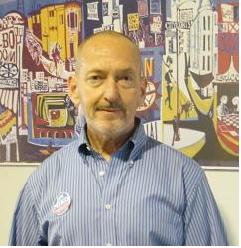
Endorsement interview: Jim Meko

5

Editors note: The Guardian is interviewing candidates for the fall elections, and to give everyone the broadest possible understanding of the issues and our endorsement process, we’re posting the sound files of all the interviews on the politics blog. Our endorsements will be coming out Oct. 6th.

Jim Meko’s been part of western SOMA for decades. He founded the SOMA Leadership Council, played a key role in Western SOMA planning, helped create the Entertainment Commission and now sits on that panel. He probably knows the details of land-use policy better than half the professional planners in the city and has all sorts of ideas about using zoning and traffic engineering to improve the neighborhood (two-way traffic on Folsom, for example). He’s pushing to be sure that market-rate housing development not skew the existing ration of affordable to expensive housing. He’s a small business owner and a supporter of the entertainment industry.

He’s got a bit of a fiscal conservative side, too: He told us he supports Jeff Adachi’s pension-reform measure and wants to get rid of many of the set-asides in the city budget. You can listen to his views here:


jimmeko by janwend

Apathy and the arboretum

5

OPINION Nobody believed it could happen, that the ordinance might pass. On the face of it, it seemed inconceivable. The very idea that visitors would have to pay to enter a public park appeared absurd, and had been rejected only the year before. Some believed the hype and were convinced that this would help solve the budget deficit. Others expected someone besides themselves would take action, or believed that that the $7 fee, once imposed, would apply only to nonresidents.

So, by and large, people sat on their hands. Meanwhile, the San Francisco Botanical Garden Society at Strybing Arboretum, the driving force behind the privatization of the arboretum in Golden Gate Park, was using the camouflage of hard times to mask the absurdity of its proposal. The way had been carefully paved. A real estate developer and Bolinas resident handpicked by Mayor Gavin Newsom to head the Recreation and Park Commission voiced his enthusiasm. The rubber-stamp commission he heads passed it on to the Board of Supervisors. Despite the presence of his grandfather’s native plant garden within the arboretum, the mayor lent his support.

The society had craftily employed lobbyist Sam Lauter, who had set up meetings between individual supervisors and wealthy trustees.

The strategy succeeded. Astonishingly, only three supervisors voted against the ordinance imposing a fee on entrance to the arboretum. Leading the charge for the measure was John Avalos, who had added a “sunset” clause along with other vaguely worded amendments. At the hearing, the ever-congenial Chris Daly accused opponents of “elitism.” No public comment was permitted, and no supervisor questioned Recreation and Parks Department head Phil Ginsberg, although Eric Mar did announce his intention to join the Botanical Garden Society.

Much was made about union jobs — as though holding three gardeners’ salaries hostage to the passing of a privatization ordinance was a reasonable proposition.

As things stand now, the society is planning to allow its members free admission to the arboretum. Given that the reason for the $7 fee is all about the budget, this makes no logical sense. Low-income people and the undocumented (not to mention the homeless) will be excluded.

The society is also planning to build a $13 million glorified greenhouse that would have its own entrance on John F. Kennedy Drive. No community discussion has been held, but that has not deterred the society from soliciting the state to pay $7 million toward this so-called “sustainable gardening center,” an edifice that would likely memorialize the likes of Dede Wilsey or similar donor.

So what’s a good citizen to do? If you value public free space, the wings of the society need to be clipped. The best way to do this is to directly contact the offices of your supervisors, especially Sups. John Avalos (554-6975), David Campos (554-5144), David Chiu (554-7450),Michela Alioto-Pier (554-7752), Sean Elsbernd (554-6516) and Carmen Chu (554-7460). And vociferously voice your feelings.

Otherwise, the fee will not sunset next year — or any year.

Harry S. Pariser is a long-term resident of the Inner Sunset. You can join the Yahoo! group at groups.yahoo.com/group/keepthearboretumfree.

Bay Bridge tolls a boost for congestion pricing?

5


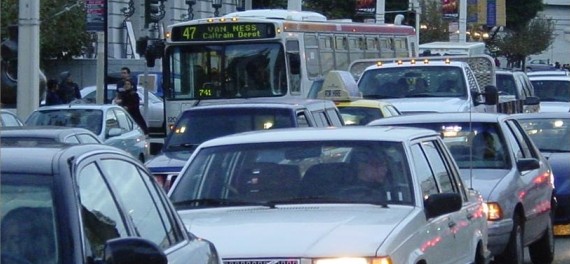
San Francisco officials are watching closely to see if higher tolls on the Bay Bridge might help the city make the case for charging fees to drive into downtown in high-traffice periods — and so far, the evidence is promising.


Since tolls increased July 1, an additional 4,000 commuters turning to BART — and that means fewer cars on the bridge.
The Bay Area Toll Authority elevated fees during the hours of 5 am to 10 am and 3 pm until 7 pm for crossing all bridges except the Golden Gate, which is managed by a different agency.


Drivers crossing the Bay Bridge during weekday commute hours are now expected to pay $6. During other hours, the weekday toll remains at $4. The toll is $5 on both Saturday and Sunday.


The toll has also been bumped up to $5 on the Antioch, Carquinez, Dumbarton, San Mateo, Benicia-Martinez and Richmond bridges. Although previously exempt from charges, occupants in the carpool lane now pay $2.50.
These increased costs may have prompted discontented commuters to add to the approximately 335,000 individuals that use BART each day, spokesman Jim Allison said.


“We have seen 2,000 to 4,000 more people riding BART on an average weekday this month compared with last,” he said.
Allison was careful to note that because of the brief time element and other seasonal changes, it is hard to determine higher tolls as the only reason for a boost in ridership.


“It is just too soon to draw any conclusions,” he said. “While it may be a factor, the increase cannot necessarily be attributed to the changes on the Bay Bridge.”


However, executives from the San Francisco County Transportation Authority planning to bring a citywide congestion pricing plan before the Board of Supervisors this fall were encouraged by the trend toward public transit.
“We do think that it is too early to draw any conclusions,” SFCTA deputy director for planning Tilly Chang said. “But the general indication is that people are shifting their behavior in some way, which is the goal of congestion pricing.”
The toll hikes mark the Bay Area’s first quasi-attempt at congestion pricing, with officials hoping to encourage the use of public transportation while simultaneously decreasing travel time for those who choose to stay in the driver’s seat.
According to a preliminary study on the compounded tolls, there were more than 12,000 fewer carpoolers and 2,300 more drivers paying the full fare on their commutes.


Spokesman John Goodwin said that the increase in solo drivers could be due to the new system’s ability to weed out cheaters, with FasTrak identification and a guaranteed minimum toll putting a damper on disobedience.
“It may very well be that we didn’t have as many real carpoolers as we thought we did,” Goodwin said. “There is, of course, no way of quantifying exactly how many drivers who didn’t meet the occupancy requirement are now recalibrating

Community Congress convened

1

news@sfbg.com

About 60 San Francisco citizens voted just before 1 p.m. on Aug. 15 to adopt a progressive platform of approximately 100 policy recommendations they hope will define the agenda of candidates and elected officials in coming years and offer a contrasting vision for the city to that of downtown corporate interests.

Sunday’s culmination of the 2010 Community Congress represented almost a year’s work by some 400 San Franciscans and dozens of community-based organizations, according to the Congress’ draft recommendations. The congress convened all day Aug. 14, at the University of San Francisco’s Fromm Hall, where participants engaged in breakout groups aimed at addressing four distinct local policy categories: health and human services; Muni and public transportation; affordable housing and tenant rights; and community-based economic development.

Recommendations in the four areas were drafted prior to the congress and published by the Guardian (see “Reinvention of San Francisco,” Aug. 4 and “Ideas that work: a plan for a new San Francisco,” Aug. 11), but planning group coordinator Calvin Welch said between a one-quarter and one-third were rewritten and amended during the breakout sessions on Saturday and by the congress as a whole on Sunday. Representatives from the breakout groups are working to finalize all the last-minute amendments and hope to post a final document by on the congress’ website (www.sfcommunitycongress.wordpress.com) by Aug. 20.

“This is a group of left-progressive people trying to articulate a left-progressive view for the city that is distinct from the cynicism of the [San Francisco] Chronicle and [Mayor] Gavin Newsom’s message,” Welch told the Guardian after the vote.

Gail Gilman facilitated the final adoption session on Aug. 15, passing a microphone to those who wished to speak or propose amendments while pushing the group to stick to the schedule. “I think we produced a solid progressive platform that will gain traction in the upcoming supervisors race,” Gilman told the Guardian outside the congress. “We’re hoping to have actionable items implemented over the next five years.”

Some of the congress’ ambitious agenda had to be put on hold, either because consensus couldn’t be reached or groups simply ran out of time. The Muni group’s recommendation to delay the Central Subway Project and use those funds to address “Muni’s backlog of operating, maintenance, and capital improvement needs” was tabled, as was decentralizing control of expenditures in health and human services out of the mayor’s hands. However, several agencies that the congress hopes to create, including a “canopy” entity to manage San Francisco’s public health system, would have direct budgetary control over city departments.

Health and human services group coleader and Bayview-Hunters Point Foundation Executive Director Jacob Moody told the crowd about a question posed early in the congress that informed his group’s recommendations: How do we create a city where people can live, work, and prosper together?

Welch admitted that some of policy recommendations would be difficult to realize and would draw the ire of powerful political groups in San Francisco, but he insisted that creating a municipal bank, an economic redevelopment agency, and a health and human services planning agency, and implementing several of the Muni group’s recommendations, were actionable in the short term.

“Some others would need to wait until the election of a new mayor,” Welch said. “I hope we can get some mayoral candidates to endorse some of these proposals.”

Sunnydale/southeast neighborhood community organizer Sharen Hewitt said that although there were often disagreements at the congress, the most important aspect of the event to her was that everyone learned from the perspectives of others.

“Tension is not always bad,” Hewitt told the Guardian at the event. “Everybody came here with biases and interests. Everybody needs to leave here with more. I’m damn near 60 years old and I grew half an inch today.”

Sunday’s congress and policy platform were modeled after San Francisco’s first Community Congress, which took place in 1975. But Welch told us this congress was entirely new. “To the extent that there is a historical aspect, 35 years ago we tried to figure out a way to bring people together. And 35 years later, young people want to do the same thing.”

“Diamond” Dave Whittaker, a modern Emperor Norton-esque San Francisco personality, closed the congress with a poem. “The basis of real social change is happening here,” he said. “And we need to continue casting a wider net, finding the thread, and letting it flourish.”

Alerts

0

alert@sfbg.com

THURSDAY, AUG. 19


Celebrating Young Activists

Mingle with environmental activists and community group members of all ages at the networking event Celebrating Young Activists: Building a Green Movement and Changing the World. The event features talks by inspirational young leaders, winners of the Brower Youth Awards, environmental and social justice organization information tables, and live jazz.

6:30 p.m., $10–$20

Richard and Rhoda Goldman Theater

David Brower Center

2150 Allston, Berk.

(510) 859-9100

SATURDAY, AUG. 21


Shoot Hoops, Not Guns

Commemorate the 25th birthday of Elliot Jemar Noble, who was killed by an Oakland police officer in 2005, at this combination march, basketball tournament, and gospel concert. The event is a benefit for the Elliot J. Noble Multiservice Family Organization, a nonprofit that provides support for families affected by violence. The parade begins at 10 a.m. at Eldridge and Darien streets, progresses to a 1 p.m. basketball tournament where players assume the names of slain or incarcerated loved ones, and ends with a gospel concert at 6 p.m.

10 a.m., $5–$10 for the concert

Ira Jinkins Recreation Center

9175 Ededs, Oakl.

(510) 895-5234

SUNDAY, AUG. 22


Tour Alameda Naval Air Station

Find out more about Alameda’s Naval Air Station, which closed in 1997 and remains the subject of much controversy and public debate over what to do with this prime piece of real estate. This guided tour combines a two-hour bus tour followed by a self-guided walking tour of the businesses engaged in adaptive reuse of the buildings. Reservations required.

1 p.m., 3 p.m.; $10

Meet in front of Alameda Naval Air Museum

2151 Ferry Point Road, Alameda

(510) 479-6489


Mobilization for Climate Justice

Get involved in the effort to stand up to big oil companies by attending this public action planning meeting for an Aug. 30 march and protest on the five-year anniversary of Hurricane Katrina. The protests will target the offices of BP and Chevron for their roles in environmental and community destruction in the gulf, the Bay Area, and around the world.

Noon, free

Mission Cultural Center

2868 Mission, SF

www.actforclimatejustice.org/west


Nuevos Horizontes

Attend a benefit dinner and show for Nuevos Horizontes, a domestic violence shelter in Guatemala that provides long-term housing, psychological counseling, legal advice, job training, and health care for women and children. There will be vegan and vegetarian options for dinner, bands, and speakers.

6 p.m., $8–$10

Call (510) 878-8879 or e-mail bigcavecomix@live.com for Oakland location

www.ahnh.org


Street Food Conference

Following the San Francisco Street Food Fest, attend this conference dedicated to the exploration of food, policy and economics. Participants will engage in discussions about the creation of viable economic models that allow small-scale food entrepreneurs to bring the foods they love to the cities in which they live.

Sat. Noon-5pm, Sun. 9 a.m.–3:30 p.m., $20–$50

Hotel Vitale

8 Mission, SF

sfstreetfoodconference.eventbrite.com

Mail items for Alerts to the Guardian Building, 135 Mississippi St., SF, CA 94107; fax to (415) 437-3658; or e-mail alert@sfbg.com. Please include a contact telephone number. Items must be received at least one week prior to the publication date.


Former employees saw problems coming at Planned Parenthood Golden Gate

This week’s announcement that Planned Parenthood Federation of America (PPFA) was severing ties with Planned Parenthood Golden Gate (PPGG) came as no surprise to some former employees, who have for months been trying to sound the alarm that the chapter was being mismanaged, had major financial problems, and was in a steep decline that could threaten important reproductive care services that low-income women rely on.

A former PPGG employee with knowledge of the organization’s internal affairs described a longstanding pattern of financial mismanagement when former president and CEO Dian Harrison was at the helm. There was widespread concern about spending on expensive marketing campaigns and lavish functions, the person said, and a high level of employee turnover and discontent.

Warning signs of financial difficulties surfaced at least a year ago. Dan Cohen, a spokesperson of the Packard Foundation — a major donor to PPGG — told the Guardian that Packard awarded PPGG a 12-month, $30,000 “organizational effectiveness” grant, which will expire in September. The grant “allows an organization to select a talented, external provider to help them think through some of these challenges,” Cohen explained. The Packard Foundation also awarded a 3-year grant for general operating support for $800,000, which will also expire next month.

Another former employee told the Guardian that she would love to discuss internal problems, but was made to sign a confidentiality agreement upon leaving the organization.

Therese Wilson, executive vice president of Planned Parenthood Golden Gate — who took over PPGG when Harrison left last year on medical leave — did not return repeated calls seeking comment.

An internal PPGG document provided to the Guardian displays the agency’s on-hand cash reserves as compared with other affiliates, suggesting that the reserve ratios were at or below the minimum required by the national Planned Parenthood federation for all but one year from 1998 to 2007 — and well below that of other affiliates of similar size. That is a key requirement for meeting accreditation standards.

When we asked Elizabeth Toledo, a PPFA representative, about this apparent pattern she said she could not comment because she had not seen the documents. She also said the accreditation reviews were confidential. “Understanding the true financial picture for health care providers takes a very in-depth evaluation,” Toledo said. “PPFA and PPGG were working together over the last few years to resolve fiscal challenges.”

Despite delays at the state level in awarding nonprofit funding and the loss of support from the national organization, Toledo and a union representative for PPGG employees both said they believe the clinics will continue serving patients under a different name.

“They plan to stay open, and employees are planning to stay,” said SEIU Local 1021 representative Sarah Sherpun-Zimmer, who has been a union rep for PPGG employees for the last two years. “Folks are really happy working there and they feel like it’s going in a good direction.”

PPGG operated eight clinics, which will lose their Planned Parenthood accreditation Sept. 3, effectively severing their ties to a trusted entity that thousands of low-income women rely upon for birth control, abortion procedures, and other forms of reproductive health care. PPGG operates clinics in San Francisco, Alameda, San Mateo, Sonoma, Marin, and Mendocino counties, serving about 55,000 women per year.

Roughly 92 percent of the clients they serve live at or below the federal poverty line, according to PPGG’s 2008 annual report.

Planned Parenthood affiliates Mar Monte and Shasta Diablo are in the process of hatching plans for taking over some of the eight affected clinics or otherwise growing their own operations to cover any gaps in service area, according to Toledo. She said neighboring affiliates are in a position financially to be able to cover a wider territory and added that they have been in “expansion mode,” adding new clinics over the past couple years.

“It’s unusual to have a disaffiliation,” she said. “But it’s not unusual for national committees to have a reallocation of service area. That part is well-practiced.” Toledo added that “Every effort possible will be made” to ensure continuity of care.

Nima Maghame contributed to this report.

Psychic Dream Astrology

0

Aug. 11-17

ARIES

March 21-April 19

Regardless of how you feel about planning for your future, this week will provide inspirations you should invest in. Plant seeds in this metaphorical spring that will yield for you in the next three to six months.

TAURUS

April 20-May 20

"You can catch more flies with honey than vinegar" is an old-school way of saying that you should play nice and make inroads with others instead of stubbornly enforcing your influence. Win others over to your team with kindness.

GEMINI

May 21-June 21

Endings are the crappy side of beginnings; something always starts when something else begins. This week, look for openings where you feel distress. You are being called on to develop more internal balance and poise, Twin Star.

CANCER

June 22-July 22

You are grappling with so many unknowns that it’s hard to make a firm decision. But decisiveness is exactly what you need. Don’t let fears of what might happen rule you — invest in what you’re willing to make happen!

LEO

July 23-Aug. 22

Racing thoughts plus a grumpy and overactive imagination are all you need to make matters worse, Sunshine. Stop projecting into the future! Sprinkle your achy heart with TLC before you try to figure things out.

VIRGO

Aug. 23-Sept. 22

This is the time to accept your situation so you can move on to the next steps. Soon you’ll have the opportunity to make improvements, but first things first! Strive to see the present clearly.

LIBRA

Sept. 23-Oct. 22

Immersing yourself in relationships is hecka different from investing in them. Watch out for anxiety and bad mental mojo when you lose track of your independence! This week is a great time to pursue your autonomy.

SCORPIO

Oct. 23-Nov. 21

So many problems arise from not being direct about your limits, Scorpio. Don’t be a sledgehammer — be Paula Abdul back in the day and "straight-up now tell" your peeps what you will and won’t do.

SAGITTARIUS

Nov. 22-Dec. 21

Emo appeals don’t always get a person far, but this week you should put yourself out there, heart first. Share your feelings honestly, even if that means saying, "I don’t know what I feel." It will pave the way for future success.

CAPRICORN

Dec. 22-Jan. 19

Maintaining balance requires small but constant change. Hold too fixed and you’ll break. This week practice being present, steady, and flexible. You are poised for good things coming your way. Make sure you’re open to them!

AQUARIUS

Jan. 20-Feb. 18

No matter your fears, Aquarius, now is the time to let go of old crap and make major changes. Whether you need to edit your insides or your actions, forge foundations that you can grow into gracefully.

PISCES

Feb. 19-March 20

The best way to get ahead this week is to have balance between self-preservation and collaboration. You are moving on and that may entail a passage through some rocky roads. Make allies to help you on your way.

Jessica Lanyadoo has been a psychic dreamer for 16 years. Check out her website at www.lovelanyadoo.com or contact her for an astrology or intuitive reading at (415) 336-8354 or dreamyastrology@gmail.com.

D. 10 candidates split on Lennar’s plan

3

One of the key questions at the Potrero Hill Democratic Club’s forum for D. 10 candidates revolved around Lennar’s Candlestick Point-Hunter’s Point Shipyard redevelopment plan.

The current Board of Supervisors recently approved Lennar’s plan by a 10-1 vote (D.6 Sup. Chris Daly dissented). Following that vote, Mayor Gavin Newsom rushed to sign twelve pieces of legislation that approve and enable what could shape up to be the largest redevelopment project in San Francisco´s history.

“Today is a historic day for San Francisco and a testament to so many who have worked for more than a decade to secure this critical engine for our City´s economic future,” Newsom said in a press statement, after he signed off on the Lennar deal. “I want to thank Sup. Sophie Maxwell for spearheading this effort throughout her entire tenure on the Board of Supervisors and our State and Federal representatives including Speaker Pelosi and Senator Feinstein as we take a giant leap forward towards our shared vision of jobs, housing, and hope for the Bayview-Hunters Point community.”

But with Maxwell termed out in January, the successful candidate in the D. 10 race stands to inherit a plan that has been approved, but apparently isn’t funded yet. And by my accounting, the majority of the candidates who spoke at the D. 10 forum expressed reservations with Lennar’s proposal, with only a few firmly against it, and only a few firmly in favor of it. But read their comments, decide for yourself–and keep tracking this fascinating race!

 
Asked how she would have voted on Lennar’s plan, Lynette Sweet, who voted to make Lennar the shipyard’s master developer when she was a member of the Redevelopment Commission in 1999, said she would have approved it.
“I voted for it then, and I would have voted for it now,” Sweet said. “And I want to be the person who shepherds it through in the next eight years.” But Sweet also sought to reduce the many ongoing questions about the plan–including housing affordability levels, local job creation, air quality impacts, and the  Navy’s related shipyard clean-up–to one simplistic issue: the bridge over Yosemite Slough.

“There’s been a lot of controversy over a bridge,” Sweet said. “But we don’t give up on people for a bridge. We just can’t.”

Eric Smith said he was supportive of the plan and the community benefits agreement, but he voiced criticism of the project’s environmental Impact report (EIR).
“The project’s EIR wasn’t perfect,” Smith noted. “And I wasn’t a huge fan of the bridge, but I’ve walked around Alice Griffith [a dilapidated public housing project in the Bayview] and when you see folks with moldy pipes, broken ceilings, and rats, it moves you. So, I’m supportive of it, and I’m supportive of the community benefits agreement [that the SF Labor Council negotiated with Lennar] and the jobs it can bring.”

Nyese Joshua said she would have voted against the plan, starting years ago.
“I would have voted to stop that project in 2006, when the dust issue was going on,” Joshua said. “And it’s a misnomer to claim the Board voted 10-1 for Lennar,” Joshua contined, as she pointed out that five progressive supervisors on the Board voted against the bridge and for air quality analysis, greater affordability and greater workforce protections. But ultimately, this progressive core was unable to pass those amendments, because Sups. Maxwell, Bevan Dufty, Sean Elsbernd, Carmen Chu, Michela Alioto-Pier and Board President David Chiu did not support them.
“That 10-1 vote is being called a pyrrhic victory,” Joshua added.


Kristine Enea indicated that she would have voted yes, but with reservations.
“I would have consistently voted yes to amendments, but there was no comprehensive transportation analysis,” Enea said.
Enea, who has served on the now disbanded Navy’s Hunter’s Point Shipyard Restoration Advisory Board, noted that she is “intimately familiar with the technical data,” surrounding the Navy’s shipyard clean-up plans.
“And I live a stone’s throw from the shipyard, and I believe we are safe,” Enea added.
“There is hope soon to be a restored public process on the Navy’s clean up,” Enea continued, referring to the Navy’s 2009 decision to dissolve the RAB.“But we need to be very vigilant that cleanup of Parcel E2.”

Malia Cohen said she would have supported Lennar’s plan,
“Lennar has dominated the lion’s share of our conversations,” Cohen said, noting that there are a bunch of redevelopment projects in the southeast. “So, we can’t be singular in our vision of what we want our community to look like. We can’t let Lennar dominate. But I’d have supported the project because I believe what Lennar represents is an extraordinary opportunity for us to pick ourselves up, organize and collectively voice what we’d like our community to look like. It’s imperative that Lennar’s plan moves forward, but it has to be environmentally sound.”

Steve Moss said he probably would have voted for the project’s EIR, but voiced concern about the lack of affordability within the project’s 10,500 units of housing.
“But nothing is more toxic than the shipyard than the conversation about the shipyard,” Moss added, noting that the Navy and US EPA have collectively committed to spend millions and millions on shipyard cleanup, but the community doesn’t trust the process.
“So, what went wrong with the conversation in a community that is clearly wounded?” Moss said. “We need to start having honest conversations. And we’re programming a lot of housing [within the Lennar development,] but not enough jobs.”

Stephen Weber said he would have voted for it.
“ I believe that we need it, that we can’t wait any longer,” Weber said. “But it goes back to oversight. It’s the responsibility of the city to make sure the developer and everyone connected to the development is held accountable and is made to follow through on procedures, and make sure affordable housing is mixed into the plan. It has to be a neighborhood built on diversity.”

Isaac Bowers said he’d have been in favor of sending the plan back to Redevelopment to be amended.
“This is a very difficult decision,” Bowers observed. “We all know that the area has suffered from many decades of neglect. But when I looked closely at the plan’s environmental impact report and the process, I didn’t think the range of alternatives for the bridge were sufficient. The demands for [greater oversight] of the shipyard clean-up were legitimate. The analysis of how many jobs in research and development was insufficient. There was no analysis of displacement. There were inadequate levels of truly affordable housing. We need to look at real jobs when we look at development. And the Redevelopment Agency has to be put back under the control of the Board. It can’t be allowed to put out fake projects that don’t benefit the community.”

Diane Wesley Smith suggested she’d have voted no when she pointed to Lennar’s “trail of broken promises.”
“And talk about collusion,” Wesley Smith said. “ I understand this was a done deal, five years ago.”

Geoffrea Morris said she would have voted no.
“There was a lot of money, a lot of power pushing the shipyard project,” Morris said.
“If this happened in any other community [in the city], it wouldn’t have happened,” Morris continued. And they wouldn’t have got rid of the [Navy’s community-based] restoration advisory board,” Morris added.”But ours is a poor community of minority people and a majority are African Americans.”

Chris Jackson said he would have voted yes, but with amendments.
“I would have supported the plan, but with amendments to ensure the full clean-up of the shipyard to residential standards, and to work towards on agreement on the bridge,” Jackson said.
 “We are a better city than just saying no,” Jackson continued, as he outlined ways to ensure that local workers get decent paying jobs, the community gets an expanded health clinic, the city includes a cooperative housing and land trust element to provide affordable housing, and the city is required to provide a supplemental environmental impact report.

Tony Kelly said he would have voted no–and noted that he was the only candidate to publicly testify against the certification of project’s EIR.
“I was the only candidate to testify against the environmental impact report and in support of the appeal [that three separate groups brought after the Redevelopment and Planning Commissions voted to certify the city’s EIR for Lennar’s plan],” Kelly said.
‘Michael Cohen, the Mayor of San Francisco,” Kelly half-jokingly continued, “has said the project is not going to be started to be built for at least 4 to 5 years. So, how can the city say, you must support the plan now, when it’s not going to happen for a long time?”

Marlene Tran said she can’t support the plan until the shipyard’s cleaned up.
Tran explained that initially, when Arc Ecology’s Saul Bloom gave the community a presentation about the plan, she was intrigued.
“It seemed to bring a lot of promises, but then Bloom presented ten of the deficiencies with the plan,” Tran said, referring to heavy metals and other toxins on the shipyard.
“I will make sure they will do the clean-up first,” Tran said. “If we go for it, and then construction workers and residents, get sick…well, there’s no way I can condone the project, until it’s absolutely clean. And what if the developer goes bankrupt?”

Espanola Jackson gave folks a history lesson
“When I learned that the shipyard was a Superfund site was not until 1990, because we was illiterate about environmental justice in a black community,” Jackson recalled. “I thought environmental justice was white kids chasing whales. But then I went to Monterey and learned about restoration advisory boards [RABs].”

Noting that the local community got its own RAB in 1994, Jackson recalled how former Mayor Willie Brown appointed Lynette Sweet to the Redevelopment Commission, before the Commission voted 4-3 in 1999 to select Lennar as master developer for the shipyard.
“Willie Brown brought in Lynette Sweet to be the swing vote to bring Lennar into the community,” Jackson said.

DeWitt Lacy said he wouldn’t have supported the plan, as it was, and given the Board’s limited ability to amend it under the city charter.
“I’d have supported the plan, if I’d had the power to amend the project’s environmental impact report and get it done right,” Lacy explained.
Lacy faulted the plan for carving up a state park, building a bridge over an environmentally sensitive slough, and not doing enough to ensure local jobs or guarantee benefits.
“Folks didn’t believe it was important for black folks to have state park land, but it’s important for our kids to have this,” Lacy said. “The state has spent $5 million to rehabilitate Yosemite Slough… And a ‘good faith’ agreement [around local hiring quotas] doesn’t get it for me. We have to have absolute certainties to make sure our people get the benefits.”


You can watch video of both the D. 10 forums, which were moderated by Keith Goldstein, here. And stay tuned for coverage of the endorsements and financing behind each candidates’ campaign. D. 10 is already shaping up to be one of the most fascinating and pivotal races in the fall.


Gods of Distortion: The Interviews (Part One)

1

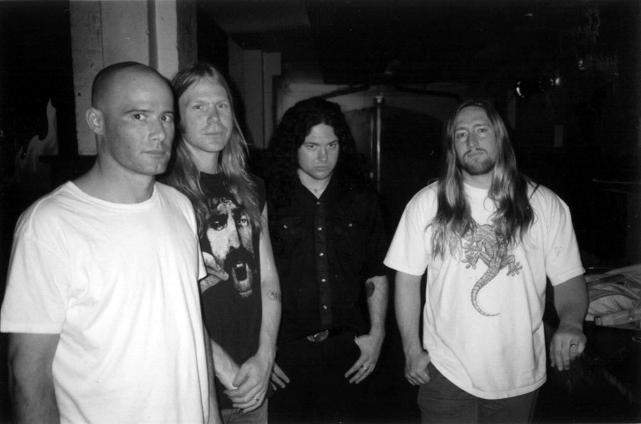
Check out Ben Richardson’s story on the Southern Lord Mini-Tour in this week’s Guardian. Here, he talks with Southern Lord founder and Goatsnake and SunnO))) guitarist Greg Anderson.

San Francisco Bay Guardian: So, first off, could you describe the planning of the Power of the Riff festival, and the Southern Lord Mini Tour that’s sort of spun off of that?

Greg Anderson: Well, last summer we did a Southern Lord event in Seattle with SunnO))), the other group that I play in. Basically it was two nights up there at this venue Neumo’s, and SunnO))) headlined each night, playing different sets each night. The support for both shows was Lord bands: we had Black Breath, Accused, Pelican, Earth, Trap Them. It was great! So the promoter of that venue – who put that on for us last year – called and asked if we wanted to do something similar this year – another Southern Lord event. So we were trying to put something together for that, and right around the same time, another good friend of mine told me that he’d been asked to put together something down here in Los Angeles, at the Echo and the Echoplex, and was I interested in getting involved in that. So with these things impending on the horizon, I thought I’d put together a decent line-up of Lord bands and make it happen.

Also, at the same time, I’d been talking with Mike Dean from C.O.C., who told me that they wanted to get out and play some shows with the three-piece line-up, the 80s Animosity line-up, and asked me if I was interested in working with them on that. So I thought I’d base it around them being the headliner and some of our bands on the bill as well. So that’s how it came together, and over the last couple months, I’ve been slowly putting together the pieces, getting other bands on board.

San Francisco just seemed like a natural choice, also, to do a show. San Francisco’s always been very supportive of Southern Lord and heavy music in general, so I thought “we’ve gotta do a show in San Francisco with this package – it’s gotta happen!”

SFBG: How long have you known Mike?

GA: He stayed at my house in 1986, when C.O.C. played in Seattle, actually, on the Animosity tour. It was an amazing show, and back then there were a lot of bands crashing on people’s floors. They still do, of course. I had a lot of bands stay at my house, and they were one of them. I met him then, but I didn’t reconnect with him as far as a working relationship goes until about 2003 – he was on the Probot record, as one of the vocalists on that, and I reconnected with him that way. A couple years later, he produced and recorded a record by this band on Southern Lord called Earthride.

It was kind of off and on. C.O.C.’s come to town, and I’ve talked to him and what-not. I have a lot of respect for his playing, over the years.

SFBG: Did the idea of playing the shows this summer precede the idea of releasing the seven-inch you guys are putting out, with the new track by that Animosity trio line-up?

GA: No, it all kinda came at the same time. I suggested it might be cool to have some new material, and he was really gung ho for doing that too, so we’re putting it together really for the shows that they’re playing – in time for the shows.

We thought it’d be cool. There are a lot of bands getting back together these days that rarely if ever have any new material, or really anything new. We had talked about that, and told me “hey, we’re actually playing a handful of new songs at these shows, so we’re really into writing new material.” So I said, “well, lets try to get something out there,” and that’s how the seven-inch happened.

SFBG: What’s your feeling on older, defunct, previously broken-up bands coming out of the woodwork? I saw an interesting comment of yours in another interview about the “Kyuss Syndrome,” in which a band isn’t a draw while they’re together, but if you give them some time, they build up this huge fanbase, whether or not they’re actually active and playing shows. What kind of ramifications do you see this trend having?

GA: First of all, I think it’s really great, actually. Some people kind of have a bitter attitude about it. They say “where were these people back in the day!” But the truth of the matter is that its really based around the internet, and the fact that information is so easily available, and cataloged and documented meticulously on the internet. You can find out a lot of stuff!

The other thing about the internet is that it’s like a trail, a path you can get on, on which you find one thing, and it leads to another thing, and it’s just a snowball effect. I think it’s just an amazing tool for discovery. It’s great, because there’s important music that’s been made, that before the internet, or without the internet, would have been much more difficult to learn about. Now, it’s easy, and I think people are getting turned on to all this stuff. The interest grows, and it makes it possible for these bands to come out and play to three to four times as many people as they did in their heyday.

It’s amazing! I’ve seen it in different genres. I saw At the Gates play in Los Angeles, and they sold out this huge place. I saw them in their first tour in the U.S., in the mid-nineties, and there were 50 people. It was the same thing with Saint Vitus. I saw them in the 80’s and it was a very select audience; very few people were there. Then, they come back, and they’re playing for three or four hundred people. I think it’s cool, I think it’s a real testament to the fact that this music is valid and incredible. It needs to be heard, and it needs to be given the respect that it’s due.

SFBG: Particularly in the case of At The Gates, there’s almost a sense of justice, in that a lot of people made a lot of money aping ATG when they weren’t around. Now they’re able to take advantage of a bunch of people who were introduced to the music through other bands that were playing an At the Gates style.

Do you think the proliferation of big summer metal festivals has had an effect on bands reforming? From what I can glean, that seemed to be an influence on Goatsnake getting back together, having this opportunity to play Roadburn, and you guys thinking “hey, why not?”

GA: I think there are two big factors: one – I won’t lie – the money is really attractive, especially when you get older, and you’ve got families, mortgages, etc. You can’t just crash on people’s couches – you’ve got responsibilities. When these festivals come along, or sponsorship from Scion or Converse comes along, it makes it so it can actually happen – the resources are there. And that’s something that wasn’t available – to my knowledge – in the 80s. These opportunities involving people with deep pockets who are willing to put it into underground music. It just didn’t exist. It definitely didn’t exist in the 80s and in the 90s, with the alternative music boom, stuff was available, but for underground metal and hardcore it wasn’t available.

Now, you’ve got these corporate sponsors who are putting together these insane events, and a lot of times – they’re free! Like the Power of the Riff fest that we’re putting on. We were able to get the funding to make it a free event. And at the request of the sponsor – they demanded that it be a free event – and we were like, “Wow! This is cool!” I think it’s an interesting time right now. There’s nothing like it. That wasn’t possible before. Like you’re saying with your question, it makes it so that these bands can get out there and do stuff. They have the resources to do that.

A lot of the bands I’ve seen are really kicking ass! I saw Saint Vitus a couple weeks ago, and it was mind-blowing – it was absolutely mind-blowing. They had it, man, they were killing. Eyehategod, same thing! These bands are charged! I saw Death Row play, which is like the original Pentagram – they were killer. It’s an interesting and cool time in music right now.

SFBG: Your bringing up Eyehategod and Death Row provides a good segue to my next question: does the doom metal genre have a particular affinity for a lot of interpollination between bands and musicians? For this kind of freewheeling collaboration, in which Goatsnake is tied into the Obsessed, and tied into SunnO))). I think of Eyehategod in the same way, with their connections to Down, and therefore C.O.C., and so forth. Do you think there’s something particular about doom-stoner metal that enables or inspires this kind of collaboration?

GA: I’ve never really thought about it before, to be honest with you. It’s just kind of a friendship or a brotherhood between the musicians, and kind of a desire to take things in different directions and do different things with it. You mentioned the Eyehategod thing, and that whole New Orleans scene is super, super-intertwined. Outlaw Order, Crowbar, Arson Anthem, and all these other bands that all share members. I think it’s really cool. Soilent Green. There’s tons of those bands, and I think it’s cool when bands can branch and do different side-projects. For me, as a fan, it’s interesting, and if you’re into the player or the players, and what they’re doing, it’s a real treat to have all these different outlets, rather than just doing one band, and one album a year.

I think it has to do with the punk rock roots that these people have and come from, and the DIY aesthetic of doing things on your own, and not really having to answer to a major label or someone telling you, “Well, you can’t do that, and you can only focus on this one band.” It’s kind of a shame, when you think about it. What if that spirit, and that mentality was happening with bands like Led Zeppelin and Sabbath? We’d have all these spin-offs and different projects that they were involved in, that were kind of pushing boundaries and doing different things. I think these [younger] people do what the hell they wanna do.

SFBG: Well you’re making my job easy, mentioning the punk rock ethos and the DIY ethos of these musicians, because my next question was about all the connections that exist between the 80s hardcore scene and the doom metal bands, and the doom bands that grow out of that scene and the musicians that play in hardcore bands and then do metal bands. I think I remember reading that you were a hardcore fan in your youth, and played in a more hardcore-oriented band. Do you have any insight into how those connections came to be? Stylistically, the types of music have some serious differences, and I know that at particular points in history, there was a lot of animosity between people who like their music fast and those who like it super-slow. Is there anything you can point to that speaks to the connection between those two worlds?

GA: I’m not sure I can explain or pinpoint why that’s a phenomenon, but you’re definitely right. What I was thinking when you were asking the question – I was thinking about Black Sabbath, because I think they’re one of those bands that everyone likes, and there are a couple hardcore bands like that too, like the Cro-Mags, and Bad Brains. Everyone can agree on those bands – at least a lot of people can.

I grew up in Seattle, and we didn’t get a chance to see a lot of outside, touring bands, because we were way up in the corner – we were sort of geographically isolated. There’s a lot of stuff that can happen because of that, and one result was the grunge explosion, where a strong local scene grew and was cultivated because there wasn’t a lot of outside influence. That also adds to how people got some of their open-mindedness. Grunge is a fusion of a bunch of different musical styles – punk included, metal included. What I thought was cool about Soundgarden, from the beginning, was that they sounded like a fusion of Zeppelin, Sabbath, and [Black] Flag. And the most important band in that scene growing up, at least for me, was the Melvins, who were the perfect combination of Black Sabbath and Black Flag. To have these prejudices against certain styles of music didn’t seem right to me, because there were all kinds of cool music happening around me. I know what you’re talking about – some of the punk rock attitude, and some of the metal attitude can be pretty narrow-minded at times. But at the time that I grew up in, the bands that I was heavily influenced by were available for me to see on a regular basis. That wasn’t the attitude, and it was obvious why it wasn’t the attitude.

I was turned onto metal first – Metallica, Motorhead, Raven, Slayer, Venom. Through those bands, and their attitude, and who they thanked on their records, and which T-shirts they wore, I got turned onto punk rock. And hardcore was a revelation because metal was played so fast and heavy, but then there were these hardcore bands that were playing even faster, like C.O.C. or D.R.I. The excitement involved in discovering new music has carried on throughout my entire life. And that was the start of it: being into metal, and then getting into hardcore.

SFBG: So the liner notes and sweaty T-shirts were like the internet of the 80s? Sticking with that theme of Seattle, and hardcore, and being psyched about discovering new music, can you talk to me about how you first came in contact with Black Breath, and the process of getting them on Southern Lord, and getting them on the tour this summer?

GA: It’s actually an interesting story! Over the last couple of years, especially playing with SunnO))), and working on this last record we were working on, I really turned away from, or wasn’t listening to much aggressive music. It was either experimental, or I was actually really into jazz music. It’s not like I was turning my back on heavy music, but my taste had just drifted a bit.

And then something snapped. I started listening to old hardcore records, like Jerry’s Kids, and Crucifix, which was sort of a reaction to where my mind was with the SunnO))) stuff. I wanted something that was the complete opposite of it. And so I was rediscovering stuff that I was listening to when I was younger, and I really got heavily into that. And I started searching about bands now that were happening, and I got turned onto His Hero is Gone, and a band called Cursed, and I was like “gosh, there’s actually some great music happening in the hardcore scene that I didn’t have any clue about!”

I got more into checking out the hardcore stuff that was happening over the last couple of years, and I got a record in the mail – a 12-inch, in the mail – by Black Breath. The font of their band logo was stolen from Celtic Frost, and they listed Poison Idea and Dismember as influences, and they were from Seattle, and I was like “Wow!” Because I actually get a lot of demo submissions, and most of it’s just CD-Rs, and honestly I just don’t have time to listen to ’em, but when we get a 12-inch we stop and think “that’s cool!”

SFBG: If I publish that information, you’re gonna get a lot more twelve-inches…

GA: [Laughs] If people are going to take the time to do that, it almost warrants me taking the time to listen to it. I think it’s a cool thing.

So I threw this record on, and I was totally blown away by the energy and intensity of it, and it so happened that this was close to a time that I was going back up to Seattle for Christmas. I ended up looking at the local paper to see what was going on around town, and they were playing one of the venues in Seattle. I went down to check it out, and their live show totally, totally blew me away. I hit ’em up after the show to see if they wanted to get a drink and talk about stuff, and it just kinda went from there.

SFBG: What was their reaction to that? It sounds sort of like the Miracle on 34th St. of metal…

GA: The funny thing is – and one of the things that really sold me on these guys – was that they were more impressed by the old hardcore band that I was in in Seattle – this band called Brotherhood, a hardcore band in the late 80’s. Being able to talk about that sold them on me. We bonded on a lot of different music. They’re really into the Swedish death metal of the 90s, which I’m really obsessed with as well.

Those guys actually turned me onto to a lot of other music as well. There’s this band that we just signed called Nails – they played a couple shows with Black Breath and I thought, “God, that’s great!”

SFBG: One last band-signing question. I noticed in another interview you did, you used a phrase “vigilantly heavy” to describe bands that you you appreciate. I can sort of figure out from context what you mean, but you applied it to Black Breath and I was hoping to get a more detailed description of how you’re using the word “vigilantly” in that way.

GA: I think it’s about being focused on what you’re doing. I notice a lot of intense focus from those guys on creating really amazing songs and riffs, especially. I’ve talked to them, and had in-depth conversations about that, and about how they write songs, and what they want. And they’re not just throwing the stuff together, and that’s pretty obvious. That’s one thing I’ve seen, with a lot of music these days. I won’t name any names, but there are more bands than ever, and more labels than ever – that’s kind of the curse of the internet, that there’s just too much music, too much information! It makes it more difficult to really find the good stuff. But I’m a seeker, man, and I enjoy that part of it, whether that’s going to a used record store and spending two hours flipping through all the used records, or really searching out music. When I find out about a band, I want to know everything about them – what other bands the members have been in, who’s influenced by them, who their influences were. That’s the same type of thing with Black Breath. They’re not just blowing stuff out there, and they’re really careful about what they do.

http://www.youtube.com/watch?v=HpOqsSV_S7c&feature=related

SFBG: To switch gears to a couple of Goatsnake questions to wrap up: do you remember the moment you first heard a Sunn amplifier?

GA: I do. I have two different recollections. One is Buzz Osbourne [of the Melvins], using the solid-state versions of the Sunn amps. I actually had no idea that Sunn had made a tube amp. I thought they were all about solid-state. In a lot of ways, to use a geek analogy, they were kind of the Peavey of the Northwest. They were based in central Oregon, in a town called Tualatin, and their whole thing, at least how I saw it, was that they were creating solid state amps and putting them out there at a reasonable price, for people who were getting into music. It was a good and cost-effective alternative to a Marshall, like a high-end model. Peavey was the same way – an inexpensive amplifier, usually solid-state, for people who were just learning to play guitar. Now, playing guitar is just so accepted and so huge that every company has a line of amps now that is targeted to this audience.

So this to me was what Sunn was about, and back in those days, you could go to any fucking pawn shop or any used store and get a Sunn head for really cheap! Especially pawn shops. That’s why bands like the Melvins picked up on them – because they were readily available.

The first time I heard the Model T, which is the amp I use in SunnO))), was actually in the mid-90’s. I was seeing this band in Olympia called Life, and the guitar player was this dude – actually a San Francisco dude, now – Tim Green, who went on to be in the [Fucking] Champs, and records bands now in San Francisco. And he played in this band that was amazing. Pretty Eyehategod-influenced. I went and saw him play in this basement, and he had this Sunn head, a tube amp, and I was like “what the hell is that!” It was super-loud, ripping, super-heavy, and immediately after I saw that, I searched one out – I had to have that amp. That was the beginning. I had never seen anyone play Sunn tube heads. I didn’t know they existed! And of course, after my search, I realized that they made a lot of them. But they stopped making them around the mid-70s, and that’s when they started making the solid-states, as a more reasonably-priced option.

SFBG: Do you remember the specific influences that were working on you around the time that Goatsnake was created?

GA: I moved to Los Angeles from Seattle in the mid-90s, and I had played in this band in Seattle called Engine Kid that was more – it was more about melody and dynamics, and we were really influenced by a lot of the stuff that was happening in Chicago, the Touch and Go style of bands like Shellac and Slint and Bastro and those kinda bands. But we were always into the heavy stuff too, and the Melvins, so there was that kinda influence.

When I moved to L.A., I had a chance to jam with the rhythm section from the Obsessed, because [Scott] Wino [Weinrich, singer-guitarist in the Obsessed] had just basically left town, and he was the leader of the band, and the band ended. They were just looking to do something new, and a friend of mine knew them and knew that I was looking to do something new too, so we put it together, under the guise of creating a heavy band, but with no guidelines.

At that point, I was listening to a ton of Eyehategod and a lot of Kyuss, and Slayer. Our common interests in that band – the bass player, drummer and I – were Pentagram, St. Vitus, and Trouble. That type of stuff. Basically, I started bringing them some music that I had written, and it was really heavy.

But we didn’t have a vocalist. And we thought, “how are we gonna do this?” We thought it would be too obvious to get a screamer, in the Eyehategod style. I really like that kind of music, but we wanted to go somewhere different, and to have some bit of melody in there. Pete Stahl was an old friend of all of ours, and we played him some of the demos, and he said “this is great, I think I could really do something with this.” It was a perfect combination, because the music’s really heavy, and I think you really expect someone to come screaming over it, but the vocals are really soulful, and really melodic. It was a really interesting contrast, and it set it apart from a lot of the other stuff coming out at that time.

SFBG: Was the harmonica Pete’s idea? That’s one of the things that put the music’s uniqueness over the top for me, is that it has this element that no other band takes advantage of.

GA: He’s a great harp player, too! When he first started doing it, I thought, “this reminds me of the first Sabbath record,” of “Wizard.” One thing I didn’t mention when you asked about the influences – at that point, I was overly super-obsessed with Sabbath. They’re my favorite band of all time, but at that time especially, I wanted to tap into something that had that sort of vibe. A lot of the music that was written for Goatsnake — all the time, but especially back then – was just sort of re-working Sabbath riffs. Turning them around, and playing them with much more distortion and tuned down a little bit more. Sabbath has always been, and always will be the most important inspiration for me. Also Sabbath, in my eyes, were basically just a heavy blues band. People ask me “Is Goatsnake stoner rock?” and I say, “No, it’s blues played slower, down-tuned and played a little heavier than you might have been used to hearing.”

SFBG: Can Goatsnake fans expect sort of a retrospective set? Is it gonna match up pretty closely with what you guys played at Roadburn?

GA: Yeah, it’s pretty much the same material that we’ve been working on. The big difference is that on Roadburn, we were playing with the original bass player for Goatsnake, Guy [Pinhas], who was in The Obsessed, and Acid King after that. But he lives in Europe, and he’s not able to come out for these other shows, so we’re going to be playing with Scott Reeder, who was in Kyuss, and who was actually in the Obsessed also – Guy took Scott’s place in the Obsessed. It’s amazing, because he’s actually played with Goatsnake before. He played on the last EP that we released, as well.

His playing is very different than Guy’s, and we’re going to attempt one song off the EP that we did with Scott. So we’re working on that, and he’s fitting in well with the other material. Actually, the last time Goatsnake played San Francisco was with Scott, in 2004. We played another Southern Lord showcase [at the Elbo Room].

SFBG: Is there a future plan for other Goatsnake shows down the road? I know you’re super-busy with your other band and, of course, your label, but I’m assuming that the people who read this interview will be dying to hear whether there’s a chance of a more extensive tour, or some new recordings.

GA: There definitely won’t be any extensive touring. Given all of our schedules, that’s just not possible. To be honest with you, I don’t think it’s an appropriate thing for this band to do. We’ve sort of made the decision, “We’re all having a good time, but let’s keep this special. Let’s do special events, and not beat it into the ground.” I think it’ll be every once in a while. We have actually already committed to doing one other show at the end of October, here in Los Angeles. Friends of ours and labelmates Pelican are doing their tenth anniversary show, and they asked us to play that show with them. That band Nails that I mentioned are going to open.

Other than that, we’ve gotten a lot of offers, and a lot of interesting ones, which have been really flattering. But we’re taking the mellow approach to it. Definitely not a “get in the van” kind of approach.

But I would love to make some more music with these guys. It’s just a matter of scheduling, and seeing what that’s about. That’s definitely something that I’m hoping for, but we’ll see. I don’t want to push anything. If it happens, it happens, and I’ll be stoked, but if it doesn’t, so be it.

THE SOUTHERN LORD WEST COAST MINI TOUR

Corrosion of Conformity, Goatsnake, Black Breath, Eagle Twin, Righteous Fool

7 p.m., $25

DNA Lounge

375 11th St., SF

www.dnalounge.com

The deal is done

1

Mayor Gavin Newsom was quick to frame the Board of Supervisors’ 10-1 vote for Lennar Corp.’s massive redevelopment proposal for Candlestick Point-Hunters Point Shipyard on July 27 as a sign that plans to revitalize the Bayview are about to begin.

“Now we can truly begin the work of transforming an environmental blight into a new center of thousands of permanent and construction jobs, green technology investment, affordable housing, and parks for our city,” Newsom claimed in a prepared statement after the board (with Sup. Chris Daly as the lone dissenter) approved Lennar’s 700-acre project.

The proposal calls for 10,500 residential units; 320 acres of parks, retail and entertainment facilities, green-tech office space; and a San Francisco 49ers stadium if the team decides not to move to Santa Clara.

But Kofi Bonner, who worked for Mayor Willie Brown before becoming Lennar’s top Bay Area executive in 2006, said the vote means he can start shopping the plan around. “Now we have to find some money to move forward with the project,” Bonner told the San Francisco Chronicle.

Given the stubbornness of the recession, Bonner’s revelation that Lennar has yet to find all the necessary investors means local workers and public housing residents could be waiting a long time for jobs and housing in Bayview. If and when the project finally breaks ground, it will involve building condos in the Bayview’s only major park.

These realities undermine the claims of Lennar, which used the mantra of “jobs, housing, and parks” in 2008 to sell Proposition G but made no mention of a bridge over environmentally sensitive Yosemite Slough or selling state parkland for condos.

Also disturbing, says Sierra Club local representative Arthur Feinstein, is the lack of any economic analysis to support Lennar’s claims that the bridge is needed.

Indeed, the only thing clear to longtime observers of the plan is that the much vaunted jobs won’t happen soon, most of the housing will be unaffordable to current Bayview residents, and Candlestick Point State Recreation Area, the only major open space in the Bayview, will be carved up so Lennar can build luxury condos on waterfront land.

These concerns have led the Sierra Club to threaten a lawsuit over issues on which Board President David Chiu was the swing vote in favor of the Lennar and Redevelopment Agency plan. Yet Chiu told the Guardian that the process got him thinking that it might be time to reform the redevelopment process.

“Now might be a good time to address concerns about the potential for inconsistency between Redevelopment and the city when it comes to land use and planning visions,” Chiu said. “And I have concerns about the tax increment financing process.” Tax increment financing allows the Redevelopment Agency to keep all property tax increases from the project, up to $4 billion, to use in redevelopment projects rather than into city coffers.

Chiu says the amendment he offered July 12, which narrows Lennar’s proposed bridge over Yosemite Slough by half, was based “on the belief that having a connection between jobs and housing is important. And I had understood that it would cost the developer an additional $100 million if the bridge was removed.”

But Feinstein counters that it’s hard to imagine that building a bridge over an environmentally sensitive slough will attract investors that support green technology. He is concerned that the development is expected to attract 24,465 new residents but that the Lennar plan fails to mitigate for transit-related impacts on air quality. “The Bayview already has the highest rates of asthma and cancer in the city,” Feinstein said.

Chiu says the supervisors can introduce separate legislation to address this concern. “It’s my understanding that an air quality analysis could be implemented by the board,” he said.

Although the board’s July 27 vote was a relief for termed-out Sup. Sophie Maxwell, its failure to support the no-bridge alternative, increased affordability standards, and an air quality analysis could result in expensive and time-consuming litigation, Feinstein warns.

And although Sups. Chris Daly, Ross Mirkarimi, David Campos, John Avalos, and Eric Mar supported all three of these amendments, they were ultimately thwarted by a redevelopment law that limits the city’s control of such projects.

During the meeting, Daly acknowledged that it would be impossible for Lennar to meet his 50 percent affordability amendment. But he noted that if the project becomes too expensive “there’s going to be a pretty new neighborhood with lots of white folks living in the Bayview.”

But after Michael Cohen, Newsom’s top economic advisor, said the project would not be financially viable with 50 percent affordability, Sups. Chiu, Maxwell, Bevan Dufty, Michela Alioto-Pier, Carmen Chu, and Sean Elsbernd voted against Daly’s amendment.

These same six supervisors voted against Mirkarimi’s proposal to eliminate plans for a bridge across Yosemite Slough, even though Cohen was unable to point to any economic analysis to support Lennar’s claims that the bridge is necessary.

Arc Ecology owner Saul Bloom, whose nonprofit did studies indicating that an alternative route wrapping around the slough is feasible, says Lennar’s plan illustrates the problem that San Francisco has with development. “Elected officials couldn’t do anything,” he said, except give the nod to a plan he describes as “developed by a mayoral administration and approved by that mayor’s political appointees [on the Redevelopment Agency board],” Bloom said.

“The message that the environmental community takes away from all this is that it doesn’t pay to play well,” Bloom continued. “No matter how much you spend to try and ensure that litigation is not the only way to obtain the desired outcome, ultimately the message that comes back from the city and the developer is ‘sue us!’ That brings out the worst political conduct, not the most appropriate.”

Feinstein wouldn’t confirm that a Sierra Club lawsuit is imminent, but predicted that if the coalition — which includes Golden Gate Audubon, the California Native Plant Society, and SF Tomorrow — goes to court, it’s likely to win. “If we do litigate, we’ll probably do it on a wide range of issues,” Feinstein said. “They approved a fatally flawed document, and they could provide no documented evidence of the need for a bridge — and admitted that publicly.”

Feinstein contends that Lennar’s plan has been a runaway project from the get-go. “The idea was to march it through before the mayor is gone with little regard for process. And despite all the much vaunted public meetings, little in the plan has changed,” he said.

Feinstein added that he was disappointed in Chiu’s stance on the bridge. “There were five supervisors in the Newsom camp, but as board President, Chiu had a responsibility to be more vigilant,” he said. “We told him what’s wrong with the bridge plan, but he didn’t share our view.”

“This is a rare opportunity,” Maxwell said before the board’s final vote. “It focuses public and private investment into an area that has lacked it in the past. It’s unmatched by any development project in San Francisco. This project is large and complicated, no doubt. But let us not be fearful of this project because of its scale, because how else can we transform a neglected landscape?”

But project opponents say everyone should fear a deal that required the board to ask Lennar’s approval to amend a plan that was pitched by the Newsom administration and approved by a bunch of mayoral appointees on the Redevelopment Commission with little chance for elected officials to make changes.

Mirkarimi said the problem with a process in which redevelopment law trumps municipal law is that it creates a shadow government in those few municipalities in California where the Board of Supervisors or City Council is not the same entity as the Redevelopment Commission.

“This is not the first time Redevelopment’s plans have trumped the concerns of local residents,” Mirkarimi said, referring to the agency’s botched handling of the Fillmore District in the 1960s, which led to massive displacement of African and Japanese Americans.

“I’ve been told, ‘Don’t worry, Ross, this is not going to happen, we’re not going to use eminent domain.’ Well, jeez, that’s a consolation, because even when we’ve exercised our legislative influence and given our blessing, [Redevelopment] unilaterally changed the plan after it left the board,” Mirkarimi said, referring to Lennar’s decision to replace rental units with for-sale condos when it first began work on the shipyard in 2006. “That suggests a condescending role in which the developer is able to go to the Redevelopment Commission and make a unilateral change.”

Mirkarimi’s concerns seemed justified after Cohen, Bonner, and Redevelopment Director Fred Blackwell huddled in a corner of City Hall during the board’s July 27 meeting to decide which of the supervisors’ slew of amendments they would accept. When Cohen returned with the amendments organized into three categories (acceptable as written, to be modified, and completely unacceptable), Mirkarimi’s no-bridge amendment had been sorted into the “unacceptable” pile.

“With regard to your insistence on the economic reasons [for the bridge], please point to which document says that,” Mirkarimi said, leafing in vain through the project materials.

Cohen mentioned “a lessening of attractiveness,” “a lower-density product,” and a reduction of revenue available through tax increment financing to pay for the bridge.

“Yes, but I’m still trying to look for the information and all I’m hearing is this pitch,” Mirkarimi said. “The economic study is absent. There are no supporting documents here. This is why I feel it’s justified for us to have a review of this.”

Cohen rambled on about “rigorous public discussion over a number of years” and claimed that a “huge amount of studies had been done.”

“But there is no economic study,” Mirkarimi repeated.

The board then voted 6-5 against Mirkarimi’s amendment after deputy City Attorney Charles Sullivan said that the only way to remove the bridge — since the project’s environmental impact report had rejected that option — would be to reject the entire plan. “I wish we had been able to eliminate the bridge,” Campos told the Guardian after the vote. “Part of the challenge we have is to reexamine how Redevelopment works and explore the potential for taking it over.”

Daly believes the bridge has nothing to do with connecting the neighborhood to the city. “The idea is to allow white people to get the fuck out of the neighborhood,” he said. “And it connects a different class of people to a new job without having to go through a low-income community of color. That’s why the bridge is needed.”

Mirkarimi said he was satisfied that he had dissected the arguments against the no-bridge alternative but fears that institutional memory is lacking on the current board. “A lot of my colleagues have not been involved in the debacle,” he said, referring to decades of problems with redevelopment in San Francisco. But Maxwell was all smiles. “I did my homework a long time ago — that’s why they couldn’t touch the core of the project,” she said. “They just added to and augmented it.”

Reinventing San Francisco

8

By Christopher D. Cook, Karl Beitel, and Calvin Welch. 

OPINION It’s hard to trust hope these days — to imagine that our world, or even our city — could be different. But for the next 10 or 15 minutes, as you read this, we invite you to suspend the cynicism and disbelief that hang over contemporary life, and allow your mind to imagine that, yes, a different San Francisco is possible. Just for 15 minutes, although we hope this helps kick-start a much longer-term revival of hope and urban reimagining.

It’s time to create something new in San Francisco — a visionary movement for constructive change that’s bold and unapologetic. Imagine, for instance, if San Francisco became a national model for how cities can reinvest local profits (public and private) and assets to expand economic opportunity and social equity. Imagine if, instead of promoting a dispiriting and volatile blend of corporate development and Darwinian “free-market” anarchy, San Francisco transformed how American cities define success by creating concrete alternatives to the chaos of capitalism.

Now imagine that San Francisco had its own public bank — a fiscally solvent, interest-generating financial force (potentially a half-billion dollars strong) dedicated to public financing and economic stimulus, that functioned as a vigorous incubator for homegrown industries and sustainable, true-green job creation.

We are proposing no less than a reinvention of San Francisco — a dramatic shift in priorities, resources, politics, and culture that marries the very best in both creative innovation and urgently needed reforms to make our city socially equitable and sustainable, both ecologically and economically.

Toward this end, the Community Congress, Aug. 14-15 on the University of San Francisco campus, will stimulate ideas, discussion, and planning to reinvigorate civic engagement and inspiration and create a concrete, locally actionable agenda for reshaping the city. You’re invited. (Visit www.sfcommunitycongress.wordpress.com for more information.) The congress is a conversation starter and idea incubator — an opportunity to begin reimagining San Francisco as a socially equitable, racially inclusive, ecologically sustainable city that grows its own food, supplies its own energy, and is an affordable haven for working-class people, immigrants, artists, and creative folk of all stripes.

We humbly propose a city that embraces cosmopolitanism and international exchange while empowering its residents to achieve a decent and livable quality of urban life. We are not trying to turn back the clock; we are trying to create new forms of social and economic value that give people meaning and sustenance, and hope.


WHY A COMMUNITY CONGRESS—WHY NOW?

Couldn’t we save such sweeping aspirations for a rainy day? The sky isn’t falling yet, is it? Not quite, but the present constellation of crises San Francisco is ensnarled in — massive and rising structural deficits, a boom/bust economy that’s profoundly unstable and inequitable, deepening economic and social divides that destabilize communities, to name a few — is simply unsustainable.

San Francisco’s economic and fiscal crisis is not a passing moment. Rather, it signals long-term structural flaws in the city’s economic policies and planning. San Francisco has lost roughly 45,000 jobs since 2000, and each “recovery” is marked by steadily higher unemployment rates (currently resting at 9.2 percent). More critically, as jobs and wages have grown more precarious and housing prices have steadily risen (over the long term), thousands of San Franciscans have been displaced.

Any serious vision for change must incorporate race and class dynamics. Consider the economic evisceration of much of the city’s African American population, which has plummeted from 13.4 percent of the population in 1970 to just 6.5 percent today (more than 22,000 African Americans left the city between 1990 and 2008). The gutting of communities of color is intrinsically intertwined with issues of job and wage loss and soaring housing costs. This is particularly acute in the geographic and political dislocation of African Americans in San Francisco. Add to this picture intense overcrowding and poverty in Chinatown and in Latino and immigrant communities, and you get a set of inequities that are morally unacceptable and socially untenable.

Like other major American cities, San Francisco faces a crucial historical moment. Global warming and fast-dwindling oil supplies require a transformative shift in how we conceive (and implement) economic development far beyond the city’s current piecemeal approach to “green procurement.” The Peak Oil Preparedness Task Force, appointed by the Board of Supervisors in 2007, concluded that a full 86 percent of San Francisco’s energy use comes from fossil fuels, primarily petroleum and natural gas, and a small amount of coal. Given the world’s fading oil supplies and mounting climate chaos, this is simply unsustainable.

The specter of a looming energy and environmental crisis, combined with economic instability marked by persistently high unemployment, rising income inequality, systemically entrenched homelessness, consumer debt, and the deepening crisis of cutbacks to critically needed human services and affordable housing call for a radical shift in how society — and San Francisco’s economy — are run.

Transforming San Francisco into a truly sustainable city will mean dramatic shifts in what (and how) we produce and consume, and aggressive city policies that promote local renewable energy. Our economy — how our food, housing, transportation and other essential goods are made — will have to be rebuilt for a world without oil.

These and other limits mean we must redefine growth and profit—fast. Work and sustainability must become fully intertwined, and we must think creatively about how jobs can produce social and community value, instead of profits concentrated at the top.

Creating truly sustainable and equitable cities for the 21st century will also mean dramatic shifts in how we produce and consume. There is no better place to begin than here in San Francisco, long an incubator in progressive thinking and genuine grassroots action and innovation. In an earlier Community Congress in 1975, residents and groups from across San Francisco united in a movement of ideas and organizing that led to district supervisorial elections and successful campaigns to stem the tide of downtown corporate development, helping to democratize politics and economics in San Francisco.

The 2010 Community Congress is aimed at reinvigorating local movements for lasting change, both on the policy level and in the relationship between people and their government. We hope to inspire a spirited and creative shift in the city’s culture and politics — with concrete, politically actionable policies to democratize planning and development and a more sweeping transformation of our expectations — toward a far richer and deeper engagement of people and communities in their own governance.


A NEW FRAMEWORK FOR URBAN DEVELOPMENT

What would this City of Hope look like, and how would it work? Consider what we could accomplish with a municipal bank. The City and County of San Francisco currently has almost $2.6 billion in highly liquid reserves, about $500 million of which could be used to fund a Municipal Bank of San Francisco. Once established (and federally insured), the Municipal Bank could take additional deposits and use this to issue more loans. The bank could promote economically viable worker-run cooperatives that produce goods and services addressing community needs — be it day care, urban gardening, or ecologically sustainable light industry that creates meaningful employment for local residents. The bank could provide competitive small-interest loans to help stimulate small-business development — the key economic engine of the city. Currently, access to credit is one of the primary impediments to small business growth in San Francisco.

The city could also start a Municipal Development Corporation to produce goods and services that meet essential needs, boost local employment, and generate surpluses that would be available for local reinvestment. San Francisco could launch itself on the path to local energy self-reliance with funds from the Municipal Bank, together with revenue bonds—raising large pools of capital to finance large-scale alternative energy investments such as solar panels to generate energy for sale to local businesses and households.

The proceeds could help subsidize community-based development such as urban farming projects that could grow food for our public schools. The Municipal Development Corporation could explore other initiatives like large-scale medical marijuana cultivation and development of a commercial fiberoptic network. Other ideas can be developed; we need to engage our collective imagination to envision what can exist if there’s enough people power and political will.

By expanding access to credit, municipalizing a chunk of the city’s assets, establishing an economically viable municipal development enterprise, and democratizing city planning and development, San Francisco can enable long-disenfranchised communities to create sustainable and diversified development — instead of fighting over “jobs versus the environment” and other false choices and getting nowhere for decades.

It’s time for proactive, community-led economic development that addresses urgent needs, from local hiring and training, to creating a diverse base of neighborhood-serving businesses, to ecologically sustainable and healthful development and planning that is driven by communities and residents.

San Francisco’s job creation policies can be transformed to prioritize community needs over corporate profits by linking major development contracts to strict local hiring and training, community benefits agreements that invest in social goods like childcare and in-home health services, and ensuring dramatic increases in the city’s stock of affordable housing.

We need to build new forms of public participation in local government in ways that address people’s everyday needs. For instance, the congress will propose a new partnership between residents and Muni to make Muni work better, involving current riders and drivers in a new, more powerful role in how Muni lines function.

We need to find better ways to sustain a diverse population of working-class, people of color, artists, writers, musicians, and others. We need to make sure development isn’t just code for finding new ways to gentrify neighborhoods and displace existing residents.

Specific proposals will address how the city and community-based nonprofits deliver critical health and human services to our neediest residents. We propose making this an integrated part of the budget process, not a last-minute afterthought. Toward this end, the Community Congress will present actionable proposals to create innovative “resident/government” partnerships to improve local government responsiveness and efficiency.


RAISING—AND SPENDING—THE BENJAMINS

One of the keys to unlocking the city’s stagnating economy is progressive revenue generation and more democratic participation in budgeting. We must enlarge the public pie while reapportioning it in a way that stimulates job creation and shifts the tax burden onto the large businesses that reap vast private benefits from public goods and services. The city’s budget process must be dramatically reshaped and democratized. Communities need a seat at the fiscal table when the budget is being crafted — instead of lobbying tooth and nail at the end of the process just to retain funding that barely keeps programs afloat.

How can we build a participatory budgeting movement that brings residents and communities into the process? For instance, community budget councils composed of elected and appointed residents from every supervisorial district could assess neighborhood needs and incorporate them into drafting the budget. Whatever form this takes, the goal is to put the needs of residents at the forefront of how the city spends its resources.

The Community Congress can also help redefine fiscal responsibility. Taxing and spending must be accountable and transparent and respect the fact that this is the public’s money. Let’s be honest: much of what passes for government excess is due to management and executive bloat at the top, not salaries of frontline workers like bus drivers, social service providers, and hospital workers. True fiscal responsibility also means investing in prevention: education, healthcare, and services that help people build their lives.


RECLAIMING HOPE

It’s time to reclaim the public sector as the sphere of our shared interest. Rather than thinking in terms of the old paradigm that counterpoises “government” and “the market,” let us envision a new citizen movement to create a more participatory, democratic, and accountable system of self-government.

The San Francisco Community Congress is about bringing people together — community activists, those working in the trenches of our increasingly strained social services, our environmental visionaries, our artists, the urban gardeners and permaculturists, poets, bicycle enthusiasts, inventors … in short, assembling our pool of collective knowledge and wisdom, and yes, our differences — in a forum to discuss, debate, share concerns and viewpoints, and ultimately produce a working template that is both visionary and can be implemented.

The Community Congress will create a space for all of us to participate in defining our own vision of San Francisco. It is a first step toward reasserting popular control over economic development. It is an invitation to be visionary, rethinking in fundamental ways what it means to live in the 21st century city, and a forum for creating real, practical platforms and proposals that can be implemented using the powers of local government.

We want to propose a new vision of urban governance. Not more bureaucracy, more commissions, more departments, but the creation of new institutions that are democratically accountable and place new kinds of economic and political resources in the hands of ordinary citizens.

We don’t have any illusions. There are limits to what local government can do. Ultimately, deep change will require actions by higher levels of government. More profoundly, it will require a deeper change in citizen awareness, a rejection of life dominated by the pursuit of narrow self-interest, in favor of a more ecologically sustainable, socially just, and more democratic way of life.

But we can begin at the local level, here and now, to envision and implement the kind of changes that will need to take place if we want to insure that our city, our country, and our planet will be the kind of place we want our children to live. Please come. Bring your hopes, passions, and ideas. This is our collective project, our shared wisdom, our joint vision of the kind of city and society in which we want to live.

Christopher D. Cook is an author, journalist, and former Bay Guardian city editor (www.christopherdcook.com). Karl Beitel is a writer, scholar, and activist. Calvin Welch is the director of the San Francisco Information Clearinghouse and a long-time affordable housing advocate. This story was funded in part by www.spot.us


A new community congress

0

EDITORIAL The first time a group of activists from across San Francisco met in a Community Congress, it was 1975 and the city was in trouble. Runaway downtown development was creating massive displacement and threatening the quality of life. Rents were rising and tenants were facing eviction. An energy crisis had left residents and businesses with soaring power bills. The manifesto of the Congress laid out the problem:

"Every poor and working class community in San Francisco has learned the hard way that its interests are at the bottom of the list as far as City Hall is concerned. At the top of the list are the banks, real estate interests, and large corporations, who view San Francisco not as a place for people to live and work and raise families, but as a corporate headquarters city and playground for corporate executives. By using their vast financial resources, they have been able to persuade local government officials that office buildings, hotels, and luxury apartments are more important than blue-collar industry, low-cost housing and decent public services and facilities."

The Community Congress hammered out a platform — a 40-page document that pretty much defined what progressive San Francisco believed in and wanted for the city. It included district elections of supervisors, rent control, public power, a requirement that developers build affordable housing, and a sunshine ordinance — in fact, much of what the left has accomplished in this town in the past 35 years was first outlined in that document.

Beyond the details, what the platform said was profound: it suggested that the people of San Francisco could reimagine their city, that local government could become a force for social and economic change on the local level, even when politics in Washington and Sacramento were lagging behind. It called for a new relationship between San Franciscans and their city government and looked not just at what was wrong, but what was possible.

That’s something that too often gets lost in political debate today. With urban finances in total collapse, the progressives are on defense much of the time, trying to save the basic safety net and preserve essential programs and services. It seems as if there’s little opportunity to talk about a comprehensive alternative vision for San Francisco.

But bad times are great times to try new ideas — and when the second Community Congress convenes Aug. 14 and 15 at the University of San Francisco, that’s exactly what they’ll be trying to do. It’s not going to be easy — the left in San Francisco has always been fractious, and there’s no consensus on a lot of central issues. But if the Community Congress attracts a broad enough constituency and develops a coherent platform that can guide future political organizing efforts, it will have made a huge contribution to the city.

The event also offers the potential for the creation of a permanent progressive organization that can serve as a forum for discussion, debate, and action on a wide range of issues. That’s something the San Francisco left has never had. Sup. Chris Daly tried to create that sort of organization but it never really worked out. The city’s full of activist groups — the Tenants Union, the Harvey Milk LGBT Club, the Sierra Club, and many others — that work on important issues and generally agree on things, but there’s no umbrella group that can knit all those causes together. It may be an impossible dream, but it’s worth discussing.

The organizers of the Community Congress discuss some of their agenda in the accompanying piece on this page. It should be based on a vision of what a city like San Francisco can be. Think about it:

This can be a city where economic development is about encouraging small businesses and start-ups, where public money goes to finance neighborhood enterprises instead of subsidizing massive projects.

This can be a city where planning is driven by what the people who live here want for their community, not by what big developers can make a profit doing.

This can be a city where housing is a right, not a privilege, where new residential construction is designed to be affordable for the people who work here.

This can be a city where renewable energy powers nearly all the needs of residents and businesses and where the public controls the electricity grid.

This can be a city where the wealthy pay the same level of taxes that rich people paid in this country before the Reagan era, where the individuals and corporations that have gotten filthy rich off Republican tax cuts give back a little bit to a city that is proud of its liberal Democratic values.

This can be a city where it’s safe to walk and bike on the streets and where clean, reliable buses and trains have priority over cars.

This can be a city where all kids get a good education in public schools.

Despite all the economic woes, this is one of the richest cities in one of the richest countries in the history of human civilization. There are no economic or physical or scientific or structural constraints to reimagining the city. The only obstacles are political.

In the next two years, control of City Hall will change dramatically. Five seats on the Board of Supervisors are up in November, and the mayor’s office is open the year after that. The progressives have made great progress in the past few years — but downtown is gearing up to try to reverse those advances. The community congress needs to address not just the battle ahead, but describe the outcome and explain why San Francisco’s future is worth fighting for.

A new community congress

2

Bad times are great times to try new ideas – the second Community Congress convenes Aug. 14 and 15 at the University of San Francisco

EDITORIAL The first time a group of activists from across San Francisco met in a Community Congress, it was 1975 and the city was in trouble. Runaway downtown development was creating massive displacement and threatening the quality of life. Rents were rising and tenants were facing eviction. An energy crisis had left residents and businesses with soaring power bills. The manifesto of the Congress laid out the problem:

“Every poor and working class community in San Francisco has learned the hard way that its interests are at the bottom of the list as far as City Hall is concerned. At the top of the list are the banks, real estate interests, and large corporations, who view San Francisco not as a place for people to live and work and raise families, but as a corporate headquarters city and playground for corporate executives. By using their vast financial resources, they have been able to persuade local government officials that office buildings, hotels, and luxury apartments are more important than blue-collar industry, low-cost housing and decent public services and facilities.”

The Community Congress hammered out a platform — a 40-page document that pretty much defined what progressive San Francisco believed in and wanted for the city. It included district elections of supervisors, rent control, public power, a requirement that developers build affordable housing, and a sunshine ordinance — in fact, much of what the left has accomplished in this town in the past 35 years was first outlined in that document.

Beyond the details, what the platform said was profound: it suggested that the people of San Francisco could reimagine their city, that local government could become a force for social and economic change on the local level, even when politics in Washington and Sacramento were lagging behind. It called for a new relationship between San Franciscans and their city government and looked not just at what was wrong, but what was possible.

That’s something that too often gets lost in political debate today. With urban finances in total collapse, the progressives are on defense much of the time, trying to save the basic safety net and preserve essential programs and services. It seems as if there’s little opportunity to talk about a comprehensive alternative vision for San Francisco.

But bad times are great times to try new ideas — and when the second Community Congress convenes Aug. 14 and 15 at the University of San Francisco, that’s exactly what they’ll be trying to do. It’s not going to be easy — the left in San Francisco has always been fractious, and there’s no consensus on a lot of central issues. But if the Community Congress attracts a broad enough constituency and develops a coherent platform that can guide future political organizing efforts, it will have made a huge contribution to the city.

The event also offers the potential for the creation of a permanent progressive organization that can serve as a forum for discussion, debate, and action on a wide range of issues. That’s something the San Francisco left has never had. Sup. Chris Daly tried to create that sort of organization but it never really worked out. The city’s full of activist groups — the Tenants Union, the Harvey Milk LGBT Club, the Sierra Club, and many others — that work on important issues and generally agree on things, but there’s no umbrella group that can knit all those causes together. It may be an impossible dream, but it’s worth discussing.

The organizers of the Community Congress discuss some of their agenda in the accompanying piece on this page. It should be based on a vision of what a city like San Francisco can be. Think about it:

This can be a city where economic development is about encouraging small businesses and start-ups, where public money goes to finance neighborhood enterprises instead of subsidizing massive projects.

This can be a city where planning is driven by what the people who live here want for their community, not by what big developers can make a profit doing.

This can be a city where housing is a right, not a privilege, where new residential construction is designed to be affordable for the people who work here.

This can be a city where renewable energy powers nearly all the needs of residents and businesses and where the public controls the electricity grid.

This can be a city where the wealthy pay the same level of taxes that rich people paid in this country before the Reagan era, where the individuals and corporations that have gotten filthy rich off Republican tax cuts give back a little bit to a city that is proud of its liberal Democratic values.

This can be a city where it’s safe to walk and bike on the streets and where clean, reliable buses and trains have priority over cars.

This can be a city where all kids get a good education in public schools.

Despite all the economic woes, this is one of the richest cities in one of the richest countries in the history of human civilization. There are no economic or physical or scientific or structural constraints to reimagining the city. The only obstacles are political.

In the next two years, control of City Hall will change dramatically. Five seats on the Board of Supervisors are up in November, and the mayor’s office is open the year after that. The progressives have made great progress in the past few years — but downtown is gearing up to try to reverse those advances. The community congress needs to address not just the battle ahead, but describe the outcome and explain why San Francisco’s future is worth fighting for.

Congestion pricing plan headed to board this fall

10

San Francisco is now one step closer to becoming the first American city to implement a congestion pricing plan as the San Francisco County Transportation Authority staff prepares to present their final study findings to the Board of Supervisors this fall.

Dubbed the San Francisco Mobility and Access Pricing Study, the investigation considered the costs and benefits of charging drivers a fee to enter or leave the most traffic-burdened areas of the city. The million-dollar study was funded through the Federal Highway Administration’s Value Pricing Pilot program.

“We’ve been looking at how we improve transportation options and conditions today and also how our city can grow in a sustainable and competitive way in the future,” SFCTA deputy director for planning Tilly Chang said Tuesday in the first in a series of public meetings.

According to the Transportation Authority, congestion pricing generally tends to “pick off people on the margin,” prompting drivers who don’t really need a car to ride the bus, walk or bike instead. If the system runs according to plan, commuters would see a 21 percent reduction in time spent on roadways and cause a 5 percent reduction in local greenhouse gas emissions.

“We also want to solve very real and current congestion problems, particularly for our surface transportation,” Chang said. “Our buses are operating on our city streets at rather low speeds.”

What’s more, the system is projected to bolster city revenue by more than $60 million annually. Zabe Bent, SFCTA principal transportation planner, said that extra revenue would be a necessity considering the enormous boom predicted for the city.

“Over the next 20 years, the region expects to add 150,000 residents and 230,000 more jobs,” Bent said. “This is essentially the population of Santa Rosa and all the jobs in Oakland today. So that’s pretty significant growth by 2030.”

Congestion pricing, Bent said, is an option that will both remedy the population increase and lighten the load of an underfunded public transportation system.

“We need to have solutions that are both managing demand and also generating revenue so that we can fund much needed improvement projects,” Bent said. “Some of that, we want to spend on capital improvements that could be provided up front or over the course of the program as well as Muni operating improvements on an annual basis.”

The toll zone has yet to be determined and the exact amount to charge drivers remains subject to change. Bent said that the model evaluated fees between 50 cents and $5. “A $3 fee in peak periods seems like the most viable option,” she said. “We’ve found that cost to be the most balanced. It encourages a substantial number of people to reduce congestion but yet doesn’t overwhelm the system.”

The most likely candidate for paid use is the area east of Laguna and Guerrero streets and north of 18th Street, a section the group is calling the Northeast cordon. A similar program was implemented in London more than five years ago, with drivers subject to fees upon entering central parts of the city. Stockholm, Singapore, and Rome also have congestion charges in place. Most recently, the city of New York supported charging drivers $8 upon entering the highly congested streets of Manhattan. However, the fledgling plan died after reaching the State Assembly last year.

Although the program was modeled after pricing plans in other countries, transportation officials said that the plan intends to account for the uniqueness of San Francisco, perhaps even using current electronic collection technology such as FasTrak.

“We want to preserve the urban design of the city,” Bent said. “We’ve heard ideas of mounting camera-based detectors on our existing mast arms or, potentially, new signs on the streets. Essentially, it would look very much like a red light running camera.”

The Transportation Authority held two informational meetings this week and has plans for two lunchtime webinars in August. Transportation officials said that the meetings were arranged with public feedback in mind, with each session containing an electronic polling segment and ample time for dissenters to ask questions.

To ease the minds of skeptics, Chang was careful to note that the congestion pricing plan would not be approved or finalized immediately.

“By no means would we be looking at doing anything tomorrow,” Chang said. “We understand that now is not any time to be adding to existing burdens and costs, but what we are trying to do is anticipate the city’s growth and development needs.”

Despite the lengthy timeline, the plan has come under attack by business owners and regional commuters. Hut Landon, executive director of San Francisco Locally Owned Merchants Alliance, worried that a $3 fee might deter customers from visiting shops within the cordon, thereby slashing profit.

“Any policy that will have a negative affect on businesses is misguided,” he said. “Local businesses are revenue and job generators and doing something that gives people less incentive to shop in certain areas is, I would argue, bad for San Francisco.”

New debate surrounds New Mission Theater

The New Mission Theater, a dilapidated landmark that sits on the 2500 block of Mission Street, has been vacant for years, but controversy surrounding its fate is alive as ever and will be discussed at this afternoon’s July 29 City College of San Francisco Board of Trustees meeting.

In 2004, the city designated the theater as historically significant for its ties to the Mission’s early 20th century “vaudeville and movie house district.” Once upon a time, patrons regularly circulated through its palacial interior, which features Art Deco-syle ornamental metalwork at the ballustrades, plaster moldings imprinted with Greek key motifs, etched Art Deco glass panel doors, ceiling ornaments with floral motifs, and a balcony adorned with a frieze of garlands and urns, according to a landmark designation file.

Plans to restore and reopen the theater have been in the works for several years, and a 100-percent affordable housing development adjacent to the theater could move forward if everything falls into place. That’s turning out to be a big ‘if.’

In 2005, CCSF sold the theater, along with an adjacent shuttered Giant Value store, to Gus Murad — Medjool restaurant owner and a former small business commissioner appointed by Mayor Gavin Newsom — for $4.35 million, according to CCSF counsel Greg Stubbs. Now, CCSF is considering initiating foreclosure proceedings against Murad due to nonpayment. He owes more than $2 million on the property, according to notice of default issued June 21. During open and closed sessions at the July 29 Board of Trustees meeting, trustees will decide whether to proceed with taking back the property from Murad or grant him a 120-day extension. Murad is expected to offer his pitch for an extension at the meeting.

CCSF board member John Rizzo told the Guardian he was fed up with the missed payments. “Gus Murad keeps assuring us, oh yes, it’s going to happen, we’re on the verge,” Rizzo said. “But the affordable housing is not being built,” he said. If CCSF took the property back, “we wouldn’t sell it for market-rate housing,” he added. “We would want to see affordable housing.”

P.J. Johnston, a spokesperson for Gus Murad, declined to answer questions about possible foreclosure but told the Guardian that the central goal is to create 85 to 100 affordable units in the heart of the Mission. “We’ve been working with Mission Housing and hopefully are very close to a reaching an agreement with Mission Housing and the Mayor’s Office of Housing, which would obviously be a chief funder of the project,” he said.

Securing financing and reaching a deal with Mission Housing and the Mayor’s Office of Housing would allow Murad to square things away with CCSF, get the ball rolling on the development, and get something out of his investment.

Murad initially planned to develop market-rate housing on the lot curently occupied by the Giant Value storefront, but switched to an affordable housing project 1.5 years ago, Johnston said. Plans have always included rehabbing the theater. Negotiations with Bernal Housing came close to a deal, but ultimately fell through, he said. Now, Murad is hopeful that CCSF will grant a 120-day extension and a deal with Mission Housing can be secured in time.

“It has been a challenging time for the economy as it relates to land use,” Johnston said. “And it’s been a very difficult couple of years for restaurants.”

Mayor’s Office on Housing Director Doug Shoemaker declined to comment for this story.

Chris Jackson, a trustee, said he worried that if CCSF were to move ahead with foreclosure, “it’ll probably scuttle the affordable housing project. I’d rather wait an extra four months to bring affordable housing than just put the screws to the guy,” Jackson said. “If it was a market-rate project, I’d be like no, give us the money.” Jackson said under state law, any funds generated by a sale of the property — which was originally purchased with bond money — would have to go back into the capital project fund, and couldn’t go into college’s operations budget. “It won’t go to save one class at City College,” he explained. “It just goes into capital project reserves.”

Rizzo noted that certain “political forces” aligned with Newsom had been contacting board members in advance of the meeting to try and persuade trustees to grant an extension for Murad, who will clearly benefit if he is allowed to hold onto the property. Murad has hosted campaign fundraisers for Newsom in the past and has contributed to campaigns of the mayor’s political allies. It isn’t the first time the New Mission Theater development has generated political buzz.

When an earlier incarnation of Murad’s plans for the New Mission Theater and adjacent lot came before the Board of Supervisors in Feburary of 2009, it generated some controversy. Murad had won approval from planning staff for a 20-foot height extension that would have brought his housing project to 85 feet, but that was rejected by the Board of Supervisors. In an odd twist, a typo kept the 85-foot limit intact, so the Board was required to vote again to bring it down to the 65 feet they approved. When Mayor Newsom vetoed the board’s second vote, Sup. Chris Daly lambasted Newsom for engaging in “pay-to-play politics.”

Board had to ask for Lennar’s approval…

0

Images by Luke Thomas

The Board of Supervisors found itself in the humiliating position July 27 of having to ask for the approval of Lennar and the city’s Redevelopment Agency before it could amend Lennar’s massive redevelopment plan for Candlestick Point-Hunters Point Shipyard.

If that’s not an argument for reforming how this city approaches redevelopment, I don’t know what is. Especially since the Board’s meeting illustrated only too well how thoroughly Lennar’s local executives, who used to work for the city under Mayor Willie Brown,  understand this game and how to outfoxed any resistance to their ongoing effort to eat San Francisco whole.

“This is a rare opportunity,” Sup. Sophie Maxwell said ahead of the Board’s 10-1 vote (Sup. Chris Daly was the lone dissenting voice) to approve Lennar’s entire plan. “It focuses public and private investment into an area that has lacked it in the past,”continued Maxwell, who represents the district that encompasses the shipyard and Candlestick Point. ” It’s unmatched by any development project in San Francisco. This project is large and complicated, no doubt. But let us not be fearful of this project because of its scale, because how else can we transform a neglected landscape?”

But who wouldn’t be afraid of a deal that found Maxwell, Board President Chiu and Sups. Michela Alioto-Pier, Carmen Chu, Bevan Dufty and Sean Elsbernd joining forces to vote against Sup. Ross Mirkarimi’s proposal that Lennar be required to include a non-bridge alternative?

And who wouldn’t be doubly afraid, given that these six supervisors took that vote after Michael Cohen, Mayor Gavin Newsom’s top economic advisor, was unable to point to a single document to support his claims that Lennar’s $100 million bridge over an environmentally sensitive slough is actually needed?

Talk about scary.

To his credit, Mirkarimi did a good job of illustrating what’s wrong with a process that allows a private developer like Lennar to pitch plans and get mayoral appointees to approve them, but doesn’t allow San Francisco’s elected officials to make any amendments unless the developer and Redevelopment agree.

At the root of this travesty is the fact that redevelopment law trumps municipal law, a power imbalance that creates a shadow government in those few municipalities in California where the city council or board of supervisors is not the same entity as the Redevelopment Commission.

San Francisco is one such municipality, and, as Mirkarimi explained, this is not the first time that Redevelopment’s plans have trumped the concerns of local residents.

“I’m the supervisor for the Fillmore, the first urban renewal laboratory took place in my district, and I vowed to never let it happen again, ”Mirkarimi said, referring to the massive displacement of African Americans and Japanese Americans that took place when Redevelopment decided to makeover the Fillmore in the 1960s.

“I’ve been told, “Don’t worry, Ross, this is not going to happen. We’re not going to use eminent domain,’” Mirkarimi continued. “Well, Jeez, that’s a consolation! Because even when we’ve exercised our legislative influence and given our blessing, [Redevelopment] unilaterally changed the plan after it left the Board. That suggests a condescending role in which the developer is able to go to the Redevelopment Commission and have a unilateral change.”

Mirkarimi was referring to how proposed rental units on Parcel A, the first parcel of shipyard land released for redevelopment, became for-sale condos at Lennar’s request, without the Board having any recourse, even though the area surrounding the redevelopment is ground zero for the city’s last remaining African American community and home to other low-income communities of color.

Deputy City Attorney Charles Sullivan explained that the s supervisors would require the approval of the developer and Redevelopment to amend Lennar’s latest plan, under Redevelopment law. Failing that, their only recourse would be to reject Lennar’s plan in its entirety–a nuclear option that only Daly seemed prepared to carry through.

Sup. David Campos noted that the city’s legal advice had been “somewhat of a moving target.” His comment suggested the Board had  been misled in the critical weeks before this final vote, including ahead of the Board’s July 14 vote to accept certification of the project’s final environmental impact report.

“When a number of us raised questions about the EIR, we were told we couldn’t, but that we would probably be able to make changes to the substantive plan,” Campos recalled. “But now we are getting a more complicated answer.”

Deputy City Attorney Sullivan said the situation was complicated, because some of the proposed amendments “don’t involve a simple stroke of the pen.”

But Campos pointed to the fact that Board President Chiu had introduced an amendment that only allows for a 41 ft. bridge across Yosemite Slough, thereby halving the width of the 82 ft. bridge that Lennar is proposing to build.

That amendment, which Chiu introduced July 12,  leaves the door open for the 82 ft. version of the bridge, if the 49ers indicate interest in a new stadium on Hunters Point Shipyard, a possibility the city claims is still alive, even though Santa Clara voters approved a new stadium for the 49ers this June.

“So, why can you amend the plan to include a scaled-down version of the bridge but not eliminate it altogether?” Campos asked.

“You can make that motion by voting not to approve the project,” Sullivan said.

“So, the change has to point to something already embedded in the project?” Campos asked.

“Or not be a rejection of everything that’s already been brought forward,” Sullivan replied.

After Mirkarimi proposed his no-bridge alternative, along with a slew of other amendments that Daly, Campos, and Sups. Eric Mar and John Avalos had been working on to strengthen the proposed development, Cohen, Mayor Gavin Newsom’s top economic advisor, huddled somewhere in City Hall along with Kofi Bonner,  Lennar’s top local executive and Fred Blackwell, the head of SF’s Redevelopment Agency to decide which of the Board’s amendments they would accept.

Cohen returned with the amendments organized into three categories: acceptable as written, modified, and completely unacceptable.

And predictably enough (to anyone  tracking Lennar’s insistence on a bridge) Mirkarimi’s no-bridge amendment had been tossed into the “unacceptable” pile.

“With regards to your insistence on the economic reasons for the bridge, please point to which document says that,” Mirkarimi said, leafing through the project materials that were piled on his desk.

Cohen mentioned a number of factors, including an alleged “lessening of attractiveness,” “a lower density product” and a reduction of property tax revenue that would be available through tax increment financing to pay for Lennar’s proposed bridge.

“Yes, but I’m still trying to look for the information, and all I’m hearing is this pitch,” Mirkarimi replied. “The economic study is absent. There are no supporting documents here. This is why I feel it’s justified for use to have a review of this.”

Cohen talked some more about “rigorous public discussion over a number of years.”

“But there is no economic study,” Mirkarimi repeated. At which point a deafening silence pervaded the Board’s venerable chambers, much as if the emperor had shown up without his proverbial clothes.

Deputy City Attorney Sullivan broke the silence by indicating that the only way for the Board to move a no-bridge alternative forward would be to stop all project approvals and send the plan back to Redevelopment.

And Mirkarimi reminded the supervisors that at the Board’s July 13 hearing, Cohen had said that there was no conclusive evidence around the need for the bridge.

But then the Board voted 6-5 against Mirkarimi’s proposal, a move insiders said was more about not pissing off Labor, which hopes to create jobs for iron workers, and not pissing off Lennar, whose control runs deep and wide, and less about being convinced of the actual need to build over the last unbridged waterway in the city’s southeast sector.

And a couple of amendments later, the Board gave its blessing and it was all kisses and hugs and applause in the Board Chambers, even though the folks from Dwayne Jones Communities of Opportunities (COO) program, who usually show up to support the plan, strangely weren’t in attendance, rumoredly because their program has been cut off at the knees in the last few weeks, following Jones resignation as COO’s director.

“I wish we had been able to eliminate the bridge,” Campos told me after the Board’s final vote. “I think part of the challenge we have is to reexamine how Redevelopment works and explore the potential for taking it over.”

Mirkarimi was satisfied that he had dissected the arguments against the no-bridge alternative, but feared that institutional memory is lacking on the Board, and that without fundamental Redevelopment reform, the city is in danger of seeing this kind of travesty repeated, over and over.

“A lot of my colleagues have not been involved in the debacle,” Mirkarimo said, referring to how Redevelopment’s infamous role dates back five decades, and how Lennar has been working the local political scene for longer than most of the Board’s current members.

But Maxwell was all smiles.
“I did my homework a long time ago, that’s why they couldn’t touch the core of the project,” she said. “They just added to and augmented it.”

With Maxwell’s days on the Board drawing to a close, I asked what she’s contemplating doing next.

“Sophie is looking into water policies and conservation,” Maxwell said. “Without blue there is no green.

It was about then that Mayor Gavin Newsom released a press statement that blabbed on in vaguely frothing terms about what would happen next.

“Now we can truly begin the work of transforming an environmental blight into a new center of thousands of permanent and construction jobs, green technology investment, affordable housing and parks for our City,” Newsom said

His words came shortly before Bonner said that Lennar would now start looking for investors, and shortly after Cohen admitted that it could be years before anything in Lennar’s plan actually gets built. But none of them mentioned that the Sierra Club and other environmental groups are planning to sue the City over the bridge, an outcome that could have been averted, Sierra Club officials warned, if the No-bridge alternative had been  included in the final redevelopment plan.

Stay tuned….


Herrera’s right to appeal the Alioto-Pier decision

5

I’m not exactly sure what Ken Garcia was trying to say here — his argument is rambling and makes no sense — but Dennis Herrera really had no choice: He had to appeal the Alioto-Pier decision.


The Superior Court ruling in the case screws up the city’s term-limits law. It’s not clear now, for example, when Sup. Carmen Chu will be termed out. It’s not clear whether the mayor can appoint someone midway into a vacant term and essentially give that person an extra two years on the board. And one ruling from one Superior Court judge doesn’t clarify the law (which the judge acknowledged was at the very least ambiguous) or set a binding precedent.


When the voters approved district elections, they also approved term limits; everyone gets two four-year terms. But under Judge Peter Busch’s decision, that’s no longer true.


Suppose, for example (and this is a wild scenario, but such things happen in local politics) that Gavin Newsom gets elected lieutenant governor (entirely possible) and in January, the newly elected supervisors choose the next mayor. Here’s what happens: The board president becomes interim mayor until somebody lines up six votes.


So let’s say (and this just happened with David Chiu) that one of the newly-elected, first-time supervisors — Debra Walker, or Rafael Mandelman, or Scott Weiner, or Jane Kim, or someone else — lines up six votes and becomes board president, and thus mayor. Then he or she immediately appoints a successor as supervisor. That person gets a free four-year term that doesn’t count against term limits at all.


So the city needs clarity, and the only way to get it is to ask the Appeals Court to weigh in. And if it turns out that the current law does, indeed, set a double standard, and that appointed supervisors get special treatment, then the board needs to be a Charter amendment on the ballot fixing the problem.


If Sup. Alioto-Pier wants to claim this is just politics, let’s remember: She’s already run for Congress, for secretary of state, and was planning to run for insurance commissioner until she fell ill this spring. Now that nothing else has worked out, she wants another term on the board. She has every right to challenge Herrera’s opinion, but asking him to apologize is wrong; he’s just doing his job.

Best of the Bay 2010 Editors Picks: Shopping

0


Best of the Bay 2010 Editors Picks: Shopping


BEST SUBJUGATION TO A QUEEN

Well before colony collapse disorder became a phrase of terror, Bay Area bee geeks were eyeing their neglected backyard anise and eucalyptus plants as potential ambrosial fill-up stations for honeybees. In 2008, Her Majesty’s Secret Beekeeper entered the scene, giving the city’s swelling ranks of colonial wannabees the ultimate sweet spot: a one-stop source for everything Apoidea. The clean, light-filled store — which has the distinction of being the only urban beekeeping store in the country — stocks backyard starter kits and supplies, those fabulous white hazmat-style suits (and really, haven’t you always wanted one for demonstrations or Halloween?) beeswax candles, books, bee DIY products (i.e., honey and honeycombs), and, yes, bees. Let’s face it, you haven’t really tasted SF or embraced its hive mentality until you’ve drizzled some Gold Fine Crystal over your locally baked artisanal bread.

3520 20th St., SF. (415) 744-1465. www.hmsbeekeeper.com


BEST STEAMY SHOPPING

Shopping at P-Kok can be exhausting. You have to the cross the street, sometimes several times, just to take in all the cute clothes, bags, jewelry, scarves, etc. (and all at affordable prices) at P-Kok’s two Haight Street locations. It’s enough to make you want to find a tranquil garden, flop down on a chaise lounge with a beverage, and soothe your weary self with a sauna. At the P-Kok on the even side of the street (the one at 776 Haight), you can. Formerly the site of a day spa, P-Kok has preserved and replanted the inherited backyard garden sauna — renamed Eden — and rents it for $15 an hour. The best part: it accommodates up to 10. Packed like sardines or solo, it’s the perfect antidote to bustling Haight Street— and the perfect refreshment before going back out into P-Kok(s) and loading up on more cute stuff.

776 Haight, SF. (415) 503-1280, www.pkoksf.com


BEST PLACE TO PLAY FOOTSIE

Distraction is the enemy of sock shopping — you came for ultrathin running socks, but omigod, the store has lilac suede Fluevogs with four-inch heels! Before you know it, you’re out $250 and you still have no socks. That cannot happen at SockShop Haight Street. The small, newish, locally-owned store has nothing but socks and sock-related habiliment, including high socks, low socks, toe socks, boot socks, jock socks, kids socks, dad socks, tights, slipper-socks, and sock monkeys. And within those categories, SockShop goes way deep with wool socks, striped socks, plain socks, dot socks, cotton socks, argyle socks, cashmere socks, skull socks, floral socks, flag socks, food socks, animal socks, music socks, holiday socks, fox socks, blocks socks, and rocks socks … Really, need we say more?

1780 Haight, SF. (415) 396-5400, www.sockshoponhaight.com


BEST MAJOLICA RUSH

OK, not all of us can afford to buy some ancient heap of stones fixer-upper villa in Siena where, caressed by sun and Italian hunks, we blossom into writers (bite us, Under the Tuscan Sun and Bella Tuscany). No, we must make do in our fog-shrouded garrets, scrounging for dropped change for a $2 cappuccino. But at some point, we can all afford to splurge on at least one small piece of authentic Italian splendor to add luster to our hardscrabble lives. That’s when we head to Biordi Art Imports in North Beach, a floor-to-ceiling treasure trove of hand-painted Majolica ceramics. And once you start sipping your coffee from a gorgeous De Simone mug or spooning your gruel from a colorful Eurgenio Ricciarelli bowl, the virtual sunlight comes rushing in. You won’t miss that stinkin’ villa at all. Maybe the hunks.

412 Columbus, SF. (415) 392-8096, www.biordi.com


BEST CACHE OF GRACE NOTES

Be it ever so humble or token, city dwellers always seem to crave some connection to the natural world: the single bathroom orchid, the three desktop seashells, the rock and glass arrangement lining the windowsill. When it comes to finding these small grace notes (outside of illicitly pocketing them from Glass Beach or Muir Woods), our vote goes to Xapno. The small one-woman shop in the Lower Haight offers a beautiful and fragrant cornucopia of the best that nature and humanity create: fresh and dried flowers, plants, vases, candles, jewelry, cards, shells, branches, cacti, books, paper, paintings, and sometimes clothes and shoes. Furthermore, about half the artists are local, including a ceramics student at City College who has been baking baskets-full of delicate ceramic roses in varying shades of ivory, peach, and pink.

678 Haight, SF. (415) 863-8199, www.xapno.com


BEST GIRLY GIFTERIA

Ombre feather earrings, Hollywood Regency lamps, and two-headed chicks by way of the taxidermist — that’s what BellJar is made of. Less evocative of Sylvia Plath’s total collapse than a delicate glass chamber filled with oodles of fascinating objects, the Mission boutique has made a name for itself as the discriminating gothette or vintage girl’s go-to for unique tchotchkes and gifts for loved ones — or, better yet, one’s own bad, sweet self. Here, and on the store’s recently revamped website, you’ll find delightfully retro-esque and oh-so-womanly clothing, witty trinkets that draw inspiration from nature’s bounty, exquisite earrings and necklaces, and founder Sasha Darling’s dark-femme ‘n’ fabulous eye for the Francophile, the girly, and the gorgeously Grimm.

3187 16th St., SF. (415) 626-1749, www.shopbelljarsf.com


BEST HANDCRAFTED NIP-HUGGERS

Seductively snug latex over a perfectly pert nipple — yes, please! Skip the tassels, beads and sequins, and go for a super-sexy set of pasties that show off your breasts and hint at the budding shape beneath. The Heartbreaker pasties by Madame S are individually fashioned by hand in the SoMa fetish wear and sex shop’s very own latex production lab by Madame’s devilishly talented crafters. Hidden in the back behind kinky-costumed mannequins and closed doors, your breast’s friend is taking on a cute, heart-shaped form right now and you should be anticipating ways to fit them into your daily wardrobe. Traditional black- and red-rimmed, these pasties are coquettish, classy, and come-hither all at once. Guaranteed to make jaws drop and temperatures rise with appreciation.

385 Eighth St., SF. (415) 863-9447, www.madame-s.com


BEST GOLD-GILDED GUIGNOL

Nothing celebrates life more than death — or at least, nothing is more invigoratingly creepy than opening a beautifully wrapped gift to find a life-size crown of thorns made with an assortment of deceased birds’ legs. Haight boutique Loved to Death is stocked with goose-bump inflicting fancies, many of which are gold-encrusted and way more thought-provoking than a living bouquet. Say “I love you” with a 24-karat badger-claw brooch, surprise him with a scorpion in a vial, or show her you care by putting an antique baby doll head under her pillow. Taxidermy (no animals were killed in the making — they were dead already), resurrected art, antiques, and goth-hip jewelry are way more fun when they test your lover’s limits. And if your delicate beloved can’t handle your purchase, you’ll get to keep the muskrat mandible gold-gilded earrings yourself.

1681 Haight, SF. (415) 551-0136, www.lovedtodeath.net


BEST HOMEGROWN DISNEY ALTERNATIVE

“We want to make things that have joy and humor, but that people aren’t embarrassed to have lying around their house,” says Gama-Go cofounder Greg Long. When Long and Chris Edmundson quit their day jobs at an East Bay toy company 10 years ago, they were following a dream to make well-designed, cartoon-inspired clothing and products that played off the enormously popular, collectible-crazy pop surrealism movement happening in L.A. at the time. It was a vision that launched a thousand T-shirts. Today, some of Gama’s cute-with-bite stock characters like Tigerlily, DeathBot, and that cuddly ice-bluish fave, Yeti, are common sights on city streets, clubbers’ chests, and shopaholics’ totes. And now there’s Go for your pad too. Guitar-shaped spatulas and “pot” holders that resemble big old Mary Jane leaves make perfect gifts for that urban class clown.

335 Eighth St., SF. (415) 626-1213, www.gama-go.com


BEST SMELL OF AEROSOL IN THE MORNING

Photo by Ben Hopfer

Screw a monument and urban planning: we live in City Beautiful. Walk down nearly any street in SF and there on the pavement and buildings you will find the stencils, murals, super burners, tags, and — how do you say? — art that makes this town rich in color, rich in mind. So where does the discerning street artist go for the tools and gear she needs to make these blocks pop? It’s gotta be 1:AM gallery, where prices on paint pens and aerosol spray trump the art supply and hardware stores every time. (1:AM as in “First Amendment” — and a tagger’s preferred rise and shine.) Not to mention the whole gallery side of the space, which hosts some of the most original sometimes-street artists around — who often tag the outside of the store’s Sixth Street walls in kaleidoscopic temporary letterings and designs.

1000 Howard, SF. (415) 861-5089, www.1amsf.com


BEST MAKEUP AS DRAMATIC AS YOU ARE

Word to the aspiring pageant queens: (apparently) it’s not all about the Vaseline on the teeth and duct-taped boobs. You want that crown, you need a face full of grade-A goos and glosses — and we know just the place to get them, girl. Kryolan Professional Makeup has been in the primp game since 1942, plumping and perking a passel of pretties, including the 2010 Miss USA contestants. But maybe you’re a DIY kind of queen? All good — Kryolan’s got a kaleidoscopic showroom full of the glitz and glamour for them bright lights, including glitter in animal, vegetable, and mineral form (the company produces more than 16,000 products in 750 colors — over the top, just like you!). If you need help slopping it on in style, or just some tips on how to blend with a little subtlety, then strut, mamma, strut to application classes in the same building.

132 Ninth St., SF. (415) 863-9684, www.kryolan.com


BEST RUN TO FREEDOM

Better circulation, cardiovascular health, time to reflect: running makes you free. (Especially if it’s away from an out-of-shape cop.) But pounding these city streets can be tough on the joints and bones. You’d like a little freedom from aching discomfort as well. So jog over to On the Run, an Inner Sunset shoe store that specializes in helping peeps in pain — seriously, half the store’s first-time customers arrive with a doctor’s referral. Its trained staff will send you for a walk on an electronic pad that measures foot pressure, plus pronation and supination (both refer to the angle at which your foot hits the block). They use a fancy device to measure your feet accurately, then hook you up with some sweet kicks that have you feeling fit, fast, and fab. You pay a bit more for all this podiatric prognostication, but hey, all runners know there’s gotta be some pain in the gain.

1310 Ninth Ave., SF. (415) 665-5311, www.ontherunshoes.com


BEST SUCCOR FOR SUCCULENTS

The fog makes a great excuse for those with black thumbs. Usually we can blame our houseplants’ premature striptease of this mortal coil on the clouded vagaries of our mini-ecosystem. However, even fact-based finger-pointing fails when it comes to the death of a beloved succulent. One simply should not be able to kill a cactus. And yet one does. Sigh. Should your astrophytum be stymied or your once-verdant aloe shade into an unbecoming red, Succulence is there. This secret garden store is hidden away on a Bernal Heights video store’s back patio, packed with many a bulbous, spiny, or just plain prickly new friend for you to take home in an inventive recycled planter. But don’t ditch that sickly chum languishing in your window box! Succulence also mixes a special soil blend that can resuscitate even the saddest looking ball o’ spikes.

402 Cortland, SF. (415) 282-2212


BEST TEMPLE OF LIFE

In some lovely, distant universe, all we buy are magnificent orchids, and all the money goes to AIDS prevention and relief organizations. This impractically gorgeous fantasy becomes reality at nonprofit Orchid Mania’s beautifully named Orchid Temple, based in an unassuming house in the Excelsior District that contains a three-climate greenhouse. OM has packed its temple with orchids that resemble dancing ladies, some smelling of blood (all the better to woo their insect pollinators), that will stop your housemates in their tracks with their glory on your kitchen table. Call ahead to alert the temple guards — or show up during the all-volunteer operation’s open orchard hours, 11 a.m.-2 p.m. Sundays — and take your time browsing for a worthy cause. The temple also functions as a bulb foster home to keep rare species from extinction. Let’s just say they’re into the preservation of beautiful lives all around.

717 Geneva, SF. (415) 841-1678, www.orchids.org


BEST ONE-STOP SKULL SHOP

You can’t walk by Martin’s 16th Street Emporium without ogling the ghoulish delights displayed in the windows. Casual strollers might be forgiven for thinking the place is called “The Skull Store” — an apt description, anyway, considering that the store is stuffed floor-to-ceiling with skulls galore. Though it’s not open very often (try Thurs.-Sat. afternoons — look for the pirate flag out front), it’s well worth a special visit to pick up a gift for your favorite skull collector. Sterling silver jewelry is the main attraction, with everything from dangerous-looking knuckle-duster rings (scary skull!) to delicate pendants and earrings (fashion skull!). It also carries skull figurines and other knickknacks, not all of them skull-related, but many of them vintage. Imagine stumbling upon an uber-cool, slightly spooky estate sale. If the estate was owned by Cap’n Blood, that is.

3248 16th St., SF. (415) 552-4631, www.skullsinsf.com


BEST STASH OF CULTURED BOOTIE

Do you need a dashiki-looking starter jacket, a grafted Italian fresco, an antique colored glass chandelier — like, yesterday? Friend, welcome to the power of collection. And welcome to Cottage Industry, the domain of a one Claudio Barone. The Italian-born Barone has spent the last 22 years traipsing about the globe, purchasing goods from indigenous craftspeople (at prices reasonable to all parties involved), and then retreating to Fillmore, treasure secured and ready to be squeezed into his darling shop — waiting for the day when you must, absolutely, positively, have that carved ebony figurine from the Congo, right away! Even if your mission lacks a hysterical level of urgency, do drop by. The piled shelves of goods ranging in price from 10 cents to $30,000 will either heighten or assuage the most pressing case of wanderlust.

2326 Fillmore, SF. (415) 885-0326


BEST FOLDING FANATICS

A gorilla sits in Japantown’s classic origami store. She’s squat and a little wrinkly, but say what you want about her lumps and rolls, she’s fantastically multidimensional — and even carries a little baby on her back. You can expect that kind of artistic wonder from Paper Tree, opened by the Mihara family in 1978 and run to this day by sisters Vicky and Linda, who constructed the primate in question. Not only can their shop meet your most fantastical origami needs (and those for quirky Japanese “office supplies” like sushi-shaped erasers and beribboned money envelopes), but the Miharas are serious about taking a role in their neighborhood community. Their lively origami classes and art, a staple for the last 43 years at the Cherry Blossom Festival, are testament to their desire to share the love of a good fold.

1743 Buchanan, SF. (415) 921-7100, www.paper-tree.com


BEST BEACHY DREAMS

There are those who blow and bluster about the lack of true beach weather in our city of rolling fog. And then there are those that smile and manifest sunbeams. Of the latter faction is Meggie White, whose Marina boutique, .meggie., imparts the same hope for rays as its fetching blonde owner. A breezy interior of hardwood and weathered white fixtures plays snazzy backdrop to .meggie.’s wonderland: fly floral sundresses share racks with the thinnest of sherbet-colored tees and cardigans. So stock up — what if that freak summer sunburst pokes through, and you without your pastels! .meggie. stocks several local designers, and White herself makes a supremely sand-worthy line of hand-forged silver, stone, and shell jewelry. So much more fun than that panicked schlep to J.Crew.

2277 Union, SF. (415) 525-3586, www.meggiejewelry.com


BEST SOLUTION TO THE OMNIVORE’S DILEMMA

Stymied on the menu for tonight’s dinner? Try this: start with a solid base of local, independent business, add two cups of foodie focus, stir in equal parts retro chic and current craze, bake with a product no one can get enough of, and never allow to cool (serve each slice with a celebrity sighting.) Problem solved! Such is the taste of your new culinary North Star, Omnivore Books, which happens to be the hawtest cookbook-only lit shop in Noe Valley. Owner Celia Sack has stocked her shelves with yummy tomes both new and old, and the small space packs in hungry audiences for its stellar author events. Recent speakers have included New York Times food writer Frank Bruni and local cheesemonger Gordon Edgar. It’s enough food inspiration to sate the least decisive dining divas among us.

3885 Cesar Chavez, SF. (415) 282-4712, www.omnivorebooks.com


BEST TL ROUGHNECKS

So you’re headed to psych class at City College one day when, on a dime, you say forget it — I’m going to follow my love and start a mini-skateboard empire in the Tenderloin instead. Welcome to the life of Johnny Roughneck. The boarder opened tee shirt treasure trove Dwntwn Skate Supply to hawk his Roughneck line of skate hardware and give a hand to new designers, like those of TL-repping clothing line The Loin, all while establishing a let’s-have-fun attitude in a neighborhood that often has its odds stacked against it. Occasional barbeques out on the Hyde Street pavement have given the shop some presence on the block, and Dwntwn has even played jump-off to some wildly legit skating events. Check out the video of the Roughneck crew’s 2010 Caltrain tour for Bay skating inspiration.

644 Hyde, SF. (415) 913-7422, www.dwntwnsf.com


BEST PRINTER WITH A PURPOSE

Raising your fist is all well and good, but if your arm gets tired, you’ll want that rebel yell printed on your T-shirt for good measure. After helping to found the Mission’s community screen-printing shop, Mission Gráfica, radical artist Jos Sanches opened Alliance Graphics in 1988. He needed a place where he could continue to churn out his poster print protests against the world’s various sources of evil (capitalism, neoimperialism, commercialism, and a busted justice system, to name some of his faves) — and still be a resource for the progressive causes that to this day need a voice on the street. Does your war cry scream out to be monogrammed on a bumper sticker, backpack, or umbrella? Alliance can get the job done right, with union labor and made in the USA products to boot.

1101 Eighth St., Berk. (510) 845-8835, www.unionbug.com


BEST FAST TRACK TO THRIFT BLISS

Lord, these used clothing stores. The racks of oversized leggings, the bins of kitty-appliquéd sweatshirts, the puff paint visors. (Wait, are those hip now?) Who has the time for such excavations? There are times when you just want to throw your hands in the air like you just don’t care and head to the local Anthropologie. But back down off that ledge! Delisa Sage’s Collage on Potrero Hill can be your one-stop cool kid shop when you haven’t the time to rifle through Grandma’s old church dresses. Skone-Rees has stocked her boutique with well-edited used clothing at prices not too far above Goodwill price gouges. (Her nifty store of scavenged home décor is next door.) And you’ll never find her array of locally-made jewelry and well-preserved boots and slippers at any Salvation Army. But be forewarned: Collage’s collection of late 1990s failed tech startup mascot hats is a bit lacking.

1345 18th St., SF. (415) 282-4401, www.collage-gallery.com


BEST BOUTIQUE STARR

Is there anything that Bianca Starr owner Bianca Kaplan can’t do? After moving on from her and hubby’s bangin’ DJ spot, 222 Hyde, Kaplan turned her eyes from beats to threads — secondhand designer label threads, which her Mission boutique sells to all the fly ladies looking for a clubby, classy, strappy looks (with just a hint of “Dynasty” decadence and chola sass) in which to creature up the night. Dresses, separates, handbags, belts, jewelry, and footwear: no detail is overlooked. Always collaborative, Kaplan picks chic up-and-coming designers to feature at her packed monthly stylist boutique events, and hands them the reigns to her racks for the night. And if you happen to stroll past Bianca Starr (so-called for her childhood friend’s coolest name ever) on a sunny day, you might just catch Kaplan and her girlfriends lounging streetside with a bottle of champagne. Wearing the cutest frocks you’ve ever seen, natch.

3552 20th St., SF. (415) 341-1020, www.biancastarr.com


BEST FANTASY FABRICATORS

Photo by Ben Hopfer

The mother-in-law’s birthday approaches, and all we know is that she likes to knit socks. Maybe we can help out with her frosty feet at the ImagiKnit store we always pass in the Castro? Probably great for some yarn — maybe a little bit fusty, too, though, and maybe somewhat intimidating to those who’ve never pearled. Imagine our surprise as we enter a rainbow wonderland busting with spectacular spun materials — spiky mohair, luminous silk, titillating cashmere, speckled cotton — and staffed by immediately accommodating people who don’t want to stick needles in our naïve newbie eyes. More shock: we run into several of our hippest friends leafing through vintage pattern books and holding court at the DIY wool winders. ImagiKnit’s community vibe and vibrant stock draw us in for hours. In the end we make the momentous decision to knit those socks ourselves. Sorry about the six toes, Mom.

3897 18th Street, SF. (415) 621-6642, www.imagiknit.com


BEST NIBSTER

Fountain pen lovers are a strange bunch. We spend hundreds of dollars on something that’s part status symbol, part jewelry, part objet d’art and, oh, yes, part writing instrument. Sometimes these works of exquisite craftsmanship write beautifully; sometimes they leak, skip, spurt ink all over the paper (and our hands), and don’t write at all. That’s why Stephanie Boyette, the fountain pen expert at Flax, is our favorite nibster. She can help you pick the right pen and ink, tell you how to use acrylic flow enhancers, give you tips on maintenance, and often tell you with a quick glance why your precious pen is malfunctioning. In fact, she’s so devoted that she’s been chosen to work as an apprentice to John Mottishaw, the Los Angeles nib-repair expert who is widely regarded as the best fountain pen surgeon in America.

1699 Market, SF. (415) 552-2355, www.flaxart.com


BEST PLACE TO FLIP YOUR WIG

What’s that on your head? If it ain’t a wig, get thee to the Wig Factory, pronto, because every man, woman, boy, girl, dog, cat, bird, and goldfish needs at least one follicular embellishment to send their look into another, more fabulous dimension. The Wig Factory’s capital selection includes everything from utter realness to costume frivolity — it’s got you covered like Andre Agassi’s cranium after half a can of Ron Popeil’s spray-on hair. Devotees know that Wig Factory is subject to some controversy because of its rules limiting the number of hairpieces you can try on in a single visit, which some people complain about. Such folks conflate whining with Yelping — ignore them. Do you want to try on a wig that’s already been tested by a hundred finicky entitled shoppers who think their scalps don’t stink? We don’t think so. Queens and princesses, beauty is here, on a mannequin head. Kings and princes, you can look like Adam Lambert or a Brylcreemed silver fox in a single fitting.

3020 Mission, SF. (415) 282-4939


BEST MINTY FRESH FASHIONS

It’s easy to show your California love when it’s directed at Mint Mall, a SF-based online clothing shop that mixes fine originals with vintage finds. An appreciation for natural fabrics, an eye for vibrant eras of well-known and obscure labels, and the type of tough dedication required to make the best thrifting finds are three of the special ingredients that make up Mint Mall. But the two main factors are co-owners Corina Biliandzija and Genevieve Dodge, who teamed up over half-a-decade ago and have refined their own designs and vintage visions with each passing day. Mint Mall items are fun to wear and born from the pair’s love and enthusiasm for fashion and everyday style. Native fringe, Aztec or cartoon prints, bell-sleeved tunic tops, Grecian gold thread minis, Bergdorf Goodman floral maxis, Diane von Furstenberg silk wraps, Givenchy platforms, original hoodies — the dynamic duo behind Mint Mall work hard for your closet, so you better treat them right.

www.stores.ebay.com/the-mint-mall


BEST SWEET SHOP TO MAKE A SUPERSTAR PROUD

Even before it opened, Candy Darling had a reputation, thanks to its fabulous name and kicky red plastic sign. Passersby were left to wonder — would it be a candy shop, or a drag queen fashion emporium? Those with a sweet tooth were the ones who received the happy answer, though, to be honest, there’s something wonderfully Grey Gardens about the store’s vintage 1960s or ’70s feel. Candy Darling the Warhol superstar was utterly unique, the essence of feminine glamour, and as soft and lovely as a lilac-scented breeze. Candy Darling the corner shop is a little paradise of sea-salt caramels, milk chocolate turtles, rocky road clusters, English toffee bars, and dark chocolate-dipped candied ginger. It does its namesake proud, which is no small feat. Visit Candy Darling just once and you might never see Mrs. See again.

798 Sutter, SF. (415) 346-1500


BEST BOOK HAVEN FOR ART LOVERS

A great bookstore is almost like an inspiring place of worship, except more fun and more grounded in palpable truth. Some of San Francisco’s best bookstores are nestled into nooks, like the esoteric Bolerium, or ready to move, like 871 Fine Arts. The numbers in this tome emporium and gallery’s name are enigmatic: for years, it brought some historical heart and heft to the art biz maze that is 49 Geary, and now it’s at 20 Hawthorne, another half-hidden location. (So the name’s obviously not address-oriented; perhaps it refers to the year Viking king Bagsecg died?) Owner Adrienne Fish has developed a selection of art books that is simply second to none in SF — 871 mixes old and new titles, is well-organized, and brings a sense of depth and breadth to any movement or era. The layout and lighting are attractive and efficient, and browsers and buyers can also enjoy an art show during a visit, since Fish’s curatorial acumen regarding California art is extra-sharp.

20 Hawthorne, SF. (415) 543-5155


BEST KANDI WHEN YOU’RE RANDY

Great reasons to use a glass dildo: they last longer, they’re less likely to harbor harmful bacteria, they retain temperature well — and on first glance, they more resemble works of fine art than hump handles. It was this urge toward aesthetic excellence that compelled Samantha Liu to open Glass Kandi, the display shop for her online catalog Glass Dildo Me. Liu provides expert guidance to the adventurous singles and curious couples who grace her door, smoothly introducing them to the exact masterpiece of whorled glass and embedded metals that will rev their engines. And don’t worry if you have a lady who likes to accessorize — Glass Kandi’s arsenal of whips, wigs, jewelry, and more is tinglingly top notch.

569 Geary, SF. (415) 931-2256, www.glasskandi.com


BEST SQUEAKY-SHARP WHEELS

It’s a bad cliché. The snooty bike repair dude, sniffing down his (lensless) thick-frame glasses at your beloved, if somewhat mind-boggling, bicycle. Will he overquote you? Will he really fix the problem with due diligence? Will you regret asking him the question in the first place? Blow by those stereotypical scaries and enter the world of Roaring Mouse Cycles. Racks and racks of high-quality road, track, and mountain bikes await to be sized expertly to your frame. (Should your size not be in stock, they’ll order it for you with a perfect-fit guarantee). Plus, the racing enthusiast staff is pro enough to know exactly what your two-wheeled buddy needs to get rolling again. They pride themselves on a steel frame code of service, and definitely won’t hurt your bike — or your ego. You’ll never feel velo-vapid again!

1352 Irving, SF. (415) 753-6272, www.roaringmousecycles.com


BEST REFINED RUGGEDNESS

Photo by Ben Hopfer

Way out west, where Midwestern dreams take form, there’s a Victorian that predates the great 1906 quake. There, you’ll find men’s workwear goods refined to something like an art form. They’re well-arranged in a shop known to sport an American flag or two, not in any jingoistic way, but as a reflection of its “finest quality dry goods”: jeans, shirts, bags, boots, and other masculine items, all selected by Todd Barket, whose design eye has influenced some of the more popular mass-market clothing brands on Market Street. The attire in Unionmade is considerably pricier for the most part, but with a sharpness, durability, and practical ingenuity (they’ve carried Chester Wallace canvas bags built to fit two six-packs) you won’t find for a lower tag. While a different nearby store has Japanese denim for those whose wallets can indulge in jean dreams, Barket stocks Levi’s from the ’40s, ’50s, and ’60s, a tack that taps into the brand’s SF past and relates to it newer brands such as Woolrich and Gitman Tanner. Look for the Unionmade label, or rather, for the stamp on your bag when you’ve made a purchase.

493 Sanchez, SF. (415) 861-3373, www.unionmadegoods.com


BEST FRILLS OF A LIFETIME

If you can’t find something to geek out on in Japantown’s five-story New People Tokyo fashion mall, you’re not doing it right. But not many of the pop culture palace’s multitudinous corners have spawned their very own local subcultures — which brings us to Baby, the Stars Shine Bright, a Harajuku ministore mecca, and one of the original brands responsible for the “Sweet Lolita” dress up movement in Japan. Lady-like Lolita adherents flounce around in intensely festooned outfits otherwise seen only on the most precious of collectible baby dolls. And since this is the BSSB brand’s only U.S. retail source, pretty-pretty princesses come from far and wide to partake in the store’s frillfest of matching dresses, bonnets, Mary Janes, and parasols. For extra credit, the Lolitas can play at BSSB-organized tea parties, held at pinkies-up swank spots all over the city.

1746 Post, SF. (415) 525-8630, www.newpeopleworld.com

 

Why is Pelosi killing ENDA?

0

OPINION Why is the Congressmember from the gayest city in America blocking legislation that protects lesbian, gay, bisexual, and transgender workers from workplace discrimination? That’s the question LGBT workers across the country are asking, and why LGBT workers picketed her office in the Federal Building and delivered a letter demanding that she not kill the Employee Non-Discrimination Act (ENDA).

Most LGBT workers have no protections from workplace discrimination. ENDA would provide legal protection against discrimination nationally. In 29 states, it is still legal to fire someone solely because they are lesbian, gay, or bisexual. And in 38 states it is legal to fire someone solely for being transgender. The current version of the bill would outlaw discrimination on both sexual orientation and gender identity.

Speaker of the House Nancy Pelosi repeatedly promised that she would schedule a vote on the law, but repeatedly broke these promises.

A 2006 study by the Guardian and Transgender Law Center found that 60 percent of transgender people in San Francisco earn less than $15,300 per year, only 25 percent have a full-time job, and nearly 9 percent have no source of income.

Only 4 percent reported making more than $61,200, which is about the median income in the Bay Area. More than half of local transgender people live in poverty, and 96 percent earn less than the median income. Forty percent of those surveyed don’t even have a bank account.

What this study reveals is that even in a city that is considered a haven for the LGBT community, transgender workers face profound employment challenges and discrimination. If this is true in San Francisco, imagine the figures in less queer-friendly towns.

A 2007 meta-analysis from the Williams Institute of 50 studies of workplace discrimination against LGBT people found consistent evidence of bias in the workplace. The analysis found that up to 68 percent of LGBT people reported experiencing employment discrimination, and up to 17 percent said they had been fired or denied employment.

Public opinion polling shows that Americans are overwhelmingly in favor of making sure LGBT Americans get the same employment opportunities as everyone else. In fact, the latest surveys show that nearly 90 percent of Americans support workplace fairness for LGBT workers.

In a few weeks, Congress will finish its legislative business for the year so members can return to their districts to run for reelection. Last month at a LGBT Pride event, Rep. Jackie Spier (D-San Mateo) announced to a stunned crowd that not only would we not get ENDA before the end of the legislative session but she doesn’t think we would get it for five years because we won’t have enough votes in Congress again to ensure passage.

That’s right, at this moment, members of Congress are planning on leaving town and going home to campaign for their own jobs — while leaving thousands of LGBT workers without protections for the next five years. When 90 percent of Americans support workplace fairness, it’s challenging to believe that Pelosi fears a backlash from the voters.

That said, it’s fair to say that Pelosi may get a backlash from LGBT voters if she continues to block ENDA from a vote. The time to pass ENDA is now. The American people support it; the politicians promised it. No more broken promises. We demand that the House speaker stop blocking ENDA and schedule a vote.

Gabriel Haaland is a member of Pride at Work.


The bridge isn’t the only problem with Lennar’s plan

0

I’m glad to see the New York Times circle back to the Candlestick-Shipyard development with an article that was a tad more critical than their previous piece.

But while I enjoyed NYT’s joke about how the proposed bridge over the Yosemite Slough “has become a 950-foot-long chicken bone that keeps getting stuck in San Francisco politicians’ throats,”  I’m afraid the Board is in greater danger of choking on the bones of red herrings that they have been fed about this project,  along with last week’s bombshell that the Board won’t be able to amend Lennar’s plan, after all, when it votes July 27 on this massive proposal..

D. 10 candidate Tony Kelly says if that bombshell turns out to be true, it’ll be another example of what he calls, “The bait and switch and switch,” on the deal.

“I’m worried that the Board is getting advice that is less about a case of not being able to vote, and more a case of, if you vote, you could open up the city to liability,” Kelly said.

“Back in 2008, folks were told, just vote for Prop. G because it’s just a concept and we’ll have a robust conversation about the plan itself, but they’ve been running away from that promise ever since,” Kelly explained. “And during the EIR hearings, we were told that folks were simply approving the environmental impact report, not the plan itself.”

Kelly’s critiques of Lennar’s plan and the process by which it has been winning final approvals helped him win former Board President Matt Gonzalez’s endorsement last week in the pivotal race to replace termed-out D. 10 Sup. Sophie Maxwell.

But Kelly worries about the fallout that the next D. 10 supervisor will be left to mop up, if the Board goes ahead and approves Lennar’s plan, as is.
 
“What I’d dread to see happen is that this plan get bullied through on an up and down vote, and then a fifth, or even a tenth of people’s concerns prove to be true, and the next D. 10 supervisor spends the next 4-8 years apologizing to the people of the Bayview, because they won’t be able to do anything else for the area, and this plan keeps lumbering along and doesn’t even work,” Kelly explained.

He says he wants to know who can amend the plan, if it’s not the Board and when.

“ My concern is that after the July 27 vote, the city and Lennar will never have to come before the Board again,” Kelly said, pointing to the uncritical endorsement of the project EIR that the Planning and Redevelopment Commissions, the lead agencies on the plan, made June 3, and who would likely be tasked with any additional studies and findings.

Sup. Ross Mirkarimi confirmed today that the Board has been told that it has limited reach because of Redevelopment law, which supercedes municipal law.”
“But, nonetheless, I’m going to try to make some amendments,” Mirkarimi said.

He noted that the five amendments that Board President David Chiu introduced July 12 during a Land Use Committee hearing were “very benign.”

‘They mostly restated what was already in the project agreement or project EIR,” Mirkarimi said. “So, they don’t amend much, because they are statements of what has already been evaluated or pre-agreed to by Lennar and the city. And they are very benign because they do not require any changes to the plan.”

Mirkarimi observes that the current process by which the city is trying to push this deal through is designed to lock the Board out.

“There are larger questions in play here about our relationship with the Redevelopment Agency and redevelopment law,” Mirkarimi continued. He notes that San Francisco is one of only a few counties in California where the Board is not the same entity as the Redevelopment Agency.

“It’s long overdue that we return to the idea of having the Board have authority over the Redevelopment Agency, it’s been a problem for 40 years,” Mirkarimi said,  referring to Redevelopment’s disastrous handling of the Fillmore, which resulted in the massive and mostly permanent displacement of the Western Addition’s African American community—a negative consequence that many fear will be repeated by the plan for Candlestick-Hunters Point.

“There is a real capitalization on a starving population which is desirous of and at times desperate for positive changes and for jobs and housing, which is understandable,” Mirkarimi continued. “But absent of any alternative, it’s logical that this plan would move forward.”

In an effort to improve the plan, Mirkarimi says he will try to introduce a range of amendments at the Board’s July 27 meeting.

‘These include an attempt to make sure that whatever changes the Board makes are indeed enforceable,” he said. “And I am not satisfied with the discussion on the bridge, and how the gate has been left open on a bridge of any kind.”

Mirkarimi notes that there has been a lot of fanfare surrounding a community benefits agreement that various community-based organizations, labor and the project proponents entered into, in spring 2008.

“But I think they can do better, especially in reaching out to a community that has a high ex-offender population, and connecting to other disadvantaged communities throughout the city,” Mirkarimi said.

He also wants to ensure that if public power is not implemented, or fails, then Community Choice Aggregation program would automaticcally take over.

Mirkarimi is further concerned that there is nothing in the current plan that defines the percentages of housing units offered for rental and for home ownership.

“We are proposing to build 10,500 units but we have no idea what percentage is rental,” he said, noting that he also has concerns about air quality, air monitoring and parcels of land that have not yet been cleaned up to residential standards.

“Parcel E-2 is the most famous, but it’s not the only one,” he said. “The bridge and Parcel  E-2 have become major distractions in that they have sucked the oxygen out of other areas of these gargantuan project.”

So, is it true that elected officials on the Board can’t amend a plan sent to them by the Redevelopment Agency, whose commissioners are all political appointees of the mayor?

“It’s a yes or no vote, if you will,” a deputy City Attorney told the Guardian, on background, noting that the Board could tell Redevelopment that it doesn’t like the plan and wants the Agency to make some changes and bring it some amendments.

“Ultimately, the Board has the final say, but it has to have gone through the Redevelopment process and its PAC (project area committee) and have seen a plan that has been referred to it by the Planning Commission,” the deputy city attorney continued.“So, they could communicate their dissatisfaction and the agency would have to take their view into account. It’s not that the Board has no authority, but it can’t decide unilaterally.”

The City Attorney’s Office also confirmed that under Redevelopment Law, local jurisdictions can decide how to implement redevelopment plans.

“In a number of jurisdictions, the city council has made itself a Redevelopment entity, just as our Board is also the Transportation Authority in San Francisco,” the deputy said.“And if the same body proposes the plan, it probably will be satisfied.”

The City Attorney’s office noted that if agencies that regulate permits to fill the Bay, as is  required to build a bridge over Yosemite Slough, deny the city those permits, then the city would require amendments to its planning documents, but no further environmental impact review would be required, if the bridge was gone.

With the Board’s July 27 vote around the corner, D. 10 candidate Tony Kelly says he has a bunch of concerns that include, but are not limited to the bridge, starting with the projects financing mechanisms.

Kelly points to the fact that city staff recommended and the Board approved July 13 that “significant blight in the project area cannot be eliminated without the increase in the amount of bonded indebtedness from $221 million to $900 million and the increase in the limitation on the number of dollars to be allocated to the Agency from $881 million to $4.2 billion.”
 

Kelly wants the city to explain to the Board how much tax increment financing money will be left for the Bayview, now that the area’s debt ceiling has been tripled.

“Does this mean that all BVHP property tax revenues for the next 30 years will go towards paying down this debt and nothing else?” Kelly asked. “And what will that mean for the rest of BVHP in terms of service and programs it won’t be able to afford?

Kelly would also like to see the Board request an audit of Lennar’s record on Parcel A. As Kelly points out, the Navy conveyed Parcel to the city in 2004, and the city gave Lennar the green light to develop 1,600 mostly luxury condos on that parcel, in 2006.

“But no one has ever done an audit of Parcel A,” Kelly said. “Given the scrutiny that the Board usually brings to five figure numbers, the supervisors should be demanding this information, since we are dealing with a ten-figure number ($4,220,000,000) in future.”

It would be helpful if the City would also brief the Board as to who it believes will be investing in the project,  including the investment companies’ names,  their board of directors, and whether these companies are based in the US. Rumors are swirling that some project proponents have entered into side-deals that involve limited liability companies that are selling Lennar’s proposed condos to folks in China, and that a $1 million investment in a condo could translate into a work permit for the condo owner or occupant.

Kelly worries that the city and Lennar’s joint redevelopment plan is being allowed to squeak past the Board’s financial review simply on the basis of vague estimates.
“They rely once again on promises that won’t show up,” Kelly said, pointing to a recent report that emerged from the Controller’s Office.

Arc Ecology’s Saul Bloom notes that the Controller used averaged figures in that report, an approach that neatly obscures the fact that many of the project’s alleged and benefits– will not be created or felt for years. Bloom for his part is hoping the Board can introduce a maritime uses amendment. This would allow relatively unskilled jobs to be created at the shipyard in short order, compared to vague promises of  building a green tech office park there, some day.

Last week, Mayor Gavin Newsom’s top economic advisor Michael Cohen suggested that plan amendments would delay project construction.

But Cohen was quick to add that, “702 acres of waterfront land in San Francisco is an irreplaceable asset. It’s not a question of if—but when—it gets developed.”

Others are less sure that Cohen’s much promoted vision will ever translate into reality.

So, here’s hoping the Board will grill Cohen and city staff over the financial details, including the internal rate of return (IRR) that Lennar is demanding, and what will happen to promised community benefits, if the IRR doesn’t pencil out. D. 10 candidates DeWitt Lacy, Chris Jackson and Tony Kelly have suggested that some form of liquidated damages  are needed, but if the City believes these are unnecessary, it should explain why.

And then there are questions about the impact on air quality of the traffic related to an additional 24,500 residents and 10,000 workers into the city’s southeast.

Personally, I was fascinated by an April 2010 report from the Redevelopment Agency in which the agency discussed the challenges of driving piles through contaminated soil, which is what could happen if a bridge is built over the Yosemite Slough. In the past, the city made the argument that the NFL and the 49ers were requiring this bridge.

But last week, in the wake of Santa Clara’s vote in favor of a new stadium for the 49ers near Great America, the city began arguing that the bridge would make the project more attractive to financers, because employers want to get their employees quickly in and out.

This was the first time I ever heard city staff make that particular argument and they made it when it’s still not clear who these employers even are.

 So, let’s flesh out the list of potential employers, so the Board can determine if design decisions are being made in the interest of the local community or out-of-state businesses.

And then there’s the fact that it appears that this proposed $100 million bridge would only save commuters a few minutes, while permanently filling the San Francisco Bay.

Today, the Sierra Club, the Golden Gate Audobon Society, the California Native Plant Society and San Francisco Tomorrow released a report that asserts that the Candlestick Point-Hunters Point Shipyard EIR “misrepresents the need for a bridge.”

“A statistical review demonstrates that a route around Yosemite Slough could be as efficient as a bridge route while being better for the environment,” stated a letter that the Sierra Club-led environmental coalition released today. “It’s time for the Board of Supervisors to reject the bridge alternative and insist that the feasible upland route around Yosemite Slough be seriously considered.”

The letter argues that a regression model result found in the Transportation Study Appendix F of the Candlestick Point-Hunters Point Phase 11 EIR provides “no statistically significant evidence to support the claim that a 5 minute increase in transit travel time would lead to a 15 percent decrease in transit ridership, or, indeed, to any decrease in ridership.”

“Therefore, routing the BRT around Yosemite Slough is as consistent with a transit-first redevelopment goal as a bridge alternative, but without the environmental damage wrought by the bridge,” the Sierra Club-led report states in summary. “The results of the regression analysis used in the EIR and relied upon to support the bridge alternative have been misinterpreted in such a way that even if they were statistically significant they are off by a factor of ten: the decrease in transit ridership associated with 5 extra minutes of transit time would be predicted to be approximately 1.5 percent, not 15 percent,” it concludes.

“When the analysis [presented in the Sierra Club’s letter] is combined with previous analyses by LSA Associates (which estimate the increase in travel time would be approximately 2 minutes, rather than the 5 minutes in the final EIR) and other available information, one must reach the conclusion that the FEIR misrepresents the effect on travel time and ridership that would result from a route around Yosemite Slough. Overall, it poses further questions about the need for a bridge over San Francisco’s largest wetland restoration project.”

The Sierra Club-led report lands two weeks after Board President David Chiu introduced his July 12 package of amendments which seeks to narrow the bridge, not eliminate it, and require the Board to hold hearings before the Navy transfers Parcel E-2 to the city.

It’s a good idea for the Board to require hearings before E-2 is transferred to the city. But does this mean the Board will be able to direct the Navy, when it’s time to decide whether to cap or excavate the contamination in that parcel? The answer appears to be no. All the Board can do is to reject the Navy’s proposed solution.

But how would this work? What would happen then? And Parcel E-2 isn’t the only parcel on the shipyard where seriously nasty stuff has been found and is still be cleaned up.

The good news is that at this point, the project still doesn’t belong to the Board.

The bad news is that, as of tomorrow, it could belong to them, if the supervisors opt to approve Lennar’s plan with a simple up-down vote. And given the rush and the political pressure that the process has been subjected to since 2006, it’s almost certain that some scandal will engulf the project, some time in the future. And this Board of Supervisors’ names will be on it. Even if nothing ever gets built at the shipyard.

“How can the city say nothing will be built for years, because we have promised so much, when they say out of the other side of their mouth, that the only way that we can make these promises to the community, is if the community supports the plan?” Kelly asks. “On what planet do we think this makes sense? I think we are moving out of the solar system with every passing week.”

There’s no crime in members of the Board admitting tomorrow that they have not read the entire plan and don’t understand all the details. As the folks in Alameda humbly admitted last week, when they kicked out developer SunCal, it took them years to understand what was being proposed—including the fact that the project might leave their city in the hole, financially.

But it would be a crime for the San Francisco Board of Supervisors to vote yes on this massive proposal without first having done that homework. Yes, I’ve heard supervisors say in the past they are deferring to Sup. Maxwell, since the project lies in her district. But Maxwell is termed out, and the project will impact all of the city, especially in terms of its ethnic and economic diversity, in future. So, as we’ve said, buyer beware!


Rumors fly that Board can’t amend Lennar deal, after all

14

For the past month, fireworks and deals have been going on at City Hall as the Board prepares to vote on Lennar’s massive redevelopment plan for Candlestick Point-Hunters Point Shipyard. And recently, the Board vowed to make a slew of amendments to the plan, even as they approved the project’s environmental impact report.

But now it’s beginning to look like the only winners could be the developer—and perhaps those folks at city hall who are staking their political careers on jamming this deal over the finish line, come hell or high water, before the November election comes around and they go into the private sector as real estate developers.

I say this because two weeks ago, the progressives on the Board were saying that they had been told that they couldn’t amend the EIR July 14, but that they could amend the actual redevelopment plan when it comes before them on July 27. It was for this reason, they said, that they decided to vote to accept the EIR in an 8-3 vote, with only Sups. John Avalos, Chris Daly and Eric Mar, voting to reject the project’s key environmental document.

But today, with less than two working days before the Board’s July 27 meeting, I’m hearing rumors that the Board will only be able to take an up and down vote, when they consider Lennar’s actual redevelopment plan.

In other words, the only way the Board would be able to change anything would be to reject the plan in its entirety.But everyone knows that this is a pigs-may-fly scenario, given the massive pressure the Mayor’s Office, labor and Lennar have been exerting on the Board.

So, if these “up-and-down-vote only” rumors turn out to be true, folks who care about environmental and economic justice better start sounding the alarm. Because there is a plethora of unresolved issues that Sups. John Avalos, David Campos, Chris Daly, Eric Mar, and Ross Mirkarimi identified July 13 as needing shoring up, before the actual redevelopment plan would ever pass their sniff test.

These concerns included fears that the project’s financing plan amounts to daylight bank robbery, that the proposed bridge across the Yosemite Slough is unnecessary, and that the amount of projected air pollution related to the development is unacceptable.

And then there’s the fact that the Controller’s “economic benefits” report only used averaged figures, and therefore did not give any details about how many jobs and benefits the project would create in this economically depressed community in the next few years.

And did I mention the part about liquidated damages and watershed concerns? Or the fact that there are no maritime uses in the current plan, even though these uses could translate directly into relatively unskilled jobs, if old ships were broken up at the shipyard.

But despite the hours of discussion on July 13 that the Board sat through last week, I do not recall anyone from the Mayor’s or City Attorney’s Office advising the supervisors that they would not be able to amend the actual plan when it comes before them July 27.

Right now, a lot of confusion is swirling as folks point to the fact that Board President David Chiu introduced five amendments at a July 12 Land Use Committee hearing that eight supervisors subsequently voted to accept. This move led the rest of the Board to believe that they too could make amendments to the final plan.

But a review of Chiu’s amendments and the project’s EIR suggests that these changes are in fact repackaged pieces of the EIR, and that the move misled other supervisors into believing that that they would have a chance to amend the actual redevelopment plan.

So far, no one from the Mayor’s Office has returned my calls seeking clarification on this process. But if it turns out that the only way the Board can have input is to kick the plan to the curb, or ask the Planning Commission to make new findings, then democracy in San Francisco has been replaced with an empty charade.

“The Board can make changes along the line that David made in the Land Use Committee, “ Chiu’s legislative aide Judson True told me today. But he wasn’t clear on the process next week, and suggested that I call Cohen’s office, which I did (only to find myself shunted to Cohen’s voice mail.)

So, what gives? And why would the Board allow an out-of-town developer in partnership with the Mayor’s Office to sidestep its responsibility in this way?

“We were told we could not make amendments to the EIR, but could make amendments to the plan that we will be voting on this Tuesday,” Campos told me today, noting that he and Mirkarimi were prepared to make changes July 13, but were then told they could not do that.

“The biggest fear I have with this project, and any project this size in this economy, is that a lot is promised, but will anything get developed, or will we be stuck holding the bag,” Campos added.

Similar questions led the Alameda city council to kick developer SunCal to the curb last week. Ironically, the move could open the door to a developer like Lennar to try and swoop in and pick up the pieces in the island city across the Bay from San Francisco.

But folks in Alameda are pointing to San Francisco as an example of how difficult it is to nail down developers, noting that Michael Cohen, Mayor Gavin Newsom’s top financial advisor, recently admitted that investment money is scarce, even though the city’s EIR for the project has been approved.

Actually, Cohen went a step further by intimating that all the benefits that the community wants out of the plan would deter investors even more—comments that were perhaps just a precursor to this potential bombshell that the Board won’t actually be able to amend the deal, after all? Stay tuned.

“Mission’s first farmers market” checks off its grocery list

0

I watch as Theresa Alvarez painstakingly turns four year old Rolando Steinway-Raybon into a tiger with the palette of face-paints sitting in front of the Mission Beacon neighborhood organizer. Next to them, speakers bumped a hip hop song. Down the block of Bartlett Street where they sat, community members were buying and selling bags of salad greens and edible flowers, white peaches, homemade soaps, and pupusas that came with salad and salsa for the princely sum of $2. A lot going on at the first Mission Community Market, which Alvarez takes as a good sign.

“We’re not only giving out produce, but services people might need,” she told me between happily decorated children. Alvarez’s face-painting operation had set up shop behind a table full of literature about Mission Beacon, the local organization she works for whose mission is to empower youth by exposing them to new places and skills – a bike club and a gardening class are two of the programs that the group offers out of Everett Middle School.  

The presence of neighborhood nonprofits – Dolores Community Youth Alliance and volunteers from the Mission YMCA had joined Alvarez in organizing the kids play space and were also distributing information about their programs in the hopes of attracting new volunteers – was one sign that this is a market that’s trying hard to address the needs of local residents. 

Rolando Steinway-Raybon and sister Naijella show off their new facial flair, courtesy of the kid’s space at the first Mission Community Market

The concept was first dreamed up in November of 2009 at public planning meetings for the Mission Streetscape Plan, which is re-envisioning street usage in the neighborhood. One of the market’s head organizers, Jeremy Shaw, told me its implementation followed a three point plan; “one, the farmers market, which promotes healthy eating. Number two, supporting emerging businesses, people that don’t have the capital for a storefront. Number three, community programs. We’re saying, we’re going to provide this public space and you can do what you want with it. We can use this street for more than just cars.”

True that said the crowd yesterday evening; we can use it for veggies! And for playing four square! And the strumming tunes of a mini-orchestral group! As I strolled through in the early evening hours, the block was slowly filling up with shoppers and those who had paused on their way home to see what all the commotion was about. At 5:30 p.m., volunteers at both entrances told me that they’d already counted around 330 attendees, and expected the numbers to rise as more people got off work. The market raised money for this week’s opening at a fundraiser on Bartlett Street in June, and aims to close the block between 21st and 22nd Street every week at the same time, Thursdays from 4-8 p.m.

Entrepreneurs from the Women’s Initiative hawked wares alongside the produce farmers, including Rubber Ducky Soap Co. owner Kelly Smith. Smith, who stood cheerfully behind her table stacked with naturally made bath products in a green skirt and retro cateye glasses, joined the Women’s Initiative in 2000 to gather the “networking, support groups, and knowledge” she needed to make her enterprise profitable. She recently used her business acumen to help create a new farmers market herself, in a largely abandoned strip mall parking lot in her town of Marinwood. So how were Sharp, the Streetscape Plan, and the Mission District doing on their first market day? “I have to congratulate them,” Smith told me, smiling. “They’re already so tapped into the community, that’s the basic. Its a nice honor to be a part of opening day.”

That connection gives Alvarez hope that the Mission Community Market will meet the needs of its neighborhood beyond just its shopping lists. “It’s hard when people do this without community organizations and families. In the last several years, the neighborhood’s been transforming. I think us being a partner [in the market] will help preserve what’s special about this area.”

Update: 1500 attendees came to the market’s first week!

Mission Community Market

every Thursday, 4-8 p.m., free

22nd St. and Bartlett, SF

www.missioncommunitymarket.org