Photography

Film listings

0

Film listings are edited by Cheryl Eddy. Reviewers are Kimberly Chun, Michelle Devereaux, Max Goldberg, Dennis Harvey, Johnny Ray Huston, Erik Morse, Louis Peitzman, Lynn Rapoport, Ben Richardson, and Matt Sussman. For rep house showtimes, see Rep Clock. For first-run showtimes, see Movie Guide at www.sfbg.com. Due to early deadlines for this issue, theater information was incomplete at press time.

SAN FRANCISCO JEWISH FILM FESTIVAL

The 30th San Francisco Jewish Film Festival runs through Aug 9 at the Castro, 429 Castro, SF; Roda Theatre, 2025 Addison, Berk; CineArts@Palo Alto Square, 3000 El Camino Real Bldg Six, Palo Alto; and Christopher B. Smith Rafael Film Center, 118 Fourth St, San Rafael. Tickets (most shows $11) are available by calling (415) 256-TIXX or visiting www.sfjff.org. All times pm unless otherwise indicated.

WED/28

Castro Mrs. Moskowitz and the Cats 11:30am. Ingelore with "Surviving Hitler: A Love Story" 1:15. Budrus 4. Arab Labor: Season Two 6:30. Army of Crime 9.

THURS/29

Castro "Panel: Is Dialogue Possible? How Films Help Us Talk About Israel (…Or Not) 11:30am. Bugsy 1. Sayed Kashua: Forever Scared with Arab Labor: Season One, Episode 10 3:45. A Film Unfinished 8:45. The Klezmatics: On Holy Ground with "Seltzer Works" 8:45.

SAT/31

CineArts A Small Act noon. Jews and Baseball: An American Love Story 2. A Film Unfinished 4:15. Saviors in the Night 6:45. Father’s Footsteps 9.

Roda Bena noon. "Arab Labor: Season Two" 2. "Utopia in Four Movements" (live event) 4:30. The Klezmatics: On Holy Ground with "Seltzer Works" 7. Protektor 9:45.

SUN/1

CineArts My So Called Enemy noon. My Perestroika 2. The Worst Company in the World with "Baabaa the Sheep" 4. Anita 6:30. "Arab Labor: Season Two" 8:45.

Roda "Grace Paley: Collected Shorts" (shorts program) noon. Jews and Baseball: An American Love Story 2:15. A Film Unfinished 4:15. Budrus 6:45. Gruber’s Journey 9:15.

MON/2

CineArts Ahead of Time 2. Surrogate with "Guided Tour" 4. Te Extraño (I Miss You) with "Escape from Suburbia" 6:15. Bena 8:30.

Roda Long Distance with "You Can Dance" 2:15. Sayed Kashua: Forever Scared with "Arab Labor: Season One, Episode 10" 4. A Room and a Half 6. "Jews in Shorts: Focus on Israeli Narratives" (shorts program) 8:45.

TUES/3

CineArts Mrs. Moscowitz and the Cats 2. Long Distance with "You Can Dance" 4. The Wolberg Family with "Perfect Mother" 6. Jaffa with "The Orange" 8.

Roda 9 Years Later with "Perin’s Dual Identity" 2:30. Amos Oz: The Nature of Dreams 4:30. Anita 6:30. Illusiones Ópticas with "What About Me?" 8:45.

OPENING

*Alamar Pedro González-Rubio’s gorgeous Alamar ("to the sea") is set between landscapes (land and sea) and ways of telling (fiction and documentary). The bare frame of a plot places a young boy with his father and grandfather, Mayan fishermen working the Mexican Caribbean. The sweetness of this idyll is tempered by its provisional bounds: the boy will return to his mother in Rome at the end of his compressed experience of a father’s love. Every shot is earned: there are several in which the camera bucks with the boat, physically linked to the actors’ experience. The child is at an age of discovery, and González-Rubio channels this openness by fixing on the details of the fisher’s elegant way of life and the environmental contingencies of their home at sea. (1:13) Sundance Kabuki. (Goldberg)

Cats and Dogs: The Revenge of Kitty Galore Secret agent pets return, in 3-D. (1:40)

Charlie St. Cloud Zac Efron goes boating. (1:40)

Countdown to Zero This documentary takes on the nuclear arms race. (1:30) Embarcadero, Shattuck.

Dark House On a dare, a little girl enters the house "where the weird kids live," and finds a slew of children slaughtered, their murdering foster mother in suicidal death throes. Fourteen years later, Claire (Meghan Ory) is plagued by nightmares. Her therapist has the bright idea that she should "face the past" and unlock her repressed memories by visiting the house in question. Yeah, that’ll work. The arrival of high-tech spookhouse impresario Walston (Jeffrey Combs) provides a convenient plan of action, as he wants to hire her entire college acting class as live performers in a press preview of his latest creepy creation, a house of holographic horrors tastelessly located in the still-vacant site of that child massacre. Natch, before you can say "avenging evil spirit," the illusory frights turn into cast-winnowing real perils. This allows director-scenarist Darin Scott (who previously wrote 1995 horror omnibus Tales from the Hood) to toss in a bevy of genre familiars, from zombies to an axe-wielding scary clown. But Dark House isn’t meta-horror so much as a fairly ordinary slasher that’s more silly than it is self-aware (let alone scary). Meh. (1:26) Opera Plaza. (Harvey)

Dinner for Schmucks When he attracts favorable notice and a possible promotion from his corporate boss, Tim (Paul Rudd) is invited to an annual affair in which executives compete to see who can dig up the freakiest loser dweeb for everyone to snicker at. He literally runs into the perfect candidate: Barry (Steve Carrell), an IRS employee whose hobby is making elaborate tableaux with stuffed dead nice in tiny human clothes. He’s also the sort of person who, in trying to be helpful, inevitably wreaks havoc on the unlucky person being helped. Which means the 24 hours or so before the "Biggest Idiot" contest provide plenty of time for well-intentioned Barry to nearly destroy Tim’s relationship with a girlfriend (Stephanie Szostak), reunite him with Crazy Stalker Chick (Lucy Punch), and imperil his wooing of a multimillion-dollar account. Director Jay Roach (of the Austin Powers and Meet the Fockers series) has a full load of comedy talent on board here. So why are the results so tepid? This remake softens the bite of Francis Veber’s 1998 original French The Dinner Game by making Tim not a yuppie scumbag but a nice guy who just happens to have a jerk’s job (his company seizes ailing firms and liquidates them), and who doesn’t really want to expose hapless Barry to humiliation. But even with that satirical angle removed and a wider streak of sentimentality, it should cough up more laughs than it does. (1:50) (Harvey)

Farewell In Joyeux Noel (2005) director Christian Carion’s new drama, a KGB agent slips top-secret documents to a French businessman, hoping to bring about the end of the Cold War. Fun fact: Fred Ward plays Reagan. (1:53) Embarcadero, Shattuck, Smith Rafael.

*Kisses Sweet as a lingering caress or a smooch swiftly snatched, Kisses is besotted with the feel, lights, and ambiance of Dublin and the sensation of being young, free, and all too ready to plunge into the mysteries of adulthood. Next-door neighbors living on the outskirts of the big city, Kylie (Kelly O’Neill) and Dylan (Shane Curry) have a few things in common: they’re both children forced to grow up far faster than they like. When Dylan strikes back at his abusive father, the two flee, vowing never to return. Their goal is to find Dylan’s older brother, who ran from their father’s beatings long ago. And through their street-wise but still innocent eyes — and Kisses‘ gradual, graceful transition from black and white to color — Dublin takes on a subtle magic, one that darkens as the night and its dangers progress. To his credit, director and writer Lance Daly avoids striving for epic statements with Kisses. Rather, he keeps his unashamedly romantic focus tight on the moment and his two riveting leads, coaxing a wonderful performance in particular from O’Neill, whose angelic contenance, giving-as-good-as-it-gets lip, and bulldog feistiness stays with you long after Kisses‘ tender touch has faded. (1:15) (Chun)

*Orlando The director Sally Potter recently revealed during a panel discussion in New York that she was once told, "There’s only one golden rule: nobody should ever try to adapt Virginia Woolf!" Eighteen years later Potter’s fantastic Orlando (1992) stands as proof to the contrary. As whip smart and thick with history and allusion as Woolf’s 1928 "biography" of its titular time-traveling, gender-bending hero, Orlando feels less like an adaptation of its source material than a collaboration with it. While the sumptuous costumes and lush production design certainly do their part, Woolf’s sharp humor and nuanced observations about art, nature, gender, and, well, nearly everything else, truly come alive thanks to Tilda Swinton’s performance in the title role. With her androgynous features, dry delivery, and winking, direct addresses to the camera, Swinton carries Orlando‘s journey from male consort to Queen Elizabeth (Quentin Crisp, in a brilliant bit of casting that would be his last onscreen appearance), to the most desired woman in 18th century London, to modern day published author and mother, with the practiced ease of a prima ballerina. Orlando elevated the flame-haired actor from Derek Jarman-muse to full-blown art house star. Come and see why. (1:33) Lumiere, Shattuck. (Sussman)

Winnebago Man This documentary tells the strange story of Jack Rebney, a YouTube sensation (thanks to a cussin’-tastic RV commercial outtake) who has no idea of his viral fame. (1:15) Shattuck.

ONGOING

Agora There’s a good movie somewhere in Agora, but finding it would require severe editing. It’s not that the film is too long, though it does drag in stretches. The problem is that there are too many stories being told: Hypatia of Alexandria, the central figure, only emerges as the focus well into the film. Meanwhile, there’s Davus (Max Minghella), the slave boy in love with her; Orestes (Oscar Isaac), the student who tries to win her affection; Synesius (Rupert Evans), the devout Christian. We jump from character to character and plot to plot — the conflict between the pagans and the Christians, the conflict between the Christians and the Jews, and Hypatia’s studies in astronomy. Agora is so scattered that by the time it reaches its tragic conclusion — only a spoiler if you haven’t already Googled Hypatia — there’s little room to breathe, let alone grieve. While Hypatia herself is a fascinating subject, Agora is weighed down by all the stories it’s intent on cramming in. (2:06) (Peitzman)

*Anton Chekhov’s The Duel Conformity vs. freedom, small-town whispers vs. the heavy hand of the law — Georgian director Dover Kosashvili successfully teases out some of the tensions in the Anton Chekhov novella, encapsulating the provincial pressures brought to bear on deviants and nonconformists during a steamy summer in a seaside resort town in the Caucasus. Dissolute civil servant and would-be intellectual Laevsky (Andrew Scott) is in the bind, as he gripes to the town doctor Samoylenko (Niall Buggy). Laevsky has everything he wants: he’s coaxed the creamy, married Nadya (Fiona Glascott) into living with him openly, yet now that her husband has died, he desires nothing more than to be free of her. In the meantime upstanding zoologist Von Koren (Tobias Menzies) simmers in the background, gaging Laevsky’s social mores and practically oozing contempt. Matters come to a head as Laevsky begs a loan from Samoylenko to escape his ripening paramour, who is also beginning to feel the gracious perimeters of the town closing in around her. From the buttons-and-bows millinery details to the oppressive dark wood furnishings, Kosashvili even-handedly builds a compelling Victorian-era mise en scene that seems to perfectly evoke the Chekhov’s milieu — it’s only when the title entanglement comes to pass that we finally see which side he’s on. (1:35) Smith Rafael. (Chun)

Beetle Queen Conquers Tokyo Opening with the humid buzz of crickets and the probings of bug aficionados in the thick of a forest, first-time documentarian Jessica Oreck puts Japan’s fascination with insects under the microscope. Preferring to let the images and interview subjects speak for themselves, she turns a lens to young children who clamor to buy sleek, shiny, obsidian beetles, as well as the giant big city gatherings of insect collectors — events that likely are less than familiar to western audiences. Oreck’s intent is to get at the ineffable attraction behind such astonishing sales as that of a single beetle for $90,000 not so long ago, and to that end, she weaves in looks at insect literature and art, visits to Buddhist temples, and historical factoids about, for instance, the first cricket-selling business in the early 1800s. (1:30) (Chun)

Breathless (1:30)

*City Island The Rizzo family of City Island, N.Y. — a tiny atoll associated historically with fishing and jurisdictionally with the Bronx — have reached a state where their primary interactions consist of sniping, yelling, and storming out of rooms. These storm clouds operate as cover for the secrets they’re all busy keeping from one another. Correctional officer Vince (Andy Garcia) pretends he’s got frequent poker nights so he can skulk off to his true shameful indulgence: a Manhattan acting class. Perpetually fuming spouse Joyce (Julianna Margulies) assumes he’s having an affair. Daughter Vivian (Dominik García-Lorido) has dropped out of school to work at a strip joint, while the world class-sarcasms of teenager Vinnie (Ezra Miller) deflect attention from his own hidden life as an aspiring chubby chaser. All this (plus everyone’s sneaky cigarette habit) is nothing, however, compared to Vince’s really big secret: he conceived and abandoned a "love child" before marrying, and said guilty issue has just turned up as a 24-year-old car thief on his cell block. Writer-director Raymond De Felitta made a couple other features in the last 15 years, none widely seen; if this latest is typical, we need more of him, more often. Perfectly cast, City Island is farcical without being cartoonish, howl-inducing without lowering your brain-cell count. It’s arguably a better, less self-conscious slice of dysfunctional family absurdism than Little Miss Sunshine (2006) — complete with an Alan Arkin more inspired in his one big scene here than in all of that film’s Oscar-winning performance. (1:40) (Harvey)

Cyrus It’s tempting to label Mark and Jay Duplass’ Cyrus as "mumblecore goes mainstream." Yes, the mumblecore elements are all there: plentiful moments of awkward humiliation, characters fumbling verbally and sometimes physically in desperate attempts to establish emotional connections, and a meandering, character-driven plot, in the sense that the characters themselves possess precious little drive. The addition of bona fide indie movie stars John C. Reilly, Catherine Keener, and Marisa Tomei — not to mention Hollywood’s chubby-funny guy du jour, Jonah Hill — could lead some to believe that the DIY-loving Duplass brothers (2005’s The Puffy Chair, 2008’s Baghead) have gone from slacker disciples of John Cassavetes (informally known as "Slackavetes") to worshippers at the slickly profane (with a heart) altar of Judd Apatow. But despite the presence of Apatow protégé Hill (2007’s Superbad) in the title role, Cyrus steers clear of crowd-pleasing bombast, instead favoring small, relatively naturalistic moments. That is to say, not much actually happens. Mumblecore? More or less. Mainstream? Not exactly. Despite playing a character with some serious psychological issues, Hill comes off as likeable. Unfortunately the movie is neither as broadly comic nor as emotionally poignant as it needs to be — the two opposing forces seem to cancel each other out like acids and bases. (1:32) (Devereaux)

Despicable Me Judging from the adorable, booty-shaking, highly merchandisable charm of its sunny-yellow Percocet-like minions, Despicable Me‘s makers have more than a few fond memories of the California Raisins. That gives you an idea of the 30-second attention-span level at work here. Thanks to Pixar and company, our expectations for animated features are high, but despite the single lob at Lehman Brothers aimed toward the grown-ups, the humor here is pitched straight at the eight and younger crowd: from the mugging, child-like minions to the all-in-good-fun, slightly quease-inducing 3-D roller-coaster ride. Gru (Steve Carell) is Despicable‘s also-ran supervillain — a bit too old and too unoriginal for a game that’s been rigged in the favor of the youthful, annoyingly perky Vector (Jason Segel), who’s managed to swipe the Giza Pyramids and become the world’s number one bad dude. When Vector steals away the crucial shrink ray needed for Gru’s plot to thieve the moon, the latter pulls out the big guns: three adorable orphans who have managed to penetrate Vector’s defenses with their fund-raising cookie sales. It turns out kids have their own insidiously heart-warming way of wrecking havoc on one’s well-laid plans. Filmmakers Pierre Coffin and Chris Renaud do their best to exploit the 3-D medium, but Avatar (2009) this is not. Nor will many adults be able to withstand the onslaught of cute undertaken by all those raisins, I mean, minions. (1:35) (Chun)

*Exit Through the Gift Shop Exit Through the Gift Shop is not a film about the elusive graffiti-cum-conceptual artist and merry prankster known as Banksy, even though he takes up a good chunk of this sly and by-no-means impartial documentary and is listed as its director. Rather, as he informs us — voice electronically altered, face hidden in shadow — in the film’s opening minutes, the film’s real subject is one Thierry Guetta, a French expat living in LA whose hangdog eyes, squat stature, and propensity for mutton chops and polyester could pass him off as Ron Jeremy’s long lost twin. Unlike Jeremy, Guetta is not blessed with any prodigious natural talent to propel him to stardom, save for a compulsion to videotape every waking minute of his life (roughly 80 percent of the footage in Exit is Guetta’s) and a knack for being in the right place at the right time. When Guetta is introduced by his tagger cousin to a pre-Obamatized Shepard Fairey in 2007, he realizes his true calling: to make a documentary about the street art scene that was then only starting to get mainstream attention. Enter Banksy, who, at first, is Guetta’s ultimate quarry. Eventually, the two become chummy, with Guetta acting as lookout and documenter for the artist just as the art market starts clambering for its piece of, "the Scarlet Pimpernel of street art," as one headline dubs him. When, at about three quarters of the way in, Guetta, following Banksy’s casual suggestion, drops his camcorder and tries his hand at making street art, Exit becomes a very different beast. Guetta’s flashy debut as Mr. Brainwash is as obscenely successful as his "art" is terribly unimaginative — much to the chagrin of his former documentary subjects. But Guetta is no Eve Harrington and Banksy, who has the last laugh here, gives him plenty of rope with which to truss himself. Is Mr. Brainwash really the ridiculous and inevitable terminus of street art’s runaway mainstream success (which, it must be said, Banksy has handsomely profited from)? That question begs another: with friends like Banksy, who needs enemies? (1:27) Roxie. (Sussman)

Get Him to the Greek At this point movie execs can throw producer Judd Apatow’s name on the marquee of a film and it’s a guaranteed blockbuster. It’s hard to say whether this Forgetting Sarah Marshall (2008) spin-off benefits from the Apatow sign of approval or if it would be better off standing on its own, but it definitely doesn’t benefit from comparisons to its predecessor. Russell Brand returns as the British rock star Aldous Snow, and Jonah Hill, playing a different character this time, is given the task of chaperoning the uncooperative Snow from London to LA in 48 hours. Despite a great cast, including a surprisingly animated P. Diddy, the story is pretty bland and can’t match the blend of drama and comedy that Marshall achieved. Of course, none of that matters because the movie execs are right: if you like Apatow’s brand of humor, you’re going to have a good time anyway. (1:49) (Peter Galvin)

*The Girl Who Played With Fire Lisbeth Salander is cooler than you are. The heroine of Stieg Larsson’s bestselling book series is fierce, mysterious, and utterly captivating: in the movie adaptations, she’s perfectly realized by Noomi Rapace, who has the power to transform Lisbeth from literary hero to film icon. Rapace first impressed audiences in The Girl With the Dragon Tattoo (2009), a faithful adaptation of Larsson’s premiere novel, and she returns as Lisbeth in The Girl Who Played With Fire. The sequel, as is often the case, isn’t quite on par with the original, but it’s still a page-to-screen success. And while the first film spent equal time on journalist Mikael Blomkvist (Michael Nyqvist), The Girl Who Played With Fire is almost entirely Lisbeth’s story. Sure, there’s more to the movie than the hacker-turned-sleuth — and the actor who plays her — but she carries the film. Rapace is Lisbeth; Lisbeth is Rapace. I’d watch both in anything. (2:09) Smith Rafael. (Peitzman)

*The Girl With the Dragon Tattoo By the time the first of Stieg Larsson’s so-called "Millennium" books had been published anywhere, the series already had an unhappy ending: he died (in 2004). The following year, The Girl With the Dragon Tattoo became a Swedish, then eventually international sensation, its sequels following suit. The books are addicting, to say the least; despite their essential crime-mystery-thriller nature, they don’t require putting your ear for writing of some literary value on sleep mode. Now the first of three adaptive features shot back-to-back has reached U.S. screens. (Sorry to say, yes, a Hollywood remake is already in the works — but let’s hope that’s years away.) Even at two-and-a-half hours, this Girl With the Dragon Tattoo by necessity must do some major truncating to pack in the essentials of a very long, very plotty novel. Still, all but the nitpickingest fans will be fairly satisfied, while virgins will have the benefit of not knowing what’s going to happen and getting scared accordingly. Soon facing jail after losing a libel suit brought against him by a shady corporate tycoon, leftie journalist Mikael Blomkvist (Michael Nyqvist) gets a curious private offer to probe the disappearance 40 years earlier of a teenage girl. This entangles him with an eccentric wealthy family and their many closet skeletons (including Nazi sympathies) — as well as dragon-tattooed Lisbeth Salander (Noomi Rapace), androgynous loner, 24-year-old court ward, investigative researcher, and skillful hacker. Director Niels Arden Oplev and his scenarists do a workmanlike job — one more organizational than interpretive, a faithful transcription without much style or personality all its own. Nonetheless, Larsson’s narrative engine kicks in early and hauls you right along to the depot. (2:32) Smith Rafael. (Harvey)

*Great Directors Sussing taste in movies isn’t always as easy as perusing a shelf — not everyone necessarily cares to watch repeatedly even the films they esteem most. (Of course 1941’s Citizen Kane is brilliant, but do I own that? Nix. But 2000’s Dude, Where’s My Car? Yup.) Thus Angela Ismailos’ new documentary Great Directors is as interesting for what it reveals about the curator as for insights from "great" filmmakers themselves. Ismailos has tony taste: good if idiosyncratic, the kind you can respect yet argue with. She’s a real cineaste. And a narcissist, falling into that realm of filmmakers who make movies about other people yet incessantly insert themselves into the frame. Still, there have been far worse offenders in the realm of Gratuitous Me: The Documentary, and Ismailos chooses her subjects — plus filmic excerpts — with beguiling intelligence. The interviewees are very articulate. Are all "great"? Well, it’s hard to argue against Bernardo Bertolucci and David Lynch. Richard Linklater and Todd Haynes are inspired next-generation American choices. With John Sayles we enter the land of good intentions. Likewise Ken Loach and Stephen Frears. The jury’s still out on Catherine Breillat, while one truly odd choice is Liliana Cavani (1974’s S–M Nazi romance The Night Porter); offering contrast is Agnès Varda, whose puckish cinema is hobbit-like in its denial of sex. Several participants share tales of production travails, like Lynch claiming "It’s beautiful to have a great failure" (i.e., 1984’s Dune) since it freed him to make smaller, more personal projects like next-stop Blue Velvet (1986). Preening and adoring her idols in camera view, Ismailos flashes her good taste around. This would be more annoying if her taste wasn’t, in fact, pretty choice. (1:26) Opera Plaza, Shattuck. (Harvey)

Grown Ups In order of star power, Grown Ups casts Adam Sandler, Kevin James, Chris Rock, Rob Schneider, and David Spade as five fortysomething friends who reunite to attend the funeral of their high school basketball coach, and play catch-up over a long weekend together at a cabin by the lake. If you’re expecting five of America’s biggest comedy stars to form like Voltron and make the most hilarious movie of the year, you’ve got a sad day coming. Grown Ups is never the sum of its parts, it’s about on par with Sandler’s other producing/starring affairs, and probably features a lot of the same jokes. People fall in poop and little kids say cute things designed to make audiences awww, but history has shown that’s exactly what a popcorn viewer is looking for. By these standards, Grown Ups is a perfectly summer-y movie. (1:42) (Galvin)

*I Am Love I Am Love opens in a chilly, Christmastime Milan and deliberately warms in tandem with its characters. Members of the blue-blood Recchi family are content hosting lavish parties and gossiping about one another, none more than the matriarch Emma (Tilda Swinton). But when prodigal son Edoardo befriends a local chef, Emma finds herself taken by both the chef’s food and his everyman personality, and is reminded of her poor Soviet upbringing. The courtship that follows is familiar on paper, but director Luca Guadagnino lenses with a strong style and small scenes acquire a distinct energy through careful editing and John Adams’ unpredictable score. Swinton portrays Emma’s unraveling with the same gritty gusto she brought to Julia (2008), and her commitment to the role recognizes few boundaries. You’ve probably seen this story before, but it has rarely been this powerful. (2:00) (Galvin)

Inception As my movie going companion pointed out, "Christopher Nolan must’ve shit a brick when he saw Shutter Island." In Nolan’s Inception, as in Shutter Island, Leonardo DiCaprio is a troubled soul trapped in a world of mind-fuckery, with a tragic-vengeful wife (here, Marion Cotillard) and even some long-lost kids looming in his thoughts at all times. But Inception, about a team of corporate spies who infiltrate dreams to steal information and implant ideas, owes just as much to The Matrix (1999), Eternal Sunshine of the Spotless Mind (2004), and probably a James Bond flick or two. Familiar though it may feel, at least Inception is based on a creative idea — how many movies, much less summer blockbusters, actually require viewer brain power? If its complex house-of-cards plot (dreams within dreams within dreams) can’t quite withstand nit-picking, its action sequences are confidently staged and expertly directed, including a standout sequence involving a zero-gravity fist fight and elevator ride. Though it’s hardly genius — and Leo-recycle aside — Inception is worth it, if you don’t mind your puzzle missing a few pieces. (2:30) (Eddy)

*Joan Rivers: A Piece of Work Whether you’re a fan of its subject or not, Ricki Stern and Annie Sundberg’s documentary is an absorbing look at the business of entertainment, a demanding treadmill that fame doesn’t really make any easier. At 75, comedian Rivers has four decades in the spotlight behind her. Yet despite a high Q rating she finds it difficult to get the top-ranked gigs, no matter that as a workaholic who’ll take anything she could scarcely be more available. Funny onstage (and a lot ruder than on TV), she’s very, very focused off-, dismissive of being called a "trailblazer" when she’s still actively competing with those whose women comics trail she blazed for today’s hot TV guest spot or whatever. Anyone seeking a thorough career overview will have to look elsewhere; this vérité year-in-the-life portrait is, like the lady herself, entertainingly and quite fiercely focused on the here-and-now. (1:24) Smith Rafael. (Harvey)

John Rabe John Rabe (Ulrich Tukur) was the Oskar Schindler of Nanking: A man who, under discreetly opportunist pretenses, attempted to keep the Chinese in a safety zone from the Japanese in the late 30s. Steve Buscemi plays Robert Wilson, a surly American doctor. He’s to Tukur as Ben Kingsley was to Liam Neeson in 1993’s Schindler’s List, but without the nuance or iconic chemistry. Tukur is understated, bordering on uninteresting, and Buscemi is just over-the-top. Unlike Spielberg’s film, John Rabe grants us little access to the stories of civilians. The film is so preoccupied with people of power and those like Rabe, couched in a world of privilege, that the film lacks an emotional, human center. It’s impossible to feel much of anything because we’re never asked to feel, nor are we ever asked to endure any especially difficult scenes. Even the occasional rain of hellfire isn’t as wallop-packing as it ought to be. (2:14) (Ryan Lattanzio)

*The Kids Are All Right In many ways, The Kids Are All Right is a straightforward family dramedy: it’s about parents trying to do what’s best for their children and struggling to keep their relationship together. But it’s also a film in which Jules (Julianne Moore) goes down on Nic (Annette Bening) while they’re watching gay porn. Director Lisa Cholodenko (1998’s High Art) co-wrote the script (with Stuart Blumberg), and the film’s blend between mainstream and queer is part of what makes Kids such an important — not to mention enjoyable — film. Despite presenting issues that might be contentious to large portions of the country, the movie maintains an approachability that’s often lacking in queer cinema. Of course, being in the gay mecca of the Bay Area skews things significantly — most locals wouldn’t bat an eye at Kids, which has Nic and Jules’ children inviting their biological father ("the sperm donor," played by Mark Ruffalo) into their lives. But for those outside the liberal bubble, the idea of a nontraditional family might be more eye-opening. It’s not a message movie, but Kids may still change minds. And even if it doesn’t, the film is a success that works chiefly because it isn’t heavy-handed. It refuses to take itself too seriously. At its best, Kids is laugh-out-loud funny, handling the heaviest of issues with grace and humor. (1:47) (Peitzman)

*Knight and Day A Bourne-again Vanilla Sky (2001)? Considerably better than that embarrassingly silly stateside remake, though not quite as fulfilling as director James Mangold’s 3:10 to Yuma (2007) rework, this action caper played for yuks still isn’t the most original article in the cineplex. But coasting on the dazzling Cheshire grins of its stars, Tom Cruise and Cameron Diaz, reunited for the first time since Sky, you can just make out the birth of a beautiful new franchise. Everygirl June Havens (Diaz) is on her way to her sister’s wedding when she collides-cute at the airport with Roy Miller (Cruise). After killing the passengers and pilots on their plane, he literally sweeps her off her feet — thanks to some potent drugs. Picture a would-be Bond girl dragged against a spy-vs.-spy thriller semi-against-her-will — grappling with the subtextual anxiety rushing beneath all brief romantic encounters as well as some very justifiable survival fears. Can June overcome her trust issues? Is Roy the man of her dreams — or nightmares? Mangold and company miss a few opportunities to have more fun with those barely teased out ideas, and the polished, adult-yet-far-from-knowing charisma of the leads doesn’t quite live up to sophisticated interplay of Cary Grant and Grace Kelly, or even the down-home fun of Burt Reynolds and Sally Field, but it’s substantial enough for Knight and Day to coast on, for about 90 minutes tops. (2:10) (Chun)

The Last Airbender There must be some M. Night Shyamalan fans out there. How else does one explain the fact that he keeps making movies? And yet, most of his post-Sixth Sense (1999) work has ranged from forgettable to downright reviled. His latest disaster is sure to fall into the latter category: in The Last Airbender, he takes a much-loved Nickelodeon cartoon and transforms it into an awkwardly paced, poorly acted mess. Woefully miscast Noah Ringer stars as Aang, the avatar with the power to end the Fire Nation’s dominion. Along with his friends, siblings Sokka (Jackson Rathbone) and Katara (Nicola Peltz), Aang must — oh, just watch the damn show. For newcomers, the film is as confusing as Shyamalan’s equally self-indulgent Lady in the Water (2006). For fans of the TV show, The Last Airbender is nearly unbearable, condensing the entire first season into one film by removing the humor, the heart, and the complexity of the characters. There’s no twist here — we expect Shyamalan to disappoint, and he does. (1:34) (Peitzman)

*Let It Rain Well-known feminist author Agathe Villanova (writer-director Agnès Jaoui) is taking a rare break from her busy Paris life, visiting her hometown to see family, vacation with boyfriend Antoine (Frédéric Pierrot), and do a little stumping for her nascent political career. But despite the ever-picturesque French countryside as background, all is not harmonious. Antoine complains Agathe’s workaholism (among other things) is killing their relationship, particularly once she agrees to be time-consumingly interviewed for film about "successful women" by shambling documentarian Michel (coscenarist Jean-Pierre Bacri) and local Karim (Jamel Debbouze). Her married-with-children sister Florence (Pascale Arbillot) is having a secret affair with Michel, but seems more focused on old resentments springing from Agathe being their late mother’s favorite. Karim — son of the family’s longtime housekeeper (Mimouna Hadji) — bears his own grudge against the clan and brusque, officious Agathe in particular. Being happily wed, he’s further bothered at his hotel day job by his attraction to co-worker Aurélie (Florence Loiret-Caille). These various conflicts simmer, then boil over as the documentary shooting goes from bumbling to disastrous. In 2004, Jaoui delivered a pretty near perfect Gallic ensemble seriocomedy in Look at Me. This isn’t quite that good. Still, her seemingly effortless skill at managing complex character dynamics, eliciting expert performances (including her own), and weaving it all together with insouciant panache makes this a real pleasure. The problem with Agnès Jaoui: she’s so good it chafes that (acting-only gigs aside) she’s made just three films in ten years. Pick it up, girl! (1:39) Smith Rafael. (Harvey)

The Lottery (1:21) Roxie.

Micmacs An urge to baby-talk at the screen underlines what is wrong with Jean-Pierre Jeunet’s new film: it is like a precocious child all too aware how to work a room, reprising adorable past behaviors with pushy determination and no remaining spontaneity whatsoever. There will be cooing. There will be clucking. But there will also a few viewers rolling their eyes, thinking "This kid rides my last nerve." It’s easy to understand why Jeunet’s movies (including 2001’s Amélie) are so beloved, doubtless by many previously allergic to subtitles. (Of course, few filmmakers need dialogue less.) They are eye-candy, and brain-candy too: fantastical, hyper, exotic, appealing to the child within but with dark streaks, byzantine of plot yet requiring no close narrative attention at all. The artistry and craftsmanship are unmissable, no ingenious design or whimsical detail left unemphasized. In Micmacs, hero Bazil (Dany Boon) is a lovable misfit who lost his father to an Algerian landmine, then loses his own job and home when he’s brain-injured by a stray bullet. He falls in with a crazy coterie of lovable misfits who live underground, make wacky contraptions from junk, and each have their own special, not-quite-super "power." They help him wreak elaborate, fanciful revenge on the greedy arms manufacturers (André Dussollier, Nicolas Marié) behind his misfortunes, as well as various human rights-y global ones. So there’s a message here, couched in fun. But the effect is rather like a birthday clown begging funds for Darfur — or Robert Benigni’s dreaded Life is Beautiful (1997), good intentions coming off a bit hubristic, even distasteful. (1:44) (Harvey)

Predators Anyone who claims to be disappointed by Predators has clearly never seen parts one and two in the series; all three are straight B-movie affairs (though 1990’s Predator 2 takes everything oh-so-slightly over the top. Gary Busey’ll do that). And if you’ve seen either of the recent Predator-versus-Alien flicks, Predators should feel like a masterpiece. Nimród Antal directs under the banner of Robert Rodriguez’s production company, which explains the presence of Danny "Machete" Trejo in the cast. Adrien Brody stashes his Oscar in a safe place to star as Royce, a well-armed mercenary who awakes to find himself in free fall, plummeting into a strange jungle along with other elite-forces types (including Brazilian Alice Braga, playing an Israeli soldier). It doesn’t take long before Royce realizes that "this is a game preserve, and we’re the game." I wish Predators had allowed itself to have a little more fun with its uniquely skilled characters (the yakuza guy does have a nice, if culturally-stereotyped, swordplay scene); there’s also an underdeveloped "plot twist" involving the presence of the decidedly un-badass Topher Grace among the human prey. But all is forgiven when Laurence Fishburne turns up as Crazy Old Dude Who’s Been Hiding Out With Predators a Little Too Long. Fishburne’s presence also adds to the heart-of-darkness vibe the movie seems vaguely interested in conveying. (1:51) (Eddy)

Ramona and Beezus (1:44)

*Restrepo Starting mid-’07, journalists-filmmakers Tim Hetherington and Sebastian Junger spent some 15 months off and on embedded with a U.S. Army platoon in Afghanistan’s Korengal Valley, a Taliban stronghold with steep, mountainous terrain that could hardly be more advantageous for snipers. Particularly once a second, even more isolated outpost is built, the soldiers’ days are fraught with tension, whether they’re ordered out into the open on a mission or staying put under frequent fire. Strictly vérité, with no political commentary overt or otherwise, the documentary could be (and has been) faulted for not having enough of a "narrative arc" — as if life often does, particularly under such extreme circumstances. But it’s harrowingly immediate (the filmmakers themselves often have to dive for cover) and revelatory as a glimpse not just of active warfare, but of the near-impossible challenges particular to foreign armed forces trying to make any kind of "progress" in Afghanistan. (1:33) (Harvey)

Salt Angelina Jolie channels the existential crisis of Jason Bourne and the DIY spirit of MacGyver in a film positing that America’s most pressing concern is extant Russian cold warriors, who are plotting to reestablish their country’s pre-glasnost glory via nuclear holocaust and a Dark Angel–style army of spy kids. Jolie plays CIA agent Evelyn Salt, a woman who can stymie the top-shelf surveillance system at work using her undergarments and fashion a shoulder-mounted rocket out of interrogation-room furniture and cleaning supplies. These talents surface after Salt is accused of being a Russian operative in league with the aforementioned disturbers of the new world order and takes flight, with her agency coworkers (Liev Schreiber and Chiwetel Ejiofor) in hot pursuit. What ensues is a vicious and confounding assault on the highest levels of the U.S. government, most known rules of logic, and the viewer’s patience and powers of suspending disbelief. Salt’s off-the-ranch maneuverings are moderately engaging, particularly in the first leg of the chase, but clunky expository flashbacks, B-movie-grade dialogue, and an absurd plotline slow the momentum considerably. (1:31) (Rapoport)

The Secret in Their Eyes (2:07)

The Sorcerer’s Apprentice Socially awkward science nerd Dave (Jay Baruchel) toils away on his suspiciously elaborate NYU physics project, unaware that he’s about to have a Harry Potter-style moment of awakening. Enter Balthazar (Nicolas Cage), a centuries-old, steampunky sorcerer who believes Dave to be "the Prime Merlinian" — i.e., the greatest conjurer since Merlin himself. (Literally) rising from ashes to provide conflict are fellow sorcerers Horvath (Alfred Molina) and Morgana (Alice Krige); signing on for romantic-interest purposes are Monica Bellucci and newcomer Teresa Palmer. The Sorcerer’s Apprentice spins off Disney classic Fantasia (1940) in only the loosest sense, though there is a scene of dancing brooms. The bland Baruchel’s rise to fame continues to mystify, but at least Cage and Molina seem to be having a blast exchanging insults and zapping each other around. (1:43) (Eddy)

South of the Border After a prolific career of dramatic films steeped in political commentary, Oliver Stone drops the pretext. South of the Border is his Michael Moore moment, a chance for the filmmaker to make a direct and focused documentary in which his bias is readily apparent. Stone travels to South American nations and meets with their political leaders, men and women — including Hugo Chávez, Evo Morales, and Rafael Correa — who have long been considered enemies of the United States. His goal is to show that they are not ruthless dictators but rather democratically elected representatives of their country, cast in a negative light by a mainstream media with ulterior motives. Stone’s rapport with these politicians is intimate: at one point, he plays soccer with Morales. Even if you’re skeptical of his assertions, you can at least appreciate the unique perspective South of the Border offers. As a film, it’s somewhat slipshod, not nearly as glossy as a Moore production. But provided you’re willing to fill in the blanks, it’s a captivating and well-intentioned endeavor. (1:18) (Peitzman)

*Stonewall Uprising On the night of June 28, 1969, police embarked on what they thought would be a routine raid on a gay bar in New York’s Greenwich Village, the sleazy, Mafia-run Stonewall Inn. The ensuing three days of rioting — during which mostly young men and drag queens accustomed to being marginalized and hauled off to jail stood their ground and fought back — became what historian Lillian Faderman has called "the shot heard round the world" for LGBT activism: a spontaneous expression of street-level outrage that fueled the birth of a movement. Kate Davis and David Heilbroner’s solid documentary Stonewall Uprising takes a "just the facts, ma’am" approach to this historic flashpoint that makes for an information-packed, if at times dry, 80 minutes. Working around the paucity of photographic documentation of the actual riots (itself a testament to the marginalization of homosexuality in the late 1960s), Davis and Heilbroner make extensive use of period news footage and photography, reenactments, and most important, the first-person testimonies of who those who witnessed and participated in what one interviewee terms "our Rosa Parks moment." The filmmakers’ contextual groundwork is as impressive for its archival research as it is repetitive in its message: pre-Stonewall life was hell. The documentary becomes more nuanced as it zeros in on reconstructing the first night of rioting via eyewitness accounts. (1:22) (Sussman)

*Toy Story 3 You’ve got a friend in Pixar. We all do. The animation studio just can’t seem to make a bad movie — even at its relative worst, a Pixar film is still worlds better than most of what Hollywood churns out. Luckily, Toy Story 3 is far from the worst: it’s actually one of Pixar’s most enjoyable and poignant films yet. Waiting 11 years after the release of Toy Story 2 was, in fact, a stroke of genius, in that it amplifies the nostalgia that runs through so many of the studio’s releases. The kids who were raised on Toy Story and its first sequel have now grown up, gone to college, and, presumably, abandoned their toys. For these twentysomethings, myself included, Toy Story 3 is a uniquely satisfying and heartbreaking experience. While the film itself may not be the instant classic that WALL-E (2008) was, it’s near flawless regardless of a viewer’s age. Warm, funny, and emotionally devastating—it’s Pixar as it should be. (1:49) (Peitzman)

The Twilight Saga: Eclipse The only person more bored by the Twilight franchise than I am is Kristen Stewart. In Eclipse, the third installment of the film series, she mopes her way through further adventures with creepily obsessive vampire Edward (Robert Pattinson). Look, you’re either sold on this star-crossed love story or you’re not, and it’s clear which camp I fall into. Besides, Eclipse is at least better than New Moon, the dreadful Twilight film that preceded it last year. But the story is still ponderous and predictable — Eclipse sets up a conflict and then quickly resolves it, just so it can spend more time on the Bella-Edward-Jacob love triangle. (As if we don’t know how that ends.) Then there’s the unfortunate anti-sex subtext: carnal relations are cast as dirty, wrong, and soul-destroying. I’m not saying we should be encouraging all teenagers to have sex, but that doesn’t mean we should make them feel ashamed of their desires. And what parent would approve of Eclipse‘s conclusion? Marrying your first boyfriend at 18 — not always the best move. (2:04) (Peitzman)

*Winter’s Bone Winter’s Bone has already won awards at the Berlin International Film Festival and the Sundance Film Festival, but it’s the kind of downbeat, low-key, quiet film that may elude larger audiences (and, as these things go, Oscar voters). Like Andrea Arnold’s recent Fish Tank, it tells the story of a teenage girl who draws on unlikely reserves of toughness to navigate an unstable family life amid less-than-ideal economic circumstances. And it’s also directed by a woman: Debra Granik, whose previous feature, 2004’s Down to the Bone, starred Vera Farmiga (2009’s Up in the Air) as a checkout clerk trying to balance two kids and a secret coke habit.

Drugs also figure into the plot of the harrowing Winter’s Bone, though its protagonist, Ree Dolly (Jennifer Lawrence), is faced with a different set of circumstances: her meth head father has jumped bail, leaving the family’s humble mountain home as collateral; the two kids at stake are her younger siblings. With no resources other than her own tenacity, Ree strikes out into her rural Missouri community, seeking information from relatives who clearly know where her father is — but ain’t sayin’ a word. It’s a journey fraught with menace, shot with an eye for near-documentary realism and an appreciation for slow-burn suspense; Lawrence anchors a solid cast with her own powerful performance. Who says American independent film is dead? (1:40) (Eddy)

Work and play with the Shout Out Louds

1

By John Lambert Pearson

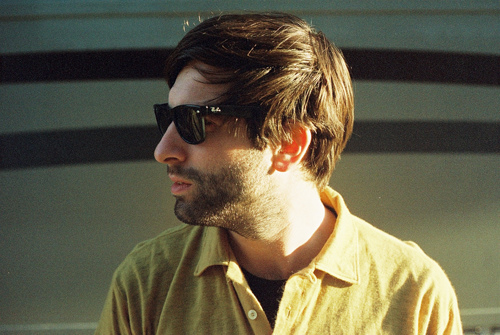
Does life on the road effect the music of the constantly-touring Shout Out Louds? “I guess it does,” says singer Adam Olenius. “You know, I think you’re sorta living a different life on the road and you think about home and being away and returning and of course that effects you. You meet a lot of people. People that you meet and things that happen while you’re traveling and things we do as a band become [what] I sing about. I’m not sure it’s being at a certain place, it’s just…being away, and trying to figure out your life.” On the eve of the group’s recent show at Great American Music Hall in support of their new album Work, I sat down and talked with Olenius about the pleasure and the work of being in a band.
 
SFBG Your existence as a band is constantly battled by traveling, you’re always together, but you’re also trying to remain individuals at the same time. I’m wondering if there’s anything you do that helps you. Do you stay together, or do you do things by yourself?
AO It depends if you have friends or crew or other people coming along. On this tour we have Henrik [Jonzon] with us, an old childhood friend. I haven’t had time to see him for awhile and now on the road we’re catching up a lot. He’s filling in for Ted [Malmros, on bass] who got a baby a few days ago.
 
SFBG I heard.

AO That’s kinda why we took a break after the second [album; Our Ill Wills]. We felt that we should try and find ourselves a bit. It’s not that we were tired of hanging out together. As you said, you’re a band all the time, and people just need to sort of think about what they want..  We agree that we still want to be in a band, so it was great that everyone was on the same boat.

SFBG Do you think a fourth album is coming?
AO Absolutely. And I think it’s gonna be coming sooner than the others. We have a lot of ideas, a lot of things we want to try — to start doing things by ourselves, I think. I want the next one to be more… schizophrenic. I love [Work], but there’s always a reaction to what you do.
 
SFBG People have said [Work] was quite a change from your previous work, but going back to some of your older work I can hear it in the older stuff. It’s interesting that it took you quite a long time and two other albums to get to this sound that I heard a long time ago. I’m wondering if there’s something that made you want to do that.
AO I think having two albums to look at while you’re working on the third one you can see what you liked on every record. We went back to ideas and back to the way I felt about certain songs. People kept saying we found our sound – I don’t think we found our sound, but we found ourselves.

SFBG I was thinking about your music in terms of an environment and a landscape. Our Ill Wills had a kind of maritime or nautical theme, and I was wondering if you thought Work had a specific place to which it belonged.
AO We wanted every song to be like a train – we talked about very straight roads, an escalating train. When we did the arrangements for the songs, they start slow and accelerate, and end in a bombastic way. That was something we didn’t really plan, it just happened. I think [Work] belongs more in a factory, with those belts…

SFBG You talk about books and libraries a lot – are any of you big readers?
AO Bebban [Stenborg] and Carl [von Arbin] are  I read a lot, but Bebban reads like 10 books a month. She is a good writer as well, she’s writing short stories. Everything — art and music and a lot of films – inspires us. Our songs, we can talk about them more [in those terms] as well.
 
SFBG Photography seems very important to you guys.
AO Yeah, it is because we also are very involved in all the artwork. and Carl was talking about how we took a lot of inspiration from Irving Penn and his photography on this record. The title came from many different ideas, but it has to do with Warhol’s Factory, and how Lou Reed and John Cale did a song called “Work.”

SFBG So that’s an example of where your ideas for the covers of your albums come from?
AO We’ve always been negative about showing ourselves too much, even though we have a lot of photography on the homepage. There isn’t a typical band photo.
[Work] looks very nice when you have it, especially on vinyl.  Very ’70s, and because Irving Penn passed away last year, it was a tribute to him. 
 
SFBG You have a lot of people that I love remixing your songs, like Kleerup and Russian Futurists and Studio. Is there anyone you’re still looking to get?
AO Of course. I would love Daft Punk. There’s some British guys doing one right now, Punks Jump Up.

SFBG They recently did a really good one for Lykke Li. What bands are you listening to right now?

AO I saw Caribou, I like that album. I haven’t really been listening to new stuff, but I bought the new National record, and last year I liked Girls a lot.
I saw them in a small club in Stockholm about six months ago, I think they’re really good. I’ve been listening to a lot of old stuff like Todd Rundgren and old early-’70s songwriter stuff.

SFBG Do you listen to a lot of Swedish music?
AO On tour we listen to a lot of Swedish bands. But we’ve listened to a lot of Fleetwood Mac on this tour – Rumours.

SFBG How would you describe your live show in comparison to your album?
AO It’s more explosive. This record sounds better live, because we didn’t have to change the songs to make live versions.
It took a couple months to find a live sound for the songs [on Our Ill Will].  

SFBG What is the song “Time Left For Love” about?
AO It’s a story. I remember writing the first sort of lines. It was a long time ago, when we recorded the first record. In Stockholm they have this truck that cleans the streets and it comes in the middle of the night, once a week — especially in Stockholm, cause we use a lot of sand in winter to get the streets dry. A lot of things had changed in my life, and that truck, that sound, every night put me to sleep.

SFBG Do you have a favorite song from Work?
AO My favorite song to write was “Throwing Stones.” It’s a song I started writing right before flying home from Melbourne, and I finished just 3 hours after I landed in Stockholm, so it’s an important song for me. It has a freedom to it. I like “Walls,” too. That was the first song I wrote for the album. Bebban actually played that piano melody on glockenspiel — I think the first time she played that was in Columbus, Ohio
I listened to the demo of “1999” recently, it’s got a more electronic and sharp sound. I think I liked the demo version more. But I like how we do it, like “Hard Rain” from the second album, that [also] has that beat with rushed melodies on top

http://www.youtube.com/watch?v=01oqzy-C7zw

SFBG I think “Hard Rain” and “1999” are the two closest songs from your two albums.
AO Yeah, and that’s why we made [“1999”] song number one, because it puts those two together, if you listen to our albums in a row. But who does that? Haha, I did that when I was fourteen with Guns ‘n’ Roses.  

SFBG Are you close with any other bands in particular?
AO The Stockholm scene is tight, you know.  We’re good friends with the Concretes, and Peter, Björn and John. We spend a lot of time with Swedish ones. Lykke Li, she’s a neighbor — I mean when she’s home. I can hear her when she’s writing songs and she can probably hear mine, cause we don’t have day jobs and you can hear through the walls

Trust no one

0

CULT CINEMA The ’70s were prime time for conspiracy theories, particularly at the movies — thanks to Watergate as well as queasy unresolved 1960s conflicts between the counterculture and the establishment.

Paranoid thrillers like Three Days of the Condor (1975) and The Parallax View (1974) riffed off nonfiction All the President’s Men. An entire independent studio-cum-distributor — Sunn Classics — made or bought "documentaries" befuddling folkloric fears around topics like Bigfoot, reincarnation, the Bermuda Triangle, and crop-circley UFO invasions. Bestselling novelist Ira Levin (The Stepford Wives, Rosemary’s Baby) unleashed antifeminists, Satanists, and more as figures of pulp speculation.

The Vortex Room’s July schedule has been entirely taken up with cinematic expressions of vintage conspiratorial paranoia. You’ve already missed some, but what’s left is choice. Thursday’s double bill offers two seldom-seen whoppers. Once-famous (if now forgotten) is The Hellstrom Chronicle, 1971’s contribution to a long line of questionable Best Documentary Oscar winners. Tricked out with extraordinary nature photography, it portentously posits mankind’s greatest peril as takeover by the insect world. Ooh … scary?

Equally swacked is 1978’s The Lucifer Complex, a bizarro patchwork — clearly shot at different times, under sharply different budgetary circumstances — eventually pointing toward a Nazi rejuvenation scheme à la Levin’s The Boys From Brazil. The Man From U.N.C.L.E.‘s Robert Vaughn is its unfortunate star.

July 29 brings the mutha lode of ’70s sci-fi conspiracy movies. First the nearly terrific action fantasy of Peter Hyams’ 1977 Capricorn One, in which such colorfully mismatched chess pieces as Elliott Gould, Karen Black, O.J. Simpson, Sam Waterston, James Brolin, Brenda Vaccaro, and Telly Savalas shuffle in a government cover-up scheme. Spoiler: we never really landed on the moon!

Five years earlier, English "Supermarionation" marionettist Gerry Anderson (of Thunderbirds fame) released his sole live-action feature. Invasion: UFO offers Swinging London perspective on a war against invading aliens in the distant future of 1980.

This typically brisk, academy-trained, Dr. Who-like Brit take on coarse commercial nonsense is woofed up by bombshells in skintight leotards and platinum-wigged minions in white/burgundy overalls. (Clearly the costume designer was heterosexual, and then some.) Although let’s face it, there’s nothing like a silver Mylar jumpsuit to bring out the disco-licious in either sex. Meanwhile, others wear mesh muscle tees well before your average Judas Priesthead started doing so. Invasion: UFO is the gift that Quaaludes keep on giving. (Dennis Harvey)

THE VORTEX CONSPIRACY: THURSDAY FILM CULT IN JULY

Thurs/22 and July 29, 9 p.m., $5

Vortex Room

1082 Howard, SF

www.myspace.com/thevortexroom

Fantasy island

3

johnny@sfbg.com

MUSIC The Aunt Charlie’s in the video for Myles Cooper‘s song “Gonna Find Boyfriends Today” is a massive tree with a vagina dentata doorway where cupcakes, eggs, top-hatted Mr. Peanuts and white-gloved strawberries dance, while Muppets sing a chorus. Nestled in the tenderest spot of the city’s loins, just off Market Street, the Aunt Charlie’s of San Francisco is a different place, but not really. One night a week, it’s the site of High Fantasy, a club hosted by Cooper and Alexis Penney that — as Cooper says — “belongs to the fantasies of those who come and need to imagine and party.”

Aunt Charlie’s is also one nexus of a mini-movement of sorts of truly new gay pop music in 2010. Witty, both ironic and utterly sincere, and catchier than any mega-production you might hear on the radio, Cooper’s bedroom reggaeton — or, to use his phrase, digital dancehall — debut single is one of its anthems. “I made a YouTube video to remember the song when I wrote it,” he explains, when asked about “Gonna Find Boyfriends Today”‘s genesis. “I still have it. I was on Ambien late at night. The writing took like 30 seconds, but coming up with the chord changes and sound was more cognitive. I was listening to ‘Supermodel,’ the Rupaul song, and the first line is ripped off from it.”

Decked out in gonzo cartoon cover art by Skye Thorstenson, who made the song’s video, “Gonna Find Boyfriends Today” has just been released as a 7-inch single by Transparent in England, where the fabled weekly New Musical Express recently placed Cooper ninth on a list of “The 50 Most Fearless People in Music,” one spot below Lady Gaga. Tonight, the fearless man with the brush cut and Mr. Rogers attire is camped out a table at Aunt Charlie’s, where DJ Bus Station John is prepping for his weekly night, Tubesteak Connection. “Bus Station, where is my boyfriend tonight?,” a regular calls out from the bar. “Oh, she’s around,” John answers.

Cooper is about to go on a summer trip to Chicago, then Africa, then Chicago again. Two nights before, at High Fantasy, a chorus of four performers serenaded him with Toto’s “Africa.” “I felt like somebody cared,” he says, with characteristic low-key geniality. Many people travel to Africa, but not many make music videos with close relatives during the trip — that’s Cooper’s goal. “I’m writing a song, an anthem called ‘You’ve Got to Love Your Family’,” he says. “I don’t always get along with my family, and I feel like this is a test. It’ll be funny to do the video with them lip-syncing the song. We’ll be on safari, and it’ll capture my family’s funny interaction with me. My mom never wants to be on camera.”

It’s this kind of true directness and simple originality that likely inspired NME to deem Cooper one of the 10 most fearless musicians on the globe. His surface appearance of intense normalcy is paired with wild creativity. “I got these shoes because they kind of remind me of a Noe Valley 50-year-old in a way that’s sexy to me,” he says, pointing down to his feet. “My fashion choices are perverse and I like to be in costume.” At High Fantasy, that costume might include a glitter-encrusted Bart Simpson T-shirt with Tupac tattooed on Bart’s stomach. At a Lilith Fair-inspired drag night he once put on at The Stud, his look included “a flannel skirt and a dolphin airbrushed on my ankle and and really ugly Doc Marten sandals and a tie-dyed shirt and gross curly wig.”

Cooper’s look and outlook has some connections to a recent day gig working with boys and girls aged 5 and 6. There might be moments where he wishes some kids’ face were an iPad so he can create or communicate on the job, but there’s an honest and committed through-line between his daytime life and nightlife. A recent show by his group Myles Cooper USA included giant acid house yellow smiley faces that were painted by the kids. He says he recently gave them a fashion poll: which label is better, Ed Hardy or Baby Phat? Baby Phat won by one vote, cast by him (“I like the cat on the logo”).

Cooper used to play in the Passionistas, a three-piece that put out one excellent pop-punk album in 2007 before disbanding. Going solo allows him to edit himself while giving his imagination free rein. That means he can incorporate his visits to Chicago (and greater journey to and from the Windy City and Africa) into the music he’s making today; the city is where he filmed the video for his next single, “Hair,” a many-voiced delight that places him alongside Morrissey and Jens Lekman in the hairdo-song hall of fame. “House music has always been a mysterious thing to me, because I’ve always thought of it as this perfected music that wasn’t made by people,” he says, when asked about the sound of Chicago. “I don’t think that anymore, I see how human it is. Even if the people I see are just playing records, I want to see what tempo they are, what key they’re in, what people are doing as they hear the music, and what they’re looking like when they do it.”


BIG LOVE

“I had a crush on Myles for a while, I thought he was so hot and the perfect boyfriend for me,” Alexis Penney says at Aunt Charlie’s. It’s a few weeks later, and Penney is prepping the bar for another night of High Fantasy. We’ve met at the apartment she shares with Dade Elderon of Party Effects, where she puts Band-Aids in a pair of high-heeled shoes before we head out, a little move that seems especially necessary less than half an hour later, when she’s scaling — quickly and faultlessly — a wooden ladder-like staircase to find and gather decorations. “The trick to having a club is that you have to go out a lot, so people know you,” Penney declares, gathering and arranging a train of white tulle that’s just long enough for the Bride of Godzilla.

Thing is, Penney — who grew High Fantasy out of Thing, a night she put on with Seth Bogart of Hunx and His Punx — shouldn’t necessarily need to go out to be known. Her first recording, “Lonely Sea,” produced by Nick Weiss of Teengirl Fantasy, could be the number one hit of 2010 for anyone who ever had a heart. Like Cooper’s “Gonna Find Boyfriends Today,” it takes touchstones of gay pop past — in this case, the churchy keyboard sounds and insistent crossover house beat of songs like “Supermodel” and Crystal Waters’ “Gypsy Woman” — and adds some plaintive MIDI saxophone sounds at just the right moment, while wedding it to a beautifully frank and completely modern vocal about a broken relationship.

Penney is a busy girl. She edits, writes and photographs for SORE, an online magazine that captures San Francisco gay nightlife. SORE was born in Kansas City, where Penney is from, when she and a friend named Roy and Cody Critcheloe from the group SSION decided they wanted “a sort of punk answer” to the popular lifestyle magazine BUTT. “I photograph things because I think they look funny, I don’t do it because it’s nightlife photography,” Penney says, bunching a ball of electric blue tulle into a ball against the back wall of the bar. “My ultimate fantasy for SORE, which will never happen, would be for it to be a print magazine. None of this ‘We talk about sex, but we make $100,000 a year’ material. Real gay life.”

Penney’s gay life, buoyed by friends like Monistat, is realer than most. “I wander around in my T-shirt and jeans a lot in the daytime, that’s normal,” she says. “But I needed to challenge myself with fashion. And [cross-dressing] went in line with the fact that I was dating someone [Bogart] who owned a vintage store. We were constantly thrifting and I had so much clothing at my disposal. I decided I’d just wear a bra, because you just don’t see a guy wearing a bra. Or I’d wear a bra and a lift, or a really slutty cocktail dress. I dress in women’s clothes interchangeably. I don’t trip about it. As much as people in SF say they’re trans-friendly, people really trip about gender. A lot of drag queens, they’re in or they’re out. I don’t even care.”

True. Except in Penney’s case, not caring is actually caring more than most people have the guts to in a society where every micro-subculture seems to breed conformity. It’s this directness, different from Cooper’s, or Bogart’s flirty and radically seductive candor, that distinguishes the music that Penney has made so far with Weiss. “I instantly felt a musical connection with Alexis, and the shine of her confident aura,” Weiss writes, when asked about first meeting Penney and the making of “Lonely Sea.” “My celebratory buoyant house beat mixed with Alexis’ love-lost lyrics so instantly I knew we had a hit.”

Both Penney and Bogart (as H.U.N.X.) have been recording with Weiss, and the results are everything from moving (“Lonely Sea”) and slinky and ebulliently powerful (Penney’s “Like the Devil”, the sun to “Lonely Sea”‘s elemental moon, and every bit its equal) to sexy in an existentially lonely way (H.U.N.X.’s “Can A Man Hear Me”) and hilarious (H.U.N.X.’s vampire cruising track “I Vant to Suck Your Cock”). For the prodigious Weiss, the connection to Penney might go back to a shared childhood love of Annie Lennox, particularly her 1992 album Diva. “Seth and Alexis are both really hyper-specific about what they’re going for,” he says, breaking down the collaborations. “Seth likes to work really fast and doesn’t usually go over two takes on a song. Alexis likes to throw out tons of reference points while we’re writing: ‘Give me something a little more trip hop-acid-tropical-wave-current please! And could you make it a little more world?'”

“Myles [Cooper] and I nerd out over music and songwriting over text message. He’s totally a visionary,” Weiss goes on to enthuse. In the separate but connected sounds of Cooper, Penney, H.U.N.X. and Teengirl Fantasy, all the wonderful gender-blur and sexuality of 1992 — when Lennox went solo and Boy George burst back into the limelight via The Crying Game — are remade anew, at a time when lifestyles feels like strait-jackets. There is inspiration to be taken from these artists’ love and support for one another on a daily and a big-picture basis. It’s the kind of force that can make changes within a broader culture, at least on small, rippling levels. This is gay pop in 2010: not striking mannered classic gay or rock poses, but instead allowing fabulous and tricky versions of one’s self to manifest and bloom.

“I could talk for days about nothing,” Penney says at one point, just before another night of High Fantasy begins. But really, she has something to say: “My relationship with music is that if I can’t connect emotionally with it, I just don’t like it.” And another thing: “I get really messy and really wasted but I always know where I’m at and who I am.” And another: “I always respect the person who you remember from the party. I want to be irreverent and confident enough to look like a freak.” And another: “Everyone wants to be something, but not everyone admits it to themselves.” And yet another: “I’m 23, I’ve tried every drug, I’ve never said no to sex, and here I am — I’m totally crazy.”

And — what the hell — one more thing: “I’ve got a lot to give. I’ve got a big heart, and a big boner.”

www.mylescooper.com
www.myspace.com/alexispenneymusic
www.myspace.com/gayestmusicever
www.myspace.com/mylescooper

Group think

0

arts@sfbg.com

HAIRY EYEBALL “Calder to Warhol,” San Francisco Museum of Modern Art’s giant introductory survey of the Fisher collection, isn’t the only big summer show happening right now. With its wanted poster-style flyer design and a menacing title that could have come from a hardboiled paperback, “They Knew What They Wanted” is an exquisite corpse of a group show, pieced together and then strewn across town by four artists at four different galleries: Shannon Ebner at Altman Siegel, Robert Bechtle at John Berggruen, Katy Grannan at Fraenkel Gallery, and Jordan Kantor at Ratio 3.

Allusions to criminality aside, the artists/curators of “They Knew What They Wanted” would more likely be found on the forensics team than the wrong side of the law. All are steely observers whose art could broadly be said to share a focus on the dynamics of surveillance at work within postwar portrait and landscape photography, particularly photography that looked at what was booming outside of America’s urban centers. Although Grannan is the sole photographer in the group, Ebner’s temporary installations of handmade signage placed in public settings — which she then photographs in black and white — and Bechtle and Kantor’s photo-based oil paintings also fall under the sign of the photography.

It’s not surprising then that multiple pieces by each of the curators can be found across all four galleries, as well as certain names (Lee Friedlander, Miriam Böhm, Trevor Paglen, and Ed Ruscha in particular) whose work shares an aesthetic affinity with that of the curators. This form of cross-gallery display gives “They Knew What They Wanted” a cohesion that is often rare in group shows, while still not being so insular as to make it hard to differentiate each artist-curator’s own aesthetic sense.

Bechtle’s selections offer the least surprises, summoning the same post-1960s Western suburban milieu evoked by his photorealistic paintings of driveway-bound vintage cars. After a few rounds of viewing, though, Robert Adams’ vintage snaps of Colorado ‘burbs, Friedlander’s skewed takes on small town architecture, Isca Greenfield-Sanders’ aquatint etchings of backyard swimmers, and Tom McKinley’s oils of cool modernist interiors start to add up to the visual equivalent of tract housing.

Ebner and Kantor’s picks are more interior-minded than the mainly street-level and exterior scenes crowding John Berggruen. They also veer the furthest from each artist’s own work. For example, Sol LeWitt’s blink-and-you’ll-miss-it painted electrical wall plate at Altman Siegel is just a few Home Depot aisles away from Rachel Whiteread’s stainless steel castings of light switches over at Ratio 3. Back at Altman Siegel, Fletcher Benton’s 1983 bronze tennis racket, “Adjustable Racket for Short Heavy Hitters,” leans dejectedly in a corner, in wait for a yard sale that will never come. Grannan’s grab bag at Fraenkel is the most photo-heavy, and her selection ventures furthest — with mixed success — from the thematic territory staked out by Bechtle, Ebner, and Kantor.

In a way, Ebner, Bechtle, Grannan, and Kantor have beat SFMOMA to the punch. The museum is set to restage the landmark 1975 photography exhibit “New Topographics: Photographs of a Man-Altered Landscape” — which presented dispassionate documentation of parking lots, construction sites, and other forms of ex-urban development — at the end of the month. But for a sustained exploration of the meteor-like impact of “New Topographics” on the photography and painting that followed in its wake, one couldn’t ask for a better art historical crash-course than “They Knew What They Wanted.” *


THEY KNEW WHAT THEY WANTED

Through July 31, free

John Berggruen Gallery

228 Grant, SF

(415) 781-4629

www.berggruen.com

Through Aug. 7, free

Altman Siegel Gallery

49 Geary, SF

(415) 576-9300

www.altmansiegel.com

Through Aug. 13, free

Ratio 3

1447 Stevenson, SF

(415) 821-3371

www.ratio3.org

Through Aug. 21, free

Fraenkel Gallery

49 Geary, SF

(415) 981-2661

www.fraenkelgallery.com

Film listings

0

Film listings are edited by Cheryl Eddy. Reviewers are Kimberly Chun, Michelle Devereaux, Max Goldberg, Dennis Harvey, Johnny Ray Huston, Erik Morse, Louis Peitzman, Lynn Rapoport, Ben Richardson, and Matt Sussman. For rep house showtimes, see Rep Clock. For first-run showtimes, see Movie Guide.

ANOTHER HOLE IN THE HEAD

The seventh Another Hole in the Head Film Festival runs July 8-29 at the Roxie, 3117 16th St, SF; and Viz Cinema, New People, 1746 Post, SF. For tickets (most shows $11) and schedule, visit www.sfindie.com.

OPENING

Inception Christopher Nolan takes a break from the Bat-Director’s Chair to helm this Leonardo DiCaprio thriller about futuristic mind crimes. (2:30) Marina, Presidio.

*Let It Rain Well-known feminist author Agathe Villanova (writer-director Agnès Jaoui) is taking a rare break from her busy Paris life, visiting her hometown to see family, vacation with boyfriend Antoine (Frédéric Pierrot), and do a little stumping for her nascent political career. But despite the ever-picturesque French countryside as background, all is not harmonious. Antoine complains Agathe’s workaholism (among other things) is killing their relationship, particularly once she agrees to be time-consumingly interviewed for film about "successful women" by shambling documentarian Michel (coscenarist Jean-Pierre Bacri) and local Karim (Jamel Debbouze). Her married-with-children sister Florence (Pascale Arbillot) is having a secret affair with Michel, but seems more focused on old resentments springing from Agathe being their late mother’s favorite. Karim — son of the family’s longtime housekeeper (Mimouna Hadji) — bears his own grudge against the clan and brusque, officious Agathe in particular. Being happily wed, he’s further bothered at his hotel day job by his attraction to co-worker Aurélie (Florence Loiret-Caille). These various conflicts simmer, then boil over as the documentary shooting goes from bumbling to disastrous. In 2004, Jaoui delivered a pretty near perfect Gallic ensemble seriocomedy in Look at Me. This isn’t quite that good. Still, her seemingly effortless skill at managing complex character dynamics, eliciting expert performances (including her own), and weaving it all together with insouciant panache makes this a real pleasure. The problem with Agnès Jaoui: she’s so good it chafes that (acting-only gigs aside) she’s made just three films in ten years. Pick it up, girl! (1:39) Opera Plaza. (Harvey)

*[Rec] 2 See "666-ZOMB." (1:24) Lumiere.

The Sorcerer’s Apprentice Socially awkward science nerd Dave (Jay Baruchel) toils away on his suspiciously elaborate NYU physics project, unaware that he’s about to have a Harry Potter-style moment of awakening. Enter Balthazar (Nicolas Cage), a centuries-old, steampunky sorcerer who believes Dave to be "the Prime Merlinian" — i.e., the greatest conjurer since Merlin himself. (Literally) rising from ashes to provide conflict are fellow sorcerers Horvath (Alfred Molina) and Morgana (Alice Krige); signing on for romantic-interest purposes are Monica Bellucci and newcomer Teresa Palmer. The Sorcerer’s Apprentice spins off Disney classic Fantasia (1940) in only the loosest sense, though there is a scene of dancing brooms. The bland Baruchel’s rise to fame continues to mystify, but at least Cage and Molina seem to be having a blast exchanging insults and zapping each other around. (1:43) (Eddy)

South of the Border After a prolific career of dramatic films steeped in political commentary, Oliver Stone drops the pretext. South of the Border is his Michael Moore moment, a chance for the filmmaker to make a direct and focused documentary in which his bias is readily apparent. Stone travels to South American nations and meets with their political leaders, men and women — including Hugo Chávez, Evo Morales, and Rafael Correa — who have long been considered enemies of the United States. His goal is to show that they are not ruthless dictators but rather democratically elected representatives of their country, cast in a negative light by a mainstream media with ulterior motives. Stone’s rapport with these politicians is intimate: at one point, he plays soccer with Morales. Even if you’re skeptical of his assertions, you can at least appreciate the unique perspective South of the Border offers. As a film, it’s somewhat slipshod, not nearly as glossy as a Moore production. But provided you’re willing to fill in the blanks, it’s a captivating and well-intentioned endeavor. (1:18) (Peitzman)

Spring Fever Shot surreptitiously and chock full of gay sex, Chinese director Lou Ye’s latest film isn’t likely to earn him any additional slack from Chinese government censors (his 2006 film, Summer Palace, got him banned from filmmaking for five years after he failed to preview it before it screened at Cannes). Using hand-held cameras, public settings, and natural lighting, Lou follows Wang Ping (Wu Wei), who’s been having a passionate, messy affair with travel agent Jiang Cheng (Qin Hao). Things get more complicated when the snoop Wang’s wife hires to follow her closeted husband winds up pursuing the two men in ways he never imagined. What Spring Fever lacks in continuity and psychological depth, it makes up for with sexual candor and a genuine frisson of risk, given the secretive conditions under which it was made. That thrill doesn’t quite last through the film’s duration, but as a document of defiance Spring Fever is commendable. (1:56) Four Star. (Sussman)

Standing Ovation Atlantic City teens form a song-and-dance troupe in this High School Musical-style family film. (1:48)

ONGOING

Beetle Queen Conquers Tokyo Opening with the humid buzz of crickets and the probings of bug aficionados in the thick of a forest, first-time documentarian Jessica Oreck puts Japan’s fascination with insects under the microscope. Preferring to let the images and interview subjects speak for themselves, she turns a lens to young children who clamor to buy sleek, shiny, obsidian beetles, as well as the giant big city gatherings of insect collectors — events that likely are less than familiar to western audiences. Oreck’s intent is to get at the ineffable attraction behind such astonishing sales as that of a single beetle for $90,000 not so long ago, and to that end, she weaves in looks at insect literature and art, visits to Buddhist temples, and historical factoids about, for instance, the first cricket-selling business in the early 1800s. (1:30) Sundance Kabuki. (Chun)

*City Island The Rizzo family of City Island, N.Y. — a tiny atoll associated historically with fishing and jurisdictionally with the Bronx — have reached a state where their primary interactions consist of sniping, yelling, and storming out of rooms. These storm clouds operate as cover for the secrets they’re all busy keeping from one another. Correctional officer Vince (Andy Garcia) pretends he’s got frequent poker nights so he can skulk off to his true shameful indulgence: a Manhattan acting class. Perpetually fuming spouse Joyce (Julianna Margulies) assumes he’s having an affair. Daughter Vivian (Dominik García-Lorido) has dropped out of school to work at a strip joint, while the world class-sarcasms of teenager Vinnie (Ezra Miller) deflect attention from his own hidden life as an aspiring chubby chaser. All this (plus everyone’s sneaky cigarette habit) is nothing, however, compared to Vince’s really big secret: he conceived and abandoned a "love child" before marrying, and said guilty issue has just turned up as a 24-year-old car thief on his cell block. Writer-director Raymond De Felitta made a couple other features in the last 15 years, none widely seen; if this latest is typical, we need more of him, more often. Perfectly cast, City Island is farcical without being cartoonish, howl-inducing without lowering your brain-cell count. It’s arguably a better, less self-conscious slice of dysfunctional family absurdism than Little Miss Sunshine (2006) — complete with an Alan Arkin more inspired in his one big scene here than in all of that film’s Oscar-winning performance. (1:40) Four Star. (Harvey)

Cyrus It’s tempting to label Mark and Jay Duplass’ Cyrus as "mumblecore goes mainstream." Yes, the mumblecore elements are all there: plentiful moments of awkward humiliation, characters fumbling verbally and sometimes physically in desperate attempts to establish emotional connections, and a meandering, character-driven plot, in the sense that the characters themselves possess precious little drive. The addition of bona fide indie movie stars John C. Reilly, Catherine Keener, and Marisa Tomei — not to mention Hollywood’s chubby-funny guy du jour, Jonah Hill — could lead some to believe that the DIY-loving Duplass brothers (2005’s The Puffy Chair, 2008’s Baghead) have gone from slacker disciples of John Cassavetes (informally known as "Slackavetes") to worshippers at the slickly profane (with a heart) altar of Judd Apatow. But despite the presence of Apatow protégé Hill (2007’s Superbad) in the title role, Cyrus steers clear of crowd-pleasing bombast, instead favoring small, relatively naturalistic moments. That is to say, not much actually happens. Mumblecore? More or less. Mainstream? Not exactly. Despite playing a character with some serious psychological issues, Hill comes off as likeable. Unfortunately the movie is neither as broadly comic nor as emotionally poignant as it needs to be — the two opposing forces seem to cancel each other out like acids and bases. (1:32) Empire, Sundance Kabuki. (Devereaux)

Despicable Me Judging from the adorable, booty-shaking, highly merchandisable charm of its sunny-yellow Percocet-like minions, Despicable Me‘s makers have more than a few fond memories of the California Raisins. That gives you an idea of the 30-second attention-span level at work here. Thanks to Pixar and company, our expectations for animated features are high, but despite the single lob at Lehman Brothers aimed toward the grown-ups, the humor here is pitched straight at the eight and younger crowd: from the mugging, child-like minions to the all-in-good-fun, slightly quease-inducing 3-D roller-coaster ride. Gru (Steve Carell) is Despicable‘s also-ran supervillain — a bit too old and too unoriginal for a game that’s been rigged in the favor of the youthful, annoyingly perky Vector (Jason Segel), who’s managed to swipe the Giza Pyramids and become the world’s number one bad dude. When Vector steals away the crucial shrink ray needed for Gru’s plot to thieve the moon, the latter pulls out the big guns: three adorable orphans who have managed to penetrate Vector’s defenses with their fund-raising cookie sales. It turns out kids have their own insidiously heart-warming way of wrecking havoc on one’s well-laid plans. Filmmakers Pierre Coffin and Chris Renaud do their best to exploit the 3-D medium, but Avatar (2009) this is not. Nor will many adults be able to withstand the onslaught of cute undertaken by all those raisins, I mean, minions. (1:35) 1000 Van Ness, Presidio, SF Center. (Chun)

*Exit Through the Gift Shop Exit Through the Gift Shop is not a film about the elusive graffiti-cum-conceptual artist and merry prankster known as Banksy, even though he takes up a good chunk of this sly and by-no-means impartial documentary and is listed as its director. Rather, as he informs us — voice electronically altered, face hidden in shadow — in the film’s opening minutes, the film’s real subject is one Thierry Guetta, a French expat living in LA whose hangdog eyes, squat stature, and propensity for mutton chops and polyester could pass him off as Ron Jeremy’s long lost twin. Unlike Jeremy, Guetta is not blessed with any prodigious natural talent to propel him to stardom, save for a compulsion to videotape every waking minute of his life (roughly 80 percent of the footage in Exit is Guetta’s) and a knack for being in the right place at the right time. When Guetta is introduced by his tagger cousin to a pre-Obamatized Shepard Fairey in 2007, he realizes his true calling: to make a documentary about the street art scene that was then only starting to get mainstream attention. Enter Banksy, who, at first, is Guetta’s ultimate quarry. Eventually, the two become chummy, with Guetta acting as lookout and documenter for the artist just as the art market starts clambering for its piece of, "the Scarlet Pimpernel of street art," as one headline dubs him. When, at about three quarters of the way in, Guetta, following Banksy’s casual suggestion, drops his camcorder and tries his hand at making street art, Exit becomes a very different beast. Guetta’s flashy debut as Mr. Brainwash is as obscenely successful as his "art" is terribly unimaginative — much to the chagrin of his former documentary subjects. But Guetta is no Eve Harrington and Banksy, who has the last laugh here, gives him plenty of rope with which to truss himself. Is Mr. Brainwash really the ridiculous and inevitable terminus of street art’s runaway mainstream success (which, it must be said, Banksy has handsomely profited from)? That question begs another: with friends like Banksy, who needs enemies? (1:27) Lumiere. (Sussman)

Get Him to the Greek At this point movie execs can throw producer Judd Apatow’s name on the marquee of a film and it’s a guaranteed blockbuster. It’s hard to say whether this Forgetting Sarah Marshall (2008) spin-off benefits from the Apatow sign of approval or if it would be better off standing on its own, but it definitely doesn’t benefit from comparisons to its predecessor. Russell Brand returns as the British rock star Aldous Snow, and Jonah Hill, playing a different character this time, is given the task of chaperoning the uncooperative Snow from London to LA in 48 hours. Despite a great cast, including a surprisingly animated P. Diddy, the story is pretty bland and can’t match the blend of drama and comedy that Marshall achieved. Of course, none of that matters because the movie execs are right: if you like Apatow’s brand of humor, you’re going to have a good time anyway. (1:49) Four Star, 1000 Van Ness, Presidio. (Peter Galvin)

*The Girl Who Played With Fire Lisbeth Salander is cooler than you are. The heroine of Stieg Larsson’s bestselling book series is fierce, mysterious, and utterly captivating: in the movie adaptations, she’s perfectly realized by Noomi Rapace, who has the power to transform Lisbeth from literary hero to film icon. Rapace first impressed audiences in The Girl With the Dragon Tattoo (2009), a faithful adaptation of Larsson’s premiere novel, and she returns as Lisbeth in The Girl Who Played With Fire. The sequel, as is often the case, isn’t quite on par with the original, but it’s still a page-to-screen success. And while the first film spent equal time on journalist Mikael Blomkvist (Michael Nyqvist), The Girl Who Played With Fire is almost entirely Lisbeth’s story. Sure, there’s more to the movie than the hacker-turned-sleuth — and the actor who plays her — but she carries the film. Rapace is Lisbeth; Lisbeth is Rapace. I’d watch both in anything. (2:09) Embarcadero, Smith Rafael. (Peitzman)

*The Girl With the Dragon Tattoo By the time the first of Stieg Larsson’s so-called "Millennium" books had been published anywhere, the series already had an unhappy ending: he died (in 2004). The following year, The Girl With the Dragon Tattoo became a Swedish, then eventually international sensation, its sequels following suit. The books are addicting, to say the least; despite their essential crime-mystery-thriller nature, they don’t require putting your ear for writing of some literary value on sleep mode. Now the first of three adaptive features shot back-to-back has reached U.S. screens. (Sorry to say, yes, a Hollywood remake is already in the works — but let’s hope that’s years away.) Even at two-and-a-half hours, this Girl With the Dragon Tattoo by necessity must do some major truncating to pack in the essentials of a very long, very plotty novel. Still, all but the nitpickingest fans will be fairly satisfied, while virgins will have the benefit of not knowing what’s going to happen and getting scared accordingly. Soon facing jail after losing a libel suit brought against him by a shady corporate tycoon, leftie journalist Mikael Blomkvist (Michael Nyqvist) gets a curious private offer to probe the disappearance 40 years earlier of a teenage girl. This entangles him with an eccentric wealthy family and their many closet skeletons (including Nazi sympathies) — as well as dragon-tattooed Lisbeth Salander (Noomi Rapace), androgynous loner, 24-year-old court ward, investigative researcher, and skillful hacker. Director Niels Arden Oplev and his scenarists do a workmanlike job — one more organizational than interpretive, a faithful transcription without much style or personality all its own. Nonetheless, Larsson’s narrative engine kicks in early and hauls you right along to the depot. (2:32) Four Star, Lumiere, Smith Rafael. (Harvey)

Grown Ups In order of star power, Grown Ups casts Adam Sandler, Kevin James, Chris Rock, Rob Schneider, and David Spade as five fortysomething friends who reunite to attend the funeral of their high school basketball coach, and play catch-up over a long weekend together at a cabin by the lake. If you’re expecting five of America’s biggest comedy stars to form like Voltron and make the most hilarious movie of the year, you’ve got a sad day coming. Grown Ups is never the sum of its parts, it’s about on par with Sandler’s other producing/starring affairs, and probably features a lot of the same jokes. People fall in poop and little kids say cute things designed to make audiences awww, but history has shown that’s exactly what a popcorn viewer is looking for. By these standards, Grown Ups is a perfectly summer-y movie. (1:42) 1000 Van Ness. (Galvin)

*I Am Love I Am Love opens in a chilly, Christmastime Milan and deliberately warms in tandem with its characters. Members of the blue-blood Recchi family are content hosting lavish parties and gossiping about one another, none more than the matriarch Emma (Tilda Swinton). But when prodigal son Edoardo befriends a local chef, Emma finds herself taken by both the chef’s food and his everyman personality, and is reminded of her poor Soviet upbringing. The courtship that follows is familiar on paper, but director Luca Guadagnino lenses with a strong style and small scenes acquire a distinct energy through careful editing and John Adams’ unpredictable score. Swinton portrays Emma’s unraveling with the same gritty gusto she brought to Julia (2008), and her commitment to the role recognizes few boundaries. You’ve probably seen this story before, but it has rarely been this powerful. (2:00) Embarcadero, Sundance Kabuki. (Galvin)

*Joan Rivers: A Piece of Work Whether you’re a fan of its subject or not, Ricki Stern and Annie Sundberg’s documentary is an absorbing look at the business of entertainment, a demanding treadmill that fame doesn’t really make any easier. At 75, comedian Rivers has four decades in the spotlight behind her. Yet despite a high Q rating she finds it difficult to get the top-ranked gigs, no matter that as a workaholic who’ll take anything she could scarcely be more available. Funny onstage (and a lot ruder than on TV), she’s very, very focused off-, dismissive of being called a "trailblazer" when she’s still actively competing with those whose women comics trail she blazed for today’s hot TV guest spot or whatever. Anyone seeking a thorough career overview will have to look elsewhere; this vérité year-in-the-life portrait is, like the lady herself, entertainingly and quite fiercely focused on the here-and-now. (1:24) Embarcadero. (Harvey)

John Rabe John Rabe (Ulrich Tukur) was the Oskar Schindler of Nanking: A man who, under discreetly opportunist pretenses, attempted to keep the Chinese in a safety zone from the Japanese in the late 30s. Steve Buscemi plays Robert Wilson, a surly American doctor. He’s to Tukur as Ben Kingsley was to Liam Neeson in 1993’s Schindler’s List, but without the nuance or iconic chemistry. Tukur is understated, bordering on uninteresting, and Buscemi is just over-the-top. Unlike Spielberg’s film, John Rabe grants us little access to the stories of civilians. The film is so preoccupied with people of power and those like Rabe, couched in a world of privilege, that the film lacks an emotional, human center. It’s impossible to feel much of anything because we’re never asked to feel, nor are we ever asked to endure any especially difficult scenes. Even the occasional rain of hellfire isn’t as wallop-packing as it ought to be. (2:14) Four Star, Presidio. (Ryan Lattanzio)

The Karate Kid The most baffling thing about The Karate Kid is its title: little Dre Parker (Jaden Smith) never actually learns karate. He practices kung-fu, an entirely different form of martial arts — you know, from a different country. There’s something obnoxious and absurd about the misnomer: the film seems to suggest that if you’ve seen one Asian culture, you’ve seen them all. That aside, it’s not a bad movie. Smith is mostly pretty likeable, and there’s a definite satisfaction to seeing him grow from bullied weakling to kung-fu star. And Jackie Chan gets to exercise his dramatic chops — he even gets a crying scene! But Karate Kid is a "reboot," the preferred term for the endless stream of unnecessary remakes Hollywood keeps churning out. You can’t help but think about the superior 1984 version. Jaden Smith is no Ralph Macchio, Jackie Chan is no Pat Morita, and kung-fu is no karate. Don’t even get me started on the "jacket on, jacket off" crap. Which, if you say it quickly, sounds a little adult for a PG movie. (2:20) 1000 Van Ness, SF Center. (Peitzman)

*The Kids Are All Right In many ways, The Kids Are All Right is a straightforward family dramedy: it’s about parents trying to do what’s best for their children and struggling to keep their relationship together. But it’s also a film in which Jules (Julianne Moore) goes down on Nic (Annette Bening) while they’re watching gay porn. Director Lisa Cholodenko (1998’s High Art) co-wrote the script (with Stuart Blumberg), and the film’s blend between mainstream and queer is part of what makes Kids such an important — not to mention enjoyable — film. Despite presenting issues that might be contentious to large portions of the country, the movie maintains an approachability that’s often lacking in queer cinema. Of course, being in the gay mecca of the Bay Area skews things significantly — most locals wouldn’t bat an eye at Kids, which has Nic and Jules’ children inviting their biological father ("the sperm donor," played by Mark Ruffalo) into their lives. But for those outside the liberal bubble, the idea of a nontraditional family might be more eye-opening. It’s not a message movie, but Kids may still change minds. And even if it doesn’t, the film is a success that works chiefly because it isn’t heavy-handed. It refuses to take itself too seriously. At its best, Kids is laugh-out-loud funny, handling the heaviest of issues with grace and humor. (1:47) Bridge, SF Center. (Peitzman)

*Knight and Day A Bourne-again Vanilla Sky (2001)? Considerably better than that embarrassingly silly stateside remake, though not quite as fulfilling as director James Mangold’s 3:10 to Yuma (2007) rework, this action caper played for yuks still isn’t the most original article in the cineplex. But coasting on the dazzling Cheshire grins of its stars, Tom Cruise and Cameron Diaz, reunited for the first time since Sky, you can just make out the birth of a beautiful new franchise. Everygirl June Havens (Diaz) is on her way to her sister’s wedding when she collides-cute at the airport with Roy Miller (Cruise). After killing the passengers and pilots on their plane, he literally sweeps her off her feet — thanks to some potent drugs. Picture a would-be Bond girl dragged against a spy-vs.-spy thriller semi-against-her-will — grappling with the subtextual anxiety rushing beneath all brief romantic encounters as well as some very justifiable survival fears. Can June overcome her trust issues? Is Roy the man of her dreams — or nightmares? Mangold and company miss a few opportunities to have more fun with those barely teased out ideas, and the polished, adult-yet-far-from-knowing charisma of the leads doesn’t quite live up to sophisticated interplay of Cary Grant and Grace Kelly, or even the down-home fun of Burt Reynolds and Sally Field, but it’s substantial enough for Knight and Day to coast on, for about 90 minutes tops. (2:10) 1000 Van Ness. (Chun)

The Last Airbender There must be some M. Night Shyamalan fans out there. How else does one explain the fact that he keeps making movies? And yet, most of his post-Sixth Sense (1999) work has ranged from forgettable to downright reviled. His latest disaster is sure to fall into the latter category: in The Last Airbender, he takes a much-loved Nickelodeon cartoon and transforms it into an awkwardly paced, poorly acted mess. Woefully miscast Noah Ringer stars as Aang, the avatar with the power to end the Fire Nation’s dominion. Along with his friends, siblings Sokka (Jackson Rathbone) and Katara (Nicola Peltz), Aang must — oh, just watch the damn show. For newcomers, the film is as confusing as Shyamalan’s equally self-indulgent Lady in the Water (2006). For fans of the TV show, The Last Airbender is nearly unbearable, condensing the entire first season into one film by removing the humor, the heart, and the complexity of the characters. There’s no twist here — we expect Shyamalan to disappoint, and he does. (1:34) 1000 Van Ness, SF Center, Sundance Kabuki. (Peitzman)

Micmacs An urge to baby-talk at the screen underlines what is wrong with Jean-Pierre Jeunet’s new film: it is like a precocious child all too aware how to work a room, reprising adorable past behaviors with pushy determination and no remaining spontaneity whatsoever. There will be cooing. There will be clucking. But there will also a few viewers rolling their eyes, thinking "This kid rides my last nerve." It’s easy to understand why Jeunet’s movies (including 2001’s Amélie) are so beloved, doubtless by many previously allergic to subtitles. (Of course, few filmmakers need dialogue less.) They are eye-candy, and brain-candy too: fantastical, hyper, exotic, appealing to the child within but with dark streaks, byzantine of plot yet requiring no close narrative attention at all. The artistry and craftsmanship are unmissable, no ingenious design or whimsical detail left unemphasized. In Micmacs, hero Bazil (Dany Boon) is a lovable misfit who lost his father to an Algerian landmine, then loses his own job and home when he’s brain-injured by a stray bullet. He falls in with a crazy coterie of lovable misfits who live underground, make wacky contraptions from junk, and each have their own special, not-quite-super "power." They help him wreak elaborate, fanciful revenge on the greedy arms manufacturers (André Dussollier, Nicolas Marié) behind his misfortunes, as well as various human rights-y global ones. So there’s a message here, couched in fun. But the effect is rather like a birthday clown begging funds for Darfur — or Robert Benigni’s dreaded Life is Beautiful (1997), good intentions coming off a bit hubristic, even distasteful. (1:44) Opera Plaza. (Harvey)

Predators Anyone who claims to be disappointed by Predators has clearly never seen parts one and two in the series; all three are straight B-movie affairs (though 1990’s Predator 2 takes everything oh-so-slightly over the top. Gary Busey’ll do that). And if you’ve seen either of the recent Predator-versus-Alien flicks, Predators should feel like a masterpiece. Nimród Antal directs under the banner of Robert Rodriguez’s production company, which explains the presence of Danny "Machete" Trejo in the cast. Adrien Brody stashes his Oscar in a safe place to star as Royce, a well-armed mercenary who awakes to find himself in free fall, plummeting into a strange jungle along with other elite-forces types (including Brazilian Alice Braga, playing an Israeli soldier). It doesn’t take long before Royce realizes that "this is a game preserve, and we’re the game." I wish Predators had allowed itself to have a little more fun with its uniquely skilled characters (the yakuza guy does have a nice, if culturally-stereotyped, swordplay scene); there’s also an underdeveloped "plot twist" involving the presence of the decidedly un-badass Topher Grace among the human prey. But all is forgiven when Laurence Fishburne turns up as Crazy Old Dude Who’s Been Hiding Out With Predators a Little Too Long. Fishburne’s presence also adds to the heart-of-darkness vibe the movie seems vaguely interested in conveying. (1:51) 1000 Van Ness. (Eddy)

*Restrepo Starting mid-’07, journalists-filmmakers Tim Hetherington and Sebastian Junger spent some 15 months off and on embedded with a U.S. Army platoon in Afghanistan’s Korengal Valley, a Taliban stronghold with steep, mountainous terrain that could hardly be more advantageous for snipers. Particularly once a second, even more isolated outpost is built, the soldiers’ days are fraught with tension, whether they’re ordered out into the open on a mission or staying put under frequent fire. Strictly vérité, with no political commentary overt or otherwise, the documentary could be (and has been) faulted for not having enough of a "narrative arc" — as if life often does, particularly under such extreme circumstances. But it’s harrowingly immediate (the filmmakers themselves often have to dive for cover) and revelatory as a glimpse not just of active warfare, but of the near-impossible challenges particular to foreign armed forces trying to make any kind of "progress" in Afghanistan. (1:33) Clay. (Harvey)

The Secret in Their Eyes (2:07) Opera Plaza, Red Vic.

*Stonewall Uprising On the night of June 28, 1969, police embarked on what they thought would be a routine raid on a gay bar in New York’s Greenwich Village, the sleazy, Mafia-run Stonewall Inn. The ensuing three days of rioting — during which mostly young men and drag queens accustomed to being marginalized and hauled off to jail stood their ground and fought back — became what historian Lillian Faderman has called "the shot heard round the world" for LGBT activism: a spontaneous expression of street-level outrage that fueled the birth of a movement. Kate Davis and David Heilbroner’s solid documentary Stonewall Uprising takes a "just the facts, ma’am" approach to this historic flashpoint that makes for an information-packed, if at times dry, 80 minutes. Working around the paucity of photographic documentation of the actual riots (itself a testament to the marginalization of homosexuality in the late 1960s), Davis and Heilbroner make extensive use of period news footage and photography, reenactments, and most important, the first-person testimonies of who those who witnessed and participated in what one interviewee terms "our Rosa Parks moment." The filmmakers’ contextual groundwork is as impressive for its archival research as it is repetitive in its message: pre-Stonewall life was hell. The documentary becomes more nuanced as it zeros in on reconstructing the first night of rioting via eyewitness accounts. (1:22) Lumiere. (Sussman)

Touching Home Hometown boys (Logan and Noah Miller) make good in this based-on-a-true-story tale of identical twins who must divide their time at home between training for major league baseball and looking after their alcoholic father. The brothers, who also wrote and directed the film, aim for David Gordon Green by way of Marin, but fall short of mastering that director’s knack for natural dialogue. Ed Harris is, unsurprisingly, compelling as the alcoholic father, but the actors in the film who are not named Ed Harris tend to contribute to the script’s distracting histrionics. Touching Home has some amazing NorCal cinematography, and I could see how family audiences might enjoy its "feel bad, then feel good" style of melodrama. But while it’s awkward to say that someone’s real-life experiences come off as trite, there are moments here that feel as clichéd as a Lifetime movie. (1:48) Smith Rafael. (Galvin)

*Toy Story 3 You’ve got a friend in Pixar. We all do. The animation studio just can’t seem to make a bad movie — even at its relative worst, a Pixar film is still worlds better than most of what Hollywood churns out. Luckily, Toy Story 3 is far from the worst: it’s actually one of Pixar’s most enjoyable and poignant films yet. Waiting 11 years after the release of Toy Story 2 was, in fact, a stroke of genius, in that it amplifies the nostalgia that runs through so many of the studio’s releases. The kids who were raised on Toy Story and its first sequel have now grown up, gone to college, and, presumably, abandoned their toys. For these twentysomethings, myself included, Toy Story 3 is a uniquely satisfying and heartbreaking experience. While the film itself may not be the instant classic that WALL-E (2008) was, it’s near flawless regardless of a viewer’s age. Warm, funny, and emotionally devastating—it’s Pixar as it should be. (1:49) Empire, Marina, 1000 Van Ness, Sundance Kabuki. (Peitzman)

The Twilight Saga: Eclipse The only person more bored by the Twilight franchise than I am is Kristen Stewart. In Eclipse, the third installment of the film series, she mopes her way through further adventures with creepily obsessive vampire Edward (Robert Pattinson). Look, you’re either sold on this star-crossed love story or you’re not, and it’s clear which camp I fall into. Besides, Eclipse is at least better than New Moon, the dreadful Twilight film that preceded it last year. But the story is still ponderous and predictable — Eclipse sets up a conflict and then quickly resolves it, just so it can spend more time on the Bella-Edward-Jacob love triangle. (As if we don’t know how that ends.) Then there’s the unfortunate anti-sex subtext: carnal relations are cast as dirty, wrong, and soul-destroying. I’m not saying we should be encouraging all teenagers to have sex, but that doesn’t mean we should make them feel ashamed of their desires. And what parent would approve of Eclipse‘s conclusion? Marrying your first boyfriend at 18 — not always the best move. (2:04) Empire, 1000 Van Ness, Sundance Kabuki. (Peitzman)

*Wild Grass The premise of Wild Grass, Alain Resnais’ loopy new film, could have come straight from Nancy Meyers: an older married man finds a single, middle-aged woman’s wallet. He returns it but can’t stop thinking about her. She, in turn, is intrigued by his attentions. Both are surprised by the connection they feel growing between them, one which they nevertheless have difficulty articulating. When they finally meet, sparks fly. That purloined wallet, along with the romcom set-up, aren’t the only MacGuffins in Resnais’ Wild ride, which uses Christian Gailly’s novel L’ Incindent as a rough guide for its careening tour of the irrational courses that desire can lead us down. The man and woman in question are Georges, an embittered writer with a possibly dark past, and flame-haired Marguerite, a dentist and part-time aviatrix, both played to neurotic perfection by longtime Resnais regulars André Dussollier and Sabine Azéma. Resnais’ attempt to translate what he has called the "musicality" of Gailly’s prose has resulted in a frenetic everything-but-the-kitchen-sink approach that tries to visually approximate Georges and Marguerites’ every internal monologue, fantasy, and increasingly risky instance of impulsive behavior, throwing in some knowing winks to classic Hollywood cinema for good measure. It’s a mess, to be sure (there are even two endings!). But like Mr. Magoo, the 87-year-old Resnais, as if by some unseen hand, steers clear of complete disaster. There hasn’t been a Gallic car crash this delightful to watch since Godard’s famous pile-up in 1967’s Week End. (1:44) Opera Plaza, Shattuck. (Sussman)

*Winter’s Bone Winter’s Bone has already won awards at the Berlin International Film Festival and the Sundance Film Festival, but it’s the kind of downbeat, low-key, quiet film that may elude larger audiences (and, as these things go, Oscar voters). Like Andrea Arnold’s recent Fish Tank, it tells the story of a teenage girl who draws on unlikely reserves of toughness to navigate an unstable family life amid less-than-ideal economic circumstances. And it’s also directed by a woman: Debra Granik, whose previous feature, 2004’s Down to the Bone, starred Vera Farmiga (2009’s Up in the Air) as a checkout clerk trying to balance two kids and a secret coke habit.

Drugs also figure into the plot of the harrowing Winter’s Bone, though its protagonist, Ree Dolly (Jennifer Lawrence), is faced with a different set of circumstances: her meth head father has jumped bail, leaving the family’s humble mountain home as collateral; the two kids at stake are her younger siblings. With no resources other than her own tenacity, Ree strikes out into her rural Missouri community, seeking information from relatives who clearly know where her father is — but ain’t sayin’ a word. It’s a journey fraught with menace, shot with an eye for near-documentary realism and an appreciation for slow-burn suspense; Lawrence anchors a solid cast with her own powerful performance. Who says American independent film is dead? (1:40) Embarcadero. (Eddy)

REP PICKS

*Beyond the Doors and Bigfoot This double bill in the middle of the Vortex Room’s conspiracy-focused schedule of Thursday screenings offers musings on some favorite 1970s subjects for paranoid speculation. "Our assignment: neutralize the three Pied Pipers of rock n’ roll music," recalls a government operative near the beginning of Larry Buchanan’s Beyond the Doors. Upset at Vietnam protests and drug culture, President Nixon hits on the logical solution: Jimi, Janis and Jim (Morrison) must die. Made in 1984, this late effort by Southern cheesebagger Buchanan followed three decades of such titles as Naughty Dallas (1964), Zontar: The Thing from Venus (1966), Mars Needs Women (1967), and The Loch Ness Horror (1981). Having achieved modest box-office success with his tabloid-tenored 1976 take on Marilyn Monroe, Goodbye Norma Jean, Buchanan applied the same delicate brushstrokes to this dramatized imagining of what really happened to acid rock’s martyred holy trinity. Actor "discoveries" Gregory Allen Chatman (Hendrix), Riba Meryl (Joplin), and Bryan Wolf (Morrison) were, not entirely surprisingly heard from again, though the various approximations of those musicians’ sounds could be worse. In the second half of the Vortex Room bill, John Carradine helps helps various bikers, rednecks, and cops investigate the abduction of underdressed white-meat babes which Bigfoot (or rather, several Bigfoots … or is that Bigfeet?) kidnaps to chain up in a cave so that they might squirm and scream in their bikini briefs. (The original ad line was "Breeds with anything.") Leading victim is 1950s starlet Joi Lansing, a Mormon-raised Monroe wannabe whose prior career highlights were a brief run on The Beverly Hillbillies, bits in studio features and leads in Z-grade films like the glorified ’67 country-music concert compendium Hillbillies in a Haunted House. This being a 1970 drive-in feature (by Robert F. Slatzer, who’d made the rather stupendously bad 1967 Hellcats), naturally a biker club rides to the eventual rescue, pitting one group of hairy primitives against another. Add Faster, Pussycat! Kill! Kill! (1965) star Haji, Elvis bodyguard Del "Sonny" West, some hoary Hollywood veterans, and lesser Mitchum family members, and you’ve got one weird time capsule. Thurs/15, 8 p.m., $5, Vortex Room, 1082 Howard, SF; www.myspace.com/thevortexroom. (Harvey)

Levi Strauss imprints on Valencia

15

It would appear they got in under the radar. After all, the Mission Mission blog post on the Levi’s pop-up store on Valencia didn’t hit until today, stirring up an American Apparel-sized storm of anti-capitalist harrumphs and hurrahs. There was even a press embargo on mentioning details about the space until yesterday.

But here it was, and here I was getting a tour of the store with various superlatively attractive employees, who were quick to remind me that the space is “not just a multi-national corporation opening up a store in a community.”

This according to Josh Katz, whose official title at Levi’s is Head of Collaborations, Partnerships, and Creative Concepts. I prefer to refer to him more succinctly as “hot man with shockingly blue eyes in striped cardigan and tie made of interesting material who had the controversial idea of opening up a corporate entity in the thick of indie-rama Valencia land.”

But where the devil were the clothes? Katz chuckles, adorably. “It’s a good question – we make clothes, don’t we?” Yes. But apparently that’s not all that sets Levi’s heart aflame. “Whether it’s providing products or not, it’s important to create physical manifestations of the brand,” says Katz. 

The company is pushing its association with American hard work – its 1900s Valencia Street denim factory, after all, was one of the first sites of workclothes manufacturing. Riffing on this image of industrial creativity, its stocked the 17th and Valencia storefront with all manners of vintage letterpresses and printers. Although there’s a rack of work clothes up for sale, the space is not meant so much as a point of purchase as much as a branded community art “hub.” Every Sunday, budding local artists can screenprint on free cardstock, churn out a zine on the cheerfully supplied Xerox machine, even cobble together a rack of words that a friendly staffer (some of them straight from their day gigs at the Center for the Book) will stick through the ancient letterpress on hand. As part of  a tie-in with its Go Forth ad campaign, the company’s planning another photography based pop up space in New York, due to open Sept 18.

You’d be hard pressed (ha!) to find a more attractive print shop staff

“This allows us to sustain an engagement with the community. We’ve maintained strong relationships with every aspect of San Francisco,” Katz tells me. Knee jerk reaction: scoff scoff scoff. But it gets “tricky,” as Mission Mission’s Ariel Dovas puts it, when you consider that the “printshop” is providing the Mission use of some pretty serious art equipment and space free of charge, and that those are both hot commodities in this neck of the woods. Plus, Katz and the company have scheduled workshops and other partnerships with a shockingly legitimate lineup of Bay area creative types, from Aaron Rose (who as far as I can tell is not really a Bay Area creative type, but I suppose that’s getting hung up on semantics) and Alice Waters to Craig Newmark, the most famous list maker in the world, and a slew of nonprofits who you wouldn’t think would throw in their lot with an evil company set to commodify and pablumize the Mission.

Right? I called Courtney Fink, who is the executive director of Southern Exposure, and whose community art-funding organization is one of the three to benefit from the proceeds generated at 580 Valencia (the other two are Plaza Adelante and the Women’s Building). I asked her if she was surprised that Levi’s sought out such locally rooted groups as partners for this venture. “I guess I’m not surprised,” she told me. “I feel like it’s a strategy that a lot of big companies are taking, forming these creative partnerships to support what they’re doing.” Fink said that Levi’s was backing Southern Exposure’s new postcard guide to the 45 art venues in the neighborhood, which they had been unsure where to find funding for. “As long as we can maintain our integrity, we’ll do what we can,” she said, pragmatically. Fink also noted that Levi’s had refurbished a building that otherwise might have sat empty, though she could see how there’d be numerous different opinions on their presence in the neighborhood. 

Of course, not everyone’s stoked. I got an email from one Elle Ko, who is launching a guerrilla assault on this corporate infiltration. Quoth she: “that evening i decided to graffiti the storefront. i wrote ‘SCAM’, ‘BUY USED’, and other similar wording on the storefront. the graffiti was promptly removed the next morning.  the following evening i wrote ‘UNEMPLOYED? KEEP SHOPPING’ on the pavement in front of the entrance of the building, also ‘LOCAL FARTISTS’ [author’s note: double ha!], ‘PLAGUE’ and a large red X across the door. i then dumped a pile of old clothes and rags in front of the entrance.” She says her actions led to the installation of a round-the-clock security guard at the site.

“Levi’s has been on Valencia for over 100 years,” Katz told me as we moseyed about his new to-do, bustling with a whole team of fresh-faced creative-type staffers. The company maintained a presence at Valencia and Brosnan (now the site of the SF Friends School) up until 2002. But to its assertion that they’ve maintained relationships with the area, I offer a hearty, resounding, whatever. Levi Strauss moved those jobs to countries with cheaper labor forces awhile ago. They haven’t had a single factory in the US, in fact, since 2003. But their corporate offices are still in the city…

Let’s go printin’ now, everyone is learnin’ how

I’m hollering at you though, Elle — all that talk about “American workmanship” and “community values” is a little problematic coming from a company that moved all their production not only out of the neighborhood and metro area, but our entire country, seven years ago. But hell, who am I to harsh on a good time? Not to mention a powerful benefactor for organizations that kick ass in our neighborhoods. So if you’re down, go and try out the toys, check out the admittedly cool workshops they’ve got coming. You might as well get some enjoyment out of it. It’s like digging the aesthetics of a cool-looking national ad campaign. Oh wait, that’s what it is.


Levi’s Workshop

public events and Sunday studio hours through Aug 28, free

580 Valencia, SF

www.workshops.levi.com


Riot awakening

0

arts@sfbg.com

FILM On the night of June 28, 1969, police embarked on what they thought would be a routine raid on a gay bar in New York’s Greenwich Village, the sleazy, Mafia-run Stonewall Inn. The ensuing three days of rioting — during which mostly young men and drag queens accustomed to being marginalized and hauled off to jail stood their ground and fought back — became what historian Lillian Faderman has called “the shot heard round the world” for LGBT activism: a spontaneous expression of street-level outrage that fueled the birth of a movement.

Kate Davis and David Heilbroner’s solid documentary Stonewall Uprising takes a “just the facts, ma’am” approach to this historic flashpoint that makes for an information-packed, if at times dry, 80 minutes. Working around the paucity of photographic documentation of the actual riots (itself a testament to the marginalization of homosexuality in the late 1960s), Davis and Heilbroner make extensive use of period news footage and photography, reenactments, and most important, the first-person testimonies of who those who witnessed and participated in what one interviewee terms “our Rosa Parks moment.”

And what damning facts they are. Stonewall Uprising is most effective in its first half, when it vividly conveys the demonization and oppression queers regularly faced at a time when homosexuality was illegal in every state except Illinois. In one excerpted clip from a 1966 CBS investigative report that I’m sure Mike Wallace would just as soon have stricken from the record, the news anchor states matter-of-factly: “The average homosexual, if there be such, is promiscuous.” In another clip, a Florida detective sternly warns a gym full of middle school students that should any of them act on their same-sex desires, “you will be caught.”

Davis and Heilbroner’s contextual groundwork is as impressive for its archival research as it is repetitive in its message: pre-Stonewall life was hell. The documentary becomes more nuanced as it zeros in on reconstructing the first night of rioting via eyewitness accounts. Howard Smith and Lucian Truscott IV, journalists for the Village Voice whose offices were nearby, remember fearing for their lives when they found themselves barricaded inside the bar with the police. But it is former police deputy Seymour Pine who emerges as the night’s unofficial antihero, having ordered his officers to hold their fire to prevent unnecessary bloodshed. Pine’s interview — as much a mea culpa as a performance of self-assurance by an elderly man that he is on the right side of history — is Stonewall Uprising‘s true revelation. 

STONEWALL UPRISING opens Fri/9 in Bay Area theaters.

On the cheap listings

0

On the Cheap listings are compiled by Paula Connelly. Submit items for the listings at listings@sfbg.com.

WEDNESDAY 7

“Misspelled” Robert Berman/E6 Gallery, 1632 Market, SF; (415) 558-9975. 7pm, free. Attend the opening reception for Victor Reyes’ public art installation turned gallery exhibition that explores Reyes’ unique approach to graffiti, by dissecting individual letters and exposing the anatomy and architecture found in the symbols we use to communicate. Inspired by San Francisco’s streets, these alphabets recontextualize abandoned city surfaces to raise questions about how we interpret these spaces and the content within them.

FRIDAY 9

Japanese Superheroes Viz Cinema, New People, 1746 Post, SF; (415) 525-8600. 7pm, $10. Join hosts Patrick Macias, August Ragone, and Tomohiro Machiyama for a new talk in the TokyoScope Talk Series about the fascinating history and origins of Japanese superheroes featuring rare film clips and images from numerous tokusatsu, sentai, and henshin hero productions including Ultra Seven, Kikaida, Space Sheriff Gavan, and more.

BAY AREA

Juggling and Unicycling Festival Berkeley High School, Jacket Gym, 1980 Allston, Berk.; www.berkeleyjuggling.org/festival. Fri. 3pm-Midnight, Sat. 9am-Midnight, Sun. 9am-5pm; free. Vaudeville style variety show Sat. 7:30pm, $15. Meet and watch some of the best jugglers and unicyclists on the West Coast and learn some tricks of the trade for all skill levels at juggling, unicycle, and circus arts workshops.

SATURDAY 10

Art Riot Space Gallery, 1141 Polk, SF; www.hyphenmagazine.com. 7pm; $5, or $15 including a one year subscription to Hyphen Magazine. Featuring an exhibit by illustrators and painters from across the country, live painting, music by DJs B-Haul and Gordon Gartrell, and vegan cupcakes by Black Orchid Bakery. Featured artists include Danny Neece, Eve Skyler, Jon Stich, Jorge Mascarenhas, and more.

“Borders” Root Division, 3175 17th St., SF; (415) 863-7668?. 7pm, free. This exhibit about lines and how we cross them will feature work by artists from 9 different states, representing 9 different ethnicities, that explores how we define and interact with the borders that surround us. Mediums to include interactive sculpture, video, photography, installation, performance, and new media.

Hayes Valley Community Picnic Patricia’s Green Park, Hayes at Octavia, SF; RSVP at (415) 240-2433. 1pm, free. Join members of your community for a picnic brought to you by the Dean Clark Store, where revelers will share food, soft drinks, play games, and exchange gifts.

Strike Reenactment Hyde Street Pier, Jefferson at Hyde, SF; www.laborfest.net. Noon and 3pm, free. See a live reenactment of the 1901 San Francisco Waterfront strike, when sailors, teamsters, and longshoremen went on strike for better pay and working conditions. Hear speeches and join the march to implore ships’ crews to join the ranks. Part of the 2010 LaborFest.

Summer Freedom School St. Francis Lutheran Church, 152 Church, SF; (415) 703-0465. Saturdays through Aug. 14; 10am, free. This six week seminar on the Civil Rights Movement (aka the Southern Freedom Movement) serves as a case study for how social movements happen and a tool for getting ready for the next one. Mornings will feature guest speakers, short films and discussions, followed by a pot luck lunch, and an afternoon portion of discussions and activities. For more information visit www.educationanddemocracy.org.

A Voice for Justice in Honduras Mission Cultural Center for Latino Arts Theater, 2868 Mission, SF; 415-643-5001. 7pm, donations encouraged. Hear Karla Lara sing from the classic “Nueva Trova” repertoire with added themes of love, motherhood, and human rights. Lara and other musicians formed Artists in Resistance, a group that performs to maintain an open public opposition to the de facto governments of Roberto Micheletti and Porfirio Lobo, which repress media and democracy. Proceeds benefit Artists in Resistencia in Honduras.

BAY AREA

Treasure Island Triathlon 533 California, Treasure Island, San Francisco Bay; www.tricalifornia.com. 5k-10k Run Race, Sat. 7am-Noon; Olympic Distance Triathlon, Sat. 7:30am-5pm; Sprint Distance Triathlon, Sun. 7am-Noon; Sports Expo, Sat. 7am-3pm, Sun. 7am-Noon. All events free for spectators. Enjoy views from the scenic looped course as you watch athletes compete, including 50 contestants from past seasons of the TV series The Biggest Losers. A Sports Expo will be going on all weekend featuring the latest triathlon gear, athlete services and food vendors.

SUNDAY 11

Big Umbrella Open Studios Big Umbrella Studios, 906.5 Divisadero, SF; (415) 359-9211. 3:30pm; free, suggested donation for use of supplies. Join Big Umbrella artists in art making, art being, or art gazing at this participatory workshop for adults and children. Bring supplies, found objects, and works in progress. Art making supplies will also be available. Collaboration encouraged.

Jewish Music Festival Party Yerba Buena Gardens, Mission at 3rd. St., SF; (510) 848-0237 ext. 119. Noon, free. Celebrate the 25th Anniversary of the Jewish Music Festival at this picnic and party featuring performances, instrumental jams, a parade, and an instrument petting zoo for all ages. Instruments encouraged. Artists to include Eprhyme, Glenn Hartman and the Klezmer Playboys, Peter Jacques, Elana Jagoda, and more.

World Cup Finals Civic Center Plaza, Polk between McAllister and Grove, SF; (415) 831-2782. 11:30 a.m., free. Join fellow San Francisco soccer fans for a big screen broadcast of the World Cup finals featuring soccer-related activities for youth, food vendors, and valet bike parking. No glass bottles or alcohol permitted.

MONDAY 12

“What’s Cookin’ with Josh Kornbluth” Contemporary Jewish Museum Café, 736 Mission, SF; (415) 655-7800. Noon, free. Liven up your Mondays with an interactive improvised lunch performance by monologist Josh Kornbluth, who will entertain and engage you with lively lunchtime banter all summer long. Every Monday through August 30.


Ride the Iron Horse

0

There’s a mysterious paradox present in the fact the Golden Gate Bridge was essentially born in the pit of the Great Depression. On the one hand, this marvel of architecture and beauty stands for potential and optimism as made manifest in the dreamiest haven of California. On the other, the Golden Gate is like a metallic siren, known as a place where those who have lost contact with American life go to disappear.

In Golden Gate: The Life and Times of America’s Greatest Bridge (Bloomsbury Press, 224 pages, $23) the esteemed historian and state librarian emeritus Kevin Starr focuses on the positive side of the landmark, even if he notes tragedies such as the deaths of ten workers near the final days of the bridge’s construction. Starr isn’t seduced by the romantic or melancholic image of the fog-shrouded structure so much as committed to celebrate — with great acumen and an oft-oratorial voice that unites broad yet vital references in a turn of phrase — its greatness. His book is as well-ordered and constructed as its subject, with cleanly presented chapters outlining the bridge’s relationship to subjects such as politics, money, and design, saving the more ambiguous — yet also perhaps richest? — areas of suicide and art for last.

As such, Golden Gate is complimentary to Donald MacDonald and Ira Nadel’s more illustrative, text-based 2008 tome Golden Gate Bridge: History and Design of an Icon (Chronicle Books, 144 pages, $16.95), a well-designed hardcover with a cover that pays homage to the International Orange color of the bridge itself. Another recent book that pairs off and contrasts well with Scharff’s is Gary Snyder and Tom Killion’s Tamalpais Walking: Poetry, History and Prints (Heyday Books, 160 pages, $50), in the sense that Starr, ever mindful of context, is keenly attuned to the bridge’s role in connecting nature and urbanity in Northern California. In the latter stretch of the book, he takes time to explore the contested role of BART in relation to the bridge.

In the “Art” chapter of Golden Gate, Starr makes cursory mention of the scene in Alfred Hitchcock’s 1958 Vertigo in which Kim Novak hurls herself into the water at the foot of the Golden Gate Bridge. Anyone who visits this cinematic landmark, whether alone or on a group tour, will discover that after Sept. 11, 2001, it has been fenced off. So, while safeguarding against real-life suicides has not (at least yet) resulted in overt changes to the look and structure of the bridge, the possibility of terrorist attack has led to some tiny degree of visual blight near it. It’s curious, and contradictory, and the type of detail — complete with the added twist that a hole ripped into the metal fence allows for good photography — that Starr might enjoy. He isn’t interested in singing the praises of the bridge’s famous creators, such as Joseph B. Strauss, as he is in demonstrating the meaning of their accomplishments. Trains and boats if not airplanes brought us the Golden Gate Bridge, and Scharff shows why its Art Deco subtle majesty — those paradoxes again — is here to stay.

KEVIN STARR: GOLDEN GATE

July 8, 6 p.m., $7–$12

Commonwealth Club

595 Market, SF

(415) 597-6700

www.commonwealth.org

July 13, 7 p.m., free

Bookshop West Portal

80 West Portal, SF

(415) 564-8080

www.bookshopwestportal.com

July 14, 7 p.m., free

Books Inc.

2251 Chestnut, SF

(415) 931-3633

www.booksinc.net

July 15, 6 p.m.

California Historical Society

678 Mission, SF

(415) 357-1848

www.californiahistoricalsociety.org

Political litmus test for Hunters Point Shipyard access?

4

Even though the U.S. Navy abandoned the Hunters Point Shipyard in 1974, the military has continued to control access to the shipyard that helped launch the A-Bomb. That’s because the Navy still owns most parcels of land on the shipyard and remains on the hook for cleaning up pollutants on these sites, including a radiologically impacted dump on Parcel E2, which has been deemed to be the dirtiest land on the site.

Currently, the Navy is proposing to cap, not excavate this landfill, despite repeated requests from the local community, and a citywide vote in support of Proposition P in 2000, which urged the Navy to clean up the land to the best extent possible, which would mean excavating the Parcel E2 landfill and replacing it with clean uncontaminated soil. And oddly, the City appears to want government agencies and officials to sign off on its final EIR for Lennar’s massive 770-acre redevelopment plan for the shipyard and Candlestick Point, even though the Navy has not yet completed an environmental impact statement (EIS) related to its proposed shipyard cleanup activities.

Currently, the Navy controls access to the facility beyond a couple of trailers that the city’s Redevelopment Agency has set up just within the yard’s main gate. And to gain access to the shipyard these days, you need to call or visit Redevelopment’s trailer and get a pass. Or, alternatively, if you know any of the artists who continue to rent studios at shipyard, you can call them to try and get the city to give you a pass.

Underlying these limits to accessing the shipyard are some legitimate safety concerns related to equipment and excavations on what is now an active clean up and construction site, along with fears that untoward characters could break into the abandoned buildings or bother the artists who still have studios in operation at the shipyard. But has an additional political litmus test been put in place when it comes to critics of Lennar’s redevelopment plan, who want to access to the yard? If so, does it mirror the tap dancing that the local community has had to undergo to get its voices heard as Lennar pushes to get final approval for its shipyard/ Candlestick Point redevelopment plan.

Those questions resurfaced last week when a private security guard manning the shipyard’s front gate denied access to D. 10 supervisor candidate DeWitt Lacy, who had dropped by hoping to take this reporter around the yard as part of an ongoing conversation about Parcel E2, which Lacy believes needs to be excavated completely, and how best to hold the Navy accountable for cleaning up a mess it created decades ago. The security guard told Lacy that folks who want to visit must get a pass at the Redevelopment Agency trailer.

At the Redevelopment trailer, Micah Fobbs, administrative assistant for W.B. Kennedy and Associates, which has a contract with Redevelopment’s Citizen’s Advisory Committee. told Lacy that without a preauthorized pass, he couldn’t let us onto the site. Fobbs added that he would be happy to take us on a tour himself, but he could not leave the trailer unmanned, since he was the only staff member there at the time. Fair enough. Though the rebuff gave us the feel that the City doesn’t want pesky investigative reporters that have been critical of the development running around the site. “And if they found out I was a civil rights attorney, they probably wouldn’t want me out here, either,” Lacy joked.

But the next day, I encountered what sounded like overt hostility to other critics of Lennar’s plan, when I tried to ride along on what had been billed as a “Toxic Tour of the Navy Shipyard” by POWER (People Organizing to Win Employment Rights). POWER had advertised its tour in an email which said it would involve 23 expert urban planners, who happened to be in the Bay Area for a Progressive Planning Forum. The tour was billed as happening on the morning of June 17, before an afternoon discussion at POWER’s Third Street office in the Bayview, which was to focus “on alternative approaches to the city’s current plan for development at the Shipyard/ Candlestick Point.”

Caught in traffic, I didn’t arrive at the Boys and Girls Club on Kiska Road in Bayview Hunters Point in time to join POWER’s kick-off get together. So, I headed direct to the shipyard, a move that meant I arrived alone and ahead of the school bus that POWER had rented for the occasion. At the gate, I was told by the security guard that I couldn’t get in, that another guard lost his job for letting unauthorized individuals onto the site, that POWER didn’t have a pass and that they’d been warned to watch for POWER “because they want to stop the development.”

“If you are not authorized with badges, you are not let through,” the guard said, giving me the telephone number of the Hunters Point Duty police officer, who in turn said I needed to call the San Francisco Redevelopment Agency, which in turn told me to call the folks at the Redevelopment Agency’s shipyard trailer. And so I called Fobbs again, who confirmed that the Navy still controls all the property, except Parcel A which has already been conveyed to the City which in turn has granted developer Lennar the right to develop thousands of condos on that particular parcel.

“As far as viewing the rest of the property, you have to put in a request, and no photography or videography is allowed,” Fobbs said. This stated ban on photography came as a surprise, given recent photos of the shipyard that ran in a New York Times article about Lennar and the city’s vision for the 770-acre property.

And the sudden difficulties in gaining media access seemed odd, given that Lennar’s PR firm, Sitrick and Company, offered to take the media on a tour on the morning of June 3—the day the Redevelopment and Planning Commissions subsequently approved the final EIR for Lennar’s plan to redevelop the rest of the shipyard, plus Candlestick Point, a FEIR that has now been appealed to the Board, on the grounds that it was rushed for political reasons, leading to fatal flaws in the final document.

“Well, if folks come here through Redevelopment or the Mayor’s Office, then they have been able to take photographs,” Fobbs said. “But we have had people trying to climb fences and get through doors of some of the buildings.” (Fobbs last comment was a reference to a recent climbing of the fence that the Nation of Islam’s Leon Muhammad engaged in, in an effort to determine if air quality monitoring devices near the Nation’s school and Oakdale public housing site were operating. (After Muhammad scaled the fence and reported that he’d found an empty bin where monitoring equipment was supposed to be, a kafuffle ensued, with the US EPA saying Muhammad was looking in the wrong place for the monitors which, it claimed, were in operation.)

Ultimately, Fobbs told me to call Redevelopment’s Audrey Kay if I wanted a tour, and several shipyard artists told me they would be happy to arrange a day pass so I can visit their studios and hear concerns that they will be required to move from a couple of shipyard buildings before replacement studios have been completed–an arrangement that would amount to a breach of promise that Lennar and the city previously made to the shipyard artists.

Shortly after I was turned away for a second time, POWER’s bus arrived at the gate, only to be blocked–a denial of access that meant 23 progressive planners were forced to view the shipyard from various remote viewing spots atop the hills that surround the site.

Together these episodes left me wondering what kind of political litmus test could end up being enforced at the site, if Lennar’s mega project gets the green light this summer, and what will happen if the Board decides to kick the plan back to the drawing board until the Navy completes a environmental impact statement and all of the community’s ongoing environmental and economic justice concerns are addressed.

So stay tuned, and don’t forget to mark July 13 on your calendar when the full Board of Supervisors is tentatively to hear appeals of the project’s final EIR, which the Planning and Redevelopment Commissions rubberstamped June 3. And, as always, it will be revealing to see which candidates in the hotly contested race for D. 10 supervisor, show up and speak truth to power.


Our Weekly Picks: June 31-July 6

0

WEDNESDAY 30

FILM

The Hidden Fortress

There are certain experiences that, when given the chance, you should never pass up. Skydiving, for instance. Eating unusually good pizza. Seeing a Kurosawa film on the big screen. Well rejoice, reader, because at least one of those three is within your immediate grasp. UC Berkeley’s Pacific Film Archive is celebrating the centennial of Akira Kurosawa’s birth with a summer-long retrospective. On June 30, it will be showing The Hidden Fortress (1958), which directly inspired the (good) Star Wars trilogy and by proxy, pretty much every lighthearted action/fantasy caper you’ve ever seen. Also keep an eye out for The Seven Samurai (1954) on July 17, Yojimbo (1961) on July 24, and Ran (1985) on Aug. 21. (Zach Ritter)

7 p.m., $5.50–$9.50

Pacific Film Archive

2575 Bancroft, Berk

(510) 642-5249

www.bampfa.berkeley.edu


EVENT

God’s Lunatics

One of the main problems with today’s secularist revival is that it has no sense of the grotesque. Richard Dawkins and Sam Harris are bright dudes, but they can be just as dour and unyielding as their fundamentalist targets. They tend to lose sight of the notion that fanatics are more susceptible to mockery than they are to sober polemics. Enter award-winning author Michael Largo, whose new book God’s Lunatics takes the reader on a whirlwind tour of faith’s more ridiculous manifestations. The work presents a Victorian freak show of cult leaders, mystics, and crusaders from throughout history, chronicling the chaos and pitch-black comedy that inevitably results when humans exchange rational thought for passionate, earnest insanity. (Ritter)

7 p.m., free

Modern Times Bookstore

888 Valencia, SF

(415) 282-9246

www.mtbs.com


THEATER

Young Frankenstein

If you’ve seen Mel Brooks’ classic spoof Young Frankenstein (1974), you know that migrating humps, rolls in ze hay, and correcting people’s mispronunciation of his name are all in a day’s work for the young Dr. Frankenstein. But apart from his monster’s debut, which features a classy take on “Puttin’ on the Ritz,” he’s not necessarily one for musical numbers. Until 2007, that is, when the stage musical adaptation of the film premiered in Seattle, then migrated to Broadway, following in the footsteps of Brooks’ successful musical reworking of The Producers (1968) with collaborator Thomas Meehan. Now SF gets a taste of the wackiness, perhaps followed by the inevitable (if unfortunate) readaptation into film. (Sam Stander)

Through July 25

Tues.–Sat., 8 p.m. (also Wed. and Sat., 2 p.m.);

Sun, 2 p.m., $30–$99

Golden Gate Theatre

One Taylor, SF

(415) 551-2000

www.shnsf.com


THURSDAY 1

VISUAL ART

“Renaissance”

Many of the images in Bill Armstrong’s “Renaissance” series possess the eeriness of a certain strain of uncanny portrait photography, but these photos don’t incorporate living models. They’re defocused captures of Renaissance-era drawings that Armstrong has painted over with bright swathes of color. The out-of-focus effect combines with his choice of colors to lend the photos a haunting depth, so much so that it’s sometimes easy to forget the inanimate qualities of the subjects. Despite their vivaciousness, the sometimes bizarre hues prevent the images from seeming entirely organic. By photographing works of printed art, Armstrong plays with the idea of the photographic subject, resulting in these deceptively simple and fascinating shots. (Stander)

Through Aug. 28

Opening 5:30–7:30 p.m., free

Dolby Chadwick Gallery

210 Post, SF

(415) 956-3560

www.dolbychadwickgallery.com


FRIDAY 2

FILM

San Francisco Frozen Film Festival

The San Francisco Frozen Film festival’s mission statement insists “we seek to unfreeze the arts frozen beneath the weighty realities of prejudice, poverty, ignorance, and isolation.” I’m just hoping that means the name does not, in fact, reference Mark Twain’s played-out ol’ chestnut about summer temperatures in San Francisco. Whatever. This intriguing, up-and-coming fest plunges into its fourth incarnation with Dive, a doc about Dumpster diving, and continues with a variety of shorts programs (doc, experimental, animated, comedic — there’s even a “crime and western” category!), plus features like Do It Again (Kinks), about a fan’s rabid quest to get his favorite band to reunite, and 16 mm New Jersey surf film A Pleasant Surprise. (Cheryl Eddy)

Through Sat/3, $10

Roxie, 3117 16th St, SF

www.frozenfilmfestival.com


THEATER

Left of Oz

No matter how many times The Wizard of Oz is revamped, remade, or spoofed, the results are always different from what came before. This summer season, Left of Oz comes to Ashby Stage, and if you couldn’t guess by the title, the tagline — “Dorothy Comes Out!” — gives away the game. Dorothy swaps the yellow brick road for a bus to San Francisco, where she hopes to find herself and some Sapphic loving. Left borrows clichés associated with San Francisco (tie-dye, marijuana, yoga) and merges them with the fantasy elements of Victor Fleming’s 1939 movie, flipping the whole sparkly thing on its head. There may have been previous queer readings of Oz, but Left has to be among the most playful. (Ryan Lattanzio)

Through July 18

Fri.–Sat., 8 p.m.; Sun, 7 p.m., $25–$50

Ashby Stage

1901 Ashby, Berk.

(510) 841-6500

www.leftofoz.com


MUSIC

Carte Blanche

It may be impossible to predict the music game, but so far DJ Mehdi is 1 for zero. Sure, these days it’s not uncommon for a hip-hop single to blatantly cop a beat from Daft Punk, but French DJ Mehdi Favéris-Essadi has been mixing the hip-hop and dance since the days when finding Daft Punk on your rap CD was like finding a cockroach in your cereal. Now the Ed Banger cohort has hooked up with U.K. house DJ Riton to form the duo Carte Blanche, and the pair are banging out hard Chicago house like it’s next in line to take over the world. With Mehdi’s track record, I wouldn’t necessarily count it out. With White Girl Lust, Alona, and Shane King. (Peter Galvin)

9 p.m., $15

Mezzanine

444 Jessie, SF

(415) 625-8880

www.mezzaninesf.com


EVENT

“Mission Muralismo Celebrates the Graff Convention”

If there’s one thing the de Young Museum is prospering at recently, it’s the way it has been bringing SF communities not usually done right by the fine art world into its fold, and respectfully. From establishing its Native American Programs Board to this week’s continuation of the Mission Muralismo street art event series, more of the neighborhood is finding reasons to get its bags searched to enter that crazy bronze building. At the Graff Convention, the city’s top burners and sprayers will share their knowledge in lecture form, and Audiobraille will supply funky Latin jazz beats. Just don’t bring your new aerosol — that shit will get taken for sure. (Caitlin Donohue)

5–8:45 p.m., free

de Young Museum

50 Hagiwara Tea Garden Dr., SF

(415) 750-3600

www.famsf.org


SATURDAY 3

MUSIC

Fillmore Jazz Festival

San Francisco has no shortage of street fairs. But unlike those held in the duller byways of suburbia, each gathering has its own neighborhood flavor: the Haight hosts a hippie happening, Union Street conveys a yuppie flair, and the Fillmore pays homage to the music that made it famous back in the day: jazz. Ella Fitzgerald and Duke Ellington rocked the local clubs then, and while the area has changed dramatically over the years, there’s a bit of a flashback feel during this annual fest. Along with the usual street food and craft vendors, there’ll be stages of talent, including Bobbie Webb and the Smooth Blues Band, Kim Nalley, Marcus Shelby Orchestra, the Coltrane Church, and much more. (Eddy)

Through Sun/4

10 a.m.–6 p.m., free

Fillmore between Jackson and Eddy, SF

www.fillmorejazzfestival.com


SUNDAY 4

EVENT

“Pooches on Parade”

For its second year in a row, Half Moon Bay hosts “Pooches On Parade,” where you can show off your dog-walking skills — oh, and your dog, of course — if Fido or Fifi is up to par, that is. If you don’t have a dog, the event coordinators are willing to spare their imaginary dogs, Cuff and Link. Even a stuffed animal will suffice. Afterward, if all the doggone mayhem awakens your carnivorous appetite, there’s a “Bark BQ” where you and your pooch can dine while enjoying a live band. Unless you’re a staunch cat person, so many dogs in one place is probably reason enough to make the trip down coastside. (Lattanzio)

Noon, free ($10 for same-day parade registration)

Main Street

Half Moon Bay

www.poochesonparade.org


EVENT/DANCE

“Tango in the Square”

As we’ve all been repeatedly reminded, “it takes two to tango.” But before pairing off, it might be useful to learn a few basics by yourself. You can start by promenading (yes, that’s a step) over to Union Square for “Tango in the Square.” The event is part of Union Square’s 2010 Jewels in the Square series, which offers free lessons in milonga, tango, and vals (tango waltz). With hot new moves, you’ll be ready to hit the square’s open dance floor. Choose among a variety of partners (professional and amateur), watch performances by experienced tango dancers, or simply enjoy the live music by the Argentine tango band Tangonero. (Gaydos)

2 p.m., free

Union Square

Powell and Geary, SF

www.unionsquarepark.us/JewelsJuly


EVENT

Fourth of July Waterfront Celebration

If patriotic displays of gunpowder are what you seek on America’s 234th birthday, Bay Area skies will not let you down. Particularly brave San Francisco residents and their pushy out-of-town guests can head to Pier 39 for a full day of Uncle Sam-endorsed fun, with live music (including “the soft rock explosion of Mustache Harbor” — God bless irony, and God bless the U.S.A.), street performers, and fireworks galore. Pray for an unfoggy night, kids. Alternative: live in the Mission? Get thee to your roof to spot all the homespun, charmingly dangerous fireworks that inevitably appear every July 4. You’ll be up all night listening to them anyway. (Eddy)

3–9:30 p.m., free

Pier 39, SF

www.pier39.com/Events


The Guardian listings deadline is two weeks prior to our Wednesday publication date. To submit an item for consideration, please include the title of the event, a brief description of the event, date and time, venue name, street address (listing cross streets only isn’t sufficient), city, telephone number readers can call for more information, telephone number for media, and admission costs. Send information to Listings, the Guardian Building, 135 Mississippi St., SF, CA 94107; fax to (415) 487-2506; or e-mail (paste press release into e-mail body — no text attachments, please) to listings@sfbg.com. We cannot guarantee the return of photos, but enclosing an SASE helps. Digital photos may be submitted in jpeg format; the image must be at least 240 dpi and four inches by six inches in size. We regret we cannot accept listings over the phone.

The San Francisco Bay Guardian Presents: The Best of the Bay Rock Party!

0

Celebrating San Francisco values and the local heroes that represent them!

August 5th, 2010
Doors at 9PM – No Cover

Mezzanine
444 Jessie Street, San Francisco

Chuck Prophet – Headliner

Chuck Prophet shapes his restless career with inimitable subtle flair: a vivid parade of razor-edged one-liners camouflaged in a slack-jawed drawl, songs about heartbreak and everyman heroism, drenched in twisted lines of rude Telecaster.

Stephanie Finch and The Company Men
Stephanie Finch has recently released her new cd ‘Cry Tomorrow,’ a casually stunning love letter to classic song. An album whose sound recalls ‘Loaded’ era Velvet Underground tunes alongside The Modern Lovers and Brill Building pop. But ultimately all revolves around Stephanie Finch’s relaxed, cool, confident presence.  Produced by Chuck Prophet and backed by The Company Men: Prophet, Kelley Stoltz, and Rusty Miller. ‘Cry Tomorrow’ is an instant classic.

Stephanie’s already sung her roots out with Chuck Prophet.  And she has whispered softly with Red House Painters, on ‘Songs for a Blue Guitar’ with Mark Kozelek.  She also popped up as a cameo on the odd tribute for Joe South, and on the soundtrack to Sign Of God with Jonathon Richman. (If your cable’s paid up, you may have seen her playing Judy Collins in HBO’s Chicago 7 biopic).


The Bitter Honeys – Opening

The Bitter Honeys will be opening the show; performing their own original songs, inspired by the vocal harmony groups of the early and mid sixties.

MCing – The Freeze

The Freeze is a stage show like no other.  Six performers will take the crowd on a non-stop, hip-hop improv ride, spinning cues from the audience into instantaneous lyrics and fully realized musical numbers. An MC, a vocalist, and a live band make for an evening of live, kick-ass theater.  Founded by Freestyle Love Supreme’s Anthony Veneziale and the talents of Daveed Diggs (The Getback), Andrew Bancroft (aka Jelly Donut of Killing My Lobster), and Olive Mitra on bass, Mike “Agent” Smith on guitar, and Brian Rodvien on drums.  In simple terms, it’s the Wu Tang Clan meets Who’s Line is it Anyway in a live improvised rap concert. 

DJ set by DJ Ome

August marks the release of KFOG‘s Local Scene 7 CD, a collection of songs from talented musicians living and working in the San Francisco Bay Area that need to be heard.  (Best of the Bay Party headliner, Chuck Prophet, has been prominently featured on past discs, contributing tracks to volumes 1 and 2.)  Proceeds from CD sales benefit Music in Schools Today, a local non-profit that supports, develops and promotes music education for youth in schools and in the community.  Buy your CD for just $5 at the Best of the Bay Rock Party!

Photography by Liza Gershman.  Photobooth by Polite in Public.

In 1974 the Guardian blazed a trail by being the first paper to present “best of” awards. Every year since then we’ve given Best of the Bay recognition to the people, places, and things that make the Bay Area great.

Our 2010 Best of the Bay winners will be revealed in the Guardian’s July 28th issue and will include our annual Readers Poll which categories include: Food and Drink, Arts and Nightlife, Shopping, City Living, and a special reader’s own “Best of the Best.”

Your big queer week

0

ONGOING

Boys in their Bedrooms Lexington Club, 3464 19th St., SF; (415) 863-2052, www.lexingtonclub.com. Mon-Thu 5 p.m.–2 a.m., Sat–Sun 2 p.m.–2 a.m. Through June 30. Photographer Amos Mac of Original Plumbing zine gets up close and personal, chronicling the trans male lifestyle.

Chronotopia SOMArts, 934 Brannan, SF; (415) 552-1770, www.somarts.org. Explore “the past, present, and future of queer histories” with this eye-popping photography exhibit that celebrates the spectrum of queer images.

Faetopia Festival Old Tower Records space at Market and Noe streets, SF; Various times and prices. Through June 26. www.playajoy.org/faetopia. The lovely, radical faeries of Comfort and Joy take over this huge space for a “remix of the past and present for future utopias,” including eco-homo installations, “cuddle cinema” events, and a gossamer wing-load of ideas and performances.

Frameline Film Festival Various locations; see website for dates and times, www.frameline.org. The humongous citywide queer flick fest is still going strong, with dozens of screen gems.

Golden Girls Mama Calizo’s Voice Factory, 1519 Mission, SF; (415) 690-9410, www.voicefactorysf.org. Thu/24 and Fri/25, 7p.m. and 9 p.m.. $20–$25. Heklina, Cookie Dough, Matthew Martin, and Pollo Del Mar are joined by Mike Finn and Laurie Busman for live-action versions of two all-new episodes of the beloved TV show.

National Queer Arts Festival Various locations; see website for details, www.queerculturalcenter.org. Experience scandalously good spoken word, cabaret, art installations, and so much more as this powerhouse monthlong celebration of queer revelations continues.


WEDNESDAY 23

Allstars 4 The Garage, 975 Howard, SF; (415) 518-1517, www.975howard.com. 8 p.m., $10-$20. An array of one-person shows and monologues that focus on the diversity and struggle of queer daily life.

Booty Call Q Bar, 456 Castro, SF; (415) 626-7220, www.qbarsf.com. 9p.m., $3. Juanita More, Joshua J, and photographers whip up dirty tunes and photobooth eye-candy, with DJ W, Jeremy of House of Stank.

HomoEvolution El Rio, 3158 Mission, SF; (415) 282-3325, www.elriosf.com. 8p.m., free. LGBT hip-hop showcase in full effect, with Foxxjazell, Bry’Nt, Benni E, Drew Mason, and Sgt. Sass.

Mary Go Round LookOut, 3600 16th St, SF; (415) 431-3111, www.lookoutsf.com. 10 p.m., $5. House of Glitterati invades the weekly drag show, anchored by Suppositori Spelling, Cookie Dough, and Pollo Del Mar.

OH! Powerhouse, 1347 Folsom, SF; (415) 552-8689, www.powerhouse-sf.com. The Bright Young Gentlemen’s Adventuring Society cordially invites you to get it on. With DJs Taco Tuesday and PDX hottie Stormy.

Pullin’ Pork for Pride Pilsner Inn, 225 Church, SF; (415) 621-7058. 6 p.m.–9 p.m. free. Hot pork in hot buns (free sandwiches from the Funk N Chunk crew, we mean). It’s the Guardian’s annual free-for-all shindig with DJ Stanley Frank of Vienetta Discotheque, games, surprises, more.

Radar: Old School 3 San Francisco Public Library, Koret Auditorium, 100 Larkin, SF; (415) 557-4400, www.radarproductions.org. SF’s top writers reimagine the lives and legacies of queers gone by. With Justin Chin, Len Plass, Cyd Nova, and more.


THURSDAY 24

A Spot of Tea African American Arts and Culture Complex, 762 Fulton, SF; www.queerculturalcenter.org. 8 p.m., $12–$20. Original Plumbing brings on an all-transmale cabaret extravaganza with Chris Vargas, Berlin Reed, Ketch Wehr, Glenn Marla, and more.

Bad Reputation Lexington Club, 3464 19th St., SF; (415) 863-2052, www.lexingtonclub.com. 9 p.m., free. The sexy Lex’s infamous Pride kick-off, with DJs Jenna Riot and Dee Dee Crocodile, go-gos, drink specials. Oh, and smokin’ hot grrrls.

Bedtime Stories A Different Light, 498 Castro, SF; (415) 431-0891, www.adlbooks.com. 7:30 p.m., free. Fabio, oh, Fabio? Erotic gay romance author G.A. Hauser steams up the windows of A Different Light.

Carletta Sue Kay, Brent James, Pepperspray The Eagle, 398 12th St., SF. (415) 626-0880, www.sfeagle.com. 10 p.m., $5. Faggotty rock time. A screwed-up Appalachian-ish crooner, a naughty country high-flyer, and four heavy metal drag queens take over the Eagle. What’s not to love?

Gold Queers in the Night 111 Minna, SF; (415) 974-1719, www.111minnagallery.com. 9 p.m., $7. The Stay Gold and Hella Gay crews team up with Blood, Sweat, and Queers for an epic night of youthful, sweaty jams in the indie dance vein.

Gretchen Phillips and Phranc El Rio, 3158 Mission, SF; (415) 282-3325, www.elriosf.com. 8 p.m., $8–$15. Texan Phillips and “all–American, Jewish, lesbian folksinger” Phranc bring the Sapphic sounds.

Marga Gomez is Proud and Bothered New Conservatory Theater, 25 Van Ness, SF; (415) 861-4914, www.nctcsf.org. 8 p.m., $28 advance. Also Sat/26. The hilarious lesbian Latina queen of comedy takes a sharp-shootin’ walk of shame through her not-so-Prideful past.

Nightlife California Academy of Sciences, 55 Music Concourse, SF; (415) 379-5128, www.calacademy.org. 6 p.m.-10 p.m., $8–$10. Get thee to the awesome museum for tunes by Juanita More!, LadyHouse, and Stanley Frank, plus Sex Talk with Jane Tollini, and, of course, live penguins.

Queer Radicals New Valencia Hall, 625 Larkin, SF; (415) 864-1278. 7p.m., free (summer buffet for $7.50). A panel of queer and transgender activists discusses how to build a militant movement for LGBT liberation.

The Sound of Fabulous Mission High School, 3750 18th St., SF: www.sfprideconcert.org. 8 p.m., $15–$40. Also Fri/25. The Lesbian/Gay Chorus of San Francisco celebrates 30 years of, yes, fabulous, joining forces with the Gay Men’s Chorus, and the Freedom Marching Band for some “out loud and proud.”

Sybaritic Cougars with Ecosexual Tendencies Good Vibrations Polk, 1620 Polk, SF; (415) 345-0400, www.goodvibes.com. 6 p.m.–8 p.m., free. Sex-positive activists Annie Sprinkle and partner Beth Stephens host a retrospective of their Love Art Lab series.

The Tubesteak Connection Aunt Charlie’s, 133 Turk, SF; (415) 441-2922, www.auntcharlieslounge.com. 10 p.m., $4. A sticky, finger-lickin’, Hi-NRG hijinks tribute to bathhouse disco and funk rarities, swarthy clones, and outfits Grace Jones would die for. With DJ Bus Station John.


FRIDAY 25

Art Attack Pride Supperclub, 657 Harrison, SF; (415) 348-0900, www.supperclub.com. 9 p.m., $20. Video artist III paints the club fuchsia for DJ Lady Kier of Deee-Lite, the return of drag-rock amazers Pepperspray, and LA mesh-wonder Fade-Dra.

Bearracuda Pride DNA Lounge, 375 11th St., SF; (415) 626-2532, www.dnalounge.com. 9 p.m.-late. $20. Two floors of beard rubs, belly bumps, fur fun, and hairy hijinks as the city’s wild bear club goes big. DJ Ted Eiel heads up.

Bibi Gay Middle Eastern Mega Pride Party Paradise, 1501 Folsom, SF; (415) 252-5018, www.paradisesf.com. 9 p.m., $15. One of the most-anticipated parties of the season, with DJs Nile, Nadar, and Cheon delving into global sounds for a hip-shaking, ululating crowd of all stripes. Hookahs! Hotties! Bellydancers!

Folsom Friday Various SoMa venues, www.folsomfriday.com. 10 p.m.–2 a.m., free. Shuttles run down Folsom Street all night for a sleazy-fun bar crawl in SF’s other mecca for queer venues, including Truck, Chaps, Powerhouse, Blow Buddies, Lone Star, Mr. S, and Off Ramp Leathers.

MR. Mighty, 119 Utah, SF; (415) 626-7001, www.mighty119.com. 8 p.m.–4 a.m. $15. Break out your giant fake mustaches: NYC’s Larry Tee and our own house hero David Harness rock all night at this annual campy hoot. Yes, there’ll be a hot ‘stache (and ‘stache-riding?) contest.

San Francisco Trans March Dolores Park, Dolores and 18th St.; (415) 447-2774, www.transmarch.org. 3 p.m. stage, 7 p.m. march; free. Join the transgender community of San Francisco and beyond for a day of live performances, speeches, and not-so-military marching.

Some Thing Biggest Bestest Gayest Funnest Drag Show Sensation! Ever The Stud, 399 Ninth St., SF; (415) 863-6623, www.studsf.com. 9 p.m.–4 a.m., $10. Er, the name kind of says it all? The packed weekly club goes nuclear. VivvyAnne ForeverMore, Glamamore, Juanita More, Down-E, Diamond Daggers, Anna Conda &ldots; who’ll walk away with the mushroom cloud?

Original Plumbing presents Unofficial! Elbo Room, 647 Valencia, SF; (415) 552-7788, www.elbo.com. 9 p.m., $10. A party in honor of trans pride and visibility — plus, it’ll be a blast. Rocco Katastrophe and Jenna Riot host, DJs Chelsea Starr and 100 spokes spin, furry photo booth, trans slideshow, performances by Glenn Marla and Ice Cream Socialites.

Trans March 2010 Dolores Park, 17 Street and Dolores, SF. Rally at 3:30, march at 7 p.m.. www.transmarch.org. “United by Pride, United by Power” is the theme of this year’s inspiring event, with performances by the Transcendence Gospel Choir, Nori Herras, and a ton more.

.

SATURDAY 26

Big Top vs. Trannyshack Club Eight, 1151 Folsom, SF; (415) 431-1151, www.eightsf.com. 9 p.m., $10 adv. Surely, it will be a circus when these two balls-out parties collide. Big Top brings the half-naked cockring-masters, Trannyshack brings the barkers. With DJ W. Jeremy. Midnight dragocalypse with Heklina, Ambrosia Salad, Miss Rahni, and more.

Bootie: Lady Gaga vs. Madonna DNA Lounge, 375 11th St., SF; (415) 626-2532, www.dnalounge.com. Could it get any stereotypically gayer? Don’t worry, punkers, the Bootie mashup crew are here to subvert it into happy chaos. Huge drag show at midnight.

Chaser: The Imminent Return EndUp, 401 Sixth St., SF; (415) 896-1075, www.theendup.com. 5 p.m.–10 p.m., $10. Monistat lives! Her ass-whoopin’, drink-spillin’ drag club resurrects itself, with a full-on show of every insanely entertaining alternaqueen in the phonebook, apparently. Plus DJ Guy Ruben.

Cockblock Mega-Pride Rickshaw Stop, 155 Fell, SF; (415) 861-2011, www.rickshawstop.com. 9 p.m., $20-$25. Wild, wet, and more wild at this ecstatic, high-hoofin’ joint for lezzies, queers, and lovers. With DJs Nuxx and Motive and hot chicks galore.

Excuses for Skipping and Lauren DeRose Lexington Club, 3464 19th St., SF; (415) 863-2052, www.lexingtonclub.com. 3 p.m., free. Warm up for the Dyke March with these two live rockin’ acts.

Go Bang! Pride Edition Deco Lounge, 510 Larkin, SF; (415) 346-2025, www.decosf.com. 9 p.m.-after hours, $5. One of our cutest disco and house parties goes pink with DJs Jason Kendig, Marcelino Andrade, Sergio, and more. Expect to be turned out, put upside-down, and spun around.

Lights Down Low Pride Edition Triple Crown, 1760 Market, SF; (415) 863-3516, www.triplecrownsf.com. 8 p.m.–4 a.m., $15. The gonzo electro party delivers a worthy Pride blackout with DJs Larry Tee, Kim Ann Foxman, Saratonin from Brownies for my Bitches, Sleazemore, Derek Bobus, and more. Hosted by the Miss Honey kids and Davi.

LGBT Pride Celebration Civic Center, Carlton B. Goodlett Place and McAllister, SF; (415) 864-3733, www.sfpride.org. Noon–6 p.m., free. Celebrate LGBT pride at this free outdoor event featuring DJs, speakers, and live music. This is the first half of the weekend-long celebration sponsored by SF Pride, featuring hip-hop, a battle of the bands, and more.

LGBTQ History Bike Tour Meet at Cupid’s Arrow on the Embarcadero near the Ferry Building, SF; 2 p.m.–5 p.m., $5 donation. Get smart (and fit) for Pride on this eight-mile tour of queer history hotspots, ending up at the Dyke March.

Love and Happiness SOM, 2925 16th St., SF; (415) 558-8521, www.som-bar.com. 10 p.m.–4 a.m., $15. It’s a glorious old-school house reunion for the rainbow children, with David Harness and Ruben Mancias on decks, Robnoxious at the door, and Joseph Solis hosting.

Kiss Me Deadly Lexington Club, 3464 19th St., SF; (415) 863-2052, www.lexingtonclub.com. 9 p.m., free. After the Dyke March, cool off (most likely get hotter) with DJ Bunnystyle of Blood, Sweat, and Queers.

Mango After Dyke March Party El Rio, 3158 Mission, SF; (415) 282-3325, www.elriosf.com. 8 p.m., $10/$15. Food, drink, dancing, and girls, girls, girls at this juicy ladies night.

Pink Pleasure Party Good Vibrations Valencia, 603 Valencia, SF; (415) 522-5460, www.goodvibes.com. 8–10p.m., free. Drop in, dyke out, gear up for a sensual Pride at this Good Vibes mix n’ mingle.

Pink Saturday Castro District, SF; www.thesisters.org. 6p.m.–midnight, donation requested, all ages. The Sisters of Perpetual Indulgence host their cuckoo annual outdoor event, featuring entertainment, beer, cocktails, food, and, duh, cruising galore.

Pink Triangle Installation Twin Peaks Vista, Twin Peaks Blvd parking area, SF; (415) 247-1100, ext 142, www.thepinktriangle.com. 7:30–10:30 a.m., free. Bring a hammer and your hunky work boots and help install the humongous pink triangle atop Twin Peaks for everyone to see. Volunteers needed! Do it!

San Francisco Dyke March Dolores Park, Dolores and 18th St., SF; www.dykemarch.org. Rally at 3 p.m.. March at 7 p.m.. Free. The one “do not miss” event of Pride, with tons of entertainment and speakers, impossibly sexy crowd, and a “Dyke Planet, Green Planet” theme.

Sundance Saloon Pride Dance Hotel Whitcomb, 1231 Market, SF; (415) 626-8000, www.sundancesaloon.org. 8 p.m., $10. Also Sun/27. Shine up your spurs for a country line-dance party that’ll put you in a hootin’ mood.


SUNDAY 27

Body Rock Temple Bar, 600 Polk, SF; (415) 931-5196. 11 a.m.–6 p.m., 18+ free. Delightfully tawdry Miss Monistat queens it over this all-day dragstravaganza, featuring the Sisters of Perpetual Indulgence, Mutha Chucka, Cher-A-Little, and others. With crazy beats from Electronic Music Bears, High Fantasy, and more.

Gay Shame Goth Cry-In Outside LGBT Center, 1800 Market, SF; www.gayshamesf.org. 2 p.m.–3:30 p.m., free. Protest and grieve the commercialization of Pride and the community – throw on your blackest black and let the tears roll.

Juanita MORE!’s Pride Party 2010 Kelly’s Mission Rock, 817 Terry Francois Blvd, SF; (415) 626-5355, www.juanitamore.com. 2 p.m.–2 a.m., $35. Pretty much the charitable Pride party of the year, flooded with cool kids, admirers, and the sounds of the mind-blowing Cougar Cadet Corps Drumline. DJs James Glass, Chelsea Starr, Kim Ann Foxman, and many more. Benefiting Bay Positives. Shuttles available from the Pride Celebration.

Les Beaux SOM, 2925 16th St., SF; (415) 558-8521, www.som-bar.com. 3 p.m.–9 p.m., $10. Don’t catch your breath after Pride, girls. Get beautiful with Cockblock’s DJ Nuxx and decks guests Sarah Delush and Rapid Fire.

LGBT Pride Celebration Civic Center, Carlton B. Goodlett Place and McCallister, SF; (415) 864-3733, www.sfpride.org. Noon–7 p.m., free. The celebration hits full stride, with a buttload of musical and dance performances and, truly, something for everyone. Don’t forget your sunscreen or little umbrella.

LGBT Pride Parade Market at Davis to Market and Eighth Sts, SF; (415) 864-3733, www.sfpride.org. 10:30 a.m.–noon, free. This 40th annual parade, with an expected draw of 500,000, is the highlight of the Pride Weekend in the city that defines queer culture.

Honey Pride Paradise, 1501 Folsom, SF; (415) 252-5018, www.paradisesf.com. 6 p.m.–2:30 a.m., $3. Legendary (actually) disco DJ Steve Fabus goes classic house on us, joining the regular Honey Soundsystem discaires for stylish specialness all around. $8 beer bust 6 p.m.-9 p.m..  

Queerly Beloved Pink Sunday Party El Rio, 3158 Mission, SF; (415) 282-3325, www.elriosf.com. 3 p.m.–8 p.m., $5. Courtney Trouble and Tina Horn host this benefit for queerporn.tv. DJs Campbell and Venus in Furs, performers Alotta Boutte and Dexter James, kissing and kink booths, and dirty, sexy queers.

Too Fast for Love Lexington Club, 3464 19th St., SF; (415) 863-2052, www.lexingtonclub.com. 9 p.m., free. “Shake it, fake it, take it” as DJ Campbell spins the dirty at this Pride after-affair.

Your big queer week

0

ONGOING

Boys in their Bedrooms Lexington Club, 3464 19th St., SF; (415) 863-2052, www.lexingtonclub.com. Mon-Thu 5 p.m.–2 a.m., Sat–Sun 2 p.m.–2 a.m. Through June 30. Photographer Amos Mac of Original Plumbing zine gets up close and personal, chronicling the trans male lifestyle on the sexy Lex’s walls.

Chronotopia SOMArts, 934 Brannan, SF; (415) 552-1770, www.somarts.org. Explore “the past, present, and future of queer histories” with this eye-popping photography exhibit that celebrates the spectrum of queer images.

Faetopia Festival Old Tower Records space at Market and Noe streets, SF; Various times and prices. Through June 26. www.playajoy.org/faetopia. The lovely, radical faeries of Comfort and Joy take over this huge space for a “remix of the past and present for future utopias,” including eco-homo installations, “cuddle cinema” events, and a gossamer wing-load of ideas and performances.

Frameline Film Festival Various locations; see website for dates and times, www.frameline.org. The humongous citywide queer flick fest is still going strong, with dozens of screen gems.

Golden Girls Mama Calizo’s Voice Factory, 1519 Mission, SF; (415) 690-9410, www.voicefactorysf.org. Thu/24 and Fri/25, 7p.m. and 9 p.m.. $20–$25. Heklina, Cookie Dough, Matthew Martin, and Pollo Del Mar are joined by Mike Finn and Laurie Busman for live-action versions of two all-new episodes of the beloved TV show.

National Queer Arts Festival Various locations; see website for details, www.queerculturalcenter.org. Experience scandalously good spoken word, cabaret, art installations, and so much more as this powerhouse monthlong celebration of queer revelations continues.


WEDNESDAY 23

Allstars 4 The Garage, 975 Howard, SF; (415) 518-1517, www.975howard.com. 8 p.m., $10-$20. An array of one-person shows and monologues that focus on the diversity and struggle of queer daily life.

Booty Call Q Bar, 456 Castro, SF; (415) 626-7220, www.qbarsf.com. 9p.m., $3. Juanita More, Joshua J, and photographers whip up dirty tunes and photobooth eye-candy, with DJ W, Jeremy of House of Stank.

HomoEvolution El Rio, 3158 Mission, SF; (415) 282-3325, www.elriosf.com. 8p.m., free. LGBT hip-hop showcase in full effect, with Foxxjazell, Bry’Nt, Benni E, Drew Mason, and Sgt. Sass.

Mary Go Round LookOut, 3600 16th St, SF; (415) 431-3111, www.lookoutsf.com. 10 p.m., $5. House of Glitterati invades the weekly drag show, anchored by Suppositori Spelling, Cookie Dough, and Pollo Del Mar.

OH! Powerhouse, 1347 Folsom, SF; (415) 552-8689, www.powerhouse-sf.com. The Bright Young Gentlemen’s Adventuring Society cordially invites you to get it on. With DJs Taco Tuesday and PDX hottie Stormy.

Pullin’ Pork for Pride Pilsner Inn, 225 Church, SF; (415) 621-7058. 6 p.m.–9 p.m. free. Hot pork in hot buns (free sandwiches from the Funk N Chunk crew, we mean). It’s the Guardian’s annual free-for-all shindig with DJ Stanley Frank of Vienetta Discotheque, games, surprises, more.

Radar: Old School 3 San Francisco Public Library, Koret Auditorium, 100 Larkin, SF; (415) 557-4400, www.radarproductions.org. SF’s top writers reimagine the lives and legacies of queers gone by. With Justin Chin, Len Plass, Cyd Nova, and more.


THURSDAY 24

A Spot of T African American Arts and Culture Complex, 762 Fulton, SF; www.queerculturalcenter.org. 8 p.m., $12–$20. Original Plumbing brings on an all-transmale cabaret extravaganza with Chris Vargas, Berlin Reed, Ketch Wehr, Glenn Marla, and more.

Bad Reputation Lexington Club, 3464 19th St., SF; (415) 863-2052, www.lexingtonclub.com. 9 p.m., free. The sexy Lex’s infamous Pride kick-off, with DJs Jenna Riot and Dee Dee Crocodile, go-gos, drink specials. Oh, and smokin’ hot grrrls.

Bedtime Stories A Different Light, 498 Castro, SF; (415) 431-0891, www.adlbooks.com. 7:30 p.m., free. Fabio, oh, Fabio? Erotic gay romance author G.A. Hauser steams up the windows of A Different Light.

Carletta Sue Kay, Brent James, Pepperspray The Eagle, 398 12th St., SF. (415) 626-0880, www.sfeagle.com. 10 p.m., $5. Faggotty rock time. A screwed-up Appalachian-ish crooner, a naughty country high-flyer, and four heavy metal drag queens take over the Eagle. What’s not to love?

Gold Queers in the Night 111 Minna, SF; (415) 974-1719, www.111minnagallery.com. 9 p.m., $7. The Stay Gold and Hella Gay crews team up with Blood, Sweat, and Queers for an epic night of youthful, sweaty jams in the indie dance vein.

Gretchen Phillips and Phranc El Rio, 3158 Mission, SF; (415) 282-3325, www.elriosf.com. 8 p.m., $8–$15. Texan Phillips and “all–American, Jewish, lesbian folksinger” Phranc bring the Sapphic sounds.

Marga Gomez is Proud and Bothered New Conservatory Theater, 25 Van Ness, SF; (415) 861-4914, www.nctcsf.org. 8 p.m., $28 advance. Also Sat/26. The hilarious lesbian Latina queen of comedy takes a sharp-shootin’ walk of shame through her not-so-Prideful past.

Nightlife California Academy of Sciences, 55 Music Concourse, SF; (415) 379-5128, www.calacademy.org. 6 p.m.-10 p.m., $8–$10. Get thee to the awesome museum for tunes by Juanita More!, LadyHouse, and Stanley Frank, plus Sex Talk with Jane Tollini, and, of course, live penguins.

Queer Radicals New Valencia Hall, 625 Larkin, SF; (415) 864-1278. 7p.m., free (summer buffet for $7.50). A panel of queer and transgender activists discusses how to build a militant movement for LGBT liberation.

The Sound of Fabulous Mission High School, 3750 18th St., SF: www.sfprideconcert.org. 8 p.m., $15–$40. Also Fri/25. The Lesbian/Gay Chorus of San Francisco celebrates 30 years of, yes, fabulous, joining forces with the Gay Men’s Chorus, and the Freedom Marching Band for some “out loud and proud.”

Sybaritic Cougars with Ecosexual Tendencies Good Vibrations Polk, 1620 Polk, SF; (415) 345-0400, www.goodvibes.com. 6 p.m.–8 p.m., free. Sex-positive activists Annie Sprinkle and partner Beth Stephens host a retrospective of their Love Art Lab series.

The Tubesteak Connection Aunt Charlie’s, 133 Turk, SF; (415) 441-2922, www.auntcharlieslounge.com. 10 p.m., $4. A sticky, finger-lickin’, Hi-NRG hijinks tribute to bathhouse disco and funk rarities, swarthy clones, and outfits Grace Jones would die for. With DJ Bus Station John.


FRIDAY 25

Art Attack Pride Supperclub, 657 Harrison, SF; (415) 348-0900, www.supperclub.com. 9 p.m., $20. Video artist III paints the club fuchsia for DJ Lady Kier of Deee-Lite, the return of drag-rock amazers Pepperspray, and LA mesh-wonder Fade-Dra.

Bearracuda Pride DNA Lounge, 375 11th St., SF; (415) 626-2532, www.dnalounge.com. 9 p.m.-late. $20. Two floors of beard rubs, belly bumps, fur fun, and hairy hijinks as the city’s wild bear club goes big. DJ Ted Eiel heads up.

Bibi Gay Middle Eastern Mega Pride Party Paradise, 1501 Folsom, SF; (415) 252-5018, www.paradisesf.com. 9 p.m., $15. One of the most-anticipated parties of the season, with DJs Nile, Nadar, and Cheon delving into global sounds for a hip-shaking, ululating crowd of all stripes. Hookahs! Hotties! Bellydancers!

Folsom Friday Various SoMa venues, www.folsomfriday.com. 10 p.m.–2 a.m., free. Shuttles run down Folsom Street all night for a sleazy-fun bar crawl in SF’s other mecca for queer venues, including Truck, Chaps, Powerhouse, Blow Buddies, Lone Star, Mr. S, and Off Ramp Leathers.

MR. Mighty, 119 Utah, SF; (415) 626-7001, www.mighty119.com. 8 p.m.–4 a.m. $15. Break out your giant fake mustaches: NYC’s Larry Tee and our own house hero David Harness rock all night at this annual campy hoot. Yes, there’ll be a hot ‘stache (and ‘stache-riding?) contest.

San Francisco Trans March Dolores Park, Dolores and 18th St.; (415) 447-2774, www.transmarch.org. 3 p.m. stage, 7 p.m. march; free. Join the transgender community of San Francisco and beyond for a day of live performances, speeches, and not-so-military marching.

Some Thing Biggest Bestest Gayest Funnest Drag Show Sensation! Ever The Stud, 399 Ninth St., SF; (415) 863-6623, www.studsf.com. 9 p.m.–4 a.m., $10. Er, the name kind of says it all? The packed weekly club goes nuclear. VivvyAnne ForeverMore, Glamamore, Juanita More, Down-E, Diamond Daggers, Anna Conda &ldots; who’ll walk away with the mushroom cloud?

Original Plumbing presents Unofficial! Elbo Room, 647 Valencia, SF; (415) 552-7788, www.elbo.com. 9 p.m., $10. A party in honor of trans pride and visibility — plus, it’ll be a blast. Rocco Katastrophe and Jenna Riot host, DJs Chelsea Starr and 100 spokes spin, furry photo booth, trans slideshow, performances by Glenn Marla and Ice Cream Socialites.

Trans March 2010 Dolores Park, 17 Street and Dolores, SF. Rally at 3:30, march at 7 p.m.. www.transmarch.org. “United by Pride, United by Power” is the theme of this year’s inspiring event, with performances by the Transcendence Gospel Choir, Nori Herras, and a ton more..


SATURDAY 26

Big Top vs. Trannyshack Club Eight, 1151 Folsom, SF; (415) 431-1151, www.eightsf.com. 9 p.m., $10 adv. Surely, it will be a circus when these two balls-out parties collide. Big Top brings the half-naked cockring-masters, Trannyshack brings the barkers. With DJ W. Jeremy. Midnight dragocalypse with Heklina, Ambrosia Salad, Miss Rahni, and more.

Blow Off Slim’s 333 11th St., SF. (415) 255-0333, www.slims-sf.com. 10pm, $15-$20. DJs Bob Mould (of Sugar) and Rich Morel spin the rock remixes for a packed crowd of large hairies, scruffy fairies, and their admirers. Get into it. 

Bootie: Lady Gaga vs. Madonna DNA Lounge, 375 11th St., SF; (415) 626-2532, www.dnalounge.com. Could it get any stereotypically gayer? Don’t worry, punkers, the Bootie mashup crew are here to subvert it into happy chaos. Huge drag show at midnight.

Chaser: The Imminent Return EndUp, 401 Sixth St., SF; (415) 896-1075, www.theendup.com. 5 p.m.–10 p.m., $10. Monistat lives! Her ass-whoopin’, drink-spillin’ drag club resurrects itself, with a full-on show of every insanely entertaining alternaqueen in the phonebook, apparently. Plus DJ Guy Ruben.

Cockblock Mega-Pride Rickshaw Stop, 155 Fell, SF; (415) 861-2011, www.rickshawstop.com. 9 p.m., $20-$25. Wild, wet, and more wild at this ecstatic, high-hoofin’ joint for lezzies, queers, and lovers. With DJs Nuxx and Motive and hot chicks galore.

Excuses for Skipping and Lauren DeRose Lexington Club, 3464 19th St., SF; (415) 863-2052, www.lexingtonclub.com. 3 p.m., free. Warm up for the Dyke March with these two live rockin’ acts.

Go Bang! Pride Edition Deco Lounge, 510 Larkin, SF; (415) 346-2025, www.decosf.com. 9 p.m.-after hours, $5. One of our cutest disco and house parties goes pink with DJs Jason Kendig, Marcelino Andrade, Sergio, and more. Expect to be turned out, put upside-down, and spun around.

Lights Down Low Pride Edition Triple Crown, 1760 Market, SF; (415) 863-3516, www.triplecrownsf.com. 8 p.m.–4 a.m., $15. The gonzo electro party delivers a worthy Pride blackout with DJs Larry Tee, Kim Ann Foxman, Saratonin from Brownies for my Bitches, Sleazemore, Derek Bobus, and more. Hosted by the Miss Honey kids and Davi.

LGBT Pride Celebration Civic Center, Carlton B. Goodlett Place and McAllister, SF; (415) 864-3733, www.sfpride.org. Noon–6 p.m., free. Celebrate LGBT pride at this free outdoor event featuring DJs, speakers, and live music. This is the first half of the weekend-long celebration sponsored by SF Pride, featuring hip-hop, a battle of the bands, and more.

LGBTQ History Bike Tour Meet at Cupid’s Arrow on the Embarcadero near the Ferry Building, SF; 2 p.m.–5 p.m., $5 donation. Get smart (and fit) for Pride on this eight-mile tour of queer history hotspots, ending up at the Dyke March.

Love and Happiness SOM, 2925 16th St., SF; (415) 558-8521, www.som-bar.com. 10 p.m.–4 a.m., $15. It’s a glorious old-school house reunion for the rainbow children, with David Harness and Ruben Mancias on decks, Robnoxious at the door, and Joseph Solis hosting.

Kiss Me Deadly Lexington Club, 3464 19th St., SF; (415) 863-2052, www.lexingtonclub.com. 9 p.m., free. After the Dyke March, cool off (most likely get hotter) with DJ Bunnystyle of Blood, Sweat, and Queers.

Mango After Dyke March Party El Rio, 3158 Mission, SF; (415) 282-3325, www.elriosf.com. 8 p.m., $10/$15. Food, drink, dancing, and girls, girls, girls at this juicy ladies night.

Pink Pleasure Party Good Vibrations Valencia, 603 Valencia, SF; (415) 522-5460, www.goodvibes.com. 8–10p.m., free. Drop in, dyke out, gear up for a sensual Pride at this Good Vibes mix n’ mingle.

Pink Saturday Castro District, SF; www.thesisters.org. 6p.m.–midnight, donation requested, all ages. The Sisters of Perpetual Indulgence host their cuckoo annual outdoor event, featuring entertainment, beer, cocktails, food, and, duh, cruising galore.

Pink Triangle Installation Twin Peaks Vista, Twin Peaks Blvd parking area, SF; (415) 247-1100, ext 142, www.thepinktriangle.com. 7:30–10:30 a.m., free. Bring a hammer and your hunky work boots and help install the humongous pink triangle atop Twin Peaks for everyone to see. Volunteers needed! Do it!

San Francisco Dyke March Dolores Park, Dolores and 18th St., SF; www.dykemarch.org. Rally at 3 p.m.. March at 7 p.m.. Free. The one “do not miss” event of Pride, with tons of entertainment and speakers, impossibly sexy crowd, and a “Dyke Planet, Green Planet” theme.

Sundance Saloon Pride Dance Hotel Whitcomb, 1231 Market, SF; (415) 626-8000, www.sundancesaloon.org. 8 p.m., $10. Also Sun/27. Shine up your spurs for a country line-dance party that’ll put you in a hootin’ mood.


SUNDAY 27

Body Rock Temple Bar, 600 Polk, SF; (415) 931-5196. 11 a.m.–6 p.m., 18+ free. Delightfully tawdry Miss Monistat queens it over this all-day dragstravaganza, featuring the Sisters of Perpetual Indulgence, Mutha Chucka, Cher-A-Little, and others. With crazy beats from Electronic Music Bears, High Fantasy, and more.

Gay Shame Goth Cry-In Outside LGBT Center, 1800 Market, SF; www.gayshamesf.org. 2 p.m.–3:30 p.m., free. Protest and grieve the commercialization of Pride and the community – throw on your blackest black and let the tears roll.

Juanita MORE!’s Pride Party 2010 Kelly’s Mission Rock, 817 Terry Francois Blvd, SF; (415) 626-5355, www.juanitamore.com. 2 p.m.–2 a.m., $35. Pretty much the charitable Pride party of the year, flooded with cool kids, admirers, and the sounds of the mind-blowing Cougar Cadet Corps Drumline. DJs James Glass, Chelsea Starr, Kim Ann Foxman, and many more. Benefiting Bay Positives. Shuttles available from the Pride Celebration.

Les Beaux SOM, 2925 16th St., SF; (415) 558-8521, www.som-bar.com. 3 p.m.–9 p.m., $10. Don’t catch your breath after Pride, girls. Get beautiful with Cockblock’s DJ Nuxx and decks guests Sarah Delush and Rapid Fire.

LGBT Pride Celebration Civic Center, Carlton B. Goodlett Place and McCallister, SF; (415) 864-3733, www.sfpride.org. Noon–7 p.m., free. The celebration hits full stride, with a buttload of musical and dance performances and, truly, something for everyone. Don’t forget your sunscreen or little umbrella.

LGBT Pride Parade Market at Davis to Market and Eighth Sts, SF; (415) 864-3733, www.sfpride.org. 10:30 a.m.–noon, free. This 40th annual parade, with an expected draw of 500,000, is the highlight of the Pride Weekend in the city that defines queer culture.

Honey Pride Paradise, 1501 Folsom, SF; (415) 252-5018, www.paradisesf.com. 6 p.m.–2:30 a.m., $3. Legendary (actually) disco DJ Steve Fabus goes classic house on us, joining the regular Honey Soundsystem discaires for stylish specialness all around. $8 beer bust 6 p.m.-9 p.m..  

Queerly Beloved Pink Sunday Party El Rio, 3158 Mission, SF; (415) 282-3325, www.elriosf.com. 3 p.m.–8 p.m., $5. Courtney Trouble and Tina Horn host this benefit for queerporn.tv. DJs Campbell and Venus in Furs, performers Alotta Boutte and Dexter James, kissing and kink booths, and dirty, sexy queers.  

Too Fast for Love Lexington Club, 3464 19th St., SF; (415) 863-2052, www.lexingtonclub.com. 9 p.m., free. “Shake it, fake it, take it” as DJ Campbell spins the dirty at this Pride after-affair.

Go … Germany?

0

le.chicken.farmer@gmail.com

CHEAP EATS Everyone assumes that because I love to play soccer, I’m interested in the World Cup. Rather than contradict them, I have become interested in the World Cup. How is that for flexing one’s codependency?

At first I merely feigned interest, but then the feigning turned into affectation, then adoption, and now I find myself legitimately, actually, gut-wrenchingly interested — albeit by accident.

Unlike a lot of people, I don’t care who the hell wins. I could probably root for Brazil, since that’s who most of my soccer buds back (I play on a team of Brazilians). I could get away with rooting for Italy, the defending World Cup champions, because that’s the flavor of the blood that I have, and, on the third hand, never in my life have I felt more patriotically-inclined, God bless America, given my recent failed attempt at expatriation. Plus I love an underdog.

But my capacity for love is temporarily out of service, thanks to a certain German person who absolutely, positively, and very very stroppishly hates soccer — not the sport so much as the hoopla. Or, in other words, go Germany!!!

May the streets of that fine, fucked country be filled with whooping fans, national songs, shouts, bells, whistles, shenaniganism, hooliganism, and general mayhem. May the peace be disturbed! May it be impossible for writers to write there, and for lovers to love, and may the spirit of lowbrow, sports-related celebration annoy the living crap out of every stodgy old lady and artsy fartsy middle-aged loser couple in all of Bavaria, in particular, the old-town district of Regensburg. Mwa-ha-ha-ha.

You thought I was going to go against the Germans, didn’t you? I thought I was too. I still do feel, or at least hope, that passion will win out over discipline on at least some playing fields, such as soccer ones. That’s why, while German national teams tend to do well, Brazil and Italy win more World Cups.

Nevertheless: Go Germany!

I tried to watch their first game at the closest Irish pub to my house, the Phoenix, but it was way too crowded so I walked to Mission Street. All my many friends who had asked me about my interest in the World Cup, inciting my interest … I called all of them but nobody could join me, and this was on a weekend.

So my only friend was my appetite.

Perfect! I wound up at La Oaxaqueña, the little corner hole-in-the-wall at Mission and Clarion, near 17th Street. I’d eaten there once before. It’s good. But more to the point, they had a fuzzy little TV going up in the corner, and in sharp contrast to the Phoenix, there was nobody in the place.

Nobody at all, eating.

So I stayed and ate and tried to put up with the TV. The picture kept locking up and making temporarily cubist photography out of live sports, and the audio sounded like bees. I have since come to realize that all World Cup soccer matches sound like bees, but at the time I didn’t know this.

Anyway, I didn’t let it ruin my meal, which was fish cooked in coconut milk with ginger. Points for them for taking forever to cook it, even though I was, as I said, the only one there. They must have sensed I was in it for the television, and kindly made it easy for me to nurse my way through as much of the second half as it was possible to watch.

The fish was great, the rice and the beans were fine, and the Australians played like chickens with their heads cut off. It started to look like Germany had one extra player out there. Which they did, one of the headless chickens having gone and gotten hisself red-carded.

Come to think of it, I don’t remember Germany ever even committing a foul, which reminds me of how nobody ever even jaywalks there. Not even in the middle of the night.

Christ, it’s going to be hard to root for a team like that.

LA OAXAQUEÑA BAKERY AND RESTAURANT

Daily: 6 a.m.–2 a.m.

2128 Mission, SF

(415) 621-5446

D/MC/V

Beer and wine


Dear John

1

arts@sfbg.com

HAIRY EYEBALL What does it mean to call John Waters’ art “bad”? The question is hard to shake while surveying “Rush,” the filmmaker and part-time San Francisco resident’s fourth show at Rena Bransten Gallery. It’s tricky with Waters, whose creative practice has always exulted in its bad taste. He would probably respond to my query with a knowing smile.

Time has certainly been on his side. What was once reviled someday becomes celebrated, and so even Waters’ most extreme examples of cinematic filth are now part of the cultural canon. In his post-Hairspray crossover years, Waters has settled into the role of practiced raconteur, having whittled his biographical anecdotes and wry observations into a recombinant set of talking points.

This stand-up-like approach has informed his visual art as well. Waters’ early stabs at photography — horizontally grouped freeze-frames from Hollywood classics, obscure gems, and gay porn, all shot from the television screen — riffed on the innate humor of their subjects, further underscoring the awkwardness of each pause through canny juxtaposition.

The photo-collages in “Rush” are more aggressively puerile. Less documents of the chance encounter between a TV set and a camera, they offer up a series of crudely Photoshopped one-liners: a bevy of Hollywood royalty are given hairlips; Charlton Heston as Moses holds a can of soda; Audrey Hepburn’s swan-like neck is covered in monstrous hickeys.

The sharper collages — like the series of characters lying in state — elicit a chuckle. The dumber ones recall in their approach Boulevard of Broken Dreams, Gottfried Helnwein’s frequently copied, cheesy Hollywood riff on Edward Hopper’s Nighthawks. Again, I sense Waters would be just as proud having his work compared to Helnwein’s as he would to his more obvious precedents in business and in art: Koons and Warhol.

Instead of cardboard Brillo boxes, Waters — or, one presumes, a workshop — has fabricated bigger-than-life versions of an ant trap, a spilled bottle of Rush-brand “liquid incense” (from which the show takes its name), and a tub of the exorbitantly priced facial cream La Mer. There’s also an Ike Turner doll, posed on bended knee, holding a smaller marionette of Tina Turner, called “Control.”.

The sculptures are by far the smartest works in the show — gaudy, oversized lawn ornaments to hucksterism, the fleeting nature of pleasure, and the futile postponement of time’s onward creep through conspicuous consumption. In short, they are monuments to the follies and vanities of the art world itself, which, judging by the show’s price list, is willing to pay top dollar for a spanking from John Waters.

For those of us who are simply content with our dog-eared copies of Shock Value and our Pink Flamingos and Desperate Living DVDs, “Rush” is too often like that overturned bottle of poppers: all flash but no high.


TRASH HUMPING

While in 77 Geary, head over to Marx & Zavattero for a different but no less trashy example of queer sensibility. James Gobel’s yarn, felt, and acrylic paintings construct a rock ‘n’ roll fantasy camp for bears in which hirsute and chubby fanboys do their best Jem impressions in truly outrageous color combinations. More interesting are Gobel’s “couture beanbags,” whose doughy amorphousness and “designer” plaid covers evoke the physicality and dress of his painted subjects in a far more tactile manner that’s as inviting as it is unsettling. Gobel understands that with subcultures, as with lovers, snuggling can sometimes turn to smothering.

RUSH

Through July 10, free

Rena Bransten

77 Geary, SF

(415) 982-3292

www.renabranstengallery.com

I GET WHAT I WANT, & ALWAYS GET IT AGAIN!

Through July 17, free

Marx & Zavattero

77 Geary, SF

(415) 627-9111

www.marxzav.com

Love Art Lab’s sexy shade of green

0

“She’s more high brow, and I’m more…” Golden girl of classic porn, and ex-prostitute, Annie Sprinkle and I are eating lunch in her Bernal Heights kitchen. She’s searching for the words to compare her partner Beth Stephens’ and her own artistic repertoires. The two women are in the midst of what they call the Love Art Lab, a far reaching, seven year project that’s seen them married eight times all over the globe in lavishly creative ceremonies that invoke Sprinkle’s and Stephens’ commitment to “ecosexuality.”

It’s a concept they’ve coined to connote sensual relationship with nature, and the two very much believe that it’s a message that should be heard. They’ll be exhibiting photos of their work and other pieces of art at the Good Vibrations gallery later this month (Thurs/24). Sprinkle has just invited me to their upcoming nuptials- this year she and Beth will be having two ceremonies, one in honor of the moon in LA, and one to the mountains, in Akron, Ohio.

“Low brow,” Sprinkle concludes. “No, let’s say more funky.” A tour of the two womens’ home offices confirm that the couple has somewhat different approaches to life. Stephens’ is the more orderly of the two. An art teacher at UC Santa Cruz who is taking classes towards a PhD in performance studies at UC Davis, her room is stacked with books in an appropriately scholarly manner. The two met when Beth contacted Sprinkle with an invitation to appear in her photography project at Rutgers University. A print from that shoot hangs on the office wall; Stephens, a dyke in a white tee shirt and crew cut, leans back against her motorcycle, Annie’s pendulous tits framing her face. They both look very happy to be there.

Sprinkle is a different kind of academic – she also has her PhD, awarded by the Institute for the Advanced Study of Human Sexuality in 2003, which may have made her the first adult film star-sex worker to earn their doctorate. Sprinkle rose to skin flick fame with projects like Deep Inside Annie Sprinkle (1982), which also starred Ron Jeremy and which Sprinkle wrote and directed. A staunch feminist, she’s played a big role in popularizing “alternative” porn – in her own words, “edu porn, doco porn, cancer erotica [Sprinkle and Stephens dealt with the pain of Sprinkle’s breast cancer diagnosis by shaving their heads and fucking while a photographer friend documented], eco sexuality, and feminist porn.” Padding around in her furry red slippers, square glasses, and an animal print camisole stretched over the famous knockers, Sprinkle shows me her “office.” It resembles the boudoir of a spiritual, sex positive Miss Piggy. It’s painted in Sprinkles beloved pinks and purples, and crammed with boas, trinkets, and statuettes of many armed deities arranged into shrines.

“We think of each other as exotic,” Stephens tells me when, at Annie’s insistence, we catch her on her cell phone midway through registering their new RV in Santa Cruz, which they plan to drive across the country. “Because we’re very different, we get a kick out of each other.” 

Que tetones!: Love Art Lab’s yellow wedding in Canada was the first to legally proclaim Stephens and Sprinkle married. Photo courtesy of Love Art Lab

The couple is on a mission to eroticize every aspect of life. Their ecosexualism seems to be the ultimate New Age belief system, a reimagining of the environmental movement – or is it nature worship?- to make the whole thing, well, sexier. Sprinkle explains that ecosexuality is the feeling that you get when the sun hits your skin a certain way, or when you see a sunset that blows your mind. “Everything is sex in a way,” Sprinkle muses. “It’s just that we have an expanded view of what sex is.” 

Sprinkle is no stranger to sex as activism. “I haven’t been so excited about something since the feminist porn wars,” she tells me, sweetly. Ecosexuality is her and Stephens’ way of bringing the environmental issue to the fore amongst their academic, artistic, and sex worker friends. “We’re trying to seduce people that aren’t normally into the environmental movement,” Sprinkle says of the attendees of her weddings. “They’re not Birkenstock people.”

It’s a sexual identity that clearly resonates deeply with the two. “We really think of ourselves as more ecosexuals than queer these days,” Sprinkle says. I mention her comment to Stephens, who replies “I can’t think of anything more queer than [ecosexuality] – I think it’s more of an evolution than a change for us.” Their upcoming mountain wedding was spurred by the mountain top removal going on in the Appalachians, where Beth spent her childhood. There, Stephens tells me, coal mining operations will literally blast off hundreds of feet from the summits to get to hidden loads. “The Appalachian area has been stereotypically made fun of and dehumanized,” she says. “This activity can go on and on and no one seems to care.”

But Annie and Beth do. And after seeing their lavishly attired ceremonies (the mono hued weddings feature fantastic costumes and, Annie tells me, can get rather risque), their friends will too. “We’re using sexuality as a potential tool to make people more environmentally conscious,” Sprinkle tells me as we sit at her kitchen table, eating the ecosexual friendly salad she’s prepared. “This whole thing is at the crest of something really big, I can feel it.” Insert naughty comment here – dirty talk need not be divorced from social change in the world of Love Art Lab. 

Annie Sprinkle and Beth Stephens in “Sybaritic Cougars with Ecosexual Tendencies”

Thurs/24 6-8 p.m., free

Good Vibrations

1620 Polk, SF

(415) 345-0400

www.loveartlab.org


Hot sexy events June 9-15

0

Ohhhh baby yeah, stroke that compound tubuloalveolar exocrine gland! That’s right, transmit my sperm from the ductus deferens into my urethra! Yeah, yeah… I love it when you understand my anatomy. Science = so hot right now. Well, especially when scientifical edumacation can school you on how to make you partner come harder, better, faster. With that in mind, I give you Good Vibrations’ Ask Our Doc series, a weekly meet and great with a legitimate, PhD holding medical professional that knows dirty, dirty things about what you’ve got going on down there. This week’s smarty pants; Dr. Charles Glickman, who can tell you all about the prostate gland, that underutilized hot spot. Oh, doctor…

——————————————-

Prostate Play and Pleasure

You would think that something the size of a chesnut nestled at the base of your penis would little need an instruction manual, but you know what? The human body is a complex and multi-layered entity. Sometimes you need a doctor to tell you how to get off. Charles Glickman is happy to oblige – the doc will be advising on how to facilitate that happy little gland, and the toys and tricks that can take your prostate productions up a notch.

Wed/9 6-7 p.m., free

Good Vibrations

603 Valencia, SF

(415) 522-5460

www.goodvibes.com

——————————————-

Effective Flogging Playshop

Does your wrist flick not get quite the whip crack you’re looking for? Are your lashings lacking luster? Not a worry, my sweet, sweet dominatrix. Come on down to the Citadel for Edukink’s monthly Paideia munch/class/play time, which focuses on 12 basic skill flogging techniques for the month of June.

Thurs/10 7:30-10:30 p.m., $15-25

SF Citadel

1277 Mission, SF

(415) 626-1746

www.edukink.org

——————————————-

thread | bare

Hot models strutting down the runway in flash local indie fashion. Hot, yes – but is it sexy? It is when the clothes on their backs are available for you to grab in your sweaty little hands — like, right now. The show is a benefit for the Lab, and those involved are fairly star studded. Comedian Philip Huang, and vocalist Lily Taylor are among the soon to be naked, and hair will be done by 2010 SFBG Small Business Award winner, Glam-A-Rama.

Fri/11 7-10 p.m., $10-20

The Lab

2948 16th St., SF

(415) 864-8855

www.thelab.org

——————————————-

Hot Tears of Shame

Those Japanese, they’re naughty, aren’t they? They’ve pretty much cornered the market when it comes to absolutely unique ways to make filth (tentacle porn, anyone?). Tonight, film experts from the Land of the Rising Sun talk trash, showing films from the schools of “Roman Porno,” and “Pinky Violence,” as well as those ever popular short skirted schoolgirls.

Fri/11 7 p.m., $10

Viz Cinema at New People

1746 Post, SF

(415) 525-8631

www.newpeopleworld.com

——————————————-

Robert Philipson

Ah, the gay Internet personal ad. The married man who wants to “keep it simple,” the single guy who self describes as “public property,” that ever elusive “VGL” – if it means “very good looking” then where, oh where darling, is that photo? Poet Philipson has read them all, and channeled the Interweb romantical rondelay into a new book of verse, Very Good Looking Seeks Same: Gay Profiles in Search of Love, which he’ll be reading today at A Different Light.

Sat/12 4 p.m., free

A Different Light bookstore

489 Castro, SF

(415) 431-0891

www.adlbooks.com

——————————————-

Beginning Pole 101

I just went into detail about how awesome stripping is for the ego, but apparently it’s good for the love handles, as well. This particular class pitches itself as poleside workout. And with only four to nine budding exotic dancers per class, you’re getting lots of hands-on attention from the instructor.

Sat/12 and Sun/13 2-4 p.m., $126

Center for Sex and Culture

1519 Mission, SF

(415) 552-7399

www.sexandculture.org

——————————————-

Tease

Kick off Pride with one of its official parties; Trigger’s post brunch, dance off that eggs benedict, moveathon. Djs Calalo and Motive keep you dancing right into Saturday club night with hip hop, electro… and if their website sets any precedent, Ke$ha. Oh, Ke$sha.

Sat/12 5-10 p.m., $5-8

Trigger

2344 Market, SF

(415)

www.movementinthebay.com

——————————————-

Show Me Mine, Show Me Yours: Modern Porn and Pinup Photography

Local queer porn icon Courtney Trouble tells you how to take a pretty picture. She’ll demo porn/pinup photography with a special surprise guest, then set you on your own personal road to pixelated glory. Pose yourself up with props, costumes, partners, and special lighting – all of which will be available, even though you’re more than welcome to bring ’em if you’ve got ’em.

Sun/13 5 p.m., $25

Femina Potens

2199 Market, SF

(415) 864-1558

www.feminapotens.org

——————————————-

Our Lady of Burning Dreams

Penny Slinger first emerged in the London art scene of the 1960s, but her career didn’t hit its screaming, sheet clawing climax until her emergence as a force in erotic art in the early ’80s. Nowadays, she makes florid digital kalidescopes of sensual human form and goddess imagery. Good Vibes is teaming her up with Carol Queen and Bobby Morgan, two more who use the wonders of technology to express physical ecstasy.

Closing reception Tues/15 5:30-7:30 p.m., free

Good Vibrations

1620 Polk, SF

(415) 345-0400

www.goodvibes.com

Film listings

0

Film listings are edited by Cheryl Eddy. Reviewers are Kimberly Chun, Michelle Devereaux, Max Goldberg, Dennis Harvey, Johnny Ray Huston, Erik Morse, Louis Peitzman, Lynn Rapoport, Ben Richardson, and Matt Sussman. For rep house showtimes, see Rep Clock. For first-run showtimes, see Movie Guide.

OPENING

The A-Team Is nothing sacred? (1:57) Presidio.

The Full Picture See "Mama Drama." (1:20) Roxie.

Holy Rollers Holy Rollers isn’t a movie — it’s a headline stretched out to 90 minutes. Yes, the set-up is worthy of adaptation: Hassidic Jewish kid begins importing ecstasy from Amsterdam. And it’s based on a true story! But the film is far too matter-of-fact, never delving into the important questions that might elevate it past a glorified reenactment. That’s not to say the performances aren’t good. Jesse Eisenberg continues to prove he can do well in leading roles, while supporting actors Justin Bartha and Ari Graynor are both charming, in their own ways. The problem is the material. What is Holy Rollers saying about the war on drugs, or organized religion, or the desire to live above one’s means? Nothing, really. The tone is equally problematic, as it repeatedly fails to find the right blend of comedy and drama. The movie’s major selling point is that it will make you want to visit Amsterdam — you know, if you didn’t already. (1:29) Contemporary Jewish Museum, Lumiere, Shattuck. (Peitzman)

*Joan Rivers: A Piece of Work Whether you’re a fan of its subject or not, Ricki Stern and Annie Sundberg’s documentary is an absorbing look at the business of entertainment, a demanding treadmill that fame doesn’t really make any easier. At 75, comedian Rivers has four decades in the spotlight behind her. Yet despite a high Q rating she finds it difficult to get the top-ranked gigs, no matter that as a workaholic who’ll take anything she could scarcely be more available. Funny onstage (and a lot ruder than on TV), she’s very, very focused off-, dismissive of being called a "trailblazer" when she’s still actively competing with those whose women comics trail she blazed for today’s hot TV guest spot or whatever. Anyone seeking a thorough career overview will have to look elsewhere; this vérité year-in-the-life portrait is, like the lady herself, entertainingly and quite fiercely focused on the here-and-now. (1:24) Embarcadero. (Harvey)

The Karate Kid Is nothing sacred? (2:20)

Kinatay See Trash. (1:45) Yerba Buena Center for the Arts.

9500 Liberty 9500 Liberty spins off co-directors Eric Byler and Annabel Park’s YouTube series of "interactive documentary" footage surrounding a recent immigration policy struggle in Prince William County, Virginia. The Board of County Supervisors passed a resolution in 2007 mandating that police perform an immigration status check on any individual they had "probable cause" to believe was an illegal alien. The filmmakers emphasize the significance of new media in this local battle, as both sides mobilize through aggressive blogging. And you heard the part about how this movie is based on YouTube videos, right? The filmmakers’ sympathies are clear, as they reveal the hateful rhetoric of the anti-illegal immigration forces, but their emotional appeal hardly seems irresponsible — it serves to highlight the humanity often obscured by reductive xenophobia. The film apparently predates the recent Arizona immigration strife, but as the story unfolds, the parallels are both eerie and hopeful. (1:21) Lumiere. (Sam Stander)

*Ondine You want to believe in mermaids, leprechauns, tooth fairies, and Father Christmas — and director Neil Jordan plays with those hopes, and fears, in this unabashedly romantic fable set in a Irish fishing village. Mullet-ed fisherman Syracuse (Colin Farrell), dubbed "Circus," thanks to his days as a drinking fool, is the butt of everyone’s jokes till he happens to catch a mysterious girl (Alicja Bachleda) in his net. She calls herself Ondine, shies away from people, and sings in an unknown tongue to the sea, drawing salmon, lobster, and fortune to the fisherman otherwise down on his luck. His precocious daughter, Annie (Alison Barry), is in need of a kidney transplant — and a measure of hope — and she grows convinced that her father’s hidden-away water baby is a selkie, a mythical Celtic sea creature that can shed its seal skin, bond with humans, and make wishes come true. Unfortunately believing in magic doesn’t always make it so, though Ondine gracefully limns that space between belief and reality, squeezing small moments of pleasure and humor from its rough, albeit attractive, characters and absolutely stunning landscapes in scenes beautifully lensed by onetime Wong Kar Wai cinematographer Christopher Doyle. (1:43) Albany, Clay, Piedmont. (Chun)

*Perrier’s Bounty Not about sparkling water, director Ian Fitzgibbon and writer Mark O’Rowe’s giddy Irish crime tale is this year’s In Bruges (2008): a crass, self-consciously clever, amusingly characterful, and twisty take on Brit gangster tropes, with double-plus good actors and very scenic widescreen photography. Cillian Murphy — convincingly scruffy now that he’s aging out of excessive prettiness — plays a Dublin reprobate whose debt to some shady types is overdue. His attempts to neutralize that situation rapidly envelope the best-friend neighbor he’s secretly sweet on (Jodie Whittaker, Peter O’Toole’s protégée in 2006’s Venus) and the coke addict father (Jim Broadbent) he’s generally estranged from. Perrier’s Bounty
remains crafty and jaunty even as foretold "brutal and tragic events" unfold. Of course it’s contrived — but well contrived, with performances (including Brendan Gleeson as the titular crime boss) and piled-up incidents alike quite enjoyable. (1:28) Opera Plaza. (Harvey)

ONGOING

*Babies Thomas Balmes’ camera records the first year in the lives of four infants in vastly different circumstances. They’re respectively born to hip young couple in Tokyo’s high-tech clutter; familiar moderately alterna-types (the father is director Frazer Bradshaw of last year’s excellent indie drama Everything Strange and New) in SF’s Mission District; a yurt-dwelling family isolated in the vast Mongolian tundra; and a Namibian village so maternally focused that adult menfolk seem to have been banished. Yes, on one level this is the cutest li’l documentary you ever saw. But if you were planning to avoid thinking that is all (or most) of what Babies would be like, you will miss out big time. Void of explanatory titles, voice-over narration, or subtitle translations, this is a purely observatory piece that reveals just how fascinating the business of being a baby is. There’s very little predictable pooping, wailing, or coddling. Instead, Balmes’ wonderful eye captures absorbing moments of sussing things out, decision-making, and skill learning. While the First World tykes firstborns both — are hauled off to (way) pre-school classes, the much less day planned Third Worlders have more complex, unmediated dealings with community. Those range from fending off devilish older siblings to Mongol Bayarjargal’s startlingly casual consorting with large furry livestock. (Imagine the horror of parents you know were their baby found surrounded by massive cows — a situation that here causes no concern whatsoever for adults, children, or bovines.) So accustomed to the camera that it doesn’t influence their behavior, the subjects here are viewed with an intimacy that continually surprises. Babies is getting a wider-than-usual release for a documentary, one cannily timed to coincide with Mother’s Day. But don’t be fooled: this movie is actually very cool. (1:19) Piedmont, Presidio, Shattuck, Smith Rafael, Sundance Kabuki. (Harvey)

*City Island The Rizzo family of City Island, N.Y. — a tiny atoll associated historically with fishing and jurisdictionally with the Bronx — have reached a state where their primary interactions consist of sniping, yelling, and storming out of rooms. These storm clouds operate as cover for the secrets they’re all busy keeping from one another. Correctional officer Vince (Andy Garcia) pretends he’s got frequent poker nights so he can skulk off to his true shameful indulgence: a Manhattan acting class. Perpetually fuming spouse Joyce (Julianna Margulies) assumes he’s having an affair. Daughter Vivian (Dominik García-Lorido) has dropped out of school to work at a strip joint, while the world class-sarcasms of teenager Vinnie (Ezra Miller) deflect attention from his own hidden life as an aspiring chubby chaser. All this (plus everyone’s sneaky cigarette habit) is nothing, however, compared to Vince’s really big secret: he conceived and abandoned a "love child" before marrying, and said guilty issue has just turned up as a 24-year-old car thief on his cell block. Writer-director Raymond De Felitta made a couple other features in the last 15 years, none widely seen; if this latest is typical, we need more of him, more often. Perfectly cast, City Island is farcical without being cartoonish, howl-inducing without lowering your brain-cell count. It’s arguably a better, less self-conscious slice of dysfunctional family absurdism than Little Miss Sunshine (2006) — complete with an Alan Arkin more inspired in his one big scene here than in all of that film’s Oscar-winning performance. (1:40) Opera Plaza, Shattuck. (Harvey)

*Exit Through the Gift Shop Exit Through the Gift Shop is not a film about the elusive graffiti-cum-conceptual artist and merry prankster known as Banksy, even though he takes up a good chunk of this sly and by-no-means impartial documentary and is listed as its director. Rather, as he informs us — voice electronically altered, face hidden in shadow — in the film’s opening minutes, the film’s real subject is one Thierry Guetta, a French expat living in LA whose hangdog eyes, squat stature, and propensity for mutton chops and polyester could pass him off as Ron Jeremy’s long lost twin. Unlike Jeremy, Guetta is not blessed with any prodigious natural talent to propel him to stardom, save for a compulsion to videotape every waking minute of his life (roughly 80 percent of the footage in Exit is Guetta’s) and a knack for being in the right place at the right time. When Guetta is introduced by his tagger cousin to a pre-Obamatized Shepard Fairey in 2007, he realizes his true calling: to make a documentary about the street art scene that was then only starting to get mainstream attention. Enter Banksy, who, at first, is Guetta’s ultimate quarry. Eventually, the two become chummy, with Guetta acting as lookout and documenter for the artist just as the art market starts clambering for its piece of, "the Scarlet Pimpernel of street art," as one headline dubs him. When, at about three quarters of the way in, Guetta, following Banksy’s casual suggestion, drops his camcorder and tries his hand at making street art, Exit becomes a very different beast. Guetta’s flashy debut as Mr. Brainwash is as obscenely successful as his "art" is terribly unimaginative — much to the chagrin of his former documentary subjects. But Guetta is no Eve Harrington and Banksy, who has the last laugh here, gives him plenty of rope with which to truss himself. Is Mr. Brainwash really the ridiculous and inevitable terminus of street art’s runaway mainstream success (which, it must be said, Banksy has handsomely profited from)? That question begs another: with friends like Banksy, who needs enemies? (1:27) Embarcadero, Sundance Kabuki. (Sussman)

*The Father of My Children Grégoire Canvel (Louis-Do de Lencquesaing) is a perpetual motion machine: a Paris-based veteran film producer of complicated multinational whose every waking moment is spent pleading, finessing, reassuring, and generally putting out fires of the artistic, logistic, or financial kind. But lately the strain has begun to surpass even his Herculean coping abilities. Debtors are closing in; funding might collapse for a brilliant but uncommercial director’s already half-finished latest. After surviving any number of prior crises, Gregoire’s whole production company might finally dissolve into a puddle of red ink and lawsuits. He barely has time to enjoy his perfect family, with Italian wife Sylvia (Chiara Caselli) and three young daughters happily ensconced in a charming country house. Something’s got to give — and when it does, writer-director Mia Hansen-Love’s drama (very loosely based on the life of a late European film producer) drastically shifts its focus midway. Her film’s first half is so arresting — with its whirlwind glimpse at a job so few of us know much about, yet which couldn’t be more important in keeping cinema afloat — that the second half inevitably seems less interesting by comparison. Still, for about 55 minutes The Father of My Children offers something you haven’t quite seen before, an experience well worthwhile even if the subsequent 55 are less memorable. (1:50) Embarcadero. (Harvey)

Get Him to the Greek At this point movie execs can throw producer Judd Apatow’s name on the marquee of a film and it’s a guaranteed blockbuster. It’s hard to say whether this Forgetting Sarah Marshall (2008) spin-off benefits from the Apatow sign of approval or if it would be better off standing on its own, but it definitely doesn’t benefit from comparisons to its predecessor. Russell Brand returns as the British rock star Aldous Snow, and Jonah Hill, playing a different character this time, is given the task of chaperoning the uncooperative Snow from London to LA in 48 hours. Despite a great cast, including a surprisingly animated P. Diddy, the story is pretty bland and can’t match the blend of drama and comedy that Marshall achieved. Of course, none of that matters because the movie execs are right: if you like Apatow’s brand of humor, you’re going to have a good time anyway. (1:49) Empire, Four Star, 1000 Van Ness, Presidio, SF Center, Shattuck. (Peter Galvin)

*The Girl With the Dragon Tattoo By the time the first of Stieg Larsson’s so-called "Millennium" books had been published anywhere, the series already had an unhappy ending: he died (in 2004). The following year, The Girl With the Dragon Tattoo became a Swedish, then eventually international sensation, its sequels following suit. The books are addicting, to say the least; despite their essential crime-mystery-thriller nature, they don’t require putting your ear for writing of some literary value on sleep mode. Now the first of three adaptive features shot back-to-back has reached U.S. screens. (Sorry to say, yes, a Hollywood remake is already in the works — but let’s hope that’s years away.) Even at two-and-a-half hours, this Girl With the Dragon Tattoo by necessity must do some major truncating to pack in the essentials of a very long, very plotty novel. Still, all but the nitpickingest fans will be fairly satisfied, while virgins will have the benefit of not knowing what’s going to happen and getting scared accordingly. Soon facing jail after losing a libel suit brought against him by a shady corporate tycoon, leftie journalist Mikael Blomkvist (Michael Nyqvist) gets a curious private offer to probe the disappearance 40 years earlier of a teenage girl. This entangles him with an eccentric wealthy family and their many closet skeletons (including Nazi sympathies) — as well as dragon-tattooed Lisbeth Salander (Noomi Rapace), androgynous loner, 24-year-old court ward, investigative researcher, and skillful hacker. Director Niels Arden Oplev and his scenarists do a workmanlike job — one more organizational than interpretive, a faithful transcription without much style or personality all its own. Nonetheless, Larsson’s narrative engine kicks in early and hauls you right along to the depot. (2:32) Bridge, Piedmont, Shattuck, Smith Rafael. (Harvey)

Harry Brown Shades of Dirty Harry (1971) for the tea cozy and tweed set: elegantly rendered and very nicely played, Harry Brown might be the dark, late-in-the-day elder brother to 1971’s Get Carter, in the hands of eponymous lead Michael Caine. He’s a pensioner mourning the passing of his beloved wife, his mysterious life as a Marine stationed in Northern Ireland firmly behind him. Then his chess-playing pal Leonard (David Bradley) is terrorized and killed by the unsavory gang of heroin dealing hoodlums who lurk near their projects in a tunnel walkway like gun-toting, foul-mouthed, sociopathic trolls. Harry Brown is, er, forced to forsake a vow of peace and go commando on the culprits’ asses, triggering some moments of ultraviolence that are unsettling in their whole-hearted embrace of vigilante justice. Like predecessors similarly fixated on vengeance in their respective urban hells, a la Hardcore (1979) and Taxi Driver (1976) (Harry Brown echoes key moments in the latter, in particular — see, for instance, its keenly tense, eerily humorous gun shopping scene), Harry Brown is essentially an arch-conservative film, if good looking and even likable with Caine meting out the punishment. The overall denouement just might make some seniors feel very, very good about the coiled potential for hurt embedded in their aging frames. (1:42) Four Star. (Chun)

*Iron Man 2 Tony Stark (Robert Downey Jr.) returns, just as rich and self-involved as before, though his ego his inflated to unimaginable heights due to his superheroic fame. Pretty much, he’s put the whole "with great power comes great responsibility" thing on the back burner, exasperating everyone from Girl Friday Pepper Potts (Gwyneth Paltrow); to BFF military man Rhodey (Don Cheadle, replacing the first installment’s Terrence Howard); to certain mysterious Marvels played by Samuel L. Jackson and Scarlett Johansson; to a doofus-y rival defense contractor (Sam Rockwell); to a sanctimonius Senator (Garry Shandling). Frankly, the fact that a vengeful Russian scientist (Mickey Rourke) is plotting Tony’s imminent death is a secondary threat here — for much of the film, Tony’s biggest enemy is himself. Fortunately, this is conveyed with enjoyable action (props to director Jon Favreau, who also has a small role), a witty script (actor Justin Theroux — who knew? He also co-wrote 2008’s Tropic Thunder, by the way), and gusto-going performances by everyone, from Downey on down. Stay for the whole credits or miss out on the geek-gasm. (2:05) California, 1000 Van Ness, Sundance Kabuki. (Eddy)

Killers (1:40) Empire, Marina, 1000 Van Ness.

Letters to Juliet If you can stomach the inevitable Barbara Cartland/Harlequin-romance-style clichés — and believe that Amanda Seyfried as a New Yorker fact-checker — then Letters to Juliet might be the ideal Tuscan-sunlit valentine for you. Seyfried’s Sophie is on a pre-honeymoon trip to Verona with her preoccupied chef-restaurateur intended, Victor (Gael Garcia Bernal), who’s more interested in sampling cheese and purchasing vino than taking in the romantic attractions of Verona with his fiancée. Luckily she finds the perfect diversion for a wannabe scribe: a small clutch of diehard romantics enlisted by the city of Verona to answer the letters to Juliet posted by lovelorn ladies. They’re Juliet’s secretaries — never mind that Juliet never managed to maintain a successful or long-term relationship herself. When Sophie finds a lost, unanswered letter from the ’50s, she sets off sequence of unlikely events, as the letter’s English writer, Claire (Vanessa Redgrave), returns to Verona with her grandson Charlie (Christopher Egan), in search of her missed-connection, Lorenzo. Alas, Lorenzo’s long gone, and the fact-checker decides to help the warm-hearted, hopeful Claire find her lost lover. Unfortunately Sophie’s chemistry with both her matches isn’t as powerful as Redgrave’s with real-life husband Franco Nero — after all he was Lancelot to her Guenevere in 1967’s Camelot and the father of her son. Still, Redgrave’s power as an actress — and her relationship with Nero — adds a resonance that takes this otherwise by-the-numbers romance to another level. (1:46) SF Center. (Chun)

Living in Emergency Filmmakers follow four volunteers of Médecins Sans Frontiéres (MSF) in Liberia and the Congo, from the initial shock of a first-timer to the overwhelming exhaustion of a veteran. Morally ambiguous decisions have left many of them arrogant and bitter and it’s apparent that these people are not the inflated heroes that we might wish, but normal people who were drawn to test themselves in circumstances of little hope. Some fail. Living in Emergency is an interesting glimpse into a provocative world, and the morally icky stuff is sometimes worse than the blood and death on screen. But a glimpse is all it is. The filmmakers clearly have an agenda that doesn’t include time for exploring the lives of any of the doctors, patients or procedures, and they leave the audience wondering whether there might be more lurking beneath the surface. (1:33) Opera Plaza. (Galvin)

*Looking for Eric Eric Bishop (Steve Everts) is a single dad, frustrated at his inability to bond with his teenage sons and heartbroken over his failed marriage to Lily (Stephanie Bishop), the woman he walked out on 20 years ago but never managed to get over. Just when things are looking dire, Eric is delivered in surprising, magical fashion by hallucinatory visitations from Eric Cantona, his favorite soccer player, a philosophical Frenchman who was as renowned for his inscrutable press conferences as he was for his scintillating goals. Cantona plays himself, and passes pensive joints with Bishop as they slowly piece his shattered life back together. American viewers might be have trouble deciphering the intricacies of soccer culture or the molasses-thick Mancunian accents, but at its heart the movie (by Brit director Ken Loach) is an amusing, tautly crafted fable of middle-aged alienation giving way to hope and gumption. (1:57) Smith Rafael. (Richardson)

Marmaduke (1:27) 1000 Van Ness.

Micmacs An urge to baby-talk at the screen underlines what is wrong with Jean-Pierre Jeunet’s new film: it is like a precocious child all too aware how to work a room, reprising adorable past behaviors with pushy determination and no remaining spontaneity whatsoever. There will be cooing. There will be clucking. But there will also a few viewers rolling their eyes, thinking "This kid rides my last nerve." It’s easy to understand why Jeunet’s movies (including 2001’s Amélie) are so beloved, doubtless by many previously allergic to subtitles. (Of course, few filmmakers need dialogue less.) They are eye-candy, and brain-candy too: fantastical, hyper, exotic, appealing to the child within but with dark streaks, byzantine of plot yet requiring no close narrative attention at all. The artistry and craftsmanship are unmissable, no ingenious design or whimsical detail left unemphasized. In Micmacs, hero Bazil (Dany Boon) is a lovable misfit who lost his father to an Algerian landmine, then loses his own job and home when he’s brain-injured by a stray bullet. He falls in with a crazy coterie of lovable misfits who live underground, make wacky contraptions from junk, and each have their own special, not-quite-super "power." They help him wreak elaborate, fanciful revenge on the greedy arms manufacturers (André Dussollier, Nicolas Marié) behind his misfortunes, as well as various human rights-y global ones. So there’s a message here, couched in fun. But the effect is rather like a birthday clown begging funds for Darfur — or Robert Benigni’s dreaded Life is Beautiful (1997), good intentions coming off a bit hubristic, even distasteful. (1:44) Embarcadero, Shattuck, Smith Rafael. (Harvey)

La Mission A veteran S.F. vato turned responsible — if still muy macho — widower, father, and Muni driver, fortysomething Che (Benjamin Bratt) isn’t the type for mushy displays of sentiment. But it’s clear his pride and joy is son Jess (Jeremy Ray Valdez), a straight-A high school grad bound for UCLA. That filial bond, however, sustains some serious damage when Che discovers Jes has a secret life — with a boyfriend, in the Castro, just a few blocks away from their Mission walkup but might as well be light-years away as far as old-school dad is concerned. This Bratt family project (Benjamin’s brother Peter writes-directs, his wife Talisa Soto Bratt has a supporting role) has a bit of a predictable TV-movie feel, but its warm heart is very much in the right place. (1:57) Shattuck. (Harvey)

*Please Give Manhattan couple Kate (Catherine Keener) and Alex (Oliver Platt) are the proprietors of an up-market vintage furniture store — they troll the apartments of the recently deceased, redistributing the contents at an astonishing markup — and they’ve purchased the entire apartment of their elderly next-door neighbor (Ann Guilbert). As they wait for her to expire so they can knock down a wall, they try not to loom in anticipation in front of her granddaughters, the softly melancholic Rebecca (Rebecca Hall) and the brittle pragmatist Mary (Amanda Peet). Filmmaker Nicole Holofcener has entered this territory before, examining the interpersonal pressures that a sizable income gap can exert in 2006’s Friends with Money. Here she turns to the pangs and blunderings of the liberal existence burdened with the discomforts of being comfortable and the desire to do some good in the world. The film capably explores the unexamined impulses of liberal guilt, though the conclusion it reaches is unsatisfying. Like Holofcener’s other work, Please Give is constructed from the episodic material of mundane, intimate encounters between characters whose complexity forces us to take them seriously, whether or not we like them. Here, though, it offers these private connections as the best one can hope for, a sort of domestic grace accrued by doing right, authentically, instinctively, by the people in your immediate orbit, leaving the larger world to muddle along on its axis as best it can. (1:30) Lumiere, Piedmont, Shattuck. (Rapoport)

Prince of Persia: The Sands of Time It takes serious effort to make a movie with a story dumber than the video game it’s based on. Director Mike Newell somehow accomplishes this feat with Prince of Persia: The Sands of Time, a Disneyfied flop that flails clumsily in the PG-13 demilitarized zone, delivering sanitized violence, chaste romance, and dreary drama. Jake Gyllenhaal plays Dastan, an urchin boy — one jump, ahead of the bread line — adopted by the king and raised to be the wise-cracking black sheep in a family of feuding princes. He’s got Middle East ninja skills — one swing, ahead of the sword — and his infiltration of a sacred city nets him the magical Dagger of Time, a gilded rewind button coveted by his evil uncle Nizam (Ben Kingsley), who wants to use it for, well, evil, and Princess Tamina (Gemma Arterton), who’s sworn to protect it. Pressing a button on the dagger’s hilt allows its wielder to undo past events. If you have the misfortune of seeing this movie, you’ll want one for yourself. (2:10) California, 1000 Van Ness, Sundance Kabuki. (Richardson)

Robin Hood Like it or not, we live in the age of the origin story. Ridley Scott’s Robin Hood introduces us to the outlaw while he’s still in France, wending his way back to Albion in the service of King Richard III. The Lionheart soon takes an arrow in the neck in order to demonstrate the film’s historical bona fides, and yeoman archer Robin Longstride (Russell Crowe) — surrounded by a nascent band of merry men — accidentally embroils himself in a conspiracy to wrest control of England. The complications of this intrigue hie Robin to Nottingham, where he is thrown together with Maid Marion (Cate Blanchett), a plucky rural aristocrat who likes getting her hands dirty almost as much as she likes a bit of smoldering Crowe seduction. A lot of hollow medieval verisimilitude ensues, along with a good bit of slow-mo swordplay, but the cumulative effect is tepid and rote. (2:20) 1000 Van Ness. (Richardson)

The Secret in Their Eyes (2:07) Albany, Embarcadero.

Sex and the City 2 Sex and the City 2 couldn’t be anymore brazenly shameless, dizzyingly shallow, or patently offensive if it tried. This is aspiration porn, pure and simple, kitted out in the Orientalist trappings of a Vogue spread and with all the emotional intelligence of a 12 year-old brat. As the first SATC film nearly made short work of any shred of nuance or humanity that Carrie, Samantha, Charlotte, and Miranda carried over from their televised selves, SATC 2 fully embraces the bad pun-spewing, couture-clad clichés the girls have hardened into. Sure they have kids, husbands, career changes, and menopause to deal with, but who cares about those tired signposts of middle age when there is more shit to buy, more champagne to swill, private airlines to fly on, $22,000-a-night luxury suites to inhabit, Helen Reddy songs to butcher, and whole other peoples — specifically, the people of Abu Dhabi, who speak funny, dress funnier, and have craaazy notions about what it means to be "one of the girls" — to alternately boss around, offend, and pity? (Fun SATC2 fact: did you know that in the "new Middle East" women secretly wear designer duds underneath their abayas?) Oh, that one tiny pang of sympathy you feel during the tipsy confessional between Charlotte and Miranda in which they bond over how being a mother and giving up one’s life ambition is difficult? A mirage. Because really, the greater concern is flying back to JFK first class or bust. And let’s not even get into the few bones the film tosses to the homos, such as the opening set piece: a gay wedding only a straight man could’ve thought up, replete with a shopworn Liza Minnelli having her Gene Kelly-in-Xanadu moment. But seriously, Michael Patrick King, don’t get it twisted: Stanford may call it such, but it’s not "cheating" if you’re already in an open relationship. Then again, if being a foil for your straight BFF’s insecurities about the luxe confines of monogamy gets you a gift registry at Bergdorf’s, why not? The laughs are cheaper this time around, but SATC 2‘s fuckery is strictly price-upon-request. (2:24) Castro, Empire, Marina, 1000 Van Ness, Presidio, SF Center, Shattuck, Sundance Kabuki. (Sussman)

Shrek Forever After 3D It’s easy to give Dreamworks a hard time for pumping out a fourth sequel to a film that never really needed a sequel in the first place. But Shrek Forever After isn’t all that bad — it’s mostly just irrelevant. The film does begin on an interesting note, with Shrek discovering the consequences of settling down with a wife and kids: serious ennui. It’s refreshing to see a fairy tale in which "happily ever after" is revealed to be rather mundane. But soon there are wacky magical hijinks that spawn an alternate universe, a cheap way to inject new life into tired old characters. (You like Puss in Boots? Well, he’s fat now.) Luckily, the voice actors are still game and the animation remains top-notch. The 3D effects are well used for once, fleshing out Shrek’s world rather than providing an unnecessary distraction. The end result is a mildly entertaining addition to the franchise, but like the alternate universe in which Shrek finds himself stranded, there’s no real reason it should exist. (1:33) 1000 Van Ness, Sundance Kabuki. (Peitzman)

Solitary Man Consider this another chapter in a larger recession-era cinematic narrative: a kind of corollary to Up in the Air and another dispatch from the flip side of the American dream — namely, American failure. Wheeling, dealing, disgusting, and charming in turns, Michael Douglas manages the dubious achievement of making a hungry and lecherous BMW dealership honcho compelling, even as we roll our eyeballs in disgust. His Ben Kalmen was once at the top of the world, a fairy-tale self-made star whose luxury auto commercials were all over TV, a sharp-tongued wife (Susan Sarandon) and tenderly tolerant daughter (Jenna Fischer) by his side. After his career lands in the crapper, Ben begins a long climb up, trading favors with his girlfriend Jordan (Mary-Louise Parker) and taking her daughter Allyson (Imogen Poots) to his alma mater for her college interview. During this trip down memory lane he renews his ties with old pal Jimmy (Danny DeVito) and befriends budding schlub Daniel (Jesse Eisenberg), all while making some very bad, reflexively womanizing choices. If you can stomach its morally bereft, perpetually backsliding yet endearingly honest protagonist, you’ll be rewarded with on-point dialogue and a clear-eyed yet empathetic character study concerning the free fall of a self-sabotaging, old-enough-to-know-better prick, individualistic to the core and even more. Is Ben as worthy of a bailout, or a second chance, as the American auto industry? The answer remains up in the air. (1:30) Shattuck, Sundance Kabuki. (Chun)

*Splice "If we don’t use human DNA now, someone else will," declares Elsa (Sarah Polley), the brash young genetic scientist bent on defying the orders of her benign corporate benefactors in Vincenzo Natali’s pseudo-cautionary hybrid love child, Splice. From that moment on, it’s pretty clear that any ethical conundrums the movie raises aren’t really worthy of debate: what Elsa wants to do in the name of scientific progress — splice human DNA into gooey muscle masses to provide said corporation with proteins for gene therapy — is, you know, deranged. Elsa bucks both corporate policy and sound moral judgment and does it anyway, much to the horror of her husband and fellow hotshot research scientist, Clive (Adrien Brody). Her genetic tinkering soon results in the dramatic birth of something akin to a homicidal fetal chick crossed with a skinned bunny. It grows at an alarming rate, and when human characteristics become apparent, Elsa clings to it with the instinctual vigor of a tigress protecting her cub. When Elsa and Clive are forced to hide their creation at Elsa’s abandoned family farmhouse to escape detection from prying corporate eyes, Splice evolves into another kind of hybrid: a genetically engineered Scenes from a Marriage (1973) crossed with the DNA of The Omen (1976) and grafted onto the most very special My So-Called Life episode ever. Not that there’s anything wrong with that. Splice may be a ludicrous, cut-rate exercise in Brood-era David Cronenberg — but it’s a damned entertaining one. (1:45) California, 1000 Van Ness, Sundance Kabuki. (Devereaux)

Touching Home Hometown boys (Logan and Noah Miller) make good in this based-on-a-true-story tale of identical twins who must divide their time at home between training for major league baseball and looking after their alcoholic father. The brothers, who also wrote and directed the film, aim for David Gordon Green by way of Marin, but fall short of mastering that director’s knack for natural dialogue. Ed Harris is, unsurprisingly, compelling as the alcoholic father, but the actors in the film who are not named Ed Harris tend to contribute to the script’s distracting histrionics. Touching Home has some amazing NorCal cinematography, and I could see how family audiences might enjoy its "feel bad, then feel good" style of melodrama. But while it’s awkward to say that someone’s real-life experiences come off as trite, there are moments here that feel as clichéd as a Lifetime movie. (1:48) Smith Rafael. (Galvin)

Women Without Men Potent imagery has always been at the forefront of photographer and installation artist Shirin Neshat’s explorations of gender in Islamic society, and her debut feature Women Without Men certainly has its share. Loosely based on Shahrnush Parsipur’s novel of the same name, the film follows four Iranian women (down from the novel’s original five) — Fakhri, an upper-class military wife who longs to reconnect with an old lover; Zarin, a traumatized prostitute who escapes captivity; Munis, a housebound young woman reborn as a political dissident; and her friend, Faezeh, who longs to marry Munis’ domineering brother — in the days leading up to the 1953 coup d’etat that overturned democracy and restored the Shah to power. From the suicidal leap — filmed so as to suggest flight as much as falling — which opens the film, to the mist-shrouded groves of a rural orchard that becomes a refuge for the women, each shot is as striking for its beauty as it is uneven in conveying the allegorical significance behind all the lushness. The casts’ largely stilted performances don’t help much in this regard either. "All that we wanted to was to find a new form, a new way," says Munis in voiceover. As a creative act of mourning for Iran’s short-lived experiment in democracy — a moment, Neshat acknowledges in the film’s postscript, that clearly resonated with last year’s Green revolution — Women Without Men ambitiously attempts, albeit with mixed success, to envision just that. (1:35) Opera Plaza. (Sussman)<\!s>

Looking for a long weekend staycation adventure? Try Viracocha.

1

Stuck in town for Memorial Day weekend? I hear ya bro. But there’s no reason not to take the three days of relative calm in the city to explore some of its newish, dusty corners. You can start with Viracocha, Valencia’s antique store-community space that provides a room where we can all get a little folksy with it.

“So many people purchase things that fall apart in a few years,” owner Jonathan Siegel told me on a recent visit to the store. “We want to wean people from things that are being currently manufactured. These typewriters,” he gestures to a vintage one that soon after claimed a firm standing in my daydreams of possession acquisition, “when they first came out, the joke was that you could drop them out of a plane.”

The first time I encountered Viracocha was on a stroll one dusky evening in the Mission.  We peeped through the front window to see that some sort of eclectic ’60s ski lodge had taken over the space next to the Artists’ Television Access. A plump black cat sat on one of the chairs by the door.

To know me is to know I love plump black cats. So back I went, and glad I am. The cat’s name is Asha. Scant are the price tags in the wood paneled living room of a store (Siegel may or may not spend some nights in the back rooms), which gives the place an air of comfort — albeit comfort amongst treasure. An elaborate, 1950s custom made wicker chair sits at one angle, a pair of wooden ducks nestled on the table before it. There’s antique books, vintage clothes on a rack in the corner, a stack of goods at the counter by local artists.

The community feel is no happenstance. That was the point of Viracocha, kind of. Downstairs, Siegel hosts his extended family of artistic acquaintances, holding small shows for the up-and-coming. “We wanted the place to be a consistent anchor for people who are in that process of doing open mics, small scale productions,” Siegel, who moved here from New York to pursue his photography career, tells me in a calm, measured voice.

The flautist for that Saturday’s show wanders through to pick up a book of poetry she’d had her eye on. People from the neighborhood have dropped by on occasion to augment Siegel’s collection with their own hand-me-downs, telling him they thought the item “fit” at Viracocha. Proceeds from the goods go to support the shows at night, which Siegel has been accepting donations to attend.

Viracocha’s a  neighborhood place, or at the least a pretty construction of what neighborhood should be. Comfortable, creative — beauty that endures.

El Radio Fantastique feat. Shovelman
Sat/29 7:45-11:30 p.m., donations
Viracocha
998 Valencia, SF
(415) 374-7048
www.viracocha.blogspot.com


Gay outta Hunters Point

0

Maybe now that Apichatpong “Joe” Weerasethakul has won the Palme d’Or at Cannes, the art film world can be forgiven, but many of my favorite movies of the past few years have been made for Vimeo or YouTube more than for DVD rental, let alone the big screen. I’m thinking of Damon Packard’s SpaceDisco One, and most of all, I’m talking about music videos shot right here in San Francisco: Skye Thorstenson’s fantasia for Myles Cooper’s “Gonna Find Boyfriends Today,” and Justin Kelly’s numerous videos for Hunx and His Punx. Where else are you going to find a world of arcane rituals, giant boomboxes, bigger phones, and mustard-and-syrup food orgies, populated by a cast of personalities that might make John Waters pine for his youth and Andy Warhol rise from the grave?

On a sunny Saturday, Kelly picks me up in his 1980 Mercedes and — amid talk of rabid crowds stripping Hunx naked at show in Paris — drives me to his shared warehouse at the very point of Hunters Point. His look is a less corn fed All the Right Moves-era Tom Cruise. When we reach the place where the magic happens, there’s a basketball net in the main room, along with an assortment of six-foot fluorescent pointy plastic plant life. Kelly’s friend and longtime collaborator Brande Baugh mixes up some Campari and orange juice, enthusing about Campari ads in Europe featuring “slutty full-on animals with big tits wearing bikinis.” It’s time to talk movies.

Kelly and Baugh have been friends since they were 14. They could have walked right off the pages off Francesca Lia Block’s great SoCal young adult novel Weetzie Bat. “We were geniuses in our own mind,” says Baugh. “I’d dress like a drag queen every day at school. I had no eyebrows — I’d draw them on. Our history started because we both had these crazy urges. We’d go to the mall and take pictures of each other being dead on the floor.”

“Brande would go to punk shows,” says Kelly, “and I was just looking for any event where I could dress up and be expressive, from Rocky Horror to raves. She took me to my first gay pride [parade].” Moving away from home at 18, Kelly checked out the fringes of movieland, playing a nerd with acne in Ghost World (2001) and working as a set PA on Almost Famous (2000). He lived on Hollywood Boulevard, then he and Baugh each got their own studios at a place called Sunshine City Apartments. “On Hollywood Boulevard, we’d have these weird Elvis impersonators around us,” Baugh remembers. “It was fun to poke fun of that and rehearse our camp.”

But San Francisco is where Kelly and Baugh have made their creative home. Back in 2005, when I profiled Kelly’s early music video efforts, he’d made less than a handful of clips, but already had a very precisely honed vision, formed from close scrutiny of — and enthusiasm for — ’80s-era MTV in particular. In the past few years, this vision, combined with the music of talented friends such as Alexis Penney and Seth Bogart of Hunx and His Punx, has flowered into something uniquely energetic, hot, and vividly colorful. Kelly’s videos are stylish yet lively. The clip for Hunx and His Punx’ “Cruising,” for example, is an almost DePalma- or Hitchcock- or Ophuls-type feat of tracking shot trickery, a faux-one shot 360-degree dance through a variety of horny and sweaty tableaux that revives William Friedkin’s Cruising (1980) in a celebratory rather than bloodthirsty way.

Lensed by frequent director of photography David Kavanaugh, Kelly’s recent video for Harlem’s “Gay Human Bones” is another step forward, with a superb central performance by Baugh, who stares down the camera with silent movie star hypnotism, and a memorable bespectacled cameo by Scout Festa, one of the stars of Cary Cronenwett’s sailor epic Maggots and Men (2009). (“We call her ‘One Take Festa,'” Baugh says.) Here, the attention to detail that Kelly brings to movement and editing (an area where Baugh often chimes in) takes on a ritualistic aura. Both “Gay Human Bones” and “Cruising” possess choreographic grace.

This doesn’t mean Kelly is veering away from direct imagery. His clip for Nick Weiss’s RIP NRG remix of Hunx and His Punx’ “Dontcha Want Me Back” discovers new vivid hues while reveling in the tastiness and grodiness of food. An upcoming clip for Alexis’ home run of a debut single “Lonely Sea” (produced by Weiss) captures the formidable Penney in full-on Janet Jackson or Madonna-level diva mode, storming into the ocean. Except in this case the setting was a freezing Ocean Beach, where Penney had to yell to himself that he was “Alexis, Queen of Sex!” in between freezing-cold and even hail-ridden shots. “He was shaking so hard,” Kelly says. “I freaked out and thought, ‘Oh my god, he’s going to die and I’m going to jail!'”

While music video is where Kelly has been thriving, the feature film world is where he’s been learning, from his early Hollywood and Indiewood experiences on through to a gig as editorial assistant on Gus Van Sant’s Milk (2008). This summer, he’s traveling to Oregon to work on a feature by director M. Blash that stars Chloë Sevigny and Jena Malone. He’s also continuing to work on his feature film debut as director, after shorts such as Front (2007), a cryptic slice of queer youth which starred Daeg Faerch before Rob Zombie cast him as the young Michael Meyers in his 2007 remake of Halloween. As for that project, mum’s the word right now, but know one thing: a lot of people in this town will be talking about it.

www.denofhearts.com

Benefits: May 19-May 25

0

Ways to have fun while giving back this week

Friday, May 21


Threatened, Endangered, Extinct

Celebrate 2010 Endangered Species Day at this lively discussion with experts currently creating strategies to protect biodiversity and convert consumers worldwide featuring cocktails, hors d’oeuvres, a silent auction including travel, restaurants, jewelry, limited edition signed wildlife prints, and more.
6 p.m., free
The University Club
800 Powell, SF
RSVP to sullivan@wildaid.org

Three-Minute Picture Show
Shake your booty to the music of Ron Silva and the Monarchs and enter to win raffle prizes from 3 Fish Studios, Books Inc., Gregory Cowley Photography, Interior Design Fair, Madrone Art Bar, and more at this benefit soiree featuring a screening of past Three-Minute Picture Show audience favorites.
7:30 p.m., $7
Make-Out Room
3225 22nd St., SF
www.threeminutepictureshow.com

Saturday, May 22

Bachelor Firefighter Auction
Bid on a smokin’ hot bachelor and enjoy raffle prizes, music, and other suprises at this fundraiser for the Alisa Ann Ruch Burn Foundation, a nonprofit dedicated to enhancing the lives of burn survivors and promoting burn prevention education.
8 p.m., $35
Sir Francis Drake Hotel
450 Powell, SF
http://buyfiremen.eventbrite.com

Harvey Milk Diversity Brunch
Celebrate the birthday and life of Harvey Milk, the first openly gay elected official. Enjoy well-known speakers from the LGBT community, food from Hott Box Catering, and more at this fundraiser for La Cocina, a small business support resource.
10:30 a.m., $65
The Arc of San Francisco
1500 Howard, SF
www.milkday.org

Public Glass Auction
Attend this benefit auction featuring the work of more than 60 renowned glass artists, wine, and hors d’ oeuvres. Proceeds will go towards Public Glass’ education program that reaches 300 students a year.
4:30 p.m., $50
First Unitarian Universalist Church and Center
1187 Franklin, SF
www.publicglass.org

Reliquarium
Attend this auction of reliquary-like objects representing the artistic DNA of writers and artists, housed in an attractive container. Participating artists include Justin Timberlake, Lemony Snicket, Jonathan Lethem, Anne Waldman, and more. Proceeds to benefit Small Press Traffic, an organization that brings together independent readers, writers, and presses.
5:30 p.m., $20 includes refreshments
California College of the Arts
Graduate Writing Studio
195 De Haro, SF
www.sptraffic.org

Sunday, May 23

Backyard BBQ for Chile
Join the Art House Gallery at this backyard potluck BBQ to benefit the Chile Earthquake Relief Effort featuring live music by Rafael Manriquez, Esteban Bello, Clara Bellino, and more. Look for the balloons.
Noon, $5-$50
Edith between Cedar and Lincoln, Berk.
(510) 472-3170

Castro County Fair
Join AIDS Emergency Fund on Harvey Milk weekend for a one of a kind county fair and fundraiser, featuring a dog-owner look alike contest, carnival games, country western dancing, a pie baking contest, an orchid show, field day events, and more.
10 a.m., $25
The Armory
14th at Mission, SF
www.castrocountyfair.org


Chance for Change

Enjoy a night of food, music, an auction, and a tribute to the struggles of homeless women and children at this fundraiser for Berkeley Women’s Daytime Drop-In Center, a daytime program for homeless women and their children.
3 p.m., $50
St. Alban’s Episcopal Church
1501 Washington, Albany
(510) 548-2884
www.womensdropin.org

Hidden Gems Garden Tour
Take a look at ten inspiring private gardens and public spaces with gardeners on hand to answer questions at this fundraiser for the new Potrero Hill Library.
10 a.m.; $25, $40 for two
Christopher’s Books
1400 18th St., SF
(415) 255-8802
All States Best Foods
1607 20th St., SF
(415) 642-3230

Eyes of the city

0

arts@sfbg.com

STREETS OF SAN FRANCISCO Two packs of beer, five cameras, and a ridiculous amount of camera equipment are hauled up the narrow staircase and onto the Guardian’s sunny rooftop on Potrero Hill. The four members of Caliber, a talented group of Bay Area photographers, immediately strap on their cameras and secure their lenses.

Running to the edge of the roof, spinning in circles, pointing up, down, and side to side, they take snapshots. The sunset, the traffic, the sidewalk below — Caliber shows that it’s possible to find a beautiful angle in every direction.

“It’s like we’ve never taken a picture before,” says Caliber member Julie Michelle, smirking after a series of shots. A couple of minutes of later, beer lures the rest of the pack — Stuart Dixon, Travis Jensen, Troy Holden, and his visiting brother, Dylan — around the picnic table to talk about their love for street photography.

Photo by Julie Michelle

The group met through Flickr in October 2009, after admiring each other’s varied styles. They decided to collaborate in an independent fashion, putting up a Web site filled with genuine San Francisco moments only residents can experience. When they aren’t lurking with a camera in alleyways or roaming along sidewalks and through parking lots, Caliber’s male members work 9-to-5’s, while Michelle races around the city photographing for her own Web site. Caliber’s images are a sheer labor of love.

Dixon is all about using “weird gear” and putting a new spin on classic shots of the bridge, Bay landmarks, and traffic. The group describes Jensen as a legit street photographer who captures kick-flips, drug trades, and intimate portraits of wizened or withered people. Holden “defaults to high buildings,” abandoned warehouses, and construction zones. Michelle loves architectural details and stumbling upon “lonely” timeless moments.

Photo by Travis Jensen

“As a group, we’re not taking Hallmark postcard pictures. This is the San Francisco we live in. It’s not a sunset at Crissy Field or the Painted Ladies,” Michelle says.

“It’s the nitty-gritty city stuff,” Jensen clarifies.

Every day, the Caliber Web site features a minimum of four new photos, a click from each member caught in their digital nets while walking to work, riding the bus, or on a Sunday morning stroll. From intimate portraits to the beautiful cityscapes, Caliber’s photos capture the real San Francisco from the dirty ground up.

Photo by Troy Holden

“Getting the perfect shot is very mathematical. And this is me being nerdy, but it’s recognizing when every element is in its right place,” says Troy, noting that sometimes it takes a hundred snaps of a single scene to get it right.

“It’s like panning for gold, finding the nugget,” adds Michelle. “And all you need is one.”

www.calibersf.com