Performance

“The W. Kamau Bell Curve”

0

REVIEW Standup comic W. Kamau Bell has reopened his frank, funny, and genuinely thoughtful one-man show at SF Playhouse, and it’s worth catching if you haven’t yet (I took in a recent performance at the Climate).

Subtitled "Ending Racism in About an Hour," Bell’s reflections on the recent election and Proposition 8, among other race-inflected personal and political matters still closer to home, are topical, to say the least, and run considerably deeper than the usual one-liners or simplistic oppositions of much race-based comedy. Meanwhile, Bell’s sure and charismatic stage presence, ready wit, and excellent comic timing ensure that the lines between scripted material, inspired tangents, and eager engagement with both the day’s headlines and his diverse audience remain all but seamless.

THE W. KAMAU BELL CURVE Opens Thurs/8. Thurs.–Sat., 8 p.m. Through Feb. 28. SF Playhouse Studio Theater, 533 Sutter, SF. $25 (bring a friend of a different race, and get in two for one). www.wkamaubell.com

Reel leaders

0

MIDNITES FOR MANIACS CURATOR JESSE HAWTHORNE FICKS’ TOP TEN (AND THEN SOME):

1 Downloading Nancy (Johan Renck, USA) People were literally running out of the Sundance screening of this brutally honest exploration of a couple’s complacent relationship. Maria Bello and Rufus Sewell bare all, while Christopher Doyle’s camera traps them in the year’s coldest blue harshness.

2 Vicky Cristina Barcelona (Woody Allen, Spain/USA) After 2007’s Cassandra’s Dream, another tiny gem from the greatest living filmmaker.

3 Wendy and Lucy (Kelly Reichardt, USA) Quiet and haunting, this follow-up to Reichardt’s wonderful Old Joy (2006) is a perfect antithesis to Sean Penn’s overly romanticized Into the Wild (2007).

4 Summer Hours (Olivier Assayas, France) I cried throughout this unique family drama and immediately called my parents as soon as it was over. Yasujiro Ozu’s Tokyo Story (1953) is the closest thing I can think of.

5 JCVD. (Mabrouk El Mechri, Belgium/Luxembourg/France) Jean-Claude Van Damme is a genuine genre actor and this deconstructive meta-film lovingly proves it.

6 CJ7 (Stephen Chow, Hong Kong) Overlooked by adults and kids alike, this little Furby comedy is insanity at its most brilliant!

7 Happy-Go-Lucky (Mike Leigh, UK) Leigh’s loving tribute to teachers is a dark and lonely place. En-Ra-Ha.

8 Redbelt (David Mamet, USA) Mamet does martial arts: the metaphors are limitless.

9 Funny Games (Michael Haneke (USA/France/UK/Austria/Germany/Italy) Mean, lean and totally gene!

10 Rambo (Sylvester Stallone, USA/Germany) Sly captures American destruction and cynicism in half the time as PT Anderson’s meandering There Will Be Blood (2007).

Favorite actor: Mickey Rourke, The Wrestler (Darren Aronfsky, USA) Ignore Aronfsky’s overly sentimental tendencies and Rourke will blow your mind. Then go watch Tsui Hark’s Double Team (1998) for the ultimate ’90s rumble: Rourke vs. Van Damme!

Favorite actress: Emmanuelle Béart, Vinyan (Fabrice Du Welz, France/Belgium/UK) Wealthy white tourists will stop at nothing to colonize every corner of this planet. Watch Béart and husband Rufus Sewell (see Downloading Nancy) go absolutely nuts as they battle each other and creepy jungle kids in this hypnotic hybrid of The African Queen (1951) and Don’t Look Now (1973).

Favorite animated movie: Wall*E (Andrew Stanton, USA) This unofficial remake of Silent Running (1972) should win the Oscar for Best Picture.

Favorite mumblecore film: Baghead (Duplass Brothers, USA) The brothers continue to nail their jokes hilariously and earnestly.

Favorite trailer: The Class (Laurent Cantet, France) Tears well up every time I see the trailer for this Cannes Golden Palm winner (due in early 2009). Can’t wait.

MICHELLE DEVEREAUX’S "ANTIDOTES TO BROMANCE" LIST

Best pluck: Sally Hawkins, Happy-Go-Lucky (Mike Leigh, UK)

Worst pluck: Angelina Jolie, Changeling (Clint Eastwood, USA)

Best train wreck: Anne Hathaway, Rachel Getting Married (Jonathan Demme, USA)

Worst train wreck: Marianna Palka, Good Dick (Marianna Palka, USA)

Best tween vampiress: Lina Leandersson, Let the Right One In (Tomas Alfredson, Norway)

Worst teen vampire groupie: Kristen Stewart, Twilight (Catherine Hardwicke, USA)

Worst mother in an awful movie: Julianne Moore, Savage Grace (Tom Kalin, Spain/USA/France)

Worst mother in a good movie: Debra Winger, Rachel Getting Married

Best outlaw: Anamaria Marinca, 4 Months, 3 Weeks and 2 Days (Cristian Mungiu, Romania, 2007)

Worst outlaw: Angelina Jolie, Wanted (Timur Bekmambetov, USA/Germany)

Best Princess Diana impression: Keira Knightly, The Duchess (Saul Dibb, UK/France/Italy)

Better than a Princess Diana impression: Marisa Tomei, The Wrestler (Darren Aronofsky, USA)

ERIK MORSE’S TOP TEN:

1 My Winnipeg (Guy Maddin, Canada)

2 Let the Right One In (Tomas Alfredson, Sweden)

3 The long-awaited DVD release of Stranded in Canton (William Eggleston, USA, 1974)

4 The Man From London (Béla Tarr, France/Germany/Hungary)

5 Man on Wire (James Marsh, UK/USA)

6 Tell No One (Guillaume Canet, France)

7 The Bank Job (Roger Donaldson, UK)

8 Alexandra (Alexander Sokurov, Russia/France)

9 In Bruges (Martin McDonagh, UK/USA)

10 The Wrestler (Darren Aronofsky, USA)

HEIDI ATWAL’S TOP TEN:

1 Towelhead (Alan Ball, USA)

2 The Dark Knight (Christopher Nolan, USA)

3 Milk (Gus Van Sant, USA)

4 Slumdog Millionaire (Danny Boyle, UK/India)

5 Pineapple Express (David Gordon Green, USA)

6 Encounters at the End of the World (Werner Herzog, USA, 2007)

7 Rachel Getting Married (Jonathan Demme, USA)

8 Reprise (Joachim Trier, Norway, 2006)

9 Gomorra (Matteo Garrone, Italy)

10 Vicky Cristina Barcelona (Woody Allen, Spain/USA)

JIM FINN’S TOP 10 MOVIES LOVED AT 2008 FILM FESTIVALS AROUND PLANET EARTH

1 The Headless Woman (Lucrecia Martel, Argentina)

2 Liverpool (Lisandro Alonso, Argentina)

3 Lion’s Den (Pablo Trapero, Argentina)

4 Gomorrah (Matteo Garrone, Italy)

5 On the Assassination of the President (Adam Keker, USA)

6 United Red Army (Koji Wakamatsu, Japan, 2007)

7 Fengming: A Chinese Memoir (Wang Bing, China, 2007)

8 Observando el Cielo (Jeanne Liotta, USA, 2007)

9 Brilliant Noise (Semiconductor, USA, 2006)

10 Outer Space (Peter Tscherkassky, Austria, 1999)

Jim Finn’s films include The Juche Idea, La Trinchera Luminosa del Presidente Gonzalo, and Interkosmos.

ROSS LIPMAN’S TOP 10

As I’m usually absorbed in restoration and production, my film viewing is erratic, and I’m hopelessly unable to keep up with all the films I’d like to see. Thus this list is not so much a critical 10 "best" list as it is a list of new works which, having somehow cut through the clutter and pulled me to the theater, struck me as excellent — each one in a unique way. I’ve allowed it to include "film events" of 2008, enabling notable restorations and experimental works to stand alongside conventional releases.

In alphabetical order:

Absurdistan (Veit Heimer, Germany/Azerbaijan)

Four Nights with Anna (Jerzy Skolimowki, Poland/France)

Happy-Go-Lucky (Mike Leigh, UK)

Man on Wire (James Marsh, UK/USA)

Once Upon a Time in the West restoration (Sergio Leone, Italy/US, 1968)

The Orphanage (Juan Antonio Bayona, Mexico/Spain, 2007)

Quiet Chaos (Antonio Luigi Grimaldi, Italy/UK)

Song of Sparrows (Majid Majidi, Iran)

Think of Me First as a Person restoration (George Ingmire, USA, 1975)

Untitled film projector performance (Sandra Gibson, Luis Recoder, and Olivia Block, USA)

Ross Lipman’s recent film restorations include Killer of Sheep, The Exiles, and Kenneth Anger’s Magick Lantern Cycle.

MICHAEL ROBINSON’S TOP 10

1 Silent Light (Carlos Reygadas, Mexico/France/Netherlands/Germany, 2007)

2 Body ÷ Mind + 7 = Spirit (Shana Moulton, USA, 2007)

3 Happy-Go-Lucky (Mike Leigh, UK)

4 Origin of the Species, (Ben Rivers, UK)

5 La France, (Serge Bozon, France, 2007)

6 False Aging (Lewis Klahr, USA)

7 Paranoid Park and Milk (Gus Van Sant, USA, 2007 and 2008)

8 Lost, season four (Jack Bender and others, USA)

9 Singing Biscotts (Luther Price, USA)

10 The Fall (Tarsem Singh, India/UK/USA)

Michael Robinson’s films include Light Is Waiting and The General Returns From One Place to Another.

MATT WOLF’S TOP 10

1 Milk (Gus Van Sant, USA)

For the fake political ephemera; the meticulous reconstruction of Harvey’s camera shop; DP Harris Savides’ recurring visions of San Francisco; and Sean Penn’s queer, Jew-y affectation.

2 RR (James Benning, USA, 2007)

A hypnotic structural film about railroads and the romantic landscapes they traverse, devoid of signs from contemporary life.

3 The Order of Myths (Margaret Brown, USA)

A lovingly crafted documentary about Mardi Gras traditions and race in Mobile, Alabama.

4 Happy Go-Lucky (Mike Leigh, UK)

For Sally Hawkins’ stellar performance as a recklessly childlike schoolteacher, who transforms into a fearless adult.

5 Maggie in Wonderland (Mark Hammarberg, Ester Martin Bergsmark, and Beatrice Maggie Andersson, Sweden)

Swedish documentary about an African immigrant, Maggie, which mixes her poignant video diary with savvy reenactments. A fertile cross between Lukas Moodysson and Spencer Nakasako.

6 Tearoom (William E. Jones, USA, 1962/2007)

An evocative resurrection of archival police footage from the 1960s of public sex crackdowns in the Midwest.

7 Derek (Isaac Julien, UK)

Tilda Swinton’s absorbing monologue about queer-punk filmmaker Derek Jarman thrusts his radical work into the present.

8 Reprise (Joachim Trier, Norway, 2006)

A bombastic film about the literary ambitions of a group of post-punk boys in Oslo.

9 Wendy and Lucy (Kelly Reichardt, USA)

The sobering alternative to the pre-recession revelry of Sex and the City: The Movie.

10 A Mother’s Promise: Barack Obama Bio Film (David Guggenheim, USA)

Romantic Barack-oganda screened during the DNC.

Matt Wolf is the director of Wild Combination: A Portrait of Arthur Russell.

BARRY JENKINS’ TOP 10

1 Still Walking (Hirokazu Kore’eda, Japan)

Perfection.

2 Synecdoche, New York (Charlie Kaufman, USA)

One of the most unbridled films ever funded by Hollywood coffers. Thank you, Sidney Kimmel.

3 Useless (Jia Zhangke, China, 2007)

Yerba Buena Center. You know, they show films there. And usually, they’re pretty fuckin’ crucial.

4 Flight of The Red Balloon (Hou Hsiao-hsien, France, 2007)

A dream.

5 Phone Banking for Obama @ Four Barrel Coffee

Not cinema, but visual storytelling nonetheless: when Jeremy Tooker brought ironing boards and voter rolls into his glittering café for a few exemplary weeks, we glimpsed a version of San Francisco where shiny new things brought us together rather than separated us.

6 The Website Is Down: Sales Guy vs. Web Dude (Josh Weinberg, USA)

My favorite short of the year. Truly independent "cinema."

7 Waltz With Bashir (Ari Folman, Gemany/France/Israel/USA)

Animation is the ideal medium for the recollection of memories. This film proves it.

8 Che (Steven Soderbergh, Spain/France/USA)

Someday, we’ll look upon Soderbergh’s effort for the sum of its parts: RED.

9 Craig Baldwin interview with SF360 Movie Scene

The most exciting four minutes of local film-speak in all of ’08.

10 There Will Be Bud (P.O.T. Anderson, USA)

Old-school spoofing done right.

Barry Jenkins is the director of Medicine for Melancholy.


>>More Year in Film 2008

Short and sweet

0

PREVIEW Leave it to Joe Goode to come up at the end of the year with something as untried as a series of pieces, some as short as 30 seconds. Having enlisted the collaboration of Portland, Ore., singer-songwriter Holcombe Waller, Goode modestly calls the program small experiments in song and dance. The idea is to create works that, as Goode describes it, have music and dance "collide."

It’s another step in the choreographer’s ongoing search for new theatrical forms in which the aural and visual feed off each other, hopefully in surprising ways. On a practical level, this means Goode’s dancers will sing while Waller, whose voice has been described as "soft as white velvet," will dance. Waller, who arrives with two instrumentalists, is bringing to the performance his experience of stretching the concert format into more theatrical frameworks. Additionally, he has worked with dancers in past. But more than that, small experiments looks like it might be a meeting of two kindred spirits. There’s a wistfulness and poignant tenderness to much of Waller’s music that surely must have resonated with Goode. The opening night will be a special New Year’s Eve celebration and includes a pre-performance champagne reception and post-performance party.

JOE GOODE PERFORMANCE GROUP’S SMALL EXPERIMENTS IN SONG AND DANCE Wed/31, 9:30 p.m., $25–$125; Fri/2 and Sat/3, 8 p.m., $20–$25. Brava Theater Center, 2781 24th St., SF.

(415) 561-6565, (415) 647-2822, www.brava.org, www.joegoode.org

Lincoln flogs

0

› a&eletters@sfbg.com

Barack Obama wasn’t the only lanky senator from Illinois to have a triumph on the stage, political or otherwise, this year. Abraham Lincoln took a couple of bows himself. Of course, many have noted the weighty coincidence of the country’s first African American president following Lincoln’s senatorial trail to the White House. But who could match Thick Description’s revival of Suzan-Lori Parks’ The America Play — focusing on an African American protagonist whose calling involves dressing up in Lincoln drag — for political prescience? Special mention goes to playwright Aaron Loeb, who at SF Playhouse last week unveiled a bawdy frolic he calls Abraham Lincoln’s Big Gay Dance Party. This Lincoln thing just gets weirder.

I guess it would be pretty easy to call 2008 a year of triumphs and defeats, whether you were a politician, a voter, a banker, a shaken-down taxpayer, an Olympian, an artist, or just a serial theatergoer. So it was a year of triumphs and defeats. God, I feel cheap. Still, most of one’s life is lived straddling a slippery seesaw of success and failure. And no doubt 2009 will confirm as much. The following list accentuates the positive, the more victorious moments in the sweep of theatrical offerings this year, and eliminates the negative, minus an equivocating remark or two. Until this year is over, I’m not messing with Mr. In-between.

<\!s><0x0007>The Andersen Project at Zellerbach Playhouse.

<\!s><0x0007>The Ballad of Edgar Cayce (A Bluegrass Operetta) by Construction Crew Theater at Traveling Jewish Theater.

<\!s><0x0007>Beowulf: A Thousand Years of Baggage at Ashby Stage

Shotgun Players shrewdly gave a material foot-up to brilliant but low-budg Banana Bag and Bodice, leading to the New York City company’s most wildly enjoyable show to date. What would they do with some real cash? For a hint, catch the show’s one-night-only remounting at Berkeley Rep’s Roda Stage on Jan. 8, 2009.

<\!s><0x0007>Billy Connelly Live! at Post Street Theater

The secret of success in theater remains elusive, but clearly one cheerfully roguish, foul-mouthed Scot is sometimes all it takes. (Check that — I’d also had a couple of pints.)

<\!s><0x0007>Blade to the Heat at Thick House

Thick Description was doing more than just resting on its laurels when it devoted its anniversary season to remounting past successes, often with the original principals.

<\!s>Survivors: In the arts — and in this economy — staying power itself counts as a triumph. Three milestone anniversaries this year: Thick Description at 20 years; the Exit Theatre, 25 years; and Traveling Jewish Theater, 30 years.

<\!s><0x0007>Bone to Pick at Exit on Taylor

The Cutting Ball Theater and Magic Theater/Z Space New Works Initiative commissioned this fresh surprise, a clever and powerful reworking of the Ariadne myth by local playwright Eugenie Chan — a standout in Cutting Ball’s program of short avant-garde works.

<\!s><0x0007>Bug at SF Playhouse

A great ensemble made the most of this weird and gritty tale by Tracy Letts, who won the Pulitzer this year for his latest, August: Osage County, due for a Bay Area bow in 2009.

<\!s><0x0007>Curse of the Starving Class at American Conservatory Theater

Director Peter DuBois’ anniversary revival of Sam Shepard’s play was fairly terrific throughout, and included two outstanding female turns: Pamela Reed (the play’s original Emma), returning brilliantly three decades later to play the mother, Ella, and Nicole Lowrance, wonderfully filling Reed’s old shoes as the unstoppable firecracker of a daughter.

<\!s><0x0007>Two by August Wilson: Fences at Lorraine Hansberry and Joe Turner’s Come and Gone at Berkeley Rep.

<\!s><0x0007>Two Conor McFirsts: Irish playwright Conor McPherson received a pair of strong local premieres this year, both showcasing exceptional performances. The Seafarer at Marin Theatre Company and Shining City at SF Playhouse. There were no slouches in Amy Glazer’s production for SF Playhouse, but as the grief-haunted husband, Paul Whitworth’s persuasive performance was more startling than any phantom.

<\!s><0x0007>Work Eats Home by Sleepwalkers Theater at Phoenix Theater.

› a&eletters@sfbg.com

Barack Obama wasn’t the only lanky senator from Illinois to have a triumph on the stage, political or otherwise, this year. Abraham Lincoln took a couple of bows himself. Of course, many have noted the weighty coincidence of the country’s first African American president following Lincoln’s senatorial trail to the White House. But who could match Thick Description’s revival of Suzan-Lori Parks’ The America Play — focusing on an African American protagonist whose calling involves dressing up in Lincoln drag — for political prescience? Special mention goes to playwright Aaron Loeb, who at SF Playhouse last week unveiled a bawdy frolic he calls Abraham Lincoln’s Big Gay Dance Party. This Lincoln thing just gets weirder.

I guess it would be pretty easy to call 2008 a year of triumphs and defeats, whether you were a politician, a voter, a banker, a shaken-down taxpayer, an Olympian, an artist, or just a serial theatergoer. So it was a year of triumphs and defeats. God, I feel cheap. Still, most of one’s life is lived straddling a slippery seesaw of success and failure. And no doubt 2009 will confirm as much. The following list accentuates the positive, the more victorious moments in the sweep of theatrical offerings this year, and eliminates the negative, minus an equivocating remark or two. Until this year is over, I’m not messing with Mr. In-between.

<\!s><0x0007>The Andersen Project at Zellerbach Playhouse.

<\!s><0x0007>The Ballad of Edgar Cayce (A Bluegrass Operetta) by Construction Crew Theater at Traveling Jewish Theater.

<\!s><0x0007>Beowulf: A Thousand Years of Baggage at Ashby Stage

Shotgun Players shrewdly gave a material foot-up to brilliant but low-budg Banana Bag and Bodice, leading to the New York City company’s most wildly enjoyable show to date. What would they do with some real cash? For a hint, catch the show’s one-night-only remounting at Berkeley Rep’s Roda Stage on Jan. 8, 2009.

<\!s><0x0007>Billy Connelly Live! at Post Street Theater

The secret of success in theater remains elusive, but clearly one cheerfully roguish, foul-mouthed Scot is sometimes all it takes. (Check that — I’d also had a couple of pints.)

<\!s><0x0007>Blade to the Heat at Thick House

Thick Description was doing more than just resting on its laurels when it devoted its anniversary season to remounting past successes, often with the original principals.

<\!s>Survivors: In the arts — and in this economy — staying power itself counts as a triumph. Three milestone anniversaries this year: Thick Description at 20 years; the Exit Theatre, 25 years; and Traveling Jewish Theater, 30 years.

<\!s><0x0007>Bone to Pick at Exit on Taylor

The Cutting Ball Theater and Magic Theater/Z Space New Works Initiative commissioned this fresh surprise, a clever and powerful reworking of the Ariadne myth by local playwright Eugenie Chan — a standout in Cutting Ball’s program of short avant-garde works.

<\!s><0x0007>Bug at SF Playhouse

A great ensemble made the most of this weird and gritty tale by Tracy Letts, who won the Pulitzer this year for his latest, August: Osage County, due for a Bay Area bow in 2009.

<\!s><0x0007>Curse of the Starving Class at American Conservatory Theater

Director Peter DuBois’ anniversary revival of Sam Shepard’s play was fairly terrific throughout, and included two outstanding female turns: Pamela Reed (the play’s original Emma), returning brilliantly three decades later to play the mother, Ella, and Nicole Lowrance, wonderfully filling Reed’s old shoes as the unstoppable firecracker of a daughter.

<\!s><0x0007>Two by August Wilson: Fences at Lorraine Hansberry and Joe Turner’s Come and Gone at Berkeley Rep.

<\!s><0x0007>Two Conor McFirsts: Irish playwright Conor McPherson received a pair of strong local premieres this year, both showcasing exceptional performances. The Seafarer at Marin Theatre Company and Shining City at SF Playhouse. There were no slouches in Amy Glazer’s production for SF Playhouse, but as the grief-haunted husband, Paul Whitworth’s persuasive performance was more startling than any phantom.

<\!s><0x0007>Work Eats Home by Sleepwalkers Theater at Phoenix Theater.

Steps that impressed

0

› a&eletters@sfbg.com

Looking back over the past year always entails a look forward, and perhaps the best part of 2008 is that in 2009 there is at least the possibility of the arts becoming part of the national dialogue. Two reasons warrant such optimism: during the Great Depression, people still wrote books, went to the theater and movies, and created canvasses. Modern dance went through its most crucial development in that time.

Furthermore, President-elect Barack Obama actually has an arts agenda — the first president to have one in a long while. That alone is encouraging. As for 2008, out of dozens of experiences, some inevitably have imprinted themselves more than others.

**If I had to choose the single most important event of the year, it would have to be the Merce Cunningham Dance Company’s two-week residency at Cal Performances, culminating with Craneway Event at a former Ford auto plant in Richmond. It was a quiet, luminous, and utterly unforgettable Sunday afternoon of being in the presence of genius.

**San Francisco Ballet’s commissioning of 10 works by 10 choreographers in honor of its 75th anniversary could have been more adventuresome. Still, it signaled a commitment to the future. Margaret Jenkins’ and Julia Adam’s pieces were not critically acclaimed, but both choreographers dared to go outside the conventionally balletic.

**Ballet San Jose impressed with first-rate programming. Just Balanchine, Swan Lake, The Firebird, and The Toreador highlighted just how fine a group of dancers they are — with an excellent repertoire the South Bay can call its own.

**Shelley Senter set Trisha Brown’s 1979 hauntingly beautiful Glacial Decoy before the professionals and graduate students of Mills College dance department, titling it Glacial Decoy Redux. Adapted for a smaller stage, the 30-year-old piece looked as pristine and daring as ever.

**Joe Goode Performance Group made Wonderboy after a sabbatical spent recharging batteries with travel. With its touching tenderness and poignant exploration of loneliness and community, Wonderboy was vintage Goode, though in its use of the material — dance in particular, but also text, music, and puppetry — it was as fresh and imaginative as anything he has created.

**Former Joe Goode dancer, Miguel Gutierrez and the Powerful People’s edgy and audience-challenging Retrospective Exhibitionist asked the year’s most intellectually trenchant questions about the nature of performance, perception, and theatrical manipulation.

**Hip-hop artist Marc Bamuthi Joseph’s the break/s: a mixtape for stage proved to be another of his meditations on what it means to be an African American, a man, a father, and a human being. Using a travel diary approach, he integrated language, music, and movement into a self-effacing monologue that was as freewheeling yet formally cogent.

**Certainly the most intriguing, but least promising, collaboration happened between Janice Garrett and Dancers and the Del Sol String Quartet. The idea was to have dancers and musicians physically interact with each other. The result was the sparkling StringWreck, a spirited entertainment with musical as well as choreographic substance.

**Jess Curtis/Gravity’s imagistic Symmetry Study #7 for Curtis and Maria Francesca Scaroni paired the two nude dancers in a structured contact improvisation in which their interlocking bodies became a piece of sculpture trying to find its form. They used the body at its most basic: weight, mass, and skeletal structure.

**The San Francisco International Arts Festival brought the year’s best surprise: Berkeley’s Art Street Theater’s US premiere of Yes, Yes to Moscow, a wistful and beautifully imaginative dance theater work that picked up where Chekhov’s Three Sisters left off. If you have ever wondered what would have happened if Olga, Masha, and Irina had made it Moscow, go and see Yes — if it ever returns.

Valkyrie

0

REVIEW In a world gone mad … only one man can save Nazi Germany from itself: Captain Eyepatch! Jaw perpetually clenched and speech sotto voce to underline he’s being, y’know, intense, Tom Cruise plays Col. Claus von Stauffenberg, who returned home after being wounded by Allied fire in Tunisia to a Germany he felt had already lost the war. He and high-ranking others disillusioned by Nazism and Hitler’s losing strategies hatched a plan to assassinate Der Führer in 1944, hoping to end World War II early and spare the country complete devastation. Director Bryan Singer drums up some tension around the actual attempt (via explosive). But that’s 15 minutes at most in the middle of a movie you realize just moments in was probably doomed to be a flat, pompous bore even before shooting started. The main reason is that it is yoked to Cruise’s star baggage, which drains von Stauffenberg of any complexity — he’s presented as righteously anti-Nazi from the start, despite having served the regime for years. Instead, we get a heroic stick figure that elicits the actor’s stiffest "What the hell am I doing here?" performance since 1999’s Eyes Wide Shut. He’s a big blank spot at the center of a film that has enough problems already, his regular all-American voice clashing against the otherwise mostly-Brit support cast (Kenneth Branagh, Bill Nighy, Tom Wilkinson, Terence Stamp, and Eddie Izzard) — for a while it seems like Hitler (David Bamber) is the only German in Germany with a German accent. But there’s a larger airlessness to this drama, which never quite escapes the D.O.A. tenor of old "Europudding" productions that mashed together multinational stars in expensive but plodding, unconvincing historical recaps. It manages to turn fascinating fact into a dullish, formulaic-feeling star vehicle. (Dennis Harvey)

VALKYRIE opens Thurs/25 in Bay Area theaters.

Gonna fly now?

0

› a&eletters@sfbg.com

Sometimes a role seems so closely tailored to a public persona and private notoriety it becomes inseparable from that combined mythos — less a demonstration of acting than an extension of what we already suspected about the actor. Errol Flynn both distinguished and humiliated himself with late-career portrayals of sodden louts. Marlon Brando appeared to be playing his own supremely weird-ass id in Last Tango in Paris (1972). Just last month, Jean-Claude Van Damme was oddly poignant portraying Belgium’s biggest movie star in JCVD.

Now there’s Mickey Rourke, grizzled survivor of various overchronicled on- and offscreen self-destructions, as an ex-champ dying — figuratively and then some — for one last glory-shot in The Wrestler. This is meta-celebrity cinema: Rourke’s character’s "comeback" is mirrored, and perhaps outshined, by the actor’s own.

Are you already oversaturated by human-interest features chronicling his rebound from childhood trauma, Carré Otis, spousal abuse charges, divorces, too many tattoos, being called "a human ashtray" (albeit by Kim Basinger), quitting acting for boxing, quitting boxing for acting, turning down exceptional parts (Kurt Russell’s in 2007’s Grindhouse, Bruce Willis’ in 1994’s Pulp Fiction, Scott Glenn’s in 1991’s Silence of the Lambs) but accepting direct-to-video flicks? Not to mention those articles detailing how he generally behaves like a horse’s ass? I sure am.

Even the brief "classic" Rourke era, when he had charisma to burn, saw every good movie (1982’s Diner, 1983’s Rumble Fish, 1984’s The Pope of Greenwich Village, 1987’s Barfly, and yes, even that same year’s Angel Heart) matched by at least one crapfest. (Recollect 1991’s Harley Davidson and the Marlboro Man? Or the one where — no joke — he played St. Francis of Assisi?) By 1997 he was way off the A-list and, frankly, lookin’ weird (steroids? plastic surgery?) as the nemesis to JCVD and Dennis Rodman (!) in Double Team.

He was always of limited range, and perhaps of limited intelligence to deal with the initial exhalations of Brando-like greatness. He became another tragicomedic specimen of dignity-stripped celebrity, the kind that now usually ends up embarrassing himself further in "reality" shows alongside Stephen Baldwin and Brigitte Nielsen. To Rourke’s credit he resisted such humiliation bucks, though the gigs he took did little to rebuild his career until his role as beauty-loving-beast Marv in 2005’s noir fantasia Sin City.

The Wrestler is career salvage offered up on a silver platter. Rourke is Randy "The Ram" Robinson, reduced since his ’80s heyday to scraping for chump change in amateur matches at high school gymnasiums. These shows, in WWE fashion, might be somewhat choreographed and more-flash-than-gash, but they’re nonetheless punishing — especially for a player past 50.

When a particularly brutal bout (encompassing Jackass-style grotesquerie like skin staple-gunning) leaves the Ram in need of heart bypass surgery, his wrestling days appear over. But he can’t quit yet, since he needs to prove something to the daughter he’s estranged (Evan Rachel Wood) and the aging stripper (Marisa Tomei) he’s wooing.

This being a Darren Aronofsky film, limited triumph of the human spirit can be expected. Yet it’s surprising how much formulaic Rocky-style sentiment the Requiem for a Dream (2000) director channels from Robert D. Siegel’s unremarkable screenplay, despite all trailer-park grittiness and emotionally calloused performance. The Wrestler is ultimately just a better-made Rocky Balboa (2006), whose embrace of tragedy feels no less formulaic.

And how is Rourke? Still suspiciously overpumped, locks long (like those of the ’80s hair-metal bands whose soundtrack emphasis is the film’s wittiest touch), impressive in seemingly unfaked rough ring action, generally bruised, and apologetic, he’s a one-dimensionally sweet tuff guy. He’s a star again — but has he really been asked to play anybody but himself?

THE WRESTLER

Opens Thurs/25 in San Francisco

Don’t look back

0

› a&eletters@sfbg.com

Twelve months ago, as I sat down to write a year-end appraisal of 2007, I was still in awe of "© Murakami," the Takashi Murakami show at the Museum of Contemporary Art in Los Angeles. It brilliantly captured the crass apex of global capitalism, mostly through celebrity-studded receptions and the appropriated — call it sculptural — form of a Louis Vuitton boutique. What a difference a year makes. At the close of 2008, the whole art world is watching as the highly regarded MOCA teeters precariously on a financial abyss, while Vuitton maven Marc Jacobs recently canceled his extravagantly performance-arty holiday party in the name of "recessionista" austerity.

Suddenly, commentaries on luxury goods seem so ’07, as evidenced by the critical response to a Chanel-sponsored, Zaha Hadid-designed quilted handbag exhibition that landed in Central Park this fall. "If devoting so much intellectual effort to such a dubious undertaking might have seemed indulgent a year ago, today it looks delusional," architecture critic Nicolai Ouroussoff opined in The New York Times. At this particular moment, it’s as difficult to summon up the flush feeling of the recent past as it is to contemplate a belt-tightening future.

To look forward is to confront anxious uncertainty. Optimists, however, anticipate a period in which art is tempered by a sense of hopefulness and focus rather than being driven by auction reports. Contemporary art will become more thoughtful, they predict. A good percentage of San Francisco art dealers jetted off to Miami for the recent spate of fairs, fingers crossed, expectations lowered. Word on the street said the outcome wasn’t as bad as expected, though sales were slow. Collectors actually had time to look and think about the art they were interested in, in contrast to automatically joining the grab-and-go sellers’ market of years past. Like everything else in our culture, the art world appears poised to embrace a more manageable scale. I wonder if this also means that art activities will become more homegrown.

This fall, the Bay Area saw a whole lot of contemporary art from China, with big shows at the Berkeley Art Museum ("Mahjong: Contemporary Chinese Art From the Sigg Collection") and the San Francisco Museum of Modern Art ("Half Life of a Dream: Contemporary Chinese Art") providing a welcome crash course in Far East art production. It seems unlikely, though, that either will have a lasting impact on community consciousness. Interest in Chinese art mirrors an American preoccupation with economic miracles. Numerous Western galleries opened Beijing outposts this year, positioning for anticipated new markets, but fantasies of financial success have been exposed as illusion — much like the sounds and images from Zhang Yimou’s over-the-top opening of Beijing Olympics.

The Bay Area museum scene was robust in the summer. Unsurprisingly, "Frida" gave SFMOMA a summer blockbuster, albeit one outsold by "Chihuly at the de Young." The latter presented a problematic expression of the tensions between art, craft, and design — Kenneth Baker’s slam review in the San Francisco Chronicle incited a welcome, if contentious, flurry of public online dialogue. The Contemporary Jewish Museum opened its new building in June with solid shows and events, making that institution a more prominent cultural resource (albeit one that still needs to prove itself through upcoming programming). There were lower budget alternative visions to be found. A plethora of apartment and hallway galleries popped up around town. "Kiki: The Proof is in the Pudding," Ratio 3’s summer show honoring a now-legendary mid-1990s gallery in the Mission, , generated a surprisingly broad buzz, thanks to its range of notable artists with SF roots.

And then there was "Bay Area Now 5," a show that people, unfortunately, weren’t really talking about. Ambitious in intent, this edition of the regional survey hoped to offer a spin on international biennials. It included artists who recently moved to the area from distant countries, some guest-curated shows-within-the-show, and off-site events. But the result felt unfocused. Its off-kilter array of bizarre inclusions — such as Edmundo de Marchena’s jaw-dropper of a sculpture, a jiggling prosthetic genital homage to SF’s history of sexual compulsion — failed to please artists (both in and out of the show), appease local galleries whose artists were not represented, or register with a public looking for the current pulse of San Francisco art. Challenges to the market-based art world and programs that avoid the usual suspects are welcome strategies. But in this case, the quality of individual projects was subsumed by the muddled institutional vision of Yerba Buena Center for the Arts. What is the point of "Bay Area Now" again?

Perhaps the misfired attempt would be forgivable if it hadn’t been bracketed by equally undercooked exhibitions ("The Way That We Rhyme," "The Gatherers: Greening Our Urban Spheres," and the cryptic "transPop: Korea Vietnam Remix" — a show in dire need of contextualizing wall labels). YBCA has a new visual arts director, former San Diego Museum of Art curator Betti-Sue Hertz, who will take the helm in early 2009. She has her work cut out for her.

As resources become more precious, frugal ingenuity is likely to take precedence in local art offerings. To cut costs, museums will be having fewer exhibitions with longer runs (some extending beyond six months). These time frames offer opportunities for deeper scrutiny — or heavier bouts of boredom. Something like SFMOMA’s current "The Art of Participation: 1950 to Now," even if it doesn’t live up to its promised scope, reflects an interest in collaborative involvement and the appeal of low-rent materials — rubber bands, anyone? Audiences are enjoying themselves, maybe even making repeat visits.

Perhaps homespun critical fantasy is the order of the day. The Wattis Institute’s "The Wizard of Oz," for example, fused a ragtag collection of contemporary art and historical artifacts into an amber-hued vision of the crumbling American dream. I wish I’d been able to see the Jeff Koons sculpture installed in the Château de Versailles, a more extravagant example of a visually and conceptually pointed spectacle — Koons’ mash-up of European and American relics forms another kind of dreamy Oz. Click your heels three times and repeat after me: there’s no place like home.

GLEN HELFAND’S 2008 TOP 10

1. "Oranges and Sardines," Hammer Museum

Returning SFMOMA curator Gary Garrels’ current "conversations on abstract painting" exhibition in Los Angeles is one of the most satisfying, artist-friendly shows ever.

2. Philippe Vergne, lecture at San Francisco Art Institute

The recently-appointed director of the Dia Art Foundation offered incisive, inspirational, and witty takes on the melancholic state of the arts.

3. Speed Racer: The IMAX Experience (Andy and Larry Wachowski, USA, 2008)

This color-drenched amusement park ride of a movie lacks coherence and features the world’s most irritating child actor, but two-plus hours of nonstop electric rainbow CGI at IMAX scale turns eye-tickling into an endurance sport.

4. Seven Days in the Art World, by Sarah Thornton (Norton, 256 pages, $24.95)

As economies tank everywhere, there is no better time to get Thornton’s insider view of art fairs, auctions, art schools, and the like — it already seems like glam art history. Plus it’s great fodder for art opening chitchat.

5. Brendan Lott, at SF Art Commission Gallery and San Jose Institute of Contemporary Art

Lott’s paintings — farmed out to painting towns in China and based on appropriated culturally revealing Flickr images of American teens — provided a remarkably concise picture of globalization.

6. Fritz Haeg, lecture at SFMOMA

Though the notion of garden-as-participatory-eco-artwork is beginning to seem rote, Haeg, a key figure in this movement, convinced skeptics with his self-aware and pleasurable take on social sculpture.

7. You Don’t Mess with the Zohan (Dennis Dugan, USA, 2008)

Adam Sandler’s crude, sure, but in this under-appreciated lark he joyfully takes on Arab-Palestinian conflict, the joys of intergenerational sex, the mall-ization of Manhattan, and vintage Paul Mitchell unisex cuts.

8. Park Life and Electric Works

These two relatively new gallery-bookstore entities, Park Life in the Richmond District and Electric Works in SoMa, have made good art seem accessible — in the collector sense — to everyone. If you can’t afford the originals or prints (Electric Works makes ’em), then you can buy into the highly selective inventory of art books at either place.

9. Love Songs (Christophe Honoré, France 2007)

This down-tempo spin on Jean-Luc Godard’s 1961’s A Woman Is a Woman and Jacques Demy’s 1964 The Umbrellas of Cherbourg restored my faith in French cinema, not to mention musical melancholy.

10. "Josephine Taylor: Bomb Landscape," Catherine Clark Gallery

Taylor first made a splash with delicately rendered, almost wispy epics of extreme family dysfunction and abuse. Her latest show is startling in its visual darkness and more dreamlike but still frightening surrealistic imagery.

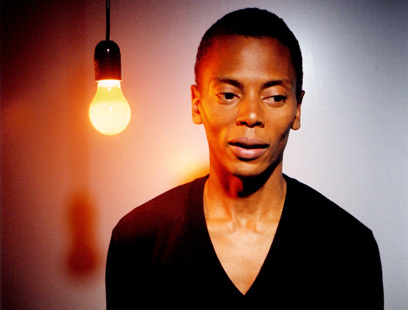
Nite Trax: The Jeff Mills mix that made me live in 2008

0

I’m a-freezing my hanukkah latkes off in Detroit right now (-10 wind chill), so maybe it’s appropriate, among the blizzard of end-of-year lists, that I pop in my hot mix of the year. All 45 Ghostworld conga-line minutes of Detroit wizard Jeff Mills’ triple-table symphonic techno tour de force, “The Exhibitionist.”

Before the techno purists claw my ears out, yes this mix came out in late 2k7 — but I’m on drag time. (I also grew up listening to Jeff as the Wizard, with the Memorexes to prove it, so I can name him king of any damn year I want.)

What really got me about this mind-blowing performance (the sleeve clean at 17:20 made me burst into tears) was how Mills tweaked the massive global rhythms that have always existed subconsciously below fine techno’s surface to come up with the kind of polyrhythmy that dubstep can only achieve at its best. Kinda space samba-y.

Not that it’s a competition — and I was addicted to more dubstep mixes this year than I can count — but I’m a technoist at heart, and this mix really said something I’ve been trying to say for years: that machine music possesses a global soul. I will eternally worship the person who transcribes this for the New York Philharmonic. Or whips out the entire set at Carnaval.

BONUS: Some SF-made mixes I loved this past year:

Lazer Sword: Future Blaps

Kontrol: XLR8R techno tear-up

Richie Panic: An Amazing Lifelike Companion

Public: all mixes (esp. Metallica)

Tops in 2008

0

TOMAS PALERMO’S TOP DANCEHALL AND REGGAE ARTISTS 2008


This year saw American pop (Rhianna, Kardinal Offishall, and Sean Kingston) broadly embracing Jamaican music. Likewise, Jamaican artists emulated, covered, and incorporated American pop and R&B motifs more than ever. The trend in JA was toward hot singles over hot albums, while dozens of new artists broke out. Women in particular had a massive resurgence in reggae (Queen Ifrica, Etana, Cherine Anderson) and dancehall (Tifa, Timberly, D’Angel, Tami Chynn). Money — having it, making it, spending it — was the most prevalent song topic. Here are six categories of reggae artists who made as big an impact on music as Jamaican athletes did on the track in Beijing.

TOP DAWGS Dancehall chart-toppers included Mavado, Vybz Kartel, Beenie Man, Elephant Man, and Busy Signal.

ROOTS REFRESHERS Taj Weekes, Dwayne Stephenson, Morgan Heritage, Pressure, and Tarrus Riley enlivened one-drop traditional reggae.

LADIES IN CHARGE Women charged the charts, including Spice, Tifa, Natalie Storm, Timberlee, Pompatay, D’Angel, Etana, and Queen Ifrica.

CATCHING FIRE Newcomers galore emerged, like Bugle, Serani, Demarco, Erup, Black Ryno, and Konshens.

SOLID AS A ROCK Veterans who didn’t let us down included Beres Hammond, Tony Rebel, Jah Cure, Mr. Vegas, and Junior Reid, as well as Damien and Steven Marley.

POP GOES REGGAE These reggae/pop/R&B combinations and remixes made us smile: Estelle/Sean Paul, Jazmine Sullivan, John Legend/Buju Banton, plus French roots-boots remixes of Mary J. Blige, Lil Wayne, Nas, and Motown.

WOODEN SHJIPS’ TOP 10 (IN ALPHABETICAL ORDER)


Art Lessing, Sleeping Ghost (An Electric Eggplant)

Der TPK (Teenage Panzerkorps), Games for Slaves (Siltbreeze)

Endless Boogie, Focus Level (No Quarter)

Expo 70 and Rahdunes’s split-LP (Kill Shaman)

Fabulous Diamonds, Fabulous Diamonds (Siltbreeze)

Los Llamarada, Take the Sky (S-S)

Nothing People, Anonymous (S-S)

Sic Alps, US EZ (Siltbreeze)

Suicide, Live 1977–1978 (Blast First)

Times New Viking, Rip It Off (Matador)

GEORGE CHEN’S DISORDERLY 10


Grouper, Dragging a Dead Deer Up a Hill (Type)

Krallice, Krallice (Profound Lore)

Mount Eerie, Lost Wisdom and Black Wooden Ceiling Opening (P.W. Elverum & Sun)

Ecstatic Sunshine live

Prurient live

Bulbs, Light Ships (Freedom to Spend)

Mincemeat or Tenspeed in a cave

Thee Silver Mt Zion Memorial Orchestra and Tra-La-La Band, 13 Blues for Thirteen Moons (Constellation)

Pukers cassette

BEN RICHARDSON’S "BEVY OF HEAVY" TOP 10 METAL ALBUMS


Testament, The Formation of Damnation (Nuclear Blast)

Gama Bomb, Citizen Brain (Earache)

Bloodbath, The Fathomless Mastery (Peaceville)

Cannabis Corpse, Tube of the Resinated (Forcefield/Robotic Empire)

Hail of Bullets, …of Frost and War (Metal Blade)

Bison B.C., Quiet Earth (Metal Blade)

Grand Magus, Iron Will (Rise Above/Candlelight)

Jucifer, L’Autrichienne (Relapse)

Gojira, The Way of All Flesh (Prosthetic)

Enslaved, Vertebrae (Indie)

DJ AMPLIVE’S TOP 10


1. MGMT, Oracular Spectacular (Sony)

2. Zion-I, "Juicy Juice" (Gold Dust)

3. Grouch, Show You the World (Legendary Music)

4. Weezer, "Pork and Beans" (Geffen)

5. Santogold, Santogold (Downtown/Atlantic)

6. The Foals, Antidotes (Sub Pop)

7. T-Pain, "Chopped ‘N Skrewed" (Jive)

8. Tapes ‘N Tapes "The Dirty Dirty (Recession Remixes)"

9. Jamie Lidell, Jim (Warp)

10. Hottub, "Man Bitch" (LeHeat)

THEO SCHELL-LAMBERT’S TOP 10 OF ’08


10. The Kills, Midnight Boom (Domino)

Hince and Mosshart’s latest was forceful and impressively consistent, which, yes, meant it was professional, and which, no, didn’t mean it was soulless. The pair spotted the rhythmic snap and hypnotism in ’60s playground sing-alongs. Working with these features instead of nostalgia or camp, they had the basis for a percussion-driven ’00s rock.

9. Steinski, What Does It All Mean? 1983–2006 Retrospective (Illegal Art)

Steve Stein’s influential ’80s tracks were extreme hip-hop: not only any song, but any sound that society had made could be sampled and woven into his boom-box fabrics. Of course, this made for legal nightmares. In 2008, we got the gift of a straightforward packaging.

8. Benga, Diary of an Afro Warrior (Tempa)

The Croydon dubstep man shoved the movement forward with Warrior, but he played it as a nudge. An eclectic, graceful, and terrifically undogmatic outing, it seemed to stroll along the Thames, picking up a new rhythm in each neighborhood. Through that, it remained fierce.

7. Bon Iver, For Emma, Forever Ago (Jagjaguwar)

When you head off to the cabin in the woods to record your masterpiece, it doesn’t tend to work out well. You realize the woods are cold and boring, and that you are missing some helpful equipment. Justin Vernon’s excursion into the Wisconsin snow should inspire a new crop of such failures, because it polishes the myth. In its austerity and bone-cooling effect, Emma recalls a more focused Bonnie "Prince" Billy.

6. The Magnetic Fields, Distortion (Nonesuch)

In 2008, soaking an indie album in Jesus and Mary Chain noise was about as original as what Bon Iver did (see above). Yet it too worked. Critically, Stephin Merritt never let his latest become a disc about texture: he knew that the key to noise pop is the pop. And Distortion delights in the girl-group drums and pert melodies while dramatically cringing at the feedback it pretends is just part of every record. "Drive on, Driver" is more indebted to Fleetwood Mac than anyone else.

5. Lucinda Williams, Little Honey (Lost Highway)

We extend the same sort of charity to Lucinda Williams as we do Chan Marshall — we just really want those gals to be in a happy place. For the first time in a while, Lucinda cut a studio set with optimistic poetry, and Honey not only warmed anyone who got close to Essence or West (both Lost Highway; 2001, 2007), it even matched the elegance of those discs — and with a way juicier palette.

4. Vampire Weekend, Vampire Weekend (XL)

The culture-jamming ("Cape Cod Kwassa Kwassa") wasn’t as deeply meaningful as some held, but the light touch with which it arrived made the record a bit of a marvel. It was sweet, it was for parties, and it had nothing to do with Paul Simon. And the lyrics cribbed from freshman classes at Columbia were remarkably workable and unsophomoric.

3. Lil Wayne, Tha Carter III (Cash Money)

Wayne has a monopoly on ink. What doesn’t make it onto his neck goes into his paeans. Both outlets — the tats, the praise — can seem excessive, but the latter just keeps on being reasonable. Wayne is the rapper as post-rapper, deliciously self-aware. Rapping is a funny thing to do, and rap albums are increasingly funny things to make. He’s getting inside it: looking with awe at that thing he just said, then riffing off it, then riffing off that, wheezing and grunting until his syllables morph, and enjoying himself.

2. Beach House, Devotion (Carpark)

The Baltimore pair found a sound on their debut. On their second record, they improved it and grew into it. Victoria Legrand and Alex Scally seemed to be operating in some last outpost of melody, where tart country-pop hooks could be heard in a final, furry form before they collapsed. That made Devotion both comforting and lonely.

1. Drive-By Truckers, Brighter Than Creation’s Dark (New West)

For starters, DBT are shaping up as their generation’s premier bards of booze. When not singing mid-bender, they’re suffering through the aftermath or plotting the next go-round. What that really means is that their songs teeter powerfully between the concomitant bitterness and shame. The 19-song Creation was built to have room for all the less proud emotions.

Honorable mentions: Lykke Li, Youth Novels (LL); White Hinterland, Phylactery Factory (Dead Oceans); Kathleen Edwards, Asking for Flowers (Rounder); James Pants, Welcome (Stones Throw); Fleet Foxes, Fleet Foxes (Sub Pop)

THE FUCKING CHAMPS’ TIM SOETE’S TOP 10 2008 RELEASES


1. Various artists, Obsession (Bully)

2. Kurt Vile, Constant Hitmaker (Gulcher)

3. Jonas Reinhardt, Jonas Reinhardt (Kranky)

4. Ariel Pink, Oddities Sodomies Vol. 1 (Vinyl International)

5. Lindstrom, Where You Go, I Go Too (Smalltown Supersound)

6. Bum Kon, Drunken Sex Sucks (Smooch/Maximum Rocknroll)

7. La Dusseldorf, Viva (Water)

8. John Maus, Love Is Real (Upset the Rhythm)

9. RTX, JJ Got Live RaTX (Drag City)

10. Sic Alps, US EZ (Siltbreeze)

CHRIS SABBATH’S TOP 10


1. Godwaffle Noise Pancakes

A cluster of floor-crouching noiseniks + a heaping helping of syrupy waffles hot off the griddle = a great way to kill two hours on a Saturday afternoon.

2. Beth from Times New Viking tells me outside the Great American Music Hall that she likes my cat sweatshirt: And according to her, she only gives out one sweatshirt compliment per year — oh, snap!

3. Spire Live, Fundamentalis (Autofact/Touch)

Dynamite double LP compilation of live recordings dubbed in various European cathedrals from the likes of Philip Jeck, Christian Fennesz, BJNilsen, and more.

4. Eat Skull, Sick to Death (Siltbreeze)

Hurrah to the Philadelphia noise imprint for releasing this gem of a debut.

5. Kevin Drumm, Imperial Distortion (Hospital)

The Chicago native once again falls head over heels for the drone.

6. Wavves, Wavves (Woodsist)

I love this kid! Bedroom-spun beach punk in the vain of Beat Happening and the Embarrassment.

7. Common Eider, King Eider, Figs, Wasps, and Monotremes (Root Strata)

If I could fork a Goldie over to Rob Fisk for every time this album made its way through my stereo speakers, he would have a lot of Goldies.

8. Excepter, Debt Dept (Paw Tracks)

The Brooklyn electronic performance troupe sings about burgers, sunrises, and killing people on its new disc.

9. Blank Dogs, On Two Sides (Troubleman Unlimited)

New-wave synths soiled in grime, decayed vocals, and tape hiss galore from this prolific newbie.

10. John Wiese at the Lipo Lounge

Sounded like chunks of metal swelling to the size of balloons and then bursting into my chest for 10 awesome minutes.

PETER NICHOLSON’S TOP 10 TUNES TO DANCE AWAY THE HEARTACHE


1. Yellowtail featuring Alison Crockett, "You Feel Me" (Bagpak)

2. Dave Aju, "Crazy Place" (Circus Company)

3. Jazzanova featuring Randolph, "Let Me Show Ya (Henrik Schwarz Remix)" (Sonar Kollektiv)

4. Grace Jones, "La Vie en Rose (Casinoboy Version)" (Trackybottoms)

5. Mike Monday, "The 11 11" (Om)

6. Recloose, "Catch a Leaf" (Loop Sounds)

7. La Vida Buena, "Humanidad" (Amalgama)

8. Sebo K, "Too Hot" (Mobilee)

9. Art Bleek, "Modern Spaces" (Connaisseur)

10. Jimpster, "Dangly Panther" (Freerange)

IRWIN SWIRNOFF’S FAVORITE RECORDS AND MUSICAL MOMENTS OF 2008


John Maus, Love Is Real (Upset the Rhythm)

Hercules and Love Affair (DFA) and at Mezzanine

Erykah Badu, New Amerykah, Pt.1: 4th World War (Motown)

Magnetic Fields, Distortion (Nonesuch)

Stereolab, Chemical Chords (4AD)

White Magic, New Egypt (Latitudes)

Cluster at Aquarius Records and the Boredoms at the Fillmore

My Bloody Valentine at the Concourse

Flying Lotus, Los Angeles (Warp)

Grouper, Dragging a Dead Deer Up a Hill (Type)

I can’t not mention: Sparks, Exotic Creatures of the Deep (Lil Beethoven); Beach House, Devotion (Carpark); Cut Copy, In Ghost Colors (Modular Interscope); Nagisa Ni Te, Yosuga (Jagjaguwar); the Alps, III (Type); Paavoharju, Laulu Laakson Kukista (Fonal); Antony and the Johnsons, Another World (Secretly Canadian).

ERIK MORSE’S TOP RECORDS OF 2008


Gas, Nah und Fern (Kompakt)

Fennesz, Black Sea (Touch)

Mavis Staple, Live: Hope at the Hideout (Anti-)

Various artists, Thank You Friends: The Ardent Records’ Story (Big Beat)

Abdel Hadi Halo and the El Gusto Orchestra of Algiers, Abdel Hadi Halo and the El Gusto Orchestra of Algiers (Honest Jon’s)

Skyphone, Avellaneda (Rune Grammofon)

Autechre, Quaristice (Warp)

Susanna, Flowers of Evil (Rune Grammofon)

Raymond Scott Quintette, Ectoplasm (Basta)

The Last Shadow Puppets, The Age of the Understatement (Domino)

Tape, Luminarium (Hapna)

Al Green, Lay It Down (Blue Note)

Beach House, Devotion (Carpark)

TWO GALLANTS’ TOP 10 OF 2008


Fleet Foxes, Fleet Foxes (Sub Pop)

Various artists, Victrola Favorites: Artifacts from Bygone Days (Dust to Digital)

Moondog: The Viking of 6th Avenue: The Authorized Biography by Robert Scotto (Process, 2007)

Barack Obama

Blitzen Trapper, Furr (Sub Pop)

What It Is: What It Is by Paul G. Maziar and Matt Maust (Write Bloody)

Various artists, Eccentric Soul: Trager and Note Labels (Numero)

Immortal Technique, The 3rd World (Viper)

Grayceon, The Grand Show (Vendlus)

Two Gallants perform Dec. 26, 8 p.m., at the Fillmore. www.twogallants.com

DEERHOOF’S ED RODRIGUEZ’S TOP 10 THINGS OF A MUSICAL NATURE 2008


I Got the Feelin’, James Brown in the ’60s DVD (Shout! Factory)

It will remind you why you decided to play music in the first place. If you don’t play music then it will make you want to start.

Silentist, Silentist (Celestial Gang)

Mark Burden always keeps me interested. Nancarrow or Reich with blast beats.

Over the course of more than two months of touring I saw and got to know several bands that were new to me. Coconut, Experimental Dental School, Parenthetical Girls, Flying, and so many more. I can’t remember ever getting to see so much inspiring music made by so many creative, energetic, and completely fun people.

Weasel Walter, solo, duos, trios, and on and on

No matter what the setting, he pushes the situation further with his drive, talent, and humor (all of which are refreshing and needed in the improvised music scene).

Bronze

Nominated for the best act of commitment that didn’t involve self-mutilation. All in unison, shaving their heads onstage and then revealing perfect Marine dress uniforms under their smocks. They looked so good it inadvertently might have been the best recruiting campaign since Kid Rock and NASCAR teamed up to con kids across the US.

Death Sentence: Panda! and …

Burmese

I went to every show of both these bands over the year whenever I was in town. Without fail I would be deaf, destroyed, and smiling, or dancing, laughing, and smiling. Check them out to match those descriptions to the correct band!

Earth, Wind and Fire: In Concert DVD (Geneon, 2000)

I work at Lost Weekend Video, so I watch more new music DVDs more often than I get new CDs. But maybe you’ll do the same after watching this bass player do high kicks for an hour and not miss a note.

Touring with old friends KIT and Hawnay Troof. Watching Vice Cooler get a bunch of crossed-armed kids dancing, cause bartenders to leave their posts to run to the stage and move, and VC almost break his neck jumping off monitors all in single-digit minutes. With KIT, add in the insane attack of Steve, the bouncing energy of Kristy, and the apologetic guitar soloing of George Chen, and try not to beam.

Joining Deerhoof! Getting to spend so much time of 2008 with John, Greg, and Satomi has made this year feel like no other.

>>MORE YEAR IN MUSIC 2008

Half-forgotten memories

0

PREVIEW Choreographer-dancer Erika Tsimbrovsky and visual artist–performer Vadim Puyandaev may be new to the Bay Area, but they are old hands in the theater. Having more than a decade of what they describe as "audio-visual-kinetic" performance under their belts, mostly in Eastern Europe and Israel, they have also developed a fine nose for ferreting out good collaborators. For their new Scrap-Soup, they have enlisted some top Bay Area artists: musicians Sean Felt and Albert Mathias and, among others, dancers Suzanne Lappas, Kira Kirsch, and Andrew Ward.

The primary impetus that drives Tsimbrovsky and Puyandaev’s work is an interest in exploring — through improvisational structures — different media and their relationships to one another. The Garden (2007), their first work in this country, looked at how gestures — musical, visual, and kinetic — can reignite half-forgotten memories. For Scrap they went through records of how information has been visually transmitted historically, via medieval manuscripts, hieroglyphs, and Japanese scrolls, and in contemporary mass communication, by way of billboards and computer screens. They want to know whether the preservation of content has been changed by today’s technology, and if so, how? Those are big theoretical questions, but the artists involved — all of them experienced improvisers — are hands-on, dig-into-the-material kinds of collaborators. Scrap‘s format will take the shape of a constantly shifting installation for which Tsimbrovsky and Puyandaev set the parameters, but within which the performers are on their own to hopefully bounce off one another.

SCRAP-SOUP Fri/19–Sat/20, 8 p.m., $15–$20. Project Theater Artaud, 450 Florida, SF. (415) 863-9834, www.artaud.org/theater

Party hardy

0

REVIEW Going to Smuin Ballet’s The Christmas Ballet feels like going to a big party. You’re glad to see some guests while others make you want to head for the door. Currently touring the Bay Area, the 15-year-old holiday extravaganza finishes its annual run at Yerba Buena Center for the Arts Dec. 17 to 28.

It’s easy to see why this two-part concoction of 30 numbers, divided into The Classical Christmas and The Cool Christmas, has become a holiday staple. If the late Michael Smuin was anything, he was an entertainer. It’s what he loved and it’s what he was good at, even if some of us believe he could have been more.

During its Dec. 4 performance at the Mountain View Center for the Performing Arts, the company, now under the direction of Celia Fushille, showed itself in good shape. The 14 disciplined but free-spirited dancers injected the requisite sentiment and sass into choreography by Smuin and new additions by Amy Seiwert, Viktor Kabaniev, and Val Caniparoli. The Christmas Ballet lives by its musical choices. Smuin’s taste was far-reaching and inclusive: he loved pop as much as Bach, and his unabashed largesse enlivened the sometimes problematic choreography.

At its most objectionable, the choreography dips deep into the sentimental and skims the surface of great classical music as if it were whipped cream. But Smuin also knew when to step back. You can’t compete with "Veni Emanuel," or vocalists like Louis Armstrong and Bing Crosby. So he opted for simple strolling patterns, which became a theme weaving throughout the two hours. At its best The Christmas Ballet is unpretentious, musical, and witty.

Contrary to expectations, The Cool Christmas looked more dated than The Classical Christmas, which intersperses carols from around the world with selections from the symphonic repertoire. Cool‘s pop choices stopped at around 1980 — it could have used an injection of more contemporary fare. But don’t even think of touching Santa Baby.

The dancers were a joy to watch. Susan Roemer was lyrical, melodramatic, and super-vampy; Brooke Reynolds, dignified in some seriously convoluted partnering; Shannon Hurlbut, on the dot in his tapping; and Aaron Thayer, joyous and committed in everything he danced. As for Ted Keener’s Elvis, not quite, but he’ll get there.

SMUIN BALLET Dec. 17–20, 23, and 26–27, 8 p.m.; Dec. 20–21, 23–24, 26–28, 2 p.m.; Dec. 21, 7 p.m.; $18–$55. Yerba Buena Center for the Arts, 701 Mission, SF. (415) 495-2234, www.smuinballet.org

Dick in a box

0

› a&eletters@sfbg.com

If the assassination of JFK was a defining, traumatic blow to American hopefulness, the Watergate scandal a decade later arguably created something worse: a deep collective cynicism that our politics could never escape corruption, or that the guilty would be truly punished even when caught red-handed. How much worse have we shrugged off since?

As the most secretive White House in modern memory pulls up stakes, there’s a fear that particular history may repeat itself. What if Bush blanket-pardons his cabinet, as Gerald Ford did for Richard Nixon, of any and all crimes not yet formally accused? In 1974, that move informed our great nation that at certain high levels, the concept of justice need not apply. In fact, it meant Dick. Nixon left the country in far better (shaky, but better) shape than W., but arguably suffered a greater popular backlash than Bush will. He never admitted any criminal wrongdoing, copping to vague "mistakes made" instead. He resigned to avoid impeachment, and the full airing of dirty laundry that would have required. Thus, the sweatiest president ever avoided total humiliation. But didn’t he owe us repentance?

The pardon and Nixon’s subsequent shrinking from public life left a majority feeling cheated. He owed us that pound of flesh — withholding it was intolerable arrogance. Adapted by Peter Morgan from his widely produced play, with the originating lead actors reprising their roles, Frost/Nixon dramatizes the moment when Tricky Dick did get called onto the public carpet to confess his sins. Which he did — well, sorta kinda. The disgraced prez (Frank Langella) is offered tempting scads of money to be interviewed on TV by an odd candidate for interrogator, the rather garish Brit chat show host David Frost (Michael Sheen) — a showbiz personality more akin to contemporaries the Galloping Gourmet and early Geraldo Rivera than, say, Walter Cronkite (or even Dick Cavett).

Nixon’s people (including Kevin Bacon as security chief) figure this presumably softball platform will provide opportunity to burnish his tarnished legacy as statesman. The team that womanizing, cheerfully shallow Frost assembles to prep for this American broadcast "comeback" worry that he lacks the depth of knowledge, experience, or backbone to pin subject to mat. All suspense here hinges on whether Frost can give his armchair opponent "the trial he never had." He’s seemingly outmatched: fallen yet not feebled, the ex-president proves a master of spin, evasion, and subterfuge.

George Clooney was reportedly eager to direct Frost/Nixon; he might’ve made something slyer and subtler than Ron Howard, who sometimes underlines performance nuances as if wielding a bullhorn and flashing neon sign. But it’s still the best movie he’s done, a nimble opening-up of a talky stage entity that only slightly exaggerates the import of real-life events. Langella makes one realize how seldom the most widely caricatured president in history has been portrayed as more than a collection of grotesque tics; Sheen is as expert here as he was playing Tony Blair in 2006’s The Queen. While its contemporary echoes aren’t overt, Frost/Nixon prods an important question: why do we demand even less accountability of our Commander-in-Chief now? What should have been lessons learned from Nixon instead begat heightened apathy, gullibility, and stupidity. As an electorate, we got the Commanders-in-Chief we deserved.

FROST/NIXON opens Fri/12 in San Francisco.

Tap dreams

0

› amanda@sfbg.com

On Dec. 2 two water conferences were held in San Francisco, attended by very different groups of people.

Downtown, in a room deep within the Hyatt Regency hotel, executives from PepsiCo, Dean Foods, GE, ConAgra, and other major companies gathered for the Corporate Water Footprinting Conference. The agenda that the conference made public included a presentation by Nestlé on assessing water-related risks in communities, Coca-Cola’s aggressive environmental water-neutrality goal, and MillerCoors plan to use less water to make more beer.

But what these giant corporations, which are seeking to control more and more of the world’s water, really discussed the public will never know. Only four media representatives were permitted to attend — all from obscure trade journals not trafficked by the typical reader — and both the Guardian and the San Francisco Chronicle were denied media passes.

The event was sponsored by IBM, and tickets were $1,500 — out of reach for many citizens and environmentalists who might have liked to attend.

And why might people take such a keen interest in the kind of corporate conference that probably occurs routinely in cities throughout the world?

Because there’s almost universal agreement that the world is in a water crisis — and that big businesses see a huge opportunity in the privatization of water.

Only one half of 1 percent of all the water in the world is freshwater. Of that, about half is already polluted. Although water is a $425 billion industry worldwide — ranking just behind electricity and oil — one in six people still don’t have access to a clean, safe glass of it. If the pace of use and abuse remains, the 1.2 billion people living in water-stressed areas will balloon to more than 3 billion by 2030.

That includes California. On June 4, Gov. Arnold Schwarzenegger declared a statewide drought after two lackluster seasons of Sierra snowfall. Scientists are predicting the same this winter. You can see how the state is mishandling the issue by looking at some recent legislation. Schwarzenegger and Sen. Dianne Feinstein have proposed a $9.3 billion bond to build more dams, canals, and infrastructure. At the same time, the governor vetoed a bill that would have required bottled water companies to report how much water they’re actually drawing out of the ground.

In that context, while the big privatizers were hobnobbing at the Hyatt, activists were attending a very different event, the "Anti-Corporate Water Conference," held at the Mission Cultural Center. It was free and open to the public and the media. More than 100 people gathered to hear a cadre of international organizations share information on how to keep this basic human right — water — in the hands of people.

Speakers included Wenonah Hauter, director of Washington, DC-based Food and Water Watch; Amit Srivastava of Global Resistance, a group that works to expose international injustices by Coca-Cola; Mark Franco, head of the Winnemem Wintu Tribe, which lives among water bottling plants near Mount Shasta; and Mateo Nube, a native of La Paz, Bolivia, and the director of Movement Generation Justice and Ecology Project.

Nube spoke about water as a commons, requiring stewardship, justice, and democracy. "We’re literally running out of water. Unless we change the way we manage, distribute, and consume water, we’re going to have a real crisis on our hands," he said. Nube’s remarks tied together the tensions of control and revolt, democracy and privatization, ecological balance and human need — all enormous issues, all related to water and water scarcity, which the Worldwatch Institute has called "the most under-appreciated global environmental challenge of our time."

BASIC NEED, INFINITE MARKET


Water is a basic human need, perhaps even more important than clean air, food, and shelter. People will never strike against water and stop drinking.

And that means, from a capitalistic point of view, it’s a perfect, nearly infinite market. "As water analysts note, water is hot not only because of the growing need for clean water but because demand is never affected by inflation, recession, interest rates or changing tastes," wrote Maude Barlow in her 2007 book Blue Covenant.

If scarcity drives price, anyone with a stake in the water industry stands to gain from an increasingly water-stressed world. As Barlow also reported, "In 1990, about 51 million people got their water from private companies, according to water analysts. That figure is now more than 300 million." By controlling the resource and choosing when and if they engage with the public it allows some of the biggest water abusers to set the terms of a critical ongoing debate.

The fact that humans need water raises important questions: should water be classified as a basic human right available to everyone? Is water part of the commons? If so, should corporations be allowed to control the taps or bottle it, mark up the price, and sell it for profit?

Not much polling has been done on people’s opinions of water, but during 35 informal on-the-street interviews conducted by the Guardian, 31 people said it is a basic human right. The other four said it was subject to the laws of supply and demand.

This week marks the 60th anniversary of the United Nations Universal Declaration on Human Rights, and Barlow, who has been appointed special advisor on water to the UN, will be addressing the General Assembly on the fact that water is still missing from the original 30 Articles.

"The reason that water was not included in the original 30 Articles in the Universal Declaration of Human Rights is that no one at that time could conceive there would be a problem with water," Barlow told the Guardian. "It’s only in the last 10 years that the concept of water as a human right has come to the fore."

The problem has its roots in the inherent conflict between conservation and profit. Saving water is relatively cheap, but there’s no money to be made by eliminating waste. Developing expensive new water sources, though, is a potential private gold mine.

As Barlow points out in her book, technology is becoming an integrated part of the solution to the water crisis. Desalination plants, water recycling facilities, and nanotechnology are all being thrown at the problem — in some cases before a full assessment of use and abuse has occurred.

While technological solutions may be warranted in some places, Barlow worries that relying on them bypasses any true attempts at efficiency and conservation. "I’m not going to say there’s no place for water cleanup," she told the Guardian. "What I’m concerned about is we’re going to put all the eggs in the cleanup basket and not nearly enough in the conservation and source protection basket. What I’m concerned about is the idea that technology will fix it. Meanwhile, don’t stop polluting, don’t stop the over-extraction, allow the commercial abuse of water, allow the agricultural abuse of water because what the heck, there’s tons of money to be made cleaning it up. I think that’s the wrong way of coming at it."

The technological fix is one way the state’s water crisis may slowly seep into private sector control, and a couple of examples show what can happen when private companies don’t play nice with the public, how citizens constantly battle with state agencies to enforce regulations, and how the public process could and should be honored.

GET THE SALT OUT


In theory, California has plenty of water — its 700 miles of coastline border the giant reservoir known as the Pacific Ocean. But humans can’t drink salt water — and some companies see a nice industrial niche in that dilemma. Build a plant that takes out the salt, and suddenly there’s plenty for all.

Several small desalination facilities already exist throughout the state, mostly cleaning water reservoirs brined by agriculture. But another 30 desalination plants have been proposed for the coast as a way to deal with future water shortages.

One is in Carlsbad, near San Diego, where Poseidon Resources is constructing the only large-scale desalination plant that the state has permitted to date. It’s a 10-year-old project that, so far, doesn’t even have a pipe in the ground.

Despite Poseidon’s ability to grease the wheels with local officials, the facility is controversial. It sits next to a fossil-fuel burning peaker power plant, and will be desalinating the power plant’s discharge water, thus shielding its negative environmental impacts by claiming its the power plant that’s sucking up seawater and damaging marine life — the desalination plant is just making use of the wasted water.

That argument doesn’t sit well with Joe Geever of the Surfrider Foundation, who pointed out that part of the power plant is scheduled for a retrofit to air-cooling, and talk is of a potential state ban on using water for this type of cooling system. There are other more environmentally benign seawater extractions, he said, like drilling and capturing subsurface sources, that the desalination plant could have used.

Mostly, he contends, the plant subverts conservation. "Per capita consumption of water in San Diego is much higher than other places," he said. "In southern California we waste an enormous amount of water on growing grass. There’s a lot to be saved."

Poseidon, a private company, is footing the bill for the plant’s construction, but the financing scheme is predicated on a future increase in the cost of water. As Poseidon’s Scott Maloni explained to the Guardian, the contract with the San Diego Water Authority states that the cost of desalinated water can never be more than the cost of imported water. It can, however, walk in lock-step with it — and by all accounts the price to pipe water to sunny southern California is going to increase. Maloni said his company was taking an initial loss but would start paying itself back as imported water costs increase. Eventually rates will be set halfway between the real cost of desalinated water and the higher cost of imported water.

What kinds of guarantees are there that this will happen? Nobody knows. "They’ll say anything, but when it comes to showing you a contract, we’ve never seen anything," said Adam Scow of Food and Water Watch. "There’s a lack of regulation with a private company controlling the water."

The plant now has no less than three lawsuits hanging over it, all filed with state agencies in charge of permitting and oversight — the Coastal Commission, the State Lands Commission, and the San Diego Regional Water Quality Control Board. All basically contend that the state didn’t do enough to require Poseidon to implement the most environmentally sound technology that’s least harmful to marine organisms, as required by state law.

Geever stresses that desalination is an energy-intensive way to get water. "Every gallon of water you conserve is energy conserved," he said. "Not only could San Diego do more conservation, but they don’t recycle any wastewater to potable water standards. That’s much less energy intensive."

Poseidon counters by saying that it invested $60 million in energy efficiency measures for the plant and will be installing solar panels on the roof. Perhaps most telling is that the company sees itself as vending reliability. "It’s not the current cost of water the San Diego Water Authority is concerned about, but the future cost for an acre-foot," Maloni said. "There’s a dollar figure you can put on reliability. Public agencies are willing to pay us a little more for that."

Which gets back to a comment Barlow made about capitalizing on crisis. "We are frightened half to death and everyone who looks at it, right-wing or left-wing, sees that. … They use the crisis to say we have no alternative except to go into massive desalination plants."

And, as Peter Gleick, president of the Pacific Institute pointed out, San Diego wasn’t calling for proposals to bring it more water. "Poseidon wanted to build a desalination plant and it came to San Diego. That’s one way to do it. The other way is for a municipality to say we want a desalination plant, we’re opening it up to bids, let’s have a competition. That didn’t happen, and instead we have one contractor."

Geever added, "Poseidon has been really successful at lobbying politicians and convincing regulators to give them permits."

Which points to one of the chronic ills of managing water systems, particularly in California where water has always been political. "In the 20th century decisions about water were made by white males in back rooms," said Gleick. "It solved a lot of problems, but it led to a lot of environmental problems. The days when water decisions made in back rooms should be over. And they aren’t over, and that’s part of the problem."

DELTA BLUES


Nowhere is that more obvious than the delta, where the state’s two most prominent rivers — the Sacramento and the San Joaquin — meet the Pacific Ocean just north of San Francisco. It’s ground zero for one of the most charged political fights in the state.

Two-thirds of California’s water comes from the delta. About 80 percent of it goes to cropland, watering about half of the state’s $35 billion agricultural industry, much of it through historic water rights that have been granted to a small lobby of powerful growers who sell their surplus rights for profit. Another 18 percent goes to urban water needs, and — in spite of the fact that this is the largest estuary on the west coast of North and South America — only 2 percent of the water remains for natural environmental flows.

Delta issues are legion and begin at the headwaters of the Sacramento River, near Mount Shasta, a land Mark Franco describes as an Eden. "The deer, salmon, and acorns that we eat — everything that we need is there," Franco told the Guardian. "It’s such a beautiful place. Now they’re drying it, that Eden."

Franco is head of the Winnemem Wintu, or "little water people" tribe, and is fighting the first phase of water diversions from the Sacramento River, 200 miles north of the capitol where companies like Coca-Cola, Crystal Geyser, and now, potentially, Nestlé, pump millions of gallons a year into small plastic bottles and ship it around the country to sell in groceries and convenience stores.

"Here in the US, people have become soft. They’ve become so used to just having things directly handed to them that they no longer understand where their water comes from," he said at the anti-corporate water conference. "Realize this: those springs on Mount Shasta are not an infinite supply of water."

After the Sacramento feeds the bottled-water companies, what remains wends its way south, with more diverted directly to farmers and into the State Water Project, which pipes it to drier southern regions. What’s left empties into the delta.

A lack of fresh water, flagging environmental preservation, increasing agricultural needs, and leveed island communities that are seismically unsafe and sinking, all mean the delta is failing as an ecosystem, and has been for some time. Chinook salmon and delta smelt populations are collapsing to such an extent that court orders have halted a percentage of water diversions and salmon fisherman were forced to dock their boats this year. Levees are crumbling, causing islands to flood and raising ire among landowners. Farmers with historic water rights are fiercely protective of them, while environmentalists are lobbying them to use more conservation and efficiency.

Nearly all stakeholders agree that the status quo won’t hold.

The challenge is finding a solution. Ending exports seems impossible, limiting them means massive investments in other resources. No one agrees on what will really save the endangered salmon and smelt or improve conditions for the 700 other native plants and animals.

In 2006, the governor convened a seven-member Delta Vision Blue Ribbon Task Force, which released a strategic plan in October calling for balancing co-equal goals of ecological restoration and water reliability.

The plan also specifically recommended a dual conveyance system similar to what was proposed in a study by the Public Policy Institute of California. It combines some through-delta pumping with a peripheral canal around the delta. PPIC crunched the numbers and determined that the canal was economically better than any of the four options they had weighed.

The peripheral canal idea isn’t new, but it’s been controversial since it was first proposed almost three decades ago. The plan was ushered by then-Gov. Jerry Brown, but defeated by voters in 1982 after a major organizing effort by environmentalists. (Whether voters will cast ballots on it this time remains to be seen, though the Attorney General’s Office, now headed by Brown, has counseled the Department of Water Resources, which is charged with implementing whatever plan is decided upon, that a vote of the people isn’t required.)

Shortly after its release in July, the PPIC report was criticized by five elected Congressional Democrats — Reps. George Miller, Ellen Tauscher, Doris Matsui, Mike Thompson, and Jerry McNerney. "The PPIC report should not be used to ignore the many things that can be done today to restore Delta health, including providing necessary fish flows, undertaking critical ecosystem restoration projects, and making major investments in water recycling and improved conservation measures," Miller said.

Numbers used by the PPIC report have also been criticized by Jeffrey Michael, a business professor at the University of the Pacific in Stockton. In an analysis of PPIC’s work, Michael said the group had used inflated population figures, as well as high costs for desalinated and recycled water, therefore resulting in a report that made it look like it was too expensive to end delta exports altogether and replace them with other water sources.

The PPIC said the state’s population would be 65 million by 2050, that desalinated water costs $2,072 per acre-foot, and recycled water goes for $1,480 per acre-foot — numbers that were scaled to 2008 dollars from 1995 figures. Michael contends that if the numbers were adjusted to reflect actual costs, the peripheral canal wouldn’t look like such a sweet deal.

Maloni, of Poseidon Resources, said the desalinated water cost would be $950 per acre-foot for San Diego, including a $250 subsidy. A similar plant the company is hoping to construct in Huntington Beach will be about $50 more per acre foot.

When asked if $2,100 per acre-foot was a reasonable figure for desalinated water in California, Maloni said, "That’s nuts."

What does all this illustrate? That even among a small cast of purported experts there’s little consensus on several fundamental issues.

Adding more fuel to the fires of public skepticism is that a third of the funding for the PPIC report came from Stephen D. Bechtel Jr. — heir to the Bechtel Corp., which has come under tremendous criticism for its moves to privatize water around the world.

"That is very upsetting to us. They would stand to gain a lot with a contract to build a peripheral canal," said Barbara Barrigan-Parrilla of Restore the Delta.

PPIC’s Ellen Hanak said the funding didn’t affect their findings. "It’s really much more linked to the fact that the foundation is really interested in the environment and water is a part of that."

Linda Strean, the PPIC’s public affairs officer, told the Guardian that it was Bechtel himself who wrote the check, not the foundation. It’s the first time Bechtel has given to PPIC.

But considering Bechtel’s past performance managing water, it doesn’t inspire much confidence.

BECHTEL’S BIG ADVENTURES


In April, Cesar Cardenas Ramirez and César Augusto Parada, traveled from Guayaquil, Ecuador, to San Francisco. The two men were on a fact-finding mission: they wanted to know more about the company that owns Interagua, the company that is supposed to deliver the drinking water that only occasionally comes out of the taps in their homes.

One of the first things they discovered is that 50 Beale St. doesn’t necessarily advertise itself as the home of Bechtel — one of the world’s largest private corporations, with global construction and infrastructure contracts amounting to billions of dollars annually.

In Guayaquil, water service has been problematic for decades. During the 1990s the country received a loan from the Inter-American Development Bank to improve basic infrastructure. The money was given directly to the government, but like many World Bank and International Monetary Fund loans granted throughout Latin America at the time, it was predicated on an eventual privatization of the water service contract.

The money helped — water conditions improved, and the city seemed to be on track to bring service to outlying areas. But in 2000, the city, abiding by the loan conditions, requested bids to run the water and sewage systems. No bids were received. Leaders scaled back provisions that kept some control in the hands of the government, and they got one response. In 2001, Interagua, a company owned by Bechtel, took over water service.

"Since the contract, nobody has been able to drink the tap water," Cardenas, who represents the Citizen’s Observatory for Public Services, a watchdog group formed in Guayaquil to monitor the water contract between the government and Interagua, told the Guardian. "Prior to the contract you could drink the tap water, although there were some sections of the city where the plumbing was old and inadequate."

Even though Interagua is managing a public service, because it’s a private company, information about its exact responsibilities have been elusive. The Observatory does know that Interagua pays nothing for the water it draws from the local river, is guaranteed a 17 percent rate of return, and that it has a minimum mandate to expand service. What’s also known is its citizens’ experience — during the first six months of the contract, some rates were increased 180 percent.

Bechtel’s SF office refused to meet with the two men or answer their phone calls, e-mails, and letters, which highlights the inherent problem with corporate control of water — a lack of accountability. Bechtel didn’t answer any of the Guardian‘s detailed questions regarding the Interagua contract, and only provided a three-page letter originally drafted to the World Bank in December 2007, that paints a rosy scene of productivity and accomplishment in Guayaquil.

"At present, over 2.1 million residents of Guayaquil (84 percent of the population) are connected to the municipal potable water system, and more than 90 percent of the customers have 24-hour per day, uninterrupted service." The letter goes on to state that coverage is expanding with new connections, water quality meets public health standards, prices have decreased, and procedures are in place to help customers who have higher than average bills.

"There are things that have improved, yes," said Emily Joiner, who spent last summer in Ecuador and is author of the book Murky Waters, a history of water issues in Guayaquil published by the Observatory in 2007. But the bottom line is that citizens pay for the service, but they can’t drink the water.

"You still don’t drink the water anywhere in the city at any time," said Joiner. People buy bottled water or boil it. "Bottled water is expensive, as a percentage of income," she said.

Whereas water service was previously priced more like a progressive income tax, with the lowest consumers paying the lowest rates, Interagua has flattened out the rate structure and now big water consuming businesses are paying the same as residents. "It’s pricing some families out of the market," Joiner said. "It’s great for business. It’s not great for people who don’t have enough water to bathe or wash their clothes."

The Observatory would like the water system turned back over to the government. The local authority, which once ran the water service and is now charged with overseeing Interagua, fined the company $1.5 million for not meeting goals for expanding service. According to Joiner, there’s been no follow-up on whether the company is meeting those goals now.

The Observatory also filed complaints with the World Bank, which attempted a settlement, but, according to Joiner, representatives from Interagua refused to sit down at the same table as Cardenas. "The process stalled," Joiner said. "Interagua said the issue had become too politicized. César [Cardenas] has a reputation for rabble-rousing, and at the time he was lobbying for constitutional amendments outlawing privatization. Interagua considered it negotiating with a hostile party."

A new constitution was passed in September that does, in fact, outlaw privatization, but still allows existing contracts to be honored if they pass a government audit.

In the meantime, the local rumor is that Bechtel is arranging to sell Interagua to another company. Bechtel wouldn’t confirm this, and no one could say more beyond what was reported in speculative articles in Guayaquil’s local newspapers.

It wouldn’t be the first time Bechtel bailed on an international water contract. In what was part of a massive privatization of a variety of Bolivia’s national services, in 1996 the World Bank granted the city of Cochabamba a $14 million loan to improve water service for its 600,000 citizens. Like Ecuador, there were strings attached: a future privatization of the city’s water service. It was sold to Aguas del Tunari, the sole bidder — also a subsidiary of Bechtel. Almost immediately rates increased by nearly 200 percent for some families. In January 2000, people stopped paying, started rallying, and the water war began.

Led by La Coordinadora for the Defense of Water and Life, organizers shut down the city, physically blockading roads and demanding the regional governor review the contract. The battle went on into February, resulting in injuries to 175 people and the death of one. Originally the government announced a rate rollback for six months, but the Bechtel contract remained. "The [Bechtel] contract was very hard to get a hold of," Omar Fernandez of the Coordinadora told Jim Schulz of the Democracy Center. "It was like a state secret." Once they did examine a copy of it, Bechtel’s sweetheart deal for a guaranteed 16 percent profit was exposed and people demanded a full repeal.

Eventually, the residents got it, and though decent water service in Cochabamba is still elusive, the water war has become the poster child for successful grassroots activism.

"One of the most inspiring struggles around community control of water happened in Cochabamba, Bolivia, in the year 2000, when international corporation Bechtel — based here in San Francisco — privatized the municipal water system and hiked the water rates for citizens by 30 to 40 percent. Thankfully, there was a popular upsurge. It was a very bitter struggle and people succeeded in turning control back to public hands.

"This success changed the public debate in Bolivia," said Mateo Nube, a native of La Paz, Bolivia, who spoke at the anti-corporate water conference. "People said ‘enough’ to privatization, enough to corporate control. We need to seize control of our government."

You don’t have to go to Bolivia to find water-privatization battles. In 2002, catching wind that the city of Stockton was on the brink of privatizing its water services, the Concerned Citizens Coalition rallied signatures for a ballot measure against the idea. Weeks before the vote, the Stockton City Council narrowly approved one of the west’s largest water privatization deals — a 20-year, $600 million contract with OMI-Thames. The ballot measure still received 60 percent approval, and activists took the issue to court arguing there hadn’t been a proper CEQA process. In January 2004, according to the Concerned Citizens Coalition Web site, "San Joaquin County Superior Court Judge Bob McNatt ruled in our favor — we won on all points. The judge ruled that privatizing, in and of itself, needed environmental review." The city appealed, but eventually dropped the suit and OMI walked away in March 2008.

PUBLIC AGENCY, PUBLIC PROCESS


Bechtel also failed to hold on to a more local contract, a $45 million deal with the SFPUC to manage the first phase of its multibillion dollar Water System Improvement Project. After a 2001 story by the Guardian exposed Bechtel’s exorbitant billing for services that resulted in few gains (see "Bechtel’s $45 million screw job," 9/12/01), the contract was revoked by the Board of Supervisors and granted to Parsons, which runs it now.

Years later, in 2007, when the SFPUC released a draft of the Environmental Impact Report for the $4.4 billion project, massive public outcry arose against it. The plan outlined major seismic upgrades for miles of aging water infrastructure between San Francisco and Yosemite National Park, where the headwaters of the Tuolumne River are captured by a giant dam in Hetch Hetchy Valley and gravity-fed to the city. While the EIR projected little additional water use for San Franciscans, it called for diverting an additional 25 million gallons of water per day from the Tuolumne to meet the needs of 23 wholesale customers in San Mateo, Santa Clara, and Alameda counties.

The Pacific Institute and Tuolumne River Trust collaborated on a study showing that 100 percent of the anticipated water increases were for those wholesale customers — most of it for outdoor water use. The SFPUC hadn’t factored in any increased conservation, efficiency, or recycling measures, nor had it independently questioned the growth numbers.

The EIR received upwards of 1,000 public comments, more than any other document ever generated by the SFPUC. Environmental groups rallied, writing editorials, flooding public meetings, and asserting a different vision of the Bay Area’s water future and stewardship of its primary, pristine water resource.

And it worked. "We got about 95 percent of everything we wanted out of the WSIP process," said Jessie Raeder of the Tuolumne River Trust. "We do consider the WSIP a huge win for the environmental community … because we were able to organize and get a seat at the table and discuss this with the PUC." She said the Bay Area Water Stewards, a coalition of environmental groups, met with the PUC nearly every month and slowly the initial additional river diversions were pared down to a possible 2 million gallons. Also, a cap has been placed on any diversions until 2018, which gives agencies time to implement conservation and efficiency measures.

The SFPUC feels positive about it, too. "We are really thrilled that the program EIR was approved by the Planning Commission, approved by the PUC, and not appealed," said spokesperson Tony Winnicker. He said there were really controversial elements and the trick was balancing the competing interests of wholesale customers and environmental groups. "It took a really hard-nosed look at our demand projections and what we could really do for conservation." He concedes there are still controversies, in particular over the Calaveras Dam, which the Alameda Creek Alliance opposes. "It would be hubris for us to say it’s been a complete success."

"This is a process that would only occur through a public agency," Winnicker added.

"What we saw with the WSIP was a solution where everything was fully transparent," Raider added. "It was all a public process, and there was plenty of opportunity for public input."

Which is really what a public water utility should be doing. "When you’re talking about public water, it isn’t them, it’s us," said Wenonah Hauter, director of Food and Water Watch. "A public water system is only as good as the people involved with it."

DRINK LOCALLY


"This conference isn’t a public event," organizer Andrew Slavin told the Guardian when we tried to gain admittance to the Corporate Water Footprinting Conference. While water activists rallied outside deriding the corporations inside for greenwashing their images, Slavin said that the fact that the conference wasn’t open to the public proved that the corporations weren’t trying to do environmental PR. "If they’re trying to do greenwashing this isn’t the place to do it. The aim is to try to share information."

Slavin pointed to representatives speaking from the Environmental Protection Agency, the SFPUC, and NGOs like the World Wildlife Fund. From an environmental perspective, if these companies are going to be using water, isn’t it worth working with them to reduce their impacts?

"There are companies I call water hunters," explained Maude Barlow. "They destroy water to make their products and profit. Unfortunately, some of the companies that are leading this conference are bottled water companies. I don’t know how you can become ‘water neutral’ if your life’s work is draining aquifers."

Many water activists consider bottled water the low-hanging fruit as far as getting people to change behaviors. San Francisco banned the use of tax dollars to buy it, and the SFPUC has been promoting its pristine Hetch Hetchy tap water, gravity-fed from Yosemite National Park. "Bottled water companies are basically engaged in a multiyear campaign. Their marketing approach is you can’t trust the tap, your public water isn’t safe," Winnicker said.

Slavin said he thought it was weird to protest the conference, because the corporations are genuinely trying to avoid conflicts. He pointed to a company called Future 500 that has created a business out of mediating between corporations and communities. "It’s hard for companies to speak to people so they use other companies to do it," Slavin said.

In fact, representatives from Future 500 appeared to be the only conference attendees who stepped outside to watch the protest.

"I think it’s great," Erik Wohlgemuth of Future 500, said of the protest. "I think press should have been there. I think more of these voices should have been there. My personal view is they need to come up with some sort of reduced rate to allow these nonprofits to attend these kinds of conferences."

Jeremy Shute, a representative from global infrastructure company AECOM who was standing with Wohlgemuth, said, "There’s a tremendous amount of research and thought going into these questions and it would be great if that knowledge could be shared."

But is that going to happen when private companies cite "proprietary interest" as a reason for not sharing more information about their businesses? Or when they don’t have to abide by public records laws, leaving their contracts shielded from public scrutiny? Or when they refuse to answer calls from their constituencies and the media? In which case, should those advocates be in the same room as some of the biggest water users in the world? When pressed with the question, Slavin seemed stumped. "Why didn’t we invite them?" he asked. Then, after a long, thoughtful pause, he said, "I don’t know."

————————

WATER, BY THE NUMBERS

One-half of 1 percent of the world’s water is fresh. [1]

Of that .5 percent, about 50 percent is polluted. [2]

One in 6 people don’t have access to clean, safe water. [3]

Five food and beverage giants — Nestlé, Unilever, Coca-Cola, Anheuser Busch, and Groupe Danone — consume almost 575 billion liters of water per year, enough to satisfy the daily water needs of every person on the planet. [4]

The average human needs about 13 gallons of water each day for drinking, cooking, and sanitation. [5]

An average North American uses about 150 gallons of water each day. [6]

An average African: 1.5 gallons. [7]

An average San Franciscan: 72 gallons. [8]

The average Los Angeles resident: 122 gallons. [9]

About half the water used by a typical home goes for lawns, gardens, and pools. [10]

50 percent of US water comes from non-renewable groundwater. [11]

86 percent of Americans get their water from public water systems. [12]

80 percent of California’s homes get water from public systems. [13]

The 20 percent of CA households receiving water from privately-owned systems pay an average of 20 percent more for it. [14]

Of the 4.5 billion people with access to clean drinking water worldwide, 15 percent are buying it from private water companies. [15]

It takes 3 liters of water to produce 1 liter of bottled water. [16]

Tests of 1,000 bottles of water spanning 103 brands revealed that about one-third contained some level of contamination. [17]

The bottled water industry is worth $60 billion a year. [18]

Water is the third biggest industry in the world, worth $425 billion, ranking just behind electricity and oil. [19]

About 70 percent of CA’s water lies north of Sacramento, but 80 percent of the demand is from the southern two-thirds of the state. [20]

[1] www.gwb.com.au/gwb/news/mai/water12.htm

[2] Maude Barlow, interview with SFBG

[3] foodandwaterwatch.org/world/utf8-america/water-privatization/ecuador/bechtel-in-guayaquil-ecuador

[4] The Economist magazine

[5] www.ens-newswire.com/ens/mar2002/2002-03-22-01.asp

[6] www.canadians.org/water/publications/water%20commons/section4.html; environment.about.com/od/greenlivinginyourhome/a/laundry_soaps.htm

[7] montessori-amman-imman-project.blogspot.com/2008/01/in-news-interview-with-ariane-kirtley.html; answers.yahoo.com/question/index?qid=20080304195801AAnrv4Y

[8] sfwater.org/mto_main.cfm/MC_ID/13/MSC_ID/168/MTO_ID/355

[9] www.nwf.org/nationalwildlife/article.cfm?articleId=928&issueId=68

[10] American Water Works Association

[11] www.canadians.org/integratethis/water/2008/May-28.html

[12] www.foodandwaterwatch.org/water/private-vs-public

[13] California Public Utilities Commission

[14] Black and Veatch’s 2006 California Water Rate Survey

[15] www.canadians.org/water/publications/water%20commons/section2.html

[16] www.pacinst.org/topics/water_and_sustainability/bottled_water/bottled_water_and_energy.html

[17] Natural Resources Defense Council study, "Pure water or pure hype?" (1999)

[18] www.bottlemania.net/excerpt.html

[19] www.timesonline.co.uk/tol/money/article4086457.ece; thegreenblog.leedphilly.com

[20] www.energy.ca.gov/2005publications/CEC-700-2005-011/CEC-700-2005-011-SF.PDF

Ricky Angel and Katie Baker assisted with research.

Cinematic repression

0

REVIEW Falling ill from scarlet fever on a mid-1950s Berlin street, strapping 15-year-old schoolboy Michael Berg (David Kross) experiences kindness from passerby Hanna Schmitz (Kate Winslet) that he seeks to repay when he recovers some months later. The brusque, moody woman more than twice his age brushes him off, initially. But then they commence an affair in which she proves a very astute erotic tutor, though she resists the emotional connection he feels. A decade later, as a law student, he discovers Hanna’s secret while spectating a Nazi war crimes trial. Decades later still, grown-up Michael (Ralph Fiennes) recollects these events as they’ve weighed on his subsequent life. David Hare’s very sharp screenplay takes some liberties adapting Bernhard Schlink’s novel. But in general, the screenplay and director Stephen Daldry (2002’s The Hours, 2000’s Billy Elliot) do an exemplary job transutf8g a primarily interior-voice tome into cinematic terms. Like other recent successful films about emotional repression (2005’s Brokeback Mountain and the forthcoming Revolutionary Road, for instance), The Reader is most moving precisely in its rigorous restraint, directorial and performance-wise.

THE READER opens Fri/12 in San Francisco.

The Morning Benders ditch tin cans, talk live

2

By Chloe Schildhause

The Morning Benders, a collection of groovy kids from Berkeley, have been working hard to make a name for themselves in the music world. After the release of their first record, Talking Through Tin Cans (+1), they’ve been busying touring, but for their last show of the year, the Cal alums are returning to the Bay Area for a performance at the Rickshaw Stop tonight, Dec. 5. Their poppy love grooves are yummy, and their image is as enchanting as their music. Seriously, they dress well, and I am digging lead vocalist Chris Chu’s pastel pink Ray-Bans. I spoke with Chris Chu on a sunny East Bay day to discuss the band and life.

morningbenders1208a.jpg
Srsly bent. Photo by Timothy Norris

SFBG: I saw you guys at Treasure Island this summer. There was a lot of blood involved in that show. Do you guys bleed at every show – what’s with that?

Chris Chu: Joe bleeds a lot, yeah. I don’t know why – it’s just his style. He just hits the strings hard, and he kind of keeps going after the first time, and so he just keeps bursting it open.

SFBG: Does this happen at every show?

CC: It happens a lot, yes. We’re trying to figure out how to get it to work better. At that show I burst my finger, too, so I was bleeding. But that doesn’t usually happen. I’m pretty healthy.

SFBG: You have Britney Spears stickers on your guitars. Why?

CC: Joe’s actually distant relatives with Britney Spears.

SFBG: What’s the connection?

CC: I don’t know what it is – second cousins or something. But the stickers were just sort of a fluke, we just got them. Someone was handing them out on the street – some crazy person. That was on tour in the East Coast, and since there was a little connection there, that’s why we put them on.

Morning Benders, “Dammit Anna”

SFBG: Was it intentional to have your last concert of the year be in your neck of the woods?

CC: Definitely yeah. It’s actually weird – we’ve been touring, and we ended up playing a lot of places more often than we get to play here. It’s been a fluke that when the record came out we didn’t have stops in San Francisco.

SFBG: When you first came to Berkeley, what was your intention in life? Was it to become a member in a band?

Rolling out the carpet

0

› a&eletters@sfbg.com

REVIEW Director Mary Zimmerman’s association with the Berkeley Rep goes back to 1996’s Journey to the West, her adaptation of the classical Chinese novel, famously followed in 2001 by Metamorphoses, a visually startling adaptation from Ovid’s collection of Greek and Roman myths for which she went on to receive a directing Tony. Since then and always in collaboration with Chicago’s Lookingglass Theatre, her home base, Zimmerman has returned four more times with productions in a similar vain: vigorously flamboyant, even cheeky stagings of classic texts from the ancient Greeks to the Brothers Grimm to most recently — in a revival of a 1992 work currently up on the Rep’s intimate Thrust Stage — the 1,001 tales of The Arabian Nights.

Zimmerman has gained wide acclaim for this kind of work, and although I haven’t seen them all, the few productions I have encountered have usually left me less than enthusiastic. When not just showy and underwhelming, they proved off-putting in their characteristic combination of baroque, antic staging and translation of "timeless" truths via an American vernacular of pop references, every-guy inflections, mundane sentiment, and low humor. At its worst, this meld of eye candy and "accessible" language feels like pandering and condescension at the same time, wedding a democratic instinct for dumbing down with a pretentious notion of what’s good for us.

Harsh, I know, and evidently a minority opinion, but that said, I’m relieved to add that The Arabian Nights is one of the more successful expressions of this normally problematic formula. It exhibits only mild versions of the excesses mentioned, hewing closer to the spirit of the original material and showing more restraint overall than, for example, Argonautika, a retelling of Jason and the Argonauts’ quest for the golden fleece whose relentless capering marked Zimmerman’s last Berkeley Rep offering. The Arabian Nights is also restlessly inventive with staging, but more organically and less imposingly so. Unfolding with a versatile 15-member cast amid the luxurious minimalism of scenic designer Daniel Ostling’s bed of Persian carpets and soft cushions, beneath an inviting glow from low-hanging antique lamps, Nights already has a less lofty and more approachable feel — assuming one gets past the initial blush of Orientalism — than the extravaganzas that have landed next door on the Rep’s vast proscenium stage.

A co-production of Berkeley Rep and Kansas City Repertory Theatre, Nights was first staged in the wake of the first Gulf War. It was the mainstream media’s narrative treatment of that conflict, especially its cheerful echoing of militaristic euphemisms steeped in callous brutality — a casual discourse around bombing other people that is so familiar these days, even among "peace candidates" like President-elect Barack Obama, that it can go almost unremarked — that reportedly sparked the idea to dip into the treasure trove of tales making up the legend of Scheherazade (Sofia Jean Gomez) and One Thousand and One Nights. Scheherazade, you’ll remember, forestalls her wedding night execution at the hands of her new husband, a serial wife murderer with trust issues named King Shahryar (played as a sort of dour every-guy with royal license to kill by Ryan Artzberger), by unfurling, Penelope-like, one tantalizing yarn after another.

Her gripping storytelling ability is the king’s and our pleasure both, as Scheherazade is granted one extension after another. The stories were indeed good enough in themselves to convince adapter Zimmerman to forego any heavy-handed political messaging in favor of foregrounding a choice selection of wonderfully improbable but often pointed tales concerning everything from infidelity to revenge, wisdom, and infamy — the last via a monumental breaking of wind.

The immediate political urgency and topicality take a back seat — and no doubt for the better, theatrically speaking — to the dramatic and comic power of the stories themselves, augmented by a robust ensemble performance, in which the actors also take care of the musical accompaniment, handling a small, efficient assortment of traditional instruments. In revisiting it after another and far more ghastly Gulf war, Zimmerman seems to have gone even further in letting the stories have their say — a tall-tale showdown is even improvised afresh each night for one particular scene.

There’s enough bitter irony after all in the repetition of Baghdad’s standard title as "the city of peace and poets." Beyond this, Nights adds only a quiet but hauntingly suggestive coda at the end of two enjoyable acts, wherein the animated bodies of Zimmerman’s hard-working cast suddenly fall silent and roll gently across the stage, like so many leaves blown by catastrophes natural or man-made, marking time and an evanescence to which there is no possible response.

THE ARABIAN NIGHTS

Through Jan. 4, 2009

Tues.–Fri., 8 p.m.; Wed., 7 p.m.; Thurs. and Sat., 2 and 8 p.m.;

Sun., 2 and 7 p.m. (check site for exceptions); $13.50–$71

Berkeley Repertory Thrust Stage

2025 Addison, Berk.

(510) 647-2949

www.berkeleyrep.org

Cue the clowns

0

› steve@sfbg.com

The circus doesn’t come to San Francisco, but its performers do, sexy and talented dreamers who bring a creative energy that has transformed the city’s nightlife and counterculture. Spinning aerialists and dancing clowns now proliferate at clubs and parties, and their number has more than doubled in recent years.

They come from towns across the country — often via Burning Man, where they discover their inner performers, dying to burst out, and other kindred spirits — to a city with a rich circus tradition, which they tweak and twist into something new, a hybrid of the arts and punk sideshow weirdness. It’s the ever-evolving world of Indie Circus.

One of the biggest banners these performers now dance and play under is Bohemian Carnival, which draws together some of the city’s best indie circus acts, including Vau de Vire Society, the clown band Gooferman, and Fou Fou Ha, acts that fluidly mix with one another and the audience.

Last Saturday, as families across the country shopped and shared Thanksgiving leftovers, this extended family of performers rehearsed for that night’s Bohemian Carnival. Fou Fou Ha was in the Garage, a SoMa performance space, working on a new number celebrating beer with founder/choreographer Maya Culbertson, a.k.a. MamaFou, pushing for eight-count precision.

"Do it again," she tells her eight high-energy charges, who look alternatively sexy and zany even without the colorful and slightly grotesque clown costumes they don for shows. I watch from the wings as they drill through the number again and again, struck by how the improvised comedy at the song’s end changes every time, someone’s new shtick catching my eye and making me smile.

"That’s what we love the most, the improv element to it," Culbertson tells me. "We see how far you can take it and not break character."

As Fou Fou Ha wrapped up and headed home to get ready for the show, Gooferman and Vau de Vire were just starting to rehearse and set up over at the party venue, DNA Lounge. Reggie Ballard was up a tall ladder setting the rigging, the dancers stretched, Vau de Vire co-founder Mike Gaines attended to a multitude of details, and Gooferman frontmen Vegas and Boenobo the Klown played the fools.

"I feel like I’m on acid," Vegas said evenly, his long Mohawk standing tall.

"Are you?" Boenobo said, perhaps a little jealous.

"No, I wish," Vegas replied. "But that’s why it’s weird."

"Huh," Boenobo deadpanned. "Weird."

Fucking clowns. I decide to chat up a dancer, Rachel Strickland, the newest member of Vau de Vire, who stretched and unabashedly changed into her rehearsal clothes as she told me about why she moved here from North Carolina in July 2007.

"I waited a long time for this. I always knew I wanted to come to San Francisco and work on the stage, doing something in the line of Moulin Rouge, with the costumes and that kind of decadence and debauchery," Strickland said, oozing passion for her craft and the life she’s chosen, one she said has met her expectations. "I danced as much as I could my whole life and I have an overactive imagination, so it’s hard to shock me."

Not that Vau de Vire hasn’t tried. Shocking people out of their workaday selves is what the performers try to do, whether through vaudeville acts, dance routines, feats of skill, or just sheer sensual outlandishness. Vau de Vire choreographer Shannon Gaines (Mike’s wife of 19 years) also teaches at the local indie circus school Acrosports and, with beatboxer and performance artist Tim Barsky, directs its City Circus youth program, which combines hip hop and other urban art forms with circus.

Gaines has been a gymnast and dancer all her life, skills that she’s honed into circus performances she does through five different agencies, often doing corporate events "that involve wearing a few more clothes" and other more conventional performances.

"The other seems like work to me. But this," she said, a wry smile coming to her lips, "is like dessert. This is what excites me."

She’s not the only one. With their growing popularity, San Francisco’s indie circus freaks are juggling an increasingly busy schedule and developing even bigger plans for the new year, including a national tour and an extravaganza called Metropolus that would reinforce San Francisco’s reputation as the best Big Top in the country.

As Boenobo told me, "It’s a moment in time when there’s something big developing in San Francisco."

MIMES AND PICKLES


The circus arts are ancient, but San Francisco’s unique role in morphing and perpetuating them trace back to the 1970s when Make-a-Circus arrived here from Europe — where circus traditions are strong — and the local, organic Pickle Family Circus was born.

Wendy Parkman, now a board member at San Francisco Circus Center, the circus school she helped develop in conjunction with the Pickles and legendary performer Judy Finelli, worked for both circuses and described how they derived from San Francisco’s vibrant arts scene and its history of grassroots activism.

"It was just a wonderful, spontaneous bubble, a renaissance of circus activity," Parkman told the Guardian. "It was an outgrowth of the fabulous ’60s and the involvement of people with community and politics and art."

Parkman and many others trace the local lineage of a renaissance that came to be known as New Circus back to the San Francisco Mime Troupe, which in 1959 started doing political theater that incorporated comedy (or more specifically, Commedia dell’Arte), music, farce, melodrama, and other aspects of clowning.

"It really started with the San Francisco Mime Troupe, and it flourishes here because of the rich arts culture that we’ve always had here," Jeff Raz, a longtime performer with both original SF troupes who started the San Francisco Clown Conservatory and recently had the title role in Cirque du Soleil’s Corteo, told the Guardian.

"San Francisco felt like a place where things could happen that were socially and politically relevant," Parkman said. "Circus has always been a people’s art form. It’s a great way of getting a lot of people involved because it takes a lot of people to put on a show."

Perhaps even more relevant to the current indie circus resurgence, both Make-a-Circus and the Pickle Family Circus reached out to working class neighborhoods in San Francisco, where they would do parades and other events to entertain the people and generate interest in the circus.

"It was happy, healthy, and accessible to people of all ages, classes, and backgrounds," said Parkman said, who noted that things began to change in the 1980s as funding for the arts dried up and Pickle hit hard times.

"The Pickle Family Circus was a grassroots circus that was part of a real renaissance. Unfortunately, it didn’t go very far," Dominique Jando, a noted circus historian who has written five books on the circus and whose wife teaches trapeze at the Circus Center, told the Guardian.

Still, the Pickle legacy lives on in the Circus Center and Acrosports, making San Francisco and Montreal (birthplace of Cirque du Soleil, whose influence has also propelled the indie circus movement) the two major hubs of circus in North America. Unlike Europe, Russia, and China, where circus training is deeply rooted and often a family affair passed from generation to generation, Jando said, Americans don’t have a strong circus tradition.

"We are really the poor children of the circus world. There is not the same tradition of circus here that there is in Europe," said Jando, a native to France who now lives in San Francisco. "Learning circus is like ballet, and it’s not really in the American psyche to work and train for seven years for a job that offers modest pay."

Homegrown spectacles like Ringling Brothers and Barnum & Bailey Circus commercialized the circus and transformed it into the three-ring form that sacrificed intimacy and the emphasis on artistry and narrative flow. Traditionally in Europe, the clowns and music structured a circus performance, with the punctuation and interludes provided by the acrobats and other performers of the circus arts.

"It’s the superhuman and the supremely human, who are the clowns," is how Raz defines circus. "Clowns are becoming more central to the circus, the supremely human part, and that has a lot to do with our times."

Raz, Jando, and Parkman all pointed to the sterile excesses of the televised, digitized, Twittering, 24/7 world we live in as feeding the resurgence of circus. "It points to a demand by the audience to see something more down to earth and real," Jando said. "There is a need to go back to basics."

"It’s a response to the overly technological world we’re living in. People want to go back to what the human body can do and be in the same place as the performers," Parkman said. "One of the concepts of the Pickles was that it was drawing on the European model. I’d say what’s going on now in San Francisco is an offshoot of what the Pickles did."

Raz said the rise of Indie Circus and its influence on the local arts scene is consistent with his own experiences as an actor and clown. He used to keep two resumes, but performers today are often expected to be steeped in both disciplines, letting one inform the other and opening up new forms of creative expression.

"That melding that you’re looking at, from the club scene to Burning Man, is seeping into a lot of the world," Raz said. "Circus is very much a living art form."

Somehow," Jando said, "it has become a sort of counterculture on the West Coast."

INDIE, THE NEW NEW CIRCUS


Boenobo and Vegas haven’t done any real training to become clowns. They’re performers who use the clown shtick to build a fun and fantastical world off their solid musical base.

"There has to be whimsy. People take themselves so seriously," Boenobo said, noting that it was in response to the serious-minded Winter Music Conference in 2001 where he had the idea of having the members of his new band, Gooferman, dress as clowns. It was a lark, but it was fun and it stuck, and they’ve been clowns ever since.

"The clown thing floats my boat. It is a persona I really dig. And the band kicks ass. We’re all just super tight. The Bohemian Carnival is just a bunch of friends, like a family ejected out of different wombs," he said.

The band does kick ass. Setting aside the clown thing, their tunes are original and fun, evoking Oingo Boingo at its early best, particularly since the summer, when Boenobo and Vegas brought in a strong new rhythm section. But it’s the collaboration with Vau de Vire and the other groups that round out Bohemian Carnival and really bring it to life.

"People say it just blew my mind, and that is the immortality of it," Boenobo said. "It’s super-fucking gratifying, really. It’s just stupid."

They performed last month at the Hillbilly Hoedown inside a giant maze made of hay bales in Half Moon Bay, with the clowns and circus performers creating a fantastical new world for the partygoers. As Gooferman played, Shannon broke the rules and danced atop a hay bale wall behind the band, conveying pure danger and backwoods sex appeal.

"The Gooferman character is called Bruiser or Shenanigans," Shannon said of her performer alter egos. "She does the things that you’d get kicked out of a party for, but I can get away with it."

She considers herself more of a "fluffer" than a dancer, and while Gooferman plays, she gets the band and crowd charged up by pushing the limits of silliness and composure herself and seeing if they’ll follow. "So they’re thinking, wow, if she can do that, I can do all kinds of things."

Their world not only includes practitioners of circus arts (contortionists, aerialists, trapeze artists, clowns, and the like), but also the fashion scene (including outlandish local designers such as Anastasia), painters, sculptors, dancers, actors, fire artists, and DJs like Smoove who bring a certain zany flair to the dance parties.

"It’s hybridized. So it’s not just circus arts with some musical backing," Boenobo said. Instead, it creates a fun and whimsical scene that makes attendees feel like they’re part of something unusual, fun, and liberating. "Immersion is very important."

That’s why the Bohemian Carnival and its many offshoots try to break down the wall between the performers and the audience, who often show up in circus or Burning Man styles, further blurring the borders.

"When you break down that big third wall, there’s no pretense," Mike Gaines said. "It’s really about the party and the community."

Clowns circulate in the crowd, interacting with the audience while aerialists suddenly start performing on ropes or rings suspended over the dance floor. It draws the audience in, opens them up, makes them feel like they’re part of something.

"All of the sudden, people get to realize the dream of running away with the circus, but they get to leave it at the end of the night," Boenobo said with a wink, "which they generally like."

"The line of where circus starts and ends has been blurred," said kSea Flux (a.k.a. Kasey Porter), an indie circus performer who earlier this year started Big Top Magazine (www.bigtopmagazine.com) to chronicle the growing culture. "I love the old-school circus, but as with everything, it needs to be able to evolve to continue to grow."

When he joined the indie circus movement five years ago, performing with the Dresden Dolls, Flux said it transformed his life. He quit his corporate job and started developing his art and trying to make a living in the circus arts, including promoting the culture through the magazine.

"I found the circus and was completely filled with a new life," Flux said, noting that it was through his long involvement with Burning Man that he was exposed to the circus scene. "I think Burning Man gives a platform for it. People get stuck in their jobs and there’s this great week when you can let go and be what you want to be."

That’s also how the talented aerialist and hooper who calls herself Shredder got into this world, which she’s now explored in both the traditional circus and the indie variety, preferring the latter.

"I didn’t even know it was possible, but I just love it," said Shredder, who worked as a firefighter, EMT, and environmental educator before getting into performing through Burning Man, where Boenobo set up the Red Nose District in 2006 for all the many offshoots of the indie circus world that attend the event.

Shredder developed hula hoop and aerial routines, training hard to improve her skills and eventually was hired by the Cole Brothers Circus in 2006 to do aerial acrobatics and hooping. Founded in 1882, Cole is a full-blown circus in the Ringling Bros. tradition, with a ringleader, animals, and trained acrobats. Shredder toured 92 cities in 10 months until she felt the creativity and joy being snuffed out by the rote repetition of the performances.

"We did the exact same show everyday. It was like Groundhog Day but worse; same show, different parking lot," said Shredder, who later that Saturday night did a performance with more than a dozen hula hoops at once. "Then I heard about Vau de Vire through some fellow performers and I just heard they were doing really well and I wanted to be with a group like that … I was just so happy that they were willing to help me design my vision as an artist."

COMING TOGETHER


The Bohemian Carnival name and concept was actually an import from Fort Collins, Colo., where Mike and Shannon Gaines created the Vau de Vire Society as part of the performance and party space they operated there in a 100-year-old church that they purchased.

Mike’s background was in film; Shannon was a dancer; and the world they created for themselves was decidedly counterculture. So was their space, the Rose Window Experimental Theater and Art House, which they operated from 1997 to 2001 and lived in with 20 of their bohemian friends.

"It allowed us to really get to know ourselves. We had all day to just rig up any kind of performance we could imagine," she said. "If you had a crazy idea, you could just come on over at 3 a.m. and do it."

Their signature events were themed parties that would open with performances of about 30 minutes, usually combining music, dance, and performance art, followed by a dance party that was essentially an all-night rave. Initially the performances just drew off of the creativity of their friends, including those Shannon danced with. The themes were often risqué and sometimes included nudity.

The performances evolved over time, bringing in talent such as Angelo Moore of the band Fishbone, who is still a regular part of their crew. They were all attracted to the freaky side of performance art, which drew them toward sideshow, vaudeville, and circus themes and expanding what was technically possible. "We ended up getting a rigger in and just flying around the theater," Mike said.

In 2000, they did their first Bohemian Carnival event. "That’s when we started dabbling in the circus," Mike said.

While the events gained regional acclaim in newspapers and were supported by notables figures, including the town’s mayor, there was a backlash among local conservatives, including some who objected to how a traditional church was being used for raves by these bohemian freaks.

In 2001 they decided to search for a new home. "We looked around for the place that would be most accepting of what we were doing," Mike said.

San Francisco was known to be accepting of their kind, and there were groups here that were edging toward similar kinds of parties, including Infinite Kaos and Xeno (and its predecessor, Awd), as well as the band Idiot Flesh, not to mention the more serious circus being done at the Circus Center and Teatro Zinzanni.

"San Francisco, in this country, is a real hotbed for circus. So we were like, ‘Now we can bring in legitimate circus performers," Mike said. Shannon got a job teaching at Acrosports, allowing her to be immersed full-time in her art and to help grow her community.

Serendipitously, in August 2001, indie rocker Boenobo of the band Chub — a funky ska outfit whose members would wear different costumes to each of their performances — formed Gooferman, which wasn’t originally the clown band it is today: "The idea was you had to be in a costume and you had to be stoned." They morphed into a full-blown clown band, and began collaborating with circus performers.

"But it never coalesced until recently," Boenobo says.

That process probably began around Halloween 2004 at the Vegoose Festival in Las Vegas, when Vau de Vire Society was asked to fill eight hours’ worth of programming and turned to their San Francisco brethren for help, Mike said. They drove or flew about 100 people to the event.

It was also the year Boenobo staged the GoofBall in San Francisco, drawing together a variety of entertainment that helped change the nature of the traditional dance party. Perhaps not coincidentally, it was also the year that reviled President George W. Bush won a second term and when longtime Burning Man artists staged their ill-fated revolt against the event (see "State of the art," 12/10/04).

"When people get too serious, they need this shit even more," Boenobo said of the increasingly irreverent, naughty, and participatory parties he was throwing.

Meanwhile Fou Fou Ha was developing its act. Culbertson and Raymond Meyer were waiting tables at Rose Pistola in 2000 and decided to put their big personalities to work for them, bringing in other performers such as Slim Avocado and setting up routines to perform at CellSpace and other venues.

"We’re sort of like the children of Cirque du Soleil in a way, but we wanted to give it an edge," Culbertson said. "It’s sort of like the second wave vaudeville … now with more of a rock edge."

Fou Fou Ha’s shows play off the dark and surreal kind of performance that is more European than American, a style Culbertson was exposed to while studying choreography during her Fulbright scholarship in Holland in the late 1990s. When she returned to the United States in 2000, "I wanted to form a [dance] company." But she wanted it to be fun. "People really like the idea of serious dance combined with comedy, where you can fall out of your pirouette," she said.

"We’re kind of like guerilla circus," Slim, a trained ballerina, said. "It’s a whole new movement. It’s like ’30s cabaret, but edgier."

Boenobo started the Red Nose District on the playa at Burning Man in 2006, drawing together his Bohemian Carnival friends, a local group of stilt- walkers known as Enhightned Beings of Leisure, installation artist Michael Christian’s crew from the East Bay, the Cirque Berserk folks from Los Angeles, and others from the growing circus world.

"It’s a safe environment to be and do what you want," Gaines said of Burning Man, noting how those breakthroughs on the playa then come back home to the city. And that ethos carries into Vau de Vire, which is truly a collective of like-minded friends, one that eschews hiring outside performers for their shows. "They’re all just part of it," he said.

What they’re all part of — Vau de Vire, Gooferman, Fou Fou Ha, and the rest of the Indie Circus folk — has begun to make a strong imprint on San Francisco nightlife and counterculture. From a performer’s perspective, Boenobo said, it feels good. "Our local family is super comfortable with one another," he said, something he’s never felt before after 25 years as a indie rocker. "It’s rare to not have a lot of ego to deal with, and it’s super rare with this kind of high-quality performance."

But they want more. As Flux said, "We want to take over the world."

WHAT’S NEXT


Slowly, the circus collective members are moving toward becoming full-time freaks. Already, Mike Gaines said most of the 12 to 15 regular Vau de Vire performers practice their art full-time, subsidizing their performances by being instructors in dance or the circus arts.

That’s not to say the parties, with their large number of performers, are lucrative. "With circus, you get a million more people on your guest list, so circus is complicated from a promoter’s perspective," Joegh Bullock of Anon Salon, which incorporates circus acts into its parties, including the upcoming Sea of Dream party New Year’s Eve. "But we love it and wouldn’t do a show without it."

To pay the bills, "we also do a lot of corporate gigs," Gaines says, not proudly. Fou Fou Ha does as well, including performing at the Westfield San Francisco Centre this holiday season. They’re all dying to take their show on the road, but that, too, takes money. "Sponsorship is the key if we’re going to tour with 60 people," said Mike, who’s been working hard on a deal and said he feels close.

Boenobo’s latest plan is Metropolus, a circus-style extravaganza he’s planning (along with Bullogh and Gaines) for next Halloween, hoping to ferry guests (using buses or perhaps even art cars from Burning Man) among several venues in town (such as Mighty, 1015, Temple, and DNA Lounge) and a huge circus tent he wants to erect in Golden Gate Park.

In addition to circus-style entertainment drawn from across the country, he wants to precede the Saturday night finale with three days and nights of workshops and smaller-scale performances. His goal is for Metropolus to because a signature event for San Francisco and the indie circus scene, the equivalent of the South by Southwest Festival in Austin, Texas; the Winter Music Festival in Miami; or the Sundance Film Festival in Park City, Utah.

The time seems right, with the current financial meltdown creating opportunities even as it makes funding their world domination plans difficult. "Each time you have a crisis like we’re having now, it’s a ripe time for circus," Jando said, noting that circus boomed during the Great Depression and after each of the two World Wars.

And after going through years of pure absurdity in Washington, DC, and on Wall Street, Raz said the clowns of the world — from Stephen Colbert’s conservative television character (who Raz says employs clown techniques in his comedy) to a singer named Boenobo — now have a special resonance with people. As he said, "One of the things clowns do is they live the folly large."

———–

CLOWN’S EYE VIEW

I’ve been following Indie Circus for years, intending to add it to the profiles of various Burning Man subcultures (see www.steventjones.com/burningman.html) that I’ve written for the Guardian, but my reporting on this story began in May. And at the suggestion of Gooferman frontman Boenobo the Klown, I decided to start from the inside and let him turn me into a clown.

As makeup artist Sharon Rose transformed me into a happy clown backstage at DNA Lounge, I asked Boenobo what I should do (besides interview people). We just needed to clown around, keep the drunks from crowding the performers, help clear the stage between acts — whatever needed doing. "We’re the scrubs," he told me, clown-to-clown.

As we spoke, the acrobats stretched, a corpse bride goofed off as she prepared for her aria, members of the Extra Action Marching Band started to slink in, clowns applied their makeup, and female performers occasionally came back from the stage and whipped off their tops.

When Gooferman went on, I still didn’t know what I was supposed to be doing, so I stood next to the stage, watched, and awkwardly tried to be a little goofy in my dancing. A tall, beautiful blond woman stood next to me, catching my eye. She was apparently alone, so after a couple songs, during a lull, I asked her, "So, do you like clowns?"

"I am a clown," she said with a grin.

"Really?" I said. "You don’t look like a clown."

"But I am," she said. "I even do clown porn."

She turned out to be 27-year-old porn star Hollie Stevens, who told me she "grew up as a clown" in the Midwest before moving to California and getting into porn seven years ago. She even starred in the film Clown Porn and still sometimes dons the red nose and face paint for her public appearances, usually just for her own amusement. Stevens once appeared on the Jerry Springer Show as a clown, even getting into the requisite fight on stage with a friend.

"Clowns, you either love them or you hate them," she said, and she loves them.

I asked why she was there and she said that she’d come to see Boenobo. They had talked but never met, and shared a sort of mutual admiration. It was a clown thing. Clowns … they get all the hot chicks.

While we talked, an acrobat worked the pole on the stage, followed by an aerialist performing above the dance floor, one scene woven seamlessly into the other. The clowns of Gooferman puttered around the stage, removing equipment to get ready for the next act, flirting with the girls, trying to scam more drink tickets, or simply entertaining others and themselves.

The life of a clown is rarely dull.

————

UPCOMING INDIE CIRCUS EVENTS

DEC. 5–6


Acrosports Winter Cabaret

639 Frederick, SF

8 p.m., $5–$15

www.citycircus.org

DEC. 12


Auditions for Acrosports’ City Circus

Call (415) 665-2276, ext. 103 for appointment

DEC. 12-14


Frolic: CircusDragBurlesque Festival

Featuring Fou Fou Ha, Anna Conda, and more

CounterPULSE

1310 Mission, SF

8 p.m., $100

www.counterpulse.org

1-800-838-3006

DEC. 20


Open House and Holiday Carnival

San Francisco Circus Center

755 Frederick, SF

10 a.m.–4 p.m., free

Pratfalls and Rising Stars

7 p.m., $12 adults, $8 children

San Francisco Circus Center

Tickets and info at www.circuscenter.org

DEC. 20


Storytime Festival, featuring Vau de Vire Society

4–7 p.m., "Tales of Enchantment," (G-rated show) 8–11 p.m., "Storytime for the Inner Child," (R-rated show)

$30–$50

Palace of Fine Arts

3301 Lyon, SF

www.storytimefestival.org

————

>>More: Read Marke B.’s club review of Bohemian Carnival

The odd couple

0

PREVIEW Do we have a new odd couple in town? At first glance Todd Eckert and Nol Simonse don’t seem to have much in common though both are tall, lanky dancers who allow themselves to disappear into other people’s choreography. Eckert’s steadying presence in Robert Moses’ Kin company contrasts strongly with Simonse’s febrile intensity in companies as diverse as Kunst-Stoff, Stephen Pelton Dance, and Janice Garrett and Dancers.

It turns out, not surprisingly, that the two have in common a desire to strike out on their own. Unlike ballet dancers, who are still mostly trained to interpret within a given language, modern dancers learn early on to create language and content from within themselves. So last year Eckert and Simonse hooked up for a performance of their own works. They liked what they saw. So did audiences.

For Shared Space 2, an evening of world premieres, each artist will create a solo and a group piece. Eckert’s Routines of Chaos investigates compulsive behavior: his yet unnamed quartet looks at self-sabotage in connection to relationship building. Simonse’s How Fortunate the Man with None mixes his own material with some "borrowed" from other dancers. For his group piece on grief, he examines the concept of the journey as developed by Elisabeth Kübler-Ross in her 1969 book, On Death and Dying.

SHARED SPACE 2 Fri/5-Sat/6, 8 p.m., and Sun/7, 7 p.m.; $20. Dance Mission Theater, 3316 24th St., SF. (415) 273-4633, www.dancemission.com

Kosher salami: Mickey Avalon at Slim’s

0

mickey avalon sml.jpg

By Chloe Schildhause

So many things in this world are disgusting yet delightful at the same time. For some that may be sniffing the smell of gasoline, hearing the sound of a squeaky chair, or watching someone undergo intensive surgery. Such is the case with rap artist Mickey Avalon, whose creepy look – which combines Marilyn Manson, Johnny Depp as Jack Sparrow, and a character from a John Waters film – is simultaneously repellent and adorable.

I caught Avalon’s Nov. 20 show at Slim’s, the second show of a two-night stand, and got a taste of his lyrical genius as well as his performance style. The stage was set up to look like a sketchy dark alley with a wire fence, parking meters, a trash receptacle, and a bench tagged with the words “Mickey Avalon” and fit well with Avalon’s rhymes about friends who’ve died from lead poisoning and how the performer himself must “spend another day waiting to die.”

Tale of the city

0

If last week’s extensive Guardian coverage didn’t convince you, here’s my two cents: see Milk. Not that you may have needed convincing; seems like everyone in San Francisco is stoked to see Gus Van Sant’s political biopic, with Sean Penn starring as the first openly gay man elected to public office in America. If you live here, it’s impossible to separate yourself completely from the story — even if you’re too young to remember the history firsthand –- since so much of it is already familiar. There’s City Hall, Milk’s "theater" and the site of his 1978 assassination, along with Mayor George Moscone, by fellow supe Dan White; the Castro District, meticulously made over to mimic Milk’s 1970s; a dog-poopy moment in Duboce Park; and references to everything from district elections to this very newspaper.

Still, even out-of-towners, except bigoted ones, will be moved by Milk. Milk’s experiences allow the film to take a personal look at the struggle for LGBT civil rights in America, with a particular focus on Anita Bryant’s cross-country hate crusade. Scenes showing the triumphant defeat of Prop. 6 — a 1978 proposal to fire all gay teachers and those who supported them — are bittersweet in the wake of the passage of Prop. 8. At times, Van Sant’s film feels eerily timely, down to the spontaneously assembled protests on Castro at Market, and its focus on a politico who believed in hope despite the odds.

But Milk is more than its message — despite its many sober moments, it also manages to be an entertaining film. Thank Van Sant’s steady direction, which (mostly) avoids melodrama and integrates archival footage with seamless ease, and a Penn performance that feels remarkably natural even though he clearly obsessed over perfecting Milk’s voice and mannerisms. Among the supporting players, Emile Hirsch (funny and energetic as activist Cleve Jones) and Josh Brolin (fumbling and creepy as killer White) are standouts. Less successful is Diego Luna as Milk’s needy lover Jack Lira, though it’s not really Luna’s fault; the Lira subplot comes across as distracting, adding unnecessary drama to a story already brimming with compelling conflict. Look for Penn to scoop up mad awards-season praise, all the more deserved if his inspiring turn fires up a new generation to follow in Milk’s footsteps.

Milk opens Wed/26 at the Castro Theatre.

Cinemascope baroque

0

> a&eletters@sfbg.com

"You give your body and you keep your soul." This is the Faustian bargain a circus promoter offers Lola Montès (Martine Carol) in Max Ophüls’ reimagining of the Victorian courtesan’s life. Ophüls, himself something of a ringmaster, inscribes his enchantress in a ravishing purgatory; the film skates complex figure-eights of flashback and reenactment, seduction and spectacle, voyeurism and exhibitionism. Ophüls was known for his 19th century élan, but his swan song is the work of a consummate modernist. A spirit of jubilant decay overhangs his taste for shots that simultaneously sensationalize the cinematic apparatus and lay it bare. Unlike Jean-Jacques Beineix’s Diva (1981), however, Lola Montès (1955) registers the emotional strain of such stylistic excess. A lavish production process and subsequent bowdlerized edits left Lola a dormant dream for decades, but a new restoration by Cinémathèque Française once again looses Ophüls’ picaresque of novelistic depth and ironic artifice.

The plot, later revived in Showgirls (1995) and The Last Mistress (2007), is that of the woman navigating the marketplace. We’re introduced to Lola in spectacle res, exhibited as a circus’ main attraction. The ringmaster crows about her past lovers, moving her through reenactments of former exploits. Lola’s own flashbacks carry the film back to her trysts with composer Franz Liszt (Will Quadflieg) and Bavaria’s King Ludwig I (Anton Walbrook), and the circus stage-sets transmogrify into Ophüls’ equally fantastic uses of Technicolor and CinemaScope.

The ringmaster announces Lola as a femme fatale, but Ophüls doesn’t let us off so easily. Like Citizen Kane (1941), Lola Montès deconstructs biographical tropes. But whereas the flashback structure of Orson Welles’ debut fragments the character of power, Lola‘s jigsaw scheme slips us through the looking glass of desire. Ophüls’ camera movements simultaneously imbue the film with realist fluidity and make us more aware of theatrical, painterly aspects of set design and staging. This dynamism, so important to future melodrama artists like R.W. Fassbinder and Todd Haynes, is crucial to Lola’s crumpled beauty. And if Martine Carol’s porcelain performance gets crushed by the double-sided brilliance of Max and his tracks, it’s not at all clear that he intends for us to feel we’ve broken through her façade.

The film’s rude asides about product placement and the profit margins of scandal ("Especially in America!") give Lola continued currency, but it’s Ophüls’ remarkable use of the still nascent CinemaScope technology that makes the restoration a must for the big screen. Lola is one of the few films of its era to express the contradictory potentials of Henri Chétien’s anamorphic process. Ophüls sows his widescreen images with all manner of obstructions, so that Lola simultaneously seems to expand and shrink into the largesse of her role. Roland Barthes might have been thinking of this shattering example of movie portraiture when he wrote of CinemaScope: "The stretched-out frontality becomes almost circular; in other words, the ideal space of great dramaturgies."

LOLA MONTÈS opens Wed/19 in Bay Area theaters.