Pacific Film Archive

Rep Clock

0

Schedules are for Wed/17–Tues/23 except where noted. Director and year are given when available. Double features are marked with a •. All times are p.m. unless otherwise specified.

ARTISTS’ TELEVISION ACCESS 992 Valencia, SF; www.atasite.org. $10. Face of a Stranger (Michalak, 1977), Fri, 8.

BALBOA 3620 Balboa, SF; www.balboamovies.com. $17.50-20. “Opera and Ballet at the Balboa:” Macbeth, from the Royal Opera house, London, Wed, 7:30; Swan Lake, from the Bolshoi Ballet, Moscow, Sat-Sun, 10am.

CASTRO 429 Castro, SF; (415) 621-6120, www.castrotheatre.com. $7.50-13. “Viva Pedro:” •Bad Education (Almodóvar, 2004), Wed, 2:50, 7, and Law of Desire (Almodóvar, 1987), Wed, 2:45, 7; •Talk to Her (Almodóvar, 2002), Thurs, 2:45, 7, and All About My Mother (Almodóvar, 1999), Thurs, 4:55, 9:10; •The Flower of My Secret (Almodóvar, 1995), Fri, 3:05, 7, and Women on the Verge of a Nervous Breakdown (Almodóvar, 1988), Fri, 5, 8:55. “SF Sketchfest presents: 25th Anniversary Celebration: Labyrinth (Henson, 1986), Sat, 5. This event, featuring Jim Henson Company puppeteers in person, $15 at www.sfsketchfest.com. “SF Sketchfest: Rifftrax Presents:” “Night of the Shorts II: Electric Riffaloo,” Sat, 8:30. This event, $25 at www.sfsketchfest.com. •2001: A Space Odyssey (Kubrick, 1968), Sun, 2, 7, and 2010: The Year We Make Contact (Hyams, 1984), Sun, 4:35, 9:35.

“CENTER STREET SUMMER CINEMA” 2219 Center, Berk; (510) 548-5335, www.downtownberkeley.org. Free (bring your own chair, or $5 to rent a chair). Raiders of the Lost Ark (Spielberg, 1981), Sat, 7:30.

CHRISTOPHER B. SMITH RAFAEL FILM CENTER 1118 Fourth St, San Rafael; (415) 454-1222, www.cafilm.org. $10.25. Crime After Crime (Potash, 2011), call for dates and times. The Names of Love (Leclerc, 2010), call for dates and times. The Whistleblower (Kondracki, 2010), call for dates and times. Senna (Kapadia, 2011), Aug 19-25, call for times.

“FILM NIGHT IN THE PARK” This week: Creek Park, 451 Sir Francis Drake, San Anselmo; (415) 272-2756, www.filmnight.org. Donations accepted. Cinema Paradiso (Tornatore, 1988), Fri, 8; To Kill a Mockingbird (Mulligan, 1962), Sat, 8.

JACK LONDON SQUARE 66 Franklin, Oakl; www.jacklondonsquare.com. Free. “Waterfront Flicks:” Dinner for Schmucks (Roach, 2010), Thurs, sunset.

PACIFIC FILM ARCHIVE 2575 Bancroft, Berk; (510) 642-5249, www.bampfa.berkeley.edu. $5.50-9.50. The Makioka Sisters (Ichikawa, 1983), Wed, 7. “Bernardo Bertolucci: In Search of Mystery:” The Dreamers (2003), Thurs, 7. “Hands Up: Essential Skolimowski:” Essential Killing (2010), Fri, 7 and Sat, 9; Moonlighting (1982), Fri, 8:45. “Japanese Divas:” Late Autumn (Ozu, 1960), Sat, 6:30. “The Timeless Cinema of Marcel Pagnol:” Fanny (Allégret, 1932), Sun, 5.

PIEDMONT 4186 Piedmont, Oakl; www.landmartheatres.com. $8. The Room (Wiseau, 2003), Sat, midnight.

ROXIE 3117 and 3125 16th St, SF; (415) 863-1087, www.roxie.com. $5-9.75. Jay Reatard: Better Than Something (Hammond and Markiewicz, 2011), Wed, 7:30, 9:30. Vigilante Vigilante (Good, 2011), Wed-Thurs, 7, 8:45. The Arbor (Barnard, 2010), Aug 19-25, 7, 9 (also Sat, 5). “Atheist Film Festival,” Sun, 11am. Single films, $12; fest pass, $20; more info at www.sfatheistfilmfestival.org. Rita, Sue, and Bob Too! (Clarke, 1986), Mon, 9:30. YERBA BUENA CENTER FOR THE ARTS 701 Mission, SF; (415) 978-2787, www.ybca.org. Free. “Smut Capital of America: San Francisco’s Sex Cinema Revolution:” “Wildcard Film Night,” Thurs, 7:30. Film title TBA.

Rep Clock

0

Schedules are for Wed/3–Tues/9 except where noted. Director and year are given when available. Double features are marked with a •. All times are p.m. unless otherwise specified.

BALBOA 3620 Balboa, SF; www.balboamovies.com. $7.50-20. Cameraman: The Life and Work of Jack Cardiff (McCall, 2010), Wed, 2; Thurs, 4:30, 7. “From Britain with Love:” In Our Name (Welsh, 2010), Wed, 4:30; Africa United (Gardner-Paterson, 2010), Wed, 7; Third Star (Dalton, 2010), Wed, 9; A Boy Called Dad (Percival, 2009), Thurs, 2; Neds (Mullan, 2010), Thurs, 9.

CASTRO 429 Castro, SF; (415) 621-6120, www.castrotheatre.com. $7.50-13. “Legendary Composer Max Steiner (1888-1971):” •The Big Sleep (Hawks, 1946), Wed, 2:50, 7, and Key Largo (Huston, 1948), Wed, 4:55, 9:05; •King Kong (Cooper and Schoedsack, 1933), Thurs, 2:40, 7, and The Searchers (Ford, 1956), Thurs, 4:35, 9. “Midnites for Maniacs: Dance Till the Cows Come Home Triple Feature:” Flashdance (Lyne, 1983), Fri, 7:30; Dirty Dancing (Ardolino, 1987), Fri, 9:30; The Apple (Golan, 1979), Fri, 11:45. Moulin Rouge! (Luhrmann, 2001), Sat, 2, 4:30, 7, 9:30.

CHRISTOPHER B. SMITH RAFAEL FILM CENTER 1118 Fourth St, San Rafael; (415) 454-1222, www.cafilm.org. $10.25. The Names of Love (Leclerc, 2010), call for dates and times. Cameraman: The Life and Work of Jack Cardiff (McCall, 2010), Wed-Thurs, 7. Crime After Crime (Potash, 2011), Aug 5-11, call for times.

“FILM NIGHT IN THE PARK” This week: Creek Park, 451 Sir Francis Drake, San Anselmo; (415) 272-2756, www.filmnight.org. Donations accepted. Gasland (Fox, 2010), Fri, 8; Toy Story 3 (Unkrich, 2010), Sat, 8.

JACK LONDON SQUARE 66 Franklin, Oakl; www.jacklondonsquare.com. Free. “Waterfront Flicks:” Ratatoullie (Bird and Pinkava, 2007), Thurs, sunset.

PACIFIC FILM ARCHIVE 2575 Bancroft, Berk; (510) 642-5249, www.bampfa.berkeley.edu. $5.50-9.50. “John Musker on the Art of Animation:” “The Animator’s Art: Lecture and Clips,” Wed, 6:30; The Princess and the Frog (Musker and Clements, 2009), Thurs, 6:30; Pinocchio (Ferguson, Hee, Jackson, Kinney, Luske, Roberts, and Sharpsteen, 1940), Sun, 3. “Hands Up: Essential Skolimowski:” Four Nights With Anna (2008), Fri, 7 and Sun, 5; King Queen Knave (1972), Fri, 8:50. “Japanese Divas:” Equinox Flower (Ozu, 1958), Sat, 6:30. “Bernardo Bertolucci: In Search of Mystery:” Besieged (1998), Sat, 8:55.

PARAMOUNT 2025 Broadway, Oakl; 1-800-745-3000, www.ticketmaster.com. $5. Back to the Future (Zemeckis, 1985), Fri, 8.

ROXIE 3117 and 3125 16th St, SF; (415) 863-1087, www.roxie.com. $5-9.75. World on a Wire (Fassbinder, 1973), Wed-Thurs, 7. Crime After Crime (Potash, 2010), Aug 5-11, 7, 9 (also Sat-Sun, 3, 5).

2969 MISSION 2969 Mission, SF; (415) 8*1-6545, www.answersf.org. $5-10 (no one turned away for lack of funds). The End of Poverty? (Diaz, 2009), Thurs, 7.

YERBA BUENA CENTER FOR THE ARTS 701 Mission, SF; (415) 978-2787, www.ybca.org. $6-8. “Smut Capital of America: San Francisco’s Sex Cinema Revolution:” “Hard Shorts,” introduced by pre-1986 American hardcore cinema expert Joe Rubin, Thurs, 7:30; The Meatrack (Stockton, 1968), Fri, 7:30.

Our weekly picks: Aug. 3-11, 2011

0

WEDNESDAY 3

FILM

“John Musker on the Art of Animation”

For the latest in its “Behind the Scenes: The Art and Craft of Cinema” series, the Pacific Film Archive turns to Disney animator John Musker, part of the writing-directing team for several of the studio’s new-revival hits, including 1989’s The Little Mermaid, 1992’s Aladdin, and 2009’s The Princess and the Frog. Musker’s three-day event kicks off with a clip show and discussion, sure to be jam-packed with insidery info (like, how much was Robin Williams’ Aladdin genie scripted, anyway? And how do animators deal with actors who like to improvise?). Next, he’ll introduce the most recent entry into Disney’s fairy tale arsenal, The Princess and the Frog, and Sunday brings a screening of 1940 classic Pinocchio — still magical, even without the benefit of newfangled 3D or CGI. (Cheryl Eddy)

Wed/3-Thurs/4, 6:30 p.m.; Sun/7, 3 p.m., $5.50–$9.50 Pacific Film Archive, 757 Bancroft, Berk. www.bampfa.berkeley.edu


THURSDAY 4

MUSIC

Exhumed

Exhumed could most assuredly provide the soundtrack if we were ever faced with a zombie apocalypse. As the still living population struggled in vain to escape dismemberment and ran screaming through the blood-soaked streets, blast beats and frenzied shredding would seal their doom. The goregrind pioneer from San Jose, Calif. has more than enough lyrical content to describe the ensuing mayhem and its ferocious riffs speak volumes on their own. Long dormant, Exhumed has returned with a new album and new line-up but retained its dependable brutality. Supporting Exhumed is the equally dependable Cephalic Carnage to unleash a further grind beat-down and aurally describe a world in which intestines pave the roads. (Cooper Berkmoyer)

With Macabre, Cephalic Carnage, and Withered

8 p.m., $16 Slim’s 333 11th St., SF. www.slims-sf.com


MUSIC

Shit Robot

When I last saw Shit Robot, the DJ was in a tin foil rocket ship in the 200s section of Madison Square Garden, performing during LCD Soundsystem’s “final” show. While thousands of people can say they were there for the end, Shit Robot a.k.a. Irish musician Marcus Lambkin is one of two who were there at the beginning, having reportedly swapped records with and introduced James Murphy to good dance music. Murphy would later return the favor, lending production and vocals to Shit Robot’s 2010 LP From the Cradle to the Rave. Featuring vocals from LCD’s Nancy Whang and Hot Chip’s Alexis Taylor, it was a long-awaited debut and distillation of electro, house, and (another result of that trade) rock. (Ryan Prendiville)

With Hands, and Popscene DJs 9 p.m., $10–$13 Rickshaw Stop 155 Fell, SF. www.rickshawstop.com


FRIDAY 5

MUSIC

Bastard Noise

Earlier this summer in East LA, Bastard Noise celebrated the 84th birthday of Grandpa, a longtime presence in the punk underground. Now they’re helping Amy Lawless, a DJ at Radio Valencia and ceaseless DIY supporter of local hardcore and metal, pummel into her 45th (her thrash heavy band, Voetsek, is playing too). Twenty years ago, Bastard Noise spawned from the legendary Man is the Bastard, which pioneered the aesthetics of powerviolence: fast, political, hectically tempo changing, dual basses yet no guitar, custom-crafted electronics. Perhaps their newest vocalist, Aimee Artz, and Landmine Marathon’s Grace Perry will team up for a growling version of “Happy Birthday.” “And many [deep breath]: Mmmooooorrrrre!” (Kat Renz)

With Landmine Marathon, Voetsek, Hosebeast 8 p.m., $10 Sub/Mission 2183 Mission, SF.  www.sf-submission.com


MUSIC

KMFDM

If ever there were a band synonymous with industrial music, KMFDM would be it. Buzzing guitars and a mechanical assault of synthesizers and drum machines have for over 20 years laid the groundwork for KMFDM’s unique sound. Add to that political overtones, German accents, and the ever-evolving vision of Sascha Konietzko, KMFMD’s founding member and front man, and you’d be hard pressed to find better music to lace up combat boots to. The live show is part Head Bangers Ball and part rave: a confluence of industrial beats, driving riffs, and performance art; the latter of which has diminished in recent years but continues to influence KMFDM’s endlessly mimicked aesthetic. (Berkmoyer)

With Army of the Universe, 16volt, and Human Factors Lab. 9 p.m., $14 Regency Ballroom 1300 Van Ness, SF (415) 673-5716 www.theregencyballroom.com


MUSIC

Low End Theory

Top billing for this stellar monthly has gone to Syd, one of OFWGKTA’s ancillary producers and (apparently) only female member. While that acronym brings out a contingent of hyped up little bros shouting “Swag!” until raw, tha Kyd has shown potential for a less posturing, honestly sexy sound on solo tracks. Next on this stacked deck are locals Secret Sidewalk, crafting beats live in a way reminiscent of the Glitch Mob. Also, Virtual Boy should be making a triumphant return (having killed at Public Works in the fall) and if you haven’t caught a set by regular the Gaslamp Killer (who DJs like a psychedelic Muppet come alive) you really should. (Ryan Prendiville)

With Mux Mool, Daddy Kev, DJ Nobody, D-Styles, and MC Nocando 10 p.m., $15 103 Harriet St., SF. www.1015.com


MUSIC

Think and Die Thinking Festival

Is San Jose finally . . . cool? The Bay Area’s largest city is held by many to also be its most boring: a suburban sprawl without the thriving radical-youth culture of it’s metropolitan neighbors. A close-knit community of D.I.Y. enthusiasts, however, is waging a battle to save their city’s soul and the Think and Die Thinking festival is as promising an opening sortie as any. The three-day festival will feature Grass Widow, Broken Water, Sourpatch, Brilliant Colors, and more as well as local arts, crafts, literature, and resources like the Billy DeFrank Center (which will receive some of the proceeds from the festival). Maybe one day soon, you’ll even want to live in San Jose. With an average daily temperature of 73 degrees and festivals like this one, who wouldn’t? (Berkmoyer)

With Grass Widow, Broken Water, Brilliant Colors, Sourpatch, and more Fri/5 — Sun/7, $7 — $10 Various locations, San Jose thinkanddiethinking.tumblr.com


SATURDAY 6

MUSIC

San Frandelic Summer Fest

Whatever you may find lacking in San Francisco, garage rock definitely isn’t going to be on that list. It makes sense that the city that gave the world the Mummies would be responsible for more lo-fi stripped down rocking than almost any other, although Oakland is fast overtaking SF in terms of the sheer volume of leather jackets and frayed jeans. San Frandelic Summer Fest is an opportunity for long hairs from both sides of the bay to join forces in bestowing fuzz, with acts such as Bare Wires and Nectarine Pie representing the East Bay, and Poor Sons and Outlaw, the west. The Groggs are coming all the way from Santa Cruz, and over ten bands is total will take part in the all day event. (Berkmoyer)

With Bare Wires, the Groggs, Nectarine Pie, Poor Sons, and more. 8 p.m., $10 Thee Parkside 1600 17th St., SF. www.theparkside.com


MUSIC

Kill Moi

San Francisco’s Kill Moi sets itself apart from other indie rock bands in the local and national scene with a mature mix of beautiful melodies, hypnotic rhythms, and a healthy sprinkling of trombone and trumpet accents. Led by Ryan Lambert, whose long musical journey not only includes a stint with local favorites Elephone, but reaches back all the way to his childhood, when he was a cast member on the ’80s TV show Kids Incorporated, Kill Moi celebrates the release of its brand new, debut full length album Hold Me, Motherfucker at tonight’s show. (Sean McCourt)

With Sioux City Kid and Tiny Television 10 p.m., $10 Bottom of the Hill 1833 17th St., SF. www.bottomofthehill.com


MUSIC

Big Business

There’s no mistaking the distinctive tones of Big Business. Drummer Coady Willis’ kit sounds like a shopping cart full of kitchenware careening down a stairwell. Singer-bassist Jared Warren sports an outraged yowl, like an otherwise mild-mannered man getting a mustard stain on his favorite t-shirt. Though Big Business added a guitarist, Toshi Kasai, in 2008, and then another, Scott Martin, in 2010, the six-string effect on the band is minimal. New EP Quadruple Single is still powered by bass, drums and vocals, although it may well be named in honor of the band’s new four-person line-up, which is referred to, hilariously, as a “power quartet.” No quibbling there — this band is powerful. (Ben Richardson)

With Torche, Thrones 9 p.m., $15 Slim’s 333 11th St., SF. www.slims-sf.com


MONDAY 8

COMEDY

Comedy Returns to El Rio!”

You can’t beat a night out at El Rio: cheap drinks, a huge patio, douchebag-free crowds, and a huge range of affordable entertainment, from metal bands to queer DJ nights to burlesque performers. Tonight, hit up the Mission District venue for five comedians, including local favorites Joe Klocek, Nick Leonard, and host Lisa “Kung Pao Kosher” Geduldig, a prolific event producer who got her start telling jokes on El Rio’s stage over 20 years ago. Also in the mix are SF native Carla Clayy and new local Karinda Dobbins, whose bio explains she’s “fluent in three languages: English, Lesbian Lingo, and Corporate-Speak.” (Eddy)

8 p.m., $7–$20 El Rio 3158 Mission, SF. www.koshercomedy.com


TUESDAY 9

MUSIC

Imelda May

Although many of her American fans may have gotten their first live stateside glimpse at Irish chanteuse Imelda May on The Tonight Show last month, the dervish from Dublin has been rocking stages for well over a decade in the UK. Taking the sounds of traditional rockabilly and giving them an injection of her own infectious energy and style, May’s sultry and sumptuous voice can make listeners swoon at a ballad or jump to attention on the searing rockers that pepper her set. May comes to the city tonight in support of her latest album Mayhem — catch the rising star in an intimate setting while you still can. (McCourt)

With Dustin Chance and the Allnighters 8 p.m., $10 Independent 628 Divisadero, SF. www.independentsf.com


The Guardian listings deadline is two weeks prior to our Wednesday publication date. To submit an item for consideration, please include the title of the event, a brief description of the event, date and time, venue name, street address (listing cross streets only isn’t sufficient), city, telephone number readers can call for more information, telephone number for media, and admission costs. Send information to Listings, the Guardian Building, 135 Mississippi St., SF, CA 94107; fax to (415) 487-2506; or e-mail (paste press release into e-mail body — no text attachments, please) to listings@sfbg.com. Digital photos may be submitted in jpeg format; the image must be at least 240 dpi and four inches by six inches in size. We regret we cannot accept listings over the phone.

Rep Clock

0

Cameraman: The Life and Work of Jack Cardiff opens Fri/29 at the Balboa.

Schedules are for Wed/27–Tues/2 except where noted. Director and year are given when available. Double features are marked with a •. All times are p.m. unless otherwise specified.

BALBOA 3620 Balboa, SF; www.balboamovies.com. $7.50-20. Make Believe (Tweel, 2011), Wed-Thurs, call for times. Cameraman: The Life and Work of Jack Cardiff (McCall, 2010), July 29-Aug 4, call for times. “From Britain with Love:” Toast (Clarkson, 2011), Fri, 9; Sun, 2; Tues, 7; A Boy Called Dad (Percival, 2009), Sat, 7 and Tues, 4:30; Africa United (Gardner-Paterson, 2010), Fri, 4:30 and Mon, 2; In Our Name (Welsh, 2010), Fri, 2 and Sun, 9; Neds (Mullan, 2010), Sat, 9 and Tues, 2; Third Star (Dalton, 2010), Sun, 7 and Mon, 4:30. The Red Shoes (Powell and Pressburger, 1948), Sat, 4:30; Mon, 9.

CASTRO 429 Castro, SF; (415) 621-6120, www.castrotheatre.com. $7.50-13. San Francisco Jewish Film Festival, Wed-Thurs. Check www.sfjff.org for complete schedule and ticket info. “Legendary Composer Max Steiner (1888-1971):” •Mildred Pierce (Curtiz, 1945), Fri, 3, 7, and The Letter (Wyler, 1940), Fri, 5, 9:05; •Casablanca (Curtiz, 1942), Sat, 2:30, 7, and Treasure of the Sierra Madre (Huston, 1948), Sat, 4:30, 8:55; •Gone With the Wind (Fleming, 1939), Sun, 2, 7; •Now, Voyager (Rapper, 1942), Mon, 2:40, 7, and Dark Victory (Goulding, 1939), Mon, 4:55, 9:10; •White Heat (Walsh, 1949), Tues, 2:50, 7, and Angels With Dirty Faces (Curtiz, 1938), Tues, 5, 9:05.

CHRISTOPHER B. SMITH RAFAEL FILM CENTER 1118 Fourth St, San Rafael; (415) 454-1222, www.cafilm.org. $10.25. Buck (Meehl, 2011), call for dates and times. Page One (Rossi, 2011), call for dates and times. Road to Nowhere (Hellman, 2010), call for dates and times. The Tree of Life (Malick, 2011), call for dates and times. The Trip (Winterbottom, 2010), call for dates and times. The Names of Love (Leclerc, 2010), July 29-Aug 4, call for times. Finding Joe (Solomon, 2011), Sun, 7.

EXPLORATORIUM McBean Theatre, 3601 Lyon, SF; www.exploratorium.edu. Free. “Marker XC: Three Times Thirty:” •The Sixth Side of the Pentagon (Marker and Reichenbach, 1967), The Embassy (Marker, 1973), and Be Seeing You (Marret and Marker, 1968), Thurs, 7:30.

“FILM NIGHT IN THE PARK” This week: Creek Park, 451 Sir Francis Drake, San Anselmo; (415) 272-2756, www.filmnight.org. Donations accepted. Dirty Dancing (Ardolino, 1987), Fri, 8; Casablanca (Curtiz, 1942), Sat, 8.

FOUR STAR 2200 Clement, SF; www.lntsf.com. $10. “Asian Movie Madness” •Lady Chatterley in Tokyo (Fujii, 1977), and Mariko, Thurs, call for times.

PACIFIC FILM ARCHIVE 2575 Bancroft, Berk; (510) 642-5249, www.bampfa.berkeley.edu. $5.50-9.50. “Bernardo Bertolucci: In Search of Mystery:” The Path of Oil (1967), Wed, 7; Tragedy of a Ridiculous Man (1981), Fri, 7; The Last Emperor (1987), Sun, 7. “Hands Up: Essential Skolimowski:” Walkover (1966), Thurs, 7; Barrier (1966), Sun, 5. “Going South: American Noir in Mexico:” Touch of Evil (Welles, 1958), Fri, 9:15. “Japanese Divas:” Throne of Blood (Kurosawa, 1957), Sat, 6:30; The Face of Another (Teshigahara, 1966), Sat, 8:35.

ROXIE 3117 and 3125 16th St, SF; (415) 863-1087, www.roxie.com. $5-9.75. Cockfighter (Hellman, 1974), Wed, 9:20. Happy (Belic, 2011), Wed-Thurs, 7, 8:45. Road to Nowhere (Hellman, 2011), Thurs, 7, 9:20. Two-Lane Blacktop (Hellman, 1971), Wed, 7. World on a Wire (Fassbinder, 1973), July 29-Aug 4, 7 (also Sat-Sun, noon; part one only, Thurs/28, 4:30; part two only, Fri/29, 4:30). VORTEX ROOM 1082 Howard, SF; www.myspace.com/thevortexroom. $5 donation. “The United States of Vortex:” •Linda Lovelace for President (1975), Thurs, 9, and Joe (1970), Thurs, 11.

Rep Clock

0

Schedules are for Wed/20–Tues/26 except where noted. Director and year are given when available. Double and triple features are marked with a •. All times are p.m. unless otherwise specified.

AFRICAN AMERICAN ART AND CULTURE COMPLEX 762 Fulton, SF; (415) 922-2049. Free. Crisis in the Congo: Uncovering the Truth, Wed, 6.

BALBOA 3620 Balboa, SF; www.balboamovies.com. $7.50-20. “Opera, Ballet, and Shakespeare in Cinema:” Giselle, performed by the Royal Ballet, London, Wed, 7:30. Make Believe (Tweel, 2011), July 22-28, call for times. Idiots and Angels (Plympton, 2011), Mon-Tues, 9. With shorts and animator Bill Plympton in person.

CASTRO 429 Castro, SF; (415) 621-6120, www.castrotheatre.com. $7.50-13. •Poison (Haynes, 1991), Wed, 3, 7, and Safe (Haynes, 1995), Wed, 4:35, 8:40. San Francisco Jewish Film Festival, Thurs and July 23-28. Check www.sfjff.org for complete schedule and ticket info. •Wild at Heart (Lynch, 1990), Fri, 7, and Vampire’s Kiss (Bierman, 1988), Fri, 9:20.

CHRISTOPHER B. SMITH RAFAEL FILM CENTER 1118 Fourth St, San Rafael; (415) 454-1222, www.cafilm.org. $10.25. Buck (Meehl, 2011), call for dates and times. Page One (Rossi, 2011), call for dates and times. The Tree of Life (Malick, 2011), call for dates and times. The Trip (Winterbottom, 2010), call for dates and times. Road to Nowhere (Hellman, 2010), July 22-28, call for times.

“FILM NIGHT IN THE PARK” This week: Creek Park, 451 Sir Francis Drake, San Anselmo; (415) 272-2756, www.filmnight.org. Donations accepted. Double Indemnity (Wilder, 1944), Fri, 8. True Grit (Coen, 2010), Sat, 8.

FOUR STAR 2200 Clement, SF; www.lntsf.com. $10. “Asian Movie Madness” •Red Cliff Part I (Woo, 2008), and Red Cliff Part II (Woo, 2009), Thurs, call for times.

JACK LONDON SQUARE 66 Franklin, Oakl; www.jacklondonsquare.com. Free. “Waterfront Flicks:” Big Night (Scott and Tucci, 1966), Thurs, sunset.

JAPANESE CULTURAL CENTER AND COMMUNITY CENTER OF NORTHERN CALIFORNIA 1840 Sutter, SF; www.jetaanc.org. Free. The Five Bandits, Sun, 2.

MECHANICS’ INSTITUTE 57 Post, SF; (415) 393-0100, rsvp@milibrary.org. $10. “CinemaLit Film Series: Music and Nostalgia:” The Night They Raided Minsky’s (Friedkin, 1968), Fri, 6.

PACIFIC FILM ARCHIVE 2575 Bancroft, Berk; (510) 642-5249, www.bampfa.berkeley.edu. $5.50-9.50. “Bernardo Bertolucci: In Search of Mystery:” Partner (1968), Wed, 7; Last Tango in Paris (1972), Sat, 8:10. “Japanese Divas:” Late Spring (Ozu, 1949), Thurs, 7; Early Summer (Ozu, 1951), Sun, 5. “Hands Up: Essential Skolimowski:” Deep End (1970), Fri, 7; The Shout (1978), Fri, 8:50; Identification Marks: None (1964), Sun, 7:30. “Going South: American Noir in Mexico:” The Great Flamarion (Mann, 1945), Sat, 6:30.

PARAMOUNT 2025 Broadway, Oakl; 1-800-745-3000, www.ticketmaster.com. $5. Jaws (Spielberg, 1975), Fri, 8.

RED VIC 1727 Haight, SF; (415) 668-3994; www.redvicmoviehouse.com. $6-10. The Last Waltz (Scorsese, 1978), Wed, 2, 7, 9:25. Harold and Maude (Ashby, 1971), Fri-Mon, 7:15, 9:15 (also Sat-Sun, 2, 4).

ROXIE 3117 and 3125 16th St, SF; (415) 863-1087, www.roxie.com. $5-9.75. Enforcing the Silence (Nguyen, 2011), Thurs, 7. Road to Nowhere (Hellman, 2011), July 22-28, 7 (also Fri, 9:30; Sat-Sun, 2). Monte Hellman in person Fri/22. Ride in the Whirlwind (Hellman, 1965), Sat, 4:30, 9:20. The Shooting (Hellman, 1966), Sun, 4:30, 9:20. Two-Lane Blacktop (Hellman, 1971), Mon, 9:15 and July 27, 7. Cockfighter (Hellman, 1974), Tues and July 27, 9:20.

VORTEX ROOM 1082 Howard, SF; www.myspace.com/thevortexroom. $5 donation. “The United States of Vortex:” •Death Race 2000 (Bartel, 1975), Thurs, 9, and Mr. Freedom (Klein, 1969), Thurs, 11. YERBA BUENA CENTER FOR THE ARTS 701 Mission, SF; (415) 978-2787, www.ybca.org. $6-8. Pornography in Denmark (de Renzy, 1969),Thurs, 7:30.

The nonconformist

0

arts@sfbg.com

FILM Marxist, aesthete, padrone, Oscar winner, supreme screen sensualist — the list of contradictions goes on, onscreen as well as off, for Bernardo Bertolucci. Earlier this year he emerged from a long creative hibernation (attributable, it turns out, to back pain so severe it prevented any work) to accept an honorary Palme d’Or at the Cannes International Film Festival and begin work on his first film in nearly a decade, a claustrophobic drama about a withdrawn teen who secretly sequesters himself in the family basement. It will be filmed in 3-D — an idea so daft it just might prove brilliant.

Because, after all, it is lunacy and excess as well as intelligence, beauty, instinct, and so forth that have led Bertolucci to some of his most extraordinary as well as dubious achievements, nearly all of them debatable as falling into either category.

Now that he’s reaching a half-century spent in the director’s chair, it is clear what an unpredictable, erratic, even arbitrary career this has been; the line between the sublime and silly in his films is easily felt but almost impossible to define. What makes 1972’s Last Tango in Paris, for instance, a genuine fever dream of mad desire, while two later films equally about eros and yearning — 1996’s Stealing Beauty and 2003’s The Dreamers — are fussy, false, a little embarrassing? Trained as a poet (whatever that means), he surrenders to cinema time and again as someone intoxicated by images as he once was to words, taking each sustained impulse to its logical (or illogical) endpoint, whether to transcendence or off an artistic cliff.

The Pacific Film Archive’s summer retrospective “Bernardo Bertolucci: In Search of Mystery” provides an opportunity to weigh most of the exhilarating highs and a couple of the baffling lows in a wayward trajectory one hopes is nowhere near complete. (Only 71, he can surely spare us another three decades — look at Manoel de Oliveira, wildly prolific at 102, yet without a single film as memorable as a half-dozen or more of Bertolucci’s.) All 13 features will be offered in new prints, a big lure for a director whose best movies — particularly those shot by the incomparable cinematographer Vittorio Storaro — it would be criminal to view in any but the most pristine visual condition.

After a promising literary start as a teenager — his father, notably, was a well-regarded poet, art historian, and film critic — Bertolucci apprenticed to family friend Pier Paolo Pasolini on 1961’s Accattone!. When Pasolini moved on to another project, Bertolucci made his own directorial debut at age 21 with similarly gritty The Grim Reaper (1962). That tale of a prostitute’s murder, cowritten with Pasolini, as well as 1964’s Before the Revolution (a presumably somewhat autobiographical mélange about a young bourgeois torn between tentative radicalization and pleasures of the flesh as represented by Bertolucci’s then-wife Adriana Asti) reflected his heavy early influencing by the ebbing Italian neorealist movement and still-current French New Wave.

Inspired by Dostoyevsky, 1968’s Partner was a transitional work, straddling Godardian dialecticism and pure extravagance. When 1970’s Jorge Luis Borges-drawn puzzle The Spider’s Strategem found Bertolucci discovering his sumptuous mature style (as well as Storaro’s rapturous lighting and camera movement), Godard denounced him as a sellout. The international breakthrough was that same year’s The Conformist, a Moravia story about the individual surrender to fascism — passivity turning to criminality being a frequent Bertolucci subject — that somehow became a baroque tone poem of saturated color, hedonistic suggestion, and damp paranoia. It announced the arrival of a great artist, albeit one for whom style would always trump political content, and whose literary sources were often twisted nearly past recognition by his own overwhelming authorial stamp.

The 1970s were a dazzling high-wire decade for Bertolucci. Last Tango was an X-rated scandal and sensation, an experience so psychologically (and literally) naked for Marlon Brando that he didn’t speak to the director for years afterward. Bertolucci explained: “He felt that I stole something from him, that he didn’t know what he was doing … I like to have very famous, important actors because it is a challenge to find out what they are hiding.”) Its tale of two people with only compulsive coitus in common is still berserk, implausible, off-putting, and completely enveloping.

The epic, multinational cast (Robert De Niro, Gerard Depardieu, Donald Sutherland, Dominique Sanda, Burt Lancaster, even some Italians) 1900, a film originally over five hours long, offered the first half of Italy’s 20th century as a class struggle, as well as a conceptual one, between idealism and decadent pageantry — Pasolini wrestling with Luchino Visconti. Few knew what to make of the contrastingly intimate (yet, again, stylistically gaga) 1979 La Luna, an Oedipal drama based on a dream Bertolucci had about Maria Callas. Fervently loved by a slim cult following, it was otherwise so ridiculed and loathed that 32 years later 20th Century Fox still hasn’t coughed up a U.S. home-format release.

With the new decade, the limbs Bertolucci went out on became less reliably inspirational, perhaps partly because Storaro had developed conflicting allegiances to other directors (Francis Ford Coppola, Carlos Saura, Warren Beatty). Tragedy of a Ridiculous Man (1981) is dispirited and dull. Little Buddha (1993) was a silly idea nonetheless spiked by enchanted storybook scenes with Keanu Reeves as Siddhartha — ludicrous-sounding stunt casting that is somehow perfect. Stealing Beauty and The Dreamers found this uneasily homophilic director reduced to ogling young bodies of both sexes like a dirty old professor.

On the other hand, 1990’s The Sheltering Sky was difficult, ravishing, another masterpiece if a great commercial disappointment. Another leap into exotica, 1987’s The Last Emperor had the opposite fate — winning all nine of its nominated Oscars in a slow year, a staggering spectacle widely admired yet loved by few (least of all the Chinese), elephantine yet wry, and closer to David Lean respectability than auteurist idiosyncrasy. Then after all this 1998’s Besieged, a tiny story of unrequited love and noble sacrifice shot with two actors and hand-held camera, felt rejuvenative — as if the increasingly burdened composer of massive symphonies had discovered the joy in a piano miniature.

The curio in the PFA’s series is 1967’s The Path of Oil — a three-part Italian documentary about petroleum production, apparently undertaken in a funk when two failed first features had temporarily reduced his career prospects. It’s handsome, if clearly less than a labor of love. But for the Bertolucci fetishist, no film is so impersonal or underwhelming (or on the other hand beloved) that it might not yet spring surprises, whether on a first viewing or an umpteenth. 

BERNARDO BERTOLUCCI: IN SEARCH OF MYSTERY

July 8–Aug. 18, $5.50–$9.50

Pacific Film Archive

2575 Bancroft, Berk.

(510) 642-5249

bampfa.berkeley.edu

Rep Clock

0

Schedules are for Wed/6–Tues/12 except where noted. Director and year are given when available. Double and triple features are marked with a •. All times are p.m. unless otherwise specified.

BALBOA 3620 Balboa, SF; www.balboamovies.com. $20. “Opera, Ballet, and Shakespeare in Cinema:” Love’s Labours Lost, performed at the Globe Theater, Sat-Sun, 10am.

CASTRO 429 Castro, SF; (415) 621-6120, www.castrotheatre.com. $7.50-13. •Out of the Past (Tourneur, 1947), Wed, 3:15, 7, and The Night of the Hunter (Laughton, 1955), Wed, 5, 8:55. Cave of Forgotten Dreams (Herzog, 2010), Thurs, 3, 5, 7, 9. “Watching Big Brother: A Tribute to the Summer of 1984: Day One” •The Last Starfighter (Castle, 1984), Fri, 7:30; Gremlins (Columbus, 1984), Fri, 9:45; and The Adventures of Buckaroo Banzai Across the 8th Dimension (Richter, 1984), Fri, 11:59; “Day Two:” •Cloak and Dagger (Franklin, 1984), Sat, 2:30; The Karate Kid (Avildsen, 1984), Sat, 4:45; Red Dawn (Milius, 1984), Sat, 7:15; The Pope of Greenwich Village (Rosenberg, 1984), Sat, 9:45; and Streets of Fire (Hill, 1984), Sat, 11:59. “Marc Huestis Presents: I Dream of Barbara Eden:” 7 Faces of Dr. Lao (Pal, 1964), Sun, noon; Gala Event with on-stage interview, performances, and more, Sun, 8. Tickets for the Gala Event, $25-45 at (415) 863-0611 or www.ticketfly.com.

CHRISTOPHER B. SMITH RAFAEL FILM CENTER 1118 Fourth St, San Rafael; (415) 454-1222, www.cafilm.org. $10.25. Buck (Meehl, 2011), call for dates and times. Page One (Rossi, 2011), call for dates and times. The Tree of Life (Malick, 2011), call for dates and times. The Trip (Winterbottom, 2010), call for dates and times. Mann vs. Ford (Chermayeff, 2011), Wed, 7. With director Maro Chermayeff and producer James Redford in person. Swan Lake, performed by the Bolshoi Ballet, Thurs, 7; Sun, 1. The Big Uneasy (Shearer, 2011), Mon, 7:15. With director Harry Shearer in person; this event, $15.

“FILM NIGHT IN THE PARK” This week: Creek Park, 451 Sir Francis Drake, San Anselmo; (415) 272-2756, www.filmnight.org. Donations accepted. ) Beatles movie TBA, Fri, 8.

FOUR STAR 2200 Clement, SF; www.lntsf.com. $10. “Asian Movie Madness” •Torrid Wave (Lin, 1982), and Sex and Zen III (Min, 1998), Thurs, call for times.

MECHANICS’ INSTITUTE 57 Post, SF; (415) 393-0100, rsvp@milibrary.org. $10. “CinemaLit Film Series: Music and Nostalgia:” Oh! What a Lovely War (Attenborough, 1969), Fri, 6.

PACIFIC FILM ARCHIVE 2575 Bancroft, Berk; (510) 642-5249, www.bampfa.berkeley.edu. $5.50-9.50. “Japanese Divas:” Twenty-Four Eyes (Kinoshita, 1954), Wed, 7; Carmen Comes Home (Kinoshita, 1951), Thurs, 7 and Sat, 6:30: When a Woman Ascends the Stairs (Naruse, 1960), Sat, 8:20; •Woman of Tokyo (Ozu, 1933) and A Hen in the Wind (Ozu, 1948), Sun, 5. “Bernardo Bertolucci: In Search of Mystery:” Before the Revolution (1964), Fri, 7; The Grim Reaper (1962), Fri, 9:10; The Spider’s Stratagem (1970), Sun, 7:45.

PARAMOUNT 2025 Broadway, Oakl; 1-800-745-3000, www.ticketmaster.com. $5. National Velvet (Brown, 1944), Fri, 8.

RED VIC 1727 Haight, SF; (415) 668-3994; www.redvicmoviehouse.com. $6-10. Vertigo (Hitchcock, 1958), Wed, 2, 7, 9:25. Circo (Schock, 2010), Thurs-Fri, 7:15, 9:15. Poster sale, noon-6pm. “An Evening with Jonathan Richman:” Vengo (Gatliff, 2000), Sat, 8. Babe (Noonan, 1995), Sun-Mon, 7:15, 9:15 (also Sun, 2, 4). What’s Up Doc? (Bogdanovich, 1972), July 12-13, 7:15, 9:20 (also July 13, 2).

RIALTO CINEMAS ELMWOOD 2966 College, Berk; (510) 433-9730, www.rialtocinemas.com. $5-10. The Big Uneasy (Shearer, 2011), July 8-14, call for times.

ROXIE 3117 and 3125 16th St, SF; (415) 863-1087, www.roxie.com. $5-9.75. Happy (Belic, 2011), Wed-Thurs, 7, 8:30. Viva Riva! (Munga, 2010), Wed, 7, 9. “San Francisco School of Digital Filmmaking Graduating Class ’11 Presents: Love the Shorts,” Thurs, 7, 9. “San Francisco Frozen Film Festival,” Thurs-Sat. Visit www.frozenfilmfestival.com for tickets and info. The Big Uneasy (Shearer, 2011), Sun-Mon, 7, 9 (also Sun, 3, 5). “Where Did That Come From?,” illustrated lecture with Bill Nichols, 7. For tickets ($20), visit www.sffs.org.

“TEMESCAL STREET CINEMA 2011” 49th St at Telegraph, Oakl; www.temescalstreetcinema.com. Free. D-Tour (Granato, 2009), Thurs, 8:45. With music by Pancho San at 8pm.

VIZ CINEMA New People, 1746 Post, SF; www.vizcinema.com. $15. Das Boot (Petersen, 1981), Thurs, 6. Restored and remastered director’s cut version of the film in honor of its 30th anniversary, with producer Ortwin Freyermuth in person. VORTEX ROOM 1082 Howard, SF; www.myspace.com/thevortexroom. $5 donation. “The United States of Vortex:” •Wild in the Streets (Shear, 1968), Thurs, 9, and The Werewolf of Washington (Ginsberg, 1973), Thurs, 11.

Down Mexico way

0

arts@sfbg.com

FILM Traditional noir cinema is like a whirlpool (and there is, in fact, a 1949 noir titled Whirlpool): its protagonists are haplessly sucked into a vortex of escalating, devouring peril against which their struggles are likely to be futile. Violence, deceit, perversity, love gone wrong, vengeance, and insanity envelop the good and the weak, the haunted and proud alike.The familiar noir setting is that of the bustling city turned malevolent and strange, suddenly underpopulated streets fraught with danger in an unending night of guns, dames, and double crosses. But the open road is equally a noir landscape, exchanging the maze of urban entrapment for flights that seek rescue from dire straits but instead only dig deeper into trouble with each incriminating mile. Loss of control and comfort is the noir hero’s inevitable slippery slope; he (or the occasional she) is increasingly at the mercy of cruel fate, unrelenting pursuit, bad judgment, and/or unforgiving alien surroundings.

The Pacific Film Archive July series “Going South: American Noir in Mexico” explores one such manifestation of the traveler becoming “lost” in ways no AAA map can help. The eight vintage black and white features in curator Steve Seid’s program trace Yank protagonists’ odysseys southward, often on the lam or otherwise under duress. Some never actually make it to Mexico, or just to those border towns fabled for lawlessness and licentiousness (if largely because northern money, cultural ignorance, and thrill-seeking encouraged criminal predation).

Those who do make it find no comfort in a strange land: the stark desert, tourist traps, and insinuating locals with their maddening foreign tongue (the titular villain from 1953’s The Hitch-Hiker keeps expressing exasperation that Mexicans insist on speaking “Mexican”) provide no hiding place from their demons.

No less than three features star the inimitable sloe-eyed Robert Mitchum, a man who always seemed like he’d have a few Tijuana stories unfit for family consumption. Two by Mia’s dad John Farrow (1950’s Where Danger Lives and the next year’s His Kind of Woman), as well as Jacques Tourneur’s 1947 noir classic Out of the Past, find his variably innocent heroes drawn like flies into ornate sticky webs with an alluring brunette at their center. If Danger and Past prove her deadlier than the male, Woman‘s lighter tone allows a tropical resort near Santa Rosalita to parody den-of-thieves exoticism. In it, Jane Russell gets to be one dame who’s hard-boiled on the outside but soft on the in, as opposed to vice versa.

Mexico is likewise just the end point of thorny chases — after stolen loot or lying tail, respectively — in Phil Karlson’s excellent 1952 Kansas City Confidential and Anthony Mann’s cheesy Blue Angel (1930) update The Great Flamarion (1945) (with Erich von Stroheim as a grandiose vaudeville sharpshooter). But it’s central to the series’ three most potent entries, which also notably offer more complex takes on the relationship between our perennially poorer neighbor and imposing Gringolandia.

If you haven’t seen Orson Welles’ 1958 Touch of Evil — either in its original studio cut or drastically different 1998 Walter Murch reconstruction of the director’s original intent — you need to, because it’s a masterpiece of noir, exploitation, irony, and stylistic delirium. When Charlton Heston’s unlikely spray-tanned Mexican narcotics agent marries very blonde, “pure” (and racist) gringa Janet Leigh, their honeymoon becomes a grotesque nightmare of border-straddling sleaze, though the Spanish-speaking miscreants are just pawns in the hands of Yankee pros — especially Welles’ own Jabba the Hutt-like police captain.

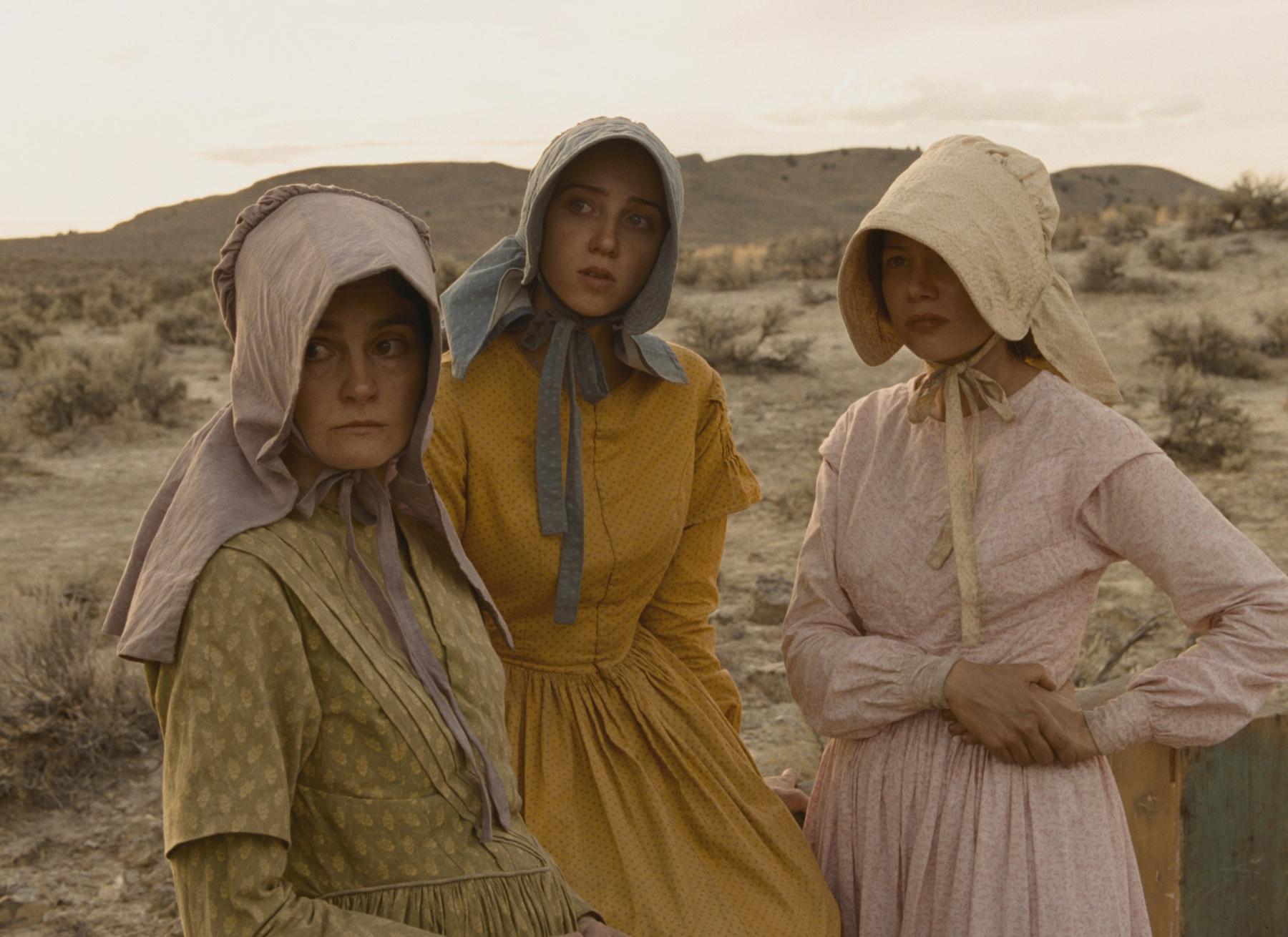
Much lesser-known are two other films by actors behind the camera. Ida Lupino’s The Hitch-Hiker finds two average American Joes on a Baja fishing trip kidnapped by a serial-murdering psycho who forces them deep into desolate foreign terrain. It’s the keen eye of locals rather than our desperate heroes’ resourcefulness that might ultimately save them from the maniac’s itchy trigger finger. Spare, tense and realistic, it’s contrasted by Robert Montgomery’s 1947 Ride the Pink Horse, a sort of noir-fever-dream spin on Under the Volcano (1984) in which the director stars as a war-veteran tough guy unraveling from sleep deprivation and general dislocation on a revenge mission in a fictitious border town. Full of phony ethnic exoticism and stereotypes, it nonetheless offers hope of salvation solely from kindly Spanish-speaking locals, notably a teenage girl (pigtailed Wanda Hendrix) who can see his imminent death in our gruff hero’s eyes.

“Go on, beat it. Scrambo!” he barks at her — a good line to be sure, though none can beat Out of the Past‘s (false, it turns out) koan “A dame with a rod is like a guy with a knitting needle.”

GOING SOUTH: AMERICAN NOIR IN MEXICO

July 1–29, $5.50–$9.50

Pacific Film Archive

2575 Bancroft, Berk.

(510) 642-5249

www.bampfa.berkeley.edu

Rep Clock

0

Schedules are for Wed/29–Tues/5 except where noted. Director and year are given when available. Double and triple features are marked with a •. All times are p.m. unless otherwise specified.

BALBOA 3620 Balboa, SF; www.balboamovies.com. $20. “Opera, Ballet, and Shakespeare in Cinema:” Rigoletto, performed by Placido Domingo, Wed, 7:30.

CASTRO 429 Castro, SF; (415) 621-6120, www.castrotheatre.com. $7.50-10. •The Blue Angel (von Sternberg, 1930), Wed, 3, 7, and The Devil is a Woman (von Sternberg, 1935), Wed, 5:15, 9. Beautiful Darling: The Life and Times of Candy Darling, Andy Warhol Superstar (Rasin, 2010), Thurs, 7, 9:15. “Peaches Christ presents:” Purple Rain (Magnoli, 1984), Fri, 8. With star Apollonia in person; for tickets ($23) and more info, visit www.peacheschrist.com. “Scary Cow’s 14th Indie Film Festival,” Sat, 3. For more info, visit www.scarycow.com. Call for Sun-Tues program info.

CHRISTOPHER B. SMITH RAFAEL FILM CENTER 1118 Fourth St, San Rafael; (415) 454-1222, www.cafilm.org. $10.25. Buck (Meehl, 2011), call for dates and times. The Tree of Life (Malick, 2011), call for dates and times. The Trip (Winterbottom, 2010), call for dates and times. Page One (Rossi, 2011), July 1-7, call for times.

“FILM NIGHT IN THE PARK” This week: Creek Park, 451 Sir Francis Drake, San Anselmo; (415) 272-2756, www.filmnight.org. Donations accepted. Breaking Away (Yates, 1979), Fri, 8; The Princess Bride (Reiner, 1987), Sat, 8.

FOUR STAR 2200 Clement, SF; www.lntsf.com. $10. “Asian Movie Madness” •Ip Man 2 (Yip, 2010), and Tiger Cage 2 (Yuen, 1990), Thurs, call for times.

PACIFIC FILM ARCHIVE 2575 Bancroft, Berk; (510) 642-5249, www.bampfa.berkeley.edu. $5.50-9.50. “Arthur Penn: A Liberal Helping:” The Missouri Breaks (1976), Wed, 7. “Japanese Divas:” The Life of Oharu (Mizoguchi, 1952), Thurs, 7; Rashomon (Kurosawa, 1950), Sat, 6:30; Sansho the Bailiff (Mizoguchi, 1954), Sat, 8:20. “Going South: American Noir in Mexico:” Ride the Pink Horse (Montgomery, 1947), Fri, 7; Where Danger Lives (Farrow, 1950), Fri, 9:10.

RED VIC 1727 Haight, SF; (415) 668-3994; www.redvicmoviehouse.com. $6-10. Orgasm Inc. (Canning, 2011), Wed-Thurs, 7:15, 9:15. Rango (Verbinski, 2011), Fri-Sun, 7:15, 9:20 (also Sat-Sun, 2, 4:15). Vertigo (Hitchcock, 1958), July 5-6, 7, 9:25 (also July 6, 2).

ROXIE 3117 and 3125 16th St, SF; (415) 863-1087, www.roxie.com. $5-9.75. Making the Boys (Robey, 2009), Wed, 9; Thurs, 9:15. Meek’s Cutoff (Reichardt, 2010), Wed, 7. “San Francisco United Film Festival,” Wed-Thurs, 6. Yoga Is (Bryant, 2011), Thurs, 7. Happy (Belic, 2011), Fri-Sun, 7, 8:30 (also Sat-Sun, 3:30, 5:15); July 4-7, 7 and 9.

SAN FRANCISCO PUBLIC LIBRARY Koret Auditorium, 100 Larkin, SF; www.greenplanetfilms.org. Free. Green (Rouxel, 2009), Wed, 6:15.

“TEMESCAL STREET CINEMA 2011” 49th St at Telegraph, Oakl; www.temescalstreetcinema.com. Free. “Animation + Experimentation,” short films, Thurs, 8:45. With music by Amber Gougis at 8pm.

TOP OF THE MARK InterContinental Mark Hopkins, One Nob Hill, SF; www.topofthemark.com. Free. Dirty Harry (Siegel, 1971), Tues, 7:30. YERBA BUENA CENTER FOR THE ARTS 701 Mission, SF; (415) 978-2787, www.ybca.org. $6-8. Centre Forward (Pak, 1978/2010), Thurs, 7:30.

Rep Clock

0

Schedules are for Wed/22–Tues/28 except where noted. Director and year are given when available. Double and triple features are marked with a •. All times are p.m. unless otherwise specified.

BALBOA 3620 Balboa, SF; www.balboamovies.com. $20. “Opera, Ballet, and Shakespeare in Cinema:” Rigoletto, performed by Placido Domingo, Sat-Sun, 10am.

CASTRO 429 Castro, SF; (415) 621-6120, www.castrotheatre.com. $7.50-10. “Frameline 35: San Francisco International LGBT Film Festival,” Wed-Sun. Visit www.frameline.org for complete schedule and ticket information. Stonewall Uprising (Davis and Heilbroner, 2010), Tues, 7. Free screening.

CHRISTOPHER B. SMITH RAFAEL FILM CENTER 1118 Fourth St, San Rafael; (415) 454-1222, www.cafilm.org. $10.25. The Tree of Life (Malick, 2011), call for dates and times. The Trip (Winterbottom, 2010), call for dates and times. Coppelia, performed by the Bolshoi Ballet, Thurs, 7 and Sun, 1. This event, $18. Buck (Meehl, 2011), June 24-30, call for times.

“FILM NIGHT IN THE PARK” This week: Creek Park, 451 Sir Francis Drake, San Anselmo; (415) 272-2756, www.filmnight.org. Donations accepted. Breakfast Club (Hughes, 1985), Fri, 8; National Velvet (Brown, 1944), Sat, 8.

FOUR STAR 2200 Clement, SF; www.lntsf.com. $10. “Asian Movie Madness” •The Host (Bong, 2006), and Yang Zean (1979), Thurs, call for times.

MECHANICS’ INSTITUTE 57 Post, SF; (415) 393-0100, rsvp@milibrary.org. $10. “CinemaLit Film Series: Music and Nostalgia:” The Blues Brothers (Landis, 1980), Fri, 6.

PACIFIC FILM ARCHIVE 2575 Bancroft, Berk; (510) 642-5249, www.bampfa.berkeley.edu. $5.50-9.50. “Japanese Divas:” Tokyo Story (Ozu, 1953), Wed, 7; Dragnet Girl (Ozu, 1933), Fri, 7; Sisters of the Gion (Mizoguchi, 1936), Fri, 9; Street of Shame (Mizoguchi, 1956), Sat, 8:45. “The Cult of the Kuchars:” “8mm Films by George and Mike Kuchar,” Thurs, 7; Weather Diary 1 (George Kuchar, 1986), Sat, 6. “Secession from the Broadcast: The Internet and the Crisis of Social Control,” lecture by Gene Youngblood, Sat, 3:30. “Arthur Penn: A Liberal Helping:” Little Big Man (1970), Sun, 5:30; Night Moves (1975), Sun, 8:10.

RED VIC 1727 Haight, SF; (415) 668-3994; www.redvicmoviehouse.com. $6-10. “Midnites for Maniacs:” •The Purple Rose of Cairo (Allen, 1985), Wed, 2, 9:15, and Broadway Danny Rose (Allen, 1984), Wed, 7:15. Single film, $7; double feature, $10. Forgetting Dad (Minnich, 2009), Thurs, 7:15, 9:25. The Warriors (Hill, 1979), Fri-Sat, 7:15, 9:20 (also Sat, 2, 4:15). Phil Ochs: There But For Fortune (Bowser, 2011), Sun-Tues, 7:15, 9:20 (also Sun, 2, 4:15).

ROXIE 3117 and 3125 16th St, SF; (415) 863-1087, www.roxie.com. $5-9.75. “Frameline 35: San Francisco International LGBT Film Festival,” Wed-Thurs. Visit www.frameline.org for complete schedule and ticket information. Making the Boys (Robey, 2009), Wed-Thurs, 7:30, 9:30.

SUBTERRANEAN ARTHOUSE 2179 Bancroft, Berk; (510) 540-7185, www.brownpapertickets.com. $10. “Innovative California Dance Films,” Fri, 8:30.

“TEMESCAL STREET CINEMA 2011” 49th St at Telegraph, Oakl; www.temescalstreetcinema.com. Free. Trust (Kelly and Yamamoto, 2010), Thurs, 8:45. With music by Ash Reiter at 8pm.

TOP OF THE MARK InterContinental Mark Hopkins, One Nob Hill, SF; www.topofthemark.com. Free. Bullitt (Yates, 1968), Tues, 7:30. YERBA BUENA CENTER FOR THE ARTS 701 Mission, SF; (415) 978-2787, www.ybca.org. $6-8. Oki’s Movie (Hong, 2010), Thurs, 7:30; Sun, 2.

Rep Clock

0

Schedules are for Wed/15–Tues/21 except where noted. Director and year are given when available. Double and triple features are marked with a •. All times are p.m. unless otherwise specified.

BALBOA 3620 Balboa, SF; www.balboamovies.com. $20. “Opera, Ballet, and Shakespeare in Cinema:” Coppelia, performed by Bolshoi Ballet, Wed, 7:30.

CASTRO 429 Castro, SF; (415) 621-6120, www.castrotheatre.com. $7.50-10. •Repulsion (Polanski, 1965), Wed, 2:50, 7, and Bunny Lake Is Missing (Preminger, 1965), Wed, 4:50, 9. “Frameline 35: San Francisco International LGBT Film Festival,” June 16-26. Visit www.frameline.org for complete schedule and ticket information.

CHRISTOPHER B. SMITH RAFAEL FILM CENTER 1118 Fourth St, San Rafael; (415) 454-1222, www.cafilm.org. $10.25. These Amazing Shadows (Mariano and Norton, 2011), Sun, 7. With filmmakers and special guest Peter Coyote in person. The Tree of Life (Malick, 2011), June 17-23, call for times. The Trip (Winterbottom, 2010), June 17-23, call for times. The Cove (Psihoyos, 2010), Tues, 7. This event, featuring a live performance by Bob Weir, $40; proceeds benefit Earth Island Institute and SaveJapanDolphins.org.

“FILM NIGHT IN THE PARK” This week: Old Mill Park, 300 block of Throckmorton, Mill Valley; (415) 272-2756, www.filmnight.org. Donations accepted. How to Train Your Dragon (DeBlois and Sanders, 2010), Fri, 8. Dolores Park, Dolores and 19th St, SF. Caddyshack (Ramis, 1980), Sat, 8.

FOUR STAR 2200 Clement, SF; www.lntsf.com. $10. “Asian Movie Madness” •Lovers in Turbulent Days (1980), and Rorita Couple, Thurs, call for times. For mature audiences only.

MARSH ARTS CENTER 2120 Allston, Berk; www.culturedisabilitytalent.org. $5-20. “Superfest 2011 International Disability Film Festival,” Fri, 11am-4pm; Sat, 10:30am-2:30pm; Sun, 11am-4pm. Films that portray the disability experience.

OPERA PLAZA 601 Van Ness, SF; www.anightmaretoremember.com. $12. “A Nightmare to Remember Film Festival,” horror films, Sat, 7-10.

PACIFIC FILM ARCHIVE 2575 Bancroft, Berk; (510) 642-5249, www.bampfa.berkeley.edu. $5.50-9.50. “The Cult of the Kuchars:” “Beyond Melodrama: Short Films By George and Mike Kuchar,” Wed, 7; “Artist Friends: Videos by George and Mike Kuchar,” Sun, 4:30; “Mike Kuchar Selects:” Empty Canvas (Damiani, 1963), Sun, 6:50. “Arthur Penn: A Liberal Helping:” The Chase (1966), Thurs, 7; Alice’s Restaurant (Penn, 1969), Sat, 6; Bonnie and Clyde (1967), Sat, 8:40. “Japanese Divas:” Ugetsu (Mizoguchi, 1953), Fri, 7; Odd Obsession (Ichikawa, 1959), Fri, 9.

RED VIC 1727 Haight, SF; (415) 668-3994; www.redvicmoviehouse.com. $6-10. The Cockettes (Weber and Weissman, 2002), Wed, 2, 7:15, 9:30. Insidious (Wan, 2011), Thurs-Sat, 7:15, 9:25. Wings of Desire (Wenders, 1988), Sun-Mon, 7:30 (also Sun, 2, 4:45). “Midnites for Maniacs:” •Broadway Danny Rose (Allen, 1984), June 21-22, 7:15; The Purple Rose of Cairo (Allen, 1985), June 21-22, 9:15 (also June 22, 2). Single film, $7; double feature, $10.

ROXIE 3117 and 3125 16th St, SF; (415) 863-1087, www.roxie.com. $5-9.75. “Another Hole in the Head Film Festival,” Wed-Thurs. Horror, sci-fi, and fantasy films; visit www.sfindie.com for complete schedule. Meek’s Cutoff (Reichardt, 2010), Wed-Thurs, 7. The Topp Twins: Untouchable Girls (Pooley, 2009), Wed-Thurs, 9. Making the Boys (Robey, 2010), June 17-23, call for times. “Frameline 35: San Francisco International LGBT Film Festival,” June 17-23. Visit www.frameline.org for complete schedule and ticket information. YERBA BUENA CENTER FOR THE ARTS 701 Mission, SF; (415) 978-2787, www.ybca.org. $6-8. Klaus Kinski: Jesus Christ the Savior (Geyer, 1971/2008), Thurs, 7:30; Sun, 2.

Ladies first

0

arts@sfbg.com

FILM The phenomenon of scene-stealing Japanese divas is all too familiar to this wannabe, having grown up in the clutches of unrepentantly demanding, real-life J-power matrons — the kind who will ply you with unsolicited advice, gifts, and edibles while smilingly applying the thumbscrews of sweet guile, pile-driving guilt, and sheer gambatte.

Where to begin when it comes to the overwhelming careers of the five femme forces of nature rhapsodized in “Japanese Divas” at the Pacific Film Archive? Inspired by, though not identical to, this spring’s series at the Film Forum in New York City, “Japanese Divas” flips the focus, with an elegantly loaded bow and a smile, away from the Toshiros, Chishus, and the other male stars of Japan’s cinematic classics and toward idealized Yasujiro Ozu beauty Setsuko Hara; the crossover face of midcentury Japanese film, Michiko Kyo; Kenji Mizoguchi favorite Kinuyo Tanaka; and Naruse muse Hideko Takamine. And though this incarnation of “Japanese Divas” can often seem like the Setsuko Hara show with its attention to Ozu’s works, other formidable females show themselves fully capable of grabbing viewers’ attention.

One compelling player is Tanaka, Mizoguchi’s once-go-to-gal for her open-faced humanity, unforgettable in the revered The Life of Oharu (1952) and the wrenching Sansho the Bailiff (1954) depicting noble women on their way down to the lower depths. At 24, but looking barely legal with her tremulous baby face and minuscule chin, Tanaka’s remarkable at the center of the 1933 Ozu silent Dragnet Girl as the titular shady lady straddling the straight world of good office wenches and fiery dance-hall molls.

In this slice of hard-boiled gangster tropes speckled with eloquent imagery, Tanaka’s fearsome, politically savvy Tokiko rules the school, be it boxing circles or the academy of 20th-century hard knocks, and plays all the angles. A prickly intelligence and overpowering will are clearly ping-ponging behind that dolly plate-face, as Tokiko fights for her heavily guylinered boy-toy Jyoji (Joji Oka) against challengers, both femme and fuzz, then undertakes the ultimate surrender. This dragnet girl is the whip-smart, indomitable harbinger of modern Japanese womanhood, come the hell of battle, the humility of occupation, and the struggles of survival while tugged by the tide of change.

In Mizoguchi’s biggest crowd-pleaser, and arguable masterpiece, 1953 ghost story Ugetsu, Tanaka crumbles, now the angelic, self-sacrificing wife and mother Miyagi, seemingly lacerated by stark branches in one of the filmmaker’s most strikingly composed images. The moment somehow foreshadows Tanaka’s professional break with Mizoguchi after he tried to stop Nikkatsu studio from hiring her as a director (her first film, Love Letter, was released the same year as Ugetsu).

Rivalry apparently knows few earthly bounds, and in Ugetsu, Tanaka found her worthy seductive, spectral counterpart in Machiko Kyo’s ethereal Lady Wakasa. Kyo — who stars in that other J-cinematic monument Akira Kurosawa’s Rashomon (1950) as well as Kon Ichikawa’s now-tough-to-see Odd Obsession (1959) — strides a quivering line between untouchable delicacy and teasing desire, her half-moon eyes flaring through an immaculate alien-aristocratic visage. Kyo’s almost unrecognizable as ’60s-cute, jewel-polishing, distrusted wife-in-a-box in The Face of Another (1966), Hiroshi Teshigahara’s mad, mod, fantastic-looking postwar treatise on disfiguring trauma and Japan’s obsession with the mask and identity.

My current favorite diva of the bunch: the bravely smiling, long-suffering Hideko Takamine, epicenter of Mikio Naruse’s wonderful drama, When a Woman Ascends the Stairs (1960). Also the star of Keisuke Kinoshita’s Technicolor Carmen Comes Home (1951) and his well-loved Twenty-Four Eyes (1954), Takamine’s put-upon, stubbornly independent hostess Mama is beautifully filled out with almost imperceptible shading — from the slightly arch, whiny tone she assumes when drunk and forced to consort with a heartless customer to the guarded polonaise of politeness she undergoes while sitting down with a rival hostess. Here, as Naruse matter-of-factly breaks down the economics of the biz, Takamine is less Douglas Sirk’s Jane Wyman than Rainer Werner Fassbinder’s Hanna Schygulla, colored in less lurid hues: a post-World War II heartbreaker all too familiar with the disaster attendant with hitching one’s hopes and fortunes to men. 

JAPANESE DIVAS

June 17–Aug. 20, $5.50–$9.50

Pacific Film Archive

2575 Bancroft, SF

(510) 642-5249

www.bampfa.berkeley.edu


A fountain of Penn

0

When Arthur Penn died at 88 last September, obituaries listing career highlights reinforced the notion that he was one of those directors — others include Mike Nichols and George Roy Hill — who were BFDs in the 1960s and ’70s yet rapidly faded from prominence thereafter. In Penn’s case the decline was especially steep, particularly given that during arguably the single most roiling period of change in mainstream American filmmaking, he was at the top of the heap in terms of prestige and thematic adventure.

Did he simply lose interest? Did some significant flops dishearten him? Whatever the cause, post-1976 his occasional films — he was never very prolific — became those of any competent journeyman whose projects seemingly picked him rather than vice versa. (Particularly dismaying was 1981 “turbulent ’60s” drama Four Friends, in which he reduced that era of his own greatest impact to stereotype-ridden soap opera.) After the respectable 1996 TV movie Inside, about apartheid, he never directed another feature.

The Pacific Film Archive’s June retrospective is titled “Arthur Penn: A Liberal Helping.” That moniker pays tribute to his lefty conscience, yet in another sense this assortment isn’t so liberal: there’s nothing here dating from after the 1976 Bicentennial Year, when both he made his last identifiably personal film and saw it widely trashed. (That would be The Missouri Breaks, a Jack Nicholson-Marlon Brando revisionist western that deserved better than it got but was doomed to ridicule by one of Brando’s deliberately bizarre later performances. Now, of course, that’s its major attraction.)

What we’ve got here is an extraordinary run: encompassing 1967’s Bonnie and Clyde, one of those movies that changed the movies in general; 1969’s counterculture pulse-taking Alice’s Restaurant; Little Big Man, the big-noise historical black-comedy literary adaptation (along with Nichols’ Catch-22) of 1970; and 1962’s The Miracle Worker, a joltingly good translation of the play he directed on Broadway. Even his commercial failures were exceptionally interesting, from 1958 film debut The Left Handed Gun (Paul Newman as Gore Vidal’s neurotic Billy the Kid) to 1965’s Mickey One (a dazzling, pretentious expressionist nightmare with Warren Beatty at its bewildered center) and 1975’s Night Moves (private eye Gene Hackman wading into a morass of Florida Keys corruption).

But there was a blot even during those glory days. In the mid-1960s the country was in thrall to civil rights struggles, and them “Hollywood liberals” duly responded. Penn’s 1966 The Chase was arguably the worst, most artificial “prestige” effort to deal with the issue this side of Otto Preminger’s 1967 Hurry Sundown, which humiliated Jane Fonda even more. (It has a scene in which she tries to arouse probably-gay Southern tycoon husband Michael Caine by fellating his saxophone.)

Hopes were high for a while, though. Adapting The Chase, Horton Foote’s 1952 Broadway failure about an escaped con settling a score with a Texas sheriff was no less than literary lioness Lillian Hellman, penning her first (and as it turned out, last) screenplay since being blacklisted as an alleged commie threat.

Everybody was excited about their involvement in the prestigious project, packed as it was with high-profile talent on and off-screen. (Besides Brando’s sheriff, Robert Redford’s fugitive, and Fonda as his pining ex-wife, the cast included E.G. Marshall, Angie Dickinson, Janice Rule, Miriam Hopkins, Robert Duvall, and James Fox.) Penn wanted to prove he could direct a large-scale commercial picture; Fonda to break away from sex-kitten roles; Redford to establish himself as a movie star; etc. All were thrilled about working with the exalted Brando, who badly needed a hit. He also strongly identified with the (initial) script’s potent commentary on civil rights struggles.

Like Foote before her, Hellman envisioned a taut, intimate drama about small-town tensions boiling over during one long night of drunkenness, bigotry, and violence. But this was, above all, a “Sam Spiegel Production.” And the notoriously egomaniacal, controlling, duplicitous producer (one colleague called him “a corkscrew … very effective … but twisted and bent”), hungry for more Oscar gold after a major roll encompassing The African Queen (1951), On the Waterfront (1954), The Bridge on the River Kwai (1957), Suddenly, Last Summer (1959), and Lawrence of Arabia (1962), kept pressing her to make it “larger.” He eventually brought other writers in to further tart things up.

As detailed in James Robert Parish’s book Fiasco: A History of Hollywood’s Iconic Flops, the steadily cheapening rewrites continued daily even after shooting commenced. Morale sank, with Brando the most conspicuous malcontent. (One scene he remained enthused about was his sheriff being badly beaten by local bigots — onscreen it’s as if the sleepwalking actor suddenly wakes up for a couple vivid minutes.) Penn clashed with the old-school cinematographer he hadn’t chosen. Adding insult to injury, Spiegel managed to exclude the director from the editorial process, insisting that the film be cut in London or Los Angeles while fully aware that Penn was stuck in New York City on a Broadway assignment.

The result was crude, inauthentic (it was shot in SoCal), stagey-looking, with variably laughable Texas accents and barn-door-broad sexual innuendos. Aiming for importance in the worst way imaginable, it instead recalls the lurid finger-waggling Southsploitation of such later non-triumphs as Shanty Tramp (1967), The Klansman (1974), Scum of the Earth (1963), Mandingo (1975), and (more recently) Hounddog (2007), albeit on a more grandiose scale. Embarrassingly, this movie about Southern prejudice and injustice kept any people of color waaaay in the background: its lone “noble Negro” was played by Joel Fluellen, billed 21st.

Reviews were scathing (“witless and preposterous drivel,” “a phony, tasteless movie”) and the expensive project tanked commercially as well. It also turned Spiegel’s luck for keeps: all his subsequent films were ambitious disappointments. Penn recovered, and then some — next stop, Bonnie and Clyde — but one suspects that he (or Foote, or Hellman, or Brando) never quite got over being so callously undermined and pushed around. For the next decade, at least, he made sure he’d never be in that kind of compromised position again.

ARTHUR PENN: A LIBERAL HELPING

June 10–29, $5.50–$9.50

Pacific Film Archive

2575 Bancroft, Berk.

(510) 642-5249

www.bampfa.berkeley.edu


Rep Clock

0

Schedules are for Wed/8–Tues/14 except where noted. Director and year are given when available. Double and triple features are marked with a •. All times are p.m. unless otherwise specified.

BALBOA 3620 Balboa, SF; www.balboamovies.com. $20. “Opera, Ballet, and Shakespeare in Cinema:” Coppelia, performed by Bolshoi Ballet, Sat-Sun, 10am; June 15, 7:30.

BRAVA 2989 24th St, SF; www.qwocmap.org. Free. “Queer Women of Color Film Festival,” featuring five different screening programs, panel discussions, parties, and more, Fri, 7:30; Sat, 1; Sun, 2.

CASTRO 429 Castro, SF; (415) 621-6120, www.castrotheatre.com. Regular programming $7.50-10. “70mm Festival:” Vertigo (Hitchcock, 1958), Wed-Fri, 2, 5, 8; Lawrence of Arabia (Lean, 1962), Sat-Sun, 2, 7.

CHRISTOPHER B. SMITH RAFAEL FILM CENTER 1118 Fourth St, San Rafael; (415) 454-1222, www.cafilm.org. $10.25. The Double Hour (Capotondi, 2010), call for dates and times. The First Grader (Chadwick, 2010), call for dates and times. Queen to Play (Bottaro, 2009), call for dates and times. 13 Assassins (Miike, 2010), call for dates and times.

FOUR STAR 2200 Clement, SF; www.lntsf.com. $10. “Asian Movie Madness: Jet Li Now and Then” •Clash (Le, 2009), and Iron Fan and Magic Sword (Chan, 1971), Thurs, call for times.

LUMIERE 1572 California, SF; www.contractorsroutine.com. $8-10.50. Contractor’s Routine (Tsapayev, 2010), Wed-Thurs, 7.

MECHANICS’ INSTITUTE 57 Post, SF; (415) 393-0100, rsvp@milibrary.org. $10. “CinemaLit Film Series: Music and Nostalgia:” Roxie Hart (Wellman, 1942), Fri, 6.

MISSION CULTURAL CENTER FOR LATINO ARTS 2969 Mission, SF; www.answercoalition.org. $5-10. South of the Border (Stone, 2009), Thurs, 7. With a report back on Cuba by Gloria La Riva.

PACIFIC FILM ARCHIVE 2575 Bancroft, Berk; (510) 642-5249, www.bampfa.berkeley.edu. $5.50-9.50. “The Cult of the Kuchars:” Sins of the Fleshapoids (Mike Kuchar, 1965), Fri, 7; The Devil’s Cleavage (George Kuchar, 1973), Sat, 6; Burlesk King (Chiongio, 1999), Sat, 8:35. “Arthur Penn: A Liberal Helping:” The Left Handed Gun (1958), Fri, 9; The Miracle Worker (1962), Sun, 5:30; Mickey One (1965), Sun, 7:30.

RED VIC 1727 Haight, SF; (415) 668-3994; www.redvicmoviehouse.com. $6-10. Wayne’s World (Spheeris, 1992), Wed, 2, 7:15, 9:20. House (Obayashi, 1977), Thurs, 7:15, 9:15. Kuroneko (Shindo, 1968), Fri-Sat, 7:15, 9:25 (also Sat, 2, 4:15). Mars Attacks! (Burton, 1996), Sun-Mon, 7:15, 9:30. Live music with the California Jug Band Association, Sun, noon-5. This event, $5. The Cockettes (Weber and Weissman, 2002), June 14-15, 7:15, 9:30 (also June 15, 2).

ROXIE 3117 and 3125 16th St, SF; (415) 863-1087, www.roxie.com. $5-9.75. “Another Hole in the Head Film Festival,” through June 16. Horror, sci-fi, and fantasy films; visit www.sfindie.com for complete schedule.

VICTORIA 2961 16th St, SF; www.patagoniarising.com. $10. Patagonia Rising (Lilla, 2011), Wed, 8. YERBA BUENA CENTER FOR THE ARTS 701 Mission, SF; (415) 978-2787, www.ybca.org. $6-8. “Dirty Diaries,” 12 short erotic films by Swedish women directors, Thurs and Sat, 7:30.

Rep Clock

0

Schedules are for Wed/1–Tues/7 except where noted. Director and year are given when available. Double and triple features are marked with a •. All times are p.m. unless otherwise specified.

ARTISTS’ TELEVISION ACCESS 992 Valencia, SF; www.atasite.org. $8-10. “Mission Eye and Ear,” new film/video and music collaborations by Paul Clipson and Darren Johnston, Kerry Laitala and Aaron Novik, and Konrad Steiner and Matt Ingalls, Fri, 8.

BALBOA 3620 Balboa, SF; www.balboamovies.com. $20. “Opera, Ballet, and Shakespeare in Cinema:” Aida, performed by Maggio Musicale Fiorentino, Wed, 7:30; Romeo and Juliet, performed at the Globe Theater, Sat-Sun, 10am.

BRIDGE 3010 Geary, SF: www.peacheschrist.com. $17. “Midnight Mass:” Sleepaway Camp (Hiltzik, 1982), Sat, midnight.

CASTRO 429 Castro, SF; (415) 621-6120, www.castrotheatre.com. Regular programming $7.50-10. “The Castro Remembers Elizabeth Taylor (1932-2011):” •Who’s Afraid of Virginia Woolf? (Nichols, 1966), Wed, 2:15, 7, and Boom! (Losey, 1968), Wed, 4:40, 9:25. “Sidney Lumet (1924-2011):” •Network (1976), Thurs, 2:45, 7, and 12 Angry Men (1957), Thurs, 5, 9:15. “Midnites for Maniacs: Debutantes Triple Feature:” •Cruel Intentions (Kumble, 1999), Fri, 7:20; The Virgin Suicides (Coppola, 1999), Fri, 9:30; Buffalo 66 (Gallo, 1998), Fri, 11:45. All three films, $12. “70mm Festival:” It’s a Mad Mad Mad Mad World (Kramer, 1963), Sat-Sun, call for times; Play Time (Tati, 1967), Mon-Tues, call for times.

CHRISTOPHER B. SMITH RAFAEL FILM CENTER 1118 Fourth St, San Rafael; (415) 454-1222, www.cafilm.org. $10.25. The Double Hour (Capotondi, 2010), call for dates and times. The First Grader (Chadwick, 2010), call for dates and times. Queen to Play (Bottaro, 2009), call for dates and times. La Traviata, performed by the Royal Opera House London, Thurs, 7; Sun, 1. This event, $18.

FOUR STAR 2200 Clement, SF; www.lntsf.com. $10. “Asian Movie Madness: Jet Li Now and Then” •The Warlords (Chan and Wai, 2007), and The Shaolin Temple (Zhang, 1982), Thurs, call for times.

LUMIERE 1572 California, SF; www.contractorsroutine.com. $8-10.50. Contractor’s Routine (Tsapayev, 2010), June 3-9, 7.

PACIFIC FILM ARCHIVE 2575 Bancroft, Berk; (510) 642-5249, www.bampfa.berkeley.edu. $5.50-9.50. Programming resumes June 10.

RED VIC 1727 Haight, SF; (415) 668-3994; www.redvicmoviehouse.com. $6-10. Kill the Irishman (Hensleigh, 2011), Wed, 2, 7:15, 9:30. Paperback Dreams (Beckstead, 2008), Thurs, 7:30. Repo Man (Cox, 1984), Fri-Sat, 7:15, 9:15 (also Sat, 2, 4). The Great Muppet Caper (Henson, 1981), Sun-Mon, 7:15, 9:20 (also Sun, 2, 4). Wayne’s World (Spheeris, 1992), June 7-8, 7:15, 9:20 (also June 8, 2).

ROXIE 3117 and 3125 16th St, SF; (415) 863-1087, www.roxie.com. $5-9.75. “Another Hole in the Head Film Festival,” June 2-16. Horror, sci-fi, and fantasy films; visit www.sfindie.com for complete schedule. YERBA BUENA CENTER FOR THE ARTS 701 Mission, SF; (415) 978-2787, www.ybca.org. $6-8. Mamma Roma (Pasolini, 1962), Thurs and Sat, 7:30; Sun, 2.

Rep Clock

0

Schedules are for Wed/25–Tues/31 except where noted. Director and year are given when available. Double features are marked with a •. All times are p.m. unless otherwise specified.

ARTISTS’ TELEVISION ACCESS 992 Valencia, SF; www.atasite.org. $3-6. “Retelling Stories,” films by Matt Wolf, Mike Kuchar, and Chris Vargas, Thurs, 7. New work by film students at the City College of San Francisco, Fri, 7. “Other Cinema:” “New Experimental Works,” Sat, 8:30. Saicomania (Chávez, 2011), Sun, 7:30.

BALBOA 3620 Balboa, SF; www.balboamovies.com. $20. “Opera, Ballet, and Shakespeare in Cinema:” Aida, Sat-Sun, 10am; June 1, 7:30. Performed by Maggio Musicale Fiorentino.

CASTRO 429 Castro, SF; (415) 621-6120, www.castrotheatre.com. Regular programming $7.50-10. Pirates of the Caribbean: On Stranger Tides (Marshall, 2011), Wed-Thurs, call for times. This film, $10-12. “The Castro Remembers Elizabeth Taylor (1932-2011):” •Cat on a Hot Tin Roof (Brooks, 1958), Fri, 2, 7, and Suddenly, Last Summer (Mankiewicz, 1959), Fri, 4, 9:30; •A Place in the Sun (Stevens, 1951), Sat, 2:30, 8, and Raintree County (Dmytryk, 1957), Sat, 4:50; Giant (Stevens, 1956), Sun, 2, 7; •Father of the Bride (Minnelli, 1950), Mon, 1, 5:05, 9:20, and National Velvet (Brown, 1944), Mon, 2:50, 7; •Secret Ceremony (Losey, 1968), Tues, 7, and X Y & Zee (Hutton, 1971), Tues, 9:05. Fri/27 evening-show double feature ($25) benefits Project Inform.

CHRISTOPHER B. SMITH RAFAEL FILM CENTER 1118 Fourth St, San Rafael; (415) 454-1222, www.cafilm.org. $10.25. The Double Hour (Capotondi, 2010), call for dates and times. The Princess of Montpensier (Tavernier, 2010), call for dates and times. Queen to Play (Bottaro, 2009), call for dates and times. 13 Assassins (Miike, 2010), call for dates and times. Nostalgia for the Light (Guzmán, 2010), Wed, 7. With Isabel Allende in person; this event, $12. As You Like It, Thurs, 7; Sun, 1. Performed at the Globe Theater, London. The First Grader (Chadwick, 2010), May 27-June 2, call for times.

PACIFIC FILM ARCHIVE 2575 Bancroft, Berk; (510) 642-5249, www.bampfa.berkeley.edu. $5.50-9.50. Programming resumes June 10.

RED VIC 1727 Haight, SF; (415) 668-3994; www.redvicmoviehouse.com. $6-10. Rubber (Dupieux, 2011), Wed-Thurs, 7:15, 9:15 (also Wed, 2). The Room (Wiseau, 2003), Fri-Sat, 7:15, 9:15 (also Sat, 2, 4, midnight). The Fall (Singh, 2006), Sun-Mon, 7, 9:25 (also Sun, 2, 4:25). Kill the Irishman (Hensleigh, 2011), May 31-June 1, 7:15, 9:30 (also June 1, 2).

ROXIE 3117 and 3125 16th St, SF; (415) 863-1087, www.roxie.com. $5-9.75. “I Wake Up Dreaming 2011: Legendary and Lost Film Noir:” •The 49th Man (Sears, 1953), Wed, 6:30, 9:40, and World for Ransom (Aldrich, 1954), Wed, 8; •Witness to Murder (Rowland, 1954), Thurs, 6:15, 10, and Kiss Me Deadly (Aldrich, 1955), Thurs, 8. Meek’s Cutoff (Reichardt, 2010), Wed-Thurs, 7:15, 9:30. “San Francisco Sex Worker Film and Arts Festival: Sex Worker Movies at the Roxie,” Sat, 2. For schedule, visit www.sexworkerfest.com. VORTEX ROOM 1082 Howard, SF; www.myspace.com/thevortexroom. $5 donation. •Dorian Gray (Dallamano, 1970), Thurs, 9, and De Sade (Endfield, 1969), Thurs, 11.

Rep Clock

0

Schedules are for Wed/18–Tues/24 except where noted. Director and year are given when available. Double features are marked with a •. All times are p.m. unless otherwise specified.

ARTISTS’ TELEVISION ACCESS 992 Valencia, SF; www.atasite.org. $6-7. “Other Cinema:” “Graham Connah Combo’s Travelogue Tone Poems,” Sat, 8:30.

BALBOA 3620 Balboa, SF; www.balboamovies.com. $20. “Opera, Ballet, and Shakespeare in Cinema:” Don Quixote, Wed, 7:30. Performed by the Bolshoi Ballet.

CASTRO 429 Castro, SF; (415) 621-6120, www.castrotheatre.com. Regular programming $7.50-10. The Women (Cukor, 1939), Wed, 2:30, 5:15, 8. •Raising Arizona (Coen, 1987), Thurs, 7, and The Big Lebowski (Coen, 1998), Thurs, 8:50. Pirates of the Caribbean: On Stranger Tides (Marshall, 2011), May 20-26. This film, $10-12.

CHRISTOPHER B. SMITH RAFAEL FILM CENTER 1118 Fourth St, San Rafael; (415) 454-1222, www.cafilm.org. $6.50-15. Potiche (Ozon, 2010), call for dates and times. The Princess of Montpensier (Tavernier, 2010), call for dates and times. Queen to Play (Bottaro, 2009), call for dates and times. The Double Hour (Capotondi, 2010), call for dates and times. 13 Assassins (Miike, 2010), May 20-26, call for times. My Brother Mike (Sheridan), Thurs, 7:15. This event, $15; benefit for Bukelew Programs. “Shorts in Brief: A Family Film Festival,” Sun, 2. The Power of the Powerless (Taylor, 2009), Sun, 7.

CITY COLLEGE OF SAN FRANCISCO Diego Rivera Theater, 50 Phelan, SF; www.cityshorts.tumblr.com. Free. “City College of San Francisco’s Cinema Department Presents: City Shorts Film Festival,” Thurs, 7.

FOUR STAR 2200 Clement, SF; www.lntsf.com. $10. “Asian Movie Madness:” •Tempation Summary (Ho, 1990), and Dirty Doll, Thurs, call for times.

MECHANICS’ INSTITUTE 57 Post, SF; (415) 393-0100, rsvp@milibrary.org. $10. “CinemaLit Film Series: Elizabeth Taylor, Tribute to a Star:” Who’s Afraid of Virginia Woolf? (Nichols, 1966), Fri, 6.

111 MINNA 111 Minna, SF; www.sfcinema.org. $25-45. “SF Cinematheque: Cinematheque at 50,” screening and benefit party, Thurs, 8.

PACIFIC FILM ARCHIVE 2575 Bancroft, Berk; (510) 642-5249, www.bampfa.berkeley.edu. $5.50-9.50. Programming resumes June 10.

PARAMOUNT 2025 Broadway, Oakl; 1-800-745-3000, www.ticketmaster.com. $5. A Streetcar Named Desire (Kazan, 1951), Fri, 8.

RED VIC 1727 Haight, SF; (415) 668-3994; www.redvicmoviehouse.com. $6-10. Dead Man (Jarmusch, 1996), Wed, 2, 7, 9:25. Big in Bollywood (Meehan and Bowles, 2011), Thurs, 7:15, 9:15. Paul (Mottola, 2011), Fri-Sat, 7:15, 9:30 (also Sat, 2, 4:15). Corner Store (Bruens, 2010), Sun-Tues, 9:15 (also Sun, 2, 4:15; Mon, 7:15). The Annual (Gillane, 2011), Tues, 7:15. Tuesday screenings benefit the Red Vic.

ROXIE 3117 and 3125 16th St, SF; (415) 863-1087, www.roxie.com. $5-9.75. “I Wake Up Dreaming 2011: The Legendary and the Lost!:” •Whispering City (Otsep, 1947), Wed, 6:10, 9:55, and Ruthless (Ulmer, 1948), Wed, 8; •Smooth as Silk (Barton, 1947), Thurs, 6:40, 9:30, and Customs Agent (Friedman, 1950), Thurs, 8; •Café Hostess (Salkow, 1940), Fri, 6:40, 9:40, and Dangerous Blondes (Jason, 1943), Fri, 8; •I Love Trouble (Simon, 1948), Sat, 2, 5:45, 9:30, and Ride the Pink Horse (Montgomery, 1947), Sat, 3:45, 7:30; •The Web (Gordon, 1947), Sun, 2, 5:45, 9:30, and 711 Ocean Drive (Newman, 1950), Sun, 3:45, 7:30; •Dance Hall Racket (Tucker, 1953), Mon, 6:40, 9:20, and The Violent Years (Morgan, 1956), Mon, 8; •Chain Gang (Friedman, 1950), Tues, 6:30, 9:30, and Cell 2455, Death Row (Sears, 1955), Tues, 8. “Sex Worker Movies,” Sat, 2-midnight. This event, $8-10; for programming info, visit www.sexworkerfest.com.

VICTORIA 2961 16th St, SF; www.countercorp.org. Visit website for ticket info. “Tipping Man 6: Anti-Corporate Film Festival,” Thurs-Sat.

VIZ CINEMA New People, 1746 Post, SF; www.newpeopleworld.com. $10-25. Eatrip (Nomura, 2009), Sat, 3, 5, 7.

VORTEX ROOM 1082 Howard, SF; www.myspace.com/thevortexroom. $5 donation. •Blow-Up (Antonioni, 1966), Thurs, 9, and Baba Yaga (Farina, 1973), Thurs, 11. YERBA BUENA CENTER FOR THE ARTS 701 Mission, SF; (415) 978-2787, www.ybca.org. $6-8. “Three-Way: A Trilogy of Vintage Erotica:” Camille 2000 (Metzger, 1969), Thurs and Sat, 7:30; A Labor of Love (Flaxman and Goldman, 1976), Fri, 7:30 and Sun, 2; The Wild Pussycat (Dadiras, 1969), May 26, 7:30.

Fully loaded

0

arts@sfbg.com

There is such a thing as festival fatigue, but you’d do well to forget it with the ambitious programs ruling the 16th Street corridor this weekend. The Roxie launches Elliot Lavine’s latest dive into film noir’s deep end, while down at the Victoria San Francisco Cinematheque caps its spring season with the second annual Crossroads festival, a veritable bonanza of experimental cinema. I haven’t seen many of the 50-odd works being shown, but the quality of the ones I have makes me think that I wouldn’t trade Crossroads for Cannes.

The fest opens Thursday, May 12 at the San Francisco Museum of Modern Art with the culminating presentation of “Radical Light,” the epic panorama of local alternative cinemas that has lined Cinematheque and the Pacific Film Archive calendars since September 2010. This evening showcases rarely screened works by “Radical Light” mainstays (the Bruces Baillie and Conner, Gunvor Nelson, Scott Stark) as well as the premiere of a new film by Will Hindle, whose topsy-turvy Chinese Firedrill (1968) was one of the gems of a recent program at the museum.

Opening night includes at least one city symphony (Timoleon Wilkins’ Chinatown Sketch), a form expanded upon in several subsequent Crossroads shows. Jeanne Liotta’s aptly titled Crosswalk transcribes an Easter street processional in Loisaida, a Latino enclave of New York City. Liotta, an ambitious filmmaker who ranges over the history of science and the nature of belief, will be at the Victoria Friday, May 13 for the film’s West Coast premiere. Also showing is her beautiful condensation of stargazing, Observando el Cielo (2007).

The scientific method also informs closing night feature, The Observers, a recording of the recorders who gauge the famously extreme weather atop Mount Washington, as well as Saturday, May 14’s “Observers Observed” program. The latter spotlights Get Out of the Car, Thom Andersen’s termite tour of multilingual Los Angeles. In only 33 minutes, Andersen gives us a resonant culture container, looking back at what’s been lost and imagining how it might yet change form.

When Andersen holds out a photograph of what was in front of the landscape that is, he seems to refer to the nested frames of Gary Beydler’s elegant time lapse film, Hand Held Day (1975). You can judge for yourself as that earlier film is included on the same program. Other highlights across the weekend include an evening dedicated to Bay Area maverick Robert Nelson, Ben Russell’s latest consciousness-raising Trypp, a hand-cranked projection performance by Alex MacKenzie, and short films by master collagist Lewis Klahr and some guy named Apichatpong Weerasethakul. I could go on, but you should get going. 

CROSSROADS

Thurs/12–Sun/15, $10 (festival pass, $50)

SFMOMA, 151 Third St., SF

Victoria Theater, 2961 16th St., SF

www.sfcinema.org


Rep Clock

0

Schedules are for Wed/11–Tues/17 except where noted. Director and year are given when available. Double and triple features are marked with a •. All times are p.m. unless otherwise specified.

ALAMEDA THEATRE 2317 Central, Alameda; www.projectyouthview.org. $5-99. “Project YouthView 2011: The Power of Youth in Film,” youth film festival, Thurs, 6:30.

ARTISTS’ TELEVISION ACCESS 992 Valencia, SF; www.atasite.org. $5-6. Blaze Foley: Duct Tape Messiah (Triplett, 2011), Wed, 8. “Other Cinema:” Works by Melinda Stone, Greg Gaar, Enid Baxter Blader, Michael Rudner, and more, Sat, 8:30. “OpenScreening,” Thurs, 8. For participation info, contact ataopenscreening@atasite.org.

BALBOA 3620 Balboa, SF; www.balboamovies.com. $20. “Opera, Ballet, and Shakespeare in Cinema:” Don Quixote, Sat-Sun, 10am; May 18, 7:30. Performed by the Bolshoi Ballet.

CASTRO 429 Castro, SF; (415) 621-6120, www.castrotheatre.com. Regular programming $7.50-10. “Faye Dunaway Double Feature:” •Puzzle of a Downfall Child (Schatzberg, 1970), Wed, 2:55, 7, and Eyes of Laura Mars (Kershner, 1978), Wed, 4:55, 9. 8 1/2 (Fellini, 1963), Thurs, 2:30, 5:15, 8. “Midnites for Maniacs: Whitey Can Rock Too:” •Rock N’ Roll High School (Arkush, 1979), Fri, 7:20; The Blues Brothers (Landis, 1980), Fri, 9:30; and Out of the Blue (Hopper, 1980), Fri, 11:59. All three films, $12. •The Good, the Bad, and the Ugly (Leone, 1966), Sat, 1, 6:15, and Aguirre, The Wrath of God (Herzog, 1972), Sat, 4:20, 9:30. •20,000 Leagues Under the Sea (Fleischer, 1954), Sun, 2, 6:40, and Clash of the Titans (Davis, 1981), Sun, 4:25, 9:05.

CHRISTOPHER B. SMITH RAFAEL FILM CENTER 1118 Fourth St, San Rafael; (415) 454-1222, www.cafilm.org. $6.50-15. Potiche (Ozon, 2010), call for dates and times. The Princess of Montpensier (Tavernier, 2010), call for dates and times. Queen to Play (Bottaro, 2009), call for dates and times. The Double Hour (Capotondi, 2010), May 13-19, call for times. Project Happiness (Sorenson, 2011), Sun, 6:30.

FOUR STAR 2200 Clement, SF; www.lntsf.com. $10. “Asian Movie Madness:” •Deaf Mute Heroine (Wu, 1971), Thurs, noon, 3:50, 7:40, and Pursuit (Wong, 1980), Thurs, 1:55, 5:45, 9:35.

MECHANICS’ INSTITUTE 57 Post, SF; (415) 393-0100, rsvp@milibrary.org. $10. “CinemaLit Film Series: Elizabeth Taylor, Tribute to a Star:” Suddenly, Last Summer (Manckiewicz, 1959), Fri, 6.

NINTH STREET INDEPENDENT FILM CENTER 145 Ninth St, SF; www.superastig.com. $20. Rakenrol (Henares, 2011), Fri, 7.

PACIFIC FILM ARCHIVE 2575 Bancroft, Berk; (510) 642-5249, www.bampfa.berkeley.edu. $5.50-9.50. Programming resumes June 10.

PHOENIX HOTEL 601 Eddy, SF; www.disposablefilmfest.com. Free. “Disposable Film Festival Bike-In Summer Tour,” Wed, 7:30.

RED VIC 1727 Haight, SF; (415) 668-3994; www.redvicmoviehouse.com. $6-10. Bukowski: Born Into This (Dullaghan, 2003), Wed, 2, 7, 9:20. Cointelpro 101 (Marks, 2010), Thurs, 7:15, 9:15. The Upsetter: The Life and Music of Lee “Scratch” Perry (Higbee and Lough, 2011), Fri-Sun, 7:15, 9:20 (also Sat-Sun, 2, 4). Dead Man (Jarmusch, 1996), May 17-18, 7, 9:25 (also May 18, 2).

ROXIE 3117 and 3125 16th St, SF; (415) 863-1087, www.roxie.com. $5-9.75. Brian Eno 1971-1977: The Man Who Fell to Earth, Wed, 7. “SF 24 Hour Film Race 2011,” Thurs, 7. Stake Land (Mickle, 2010), Thurs, 7, 9:30. “I Wake Up Dreaming 2011: The Legendary and the Lost!:” •Dementia (Parker, 1955), Fri, 6:40, 9:45, and Phantom Lady (Siodmak, 1944), Fri, 8; •Street of Chance (Hively, 1942), Sat, 2:15, 6, 9:30, and Ministry of Fear (Lang, 1944), Sat, 3:45, 7:45; •The Spiritualist (Vorhaus, 1948), Sun, 2:30, 5:45, 9:15, and The Night Has a Thousand Eyes (Farrow, 1948), Sun, 4, 7:30; •C-Man (Lerner, 1949), Mon, 6:30, 9:45, and Guilty Bystander (Lerner, 1950), Mon, 8; •Once a Thief (Wilder, 1950), Tues, 6:15, 9:45, and The Great Flamarion (Mann, 1945), Tues, 8.

SAN FRANCISCO MUSEUM OF MODERN ART 151 Third St, SF; www.sfcinema.org. $10 (festival pass, $50). “Crossroads, Program 1: Radical Light: Cinematheque at 50,” Thurs, 7.

SAN FRANCISCO STATE UNIVERSITY McKenna Theatre, Creative Arts Bldg, 1600 Holloway, SF; www.creativearts.sfsu.edu. $5-10. “51st Film Finals,” Fri, 7.

VICTORIA 2961 16th St, SF; www.sfcinema.org. $10 (festival pass, $50). “Crossroads, Program 2: Featured Artist: Jeanne Liotta,” Fri, 7; “Program 3: The Chilling Montage of Crimson Repression!”, Fri, 9; “Program 4: Observers Observed,” Sat, noon; “Program 5: Two Roads Developed,” Sat, 2:30; “Program 6: Crossroads Honoree: Robert Nelson,” Sat, 4:30; “Program 7: Apparent Motion: Celebrating the Art of Projection,” Sat, 8; “Program 8: Playback,” Sun, 2:30; “Program 9: The Realms of Transience…,” Sun, 2:30; “Program 10: The Observers (Goss, 2011), Sun, 7:30.

VIZ CINEMA New People, 1746 Post, SF; www.legacyfilmfestivalonaging.org. $11. “Legacy Film Festival on Aging,” Fri-Sun.

VORTEX ROOM 1082 Howard, SF; www.myspace.com/thevortexroom. $5 donation. •Scarlet Street (Lang, 1945), Thurs, 9, and Scream Baby Scream (Adler, 1969), Thurs, 11. YERBA BUENA CENTER FOR THE ARTS 701 Mission, SF; (415) 978-2787, www.ybca.org. $6-8. In a Glass Cage (Villaronga, 1987), Thurs and Sat, 7:30; Sun, 2.

Northwest passage: Kelly Reichardt on “Meek’s Cutoff”

0

Over the past decade, Kelly Reichardt has consistently created an alternative cinema that is in opposition to modern Hollywood blockbusters. Her films, which emphasize minimalist and highly visual storytelling, transcend even the industry’s edgiest darlings (think Darren Aronofsky and Quentin Tarantino). Her films Ode (1999), Old Joy (2006), Wendy and Lucy (2008), and now Meek’s Cutoff (2010) cannot be categorized in the decade’s overhated mumblecore movement of Andrew Bujalski or the Duplass Brothers. Neither are they part of the world of extreme experimental artists, a la James Benning or Sharon Lockhart.

Somehow Reichardt has found a cinematic middle ground, balancing quiet and poetic allegories with accessible and emotional journeys — an achievement that present and future audiences will be hypnotized by for generations to come. After interviewing her for Wendy and Lucy, I spoke with her after Meek’s Cutoff played the 2011 Sundance Film Festival; it recently had its local debut at the San Francisco International Festival, and opens theatrically Fri/6.

San Francisco Bay Guardian: I recently saw your earliest films at the Pacific Film Archive retrospective and your adaptation of the Robby Benson-starring Ode to Billy Joe (1976), Ode (1999), was amazing! You shot the whole thing on Super 8, right? Do you like your earlier films?

Kelly Reichardt: Ode is very near and dear to my heart. It set me on my own way of making films. I don’t think I’m naturally a non-narrative person. And definitely not as much as I revere those kind of filmmakers like my colleagues: Peggy Ahwesh, Peter Hutton. I love seeing how their films unfold and really make the viewer be interactive in deciding what they’re about and what they mean to them. That’s what I’d like to do as a filmmaker. But I can see myself learning in all of my films, which is painful. A couple of students walked out of that screening of my earliest short films and I wanted to run out after them and say, “I totally understand!”

SFBG: You and [screenwriter] Jon Raymond seem to be consciously aware of just that! I know I have told you this before but I find your films so inspired. Your films are like the kind of classes I always wanted to have in college. You’re never telling me what to think, yet you are very precisely leading me towards something extremely imminent. And along the way, I get to experience my own journey with these characters and situations. Do you run into problems getting your films made and released because of this structure?

KR: That part of it, the endings, is [an element] coming from the world of non-narrative filmmaking. It doesn’t hand things over to the audience. It’s like a series of questions unfolding which is like a dream, which is something I want to bring into a more narrative form. It opens up the traditional genre a little which you already know how its’ suppose to go. Meek’s Cutoff and Wendy and Lucy were both released through Oscilloscope, while Old Joy was distributed by Kino. These are all small independent distributors and the things that they are looking for are not for everyone.

The hard part with filmmaking is getting the money to make the film. Everybody has a camera now. You can shoot a video. But if you’re not into naturalism and you’re trying to make things that are more extravagant, that vision is going to be much harder to just do on your own. If I were a student right now, my biggest fear would be how to rise up out of such a huge sea of voices. When I submitted my first feature, River of Grass, to Sundance in 1994, they had 600 entries that year which seemed overwhelming and huge. Six hundred and they were only gonna pick 16. And what was it this year? Didn’t they have something like 6,000 entries?

Getting your film out … worry about that later. Get your film made first. Plus there’s always the fear of even having something to say at the age of 20! Before you’ve lived on your own and been connected to the big black hole of employment, and public transportation and all those things. That could be good “big” fear to have as a young filmmaker.

SFBG: In your Q&A after the screening of Meek’s Cutoff at the Egyptian Theatre [in Park City, Utah], I was very excited about your bringing up forgotten and unavailable older films like Nicholas Ray’s The Lusty Men (1952).

KR: Me too! I was trying to make that point and I became so distracted by the woman sitting behind you filming. It’s just such a weird thing to look out and see 15 people videotaping you and you realize that no experience can ever just be with the people in the room again. Everything has to be some bigger purpose and I completely quit thinking about the film and the interaction. I think it’s a bizarre that people feel completely free about videotaping you and posting it on the Internet without asking me.

SFBG: Not only is it exciting that your films feel influenced by older cinema but you do it in a way that’s very much like Peter Bogdanovich, where it feels as if you truly understand the film’s themes and goals and you’re not just making a mixtape of your favorite scenes. Wendy and Lucy feels like a Vittorio De Sica neo-realist film, while Meek’s Cutoff feels like an existential William Wellman Western by way of Robert Flaherty’s Nanook of the North (1922). I mean, you even used the old Hollywood aspect ratio of 1.33:1 on Meek’s Cutoff! And it doesn’t come off kitschy; in fact, it feels even futuristic.

KR: It’s funny that you mention the aspect ratio. If anything is kitschy, and when you read back about the period, widescreen was what was kitschy. It was a gimmick! It’s what 3D or IMAX is to us today. What did Fritz Lang say, “Widescreens are for funerals and snakes.”

It’s funny now that this memory of widescreen is so embraced but it’s such a diminished landscape in a way. That question is always being asked to me in some tone of like, “When you accidentally picked the wrong aspect ratio did you have to just keep going with it?” (laughs) Though I knew going into it that it would limit the amount of theatres we can play Meek’s at. Sadly, very few theaters have the capabilities. 

SFBG: I’ve been watching a lot of Westerns this year and your horizons in every single shot of Meek’s Cutoff are truly spectacular. Your multi-layered colors! Your floating cowboys! The lined-up pioneers! I could just go on. All of it is so particular. How did you design this film? Did you do it on the landscape or storyboard it first?

KR: I storyboard but I can’t draw. (laughs) I have many different notebooks. Color is an early thing. But everything comes first from relentless scouting.  Scouting, scouting, scouting, scouting. I get familiar with the light and the colors of the day. The places you’re gonna be shooting in at certain times of the day. These locations were really remote and very hard to get to. And we ended up spending such a huge amount of time in that desert.

SFBG: Did you have to sleep out on the plains?

KR: We stayed in this town, Burns, Oregon. It’s a good two-street town and we’d drive off-road for two hours into the desert each day. This is where the actual wagon train got lost. There was nothing out there. We were actually finding pieces of wagon from the 1840s! So it would eat up a huge amount of our shooting day, which is already short because when you’re shooting in the mountains, the sun is gonna go behind them. So that’s four hours already out of your day.

My shooting schedule was so restricted that other producers would have said “You are sinking your ship by shooting out on these locations.” Fortunately my producers backed me and off we went, for better or worse. So you have to be on top of it when you’re there, knowing that there will be unexpected things to occur especially when you are dealing with oxen and mules and donkeys. All of that is to be embraced.

I also have to have a plan because we move so quickly. My DP [Chris Blauvelt] and I are talking, talking, talking. I have some books that are references, that I’ll steal frames from. Some that are location photos, people standing in the locations, some from old films. And some are just really crappy drawings I’ve done because I cannot draw, which I consider a huge handicap as a filmmaker. People always ask “Are you improvising?” We don’t have time for improv! Of course because of the weather, and the terrain, and rattlesnakes and the animals there’s certainly a certain amount of adjustment because when I storyboarded this, it wasn’t snowing. But you can’t go out there without a plan. The camera for me is the storyteller.

SFBG: Now you edit your own movies. Is that because you are a tyrant and you have to have it your own way or have you tried working with others? And by “tyrant,” I mean it in the nicest way possible.

KR: (laughs) You go through different stages: I have my writing partner [Jon Raymond] and that’s one stage and then it becomes very public and you’re working with a bunch of people when filming. Then editing is where you get your film back and it’s when I get to find my film. It’s a great moment when I’m in the editing room an I can say, “Oh yeah, that’s what Jon was originally talking about!” or “I felt that in Jon’s short story!”

But when you’re in production, there’s just so much going on! And editing is where you learn where you fucked up and should have put the camera. It’s the big payoff for me and I don’t want to hand it over to anyone else. It’s the interesting part of filmmaking. It’s where you can manipulate space and completely change the dynamic of a conversation or situation just by adding or taking away time. It’s not fun to edit with me, so I stopped using editors (laughs).

http://www.youtube.com/watch?v=AEmL9at6JT0

Meek’s Cutoff opens Fri/6 in Bay Area theaters.

Jesse Hawthorne Ficks is the Film History Coordinator at the Academy of Art University and programs the film series Midnites for Maniacs.

Rep Clock

0

Schedules are for Wed/4–Tues/10 except where noted. Director and year are given when available. Double and quadruple features are marked with a •. All times are p.m. unless otherwise specified.

ARTISTS’ TELEVISION ACCESS 992 Valencia, SF; www.atasite.org. $4-6. “Other Cinema:” “The Essays and Arguments of James Hong,” Sat, 8:30.

CASTRO 429 Castro, SF; (415) 621-6120, www.castrotheatre.com. Regular programming $7.50-10. “San Francisco International Film Festival:” On Tour (Amalric, 2010), Thurs, 7. For tickets and info, visit www.sffs.org. “Cinematic Titanic:” Samson and the 7 Miracles of the World (Freda, 1961), Fri, 7; Rattlers (McCauley, 1976), Fri, 9:30. This event, $35 (double feature, $60); tickets at www.sfsketchfest.com. “Peaches Christ Presents the Ultimate Mommie Dearest: 30th Anniversary Birthday Celebration:” Mommie Dearest (Perry, 1981), Sat, 8. This event, $25-40; tickets at www.peacheschrist.com.

CHRISTOPHER B. SMITH RAFAEL FILM CENTER 1118 Fourth St, San Rafael; (415) 454-1222, www.cafilm.org. $6.50-15. Certified Copy (Kiarostami, 2010), call for dates and times. Poetry (Yun, 2010), call for dates and times. Potiche (Ozon, 2010), call for dates and times. The Princess of Montpensier (Tavernier, 2010), call for dates and times. The Magic Flute, Thurs, 7; Sun, 1. Performed on film by Teatro alla Scala. Queen to Play (Bottaro, 2009), May 6-12, call for times.

EXPLORATORIUM McBean Theater, 3601 Lyon, SF; www.asifa-sf.org. Free. “An Evening With Marv Newland,” Fri, 7:30.

MECHANICS’ INSTITUTE 57 Post, SF; (415) 393-0100, rsvp@milibrary.org. $10. “CinemaLit Film Series: Elizabeth Taylor, Tribute to a Star:” A Place in the Sun (Stevens, 1951), Fri, 6.

PACIFIC FILM ARCHIVE 2575 Bancroft, Berk; (510) 642-5249, www.bampfa.berkeley.edu. $5.50-9.50. “San Francisco International Film Festival:” Ulysses (Godoy, 2011), Wed, 6:30; Detroit Wild City (Tillon, 2010), Wed, 8:40; Auroroa (Puiu, 2010), Thurs, 7. For tickets and info, visit www.sffs.org. “Film and Video Makers at Cal: Works from the Eisner Prize Competition,” Fri, 7.

RED VIC 1727 Haight, SF; (415) 668-3994; www.redvicmoviehouse.com. $6-10. William S. Burroughs: A Man Within (Leyser, 2010), Wed, 2, 7:15, 9:15. True Grit (Coen and Coen, 2010), Thurs-Sat, 7, 9:20 (also Sat, 2, 4:30). Hair (Forman, 1970), Sun-Mon, 7, 9:30 (also Sun, 2, 4:30). Bukowski: Born Into This (Dullaghan, 2003), May 10-11, 7, 9:20 (also May 11, 2).

ROXIE 3117 and 3125 16th St, SF; (415) 863-1087, www.roxie.com. $5-9.75. Stake Land (Mickle, 2010), Wed-Thurs, 7:15, 9:30. Taxi Driver (Scorsese, 1976), Sat-Mon, 7, 9:20 (also Sat-Sun, 2:30, 4:45).

VORTEX ROOM 1082 Howard, SF; www.myspace.com/thevortexroom. $5 donation. •Bucket of Blood (Corman, 1959), Thurs, 9, and Blind Beast (Masumura, 1969), Thurs, 11. YERBA BUENA CENTER FOR THE ARTS 701 Mission, SF; (415) 978-2787, www.ybca.org. $6-8. The Strange Case of Angelica (de Oliveira, 2010), Thurs and Sat, 7:30; Sun, 2.

Film Listings

0

Film listings are edited by Cheryl Eddy. Reviewers are Kimberly Chun, Michelle Devereaux, Peter Galvin, Max Goldberg, Dennis Harvey, Johnny Ray Huston, Louis Peitzman, Lynn Rapoport, Ben Richardson, and Matt Sussman. For rep house showtimes, see Rep Clock. For first-run showtimes, see Movie Guide.

SAN FRANCISCO INTERNATIONAL FILM FESTIVAL

The 54th annual San Francisco International Film Festival runs through Thurs/5. Venues are the Sundance Kabuki, 1881 Post, SF; Castro, 429 Castro, SF; New People, 1746 Post, SF; San Francisco Museum of Modern Art, 151 Third, SF; and Pacific Film Archive, 2575 Bancroft, SF. For tickets (most shows $13) and complete schedule visit www.sffs.org.

OPENING

The Beaver See “The Darkness Underneath.” (1:31)

*Cave of Forgotten Dreams The latest documentary from Werner Herzog once again goes where no filmmaker — or many human beings, for that matter — has gone before: the Chauvet-Pont-d’Arc Cave, a heavily-guarded cavern in Southern France containing the oldest prehistoric artwork on record. Access is highly restricted, but Herzog’s 3D study is surely the next best thing to an in-person visit. The eerie beauty of the works leads to a typically Herzog-ian quest to learn more about the primitive culture that produced the paintings; as usual, Herzog’s experts have their own quirks (like a circus performer-turned-scientist), and the director’s own wry narration is peppered with random pop culture references and existential ponderings. It’s all interwoven with footage of crude yet beautiful renderings of horses and rhinos, calcified cave-bear skulls, and other time-capsule peeks at life tens of thousands of years ago. The end result is awe-inspiring. (1:35) (Eddy)

*Incendies When tightly wound émigré Nawal (Luba Azabal) dies, she leaves behind adult twins Jeanne (Mélissa Désormeaux-Poulin) and Simon (Maxim Gaudette) — and leaves them documents that only compound their feelings of grief and anger, suggesting that what little they thought they knew about their background might have been a lie. While resentful Simon at first stays home in Montreal, Jeanne travels to fictive “Fuad” (a stand-in for source-material playwright Wajdi Mouawad’s native Lebanon), playing detective to piece together decades later the truth of why their mother fled her homeland at the height of its long, brutal civil war. Alternating between present-day and flashback sequences, this latest by Canadian director Denis Villeneuve (2000’s Maelstrom) achieves an urgent sweep punctuated by moments of shocking violence. Resembling The Kite Runner in some respects as a portrait of the civilian victimization excused by war, it also resembles that work in arguably piling on more traumatic incidences and revelations than one story can bear — though so much here has great impact that a sense of over-contrivance toward the very end only slightly mars the whole. (2:10) Embarcadero. (Harvey)

Jumping the Broom It’s wedding (movie) season! Angela Bassett and Paula Patton star in this one. (1:48) Shattuck.

Last Night Married for three years and together “since college,” New York City yuppies Michael (Sam Worthington) and Joanna (Keira Knightley) have a comfortable, loving relationship, though it’s unclear how much passion remains. Still, it doesn’t take much for Joanna to bristle jealously when she meets Michael’s co-worker and frequent business-trip companion, Laura (Eva Mendes). As Michael and Laura flirt their way to an overnight meeting in Philly, Joanna runs into an old flame (Guillaume Canet); before long, it becomes a cross-cutting race to see who’ll cheat first. Writer-director Massy Tadjedin isn’t spinning a new story here — and though the film offers a sleek look at contemporary marriage, Last Night takes itself a tad too seriously, purporting to showcase realistic problems and emotions amid a cast beamed directly from Planet Gorgeous Movie Star. Beautiful people: they’re just like us? (1:30) (Eddy)

*Meek’s Cutoff See “Nothing Was Delivered.” (1:44) Albany, Embarcadero.

Queen to Play From first-time feature director Caroline Bottaro comes this drama about … chess. Wait! Before your eyes glaze over, here are a few more fast facts: it’s set in idyllic Corsica and features, as an American expat, Kevin Kline in his first French-speaking role. (Side note: is there a Kline comeback afoot? First No Strings Attached, then The Conspirator, and now Queen to Play. All within a few short months.) Lovely French superstar Sandrine Bonnaire plays Héléne, a hotel maid who has more or less accepted her unremarkable life — until she happens to catch a couple (one half of which is played by Jennifer Beals, cast because Bottaro is a longtime fan of 1983’s Flashdance!) playing chess. An unlikely obsession soon follows, and she asks Kline’s character, a reclusive doctor who’s on her freelance house-cleaning route, to help her up her game. None too pleased with this new friendship are Héléne’s husband and nosy neighbors, who are both suspicious of the doctor and unsure of how to treat the formerly complacent Héléne’s newfound, chess-inspired confidence. Queen to Play can get a little corny (we’re reminded over and over that the queen is “the most powerful piece”), and chess is by nature not very cinematic (slightly more fascinating than watching someone type, say). But Bonnaire’s quietly powerful performance is worth sticking around for, even when the novelty of whiskery, cardigan-wearing, French-spouting Kline wears off. (1:36) Embarcadero, Shattuck, Smith Rafael. (Eddy)

Something Borrowed Kate Hudson and Ginnifer Goodwin play frenemies of the highest order in this rom-com adapted from the best-selling novel. (1:53) Shattuck.

There Be Dragons Dougray Scott and Wes Bentley star in this drama set against the backdrop of the Spanish Civil War. (2:00)

*These Amazing Shadows If you love movies, it’ll be hard to resist These Amazing Shadows (subtitled “A story about the National Film Registry and the power of the movies”) — it’s chock full o’ clips from films that’ve been deemed worthy of inclusion in the National Film Registry’s elite ranks. This includes, of course, the likes of 1942’s Casablanca and 1939’s Gone With the Wind, but also more recent cultural touchstones like 1985’s Back to the Future and a number of experimental, short, and silent works, and even a few cult films too. Along the way film scholars and makers (including locals Barry Jenkins, Rick Prelinger, and Mick LaSalle) chime in on their favorite films and stress why preserving film is important. There’s a healthy dose of film history, as well, with mentions of groundbreaking director Lois Weber (one of early cinema’s most prolific artists, despite her gender) and a discussion of why racially questionable films like 1915’s The Birth of a Nation — a film that Boyz n the Hood (1991) director John Singleton recommended for Registry inclusion — are historically important despite their content. Dedicated film buffs won’t discover any surprises, and there’s not much discussion of queer film (unless John Waters talking about 1939’s The Wizard of Oz counts?), nor any mention of the current shift from film to digital formats (of course preserving old films is important, but will the Registry also start considering digital-only films for inclusion?) But perhaps these are topics for another film, not this nostalgia-heavy warm fuzzy that’ll affect anyone who remembers the magic of seeing a personally significant film — join the mob if it’s 1977’s Star Wars — for the first time. (1:28) Sundance Kabuki. (Eddy)

*Thor When it comes to superhero movies, I’m not easily impressed. Couple that with my complete disinterest in the character of Thor, and I didn’t go into his big-screen debut with any level of excitement. Turns out Kenneth Branagh’s Thor is a genre standout — the best I’ve seen since 2008’s Iron Man. For those who don’t know the mythology, the film follows Thor (Chris Hemsworth) as he’s exiled from the realm of Asgard to Earth. Once there, he must reclaim his mighty hammer — along with his powers — in order to save the world and win the heart of astrophysicist Jane Foster (Natalie Portman). Hemsworth is perfectly cast as the titular hero: he’s adept at bringing charm to a larger-than-life god. The script is a huge help, striking the ideal balance between action, drama, and humor. That’s right, Thor is seriously funny. On top of that, the effects are sensational. Sure, the 3D is once again unnecessary, but it’s admittedly kind of fun when you’re zooming through space. (2:03) (Peitzman)

ONGOING

The Adjustment Bureau As far as sci-fi romantic thrillers go, The Adjustment Bureau is pretty standard. But since that’s not an altogether common genre mash-up, I guess the film deserves some points for creativity. Based on a short story by Philip K. Dick, The Adjustment Bureau takes place in a world where all of our fates are predetermined. Political hotshot David Norris (Matt Damon) is destined for greatness — but not if he lets a romantic dalliance with dancer Elise (Emily Blunt) take precedence. And in order to make sure he stays on track, the titular Adjustment Bureau (including Anthony Mackie and Mad Men‘s John Slattery) are there to push him in the right direction. While the film’s concept is intriguing, the execution is sloppy. The Adjustment Bureau suffers from flaws in internal logic, allowing the story to skip over crucial plot points with heavy exposition and a deus ex machina you’ve got to see to believe. Couldn’t the screenwriter have planned ahead? (1:39) Shattuck. (Peitzman)

African Cats (1:40) 1000 Van Ness, Shattuck.

*Bill Cunningham New York To say that Bill Cunningham, the 82-year old New York Times photographer, has made documenting how New Yorkers dress his life’s work would be an understatement. To be sure, Cunningham’s two decades-old Sunday Times columns — “On the Street,” which tracks street-fashion, and “Evening Hours,” which covers the charity gala circuit — are about the clothes. And, my, what clothes they are. But Cunningham is a sartorial anthropologist, and his pictures always tell the bigger story behind the changing hemlines, which socialite wore what designer, or the latest trend in footwear. Whether tracking the near-infinite variations of a particular hue, a sudden bumper-crop of cropped blazers, or the fanciful leaps of well-heeled pedestrians dodging February slush puddles, Cunningham’s talent lies in his ability to recognize fleeting moments of beauty, creativity, humor, and joy. That last quality courses through Bill Cunningham New York, Richard Press’ captivating and moving portrait of a man whose reticence and personal asceticism are proportional to his total devotion to documenting what Harold Koda, chief curator at the Costume Institute at the Metropolitan Museum of Art, describes in the film as “ordinary people going about their lives, dressed in fascinating ways.” (1:24) Embarcadero, Shattuck. (Sussman)

Certified Copy Abbas Kiarostami’s beguiling new feature signals “relationship movie” with every cobblestone step, but it’s manifestly a film of ideas — one in which disillusionment is as much a formal concern as a dramatic one. Typical of Kiarostami’s dialogic narratives, Certified Copy is both the name of the film and an entity within the film: a book written against the ideal of originality in art by James Miller (William Shimell), an English pedant fond of dissembling. After a lecture in Tuscany, he meets an apparent admirer (Juliette Binoche) in her antique shop. We watch them talk for several minutes in an unbroken two-shot. They gauge each other’s values using her sister as a test case — a woman who, according to the Binoche character, is the living embodiment of James’ book. Do their relative opinions of this off-screen cipher constitute characterization? Or are they themselves ciphers of the film’s recursive structure? Kiarostami makes us wonder. They begin to act as if they were married midway through the film, though the switch is not so out of the blue: Kiarostami’s narrative has already turned a few figure-eights. Several critics have already deemed Certified Copy derivative of many other elliptical romances; the strongest case for an “original” comes of Roberto Rossellini’s Voyage to Italy (1954). The real difference is that while Rossellini’s masterpiece realizes first-person feelings in a third-person approach, Kiarostami stays in the shadow of doubt to the end. (1:46) Opera Plaza, Smith Rafael. (Goldberg)

The Conspirator It may not be your standard legal drama, but The Conspirator is a lot more enjoyable when you think of it as an extended episode of Law & Order. The film chronicles the trial of Mary Surratt (Robin Wright), the lone woman charged in the conspiracy to assassinate Abraham Lincoln. It’s a fascinating story, especially for those who don’t know much of the history past John Wilkes Booth. But while the subject matter is compelling, the execution is hit-or-miss. Wright is sympathetic as Surratt, but the usually great James McAvoy is somewhat forgettable in the pivotal role of Frederick Aiken, Surratt’s conflicted lawyer. It’s hard to say what it is that’s missing from The Conspirator: the cast — which also includes Evan Rachel Wood and Tom Wilkinson — is great, and this is a story that’s long overdue to be told. Still, something is lacking. Could it be the presence of everyone’s favorite detective, the late Lennie Briscoe? (2:02) Embarcadero, Empire, 1000 Van Ness, Piedmont. (Peitzman)

Dylan Dog: Dead of Night (1:47) SF Center.

Fast Five There are plenty of laugh-out-loud moments in Fast Five, in addition to a much demolition derby-style crunch — instances that stretch credulity and simultaneously trigger a chuckle at the OTT fantasy of the entire enterprise. Two unarmed men chained to the ceiling kick their way out of a torture cell, jump favela rooftops to freedom with nary a bullet wound in sight, and, in the movie’s smash-’em-up tour de force, use a bank vault as a hulking pair of not-so-fuzzy dice to pulverize an unsuspecting Rio de Janeiro. Not for nothing is rapper Ludacris attached to this franchise — his name says it all (why not go further than his simple closing track, director Justin Lin, now designated the keeper of Fast flame, and have him providing the rap-eratic score/running commentary throughout?) In this installment, shady hero Dominic (Vin Diesel) needs busting out of jail — check, thanks to undercover-cop-turned-pal Brian (Paul Walker) and Dominic’s sis Mia (Jordana Brewster). Time to go on the lam in Brazil and to bring bossa nova culture down to level of thieving L.A. gearheads, as the gearhead threesome assemble their dream team of thieves to undertake a last big heist that will set ’em up for life. Still, despite the predictable pseudo-twists — can’t we all see the bromance-bonding between testosteroni boys Diesel and Dwayne Johnson coming from miles of blacktop away? — there’s enough genre fun, stunt driving marvels, and action choreography here (Lin, who made his name in ambitious indies like 2002’s Better Luck Tomorrow, has developed a knack for harnessing/shooting the seeming chaos) — to please fans looking for a bigger, louder kick. (1:41) Empire, 1000 Van Ness. (Chun)

*Hanna The title character of Hanna falls perfectly into the lately very popular Hit-Girl mold. Add a dash of The Boys from Brazil-style genetic engineering — Hanna has the unfair advantage, you see, when it comes to squashing other kids on the soccer field or maiming thugs with her bare hands — and you have an ethereal killing/survival machine, played with impassive confidence by Atonement (2007) shit-starter Saoirse Ronan. She’s been fine-tuned by her father, Erik (Eric Bana), a spy who went out into the cold and off the grid, disappearing into the wilds of Scandinavia where he home-schooled his charge with an encyclopedia and brutal self-defense and hunting tests. Atonement director Joe Wright plays with a snowy palette associated with innocence, purity, and death — this could be any time or place, though far from the touch of modern childhood stresses: that other Hannah (Montana), consumerism, suburban blight, and academic competition. The 16-year-old Hanna, however, isn’t immune from that desire to succeed. Her game mission: go from a feral, lonely existence into the modern world, run for her life, and avenge the death of her mother by killing Erik’s CIA handler, Marissa (Cate Blanchett). The nagging doubt: was she born free, or Bourne to be a killer? Much like the illustrated Brothers Grimm storybook that she studies, Hanna is caught in an evil death trap of fairytale allegories. One wonders if the super-soldier apple didn’t fall far from the tree, since evil stepmonster Marissa oversaw the program that produced Hanna — the older woman and the young girl have the same cold-blooded talent for destruction and the same steely determination. Yet there’s hope for the young ‘un. After learning that even her beloved father hid some basic truths from her, this natural-born killer seems less likely to go along with the predetermined ending, happy or no, further along in her storybook life. (1:51) 1000 Van Ness, SF Center. (Chun)

Hoodwinked Too! Hood vs. Evil (1:25) 1000 Van Ness.

*In a Better World Winner of this year’s Best Foreign Language Film Oscar, this latest from Danish director Susanne Bier (2004’s Brothers, 2006’s After the Wedding) and her usual co-scenarist Anders Thomas Jensen (2005’s Adam’s Apples, 2003’s The Green Butchers) is a typically engrossing, complex drama that deals with the kind of rage for “personal justice” that can lead to school and workplace shootings, among other things (like terrorism). Shy, nervous ten-year-old Elias (Markus Rygaard) needs a confidence boost, but things are worrying both at home and elsewhere. His parents are estranged, and his doting father (Mikael Persbrandt) is mostly away as a field hospital in Kenya tending victims of local militias. At school, he’s an easy mark for bullies, a fact which gets the attention of charismatic, self-assured new kid Christian (William Jøhnk Nielsen), who appoints himself Elias’ new (and only) friend — then when his slightly awed pal is picked on again, intervenes with such alarming intensity that the police are called. Christian appears a little too prone to violence and harsh judgment in teaching “lessons” to those he considers in the wrong; his own domestic situation is another source of anger, as he simplistically blames his earnest, distracted executive father (Ulrich Thomsen) for his mother’s recent cancer death. Is Christian a budding little psychopath, or just a kid haplessly channeling his profound loss? Regardless, when an adult bully (Kim Bodnia as a loutish mechanic) humiliates Elias’ father in front of the two boys, Christian pulls his reluctant friend into a pursuit of vengeance that surely isn’t going to end well. With their nuanced yet head-on treatment of hot button social and ethical issues, Bier and Jensen’s work can sometimes border on overly-schematic melodrama, meting out its own secular-humanist justice a bit too handily, like 21st-century cinematic Dickenses. But like Dickens, they also have a true mastery of the creating striking characters and intricately propulsive plotlines that illustrate the points at hand in riveting, hugely satisfying fashion. This isn’t their best. But it’s still pretty excellent, and one of those universally accessible movies you can safely recommend even to people who think they don’t like foreign or art house films. (1:53) Lumiere. (Harvey)

Insidious (1:42) California.

*Jane Eyre Do we really need another adaptation of Jane Eyre? As long as they’re all as good as Cary Fukunaga’s stirring take on the gothic romance, keep ’em coming. Mia Wasikowska stars in the titular role, with the dreamy Michael Fassbender stepping into the high pants of Edward Rochester. The cast is rounded out by familiar faces like Judi Dench, Jamie Bell, and Sally Hawkins — all of whom breathe new life into the material. It helps that Fukunaga’s sensibilities are perfectly suited to the story: he stays true to the novel while maintaining an aesthetic certain to appeal to a modern audience. Even if you know Jane Eyre’s story — Mr. Rochester’s dark secret, the fate of their romance, etc. — there are still surprises to be had. Everyone tells the classics differently, and this adaptation is a thoroughly unique experience. And here’s hoping it pushes the engaging Wasikowska further in her ascent to stardom. (2:00) Albany, Lumiere, Piedmont. (Peitzman)

Kill the Irishman If you enjoy 1970s-set Mafia movies featuring characters with luxurious facial hair zooming around in Cadillacs, flossing leather blazers, and outwitting cops and each other — you could do a lot worse than Kill the Irishman, which busts no genre boundaries but delivers enjoyable retro-gangsta cool nonetheless. Adapted from the acclaimed true crime book by a former Cleveland police lieutenant, the film details the rise and fall of Danny Greene, a colorful and notorious Irish-American mobster who both served and ran afoul of the big bosses in his Ohio hometown. During one particularly conflict-ridden period, the city weathered nearly 40 bombings — buildings, mailboxes, and mostly cars, to the point where the number of automobiles going sky-high is almost comical (you’d think these guys would’ve considered taking the bus). The director of the 2004 Punisher, Jonathan Hensleigh, teams up with the star of 2008’s Punisher: War Zone, Ray Stevenson, who turns in a magnetic performance as Greene; it’s easy to see how his combination of book- and street smarts (with a healthy dash of ruthlessness) buoyed him nearly to the top of the underworld. The rest of the cast is equally impressive, with Vincent D’Onofrio, Val Kilmer, Christopher Walken, and Linda Cardellini turning in supporting roles, plus a host of dudes who look freshly defrosted from post-Sopranos storage. (1:46) Opera Plaza. (Eddy)

Legend of the Fist: The Return of Chen Zhen (1:46) Four Star.

*Limitless An open letter to the makers of Limitless: please fire your marketing team because they are making your movie look terrible. The story of a deadbeat writer (Bradley Cooper) who acquires an unregulated drug that allows him to take advantage of 100 percent of his previously under-utilized brain, Limitless is silly, improbable and features a number of distracting comic-book-esque stylistic tics. But consumed with the comic book in mind, Limitless is also unpredictable, thrilling, and darkly funny. The aforementioned style, which includes many instances of the infinite regression effect that you get when you point two mirrors at each other, and a heavy blur to distort depth-of-field, only solidifies the film’s cartoonish intentions. Cooper learns foreign languages in hours, impresses women with his keen attention to detail, and sets his sights on Wall Street, a move that gets him noticed by businessman Carl Van Loon (Robert DeNiro in a glorified cameo) as well as some rather nasty drug dealers and hired guns looking to cash in on the drug. Limitless is regrettably titled and masquerades in TV spots as a Wall Street series spin-off, but in truth it sports the speedy pacing and tongue-in-cheek humor required of a good popcorn flick. (1:37) 1000 Van Ness, SF Center. (Galvin)

*The Lincoln Lawyer Outfitted with gym’d-tanned-and-laundered manly blonde bombshells like Matthew McConaughey, Josh Lucas, and Ryan Phillippe, this adaptation of Michael Connelly’s LA crime novel almost cries out for an appearance by the Limitless Bradley Cooper — only then will our cabal of flaxen-haired bros-from-other-‘hos be complete. That said, Lincoln Lawyer‘s blast of morally challenged golden boys nearly detracts from the pleasingly gritty mise-en-scène and the snappy, almost-screwball dialogue that makes this movie a genre pleasure akin to a solid Elmore Leonard read. McConaughey’s criminal defense attorney Mickey Haller is accustomed to working all the angles — hence the title, a reference to a client who’s working off his debt by chauffeuring Haller around in his de-facto office: a Lincoln Town Car. Haller’s playa gets truly played when he becomes entangled with Louis Roulet (Phillippe), a pretty-boy old-money realtor accused of brutally attacking a call girl. Loved ones such as Haller’s ex Maggie (Marisa Tomei) and his investigator Frank (William H. Macy) are in jeopardy — and in danger of turning in some delightfully textured cameos — in this enjoyable walk on the sleazy side of the law, the contemporary courtroom counterpart to quick-witted potboilers like Sweet Smell of Success (1957). (1:59) 1000 Van Ness. (Chun)

*My Perestroika Robin Hessman’s very engaging documentary takes one very relatable look at how changes since glasnost have affected some average Russians. The subjects here are five thirtysomethings who, growing up in Moscow in the 70s and 80s, were the last generation to experience full-on Communist Party indoctrination. But just as they reached adulthood, the whole system dissolved, confusing long-held beliefs and variably impacting their futures. Andrei has ridden the capitalist choo-choo to considerable enrichment as the proprietor of luxury Western menswear shops. But single mother Olga, unlucky in love, just scrapes by, while married schoolteachers Lyuba and Boris are lucky to have inherited an apartment (cramped as it is) they could otherwise ill afford. Meanwhile Ruslan, once member of a famous punk band (which he abandoned on principal because it was getting “too commercial”), both disdains and resents the new order just as he did the old one. Home movies and old footage of pageantry celebrating Soviet socialist glory make a whole ‘nother era come to life in this intimate, unexpectedly charming portrait of its long-term aftermath. (1:27) Balboa. (Harvey)

*The Princess of Montpensier Marie (Mélanie Thierry), the titular figure in French director Bertrand Tavernier’s latest, is a young 16th century noblewoman married off to a Prince (Grégoire Leprince-Ringuet) of great wealth and property. But they’ve barely met when he’s called off to war — leaving her alone on his enormous estate, vulnerable to myriad suitors who seem to be forever throwing themselves at her nubile, neglected body. Lambert Wilson (2010’s Of Gods and Men) is touching as the older soldier appointed her protector; he comes to love her, yet is the one man upstanding enough to resist compromising her. If you’ve been jonesing for the kind of lush arthouse period epic that feels like a big fat classic novel, this engrossing saga from a 70-year-old Gallic cinema veteran in top form will scratch that itch for nearly two and a half satisfyingly tragic-romantic hours. (2:19) Opera Plaza, Smith Rafael. (Harvey)

*Of Gods and Men It’s the mid-1990s, and we’re in Tibhirine, a small Algerian village based around a Trappist monastery. There, eight French-born monks pray and work alongside their Muslim neighbors, tending to the sick and tilling the land. An emboldened Islamist rebel movement threatens this delicate peace, and the monks must decide whether to risk the danger of becoming pawns in the Algerian Civil War. On paper, Of Gods and Men sounds like the sort of high-minded exploitation picture the Academy swoons over: based on a true story, with high marks for timeliness and authenticity. What a pleasant surprise then that Xavier Beauvois’s Cannes Grand Prix winner turns out to be such a tightly focused moral drama. Significantly, the film is more concerned with the power vacuum left by colonialism than a “clash of civilizations.” When Brother Christian (Lambert Wilson) turns away an Islamist commander by appealing to their overlapping scriptures, it’s at the cost of the Algerian army’s suspicion. Etienne Comar’s perceptive script does not rush to assign meaning to the monks’ decision to stay in Tibhirine, but rather works to imagine the foundation and struggle for their eventual consensus. Beauvois occasionally lapses into telegraphing the monks’ grave dilemma — there are far too many shots of Christian looking up to the heavens — but at other points he’s brilliant in staging the living complexity of Tibrihine’s collective structure of responsibility. The actors do a fine job too: it’s primarily thanks to them that by the end of the film each of the monks seems a sharply defined conscience. (2:00) California, Opera Plaza. (Goldberg)

*Poetry Sixtysomething Mija (legendary South Korean actor Yun Jung-hee) impulsively crashes a poetry class, a welcome shake-up in a life shaped by unfulfilling routines. In order to write compelling verse, her instructor says, it is important to open up and really see the world. But Mija’s world holds little beauty beyond her cheerful outfits and beloved flowers; most pressingly, her teenage grandson, a mouth-breathing lump who lives with her, is completely remorseless about his participation in a hideous crime. In addition, she’s just been disgnosed with the early stages of Alzheimer’s, and the elderly stroke victim she housekeeps for has started making inappropriate advances. Somehow writer-director Lee Chang-dong (2007’s Secret Sunshine) manages not to deliver a totally depressing film with all this loaded material; it’s worth noting Poetry won the Best Screenplay Award at the 2010 Cannes Film Festival. Yun is unforgettable as a woman trying to find herself after a lifetime of obeying the wishes of everyone around her. Though Poetry is completely different in tone than 2009’s Mother, it shares certain elements — including the impression that South Korean filmmakers have recognized the considerable rewards of showcasing aging (yet still formidable) female performers. (2:19) Smith Rafael. (Eddy)

Pom Wonderful Presents: The Greatest Movie Ever Sold Don’t even think about shortening the title: Morgan Spurlock’s new documentary POM Wonderful Presents: The Greatest Story Ever Sold is ingenious, bitingly funny, and made possible by corporate sponsorship. POM paid good money to earn a spot about the title, so damned if I’m going to leave them out. Instead of keeping product placement subliminal — or at least trying — Spurlock shows exactly what goes into the popular marketing practice. His film isn’t so much critical as it is honest: he doesn’t fight product placement, but rather embraces it to his own advantage. It’s win-win. Spurlock gets to make his movie without losing any cash, and the audience gets a hilarious insider look into a mostly hidden facet of advertising. As he says, it’s about transparency, and no one can claim Spurlock is trying to go behind our backs. And what of the advertising that pops up throughout the film? I can only speak to my own experience, but yes, I’m drinking POM as I write this. (1:26) SF Center, Shattuck. (Peitzman)

Potiche When we first meet Catherine Deneuve’s Suzanne — the titular trophy wife (or potiche) of Francois Ozon’s new airspun comedy — she is on her morning jog, barely breaking a sweat as she huffs and puffs in her maroon Adidas tracksuit, her hair still in curlers. It’s 1977 and Suzanne’s life as a bourgeois homemaker in a small provincial French town has played out as smoothly as one of her many poly-blend skirt suits: a devoted mother to two grown children and loving wife who turns a blind eye to the philandering of husband Robert (Fabrice Luchini), Suzanne is on the fast track to comfortable irrelevance. All that changes when the workers at Robert’s umbrella factory strike and take him hostage. Suzanne, with the help of union leader and old flame Babin (Gerard Depardieu, as big as a house), negotiates a peace, and soon turns around the company’s fortunes with her new-found confidence and business savvy. But when Robert wrests back control with the help of a duped Babin, Suzanne does an Elle Woods and takes them both on in a surprise run for political office. True to the film’s light théâtre de boulevard source material, Ozon keeps things brisk and cheeky (Suzanne sings with as much ease as she spouts off Women’s Lib boilerplate) to the point where his cast’s hammy performances start blending into the cheery production design. Satire needs an edge that Potiche, for all its charm, never provides. (1:43) Clay, Shattuck, Smith Rafael. (Sussman)

Prom (1:44) 1000 Van Ness.

Rio (1:32) 1000 Van Ness, SF Center.

The Robber (1:37) Lumiere, Shattuck.

Scre4m Back in 1996, Wes Craven’s Scream revitalized the slasher genre with a script (by Kevin Williamson) that poked fun at horror clichés while still delivering genuine scares. The sequels offered diminishing returns on this once-clever formula; Scream 4 arrives 11 years past Scream 3, presumably hoping to work that old self-referential yet gory magic on a new crop of filmgoers. But Craven and Williamson’s hall-of-mirrors creation (more self-satisfied than self-referential, scrambling to anticipate a cynical audience member’s every second-guess) is barely more than than a continuation of something that was already tired in 2000, albeit with iPhone and web cam gags pasted in for currency’s sake. Eternal Ghostface target Sidney Prescott (Neve Campbell) returns to her hometown to promote what’s apparently a woo-woo self-help book (Mad Men‘s Alison Brie, as Sidney’s bitchy-perky publicist, steals every scene she’s in); still haunting Woodsboro are Dewey (David Arquette), now the sheriff, and Gale (Courteney Cox), a crime author with writer’s block. When the Munch-faced one starts offing high school kids, local movie nerds (Rory Culkin, Hayden Panettiere) and nubile types (Emma Roberts, Hayden Panettiere) react by screening all seven Stab films, inspired by the “real-life” Woodsboro murders, and spouting off about the rules, or lack thereof in the 21st century, of horror sequels. If that sounds mega-meta exhausting, it is. And, truth be told, not very scary. (1:51) 1000 Van Ness. (Eddy)

I Am File in the dusty back drawer of An Inconvenient Truth (2006) wannabes. The cringe-inducing, pretentious title is a giveaway — though the good intentions are in full effect — in this documentary by and about director Tom Shadyac’s search for answers to life’s big questions. After a catastrophic bike accident, the filmmaker finds his lavish lifestyle as a successful Hollywood director of such opuses as Bruce Almighty (2003) somewhat wanting. Thinkers and spiritual leaders such as Desmond Tutu, Howard Zinn, UC Berkeley psychology professor Dacher Keltner, and scientist David Suzuki provide some thought-provoking answers, although Shadyac’s thinking behind seeking out this specific collection of academics, writers, and activists remains somewhat unclear. I Am‘s shambling structure and perpetual return to its true subject — Shadyac, who resembles a wide-eyed Weird Al Yankovic — doesn’t help matters, leaving a viewer with mixed feelings, less about whether one man can work out his quest for meaning on film, than whether Shadyac complements his subjects and their ideas by framing them in such a random, if well-meaning, manner. And sorry, this film doesn’t make up for Ace Ventura: Pet Detective (1994). (1:16) Shattuck. (Chun)

*Source Code A post-9/11 Groundhog Day (1993) with explosions, Inception (2010) with a heart, or Avatar (2009) taken down a notch or dozen in Chicago —whatever you choose to call it, Source Code manages to stand up on its own wobbly Philip K. Dick-inspired legs, damn the science, and take off on the wings of wish fulfillment. ‘Cause who hasn’t yearned for a do-over — and then a do-over of that do-over, etc. We could all be as lucky — or as cursed — as soldier Colter Stevens (Jake Gyllenhaal), who gets to tumble down that time-space rabbit hole again and again, his consciousness hitching a ride in another man’s body, while in search of the bomber of a Chicago commuter train. On the upside, he gets to meet the girl of his dreams (Michelle Monaghan) — and see her getting blown to smithereens again and again, all in the service of his country, his commander-cum-link to the outside world (Vera Farmiga), and the scientist masterminding this secret military project (Jeffrey Wright). On the downside, well, he gets to do it over and over again, like a good little test bunny in pinball purgatory. Fortunately, director Duncan Jones (2009’s Moon) makes compelling work out of the potentially ludicrous material, while his cast lends the tale a glossed yet likable humanity, the kind that was all too absent in Inception. (1:33) 1000 Van Ness. (Chun)

Stake Land Not gonna lie — the reason I wanted to review this one was because of the film still in the San Francisco International Film Festival catalogue. Rotten-faced vampire with a stake through its neck? Yes, please! But while Jim Mickle’s apocalyptic road movie does offer plenty of gore, it’s more introspective than one might expect, following an orphaned teenage boy, Martin (Connor Paolo, Serena’s little bro on Gossip Girl), and his gruff mentor, Mister (Snake Plissken-ish Nick Damici), on their travels through a ravaged America. As books, films, and comics have taught us, whenever a big chunk of the human race is wiped out (thanks to zombies, vampires, an unknown cataclysm, etc.), the remaining population will either be good (heroic, like Mister and Martin, or helpless, like the stragglers they rescue, including a nun played by Kelly McGillis), or evil — cannibals, rapists, religious nuts, militant survivalists, etc. Stake Land doesn’t throw many curveballs into its end-times narrative, but it’s beautifully shot and doesn’t hold back on the brutality. Larry Fessenden (director of 2006’s The Last Winter) produced and has a brief cameo as a helpful bartender. (1:38) Roxie. (Eddy)

Tyler Perry’s Madea’s Big Happy Family (2:00) 1000 Van Ness, Shattuck.

Water for Elephants A young man named Jacob Jankowski (Robert Pattinson) turns his back on catastrophe and runs off to join the circus. It sounds like a fantasy, but this was never Jacob’s dream, and the circus world of Water for Elephants isn’t all death-defying feats and pretty women on horses. Or rather, the pretty woman also rides an elephant named Rosie and the casualties tend to occur outside the big top, after the rubes have gone home. Stumbling onto a train and into this world by chance, Jacob manages to charm the sadistic sociopath who runs the show, August (Christophe Waltz), and is charmed in turn by August’s wife, Marlena (Reese Witherspoon), a star performer and the object of August’s abusive, obsessive affections. Director Francis Lawrence’s film, an adaptation of Sarah Gruen’s 2006 novel, depicts a harsh Depression-era landscape in which troupes founder in small towns across America, waiting to be scavenged for parts — performers and animals — by other circuses passing through. Waltz’s August is a frightening man who defines a layoff as throwing workers off a moving train, and the anxiety of anticipating his moods and moves supplies most of the movie’s dramatic tension; Jacob and Marlena’s pallid love story feeds off it rather than adding its own. The film also suffers from a frame tale that feels awkward and forced, though Hal Holbrook makes heroic efforts as the elderly Jacob, surfacing on the grounds of — what else? — a modern-day circus to recount his tale of tragedy and romance. (2:00) Empire, 1000 Van Ness, SF Center. (Rapoport)

*Win Win Is Tom McCarthy the most versatile guy in Hollywood? He’s a successful character actor (in big-budget movies like 2009’s 2012; smaller-scale pictures like 2005’s Good Night, and Good Luck; and the final season of The Wire). He’s an Oscar-nominated screenwriter (2009’s Up). And he’s the writer-director of two highly acclaimed indie dramas, The Station Agent (2003) and The Visitor (2007). Clearly, McCarthy must not sleep much. His latest, Win Win, is a comedy set in his hometown of New Providence, N.J. Paul Giamatti stars as Mike Flaherty, a lawyer who’s feeling the economic pinch. Betraying his own basic good-guy-ness, he takes advantage of a senile client, Leo (Burt Young), when he spots the opportunity to pull in some badly-needed extra cash. Matters complicate with the appearance of Leo’s grandson, Kyle (newcomer Alex Shaffer), a runaway from Ohio. Though Mike’s wife, Jackie (Amy Ryan), is suspicious of the taciturn teen, she allows Kyle to crash with the Flaherty family. As luck would have it, Kyle is a superstar wrestler — and Mike happens to coach the local high school team. Things are going well until Kyle’s greedy mother (Melanie Lynskey) turns up and starts sniffing around her father’s finances. Lessons are learned, sure, and there are no big plot twists beyond typical indie-comedy turf. But the script delivers more genuine laughs than you’d expect from a movie that’s essentially about the recession. (1:46) Bridge, California, Piedmont. (Eddy)

REP PICKS

*A Place in the Sun A poor relation to wealthy manufacturers, George Eastman (31-year-old Montgomery Clift) accepts his uncle’s offer of a job, starting at the bottom but proving a quick study. As he rises up the ladder, he acquires an altatross — an atypically demure Shelley Winters as factory girl Alice — that becomes a serious liability as his stature rises enough to attract socialite goddess Angela (17 year-old Elizabeth Taylor). This kickoff to the Mechanics Institute’s month-long Taylor tribute was a sensation in 1951. Taylor had been a juvenile star (1944’s National Velvet), then a teenage ingenue, but this film established her as the most beautiful movie star of her generation — matched with dreamily vague Clift, a newcomer who’d created a sensation himself in 1948’s Red River and 1949s The Heiress. George Stevens — smack amidst his journey from being a lively iconoclast (Astaire and Rogers, Tracy and Hepburn, 1939’s Gunga Din) to the decreasingly prolific maker of solemn Oscar-bait epics — filmed the two of them in swooning, gigantic close ups that were the most star-makingly heated since Garbo met John Gilbert. In 1951, nobody read Clift’s aching sensitivity as gay; women wanted to clutch his bony, Brylcreemed body to their bosoms. Despite the actor’s tragic history — guarantee of his continued mythologizing — he’s a remote screen presence, as opposed to Taylor’s superficial ease. (She became an interesting actress later, when permitted to play harpies and hysterics.) But he’s very poignant in a monologue where George confesses all — well, nearly all — his vulnerable points to a potential future father-in-law. This adaptation of Theodore Dreiser’s 1925 An American Tragedy — an actual Great American Novel, published the same year as yea greater The Great Gatsby — is fairly frank for its era about unwedded pregnancies, the inaccessibility of abortion, and unbridgeable class divides. But it’s also aged unevenly, with awkward use of back-projection and a crucial softening of the novel’s most intense narrative turning point. The climatic courtroom drama is graceless; later progress more Christian-inspirational than Dreiser envisioned; nor does the fabled romance chemistry register as it once did. Still, this is a moment in film history: not one of Elizabeth Taylor’s best performances, but the one that secured her status as upmarket bombshell for a generation. Plus it won six Oscars, including Best Director. (2:02) Mechanics’ Institute. (Harvey)


 

What to watch, part two

0

WEDS/27

The Ballad of Genesis and Lady Jaye (Marie Losier, U.S., 2011) Once dubbed “the wickedest man in the world”, shock artist and cofounder of seminal industrial music pioneers Throbbing Gristle Genesis Breyer P-Orridge has softened somewhat with time. Her plunge into pandrogyny, an ongoing artistic and personal process embarked upon with the late Jacqueline “Lady Jaye” Breyer P-Orridge, is an attempt to create a perfectly balanced body, incorporating the characteristics of both. As artists, the two were committed to documenting their process, but as marriage partners, much of their footage is sweetly innocuous home video footage: Genesis cooking in the kitchen decked out in a little black dress, Lady Jaye setting out napkins at a backyard bar-b-que or helping to dig through Genesis’ archives of COUM Transmissions and Throbbing Gristle “ephemera,” the two wrapped in bandages after getting matching nose jobs. “I just want to be remembered as one of the great love affairs of all time,” Jaye tells Genesis. This whimsical documentary by Marie Losier will go a long way toward making that wish a reality. Wed/27, 9:15 p.m., and May 5, 6:30 p.m., Kabuki. (Nicole Gluckstern)


THURS/28

Love in a Puff (Pang Ho-cheung, Hong Kong, 2010) In 2007 the global crackdown on smoking made its way to Hong Kong, where the smoking ordinance effectively banned the practice in all indoor areas. This has lead to the explosion of “hot pot packs,” where smokers from varying walks of life come together in solidarity to grab their drags in the streets. That’s the milieu of Love in a Puff, an utterly charming, endearingly funny rom-com from Hong Kong filmmaker Pang Ho-cheung. When Cherie, a pretty Sephora sales clerk and asthmatic with a magenta-hued bob, meets Jimmy, a blandly handsome 20-something advertising exec, over Capri Slims and Lucky Strikes, what follows is a thoroughly modern and tentative courtship waged through dozens of text messages, a dash of karaoke, and a chaste encounter in a Hong Kong “love hotel.” Throw in some haunted car trunks, rogue foreign pubes in bracelets, all night-smoke runs to beat brutal tax increases, and a dry-ice-in-the toilet fetish (“It’s like taking a dump in heaven!” exclaims Jimmy) and you get a thoroughly quirky but never overly cute take on modern romance, one that never blows smoke when it comes to navigating the messy realities of love. Thurs/28, 8:45 p.m., and Sat/30, 1:15 p.m., Kabuki. (Michelle Devereaux)


SAT/30

The Black Power Mixtape 1967-1975 (Göran Hugo Olsson, Sweden/U.S.) Cinematic crate-diggers have plenty to celebrate, checking the results of The Black Power Mixtape 1967-1975. Swedish documentarian Göran Hugo Olsson had heard whispers for years that Swedish television archives possessed more archival footage of the Black Panthers than anyone in the states — while poring through film for a doc on Philly soul, he discovered the rumors were dead-on. With this lyrical film, coproduced by the Bay Area’s Danny Glover, Olsson has assembled an elegant snapshot of black activists and urban life in America, relying on the vivid, startlingly crisp images of figures such as Stokely Carmichael and Huey P. Newton at their peak, while staying true to the wide-open, refreshingly nonjudgmental lens of the Swedish camera crews. Questlove of the Roots and Om’Mas Keith provide the haunting score for the film, beautifully historicized with shots of Oakland in the 1960s and Harlem in the ’70s. It’s made indelible thanks to footage of proto-Panther school kids singing songs about grabbing their guns, and an unforgettable interview with a fiery Angela Davis talking about the uses of violence, from behind bars and from the place of personally knowing the girls who died in the infamous Birmingham, Ala., church bombing of 1963. Sat/30, 9 p.m., Kabuki, and Tues/3, 6 p.m., New People. (Kimberly Chun)


SUN/1

Circumstance (Maryam Keshavarz, France/U.S./Iran/Lebanon) Thirteen (2003) goes to Tehran? The world of sex, drugs, and underground nightclubs in Iran provides the backdrop for writer-director Maryam Keshavarz’s lusty, dreamy take on the passionate teenagers behind the hijabs. Risking jail and worse are the sassy, privileged Atafeh (Nikohl Boosheri) and the beautiful, orphaned Shireen (Sarah Kazemy), who, much like young women anywhere, just want to be free — to swim, sing, dance, test boundaries, lose, and then find themselves. The difference here is that they’re under constant, unnerving surveillance, in a country where more than 70 percent of the population is younger than 30. Nevertheless, within their mansion walls and without, beneath graffitied walls and undulating at intoxicating house parties, the two girls begin to fall in love with each other, as Atafeh’s handsome, albeit creepy older brother Mehran (Palo Alto-bred Reza Sixo Safai) gazes on. The onetime musical talent’s back from rehab, has returned to the mosque with all the zeal of the prodigal, and has hooked up with the Morality Police that enforces the nation’s cultural laws. Filmed underground in Beirut, with layers that permit both pleasure and protest (wait for the hilarious moment when 2008’s Milk is dubbed in Farsi), Circumstance viscerally transmits the realities and fantasies of Iranian young women on the verge. Sun/1, 6 p.m., and Tues/3, 6:15 p.m., Kabuki. (Chun)

The Salesman (Sébastien Pilote, Canada) Indefatigably optimistic on the outside, small-town Quebec car salesman Marcel (Gilbert Sicotte) refuses to slow down, let alone retire — perhaps from fear that grief over his wife’s death would fill any hours left empty, though he’s far too composed to let that show. He has his daughter (Nathalie Cavezzali) and grandson (Jeremy Tessier) to dote on, and his customers to endlessly fuss over and reassure. But there are few customers these days because the local factory workers are on strike, their plant in danger of being shuttered. Sébastien Pilote’s quiet drama carefully accumulates everyday details toward a full understanding of Marcel and his milieu, the stability of both eventually threatened by factors that not even his formidable powers of denial can overcome. It’s the kind of movie so small and unassuming you’re caught completely unaware when it delivers a gut-punch. Sun/1, 6:15 p.m., Kabuki; Tues/3, 8:50 p.m., PFA; and May 5, 2 p.m., Kabuki. (Dennis Harvey)

13 Assassins Before you accuse Japan’s bad boy director Takashi Miike of going all prestige-y by making a Kurasawa-esque samurai pic, consider that his 13 Assassins is actually a remake of what was originally dismissed by many as a Seven Samurai knockoff, the late Eiichi Kudo’s 1963 film of the same name. Koji Yakusho stars as Shinzaemon Shimada, an aging ronin convinced to come out of the proverbial retirement to assassinate a psychotically brutal lord (Goro Inagaki) with a penchant for raping, killing, and wreaking general havoc. Shinzaemon assembles a ragtag team of warriors with varying levels of experience, and the requisite carnage ensues. Featuring solid performances and an impressively choreographed climax, this well-told tale nevertheless feels disappointing stale. The idea of the iconoclastic Miike reinventing the samurai genre is an intriguing one. But while the film at times gnashes the provocative pulp that most Miike devotees have come to crave, it admittedly elicits a measure of old-fashioned respectability that the genre, by default, seems to command like a master ordering his knightly charge. It certainly beheads all its targets, but with something of a shrug of its shoulders. Sun/1, 8:30 p.m., Castro. (Devereaux)


MON/2

Incendies (Denis Villeneuve, Canada/France, 2010) When tightly wound émigré Nawal (Luba Azabal) dies, she leaves behind adult twins Jeanne (Mélissa Désormeaux-Poulin) and Simon (Maxim Gaudette) — and leaves them documents that only compound their feelings of grief and anger, suggesting that what little they thought they knew about their background might have been a lie. While resentful Simon at first stays home in Montreal, Jeanne travels to fictive “Fuad” (a stand-in for source-material playwright Wajdi Mouawad’s native Lebanon), playing detective to piece together decades later the truth of why their mother fled her homeland at the height of its long, brutal civil war. Alternating between present-day and flashback sequences, this latest by Canadian director Denis Villeneuve (2000’s Maelstrom) achieves an urgent sweep punctuated by moments of shocking violence. Resembling The Kite Runner in some respects as a portrait of the civilian victimization excused by war, it also resembles that work in arguably piling on more traumatic incidences and revelations than one story can bear — though so much here has great impact that a sense of over-contrivance toward the very end only slightly mars the whole. Mon/2, 6:30 p.m., and May 5, 8 p.m., Kabuki. (Harvey)


TUES/3

Tabloid (Errol Morris, U.S., 2010) Taking a break from loftier subjects, Errol Morris’ latest documentary simply finds a whopper of a story and lets the principal participant tell her side of it — one we gradually realize may be very far from the real truth. In 1978 former Miss Wyoming Joyce McKinney flew to England, where the Mormon boy she’d grown infatuated with had been posted for missionary work by his church. What ensued became a U.K. tabloid sensation, as the glamorous, not at all publicity-shy Yankee attracted accusations of kidnapping, imprisonment, attempted rape, and more. Her victim of love, one Kirk Anderson, is not heard from here — presumably he’s been trying to live down an embarrassing life chapter ever since. But we do hear from others who shed considerable light on the now middle-aged McKinney’s continued protestations that it was all just one big misunderstanding. Most important, we hear from the lady herself — and she is colorful, unflappable, unapologetic, and quite possibly stone-cold nuts. Tues/3, 9:30 p.m., Kabuki, and May 5, 2:45 p.m., New People. (Harvey)

THE 54TH ANNUAL SAN FRANCISCO INTERNATIONAL FILM FESTIVAL runs through May 5. Venues are the Sundance Kabuki, 1881 Post, SF; Castro, 429 Castro, SF; New People, 1746 Post, SF; San Francisco Museum of Modern Art, 151 Third, SF; and Pacific Film Archive, 2575 Bancroft, SF. For tickets (most shows $13) and complete schedule visit www.sffs.org>.