obama

Live on screen

0

johnny@sfbg.com

SFIFF All those with curious minds, step right up, we have live cinema waiting for you in this dark room. The idea of “live” or performance-generated movies has taken on a new vitality recently via the light-projecting likes of Bruce McClure, whose ear-splitting and eye-blasting appearances in San Francisco usually sell out. On a smaller local level, Konrad Steiner’s neo-benshi programs have united local writers and a wide variety of filmic subject matter in creative and sometimes entertaining ways. At the San Francisco Film Festival, live music by bands for silent works has become a reliable main attraction. But Sam Green’s and Dave Cerf’s new meta-documentary Utopia in Four Movements adds a new facet to the phenomenon: instead of utilizing an over-familiar voice-over, it unites live narration by Green with a musical performance overseen by Cerf, allowing for degrees of spontaneity and change.

Utopian, isn’t it? At the Mission bar the Phone Booth on an early Monday evening, Green can’t help but tease out his thoughts on the very word. “To me, utopia is almost a metaphor for hope, or hope in the imagination,” he says, shortly after we’ve been flirted with (and flashed) by one fierce female patron. “It’s about trying to be hopeful these days, which is hard. Utopia is almost a way to make up hope. In some ways it’s so preposterous. The word even has negative connotations these days — people are told not to be utopian.” Half an hour later, he returns for another analogy or two: “Utopia is a thing that never really exists. It’s like a flower — it always wilts. Even if there’s a moment of great utopian energy, it can’t last.”

Utopia may not exist in fully realized forms, but the quartet of mutations in Utopia in Four Movements (five if you count the movie) fascinate as real-life fables. The first segment explores Esperanto, which was invented in the late 19th century with the aim of its becoming a universal, international language. As Green puts it, Esperanto is “a wonderful idea that can’t be,” an idea that he illustrates with short direct portraits of contemporary Esperanto speakers that, uncannily, takes on a colors-of-Benneton feel.

Esperanto has also yielded some memorable black-and-white cinema, namely a 1965 Esperanto horror film shot in Big Sur by Conrad Hall, which stars a pre-Star Trek William Shatner. San Francisco movie maniacs may recognize Incubus through the efforts of Will The Thrill and Other Cinema’s Craig Baldwin. “William Shatner wrote a memoir in which he talks about it,” Green says, before adding some information that reflects Utopia‘s ever-changing nature –and utopia’s pitfalls. “I’m trying to do an interview with him because he’s practically the most famous person to have spoken Esperanto. But the world’s most famous Esperanto person is probably [financier] George Soros.”

The idea of utopia isn’t new to Green, whose best-known feature The Weather Underground (2002) digs deep into the multi-faceted realm of ’60s radicalism, riding out its actions and repercussions. The second part of Utopia, set in Cuba, adds a new chapter to Green’s explorations of thorny political contradiction. Like Assata Shakur, the segment’s subject lives in Cuba as a fugitive. In the present, she’s engaged with Cuban hip-hop, but she remains tied to her past as a radical in America. “It’s about the last embers of revolution,” says Green.

One of Utopia‘s movements examines the potential of forensice science in a manner quite different from pro-law enforcement US true crime television, showing how the smallest reinforcement can be regained from sites of mass tragedy. But the movie’s sojourn in China is in some ways its most vivid. There, Green takes an extended trip to the world’s largest shopping mall, in China. The subject matter is akin to dramas such as Jem Cohen’s Chain and Jia Zhangke’s The World (both from 2004), but this is a case of reality trumping fiction. “Almost every article I read about China and capitalism talked about how the world’s largest mall was there now,” says Green. “But nobody described it as a total failure. We were at the mall for ten days, and it was soul-killing. There’s something about a gigantic failed mall that is profoundly depressing.” Luckily, an encounter with a Teletubby who eventually removed its mask added some life to the experience.

The world’s largest shopping mall — at least for now: Green says it is slated to be bulldozed — may be grim, but it’s also richly symbolic when history is integrated to the picture. “Victor Gruen who essentially invented the [shopping] mall in the US in the 1950s was a socialist who came to America,” Green says, as “This Monkey’s Gone to Heaven” gives way to “I Feel Love” on the Phone Booth jukebox. “In turn the mall has gone to China, and the grounds of cultural revolution became the site of a government-funded bust of a mall. In a way, it’s the trajectory of the 20th century.

Today, we tiptoe into the 21st century, with a new president and old-new ways of seeing and making movies. “A year ago, when I was looking at [Utopia], people were saying ‘Aren’t you going to change everything because of Obama?’,” Green remarks. “It felt like cotton candy hope. When [U.S. presidents] are the limits of your possibility, it’s pretty lame.” Truth: Green may have used utopia in his title, but perhaps it’s time to come up with some fresh formulations of hope as well. *

UTOPIA IN FOUR MOVEMENTS

Sun/25, 9:30 p.m., Kabuki

Cheating U.S. workers

0

The drive to strengthen workers’ rights is one of the most important ever undertaken by an American administration

Hundreds of thousands of workers are being cheated by U.S. employers who blatantly violate the laws that are supposed to guarantee workers decent wages, hours and working conditions.

That’s been going on for a long time, but rarely as extensively as it was during the administration of George W. Bush. Thankfully, Bush is gone. And thankfully, President Obama and his outstanding Secretary of Labor, Hilda Solis, have this month launched a major campaign to try to overcome the very serious damage of the past.

Even the name of the campaign itself is very un-Bush-like. “We Can Help,” it’s called. Bush, of course, never so much as offered help to badly exploited workers. But he did, of course, offer plenty of help to their law-breaking employers.

So, just what are Obama, Solis and their allies in the labor movement and elsewhere up to? They’re taking some very big steps to encourage workers to report employer violations of the wage and hour laws – especially low-wage workers, who are the most exploited. And they’re trying to respond as quickly as possible to the workers’ complaints.

Undocumented immigrants, who are perhaps the most exploited of all workers, are being encouraged to make complaints and are promised they won’t be punished for their illegal status. As the Labor Department explains, all workers deserve decent treatment, whatever their legal status.

Solis’ Labor Department has made the campaign a top priority. The department has already hired more than 250 new investigators, increasing the number by more than one-third. Even with a lesser number, the department recovered more than $170 million in back pay for more than 200,000 workers since Obama took office.

The key element of the campaign is to make sure that workers understand their rights under the laws and report any violations of those rights.

Certainly there’s no doubt that there are plenty of violations to report. For instance, a recent survey of workers in Los Angeles, New York and Chicago found thousands of rampant abuses of low-wage workers, many of them undocumented immigrants. They worked in stores, in factories and offices, at construction sites, in janitorial and food service jobs, in  warehouses, in  private homes  and elsewhere.

More than one-fourth of the workers had been paid less than the legal minimum wage, often by more than $1 an hour less. That amounted to an average of more than $50 week in underpayments on wages that averaged not much more than $300 a week to begin with.

Many of the workers had been denied overtime pay or had their pay illegally docked for the cost of tools or transportation. Some were forced work without pay before and after their regular work shifts. Slavery is the word for that – being forced to work without pay.

Although the Labor Department is relying primarily on workers themselves to report on employers’ labor law violations, the department is also getting help from the AFL-CIO, its affiliated unions and other worker advocacy groups.

They are distributing posters, fact sheets and booklets spelling out the wage and hour laws and how to report violations, arranging meetings between workers and Labor Department staffers, holding forums at union halls, and other steps.

The department also has begun a publicity campaign in English and Spanish that includes TV ads featuring prominent Latinos, such as Dolores Huerta, co-founder of the United Farm Workers union, and prominent Puerto Rican actor Jimmy Smits.

Win or lose, the drive to greatly strengthen workers’ rights is one of the most important ever undertaken by an American administration. And I strongly suspect it will come in a winner.

Dick Meister, formerly labor editor of the SF Chronicle and KQED-TV Newsroom, has covered labor and politics for a half-century. Contact him through his website, www.dickmeister.com, which includes more than 250 of his recent columns.


SF’s Tax Day protests: Progressives 300, Teabaggers 4

31

For all the hype about Tax Day Tea Parties, include two in San Francisco this afternoon, it was progressive causes that put the most protesters on the streets today. In fact, at a 1 p.m. Tea Party outside City Hall, the teabaggers were way outnumbered by journalists and satirical “teabaggers” doing street theater.

For awhile, 70-year-old Al Anolik – clad in his American flag shirt and NRA hat – was the only teabagger present, although he was joined by 23-year-old Odell Howard (wearing his American flag on his hat) at about 1:20 p.m. Another pair arrived later, making it four in all.

“It is San Francisco,” Anolik offered by way of explaining the anemic gathering.

Contrast that with two other rallies going on at the same time: Service Employees International Union fielding about 200 protesters on Mission Street near the federal building demanding immigration reform and respect for immigrants, and about 100 people who turned out for the Mobilization for Climate Justice, protesting a conference on carbon offsets.

“Nobody should be given credit for creating greenhouse gas emissions,” Ana Orozco, an organizer for Communities for a Better Environment, Richmond, told the gathering.

CBE was one of several groups demonstrating on Fourth Street outside the Marriott, which was hosting New Direction for Climate Action, put on by Navigating the American Carbon World, a group that promotes a cap-and-trade market for pollution credits.

The protesters said that system would only legitimize pollution and delay the strong actions needed to avert the worst impacts of global warming. “Keep the cap, nix the trade,” the group chanted at one point.

I asked one conference attendee (who wouldn’t give his name) what he thought of the protesters and he called them, “watermelons – green on the outside and red on the inside.” Longtime progressive activist Chris Carlsson said accusing someone of being a communist has always been tactic capitalists use to shut down real debate on important issues.

Anolik and Howard were also quick to play the red card, accusing the Obama administration of plotting to take away people’s guns and instituting a government takeover of the health care system, and neither would listen to arguments that their claims were demonstrably false.

But the progressives on the street today were all about sparking debate, including two members of the Raging Grannies that were at the climate event and then headed over to the Tea Party, where they satirically advocated for a health care system run by wealthy corporations.

“Billionaires for Wealthcare,” was the sign one held, while the other’s read, “Blue Cross, Palin, 2012,” advocating that we cut out the middle man and elect Blue Cross as the next president, with Sarah Palin as its running mate.

And then they broke into the song “We shall overcome,” but with a modified chorus: “We shall overcharge.”

On Tax Day, are Americans getting our money’s worth?

0

Editor’s Note: While the teabaggers try to claim Tax Day as a national day of protest against government and taxes, San Francisco author and activist Steven Hill (the father of the city’s ranked choice voting system) offers a different perspective, noting that it isn’t taxes and government that we should be so angry about today, but how little we get for them, thanks largely to right-wing opposition to expanding public services

By Steven Hill
Most Americans seem to regard April 15 — the day income tax returns are due to the Internal Revenue Service — as a recurring tragedy akin to a Biblical plague.  Particularly this year, with US government deficits soaring, everyone from the teabaggers to Fox News and Senate Republicans are sounding the alarm about a return to “big government.” Recently former New York mayor Rudy Giuliani even stated that President Obama was moving us towards — gasp — European socialism.
Europe frequently plays the punching bag role during these moments because there is a perception that the poor Europeans are overtaxed serfs.  But a closer look reveals that this is a myth that prevents Americans from understanding the vast shortcomings of our own system.

A few years ago, an American acquaintance of mine who lives in Sweden told me that, quite by chance, he and his Swedish wife were in New York City and ended up sharing a limousine to the theater district with a southern U.S. Senator and his wife. This senator, a conservative, anti-tax Democrat, asked my acquaintance about Sweden and swaggeringly commented about “all
those taxes the Swedes pay.” To which this American replied, “The problem with Americans and their taxes is that we get nothing for them.” He then went on to tell the senator about the comprehensive level of services and benefits that Swedes receive.

“If Americans knew what Swedes receive for their taxes, we would probably riot,” he told the senator. The rest of the ride to the theater district was unsurprisingly quiet.

The fact is, in return for their taxes, Europeans are receiving a generous support system for families and individuals for which Americans must pay exorbitantly, out-of-pocket, if we are to receive it at all. That includes quality health care for every single person, the average cost of which is about half of what Americans pay, even as various studies show that Europeans achieve healthier results.  

But that’s not all.  In return for their taxes, Europeans also are receiving affordable childcare, a decent retirement pension, free or inexpensive university education, job retraining, paid sick leave, paid parental leave, ample vacations, affordable housing, senior care, efficient mass transportation and more. In order to receive the same level of benefits as Europeans, most Americans fork out a ton of money in out-of-pocket payments, in addition to our taxes.

For example, while 47 million Americans don’t have any health insurance at all, many who do are paying escalating premiums and deductibles.  Indeed, Anthem Blue Cross announced that its premiums will increase by up to 40%. But all Europeans receive health care in return for a modest amount deducted from their paychecks.

Friends have told me they are saving nearly a hundred thousand dollars for their children’s college education, and most young Americans graduate with tens of thousands of dollars in debt.  But European children attend for free or nearly so (depending on the country).

Childcare in the U.S. costs over $12,000 annually for a family with two children, but in Europe it cost about one-sixth that amount, and the quality is far superior. Millions of Americans are stuffing as much as possible into their IRAs and 401(k)s because Social Security provides only about half the retirement income needed. But the more generous European retirement system provides about 75-85 percent (depending on the country) of retirement income. Either way, you pay.

Americans’ private spending on old-age care is nearly three times higher per capita than in Europe because Americans must self-finance a significant share of their own senior care. Americans also tend to pay more in local and state taxes, as well as in property taxes.  Americans also pay hidden taxes, such as $300 billion annually in federal tax breaks to businesses that provide health benefits to their employees.

When you sum up the total balance sheet, it turns out that Americans pay out just as much as Europeans — but we receive a lot less for our money.  

Unfortunately these sorts of complexities are not calculated into simplistic analyses like Forbes’ annual Tax Misery Index, a “study” which shows European nations as the most miserable and the low-tax United States as happy as a clam — right next to Indonesia, Malaysia and the Philippines.

In this economically competitive age, increasingly these kinds of services are necessary to ensure healthy, happy and productive families and workers. Europeans have these supports, but most Americans do not unless you pay a ton out-of-pocket. Or unless you are a member of Congress, which of course provide European-level support for its members and their families.

That’s something to keep in mind on April 15.  Happy Tax Day.

[Steven Hill is the author of the recently published “Europe’s Promise: Why the European Way is the Best Hope in an Insecure Age” (www.EuropesPromise.org) and director of the Political Reform Program for the New America Foundation].

Teabaggers: Angry, ignorant, and proud of it

16

As the teabaggers hit the streets again on April 15 to shout their denunciations of taxes and government, a new poll in the New York Times confirms what most of us knew: these people are angrier, more conservative, and less informed than the average American – a deadly combination.

The Grey Lady didn’t say it that way exactly, but that’s what the results show. They overwhelmingly hate Obama and think that he’s been pushing policies that disproportionately help the poor and African-Americans and that he has already increased taxes on most Americans, none of which is true, as untrue as the supposed “government takeover” of the health care system that ushered in the Tea Party in the first place.

The teabaggers are older and wealthier than most Americans, and they also describe themselves as far more angry than the average American or even most Republicans. And considering their affections for guns and Revolutionary War metaphors, that’s kinda scary.

Frankly, I was hoping that these people would eventually realize that Obama was as far from being a socialist and I am from being, well, a teabagger. But this strange circle jerk of proud ignorance seems to have some staying power. In San Francisco, there are not one but two Tax Day Tea Parties: an event from 4-7 pm at Union Square and another from 1-4 pm at Civic Center with the telling title, “Tell Pelosi to Shove It!”

Will Obama help Kamala Harris?

12

President Obama is coming to California to help raise money for Sen. Barbara Boxer, who already has more than $8 million on hand. The president has to do this; Boxer’s seat is critical to the Democrats hopes for hanging on to a majority in the Senate,and Obama will pull out all the stops in this fall’s campaign to help Dems in tough races.


And while Boxer’s not going to get an easy pass, she’s still the front-runner — whatever the polls may show, she’s always been a great campaigner and has overcome tough odds plenty of times before. And unless Tom Campbell pulls it out in the GOP primary, she’s going to face either Carly Fiorina or Chuck DeVore, and both of them are too far to the right for California.


But there’s another key race this fall where Obama could also be a huge help. I think San Francisco D.A. Kamala Harris is going to win the Democratic primary for attorney general, but in the general election, she’s going to get hit hard by the GOP dirt machine. It’s going to be death penalty and cop killers all day long. Harris is tough, and knows what’s coming, but I can guarantee that race will be nasty, mean, dirty, ugly and as negative as you can imagine.


And Harris is going to need to raise a lot of money to fight back.


Now let’s remember: Harris was one of the first California elected officials to support Obama for president. She was the co-chair of his state campaign. And this fall, he could return the favor by making a visible endorsement — and by coming to town for a major Harris fundraiser. The president of the United States can raise $5 million in one night for a candidate — and that kind of boost, along with the positive press it would generate, might make the difference.


Of course, Obama, who (sadly) won’t come out against the death penalty, will have to take some hard questions and a few hits himself, in a tough national election year for Democrats, if he gets to close to Harris. And she’ s enough of a pragmatist that she’ll understand if he ducks this one.


But he really shouldn’t.

No time for a trade war

1

By Joseph E. Stiglitz

Here is our monthly installment of Joseph E. Stiglitz’s Unconventional Economic Wisdom column from the Project Syndicate news series. Stiglitz is University Professor at Columbia University, the winner of the 2001 Nobel Prize in economics and has a recently published book, Freefall .

NEW YORK – The battle with the United States over China’s exchange rate continues. When the Great Recession began, many worried that protectionism would rear its ugly head. True, G-20 leaders promised that they had learned the lessons of the Great Depression. But 17 of the G-20’s members introduced protectionist measures just months after the first summit in November 2008. The “Buy America” provision in the United States’ stimulus bill got the most attention. Still, protectionism was contained, partly due to the World Trade Organization.

Continuing economic weakness in the advanced economies risks a new round of protectionism. In America, for example, more than one in six workers who would like a full-time job can’t find one.

These were among the risks associated with America’s insufficient stimulus, which was designed to placate members of Congress as much as it was to revive the economy. With soaring deficits, a second stimulus appears unlikely, and, with monetary policy at its limits and inflation hawks being barely kept at bay, there is little hope of help from that department, either. So protectionism is taking pride of place.

The US Treasury has been charged by Congress to assess whether China is a “currency manipulator.” Although President Obama has now delayed for some months when Treasury Secretary Timothy Geithner must issue his report, the very concept of “currency manipulation” itself is flawed: all governments take actions that directly or indirectly affect the exchange rate. Reckless budget deficits can lead to a weak currency; so can low interest rates. Until the recent crisis in Greece, the US benefited from a weak dollar/euro exchange rate. Should Europeans have accused the US of “manipulating” the exchange rate to expand exports at its expense?

Although US politicians focus on the bilateral trade deficit with China – which is persistently large – what matters is the multilateral balance. When demands for China to adjust its exchange rate began during George W. Bush’s administration, its multilateral trade surplus was small. More recently, however, China has been running a large multilateral surplus as well.

Saudi Arabia also has a bilateral and multilateral surplus: Americans want its oil, and Saudis want fewer US products. Even in absolute value, Saudi Arabia’s multilateral merchandise surplus of $212 billion in 2008 dwarfs China’s $175 billion surplus; as a percentage of GDP, Saudi Arabia’s current-account surplus, at 11.5% of GDP, is more than twice that of China. Saudi Arabia’s surplus would be far higher were it not for US armaments exports.

In a global economy with deficient aggregate demand, current-account surpluses are a problem. But China’s current-account surplus is actually less than the combined figure for Japan and Germany; as a percentage of GDP, it is 5%, compared to Germany’s 5.2%.

Many factors other than exchange rates affect a country’s trade balance.  A key determinant is national savings. America’s multilateral trade deficit will not be significantly narrowed until America saves significantly more; while the Great Recession induced higher household savings (which were near zero), this has been more than offset by the increased government deficits.

Adjustment in the exchange rate is likely simply to shift to where America buys its textiles and apparel – from Bangladesh or Sri Lanka, rather than China. Meanwhile, an increase in the exchange rate is likely to contribute to inequality in China, as its poor farmers face increasing competition from America’s highly subsidized farms. This is the real trade distortion in the global economy – one in which millions of poor people in developing countries are hurt as America helps some of the world’s richest farmers.

During the 1997-1998 Asian financial crisis, the renminbi’s stability played an important role in stabilizing the region. So, too, the renminbi’s stability has helped the region maintain strong growth, from which the world as a whole benefits.

Some argue that China needs to adjust its exchange rate to prevent inflation or bubbles. Inflation remains contained, but, more to the point, China’s government has an arsenal of other weapons (from taxes on capital inflows and capital-gains taxes to a variety of monetary instruments) at its disposal.

But exchange rates do affect the pattern of growth, and it is in China’s own interest to restructure and move away from high dependence on export-led growth. China recognizes that its currency needs to appreciate over the long run, and politicizing the speed at which it does so has been counterproductive. (Since it began revaluing its exchange rate in July 2005, the adjustment has been half or more of what most experts think is required.) Moreover, starting a bilateral confrontation is unwise.

Since China’s multilateral surplus is the economic issue and many countries are concerned about it, the US should seek a multilateral, rules-based solution. Imposing unilateral duties after unilaterally labeling China a “currency manipulator” would undermine the multilateral system, with little payoff. China might respond by imposing duties on those American products effectively directly or indirectly subsidized by America’s massive bailouts of its banks and car companies.

No one wins from a trade war. So America should be wary of igniting one in the midst of an uncertain global recovery – as popular as it might be with politicians whose constituents are justly concerned about high unemployment, and as easy as it is to look for blame elsewhere. Unfortunately, this global crisis was made in America, and America must look inward, not only to revive its economy, but also to prevent a recurrence.

Joseph E. Stiglitz is a professor of economics at Columbia University and winner of the 2001 Nobel Memorial Prize in Economics. His most recent book, Freefall: Free Markets and the Sinking of the World Economy, is now available in French, German, and Japanese, and will be shortly available in Spanish, Italian, and Chinese.

Copyright: Project Syndicate, 2010.
www.project-syndicate.org

Roundup of depressing environmental news

At the Guardian, we’re busy putting together our annual Green Issue to commemorate Earth Day. It’s great that recycling and general concern for the planet have been on the rise over the past 40 years, but I can’t help but notice a few Prozac-worthy reports on the environmental front recently.

First there was the bomb President Barack Obama dropped on environmentalists last week with plans to open up vast areas off the coast of the eastern seaboard and Alaska for offshore oil drilling.

Then there was the news that a host of Texas oil companies, in league with the Tea Party (Teabaggers?) and a group named for the guy who dreamed up Prop 13, are bankrolling an effort to suspend California’s landmark global warming legislation, AB 32, with a ballot initiative. (A few brave souls have launched a Boycott Valero campaign against Valero Oil Co., a major source of funding for the initiative to suspend AB 32.)

And finally, another tragic reminder that extracting and burning coal is a perilous way to keep the lights on: An explosion at a West Virginia coal mine owned by Massey Energy has killed six mine workers and trapped 21. This is why some communities in the coal-mining regions of Southern Appalachia think of themselves as residents of a national “sacrifice zone” for U.S. energy demand.

Let’s all hope the upcoming Green Festival in San Francisco this weekend is more inspiring than these headlines.

A very special piece of fan mail

The Guardian recently received a hostile letter in response to last week’s cover story, The New War on Fun, which spotlighted the aggressive tactics of two undercover officers at the center of a crackdown on San Francisco nightlife.

Unable to verify the author’s identity, we’ve withheld his name. As champions of free speech, however, we decided to give this writer an opportunity to share his opinion not just with the writers he seeks to attack, but a wider audience of readers, who undoubtedly also hold strong opinions. While this letter might amount to hot air from one individual whose opinion holds about as much sway as any internet troll creeping across the blogosphere, airing it can perhaps shed some light on the mindset of someone who would position progressive values — not to mention fun in San Francisco — squarely in the crosshairs. And it’s kind of funny, too.

The other thing is that the far right has touched off a great deal of discussion as of late, with its bizarro streak on full public display. Receiving a letter crammed with hate-filled speech while witnessing pockets of far-right extremists grab headlines, we thought it best not to ignore it, but to call attention to it.

Without further ado, here is the colorful opinion of one pissed-off Guardian reader, in mostly raw form. 

Dear MR Jones and MRS Bowe
I am writing to you about your story in the SF Bay Guardian Titled The New War On Fun. I think it is in bad taste the way you are putting down fine
officers like Larry Bertrand from the San Francisco police Dept And officer Michelle Ott from the Alcohol Beverage and Control these two officers are doing what they are paid to do and that is to protect the citizens of the city and County of San Francisco. And if they have to CRACK A FEW SKULLS OPEN TO DO IT SO BE IT. I wish this city had a few dozen more OFFICERS like Bertrand and OTTS. Then this city would be a much safer place to live. I mean if these promoters of theses events obey by the laws then everything would be fine but in my opinion these parties should not be allowed in the first place. For where ever A large Group of people gather and there is Booze present there bound to be trouble. and if these promoters are to STUPID to realize that then i say to bad for them if POLICE OFFICERS LIKE BERTRAND AND OTT HAVE TO BUST UP THE PARTY AND START DOING SOME HEAD BUTTING AND ARRESTING ALL THOSE INVOLVED all I can say to that is OH WELL MORE POWER TO THESE FINE EXAMPLES OF POLICE OFFICERS . Even if it means confiscating every piece of equipment there. And making a few arrest even better.

For I know that a lot of the people that attend these after hour events are MINORS and way under the legal drinking age. I know this for a fact for I have a good friend that use to be a bartender in one of these after hour clubs and he told me he has seen more teenagers in these clubs getting loaded to the gills. he told me that some of the other bartenders never asked to see there id’s they just took there money and gave them there drinks. My friend got reprimanded several times from the promoters of the event as well as his boss for asking for there ID’S. Look these places will let any one in if they just look older. OR they slip the Doorman a few bucks and he looks the other way. And all i can say about the Promoter’S AND THE OWNERS OF THE PLACES WHERE THESE PARTIES TAKE PLACE THEY SHOULD KNOW THAT FINE OUTSTANDING OFFICES LIKE LARRY BERTRAND AND MICHAEL OTT show up knowing there record for doing so is TOO BAD FOR THEM..

But on the other hand what can i expect from a LIBERAL YELLOW JOURNALISTIC RAG LIKE THE SF BAY GUARDIAN TO RUN A ONE SIDED PIECE OF TRASH STORY AND MAKING THE COPS LOOK LIKE THE BAD GUYS. AND MAKING THESE POOR PROMOTERS AND CLUB OWNERS AND PARTY GOER’S INNOCENT VICTIMS OF CIRCUMSTANCES. HELL THESE CLUB OWNERS ARE BREAKING THE LAW BY SELLING BOOZE TO UNDER AGE MINORS THEN THESE GUYS GET DRUNK AND THEN TRY TO DRIVE HOME WHERE SOME OF THESE IDIOTS BLOOD ALCOHOL IS WAY ABOVE THE LEGAL LIMIT. SO THEN THEY EITHER KILL SOME INNOCENT PERSON OR KILL THEM SELVES. AND ITS LIBERAL REPORTERS LIKE YOURSELVES AND THE BOARD OF STUPID-VISORS IN THIS CITY THAT AGREE TO THESE EVENTS.

If I were Mayor of this City I would call a press conference with every major news paper TV And Radio and make EXCELLENT EXAMPLES OF THESE TWO FINE OFFICERS. And to give them each a certificate of Merit and Valor in going beyond there call and line of duty. MR JONES AND MRS BOWE I bet you would be singing a different tune if someone you know and love got hurt or killed by someone who left one of these after hours events loaded with BOOZE and tried to drive home and got in to a wreck and killed themselves or killed or crippled an innocent person and that person could be someone you know. And then again knowing liberals like i do you might say oh-well they were just in the wrong place at the wrong time.

I Emailed a copy of yourarticle To my Uncle who is a retired NY CITY Police OFFICER of 40 years. And he has several awards and medals for Valor and Bravery and for doing things beyond the CALL OF DUTY. He Said if these STUPID PROMOTERS tried that in HIS CITY not only would they be facing jail time and major fines. they might have a little accident on the way to the squad car and to the station-house. He did not say what kind of accident but knowing him it would be one they would not forget. For my uncle is also an ex UNITED STATES NAVY SEAL TRAINER. SO he knows how to inflect excruciating Paine on someone without leaving any signs of what happened. My Uncle hates these SOB’S who throw these types of parties for legal reasons and for personal reasons. and he got infuriated when he read your article. HE called your paper A PIECE of SHIT paper that he would not even let his bird CRAP ON.

but he said what do you expect from a STUPID CITY LIKE SAN FRANCISCO WHERE THE F—– PRACTICALLY RUN THE TOWN. AND WHERE MOST OF THE PEOPLE VOTED FOR THAT N—– OBAMA. AND THAT UGLY WITCH NANCY PELOSI. WELL IKE I SAID I HOPE THAT THESE
PROMOTERS AND CLUB OWNERS GET MORE THEN JUST A SLAP ON THE WRIST AND A FINE I SAY THAT THEY SHOULD BE TOSSED IN JAIL AND OR PRISON FOR WHAT THEY ARE DOING HOLDING THESE EVENTS AND LETTING MINORS IN TO THESE EVENTS AND LETTING THEM GET STONED. BUT THEN IF IT WERE NOT FOR LEFTIST MAGAZINES LIKE THE SAN FRANCISCO BAY GUARDIAN THEY WOULD NOT GET ANY PUBLICITY AT ALL. AND IF THESE STUPID PROMOTERS AND CLUB OWNERS DON’T LIKE BEING FORCED TO OBEY THE LAW THEN LET THESE STINKING PROMOTERS AND CLUB OWNERS FACE THE FULL WRATH OF THE LAW . .

SO ALL I CAN SAY ABOUT YOUR ARTICLE IS IT IS A LEFT WINGED PIECE OF YELLOW JOURNALISM. THE SAME TYPE OF LEFT WINGED COMMUNISTIC PROPAGANDA THEY USE TO PUT OUT IN THE 60’S SO TAKE CARE YOU TWO PINKO COMMY AND TO YOUR LEFT WINGED COMMY PAPER YOU WRITE FOR. NO WOUNDER IT’S FREE NO ONE WOULD WANT TO BY IT. AND YOU HAVE TO PAY FOR YOUR PAPER BY LETTING SICK PROMOTERS OF PERVERTED PORNOGRAPHY ADVERTISE IN IT AND THESE SO CALLED DOPE DESPNCERIES WHO I THINK SHOULD BE ALL SHUT DONE PERMANENTLY AND THE PEOPLE WHO OWN THEM BE THROWN IN TO A MAXIMUM FEDERAL PRISON FOR AT LEAST 40 YEARS WITH NO CHANCE OF PAROLE.

SINCERELY,

[name withheld]

Si Se Puede: The legacy of Cesar Chavez

0

(Scroll down for a personal note from Dick Meister)

March 31st is a special day in eleven states, including California, and in dozens of cities and counties nationwide– and should be. It’s Cesar Chavez Day, honoring the late founder of the United Farm Workers union on the 83rd anniversary of his birth.

Certainly there are few people in any field more deserving of such an honor, certainly no one I’ve met in more than 50 years of labor reporting.

I first met Cesar Chavez when I was reporting on labor for the SF Chronicle.  It was a hot summer night in 1965 in the little San Joaquin Valley town of Delano, California. Chavez, shining black hair trailing across his smooth brown forehead, wearing a red plaid shirt that had become almost a uniform, sat behind a makeshift desk topped with bright red Formica, deadly serious but quick to smile.

 “Si se puede,” he said repeatedly to me, a highly skeptical reporter, as we talked deep into the early morning hours there in the cluttered shack that served as headquarters for him and the others who were trying to create an effective farm workers union.  “Si se puede — it can be done!”

But I would not be swayed.  Too many others, over too many years, had tried and had failed to win for farm workers the union rights they had to have if they were to escape the severe economic and social deprivation inflicted on them by their grower employers.

Although they did the indispensable work of harvesting the food that sustains us all, farm workers typically were paid at or below the poverty level, had few fringe benefits and very little legal protection from employer mistreatment. Most lacked even such on-the-job amenities as toilets and fresh drinking water, and were regularly exposed to pesticide poisoning and other hazards. Their living conditions were generally as abominable.

The futile attempts to arm the workers with the essential weapon of unionization began with  the Industrial Workers of the World,  who stormed across western fields early in the last century. Next came Communists, socialists, AFL and CIO organizers. All their efforts had collapsed under the relentless pressure of growers and their powerful political and corporate allies.

I was certain Chavez’ effort would be no different.  I was wrong.  I had not accounted for the tactical brilliance, creativity, courage and just plain stubbornness of Cesar Chavez, a sad-eyed, disarmingly soft-spoken man who talked of militancy in calm, measured tones, a gentle and incredibly patient man who hid great strategic talent behind shy smiles and an attitude of utter candor.

Chavez grasped the essential fact that farm workers had to organize themselves.  Outside organizers, however well-intentioned, could not do it. Chavez, a farm worker himself, carefully put together a grass-roots organization that enabled the workers to form their own union, which then sought out — and won — widespread support from influential outsiders.

The key weapon of this United Farm Workers union was the boycott. The UFW’s boycotts against grape and lettuce growers and wineries in the late 1960s won the first farm union contracts in history.  That in turn led to enactment in 1975 of the California law — also a first — that requires growers to bargain collectively with workers who vote for unionization. That has brought  substantial improvements in the pay, benefits, working conditions and general status of the state’s farmworkers.

The struggle was extremely difficult for the impoverished workers, and Chavez risked his health — if not his life — to provide them extreme examples of the sacrifices necessary for victory.  Most notably, he engaged in lengthy, highly publicized fasts that helped rally the public to the farm workers’ cause and that may very well have contributed to his untimely death in 1993 at age 66.

Fasts, boycotts.  It’s no coincidence that those were among the principal tools of Mohandas Gandhi, for Chavez drew much of his inspiration from the Indian leader.  Like Gandhi and another of his models, Martin Luther King Jr., Chavez believed fervently in the tactics of non-violence. Like them, he showed the world how profoundly effective they can be in seeking justice from even the most powerful of opponents.

As Chavez explained,  “We have our bodies and spirits and the justice of our cause as our weapons.”

What the UFW accomplished, and how the union accomplished it, will never be forgotten — not by the millions of social activists who have been inspired and energized by the farm workers’ struggle, nor by the workers themselves.

The struggle continues, for despite the UFW’s successes, most farm workers are still mired in poverty. But because of the union, they have a genuine hope of bettering their condition.

The UFW won important legal rights for them.  But more than union contracts, and more than laws, farm workers now have what Cesar Chavez insisted was needed above all else.  That, as he told me so many years ago, “is to have the workers truly believe and understand and know that they are free, that they are free men and women, that they can stand up and say how they feel.”

Freedom.  No leader has ever left a greater legacy.

Dick Meister, former labor editor of the SF Chronicle and KQED-TV Newsroom, is co-author of “A Long Time Coming: The Struggle to Unionize America’s Farm Workers (Macmillan). Contact him through his website, www.dickmeister.com.

Sidebar: Let’s truly honor Cesar Chavez

It’s way past time that Congress declared the birthdate of Cesar Chavez a national holiday. President Obama agrees. So do the millions of people who are expected to sign petitions being circulated by the United Farm Workers, the union founded by Chavez. And so do Democratic Rep. Joe Barca of California and 43 co-sponsors who have introduced a bill designating March 31st as Cesar Chavez Day nationwide.

President Obama says Chavez should be honored  “for what he’s taught us about making America a stronger, more just, and more prosperous nation” and for providing inspirational strength “as farm workers and laborers across America continue to struggle for fair treatment and fair wages.”

Like Martin Luther Jr., who’s rightly honored with a national holiday, Chavez inspired and energized millions of people worldwide to seek – and to win – basic human rights that had long been denied them, and inspired millions of others to join the struggle.  He, too, showed that the poor and oppressed can prevail against even the most powerful opponents – if they can organize themselves and adopt non-violence as their principal tactic.

A national holiday would be a well-deserved tribute, not only to Chavez, but also to Latinos generally, to organized labor and to all those who do the hard, dirty and dangerous work that puts food on our tables.

–Dick Meister

Ross on the road: The great white north

1

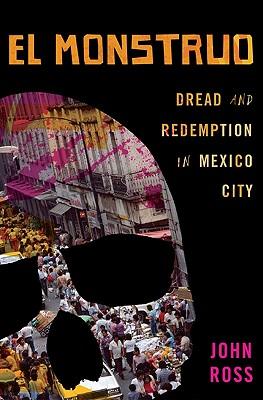
Editors note: Guardian correspondent John Ross is traveling across the nation pomoting his new book, El Monstruo — Dread & Redemption in Mexico City, and is sending us dispatches from the road. This week: Twin Cities, Madison and Northern Michigan.


 1. BLUE IGLOO


As I deplaned the Southwest Shuttle from Denver wrapped in my blue igloo, a puffed up garment that doubles my skeletal girth, a sudden spasm of panic punched me in the gut. Had I slept through my stop and disembarked in Fargo, North Dakota instead?
Minneapolis might just as well have been Fargo. The dead winter landscape lay frozen under week-old snowdrifts and the Twin Cities shivered in negative wind chill numbers beneath a leaden sky from which a cold hard rain would pelt down for a week. Fargo or Minneapolis? It didn’t much matter where I had landed – just don’t toss me into the wood chipper.


On my first evening in this desolate region, I was invited to dialogue with the Minnesota Immigrant Freedom Network at a community center in St. Paul. About 15 transplanted Mexicans, many of them related by marriage or friendship, pulled together in a circle in the gymnasium while the kids romped in the other room. Each called out his or hers’ “patria chica,” their home state or region or town. I talked about Mexico down on the ground today in the cheerless winter of 2010, the 100th anniversary of a distant revolution. How four out of every ten heads of households are out of work. 10,000 farmers and their families forced to abandon their milpas as millions of tons of NAFTA corn inundate the country. 19,000 dead in Felipe Calderon’s disastrous attempt to beat down the drug cartels. Who will be next?


Those in the circle leaned forward on their folding chairs, bending into my words as if I was a messenger bringing bad news from home. One woman began to weep and another rose to comfort her.


Later, I pulled out my book, El Monstruo – Dread & Redemption in Mexico City to show them what I had written. Families who would probably not eat meat for a week if they bought one snapped up three Monsters and asked me to sign them for their children — Alejandra, Yesica, Jeni, Alfonso, Jonaton — so that they could learn about the country they had been forced to abandon, in their new language.


As the session wound down, Mariano (not his real name) invited the families to a Jewish Seder the next week at a progressive Minneapolis schul. Then they would get on the buses and head for Washington D.C., a 150 hour round trip, to march for immigration reform on March 21st, the first day of spring. In the nooks and crannies of Obama’s America, Mexicans were beginning to come out of four years of social hibernation to rally for immigration reform, not a hot button issue in this economically strewn landscape.


I hung up with my old camarada Tomas Johnson, one of the apostles of fair trade Zapatista coffee — similar dispensaries like Just Coffee in Madison and Higher Grounds in Michigan are sprinkled over the frigid Midwest. Café has played a diminished role in the slender Zapatista economy ever since Muk’Vitz, a Tzotzil Indian cooperative, imploded when coffee prices soared — coyotes, bottom-feeder speculators, started showing up on the members’ doorsteps offering a few pesos more than the fair trade price.


Coffee is not an ideal resource upon which to build Zapatista autonomy — the price is set far away on commodity exchanges in London and New York and the product itself is destined for the jaded palettes of the connoisseur class in the cities of the north. Moreover, the coffee crop soaks up corn land and adds nothing to indigenous nutrition.


I marked my journey into my 73rd year at a house fiesta hosted by Tomas’s steady squeeze, an audiologist who gifted me with a hearing aid so that I might be able to decipher that questions hurled at me from the small audiences I address. This time last year, I was being wheeled into a green, antiseptic operating room for a round of chemotherapy that would k.o. the tumor that had taken over my liver. This birthday is the real gift.


I entertained privileged white students at several universities during my stay in the Twin Cities, got hopelessly lost in a frigid wasteland trying to find a Lutheran college, told tall tales to a handful of Raza at the U. of Minn, and attended a showing of the Benny More bio-pic at a jam-packed local theater. Benny’s scintillating calor radiating from the screen in waves of tropical heat juxtaposed oddly against the backdrop of the frozen north. Minneapolis-St Paul, with their new populations of color – Somalis, Ethiopians, Eritreans, Hmung, and Latinos – spice up this staid old state with exotic flavors. The music has changed: Reggaeton and Rancheros have replaced Spider John Koerner. I drink in the Albert Ayler-like contortions of a longhaired white boy at a jam session downstairs at the Clown Lounge.


Politics too are not as usual in this once-upon-a-time farmer-labor socialist paradise: Keith Ellison is the nation’s first Muslim congress person and a middle-of-the-road Democrat comedian stands small in the shoes of Paul Wellstone. In the other corner, the pit viper Michelle Bachman spits her venom into the black lagoons of Obamalandia.


II. TURKEY MOLE


I’m back on the Big Dog — there are plenty of Mexicans here but no Mexican bus. On the jump over to Madison, I chat with a well-seasoned black man during a smoke break. He wants to know where I’m headed. I’m on a low-rent book tour, I explain, I move from city to city to sell my books. “I’m on a book tour myself,” he laughs, “I get off where I want to and see if I like it or not. Hung up in Oswego for eight days but wasn’t anything there for me…”


There is a down-at-the-heels traveling class — the evicted and foreclosed, laid off and uprooted — rolling around the underbelly of this damaged country with no fixed destination in mind, looking for a place to light, some place that feels like home.


Norm Stockwell, who keeps WORT-FM, the Voice of Madison’s Voiceless, choogling, picks me up at the Greyhound depot, a furniture-less warehouse that resembles an immigrant detention center on the outskirts of town, and drives me over to the once-a-month Socialist pot-luck, but only scraps and few stained paper plates are left. A few hours earlier, the Madison P.D. visited the premises at the behest of the Wisconsin Socialist Party to remove a truculent member who had been abruptly expelled from its ranks, an astonishingly unpolitical resolution to a political dispute.


Madison is a city that doesn’t leave much up to chance. Cops are ever at the ready to surveil radical meetings. One cannot post a hand-scrawled street sign protesting injustice without first obtaining a permit from the city. No household is allowed to house more than three chickens (no roosters), a law that necessitates chicken inspectors and has given birth to the Chicken Liberation Front.


The State Capitol, a knock-off the Nation’s, is forever on the eyeline in Madison to remind one of the power of the State, I expect. The city is laid out on a grid so that all avenues spoke off from its monstrous dome – you have to move out of town to escape the radiation.


On Saturday, March 20th, a fistful of eternal protestors gathered at the foot of this granite beast to mark the start of the eighth year of the illegal invasion and occupation of Iraq and the decimation of millions of its people. As I trudged up State Street towards the Capitol, I flashed back to our feverish days as Human Shields in Baghdad in March 2003 and thought about Sasha for whom the war never goes home, climbing the hills of Amman, delivering collateral repair from dawn to dusk to the million Iraqi refugees that forgotten war has exiled to the Jordanian capitol.


Our presidents invade so many foreign countries that they can’t even remember the name of the last one they destroyed. Iraq has been erased from the North American mind screen in favor of Afghanistan, the Good War on Obama’s agenda. Last month, Sasha and Mary’s Collateral Repair Project took in just $50 in donations and CRP is in danger of folding. Send them some Yanqui shekels at (www.collateralrepairproject.org.)


The annual commemoration of the Iraqi genocide draws smaller and smaller knots of humanity each year — 80 or so souls in Madison, 500 in San Francisco, not 10,000 in Washington. But the next day, as Baracko’s Dems braved the racist jibes and hard fruit of the Teabaggers to enter the hallowed halls of Congress and narrowly vote up a phony health care reform bill that excludes immigrants from coverage and leaves the insurance congloms on top, 200,000 assembled outside to back up a proposed immigration reform that smells just as cheesy as Obamacare.


The rally proved to be the largest confluence of immigrant workers since that miraculous May 1st four years ago when millions came out of the shadows to shout “aqui estamos y no nos vamos.” After that milestone moment, the immigrant rights movement was driven into the underground by Bush’s ICE raids, Lou Dobbs, the Minutemen, real-time Mexico bashing with knives and bottles, Sheriff Joe’s Arizona storm troopers, good ol’ American-as-apple-pie racism, and the squeamish response of the official Latino leadership.


Now the indocumentados are taking their first baby steps back into the maelstrom of U.S. politics. Hundreds of grassroots groups like the Minnesota Immigration Freedom Network rented buses and drove off to Washington on the first day of spring and May 1st, the day on which immigrant workers first took to the streets of America 124 years ago in the battle for the eight hour day, now looms large on the calendar of resistance.


Lester Dore is a graphic artist who operates under the influence of the king of the calaveras Jose Guadalupe Posada, the brothers Flores Magon, and the breathtaking explosion of popular art that detonated on the walls of Oaxaca during the 2006 uprising in that southern city. Lester whips up a pair of prints to celebrate the publication of “El Monstruo” and the life after death of Praxides G. Guerrero, the first anarchist to fall in the 100 year-old-this-year Mexican revolution. He serves up a big pot of Mole de Guajalote (Turkey) and invites us over. Three compas from Toluca in Mexico State share the sumptuous repast and the conversation quickly slides into Mexican. I learn the origin of the Chilango-ismo “teparocha” (falling down drunk) but eschew the vino (the liver lives on.)


III. SANCTUARY IN THE HEARTLAND


Driving the long route around Lake Superior into northern Michigan, the first tentative fingers of spring have brought a thawing to the land. The cherries that draw thousands of migrant workers to the Lower Peninsula are threatening to burst into bud. Gladys Munoz (her real name) directs Migrant Health Services for seven northern Michigan counties. She is based in Traverse City, a comfortable upper crust enclave — the billion buck mansions out on the peninsula are in the El Chapo Guzman category of ostentation (Michael Moore is rumored to be in residence in the environs ensconced in a lavish log cabin roughly the size of downtown Flint.)


Gladys knows where the bodies are buried. We ply the backroads to the labor camps hidden away down in the dank gullies. Guatemalans and Mexicans stream into this region each spring to do the stoop labor no gringo will do and pick the Maraschinos that top off the parfaits of the few upwardly mobile Americans left in the wake of the ravaged economy (Michigan unemployment clocks in around 15%.) Gladys tells me about three babies born without brains — she suspects pesticides. She speaks about a man from Chiapas who hung himself when he found out that he had contacted AIDS — a priest was called upon to perform an exorcism at the house where he expired. And a young Triqui Indian mother from Oaxaca picking cucumbers for a Vlasic pickle contractor who was stranded in a country that doesn’t recognize her language after her husband went fishing for supper without a license and Fish & Game turned him over to the Migra.


We visit with Liliana (not her real name) from the drug war-riddled hot lands of Guerrero state. The patron is a kindly old farmer who has installed cable TV for the workers and we watch Barack Obama extol the wonders of his tarnished health care bill. Liliana’s husband is picking oranges in Florida but will soon return to work the cherry. She says he doesn’t much believe that an immigration reform measure will make it out of congress – “just some more blahblahblah…” But Liliana will march this May 1st if she can get a ride — undocumented workers are not permitted drivers’ licenses in the state of Michigan.


Traverse City is good to me. I perform at a local organic coffee roaster for a roomful of social change agents. The next morning, Jody T. who gave up her life to drive this garrulous old gaffer around the bioregion, steers the Viva into a trepidatious triangle. Cadillac was once the home base for Timothy McVeigh and the Michigan Militia, a recent flashback on the Ten O’clock News after a Christian posse purportedly targeted cops for blood sacrifice in preparation for the appearance of the Anti-Christ. To the west, small towns with Dutch-inflected names like Holland and Zeeland and Vreland dot the lakeside.


White clapboard outposts of the Dutch Reform Church, the architect of South African apartheid, their steeples spiring piously into the spring breeze, hug the highway. The Dutch Reform Church is the spiritual home of the Prinz family whose most celebrated spawn, Eric, is the go to guy at Blackwater. Further south we slide into Grand Rapids where the similarly affiliated DeVos dynasty’s Amway holds sway. The Prinzes and the DeVoses (a good reason not to root for the Orlando Magic) finance such repositories of right-wing fanaticism as Focus On The Family and Operation Rescue. The largesse of Dick DeVos rivaled the Mormon Church in putting California’s homophobic Proposition 8 over the top.


Grand Rapids, once the furniture capitol of the known universe and now the home of the Gerald Ford Museum of Presidential Imbeciles, is a good boxing town (Buster Mathis and Roger Mayweather have gyms here) and a swelling Latino population has changed the complexion of the city. Despite the downturn, Grand Rapids is trying to upgrade its downtown but the further one gets from the core of the city, the seedier things look.


Koinonia House is a sanctuary near the old demolished heart of Grand Rapids — in fact, it is the only structure left standing on its block. Established by disaffected seminarians like Jeff Smith in the early 1980s when the U.S. waged war on Central America, K House became a station on the underground railroad built by the Sanctuary Movement. The first refugees were Guatemalan Indians fleeing the scorched earth genocide of Efrain Rios Montt. In recent years, K House has taken in Mexicans fleeing that “desgraciada pobreza” back home, like Carlos and Alynn (their real names) who have brought their remarkable art with them to El Norte.


Jeff kicks back and reminisces about the fates of former tenants. The big-bellied wood stove belches out waves of warmth on a chill late March morning. The big arms of the fluffy old lounger envelop a weary traveler and hold him close. K House remains a sanctuary deep in the heart of a wounded land.


Stay tuned. Chicago, St Louis, Jackson Mississippi – there is still a whole lot of traveling to do as the Monstruo tour moves eastwards.               


FIN


John Ross and “El Monstruo – Dread & Redemption in Mexico City” will visit St. Louis April 4th-7th, and Millsaps College Jackson Mississippi April 9th for a symposium on Mexico City – he will tour Baltimore, Washington, New York, and Boston April 19th through May 1st. For details write johnross@igc.org.

Radio: It’s about local, dammit

8

By Johnny Angel Wendell


arts@sfbg.com

As the 2010 midterm elections approach, so rises the heat level in one of the American news media’s most vitriolic battlegrounds: AM (and increasingly FM) news/talk radio. Dominated almost entirely by the American right in all its permutations, the genre is part of what Hillary Clinton once deemed a "vast right-wing conspiracy." And while she may have overstated the case somewhat, talk radio is the angry white male’s jungle drum. As the broadcast point for the economic and social theorizing emanating from billionaire-funded think tanks like the Heritage Foundation and American Enterprise Institute, as well as repeating anti-government (when the government is not being run by Republicans) doggerel whose roots run all the way back to Father Coughlin’s screeds in the 1930s, it’s as effective a tool for mounting outrage (which is never aimed at corporate America, a telling sign, populism-wise).

Because of this obvious one-sidedness masquerading as news, many media critics on the left have demanded the reinstatement of the Fairness Doctrine — a law enacted in 1949 that required the holders of broadcast licenses to present issues of public importance in a way that a government commission deemed fair and equal, so both sides of an issue got equal time. The doctrine remained the standard by which talk radio operated until it was repealed in the late 1980s. Shortly after that, Rush Limbaugh began his ascent to the summit of talk radio, becoming its most popular voice. If the Fairness Doctrine was still in place, however, that might never have happened.

President Obama has said that he has no interest in restoring the doctrine, claiming it’s a distraction. Despite the fact that reinstating it would personally benefit yours truly as a left-leaning talk show host, I’m also opposed to it — it does not solve what truly ails talk radio today.

What’s really wrong with talk isn’t the imbalance between right and left — it’s local vs. national, live vs. syndicated. Tune in to nearly 80 percent of talk outside of morning and afternoon drive time, and it’s one national show after another: Rush Limbaugh, Sean Hannity, Glenn Beck, Dr. Laura. Their politics are irrelevant — they’re broadcasting on local frequencies and not discussing local events.

Talk radio does not need partisan balance. At this point, half the country gets its news from the Internet, where thousands of Web sites provide every conceivable point of view. What talk does need — and badly — is a requirement that stations devote at least half their time to local issues. Most of the day or part of the evening should be devoted to what actually affects the audience — schools, traffic, cops, corruption, our kids, our money, what we see and hear right in front of us.

Radio chains might scream bloody murder at this because syndication is cheaper. But the two most popular AM stations in the state — KFI AM640 in Los Angeles and KGO 810 in San Francisco — are locally-based stations. KGO has no syndicated programming at all Monday through Friday, and consistently has been the top-rated station in the city.

A Fairness Doctrine would be seen (rightfully so) as a way to shut up the right. But a 50/50 Doctrine would not — and given that the polarity of opinion on local issues is less (because it’s real and present), the blatant disregard for fact would evaporate quickly. This is worth lobbying for — if anything meant "bringing it all back home," local talk would be the optimal place to begin. *

Johnny Angel Wendell is a talk show host at KTLK AM 1150 in Los Angeles and has been on Green 960 and KIFR 106.8 in SF.

Editor’s Notes

4

Tredmond@sfbg.com

The pot initiative’s going to pass in November. California’s going to legalize personal use and small sales. I think that’s clear from the polls, and from the fact that the pot supporters are raising a fair amount of money, and the fact that there won’t be much effective opposition.

The state Legislature might not like it — ballot measures are impossible to amend, and with debate and discussion the measure might be a little different. But Assembly Member Tom Ammiano has tried, again and again, to get his colleagues to see the light: this is going to happen, and if the folks in Sacramento are afraid of it, then they’re not going to have any influence over the final product.

And it’s amazing to me how many people are afraid of this issue.

All three major candidates for governor, including Jerry Brown, who must have smoked pot at some point in his life (would Linda Ronstadt have gone out with a guy who never smoked weed?), are publicly opposing the measure. Ammiano can’t get a majority of the Assembly to vote yes on his legalization bill — and Democrats control things. You wonder when these people are going to understand that the voters, most of them, really don’t care if pot becomes legal. It doesn’t frighten anybody anymore — except elected officials.

Humboldt County is already preparing for this; business leaders are talking about the economic impact on the region and how the North Coast can become the Napa Valley of green bud. The Obama administration needs to get ready too — ready to tell the federal drug agents to leave California alone. And a few years from now, life will go on, and everyone will take legal pot for granted — and I wonder how silly Jerry Brown’s going to feel. *

Obama nominates Melinda Haag

0

President Obama has nominated veteran attorney Melinda Haag to serve as the U.S. Attorney for the Northern District of California, which stretches from the Monterey Coast to California’s northern border with Oregon and from the Pacific Ocean nearly to Sacramento, an area that more than 7.3 million people call home. Obama also nominated Jerry E. Martin as U.S Attorney for the Middle District of Tennessee, and James A. Lewis as U.S. Attorney for Central District of Illinois.

“I am so pleased the President has nominated veteran attorney Melinda Haag to serve as the top federal prosecutor in San Francisco,” said U.S. Sen. Barbara Boxer, who recommended Haag for the post. “She is well respected in the California legal community and will bring more than two decades of experience handling white collar crime cases to the U.S. Attorney’s Office.”

Boxer likely isn’t the only one pleased by this nomination: San Francisco’s embattled immigrant community has been hoping that Obama would replace the current top federal prosecutor Joseph Russoniello, an ardent opponent of sanctuary legislation.

According to a press release issued by Boxer’s office, Haag has been a partner since 2003 at San Francisco-based Orrick, Herrington & Sutcliffe in the white collar criminal defense and corporate investigations group, which handles cases involving fraud, antitrust violations, environmental crimes, health care fraud and other corporate matters. 

Before that, former U.S. Attorney and current FBI Director Robert Mueller recruited Haag to serve in the San Francisco U.S. Attorney’s Office, where she headed the White Collar Crime Unit and was the deputy chief of the General Crimes Unit. Haag also has experience as a prosecutor in the Los Angeles U.S. Attorney’s Office.

Haag received her bachelor’s degree from the University of California San Diego and she earned her law degree at UC Berkeley.

Hank Plante’s exit interview

2

Hank Plante ends a three-decade run as a political journalist with tonight’s (March 24) broadcast of the CBS 5 Eyewitness News, where he has worked since 1986 after starting his career with newspapers in Washington DC. So we took the occasion to talk politics with him, learning that his loyalties lie downtown.

Plante agreed that politics has become ugly these days. “It’s just so much more acrimonious, that’s one thing that’s changed. The other is just the money that’s involved,” Plante told us, marveling at Meg Whitman’s plans to spend $40 million of her own money to run for governor and the $1 million per day that corporations spent lobbying against the health reform bill signed by President Obama.

But the changes haven’t gotten Plante down, as they have many political junkies, who decry the crippling of government’s ability to combat corporate power and address real social and economic problems. “I’ve never become a cynic, and I think that’s one thing that sets me apart from many political journalists,” he said, adding, “I still think politicians can make a difference.”

Yet like many political journalists, when I ask who his favorite politicians have been, he rates them based on whether they’ve made good stories, not whether they good for the people. For journalists, bad is often good, whether it be natural disasters or disgraceful politicians.

“Arnold is a great story. Willie Brown was a great story. Gray Davis was a dull story until he got recalled, then he was a good story,” Plante said.

What about Mayor Gavin Newsom, who has often given Plante exclusive access (including Newsom’s first extended interview after his 2007 sex scandal), but who has also angrily walked out in the middle of an interview with Plante. 

“Personally, I like the mayor. But I have to ask him tough questions, so he can be mercurial. Right now, he’s running for office again, so he’s charming,” Plante said.

In fact, for a journalist, Plante makes clear his preference for Newsom over the progressive majority on the Board of Supervisors, joking, “If I had a month to live, I’d spend it with the Board of Supervisors because it would seem like five years.”

Plante also said that he opposes district elections — which he said have prevented the emergence of big-stature political figures like Dianne Feinstein and Quintin Kopp — and Plante said he doesn’t see the value of district elections in counteracting the political power of downtown corporations. “I’m a capitalist and I have no problem with people making money,” he said.

Yet Plante acknowledges the divide between downtown and progressives is San Francisco’s dominant political dynamic, noting, “You see how afraid downtown is of the Board of Supervisors appointing the new mayor.”

While Plante said he believes in the importance of politics, he does decry how political science and public relations have been manipulated in recent years.

“They’re taken a page out of the Karl Rove playbook to talk over the journalists right at the public,” Plante said, noting how many politicians no longer feel the need to be accessible to journalists or honestly and directly answer their questions. “They really want to control the message, so the accessibility is diminished.”

Nonetheless, Plante said he regularly emphasizes the importance of political engagement: “In a place like the Bay Area, where people are inundated with lots of information sources, you have to keep saying it over and over again.” 

Plante, 63, is retiring and moving to his home in Palm Springs with his partner, Roger. Among the many awards and accolades he earned during his career are several Emmys and a prestigious Peabody Award. His station sent out a press release praising Plante, including this comment by anchor Dana King: “There is an entire population of politicians breathing a sigh of relief at the news of Hank’s retirement. Hank was the consummate professional, never combative but he did his homework and asked tough, pointed questions. Politicians, love him or hate him, respected and answered them, every single time. Our newsroom will suffer a huge intellectual void when he leaves.”

John Ross: The damaged spine of America

2


I am on a low-rent book tour with my new cult classic El Monstruo – Dread & Redemption In Mexico City.  For the next three months, I will stumble across this land from sea to stinking sea probing the underbelly of Obama’s America.  The findings will be posted on these pages.


LAS CRUCES N.M. — The snow was already dusting the Organ Mountains fringing this high desert town, promising a hard winter further up the spine of Obama’s America. I ride the Mexican bus (officially doing business as the El Paso-L.A, Limousine Express) when I ply the back roads of the southwest. Greyhound, with its stern rules and regulations and surly drivers who threaten their cargos with summary expulsion for minor infractions, doesn’t much inspire me these days.  


With notable exceptions, Greyhound passengers are a harried and haunted bunch, riding the Big Dog from trouble to trouble, often with all their possessions stuffed into plastic garbage bags. In the cruelest of gestures, the Greyhound management has recently banned garbage bags as an instrument of luggage.  Zombie passengers on the Big Dog stare out at the distant horizon submerged in their worries or stab music into their ears to sever all human communication. No one talks to their fellow travelers anymore.

By way of contrast, the Mexican bus bubbles with chatter.  “Platicame!” (“Talk to me!”) my seatmates insist. The chitchat often gravitates towards work — where they have recently toiled, the job towards which they are headed. Wistful nostalgia for their families and pueblos down in Mexico are common ground. Rancheros belch from the speakers and the taste of tamales flavors the ride. It feels like going home.

Bus rides are an opportunity to reinvent oneself. I am usually the only gabacho on these long hauls through the rugged mountains and barren deserts of the southwest, but I speak colloquial, unaccented Mexican and who I really am excites curiosities. These days, my kuffiyah wrapped around my scrawny neck, I pass myself as an Arab from Mexico City hawking books from tank town to tank town, a plausible story — back home, Arabs are often stereotyped as itinerant peddlers.

North of Las Cruces, the Mexican bus is pulled into a Migra shed and the conversation modulates real quick. A blonde woman agent jumps on board and demands to see everyone’s documents. She studies the passports and green cards under the glare of her flashlight and then shines it into the eyes of the passengers to see who will blink first. One young man — he looks like a university student – is pulled off the bus and is never seen again. When the Mexican bus slides out of the shed, the chatter resumes — but with one less voice in the mix.

Clayton, a young Wobbly who used to run a bookshop down by the rail yards in Albuquerque that was mostly frequented by hobos looking for a little warmth in a cold winter world, is now teaching at a troubled middle school. Patrol cars are often parked out front and half the kids – 99.99% of who are “Hispanics” (read Mexicans) – have juvenile police records. Clayton asks me in to talk to the students, who have never seen a real author in the flesh.  

We hunker down in the library and I step into my Grandpa persona and tell tales of the Mexican revolution while Clayton projects portraits of the Great Zapata and Pancho Villa on the audio-visual screen. I recount how the two men met in a rural schoolhouse in Xochimilco, now a borough of Mexico City, in December 1914. For an hour the two sat in frozen silence until Zapata, unable to contain his bitterness, declares that Carranza, their rival, is “un hijo de puta!” The kids fall off their little library chairs in gales of Mexican mirth. Clayton frets for his job but the librarian apparently doesn’t understand Spanish.  

I show the kids my books. Helen, a boisterous tweener, grabs “Iraqigirl” from Clayton’s hand and announces she is taking it home. The next day, she returns it with a review: “this is the best book I have ever read.” Two boys sit at the round reading table with copies of “El Monstruo — Dread & Redemption In Mexico City” and “Murdered by Capitalism — 150 Years of Life & Death on the American Left” spread before them. They pour over the subversive pages all through the lunch hour. When we prompt them that we have to leave, they hide the books under their hoodies.

 “I don’t have it — check me out!” Salvador (not his real name) challenges. The librarian rushes over and promises the boys that she has just ordered the books on line for them. They will be here Monday morning.  “But this is only Thursday,” protests Manuel (not his real name.)  

Garfield middle school is the best stop so far on this monstrous book tour.

Attendance at public events in Albuquerque is sparse. A vegan spread at the Catholic Worker House drums up a dozen hungry souls, a presentation of “Iraqigirl” at the Peace & Justice Center eight, including an Iraqi woman who leaves early. I show “Corazon del Tiempo” (“Heart of Time”), the new Zapatista movie (it was previewed at Sundance) in a small room at the university – Weather veterano Mark Rudd and the remarkable investigator Nelson Valdez and a handful of starry-eyed students (“Corazon” is a love story) show up.  


I sorely miss my old pal Tilda Sosaya who fought doggedly for prisoners’ rights in the nearly wholly privatized New Mexico prison system for decades after her son was imprisoned for ten years for some dumb teenage caper. Last March, I wrote Tilda that I had been diagnosed with liver cancer and she wrote back that she had it too. The cancer took her quickly and now she is gone and her son is back in prison. We fight for justice but life in this lane is not very just.

I catch the day train up to Santa Fe to visit with the writer Chellis Glendinning. Chellis has lived for the past 18 years on a tiny plot in Chimayo, the land of miraculous dirt and a key distribution point for black tar heroin from Sinaloa and Nayarit — see her “Chiva – How One New Mexican Town Took On The Global Heroin Trade.” Now she is pulling up stakes and throwing in with Evo Morales. Her jeep flies a Bolivian flag and she is rushing to be in Cochabamba for the tenth anniversary of the landmark struggle against the privatization of that city’s water supply by the Bechtel Corporation. Adios companera — la lucha sigue y sigue y sigue!

I am back on the Mexican bus heading towards Denver. The riders get off at whistlestops like Las Vegas and Durango and Colorado Springs where they will do the dirty work of this country — walloping pots, washing cars, cleaning motel rooms, milking cows, shoveling their manure, keeping Obama’s America spic and span for the next paying customer at minimum wages if indeed they are not cheated out of them by unscrupulous contractors.  

When the guy across the aisle gets curious, I revive my new identity as an Arab peddler. “Donde esta tu mujer?” he asks (“Where is your wife?”) and I lie that she is in Iraq taking care of her people. “The Yanquis invaded her country and bombed her neighborhood…”  “Pobre gente,” he sympathizes.  Santiago (is that his real name?) is from Hidalgo de Parral, Chihuahua and says he is on his way to work the Colorado ski resorts where so many Mexicans slave for Senor Charlie these days. He knows all about exile.  

I am invited to deliver a pair of lectures at Denver University, Condoleezza Rice’s alma mater (her father was provost.)  Doug Vaughn, also a DU grad who went left at an early age, notices that I will be speaking at the same time as Cindy Courville, Condi’s roommate who followed her to the National Security Council and then became U.S. emissary to the African Union.

My talks are programmed for the Josef Korbel Center for International Studies. Josef Korbel was Madeline Albright’s father, to give you some assessment of my chances of winning converts here. Indeed, the students are polite and well-groomed, models of future CIA assets — in tracking down the announcement of Courville’s talk on a Korbel Center bulletin board, Doug encounters a CIA recruitment leaflet. The grad students have been forewarned they will be visited by a representative of the lunatic fringe and busy themselves with their e-mail under the pretext of taking notes.  

Academic acrimony flourishes in the Denver- Boulder axis.  Everywhere else in this land where my father croaked, the trials and tribulations of Ward Churchill and his ill-timed assault on the “little Eichmans” deconstructed in the Twin Towers conflagration went out with the fish wrap the next morning — but here in mile-high city, mention of Ward and Colorado AIM can still start a prairie fire. Although such Churchill accusers as the governor and the Colorado U president have long since resigned due, in fact, to other scandals after successfully silencing Ward, his detractors’ thirst for blood remains unsatiated.

Infused with the venom of the dearly departed Bellencourts (who Churchill once dissed as “Nebraska wigmakers”), Ernesto B. Vigil, author of an action-packed bio of Corky Gonzalez, the Denver-based Xicano founder of the Nation of Aztlan, is still brandishing the long knives. Ward Churchill is a fake Indian, Ernesto obsesses, a white guy whose claim to indigenousness is backed up by white people because white people only listen to white people.  White people think they know everything, he scoffs in a heated e-mail in which he disparages my whiteness a dozen times in as many lines.

Actually, I don’t give a rat’s ass if Ward Churchill is one/sixteenth Cherokee or not (the tribal government recently expelled all its black members) — Churchill remains the most lucid writer on American genocide in this benighted country.

Boulder is said to be the most over-regulated city in North America although white liberal enclaves like Madison Wisconsin and Arcata California could give Boulder a run for its money.  I accompany Joe Richey, a local alternative radio sleuth, to the Boulder dog pound to bail out his black lab “Yanqui” (as in “Yanqui! Go home!) “Yanqui” has been adjudged guilty of illicit dog-like behavior i.e. nuzzling a neighborhood garbage can.  

After Joe pays off the authorities and the mutt is released to his custody and properly admonished, we drive past a local dog park.  In a paroxysm of charitable intent, the Boulder City Council permits the homeless to encamp at night amidst the dog turds but they must be gone by daybreak when the pooches of the city’s housed residents take possession or risk a $100 fine. How the homeless, forced to bed down in dog shit nightly, can afford this astronomical sum is unclear. Such is what passes for compassion on the underbelly of Obama’s Amerikkka.


On my final day in Denver, Hank Lamport, a local schoolteacher who favorably reviewed “El Monstruo” for the Post, today the only daily in this formerly two-newspaper town, drives me out to the Rocky Mountain Arsenal National Wildlife Rehabilitation Area. Until a few years ago, the Rocky Mountain Arsenal manufactured and stored deadly nerve gas, chiefly Serin — an occasional lost canister still spooks the wildlife.  The displays at the Visitors’ Center feature photos of workers filling “Honest John” missiles with the stuff. Napalm was also cooked up here. I study the glazed eyes of taxidermied foxes and coyotes and bald eagles and hastily bid adieu.

On the way out of town, we stop to worship the victuals in an Aurora, Colorado taco shop. Hank laments that when he first became a devotee of “Tacos y Salsas,” the clientele, uniformly Mexicanos, would greet him with a “buen provecho” (“good appetite” — a universal courtesy in the Spanish-speaking world) but now the customers have become so gringo-ized that the salutation is a lost art. Nonetheless, when we polish off our orders and head for the door, two working stiffs at the next table wish us each “buen provecho.”
  
It warms the cockles of my contused heart to know that such cultural resistance still percolates out here on the damaged spine of Obamalandia.

Next stop: the frozen, melancholy flatlands of the Great Midwest.  

John Ross and “El Monstruo – Dread & Redemption in Mexico City” (“gritty and pulsating” – NY Post) will be visiting Traverse City and Grand Rapids Michigan in the final week of March. You can catch them at the Headland Café in Chicago’s Rogers Park March 31st, Toronto’s Hoggtown April 1st-4th, and St. Louis Mo. April 7th.  


Film listings

0

Film listings are edited by Cheryl Eddy. Reviewers are Kimberly Chun, Michelle Devereaux, Max Goldberg, Dennis Harvey, Johnny Ray Huston, Erik Morse, Louis Peitzman, Lynn Rapoport, Ben Richardson, and Matt Sussman. The film intern is Peter Galvin. For rep house showtimes, see Rep Clock. For first-run showtimes, see Movie Guide.

OPENING

Chloe See "Moore and Less." (1:36) Elmwood, SF Center, Sundance Kabuki.

Greenberg Roger Greenberg (Ben Stiller) is 40, and you might think he’s going through a midlife crisis — if he hadn’t been in pretty much this same crisis for 15 years or more. Still very edgy and fragile after a nervous breakdown-sparked institutional stay, he’s holing up at the comfortable Hollywood home of a big-deal brother while the latter and family are on vacation in Vietnam. (The implication being that Roger is most welcome here when no one else actually has to endure his prickly, high maintenance company.) While in residence he reconnects with old friends including the ex-girlfriend (Jennifer Jason Leigh) he dumped yet never quite got over — though clearly she did — and the ex-bandmate (Rhys Ifans) he burned by wrecking their one shot at a major-label deal. He also gets involved, kinda-sorta, with big bro’s personal assistant Florence (mumblecore regular Greta Gerwig), whose passivity and low self-esteem make her the rare person who might consider a relationship with someone this impossible. Like all Noah Baumbach films, especially the slightly overrated Squid and the Whale (2005) and vastly underrated Margot at the Wedding (2007), his latest pivots around a pathologically self-absorbed and insensitive protagonist who exasperates anyone unlucky or blind enough to fall into his or her orbit. Working from a story co-conceived by spouse Leigh, Baumbach’s script sports his usual sharp dialogue, penetrating individual scenes, and narrative surprises. But it also gets stuck in dislikable Roger’s rut, finding conflict easily but stubbornly resisting even the smallest useful change. For all its amusing and uncomfortable moments, Greenberg emerges a dual character slice with no real point. Neither Roger or Beth reward long scrutiny (least of all as a hapless potential couple), while the few screen minutes Ifans and Leigh get make you wish their roles had hijacked the focus instead. (1:40) Piedmont, Shattuck. (Harvey)

Hot Tub Time Machine At last, Crispin Glover returns to his time-travel movie roots! (1:55) California.

How to Train Your Dragon Yet another 3D cartoon for the kiddies. At least this one is about Vikings. (1:38)

*The Sun It may have taken five years for Alexander Sokurov’s The Sun (2005) to reach local theaters, but then the Russian master’s contemplation of Emperor Hirohito’s last days as Godhead is decidedly out of time. Painterly and slow like all Sokurov’s work, the film specifically follows his estranged reconstructions of Hitler’s retreat with Eva Braun (1999’s Moloch) and Lenin’s demise (2000’s Taurus). In August 1945, Hirohito broke with tradition by making a direct appeal to the Japanese people to end military operations; soon thereafter he renounced his divine rights. The Sun‘s elliptical narration intuits the emperor’s paled existence, and Issey Ogata’s lead performance, centering on a fish-out-of-water puckering of the lips, amply conveys the shuttered hours of a man who, in experience if not in fact, is not quite human. The muted use of available light and a disquieting sound design (faraway air-raid sirens yield to the barest brush of a finger) eschew historiography’s harsh glare, instead returning primal scenes of power to a dreamlike state of unknowing. Sokurov’s most hallucinatory effects are reserved for ashen views of firebombed Tokyo which float free from perspective or clear boundary; a brief fantasy in which fish-like warplanes spew apocalyptic destruction suggests the emperor’s childlike imagination and set the stage for his historical date with General MacArthur, realized by Sokurov less as a diplomatic breakthrough than a leaden twilight. (1:50) Shattuck. (Goldberg)

Waking Sleeping Beauty Hollywood history is full of epic rivalries, juicy scandals, multi-million-dollar mistakes, and triumphant comebacks. Sometimes, all of the above and more can be contained within a single studio, or even a single studio division, or even a single studio division during a finite number of years, as illustrated by this insidery peek at Disney’s animation division. The doc gives a bit of background, but focuses its attentions on 1984-1994, a ten-year span that saw the floundering department struggle through post-Walt, identity-crisis blues before blossoming into a rejuvenated powerhouse. Waking Sleeping Beauty director Don Hahn was a producer on the Oscar-nominated Beauty and the Beast (1991), so he’s uniquely positioned to tell the story as it unfolded, using home movies and countless interviews. High points include a glimpse of late composer Howard Ashman introducing his demo for the iconic Little Mermaid (1989) tune "Under the Sea" (it was Ashman’s idea to give the crab character a Jamaican accent), and plenty of dish on the legendary Jeffrey Katzenberg-Michael Eisner feud. (1:26) Embarcadero. (Eddy)

ONGOING

Ajami You may recognize the title of Yaron Shoni and Scandar Copti’s debut collaboration as one of five films nominated for a 2010 Academy Award in the Foreign Category. Though it didn’t bring home the grand prize, Ajami remains a complex and affecting story about desperation and its consequences in a religiously-mixed town in Israel. As we follow the lives of four of Ajami’s residents the narrative shifts perspective almost maddeningly, switching characters seemingly at the height of each story’s action. But once all of the stories fully intersect, the final product has the distinction of feeling both meticulously calculated and completely natural. I was most impressed to learn that Shani and Copti prepared their actors with improvised role-playing rather than scripts. By withholding what was going to happen in a scene before shooting, we are treated to looks of surprise and emotion on actor’s faces that never feel unnatural. Attaining such a level of realism may be Ajami‘s crowning achievement; it can’t have been easy to make a foreign world feel so familiar. (2:00) Shattuck. (Galvin)

Alice in Wonderland Tim Burton’s take on the classic children’s tale met my mediocre expectations exactly, given its months of pre-release hype (in the film world, fashion magazines, and even Sephora, for the love of brightly-colored eyeshadows). Most folks over a certain age will already know the story, and much of the dialogue, before the lights go down and the 3-D glasses go on; it’s up to Burton and his all-star cast (including numerous big-name actors providing voices for animated characters) to make the tale seem newly enthralling. The visuals are nearly as striking as the CG, with Helena Bonham Carter’s big-headed Red Queen a particularly marvelous human-computer creation. But Wonderland suffers from the style-over-substance dilemma that’s plagued Burton before; all that spooky-pretty whimsy can’t disguise the film’s fairly tepid script. Teenage Alice (Mia Wasikowska) displaying girl-power tendencies is a nice, if not surprising, touch, but Johnny Depp’s grating take on the Mad Hatter will please only those who were able to stomach his interpretation of Willy Wonka. (1:48) Castro, Empire, 1000 Van Ness, SF Center, Sundance Kabuki. (Eddy)

*The Art of the Steal How do you put a price on something that’s literally priceless? The Art of the Steal takes an absorbing look at the Barnes Collection, a privately-amassed array of Post-Impressionist paintings (including 181 Renoirs) worth billions — and the many people and corporate interests who schemed to control it. Founder Albert C. Barnes was an singular character who took pride in his outsider status; he housed his art in a specially-constructed gallery far from downtown Philadelphia’s museum scene, and he emphasized education and art appreciation first and foremost. But he had no heirs, and after his death in 1951, opportunists began circling his massive collection; the slippery political and legal dealings that have unfolded since then are nearly as jaw-dropping as Barnes’ prize paintings. Philly documentarian Don Argott has a doozy of a subject here, and his skillful, even suspenseful film does it justice. (1:41) Smith Rafael. (Eddy)

The Blind Side When the New York Times Magazine published Michael Lewis’ article "The Ballad of Big Mike" — which he expanded into the 2006 book The Blind Side: Evolution of a Game — nobody could have predicated the cultural windfall it would spawn. Lewis told the incredible story of Michael Oher — a 6’4, 350-pound 16-year-old, who grew up functionally parentless, splitting time between friends’ couches and the streets of one of Memphis’ poorest neighborhoods. As a sophomore with a 0.4 GPA, Oher serendipitously hitched a ride with a friend’s father to a ritzy private school across town and embarked on an unbelievable journey that led him into a upper-class, white family; the Dean’s List at Ole Miss; and, finally, the NFL. The film itself effectively focuses on Oher’s indomitable spirit and big heart, and the fearless devotion of Leigh Anne Tuohy, the matriarch of the family who adopted him (masterfully played by Sandra Bullock). While the movie will delight and touch moviegoers, its greatest success is that it will likely spur its viewers on to read Lewis’ brilliant book. (2:06) Oaks. (Daniel Alvarez)

Brooklyn’s Finest "Really? I mean, really?" asked the moviegoer beside me as the final freeze-frame of Brooklyn’s Finest slapped our eyeballs. Yes, that’s the sound of letdown, despite the fact that Brooklyn’s Finest initially resembled a promisingly gritty juggling act in the mode of The Wire and Cop Land (1997), Taxi Driver (1976) and Training Day (2001). Bitter irony flows from the title — and from the lives, loves, bad habits, pressure-cooker stress, and unavoidable moral dilemmas of three would-be everyday cops, all occupying several different rungs on a food chain where right and wrong have an unpleasant way of switching sides. Eddie (Richard Gere) is the veteran officer just biding his time till he gets his pension, all while comforting himself with the meager sensuous attentions of hooker Chantel (Shannon Kane). Sal (Ethan Hawke) is the bad detective, stealing from the dealers to fund a dream home for his growing family with Angela (Lili Taylor). Tango (Don Cheadle) is the undercover detective who has cultivated friendships with dealers like Caz (Wesley Snipes) and sacrificed his marriage for a long-promised promotion from his lieutenant (Will Patton) and his superior (Ellen Barkin, in likely the most misogynist portrayal of a lady with a badge to date). You spend most of Brooklyn’s Finest waiting for these cops to collide in the most unfortunate, messiest way possible, but instead the denouement leaves will leave one wondering about unresolved threads and feeling vaguely unsatisfied. In any case, director Antoine Fuqua and company seem to pride themselves on their tough-minded if at times cartoonish take on law enforcement, with Hawke in particular turning in a memorably OTT and anguished performance. (2:13) 1000 Van Ness. (Chun)

The Bounty Hunter There’s a real feeling of impotence in reviewing a movie whose ad was pasted on the side of the bus you took to the screening. This thing is determined to be seen, and that’s a true shame. Those who heed the call of the ubiquitous marketing campaign will have to sit through a dull parade of contrivances concerning a bounty hunter (Gerard Butler) whose latest catch is his court-skipping ex-wife (Jennifer Aniston). She’s a hotshot city journalist who’s forced to continue her investigation of a police cover-up while handcuffed to a car door and bickering with her old flame. The trajectory of the plot is obvious enough, but there’s so little chemistry between the two actors that the inevitable reconciliation practically constitutes a twist ending. Aniston saw fit not to whine her way through this role, which is something, but nothing nearly as complimentary can be said about Butler. He emotes in lurches, with the presence of a guy who’s not sure acting is the right direction for his life but still really wants to give it a go. If "This. Is. Sparta!" weren’t burned into my brain I would swear the man had never been in front of a camera before. (1:50) 1000 Van Ness, SF Center, Sundance Kabuki. (Jason Shamai)

The Crazies Disease and anti-government paranoia dovetail in this competent yet overwhelmingly non-essential remake of one of George A. Romero’s second-tier spook shows. In a small Iowa hamlet overseen by a benevolent sheriff (Timothy Olyphant) and his pregnant wife (Radha Mitchell), who’s also the town doctor, a few odd incidents snowball into all-out chaos when a mysterious, unmarked plane crashes into the local water supply. Before long, the few residents who aren’t acting like homicidal maniacs are rounded up by an uber-aggressive military invasion. Though our heroes convey frantic panic as they try to figure out what the hell is going on, The Crazies never achieves full terror mode. It’s certainly watchable, and even enjoyable at times. But memorable? Not in the slightest. (1:41) 1000 Van Ness. (Eddy)

Crazy Heart "Oh, I love Jeff Bridges!" is the usual response when his name comes up every few years for Best Actor consideration, usually via some underdog movie no one saw, and the realization occurs that he’s never won an Oscar. The oversight is painful because it could be argued that no leading American actor has been more versatile, consistently good, and true to that elusive concept "artistic integrity" than Bridges over the last 40 years. It’s rumored Crazy Heart was slotted for cable or DVD premiere, then thrust into late-year theater release in hopes of attracting Best Actor momentum within a crowded field. Lucky for us, this performance shouldn’t be overlooked. Bridges plays "Bad" Blake, a veteran country star reduced to playing bars with local pickup bands. His slide from grace hasn’t been helped by lingering tastes for smoke and drink, let alone five defunct marriages. He meets Jean (Maggie Gyllenhaal), freelance journalist, fan, and single mother. They spark; though burnt by prior relationships, she’s reluctant to take seriously a famous drunk twice her age. Can Bad handle even this much responsibility? Meanwhile, he gets his "comeback" break in the semi-humiliating form of opening for Tommy Sweet (Colin Farrell) — a contemporary country superstar who was once Bad’s backup boy. Tommy offers a belated shot at commercial redemption; Jean offers redemption of the strictly personal kind. There’s nothing too surprising about the ways in which Crazy Heart both follows and finesses formula. You’ve seen this preordained road from wreckage to redemption before. But actor turned first-time director Scott Cooper’s screenplay honors the flies in the windshield inherited from Thomas Cobb’s novel — as does Bridges, needless to say. (1:51) Piedmont, 1000 Van Ness, Shattuck, Sundance Kabuki. (Harvey)

Diary of a Wimpy Kid Spoiler alert: nothing happens in Diary of a Wimpy Kid. That was OK when it was just a book—author Jeff Kinney’s illustrated novel works due in large part to his whimsical drawings and tongue-in-cheek humor. It’s a kids’ book, but it’s fun for adults, too. The same can’t be said for the film adaptation: Diary of a Wimpy Kid sticks close to its source material without the creativity necessary to make it work on the big screen. As in the book, Greg Heffley (Zachary Gordon) navigates the treacherous terrain of middle school, struggling to cope with an awkward best friend, a brutal older brother, and parents who just don’t understand. All the actors turn in solid performances — Gordon is a particularly good find. But there’s so little here to work with. The best that can be said about Diary of a Wimpy Kid is that it’s cute and mostly harmless: a pleasant diversion for young’uns, and a tolerable bore for the parents they drag along. (2:00) 1000 Van Ness. (Peitzman)

*An Education The pursuit of knowledge — both carnal and cultural — are at the tender core of this end-of-innocence valentine by Danish filmmaker Lone Scherfig (who first made her well-tempered voice heard with her 2000 Dogme entry, Italian for Beginners), based on journalist Lynn Barber’s memoir. Screenwriter Nick Hornby breaks further with his Peter Pan protagonists with this adaptation: no man-boy mopers or misfits here. Rather, 16-year-old schoolgirl Jenny (Carey Mulligan) is a good girl and ace student. It’s 1961, and England is only starting to stir from its somber, all-too-sober post-war slumber. The carefully cloistered Jenny is on track for Oxford, though swinging London and its high-style freedoms beckon just around the corner. Ushering in those freedoms — a new, more class-free world disorder — is the charming David (Peter Sarsgaard), stopping to give Jenny and her cello a ride in the rain and soon proffering concerts and late-night suppers in the city. He’s a sweet-faced, feline outsider: cultured, Jewish, and given to playing fast and loose in the margins of society. David can see Jenny for the gem she is and appreciate her innocence with the knowing pleasure of a decadent playing all the angles. The stakes are believably high, thanks to An Education‘s careful attention to time and place and its gently glamored performances. Scherfig revels in the smart, easy-on-eye curb appeal of David and his friends while giving a nod to the college-educated empowerment Jenny risks by skipping class to jet to Paris. And Mulligan lends it all credence by letting all those seduced, abandoned, conflicted, rebellious feelings flicker unbridled across her face. (1:35) Oaks, Smith Rafael. (Chun)

*The Ghost Writer Roman Polanski’s never-ending legal woes have inspired endless debates on the interwebs and elsewhere; they also can’t help but add subtext to the 76-year-old’s new film, which is chock full o’ anti-American vibes anyway. It’s also a pretty nifty political thriller about a disgraced former British Prime Minister (Pierce Brosnan) who’s hanging out in his Martha’s Vineyard mansion with his whip-smart, bitter wife (Olivia Williams) and Joan Holloway-as-ice-queen assistant (Kim Cattrall), plus an eager young biographer (Ewan McGregor) recently hired to ghost-write his memoirs. But as the writer quickly discovers, the politician’s past contains the kinds of secrets that cause strange cars with tinted windows to appear in one’s rearview mirror when driving along deserted country roads. Polanski’s long been an expert when it comes to escalating tension onscreen; he’s also so good at adding offbeat moments that only seem tossed-off (as when the PM’s groundskeeper attempts to rake leaves amid relentless sea breezes) and making the utmost of his top-notch actors (Tom Wilkinson and Eli Wallach have small, memorable roles). Though I found The Ghost Writer‘s ZOMG! third-act revelation to be a bit corny, I still didn’t think it detracted from the finely crafted film that led up to it. (1:49) California, Piedmont, Sundance Kabuki. (Eddy)

*The Girl With the Dragon Tattoo By the time the first of Stieg Larsson’s so-called "Millennium" books had been published anywhere, the series already had an unhappy ending: he died (in 2004). The following year, The Girl With the Dragon Tattoo became a Swedish, then eventually international sensation, its sequels following suit. The books are addicting, to say the least; despite their essential crime-mystery-thriller nature, they don’t require putting your ear for writing of some literary value on sleep mode. Now the first of three adaptive features shot back-to-back has reached U.S. screens. (Sorry to say, yes, a Hollywood remake is already in the works — but let’s hope that’s years away.) Even at two-and-a-half hours, this Girl With the Dragon Tattoo by necessity must do some major truncating to pack in the essentials of a very long, very plotty novel. Still, all but the nitpickingest fans will be fairly satisfied, while virgins will have the benefit of not knowing what’s going to happen and getting scared accordingly. Soon facing jail after losing a libel suit brought against him by a shady corporate tycoon, leftie journalist Mikael Blomkvist (Michael Nyqvist) gets a curious private offer to probe the disappearance 40 years earlier of a teenage girl. This entangles him with an eccentric wealthy family and their many closet skeletons (including Nazi sympathies) — as well as dragon-tattooed Lisbeth Salander (Noomi Rapace), androgynous loner, 24-year-old court ward, investigative researcher, and skillful hacker. Director Niels Arden Oplev and his scenarists do a workmanlike job — one more organizational than interpretive, a faithful transcription without much style or personality all its own. Nonetheless, Larsson’s narrative engine kicks in early and hauls you right along to the depot. (2:32) Albany. (Harvey)

Green Zone Titled for the heavily-guarded headquarters of international occupation in Baghdad, Green Zone reunites director Paul "Shaky-Cam" Greengrass with star Matt Damon, the two having previously collaborated on the last two Bourne films. Instead of a super-soldier, this time around Damon just plays a supremely insubordinate one as he attempts to uncover the reason why his military unit can’t find any of Saddam’s WMDs. With the aid of the CIA, a Wall Street Journal reporter and a friendly Iraqi, Damon goes rogue in order to suss out the source of the misinformation. The Iraq War action is decent if scarce, but an overindulgence in (you guessed it) shaky-cam and political jargon cannot hide the fact that Green Zone‘s plot is simplistic and probably light on actual facts. Damon makes a fine cowboy-cum-hero, but the effectiveness of the mix of patriotism and Pentagon paranoia will vary based on your penchant for such things. Still, Green Zone moves fast enough that it remains worth a matinee for conspiracy thriller aficionados. (1:55) Empire, 1000 Van Ness, Sundance Kabuki. (Galvin)

The Hurt Locker When the leader of a close-knit U.S. Army Explosive Ordnance Disposal squad is killed in action, his subordinates have barely recovered from the shock when they’re introduced to his replacement. In contrast to his predecessor, Sgt. James (Jeremy Renner) is no standard-procedure-following team player, but a cocky adrenaline junkie who puts himself and others at risk making gonzo gut-instinct decisions in the face of live bombs and insurgent gunfire. This is particularly galling to next-in-command Sanborn (Anthony Mackie). An apolitical war-in-Iraq movie that’s won considerable praise for accuracy so far from vets (scenarist Mark Boal was "embedded" with an EOD unit there for several 2004 weeks), Kathryn Bigelow’s film is arguably you-are-there purist to a fault. While we eventually get to know in the principals, The Hurt Locker is so dominated by its seven lengthy squad-mission setpieces that there’s almost no time or attention left for building character development or a narrative arc. The result is often viscerally intense, yet less impactful than it would have been if we were more emotionally invested. Assured as her technique remains, don’t expect familiar stylistic dazzle from action cult figure Bigelow (1987’s Near Dark, 1989’s Blue Steel, 1991’s Point Break) — this vidcam-era war movie very much hews to the favored current genre approach of pseudo-documentary grainy handheld shaky-cam imagery. (2:11) Shattuck. (Harvey)

*The Last Station Most of the buzz around The Last Station has focused on Helen Mirren, who takes the lead as the Countess Sofya, wife of Leo Tolstoy (Christopher Plummer). Mirren is indeed impressive — when is she not? — but there’s more to the film than Sofya’s Oscar-worthy outbursts. The Last Station follows Valentin Bulgakov (James McAvoy), hired as Tolstoy’s personal secretary at the end of the writer’s life. Valentin struggles to reconcile his faith in the anarchist Christian Tolstoyan movement with his sympathy for Sofya and his budding feelings for fellow Tolstoyan Masha (Kerry Condon). For the first hour, The Last Station is charming and very funny. Once Tolstoy and Sofya’s relationship reaches its most volatile, however, the tone shifts toward the serious — a trend that continues as Tolstoy falls ill. After all the lighthearted levity, it’s a bit jarring, but the solid script and accomplished cast pull The Last Station together. Paul Giamatti is especially good as Vladimir Chertkov, who battles against Sofya for control of Tolstoy’s will. You’ll never feel guiltier for putting off War and Peace. (1:52) Albany. (Peitzman)

*The Most Dangerous Man in America: Daniel Ellsberg and the Pentagon Papers For many, Daniel Ellsberg is a hero — a savior of American First Amendment rights and one of the most outspoken opponents of the Vietnam war. But as this documentary (recently nominated for an Academy Award) shows, it’s never an an easy decision to take on the U.S. government. Ellsberg himself narrates the film and details his sleepless nights leading up to the leak of the Pentagon Papers — the top secret government study on the Vietnam war — to the public. Though there are few new developments in understanding the particulars of the war or the impact the release of the Papers had on ending the conflict, the film allows audiences to experience the famous case from Ellsberg’s point of view, adding a fresh and poignantly human element to the events; it’s a political documentary that plays more like a character drama. Whether you were there when it happened or new to the story, there is something to be appreciated from this tale of a man who fell out of love with his country and decided to do something about it. (1:34) Shattuck, Smith Rafael. (Galvin)

*Mother You can guarantee that a movie titled Mother is not gonna be a love fest, ever. And through the lens of The Host (2006) director-writer Bong Joon-ho, motherly love becomes downright monstrous — though altogether human. Much credit goes to the wonderful lead actress Kim Hye-ja as the titular materfamilias, who’s frantically self-sacrificing, insanely tenacious, quaintly charming, wolfishly fearsome, and wildly guilt-ridden, by turns. On the surface, she’s a sweetly innocuous herbalist and closet acupuncturist — happily, and a wee bit too tightly, tethered to her beloved son Yoon Do-joon (Won Bin). He’s a slow-witted, forgetful, and easily confused mop-top who flies into deadly rages when taunted or called a "’tard." When Do-joon is quickly arrested and charged with the murder of schoolgirl Moon Ah-jung (Mun-hee Na), Mom snaps into action with a panic-stricken, primal ferocity and goes in search of the killer to free her boy. But there’s more to Do-joon, his studly pal Jin-tae (Ku Jin), and Moon Ah-jung than meets the eye, and Mother discovers just how much she’s defined, and twisted, herself in relation to her son. Bong gives this potentially flat and cliched noirish material genuine lyricism, embedding his anti-heroine in a rural South Korean landscape like a penitent wandering in an existential desert, gently echoing filmmakers such as Ingmar Bergman and Abbas Kiarostami and beautifully transcending genre. (2:09) Shattuck. (Chun)

Our Family Wedding America Ferrera and Lance Gross play a couple of lovebirds who must jump through some serious family hoops before they get married in the mostly serviceable Our Family Wedding. What begins as a dual Guess Who’s Coming to Dinner, with the differences in each family’s traditions forcing complications and compromises, soon loses sight of its matrimonial plot as the focus steers towards a childish rivalry between the fathers. While it’s being marketed as a goofy comedy, the final product seeks a relatively sentimental tone, which makes the few slapstick moments — like a goat trying to rape Academy Award-winning actor Forest Whitaker — seem pretty inappropriate. Still, for some audiences the well-tread plot will act as comfort food: they fight, they make up, and it all ends in a big wedding where we watch the characters dance for damn near ten minutes. (1:41) 1000 Van Ness. (Galvin)

*A Prophet Filmmaker Jacques Audiard has described his new film, A Prophet, as "the anti-Scarface." Yet much like Scarface (1983), A Prophet bottles the heady euphoria that chases the empowerment of the powerless and the rise of the long-shot loner on the margins. In its almost-Dickensian attention to detail, devotion to its own narrative complexity, and passion for cinematic poetry, A Prophet rises above the ordinary and, through the prism of genre, finds its own power. The supremely opportunistic, pragmatically Machiavellian intellectual and spiritual education of a felon is the chief concern of here. Played by Tahar Rahim with guileless, open-faced charisma, Malik is half-Arab and half-Corsican — and distrusted or despised by both camps in the pen. When he lands in jail for his six-year sentence, he’s 19, illiterate, friendless, and vulnerable. His deal with the devil — and means of survival — arrives with Reyeb (Hichem Yacoubi), temporarily locked up before his testifies against the mob. Corsican boss Cesar Luciani (Niels Arestrup) wants him dead, and Malik is tagged to penetrate Reyeb’s cell with a blade hidden in mouth. After Malik’s gory rebirth, it turns out that the teenager’s a seer in more ways than one. From his low-dog position, he can eyeball the connections linking the drugs entering the prison to those circulating outside, as well as the machinations intertwining the Arab and Corsican syndicates. It’s no shock that when Cesar finds his power eroding and arranges prison leaves for his multilingual crossover star that Malik serves not only his Corsican master, but also his own interests, and begins to build a drug empire rivaling his teacher’s. Throughout his pupil’s progress, Audiard demonstrates a way with Henri Cartier-Bresson’s decisive moment, and when Malik finally breaks with his Falstaffian patriarch, it makes your heart skip a beat in a move akin to the title of the director’s last film. This Eurozone/Obama-age prophet is all about the profit — but he’s imbued with grace, even while gaming for ill-gotten gain. (2:29) Shattuck, Smith Rafael. (Chun)

Remember Me Ominously set in New York City during the summer of 2001, Remember Me, starring Robert Pattinson (of the Twilight series) and Emilie de Ravin (of TV’s Lost), pretty much answers the question of whether it’s still too soon to make the events of September 11 the subject of a date movie. Or rather, not the subject so much as the specter waiting just off-camera for its walk-on while brooding 21-year-old Tyler Hawkins (Pattinson) quotes Gandhi, gets into brawls, gets drunk, writes letters to his dead brother, and otherwise channels despondency and rage into various salubrious outlets. One of these is romancing (under circumstances severely testing the viewer’s credulity) de Ravin’s Ally Craig, grappling somewhat more constructively with her own familial tragedy. Ally is the sort of self-possessed, strong-willed young woman whose instincts, shortly after she’s been backhanded by her drunk father (Chris Cooper), tell her to placate and have sex with her drunk boyfriend when he comes home enraged after battling his own father (Pierce Brosnan). She is there to teach Tyler, through quirky habits like eating dessert first, what director Allen Coulter (2006’s Hollywoodland) wishes to teach us: that time is short and one must fill one’s life with meaningful actions — like throwing a fire extinguisher through a window to convince a classroom of tweens to stop bullying one’s little sister. The film is seeded with allusions to an impending catastrophe that feels less integrated than exploited. And it’s uncomfortable seeing the fall of the towers used to make the ground shake under a sweet, fairly depthless depiction of love and grief. (2:08) Empire, 1000 Van Ness, Sundance Kabuki. (Rapoport)

Repo Men If you are considering going to see Repo Men you’ll need to go ahead and turn off your brain first — the guy who wrote it sure did. The script is jam-packed with contrivances and tonal inconsistencies, which is a shame because the plot had potential. In a near future when mechanical replacement organs are a reality, Jude Law plays Remy, an ex-soldier hired by the Union to find recipients that cannot afford their bills and repossess their artificial organs to return to the manufacturer. After a freak accident, Remy needs a replacement organ himself and when he can’t pay, the Union sends his childhood friend and ex-partner Jake (Forest Whitaker) to retrieve it. Repo Men is at its best when it embraces its cartoonishness, when the film is so stupid that it transcends the hodge-podge story and glows with goofy grotesque action. If you can, stick around ’til the climax that includes an Old Boy (2003) homage (rip-off) and one of the more laugh-out-loud ridiculous endings I’ve seen in a long time. But high-art, this ain’t. (1:53) 1000 Van Ness, Shattuck, Sundance Kabuki. (Galvin)

The Runaways In Floria Sigismondi’s tale of the rise and fall of a 1970s all-girl band, LA producer Kim Fowley (Michael Shannon) proclaims that the Runaways are going to save rock and roll. It’s hard to gauge the sincerity of this pronouncement, but you can certainly hear, in songs like "Cherry Bomb" and "Queens of Noise," how the band must have brightened a landscape overrun by kings of prog rock. Unfortunately, a handful of teenagers micromanaged by a sleazy, abusive nutcase proved not quite up to the task, though the band did launch the careers of metal guitarist Lita Ford (Scout Taylor-Compton) and, more famously, Joan Jett (Kristen Stewart). Sigismondi’s film entertainingly sketches the Runaways’ beginnings in glam rock fandom and gradual attainment of their own rabid fan base. We get Currie lip-synching Bowie to catcalls at the high school assembly, Jett composing "Cherry Bomb" with Fowley, glamtastic hair-and-wardrobe eye candy, pills-and-Stooges-fueled intra-band fooling around, and five teenage girls sent off sans chaperone on an international tour with substantial quantities of hard drugs in their carry-on luggage. What follows is less pretty: a capsule version of the band’s disintegration after the departure of bottoming-out 16-year-old lead singer Cherie Currie (Dakota Fanning). In a film darkened by Currie’s trajectory, Jett’s subsequent success is a feel-good coda, but it’s awkwardly attached and emblematizes one of The Runaways‘ main problems. When the band begins to fall apart, the film doesn’t know which way to turn and ends up telling no one’s story well. (1:42) 1000 Van Ness, SF Center. (Rapoport)

She’s Out of My League From the co-writers of the abysmal Sex Drive (2008), She’s Out of My League could be another 90-minute assemblage of gross-out humor, dick jokes, and unabashed homophobia. As it turns out, the latest offering from Sean Anders and John Morris is legitimately funny — far better than the trailer (and that half-assed title) would have you believe. The adorkable Jay Baruchel stars as Kirk, a hapless loser who finds himself dating bonafide hottie Molly (Alice Eve). Once you get past the film’s silly conceit — Kirk’s only "movie ugly," and personality goes a long way — you’re left with a surprisingly charming comedy. The characters are amusing and the wit is sharp. Not to mention the fact that She’s Out of My League offers a downright heartfelt message. There’s a sincerity here that feels genuine instead of just tacked-on: yeah, yeah, it’s about what’s inside that counts, but there’s more to it than that. Ignore the dreadful "jizz in my pants" scene, and the movie’s almost an old-fashioned romcom. (1:44) 1000 Van Ness, SF Center. (Peitzman)

Shutter Island Director Martin Scorsese and muse du jour Leonardo DiCaprio draw from oft-filmed novelist Dennis Lehane (2003’s Mystic River, 2007’s Gone Baby Gone) for this B-movie thriller that, sadly, offers few thrills. DiCaprio’s a 1950s U.S. marshal summoned to a misty island that houses a hospital for the criminally insane, overseen by a doctor (Ben Kingsley) who believes in humane, if experimental, therapy techniques. From the get-go we suspect something’s not right with the G-man’s own mind; as he investigates the case of a missing patient, he experiences frequent flashbacks to his World War II service (during which he helped liberate a concentration camp), and has recurring visions of his spooky dead wife (Michelle Williams). Whether or not you fall for Shutter Island‘s twisty game depends on the gullibility of your own mind. Despite high-quality performances and an effective, if overwrought, tone of certain doom, Shutter Island stumbles into a third act that exposes its inherently flawed and frustrating storytelling structure. If only David Lynch had directed Shutter Island — it could’ve been a classic of mindfuckery run amok. Instead, Scorsese’s psychological drama is sapped of any mystery whatsoever by its stubbornly literal conclusion. (2:18) California, 1000 Van Ness, Sundance Kabuki. (Eddy)

Is Obama’s healthcare victory GOP’s Waterloo?

44

With all the crazy misinformation and ugly rhetoric that preceeded last night’s vote on healthcare reform, I was hoping to see some reasoned analysis of what the package’s passage means for the Republican Party. And, so far, I think conservative journalist David Frum said it best, when he described the outcome as the GOP’s Waterloo.


Thawing ICE

0

sarah@sfbg.com

Top San Francisco officials are still refusing to implement legislation approved by the Board of Supervisors that requires due process to play out before immigrant youth accused of felonies are turned over to the federal government, despite recent developments that call into question arguments that have been made against that policy.

Mayor Gavin Newsom, whose veto of the legislation was overridden by the board in November 2009, has been the main obstacle to putting the new policy in place. He has argued that it violates federal law, that the city faces civil liability for harboring undocumented immigrants accused of crimes, and that only serious criminals have been affected by his unilateral 2008 decision to turn minors over to federal authorities before they have been convicted.

But then Muni bus driver Charles Washington’s wife, Tracey Washington, and 13-year-old stepson, undocumented immigrants from Australia, were placed under the control of U.S. Immigration and Customs Enforcement and ordered deported after the boy got into a fight at his middle school.

The case generated sympathetic media coverage because the felony charges and deportation order seemed excessive, so the federal government issued a 60-day reprieve to allow the family to finish applying for green cards and so the boy could have his day in juvenile court.

“All this got triggered by the non-implementation of a law that the board duly enacted last year,” Washington said March 11, a week after getting his reprieve, expressing exasperation with city officials. “The police are overcharging kids and waiting for someone else to whittle the charges down, and the probation officers are referring the kids to ICE, waiting for someone else to deal with the situation.”

Newsom’s policy required the city’s juvenile probation department to refer Washington’s stepson to federal immigration authorities after local police charged the boy with felony robbery, assault, and extortion in a dispute over 46 cents. Authorities then required his mother, rather than his stepfather, to come pick him up and placed an electronic monitoring device on her pending a deportation hearing.

Newsom’s policy has had a big impact in the city’s immigrant communities. Since July 2008 when the mayor ordered changes to Sanctuary City policies that had been in place for two decades, 125 youths have been referred to ICE, according to a March 9 report from the city’s Juvenile Probation Department.

In addition to the Mayor’s Office, the JPD has refused to enforce policies enacted through legislation by Sup. David Campos that are technically supposed to be the new city policy on referring undocumented youth, and the City Attorney’s Office has not required city employees to follow the new law, arguing it can only give advice and not compel departments to take action.

“With the benefit of legal advice provided by the City Attorney’s Office and outside legal counsel, and in light of current restrictions imposed by federal law, particularly the position taken by federal law enforcement authorities, the department has concluded that it cannot modify its policies and practices,” probation chief William Siffermann said at a March 4 hearing of the Board of Supervisors Rules Committee on why his department didn’t implement the legislation.

Grilled by Campos, Siffermann could not identify a federal law that requires city officials to report kids to federal immigration authorities upon arrest. Instead, Sifferman pointed to what many in the criminal justice community see as U.S. Attorney Joseph Russoniello’s overly broad interpretation of federal immigration laws, including his allegation that transporting arrested juveniles to court hearings amounts to “harboring aliens.”

But the Washingtons’ case struck a raw nerve at City Hall, and the Obama administration’s conciliatory response, along with other recent legal developments, indicate that it isn’t the feds that are preventing implementation of Campos’ legislation.

In February, Superior Court Judge Charlotte Woolard ruled in a civil case that the Bologna family — of which three members were murdered in 2008, allegedly by Edwin Ramos, an undocumented immigrant who had been in city custody as a juvenile — can’t hold the city liable for failing to prevent the murders.

That crime had been sensationalized by the San Francisco Chronicle, the San Francisco Examiner, and nativist groups, putting pressure on Newsom to change the Sanctuary City policy. Newsom’s spokespeople repeatedly have referred to it as an example of the civil liability the city faced.

On March 1 (the same day Washington first went public), City Attorney Dennis Herrera replied to allegations that his office has not done enough to implement Campos’ amendment by citing its victory in the Bolognas’ civil case, which sought punitive damages and to invalidate the city’s sanctuary ordinance.

Herrera also asked Gary Grindler, acting deputy attorney general at the U.S. Department of Justice, to direct the U.S. Attorney’s Office in the Northern District of California to “not use its limited resources to criminally prosecute local officials and employees who abide by California and local laws regarding the reporting of undocumented juvenile immigrants to the federal immigration authorities.”

Herrera based his March 12 request on an Oct. 19, 2009 memo that Grindler’s predecessor, David Ogden, issued curtailing federal action against medical marijuana dispensaries, which Herrera argued could serve as the model for clarifying the federal position on the city’s sanctuary law.

“If city officials and employees follow the mandates of state law, including those regarding the confidentiality of records of juvenile detainees, and the requirements of the amendment permitting the reporting to ICE of juveniles only after they have been adjudicated as wards of the court for criminal conduct, then the U.S. Attorney should not make it a priority to use its scarce federal resources to prosecute those city officials on the theory that by not reporting them at an earlier point, the city officials or employees are guilty of harboring,” Herrera wrote.

Campos said he welcomes any effort to get clarification from the feds, but believes such clarification is not necessary — and may not be forthcoming anyway. “So San Francisco should move forward. The law, in my view, allows us to do so, and it’s the right thing to do.”

Film listings

0

Film listings are edited by Cheryl Eddy. Reviewers are Kimberly Chun, Michelle Devereaux, Max Goldberg, Dennis Harvey, Johnny Ray Huston, Erik Morse, Louis Peitzman, Lynn Rapoport, Ben Richardson, and Matt Sussman. The film intern is Peter Galvin. For rep house showtimes, see Rep Clock. For first-run showtimes, see Movie Guide.

SF INTERNATIONAL ASIAN AMERICAN FILM FESTIVAL

The 28th San Francisco International Asian American Film Festival runs through Sun/21 at the Sundance Kabuki, 1881 Post, SF; Viz Cinema, 1746 Post, SF; Clay, 2261 Fillmore, SF; Pacific Film Archive, 2575 Bancroft, Berk; and Camera 12 Cinemas, 201 South Second St, San Jose. Tickets (most shows $12) available at www.asianamericanmedia.org. All times pm.

WED/17

PFA Agrarian Utopia 7. Mundane History 9:20.

Sundance Kabuki "Classic Filipino American Shorts" (shorts program) 4:15. God is D_ad 4:30. "FutureStates" (shorts program) 6:45. Wo Ai Ni Mommy 7. You Have Been Weighed and Found Wanting 9:15. Aoki 9:30.

Viz "Memory Vessels and Phantom Traces" (shorts program) 4:45. Ninoy Aquin and the Rise of People Power 7. Dear Doctor 9:15.

THURS/18

PFA Hana, Dul, Sed… 7. Bayan Ko: My Own Country 9.

Sundance Kabuki Mundane History 5. "Wandering, Wondering" (shorts program) 5. "Blueprints for a Generation" (shorts program) 5. Au Revoir Taipei 7. "FutureStates" (shorts program) 7:15.

Viz "Sweet Dreams and Beautiful Nightmare" (shorts program) 5. Tehran Without Borders 7:30.

FRI/19

Camera Au Revoir Taipei 7.

PFA What We Talk About When We… 7. The Forbidden Door 9:10.

SAT/20

Camera Dear Doctor noon. "3rd I South Asian International Shorts" (shorts program) 2:45. Aoki 3. The People I’ve Slept With 4:45. A Village Called Versailles 5:30. Make Yourself at Home 7:15. Like You Know it All 7:45. Prince of Tears 9:15.

PFA Manila in the Claws of Neon 6. About Elly 8:30.

SUN/21

Camera "Wandering, Wondering" (shorts program) noon. Talentime 2. State of Aloha 2:15. Cooking With Stella 4:30. Fog 4:45. In the Matter of Cha Jung Hee 6:45. The Forbidden Door 7. The Message 9.

OPENING

The Bounty Hunter Gerard Butler and Jennifer Aniston play a formerly married couple who … zzzzz. Huh? Oh, whatever. (1:50)

Diary of a Wimpy Kid The agonies of middle school come to life in this kid-friendly comedy. (2:00)

The Girl on the Train André Téchiné’s beautifully photographed, ripped-from-the-headlines film explores the events that led a young Parisian girl to lie about being the victim of an anti-semitic attack. Téchiné’s dramatization fails as an account of the incident, but the film manages to evoke a powerfully mysterious tone due largely to two stellar performances, by Émilie Dequenne as the 20-something Jeanne and Catherine Deneuve as her persistent mother. Much of the running time follows Jeanne’s experiences before the fabrication, as she falls for (and moves in with) a young wrestler named Franck, before a tragic event causes Jeanne to invent the famous lie. An arty exploration into the psychology of victimization that happens to be anchored by a real-life event, The Girl on the Train may disappoint those looking for easy answers but is undeniable as a showcase for some outstanding acting. (1:42) Embarcadero, Shattuck. (Galvin)

*The Girl With the Dragon Tattoo See "Life After Death." (2:32) Albany, Embarcadero.

Mother Bong Joon-ho’s latest is a crime drama about a mentally challenged murder suspect and his formidable mother. See review at www.sfbg.com. (2:09) Clay, Shattuck.

*Neil Young Trunk Show As loose as Jonathan Demme’s prior Neil doc Heart of Gold (2006) was tidy, with a taste for rave-ups where that film emphasized the mellower country-rock side, this neck-deep wade into Young’s four-decade-plus songbook is pretty dang nirvanic. Shot at the Tower Theater in Upper Darby, PA —exactly the kind of funky old midsized venue you’d want to see him at — it’s assembled via camera and editorial choices as seemingly random yet astute as Young’s grab bag of tunes. The latter range from historic hits ("Cinnamon Girl," "Harvest," "Cowgirl in the Sand") to more recent compositions ("The Believer," "No Hidden Path") and some real obscurities from the bottom of that trunk, including a few acoustic heartbreakers. Even shown out of concert order — there’s never any sense just where we are in the audience’s evening — they meld seamlessly, the epic half-hour oceanics of "Path" just as well as something small and plaintive like "Sad Movies." Never in better voice (qualify that as you will) at age 65, surrounded by an assured band of five plus scattered oddball props and one live canvas painter, Young is the eye of this particular hurricane — even if "Like a Hurricane" is the one performance that feels a tad uninspired. If you’re a fan, this will be pretty close to sheer ecstasy. If not … well, frankly, I have absolutely no idea whether
you’ll be converted, mildly entertained, or bored to death. (1:22) Lumiere, Shattuck. (Harvey)

Repo Men Nope, not a sequel to the 1984 cult classic. Jude Law and Forest Whitaker will, however, relieve you of your futuristic mechanical organs if you can’t pay for them post-transplant. (1:53) Shattuck.

The Runaways In Floria Sigismondi’s tale of the rise and fall of a 1970s all-girl band, LA producer Kim Fowley (Michael Shannon) proclaims that the Runaways are going to save rock and roll. It’s hard to gauge the sincerity of this pronouncement, but you can certainly hear, in songs like "Cherry Bomb" and "Queens of Noise," how the band must have brightened a landscape overrun by kings of prog rock. Unfortunately, a handful of teenagers micromanaged by a sleazy, abusive nutcase proved not quite up to the task, though the band did launch the careers of metal guitarist Lita Ford (Scout Taylor-Compton) and, more famously, Joan Jett (Kristen Stewart). Sigismondi’s film entertainingly sketches the Runaways’ beginnings in glam rock fandom and gradual attainment of their own rabid fan base. We get Currie lip-synching Bowie to catcalls at the high school assembly, Jett composing "Cherry Bomb" with Fowley, glamtastic hair-and-wardrobe eye candy, pills-and-Stooges-fueled intra-band fooling around, and five teenage girls sent off sans chaperone on an international tour with substantial quantities of hard drugs in their carry-on luggage. What follows is less pretty: a capsule version of the band’s disintegration after the departure of bottoming-out 16-year-old lead singer Cherie Currie (Dakota Fanning). In a film darkened by Currie’s trajectory, Jett’s subsequent success is a feel-good coda, but it’s awkwardly attached and emblematizes one of The Runaways‘ main problems. When the band begins to fall apart, the film doesn’t know which way to turn and ends up telling no one’s story well. (1:42) Bridge. (Rapoport)

ONGOING

Ajami You may recognize the title of Yaron Shoni and Scandar Copti’s debut collaboration as one of five films nominated for a 2010 Academy Award in the Foreign Category. Though it didn’t bring home the grand prize, Ajami remains a complex and affecting story about desperation and its consequences in a religiously-mixed town in Israel. As we follow the lives of four of Ajami’s residents the narrative shifts perspective almost maddeningly, switching characters seemingly at the height of each story’s action. But once all of the stories fully intersect, the final product has the distinction of feeling both meticulously calculated and completely natural. I was most impressed to learn that Shani and Copti prepared their actors with improvised role-playing rather than scripts. By withholding what was going to happen in a scene before shooting, we are treated to looks of surprise and emotion on actor’s faces that never feel unnatural. Attaining such a level of realism may be Ajami‘s crowning achievement; it can’t have been easy to make a foreign world feel so familiar. (2:00) Embarcadero, Shattuck. (Galvin)

Alice in Wonderland Tim Burton’s take on the classic children’s tale met my mediocre expectations exactly, given its months of pre-release hype (in the film world, fashion magazines, and even Sephora, for the love of brightly-colored eyeshadows). Most folks over a certain age will already know the story, and much of the dialogue, before the lights go down and the 3-D glasses go on; it’s up to Burton and his all-star cast (including numerous big-name actors providing voices for animated characters) to make the tale seem newly enthralling. The visuals are nearly as striking as the CG, with Helena Bonham Carter’s big-headed Red Queen a particularly marvelous human-computer creation. But Wonderland suffers from the style-over-substance dilemma that’s plagued Burton before; all that spooky-pretty whimsy can’t disguise the film’s fairly tepid script. Teenage Alice (Mia Wasikowska) displaying girl-power tendencies is a nice, if not surprising, touch, but Johnny Depp’s grating take on the Mad Hatter will please only those who were able to stomach his interpretation of Willy Wonka. (1:48) Castro, Cerrito, Empire, 1000 Van Ness, SF Center, Sundance Kabuki. (Eddy)

*The Art of the Steal How do you put a price on something that’s literally priceless? The Art of the Steal takes an absorbing look at the Barnes Collection, a privately-amassed array of Post-Impressionist paintings (including 181 Renoirs) worth billions — and the many people and corporate interests who schemed to control it. Founder Albert C. Barnes was an singular character who took pride in his outsider status; he housed his art in a specially-constructed gallery far from downtown Philadelphia’s museum scene, and he emphasized education and art appreciation first and foremost. But he had no heirs, and after his death in 1951, opportunists began circling his massive collection; the slippery political and legal dealings that have unfolded since then are nearly as jaw-dropping as Barnes’ prize paintings. Philly documentarian Don Argott has a doozy of a subject here, and his skillful, even suspenseful film does it justice. (1:41) Elmwood, Opera Plaza, Smith Rafael. (Eddy)

Avatar James Cameron’s Avatar takes place on planet Pandora, where human capitalists are prospecting for precious unobtainium, hampered only by the toxic atmosphere and a profusion of unfriendly wildlife, including the Na’vi, a nine-foot tall race of poorly disguised cliches. When Jake Sully (Sam Worthington), a paraplegic ex-marine, arrives on the planet, he is recruited into the "Avatar" program, which enables him to cybernetically link with a part-human, part-Na’vi body and go traipsing through Pandora’s psychedelic underbrush. Initially designed for botanical research, these avatars become the only means of diplomatic contact with the bright-blue natives, who live smack on top of all the bling. The special effects are revolutionary, but the story that ensues blends hollow "noble savage" dreck with events borrowed from Dances With Wolves (1990) and FernGully: The Last Rainforest (1992). When Sully falls in love with a Na’vi princess and undergoes a spirit journey so he can be inducted into the tribe and fight the evil miners, all I could think of was Kevin Bacon getting his belly sliced in The Air Up There (1994). (2:42) 1000 Van Ness. (Richardson)

The Blind Side When the New York Times Magazine published Michael Lewis’ article "The Ballad of Big Mike" — which he expanded into the 2006 book The Blind Side: Evolution of a Game — nobody could have predicated the cultural windfall it would spawn. Lewis told the incredible story of Michael Oher — a 6’4, 350-pound 16-year-old, who grew up functionally parentless, splitting time between friends’ couches and the streets of one of Memphis’ poorest neighborhoods. As a sophomore with a 0.4 GPA, Oher serendipitously hitched a ride with a friend’s father to a ritzy private school across town and embarked on an unbelievable journey that led him into a upper-class, white family; the Dean’s List at Ole Miss; and, finally, the NFL. The film itself effectively focuses on Oher’s indomitable spirit and big heart, and the fearless devotion of Leigh Anne Tuohy, the matriarch of the family who adopted him (masterfully played by Sandra Bullock). While the movie will delight and touch moviegoers, its greatest success is that it will likely spur its viewers on to read Lewis’ brilliant book. (2:06) Elmwood, Oaks. (Daniel Alvarez)

Brooklyn’s Finest "Really? I mean, really?" asked the moviegoer beside me as the final freeze-frame of Brooklyn’s Finest slapped our eyeballs. Yes, that’s the sound of letdown, despite the fact that Brooklyn’s Finest initially resembled a promisingly gritty juggling act in the mode of The Wire and Cop Land (1997), Taxi Driver (1976) and Training Day (2001). Bitter irony flows from the title — and from the lives, loves, bad habits, pressure-cooker stress, and unavoidable moral dilemmas of three would-be everyday cops, all occupying several different rungs on a food chain where right and wrong have an unpleasant way of switching sides. Eddie (Richard Gere) is the veteran officer just biding his time till he gets his pension, all while comforting himself with the meager sensuous attentions of hooker Chantel (Shannon Kane). Sal (Ethan Hawke) is the bad detective, stealing from the dealers to fund a dream home for his growing family with Angela (Lili Taylor). Tango (Don Cheadle) is the undercover detective who has cultivated friendships with dealers like Caz (Wesley Snipes) and sacrificed his marriage for a long-promised promotion from his lieutenant (Will Patton) and his superior (Ellen Barkin, in likely the most misogynist portrayal of a lady with a badge to date). You spend most of Brooklyn’s Finest waiting for these cops to collide in the most unfortunate, messiest way possible, but instead the denouement leaves will leave one wondering about unresolved threads and feeling vaguely unsatisfied. In any case, director Antoine Fuqua and company seem to pride themselves on their tough-minded if at times cartoonish take on law enforcement, with Hawke in particular turning in a memorably OTT and anguished performance. (2:13) 1000 Van Ness, Shattuck. (Chun)

The Crazies Disease and anti-government paranoia dovetail in this competent yet overwhelmingly non-essential remake of one of George A. Romero’s second-tier spook shows. In a small Iowa hamlet overseen by a benevolent sheriff (Timothy Olyphant) and his pregnant wife (Radha Mitchell), who’s also the town doctor, a few odd incidents snowball into all-out chaos when a mysterious, unmarked plane crashes into the local water supply. Before long, the few residents who aren’t acting like homicidal maniacs are rounded up by an uber-aggressive military invasion. Though our heroes convey frantic panic as they try to figure out what the hell is going on, The Crazies never achieves full terror mode. It’s certainly watchable, and even enjoyable at times. But memorable? Not in the slightest. (1:41) 1000 Van Ness. (Eddy)

Crazy Heart "Oh, I love Jeff Bridges!" is the usual response when his name comes up every few years for Best Actor consideration, usually via some underdog movie no one saw, and the realization occurs that he’s never won an Oscar. The oversight is painful because it could be argued that no leading American actor has been more versatile, consistently good, and true to that elusive concept "artistic integrity" than Bridges over the last 40 years. It’s rumored Crazy Heart was slotted for cable or DVD premiere, then thrust into late-year theater release in hopes of attracting Best Actor momentum within a crowded field. Lucky for us, this performance shouldn’t be overlooked. Bridges plays "Bad" Blake, a veteran country star reduced to playing bars with local pickup bands. His slide from grace hasn’t been helped by lingering tastes for smoke and drink, let alone five defunct marriages. He meets Jean (Maggie Gyllenhaal), freelance journalist, fan, and single mother. They spark; though burnt by prior relationships, she’s reluctant to take seriously a famous drunk twice her age. Can Bad handle even this much responsibility? Meanwhile, he gets his "comeback" break in the semi-humiliating form of opening for Tommy Sweet (Colin Farrell) — a contemporary country superstar who was once Bad’s backup boy. Tommy offers a belated shot at commercial redemption; Jean offers redemption of the strictly personal kind. There’s nothing too surprising about the ways in which Crazy Heart both follows and finesses formula. You’ve seen this preordained road from wreckage to redemption before. But actor turned first-time director Scott Cooper’s screenplay honors the flies in the windshield inherited from Thomas Cobb’s novel — as does Bridges, needless to say. (1:51) Lumiere, Piedmont, 1000 Van Ness, Shattuck, Sundance Kabuki. (Harvey)

*An Education The pursuit of knowledge — both carnal and cultural — are at the tender core of this end-of-innocence valentine by Danish filmmaker Lone Scherfig (who first made her well-tempered voice heard with her 2000 Dogme entry, Italian for Beginners), based on journalist Lynn Barber’s memoir. Screenwriter Nick Hornby breaks further with his Peter Pan protagonists with this adaptation: no man-boy mopers or misfits here. Rather, 16-year-old schoolgirl Jenny (Carey Mulligan) is a good girl and ace student. It’s 1961, and England is only starting to stir from its somber, all-too-sober post-war slumber. The carefully cloistered Jenny is on track for Oxford, though swinging London and its high-style freedoms beckon just around the corner. Ushering in those freedoms — a new, more class-free world disorder — is the charming David (Peter Sarsgaard), stopping to give Jenny and her cello a ride in the rain and soon proffering concerts and late-night suppers in the city. He’s a sweet-faced, feline outsider: cultured, Jewish, and given to playing fast and loose in the margins of society. David can see Jenny for the gem she is and appreciate her innocence with the knowing pleasure of a decadent playing all the angles. The stakes are believably high, thanks to An Education‘s careful attention to time and place and its gently glamored performances. Scherfig revels in the smart, easy-on-eye curb appeal of David and his friends while giving a nod to the college-educated empowerment Jenny risks by skipping class to jet to Paris. And Mulligan lends it all credence by letting all those seduced, abandoned, conflicted, rebellious feelings flicker unbridled across her face. (1:35) Oaks, Smith Rafael. (Chun)

*The Ghost Writer Roman Polanski’s never-ending legal woes have inspired endless debates on the interwebs and elsewhere; they also can’t help but add subtext to the 76-year-old’s new film, which is chock full o’ anti-American vibes anyway. It’s also a pretty nifty political thriller about a disgraced former British Prime Minister (Pierce Brosnan) who’s hanging out in his Martha’s Vineyard mansion with his whip-smart, bitter wife (Olivia Williams) and Joan Holloway-as-ice-queen assistant (Kim Cattrall), plus an eager young biographer (Ewan McGregor) recently hired to ghost-write his memoirs. But as the writer quickly discovers, the politician’s past contains the kinds of secrets that cause strange cars with tinted windows to appear in one’s rearview mirror when driving along deserted country roads. Polanski’s long been an expert when it comes to escalating tension onscreen; he’s also so good at adding offbeat moments that only seem tossed-off (as when the PM’s groundskeeper attempts to rake leaves amid relentless sea breezes) and making the utmost of his top-notch actors (Tom Wilkinson and Eli Wallach have small, memorable roles). Though I found The Ghost Writer‘s ZOMG! third-act revelation to be a bit corny, I still didn’t think it detracted from the finely crafted film that led up to it. (1:49) California, Embarcadero, Piedmont, Sundance Kabuki. (Eddy)

Green Zone Titled for the heavily-guarded headquarters of international occupation in Baghdad, Green Zone reunites director Paul "Shaky-Cam" Greengrass with star Matt Damon, the two having previously collaborated on the last two Bourne films. Instead of a super-soldier, this time around Damon just plays a supremely insubordinate one as he attempts to uncover the reason why his military unit can’t find any of Saddam’s WMDs. With the aid of the CIA, a Wall Street Journal reporter and a friendly Iraqi, Damon goes rogue in order to suss out the source of the misinformation. The Iraq War action is decent if scarce, but an overindulgence in (you guessed it) shaky-cam and political jargon cannot hide the fact that Green Zone‘s plot is simplistic and probably light on actual facts. Damon makes a fine cowboy-cum-hero, but the effectiveness of the mix of patriotism and Pentagon paranoia will vary based on your penchant for such things. Still, Green Zone moves fast enough that it remains worth a matinee for conspiracy thriller aficionados. (1:55) California, Empire, 1000 Van Ness, Piedmont, Sundance Kabuki. (Galvin)

The Hurt Locker When the leader of a close-knit U.S. Army Explosive Ordnance Disposal squad is killed in action, his subordinates have barely recovered from the shock when they’re introduced to his replacement. In contrast to his predecessor, Sgt. James (Jeremy Renner) is no standard-procedure-following team player, but a cocky adrenaline junkie who puts himself and others at risk making gonzo gut-instinct decisions in the face of live bombs and insurgent gunfire. This is particularly galling to next-in-command Sanborn (Anthony Mackie). An apolitical war-in-Iraq movie that’s won considerable praise for accuracy so far from vets (scenarist Mark Boal was "embedded" with an EOD unit there for several 2004 weeks), Kathryn Bigelow’s film is arguably you-are-there purist to a fault. While we eventually get to know in the principals, The Hurt Locker is so dominated by its seven lengthy squad-mission setpieces that there’s almost no time or attention left for building character development or a narrative arc. The result is often viscerally intense, yet less impactful than it would have been if we were more emotionally invested. Assured as her technique remains, don’t expect familiar stylistic dazzle from action cult figure Bigelow (1987’s Near Dark, 1989’s Blue Steel, 1991’s Point Break) — this vidcam-era war movie very much hews to the favored current genre approach of pseudo-documentary grainy handheld shaky-cam imagery. (2:11) Cerrito, Opera Plaza, Shattuck. (Harvey)

*The Last Station Most of the buzz around The Last Station has focused on Helen Mirren, who takes the lead as the Countess Sofya, wife of Leo Tolstoy (Christopher Plummer). Mirren is indeed impressive — when is she not? — but there’s more to the film than Sofya’s Oscar-worthy outbursts. The Last Station follows Valentin Bulgakov (James McAvoy), hired as Tolstoy’s personal secretary at the end of the writer’s life. Valentin struggles to reconcile his faith in the anarchist Christian Tolstoyan movement with his sympathy for Sofya and his budding feelings for fellow Tolstoyan Masha (Kerry Condon). For the first hour, The Last Station is charming and very funny. Once Tolstoy and Sofya’s relationship reaches its most volatile, however, the tone shifts toward the serious — a trend that continues as Tolstoy falls ill. After all the lighthearted levity, it’s a bit jarring, but the solid script and accomplished cast pull The Last Station together. Paul Giamatti is especially good as Vladimir Chertkov, who battles against Sofya for control of Tolstoy’s will. You’ll never feel guiltier for putting off War and Peace. (1:52) Albany, Opera Plaza. (Peitzman)

*The Most Dangerous Man in America: Daniel Ellsberg and the Pentagon Papers For many, Daniel Ellsberg is a hero — a savior of American First Amendment rights and one of the most outspoken opponents of the Vietnam war. But as this documentary (recently nominated for an Academy Award) shows, it’s never an an easy decision to take on the U.S. government. Ellsberg himself narrates the film and details his sleepless nights leading up to the leak of the Pentagon Papers — the top secret government study on the Vietnam war — to the public. Though there are few new developments in understanding the particulars of the war or the impact the release of the Papers had on ending the conflict, the film allows audiences to experience the famous case from Ellsberg’s point of view, adding a fresh and poignantly human element to the events; it’s a political documentary that plays more like a character drama. Whether you were there when it happened or new to the story, there is something to be appreciated from this tale of a man who fell out of love with his country and decided to do something about it. (1:34) Shattuck, Smith Rafael. (Galvin)

*North Face You’ll never think of outerwear the same way again — and in fact you might be reaching for your fleece and shivering through the more harrowing climbing scenes of this riveting historical adventure based on a true tale. Even those who consider themselves less than avid fans of outdoor survival drama will find their eyes frozen, if you will, on the screen when it comes to this retelling/re-envisioning of this story, legendary among mountaineers, of climbers, urged on by Nazi propaganda, to tackle the last "Alpine problem." At issue: the unclimbed north face of Switzerland’s Eiger, a highly dangerous and unpredictable zone aptly nicknamed "Murder Wall." Two working-class friends, Toni Kurz (Benno Fürmann of 2008’s Jerichow) and Andi Hinterstoisser (Florian Lukas) — here portrayed as climbing fiends driven to reach summits rather than fight for the Nazis — take the challenge. There to document their achievement, or certain death, is childhood friend and Kurz’s onetime sweetheart Luise (Johanna Wokalek, memorable in 2008’s The Baader Meinhof Complex), eager to make her name as a photojournalist while fending off the advances of an editor (Ulrich Tukur) seeking to craft a narrative that positions the contestants as model Aryans. But the climb — and the Eiger, looming like a mythical ogre — is the main attraction here. Filmmaker Philipp Stölzl brings home the sheer heart-pumping exhilaration and terror associated with the sport — and this specific, legendarily tragic climb — by shooting in the mountains with his actors and crew, and the result goes a way in redeeming an adventure long-tainted by its fascist associations. (2:01) Smith Rafael. (Chun)

Our Family Wedding America Ferrera and Lance Gross play a couple of lovebirds who must jump through some serious family hoops before they get married in the mostly serviceable Our Family Wedding. What begins as a dual Guess Who’s Coming to Dinner, with the differences in each family’s traditions forcing complications and compromises, soon loses sight of its matrimonial plot as the focus steers towards a childish rivalry between the fathers. While it’s being marketed as a goofy comedy, the final product seeks a relatively sentimental tone, which makes the few slapstick moments — like a goat trying to rape Academy Award-winning actor Forest Whitaker — seem pretty inappropriate. Still, for some audiences the well-tread plot will act as comfort food: they fight, they make up, and it all ends in a big wedding where we watch the characters dance for damn near ten minutes. (1:41) 1000 Van Ness. (Galvin)

*Percy Jackson and the Olympians: The Lightning Thief It would be easy to dismiss Percy Jackson and the Olympians: The Lightning Thief as an unabashed Harry Potter knock-off. Trio of kids with magic powers goes on a quest to save the world in a Chris Columbus adaptation of a popular young adult series — sound familiar? But The Lightning Thief is sharp, witty, and a far cry from Columbus’ joyless adaptation of Harry Potter and the Sorcerer’s Stone (2001). Logan Lerman stars as Percy Jackson, the illegitimate son of Poseidon and Catherine Keener. Once he learns his true identity at Camp Half-Blood, he sets off on a quest with his protector, a satyr named Grover, and potential love interest Annabeth, daughter of Athena. Along the way, they bump into gods and monsters from Greek mythology — with a twist. Think Percy using his iPhone to fight Medusa (Uma Thurman), or a land of the Lotus-Eaters disguised as a Lady Gaga-blasting casino. A worthy successor to Harry Potter? Too soon to say, but The Lightning Thief is at least a well-made diversion. (1:59) 1000 Van Ness. (Peitzman)

*A Prophet Filmmaker Jacques Audiard has described his new film, A Prophet, as "the anti-Scarface." Yet much like Scarface (1983), A Prophet bottles the heady euphoria that chases the empowerment of the powerless and the rise of the long-shot loner on the margins. In its almost-Dickensian attention to detail, devotion to its own narrative complexity, and passion for cinematic poetry, A Prophet rises above the ordinary and, through the prism of genre, finds its own power. The supremely opportunistic, pragmatically Machiavellian intellectual and spiritual education of a felon is the chief concern of here. Played by Tahar Rahim with guileless, open-faced charisma, Malik is half-Arab and half-Corsican — and distrusted or despised by both camps in the pen. When he lands in jail for his six-year sentence, he’s 19, illiterate, friendless, and vulnerable. His deal with the devil — and means of survival — arrives with Reyeb (Hichem Yacoubi), temporarily locked up before his testifies against the mob. Corsican boss Cesar Luciani (Niels Arestrup) wants him dead, and Malik is tagged to penetrate Reyeb’s cell with a blade hidden in mouth. After Malik’s gory rebirth, it turns out that the teenager’s a seer in more ways than one. From his low-dog position, he can eyeball the connections linking the drugs entering the prison to those circulating outside, as well as the machinations intertwining the Arab and Corsican syndicates. It’s no shock that when Cesar finds his power eroding and arranges prison leaves for his multilingual crossover star that Malik serves not only his Corsican master, but also his own interests, and begins to build a drug empire rivaling his teacher’s. Throughout his pupil’s progress, Audiard demonstrates a way with Henri Cartier-Bresson’s decisive moment, and when Malik finally breaks with his Falstaffian patriarch, it makes your heart skip a beat in a move akin to the title of the director’s last film. This Eurozone/Obama-age prophet is all about the profit — but he’s imbued with grace, even while gaming for ill-gotten gain. (2:29) Embarcadero, Shattuck, Smith Rafael. (Chun)

Remember Me Ominously set in New York City during the summer of 2001, Remember Me, starring Robert Pattinson (of the Twilight series) and Emilie de Ravin (of TV’s Lost), pretty much answers the question of whether it’s still too soon to make the events of September 11 the subject of a date movie. Or rather, not the subject so much as the specter waiting just off-camera for its walk-on while brooding 21-year-old Tyler Hawkins (Pattinson) quotes Gandhi, gets into brawls, gets drunk, writes letters to his dead brother, and otherwise channels despondency and rage into various salubrious outlets. One of these is romancing (under circumstances severely testing the viewer’s credulity) de Ravin’s Ally Craig, grappling somewhat more constructively with her own familial tragedy. Ally is the sort of self-possessed, strong-willed young woman whose instincts, shortly after she’s been backhanded by her drunk father (Chris Cooper), tell her to placate and have sex with her drunk boyfriend when he comes home enraged after battling his own father (Pierce Brosnan). She is there to teach Tyler, through quirky habits like eating dessert first, what director Allen Coulter (2006’s Hollywoodland) wishes to teach us: that time is short and one must fill one’s life with meaningful actions — like throwing a fire extinguisher through a window to convince a classroom of tweens to stop bullying one’s little sister. The film is seeded with allusions to an impending catastrophe that feels less integrated than exploited. And it’s uncomfortable seeing the fall of the towers used to make the ground shake under a sweet, fairly depthless depiction of love and grief. (2:08) Empire, 1000 Van Ness, Sundance Kabuki. (Rapoport)

She’s Out of My League From the co-writers of the abysmal Sex Drive (2008), She’s Out of My League could be another 90-minute assemblage of gross-out humor, dick jokes, and unabashed homophobia. As it turns out, the latest offering from Sean Anders and John Morris is legitimately funny — far better than the trailer (and that half-assed title) would have you believe. The adorkable Jay Baruchel stars as Kirk, a hapless loser who finds himself dating bonafide hottie Molly (Alice Eve). Once you get past the film’s silly conceit — Kirk’s only "movie ugly," and personality goes a long way — you’re left with a surprisingly charming comedy. The characters are amusing and the wit is sharp. Not to mention the fact that She’s Out of My League offers a downright heartfelt message. There’s a sincerity here that feels genuine instead of just tacked-on: yeah, yeah, it’s about what’s inside that counts, but there’s more to it than that. Ignore the dreadful "jizz in my pants" scene, and the movie’s almost an old-fashioned romcom. (1:44) Elmwood, Oaks, 1000 Van Ness, SF Center. (Peitzman)

Shutter Island Director Martin Scorsese and muse du jour Leonardo DiCaprio draw from oft-filmed novelist Dennis Lehane (2003’s Mystic River, 2007’s Gone Baby Gone) for this B-movie thriller that, sadly, offers few thrills. DiCaprio’s a 1950s U.S. marshal summoned to a misty island that houses a hospital for the criminally insane, overseen by a doctor (Ben Kingsley) who believes in humane, if experimental, therapy techniques. From the get-go we suspect something’s not right with the G-man’s own mind; as he investigates the case of a missing patient, he experiences frequent flashbacks to his World War II service (during which he helped liberate a concentration camp), and has recurring visions of his spooky dead wife (Michelle Williams). Whether or not you fall for Shutter Island‘s twisty game depends on the gullibility of your own mind. Despite high-quality performances and an effective, if overwrought, tone of certain doom, Shutter Island stumbles into a third act that exposes its inherently flawed and frustrating storytelling structure. If only David Lynch had directed Shutter Island — it could’ve been a classic of mindfuckery run amok. Instead, Scorsese’s psychological drama is sapped of any mystery whatsoever by its stubbornly literal conclusion. (2:18) California, 1000 Van Ness, Sundance Kabuki. (Eddy)

A Single Man In this adaptation of Christopher Isherwood’s 1964 novel, Colin Firth plays George, a middle-aged gay expat Brit and college professor in 1962 Los Angeles. Months after the accidental death of Jim (Matthew Goode), his lover for 16 years, George still feels worse than bereft; simply waking each morning is agony. So on this particular day he has decided to end it all, first going through a series of meticulous preparations and discreet leave-takings that include teaching one last class and having supper with the onetime paramour (Julianne Moore) turned best friend who’s still stuck on him. The main problem with fashion designer turned film director Tom Ford’s first feature is that he directs it like a fashion designer, fussing over surface style and irrelevant detail in a story whose tight focus on one hard, real-world thing — grief — cries for simplicity. Not pretentious overpackaging, which encompasses the way his camera slavers over the excessively pretty likes of Nicholas Hoult as a student and Jon Kortajarena as a hustler, as if they were models selling product rather than characters, or even actors. (In fact Kortajarena is a male supermodel; the shocker is that Hoult is not, though Hugh Grant’s erstwhile About a Boy co-star is so preening here you’d never guess.) Eventually Ford stops showing off so much, and A Single Man is effective to the precise degree it lets good work by Goode, Moore and especially the reliably excellent Firth unfold without too much of his terribly artistic interference. (1:39) 1000 Van Ness, Opera Plaza. (Harvey)

*Sweetgrass Recorded between 2001-03 by Lucien Castaing-Taylor and Ilisa Barbash, Sweetgrass immerses us in sheep farming before taking off after a pair of latter-day cowboys on a 150-mile drive through Montana’s Absaroka-Beartooth range — a journey with deep historical roots and no practical future. As its rugged scenery beggars (but ultimately unseats) projections of the pastoral, so too do its mild sheep trigger myriad symbolic associations. Sweetgrass is finally about the relationship between farmhands and their flocks, and in this, it is notably unsentimental. During long takes of shearing and birthing, the correspondent displays of violence and tenderness, much of it erotic and seemingly reflexive, speaks to the human-animal encounter Berger eulogized in 1977. The lonesome cowboys whisper sweet nothings to the dogs and hurl fantastically mismatched streams of curses at the sheep (the absence of women being the common link). Through it all, Castaing-Taylor’s camera is an embodied presence, and hard work at that. Compared with Planet Earth‘s impossible views and spectacular displacements, Sweetgrass has its feet planted on the ground. (1:41) Lumiere, Shattuck. (Goldberg)

REP PICKS

The Female Bunch Al Adamson was the Ed Wood Jr. of the late 60s and 1970s, albeit a version without any delusions of grandeur — in it for the money, he knew his ultra-cheap films were crap. This one, titled to cash in on The Wild Bunch and made the same year (though there were no distribution takers until 1971, two years later), is closer to an unacknowledged, soporific remake of Herschell Gordon Lewis’ great ’68 She-Devils on Wheels, with the deadly dames on horseback rather than motorcycles. When Sandy (Nesa Renet) is dumped by her faithless Vegas lounge singer boyfriend — and no wonder, since she behaves like a Velcro doormat — her showgirl friend Libby (peroxide-blonde perennial Adamson star and subsequent spouse Regina Carroll) recommends she join a "club" of women on a secret ranch. They smuggle drugs, have soft-core orgies (with Mexican men and each other), abuse the local "wetbacks," and enforce a strict "no men" rule on ranch property whose violation can lead to the poor sod getting branded, dragged to death, or worse. One such unfortunate is Russ Tamblyn, who sure fell hard and fast from being third-billed in Best Picture winner West Side Story just eight years prior; another is pathetic ranch hand Lon Chaney, Jr. in one of his last roles, seeming even more pathetic than called for because he was undergoing debilitating cancer treatments at the time. The "she-devil" here is serious man-hater Grace, whose thespian Jennifer Bishop also appeared in such greats as 1970’s Bigfoot (as one of the pretty girls it keeps chained in its cave), 1974’s Impulse (imperiled by William Shatner), 1969’s The Maltese Bippy, and two Hee Haw episodes. The Female Bunch was advertised with slogans including "Hot Pants — and a Fast Draw! They Treat Their Horses Better Than Their Men!" It was partially shot at the Spahn Ranch, also home at the time to Charlie Manson and company. This grade-Z opus is preceded at the Vortex Room by the very big-budget Candy (1968), an abysmal stab at Terry Southern’s porn satire whose all-star cast included everyone from Brando and Burton to Ringo Starr, Sugar Ray Robinson, John Huston, and Anita Pallenberg. Thurs/18, 9 p.m., $5, Vortex Room, 1082 Howard, SF; www.myspace.com/thevortexroom. (Harvey)