Oakland

In the red

5

rebeccab@sfbg.com

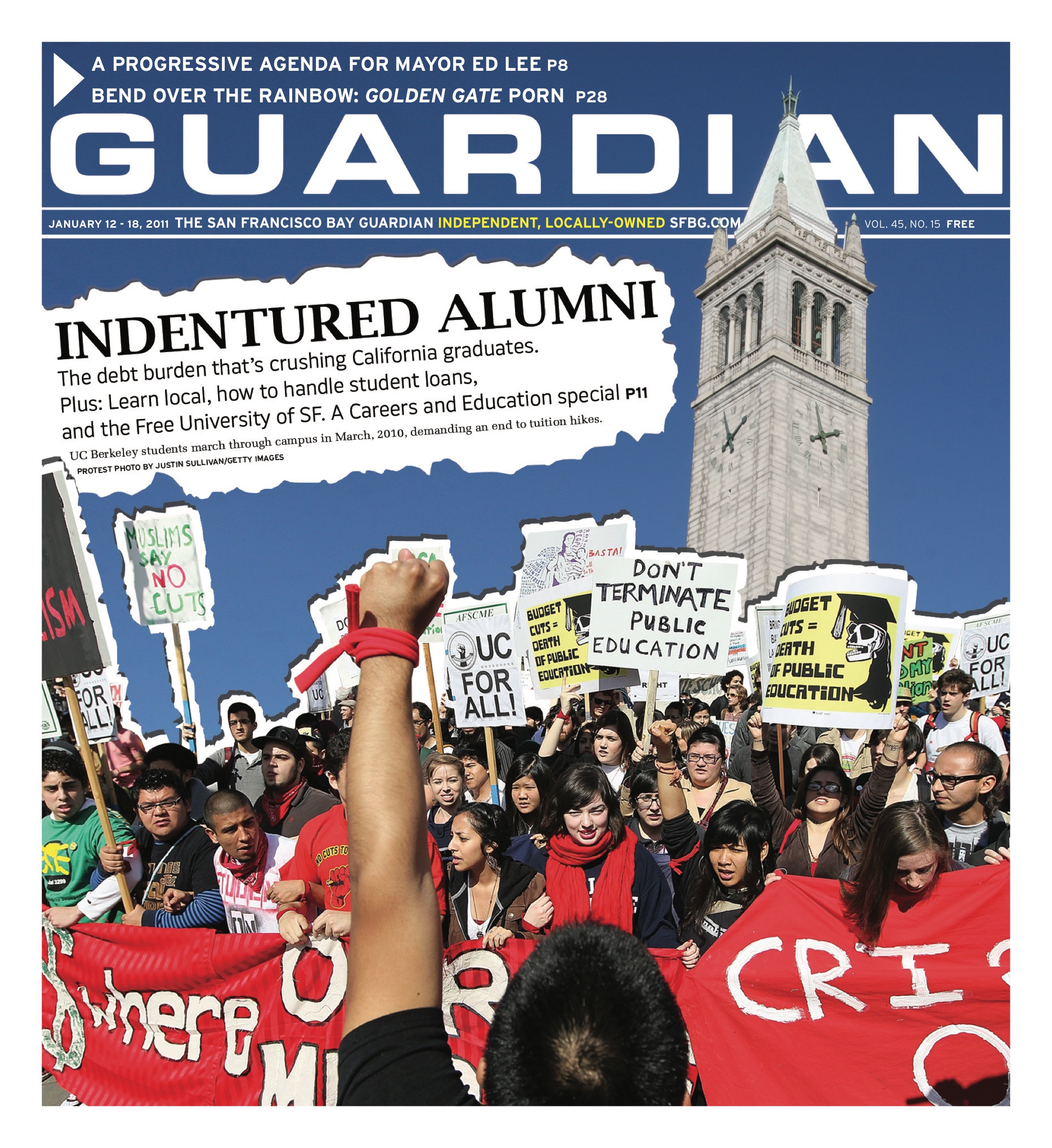
CAREERS AND ED When the University of California Board of Regents met Nov. 17, 2010 to approve an 8 percent tuition hike, roughly 300 UC students who were furious about the decision converged outside the University of California, San Francisco (UCSF) campus at Mission Bay to rally in opposition, some traveling from as far away as Los Angeles.

“We had been organizing with all the campuses to get students to come up because we really wanted to be there to let them know that it’s not what we want, and it’s something they can’t just get away with doing year after year,” said UC Student Association President Claudia Magana. The protests were raucous, and police cracked down by discharging pepper spray and making 13 arrests.

Despite the palpable fury outside and impassioned student opposition delivered to the Regents inside, the 8 percent fee increase was approved. It came on the heels of a 32 percent tuition increase imposed the year before, and the price was ratcheted up by 9 percent and 7 percent in the years prior to that.

The tuition hikes were steep, but hardly new. Indeed, the cost of attending UC schools has been rising steadily for quite a while. According to a study by economist Peter Donohue, student tuition and fees increased 277 percent from 1990-91 to 2008-09, and that was prior to the 40 percent increase that followed. That trend is repeated in rising costs at the California State University and California Community College systems (See “Access Denied,” April 6, 2010).

Student protesters have sought to make it clear that their outrage isn’t rooted in selfish unwillingness to shell out more money, but instead is linked to a broader concern about privatization and the increasingly limited accessibility of public education.

Magana expressed concern that the climbing cost of instruction at UC, though still a relative bargain compared with private institutions, would ultimately start to affect who could and couldn’t attain higher education through the public university system. The question isn’t limited to UC — tuition is increasing at public and private colleges across the board, and as income inequality sharpens, more students seek higher education.

“Students will always pay to be here,” she noted. “The issue is going to be, which students are here? That’s really the big problem — the huge class issue that’s going to come up. Although there are some forms of support for low-income students, it’s not easy.”


DEEPER IN DEBT

Rising costs at UC mirror the upward trend at private nonprofit and for-profit postsecondary institutions nationwide, and those higher prices have triggered a dramatic increase in student borrowing. While students from low- or medium-income families can access higher education at any institution they’re admitted to as long as they’re willing to take out significant sums in student loans, many find themselves at a serious disadvantage once they have to start repaying their debt.

A study conducted by the Public Interest Research Group (PIRG) noted that hefty debt burdens often dissuade graduates from pursuing careers in teaching, social work, the nonprofit sector, or other low-paying occupations that foster social justice. PIRG found that 23 percent of public four-year college grads and 38 percent of private four-year college grads were saddled with too much debt to manage paying back student loans on a starting teacher’s salary.

For students pursuing careers as social workers, the economic bind looked even worse: 37 percent of public school grads and 55 percent of private school grads with student loans wouldn’t be able to manage repayment with starting salaries in that field, the study concluded.

“Because students with lower incomes are more dependent on student loans than higher income students, students who already face significant challenges to attending college will more strongly feel the effect of loan debt on career choice,” the report points out.

“It’s a serious problem for so many young people to be starting out their working life so deep in debt,” said Edie Irons, spokesperson for The Institute on College Access and Success (TICAS), an Oakland-based research organization. “It really does limit people’s ability to take advantage of the opportunities education is supposed to provide. In concrete terms, it can make it really hard to buy a house, or start a business, or start a family, or go back to grad school, or to save for retirement or your own children’s education. And that’s all assuming you can keep up with the payments.”

Student loan debt has intensified over the past two decades. In 1993, just one third of all four-year college students graduated with debt, owing on average slightly more than $9,000, according to PIRG.

Today, the majority of college students take out loans to finance their education. Around 62 percent of public university students graduate with student loans, as do 72 percent of students attending private nonprofit institutions, and 96 percent of students attending for-profit institutions such as the University of Phoenix or the Academy of Art University, according to TICAS. Nationally, students graduate owing an average of $24,000, not counting debt associated with advanced degrees.

While young people must invest more than ever before to obtain higher education, the return on investment isn’t showing signs of improvement. The expected median income for UC graduates has stayed the same over the last decade, even as the cost of tuition has ballooned.

What’s more, says Bob Meister, president of the Council of UC Faculty Associations and professor of Political and Social Thought at UC Santa Cruz, is that an estimated 40 percent of public university students entering the workforce will either be unable to find a job, or will land in a lower-paying job that doesn’t require a college degree.

“For college graduates under 25, the unemployment rate is nearly as high as the national unemployment rate,” around 10 percent, Meister notes. “Over the past decade, what’s happened is that the median hasn’t risen. The top has risen very fast, and the bottom has fallen.”


IN A DIFFERENT CLASS

There’s no doubt that diminished state funding is affecting California’s public universities.

“A lot of departments are being eliminated, and a lot of professors who are really amazing are leaving to other universities,” Magana says. “And the waiting lists for classes are just ridiculous.” Academic goals are being compromised — for example, students had to abandon their push for an ethnic studies program at UCSC, she added, because the American studies department that would have partially supported it was slashed.

While diminished public funding has been used to explain the need to raise tuition, Meister has published numerous essays suggesting that the root cause of rising tuition costs at UC goes deeper than that, and he has gone so far as to publicly encourage students not to accept higher tuition without first demanding financial information.

Meister previously served on the UC budget committee and has observed the institution’s evolving financial policies for years. He doesn’t seem surprised that tuition is going up, regardless of what condition the economy is in or what amount of public funding is available because, as he puts it, “the universities will cost as much as they can.” UC had long sought to boost revenue by raising tuition, he noted, yet its leaders feared a rollback in state funding in response. But that changed under Gov. Arnold Schwarzenegger, who agreed to increase state support only on condition of that UC in turn require students to contribute more.

Around the same time that Schwarzenegger provided this new incentive to raise tuition, UC pooled its various revenue streams into a consolidated general revenue fund, Meister said, a departure from the old way of keeping separate accounts. This new fund, which included all non-state revenue and funding that wasn’t legally required to be used for certain purposes, could be pledged entirely as collateral for bonds for new construction projects, greatly increasing the institution’s borrowing power and boosting its revenue with the addition of new facilities.

To maintain its stellar bond rating, UC had to ensure an increase in revenues, according to Meister’s explanation, and to do that, UC ratcheted up the one source of revenue it had full control over: tuition. Meister laid bare this financial play in a 2009 open letter to students, titled “They Pledged Your Tuition.” Since it was published, a small corps of student activists has become deeply engaged in studying campus finance documents and airing criticism of financial policies.

Just before the Nov. 17 protests at UCSF Mission Bay, Meister published another open letter, this one addressed to UC President Mark Yudof. This one contemplated, “Why they think they can increase revenues regardless of how fast the economy grows … and regardless of whether the income of graduates is stagnant.”

His answer is somewhat surprising: “Their ability to raise tuition is a function of the growth of income inequality,” he told the Guardian. In the letter, Meister charges, “In the 21st century, when almost all income growth has been in the top 1 to 2 percent of California’s population, UC is still marketing income inequality to students as its most important product. It now expects all students to pay more for an ever-shrinking chance of reaping the ever-growing rewards that our economy makes available to the few. Your plan to increase revenue through tuition growth is feasible, of course, only because the federal government still allows students to borrow more for education despite the greater likelihood that they will not be able to repay — student loans may be the last form of subprime credit available in our economy.”

His theory highlights a paradox. “Being in the have-not category is increasingly worse,” he explains, “and so they are willing to take on more debt, which actually dampens their prospects for income growth.”

The question now is what will happen under Gov. Jerry Brown, who is likely to take a different stance toward rising tuition than Schwarzenegger but nonetheless is expected to unveil harsh cuts to education as a way to address a $26 billion budget deficit.

In a recent interview with the San Francisco Chronicle, UC Regent Richard Blum indicated that it probably would not be feasible to raise tuition again, so the message was that students should brace for more cuts to education.

When Brown unveiled his proposed budget on Jan. 10, he announced further cuts to higher education in California to balance the state budget. Brown’s revised 2010-11 budget decreases the state funding for UC, CSU, the community college system, and other higher education programs by $1.7 billion for the 2011-12 budget. The UC system would take a 13.3 percent hit in general fund support; the proposed cut to the CSU system is 12.5 percent; and the community college system would be cut by 6.9 percent.

Brown, who also wants to hold a special election to ask voters to maintain the current level of tax rates for income, sales, and vehicle license taxes for five years rather than let them expire later this year, expressed regret about making cuts to higher education. But he emphasized the need to make tough decisions in the face of a bleak financial outlook, saying, “We need to face the music.”


The music library

1

arts@sfbg.com

MUSIC “They wanna give you it all at the library.”

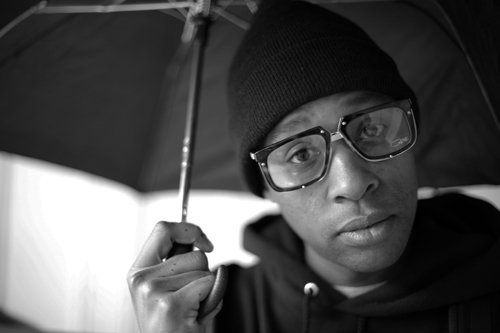
Dade Elderon’s come up with a perfect promotional catchphrase for the SF Public Library’s Main Branch. We’re IMing about the library, where he sets up his gear and writes and records songs on a 9-to-5 schedule. “One part of the library is a very high-tech, clean learning environment. It’s a temple. Then you go down to the [first-floor] bathroom and it’s like a dirty, filthy circus. There is a lot going on in that bathroom. Every stall is a different challenge.”

A few days later, I meet Elderon on the library’s fourth floor. As is his practice, he’s reserved one of the private rooms and has set up his equipment, most notably a Korg Electribe EMX-1 and ESX-1. “This is what I bring to the library — I have a [Roland] TR-606 and other gear at home and at a friend’s house,” he says, handing me a spare pair of headphones. “I use this [the ESX-1] strictly as a drum machine, and load up different sounds depending on what kind of song I want to make. I program the melodies on the EMX-1 because if you run too many parts at once on the ESX-1, it will make the sound muddy.”

For the next half-hour, Elderon — long bangs spilling out from the right side of his SF Giants cap — gives me a brief tutorial, explaining polycyclic wave forms, saw waves, and different hi-hats while running through a variety of sounds, from hip-hop to trance to freestyle. Sitting with him, I can see how the room, with its soundproof clear glass and stylish card-catalog wallpaper, is an ideal readymade recording studio. “I really like the tables and the glass setup,” Elderon says. “It’s peaceful. Sometimes people will stand outside with a ‘What are you doing?’ look on their faces, but I just ignore it. I don’t know what people might think these things [the Electribes] are — some people are suspicious of them, maybe.”

Contrary to a paranoiac’s sense of appearance, Elderon isn’t working with explosives, though he is hoping some of his projects will blow up. Party Effects, the Oakland techno bass crew he helped figurehead, has disbanded, and these days he’s working with a number of different recording artists. “This is a track I’m making with Dz MC’s, a Brazilian freestyle singer,” he says, as a percolating, skittering melody dances around a haunted-sounding female vocal.

Along with Dz MC’s, who has a following in Brazil, Elderon has been making tracks with aspiring Stateside singers such as Gloria Hernandez, a local vocalist whose voice possesses freestyle-ready sass and snap, and Nikki Marx, whose sexy photos and real-life story have intrigued Elderon and his roommate and former Party Effects partner, Alexis Penney. “She’s German, lives in New York City, and works on Wall Street as a day trader,” Elderon explains, as we look at some of Marx’s provocative photos. “Alexis is obsessed with her, and we can’t figure her out.”

At the moment, Elderon is also in the early stages of some remix projects for 679 Artists, a Warner Music Group label based in London that represents Little Boots, Marina and the Diamonds, and Streets. Along with his other roommate, Myles Cooper, he’s also contributing a track to an upcoming album by H.U.N.X., the “gayest music ever” electropop side project of Hunx and His Punx’s Seth Bogart. “I guess Myles’s idea is to make the most annoying song anyone has ever made, and I think he’s doing it,” Elderon says appreciatively. “Seth and I are making a gay freestyle song. He wants it to be over the top. I sampled him making a bunch of sex noises, and I’m going to sprinkle them throughout the track.”

Elderon’s adept way with genre suits one of his recording monikers, Adeptus. He chose the name because — along with invoking “to attain” in Latin, a quest he likens to Afrika Bambaataa’s search for the perfect beat — he likes its “Gothic, occult, and dark-sounding” qualities. On the one hand, he’s a fan of Ace of Base’s 1990s Euro dance pop — in fact, he’s competing against eight other remixers in an Ace of Base-sponsored contest in which the person who comes up with the best mix of “The Sign” wins a car. But on his own tracks, he’s drawn to seductive somber sounds. As he puts it, “I’m attracted to minor scales.”

The public library as a recording studio and potential pop gold mine — it’s all in a day’s music-making for Elderon, who cut his teeth recording with the eccentric, literally offbeat Tarythyas in Party Effects. “His bedroom is the craziest room I’ve ever been in,” Elderon says, when asked to describe Tarythyas’s home dwelling. “There’s no less than 20 to 30 fish tanks in the room, all lit up. There are crazy toys and lights everywhere, and six different computer workstations.”

The strange is familiar to Elderon, whose past includes a military stint and studies in cellular microbiology, and whose current day job involves flying to Turkey once a month to rescue street animals for a fledgling animal-rights crusader in Beverly Hills. He shows me some passports of pets he’s recently flown back to the U.S., including a cat that possesses a mack’s satisfied smile. “The animals freak out on the plane, so they give me a ketamine spray,” he says.

For now, Elderon is the one traveling, but he’s hoping his music will be going international soon as well. At one point he describes Turkey as a “nexus of weird cultures,” and the same description could be applied to his music, which has pop immediacy, but allows room for wild personality. He’s out to attain something special, and it’s just beginning to materialize.

Appetite: Best Restaurant Openings of 2010, Bay Area

0

Earlier in the week, I listed the top 10 new restaurant openings of the year in San Francisco. Now I list an additional four best new Bay Area openings: one in the South Bay, two in the East Bay, one in Wine Country. In the midst of Oakland’s continued proliferation as a dining hotspot and the new downtown Napa reign of celebrity chefs from Tyler Florence to Morimoto, here are a few that rose above, in alphabetical order.

BAUME, Palo Alto
In the realm of all-senses-engaged gastronomy temples like Chicago’s Alinea or the whimsical decadence of Jose Andres’ The Bazaar in LA, San Francisco is shockingly lacking. We have the talent and creativity here of the best food cities in the world. But it seems at times there can be a fear of getting too experimental. Thankfully, in 2010 Chef Bruno Chemel (formerly of Chez TJ) opened Baume in a non-descript, ’70’s-looking Palo Alto building. Yes, it’s crazy expensive (tasting menus), special occasion dining, but it stands out with well-orchestrated service and a simple but striking dining room of elegant orange and warm browns. You are teased with ingredients, like liquid nitrogen, curry, leek, seaweed, endive, then await the presentation like a gift. The best part is that Baume is not merely molecular showmanship… dishes are rich with flavor and heart. Don’t miss Chef Bruno’s 62-degree sous-vide egg. I had it with wild mushroom and Noilly Prat dry vermouth foam paired with shots of fresh celery and lime juice punctuated by roasted rosemary stalks. Currently, he’s serving the egg with lichee, lilikoi, espresso, chocolate. I’m intrigued.
  
GATHER, Berkeley
A December 2009 opening, Gather is the best thing to come along in Berkeley in ages. It reads typical Bay Area at first glance: local, sustainable, organic everything, from meats and veggies to spirits, wine and beer. The rounded corner room, with bustling, open space in full view of the kitchen is holistically casual and urban. And, yes, everything you have heard about the raved-about vegan “charcuterie” is true. Decidedly non-vegetarian, I marvel at this artwork array of vegetables on a wood slab, five delicately-prepared (and delicious) combinations for $16. You might have roasted baby beets with shaved fennel, dill, blood orange, horseradish almond puree and pistachio as one item, then King Trumpet mushroom crudo with parsnip-pine nut sea palm risotto as another. Exec Chef Sean Baker and team do meat right, too. Whether sausage pizza with pork belly and chiles, or house-cured ham topped with crescenza cheeze and cardoon-walnut salsa, carnivores will leave happy. Gather displays an ethos and presentation one can only dream of being a standard everywhere.

PLUM, Oakland
Easily the best new opening in Oakland in 2010, Daniel Patterson’s long-anticipated Plum delivers his impeccable technique in heartwarming food. Despite communal seating on uncomfortable wood stools, one is warmed by skillfully prepared food under $20. Chef Charlie Parker recently took the reigns, serving impeccably nuanced soups like ham hock and brussels sprouts or turnip apple soup with miso. Deviled eggs benefit from caperberry tarragon relish, while a rich beef cheek and oxtail burger welcomes the contrast of accompanying Autumn pickles. Patterson’s power continues to be used for gourmet good, and this time Oakland is the recipient.

FARMSTEAD, St. Helena
Farmstead may not be the most exciting restaurant to open in Wine Country in 2010 but I find it among the most satisfying. Part of Long Meadow Ranch, a welcome package of winery, poultry farm, herb garden, grass-fed beef ranch, and olive press, it’s in a modern, converted barn with fireplace, tractors and chairs on the outdoor patio. Inside it’s funky light fixtures, cavernous ceilings and leather booths. Their grass-fed beef is, in a word, exemplary. It makes for a decent steak, but my money goes towards the meltingly-good cheeseburger. On a house potato bun, it’s lathered with addictive mustard (they don’t skimp on the horseradish), cheddar and arugula. Order “potted” pig: tender, shredded pig packed in a mason jar with a layer of lard on top, served with toasts and that fabulous mustard. Another humane, locally-sourced restaurant, Farmstead brings a casual playfulness I don’t see often enough in Wine Country.

–Subscribe to Virgina’s twice monthly newsletter, The Perfect Spot

Highlights of Ed Lee’s nomination

25

An awful lot went down at City Hall today: four Board members were termed out, new Board members were moving into their offices, the old Board nominated Ed Lee as interim mayor, and Gavin Newsom revealed he’ll be gone as mayor by Monday afternoon. Here in no particular order are some of the highlights:


When termed-out D6 Sup. Chris Daly suggested that Rose Pak be nominated mayor, since she apparently managed to broker the Lee deal in three short days, Pak shot back, “I would do it, only if Chris Daly would be my Chief of Staff.”


Pak told me that she persuaded Lee to take the job, over the cell phone, while he was at the airport in Hong Kong.


Pak outlined her reasons for supporting Ed Lee as mayor. “Ed Lee has devoted 35 years to San Francisco. He’s earned his stripes. He’s the most qualified, the most unifying agent, and the most talented.”


 The crowd of seniors from the Self Help for the Elderly non-profit who crammed City Hall today are a likely preview of things to come during the mayor’s race.


 Board President David Chiu’s insistence that there were no back room deals. “Shortly after Gavin Newsom was elected Lt. Governor, I said Ed Lee should be considered as a candidate,” Chiu told me. “There was never a deal.”


The strong sense that Chiu is running for mayor in November, though he hasn’t filed. Asked if he was running, Chiu said. “I’m here at the Board focused on the work.” Asked if he wasn’t running, Chiu said, “I’m here at the Board focused on the work.” (That’s not a very convincing denial, David!)


On being reminded that the Year of the Rabbit kicks off in February, Chiu added,  “Hopefully, this will be a very fortunate year for San Francisco.”


Oakland and San Francisco will both have Asian American mayors—160 years after Chinese immigrants first settled in San Francisco and 129 years after the Chinese Exclusion Act sought to prevent these immigrants from rising to the top.


The rejoicing that reportedly is going in the Asian community, right now.“Chinatown is excited,” a reporter for Sing Tao Daily told me. “Ed Lee is a low-key kinda guy. No one really knows him, but as former DPW director, he was always filling up pot holes.”


The stated hope that Lee will support Sup. Avalos local hire ordinance, which kicks in Feb. 23, implement Sup. David Campos’ due process for immigrant youth ordinance, and enforce the recommendations of the Mayor’s African American Out Migration Task Force.


The growing sense that Sup. John Avalos is a strong contender as new Board President.


Sharen Hewitt’s observation that burgeoning racial tensions between African Americans, Asian Americans and Latinos need to be addressed. Now.


Julian Davis’ observation that while the way Lee was appointed is not something San Francisco should be proud of, the fact that we now have an Asian American mayor with the almost unanimous support of the old Board is (Daly was the lone dissenter).


Newsom’s reminder that the old Board’s vote was symbolic.“Today was an extraordinary historic vote,” Newsom said. “But remember, it’s symbolic. The new Board will make the appointment.”


 Newsom’s description of Lee as a ‘recruitment” as he, too, insisted there were no backroom deals. “There were no deals, no backroom deals,” Newsom insisted. “He’s the right person at the right time.”


Newsom’s claim that this isn’t about Lee (or anyone else who’d been nominated.) “It’s not about you,” Newsom said, recreating a conversation he allegedly recently had to convince Lee, who’d just been guaranteed five more years employment as City Administrator, to become interim mayor for the rest of 2011. “You are that something more, that something better. You’re the one guy who can pull it altogether, including if disaster strikes, which is my biggest fear.”


Newsom’s relief that he only needs to prepare a 3-page budget brief. “Someone who understands so much of the process doesn’t need 20 pages,” he said.


Newsom’s claim that ideologues make terrible mayors.”If this city gets off track, plays some ideological game, it impacts the entire region,” he said. “I love that Lee is not even in the country. If he had been here, he’d probably have been convinced not to do it. Ideologues make terrible mayors, and mayors make terrible ideologues.”


Newsom’s explanation of how Lee will be able to get back his job, though the charter prohibits people who served in elected office from working for the city for at least a year.
”Hopefully, the Board will make it easy for him. Four members of the Board can put a charter amendment on the ballot. Or Lee can do it himself.”


Newsom’s revelation that he will be sworn in as Lt. Governor at 1:30 p.m, Jan. 10, and San Francisco will find out who the next District Attorney is by then.


Newsom’s claim that 2010 was an “incredible” year. “The Shipyard, Treasure Island, the America’s Cup, Doyle Drive, the Transbay Terminal. All these things are groundbreaking,” he said.


Our Weekly Picks: January 5-11, 2011

0

THURSDAY 6

THEATER

Strange Travel Suggestions

Jeff Greenwald’s life is a trip, and he’s happy to take you along for the ride. The Oakland-based travel writer has made a name for himself slaking an unquenchable wanderlust in lively, enlightening books like Shopping for Buddhas and, most recently, Snake Lake, a memoir of one year (1990) that saw a poignant collision between Nepalese revolution and personal upheaval. But many who know the writer don’t know the performer. A natural storyteller, Greenwald returns this week to the Marsh with his improvised, low-key but engrossing Strange Travel Suggestions. Making use of an idiosyncratic “wheel of fortune,” the journey changes each night, relying like all good wanderings on the collective mood and dumb chance. (Robert Avila)

Through Jan. 22

Thurs.–Fri., 8 p.m.; Sat., 5 p.m., $20–$50

Marsh Berkeley Cabaret

2120 Allston, Berk.

1-800-838-3006

www.themarsh.org


MUSIC

Blaqk Audio

Alas, I lost the thread and completely missed the moment when emo reached its New Romantic period. Which is sad, because right around 2007, I really could have used a sharp-shirted, electro-emo stomper from Blaqk Audio called “Semiotic Love.” I think at that point in my mope-rock attention, I was too busy gawking at footage of the punks vs. emos riots breaking out across Mexico. (According to one punky hater, emos “are stupid, they cry about stupid things.”) Too bad those rowdy Mexican kids didn’t know about Blaqk Audio, a side project of Davey Havoc and Jade Puget of Ukiah stalwarts AFI, which fluffs a punk pedigree and emo self-longing into synthy, baroque, slightly dark power pop. Think Depeche Confessional or maybe My Chemical Numan — or just be pulled into Blaqk Audio’s chilly, wriggling embrace at weekly club Popscene. (Marke B.)

With DJs Aaron Axelson and Nako

9 p.m., $18

Rickshaw Stop

155 Fell, SF

www.popscene-sf.com


MUSIC

George Winston

Grammy-award winning pianist George Winston is known in the music world for a wide variety of his projects, ranging from his own outstanding original material to his reworkings of Vince Guaraldi’s beloved Peanuts compositions, as well as reinterpreting music from the Doors. During his 30 years and counting music career, Winston has long worked with various food banks and service organizations throughout the country when he tours — he donates 100 percent of his merchandise sales to the organizations he works with at each show. Tonight benefits the Berkeley Food Bank, so prepare for an evening of good music for a good cause. (Sean McCourt)

8 p.m., $39.50

Freight and Salvage Coffeehouse

2020 Addison, Berk.

(510) 644-2020

www.thefreight.org


FRIDAY 7

MUSIC

Velvet Teen

This month sees the release of the Velvet Teen’s first new material since 2006, an EP titled No Star. That’s a big gap in the band’s discography, particularly for a group that released three albums and a handful of EPs between 2000 and 2006. But tragedy takes priority in life, and while fans of the Santa Rosa indie rockers certainly have been eager for new sounds, there’s also a sense that things take time, particularly after the loss of original drummer Logan Whitehurst in 2006. Tonight’s show, the CD release, is a chance to see what the Velvet Teen has made of the intervening years. (Ryan Prendiville)

With Silian Rail and Low-five

10 p.m., $12

Bottom of the Hill

1233 17th St., SF

(415) 621-4455

www.bottomofthehill.com


SATURDAY 8

MUSIC

“Bowie and Elvis Birthday Bash”

Used to be, you’d have to choose which rock superstar to celebrate come Jan. 8. Would you meticulously apply glittery makeup and sway to “Life on Mars?” or slick your hair into a pompadour and pound a peanut-butter-and-banana concoction to the beat of “Suspicious Minds”? This year, head to the Edinburgh Castle’s “Bowie and Elvis Birthday Bash,” offering equal time to each rock titan on their shared birthday (Ziggy’s 64th, and what would’ve been the King’s 76th). Shindog and Skip spin tunes “from Hound Dog to Diamond Dog,” poet Alan Black pays tribute, and there’ll be a costume contest in the image of each legend. If you already own a sparkly jumpsuit, a two-in-one homage is certainly possible. (Cheryl Eddy)

9 p.m.–2 a.m., $5

Edinburgh Castle Pub

950 Geary, SF

www.castlenews.com


MUSIC

Optimo

There was no single club whose aesthetic ruled world dance floor sensibilities in 2010 (this may be a good thing). No Berghain, no Misshapes, no Hollertronix, no Body & Soul, no Fabric, no Space — and unfortunately no Optimo (Espacio), the wee Glasgow joint that helped birth one of the most thrilling recent trends in DJ styling, the “never know what you’re gonna get, but it’ll be amaaazing” thing. Optimo shut down in April, and the San Francisco scene mourned the loss of a sister spirit. Honey Soundsystem even mounted an elaborate wake on the same night Optimo closed. Fortunately, Optimo’s wildly diverse musical policy lives on. DJ JD Twitch founded the club with JG Wilkes — Twitch will hopefully beat through the snow to bring his club’s still-thriving vibe to 222 Hyde, along with unexpected sonic goodies from Midnight Star and Chicks on Speed to Gui Boratto and beyond. (Marke B.)

9:30 p.m., $5–$10

222 Hyde, SF

www.222hyde.com


FILM

“Hitchcock”

Rear Window   (1954), Vertigo   (1958), Psycho   (1960) — not only have you seen ’em multiple times, you can recite all the dialogue and catch yourself miming along with the shower scene. It’s likely even Alfred Hitchcock diehards haven’t gotten around to watching all of the prolific director’s 60-something works. But thanks to the Castro Theatre, you can skip a random TV viewing and catch some of Hitch’s lesser-known but no less compelling films on the big, glorious screen (as he’d no doubt rather prefer). Highlights include The Lady Vanishes (1938), Rope (1948), The Trouble With Harry (1955), and The Wrong Man (1956), though there’s not a bad double-feature during the six-day event. (Eddy)

Jan. 8–13, $7.50–$10

Castro Theatre

429 Castro, SF

(415) 621-6120

www.castrotheatre.com


EVENT

Oshogatsu Matsuri Festival

Traditions central to the Japanese New Year: the pounding of boiled sticky rice into mochi, Beethoven’s Ninth Symphony, and well-meaning gaijin galuts asking everybody where the Chinese dragon is. Unversed in the dawn of the new year in the Land of the Rising Sun? This Japantown community center is holding a day to honor the Year of the Rabbit’s arrival, which Japan celebrates in tune with the Gregorian calendar along with the Western world. Bring the kiddos for art activities and make yourself comfortable for demonstrations of mochitsuki (the aforementioned rice preparation), kendo sword-fighting, and odori, the dance to welcome the dead. (Caitlin Donohue)

11 a.m.–3 p.m., free

Japanese Cultural and Community Center of Northern California

1840 Sutter, SF

(415) 567-5505

www.jcccnc.org


MUSIC

Los Lobos

Had he not died in a helicopter crash after leaving a 1991 Huey Lewis concert, legendary San Francisco rock promoter Bill Graham would have turned 80 today — local music fans can celebrate his birthday at tonight’s concert, featuring Los Lobos and Jackie Greene, all benefiting the Bill Graham Memorial Foundation. Run by a group that includes members of Graham’s family and other community leaders, the foundation strives to raise money for a variety of social and charitable causes. Raise your glass to Wolfgang (a childhood nickname for Graham, born Wolodia Grajonca) at this fitting tribute — remember, the reason Graham was at the concert that fateful night was to plan a benefit show to help victims of the 1991 Oakland firestorm. (McCourt)

9 p.m., $50

Fillmore

1805 Geary, SF

(415) 346-6000

www.thefillmore.com


MUSIC

Talib Kweli

What does it mean to be a “conscious” rapper? That label has been applied to Talib Kweli ever since he emerged on the musical scene in the mid-1990s, particularly for Black Star, a 1998 collaboration with fellow Brooklyn artist Mos Def and DJ Hi-Tek. Beyond charity work, it means being able to get past the divisive beefing that plagues hip-hop. That ability has kept Kweli busy with guest appearances between albums, on tracks with the Roots, Little Brother, UGK, Gucci Mane, and beyond. His new album, Gutter Rainbows, is out Jan. 25. (Prendiville)

With Be Brown, Skins and Needles, My-G and Rose, and Lowriderz

10 p.m., $25

Public Works

161 Erie, SF

www.publicsf.com


SUNDAY 9

MUSIC

Willie Nelson

“Outlaw” is a term that tends to be thrown around a little bit too liberally these days, particularly when it comes to discussing musicians. But one man who undoubtedly deserves that title is Willie Nelson, whose five-decades-and-counting career as a singer, songwriter, poet, author, and social activist has been forged entirely on his own terms. Known for his own recording hits, his partnerships with artists such as Johnny Cash, his slew of songwriting successes (notably the classic tune “Crazy” as made famous by Patsy Cline), and more recently his newsmaking, weed-related tour bus arrests, the 77-year-old icon continues to prove that he is a musical and social force to be reckoned with. (McCourt)

Through Jan 12

9 p.m., $55

Fillmore

1805 Geary, SF

(415) 346-6000

www.thefillmore.com


MONDAY 10

EVENT

BCS National Championship Game

The University of Oregon Duck is a champ. Omnivorous, excellent paddler, wearer of fetching sailor shirts — a gentleman and a scholar, truly. Except when he’s beating up the University of Houston’s Cougar (as seen in a popular YouTube clip), but that happened all the way back in 2007! This year, his football Ducks ended the regular season undefeated to face the Auburn Tigers in the national championships. Though we may not have the benefit of a fine Oregon drizzle to fully appreciate the Duck’s waddle, there is a lovely vantage point from which to watch the mayhem: the Independent, where the game will be played on its pull-down movie screen and microbrews will flow like the mighty Willamette. (Donohue)

5:30 p.m., free

Independent

628 Divisadero, SF

(415) 771-4421

www.theindependentsf.com


The Guardian listings deadline is two weeks prior to our Wednesday publication date. To submit an item for consideration, please include the title of the event, a brief description of the event, date and time, venue name, street address (listing cross streets only isn’t sufficient), city, telephone number readers can call for more information, telephone number for media, and admission costs. Send information to Listings, the Guardian Building, 135 Mississippi St., SF, CA 94107; fax to (415) 487-2506; or e-mail (paste press release into e-mail body — no text attachments, please) to listings@sfbg.com. Digital photos may be submitted in jpeg format; the image must be at least 240 dpi and four inches by six inches in size. We regret we cannot accept listings over the phone.

On the Cheap Listings

0

On the Cheap listings are compiled by Caitlin Donohue. Submit items for the listings at listings@sfbg.com. For further information on how to submit items for the listings, see Picks.

WEDNESDAY 5

Concierto de Reyes Mission Cultural Center for Latino Arts, 2868 Mission, SF; (415) 643-5001, www.missioncultural.org. 2pm, free. The Coro Hispano of San Francisco, a chorus comprised of Spanish-speaking community members, has been celebrating Latin America through song since 1975. Join ’em for their annual kids holiday concert, which will cover turf as varied as renaissance motets and aguinaldos (Christmas folk music) from Peru, Venezuela, Puerto Rico, and more.

Glen Canyon habitat restoration Glen Park Recreation Center, 70 Elk, SF; (415) 337-4705, www.sfrecpark.org. 9am-noon, free. Sure, you’ve made “that” resolution for the millionth time. But how about you snap out of that pudgy pity party and truck out to a little exercise that benefits more than just your waist line? SF parks are in need of TLC if they want to fend off invasive species and you can join in on the action at this morning of weeding, planting, and pruning. Dress to get muddy and active – and indulge in the free snacks provided free of your Christmas cookie guilt.

FRIDAY 7

Jaime Cortez: “Universal Remote” Southern Exposure, 3030 20th St., SF; (415) 863-2141, www.soex.org Through Feb. 19. Opening reception 7-9pm, free. It’s been months, but we still have a big in our hearts the size of a glittery glove. Thankfully, here comes visual artist Jaime Cortez’s solo exhibition, which calls out the tragic, tremendous pop culture whorl that was MJ – and highlights the King of Pop’s fluid moves through race, sexuality, and zombie-human relations.

Oakland Art Murmur Telegraph and 23rd St., Oakl.; www.oaklandartmurmur.com. 6-10 p.m., free. Rediscover what downtown Oakland’s got going on art-wise with this monthly show-and-tell by the neighborhood’s best and brightest art galleries. This week, catch Jennie Ottinger’s book art at Johansson Projects (excerpt from her truncated version of As I Lay Dying: “Holy shit, this family is cursed! Very National Lampoon’s Vacation.“)

SATURDAY 8

Parent-child snow globe class Randall Museum, 199 Museum Way, SF; (415) 554-9600, www.randallmuseum.org. 1-4pm, $6 for children; $10 for parent-child duos. The holidays are over, and yeah it’s still cold and rainy. But take heart! Winter can be time for good cheer even after Santa’s packed up the sleigh and gone north. Make a shakable wonder with your wee one and enjoy the rest of Randall Museum’s “Saturdays are Special” event (10am-4pm), which includes railroad exhibits, live animal feedings, and the rest of the science-y wonders present throughout the rest of this always-free museum.

Vintage Paper Expo Hall of Flowers, Golden Gate Park, Lincoln and Ninth Ave., SF; (328) 883-1702, www.vintagepaperfair.com. 10am-6pm, free. (Also Sun/9, 10am-4pm) Postcards, photos, brochures, stereoviews, and so much more! What’s a stereoview, you ask? Why, nothing less than an antique 3D image – something you can acquaint yourself with at this fair of all things printed and retro. The Vintage Paper Expo’s got over 100 vendors this year, all primed to sell you affordable scraps of history.

Writers With Drinks The Make Out Room, 3225 22nd St., SF; (415) 647-2888, www.writerswithdrinks.com. 7:30-9:30pm, $5-10 sliding scale. Writers? Drink? Well, I guess there’s a first time for everything! This long-standing lit night series pairs local scribes (this month’s are girl group Gogos founder Jane Wiedlin and socio-writer Ethan Watters) with a crowd that’s anything but stiff for readings, skits, and stand-up.

MONDAY 10

Cinema Drafthouse: Machete The Independent, 628 Divisadero, SF; (415) 771-1421, www.theindependentsf.com. 9pm, free. A deliberately silly revenge plot that’s both spot-on vintage homage and semi-serious commentary on America’s ongoing immigration debate gets the Indy’s free movie night treatment. Watch the film with a beer in hand (or two) – and feel free to shout advice to the characters on-screen. You’re in a music venue, for chrissakes.

TUESDAY 11

Pecha Kucha 330 Ritch, 330 Ritch, SF; www.pecha-kucha.org. 7pm, $5 donation suggested. Embarking as we are on month number one of year two-thousand-and-one-one, the theme of this month’s installation of this cross-discipline art night series is, yes, “one.” Not the most specific theme, sure – but that’s the way artists like it, and when you’ve assembled a passel of them from fields as varied as industrial design, animation, and fashion, sometimes it’s best just to step back and watch them unify.

Coming attractions

0

arts@sfbg.com

HAIRY EYEBALL Welcome to 2011. It’s a new dawn, it’s a young decade, and I’m feeling good about the following shows worth eyeballing now or further down the line.


JOB PISTON: “WE TOOK A FAMILY PORTRAIT”

On a recent trip back to Taiwan, Job Piston took pictures of his grandfather’s garden, the former backdrop for many a family portrait. In Piston’s crisp C-prints, the garden stands as a verdant, almost-threatened exception to the urban sprawl that has sprung up around it. Standing in contrast to these landscapes are Piston’s photograms of the city that has grown beyond the walls of his grandfather’s compound. Created by exposing photographic paper to images on a computer screen originally shot by Piston using his cellphone, these are second-generation copies: photographs of pictures. Much like the now depopulated garden, the blurred, imprecise photograms are reminders, both beautiful and sad, that even through pictures one can never go back. Through Jan. 29. Silverman Gallery, 804 Sutter, SF. Tues.-Sat., 11 a.m.-6 p.m. (415) 255-9508, www.silverman-gallery.com.


GEOFF CHADSEY: “SHIFT, RETURN”

Seemingly summoned from online backwaters of amateur gay porn sites, the men in Geoff Chadsey’s watercolor pencil portraits are turned on, tuned out, and chopped and screwed. An Abercrombie & Fitch-clad stud poses contrapposto in his underwear, his African American face standing in stark contrast to his blond tresses and white appendages. A shirtless bro in a trucker hat, his eyes squinting somewhere between sexy face and catatonia, has an extra set of arms. The lurid flush of Chadsey’s color palette — blues like Drano, pink flesh that crawls with green — only adds to the discomfiting mix of the banal and the extraordinary in his work. Through Feb. 12. Electric Works, 130 Eighth St., SF. (415) 626-5496, www.sfelectricworks.com.


RUTH HODGINS AND KIT ROSENBERG: “ALTERED STATES”

Ruth Hodgins and Kit Rosenberg are a collaborative duo who met as MFA students at the SF Art Institute. While they are by no means the first artists to re-present everyday objects and materials, the “all bets are off” approach their work takes play very seriously, extending visual puns into more complicated thought experiments. In Theseus, for example, cooking twine is spun around nails hammered into on a board to create a wall-mounted labyrinth, as if to say that which forms the prison is also the means of escaping it. Through Feb. 19. WE Artspace. 768 40th St., Oakl. www.weartspace.com.


“ENTER SLOWLY”

David Cunningham’s excellent gallery space at 924 Folsom may be no more, but the man with the golden eye is still actively curating. Case in point: this group show at The Lab, which brings together work by six European artists operating at the intersection of architecture, sculpture, and installation. Of particular note is Cath Campbell’s second full scale realization of her ongoing installation 50 Ways To Leave Your Lover, which uses the titles of sentimental pop songs as blueprints for drawings, video, and models of imagined spaces. Jan. 14-Feb. 19. The Lab, 2948 16th St., SF. (415) 864-8855, www.thelab.org.


EVA HESSE: “STUDIOWORK”

A belated coda of sorts to the large Hesse retrospective SFMOMA held back in 2002, this show focuses on the small, makeshift pieces that the sculptor would use as test runs or sketches of her larger works-in-progress. A friend once described Hesse’s amalgams of latex, wire-mesh, wax, fiberglass, and cheesecloth as “sad sacks,” but I don’t think that designation covers the range of effect her work elicits. There’s exuberance, playfulness, and even eroticism, to be found in her manipulation of the above industrial materials; all qualities I hope shine through in even these self-consciously “minor” works of an artist who was anything but. Also on tap at BAM for August is a retrospective of the stunning collage work of another German, painter Kurt Schwitters. Pencil it in. Jan. 26-April 10. Berkeley Art Museum, 2626 Bancroft, Berk. (510) 642-0808, www.bampfa.berkeley.edu.


“THE STEINS COLLECT”

Gertrude Stein famously wore Balmain and had her portrait painted by Picasso. Lady knew how to live. So too, apparently, did her brothers Leo and Michael, and Michael’s wife, Sarah, who also collected art, held salons, and became important linchpins in Paris’ avant-garde circles in the early 1900s, after they expatriated from the family seat in Oakland. I hope this exhibit shines as much light on the Steins’ formative role in helping bringing modern art to the Bay as it does on the Matisses, Cezannes, Renoir, Picassos, and Bonnards they fervently acquired. May 21-Sept. 6. SFMOMA, 151 Third St., SF. (415) 357-4000, www.sfmoma.org.

Funk phenomenon

0

One of the most influential, and underreported, trends of San Francisco nightlife in the past few years has been the feisty reinvigoration of the jazz scene. Yoshi’s Fillmore, which opened in 2007, finally seemed to settle into its giant digs in that historic district — and, despite fears to the contrary, didn’t crowd out the stellar, more established jazz joints around it like Rasselas and Sheba Lounge. It also helped expand the traditional jazz palate into famously funkier territory — this month at Yoshi’s boasts the Ohio Players, The Family Stone, War, George Clinton and Parliament Funkadelic, and Public Enemy with a live band. (What, no full orchestra? Flava Flav needs some glockenspiel.)

Also recently, San Francisco sent its huge and hip Jazz Mafia collective around the country performing uptempo “hip-hop symphony” Brass, Bows, and Beats. Unfortunately the Mafia’s homebase, Coda, closed on the first of this year — along with another beloved club, Triple Crown — citing the economic climate, but the supper club valiantly kept true to its live jazz mission to the end and shimmied with packed aficionados. Club Verde’s spunky Tuesday Night Jump! (Tuesdays, 9 p.m., $12. 2424 Mariposa, SF. www.oldtimey.net/tuesdays) with live band Stompy Jones revived that classic SF rockabilly swing vibe. Meanwhile, over at Martuni’s piano bar (4 Valencia, SF. 415-241-0205) near the Castro, a new generation seemed to discover its inner Sondheim, tipsily belting a few out ’round the gleaming ebonies and ivories. Send in those damn clowns already, Jesus.

That jazzy hometown spirit of expanding definitions and embracing the musical past as a living thing, not just some retro curiosity frozen into easily marketed poses, has graced other scenes as well. Even as you’re funking hard on the floor to some old school disco cuts or electronic productions, it’s hard not to hear echoes of jazz’s open-minded complexity working somewhere in the background.

And one of the parties I’ve funked hardest at lately has been Loose Joints (Fridays, 10 p.m., $5. MakeOut Room, 3225 22nd St., SF. www.makeoutroom.com). Let me be clear: Loose Joints isn’t a jazz club — although on a recent visit, DJ Tom Thump expertly melted London all-horn ensemble Brassroots’ 2010 New Orleans-leaning version of Inner City’s 1988 Detroit techno classic “Good Life” into Bill Withers’ Hammond-driven soul stomper “Harlem” from 1971. (At that point along my night’s journey, I needed a new pair of hotpants.) It’s more of an improvisational, all-vinyl DJ jam session that uses classic funk as its departure point. Hitting a tuneful sweet spot neither too familiar nor too abstract, Loose Joints has one of the best brain-to-feet ratios in the city: music nerds will dance their tight glasses off, straight-up partiers will discover where all those groovy samples come from.

The core trio of DJs at the heart of Loose Joints is a wild combination, rotating rapidly behind the tables. Founder Tom Thump digs deep into the wide-ranging, rarity-seeking global funk scene that brings to mind great DJs like Greg Wilson and Gilles Peterson (especially Peterson’s Brownswood Recordings project). Damon Bell reps Oakland’s fantastic, proudly abstract Deepblak techno scene, with a soulful Afro-Cuban twist. (Don’t sleep on his “multiple mind-space” Kush Musik series on Deepblak Recordings, www.deepblakmusic.com.) And DJ Centipede, who helps put on the headiest club going right now, Change the Beat (Tuesdays, 9 p.m., free. SOM, 2925 16th St., SF. www.som-bar.com), brings a future bass and experimental low-end background to the proceedings. Somehow they average out into a completely accessible and danceable entity.

“We are a strange triumvirate,” Thump told me. “I planned that, it was by design. I’ve known Centipede for years, when he used come into [Haight Street record store] Groove Merchant. So talented and unique. And I saw Damon play at [now-closed Panhandle club] Poleng one night a few years ago and was blown away by his soulful tunes. We are just one of my serendipitous flights of fancy.”

“Loose Joints” itself is a sly wink toward the experimental-made-accessible, a name cribbed by Damon from left-field dance music hero Arthur Russell’s popular side project, which put out the 1980 hit “Is It All Over My Face.” It also refers to the loose style the trio applies to mixing their vinyl cuts. (They leave other, more elevating interpretations to the imagination.)

The party is put on well from a practical standpoint, although the MakeOut Room’s layout is a bit strangulating near the door and it could use another person or two behind the bar. Because the MakeOut hosts live acts earlier in the evening, you’ll encounter a thrilling grab-bag of leftover patrons. The crowd is comfortable and open, dancing itself into frenzy. (When I dropped by last month, there was a gaggle of super-hot boys and girls grappling each other woozily to the floor, which was just fine. But watch where you step.) The strip of 22nd Street between Shotwell and Valencia has really taken on a European plaza air of late, with several bars and cafes spilling over with exuberant sophisticates. We need to ban cars there. And there’s also a healthy dose of newbie tech types — including the one in front of me in line who couldn’t believe the door guy wouldn’t take Visa for the $5 cover.

“San Francisco is so fucking beautifully diverse, that’s why the party goes so hard,” Centipede told me. “All types of life dancing to the same bassline.” Thump said: “There are a lot of people into funky sounds right now — from 1960s girl groups and Latin disco to post-punk and newer Afro-electro. We’re here to give all those a push. A sexy push.”

LOOSE JOINTS TOP TUNES

Mim Sulieman (with Maurice Fulton), “Mingi”

Suzy Q, “Can’t Give You Love (Persnickety All Stars Edit)”

The Fatback Band, “Wicky Wacky”

Bohannon, “Me And The Gang”

Don’t forget the Motor City

0

arts@sfbg.com

FILM/CULTURE There is the Detroit of mythology, and then there is the reality — half-abandoned, yet rife with some greater potential — beneath the myths. Local archivist Rick Prelinger sets his sights on both in Lost Landscapes of Detroit, an assemblage of private and commercially-produced films spanning from the peak of the Model T to the era of the gas guzzler. As arranged by Prelinger, Lost Landscapes is a provocative counterpoint to the urban portraiture of his Lost Landscapes of San Francisco series. Gazing from both sides of the automobile window, it reveals Hollywood’s relationship with the Motor City during the golden age of the movie theater, and the potential and the limits of other obsolescent industries: film and print media. Immersed in a mammoth project involving home movies (he says he’s “only” watched 1,200 of the ones he’s assembled for it), Prelinger recently discussed Lost Landscapes of Detroit, on the eve of its first West Coast screening.

SFBG One thing I like about your Lost Landscapes programs is their dynamic and open-ended shifts between industrial and home movies, black-and-white and color, silence and sound.

RICK PRELINGER These are assemblies, but also quickie films. I like the form. One thing I’m interested in is elevating unedited material — raw footage — to the same level that something dramatized or contrived might enjoy.

I like to think of home movies as homemade crafts, and you establish that through difference. When you show something industrial, with all the weird tropes we all now know — even if we didn’t grow up with them, we see them on The Simpsons — it’s a way of building a stronger sense of what is particular to home movies.

SFBG How did Lost Landscapes of Detroit come about?

RP I started traveling to Detroit in 1982 to talk to retirees from production companies there, the biggest of which was Jam Handy. Jam Handy Organization made something like 7,000 motion pictures and tens of thousands of film strips, and no one knows this. They used to say — and it might be apocryphal — that more film was exposed in Detroit than in New York and Hollywood combined. Detroit was within 400 miles of most of the industrial production and most of the population of America. It was a strategic place.

In ’82, Detroit was already stressing, there was a recession. For the first time, I saw fast food outlets and banks and suburban malls that were derelict — now we’ve gotten kind of used to that. I loved the city. I must have gone back 20 times since.

SFBG What was the response like when you screened Lost Landscapes of Detroit in Detroit?

RP We set out 150 chairs, and when it was time for the show, there were 425 people. It was an amazing audience — racially mixed, union people, people from Ann Arbor, people who had moved to Oakland and Macomb County, people coming for the white flight nostalgia thing.

Afterward, there was almost an hour of discussion. One comment that was so great came from the woman who runs the Black Theater program at Wayne State [University]. She said it was a perfect blend of nostalgia and provocation.

I’ve always been really anti-nostalgic, but you have to acknowledge that nostalgia is a major subjective and social force. It’s deeply wired. To inflect that with the idea of provocation worked for me. I don’t want [to put together] another America apocalypse movie. Detroit really isn’t about all that — there’s still 300 or 400,000 people in the city who are going to work 9-to-5.

The other thing about Lost Landscapes of Detroit is that there’s nothing about Hudson’s in the film. Everybody goes on in a senile way about Hudson’s and how wonderful it was — let’s get over it, you know? We have two things we have to get over if we’re going to move forward, May ’68 and Hudson’s.

SFBG Lost Landscapes contains a film about a newspaper coverage of an antiwar protest that is interesting because it doesn’t look to quote the protest figures who are usually lionized, and because it foregrounds another 20th-century industry in trouble: newspapers and print media. Same with the movie of the Detroit News’ June Brown talking with an ex-daily News reader who does her hair. It’s an off-the-cuff but perfectly precise discussion of racial bias in journalism.

RP It’s kind of like looking to the periphery for the inside truth. I’ve always found that to be true, and it relates to the kind of film I collect and the material I foreground. There it is, in some industrial film — intelligent, critical city residents demanding a certain level of media accountability.

SFBG There’s a show-not-tell tactic to your placement of archival footage. Lost Landscapes begins with a black-and-white industrial newsreel trumpeting that “any picture of America without automobiles is hopelessly out of date.” It ends with a silent color home movie in which the city’s name is spelled out in greenery.

RP I hate the course that recent documentaries have taken, in which they have characters undergoing crises that are resolved in Act 3. It’s like Mad Libs. Dramatically, most documentaries today are almost identical.

I’ve been working on a long-form film about travel, mobility, and tourism in America, largely comprised of home movie footage. It’s based on the idea that there’s nothing more attractive and seductive and fascinating than traveling, especially by car. We’ve come to see it not just as an entitlement, but as a right. But how can we think about this in a period where you can’t afford gas at $4 a gallon, or there may not be any fuel anymore? It’s thinking toward a time when mobility isn’t a given.

LOST LANDSCAPES OF DETROIT

Jan.12, 7:30 p.m., free

CounterPULSE

1310 Mission, SF

(800) 838-3006

www.counterpulse.org

Jerry Brown wants to eliminate Redevelopment

10

Calitics reveals today that newly sworn-in Gov. Jerry Brown told the Sacramento Bee that he’s proposing to eliminate local redevelopment agencies as part of a set of austerity measures that he is proposing in a purported effort to shock folks into approving new revenues

Brown’s shocking proposal got me calling tenants rights activist Calvin Welch and Arc Ecology executive director Saul Bloom, who both have strong and well- informed views on what’s up with local redevelopment agencies and how they could be improved. And interestingly neither Bloom nor Welch was in favor of eliminating redevelopment.

Welch, who hadn’t yet had time to read the article when I called him, actually laughed when I outlined Brown’s basic idea, which admittedly is big on shock value and thin on explanations, at least at this point.
‘That would be very interesting, but the devil’s in the details.” Welch observed, noting that voters just approved Prop. 22 in Nov. 2010 to prevent the state from taking city redevelopment money to balance the budget in Sacramento. (Unfortunately, Prop. 22’s passage still doesn’t protect San Francisco from having its budget raided by the state, since it’s defined as both a city and a county.)

“That’s an astounding idea,” Welch added, trying to wrap his mind around Brown’s out-of-the-blue proposal. “Because in San Francisco, there are redevelopment areas, including Bayview Hunters Point, Mission Bay and the Transbay Terminal, that have already been authorized for another 25-30 years.”

“Perhaps the language would be ‘no new redevelopment’ but I don’t know how you would do that,” Welch added, noting that Brown has not only been governor before, but was also mayor of Oakland. (During his term as mayor, Brown was credited with starting the revitalization of Oakland but was also accused of being more interested in downtown redevelopment and economic growth than political ideology.)

Welch noted that San Francisco was fortunate in being able to reshape its Redevelopment financing arrangements in 1990 under then mayor Art Agnos.

“It was probably the most progressive and long standing reform of Art Agnos’ administration—and no one understands it,” Welch said. As Welch tells it, when Agnos came into office, he inherited a city that had been bankrupted by a decade of mayor Dianne Feinstein’s business-friendly policies, much like how San Francisco has been milked in the past decade by Newsom’s business-friendly policies.

“Redevelopment doesn’t pay its way in the post Prop. 13 world,” Welch stated. “Under Mayor Gavin Newsom, we’ve had the most market rate housing produced and the biggest deficits in what was a real estate collapse, as part of the collapse of the economic markets. And under Mayor Feinstein’s 10-year rule, we saw massive amounts of commercial office space built that never paid its way, leaving Agnos with a $103 million deficit.”

Welch notes that Agnos also inherited a huge homeless crisis (something Welch says Feinstein was in denial over) and that Agnos sought to reform Redevelopment in large part as a way to address the city’s growing lack of affordable housing. “Art basically said, let’s take a look at tax increment financing,” Welch said, referring to a tax financing arrangement, under which a municipality can a) do an assessed value of an area before redevelopment takes place, b) estimate what that same area’s local taxes would be after redevelopment, and c) borrow money against the incremental difference between a) and b).

“Art said, ‘I want to do that and I want to use the hundreds of millions of dollars available through redevelopment for affordable housing,’” Welch recalled. He noted that Agnos succeeded in his mission by shifting the San Francisco Redevelopment Agency’s mission from ‘urban renewal’ (which had negative connotations following the displacement of African American and other low-income communities from the Fillmore in the 1960s) to ‘community development,’ making Redevelopment subject to the same budgetary process as other departments, and insisting that 20 percent of tax increment financing dollars be devoted to affordable housing.
“But we said, ‘no, 50 percent has to be devoted to affordable housing and Art agreed, and that’s been the case since 1990,” Welch recalled. “And since then our Redevelopment Agency has been the principal source of affordable housing revenue in San Francisco.”

So, in another words, the San Francisco Redevelopment Agency is pretty much alone in the state, in terms of devoting half its tax increment financing revenues to affordable housing. But by the same token, San Francisco’s Redevelopment Agency is pretty much alone in the state in terms of not being governed directly by a city council or a county Board of Supervisors. Instead, it’s governed by a Commission, whose members are appointed solely by the mayor . And therein lies the problem, Welch says.
‘It would only take six votes on the Board of Supervisors, or eight votes to override a mayoral veto, to change that,” Welch observed.

But to date there haven’t been eight votes to do that, even with a progressive Board.
Welch believes the problem is that supervisors, who currently each only have two legislative aides, fear swampage from Redevelopment responsibilities.
“To contemplate taking over a multibillion dollar agencies and taking on the likes of Catellus with only two staffers, well it’s a recipe for disaster,” Welch said, acknowledging that additional reforms, including splitting appointments on the Redevelopment Commission between the mayor and the Board, or allowing the Board to hire additional legislative staff to work on redevelopment issues, could solve the problem.

Bloom, who recently sued after the Redevelopment Commission threw his non-profit under the bus, said his non-profit’s recent experience perfectly illustrates why and how Redevelopment should be reformed, rather than completely eliminated.
“Redevelopment is a process that has been much abused, so it’s easy to say, let’s get rid of it, but I’m not there, ”Bloom said, noting that his beef has been with the way his non-profit was treated by Redevelopment Commissioners, rather than Redevelopment staff.
“But I do believe there needs to be a modification of the process, in which redevelopment is put in the hands of an entity that is answerable to the public.”

Bloom believes this modification could be achieved by making the Board of Supervisors the governing body of the Redevelopment Agency, which is already the case in almost all municipalities in California.
“Give that role to the Board of Supervisors because you can fire your supervisor,” Bloom said, noting that currently there are no limits on how long individuals, who are appointed by the mayor, can serve on the Redevelopment Commission. ‘If you give that role to the supervisors, they will be able to utilize more staff to become better Board members. So, this is an opportunity to increase people’s participation in the process.”

Meanwhile, it’s possible that Brown’s threat to eliminate Redevelopment will be like the time Warren Buffett, who’d just been announced as then newly elected Gov. Arnold Schwarzenegger’s financial adviser, caused a brou-haha when he threatened to reform that even holier of cows, Prop. 13.


Light fantastic

0

arts@sfbg.com

VISUAL ART/MUSIC Suzy Poling greets me by the half-open front gate of Queen’s Nails Projects and hands me a Sapporo tallboy. It’s freezing outside, and not much warmer inside. And dark. But not for long: within moments, she’s turning on a projector at the top of a tall ladder, running tape through a bulky Pioneer tape deck on top of a giant Moog, and spinning transparent mobiles that are suspended from the spaces’ ceiling, all while explaining her thoughts on making art and the ideas behind her current show, “Zone Modules.” Analog sound growls like an electric beast. The big square room expands to an outer space with rough edges, as projector light refracted from glass and mirrors floats like electric stars across a gray-silver moon on one a wall.

“I think I’m into it,” Poling wonders out loud, looking at the wall fixture. “In this exhibition, there’s an overall idea of future decay.” She’s telling the truth, not spinning an artist’s statement, and yet there’s also a current of energy and motion coursing through the room. At a certain point I realize that things are moving all around me, including behind my shoulder, a corner-of-the-eye feeling that is disconcerting and exciting — in terms of immersion, it evokes Bruce McClure’s and Anthony McCall’s explorations of live cinema, or an inverted version of the effects created by Yayoi Kusama’s infinity rooms. “I think people want to get in touch with infinity rooms [right now],” Poling agrees, when I mention Kusama. “It makes sense to get in touch with the planet we’re on and everything around it.”

This is just the beginning of “Zone Modules,” and just a hint of the constantly intersecting sonic and visual energies at play in Poling’s broader art endeavors, a growing and morphing constellation that connects colorfully primordial photos of geysers to layered, artificial experiments in grayscale. We walk to the next room, a small black space with an old black-and-white television in one corner tuned to an eternal 1920s movie dreamscape. “Everyone really liked this room for some reason [at the opening],” Poling says with a shrug, as swirling fog gives way to a close-up of a cut jewel on the small screen. “It’s like hanging out in a black room with a boob tube — it’s a classic hypnosis.”

The relaxed humor and pleasure in this room, though “experiential,” as Poling put it, is not common in today’s art world. It puts me in mind of Cary Loren, a friend of Poling’s from Detroit (and a member of the influential noise band Destroy All Monsters), whose viewpoint possesses a similar enjoyment of pop culture mutation — one that’s not kitschy, but imaginative in a raw, imperfect, individual manner. Poling’s years growing up and exploring the abandoned spaces of Detroit and then Chicago are central to what she’s making today. “It’s so cold and there’s some strange individuals there,” she says affectionately, when I bring up the Midwest. “I drew a lot of my inspiration from the Congress Theatre, this old movie palace from the 1920s on Milwaukee Avenue. I used to live inside it. I started [ the musical project] Pod Blotz there, because I could bring an organ up onto the stage.”

For around a decade, Poling has lived in Oakland, perhaps the closest thing that California has to offer to those kinds of urban autonomous zones. As we move to another room in “Zone Modules” and she talks about a geometric costume she used to wear to early Pod Blotz shows — “I thought, ‘I love theater of Bauhaus, I love Dada, I love the Vienna actionists, and I’m going for this !” — I’m struck by the unashamed enthusiasm for different periods and styles of art, some outre or out of fashion, within her work. To say it’s refreshing in these jaded times would be an understatement. But this isn’t naïve art — it’s gradually formulating a personal vision informed by everything from optics and opthamology to Russian avant-garde posters. “I’m not going to deny these things — I like [Laszlo] Moholy-Nagy!,” Poling exclaims at one point.

“I could reinstall this installation a bazillion different ways and it would always be different,” Poling says, as a characterful projected object darts like a dragonfly around the corner of an adjacent room. Not all artists could make such a claim, and fewer still could say it and have the idea be exciting. Poling credits the endless potential for combinations present in “Zone Modules” to curator Julio Cesar Morales’s insights about what to leave out of the show, but I think it also has something to do with the her experiences collaborating with artists on an international scale, and her kinship with them. Along with her best friend Kamau Patton, she was part of Official Tourist, an artist group that included members from Bosnia and Japan. “I’ll relate to a friend in Belgium in Dolphins into the Future who makes psychedelic spacey new age music,” she says, when talking about the music of Pod Blotz. “But then I also really relate to Haters in Los Angeles. They make totally different kinds of music, but they have a deep respect for each other.”

In the back room of “Zone Modules,” Poling’s paintings — which layer paint over vinyl and and paper to create interruptions in form and shape — share space with geometric sculptural and light experiments. I stare into the triangular eye of a metallic sculpture in the center of the room and through a tetrahedral passageway, spy another trangle, this time painted. “I like having the ability to just go into making art with people,” Poling says. “That feeling that the creation station is out there.” 

SUZY POLING: ZONE MODULES

Fri.–Sat., 11 a.m.–6 p.m.

Closing performance with Death Sentence: Panda, Chen Santa Maria

Fri/7, 8–11p.m.

Queen’s Nails Projects

3191 Mission, SF

www.queensnailsprojects.com

Goal difference

0

cheryl@sfbg.com

YEAR IN FILM Making a mistake on the playing field can haunt an athlete for the rest of his or her career. For Colombian soccer star Andrés Escobar, a particularly heartbreaking blunder — an own goal during the 1994 World Cup — proved fatal. Just two weeks after Colombia’s first-round defeat in the tournament they’d been favored to win, team captain Escobar was shot after leaving a nightclub in his hometown of Medellín. There were rumors the killer yelled “Goal!” as he unloaded.

Presented merely as a sports-history anecdote, Escobar’s demise is sad and senseless. But his murder wasn’t an isolated incident, just a particularly high-profile one; it was part of an unimaginable tide of violence that swept Colombia in the 1980s and ’90s. If you watched the 2010 World Cup on ESPN, you probably saw commercials for The Two Escobars, presented as part of the channel’s “30 for 30” documentary series. Participants included genre pioneer Albert Maysles, whose film was about Muhammed Ali; Ice Cube, who used his own South Central childhood to reflect on the Raiders’ 1982 move from Oakland to Los Angeles; and brothers Jeff and Michael Zimbalist, whose longer entry The Two Escobars sifted through years of Colombian history to trace the corresponding lives of Andrés “The Gentleman of Football” Escobar and drug kingpin Pablo Escobar.

At 32, Jeff, who lives in San Francisco, is the older brother by 17 months. In 2005, he codirected the award-winning Brazilian music doc Favela Rising. Michael, an actor and writer who ran a theater company in Mexico for several years, lives in New York City. Though they’re Americans, the Zimbalists feel a strong connection to Colombian culture. They were researching another film in the country (previous endeavors included a project with Colombian superstar Shakira) when ESPN asked them to pitch an idea for “30 for 30.” Though the shared last name of the unrelated Andrés and Pablo makes for a memorable title, the brothers didn’t use the coincidence as a starting point.

“We didn’t choose the title until really late, actually, because it felt like it was more of a portrait of a time period. It was about the hopes and dreams of the Colombian people as told through the vehicle of these two characters,” Jeff says. “The choice to use the two characters came about more organically than that, too. Initially we had the assignment to go find story ideas for the ESPN series that were about the impact of sports on society, and vice versa.”

After learning more about Andrés, they knew they’d found a captivating subject. They also realized that they would need to contextualize his story in order to tell it properly.

“We didn’t want to make a whodunnit about who pulled the trigger,” Jeff says. “It was a lot more interesting to ask the question of how an athlete gets killed for making a mistake. But in order to understand that, you need to understand what narco-soccer is. We quickly realized that hadn’t been covered before. And that meant that people were very reluctant to talk about it for a number of reasons: out of fear, shame, or they didn’t want to revisit a traumatic time period.”

The idea of “narco-soccer” led the filmmakers directly to their other subject. “You can’t really explain the whole context of narco without understanding Pablo Escobar. And it also felt unwieldy to not tie the societal story to a subject, or to a personal narrative,” Jeff explains. “So using Pablo as the tool through which we could explain society, and Andres as the tool through which we could understand sports, the next challenge was finding their overlaps. They only literally overlap a number of times in their lives. So how does the story justifies the use of these two characters? It has to be thematic — and there was tons of great, thematic overlap, and parallel and contrast, between the two Escobars.”

If you weren’t among the millions who watched The Two Escobars‘ repeat showings on ESPN (or caught it at the Sundance Kabuki as part of the San Francisco Film Society’s “SFFS Screen” programming), here’s a crash course in narco-soccer, as explained by the movie: during the ’80s and ’90s, Colombian drug lords invested in soccer teams as a way to launder their ill-gotten gains. As teams’ coffers grew, so did their ability to hire top-notch players. Sides flush with dirty cash racked up victories and corruption behind the scenes grew to outlandish proportions. Referees could easily be bought — or eliminated. A huge soccer fan who’d risen from poverty, then used his wealth to build fields in the slums, Pablo was one of these investors. Andrés, of course, was one of the league’s stars.

Using no narrator, The Two Escobars instead weaves its account with contemporary interviews (the exhaustive list of talking heads includes soccer legends, jailed gangsters, coaches, cops, and the sisters of both Escobars) and expertly edited archival footage that enables the viewer to witness just about everything discussed: the might of Colombia’s national team in the run-up to the 1994 World Cup; the sight of Pablo enjoying soccer on both his palatial estate and, incredibly, while incarcerated; the horrific violence that became an everyday occurrence during Pablo’s war on Colombia’s government.

Obtaining these hours of interviews and footage — only a fraction of which made it into the final cut — posed various challenges. “[Subjects] were reluctant to talk for many reasons: it’s taboo; it’s often felt to be dangerous still,” Jeff says. “So there is fear. And also, it is traumatic to go back and visit those emotions. A lot of people would rather bottle that up. I’m not one to judge because I didn’t live during the reign of Pablo Escobar and [anti-Escobar vigilante group] Los Pepes in Colombia. But I do believe that expressing that stuff and getting it out can be cathartic.”

Culling the archival footage used in The Two Escobars took months of plowing through broadcast vaults, the private archives of both Escobars, and films shot by military police and amateur videographers. “We knew it wasn’t gonna be as powerful a film, as accessible a film, if we just rooted it in present-day talking head interviews,” Jeff says. “We needed to transport the viewer back into that time period. A lot of our decision to tell both the narratives of Pablo and Andrés, and make it bigger than just the ESPN assignment, to make it a theatrical movie, was hanging on whether or not we were able to find enough compelling visuals to create real scenes. We had myself, my brother, and a team of people just going through tapes.”

Editing was a monumental task, proving both labor-intensive and emotionally trying. “It was very difficult to whittle down the story,” Michael says. “At one point, we had a film that was sort of focused on being the first exposé of this secret world of narco-soccer. We had hours of anecdotes that really blew our minds. We ended up reducing that whole part of the story to what you could call act one of the movie, and that was certainly difficult. You’re just sorry to see things go.”

Though The Two Escobars screened worldwide, not just on ESPN but at the Tribeca and Cannes film festivals, one place it hasn’t been seen is, ironically, Colombia. Due to the sensitive subject matter, and objections to the final product by Andrés Escobar’s family — who didn’t appreciate being associated with Pablo Escobar — “it’s been completely censored,” Jeff says, noting that he and his brother did not intend to mislead anyone during the filming.

“We always knew it was going to be extremely controversial,” Michael says. “I was nervous in terms of what the reactions from Colombians would be, because obviously it’s very delicate, very loaded subject matter. There’s so much visceral emotion for any Colombian who went through that period of time. Virtually everyone who lived there in the ’80s and ’90s was touched by that violence.”

Though the brothers are disappointed the film hasn’t been shown in Colombia, that doesn’t mean no Colombians have seen it.

“Everywhere we’ve shown the film and done a Q&A, there have been Colombians present,” Michael says. “That’s been a really rewarding experience.”

“For Colombians, it’s not an easy 100 minutes to sit through,” adds Jeff. “But by the end, [the Colombians we’ve met] do feel that it’s an accurate portrayal, that it’s balanced journalism, and that the message is an important one about Colombia moving forward. It presents a lot of hope through Andrés’ family. That was our goal, to create a portrayal of Andrés that was heroic. We made sure the voice of his family is the takeaway from the movie. I think it couldn’t be more clear once you see the film how opposite Pablo and Andrés are in terms of who they are and what they stand for. I hope that Colombians get a chance to see the film because they’ll realize that.” 

www.the2escobars.com

Trash talk

0

sarah@sfbg.com

The fate of the city’s mountains of garbage — 1,400 tons a day — will be decided some time in the next few months. Maybe.

Two competing proposals for hauling away the trash have been up for consideration since last spring. But the San Francisco Board of Supervisors still doesn’t seem to know which alternative is better, and the board still hasn’t scheduled a hearing on the issue.

Waste Management Inc. has the current contract and trucks waste to the Altamont landfill. Recology now wants to ship the garbage by rail three times as far away, to the company’s Ostrom Road landfill in Yuba County (“A Tale of Two Landfills,” 06/15/10).

David Assmann, deputy director of San Francisco’s Department of the Environment told the Guardian that his department asked for a hearing in October on its proposal to award the contract to Recology when the city’s contract at Altamont landfill expires in 2015.

“But that hearing request got delayed,” Assmann said. “With a new board, new committees, and maybe new chairs of committees coming in January, I’m not sure when the hearing will take place,” he added. “But I’d be surprised if it’s before Jan. 15.”

Sup. David Campos told the Guardian he still has many questions about the contract. “I don’t know if it’s the correct way to go at this point,” he said. “I’m trying to figure it out.”

That sentiment seems to be shared by Sups. John Avalos and Eric Mar, who took a road trip earlier this year to see both landfills. And some local waste management experts have suggested that Recology’s plan would be greener if the city barged its trash to Oakland, then loaded it onto trains, instead of driving it across the Bay Bridge.

Assmann acknowledged that the barging question keeps coming up, but said would be cost prohibitive since trash would have to be loaded and unloaded both sides of the bay. “It would be horrendously expensive, so it’s not a likely option unless folks want their rates to go up dramatically.”

And now Yuba County officials are rethinking how much to charge the city to dump it waste in their rural county’s backyard. Yuba County Supervisor Roger Abe told the Guardian his board has asked the county administrator to look into the process for raising disposal fees at Ostrom Road.

“We’re supposed to receive a report on that, plus parameters on what you can change,” Abe said, noting that fees at Ostrom Road were set at $4.40 per ton in 1996. “So it’s a 14-year-old fee. Clearly, the cost of living is a lot higher now. And when the landfill was established, it was only serving Yuba County. But now it’s being touted as a regional landfill, an approach that is depleting our county’s ability to dispose of its own trash. So if people outside the county are using our landfill, they should be paying more.”

But Assmann doesn’t think the rate hikes would torpedo the city’s plan. “Whichever one of the two landfills is chosen can always opt to raise fees. But that would also impact the fees of local residents, so it’s a self-inhibiting factor,” he said.

“And who knows the implications of Prop. 26 on this,” he continued, referring to the statewide proposition voters approved in November that requires a two-thirds supermajority vote in the state Legislature and at the ballot box in local communities to pass fees, levies, charges, and tax revenue allocations that previously could be enacted with a simple majority vote.

“But even if the fees double in Yuba County, they’ll still be less expensive that at Altamont,” he said. “So our recommendation is to go forward with the Ostrom Road landfill proposal.”

Abe agreed that Prop. 26 could have an impact on the fee-raising process. “But I find it difficult to believe that Yuba County would have a problem raising fees on out of town garbage,” he said. “If I had a choice, I’d say no to Recology. But if it’s coming anyway, I know that $4.40 per ton is not going to be sufficient compensation — and this county is desperate for funds.”

DoE director Melanie Nutter has claimed the Recology contract is environmentally friendlier and could save ratepayers $125 million over the life of the contract. “This is a good deal for San Francisco and for the environment,” Nutter stated when DoE was pushing for a board hearing in October. “Ostrom Road is a state-of-the-art facility that employs industry best practices, and the price is dramatically lower than the competition. This will help us maintain reasonable refuse collection costs as we move toward zero waste.”

The landfill disposal contract is for 5 million tons or 10 years, whichever comes first. DoE predicts that this amount will decrease in the coming years because of prior success in waste prevention, recycling, and composting programs. San Francisco already recycles 77 percent of its waste stream, the highest diversion rate of any city nationwide.

But Abe notes that Waste Management proposes to use methane generated from trash disposed at its Altamont landfill to power its liquid natural gas trucks. “I can’t see how using trains would be greener,” he said.

Recology spokesperson Adam Alberti has told the Guardian that Recology’s waste disposal contract was environmentally superior, in part because San Francisco has mandatory composting legislation that reduces the amount of decomposing organics, a major source of greenhouse gas emissions, being sent to landfills. But Irene Creps, who has homes in San Francisco and Yuba County, pointed out that not all municipalities disposing trash at Ostrom Road have mandatory composting laws, which means the landfill will continue to generate methane. “A lot of places around here only have a black bin,” Creps said.

Meanwhile, Waste Management has threatened legal action if San Francisco awards the contract to Recology, alleging that Recology’s bid was procured under flawed and potentially unlawful application of administrative rules. In a Nov. 9, 2010 letter, WM’s Bay Area Vice President Barry Skolnick urged San Francisco’s Board of Supervisors to “reject the award to Recology and avoid entering into a high-priced 10-year contract that is not even necessary until 2015, at the earliest, and to apply the procurement process to all qualified bidders fairly and consistently, as the law requires.”

The local trash controversy continues as a grassroots movement to stop Recology from expanding at the Jungo Road Landfill in Humboldt County, Nev., won an interim round. At a Dec. 20 meeting, Humboldt County commissioners voted 4-1 to reject a proposed settlement agreement with Recology that would have allowed the landfill to continue.

RCV lessons for the SF mayor’s race

12

OPINION Elections using ranked choice voting (RCV) in both San Francisco and Oakland contain important lessons for the upcoming SF mayoral election. Rather than rely on traditional endorsements and funding advantages, winning candidates need to get out in the community, meet people, and build coalitions.

Jean Quan became the first Asian American woman elected mayor of a major city by coming from behind to beat the favorite, former state Senate president and powerbroker Don Perata. Perata outspent her five to one, but Quan countered by attending far more community meetings, forums, and house parties. She would knock on the door of a voter with an opponent’s yard sign and say, “I know I’m not your first choice, but please make me your second or third choice.”

She also reached out to her progressive opponents, especially Rebecca Kaplan, saying, “In case I don’t win, I think Rebecca should be your second choice.” As a result, Quan received three times more runoff rankings from the supporters of Kaplan, who finished third, than Perata did. That propelled Quan to victory.

Perata, meanwhile, used the traditional front-runner strategy of spending more money. His campaign never figured out that he needed to seek the second and third rankings from the supporters of other candidates by finding common ground.

A similar story also played out in SF’s supervisorial Districts 2 and 10. In those races, victors also won by coming from behind and picking up more second and third rankings from other candidates’ supporters.

In D10, some people seem to think that winner Malia Cohen wasn’t a strong candidate because she wasn’t one of the top-two finishers in first rankings. But this reflects a misunderstanding of this race’s dynamics. In the final results, Cohen finished third in first rankings (not fourth, as the early results showed), yet she was only five votes behind Tony Kelly for second place and only 53 votes behind Lynette Sweet in first place.

So Cohen was as much a front-runner as either Kelly or Sweet in an extremely close race with 22 candidates. She prevailed by picking up more second and third rankings from other candidates’ supporters, resulting in an African American candidate winning this traditionally black district.

Note that if D10 had used San Francisco’s old December runoff, the voter turnout would have plummeted from the high of a November gubernatorial race, and the winner would have won with a handful of votes. The RCV system worked to pick the candidate preferred by the most voters in a single November election.

In D2, fiscal conservative Mark Farrell beat the progressive’s choice, Janet Reilly. But this district is not a progressive one, and that’s supposed to be one of the benefits of district elections (which was a progressive reform), i.e. each district is able to elect its own representative who conforms to the majority of its district instead of what Big Money interests want. Unfortunately, that also means a progressive candidate probably won’t win a nonprogressive district. Farrell built an effort that attracted more second and third rankings from other candidates’ supporters, allowing him to come from a point behind to win a close race.

That’s the way you win with RCV. With no clear frontrunner, the candidate who can draw significant numbers of second and third rankings is most likely to win. In our overly adversarial, winner-take-all society, the incentives of RCV to find common ground and build coalitions with ranked ballots is a relief for most voters. Mayoral candidates should take note. 

Steven Hill is author of 10 Steps to Repair American Democracy (www.10Steps.net), Europe’s Promise (www.EuropesPromise.org) and other books, opeds, and articles. Visit his website at www.Steven-Hill.com.

Music Listings

0

Music listings are compiled by Cheryl Eddy. Since club life is unpredictable, it’s a good idea to call ahead to confirm bookings and hours. Prices are listed when provided to us. Submit items for the listings at listings@sfbg.com. For further information on how to submit items for the listings, see Picks.

WEDNESDAY 22

ROCK/BLUES/HIP-HOP

Agalloch, Allerseelen, Dispirit Great American Music Hall. 8pm, $19.

Michael Chase and Lorenzo Rite Spot, 2099 Folsom, SF; www.ritespotcafe.net. 9pm, free.

Murkins, Attack Plan, Station and the Monster Bottom of the Hill. 9pm, $8.

Jason King Band Biscuits and Blues. 8 and 10pm, $15.

“Polk Street Lounge Comedy and Burlesque Show” Hemlock Tavern. 9pm, $6. With Mary Van Note, Nato Green, Sean Keane, and Miss Mae Western.

JAZZ/NEW MUSIC

“Christmas in San Francisco with Russ Lorenson and Friends” Rrazz Room. 8pm, $40.

Gaucho, Michael Abraham Amnesia. 7pm, free.

Horace-scope Coda. 10pm, $7.

Spaceheater Revolution Café, 3248 22nd St, SF; (415) 642-0474. 8:45pm, free.

FOLK/WORLD/COUNTRY

Dan Hicks and the Hot Licks Yoshi’s San Francisco. 8 and 10pm, $18-26.

DANCE CLUBS

Booty Call Q-Bar, 456 Castro, SF; www.bootycallwednesdays.com. 9pm. Juanita Moore hosts this dance party, featuring DJ Robot Hustle.

Cannonball Beauty Bar. 10pm, free. Rock, indie, and nu-disco with DJ White Mike.

Ceremony Presents Factory Records Night Knockout. 9pm, $5. Dark pop and new wave with DJs Deadbeat and Yule Be Sorry.

Club Shutter Elbo Room. 10pm, $5. Goth with Nako, Omar, and Justin.

Hands Down! Bar on Church. 9pm, free. With DJs Claksaarb, Mykill, and guests spinning indie, electro, house, and bangers.

Jam Fresh Wednesdays Vessel, 85 Campton, SF; (415) 433-8585. 9:30pm, free. With DJs Slick D, Chris Clouse, Rich Era, Don Lynch, and more spinning top40, mashups, hip hop, and remixes. Mary-Go-Round Lookout, 3600 16th St, SF; (415) 431-0306. 10pm, $5. A weekly drag show with hosts Cookie Dough, Pollo Del Mar, and Suppositori Spelling.

Red Wine Social Triple Crown. 5:30-9:30pm, free. DJ TophOne and guests spin outernational funk and get drunk.

Respect Wednesdays End Up. 10pm, $5. Rotating DJs Daddy Rolo, Young Fyah, Irie Dole, I-Vier, Sake One, Serg, and more spinning reggae, dancehall, roots, lovers rock, and mash ups.

Synchronize Il Pirata, 2007 16th St, SF; (415) 626-2626. 10pm, free. Psychedelic dance music with DJs Helios, Gatto Matto, Psy Lotus, Intergalactoid, and guests.

THURSDAY 23

ROCK/BLUES/HIP-HOP

Bell Biv DeVoe Yoshi’s San Francisco. 8 and 10pm, $25-35.

“Big Cat Blue Holiday Concert” Biscuits and Blues. 8 and 10pm, $15.

Blind Willies, Flash Gilmore, Funbeatles Stud. 8pm.

“Gospel Christmas with Kim Nalley and Tammy Hall” Rrazz Room. 8pm, $35.

Vienna Teng, Alex Wong and friends, Paul Joey Ryan, Amber Rubarth Great American Music Hall. 8pm, $26.

Michael Zapruder, We Is Shore Dedicated Hemlock Tavern. 9pm, $5.

JAZZ/NEW MUSIC

Def Poets Revolution Café, 3248 22nd St, SF; (415) 642-0474. 8:45pm, free.

FOLK/WORLD/COUNTRY

Bluegrass and old-time jam Atlas Café. 8pm, free.

Horse Thief Jack Rite Spot, 2099 Folsom, SF; www.ritespotcafe.net. 9pm, free.

DANCE CLUBS

Afrolicious Elbo Room. 9:30pm, $10. DJs Pleasuremaker and Señor Oz spin Afrobeat, tropicália, electro, samba, and funk.

Caribbean Connection Little Baobab, 3388 19th St, SF; (415) 643-3558. 10pm, $3. DJ Stevie B and guests spin reggae, soca, zouk, reggaetón, and more.

Drop the Pressure Underground SF. 6-10pm, free. Electro, house, and datafunk highlight this weekly happy hour.

Gigantic Beauty Bar. 9pm, free. With DJs Eli Glad, Greg J, and White Mike spinning indie, rock, disco, and soul.

Good Foot Som., 2925 16th St, SF; (415) 558-8521. 10pm, free. With DJs spinning R&B, Hip hop, classics, and soul.

Guilty Pleasures Gestalt, 3159 16th St, SF; (415) 560-0137. 9:30pm, free. DJ TophZilla, Rob Metal, DJ Stef, and Disco-D spin punk, metal, electro-funk, and 80s.

Jivin’ Dirty Disco Butter, 354 11th St., SF; (415) 863-5964. 8pm, free. With DJs spinning disco, funk, and classics.

Koko Puffs Koko Cocktails, 1060 Geary, SF; (415) 885-4788. 10pm, free. Dubby roots reggae and Jamaican funk from rotating DJs.

Peaches Skylark, 10pm, free. With an all female DJ line up featuring Deeandroid, Lady Fingaz, That Girl, and Umami spinning hip hop.

FRIDAY 24

ROCK/BLUES/HIP-HOP

Alvon Biscuits and Blues. 8 and 10pm, $20.

Oakland Interfaith Gospel Ensemble Slim’s. 7 and 9:30pm, $15.

FOLK/WORLD/COUNTRY

Baxtalo Drom Amnesia. 9pm, $7-10.

SATURDAY 25

ROCK/BLUES/HIP-HOP

“Bud E. Luv Christmas Show” Rrazz Room. 8pm, $30.

“13th Annual Black X-Mass” Elbo Room. 9pm. With Graves Bros Deluxe, Los Murderachis Dimesland, and more.

Earl Thomas and the Blues Ambassadors Biscuits and Blues. 8 and 10pm, $22.

FOLK/WORLD/COUNTRY

Craig Ventresco and Meredith Axelrod Atlas Café. 4pm, free.

DANCE CLUBS

Death Guild X-Mess Night DNA Lounge. 9:30pm, $5. Gothic, industrial, and synthpop with Decay, Joe Radio, and Melting Girl.

DJ Floydaclaus Hemlock Tavern. 9pm, free.

45Club Knockout. 10pm, free. Funky soul with dX the Funky Gran Paw, Dirty Dishes, and English Steve.

Go Bang! Presents: Ho Ho Bang! Deco Lounge, 510 Larkin, SF; www.gobangsf.com. 9pm, $5. Disco with Steve Fabus, Tres Lingerie, and Sergio.

SUNDAY 26

ROCK/BLUES/HIP-HOP

“Gorilla Holiday Takeover” DNA Lounge. 5:30pm, $12. With To Memory and Me, Twisted Blues, One for the Masses, and more.

Lucky Peterson Biscuits and Blues. 8 and 10pm, $20.

JAZZ/NEW MUSIC

Kim Nalley Rrazz Room. 7pm, $32.50.

DANCE CLUBS

Dub Mission Elbo Room. 9pm, $6. Dub, roots, and classic dancehall with DJs Sep, Maneesh the Twister, and guests Roy Two Thousand and DJ Quest.

Gloss Sundays Trigger, 2344 Market, SF; (415) 551-CLUB. 7pm. With DJ Hawthorne spinning house, funk, soul, retro, and disco.

Honey Soundsystem Paradise Lounge. 8pm-2am. “Dance floor for dancers – sound system for lovers.” Got that?

Kick It Bar on Church. 9pm. Hip-hop with DJ Zax.

Religion Bar on Church. 3pm. With DJ Nikita.

Swing Out Sundays Rock-It Room. 7pm, free (dance lessons $15). DJ BeBop Burnie spins 20s through 50s swing, jive, and more.

MONDAY 27

ROCK/BLUES/HIP-HOP

Allstar Weekend, Dylan Fox and the Waves, Greenlight District, Vegas is North Slim’s. 5:45pm, $16.

Cracker, Camper Van Beethoven Independent. 8pm, $25.

Morris Day and the Time Yoshi’s San Francisco. 8 and 10pm, $30-45.

Lucky Peterson Biscuits and Blues. 8 and 10pm, $20.

Richard Rite Spot, 2099 Folsom, SF; www.ritespotcafe.net. 9pm, free.

DANCE CLUBS

Death Guild DNA Lounge. 9:30pm, $3-5. Gothic, industrial, and synthpop with Joe Radio, Decay, and Melting Girl.

Krazy Mondays Beauty Bar. 10pm, free. With DJs Ant-1, $ir-Tipp, Ruby Red I, Lo, and Gelo spinning hip hop.

M.O.M. Madrone Art Bar. 6pm, free. With DJ Gordo Cabeza and guests playing all Motown every Monday.

Manic Mondays Bar on Church. 9pm. Drink 80-cent cosmos with Djs Mark Andrus and Dangerous Dan.

Musik for Your Teeth Revolution Café, 3248 22nd St., SF; (415) 642-0474. 5pm, free. Soul cookin’ happy hour tunes with DJ Antonino Musco.

Network Mondays Azul Lounge, One Tillman Pl, SF; www.inhousetalent.com. 9pm, $5. Hip-hop, R&B, and spoken word open mic, plus featured performers.

Skylarking Skylark. 10pm, free. With resident DJs I & I Vibration, Beatnok, and Mr. Lucky and weekly guest DJs.

TUESDAY 28

ROCK/BLUES/HIP-HOP

Morris Day and the Time Yoshi’s San Francisco. 8 and 10pm, $30-45.

Hollow Earth, Iron Witch, Vanishing Breed Hemlock Tavern. 9pm, $5.

Kitten on the Keys Rite Spot, 2099 Folsom, SF; www.ritespotcafe.net. 9pm, free.

Spirits in the Basement, Filthy Mudbloods, Laughing Prophets of Doom Bottom of the Hill. 9pm, $8.

*X, Ray Manzarek Slim’s. 8pm, $31.

DANCE CLUBS

Alcoholocaust Presents Argus Lounge. 9pm, free. With DJ Lightnin’ Jeff G. and DJ Filthy Phil.

Eclectic Company Skylark, 9pm, free. DJs Tones and Jaybee spin old school hip hop, bass, dub, glitch, and electro.

Share the Love Trigger, 2344 Market, SF; (415) 551-CLUB. 5pm, free. With DJ Pam Hubbuck spinning house.

Womanizer Bar on Church. 9pm. With DJ Nuxx.

Renegade Crafts Fair stuffed our stockings with future gift ideas

0

Martha Stewart would have been awed had she found her way to the Renegade Crafts Fair at the Concourse Exhibition Center this past weekend, 12/18-12/19. The amount of creative crafters packed into one space was overwhelming, and Martha would have found it quite inspiring.

The meandering crowds, diligently finishing up their holiday shopping, had a plethora of cool commodities to pick through, from vintagey Polaroids by Sprout Studio, to a hip stuffed-animal owl by Doris Anne. For those who wanted a truly creative gift, squished in the middle of the isle was The Poetry Store, where you could have Silvi Alcivar write you an impromptu poem for that special someone. There were also items that would have been totally dude-approved, including carefully crafted wooden watches by Mistura, and all-recycled bicycle clocks made by Oakland’s 1 by Liz.

The two cutest vendors at the fair were Ysabella and Anna Patricia Designs flower headbands (whose model was asleep in her stroller, which just added to the cuteness) and Twinkie Chan, who was working on a string of crocheted popcorn when I passed, but was also selling crocheted pizza scarves and cherry earrings.

And finally there were my two favorite vendors: first, Double Parlour‘s totally weird and wonderful dolls that were so expressive it was eerie. And then (boy, I wanted everything from these guys!) the awesome Native American inspired clothing and jewelery by The Local Branch. I especially loved their Hippie Fringe Necklaces, that were so undeniably handmade, making them ever so irresistible.

Ok, people. Christmas is just a few days away. I’ve done the hard part of finding all the awesomeness. Now you just need to buy it!

Appetite: Last minute foodie gifts

0

I’ve shared with you come of my recommended gifts for foodies and for cocktailians, but for those still searching for presents that appeal to the palate, here are some more.

SAM ADAMS INFINIUM:  There are many who would be more jazzed to toast in the new year with a fine beer rather than champagne. What if there was a drink that combined the best elements of both? Venerable Sam Adams comes out with a special holiday brew every year, but this year’s is unique. Infinium ($19.99) released this month as a two-year collaboration between Sam Adams brewer/founder Jim Koch and Dr. Josef Schrädler of Weihenstephan Brewery in Germany. It’s the first new German beer style created under the Reinheitsgebot in over a hundred years (sometimes called the German Beer Purity Law, limiting the production of beer to four ingredients – water, barely, hops, yeast). While this beer sticks to Reinheitsgebot standards, it pushes boundaries with an acidic, bubbly profile. It’s dry and tart like a champagne, malty, rich as a beer, bracing at 10.3% alcohol by volume. You can find it at many local specialty beer stores.

PURE DARK CHOCOLATE POP-UP SHOP: In the true spirit of last minute gifts, Pure Dark, a popular new New York artisan chocolate line, heads West for the first time with a pop-up shop opening December 22nd at 1775 Union Street (at the corner of Octavia). With plans to remain open until at least March 2011, they’ll sell their chocolates (slabs, bark, rounds), chocolate-dipped fruits and nuts, cocoa nibs for cooking, and holiday gift sets, including samplers. Their product has a global/roots feel, whether in gift packaging of burlap sacks or hand-woven African baskets, or in three cacao “levels”: Striking (level 1 – 60% cacao), Serious (level 2 – 70%), Stunning (level three – 80%). Opt for plain dark or go for chocolate laced with the likes of caramelized nibs, mango, cherries, macadamia nuts. This is chocolate for the hardcore: earthy, intense, robust in flavor, rustically modern in it’s rugged slabs.

HAPPY GIRL KITCHEN: Central Coast-based Happy Girl Kitchen is one of those special, family-run companies both current and vintage in their approach to canning and preserving foods from their farm. Simple packaging appeals but the real joy is the quality and taste of products from owners Todd and Jordan Champagne. A jar of Happy Girl ($5-10) is a fine representation of the boundless wealth of California produce for family or friends further afield. Happy Girl’s pickles please the pickle-obsessed. But venture beyond with spicy carrots or pickled beets, lush jams, crushed heirloom tomatoes, and seasonal offerings like preserved Bing cherries. There’s convenient samplers ($37-$43) to give a range. Find Happy Girl at the Ferry Plaza Farmers Market or order online.

ZAGAT’S SMARTBOX: TABLE FOR TWO: I’ve been a Zagat member for years. Though some bemoan their lists not being the most up-to-date, paid memberships weed out some of the yahoos you get posting “reviews” on free-for-all sites (plus I like to feverishly mark up their books with my own notes). Recently landed on my desk? Zagat Smartbox, which operates as choose-your-own-dining experience or a $99 gift card in a box. A booklet details 39 eligible Bay Area restaurants and what each offers with the card: all include at least three courses for two people, some offer four or add on drinks. For one who dines out as much as I do, I’d prefer more restaurants and no menu limitations (some have them, some do not). But for the indecisive, or to give your recipient a range of options, Smartbox narrows down and even highlights under-the-radar gems locals would do well to visit, like Saha, Albona Ristorante, Matterhorn, or Lolo. There’s also Bay Area restaurants such as the winning Central Market in Petaluma, or Camino and Mezze in Oakland. P.S. There’s a Smartbox for NY, LA, Chicago and DC.

–Subscribe to Virgina’s twice monthly newsletter, The Perfect Spot

Year in Music: E Da Boss’s Top 10 of 2010

0

Myron & E live with Kings Go Forth and The Selector Kirk at Elbo Room, SF
The Pendletons, “Comin Down”/”Waiting On You” 7-inch
Roy Ayers, live at Yoshi’s, SF
Sweater Funk, every Sunday night at Li Po Lounge, SF
– Track the Movement, with Jerry Nice and B. Cause, first Saturdays at Showdown Bar, SF
– 45 Sessions One Year Anniversary, with DJ’s Platurn, Pump and Headspin, Enki, and E da Boss at Layover Bar, Oakland
Change the Beat, with DJ Centipede and Mophono, every Tuesday at SOM SF.
– GrownKidsRadio Episode No. 18: “Natural Self Feature”
– El Guincho, “Bombay” video
– Groove Merchant 20 Year Anniversary LP

The video for El Guincho’s “Bombay”:

“Simple and Sweet,” from Starbooty by Roy Ayers and Ubiquity:

Our weekly Picks: December 15-21, 2010

0

WEDNESDAY 15

MUSIC

Buzzov*en

Legendary sludge metal band Buzzov?en has been wandering the wilderness since the early ’90s, its members ping-ponging between different down-tuned, drugged-out projects. Sludge, an ugly-sounding offshoot of stoner metal, can be traced back to the Melvins, and it was relatively big business in 1994 when Buzzov?en’s second album, Sore, was picked up by Roadrunner Records. That honeymoon was over quickly, and the band’s career has been peripatetic since. Famous for the violence of its live shows and squalling, pummeling riffs, the band is likely to incite a frenzy wherever its brand-new tour may take them. (Ben Richardson)

With Brainoil, Neurotoxicity, No Statik, K. Lloyd

8:30 p.m., $16

DNA Lounge

375 11th St., SF

(415) 626-1409

www.dnalounge.com


MUSIC

John Grant

After the decade he spent fronting dreamy indie-pop group the Czars, John Grant has since gone on record saying he never really felt all that satisfied with the band’s albums. As crazy as that might sound to Czars fans, Queen of Denmark, his new solo album backed by Texas folk-rockers Midlake, is indeed a markedly personal album — and perhaps the type he wanted to make all along. Grant’s 1970s soft rock-inspired arrangements and rich baritone vocals are excellent; but it’s the emotional vulnerability and snarky humor of his lyrics that really define him as a songwriter who is very much deserving of some more attention. (Landon Moblad)

With Jessica Pratt

8 p.m., $15

Swedish American Hall

2170 Market, SF

(415) 861-5016

www.cafedunord.com


MUSIC

Del the Funky Homosapien

The Bay Area’s ambassador of hip-hop, not to the planet but the galaxy and beyond, Del the Funky Homosapien came out of Oakland’s Hieroglyphics crew before lending his unmistakable voice to projects of a stranger variety. A fetish for ginormous words and out-of-this-world concepts culminated in the future blap of 2000’s space jamming album Deltron 3030. A follow-up is supposedly in the can, reportedly ready for release in 2010. At this intimate event, fans will have the opportunity to remind Del that it is mid-December. (Ryan Prendiville)

 With Simple Citizens

Wed/15–Thurs/16, 8 p.m., $30

Yoshi’s San Francisco

1330 Fillmore, SF

(415) 655-5600

www.yoshis.com


THURSDAY 16

DANCE

“DANCEfirst! Modernity/Humanity: The Nzoto Installation

Often the very act of preserving an artifact distances it from its daily meanings. The “Art/Object: Recontextualizing African Art” exhibit now gracing the halls of the Museum of the African Diaspora seeks to right this wrong, inserting ancient costumes, tools, and accessories back into the flourishes of life they once accentuated. The integration of ritual and modernity is also the theme of an upcoming MoAD dance performance, The Nzoto Installation, presented by dance-community bridge-building organization see.think.dance, and featuring international performance artist Byb Chanel Bibene using the nzoto (“the body” in Bantu) of dancer groups to meld abstract thought and tradition with motion and emotion you can feel, now. (Caitlin Donohue)

6–9 p.m., free with admission ($5–>$15)

Museum of the African Diaspora

685 Mission, SF

(415) 358-7200

www.moadsf.org MUSIC


MUSIC

Om

The demise of Sleep marked a sad day for metal fans, but from the resin-soaked ashes of that vaunted South Bay trio emerged two bands that have done much to cheer them up. The success of Matt Pike and High on Fire is a topic to be considered elsewhere; Om is the order of the day. Founded by Sleep’s bassist and drummer, Al Cisneros and Chris Haikus, the meditative metal outfit has taken advantage of the former’s mellifluous playing to craft songs that are at once crushingly heavy and fuzzily embracing. Cisneros is now paired with new drummer Emil Amos, and they’re prepared to rock you into reverie. (Richardson)

With Lichens, Barn Owl, DJ Britt Govea

8 p.m., $16

Independent

628 Divisadero, SF

(415) 771-1422

www.independentsf.com.


FRIDAY 17

THEATER

Mr. Yoowho’s Holiday

In conjunction with Noh Space, Moshe Cohen presents Mr. Yoowho’s Holiday, a story fusing the spirit of adventure with the warmth of the season. Mr. Yoowho embarks on an international journey across geographical borders as well as the borders of the imagination. He meets Taro-kaja, the prototypical spirited trickster hero of Japanese Kyogen Theater, as well as encountering elements of the European circus and Yiddish absurdism. Drawing on aspects of traditional Japanese Noh Theater and Kyogen Theater, Cohen returns to SF after touring extensively through Europe to meld humor, poetry, and absurdity in this heartwarming tale. (Emmaly Wiederholt)

Through Jan. 2, 2011

Preview tonight, 8 p.m., $10

Fri.–Sat., 8 p.m., Sun., 3 p.m., $10–$18

Theatre of Yugen

2840 Mariposa, SF

1-800-838-3006

www.theatreofyugen.org


EVENT

“Hubba Hubba Revue’s Christmas Hanukkah Spectacular”

Who will be the next mayor? What will the new year bring? Which corporate Death Star will the WikiLeaks cabal take down next? The Guardian doesn’t have all the answers to these quandaries of the abyss yet — but we sure as sugar have the inside skinny on who will be taking off their clothes at Hubba Hubba Revue’s holiday burlesque spectacular (you’re welcome). To wit: the winner of “best variety act” at Las Vegas’ Burlesque Hall of Fame, Chicago’s Amazing Bendable Poseable Dolls of Doom, and boylesque troupe the Stage-Door Johnnies. Also, don’t miss (yes!) Hubba’s annual visit from the hang-10 Hasids themselves, Jewish surf band Meshugga Beach Party. (Donohue)

9 p.m., $10–$15

DNA Lounge

375 11th St., SF

(415) 626-1409

www.dnalounge.com


THEATER

Sweet Can Productions

Combining aerial silks, acrobatics, juggling, contortion, hula hoops, traditional circus, physical theater, dance, and live music, Sweet Can Production’s newest show Candid takes its audience into a charming topsy-turvy world where anything can happen. The limits of human imagination are stretched as mundane objects and everyday life transform into a breathtaking circus. Directed by Joanna Haigood and Wendy Parkman with new music by Eric Oberthaler, lighting designed by Tad Shannon, and performances by Beth Clarke, Natasha Kaluza, Kerri Kresinski, and Matt White, Candid aims to reveal the magic inherent in the ordinary. (Wiederholt)

Through Jan. 9, 2011

Schedule varies (opens tonight, 7 and 9 p.m.)

$15–$60

Dance Mission Theater

3316 24th St., SF

www.sweetcanproductions.com


MUSIC

Sub Swara

Bay Area dubstep freaks sometimes forget that the gateway to their bass addiction was a curious mutation of global funk — one that came to prominence in the mid-late ’00’s and mixed Jamaican dread, glitchy electronics, and bhangra flourishes into a heady, invigorating stew. Ground zero for this sound was the excellent Surya Dub party, much missed since its players went off to conquer the world. With a happy rumble, the Surya Dub crew is reuniting at Public Works, teaming up with Bay woofer-killers Slayers Club to bring in New York City duo Sub Swara, keepers of the international bass flame (with a cosmic-funky twist on their latest CD, Triggers). It’ll be a global-eared rumble that reunites seminal Bay influences while leaving you quaking in your Timberlands. (Marke B.)

10 p.m., $10

Public Works

161 Erie, SF

(415) 932-0955

www.publicsf.com


MUSIC

“Monsters of Accordion 2010”

The accordion: for many, it’s the runner-up for most annoying musical instrument (after bagpipes). When used outside of polka, zydeco, cumbia, and other “traditional genres” (read: mainstream pop), it has an attention-drawing, anachronistic quality. To rock it, a player must possess a superhuman degree of cool, like They Might Be Giants and, of course, Weird Al Yankovic. To that list add Jason Webley, the howling one-man band and mind behind Monsters of Accordion, known above all for his ability to convert nonbelievers to the squeezebox. (Prendiville)

With Corn Mo, Renee de la Prade, Petrojvic Blasting Co., and Duckmandu

9 p.m., $14

Slim’s

333 11th St., SF

(415) 255-0333

www.slims-sf.com


SATURDAY 18

MUSIC

Cyndi Lauper

With her string of recent successes, one could say that new wave chanteuse Cyndi Lauper is back. But that really wouldn’t be accurate — the independent firebrand never really went away. Starting with her smash breakthrough 1983 album She’s So Unusual and the string of hit singles that followed, including “Girls Just Want To Have Fun,” “She Bop,” and “Time After Time,” Lauper has continued to release a variety of music, along with appearing in films and being involved with human rights causes. She comes to the city tonight for an intimate club gig — here’s to hoping she can be persuaded to play “The Goonies ‘R’ Good Enough”! (Sean McCourt)

9 p.m., $65

Independent

628 Divisadero, SF

(415) 771-1422

www.independentsf.com


DANCE

Labayen Dance

It’s fun to watch artists who consistently surprise. Enrico Labayen is one of them. For a while, he dropped off the radar — turns out he went home to the Philippines to study native mythologies. When he returned, his first major endeavor became an ambitious Carmina Burana. Now he is taking on the Greeks. Icarus at the Edge of Recession promises to offer a fresh perspective on Daedalus as a CEO and Icarus as a young trader. He is showing this parable of a father sacrificing his son for his own ambition as a work in progress during what he calls a “holiday fun(d)raising event.” (Rita Felciano)

8 p.m., $20 (with pre-show party, 7 p.m., $25)

Garage

975 Howard, SF

(415) 509-3129

www.brownpapertickets.com


TUESDAY 21

MUSIC

Danny B. Harvey

Guitar slinger extraordinaire Danny B. Harvey has played with everyone from the Rockats, Nancy Sinatra, and Wanda Jackson to Bow Wow Wow and the Head Cat. This current tour stop finds him teaming up with his friend and “Rockabilly Filly” Rosie Flores. Harvey’s frantic finger-picking and tasty solos are truly a sight to behold live — especially when you look up from watching his fingers dancing on the fret board and see his expression — he often looks as if he’s enjoying a Jack and Coke at the bar, a big grin on his face and giving almost no indication of the difficulty of making the incredible sounds coming out of his guitar. (McCourt)

With Rosie Flores

9 p.m., $12–$15

Hotel Utah

500 Fourth St., SF

(415) 546-6300

www.thehotelutahsaloon.com

The Guardian listings deadline is two weeks prior to our Wednesday publication date. To submit an item for consideration, please include the title of the event, a brief description of the event, date and time, venue name, street address (listing cross streets only isn’t sufficient), city, telephone number readers can call for more information, telephone number for media, and admission costs. Send information to Listings, the Guardian Building, 135 Mississippi St., SF, CA 94107; fax to (415) 487-2506; or e-mail (paste press release into e-mail body — no text attachments, please) to listings@sfbg.com. Digital photos may be submitted in jpeg format; the image must be at least 240 dpi and four inches by six inches in size. We regret we cannot accept listings over the phone.

‘Nutcracker’ and beyond

0

You don’t have to be into winter solstice, Christmas, Hanukkah, or Kwanzaa celebrations to realize that there’s something about December — the end of another decade this time around, the darkest part of the year — that calls out for treats either for yourself or a friend or two. Here are a few dance-related suggestions between now and the end of the year that won’t bust your budget.

Born in Imperial Russia, The Nutcracker has become a peculiarly American institution. Almost against my will, it pulls me in every time. Though bifurcated, the masterful music — no matter its commercialization — pulls together the story of a brave little girl and her adventures. Reasonably priced options exist. San Francisco Ballet’s (through Dec. 27; War Memorial Opera House, SF) starts at $32. Take binoculars, you’ll be fine. The Oakland Ballet Company’s highly acclaimed version by new Artistic Director Graham Lustig (Dec. 23-26; Paramount Theater, Oakl.) starts at $15. Berkeley Ballet Theater’s (Dec. 10-12 and 17-19; Julia Morgan Theater, Berk.) has a one-price ticket for $26. After 20 years, this will be former ODC dancer Brian Fisher’s last Fritz.

If you like your Nutcracker to have sharp edges, the Dance Brigade’s mashup of politics and fun, The Revolutionary Nutcracker Sweetie (Dec. 11-12; Brava Theater, SF; $15–$17), has been reimagined by another generation of grrrl dancers and friends. The Dance Along Nutcracker (Dec. 11-12; Yerba Buena Center for the Arts, SF; $16–$50) was a hoot the first time around and continues to be a splendid mix of circus, dress-up, and community celebration. This year the revelers have invited the Twilight Vixen Revue. The SF Lesbian/Gay Freedom Band does the musical honors — fabulously.

Stepping outside of Nutcracker territory into original holiday fare, Kirstin E. Williams’ all-female Strong Pulse company hooks up with CCSF students for Be Cool, (Dec. 10-11; CCSF Performance Theater, SF; $10–$15) a jazz/ modern dance/hip-hop concert that is guaranteed to resonate all over the Phelan Avenue campus.

If you have never seen ShaSha Higby work her magic with phantasmagoric concoctions of human-made and natural materials, be prepared to being pulled into a world as dreamlike as it is tangible. In Folds of Gold (through Dec. 10-11; Noh Space, SF; $12-20) examines deep winter issues surrounding life, death, and rebirth.

The circus-based Sweet Can Productions newest show, Candid (Dec. 17-Jan. 9; Dance Mission Theater, SF; $15–$60), is sweet but not saccharine-sweet. These performers juggle and subvert cherished concepts as well as objects — brooms, dinner plates, hula hoops — to stretch credulity and the imagination. It’s what happens when life meets art.

With Lo Clásico, (Dec. 17-19; Cowell Theater, SF; $15–$35), Caminos Flamencos — 22 dancers and musicians — are performing Spain’s two major historical dance forms. There is, of course, flamenco, including Yaelisa’s breathtaking Soleares, but also examples of lesser-known Spanish classical dance choreographed to Ravel and de Falla.

WestWave Dance (Dec. 13; Cowell Theater, SF; $22–$68) closes its season with another quintet of new choreography by Pam Gonzales (from L.A.), Alyce Finwall, Christy Funsch, Carolé Acuna, and Ingrid Graham. The festival curates promising work by artists who can’t on their own afford the professional production values WestWave offers.

How about insight into dancers’ thought processes? For free? Chime Live (Dec. 11; Margaret Jenkins Dance Lab, SF; free) offers conversations and showings of work from Margaret Jenkins Dance Lab’s mentoring program. In the monthly program “2nd Sundays” (Dec. 12; CounterPULSE, SF; free), artists show pieces-in-progress and invite feedback. “Dancemaker’s Forum” (Dec. 19; SF Conservatory of Dance, SF; free) workshops new choreography by Manuelito Biag.

Contact improvisation has become a valued tool for choreographers, but it’s also a glorious performance art that redefines the concept of being “in the moment.” One of its originators, the masterful Nancy Stark Smith (Dec. 18; Eighth Street Studios, Berk.; $10–$20) is in town to connect with local and guest practitioners.

The connection between the Odette and Odile characters has puzzled Swan Lake lovers forever; the roles used to be danced by two different performers. SF Ballet’s recent production hinted at one interpretation. For another take, you might want to go to the movies and see Natalie Portman in Darren Aronofsky’s Black Swan (now playing; Bay Area theaters; prices vary).

America’s next top band

0

arts@sfbg.com

MUSIC Gary Gregerson of Puce Moment has made an important discovery about bears of the human variety — many of them used to be new romantics. “Back in the day, they were wearing broaches, long shirts, and stirrup pants,” he says, discussing friends’ teenage photos in the kitchen of bandmate Jon Rueter.

The season finale of America’s Next Top Model is about to begin, but for now, it’s interview time, and there’s no better moment than the present to discuss the origins of Puce Moment. “I wanted to do an Altered Images-type band, and I told Jon, because he knows how to synth it up,” Gregerson explains, when asked about the group’s beginnings. “I said, ‘I want to be Claire Grogan!’ Then we decided we’d be more like Belinda [Carlisle] and Jane [Wiedlin].”

“Right, you said, ‘As long as I get to be Belinda,'” Rueter concurs.

The referential and the reverent (and irreverent) commingle in the world of Puce Moment. It couldn’t be any other way, considering Gregerson’s and Rueter’s intense and specific appreciations of pop music and culture. (When it comes to vintage TV, Rueter is a Knot’s Landing and Family guy, while Gregerson favors Police Woman.) Their band — with bassist Suresh Chacko and drummer Tom Marzella — takes its name from a 1949 fabric-fetish film by Kenneth Anger. It’s a brash gesture, considering Anger’s hostility toward those influenced by him. “Someone was like, ‘You don’t want to be cursed by Kenneth Anger!’,” Gregerson admits.

Puce Moment’s name is emblazoned on not one, not two, but three new four-song cassettes: Ready for a Date, Essence of Mann and Avoiding Certain Topics. Recorded at Wally Sound in Oakland, the collections showcase a sound that Gregerson labels “neo-psychedelic” and Rueter calls “swingin’ and groovy.” Ironically attuned to what one song title calls “Changing Formats,” as well as the current tape revival, the releases also suit Puce Moment’s affinity for C86-era Creation label bands such as Revolving Paint Dream. Rueter’s numbers use striking everyday images to tell stories of wavering friendship and love. Gregerson directs his attention to specific memorable characters: an activist named Maryanne; a prissy and meddlesome downstairs neighbor; and the artist Christo, who his lyric deems an “active Greek” just for the fun of it, since Christo is actually Bulgarian.

Puce Moment’s two songwriters trade off lead vocals in a manner similar to the early days of Orange Juice, when comical Edwyn Collins (that would be Gregerson) and effete James Kirk (that would be Rueter) took turns at the mic. The pair’s very first songwriting effort became Ready for a Date‘s opening track, “The Citrus Smelling Man with a Tight Wristwatch.” Its lengthy title is inspired by a real-life person. “Jon figured out [the background of] that song when we recording it,” says Gregerson. “It’s about having sex with a married man who wanted me to drive him and his wife and kids to the mall when I had a van.”

Both Rueter and Gregerson have performance punk backgrounds, Gregerson in Sta-Prest and Rueter with way-ahead-of-their-time new wave revivalists the Primadonnas, the best band from “Sussex, U.K.” ever to be based in Austin, Texas. Rueter’s moniker in the Primadonnas was Nikki Holiday, but he insists that when he was singing with crushed-velvet Martin Gore softness about being “stoned like a white balloon,” he was serious. “It’s harder for me to depersonalize lyrics, though our song ‘Girl’ is actually about a boy — a gay friend.”

“Even in the Primadonnas, my lyrics were sincere,” Rueter continues. “There was this contrast of my bandmate Otto being an asshole, a total jerk, and I was his foil. I still feel like I’m doing that, a little bit.”

“Um, I’m the hyper asshole?” Gregerson asks.

“No, but I’m the straight man, for sure.”

Lyrically, some subject matter is off-limits for Gregerson. “I really try not to write about love, and definitely not about wieners,” he says. “That’s why I like it that Puce Moment is starting to get into ’60s baroque pop, because it’s all about the path of humankind.”

True, but the time has come for Puce Moment and me to turn our attention to the path of model-kind. As Andre Leon Talley makes his guest judge outfit more and more voluminous, what Rueter labels the “high fashion cycle” of America’s Next Top Model grinds toward an inevitable a conclusion. During one commercial break, Rueter talks about Tyra’s performance as a Barbie-come-to-life in the 2000 Lindsay Lohan vehicle Life-Size. During the next, Gregerson says my imitation of Ke$ha’s rapping sounds like Granny from The Beverly Hillbillies.

So, who won ANTM? High fashion Ann, of course. Still, Tyra and company’s antics pale in comparison to the final star of our evening’s viewing: YouTube guru Katherine Chloé Cahoon, author of The Single Girl’s Guide to Dating European Men. Want to date a Bulgarian man like Christo? Cahoon will explain how — with an accent that’s pure East Coast private school lockjaw.

PUCE MOMENT

Thurs/16, 9 p.m.; $5

with Bronze, Sam Flax Keener and the Higher Color, and Lairs

The Eagle

398 12th St., SF

www.myspace.com/pucemomentsf

Supervisors punt mayoral decision back a week

11

The San Francisco Board of Supervisors today voted to delay until Dec. 14 the process of choosing a mayor to succeed departing Mayor Gavin Newsom after taking about 40 minutes worth of public testimony, most of it calling on supervisors to act quickly to choose a public-spirited mayor to deal with a variety of neglected issues.
After Assembly member Tom Ammiano announced earlier today that he would not accept the board’s nomination to become mayor, it seemed unlikely that anyone could get the required six votes. But Sup. Chris Daly, who led the campaign to recruite Ammiano, argued for beginning the process today as agendized.
“While the Board of Supervisors is not prepared today to appoint someone as successor mayor of San Francisco, we shouldn’t truncate the conversation,” Daly argued, reiterating his call last week for a mayor who is experienced, compassionate, and willing to work cooperatively with the board.
But Sup. Sophie Maxwell didn’t want to have that conversation, making the motion to continue the item for one week, a motion seconded by Sup. Bevan Dufty. Neither offered reasons or arguments for the action.
Yet Daly noted that the board has an approved process for selecting a new mayor and “it might be a good idea to try it out and see how it works,” even if six votes aren’t there yet to approve a nominee. “I’m prepared to make a nomination.”
He addressed calls for delaying the mayoral succession decision by noting that Oakland Mayor-elect Jean Quan and Governor-elect Jerry Brown have both put together transition teams to prepare for taking power at the same time that Newsom will resign as mayor to become lieutenant governor.
“Typically, a mayor would have had about a month to put together a transition team,” Daly said, also noting, “We are now borrowing time against the next administration of San Francisco.”
Sups. David Campos and Eric Mar also spoke in support of this board making the mayoral succession decision “sooner rather than later,” as Campos put it. “We do have a very tough budget year we will be facing and many challenges in front of us,” he said. Campos said he was open to the delay, but he said “it would be a mistake” not to begin dealing with the decision in earnest next week.
Mar said he was open to the delay because he was interested to read the “Values-based Platform for the next Mayor” that a coalition of labor and progressive groups called San Francisco for All distributed at the meeting. The four-page document called for a mayor to value accessibility, consensus-building, making appointments who are accountable to the community, more equitable budget priorities, and transparency.
The motion to delay was approved on a 9-2 vote, with Daly in Sup. John Avalos in dissent.

Hot sexy events: December 1-7

2

Are you an ecosexual? Do you enjoy skinny dipping, walking barefoot through tall grasses, thrill to a particularly hot sunset – perhaps fill with a lover’s rage at the notion of mountaintop removal and clear-cut forests? 

Well then. Annie Sprinkle is out, and proud, and ready to help you be too: the classic neo-porn star has participated in lavish art weddings the world over with partner Beth Stevens to bind themselves to Mother Earth’s peaks and valleys (often with Annie’s 36E peaks on prominent display). Sprinkle is taking the show to Mission Control for an eco-party tomorrow (Thurs/2), along with Carol Queen’s demonstration of eco-friendly sex toys, and a Gaiia-centered ritual with Francesca Gentille. You may just come out of the earth-loving closet yourself, nature mama.


Bunny Pistol’s Holiday Party

Before you unwrap your presents, watch your (onstage) presents unwrap themselves – burlesque woman-about-town Bunny Pistol is bringing her friends, door presents, and goodies to one of Polk Street’s best bars: the Hemlock. Come make merry…

Wed/1 8:30-11:30 p.m., $6

Hemlock Tavern

1131 Polk, SF

(415) 923-0923

www.hemlocktavern.com


Speakeasy: Ecosexual

Green porno, x-rated environmental activists, closed door rites with a tantra shaman, oh my! Mission Control’s pushing pause on their swinging sex-a-thons for a night to honor the earth. Turns out there’s quite a few of our town’s sex luminaries that are more than willing to connect their cumming with conservation.

Thurs/2 7-11 p.m., $15-20 members and allies only

Mission Control

2519 Mission, SF

www.missioncontrolsf.org


Bent Black and Blue Gala

SF’s kinky youth fiesta is turning five and best believe they’re throwing themselves a soiree. This one will include a designated whipping girl for birthday spanks, magic shows, an anal ring toss (!), and all-night showings of This Ain’t Avatar on the big screen. Plus all the play you can play, you naughty young things.

Fri/3 9 p.m.-2 a.m., $20

SF Citadel

1277 Mission, SF

(415) 626-2746

www.sfcitadel.org


First Friday Follies: F#%k the Holidays

Started as a bangin’ burlesque after-party for downtown Oakland’s Art Murmur walk, First Friday Follies has turned into an attraction unto itself – no cover burlesque? No problem! I’ve had reports that previous shows have involved the onstage canoodling of a ham and cheese sandwich (different lovely ladies playing each filling ingredient), and this week’s theme, F#%k the Holidays, seems like it will lend itself to striptacular shenanigans. 

Fri/3 9:30 p.m., free

Stork Club

2330 Telegraph, Oakl.

(510) 444-6174

www.storkcluboakland.com


Joy Alchemy Playshop

This new sex play space in downtown Oakland has taken to offering regular theme nights that center around rather ambiguous, good things. This month: entice and titillate. At the same time?! Yes, I know, it’s a bit repetitious, but the night promises to be chock-full of everything. Yes everything: art, story-telling, improv, nudity, acceptance, lovin’. Plus, your registration gets you a “session with Hamid”! Who is Hamid, you ask? Direct all questions to hamidrb@yahoo.com. Oh, and it’s also a potluck.

Sat/4 5:30-9:30 p.m., $40-45 pre-registration encouraged

Joy Alchemy

2273 Telegraph, Oakl.

(510) 693-6822

www.joyalchemy.joyofcreativity.com


Eclipse

5,400 square feet of dungeon play space for all women, women-identified, or transpeople. Hosted by Ms. Cat and Ajax, Eclipse is a regularly occurring female space, and this party promises to be no less steamy and sexy as the rest of their three years of frolicking have been.

Sat/4 8 p.m.- 1 a.m., $25

SF Citadel

1277 Mission, SF

(415) 626-2746

www.sfcitadel.org


Olden Days

0

le.chicken.farmer@gmail.com

CHEAP EATS There are however hazards of hanging out with people young enough to be your sister’s best friend’s daughter. I’m not talking about going roller skating in my underwear, riding on the handlebars of a bike in a skirt and heels at night, or even eating at a vegan soul food restaurant in Oakland.

No, my most harrowing moment since falling in with my new adopted family came two nights ago, on a sturdy and all-around stationary bar stool at my friendly neighborhood sports bar, the Phoenix. Where I am generally comfortable and at home, if not drunk.

In this case, Coach was there with her just-graduated-from-sex-school cohorts, and she and one of the “trainers” were talking about a particular practice called sounding, which made me want to either die or order wings and watch football.

I chose the latter. And then, when the wings came, because this is the kind of gal I am, I went around with the plate and offered some to all the vegetarians. We’re supposed to live in the moment, right, so you never know … is my thinking.

Well, here comes the harrowing part, and it has nothing to do with vegetarians or urethras. One of Coach’s friends started talking about some guy she’s sleeping with who won’t put out. And everyone’s like: Wow. Whoa. Imagine that. Dude don’t want sex.

I said, “How old is he?” I don’t know why I said this, I guess because I’ve appreciated older men myself.

“Old,” my friend’s friend said.

“How old?”

“Really old,” she said.

Ostensibly I wanted to get to the bottom of this no-sex situation, because I care, but it’s not like I didn’t know I was, in the process, setting myself up for something truly disastrous. “How old,” I said, “is really old?”

Now it was Coach’s turn to watch TV.

“Really really old,” the young woman said. Then I knew she was going to say the age of really really old, and held my breath. “Forty-eight,” she said.

I exhaled. Forty-eight is older than me. Yay, I would not have to kill myself! I have, in fact, six more months of youthful happy living left before I am really really old, according to her.

Kids can be so careless. I love them, but San Francisco is a tiny town, and I have been steeping in it since this ‘un was seven. Of course I knew her old man! I didn’t realize it at the time, but later figured it out: I have known him since she was 12. Not biblically. We’ve crossed paths. But I considered him a catch in the 1990s, and the last time I saw him, just a month or so ago, I thought the same thing: catch. Then again, he’s a lot younger and way cooler than most of the really really really older men I have dated — one of whom was old enough to be my first cousin’s maid-of-honor’s father.

I got sick. It started that night, and the next morning, yesterday, it had me — by the throat. Usually when I get sick, I simply try to pretend I’m not sick until it’s no longer necessary to pretend, which sometimes takes weeks. This time, however, I decided to act sick, in part because I was house sitting a house with very comfortable beds in it. I saw this once in a movie: You start by calling in sick, then go back to bed.

While I was in bed, I didn’t masturbate. I’m old. I read a book until I fell asleep, and then I woke up and read some more until I slept some more, then I got up and started making chicken soup, which came out great.

The book I read was called The Old Man Who Read Love Stories. I loved it, and I’m sure the soup is even better today, but the truth is that I feel pretty much better too. It worked! Who knew? You can get back in bed and get better quicker than if you go about your business, playing soccer in the rain and so forth.

Not for its dry oven-barbecued ribs, collard greens and cornbread, but for its strangely sweet duck soup.

LAO THAI SOUL FOOD KITCHEN

Lunch: Mon.–Fri. 11 a.m.–3 p.m.;

Dinner: daily 5–9:30 p.m.

1406 Solano, Albany

(510) 559-3276

MC,V

Beer and wine