News

Endorsements 2010: State races

24

GOVERNOR

EDMUND G. BROWN

We have issues with Jerry Brown. The one-time environmental leader who left an admirable progressive legacy his first time in the governor’s office (including the Agricultural Labor Relations Board, the California Conservation Corps, and the liberal Rose Bird Supreme Court) and who is willing to stand up and oppose the Diablo Canyon nuclear power plant has become a centrist, tough-on-crime, no-new-taxes candidate. And his only solution to the state budget problems is to bring all the players together early and start talking.

But at least since he’s started to debate Republican Meg Whitman face to face, he’s showing some signs of life — and flashes of the old Jerry. He’s strongly denouncing Whitman’s proposal to wipe out capital gains taxes, reminding voters of the huge hole that would blow in the state budget — and the $5 billion windfall it would give to the rich. He’s talking about suing Wall Street financial firms that cheated Californians. He’s promoting green jobs and standing firm in support of the state’s greenhouse-gas emissions limits.

For all his drawbacks (his insistence, for example, that the Legislature shouldn’t raise any taxes without a statewide vote of the people), Brown is at least part of the reality-based community. He understands that further tax cuts for the rich won’t solve California’s problems. He knows that climate change is real. He’s not great on immigration issues, but at least he’s cognizant that 2 million undocumented immigrants live in California — and the state can’t just arrest and deport them all.

Whitman is more than a conservative Republican. She’s scary. The centerpiece of her economic platform calls for laying off 40,000 state employees — thereby greatly increasing the state’s unemployment rate. Her tax plan would increase the state’s deficit by another $5 billion just so that a tiny number of the richest taxpayers (including her) can keep more of their money. She’s part of the nativist movement that wants to close the borders.

She’s also one of the growing number of candidates who think personal wealth and private-sector business success translate to an ability to run a complex state government. That’s a dangerous trend — Whitman has no political experience or background (until recently she didn’t even vote) and will be overcome by the lobbyists in Sacramento.

This is a critically important election for California. Vote for Jerry Brown.


LIEUTENANT GOVERNOR


GAVIN NEWSOM

Why is the mayor of San Francisco running for a job he once dismissed as worthless? Simple: he couldn’t get elected governor, and he wants a place to perch for a while until he figures out what higher office he can seek. It’s almost embarrassing in its cold political calculus, but that’s something we’ve come to expect from Newsom.

We endorsed Newsom’s opponent, Janice Hahn, in the Democratic primary. It was hard to make a case for advancing the political career of someone who has taken what amounts to a Republican approach to running the city’s finances — he’s addressed every budget problem entirely with cuts, pushed a “no-new-taxes” line, and given the wealthy everything they wanted. His immigration policies have broken up families and promoted deporting kids. He’s done Pacific Gas and Electric Co. a nice favor by doing nothing to help the community choice aggregation program move forward.

Nevertheless, we’re endorsing Newsom over his Republican opponent, Abel Maldonado, because there really isn’t any choice. Maldonado is a big supporter of the death penalty (which Newsom opposes). He’s pledged never to raise taxes (and Newsom is at least open to discussion on the issue). He used budget blackmail to force the awful open-primaries law onto the ballot. He’s a supporter of big water projects like the peripheral canal. In the Legislature, he earned a 100 percent rating from the California Chamber of Commerce.

Newsom’s a supporter of more funding for higher education (and the lieutenant governor sits on the University of California Board of Regents). He’d be at least a moderate environmentalist on the state Lands Commission. And he, like Brown, is devoting a lot of attention to improving the state’s economy with green jobs.

We could do much worse than Newsom in the lieutenant governor’s office. We could have Maldonado. Vote for Newsom.


SECRETARY OF STATE


DEBRA BOWEN

California has had some problems with the office that runs elections and keeps corporate filings. Kevin Shelley had to resign from the job in 2005 in the face of allegations that a state grant of $125,000 was illegally diverted into his campaign account. But Bowen, by all accounts, has run a clean office. Her Republican opponent, Damon Dunn, a former professional football player and real estate agent, doesn’t even have much support within his own party and is calling for mandatory ID checks at the ballot. This one’s easy; vote for Bowen.


CONTROLLER


JOHN CHIANG

Chiang’s been a perfectly decent controller, and at times has shown some political courage: When Gov. Arnold Schwarzenegger tried to cut the pay of state employees to minimum-wage level, Chiang refused to go along — and forced the governor to back down. His opponent, state Sen. Tony Strickland (R-Los Angeles), wants to use to office to promote cuts in government spending. Vote for Chiang.


TREASURER


BILL LOCKYER

Lockyer’s almost certain to win reelection as treasurer against a weak Republican, Mimi Walters. He’s done an adequate job and pushed a few progressive things like using state bonds to promote alternative energy. Mostly, though, he seems to be waiting for his chance to run for governor — and if Jerry Brown loses, or wins and decides not to seek a second term, look for Lockyer to step up.


ATTORNEY GENERAL


KAMALA HARRIS

This is going to be close, and it’s another clear choice. We’ve had our differences with Harris — she’s trying too hard to be a tough-on-crime type, pushing some really dumb bills in Sacramento (like a measure that would bar sex offenders from ever using social networking sites on the Internet). And while she shouldn’t take all the blame for the problems in the San Francisco crime lab, she should have known about the situation earlier and made more of a fuss. She’s also been slow to respond to serious problem of prosecutors and the cops hiding information about police misconduct from defense lawyers that could be relevant to a case.

But her opponent, Los Angeles D.A. Steve Cooley, is bad news. He’s a big proponent of the death penalty, and the ACLU last year described L.A. as the leading “killer county in the country.” Cooley has proudly sent 50 people to death row since he became district attorney in 2001, and he vows to make it easier and more efficient for the state to kill people.

He’s also a friend of big business who has vowed, even as attorney general, to make the state more friendly to employers — presumably by slowing prosecutions of corporate wrongdoing.

Harris, to her credit, has refused to seek the death penalty in San Francisco, and would bring the perspective of a woman of color to the AG’s office. For all her flaws, she would be far better in the AG’s office than Cooley. Vote for Harris.


INSURANCE COMMISSIONER


DAVE JONES

Jones, currently a state Assemblymember from Sacramento, won a contested primary against his Los Angeles colleague Hector de la Torre and is now fighting Republican Mike Villines of Fresno, also a member of the Assembly. Jones is widely known as a consumer advocate and was a foe of Prop. 17, the insurance industry scam on the June ballot. A former Legal Aid lawyer, he has extensive experience in health-care reform, supports single-payer health coverage, and would make an excellent insurance commissioner.

Villines pretty much follows right-wing orthodoxy down the line. He wants to replace employer-based insurance with health savings accounts. He argues that the solution to the cost of health insurance is to limit malpractice lawsuits. He wants to limit workers compensation claims. And he supports “alternatives to litigation,” which means eliminating the rights of consumers to sue insurance companies.

Not much question here. Vote for Jones.


BOARD OF EQUALIZATION, DISTRICT 1


BETTY YEE

The Board of Equalization isn’t well known, but it plays a sizable role in setting and enforcing California tax policy. Yee’s a strong progressive who has done well in the office, supporting progressive financial measures. She’s spoken out — as a top tax official — in favor of legalizing and taxing marijuana. We’re happy to endorse her for another term.


SUPERINTENDENT OF PUBLIC INSTRUCTION


TOM TORLAKSON

We fully expected a November runoff between Torlakson and state Sen. Gloria Romero. Both Democrats had strong fundraising and political bases — and very different philosophies. Romero’s a big charter school and privatization fan; Torlakson has the support of the teachers unions. But to the surprise of nearly everyone, a wild-card candidate, retired Los Angeles educator Larry Aceves, came in first, with Torlakson second and Romero third. Now Aceves and Torlakson are in the runoff for this nonpartisan post.

Aceves is an interesting candidate, a former principal and school superintendent who has the endorsement of the San Francisco Chronicle and the San Francisco Green Party. But he’s too quick to take the easy line that the teachers’ unions are the biggest problem in public education, and he wants the unilateral right to suspend labor contracts.

Torlakson wants more charter-school accountability and more funding for primary education. He’s the far better candidate.


STATE SENATE


DISTRICT 8

Leland Yee

Yee’s got no opposition to speak of, and will easily be re-elected. So why is he spending money on a series of slick television ads that have been airing all over San Francisco, talking about education and sending people to his website? It’s pretty obvious: The Yee for state Senate campaign is the opening act of the Yee for San Francisco mayor campaign, which should kick into high gear sometime next spring. In other words, if Yee has his way, he’ll serve only a year of his next four-year term.

Yee infuriates his colleagues at times, particularly when he refuses to vote for a budget that nobody likes but everyone knows is necessary to keep the state afloat. He’s done some ridiculous things, like pushing to sell the Cow Palace as surplus state property and turn the land over to private real estate developers. But he’s always good on open-government issues, is pushing for greater accountability for companies that take tax breaks and then send jobs out of state, has pushed for accountability at the University of California, and made great progress in opening the records at semiprivate university foundations when he busted Stanislaus State University for its secret speaking-fees deal with Sarah Palin.

With a few strong reservations, we’ll endorse Yee for another term.


STATE ASSEMBLY, DISTRICT 12


FIONA MA

A clear hold-your-nose endorsement. Ma has done some truly bad things in Sacramento, like pushing a bill that would force the San Francisco Unified School District to allow military recruiters in the high schools and fronting for landlords on a bill to limit rent control in trailer parks. But she’s good on public power and highly critical of PG&E, and she has no opposition to speak of.


STATE ASSEMBLY, DISTRICT 13


TOM AMMIANO

Ammiano’s a part of San Francisco history, and without his leadership as a supervisor, we might not have a progressive majority on the Board of Supervisors. Ammiano was one of the architects of the return to district elections, and his 1999 mayoral campaign (against Willie Brown) marked a turning point in the organization, sophistication, and ultimate success of the city’s left. He was the author of the rainy day fund (which has kept the public schools from massive layoffs over the past couple of years) and the Healthy San Francisco plan.

In Sacramento, he’s been a leader in the effort to legalize (and tax) marijuana and to demand accountability for the BART Police. He’s taken on the unpleasant but critical task of chairing the Public Safety Committee and killing the worst of the right-wing crime bills before they get to the floor. He has four more years in Sacramento, and we expect to see a lot more solid progressive legislation coming out of his office. We enthusiastically endorse him for reelection.


STATE ASSEMBLY, DISTRICT 14


NANCY SKINNER

Skinner’s a good progressive, a good ally for Ammiano on the Public Safety Committee, and a friend of small business and fair taxation. Her efforts to make out-of-state companies that sell products in California pay state sales tax would not only bring millions into the state coffers but protect local merchants from the likes of Amazon. We don’t get why she’s joined with Berkeley Mayor Tom Bates to try to get rid of Kriss Worthington, the most progressive member of the Berkeley City Council, but we’ll endorse her for re-election.


STATE ASSEMBLY, DISTRICT 16


SANDRE SWANSON

Swanson’s a good vote most of the time in Sacramento, but he’s not yet the leader he could be — particularly on police accountability. The BART Police murdered Oscar Grant in Swanson’s district, yet it fell to a San Franciscan, Tom Ammiano, to introduce strong state legislation to force BART to have civilian oversight of the transit cops. Still, he’s done some positive things (like protecting state workers who blow the whistle on fraud) and deserves another term.

 

>>BACK TO ENDORSEMENTS 2010

Brown or Whitman? No contest

3

Sidebar to The pummeling of SF Labor

Jerry Brown or Meg Whitman? Barbara Boxer or Carly Fiorina? For labor voters, the choice should be obvious.

All too often, we’re faced with choosing between the lesser of two political evils, but not this time. Democrat Jerry Brown has proven throughout his long political career to be one of the best friends labor has ever had, and shows no sign that he’d be anything else if returned to the governorship in November.

I particularly recall the great political skill Brown demonstrated in convincing the State Legislature to enact what is still the only law outside Hawaii guaranteeing farm workers the collective bargaining rights granted most non-agricultural workers in the 1930s.

It’s impossible to imagine Brown’s Republican challenger having the will or the skill to do something like that. Whitman’s position on labor is precisely the opposite of Brown. She has made union bashing, and especially the bashing of public employee unions, a major theme of her campaign.

On the national level, Democratic Senator Boxer has long been a solid labor supporter and surely merits re-election in November. Like Brown, she’s in a contest against a mediocre Republican candidate, but one with many, many bucks to spend on her campaign.

Some of the nine initiatives on the state ballot would be good for labor, some not so good.  Prop. 25 is easily the best of the bunch for labor and just about everybody else. It would require a simple majority vote of the Legislature to adopt the annual state budget rather than the current requirement of a two-thirds majority.  The great difficulty of lining up two-thirds support has often resulted in legislative stalemates that have forced some state operations to be cut back or even temporarily shut down for days, sometimes weeks. No money, as they say, no service.

Prop. 23 is bad news. The measure, backed by Big Oil and other major polluters,  would suspend the state air pollution laws that limit  omission of greenhouse gases known to cause global warming until statewide unemployment drops to 5.5 percent or lower for one year, which – surprise! –  is not about  to happen. Not for a long time, anyway.

Corporate greedheads could lose big, however, with passage of Prop. 24. It would repeal $1.7 billion in tax breaks granted big corporations during last year’s budget negotiations, or “backroom budget deals,” in the impolite but quite accurate words of the California Federation of Teachers (CFT).

The CFT, an AFL-CIO affiliate, and the rival California Teachers Association  (CTA), an affiliate of the National Education Association, are both campaigning for the excellent Democratic candidate for State Superintendent of Public Instruction, Assemblyman and former State Sen. Tom Torlakson of Antioch.

They stress Torlakson’s experience as a longtime high school science teacher and part-time community college teacher and his commitment to increasing badly needed funding for the state’s schools, as shown by the bills he authored that have provided more than $3 billion in school aid.

— Dick Meister

Nevius pushes for another crackdown, but it’s not an agenda

28

At last week’s California Music and Culture Association forum on San Francisco’s war on fun, I was on a media panel with San Francisco Chronicle columnist CW Nevius that answered questions posed by the audience, and Nevius steadfastly denied that he has any kind of agenda in writing so regularly about the need to crackdown on nightlife and streetlife. But his column today is yet another example proactively pushing that very agenda.

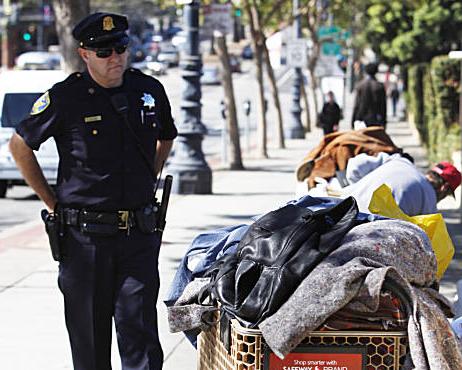
Nevius (who didn’t respond to my inquiry on the issue this morning or a follow-up this afternoon) was a Chronicle sportswriter for 20 years before being given a Metro news column that consistently has a reactionary, politically unsophisticated take on San Francisco life, following in the mold of predecessor Ken Garcia. His recent crusades include calling for crackdowns on the homeless in Golden Gate Park, on young people on the streets of the Haight and downtown, and on nightclubs whose patrons have engaged in violence, trumpeting “public safety” as the political priority that trumps everything else.

On Sept. 19, Nevius published yet another column promoting the sit-lie ordinance that he has championed since even before its official inception, which Mayor Gavin Newsom placed on the November ballot as Measure L. In that column, “City citations show need for sit-lie,” Nevius detailed how those cited for quality-of-life infractions such a blocking sidewalks or public drinking or urination – mostly poor vagrants on the margins of society – rarely get significantly punished by the courts. Using painfully tortured logic that I still don’t understand, he used that situation as an argument for creating a new quality-of-life infraction – sitting or lying on sidewalks – that would probably be similarly ignored by both its targets and the courts.

“Only the most stubborn sidewalk sitter stays in place, daring the officer to write a citation. Sit/lie, by encouraging that kind of common sense compliance, should actually cut down on the number of cases coming through the court system, a system that is demonstrably ineffective,” Nevius wrote, making the argument that a new category of crimes will somehow lower the number of people headed into the court system. Again, I don’t understand the logic either, and Nevius hasn’t responded to my inquiries.

But today, Nevius follows up that column with the “news” that some city officials are now considering developing a pilot program for socking it to the top 40 “sidewalk scofflaws,” as Nevius labels them. Both columns feature the same cop, Officer Gary Buckner, who writes a lot of these quality-of-life tickets, and the same officials who share Nevius’ public safety priorities and love to score political points with conservatives and moderates by scapegoating the poor and homeless.

During the CMAC forum, I copped to the Guardian’s perspective and the fact that we do promote an agenda that seeks to make San Francisco a more progressive and tolerant place, acknowledging and sometimes celebrating urban realities, even when they are sometimes loud, stinky, and perhaps a little scary. Hey, that’s life the big city.

But Nevius and the Chronicle pretend that they aren’t pushing back with an agenda of their own, one that seeks to impose on this great city the conservative values of Walnut Creek, where Nevius lived until earlier this year, where everything is well-scrubbed and the poor are effectively policed into the shadows or edges of town. Nevius says that he’s just an objective journalist covering the news, something that most San Franciscans see as laughably dishonest.

Of course they’re pushing an agenda in collaboration with the cops, Mayor Gavin Newsom and reactionary politicians of his ilk, and the downtown interests who value tourist dollars more than the lives and rights of the poorest San Franciscans. And if they were more honest about that intention, and willing to publicly debate our respective positions in good faith, I’m confident that most San Franciscans would share the Guardian’s agenda for the city.

C’mon, Chuck, what do you say?

Getting our rocks off: a historical perspective

4

San Francisco is waiting for its Boogie Nights. Unbeknownst to Hollywood, our fair berg was the infant creche of hardcore pornography, spawning a subculture of porn theaters that thrived despite police harassment and political pressure.

We were number one! Luckily, a few brave men are resurrecting our porn golden age money shot – read on for a first look at documentary The Smut Capital of America and an interview with the director himself, Michael Stabile.


Smut Capital is by no means Stabile’s first porn rodeo. The co-editor of Gay Porn Blog, he and Smut Capital editor-cinematographer Ben Leon are both mainstays in the SF gay porn scene. The two were researching their upcoming doc on the life of gay smut powerhouse Falcon Studios founder Chuck Holmes when Stabile came across a New York Times article that inspired the title of their new project, which is a work in progress for which the team is fundraising in order to release the finished film in 2011.

“Until then I’d always thought of it as an industry that emerged from LA, but San Francisco was actually the city that birthed the porno theater. It was the beginning of the sexual revolution, and in a lot of ways these directors were documenting this newly found freedoms.” Stabile attributes the renaissance to hippie women “with really no hangups,” a progressive zeitgeist that had seized the city in the late sixties and early seventies, and film processing studios that were willing to develop sexually explicit material. By the era’s zenith in 1972, there were porno film theaters in neighborhoods across the city.

Not that everyone was down to get all that action on screen. Dianne Feinstein, first in her post as the city’s first female president of the Board of Supervisors and then as SF’s first female mayor, led a crusade focused on cleaning up the Tenderloin, which incidentally included sweeping the neighborhood free of its supply of adult movie houses. What ensued was an orchestrated harassment policy that different porn theaters dealt with in different ways.

Established theaters, Stabile says, actually benefited from the police and media persecution. “They’d come in with cameras, it’d be on the five o clock news and it would be great for them,” he says. “Advertising was very limited at the Chronicle. Feinstein would come in with her troops and would detail everything that was going on. Suddenly there was a way to talk about it, so people would flood into the theaters.” The Mitchell Brothers grew so adept at playing the cat and mouse game, he says, that they would post Feinstein’s office number on their marquee under the words “call for a good time.”

But not everyone prospered. Smaller theaters that depended on a few workers to operate, like Alex DeRenzy’s Screening Room, suffered when police would take key staffers on pointeless joyrides around town before booking them on charges of vice crime. Eventually factors like these, and more importantly the advent of video porn in the 1980s pulled the adult film business down to Los Angeles.

The move shifted the purpose of sex films away from their original role in the Sexual Revolution. Says Stabile “People were doing it here because they enjoyed it, because they wanted their own sexualities represented. It’s not like that in LA for the most part, where even a lot of the gay studios are owned by straight men looking to turn a profit.”

But don’t worry, the party’s not over. One of Stabile’s main goals with the film is not just to highlight good sex gone by, but that which cums and goes even today. When asked whether SF is still a presence in the world of porn, he had no equivocation. “Its one of the great untold stories in the local media – San Francisco has a huge porn presence. Raging Stallion, Falcon, Hot House – seven of the top ten gay porn studios are located up here, there’s Kink.com, porn writers like Violet Blue,” he says.

It appears that the tech savvy and sexual freedom that led to our capital crowning are still alive and well on these city streets. Phew! Now you may now go back to your regularly scheduled local porn browsing.

Expansive roles

0

arts@sfbg.com

STAGE Ogun Size has shaped up into a complex, intriguing character across the first two plays staged so far in the Bay Area debut of Terrell Alvin McCraney’s The Brother/Sister Plays. The Magic Theater last week opened The Brothers Size, the second play in the celebrated trilogy, in an electric production sharply directed by Octavio Solis. Its choice minimalism (including a spare but evocative car garage set from scenic designer James Faerron and scenic/lighting designer Sarah Sidman) gives just the right lift to three fine, exuberant performances and full rein to the 20-something playwright’s delicate, volatile drama set in and around a Louisiana bayou housing project.

Ogun is an important but secondary character in the first play, In the Red and Brown Water (now up at Marin Theater Company, as part of an unprecedented three-company production that includes an offering by ACT in late October). That play focuses instead on his onetime love, Oya. Her dire fate gets alluded to in passing here, with understated pain, as Ogun (played by the impressively dynamic Joshua Elijah Reese) recounts neighborhood news to brother Oshoosi (a vital and wry Tobie Windham). Recently paroled, the excitable, silver-voiced, and perennially irresponsible Oshoosi is very reluctantly working alongside (and under the wary eye of) his older brother in the latter’s automotive repair shop.

Ogun’s wary eye soon also falls on Elegba (played with a magnetic, mercurial charm by a terrific Alex Ubokudom), the third and final character in a coiled little story of love, loyalty, jealousy, and desire that teases meaning from notions of brotherhood while brooding on the inevitable singularity and alienation at the heart of life. Elegba was already deemed complex by Oya in the first play, but here he is both more lifelike and ethereal, grounded in an almost preternatural obsession to have and control his former prison mate, Oshoosi. The jealous battle for Oshoosi that ensues is alternately boisterous, eerie, and wrenching. In the end, we watch Ogun Size grow larger — an expanse of feeling that increases the capacity of a heart bereft but open — as he finds himself, per force, alone again. Expanding like the universe itself, Ogun’s fate makes the infinity of his love still larger.

GOING OUT TO PLAY


A friend and I went to a restaurant the other day, and while it’s always a little like being in a play, this was ridiculous — also stimulating, and even quietly ecstatic. I won’t give you the intimate, somewhat bizarre details of our half-hour interaction. Not because it’s private, but because it’s up for grabs: you can have it yourself if you want, exactly as we did.

True, it was never going to be an ordinary lunch. We expected something unusual since, although we entered a real San Francisco eatery, it wasn’t a meal we were after but a performance, designed by the London-based experimental troupe Rotozaza. Etiquette, which runs through this weekend courtesy of Yerba Buena Center for the Arts, is participatory theater approaching some sort of outer limit: the audience goes Ark-like by twos (you can be paired up with another bewildered stranger or go with a friend) and performs the piece for one another. This takes place amid a roomful of unwitting patrons there strictly for the usual, namely a meal.

The first thing you notice is that this table doesn’t come with a menu, not even a bar list. There’s a glass of water, but you’ll hesitate to touch it. Instructions come via headsets. There are other intricacies best not revealed here, but as the encounter unfolds you find the lines between theater and "real life" dissolving, and your identity softening at the edges like a once-crusty crouton atop a bowl of soup. Meanwhile, the headphones, the concentration of your partner, the voice in your ear, the world of the tabletop, the knowledge that you are in a play, watching a play, and that, hell, you are the play — all this makes it surprisingly easy to shrug off any inhibition you might otherwise feel about making a "scene" in a restaurant.

The scene is your own in that you inhabit it, but then it is also dictated to you, bound by certain constraints. This tension is part of the delight generated by the piece. The audience-member-as-performer accepts, just as any actor does, the work of the playwright and instructions of the director. Within that there is room for individual choice and interpretation, but any action or decision comes circumscribed by the larger form. Day-to-day we all play our parts, of course, more or less self-consciously. But I never realized what a relief it might be to have your everyday encounters literally scripted for you. I suddenly thought I knew why pirates have parrots on their shoulders. I’d naively assumed it was the man feeding lines to the bird.

While Etiquette‘s parts are gender-specific, the participants might be of any sex, no matter the role. In fact, the idea of liberation from ascribed roles comes woven, in subtly layered fashion, into the very narratives unfolding and overlapping across the table. If the foundation of identity relies on the cultural and social forms we inherit, how liberating it is, even momentarily, to sit down in public and embrace play in all its forms.

THE BROTHERS SIZE

Through Oct. 17, $20–$60

Magic Theatre

Fort Mason Center, Bldg D, SF

(415) 441-8822

www.magictheatre.org

ETIQUETTE

Through Oct. 3, $8–$10

Yerba Buena Center for the Arts

701 Mission, SF

(415) 978-2787

www.ybca.org

Lynette Sweet’s finances: Curiouser and curiouser

4

By this time it’s old news that Lynette Sweet, current BART Board Budget Committee chair and District 10 supervisorial candidate, has some issues with the Internal Revenue Service. She owed the IRS taxes going back to the year 2000, and the consequent lien on her property exceeded $20,000 in 2007.

Sweet says she never knew about the lien and thought she’d paid the taxes.

We’re still trying to figure out exactly how this happened — and the trail gets more and more convoluted.

We first called Sweet early in September, after we read about her tax troubles in the Chronicle. When we asked Sweet how she could have been unaware that the IRS was after her, Sweet told us that she’d been working with the tax firm JK Harris. She and Harris reached a deal to pay the IRS $14,500. She told us she bought a cashier’s check at Wells Fargo and mailed it in. But for some reason, she made the check out to herself, not the U.S. Treasury — so the IRS couldn’t cash it.

Normally, when you owe the IRS money, they let you know. But in this case, Sweet says she heard nothing from the feds.

When the Guardian pressed her, Sweet blamed JK Harris for not having forwarded her any of the mail in question. “I gave them power of attorney,” she said. “They had all the communications from the IRS.”

But we reached the the tax firm recently, and the folks there beg to differ. Gina Anton, Director of Corporate Communications at JK Harris, told the Guardian that any mail the IRS sent, it sent to Sweet. JK Harris’s role in Sweet’s tax kerfuffle appears modest — she hired the firm to merely act as intermediary between herself and the IRS.

Said Anton: “Our role was to obtain documents from both her and the IRS to determine what amount she could afford and what the IRS would consider an acceptable amount.”

JK Harris did not cut any checks, or inspect any checks after Sweet had cut them, Anton told us. Just the opposite: whatever documents the firm had prepared for Sweet, they sent to her for approval before forwarding them to the IRS.

Furthermore, said Anton, JK Harris was trying to reach Sweet for two years, after Sweet sent the IRS the dubious cashier’s check that she had hoped would diffuse her tax problem. Sweet finally returned JK Harris’s calls when she found out the IRS could not cash the check.

It’s all pretty odd for someone who’s worked in the banking industy for 22 years.

Questions surrounding Sweet’s finances reach beyond troubles with the taxman. She told us recently that she has worked at two companies that she never listed on her economic interest statements.

In her discloure forms, viewable at the BART Board website, she lists no sources of income after 2004, when she reported that she was employed by BayCAT (Bayview Hunters Point Center for Arts and Technology). However, in a very short and heated interview Sept. 10, Sweet told the Guardian that after she had worked at BayCAT, she had also worked at the African American Interest Free Loan Association and Trans Bay Cable.

In fact, she said she had worked at Trans Bay Cable, which is building an electricity line from Pittsburg to San Francisco,  until May of this year, when she left the company to run for office.

Which raises the question: If she was working all those years, why do her economic interest statements show no sources of income at all from 2004-2009?

The Guardian has attempted many times over the past week to contact Sweet to follow up on that question, but she’s stopped returning our calls or responding to our emails. (She’s also refused to come talk to us for an endorsement interview.)

Here are the questions her campaign has decided not to answer:

1.) What were Sweet’s periods of employment with the African American Interest Free Loan Association and Trans Bay Cable? Did she receive any income for this work? Whether yes or no, would she like to comment on the nature of that work?

2) What was the source of the tax that Sweet owed the IRS? Was this a tax on income? If so, then for income from work with which companies?

3) Why did Sweet elect to pay what she owed the IRS by means of a cashier’s check? (Why not a personal check?)

We’re also wondering why she didn’t list any income on her disclosure forms or why she made the check out to herself.

If she gets back to us, we’ll let you know.


Hot sexy events Sept 22-28

0

What’s going on in sexy San Francisco this week? Everything. End of column. Jokes! As a matter de facto, however, Folsom Street Fair has unfurled its chaps from its carry-on from Detroit and would already be generating some friction between its thighs (were they not a crotchless affair), the amount of sexy parties its been stirring up from SoMa to NoMa to Ma and beyond. After all, with all the fresh meat on the street this week, it seems a shame to relegate all the naughtiness to Sunday’s main event. Here’s a smattering of what’s going on in terms of pre-planned bacchanalia.


Lesbo Retro: A Dyke Porn Retrospective

Sexy founder of Harlem Shake Burlesque (and one of SFBG’s 2001 Sexiest People in the Bay Area ass pat) Simone de la Getto performs at this retrospective of films of lustful ladies, by lustful ladies. Shar and Jackie of S.I.R. Productions take you down this memory lane of film clips. Plus, free pizza!

Weds/22 8-9:30 p.m., $10

The Women’s Building

3543 18th St., SF

www.gv-ixff.org


Indie Erotic Film Festival

A whole Castro Theatre full of San Franciscans watching other San Franciscans get it on in homemade short films? And it’s the same week as Folsom? Sounds like a recipe for sweet, sweet trouble. Peaches Christ and her fab friends and Carol Queen will be on hand to add some levity to the goings-on – and to hand out the $1,500 for the best clip.

Thurs/23 7-8 p.m., $10

Castro Theatre

429 Castro, SF

www.gv-ixff.org


How To Eat a Peach: Pleasuring Her

Midori teaches the method for sucking out the sweetest juices (fruit props will be involved, natch) at this workshop for all those that love loving the ladies.

Sat/25 8- 10 p.m., $20

SF Citadel

1277 Mission, SF

(415) 626-1746

www.sfcitadel.org


Slut!

Dykey sluts, slutty dykes – you too deserve your own Folsom party! Host Oxana Olsen of Mall Madness hosts this hawt dance party, where prizes will be awarded for best uniform, leather outfit, and fetish wear.

Sat/25 9 p.m., free

The Lexington Club

3464 19th< St., SF

(415) 863-2052

www.lexingtonclub.com


Perverts Put Out


Oh how we love the words: as seen on Fox News! An onstage celebration of all things demonstrably slutty, this sporadic series will feature performances by Meliza Bañales, Greta Christina, Stephen Elliot, Robert Lawrence, Thomas Roche, Lori Selke, and horehound stillpoint. It may well be more than enough sexual confessional, monolouging, and live smut to satisfy for the evening.

Sat/25 7:30 p.m., $10-15 sliding scale

Center for Sex and Culture

1519 Mission, SF

(415) 255-1155

www.simonsheppard.com/pervertsputout.html


Magnitude

Folsom Street’s official dance party – because why ever would you romp about in the sunshine? Hit the floor to work up a froth to the tunes of DJ Manny Letham. Stay later for the Aftershock party to ensure you’ll be a hot mess for the Fair the next day! ($30-40 www.thediscosf.com)

Sat/25 10 p.m.-4 a.m., $80

525 Harrison, SF

www.folsomstreetfair.org


Pussyfest

Here kitty, kitty, kitty! Kinky Salon’s cat-themed play party is here, so grab your partner (no singles allowed), fluff your whiskers, and swing over to the cat fight.

Sat/25 9 p.m., $25-30 (members only)

Mission Control

2519 Mission, SF

www.kinkysalon.com


Folsom Street Fair

The grandaddy of all public, streetside leather events assumes its five-block throne in SoMa, where leather bars have been located since The Tool Box’s grand arrival in 1961. Join the 400,000 strong who will be frolicking at the third largest street fair in Cali.

Sun/26 11 a.m.- 6 p.m., $7 suggested donation

Folsom between Seventh and 12th Sts., SF

www.folsomstreetfair.org

Death. In living color

6

The press coverage of the new execution chamber at San Quentin has been astonishing. Check out Kevn Fagan in the Chron:


The spacious $853,000 center has three brightly lit witness viewing rooms, and each gives a considerably better view than the cramped gas chamber’s lone, poorly illuminated viewing room.


It’s like a damn real-estate review. A bright, well-lit place with a great view. And in Marin County, no less. A bargain at the $800,000 the taxpayers coughed up for this construction job.


KTVU news last night wasn’t much better. Scott Shafer on KQED was a little more reasonable; at least he noted that “On some level it’s hard to imagine an execution being humane.” 


Folks, please: This is a room where people are going to be killed. Human beings. Strapped to a gurney, hooked up to an IV line and injected with poison. It’s ghastly, it’s disgraceful, it’s something that puts the United States far out of synch with the rest of the civilized world.


It’s also, by the way, insanely expensive; California pays more than $100 million a year to keep its death row operating, and according to the L.A. Times, it costs $250 million every time we kill someone.


It would have been nice to see a little perspective when the California Department of Corrections does a dog and pony show to present its latest killing machine.


Hot sluts!

59

culture@sfbg.com

SEX ISSUE Forget those uptight pricks: sluts are awesome. There’s no shame in harboring a voracious appetite for sexiness in all its myriad expressions. Combined with a well-developed ethical stance and safe practices, it’s one of the joys of being human. In honor of the enormous, charitable Folsom Street leather and fetish fair (Sun/26, 11 a.m.–6 p.m., donations requested. www.folsomstreetfair.org), we wanted to honor some of our favorite local sluts with the pervy attention they want and deserve. 

>>CLICK HERE FOR PICS OF OUR FAVORITE HOT SLUTS!

SLUTTIEST CELLULOID

You’ve always wanted to watch your neighbors bang, right? Well moan enthusiastically in honor of the Good Vibrations Indie Erotic Film Festival, which every year puts the call out for the cream of the amateur blue filmmaker crop, then assembles the spunkiest for your viewing pleasure at the Castro Theatre. You too can be in the audience, which will ooh and aah its approval to choose the sexiest, steamiest home-screw, the lucky winner receiving a $1,500 money shot. So how does SF get it on? This year’s 12 finalists include preggo smut (Jeannie Roshar’s “Bun in the Oven”), good old-fashioned wordplay like Benjamin Williams’ “The Filth Element,” and sci-fi sexin’ (“Orgasm Raygun” by Martin Gooch). The fest precedes a range of specialty nights around town coordinated by Good Vibes, including Lebso Retro: A Dyke Porn Retrospective (Wed/22 at the Women’s Building). It’s gonna be a hot ticket, so grab a seat, relax your rear, and revel in the sight of sexy San Francisco.

Thurs/23 pre party: 7 p.m., $10; screening: 8 p.m., $10. Castro Theatre, 429 Castro, SF. (415) 621-6120, www.gv-ixff.org


SLUTTIEST QUEEN

“I’m so honored to be named Sluttiest Queen,” inimitable alternative drag goddess Suppositori Spelling tells us. “It’s nice to see that my work hasn’t gone unnoticed. I have so many performances that require nudity that when I drop my skirt lately it’s often met with a wave of yawns from my audience. I think they’re more shocked by the presence of panties nowadays.” (Her audience, found at her raucous weekly drag show Cocktailgate — Sundays, 9 p.m., $5. Truck, 1900 Folsom St., SF. www.trucksf.com — sheds a few panties themselves when she’s on stage.) “I could tell you stories so dirty hot that this paper would burn like a Koran in Florida” she continues, “but I’m so shy and reserved. I will say this, though: as far as the queer sex scene in San Francisco goes, we seem to be in the flush of a renaissance. I keep stumbling upon things that even make me blush — like the gentleman who preferred a visible handjob on public transportation during rush hour as foreplay. But I encourage whatever floats your boat or creams your Twinkie. I just want to clarify, however, that “ouch” is not a safe word!”

Suppositori emcees the Seventh Street stage at Folsom Street Fair from 11 a.m.–2 p.m., followed by a special performance at 2:30 p.m., and then a “hanky code” themed Cocktailgate at its regular time.


SLUTTIEST BOYS

Dan and JD, a.k.a. Two Knotty Boys, are no strangers to the twists and loops of BDSM performance. Native San Franciscans both, they not only create mesmerizing stage shows in which they bind nubile flesh to their will, but also produce end results so visionary that you’d be excused for leaving off the “fetish” and dubbing it merely “fashion.” A ever-so-tightly cinched halter top of gleaming white cord, a barely there cobweb bikini that requires an expert hand to remove, overlays of skirts and dresses that hobble the wearer seductively and at the same time, show off the contours of the female body. It’s neat, it’s adjustable, it’s sexily professional work. It’s easy to see why the duo has filmed more than 100 video tutorials and taught countless workshops in the Bay and beyond for their eager fans: the Boys have tied up hundreds of women but, unlike some humiliation artists, they have never tied down their subjects’ beauty and comfort.

www.twoknottyboys.com


SLUTTIEST PARTIERS

Was it written on the rock hard abs of some San Franciscan sex god that all coital gatherings in this city have to be stark and stoic? Thankfully, the colorful gang over at Kinky Salon never got that memo. Creators Polly and Scott have created a swinger’s playland party in the pink and purple rooms of Mission Control whose focus is flair: playful costume themes have focused on everything from kitty cats (the upcoming Pussyfest) to undersea adventure and fairy tale characters. You’ve never lived, it would seem, until your Snow White costume has been peeled off on the couch in the Harem Room by Tinkerbell and Captain Hook. More recently, the team has created a new magazine to celebrate the vast array of sexualities that their partygoers lay claim to: San Fran Sexy. The rag includes erotic history lessons from sexologist Dr. Carol Queen, memoir pieces from Bawdy Storytelling’s Dixie De La Tour, photos from recent Kinky Salon soirees, and news of sensual events to come.

www.kinkysalon.com


SLUTTIEST ROCKERS

“If the Meat Sluts were a Pink Lady, we’d be Rizzo! We ain’t no prudes like Sandy!” says BB Rumproast of rockin’ band the Meat Sluts (www.myspace.com/themeatsluts). In a world of vegan dogs, her XXX-chromosomed trash rock-punk explosion is an all-beef foot long. The four women are cookin’ on stage — literally. In addition to the occasional back up steak dancing alongside their guitar licks and growls, the Meat Sluts have shared space at shows with a live hot dog-maker and a meat grinder flinging sausage and baloney onto hungry fans. It’s messy, carnivorous fun — the perfect expression of the group’s embrace of hedonistic appetite that could care less about what’s considered “ladylike” at the table of the musical establishment. “We are loose and crazy and not ashamed of it! We love man meat! We love weenies! Beef baloney, Slim Jims, T-bones, bring it ON!” says Rumproast. To quote the Sluts’ rager rally cry “Johnny Con Carne,” that’s what we call makin’ bacon.

The Meat Sluts play Dodgyfest 3, Oct 2, 7 p.m., $10. Thee Parkside, 1600 17th St., SF. www.theeparkside.com


SLUTTIEST BLOGGER

Fleur De Lis SF has a bone to pick with the way hot and horny females are portrayed. “Women are just as sexual as men and they should own it,” the blogger tells us. Need proof? Check out the blog she started this summer — just make sure your hands are free and you’ve got a little privacy while you do so. Her posts are missives from a professional woman’s enthusiastic exploration of sensual subcultures in “one of the sexiest cities in the world.” Though her identity is clad in secrecy, Fleur De Lis SF’s escapades with Craig’s List Casual Encounters, BDSM clubs, and randy run-ins at the grocery store will leave you slicker than a Slip ‘N Slide in 90 percent humidity. Erotic inspiration notwithstanding, what we love about this new It slut is her candor and assertiveness. “Mainly, I want to educate people to embrace sex and sexuality,” she says. “I want people to accept who they are, and who are we are sexually is a huge part of who we are as people.”

fleurdelissf.wordpress.com


SLUTTIEST MAN ACTION

For the past few years, hunky leatherman cruisers have been blessed with the return of a SoMa bar crawl, which, while hardly rivaling the infamous Miracle Mile of the 1970s and ’80s, at least offers hide-lusting bar-hoppers an array of options. Truck, Hole in the Wall, Powerhouse, the Eagle, Lone Star — all make for a daisy chain of fellow cock-seekers. But the piece de resistance is surely Chaps II, which gives itself wholly over to man-action bliss. The original Chaps, owned by Chuck Slaton and Ron Morrison, was notorious for its Crisco-minded shenanigans, and Chaps II, opened in 2008 by David Morgan, continues the proudly perverse tradition, with parties devoted to rope play, piss play, fisting, and sports gear aficionados, as well as regular nights simply dedicated to the Holy Grail of slutty manhood: cheap ass. (For those unfamiliar — cheap ass tastes like chicken parmesan.) Kudos to you, Chaps II, for keeping the BDSM spirit alive — and serving a healthy round of Jäger shots to boot.

1225 Folsom, SF. (415) 255-2427, www.chapsbarsanfrancisco.com


SLUTTIEST ROBOTS

Drilldo, Intruder MK II, the Satisfyher, Scorpion, the Little Guy, Annihilator, the Octapussy — these are some of the friendly, dripping sex robots you’ll meet at FuckingMachines.com, part of the Kink.com kingdom. The machines put a bevy of heaving beauties through the motions with their dildo-studded fingers and pulsating hacksaw thrusts. Designed by lucky site users, who submit their moving-parts fantasies, and the fiendishly clever sex-elves at the Fucking Machines workshop (with many of the machines fabricated on site at Kink’s HQ in the Mission Armory), these fascinating thingamabobs range from devilishly dirty to actually kind of cute. There’s even one modeled on Johnny 5 from Short Circuit, albeit renamed Fuckzilla and outfitted with a huge silicone phallus. The whole shebang is overseen by the enthusiastic Tomcat, who drives the point home that, yes, a chainsaw outfitted with 20 fake tongues “challenges the whole idea that women need someone to buy them dinner to get pleasure.” Fucking machines themselves have been around since the 1960s, he notes, “but when we started in 2001, we wanted to capitalize on the tech wave, while approaching the machine construction like sculpture.” Good thing the Fucking Machine bubble didn’t burst.


SLUTTIEST SLÜT

Burlesque heroine Baroness Eva Von Slüt knows what she’s got, and she’s happy to show it to you. The inked, buxom platinum blonde dove into burlesque in 2002, but she’s never been afraid of flaunting her dangerous curves onstage. “Whatever the thing is that women have that they hate their bodies, I just don’t have it. I don’t compare myself to other people because I know I look good.” Von Slüt produces her own burlesque shows, plays party-jumping jams with partner DJ Mod Days, and heads up the vocals for no less than two sexy bands — Thee Merry Widows, an all-girl psychobilly explosion of fishnets, red lipstick, and leather dresses, at whose shows Von Slüt will bust out in pasties and sequined panties, and the White Barons, a stripped down, hard-edged punk outfit in which Von Slüt lets her rebel growl loose. So what gets this freight train whistling? Purrs the lady, “Self-confidence and kindness. Also, I am a bit of a cougar, so gentlemen 10 years younger. I’m not opposed to men my age or older, but gosh they’re just so sweet when they’re young!”

Catch Von Slüt’s DJ session on Wednesday, Oct. 13 at Butter, 354 11th St., SF. www.myspace.com/missevavonslut


SLUTTIEST FREE-FOR-ALL

There are a lot of gay musclemen at the Folsom Street Fair, and there are a lot of steamy, shirtless gay man-parties surrounding the event (causing quite a few Monday morning tragedies). But what about everyone else? “I was talking to my friends at Kink,” says Folsom organizer Demetri Moshoyannis, “and they said that once the fair ended, all the leathermen had a place to go, but everyone at the Kink booth just had to go home. So this year we teamed up with them to change that.” The result? A glorious-sounding omnisexual dance party called Deviants that’s open to everyone. The acknowledgment that gay muscle men aren’t the only ones who can get down and dirty into the wee hours is refreshing. But so is the musical lineup — the Juan Maclean, Zach Moore from Space Cowboys, Australia’s Stereogamous — which offers something beyond the carnival circuit-music at many of the other parties. Musclemen are welcome, too, of course, as long as they’re willing to shake their chains on the dance floor.

Sun/26, 6 p.m.–2 a.m., $30 advance. 525 Harrison, SF. www.folsomstreetfair.org/deviants


SLUTTIEST PIE

It’s not too many harems that offer you 40 different ways to satisfy your cravings. But hot, lip-smacking loving can be yours — in three different locations or for delivery, no less! — whenever that urge to do something naughty hits, whether you like it on your lunch hour or for a post-bar dirty stopover. Oh, Pizza Orgasmica, you sure do know what gets us going. The local chain has umpteen big, salacious pies with nookie-themed names for your perusing. And although the Ménage à Trois, with it’s cuddle puddle of five salty cheeses, will leave you panting, and the Latin Lover’s barbeque sauce, chicken, zucchini, onions, and cilantro make for a meaty, spicy affair, the sluttiest pie award has got to go to the Farmer’s Daughter. She looks like a demure little milkmaid (after all, you can find her on the vegetarian menu) — but once her drizzles of creamy bianca cheese hit your tongue, and her fresh corn and broccoli fill your mouth … it’s a tumble in the hay you won’t soon forget. Old MacDonald would be scandalized.

Various locations, www.pizzaorgasmica.com


SLUTTIEST CLOWN

When it comes gender-bending sexual escapades, we landlubbing bipeds tend to give short shrift to our finned, feathered, and multi-legged Earthmates. That’s why we’re giving a hearty bottoms up to the California Academy of Science’s Amphiprion ocellaris. The showy orange and white striped fish, whose common name is clownfish, is best known as the aquatic brat in Finding Nemo. But we don’t care about Nemo’s celebrity — or his billions. We salute him for his ability to shift from male to female when needed, giving her access to the entire spectrum of fishy sexuality. One of the planet’s rare sequential hermaphrodites, all clownfish are born male (protandrous hermaphrodites) but become female when the female in a breeding pair dies. You may never look at a clownfish the same way again — and you should certainly go and look at them at the Cal Academy aquarium (www.calacademy.org), where the San Franciscan clownfish ride tiny fixies, design websites, and sip Blue Bottle. Kidding! But maybe we should rethink always calling them “Nemo.” How about Nema for a change? Or Nemo-ma. Or, oh goddess of LGBT fish love, Nemaphrodite.


SLUTTIEST BUFFET

It’s lunchtime Friday and you need a juicy thigh in your mouth: Gold Club is there. And no, we’re not talking about the lovely ladies popping, dropping, and locking it all over the SoMa strip club’s pleasure poles. Carnal urges take on new meaning when it comes to the joint’s $5 all you can eat Friday buffet, an omnivorous affair stuffed with roast beef, lasagna, fresh veggies, hummus, brownies, and their signature breasts (or as one Yelper so memorably dubbed them, “fried chicken tit-tays!”) The spread attracts a diverse crowd of office workers and lap-dance connoisseurs of all genders, endowed with an appetite for crispy skin and jiggling glutei maximi alike. So pair your plate with a $4 happy hour cocktail — available until 7 p.m. — and don’t forget to share your savings with the working women up front.

Gold Club’s all you can eat buffet Fridays 11 a.m.– 2 p.m., $5. 650 Howard, SF. (415) 536-0300, www.goldclubsf.com

Slutty profiles written by Marke B., Caitlin Donohue, Johnny Ray Huston, and Diane Sussman.

PG&E’s secret pipeline map

9

news@sfbg.com

>>CLICK HERE TO VIEW THE FULL-SIZE PG&E SECRET PIPELINE MAP (PDF)

It’s been nearly two weeks since the pipeline in San Bruno exploded and killed four people, injuring many more and destroying 37 homes. And it’s left a lot of people in San Francisco wondering: could it happen here?

Of course it could. PG&E has more than 200 miles of major gas pipelines under the city streets that are scheduled to be replaced — and that means they’re reaching the end of their useful life. Just like the pipe that blew up in San Bruno.

Are any running under your home or business? PG&E isn’t going to tell you.

That’s bad. “The public has a right to this information,” City Attorney Dennis Herrera told us. And Sup. Ross Mirkarimi has introduced a resolution calling on PG&E to make the locations of its pipelines, electric lines, and other potentially parts of the company’s infrastructure public.

But here’s what worse: even the city’s public safety departments — the ones that would have to respond to a catastrophic event involving a gas main break — don’t know where those lines are.

“I’m still looking for that map myself,” said Lt. Mindy Talmadge, a spokesperson for the Fire Department.

The city’s Public Utilities Commission, which, among other things, digs its own trenches to install and repair water pipes, doesn’t have the PG&E map. Neither does the the California PUC, which regulates PG&E.

It might also make sense for the City Planning Department to have the map; after all, zoning an area for the future development of dense housing that sits on top of an explosive gas main might be an issue. “People need to start holding PG&E accountable,” Planning Commission member Christina Olague told us. “Why shouldn’t PG&E release [the map] given the recent tragedy?”

PG&E insists that the exact location of the gas mains should remain secret because someone might want to use the information for a terrorist attack. But if the San Francisco Fire Department and Department of Emergency Services can’t get the map of the pipelines, something is very wrong. Even Sup. Sean Elsbernd, who has been allied with PG&E against public power issues, agreed that “the public safety agencies should certainly have that information.”

The Mirkarimi resolution urges PG&E “to cooperate with the city’s request for infrastructure information.” Mayor Gavin Newsom has already appointed the fire chief and city administrator to conduct a utility infrastructure safety review that would evaluate the location, age, and maintenance history of every pipeline underneath city streets.

Not every state allows utilities to keep this information secret. In both Washington and Texas, maps of underground pipelines are easily accessible, said Carl Weimer, executive director of the Bellingham, Washington-based nonprofit Pipeline Safety Trust. Texas even has an online system, he said.

But in California, PG&E keeps even essential safety agencies in the dark. If a fire came near where a PG&E pipeline was buried — or if an earthquake fractured some of the lines and gas started to leak — Talmadge said the San Francisco Fire Department wouldn’t be able to do anything about the explosive gas except call PG&E. Only the private utility can shut off the gas, which is under high pressure in the main lines.

“We radio to our dispatch center and request PG&E to respond … They would contact PG&E and have them respond,” she explained.

The department doesn’t prepare specifically for that sort of event. “We do not have a specific gas leak training … it would be more of a hazardous material training,” Talmadge said.

The remarkable thing is that much of the data the city doesn’t have — and PG&E won’t give up — can be pulled together from publicly accessible data. The major news media, particularly The Bay Citizen, have been pursuing the story and have run pieces of the map. Several newspapers and websites have published rough maps outlining where the major underground pipes are.

But as far as we know, nobody’s done a full-scale look at what the existing public records show.

Using information that the U.S. Department of Transportation has put on the Web, we’ve managed to put together a pretty good approximation of the secret map PG&E doesn’t want you to see.

We took a map from the DOT’s Pipeline and Hazardous Materials Safety Administration and layered it over a map of San Francisco. The maps of the southeast part of the city are more accurate; the information on gas mains going through the north and west side of town are sketchier. But the lines appear to run parallel to major streets, and we’ve put together a guide that at the very least can tell you if there’s a potentially explosive gas line in your neighborhood — and maybe even under your street.

Obviously, every house or business that has natural gas service — and that’s most of San Francisco — is hooked up to a gas pipe, and those feeder pipes run under almost every street. But the gas in those lines is under much lower pressure than the gas in the 30-inch main lines shown on this map, where pressure can reach 200 pounds per square inch. It was a main pipe that blew up under San Bruno.

It’s not surprising that the southeast — traditionally the dumping ground for dangerous and toxic materials — would have the most gas mains, and the most running through residential areas. One line, for example, snakes up Ray Street and jogs over to Delta Street on the edge of McLaren Park and near a playground. It continues under Hamilton and Felton streets, under the Highway 280 and onto Thornton Street before heading into the more industrial areas near Evans Avenue.

Another main line goes under the south side of Bernal Heights, running below Banks Street, around the park, then down Alabama Street to Precita Street, where it connects with 25th Street. That line then heads to Potrero Hill, where it follows Rhode Island Street to 20th Street.

Research assistance by Nichole Dial.


Ships and whales don’t mix

3

Earlier this year, the Guardian reported on ongoing efforts to address threats to whales posed by huge shipping vessels in and around the San Francisco Bay. In addition to fatally striking the marine mammals – many of which are already on the decline under strain from myriad environmental pressures – cargo ships may inhibit whales’ ability to locate food, mates, or their young by masking the sounds they rely upon for those behaviors.

So it was especially sad to read the news on Sept. 16 that a whale carcass was found on the bow of a container ship coming into the Port of Oakland, especially if biologists determine that it was indeed an endangered blue whale. According to a researcher from Scripps Institution of Oceanography who we interviewed for the story, there are so few blue whales left that if even two die from ship strikes every few years, the entire species could be imperiled.

We received this statement from Jackie Dragon, marine sanctuaries program director for Pacific Environment:

“Another dead whale on the bow of a ship is a reminder that ships and whales don’t mix. Yet with the ever increasing number of ships calling on the busy Port of Oakland, and the fact that all ships must drive through the vital whale-rich marine sanctuary waters just beyond the Golden Gate – we need to step up our efforts to find ways to keep whales and ships apart.”

Ednorsement interviews: Bus drivers on Prop. G

3

Advocates for Muni drivers came to the Guardian this week to make the case for voters to reject Proposition G, which would remove their pay guarantees from the city charter, and to argue that the union has been unfairly demonized by Mayor Gavin Newsom, Sup. Sean Elsbernd and other city officials in an effort to deflect blame for problems with the troubled transit system.


The group included top Transport Workers Union Local 250A officials Irwin Lum and Rafael Cabrera, Bob Planthold with Senior Action Network, and Frank Lara with More Public Transit Coalition (which was spearheaded by the ANSWER Coalition). “Muni is broken and needs drastic change. It needs to be changed from the top to the bottom,” Lum began.


Yet he said targeting Muni drivers, most of whom are people of color doing a difficult job in one of the country’s most complex systems, doesn’t solve a problem that goes far beyond work rules and salaries. The problem lies with lack of resources and the political will to pursue them, they said, which is why the union supported proposals to reform the Municipal Transportation Authority governing structure and pursue significant revenue options, which were discussed but ultimately abandoned by the Board of Supervisors earlier this year.


“Too many people at City Hall are looking to cover their political rear ends,”said Planthold, who advocates for the rights of those with disabilities and has studied transit systems around the country.


Newsom has repeatedly singled out TWU as the one public employee union that didn’t agree to givebacks to help close the city’s budget deficit, and even some progressives have told the Guardian that the union hasn’t done itself any favors with its intransigent stance. But Lum said union leaders were prepared try to sell their members on a deal that included forgoing raises and accepting unpaid furlough days but that Newsom was too quick to leak news of the deal to the media for political reasons, causing TWU members to dig in and reject the deal before that education process could begin.


While the city and MTA may save $10 million through the measure, they said that was small change compared to the system’s real needs, which they estimated to be around $125 million, much of which could be brought in by creating transit assessment districts to charge big employers whose workers rely on Muni.


Click below to read the complete interview.


TWU by endorsements2010


The news that didn’t make the news in SF

0

Every year, the Guardian features the Top 10 Project Censored stories presented by the Sonoma State University project that spends all year analyzing which stories the mainstream media missed. But which stories did not find their way into the mainstream press here in the San Francisco Bay Area?

News outlets other than the Guardian typically ignore Project Censored (unless you count SF Weekly’s snark), so you might say that even Censored tends to be censored. Other than that, we note that issues not hand-delivered via press release or PR campaign might receive less attention than those obvious stories. Using a rather unscientific process of surfing alternative news sites online to find out which stories didn’t get a lot of play in the mainstream, we’ve come up with an assortment of Local Censored stories – though this is by no means a comprehensive list. What other news didn’t make the news?

Local Censored stories:

* What we didn’t hear about when PG&E was pushing Prop 16

Speaking at an informational hearing in Sacramento in February 2010 about Pacific Gas & Electric Co.’s ballot initiative, Proposition 16, former California Energy Commissioner John Geesman noted that the state’s most powerful utility company was using customer money to finance a bid to change the state constitution for its own purposes. Prop 16, which earned a thumbs-down from voters in the June election, would have created a two-thirds majority vote requirement before municipalities could set up electricity services separate from PG&E. While there was no shortage of reporting about the astounding sums of cash that PG&E sank into Prop. 16, hardly anyone aside from Geesman picked up on the more salient point of what PG&E was not spending its money on.

“California’s investor-owned utilities face a Himalayan task in modernizing our electricity system and building the infrastructure necessary to serve a growing economy,” Geesman wrote on his blog, titled PG&E Ballot Initiative Fact Sheet. “They ought to focus on that, rather than manipulating the electorate to kneecap their few competitors.” It is now abundantly clear that PG&E’s aging gas pipelines in San Bruno were badly in need of replacement – and the utility’s neglect opened the door the catastrophic explosion that occurred Sept. 9, resulting in tragic loss of life and destroying homes. “The current leadership at PG&E has lost its way. Nobody is minding the ship,” senator Mark Leno told the Guardian shortly after the blast. “Enough with the self-initiated, self-serving political campaigns. … How about focusing on the current mission — to provide gas and electricity safely, without death and destruction?”

PG&E Ballot Initiative Fact Sheet: http://pgandeballotinitiativefactsheet.blogspot.com/
Huffington Post: http://www.huffingtonpost.com/christine-pelosi/deadly-priorities-why-did_b_713800.html

* What you might not have read about Johannes Mehserle’s murder trial
 
If you looked to Colorlines.com, Blockreportradio.com, the San Francisco Bay View, or Indybay.org for coverage of Johannes Meherle’s murder trial for the fatal shooting of Oscar Grant, then you got a different picture from the one offered by mainstream Bay Area news outlets. There may well be plenty of details about the trial that didn’t make the cut for mainstream news, but one particular point caught our eye as something that should’ve warranted more prominent coverage, or at very least sparked deeper questions from mainstream press. According to the witness testimony of Jackie Bryson, who was with Grant on the train platform the night of the shooting, Grant’s friends immediately urged BART police to call an ambulance after Grant had been shot, but police didn’t do it right away.

Here’s the report from Block Report Radio: “Jack Bryson said he yelled at Oscar after he was shot to stay awake and to the police to call the ambulance. The unidentified officer who was on Bryson declared, ‘We’ll call the ambulance when you shut the fuck up!’ Bryson went on to say that he was never searched on the Fruitvale platform or at the Lake Merritt BART police station, which seems ridiculous if you consider the earlier testimony of former BART police officers Dominici and Pirone, who were involved in the murder and who testified last week that they had felt threatened by Oscar Grant and his friends.” So, if it’s true that Grant’s friends were told to “shut the fuck up” when they were urging BART cops to call an ambulance, and that the supposedly threatening parties weren’t ever searched, why didn’t these points receive as much attention in the media as, say, the claim that years earlier, Grant may have resisted arrest? After witnessing the death of his friend, Bryson said in his testimony, he was detained for hours while wearing handcuffs pulled so tight that his wrists hurt, only to be told afterward that since he had not been read his Miranda rights, he was not under arrest. To be fair, the detail about calling the ambulance did make it into the Chronicle, near the bottom of a blog post, under the subhead, “Friend’s claim.”

Block Report Radio: http://www.blockreportradio.com/news-mainmenu-26/894-jack-bryson-hits-the-stand.html
Colorlines: http://colorlines.com/archives/2010/06/defense_opens_with_gripping_testimony.html

* Homelessness on the rise in San Francisco

The controversy surrounding Prop L, a proposed ordinance to ban sitting and lying down on the sidewalk, has been widely reported on — but there’s a more pressing issue related to homelessness that hasn’t gotten nearly as much ink. An article in New America Media, “Shelters predict homeless count to skyrocket,” highlighted a perceived surge in San Francisco’s homeless population, evidenced by overwhelmed service providers who can hardly keep up with demand. “We’re serving 200,000 more meals per year than two years ago, but we haven’t had the capacity to add staff,” the chief executive officer of the Glide Foundation noted in the article. The drop-in center, she added, no longer had enough seats to accommodate those in need. According to a fact sheet issued by the Coalition on Homelessness in July of 2009, 45 percent of respondents to a COH survey were experiencing homelessness for the first time. The overwhelming majority of respondents, 78 percent, became homeless while living in San Francisco.

New America Media: http://newamericamedia.org/2010/04/shelters-predict-homeless-count-to-skyrocket.php
Coalition on Homelessness: http://www.cohsf.org/en/

* The long wait for Section 8

It isn’t easy for a tenant with a Section 8 voucher to find housing in the San Francisco Bay Area. In San Francisco, there’s a barrier to getting the voucher in the first place, since the waitlist is currently closed. Those who have vouchers are often passed over by landlords, and the string of denials can drive people to unstable housing situations such as extended hotel stays. An article in POOR Magazine features the story of Linda William, a woman who left a San Francisco public housing project with a Section 8 voucher in hand only to embark on a wild goose chase, ultimately winding up in a low-end motel outside Vallejo. “Well whaddya know,” William told the POOR magazine reporter, “I found closed wait lists on almost all the low-income housing units in all of those places and all the rest of the landlords wouldn’t even return my calls when I told them I had section 8.” An article by Dean Preston of Tenants Together that appeared in BeyondChron, meanwhile, spotlights the issue of landlord discrimination against Section 8 tenants.  “In the Section 8 voucher program, participating tenants pay 30 percent of their rent and the Housing Authority pays the balance to the landlord,” Preston writes. “It takes years for eligible tenants to be able to participate in the program. Once tenants get off the wait list, the landlord must sign a payment contract with the housing authority in order to receive the portion of the rent paid by the government. By refusing to sign onto the program, some landlords seek to force rent controlled tenants into situations where they cannot pay their rent.”
POOR Magazine: http://www.poormagazine.org/node/3277
BeyondChron: http://www.beyondchron.org/news/index.php?itemid=8012

* San Francisco’s trashy secret

Despite being thought of as a beacon of sustainability, San Francisco’s not-so-green waste stream is something that didn’t make the front page of many papers – except, of course, this one. Sarah Phelan’s “Tale of Two Landfills,” a Guardian cover story this past June, examined San Francisco’s decidedly unenlightened policy of transporting waste far outside of the city despite a goal of reducing waste to zero in the next 10 years. Here’s an excerpt: “It’s a reminder of a fact most San Franciscans don’t think much about: The city exports mountains of garbage into somebody else’s backyard. While residents have gone a long way to reduce the waste stream as city officials pursue an ambitious strategy of zero waste by 2020, we’re still trucking 1,800 tons of garbage out of San Francisco every day. And now we’re preparing to triple the distance that trash travels. ‘The mayor of San Francisco is encouraging us to be a green city by growing veggies, raising wonderful urban gardens, composting green waste and food and restaurant scraps,’ Irene Creps, a San Franciscan who owns a ranch in Wheatland, told us. ‘So why is he trying to dump San Francisco’s trash in a beautiful rural area?’”

SFBG: http://www.sfbg.com/2010/06/15/tale-two-landfills

* The real unemployment rate

The Bureau of Labor Statistics makes a distinction between so-called “discouraged workers” who have stopped looking for jobs, and the jobless who are actively seeking employment, so the official unemployment rate (9.7 percent in San Francisco, according to the most recent data) may be much lower than the actual unemployment rate.

We haven’t seen any brilliant local reporting on this issue, but the problem is summed up nicely in this YouTube video produced by a personal finance software firm.

http://www.youtube.com/watch?v=Ulu3SCAmeBA&feature=player_embedded

On the Cheap listings

0

On the Cheap listings are compiled by Paula Connelly. Submit items for the listings at listings@sfbg.com.

WEDNESDAY 15

Bad Movie Night Argus Lounge, 3197 Mission, SF; (415) 824-1447. 8pm, $2. If you’ve got a bad film you’ve been secretly wishing to screen, here’s your chance to share it. Bring any film on DVD, made by you, that is under 10 minutes and enter for a chance to win a best worst mystery prize. Proceeds benefit the Cut and Run Tour, a traveling film festival specializing in short, avant-garde, and experimental film. With DJ Squid spinning punk, core, and alt rock.

"Hot and Cold Extreme Environments" Randall Museum, 199 Museum Way, SF; (415) 554-9600. 7:30pm, free. Join planetary scientist Chris McKay, from the Space Science Division of the NASA Ames Research Center, for a presentation on life in extreme environments and how it is relevant to the search for life in the Solar System.

Ten Fingers Café Royale, 800 Post, SF; (415) 441-4099. 8pm, free. Everyone has a story to tell, so come share yours at this live storytelling event where performers have a chance to win $150 or be featured on NPR’s Snap Judgment. The only rules are: no reading, keep it under 10 minutes, and aim for nonfiction. To sign up in advance, email stephanie@snapjudgment.org.

BAY AREA

El Grito Bicentennial Jack London Square, Franklin at Water, Oakl.; www.jacklondonsquare.com. 4pm, free. Celebrate the 200 year anniversary of Mexican independence from Spanish rule at this outdoor festival featuring artists, craft vendors, live music, activities, and more.


THURSDAY 16

Inside Storytime Café Royale, 800 Post, SF; (415) 505-0869. 6:30pm, $3-$5. A fun, cozy event where you can booze and schmooze with the San Francisco literati featuring readings from Raj Patel, author of The Value of Nothing, Justine Sharrock, author of Tortured, Gordy Slack, author of The Battle Over the Meaning of Everything, Anna Mantzaris, Hank Pellissier, and James Warner.

Project Censored City Lights Bookstore, 261 Columbus, SF; (415) 362-8193. 7pm, free. Each year, Project Censored lists the top 25 major news stories that were ignored or underreported by the mainstream press and presents the details of these stories in depth. Join Mickey Huff and Peter Phillips in discussing this year’s most censored stories and celebrating the release of Censored 2011.

FRIDAY 17

Readings from Joyland Dog Eared Books, 900 Valencia, SF; www.joyland.ca. 8pm, free. Catch the second stop of the Joyland American tour celebrating the release of books from Joyland founders Emily Schultz and Brian Joseph Davis who will be reading along with San Francisco writers Peter Orner, Tamar Halpern, Helene Wecker, Ruth Galm, and host Kara Levy. All authors have been published on the joyland.ca site, which aims to make the international local by providing a platform for unique voices in short fiction.

SATURDAY 18

J-Pop Summit Festival Post between Webster and Buchanan, SF; www.j-pop.com.

11am-6pm, free-$20. Take in the Japanese pop-inspired attractions at this annual festival featuring musical performances by some of Japan’s hottest bands, fashion shows, film screenings, art and anime booths, live art performances, Japanese food vendors, and more.

Literary Tribute to Al Robles Intersection 5M, 925 Mission, SF; (415) 626-2787. 6pm, $5 suggested donation. Join members of the Bay Area literary community as they honor poet, educator, community activist, and advocate for the poor and senior citizens, Al Robles. The evening of storytelling hosted by D. Scott Miller to include poetry, prose, conversation, and recollections of Robles with Jessica Hagedorn, Jack Hirschman, Janice Mirikatani, Alejandro Murguia, Jaime Jacinto, Ishmael Reed, and more.

BAY AREA

Artspark San Pablo Park, 2800 Park between Russell and Ward, Berk.; www.artsparkfestival.org. 11am-4pm, free. Enjoy this free, community sponsored festival promoting community health by offering free health information from East Bay health organizations and free art lessons in drawing, painting, dancing, spoken word, and more. Also featuring nutritious, hot meals for under $5 and entertainment and performances including live music, spoken word, and more.

SUNDAY 19

Dancing in the Streets Noe at Market, SF; www.castrocbd.org. 1pm-4pm, free. Enjoy a live band and dancing in the streets with the Byran Keith Country Band and Queer Ballroom giving free country two step lessons.

Leland Avenue Fair Leland at Bayshore, SF; www.sfvvboom.blogspot.com. 10am-4pm, free. Celebrate the recently completed Visitacion Valley public art and streetscape at this community festival featuring local talents including Latin jazz percussionist Pete Escovedo and his six-piece orchestra, artists, chefs, entertainers, and vendors.

Roadworks Street Fair Rhode Island between 16th and 17th St., SF; www.sfcb.org. Noon-5pm, free. Using a three ton steamroller, a team of featured artists will be making large-scale prints right in the street from carved linoleum blocks. Watch the action and enjoy the bazaar featuring wares from over 80 artists, vendors, and organizations, live music, entertainment, street food, and activities.

Comedy Day Sharon Meadow, Golden Gate Park, SF; www.comedyday.com. Noon-5pm, free. Thirty comedians will be performing in a non-stop relay of jokes to celebrate the 30th anniversary of Comedy Day. Comics to include up-and-coming talent, national and Bay Area favorites, and a few who performed at the original Comedy Day. Food and beverage vendors available.

Chron badly scooped on PG&E blast

3

The San Francisco Chronicle used gigantic type on its front page two days in a row, and put out an entire special Sunday supplement on the San Bruno fire. The daily is struggling, but still has substantial staff, and this is a perfect daily-paper story — a dramatic explosion, events unfolding quickly, compelling visuals, dozens of story angles.


And the new, much smaller online Bay Citizen is making the Chron look weak.


The Bay Citizen got the real scoop that the Chron missed — area residents have been complaining about gas leaks for weeks, and PG&E more or less ignored them. And PG&E’s own internal reports said that the pipeline was dangerous and needed to be fixed.


Once news outlets have reported on the basic facts of an incident like this — how many dead, how many houses burned — they need to start looking immediately at why it happened — and that’s where the Chron has fallen down. None of this was all that hard to find — all the Bay Citizen reporters did was talk to people in the neighborhood about PG&E, then get a copy of a public report.


And with all the talented staff of reporters at the Chron, they couldn’t manage to take on PG&E.

SFBG Radio: Korans, small business, and the next gov

1

In today’s episode, Johnny and Tim talk about the news of the day — the Florida Koran burning, the Senate and Obama’s small business bill, and the state of the next head of the state. You can listen after the jump.

sfbgradio9/9/2010 by endorsements2010

Our Weekly Picks: September 8-14, 2010

0

WEDNESDAY 8

DANCE

Project Thrust

Many might think the bigger the bust, the better. But when it comes to the female body, shit gets complicated. Tits are either too big, too small, too this, too that. “How, when, and why are women aware and unaware of their feminine features? When do women hide curves and when do they flaunt them? Is it difficult to sustain sexiness?” These are some of the crucial questions choreographer and dancer Malinda LaVelle — who has danced with the Foundry and is now an artist in residence at the Garage — explores with her dance company Project Thrust and its newest work, Project Bust. Whether you love or hate the twins, LaVelle’s bold and funny choreography will leave you with a profound new respect for the female form. (Katie Gaydos)

Through Thurs/9

8 p.m., $15

Garage

975 Howard, SF

(415) 518-1517

www.projectthrust.org


THURSDAY 9

THEATER

Jerry Springer the Opera

Time for a big, dramatic, Jerry Springer Show-style revelation: I’m the father of your baby! Uh, just kidding. Actually, I was going to say that I had to ask the Googles if The Jerry Springer Show is still on TV. And indeed, 19 seasons along, it is. Even if its zeitgeist was a few years ago, and the most scandalous stuff on the idiot box now comes courtesy of Real Housewives, there’s no excuse for any self-respecting Springer fan (oxymoron?) to miss Jerry Springer the Opera, which promises “strippers and rednecks, incest and coprophilia, Jesus, Satan, and the Virgin Mary, the Ku Klux Klan, and a lesbian dwarf.” Adventurous local company Ray of Light Theatre ushers in its 10th anniversary season with this lurid, award-winning spectacular. (Cheryl Eddy)

Through Oct. 16

Wed.–Sat., 8 p.m., $20–$36

Victoria Theatre

2961 16th St, SF

www.jerrysf.com


MUSIC

Apocalyptica

Thanks to Judgement Day, Grayceon, and Giant Squid, San Francisco concert-goers are familiar with the peculiar potency of heavy metal cello. Unlike those bands, however, Finland’s Apocalyptica consists entirely of cellists. Since its beginnings in 1993 (sawing out Metallica covers), the quintet (four cellos, drums) has built up a cult following and turned its talents toward writing original songs. A new album, 7th Symphony, was released Aug. 20, featuring collaborations with Dave Lombardo (strong) and Gavin Rossdale (weak). Apocalyptica’s live show, nevertheless, is not to be missed. If you’re never seen someone play a cello while standing up and headbanging — well, what’s taken you so long? (Ben Richardson)

with Dir En Grey, Evaline

8 p.m., $28

Regency Ballroom

1290 Sutter, SF

1-866-448-7849

www.theregencyballroom.com


FILM

“Infinite City: Cinema City”

Writer Rebecca Solnit’s “Infinite City: A San Francisco Atlas” mapmaking project has investigated butterflies, queer history, hippies, and the SF vs. L.A. rivalry. Now, and perhaps inevitably, Solnit and her collaborators turn their attention to local cinema. Tonight’s work-in-progress screening, “Housing Shadows and Projecting Fog,” includes films on film (and fog) by Andy Black and Sam Green, and Christian Bruno. Saturday’s sprawling “cinema crawl” invites the movie-minder to various theaters. Two highlights: the Roxie spreads sparkle with Pickup’s Tricks, Gregory Pickup’s 1973 profile of founding Cockette Hibiscus; and the obligatory Vertigo screening (1958) at the Vogue. (Eddy)

7 p.m., free with museum admission ($9–$18)

(Sat/11, “A Few Dream Palaces of San Francisco” cinema crawl, various venues and times)

Phyllis Wattis Theater

SF Museum of Modern Art

151 Third St., SF

(415) 357-4000

www.sfmoma.org


MUSIC

Coliseum

Having stormed out of Kentucky onto the national scene with 2007’s No Salvation LP, Coliseum took an abrupt left turn when it came time to write this year’s follow-up, House With A Curse. Throttling back the incendiary crust-punk crossover of their previous albums, the trio debuted a new drummer and a stately post-punk sound — its tempos, at least when compared to precedent, sound almost meditative. Despite the switch, the songwriting remains stellar, and mastermind Ryan Patterson’s throaty yowl is wielded with mastery. Joined by local troublemakers Walken on Potrero Hill’s lowest stage, the band will deploy its new bread and circuses. (Richardson)

With Burning Love, Walken, Buried at Birth

9 p.m., $8

Thee Parkside

1600 17th St., SF

(415) 252-1330

www.theeparkside.com


MUSIC

The Gories

Looking for some good clean fun? This ain’t the show for you. As their name suggests, garage-rock vets the Gories play dirty, sinister blues with vocals that wail about feral girlfriends, explosive girlfriends, and motorcycle heroes, intercut with harmonica blasts and impassioned, slightly insane woo-hoo!s. Formed in Detroit circa 1986 — when squares were jamming to Whitney Houston and “Addicted to Love” — the band’s sound suggests nothing about the ’80s; it’s more like the tunes you’d want to hear while drag-racing to a midnight rager in a cemetery. Singer Mick Collins went on to form the Dirtbombs, a band that’s commanded its own rightful following, and this Gories reunion gig is a rare affair indeed. Turn up early for Haunted George, a kindred lo-fi cat whose discography includes an album titled Pile O’ Meat. Have mercy! (Eddy)

With Haunted George and Nice Smile

8 p.m., $20

Independent

628 Divisadero, SF

(415) 771-1421

www.theindependentsf.com


FRIDAY 10


DANCE

Paul Laurey and Christine Bonasea

Paul Laurey grew up in the Blue Ridge Mountains of West Virginia; he was training to be a scientist when the desire to dance hit him. Christine Bonasea was born in France and also tried academia and dance. Dance won out for her as well. Now courtesy of Joe Landini’s RAW — or resident artist workshop, which offers no money but free rehearsal space — they are sharing an evening of independent choreography. Both work with excellent, equally committed fellow performers: Laurey in Pull, Push and Things that Matter with Christine Cali and Sonsheree Giles; Bonasea in the matter of things with Rosemary Hannon, Jorge Rodolfo de Hoyos, and Kira Kirsh. The thrill comes from watching good dancers taking new risks and committing themselves to new contexts. (Rita Felciano)

Through Sat/11

8 p.m., $15

Garage

975 Howard, SF

www.975howard.com


FILM

“Drawn From Life: Comic Books and Graphic Novels Adapted”

When it comes to adapting a work for film, some preexisting properties have proven more successful than others. Video games: bad; Jane Austen novels: better; comic books: blockbusters, even when the movie ends up sucking. There’s yet to be a Best Adapted Screenplay Oscar doled out for a graphic novel or comic adaptation, but can such a breakthrough be far off? Missing from the Pacific Film Archive’s lineup are Ghost World (2001) and Scott Pilgrim vs. the World (still in theaters), but as graphic novel geeks the world over await/assault news regarding the Y: The Last Man movie, there’s plenty of tiding-over afoot. Campy delight Flash Gordon (1980) kicks off the series, with Hellboy (2004), Popeye (1980), American Splendor (2003), and Wes Craven’s oft-overlooked 1982 Swamp Thing among future selections. (Eddy)

“Drawn From Life: Comic Books and Graphic Novels Adapted”

Through Oct 31, $5.50–$9.50

Pacific Film Archive

2575 Bancroft, Berk.

(510) 642-5249

www.bampfa.berkeley.edu


SATURDAY 11

COMEDY

Craig Ferguson

In the supposedly madcap, late-night TV landscape (see: 1996’s The Late Shift), it’s surprising that Craig Ferguson has ultimately emerged as the least traditional of them all. The Scottish comedian — accent and all — makes up jokes on the fly, curses like a sailor, and often references his past as an alcoholic, a bartender, and a punk band drummer, every night on The Late Late Show. But in sticking to his guns, Ferguson comes off as a real talent rather than a manufactured experience, and the program’s unpredictable nature is the real reason to tune in — who cares about the guests anymore? You don’t have to visit the L.A. studio to see the man work; this week he brings his wanton charm to Davies Symphony Hall. (Peter Galvin)

8 p.m., $45–$55

Davies Symphony Hall

201 Van Ness, SF

1-866-448-7849

www.ticketmaster.com


VISUAL ART

“Castration Myth”

So there was this artist named Rudolf Schwarzkogler who was affiliated with Viennese Actionism — a 1960s art movement that used the body as canvas and violence as paint — and in 1965 he scared the art world and discredited the avant-garde by cutting off his penis. Or so people thought; turns out it was just a friend and a filleted fish. Fast-forward 36 years to 9/11 and we have the whole world scared, the term post-avant, and not one, but two dismembered phalluses — this time for real. Is there another fish myth at stake? Seeing this exhibit of Rudolph’s “Aktion” performance photographs is one way to find out. (Spencer Young)

Through Oct. 9

6–8 p.m., free

Steven Wolf Fine Arts

2747 19th St, SF

(415) 263 3677

www.stevenwolffinearts.com


COMEDY

Dylan Moran

Perhaps best known to American audiences for his appearances in Shaun of the Dead and Run, Fatboy, Run, Irish comedian Dylan Moran is a huge hit in his native U.K., notably for his brilliant role as a cantankerous and drunk yet lovable book shop owner in the tragically short-lived BBC series Black Books. His live stand-up is where he’s really made his name though; biting, sarcastic, and side-splittingly hilarious observations of a variety of topics we all encounter in our day-to-day lives — along with ones that most of us presumably don’t, such as having a weekend tryst with a Smurf. (Sean McCourt)

8 p.m., $36

Marines Memorial Theatre

609 Sutter, 2nd floor, SF

(415) 771-6900

www.marinesmemorialtheatre.com


TUESDAY 14


MUSIC

Suckers

Taking equal parts David Bowie-fetishism, avant-garde pop, and the sort of world eclecticism pioneered by Paul Simon and Peter Gabriel — and recently invigorated by Yeasayer and Vampire Weekend — this Brooklyn band hits just the right measures of each to create its signature Suckers sound. While that description might lead you to believe the foursome’s sound might be aloof or reserved, its debut Wild Smile is surprisingly sunny, like a collection of the slowest dance songs. Forget the name, a sucker is the last thing you’d be for getting a ticket to this one. (Galvin)

With Menomena and Tu Fawning

Through Sun/15

8 p.m., $18

Great American Music Hall

859 O’Farrell, SF

(415) 885-0750

www.gamh.com 


The Guardian listings deadline is two weeks prior to our Wednesday publication date. To submit an item for consideration, please include the title of the event, a brief description of the event, date and time, venue name, street address (listing cross streets only isn’t sufficient), city, telephone number readers can call for more information, telephone number for media, and admission costs. Send information to Listings, the Guardian Building, 135 Mississippi St., SF, CA 94107; fax to (415) 487-2506; or e-mail (paste press release into e-mail body — no text attachments, please) to listings@sfbg.com. We cannot guarantee the return of photos, but enclosing an SASE helps. Digital photos may be submitted in jpeg format; the image must be at least 240 dpi and four inches by six inches in size. We regret we cannot accept listings over the phone.


Azztronaughty

0

It’s impossible for me to think of Big Freedia without exploding into happy feathers. As the fierce national face of New Orleans’ bounce music movement (along with her drag daughter, Sissy Nobby), Freedia’s been shoehorned into several media narratives that don’t necessarily do her justice — popular performer who bridges a supposed gap between flamboyant gayness and macho rap, evidence that original regional roots music is still being generated in our monocultural-seeming musical world, post-Katrina beat-healer of ravished communities, anthropological curiosity. But she’s all that and more: a canny, hard-working force of nature who can really turn you out.

Bounce, with its quick-step, butt-thundering beats and hypersexual call-and-response template, has done a lot to push New Orleans back to the forefront of the American dance music scene. That a shoulder-shrugging attitude toward its superstar’s transgender appearance and cartoonish sexuality accompanies the sound should only surprise those who somehow missed Little Richard and Prince, not to mention Cameo and Cam’ron. Still, Freedia’s matter-of-fact, out-and-proud “Queen Diva” stance is all too rare in hip-hop. First-time listeners, after taking in Freedia’s feminine peacocking, still get floored when her gravelly voice orders straight crowds to “bend ovah like I told ya!” in her hit “Azz Everywhere.” (And then they do.)

Outsiders have called Freedia’s style “sissy bounce” — a niche label she rejects, and one that’s pretty inaccurate. Freedia’s first appearance in the Bay, last year at a San Francisco drag party, left the sissy audience completely befuddled. This time around, she’ll be in Oakland at a mixed affair put on by the fab Le Heat and Hella Gay parties. And now that she’s been featured everywhere from Diplo’s blog to The New York Times Magazine, Bay crowds may be ready to “jump back, shoot it up now, bitches get down” the Big Easy way.

Big Freedia Wed/9, 9 p.m., $10. The New Parrish, 579 18th St., Oakl. www.thenewparish.com


PEPE BRADOCK

The jazz-educated Frenchman could have been beamed up after he gifted the world with orchestral house classic “Deep Burnt” in 1999 and still been lionized. But he’s consistently delivered deep-streaming tracks that drop at just the right moments. He’ll be headlining the Staple boys’ ear-ticking Darkroom monthly with Fil Latorre and Javaight.

Thu/9, 9 p.m., $10. 222 Hyde, SF. www.222hyde.com


DRUMCODE: ADAM BEYER AND IDA ENGBERG

Attack of the Swedish techno giants! Drumcode label head Adam Beyer and “Disco Volante” hitmaker Ida Engberg bring news from the detail-oriented Stockholm scene to the perfectly curated weekly Base party at Vessel. My longtime local bass-maven crush Nikola Baytala warms up.

Thurs/9, 10 p.m., $15. Vessel, 85 Campton Place, SF. www.vesselsf.com


ARTIFICIAL

The debut of this dark wave, minimal synth, and rare post-punk party last month was fashionably bananas — don’t miss the follow up with DJ Justin of Nachtmusik, Banshee, Dreamweapon, Julian DeStrukt, and Nary Guman of Warm Leatherette.

Fri/10, 9:30 p.m., $7. Cat Club, 1190 Folsom, SF. www.sfcatclub.com


BACK TO SCHOOL

Aw, already? Meet and greet the new freshman class of clubgoers, probably wearing even more fantastically mismatched ensembles than previously imagined, at this electro blowout put on by the Blow Up kids. Tenderloins, Udachi, Sticky K, Lucky Date, Jeffrey Paradise, and more stoke your higher learning.

Sat/11, 9 p..m.–3 a.m., $15 for 18+, $10 for 21+. Kelly’s Mission Rock, 817 Terry Francois Blvd., SF. www.blowupsf.com


BLOOD, SWEAT, AND QUEERS

Bmore funk and booty jams from DJs Davo and Bunnystyle for two floors of hot queers in a Chinatown dive. ‘Nuff said!

Sat/11, 10:30 p.m., $5. Li Po Lounge, 916 Grant, SF.


MIXMASTER MIKE WITH DEL THE FUNKY HOMOSAPIEN

It’ll be a classic hip-hop throwdown when the Beastie Boys DJ and mind-warping rapper join forces at this Electronic Arts shindig. There’s something about a ” sexy exotic cars” showcase, too, but why burn the fossil fuels when you can inflame the brain cells? With DJs Sake One, Ren the Vinyl Archeologist, and more.

Sat/11, 9 p.m., free with RSVP at Mighty website. Mighty, 119 Utah, SF. www.mighty119.com

Play at work, or more at play?

8

rebeccab@sfbg.com

There’s a long-standing perception in San Francisco that certain development firms are treated more favorably than others thanks to insider politics. And while supporters of Mayor Gavin Newsom say he’s cleaned up the pay-to-play culture, a look at the list of contributors to Newsom’s run for lieutenant governor at the very least raises questions.

For example, according to campaign filings, Newsom received $6,500 from a business called 706 Mission Street Co. LLC, which was formed to construct a condo high-rise at Yerba Buena Center. The building would also be a new permanent home for the city’s Mexican Museum. The 706 Mission project, which has been in the works for several years, is a joint venture between developer Millennium Partners and JMA Ventures, a San Francisco-based real estate investment firm. JMA Ventures contributed $5,000 to Newsom, campaign finance records show, and the firm’s president and CEO, Todd Chapman, also made a generous donation of $1,000. Effectively, Newsom’s campaign received a total of $12,500 from individuals or firms associated with 706 Mission.

The project has been under the jurisdiction of the San Francisco Redevelopment Agency since 2008, when the Redevelopment Commission authorized an exclusive negotiations agreement with the developer for the mixed-use high-rise and museum, to be partially constructed on a parcel owned by Redevelopment and later included plans to integrate the landmark Mercantile Building. The project went dormant in the face of the economic downturn, but it’s now moving forward again, and the environmental review of the proposed 600-foot tower falls under the purview of the city’s Planning Department. On Sept. 1, Newsom mentioned 706 Mission, a “new, world-class facility,” in a press release announcing a new director for the Mexican Museum.

“The Redevelopment Agency and the city are fully committed to the public/private/nonprofit partnership that will eventually bring the Mexican Museum to a new home in the heart of Yerba Buena Center, San Francisco’s premier cultural district,” Redevelopment Agency executive director Fred Blackwell proclaimed.

Another contributor that demonstrated strong financial support for Newsom’s bid is a global technical firm that has a hand in several major infrastructure and development projects throughout San Francisco. AECOM contributed $13,000 to Newsom’s campaign, and a handful of people who work for AECOM chipped in smaller amounts totaling $3,600, according to campaign-finance records. In an April 15 news release for investors, AECOM noted that it had been awarded a $26 million contract for construction management of the San Francisco Public Utilities Commission’s Water Improvement Infrastructure Project. As the San Francisco Chronicle reported in May, the firm was also awarded a five-year, $147 million contract with the San Francisco Metropolitan Transportation Agency for construction management on the Central Subway project. AECOM is also playing a role in a number of major developments currently under review in city planning. It is the prime environmental impact report consultant for the California Pacific Medical Center proposal for a giant new hospital on Van Ness Avenue. It’s also completing a traffic corridor analysis for 19th Avenue on behalf of the developers of Parkmerced, a renovation and in-fill project on track to be one of the largest new residential developments in the city.


A $2 MILLION BONUS

The Parkmerced developers have helped Newsom’s campaign along too. Craig Hartman, an internationally renowned architect with Skidmore, Owings & Merrill who is a design partner for the project, dropped $1,000 into Newsom’s hat. Two executives associated with Parkmerced each pitched in another $1,000.

A smaller project that has been in the works for years also seems close to home for Newsom. Michael Yarne, of the Mayor’s Office of Economic and Workforce Development, is a former director of development of the Martin Building Co., the lead developer on mixed-use residential project located in Central Waterfront at 2235 Third St. The project has commendable features such as a reuse of an existing industrial building, proximity to transit, and 39 below-market-rate units — and the project developer managed to secure an incredible deal with the city.

This past April, the Planning Commission approved an unprecedented in-kind agreement with Martin Building Co. that waived nearly $2 million in development fees, including about $1.2 million for 2235 Third St. and the rest for a second Martin Building Co. project on Townsend Street, in exchange for the developer’s commitment to construct a space for a day-care facility on the Third Street site and lease that portion of the property to a childcare provider for free for 55 years. The provider would have to operate the facility without profit and would be required to have low-income child-care slots, so this bargain would serve to create affordable day care.

Yarne’s close ties to the mayor and the developer — plus a $2,000 campaign contribution to Newsom from the head of the project’s general contractor, a building company called Nibbi Bros. — could raise a few eyebrows in light of this unprecedented deal, especially given the city’s gaping deficit and the question of how else that $2 million might have been put to use. The project was also awarded more than $1.6 million in American Recovery and Reinvestment Act funds to excavate lead-contaminated soil from the property and transport it away for off-site disposal. The project, which has already been approved and moved to the Department of Building Inspection phase, also incorporates a City CarShare space. Yarne’s on the board of City CarShare, too.

It’s always possible that there is no connection between Newsom’s campaign contributions, his personal staff, and contributors’ connections to the myriad development projects in the hopper — but that doesn’t stop observers from asking questions. Developers who are anxious about the economic downturn may be motivated do everything in their power to speed a project along, and it’s possible that throwing money at a political campaign is just one tool among many.

Or maybe they just think Newsom would make a great lieutenant governor.


PLANNERS COMPLAIN

Nonetheless, the perception that certain developers get special treatment is shared by at least two former planners in the city’s Planning Department — one of whom is facing termination in the wake of a recent investigation surrounding porn email.

Following an internal shake-up at the planning department triggered by the discovery that some staffers shared pornographic e-mails, messages started flying about what was behind the crackdown. “Porn is not the real story,” Lois Scott, a retired planner and former president of International Federation of Professional and Technical Engineers Local 21 wrote in an e-mail to the Guardian.

After the porn scandal broke, the hammer came down. Five people were terminated effective this past May, and another 20 or more reportedly faced some form of disciplinary action.

Some have interpreted the move as a signal that Planning Director John Rahaim, a Newsom appointee, won’t stand for inappropriate conduct on his watch. At the same time, others have contacted the Guardian to voice concerns that the firings and internal shakeup were connected to something deeper than dirty emails.

Although speculative theories abound and there is a paucity of official comments on the firings due to privacy laws, one point is abundantly clear. In a city where powerful developers will go to great lengths to secure approval for lucrative projects, there’s a great deal of wariness surrounding city planning. San Francisco is host to leagues of developers, real estate investment groups, prestigious law firms specializing in land use, technical consultants, and politically powerful associations of residential builders, building owners, and building-trade unions — all with a huge financial stake in seeing projects make it past the approval finish line and onto groundbreaking.

When it comes to a major project that will transform a city block in San Francisco, the planning department (which relies on development fees to pay the bills) inevitably encounters pressure from two sides: well-connected development teams with economic interests on the one hand, and neighborhood groups or historic preservationists who aren’t shy about hurling criticism on the other.

So it’s no surprise than anything affecting the planning staff in a major way would not pass quietly.

One of the planners affected by the firings told the Guardian that the porn investigation went on for months. There were one-on-one interviews, and some 70 staff members were called in and questioned, some two or three times. Contents of computer hard drives and city e-mail accounts were analyzed. Later, huge posters went up, displaying questions like, “How Are You Going to Make a Better Planning Department?”

“It was bizarre,” the former planner said.

According to Leigh Kienker — a former planner who recently retired and was not implicated in the computer misuse investigation — the result of all this was to create a sort of chilling effect on the planning staff, especially since she said two of the five individuals who lost their jobs had been more likely to question management and speak up when they didn’t think a project was being handled properly. When it comes to ensuring that projects conform to the planning code, “We need to be able to speak up,” she said. “This is our expertise.”

Jim Miller, who had been with the department for more than 32 years and is regarded by his peers as very outspoken, discussed his own termination in an e-mail to a number of supporters. “I was given a loose-leaf binder indicating the reasons for the firing,” he wrote. “The information contained therein was decidedly very thin. This, plus the fact that others who had a greater role in the ‘wrongdoing’ received job suspension rather than termination, leads me to believe that there is some other reason for the action taken. This reason is heretofore unbeknownst to me.”

Cynthia Servetnick, shop steward for IFPTE Local 21 planner’s chapter and a historic preservation advocate, voiced concerns about how the department dealt with the porn problem in an e-mail to Rahaim. “Frankly, the firing of so many senior Planning Department staff members not only seems like a ‘witch hunt,’ but smacks of age discrimination against a class of union-represented employees for the purpose of shoring-up budget deficits and intimidating less senior employees,” she charged. In response, Rahaim dismissed her comments as baseless accusations.


BADINER GETS $82,500

At a Feb. 18 Planning Commission meeting, when the department’s proposed budget came under review, commissioners noted that Rahaim was in the unenviable position of having to lay off four to six staffers in order to balance the budget. Noting that a great deal of effort had gone into attracting fresh talent and hiring younger planners, several commissioners expressed hope that they wouldn’t be the first to go. Rahaim responded that, given the union’s seniority rules, his hands were tied to an extent. In light of that conversation, Servetnick suggested that the porn e-mails presented a convenient solution for a director faced with a thinly stretched budget. All of the five who were fired were 50 or older.

At the same time, others who closely follow city planning rejected the idea of any ulterior motive. Sue Hestor, a land-use attorney who seems to have her finger firmly on the pulse of San Francisco development, told the Guardian that she’d heard plenty of rumors, but wasn’t necessarily buying the hype. Charles Marsteller, a former director of Common Cause and a keen observer of the planning process, said he had little reason to suspect that what had happened was anything more than responding to inappropriate conduct.

Zoning Administrator Larry Badiner, a 28-year veteran of the department who critics say was friendly to high-end developers, was fired in the wake of the porn investigation along with three lower-level staffers — but he appeared to walk away with a better deal than his subordinates.

A Guardian sunshine request revealed that Badiner received a six-month severance package amounting to $82,500, plus benefits he was eligible for that could have amounted to more than $57,000 (but may be significantly less). In exchange, he agreed not to sue the city. None of the other planning staffers who were terminated appear to have received such a payout.

Meanwhile, Badiner may not have been the highest-ranking city employee to be snagged in the porn investigation. An e-mail address of dlmacris[at]aol.com was included on an e-mail provided to the Guardian that contained a rather tame pornographic image.

The planner who sent the e-mail was fired after the porn investigation, and so were three of the recipients. Former Planning Director Dean Macris, who more recently served as a special advisor to Newsom, stopped working for the city around the same time Badiner and the others were terminated. Mayoral spokesperson Tony Winnicker told the Guardian he could not discuss anything related to how or why Macris left city service.

Rahaim said he had no choice in the Badiner severance. “The issue with Larry Badiner was required as part of a MEA labor contract. It requires a payout in any situation where a person is terminated or laid off.” He added that the firings were “strictly because of inappropriate use of city resources and also because of the type of material” that was being viewed. There was “absolutely no other reason.”

And he insisted that no developers get favoritism: “I have no idea who’s contributing to whose campaign.”

At least one response to the rash of firings commended the planning director for taking action. “I applaud your efforts to address hostile working conditions related to gender and sexual preference, which have long existed in the Planning Department,” a retired senior planner wrote to Rahaim shortly after the firings. “There is, perhaps as you have realized, a deep undercurrent of unresolved and unpleasant practices which perhaps finally led to the present complaints.”

Does the planning department shake-up indicate a move away from the bad old days of quid pro quo dealings and hostile working conditions, thanks to a director who’s standing strong against inappropriate conduct — or is it a move to consolidate power in a department led by a mayoral appointee at a time when the development community is particularly hungry to move new projects forward? Given the knock-down, drag-out fights that have unfolded over planning in the city’s history, and the high sums of money that are gushing into project proposals and campaign coffers, it’s no wonder the question is being posed.

“The bottom line is, the public is not being served,” Servetnick said. “Developers shouldn’t be able to come in and say, ‘Just for me!’ If everybody who pays to play gets away with that, we’re going to end up with a really ugly city.”

ICE suggests SF Secure-Comm opt-out possible

1

U.S. Immigration and Customs Enforcement (ICE) spokesperson Lori K. Haley sent the Guardian a statement today that suggests that ICE might change the city’s Secure-Communities activation status, after all.
“Once ICE receives the correspondence from the San Francisco County Sheriff, we will review the request and convene a meeting with the other agencies involved, including the California Department of Justice, to discuss the Sheriff’s specific issues and concerns.  Based upon those discussions, ICE and its partners will examine the options and seek a feasible resolution, which may include changing the jurisdiction’s activation status,” ICE stated.

ICE’s statement came in the wake of a conference call from SF Sheriff Mike Hennessey and SF Police Commissioner Angela Chan, who have been leading the charge to opt-out of a program that is supposed to be voluntary.

“Secure-Comm is not a federal law, it’s a program and it’s voluntary,” Chan told the Guardian.

Chan says she considers ICE’s statement a positive sign, but she insists that San Francisco be at the negotiating table, moving forward.
 “I think it’s important that ICE does not simply meet again with Attorney General Jerry Brown and not include San Francisco. Sheriff Mike Hennessey needs to be at the table,” Chan said.

ICE notes that since Secure-Comm’s activation in San Francisco in early June, the program has resulted in ICE taking custody of “89 potentially removable aliens, including 25 individuals with prior convictions for serious or violent offenses.”

“Secure Communities continues to be a vital tool for identifying potentially removable criminal aliens who’ve come into local law enforcement custody and expediting their removal from the United States,” ICE stated. “It’s a major step forward in ICE’s ongoing efforts to work with local law enforcement to prevent potentially dangerous criminal aliens from being released to our streets.”

But Chan points to an article in Bay City News, in which Hennessey clarifies that he does not have a problem with cooperating with ICE around serious criminal offenders.
“I am not unwilling to cooperate with ICE with regard to serious [offenders] charged with felonies,” Hennessey reportedly said  during today’s conference call with ICE. He also clarified that he had reported felony suspects believed to be in the country without paperwork before Secure-Comm was implemented and will continue to do so under SF’s sanctuary ordinance.

SecureComm is currently in effect in 35 California counties, including all nine Bay Area counties, Los Angeles and San Diego. Under the program, California Attorney General Jerry Brown’s Justice Department shares fingerprints of anyone booked into jail after an arrest, be it for felony or misdemeanor charges, with ICE’s databases to determine if that person is here legally.

In May, when Brown rejected Hennessey’s initial opt-out request, San Francisco Mayor Gavin Newsom backed Brown up, but police Chief George Gascon has reportedly indicated that he would like to see those arrested for minor crimes be exempted.

Today, Hennessey reminded reporters that he has already taken all the steps that ICE is recommending today to try to opt out, but that he was told in that previous go-around–by phone, no less–that opting-out was not an option.
“No meeting was held, no meeting was called, and they did not give me the courtesy of a written response,” Hennessey said.

ICE statistics’ also show that of the ten people already deported from San Francisco under Secure-Comm, only one had been convicted of a serious crime, and six had non-criminal backgrounds.
ICE’s Virginia Kice reportedly told BCN those with non-criminal histories may have had “extensive” histories of immigration-related arrests, which are typically handled administratively.

But Chan says that ICE’s latest statistics seem to prove that the program should be renamed Insecure Communities.
“This actually hurts public safety,” Chan said


SEIU and the new McCarthyism

2

OPINION More than 43,000 California health care employees are currently involved in the largest union election in private industry since the 1940s, a contentious campaign that pits officials of the Service Employees International Union (SEIU) against the National Union of Health Care Workers (NUHW). The outcome of the election may well determine the future of the labor movement for years to come.

The leaders of NUHW (the interim president is Sal Rosselli) are the same organizers who inspired and united us in achieving a historic victory: the five-year Kaiser Permanente contract of 2005-10. Health care workers all over the state depend on the benefits enumerated in that contract, including employment and income seniority, paid retirement, paid family health care, and employee participation in staffing and health care issues. The contract is still considered the national gold standard for hospitals.

A few years ago, our union, part of SEIU, was united and strong. The nurses, lab technicians, secretaries, operators, environmental service personnel, x-ray technologists — we were all proud to work together in a noble enterprise, fostering and saving human life. Today, SEIU is in disarray.

The decline began when Andy Stern took power in Washington. He established absentee rule of California. After he withdrew SEIU from the AFL-CIO (which prohibits union raids of other unions), Stern launched a series of raids on two sister unions, UNITE HERE and the Puerto Rican Teachers’ Union. The San Francisco Labor Council (along with the AFL-CIO) formally denounced the Stern raid on UNITE HERE. The raid cost our members millions of dollars. Stern then moved against our California locals, particularly United Healthcare Workers-West, led by Rosselli. Rosselli was the leading champion of democratic unionism in the state. In defiance of the wishes of our membership, Stern fired Rosselli.

The bitterness and hostility within our union today are a direct result of Stern’s mass purges. One hundred elected members of the executive board were removed by fiat. Hundreds of elected shop stewards were dismissed. Subsequently, 48 other stewards resigned in protest of the autocratic policies of the national office. The standard joke at California Kaiser worksites is, “Got a grievance? Call Washington!” Juan Gonzalez, the widely read columnist for the New York Daily News, called the Stern blitz “a stunning assault on democracy within his own union.”

SEIU represents a new kind of McCarthyism in the labor movement, a trend that threatens the unity of labor as a whole.

SEIU bully tactics to prevent workers from joining NUHW are so widespread, so well-documented, that Dolores Huerta, cofounder of the United Farm Workers, sent an open letter to SEIU President Mary Kay Henry, who succeeded Stern after he retired. Huerta complained that “every time workers met to talk about NUHW, SEIU staff surrounded them and began chanting and yelling insults, refusing to let workers talk.”

Even the homes of workers are not off limits. In Fresno, local TV stations (just Google “TV Coverage of SEIU Threats”) documented SEIU pressure tactics during house visits, after workers received their ballots in the mail.

The demise of our once great union has implications far beyond our locals in California. If California’s most successful, democratic labor organizers can be overthrown, If elected shop steward networks (shop stewards are the backbone of union democracy) can be dismantled by fiat, if Washington can establish absentee rule of locals from 3,000 miles away, no union is safe, and American democracy itself is diminished.

Jessica Garcia and Elaine Monney are rank-and-file members of SEIU.