Nature

Top pic picks

0

The White Meadows (Mohammad Rasoulof, Iran, 2009) This latest by the recently jailed Iranian director of Iron Island (2005) is a stark, visually striking allegory whose natural settings (the salt formations of Lake Urmia) could hardly be more surreal. Aging Rahmat (Hasan Pourshirazi) rows his little boat from one tiny island community to another, collecting tears from variably aggrieved locals so they can be absolved of their sins — just how, neither they or we know. During his latest travels he gains a teenaged stowaway, then a blind-struck painter as passengers; witnesses a couple of village rituals that prove fatal for their main participants; and experiences other curious events that scarcely prompt a raised eyebrow from him. As with so much modern Iranian cinema, Mohammad Rasoulof’s film carefully renders its political symbolism so abstract you can dig endlessly for hidden meanings, or simply lose yourself in the hypnotic black-and-white-in-color imagery of black-clad people on bleached landscapes. Fri/23, 6:30 p.m., Kabuki; Sat/24, 9:30 p.m., Kabuki; Sun/25, 8 p.m., PFA. (Dennis Harvey)

Nymph (Pen-ek Ratanaruang, Thailand, 2009) Boy meets girl. Boy and girl fall in love. Girl cheats on boy with boss. Boy falls in love with tree. So are the broad strokes of Thai director Pen-ek Ratanaruang’s jungle-horror, Nymph, a city-to-country romance that deftly weaves strands of urban anomie, sexual dysfunction, and rural mythos into a dreamy, arboreal fantasia. One might be tempted to reference Lars von Trier’s Antichrist (2009) and fellow Thai helmer Apichatpong Weerasethakul’s 2004 breakout, Tropical Malady, as obvious points of reference, but that would derogate the potency and intensity of Ratanaruang’s singular, artistic design. The director of Last Life in the Universe (2003) and Ploy (2007) creates a tropical mise-en-scène that is less cinematic than immersive, developed largely by his use of tight, suspenseful close-ups, fluid camera work (including a 10-minute opening sequence that is practically gymnastic), and a transfixing ambient score. But unlike Tropical Malady, which leveraged much of its second-half’s novelty from overwrought, homoerotic tropes and a condescending nativism, Nymph‘s descent into the jungle is only the beginning of this powerful love story. Fri/23, 9 p.m., Kabuki; Sat/24, 4:30 p.m., Kabuki; April 28, 4:45 p.m., Kabuki. (Erik Morse)

Around a Small Mountain (Jacques Rivette, France/Italy, 2009) Around a Small Mountain (or 36 vues du Pic Saint Loup) is New Wave doyen Jacques Rivette’s return to the whimsy of 1984’s Love on the Ground, another exploration of theater staring eternal demoiselle Jane Birkin. In Mountain, Birkin plays Kate, a prodigal daughter who has returned to her deceased father’s circus after an unspecified trauma forced her into a 15 year absence. En route she encounters Vittorio (Sergio Castellitto), a peripatetic who instantly discovers in Kate a fellow improviser for his acrobatic feats of conversation. In hopes of learning her secret past, Vittorio follows Kate and her shabby troupe from performance to performance through the tiny towns of the Cevennes. Along the way, Rivette treats his audience to a mish-mash of sideshow sketches, enchanting dialogues and haunting soliloquies, all beneath the magical totem of the big top. The film is spellbinding ode to the theatre of everyday life and the actors who prance in and out of its cirque. Fri/23, 9:30 p.m., Kabuki; Sat/24, 4:15 p.m., Kabuki; April 28, 6:30 p.m., PFA. (Morse)

Way of Nature (Nina Hedenius, Sweden, 2008) Save for when Werner Herzog is doing the talking, documentaries about the natural world often benefit from a lack of voiceover narration. Nature’s seasons, cycles, and rhythms provide their own narrative structure, and simply, silently observing what happens can make for fascinating viewing. Nina Hedenius understands this. Her engrossing year-in-the-life portrait of Lisselbäcka Farm in northern Sweden is cut around creatures great and small — horses, cows, goats, chickens, dogs — and their routines. Although humans are part of the bucolic scene Hedenius so meticulously orchestrates (the sound editing is such that the film would be no less immersive if you watched it blindfolded), they are merely supporting actors. After watching, for the fourth time, another gangly offspring leap to its feet, minutes after being born, you start to realize the ways in which our species is quite helpless. If their keepers suddenly passed away, the animals of Lisselbäcka — domesticated though they may be — would probably manage to carry on. The way of nature is instinct, not mastery. Sat/24, 2 p.m., PFA; Sun/25, 3:45 p.m., Kabuki; Mon/26, 1 p.m., Kabuki; April 28, 6:30 p.m., Kabuki. (Matt Sussman)

Between Two Worlds (Vimukthi Jayasundara, Sri Lanka, 2009) Part vision quest, part historical allegory, Vimukthi Jayasundara’s lush and beguiling head-scratcher unfolds like the mutable folktale told between two fishermen in one of the film’s asides. A synopsis would go something like this: an unnamed South Asian man falls from the sky into an unspecified South Asian country (although the Sinhala the actors speak places us in Sri Lanka) under siege by revolutionaries intent on destroying all means of communication and killing any remaining young men. Fleeing a riot-ravaged city he winds up in the countryside where he reconnects with his sister-in-law, and undergoes several mysterious and mystical experiences at a nearby lake. “It’s possible that one can see today what has happened in the past,” cautions an old man to our protagonist, and Jayasundara — with an eye for arresting mise-en-scene, gorgeously photographed by Channa Deshapriya — attempts to offer a way to re-see the traumas of the civil war that ravaged Sri Lanka for over three decades. Like a freshly remembered dream, Between Two Worlds is as stubbornly oblique as it is hard to shake. Sat/24, 6:15 p.m., Kabuki; Sun/25, 9 p.m., Kabuki; Mon/26, 9:15, Kabuki. (Sussman)

Transcending Lynch (Marcos Andrade, Brazil, 2010) Picture it: everyone’s favorite psycho-thriller filmmaker and coffee retailer waxing beatific about peace, love, and “infinite bliss,” his American Spirit–stained teeth frozen in a perma-grin as he extols the virtues of the “unified field” of consciousness. At certain moments in Transcending Lynch, an exploration of infamous auteur David Lynch and his 35-year devotion to transcendental meditation, the director comes across as flakier than the celebrated piecrust at Twin Peaks‘ Double R diner. (At one point he even utters the phrase “Holy jumping George!”) For the irony-soaked, all the TM talk may be a little TMI, but for Lynch the practice is nothing short of the very source of his creative wellspring. Marcos Andrade’s documentary, which follows Lynch on a 2008 Brazilian book tour, won’t offer the mad-genius Eagle Scout’s more rabid followers much new insight. While the movie strives to be meditative, it’s more of an amalgam of trippy travelogue and pitch meeting. Even more frustrating, we get only teasing glimpses of how TM has directly informed and impacted the artist’s work. Lynch may be on the path to universal enlightenment, but when it comes to the man himself, the rest of us ignoramuses are still mostly in the dark. Sat/24, 6:30pm, Kabuki; Mon/26, 9pm, Kabuki; Tues/27, 12:30pm, Kabuki. (Michelle Devereaux)

14-18: The Noise and the Fury (Jean-Françoise Delassus, France/Belgium, 2009) Made for French TV, Jean-Françoise Delassus’ unclassifiable film would be arresting simply for cobbling together seldom-seen archival footage reflecting all aspects of the First World War, from its leaders to its trenches. But he and co-scenarist Isabelle Rabineau have shaped that footage into a narrative driven by the writings of a (fictional) French everyman soldier who somehow manages to survive and serve in most of its major conflicts. The result melds exquisite color tinting, first-person narration, clips from commercial films about the war (by D.W. Griffith and Chaplin as well as European directors), and ambient sound to create a brilliant kind of living history lesson that makes the events of nearly a century ago seem as immediate as yesterday’s. Mon/26, 4:30 p.m., Kabuki; May 1, 2 p.m., Kabuki; May 3, 9 p.m., Kabuki. (Harvey)

The Peddler (Eduardo de la Serna, Lucas Marcheggiano, and Adriana Yurkovich, Argentina, 2009) Daniel Burmeister is a traveling filmmaker. He drives his infirm jalopy from one small Argentine town to the next, hoping to set up camp for a month and make a movie with the locals. He’ll need food, a place to stay, and a camera. Whatever camera they can find. Usually the mayors are easy to convince, because Burmeister is essentially a regional attraction, a one-man circus they know about from the neighboring towns. It’s this strange repurposing of the filmmaking experience that makes the documentary so distinctive and special. And just watching the old man hustle from shot to shot with his bashful actors, working efficiently from one of the handful of scripts he’s been cycling through for years, is an absolute pleasure. Directors Eduardo de la Serna, Lucas Marcheggiano, and Adriana Yurcovich capture the jury-rigged process with unobtrusive admiration and an absence of condescension. As I watched it I kept thinking it was like the soul that was missing from Michel Gondry’s 2008 warmed-over DIY manifesto Be Kind Rewind. Mon/26, 6:30 p.m., PFA; May 1, 12:30 p.m., Kabuki; May 4, 6:30 p.m., Kabuki. (Jason Shamai)

Russian Lessons (Olga Konskaya and Andrei Nekrasov, Russia/Norway/Georgia, 2010) I remember watching the news two summers ago and feeling confused by the details of the Russia-Georgia War, the culmination of a dispute over the territory of South Ossetia. There seemed to be a haziness about who started what. Russian Lessons offers Olga Konskaya and Andrei Nekrasov’s version of what happened that summer and indicts Russian and mainstream international news organizations for exactly that failure to present a satisfactory chronology. Konskaya, a theater director and documentary producer, filmed events as they unfolded on the Northern end of the conflict while Nekrasov, a veteran documentarian, filmed in the South. The result is a collection of interviews with residents of recently bombed Georgian towns, confrontations with Russian soldiers, and investigations of still-smoldering battle sites. The filmmakers spend an equal amount of time scrutinizing source footage from the war and its antecedents, exposing how it was used to mislead the international community. It’s a disturbing and persuasive rebuttal to the Putin administration’s official side of the story. April 28, 3:15 p.m., Kabuki; April 29, 12:30 p.m., Kabuki; May 1, 6:15 p.m., Kabuki. (Shamai)

Restrepo (Tim Hetherington and Sabastian Junger, USA, 2010) Starting mid-’07, journalists-filmmakers Tim Hetherington and Sebastian Junger spent some 15 months off and on embedded with a U.S. Army platoon in Afghanistan’s Korengal Valley, a Taliban stronghold with steep, mountainous terrain that could hardly be more advantageous for snipers. Particularly once a second, even more isolated outpost is built, the soldiers’ days are fraught with tension, whether they’re ordered out into the open on a mission or staying put under frequent fire. Strictly vérité, with no political commentary overt or otherwise, the documentary could be (and has been) faulted for not having enough of a “narrative arc” — as if life often does, particularly under such extreme circumstances. But it’s harrowingly immediate (the filmmakers themselves often have to dive for cover) and revelatory as a glimpse not just of active warfare, but of the near-impossible challenges particular to foreign armed forces trying to make any kind of “progress” in Afghanistan. April 30, 3:45 p.m., Kabuki; May 2, 4:15 p.m., PFA; May 4, 9:30 p.m., Kabuki. (Harvey)

Animal Heart (Séverine Cornamusaz, France/Switzerland, 2009) This first feature by Séverine Cornamusaz has a story that would have fit just as well into the cinema of 1920 — or the literature of Thomas Hardy or George Eliot 50 years earlier. Paul (Olivier Rabourdin) is the gruff owner of family lands in the Swiss Alps, raising livestock whom he treats better than wife Rosine (Camille Japy). When he’s forced to hire a seasonal hired hand in the form of Eusebio (Antonio Bull), the easygoing Spaniard’s concern for ailing Rosine incites not Paul’s compassion but his brute jealousy. This elemental triangle set amid the severe elements of its spectacularly shot setting has a suitably blunt (but not crude) power; it leads not where you might expect but to a hard-won fadeout of audacious intimacy. April 30, 4 p.m., Clay; May 2, 9:15 p.m., Clay; May 3, 6 p.m., Kabuki. (Harvey)

Henri-Georges Clouzot’s Inferno (Serge Bromberg and Ruxandra Medrea, France, 2009) A painstaking craftsman who left nothing to chance, French suspense master Clouzot (1955’s Diabolique, 1953’s The Wages of Fear) decided to push his own envelope a little in 1964. He cast Serge Reggiani as a resort innkeeper who becomes pathologically, paranoically possessive of his gorgeous wife (Romy Schneider). Convincing himself she’s having an affair, he gradually snaps tether — and the film itself would reflect that downward spiral by increasingly illustrating his mental stage in distortive image and sound. Unfortunately, the project also drove Clouzot mad in a way, as his grapplings at a new filmic language ran counter to the kind of creative discipline that normally storyboarded everything within an inch of its life. Shooting endless footage, spending endless money, he finally admitted defeat and abandoned ship. Never completed, the film’s surviving pieces were restored for this absorbing unmaking-of documentary — even if the original clips, daring then but now looking like psychedelic kitsch, suggest Inferno would likely have been no masterpiece but a fascinating, instantly-dated failure. May 2, 1:45 p.m., Kabuki; May 5, 6:15 p.m., Kabuki. (Harvey)

Presumed Guilty (Roberto Hernández and Geoffrey Smith, Mexico, 2009) A fan of true crime TV programming, I all but take for granted that little coda at the end of each episode reminding viewers that the suspects shown are innocent until proven guilty. I sometimes forget that such rights are not the case in all countries, such as in Mexico where the criminal justice system employs a reverse practice requiring the accused to prove themselves innocent. In Presumed Guilty, filmmakers, lawyers, and UC Berkeley students Roberto Hernández and Layda Negrete use rarely-seen, up-close footage of the Mexican trial process in their effort to exonerate a young Mexico City street vendor who is falsely accused of murder in 2005. The proceedings, which require the defendant to stand for hours on end and are performed sans jury, is riveting stuff for fans of those A&E true crime shows and is sure to ruffle the feathers of a few sympathetic humanitarians. May 2, 3:30 p.m., Kabuki; May 3, 6:30 p.m., PFA; May 6, 3:15 p.m., Kabuki. (Peter Galvin)

Lebanon (Samuel Maoz, Israel, 2009) “Das Boot in a tank” has been the thumbnail summary of writer-director Samuel Maoz’s film in its festival travels to date, during which it’s picked up various prizes including a Venice Golden Lion. On the first day of Israel’s 1982 invasion (which Maoz fought in), an Israeli army tank with a crew of three fairly green 20-somethings — soon joined by a fourth with even less battle experience — crosses the border, enters a city already halfway reduced to rubble, and promptly gets its inhabitants in the worst possible fix, stranded without backup. Highly visceral and, needless to say, claustrophobic (there are almost no exterior shots), Lebanon may for some echo The Hurt Locker (2009) in its intense focus on physical peril. It also echoes that film’s lack of equally gripping character development. But taken on its own willfully narrow terms, this is a potent exercise in squirmy combat you-are-thereness. May 2, 9 p.m., Kabuki; May 5, 9:30 p.m., Kabuki. (Harvey)

The Day God Walked Away (Philippe van Leeuw, France/Belgium, 2009) Director Philippe Van Leeuw states in the press materials that he made The Day God Walked Away in an attempt to understand how the assassins of the 1994 Rwandan genocide could do what they did and how others could stand by and watch. I walked away from Day with a better understanding of what might draw a person to choose defeatism over an unlikely survival. The film opens as a Tutsi housekeeper (Ruth Nirere) finds herself trapped in her Belgian employers’ house, fearing for her children and surrounded by gun-toting murderers. Light on scripted dialogue and featuring local actors, van Leeuw’s nonintrusive filming lends the film an authentic atmosphere that can be slow but is never boring. In lensing the film’s horrific scenes in a simple and matter-of-fact fashion, he eerily replicates the emotional separation that survivors of the massacre were forced to adopt in order to live. May 3, 6:45 p.m., Clay; May 4, 4 p.m., Kabuki; May 5, 4:15 p.m., Kabuki. (Galvin)

The Practice of the Wild (John J. Healey, USA, 2009) “The way I want to use ‘nature’ is to refer to the whole of the physical universe,” explains the poet Gary Snyder in John J. Healy’s succinct but penetrating documentary on the octogenarian poet, essayist, and environmental activist. Snyder’s expansive definition conjoins the two areas to which he has devoted his life and creative practice to better being at peace with: the terrestrial and the existential. Healey provides the back story — covering Snyder’s farmstead childhood, his discovery of his love for the outdoors, his association with the Beats and later immersion in Zen Buddhism, and his two marriages — told in part through the obligatory scan-and-pan photography and contextual talking heads. The film’s highpoints, however, are the many lively conversations Snyder engages in with his friend and fellow writer Jim Harrison, whose grizzled countenance and chirpy demeanor make him a character in his own right. May 3, 6:45 p.m., Kabuki; May 5, 1:30 p.m., Kabuki. (Sussman)

Joan Rivers: A Piece of Work (Ricki Stern and Annie Sundberg, USA, 2010) Whether you’re a fan of its subject or not, Ricki Stern and Annie Sundberg’s documentary is an absorbing look at the business of entertainment, a demanding treadmill that fame doesn’t really make any easier. At 75, comedian Rivers has four decades in the spotlight behind her. Yet despite a high Q rating she finds it difficult to get the top-ranked gigs, no matter that as a workaholic who’ll take anything she could scarcely be more available. Funny onstage (and a lot ruder than on TV), she’s very, very focused off-, dismissive of being called a “trailblazer” when she’s still actively competing with those whose women comics trail she blazed for today’s hot TV guest spot or whatever. Anyone seeking a thorough career overview will have to look elsewhere; this vérité year-in-the-life portrait is, like the lady herself, entertainingly and quite fiercely focused on the here-and-now. May 6, 7 p.m., Castro. (Harvey)

THE 53RD SAN FRANCISCO INTERNATIONAL FILM FESTIVAL runs April 22–May 6 at Sundance Kabuki Cinemas, 1881 Post, SF; Clay Theatre, 2261 Fillmore, SF; Castro Theatre, 429 Castro, SF; and the Pacific Film Archive, 2575 Bancroft, SF. Tickets (most shows $12.50) are available by calling (925) 866-9559 or by visiting www.sffs.org>.


Benefits: April 21-April 27

0

Ways to have fun while giving back this week – shop, get your hair done, collect art, and be entertained…for a cause.


Wednesday, April 21


Rent Party

Help support Central Works, a Berkeley non-profit theater company that aims to develop and produce new works for the theater, at this annual rent-raising fundraiser featuring dinner, wine, live and silent auctions, and entertainment.
6:30 p.m., $75
Berkeley City Club
2315 Durant, Berk.
(510) 558-1381
www.centralworks.org

Saturday, April 24


Elisa’s Green Benefit Fashion Show

This fashion show will feature a showcase of work from young Bay Area designers and a Project Runway style prom-dress makeover challenge. Proceeds to benefit Princess Project, a local non-profit that promotes self-confidence and individual beauty by providing free prom dresses and accessories to high school girls who cannot afford them.
6 p.m., $15
Rythmix Cultural Works
2513 Blanding, Alameda
(510) 864-4134

Save Wildlife from Trash
In celebration of Earth Day, the thrift store Buffalo Exchange will be donating all the proceeds from their “Dollar Day Sale” to the Humane Society of the United States’ “Don’t Trash Wildlife” campaign.
All day, free
1210 Valencia, SF
1555 Haight Street, SF
www.buffaloexchange.com

Sunday, April 25


Beat Sarcoma Fun Run

Help raise funds for sarcoma-specific research and to help support those dealing with Sarcoma at this fun run featuring a 5k and 10k run, complete with a “fun/costumed” theme category and a “pet” category.
8:30 a.m., $25
Conservatory of Flowers
Golden Gate Park
100 John F Kennedy Drive, SF
www.beatsarcoma.org

Beauty for a Cause
Stop by Moxi Salon on Sunday and pamper yourself for a cause, with $25 haircuts and $35 minifacials being offered all day. Proceeds to benefit Nature in the City, a non-profit for conserving and restoring San Francisco’s biodiversity.
1 p.m., $25-$35
Moxi Salon
1980 Union, Suite 8, SF
www.natureinthecity.org

Tuesday, April 27


Breast Cancer Fund Heroes Celebration

Attend this awards program and fundraiser to recognize people for their groundbreaking work to stop breast cancer before it starts. The evening to feature an awards ceremony, organic buffet, eco-friendly marketplace, and more. The Breast Cancer Fund advocates for the elimination of environmental and other preventable causes of breast cancer.
6 p.m., $200
Yerba Buena Center for the Arts
701 Mission, SF
www.breastcancerfund.org

SF Center for the Book Spring Art Show
Attend this art show and silent auction for San Francisco Center for the Book (SFCB) featuring a showcase of traditional and experimental book art forms. SFBC is celebrating 15 years of championing book arts as an enduring medium of self-expression.
6 p.m. preview hour, $75
7 p.m., $25
San Francisco Center for the Book
300 De Haro, Suite 334, SF
(415) 565-0545 ext. 14
http://www.sfcb.org

Events listings

0

Event Listings are compiled by Paula Connelly. Submit items for the listings at listings@sfbg.com.

WEDNESDAY 21

"Out in Israel" Various locations, visit www.outinisraelsf.org for more details. It’s not too late to catch some of the events taking place across the Bay Area in celebration of queer Israeli culture. On Wed/20 folk singer Yael Deckelbaum will be performing at Muse Gallery (614 Alabama, SF; (415) 279-6281) at 8:30pm, free. On Thurs/21 Israeli chef and TV personality Gil Hovav will takeover Regalito’s Restaurant (3481 18th St., SF; (415) 503-0650) for a 6pm and 8pm seating wherehe will entertain guests while making traditional Israeli cuisine with a Mexican influence available at two pre fix price points of $25 or $40. For more free events, talks, and performances, visit www.outinisraelsf.org.

"Water Dilemma – Bottled or Tap?" San Francisco Main Library, Latino Hispanic Room, 100 Larkin, SF; (415) 557-4400. 6pm, free. Consumers are provided with yearly test results on contaminant levels in tap water, but the bottled water industry is not required to disclose any testing results. Hear the Director of the California Office of the Environmental Working Group (EWG) Renee Sharp discuss this disparity and the EWG’s recent discovery of array of chemical contaminants found in every bottled water brand.

THURSDAY 22

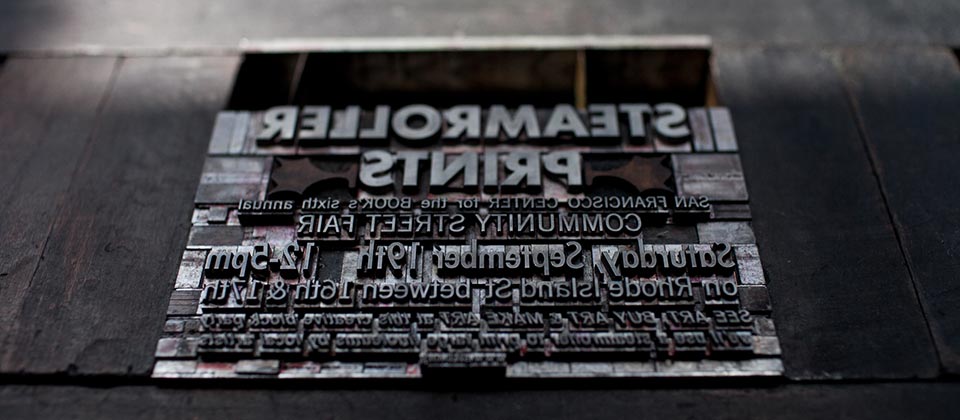
Book Arts and Environmental Awareness San Francisco Center for the Book, 300 DeHaro, SF; (415) 565-0545. 1pm, free. Celebrate Earth Day by taking part in free activities like free printmaking, green typography, making "Save – Don’t Pave – the Bay" postcards that can be mailed to elected representatives, and more.

FRIDAY 23

Academy of Sciences Neighborhood Days California Academy of Sciences, 55 Music Concourse, Golden Gate Park, SF; www.calacademy.org. Through June 13. Look up which weekend your zip code gets you a free pass into the Academy of Science, grab your housemates and photo ID with proof of residency, and get your science on. The Parkside and Sunset (94116, 94122) neighborhoods are up first.

Earth Day at City College City College of San Francisco, 50 Phelan, SF; (415) 239-3580. 11am, free. Attend this environmental fair featuring live music, instructions on how to compost including information about the new city ordinance, how to fix your bike, how to recycle, and more.

Free Dance Classes ODC Dance Commons, 351 Shotwell, SF; (415) 863-6606. Various times through May 2, free. In honor of National Dance Week, ODC is offering free dance classes in many different styles, like Afro-Cuban modern, tango, hip hop, ballet, contemporary, flamenco, belly dancing, and more.

SATURDAY 24

Swan Day Hanuman Center, 4450 18th St., SF; www.womenarts.org. 10am; $35 all day pass, individual event passes available for less. Show your support for women in the arts at this all day festival featuring a multicultural blessing, a Haitian dance workshop, an open mic, screenings of short films, and more.

Twin Peaks Bioregion Meet in Golden Gate Park, SF; call (415) 564-4107 or email iris@natureinthecity.org to RSVP and for exact meeting location. 4pm, $10-20 donation to support nature in the city. Explore the wilderness of the live oak woodlands of Golden Gate Park, Mt. Sutro, Twin Peaks, and Glen Canyon and learn about species and habitats, issues and controversies.

BAY AREA

Salute to the Women of Congo Fotovision, 5515 Doyle, Emeryville; (415) 725-1636. 1pm, $1-35 suggested donation. Make creative cards to show your support and recognition of the courageous women in the Democratic Republic of Congo. Postcards will be distributed to women on the Congo as an act of solidarity and compassion. Materials are provided, but you are welcome to bring your own photographs.

SUNDAY 25

Hot.Fat.Femmes Good Vibrations, 603 Valencia, SF; (415) 522-5460. 7pm, free. Enjoy a fiercely intellectual panel of voluptuous vixens, fattiesexuals, and fat activists at this evening of body positive, sex positive and size affirming fat girl love hosted by Virgie Tovar. Tovar will read from her most recent work and there will be a photo exhibit featuring hot fatties.

People’s Earth Day Women’s Building, 3543 18th St., SF; www.greenaction.org. 2pm, $10-$50 suggested donation. Join Greenaction and youth and women community leaders from Kettleman City and Bayview Hunters Point for an afternoon of live theater, local foods, and solidarity with these polluted communities that are fighting for health and justice.

Poem for Mother Earth Galeria de la Raza, 2857 24th St., SF; (415) 826-8009. 4pm, $5. Take part in this indigenous healing day for Earth Day featuring poets, artists, musicians, and story-tellers of all ages presenting an afternoon of Bi-lingual performance and action. In conjunction with POOR magazine, a poor and indigenous people led, non-profit grassroots arts organization.

BAY AREA

People’s Park Anniversary Concert People’s Park, Telegraph at Dwight, Berk.; www.peoplespark.org. Noon, free. Enjoy music from Antioquia, Funky Nixons, Phoenix, Wingnut Breakfast, and many more as well as activities, a circus workshop, drum circle and more to celebrate the 41st anniversary of People’s Park.

MONDAY 26

"Leaders at the Lab" Margaret Jenkins Dance Lab, suite 200, 301 8th St., SF; (415) 861-3940. 7pm, free. Choreographers, dancers, dance-makers, and enthusiasts are invited to attend this talk with choreographer Alonzo King, who will discuss the career choices he made in order to succeed in the ever-changing climate of dance-making art.

TUESDAY 27

Underground Market San Francisco Art Institute, 800 Chestnut Street, SF; foragesf.com. 4pm, free. Taste and purchase food that is being produced in backyards and home kitchens in the Bay Area at this underground market presented by Forage SF. The market will feature live music, homemade baked goods, raw chocolate, raw honey, jams, jellies, pickles, kombucha, and more.

Sabar dances for Bay Area art form

0

When Delina Patrice Brooks got the call to audition for the new movie about the Bay area African dance community, she didn’t have to think twice. “Anything that helps to promote, preserve and expose the beauty of African dance gets an easy “yes” from me,” says the local dancer and artist. She wound up in a supporting role in Sabar, a film which screens at the Museum of the African Diaspora Fri/23, and which highlights an important cultural movement in the Bay. “The film was very reflective of our community,” says Brooks, whose been an advocate of, and participant in, the traditional artistic form for over a decade.
Sabar’s creator and director, Nigerian filmmaker Chike Nwoffiah, initially set out to make a documentary on the local dance scene that captivated him with it’s vibrant sights and sounds. Flush with dance classes and performances, the Bay’s African dance — a form which has a subgenre known as “sabar” — culture is unprecedented in the US.

“African dance is huge in the Bay area,” says Eboni Hawkins, director of see.think.dance, which promotes connections between urban communities, artists and dance productions. “Out of all dance communities in the US, we [in the Bay] are really known for traditional dance.”

After hearing of the social connotations and intense spiritual communion that many African dancers take from their art, Nwoffiah, who at one point commented “my heart was bleeding sabar,” decided that his story could be best told in a dramatic arc.

Check out Sabar‘s trailer

The film he brought forth follows Aisha (played by the talented Bunmi DeRosario, a real life regular in the Bay’s traditional dance scene), a hip hop dancer who comes to sabar, a dance that originally comes from Senegal, more or less by accident. She’s surprised to find that the rhythms of the drums awaken within her some kind of rememberance — or is it destiny? — or excitement lacking in her modern world. She’s swept into the orbit of the dance, and the pattern of her daily life is forever changed.

For advocates of African dance, its not an unbelievable awakening. “There are people that come to dancing late in life, and they find that they become a part of something larger than themselves,” says Hawkins. “This is a really tight community, and it can be very welcoming.”

Watching Sabar, which has been screening across the world since its premiere at the 2009 Pan-African Film & Television Festival in Burkina Faso, you begin to understand the draw of traditional African dance; the bright fabrics, the clacking of cowries mixing with the bottomless reverberations of the djembe drums, the communal nature of multi dancer performances. The movie Sabar was honored with the best feature film and audience choice awards at the Urban Mediamakers Film Festival in Atlanta.

Hawkins calls Sabar a great “introductory point” for those unacquainted with the dance — and Brooks is quick to make the connection for those that like what they see. When asked what she would share with people about the making of the movie, she had an invitation to extend. “For anyone who enjoys moving their body, come dance with us! It’s intimidating at first — absolutely — but it’s invigorating.” She cited the workout potential of the art form, and finished up with an affirmation. “Just like in the film, the drums are captivating and the moves just — they just feel good.”

Fri/23 5 & 7:30 p.m., free with $10 museum admission
Museum of the African Diaspora
685 Mission, SF
(415) 358-7200
www.moadsf.org

The Daily Blurgh: Tea Party Grammer

0

Curiosities, quirks, oddites, and items from around the Bay and beyond

Finally, a true case of teabagging? Yes, Virginia, it IS possible to be the spokesperson for a new “right-wing TV network” while starring in “La Cage Aux Folles” on Broadway. Kelsey — he is what he is.

******

“Since many San Franciscans seem to work on a freelance, contract, or they don’t work basis they have plenty of time to spend posting pithy narratives about their experiences, or pictures of things in the Mission, or pictures of things outside of the Mission that they can write funny or nonsensical captions for. Often nonsensical things are the funniest or vice versa and San Franciscans have totally picked up on this.” Does linking to this damn me as part of the punchline? I’m feeling a little meta right now. Please excuse me.

*******
This NY Times article does a nice job discussing the increased visibility of LGBT comic fans, as well as LGBT characters in comics, when it’s not fawning over the cosplay-themed sausage party where, “the muscle-cuddling garb often leaves little to the imagination.” Of course nothing, neither gay nor super, could possibly ever surpass this:

http://www.youtube.com/watch?v=V0kUeQDPaGU

********
Shocker: Pope’s lawyer is actually ex-dirty hippy, Berkeley resident (maybe he and John Yoo should do a power lunch?)

*******
San Francisco has a new art publication, titled in a no-nonsense fashion, The San Francisco Arts Quarterly. In addition to running a listings calendar, the Art Quarterly will also, according to the magazine’s manifesto (because what is an art publication without a manifesto?), “direct a dialogue with a highlighted neighborhood in San Francisco, rotating to different areas of the city with every issue. Each edition will consist of interviews with individuals and collectives who are showing an interest in the advancement of the San Francisco arts community and thus helping to further stimulate the city’s progressive nature.” The inaugural issue, which can be viewed online or downloaded as a pdf file, focuses on up-and-coming arts district the Tenderloin (aka San Francisco’s gritty, new tourist destination).

*******
 
All I have to say to this is no shit, SFGate:


Now that we’re older

0

By Peter Galvin

arts@sfbg.com

MUSIC There’s a civil war afoot in the Hot Chip camp. Caught between tongue-in-cheek club-fillers and more melodic balladry, the U.K. electro-pop act continues to divide its audience by refusing to choose a definitive side and sound.

Duo and long-time friends, Alexis Taylor and Joe Goddard have been plagued by the impression that they are largely a singles band, earmarking playlist-ready tracks like “Boy From School” and “Ready For The Floor” from otherwise uneven albums. Such is the scarlet letter left by Coming On Strong, their initial 2004 release with DFA Records, whose name is indelibly linked to a number of playlist-ready remixes. Following the band’s subsequent jump to EMI Records, around the 2008 release of their third album Made in the Dark, it became clear that the pair were ready to take a step away from the ephemeral nature that plagues not only their band’s first two releases, but much of modern dance music. Made in the Dark saw the band begin to experiment with more personal narratives, such as in the standout “We’re Looking For a Lot of Love.” Still, the collection of songs was more suggestive of growing pains than graduation.

After Dark‘s mixed advances, the release of One Life Stand represents the important moment in every successful band’s career, the point where it finally decides whether it’s going to continue rehashing a fruitful formula or take a risk, commit to something new and hope that the audience will stick around. As album opener “Thieves in the Night” comes over the speakers with the lyrics “happiness is what we all want,” it’s tough to find traces of the Hot Chip that was “sick of motherfuckers trying to tell me that they’re down with Prince.” The album title itself announces a band seeking something more real and permanent than an album that college kids bump at their summer parties.

Perhaps fearful that long-time fans might initially be turned off by the new direction, Taylor and Goddard make sure to hit you with the bangers right off the bat, four songs that recall their previous work in tempo if not content. But even these songs are free of the band’s trademark irony. They explore love and yearning rather than ride high on the repetition of goofy catch-phrases. In addition to a distinct lyrical maturity, the new songs are also increasingly densely layered. While they imply an enormous backdrop of influences, you get the impression Hot Chip has moved past paying homage, instead simply wishing to explore new territory in an accessible way.

Past this initial burst of bluster, One Life Stand introduces what may well be the new sound of Hot Chip — ballads. Deeply personal and largely humorless, songs like “Brothers,” “Alley Cats,” and “Slush” show that the band wants to connect with its audience on a more profound level — and they’re willing to drop the irony to do it. “Brothers” is candidly about Taylor loving his friends like brothers, a sentiment that might have embarrassed him had it appeared on Coming Up Strong. Hot Chip has matured, moved beyond posturing and caring what people think, making the album a refreshing reintroduction to a band that some dismissed as a couple of smart alecks.

It can be bittersweet watching a band grow up and define itself. Though One Life Stand is not without its missteps, I’m glad Hot Chip is doing what it wants rather than pandering to the expectations of an established audience. They like dancing and they like ballads, why should they have to choose? As lines are being drawn regarding the band’s inevitable shift away from sardonic dance music, it’s hard not to wonder whether Hot Chip even cares. If it does, it probably feels that its listeners are the ones having a hard time growing up.

HOT CHIP

with the xx

Fri/16, 8 p.m., $29.50

Fox Theatre

1807 Telegraph, Oakl.

1 (800) 745-3000

www.myspace.com/hotchip

The art of play

0

arts@sfbg.com

FILM Through the rear window of a nondescript vehicle, three lines of dotted lights stream by in the darkness. The perspective shifts, and you realize you are at the seat of a car, driving through a tortuous tunnel, about to emerge into a skylit, open highway. You’re unsure of your location, or even your destination, but slowly, like a detective story, clues help you piece together some semblance of meaning and purpose. You peer into the rear-view mirror, dive into the road flickering behind you, and let your mind wander beyond that concrete past.

From there, animated filmmaker and multimedia artist Al Jarnow guides you on a hypnotic trip through the interconnected pathways of nature, art, and machinery in Autosong (1976). The dark tunnel returns anew, and the car disappears, unhinging your viewpoint in a disembodied drift. Oceanic tides wash away the whirling road and grids of cubes emerge, twisting in harmony as Jarnow deconstructs the geometrical notions that give form to subjectivity, motion, and space. “In my experimental films I leaned more toward music than a traditional narrative structure,” Jarnow says, calling from his home and studio in Long Island. “Themes build up and then repeat, come back slightly changed and repeat again… like a jazz variation on a theme.”

Brooklyn-born Jarnow found a supportive and inspired community for animated films in New York during the 1970s and ’80s. Trained originally as a painter, he fell into the medium by chance, coaxed by a friend into animating humorist Edward Lear’s offshoot love story The Owl and the Pussycat (1968) with his wife Jill Jarnow’s vibrant paintings. “As we were in the process of making that film, I started doing experiments. And the thrill of seeing something move, and come alive, just woke up a whole new world for me,” Jarnow says. Fascinated with “sculpting in time” more than conventional cartoon plots, Jarnow populated his mesmerizing worlds with an atypical cast of characters and ideas.

Jarnow’s experimental shorts — handcrafted from cell-animation, stop-motion, painting, drawing, and photography — revel in the unending process of exploration and discovery. In left field films like Cubits (1978), Jarnow wields an unlikely power, bringing abstract concepts and formal procedures to life. Ink-drawn geometric shapes dance in rhythm on flashcards like robotic pop-lockers, revealing both operations of motion and a methodical creative process. Yet the logical rigor underpinning Jarnow’s stories feels human and impassioned, saturated with a visceral aura of wonder that is far removed from a scientist’s sterile research lab. Call Jarnow the Carl Sagan of animators (well, a bit more fun than that). “I think art is a form of play,” he says. “It’s a tactile experience of experimenting with the world around you, pushing it this way or that way, and seeing what happens. It’s as much for children as grownups.”

So it’s fitting that Jarnow also brought that playful spirit to bear on educational shorts for PBS’s Sesame Street and 3-2-1 Contact. In his first commercial piece, Yak (1970), the talking beast drops knowledge about the letter y, before running headfirst into the screen and terrifying many an imaginative youngin’ under the sheets (just check the YouTube comments). In Facial Recognition (1978), humans reproduce the computational functions of a dot-matrix printer, thanks to stop-motion magic. And billions of years are reduced to two minutes in the time-lapse of Cosmic Clock (1979), where the lifetime of a boy, a city, and nature all pass through their respective cycles (the last civilization even blasts off into space in a moment’s flash).

Even though Jarnow’s multilayered vision made a lasting impression on a whole generation in heyday of the Children’s Television Workshop, no one knew the author behind the box — and very few had the opportunity to penetrate NYC’s avant-garde animators scene. But earlier this year Jarnow finally got his due. Chicago’s archival imprint Numero Group digitally transferred 45 of Jarnow’s 16mm shorts and compiled them in a handsomely packaged DVD. Celestial Navigations: The Short Films of Al Jarnow includes a 30-minute documentary and 60 pages of liner notes. The title piece, Jarnow’s most explicit scientific voyage, traces the window-light defining his studio walls from equinox to equinox, montaged with heliocentric frames of Stonehenge. It’s stunning — and difficult — but with some patience, you can travel the cosmos with the druids and back again.

The retrospective is hardly exhaustive. “Making art is a way of learning about the world,” Jarnow says. “It’s a way of processing the information coming in through you.” Jarnow hasn’t stopped experimenting with new artistic forays, ceaselessly searching for engaging mediums to provoke and compel. From installing exhibits at San Francisco’s Exploratorium (which set the framework for cofounding the Long Island Children’s Museum) and developing interactive computer software to making ephemeral sculpture on the beach, Jarnow continues to make a playful game, and invoke an animated wonder, of the world.

AL JARNOW: CELESTIAL NAVIGATIONS

Screening and Q&A with Al Jarnow

April 22, 7:15 and 9:30 p.m., $6–$9

Red Vic Movie House

1727 Haight, SF

(415) 668-3994

www.redvicmoviehouse.com

www.protozone.net/AJ/Jarnow 


In the company of bees

0

Sarah@sfbg.com

GREEN ISSUE On a rainy afternoon in April, I’m standing on an abandoned military base on Alameda Island counting bees on a wild rosemary bush. In the three minutes I’ve been standing here, I’ve spotted five large, furry bumblebees, flitting from flower to flower, performing the function that keeps the whole ecosystem buzzing.

But the honeybees I often see here are absent. I’m not surprised. As I learned from Bernd Heinrich’s Bumblebee Economics (Harvard University Press, 1979) bumblebees are tundra-adapted insects that are better able to forage at low temperatures than sun-loving Italian honeybees.

I’ve been obsessed with bees for years. My sister says it began when I got stung on the bum as a toddler. My daughter says it started the day we rescued a swarm of half-drowned honeybees that had gotten stranded in high winds on a beach in Santa Cruz. All I know is that my bee obsession really bloomed when we lived on a lavender farm on the north coast of California and I found bumblebees asleep on the lavender, at night.

A beekeeper on the farm explained that, unlike honeybees, bumblebees don’t form permanent colonies. Instead, they nest in empty mouse holes and form small social groups that die out each fall. The bees sleeping on the flowers were probably male, he added; they tend to be lazier, while the females do most of the work.

He told me that only the young pregnant bumblebee queens hibernate in the fall, emerging alone the next spring to start new colonies. There are more than 4,000 species of native bees in North America. Some are the size of ants; others are territorial and drive other bees off the flowers they guard. Most are solitary, nonaggressive loners, and some aren’t that busy at all.

Curious, I bought a book about beekeeping from a clerk who told me his father once kept bees in Oakland. “Urban honey is the best,” he said, explaining that urban gardens often contain unusual and diverse collections of plants. “City bees have far more exotic choices of nectar.”

Fast-forward to the present and it seems that the general public also has taken a much more active interest in bees, particularly since 2006 when colony collapse disorder decimated honeybee populations, triggering warnings of a coming agricultural crisis and potential devastation to the ecosystem.

Scientists estimate that bees pollinate nearly three-fourths of the world’s flowering plants. These plants provide food and shelter for many species of animals. A 2008 survey by the U.S. Department of Agriculture shows that 36 percent of the 2.4 million hives in the U.S. have been lost to colony collapse disorder, which translates into billions of honeybees.

Some species of bumblebees also are vanishing. Robbin Thorp, professor emeritus of entomology at UC Davis, blames their disappearance on commercially reared bumblebees that are imported to pollinate hothouse tomatoes and then escape into the wild, where they leave pathogens on flowers (see “Buzz Kill,” 01/27/10).

But amid such big news, I’m still keeping a diary of notes on bees and focusing on my own backyard on Alameda Island, wondering how I can attract more bees. Xerces Society for Invertebrate Conservation heeded Thorp’s thesis and petitioned to stop the cross-country movement of bumblebees, but the Portland, Ore.,-based group has also produced handy pocket guides to help people like me identify bumblebees in the field.

So far I haven’t spotted the missing Western bumblebee, Bombus occidentalis. But I did see a bumblebee queen spiraling through a Potrero Hill garden on a mild day in early January. Reached by phone, Heinrich, professor emeritus of the biology department of the University of Vermont, told me that the queen would retreat into her underground hole when the weather got cold and wet again, which it soon did.

When he was writing Bumblebee Economics, which explores biological energy costs and payoffs using bumblebees as the model, Heinrich studied Bombus terricola, the yellow-banded bumble bee that was plentiful around Maine bogs in the 1970s.

“I could see dozens all at once. But since then, for years I didn’t see any at all, and since then I’ve only seen a few,” Heinrich said “Nobody figured out what happened.”

Gordon Frankie, professor and research entomologist at UC Berkeley, told me he’s happy to see the increased interest in urban bees. “People have begun to recognize that bees have a major role to play in agriculture,” Frankie said, as he and Rollin Coville, who has a doctorate in entomology from UC Berkeley and a passion for photographing insects, showed me around the experimental urban bee garden they created in 2003 at the edge of a field in downtown Berkeley.

“Bees love blues, purples, pinks, and yellows,” Frankie said, explaining that bees can see ultraviolet hues but not red flowers as we observe bees busily foraging on a blue lilac bush.

He also said bees love hanging out in open meadows where the sun shines and where they can see the flowers. “In the forest is no damn good if you’re a bee,” he said.

In July 2009, Frankie, Coville, and Thorp published an article in California Agriculture that outlined the results of bee surveys in gardens in Berkeley, La Canada Flintridge, Sacramento, San Luis Obispo, Santa Barbara, Santa Cruz, and Ukiah.

“Evidence is mounting that pollinators of crop and wild land plants are declining worldwide,” they wrote. “Results indicate that many types of residential gardens provide floral and nesting resources for the reproduction and survival of bees, especially a diversity of native bees. Habitat gardening for bees — using targeted ornamental plants — can predictably increase bee diversity and abundance and provide clear pollinator benefits.”

Frankie and Coville also helped produce a 2010 native bee calendar that features Coville’s photographs of bumble, squash, mason, carpenter, leafcutter, mining, wool carder, cuckoo, and ultragreen sweat bees, plus tips on how to attract these pin-ups by planting a variety of bee-friendly plants, avoiding pesticides, and refraining from over-mulching.

Researchers have observed almost 50 species of native bees at UC Berkeley’s bee garden, out of 85 species recorded citywide. UC Berkeley’s urban bee gardens’ Web site, (www.nature.Berkeley.edu/urbanbeegardens) notes that bees have preferences for gardens as well as flowers.

“Gardens with 10 or more species of attractive plants attracted the largest number of bees,” the Web site states, cautioning people against hanging around plants too long. “If an observer spends too long in one place hovering over the same patch of flowers, the bees will gradually begin to move on to other flowers where they won’t be bothered. To facilitate counts, it is sometimes a good idea to create little paths through the garden so that all patches are accessible to the observer.”

Here in California, high real estate prices have led to the increased paving over of bee habitat. And bees have come under additional stress in the wake of a 2006 E. coli outbreak that sickened more than 200 individuals and resulted in at least three deaths on the Central Coast. Growers have since been pressured to eliminate hedgerows, wetlands, habitat, and wildlife around farms.

But as a February 2010 Nature Conservancy report on food safety and ecological health notes, “certain on-farm food safety requirements may do little to protect human health and might in fact damage the natural resources on which agriculture and all life depend.”

These concerns have a direct, if hidden, impact on Bay Area residents, whose food supply comes almost exclusively from outside urban limits. Take San Francisco, where crop production consists of $1 million worth of orchids, flower cuttings, and sprouts on two acres of land, according to a 2008 Department of Public Health report.

Missing from that equation is the honey that local bees produced. As San Francisco beekeeper Robert MacKimmie recently noted, mites hit his hives hard in 2009. “And the summer and fall were pretty brutal since we were in the third year of drought,” MacKimmie said.

He hopes El Nino-related rains will be good for this year’s bees: more water means more flowers for bees, which rely on nectar and pollen to sustain themselves and their developing brood.

MacKimmie doesn’t have a garden and uses other people’s yards to keep his bees. “The honey serves as rent,” he said, noting that he only places two hives in each yard to disperse the bees in more equitably and sustainably. He points to the work of Gretchen LeBuhn, a San Francisco State University professor who started the Great Sunflower Project in 2008, as a fairly easy way to gather information about bee populations.

Reached by e-mail, LeBuhn said her project has more than 80,000 people signed up to plant sunflowers this year. “Participants create habitat by planting sunflowers and then contribute data to our project by taking 15 minutes to count the number of bees visiting their sunflower,” she wrote.

“The Great Sunflower Project empowers people from preschoolers to scientists to do something about this global crisis by identifying at risk pollinator communities,” LeBuhn said. “By volunteering to collect data as a group, these citizen scientists provided huge leverage on a minimal investment in science and created the first detailed international survey of pollinator health and its implications for food production.

“Getting this kind of critical scientific data at thousands of locations using traditional scientific methods would cost so much money that it is untenable,” she added.

LeBuhn encourages people to submit their bee count data at www.greatsunflower.org, which recommends growing bee balm, cosmos, rosemary, tickseed, purple coneflowers, and sunflowers. Unfortunately her data shows that “at least 20 percent of the gardens are getting very poor pollinator service.”

The public is encouraged to visit the UC Berkeley bee garden in May when public tours begin. But you might want to brush up on your Latin, the language experts speak when they hang out with the bees.

Coville saw a mason bee land on a lavender-flowered sage and said, “I think I just saw an Osmia on a Salvia mellifera!”

Frankie smiled at me and said, “It’s bee talk.”

Alerts

0

alert@sfbg.com›

WEDNESDAY, APRIL 14

Organize against General Atomics


Attend this organizing meeting to learn how you can join the upcoming protest against General Atomics, scheduled for May 18–19 in San Diego, and take a stand against this manufacturer of defense drones that have caused the deaths of many innocent civilians in Afghanistan and Pakistan.

7 p.m., free

Global Exchange Office

2017 Mission, Suite 200, SF

codepinkalert.org

Rally Against Carbon Trading


Protest carbon trading and carbon offsets as false solutions to climate change outside the Navigating the American Carbon World conference attended by bankers, oil industry representatives, financial speculators, and big environmental groups.

Noon, free

San Francisco Marriott Marquis

55 Fourth St., SF

west.actforclimatejustice.org

THURSDAY, APRIL 15

Bike to School Day


Whatever kind of student you are, biking is an easy, healthy way to get to school. Encourage kids to take part in this city wide Bike to School Day with group ride locations throughout San Francisco.

All day, free

Throughout the city

Visit, sfbiketoschoolday.org for more information.

SATURDAY, APRIL 17

Berkeley Shore Cleanup

In preparation for Earth Day, help clean up the planet by taking part in one of the many cleanup activities being organized by Berkeley Earth Day and Shorebird Park Nature Center.

Various times and locations, free

(510) 654-6346

www.bayareaearthday.org

Building Bridges


Take part in this conference to build strategies and plans for successful protest, community organizing, civil disobedience, and direct action on LGBTQ, questioning, intersex, asexual, and related social justice issues. Help build solidarity, connections, and momentum.

10 a.m., free

Mission Cultural Center

2868 Mission, SF

(415) 821-1155

www.lgbtbridges.org

Counter Recruitment Training


Whether you’re a teacher, student, activist, parent, veteran, or family member, learn about the resources and materials on the realities of military service, aggressive military recruitment, and alternative options for youth.

9 a.m.; free, donations accepted

War Memorial Veteran’s Building

401 Van Ness, SF

(415) 565-0201, ext. 24

TUESDAY, APRIL 20

Building Materials You Wish You Never Used

Hear a presentation about commonly used building materials that are more hazardous than others and the risk that they pose to the environment and to personal health and safety. Dr. Arlene Blum and Tom Lent discuss the perils of these materials, like PVC vinyl and chemical flame retardants, and offer alternatives.

7 p.m., $10 donation

AIA San Francisco

130 Sutter, sixth floor, SF

(510) 845-1000

International Cannabis Smokers Day


Herb enthusiasts are invited to join fellow ganja smokers in defiant solidarity against the impracticality of enforcing current marijuana laws and to publicly show your support of the upcoming November 2010 statewide ballot initiative to legalize, control, and tax recreational use of marijuana.

4:20 p.m. sharp, free

Hippie Hill

Golden Gate Park, SF

cannabisculture.com

Mail items for Alerts to the Guardian Building, 135 Mississippi St., SF, CA 94107; fax to (415) 255-8762; or e-mail alert@sfbg.com. Please include a contact telephone number. Items must be received at least one week prior to the publication date.

Uproot: Notes from the underground food scene

0

Recently Kitchen Table Talks, a monthly series of discussions on the US food system, invited a panel of SF entrepreneurs from the emerging underground food scene for a QA, hoping to answer big questions like what’s driving the trend and whether or not it has a future. As Iso Rabins from forageSF, Leif Hedendal, a veteran chef of secret suppers, Lucera Muñoz Arrellano, the owner of a bacon-wrapped hot dog cart in the Mission, shared their stories, I got a sense that no one had an overarching theory about the recent surge of popular interest. But it’s clear a lot of passionate people are firmly committed to redefining our food culture whether the man likes it or not.

Rabins originally began forageSF as a way to educate people about wild food with guided foraging tours that served to recontextualize nature as not an abstraction but an integrated environment to which we are inherently bound; it can even feed us. As he saw more and more people’s interest in preparing food grow and their resources dwindle, forageSF evolve to include the Underground Market, a venue for foragers and other uncertified producers to sell their goods. He’s had a few run-ins with the health department, but since he’s now operating under the quasi-legal status of a club he said he pretty much plans on running the market till forced to shut down.

In the long term, though, Rabins doesn’t have much interest in “legitimizing” the market considering enough certified farmers markets already exist, and to him, adjusting to the regulations would circumscribe the innovative spirit of the project. But he does see it developing into more of a launching pad for those wanting to make the switch over to the mainstream.

Hedendal, after working in brick-and-mortar food establishments, became disillusioned with what he described as kitchen culture — the demanding schedule and strict hierarchy that disconnected workers from the community, and thus, one of the main pleasures of cooking. He’s also critical of the “cheating” that many restaurants resort to in order to still be considered sustainable and not go broke. After getting out of the professional world almost a decade ago, he’s been involved with various food projects and secret dinners that sought to uphold the values of community, affordability, and creativity — it’s a pretty long and impressive resume. As of right now, he’s cooking for Dinner Discussions, which brings together food and socially-engaged artists. But for all his negative experiences working in restaurants, Hedendal’s ultimate goal is to open one that satisfies his values of true sustainability and community—maybe impossible now but who knows what will be eventually possible with the changing tides in our food and economic culture.

Lucero Muñoz Arrellano, though, kept the conversation grounded in the practical reality for a lot of those who informally vend on the streets. When asked why she began selling the popular Mexican hot dogs, she answered, assisted by a translator, that her biggest reason was to find a way to support her children, bringing it home that for many in this recession, underground food is a means to surviving in a shrinking job market that’s squeezing out the marginalized—especially those who might lack formal education or English language skills.

I don’t want to sell her short, though; her experiences and trials as an informal street vendor have given her a goal other than just subsisting. With her recent acceptance into the incubator program at La Cocina, a nonprofit geared towards nurturing low-income food entrepreneurs, Arrellano has been inspired to convince others to legalize their businesses. She’s intimately familiar with the hurdles that are almost impossible to navigate—like the bureaucratese of the necessary documentation that frustrates many non-English speakers or those who have limited education. And she also knows the risks that informal vendors suffer. At a minimum, the $250 citation fee can wipe out more than a day’s worth of work, not to mention the threat of having the cart confiscated and losing what may be their only livelihood. Some work in fear of arrest and deportation. A very big risk indeed.

In some ways the talk was illuminating and in other ways it confirmed ideas I deeply support. I suspect, given the wide-arching participation in decentralizing the mainstream food industry, the underground scene is not solely about hipster novelty-seeking. (Though, let’s not lie, that does play a significant part.) It also reflects the growing public re-evaluation of dysfunctional socioeconomic systems and support for those who are redefining how and what we eat.

Bright futures

0

arts@sfbg.com

DANCE This past weekend, Kendra Kimbrough Barnes and José Navarrete with Violeta Luna — CounterPULSE’s winter artists-in-residence — showed what artists can do, given time and space to work. Both tackled complex issues that extract high human costs. For Barnes it was imprisonment; for the Navarrete-Luna team, water. Both half-hour pieces will benefit from some refinement and rethinking.

Barnes calls her Home Is That Way? a work in progress, so one can hope it will return in a modified form. Home doesn’t even to attempt to untangle the morass surrounding the justice system, instead trying to shed light on the personal cost for prisoners and their families. Intimate yet far-reaching, Home has strong bones; they need to be fleshed out. Seen through Shelley Davis’ chain-link fence, Barnes, Clairemonica Figueroa, Kayos Makaya, and Travis Rowland are four automaton prisoners who do their own version of walking the walk. When Figueroa puts a slight drag into her step, she fills it with the weight in her soul.

The often haunting Home reworks all-too-familiar images well. The dancers spread-eagle themselves against the wall, and you don’t know whether there is guard behind them or whether they are trying to push the stones down. A lineup turns into a row boat with a futile dream of getting away. In a prison yard, the men work at bodybuilding, the women at connecting with each other. When Home attempts to recall a time of innocence, it runs into a common theatrical conundrum. It’s almost impossible for adults to slip into the skin of children. So these games of pattycake, kick the ball, and hopscotch look imposed instead of embodied. The piece’s un-credited writing, though undoubtedly heartfelt, also has a stiff earnestness to it that undercuts its emotional thrust. Davis’ set, including what looks a place for dreaming, needs better lighting.

At the end of another work in progress, New Rituals for a Desperate Era, Navarrete invites the audience to fill out a petition to Congress to recognize water as a human right. He explains that he wants the audience to go away having done something hopeful. Audiences will also take something good with them if a piece is rounded off successfully. He and Luna might try to do that in addition to the political gesture. Luna is a performance artist from Mexico whose finely tuned theatrical skills complement Navarrete’s more exuberant antics. Together they have created a wild ride that starts cosmically and ends in a carnivalesque phantasmagoria. Major credit has to go to long-time Bay Area designer Lauren Elder’s stunning set and costumes, the key to which are that detritus of modern society: the plastic water bottle.

Rituals is divided into distinct episodes, with Luna taking the lead in evoking a holistic perspective of nature with slow-paced but tightly controlled images of birthing and growth through sacred practices. Navarrete is a motor-mouthed huckster of “agua mágica” — the product of multinational greed — that promises to heal everything from asthma to sexual dysfunction. He also beautifully segues into a transformation from an oil-slicked subhuman into a dying fish who dreams of clean water. The final image of the transformation of the gods takes too long, though it’s worth the wait.

Happy returns

0

arts@sfbg.com

THEATER “I didn’t know you were still alive” is an unflattering salute to a long-lost relative, especially one on her deathbed. But it’s one of the nicer things to come from estranged nephew Kemp (Marco Barricelli) as he arrives at the home of his, as it turns out, interminably terminal aunt Grace (Olympia Dukakis). In American Conservatory Theater’s production of Vigil, the 1995 play from leading Canadian playwright-director Morris Panych (The Overcoat), a morbid yet gentle comedy of mismatched loners and reluctant roommates also marks, in its cast and playwright, a series of happy returns to the Geary stage.

After 30 years without contact of any kind, duty dictates that Kemp attend to his dying aunt as her sole surviving relative. In the decades since last seeing her, the once lonely child Kemp has become a 40ish misanthrope, without friends and with what he reports as a decidedly asexual bent (despite the promising homoeroticism of an upbringing spent in dresses supplied by a willful mother with a yen for daughters).

Grace, seeming at times rather spry for someone at death’s door, also seems not to be able to speak, which Kemp no doubt considers a blessing. Utterly caught up in his own self to be seemingly incapable of the most basic tact, let alone empathy, Kemp reels off the details of the funeral he’s planned, including a nifty notion about what to do with her ashes, while giving her brusque encouragement not to hang around on his account. Grace, for her part, takes these machinations and recommendations with slightly addled good nature, clearly not willing to look a gift horse in the mouth, no matter how large it might be.

Grounded in the verbal-gestural dialogue that Barricelli and Dukakis mount with such accomplished ease, the initial short scenes in Vigil have about them the gleefully sardonic urbanity of a New Yorker cartoon, bracketed by the “wonk wah” effect of a not-too-rapid blackout. But there’s a built-in need to escalate such a dynamic for momentum’s sake, and the animated humor can occasionally skirt the Warner Bros. end of the spectrum, though not without a certain cheeky flair. At one point, Kemp, possessed by impatience and channeling Rube Goldberg and Jack Kevorkian in equal measure, wheels out a makeshift euthanizer — a coarse contraption composed of a few choice household items held in taut suspension by a scaffolding of two-by-fours, hinges and strings, with helpful options for the user involving electrocution or bludgeoning, as the mood might strike.

Matching the mischievous tone precisely is scenic designer and longtime Panych collaborator Ken MacDonald’s loft apartment, with its soiled half-papered industrial windows and ramshackle furnishings. The whole thing is tellingly askew, expansive yet intimate, gloomily dilapidated yet airy as a whimsical line drawing.

The situation and the witty half-mute dialogue sustain the first act well enough, but what comes in the second act should ideally take us somewhere unexpectedly further. Here Vigil only halfway succeeds, although the major plot twist is nicely managed by all. Much of the tone and comic strategy of the first act otherwise continue forward, at least until the final scenes. And while it’s far from unpredictable that Kemp and Grace’s fraught anti-aunty-relationship would resolve into something more meaningful and healthy for both, Panych’s route there can at moments feel forced, a bit too “written.” Nevertheless, the actors movingly infuse a respectable measure of poignancy and, sure enough, grace to the play’s final turn, which neatly turns grand topics and outsized characters toward something as truly miraculous as it is utterly commonplace, a quiet little understated metamorphosis.

Barricelli, artistic director of Shakespeare Santa Cruz, last strode the Geary in 2005 as an ACT core company member. Few actors then or now can so effortlessly fill that cavernous stage like he, and he characteristically proves as commanding as he is subtle. Esteemed costar Olympia Dukakis also has a long connection with ACT, including another two-hander with Barricelli in 2002, For the Pleasure of Seeing Her Again, by French Canadian playwright Michel Tremblay. Dukakis’ largely mute and wonderfully elastic performance as the bedridden, bemused but hopeful Grace holds the stage as fully as Berricelli’s bounding Kemp with his onslaught of self-obsessed verbiage. There’s a palpable generosity between the two actors that makes all the more enjoyable the darkly comic tentativeness between their characters.

VIGIL

Through April 18, $10–$82

Tues.–Sat., 8 p.m. (also Wed. and Sat., 2 p.m.);

Sun, 2 p.m. (also Sun/11, 7 p.m.)

American Conservatory Theater

415 Geary, SF

(415) 749-2228

www.act-sf.org

Dreams on 45

0

johnny@sfbg.com

MUSIC Sonny Smith is sitting at a window table at the Latin with a cap on his head and a small glass of red wine and some 7-inch single cover art by Stephanie Syjuco in front of him. I get a whiskey and sit down to talk about the matter at hand: art, music, mythologies, and “100 Records,” the gargantuan yet in some ways quite local show of sounds and images he’s putting together at Gallery 16. One man, 100 records — with help from dozens of artists, a number of musicians, a carpenter, and an electrician, Smith not only has created a number of 45s by fictional musicians and bands, he’s built a jukebox to play them.

The due date for Smith’s mammoth creation is a week away, and he’s in the final stages of assembling it. “I’ve been struggling to write down all the bios,” he says, as we talk about some of his imaginary recording acts, which range from New Orleans drag queens to Utah nature lovers. “They’re not Wikipedia-esque, but more like entries in a Rolling Stone Encyclopedia [of Rock & Roll]. At the beginning, I was swapping names and titles all the time — if a surf jam turned out to be a folk song, I could give it to another character. But now, with the last three [records], it has to be what it is.”

What is it? An open-ended project, not solo and self-enclosed in the manner of the Magnetic Fields’ 1998 69 Love Songs, where Stephin Merrit’s formulaic writing reached its apex. Instead, Smith is allowing “100 Records” to form itself as he assembles it. “I’ve only brushed up against the edges of it all becoming interwoven,” he explains over the post-work barroom din. “It’s almost as if I’d rather it not be — if you read the Harry Smith Anthology [of American Folk Music], or a biography of a musician, it’s enjoyable that there are so many loose ends.”

The visual artists contributing to “100 Records” — including William T. Wiley, Alicia McCarthy, Harrell Fletcher, Paul Wackers, and Mingering Mike (who knows a thing or two about creating folk musical figures) — have responded to Smith’s call for cover art in a variety of ways. “Alice Shaw was this character Carol Darger, and I was Jackie Feathers,” Smith says, to give one country-tinged example. “Their biography is that they’ve gotten married and been divorced twice. We took photos together for cover art. And Jackie Feathers also has solo records with art by different artists.”

When one thinks of Sonny Smith, band names don’t come to mind, though his latest endeavor Sonny and the Sunsets plays wittily off of his current San Francisco neighborhood. For years, Smith has put his plain name forward rather than come up with musical monikers. “100 Records” changed all that. “What’s weird is that I tried for years to come up with cool band names,” he says. “I’d come up with one and think, ‘That’s dumb.’ I’ve never had a knack for it. But because [the acts in “100 Records” are] fictional, it was easy to come up with band names — the names came left and right. A lot of the names that came to me I’d be happy to use as real band names. In fact, I’m trying to get a couple of the bands to become real bands.”

Indeed, one of the groups on “100 Records,” the Loud Fast Fools, will soon make the transition from fiction to the reality of today with a gig at the Knockout. Smith’s recording process for the project has been varied. He’s taken instrumental passages from obscure ’50s, ’60s, and ’80s songs, patched and lopped them with Guitar Hero, and put vocals on top. He’s recorded solo. He also knocked out dozens of songs with a multi-instrumentalist group of largely San Francisco musicians, some of whom he refers to by last name: Stoltz, Dwyer.

“There are a couple of balls-out, crazy ‘Louie Louie’-type numbers, and Spencer [Owen] played drums on those,” Smith says, describing the sessions. “It was some of the best drumming I’ve ever played with. He had these bizarre beats and fills. I thought, ‘This is so perfect — this is probably how a song like “Louie Louie” happened.'”

A spaghetti-narrative project like “100 Records” is a natural for Smith, a storyteller who has documented his life in comic book form and written plays. Later in the interview, with the Rolling Stones’ Tattoo You on the stereo at my apartment, he tells me that one of the first singles he bought was by Mick Jagger. “I didn’t buy it because I knew anything — the guy at the record store just told me to buy it,” he says. “It was a record store in Fairfax that was Van Morrison’s parents’ record store. He just bought the store and put his parents there to run it.” This anecdote then spirals into a funny one that a member of Morrison’s band told him about being stuck playing an endless version of “Domino” on a darkened arena concert stage while Morrison secretly caught a cab and a plane to L.A.

Smith has a keen eye for the mythologizing involved in music, and how a college radio DJ can build the guy down the street into a mysterious cult figure. Around the release of one album, his label pestered him to write a fake Pitchfork review, but he declined. “I’d be more into writing a fake Playboy interview,” he says. Ironically, Pitchfork has come calling of late, writing about Sonny and the Sunsets.

Internet career-makers come and go. For now, Smith is more concerned with opening night of “100 Records” and the debut of his own art contribution to the show, a customized jukebox. “It’s a hell of a thing, ” he says, after breaking down the differences between Wurlitzers and other brands, and explaining that a rat-infested jukebox buried under stacks at Adobe Books first inspired the idea. “My friend who is a master carpenter used this German ’50s jukebox as a reference. It’s almost like a joke — like making a stove from scratch. Why would someone do that? But someone did.” That someone is Smith, and he’s hosting a jukebox party this week.

SONNY SMITH: 100 RECORDS

With music by the Sandwitches and Sonny and the Sunsets

Fri/9, 6–9 p.m. (through May 14), free

Gallery 16

501 Third St., SF

(415) 626-7495

Duncan Sheik to sing with the San Francisco Symphony

0

Duncan Sheik’s “Barely Breathing” was ranked #88 on VH1’s 100 Greatest Songs of the 90s, but in the past decade, the singer and composer has been winning even fancier gold awards for his musical theater scores. This week Sheik’s singing with the San Francisco Symphony— Wed/7- Sat/10 at Davies Symphony Hall– and performing the world premiere of the orchestral arrangement of songs from The Whisper House.


The Whisper House is the story of a small boy, Christopher, who looses his father during World War II and must move into a lighthouse with his aunt in New England. The creepy coastal home is haunted and Christopher begins to build a rapport with the spirits. The ghosts sing all the songs during the show, exposing the subconscious secrets of the boy’s frightened mind.

Sheik, along with Kyle Jarrow, wrote the songs for the stage production of The Whisper House and the show premiered at The Old Globe in San Diego in January 2010. The SF Symphony commissioned new orchestration of the Whisper House songs, excited by Sheiks wild success with his score for the Broadway hit Spring Awakening, which won him two Tony Awards in 2007 and a Grammy in 2008.

http://www.youtube.com/watch?v=yqRu6TvosPY

Songs like “It’s Better To Be Dead” and “We’re Here To Tell You” are great examples of this new collection’s gentle nature; organic, slightly chilling and yet comforting. The songs are indeed perfect for The Whisper House’s stage setting, the soft guitar strums, purring clarinet, and padded drums inspire contrasting thoughts of cozy down blankets and cold, salty winds. The song lyrics inform young Christopher that there are in fact things in the lighthouse, and in the world, that are scary, contrary to what his aunt tells him. Fluid and serene, it’s easy to picture a bunch of ghosts whispering Sheik’s words high above the angry ocean waves, stirring around the lighthouse and taunting the child.

Sheik will be singing along with the Symphony during his string of performances in San Francisco, and although the story will not be told visually, the stage full of instruments will guide your mind in the right direction. Along with Sheik, the evening will also feature other music intended for the stage, including Poulenc’s Suite from Les Biches and Claude Vivier’s Zipangu.


Duncan Sheik w/ the San Francisco Symphony

Wed/7, 8pm

Thur/8, 8pm

Fri/9, 6:30pm

Sat/10, 8pm

$15 to $130

Davies Symphony Hall

201 Van Ness, SF

www.sfsymphony.org


The Pets Issue

14

Hooch with the pooch: Local bars that cater to the canine crowd


Bark if you like needles: Acupuncture and holistic medicine is a fast-growing trend in animal treatment — and the veterinary establishment is slowly catching on


Finding the right dog walker: Some tips from the pros


Is BARFing good for your pet? The raw food diet has devoted supporters — and harsh critics


PET STORES WE LOVE: ANIMAL CONNECTION

Animal Connection isn’t peddling short-lived hamsters or toilet-bound goldfish. The Sunset District store aims to provide customers with scaly roommates and feathered friendships that last. “We want to connect animals and people, and have them live happily and responsibly in a successful relationship,” says store manager Jennifer Grafelman.

Originally specializing in general pet supplies and birds, the store has since gone exotic, carrying everything from blood-fin tetras to cockatoos to fire-bellied salamanders to chinchillas.

The place has that pet store smell, a mix between grocery store bulk grain aisle and greenhouse aviary. Behind the register desk, assistant manager Joe Taylor has a chirping, green-feathered handful. “Tatter,” a rainbow lorikeet named for his fondness for sweet potatoes, is belly up in Taylor’s palm enjoying a stomach rub. Although he’s for sale, not just anybody can take the bird home; the staff discourages capricious purchases. “He’s super-playful, but that bird is not for everybody,” Taylor said. “He’s messy, has a real specific diet, and is loud.”

The employees at Animal Connection are specialists — something that sets the local business apart from chain stores. If your bearded dragon refuses to snap up crickets or your parakeet is losing plumage, they can provide advice or inform you a vet trip is necessary. 2550 Judah, (415) 564-6482 (Skyler Swezy)


PET STORES WE LOVE: AQUA FOREST

George Lo is trimming a field of grass that carpets a gently rising hill until it meets a vertical rock face; he’s using a pair of scissors. The picturesque landscape is submerged in an aquarium two feet long. A half dozen red-bee shrimp are scattered across the hill grazing on plankton in the grass. They resemble countryside cattle. Three cardinal tetras circle the rock like birds in flight.

At Aqua Forest Aquarium in lower Pacific Heights, Lo, 31, creates underwater gardens with imported aquatic plants. His was the first store in the United States to specialize in the “nature aquarium” style, which was invented by Japanese native Takashi Amano.

Aqua Forest sells souped up, hot-rod freshwater aquariums. A filtration system injects carbon dioxide into the water and specially designed fluorescent lights emit blue-spectrum light waves. The combination creates super-photosynthesis and a vivacious ecosystem.

Lo’s business is the result of a hobby turned profession. While a student earning his cell and molecular biology degree, he discovered a book of Japanese nature style aquariums. He decided to make his own, but struggled to find aquatic plants and suitable equipment. “I didn’t have the right kind of light required, so I had to build my own. I also built my own CO2 system using yeast and sugar,” Lo says.

The wall behind Aqua Forest’s cash register resembles a giant tray of surgical instruments. Stainless steel scissors and tweezers of various shapes and lengths hang in rows. A large-scale system can cost up to $20,000, but Lo can set you up with a basic starter tank for $200. He’s also got a kickass Web site. 1718 Fillmore, (415) 929-8883, www.adana-usa.com (Skyler Swezy)


PET STORES WE LOVE: PAWTRERO HILL BATHHOUSE & FEED

The last time my dog got sick, she really got sick — all sorts of fluids coming out of every orifice, dribbling all over her fur and her bed. Even after I wiped her down with wet towels, she still stunk. Like nasty, I-can’t-be-in-the-room-with-you stunk. The bed and the towels go in the washing machine, but the dog … well, the dog needed a bath — badly. And like most dogs, she wasn’t going to sit still in my bathtub, and I wasn’t looking forward to fighting a smelly wet dog in a shower/tub with glass sides.

No problem.: At the foot of Potrero Hill, there’s a great little pet store with a back room entirely set up for washing your stinky mutt. It’s so perfect it makes a damp and ugly chore fun.

Pawtrero specializes in raw food for your pet, and owner Susie Yannes has become something of an expert on canine and feline dietary needs. But her store is also popular for its self-service doggie bathhouse. The room has two large, stainless steel elevated tubs. You extend a ramp for the dog to walk up, slide the ramp back, lock the side door and slip a short leash attached to the back of the tub around your dog’s neck. Now poochie’s not going anywhere. You put on a large rubber smock, grab the spray hose, and start soaking.

Yannes provides a wide selection of organic, skin-sensitive doggie shampoos, treats to get reluctant pups up the ramp, fresh dry towels, blow-driers, brushes, combs, and even nail clippers. You can leave the towels behind, and take your clean, dry pal home with you.

And while you’re waiting, you get to watch all the other dogs get wet, get soapy, shake all over everything and look pathetic while their owners scrub away, chat, and laugh. And it’s just $15 199 Mississippi St., (415) 863-7279, www.pawtrero.com (Tim Redmond)

Our Weekly Picks

0

THURSDAY 1

FILM

Gumby Dharma

When he created the characters Gumby and Pokey in the 1950s, Art Clokey indelibly imbedded himself into modern pop culture, making a lasting and loving impression on generations of fans. That magical connection is chronicled in the Emmy-winning 2005 documentary Gumby Dharma, which delves into the beloved animator’s long life, canvassing the more well-known side of Clokey and his artistic triumphs, as well as several personal tragedies and his search for a spiritual path. Clokey, who passed away in January, had a studio in Sausalito for many years, and his life and creations will be celebrated tonight at a screening of the wonderful documentary, with its producers and several special guests in attendance. (Sean McCourt)

7 p.m., $6.50–$9

Balboa Theater

3630 Balboa, SF

(415) 221-8184

www.balboamovies.com

www.gumbydharma.com


EVENT

Craft Bar

Oh, the infamous Bill Cosby sweater — that oversized knit with a plethora of shapes and colors that makes you cringe at the sight of it. Yeah, that one. Well, now you can air that old thing out and put it to some use at Craft Bar. Enjoy a night of dexterity and drinks as DIY virtuoso Katy Kristin demonstrates how to chop up that old throw and create plush stuffed animals and snuggly beer cozies. Before you know it, you’ll be downing tall cans at Zeitgeist with your new cozy. (Elise-Marie Brown)

6 p.m., $5 (free with student ID)

Museum of Craft and Folk Art

51 Yerba Buena Lane, SF

(415) 227-4888

www.mocfa.org


DANCE/PERFORMANCE

Reggie Wilson and Andréya A Ouamba: The Good Dance—Dakar/Brooklyn

Reggie Wilson’s San Francisco debut in 2007 disappointed because it only presented a few short pieces he had created in the 1990s. But at least it whetted the appetite for more substantial work similar to what he had presented in other Bay Area venues. Now all is forgiven. The Good Dance—Dakar/Brooklyn, co-commissioned by YBCA, is a full-evening dance theater piece by Wilson and Senegalese choreographer Andréya Ouamba that explores a mutual preoccupation: the continued presence of the past in our lives. The Mississippi and the Congo serve as the central metaphors for this cross-cultural collaboration of dance, text, and vocals by Wilson’s Fist & Heel Performance Group and Ouamba’s Compagnie 1er Temps. (Rita Felciano)

8 p.m. (through Sat/3), $25–$30

Yerba Buena Center for the Arts

700 Howard, SF

(415) 978-ARTS

www.ybca.org


VISUAL ART

“A Dog’s Life (with a Special Appearance by Cats)”

A collection of funny cartoons focusing on man’s best friend — along with some pals in the feline world — the new exhibit “A Dog’s Life (with a Special Appearance by Cats)” draws from the Schmulowitz Collection of Wit and Humor at the San Francisco Public Library. Among the selections on display are works from artists such as James Thurber, George Booth, and Charles Schulz. Snoopy is in the house. (McCourt)

9 a.m.–8 p.m. (through May 31), free

San Francisco Public Library

Skylight Gallery, sixth floor

100 Larkin, SF

(415) 557-4277

www.sfpl.org


COMEDY

Marga’s Laugh Party: April Fools Edition!

Marga Gomez threw an uproarious laugh party in February. Now she’s back to host another night of laughter, dancing, and, of course, boozin’. Special guest W. Kamau Bell is celebrating the release of his new comedy CD, Face Full of Flour (Rooftop Comedy Productions). Other comedians on the bill include Gomez, Yayne Abeba, Tessie Chua, Loren Kraut, and Bucky Sinister, while DJ Sammy Franco brings the music. (Brown)

8 p.m., $10

Cafe du Nord

2170 Market, SF

(415) 861-5016

www.cafedunord.com


FRIDAY 2

EVENT/VISUAL ART

“A Benefit for Ed Hannigan: WonderCon Weekend Party”

As an artist for DC and Marvel comics back in the 1970s and ’80s, Ed Hannigan helped bring to life titles such as Batman, Green Arrow, Spider Man, and more. Now suffering from multiple sclerosis, Hannigan is getting help from some superheroes. The nonprofit Hero Initiative takes care of ailing artists, many of whom have spent their careers as contractors and have no pensions or retirement funds. Tonight the organization is sponsoring a benefit party to raise money for Hannigan’s care, with several artists, such as Sergio Aragones (MAD, Groo), in attendance. The festivities include an auction of rare items. (McCourt)

8 p.m., $10–$35 sliding scale

Cartoon Art Museum

655 Mission, SF

(415) 227-8666

www.cartoonart.org


EVENT/VISUAL ART

Lower Haight Art Walk

Art openings and events are notorious for their intimidating nature. The art might be hard to “get,” and the elitists might challenge you on the difference between modern and postmodern perspectives when the reason you went in the first place was to snack on the free-range chicken tacos and sip homemade kombucha. The Lower Haight Art Walk, on the other hand, won’t give you a headache. Expect an evening of bar-hopping, live music, dancing, and — of course — art shows sprinkled throughout a four-block stretch in the Haight. Who knows, you might even like what you see and buy a piece or two. (Brown)

7 p.m., free

400–700 Haight, SF

www.lowerhaight.org

SATURDAY 3


COMEDY

Mo’nique

In Anthony Hamilton’s “Sister Big Bones” video, the R&B singer makes an ass of himself for Mo’nique’s curves, donning disguises and crashing his cruiser bike just to get closer to the bodacious lady’s heat. He’s not the only one with a crush. The stand-up comedian has made some of the bravest career choices in the business, augmenting her BET talk show with TV specials in which she talked with women in federal prison and, most famously, her role in last year’s Precious as the most horrific mother of all time — which made her a lock for the Best Supporting Actress Oscar. It’s easy to forget that on top of everything, she’s real funny too. Check her stand-up act this weekend — just be prepared to walk away with some more unrequited love in your life. (Caitlin Donohue)

8 p.m., $39.50–$59.50

Paramount Theater

2025 Broadway, Oakl.

(800) 745-3000

www.paramounttheatre.com


MUSIC/CLUB

Hard French

Look, hot queers into anything but ancient circuit techno and contemporary plasticene ladybots: I adore your Sunday beer busts, your Friday happy hours, your Monday-night free-for-alls (and all-for-mes). But when it comes to a jam-packed Saturday-afternoon dance party rocking girl groups, boogaloo, and garage stompers, it’s finally oui the hard way — Hard French, that is, a raucous party filling the weekend void with BBQ animals on the grill, marinated animals on the patio and dance floor, and DJ Carnitas and Brown Amy on the tables. DJ Bus Station John joins them this time around for some meaty amuse-bouches. My only quibble? It’s only once a month. Hélas! (Marke B.)

3–8 p.m., $5

El Rio

3158 Mission, SF

(415) 282-3325

www.elriosf.com


EVENT

Vinyl Addiction Launch Party

Vinyl toys — they’re surprisingly intriguing, aren’t they? Cute little round-headed rabbits and bears, baby dolls and yetis, usually with some subversive detail. That baby doll cranks its mouth open in a scream, and on closer inspection, the rabbit appears to be a necro-bunny, back from the grave. Maybe your little yeti’s sheer smoothness freaks you out after a while. What do they get up to on their shelves, late at night? Jesse Hernandez is on a mission to figure it out. The artist’s new online show, Vinyl Addiction, focuses on the creators of these little monsters, which are popping up all over as offshoots of the manga and graffiti scenes. Watch the premiere in New People’s trippy theater and celebrate the birth of something different in the art world. (Donohue)

7–10 p.m., free

New People

1746 Post, SF

(415) 525-8630

www.vinyladdiction.tv


SUNDAY 4

MUSIC/EVENT

Nobunny’s 9th Annual Easter Egg Bash

Can you imagine performing in a stinky, sweaty bunny mask for nine-plus years? Well, I guess you still wouldn’t have it as bad as Buckethead. Nobunny is garage-punker Justin Champlin, and this bunny shows no sign of giving up his floppy-eared head anytime soon, going so far as to stand in for the Easter Bunny himself at today’s Easter Egg Bash. Known for singing pants-less and drunk — often into a microphone shaped like a carrot — Nobunny puts on a show for those of us who like a little spectacle with our music. Go ahead and give a Muppet a hug — just don’t get any yolk in your hair. (Peter Galvin)

With the Bananas, Mayyors, Rantouls, Splinters, and Sir Lord Von Raven

8 p.m., $10

New Parish

579 18th St., Oakl.

(510) 444-7474

www.thenewparish.com


MUSIC

Hot Air Music Festival

Easter in San Francisco may mean hunky Jesi and egg-rolling nunnery, but we contemporary music lovers will be squealing “Good Lord” all day (polymodally chromatically, of course) at the San Francisco Conservatory of Music’s Hot Air marathon. Three wide-eared conservatory graduates — Matthew Cmiel, Andrew Meyerson, and Carolyn Smith — have put together eight straight hours’ worth of rare live aural pyrotechnics, including works by lionized off-beaters Steve Reich, Gyorgy Ligeti, and Lou Harrison, as well as wonderful newbies Mason Bates, Missy Mazzoli, and Luciano Chessa. Add in puppets, the Picasso Quartet, and local bass clarinet duo SQWONK, and that bunny is cooked. We’re stayin’ indoors. (Marke B.)

2–10 p.m., free

SF Conservatory of Music

50 Oak, SF

(415) 864-7326

www.hotairmusic.org


MONDAY 5

EVENT/FILM

“SFFS Film Arts Forum: Tales from Terror Town”

The premiere of Peaches Christ’s feature-length directorial debut, All About Evil, is just around the corner, and to whet everyone’s appetite for the nail-polish-hued blood, Christ herself — a.k.a. Joshua Grannell — is on hand tonight to discuss the perils and pleasures of making a movie with more talent (including Mink Stole, Natasha Lyonne, and teen idol Thomas Dekker) than money. Christ will be joined by the Butcher Brothers, whose new movie, The Violent Kind, is a biker bloodbath. (Johnny Ray Huston)

7 p.m., $8 ($5 for members)

Mezzanine

444 Jessie, SF

(925) 866-9559

www.sffs.org


TUESDAY 6

EVENT/VISUAL ART

“The Roadmap to Extinction: Are Humans Disappearing?”

Every once in a while, a wise man I know will tire of the endless discussion about the impending death of Earth. “It’s not going to be the end of the planet; it’s just going to be the end of us!” he is wont to exclaim. Truly, our global importance wanes as our carbon emissions wax. This self-extermination is the subject of a photo exhibit at this info night–reception for the Global Justice Ecology Project, an organization that works on the topics of climate justice and forest protection. In a uniquely San Franciscan convergence, the night’s learning is going down at Good Vibrations — a store whose arsenal of procreation-inspiring implements might huskily whisper “no” to the photo exhibition’s pressing query. (Donohue)

5:30–7:30 p.m., free

Good Vibrations

1620 Polk, SF

(415) 345-0400 www.globaljusticeecology.com www.goodvibes.com The Guardian listings deadline is two weeks prior to our Wednesday publication date. To submit an item for consideration, please include the title of the event, a brief description of the event, date and time, venue name, street address (listing cross streets only isn’t sufficient), city, telephone number readers can call for more information, telephone number for media, and admission costs. Send information to Listings, the Guardian Building, 135 Mississippi St., SF, CA 94107; fax to (415) 487-2506; or e-mail (paste press release into e-mail body — no text attachments, please) to listings@sfbg.com. We cannot guarantee the return of photos, but enclosing an SASE helps. Digital photos may be submitted in jpeg format; the image must be at least 240 dpi and four inches by six inches in size. We regret we cannot accept listings over the phone.

A 40-year Last Gasp that’s getting stronger

0

By Cécile Lepage

Last Gasp, San Francisco’s landmark independent and underground publisher, is turning 40. To celebrate this feat – in four decades, Last Gasp has spawned more than 300 comics and 250 books – it is throwing a party and an art show Thurs/April 1 at 111 Minna Gallery.

Who dared wager, in the mid-1970s, that Last Gasp would survive the withering of the underground comix scene? Head shops, the main outlet for unedited explicit sex-, drug-, and violence-ridden content (the “x” in comix stands for X-rated), were being prosecuted and forced to shut down due to anti-drug paraphernalia laws. Comics stores favored the more mainstream adventures of masked men in tights. Finally,“there wasn’t the same appetite for comics anymore,” according to Colin Turner, associate publisher to his dad Ron, who founded Last Gasp. No matter: the small venture outlived its peers by continually adapting, tuning to consumer demand and catering to bookstores’ standards and their stapled-leaflet scorn. Over the years, Last Gasp branched out into artist monographs, coloring pads, music-related books and graphic novels.

Yet, browsing its odds-and-ends catalogue, one gets the sense that Last Gasp hasn’t compromised its bizarre and satirical bent. Sure, it might carry such mundane items as coloring books, but beware of the twist! Gangsta Rap Coloring Book flaunts 48-pages of line drawn gangsta rappers. As for Tee Corinne’s Cunt Coloring Book, well, the title says it all. Last Gasp may have diversified, but it never reneged on complete artistic license, the hallmark of underground comix.

Today, Last Gasp thrives in the areas of lowbrow art and pop surrealism. Lowbrow is an umbrella label for “art forms that are popular and wonderful, that people love, but that aren’t respected in the fine art world”, according to Colin. It ranges from tattoos and Kustom Kulture to street art and graffiti – artistic expressions rooted in pop culture that take place on canvases ranging from car exteriors to skin..

As for pop surrealism, the genre emerged from cartoon-y visuals only to reclaim traditional old master painting craftsmanship. Artists such as Scott Musgrove, Camille Rose Garcia and Mark Ryden colonize canvasses with impeccably-rendered phantasmagorical creatures and weird visions. Neglected for years by art institutions, the loose-knit community of lowbrow artists is gradually being endorsed by upscale galleries and museums, a shift that once again attests to Ron Turner’s prescient flair. Back in the day, he promptly discerned underground comix’ wide appeal and cultural relevance, supporting the work of then-young and aspiring artists such as R. Crumb, Bill Griffith, and Spain Rodriguez, all of whom matured into cult or mainstream icons.

It could be said that Ron Turner got sidetracked into publishing. In the late 1960s, the Fresno native enrolled in the SF State psychology department. The Peace Corps volunteer, freshly returned from a stint in Sri Lanka, was thrust into the Bay Area countercultural upheaval and its myriad of grassroots movements. As a Berkeley Ecology Center activist, he figured that he could raise funds by releasing an environmentally-oriented comic book.

“I thought the graphic approach would engage teenagers, help them thwart authority figures, and provide answers to ecological concerns”, Ron recalls. With the mentorship of Gary Arlington, the San Francisco Comic Book Company owner who was selling Zap Comix under the counter, he compiled and printed 20,000 copies of Slow Death Funnies 1. By that time, his Ecology Center accomplices had dispersed, and their successors only agreed to redeem 10 copies of the title. “My garage was filled with 19,990 Slow Death Funnies 1 and I had to find a way to get rid of them”, he laughs.

This task proved easier than one might initially presume: with his good-humored nature, Turner unloaded his goods at 200 locations, not just head shops but also universities, hairdressers and even a leather jacket store. Eventually,Last Gasp reprinted the comic and sold around 45,000 copies. After this initiation, the socially-aware Turner satyed in the business because “it was a kooky way to shed some light on issues that needed attention.”

Last Gasp’s second publication was the all-woman feminist first It Ain’t Me Babe. “At the time, I was living alone with my newly-born daughter and I was drawing comics,” says Trina Robbins, who put together the title. “But you wouldn’t know it, because the 98% male underground comix industry had shut me out. I heard that Ron was looking for material for a women’s liberation comic book. I phoned him. The next day he visited me, wrote me a check for $1,000 — which in those days was quite an amount of money — and voilà!”

The 1975 book Amputee Love probed another rarely addressed topic, the sexual life of a crippled couple. “UC medical centers purchased some copies to sensitize nurses to the fact that amputation does not mean death of sexuality,” says Ron Turner. Other notable contributions to unconventional subject matters include Anarchy (1978) and Cocaine Comix (1976).

According to Ron Turner, cartoonists hold the highest rank in creativity because they can communicate their vision the most clearly: “Most art is some form of propaganda. The artist wants to sell you on his vision and what it leads to.” Turner’s fascination with human behavior conditioning stems from his psychology studies.

At 70, Ron Turner still sports a hippie hairstyle: a white hair ponytail and an eccentric plaited beard running down to the navel of his buddha-like belly. Comix aficionados regard him not only as a pillar but also as a guardian angel. “Last Gasp is unique in that it’s a publishing house and also a distributor. It has kept many smaller and larger presses afloat,” explains Cartoon Art Museum curator Andrew Farago.

Niched in a corner room of Last Gasp’s Florida Street offices, Turner’s personal collection of popular art is an eclectic mix of original drawings and paintings, side show banners, circus items and vinyl sculptures. “Are these for real?”, hollers a guy named Charlie, who is lending a hand in preparing the anniversary art show. He has uncovered a pile of four framed paintings that serial killer John Wayne Gacy made while on death row. Lowbrow art is definitely not for the fainthearted.

Yee’s two-fer: Bashing Palin while promoting sunshine

5

Sen. Leland Yee scored a two-fer yesterday when he blasted a California State University organization for hiding how much it’s playing Sarah Palin for a speaking gig, raising an important sunshine issue and knocking Palin’s populism-for-pay schtick in the process. And at the heart of the issue is how public education institutions increasingly use foundations to avoid accountability.

That issue was recently raised in San Francisco, when City College Foundation sought to keep its financial dealings secret. The Guardian sounded the alarm last month, and City College Trustee John Rizzo, who led the fight for more sunshine, negotiated a more open arrangement that the Board of Trustees unanimously approved last week.

“We got most of what we wanted,” Rizzo told us. “Most of the things are open and they have to give us a quarterly report on donations.”

Yee – who the Society of Professional Journalist-NorCal recently honored with a James Madison Award for his struggles to promote greater government transparency and protections for journalists – has long been fighting for more sunshine in the CSU and UC systems, which is particularly important as they make deep cuts to higher education spending. For example, Yee’s Senate Bill 330 would explicitly require those systems to adhere to the California Public Records Act.    

“These are public institutions that should embrace transparency and accountability,” Yee said yesterday in a press release announcing his request that CSU-Stanislaus’s foundation disclose how much it is paying Palin for a $500 per head speech on June 25. The press release triggered a front-page story in today’s San Francisco Chronicle, with CSU and foundation officials rebuffing Yee’s request.

So now, Yee gets to bash Palin and make an important stand for sunshine, both of which will likely help his nascent campaign to be elected mayor of San Francisco next year.

As Yee wrote in a letter to campus President Hamid Shirvani, who also serves as the chair of the foundation: “The sensational nature of former Governor Palin’s political commentary, coupled with an ongoing book tour, has allowed her to charge top dollar for speaking engagements. As was reported in the media, her speaking appearances typically command $100,000 per event. To that end, I request the foundation to respond to the following issues: 1. Is the former governor being compensated by the CSUS Foundation in any form for her participation in the event on June 25th?  If so, please describe the amount and nature of the compensation being awarded to the former governor.  2. Please disclose any contracts between the former governor and the CSUS Foundation involving the June 25 speaking engagement.”

Later in the press release, he added: “The CSU should immediately disclose how much money is being diverted from students to pay Sarah Palin’s exorbitant speaking fees. At a time when students are struggling to afford an education at CSU, I would hope that spending potentially hundreds of thousands of dollars on a guest speaker for a black-tie gala would be low on the priority list.  Money that is spent on bringing an out-of-touch former politician to campus could be spent on scholarships and other financial assistance during these challenging budget times.”

Win or lose, this is the right fight for Yee, both morally and politically. Go git ‘er!

For Jim: Jim Marshall, 1936-2010

2

Legendary Bay-based rock photographer Jim Marshall, who was featured in a Guardian cover story on March 3, 2010, passed away in his sleep Tuesday night in New York at the age of 74. The people who worked with him on the cover story, Johnny Ray Huston and Mirissa Neff, remember him.

Johnny Ray Huston, writer: When someone dies it’s impossible not to think of the last time you saw them. With Jim Marshall, I wish that last time had been different. Jim had called me in the morning to see if I wanted to meet him at his favorite dinner spot. That night, I arrived about 15 minutes late, finding him alone at a table in the center of the place with a glass of wine. It was noisy, and I had to shout more than usual for Jim to hear what I said. I showed him some crummy digital shots I’d taken of a few Bay Area musicians I’d daydreamed about him really photographing, but he seemed distracted, quieter than usual. When we said goodbye later on the corner by his apartment, I assumed his mind was on the future. He was about to leave on a trip, first going to Texas for the monster that is South by Southwest, and then to New York, for a gallery show of his photography and the release of Match Prints, his latest book, a collaboration with Timothy White.

Jim was unfailingly generous. On the day the article I’d written about him was published, he called to say he wanted to give me a print, any print, from his body of work. This kind of offering was second nature for him, but overwhelming for me to contemplate considering the breadth of his vision. At a time when music photography is consumed and tamed by style, all one has to do is look to Jim’s photos for their untamed depth. When my boyfriend Cedar recently interviewed Nancy Wilson, he was amazed to hear her say she had always styled herself for album cover photos. Jim’s peak photos are of true musical artists who had been styling themselves for years. They stepped in front of Jim’s camera without some trite go-between in the way, and with a trust forged by their relationship to him and respect for what he did.

One night after some whiskey at my apartment, I coerced Jim to go to a birthday party for one of my friends, even though it was a Chinese restaurant and Jim hated Chinese food. Jim’s matter-of-fact profanity or vulgarity could be hilarious, as when crab rangoon was placed on the table in front of him and he suspiciously grabbed some, muttering under his breath, “This better not make me puke.” Jim took the tab, even though he had only met the birthday host an hour before. Jim always took the tab.

Jim loved Cadillacs. It was a pleasure to ride with him because of how well he knew his cars. In his newest model, it could also be funny — he didn’t wear a seat belt, so a drive with him meant listening to the incessant ringing of the seat belt alarm coupled with the instructive but useless voice of the GPS. He was blissfully oblivious to both, thanks to deafening encounters with the likes of Jimi Hendrix.

My best friend Corina works at the place where Jim most loved to eat, and while I’m forever grateful to Tim Redmond for encouraging me to meet Jim, I’d first heard about him from her. One Sunday Corina texted me that Jim was at the restaurant and wanted me to come over for drinks after dinner. Corina, Cedar, Corina’s boyfriend Nathan and I all wound up at Jim’s place, as well as a young woman visiting from another country who Jim was romancing when I first got to the restaurant. She had been eating at a different table, but he’d soon gotten her to sit with him. Back at Jim’s apartment, as we talked and drank, the woman put on a CD. It turned out she was a musician, and she wanted us to hear her band. They weren’t bad in an avant-folk 12-piece way, but Jim’s critique of their off-kilter noise was merciless and entertaining. (And it didn’t stop him from getting a kiss from her later.)

When Jim – “Jaguar Jim” back in the Beat era’s heyday – found out that Cedar was a poet with a book due from City Lights, he gave him some rare volumes, including one by David Meltzer. I remember standing on Jim’s front steps that night talking with Nathan about how great the young year was, and how glad I was to be getting to know Jim. At that moment, partly through Corina’s affection for him, I found myself alone with my boyfriend and two best friends in the city, something that wasn’t happening often enough.

Jim had lived in his apartment in the Castro for decades, and he liked to joke that they’d have to wheel him out of it, so it’s one of those deep ironies of life and death that he left this world in New York City. To have met Jim so late in his life is something I can’t fully understand right now. There are so many people I wanted Jim to meet and get to know. But he knew plenty, and many of the best, perhaps better than they could know him. Because of how well he saw them. I feel lucky to have met him, and am grateful he showed me the scrapbook he kept when he was first dreaming about owning a camera. More attention is going to be paid to Jim’s work in the coming months and years. He had a lot of famous admirers, but his day-to-day life in San Francisco was buoyed by people like his friend and assistant Amelia Davis, and Corina and the people at La Med. I can still hear Jim’s pirate-y laugh, and that craggy, lively voice that Corina and I loved to imitate. I can still see his photos.

Mirissa Neff, art director: I met Jim Marshall just a few weeks ago. Our senior arts editor Johnny Ray Huston was interviewing him for the cover story and thought I should meet Jim to go over images, saying “he’d love you.” We all met at his Castro apartment and then walked around the corner to his regular lunch spot, La Mediterranee. For a little guy of 74 Jim had an outsized personality, a gruff demeanor, and a nose that showed signs of his old coke addiction (he was happy to complain to anyone who’d listen that his doctor had made him quit a few years back).

Yet Jim remained completely endearing. As Johnny and I flipped through hundreds of Jim’s stellar portraits, attempting to choose a few images to run (which was no easy task), Jim centered the conversation around an art opening he wanted to attend that night. After describing the event he looked at me and said, “So I’ll pick you up in my Cadillac around 7?” It was less of a question than a directive. I couldn’t make it… which of course I now regret. But being in his presence for that afternoon was a gift.