Mission

Her way

4

arts@sfbg.com

DANCE Early in the 20th century, Ezra Pound declared “the artist is the antenna of the race.” True or false? Do artists have the ability to predict the future, or are they stuck in the present?

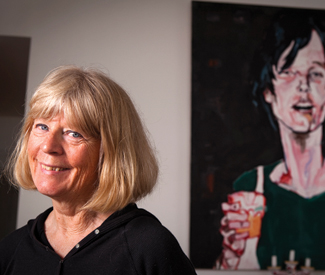
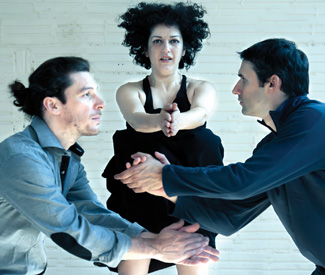
Krissy Keefer, artistic director of Dance Brigade and Dance Mission Theater, tends to side with Pound. While she wouldn’t go as far as writer-performer Guillermo Gómez-Peña, who considers the artist a shaman, she does think that “there is something about the artistic process that opens your brain to see into the future, to see things happening before they actually happen.”

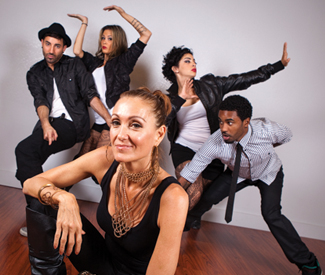
This weekend Keefer and her troupe are celebrating the 35th anniversary of Dance Brigade and its antecedents the Wallflower Order. The performances, all with free admission, include a retrospective of works spanning the last three decades, plus the 2009 Great Liberation Upon Hearing, based on the Tibetan Book of the Dead; Keefer created the work after losing two close friends within the same year.

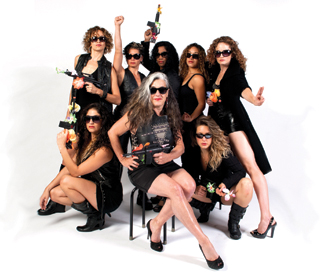
Women taking charge of their own fate may not be news today, but in 1975, Wallflower’s five female warriors were pioneers. The turmoil of the post-Vietnam era and the rise of feminism had created a climate in which audiences hungered for dance that spoke to their lives. Many of them were women. The company was made up of contentious women, strong dancers, committed activists. They were not about to be stopped, much like their “grandmothers” Isadora Duncan and Martha Graham or, in terms of politics, the characters in 1964 Chinese ballet The Red Detachment of Women.

Most remarkably, Keefer’s commitment to make art addressing issues that matter has not waned — she’s as ready as ever to mount the barricades and make her voice heard through art. In retrospect, it is surprising how much of her past work was highly prescient.

She recently called my attention to my reservations about her having drenched one section of the 2002 Cave Women in images of extreme destruction and war. (At the time, the bloodiness seemed over the top). Almost immediately, all hell broke loose in Afghanistan and the Middle East. Revolutionary Nutcracker Sweetie, a huge success from 1987-1997, features one-percenters the McGreed family, an abused undocumented servant in Clara, and a homeless Sugar Plum Fairy. Issues that were under the radar at the time have become headlines.

Appearing in Nutcracker — with an excellent, Tchaikovsky-based score by jazz composer Mary Watson — were then-little-known artists like Axis Dance Company and aerial dance pioneer Terry Sendgraff; Keith Hennessy played the McGreed’s renegade son.

For all her predilection for “making art that includes themes of social responsibility and dealing with real situations with real people,” Keefer is also very much a creature of the theater. The work has to stand on its artistic feet, perhaps not surprising for a woman who trained as dancer at age six — long before she knew what she wanted to dance about.

The 2005 Dry/Ice, a look at the effects of global warming, for instance, was a commission from the San Francisco International Arts Festival. Now who else, except someone who besotted by the stage, would lug a cast-iron bathtub, weighing over 300 pounds, into Theater Artaud for two performances? “I just wanted to do something about the environment,” she recalls. (Al Gore’s An Inconvenient Truth came out the next year.)

In the 2004 Spell, a collaboration with Hennessy, Keefer became a raging goddess-witch figure doing an exorcism for peace and economic justice. It was a power performance that, given the lives many people have today, probably would play well in the suburbs.

Keefer also takes her social activism outside the theater. In 2000, when she felt that the criteria for acceptance to the San Francisco Ballet School were unjustifiable — based on the experiences of her daughter, eight years old at the time — she complained loud and clear. It started discussions about the female dancer’s body at the time when academics had barely touched the subject. In 2006, she was so furious about the country’s priorities that she ran for Congress. Of course, she knew that she wouldn’t win — but she wanted to take a stand. Even her parents encouraged her to do so. “I can’t believe that I ran against Nancy Pelosi when she was poised to become Speaker of the House,” she laughs today.

Meditation has helped Keefer step away from anger, what she called her “habitual response” to injustice. The resolve was shaken, however, this past summer, when — coming back from a successful East Coast and Caribbean tour with Liberation — all the costumes (transported via Greyhound, the only shipping the company could afford) were stolen. “What can you do?” she shrugs. This Mother Courage of dance will just put her shoulder to the wheel a little harder. 


“FROM WALLFLOWER ORDER TO DANCE BRIGADE: A 35-YEAR RETROSPECTIVE CELEBRATION”

Fri/18-Sat/19, 8 p.m.; Sun/20, 2 p.m., free

Novellus Theater

Yerba Buena Center for the Arts

700 Howard, SF www.dancebrigade.org


“MORE THAN THE SUM OF ITS PARTS:” LOCAL ARTS LUMINARIES TOAST DANCE BRIGADE


DANCE From Brady Street to Dance Mission and beyond, Krissy [Keefer] has been one of the true champions of our dance community, in no small part due to her own artistry. The spirit of her work is visually and musically rich, fundamentally diverse, and deeply committed to social relevance — attributes she’s manifested on so many levels in a long and vital career. Rob Bailis, Former Artistic Director, ODC Theater

In the dance ecology of the Bay Area, Dance Brigade, and especially Krissy Keefer, play such vital role. I can’t think of anyone else as fierce about what she believes in, what she cares about, and how she creates work to reflect those beliefs. In many ways she is our conscience when we might waver in the face of budget cuts and the endless struggle to get money to do work. Because she is so strong about this herself, I really count on her to keep us honest around our vision and our integrity of purpose. Kenneth J. Foster, Executive Director, Yerba Buena Center for the Arts

Krissy Keefer’s life energy is totally invested in professional, community-based, inclusive, and affordable feminist art. She has consistently supported women artists for over 30 years. It is no easy task to maintain an artistic vision and a financially secure organization, and to be able to deal with the high volume of traffic that is required to run a studio anywhere, much less in the most expensive city in the U.S. That piece of real estate at 24th and Mission has always been a port in the storm for the dance community. Mary Alice Fry, Artistic Director, Footloose Dance Company and Shotwell Studios

What makes Dance Brigade’s work special and important is how they take on the big issues facing the world and then find a way to make us laugh. Krissy Keefer is the Jon Stewart of the dance world! Krissy’s perspective, passion and tenacity are testament to the company’s longevity; that a Dance Brigade show dealing with war, greed, or even addressing violence towards women, can be entertaining is powerful. Krissy, in her wonderfully brash and focused manner, has the ability to remind us that we are citizen-dancers, that we need to participate, and that big messages, abstract dance and the hope for social change can happily co-exist on stage. Wayne Hazzard, Executive Director, Dancers’ Group

Dance Brigade’s legacy in the Bay Area is huge. By not allowing their company to become mainstream, they paved the way for alternate companies to see that there is a place at the table for work that is not shiny, slick and influenced by institutional homogenization. Dance Brigade has demonstrated by example that contemporary dance can be messy, political, and uncomfortable. By blurring the lines between politics and art, a whole new generation of politicized artists have been given permission to emerge and that has infused Bay Area dance with a lot of new ideas and energy. Joe Landini, Director, The Garage

Krissy and the Dance Brigade have been at the forefront of bringing political concerns into the theater. They have paved the way, both artistically and practically, for dozens of politically engaged artists who may or may not identify with their work. To me, Dance Mission is a physical embodiment of the importance of the Dance Brigade’s values of democracy. It’s not easy to separate the artistic and the community legacy of Dance Brigade’s work; it’s the combination that makes them so powerful. Jessica Robinson Love, Executive and Artistic Director, CounterPULSE

When Dance Brigade emerged in San Francisco in the mid-’80s as an outgrowth of the nearly-mythical Wallflower Order, they brought together a number of tendencies that were already percolating in the dance community: using dancers of widely varying body types, introducing world music (sometimes performed by the dancers), spoken word, and text narrative, circus and vaudeville tricks and, always, no-holds-barred political content. Dance Brigade inspired other companies to be braver through their example of what might be called gonzo feminist dance. Krissy and her dancers and collaborators took these disparate influences and turned them into powerhouse performances where the whole was more than the sum of its parts. Kary Schulman, Director, Grants for the Arts. (Compiled by Rita Felciano)

State of the occupations

0

rebeccab@sfbg.com

The police evictions of OccupyOakland and OccupyCal over the last week, and the looming threat of another attempt to evict OccupySF, presented challenges for the Bay Area protests just as similar police crackdowns targeted Occupy encampments in Portland, Denver, New York, and other cities nationwide.

These fast-moving developments also come at a time when university students from around California will be descending on San Francisco for a Nov. 16-17 University of California Board of Regents meeting that was canceled this week because of public safety concerns. All of this adds up to a big and unpredictable moment for the widening movement (see “The growing 99 percent,” 11/9).

So we’ve decided to start a regular feature to track the latest developments in an Occupy movement that seems adamant about standing its ground even as it’s forced to deal with threats from police, organizing challenges, and the coming of winter.


#OCCUPYCAL GROWS UP FAST

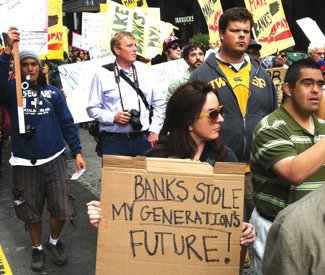
Students at the University of California at Berkeley burst onto the Occupy scene Nov. 9 with the launch of OccupyCal, a student-led protest that made waves nationally after university police advanced on around 500 students in Sproul Plaza, the historic epicenter of the Free Speech Movement, and struck them with batons after they tried to set up camp.

UCB police made 39 arrests in two separate actions against protesters, fueling student protesters’ resolve at a general assembly convened afterward that drew more than 1,000 people and lasted well into the night. At around 1:30 am, students voted to hold a student strike on Nov. 15 in solidarity with others throughout the UC system.

The harsh police response prompted condemnation from the Free Speech Movement Archives (FSM-A). “It appears that the campus police are in need of remedial education concerning fundamental protections offered by the US Constitution — including First Amendment rights to Free Speech and Free Assembly that were clearly recognized and enshrined on the UCB campus 47 years ago on these very steps,” the group noted in an open letter.

UC Berkeley Chancellor Robert J. Birgeneau, who was out of the country during the violent police crackdown, issued a statement on Nov. 14 ordering a third-party investigation of the clash and granting amnesty under the Student Code of Conduct to all students who were arrested for blocking police from removing the encampment.

“It was only yesterday that I was able to look at a number of the videos that were made of the protests on November 9. These videos are very disturbing. The events of last Wednesday are unworthy of us as a university community. Sadly, they point to the dilemma that we face in trying to prevent encampments and thereby mitigate long-term risks to the health and safety of our entire community,” he wrote. “Most certainly, we cannot condone any excessive use of force against any members of our community.”


#OCCUPYSF, THE NEXT BATTLEGROUND

At press time, student and labor groups that were planning to converge on the UC Regents meeting at UCSF Mission Bay on Nov. 16 by the thousands were deciding how to respond to the meeting cancellation, but protests are still planned for that day, with support from OccupySF.

Meanwhile, Mayor Ed Lee continues to insist that OccupySF break camp, but instead it has only grown larger, with the tents spreading out from Justin Herman Plaza onto the nearby sidewalk along Market Street in front of the Federal Reserve. At press time, protesters feared what seemed an imminent police raid, particularly now that the election is over and busloads of student protesters were headed into town.


TRAGEDY STRIKES #OCCUPYOAKLAND

On Nov. 10, Kayode Ola Foster, 25, suffered a fatal gunshot wound to the head following an argument, just yards from the Occupy Oakland encampment in Frank Ogawa Plaza (Oscar Grant Plaza to the occupiers who’d camped there for a solid month).

A somber mood settled over the plaza in the hours following the shooting as the tent city dwellers absorbed the gravity of the situation, and occupy activists held a candlelight vigil. Although initial reports suggested Foster had no relationship to the camp, police later said they believed he and one of two shooting suspects had spent time there.


#OCCUPYOAKLAND GETS THE BOOT

Three days after the fatal shooting near the OccupyOakland encampment sparked a hard-line response from local government officials, the camp was dismantled in an early morning police raid Nov. 14, the second to befall the occupation since it began a month ago. That evening, thousands marched back to the plaza in response to the raid and held a general assembly.

On the night of the raid, it took several hours for police to arrive at 14th and Broadway streets, where protesters began congregating in the intersection around 2 a.m. in anticipation of the forced eviction from camp. Law enforcement came en masse, with mutual aid support from seven different regional law enforcement agencies.

While two lines of riot police formed an L-shaped formation blocking protesters’ access to the plaza and nearby streets, hundreds more poured into the plaza to dismantle tents, flatten structures, and make arrests. Police arrested 32, the majority of whom belonged to a group of clergy members from the occupation’s Interfaith Coalition tent who sat calmly together in the plaza and sang by candlelight as they waited for police. Occupiers who witnessed the dismantling of the camp from behind police barricades yelled out, “Shame! Shame! Shame!”

Steven T. Jones contributed to this report.

The Performant: Humanesque

0

“More Human Than Human” and “Two Clowns” explore the in/human condition

If our frail human lives begin, as the fundies would have it, at the moment of conception, at what point are we defined as being possessed of humanity? Is it simply a matter of our genetic makeup? Is it possible for a fully “human” consciousness to develop in non-human entities, and is it such consciousness that defines us at all? At what point, if ever, do we abdicate our rights to lay claim to our humanity? These questions may not be new, but they never seem to go entirely out of fashion, and this weekend you can catch two very different pieces of theatre tackling these persistent conundrums: “More Human than Human,” at The Dark Room, and “Two Clowns” at the Boxcar Theatre Studios on Hyde Steet.


More Human than Human,” penned by B. Duke (Paul Addis), is a prequel to the cult film Bladerunner (1982) and the novel from which it was adapted, Philip K. Dick’s enduring sci-fi classic Do Androids Dream of Electric Sheep (1968). Taking the tack that it is the artistic abilities displayed by the rogue replicants which propels their burgeoning self-awareness, “Human” turns pleasure model Pris (Kendra Coeur) into an aspiring ballerina, assassin/burlesque dancer Zhora (Alissa Magrill) into an opera singer, the slow-witted Leon (Alejandro Torres) into a sensitive photographer, and the ringleader Roy (Ronan Barbour) into an appreciator (though not a writer) of poetry.

Two other replicants, Hector (Sean Mann) and Jennifer (Francesca Crebassa) created especially for this origin story, display similar talents, and together the six formulate a plan to hijack a shuttle and head to earth to pursue their dreams. The very definition of “bare bones,” it’s not a production that seems destined to reach a broad audience, though certainly “dickheads” and Bladerunner completists will be intrigued, but the suggestion it raises that self-awareness is a side-effect of the creative drive is one worth mulling over, whether in the theatre, or maybe just over a few beers.

In Ronnie Larsen’s “Two Clowns,” the oddience is introduced to two very different icons of our collective American consciousness—Divine and John Wayne Gacy. The first half follows Harris Glenn Milstead, Divine’s alter-ego and creator, for the last 24 hours of his short life, preparing to put the Divine character to rest and seek his fortunes playing male roles. Actually it’s a little misleading to bill it as a play about Divine, since the play is really about Milstead’s desire to shed the Divine character and reinvent himself, but the second half of the show, the John Wayne Gacy half, is very definitely about the notorious “killer clown”.

As Gacy, Larsen morphs chillingly into a fast-talking, swaggering braggart whose hardened exterior shell can’t entirely conceal a gaping hollow within that he ravenously tries to fill with violence and sex. Alternating between bragging about his exploits and protesting that he’s no “sicko,” Gacy’s snarling monologues are interspersed with testimony from his mother, his ex-wife, and Jeffrey Ringall, one of the few of his victims known to have survived his encounter with the prolific serial killer. Like “More Human than Human,” the subject matter of “Two Clowns” proves more compelling than the actual staging, but its unflinching focus on the outer edge of humanity’s imperfections does provide an intriguing opportunity for reflection.

More Human than Human
Through Nov 19
8 p.m., $25
The Dark Room
2263 Mission, SF
(415) 401-7987
www.darkroomsf.com
www.morehumanthanhuman.org

Two Clowns
Through Nov 26
7 p.m., $20
Boxcar Theatre Studios
125A Hyde, SF
(415) 967-2227
www.boxcartheatre.org
www.ronnielarsen.com

Maximum Consumption: Justin Bua finds the vegan in hip-hop

4

Hip-hop and jazz visual artist Justin Bua is reeling off the pillars of vegan hip-hop.

Mr. Wiggles, DJ Qbert, Russell Simmons, Dead Prez, KRS-One, Mear One – I think GZA from Wu Tang? But I’d doublecheck that.” (It turns out he’s at least vegetarian, as are four members of the Wu) “I think being vegan is the ultimate expression of hip-hop,” says the B-boy cum bestselling poster artist. 

It was a novel twist to our conversation, which took place over a table at Gracias Madre, Cafe Gratitude’s vegan Mexican restaurant in the Mission. Bua’s new coffeetable portrait book, The Legends of Hip-Hop (Harper Collins, 160 pp, $34.99) came out earlier this month, and he had just performed at the Independent the night before in a show that he hopes to take around the country in 2012. The Bay’s DJ Qbert – one of Bua’s subject for Legends, who was just finishing up his plate of food at the table when I walked into the restaurant – and others had spun while Bua hosted and supplied visuals. The show had sold out, the painter told me. He said tickets were going for “$60, $70” from scalpers. 

But back to veganism. 

“It’s irreverant, subversive, truth,” Bua mused over a creamy, vegan coconut pie when I asked him about the connection between hip-hop and eschewing dairy. “It’s about having a clean head and mind.”

C’mon, even Tupac was on this level. “Let’s change the way we eat, change the way we live, change the way we treat each other,” Bua quotes. “Let’s change the way we eat? He was talking about going vegan.” 

This is Bua’s jam – changing the world through personal actions. He sees his own work to document hip-hop’s legendary emcees, DJs, graffiti artists, producers, and B-boys as a entry in the historical record. Of his swirling, regally distorted works he says “they’re really in the tradition of the Grecos, the Raphaels, the Rubins” – artists which once documented the elite and created some of the few lasting visuals of the times in which we live. 

“I’d like people to take away from The Legends of Hip-Hop that these people are as historically revelant as the kings and the queens, those are the important people of the time.”

He says that given the hip-hop generation’s spending power, that the music has the capacity to change the world. And that it could do it through veganism, the rejection of industrial farming and that invasive act of consuming a fellow earth-dweller. “The ultimate form of respect is to not eat each other. That’s fucking weird.” 

To that end, Bua is considering launching a hip-hop-oriented eco-festival, featuring presentations by the food scientists whose findings have helped change his own lifestyle. So taken is he, in fact, by the power of food, that he and girlfriend Ruby Roth started a cooking blog called We Be Vegan, and he has an affordable super food drink in the works with nutritionist David Wolfe. He calls Wolfe “the most knowledgable person I’ve ever met in my life – and I’ve met Cornell West and Bill Clinton.” He hopes to drop the product in the next few months, insisting “you have an experience when you drink it.”

Ultimately, he’d like to see the people that take strength like he does in hip-hop’s powerful figures translate their message into taking control over their diets. Corporations, he said, can be toppled by what’s in your kitchen cabinet and lower intestine. Big companies should never be trusted to care for the health of the people.

“They know that they’re putting garbage on your plate, but they don’t care because the want that money. We gotta eat simple. Seven billion people on this planet is unstable. You can’t feed the world meat.”


Fearing violence, UC cancels Regents meeting; Chancellor pardons arrested UC protesters

15

Citing public safety concerns, University of California has canceled a UC Board of Regents meeting set for Wednesday morning at UCSF Mission Bay, a meeting that has been the target of months worth of student organizing to protest tuition hikes and service cuts and which dovetailed with the roiling Occupy movements in the Bay Area.

After police crackdowns on Occupy encampments in Oakland and in UC Berkeley’s Sproul Plaza over the last week, the long-planned showdown with the UC Regents – whom protest groups such a ReFund California say are among the powerful 1 percent that Occupy has targeted and which they blame for deep cuts in California’s public university system – was highly anticipated.

OccupyCal protesters have called for a strike on that and other UC campuses tomorrow to protest the violent police expulsion of student protesters at UC Berkeley last week. At a General Assembly at 6 pm today (Mon/14) in UC Berkeley’s Sproul Plaza, attendees will decide how to respond to the cancellation of the meeting.

Other groups that include labor representatives, such as ReFund California, will also independently decide how to proceed. “We’re figuring out what to do,” said Jennifer Tucker with ReFund, noting that they will post that information on its website: www.makebankspaycalifornia.com.

A statement issued today by the UC President’s Office cited information gathered by UC Police: “From various sources they had received information indicating that rogue elements intent on violence and confrontation with UC public safety officers were planning to attach themselves to peaceful demonstrations expected to occur at the meeting.

“They believe that, as a result, there is a real danger of significant violence and vandalism. They have advised us further that this violence could place at risk members of the public, students lawfully gathered to voice concerns over tuition levels and any other issues, the UCSF community, including patients, and public safety officers, UC staff and neighbors of UCSF Mission Bay. They recommended to us, in the strongest of terms, that we cancel or postpone the meeting as scheduled.”

Tucker criticized the move: “We were floored this morning by the announcement that the Regents were canceling their meeting. There had been a statewide organizing campaign for months on this with thousands of students coming in on buses from throughout the state,” she said, adding that, “There will still be protests on Wednesday, but we’re not sure what form they will take.”

Meanwhile, UC Berkeley Chancellor Robert J. Birgeneau, who was out of the country during the violent police crackdown last week, today issued a statement ordering a third-party investigation of the clash and granting amnesty under the Student Code of Conduct to all students who were arrested for blocking police from removing the encampment.

“It was only yesterday that I was able to look at a number of the videos that were made of the protests on November 9.  These videos are very disturbing.  The events of last Wednesday are unworthy of us as a university community.  Sadly, they point to the dilemma that we face in trying to prevent encampments and thereby mitigate long-term risks to the health and safety of our entire community,” he wrote. “Most certainly, we cannot condone any excessive use of force against any members of our community.”

Appetite: Insects and mezcal

2

A new twist on the tequila worm at Don Bugito dinner at Headlands Center for the Arts

Nestled near the ocean in the wilds of the Marin Headlands sits Headlands Center for the Arts, an artists’ haven in a reclaimed military barracks that is inspiring just to be in, as it must be for its artists in residence. Known for the culinary care and special event meals they host in their warm, open kitchen and dining room, I was intrigued to check it out. So what better excuse than for a five-course insect and mezcal dinner?

You heard right. Don Bugito, a new La Cocina business that premiered at SF Street Food Festival this August (which I wrote about here), hosted this unique meal.

Paired with Mexican juices, a take on the Michelada (a beer and spice-based imbibement), and the Mission’s De La Paz Coffee, the drink highlight was San Honesto Mezcal, a bright, grassy, gently smoky mezcal that is not yet available in the US but should be by early next year.

Having eaten mealworms and wax moth larvae with Don Bugito before, I was hoping for even further challenges at this meal. As an intro to bugs, the textures and tastes of the five insects served were inoffensive (yes, even to those who fear bugs), even tasty, proving the points made in a pre-dinner educational session: eating insects is nutritional, ecological and sustainable. One could see this becoming a micro movement in urban centers such as ours, just as beekeeping and urban farming have become.

Don Bugito owner, Monica Martinez, says, “Our goal is not to introduce insects as a novelty, but as something that will last.” I’d say with the palatable insect-tinged dinner we experienced, she is introducing an approachable, realistic way to eat insects.

The Headlands Center’s next dining event is December 7, a speakeasy-style, small plates dinner with cocktails from the incomparable Bon Vivants.

Subscribe to Virgina’s twice-monthly newsletter, The Perfect Spot at www.theperfectspotsf.com


The low-turnout election

25

A factor that hasn’t been discussed much in the analysis of the election results is the very low turnout for a contested mayor’s race. The turnout without the provisionals and final absentees was about 30 percent; by my figures, when the 35,000 remaining ballots are counted, it will total about 37 percent.

That’s about the same level as the 2007 race, when Gavin Newsom had no serious opposition and the races for sheriff and district attorney were essentially uncontested.

The past two contested mayoral races had much higher turnout. In 1999, when Tom Ammiano ran against Willie Brown, 45 percent of the voters turned out; same for the 2003 race pitting Matt Gonzalez against Gavin Newsom.

It’s odd — the weather was good, there were three contested races, all of the candidates had and spent money … and even in traditionally high-turnout areas, not that many voters went to the polls.

In the Mission, where John Avalos won overwhelmingly, turnout was only 30 percent.

Clearly, one of the reasons that Ed Lee won is that he got his voters to the polls. Would higher turnout on election day have made a difference? Maybe. Lee had support all over the city, and he was going to be tough to beat. He also got most of the second-place votes from candidates like David Chiu and even Leland Yee, who had spent much of the fall attacking him. And although Avalos won on election day, Lee was so far ahead from the absentees that catching him would have been difficult.

Still: The race certainly would have been closer. And the low turnout is curious. Did people just assume Lee was going to win? It’s hard to imagine that voters had no appealing candidates — there were so many choices. And there was so much election hype — I got about 30 mail pieces in the last week.

By the way: Randy Shaw did his list of winner and losers, and he left out Avalos entirely. Avalos didn’t win the election, but his suprisingly strong finish established him as a progressive leader for the future and helped keep the left organized and in the game. He also left out Ross Mirkarimi, who is the first solid progressive to win a citywide office in quite a while — and he did it running for sheriff against two law-enforcement types. Mirkarimi has now established himself as someone who can win in all parts of town and has made crime and law-enforcement a progressive issue.

Then there’s OccupySF — and while a lot of the people there probably didn’t vote, the fact that that Avalos stood with the occupiers and contrasted himself to Ed Lee (who came very close to using the cops to evict the protesters) helped his campaign immensely.

Wag the dog: The SF kennel that makes your apartment look like kibble

2

Wiggle that paw into your trusty Birkin for a spare $150 this holiday season — you’re staying in the best room in town. Of course, the hospitality staff there is going to be a little hands-on. They’ll wake you at 6 a.m., feed you breakfast, put you in a play group with future-friends that share your weight, age, and temperment. They’ll read you a short story during nightly “cuddletimes” and make sure your owners can see you on the livefeed at all times. Also, in this scenario you are a dog.

“People don’t want a kennel these days,” Jose Gonzales, director of guest services at the Mission’s Wag Hotel, is showing me through his kennel’s state-of-the-art facilities. “They want a safe, clean, convenient place to leave their pet.”

Wag’s first branch opened in Sacramento in 2005, at which time Gonzales tells me “we really, literally redefined pet care.” Redefined it to mean luxury summer camp for the dander set, that is.

Where’s my mint. Guardian photo by Caitlin Donohue

The center is open 24 hours a day. In Wag’s parlance, its human customers are “parents,” individuals who need only peek at their iPhones and the hotel’s playroom livestreams shown thereon to determine whether Pawla Abdul needs another dog biscuit (Gonzales says he is wont to call in requests that employees give snacks to his own pooch when he leaves his furry friend to Wag). 

Wag smells more like air freshener than canine as the two of us explore its bowels, Gonzales imparting a stream of information and myself dutifully following after. Here are the glistening, occasionally flatscreen-bedecked two-room enclosures that house steerage boarders (the dog bowl in the door means the “room” has been serviced), the vast playrooms looked down upon by even more vast skylights. 

There are 239 of these quarters at Wag. Usually there are less than 100 dogs staying in them, although at peak times over holidays, there can be enough to necessitate 50 to 60 employees, when it’s “all paws on deck,” as Gonzales puns. There is a rooftop garden for dogs that love to feel the sun on their furry faces, even report cards given to each parent at their offspring-from-another-bitch’s terminus at Wag. These rate Puppy’s bowel movements, and cite the friends they’ve made at Wag by breed and name. There are special activities planned intermittently, like the 12 Days of Winter event from Dec. 1-16 that will afford the dogs opportunities to take photos on Santa’s lap and have staff members design stockings for them that suit their personalities. 

Reading selections in the Wag Suite. Guardian photo by Caitlin Donohue

But for some, this comfort is not enough. And there is still a chance for your young pup to be the first guest at the $150 a night Golden Gate Suite.

This is the grand finale of Gonzales’ tour. Here, in a secluded hallway far from the whines and yelps of steerage, a genteel canine can while away the three to four days that constitute the average stay at the hotel, in jet-setting style. 

A double bed (slung low to the floor, no jumping for the dogs of the one percent) with organic sheets, layers of pillows, and a faux fur throw is the centerpiece of the room, which rather resembles a slick private double in a high-end hostel. Upon the pillows rest a box of doggy “chocolates” made by a local artisan and a plush remote control, which does not operate the large flatscreen on one side of the room where room occupants will view their owners each night for a heart-warming Skype chat. 

There is also a stack of books for storytime on a coffee table. “I personally like The Giving Tree,” Gonzales tells me. “But that’s a personal favorite.”

“A lot of people thought that the room was built to be over the top,” he reflects, shortly before we call in a golden labrador named Montana to lounge for my camera on the bed and whine impatiently for the box of artisan treats Gonzales has safely hid behind his back. “But we built it to be practical. We looked at what a dog needs and what will make the client and dog super-happy.”

This super-happiness, Wag has decided, lies in bridging the gap between pet and human when the two must be geographically separated. To mimic the home environment, Golden Gate Suite patrons can even sit down with hotel employees to determine which Pandora channel their beloved four-legger will listen to. 

On the occasion of my visit, classical is playing throughout the hotel. “We’ve had different feedback from clients that they don’t want their dog listening to classical,” says the director of guest services. “Maybe they want movie noise. Yeah, dogs don’t watch movies. But we want them to feel at home.”


Wag Hotel

25 14th St., SF

(415) 876-0700

www.waghotels.com

Justin Bua brings his hip-hop legends to the Bay

0

Justin Bua‘s new book Legends of Hip-Hop would look nice in your living room, but if you get a chance to snag the renowned portratist on his promotional swoop through the Bay Area this weekend (Thu/10-Sat/12) don’t feel like you have to call it a coffeetable book. This thing’s got wisdom to impart to the Beyonce feat. J. Cole generation.

You’ve probably seen Bua’s work before. He’s that “new urban realist” whose iconic DJ print hangs in just about every hip-hop gearhead’s hallway. He did the cityscapes for Slum Village’s “Tainted” video – a sober East Coast version of Sirron Norris’ Mission District send-ups

In Legends of Hip-Hop readers get to find out exactly why Bua has dedicated his lifework to exploring hip-hop culture. The man feels it deeply. He chose 50 artists for the pages of the book, each honored with a luminous image and page-long reflection on their importance in history, in music, in Bua’s own life. He’s picked old school classics like Sha-Rock, B-boy Mr. Wiggles, and pioneering tagger Lady Pink, and goes up straight through today’s greats that even the MTV generation can recognize as legendary: Jay-Z, Jay Dilla, Missy Elliott. 

And it’s not just rote explanations, either. Like any great hip-hop artist (he is one) Bua is unafraid to put some weird blanket statements out there, like his unexplicably tender profile of Snoop Dogg, subtitled “The Beloved,” no less.

“Snoop transcends definition, and everyone – from soccer moms to gang bangers – loves him.” [emphasis author’s own] Well…

Legends makes a good read for anyone stuck in that hip-hop-is-Auto-tuned miasma, and instructs also on the music’s greater influence on our culture as a whole. The book’s first profile is Muhammed Ali, progenitor of hip-hop’s swagger and patter. It ends with Obama, who Bua says quietly signaled hip-hop lovers when he gave daps to Michelle onstage and brushed his shoulders off during speeches. Perhaps those movements weren’t quite as under-the-radar as he thinks, but there’s no doubt that Obama is the first president to successfully use hip-hop’s power to organize his own campaign. 


Legends of Hip-Hop concert

Thu/10 9 p.m., $25

Feat. DJs Qbert, Shortkut, and Apollo

The Independent

628 Divisadero, SF

(415) 771-1421

www.theindependentsf.com


Legends of Hip-Hop book signing

Fri/11 6 p.m., free

The Booksmith

1644 Haight, SF

(415) 863-8688

www.booksmith.com


GOLDIES 2011 Lifetime Achievement: Ingrid Eggers

0

GOLDIES In a city that boasts far more film festivals than movie theaters, one of the most singularly focused is the annual Berlin and Beyond Film Festival — the largest German-language film festival in the United States. Carefully curated for 14 years by Dr. Ingrid Eggers, former program coordinator of the San Francisco branch of the Goethe-Institut, Berlin and Beyond has showcased an eclectic mix of movies by established filmmakers, debut features, documentaries, shorts, and silent films, from Germany, Austria, and Switzerland. Eggers’ major criteria — that the movies be filmed primarily in German, a language she felt was often missing from San Francisco’s foreign film scene — still left plenty of room for variety. Over the years, quirky documentaries about East German break dancers (Nico Raschick’s 2006 Here We Come) have shared screen space with gritty culture clashes such as Fatih Akin’s 2004 Head-On, wartime dramas such as Margarethe von Trotta’s 2003 Rosenstrasse, and non-traditional romances, such as Andreas Dresen’s 2008 Cloud 9.

Now, two-and-a-half years after her unanticipated removal from the Berlin and Beyond helm, which shocked the San Francisco film community, Eggers insists on looking forward. “We have made our peace,” she says genially, referring to the current incarnation of Berlin and Beyond, which just celebrated its sweet 16 in October.

When Eggers talks film, whether in a café in the Mission or on the stage of the Castro Theatre, her whole face lights up, a beatific glow. She may have reached Germany’s mandatory retirement age of 65 a few years ago, but her youthful vigor attests to a university background in physical education (along with history and literature) and her personal propensity for sport. Every film of the over 500 she’s presented — from the smallest short to the biggest blockbuster — has received a notably warm introduction, and more than one person has remarked in my presence that it is as if she were born to be a festival host. Yet it’s Eggers’ unassuming, collaborative nature rather than any kind of cult of personality that made Berlin and Beyond so successful. For example, it was by working closely with Anita Monga, former Castro programmer, that Eggers learned the ropes of festival scheduling.

“For our opening night in 1996 she insisted we show Fassbinder’s Martha,” Eggers reminisces. “A very difficult film; we had people walk out.”

From early partnerships with the then-San Francisco-based International Film Financing Conference and Kinofest Lünen, a sister festival in Germany’s North Rhine-Westphalia state, to later ones with corporate sponsors such as Kuehne + Nagel, who underwrote the shipping costs of the film canisters, Eggers’ ability to forge unique partnerships has served her in good stead. Her current film festival project — the smaller-scale German Gems — is set to screen for a third year in January 2012.

After that, Eggers is not so sure. “It’s incredibly expensive to put on even such a small festival,” she admits ruefully, though her many years of festival directing has provided her with the unquantifiable currency of influence. The first German Gems festival, a jam-packed day in 2010 at the Castro (with an encore performance in Point Arena), included von Trotta’s biopic of Hildegarde von Bingen, Vision, and received an official blessing from Dieter Kosslick, director of the prestigious Berlin International Film Festival.

Since she’s less interested in competing with than enhancing the selections at Berlin and Beyond, Eggers has shifted German Gems’ focus toward student and first feature films, one of her favorite components of B and B festivals past. But like any proud parent, she still speaks fondly of her first-born festival, pointing out the big-name film personalities who graced Berlin and Beyond’s stage: Bruno Ganz, Michael Verhoeven, and Wim Wenders — coups that put the event on the map, even in Germany. It won’t ever be quite the same without her, but thanks to Eggers’ persistent efforts over the years, the future of San Francisco’s premiere showcase of German cinema seems assured.

GOLDIES 2011: San Francisco Hip Hop DanceFest

1

GOLDIES “Five, six, seven, eight!” Micaya — teacher, choreographer, and unstoppable producer of the San Francisco Hip Hop DanceFest (the 2011 edition is coming up Nov. 18-20 at the Palace of Fine Arts) — is counting off for her beginners’ class at ODC. Some of these Saturday-morning devotees are skinny; others are not. One has gray hair, most do not; some are dancers, while some … “They are all dancers. We are all dancers,” Micaya (who often calls herself “Mama”) insists after class.

There is something, perhaps not exactly maternal, but definitely loving and encompassing about the way she talks about dance in general and the Hip Hop DanceFest in particular. No matter whether she is, as now, in worn pedal pushers and thick-bottom sneakers or, as emcee at the Palace, in five-inch heels and a tight skirt barely longer than the heels are high — one way or the other, you get a sense that she feels a personal responsibility for the dancers in her life.

As a producer Micaya is a phenomenon. She has single-handedly moved hip-hop from the studio and community hall to a proscenium theater, giving it widespread recognition and enthusiastic audiences. Uniquely, she has done so by honoring the art as a social activity and in its more theatrically evolved expressions. On Micaya’s stage there is room for the recreational dancer and the professional. Significantly, she refers to all of them as “companies,” preferring that term to “crews” or “troupes.” “It’s a matter of respect,” she insists.

Yet the Hip Hop DanceFest, now in its 13th year, started on a hunch. In the late 1980s, Micaya had just arrived from the South, a dirt poor single mom with her small son in tow. “I know what it means to live on food stamps,” she remembers. But she had two kinds of wealth: love for dance (ballet, Latin, modern, jazz, African, hip-hop) and an embracing attitude towards difference, something to which she credits her upbringing. Teaching hip-hop in San Francisco, she offered yearly recitals at Dance Mission. “They always sold out,” she remembers. So she started a festival, and “that’s when I found out how big and rich Bay Area hip-hop is.”

This year the festival had over 100 applicants, from as far away as Kenya and Uganda. Seventeen of them — local, national and international — made the cut. Yet Micaya is a still frustrated producer: so much good art, so little money. No matter, she’ll soon be back on the Palace of Fine Arts stage, pointing to the dancers and exhorting audiences to “give ’em love!”

The growing 99 percent

0

steve@sfbg.com

In recent weeks, the Bay Area has been roiled by anger and frustration with how the rich have grown richer while the rest of us endure underemployment, foreclosures, and deep cuts to public education and services, peaking with the Nov. 2 Oakland General Strike that drew more than 10,000 people into the streets to demand economic justice.

The Occupy Wall Street movement — and its many local manifestations, including OccupySF and Occupy Oakland — has been the main vehicle for those populist passions for the last two months, with the support of the labor movement. But now, student and faculty groups from California’s three public university systems are about to get involved in the fight in a big way.

Student and labor groups allied with the ReFund California coalition are planning a week of action for Nov. 9-16, culminating that final day in demonstrations outside the California State University Board of Trustees meeting in Fullerton and University of California Board of Trustees meeting at the UCSF campus in San Francisco’s Mission Bay.

Those protests aim to connect the problem of deep cuts and tuition hikes in the public university systems with the larger issue of wealthy individuals and corporations that haven’t been paying their fair share. The coalition wants the boards to pledge support for a five-point action plan that includes taxes on the wealthy, removing commercial property from Prop. 13 caps on property taxes, restoration of cuts to higher education, a sales tax on Wall Street financial transactions, and pressuring banks to reduce mortgage debt on underwater homes.

Charlie Eaton, a ReFund California organizer from United Auto Workers Local 2865, which represents teaching assistants at UC, notes that many UC and CSU board members also sit on the boards of major banks and corporations that have contributed to the current financial crisis and which have been in the crosshairs of the Occupy Wall Street movement.

“It’s really a club of California’s corporate elites,” Eaton said. “It’s about saying to these folks: if you aren’t willing to actively support paying your fair share, or at least get out of the way, we can’t let it be business as usual at the Wall Street institutions that you help run.”


NO BUSINESS AS USUAL

He said there’s a direct connection between the actions of these corporate boards and lack of resources in California for public education and services, so it’s only right that these powerful board members — from Regent Richard Blum, the investment banker husband of Sen. Dianne Feinstein, to Trustee Bill Hauck, former head of the California Business Roundtable — support the needs of the 99 percent.

“We’ll be there to call on them to sign the pledge,” Eaton said of the Nov. 16 meetings. “And if they aren’t prepared to make that pledge, we’re headed to the Financial District to make sure there is no business as usual for these corporations.”

That day of action will echo the last ReFund California protest in San Francisco, the Sept. 29 “Make Banks Pay” march through the Financial District that was one of the first high-profile demonstrations involving OccupySF. The march was several hundred strong, targeting major financial institutions including a Chase Bank branch on Market Street that was occupied by protesters, resulting in six arrests.

When we asked Eaton whether the Occupy movement would lend its energy and numbers to these ReFund California protests, he said, “We’re embedded in the Occupy movement, so it’s not quite right to say it’s something the Occupy movement might help with…I think the Occupy Wall Street movement shows we can make them pay.”

Meanwhile, the next day (Nov. 17), Occupy Wall Street plans to march the 11-mile length of Manhattan in a day of action that will be supported by solidarity marches by Occupy encampments across the country. That is also the day that a two-campus strike is being threatened by the California Faculty Association.

“I think that day is going to be a busy day all around the nation,” Kim Geron, a political science professor at CSU East Bay and vice president of the CFA, told us.

On Nov. 7, the CFA Board of Directors authorized one-day strikes for Nov. 17 at the CSU East Bay and CSU Dominguez Hills campuses to protest CSU Chancellor Charles B. Reed’s decision to withhold negotiated faculty pay raises. It would be the first faculty strike in the system since 1983, although a strike was authorized in 2007 but called off after a negotiated settlement.

After the vote, according to a statement put out to members, CFA President Lillian Taiz told her board, “We hope this carefully targeted strike, which symbolizes both our anger and our commitment to fairness, will lead to changes in his priorities and his positions. If it does not, the CFA leadership—and the CSU faculty we represent—are prepared to escalate the fight.”


DUCKING THE TAX ISSUE

CSU spokesperson Mike Uhlenkamp said the campuses will remain open despite the strikes. “We expect it to be business as usual,” he said. As for the pledge that ReFund California is seeking, “We don’t get into advocating between taxing and not taxing,” he said, saying that’s a state decision and “we’re not going to push them to make that determination.”

Guardian calls to the UC President’s Office were not returned by press time. A spokesperson for Gov. Jerry Brown, who is the subject of a student letter-writing campaign urging him to tax the rich and stop cutting public services, continued to blame Republicans.

“We too are deeply concerned about cuts to the state’s universities and colleges, which is why the Governor pushed for a solution to our budget deficit that included extending revenues. Unfortunately, Republicans in the Legislature refused to even allow the people of California to vote on the measure, which could have helped prevent future cuts,” Brown spokesperson Evan Westrup responded via email.

When we asked whether Brown was simply giving up, how he planned to deal with the problem, and why Brown has not followed up his campaign pledge to tax the rich with any proposals to do so, he wrote simply, “There are a number of ways to pursue additional revenue moving forward and these options are being considered.”

Geron said there is a clear connection between problems in the CSU system and the hoarding of resources by the richest one percent of Americans, the main critique of Occupy Wall Street, a movement driven largely by current and recent college students.

“We are part of it. One of our slogans is we are the 99 percent and we teach the 99 percent,” Geron told us.

While the CFU is focused on decisions by the Chancellor’s Office — indeed, the strike is legally allowed only because the chancellor broke the contract by withholding negotiated pay increases — Geron said those decisions were made in a climate of deep funding cuts prompted by the state budget crisis.

“Obviously, the economic crisis is a lot of the reason why all this happened. It’s part of a larger crisis that is going on about how to fund the public good, including higher education,” Geron said. “Students are paying a lot more and getting a lot less. That’s the heart of what’s going on.”

The UC Student Association is taking part in the ReFund California week of action, but has not yet voted to participate in direct action against corporations on Nov. 16, Executive Director Matt Haney told us. But he said that many UC students will still take part in that action, just as they’ve been taking part in the Occupy movement.

“It’s the same frustrations. We have to get out there and start pushing this ourselves,” he told us. “We need to show the state that things can’t just keep moving along as they have. We have to put a stop to business as usual. The economic collapse is what destroyed the UC system.”

Haney sees the student, labor, and Occupy movements starting to come together in a very natural way. “It has really put the wind in the sails of student activists to see the energy of the Occupy movement,” Haney said. “There is a coming together of students and labor, and it’s overlapping with the Occupy movement in a powerful way.” *

Find details about the ReFund California Week of Action at www.makebankspaycalifornia.com.

Rep Clock

0

Schedules are for Wed/9-Tues/15 except where noted. Director and year are given when available. Double and triple features are marked with a •. All times p.m. unless otherwise specified.

ARTISTS’ TELEVISION ACCESS 992 Valencia, SF; www.atasite.org. $6-10. “Brazil on Screen:” Bandido de Luz Vermelha (Sganzerla, 1968), with “O Vermelha Luz do Bandido” (Jorge, 2009), Fri, 8. “Other Cinema:” works by archival compilation master Bill Morrison, Sat, 8:30.

CASTRO 429 Castro, SF; (415) 621-6120, www.castrotheatre.com. $7.50-10. “Woody Wednesdays:” •Annie Hall (Allen, 1977), Wed, 3, 7, and Hannah and Her Sisters (Allen, 1986), Wed, 4:50, 8:50. The Man Who Fell to Earth (Roeg, 1976), Thurs, 2:30, 5:15, 8. “Midnites for Maniacs: Lost in No Man’s Land:” •FernGully: The Last Rainforest (Kroyer, 1991), Fri, 7:30; Romancing the Stone (Zemeckis, 1984), Fri, 9:30, and Ishtar (May, 1987), Fri, 11:45. $12 for all three films. “3rd I International South Asian Film Festival:” Gamperaliya (Peries, 1964), Sat, noon; I Am Sindhutai Sapkal (Mahadevan, 2010), Sat, 2:30; A Letter of Fire (Handagama, 2005), Sat, 5:10; Delhi Belly (Deo, 2011), Sat, 9:15. More info at thirdi.org/festival. •Flash Gordon (Hodges, 1980), Sun, 2, 4, and Dune (Lynch, 1984), Sun, 4:10, 9:15.

CHRISTOPHER B. SMITH RAFAEL FILM CENTER 1118 Fourth St, San Rafael; (415) 454-1222, www.cafilm.org. $6.75-10.25. Le Havre (Kaurismäki, 2011), Nov 11-17, call for times. Crimebuster: A Son’s Search for His Father (Dematteis, 2011), Sun, 2. Between Two Worlds (Kaufman and Snitow, 2011), Mon, 7.

EMBARCADERP CENTER CINEMA One Embarcadero Center, SF; www.sffs.org. $12-20. “New Italian Cinema:” A Quiet Life (Cupellini, 2010), Sun, 1; The First Assignment (Cecere, 2010), Sun, 3:45; Our Life (Luchetti, 2010), Sun, 6:30, 9:30; It’s Happening Tomorrow (Luchetti, 1988), Mon, 6:30; Ginger and Cinnamon (Luchetti, 2003), Mon, 9; 20 Cigarettes (Amadei, 2010), Tues, 6:30; One Life, Maybe Two (Aronadio, 2010), Tues, 9:15.

EXPLORATORIUM McBean Theater, 3601 Lyon, SF; www.exploratorium.edu. $5. “The Last Kodachrome Movie: Recent Works in Obsolete Color,” Wed, 7:30.

NINTH STREET INDEPENDENT FILM CENTER 145 Ninth St, SF; www.artwithimpact.org. Free. Slingshot Hip-Hop (Salloum, 2008), Thurs, 6.

PACIFIC FILM ARCHIVE 2575 Bancroft, Berk; (510) 642-5249, bampfa.berkeley.edu. $5.50-9.50. “Alternative Visions:” El Valley Centro (Benning, 1999), Wed, 7:30. “Romani Culture:” The Shutka Book of Records (Manic, 2005), Thurs, 7:30. “Southern (Dis)Comfort: The American South in Film:” House by the River (Lang, 1950), Fri, 7; The Fugutive Kind (Lumet, 1960), Fri, 8:50. “Abbas Kiarostami: The Fragility of Life:” And Life Goes On… (1992), Sat, 6 and Sun, 3. “Jeanne Moreau: Enduring Allure:” Jules and Jim (Truffaut, 1961), Sat, 8; Touchez pas au grisbi (Becker, 1953), Sun, 4:50. “Kino-Eye: The Revolutionary Cinema of Dziga Vertov:” Stride, Soviet! (The Moscow Soviet in the Present, Past, and Future) (1926), Tues, 7.

PALACE OF FINE ARTS 3301 Lyon, SF; (415) 554-0525, www.americanindianfilminstitute.com. Free-$20. “36th Annual American Indian Film Festival,” Thurs-Sat.

ROXIE 3117 and 3125 16th St, SF; (415) 863-1087, www.roxie.com. $5-9.75. “3rd I International South Asian Film Festival:” Big in Bollywood (Bowles and Meehan, 2011), Wed, 7:20; “The Family Circus: Local Short Films,” Thurs, 7:20; Ashes (Naidu, 2010), Thurs, 9:30; Patang (Bhargava, 2010), Fri, 7:20; Semshook (Kumar, 2010), Fri, 9:45; Flying Fish (Pushpakumara, 2011), Sun, noon; Way of Life (Driver, 2011), Sun, 12:20; The Boxing Ladies (Nandakumar, 2011), plus shorts, Sun, 2:30; The Image Threads (Vijay, 2010), Sun, 2:40; Play Like a Lion: The Legacy of Maestro Ali Akbar Khan (Mellars, 2011), Sun, 4:30; What Is Time? (Pasha, 2009), Sun, 6; Pudhupettai (Selvaraghavan, 2006), Sun, 7:20. More info at thirdi.org/festival. Gainsbourg: The Man Who Loved Women (Forneri, 2011), Wed-Thurs, 7, 9. “International BowWow Doggy Film Festival,” Sat, 12:30. This event, $10-90. Public Speaking (Scorsese, 2010), Mon-Tues, 7, 8:45.

SAN FRANCISCO PUBLIC LIBRARY Koret Auditorium, 100 Larkin, SF; www.sfpl.org. Free. “Bay Area Community Cinema Series:” We Still Live Here (Makepeace, 2011), Tues, 5:45.

VORTEX ROOM 1082 Howard, SF; www.myspace.com/thevortexroom. $5 donation. “The Vortex Incarnate:” •Bedazzled (Donen, 1967), Thurs, 9, and The Car (Silverstein, 1977), Thurs, 11.

WALT DISNEY FAMILY MUSEUM 104 Montgomery, the Presidio, SF; www.waltdisney.org. $12-20. “The 11th Hour: A Sampling of Shorts from World War II,” Fri, repeats throughout the day starting at 11am.

YERBA BUENA CENTER FOR THE ARTS 701 Mission, SF; (415) 978-2787, www.ybca.org. $6-8. Urbanized (Hustwit, 2011), Wed-Thurs, 4, 6, 8. “Manila! Manila!”, reading and screening with author R. Zamora Linmark, Fri, 7 (free event). The Dream of Eleuteria (Zuasola, 2010), Sat, 7:30; Sun, 2.

Stage Listings

0

Stage listings are compiled by Guardian staff. Performance times may change; call venues to confirm. Reviewers are Robert Avila, Rita Felciano, and Nicole Gluckstern. Submit items for the listings at listings@sfbg.com. For further information on how to submit items for the listings, see Picks.

THEATER

OPENING

Fela! Curran Theatre, 445 Geary, SF; www.shnsf.com. $31-200. Opens Tues/15, 8pm. Runs Wed-Sat, 8pm (also Wed and Sat, 2pm; no show Nov 24); Sun, 2pm (also Nov 27, 7:30pm). Through Dec 11. The life and music of Nigerian superstar Fela Kuti is captured in this show with choreography by Bill T. Jones.

Forgetting the Details Bindlestiff Studio, 185 Sixth St, SF; www.nicolemaxali.com. $20. Opens Thurs/10, 8pm. Runs Thurs-Sat, 8pm; Sun/13, 3pm. Through Nov 19. Nicole Maxali performs her solo work about the effects of Alzheimer’s.

The Importance of Being Earnest Notre Dame Senior Plaza, Community Room, 347 Dolores, SF; (650) 952-3021. Free. Opens Fri/11, 7:30pm. Runs Fri, 7:30pm; Sat-Sun, 3pm. Through Nov 20. 16th Street Players perform the Oscar Wilde classic.

Language Rooms Thick House, 1695 18th St, SF; www.brownpapertickets.com. $20-28. Previews Thurs/10-Fri/11, 8pm. Opens Sat/12, 8pm. Runs Thurs-Sat, 8pm (no show Nov 24); Sun, 7pm (no show Sun/13). Through Dec 4. Golden Thread Productions and Asian American Theater Company present the West Coast premiere of Yussef El Guindi’s dark comedy.

SexRev: The José Sarria Experience CounterPULSE, 1310 Mission, SF; (415) 552-4100, www.therhino.org. $10-25. Previews Thurs/10-Sat/12 and Nov 17-18, 8pm (also Sat/12, 10:30pm); Sun/13, 3pm. Opens Nov 19, 8pm. Runs Thurs-Sat, 8pm (also Sat, 10:30pm; no show Nov 24); Sun, 3pm. Through Nov 27. Theatre Rhinoceros performs John Fisher’s musical celebration of America’s first queer activist — a hit for the company in 2010.

BAY AREA

The Soldier’s Tale Aurora Theatre, 2081 Addison, Berk; (510) 843-4822, www.auroratheatre.org. $10-55. Previews Fri/11-Sat/12 and Nov 16, 8pm; Sun/12, 2pm; Tues/15, 7pm. Opens Nov 17, 8pm. Runs Tues, 7pm; Wed-Sat, 8pm; Sun, 2 and 7pm. Through Dec 18. Aurora Theatre presents a re-imagined version of Igor Stravinsky’s 1918 musical by Tom Ross and Muriel Maffre.

ONGOING

Absolutely San Francisco Alcove Theater, 414 Mason, Ste 502, SF; (415) 992-8168, www.thealcovetheater.com. $32-50. Sun, 6pm; starting Nov 19, Thurs and Sat, 8pm. Through Dec 29. Not Quite Opera Productions presents Anne Nygren Doherty’s musical about San Francisco, with five characters all portrayed by Mary Gibboney.

Almost Nothing, Day of Absence Lorraine Hansberry Theatre, 450 Post, SF; (415) 474-8800, www.lhtsf.org. $43-53. Wed-Sat, 8pm (also Sat, 2pm); Sun, 2pm. Through Nov 20. The Lorraine Hansberry Theatre christens its grand new home near Union Square with two well-acted one-act plays under sharp direction by artistic director Steven Anthony Jones. Almost Nothing by Brazilian playwright Marcos Barbosa marks the North American premiere of an intriguing and shrewdly crafted Pinteresque drama, wherein a middle-class couple (Rhonnie Washington and Kathryn Tkel) returns home from an unexpected encounter at a stop light that leaves them jittery and distracted. As an eerie wind blows outside (in David Molina’s atmospheric sound design), their conversation circles around the event as if fearing to name it outright. When a poor woman (Wilma Bonet) arrives claiming to have seen everything, the couple abandons rationalization for a practical emergency and a moral morass dictated by poverty and class advantage — negotiated on their behalf by a black market professional (Rudy Guerrero). Next comes a spirited revival of Douglas Turner Ward’s Civil Rights–era Day of Absence (1965), a broad satire of Southern race relations that posits a day when all the “Neegras” mysteriously disappear, leaving white society helpless and desperate. The cast (in white face) excel at the high-energy comedy, and in staging the text director Jones makes a convincing parallel with today’s anti-immigrant laws and rhetoric. But if the play remains topical in one way, its too-blunt agitprop mode makes the message plain immediately and interest accordingly pales rapidly. (Avila)

Annapurna Magic Theatre, Bldg D, Fort Mason Center, Marina at Laguna, SF; (415) 441-8822, www.magictheatre.org. $20-60. Opens Wed/9, 8pm. Showtimes vary, through Dec 4. Magic Theatre performs Sharr White’s world premiere drama about love’s longevity.

How to Love Garage, 975 Howard, SF; www.pustheatre.com. $15. Fri-Sat, 8pm; Sun, 2pm. Through Nov 20. Three demigod-like personalities at the center of the earth are charged with answering life’s mysteries, big and small, but find themselves stymied by their latest task, namely, explaining “how to love.” They have only a week to do it, for some reason, or humanity will be consigned to everlasting consternation, or something like that — coherence is not a priority here — anyway: stakes are high. Their boss, the Magistrate (Geo Epsilanty), has them present their findings each day, but each of them — the Very Sexy One (Jessica Schroeder in sassy lingerie), the Stern One (Gloria MacDonald in girl-school uniform), and the Young One (Brian Martin in caped crusader outfit) — comes up with bupkus. Finally, the Young One gets the inspiration to kidnap a surface-dwelling earthling (Valerie Fachman) to help them figure it all out. Local playwright Megan Cohen’s mumbling comedy, directed with robust attention to blocking and movement by Scott Baker for Performers Under Stress, is far too skit-like a conceit to merit its two plodding acts. More to the point, its humor is very silly but generally dim. Despite being set at the center of the earth, this is too shallow and glancing an investigation of love to intrigue or tickle the genuinely curious. (Avila)

*The Kipling Hotel: True Misadventures of the Electric Pink ’80s Marsh San Francisco, 1062 Valencia, SF; (415) 282-3055, www.themarsh.org. $15-50. Sat/12, 8:30pm; Sun/13, 7pm. This new autobiographical solo show by Don Reed, writer-performer of the fine and long-running East 14th, is another slice of the artist’s journey from 1970s Oakland ghetto to comedy-circuit respectability — here via a partial debate-scholarship to UCLA. The titular Los Angeles residency hotel was where Reed lived and worked for a time in the 1980s while attending university. It’s also a rich mine of memory and material for this physically protean and charismatic comic actor, who sails through two acts of often hilarious, sometimes touching vignettes loosely structured around his time on the hotel’s young wait staff, which catered to the needs of elderly patrons who might need conversation as much as breakfast. On opening night, the episodic narrative seemed to pass through several endings before settling on one whose tidy moral was delivered with too heavy a hand, but if the piece runs a little long, it’s only the last 20 minutes that noticeably meanders. And even with some awkward bumps along the way, it’s never a dull thing watching Reed work. (Avila)

Making Porn Box Car Theatre Studios, 125A Hyde, SF; www.brownpapertickets.com. $25-50. Thurs, 8pm; Thurs, 8pm; Fri-Sat, 9pm; Sun, 7pm. Extended through Nov 27. Ronnie Larsen brings back his crowd-pleasing comedy about the gay porn industry.

*”Master Harold” … and the Boys Phoenix Theater, 414 Mason, Ste 601, SF; 1-800-838-3006, www.offbroadwaywest.org. $18-40. Thurs-Sat, 8pm. Through Nov 19. Based loosely on personal history, Athol Fugard’s drama explores institutionalized racism in South Africa’s apartheid era ensconced in the seemingly innocuous world of a Port Elizabeth tea room. The play opens during a rainy afternoon with no customers, leaving the Black African help, Willie (Anthony Rollins-Mullens) and Sam (LaMont Ridgell), with little to do but rehearse ballroom dance steps for a big competition coming up in a couple of weeks. When Hally (Adam Simpson), the owner’s son, arrives from school, the atmosphere remains convivial at first then increasingly strained, as events happening outside the tea room conspire to tear apart their fragile camaraderie. The greatest burdens of the play are carried by Sam, who fills a range of roles for the increasingly pessimistic and emotionally-stunted Hally — teacher, student, surrogate father, confidante, and servant — all the while completely aware that their mutual love is almost certainly doomed to not survive past Hally’s adolescence, and possibly not past the afternoon. Ridgell rises greatly to the challenges of his character, ably flanked by Rollins-Mullens, and Simpson; he embodies the depth of Sam’s humanity, from his wisdom of experience, to his admiration for beauty, to his capacity to bear and finally to forgive Hally’s need to lash out at him. It is a moving and memorable rendering. (Gluckstern)

More Human Than Human Dark Room Theater, 2263 Mission, SF; (415) 401-7987, www.brownpapertickets.com. $25. Thurs-Sat, 8pm. Through Nov 19. B. Duke’s dystopian drama is inspired by Philip K. Dick.

Not Getting Any Younger Marsh San Francisco, Studio Theater, 1062 Valencia, SF; (415) 826-5750, www.themarsh.org. $15-50. Thurs-Fri, 8pm; Sat, 8:30pm; Sun, 3pm. Extended through Dec 17. Marga Gomez is back at the Marsh, a couple of too-brief decades after inaugurating the theater’s new stage with her first solo show — an apt setting, in other words, for the writer-performer’s latest monologue, a reflection on the inevitable process of aging for a Latina lesbian comedian and artist who still hangs at Starbucks and can’t be trusted with the details of her own Wikipedia entry. If the thought of someone as perennially irreverent, insouciant, and appealingly immature as Gomez makes you depressed, the show is, strangely enough, the best antidote. (Avila)

*The Odyssey Aboard Alma, Hyde Street Pier, San Francisco Maritime National Historic Park, SF; www.weplayers.org. $160. Fri/11-Sat/12 and Nov 18, 12:30pm. Heralding their hugely ambitious Spring 2012 production of The Odyssey, which will take place all over Angel Island, the WE Players are tackling the work on a slightly smaller scale by staging it on the historic scow schooner Alma, which is part of the Maritime National Historical Park fleet docked at the end of Hyde Street Pier. Using both boat and Bay as setting, the essential chapters of the ten-year voyage — encounters with the Cyclops, Circe, the Underworld, the Sirens, Aeolus, the Laestrygonians, and Calypso — are enacted through an intriguing mash-up of narration, choreography, sea chanteys, salty dog stories (like shaggy dog stories, but more water-logged), breathtaking views, and a few death-defying stunts the likes of which you won’t see on many conventional stages. High points include the casual swapping of roles (every actor gets to play Odysseus, however briefly), Ross Travis’ masked and flatulent Prometheus and sure-footed Hermes, Ava Roy’s hot pants-clad Circe, Charlie Gurke’s steady musical direction and multi-instrumental abilities, and the sail itself, an experiential bonus. Landlubbers beware, so much time facing the back of the boat where much of the action takes place can result in mild quease, even on a calm day. Take advantage of the downtime between scenes to walk around and face forward now and again. You’ll want to anyway. (Gluckstern)

Oh, Kay! Eureka Theatre, 215 Jackson, SF; (415) 255-8207, www.42ndstmoon.org. $20-50. Wed, 7pm; Thurs-Fri, 8pm; Sat, 6pm; Sun, 3pm. Through Nov 20. 42nd Street Moon performs George and Ira Gershwin’s Prohibition-set comedy.

*On the Air Pier 29 on the Embarcadero (at Battery), SF; (415) 438-2668, love.zinzanni.org. $117 and up (includes dinner). Wed-Sat, 6pm; Sun, 5pm. Through Dec 31. Teatro ZinZanni’s final production at its longtime nest on Pier 29 is a nostalgia-infused banquet of bits structured around an old-time radio variety show, featuring headliners Geoff Hoyle (Geezer) and blues singer Duffy Bishop. If you haven’t seen juggling on the radio, for instance, it’s pretty awesome, especially with a performer like Bernard Hazens, whose footing atop a precarious tower of tubes and cubes is already cringingly extraordinary. But all the performers are dependably first-rate, including Andrea Conway’s comic chandelier lunacy, aerialist and enchanting space alien Elena Gatilova’s gorgeous “circeaux” act, graceful hand-balancer Christopher Phi, class-act tapper Wayne Doba, and radio MC Mat Plendl’s raucously tweeny hula-hooping. Add some sultry blues numbers by raunchy belter Bishop, Hoyle’s masterful characterizations (including some wonderful shtick-within-a-shtick as one-liner maestro “Red Bottoms”), a few classic commercials, and a healthy dose of audience participation and you start to feel nicely satiated and ready for a good cigar. Smoothly helmed by ZinZanni creative director Norm Langill, On the Air signals off-the-air for the popular dinner circus — until it can secure a new patch of local real estate for its antique spiegeltent — so tune in while you may. (Avila)

*Pellas and Melisande Cutting Ball Theater, Exit on Taylor, 277 Taylor, SF; 1-800-838-3006, www.cuttingball.com. $10-50. Thurs, 7:30; Fri-Sat, 8pm (also Sat, 2pm); Sun, 5pm. Through Nov 27. The Frog Prince, Rapunzel, the Swan Maiden: shimmering strands of each timeless tale twist through the melancholy tapestry of the Maurice Maeterlinck play Pelleas and Melisande, which opens Cutting Ball Theater’s 12th season. Receiving a lushly atmospheric treatment by director and translator Rob Melrose, this ill-fated Symbolist drama stars Joshua Schell and Caitlyn Louchard as the doomed lovers. Trapped in the claustrophobic environs of an isolated castle at the edge of a forbidding forest and equally trapped in an inadvertent love triangle with the hale and hearty elder prince Golaud (Derek Fischer), Pelleas’ brother and Melisande’s husband, the desperate, unconsummated passion that builds between the two youngsters rivals that of Romeo and Juliet’s, and leads to an ending even more tragic — lacking the bittersweet reconciliation of rival families that subverts the pure melodrama of the Shakespearean classic. Presented on a spare, wooden traverse stage (designed by Michael Locher), and accompanied by a smoothly-flowing score by Cliff Caruthers, the action is enhanced by Laura Arrington’s haunting choreography, a silent contortionism which grips each character as they try desperately to convey the conflicting emotions which grip them without benefit of dialogue. Though described by Melrose as a “fairy tale world for adults,” the dreamy gauze of Pelleas and Melisande peels away quickly enough to reveal a flinty and unsentimental heart. (Gluckstern)

*Race American Conservatory Theater, 415 Geary, SF; (415) 749-2228, www.act-sf.org. $10-85. Opens Wed/26, 8pm. Wed/9-Sat/12, 8pm (also Wed/9 and Sat/12, 2pm); Sun/13, 2pm. A very rich older white guy (Kevin O’Rourke) accused of sexually assaulting a poor woman of color looks for representation from the racially diverse firm headed by Jack (Anthony Fusco) and Henry (Chris Butler) with assistance from Jack’s African American protégé, Susan (Susan Heyward). With shades of Oleanna and Speed the Plow, David Mamet’s fleet new play mixes race and gender in the so-called justice system (in fact solely adversarial in the playwright’s unsurprising view, with winning being the only point). The result is an ultimately vindictive struggle both volatile and familiar. Some of that familiarity naturally stems from the world beyond the playwright’s immediate control — especially with the odor of the Dominique Strauss-Kahn affair still in the air — but the play’s action feels managed throughout by a political worldview too, um, black-and-white to register as up-to-the-moment. That said, muscular writing and the strong and appealing cast under intelligent direction by Irene Lewis guarantee an enjoyable, crackerjack production from American Conservatory Theater. (Avila)

Savage in Limbo Actors Theatre of San Francisco, 855 Bush, SF; (415) 345-1287, www.actorstheatresf.org. $26-38. Wed-Sat, 8pm. Through Dec 3. Actors Theatre of San Francisco performs John Patrick Shanley’s edgy comedy.

“Shocktoberfest 12: Fear Over Frisco” Hypnodrome Theatre, 575 10th St, SF; (415) 377-4202, www.thrillpeddlers.com. $25-35. Thurs-Sat, 8pm. Through Nov 19. In its annual season-scented horror bid, Thrillpeddlers joins forces with SF’s Czar of Noir, writer-director Eddie Muller, for a sharply penned triplet of plays that resurrect lurid San Francisco lore as flesh-and-blood action. In the slightly sluggish but intriguing Grand Inquisitor, a solitary young woman modeling herself on Louise Brooks in Lulu (an alluringly Lulu-like Bonni Suval) believes she has located the Zodiac killer’s widow (a sweet but cagey Mary Gibboney) — a scenario that just can’t end well for somebody, yet manages to defy expectations. An Obvious Explanation turns on an amnesiac (Daniel Bakken) whose brother (Flynn de Marco) explains the female corpse in the rollaway (Zelda Koznofski) before asking bro where he hid a certain pile of money. Enter a brash doctor (Suval) with a new drug and ambitions of her own vis-à-vis the hapless head case. Russell Blackwood directs The Drug, which adapts a Grand Guignol classic to the hoity-toity milieu of the Van Nesses and seedy Chinatown opium dens, where a rough-playing attorney (an ever persuasive Eric Tyson Wertz) determines to turn a gruesome case involving the duplicitous Mrs. Van Ness (an equally sure, sultry Kära Emry) to his own advantage. The evening also offers a blackout spook show and some smoothly atmospheric musical numbers, including Muller’s rousing “Fear Over Frisco” (music composed by Scrumbly Koldewyn; accompaniment by Steve Bolinger and Birdie-Bob Watt) and an aptly low-down Irving Berlin number — both winningly performed by the entire company. (Avila)

Shoot O’Malley Twice StageWerx, 446 Valencia, SF; www.viragotheatre.org. Thurs-Sat, 8pm (no show Nov 24). Through Nov 26. Virago Theater Company performs Jon Brooks’ world-premiere existential comedy.

Sitting in a Circle Intersection for the Arts, 925 Mission, Ste 109, SF; www.brownpapertickets.com. $15-25. Fri/11-Sat/12, 8pm. We are here to question the ways we present ourselves, communicate, and commune, but the masks never really come off and — unlike, say, a general assembly meeting down at Occupy SF — a circle of equals never really forms in this new work by the Erika Chong Shuch Performance Project, debuting at Intersection for the Arts’ new downtown space. The audience sits in or around a large circle of chairs, initially bathed in the harsh glow of office-space fluorescence. This much is as expected. But as the room transforms (amid production designer Allen Willner’s protean, mood-shifting lighting scheme) into some in-between world of personal-transformation workshop, talk show confessional, art therapy session, and psychic retreat, the accompanying conceit of spontaneous open-ended “coming together” gives way to a highly choreographed, largely jocular entertainment managed by a group of seven performers planted among the assembled. The results are varied, sometimes amusing, sometimes pushy, and usually too stylized or arch to be very moving or discerning. But a dance solo by adroit 13-year-old Rio Mezey Anderson comes as an unexpected, mesmerizing moment that — in its channeling of pure, unguarded expression — is also the evening’s most authentic. (Avila)

Sticky Time Brava Theater, 2781 24th St, SF; www.vanguardianproductions.com. $15-40. Wed-Sat and Mon/14, 8pm. Through Nov 18. Crowded Fire and Vanguardian Productions present playwright-director Marilee Talkington’s multimedia science fiction about a woman running out of time in the worst way. The prolix and histrionic story is the real sticking point, however, in this otherwise imaginatively staged piece, which places its audience on swivel chairs in the center of Brava’s upstairs studio theater, transformed by designer Andrew Lu’s raised stage and white video screens running the length of the walls into an enveloping aural (moody minimalistic score by Chao-Jan Chang) and visual landscape. Thea (Rami Margron) heads a three-person crew of celestial plumbers managing a sea of time “threads,” an undulating web of crisscrossing lines (in the impressive video animation by Rebecca Longworth). The structure is plagued by a mysterious wave of “time quakes” that Tim (Lawrence Radecker) thinks he may have figured out. Coworker Emit (Michele Leavy), meanwhile, goofing around like a hyperactive child, spots some sort of beast at work in the ether. When Thea gets stuck by a loose thread, she becomes something of a time junky, desperate to relive the color-suffused world of love and family lost somewhere in space-time as reality starts to unravel (with a dramatic assist from cinematographer Lloyd Vance) and the crew seeks help from a wise figure in a tattered gown (Mollena Williams). A little like a frenetic, stagy version of Andrey Tarkovsky’s Solaris (1972), the story gets credit for dramatizing some confounding facts about time and space at the particle level but might have benefited from less dialogue and more mystery — just as the audio-visual experience works best when the house lights are low. (Avila)

The Temperamentals New Conservatory Theatre Center, 25 Van Ness, SF; (415) 861-8972, www.nctcsf.org. $25-45. Previews Wed/9-Fri/11, 8pm. Opens Sat/12, 8pm. Runs Wed-Sat, 8pm; Sun, 2pm. Through Dec 18. New Conservatory Theatre Center performs Jon Marans’ drama about gay rights during the McCarthy era.

Totem Grand Chapiteau, AT&T Park, Parking Lot A, 74 Mission Rock, SF; cirquedusoleil.com/totem. $58-248.50. Tues-Sun, schedule varies. Extended through Dec 18. Cirque Du Soleil returns with its latest big-top production.

Two Dead Clowns Box Car Theatre Studios, 125A Hyde, SF; www.brownpapertickets.com. $20. Fri-Sat, 7pm. Through Nov 26. Ronnie Larsen’s new play explores the lives of Divine and John Wayne Gacy.

The Waiting Period MainStage, Marsh San Francisco, 1062 Valencia, SF; (415) 282-3055, www.themarsh.org. $15-35. Fri, 8pm; Sat, 5pm. Through Nov 26. Brian Copeland (Not a Genuine Black Man) presents a workshop production of his new solo show.

*Working for the Mouse Exit Theatre, 156 Eddy, SF; www.brownpapertickets.com. $22. Thurs-Sat, 8pm (no performances Nov 24-26). Through Dec 17. It might not come as a surprise to hear that even “the happiest place on earth” has a dark side, but hearing Trevor Allen describe it during this reprise of 2002’s Working for the Mouse will put a smile on your face as big as Mickey’s. With a burst of youthful energy, Allen bounds onto the tiny stage of Impact Theatre to confess his one-time aspiration to never grow up — a desire which made auditioning for the role of Peter Pan at Disneyland a sensible career move. But in order to break into the big time of “charactering,” one must pay some heavy, plush-covered dues. As Allen creeps up the costumed hierarchy one iconic cartoon figure at a time, he finds himself unwittingly enmeshed in a world full of backroom politics, union-busting, drug addled surfer dudes with peaches-and-cream complexions, sexual tension, showboating, job suspension, Make-A-Wish Foundation heartbreak, hash brownies, rabbit vomit, and accidental decapitation. Smoothly paced and astutely crafted, Mouse will either shatter your blissful ignorance or confirm your worst suspicions about the corporate Disney machine, but either way, it will probably make you treat any “Casual Seasonal Pageant Helpers” you see running around in their sweaty character suits with a whole lot more empathy. (Note: review from the show’s recent run at La Val’s Subterranean in Berkeley.) (Gluckstern)

BAY AREA

Annie Berkeley Playhouse, Julia Morgan Center for the Arts, 2640 College, Berk; (510) 845-8542, www.berkeleyplayhouse.org. $17-35. Thurs-Sat, 7pm; Sun, noon and 5pm. Through Dec 4. Berkeley Playhouse performs the classic musical.

Doubt: A Parable Live Oak Theatre, 1301 Shattuck, Berk; www.aeofberkeley.org. $12-15. Fri-Sat, 8pm; Sun/13, 2pm. Through Nov 19. Actors Ensemble of Berkeley performs John Patrick Shanley’s Pulitzer-winning drama.

How to Write a New Book for the Bible Thrust Stage, 2025 Addison, Berk; (510) 647-2949, www.berkeleyrep.org. $14.50-73. Tues, Thurs-Sat, 8pm (also Sat, 2pm; no show Nov 18); Wed and Sun, 7pm (also Sun, 7pm). Through Nov 20. An aspiring writer who later becomes a priest, Bill (Tyler Pierce) is the caregiver for his aging mother (Linda Gehringer) during her long bout with cancer. His father (Leo Marks), though already dead, still inhabits his mother’s flickering concept of reality, made all the more dreamlike by her necessary dependence on pain medication. His brother (Aaron Blakely), meanwhile, has returned from Vietnam with survivor guilt but lands a meaningful career as a schoolteacher in the South. The latest from playwright Bill Cain (Equivocation, 9 Circles) is a humor-filled but sentimental and long-winded autobiographical reflection on family from the vantage of his mother’s long illness. It gets a strong production from Berkeley Rep, with a slick cast under agile direction by Kent Nicholson, but it plays as if narrator Bill mistakenly believes he’s stepped out of an Arthur Miller play, when in fact there’s little here of dramatic interest and far too much jerking of tears. (Avila)

Rambo: The Missing Years Cabaret at Marsh Berkeley, 2120 Allston, Berk; (415) 282-3055, www.themarsh.org. $15-50. Thurs-Fri, 7pm; Sat, 8:30pm. Through Dec 10. Howard “Hanoi Howie” Petrick presents his solo show about being an anti-war demonstrator — while also serving in the Army.

*Rita Moreno: Life Without Makeup Berkeley Repertory Theatre, Roda Theatre, 2015 Addison, Berk; (510) 647-2949, www.berkeleyrep.org. $14.50-73. Wed/9, 7pm; Thurs/10 and Sat/12-Sun/13, 2pm; Fri/11, 8pm. The life of stage and screen legend Rita Moreno is a subject that has no trouble filling two swift and varied acts, especially as related in anecdote, song, comedy, and dance by the serene multiple–award-winning performer and Berkeley resident herself. Indeed, that so much material gets covered so succinctly but rarely abruptly is a real achievement of this attractively adorned autobiographical solo show crafted with playwright and Berkeley Rep artistic director Tony Taccone. (Avila)

Sam’s Enchanted Evening TheaterStage at Marsh Berkeley, 2120 Allston, Berk; (415) 282-3055, www.themarsh.org. $15-50. Thurs-Fri, 8pm; Sat, 8:30pm. Through Nov 26. The Residents wrote the script and did the musical arrangements for this musical, featuring singer Randy Rose and pianist Joshua Raoul Brody.

The World’s Funniest Bubble Show Marsh Berkeley, TheaterStage, 2120 Allston, Berk; (415) 826-5750, www.themarsh.org. $8-50. Sun, 11am. Through Nov 20. Louis “The Amazing Bubble Man” Pearl returns with this kid-friendly, bubble-tastic comedy.

On the Cheap Listings

0

Submit items for the listings at listings@sfbg.com. For further information on how to submit items for the listings, see Picks.

WEDNESDAY 9

Food For Thought Dine-Out Various locations, SF. www.missiongraduates.org. 9 a.m. – 11 p.m., prices vary (check website for participating restaurants). Mission Graduates, a nonprofit working to boost the numbers of college-bound Mission youngsters, receives a sizeable chunk of participating diners’ bills tonight at eateries across town. Depending on your budget, today’s the day to either go all-out at Foreign Cinema or reignite your love affair with the humble Papalote burrito.

“Trading Ideas: Emerging Discourses on Asian Contemporary Art” Galley One, Yerba Buena Center for the Arts, 701 Mission, SF. www.ybca.org. 6:30 – 8:30 p.m., $7, free for members. YBCA and the Asian Art Museum team up to explore Asia’s role within the contemporary art picture.

“Unwrapped and Regifted: Stories about the Holidays” 111 Minna gallery, SF. (415) 974-1719, www.111minnagallery.com, free. The story-sharers at LitUp Writers know that it’s not even Thanksgiving, and on shopping center time that means the hour is nigh for Christmas and Chanukah tales. If you think you can take the heat, don your worst holiday sweater to compete for a cash prize.

THURSDAY 10

One and Only: the Untold Story of On the Road book reading Booksmith, 1644 Haight, SF. www.booksmith.com. 7:30 p.m., free. LuAnne Henderson rambled with Jack Kerouac and Neal Cassady for the entire length of that well-known Road. Her daughter, Anne Marie Santos, joins Kerouac expert Gerald Nicosia to discuss the journey’s underside.

Love Cake Reading Modern Times, 2919 24th St., SF. www.mtbs.com. 7 p.m., free. Leah Lakshmi Piepzna-Samarasinha may not be the easiest name to type into Google, but it merits a cramped finger or two. The activist and spoken-word poet reads from recent work addressing how queer people of color combat violence with compassion and sexuality.

Footloose Forays Talk Randall Museum, 199 Museum Way, SF. www.randallmuseum.org. 7:30 – 9 p.m., free. Michael Ellis’s bio photo shows the man in a backwards pink baseball cap, matching shirt, and dangling binoculars. This may aptly sum him up. Join the freewheeling botanist, Burner, world traveler, and radio host for a recounting of his best adventures.

FRIDAY 11

Legends of Hip-Hop book signing Booksmith, 1644 Haight, SF. www.booksmith.com. 6:30 p.m., free. With a lovingly-penned forward by Chuck D of Public Enemy, Justin Bua’s compilation of art honoring hip-hop’s greats breathes new life into the traditional coffee table book.

Celebration of Craftswomen Festival Pavilion, Fort Mason, SF. Also Sat/12 and Sun/13. www.celebrationofcraftswomen.org. 10 a.m. – 5 p.m., $9. The 33rd annual fair and celebration brings SF’s craftiest females and their wares out on display, accompanied by live music and dance. Proceeds benefit the Mission’s eye-poppingly beautiful Women’s Building.

SATURDAY 12

Green Festival Concourse Exhibition Center, 635 8th St., SF. Also Sun/13. www.greenfestivals.org. 10 a.m. – 7 p.m., free (see conditions below). Maybe the 12 pounds of organic garbanzo beans you just bought do have an immediate use, after all. Bring a Rainbow Grocery receipt (for a purchase of more than ten dollars), four cans of food, your bike, your Sierra Club card or a union card and get free admission to the green equivalent of a state fair. Food court, beer garden, yoga classes, business seminars, speakers, and exhibits await.

Paul Madonna book signing Museum Store, SFMOMA, 151 Third St., SF. www.sfmoma.org. 2 p.m., free. If this well-known SF cartoonist has luminously sketched your cupola, gable, or neighborhood pothole you know you have bragging rights. Everything Is Its Own Reward, Madonna’s latest compilation of SF streetscapes, roams from mundane telephone wires to noble turrets, all in pen and ink.

Writers with Drinks The Make Out Room, 3225 22nd St., SF. www.makeoutroom.com. 7:30 – 9:30 p.m., $5 sliding scale. Authors swig and shoot the breeze with their audience at this recurrent event, which benefits the Center for Sex and Culture this month. Befitting of the cause of the evening, tonight’s lineup includes writers responsible for an erotic novella, a transsexual showbiz memoir, and a treatise on dating as a feminist.

SUNDAY 13

“Man as Object” Peep Show Drawing Circle SOMArts Cultural Center, 934 Brannan, SF. www.somarts.org. Noon – 3 p.m., $8 suggested donation. All our welcome to take up their artistic tools and depict a live male model as part of SOMArts’ ongoing exhibit turning traditional gender roles upside down — although we tend to question the innovation of having a man treated like a piece of meat in this town.

MONDAY 14

Mere Future Reading and Signing Pegasus Books, 2349 Shattuck, Berk. www.pegasusbookstore.com. 7:30 p.m., free. To an audience familiar with paying astronomical rents, Sarah Schulman’s dystopian satire of a future New York will strike a chord. Schulman slyly invents a world where apartments go for forty bucks a month and the only possible jobs are in marketing.

TUESDAY 15

Ether Reading and Signing City Lights, 261 Columbus, SF. www.citylights.com. 7 p.m., free. Ben Ehrenreich once reimagined The Odyssey to critical acclaim, and his latest undertaking – the chronicle of an unnamed protagonist wandering through a city’s violent apocalypse – is no less involved of a literary feat.

Election night coverage and parties

7

As always, the Guardian will have a team of reporters in the field tonight covering the election parties and doing regular posts here on the Politics blog, where Executive Editor Tim Redmond will also be analyzing the results as they come in. But if you want to get out there mix and mingle with the campaigns yourself, here’s a list of the parties around San Francisco, most of which start around 8:30 and last until around 11. 

John Avalos for Mayor, Roccapulco, 3140 Mission St.

Dennis Herrera for Mayor, Club Mighty, 119 Utah St.

Leland Yee for Mayor, Rasselas Jazz Club, 1534 Fillmore St.

Jeff Adachi for Mayor, Harbour Court Hotel 165 Steuart St.

David Chiu for Mayor, Rendezvous Tapas, 2080 Van Ness

Bevan Dufty for Mayor, Don Ramon’s Mexican Restaurant, 225 11th St.

Ed Lee for Mayor, Tres, 130 Townsend St.

Tony Hall for Mayor, Campaign HQ, 99 West Portal Avenue

Joanna Rees for Mayor, Eastside West, 3154 Fillmore

Michela Alioto-Pier for Mayor, The Brick  Yard, 1787 Union St.

League of Pissed Off Voters, El Rio, 3158 Mission St. (mayoral candidate Terry Baum in attendance)

Yes on A, Mercury Lounge, 1582 Folsom St.

Yes on C/No on D, Slim’s, 333 11th St.

David Onek for DA, Pilsner Inn, 225 Church

Sharmin Bock for DA, Yoshi’s Jazz Club, 1330 Fillmore

Bill Fazio for DA, Tony Nik’s Cafe, 1534 Stockton

George Gascon for DA/Chris Cunnie for Sheriff, Delancey Street, 600 The Embarcadero

Ross Mirkarimi for Sheriff, Carnelian by the Bay, 1 Ferry Plaza

Paul Miyamoto for Sheriff, Pete’s Tavern, 128 King Street


Author Christopher Ryan and the socio-evolutionary reasons for non-monogamy

0

Love your partner and love to fool around with other people? Author Christopher Ryan says that’s perfectly natural. A psychologist and historian who insists that human beings are not cut out for sexual monogamy, Ryan’s hitting SF next week (Wed/9-Thu/10) to talk about the evolutionary reasons for why that’s so.

Sure the freaks will be out in force for his events, but Ryan says that his book’s message is not just for people who already embrace alternative sexuality identities. 

Sex At Dawn shows that they’re not freaks because they find so-called traditional, strict monogamy to be stilted and unnatural for them. There’s a good reason for that, it is unnatural for them, and for the rest of us.” Ryan told the Guardian in a recent interview.  

But Sex at Dawn is not about modern non-monogamous types. It’s an ancient history that traces human evolution and focuses on pre-agricultural societies. Ryan explains, “Our ancestors evolved for 95 percent or more of our existence as a species of nomadic hunter-gatherers. In nomadic hunter-gatherer society, the central organizing principle is sharing. Sharing of childcare, sharing of food, defense, shelter, access to the sprit world, medical shamanic principles.”

His book argues that sexual pleasure was a no less communal practice for these early humans. 

“You look at our bodies, you look at anthropology, you look at all these different sources of information and you see, no, they weren’t possessive about sexuality in a way that they weren’t about anything else.”

But he has little idea on how to apply these historical tendencies to a modern society hooked on the one-plus-one-equals-two arrangement.

That’s partly why Andrew Sullivan, the organizer of next weeks’ events, wanted to present Ryan’s theories with the work of San Francisco’s esteemed sex activists. The expert panel backing up the author at Club Exotica will include relationship coach Marcia Baczynski, the founder of Kinky Salon Polly Pandemonium, and sex-positive icon and founder of the Center for Sex and Culture Carol Queen.

Says Sullivan: “Ryan talks about this pre-agricultural state, but he doesn’t really talk about — well, what do you do. He doesn’t deal with that. And that’s why I wanted to have him do this presentation, provide the science, provide the motivation for the work.”

He thinks these events will attract Bay Area residents from all walks of life.

“The cross-sections of life that are intersecting around this book are extremely diverse. You’ve got Republicans on the other side of the tunnel who are coming to an event like this because it hits them. They’re like, that’s part of my life, but its something they hide from out there, and they’re afraid of. All of a sudden they’re at the same event with somebody whose got a whip and rope and somebody else who is in a completely different socio-political mindset than they are, but they’re all going ‘we share something in common here.’”

The party that follows the Nov. 9 panel is sure to bring people together on whole other level. Sullivan says the event will “transition into an actual environment, this essential erotic environment that actually facilitates these kinds of connections. That’s why I call it the full spectrum event. It’s all right here. It’s like Woodstock for alternative relationships.”

On Nov. 10, economists and alternative currency advocates will gather to discuss sex and scarcity. Ryan says the talk will compare pre-agricultural society to our current system. “Our ancestors’ societies were based on sharing resources, which means they’re based on a notion of plenty — there will always be enough. Whereas post-agricultural societies, like our own, shifted 130 degrees to an orientation of scarcity. There’s never enough.” 

Ryan applies this scarcity theory to modern-day relationships. 

“You say well, I have to have my sex partner, I have to have my lover because she’s the one who gives me sexual pleasure, the stuff that I need, companionship, intimacy, security. If I lose her, I’m screwed, I’m alone. Because we live in that sort of fractured world. But our ancestors didn’t live in that sort of world, they lived in a world where hey, it doesn’t matter. I’m with her, I’m with her, she’s with her, she’s with him. You know we’ve all got multiple lovers, so if one relationship isn’t working, it’s not the end of the world.  It allows the social groups to function much more smoothly without all this conflict.”

He’s even found a way to connect this scarcity-plenty conundrum with the zeitgeist of our times.

Says Ryan, “I think that the message from the Occupy Wall Street movement, and Occupy different cities all around the country, is that no society can last if we lose sight of the fact that we’re in this together. That we are a species that evolved sharing resources and taking care of one another. And the more we lose sight of that, the more miserable we become. I don’t care how rich you are. I’ve known a lot of very wealthy people in my life, and they are not the happiest people I’ve known. The happiest people I’ve known are the ones who are living in communities where they’re taking care of each other and there’s a sense of unity and fairness that people respect. So I think that’s their message. That we have to get back to this understanding of what sort of animal we are and what sort of social system works best for us.”


Club Exotica presents Sex at Dawn

Wed/9 8 p.m.-2 a.m., $10-$35

Supperclub

657 Harrison, SF

www.clubexoticapresents.com


“Sex at Dawn: Modeling a New Culture of Sharing”

Thurs/10 free for members, guests $20 

Mission Control 

www.missioncontrolsf.org


Rhythm nations

0

DANCE Watched over by two pink carousel horses, a rainbow. and a big lotus flower, they sway, stomp, and slide even as they chant, clap, and body slap in increasingly complex rhythms. They are SlamDance, Keith Terry’s sextet of musician-dancers, and they are rehearsing their upcoming performance at the fourth International Body Music Festival, held this year at Yerba Buena Center for the Arts.

Last year, the (free) festival took place in São Paulo, Brazil; next October it will happen (also free) in Istanbul, Turkey. “Free performances [are] something we could never do in this country,” Terry ruefully observes. Still, the plan is to have a local festival (2011 tickets start at $25) every other year.

Terry, who organized the first festival in 2008, started out as a percussionist. He was the first drummer for the Jazz Tap Ensemble, and he is a founding member of Berkeley’s Gamelan Sekar Jaya. So the beat has been in his body for a very long time — yet early in his career he changed from “a seated musician to a moving musician,” as he calls himself. Using one’s body as a musical instrument, he says, sometimes is called “body percussion” or “body drumming.” Terry prefers the term “body music” because it includes melodic and harmonic aspects as well as its rhythmic components. SlamDance performers, for instance, use their voices to percussive effect as well as in simple part-singing.

Using your body to make music is pretty basic. We all do it, perhaps starting as toddlers with patty-cake, progressing into clapping games at recess, and ending up as oldsters who play the spoons. Much of these practices go back to folkways rooted in ritualistic endeavors. But there are also innovations: the gumboot dance, for instance, was developed by South African miners early in the 20th century, while African American fraternities popularized a particular form of step-dancing.

Body music is both a communal practice with a sense of freedom even as it demands great discipline and precision. “That’s what makes it fun,” Terry explains. Often it integrates improvisation and fixed passages, not unlike what happens in both hip-hop and jazz.

Noticeable from a dance perspective is the SlamDancers’ slight sway in the torso. “It helps with the breathing,” Terry notes, though he was surprised to see how practices change from culture to culture.

“One of the things that fascinates me about these festivals is how differently these musicians, who come from all over the world, carry themselves. It was one of the most profound experiences with my first body music festival because we are, basically, all just clapping and stepping. It’s definitely a cultural thing. You put a French group next to a Brazilian one and you can immediately see the difference.”

One of the first groups Terry identified with as kindred spirits was Çudamani, an astounding troupe of male dancer-musicians from Bali. They perform kecak, a rhythmic, chanting-and-swaying “monkey dance” that originated in trance rituals. Six of its dancers bring new choreography as part of this year’s International Body Music Festival line-up, which features a total of eleven companies.

Others include the theatrical Cambuyón, from the Canary Islands, which integrates tap and hip-hop into other percussive forms, and Kantu Korpu, which draws on flamenco and tap to translate regional Greek music into motion. Both of these groups are making their US debut. KeKeÇa’s five performers interpret Turkish songs within Near Eastern movement traditions. Fernando Barba from Brazil draws from samba and maracatu; Danny “Slapjazz” Barber is a hambone virtuoso; the Las Vegas-based group Molodi pulls in theater and just about everything with a beat. A gentler soul is Quebec’s Éric Beaudry, who will also team up with a trio of Oakland step dancers.


INTERNATIONAL BODY MUSIC FESTIVAL

Fri/4-Sat/5, 8 p.m.; Sun/6, 2 p.m., $25–$50

Yerba Buena Center for the Arts

701 Mission, SF.

www.internationalbodymusicfestival.com

Hot sexy events: November 2-8

0

It’s easy to see how photographer Michael Rosen gets people to take their clothes off. He listens, he’s mild-mannered, and he makes great art of the occasion – what more could you want in a voyeur? Rosen has been taking erotic photos since 1977, images of all genders, all sexualities, all the slutty, falling-apart-at-the seams of human sexuality. His new show opens on Fri/4.

This new exhibition, “Contact Sheet,” focuses on the fairer sex. Rosen has assembled comprehensive looks at individual womens’ sexuality – the series start with them fully clothed, then progress to strip shots, close-ups of genitals, and erotic images. 

“They’re strong, in control, and display what of themselves they choose,” comments Rosen. Lucky ladies to have a shutterbag there to pick up what they’re putting down. 


“100 Ways to Play: A Catalog of Kink”

Like a smorgasbord of BDSM snacks, this party gives attendees the opportunity to sample many of the ways of play that they might be called upon to perform at a dungeon party. Get the introductory skills you need to at least know what you don’t know about electric, fetish, medical, sensation, impact play, and much more. 

Thu/3 7:30-10:30 p.m., $15-$25

SF Citadel

1277 Mission, SF

www.sfcitadel.org


Michael Rosen photography exhibit: “Contact Sheet”

36 women, caught and preserved on 35mm film contact sheets – this is Rosen’s meditation on feminine sexuality. Seeing as he’s been capturing sexy things for over 30 years, his thoughts bear listening to. 

Fri/4 6-9 p.m., free

Center for Sex and Culture

1349 Mission, SF

(415) 902-2071

www.sexandculture.org


Hard French

If you can’t get laid at 2011’s final installment of this cruise-y queer soulfest, you’re just not trying. Or you need to work on your outfit. The monthly retro bump-and-grind returns to El Rio for one last time before it gets too cold for vintage swimsuits and white denim booty shorts.

Sat/5 2-9 p.m., $7

El Rio

3158 Mission, SF

(415) 282-3325

www.elriosf.com


“Intersextions of Fat Positivity & Sex Positivity”

Sex educator Virgie Tovar will bring her fat-friendly knowledge of all things carnal to this workshop on bridging the gap between chubby and sexual positivity. Come to learn more about integrating both into your community. 

Sun/6 3-4 p.m., free

Good Vibrations

1620 Polk, SF

(415) 345-0400

www.goodvibes.com


Eagle in Exile

Ever since leather bar legend the Eagle was ousted from SoMa, there’s been a severe lack of all-you-can-drink beer events for bears and big boys. Well, except for Eagle in Exile, which brings those boys to the El Rio yard with bottomless Rolling Rocks. Pair with a side of Sisters of Perpetual Indulgence and performances by the Patsy Cline belt-outs of the Patsychords and Carletta Sue Kay and you have yourself a party. 

Sun/6 3-8 p.m., $10

El Rio

3158 Mission, SF

(415) 282-3325

www.elriosf.com

Start your day off dead: Your Dia de los Muertos events guide

0

There is probably no more devastatingly beautiful day in San Francisco as today, Dia de los Muertos. It’s more neighborly than Burning Man Decompression, more colorful than a march on the Federal Building — and has more emphasis on colored tissue paper than even the Mission’s spectacular Carnival parade (see here for last year’s Guardian photo gallery). Peep the community altars at SOMArts Cultural Center (above) and read on for more on where you can let those skeletons out of the closet.

So who are you remembering this year? At SOMArts “Illuminations” altar exhibition (read our interview from last year with Rene and Rio Yañez, the father-son team that curates the event) this year’s artists have created homages to Martha Sanchez, deceased doyenne of the Casa Sanchez taqueria and brain behind everyone’s favorite cheap tortilla chips; friends who passed away in the San Bruno fires; victims of Hurricane Katrina; and Pablo Picasso. Rene Yañez’ 3-D art pops from one end of the maze of installations.

You still have ’til Saturday to check those out, but be sure you drop through the Mission tonight if you haven’t seen the explosion of creativity that goes into all the house parties, kids costumes, dance performances, and altars artistically lounging about Parque de los Niños Unidos this time of year. 


“Illuminations” altar exhibit

Through Sat/5

Closing party: Sat/5 6-9 p.m., $6-$10 suggested donation

SOMArts Cultural Center

934 Brannan, SF

(415) 863-1414

www.somarts.org


Day of the Dead procession

Join in with your still-living loved ones — contrary to popular belief, facepaint and costumes are not required — and march to the park where all the altars are set up. In prior years, the parade has been marked by paper mache puppetry on a massive scale, dance performances, and cross-cultural celebration.

7 p.m., free

22nd St. and Bryant, SF

www.dayofthedeadsf.org  


Day of the Dead Festival of Altars

Genuflect in front of the wall of Michael Jackson remembrances (one of last year’s efforts), or just kick back and take pleasure in a Mission District park full of happy families — and sure, partying — after dark. This is one of the neighborhood’s most special happenings of the year. 

6-11 p.m., free

Garfield Park

26th St. and Harrison, SF

www.dayofthedeadsf.org


SF Symphony Dia de los Muertos family performance

Mexican tenor David Lomelí will join the symphony’s world-class cast for this family day on Van Ness Street. “Besame Mucho,” “Granada,” and works by Mexican composers will stud the program, and from 1 p.m. traditional dancers strut their stuff in the lobby, right by the tables full of pan de muerto and Mexican hot chocolate drinks. 

1 p.m. procession, 2 p.m. performance, $15–$68

Davies Symphony Hall

201 Van Ness, SF

(415) 552-8338

www.sfsymphony.org


See listings for more dead head events