Mission

Broke-Ass Stuart has a TV show!

0

Young, Broke & Beautiful (debuting June 24) plays like an odd hybrid of those cable reality shows best saved for long airplane flights: its jerky cinematography and self-satisfaction bring back memories of MTV Cribs, its title seems fit for an Oxygen drama, and it strives for the attitude of other irreverent travel shows like Insomniac
with Dave Attel
.

IFC’s new travel show chases writer Stuart Schuffman, a.k.a. “Broke-Ass Stuart,” around American cities (first up: San Diego; the episode provided for review was New Orleans; and future shows focus on Baltimore, Boston, Detroit, and Memphis) as he decrees certain things “broke-ass” ($32 swamp airboat-rides) and others “totally not” broke-ass (a $10,000 Jaguar pelt in a vintage shop). There isn’t a scene which doesn’t see Broke-Ass Stuart (a sometimes local who penned cult favorite Broke-Ass Stuart’s Guide to Living Cheaply in San Francisco, among others) branding a spot with some variation on the term “authentic local hangout,” and then promptly tagging a wall, bus pole, or even child’s face with his signature Young, Broke & Beautiful bumper sticker.

If you can get past the fingerless gloves and those moments when our host points at the camera and yells something about being a “bad mamajama,” his show does yield some interesting moments with city-dwellers that fulfill YBB’s mission statement of “uncovering hidden, cheap and carefully guarded gems.” It’s amusing to watch Broke-Ass Stuart roll up for drive-through daiquiris and then stop for a brief interview with New Orleans musicians Irma Thomas and George Porter, Jr. These conversations are the highlights of the show, though they’re packed so tightly together that none last longer than a few minutes.

Young, Broke & Beautiful is a whirlwind with a “throw everything at the wall and see what sticks” approach. As the credits roll and Broke-Ass Stuart is safely plain-old Stuart Schuffman again, it’s hard to ignore the feeling that a good number of the haunts showcased were worth vicarious attendance.

Young, Broke & Beautiful (pegged by its network as “a travel show for explorers and wanderers with a desire to celebrate everything weird and unique”) premieres Friday, June 24 at 11 p.m. on IFC.

‘Dirty Diaries’ divulges the arousing truths about feminist-made porn

2

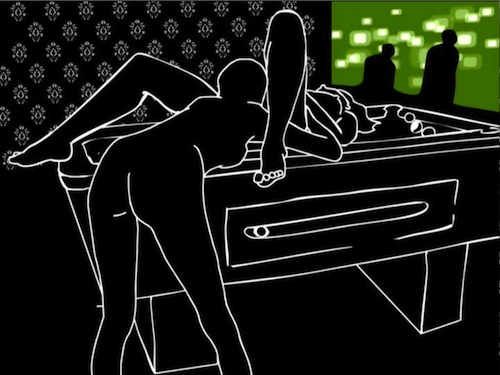
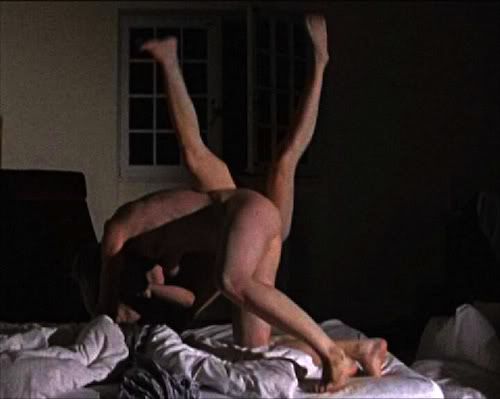
“Be horny on your own terms,” says the collection of Swedish, female filmmakers behind Dirty Diaries, a series of shorts that fight the porn industry with totally hot, moan-worthy stimulation outside the usual boundaries. Tired of being told what’s hot and what’s not, these ladies strapped on their cameras and set out to create hardcore, feminist porn on their own terms, from raunchy BDSM and steamy phone sex, to flashing, fisting, and awesome fucking.

Mainstream smut loves to glorify silicon and fake orgasms. Their camera shots are predictable and proven to be cum-inspiring and cash-collecting.The industry is sexist, wallowing in our patriarchal society that brainwashes the consumer into thinking that only certain bodies and certain acts are jizz worthy. Dirty Diaries is not even close.

The project began after the film’s producer Mia Engberg, a well-respected Swedish filmmaker, put together a piece concentrating on the female orgasm, zooming in on the faces and bodies of real women. After its screening, Engberg was disgusted by the criticism she received from men in the audience; the women weren’t ‘pretty’ enough and the film didn’t appeal to male desires. Enough said.

Engberg recognized the need for more female-depictions of sexuality and decided to fill the void with some real-life erotic filling. She gathered up a bunch of novice filmmaker friends, encouraging them to run wild with their ideas and create the shorts they had always wanted to see. The result was Dirty Diaries’ 12 totally diverse films, released in Sweden in 2009. Some are hilarious, some are badass, but all keep it hot in their own style. The artistic approach is unlike anything else on the market and the variety of film styles, from gritty camera phones to an impressive animation, makes each piece a surprising tingle. 

dirty_2

“On Your Back Woman!” searches for the female machismo through sadomasochistic wrestling

Joel Shepard, film/video curator at the Yerba Buena Center for the Arts is proud to host the film’s U.S. premiere, with two showtimes— Thurs/9 and Sat/11, both at 7:30 p.m.– and hopes it will continue to shatter the ideas of how feminist porn looks, sounds, and feels. 

“When you think of feminist erotica, it’s easy to stereotype and imagine something soft. I was amazed by how confrontational some of these scenes can be,” he says, noting particularly, the camera angle of a fisting scene in “Brown Cock.” Super close-up and no fuss, the viewer doesn’t see a single face, only parts; pure and proud, wet and happy. Other pieces like “Flasher Girl on Tour” and “Dildoman” are much lighter in visuals, but their messages are weighted in social commentary about male sexuality and sexist double standards. Yet, still totally arousing. Totally.

Even the government-funded Swedish Film Institute agreed, or basically– they granted the film a chunk of change, even amidst the Moderate Party‘s disapproval, who argued that mainstream porn wouldn’t be given funding, so why does this kind of kink deserve a check? The Film Institute didn’t back down and stated that they stood behind their choice because Dirty Diaries aimed to try a new approach to depicting female sexuality. Isn’t Sweden sexy? 

dirty_3

“Flasher Girl on Tour” shows public masturbation in a whole new light

Tease yourself with the film’s trailer at www.DirtyDiaries.com and round up a crew of friends with diverse sexual preferences to see the film live– it’s a delightful kick in the pants for everyone. 


DIRTY DIARIES

Thu/9 & Sat/11, 7:30 p.m., $8 regular; $6 students, seniors, teachers & YBCA members

Yerba Buena Center for the Arts Screening Room

701 Mission St., SF

(415) 978-2787

www.ybca.org/film


Not the face!

0

marke@sfbg.com

SUPER EGO Henny, I don’t even know where to start. I leave the country for a lousy two months and I come back to this? No more Eagle Tavern to blow my mind on Thursday nights and blow my other parts on Sunday afternoon? No more Ti Couz for a hot bowl of pear cider when it’s pissing down rain? Straight people from Richmond puking all over the Castro on the regular? (Actually not too sad about this. I love my Richmond girls — and their unattended purses and boyfriends.)

Perhaps worst of all — um, Kreayshawn? Wow. At least we’re balancing out that catastrophe with a healthy, sleazy obsession with the Weeknd.

OK, I’m gonna move it all along, not dig my claws into bygones. I just flew in and my arms are too short to box with blah. It’s actually great to be back in blackout among my SF dance floor family. So let’s toast the future by getting toasted, because there’s a Jeroboam-load of parties sparkling in the fridge. Hiya!


BAWDY STORYTELLING: “LIBERTINE!”

“Carnal chronicler” Dixe De Tour’s over-the-top scandalous, sexy Bawdy Storytelling reading series is so successful it just expanded to Los Angeles. But home is where its, er, heart remains as Oakland’s infamous Ouchy the Clown joins a bevy of ear-burners for a no-holes-barred night of free speech.

Wed/8, 7 p.m. doors, 8 p.m. storytime, $10. Blue Macaw, 2565 Mission, SF. www.bawdystorytelling.com


WIG OUT: KIM KONG BENEFIT

Beloved DJ and promoter Kim Kong of Non-Fat and Bitches with Stitches was just diagnosed with lymphoma, and the SF scene is stepping up to lend support at this bonkers fundraiser. The Housepitality, dirtybird, and Non-fat crews are bringing heavy hitters Mr. C and Claude VonStroke to the decks — you throw on your favorite wig and dance around.

Wed/8, 8 p.m., donation requested. Icon, 1192 Folsom, SF. www.wigoutwednesday.com


BLOW UP SIX-YEAR ANNIVERSARY

You mean our seminal electro banger glamourpuss joint is already six years old? That’s almost the age most of the kids who went there were during its insane early Rickshaw Stop days, what? Blow Up power couple Ava Berlin and Jeffrey Paradise join the Tenderlions, Nisus, Trevor Simpson, Holy Mountain, and more for the hands-up blur.

Fri/10, 10 p.m., $16 under 21, $12.50 over. DNA Lounge, 375 11th St., SF. www.blowupsf.com


DAVE NADA

The godfather of Moombahton — pitching Dutch house down to its deliciously tropical (and far less annoying/wannabe gangsta) roots — hits the raucous Lights Down Low party, not previously known for its reggaeton or Netherlandish leanings. But dude, when it gets darker anything goes. U.K. funky beatsplitter Canblaster and IHEARTCOMIX’s Franki Chan open up, local locos Deevice, Sleazemore, and Eli Glad preside.

Fri/10, 9:30 p.m.-3 a.m., $10. SOM, 2925 16th St., SF. www.lightsdownlow.net


EVOLVE ANNIVERSARY

Monthly party Evolve has grabbed the crown for deep yet spirit-raising soulful house in the Bay. (Was there ever any doubt Oakland would reign supreme?) And while the emphasis is on the “sacred element of music,” DJs David Harness and Soul Luciani don’t stint on the more earthly pleasures of a friendly, packed dance floor.

Fri/10, 9 p.m., $10. Era Art Bar, 19 Grand, Oakl. www.oaklandera.com


LEE DOUGLAS

Sophisticated nu-disco and deeper house funkiness from this Brooklynite, who has garnered a star-studded following by unashamedly embracing the lo-fi analog techniques of yore. (No fear of the wah-wah here!) He’ll be at the monthly No Way Back party with DJs Conor and Navid.

Fri/10, 9:30 p.m., $5–$7. 222 Hyde, SF. www.222hyde.com


LOOSE JOINTS THREE-YEAR ANNIVERSARY

One of the funkiest parties in the city — a real topper combining secret sampled classics with up-to-the minute edits into a heady yet hip-swinging brew — hits the triple. Guest star: live beatboxer, producer, and instrumentalist James “Ayro” Ellison of Ubiquity Records, with residents Tom Thump, Damon Bell, and Centipede.

Fri/10, 10 p.m., $5. Make-Out Room, 3225 22nd St., SF. www.makeoutroom.com


MALL MADNESS

The totally not ironic, awesomely gnarly, giddily drag-ridden tribute to 1990s boy bands, ’80s Spandex pop, and ’70s unicorns on roller skates (bonus Bieber nods!) is folding up its Sunglass Hut and moving on with its life. Hostess Oxana Olsen serves up Glamour Shots and Hot Topics for the final installment.

Sat/11, 10 p.m., $7. UndergroundSF, 424 Haight, SF.


FADE TO MIND

Those wacky Tormenta Tropical kids are at it again, expanding the signature electro-cumbia sound of their monthly gig with some warped global bass action. This Fade to Mind showcase flies in the L.A. label’s biggest draws: rave ‘n’ b king Kingdom, bouncy duo Nguzunguzu, and kooky pixellator Total Freedom.

Sat/11, 10 p.m., $10. Elbo Room, 647 Valencia, SF. www.elbo.com


THIRD ANNUAL SUNSET MUSIC AND ARTS PICNIC

It doesn’t exactly feel like summer as I write this — most likely because one of the Bay’s most adored free summer-launching events hasn’t occurred yet, right? The Sunset crew is once again taking over Treasure Island for a daytime dance and chill extravaganza, featuring a live set by the actually legendary house and jungle pioneer A Guy Called Gerald of “Voodoo Ray” and “Black Secret Technology” fame. DJs Solar, Galen, J-Bird, and (yay!) Primo Preems support.

Sun/12, noon–8:30 p.m., free. Treasure Island. www.pacificsound.net 2


Stopping foreclosure secrecy

4

OPINION Thanks to a shadowy corporate mortgage recording system, millions of Californians have no idea who owns their home loans.

As we suffer through this recession triggered by reckless subprime lending and Wall Street speculation, our recovery is being held back in part because people are struggling with foreclosures and underwater home values — exacerbated by a lack of mortgage transparency.

The mess created by Wall Street is causing wrongful foreclosures and wreaking havoc. Real people — often lower-income families and communities of color — are enduring the devastation of foreclosure processes because of the excesses of bankers and investment firms.

In San Francisco, we’ve seen the highest number of foreclosures in the Ingleside-Excelsior, Bayview, Tenderloin, and Mission neighborhoods — many of the places where home values have fallen most. Whether or not you face foreclosure, we all pay for this crisis by losing vital tax revenue that could go to support our schools, protect our neighborhoods, or build our economy.

When Wall Street realized it could make billions by bundling mortgages and selling them to investors, banks and financial institutions needed a way around recording the ownership and assignment of home loans. What the banks and Wall Street came up with is a shadowy, industry-backed reporting system called MERS — mortgage electronic reporting system.

Simply stated, subprime and predatory lending allowed banks to create millions of questionable mortgages, Wall Street bundled these risky mortgages together to sell to investors, and MERS made it quicker and easier to conduct these risky transactions with impunity.

As San Francisco’s assessor-recorder and a financial advocate for low-income communities, we have seen harmful industry practices wreak havoc on families trying to stay in their homes — whether by use of MERS that clouds property titles, wrongful foreclosures, or denied loan modifications.

The state Legislature considered several good foreclosure bills this year. One proposal placed a $20,000 fee on financial institutions attempting a foreclosure. This would have discouraged foreclosure and helped defray costs to communities if the process went ahead.

State Sen. Mark Leno( D-SF) and Senate President pro tem Darrell Steinberg (D-Sacramento) offered legislation stopping banks from proceeding with foreclosures when a homeowner is attempting to modify his or her mortgage.

Assessor-Recorder Ting is sponsoring a bill requiring that all mortgage assignments and transfers be recorded with counties, thus taking this process out of the murky MERS system.

Unfortunately, the banks and their armies of lawyers and lobbyists have been able to stymie these reforms.

We must continue to fight these wealthy, powerful lobbies so that the long road to recovery in our housing markets and communities can begin. We cannot let Sacramento forget it was financial institutions that fueled the housing bubble, crashed the stock market, and sent shockwaves throughout the economy with their reckless practices.

Few states have been ravaged by subprime lending and the meltdown of mortgage-backed securities the way California has, so we must continue reforming the practices of banks and Wall Street that have thrown our economy and communities into turmoil.

Phil Ting is San Francisco assessor-recorder. Kevin Stein works with the California Reinvestment Coalition.

Truly, deeply, sweetly

0

arts@sfbg.com

LIGHTS OUT That randiest of Mission District corners, 17th and Capp streets, has long been a hotbed for DIY music, art, and the occasional can-blasting block party. Now San Francisco’s best-known indie video blogcast, Yours Truly (yourstru.ly) was taking it over. The Truly team — Caleb Moriarty, Nate Chan, Will Abramson, Babak Khoshnoud — recently invited me to a live shoot at a warehouse near the corner.

Lifelong music fans, the YT foursome creates intimate videos, following videographer Chan’s vision, of musicians performing songs in unusual spaces sliced with live interview material. Inspired by blogs like La Blogotheque and gorilla vs. bear, YT wanted to create a similar platform based in San Francisco. Besides local artists, YT films bands as they come through on tour; more recently, they’ve flown out to shoots, like one with Tame Impala in a Santa Cruz forest and one in Los Angeles, where they filmed Wavves.

“It’s very personal,” explains Chan about how they choose bands to film. “Only the four of us decide.” (Luckily, their sensibilities line up nicely with the great Indie Consensus: tUnE-YArDs, Little Dragon, Tyler, the Creator, Kurt Vile … ) Chan elaborates that they’re drawn to bands with strong pop sensibilities that perform well in a live setting. “The other challenge is finding the right space for it. We want the right mood.”

I can’t figure out which warehouse the shoot is taking place in because the correct door has lost its numbers, so I call Chan. I’m quickly escorted down into the basement of the Sub. I’ve been to shows here before, but those have always been on the second floor. Downstairs, there’s a wood-shop with off-white walls, piles of wood chippings, elaborate electric saws, a cabbie’s top-light on an electric organ advertising a strip joint, doors that lead nowhere, and a chorus of fellow onlookers.

Soon Claire Boucher, the force behind Montreal synth-pop project Grimes, and her crew arrive. Introductions all around, and then Boucher begins humming, unnecessarily apologizes, and goes into even more elaborate warm-up scales. Her look is striking — the limits of beauty are one of Grimes’ musical themes, and here they carry over. Boucher wears a plaid-collar dress-shirt under a taupe thrift-store sweater whose previous owner appears to be Santa, so she literally swims in it. It’s pocked with stickers, some sporting Lykke Li’s name, whom Grimes is touring with. (The band will be performing later that night at the Regency Ballroom.) Her bangs are bright blonde and the rest of her hair is dark black and pulled into a bun.

Within the wood-shop, Chan and Moriarty start rearranging Quikrete cement bags into tables, pile crates to make stools, and turn a red-painted door into a table-top that Boucher sets her keyboard on. Next, Chan unlocks a briefcase and pulls out his DSLR camera.

Boucher launches into a new song, still unnamed, that will be featured on Grimes’ next release. After the track, she waves her hands in circular motions above her head and declares she was nervous. Chan suggests they record “Vanessa,” Grimes’ hypnotizing track that has garnered her a large following. They do three takes of “Vanessa,” then Boucher announces to the rapt room that she’s more used to performing at dance parties. I think we were all simply too awe-struck to know how to react, but in response we burst into applause. (Clapping can be dancing.)

“It has to be really unobtrusive,” Moriarty says of making Yours Truly videos. “You’re trying to ask the artist how it feels and what they want to do over again. We’re trying to build the shoot around Claire but not trying to direct her.” Close-ups of fingers or lips, interview clips that capture an ephemeral moment or a bit of personality, and stripped-down versions of artists’ songs.

“It has to be very natural,” he adds. “I think people feel that when they watch the videos, they’re in the room.”

By letting the audience feel as close to the musician as I actually was during the shoot, the videos create an immediacy for fans. “Everything we create is purely passion-based,” Chan said. We love every band — and we want them to look good.”


Tour de tasting room

0

virginia@sfbg.com

For establishing intimacy and focus, there’s nothing like sitting down to a meal and tasting with a vintner when you want to catch a glimpse of the vision and inspiration behind their wines. I recently had the chance to do just that with several local winemakers in Napa and Sonoma — and don’t worry, I took good notes.

KAPCSÁNDY WINES

Kapcsándy may not be the easiest name to pronounce, but take note if you love complex, balanced wines. Though there is a blessedly steady (if slow), trend toward lower alcohol, old world-style wines in the Wine Country lately, this Yountville vineyard — helmed by Lou Kapcsándy, his wife Roberta, and their son Louis Jr. — has been making these types of pours since 2000.

Lou, with winemaker Rob Lawson, lets Napa’s terroir fully express itself while staying close to old world principles — a philosophy that is apparent in his acclaimed State Lane Vineyard cabernet sauvignon. A Hungarian native, Lou’s roots manifest in his wines and his rustic tasting room centered around an 1800s wooden wine press from Hungary. I found the 2009 rosé (a cab-merlot blend with touch of petit verdot and cab franc) a unique beauty: more full and dense than many rosés yet managing to retain a crisp acidity. Roberta’s Reserve is a memorable wine, an homage to Pomerol and Bordeaux. The 2007 and 2008 are both understandably lauded vintages of Roberta’s, but I found the 2009, young as it is, to hold intriguing promise. It’s already drinking beautifully, with hints of cassis, blossoms, cherries, and earthy cocoa.

1001 State, Yountville. (707) 948-3100, www.kapcsandywines.com

RAYMOND VINEYARDS

The transformations at Raymond Vineyards have to be seen to be believed. Although it has been a historic St. Helena vineyard since 1970 known primarily for its cabernet, it’s not the vineyard’s rich heritage — or even its wines — that stand out most today: it’s the changes wrought to its grounds by Boisset Family Estates, a global company with Burgundy roots that now owns the vineyard.

Delightfully eccentric Jean-Charles Boisset is the spirit behind the new era at Raymond. “I love personally the word[s] sexy and voluptuous,” he tells me after we’ve descended into the Crystal Cellar (where cabernet tastings go for $25), a room that has been lined with steel to give the effect of being inside a wine vat. An explosion of Baccarat crystal shimmers off its walls, vats, and giant mirrors glinting around us. Encased vintage crystal decanters are inscribed with wine descriptors — in lipstick.

From the moment you glimpse the interactive art exhibits on the lawn, you know something unusual is afoot here. A “Theatre of Nature” self-guided tour of the grounds — which include a pool and midcentury house — is in the works, as is a fashion show on the Crystal Cellar’s catwalk.

We were the first to taste in the vineyard’s newly unveiled guest room (now available for group tastings and private parties). It housed gold and white leather couches covered in fur throws, a stuffed leopard standing guard in the corner, a dining table set with black and gold plates featuring each of the seven deadly sins (perhaps prophetically, I got “gluttony”). The pièce de résistance: a giant flat-screen rimmed in gold — of course! — playing Jackson 5 music videos.

I’ve never had another wine tasting experience like it. Boisset is currently working on a red room (in “all red — and velvet”) and releasing two bubblies, including a rosé, to taste there this summer.

All this flair naturally leaves one wondering: are the wines any good? In fact, the new French pours are far better than their predecessors, even if the new Raymond is about the one-of-a-kind tasting experience.

Boisset’s JCB wines do have their pleasures. They’re playful and more balanced than many Napa wines, the No. 81 Chardonnay and No. 7 pinot noir allowing for nice acidity. He and Raymond winemaker Stephanie Putnam teamed up to make the No. 1 cabernet, which reflects both Napa and French sensibilities.

Boisset clearly leads in innovation, and he has a passion to bring California wines to the world. The man’s on a mission to make wine hip, approachable, and, yes, sexy.

849 Zinfandel, St. Helena. (707) 963-3141, www.raymondvineyards.com

AMAPOLA CREEK

Richard Arrowood — a Sonoma winemaker for 45 years — and wife Alis are charmers. Over lunch at Wayfare Tavern, we spent hours talking and tasting wines from his young Glen Ellen boutique winery Amapola Creek.

This is Arrowood’s passion project. He produces wines typifying the robust grapes of the Mayacamas Mountains located near the town of Sonoma. After decades of creating wines for major players like Chateau St. Jean and his own Arrowood Winery, he’s having fun with small batches — his current operation produces a maximum of 3,000 cases annually.

Though lush, Arrowood’s 2008 zinfandel — and original 2005 zin — shows restraint, with enough tannins and acidity to keep it food-friendly (ideal paired with Wayfare’s medium-rare steak). The zin benefits from a rare asset: 115-year-old vines located in a tiny lot at neighboring Monte Rosso Vineyards. His 2007 syrah and cabernet sauvignon are bold and black, fruit-heavy yet balanced with tannins and delicate spice accents (the cab is CCOF certified organic). He’s also working on a grenache-syrah blend, so watch for more Amapola Creek wines on the way.

(707) 938-3783, www.amapolacreek.com 

Subscribe to Virginia’s twice monthly newsletter, The Perfect Spot (www.theperfectspotsf.com).


CORRECTION: An earlier version of this article was incorrectly edited to say Miller thought Raymond Vineyard’s current batch of wines were inferior to those produced when the vineyard was family-run; she actually thinks the reverse is true. The Guardian regrets the error, and promises to drink less wine while editing our contributing writers.

Wanderlust

0

arts@sfbg.com

DANCE In the sunlit studio at 499 Alabama St., Jessica Swanson affixed her blonde wig atop loose pin curls to rehearse a scene from Joe Goode’s new work, The Rambler, premiering at Yerba Buena Center for the Arts Friday, June 10. She recited a line about how freedom skips a generation as Goode, clutching a cup of coffee, closed his eyes to listen. Then meticulously, word-by-word, he adjusted the script, recording each edit on his open laptop. The rigor continued to clarify every movement and tune for Swanson, who plays a character left behind by a certain rambler.

“We started very simply with the peripatetic impulse to roam in a general way, and then I became interested in what it means for the person who is attached,” Goode said. “The rambler is a romantic figure, particularly in American culture, the wanderer and seeker. So we’ve been asking questions on both ends — about being the rebel and being left.” In addition, his team explored the redemptive quality of moving forward, even without a clear direction, versus staying still. “Dancing is also that — not really about going anywhere, but about movement, feeling the body and its ability to be alive and move.”

Joining forces with Goode, puppeteer Basil Twist created a photographic lens with curtains that will serve as a moving frame to zoom in and scope out, following the action onstage. In the role of scenic designer, Twist provides possibilities for Goode to amplify certain aspects of the production with the aperture. In a rehearsal three weeks prior to the premiere, Swanson also manipulated a life-size puppet of Twist’s making, although its presence in The Rambler is still to be determined.

“We always have about 100 pieces of material and end up using about 20, and decisions really can’t happen until the end when we have all the variables,” Goode explained. Continuing to direct each detail, Goode demonstrated precise and dramatic gestures as Swanson translated the choreography for the puppet. She grasped the molded hand with her human one, skillfully performing for two characters simultaneously. Alongside the puppets, The Rambler also features an original score composed by Jesse Olsen Bay, lighting design by Jack Carpenter, and costumes by Wendy Sparks.

Goode constantly edits his work even after performances begin. “My pieces look very different three years after opening. For me, nothing is fixed,” he said. “I’m not interested in having masterworks that can be caught and frozen in the Louvre.”

The impulse to update and stay current permeates his attitude about legacy as well. “I feel at this point in my career, I want to codify that technique and find some ways to disseminate it. I’m not interested in having my works performed by people who didn’t originally make them, say 25 years from now. I’m more interested in passing along a technique of how to approach work, build it, and keep art-making an exciting pastime. Sharing that journey and discovery is a real service to provide to the world.”

His technique entails taking an idea’s temperature and acknowledging a personal perspective, then approaching the results like a collision, juxtaposing stories and ideas that don’t necessarily go together to render new possibilities.

Now in its 25th year, Joe Goode Performance Group enjoys its new Alabama Street home and dedicated facility. “One of the reasons for having my own space is that I feel in San Francisco we are a little bit bereft of international conversation about dance theater and interdisciplinary art-making. I really want to do a lot of exchange and present an opportunity for people to come, talk about, and show their work — particularly people from out of the country,” Goode said.

“I’d also like to present some kind of a platform series where more established artists can curate and mentor a younger artist and present them while trying to explain their work and why he or she is attracted to it,” he continued. “Again, it’s something you’ll see a lot in Europe — artists curating series — and I think it’s an important thing to do.”

Furthermore, Goode acknowledges the potential for installation work in the vast new space. With impossibly high ceilings, the building can be transformed to accommodate a variety of installations and sets, also of increasing interest to the choreographer: “The proscenium assumes that we’re the professional and you’re the person who gives us money. The separation of feeling and the distance takes away some of the volition of the viewer. When you think about installation work, you have to get involved. You have to make decisions and discover on your own — and then it’s much more personal.”

Mining human terrain to develop his work, Goode champions going deeply into tactile, embodied, and sensual moments. He considers the practice especially relevant in a society that tends toward thinking and technology. “I’m really beginning to understand after so many years my own values about making folk art and the simple connection of delving into material that people can understand,” he said. “I do want to start beating the drum very loudly for this kind of work — an alternative approach that really values the human experience, especially in our troubled times.”

For Goode, making art is a sort of survival technique for living in a world that’s dangerous, threatening, and bewildering. “Its a way of locating myself and understanding where I am in a given time — and hopefully providing others with a kind of perspective.”

THE RAMBLER

Fri/10–Sat/11 and June 16–18, 8 p.m.;

Sun/12, 7 p.m., $19–$49

Yerba Buena Center for the Arts

Novellus Theater

701 Mission, SF

(415) 978-2787

www.joegoode.org


Stage Listings

0

Stage listings are compiled by Guardian staff. Performance times may change; call venues to confirm. Reviewers are Robert Avila, Rita Felciano, and Nicole Gluckstern. Submit items for the listings at listings@sfbg.com. For further information on how to submit items for the listings, see Picks. 

THEATER

OPENING

Wish We Were Here New Conservatory Theatre Center, 25 Van Ness, SF; (415) 861-8972, www.nctcsf.org. $20-32. Previews Thurs/9, 8pm. Opens Fri/10, 8pm. Runs Thurs-Sat, 8pm; Sun, 2pm. Through June 25. Slacker meets genie in this Michael Phillis comedy.

BAY AREA

Metamorphosis Aurora Theatre, 2081 Addison, Berk; (510) 843-4822, www.auroratheatre.org. $10-55. Previews Fri/10-Sat/11 and June 15, 8pm; Sun/12, 2pm; Tues/14, 7pm. Opens June 16, 8pm. Runs Tues, 7pm; Wed-Sat, 8pm; Sun, 2 and 7pm. Through July 17. Aurora Theatre Company performs a terrifying yet comic adaptation of Kafka’s classic by David Farr and Gísli Örn Gardarsson.


ONGOING

All Atheists Are Muslim Stage Werx, 533 Sutter, SF; www.brownpapertickets.com. $20. Runs Sun, 7pm. Through July 10. Zahra Noorbakhsh returns with her timely comedy.

Assassins Eureka Theatre, 215 Jackson, SF; www.roltheatre.com. $20-36. Thurs-Sat, 8pm (also Sat, 2pm); Sun, 2pm. Through June 25. Ray of Light Theatre performs the Sondheim musical.

*Blue Man Group Golden Gate Theatre, 1 Taylor, SF; www.tickets.shnsf.com. $50-200. Tues-Sat, 8pm (also Sat, 2pm); Sun, 2pm. Through June 19. Jaw-slackening feats of circus skill combine with elaborate otherworldly percussion, subtle fresh-off-the-spaceship clowning, and of course lots of blue body paint in the updated version of the long-running now internationally strewn multi-group Blue Man Group. Mutatis mutandis, it’s a two decades–old formula. But its driving, eyeball-popping musical spectacle and wry, deft way with mass culture send-ups and (albeit rather pushy) audience participation can’t help but entertain. (Avila)

Fighting Mac! Thick House Theatre, 1695 18th St, SF; 1-800-838-3006, www.therhino.org. $15-30. Opens Fri/10, 8pm. Runs Wed-Sat, 8pm; Sun, 3pm. Through June 19. Theatre Rhinoceros performs John Fisher’s play about real-life queer British general Hector MacDonald.

“Fury Factory 2011” Various venues and prices; www.brownpapertickets.com. Through July 12. Over 30 Bay Area and national companies participate in this bi-annual theater festival.

*Little Shop of Horrors Boxcar Theatre Playhouse. 505 Natoma; www.boxcartheatre.org. $20-50. Tues-Sat, 8pm; Sun, 2pm. Through June 26. From the moment the irritable Mr. Mushnik (Alex Shafer) chases his temp clerk (Amy Lizardo) out the lobby door and onto the street for the opening number, it’s clear that Boxcar Theatre’s production of Little Shop of Horrors is going to be unique. Boasting an energetic cast, an ingenious set, a few updated lyrics, and a marvelously menacing man-eating plant, Little Shop is engaging enough to distract from the somewhat awkwardly-mixed wireless mikes, and the fact that the doo-wop trio (Nikki Arias, Lauren Spencer, and Kelly Sanchez), though each individually blessed with awesome pipes, don’t always vocally blend well together. But they play their streetwise characters to a tough and tender T, while the awkwardly schlubby Seymour Kleborn (John R. Lewis) and his battered muse Audrey (Bryn Laux) tend Seymour’s mysterious botanical discovery and their burgeoning love affair with real sweetness. Everyone’s favorite badass dentist is played to sadistic perfection by Kevin Clarke, who rolls up Natoma Street on an actual motorcycle, while the able chorus morphs from skid row bums to cynical ad execs without missing a musical beat. As usual, Boxcar Theatre’s design team is a strong one, particularly in the case of puppet designers Greg Frisbee and Thomas John, whose trio of Audrey Jrs. are superbly executed. (Gluckstern)

Much Ado About Lebowski Cellspace, 2050 Bryant, SF; www.sfindie.com. $25. Fri-Sun, 8pm. Through June 28. SF IndieFest and the Primitive Screwheads perform a Shakespeare-inflected take on the Coen Brothers’ classic film.

Nobody Move Intersection for the Arts, 925 Mission, Golden Gate; 626-2787, www.brownpapertickets.com. $20-35. Thurs/9-Sat/11, 8pm; Sun/12, 3pm. Intersection for the Arts and Campo Santo present a play based on the novel by Denis Johnson.

The Pride New Conservatory Theatre Center, 25 Van Ness, SF; (415) 861-8972, www.nctcsf.org. $24-40. Wed-Sat, 8pm; Sun, 2pm. Through July 10. New Conservatory Theatre Center performs the West Coast premiere of Alexi Kaye Campbell’s love-triangle time warp drama.

Reborning SF Playhouse, 533 Sutter; 677-9596. www.sfplayhouse.org. Wed/8, 7pm; Thurs/9-Sat/11, 8pm (also Sat/11, 3pm). Though emphatically fictional, Zayd Dohrn’s play Reborning, currently receiving its world premiere at the SF Playhouse, provides an intriguing introduction to a decidedly fringe occupation. That of reborning: the art of crafting photo-realistic doll children commissioned by collectors, and sometimes by grieving parents. The play opens with an act of creation, as Kelly (Lauren English) tidies up a closed eye with a sculptor’s blade while a joint burns in the ashtray beside her. Enter Lorri Holt as Emily, a crisp, efficient businesswoman, and a client, come to check on the progress of her “baby” Eva. Things start to go South when Emily suggests some modifications and Kelly’s own obsession with the project eventually spirals out of control. Amiable foil, Alexander Alioto as Kelly’s boyfriend Daizy, exudes eager, golden retriever-like loyalty, but as Emily coolly observes, has “nothing to offer someone who is drowning.” All three actors are top-notch and do a fine job processing thoroughly uncomfortable moments, and the crack design team set the stage and mood precisely. Unfortunately the script itself skews towards melodrama and certain themes (dildo-design, drug abuse, “the dumpster darling”) imbue Reborning with an almost seedy, Jerry Springer vibe that seems inconsistent with director Josh Costello’s strictly straightforward approach to the charged material. (Gluckstern)

Risk is This…The Cutting Ball New Experimental Plays Festival EXIT on Taylor, 227 Taylor; (800) 838-3006, www.cuttingball.com. Free. Fri-Sat, 8pm. Through June 25. Cutting Ball Theater closes its 11th season with a festival of experimental plays, including works by Eugenie Chan, Rob Melrose, and Annie Elias.

The Stops New Conservatory Theatre Center, 25 Van Ness; 861-8972, www.nctcsf.org. $24-40. Wed-Sat, 8pm; Sun, 2pm. Through June 25. New Conservatory Theater Center presents a musical comedy set in San Francisco.

A Streetcar Named Desire Actors Theatre, 855 Bush; 345-1287, www.actorstheatresf.org. $26-38. Wed-Sat, 8pm. Through June 25. Actors Theatre of San Francisco presents the Tennessee Williams tale.

*Vice Palace: The Last Cockettes Musical Thrillpeddlers’ Hypnodrome, 575 10th St; (800) 838-3006, www.brownpapertickets.com. $30-35. Fri-Sat, 8pm; Sun, 7pm. Through July 31. Hot on the high heels of a 22-month run of Pearls Over Shanghai, the Thrillpeddlers are continuing their Theatre of the Ridiculous revival with a tits-up, balls-out production of the Cockettes’ last musical, Vice Palace. Loosely based on the terrifyingly grim “Masque of the Red Death” by Edgar Allan Poe, part of the thrill of Palace is the way that it weds the campy drag-glamour of Pearls Over Shanghai with the Thrillpeddlers’ signature Grand Guignol aesthetic. From an opening number set on a plague-stricken street (“There’s Blood on Your Face”) to a charming little cabaret about Caligula, staged with live assassinations, an undercurrent of darkness runs like blood beneath the shameless slapstick of the thinly-plotted revue. As plague-obsessed hostess Divina (Leigh Crow) and her right-hand “gal” Bella (Eric Tyson Wertz) try to distract a group of stir-crazy socialites from the dangers outside the villa walls, the entertainments range from silly to salacious: a suggestively-sung song about camel’s humps, the wistful ballad “Just a Lonely Little Turd,” a truly unexpected Rite of Spring-style dance number entitled “Flesh Ballet.” Sumptuously costumed by Kara Emry, cleverly lit by Nicholas Torre, accompanied by songwriter/lyricist (and original Cockette) Scrumbly Koldewyn, and anchored by a core of Thrillpeddler regulars, Palace is one nice vice. (Gluckstern)

BAY AREA

Care of Trees Ashby Stage, 1901 Ashby, Berk; (510) 841-6500, www.shotgunplayers.org. $17-26. Thurs-Sat, 8pm; Sun, 5pm. Through June 26. E. Hunter Spreen’s Care of Trees, which is receiving an inventively bold world premiere production in Shotgun’s capable hands is at once ambitious yet unsatisfying. The basic plot — “girl meets boy then turns into a tree &ldots; sort of” — is a quirky premise full of untapped potential. With so many possible interpretations of Georgia’s (Liz Sklar) unique predicament, the one that seems most predominant is an unwitting critique of the banality of the self-realization movement. “If I don’t do &ldots; what I see as right, then I’ll be lost to myself,” she tells her understandably frustrated husband Travis (Patrick Russell), as she abruptly shuts off her empathy-meter and bids him to do the same. During isolated pockets of dramatic tension, Georgia is stabbed in an altercation with a tree-hugger, suffers a series of violent seizures, is shuttled off to a battery of clueless doctors, and granted an audience with a Peruvian shaman, yet the underlying significance of actually turning into a tree, is barely explored, certainly never understood. Sklar and Russell turn in standout performances as the forest-crossed lovers, and the canopy of Nina Ball’s inventive set soars, but overall this Tree could stand to develop some stronger roots. (Gluckstern)

Distracted 529 South Second St, San Jose; (408) 295-4200, www.cltc.org. $15-35. Thurs-Sat, 8pm; Sun, 2pm. Through June 19. City Lights Theater Company of San Jose presents a drama written by Lisa Loomer and directed by Lisa Mallette.

Edward Albee’s Tiny Alice Marin Theatre Company, 397 Miller, Mill Valley; (415) 388-5208, www.marintheatre.org. $32-53. Tues, Thurs-Sat, 8pm (also June 16, 1pm; Sat/11 and June 25, 2pm); Wed and Sun, 7:30pm (also Sun, 2pm). Through June 26. Marin Theatre Company performs Albee’s most divisive play, an erotic thriller-cum-comic allegory.

Let Me Down Easy Berkeley Repertory Theatre, Roda Theatre, 2015 Addison, Berk; (510) 647-2949, www.berkeleyrep.org. $17-73. Tues and Thurs-Sat, 8pm (also Sat, 2pm); Wed, 7pm; Sun, 2pm. Through June 26. Anna Deavere Smith performs her latest solo show.

Open Central Stage, 5221 Central, Richmond; 1-800-838-3006, www.raggedwing.org. $20-35. Thurs/9-Sat/11, 8pm. Ragged Wing Ensemble performs Amy Sass’s world-premiere play, inspired by the story of Bluebeard.

[title of show] TheatreWorks at the Mountain View Center for the Performing Arts, 500 Castro, Mtn View; (650) 463-1960, www.theatreworks.org. $24-42. Tues-Wed, 7:30pm; Thurs-Sat, 8pm (also Sat, 2pm); Sun, 2 and 7pm. Through June 26. TheatreWorks performs a new musical about musicals by Hunter Bell and Jeff Bowen.

*Welcome Home, Julie Sutter Marion E. Greene Black Box Theater, 531 19th St, Oakl; www.theatrefirst.com. $10-30. Thurs-Sat, 8pm; Sun, 2pm. Through June 19. On her first day back from Iraq, African American Marine, mother, and amputee Jenny Sutter (a pensive, quietly affecting Omoze Idehenre) sits in Beckett-like stasis at a bus depot operated by a wound-up cockroach-crazed attendant (Joe Estlack), until a chatty middle-aged woman named Louise (Nancy Carlin), recovering from addiction to everything, convinces her to come to Slab City. The off-the-grid settlement of semi-permanent campers and kooks on the desert edge of Los Angeles turns out to have once been a Marine base, much to the dismay of traumatized and anguished Jenny, who can’t work up the courage to answer the cell phone calls from her mother and children, let alone return to them. A physically handicapped internet-certified preacher (Brett David Williams) meanwhile takes it upon himself to help Jenny, with assistance from sometime girlfriend and recidivist Louise and a local soi-disant shrink (Karol Strempke). They throw a public coming-home ceremony for the cast-off vet. It’s Slab City’s socially awkward and pugnacious jewelry maker Donald (a sharp Jon Tracy) who challenges the militarism and religious pabulum in this enterprise, even as he finds himself irresistibly drawn to the deeply wounded Jenny. Nevertheless, playwright Julie Marie Myatt’s involving story (smoothly and engagingly directed for TheatreFIRST by Domenique Lozano) carries a real if not quite heavy-handed spiritual dimension, peppered with traditional gospel tunes (heard in Johnny cash recordings during scene transitions but echoed by cast members at other times) and undergirded by doubting Jenny’s unconscious quest for signs of a seemingly absent Christian god. What she finds is a community of equally messed up but compassionate souls, and that’s enough. (Avila)

PERFORMANCE/DANCE

Dance Continuum SF Dance Mission Theater, 3316 24th St, SF; www.brownpapertickets.com. Fri-Sun, 8pm. $20. The dance-theater company performs their fifth annual concert, Darkness Before Light, featuring three premieres and two repertory works.

Garrett + Moulton Productions ODC Theater, 3153 17th St, SF; (415) 863-9834, www.odctheater.org. Thurs-Fri, 8pm; Sat-Sun, 2pm (also Sun, 7pm). $24-30. Janice Garrett and Charles Moulton join forces to co-choreograph the new dance theater work The Experience of Flight in Dreams.

Joe Goode Performance Group Yerba Buena Center for the Arts, Novellus Theater, 701 Mission, SF; (415) 978-2787, www.joegoode.org. Fri/10-Sat/11 and June 16-18, 8pm; Sun/12, 7pm. $19-49. The acclaimed choreographer presents a world premiere work about a restless soul.

“The Legend of Hedgehog Boy” San Francisco LGBT Center, 1800 Market, SF; www.renecapone.com. Sat, 7:30pm. $12. Author René Capone reads from his graphic novel in a staged, multi-media performance.

Mary Carbonara Dances Kunst-Stoff Arts, 1 Grove, SF; www.brownpapertickets.com. Wed-Sat, 8pm. $20. The world premiere What Does It Feel Like to Kill Someone? addresses acts of violence in the contemporary world.

BAY AREA

San Francisco Ethnic Dance Festival Zellerbach Hall, UC Berkeley, Bancroft at Telegraph, Berk; (415) 474-3914, www.worldartswest.org. Sat, 8pm; Sun, 3pm. $18-58. The 33rd annual festival continues with its second of five weekends of performances. Performers include Gadung Katsuri Balinese Dance and Music, Shabnam Dance Company, African Heritage Ensemble, and more. 


Rep Clock

0

Schedules are for Wed/8–Tues/14 except where noted. Director and year are given when available. Double and triple features are marked with a •. All times are p.m. unless otherwise specified.

BALBOA 3620 Balboa, SF; www.balboamovies.com. $20. “Opera, Ballet, and Shakespeare in Cinema:” Coppelia, performed by Bolshoi Ballet, Sat-Sun, 10am; June 15, 7:30.

BRAVA 2989 24th St, SF; www.qwocmap.org. Free. “Queer Women of Color Film Festival,” featuring five different screening programs, panel discussions, parties, and more, Fri, 7:30; Sat, 1; Sun, 2.

CASTRO 429 Castro, SF; (415) 621-6120, www.castrotheatre.com. Regular programming $7.50-10. “70mm Festival:” Vertigo (Hitchcock, 1958), Wed-Fri, 2, 5, 8; Lawrence of Arabia (Lean, 1962), Sat-Sun, 2, 7.

CHRISTOPHER B. SMITH RAFAEL FILM CENTER 1118 Fourth St, San Rafael; (415) 454-1222, www.cafilm.org. $10.25. The Double Hour (Capotondi, 2010), call for dates and times. The First Grader (Chadwick, 2010), call for dates and times. Queen to Play (Bottaro, 2009), call for dates and times. 13 Assassins (Miike, 2010), call for dates and times.

FOUR STAR 2200 Clement, SF; www.lntsf.com. $10. “Asian Movie Madness: Jet Li Now and Then” •Clash (Le, 2009), and Iron Fan and Magic Sword (Chan, 1971), Thurs, call for times.

LUMIERE 1572 California, SF; www.contractorsroutine.com. $8-10.50. Contractor’s Routine (Tsapayev, 2010), Wed-Thurs, 7.

MECHANICS’ INSTITUTE 57 Post, SF; (415) 393-0100, rsvp@milibrary.org. $10. “CinemaLit Film Series: Music and Nostalgia:” Roxie Hart (Wellman, 1942), Fri, 6.

MISSION CULTURAL CENTER FOR LATINO ARTS 2969 Mission, SF; www.answercoalition.org. $5-10. South of the Border (Stone, 2009), Thurs, 7. With a report back on Cuba by Gloria La Riva.

PACIFIC FILM ARCHIVE 2575 Bancroft, Berk; (510) 642-5249, www.bampfa.berkeley.edu. $5.50-9.50. “The Cult of the Kuchars:” Sins of the Fleshapoids (Mike Kuchar, 1965), Fri, 7; The Devil’s Cleavage (George Kuchar, 1973), Sat, 6; Burlesk King (Chiongio, 1999), Sat, 8:35. “Arthur Penn: A Liberal Helping:” The Left Handed Gun (1958), Fri, 9; The Miracle Worker (1962), Sun, 5:30; Mickey One (1965), Sun, 7:30.

RED VIC 1727 Haight, SF; (415) 668-3994; www.redvicmoviehouse.com. $6-10. Wayne’s World (Spheeris, 1992), Wed, 2, 7:15, 9:20. House (Obayashi, 1977), Thurs, 7:15, 9:15. Kuroneko (Shindo, 1968), Fri-Sat, 7:15, 9:25 (also Sat, 2, 4:15). Mars Attacks! (Burton, 1996), Sun-Mon, 7:15, 9:30. Live music with the California Jug Band Association, Sun, noon-5. This event, $5. The Cockettes (Weber and Weissman, 2002), June 14-15, 7:15, 9:30 (also June 15, 2).

ROXIE 3117 and 3125 16th St, SF; (415) 863-1087, www.roxie.com. $5-9.75. “Another Hole in the Head Film Festival,” through June 16. Horror, sci-fi, and fantasy films; visit www.sfindie.com for complete schedule.

VICTORIA 2961 16th St, SF; www.patagoniarising.com. $10. Patagonia Rising (Lilla, 2011), Wed, 8. YERBA BUENA CENTER FOR THE ARTS 701 Mission, SF; (415) 978-2787, www.ybca.org. $6-8. “Dirty Diaries,” 12 short erotic films by Swedish women directors, Thurs and Sat, 7:30.

Film Listings

0

Film listings are edited by Cheryl Eddy. Reviewers are Kimberly Chun, Michelle Devereaux, Peter Galvin, Max Goldberg, Dennis Harvey, Johnny Ray Huston, Louis Peitzman, Lynn Rapoport, Ben Richardson, and Matt Sussman. For rep house showtimes, see Rep Clock. For first-run showtimes, see Movie Guide.

ANOTHER HOLE IN THE HEAD

The eighth Another Hole in the Head Film Festival runs through June 17 at the Roxie Theater, 3117 16th St., SF. For tickets ($11) and complete schedule, visit www.sfindie.com.

OPENING

*Beginners See “Father’s Day.” (1:44) Embarcadero.

Bride Flight Who doesn’t love a sweeping Dutch period piece? Ben Sombogaart’s Bride Flight is pure melodrama soup, enough to give even the most devout arthouse-goer the bloats. Emigrating from post-World War II Holland to New Zealand with two gal pals, the sweetly staid Ada (Karina Smulders) falls for smarm-ball Frank (Waldemar Torenstra, the Dutchman’s James Franco) and kind of joins the mile high club to the behest of her conscience. The women arrive with emotional baggage and carry-ons of the uterine kind. As the harem adjusts to the country mores of the Highlands, Frank tries a poke at all of them in a series of sex scenes more moldy than smoldery. This Flight, set to a plodding score and stuffy mise-en-scene, never quite leaves the runway. Not to mention the whole picture, pale as a corpse, resembles one of those old-timey photographs of your great grandma’s wedding. These kinds of pastoral romances ought to be put out to, well, pasture. (2:10) Clay, Shattuck. (Ryan Lattanzio)

Judy Moody and the Not Bummer Summer A girl has an adventurous summer in this live-action family film adapted from the best-selling book. (1:31) Shattuck.

My Heart is an Idiot Although My Heart is an Idiot is billed as a documentary about love, it fails to wade in at any depth. Instead, it focuses on the routine personal issues its subject, Davy Rothbart (editor-publisher of Found magazine), has with his own past and present romances. The only person mystified by his troubled relationships, though, is Davy. You want to palm your forehead and mumble “duh” throughout much of the film, but therein lies, perhaps, its one saving grace; Davy is almost miraculously endearing as a tragic romantic cast by himself as the protagonist of his own epic love story. Is this self-indulgent? Yes. Is he naive? Yes. Does he look kinda pathetic? Absolutely. Though it’s hard not to empathize with and even quietly champion someone who thoroughly wants to believe in true love (even if he doesn’t seem to know what that means), it’s also ultimately hard to really care. (1:34) Roxie. (Cooper Berkmoyer)

*Le Quattro Volte See “Wheel in the Sky Keeps on Turnin’.” (1:28) Lumiere, Shattuck.

Submarine Coming-of-age tale about a 15-year-old who becomes a little too interested in the sex life of his parents. (1:37)

Super 8 They’re heeeere. (1:52) California, Four Star, Presidio.

ONGOING

*L’Amour Fou Pierre Thoretton’s documentary L’amour fou opens with two clips of men bidding farewell. The first, from 2002, is of the French-Algerian couturier Yves Saint Laurent announcing his retirement in a moving and emotional speech worthy of his favorite writer Marcel Proust. The second is of Pierre Bergé, Saint Laurent’s longtime business partner and former lover, eulogizing his departed friend at the designer’s memorial service six years later. Thoretton’s film is suffused with goodbyes, many tender and candid, some portentous and rehearsed. To be sure, L’amour fou is a touching portrait of the powerful and tempestuous bond between Saint Laurent and Bergé, a bond that lasted close to five decades and resulted in one of the great empires of 20th century fashion. But it is also, alongside David Teboud’s two 2002 YSL documentaries, another entry in the hagiography of Saint Laurent, one cannily steered by Bergé as much as by Thoretton. Well-spoken and charming, Bergé still comes off as the punchy entrepreneurial foil to Saint Laurent’s dazzling but fragile genius. He can be both hyperbolic (praising Saint Laurent’s gifts) but also forthcoming (discussing the designer’s demons). Former muses Loulou de la Falaise and Betty Catroux are also interviewed, but this is clearly Bergé’s show. (1:43) Opera Plaza. (Sussman)

*Bill Cunningham New York To say that Bill Cunningham, the 82-year old New York Times photographer, has made documenting how New Yorkers dress his life’s work would be an understatement. To be sure, Cunningham’s two decades-old Sunday Times columns — “On the Street,” which tracks street-fashion, and “Evening Hours,” which covers the charity gala circuit — are about the clothes. And, my, what clothes they are. But Cunningham is a sartorial anthropologist, and his pictures always tell the bigger story behind the changing hemlines, which socialite wore what designer, or the latest trend in footwear. Whether tracking the near-infinite variations of a particular hue, a sudden bumper-crop of cropped blazers, or the fanciful leaps of well-heeled pedestrians dodging February slush puddles, Cunningham’s talent lies in his ability to recognize fleeting moments of beauty, creativity, humor, and joy. That last quality courses through Bill Cunningham New York, Richard Press’ captivating and moving portrait of a man whose reticence and personal asceticism are proportional to his total devotion to documenting what Harold Koda, chief curator at the Costume Institute at the Metropolitan Museum of Art, describes in the film as “ordinary people going about their lives, dressed in fascinating ways.” (1:24) Opera Plaza. (Sussman)

*Blank City “No one was doing what they were trained to do” — key to the explosion in Super-8 movie-making in late ’70s and mid-’80s New York City, according to John Lurie, star of 1984’s Stranger Than Paradise. Filling in the blanks of a burnt-out city-turned-artistic playground, musicians like Lurie and Jim Jarmusch made films, and artists such as Jean-Michel Basquiat and Richard Kern plopped themselves in front of the camera or behind it. Those grainy artifacts were populated by performers oozing with character and charisma, à la Steve Buscemi and Debbie Harry, while combos that ran the generational gamut, from Patti Smith to the Contortions to Sonic Youth, provided the soundtracks as well as the vivid onstage visuals. French filmmaker Celine Danhier does the noble work of trying to encapsulate and couple the disparate No Wave and Transgressive cinemas under the umbrella of shared geography — the squatter-friendly, pre-Times Square-cleanup New York — though organizationally and conceptually Blank City has a tough time surmounting flaws like choppy chronology and uneven allotments of screen time. The No Wave years get short shrift — you’re yearning to see more of the actual films. Should these two movements be paired in the first place — and where does the wildly successful 1983 hip-hop document Wild Style fall (and why isn’t the same year’s Style Wars included)? Danhier fails to make convincing connections, though the snippets of interviews with provocateurs like Amos Poe and Lydia Lunch almost make up for it (who knew, say, that late Dreamlander Cookie Mueller was Rainer Werner Fassbinder’s dealer, as John Waters gossips?), and snippets of movies such as the vibrant Downtown 81 (1981) transmit the scene’s energy — loud, clear, and cacophonous. (1:35) Shattuck. (Chun)

*Bridesmaids For anyone burned out on bad romantic comedies, Bridesmaids can teach you how to love again. This film is an answer to those who have lamented the lack of strong female roles in comedy, of good vehicles for Saturday Night Live cast members, of an appropriate showcase for Melissa McCarthy. The hilarious but grounded Kristen Wiig stars as Annie, whose best friend Lillian (Maya Rudolph) is getting hitched. Financially and romantically unstable, Annie tries to throw herself into her maid of honor duties — all while competing with the far more refined Helen (Rose Byrne). Bridesmaids is one of the best comedies in recent memory, treating its relatable female characters with sympathy. It’s also damn funny from start to finish, which is more than can be said for most of the comedies Hollywood continues to churn out. Here’s your choice: let Bridesmaids work its charm on you, or never allow yourself to complain about an Adam Sandler flick again. (2:04) Empire, Marina, 1000 Van Ness, Shattuck, Sundance Kabuki. (Peitzman)

*Cave of Forgotten Dreams The latest documentary from Werner Herzog once again goes where no filmmaker — or many human beings, for that matter — has gone before: the Chauvet-Pont-d’Arc Cave, a heavily-guarded cavern in Southern France containing the oldest prehistoric artwork on record. Access is highly restricted, but Herzog’s 3D study is surely the next best thing to an in-person visit. The eerie beauty of the works leads to a typically Herzog-ian quest to learn more about the primitive culture that produced the paintings; as usual, Herzog’s experts have their own quirks (like a circus performer-turned-scientist), and the director’s own wry narration is peppered with random pop culture references and existential ponderings. It’s all interwoven with footage of crude yet beautiful renderings of horses and rhinos, calcified cave-bear skulls, and other time-capsule peeks at life tens of thousands of years ago. The end result is awe-inspiring. (1:35) SF Center, Shattuck. (Eddy)

*The Double Hour Slovenian hotel maid Sonia (Ksenia Rappoport) and security guard Guido (Filippo Timi) are two lonely people in the Italian city of Turin. They find one another (via a speed-dating service) and things are seriously looking up for the fledgling couple when calamity strikes. This first feature by music video director Giuseppe Capotondi takes a spare, somber approach to a screenplay (by Alessandro Fabbri, Ludovica Rampoldi, and Stefano Sardo) that strikingly keeps raising, then resisting genre categorization. Suffice it to say their story goes from lonely-hearts romance to violent thriller, ghost story, criminal intrigue, and yet more. It doesn’t all work seamlessly, but such narrative unpredictability is so rare at the movies these days that The Double Hour is worth seeing simply for the satisfying feeling of never being sure where it’s headed. (1:35) Piedmont, Shattuck, Smith Rafael. (Harvey)

*Everything Must Go Just skirting the edge of sentimentality and banality, Everything Must Go aims to do justice by its source material: Raymond Carver’s rueful, characteristically spare short story, “Why Don’t You Dance?,” from the 1988 collection Where I’m Calling From. And it mostly succeeds with some restraint from its director-writer Dan Rush, who mainly helmed commercials in the past. Everything Must Go gropes toward a cinematic search for meaning for the Willy Lomans on both sides of the camera — it’s been a while since Will Ferrell attempted to stretch beyond selling a joke, albeit often extended ones about masculinity, and go further as an actor than 2006’s Stranger Than Fiction. The focus here turns to the despairing, voyeuristic whiskey drinker of Carver’s highly-charged short story, fills in the blanks that the writer always carefully threaded into his work, and essentially pushes him down a crevasse into the worst day of his life: Ferrell’s Nick has been fired and his wife has left him, changing the locks, putting a hold on all his bank accounts, and depositing his worldly possessions on the lawn of their house. Nick’s car has been reclaimed, his neighbors are miffed that he’s sleeping on his lawn, the cops are doing drive-bys, and he’s fallen off the wagon. His only reprieve, says his sponsor Frank (Michael Pena), is to pretend to hold a yard sale; his only help, a neighborhood boy Kenny who’s searching for a father figure (Christopher Jordan Wallace, who played his dad Notorious B.I.G. as a child in 2009’s Notorious) and the new neighbor across the street (Rebecca Hall). Though Rush expands the characters way beyond the narrow, brilliant scope of Carver’s original narrative, the urge to stay with those fallible people — as well as the details of their life and the way suburban detritus defines them, even as those possessions are forcibly stripped away — remains. It makes for an interesting animal of a dramedy, though in Everything Must Go‘s search for bright spots and moments of hope, it’s nowhere near as raw, uncompromising, and tautly loaded as Carver’s work can be. (1:36) Piedmont, SF Center. (Chun)

Fast Five There are plenty of laugh-out-loud moments in Fast Five, in addition to a much demolition derby-style crunch — instances that stretch credulity and simultaneously trigger a chuckle at the OTT fantasy of the entire enterprise. Two unarmed men chained to the ceiling kick their way out of a torture cell, jump favela rooftops to freedom with nary a bullet wound in sight, and, in the movie’s smash-’em-up tour de force, use a bank vault as a hulking pair of not-so-fuzzy dice to pulverize an unsuspecting Rio de Janeiro. Not for nothing is rapper Ludacris attached to this franchise — his name says it all (why not go further than his simple closing track, director Justin Lin, now designated the keeper of Fast flame, and have him providing the rap-eratic score/running commentary throughout?) In this installment, shady hero Dominic (Vin Diesel) needs busting out of jail — check, thanks to undercover-cop-turned-pal Brian (Paul Walker) and Dominic’s sis Mia (Jordana Brewster). Time to go on the lam in Brazil and to bring bossa nova culture down to level of thieving L.A. gearheads, as the gearhead threesome assemble their dream team of thieves to undertake a last big heist that will set ’em up for life. Still, despite the predictable pseudo-twists — can’t we all see the bromance-bonding between testosteroni boys Diesel and Dwayne Johnson coming from miles of blacktop away? — there’s enough genre fun, stunt driving marvels, and action choreography here (Lin, who made his name in ambitious indies like 2002’s Better Luck Tomorrow, has developed a knack for harnessing/shooting the seeming chaos) — to please fans looking for a bigger, louder kick. (1:41) 1000 Van Ness. (Chun)

The First Grader After a government announcement offering free elementary school educations to all Kenyans, an elderly man, Maruge (Oliver Litondo), shuffles to the nearest rural classroom in search of reading lessons. Though school officials (and parents, miffed that the man would take a child’s place in the already overcrowded system) protest, open-minded head teacher Jane (Naomie Harris) allows him to stay and study. Maruge’s freedom-fighter past, which cost him his family at the brutal hands of the British, is an important part of this true story, which otherwise would’ve felt a bit too heavy on the heartwarming tip. (His classmates, actual students at the school used for filming, are pretty unavoidably adorable.) As directed by Justin Chadwick (2008’s The Other Boleyn Girl ), Harris and Litondo turn in passionate performances, but the film unfolds like a heavy-handed TV movie. The facts of this story are inspiring enough — the film shouldn’t have to try so hard. (1:43) Shattuck, Smith Rafael. (Eddy)

Forks Over Knives Lee Fulkerson steps up as the latest filmmaker-turned-guinea-pig to appear in his own documentary about nutrition. As he makes progress on his 12-week plan to adopt a “whole foods, plant-based diet” (and curb his Red Bull addiction), he meets with other former junk food junkies, as well as health professionals who’ve made it their mission to prevent or even reverse diseases strictly through dietary changes. Along the way, Forks Over Knives dishes out scientific factoids both enlightening and alarming about the way people (mostly us fatty Americans, though the film investigates a groundbreaking cancer study in China) have steadily gotten unhealthier as a direct result of what they are (or in some cases, are not) eating. Fulkerson isn’t as entertaining as Morgan Spurlock (and it’s unlikely his movie will have the mainstream appeal of 2004’s Super Size Me), but the staunchly pro-vegan Forks Over Knives certainly offers some interesting, ahem, food for thought. (1:36) Opera Plaza. (Eddy)

The Hangover Part II What do you do with a problematic mess like Hangover Part II? I was a fan of The Hangover (2009), as well as director-cowriter Todd Phillips’ 1994 GG Allin doc, Hated, so I was rooting for II, this time set in the East’s Sin City of Bangkok, while simultaneously dreading the inevitable Asian/”ching-chang-chong” jokes. Would this would-be hit sequel be funnier if they packed in more of those? Doubtful. The problem is that most of II‘s so-called humor, Asian or no, falls completely flat — and any gross-out yuks regarding wicked, wicked Bangkok are fairly old hat at this point, long after Shocking Asia (1976) and innumerable episodes of No Reservations and other extreme travel offerings. This Hangover around, mild-ish dentist Stu (Ed Helms) is heading to the altar with Lauren (The Real World: San Diego‘s Jamie Chung), with buds Phil (Bradley Cooper) and Doug (Justin Bartha) in tow. Alan (Zach Galifianakis) has completely broken with reality — he’s the pity invite who somehow ropes in the gangster wild-card Mr. Chow (Ken Jeong). Blackouts, natch, and not-very-funny high jinks ensue, with Jeong, surprisingly, pulling small sections of II out of the crapper. Phillips obviously specializes in men-behaving-badly, but II‘s most recent character tweaks, turning Phil into an arrogant, delusional creep and Alan into an arrogant, delusional kook, seem beside the point. Because almost none of the jokes work, and that includes the tired jabs at tranny strippers because we all know how supposedly straight white guys get hella grossed out by brown chicks with dicks. Lame. (1:42) Empire, Four Star, Marina, 1000 Van Ness, Presidio, SF Center, Shattuck, Sundance Kabuki. (Chun)

*Incendies When tightly wound émigré Nawal (Luba Azabal) dies, she leaves behind adult twins Jeanne (Mélissa Désormeaux-Poulin) and Simon (Maxim Gaudette) — and leaves them documents that only compound their feelings of grief and anger, suggesting that what little they thought they knew about their background might have been a lie. While resentful Simon at first stays home in Montreal, Jeanne travels to fictive “Fuad” (a stand-in for source-material playwright Wajdi Mouawad’s native Lebanon), playing detective to piece together decades later the truth of why their mother fled her homeland at the height of its long, brutal civil war. Alternating between present-day and flashback sequences, this latest by Canadian director Denis Villeneuve (2000’s Maelstrom) achieves an urgent sweep punctuated by moments of shocking violence. Resembling The Kite Runner in some respects as a portrait of the civilian victimization excused by war, it also resembles that work in arguably piling on more traumatic incidences and revelations than one story can bear — though so much here has great impact that a sense of over-contrivance toward the very end only slightly mars the whole. (2:10) Shattuck. (Harvey)

Kung Fu Panda 2 The affable affirmations of 2008’s Kung Fu Panda take a back seat to relentlessly elaborate, gag-filled action sequences in this DreamWorks Animation sequel, which ought to satisfy kids but not entertain their parents as much as its predecessor. Po (voiced by Jack Black), the overeating panda and ordained Dragon Warrior of the title, joins forces with a cavalcade of other sparring wildlife to battle Lord Shen (Gary Oldman), a petulant peacock whose arsenal of cannons threatens to overwhelm kung fu. But Shen is also part of Po’s hazy past, so the panda’s quest to save China is also a quest for self-fulfillment and “inner peace.” There’s less character development in this installment, though the growing friendship between Po and the “hardcore” Tigress (Angelina Jolie) is occasionally touching. The 3-D visuals are rarely more than a gimmick, save for a series of eye-catching flashbacks in the style of cel-shaded animation. (1:30) 1000 Van Ness, Presidio, SF Center, Sundance Kabuki. (Sam Stander)

Midnight in Paris Owen Wilson plays Gil, a self-confessed “Hollywood hack” visiting the City of Light with his conservative future in-laws and crassly materialistic fiancée Inez (Rachel McAdams). A romantic obviously at odds with their selfish pragmatism (somehow he hasn’t realized that yet), he’s in love with Paris and particularly its fabled artistic past. Walking back to his hotel alone one night, he’s beckoned into an antique vehicle and finds himself transported to the 1920s, at every turn meeting the Fitzgeralds, Gertrude Stein (Kathy Bates), Dali (Adrien Brody), etc. He also meets Adriana (Marion Cotillard), a woman alluring enough to be fought over by Hemingway (Corey Stoll) and Picasso (Marcial di Fonzo Bo) — though she fancies aspiring literary novelist Gil. Woody Allen’s latest is a pleasant trifle, no more, no less. Its toying with a form of magical escapism from the dreary present recalls The Purple Rose of Cairo (1985), albeit without that film’s greater structural ingeniousness and considerable heart. None of the actors are at their best, though Cotillard is indeed beguiling and Wilson dithers charmingly as usual. Still — it’s pleasant. (1:34) Albany, Piedmont, Shattuck, Sundance Kabuki. (Harvey)

*Nostalgia for the Light Chile’s Atacama Desert, the setting for Patricio Guzmán’s lyrically haunting and meditative documentary, is supposedly the driest place on earth. As a result, it’s also the most ideal place to study the stars. Here, in this most Mars-like of earthly landscapes, astronomers look to the heavens in an attempt to decode the origins of the universe. Guzmán superimposes images from the world’s most powerful telescopes — effluent, gaseous nebulas, clusters of constellations rendered in 3-D brilliance — over the night sky of Atacama for an even more otherworldly effect, but it’s the film’s terrestrial preoccupations that resonate most. For decades, a small, ever dwindling group of women have scoured the cracked clay of Atacama searching for loved ones who disappeared early in Augusto Pinochet’s regime. They take their tiny, toy-like spades and sift through the dirt, finding a partial jawbone here, an entire mummified corpse there. Guzmán’s attempt through voice-over to make these “architects of memory,” both astronomers and excavators alike, a metaphor for Chile’s reluctance to deal with its past atrocities is only marginally successful. Here, it’s the images that do all the talking — if “memory has a gravitational force,” their emotional weight is as inescapable as a black hole. (1:30) Opera Plaza. (Devereaux)

Pirates of the Caribbean: On Stranger Tides The last time we saw rascally Captain Jack Sparrow (Johnny Depp), he was fighting his most formidable enemy yet: the potentially franchise-ending Pirates of the Caribbean: At World’s End (2007). The first Pirates movie (2003) was a surprise critical success, earning Depp his first-ever Oscar nomination; subsequent entries, though no less moneymaking, suffered from a detectable case of sequel-itis. Overseeing this reboot of sorts is director Rob Marshall (2002’s Chicago), who keeps the World’s End notion of sending Jack to find the Fountain of Youth, but adds in a raft of new faces, including Deadwood‘s Ian McShane (as Blackbeard) and lady pirate Penélope Cruz. The story is predictably over-the-top, with the expected supernatural elements mingling with sparring both sword-driven and verbal — as well as an underlying theme about faith that’s nowhere near as fun as the film’s lesser motifs (revenge, for one). It’s basically a big swirl of silly swashbuckling, nothing more or less. And speaking of Depp, the fact that the oft-ridiculous Sparrow is still an amusing character can only be chalked up to the actor’s own brand of untouchable cool. If it was anyone else, Sparrow’d be in Austin Powers territory by now. (2:05) 1000 Van Ness, Sundance Kabuki. (Eddy)

Queen to Play From first-time feature director Caroline Bottaro comes this drama about … chess. Wait! Before your eyes glaze over, here are a few more fast facts: it’s set in idyllic Corsica and features, as an American expat, Kevin Kline in his first French-speaking role. (Side note: is there a Kline comeback afoot? First No Strings Attached, then The Conspirator, and now Queen to Play. All within a few short months.) Lovely French superstar Sandrine Bonnaire plays Héléne, a hotel maid who has more or less accepted her unremarkable life — until she happens to catch a couple (one half of which is played by Jennifer Beals, cast because Bottaro is a longtime fan of 1983’s Flashdance!) playing chess. An unlikely obsession soon follows, and she asks Kline’s character, a reclusive doctor who’s on her freelance house-cleaning route, to help her up her game. None too pleased with this new friendship are Héléne’s husband and nosy neighbors, who are both suspicious of the doctor and unsure of how to treat the formerly complacent Héléne’s newfound, chess-inspired confidence. Queen to Play can get a little corny (we’re reminded over and over that the queen is “the most powerful piece”), and chess is by nature not very cinematic (slightly more fascinating than watching someone type, say). But Bonnaire’s quietly powerful performance is worth sticking around for, even when the novelty of whiskery, cardigan-wearing, French-spouting Kline wears off. (1:36) Smith Rafael. (Eddy)

*13 Assassins 13 Assassins is clearly destined to be prolific director Takashi Miike’s greatest success outside Japan yet. It’s another departure for the multi-genre-conquering Miike, doubtless one of the most conventional movies he’s made in theme and execution. That’s key to its appeal — rigorously traditional, taking its sweet time getting to samurai action that is pointedly not heightened by wire work or CGI, it arrives at the kind of slam-dunk prolonged battle climax that only a measured buildup can let you properly appreciate. In the 1840s, samurai are in decline but feudalism is still hale. It’s a time of peace, though not for the unfortunates who live under regional tyrant Lord Naritsugu (Goro Inagaki), a li’l Nippon Caligula who taxes and oppresses his people to the point of starvation. Alas, the current Shogun is his sibling, and plans to make little bro his chief adviser — so a concerned Shogun official secretly hires veteran samurai Shinzaemon (Koji Yakusho) to assassinate the Lord. Fully an hour is spent on our hero doing “assembling the team” stuff, recruiting other unemployed, retired, or wannabe samurai. When the protagonists finally commence their mission, their target is already aware he’s being pursued, and he’s surrounded by some 200 soldiers by the time Miike arrives at the film’s sustained, spectacular climax: a small village which Shinzaemon and co. have turned into a giant boobytrap so that 13 men can divide and destroy an ogre-guarding army. A major reason why mainstream Hollywood fantasy and straight action movies have gotten so depressingly interchangeable is that digital FX and stunt work can (and does) visualize any stupid idea — heroes who get thrown 200 feet into walls by monsters then getting up to fight some more, etc. 13 Assassins is thrilling because its action, while sporting against-the-odds ingeniousness and sheer luck by our heroes as in any trad genre film, is still vividly, bloodily, credibly physical. (2:06) Bridge, Shattuck, Smith Rafael. (Harvey)

*Thor When it comes to superhero movies, I’m not easily impressed. Couple that with my complete disinterest in the character of Thor, and I didn’t go into his big-screen debut with any level of excitement. Turns out Kenneth Branagh’s Thor is a genre standout — the best I’ve seen since 2008’s Iron Man. For those who don’t know the mythology, the film follows Thor (Chris Hemsworth) as he’s exiled from the realm of Asgard to Earth. Once there, he must reclaim his mighty hammer — along with his powers — in order to save the world and win the heart of astrophysicist Jane Foster (Natalie Portman). Hemsworth is perfectly cast as the titular hero: he’s adept at bringing charm to a larger-than-life god. The script is a huge help, striking the ideal balance between action, drama, and humor. That’s right, Thor is seriously funny. On top of that, the effects are sensational. Sure, the 3D is once again unnecessary, but it’s admittedly kind of fun when you’re zooming through space. (2:03) 1000 Van Ness. (Peitzman)

The Tree of Life Mainstream American films are so rarely adventuresome that overreactive gratitude frequently greets those rare, self-conscious, usually Oscar-baiting stabs at profundity. Terrence Malick has made those gestures so sparingly over four decades that his scarcity is widely taken for genius. Now there’s The Tree of Life, at once astonishingly ambitious — insofar as general addressing the origin/meaning of life goes — and a small domestic narrative artificially inflated to a maximally pretentious pressure-point. The thesis here is a conflict between “nature” (the way of striving, dissatisfied, angry humanity) and “grace” (the way of love, femininity, and God). After a while Tree settles into a fairly conventional narrative groove, dissecting — albeit in meandering fashion — the travails of a middle-class Texas household whose patriarch (a solid Brad Pitt) is sternly demanding of his three young sons. As a modern-day survivor of that household, Malick’s career-reviving ally Sean Penn has little to do but look angst-ridden while wandering about various alien landscapes. Set in Waco but also shot in Rome, at Versailles, and in Saturn’s orbit (trust me), The Tree of Life is so astonishingly self-important while so undernourished on some basic levels that it would be easy to dismiss as lofty bullshit. Its Cannes premiere audience booed and cheered — both factions right, to an extent. (2:18) California, Embarcadero. (Harvey)

*Win Win Is Tom McCarthy the most versatile guy in Hollywood? He’s a successful character actor (in big-budget movies like 2009’s 2012; smaller-scale pictures like 2005’s Good Night, and Good Luck; and the final season of The Wire). He’s an Oscar-nominated screenwriter (2009’s Up). And he’s the writer-director of two highly acclaimed indie dramas, The Station Agent (2003) and The Visitor (2007). Clearly, McCarthy must not sleep much. His latest, Win Win, is a comedy set in his hometown of New Providence, N.J. Paul Giamatti stars as Mike Flaherty, a lawyer who’s feeling the economic pinch. Betraying his own basic good-guy-ness, he takes advantage of a senile client, Leo (Burt Young), when he spots the opportunity to pull in some badly-needed extra cash. Matters complicate with the appearance of Leo’s grandson, Kyle (newcomer Alex Shaffer), a runaway from Ohio. Though Mike’s wife, Jackie (Amy Ryan), is suspicious of the taciturn teen, she allows Kyle to crash with the Flaherty family. As luck would have it, Kyle is a superstar wrestler — and Mike happens to coach the local high school team. Things are going well until Kyle’s greedy mother (Melanie Lynskey) turns up and starts sniffing around her father’s finances. Lessons are learned, sure, and there are no big plot twists beyond typical indie-comedy turf. But the script delivers more genuine laughs than you’d expect from a movie that’s essentially about the recession. (1:46) Shattuck. (Eddy)

*X-Men: First Class Cynics might see this prequel as pandering to a more tweeny demographic, and certainly there are so many ways it could have gone terribly wrong, in an infantile, way-too-cute X-Babies kinda way. But despite some overly choppy edits that shortchange brief moments of narrative clarity, X-Men: First Class gets high marks for its fairly first-class, compelling acting — specifically from Michael Fassbender as the enraged, angst-ridden Magneto and James McAvoy as the idealistic, humanist Charles Xavier. Of course, the celebrated X-Men tale itself plays a major part: the origin story of Magneto, a.k.a. Erik Lehnsherr, a Holocaust survivor, is given added heft with a few tweaks: here, in an echo of Fassbender’s turn in Inglourious Basterds (2009), his master of metal draws on his bottomless rage to ruthlessly destroy the Nazis who used him as a lab rat in experiments to build a master race. The last on his list is the energy-wrangling Sebastian Shaw (Kevin Bacon), who’s set up a sweet Bond-like scenario, protected by super-serious bikini-vixen Emma Frost (January Jones). The complications are that Erik doesn’t ultimately differ from his Frankensteins — he pushes mutant power to the detriment of those puny, bigoted humans — and his unexpected collaborator and friend is Xavier, the privileged, highly psychic scion who hopes to broker an understanding between mutants and human and use mutant talent to peaceful ends. Together, they can move mountains—or at least satellite dishes and submarines. Jennifer Lawrence as Raven/Mystique and Nicholas Hoult as Hank McCoy/Beast fill out the cast, voicing those eternal X-Men dualities — preserving difference vs. conformity, intoxicating power vs. reasoned discipline. All core superhero concerns, as well as teen identity issues — given a fresh charge. (2:20) Empire, 1000 Van Ness, Presidio, Sundance Kabuki. (Chun)


Alerts

0

ALERTS

By Jackie Andrews


THURSDAY, JUNE 9

Reporting back from Cuba

Gloria la Riva, recent winner of the Friendship Medal by the Cuban Council of State, will update the public on the new Cuban economic policies, their impact on the country’s economy, and the Latin American struggle for liberation — often called the Bolivarian Revolution. Afterward, check out a special screening of South of the Border, Oliver Stone’s investigative documentary that exposes the mainstream media’s misrepresentation of Latin America in its demonization of the Venezuelan President Hugo Chavez.

7–9 p.m., free

ANSWER Coalition

2969 Mission, SF

www.answersf.org


FRIDAY, JUNE 10

Protest nuclear power

It’s been almost three months since the earthquake in Japan and resulting Fukushima nuclear disaster, and many fear that California’s coast is similarly vulnerable. Rally against the corporations that influence the U.S. government in favor of nuclear industry despite its dangers to people and the environment. Demand that all U.S. power plants — funded by tax dollars — be shut down and help promote a cleaner public power.

3:30–5:30 p.m., free

The Consulate General of Japan

50 Fremont, SF

Facebook: No Nukes Action SF-Solidarity with 6.11 Action in Japan


SATURDAY, JUNE 11

World Naked Bike Ride

Ride your bike in the buff to express the public’s vulnerability to the social, economic, and environmental dangers caused by a global dependence on oil. A kind of naked Critical Mass, this fun, provocative bike ride will tour the city’s hot spots including Fisherman’s Wharf, the Marina, and Civic Center. All are welcome, so ride as you dare — bare or square — but don’t forget the sunscreen.

11 a.m., free

Justin Herman Plaza

Market and Embarcadero , SF

Facebook: World Naked Bike Ride-San Francisco


International Day of Solidarity

Enjoy an evening of solidarity and support for Marie Mason and Eric McDavid, two political prisoners sentenced for Earth Liberation Front-endorsed actions — what the feds call ecoterrorism. This event features a screening of If a Tree Falls: A Story Of the Earth Liberation Front, as well as information about the so-called “green scare,” or the recent wave of government repression meant to disrupt and discredit environmental activism.

7–9:30 p.m., $15

Women’s Building

3543 18th St., SF

www.june11.org 


Mail items for Alerts to the Guardian Building, 135 Mississippi St., SF, CA 94107; fax to (415) 437-3658; or e-mail alert@sfbg.com. Please include a contact telephone number. Items must be received at least one week prior to the publication date.

Dick Meister: Unions save lives

1


A miner’s life is like a sailor’s

‘Board a ship to cross the waves

Every day his life’s in danger

Still he ventures being brave

—Traditional labor song

A new study shows that unionization is a sure way to dramatically lessen the many deaths and serious injuries that have been all too common in the nation’s coal mines.

That ‘s the unequivocal conclusion of the independent study of coal mining between 1993 and 2008 conducted by Stanford law professor Allson Morantz and funded by the National Institute for Occupational Safety and Health (NIOSH).

There’s no doubting it: Workers in unionized mines are far less likely to be killed or seriously injured than are workers in non-union mines.

The study indicates that the number of fatalities in individual non-union mines can decline by one-third up to nearly three-fourths and serious injuries decline by as much as one-third if the mines unionize.

It’s no coincidence, notes President Cecil Roberts of the United Mine Workers Union, that several major mine disasters recently were at non-union mines. That includes the explosion at Massey Energies’ Upper Big Branch mine in West Virginia that killed 29 miners last year, the Crandell Canyon, Utah, blast that killed nine miners in 2007 and the Sago explosion in West Virginia in 2006 that killed 12.

“The simple truth,” Roberts concludes, “is that union mines are safer mines, and this study proves that.”

He gets ready agreement for that obvious truth from union leaders and members at all levels of the labor movement, right up to AFL-CIO President Richard Trumka. He was a coal miner himself, as were his father and grandfather.

Trumka says he learned firsthand “the vital importance of workers having a voice on the job through their union.”

Spreading unionization throughout the coal mining industry is a key mission of the United Mine Workers. But though that doubtlessly would lead to greater coal mine safety, the union’s Democratic Party allies must meanwhile continue pressing for stronger mine safety laws – and stronger enforcement of the laws.

Those steps and the labor-management cooperation in collective bargaining and otherwise that the steps would require would guarantee that coal mine job safety would continue to improve – perhaps at even a faster rate than shown by Professor Morantz’ study.

Labor, management and government would be in a far better position to do much more of what’s needed to continue lowering the still high number of mine worker fatalities.

That’s not just a daydream. Listen to the AFL-CIO’s Mike Hall. He knows. Says Hall: “With all we know today, and all the avenues of protection available, there is simply no need for even one life to be lost on the job.”

One of Congress’ most outspoken and effective safety advocates, veteran Democratic Rep. George Miller of California, sees the study as unassailable evidence that unionization leads to greater safety.

Miller, ranking Democrat on the House Education and Workforce Committee, is certain that “when workers have a voice in the mine through their union, they are safer. In union mines, workers are empowered to point out dangerous conditions to inspectors without fear of retaliation from management.”

It clearly demonstrates that “by giving miners the support they need to speak out, unions can save miners lives.”  So can the United Mine Workers’ stepped-up campaign to bring more workers under the direct protection of the union and the union’s expanding safety training programs for miners everywhere.

Saving lives. No union could have a greater purpose.


Dick Meister, former labor editor of the SF Chronicle and KQED-TV Newsroom has covered labor and politics for more than a half-century. Contact him through his website, www.dickmeister.com, which includes more than 300 of his columns.


Squeeze in and put out at Elegantly Waisted

5

Luscious, overflowing breasts, a shrunken waist and accented hips may not align with today’s emaciated super-model physique but the hourglass figure still remains as an undeniably arousing shape. The Victorians were notoriously prude but their super-sexed up version of the modern corset ironically brought attention to all the right assets and it still appeals to modern lust today. This weekend ladies and gents will pay tribute to the iconic garment at Luscious: Elegantly Wasted, the SF Citadel‘s “celebration of curves” and play party for corset kinks.

Lacey, leather, feminine or masculine; the variety in today’s corset world is ready to please all kinds of fantasies and theatrical characters. Whether you like to wear the gear or just admire, the Citadel’s dungeon will be filled with bodies neatly tucked and squeezed into juicy packages, ready to inspire some costume-friendly BDSM play. If you’re new to corsets, the owner of local supplier Dark Garden, Autumn Adamme, will be on call to answer questions, give expert lace-up lessons and offer shopping tips. It’s corset 101 and the students are sure to pay attention. 

corset1

Adamme showing off her spectacular goods. Find more photos at www.DarkGarden.com

Adamme started Dark Garden in 1989, offering drool-worthy custom corsets that promise to be more comfortable than the competitors. Comfort? Is it possible for organs to be comfortable when they’re jammed into that sausage casing turned gorgeous top? Jeggings, skinny jeans, and American Apparel are hard enough to wear if you’ve got a body with any actual substance (ie. bones and muscles). Wedging into such an exaggerated old-time silhouette sounds awfully uncomfortable, right? Dark Garden’s shop girl, Natalie Rantanen has been wearing corsets since age 13 and begs anyone with such an impression to step into the fitting room. 

“I can sit, eat, dance, everything. Well, I wouldn’t suggest running a marathon or doing yoga,” she says. “Corsets aren’t as torturous or limiting as one may think. We’re obsessed with proper fitting at Dark Garden. If it’s painful, it doesn’t fit you right.”

dg_men

A piece from Dark Garden’s Spring 2011 Collection. Photo by Daniel Silveira

Contrary to most corsets that are sewn to fit a mannequin, this San Francisco shop creates patterns designed for human bodies, basing measurements on their own costumer base. So what about all those movies where ladies are short of breath and choking in their fancy gowns? Will the Citadel need to set up a bunch of fainting couches? Rantanen says absolutely not and reiterates the importance of a proper fitting. When curious shoppers tiptoe into the shop, Rantanen is responsible for making sure they can achieve the look they want without feeling like they’ve lost a lung. She’ll also teach you how to lace up on your own, just in case you don’t have servants to do your bidding. 

“I’m not going to lie– there is a learning curve, but by the fourth or fifth time, you’ll be a pro,” she assures. It only takes Rantanen five or ten minutes to suit up in the morning, but for newbies, it’s important that you take your time to avoid body shock; your spleen isn’t used to sharing a room with your liver. Getting out is even easier and in case there’s a rush to untie, the setback may only be a two-minute tease. Beauty is patience and vis versa. 

corset3

Photo by Malcolm Weir

Elegantly Waisted attendees probably won’t be interested in de-corseting and instead, they’ll take their time flogging, stroking, and spanking the accentuated goods. Even if a corset finds it’s way into the bedroom post-event, most models leave clear access to the major erogenous zones. Good to keep in mind for a spicy mid-week romp. 


LUSCIOUS: ELEGANTLY WAISTED

Sat./4, 8 p.m., $25: Citadel membership required — $10 yearly membership available at the door

SF Citadel

1277 Mission, SF

www.SFCitadel.org


Through the lens of hip-hop

1

Photographer/filmmaker Brian Cross charts a musical map of the African diaspora in the Americas — and opens new Summit Peek Gallery show tonight (6/2), “If It Fits in the Backpack: 10 Years on the Road with Mochilla”

Last year, Los Angeles-based production group Mochilla released Timeless,a trilogy film series documenting three concerts performed in L.A., early 2009. For these concerts, the photographer/filmmaker/DJ duo behind Mochilla, Brian Cross and Eric Coleman, shined light on three composers who have helped influence and shape hip-hop in different ways: the originator of Ethio-jazz, Mulatu Astatke; leftfield Brazilian arranger, Arthur Verocai; and a gutsy rendition of J Dilla’s beats crafted by Miguel Atwood-Ferguson with 60-piece orchestra. The films paint intimate portraits of musical exchange and live performance while paying tribute to some of the overlooked giants of the sprawling African musical diaspora.

In many ways Timeless is a culmination of themes explored in Mochilla’s films from the past decade. Their first project, Keepintime: Talking Drums and Whispering Vinyl (2001), and the follow-up live recording and DVD release in 2004, captured improvisational collaboration between L.A. hiphop producers and DJs, such as Madlib and J.Rocc, among others, with some of the powerhouse session drummers who inspired their sample-based work. Brasilintime: Batucada Com Discos (2007) also navigated the dynamic tension between an older generation of drummers, this time including legendary Brazilian percussionists, and the new school of analog producer/turntablists.


But not only did Mochilla depict creative partnership between these two forms of percussionists, they also translated the cut-up aesthetic of the DJ and rhythmic momentum of the drummer to the inner workings of the films themselves. A pastiche of words, music, and imagery composed of still shots and footage drive forward the fragmented stories, and striking moments of reconciliation, which unfold on screen.

More recently, Cross (known more familiarly as B+) set off to Columbia to document the Petronio Alvarez music festival as well as collaborative work between Will Holland (a.k.a. Quantic) and Ernesto “Fruko” Estrada, who could be credited with forging the rootsy, Afro-Columbian take on salsa. Mochilla also shot a good deal of the footage for Banksy’s street art disaster film from last year, Exit Through the Gift Shop, caught wayward rapper Jay Electronica at the Pyramids in Egypt and recording in South Africa, and documented Nas and Damian Marley on tour. To put it short, the dudes put in work.

“I look more for the off-handed moments that can be sustained as photos in themselves,” Cross tells me over the phone, while working in the dark room basement of his home in Los Angeles. He says that he’s excited to see how the large hand-printed photos will look in the upcoming Mochilla showcase at the new Peek Gallery in the Mission, this Thursday. “I’m trying to be iconic, but at the same time I don’t want to make publicity photos for record companies,” Cross says. “The videos, in a way, can be much more interesting because the fluidity allows for a certain kind of candidness.”

Cross, 44, has quite a history with such candidness in his work. Born in Limerick, Ireland, Cross moved to San Francisco’s Mission district in 1990 before attending CalArts in Southern California to study photography. While still completing his degree, Cross started writing what would become a landmark book on the emergence and socio-political implications of hiphop in L.A., It’s Not About a Salary: Rap, Race, and Resistance in Los Angeles (Verso Books, 1993). He is responsible for a number of iconic album covers of underground hiphop acts, from Freestyle Fellowship to Ras Kass and Mos Def. And Cross also made headway with more than a few magazine photo spreads and music videos throughout the past couple decades, notably including an arresting multi-textured piece for DJ Shadow’s “Midnight in a Perfect World” off Entroducing….. (Mo’ Wax Records, 1996).


Looking over Cross’ ever-growing body of work, some primary themes consistently arise: Through the lens of hiphop, Cross orients a number of conversations, multi-generational interchanges, rhythmic confluences, and resistant divergences that weave through the diaspora of African musical traditions in the Americas. “There’s an anthropological side as well as an ethnomusicologist side to it—an attempt to make a map of the diaspora in terms of the music set by the present,” Cross explains. “The goal is ultimately to document in a way that is not strictly historical, but to let the past speak to now rather than the other way round.”

SFBG I find an interesting dynamic in your film work and the documented live performances. On the one hand, you’ll take hiphop producers and DJs and pair them with percussionists, so as to put the contemporary in tension with the recent past that informed those contemporaries. On the other hand, there’s another element of featuring the music of those composers themselves. In what way do you think the past speaks to the present, as you put it, in both those approaches?

Brian Cross The idea is that somehow you don’t want to frame it off. In other words, for Keepintime, we didn’t want to get Paul Humphrey or Earl Palmer involved in something and frame off the dialogue in terms of, ‘Ok Paul, we want you to play the classic break on “One Man Band (Plays all Alone),” and now we’re going to layer something on top of it and develop a routine.’ But that’s not what’s interesting about Paul Humphrey. Yeah, it’s amazing he did that, and that’s why we’re choosing to work with him. But Paul Humphrey is somebody living and breathing; he’s our past, but he’s also our present. We want to open up a space of dialogue that is open to this series of works but isn’t limited to it.

For the Brasilintime project, we could have gone to Brazil and found obscure musicians who made amazing recordings and complete the narrative in the way that normal Eurocentric or Western versions of the story go: We bring them to Carnegie Hall, we do a concert, venerate them, and show them that Carnegie Hall is in fact the best venue in the world and is the most important place to see music. Whoa whoa whoa, back it up, we’re not going to do that. We’re going to go to there and engage, and try to actually build a bridge to the music. Let’s not have this as a one-sided sentence that leads in a single direction. Generally, what we try to do is to de-center, to find ways in which we can open up, because, invariably, when you do these things, that’s when you make discoveries. Oh, Mamao and Wilson das Neves played on the Jose Mauro record, he died before the record came out, and then Dilla sampled it … that’s when you make these discoveries.

You know I don’t mind the Buena Vista Social Club [1997] record. Ry Cooder is a great producer and a great musician, but the film is fucking awful. It’s so fucking wrongheaded. And that director, Wim Wenders, is smarter than that, man. We’re people of the left, he knows better than that. Of course, everybody got involved and was super happy that these guys were finally discovered, and we can fully appreciate how beautiful their music is and the contributions they’ve made. But then Carnegie Hall is put into the equation; we don’t need to reaffirm the same set of cultural values. We don’t need that. Maybe that’s kind of a trite example, but I’m interested in trying to forge ways to talk about music, or to explore possibilities of music, that don’t fall into the same set of traps that most writing and television and documentaries about music fall into.

SFBG Yeah, there are standard methods for placing outsider music, or the marginal narratives of musical traditions and musicianship, into the mainstream narrative, one of validation internal to our own frameworks of understanding. As a photography and filmmaker, how do you approach a sense of the outsider, or the musician who is resistant, or peripheral to the grand narratives? What techniques do you take up in order to engage these musicians and traditions and make them visible for a broader audience?

BC Well, when it comes to Brazilian music, I’m pretty serious about my shit. I do my research thoroughly. I try to put my best foot into it. But other than that, it’s pure human relationships, man. For me, here’s my pet peeve: Too much of the stuff happening right now is done without real social engagement. It’s through the Internet, whether it’s digital digging, or people paying 800 dollars for an obscure record from Ethiopia or Angola, when you could buy a ticket to go there for the same amount. You should be going. That’s the responsibility. The responsibility is to go there, actually experience it, and see what works on the ground.

To go back to Ry Cooder, when he went to Cuba to make Buena Vista, that wasn’t the music people were listening to in Cuba. People were listening to Timba, and Timba is a completely different thing. I just think there’s a lot more to be gained from actually going to say, Baranquilla, and spending time there in the town—meeting people, buying records, meeting musicians—than there is from surfing the Internet and finding the latest hot cumbia re-groove from Argentina or whatever. If you’re serious about your shit you have to go there, engage on the ground, and see what makes sense. You like Wu-Tang? Go to Staten Island. Go for a walk around the projects. Go visit P.L.O. Liquors where all those songs came from. That’s the kind of compliment you need to be paying people. And there’s ways to do this that aren’t touristic. You can go and feel the vibe there. It might seem obvious, but it gets lost in these discussions.

SFBG Do you see that as your primary motivational force? That your projects are prefaced on this desire to travel, meet these musicians that inspire you where they live and make music; find out what they’re doing, why they’re doing it, and be a part of it?

BC Well, the two things are kind of contingent. It’s cyclical somehow. I’m there, experiencing, helping to build bridges as best as I can, and I’m also thinking about photographs because that’s what I do.

SFBG How do you think this approach fits back into your earlier photo work in Los Angeles and your book, ‘It’s Not about a Salary?’

BC It’s an extension of it, really. You know the book is a very primitive thing, if you actually sit there and read it from cover to cover, which I did for a project a couple years ago, and I was highly embarrassed (laughs). But there was no model. It’s not like Can’t Stop Won’t Stop [Picador, 2005] existed, and someone had put that work down. I was 26, I had been into hiphop since I was 17, and I gave it a stab. And, of course, I put myself into a cultural debate that I didn’t know much about, for my own peril.

Ostensibly, the work isn’t much different. In that book, yeah, it’s about hiphop in Los Angeles, but I also managed to talk to Roy Porter, The Watts Prophets, Kamau Daaoood, Horace Tapscott, and a whole slew of other people who didn’t straightforwardly have anything to do with hiphop in Los Angeles. But in another way, they had everything to do with it. What has always been interesting for me with hiphop is that it has this historical reach. That’s what I tried to bring into the book. There’s definitely things which I don’t agree with now, and suppositions that I made or thought what would happen which didn’t. But it was a critical moment, right before The Chronic [Death Row, 1992], which I think was really a world changer.

The amazing thing about the golden era of hiphop, as they call it now, that era up to ‘95 or ’96, is that it was incredibly inclusive music. There was Japanese Koto, all sorts of rhythms from the Caribbean, rock, jazz, funk, you name it. That sourced people into record stores in different ways. The categories didn’t make sense as they did previously. That’s the magnetic lure of it. Somehow, hiphop allowed this extraordinary ability to look at previously recorded things and make them work in the present. For me, that was a critical modernist moment, or as the prevailing discourse has it a post-modernist moment—the collage and montage.

SFBG That brings up another interesting point in your work in the idea that when listening to hiphop not only is the origin of the break or the sample concealed, but also the artist’s background is concealed. The identity of the artist is mystified. Would you say that your projects aim towards making visible the musician as a person rooted in an environment or social setting?

BC The two-sided sword of the invention of youth culture is that it posits a kind of energy and dynamism to what we call youth. The problem is that the way it’s commodified is made contingent on the exclusion of anything outside youthful values or youthful thinking. I don’t agree with that. And if you look at the music of the diaspora, it’s not there. These kind of generational fishers don’t exist in other traditions of music: not in Latin, not in African-oriented music, and in my understanding of European folk traditions, they’re not there either.

While I find aspects of youth admirable, it shouldn’t ever be considered an exclusive category. For instance, David Axelrod is in his late 70s, and he has as much to contribute, and as many interesting things to say now as he did when he was 30. The thing is we’ve consigned him off to a category as if he doesn’t exist. And that seems ridiculous to me. I mean James Gadson still has fire now as a drummer just as he did when he played with Bill Withers. Why would we decide that he no longer has importance? It’s not like people have stopped listening to Bill Withers. But that’s how our music culture works. We fetishize the appearance of youth, but we’re not entirely clear on the implications of that. So, I like the idea of putting the person in the room if I can. For inclusivity, it has to be that.

And we have to get past the old ways of thinking, too. When I was first doing this, it was all super secretive. No one was supposed to know what your samples were or where your drums came from, because that was your tool kit, and if everyone had the same tool kit, it wouldn’t be interesting anymore. But I don’t buy that. In the end, there’s a deluge of information out there, it’s what you do with it that’s important. Your understanding and ability to manipulate the history is what’s important.

SFBG Even when you put out ‘Keepintime,’ I imagine that people worried that you would unveil the alchemic creative process, otherwise covered up, behind a hiphop record.

BC It goes back even before that. Take the video I did for DJ Shadow’s “Midnight In A Perfect World.” It plots out a series of concerns that I’m still interested in. You know, Earl Palmer is in there, and the sample is from a David Axelrod record. And they didn’t clear the sample. Shadow was terrified that Earl was going to recognize the song. But Earl didn’t even remember David Axelrod the person, let alone the record (laughs). They weren’t hits! Earl wasn’t sitting around listening to Axelrod records. But if you’re going to be too scared to talk to him, we’ll never learn anything from the guy. And then he shows up, and we’re transported to a whole different world: New Orleans before World War II.

You could say rock n’ roll came from the soles of Earl Palmer’s shoes. He was a child vaudeville performer, a tap dancer, and he battled against Sammy Davis Junior, and a lot of cats from that era. But he was never the best dude, and he was always interested in drums, so he taught himself how to play drums. So, that shuffle beat, that swamp beat as they call it, which became the foundation of rock n’ roll drumming, came from a guy who’s a tap dancer in black vaudeville as a child, who figured out a way to transform his tap dancing onto a drum kit. Think of the multi-billion dollar industry that rock n’ roll has become, and we still don’t know these things. We have to sit down and talk to these guys to find out these stories.

If It Fits in the Backpack: 10 Years on the Road with Mochilla
Opening photo exhibition w/ film screenings and Q&A
With Brian Cross and Eric Coleman
Thurs./02, 7p.m.-11p.m., free (thru 06/30)
Peek Gallery (Summit SF)
780 Valencia Ave. @19th St., SF
(415) 861-5330
www.thesummit-sf.com/peekgallery.html

Shaking the city

0

arts@sfbg.com

LIT Activist, writer, and fast-talking leftist public intellectual Chris Carlsson, cofounder of the monthly bike happening Critical Mass, spearheads the online local history repository Shaping San Francisco. I recently spoke with Carlsson about Shaping SF and his associated projects, including three collections of cultural and political essays published by City Lights Books, the most recent of which, Ten Years that Shook the City: San Francisco 1968-1978, will be released June 15.

Carlsson began work on Shaping SF — a multimedia digital history project — in 1994 with co-conspirators from his often hilarious dissident magazine Processed World.

Reclaiming San Francisco: History , Politics, Culture, edited by James Brook, Carlsson, and Nancy Peters, was published in conjunction with the first CD and kiosk release of Shaping SF in early 1998. The collection of essays sets the tone for what would become, in Carlsson’s words, “an ongoing series of contrarian history anthologies about San Francisco.”

The second book in the series, The Political Edge (2004), examines cultural and political dynamics behind the popular mobilization to elect Green Party candidate Matt Gonzalez, a surprisingly close mayoral race that Gavin Newsom won in part with massive support from the San Francisco Chronicle and the national Democratic Party.

Carlsson says Ten Years that Shook the City continues his work “to counter our amnesiac culture.” More specifically, the book takes on the argument that the 1960s were filled with experiments that didn’t work out. Carlsson told me that evidence to the contrary “has systematically been flushed down the toilet” by mainstream commentators.

The book begins with a remembrance of the 1968 San Francisco State College strike, but in his introduction Carlsson writes: “From today’s organic food and community gardening movements to environmental justice, gay rights, and other social identity movements, neighborhood anti-gentrification efforts, and much more, the 1970s are the years when transformative social values burrowed deeply into society.”

In more than 30 years of activism, he also has crossed paths with many who became contributors to the series. Carlsson recalls when he attended an anti-nuclear rally in 1979 and was handed a flyer from a group called the “Union of Concerned Commies.” The leaflet featured a drawing of the White House with nuclear cooling towers on either wing, done by veteran underground cartoonist Jay Kinney. Kinney contributed one of the most entertaining pieces in Ten Years, a short history of underground comix (in a move below mainstream radar, “comics” became “comix”).

Former Guardian staffer Rachel Brahinsky contributed a heart-wrenching look at the (ongoing) African American exodus from the City by the Bay in the wake of the neighborhood-destroying process officially called “urban renewal.” In the chapter that follows Brahinsky’s, veteran organizer Calvin Welch describes further tenant victories in the creation of what he refers to as “the community housing movement.”

Carlsson’s chapter, “Ecology Emerges,” parallels a series of green history talks of the same name held this year at Counterpulse, Shaping SF’s home base at 1310 Mission St. Carlsson links the 1990s emergence of the environmental justice movement to David Brower, especially the more radical work Brower began when he left the Sierra Club and cofounded Friends of the Earth in 1969. Brower felt Greens should be antiwar, and was keen on making connections between movements. The ecologically-minded individuals and groupings Carlsson highlights also shared a disinterest in becoming a permanent cheering section for Democrats, working instead to keep pressure building from below.

I asked Carlsson for his take on the Obama administration’s announced plans to allow the mining of millions, possibly billions, of tons of coal on public lands.

“Obama was supported from the beginning by Big Finance an Big Coal,” Carlsson responded. He has never shown any indication he is anything but their front man. His lack of imagination on the energy crisis, the economic crisis, the military-empire crisis, and the social crisis is nothing less than remarkable.”

CHRIS CARLSSON

Thurs/2, 7 p.m., free

City Lights Bookstore

261 Columbus, SF

(415) 362-8193

www.citylights.com


A mother’s touch

0

arts@sfbg.com

FILM The Rome of Pier Paolo Pasolini’s spirited second feature is that of the outer rings, the transitional borgata where ugly high-rise apartments interrupt wild grass and occasional industry. Pasolini, who lived for many years in such an outskirt with his mother, pointedly blurs development and ruin in his fluid camera observations of this liminal zone, much as he blurs the figure of mother and lover in Anna Magnani’s titular heroine. Like Mildred Pierce, Mamma Roma wishes prosperity for her child at any cost. She moves him from what she deems a rural backwater to the borgata for a shot at a “decent life,” which for her means selling vegetables rather than sex. Their new home is cruel in many ways, however. Ettore (Ettore Garofolo) slides toward delinquency, and soon an ex-lover presses Mamma Roma back into prostitution.

The basis of this mustachioed man’s hold on the proud woman is unclear, but it’s enough that we grasp the indentured terms of their relationship. The gaps in time and exposition feed the film’s tonal volatility. Poignant coming-of-age scenes in the grass slide into Magnani’s loud declamations, sociological analysis intermingles with passionate iconoclasm, all too brief glimpses of joy give way to degradation, and startling cuts between scenes set the whole thing aquiver. The basic dilemma is between critical detachment and confessional intimacy (the poet’s taste in men ran to young street kids like Ettore, and he had a worshipful relationship with his own mother, going so far as to cast her as Mary in his 1964 film, The Gospel According to St. Matthew). Mamma Roma is a study of the Italian postwar landscape, to be sure, but one which extends to the realms of desire and emotion.

Much of this comes down to the casting of Magnani, then entering the twilight of her career after a successful stint in Hollywood (where she nabbed the 1955 Oscar for her role in The Rose Tattoo, written expressly for her by a smitten Tennessee Williams). Jean-Luc Godard also made a film about a prostitute with an actress named Anna in 1962 (Vivre Sa Vie), but whereas he needed to make an imaginative leap to place Mlle. Karina in film history (her character goes to see fellow Dane Falconetti in The Passion of Joan of Arc), Magnani requires no such transference: her singular career thread the relative truths of neorealism and the Method. As Pasolini’s chosen symbol of self-sacrifice and Rome itself, perhaps the signal reference is her death scene in Roberto Rossellini’s Rome, Open City (1945).

Pasolini documents an economic occupation rather than a military one, and the spiritual malaise that hangs over the picture is more diffuse than in Rossellini’s picture. Nothing illustrates the director’s bending neorealism so well as a pair of recessive tracking shots of Mamma Roma walking the night. The shots are underexposed so that the street lights appears abstracted and the men who emerge from darkness as ghosts — or is she the ghost, persisting in her monologues no matter who’s listening? Done with a poverty of means, these sequences nonetheless conjure a kind of spiritual possession in the grip of material disgrace.

There are glimmers of Pasolini’s later films in Mamma Roma (a stray mention of Dante’s Circle of Shit flashing forward to his notorious 1975 movie, Salò, or the 120 Days of Sodom), but its most significant innovation may lie in its yoking melodrama to a caustic modernist sensibility, thereby preparing a whole vein of art cinema later epitomized by R.W. Fassbinder. Mamma Roma‘s lessons may well have been absorbed, but it still looks tender and dire as ever. *

MAMMA ROMA

Thurs/2 and Sat/4, 7:30 p.m;

Sun/5, 2 p.m.; $6–$8

Yerba Buena Center for the Arts

701 Mission, SF

(415) 978-2787

www.ybca.org


The mystery of Terry Malts

0

arts@sfbg.com

MUSIC The shroud of mystery surrounding Terry Malts is no accident. It turns out that all three band members are also core members of another local band (plus a few instrumental switcheroos) that has received some notoriety over the years, even snagging a spot on the soundtrack of one of those beloved television shows about WASP-y rich kids.

But to call it a side project or a spin-off from those-who-shall-remain-nameless — as is often done around town among people in the know — is disingenuous to all that is Terry Malts, a solid, well-conceived musical effort in its own right. Straying from the cliché of the self righteous musician, the band members seem to take little seriously in conversation. They cite poppers and tall cans of beer as influences and joke about having never heard of the aforementioned “other” band. But the music is no joke.

When asked what the real deal was with this seemingly covert operation, guitarist Corey Cunningham replies that the band “wanted a fresh start” and thought it best to “let people reach their own perspective.” Plus, he adds, there is no line where one of their bands begins and another ends. “I see it as though we are different people in a different band.”

Perhaps that’s why people seem to pigeonhole them into a punk corner in an effort to understand who and what the band Terry Malts is. The constant Ramones comparisons — though understandable on a superficial level — should make eyes roll because Terry Malts is so much more than that: carefree bubblegum pop of the 1960s combined with the fuck-you attitude of 1970s punk and a layer of fuzz and feedback enough to please any jaded post-punk-post-indie pop music snob.

These guys tear it up live as well — Nathan Sweatt’s fast-pounding drums are tight enough to incite a dance riot, and Cunningham’s high-driving distorted guitar leads sound like he took a bubble bath with a blender. Phil Benson, towering in stature and personality, seems as if he’s singing love ballads to his bass guitar — hugging his instrument up high and smiling while bopping up and down. But don’t misread that as precious. The boys have ass-kicking spunk that results in live performances and recordings that keep you wanting — no, needing — more.

The band just released a 7-inch on Slumberland Records, the still-relevant Oakland via Washington, D.C., label that released recordings from such college radio chart toppers as Small Factory, Velocity Girl, and 14 Iced Bears in the early 1990s. “I’ve been buying Slumberland records since high school, so it’s a big deal for me,” says Cunningham. Owner Mike Schulman sought them out after hearing this year’s double-A-sided Distracted cassette on Loglady.

Three tracks were chosen for the 7-inch release “I’m Neurotic,” with “Distracted” and “Where is the Weekend” wrapping up the B-side. The title track kicks off with a blast of overdrive and propulsive drum beat and continues on a steady rhythm with intermittent bursts of feedback. The sing-songy “Distracted,” a song about moving on after a heartbreak, is so blissfully poppy and sweet that you could eat it. Perhaps “Where is the Weekend” is the most straightforward and in-your-face — an anthem for the modern proletariat working a crap-ass job for low wages in an overpriced city where the weekend fun can’t come soon enough.

When asked what’s on the horizon for this up-and-coming band, Benson wisecracks: “There’s been talk of a possible LP. Perhaps a series of three flexis, each featuring a different instrument, that while played together on three separate turntables reveal a single masterpiece. We shall see.” Oh yes, we shall. *

TERRY MALTS

W/ Melted Toys and Permanent Collection

June 2, 9 p.m., $3

The Knockout

3223 Mission, SF

www.knockoutsf.com

Stalled out

0

arts@sfbg.com

THEATER Call it one step back in the middle of a big leap forward. Intersection for the Arts and resident theater company Campo Santo marks the organization’s recent move to the Chronicle Building with a hobbled world premiere adaptation of Denis Johnson’s latest novel, Nobody Move. The title for Johnson’s fleet, cool, and witty crime noir comes from a reggae lyric: “Nobody move, nobody get hurt.” A cautionary line that sounds too prescient under the circumstances, but life moves whether we like it or not.

Personally, I don’t like it, at least this week. Watching Campo Santo flail with Denis Johnson material is a bummer that feels like the end of a winning streak. Johnson, a protean American author (and Campo Santo’s playwright in residence), turned midcareer to playwriting after contact with the exceptional San Francisco theater company back in 1999. His close collaboration with Campo Santo led to some of the more vibrant and thrilling productions of the last decade, including Soul of a Whore and Hell Hound on My Trail. Even less successful outings like 2006’s Purvis were more than worthwhile, full of bold ideas and strong take-no-prisoners performances.

No such inspired passion or theatrical muscularity arises from Nobody Move, which centers on the California adventures of one Jimmy Luntz.

Many a first-glance would peg Luntz (Daveed Diggs) as a loser, but this oddball amateur musician and inveterate gambler is sure he was “born lucky.” Luntz, however, has owed a gangster from Alhambra named Juarez (Tommy Shepherd) a little too much for a little too long. He narrowly escapes retribution from Gambol (Donald E. Lacy Jr.), Juarez’s strong arm, by popping him one in the leg and making for the mountains along the Feather River. There he meets a tough, boozy Indian beauty named Anita (Catherine Castellanos) who has been set up to take the fall for an embezzlement scheme by her powerful ex-husband and a corrupt judge. Luntz and Anita form a lopsided marriage of lust and convenience, with Luntz promising to help her steal the stolen money as they hide out together at a sad motorcycle clubhouse operated by former Luntz associate Capra (Michael Torres) and his high-strung lover Sol (Brian Rivera). Meanwhile, a veteran in Juarez’s employ named Mary (Margo Hall) nurses Gambol back to his ugly self and begins a curious romance with the bad man as he plots sadistic, testicle-chomping revenge against lucky Luntz.

Lunching on Luntz’s nuts is just one plot-driver, but a solid one. At the very least, it should have created — as it does in the novel — a wincing degree of suspense. Director-adapter Sean San José assembles a cast of Campo Santo regulars who should be more than up for the job. But an unmoving note is struck from the very first lines. Diggs broadcasts too loudly and manically to allow us much entry or sympathy for our hero. And though Castellanos gets him to cool down a bit, just about everyone else is over-amped too, turning the cool-jazz tone of Johnson’s enjoyable prose into a screechy cacophony.

There are, nevertheless, some choice moments here and there, as you’d expect from the likes of a Margo Hall or Michael Torres, who both provide some much needed ballast. But the actors are also up against a script that never quite stands firmly on its own legs, but rather — like the injured psychopathic gangster Gambol (infused with plenty of bluster and spleen by Lacy) — hops painfully from one place to the next. The dialogue — originally sharp, lean and consistently funny noir-repartee — comes across here as strained and unnecessarily overloaded by detail confined to descriptive passages in the novel. As is, the play moves, but skittishly, in a loud and self-conscious way that prevents any serious engagement with either the characters or the story.

The benefits of Intersection’s move from Valencia Street to previously vacated space on the ground floor of the Chronicle’s longtime headquarters (the newspaper’s offices have retreated to an upper floor) will no doubt show themselves in the coming months. But Campo Santo’s opening bid is a disappointment, even as it shows off a promising new performance space in a large basement-level conference room.

NOBODY MOVE

Through June 12

Thurs.–Sat., 8 p.m.; Sun, 3 p.m., $20–$35

Intersection for the Arts

925 Mission, SF

(415) 626-2787

www.theintersection.org

Our Weekly Picks: June 1-7, 2011

0

THURSDAY 2


MUSIC

Architecture in Helsinki

Some bands like to have fun. Not in trashing hotel rooms or humiliating groupies with fish, but actually in the music. OK Go, Los Campesinos!, and Of Montreal: different tones, different levels of schizophrenia, but always a pervasive sense of enjoyment in making music. Australia’s Architecture in Helsinki has always had a random streak: shifting vocal harmonies of its members atop music that might emerge from a glockenspiel one second, an mbira the next. The latest album, Moment Bends, finds the group embracing a more polished, electronic sound. But one thing remains true: no matter what adjective precedes it, any description of the band is still going to contain the word “pop.” (Ryan Prendiville)

With Hooray For Earth

9 p.m., $21

Great American Music Hall

859 O’Farrell, SF

(415) 885-0750

www.gamh.com

9 p.m., $21

Slim’s

333 11th St., SF

(415) 255-0333

www.slims-sf.com


EVENT

Fred Armisen

One of the brightest stars on the roster of players on Saturday Night Live, Fred Armisen has created a host of hilarious characters and is a master of side-splitting celebrity impersonations, channeling people such as President Obama, Larry King, and former New York governor David Paterson. Armisen’s latest project is the outstanding Portlandia, which he cocreated and costars in with former Sleater-Kinney guitarist Carrie Brownstein. Fans won’t want to miss tonight’s special event, where Armisen will engage in an on stage conversation with Mythbusters host Adam Savage about his career and life. (Sean McCourt)

8 p.m., $23

Herbst Theatre

401 Van Ness, SF

(415) 392-4400

www.cityarts.net


DANCE

Zeropoint

Choreographer Sara Shelton Mann and media artist David Szlasa join forces for Zeropoint, a multimedia performance event presented by Z Space and Mixed Bag Productions, tackling nuclear meltdown, perception, and world healing. Composed of dance, video, and social experiment, this world premiere rises on the heels of the team’s powerful recent production, Tribes/Dominion. Shelton Mann, the longtime leader of Contraband (a group of artists working together during the 1980s and ’90s who profoundly influenced Bay Area dance), continues to employ cross-disciplinary work addressing human potential in a time of global change. Don’t miss the latest creation by this dynamic duo layering video and contemporary performance. (Julie Potter)

Thurs/2–Sat/4, 8 p.m., $25

Z Space

450 Florida, SF

(415) 626-0453

www.zspace.org


FRIDAY 3


DANCE

Embodiment Project

Nicole Klaymoon’s Embodiment Project bridges modern dance with the longstanding cultural tradition of street dance in Of Her Rib, a hip-hop drama. Singer-songwriter Valerie Troutt performs live vocals and special guest performances include L.A. funk and hip-hop band, the Elevaters as well as Bay Area hip-hop dance company, Mix’d Ingrdnts to open the evening. Having worked with Rennie Harris and Marc Bamuthi Joseph, Klaymoon is among a growing number of artists folding street dance into theatrical contexts. Through song, movement, and spoken word, the Embodiment Project initiates a conversation about unity, action, and strength. (Potter)

Fri/3–Sun/5, 8 p.m., $20–$28

Dance Mission Theater

3316 24th St., SF

(415) 826-4441

www.dancemission.com


DANCE

Anne Bluethenthal and Dancers

Anne Bluethenthal’s work is so embedded in San Francisco’s dance culture that we tend to take it for granted. Not a good idea. She started out as a gorgeous dancer making exquisite solos for herself and expanded into choreography grounded in the vulnerable human heart. A few years ago, producing had become financially so onerous that she almost gave up. Fortunately, she didn’t. Somewhere she picked up more energy and has been as productive as ever. In its 26th year, her company is presenting a triple bill, Goin’ Gaga, which looks at generational differences between queer women; ABD’s Year of Guerrilla Art, a documentation of weekly public dance making; and excerpts from Daughters Untold, a work that examines violence and sexual exploitation. A rich program by a rich artist. (Rita Felciano)

Fri/3–Sat/4, 8 p.m.; Sun/5, 6 p.m., $15–$20

CounterPULSE

1310 Mission, SF

1-800-838-3006

www.counterpulse.org


DANCE

Rotunda Dance Series

Long before the gold rush settlers and Spanish missionaries descended on the Bay Area, the Ohlone people populated the region, living in a hunter-gatherer society with a culture of sweat lodges, talking circles, and healing ceremonies. The tribe shares their traditions with a free Rotunda Dance Series performance by Rumsen Ohlone Tribe’s Humaya Singers and Dancers presented by Dancers’ Group and World Arts West. As the kickoff for the 2011 Ethnic Dance Festival, this special opening ceremony illustrates an important part of Bay Area history and the Ohlone’s enduring heritage, presence, and cultural life. (Potter)

Noon, free

San Francisco City Hall Rotunda

1 Dr. Carlton B. Goodlett, SF

(415) 920-9181

www.dancersgroup.org


SATURDAY 4


FILM

The Love Bug

Featuring the wacky adventures of Herbie, the beloved Volkswagen Beetle with a mind of its own, Walt Disney’s 1968 movie The Love Bug remains an endearing family favorite. Set in San Francisco and boasting shots of a variety of local landmarks and locations, the film is a great selection for an afternoon matinee to help celebrate the 75th anniversary of Cliff’s Variety, the neighborhood store that stands in the Castro Theatre’s original location. Tickets, soda, and popcorn are all 75 cents, and as an added treat, kids and kids at heart will be able to have their pictures taken with ol’ No. 53 himself. (McCourt)

Noon, 75 cents

Castro Theatre

429 Castro, SF

(415) 621-6120

www.castrotheatre.com


MUSIC

Saturn Returns

Unlike our frantic Earth, with its 365- day orbit, the ringed planet Saturn moseys through the cosmos, revolving around the sun only once every 29 years. Some say this three-decade cycle symbolizes a person saying astrological sayonara to one major phase of existence and entering another, a.k.a. your “Saturn return.” Saturn Returns — a localized super group made up of members of Old Grandad, Acid King, and Night After Night, all bands with various metallic tendencies — might be melodically embodying this starry maxim. With a softness unlike any of their other projects, it’s almost as though they’ve rocked across some fiery threshold and into a focused, dare I say, pretty, melancholy on the other side. Heavy mellow. (Kat Renz)

With Walken and Aerial Ruin

9:30 p.m., $7

Thee Parkside

1600 17th St., SF

(415) 252-1330

www.theeparkside.com


SUNDAY 5


VISUAL ART

“Court Sketches From the New Frontier”

Best known ’round these parts as a David Lynch-inspired singer-songwriter after her critically-acclaimed 2008 album The Ideal Hunter, Kira Lynn Cain originally trained as a fine artist at the San Francisco Art Institute. Her first solo art show hangs in the site that hosted her first musical performance, the appropriately noir-ish Rite Spot. The highly detailed pen-and-ink drawings in “Court Sketches From the New Frontier” are indeed inspired by a new frontier — Cain’s recent move from the Mission District to the historic town of Nevada City, a gold rush-meets-New Age hideout in the Sierra foothills. Cain’s surreal, playfully grim works incorporate strange creatures, even stranger landscapes, and a distinctively dreamlike sensibility. Come out, and be enchanted. (Cheryl Eddy)

Through Aug. 6 (reception tonight, 6–8 p.m., free)

Rite Spot

2099 Folsom, SF

(415) 552-6066

www.ritespotcafe.net


MONDAY 6


MUSIC

Winter’s Bone: The Complete Musical Score”

Get ready for a musical journey deep into the Ozarks, steeped in the rich traditions of classic Americana as the musicians behind the stellar soundtrack to the Oscar-nominated 2010 movie Winter’s Bone come to the city tonight as part of their first-ever national tour. Marideth Sisco, Blackberry Winter, Bo Brown, Van Colbert, Dennis Crider, Tedi May, and Linda Stoffel will all perform the songs — including “Missouri Waltz” and “High On A Mountain” — that helped set the stark tone and created a rich backdrop for the excellent film. (McCourt)

8 p.m., $20

Great American Music Hall

859 O’Farrell, SF

(415) 885-0750

www.gamh.com


TUESDAY 7


MUSIC

Gates of Slumber

It may have taken bruising Indianapolis power trio Gates of Slumber awhile to unleash its full potential, but now that it’s untrammeled, nothing can stand in its way. New platter The Wretch features a new, more thunderous drummer, improved production, and a stripped-down, somber songwriting style that showcases singer-guitarist Karl Simon’s haunting vocals. Lyrics about barbarians with battle-axes — a staple of the band’s previous offerings — make way for tortured, introspective ruminations on life’s many vicissitudes. Also augmented is the presence of bassist Jason McCash’s languid, groovy low-end. Touring in support of UK legends Orange Goblin, these mournful Midwesterners are a must-see. (Ben Richardson)

With Naam and DJ Rob Metal

9 p.m., $14

Bottom of the Hill

1233 17th St., SF

(415) 621-4455

www.bottomofthehill.com 


The Guardian listings deadline is two weeks prior to our Wednesday publication date. To submit an item for consideration, please include the title of the event, a brief description of the event, date and time, venue name, street address (listing cross streets only isn’t sufficient), city, telephone number readers can call for more information, telephone number for media, and admission costs. Send information to Listings, the Guardian Building, 135 Mississippi St., SF, CA 94107; fax to (415) 487-2506; or e-mail (paste press release into e-mail body — no text attachments, please) to listings@sfbg.com. Digital photos may be submitted in jpeg format; the image must be at least 240 dpi and four inches by six inches in size. We regret we cannot accept listings over the phone.

Stage Listings

0

Stage listings are compiled by Guardian staff. Performance times may change; call venues to confirm. Reviewers are Robert Avila, Rita Felciano, and Nicole Gluckstern. Submit items for the listings at listings@sfbg.com. For further information on how to submit items for the listings, see Picks. 

THEATER

OPENING

All Atheists Are Muslim Stage Werx, 533 Sutter, SF; www.brownpapertickets.com. $20. Opens Sun/5, 7pm. Runs Sun, 7. Through July 10. Zahra Noorbakhsh returns with her timely comedy.

Assassins Eureka Theatre, 215 Jackson, SF; www.roltheatre.com. $20-36. Opens Thurs/2, 8pm. Runs Thurs-Sat, 8pm (also Sat, 2pm); Sun, 2pm. Through June 25. Ray of Light Theatre performs the Sondheim musical.

Fighting Mac! Thick House Theatre, 1695 18th St, SF; 1-800-838-3006, www.therhino.org. $15-30. Previews Thurs/2-Sat/4 and Thurs/9, 8pm; Sun/5, 3pm. Opens Fri/10, 8pm. Runs Wed-Sat, 8pm; Sun, 3pm. Through June 19. Theatre Rhinoceros performs John Fisher’s play about real-life queer British general Hector MacDonald.

“Fury Factory 2011” Various venues and prices; www.brownpapertickets.com. June 9-July 12. Over 30 Bay Area and national companies participate in this bi-annual theater festival.

Much Ado About Lebowski Cellspace, 2050 Bryant, SF; www.sfindie.com. $25. Opens Fri/3, 8pm. Runs Fri-Sun, 8pm. through June 28. SF IndieFest and the Primitive Screwheads perform a Shakespeare-inflected take on the Coen Brothers’ classic film.

BAY AREA

Edward Albee’s Tiny Alice Marin Theatre Company, 397 Miller, Mill Valley; (415) 388-5208, www.marintheatre.org. $32-53. Previews Thurs/2-Sat/4, 8pm; Sun/5, 7:30pm. Runs Tues, Thurs-Sat, 8pm (also June 16, 1pm; June 11 and 25, 2pm); Wed and Sun, 7:30pm (also Sun, 2pm). Through June 26. Marin Theatre Company performs Albee’s most divisive play, an erotic thriller-cum-comic allegory.

[title of show] TheatreWorks at the Mountain View Center for the Performing Arts, 500 Castro, Mtn View; (650) 463-1960, www.theatreworks.org. $24-42. Previews Wed/1-Fri/3, 8pm. Opens Sat/4, 2 and 8pm. Runs Tues-Wed, 7:30pm; Thurs-Sat, 8pm (also Sat, 2pm); Sun, 2 and 7pm. Through June 26. TheatreWorks performs a new musical about musicals by Hunter Bell and Jeff Bowen.

ONGOING

Little Shop of Horrors Boxcar Theatre Playhouse. 505 Natoma; www.boxcartheatre.org. $20-50. Tues-Sat, 8pm; Sun, 2pm. Through June 26. Boxcar Theatre presents a new version of the musical.

Nobody Move Intersection for the Arts, 925 Mission, Golden Gate; 626-2787, www.brownpapertickets.com. $20-35. Thurs-Sat, 8pm; Sun, 3pm. Through June 12. Intersection for the Arts and Campo Santo present a play based on the novel by Denis Johnson.

The Pride New Conservatory Theatre Center, 25 Van Ness, SF; (415) 861-8972, www.nctcsf.org. $24-40. Wed-Sat, 8pm; Sun, 2pm. Through July 10. New Conservatory Theatre Center performs the West Coast premiere of Alexi Kaye Campbell’s love-triangle time warp drama.

Reborning SF Playhouse, 533 Sutter; 677-9596. www.sfplayhouse.org. Tues-Wed, 7pm; Thurs-Sat, 8pm (also Sat, 3pm). Through June 11. Though emphatically fictional, Zayd Dohrn’s play Reborning, currently receiving its world premiere at the SF Playhouse, provides an intriguing introduction to a decidedly fringe occupation. That of reborning: the art of crafting photo-realistic doll children commissioned by collectors, and sometimes by grieving parents. The play opens with an act of creation, as Kelly (Lauren English) tidies up a closed eye with a sculptor’s blade while a joint burns in the ashtray beside her. Enter Lorri Holt as Emily, a crisp, efficient businesswoman, and a client, come to check on the progress of her “baby” Eva. Things start to go South when Emily suggests some modifications and Kelly’s own obsession with the project eventually spirals out of control. Amiable foil, Alexander Alioto as Kelly’s boyfriend Daizy, exudes eager, golden retriever-like loyalty, but as Emily coolly observes, has “nothing to offer someone who is drowning.” All three actors are top-notch and do a fine job processing thoroughly uncomfortable moments, and the crack design team set the stage and mood precisely. Unfortunately the script itself skews towards melodrama and certain themes (dildo-design, drug abuse, “the dumpster darling”) imbue Reborning with an almost seedy, Jerry Springer vibe that seems inconsistent with director Josh Costello’s strictly straightforward approach to the charged material. (Gluckstern)

Risk is This…The Cutting Ball New Experimental Plays Festival EXIT on Taylor, 227 Taylor; (800) 838-3006, www.cuttingball.com. $20-50. Fri-Sat, 8pm. Through June 25. Cutting Ball Theater closes its 11th season with a festival of experimental plays, including works by Eugenie Chan, Rob Melrose, and Annie Elias.

The Stops New Conservatory Theatre Center, 25 Van Ness; 861-8972, www.nctcsf.org. $24-40. Wed-Sat, 8pm; Sun, 2pm. Through June 25. New Conservatory Theater Center presents a musical comedy set in San Francisco.

A Streetcar Named Desire Actors Theatre, 855 Bush; 345-1287, www.actorstheatresf.org. $26-38. Wed-Sat, 8pm. Through June 25. Actors Theatre of San Francisco presents the Tennessee Williams tale.

*Vice Palace: The Last Cockettes Musical Thrillpeddlers’ Hypnodrome, 575 10th St; (800) 838-3006, www.brownpapertickets.com. $30-35. Fri-Sat, 8pm; Sun, 7pm. Through July 31. Hot on the high heels of a 22-month run of Pearls Over Shanghai, the Thrillpeddlers are continuing their Theatre of the Ridiculous revival with a tits-up, balls-out production of the Cockettes’ last musical, Vice Palace. Loosely based on the terrifyingly grim “Masque of the Red Death” by Edgar Allan Poe, part of the thrill of Palace is the way that it weds the campy drag-glamour of Pearls Over Shanghai with the Thrillpeddlers’ signature Grand Guignol aesthetic. From an opening number set on a plague-stricken street (“There’s Blood on Your Face”) to a charming little cabaret about Caligula, staged with live assassinations, an undercurrent of darkness runs like blood beneath the shameless slapstick of the thinly-plotted revue. As plague-obsessed hostess Divina (Leigh Crow) and her right-hand “gal” Bella (Eric Tyson Wertz) try to distract a group of stir-crazy socialites from the dangers outside the villa walls, the entertainments range from silly to salacious: a suggestively-sung song about camel’s humps, the wistful ballad “Just a Lonely Little Turd,” a truly unexpected Rite of Spring-style dance number entitled “Flesh Ballet.” Sumptuously costumed by Kara Emry, cleverly lit by Nicholas Torre, accompanied by songwriter/lyricist (and original Cockette) Scrumbly Koldewyn, and anchored by a core of Thrillpeddler regulars, Palace is one nice vice. (Gluckstern)

BAY AREA

Care of Trees Ashby Stage, 1901 Ashby, Berk; (510) 841-6500, www.shotgunplayers.org. $17-26. Thurs-Sat, 8pm; Sun, 5pm. Through June 26. Shotgun Players presents a play about love and belief by E. Hunter Spreen, directed by Susannah Martin.

Distracted 529 South Second St, San Jose; (408) 295-4200, www.cltc.org. $15-35. Thurs-Sat, 8pm; Sun, 2pm. Through June 19. City Lights Theater Company of San Jose presents a drama written by Lisa Loomer and directed by Lisa Mallette.

Let Me Down Easy Berkeley Repertory Theatre, Roda Theatre, 2015 Addison, Berk; (510) 647-2949, www.berkeleyrep.org. $17-73. Tues and Thurs-Sat, 8pm (also Sat, 2pm); Wed, 7pm; Sun, 2pm. Through June 26. Anna Deavere Smith performs her latest solo show.

Welcome Home, Julie Sutter Marion E. Greene Black Box Theater, 531 19th St, Oakl; www.theatrefirst.com. $10-30. Thurs-Sat, 8pm; Sun, 2pm. Through June 19. A combat veteran returns home to figure out her post-Iraq life in Julie Marie Myatt’s drama.

PERFORMANCE/DANCE

Dance Elixir Fort Mason Center, Southside Theatre, Marina at Laguna, SF; www.sfiaf.org. Sun, 4. $15. The company performs Thieves, a work about mortality.

Iraqi Bodies, Nina Haft and Company Fort Mason Center, Southside Theatre, Marina at Laguna, SF; www.sfiaf.org. Fri-Sat, 8pm; Sun, 7pm (Iraqi Bodies only). $25. Iraqi Bodies debuts in the U.S. with Crying of My Mother, a work that addresses religious conflicts in Iraq, while Nina Haft and Company perform T:here, a collaboration with Bay Area Palestinian dance artists and musicians. Sunday, Dance Elixir joins the shared program with The Quieting Heart


Rep Clock

0

Schedules are for Wed/1–Tues/7 except where noted. Director and year are given when available. Double and triple features are marked with a •. All times are p.m. unless otherwise specified.

ARTISTS’ TELEVISION ACCESS 992 Valencia, SF; www.atasite.org. $8-10. “Mission Eye and Ear,” new film/video and music collaborations by Paul Clipson and Darren Johnston, Kerry Laitala and Aaron Novik, and Konrad Steiner and Matt Ingalls, Fri, 8.

BALBOA 3620 Balboa, SF; www.balboamovies.com. $20. “Opera, Ballet, and Shakespeare in Cinema:” Aida, performed by Maggio Musicale Fiorentino, Wed, 7:30; Romeo and Juliet, performed at the Globe Theater, Sat-Sun, 10am.

BRIDGE 3010 Geary, SF: www.peacheschrist.com. $17. “Midnight Mass:” Sleepaway Camp (Hiltzik, 1982), Sat, midnight.

CASTRO 429 Castro, SF; (415) 621-6120, www.castrotheatre.com. Regular programming $7.50-10. “The Castro Remembers Elizabeth Taylor (1932-2011):” •Who’s Afraid of Virginia Woolf? (Nichols, 1966), Wed, 2:15, 7, and Boom! (Losey, 1968), Wed, 4:40, 9:25. “Sidney Lumet (1924-2011):” •Network (1976), Thurs, 2:45, 7, and 12 Angry Men (1957), Thurs, 5, 9:15. “Midnites for Maniacs: Debutantes Triple Feature:” •Cruel Intentions (Kumble, 1999), Fri, 7:20; The Virgin Suicides (Coppola, 1999), Fri, 9:30; Buffalo 66 (Gallo, 1998), Fri, 11:45. All three films, $12. “70mm Festival:” It’s a Mad Mad Mad Mad World (Kramer, 1963), Sat-Sun, call for times; Play Time (Tati, 1967), Mon-Tues, call for times.

CHRISTOPHER B. SMITH RAFAEL FILM CENTER 1118 Fourth St, San Rafael; (415) 454-1222, www.cafilm.org. $10.25. The Double Hour (Capotondi, 2010), call for dates and times. The First Grader (Chadwick, 2010), call for dates and times. Queen to Play (Bottaro, 2009), call for dates and times. La Traviata, performed by the Royal Opera House London, Thurs, 7; Sun, 1. This event, $18.

FOUR STAR 2200 Clement, SF; www.lntsf.com. $10. “Asian Movie Madness: Jet Li Now and Then” •The Warlords (Chan and Wai, 2007), and The Shaolin Temple (Zhang, 1982), Thurs, call for times.

LUMIERE 1572 California, SF; www.contractorsroutine.com. $8-10.50. Contractor’s Routine (Tsapayev, 2010), June 3-9, 7.

PACIFIC FILM ARCHIVE 2575 Bancroft, Berk; (510) 642-5249, www.bampfa.berkeley.edu. $5.50-9.50. Programming resumes June 10.

RED VIC 1727 Haight, SF; (415) 668-3994; www.redvicmoviehouse.com. $6-10. Kill the Irishman (Hensleigh, 2011), Wed, 2, 7:15, 9:30. Paperback Dreams (Beckstead, 2008), Thurs, 7:30. Repo Man (Cox, 1984), Fri-Sat, 7:15, 9:15 (also Sat, 2, 4). The Great Muppet Caper (Henson, 1981), Sun-Mon, 7:15, 9:20 (also Sun, 2, 4). Wayne’s World (Spheeris, 1992), June 7-8, 7:15, 9:20 (also June 8, 2).

ROXIE 3117 and 3125 16th St, SF; (415) 863-1087, www.roxie.com. $5-9.75. “Another Hole in the Head Film Festival,” June 2-16. Horror, sci-fi, and fantasy films; visit www.sfindie.com for complete schedule. YERBA BUENA CENTER FOR THE ARTS 701 Mission, SF; (415) 978-2787, www.ybca.org. $6-8. Mamma Roma (Pasolini, 1962), Thurs and Sat, 7:30; Sun, 2.