Editor’s Note: These are our full endorsements for the 2011 election on November 8. Our Clean Slate clipout guide to take to the polls is here. Listen and watch our interviews with many of the major candidates here. For information about San Francisco voter registration, early voting, and other city election provisions, click here.
The way the San Francisco Chronicle is reporting it, this city isn’t paying much attention to the Nov. 8 election. An Oct. 2 story cited a rumored poll showing that a third of the voters still think Gavin Newsom is mayor. And “nobody has a really big, attention-grabbing personality.”
And yet, this is a crucial election. The city’s in serious trouble. The budget has a huge structural imbalance, blue-collar jobs are vanishing, affordable housing lags far behind condominiums for millionaires — and planning decisions that are made in the next administration will change the shape of the city for decades to come.
Meanwhile, a discredited political machine run by former Mayor Willie Brown is trying mightily to get its sleazy tentacles back into City Hall.
There are important races for sheriff and district attorney, too. San Francisco has a long history of progressive sheriffs, dating back to Dick Hongisto in the 1970s. Now, after 30 years, Mike Hennessey is retiring — and it’s possible that the city could lose the distinction of having a national leader in alternatives to incarceration, anti-recidivism and humane treatment of prisoners.
San Francisco has another distinction, this one less laudable: This is the first city in modern history to have a police chief become district attorney. And three challengers are trying to change that.
We’ve spent weeks meeting with the candidates. We’ve held a series of forums on the key issues. Our interviews are all on the politics blog.
So don’t sit this one out. Vote early, vote often, and vote as if the future of the city is at stake. Our recommendations follow.
MAYOR
1. John Avalos
2. Dennis Herrera
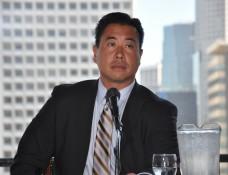
3. Leland Yee
The first mayoral election in San Francisco to feature ranked-choice voting and public financing has opened the way to a broad field of candidates. There are eight contenders who have served either as supervisors or as citywide elected officials — and if the interim mayor, Ed Lee, had kept his promise and stayed out of the race, this would be perhaps the most competitive field in modern history.
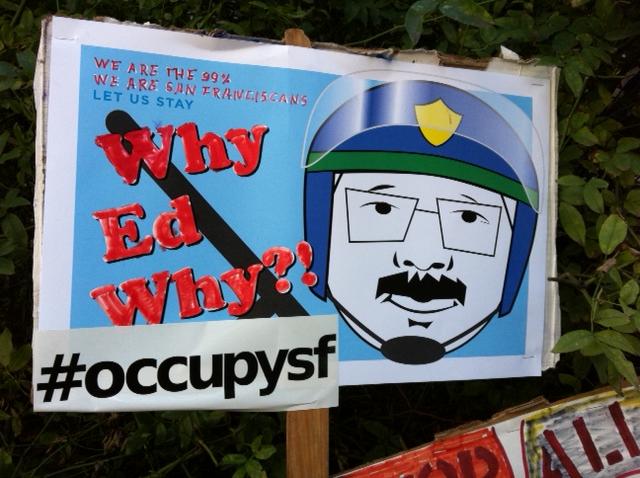
Unfortunately, Lee — who was chosen to replace Gavin Newsom only because he vowed to be a caretaker and not run for a full term — backed down from his promise, and, thanks to a boatload of special interest money, is now the clear favorite.
But Lee still lacks the support of a majority of the voters (polls show him with around 30 percent, meaning 70 percent are either undecided or voting for somebody else), which gives the rest of the field — or at least, a few of the top contenders — a fighting chance.
In some ways, Lee has been refreshing. After years of the arrogant and superficial Gavin Newsom, Lee has brought humility, a sense of humor and a degree of openness to the office that has won him fans across the political spectrum.
But frankly, the entire process that brought us to this position stinks of backroom deals involving some very unsavory characters. Lee, a career bureaucrat, wasn’t even interested in the job (and wasn’t even in the country) when the Board of Supervisors met to choose Newsom’s replacement. At the last minute, Newsom, Chief of Staff Steve Kawa, former Mayor Willie Brown and a few others orchestrated a deal that aced out Sheriff Mike Hennessy — the progressive choice — and put Lee in Room 200. And then, after denying for months that he had any intention of running in the fall, he changed his mind — telling Sup. David Chiu that he was “unable to resist Willie Brown and [Chinatown powerbroker] Rose Pak.”
In a recent interview, Lee said he would give Brown an A+ for his time running the city.
That’s a very bad sign. The years when Brown was mayor were awful. Between 1996 and 2001, some 20,000 people were driven out of San Francisco. Evictions ran as high as 200 a month. It seemed as if every day, another low-income family or senior citizen or artist community was forced out of the Mission to make way for rich dot-comers and illegal live-work lofts. At one point, Brown even said that the city was so expensive that poor people shouldn’t live here.
Developers ran the Planning Department. Pacific Gas & Electric Co. (which now has Brown on a juicy legal retainer) ran the Public Utilities Commission. The city was deeply damaged by cronyism and corruption. Anyone who thinks those years were anything other than a disaster has no business in Room 200, City Hall.
Even with all of that, we were willing to give Lee a shot. It’s been tough to find three candidates to endorse, and we were hoping he’d come talk to us, impress us, and leave us the option of putting him on the list. But after taking weeks to schedule an endorsement interview, he didn’t show up.
The Brown-Newsom legacy has been terrible for San Francisco. This is a city where the rich are getting richer, housing prices are out of reach for working-class people, tenants are getting screwed, affordable housing is falling far behind the need — and the Planning Department is talking about building housing for another 40,000 rich people, destroying blue-collar jobs in the process. City Hall badly needs change.
It’s critical to end the 16 years of regressive policies and bring in a mayor who is independent of the old, corrupt political machine. And while we are strong supporters of Sup. John Avalos, with ranked-choice voting, we believe that it’s important to round out the slate with candidates who also have a reasonable chance of winning.
Avalos is by far the best candidate, the strongest on the issues, the one who can be counted on to bring a progressive reform agenda and an age of innovation to City Hall. More than anyone else in the race, he understands the crisis facing the city and the need for dramatic action to protect tenants, poor people and what’s left of the city’s middle class. He realizes that San Francisco can’t continue to allow developers to build million-dollar condos without mandating a more-than equal amount of below-market-rate housing.
He realizes that the public sector is under attack nationwide, and that San Francisco needs to fight back — and that means raising taxes on the rich to preserve and expand public services. He told us he’d like to see the city’s revenue increase by $500 million a year by the end of his mayoral term — enough not only to halt the ongoing budget cuts but to begin to restore essential programs that Newsom gutted. He’s already begun exploring legislation to create a municipal bank to take money that now goes to Wells Fargo and Bank of America and use it to make loans to local small businesses.
He also realizes the danger of secrecy, corruption and cronyism in undermining faith in government. He’s been an excellent supervisor, and the city would be well served by an Avalos administration.
Our second choice is City Attorney Dennis Herrera. We’ve had problems with Herrera in the past — his office disqualified a referendum on redevelopment in Bayview Hunters Point on the basis of a ridiculous interpretation of state law that he could easily have challenged. He’s promoted gang injunctions that are anathema to civil liberties. His office has allowed city departments to keep secret more documents than necessary. He’s weak on housing, declining to call for a moratorium on new market-rate units until affordable housing catches up.
But he, as much as Newsom, was responsible for promoting and defending San Francisco’s landmark same-sex marriage campaign, he’s got a strong record on consumer and environmental protection — and on most issues, he’s a decent progressive. By all accounts, he’s a good manager. He has a solid grasp of public policy issues. He agrees that a big part of the solution to the city’s budget crisis has to be new revenue. He promised not only to introduce and lead a public power campaign but to appoint public-power-friendly commissioners to the Public Utilities Commission.
He would replace the Brown-Newsom hacks on key city commissions and in top administration positions — and we’re convinced that he’s principled enough to put an end to pay-to-play, unregistered lobbyists and the growing tide of sleaze in the Mayor’s Office. He’s a hard worker with strong executive experience, and San Francisco would be well served by a Herrera administration.
Then there’s the third choice — which was, to put it mildly, a challenge.
There are a few decent candidates out there who have good things to say. The Green Party’s Terry Baum, one of only three women in the race, is right on all the issues, but has no electoral experience — and honestly, little chance of winning.
Assessor-Recorder Phil Ting has been great on Prop. 13 and has gone after big business and the Catholic Church on tax issues; his “Reset SF” campaign relies a little too much on the idea that crowd-sourcing policy solutions will save the day, but we like Ting. Unfortunately, he’s barely registering in the major polls and his campaign hasn’t developed the kind of traction it needs to make him a viable challenger.
Supervisor David Chiu was a progressive once, and he claims he still is. He’s personable and accessible and votes the right way more than half the time. But he is single-handedly responsible for giving the conservatives control of the Board of Supervisors. He was a swing vote for Ed Lee for mayor, he supported the Twitter tax break, he’s trying to block Sup. David Campos’ move to close a loophole in the city’s health-care law — and in general, he’s too quick to compromise and move to the center.
Bevan Dufty is the only candidate who shows a consistent sense of humor (“I’m a little Strawberry Shortcake meets Hello Kitty”), and he’s often the star of the candidate forums. He’s the only candidate talking seriously about the crisis in the African American community. He opposed the sit-lie law. He’s got some wonderful wild ideas, like getting Virgin Airlines to decorate the inside of Muni buses to make the ride colorful and exciting. He actually cares about city workers. We appreciate having Dufty in the race.
But he’s been abysmal on tenant issues, and told us that he thinks landlord tenant battles “are too adversarial.” Overall, his voting record on economic issues has been consistently with the conservative wing of the board. We hope the next mayor finds a spot for him in city government; he has a lot to offer. But we just disagree on too many issues.
Jeff Adachi has been an excellent public defender and talks passionately about social justice. He has strong roots in the progressive community. We give him credit for forcing pension reform onto the agenda. But he seems a bit too willing to attack the public sector as the source of the city’s economic woes — he refused to support the last public power measure and his main budget proposal is to make city employees pay more for their pensions –without in any way pairing that with a hike in the taxes that big businesses and wealthy people pay. And his lone-wolf approach to the pension issue has been divisive and doesn’t play well in this labor town.
Joanna Rees has offered some interesting, independent ideas, but she’s never held any elective office or had any involvement in local politics.
That leaves Sen. Leland Yee. A classic lesser of the evils.
Yee has a very mixed record. He was a conservative School Board member who wouldn’t even talk about higher taxes and once tried to split the wealthier West Side off into its own school district. He had a pretty bad voting record on the Board of Supervisors, particularly on tenant issues. He didn’t support health benefits for transgender city employees. But on a board almost entirely controlled by then-Mayor Brown, he was something of an independent, one of only two or three supervisors ever willing to go up against the powerful mayor.
And he’s moved to the left in the past couple of years. He has fully apologized for his vote on transgender benefits, has been strong on labor issues — and is (and always has been) a leading voice on open government. He has 100 percent voting scores from the leading labor and environmental groups in Sacramento. He has the support of a lot of local progressive groups, including SEIU Local 1021. He is supporting the proposal by Sup. David Campos to close the loophole in the city’s health-care law. He told us he would oppose any effort to change district elections.
Yee makes us nervous. As we noted in a profile (see “The Real Leland Yee,” 8/30/11):
“He’s grown, changed, and developed his positions over time. Or he’s become an expert at political pandering, telling every group exactly what it wants to hear. He’s the best chance progressives have of keeping the corrupt old political machine out of City Hall — or he’s a chameleon who will be a nightmare for progressive San Francisco.
“Or maybe he’s a little bit of all of that.”
But in the end, after 24 years in public life, it’s safe to say that Yee is not part of the old machine, not part of the Newsom/Kawa/Brown team that put Lee in office, not part of anyone’s corrupt operation. He’s himself, for better and for worse, and he’ll clean house in the Mayor’s Office. And at a time when City Hall could too easily drift back into the very bad old days, we’re willing to take a chance on Leland Yee.
DISTRICT ATTORNEY
1. David Onek
2. Sharmin Bock
3. Bill Fazio
District Attorney George Gascon is not a bad guy. He was a better police chief than many of the people we’ve seen in that job. He has a history of standing up for immigrants under very, very difficult circumstances — as the chief of police in Mesa, Arizona he had to tangle with a rabidly anti-immigrant sheriff and a conservative population, and he emerged with solid credentials. He brought some much-needed professionalism and stronger management practices to the SFPD. He’s personable, accessible and works hard to stay in touch with the community. As D.A., he’s worked well with the public defender and has (finally) come around to opposing the death penalty.
We just wish that Gavin Newsom hadn’t decided that the way to advance his own political career and agenda was to put his police chief in the District Attorney’s Office.
There are reasons that no police chief in the United States has become a district attorney — certainly not in modern history. The D.A. and the cops have to work together, but they also have to have a certain degree of separation — or there are inevitable, unacceptable, unworkable conflicts of interest. And while Gascon talks about transparency, he’s fighting the release of a crucial memo on problems in the crime lab.
So we’re looking for a new district attorney, and there are three contenders, each of them with strengths and weaknesses.
Our first choice is David Onek, whose career in nonprofit and academic work leaves him short of the courtroom and management experience we’d like to see in the next D.A. but who has by far the strongest credentials and agenda for reform. He starts off every interview and discussion by saying that the criminal justice system in California is broken — not bent, not sprained, not in need of a little attention, but utterly broken. The entire premise that’s driven criminal law in the past several decades — that offenders, including nonviolent and drug offenders, need to be sent to prison for longer and longer terms — has proven a failure. “We’re arresting and prosecuting people just fine,” he told us. “We need to reform the system.” And San Francisco could make a national statement by electing a district attorney who wants to change criminal justice, not just make it work better.
Onek’s strong focus on juvenile justice would be a profound policy shift — juvie is typically a secondary thought in the justice system. Onek promised never to charge a youthful offender as an adult without going before a judge first — and would do that only in rare cases. His plan is to get kids out of the justice system before they become hardened criminals. He’s also talking about working on employment opportunities for ex-offenders. He has always been opposed to the death penalty, and we think he’s taking seriously the need for more aggressive investigation and prosecution of political corruption.
Onek has never tried a case — a major drawback. On the other hand, neither has the incumbent. We acknowledge that putting someone with negligible prosecutorial experience in the top job is a stretch — but the justice system is such a mess that we’re willing to gamble on an idealistic reformer.
Two qualified, experienced prosecutors are also in the race. We give a slight edge to Sharmin Bock, who has spent her career in the Alameda County District Attorney’s Office. Bock’s spent a lot of time working on crimes against women and portrays herself as in independent, which is both good and bad: Good because it would give her an outsiders perspective on the office, bad because, unlike Alameda County’s D.A., San Francisco’s prosecutor is part of the local political infrastructure. But she does have some background prosecuting bad cops — she was part of the office that went after Oakland’s notorious Riders.
Bill Fazio, who was a San Francisco prosecutor and is now a defense lawyer, shares Bock’s courtroom experience. And his days on the defense side of the aisle have changed some of his perspectives — the one-time tough-on-crime guy who in 1999 ran for this office as a death-penalty advocate now agrees that executions are a terrible mistake. He’s a little shaky on drug crimes (“it’s only a problem when it’s a problem”) and to this day, he says the prosecution of the Fajitagate cops was “ridiculous” (wrong, Bill — there was a systemic cover-up, and it’s too bad the top brass got away with it). But we’ll give him our final nod.
SHERIFF
1. Ross Mirkarimi
Mike Hennessey has been sheriff of San Francisco for so long, and has done such a great job, that hardly anyone in town really thinks about the politics of the office any more. We take it for granted that we have the most progressive sheriff in the state, maybe the nation. We just assume that the jails will be run well, that the deputies will be held to a high standard of behavior, that alternatives to incarceration will be part of the program, that evictions will be handled in a humane way, that anti-recidivism programs will be funded and given priority, that immigrants won’t face automatic deportation — and that San Francisco’s top elected law-enforcement official will be a leader in innovative ways to approach law enforcement.
But it wasn’t always that way, and it won’t necessarily be that way in the future. This is a crucial election, pitting a progressive reformer who comes from the civilian world against two career law-enforcement officers. It’s a chance to vote for someone who will continue Hennessey’s legacy or to risk turning back the clock. That’s why we’re strongly endorsing Ross Mirkarimi, and only Ross Mirkarimi.
Hennessey was never a cop. He started off as a poverty lawyer, working in prison legal services under Dick Hongisto, who launched the tradition of progressive sheriffs in this city. He ran as a civilian and won — and there’s a value to that. The Sheriff’s Office in San Francisco has no Police Commission, no Office of Citizen Complaints; the only oversight of 850 sworn officers is the elected sheriff.
Since Hennessey’s election, law enforcement lobbyists have managed to make changes in state law that bar anyone without formal police training from serving as a sheriff. Under current law, Mike Hennessey — who is widely respected by his peers — wouldn’t be allowed to seek the office.
Mirkarimi meets the qualifications. He went through the San Francisco Police Academy as an investigator for the District Attorney’s Office and graduated as president of his class. He holds the Peace Officers Standards and Training certificate and is thus in an unusual position: He can run for sheriff without being part of the law-enforcement fraternity.
It’s not as if Mirkarimi is a stranger to the issues. He spent much of his first term in office working on public safety. When he took office in 2005, District Five, particularly the Western Addition, was plagued with violent crime. He personally appeared at every homicide scene, pushed for more police on the streets and for foot patrols and worked to organize the community around crime — and it worked. The murder rate dropped dramatically.
These days, Mirkarimi is working on anti-recidivism programs and wants to bring that approach to the office. Which is critical: Over the next two years, as the state implements a prison-system realignment, hundreds more inmates will be entering the San Francisco County Jail system — and while Hennessey has made a lot of progress, almost three quarters of the people who leave jail in San Francisco wind up getting in trouble with the law again.
The person who knows the job best is Hennessey — and he’s made his position clear. When Hennessey decided three years ago that he was going to retire at the end of his term, he met with Mirkarimi and told him he’d like to see the supervisor as his successor. In fact, Hennessey told us, he offered to appoint Mirkarimi as undersheriff, so he could learn the job and run as the second-in-command. But that wasn’t possible — city law prohibits sitting supervisors from taking another city job (unless it’s an elected position).
If Hennessey had become acting mayor he would have appointed Mirkarimi sheriff. “Ross is the person I want to see in the job,” Hennessey said. He noted two important reasons.
First, he said, “one of the hardest parts of any law enforcement management job is maintaining discipline in the ranks. And that’s very hard to do if you’re an insider. I’ve always considered myself a citizen more than a peace officer, and that’s allowed me to do the job.”
Second, Hennessey told us, “One of the reasons I was successful is that I’ve been an innovator. I see Ross as having that spirit. And I don’t see that in the other two candidates.”
If John Avalos isn’t elected mayor, Mirkarimi could become the only truly progressive person holding citywide office in San Francisco. In seven years on the Board of Supervisors, he was not only a leader on environmental and public safety issues but was an utterly reliable progressive vote. He represents part of the next generation of progressive leadership in San Francisco, and we’re proud to endorse him for sheriff.
There are two other candidates running — Chris Cunnie, a former San Francisco cop and head of the Police Officers Association, and Paul Miyamoto, a captain in Hennessey’s department. Both have experience, and both vowed to carry on Hennessey’s progressive legacy. But we can’t support either of them.
Cunnie was head of the POA when that union opposed the police reform measure that gave the supervisors three appointments to the Police Commission. He made a habit of blasting progressive District Attorney Terence Hallinan for not being nice enough to the cops. And under his leadership, the POA opposed a promotions plan designed to bring more women and people of color into leadership positions in the SFPD. He’s done some good things, and told us he wants to work to get people with substance abuse problems out of the legal system and into treatment (he was a very successful executive at Walden House, the treatment facility). But he’s endorsed by POA President Gary Delagnes, who has been a major obstacle to police reform.
Miyamoto spent his life in law enforcement and has the management experience, but lacks the kind of innovative agenda that Hennessey told us the next sheriff needs.
The bottom line is simple: All three candidates spend a lot of time touting the legacy and great work that Hennessey did, and all of them vow to continue in his footsteps. But Hennessey himself says the only candidate who can continue his legacy is Ross Mirkarimi.
That’s a pretty clear choice.
San Francisco ballot measures
PROPOSITION A
YES
SCHOOL BONDS
A lot of the educational facilities in San Francisco are in need of repair and renovation, and some of these improvements are critical for meeting health and safety standards. They include elementary schools, middle schools, high schools and child development centers, many of which are located in the city’s southeastern neighborhoods. This measure would allow the San Francisco Unified School District to issue $531 million in bonds to repair and rebuild facilities.
The expenditure comes with a number of safeguards and strings attached. SFUSD is required by law to conduct an annual financial audit to ensure that funding is being properly used, and an independent citizens’ oversight committee will be created within two months of approval to inform the public about how the proceeds are used. Vote yes.
PROPOSITION B
YES
STREET REPAVING BOND
There are few more basic functions of government than maintaining the streets. This $248 million general obligation bond would fund improvements to benefit drivers, pedestrians, bicyclists, and public transit users. And if San Francisco doesn’t make this investment now, it will cost even more later to fix the roads once they’ve begun to degrade, so this really is a no-brainer. Some — particularly the right-wing, anti-tax scolds — might argue that keeping the roads in good shape should be part of the city’s annual budget rather than being paid for with borrowed money repaid by increased property taxes and rents. We might even agree, if the wealthy were being fairly taxed and the city was bringing in at least $248 million in additional annual revenue. But in this era of declining government resources, this bond is desperately needed. Most of it, almost $150 million, goes to resurfacing the streets, while $50 million goes to new improvements (including improved bike lanes) and $22 million each go to signal upgrades and sidewalk and ramp improvements. Leaders from across the political spectrum support it. Vote yes on B.
PROPOSITION C
PENSION REFORM
YES
PROPOSITION D
PENSION REFORM
NO
We’ll admit to a bit of political crankiness on this one: Our initial instinct was to oppose both of these measures. Sure, there are abuses in the city’s pension system (particularly among public safety employees). Sure, since the stock market crash, the cost to the city of funding the pension system has risen to levels unsustainable in our current fiscal environment. And at some point, the supervisors were going to have to deal with it.
But there’s a basic unfairness about all of this that bothers us: The city workers are being asked to give up part of their pay — but the wealthiest individuals and big corporations in San Francisco are giving up nothing. It’s part of the national trend — the poor and middle class are shouldering the entire burden of the economic crisis, and the rich aren’t suffering a bit.
That said, there’s political reality here — both of the pension reform measures will probably pass, and the one that gets more votes will take effect. And there’s really no choice between them — Prop. C, the measure written with the input and support of the mayor, the supervisors and labor, is the better option.
The two proposals are complicated. Both would reduce the city’s obligation to pay into the employee pension plan, particularly in years when the economy is bad, the stock market is down and the pension fund portfolio is shrinking. Both require city employees to work longer for lower pensions. Both have complex formulas for how that would happen.
Prop. D, written by Public Defender Jeff Adachi, has a slightly better formula for allocating the pain: Under his plan, employees making lower salaries would pay less than employees at the high end of the scale. His is also stronger on pension “spiking” — pensions would be based on the average pay of an employees last five years. Under the City Hall plan, that would be a three-year average.
But overall, Prop. C is a better measure — in large part because it reflects a legitimate process of collective bargaining. Adachi did his plan all by himself, with no input from labor or others at City Hall. Prop. C was hammered out in a series of meetings with members of the board, the mayor, and representatives of the city employee unions that will actually pay for the changes. That, generally, is how the process ought to work.
We would have demanded tax reform before we supported any pension reform, but given the options facing us, we’re going Yes on C and No on D.
PROPOSITION E
NO
CHANGING VOTER-APPROVED MEASURES
The right of the people to directly reform government laws when their elected representatives fail to do so is one of the most cherished and effective electoral reforms of the Progressive Era, when the initiative, recall, and referendum were established. But this measure would have the people voluntarily give up some of that power by allowing the Board of Supervisors to alter or repeal voter-approved ballot measures. Supervisor Scott Wiener, who pushed this measure with support from the big business community, never really explained why it was necessary or what legislation he was targeting — but among the potentially vulnerable measures are tenant protections and the city’s transit-first policy.
Wiener argued that this was just about not cluttering up the ballots with minor administrative tweaks. Do you see anything like that on the ballot? No, neither do we, and we aren’t buying that this is a problem in need of such a radical solution. The deck is already stacked against grassroots groups forced to resort to gathering signatures or persuading progressive supervisors to sponsor a ballot measure. Supervisors shouldn’t be able to undo what voters decide, not with a simple majority vote (after seven years) or even a two-thirds vote (after three years), particularly when they have plenty of power to place new measures on the ballot to address problems unintentionally created by voters. Vote no on E.
PROPOSITION F
NO
CAMPAIGN CONSULTANT RULES
Proposition F contains some straightforward, housekeeping-style changes to the city’s ethics rules governing the activities of campaign consultants. But it also includes a provision that’s fundamentally disempowering to the voters.
On the positive side, the measure would allow the Ethics Commission to accept reports from political consultants electronically, which makes sense, and it would require reports to be filed monthly rather than quarterly. But this is one of those cases of the bad outweighing the good. The definition of a campaign consultant would change from an individual earning $1,000 per calendar year on campaign activities to an individual earning $5,000 per year, effectively dimming the concept of sunshine in open government and making it harder for members of the public to learn of activities that affect local government.
More importantly, F flunks the smell test when it comes to accountability to voters, since it would make it possible for politicians, not just voters, to change the law governing campaign consultant activity. This is a departure from the current system, which requires the voters to weigh in on any change to campaign consultant law. This effectively grants elected officials greater control over the rules their own political consultants must follow, eliminating an important safeguard. Vote no.
PROPOSITION G
YES
SALES TAX INCREASE
San Francisco desperately needs new tax revenue to slow the steady decline in government funding and services over the last 10 years. We’d like to see a variety of options for voters to choose from, particularly options that primarily hit the richest individuals and corporations in the city (such as a local income tax, a commercial rent tax, transit impact fees, etc.). And if there were better options, we might not support Mayor Ed Lee’s plan to maintain the current sales tax rate rather than letting it drop by a half-percent as the state rate sunsets.
Sales taxes are regressive, hitting the poor harder than the rich, and not the best funding mechanism. We’re also not fond of this measure’s provisions to set that money aside to fund public safety programs and services to seniors and children, which is clearly a gimmick by tax-averse politicians to sell this measure to voters.
But the bottom line is that years of deep cuts have taken a disastrous toll on the city budget — threatening core social services and, yes, even public safety programs — and the city needs the money. Besides, this simply keeps the city’s 8.5 percent sales tax rate where it is, at a level we’ve already budgeted for. We’ll endorse Prop. G — but we look forward to seeing some more progressive measures on the ballot next fall.
PROPOSITION H
NO
NEIGHBORHOOD SCHOOLS
Prop. H is a policy statement that would have no immediate impact — but it’s still dangerous. It’s an attempt to undermine the School Board’s assignment policy, a system worked out over more than two years after dozens of hearings and meetings. The current system isn’t perfect — but there’s no way to create a perfect way to assign kids to schools in a city where some neighborhoods are still segregated by race, the quality of local schools is unequal, the district offers special programs at school sites scattered across the city — and parents want the right to chose schools outside their neighborhoods.
So the assignment process allows parents to chose seven schools, weighs the demographics of the family and makes an effort to both ensure diversity and give as many families one of their choices as possible. It works more than 80 percent of the time. Prop. H would mandate that geography — proximity to a school — was given the highest priority in assignment. That means kids in rich neighborhoods would go to better schools — and some schools would be effectively re-segregated by race. It’s a terrible idea, and needs to be defeated. Vote No.
The Guardian endorsements were prepared by our editorial board, Rebecca Bowe, Bruce B. Brugmann, Tim Redmond and Steven T. Jones.