Mayor

Mayoral staff member to direct America’s Cup Organizing Committee

The San Francisco Ethics Commission voted unanimously on March 14 to waive a pair of ethics rules in order to allow Kyri McClellan, a project manager in the Mayor’s Office of Economic and Workforce Development (OEWD), to become executive director of the nonprofit America’s Cup Organizing Committee (ACOC). The fundraising arm of the America’s Cup effort, ACOC’s role in bringing the world-famous sailing regatta to San Francisco is to secure corporate donations to offset city costs.

For months, McClellan has been on the city’s side of the negotiating table in discussions with ACOC to hash out a memorandum of understanding (MOU) concerning its fundraising obligations to the city. Without skipping a beat, she’ll now be interfacing with the city on the ACOC side. At press time, it was unclear whether McClellan had already started her new job, but her voicemail with OEWD was still in service. We left a message, but haven’t heard back.

McClellan sat down with the Guardian last November for an interview about the America’s Cup. She seemed knowledgeable and organized — and race organizers were clearly impressed with her performance. Regardless of how qualified she may be, however, the Ethics Commission’s decision to grant these waivers raises the question of whether McClellan received special treatment from the very entity that’s tasked with ensuring ethical government conduct.

The move also raises concerns about a revolving door between the Mayor’s Office of Economic and Workforce Development and the powerful private-sector interests behind the prestigious sailing event. Rather than preserving the ethical barrier that the rules intended, ACOC will now gain a team member who has detailed knowledge of OEWD’s inner workings.

In order to accommodate McClellan, commissioners agreed to waive two post-employment restrictions for city officials. The first is a yearlong post-employment communications ban, and the second prohibits former city employees from receiving compensation from city contractors for two years.

To better understand the intent behind these bans, the Guardian phoned the Ethics Commission and was connected to Deputy Executive Director Mabel Ng. She explained that the communications ban prohibits former city employees from taking private-sector positions that interface with the same department they worked for, “because you might have some undue influence.”

The two-year ban on receiving compensation from city contractors is meant to ensure that city officials engaged in negotiating contracts are not doing so to secure an outcome that would benefit them personally. “This again, just to make sure that when you are negotiating a contract … you’re doing this on behalf of the city,” Ng said.

Asked to explain the commission’s reasoning behind the granting McClellan the waivers, Ng said it was because “it determined that there would not be a potential for undue influence … because it seemed like [ACOC’s] interests were aligned with the city’s interests.”

As one ethics commissioner pointed out during the meeting, however, the same could be said of virtually any nonprofit entering into an agreement with the city.

Asked what would happen if ACOC somehow failed to raise the agreed-upon funds, placing McClellan in the position of having to explain the shortfall or re-negotiate with her former coworkers, Ng allowed, “If something like that happened, there might be a conflict.”

And what justification was given for waiving the ban on former employees receiving compensation from city contractors? “For that one, in the law itself, it says the commission may waive it … if it would cause extreme hardship,” Ng explained. “There would be a hardship, because … this is a great opportunity for her, and there was a short timeline for her to do it.”

Pressed on that point, Ng confirmed that the “hardship” in this case was the possibility of being barred from a great job opportunity, not the threat of financial impact or job loss.

The other issue, Ng said, was that without McClellan serving in that post, the committee’s fundraising effort might not be successful. “It just seemed like, you need to have somebody take charge,” she said. “The committee may suffer without her at the helm. If she were not able to do that, the committee — which plays a very crucial role in this — may not be able to meet its obligations.”

When we mentioned to Ng that the committee was composed of some very well-connected individuals, she noted that she was not familiar with its membership.

As we reported in previous coverage of the America’s Cup, ACOC is a veritable who’s who. Hollywood mogul Steve Bing, who’s donated millions to the Democratic Party and funded former President Bill Clinton’s 2009 trip to North Korea to rescue two imprisoned American journalists, is on the committee. Tom Perkins, a Silicon Valley venture capitalist, billionaire, and former mega-yacht owner, has a seat. George Schultz and his wife, Charlotte, are members. Billionaire Warren Hellman, San Francisco socialite Dede Wilsey, and former Newsom press secretary Peter Ragone are also on the committee. And that’s to say nothing of the less well-known investors, or the honorary members — elected officials serving at all levels of government. Would a powerful crew such as this have a difficult time raising money without McClellan’s leadership? Seems like a stretch, but that reasoning was offered as a factor in the decision to grant the waiver.

In an odd twist, McClellan might also be working alongside her former boss on the America’s Cup effort. In January, ACOC named its “first ever” Ambassador at Large: Lt. Governor Gavin Newsom.

While several ethics commissioners raised questions before granting the waiver, the vote ultimately came to 4-0 in favor of McClellan’s request. Board President David Chiu sent his legislative aide, Judson True, to speak in support of issuing the waiver.

From Wisconsin to San Francisco

101

Public Defender Jeff Adachi is scurrying all over town trying to explain how his version of pension reform is really “progressive.” It would be laughable if its implications weren’t so devastating for working people employed by the city and those living in and around San Francisco.

Adachi is rightfully worried that the events in Wisconsin and the national movement to defend union rights they have inspired will hurt his campaign. He is eager to say that he, unlike the Republicans in Wisconsin, supports unions’ rights to collective bargaining. But while Wisconsin Gov. Scott Walker and the Republican Legislature eliminated collective bargaining for their public employees to slash their wages, health care, and pensions, Adachi is slashing San Francisco’s workers pay and pensions through the ballot, effectively taking those items off the bargaining table. What’s the difference?

In both Wisconsin and San Francisco the deficit is the excuse to require cuts in public worker retirement and community services. Walker created Wisconsin’s deficit by granting huge tax cuts for corporations and the super-rich. In San Francisco, the deficit that cannot cover the city’s pension fund contributions was similarly brought on by three decades of tax cuts for corporations and the rich in California, compounded by former Mayor Gavin Newsom opposing nearly every revenue measure proposed throughout his seven-year reign — and by the city not contributing its share to the pension fund for all the years the stock market was doing well.

In determining how “progressive” Adachi’s measure is, we should, as always, follow the money. Here’s who’s is backing his proposal:

 Michael Moritz, the billionaire venture capitalist (and No. 308 last year on Forbes’ list of wealthiest Americans) who hosted fundraisers for Prop. B — Adachi’s first attempt last year at pension reform that was soundly defeated — and is a major financial backer of Republican Ohio Gov. John Kasich and the Ohio Republican Party Central Committee.

 Howard Leach, the billionaire financier who raised almost $400,000 for the George W. Bush campaign and was rewarded with the position of ambassador to France. He also contributes to the Republican Governors Association, whose major objective was the election of the new crop of conservative governors pushing anti-worker measures in Wisconsin, Ohio, Indiana, Florida, New Jersey, and other states.

 David Crane, who is a paltry multimillionaire former investment banker and close friend of and former top pension adviser to Republican former Gov. Arnold Schwarzenegger.

You have to wonder why these super-rich are suddenly so concerned about the parks and senior and youth programs, the mental health and drug abuse programs Adachi cites as being cut because of pension costs. If these billionaires were so moved, they could take the money they are sinking into Adachi’s measure and donate that to the programs. Or they could support some kind of progressive revenue measure that makes the wealthy downtown financiers and investors — who can afford to pay — ante up to protect the programs they claim to be concerned about.

No one is more concerned with the viability of the pension fund than those who plan to retire on it. That’s why the city’s unions are engaged in discussions with the city to develop real pension reform that is fact-based, principled, and compassionate to those trying to raise families in this economic climate.

So when Adachi’s high-priced signature gatherers (paid as much as $5 per signature to get Prop. B on the ballot) come to your neighborhood grocery store, just say “No!”

No, this is not what we call progressive policy. Not in Wisconsin, and not in San Francisco.

Roxanne Sanchez is president and Larry Bradshaw is San Francisco vice president of SEIU Local 1021.

How to move 200,000 people around America’s Cup

3

I’ve been wondering how the city plans to move the thousands of spectators expected to show up for a series of regattas in 2012 and 2013, leading up to and including the 34th America’s Cup Final.

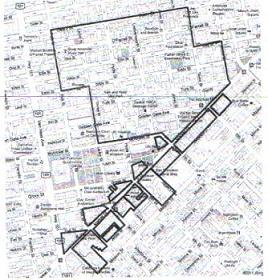
And today I had a chance to start perusing the city’s draft People Plan which aims to move up to 200,000 residents and visitors daily to the city’s waterfront and is promising to be “the most transit, bicycle and pedestrian-friendly major sporting event in history.”

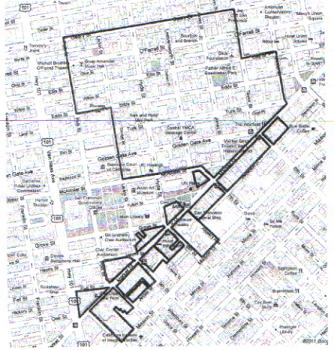
(Note to compulsive printers of online government documents: thanks to some nifty maps in this document, your printer may experience replication difficulties. For instance, I had to print everything but the maps on pages 13 and 14 of the document.)

Anyways, my preliminary review revealed that there is a special section in the draft dedicated to the “special transportation needs” of America’s Cup “participants” and that these participants include teams, event staff and, ta da!, accredited media.

“Special transportation needs for the ‘participant” group include but are not limited to staff access to race-related areas and other constricted waterfront areas,” states the plan. “These activities may require unique and frequent vehicle access to various sites.”

[Note to self: Remember to check out what is required to qualify as “accredited media” for a seat in one of the vehicles frequently accessing the area.]

Just kidding, and now, back to the needs of regular people who want to see the event.

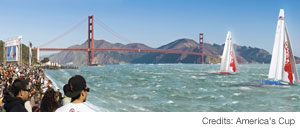
“Part of the appeal that brought the Events to San Francisco Bay was the opportunity to create a new kind of viewing experience for the highest level of competitive sailing, with races held in close proximity to urban areas and accessible shoreline instead of open seas,” states the plan’s “Strategic Adaptability” section.

“The novelty of this concept creates excitement but it also creates uncertainty, in that there are few instructive examples of how spectators will choose to attend an America’s Cup Final-level sailing event in the middle of a weekend day, or how a large event in San Francisco Bay during a weekday will affect the ability of Bay Area residents to commute to work or their other daytime destinations,” the section notes.

{This sounds like the city is trying to figure out how many of us will choose to be anywhere but San Francisco on the weekends in question, how many of us who work in San Francisco are planning to play hookey to attend week day events, and how many will show up even if the Bay is swathed in fog.]

Un its draft plan,  the city promises  “to seed the strategies set forth in the People Plan with a measure of adaptability to allow for the strategic deployment of a finite amount of transportation resources across the spectrum of transportation demands associated with the Events in accordance with the expected demands of each day.”

Beyond that, the document is divided into three main parts. One itemizes likely destinations, the next describes transportation strategies to serve these key destinations, and the final section describes “additional considerations and strategies.”

To learn a) which race facilities, waterfront locations, and race viewing locations will be accessible to the public, b) which bus, rail, cable car, bike, automobile and ferry routes will be modified, and c) which parking and special locations will be added, be sure to check out the plan. And then eave your comments at the city’s feedback site here.

For, as the city’s website warns, “The early draft of the People Plan is the product of analysis by city and SFMTA staff, with early input from stakeholder groups. The draft People Plan announced today will also undergo significant and further revisions, following input from members of the public, advocates, city and agency staff, the environmental community and other stakeholders in the coming months. Final approval and consideration will occur following the completion of environmental review.”

In other words, review the documents now and speak your piece soon, otherwise your ideas won’t have any chance of making it into the final plan.

Or at Mayor Ed Lee put it in a press release, “We are moving rapidly to meet our commitments to host a spectacular 34th America’s Cup in 2013 and set a new standard for sustainable event-planning. The America’s Cup is a unique opportunity to leverage our region’s transportation resources and our enthusiasm to deliver the most transit, bicycle and pedestrian-friendly international major sporting event in history for residents and visitors alike.”

And here’s hoping that we will all be “moving rapidly” when the regatta finally rolls into town…

The Guardian endorses: Jello Biafra for Mayor!

On every level, the San Francisco mayor’s race is critical. San Franciscans will decide whether a fiscally conservative candidate backed by downtown interests will continue Gavin Newsom’s legacy of gutting critical services while refusing to raise taxes, or if a progressive will lead the city into a new era.

San Francisco needs a mayor who is motivated not by campaign donations from corporate fat cats, but by true San Francisco values. The city needs some one who is ready to fight the war on fun, by boldly having more fun than the warmongers can possibly stand.

What San Francisco needs is Jello Biafra. In a rare early endorsement, the Guardian has thrown its support behind Biafra for mayor. Formerly the lead singer of legendary punk rock group the Dead Kennedys, he is now the front man of Jello Biafra and the Guantanamo School of Medicine. In 1979, Biafra ran for mayor against former Mayor Dianne Feinstein and former state Sen. Quentin Kopp. His campaign motto was There’s Always Room for Jello.

“I am honored,” Biafra said when he was notified that he had received the Guardian’s endorsement for mayor. “After all, how could I be any worse than the last elected mayor, who turned out to be a horrible Frankenstein of Dianne Feinstein, Gray Davis and Tom Cruise?”

Biafra went on to talk about his campaign platform. “I would immediately reverse all [Newsom’s] mean-spirited, bigoted, anti-homeless laws, and instead hire all the panhandlers to work for the city on a 50 percent commission to help balance the budget,” he said.

Biafra said San Francisco could take a cue from Austin, Texas for another revenue-generating measure. “I would … declare the outlying strip on 11th and Folsom to be a music district, like they did on Sixth Street in Austin Texas, instead of having the police harass them and shut them down. This has brought in a huge amount of tax revenue for Austin, by the way.”

As part of this plan, the city could “use the revenue to buy back KUSF for the people of the city,” he added.

Biafra has a refreshing approach to ending police misconduct and promoting reform within the San Francisco Police Department. “Police officers should be an elected position,” he told the Guardian. “Every four years, you run for election, voted on by the district you patrol. You couldn’t just run off and hide in Novato after beating and shooting people anymore.”

An honest mayoral candidate, Biafra doesn’t pull any punches – not even when it comes to criticizing the Guardian, which has been the only publication to endorse his campaign so far. “I think the Guardian blew it when they came out against the initiative to rename our sewage plant after George W. Bush,” he said. “I think that would be a great idea. I’ll bring that one back, too.”
Rather than minimum wage, Biafra would like to implement a maximum wage, which has been proposed by the California Green Party.

“What should the wage be? Let’s be generous: Two hundred grand, and then you’re done,” Biafra decided. “You can live really well on that kind of money. Everything else goes back to the public purse, and you’ve got schools, you’ve got health care for everybody, transportation for everybody, people can even go to law school on the public’s dime – and why not? I mean, what about just giving some of that money back to people who didn’t make the $200,000 and guarantee people income, instead of talking about welfare cheats?”

When he ran for mayor in 1979, Biafra generated a great deal of attention with his proposal to require businessmen to wear clown suits between the hours of nine and five. But he said this required some explanation: “This is only in downtown,” he noted, “because this is a response to Feinstein’s campaign to clean up Market Street. She meant the Tenderloin, I meant downtown where Chevron and Bechtel and Bank of America and the other looters hold court.”

http://www.youtube.com/watch?v=bPhfUOsT71c&feature=related

Biafra said he also planned to bring back another proposal from his first mayoral bid: “Create a board of bribery, to set fair standards and public rates for liquor licenses, building code exemptions, police protection, and most importantly, protection from the police,” he explained.

As for the re-naming of Candlestick Park, Biafra had a flash of inspiration during his endorsement interview. “Isn’t there those little bags of junk food under the brand Emperor Norton for, you know, dried bread chips and stuff? How about, if they’re going to sell off the name Candlestick Park — or for that matter, finally name our baseball stadium after something other than a phone company — how about Emperor Norton Park?” Biafra suggested.

Vote for Jello Biafra for Mayor of San Francisco. After all, as he told us, “I would definitely be better than the last elected mayor. Then again, so would a cockroach.”

Vote early, vote often, and vote like your city depended on it!

P.S.: If Jello Biafra doesn’t win, we’ll kill ourselves.

Jello Biafra and the Guantanamo School of Medicine will launch their latest album, Enhanced Methods of Questioning, at Slim’s on June 4.

April Fool’s. Kinda.

Editor’s Notes

2

tredmond@sfbg.com

Calling for painful spending cuts, it turns out, is the easy part. Calling for relatively painless tax increases requires real political courage.

— The New York Times, March 13

The Times is hardly a crazy socialist rag; it’s always been the voice of the establishment, more Democrat than Republican but never even close to radical. The Gray Lady certainly can’t be accused of fomenting class warfare.

But in a calm, measured tone this week, the paper made the exact point about New York State that some of us whose politics lean a bit more to the left have been making about San Francisco.

The governor of New York, Andrew Cuomo, has presented the state Legislature with an all-cuts budget. The Times suggests that the wealthier residents of the state should share just a small amount of the economic pain. Extending a surtax on high earners would be more than tolerable, the paper notes:

“A couple with $350,000 in taxable income would simply continue to pay an extra $3,500; a couple with taxable income of $1.5 million would continue to pay $31,800 more. Those payments would be more than offset by the federal tax breaks those same taxpayers got with the recent renewal of the Bush-era tax cuts.”

Of course, in New York, as here, those state tax payments are deductible from the already-too-low federal income taxes the rich are paying.

It’s too much to ask that the San Francisco Chronicle pick up that line; the Chron, out here on the Left Coast, is far more conservative than the stodgy old Times. But you’d think that in a city where Republican voter registration is below 10 percent, that local officials — including a mayor who calls himself “progressive” — would be able to go at least as far as a moderate national newspaper.

Because the argument is pretty simple and basic.

Cuts in public services fall hardest on the poor and middle class. Families that can afford to join a private club don’t have to worry when hours at the city pools are cut back; their kids learn to swim anyway. People with good health insurance can try to ignore the conditions at San Francisco General Hospital. Private school parents think the size of classrooms in the public schools isn’t a big factor in their lives.

But it all comes back to haunt us, every one of us, in this city. When the number of beds in General’s psych ward is cut from 80 to 20, more people with severe mental illness are out on the streets. Cutting public schools not only makes class divisions more deeply entrenched, it damages the city’s economy.

As the Times says, painful cuts are easy. Taxing the rich never seems to be on the table

Unregistered lobbyist

0

tredmond@sfbg.com

In 2007 and 2008, Pacific Gas and Electric Co. paid former Mayor Willie Brown a total of $480,000 for consulting work. Since Brown has never been utility lawyer, it’s almost certain that money has bought political advice and access.

Brown is also working for the owners of the Fairmont Hotel, which wants to tear down one of its towers and build as many as 180 luxury condos.

His public affairs institute shares office space with one of the most powerful lobbying firms in town. He meets with or talks regularly with the mayor and members of the Board of Supervisors.

Yet unlike dozens of others who seek to influence public policy for hire, Brown is not registered as a lobbyist at City Hall.

On the surface, it’s a fairly modest issue — all Brown would have to do to comply with the letter and spirit of the city’s law is to fill out a form, list his clients, and reveal which officials he’s been talking to. It would take him 10 minutes.

But the fact that someone who is widely acknowledged to be among the most influential power brokers in San Francisco refuses to disclose whom he’s working for leaves city officials and the public in the dark — and raises a long list of questions about the effectiveness of the city’s ethics laws.

There’s a reason city law requires people who seek to influence city officials for money to disclose what they’re up to. When elected officials, commissioners, or department heads meet with advocates, they need to know who’s paying the bills. If, for example, Sup. Jane Kim has breakfast with Brown (which Brown himself reported on in a recent column in the San Francisco Chronicle), she needs to know: Does he have a client with an agenda? If he asks her to meet with someone, is he just looking out for the interests of the city — or is he pushing a paid special interest?

When Brown has dinner with Mayor Ed Lee (as he did several weeks ago) the voters need to know: Is this dinner companion pushing the mayor to make policy decisions that might help a private interest?


THE RULES

The definition of “lobbyist” in city law is designed to avoid putting special requirements on advocates who push issues on their own or for purely political reasons. A neighborhood activist pushing for a stop sign or better police patrols doesn’t have to register. Neither does a restaurant owner looking for a permit to put tables on the street. The only people who have to register are those who represent a client who pays them more than $3,000 in any given three-month period.

Lawyers are exempt if they’re contacting city officials purely about specific pending litigation or claims. Labor leaders are exempt if they’re talking about wages or benefits for their union members.

The requirements aren’t onerous. Lobbyists simply disclose their clients, the issues they’re working on, the city officials they have contacted, and any campaign contributions they’ve made.

There’s no doubt Brown meets the financial threshold in at least one instance. Documents on file with the state Public Utilities Commission show that PG&E paid him $280,000 in 2007 and almost $200,000 in 2008. And although Brown is a lawyer, there’s no indication that he is representing PG&E in any litigation against the city.

On the other hand, PG&E is fighting hard to derail the city’s community choice aggregation program. Is Brown part of that effort? There’s no way to know.

It’s clear he talks to local officials regularly. Most members of the Board of Supervisors we contacted said they had talked to Brown at some point in the past year. “He called me to ask how he could help with the local hire legislation,” Sup. John Avalos told us. “I told him he could call (then-Sup.) Bevan Dufty. He said he would, but I don’t know if it ever happened.” Sup. Sean Elsbernd told us he speaks to Brown about “the state of local political dynamics,” but said he can’t remember being lobbied on any particular issue.

Insiders say that’s typical — Brown rarely lets anyone know exactly what his interests are. “The talent of Willie is his ability to create plausible deniability,” one city official, who asked not to be named, told us.

But when Brown is involved, things have a funny way of happening. Take the Fairmont Hotel.


FRONT OF THE LINE

The Fairmont’s owners, who include the Saudi royal family and a group of American investors, want to tear down one of the hotel’s towers, eliminate several hundred hotel rooms, and replace them with high-end condominiums. That requires a city permit — legislation by former Sup. Aaron Peskin limits the number of hotel rooms that can be converted to condos and requires applicants to submit to a lottery for the right to convert.

The Fairmont applied for a permit in 2009, and won tentative approval. But in October 2010, the Planning Commission refused to certify the project’s environmental impact report. With no valid EIR, the permits expired, meaning the hotel would have to go back and reenter the lottery, with no guarantee of success.

So the Fairmont owners are seeking special legislation that would allow them to submit a new EIR without going to the back of the line — in essence, an exemption from the lottery. So far there’s no champion on the Board of Supervisors, and the hotel workers union has been dubious about the project, fearing it will cost union jobs in the long run.

But early in March, Mayor Lee quietly submitted his own legislation to the board, offering the Fairmont everything the owners want.

Who’s working for the owners? Willie Brown.

Bill Oberndorf, part of the local ownership group, told us Brown was an “advisor” to the project. “Nobody in the city has more knowledge about how to get things done than Mayor Brown,” he said.

So did Brown talk to Lee before the mayor introduced his Fairmont bill? And isn’t that a valid question? At press time, Lee’s office hadn’t responded to my questions. But if Brown was a registered lobbyist, he’d have to report that information.

Who else are Brown’s clients? Since he doesn’t register, there’s no list. But there are some clues.

For example, the headquarters of the Willie Brown Institute is situated at One Market Plaza, Suite 2250. That’s the same address as Platinum Advisors, the high-powered lobbying firm founded by Darius Anderson. Among the firm’s clients: AECOM, the engineering and construction giant, which has a $147 million contract on the Chinatown subway project; PG&E; and Sutter Health, which wants to build a $1 billion hospital on Van Ness Avenue.

Others who lobby regularly at City Hall don’t always register. Rob Black, who works for the Chamber of Commerce, is a constant presence.

Black told us the chamber used to be considered a “registered lobby entity” that was required to report all contacts with public officials and the issue involved. But the Board of Supervisors changed that law last year, requiring lobbyist registration only from individuals who are paid at least $3,000 per quarter for lobbying. Furthermore, the definition of lobbying doesn’t include attending or speaking at public hearings or writing letters. So while the SF Chamber’s Black, Steve Falk, and Jim Lazarus all lobby city officials, Black said, none have exceeded that threshold. “If we hit the monetary threshold, we’ll start filing individually,” he said.

The fact that Brown is a lawyer doesn’t excuse him from registering, said Ethics Commission director John St. Croix “If someone is paid specifically to lobby government, they should register,” St. Croix said.

Sup. Ross Mirkarimi told us that the city needs to take a look at the lobbyist registration law to make sure that everyone who has private interests is properly registered.

Elsbernd said that others — particularly labor leaders and union staffers — also regularly lobby but don’t register. And while the law may allow them to skate underneath (like Black), there’s a huge difference between, say, Labor Council Executive Director Tim Paulson appearing at City Hall and Brown meeting with city officials.

When Paulson appears, there’s no doubt in anyone’s mind whom he represents. The same could be said of Black. Although the chamber has many members, it’s clear that he’s pushing the interests of the big-business community.

On the other hand, Ken Cleaveland, public affairs director of the Building Owners and Managers Association, is duly registered with the Ethics Commission.

Brown — as is his typical practice — didn’t return my calls seeking comment. But by flouting the rules, he’s able to operate completely behind the scenes, influencing policy decisions in secrecy, with no accountability whatsoever. That’s a violation of the exact reason the lobbyist registration laws exist.

The lobbyist loophole

1

EDITORIAL As the stories in this issue show, open government laws are critical to democracy. Without the city’s sunshine law, we wouldn’t know how the proposal to give Twitter a tax break ballooned into a major giveaway. Without the sunshine laws, Tim Crews, the embattled publisher of the Sacramento Valley Mirror, wouldn’t have been able to use his small paper to hold public officials accountable.

That’s why the laws on the books need to be enforced — and sometimes strengthened. One example in San Francisco is the lobbyist registration requirement.

Here’s the problem: Former Mayor Willie Brown, who now works for at least two major outfits with business before City Hall. As Tim Redmond reports on page 10, Pacific Gas and Electric Co. paid Brown some $480,000 in 2007 and 2008. And although Brown is a lawyer, nobody can honestly believe that was for legal work. He was clearly paid to give the embattled utility political advice and to pull political strings. And PG&E has major interests at City Hall — San Francisco is trying to set up a community choice aggregation system that PG&E opposes, and (of course) the utility has spent almost 90 years trying to block public power in this town. There are dozens of other city issues, from facility safety to the franchise fee, that affect PG&E’s bottom line.

Has Brown tried to influence city officials on behalf of the utility? The public has no way to know. By law, any individual who lobbies for a private client (and earns more than $3,000 a quarter doing so) has to register with the Ethics Commission, reveal his or her clients, and report on all contacts with city officials. Brown has never done that.

Brown also works for the owners of the Fairmont Hotel, who want the right to convert hotel rooms to condos. Mayor Ed Lee just submitted legislation giving the hoteliers what they want, and Brown is Lee’s political mentor. Connection?

The public has a right to know who’s trying to do what deals behind closed doors; that’s why the city has a lobbyist registration law. The voters have a right to know whether lobbyists are giving money to elected officials; that’s why the law requires registered lobbyists to itemize those contributions. But it’s not always honored — and as Brown shows, it can be openly defied. And nothing happens.

Part of the problem is that the Ethics Commission has been far too lax in pursuing enforcement of the laws. The agency lacks the resources to do serious investigations. As a result, its director John St. Croix told us, all the staff can do is respond to complaints. But even with the limited money it has, the commission can do a lot more. Public hearings on the failures of lobbyist registration and campaign contribution reporting would be a good first step. And how hard would it be to cross-check campaign filings with lobbyist filings to see which lobbyists don’t properly report their contributions? A simple computer program could do that in a few minutes.

The commission also needs to do a better job making its funding case to the supervisors. The utter lack of serious enforcement of laws involving powerful interests doesn’t instill confidence in the agency.

But the law is also vague in parts, and the supervisors need to fix it. A clearer definition of “lobbyist” is a clear mandate. And enforcement needs to be increased. Willful violation of the state’s Political Reform Act is a misdemeanor crime. Violating the city’s lobbyist law should be too.

Board considers extra $75.4 million for Mission Bay redevelopment

0

UPDATE: An earlier version of this post reported that the Board was meeting in closed session. This was incorrect.

The Board is meeting today  to consider amending the San Francisco Redevelopment Agency’s (SFRA)  budget to issue an additional $70 million in tax increment bonds and appropriate $75.4 million ($70 million in bond proceeds, plus $5.4 million tax increment). The request, which comes on the heels of last year’s $64 million request, represents a 109.4 increase of tax increment bonds in 2010-2011. The city says thiis has nothing to do with Gov. Jerry Brown’s proposal to eliminate redevelopment agencies. But the last-minute timing of today’s session looks a tad fishy at best. And it’s playing out as a vote on Treasure Island’s final environmental impact report approaches, and against a backdrop of extreme funcertaintly related to all things Redevelopment, as Mayor Ed Lee and other city leaders try to figure out ways to prevent or reduce the affordable housing fallout from the governor’s elimination proposal.

According to a Budget and Legislative Analyst’s summary of today’s request, the requested bond issuance and expenditure is part of the “SFRA’s normal course of fulfilling its obligations under the tax increment allocation pledge agreements between the city, SFRA and FOCIL-MB (Catellus’ successor entity at the Mission Bay redevelopment sites), and not as a result of the Governor’s proposal to eliminate local redevelopment agencies. Ms. Lee [deputy executive director at the SFRA] states, that, as of the writing of this report, the impact of the Governor’s proposal on the Mission Bay Redevelopment Project is currently unclear and ambiguous as to whether approval of the Governor’s proposal would affect the requested bond issuance and expenditure authority.”

“At the time of the development and approval of the FY 2010-2011 budget, the Agency and Tax Assessor did not have available tax roll information that resulted in a significant increase in property taxes in Mission Bay due to the accelerated assessment agreement between the Assessor and the Agency,” states today’s Board resolution that Mayor Lee sponsored, explaining why there’s a request for an additional $70 million in bonds, so soon on the heels of the $64 million that the Board approved last year.

“The Agency wishes to amend its budget for the fiscal year 2010-2011 to permit the receipt of additional tax increment of $5.44 million and bond proceeds in the amount of $70 million for the purposes of low moderate housing and for the reimbursement of public improvements made by Catellus pursuant to the tax increment allocation pledge agreement between the City and County of San Francisco, San Francisco Redevelopment Agency and Catellus made in November 16,1998 for Mission Bay North and South,” the resolution continues.

 Mission Bay North and South are two separate redevelopment areas that encompass 303 acres, bounded by King Street and AT&T Park on the north, the San Francisco Bay and the I-280 freeway on the east and west, and Mariposa Street to the south, according to Redevelopment Agency documents.

The Budget and Legislative Analyst notes that of the $5.4 million in additional tax increment, an estimated $3.48 million would fund a portion of the Agency’s required educational revenue augmentation fund payment to the state for FY 2010-2011. And that the remaining $1.95 million would be distributed to tax entities, with $870,400 to be expended on the agency’s low and moderate income housing fund.

 The BLA notes that the proposed sale of $70 million in tax increment bonds will provide $60.345 million bond proceeds, including $12 million (20 percent) to fund the construction of 1180 4th Street, a development of 150 units of family rental housing, including 25 units for formerly homeless families and $48. 276 million (80 percent) to reimburse Catellus’ successor, FOCIL-MB, LLC, for public infrastructure development that FOCIL-MB constructed..

“If the proposed resolution is approved, of the $177 million total estimated debt service, $100, 890,000 or 57 percent will be paid from the City’s General Fund. The City’s General Fund estimated additional annual cost would be $3,648,000 for the first 20 years, decreasing to $2,793,000 for the next ten years.” The BLA concludes, explaining that approval of the proposed resolution is a Board policy decision because it adds up to a total General Fund cost of more than $100 million.

 According to the BLA report, Amy Lee, SF Redevelopment Agency deputy executive director, the requested $70 million in tax increment bonds would be sold in late March 2011, “such that no debt service payments would be required in FY 2010-2011.

 The BLA also notes that if the Board approves the proposed resolution, the net effect of each property tax dollar expended for tax increment that is provided to SFRA would result in a reduction of $0.57 on each dollar from the city’s General Fund.

“In other words, for each tax increment dollar provided to SFRA, the City would no longer have to provide payments to other tax entities,” the BLA observes.

These entities include the city’s Children’s Fund, Library Preservation Fund, Open Space Acquisition Fund, and the General City Bond Debt fund, the Community College district, the San Francisco United School District, BART, and the Bay Area Air Quality Management District, which total approximately $0.43 of each property tax dollar.

It’s because of these property tax dollar equations that the annual cost to the city’s general fund for proposed increased debt service would rise, if the Board approves today’s Redevelopment resolution, by more than $100 million over the next 30 years.

And as local Democratic Party chair and former Board President Aaron Peskin explains, there’s nothing much the Board can do about the deal today, but they might want to reconsider getting into more deals like this at Treasure Island and beyond, in future.

“A deal is a deal is a deal,” Peskin said. ‘So, there’s nothing the Board could do differently, but that’s $3.648 million that otherwise would be going into the General Fund, and it’s a sign we should pay attention to, when considering Treasure Island, as deals like this will continue to impoverish the General Fund.”

 “Even though they deny it has nothing to do with Gov. Jerry Brown’s pending legislation to eliminate redevelopment agencies, I have never seen something scheduled so quickly,” Peskin added, noting that the Board’s agenda is published Thursday evening or Friday morning, but this item wasn’t on that agenda, hence the need to publish a separate notice.

Meanwhile, Treasure Island’s final environmental impact report has been released, and the way the current plan looks, will forever alter our view of the Bay.

“It will have enormous impacts on services for the City and traffic for the entire Bay Area,” Saul Bloom, executive director of Arc Ecology, told the Guardian.

On April 7, a joint session of the San Francisco Planning Commission and Treasure Island Development Authority will be meeting to consider certifying the EIR, but Arc is asking for an extension of two more weeks to provide the public with 42 days for review.

“Fourteen additional days for public review is a very modest request for a project with such significant impacts yet, the City has thus far refused,” Bloom notes.

Editorial: The Willie Brown loophole

0

As the stories in this issue show, open government laws are critical to democracy. Without the city’s sunshine law, we wouldn’t know how the proposal to give Twitter a tax break ballooned into a major giveaway. Without the sunshine laws, Tim Crews, the embattled publisher of the Sacramento Valley Mirror, wouldn’t have been able to use his small paper to hold public officials accountable.

That’s why the laws on the books need to be enforced — and sometimes strengthened. One example in San Francisco is the lobbyist registration requirement.

Here’s the problem: Former Mayor Willie Brown, who now works for at least two major outfits with business before City Hall. As Tim Redmond reports on page 10, Pacific Gas and Electric Co. paid Brown some $480,000 in 2007 and 2008. And although Brown is a lawyer, nobody can honestly believe that was for legal work. He was clearly paid to give the embattled utility political advice and to pull political strings. And PG&E has major interests at City Hall — San Francisco is trying to set up a community choice aggregation system that PG&E opposes, and (of course) the utility has spent almost 90 years trying to block public power in this town. There are dozens of other city issues, from facility safety to the franchise fee, that affect PG&E’s bottom line.

Has Brown tried to influence city officials on behalf of the utility? The public has no way to know. By law, any individual who lobbies for a private client (and earns more than $3,000 a quarter doing so) has to register with the Ethics Commission, reveal his or her clients, and report on all contacts with city officials. Brown has never done that.

Brown also works for the owners of the Fairmont Hotel, who want the right to convert hotel rooms to condos. Mayor Ed Lee just submitted legislation giving the hoteliers what they want, and Brown is Lee’s political mentor. Connection?

The public has a right to know who’s trying to do what deals behind closed doors; that’s why the city has a lobbyist registration law. The voters have a right to know whether lobbyists are giving money to elected officials; that’s why the law requires registered lobbyists to itemize those contributions. But it’s not always honored — and as Brown shows, it can be openly defied. And nothing happens.

Part of the problem is that the Ethics Commission has been far too lax in pursuing enforcement of the laws. The agency lacks the resources to do serious investigations. As a result, its director John St. Croix told us, all the staff can do is respond to complaints. But even with the limited money it has, the commission can do a lot more. Public hearings on the failures of lobbyist registration and campaign contribution reporting would be a good first step. And how hard would it be to cross-check campaign filings with lobbyist filings to see which lobbyists don’t properly report their contributions? A simple computer program could do that in a few minutes.

The commission also needs to do a better job making its funding case to the supervisors. The utter lack of serious enforcement of laws involving powerful interests doesn’t instill confidence in the agency.

But the law is also vague in parts, and the supervisors need to fix it. A clearer definition of “lobbyist” is a clear mandate. And enforcement needs to be increased. Willful violation of the state’s Political Reform Act is a misdemeanor crime. Violating the city’s lobbyist law should be too.


A meeting of Mayor Lee and Bloomberg’s minds

0

Mayor Ed Lee described New York Mayor Michael Bloomberg as “a model of mine” as the two men exchanged gifts in the Mayor’s Office, and reporters unsuccessfully tried to figure out which of the two men is taller.

Bloomberg gave Lee a box of golf balls, Lee gave Bloomberg a trolley bell, organic hot dogs, a lifetime membership to the San Francisco Museum of Modern Art, and the two men had a meeting of the minds when it came to the need for big cities to reduce greenhouse gas emissions.

Lee prefaced his gift giving by saying he intended to make Bloomberg an honorary citizen of San Francisco.

“Does that mean I’ll have to pay taxes?” Bloomberg quipped.
“If they go up, you’ll be the first to know,” Lee replied.

Bloomberg said it was “fun to talk” with Mayor Lee about energy conservation and environmental activism. “Things like the environment are things mayors have to deal with every day,” Bloomberg said, noting that cities account for 70 percent of the world’s greenhouse gas emissions.”

Bloomberg praised San Francisco for approving an ordinance that requires owners of non-residential buildings to make public how much energy each building consumes each year. The legislation is meant to improve energy efficiency in existing buildings, reduce greenhouse gas emissions, lower energy costs and create green jobs. It also requires commercial buildings over 10,000 square feet to conduct energy-efficiency audits every five years.

“Each can profit from each other’s experiences,” Bloomberg said, noting that because NYC has a more carbon efficient mass transit than most U.S. cities, its buildings are responsible for creating 80 percent of NYC’s emissions. 

Asked about a lawsuit that his transportation commissioner Janette Sadik-Khan reportedly triggered by installing a bike lane along the boundary of an affluent Brooklyn neighborhood, Bloomberg flashed a smile that didn’t suggest he thinks Sadik-Khan is now a PR liability for his administration.

“Change is difficult,” Bloomberg replied, acknowledging that there are “battles between those who drive cars and ride bikes.”

“Mass transit is the solution for every big city,” he continued. “And the bicycle is one of the answers, but they can be dangerous. Roads are not just for motor vehicles. They are also for bikes and pedestrians. The key is pedestrian safety.”

“Our transportation commissioner is very innovative,” Bloomberg continued, referring back to the reportedly embattled Sadik-Khan. “She therefore does come under criticism, but I should be the one taking the heat, not her!”

“Closing Times Square was one of the most successful things we’ve done,” he added, referring to another initiative that Sadik-Khan championed, in addition to installing bike lanes on crowded streets and proposing to shut part of NYC’s 34th Street to cars.

Asked for his impressions of San Francisco’s homeless problem, Bloomberg pointed out that he had just traveled straight from the airport to City Hall by BART, and therefore didn’t have a deep grasp of the issue locally. “I don’t know the specifics,” he said.

But he was happy to outline how New York set “a very aggressive goal” of reducing its homeless population that it then failed to meet it, in part because the economy tanked. “The numbers are down about 13 percent each year,” he said, noting that he hasn’t seen the 2010 statistics.  “But only a small number sleep on the streets,” he continued, noting that folks in NYC, “have to work to qualify for rental assistance.”

Asked to give Lee some mayoral advice, Bloomberg said, “The public wants elected officials who are genuine, who are doing things for what they think are the right reasons.

Asked to give Lee specific advice on how to stay out of trouble as the city’s top official, Bloomberg joked that Lee should move to New York until the end of the year, when his term as interim mayor expires. “But then he’d get into trouble for doing that,” he said. And then he and his coterie of security guards and photographers were out of the press conference and into the elevators, faster than a cabbie trying to beat a red light on a sweltering night in the Big Apple.

Census no surprise to outmigration taskforce

37

 “San Francisco is losing its black population faster than any other large city in the United States — and the trend is unlikely to stop unless the city takes immediate action.” That’s what the Guardian wrote in August 2008, when we covered a draft report that the Mayor’s African American out-migration task force produced.

But despite the taskforce’s dire warnings, the Mayor’s Office didn’t hold a press conference when the final report was published in 2009. Instead, it was quietly posted on the Redevelopment Agency’s Website, where you can still find it today tucked into the bottom lefthand corner.

And despite the report’s numerous recommendations, taskforce members say that little funding had been made available to turn their ideas into realities.
So, it comes as no surprise that San Francisco’s black population continues to shrink while that of Asian Americans and Latinos make big gains.
According to newly released 2010 Census figures, San Francisco’s total population grew by 3.7 percent to 805,235 in the past decade, the Asian and Latino populations each swelled by 11 percent, the white population shrank by 12.5 percent—and the black population shrank by 22.6 percent.

This means, San Francisco now has 337,451 white residents (42 percent of total population), 265,700 Asian residents (33 percent of population), 121,774 Latinos (15.1 percent of the population), and 46,781 blacks (5.8 percent of population).
In 2009, the out-migration task force, which used 2005 US Census and state demographic data, placed the city’s African American population at 1/16 of San Francisco’s total population, compared to its two largest minorities, Asians and Hispanics, which made up 1/3 and 1/8, respectively.

“We saw that the African American population has declined by 40.8 percent since 1990, and as a share of the population decreased from 10.9 percent in 1990 to 6.5 percent in 2005,” the AAOMTF’s 2009 report states.

(As it happens 6.5 percent of the population in 2005 translated into 46,779 black residents. So, while the black population appears to have grown by two people, when viewed as a share of the city’s entire population in 2010, it can be seen to have shrunk by 22.6 percent, reflecting a flight to the East Bay and other states.)

“That’s not enough people to fill Candlestick Park,” Fred Blackwell, executive director of the San Francisco Redevelopment Agency, stated in 2008, during a presentation about the taskforce’s draft report. He cited a lack of affordable housing and educational and economic opportunity, severe environmental injustice, an epidemic of violence, and lack of cultural and social pride, as the reasons blacks were leaving.

But sadly not much has changed, including the frustration of local black leaders.
“We could paper the walls of this building with reports that have been made on this issue,” task force chair Aileen Hernandez said in 2008, pointing to similar studies that were done in 1995 and 1972, while fellow task force member Barbara Cohen said the draft recommendations “should have long ago been called the final recommendations.”

Reached by phone today, AAOMTF task force member Sharen Hewitt recalled how she and London Breed called for the creation of the taskforce, only to see many crucial recommendations ignored.
“We called for the creation of the taskforce in face of an imminent threat to the sustained presence of African Americans in San Francisco, especially low-income residents,” Hewitt said. “The taskforce’s draft report did not capture 80 percent of the discussion.”
Hewitt says a key flaw was the absence of a “real plan to address the fate of  African Americans who live in subsidized low-income housing.”

Fellow AAOMTF task force member Regina Davis, director of the San Francisco Housing Development Corporation, agrees that a lack of action didn’t help.
“Today’s numbers could have looked different based on actions,” Davis said.
She hopes that today’s increasingly dire financial system will be a call to action.
“Especially with the threat of the elimination of redevelopment agencies, because a lot of the housing for low-income folks is jeopardized in ways we haven’t experienced for three decades,” she said. “People are understanding that this is a market they haven’t seen before.”

Davis remains optimistic that the 2010 Census figures will galvanize folks.
“I’ve been mystified why people haven’t protested the war more,” she mused. “Maybe they will now that dollars they have taken for granted aren’t on the table. And maybe they’ll start to realize that tax cuts cost money. I don’t know where folks get the notion that tax cuts are free.”

Other AAOMTF members say the whole taskforce process was very discouraging for those who worked so diligently to find solutions.

”After all that intense work, we were all left with no notable action taken, (At least no action that I am aware of),” wrote AAOMTF member Larry Saxxon in an email. “At the least, the report should have been released to the general public for their review and feedback. It left me questioning the motives for the process from a political point of view.”

Saxxon said that because of feeling a great deal of dissatisfaction with the AAOMTF’s Education Committee’s findings, he and fellow taskforce member Barbara Cohen wrote a minority report on the needs for greater educational services for the African American community.

In their report, Cohen and Saxxon noted that there was a need to increase awareness and advocacy for African American students who are classified as special needs students.

And in his email, Saxxon noted that as an African American and an active advocate for the African immigrant community, he strongly suggested that AAOMTF include the presence of the African immigrant community in the final report as this was the only known incoming source of Blacks arriving in San Francisco. 

“From the statistical data that we had access to, we know that the African immigrant comprises, at a minimum, of 10 percent of the overall African American presence in San Francisco. This 10 percent is only counting those that are documented.  When we view the ratio of undocumented African immigrants… that number increases considerably! Sadly, that fact never manifested in the final report.”

“This is an issue that is very dear to my heart, as I too feel like an endangered species as an African American man and father trying to survive, and indeed thrive, in San Francisco,” he said. “The prospects seem to get dimmer as the months and years go by.”

Saxxon was pleased Mayor Ed Lee “did at least acknowledge the nature of
the problem and also by his alluding to the fact that some concerted action
needs to be taken.”

And it’s true that Lee has signaled a commitment to the African American community through his support for Sup. John Avalos’ local hire legislation, which kicks in March 25. (The AAOMTF identified jobs, as well as housing, education, economic development, cultural and social life, and public safety and quality of life as key policies and practices that can “help stem the outflow and even entire more African-Americans to make a home and establish roots in San Francisco, while making them feel like an integral part of the City’s stability and vibrancy.”)

But will Lee take other significant steps to stem the outflow in his ten remaining months in office (assuming he doesn’t throw his hat into the ring of the mayoral race, after all?) And will the plight of the city’s African American community even become an issue in the 2011 mayoral race?

An agenda as clear as 1, 2, 3

16

Downtown hates democracy. Entities like the San Francisco Chamber of Commerce and San Francisco Chronicle prefer elections with well-financed frontrunners willing to do their bidding. They don’t like messy democratic exercises like this year’s mayoral elections, in which the crowded field of solid, evenly matched candidates will be looking for support from progressives as part of their ranked-choice voting strategies and any of several candidates could win.

That’s why the Chamber/Chronicle are hyperventilating about the ranked-choice voting system, which resulted in a candidate from outside the acceptable establishment becoming mayor of Oakland, a result they fear might also happen here. The latest attacks come in a pair of misleading stories in today’s Chronicle, based on a loaded Chamber poll.

The main story ran front page above the fold, the big headline calling the seven-year-old voting system “a mystery” because the poll found many voters didn’t know precise details about how votes are tabulated. And even though the poll found “voters evenly split on whether they prefer the current system or a runoff,” according to the story, columnist CW Nevius writes that the poll shows voters “would prefer a two-candidate runoff.”

No, Chuck, you and your fearful downtown cronies prefer elections like that: costly, low-turnout elections in which the better financed and more conservative candidate wins every time. But most people are content with the current system, and they have a strong record of knowing how to use it and how it basically works, which why the paper reluctantly admits at the end of the story that voters preferred this system more than 2-1 in a 2009 poll.

Even without knowing how the Chamber asked the question (we’re still waiting for a response to our request to review the poll questions and data) in the current poll, and even in a newspaper with a consistent record of wanting to repeal this voting system along with other progressive reform like district election and public financing, as many respondents to this obviously leading poll said they preferred this system as did those who don’t like it.

But you better believe that the Chronicle/Chamber are going to do everything they can to scare and confuse voters into losing confidence in ranked-choice voting. Spotting these thinly veiled Chronicle/Chamber crusades is as easy as 1, 2, 3.

UPDATE: The Chamber did forward us its poll questions, including this one: “As far as you know, in an election that uses ranked choice voting, if your first choice, second choice and third choice candidates are all eliminated when the votes are tallied, what happens …. (ROTATE) is your vote counted or is your vote not counted … (READ LAST) or are you unsure?”

The results: 55 percent unsure, 29 percent “your vote is counted,” 15 percent “your vote is not counted.” And this confusing question is the basis for the Chron’s conclusion that “a majority of voters don’t know how the system works.” Actually, voters seem to understand just fine that they get three choices, that they ranks them in order of preference, and that there is a system for reassigning their votes as their top choices are eliminated. In this question, one might argue that the voters whose top three candidates were eliminated had their votes counted three times. Or you could say it wasn’t counted. It’s basically a philosophical question that was clearly intended to confuse respondents, and it worked. But they only way that would justify the screamer headline and high play for this story is if the Chron/Chamber was pushing an agenda.

Rec & Park begins HANC eviction before Board vote

Just as the Board of Supervisors was gearing up to vote at its Mar. 8 meeting on a resolution defending the Haight Ashbury Neighborhood Council (HANC) Recycling Center against eviction from Golden Gate Park, Sup. Ross Mirkarimi noted that the Recreation & Parks Department had already filed an unlawful detainer against HANC, the first legal move in an eviction process. “I think that only escalates the matter, in what I believe is an unprincipled way,” Mirkarimi said.

“It’s very unfortunate that we did have this unlawful detainer action being filed,” Sup. David Campos noted. “I am hopeful that the city reconsiders that action.”

Mirkarimi had originally drafted the resolution to urge Rec & Park to “rescind the eviction of the HANC Recycling Center from Golden Gate Park.”
Board President David Chiu made a move to amend Mirkarimi’s resolution, replacing the part about rescinding the eviction with some language calling for Rec & Park to “negotiate in good faith.” Mirkarimi’s resolution also requested the Rec & Park and the Department of the Environment to establish a “comprehensive Parks recycling program utilizing the expertise, volunteer base, and facilities of the HANC Recycling Center in Golden Gate Park.”

Mirkarimi stressed the need for the city to assist HANC in finding a new location, and questioned how the loss of the recycling service offered by HANC could possibly be replaced by vending machines in nearby grocery stores. “We’re going to have a people-traffic problem … I guarantee that that problem’s going to escalate exponentially,” Mirkarimi said.

Mirkarimi’s resolution passed 6-5, with Sups. Scott Wiener, Carmen Chu, Malia Cohen, Sean Elsbernd, and Mark Farrell dissenting. However, the District 5 supervisor acknowledged in his comments that Rec & Park is not accountable to the board, so the resolution may not have any effect on the outcome. “Let’s keep in mind, decisions by Rec & Park — it’s one of two commissions citywide whose decisions are not appealable by the Board of Supervisors,” Mirkarimi said. “They work as a parallel government.” As things stand, Rec & Park commissioners are appointed by the mayor. Alluding to a charter amendment that would have changed that governance to include Board of Supervisors’ appointees, Mirkarimi said, “I’m sure soon that that’s going to come back.”

Reached by phone, Rec & Park Policy and Public Affairs Director Sarah Ballard did not directly answer a question about why Rec & Park went ahead with the legal filings for HANC’s eviction before the Board had a chance to vote on Mirkarimi’s resolution. “We have plans to build a community garden at that site,” Ballard said. “And we’d like to get started.”

Eric Brooks, speaking on behalf of Our City, did not mince words during public comment. “This is an agency that is out of control, totally full of itself, and belligerent to the Board of Supervisors and toward the public when it comes to these issues,” Brooks said. “I think it’s really time for the Board of Supervisors to take strong action to democratize Rec & Park, to change the way that the Rec & Park Commission is constructed so that the Board has a majority of those selected — until this agency can show that it’s not a rogue agency.”

Editorial: Gascón’s conflict

1

There’s a good reason that not too many police chiefs become district attorneys. Obviously, not a lot of cops have law degrees, but it goes beyond that. The district attorney is supposed to monitor the police, to investigate criminal behavior by cops, to make sure the people out on the streets aren’t doing anything that will screw up cases in court.

But that didn’t bother former Mayor Gavin Newsom (who apparently doesn’t think that conflict-of-interest statutes apply to him). Newsom appointed Gascón to the D.A.’s job despite some serious concerns about the operations of the Police Department — and problems at the SFPD have blown up yet again. Four times in the past two weeks, Public Defender Jeff Adachi has released videotapes showing undercover cops entering residential hotel rooms without a warrant. The videos appear to contradict the information that the officers presented in their written reports, and the pattern of conduct has caused interim Chief Jeff Godown to suspend the entire undercover narcotics unit at Southern Station.

It’s also caused the District Attorney’s Office to undertake an investigation. And no matter what comes out of that inquiry, it will be fatally tainted by the fact that Gascón is, in effect, investigating his own operation.

Gascón hired Godown, who came from Los Angeles. He was, until just three months ago, in charge of the department that’s apparently running amok. The problems that have surfaced didn’t just emerge the day Gascón left; for all practical purposes, they are his problems, coming from his department, growing and festering under his watch.

A serious investigation would not only look at the actions of this one handful of officers, but at the command structure and climate that allowed this sort of behavior to become routine. It would look at the chain of command all the way to the top — that is, to the chief. To Gascón.

The D.A.’s office can’t possibly get this right. If Gascón finds wrongdoing on the part of these particular officers, the officers will no doubt seek to have the investigation and any prosecution set aside on the grounds that the former chief was a conflict. If he finds no wrongdoing, it will look like a cover-up.

This is only the first of what could be a long series of conflict problems with Gascón’s office. Put simply: the former chief can’t effectively monitor the police department, particularly if there are allegations of misconduct that come from the era when he was in charge.

There’s no easy way around this. Gascón could (and probably should) recuse himself and his office, and ask the attorney general to conduct the investigation. But the A.G.’s office doesn’t have a great track record on taking over local cases like these. His only real alternative is to hire an independent outsider — the equivalent of a special prosecutor — to handle all cases involving the police department. That would be expensive, but it’s the result of the unfortunate, highly unusual situation that Newsom and Gascón created.<0x00A0><cs:5>2<cs

Gascon’s conflict

2

EDITORIAL There’s a good reason that not too many police chiefs become district attorneys. Obviously, not a lot of cops have law degrees, but it goes beyond that. The district attorney is supposed to monitor the police, to investigate criminal behavior by cops, to make sure the people out on the streets aren’t doing anything that will screw up cases in court.

But that didn’t bother former Mayor Gavin Newsom (who apparently doesn’t think that conflict-of-interest statutes apply to him). Newsom appointed Gascón to the D.A.’s job despite some serious concerns about the operations of the Police Department — and problems at the SFPD have blown up yet again. Four times in the past two weeks, Public Defender Jeff Adachi has released videotapes showing undercover cops entering residential hotel rooms without a warrant. The videos appear to contradict the information that the officers presented in their written reports, and the pattern of conduct has caused interim Chief Jeff Godown to suspend the entire undercover narcotics unit at Southern Station.

It’s also caused the District Attorney’s Office to undertake an investigation. And no matter what comes out of that inquiry, it will be fatally tainted by the fact that Gascón is, in effect, investigating his own operation.

Gascón hired Godown, who came from Los Angeles. He was, until just three months ago, in charge of the department that’s apparently running amok. The problems that have surfaced didn’t just emerge the day Gascón left; for all practical purposes, they are his problems, coming from his department, growing and festering under his watch.

A serious investigation would not only look at the actions of this one handful of officers, but at the command structure and climate that allowed this sort of behavior to become routine. It would look at the chain of command all the way to the top — that is, to the chief. To Gascón.

The D.A.’s office can’t possibly get this right. If Gascón finds wrongdoing on the part of these particular officers, the officers will no doubt seek to have the investigation and any prosecution set aside on the grounds that the former chief was a conflict. If he finds no wrongdoing, it will look like a cover-up.

This is only the first of what could be a long series of conflict problems with Gascón’s office. Put simply: the former chief can’t effectively monitor the police department, particularly if there are allegations of misconduct that come from the era when he was in charge.

There’s no easy way around this. Gascón could (and probably should) recuse himself and his office, and ask the attorney general to conduct the investigation. But the A.G.’s office doesn’t have a great track record on taking over local cases like these. His only real alternative is to hire an independent outsider — the equivalent of a special prosecutor — to handle all cases involving the police department. That would be expensive, but it’s the result of the unfortunate, highly unusual situation that Newsom and Gascón created.

March to the rainbow

0

culture@sfbg.com

IRISH Whether you live in Dallas or settle in SoMa, March is the month when Americans throw out their stale V-Day candy hearts and bring out the greens. Not the ones you smoke, silly, we’re talking St. Patrick’s Day here. Along with the rest of the country, San Franciscans will bite into green bagels, take a swig of something Irish, and head down to the St. Patrick’s Day parade (ours is early this year, Saturday, March 12) to join in the Celtic revelry. But — typical — there’s something about our Irish celebrations that set SF apart — our St. Patrick’s Day parade is one of few in the country to welcome the LGBT community to the party.

While it’s easy to forget over here at the end of the rainbow, most St. Patrick’s Day celebrations in the U.S.A. have a strict no-gays policy when it comes to who is allowed to march — which is sad and ironic considering that Irish Americans once faced the same discrimination that their parade associations now seem to be condoning when it comes to gay Americans.

Three cities in the country allow gay groups to participate in their St. Paddy’s parades: Queens, N.Y., SF, and Key West, Fla. (editor’s note: not exactly true, as it turns out — check out our correction for the other bergs around the country to welcome the queer community into the St. Paddy’s fold) The Queens parade was created as an all-inclusive alternative to the New York City parade, which still does not allow LGBT groups to participate despite years of protests — after Irish pride, these demonstrations may be NYC’s second highest profile St. Paddy’s Day tradition. This year the president of Ireland, Mary McAleese, has refused to participate in the Big Apple’s march on account of the parade’s regrettable policy. She’s not the only one: Boston’s mayor has refused to march in his city’s parade for the past few years.

But here in the country’s queer mecca, we can shake our heads in smug, gay disapproval at the St. Patty’s wars of the rest of the country. SF has a history of hoisting our rainbow shamrock high: this city’s parade is all-inclusive, which the president of SF’s Irish Societies (the organization behind the parade and concurrent Civic Center Plaza festival), Dermot Philpot is glad about.

“We include everybody, and we look for them to be in the parade,” Philpot told us in a recent phone interview. “When we include LGBT groups and individuals in our parade, it shows that [the SF Irish community] is part of a larger community.” Although there are no nominally gay groups marching in the parade, unlike in years past, Philpot says he hopes “[the LGBT community] feels included and that they will be there.”

The San Francisco Lesbian/Gay Freedom Band is one LGBT group that has high-stepped for Irish pride, making its most recent St. Patrick’s Day parade appearance in 2000. Doug Litwin, who is the secretary for the band’s board of directors, says the band had been participating in the parade even before he and his clarinet joined the group in 1985. Although marching on St. Paddy’s Day is a subject of contention for queer groups in other parts of the country, for the SF Lesbian/Gay Freedom Band the parade is about as run-of-the-mill as any. “The bottom line is in San Francisco it’s just not that big of a deal to be openly gay anymore,” says Litwin. “Our band was declared the official band of San Francisco by two different mayors. Some of these parade organizers practically beg us to march.”

Openly gay senator Mark Leno is another familiar face on parade day. Leno is unable to attend the event this year because of an out-of-town speaking engagement, but says he’s been included in the parade as far back as 1998, when he was first elected to office. “I’ve always been proud of the fact that San Francisco’s parade is inclusive. And as long as I have been in office, I’ve always felt welcome in the parade.” Only once has he ever gotten negative reactions from the parade crowds. As Leno recalls, that year he had opted to ride through the parade in a Jaguar. “I heard booing and hissing right as I got up to Second Street.” At issue: red-blooded parade watchers were upset that Leno hadn’t chosen an American car for his cruise through the crowds.

ST. PATRICK’S DAY PARADE

Sat/12, 11:30 a.m., free

Begins at Market and Second streets, SF

(415) 203-1027

www.uissf.org

Board to approve highly staged mayoral question time

8

When San Franciscans voted on two occasions to require the mayor to meet publicly with the Board of Supervisors to answer questions – most recently in November when voters approved a binding measure after Gavin Newsom ignored the preview measure – I don’t think they had in mind the sterile, staged process that the board is poised to approve today.

Sponsored by Sups. David Chiu and Eric Mar (an early endorser of Chiu for mayor) and rubber-stamped by the Chiu-stacked Rules Committee, the procedures are a far cry from England’s raucous question time, which supporters and critics have always compared the proposal to. And it seems to let board-appointed Mayor Ed Lee and his successor off very easy.

The rules call for the mayor to appear on the second regular board meeting of each month (meaning Lee’s first session will be five months after voters approved it) and for only supervisors from odd-numbered districts to be allowed to ask questions one month, followed by even-numbered supes the next.

Supervisors are then required to submit their questions in writing almost a week in advance – and even then a supermajority of eight supervisors can vote the question down, meaning the mayor won’t have to answer. Conversely, a supermajority can also approve questions after the deadline when they arise about pressing business.

That’s quite a neat and tidy little democratic exercise that the new powers-that-be at City Hall are trying to create.

UPDATE: Chris Daly, who authored the question time measure as a supervisor, told us that neither of its sponsors nor any Rules Committee members who asked him about the legislative intent of the measure or the language he wrote in it, which Daly said the board and the mayor are violating.

“The intent of the charter amendment was to increase the dialogue and discourse, but the rules seem to dampen the ability of that discourse to take the city somewhere,” Daly told us. He also said that the measure calls for the mayor to appear monthly before the board and it contained no provision suspending that requirement while the board and mayor spend months coming up with ground rules, so “the mayor has been in violation of the charter since then.”

Board to vote on resolution opposing HANC eviction

Last week, Mayor Ed Lee met for around 45 minutes with Ed Dunn and Jim Rhoads of the Haight Ashbury Neighborhood Council (HANC) Recycling Center, Melanie Nutter of the Department of the Environment, and some others who have been in discussions over HANC’s pending eviction from Golden Gate Park.

“The mayor wanted us to consider alternatives to the site we’re in,” Rhoads told the Guardian after the meeting. He noted that ideas had been floated about relocating HANC to a parcel owned by the Port of San Francisco in District 10, or creating a mobile recycling unit.

“He clearly had been lobbied hard by his own staff,” Rhoads said of Lee, referring to Rec & Park General Manager Phil Ginsburg and others in that department who recommended HANC’s removal from Golden Gate Park.

But HANC doesn’t want to relocate, and the organization has the support of several members of the Board of Supervisors. At today’s March 8 Board of Supervisors meeting, the board will vote on a resolution “requesting the Recreation and Parks Department to rescind the eviction of the HANC Recycling Center from Golden Gate Park,” sponsored by Sups. Ross Mirkarimi, John Avalos, Eric Mar, and David Campos. While the Board cannot compel the Recreation & Park department to reverse its decision, Lee does have that authority.

Meanwhile, HANC’s attorney, Robert DeVries, believes that the notice of termination issued by Rec & Park was improper under state tenant laws, and he issued a letter to the city last week stating as much. March 4, the date Rec & Park named as the termination of HANC’s lease, came and went without incident, and HANC is likely to file a lawsuit if the city moves to carry out an eviction.

Until that happens, “We’re just going to continue to operate,” Rhoads said, “for what period of time, I don’t know.”