Local

Labor’s love lost

4

Note: This file has been corrected from an earlier version.

rebeccab@sfbg.com

Two recent events could have major implications for Service Employees International Union Local 1021 — San Francisco’s largest public-sector union and an important ally for progressives — for better or for worse. And this union’s fate seems closely tied to that of the progressive movement in San Francisco.

The first event was likened to a “nuclear bomb in the morning paper” by one observer, and might be interpreted as the kickoff to a fierce budget battle. Mayor Gavin Newsom announced that he is considering a plan to help solve next year’s budget deficit by laying off 10,000 full-time city workers and rehiring them at 37.5 hours, which would amount to a sweeping 6.25 percent pay cut for workers and an estimated $50 million in savings for a fiscally impaired city.

Though it was framed by Newsom spokesperson Tony Winnicker as one preliminary cost-saving option among many, the proposal received prominent front-page coverage in the San Francisco Chronicle, even before official discussions were called between the mayor and public sector unions. Since SEIU Local 1021 represents 17,000 members in San Francisco and a majority of the city’s 26,000 total employees, it would likely absorb the greatest impact if such a plan went through.

At the same time the mayor’s startling announcement hit newsstands, SEIU was in the midst of mailing out ballots to its membership for union elections. “I don’t know whether it’s a coincidence, or if the city is taking advantage of the fact that SEIU is absorbed in its elections,” Sin Yee Poon, an SEIU chapter president for Human Services Agency workers, told us while pointing out that the events happened simultaneously.

With three separate slates of candidates vying for control of SEIU Local 1021, grudges between warring internal factions have intensified into bitter sparring matches. The timing is unfortunate — just as SEIU’s internal turmoil is coming to a head, one of its greatest battles is pending over an unprecedented $522 million budget shortfall that looms like a dark cloud over the city. The deficit will surely result in job losses, and the public sector union’s ability to mount resistance even as it wrestles with internal strife is shaping up to be a key question.

This pivotal moment carries wider political implications considering that the progressive organization has in the past helped seal an alliance between San Francisco’s left-leaning leaders and organized labor through the San Francisco Labor Council.

With SEIU besieged by infighting and soon to be hurting from wage slashes and layoffs, more conservative factions of the labor community, such as the San Francisco Firefighters Union and the Building and Construction Trades Council, have recently been butting heads with progressive members of the Board of Supervisors.

At the same time, forces on all sides are beginning to eye the coveted seats up for election in June at the Democratic County Central Committee, a Democratic Party hub that is a cornerstone of local political influence, as well as the seats that will open up on the Board of Supervisors in November. Negotiations between unions and the mayor are ongoing, and mayoral spokesperson Tony Winnicker was quick to note that Newsom is open to options, other than reconfiguring 10,000 city jobs, that organized labor brings to the table. At the same time, the Guardian heard from numerous sources that city workers felt outraged and blindsided by Newsom’s decision to air the plan in the Chronicle instead of bringing stakeholders to the table.

SEIU Local 1021 President Damita Davis-Howard told us she thinks the idea of taking $50 million out of the pockets of working people in a rocky economy is wrong-headed.

“This was devastating,” said Davis-Howard, who is running for a newly created union position called chief elected officer, which is different from the union president, and similar to an executive-director post. “The mayor might as well have raised their taxes, because if you decrease their pay by 6.25 percent, they will still have the same amount of work, they will still have to pay the same mortgage, they will still have to buy the same food, the same PG&E, and they’ll be doing it with a lot less money. If any idea like this were to go through, it would actually remove the very fabric or fiber of San Francisco. It would really cut to the core of the very being of San Francisco. … I don’t see how anybody could believe that we could continue being the city that we love being with this kind of action.”

Winnicker, the mayoral spokesperson, cast it as a plan that could avert hundreds or even thousands of layoffs. “This year the easy decisions are behind us,” he noted in a recent discussion with the Guardian.

Solving last year’s fiscal shortfall was far from easy — budget tussles between frontline city workers and the mayor got ugly, and even then, the city received millions in federal stimulus dollars to cushion the blow. A similar plan of sweeping hourly cuts was floated then too, but it didn’t gain enough traction to move forward.

“The mayor is facing a huge budget deficit, there’s no question about it — but he has not lifted one finger to raise a dime in revenue,” charged SEIU member Ed Kinchley, who works at San Francisco General Hospital. As for how the union might respond if such a proposal went through, he speculated, “I think it’s the kind of thing that could lead to a strike. A big fight.”

While the city charter bars strikes by public employees, Kinchley’s comment indicates the level of frustration among SEIU’s rank-and-file.


The proposal could present a common enemy and a rallying point for a union in disarray. Internal jockeying for elected positions can be fierce in any organization, but for San Francisco’s service-workers union, the rifts are particularly deep.

The elections, which will be decided Feb. 28, mark the first time since a radical restructuring in 2007 that members will collectively decide who should lead. In 2007, the face of SEIU was changed across California when the international president, Andy Stern, began consolidating dozens of far-flung locals into centralized, beefier entities in a bid to maximize political effectiveness (California comprises roughly one-third of the entire union’s membership).

Local 1021 came into existence when 10 locals were conglomerated into one 54,000-member giant — hence the “10-to-one” label — representing health care and frontline service workers from the Bay Area to the Oregon border. 

In San Francisco, where a large segment of its members are based, the shift was interpreted by some as a power grab, and it triggered a period of ongoing strife between those allied with Stern and the international wing on one side, and those dissatisfied with changes they saw as antithetical to the democratic ideals championed by Local 790, its predecessor, on the other.

In the years following the reorganization, Stern began trying to aggregate members by raiding other unions to consolidate power. But campaigns to bring in members from United Healthcare Workers (UHW) and fend off membership losses to the newly created National Union of Healthcare Workers (NUHW) have consumed money and resources that some members told the Guardian would’ve been better spent bolstering national support for health-care reform and the Employee Free Choice Act. According to one source, SEIU spent $10 million on a Fresno battle against NUHW.*

A fight waged between SEIU Local 1021 and UNITE HERE Local 2, a hotel-workers union that was historically allied with Local 1021’s predecessor, left some members especially stung because it marred a longstanding relationship between two groups of frontline workers.

“Andy Stern has concentrated more and more power into the hands of a group of so-called elite members of the union,” Kinchley told the Guardian. Stern’s top-down leadership style and growth-oriented objectives “run pretty harshly against what many of us believe is in the best interest of our workers locally,” he added.

In recent weeks, divisions have deepened further. A staff person who preferred not to be identified for fear of retribution filed charges with the U.S. Department of Labor against a supervisor, who is aligned with the international faction, for alleged harassment and bullying. Another complaint was filed with union leadership alleging that union bylaws were violated when membership money was authorized, but not spent, to conduct a poll without proper approval.*

“There’s a fiscal rogue-ness about it. [Davis-Howard] does whatever she wants, and she spends our dues money without authorization from anybody,” Kinchley charged.

Stern appointed Davis-Howard, and now she is running for election on a slate aligned with the international wing. When the Guardian tried to reach her to discuss union elections, spokesperson Carlos Rivera told us that Davis-Howard found it inappropriate to publicly discuss internal divisions.

Sin Yee Poon is running as her opponent on a reform slate, formed by members disaffected by the international’s modus operandi. “For the whole reform group, we’re disappointed with the general direction of corporate unionism,” Poon told the Guardian. Stressing that she believes grassroots, democratic ideals have eroded since the restructuring, she said members in her camp are agitated when they see resources siphoned into raids on other unions such as UNITE HERE and UHW. “We want it to be member-driven,” she said. “The raiding of other unions is absolutely not OK.”


The internal strife could have a wider ripple effect. SEIU Local 1021 has historically been influential in securing an alliance between the city’s labor community and San Francisco’s progressive leadership. During the last round of elections for San Francisco’s Board of Supervisors, Sups. John Avalos and Eric Mar campaigned and ultimately were elected with strong fundraising support from the labor council.

Yet in recent weeks, several skirmishes pitted certain factions of the labor community against progressive members of the Board of Supervisors. Outrage bubbled up from the firefighters — and ultimately the labor council as a whole — against a charter amendment proposed by Sup. John Avalos that would have extended the minimum number of work hours for firefighters.

Billed as a cost-saving measure, the proposal might have ultimately resulted in fewer firefighter jobs, but it was designed to spread the pain of budget cuts more equitably by grazing public safety departments instead of just inflicting blows on frontline and healthcare workers.

After Labor Council Executive Director Tim Paulson came out strongly against it, Avalos abandoned the idea. A source from within the labor council, who spoke on background only, described it as an opportunity for the labor council to come together and unite on class interests.

The political posturing that came out of that fight shook even Sup. David Campos, who vocally called for equitably sharing the pain during last year’s budget debacle. “This isn’t the way to do it,” Campos said when asked about Avalos’ failed charter amendment. “And I worry about the negative impact on labor and the progressive board. There are larger issues at play here. The entire progressive agenda is at stake. We need to think long-term about the specific issues plus the future of the progressive movement.”

Sup. Sean Elsbernd’s bid to reform the pension system to save money has provoked yet another fight with SEIU Local 1021. Union members argue that if they are asked to contribute to their own retirement funds, which would become mandatory under this proposal, then they should be given the same wage increase that other unions were granted when they agreed to similar terms.

But when Sup. Eric Mar tried to amend Elsbernd’s proposal by inserting language guaranteeing that pay increase, Elsbernd said it would cost the city millions more. If Mar’s amended version goes forward, “you’ll be going to the voters by yourself,” Elsbernd told the progressive-leaning supervisor at a Feb. 9 board meeting.


Another fight has erupted over 555 Washington, a tower proposed to go up beside the TransAmerica Pyramid, which was debated at a joint hearing Feb. 11 between the Planning Commission and the Recreation and Park Commission. For members of the Building & Construction Trades Council, which represents unionized carpenters, plumbers, and other workers in development-related trades, the project represented jobs — the screaming priority in an economy where funding for new construction has trickled to almost nil.

“There is, in general in San Francisco progressive politicians, a knee-jerk reaction to development projects,” Building & Trades Council Secretary Treasurer Michael Theriault told us. As a council representing people whose livelihoods depend on private sector construction, “We have a particular quandary,” he said. “We need politicians who at the same time are friendly to labor and understand that development is an economic tool that can help the city.”

The arm of labor representing Theriault’s council has been slammed with job losses due to the economic downturn, and he’s publicly expressed frustration when projects of this scale are shot down.

“What the mayor did, what Elsbernd did, and what Avalos did are all the same thing: They all staked out a position, put a provocative idea on the table, and forced unions to have a discussion with a gun to their head in a non-constructive way,” Mike Casey, president of UNITE HERE Local 2 and a member of the labor council’s Executive Committee.

A source familiar with the inner workings of the labor council said the tension between building trades and firefighters versus more left-leaning members of the labor community has been in existence for decades, and it isn’t anything new — particularly in the months preceding election season.

Casey challenged the very notion that there is a subculture of the labor council that isn’t progressive, pointing out that labor came together as whole to support Sups. Avalos, Mar, and David Chiu — “and I personally would do it again in a heartbeat,” he added. Internal catfights and struggles for control come with the territory in a democratic, diverse organization, he said. “As a group of working people, I have great regard for the membership [of SEIU Local 1021],” he said. “Occasionally there’s a dustup. In my experience, after the dust settles, more often that not, unions come out stronger for it.”.

*Corrections made to the original file.

Editorial: How to create jobs in San Francisco

3

If Newsom decides to solve the city’s $520 million deficit with cuts alone, he will be taking more than $1 billion out of the local gross domestic product

EDITORIAL If Mayor Gavin Newsom is serious about stimulating the San Francisco economy, he ought to start with a basic number that the city’s own economist, Ted Egan, passed along to us this week. The number is 2.11 — and Egan says that’s the multiplier effect of cuts in local public spending.
In other words, every dollar Newsom cuts from the city budget has a ripple effect of taking $2.11 out of the San Francisco economy. Which means that if the mayor decides to solve the city’s $520 million deficit with cuts alone, he’ll be taking more than $1 billion out of the local gross domestic product.
And that, in a nutshell, is the problem with the mayor’s economic stimulus package: it’s entirely aimed at the private sector, with no regard for how it will hit public spending.
A dose of reality here — public-sector jobs are also jobs. People who work in the public sector pay rent and mortgages and buy clothes and food for their kids and go shopping in local stores and go to local clubs and restaurants and pay taxes — and have the same economic impacts on the economy as private-sector workers. If you lay off nurses and recreation directors, those people stop spending money in town, and you continue the vicious cycle that has made this recession so deep and painful.
And if your entire economic stimulus program is aimed at cutting private sector taxes, it’s going to lead to public sector job losses. And those losses will undermine much of the impact of any gains you might get from private sector job growth.
Egan predicts that Newsom’s program of eliminating the payroll tax for new hires would create 4,330 new jobs in the city. We find that something of a stretch — it’s hard to imagine how any struggling small business would find eliminating a small tax enough reason to hire a new worker, and small businesses provide the vast majority of the private-sector jobs in San Francisco. But even if it’s accurate, it’s a fairly tiny gain. The city’s lost more than 35,000 jobs since 2007, and when the economy rebounds in the next two years, Egan predicts about 20,000 new jobs in the city even without the stimulus.
Egan also acknowledged to us last year that “the consensus among economists is that most of the time government spending stimulates the economy more” [than tax cuts].”
That’s particularly true in a city where the largest employers are all in the public sector (see opinion piece this page).
If the mayor and the supervisors actually want to create jobs in San Francisco, there are plenty of things they can do — starting with finding ways to close as much of the budget gap as possible without layoffs. Here are some possible approaches.
• Put a major revenue measure on the November ballot that saves city jobs without costing private sector jobs. There are several ways to do this, but all of them start with the well-demonstrated concept that transferring wealth from the rich to the poor and middle-class — that is, giving money to people most likely to spend it — is good for job creation. One option: shift the payroll tax to a gross receipts tax and charge bigger companies a higher rate. Another: a commuter tax on income earned above $50,000 a year would charge wealthier people who use city services and don’t pay for them.
• Issue infrastructure bonds. The notion that cities can’t borrow money the way the federal government does to fund economic stimulus programs is just wrong. San Francisco can sell bonds for a wide range of projects, from affordable housing to alternative energy projects to public works programs that are badly needed and could put San Franciscans directly to work. But it can’t be small-time projects; to make a difference, direct stimulus needs to be big, perhaps $1 billion. San Francisco’s property owners, who ultimately are on the hook for the bonds, are by and large (thanks to Prop. 13) entirely able to handle more payments.
• Lend more money to small businesses. The biggest obstacle to small business hiring isn’t taxes but a lack of credit. The $73 million Newsom is going to spend on tax cuts would create far more jobs as part of a city-sponsored microloan fund. Newsom’s efforts on that front are still very small scale.
There’s so much more the city can do — but cutting taxes and losing city jobs is the wrong way to turn around the economy.

How to create jobs in SF

10

EDITORIAL If Mayor Gavin Newsom is serious about stimulating the San Francisco economy, he ought to start with a basic number that the city’s own economist, Ted Egan, passed along to us this week. The number is 2.11 — and Egan says that’s the multiplier effect of cuts in local public spending.

In other words, every dollar Newsom cuts from the city budget has a ripple effect of taking $2.11 out of the San Francisco economy. Which means that if the mayor decides to solve the city’s $520 million deficit with cuts alone, he’ll be taking more than $1 billion out of the local gross domestic product.

And that, in a nutshell, is the problem with the mayor’s economic stimulus package: it’s entirely aimed at the private sector, with no regard for how it will hit public spending.

A dose of reality here — public-sector jobs are also jobs. People who work in the public sector pay rent and mortgages and buy clothes and food for their kids and go shopping in local stores and go to local clubs and restaurants and pay taxes — and have the same economic impacts on the economy as private-sector workers. If you lay off nurses and recreation directors, those people stop spending money in town, and you continue the vicious cycle that has made this recession so deep and painful.

And if your entire economic stimulus program is aimed at cutting private sector taxes, it’s going to lead to public sector job losses. And those losses will undermine much of the impact of any gains you might get from private sector job growth.

Egan predicts that Newsom’s program of eliminating the payroll tax for new hires would create 4,330 new jobs in the city. We find that something of a stretch — it’s hard to imagine how any struggling small business would find eliminating a small tax enough reason to hire a new worker, and small businesses provide the vast majority of the private-sector jobs in San Francisco. But even if it’s accurate, it’s a fairly tiny gain. The city’s lost more than 35,000 jobs since 2007, and when the economy rebounds in the next two years, Egan predicts about 20,000 new jobs in the city even without the stimulus.

Egan also acknowledged to us last year that “the consensus among economists is that most of the time government spending stimulates the economy more” [than tax cuts].”

That’s particularly true in a city where the largest employers are all in the public sector (see opinion piece this page).

If the mayor and the supervisors actually want to create jobs in San Francisco, there are plenty of things they can do — starting with finding ways to close as much of the budget gap as possible without layoffs. Here are some possible approaches.

Put a major revenue measure on the November ballot that saves city jobs without costing private sector jobs. There are several ways to do this, but all of them start with the well-demonstrated concept that transferring wealth from the rich to the poor and middle-class — that is, giving money to people most likely to spend it — is good for job creation. One option: shift the payroll tax to a gross receipts tax and charge bigger companies a higher rate. Another: a commuter tax on income earned above $50,000 a year would charge wealthier people who use city services and don’t pay for them.

Issue infrastructure bonds. The notion that cities can’t borrow money the way the federal government does to fund economic stimulus programs is just wrong. San Francisco can sell bonds for a wide range of projects, from affordable housing to alternative energy projects to public works programs that are badly needed and could put San Franciscans directly to work. But it can’t be small-time projects; to make a difference, direct stimulus needs to be big, perhaps $1 billion. San Francisco’s property owners, who ultimately are on the hook for the bonds, are by and large (thanks to Prop. 13) entirely able to handle more payments.

Lend more money to small businesses. The biggest obstacle to small business hiring isn’t taxes but a lack of credit. The $73 million Newsom is going to spend on tax cuts would create far more jobs as part of a city-sponsored microloan fund. Newsom’s efforts on that front are still very small scale.

There’s so much more the city can do — but cutting taxes and losing city jobs is the wrong way to turn around the economy.


Newsom’s war on the public sector

2


By Calvin Welch

OPINION With the Feb. 10 release of the Controller’s Office economic analysis of Mayor Gavin Newsom’s proposed tax cuts to businesses, combined with its December 2009 analysis of the Newsom administration’s proposed fee cuts to market-rate condo developers, we now have a clear and objective measurement of this administration’s response to the biggest economic collapse in San Francisco since the Great Depression: the mayor hopes to create 4,400 jobs (of the 39,000 jobs lost in San Francisco since the start of the downturn) and 40 to 50 new market-rate condos over the next two years at the cost of $72 million in lost tax revenues.

The plan includes no affordable housing — zero, zip, nada — below-market rate housing for moderate-income San Franciscans. Instead, the developer fees that fund parks, transit, and other critical neighborhood infrastructure projects promised for the Market Street, Octavia Street, and eastern neighborhoods plan areas will be postponed indefinitely.

Those impacts don’t include the loss of public sector jobs and services. The report rather coyly notes that “the potential impacts of the city revenue decline on public services, and indirectly on the economy, is not considered because the city could adjust to that impact in many ways.” The analysis warns: “However, if the stimulus does not directly incentivize job creation, it may not overcome the loss of public sector employment that the subsidy’s revenue would pay for.”

That last point that needs some attention.

Newsom’s “stimulus” is targeted solely at the private sector, with no requirement that the companies slated to get tax breaks and fee reductions actually perform — either through job growth or housing development. It cuts public sector employment and public sector-led infrastructure development — affordable housing, transit lines, parks and playgrounds — when it’s clear that both public employment and infrastructure development would be a direct stimulus to the local economy.

Quick, name the biggest employer in San Francisco. How about the second biggest — or fourth, sixth, or seventh? Well, they’re all in the public sector: the City and County of San Francisco, the University of California, San Francisco, the State of California, the San Francisco Unified School District, and the U.S. Postal Service top the list. As of 2008, some 85,000 jobs in San Francisco — 15 percent of all jobs in the city — were in the public sector. More than half were in education, and the bulk of the rest were in health and human services.

The Newsom administration’s war, and it is a war, on the public sector is economic suicide. We should look at stimulus as saving as many public sector jobs — especially in education and health and human services — as we can and finance as much local infrastructure development as we can afford. That’s real economic stimulus. What Newsom is proposing is the same old, inside-the-box, tried and failed trickle-down that got us in this ditch in the first place.

Calvin Welch has spent the last four decades working for sane economic development policies in San Francisco.

Snap Sounds: Scene of Action

0

SCENE OF ACTION

20 Minute Hourglass

(PopSmear)

San Francisco needs its own Stone Temple Pilots, no? One with a good dose of Killers sprightliness?

Scene of Action may satisfy. The second EP by the local group with a dullsville name shows off highly polished alt-rock replete with big guitars, boffo NIN-style beats, and loud orchestrations designed for major Evanescence-esque drama. The occasional tender harmony even surfaces on “What’s a Boy to Do.” Commercial, yes — with a dash of eccentricity that just might get them noticed beyond the 20-minute showcase set.

http://www.youtube.com/watch?v=WpPSnlsVDwc


A brief meditation on erotic comics (slightly NSFW)

0

The Kinky Comic Carnival was held at S&M cafe Wicked Grounds a couple Saturdays ago. Comic book fanatics, stimulated by both caffeine and visual erotica, swarmed in unexpected numbers to meet local creative talents that included Ted Naifeh (Courtney Crumren), Justin Hall (Glamzonia, the Uncanny Super Tranny), Serena Valentino (Gloom Cookie), Greta Christina (Best Erotic Comics), Tristan Crane (How Loathesome), and Storm (Princess Witch Boy). The crowd was a mix of committed comicphiles, local kink enthusiasts, passerbys intrigued by the fuss, and confused SOMA-ites who just wanted their coffee.

The eroticism of a comic book is a rather ambivalent one. First, to eroticize a comic book character requires a leap of imagination that most people cannot take; I blame it on the lack of a third dimension. Second, at face value, comics just don’t seem that sexual in the age of gonzo porn. The Victorians liked their quaint pornographic drawings, but then came the moving picture and the drawings became antiquated collector’s items, ancient history. Finally, we are warned that those who read comics after a certain age invariably morph into basement-dwelling creeps. The belief persists that comics block production of potent growth hormones and can prolong an adolescence like nothing else. (They should market that.)

Fans of the genre couldn’t disagree more. For them, the syncretism of X-rated adult content with G-rated comic form represents an appealing erotic alternative to the constraints of real life. Comic book fans like comic books because they represent an escape from mundane 3-D reality. Because their fantasies exist outside the literal world, comic book porn — the exaggerated drawings, crazy sound effects (in a Justin Hall comic, fellatio is accompanied the onomatopoetic “BAM!”), and benevolent deux ex machina who always gets the good guy/gal laid — could not be further from everyday sex. Unharnessing the Id? You don’t have to be a comic book collector to acknowledge the tantalizing possibilities.

Newsom’s gonna run? That’s what we’re hearing

2

Gavin Newsom’s going to announce his campaign for Lt. Governor in a few days.

That’s what inside sources are telling us, anyway. (And the rumor’s been circulating for a bit.) The mayor has been making a lot of phone calls in the past few days, checking in with supporters and lining up allies. And he’s ready to make the leap.

(Other sources say just the opposite, but such is San Francisco politics.)

The move makes a lot of sense from Newsom’s point of view; he’ll be termed out of office in two years, with nothing much to do on the horizion. And for a politician with heavy ambitions, that’s a bad place to be.

In the Lite Gov’s spot, he can keep a high profile, push education issues (the Lt. Gv. is a member of the UC Regents), make a bunch of speeches — and have no responsibility at all for actual follow through, which was never his strong suit.

And he’ll be positioned to run for an office like U.S. Senate should Dianne Feinstein decide to retire.

The issue has always been the local impact: If Newsom wins — and he would enter the race as the odds-on favorite — then he’d have to resign his job as mayor with a year left, and the supervisors would pick an new mayor, who could then run for re-election as an incumbent. Newsom’s money guys have never been happy with the prospect of leaving the city in the hands of a mayor appointed by a progressive majority on a district-elected board, but Newsom’s over that, our sources say. He’s thinking of his own future, and it looks like Sacramento.

So no confirmation, this is still at the rumor stage, but I’m betting he goes for it.

Baker and Banker

0

“Banker” might not be the most auspicious word to attach to yourself in these parlous times — people used to rob banks; now it seems to be the other way around — but what if it’s your surname? In a series of small ironies and convolutions, you’re a chef not a banker — a chef named Banker, Jeffrey Banker — and you’re married to a baker named Baker (Lori Baker), and you open a restaurant. The restaurant is called Baker & Banker, which sounds formidably institutional. Your patronage might expect a building with fluted marble columns and an ATM-like machine that dispenses pastry to holders of valid cards.

But no. Baker & Banker (which opened in early December) actually occupies the space, once an apothecary shop, that used to house the Meetinghouse (where Banker worked as a cook), and later Quince, before its move to the Financial District. The building, at the corner of Bush and Octavia streets, is authentically Victorian, right down (or up) to its flat roof; it looks like the sort of structure that would carry a small brass plaque saying Mark Twain once slept there. But of the old apothecary shop there is no longer, alas, any sign. The wallsful of small drawers that gave the Meetinghouse such a distinctive cast have been removed. The dining room is sleeker than it used to be, and also slightly roomier, although it’s still on the snug side. Wall banquettes upholstered in dark brown leather, plenty of dark wood, and a caramel paint scheme lend the room an urban warmth, maybe a little like that of an exclusive steakhouse on the Upper East Side.

One new design wrinkle involves placing chalkboards on the windowless walls. The chalkboards announce various specials, from cheese plates to beers and wines by the glass. The wine list, and indeed the menu as a whole, has a more Teutonic flavor than one is accustomed to finding on what is basically a California-cuisine menu. How about, for instance, a glass of German red wine, a spätburgunder from Georg Breuer ($13) — a pinot noir, in other words, as pale and delicately balanced as a young ballerina on her tiptoes, with a pronounced presence of cherry?

Actual cherry turned up, as a reduced juice, to sauce a plate of bacon-wrapped pork tenderloin ($24.50). The meat, which appeared as a pair of upright cylinders with beveled tops, was roasted medium-rare to a lovely rose color and accompanied by shreds of savoy cabbage dotted with spätzle, to continue our Teutonic theme. But I am getting ahead of myself.

As we might expect at a place where one of the principals is a baker named Baker, the baked goods are superlative, beginning with the basket of still-warm items — slices from a honey-wheat loaf, a pair of honey-rosemary buns — that reach your table not long after you do. Desserts are comparably fine … but again, I leap ahead.

The core of Banker’s menu is seasonal and eclectic — more like that of the Meetinghouse than Quince. You might start with a rather Italianish white-bean soup ($8.75) deepened by bits of pancetta, shreds of kale, and a creamy green-garlic sofrito. From there you could move on to a filet of seared black bass ($25.50), a pad of flaky white flesh plated atop a Thai-style shellfish risotto ringed with crispy shallots. Banker’s is a world without borders.

Or — since one of the less-advertised pleasures of winter is salad — a beautifully composed winter salad ($13) of Monterey calamari à la plancha, arugula, frisee, fried chickpeas, and sections of mild, juicy Oro Blanco grapefruit. Citrus, for all its sunniness, is largely a winter crop.

Dessert can get short shrift these days, since few of us need the extra expense or calories, and a certain repetitiveness haunts local dessert menus — crèmes brûlées flavored with lavender or Meyer lemon, flourless chocolate cake, profiteroles — but not Baker & Banker’s. The possibilities offered by Lori Baker are original and exquisite, from a holiday-worthy, coffee-black sticky toffee pudding ($8) — thickened with kumquat and prune, topped by a cap of candied-kumquat-peel ice cream, and napped by a blood-orange sauce — to a trio of brown-butter doughnuts ($8) filled with huckleberries (a petite cousin of the blueberry) and presented with a dish of lemon curd. Let the bankers have their bonuses! This stuff is better.

BAKER AND BANKER

Dinner: Tues.-Sun., 5:30–10 p.m.

1701 Octavia, SF

(415) 351-2500

www.bakerandbanker.com

Beer and wine

AE/MC/V

Somewhat noisy

Wheelchair accessible


Snap Sounds: Richie Cunning

0

By Ben Hopfer

If you haven’t heard about Richie Cunning yet, take a peek at his new Ferris Bueller-inspired video.

This local SF rapper has been killing it lately with his mixtapes and brand new album Night Train (Routine Fly). Plus major bonus points for featuring a bear dancing on my street in the opening of the video.

You know, I think I feel a cold coming on right now. Anyone want to call in sick?


Newsom’s $72 million corporate giveaway

1

City economist Ted Egan yesterday released his analysis of the payroll tax exemption for new hires that Mayor Gavin Newsom has proposed, one of several business tax cut proposals that we discuss in this week’s Guardian. Egan estimates that the net revenue loss (which takes into account taxes paid by the new hires) to the city would be $72 million over the next two years.

“The proposed policy will have a strong positive effect on local hiring, albeit at a steep costs the City’s General Fund,” Egan wrote, later adding, “The policy would also make the City’s serious current budget deficit worse, and likely lead to significant employment reductions in the City’s workforce.”

While the tax breaks amount to only about 1 percent of businesses’ payroll costs, Egan’s models predict they would spur the creation of 4,330 jobs, or about 5 percent of the jobs lost since 2007. Yet he also notes that the unemployment rate in San Francisco has been dropping in recent months and the economy is predicted to add about 20,000 jobs in the next two years even without this subsidy by taxpayers.

Both Newsom and Egan have tried to cast these tax breaks as similar to the approach being taken by President Obama. Egan writes, “The policy is a targeted tax cut that mirrors the President’s New Jobs Tax Credit, which is supported by a wide range of economists.”

But the big difference is that the federal government can deficit-spend and doesn’t have to reduce its own spending, which would have a negative impact on economy, as Egan’s report acknowledged a few pages later: “Because the City cannot run a fiscal deficit from one year to the next, the lost revenue would necessitate reductions in City staffing and services, like any revenue shortfall.”

The report specifically doesn’t analyze the impact of that reduced government spending on the local economy, with Egan writing that, “is not considered, because the City could adjust to that impact in many ways.” New taxes, for example, which Newsom has avoided proposing as a partial solution to the city’s gargantuan $520 million projected budget deficit.

In an interview with the Guardian this morning, Egan also affirmed what he has told us before, that the consensus among economists is that direct government spending stimulates the economy more than tax cuts, even though these tax cuts tied to new hiring are better than general tax cuts.

For example, Egan said that another current Newsom tax cut proposal – a $2,000 tax break for businesses that provide health care to employees – “would have a negative effect on the economy” because it doesn’t encourage hiring.

While the report is generally favorable to the notion of these targeted tax cuts, it doesn’t make a recommendation. And it does take away a key argument that Newsom and other believers in trickle down economics generally make, that the tax cuts will ultimately be paid for by increased economic activity. Instead, the report shows the cuts will cost $85 million of two years and the new hires will generate $12 million in increased sales, hotel, and other taxes. Even stretching that analysis out over 10 years, assuming the new hires remain employed after the tax exemption ends, the reports says the policy will still cost the city $42 million.

Sup. John Avalos, the chair of the Board of Supervisors Budget and Finance Committee who has been skeptical of Newsom’s tax cut proposals, has set a Feb. 24 hearing on the proposal.

Basically, this is a policy decision rooted in ideological beliefs: Should the city subsidize private companies at great cost to the public treasury, payroll, and services? Does the public sector exist solely to serve private corporations? Economic conservatives who are hostile to government generally think so, but progressives think it’s crazy to make deep cuts to government spending and services just to subsidize private sector economic growth, most of which is going to occur naturally anyway.

This Saturday, give your Valentine the gift of … VD?

1

In honor of Valentine’s Day, a series of parochial films called “Love, Sex, and Venereal Disease,” presented by Oddball Film and Video, will premiere at 275 Capp Street on Saturday/13. Local filmmaker Stephen Parr runs the enterprise, and Oddball’s public showings are compiled from Parr’s enormous archive of offbeat film stock footage.

“Love, Sex, and Venereal Disease” is a motley repertoire. Included are films like “VD Attack Plan,” a Disney animation about syphilis and gonorrhea, and the judicious “Social-sex Attitudes in Adolescence,” which assures viewers that, being merely a phase, teenage gayness is not to be feared. There is also “Lot in Sodom,” a 1933 avant-garde interpretation of the well-known Biblical story, and “The Innocent Party,” about a lascivious teen whose past is checkered by venereal disease.

“Dater,” “Lovemaking,” “Chew Chew Baby,” “How to Date,” and a “Candygram” from Peter Lawford round out the selection. What the instructional program lacks in relevance, surefire entertainment makes up for. These desultory artifacts cannot said to be wholly irrelevant, however, even for an audience of San Franciscan been-there-done-thats boasting lifetime Tetracycline refills.

Freed from the polyester girdle of the 1950s, these films concede some unintentional revelations, like that cone-shaped brassieres look good on no one. Never very cohesive, my attention span has become a fragmented mess thanks to, among other things, 24/7 access to the Internet. Perhaps this is why I derive great pleasure from short films. For a time, Wholphin was the single greatest source of my procrastination (a title since supplanted by Jersey Shore).

Attending a showing at Oddball Films is like discovering a clip on YouTube that none of your friends have seen. It is found art for people who don’t necessarily want to do the legwork behind actually finding art. This lassitude is forgivable in our age of mechanical reproduction. Context-deprived weirdness is a potent antidote for cinematic ennui care of mainstream Hollywood soullessness. A lazy spectator myself, I’m am glad there are those, like Parr, driven to amass, catalog, and share the best specimens on others’ behalf.

“Love, Sex, and Venereal Disease”

Sat/13, 8pm, $10

RSVP at (415) 558-8117, info@oddballfilm.com

Oddball Films

275 Capp St.

www.odballfilm.com


“Whatever happened to my sanctuary city amendment?”

0

Yesterday, Sup. David Campos called for a status report on steps taken by San Francisco’s Juvenile Probation Department to implement an ordinance that the Board passed last fall to protect the confidentiality of juveniles’ immigration status.

And it already sounds like JPD has done nothing to implement it—and isn’t planning to, either, any time soon.

Campos announced that he met with Juvenile Probation Department (JPD) Chief William Siffermann today, and Siffermann told him that he had no intention of complying with the ordinance, which the Board passed Nov. 10, 2009.


JPD has had three months to figure out how best to implement the ordinance, which Campos helped author last year, and which seeks to give kids their day in court before handing them over tofederal immigration authorities for possible deportation.

Campos said he called the hearing so all the folks who worked to pass the legislation, and those it impacts, “have a public forum to hear about the decision not to implement it.”

Campos also requested a report on the impacts of JPD’s current policy towards suspected undocumented juvenile felons—a policy that Newsom ordered without public review and that JPD implemented on August 2008.

The report, Campos said, will include but is not limited to, the following:

1.    Determinations of cases of undocumented immigrant youth—original changes and final determination by the courts.

This will involve exploring not only what these youth were originally charged with at booking, but also what the local juvenile courts ultimately determined in their cases. So, expect to see a pattern in which the courts throw out or reduce the charges that resulted in these juveniles being reported to the feds at the moment of booking. Only, by the time the courts reach this determination, these kids have already been nabbed by the feds and transferred to detention facilities outside the city and/or state—a practice that has already resulted in the needless ripping apart of immigrant families.

2.    Policies, procedures and training provided to staff regarding inquiry into the immigration status of youth and compliance with the 1989 City of Refuge ordinance.

This exploration will likely lead to some eye-opening revelations as to how juvenile probation officers are expected, under the policy that Newsom ordered in 2008,  to question youth suspected of being undocumented, and how that contrasts/compares with the city’s original sanctuary ordinance which the Board implemented in 1989.
3.    The numbers of undocumented immigrant youth that have been reported to US Immigration and Customs Enforcement (ICE) since Newsom ordered his change in sanctuary policy direction in 2008.

Up until now, it’s been almost impossible to discover exactly how many kids the city has handed over to ICE under Newsom’s new policy. Yes, even though the city is now spending local tax payer dollars to hand local immigrants’ kids over to the feds, the city has not told the public how many kids have been handed over or their current whereabouts. This information, coupled with information about the final determinations that local courts made in these kids’ cases, will likely be another mind blower.

4.    Changes in caseload and staffing as a result of implementing Newsom’s new sanctuary policy direction in 2008.
Again, expect to see some interesting patterns emerge. Has the city saved money by referring kids to ICE at the moment of booking? How about time? And just how well trained are juvenile probation officers in the intricacies of immigration law, anyway?

5.    Information about department financial and human resources dedicated to collaboration with ICE.

This is where the proverbial shit may truly start hitting the fan. Are we needlessly alienating the immigrant community?  Are we doing so in counter productive ways?

As chair of the Rules Committee, Campos promised to schedule this hearing as soon as possible, so watch the Board’s committee calendar and expect to see sparks fly.

Snap Sounds: Alexis Penney

0

Alexis Penney

“Lonely Sea”

(demo)

“I’M A HARD-LIVING, YOUNG QUEEN WITH A BIG HEART AND A LOT TO SAY.”

I’m listening. Alexis Penney is part of Party Effects, which Marke B. wrote about recently. This solo track is like if a badass version of Erasure and Crystal Waters’ “Gypsy Woman” had a love-hate child. But way better. “Lonely Sea”  makes me wish Frankfurt was next door to Oakland, so I could program a club night with performances by Alexis and Chelonis R. Jones. For now, I’ll just listen to this song, and its classic throwaway (as in throw your heart away) lines about good pillows and last names – at least a few times a day.

Let’s push Jerry Brown on PG&E initiative

3

When the state Legislature approved the law allowing cities to create local public power co-ops, the bill specifically barred private utilities from interfering. So it’s easy to argue that Pacific Gas and Electric Co.’s ballot initiative to squash public power is, in fact, direct interference.

After all, the measure would create an almost insurmountable obstacle to creating community choice aggregation.

And the attorney general of California ought to be making that precise argument in court and trying to get this ballot initiative thrown out.

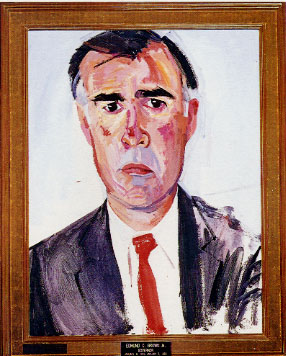
Sen. Mark Leno, a strong foe of the measure, told us he’s been in touch with Attorney General Jerry Brown’s staff, and is urging them to take action. He said he’s been assured the office is looking into the issue.

It will be interesting to see what Brown does. As governor, he was a strong opponent of PG&E’s Diablo Canyon nuclear power plant, and spoke at anti-nuclear rallies, but since then, he’s been awful wishy washy (and has, for example, never been an open supporter of public power.)

Now, however, he’s running for governor — and PG&E is one of the most hated institutions in the state. The old Jerry took on corporate power and positioned himself as a populist; this latest incarnation of Jerry could pick up a lot of progressive support (which he badly needs) and force Meg Whiman into a corner (what, is she going to support PG&E?).

So how about it, Jerry?

(And by the way, the San Francisco supervisors ought to pass a resolution calling on Brown to sue to get this evil measure off the ballot.)


Black History Month in SF kicks off with dancing, future visions

0

By the time I made it to the 2010 Black History Month kickoff ceremony at San Francisco City Hall, on Friday, Feb. 5, California Public Utilities Commissioner Tim Simon was talking about how the African American community can make sure it doesn’t get left on the sidelines in future.

Simon advised folks to know their resources, community and strategy to ensure that people of color are included in the burgeoning Green economy—a topic in keeping with the history-of-black-economic-empowerment theme.

“And I want to encourage all of us to celebrate the month of Black History and teach it to our children, because we could lose this generation,” Smith said, noting that just three blocks away from City Hall in the Western Addition/Filmore, “young men talk about and celebrate it when they reach 25 years old.”

California Public Utilities Commissioner Tim Simon advised folks how not to get left behind in the Green economy.

The community was encouraged to attend the Human Rights Commission’s Feb. 18 meeting in the Bayview and to get involved in the 2010 Census, which will provide temporary, part-time jobs with flexible hours.

Destined to Dance enlivens the corridors of power at San Francisco’s City Hall.

And then dancers with Destined to Dance wowed the audience by infusing the typically staid marble corridors of power with a “Swing low, sweet chariot” inspired blend of energy, grace and light-footed gaiety.

After the main program concluded, a who’s who of San Francisco’s black community lingered for a moment to chat.

Sup. Sophie Maxwell told me that she saw the failed attempt to recall her as “democracy at work.” She also repeated earlier statements that she is not yet ready to endorse any of the candidates vying to replace her when she is termed out in January 2011.

“It’s not just about Bayview Hunters Point,” Maxwell observed. “The common thread is the entire District 10 community.”


D. 10 candidates Eric Smith and Tony Kelly smile for the camera.

Kelly told me that to his mind the common thread is that residents of the district, which is home to the worst toxic hot spots in the city, can’t rely on corporations to solve their problems.

“District 10 can think for itself,” Kelly said. “They don’t have to look outside. But to my mind, up until now, the approach in city hall has been that there is no mess in D. 10 that can’t be fixed by a friendly corporation.”

Kelly observed that folks in the eastern neighborhoods came up with a better revitalization plan than what the city proposed, and that community activists managed to close the power plant, after the city said it was impossible.

“We have the worst schools, transportation and pollution,” Kelly said. “Candidates in the D. 10 race tend to fall into one of two groups: those that are responsive to Lennar and PG&E’s plans, and those who oppose them.”

D. 10 candidate Kristine Enea, who attended the Navy’s Feb. 2 “community involvement plan” meeting at the Bayview YMCA told me that at least the Navy showed some willingness to let the community speak at that meeting,

Chris Jackson San Francisco Community College Board Trustee chats with D. 10 candidates Tony Kelly and Kristine Enea.

“But they need to stop being so defensive,” Enea said, as she questioned why the Navy refuses to speak in public about why it dissolved the Shipyard Restoration Advisory Board.

D 10 candidate Lynette Sweet told me that she thought California PUC commissioner Tim Simon “hit it on the head with his comments,” at the Black History Month kickoff event.

D. 10 candidate Lynette Sweet poses for the camera.

“We’re not the sum of our parts, we’re not murderers and poverty pimps, there is some real leadership and quality people within our community,” Sweet observed.

Snap Sounds: Moon Duo

1

MOON DUO

Escape

(Woodsist)

I’ve been thinking about how Moon Duo‘s name sounds a little like Amon Düül. Maybe that’s just tangential coincidence, but the SF twosome’s songs allow for the kind of daydreaming that produces such thoughts.

Escape delivers on the great promise of Ripley Johnson and Sanae Yamada’s earlier recordings, especially last year’s Killing Time (Sacred Bones). Like that EP, Escape is made up of four songs, but the lunar flares sprawl ever outward to album length. We’re only a month into 2010, but here’s a contender for Bay Area album of the year.

http://www.youtube.com/watch?v=GzXD_uA7c4w

Appetite: Break out the bourbon and gumbo, Fat Tuesday’s coming

0

On the heels of a first time ever Super Bowl win for my beloved city of New Orleans, comes Mardi Gras, Fat Tuesday, Lent. No one celebrates this time of year like Nola, but we try in our own little way here. At least there’s some local outlets for wistfully wishing I was there…

February 15-19: Fat Tuesday at the Front Porch
Outer Mission’s Front Porch always knows how to throw a good party, and Fat Tuesday will be no exception. I can’t think of a better way to usher in Mardi Gras than with a front porch crab boil. Don’t forget to eat plenty of their jambalaya, drink Abita beer, and don those beads. Even better, if you can’t make it Tuesday, they’re doing the boil and French Quarter menu specials all week long, starting Monday.
5:30pm until close
65a 29th Street
415-695-7800
www.thefrontporchsf.com


Mint Julep at Pican. Photo by Virginia Miller

February 16: Fat Tuesday at Pican – Oakland’s Mardi Gras “It” Party
Bring your masks for a Mardi Gras feat at Pican, a restaurant that keeps Southern spirit swinging throughout the year. There’s live bands and all that fine bourbon on Pican’s shelf. Fill up on Louisiana crawfish etouffe, chicken and andouille gumbo, red beans and rice, grilled boudin sausage, and Pican’s ever-popular smoked ribs and buttermilk fried chicken wings. Ash Wednesday will come tomorrow, but tonight, it’s Fat Tuesday!
5:30pm
Advance tickets $60; $75 at the door
2295 Broadway, Oakland
510-834-1000
www.picanrestaurant.com

February 12-16: Miss Pearl’s Jam House Mardi Gras Festival
Miss Pearl’s Jam House throws down in Jack London Square with its first Mardi Gras Festival. The week starts off with this Friday’s Gumbo Jam kick-off (blues and gumbo, naturally). Pearl’s new chef, Peter Jackson, cooked with one of my favorites (and one of New Orleans best chefs), John Besh. On Saturday, he launches Gumbostravaganza, a gumbo cook-off showcasing friendly gumbo competition among East Bay chefs from the likes of Picán and Henry’s. Fat Tuesday is going to be a big one with $5 Hurricanes and $4 jello shots all day, plus beignets, King’s Cake, a prize trip to New Orleans, and live zydeco music.
Free admission; check Web site for schedule
Miss Pearl’s Jam House, One Broadway (at Jack London Square)
510-444-7171
www.misspearlsjamhouse.com

Public employees feel blindsided by Newsom’s layoff scheme

39

Mayor Gavin Newsom’s proposal to lay off 10,000 city employees and rehire them at lower pay is being met with outrage by some public-sector workers. The plan, crafted as a way of saving money to balance the city budget, would amount to sweeping pay cuts across the board for a significant number of city workers.

Formal discussions about it are in the earliest stages, and Tony Winnicker, the mayor’s press secretary, described it as “just one alternative that we’re investigating.” Nonetheless, some members of Service Employees International Union Local 1021 are furious that the mayor unveiled this plan in the San Francisco Chronicle instead of at a meeting with the city’s labor leaders.

“As far as we can tell, an idea he has ended up on the front page of the Chronicle that’s had a devastating ripple affect among the people who work for the city and county,” SEIU Local 1021 President Damita Davis-Howard told the Guardian. “We feel like we got a sucker-punch. … We really wish he had talked to us before he governed by press conference.”


Davis-Howard said she’s been inundated with phone calls from angry union members who read the article. “This is the same proposal he floated last year,” Davis-Howard said. “Most of our members believed that they gave up their holiday pay in order to avoid this very thing.”

The proposal, which was briefly considered last year but never moved forward, serves to illustrate just how hard financial woes are hitting San Francisco. The city is staring down a $522 million deficit, and Newsom’s proposal would make up for a mere $50 million in savings.

Winnicker declined to comment on Davis-Howard’s concerns about being blindsided by news of the layoff plan, brushing it off by saying the mayor did discuss it with “some folks in labor.” Instead, he suggested that Newsom is getting serious about solving the budget crisis while the Guardian is just focusing on irrelevant gripes.

“It is an unprecedented budget shortfall, and it is real,” Winnicker said, stressing that the gaping budget gap will have to be bridged without the infusion of federal stimulus dollars that cushioned the blow last year. “The easy choices are behind us.” This layoff plan could prevent “hundreds, if not thousands, of layoffs,” but the mayor is open to other ideas that labor brings to the table, he said.

“That logic is just flawed,” Davis-Howard said when asked about the assertion that the plan could prevent layoffs. “That’s not the way you re-stimulate the economy, by taking more dollars out of the economy. We can’t continue to balance the budget on cuts, because pretty soon the actual fiber of the city and county of San Francisco will be reeling because of the number of cuts that we sustained.”

When asked how SEIU Local 1021 would respond, she said, “I do believe we need to be open-minded, imaginative, and creative in coming up with some revenue-generating measures here.”

No doubt the mayor will receive plenty of suggestions as negotiations continue in the coming weeks.

<3 <3 <3

0

superego@sfbg.com

SUPER EGO Love — can’t we just stick it in a blender with some vodka and call it a nightlife? This year Presidents Day, Valentine’s Day, and the International Bear Rendezvous all collide in a ginormous party-party mush. Which makes sense, since two bears back-to-back make an upside-down heart or Richard Nixon’s face. For large, hairy, gay events hit the IBR site (www.bosf.org/bearrendezvous). Below are more hearty affairs to flirt with.

1964

“He hit me (and it felt like a kiss)”? A special hand-holding, goin’ down to Love Town edition of the classic girl-group and Motown pop joint with DJs Sergio Iglesias and Matt Bonar.

Wed/10, 10 p.m., free. Edinburgh Castle, 950 Geary, SF. www.castlenews.com

ARABS GONE WILD

“We think nothing says ‘I love you’ more than watching a group of Arab American comedians be funny,” says joker Maysoon Zayid. She’ll be joined by Dean Obeidallah and Aron Kader for some heartfelt halal hilarity.

Thu/11, 8 p.m., $20 (Also Fri/12, 8 p.m. and 10:15 p.m.). Cobb’s, 915 Columbus, SF. www.cobbscomedyclub.com

NIGHTLIFE: ROMANCE AND REPRODUCTION

The diversity of life gets an amorous showcase at the Cal Academy’s wildly popular club night, while the diversity of sound comes courtesy of DJ Jeff Stallings’ Balearic, Bedouin, African and Latin beats.

Thu/11, 6 p.m.- 10 p.m., $10–$12. California Academy of Sciences, 55 Music Concourse Dr., SF. www.calacademy.org/nightlife

LUCHA VAVOOM

Burlesque-wrestlemania to tear your heart out! Take it to the mat with Hector Garza, Chocolate Caliente, El Bombero, Lucy Fur, Lil Cholo, hula-hooper extraordinaire Karis, and also some chickens, apparently, as they ring the bell of amour.

Fri/12, 8 p.m.-11 p.m., $32.50. Fillmore, 1805 Geary, SF. www.livenation.com

1994

World’s tallest DJ Stretch Armstrong has enough party-electro love to reach out from the late 2ks and embrace the fresh-faced crowds at this super-fashionable retro-fest. Will he drop some rave bombs? With Jeffrey Paradise and Richie Panic.

Sat/13, 9 p.m., $10 advance. 111 Minna, SF. www.111minnagallery.com

BLACK VALENTINE MASQUERADE

You go, ghoul (ugh). Goth it up in style with demonic Aussie heart-breakbeats from DJ Nick Thayer and a blippy dub blitz from Flying Skulls. Dress like hot, masked death.

Sat/12, 10 p.m.-4 a.m., $10. Mighty, 119 Utah, SF. www.mighty119.com

BLOWOFF

It may not be the most romantically named party for V-Day, but if you’re looking for furry snugglebunnies, in the form of large gay men, then this gathering is one of your best bets. DJs Bob Mould and Richard Morel bring the alt-rock dance remixes.

Sat/13, 10 p.m., $15. Slim’s 333 11th St., SF. www.blowoff.us

BOOTIE VALENTINES PARTY

“We’re going to scare our audience big-time with our most fucked up Valentines midnite mashup show ever,” DJ D of the still-going-strong bootleg club tells me. Get ready! Cousin Winderlette performs and A+D and Freddy King of Pants get wicked on the decks.

Sat/13, 9 p.m., $12. DNA Lounge, 375 11th St., SF. www.bootiesf.com

CLUB NEON UNDERWEAR PARTY

It’s the sixth anniversary of this pants on the ground must, with nubile flesh amply and cheekily displayed to indie-rock and hip-hop tunes from Jamie Jams, Emdee, Lil’ Melanie, and Aidan. Flash that bulging polka-dotted Ginch Gonch, brother.

Sat/13, 9 p.m., $10. The Knockout, 3223 Mission, SF. www.theknockoutsf.com

COCKBLOCK: THE LOVE PARTY

Who doesn’t want to feel the love of dozens of punkish young lezzies and bois with amazing hair, raising their cans to the heavy dance tunes of DJ Nuxx and Kidd Sysko

Sat/13, 10 p.m., $7. Rickshaw Stop, 155 Fell, SF. www.cockblocksf.com

LE PERLE DEGLI SQUALLOR

Who needs love when you can have delicious anonymous queer encounters, which are also a form of love? A trickin’ chicken, tonsil-ticklin’, fanny-fondlin’, disco rareties free-for-all, tenderly sprayed down from DJ Bus Station John.

Sat/13, 10 p.m., $5. Hot Spot, 1414 Market, SF.

MY BLOODY VALENTINE BINGO

Oh, those Sisters of Perpetual Indulgence — always getting pancake on my pants. It’ll be a “zombie of a good time” when our patron saints preside over a horrifically lovely zombie-themed installment of their charitable bingo bonanza. Even the undead need love.

Sat/13, 4 p.m.–7 p.m., donations encouraged. Veteran’s War Memorial, second floor, 401 Van Ness, SF. www.thesisters.org

PARADISE LOVERS DISCO

Singles going steady on the dance floor, please, for this retro-disco and lovebug-boogie extravaganza. DJs from Gemini Disco, Beat Electric, Donuts, Honey Soundsystem, and Sweaterfunk get all underground and passionate. Cheap, too.

Sat/13, 9 p.m.–3 a.m., $5. Mezzanine, 444 Jessie, SF. www.mezzaninesf.com

“A LOVELYFUCKING SUNDAY”

Why all the bitterness, when weekly bassbin funk-rap blowout Lowbrow has DJs Roost Uno, Smashy Trashy, Pony P, and Pozibelle on tap (and $2 brews). Plus, “photos by many drunk girls and most likely members of Ron Jeremy Fan Club.” I have no idea, but I like it.

Sun/14, 9 p.m., free. Delirium, 3139 16th St., SF. www.lowsf.com

HONEY AND THE HEARTBREAKERS

A Honey Sunday “leather discotheque Valentine’s” from Honey Soundsystem that will whip your lonely ticker into a frenzy — probably a tipsy frenzy, if you take advantage of the $8 beer bust until 11 p.m., DJ Ken Vulsion, Pee Play, and Derek Bobus make it work.

Sun/14, 9 p.m., $3. Paradise Lounge, 1501 Folsom, SF. www.honeysoundsystem.com

HUGS ‘N HEARTS

Monthly three-ring kiki-athon Big Top is a circus, and its special V-Day party will be a zoo, with NYC homo-rapper Cazwell and club legend Amanda LePore (she sings!) in town to stir things up. Heklina hostesses.

Sun/14, 9 p.m., $10–$25. Club Eight, 1151 Folsom, SF. www.eightsf.com

JUSTIN BOND: CLOSE TO YOU

The fantastical creature who jumped from local club kid talent to legend of New York stage (Tony nom, anyone?) is back with a freakin’ 10-piece orchestra to sing his favorite Carpenters’ songs. Mellow gold, child. 

Sun/14, 8:15, $25-$75. Castro Theatre, 419 Castro, SF. www.ticketweb.com

LOVESICK III

Geez, will anybody ever love you if you look like heck warmed over? Of course they will, Adam Lambert. But why not hit up this huge, buzzy lingerie fashion fiesta, dance floor prance, and trunk show party to polish your lacy underthings resume.

Sun/14, 7 p.m.-1 a.m., $15/$20. Mighty, 119 Utah, SF. www.mighty119.com

MOODYMANN

No one wants to date moody, but everyone shall dance to Moodymann, the second generation Detroit techno whiz and father of the current red-hot soul re-edits trend (although his Black Power message is getting a bit lost in the fray.) With Sunset and Stompy party DJs.

Sun/14, 3 p.m.-2 a.m., $15/$20. Café Cocomo, 650 Indiana, SF. www.stompy.com

SIXXTEEN

Rock out with your aorta out — it’s cuddle-with-a-chainsaw time as the legendary rock club returns, leopard Spandex and all. Kiss tribute band Heroes takes stage, while DJs Omar, Jenny, China G., Howie Pyro and more give you a whole lotta love. Panama!

Sun/14, 10 p.m.-3 a.m., $10. Cat Club, 1190 Folsom, SF. www.sfcatclub.com

The “jobs” shell game

0

Written with Nima Maghame

news@sfbg.com

While many San Francisco city officials have been trying to figure out how to close a projected budget deficit of more than $520 million, Mayor Gavin Newsom has spent the last month trying to make that spending gap even larger by aggressively pushing a variety of business tax cuts that economists say will do little to improve the local economy and could actually make it worse.

Newsom first proposed his so-called “local economic stimulus package” a year ago during his ill-fated run for governor, just as President Barack Obama was pushing his own economic stimulus plan. But unlike the federal government’s $787 billion plan, about a third of which involved tax cuts demanded by conservatives, Newsom proposed to cut local business taxes while also deeply slashing local government spending and laying off hundreds of city workers.

Most economists say that’s a terrible idea. In fact, a report issued at the time by Moody’s Investor Services made it clear that every dollar of direct government spending adds about $1.60 into the economy (or $1.73 if it’s on food stamps, the most stimulative spending government can make), whereas business tax cuts add only about $1 to the economy for every dollar spent.

We clashed with the Mayor’s Office at the time on our Politics blog (see “Mayor Newsom doesn’t understand economics,” 2/13/09), with Newsom’s spokesperson telling us the mayor was relying on the input of City Economist Ted Egan. But when we interviewed Egan about the issue, he agreed that it’s a bad idea to slash government spending to pay for tax cuts.

“We were in no way saying you should cut taxes to stimulate the economy, particularly if it means reducing government spending,” Egan told us then. And when we asked directly whether it’s better for San Francisco’s economy for the city to directly spend a dollar on payroll or to give that dollar away in a private sector tax break, he told us, “The consensus among economists is that most of the time government spending stimulates the economy more.”

The Board of Supervisors basically ignored Newsom’s proposal. But he revived it last month, expanding the proposals with even more private sector subsidies and making them the centerpiece of his Jan. 13 State of the City speech, publicly pushing it since then with a series of public events at businesses located in the city.

And this time — with the local economy still slow, projected city budget deficits bigger than ever, and little serious talk about how the city can bring in more money — it appears the proposals will be the subject of a series of hearings before Board of Supervisors’ committees in the coming weeks.

Newsom’s tax cut proposals include a proposal to waive the 1.5 percent payroll tax (the city’s main business tax) for all new hires; extend and expand the payroll tax exemption for biotech companies (see “Biotech’s bonanza,” p. 12); give small businesses tax credits for their spending on health plans; and allow developers to pass one-third of their affordable housing in-lieu fees onto future homeowners.

Newsom and his Press Secretary Tony Winnicker have spoken euphorically about the proposals, saying they’re desperately needed to spur the local economy. “We believe that enacting these tax incentives, particularly the payroll tax credit for new hires, is one of the single biggest things we can do for economic growth,” Winnicker said.

Despite repeated questions about the economists’ concerns over financing tax cuts with government spending cuts, we couldn’t get them to address the tradeoff directly. “The mayor will support critical public services,” was all Winnicker would say about the deep cuts that Newsom is expected to announce in his June 1 budget.

Sup. John Avalos, who chairs the Board of Supervisors Budget and Finance Committee, expressed more skepticism about the mayor’s proposals. “Do tax breaks have the intended effect of stimulating the economy? As we underfund government services, are we getting a net gain or are we getting something taken away? For the very small businesses in my district, it’s going to be trickle-down economics. It’s very unrelated and unmeasurable in benefit,” he told us.

David Noyola, board aide to President David Chiu, said his boss is supporting the biotech tax credit but reserving judgment on the rest. “It’s going to be a cost-benefit analysis,” Noyola said. “When we’re talking about jobs, we’re talking about public and private sector jobs, always.”

While Egan’s economic analysis predicts tax cuts will encourage some economic growth, even he is circumspect about the good it will do, particularly without finding a way to avoid deep cuts in city spending. “The truth of the matter is that our stimulus efforts are small because the city has relatively small power to affect the local economy,” Egan told us.

That’s the consensus economic opinion. Huge federal spending can help a national economy a little bit, but local economies are just different animals that local governments are largely powerless to really alter, particularly through tax cuts.

“I agree with Egan: city government has little power over the local economy,” Mike Potepan, an urban development economist at San Francisco State University, told the Guardian.

Both economists agree that tying tax cuts to job creation or development stimulus is better than general tax cuts, but that neither is good if it means laying off more city workers.

“Research shows that by cutting taxes you have more business activity where studies show it is likely to effect employment,” Potepan said. “On the other side, you have to think about revenue. Cities are going to have to balance their budgets, which could mean a cut in services.”

Author Greg LeRoy expresses a more critical perspective in his book The Great American Jobs Scam: Corporate Tax Dodging and the Myth of Job Creation (1995, Berrett-Koehler), amassing evidence from economic studies and CEO surveys that corporate tax breaks, even those tied to new job creation, have almost no effect on private companies’ decisions about where to locate and whether to hire.

“How can companies get away with this? Because the system is rigged. Corporations have it down to a science. They have learned how to chant ‘jobs, jobs, jobs’ to win huge corporate tax breaks — and still do whatever they wanted all along,” LeRoy writes. “That’s the Great American Jobs Scam: an intentionally constructed system that enables corporations to exact huge taxpayer subsidies by promising quality jobs — and lets them fail to deliver. The other benefit often promised — higher tax revenues — often proves false as well.”

While proposing to forgo collecting millions of dollars in payroll taxes (the Controller’s Office is still working on a projected total for the tax cut package), the Mayor’s Office also wants to spur development of new housing with a proposal that would delay collection of needed affordable housing money by more than a decade.

After hearing mostly from a large crowd of desperate developers and construction workers during a Jan. 21 hearing on the proposal, the Planning Commission approved the package on a 4-3 vote, with the mayor’s appointees in agreement and the board’s appointees in dissent. It will be considered by the Board of Supervisors Land Use Committee sometime after Feb. 12.

The most controversial part of the fee reform package involves reducing the fee developers pay to support affordable housing by 33 percent, then charging a 1 percent transfer tax to subsequent buyers of those homes. Egan estimates developers would save almost $20,000 per housing unit, and that it would take an average of 16 years for the city to recover that money. But for high-rise luxury condos, the city would eventually recover about $27,000 per unit.

“It’s a classic make-an-investment-now-to-get-more-later strategy,” Michael Yarne, who crafted the policy for the Mayor’s Office of Economic and Workforce Development at Newsom’s direction, told the Guardian.

“If it makes it feasible for projects to be started, then it is worth passing,” Tim Colen, a representative of San Francisco Housing Action, said at the Planning Commission hearing, expressing hope that it will help create desperately needed construction jobs and new market rate housing.

But affordable housing advocates and some progressives criticize the policy as completely backward, saying that affordable housing development is desperately needed now, during these tough economic times, rather than a policy that encourages more market rate housing and bails out bad investments made at the height of the real estate bubble.

“What the city needs to do is directly build affordable housing, for which there is a demand,” affordable housing activist Calvin Welch told us. “The problem is that the banks don’t want to lend these guys money because they know nobody can afford to buy houses at the prices that these guys are demanding.”

Debra Walker, who is running for supervisor from District 6 and voted against the proposal when it came before the Building Inspection Commission (the sole vote on a commission dominated by mayoral appointees), agrees.

“The whole argument is that it stimulates development, but it doesn’t,” Walker said, arguing that the incremental gains (about 25 housing units per year, Egan estimates) will be offset by delayed affordable housing construction. “There would be more economic stimulus by using the fee to build more affordable housing.”

Instead, it simply shifts resources to favored entities: from home owners to developers, in the case of the affordable housing fees, or in the case of the tax credits, from the public to the private sector. But Newsom’s office just doesn’t see it that way.

“The Guardian believes in protecting public sector employees over private sector employees,” was how Winnicker formulated our understanding of what the economists are saying. “Most people don’t work for the city, and if we can support private sector jobs, that adds to sales tax revenues and benefits the economy. Despite a short-term impact of the tax credit, that’s a benefit.”

Adam Lesser contributed to this report


Biotech’s bonanza

0

By Adam Lesser

news@sfbg.com

It’s difficult to measure the value a biotechnology company receives from locating in San Francisco. Most measures are qualitative: scientists talk about synergy with other biotech companies in the area, the intellectual community that thrives at the University of California-San Francisco, and support offered at the California Institute for Quantitative Biosciences (QB3).

But the quantitative costs are easier to calculate, beginning with rents that often are two to three times higher than in the East Bay or South Bay. Add San Francisco’s 1.5 percent payroll tax, and companies can begin to attach a dollar figure to the premium of being in San Francisco.

To incentivize biotech companies to locate in San Francisco, Mayor Gavin Newsom is asking the Board of Supervisors to extend the six-year-old Biotech Payroll Tax Exemption. The exemption allows any new biotech company to get a full 7.5 years without paying local business taxes as long as it files for the exemption by Dec. 31, 2014.

At a time when San Francisco city officials are struggling to close a budget deficit of more than $500 million — for which Newsom hasn’t offered any significant revenue proposals to help bridge the gap — some are questioning why the city should continue giving millions of dollars in tax breaks to the thriving biotech industry.

The core question of whether the payroll tax credit has worked in bringing more biotech companies to San Francisco is complex. While Newsom boasted of attracting 54 new biotech companies in the last five years during his Jan. 13 State of the City address, analysis of the credit by Ted Egan, the city’s chief economist, indicated that only eight companies had applied for the credit by the end of 2008.

The thriving research environment at UCSF-Mission Bay and the establishment of the state taxpayer-funded California Institute for Regenerative Medicine have played significant roles in creating a favorable environment for young biotech companies. The last five years also have seen broad growth in biotech as scientific discoveries have accelerated. Would biotech companies have come to San Francisco regardless of the payroll tax exemption?

The city’s Office of Economic Analysis looked at the question of how effective the payroll tax exclusion actually has been in spurring biotech growth. Because the size of the incentive — an exemption from paying a 1.5 percent tax on its total payroll — is relatively small, Egan felt that there could not be a conclusive link between the exemption and biotech growth. But he did feel there was some benefit, writing in his analysis that “in fact, the primary worth of the incentive may lie in its marketing value and how it signals to the industry that San Francisco is a credible location for biotechnology.”

Between 2004 and 2008, the biotech tax credit cost the city $1.2 million. If costs stay on pace with 2008, the existing Biotechnology Tax Exclusion will cost at least an additional $2 million. There are no cost estimates yet on extending the credit to give all biotech companies the full 7.5 years of payroll tax exclusion.

The extension faces opposition. Sup. John Avalos, chair of the Board of Supervisors Budget and Finance Committee, has expressed concern about the effectiveness of tax credits.

“I’m not sure the city is going to be able to show a direct connection between taxes and the growth of the biotech industry. The verdict is still out for me,” Avalos told the Guardian. “We’ve created the whole infrastructure for the industry around Mission Bay. That could have a lot to do with companies coming to San Francisco.” The city donated a portion of the land the UCSF-Mission Bay campus was built on.

Allopartis Biotechnologies is a small biotech startup in QB3 at UCSF-Mission Bay that has received venture capital funding. It saved $3,670 in 2009 by qualifying for the payroll exclusion. Allopartis has six employees and focuses on developing technologies to convert biomass into sustainable fuels.

“You pay a premium to be in the city, and it’s worth it,” said Robert Blazej, cofounder of Allopartis. “We’d like to stay close to this nexus of innovation and collaborators. But it’s going to be challenging with the cost of square footage.”

Interviews with other growing San Francisco businesses showed that their biggest concern was the cost and availability of commercial real estate. Zynga, a social gaming company in Potrero Hill, plans to add 800 jobs over the next two years. Newsom has asked for an additional waiver on payroll taxes for all new hires over the next two years, regardless of industry.

“We considered moving out of San Francisco for a couple reasons. One is the availability of commercial real estate. The other is the payroll tax,” said Chief Financial Officer Mark Vranesh. “The large blocks of space we would be looking for are hard to find.”

But as the city tries to plug gaps in dwindling city services, concerns are mounting about how much the city can give away to companies under the premise that tax credits create new jobs. In the debate about the biotech tax credit, objections have been raised about the fundamental fairness of giving a tax break to one industry while others still pay their share. Similar next generation industries with large up-front research and development costs such as solar energy or fiberoptic Internet do not receive payroll tax waivers.

Economists such as the Tax Foundation’s Patrick Fleenor are quick to point out that there are no political advantages to taxing everyone equally. “The problem is a political one. If you tax everyone the same, there aren’t politicians creating little fiefdoms. There aren’t ribbon-cutting ceremonies,” he said.

Avalos has equated judging the effectiveness of tax credits at creating jobs to looking into a crystal ball. But the price tag of each tax credit is borne in the present as the city contemplates laying off hundreds of city workers.

Adding to the political infighting have been public complaints by Sup. Michela Alioto-Pier that Newsom is trying to take credit for the biotech payroll exclusion, which she originally proposed and helped legislate in 2004. She requested an extension for the biotech tax credit in November. Her office has defended the bill. “We’re creating a hub so that other biotech companies can come to San Francisco,” said Bill Barnes, Alioto-Pier’s legislative aide. “When she was courting biotech, she was hearing that the payroll tax was an impediment.”

But other cities charge local business taxes comparable to San Francisco’s payroll tax. And if there was ever an industry that has been heaped with support from the public sector, it is biotech.

Proposition 71 passed with 59 percent voter support in 2004 and established the CIRM, which provides grants and loans for stem cell research. Stem cell research is an area within biotech that has seen significant political support, particularly since the time of the Bush administration, when federal funding for embryonic stem cell research was heavily restricted.

But appearing to be doing something about the economy remains politically important, even if the actual benefits are somewhat dubious.

“It’s a big political game that the mayor is playing. He wants to paint progressives as anti-jobs, which is ridiculous, and paint himself as the mayor for jobs,” Avalos told us. “We would be cannibalizing government services for the private sector.”

Newsom has been vague about whether he accepts that tradeoff or even understands its implications to city coffers and the local economy. Newsom Press Secretary Tony Winnicker recently told us, “He thinks it’s good policy to spur private sector job growth.”

Later, he added: “While not every company has taken advantage of it, we feel extending it sends the right message,”

Editorial: The attack on district elections

0

Nobody can honestly say that the district supervisors have ignored citywide issues or that they don’t have a citywide perspective.

The Chamber of Commerce, the Mayor’s Office, and the San Francisco Chronicle have created, apparently out of whole cloth, a new attack on district elections of supervisors. And although there’s no campaign or formal proposal on the table, the new move needs to be taken seriously.

And it’s important to understand from the start what this is really about.

The Chamber and the Chron are talking about the need for more “citywide perspective,” trying to spin the notion that supervisors elected by district care only about micro-local, parochial issues. But after 10 years of district elections, the record is exactly the opposite. District-elected supervisors have devoted themselves to a long string of exceptional citywide reform measures and have been guilty of very little district pandering.

Consider a few examples:

Healthy San Francisco, the local effort at universal health care that has drawn national attention and plaudits from President Obama, was a product of the district board, led by then-Sup. Tom Ammiano. So was the rainy day fund, which has provided millions to the public schools and prevented widespread teacher layoffs.

The district board reformed the makeup of the Planning Commission, Police Commission, and Board of Appeals.

District-elected Sup. Ross Mirkarimi’s legislation restricting the use of plastic bags has been hailed by environmental groups all over the country.

The district board passed the city’s minimum wage and sick day laws.

The district board created a citywide infrastructure plan and bond program.

Community choice aggregation, a direct challenge to Pacific Gas and Electric Co. that will bring San Francisco clean energy and lower electricity rates, is entirely a product of the district board. So is campaign finance reform, sanctuary city protecting for immigrants, a long list of tenant-protecting laws … the list goes on and on. What significant policy initiatives came out of the previous 10 years of at-large supervisors? Very little — except the promotion of hyper-expensive live-work lofts; the displacement of thousands of tenants, artists, and low-income people; and the economic cleansing of San Francisco, all on behalf of the dot-com boom, real estate speculators, and developers.

People can agree or disagree with what the board has done in the past decade, but nobody can honestly say that the district supervisors have ignored citywide issues or that they don’t have a citywide perspective.

No, this has nothing to do with citywide issues vs. district issues. It’s entirely about policy — about the fact that district supervisors are more progressive. About the fact that downtown can’t possibly get a majority under a district system — because with small districts, big money can’t carry the day.

Under an at-large system, nobody can seriously run for supervisor without at lest $250,000, and candidates who start off without high name recognition need twice that. There’s only one way to get that kind of money — and it’s not from protecting tenants and immigrants and fighting developers and PG&E.

In a district system, grassroots organizing — the stuff that labor and nonprofits and progressive groups are good at — is more important than raising money. So district supes are accountable to a different constituency.

Polls consistently show that people like having district supervisors — and for good reason. With at-large elections, the only people who have regular, direct access to the supervisors are big donors and lobbyists who can deliver money. District supervisors are out in the neighborhoods, take phone calls from community activists, and are far more accessible to their constituents.

So instead of trying to repeal the district system, the Chamber has come up with this “hybrid” effort. The idea would be to reduce the number of districts to seven and elect four supervisors citywide.

What that means, of course, is that a third of the board, elected on a pile of money, will be pretty much call-up votes for downtown. With two more from the more conservative districts, you’ve got a majority.

So this is about money and political control, and about the political direction the city is going, and about who’s going to set that direction. That’s the message progressive leaders need to start putting out, now. And every incumbent supervisor, and every candidate for supervisor, needs to make preservation of district elections a public priority


Stage Listings

0

Stage listings are compiled by Molly Freedenberg. Performance times may change; call venues to confirm. Reviewers are Robert Avila, Rita Felciano, and Nicole Gluckstern. Submit items for the listings at listings@sfbg.com.

THEATER

OPENING

The Greatest Bubble Show on Earth Marsh, 1062 Valencia. (800) 838-3006, www.themarsh.org. $7-$50. Opens Sun/14. Runs Sun, 11am. Through April 3. The Amazing Bubble Man returns with his extraordinary family-friendly show.

Ramona Quimby Zeum: San Francisco Children’s Museum, 221 Fourth St; (510) 296-4433, aciveartstheatre.org. $14-$18. Opens Sat/13. Runs Sat-Sun, 2 and 4:30pm. Through Feb 21. Active Arts Theatre for Young Audiences presents a theatrical production based on the novels of Beverly Cleary.

Tick, Tick&ldots;Boom! Eureka Theatre, 215 Jackson. (800) 838-3006, www.therhino.org. $15-$30. Previews Wed/10-Fri/1Opens Wed/10. Runs Wed-Sat, 8pm; Sun, 3pm. Through Feb 28.Theatre Rhinoceros presents Jonathan Larson’s rock musical.


ONGOING

Animals Out of Paper SF Playhouse, 533 Sutter; 677-9596, www.sfplayhouse.org. $30-$40. Tues, 7pm; Wed-Fri, 8pm; Sat, 3 and 8pm. Through Feb 27. SF Playhouse presents Rajiv Joseph’s quirky comedy.

Beauty of the Father Phoenix Theatre, 414 Mason; (800) 838-3006, www.offbroadwaywest.org. $30. Thurs-Sat, 8pm. Through March 13. Off Broadway West Theatre Company presents Nilo Cruz’s Pulitzer Prize-winner.

Bright River Brava Theater Center, 2781 24th St; (800) 838-3006, thebrightriver.com. Thurs-Sat, 8pm; Sun, 7pm. Through Feb 20. From the imagination of Tim Barsky comes a journey through a dystopian uderworld.

Eat, Pray, Laugh! Off-Market Theaters, 965 Mission; www.brownpapertickets.com. $20. Wed, 8pm. Through Feb 24. Off-Market Theaters presents stand up comic and solo artist Alicia Dattner in her award-winning solo show.

Eccentrics of San Francisco’s Barbary Coast: A Magical Escapade San Francisco Magic Parlor, Chancellor Hotel Union Square, 433 Powell; 1-800-838-3006. $30. Fri-Sat, 8pm. Ongoing. This show celebrates real-life characters from San Francisco’s colorful and notorious past.

Fabrik: The Legend of M. Rabinowitz Jewish Theatre, 470 Florida; 292-1233, www.tjt-sf.org. $20-$45. Thurs-Sat, 8pm; Sun, 2 and 7pm. Through Feb 28. The Jewish Theatre San Francisco presents a Wakka Wakka Productions presentation of this story of a Polish Jew who immigrated to Norway, told with hand-and-rod puppets, masks, and original music.

Fiddler on the Roof Golden Gate Theatre, 1 Taylor; 512-7770, www.shnsf.com. $30-$99. Tues-Sat, 8pm; Wed, Sat, and Sun, 2pm. Through Feb 21. Harvey Fierstein, who played Tevye in the recent critically acclaimed Broadway production, reprises the role as part of the Best of Broadway series.

Fiorello! Eureka Theatre, 215 Jackson; 392-4400, www.cityboxoffice.com. $10-$30. Sat-Sun, 2pm. Through Feb 20. The San Francisco Arts Education Project celebrates the ninth year of its musical theater company with three weekend performances of Broadway’s Pulitzer Prize winning play.

Frankie and Johnny in the Clair de Lune Royce Gallery, 2901 Mariposa; (866) 811-4111, www.frankieandjohnnysf.com. $28. Thurs/11-Sat/13, 8pm. Royce Gallery presents Terrence McNally’s award-winning play.

Hearts on Fire Teatro ZinZanni, Pier 29; 438-2668, www.zinzanni.org. $117-$145. Wed-Sat, 6pm; Sun, 5pm. Through May 16. Teatro ZinZanni celebrates its 10th anniversary with this special presentation featuring Thelma Houston, El Vez, and Christine Deaver.

Oedipus el Rey Magic Theatre, Building D, Fort Mason Center; 441-8822, www.magictheatre.org. $20-$55. Days and times vary. Through Feb 28. Luis Alfaro transforms Sophocles’ ancient tale into an electrifying myth, directed by Loretta Greco.

Pearls Over Shanghai Hypnodrome, 575 Tenth St.; 1-800-838-3006, www.thrillpeddlers.com. $30-69. Sat, 8pm; Sun, 7pm. Through April 24. Thrillpeddlers presents this revival of the legendary Cockettes’ 1970 musical extravaganza.

The Real Americans The Marsh, 1062 Valencia; 826-5750, www.themarsh.org. $15-$50. Thurs-Fri, 8pm; Sat, 5pm. Through March 6. The Marsh presents the world premiere of Dan Hoyle’s new solo show.

Red Light Winter Next Stage, 1620 Gough; (800) 838-3006, custommade.org. $18-$28. Thurs-Sat, 8pm. Through Feb 20. There’s a moment in the second act of Red Light Winter that eerily recalls the plotline of Fugard’s Coming Home, currently playing the Berkeley Rep, but unlike Fugard, playwright Adam Rapp can’t help but to ratchet up the despair without tempering it with a shred of hope, and the resultant script comes off more like misery porn than an authentic exploration of the human spirit. You can’t fault the fearless cast of Custom Made Theatre’s production of it for the script’s overall flaws though; they inhabit their characters wholly, firing off volleys of "dude-speak" "nerd-speak" and "unrequited love-lament" without a hitch, imbuing each scene with subtle quirk and nervous tension. Steve Budd, as Davis, channels the restless energies of a hedonistic jackass (whose brash exterior sadly does not hide a heart of gold), and the neurotic, OCD sorrows of the hopelessly heartbroken Matt are brought to acutely uncomfortable life by Daveed Diggs. But it is the shape-shifting, name-changing, unreliable Christina (powerfully rendered by Britanny K. McGregor) who remains the play’s greatest enigma and bears the brunt of Rapp’s punishing pen, like the weary subject of a Tom Waits ballad, minus the comfort of a redemptive moment, or even just a bottle of whiskey. (Gluckstern)

Rent Southside Theatre, Fort Mason Center; www.jericaproductions.com. $25-$35. Fri, 8pm; Sat-Sun, 2 and 8pm. Through Feb 21. The Royal Underground presents A Jerica Productions Company rendition of Jonathan Larson’s Tony Award and Pulitzer Prize-winning rock opera.

*The Wave The Marsh, 1062 Valencia; 826-5750, www.themarsh.org. $7-$50. Sat/13-Sun/14, 2pm. The Marsh Youth Theater’s teen troupe propels a wholly worthwhile, surprisingly sophisticated world premiere musical, directed with loving attention by Cliff Mayotte, and written by Marsh stage veteran Ron Jones ("Say Ray"), after his own infamous experience as a young history teacher at Palo Alto’s Cubberley High School in 1967. In a year marked by the Summer of Love, an annihilating war in Vietnam, and a Civil Rights Movement that saw, among much else, Cubberley’s first "integrated" student body, Jones (played by Mark Kenward) crafted a lesson plan on the Holocaust that called for the creation of his own authoritarian movement, dubbed the Third Wave. Students—and teacher—soon found their susceptibility to a sense of belonging and the acquisition of power altogether intoxicating, enough to forgo some basic human decencies, and the experiment went infamously out of control, ending Jones’s career as a history teacher where it began. But the lesson—that fascism is a modern social danger present to all and not confined to some aberrant past—has never subsided. Indeed, the real wave proved to be the story’s powerful resonance worldwide for over four decades—inspiring multilingual treatments in articles, literature, teleplays, and films, including a 2008 German drama and a forthcoming English-language doc. There’s palpable heart and a knowing freshness to the staging of this adept musical, however, which features a rewarding score (from David Denny, Kathy Peck and MYT creative director Emily Klion, under the sharp direction of Frederick Harris), bright choreography (by Patricia Lam), and memorably spirited performances by a diverse, versatile cast. It won’t be surprising to see a version of "The Wave" reach Broadway in the near future, but it’s real power lies in the kind of community project beautifully realized right here at the Marsh. (Avila)

What Mama Said About ‘Down There Our Little Theater, 287 Ellis; 820-3250, www.theatrebayarea.org. $15-$25. Thurs-Sun, 8pm. Through July 30. Writer/performer/activist Sia Amma presents this largely political, a bit clinical, inherently sexual, and utterly unforgettable performance piece.

Wicked Orpheum Theatre, 1182 Market; 512-7770, www.shnsf.com. $30-$99. Tues, 8pm; Wed, 2pm; Thurs-Fri, 8pm; Sat, 2 and 8pm; Sun, 2pm. Ongoing. Assuming you don’t mind the music, which is too TV-theme–sounding in general for me, or the rather gaudy décor, spectacle rules the stage as ever, supported by sharp performances from a winning cast. (Avila)


BAY AREA

Antigone Live Oak Theatre, 1301 Shattuck, Berk; (510) 649-5999, www.aeofberkeley.org. $12-$15. Fri-Sat, 8pm. Through Feb 20. Actors Ensemble of Berkeley presents Jean Anouilh’s adaptation of the ancient Greek tragedy.

Coming Home Thrust Stage, Berkeley Repertory Theatre, 2025 Addison; (510) 647-2917, www.berkeleyrep.org. Tues, 8pm; Wed, 7pm; Thurs-Sat, 8pm; Sun, 2 and 7pm. Through Feb 28. $33-$71. The rags to riches fantasy of the small town girl who hits the big time after abandoning her hometown for the brighter lights of a big city is one of the most well-worn yet perennially beloved plotlines. Less popular are the tales of the girls who return to their hometowns years later still in rags, their big city dreams crumbled and spent. Such a tale is Athol Fugard’s Coming Home, a cautious sequel to Valley Song, which follows Veronica Jonkers (a versatile Roslyn Ruff) to her childhood home in the Karoo, her own small child in tow and little else. The tragedy of her ignominious return is further compounded by her secret knowledge that she is HIV-positive, and her young son’s future therefore precarious. The slow-moving yet tenacious script stretches over a period of four years, following both the progression of Veronica’s dread decline in health, and the flowering intellectual development of her son, Mannetjie (played by Kohle T. Bolton and Jaden Malik Wiggins), who keeps his "big words" in his deceased Oupa’s pumpkin seed tin. Almost superfluous appearances by the ghost of Oupa (Lou Ferguson) are made enjoyable by Ferguson’s quiet mastery of the role, and Thomas Silcott parlays great empathy and range in his performance as Veronica’s irrepressible childhood companion and circumstantial caretaker Alfred Witbooi. (Gluckstern)

The First Grade Aurora Theatre, 2081 Addison, Berk; (510) 843-4822, auroratheatre.org. $15-$55. Tues, 7pm; Wed-Sat, 8pm; Sun, 2 and 7pm. Through Feb 28. Aurora Theatre Company presents the world premiere of Joel Drake Johnson’s new play.

Rosencrantz and Guildenstern Are Dead Marion E. Green Black Box Theatre, 531 19th St, Oakl; www.theatrefirst.com. $10-$30. Thurs/11-Sat/13, 7:30pm; Sun/14, 2pm. Tom Stoppard’s sensational first play will probably never have the impact it had in 1966—partly because it proved so influential—but TheatreFIRST’s generally sturdy production wades in enthusiastically and the results remain ultimately, if more quietly, contagious. In a cheeky, knowing meld of Beckett and Shakespeare, Stoppard crafts a heady as well as deeply silly existential comedy, told from the perspective of two hapless minor characters in Hamlet—the somewhat interchangeable and finally expendable Rosencrantz (Kalli Jonsson) and Guildenstern (Michael Storm)—whose sealed fate is signaled by a changeless sky (manifest in Rick Ortenblad’s scenic design), coins that only come up heads, and their inexplicable inability to leave the stage. Nevertheless, our bemused protagonists—preoccupied with nameless anxiety, word games, and endless summarizing—are the last ones to figure it all out. Leave it to a roving thespian (the excellent Andrew Hurteau) and his amusing caravan of out-of-work players, strutting and fretting along, to gradually drop some knowledge on our heroes. If the first act runs slow and rough, Mary Cavanaugh’s firm direction, graceful choreography, and shrewd use of live and recorded music contribute to a general warming by acts two and three. Meanwhile, the play’s bandying of philosophical ideas and fertile metaphors ensures the monkey business does not escape some poignancy by the end. (Avila)

DANCE

"The Butterfly Lovers" Palace of Fine Arts Theatre; 392-4400, www.cityboxoffice.com. Tues-Wed, 7:30pm. $35-$70. Chinus Cultural Productions and China Arts and Entertainment Group present the U.S. premiere of China’s Romeo and Juliet, performed by the Beijing

"It Never Gets Old" The Garage, 975 Howard; (510) 684-4294, dancetheatershannon.org. Fri-Sun, 8pm. $15-$20. Dance/Theater Shannon presents an evening length performance exploring how different relationships provide context to intentions of touch.

"Love Everywhere" Various locations; www.dancersgroup.org. Fri, 12pm; Sun, 9 and 11am. Erika Chong Shuch Performance Project presents this new, large-scale work as part of Dancers’ Group’s ONSITE series.


BAY AREA

"Ecstatic Dance" Sweets Historic Ballroom, 1933 Broadway, Oakl; 505-1112, info.ecstaticdance@gmail.com. Sun, 9:30am; Wed, 7pm. Ongoing. Move however you feel inspired with this freeform journey of movement.


PERFORMANCE

"All Star Magic & More" SF Playhouse, Stage 2, 533 Sutter; 646-0776, www.comedyonthesquare.com. Sun, 7pm. Ongoing. Magician RJ Owens hosts the longest running magic show in San Francisco.

30th Anniversary Celebration of New Works African American Art and Culture complex, 762 Fulton; 292-1850, www.culturalodyssey.org/tickets. Thurs-Sat, 8pm; Sun, 3pm. Through March 14. $20. In celebration of Black History Month and National Women’s Month, Cultural Odyssey presents a festival featuring The Love Project, The Breach, and Dancing with the Clown of Love.

"Assuming the Ecosexual Position" The Lab, 2948 16th St. 864-8855, www.thelab.org. Sat, 8pm. $7-$10 Acclaimed performance artist and sex educator Annie Sprinkle and her partner Elizabeth Stephens explore, generate, and celebrate love through art during this special event that includes an erotic cake contest. Bring your own!

BATS Improv Theatre Bayfront Theater, Fort Mason Center, B350 Fort Mason; 474-6776, www.improv.org. Fri-Sat, 8pm. $17-$20. The Theatresports show format treats audiences to an entertaining and engaging night of theater and comedy presented as a competition.

Bijou Martuni’s, 4 Valencia; 241-0205, www.dragatmartunis.com. Sun, 7pm. $5. The eclectic live cabaret showcase features a night of love songs in honor of Valentine’s Day.

"Bee’s Knees" Bollyhood Café, 3372 19th St. Thurs, 7pm. $3. This night of poetry, storytelling, and music celebrates performers who are post-democratic, humanist, sensual, and dedicated artists in the tradition of Walt Whitman.

"Best Feeding" EXIT Theatre, 156 Eddy; 673-3847, StageWerx Theatre, 533 Sutter. www.brownpapertickets.com. Fri, 8pm. $15. W. Kamau Bell presents this comedy written and performed by Martha Rynberg.

"Cora’s Recipe for Love" EXIT Theatre, 156 Eddy; 673-3847, www.theexit.org. Fri-Sat, 8pm, through Feb 20. $15-$25. Sean Owens’ wacky alter ego returns to address love and longing through the eyes of Gas and Gulp regulars.

"Emergency Cabaret Relief: Haiti" Community Music Center, 544 Capp. Sfcmc.org. Mon, 7pm. $15-$20. Accidentally Double Booked Presents Jessica Coker, Soila Hughes, and Leanne Borghesi in a benefit for Partners in Health.

"How We First Met" Herbst Theatre, 401 Van Ness; 392-4400, www.howwefirstmet.com. Sat-Sun, 8pm. $25-$40. Real audience stories are spun into a comedy masterpiece in this one-of-a-kind show, now in its 10th year.

"I Heart Hamas: And Other Things I’m Afraid to Tell You" Off Market Theaters, 965 Mission; www.ihearthamas.com. Thurs-Sat, 8pm. $20. An American woman of Palestinian descent, San Francisco actor Jennifer Jajeh grew up with a kind of double consciousness familiar to many minorities. But hers—conflated and charged with the history and politics of the Middle East—arguably carried a particular burden. Addressing her largely non–Middle Eastern audience in a good-natured tone of knowing tolerance, the first half of her autobiographical comedy-drama, set in the U.S., evokes an American teen badgered by unwelcome difference but canny about coping with it. The second, set in her ancestral home of Ramallah, is a journey of self-discovery and a political awakening at once. The fairly familiar dramatic arc comes peppered with some unexpected asides—and director W. Kamau Bell nicely exploits the show’s potential for enlightening irreverence (one of the cleverer conceits involves a "telepathic Q&A" with the audience, premised on the predictable questions lobbed at anyone identifying with "the other"). The play is decidedly not a history lesson on the colonial project known as "the Israeli-Palestinian conflict" or, for that matter, Hamas. But as the laudably mischievous title suggests, Jajeh is out to upset some staid opinions, stereotypes and confusions that carry increasingly significant moral and political consequences for us all. (Avila)

"Justin Bond: Close to You" Castro Theatre, 429 Castro; 863-0611, www.thecastrotheatre.com. Sun, 8:15pm. $35-75. Accompanied by a lush 10-piece orchestra, the Tony nominee recreates sweet sounds from your favorite Carpenters hits. The evening also features the Thrillpeddlers as special guests.

"The Lieutenant Governor from the State of Confusion" Rrazz Room, Hotel Nikko, 222 Mason; 781-0306, www.therrazzroom.com. Mon, 8pm. Through Feb 22. $25. Will Durst is back with his quiver chock full of fresh topical barbs.

"Life Unfolding" NOHspace, 2840 Mariposa; www.brownpapertickets.com/event/95864. Fri-Sat, 8pm. $20-$100. This benefit performance for the Tamalpa Institute features the works of Dohee Lee, G Hoffman Soto, Iu-Hui Chua, and special guest artists.

"Love Bites: All That Jazz" Women’s Building, 3543 18th St; womensbuilding.org. Fri-Sat, 8pm. Through Sat. $15-$30. The Lesbian/Gay Chorus of San Francisco presents its seventh annual Anti-Valentine’s Day cabaret and musical extravaganza.

"Marga’s Laugh Party" Café Du Nord, 2170 Market; 861-5016, www.cafedunord.com. Wed, 8pm. $10. DJ Chelsea Starr spins and host Marga Gomez presents some of the hottest acts in comedy.

"MediaARTS 2010: Algo-rhythms of heart/break/beats" Ninth Street Independent Film Center, 145 Ninth St; www.mediaarts2010.com. Fri, 7pm. $10-$20. Ninth Street Independent Film Center presents an exhibition of the intersection of emerging technology, performance, and the moving image attempting to compute what it means to love and lose.

"Mortified: Doomed Valentine’s Show" Make-Out Room, 3225 22nd St.; www.makeoutroom.com. Thurs-Fri, 8pm. $12-$15. Share the pain, awkwardness, and bad poetry associated with love as performers read from their teen angst artifacts.

"On the Periphery of Love: A Solo Performance Festival with Valentine’s Day Implications" StageWerx Theatre, 533 Sutter. www.stagewerx.com. Fri-Sat, 8pm; Sun, 7pm, $15-$30. StageWerx presents five new visions of romance, featuring work by Martha Rynberg, Thao P. Nguyen, Zahra Noorbaksh, Bruce Pachtman, and Paolo Sambrano.

PianoFight Studio 250 at Off-Market, 965 Mission; www.painofight.com. Mon, 8pm. Through March 29. $20. The female-driven variety show Monday Night ForePlays returns with brand new sketches, dance numbers, and musical performances.

"Salute to the World Soccer Cup" Cocomo Café Club, 650 Indiana. 334-0106, www.friendsofbrazil.org. Sat, 9pm. $30. The Bay Area Brazilian Club cast their mystic and joyous spell for the 43rd Carnaval Ball.

"Strange Love" Actors Theatre, 855 Bush; 345-1287, www.natashamuse.com. Sun, 6:30pm. $10. The Valentine’s Day edition of "A Funny Night for Comedy" features Will Franken, Wegent and Page, and host Natasha Muse.

"Things We Made" Off-Market Theater, 965 Mission; www.thingswemade.com. Sat, 10:30pm. Ongoing. $20. The longest-running alternative comedy show premieres an all-new weekly show in its new home.

"Wegent and Page Draw the Line" The Dark Room, 2263 Mission; 401-7987, www.darkroomsf.com. Fri-Sat, 8pm, $10. Sammy Wegent and Allison Page present new comedic material about breaking up, breaking down, and breaking barriers.

Gas and Gulp regulars.


BAY AREA

Upright Citizens Brigade Pan Theater, 2135 Broadway, Oakl; www.pantheater.com. Fri, 8 and 9:10pm. Ongoing. $14-$18. Upright Citizens Brigade Touring Co. brings the NYC funny to Oakland with this improve comedy show with guest performing troupes.

"The Vagina Monologues" La Pena Cultural Center, 3105 Shattuck Ave, Berk; (510) 849-2568, www.lapena.org. Thurs, 8pm. Also Sun at The Warehouse. V-Day East Bay presents a two-night benefit reading of Eve Enselr’s award-winning play.

"Whipped" La Pena Cultural Center, 3105 Shattuck Ave, Berk; (510) 849-2568, www.lapena.org. Fri. $8-$12. Mango w/ Chile presents true life stories of love through music, spoken word, theater, dance, burlesque, drag, and video.


COMEDY

Annie’s Social Club 917 Folsom, SF; www.sfstandup.com. Tues, 6:30pm, ongoing. Free. Comedy Speakeasy is a weekly stand-up comedy show with Jeff Cleary and Chad Lehrman.

"All Star Comedy and More with Tony Sparks" SF Playhouse, 533 Sutter; 646-0776, www.comedyonthesquare.com. Sun, 8:30pm. Ongoing. SF’s favorite comedy host brings a showcase of the Bay’s best stand-up comedy and variety.

"Big City Improv" Shelton Theater, 533 Sutter; (510) 595-5597, www.bigcityimprov.com. Fri, 10pm, ongoing. $15-$20. Big City Improv performs comedy in the style of "Whose Line Is It Anyway?"

Brainwash 1122 Folsom; 861-3663. Thurs, 7pm, ongoing. Free. Tony Sparks hosts San Francisco’s longest running comedy open mike.

Club Deluxe 1511 Haight; 552-6949, www.clubdeluxesf.com. Mon, 9pm, ongoing. Free. Various local favorites perform at this weekly show.

Clubhouse 414 Mason; www.clubhousecomedy.com. Prices vary. Scantily Clad Comedy Fri, 9pm. Stand-up Project’s Pro Workout Sat, 7pm. Naked Comedy Sat, 9pm. Frisco Improv Show and Jam Sun, 7pm. Ongoing. Valentine’s Day special features Reggie Steele and JJ Johnson.

Cobbs 915 Columbus; 928-4320. Thurs, 8pm; Fri, 8 and 10:15pm. $20. Featuring "Arabs Gone Wild," including Dean Obeidallah, Aron Kader, and Maysoon Zayid. Also Robert Schimmel with Mark Pitta on Sat and Sun.

"Comedy Master Series" Blue Macaw, 2565 Mission; www.comedymasterseries.com. Mon, 6pm. Ongoing. $20. The new improv comedy workshop includes training by Debi Durst, Michael Bossier, and John Elk.

"Danny Dechi and Friends" Rockit Room, 406 Clement; 387-6343. Tues, 8pm. Free. Danny Dechi hosts this weekly comedy showcase through October.

"Frisco Fred’s Comedy Hour" Chancellor Hotel in the Luques Restaurant, 433 Powell; 646-0776, www.comedyonthesquare.com. Sat, 7 and 8:30pm. Through March 27. $25. Frisco Fred presents this fun-filled hour of comedy, magic, crazy stunts and special guests.

"Improv Society" Shelton Theater, 533 Sutter; www.improvsociety.com. Sat, 10pm, ongoing, $15. Improv Society presents comic and musical theater.

"Legwork!" Mama Calizo’s Voice Factory, 1519 Mission; www.brownpapertickets.com/event/96616. Fri, 8pm. New comedic work from Beth Lisick and Tara Jepsen, Kirk Read, and Erin Markey.

Punch Line San Francisco 444 Battery; www.punchlinecomedyclub.com. Featuring Grant Lyon on Wed and Dana Gould Fri-Sat.

Purple Onion 140 Columbus; (800) 838-3006, www.purpleonionlive.com.

Rrazz Room Hotel Nikko, 222 Mason; 781-0306, www.therrazzroom.com.

"Raw Stand-up Project SFCC, 414 Mason, Fifth Flr; www.sfcomedycollege.com. Sat, 7pm, ongoing. $12-15. SFCC presents its premier stand-up comedy troupe in a series of weekly showcases.

BAY AREA

"Comedy Off Broadway Oakland" Ms. Pearl’s Jam House, 1 Broadway, Oakl; (510) 452-1776, www.comedyoffbroadwayoakland.com. Thurs-Fri, 9pm. Ongoing. $8-$10. Comedians featured on Comedy Central, HBO, BET, and more perform every week.

"Identity Crisis Tour" Oracle Arena, 7000 Coliseum Way, Oakl; (510) 569-2121, www.coliseum.com. Sun, 5pm. $45.50. Celebrate Valentine’s Day with Jeff Dunham.

SPOKEN WORD
"Grateful Tuesday" Ireland’s 32, 3920 Geary; 386-6173, www.myspace.com/thegrasshoppersongs. Tues, 8pm. Ongoing. Grasshopper hosts this weekly open mic featuring folk, world, and country music.
"Literary Death Match" Elbo Room, 647 Valencia. Fri, 6:30pm. $5-$10. A lineup of all-star judges pit writers against each other.
"Writers with Drinks" Make-Oput Room, 3225 22nd St; www.writerswithdrinks.com. Sat, 7:30pm. $5-$10. Charlie Jane Anders hosts this spoken word variety show, this time featuring Vikram Chandra, Cherie Priest, James Rollins, Andrew Porter, and Derek Powazek.