Local

Family’s deportation illustrates why Campos’ amendment is needed

7

The case of MUNI bus driver Charles Washington, whose wife Tracey and her 13-year old son face deportation on Friday after the boy tried to take 46 cents from another kid, helps illustrate why Sup. David Campos spent over a year working with local immigration experts to figure out a way to amend the city’s sanctuary policy. Under the Campos amendment, which Mayor Gavin Newsom has refused to implement, kids like Charles Washington’s 13-year-old stepson would only be referred to US immigration and Customs Enforcement after a juvenile justice determined that they were actually guilty of a felony.

Unfortunately, the city’s juvenile probation department, under Mayor Gavin Newsom’s orders, and running scared of rightwing nuts who have unsuccesfully tried to sue the city, has refused to implement Campos amendment. Campos, who spent over a year working with immigration experts to develop a measured and legally defensible amendment, has called a hearing to determine why juvenile probation is refusing to implement his amendment, which a super majority of the Board supported last year,thereby overriding Newsom’s mayoral veto.

And now, with the face of the Washingtons all over the local media, city officials are either rushing to clarify their positions, or avoiding reporters altogether, as the Washingtons fight to keep their family intact–and in San Francisco.

Sgt Tomioka of the San Francisco police Department left me a message this morning to clarify that the SFPD doesn’t refer immigrant youth to US Immigration and Customs Enforcement (ICE).

“That is not a function of the SFPD,” Tomioka said in a voice message.
And she’s right. That job is left to the city’s probation officers. But the city’s probation officers are required, under Newsom’s policy, to refer kids to ICE if the arresting SFPD officer charges them with a felony. So, in that sense the SFPD is involved in the ICE referral process, albeit indirectly.

As the SFPD’s Sgt. Wilfred Williams explained, SFPD officers make the arrests, write up the charges and transport suspected juvenile felons to the Juvenile Justice Center.

And it’s at the Juvenile Justice Center that members of the city’s Juvenile Probation Department are required, under Newsom’s orders, to pick up the phone and refer kids to US Immigration and Customs Enforcement (ICE) when kids they suspect of being undocumented are booked with felony charges.

In the case of Charles Washington’s skinny 13-year-old stepson, the kid was arrested by the SFPD on Jan. 25 and charged with felony assault, extortion and robbery. I haven’t seen a police report of the incident, yet. But Washington said it was based on what the other kid’s family told the police, and that there were no witnesses to the incident. And felony charges are all that’s needed, under Newsom’s current policy to require a probation officer to refer a kid to ICE.

And once juveniles are in the hands of ICE, a nightmarish Catch 22 kicks in, in which local protections no longer apply, and ICE’s deportation orders can trump any legal immigration application, including green card applications.

In the case of the Washingtons, the family was applying for green cards–applications that cost thousands of dollars. And US Citizenship and Immigration Services had agreed to review their case. But then came their son’s arrest by the SFPD who charged him with three felonies and transported him to Juvenile Probation, whose officers were required to refer him to ICE. And ICE, according to Washington, then used his son “as bait” to get his wife to show up at their office, where they slapped an electronic monitoring device on her ankle and gave her and her son their deportation marching orders.

Angela Chan, staff attorney at the Asian Law Caucus, and the lawyer helping the Washingtons’ negogiate their way through this immigration nightmare, clarified that USCIS isn’t refusing to consider their case, because of the stepson’s referral.
Instead, the problem is that USCIS  won’t be able to finish that process before Friday, when the Washingtons are due to be deported.

“Unfortunately, the mother and her child will be deported by ICE well before their greencard application can be processed by USCIS, which can take months,” Chan said.

Further compounding the Washingtons’ legal problems is the fact that their 13-year-old is supposed to appear before a juvenile justice on Monday (March 8) to review the charges against him.Chan said it’s likely that a juvenile justice would review the boy’s case and reduce the charges, probably requiring him to do six months informal probation. In other words, the felony charges that led to his referral to ICE likely wouldn’t be upheld in court.

Now, under the amendment that Sup. Campos authored and the Board approved last fall, but Newsom is refusing to implement, the boy’s probation oficer would not be required to refer him to ICE if the felony charges aren’t upheld. In which case, the boy would go free, his parents could continue applying for green cards, and the family could remain intact

But since ICE want to deport Washington’s stepson before his March 8 hearing, the boy won’t have his day in court. Even worse, he will likely be slapped with a bench warrant by the juvenile justice department–the kind of Catch 22 detail that will play havoc with future attempts to apply for green cards from outside the US.

I asked Lori Haley of US ICE what’s the big hurry to deport the Washingtons by Friday.
“They overstayed their visas,” was all Haley would say, along with the comment that “We don’t confirm when someone is going to be deported.”

Asked who was responsible for telling the Washingtons that they needn’t rush to apply for green cards, which is what Charles Washington said happened, Haley referred me to UC CIS, whose spokesperson Sharon Rummery said it was impossible to ascertain if a contractor with the US government misinformed the family.

‘I can’t say that it’s true or not, because it was a private conversation between one of the operators who works on our customer service line,” Rummery said. “Our operators are highly trained and are backed up by our trained officers,” Rummery continued, confirming that the operators are contractors, not US CIS staff.

Rummery offered that folks who are deported to their native country can file for a waiver of deportation and also a waiver of a ban on reentering the country.

“They have to demonstrate that an immediate relative, who has legal status, in this case the husband, will suffer severe hardship,” Rummery said. “When they are sent away, then they can apply for a waiver and return with a green card.”

But Rummery said she could not provide a reliable time estimate as to how long all this would take, nor did she know how the stepson’s felony charges and possible bench warrant would impact the family’s chances of getting a green card through this process.

So, I called Sens. Barbara Boxer, Dianne Feinstein, Speaker of the House Nancy Pelosi, and President Barack Obama’s press office to see if any of them are aware of this case and whether they would consider a private bill. As the Asian Law Caucus’ Chan explained to me, earlier today, “A private bill is when a bill is passed to grant immigration relief for an individual.  It doesn’t change SF’s policy or the way the feds are bullying us, but it may help this family.
  
No one in Boxer, Feinstein, Pelosi or Obama’s press offices was aware of this case when I called, but they all said they’d look into it,and the folks in Feinstein’s office sounded horrified that a kid could be deported thanks to a schoolyard fight over 46 cents. So, maybe there is hope after all.

To date, Mayor Gavin Newsom’s new media spokesperson Tony Winnicker hasn’t returned my calls.

But I did read that Winnicker had told the Chronicle that it was “‘an unfortunate situation for the family, and we’re sympathetic to it.”

“But [Winnicker] said the mayor is actually protecting ‘hard-working, law-abiding residents of this city, including undocumented residents’ by reporting youths after felony arrests,” the Chronicle continued.

Somehow, I don’t think that Charles Washington, a hard-working law-abiding resident of San Francisco, would agree that anybody is protecting him by deporting his wife and her two kids. Especially since the 13-year old hasn’t even had his day in court to determine if he is even guilty as charged.

And while the Chron wrote that Washington “hopes to visit them in Australia,” the Chron’s reporter must have left the press conference by the time Washington explained  how often he is likely to get to visit Australia. As Washington noted,  if you are deported, you typically have to wait 3-10 years to visit the US again.
“So, if it’s a 10-year ban, I’ll get to visit them 3 times, and if it’s a 3-year ban, I’ll get to visit them once,” Washington, who drives a MUNI bus, said.

“I refer to them as my sons, because I’m still going to be their dad,” continued Washington, who is praying for a miracle.

In the meantime, Sup. David Campos is holding a March 4 hearing before the Board’s rules committee to explore why the City’s Juvenile Probation Department has refused to implement Campos’ amendment to Newsom’s sanctuary policy. Up unitl now, Newsom’s office has claimed that taking this extra precaution would violate the US Constitution. I wonder how many families like the Washingtons are going to have to be destroyed before someone in the Mayor’s Office decides that it’s time to revaluate their position and prevent local families from get ripped apart, simply because their kids, green cards or not, insist on acting like kids.
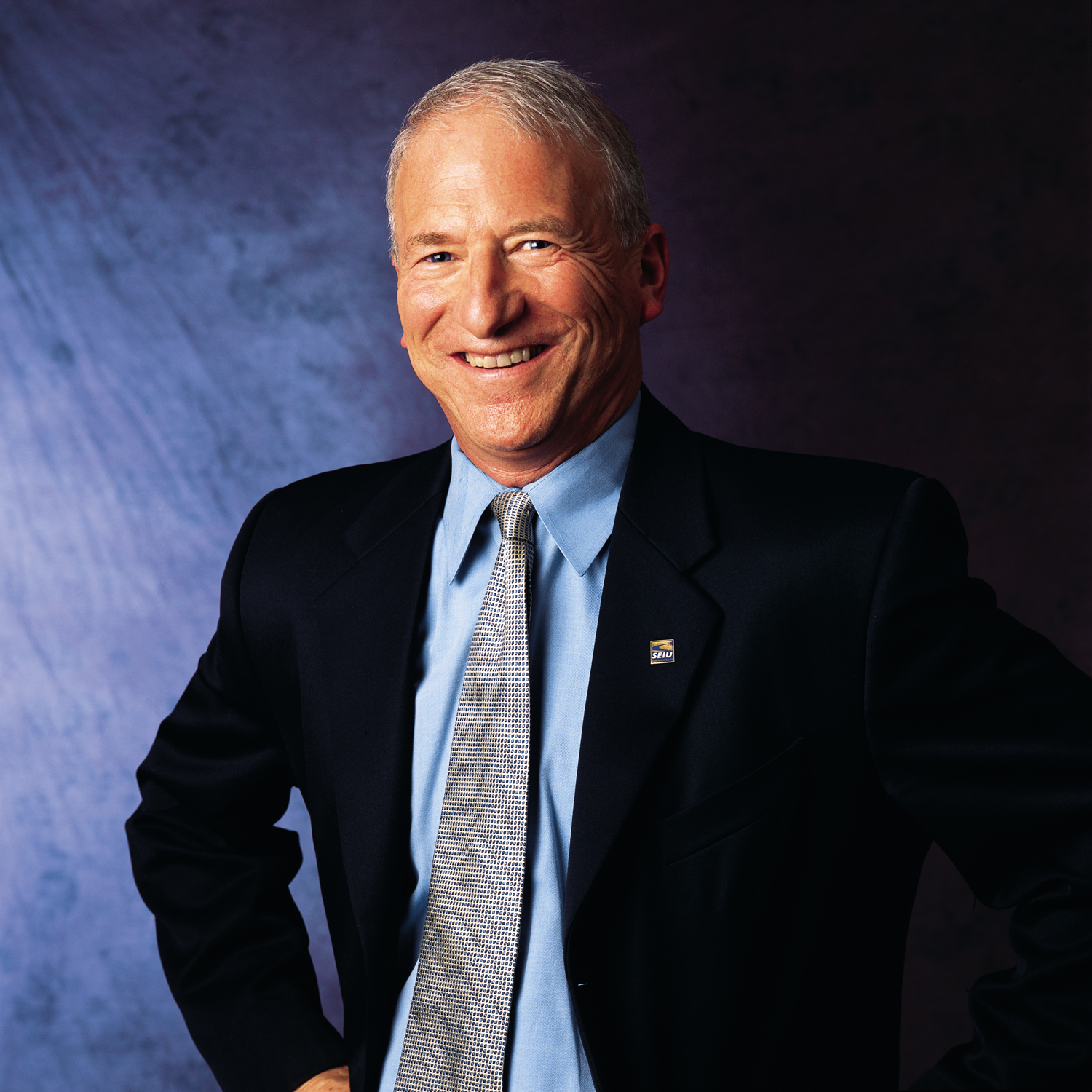



SF leaders condemn SEIU tactics

104

San Franciscans seem to be turning against Service Employee International Union and its national President Andy Stern this week, first with the vote by SEIU Local 1021 members to oust Stern’s leadership team, and now with a letter signed by a broad array of top political officials condemning SEIU tactics against the National Union of Healthcare Workers.

As the Guardian reported last year, NUHW President Sal Rosselli and his management team broke away from SEIU’s United Healthcare Workers after a protracted conflict that culminated in a hostile SEIU takeover of the local, placing it under a Stern-controlled trusteeship. NUHW had criticized Stern’s autocratic leadership style and undemocratic methods while SEIU accused Rosselli of using union funds to undermine Stern’s decisions.

Since then, a majority of SEIU-UHW workers statewide has filed petitions asking to decertify with SEIU-UHW and affiliate with NUHW, which has won seven of the nine elections that have been held so far. So SEIU filed various complaints with the National Labor Relations Board to try to block those elections, while NUHW has complained of worker harassment and ballot meddling by SEIU.

Earlier today, SEIU-UHW sent out a press release touting an NLRB ruling that clears the way for elections at 51 facilities around the state covering 6,845 voters, blaming NUHW for “violating members’ democratic rights” in opposing those elections.

But NUHW leaders say SEIU-UHW has been “cherry-picking” selected sites where they think their chances of winning are good and keeping their NLRB complaints in place to block other sites, often dividing up bargaining units in the process to raise fears in workers that they might lose bargaining clout if they switch unions. NUHW is a relatively small organization compared to the massive SEIU.

NUHW leaders say they want a fair, up-or-down vote among all of the SEIU-UHW members statewide who have asked for elections, and they’ve asked SEIU to sign a Fair Election Agreement to prevent harassment and intimidation, something that SEIU often asks employers to sign.

Supporting that request is an open letter signed by 116 San Francisco political leaders from across the spectrum, including every member of the Board of Supervisors except Sup. Carmen Chu, Assembly members Tom Ammiano and Fiona Ma, Sen. Mark Leno, Democrat Party chair Aaron Peskin and nine other members of the DCCC, all four major candidates for the Dist. 8 Board of Supervisors seat, United Educators of San Francisco President Dennis Kelly, and representatives from a board array of unions and grassroots organizations, including UNITE-HERE, POWER, Young Workers United, Chinese Progressive Association, Coleman Advocates, and many others.

Interestingly, in addition to his critics on the left within the labor movement, Stern is also being criticized by conservatives right now after President Barack Obama appointed him to his National Commission on Fiscal Responsibility and Reform.

The Guardian has forwarded the letter and allegations to SEIU-UHW officials and is awaiting a response, which I’ll post in the comments section when I hear back.


The letter reads:

WE, THE UNDERSIGNED community leaders of San Francisco, are deeply troubled by allegations that the Service Employees International Union (SEIU) committed multiple, serious violations of state labor law during the union representation election between SEIU United Healthcare Workers – West (SEIU-UHW) and the National Union of Healthcare Workers (NUHW) for 10,000 Fresno County homecare workers this June.

These allegations, made in sworn testimony before the California Public Employment Relations Board, include that SEIU officials directed staff to open, mark, and alter workers’ ballots; threaten the deportation of immigrants; and tell workers they would suffer the loss of wages, benefits and hours to scare them into voting for SEIU. The complaint alleges further that SEIU organizers physically removed ballots from workers’ mailboxes and homes.

Caregivers in San Francisco have complained of similar intimidation and harassment at the hands of SEIU officials trying to block union representation elections requested by them and tens of thousands of other California healthcare workers who have petitioned to join NUHW.

Over the next year, as thousands of San Francisco homecare workers, private sector nursing home workers, and private sector hospital workers make their choice for union representation between SEIUUHW and NUHW, we are committed to see that these workers can make their decision democratically, without intimidation, harassment, threats or coercion of any kind, from any party.

NUHW officials have communicated to us their willingness to enter into Fair Election Agreements, which are common in California’s healthcare industry, and which SEIU officials have long championed throughout the nation, to govern their campaign conduct and protect caregivers’ freedom of choice in their upcoming union representation elections.

Therefore, we are asking that you and San Francisco’s healthcare employers join NUHW in negotiating Fair Election Agreements to establish ground rules for these elections and guarantee that workers can choose their representatives for themselves. Please know that regardless of your decision, we will stand united to ensure that San Francisco’s healthcare workers have the fair elections they deserve.

New New Orleans

0

arts@sfbg.com

MUSIC Galactic’s provocative new album, Ya-Ka-May (Anti-), is the sound of new New Orleans. It’s named after yaka mein (which is alternately spelled ya ka mein, yaca-meat, et cetera), a type of Asian noodle stew. Its clash of jazz, bounce, and R&B is hot and sweat-inducing, with so many voices that you can’t tell if it’s a great party or a riot breaking out. “No more dreams, this is reality!” shouts “sissy” performer Big Freedia on the bounce track “Double It.” “You gotta shake, baby!”

“I’m a wild man,” chants funk Indian Big Chief Bo Dollis from the Wild Magnolias. “I’m a wild man, oh y’all!”

At its center is a “Liquor Pang,” a derelict’s screed from Josh Charles and Ryan Scully (formerly of N’awlins funk band the Morning 40 Federation). “I’m making bad decisions with the money I earn,” slurs Charles. “Ain’t no shame like a pang for some liquor, man.” Meanwhile, Scully screams, “Yeah! I’m shutting it down!” “Liquor Pang” is supposed to sound like an oncoming hangover, but it feels like an alarm — a reminder of how dark and unhinged the Ya-Ka-May party becomes.

The album itself seems like a happy accident. For years, Galactic was best known as part of a sprawling jam scene, one of dozens of bands that traveled through earthy festivals and small theaters like wandering minstrels. The band’s early albums, including the 2003 Sanctuary release Ruckus (which featured production by Dan the Automator) hewed to the funky, organic side of downtempo — like flagship artists Medeski, Martin & Wood and Thievery Corporation — with long instrumental passages and wah-wah workouts punctuated by former member Theryl DeClouet’s gritty vocals.

“Some of our early success on the road was due to that scene embracing us,” says Galactic guitarist Jeff Raines during a phone interview. Like many associated with the jam scene, he dislikes that phrase, calling it a “label created by the press.” He seems to prefer “taper community,” although jam fans probably don’t use cassette recorders anymore. “Our band started in a grassroots way — we got in a van and literally drove around America. The way we approached our business originally was in the jam band style of grassroots, do it yourself.”

The turning point was 2007’s From the Corner to the Block (Anti-). Inspired by Brand New Heavies’ Heavy Rhyme Experience Vol. 1 (Delicious Vinyl), where the acid jazz pioneers recorded with golden age hip-hoppers like Kool G Rap and the Pharcyde. Galactic worked with indie-rappers like Gift of Gab, Lateef and Lyrics Born from the Quannum crew, pioneering 1990s bounce artist (and subsequent “Back Dat Azz Up” superstar) Juvenile, and DJ Z-Trip. Vibrant and energizing, From the Corner to the Block was the first Galactic album that didn’t seem like a byproduct of its neverending tours.

To hear Raines tell it, there wasn’t any grand ambition fueling Ya-Ka-May. “Our intent was not to create a dark, disturbing type of record,” he says. “We were really trying to work with some of our favorite artists and do a snapshot of what the current music is there, and maybe isn’t that well known outside of New Orleans.”

Much of Ya-Ka-May features Katey Redd, Sissy Nobby, and Big Freedia from New Orleans’ “sissy” bounce culture. It’s one of the few queer rap scenes in the country that isn’t divided from the mainstream since, as Raines puts it, they perform at clubs throughout the city. “These are bounce rappers that happen to be gay,” says Raines.

A local DJ, Jay “Rusty Lazer” Pennington, served as a liaison for the bounce rappers. Other guests like “supafunkrock” player “Trombone Shorty” Andrews and the world-famous Rebirth Brass Band are longtime acquaintances of the band. “It’s a small town. Everyone knows each other.”

With so many shouting and signifying, Ya-Ka-May can wear you out like a daylong community festival with 100 performers on the bill. The specter of Hurricane Katrina lingers above it all. Perhaps that’s where all the wondrous and sometimes-bizarre mania comes from.

“For years, you couldn’t walk out of your door without thinking about the storm or interacting with some aspect of it,” he says. “But there’s life there, and there’s art being made. It’s a really fascinating city to live in, to watch an American city go through something so traumatic.

“To some degree, everything in New Orleans now revolves around that event. But Ya-Ka-May isn’t about Hurricane Katrina. It’s about the contemporary scene in New Orleans as it exists today.”

GALACTIC

Fri/5, 9 p.m.

The Fillmore

1805 Geary, SF

(415) 346-6000

www.livenation.com

Hollis Update: Coma be gone!

0

It’s been awhile since we’ve posted news about Hollis Hawthorne, the Bay Area dancer, artist, and activist who was suffered brain injury in a motorcycle accident last year and was stranded in India until the generosity of friends, family, and strangers brought her home. Though her condition has been steadily improving since she landed at Stanford, then at St. Luke’s, and finally, at a rehab center near her family in Tennessee, progress has been painfully slow and difficult to quantify. The word from her family’s blog was all about incremental progress: slight movement in her right leg, for example, or the progression from ingesting only liquids to taking several bites of applesauce. For those close to her, and others who don’t know her but have been following her story, it’s been hard to tell exactly what this incremental progress means – and especially, now that she’s halfway across the country, what this looks like.

But the Interwebs shuddered with happy news this week as friends shared reports from Harrison, the beau who saved her life in India, who visited Hollis and her family on the anniversary of the accident:

“I am sitting here in a chair in Nashville in complete shock and amazement. Today is the one year anniversary of Diane’s arrival in India. Wednesday was the one year anniversary of the accident. I just returned from Hollis’ rehabilitation center where upon leaving I shed tears of joy.

HOLLIS IS NOT AT ALL IN A COMA ANYMORE!!!

Yes! You read that correctly! Scream, shout, jump up and down! Have a shot! Dance! Kiss somebody! It’s the real deal, seen it with mine own two eyes! She is awake and talking and present and brilliant and amazing!”

[Read more here.]

Not only is Harrison’s account particularly touching, considering the trauma he and Hollis shared, but hearing his perspective on the contrast between the Hollis of today and the Hollis he saw more than five months ago has been helpful and encouraging.

What’s next? As Harrison points out, Hollis still has a long road ahead of her. Her family hopes to get her accepted into an excellent (and expensive) rehabilitation center in Atlanta. And there’s no telling how long full recovery will take, or what that’ll look like. But those surrounding Hollis are talking hope and miracles and the strength of community, and the fact that if anyone can pull out of this, smart, sassy, stubborn Hollis can.

Pressure builds to save Muni

5

Widespread frustration with Muni service cuts and fare hikes – passionately expressed by the public on Friday at a San Francisco Municipal Transportation Agency meeting that continues tomorrow (Tuesday, March 2, starting at noon in City Hall Room 400) – has prompted a surprisingly diverse backlash.

From angry, street-level progressive activists to the downtown-friendly San Francisco Planning and Urban Research Association (SPUR), San Franciscans are criticizing the SFMTA’s budget plan (including the 10 percent service cuts approved on Friday, which could be revisited tomorrow) as short-sighted and unnecessarily divisive, prompting the biggest and most diffuse progressive organizing effort in years.

“I’ve never seen anything like this,” SFMTA spokesperson Judson True told me as he surveyed the huge, passionate crowd assembled for Friday’s meeting, adding, “It’s clear grassroots organizing is alive and well in San Francisco.”

It’s true that grassroots organizing helped with Friday’s massive turnout, with hundreds of people lined up to give almost five hours worth of public testimony, much of it expressing frustration with poor city leadership (particularly by Mayor Gavin Newsom and his appointed SFMTA board and director) and declining public services.

But these weren’t the talking points of a centrally organized effort, which is what’s so remarkable about this movement. While many progressive groups joined forces under the Transit Not Traffic banner (coordinated by MTA Citizens Advisory Board member Sue Vaughn and others), and there’s a new San Francisco transit riders union (coordinated by transportation activist Dave Synder), the huge turnout on Friday came also from disability rights groups, ethnically identified groups from the Mission and Chinatown, the Senior Action Network, San Francisco Tomorrow, the social justice group POWER, the antiwar ANSWER Coalition, and several other groups, with very little coordination among them.

“We are really seeing a diverse group of people arguing for transit justice,” said Marc Caswell of the San Francisco Bicycle Coalition, which was part of the Transit Not Traffic coalition.

In fact, with Muni fares increasing and services declining since Newsom became mayor, a wide variety of groups seems to have figured out independently that there’s something seriously wrong with Newsom’s no-new-taxes approach to running the city, particularly given declining transit funding from the state and feds.

“These aren’t solutions. They’re just pitting one group against another,” said Frank Lara of the ANSWER Coalition, which opposes a proposal for extended parking meter hours, much to the chagrin of progressive groups who want motorists to help close the budget gap by giving up their free parking on Sundays.

One SPUR proposal also seeks to eliminate this pitting of groups against each other, listing as its biggest dollar proposal the elimination of work orders from the San Francisco Police Department, which would save $12.2 million per year, which the SFPD charges SFMTA for unspecified services that it has yet to document, despite agreeing to as part of last year’s budget deal.

When asked about the work order proposal, Newsom press secretary Tony Winnicker said doing so would make Muni less safe by discouraging officers from riding buses, saying such work orders were a “good accounting practice” rather than the budgetary shell game that progressive supervisors and SPUR director Gabriel Metcalf have called it.

“The gamesmanship with work orders has got to stop,” Metcalf told the Guardian, criticizing the SFMTA for cutting service across the board and raising fares for express bus service and cable cars. “They don’t have to do that and they shouldn’t do that. They just need some political courage right now.”

The next largest SPUR proposals are to charge $300 per year for disabled placards that allow drivers to park for free (which would raise $10 million per year) and to enforce existing city codes that require garages to charge by the hour rather than all day (which would raise $6.85 million), followed by Muni work rule changes that would need union approval.

Winnicker said Newsom was aware of the big turnout on Friday and the anger voiced by the crowd, telling us, “He understands people are concerned and he shares those concerns.” But rather than accepting that many people blame Newsom, Winnicker blamed Muni’s Transportation Workers Union for voting down about $5 million worth of wage concessions and work rule changes. Yet many speakers criticized Newsom’s finger-pointing on Friday, saying he and the SFMTA were too focused on targeting workers rather than the downtown corporations that Newsom has refused to adequately tax.

“There was already a fare increase last year, so for the low-income popular, this is major,” Wing Hoo Leung, vice president of the Community Tenants Association, told me in Mandarin, translated by Tan Chow, an organizer with Chinatown Community Development Center. “In a bad economy, the low-income people can’t get hit again and again. We need to cut from the top.”

Tax measures will be a big part of tomorrow’s SFMTA discussion of the $100 million budget deficit looming for the next two years – such as a parcel tax, downtown transit assessment district, parking tax increase, or local vehicle license fee — and several SFMTA board members agreed with the statement made Friday by Trustee Malcolm Heinicke that, “We need to look for other sources of revenue.”

Even Winnicker said Newsom acknowledges the need to discuss tax measures, even though he philosophically opposes them: “He understands that many things have to be on the table to close next year’s budget gap.”

But he’s far from advocating for any revenue-side solutions.

“The mayor doesn’t think the tax measures will have much public support,” Winnicker said. Yet progressive groups say that’s because Newsom has undermined people’s faith in local government and actively opposed tax increases rather than trying to make the case to the public that they’re needed to present public transit and other vital services.

“Newsom has to be out there fighting, one at the state level, and he needs to show some leadership here,” said Bob Allen of the group Urban Habitat. “I don’t want to hear Gavin Newsom say again that this is a transit-first city if he’s not going to do anything to support it.”

But Allen said that if Newsom and other city leaders made the case for new taxes to support transit and ran a strong campaign, “This city will support a ballot measure to protect Muni and expand it.”

Yet right now, he said one of the things frustrating low-income San Franciscans is there is a basic inequity between motorists and Muni riders: “If parking is going to be free on Sunday, transit should be free on Sunday. If parking is going to be free in the evenings, transit should be free in the evenings.”  

Newsom has long voiced opposition to extended meter hours, only recently softening that position slightly to possibly allow for a small pilot program for Sundays. But his appointed trustees might be willing to go even further, with Bruce Oka saying on Friday, “I know the mayor doesn’t like it, but it has to be tried.”

Cool Blue Thing

0

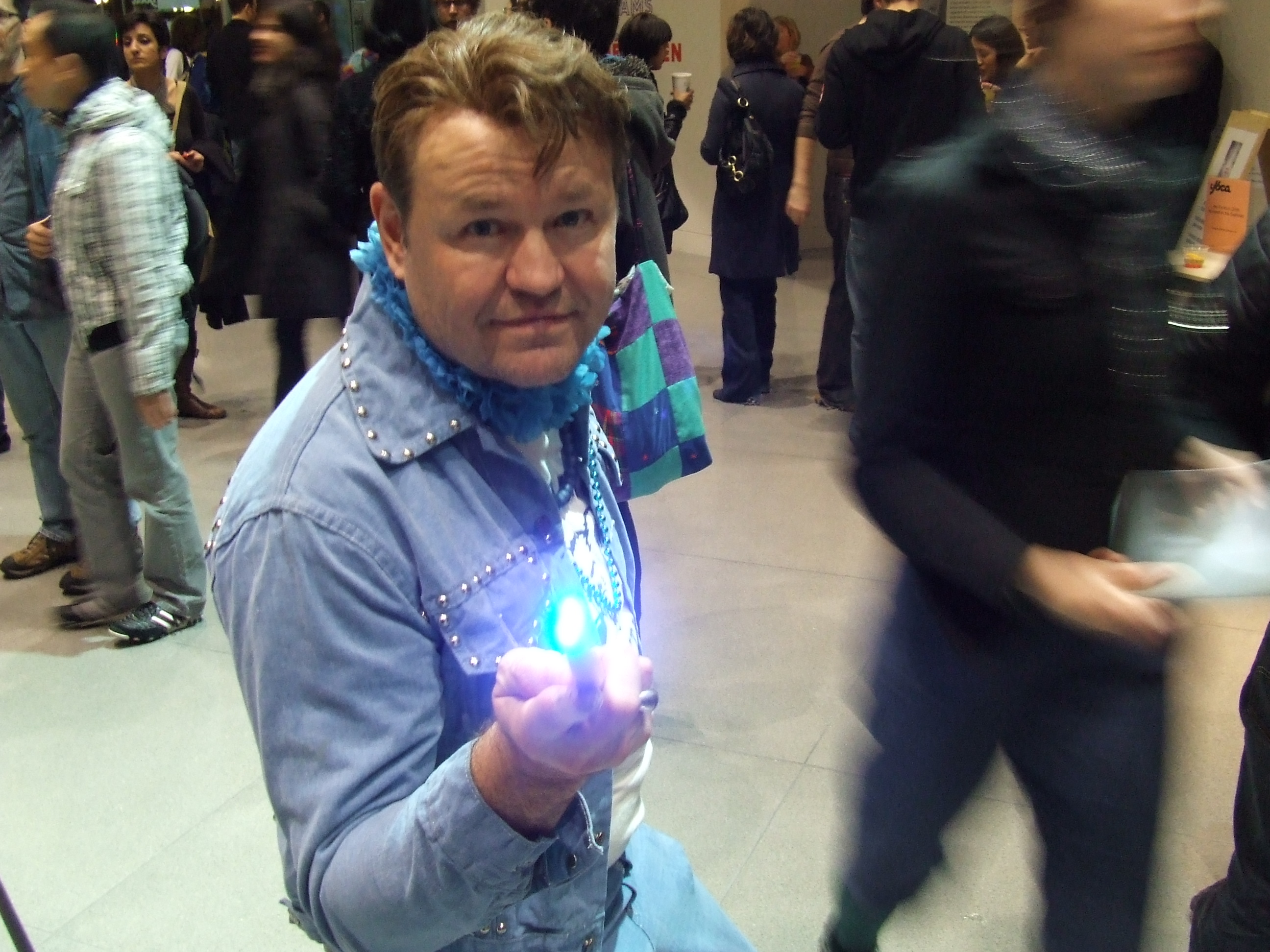
On February 19, the Guardian and Yerba Buena Center For the Arts hosted the opening night party Cool Blue Thing in celebration of Renee Green’s Endless Dreams and Time-Based Streams multimedia installation.

The Crowd came dressed in their coolest blue, enjoyed delicious Campari cocktails and were enthralled with great performances by L.A.’s best rock band Wounded Lion and local soft-psych sensations Colossal Yes!


SEIU members oust the old guard

0

In a stunning repudiation of the union leadership installed by Service Employees International Union President Andy Stern – whose autocratic style, aggressive expansion, and friendly relationships with big employers has caused a rift in the national labor movement – members of SEIU Local 1021 have voted overwhelmingly for a reform slate of new leaders.

As we wrote recently, the stakes were high here in San Francisco, where the old guard leaders threatened to undermine the union’s progressive tendencies just as Mayor Gavin Newsom is threatening mass layoffs and pay cuts for city employees, and the San Francisco Labor Council’s ideological balance was being tipped by the pro-development push of the building trades.

But the results couldn’t have been more clear in the first local election since Stern installed the Local 1021 after merging 10 union locals together, including the former Local 790, which represents most city employees. Stern’s whole slate was voted out by a substantial margin, including current President Damita Davis-Howard, who had 1445 votes to the 2141 votes garnered by Sin Yee Poon, who now takes over the top spot after having led SF Human Services Agency workers.

Also pushed out was James Bryant, a political ally of Newsom and enabler of Pacific Gas & Electric and other downtown power brokers, who was defeated in his run for Political Action Committee Chair. Alysabeth Alexander, who is in her 20s, beat him by a vote of 2552-1506.

The vote will certainly strengthen the hand of progressives in San Francisco going into what’s expected to be a tough budget fight with Newsom, as well as helping progressive supervisorial candidates in the November election against what is expected to be a strong push by downtown to break the progressive majority on the Board of Supervisors.

In addition, it could roil SEIU’s internal politics after a turbulent year, in which Stern created divisive clashes with his own local health care workers (causing Sal Rosselli to create the rival National Union of Healthcare Workers), UNITE-HERE, and the California Nurses Association.


The press release from the winning reform slate follows: 

Reformers Sweep in SEIU 1021 Election; Members Vote for Transparency and Democracy for Northern California’s Largest Public Sector Union 

On Friday, thousands of public sector votes were counted to determine the future leadership of one of the largest unions in Northern California.  This is the first election for SEIU 1021, formed only three years ago after the merging of 10 locals.

The reform slate, Change 1021, swept the elections taking a clear majority of the executive leadership seats. This all-member slate easily defeated the former administration-appointees by the International SEIU.  Some candidates won by a 3 to 1 margin while others enjoyed a comfortable 2 to 1 lead on their opponents. See attached list of election results.

“We are excited about the opportunity to give the leadership of this Union back to the membership,” stated Karen Bishop, the San Francisco County Area Representative Elect.  Former San Francisco Board of Supervisors President and current Chair of the San Francisco Democratic Party  Aaron Peskin agreed, affirming, “It is very heartening to see that real democracy has prevailed.”

Change 1021 campaigned on a platform for reform, seeking a stronger union that would prioritize member representation at work sites; fiscal transparency; and an internal democratic structure. “Members spoke with their votes, sending a clear message about priorities,” said Roxanne Sanchez, President Elect.

The challenges for the new board are daunting-they must reunite and reinvigorate a membership hit hard by the economic downturn, with thousands to receive lay-off notices this week.  The Board Elect is ready to make the budget fight a priority to fight layoffs and preserve important public and non-profit services for our communities.

 “Our members have spoken, loudly and clearly, that business as usual is absolutely no longer tolerable and that a fundamental change in the focus of our union towards the needs and priorities of our members are in prompt order,” says Sin Yee Poon, Chief Elected Officer Elect. For now, there is cause for celebration as the congratulatory calls have been flooding across California from members, elected officials, labor leaders, and community partners.

Newly  elected members will assume office at the next Executive Board meeting, March 9th.   International Union leaders are expected to be in attendance.           

Change 1021 Candidates who were elected are: Chief Elected Officer, Sin Yee Poon; President, Roxanne Sanchez; First Vice President, Gary Jimenez; Second Vice President, Crawford Johnson; Third Vice President, Larry Bradshaw; Secretary, Pamela Morton; Treasurer, Kathy O’Neil; Political Action Comm. Chair, Alysabeth Alexander; Social & Economic Justice Comm. Chair, Gladys Gray; Capital Stewardship Comm. Chair, Harry Baker; Cities Industry Chair, Renita Terry; Counties Industry Chair, Ken Tam; Special Districts Industry Chair, Saul Almanza; Schools Industry Chair, Mynette Theard; Sacramento County Rep, Ken Bloomberg; Registered Nurses Industry Chair, David Fleming; City & County of SF Industry Chair, Kathy Basconcillo; San Francisco Area Reps- Karen Bishop, David Turner, Jacqueline Sowers; Alameda County Area Reps,- Amy Dooha, Eric Stern, Gregory Correa; Sonoma County Area Rep, Nancy Atwell; Budget & Finance Comm Region 3, Michael Tong; and Budget & Finance Comm. Region 4, Mary Jane Logan.

The Chronicle’s dishonest hit on district elections

8

The move to get rid of district elections – which is based entirely on the fact that big business and more conservative voices (including the Chron) don’t like the progressive policy positions of the current board – is now well under way. The Chron devoted its Insight section to the issue Feb. 28, leading with a long editorial that wandered back and forth between points and never really made the case.


An example of the Chron’s logic:


But sitting atop the decision-making tree [in San Francisco] are small-time politicos, some elected with fewer than 10,000 votes in a city with a population of 808,976.


Horrifying! It’s as if the United States Congress – which has to decide issues like war and peace — was made up of local politicos who were elected with as few as 100,000 votes in a nation of 350 million.


Or as if the California Assembly – which has to deal with a $28 billion budget deficit – was made up of local politicos who were elected with as few as 50,000 votes in a state of more than 35 million.


A district supes votes could represent about 1.2 percent of the entire city. A state Assembly member could represent only 0.1 percent of the population of the state. And yet, I don’t hear the Chron calling for the state Assembly to be replaced with an at-large body.


More:


A town with sweeping plans to develop two empty Navy bases at Hunters Point and Treasure Island, fill vacant offices with new jobs, and cut its budget by more than a half billion dollars isn’t getting the thought, expertise – and citywide vision – it needs for these challenges.
This lack of broad leadership obstructs the city’s future. A major cause is the district election system that magnifies neighborhood and tight-knit interest groups to produce officeholders with little stake in citywide questions. If all politics is local, as former House Speaker Tip O’Neill famously declared, then San Francisco has pushed this dictum to the max. It’s all about me and my neighborhood.


That’s absolutely, factually untrue – the district elected board has done more to advance citywide issues – from minimum wage to health care to the rainy day fund to infrastructure planning – than any at-large board in the previous 20 years.


And the Chron’s own editorial contradicts that argument:


Supervisor David Campos (a winner with 9,440 votes) led a move to keep illegal immigrants who are juveniles accused of felonies from being turned over to federal authorities, despite a city legal opinion that the idea wouldn’t fly. Supervisor John Avalos (6,918 votes) dreamed up the “must spend” order directing the mayor to maintain expenditures in a record deficit year. Thankfully, he dropped the idea at the 11th hour


Okay, I get that the Chronicle editorial board doesn’t like the Campos sanctuary bill or the Avalos must-spend legislation – but that are both citywide issues. They have nothing to do with “me and my neighborhood.”


Which is really the entire point here. The Chron doesn’t like the outcome of district elections – because over the past ten years, the progressives have shown they can win district races. There’s a good reason for that; in district races, you don’t need to raise huge amounts of money.


As Assemblymember Tom Ammiano and Supervisor David Chiu point out in an opposing editorial:


Part of that increased accessibility to government is the result of the decrease in the cost of running a district versus a citywide election. In the 1994 citywide elections, the average winning candidate spent $456,000 in today’s dollars. That’s 225 percent greater than the amount spent today: In 2008, the winning candidates spent an average of $204,000. Candidates needing to raise money for a citywide race will inevitably turn to special interests for contributions. If you believe elected representatives should speak up for people, not just the special interests that donated to their campaigns, today’s district system serves you better.


They also note:


Before district elections were passed, under a citywide election system, many neighborhoods – the Excelsior, the Sunset, the Mission and Bayview-Hunters Point – had no supervisor of their own. Today, all residents can pick up the phone and reach an office responsible for their neighborhood and responsive to their concerns – a broken streetlight, a dangerous pothole or a consistently tardy Muni line.


A lot of people don’t like Chris Daly’s personality, and some don’t like his politics, but if you’re a person living on SSI in a grubby little hotel room in the Tenderloin and you need help, you can walk into his office and get a welcome reception and assistance with your needs. You won’t get that from the mayor.


On the other hand, do you think, Don Fisher ever needed to stand in line and try to make a 15-minute appointment to talk to Gavin Newsom? Seriously?


And while we’re on the personality stuff: Yeah, some of Daly’s antics have been over the top. But he’s no worse than some of the others who have served on citywide boards. Former Sup. Bill Maher once accused one of his opponents of having a small penis, and waved around two fingers spread about an inch apart to the press and public.


More important, we had supervisors who did nothing. We had supervisors who did exactly what the mayor said without any question. We had supervisors who were wholly-owned subsidiaries of major local corporations. I’ll take Chris Daly over those folks any day.


By any rational standard, the district board over the past ten years has been more productive, more accountable, more representative and more accessible than any at-large board I’ve seen in my almost 30 years of covering this city.


So the Chron needs to shut up about “citywide perspective”’ and personalities. If the paper wants to oppose district elections, it needs to drop the poll-tested downtown talking points and tell the truth:


The current board is too liberal for the Chron. The moderate candidates the paper prefers can’t win in districts. So they want to change the rules.


That’s the story, beginning, middle and end.


Marching on Sacramento

15

Angry parents, hundreds of them, met in Marina Middle School to demand an end to cuts in education.

Angry Muni riders, hundreds of them, jammed City Hall to oppose Muni fare hikes and service cuts.

Angry students from the University of California — thousands of them — will hold a huge event March 4th to push for better education funding and lower fees.

There’s something going on here — because in every case, grassroots activists in huge numbers (numbers that dwarf the so-called Tea Party events) want to force the state of California to change its budget priorities. And they are starting to talk seriously about taxes.

The Republicans are pretty intransigent up in Sacramento. But if these groups — the public school parents, the UC students, the transit users and the wide range of other middle-class folks who are sick to death of California’s budget mess and how it’s screwing them — could start working together, we could see a powerful coalition emerging.

And what that coalition needs to do, among other things, is push for Assemblyman Tom Ammiano’s legislation to change Prop. 13 and Sen. Mark Leno’s efforts to allow a local vehicle license fee, and a Constitutional amendment to get rid of the two-thirds majority for budget approval and tax hikes.

The Republicans have all signed this no-new-taxes pledge and it’s going to be hard to move them. Any attempt to change Prop. 13 will be met with huge opposition from big business. I used to think that it was hopeless even to talk about that … but maybe it’s not. Maybe if everyone who’s angry about government cuts understood that the only way to solve the problem in the end is to allow local government to raise money for the schools through property taxes, and allow state government to raise income taxes on the rich and impose taxes on big businesses, we’d be able to build a movement that could make some progress.

It’s worth thinking about.


PG&E’s laughable Prop 16: Who needs friends when you’ve got $35 million?

Last month, when the Guardian sent an intern to cover a debate between Pacific Gas & Electric Co. spokesperson David Townsend and California Sen. Mark Leno, the reporter was ejected from the event at Townsend’s request.

I figured I’d be immune from such nonsense when I ventured to the state capitol yesterday for a joint informational hearing about Proposition 16, the ballot initiative that PG&E has bankrolled for the June ballot for the purpose of extinguishing competition in its service territory. The initiative would establish a two-thirds majority vote before any municipal electricity program could get up and running, and its sole sponsor is PG&E.

But just after I snapped a photo of Sen. Mark Leno and Assemblyman Tom Ammiano chuckling sardonically at a PG&E executive who had mistakenly referred to the ballot initiative as “Prop 13,” a guard swooped in and ordered me to stop photographing and turn off my voice recorder.

I shot him a dirty look at first, but then realized that I could wind up meeting the same fate as our unfortunate intern if I didn’t cooperate. He informed me that it’s protocol to provide advance notification before photographing or recording a public meeting at the capitol (despite the fact that the hearing is televised and open to the public). Then he asked for my name and affiliation, and said he would have to ask committee members for permission before he could allow me to do any more recording or photographing. Presumably, the decision would be based on who was asking. He vanished and, a few minutes later, returned to say that the answer was “no.”

Thus, I was reduced to frantically scribbling down notes, which means the exchanges transcribed below aren’t as complete as they could be. (Anyone know of an acupuncturist who can soothe muscle stiffness in the forearm?)

Yesterday’s hearing made it clear that PG&E has little support for the ballot initiative other than its own war chest of funding, and it’s royally pissed off the Legislature besides. PG&E Senior Director Ed Bedwell blushed a bright red hue more than once when he was assailed with statements such as, “Alienating those who are usually in your camp is not a good sign,” an admonishment delivered by Assembly Member Tom Ammiano when pointing out that not even California’s other investor-owned utilities are behind the initiative.

Apparently, not even the Republican members of the Senate Energy, Utilities and Communications Committee and the Assembly Utilities and Commerce Committee could stand the smell of the PG&E’s bullshit, as every one of them had walked out of the room by the end. Not a single member of either legislative committee had a positive word for the proposition, but Assembly Member Jared Huffman plainly stated his opinion: “I think this is a terrible initiative.”

Nor was there any evidence of the “coalition” supporting Prop 16 that the PG&E-funded public relations firm that orchestrated this campaign claims exists. Every single member of the public who commented voiced strong opposition, and most had traveled there on their own dime.

Even the conservative-leaning Agricultural Energy Consumers Association, which represents 40,000 growers, is against it. “It would have a chilling effect on the farming community,” Michael Boccadoro of the Agricultural Energy Consumers testified. A representative from the California Chamber of Commerce spoke in favor, but local Chambers of Commerce are not unified in their support.

Paul Hauser, of Redding Electric Utility, testified that if customers in his territory —  which has been slammed with high unemployment — were paying PG&E prices instead of the municipal electricity rates, every single man, woman, and child would have to fork over an extra $440 per year.

The Pacific Gas & Electric Corporation, which is the parent company of the regulated Pacific Gas & Electric Company, has vowed to spend $35 million on Prop 16. Since the corporation derives all of its funding from the company, which is regulated by the California Public Utilities Commission and earns its money through customer billing, this means that every PG&E ratepayer is pitching in. Speaking of bills, PG&E rates will increase 30 percent by 2013 if PG&E is granted its requested hikes, according to The Utility Reform Network.

“Maybe it’s time the Legislature took a very hard look at whether that parent corporation needs to exist,” Boccadoro, of the agricultural group, commented. “Maybe it’s time for a vote on rate increases as well.”

One point that came up over and over again during questioning was the fact that instead of proposing changes to legislation, PG&E sought to use the initiative process to get its way, a move that Leno argues is flouting the democratic process. A second point was that its move is inconsistent with a statute that requires utilities to “cooperate fully” with community-choice aggregation programs. Below are some exchanges between members of the Legislature and Bedwell, the PG&E executive.

Leno: Can you describe to us how Prop 16 exemplifies your abiding by the statute of AB 117 in “cooperating fully?”
Bedwell: Can you repeat that?
Leno: (repeats language of statute)
Bedwell: … “I don’t see how that’s necessarily inconsistent. The cooperation aspect is in the implementation…”
(Leno takes issue with this, saying that they could have proposed that such language be included in the bill at the time it was being drafted. He points out that Prop 16 would present a “hurdle” to municipal power programs, and asks Bedwell if he agrees.)
Bedwell: Says he thinks it would create “a high bar.”
Leno: “A high bar. How is a high bar in any way consistent with ‘cooperate fully?’”
Bedwell: … “I don’t see it’s a matter of cooperation or lack of cooperation. …”

Bedwell: “We value our customers. I think you know through the last six or seven years in San Francisco, you know that we’re very committed to retaining our customers.”
Leno: (Explains that he is a PG&E customer in San Francisco, and a Sacramento Municipal Utility District [SMUD] customer in Sacramento.) “I pay PG&E 25 percent more, and I get more green power here in Sacramento. [In PG&E’s San Francisco territory] my business suffers regularly from blackouts. I’ve never had a blackout here in Sacramento.”

How the UC regents avoided a PR mess with Bill Clinton

0

Things were calm and peaceful outside San Francisco’s Fairmont Hotel, perched high atop a windy hill on Mason Street, as dark shiny vehicles rolled up to the stately entrance and well-dressed patrons filed in on the evening of Feb. 24. They were there to hear former President Bill Clinton deliver a speech titled “Don’t Stop Thinking About Tomorrow: Building a Better World,” as a benefit for the American Himalayan Foundation. The AHF is chaired by Richard Blum, a member of the University of California Board of Regents who is married to Sen. Diane Feinstein.

As guests arrived, a small group of workers tried to thrust neon green fliers into their hands. The fliers were headlined, “Tell Richard Blum to Stop Poverty at UC!” and charged that the UC Regents had approved a package of raises for UC executives on Jan. 21 even as front-line UC workers faced layoffs and cuts. The stack of Xeroxed fliers was a mere blip compared with what AFSCME Local 3299, the union that represents workers throughout the University of California system, had originally planned.

The union had organized a picket against Blum’s AHF event, which would have forced Clinton to cross a picket line in order to go in. Not only would this have created an unwanted spectacle, it could have marred the entire event. As AFSCME Local 3299 member Tim Thrush put it, “Bill Clinton is a friend of labor. AFSCME has worked with him a lot in the past … And Clinton will not cross the picket line.”

UC workers have been reeling in the face of massive layoffs and budget cuts. While the university administration contends that there is little it can do in the face of a decimated state budget, union workers point to examples of privatization on the UC campus as an alarming trend that is supplanting public-sector jobs and eroding California’s renowned public-education system.

AFSCME Local 3299 laid out three demands, according to organizer Danielle DiSilverio. While two — involving benefits for custodians at the Irvine campus and concerns about “reductions in time” at the Santa Cruz and San Diego campuses — have not been met, they did secure an agreement to abandon a plan to contract out jobs for shuttle drivers at UC Berkeley. Since the UC Berkeley shuttle drivers would be able to keep their jobs, Local 3299 called off the picket.

“We would prefer to not have to do this kind of stuff,” Thrush told the Guardian. “But unfortunately, in the world that Dick Blum operates in, we can’t get his attention unless we do stuff like this. As he works hard on poverty issues and gives money and time to poverty issues, he also makes decisions at UC that further the poverty problem of our lowest-paid workers. We want to keep reminding him that it’s not OK to do that.”

Who cares about San Francisco’s (black and brown) prisoners?

0

I knew Sup. Chris Daly was going to get slammed for his Feb. 23 vote against placing a $412 million earthquake-safety bond measure on the June ballot. I knew it when I heard him say the following: ”I care more about the people at the jail, the people who are there involuntarily, if we have a seismic incident, then I do about the rest of the people at 850 Bryant.”

Daly noted that he would have supported the bond package if it included money for new lockups, as was originally proposed.

‘What about the people in the jails?” Daly asked. “These are San Franciscans, my constituents, folks who are disproportionately people of color, folks who are disproportionately low-income and have been caught up in the criminal justice system.”

What I later discovered  was that several key figures in the local prison reform movement, including Dorsey Nunn of Legal Services for Prisoners with Children and Rhodessa Jones of the Medea Project, a visionary theater model for incarcerated women, were sitting in the Chambers, awaiting commendations as part of the city’s ongoing Black History Month celebrations.

Later that same afternoon, Sup Ross Mirkarimi honored Jones (left) and Idris Ackamoor (right) for their work with Cultural Oddysey. And afterwards, I caught up with Jones by phone to see what she thought of the plan not to rebuild the jails on Bryant Street , a decision apparently made to reduce the price of the city’s proposed seismic safety charter amendment by $250 million.

Jones, who conducted a residency at San Francisco county jail that resulted in the Medea Project, told me that these kind of inequitable decisions illustrate why she got motivated to do work inside jail, in the first place.

“When we walk into the jail, we try to educated the prisoners that they have no rights and no safety,” Jones said. “We are trying to find ways to infuse their lives with the political reality and end recidivism.”

She also noted that she has not been able to take the Medea Project inside the local jail because it’s gotten so crowded.

But last time she was there, the women were primarily black and brown and, according to Jones, “they are the fastest growing number inside.”

Jones, who is currently working on the issue of reparations and “how the prison-industrial complex looks so much like slavery,”  told me that in the 20 years since she began the Medea project, she’s learned that figuring out the questions around any issue is central to understanding it.

“So, are these folks not human beings as well? How do we transform the humanity? And what would Christ do? A lot of people don’t have any connection with an issue until it’s sitting at their dinner table,” Jones said.

Meanwhile, the Board also honored a dozen other local African American leaders,

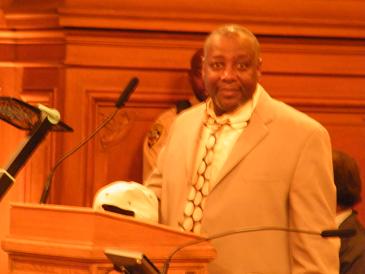
These honorees included Brian Gadsden (at the podium) and Herve Ernes

Sup. Carmen Chu recognized Kenyatta Scott of Abraham Lincoln High School (in red at the podium.


Sup. Ross Mirkarimi recognized Don Lacey (KPOO FM) and Marcus Books.

Sup. Daly recognized Bobby Bogan (at the podium below) of Seniors Organizing Seniors.

Sup. Sean Elsbernd recognized Courtney Johnson Clenendin, and Sup. Bevan Dufty recognized John Weber (see below); emperor of the Imperial Court

Sup. David Campos recognized Karen Huggins (at the podium) for her work with residents of San Francisco Housing Authority properties, describing her as a “force of nature.”

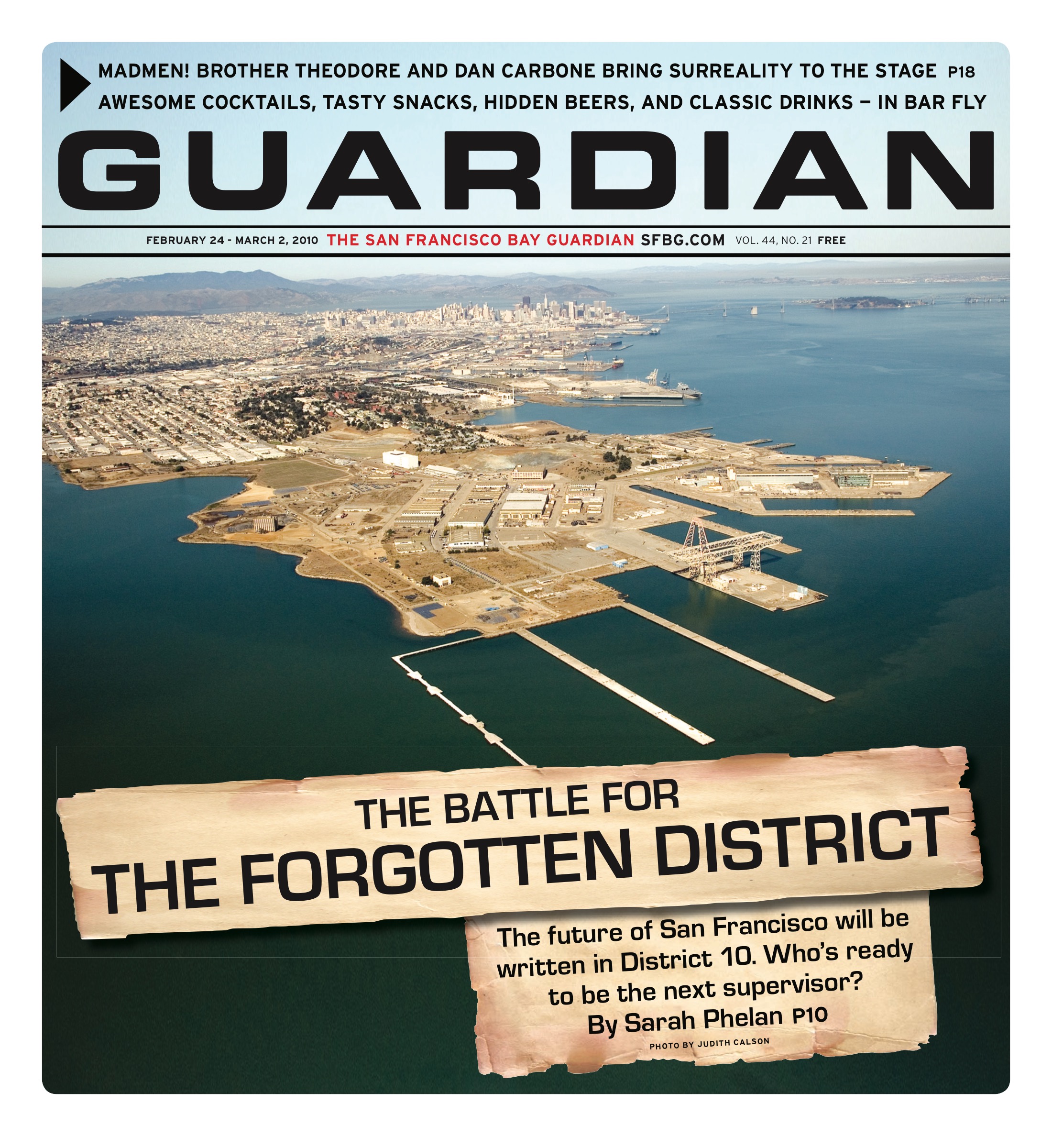
Sup. Sophie Maxwell, whose district is the subject of our cover story recognized Emily Wade-Thompson (at podium below), George Wahington Elementary School principal.

Supervisor Avalos recognized Joseph Lambert and Elba Clemente-Lambert, (both at podium below) who run the Creative Music Emporium.

“We are the last remaining African American owned store in San Francisco, and the only independent music store south of Cesar Chavez,” the Lamberts said.

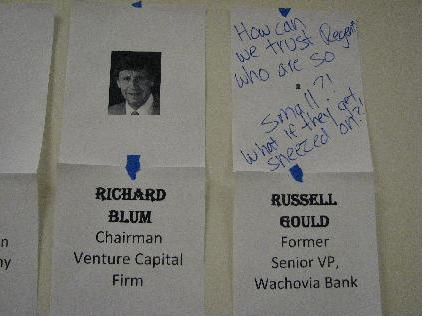
On the way out of the press box, I couldn’t help photographing  this cutting in a file compiled by local African American videographer and blogger Ace Washington, who is passionately concerned about the ongoing exodus of San Francisco’s already dwindling black population. 

Anyone want to hazard a guess what the 2010 census is going to reveal? (Here’s a clue: it’s doubtless less than it was ten years ago).

Meanwhile, I’ll leave you with this video clip of Bobby Bogan talking about how he used to be in a gang and recruit for the gang, but is now working for and with seniors, one of other most vulnerable populations in town besides blacks, children, folks with disabilities and, you guessed it, prisoners of color. 


No pixels, please — we’re plastic

0

Film and prints, like dinosaur bones and fossilized treasures, seem like ancient artifacts blown to the wayside in our digital age. We lost the mystery in photography when we introduced the point and shoot, erasing not only the physical labor but the ugly smiles, blinky eyes, and embarrassing angles. Where are the mistakes? The light leaks and fuzz on the lens? They’re making a comeback.

Obscure, eerie, and beautifully whimsical images galore will be on display starting Fri/26  at the RayKo Photo Center, as part of the third annual Plastic Camera Show.

More than 100 images from Bay Area artists, national and international photographers will have you yearning to get out there, grind that advance gear, and capture a local critter with some old fashion film.

A fascination with old school cameras is growing, with updated versions of the Diana and Holga plastic models showing up at Urban Outfitters and antique versions trading online faster than they can click. A backlash to our digital photo machines, it’s invigorating to see a picture lacking today’s high standards of “perfection”, allowing the camera to steer and our imagination to follow.

Cloudy, out of focus bridges and water towers clash and mingle with oddly colored figures and landscapes. Advanced photographer and amateurs alike can find success with the plastic gadgets, yielding photos with a quality unlike any produced by the futuristic models.

The work of Czech artist, Michael Borek, will be highlighted in the exhibit, shots of hot air balloons (see above) and lazy summer days harnessing the Holga’s unpredictability with gorgeous light leaks and inspiring angles.

RayKo’s 3rd Annual Plastic Camera Show
Fri/26-April 17 (Opening reception 6-9pm)
RayKo Photo Center
428 Third St., SF
www.raykophoto.com

In the Whispering Pines

11

This is the year when your scribing cowgirl returns wholly to the barn — or at least the fabled Cabin-in-the-Ppines where folks used to pick, grin, and get up to no good throughout my father’s youth in southwest Georgia. And sho’nuff the Whispering Pines’ fine, self-released debut, Family Tree (self-released), will be in tow alongside the potbelly stove, vintage Akan gold weights, and patchwork spreads courtesy of my late great-aunt, the hedonistic quilter Kate.

Family Tree served as fitting accompaniment not just to holiday doldrums but also the tail end of sonic voting season — when the results of the Nashville Scene‘s ninth annual Country Music Critics Poll, which I contributed to, heralded the genre’s likely future. While I don’t disagree with anointing Brad Paisley and Miranda Lambert for a soon-come twang Mount Rushmore, and would give my right pinky toe to cut a record with the great outlaw heir Jamey Johnson, the psychedelicized wing of cowboy music needs more recognition as its revival reaches its maturity. And it seems we ought not to wait a year or more to claim what’s worthy. So here’s stepping out in Topanga dirt at the ghost site of the ole Corral on behalf of the Whispering Pines’ efforts.

Family Tree, reaching back to twang’s glorious midcentury of pioneering fusions to fetch sounds for envisioning the near-future, is surely as much of an aesthetic atlas for country’s current progression as Brother Johnson’s stunning commingled pathos and mirth on “Mowin’ Down the Roses” or “Women.” Of course, the long-haired and denim-clad quintet of Brian Filosa (bass, vocals), Joe Bourdet (guitar, vocals), Dave Baine (keys, guitar, vocals), Joe Zabielski (drums, percussion), and David Burden (harmonica, percussion, vocals) abide and create in a vastly different space than Music Row or the plains and Rust Belt enclaves of Midwestern alt-country. This is reflected in the sunny clarity of their sound and sometimes mellower lyrical concerns. Silver Lake’s Whispering Pines is part of a loose, freewheeling confederacy of young SoCal-based solo artists and groups who purvey what some used to call “wooden music” and my friend Zach a.k.a. DJ Turquoise Wisdom has taken to terming “bootcut.”

This movement has bubbled under during recent years, yet has seemed to enjoy quite a spike recently. Over the last 18 months, several colleagues released histories of Laurel Canyon; maxi dresses (or “town gowns”) were deemed chic in downtown Manhattan and Los Angeles’ Echo Park; and Kamara Thomas’ Honky Tonk Happy Hour at assorted New York City venues reminded audiences that the East Coast has a rich stake in cosmic country, too. Likewise, Hair‘s ballyhooed Broadway run and Taking Woodstock reacquainted the fickle masses with festivals and freaky-deak; Neil Young dropped volume one of his storied Archives; SoHo sported a vintage store actually called Laurel Canyon, replete with embroidered western shirts, perfectly-scuffed boots, and Gunne Sax; my friend Henry Diltz’ iconic images of CSN and their friends crowned a blockbuster exhibit at the Brooklyn Museum; and Levon Helm just won a Grammy for Electric Dirt (Dirt Farmer Music/Vanguard Records). This past month, New Jersey’s Wiser Time put out their strongest evidence of a northeastern-minted “Southern rock,” Beggars and Thieves (Wiser Time). A slate of Essra Mohawk reissues is in the wings.

The network for the emerging acts intent upon reinfusing the “western” part of what used to be country and western into their sounds stretches in an illusory but potent line from New York, where Filosa used to hold down the low end for the lovely Maplewood, to Northern California, where assorted Devendra Banhart boys hold sway. Indeed, I first became aware of Whispering Pines via its association with folk-rock magus Jonathan Wilson. Less than six degrees of separation from Wilson tends to yield artists with a deep host of ideas excavated from the lode overseen by beloved Gram Parsons and the Band’s Richard Manuel. Whispering Pines is definitely in the Cosmic Americana camp: deriving its name from Manuel’s fragile beauty; covering the likes of J.J. Cale (“Crazy Mama”); spinning as far out as Les Brers and their San Franciscan soul mates from the Grateful Dead on “Stars Above” and the rollicking boogie of “Grapevine Blues.” The band displays clear affection for Scott Boyer’s lost, lamented Capricorn label gem, Cowboy.

Maybe it’s just because I spent the entire fall in thrall to pre-Sufi Mighty Baby, but I can dig where Whispering Pines is comin’ from; there is a winning light in the chorusing of the four voices. Although neither hillbilly-tooled enough to compete with Trace Adkins nor polemical enough to address the amber waves’ current disarray, Family Tree is still a great record for 2010, militant in its mellow as corrective to the gray of our times. Early adopters and ecstatic praise for Family Tree have typically come from Europe, where they’re unafraid to unfetter their ears.

Back East and down the road from Nashvegas, Valerie June is also pointing a fierce way forward for country by looking even farther back. She harks back to the prewar mountains of the Carter Family and rural blues vainglory of Jessie Mae Hemphill and Elizabeth Cotten. Born in Jackson, Tenn., the Memphis-based Valerie June has been percolating on her local scene, with several forays to busk in California and make connections in the East, independently releasing collections of her “organic moonshine roots music” such as 2006’s The Way of the Weeping Willow and 2009’s Mountain of Rose Quartz along the way. It’s not that we haven’t seen such leanings before from assorted folk revivalists over the past two decades, but they almost never spring from the soul of a black woman in her 20s. Sistagirl’s womanist, unabashedly burlap manifesto “No Draws Blues” delineates these tensions.

While our brothers and sisters of European descent were riding the wave of Woodstock/Altamont’s 40th anniversaries last year, and the country establishment was wrapping its heads and resources around the chart- and Opry-bound breakouts of former Hootie Darius Rucker and Rissi Palmer, alternative black country artists were not really traveling the canyon circuit, even if they popped up at Merlefest or Bonnaroo. During his downtime from the Mayercraft, David Ryan Harris’ solo turns and the Soul of John Black’s great, underrated Black John (Eclecto Groove) showed new fire in the so-called soul-folk vein, even as Still Bill, Damani Baker and Alex Vlack’s stirring documentary on the genre’s grand master Bill Withers, made its way from SXSW ’09 to a theatrical run in Manhattan.

Several NYC-area events honoring the late folk titan Odetta provided another necessary spotlight for rising luminaries of the “black banjo movement,” like the legendary Ossie Davis and Ruby Dee’s son, Guy Davis. Bela Fleck’s Africa project Throw Down Your Heart traces from Western Sudan to the Southeast’s hollers. The sad passing of Jim Dickinson unleashed two cross-cultural celebrations on Memphis International of world boogie and twang reclamation from his elder son, Luther: the dirge catharsis with the Sons of Mudboy, Onward and Upward, and the South Memphis String Band’s deep tread into bluenotes via Home Sweet Home. Even John Legend has surprised with a riveting spin on Richie Havens’ chamber-rock rearrangement of “Motherless Child” at George Clooney’s Haiti telethon.

Considering this, when sister Valerie recently rode into NYC to play Mercury Lounge — with Clyde (her trusty six-string), Mose (her banjo), and them boys from Old Crow Medicine Show in tow — her real pretty renditions of “Wildwood Flower” and original songs all seemed part of an auspicious moment. It only remains for the two strains of independent roots music to truly have a reckoning some time this year. This would likely be even more hallowed if it goes down far from the thronged fields of Manchester, Tenn. in June. I’m scooting my boots now toward that distant point of power-light.

Underground and proud

0

THEATER It’s difficult enough to want to perform in San Francisco without the added hardship of not quite fitting into someone else’s concept of “performance.” And the unclassifiable Dan Carbone must surely be one of the hardest acts to shoehorn into a hapless festival curator’s vision. As a performer who regularly skirts the way-out edge between the surreal and the downright schizophrenic, he’s had the dubious honor of being shut out of the comedy club circuit, kicked off the stage at San Francisco’s now-defunct Dadafest, and not selling out the house of numerous local and national “standard” venues.

But Carbone’s ability to evoke the most unconventional of worlds — beginning with his classic one-act Up From the Ground, involving a mysterious giant flower in a Southern cornfield, and most recently with his “one man space opera” Kingdom of Not — has been discomfiting and astonishing audiences and critics on for more than 10 years, and he has the accolades, if not the ticket sales to prove it.

“The SF theater world has no idea what I’m about,” Carbone confesses via e-mail. “They don’t know what to do with me.” Originally an experimental filmmaker, Carbone’s off-kilter performance aesthetic and penchant for dream logic meshes more readily with his silver screen collaborators (including the inimitable Kuchar brothers) than with his more traditionally linear solo show peers. So what’s a decidedly noncommercial, genre-shredding, avant-gardian to do to widen the scope of his influence? Start his own damn performance series, of course.

To kick start this series with a serious bang, Carbone is hosting professional provocateur-comedian Rick Shapiro in his second San Francisco appearance. A former drug addict and homeless rent boy, Shapiro’s own slow rise (literally, up from the ground) serves as ample fodder for his mercurial rants against the status quo, and his unstructured, stream-of-consciousness performance style once earned him the moniker “the James Joyce of comedy.” Or as Carbone puts it, “He’s the only guy on the circuit who not only tells dick jokes but also riffs on Sartre and Kierkegaard — and does so simultaneously.” Their shared inability to write for the mainstream, which has precipitated this joining of forces, will test the theory that art is at its best when designed to suit its creators — not its curators.

March 6, Carbone performs his two most celebrated solo shows, Up from the Ground and Here be Monsters, and premiere a show of works April 3 (both at the Dark Room Theater; check Web site for details). But his ultimate goal is collaboration. “The lesson,” he concludes, “is I need to start my own scene.” Dan Carbone and Rick Shapiro Sat/27, 10 p.m., $8 Dark Room Theater 2263 Mission, SF (415) 401-7987

www.darkroomsf.com

Muni cuts spark popular backlash

2

Tomorrow’s big showdown over the latest round of Muni service cuts and fare hikes seems to be galvanizing transit supporters and giving birth to a rejuvenated progressive advocacy effort, including a new transit riders union led by noted alternative transportation advocate Dave Snyder. And that hearing is just a prelude to a taxi medallion privatization plan that will be heard in the afternoon and another big Muni budget blowout on Tuesday.

“We are asking everyone to show up and complain about the mayor and the MTA board’s failure to prepare for this and find alternatives to the drastic cuts they’re proposing,” Snyder told us, referring to the San Francisco Municipal Transportation Agency’s plans to close a $16.9 million mid-year budget deficit (which is what’s left after the $11 million from the taxi permit selloff, which the MTA has already figured into the budget) almost entirely on the backs of Muni riders, who have already seen their fares double since Gavin Newsom became mayor in 2004.

The hearing is Friday at 9 a.m. in City Hall Room 400. That afternoon, Snyder will meet with a broad-based advisory board that he’s assembled to lead (and to name) the new transit riders union that he’s been working on for months, and his tentative plan is to formally launch it on Monday.

For now, those interested in being part of this fledgling organization can sign up here. The new organization is being launched as the MTA board moves from tomorrow’s controversial meeting into another one on Tuesday, that one to start grappling with the huge budget deficit the agency will still face in the next fiscal year that begins in June, even if it’s successful in closing this year’s.  

Snyder is probably just the right person to lead this effort, having directed the San Francisco Bicycle Coalition in its formative years before founding Transportation for a Livable City (now known as Livable City) and then becoming the transportation policy director for the San Francisco Planning and Urban Research Association (SPUR), a post he left last year during a controversy surrounding Snyder’s appointment to the Golden Gate Bridge, Highway, and Transportation District Board of Directors. 

Snyder said Newsom and the MTA board have failed to plan for this foreseeable funding shortfall, saying they should have accelerated plans for extended parking meter hours (particularly ending the free parking on Sundays), a congestion pricing program, a local vehicle license fee, or measures like a gas tax, transit assessment fee, or a parcel tax – all of which the MTA board and mayor could have placed on the ballot for voter approval. Instead, they did nothing and are now pursuing a 10 percent reduction in Muni service, which could start a disastrous downward spiral.

“They need a stable, long-term funding source,” Snyder told us. “The charter actually says they’re supposed to aggressively seek new sources of funding.”

MTA spokesperson Judson True said that neither tax increases nor extended parking meter hours among the proposed solutions for Friday’s discussion, but they’re likely to be raised as part of a longer term strategy during the meeting on Tuesday: “It’s likely that the various tax measures will be part of that discussion.”

That could include reviving the extended parking meter hours proposal, which the MTA board heard last year during a rancorous public meeting, directing staff to do more community outreach on it. As True said, “We did a fair amount of outreach on it so we’ll see where the discussion goes on the two-year budget.”

Snyder is hardly alone in his local advocacy for budget solutions that spare Muni from deep cuts. In fact, the Transit Not Traffic coalition that successfully pushed the 2007 MTA reform measure Prop. A – which includes the Bike Coalition, Livable City, Walk SF, and other progressive groups – has revived itself in advance of tomorrow’s meeting and will be flying outside City Hall starting at 8:30 a.m.

There is broad support on the left for seeking more funding from drivers and the general public, but it’s not unanimous. The anti-war ANSWER Coalition frustrated many of its usual progressive allies last year by organizing against extended meter hours, claiming it was a hidden tax of low-income motorists. And Newsom has stubbornly resisted supporting new revenue measures, even in the face of unprecedented budget shortfalls, which makes the quest to win the support of two-thirds of voters difficult.

But the popular outrage that’s been expressed in recent weeks about how much Muni has been cut, year after year since Newsom became mayor, will likely put pressure on him and the MTA board (all of whom Newsom appointed) to pursue new revenue options.

True sounded weary as we spoke, noting how much anger has been expressed at the recent series of town hall meetings. “We know where people stand on these proposals,” True said. “The board is going to have some tough decisions to make, clearly.”

SF officials tap corporate cash

2

San Francisco’s $500 campaign contribution limit makes it tough for rich individuals and corporations to curry favor with local politicians, right? Well, not really. Actually, politicians can still tap wealthy interests for tens of thousands of dollars for their special events and pet projects, as long as they fill out a form called “Payments Made at the Behest of an Elected Officer” within 30 days.

Traditionally, those forms have been buried in the files of the Ethics Commission, but the agency recently put them online, a rare bit of user-friendly sunshine from this often-toothless watchdog body. A Guardian review of the forms shows it is almost exclusively the city’s most fiscally conservative elected officials who use this tactic, tapping a relatively small pool of downtown power brokers.

When Sup. Michela Alioto-Pier wanted to support a Bizworld Foundation event in December, she had Pacific Gas & Electric donate $5,000 on her behalf. Sup. Sean Elsbernd throws a big annual crab-feed fundraiser in February, with proceeds going to the Laguna Honda Foundation. The form for this year’s event isn’t in yet, but last year he got $5,000 each from all the top anti-progressive funders: Don Fisher, Dede Wilsey, Charles Schwab, Warren Hellman, Platinum Advisors, and the San Francisco Association of Realtors.

But far and away the biggest beneficiary of these kinds of corporate donations is Mayor Gavin Newsom, who submitted more than half the forms on file. For last year’s Sunday Streets events, he tapped the Hellman family for $30,000, Blue Shield for $10,000, his favorite developer Lennar for $10,000, and Lennar subcontractor CH2M Hill for $5,000. The year before, the top Sunday Streets donors (at $20,000 each) were California Pacific Medical Center (which is seeking city approval to build two new hospitals) and Catholic Healthcare West.

For his swearing-in events in 2008, Newsom tapped old family friends Gordon and Ann Getty for $30,000, the Fisher family for $20,000, and Charles Schwab, Dede Wilsey, and Marc Benioff for $15,000 each. And, of course, PG&E gave him $10,000.

When Treasurer Jose Cisneros was starting his Bank on San Francisco program in 2008, he had Wells Fargo donate $20,000. When Sup. Bevan Dufty wanted to create Mission High School scholarships in his name, he called his friends Denise and John York, owners of the 49ers, to cut a check for $19,000.

Only one official from the progressive side of the local political spectrum turned to these big donations for help, and that was then-Sup. Aaron Peskin in 2007, when he wanted to raise $84,000 to buy a Telegraph Hill property to turn into open space. His top donors were the Gerson Bakar Foundation for $34,000 and 1301 Sansome LLC for $15,000.

So if you want to find out how downtown corporations are supporting the politicians they favor, keep your eye on this valuable new online resource.

Live Shots: K.Flay, Bottom of the Hill, 02/21/2010

4

After braving crummy weather and the odd timing of her Sunday night show, I finally got to see my new favorite female rapper K.Flay live. To be honest, K.Flay a San Franciscan by way of Illinois, is way more than just a rapper. She makes her own beats, mash-ups, and plays guitar, in addition to rocking a mic and a party.


I originally stumbled across her mixtape “Mashed Potatoes,” a 12 song mash-up album in which she tweaked some classics for exciting results. Put it in your CD player while driving across the Bay Bridge and you’ll discover that a Red Hot Chili Peppers’ classic was ripe for K.Flay’s interpetation in “On the Bridge.” She also flips Eminem’s “Crack a Bottle,” as a dedication to her favorite drink, Vanilla Coke (in a bottle not a can).

The show had a pretty good turnout for a rainy Sunday night. While I showed up a little late, K.Flay already had the crowd jumping around by switching off between rapping, making live beats, and playing guitar. Despite a few technical difficulties, she moved the show along, held the crowd’s attention, and kept her cool at the same time. Go, K.Flay.

Local CEO arrested in bribery sting

0

By Nima Maghame

San Francisco-based High Com Security owner Yochanan Cohen was one of 22 CEOs and presidents of security companies that make everything from bullets to bullet-proof vests who were arrested by the Federal Bureau of Investigation under the Foreign Corrupt Practices Act for illegally bribing foreign officials to win weapon defense contracts.

“This ongoing investigation is the first large-scale use of undercover law enforcement techniques to uncover FCPA violations and the largest action ever undertaken by the Justice Department against individuals for FCPA violations,” said Assistant Attorney General Lanny A. Breuer. All except one of the 22 heads of companies from across the country were arrested together on Jan. 19 when they met in Las Vegas for the 2010 Shooting, Outdoors Trade Show convention. The remaining CEO was apprehended the same day in Miami.

The undercover operation was designed by the FBI, which set up a sales agent representing the defense ministry of an undisclosed African nation. The agent was set up to inquire about purchasing arms for the presidential guard with the intention of being bribed. Once both sides met, the agent invited the CEOs and presidents to the country’s capital city.

Reportedly, the agreement was that the companies would pay a 20 percent commission for a slice of a  $15 million dollar venture that the African nation would use to outfit the presidential guard. Then, 10 percent of the commission was to go to sales agent with the other 10 percent going to the African nation’s defense ministry. The sales agent wined and dined the private business owners who then emailed the agent overpriced quotes for M4 carbines, body armor, and illegal purchasing agreements according to the indictment, and wired the bribe money to his overseas bank account. Dealings went so far that crates of weapons and armor were showing up in the African country.

In a FBI press release that came out shortly after the arrest, the bureau reported they had set up the operation after several undercover agents in the field had made allegations that foreign ministries were being bribed by the law enforcement products industry. 

“Corrupt payments to foreign officials to obtain or retain business erode public confidence in our free market system and threaten to undermine foreign governments,” said U.S. Attorney Channing Phillips. “These indictments set forth serious allegations and reflect the Department’s commitment to aggressively investigate and prosecute those who try to advance their businesses through foreign bribery.”

So far none of the indicted have any set trial date but the dependents will be heard by the federal court in Washington D.C.


Hot sex events: Feb 24-March 2

0

It’s all bondage, bodies, and polys in the Bay this week.

————-

Get Your Kink On – BDSM 101
Selina Raven, voted Best Dang Dominatrix in our 2007 Best of the Bay issue, hosts this workshop on everything you need to know about BDSM, including common kinky desires and activities, BDSM anatomy, and basics about introducing kink into relationships.

Wed/24, 8pm
$25-$30
Good Vibrations Valencia
603 Valencia, SF

www.goodvibes.com

————-

Relationship Mapping/Poly 101
Shanna Katz presents a basic training on the types of relationships people have, how we can map them, and what we can get out of these maps. Katz will talk about polyamory and its various facets, including how to make it work, and how negotiation can play a huge role in creating sustaining healthy relationships.

Thurs/25, 6pm
$10-$20
Culture for Sex and Culture
1519 Mission, SF
sexandculture.org

————-

Love Your Body Now!
Join Catherine Toyooka for a thought-provoking, interactive workshop meant to allow participants to explore the root of their body issues and how that’s prevented them from fully embracing their sexuality. The session also will explore the reality of genital shame.

Thurs/25, 7:30pm
$20-$30
Culture for Sex and Culture
1519 Mission, SF
sexandculture.org

————-

Red Hots Burlesque

Trauma Flintstone hosts and performs at a special edition of this weekly burlesque review, alongside Bunny Pistol, sASSy Hotbuns, Dottie Lux, The Empress, and Honey Lawless (who’s performing a brand new number).

Fri/26, 7:30pm
$5-$10
El Rio
3158 Mission, SF
www.redhotsburlesque.com

————-

Vaginal Fisting for One and All!
Learn what fisting is, how to introduce it into your relationships, and how to do it safely with this workshop by Shanna Katz, which includes a live-action, hands-in demo.


Fri/26, 7pm
$20-$30
Culture for Sex and Culture
1519 Mission, SF
sexandculture.org

————-

Sizzle
Femina Potens’ award-winning literary erotica series features Essin Em, Rita Seagrave, and Patrick Califia for a night of readings exploring sexuality as it concerns people who are differently abled.

Sat/27, 8pm
$10
Femina Potens
2199 Market, SF
www.feminapotens.org

————-

BDSM 101 Workshop
Perfect for the beginner, this workshop with Essin Em will help the curious find their way into the local scene, or simply into a spicier homelife.

Sat/27, 2pm
$5-$10
Femina Potens
2199 Market, SF
www.feminapotens.org

————-

Sexability Workshop
Following her 2 p.m. beginners’ class, Essin Em hosts this part workshop/part support group geared towards people who are differently abled and their partners. Participants are encouraged to share suggestions and trade ideas.

Sat/27, 4pm
$5-$10
Femina Potens
2199 Market, SF
www.feminapotens.org

————-

Eyes Wide Open
Club Exotica presents a night of interactive, participatory, sexy discovery and exploration inside Kink’s Armory. Explore respectful touch, sensual or sexy play, pushing boundaries, and exhibitionism in a luxurious Edwardian Room (which will be filmed until 2 a.m.) or lounge room while enjoying drinks, snacks, DJs, performances, and special permissive slaves. To be involved, you must RSVP/apply and sign a model release, and be willing to come dressed to impress in Edwardian, Victorian, burlesque, steam punk, cocktail, or fetish costume.

Sat/27
The Armory
1800 Mission, SF
For info and to RSVP, click here

————-

Lap Dancing 101
Rita Seagrave teaches the moves youneed to feel confident seducing a new lover or rekindling lust with a longtime partner. This participatory course is open to people of all sizes, genders, and sexual orientations. No partner necessary.

Sun/28, 1pm
$20
Femina Potens
2199 Market, SF
www.feminapotens.org

————-

Exotic Dance Smorgasbord: Intro to Pole-Lap-Floor and More
Explore the ways our body naturally loves to move and demystify exotic dance concepts throug a series of exercises, demonstrations, and practice time.

Sun/28, 12-6pm
$149
Culture for Sex and Culture
1519 Mission, SF
sexandculture.org

————-

Hubba Hubba @ Uptown
Kingfish and Eddie kick off a new month with Sugar La Vie, Desiree DuBois, Teresa Camp, Kiss Me Kate, Zip the What-Is-It?!, and a special full-set performance by Onkel Woland and The Black Forest Menagerie.

Mon/1, 9pm
$5
Uptown Club
1928 Telegraph, Oakl
www.hubbahubbarevue.com

————-

Reconnect with Pleasure: A Physical Therapist’s Approach to Overcoming Pelvic Pain
Painful intercourse is more common that most people think. Elizabeth McBride, MSPT, explains how the pelvic floor muscles can cause pain during sex, erectile dysfunction, pain with orgasm, and more.

Tues/2, 8-10pm
$25-$30
Good Vibrations Polk
1620 Polk, SF
www.goodvibes.com

————-

Noise Pop: A last-minute slacker’s guide

0

An exhausting week of show after show has arrived, and it’s hard to say no to such a thick lineup of interesting indie. That is, if you had a choice. If you’ve already got your tickets, my mother would be proud. If you are among the league of last-minute fools, be forewarned — you are officially SOL (insert Debbie Downer “whaw whaw” here). Lots of shows are sold out, including almost everything I had my eye on: Edward Sharpe and the Magnetic Zones, Loquat, Best Coast, Zee Avi, Atlas Sound, Four Tet, Mirah… So, if you’re like me and staggering to find your place in Noise Pop, here’s a guide to what’s best of what’s left.

WED/24

The Ghost of a Saber Toothed Tiger (Sean Lennon, Charlotte Kemp Muhl w/Cornelus)

Sean Lennon has always put me to sleep — not because he’s boring, but because his voice is pure lullaby. When he’s not helping out his mom, Yoko Ono, or playing sweet songs on his own, Lennon has put his heart into singing with his sweetie, hottie model Charlotte Kemp Muhl. The members of Cornelius will join the lovebirds on stage for pure ambient, twinkling folk everyone should eat with a spoon. 7pm, $20, The Independent

Foreign Born

Four guys and lots of galloping, hustling, clanking percussion, all kept up with audible aptitude. Foreign Born is low key, lyrical indie that knows when to tap into its intimate side and explore the more subtle jems. Think Vampire Weekend with a dash of folk rock. With The Fresh and Onlys. 8pm, $14, all ages, Rickshaw Stop
 
Film: P-Star Rising

Priscilla is nine years old, totally adorable, and totally badass. The tiny MC grabs the mic with no fear, rapping about her single dad, dead-beat mom and the joys of being a rap star before puberty. From kid to underage celeb status, the family struggles to keep it real while chasin’ the dream. 9:15pm, $10, all ages, Roxie Theater


THU/25

Film: The Heart is a Drum Machine

Nearly everyone is at least semi-obsessed with music and this feature documentary attempts to discover what it is about notes and tones that feel so good. The film has quite an impressive stack of celebrities and scientists, all offering their opinions and personal love affairs with the art form, including Elijah Wood, Jason Schwartzman, and crazy woman Juliette Lewis. 9:30pm, $10, all ages, Viz Cinema


FRI/26

Nurses

A Portland trio of whistles and wonderful sounds, Nurses craft songs with the leaves and sticks and stones they find in every corner. Looping and sampling these oddities, they make beautiful and inquisitive melodies that remind one of owls and environmentally friendly attitudes. With John Vanderslice, Honeycomb, Conspiracy of Venus. 7pm, $15, Swedish American Hall
 
The Art of Noise, Soiree featuring Shlomo

Heavy bass means weighty pours, right? The Art of Noise will surely light up your Friday night, with deep dance sounds and nods of hip hop. Shlomo is California based and full of genre bending material, poorly categorized as experimental, with full on low tones, synth kicks and lazer bites. 5pm, free, Project One


SAT/27

Pop ‘n’ Shop

Gotta look hot for the rest of Noise Pop weekend! More than 40 local designers, snacks and booze for all your perusing. 12pm-5pm, free, all ages, The Verdi Club

Music For Animals

They’re local and totally weird in a good way. Music for Animals is slightly funny and yet remains to be musically sound with sparky guitars and pop-friendly choruses. The quartet loves keeping it cool with their SF musical comrades and love to please their Bay fans. With Nico Vega, The Soundtrack of Our Lives, and Imaad Wasif. 7pm, $16, The Independent
 
!!! and My First Earthquake

It doesn’t matter if you’re not sure how to pronounce the band’s punctuation happy name (chk-chk-chk), they’re damn good and full of electronic, relentless energy. Bring a bandana for that embarrassing sweat dripping down your nose and you’ll be a happy dancer. San Francisco band My First Earthquake is equally stellar synth-pop, sewn with catchy lyrics and a perfectly feisty front-woman. With Maus Haus and Sugar and Gold. 7pm, $20, Mezzanine

The battle for the forgotten district

24

sarah@sfbg.com

This November, when voters in District 10 — the largest, sunniest, and most diverse of the city’s 11 supervisorial districts — replace termed out Sup. Sophie Maxwell, they’ll be making a selection that could have pivotal implications for the entire city.

That’s because the next supervisor from southeast San Francisco inherits a district that is home to some of the city’s biggest environmental and public health challenges, as well as the most potential for development that will determine what kind of city San Francisco becomes.

District 10 is where you’ll find the most polluted and most underdeveloped lands in San Francisco, areas that could either be transformed into models of a sustainability or, in the words of Tony Kelly, the president of Potrero Boosters Neighborhood Association, “be turned into a toxic Foster City.”

District 10 is where the slaughterhouses, tanneries, and glue factories set up shop and used the bay as a dumping ground. It’s where the smokestacks of coal and oil fired power plants polluted the air. It’s where the Navy filled the Bay, built a shipyard at Hunters Point and loaded parts of the first atomic bomb onto the USS Indianapolis in 1945.

District 10 is where the bottom fell out of this industrial economy in 1974, when the Navy left, taking with it people’s jobs, pay, and hopes for a home of their own and a better future, particularly for what was then a predominantly African American population.

And District 10 is ground zero for plans that will triple the population and double the number of homes — homes that likely will only be “affordable” to Google executives and retirees from Marin, forever changing the face of San Francisco’s southeast sector. Critics fear that will accelerate what has been a steady exodus of black residents, replaced by megadeveloper Lennar’s vision for a new D10.

It’s against this dark history and difficult present that a wide open field of more than a dozen candidates are vying to replace Maxwell, who came to power in 2000 and has had a mixed voting record in her decade on the board. Sometimes, Maxwell was the eighth vote that let the progressive majority on the Board override Mayor Gavin Newsom’s veto and pass trailblazing legislation. Other times, she was the swing vote that allowed the moderate minority to carry Newsom’s water.

So, in addition to D10’s many internal challenges, this seat could determine the political balance of power on the Board of Supervisors, placing all the more importance on voters in this long-marginalized part of town.


DISTRICT OF DISCONTENT

Eric Smith, a biodiesel activist who has thrown his hat in the D10 ring, says that there is a lot of frustration in the air, and looking at the problems the district is facing, it’s hardly surprising that it has what nearly every candidate agrees is a fractured political culture.

“The Bayview, the Hunters Point Shipyard’s toxic Superfund site, the homicide rate, unemployment, poor public transportation, dwindling services and community resources have made D10 one of the city’s largest melting pots of discontent,” Smith said.

Smith’s words were spoken while the Elections Department was verifying signatures earlier this month on a second failed effort to qualify a petition to recall Maxwell.

Bayview resident and D10 candidate Marie Franklin didn’t support the attempt to recall Maxwell, but she understood it as “a frustration movement.”

“People are sinking in the sand, we’ve already lost so many of them, and they felt Sophie wasn’t doing anything for them,” said Franklin, who praised Maxwell for helping get Franklin’s apartment building complex renovated — a job that was completed 18 months ago, at a cost of $65 million, creating 500 local jobs.

“There are 654 units here, and they were uninhabitable,” Franklin said. “There was black mold, rain falling inside. We had people living worse than Haiti.”

Franklin, who said she is running because she “knows the history,” came here in 1978, when she and her son were living in a car after a fire left them homeless. She said the Bayview was a totally isolated area, barely part of mainstream San Francisco.

“There were no taxis, no services,” she recalled. “Nobody would come here, it was the stigmatized area where no one was accountable to provide services.”

The Bayview — which in some ways is the heart of D-!0 — wasn’t always a black community. But African Americans have been living here for 70 years, dealing with all the racism, denial of services, poverty, and pollution. And it bothers Franklin that 85 percent of the 10,500 homes that Lennar plans to develop won’t be affordable to the elderly, disabled, unemployed and low-income people who currently live in the Bayview.

“We need to preserve the diversity of the community and make sure their issues and information will flow to City Hall,” she said. “You must give the people a handle. If you don’t reach out, they’ll slip. That’s why folks out migrated.

Whoever succeeds Maxwell will be a central player in addressing some very big and dirty issues: the future of the Navy’s radiologically impacted shipyard at Hunters Point, Lennar’s massive redevelopment plan for the Shipyard and Candlestick Point, the polluting power plants, replacement of stinky digesters at the sewage plant, and the SF Hope public lousing rebuild.

There’s also the chance to address violence and crime. James Calloway, a candidate who has long worked in Bay Area schools, told us he believes that education and jobs are part of the keys to rejuvenating the district.

“Job opportunities are not as plentiful in the district,” Calloway said. “When I was a kid, you could walk down Third Street at 2 a.m. Now I wouldn’t walk down it at 9 p.m., and I know the area.”

Calloway is hopeful that the massive redevelopment plan, if done correctly, could start the district’s comeback. “Not a lot of black folks stay here when they have extensive education,” he said. “But it’s not only them. Many were displaced by redevelopment and had no way to go back.”


ELECTION UP FOR GRABS

The largest of the city’s 11 electoral districts, D10 is a huge triangular piece of land in the city’s southeast sector that was used as an industrial dumping zone for decades. Today, the district runs from the Giants stadium at AT&T Park to the 49ers stadium at Candlestick Point and encompasses Mission Bay, Potrero Hill, Dogpatch, India Basin, Portola, Little Hollywood, and Visitacion Valley. It’s also crossed by two freeways that isolate it from the rest of the city, and is home to a large number of crumbling housing projects that are in the process of being rebuilt.

Candidate Ed Donaldson grew up in the projects until he was 10 years old, when the Redevelopment Agency kicked his family out in the 1970s. “We landed on our feet, but others weren’t so lucky,” said Donaldson, who works as a housing counseling director at the San Francisco Housing Development Corporation.

“There is a sense that the Bayview and Visitacion Valley have not been included within the San Francisco family,” Donaldson said. “There is a sense of being forgotten.”

In 2007, Donaldson co-founded the Osiris Coalition to tackle the city’s dormant Certificate of Preference program, in which the Redevelopment Agency issued a document to displaced residents and businesses in the 1960s promising that they could return.

He also tried to rescue some 700 foreclosed properties and recycle them as affordable housing stock. And now he is trying to prevent the city from bulldozing seven SF Hope projects without guaranteeing residents that they have right to remain.

In 2007, Mayor Gavin Newsom and Maxwell convened an African American Outmigration Task Force that didn’t get a public hearing about its findings until August 2008. The timing angered some, who questioned why the report’s findings and implications for urban planning weren’t released before June 2008, when the residents of San Francisco voted for the Lennar-led Proposition G, a proposal to build 10,000 market rate homes at one of San Francisco’s last remaining black communities, which Newsom and Maxwell endorsed.

The taskforce didn’t publish its recommendations until the end of 2009, allegedly because of insider squabbling. Meanwhile, gentrification was going on actively, and many blamed Newsom, and by extension Maxwell, for failing to do anything with the group’s findings as D10 residents continued to suffer from high rates of asthma, cancer, unemployment and an ongoing black exodus.

It wasn’t always this way. In the 1940s, the district’s black population exploded when migrants from the south and World War II veterans came to work at the Hunters Point Naval Shipyard. Some moved to Alice Griffith Public Housing complex, or Double Rock, which was built as military housing in 1962. Others relocated to the Bayview when the Redevelopment Agency took over the Fillmore/Western Addition in the ’60s and ’70s as part of a controversial urban renewal effort.

But when the Navy abandoned the shipyard in 1974, unemployment hit the black community hard. Today, hundreds of the city’s lowest income residents live in Alice Griffith’s crumbling units and endure sewage backups, no heat, cloudy drinking water and leaking ceilings, as they wait for the projects to be rebuilt.

“Generations have been trapped in the silo of public housing and cannot get out, because of lack of opportunity and education, so when we legislate, we need to take that into consideration,” said candidate Malia Cohen, whose grandfather came from Texas to work at the shipyard where he met her grandmother, whose family came from New Orleans.

“My grandfather’s father was a longshoreman. He worked with the infamous Leroy King [a commissioner at the city’s Redevelopment Agency] and he has fantastically vivid stories of racism,” said Cohen, who works for the Federal Reserve Bank of San Francisco, previously served on the executive staff of Mayor Gavin Newsom, and has already raised over $18,000 in the D10 race and qualified for public matching funds.

“My family came here to work hard, they lived on Navy road in the projects, and then they bought a house here. My parents were born here, and we were all public schooled,” Cohen recalled as she took me on a tour of D10 that ended up in Visitacion Valley, an increasingly Chinese-American neighborhood that reflects a district-wide trend.

Census data show that by 2000, Asians were the largest racial group in the district (30 percent), followed by blacks (29 percent), whites (26 percent), and Latinos (19 percent). By 2003, according to the California Urban Issues project, the trend continued. Asians were the largest racial group (32 percent), followed by blacks (27 percent), whites (21 percent) and Latinos (17 percent) of the population.

This means that D10 candidates will have to garner support from more than one ethnic group to win. Over a dozen candidates have already filed papers in the race, but so far there is no clear front-runner.

Also frustrating the prognosticators is that fact that D10 has had the lowest voter turnout in the city, so the winner will also depend on who goes to the polls.

D10 candidate Geoffrea Morris, who is the grand daughter of longtime Bayview activist Charlie Walker, has been knocking on doors and participating in voter registration drives.

“We need new blood,” Morris said

Getting elected will be a complicated equation. Although Bayview’s population was 50 percent African American at the time of the 2000 census, it didn’t turn out the vote. In the 2006 election, only 14,000 of the district’s 37,000 registered voters went to the ballot, and 50 percent were from whiter, richer, and more Asian neighborhoods.

“It’s very important to the future of the city that the ethnicity diversity of the board be maintained and that the African American community have representation,” former Board President and current Democratic Party chair Aaron Peskin told the Guardian.

Maxwell recently told the Guardian that she’s not ready to endorse any D10 candidates yet. “I’m waiting for people to have a better understanding of what this community is, what the common thread running through it is, and how to use rank choice voting,” she told us.

The only candidate who currently holds elected office is BART director Lynette Sweet, who had her answers down pat when we reached her by phone, and even used wording that was eerily similar to Maxwell’s words.

“D10 is a pretty diverse district, but there is only one common thread: the need for economic development,” Sweet told me. “That’s true in Potrero Hill, Portola, Dog Patch and the Bayview. It’s the same mantra: a lot of small businesses need help, and the only way to help them is through economic development. In Potrero Hill it’s about land use. In the Bayview, it’s about the shipyard and better transportation and truancies.”


THE COMMON THREAD

District 10 is ground zero for the Lennar’s $2.2 billion plan to develop 10,500 market rate condos at the Shipyard and Candlestick Point. The plan will allegedly create thousands of jobs and new parks, deliver on an historic community benefits agreement that labor groups claim is so “lawyered up” that the developer can’t renege on its promises.

The package is framed as the one and only way to revitalize the southeast’s formerly vibrant economic engine. Indeed, any time anyone tries to slow down the process—to take time to thoroughly read the draft EIR and see if it adequately addresses the impacts of this massive urban reengineering project — a chorus of “no delays” starts up, either from residents of the housing projects desperate to see their homes rebuilt, or the labor contractors who hope to get jobs.

“It’s as if the city is playing checkers, while Lennar is playing three-dimensional chess,” Eric Smith observed.

Lennar has stated that it will contribute $711 million to finance this massive project. The remainder will be leveraged by Mello-Roos bonds, state taxes based on the use and size of a property and intended to raise money for needed services, and tax increment financing, which creates funding for projects by borrowing against future property tax revenues.

The conceptual plan won Maxwell’s backing but environmental groups are critical of the draft EIR.

During DEIR hearing, environmentalists questioned the wisdom and the cost of filling the Bay to build a bridge over Yosemite Slough, and building condos on Candlestick Point state recreation area, the only open major open space in the district.

But the city’s Planning Department also has 20,000-30,000 units of housing in its pipeline. This means that if all these plans get approved in the next decade, they’d account for 80 percent of residential development citywide. And D10’s population could triple, further skewing the district’s already shifting demographics.

In other words, D10 as we know it could become nothing more than a historic relic in a few years, and the next supervisor will play a key role in deciding whether that happens. SFHDC’s Ed Donaldson warns that any supervisor who does not understand the complexity of the city’s largest district can expect a similar recall backlash in future.

“There is no one homogenous voice in the community,” Donaldson said. “The grass-roots organizing that brought about the recall effort was a result of a changing political structure in the area, but is not yet on par with other districts in town. We still allow our politics to be controlled from downtown.”

Fellow candidate Eric Smith warns that the issues—and politics—are complex.

“People were emotional, angry, and desperate because they feel no one listens to them,” Smith said. “That’s part of the problem here; they would rather have a supervisor go down swinging for them, rather than watch one seemingly side with Lennar, PG&E and the mayor on issues contrary to their interests. That’s the terrible irony and one of the biggest problems in District 10. Folks are so mad, they’re willing to do whatever it takes to make them feel they have a voice in the outcome, even if it’s potentially worse.”

Smith cited the sequence of events that culminated last year in the Navy dissolving the community-based shipyard Restoration Advisory Board (RAB), which for years has reviewed technical documents and commented on the Navy’s clean-up proposals. But in December, the Navy made its official decision to disband the RAB, citing dysfunctional behavior and off-topic discussions that got in the way.

“Some of the same folks who were frustrated by the process, tried to send a signal to the Navy that they weren’t being heard and for all their well-intentioned efforts got the RAB dissolved,” Smith said. “I truly feel for them, it’s absolutely heartbreaking, but at times, they can be their own worst enemy.”

One of the looming issues about the shipyard is that the land has been polluted and needs to be cleaned. The shipyard contains radioactive debris from ships towed to the shipyard, after a 90-foot wave washed over them during an atomic test gone awry. The Navy burned 610,000 gallons of radioactively contaminated ship fuel at the shipyard, and workers showered on the shipyard, raising concerns that radioactive materials got into the drains and sewers. And questions have been raised about radiological tests on animals at the yard.


LEAKS AND FLOODS

It’s not just the shipyard that’s toxic. Even the buildings that were constructed to house workers 50 years ago are a serious mess.

Realtor Diane Wesley Smith, who grew up in public housing projects, took me on a walking tour of Alice Griffith last week to see conditions that tenants will likely have to endure until at least 2014, if the city sticks to its plan to relocate people into a new replacement unit in the same geographical area, if not the exact same site.

What we found was pretty messed up.

“The water sometimes comes out brown and feels like sand. It’s been like that for a year,” one resident said.

“The water is cloudy, the bath tub isn’t working and the sink keeps stopping up,” said another.

A woman named Silvia showed us how the water from the tap in her elderly mother’s kitchen flows out cloudy and then doesn’t settle properly, like foamy beer.

“The roof’s been leaking for years, the sewage backs up, but they just fixed the lights,” Silvia said. A neighbor named Linda was using her oven as a heater.

“The toilet backs up a lot, and my grandson’s been coughing a lot from asthma,” Linda said.

“Roaches is always a problem,” said a woman named Stormi, dressed in black sweats and a black T-shirt that read, “Can’t knock the hustle.”

“They’re trying,” said Stormi, a member of the Alice Griffith Residents Association, as a couple of Housing Authority trucks pulled up to do repairs.

“They promise that you will not have to leave your unit, but if they try to move us down to the waterfront, well, there’s a reason there’s no housing there, and it’s because the land will flood,” Stormi said.

“If we don’t end up at the table, we’ll end up on the menu,” Wesley Smith warned, as she stopped to chat with a group of young men, who were worried they would pushed out of the Alice Griffith rebuild through the criteria being established.

“Fred Blackwell, the executive director of the Redevelopment Agency, assures me that’s not the case, but Alice Griffith is a Housing Authority property, and empty promises have the potential to be great promises provided they are made in writing,” Wesley Smith said as we walked out of the projects and onto the road where a yellow and black sign announced “flooded” next to Candlestick Point park, where Lennar wants to build.

Malia Cohen expressed concern about Hope SF residents, as we drove through the Sunnydale housing project.

“We have to be diligent and mindful that people are not pushed out,” Cohen said, noting the sweeping views at Gleneagles golf course above Sunnydale, and the value of housing for a golf course community. “When public housing gets taken offline, we must work with Redevelopment and the Housing Authority to make sure no one is changing the rules halfway. We have to make sure the talks and walks line up. We need to be equal partners. We cannot be bulldozed by City Hall.”

Geoffrea Morris is a Calworks employee, at the Southeast Community College facility on Oakdale, which was built to mitigate the city’s expansion of the sewage plant in 1987. She cited concerns about the literacy levels of people who live in the 2200 public housing units that cluster D10. “A lot of people in Alice Griffith don’t even know the dates or when it’s going to be reconstructed,” Morris said. “Folks like to be told stuff like that, but the city gives you a stack of papers. Some will read them, but others rely on folks they think are trustworthy. They need stuff in layman’s terms written on one sheet of paper.”

Morris is a fan of the Internet who posted a community survey online, and made sure every housing project got some literature telling people to get informed. She worries about the digital divide in D10:

“A lot of folks don’t have computers and access to important information,” Morris said. “And let’s talk about the way ‘affordable’ is used to trick people.”

Michael Cohen, Newsom’s top economic adviser, recently stated in a memo that over the expected 15-20 year phased build out, Lennar’s Candlestick-Shipyard development would include, “up to 10,500 residential units, about 32 percent of which (3,345) will be offered at below market rates.”

“But 892 units of this ‘affordable category’ will be sold to folks earning $100,000,” Morris said. “So if you subtract 892 units from affordable unit category, you’re back to 25 percent affordable.”

Candidate Kristine Enea, an attorney and a former RAB member, chairs the India Basin Neighborhood Association, which administers a US EPA grant to hire experts to translate the Navy’s cleanup documents into plain English and comment on them She was frustrated by the Navy’s decision to dissolve the RAB.

“The lack of a forum does nothing to bolster the community’s trust in the cleanup or the redevelopment process,” Enea said.

Enea generally supports the Lennar project, but has concerns about whether it will adequately mitigate increased car traffic, or result in commercial development that benefits her neighborhood.

“India basin is a pocket of Hunters Point right along the shoreline,” Enea said. “Right now, we have no shops or restaurants, no ATM, no groceries, nothing beyond one liquor store and a few industrial businesses.

Potrero Boosters president Tony Kelly told us that District 10 residents can think for themselves. “D10 residents don’t need to rely on corporations to solve their problems,” he said.

“Folks in the eastern neighborhoods came up with a better revitalization plan than what the city proposed and community activists managed to close the power plant, after the city said it was impossible,” Kelly recalled.

And there’s no shortage of good ideas.

Kelly suggested that an urban agriculture center could immediately put low-skilled folks to work by erecting greenhouses on unused land. Smith said the industrial zone could be “incredible eco-park made from sustainable sources.

‘D 10 is the dumping ground for everything, including all the city’s waste,” he said. “We could be a shining example, not just for D 10, but the rest of the state.”

The D 10 candidate line up includes Calloway, Cohen, Donaldson, Smith, Enea: civil rights attorney Dewitt Lacy, Morris, Potrero View publisher Steve Moss; District 7 BART director Lynette Sweet, Wesley-Smith. Bill Barnes, who works for Sup. Michela Alioto-Pier, and Linda Richardson, who was appointed to the Human Rights Commission in 2007 by Mayor Newsom, have also expressed interest in the race.

In such a huge field, name identification will play a major role. Sweet is in office, but BART Board is not a high-profile job and won’t give her a huge advantage.

Cohen has a slight edge right now in that she’s raised $18,505, including $500 from former Newsom flak Peter Ragone, making her the first D. 10 candidate to qualify for campaign financing. The oldest of five girls, Cohen recalls how her mother got laid off from her city job as a school-based mental health worker and then rehired, as part of the city’s budget cuts.

“We felt that pinch and the frustrating games that are played out between the leadership and the rank and file,” she said.

Cohen who worked for Newsom in his first term as mayor, but has since left his administration , said she is uncomfortable at being framed as Newsom’s candidate.

“Because I’m not, but I am one of the few candidates who has seen how the mayor and the Board work—and don’t work—together,” she said.

Moss sees the city’s southeast as a “district in transition.” Over coffee at Farley’s in Potrero Hill, he told me that the southeastern neighborhoods could be “launching pads for environmentally sustainable growth.”

“The district’s been in a frozen period for 30 years, But despite the problems, people are deeply committed to and in love with their community.

“This district is the future of San Francisco and its social fabric—the diversity, income –and its problems are leftovers from the city’s industrial age.”


DISTRICT 10, BY THE NUMBERS

Total Acres: 5,650

Average household income: $85,000

Population: 73,000

Registered voters: 37,700

Average housing price: $335,000

Ethnicity (2003 figures): Asian 32%, African American, 27%, white 21%, Hispanic 17%

Development status of land: 18% residential, 38% is commercial, 38% undevelopable

All figures the latest available. Sources: SFGIS, Association of Bay Area Governments, U.S. Census, California Urban Issues Project. Ethnicity and income data is from 2003 and almost certainly has changed.

Music listings

0

Music listings are compiled by Paula Connelly and Cheryl Eddy. Since club life is unpredictable, it’s a good idea to call ahead to confirm bookings and hours. Prices are listed when provided to us. Submit items at listings@sfbg.com.

WEDNESDAY 24

ROCK/BLUES/HIP-HOP

Kasey Anderson, Matthew Ryan, Allen Stone, Andrew Belle Hotel Utah. 8pm, $8.

Foreign Born, Fresh and Onlys, Free Energy, Splinters Rickshaw Stop. 8pm, $14.

Ghost of a Saber Toothed Tiger, Cornelius, If By Yes, Hirotaka Shimizu Independent. 8pm, $20.

Pepi Ginsberg, Pepper Rabbit Hemlock Tavern. 9pm, $7.

Harlem, Sandwitches, Young Prisms Café du Nord. 8pm, $12.

Left Alone, Bum City Saints, Hounds and Harlots Thee Parkside. 8pm, $8.

Richard Thompson Band Great American Music Hall. 8pm, $28.

Rogue Wave, Princeton, Man/Miracle, Two Sheds Bottom of the Hill. 8pm, $15.

Sideshow Fiasco, Kajillion, Illness El Rio. 7pm, $5.

Sioux City Kid, Vandella, Landlords Red Devil Lounge. 8pm, $8.

FOLK/WORLD/COUNTRY

Michael Abraham Jazz Session, Gaucho Amnesia. 8pm, free.

Michael Rose with Dubtronic Kru Rockit Room. 9pm, $25.

DANCE CLUBS

Booty Call Q-Bar, 456 Castro; www.bootycallwednesdays.com. 9pm. Juanita Moore hosts this dance party, featuring DJ Robot Hustle.

Club Shutter Elbo Room. 10pm, $5. Goth with DJs Nako, Omar, and Justin.

Hands Down! Bar on Church. 9pm, free. With DJs Claksaarb, Mykill, and guests spinning indie, electro, house, and bangers.

Jam Wednesday Infusion Lounge. 10pm, free. DJ Slick Dee.

Mary-Go-Round LookOut, 3600 16th St., SF; (415) 431-0306. 10pm, $5. A weekly drag show with hosts Cookie Dough, Pollo Del Mar, and Suppositori Spelling.

RedWine Social Dalva. 9pm-2am, free. DJ TophOne and guests spin outernational funk and get drunk.

Respect Wednesdays End Up. 10pm, $5. Rotating DJs Daddy Rolo, Young Fyah, Irie Dole, I-Vier, Sake One, Serg, and more spinning reggae, dancehall, roots, lovers rock, and mash ups.

Synchronize Il Pirata, 2007 16th St.; (415) 626-2626. 10pm, free. Psychedelic dance music with DJs Helios, Gatto Matto, Psy Lotus, Intergalactoid, and guests.

Yoruba Dance Sessions Bacano! Som., 2925 16th St., SF; (415) 558-8521. 9pm, free. With resident DJ Carlos Mena and guests spinning afro-deep-global-soulful-broken-techhouse.

THURSDAY 25

ROCK/BLUES/HIP-HOP

Dan Black, Free Energy 330 Ritch. 9pm, $10-13.

Curtis Bumpy Coda. 9pm, $7.

Citay, Scout Niblett, Greg Ashley, Tape Deck Mountain Café du Nord. 8pm, $14.

*Cute Lepers, Clorox Girls, Primitivas, Boats! Thee Parkside. 9pm, $8.

Dodos, Magik*Magik Orchestra Palace of Fine Arts, 3301 Lyon, SF; www.ticketmaster.com. 8pm, $25.

Shane Dwight Biscuits and Blues. 8pm, $15.

Far, Stomacher, Picture Atlantic, Trophy Fire Bottom of the Hill. 8pm, $14.

Robert Grashaw Amnesia. 7pm, free.

Bill Kreutzmann with Oteil Burbridge and Scott Murawski Independent. 9pm, $25.

Moe. Fillmore. 8pm, $37.50.

Richard Thompson Band Great American Music Hall. 8pm, $28.

Slow Children, Wobbly and Preshish Moments, Maleficia, Alexandra Buschman Amnesia. 9pm, $5.

Space Monkey Gangstas, RU36, 5 Days Dirty, Release Slim’s. 8:30pm, $13.

*Toasters, Inciters, Monkey Red Devil Lounge. 8pm, $12.

*"Tribute to Johnny Cash" Knockout. 8pm, $10. With Glen Earl Brown Jr., B Stars, Royal Deuces, Big B and His Snake Oil Saviors, and more.

Zaimph, Vodka Soap, Bill Orcutt, Stellar OM Source Hemlock Tavern. 9pm, $7.

Zee Avi, Hot Toddies, Leslie and the Badgers Rickshaw Stop. 8pm, $14.

FOLK/WORLD/COUNTRY

Bluegrass and Old Time Jam Atlas Café. 8pm, free.

DANCE CLUBS

Afrolicious Elbo Room. 9:30pm, $5-6. DJs Pleasuremaker and Señor Oz spin Afrobeat, Tropicália, electro, samba, and funk.

Caribbean Connection Little Baobab, 3388 19th St; 643-3558. 10pm, $3. DJ Stevie B and guests spin reggae, soca, zouk, reggaetón, and more.

Drop the Pressure Underground SF. 6-10pm, free. Electro, house, and datafunk highlight this weekly happy hour.

Ejector DNA Lounge. 9pm, $10. Synthpop with Robot Bomb Shelter and DJs Chris Zachos, Dabecy, and Papa Tony.

Funky Rewind Skylark. 9pm, free. DJ Kung Fu Chris, MAKossa, and rotating guest DJs spin heavy funk breaks, early hip-hop, boogie, and classic Jamaican riddims.

Good Foot Yoruba Dance Sessions Bacano! Som., 2925 16th St., SF; (415) 558-8521. 9pm, free. A James Brown tribute with resident DJs Haylow, A-Ron, and Prince Aries spinning R&B, Hip hop, funk, and soul.

Gymnasium Matador, 10 6th St., SF; (415) 863-4629. 9pm, free. With DJ Violent Vickie and guests spinning electro, hip hop, and disco.

Heat Icon Ultra Lounge. 10pm, free. Hip-hop, R&B, reggae, and soul.

Kick It Bar on Church. 9pm. Hip-hop with DJ Jorge Terez.

Koko Puffs Koko Cocktails, 1060 Geary; 885-4788. 10pm, free. Dubby roots reggae and Jamaican funk from rotating DJs.

La Riots Manor West, 750 Harrison, SF; (415) 407-4565. 10pm, $10.

Mestiza Bollywood Café, 3376 19th St., SF; (415) 970-0362. 10pm, free. Showcasing progressive Latin and global beats with DJ Juan Data.

Peaches Skylark, 10pm, free. With an all female DJ line up featuring Deeandroid, Lady Fingaz, That Girl, and Umami spinning hip hop.

Popscene 330 Rich. 10pm, $10. Rotating DJs spinning indie, Britpop, electro, new wave, and post-punk.

Represent Icon Lounge. 10pm, $5. With Resident DJ Ren the Vinyl Archaeologist and guest.

Solid Club Six. 9pm, $5. With resident DJ Daddy Rolo and rotating DJs Mpenzi, Shortkut, Polo Mo’qz and Fuze spinning roots, reggae, and dancehall.

FRIDAY 26

ROCK/BLUES/HIP-HOP

Atlas Sound, Geographer, Magic Wands, Nice Nice Great American Music Hall. 8pm, $18.

Bikefight, Sopors, Overns, Bobby Joe Ebola Pissed Off Pete’s, 4456 Mission, SF; www.pissedoffpetes.com. 9pm, $5.

Blank Stares, Wild Yaks Hemlock Tavern. 9:30pm, $7.

Rick Estrin and the Night Cats Biscuits and Blues. 8 and 10pm, $20.

Expendables, Iration, Passafire, Pour Habit, Roots Down Below Fillmore. 9pm, $19.50.

Four Tet, Nathan Fake, Rainbow Arabia, NewVillager Independent. 8pm, $18.

Judgement Day, Scissors for Lefty, Ghost and the City, Glaciers Bottom of the Hill. 9pm, $12.

Limousines, Butterfly Bones, Battlehooch Slim’s. 8pm, $14.

*Mumlers, Growlers, Sonny and the Sunsets, Ferocious Few Café du Nord. 8pm, $14.

Notorious, Darkwave Red Devil Lounge. 8pm, $10-20. Benefit for victims of the earthquake in Haiti.

Sons of Doug, Crazy Famous, Scar Pin, West Of Hotel Utah. 9pm, $6.

Thrashers Broadway Studios. 8pm.

John Vanderslice, Nurses, Honeycomb, Conspiracy of Venus Swedish American Hall (upstairs from Café du Nord). 8pm, $15.

JAZZ/NEW MUSIC

Audium 9 1616 Bush, SF; (415) 771-1616. 8:30pm, $15.

David Benoit Yoshi’s San Francisco. 8pm, $28.

Black Market Jazz Orchestra Top of the Mark. 9pm, $10.

Bryan Girard Quartet Cliff House, 1090 Point Lobos, SF; (415) 386-3330. 7pm, free.

Eric Kurtzrock Trio Ana Mandara, Ghirardelli Square, 891 Beach, SF; (415) 771-6800. 8pm, free.

Jim Butler Quartet Savanna Jazz. 8pm, $8.

"Kronos: Music from 4 Fences" Z Space, 450 Florida, SF; www.kronosquartet.org. 8pm, $25.

Joshua Redman Grace Cathedral, 1100 California, SF; www.sfjazz.org. 8pm, $25-50.

FOLK/WORLD/COUNTRY

Dogman Joe, La Gente, Justin Ancheta Elbo Room. 10pm, $10.

Lucky Road Amnesia. 9pm, $5.

Pellejo Seco Cigar Bar and Grill, 850 Montgomery, SF; www.cigarbarandgrill.com. 9pm, $7.

Pickpocket Ensemble Red Poppy Art House. 8pm, $12-$15.

Rob Reich and Craig Ventresco Amnesia. 7pm, free.

Sila presents Sahara Coda. 10pm, $10.

DANCE CLUBS

Activate! Lookout, 3600 16th St; (415) 431-0306. 9pm, $3. Face your demigods and demons at this Red Bull-fueled party.

Bar on Church 9pm. Rotating DJs Zax, Zhaldee, and Nuxx.

Blow Up Rickshaw Stop. 10pm, $10-15. With guests All Leather and Dan Sena.

Bohemian Carnival DNA Lounge. 9pm, $20. With Vau de Vire Society, Gooferman, Gun and Doll Show, DJ Smoove, and more.

Exhale, Fridays Project One Gallery, 251 Rhode Island; (415) 465-2129. 5pm, $5. Happy hour with art, fine food, and music with Vin Sol, King Most, DJ Centipede, and Shane King.

Fat Stack Fridays Koko Cocktails, 1060 Geary, SF; (415) 885-4788. 10pm, free. With rotating DJs Romanowski, B-Love, Tomas, Toph One, and Vinnie Esparza.

Gay Asian Paradise Club Eight, 1151 Folsom, SF; www.eightsf.com. 9pm, $8. Featuring two dance floors playing dance and hip hop, smoking patio, and 2 for 1 drinks before 10pm.

Good Life Fridays Apartment 24, 440 Broadway, SF; (415) 989-3434. 10pm, $10. With DJ Brian spinning hip hop, mashups, and top 40.

Gymnasium Stud. 10pm, $5. With DJs Violent Vickie and guests spinning electro, disco, rap, and 90s dance and featuring performers, gymnastics, jump rope, drink specials, and more.

Hot Chocolate Milk. 9pm, $5. With DJs Big Fat Frog, Chardmo, DuseRock, and more spinning old and new school funk.

House of Voodoo Medici Lounge, 299 9th St, SF; (415) 501-9162. 9pm, $5. With DJs Voodoo and Purgatory spinning goth, industrial, deathrock, and glam.

Look Out Weekend Bambuddha Lounge. 4pm, free. Drink specials, food menu and resident DJs White Girl Lust, Swayzee, Philie Ocean, and more.

M4M Fridays Underground SF. 10pm-2am. Joshua J and Frankie Sharp host this man-tastic party.

Rockabilly Fridays Jay N Bee Club, 2736 20th St., SF; (415) 824-4190. 9pm, free. With DJs Rockin’ Raul, Oakie Oran, Sergio Iglesias, and Tanoa "Samoa Boy" spinning 50s and 60s Doo Wop, Rockabilly, Bop, Jive, and more.

Suite Jesus 111 Minna. 9pm, $20. Beats, dancehall, reggae and local art.

Teenage Dance Craze Party Knockout. 10pm, $3. Teen beat, twisters, and surf tunes with DJs Sergio Iglesias, Russell Quann, and dX the Funky Gran Paw.

SATURDAY 27

ROCK/BLUES/HIP-HOP

!!!, Maus Haus, Sugar and Gold, My First Earthquake Mezzanine. 8pm, $20.

A Band Called Pain, Punk Funk Mob, Sistas in the Pit Pissed Off Pete’s, 4456 Mission, SF; www.pissedoffpetes.com. 9pm, $5.

Black Prairie, Trainwreck Riders, Billy and Dolly Rickshaw Stop. 8pm, $14.

Bitter Mystics, Form of Transport El Rio. 7pm, free.

*Chain and the Gang, Strange Boys, Ty Segall, Nodzzz Elbo Room. 9pm, $10.

Children of the Damned, Hangar 18, Strangers in the Night Red Devil Lounge. 8pm, $10.

Shelby Cobra, Get Dead, Sore Thumbs, New York Ninja Thee Parkside. 9pm, $6.

*Dan the Automator presents Audio Alchemy Yoshi’s San Francisco. 10:30pm, $20. With DJ Qbert, DJ Shortkut, Jazz Mafia All-Stars, and Mars-1.

Dead Souls, Luv ‘n’ Rockets Knockout. 9pm, $8. Joy Division and Love and Rockets tribute bands.

Eyes Speak Treason, Annonimato, Hemorage Thee Parkside. 3pm, free.

*Mark Kozelek, Laura Gibson, Paula Frazer, Fences Great American Music Hall. 8pm, $30.

Memory Tapes, Loquat, Birds and Batteries, Letting Up Despite Great Faults Bottom of the Hill. 9pm, $12.

PEE, True Widow, Ovens, Grass Widow Café du Nord. 8pm, $14.

*Shannon and the Clams, Pharmacy, Rantouls, Bebe McPhereson Hemlock Tavern. 9:30pm, $7.

Soundtrack of Our Lives, Nico Vega, Music for Animals, Imaad Wasif Independent. 8pm, $16.

Super Adventure Club, Blammos, Felsen Hotel Utah. 9pm, $8.

Sweedish, Sean Tabor Band, Blue Natron Kimo’s. 9pm, $8. Benefit for the Red Cross’s relief efforts in Haiti.

Earl Thomas unplugged Biscuits and Blues. 8 and 10pm, $22.

Turbonegra, Grannies, Shootin’ Lucy, Sioux City Pete and the Beggars El Rio. 10pm, $7.

We Were Promised Jetpacks, Lonely Forest, Bear Hands, Tempo No Tempo Slim’s. 8pm, $16.

JAZZ/NEW MUSIC

Al Di Meola’s World Sinfonia Palace of Fine Arts Theatre, 3301 Lyon, SF; www.sfjazz.org. 8pm, $25-65.

Audium 9 1616 Bush, SF; (415) 771-1616. 8:30pm, $15.

David Benoit Yoshi’s San Francisco. 8pm, $28.

Eric Kurtzrock Trio Ana Mandara, Ghirardelli Square, 891 Beach, SF; (415) 771-6800. 8pm, free.

Jazz Mafia presents Remix: Live Coda. 10pm, $10.

Josh Jones Cigar Bar and Grill, 850 Montgomery, SF; www.cigarbarandgrill.com. 9pm, $7.

"Kronos: Music from 4 Fences" Z Space, 450 Florida, SF; www.kronosquartet.org. 8pm, $25.

Ricardo Scales Top of the Mark. 9pm, $15.

Marlena Teich and Pete Yellin Savanna Jazz. 8pm, $8.

FOLK/WORLD/COUNTRY

California Honeydrops Red Poppy Art House. 7:30pm and 9pm, $10-$15.

Karina Denike, Lauren Cameron Klein, Aaron Novik’s Thorny Brocky Amnesia. 6pm, $5. Part of the Songbird Festival.

Killabossa, Mihaly’s Shimmering Leaves, Peace of Mind Orchestra Amnesia. 9pm, $7.

Quinteto Latino Community Music Center, 544 Capp, SF; (415) 647-6015. 8pm, free.

DANCE CLUBS

Area Codes Etiquette Lounge, 1108 Market, SF; (415) 863-3929. 10pm, $10. Celebrating the birthplace of hop hop, New York, with DJs Blaqwest and White Mike.

Bar on Church 9pm. Rotating DJs Foxxee, Joseph Lee, Zhaldee, Mark Andrus, and Niuxx.

Barracuda 111 Minna. 9pm, $5-10. Eclectic 80s music with Djs Damon, Phillie Ocean, VeeJay Satva, and Javier, plus free 80s hair and make-up by professional stylists.

Bootie DNA Lounge. 9pm, $6-12. Mash-ups with Adrian, Mysterious D, and more.

Dead After Dark Knockout. 6-9pm, free. With DJ Touchy Feely.

Fog City Wrestling DNA Lounge. 1:30pm, $5. Live wrestling show.

Go Bang! Deco SF, 510 Larkin St; (415) 346-2025. 9pm, $5. Recreating the diversity and freedom of the 70’s/ 80’s disco nightlife with DJs Stanley Frank, Steve Fabus, Nicky B., Sergio and more.

HYP Club Eight, 1151 Folsom, SF; www.eightsf.com. 10pm, free. Gay and lesbian hip hop party, featuring DJs spinning the newest in the top 40s hip hop and hyphy.

M.A.N.D.Y. Paradise Lounge. 9pm, $12.

Reggae Gold Club Six. 9pm, $15. With DJs Daddy Rolo, Polo Mo’qz, Tesfa, Serg, and Fuze spinning reggae, dancehall, and remixes.

Social Club LookOut, 3600 16th St., SF; (415) 431-0306. 9pm. Shake your money maker with DJs Lee Decker and Luke Fry.

Spirit Fingers Sessions 330 Ritch. 9pm, free. With DJ Morse Code and live guest performances.

SUNDAY 28

ROCK/BLUES/HIP-HOP

*Cannabis Corpse, Stormcrow, Voetsek, Wasteoid, Sorrower Thee Parkside. 8:30pm, $8.

Crack Sparkle El Rio. 5pm, free.

Evan Dando, Milo Jones Café du Nord. 8pm, $16.

Dizzy Balloon, Hounds Below, Visqueen, Laarks Bottom of the Hill. 1pm, $12.

Heel Draggers Thee Parkside. 4pm, free.

Valerie Orth, Theresa Perez, London Street Red Devil Lounge. 8pm, $10. Benefit for Partners in Health’s efforts to aid victims of the earthquake in Haiti.

"School of Rock Alumni Present: Haitian Relief Benefit" Café du Nord. 1pm, $15.

Edward Sharpe and the Magnetic Zeros, Watson Twins, A B and the Sea, Northern Key Bimbo’s 365 Club. 7:30pm, $22.

Chantelle Tibbs, Emily Bonn, Sirens El Rio. 7pm, $5.

FOLK/WORLD/COUNTRY

Heather Klein’s Inextinguishable Trio Red Poppy Art House. 7pm, $12-$15.

Latin Jazz Youth Ensemble of SF, Sandy Cressman and Sombra y Luz, Ray Obiedo and Mamba Caribe, Bay Area Latin Jazz All-Stars Pier 23. 3pm, $25. Proceeds to benefit Sionfonds for Haiti.

Orchestra Nostalgico, Tango No. 9 Amnesia. 8pm, $8-$10.

DANCE CLUBS

DiscoFunk Mashups Cat Club. 10pm, free. House and 70’s music.

Dub Mission Elbo Room. 9pm, $6. Dub, roots, and classic dancehall with DJ Sep, Maneesh the Twister, and guest Antiserum.

45 Club Knockout. 10pm, free. The funky side of soul with DJs dX the Funky Grandpaw, Dirty Dishes, and English Steve.

Gloss Sundays Trigger, 2344 Market, SF; (415) 551-CLUB. 7pm. With DJ Hawthorne spinning house, funk, soul, retro, and disco.

Good Clean Fun LookOut, 3600 16th St., SF; (415) 431-0306. 3pm, $2. With drink specials, DJs and tasty food.

Honey Soundsystem Paradise Lounge. 8pm-2am. "Dance floor for dancers – sound system for lovers." Got that?

Jock! Lookout, 3600 16th; 431-0306. 3pm, $2. This high-energy party raises money for LGBT sports teams.

Kick It Bar on Church. 9pm. Hip-hop with DJ Zax.

Religion Bar on Church. 3pm. With DJ Nikita.

Stag AsiaSF. 6pm, $5. Gay bachelor parties are the target demo of this weekly erotic tea dance.

MONDAY 1

ROCK/BLUES/HIP-HOP

*Magnetic Fields, Mark Eitzel Herbst Theatre, 401 Van Ness, SF; www.ticketmaster.com. 8pm, $32.50.

DANCE CLUBS

Bacano! Som., 2925 16th St., SF; (415) 558-8521. 9pm, free. With resident DJs El Kool Kyle and Santero spinning Latin music.

Black Gold Koko Cocktails, 1060 Geary; 885-4788. 10pm-2am, free. Senator Soul spins Detroit soul, Motown, New Orleans R&B, and more — all on 45!

Death Guild DNA Lounge. 9:30pm, $3-5. Gothic, industrial, and synthpop with Decay, Joe Radio, and Melting Girl.

Dressed in Black Elbo Room. 10pm, $5. Music from the shadows with DJs Deathboy and Fact.50.

King of Beats Tunnel Top. 10pm. DJs J-Roca and Kool Karlo spinning reggae, electro, boogie, funk, 90’s hip hop, and more.

M.O.M. Madrone Art Bar. 6pm, free. With DJ Gordo Cabeza and guests playing all Motown every Monday.

Manic Mondays Bar on Church. 9pm. Drink 80-cent cosmos with Djs Mark Andrus and Dangerous Dan.

Monster Show Underground SF. 10pm, $5. Cookie Dough and DJ MC2 make Mondays worth dancing about, with a killer drag show at 11pm.

Network Mondays Azul Lounge, One Tillman Pl; www.inhousetalent.com. 9pm, $5. Hip-hop, R&B, and spoken word open mic, plus featured performers.

Spliff Sessions Tunnel Top. 10pm, free. DJs MAKossa, Kung Fu Chris, and C. Moore spin funk, soul, reggae, hip-hop, and psychedelia on vinyl.

TUESDAY 2

ROCK/BLUES/HIP-HOP

Fat Tuesday Band Biscuits and Blues. 8pm, $15.

Hold Up, Jhameel, Midnight Sun Bottom of the Hill. 9pm, $8.

Inner Ear Brigade, George Hurd Ensemble, William S. Braintree Elbo Room. 9pm, $6.

Lunar Sway, Selena Garcia, See Green Red Devil Lounge. 8pm, $7.

Taken By Trees, El Perro Del Mar Café du Nord. 9pm, $15.

Unko Atama, Started-Its, Custom Kicks Knockout. 9:30pm, free.

DANCE CLUBS

Alcoholocaust Presents Argus Lounge. 9pm, free. With DJs What’s His Fuck, Taypoleon, and Mackiveli.

Eclectic Company Skylark, 9pm, free. DJs Tones and Jaybee spin old school hip hop, bass, dub, glitch, and electro.

La Escuelita Pisco Lounge, 1817 Market, SF; (415) 874-9951. 7pm, free. DJ Juan Data spinning gay-friendly, Latino sing-alongs but no salsa or reggaeton.

Rock Out Karaoke! Amnesia. 7:30pm. With Glenny Kravitz.

Share the Love Trigger, 2344 Market, SF; (415) 551-CLUB. 5pm, free. With DJ Pam Hubbuck spinning house.

Womanizer Bar on Church. 9pm. With DJ Nuxx.