Local

New development planned for site of demolished historic cottage

About two years ago, the Guardian reported on the demolition of one of San Francisco’s oldest buildings — the Little House, a cottage on Russian Hill that stood for 148 years at 1268 Lombard Street.

The demolition drew the ire of the Russian Hill Neighbors Association and local historic preservationists, because the historic property came down in the blink of an eye after the owners were granted an emergency demolition permit from the Department of Building Inspection. At the time, surrounding neighbors raised concerns that the Little House had been purposefully neglected in order to get it to a demolish-able condition, so that the lot could be cleared for development without undergoing the standard environmental review process.


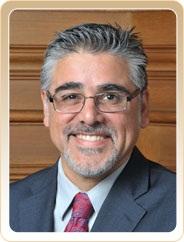
Co-owners of the lot (pictured in the box) where the Little House once stood now want to construct a 4-unit building.

The agenda for today’s Board of Supervisors meeting includes a public hearing on a conditional use permit for a new building at 1268 Lombard, deemed to be an infill project because it’ll be constructed on what’s now an empty lot. Co-owners James Nunenbacher and Michael Cassidy are requesting city approval to construct a four-unit, 40-foot high residential project there.

Expect fireworks, as residents such as F. Joseph Butler, an architect with the Little House Committee, haven’t forgotten the loss of the cottage, which was one of the only structures on Russian Hill that emerged unscathed after the 1906 earthquake and ensuing fires.

“I think that the project sponsors … should not be rewarded for tearing down one of our most historic properties,” a woman from the preservation community noted at a Feb. 17 Planning Commission meeting about the conditional use permit.

At today’s meeting, supervisors could vote either to approve or disapprove the conditional-use permit.

***UPDATE*** No fireworks after all, the item was continued.

Appetite: Island bites, part two

0

After a dreamy week in Hawaii, I have a slew of food and drink recommendations to share. Part one of these covered farmers market and street food in Honolulu and snacks from the North Shore of Oahu. This time, we sleep and drink in Honolulu. In part three, we’ll talk Honolulu restaurants.

Though I arrived islandside with a head full of romantic, slightly improbable Blue Hawaii dreams — me wearing a vintage bathing suit, lei, and a mai tai being serenaded by Elvis — my vacation reality was no letdown. No doubt the touristy scourge of chain shops, restaurants, and photo-snapping throngs do indeed exist in Waikiki, but contrary to what some told me, Hawaii’s largest city can be clean and relaxed. Though you truly find “island time” on Kauai and quieter locales, Honolulu is by no means hectic (if you ignore the traffic). It is that island city where you can while away hours at the beach, explore hole-in-the-wall eats, or listen to live music as the sun sets.

Hotel Renew, Waikiki Beach: 

With Asian-modern, Zen-like decor, clean lines and big city chic, these rooms are a welcome respite from the all-day party of Waikiki surfers and sunbathers. No pool or beachfront property here, though upper rooms on the south side have views of the beach. After long walks and lots of sun, I was grateful to enter the heavy front doors of Renew and be welcomed by the tinkle of the lobby’s water fountain. I’d grab a glass of water laced with fresh oranges and head up to my room with ultra-comfy bed and an ocean view.

The winning points of Hotel Renew, which is located on the eastern end of Waikiki, is affordability and peace. Plus, you can always take their complimentary boogie boards and towels a block away to the beach. But the best part? As overpriced as Waikiki can be, here you can get a room on a busy weekend for $180 to $225 a night. 


COCKTAILS

The cocktail renaissance is finally hitting Hawaii. Here’s a handful of places and bartenders forging the way.

Lobby Bar at The Waikiki Edition:

Although it is to be found by pushing aside a bookshelf in a hotel lobby, the Lobby Bar is no speakeasy — it’s a white, urban bar with muted lighting and long couches with a semi-exclusive, yet unpretentious air in The Edition, a hot hotel perfect for ultra-cool poolside lounging.

Bar manager Sam Treadway hails direct from Boston’s best-known cocktail bar, Drink and he’s clearly loving the warm island breezes, playing off of the canon of island classics, like the deconstructed mai tai ($11). Treadway has toned down the drink’s characteristic sweetness, amping up the rum (Pyrat XO) and orgeat (almond syrup) and topping it off with mai tai foam and a shiso leaf. He served me a lovely rum manhattan made with Montecristo 12 year rum, and he’s also handy with mezcal. The Agony and the Ecstasy ($11 – nice literary reference) is a winning mix of Del Maguey’s Mezcal Vida, St. Germain, and fresh grapefruit juice, topped with a house ginger beer. Spicy, smoky, gently sweet.

The cherry on top? Treadway combines Mezcal Vida, Campari, and soda to create, yes, a mezcal negroni. I long for the day when I can get one here, in my own negroni-obsessed city.

Town:

Another of the city’s great bartenders is Town‘s Dave Power. Located in Kaimuki, just a few minutes drive from Waikiki, Town feels like I’m back home in San Francisco. Local, organic foods served with with rustic, Italian technique, all-American heart, gourmet animal parts, and classic cocktails (all $10).

Power executes cocktails simply but with a beautifully, even literary, bent. His tequila negroni is a revelation. He explains that his inspiration is M.F.K. Fisher‘s love of equal parts gin, vermouth, and bitters in her cocktail. His version adds an equal part of Don Julio Reposado and a Campari infused with local Hawaiian Kiawe wood chips for a gentle smoky taste.

He also makes a Very Very Good Martini (this being how it’s listed on the menu) and my beloved Death’s Door — something you don’t see much in these parts — and a white manhattan with moonshine (white whiskey) and Dolin Blanc vermouth.

I’d recommend eating as well as drinking here. It’s a special place that evokes other big cities, but uses Hawaiian ingredients and laid-back charm.

Mai Tai Bar:

I am in love with the Royal Hawaiian Hotel. A pink, playful beacon that jumps out of the town’s blanket of highrises, it is the one hotel that evokes the history of old Waikiki. Built in 1927 and dubbed the Pink Palace of the Pacific, this is the classic Hawaii I dreamed of.

I’ll stay there one day. But in the meantime, one can always head through its grove of trees laden with hanging lights, past torches, through the lobby, and out to the back lawn where the Mai Tai Bar looks out over the beach. Live music at sunset and my own private cabana on the beach made this scene one of the most magical I spent in Honolulu.

This is not the place for refined cocktails but the bar has a history of providing tropical oceanside drinks. Manager Mike Swerdloff is a wine lover himself, but keeps up on the national cocktail scene and is passionate about great service, food and drink.

As for cocktails, there are various versions of the mai tai here — all too sweet for me, but they’re destined to be crowd-pleasers, and are greatly enhanced by the paradisical surroundings. Were I to really go for sweetness here, I’d prefer the Chi ($13), made from coconut and Maui’s organic Ocean Vodka and perked up with fresh pineapple and basil; or Pina Rocks ($10): Bacardi 8 year, coconut cream, pineapple, and a lemon-thyme float.

We had a lot of fun with our Smoking Gun mai tai, a winner in last year’s Mai Tai Festival on Kona. A glass of Whaler’s dark rum, Bacardi White, and a housemade velvet falernum was torched with smoke, then topped with a brown sugar-torched pineapple wedge. The presentation was quite dramatic — smoke even spilled out from the glass — but I could still taste the propane when I sipped the drink. That aside, the Smoking Gun yielded a delightfully sweet, smoky island imbibement that evoked roasting marshmallows over a campfire.

Lewers Lounge:

Inside the gorgeous Halekulani Hotel hides a classic New York hotel bar, rich with history and flush with jazz. And the music really is the reason to come. Nightly live jazz sets the classy, upscale tone of Lewers — don’t you dare wear shorts or flip-flops because this elegance is maintained with a strict dress code. You’ll also need a reservation on many nights.

Despite the legendary stamp of Dale DeGroff on the menu (he created it), drinks are of the sweet, fruity variety, like the refreshing ginger lychee caipirissima ($12). More ambitious efforts like the Amante Picante ($12) — tequila with cucumber, cilantro, green tabasco — have the right idea but lack balance. All in the execution?

What is impressive is the bar’s dessert menu. The ever-popular Halekulani coconut cake ($9) is ordered for weddings all over the islands, even from as far as LA. Adult gourmet versions of popsicles and ice cream sandwiches on ice are also available. One can always order from the spirits and wine lists and enjoy a sip of brandy and a slice of cake while taking in Tennyson Stephens and Rocky Holmes’ delightful jazz duo.

La Mariana:

No, I am not recommending La Mariana Sailing Club for the drinks — this write-up is a nod to the historical appeal and charm of a rundown but well-loved space. One of the last remaining kitschy tiki bars from the 1950′s, it can be an adventure just getting here.

Located way out on a harbor, you won’t be sure you’ve found it even when you’ve arrived at the right spot. Park on the street near the “sailing club” sign, then walk around to the right side of the building and enter through the back along the water. Tiki decor and thatched roofs abound in a multi-room layout with open air patio.

The day after the Japanese tsunami hit Hawaii’s shores, I sat here with a pina colada watching boat owners pull their damaged sailboats out of the water. Crusty, sun-scorched sailors sipped mai tais and beers around me, comparing damage done to their boats.

If you go, be sure to read the story of owner Annette Nahinu on the menu. She’s the sort of local character that will make you fall in love with Honolulu and its colorful international history.

Note: I tried to make it to a new Honolulu hotspot that local bartenders recommended, Apartment 3, but couldn’t make it there on a day when Kyle was bartending (Friday nights at the moment). I hear he’s a whiskey lover like myself, and I was sure he’d be another envelope-pushing bartender on this list.

–Subscribe to Virgina’s twice monthly newsletter, The Perfect Spot


Bar Crawler

0

The Guardian Guide to local drinking presents bar crawls through some of San Francisco’s beloved neighborhoods and nightlife hot spots, as well as an overview of the Bay’s vibrant independent bar scene.

Issue Date: Wednesday, June 8, 2011
Advertising Deadline: Friday, June 3, 2011

Contact your account executive at (415) 487-4600 or admanagers@sfbg.com

Unions didn’t cause the financial crisis

35

It’s been said before and will be said again, but still worth noting: The bipartisan U.S. Senate report on the financial meltdown concludes that, as Calitics notes:


Our financial crisis and resulting recession occurred as a result of risky, unethical and likely criminal behavior by reckless Wall Street institutions and the regulators that failed to stop them.  


In other words, the worst of the recession — and the plummeting economy, and sharp loss of revenue to states, cities and counties, which precipitated several rounds of bloody budget cuts — wasn’t caused by labor contracts, or pensions, or local government waste and bloat.


I’m not saying that pension reform shouldn’t be part of the solution, but let’s all keep this in mind. I don’t see anywhere near the same push for financial-sector reform and givebacks as there is for union givebacks. And they ought to be at least in the same discussion.

Art walk used to protest Chase Bank

8

This week’s Thursday evening Divisadero Art Walk is going to combine local culture with a clear political message. Local activists have dubbed the night the “No Chase Block Party” to protest a banking giant’s unwelcome entry in their neighborhood. Many in the neighborhood pride themselves on staving off the corporate chains, but now J.P. Morgan Chase is set to open a new branch at the intersection of Divisadero and Oak streets. Previously, the retail location held three locally owned shops including a specialty cheese vendor.

“We are intentionally choosing to have the action as part of the Divisadero Art Walk to both celebrate and participate in the creative community that exists and is blossoming here,” said Ilyse Magy, a local resident helping with the outreach. “The Block Party will be just that, a block party, a chance for neighbors to meet neighbors and have actual conversations about what they want their neighborhood to look like.”

Magy and others will present an art project in which resident that walk by can brainstorm and write down ideas for the neighborhood. Additionally, information about local credit unions will be available, she said.

As for corporate chains, two other Chase branches lie within a 10-block radius, and a Bank of America is around the corner, indicating there is no shortage of banking options in the area. The location, however, is excellent for displaying an advertising logo considering the immense traffic on that stretch of Divisadero.

The community action is happening in conjunction with formal appeals to the San Francisco Planning Commission. City law requires chain businesses that move into certain neighborhoods to undergo a conditional use permit hearing. But the Planning Department has interpreted the law to exempt banks, thus preventing a hearing that would empower community voices and local concerns.

A long time ago, in a galaxy not far away

0

arts@sfbg.com

SCI-FI DOCUMENTARY Recalling a simpler time — before mass commercialization and marketing took over the world of science fiction, pop culture, and fan conventions — local filmmaker Tom Wyrsch’s new documentary Back To Space-Con conveys the story of the home-grown, grassroots-fueled sci-fi conventions of the 1970s, told through interviews with the people behind the events, fans who were there, and rare footage shot on location here in the Bay Area more than 30 years ago.

Coming off the successes of his first two projects, 2008’s Watch Horror Films, Keep America Strong, which looked at the local TV phenomenon Creature Features and last year’s wildly popular Remembering Playland At The Beach, about the now-gone San Francisco beach-side amusement park, it wasn’t hard for Wyrsch to decide on what subject to tackle next.

Several years ago, the late Bob Wilkins, former host of Creature Features, had given Wyrsch a treasure trove of one-of-a-kind 16mm footage taken for his show at a series of Star Trek and sci-fi conventions, showing a great array of fans, their handmade costumes, and of course, the many special guests and celebrities who were on hand.

Wyrsch himself had attended some of these events, the larger ones called “Space-Con,” when he was growing up in the Bay Area. “At that time they were a brand new experience,” says Wyrsch. “To go to these conventions was just fabulous. And they definitely left a mark.”

With his fond memories in place and the opportunity to use Wilkins’ rare original footage, Wyrsch decided to interview the people who helped put on the shows, along with those who had attended the conventions as fans, all to help share the feeling of what it was like back then, which the film does very effectively.

“My approach to making documentaries is to really do two things: First, I want to take people back who actually experienced it. The other part is, I want to be able to take people there who never had a chance to go because they either weren’t in the area or they were too young,” says Wyrsch.

One of the great things about Back To Space-Con is seeing all the homespun costumes that fans wore — this was before the Star Trek movies started being made, and for some of the conventions included here, just before and at the beginning of the Star Wars (1977) phenomenon. There were virtually no official costumes or merchandise, and many of the people interviewed remark how wonderful it was to see such creativity and excitement in their fellow fans.

“[Space-Cons] were fan-based conventions that really did not have anything to do with the industry. They were the fans putting on shows for each other,” says Wyrsch. “In the film you can see how they are the grassroots movement of conventions that led to the ones we have today.”

Wyrsch is grateful to have been able to use so much original film footage, and he hopes viewers will appreciate how rare it is that material like this has survived all this time.

“What the younger generation doesn’t know was that it was very difficult and very expensive to go out in the field and do an interview or to film indoors because of lighting and the old cameras,” he explains. “With video and all the high-tech electronics and computers you can put in the camera [today], you don’t have to worry about that stuff anymore. But back then, it was tough, and with a lot of interviews they would go out and do them and then throw the film away because there was no use to it anymore and it took up a lot of storage space. Bob [Wilkins] kept this, and he kept part of history.”

Wyrsch will be on hand at a special Back to Space-Con premiere event at the Balboa Theater, along with former Chronicle writer and Creature Features host John Stanley, and Ernie Fosselius, the man behind the Star Wars spoof Hardware Wars (1978).

“I think people get to see the simplicity that was there in the seventies, it wasn’t so regimented like they are nowadays,” says Wyrsch. “And people love that.”

BACK TO SPACE-CON

Thurs/14, 7 p.m., $10

Balboa Theater

3630 Balboa, SF

(415) 221-8184

www.balboamovies.com


Flannelalia

0

marke@sfbg.com

PLAID OBSESSION We live in a post-Etsy world, people, and the latest homemade, zero-kilometer focus is on small-batch clothing production. As usual, the Bay Area is taking a lead here, weaving its green intentions and entrepreneurial zeal into its free-spirited fashion sense and a strong garment manufacturing legacy — and producing stylish duds with enough professional veneer to take to the runway or just out for a beer.

The three sharp dudes from Pladra (www.pladra.com) — Scott Ellison, Ian Ernzer, and Jeff Ladra — add another Bay tradition to the mix: classically avid sportiness. “As passionate outdoorsmen, we have never found a flannel that we could wear both in the field and to the bar after getting blood on it,” they say, and so they set about combining their love of surfing, fly-fishing, camping, hunting, skateboarding, and nature photography with flawless design skills and vintage beauty. (It doesn’t hurt that a good plaid flannel is the one item that still unites many of our current style tribes.)

I admit I’m a flannel freak, and Pladra’s three current lines, including an awesome one for women, had me wiping drool off my keyboard. But I wanted a glimpse into the new local-production trend, too, and the Pladra boys happily provided, answering my questions over e-mail.

SFBG Pladra is all about plaid flannel — how’d you come to focus on that? Will you be expanding? 

PLADRA I think it’s safe to say we’ve all had a few go-to flannels throughout our lives. You know, the one you camp in, then come home and go straight to a bar or concert in, then wear to work the next day — each stain is a story and a memory. In terms of our growth, we’d love to let everything grow at its own pace, although we definitely have some ideas. For now, we’re keeping production small and tight. We wanted to start with plaid flannel shirts because they’re timeless and represent an iconic outdoor style we feel really connects to life in the Bay Area. It’s funny that people peg flannels as a trend, but even the gold miners wore flannel. Jeff grew up here, and his grandparents spent their whole lives building and racing motorcycles. He still has photos of them wearing flannels.

SFBG Right now you’re foregoing retail outlets and selling direct from your website. I’m assuming that’s to keep costs down, yes? Has this been a problem in regard to getting your product in front of people?

PLADRA That’s true, we’re selling direct through our website to maintain the lowest price possible. Our goal is not to turn a profit, but to make the best garment possible at the most reasonable price — and our price range is $89–$109. Truth be told, this is what it costs to have a quality, American-made, custom shirt. We’ve found that people who initially scoff at our prices backpedal when they find out what goes into making something in the USA. Americans are so accustomed to paying for cheap garments that are imported mostly from Asia. We’re not condemning that, the truth is that a lot of production out of Asia has great quality. But at a certain point, we need to step back and consider the ramifications that one of the USA’s largest imports is apparel. Many U.S. cities used be the home to some of the best and biggest fabric mills in the world. Now what? All the mills are overseas. Very few companies can afford to use fabric milled in the USA. Even denim companies have to use reclaimed fabric.

The direct selling approach certainly makes it difficult to reach a wide range of people off the bat. But we do want to offer reasonable pricing to our customers. We want to focus on the brand integrity and we don’t want to dilute our product and blast it everywhere right away. We are taking a slow and careful approach in our growth.

SFBG What were the specific challenges of designing and producing everything in San Francisco? 

PLADRA It was really important to us to keep things local and support local businesses. But limiting our geographic range also meant limiting our accessibility to materials that would maintain our desired quality while not forcing our prices to skyrocket. That meant we had to challenge ourselves to search harder for vendors that could deliver great materials and finishing — and we ended up partnering with some incredible ones who went above and beyond to support our vision.

SFBG Pladra isn’t just all about hunting and designing. What are some of your favorite shops and bars in SF? 

PLADRA Shopping-wise, we really like Union Made in the Castro. Our friends at Park Life in the Inner Richmond and the General Store in the Outer Sunset offer amazing home-produced goods. And the Aqua and Mollusk surf shops have always been amazing at supporting their communities. As for going out, we could happily spend the rest of our lives drinking our way through the menus at Toronado and Alembic. And we just scored one of our favorite clubs, 111 Minna, to host our official launch party. See you there? *

PLADRA LAUNCH PARTY Tues/26, 5 p.m.–9 p.m., free. 111 Minna, SF. www.111minnagallery.com


Transylvania twist

0

arts@sfbg.com

FILM For many devoted fans of horror films who grew up in the 1980s — especially those who were monster kids in spirit or became one in the ensuing years — the 1987 movie The Monster Squad has a special, firmly staked place in their hearts.

Paying tribute to the icons of the classic Universal monster pantheon while weaving a modern storyline into the mix, writer and director Fred Dekker created a now-cult favorite, a film that is scary and funny, entertaining and touching all at the same time.

Dekker, who was born in San Francisco and grew up in Marin County, will appear for a post-screening Q&A after The Monster Squad unspools at the Castro Theatre, part of Midnites for Maniacs’ “Heavy Metal Monster Mash” (the rest of the mash: 1981’s Heavy Metal, 1984’s This is Spinal Tap, 1986’s Trick or Treat, and 1984’s Monster Dog).

“I loved the Universal monster movies and would stay up on Saturday nights and watch those on TV, but I also loved The Little Rascals and Our Gang and Abbott and Costello,” Dekker says. “The Monster Squad came out of my idea to kind of do a new take on Our Gang — kids with a club who all have their own lives apart from their parents and grown-ups — [mixed] with the Abbott and Costello Meet Frankenstein (1948) approach, where they meet the classic Universal monsters. That was the genesis of it in a nutshell.”

Although the film has finally gotten some of the recognition it deserves over the past several years, culminating in a two-disc 20th anniversary edition DVD release, along with several tributes and live events around the country, it was not considered a success at the box office when initially released.

“It was a little depressing for me because I had worked so hard on it and I felt like I hadn’t connected, but I’m happy that we made the movie that we wanted to make,” the director says. “We made a very peculiar kind of movie. We made it for ourselves, and a lot of the choices that seem a little politically incorrect now actually make the movie, I think, hold up better because we were true to the characters and our experience as kids. I think that people respond to that, the verisimilitude of it.”

In addition to the bold, creative reimagining of the monsters and their design and characteristics, Dekker added another layer of depth to the story with the character referred to as “Scary German Guy.” Viewers discover he’s a survivor of a Nazi concentration camp when he tells the kids that he has dealt with “monsters” before, and the camera zooms in on his camp tattoo.

“I believe that genre stuff only really works if it’s got some foot in reality that an audience can relate to,” Dekker explains. “I think you have to imagine that the world you’re seeing in the movie is the world you live in. It makes those fantastical elements more believable.”

Dekker didn’t realize that The Monster Squad had become such a beloved part of so many people’s lives until a few years ago, when he was invited to a tribute event in Austin. These days, he enjoys attending screenings and events, and is looking forward to answering questions from local fans on Saturday.

“I found that the movie had this enormous following from the people who had grown up with it and taken it to heart because they saw themselves in it,” he says. “It’s been really gratifying in a weird way, because it did find its audience — it just took 20 years.” 

MIDNITES FOR MANIACS: HEAVY METAL MONSTER MASH

Sat/16, 2:30 p.m. (Monster Squad, 4:45 p.m.)

$13 for all five films

Castro Theatre

429 Castro, SF

(415) 621-6120

www.castrotheatre.com

Breaking point

0

arts@sfbg.com

FILM When erstwhile Hitchcock (1948’s Rope, 1951’s Strangers on a Train) protagonist Farley Granger died last month, obituaries kindly forgot that hitherto he’d been judged as a limited-range pretty boy luckily cast in a few iconic films.

Beauty alone certainly can get you pretty far in Hollywood, now as then. But Granger’s big-lashed, puppy-eyed, dark-haired hunk had charms not strictly visual, notably a mile-wide vulnerability streak poignant in classic noir films like 1949’s They Live By Night and 1950’s Edge of Doom. He wasn’t that impressive an actor, or even an imposing personality like many golden age stars. But he communicated an attractive, soulful decency.

Similarly positioned is Keanu Reeves, who has managed a longer mainstream Hollywood ride while seldom escaping the perception that he hugely lucked out. He’s one of those actors spectacularly franchise-wealthy — due to those Matrix movies wherein his usual baffled solemnity was ideal — yet whom the public otherwise feels scant evident loyalty toward, and producers don’t know what to do with. Now that he’s aging out of his looks, can he transform into a character actor à la the similarly problematic Kevin Costner?

Maybe. Reeves played charming suitors in Something’s Gotta Give (2003) and The Private Lives of Pippa Lee (2009), both very much supporting roles. He seems increasingly interested in indie films, which he surely doesn’t need to pay the rent. They generally suit him more than the myriad large-scale fantasy, action, or romantic vehicles that followed The Matrix (1999) and Speed (1994).

He’s certainly the best reason to see Henry’s Crime, a pleasant, middling, retro crime caper costarring frequently better actors at dimmer wattage than usual. Although uneven, Reeves still offers a turn equal to (if quite different from) his personal bests: as the second half of a stoner-goofball team in the Bill and Ted movies, and as Siddhartha in the good parts of Bertolucci’s silly Little Buddha (1993), which fully tapped a nirvanic tranquility behind his screen passivity.

Henry’s Crime is an old hat out of the Damon Runyon trunk, in which lovable crooks mix it up with hoity theatrical types and nobody gets hurt except (barely) the really bad guys. James Caan — who starred in similar enterprises during their post-The Sting heyday, particularly 1976’s excessively dissed Harry and Walter Go To New York — plays the veteran convict-conman who schools Reeves’ hapless Buffalo, N.Y., toll-taker Henry after our hero is slammer-thrown for an armed robbery he didn’t know he was embroiled in until it was over.

Upon release, Henry discovers the targeted bank and nearby theater had a Prohibition-era secret tunnel between them. Having already done the time, he figures he might as well do the crime by finishing the aborted bank job for real. He enlists local stage diva Julie (Vera Farmiga) as well as Caan’s parole-coaxed Max. Resulting wacky hijinks render Max a theater “volunteer” and Henry as Julie’s Cherry Orchard costar, all so they can access the walled-up passageway to the bank vault.

Much of this is ridiculous, of course, and not intentionally so. We can’t believe Henry/Reeves is a stage “natural,” for Chekhov or anything else (despite Mr. Ted having played Hamlet in 1995 Winnipeg). Caan and a solid support cast hit predictable notes; romantic interest Farmiga is atypically shallow in her admittedly stereotypical role. Yet her superior thespian chops seem to stir something in Reeves, who remains wooden at times but also flags a relaxed sweetness in their scenes and elsewhere. The climax is classic movies-getting-how-theater-works-wrong. But its contrivance functions to some extent because the lead actor convinces us it should.

Reeves is getting a tad jowly now, physique likewise surrendering to gravity. This could be great for him: he’s made his money already, maybe he can now surrender to being something more-less-other than a box-office behemoth. Costner managed it with The Upside of Anger (2005) and The Company Men (2010), while still playing the occasional lead (albeit in flops). The critical success he’s had as middle-aged losers after a run of critically disclaimed variably-superheroes could be Ted-slash-Neo’s own, if he’s willing to surrender glamour that much. He’d hardly be the first huge movie star to finally get some respect thataway. But he might be the (still) cutest.


HENRY’S CRIME opens Fri/15 in Bay Area theaters.

The failed experiment

27

news@sfbg.com

For three decades we have conducted a massive economic experiment, testing a theory known as supply-side economics. The theory goes like this: Lower tax rates will encourage more investment, which in turn will mean more jobs and greater prosperity — so much so that tax revenues will go up, despite lower rates.

The late Milton Friedman, the libertarian economist who wanted to shut down public parks because he considered them socialism, promoted this strategy. Ronald Reagan embraced Friedman’s ideas and made them into policy when he was elected president in 1980.

For the past decade, we have doubled down on this theory of supply-side economics with the tax cuts sponsored by President George W. Bush in 2001 and 2003, which President Barack Obama has agreed to continue for two years.

You would think that whether this grand experiment worked would be settled after three decades. You would think the practitioners of the dismal science of economics would look at their demand curves and the data on incomes and taxes and pronounce a verdict, the way Galileo and Copernicus did when they showed that geocentrism was a fantasy because the Earth revolves around the sun (known as heliocentrism). But economics is not like that. It is not like physics with its laws and arithmetic with its absolute values.

Tax policy is something the framers of the Constitution left to politics. And in politics, the facts often matter less then who has the biggest bullhorn.

The Mad Men who once ran campaigns featuring doctors extolling the health benefits of smoking are now busy marketing the dogma that tax cuts mean broad prosperity, no matter what the facts show.

As millions of Americans prepare to file their annual taxes, they do so in an environment of media-perpetuated tax myths. Here are a few points about taxes and the economy that you may not know, to consider as you prepare to file your taxes. (All figures are inflation adjusted.)

1. Poor Americans do pay taxes.

Gretchen Carlson, the Fox News host, said last year “47 percent of Americans don’t pay any taxes.” John McCain and Sarah Palin both said similar things during the 2008 campaign about the bottom half of Americans.

Ari Fleischer, the former Bush White House spokesman, once said “50 percent of the country gets benefits without paying for them.”

Actually, they pay lots of taxes — just not lots of federal income taxes.

Data from the Tax Foundation shows that in 2008, the average income for the bottom half of taxpayers was $15,300.

This year the first $9,350 of income is exempt from taxes for singles and $18,700 for married couples, just slightly more than in 2008. That means millions of the poor do not make enough to owe income taxes.

But they still pay plenty of other taxes, including federal payroll taxes. Between gas taxes, sales taxes, utility taxes and other taxes, no one lives tax free in America.

When it comes to state and local taxes, the poor bear a heavier burden than the rich in every state except Vermont, the Institute on Taxation and Economic Policy calculated from official data. In Alabama, for example, the burden on the poor is more than twice that of the top 1 percent. The one-fifth of Alabama families making less than $13,000 pay almost 11 percent of their income in state and local taxes, compared with less than 4 percent for those who make $229,000 or more.

2. The wealthiest Americans don’t carry the burden.

This is one of those oft-used canards. Senator Rand Paul, the tea party favorite from Kentucky, told David Letterman recently that “the wealthy do pay most of the taxes in this country.”

The Internet is awash with statements that the top 1 percent pays, depending on the year, 38 percent or more than 40 percent of taxes.

It’s true that the top 1 percent of wage earners paid 38 percent of the federal income taxes in 2008 (the most recent year for which data is available). But people forget that the income tax is less than half of federal taxes and only one-fifth of taxes at all levels of government.

Social Security, Medicare, and unemployment insurance taxes (known as payroll taxes) are paid mostly by the bottom 90 percent of wage earners. That’s because, once you reach $106,800 of income, you pay no more for Social Security, though the much smaller Medicare tax applies to all wages. Warren Buffett pays the exact same amount of Social Security taxes as someone who earns $106,800.

3. In fact, the wealthy are paying less taxes.

The Internal Revenue Service issues an annual report on the 400 highest income-tax payers. In 1961, there were 398 taxpayers who made $1 million or more, so I compared their income tax burdens from that year to 2007.

Despite skyrocketing incomes, the federal tax burden on the richest 400 has been slashed, thanks for a variety of loopholes, allowable deductions and other tools. The actual share of their income paid in taxes, according to the IRS, is 16.6 percent. Adding payroll taxes barely nudges that number.

Compare that to the vast majority of Americans, whose share of their income going to federal taxes increased from 13.1 percent in 1961 to 22.5 percent in 2007.

(By the way, during seven of the eight Bush years, the IRS report on the top 400 taxpayers was labeled a state secret, a policy that the Obama overturned almost instantly after his inauguration.)

4. Many of the very richest pay no current income taxes at all.

John Paulson, the most successful hedge fund manager of all, bet against the mortgage market one year and then bet with Glenn Beck in the gold market the next. Paulson made himself $9 billion in fees in just two years. His current tax bill on that $9 billion? Zero.

Congress lets hedge fund managers earn all they can now and pay their taxes years from now.

In 2007, Congress debated whether hedge fund managers should pay the top tax rate that applies to wages, bonuses and other compensation for their labors, which is 35 percent. That tax rate starts at about $300,000 of taxable income; not even pocket change to Paulson, but almost 12 years of gross pay to the median-wage worker.

The Republicans and a key Democrat, Sen. Charles Schumer of New York, fought to keep the tax rate on hedge fund managers at 15 percent, arguing that the profits from hedge funds should be considered capital gains, not ordinary income, which got a lot of attention in the news.

What the news media missed is that hedge fund managers don’t even pay 15 percent. At least, not currently. So long as they leave their money, known as “carried interest,” in the hedge fund, their taxes are deferred. They only pay taxes when they cash out, which could be decades from now for younger managers. How do these hedge fund managers get money in the meantime? By borrowing against the carried interest, often at absurdly low rates — currently about 2 percent.

Lots of other people live tax-free, too. I have Donald Trump’s tax records for four years early in his career. He paid no taxes for two of those years. Big real-estate investors enjoy tax-free living under a 1993 law President Clinton signed. It lets “professional” real-estate investors use paper losses like depreciation on their buildings against any cash income, even if they end up with negative incomes like Trump.

Frank and Jamie McCourt, who own the Los Angeles Dodgers, have not paid any income taxes since at least 2004, their divorce case revealed. Yet they spent $45 million one year alone. How? They just borrowed against Dodger ticket revenue and other assets. To the IRS, they look like paupers.

In Wisconsin, Terrence Wall, who unsuccessfully sought the Republican nomination for U.S. Senate in 2010, paid no income taxes on as much as $14 million of recent income, his disclosure forms showed. Asked about his living tax-free while working people pay taxes, he had a simple response: everyone should pay less.

5. And (surprise!) since Reagan , only the wealthy have gained significant income.

The Heritage Foundation, the Cato Institute, and similar conservative marketing organizations tell us relentlessly that lower tax rates will make us all better off.

“When tax rates are reduced, the economy’s growth rate improves and living standards increase,” according to Daniel J. Mitchell, an economist at Heritage until he joined Cato. He says that supply-side economics is “the simple notion that lower tax rates will boost work, saving, investment, and entrepreneurship.”

When Reagan was elected president, the marginal tax rate for income was 70 percent. He cut it to 50 percent and then 28 percent starting in 1987. It was raised by George H.W. Bush and Clinton and then cut by George W. Bush. The top rate is now 35 percent.

Since 1980, when President Reagan won election promising prosperity through tax cuts, the average income of the vast majority — the bottom 90 percent of Americans — has increased a meager $303, or 1 percent. Put another way, for each dollar people in the vast majority made in 1980, in 2008 their income was up to $1.01.

Those at the top did better. The top 1 percent’s average income more than doubled to $1.1 million, according to an analysis of tax data by economists Thomas Piketty and Emmanuel Saez. The really rich, the top 10th of 1 percent, each enjoyed almost $4 in 2008 for each dollar in 1980.

The top 300,000 Americans now enjoy almost as much income as the bottom 150 million, the data show.

6. When it comes to corporations, the story is much the same — less taxes.

Corporate profits in 2008, the latest year for which data is available, were $1.8 billion, up almost 12 percent from $1.6 billion in 2000. Yet even though corporate tax rates have not been cut, corporate income-tax revenues fell to $230 billion from $249 billion — an 8 percent decline, thanks to a number of loopholes. The official 2010 profit numbers are not added up and released by the government, but the amount paid in corporate taxes is: in 2010 they fell further, to $191 billion — a decline of more than 23 percent compared with 2000.

7. Some corporate tax breaks destroy jobs.

Despite all the noise that America has the world’s second highest corporate tax rate, the actual taxes paid by corporations are falling because of the growing number of loopholes and companies shifting profits to tax havens like the Cayman Islands.

And right now America’s corporations are sitting on close to $2 trillion in cash that is not being used to build factories, create jobs or anything else, but act as an insurance policy for managers unwilling to take the risk of actually building the businesses they are paid so well to run. That cash hoard, by the way, works out to nearly $13,000 per taxpaying household.

A corporate tax rate that is too low actually destroys jobs. That’s because a higher tax rate encourages businesses (who don’t want to pay taxes) to keep the profits in the business and reinvest, rather than pull them out as profits and have to pay high taxes.

The 2004 American Jobs Creation Act, which passed with bipartisan support, allowed more than 800 companies to bring profits that were untaxed but overseas back to the United States. Instead of paying the usual 35 percent tax, the companies paid just 5.25 percent.

The companies said bringing the money home — “repatriating” it, they called it — would mean lots of jobs. Sen. John Ensign, the Nevada Republican, put the figure at 660,000 new jobs.

Pfizer, the drug company, was the biggest beneficiary. It brought home $37 billion, saving $11 billion in taxes. Almost immediately it started firing people. Since the law took effect, it has let 40,000 workers go. In all, it appears that at least 100,000 jobs were destroyed.

Now Congressional Republicans and some Democrats are gearing up again to pass another tax holiday, promoting a new Jobs Creation Act. It would affect 10 times as much money as the 2004 law.

8. Republicans like taxes too.

President Reagan signed into law 11 tax increases, targeted at people down the income ladder. His administration and the Washington press corps called the increases “revenue enhancers.” Among other things, Reagan hiked Social Security taxes so high that by the end of 2008, the government had collected more than $2 trillion in surplus tax.

George W. Bush signed a tax increase, too, in 2006, despite his written ironclad pledge to never raise taxes on anyone. It raised taxes on teenagers by requiring kids up to age 17, who earned money, to pay taxes at their parents’ tax rate, which would almost always be higher than the rate they would otherwise pay. It was a story that ran buried inside The New York Times one Sunday, but nowhere else.

In fact, thanks to Republicans, one in three Americans will pay higher taxes this year than they did last year.

First, some history. In 2009, President Obama pushed his own tax cut—for the working class. He persuaded Congress to enact the Making Work Pay Tax Credit. Over the two years 2009 and 2010, it saved single workers up to $800 and married heterosexual couples up to $1,600, even if only one spouse worked. The top 5 percent or so of taxpayers were denied this tax break.

The Obama administration called it “the biggest middle-class tax cut” ever. Yet last December the Republicans, poised to regain control of the House of Representatives, killed Obama’s Making Work Pay Credit while extending the Bush tax cuts for two more years — a policy Obama agreed to.

By doing so, Congressional Republican leaders increased taxes on a third of Americans, virtually all of them the working poor, this year.

As a result, of the 155 million households in the tax system, 51 million will pay an average of $129 more this year. That is $6.6 billion in higher taxes for the working poor, the nonpartisan Tax Policy Center estimated.

In addition, the Republicans changed the rate of workers’ FICA contributions, which finances half of Social Security. The result:

If you are single and make less than $20,000, or married and less than $40,000, you lose under this plan.

But the top 5 percent, people who make more than $106,800, will save $2,136 ($4,272 for two-career couples).

9. Other countries do it better.

We measure our economic progress, and our elected leaders debate tax policy, in terms of a crude measure known as gross domestic product. The way the official statistics are put together, each dollar spent buying solar energy equipment counts the same as each dollar spent investigating murders.

We do not give any measure of value to time spent rearing children or growing our own vegetables or to time off for leisure and community service.

And we do not measure the economic damage done by shocks, such as losing a job, which means not only loss of income and depletion of savings, but loss of health insurance, which a Harvard Medical School study found results in 45,000 unnecessary deaths each year

Compare this to Germany, one of many countries with a smarter tax system and smarter spending policies.

Germans work less, make more per hour and get much better parental leave than Americans, many of whom get no fringe benefits such as health care, pensions or even a retirement savings plan. By many measures the vast majority live better in Germany than in America.

To achieve this, single German workers on average pay 52 percent of their income in taxes. Americans average 30 percent, according to the Organizations for Economic Cooperation and Development.

At first blush, the German tax burden seems horrendous. But in Germany (as well as Britain, France, Scandinavia, Canada, Australia, and Japan), tax-supported institutions provide many of the things Americans pay for with after-tax dollars. Buying wholesale rather than retail saves money.

A proper comparison would take the 30 percent average tax on American workers and add their out-of-pocket spending on health care, college tuition, and fees for services and compare that with taxes that the average German pays. Add it all up and the combination of tax and personal spending is roughly equal in both countries, but with a large risk of catastrophic loss in America, and a tiny risk in Germany.

Americans take on $85 billion of debt each year for higher education, while college is financed by taxes in Germany and tuition is cheap to free in other modern countries. While soaring medical costs are a key reason that since 1980 bankruptcy in America has increased 15 times faster than population growth, no one in Germany or the rest of the modern world goes broke because of accident or illness. And child poverty in America is the highest among modern countries — almost twice the rate in Germany, which is close to the average of modern countries.

On the corporate tax side, the Germans encourage reinvestment at home and the outsourcing of low-value work, like auto assembly, and German rules tightly control accounting so that profits earned at home cannot be made to appear as profits earned in tax havens.

Adopting the German system is not the answer for America. But crafting a tax system that benefits the vast majority, reduces risks, provides universal health care and focuses on diplomacy rather than militarism abroad (and at home) would be a lot smarter than what we have now.

Here is a question to ask yourself: We started down this road with Reagan’s election in 1980 and upped the ante in this century with George W. Bush.

How long does it take to conclude that a policy has failed to fulfill its promises? And as you think of that, keep in mind George Washington. When he fell ill his doctors followed the common wisdom of the era. They cut him and bled him to remove bad blood. As Washington’s condition grew worse, they bled him more. And like the mantra of tax cuts for the rich, they kept applying the same treatment until they killed him.

Luckily we don’t bleed the sick anymore, but we are bleeding our government to death.


ABOUT THE AUTHOR:

David Cay Johnston is a columnist for tax.com and teaches the tax, property, and regulatory law of the ancient world at Syracuse University College of Law and Whitman School of Management. He has also been called the “de facto chief tax enforcement officer of the United States” because his reporting in The New York Times shut down many tax dodges and schemes, just two of them valued by Congress at $260 billion.

Johnston received a 2001 Pulitzer Prize for exposing tax loopholes and inequities. He wrote two bestsellers on taxes, Perfectly Legal and Free Lunch. Later this year David Cay Johnston will be out with a new book, The Fine Print, revealing how big business, with help from politicians, abuses plain English to rob you blind.


Seeking a watchdog’s watchdog

1

rebeccab@sfbg.com

When cash pumps through the guts of city politics, the Ethics Commission is charged with keeping track of it all to help members of the public follow the money. But what happens when the public loses faith in the ethics of the Ethics Commission?

In the run-up to a hotly contested mayoral race, in a city marked by rough-and-tumble politics influenced by moneyed power brokers, the function of this local-government watchdog agency is especially critical — and to hear some critics tell it, the Ethics Commission needs reform if it is to perform as an effective safeguard against corruption.

So it was hardly surprising that an April 5 discussion at the San Francisco Board of Supervisors meeting about whom to appoint to the Ethics Commission featured a low-level tug-of-war with some potentially high-level implications.

Sup. Eric Mar proposed that the board consider Allen Grossman for the seat. An octogenarian government watchdog unaffiliated with any political party, Grossman has gone so far as to file a successful lawsuit against the Ethics Commission for not following its own public-disclosure rules. As a potential appointee, he was widely viewed as reform-minded, following in the footsteps of others who have been purged from the body in recent years.

“Open government and good government work together, hand in hand,” Grossman told members of the board’s Rules Committee several weeks prior, interlacing his fingers for emphasis.

Grossman won the backing of Sups. John Avalos and Ross Mirkarimi. But Board President David Chiu spoke against the idea, throwing his support instead behind Dorothy Liu, an attorney and professional colleague of his through the Asian American Bar Association. The Rules Committee, chaired by Sup. Jane Kim and filled out by Sups. Sean Elsbernd and Mark Farrell, also turned down Grossman in favor of Liu.

“She’s extremely hard-working and does her homework,” Chiu later told the Guardian. He also saw it as a plus that Liu was not a political insider: “I think we need an individual on the Ethics Commission who will be impartial,” he said, adding that he’d prefer “someone who has not been involved in the rough-and-tumble of San Francisco politics.” Sup. Carmen Chu echoed Chiu’s comments during the meeting, saying she thought Liu would be an ideal candidate because she did not seem to have an agenda.

Mirkarimi and Avalos, on the other hand, said they were looking for a candidate who did possess a vision for strengthening the role of the agency as a watchdog. “I think our Ethics Commission and the department, as it stands, needs all the help it can get,” Mirkarimi said during the meeting. “I think having people who are well-seasoned with an understanding in the law of ethics and sunshine is something we should be looking for. Mr. Grossman has exhibited that well over the years in trying to do everything he possibly can to advance the cause in a nonpartisan way of making sure that we have a very strong Ethics Commission.”

Mar’s motion to consider Grossman was shot down on an 8-3 vote with Mirkarimi, Mar, and Avalos dissenting; Liu then won the commission appointment on a 10-1 vote, with Avalos dissenting.

Until recently, the Board of Supervisors seat on the Ethics Commission was held by Eileen Hansen, a progressive who had called for political reform under Mayor Willie Brown’s administration prior to being named to the post. When she was being considered for the commission, Hansen recalled, then-Sup. Michela Alioto-Pier raised an objection. “[She] thought the perfect person would be somebody who … would come essentially as a clean slate,” Hansen remembered. “Because I had been involved in organizing campaigns and had run for office, that was deemed too political.”

Yet Hansen viewed her familiarity with the system as an asset that helped her serve as an effective watchdog against corruption. During her six-year tenure, Hansen often cast lone dissenting votes against decisions she believed were weakening ethical standards. She told the Guardian she’d tried floating remedies for situations she viewed as inappropriate, only to have them summarily ignored, a role similar to that of former Ethics Commission member and staffer Joe Lynn.

In one case, Hansen recalled, she became concerned about a planning commissioner who also directed a nonprofit. To raise money, her organization held fundraisers that were ostensibly attended and funded by the very same developers and lobbyists who appeared before her at the Planning Commission. Yet Hansen said she was unable to persuade the other commissioners or staff to call for an investigation.

A more recent Ethics Commission vote underscores the same tension. On March 14, the commission voted unanimously to waive a pair of ethics regulations to allow a mayoral staff member to become executive director of the America’s Cup Organizing Committee (ACOC). Composed of highly influential business figures including at least two billionaire investors, ACOC is tasked with securing corporate donations for the America’s Cup to offset city costs of hosting the race.

Kyri McClellan, project manager with the Mayor’s Office of Economic and Workforce Development, helped craft a memorandum of understanding with ACOC regarding its fundraising obligations to the city. In her new job, without skipping a beat, she’ll interface with the city on behalf of ACOC. The rules that were waived for her benefit are meant to prevent city officials from holding undue influence over their former coworkers after leaving public service, and to prevent city staffers from accepting money from city contractors right after departing from city employment.

“If I had been there, there would have been at least one vote against that waiver,” said Hansen, whose term on the commission ended before this vote. “We have this law in place for a reason. By continuing to provide waivers … we create a situation where the public will not trust the Ethics Commission as a watchdog.”

Hansen said she was scouting for a new commissioner who would carry on with her work. “I was looking for and trying to recruit a visionary — someone who could really be a reformer,” she said. “We’re almost in a position now where we need a watchdog over the watchdog.” She said she saw Grossman as the right fit.

Other observers, such as CitiReport blogger Larry Bush — an investigative reporter who called for the creation of the Ethics Commission in San Francisco in the early 1990s — questioned whether Liu was the best choice after hearing her statements at the March 17 Rules Committee hearing. Liu did not come out strongly in favor of televising Ethics Commission meetings, which has long been a sticking point for open-government advocates.

“I absolutely support televising the Ethics Commission, I think it’s really important,” Kim noted when we asked her about this. She added that she would have supported Oliver Luby — a former Ethics Commission staff member and whistleblower who was ultimately ousted from the job — if he’d applied.

Kim noted that an initial concern she’d had in seeking an ethics commissioner was whether the person would vote to allow Mayor Lee to resume his job as city administrator after serving out his term as interim mayor, a key decision that the commission was scheduled to consider April 11.

Once she was advised that it would be inappropriate to ask which way they would vote when conducting candidate interviews, Kim said she withheld her question — and still didn’t know Liu’s or Grossman’s position at the time she spoke with the Guardian. “I think it’s very appropriate for him to get his job back,” Kim noted. “That vote is very important to me.”

That vote drew closer scrutiny, however, after Ethics Commission staff recommended that the exemption that would be built into the law for Lee’s benefit should be expanded to include appointed members of the Board of Supervisors. “This new proposal would convert a targeted, narrow exemption to deal with a special case into the ‘Politician Job Protection Act’ and could open the door to all kinds of unintended consequences,” charged Jon Golinger of San Franciscans for Clean Government.

Meanwhile, Luby seemed disheartened by the board’s selection of Liu for the Ethics Commission. He was looking to Grossman to fill Hansen’s shoes as the commission’s reformer — a role previously held by Lynn, Luby’s good friend and mentor who died last year.

He lamented, “This will mark the first time in over 10 years to have an Ethics Commission without someone who has past experience advocating for good government.” 


The tale of two trials

1

news@sfbg.com

Since March 21, reporters representing the cream of American journalism have been camped out in the Bay Area covering two high-profile trials.

In an Oakland courtroom, two men are accused of being involved in three murders, including that of Chauncey Bailey, a journalist who was writing a story about Your Black Muslim Bakery. In San Francisco, baseball home run king Barry Bonds is accused of telling a federal grand jury that he never knowingly took steroids.

Apart from the fact that both trials are taking place simultaneously and all the defendants are African American, there is a disparity in how these cases are being treated by the media, both local and national.

The Bailey trial is being covered by fewer than a dozen reporters from mostly local media: the Oakland Tribune, the San Francisco Chronicle, KTVU, American Urban Radio Networks, CBS Radio, NPR, the Guardian, the Associated Press, ABC 7 News, several websites, and bloggers. Some are there every day, others are not. To be fair, there was more media coverage for the first few days of the trial.

According to KCBS reporter Doug Sovern, who is covering the Bonds trial, the press list includes “KCBS, KGO Radio (some of the time), KQED (occasionally), Westwood One, Channels 2 (KTVU), 4, 5, 7, 11, Comcast Sports Net, ESPN, CNN, Bloomberg, the Associated Press, Agency France Presse, the Chronicle (a reporter and a columnist every day; sometimes two columnists,) the New York Times, the Wall Street Journal, the Bay Area News Group (including the San Jose Mercury News), Reuters, the Los Angeles Times, Sports Illustrated, a few other bloggers, stringers, and people I don’t recognize,” writes Sovern in an e-mail. “I would say that adds up to about 30, plus still photographers. Probably close to 40 in all, plus THREE sketch artists!”

Media experts say the Bailey trial is far more significant when you look at how both cases affect society.

“Obviously Barry Bonds is one of the greatest baseball players of all time,” said Louis Freedberg, senior reporter for California Watch, one of the units at the Center for Investigative Reporting in Berkeley. “You add to that the celebrity factor in a society that is completely obsessed with celebrities, regardless if they do good or bad, I can see how it’s easy to define this (Bailey) as a local story and shunt it aside.”

But the problem is that society depends on journalists to provide truth and information and to hold those in power accountable. There are many countries where journalists are arrested and/or killed for writing stories that someone doesn’t like.

An independent press was a top priority for America’s founding fathers, right behind establishing the military.

“Establishing a free press was viewed as fundamental,” said Freedberg. “I don’t think they talked about baseball players at that time, so when you have a journalist being assassinated, that strikes at the core of what this society stands for — or should stand for.”

That belief was so strong after Bailey was killed that journalists, including the author, came together to form the Chauncey Bailey Project to finish Bailey’s work and make sure that everyone who was involved in the assassination was brought to justice.

“Some media are covering this deeply — the ones that covered it here — so I don’t want to make a blanket condemnation. But, yeah, I think the Bailey trial has much broader symbolism and importance to the United States than the trial of Barry Bonds,” said Robert Rosenthal, executive director of the Center for Investigative Reporting and executive editor of the Chauncey Bailey Project.

Another issue that has caused concern in the African American community is how boys and men of color are portrayed in the news media. “Usually when you see this demographic in the press, they are accused of crime, victims of crime, or playing sports,” said Dori Maynard, president of the Maynard Institute for Journalism Education.

In the Bonds case, the media are hitting two out of three — a great average for baseball, but a Bonds conviction will have virtually no impact on American democracy.

The media should cover the Bonds trial, but it should not forget about the Bailey trial, which will still be going when the Bonds trial ends.

If those who are on trial for killing Bailey are indeed guilty but are allowed to go free, it will send a message that journalists — the people who keep society informed and hold those in power accountable — are fair game. (Bob Butler)

This story first appeared at www.maynardije.org, the website of the Maynard Institute, a member of the Chauncey Bailey Project, of which the Guardian is also a member.

LATEST TRIAL NEWS: JUDGE DENIES DEFENSE MOTION AFTER REPORTER RECEIVES DEATH THREAT

On April 11, a defense attorney in the Chauncey Bailey murder trial asked the judge to ban jurors from reading newspapers or using the Internet for the duration of the trial after the Bay Area News Group and the Chauncey Bailey Project reported that a journalist had received a death threat while reporting a story related to the now defunct Your Black Muslim Bakery.

Gary Sirbu, who is representing codefendant Antoine Mackey, made the request as the trial resumed Monday, April 11. Articles about the threat were published Saturday, April 9 on the front page of Bay Area News Group publications, including the Oakland Tribune.

Judge Thomas Reardon asked jurors if they had read any news stories over the weekend about the telephone threat made to reporter Josh Richman. By a show of hands, jurors indicated they had not read the articles.

Reardon denied Sirbu’s request, saying he did not want to make such an order. But the judge again cautioned jurors to avoid any news coverage about the case or anything related to Your Black Muslim Bakery. (Thomas Peele)


No cuts-only pension deal

5

EDITORIAL Mayor Ed Lee has released a draft set of proposals for pension reform, and union leaders continue to meet with financier Warren Hellman to try to craft an alternative. Meanwhile, Public Defender Jeff Adachi is narrowing his options and appears ready to move forward to put his own plan on the ballot.

Everyone involved claims to be interested in a compromise, in some proposal that would reduce the city’s burden of paying $350 million this year (and potentially as much as $790 million in five years) into the employee pension fund. We support that idea, too — there are plenty of necessary, progressive moves to fix the city’s pension system and free up more cash for local programs.

But so far, none of the proposals on the table include any new revenue sources — which means, in effect, that the mayor, Hellman, and Adachi all want city workers to bear the entire brunt of the impact of a Wall Street-driven recession. The message: only city employees should share the pain; the wealthiest San Franciscans and biggest, richest businesses don’t have to contribute at all.

It’s a dangerous part of the tax mythology that Pulitzer Prize-winning reporter David Cay Johnston discusses in his article in the Guardian this week. He notes that the argument in favor of tax cuts for the rich — that lower taxes will lead to more investment and thus more jobs — has been tested in this country for 30 years. And it hasn’t worked.

Most San Franciscans probably realize that. Most city officials vote for Democrats, opposed the Bush-era tax cuts on the rich, and argue for more federal aid to cities. This is a progressive town.

But when it comes to something as fundamental as local economic policy — who pays for city services and who gets the benefits — the story becomes completely different.

The mayor and eight of the 11 supervisors are celebrating a broad-based tax cut as a way to create jobs in the Tenderloin and mid-Market (although the evidence that tax cuts don’t create jobs is overwhelming). The mayor is looking at the equivalent of a cuts-only budget (although everyone at City Hall opposes the notion of a cuts-only budget in Sacramento). And while it’s almost certain that some sort of pension reform will be on the November ballot, none of the players involved in the negotiations have openly taken what seems to us to be the only logical position:

Pension reform has to be linked to tax reform — a commercial rent tax, a progressive gross receipts tax, a city income tax, an increase in the Pacific Gas and Electric Co. franchise fee or something else that hits those who can afford to pay. Otherwise, we can’t support it.

Even the city employee unions are being awfully quiet about the need for a deal that includes new taxes. They ought to be leading the charge here, telling everyone that a cuts-only pension deal isn’t going to be acceptable. (The tax measures could hold until the November 2012 budget, when they’ll be easier to pass — if there’s a firm assurance that the mayor, Hellman, Adachi, the supervisors, and all the other players will support them.)

City employees are being asked to take what amount to pay cuts — which will reduce their purchasing power and have a depressing impact on the local economy. Taxing the wealthy (who spend a much smaller percentage of their income) has no such depressing impact. Those are hard, cold facts. They need to be part of the discussion.

Robert Reich, the former labor secretary who now teaches at the University of California, Berkeley, has an interesting essay on his blog April 9 that discusses Obama’s budget capitulations. The president, he notes, “is losing the war of ideas because he won’t tell the American public the truth: that we need more government spending now — not less — in order to get out of the gravitational pull of the Great Recession. That we got into the Great Recession because Wall Street went bonkers and government failed to do its job at regulating financial markets … That the only ways to deal with the long-term budget problem is to demand that the rich pay their fair share of taxes.

“And that, at a deeper level, the increasingly lopsided distribution of income and wealth has robbed the vast working middle class of the purchasing power they need to keep the economy going at full capacity.”

That’s as true here as it is in Washington. And if city officials want progressive support for pension reform, they need to acknowledge it.


Ma’s bill would make it harder to resist big city trash

0

Assemblymember Fiona Ma has thrown another curve ball at San Francisco’s already hotly contested plan to dispose trash in Yuba County: Ma recently introduced AB 1178 which would authorize a local agency to assess special fees, rather than local cities and counties. Currently, local cities and counties hold the authority to “assess special fees of a reasonable amount on the importation of waste from outside of the county to publicly owned or privately owned facilities.” And that’s exactly what Yuba County has been discussing in face of having San Francisco’s trash buried in its backyard, starting 2015.
Equally importantly, Ma’s bill seeks to prohibit a city, county, or local agency from otherwise restricting or limiting in any way the importation of solid waste into that city or county based on place of origin. And that’s another topic that’s been hotly debated in Yuba County as residents there have come to realize that their local dump will quickly get filled by San Francisco’s big city trash–ultimately forcing Yuba County to export its own trash elsewhere in coming years.The rationale given in Ma’s bill for trying to amend the law to stop local municipalities from being able to restrict waste importation?

“Because ensuring adequate and appropriate capacity for disposal of solid waste is a matter of state and regional concern,” AB 1178 states.

So far there have been no votes on this bill, which was introduced in mid-February, and was referred to the Committee on Natural Resources on March 17, read and amended, then re-referred to the Committee on Natural Resources at the beginning of April.

But lest anyone doubts who is supporting or opposing this bill, an analysis of contributions undertaken by Maplight.org show that
a) supporters outspent the opposition by a ratio of 5:1. ($243,347 v $46, 165).
b) California Refuse Recycling Council, Recology Inc and Waste Connections, which would benefit from the legislation support the bill, and
c) the Sierra Club Solano County, Yuba Group Against Garbage, and Sustainability, Parks, Recycling and Wildlife Legal Defense Fund.

Maplight’s analysis also reveals that Ma received $5,000 from “interest groups that support” this bill.

And the Sacramento Bee has a detailed account of other municipalities, including Solano County, that stand to be impacted if Ma’s bill, which argues that decisions about how much trash goes where are better made at the state and regional level rather than by individual counties, endures. And the Sac Bee article includes a revealing quote from Ma spokesperson Nick Hardeman: “If every county decides to adopt ordinances that discriminate based on the waste’s (origin), then the system breaks down,” Hardeman said.

All this is coming to a head as the San Francisco Local Agency Formation Commission (LAFCO) is preparing to hold a hearing on its recently commissioned report examining how other municipalities handle their trash collection, consolidation and disposal process compared to San Francisco…The LAFCO hearing will be held at City Hall at 10 a.m. on Monday April 18.

Alerts

0

ALERTS


By Jackie Andrews

alert@sfbg.com

WEDNESDAY, APRIL 13


Long Now lecture

This installment of the Long Now Foundation’s monthly series called “Seminars About Long-term Thinking” features historian and archaeologist Ian Morris, who will talk about his book, Why the West Rules — For Now. Whole Earth Catalog founder Stewart Brand hosts this discussion about changes in global dominance, differences between civilizations, and the East/West distinction’s shift toward insignificance.

7 p.m., $10

Marine’s Memorial Center

609 Sutter, SF

www.longnow.org

THURSDAY, APRIL 14


Youth storytelling

Community Works presents “There’s a Part of Me Gone,” a night of exploring the impact of losing a loved one to incarceration. Students from Community Work’s programs will share poetry and personal stories of their experiences of parental incarceration. Come and see these inspiring youth share their many accomplishments despite adversity.

6 p.m., free

California Institute of Integral Studies

Namaste Hall

1453 Mission, SF

www.wommunityworkswest.org

FRIDAY, APRIL 15


Benefit for Mexican info shop

Support the emerging anarchist info-shop in Mexico City, Furia de las Calles, by attending this screening of a film that was recently banned in Mexico. Presumed Guilty highlights the problems and injustices faced by two lawyers in their efforts to free Toño Zúñiga, who was wrongfully imprisoned. Afterward, stick around for a short documentary about the organizing efforts of anarchist collectives in Mexico.

7–9:30 p.m., Sliding scale donation

AK Press

674-A 23rd St., Oakl.

www.espora.org/furia

www.akpress.org


LGBTQ youth talk back

Professor Cindy Cruz of UC Santa Cruz will share her recent work, an urban ethnography that compiles the stories and testimonies of 43 LGBTQ homeless youth between the ages of 14 and 21 who reside on the streets of one large U.S. metropolis. She argues for a new way of acknowledging resistance by these youth — and others like them — to the restrictions placed on their “queer homeless bodies” by society at large.

12–1:30 p.m., free

UC Berkeley Center for the Study of Social Change

Wildavsky Conference Room

2538 Channing Way, Berk.

Www.issi.berkeley.edu

SATURDAY, APRIL 16


Earth Day of action and celebration

Help clean up the varied terrains and landscapes in and around Pacifica, including beaches, hillsides, bluffs, watersheds, and other public spaces and make a positive impact on this beautiful coastal environment. After a satisfying morning of work and community partnership, enjoy a celebration of your efforts with music, food, and family fun.

9 a.m.–3 p.m., free

Various Pacifica locations, see website to find a site and register

www.pacificabeachcoalition.org

SUNDAY, APRIL 17


Fundraiser for Japan

More than 100 one-of-a-kind handmade tea bowls made by local ceramicists will be auctioned off to raise money for the people of Japan. Enjoy Japanese-inspired food and drinks as well as how-to demonstrations on tea, ikebana, sushi-making, and clay-hand building.

5–7 p.m., $10–$15

Sharon Art Studio

Golden Gate Park’s Sharon Meadow, SF

(415) 753-7004

www.sharonartstudio.org 2

Mail items for Alerts to the Guardian Building, 135 Mississippi St., SF, CA 94107; fax to (415) 437-3658; or e-mail alert@sfbg.com. Please include a contact telephone number. Items must be received at least one week prior to the publication date.

Stage Listings

0

Stage listings are compiled by Guardian staff. Performance times may change; call venues to confirm. Reviewers are Robert Avila, Rita Felciano, and Nicole Gluckstern. Submit items for the listings at listings@sfbg.com. For further information on how to submit items for the listings, see Picks. For complete listings, see www.sfbg.com.

THEATER

OPENING

Cordelia NOHspace, 2840 Mariposa; (800) 838-3006, www.brownpapertickets.com. $18-20. Previews Tues/19, 7pm. Opens April 20, 7pm. Wed-Thurs, 7pm; Fri-Sat, 8pm. Through May 7. Theatre of Yugen presents world premiere of an abstraction of Shakespeare’s King Lear.

ONGOING

The Busy World is Hushed New Conservatory Theatre Center, 25 Van Ness; 861-8972, www.nctcsf,org. $24-40. Wed-Sat, 8pm; Sun, 2pm. Through May 1. New Conservatory Theatre Center presents the world premiere of a play by Keith Bunin.

*Caliente Pier 29, The Embarcadero; 438-2668, www.love.zinzanni.org. $117-145. Wed-Sat, 6pm; Sun, 5pm. Open-ended. Teatro Zinzanni presents a new production conceived in San Francisco.

Collected Stories Stage Werx, 533 Sutter; Z(800) 838-3006, www.brownpapertickets.com. $20-25. Fri-Sat, 8pm (alos April 24 2pm). Through May 7. Stage Werx presents David Margulies’ drama about art, ethics, and betrayal.

*40 Pounds in 12 Weeks The Marsh, Studio Theater, 1074 Valencia; (800) 838-3006, www.themarsh.org. $15-35. Call for dates and times. Through April 30. Pidge Meade’s one-woman show extends its successful run.

Free Theater Community Room, Notre Dame Senior Plaza, 347 Dolores; 864-4467. Free. Fri, 7:30pm; Sat-Sun, 3pm. Through April 17. The 16th Street Players present four comic plays.

*Geezer Marsh, 1062 Valencia; (800) 838-3006, www.themarsh.org. $20-50. Thurs, 8pm; Sat, 5pm; Sun, 3pm. Through May 1. The Marsh presents a new solo show about aging and mortality by Geoff Hoyle.

Into the Clear Blue Sky Phoenix Theater, 414 Mason; 913-7272, www.sleepwalkerstheatre.com. $15-17. Thurs-Sat, 8pm. Through April 30. Sleepwalkers Theatre presents the second production in a three-part apocalypse series.

KML Reboots Traveling Jewish Theater, 470 Floriad; www.killingmylobster.com. $10-20. Thurs-fri, 8pm; Sat, 7 and 10pm; Sun, 7pm. Through April 24. The sketch comedians present a new show about the pleasures and pains of technology.

Loveland The Marsh, 1062 Valencia; (800) 838-3006, www.themarsh.org. $20-35. Fri, 8pm; Sat, 8:30pm (also May 1 and 8, 7pm). Through May 8. Ann Rudolph’s one-woman show continues its successful run.

M. Butterfly Gough Street Playhouse, 1620 Gough; (510) 207-5774, www.custommade.org. $20-28. Thurs-Sat, 8pm. Through April 30. Custom Made Theatre presents David Henry Hwang’s award-winning play.

*Obscura: A Magic Play Exit Studio, 156 Eddy; 673-3847, www.sffringe.org. $20-25. Fri-Sat, 8pm. Through Sat/16. Christian Cagigal is back with the magical. Over the last several years, the popular Bay Area writer/performer has developed a series of dramatically structured magic shows (the most recent being the autobiographical Now and at the Hour), each a different attempt at blending expert prestidigitation with elements of narrative theater. Tightly focused and deliberately small-scale, Obscura is in some ways his most successful foray yet. In the Exit Theater’s new studio space, Cagigal (with occasional help from his audience) unfolds a series of sly Gothic stories combined with extremely clever, sometimes dementedly playful card and coin tricks—the majority a collection of favorite pieces from other magicians—all played out on a delicately managed little table augmented by overhead projection (a set-up that offers various visual opportunities, including use of title cards). Rapid-fire narration (occasionally indistinct but generally articulate) and a laid back, slightly mischievous demeanor combine here with consummate skill in an intimate and very enjoyable evening of crafty little tales. If there’s an overarching theme, it probably has something to do with human folly, the persistence of mystery, and the devil, but then any good fable involving a deck of cards probably should. (Avila)

Party of 2 — The New Mating Musical Shelton Theater, 533 Sutter; 1-800-838-3006, www.partyof2themusical.com. $27-29. Fri, 9pm. Open-ended. A musical about relationships by Shopping! The Musical author Morris Bobrow.

The Real Americans The Marsh MainStage, 1062 Valencia; 282-3055, www.themarsh.org. $25-35. Fri, 8pm; Sat, 8:30pm. Through April 30. Dan Hoyle’s hit show returns for another engagement.

Sea Turtles Exit Theater, 156 Eddy; www.generationtheatre.com. $15-25. Fri-Sat, 8pm; Sun, 3pm (also April 28, 8pm). Through April 30. GenerationTheatre presents an original play by David Valayre.

Secret Identity Crisis SF Playhouse, Stage 2, 533 Sutter; 869-5384, www.un-scripted.com. $10-20. Thurs-Sat, 8pm (no show may 7). Through May 14. Un-Scripted Theater Company presents a story about unmasked heroes.

Shopping! The Musical Shelton Theater, 533 Sutter; (800) 838-3006, www.shoppingthemusical.com. $27-29. Sat, 8pm. Open-ended. A musical comedy revue about shopping by Morris Bobrow.

*Songs of the Dragons Flying to Heaven The Thick House, 1695 18th St; 255-8746, www.asianamericantheatre.org, www.crowdedfire.org. $15-25. Call for dates and times. Through Sat/16. “They have no idea what the fuck we’re doing,” observes one of the nameless “Korean” characters in Young Jean Lee’s Songs of the Dragons Flying to Heaven. In rapid succession the audience has witnessed a video clip of the playwright being slapped repeatedly in the face, a westernized Korean woman (Cindy Im) ranting about her “retarded monkey” parents and minority rage yet promising her Grandmother that she’ll give Jesus a whirl, bafflingly banal interactions between two “white” people (Alexis Papedo and Josh Schell) struggling with their floundering romance, and cartoonish interludes of exaggerated sex, consumerism, and violence enacted by three gaudily-dressed Korean women (Mimu Tsujimura, Lily Tung Crystal, Katie Chan)—none of whom are actually played by Koreans. It’s a play you have to surrender yourself to, a roller-coaster ride of sharp curves and nausea-inducing plunges (especially twisted is the gross-out contest of suicide methods in which each character takes a turn at dying in an unimaginably gruesome yet hilarious manner). Oddly, the piece ends on a rather lackluster note, with the two “white” people exploring the mutual contempt they pretend is love, which might be the playwright’s method of showing that white people can ruin anything without half trying, but the ride before their dead end is a thrilling one. (Gluckstern)

A Streetcar Named Desire Actors Theatre, 855 Bush; 345-1287, www.actorstheatresf.org. $26-38. Wed-Sat, 8pm. Through June 4. Actors Theatre of San Francisco presents the Tennessee Williams tale.

Talking With Angels Royce Gallery, 2901 Mariposa; (800) 838-3006, www.brownpapertickets.com. $21-35. Thurs-Sat, 8pm. Through May 21. A play by Shelley Mitchell set in Nazi-occupied Hungary.

Tape The Dark room, 2263 Mission; www.darkroomsf.com. $10-20. Fri-Sat, 8pm (also Sat/16, 10pm). Through April 23. The 4th Mirror presents a production of the play by Stephen Belber.

Twelfth Night African American Art & Culture Complex, 762 Fulton; (800) 838-3006, www.African-AmericanShakes.org. $15-35. Sat, 8pm; Sun, 3pm (no performance April 24). Through May 1. African-American Shakespeare Company presents a jazzy interpretation of the Bard.

*Wirehead SF Playhouse, 533 Sutter; 677-9596, www.sfplayhouse.org. $30-50. Tues-Wed, 7pm; Thurs-Fri, 8pm; Sat, 3and 8pm. Through April 23. Perfectionism’s ruthless class dimensions come to the fore in SF Playhouse’s smart, fun, and sharply staged Bay Area premiere about the super-smart posthumans of the near future, and the rest of us. A shady China-based conglomerate with a name that sounds like Sin-Tell sells a scintillating if dangerous procedure for those already well connected: a hardwire boost to the neural circuitry that gives the recipient more than an edge on the competition and something just shy of godlike powers. Two friends and colleagues in a banking firm (Craig Marker and Gabriel Marin) and their variously class-marked but equally ambitious girlfriends (Lauren Grace and Madeleine H.D. Brown) are all drawn into this cyborgian gold rush, and it gets sticky in more ways than one, as meanwhile a brash local DJ named RIP (Scott Coopwood) raps sardonically over the airwaves about this latest twist in an old game. SF Playhouse’s Susi Damilano directs a charismatic cast (including a terrific Cole Alexander Smith in a related series of frenetic roles) in Matt Benjamin and Logan Brown’s culture-jamming riposte to tech-mad humanist hogwash about Progress. It gets you thinking. (Avila)

BAY AREA

*Beardo Ashby Stage, 1901 Ashby, Berk; (510) 841-6500, www.shotgunplayers.org. $17-26. Thurs-Sat, 8pm; Sun, 5pm. Through April 24. Shotgun Players present a an original songplay about Rasputin.

East 14th – True Tale of a Reluctant Player The Marsh Berkeley, 2120 Allston Way, Berk; (800) 838-3006, www.themarsh.org. $20-50. Sat, 8pm; Sun, 7pm. Through May 8. Don Reed’s one-man show continues.

Eccentricities of a Nightingale Aurora Theatre, 2081 Addison; (510) 843-4822, www.auroratheatre.org. $34-45. Tues, 7pm; Wed-Sat, 8pm; Sun, 2 and 7pm. Through May 8. Aurora Theatre Company presents a Tennessee Williams drama.

Not a Genuine Black Man The Marsh Berkeley, TheaterStage, 2120 Allston Way, Berk; (800) 838-3006, www.themarsh.org. $20-50. Thurs, 7:30pm. Through May 5. Brian Copeland’s one-man show continues.

Out of Sight The Marsh Berkeley, Theaterstage, 2120 Allston Way, Berk; (800) 838-3006, www.themarsh.org. $20-50. Sat, 5pm (no show Sat/9); Sun, 3pm. Through May 8. Sara Felder’s one-woman show returns.

Quidam The Cow Palace 2600 Geneva, Daly City; (415) 404-4100; www.cowpalace.com, www.cirquedusoleil.com. $32-115. Call for dates and times. Through Sun/17. In Albert Lamorisse’s 1956 short film The Red Balloon, a child’s love affair with a mischievous toy takes place on the streets of Paris, a rough gray place that weirdly foreshadows the subterranean world inhabited by the mysterious creatures of Quidam. Here the silent child toting a giant red balloon is Zoe (Alessandra Gonzalez), who’s been spirited away to their underworld from her neglectful, oblivious parents. Her participation in their antics basically amounts to her looking on as acrobats, contortionists, and clowns strut their stuff, in the uninviting, under-populated confines of the Cow Palace, a far from ideal venue for a show that relies so much on audience participation and intimacy. In general the acts involving more performers work better in the cavernous space—an inventive diabolo juggling act, a complicated twenty-person jump rope exhibition, a five-person aerial Spanish Webs ensemble, and a highly-acrobatic fifteen-person Banquine act: synchronized, rapid-fire flinging of bodies to, fro, high, and low without missing a beat or (thankfully) a catch. There is much to admire in Cirque du Soleil’s dedication to legitimizing the Circus as a higher art form, but this presentation of Quidam aims unfortunately low. (Gluckstern)

Singing at the Edge of the World The Cabaret at The Marsh Berkeley, 2120 Allston Way, Berk; (800) 838-3006, www.brownpapertickets.com. $15-35. Thurs-Fri, 8pm; Sat, 5pm. Through Sat/16. The Marsh presents a one-man show by Randy Rutherford.

Slices 2011 pear Avenue Theatre, 1220 Pear, Mtn View; (650) 254-1148, www.thepear.org. $15-30. Thurs-Sat, 8pm; Sun, 2pm. Through April 24. Pear Avenue Theatre presents its annual festival of short plays.

Snow Falling on Cedars TheatreWorks at Mountain View Center for the Performing Arts, 500 Castro, Mtn View; (650) 463-1960, www.theatreworks.org. $24-67. Tues-Wed, 7:30pm; Thurs-Fri, 8pm; Sat, 2 and 8pm; Sun, 2 and 7pm. Through April 24. TheatreWorks presents a stage adaptation of the David Guterson novel.

Three Sisters Berkeley Reperory Theatre, Thrust Stage, 2025 Addison, Berk; (510) 647-2949, www.berkeleyrep.org. $29-73. Dates and times vary. Through May 22. The creators of Eurydice and In the Next Room present a new take on Chekhov.

The World’s Funniest Bubble Show The Marsh Berkeley, Cabaret, 2120 Allston Way, Berk; (800) 838-3006, www.themarsh.org. $8-50. Through July 10. The bubbles keep flowing.


Film Listings

0

Film listings are edited by Cheryl Eddy. Reviewers are Kimberly Chun, Michelle Devereaux, Peter Galvin, Max Goldberg, Dennis Harvey, Johnny Ray Huston, Louis Peitzman, Lynn Rapoport, Ben Richardson, and Matt Sussman. For rep house showtimes, see Rep Clock. For first-run showtimes, see Movie Guide.

OPENING

An Affirmative Act A lesbian couple fights for their right to stay married in this narrative courtroom drama. (1:33) Four Star.

*Circo The old notion of “running away with the circus” seldom seemed appealing — conjuring images of following an elephant around with a shovel — and it grows even less so after watching Aaron Schock’s warm, touching documentary. The kids here might one day run away from the circus. They’re born into Grand Circo Mexico, one of four circuses run by the Ponce family, which has been in this business for generations; if they’re old enough to walk, they’re old enough to perform, and help with the endless setup and breakdown chores. (Presumably child labor laws are an innovation still waiting to happen here.) Touring Mexico’s small towns in trucks with a variety of exotic animals, it’s a life of labor, with on-the-job training in place of school — arguably not much of a life for child, as current company leader Tino’s wife Ivonne (who really did run away with the circus, or rather him, at age 15) increasingly insists. Other family members have split for a normal life, and Tino is caught between loyalty to his parents’ ever-struggling business and not wanting to lose the family he’s raised himself. This beautifully shot document, scored by Calexico and edited by Mark Becker (of 2005’s marvelous Romantico), is a disarming look at a lifestyle that feels almost 19th century, and is barely hobbling into the 21st one. (1:15) Lumiere, Shattuck. (Harvey)

The Conspirator It may not be your standard legal drama, but The Conspirator is a lot more enjoyable when you think of it as an extended episode of Law & Order. The film chronicles the trial of Mary Surratt (Robin Wright), the lone woman charged in the conspiracy to assassinate Abraham Lincoln. It’s a fascinating story, especially for those who don’t know much of the history past John Wilkes Booth. But while the subject matter is compelling, the execution is hit-or-miss. Wright is sympathetic as Surratt, but the usually great James McAvoy is somewhat forgettable in the pivotal role of Frederick Aiken, Surratt’s conflicted lawyer. It’s hard to say what it is that’s missing from The Conspirator: the cast — which also includes Evan Rachel Wood and Tom Wilkinson — is great, and this is a story that’s long overdue to be told. Still, something is lacking. Could it be the presence of everyone’s favorite detective, the late Lennie Briscoe? (2:02) Embarcadero, Piedmont. (Peitzman)

Henry’s Crime See “Breaking Point.” (1:48) California, Embarcadero.

Meet Monica Velour Kim Cattrall stars as an aging porn star in this comedy. (1:37)

Rio Jesse Eisenberg and Anne Hathaway lend their voices to this animated bird adventure. (1:32) Presidio.

Scre4m It’s kinda fun to just look at the cast list and wonder which demi-star will suffer the most hideous death at the hands of ol’ Ghostface: Emma Roberts? Adam Brody? Shanae Grimes? (run time not available)

Some Days Are Better Than Others First-time director Matt McCormick doesn’t break any new stylistic or thematic ground with his ensemble drama, but Some Days Are Better Than Others does boast an interesting bit of stunt casting. Indie rock fans will recognize the Shins’ James Mercer as mopey Eli, who drifts between temp jobs trying to earn enough money to go back to school because he hates working so much; fellow musician Carrie Brownstein appears as Katrina, a recently-dumped, reality TV-obsessed dog-shelter worker; her character is the kind of emo thrift-shopper that Portlandia would had no trouble poking fun at. Other points on this sad-sack square are a lonely woman ((Renee Roman Nose) who finds an erstwhile cremation urn, and an elderly man (David Wodehouse) obsessed with the kaleidoscope-like patterns he captures while filming soap bubbles. Moments of wry humor (Katrina checks messages at “mumblemail.net”) and some Ghost World-ish jabs at mainstream go-getters (including a moving-company douchebag who hires Eli to help clean out a recently-deceased woman’s house) keep Some Days from being a total downer, but be warned: this is one melancholy movie. Shins fans will enjoy the scene where Eli, alone in his room, rehearses for a yearned-for karaoke date with a Bonnie Tyler classic. (1:33) Roxie. (Eddy)

ONGOING

The Adjustment Bureau As far as sci-fi romantic thrillers go, The Adjustment Bureau is pretty standard. But since that’s not an altogether common genre mash-up, I guess the film deserves some points for creativity. Based on a short story by Philip K. Dick, The Adjustment Bureau takes place in a world where all of our fates are predetermined. Political hotshot David Norris (Matt Damon) is destined for greatness — but not if he lets a romantic dalliance with dancer Elise (Emily Blunt) take precedence. And in order to make sure he stays on track, the titular Adjustment Bureau (including Anthony Mackie and Mad Men‘s John Slattery) are there to push him in the right direction. While the film’s concept is intriguing, the execution is sloppy. The Adjustment Bureau suffers from flaws in internal logic, allowing the story to skip over crucial plot points with heavy exposition and a deus ex machina you’ve got to see to believe. Couldn’t the screenwriter have planned ahead? (1:39) 1000 Van Ness, Shattuck, Sundance Kabuki. (Peitzman)

Arthur (1:45) Empire, Four Star, Marina, 1000 Van Ness, SF Center, Sundance Kabuki.

*Battle: Los Angeles Michael Bay is likely writhing with envy over Battle: Los Angeles; his Transformers flicks take a more, erm, nuanced view of alien-on-human violence. But they’re not all such bad guys after all; these days, as District 9 (2009) demonstrated, alien invasions are more hazardous to the brothers and sisters from another planet than those trigger-happy humanoids ready to defend terra firma. So Battle arrives like an anomaly — a war-is-good action movie aimed at faceless space invaders who resemble the Alien (1979) mother more than the wide-eyed lost souls of District 9. Still reeling from his last tour of duty, Staff Sergeant Nantz (Aaron Eckhart) is ready to retire, until he’s pulled back in by a world invasion, staged by thirsty aliens. In approximating D-Day off the beach of Santa Monica, director Jonathan Liebesman manages to combine the visceral force of Saving Private Ryan (1998) with the what-the-fuck hand-held verite rush of Cloverfield (2008) while crafting tiny portraits of all his Marines, including Michelle Rodriguez, Ne-Yo, and True Blood‘s Jim Parrack. A few moments of requisite flag-waving are your only distractions from the almost nonstop white-knuckle tension fueling Battle: Los Angeles. (1:57) 1000 Van Ness. (Chun)

*Bill Cunningham New York To say that Bill Cunningham, the 82-year old New York Times photographer, has made documenting how New Yorkers dress his life’s work would be an understatement. To be sure, Cunningham’s two decades-old Sunday Times columns — “On the Street,” which tracks street-fashion, and “Evening Hours,” which covers the charity gala circuit — are about the clothes. And, my, what clothes they are. But Cunningham is a sartorial anthropologist, and his pictures always tell the bigger story behind the changing hemlines, which socialite wore what designer, or the latest trend in footwear. Whether tracking the near-infinite variations of a particular hue, a sudden bumper-crop of cropped blazers, or the fanciful leaps of well-heeled pedestrians dodging February slush puddles, Cunningham’s talent lies in his ability to recognize fleeting moments of beauty, creativity, humor, and joy. That last quality courses through Bill Cunningham New York, Richard Press’ captivating and moving portrait of a man whose reticence and personal asceticism are proportional to his total devotion to documenting what Harold Koda, chief curator at the Costume Institute at the Metropolitan Museum of Art, describes in the film as “ordinary people going about their lives, dressed in fascinating ways.” (1:24) Embarcadero, Shattuck. (Sussman)

*Cedar Rapids What if The 40 Year Old Virgin (2005) got so Parks and Rec‘d at The Office party that he ended up with a killer Hangover (2009)? Just maybe the morning-after baby would be Cedar Rapids. Director Miguel Arteta (2009’s Youth in Revolt) wrings sweet-natured chuckles from his banal, intensely beige wall-to-wall convention center biosphere, spurring such ponderings as, should John C. Reilly snatch comedy’s real-guy MVP tiara away from Seth Rogen? Consider Tim Lippe (Ed Helms of The Hangover), the polar opposite of George Clooney’s ultracompetent, complacent ax-wielder in Up in the Air (2009). He’s the naive manchild-cum-corporate wannabe who never quite graduated from Timmyville into adulthood. But it’s up to Lippe to hold onto his firm’s coveted two-star rating at an annual convention in Cedar Rapids. Life conspires against him, however, and despite his heartfelt belief in insurance as a heroic profession, Lippe immediately gets sucked into the oh-so-distracting drama, stirred up by the dangerously subversive “Deanzie” Ziegler (John C. Reilly), whom our naif is warned against as a no-good poacher. Temptations lie around every PowerPoint and potato skin; as Deanzie warns Lippe’s Candide, “I’ve got tiger scratches all over my back. If you want to survive in this business, you gotta daaance with the tiger.” How do you do that? Cue lewd, boozy undulations — a potbelly lightly bouncing in the air-conditioned breeze. “You’ve got to show him a little teat.” Fortunately Arteta shows us plenty of that, equipped with a script by Wisconsin native Phil Johnston, written for Helms — and the latter does not disappoint. (1:26) Shattuck. (Chun)

Certified Copy Abbas Kiarostami’s beguiling new feature signals “relationship movie” with every cobblestone step, but it’s manifestly a film of ideas — one in which disillusionment is as much a formal concern as a dramatic one. Typical of Kiarostami’s dialogic narratives, Certified Copy is both the name of the film and an entity within the film: a book written against the ideal of originality in art by James Miller (William Shimell), an English pedant fond of dissembling. After a lecture in Tuscany, he meets an apparent admirer (Juliette Binoche) in her antique shop. We watch them talk for several minutes in an unbroken two-shot. They gauge each other’s values using her sister as a test case — a woman who, according to the Binoche character, is the living embodiment of James’ book. Do their relative opinions of this off-screen cipher constitute characterization? Or are they themselves ciphers of the film’s recursive structure? Kiarostami makes us wonder. They begin to act as if they were married midway through the film, though the switch is not so out of the blue: Kiarostami’s narrative has already turned a few figure-eights. Several critics have already deemed Certified Copy derivative of many other elliptical romances; the strongest case for an “original” comes of Roberto Rossellini’s Voyage to Italy (1954). The real difference is that while Rossellini’s masterpiece realizes first-person feelings in a third-person approach, Kiarostami stays in the shadow of doubt to the end. (1:46) Opera Plaza, Shattuck, Smith Rafael. (Goldberg)

*Hanna The title character of Hanna falls perfectly into the lately very popular Hit-Girl mold. Add a dash of The Boys from Brazil-style genetic engineering — Hanna has the unfair advantage, you see, when it comes to squashing other kids on the soccer field or maiming thugs with her bare hands — and you have an ethereal killing/survival machine, played with impassive confidence by Atonement (2007) shit-starter Saoirse Ronan. She’s been fine-tuned by her father, Erik (Eric Bana), a spy who went out into the cold and off the grid, disappearing into the wilds of Scandinavia where he home-schooled his charge with an encyclopedia and brutal self-defense and hunting tests. Atonement director Joe Wright plays with a snowy palette associated with innocence, purity, and death — this could be any time or place, though far from the touch of modern childhood stresses: that other Hannah (Montana), consumerism, suburban blight, and academic competition. The 16-year-old Hanna, however, isn’t immune from that desire to succeed. Her game mission: go from a feral, lonely existence into the modern world, run for her life, and avenge the death of her mother by killing Erik’s CIA handler, Marissa (Cate Blanchett). The nagging doubt: was she born free, or Bourne to be a killer? Much like the illustrated Brothers Grimm storybook that she studies, Hanna is caught in an evil death trap of fairytale allegories. One wonders if the super-soldier apple didn’t fall far from the tree, since evil stepmonster Marissa oversaw the program that produced Hanna — the older woman and the young girl have the same cold-blooded talent for destruction and the same steely determination. Yet there’s hope for the young ‘un. After learning that even her beloved father hid some basic truths from her, this natural-born killer seems less likely to go along with the predetermined ending, happy or no, further along in her storybook life. (1:51) Empire, 1000 Van Ness, Presidio, SF Center, Sundance Kabuki. (Chun)

Hop (1:30) 1000 Van Ness, Presidio, Shattuck.

I Am File in the dusty back drawer of An Inconvenient Truth (2006) wannabes. The cringe-inducing, pretentious title is a giveaway — though the good intentions are in full effect — in this documentary by and about director Tom Shadyac’s search for answers to life’s big questions. After a catastrophic bike accident, the filmmaker finds his lavish lifestyle as a successful Hollywood director of such opuses as Bruce Almighty (2003) somewhat wanting. Thinkers and spiritual leaders such as Desmond Tutu, Howard Zinn, UC Berkeley psychology professor Dacher Keltner, and scientist David Suzuki provide some thought-provoking answers, although Shadyac’s thinking behind seeking out this specific collection of academics, writers, and activists remains somewhat unclear. I Am‘s shambling structure and perpetual return to its true subject — Shadyac, who resembles a wide-eyed Weird Al Yankovic — doesn’t help matters, leaving a viewer with mixed feelings, less about whether one man can work out his quest for meaning on film, than whether Shadyac complements his subjects and their ideas by framing them in such a random, if well-meaning, manner. And sorry, this film doesn’t make up for Ace Ventura: Pet Detective (1994). (1:16) Shattuck. (Chun)

*In a Better World Winner of this year’s Best Foreign Language Film Oscar, this latest from Danish director Susanne Bier (2004’s Brothers, 2006’s After the Wedding) and her usual co-scenarist Anders Thomas Jensen (2005’s Adam’s Apples, 2003’s The Green Butchers) is a typically engrossing, complex drama that deals with the kind of rage for “personal justice” that can lead to school and workplace shootings, among other things (like terrorism). Shy, nervous ten-year-old Elias (Markus Rygaard) needs a confidence boost, but things are worrying both at home and elsewhere. His parents are estranged, and his doting father (Mikael Persbrandt) is mostly away as a field hospital in Kenya tending victims of local militias. At school, he’s an easy mark for bullies, a fact which gets the attention of charismatic, self-assured new kid Christian (William Jøhnk Nielsen), who appoints himself Elias’ new (and only) friend — then when his slightly awed pal is picked on again, intervenes with such alarming intensity that the police are called. Christian appears a little too prone to violence and harsh judgment in teaching “lessons” to those he considers in the wrong; his own domestic situation is another source of anger, as he simplistically blames his earnest, distracted executive father (Ulrich Thomsen) for his mother’s recent cancer death. Is Christian a budding little psychopath, or just a kid haplessly channeling his profound loss? Regardless, when an adult bully (Kim Bodnia as a loutish mechanic) humiliates Elias’ father in front of the two boys, Christian pulls his reluctant friend into a pursuit of vengeance that surely isn’t going to end well. With their nuanced yet head-on treatment of hot button social and ethical issues, Bier and Jensen’s work can sometimes border on overly-schematic melodrama, meting out its own secular-humanist justice a bit too handily, like 21st-century cinematic Dickenses. But like Dickens, they also have a true mastery of the creating striking characters and intricately propulsive plotlines that illustrate the points at hand in riveting, hugely satisfying fashion. This isn’t their best. But it’s still pretty excellent, and one of those universally accessible movies you can safely recommend even to people who think they don’t like foreign or art house films. (1:53) Embarcadero, Shattuck. (Harvey)

Insidious (1:42) 1000 Van Ness.

*Jane Eyre Do we really need another adaptation of Jane Eyre? As long as they’re all as good as Cary Fukunaga’s stirring take on the gothic romance, keep ’em coming. Mia Wasikowska stars in the titular role, with the dreamy Michael Fassbender stepping into the high pants of Edward Rochester. The cast is rounded out by familiar faces like Judi Dench, Jamie Bell, and Sally Hawkins — all of whom breathe new life into the material. It helps that Fukunaga’s sensibilities are perfectly suited to the story: he stays true to the novel while maintaining an aesthetic certain to appeal to a modern audience. Even if you know Jane Eyre’s story — Mr. Rochester’s dark secret, the fate of their romance, etc. — there are still surprises to be had. Everyone tells the classics differently, and this adaptation is a thoroughly unique experience. And here’s hoping it pushes the engaging Wasikowska further in her ascent to stardom. (2:00) Albany, Embarcadero, Piedmont, Sundance Kabuki. (Peitzman)

Kill the Irishman If you enjoy 1970s-set Mafia movies featuring characters with luxurious facial hair zooming around in Cadillacs, flossing leather blazers, and outwitting cops and each other — you could do a lot worse than Kill the Irishman, which busts no genre boundaries but delivers enjoyable retro-gangsta cool nonetheless. Adapted from the acclaimed true crime book by a former Cleveland police lieutenant, the film details the rise and fall of Danny Greene, a colorful and notorious Irish-American mobster who both served and ran afoul of the big bosses in his Ohio hometown. During one particularly conflict-ridden period, the city weathered nearly 40 bombings — buildings, mailboxes, and mostly cars, to the point where the number of automobiles going sky-high is almost comical (you’d think these guys would’ve considered taking the bus). The director of the 2004 Punisher, Jonathan Hensleigh, teams up with the star of 2008’s Punisher: War Zone, Ray Stevenson, who turns in a magnetic performance as Greene; it’s easy to see how his combination of book- and street smarts (with a healthy dash of ruthlessness) buoyed him nearly to the top of the underworld. The rest of the cast is equally impressive, with Vincent D’Onofrio, Val Kilmer, Christopher Walken, and Linda Cardellini turning in supporting roles, plus a host of dudes who look freshly defrosted from post-Sopranos storage. (1:46) Lumiere. (Eddy)

The King’s Speech Films like The King’s Speech have filled a certain notion of “prestige” cinema since the 1910s: historical themes, fully-clothed romance, high dramatics, star turns, a little political intrigue, sumptuous dress, and a vicarious taste of how the fabulously rich, famous, and powerful once lived. At its best, this so-called Masterpiece Theatre moviemaking can transcend formula — at its less-than-best, however, these movies sell complacency, in both style and content. In The King’s Speech, Colin Firth plays King George VI, forced onto the throne his favored older brother Edward abandoned. This was especially traumatic because George’s severe stammer made public address tortuous. Enter matey Australian émigré Lionel Logue (Geoffrey Rush, mercifully controlled), a speech therapist whose unconventional methods include insisting his royal client treat him as an equal. This ultimately frees not only the king’s tongue, but his heart — you see, he’s never had anyone before to confide in that daddy (Michael Gambon as George V) didn’t love him enough. Aww. David Seidler’s conventionally inspirational script and BBC miniseries veteran Tom Hooper’s direction deliver the expected goods — dignity on wry, wee orgasms of aesthetic tastefulness, much stiff-upper-lippage — at a stately promenade pace. Firth, so good in the uneven A Single Man last year, is perfect in this rock-steadier vehicle. Yet he never surprises us; role, actor, and movie are on a leash tight enough to limit airflow. (1:58) Empire, Red Vic, Shattuck. (Harvey)

*Limitless An open letter to the makers of Limitless: please fire your marketing team because they are making your movie look terrible. The story of a deadbeat writer (Bradley Cooper) who acquires an unregulated drug that allows him to take advantage of 100 percent of his previously under-utilized brain, Limitless is silly, improbable and features a number of distracting comic-book-esque stylistic tics. But consumed with the comic book in mind, Limitless is also unpredictable, thrilling, and darkly funny. The aforementioned style, which includes many instances of the infinite regression effect that you get when you point two mirrors at each other, and a heavy blur to distort depth-of-field, only solidifies the film’s cartoonish intentions. Cooper learns foreign languages in hours, impresses women with his keen attention to detail, and sets his sights on Wall Street, a move that gets him noticed by businessman Carl Van Loon (Robert DeNiro in a glorified cameo) as well as some rather nasty drug dealers and hired guns looking to cash in on the drug. Limitless is regrettably titled and masquerades in TV spots as a Wall Street series spin-off, but in truth it sports the speedy pacing and tongue-in-cheek humor required of a good popcorn flick. (1:37) California, 1000 Van Ness, SF Center, Sundance Kabuki. (Galvin)

*The Lincoln Lawyer Outfitted with gym’d-tanned-and-laundered manly blonde bombshells like Matthew McConaughey, Josh Lucas, and Ryan Phillippe, this adaptation of Michael Connelly’s LA crime novel almost cries out for an appearance by the Limitless Bradley Cooper — only then will our cabal of flaxen-haired bros-from-other-‘hos be complete. That said, Lincoln Lawyer‘s blast of morally challenged golden boys nearly detracts from the pleasingly gritty mise-en-scène and the snappy, almost-screwball dialogue that makes this movie a genre pleasure akin to a solid Elmore Leonard read. McConaughey’s criminal defense attorney Mickey Haller is accustomed to working all the angles — hence the title, a reference to a client who’s working off his debt by chauffeuring Haller around in his de-facto office: a Lincoln Town Car. Haller’s playa gets truly played when he becomes entangled with Louis Roulet (Phillippe), a pretty-boy old-money realtor accused of brutally attacking a call girl. Loved ones such as Haller’s ex Maggie (Marisa Tomei) and his investigator Frank (William H. Macy) are in jeopardy — and in danger of turning in some delightfully textured cameos — in this enjoyable walk on the sleazy side of the law, the contemporary courtroom counterpart to quick-witted potboilers like Sweet Smell of Success (1957). (1:59) Four Star, 1000 Van Ness, SF Center, Sundance Kabuki. (Chun)

Max Manus One of Norway’s most expensive films to date, Max Manus follows the rise to infamy of the title character, a charismatic World War II resistance fighter whose specialty was blowing up German ships docked in occupied Oslo harbor. Again, I emphasize: this is a World War II movie about Norway made by Norwegians — though the Brits play a role, there’s nary a mention of the United States. That fact is the single most refreshing part of a movie that’s nonetheless clearly been inspired by stateside war epics, with traumatic flashbacks, male bonding, sadistic Nazis, rousing if familiar-sounding dialogue (“Being a commando takes more than courage!”), etc. Star Aksel Hennie anchors a film that’s painted in pretty broad strokes with a nuanced performance befitting the real-life Manus’ legacy as an everyman who became a hero. (1:58) Balboa. (Eddy)

Miral (1:42) Opera Plaza.

*Of Gods and Men It’s the mid-1990s, and we’re in Tibhirine, a small Algerian village based around a Trappist monastery. There, eight French-born monks pray and work alongside their Muslim neighbors, tending to the sick and tilling the land. An emboldened Islamist rebel movement threatens this delicate peace, and the monks must decide whether to risk the danger of becoming pawns in the Algerian Civil War. On paper, Of Gods and Men sounds like the sort of high-minded exploitation picture the Academy swoons over: based on a true story, with high marks for timeliness and authenticity. What a pleasant surprise then that Xavier Beauvois’s Cannes Grand Prix winner turns out to be such a tightly focused moral drama. Significantly, the film is more concerned with the power vacuum left by colonialism than a “clash of civilizations.” When Brother Christian (Lambert Wilson) turns away an Islamist commander by appealing to their overlapping scriptures, it’s at the cost of the Algerian army’s suspicion. Etienne Comar’s perceptive script does not rush to assign meaning to the monks’ decision to stay in Tibhirine, but rather works to imagine the foundation and struggle for their eventual consensus. Beauvois occasionally lapses into telegraphing the monks’ grave dilemma — there are far too many shots of Christian looking up to the heavens — but at other points he’s brilliant in staging the living complexity of Tibrihine’s collective structure of responsibility. The actors do a fine job too: it’s primarily thanks to them that by the end of the film each of the monks seems a sharply defined conscience. (2:00) Albany, Opera Plaza. (Goldberg)

Paul Across the aisle from the alien-shoot-em-up Battle: Los Angeles is its amiable, nerdy opposite: Paul, with its sweet geeks Graeme (Simon Pegg) and Clive (Nick Frost), off on a post-Comic-Con pilgrimage to all the US sites of alien visitation. Naturally the buddies get a close encounter of their very own, with a very down-to-earth every-dude of a schwa named Paul (voiced by Seth Rogen), given to scratching his balls, spreading galactic wisdom, utilizing Christ-like healing powers, and cracking wise when the situation calls for it (as when fear of anal probes escalates). Despite a Pegg-and-Frost-penned script riddled with allusions to Hollywood’s biggest extraterrestrial flicks and much 12-year-old-level humor concerning testicles and farts, the humor onslaught usually attached to the two lead actors — considered Lewis and Martin for pop-smart Anglophiles — seems to have lost some of its steam, and teeth, with the absence of former director and co-writer Edgar Wright (who took last year’s Scott Pilgrim vs. the World to the next level instead). Call it a “soft R” for language and an alien sans pants. (1:44) 1000 Van Ness. (Chun)

*Poetry Sixtysomething Mija (legendary South Korean actor Yun Jung-hee) impulsively crashes a poetry class, a welcome shake-up in a life shaped by unfulfilling routines. In order to write compelling verse, her instructor says, it is important to open up and really see the world. But Mija’s world holds little beauty beyond her cheerful outfits and beloved flowers; most pressingly, her teenage grandson, a mouth-breathing lump who lives with her, is completely remorseless about his participation in a hideous crime. In addition, she’s just been disgnosed with the early stages of Alzheimer’s, and the elderly stroke victim she housekeeps for has started making inappropriate advances. Somehow writer-director Lee Chang-dong (2007’s Secret Sunshine) manages not to deliver a totally depressing film with all this loaded material; it’s worth noting Poetry won the Best Screenplay Award at the 2010 Cannes Film Festival. Yun is unforgettable as a woman trying to find herself after a lifetime of obeying the wishes of everyone around her. Though Poetry is completely different in tone than 2009’s Mother, it shares certain elements — including the impression that South Korean filmmakers have recognized the considerable rewards of showcasing aging (yet still formidable) female performers. (2:19) Balboa, Opera Plaza, Shattuck, Smith Rafael. (Eddy)

Potiche When we first meet Catherine Deneuve’s Suzanne — the titular trophy wife (or potiche) of Francois Ozon’s new airspun comedy — she is on her morning jog, barely breaking a sweat as she huffs and puffs in her maroon Adidas tracksuit, her hair still in curlers. It’s 1977 and Suzanne’s life as a bourgeois homemaker in a small provincial French town has played out as smoothly as one of her many poly-blend skirt suits: a devoted mother to two grown children and loving wife who turns a blind eye to the philandering of husband Robert (Fabrice Luchini), Suzanne is on the fast track to comfortable irrelevance. All that changes when the workers at Robert’s umbrella factory strike and take him hostage. Suzanne, with the help of union leader and old flame Babin (Gerard Depardieu, as big as a house), negotiates a peace, and soon turns around the company’s fortunes with her new-found confidence and business savvy. But when Robert wrests back control with the help of a duped Babin, Suzanne does an Elle Woods and takes them both on in a surprise run for political office. True to the film’s light théâtre de boulevard source material, Ozon keeps things brisk and cheeky (Suzanne sings with as much ease as she spouts off Women’s Lib boilerplate) to the point where his cast’s hammy performances start blending into the cheery production design. Satire needs an edge that Potiche, for all its charm, never provides. (1:43) Clay, Shattuck, Smith Rafael. (Sussman)

*Rubber This starts out just on the right side of self-conscious prank, introducing a droll fourth-wall-breaking framework to a serenely surreal central conceit: An old car tire abandoned in the desert miraculously animates itself to commit widespread mayhem. Credit writer-director-editor-cinematographer-composer Quentin Dupieux for an original concept and terrific execution, as our initially wobby antihero wends its way toward civilization, discovering en route it can explode (or just crush) other entities with its “mind.” Which this rumbling black ring of discontent very much enjoys doing, to the misfortune of various hapless humans and a few small animals. Rubber is an extended Dadaist joke that has adventurous fun with filmic and genre language. Beautifully executed as it is, the concept tires (ahem) after a while, reality-illusion games and comedic flair flagging by degrees. Still, it’s so polished and resourceful a treatment of an utterly peculiar idea that no self-respecting cult film fan will want to say they didn’t see this during its initial theatrical run. (1:25) Lumiere. (Harvey)

Soul Surfer (1:46) 1000 Van Ness, SF Center.

*Source Code A post-9/11 Groundhog Day (1993) with explosions, Inception (2010) with a heart, or Avatar (2009) taken down a notch or dozen in Chicago —whatever you choose to call it, Source Code manages to stand up on its own wobbly Philip K. Dick-inspired legs, damn the science, and take off on the wings of wish fulfillment. ‘Cause who hasn’t yearned for a do-over — and then a do-over of that do-over, etc. We could all be as lucky — or as cursed — as soldier Colter Stevens (Jake Gyllenhaal), who gets to tumble down that time-space rabbit hole again and again, his consciousness hitching a ride in another man’s body, while in search of the bomber of a Chicago commuter train. On the upside, he gets to meet the girl of his dreams (Michelle Monaghan) — and see her getting blown to smithereens again and again, all in the service of his country, his commander-cum-link to the outside world (Vera Farmiga), and the scientist masterminding this secret military project (Jeffrey Wright). On the downside, well, he gets to do it over and over again, like a good little test bunny in pinball purgatory. Fortunately, director Duncan Jones (2009’s Moon) makes compelling work out of the potentially ludicrous material, while his cast lends the tale a glossed yet likable humanity, the kind that was all too absent in Inception. (1:33) Marina, 1000 Van Ness, Sundance Kabuki. (Chun)

Sucker Punch If steampunk and Call of Duty had a baby, would it be called Baby Doll? That seems to be the question posed by director-cowriter Zack Snyder with his latest edge-skating, CGI-laden opus. Neither as saccharine and built-for-kids as last year’s Legend of the Guardians, nor as doomed and gore-besotted as 2006’s 300, Sucker Punch instead reads as a grimy Grimm’s fairy tale built for girls succored on otaku, Wii, and suburban pole dancing lessons. Already caught in a thicket of storybook tropes, complete with a wicked stepfather and vulnerable younger sister, Baby Doll (Emily Browning) is tossed into an asylum for wayward girls, signed up for a lobotomy that’s certain to put her in la-la land for good. Fortunately she has a great imagination — and a flair for disassociating herself from the horrors around her —and the scene suddenly shifts to a bordello-strip club populated by such bad-girls-with-hearts-of-gold as Sweet Pea (Abbie Cornish) and sister Rocket (Jena Malone). There Baby Doll discovers yet another layer in the gameplay: like a prospective hoofer in Dancing with the Stars, she must dance her way to the next level or next prize — while deep in her imagination, she sees herself battling giant samurai, robot-zombie Nazis, dragons, and such, assisted by the David Carradine-like, cliché-spouting wise man (Scott Glenn) and accompanied by an inspiring score that includes Björk’s “Army of Me” and covers of the Pixies and Stooges. Things take a turn for the girl gang-y when she recruits Sweet Pea, Rocket, and other random stripper-‘hos (Vanessa Hudgens and Real World starlet Jamie Chung) in her scheme to escape. Why bother, one wonders, since Baby Doll seems to be a genuine escape artist of the mind? The ever-fatalistic Snyder obviously has affection for his charges: when the shadows inevitably close in, he delicately refrains from the arterial spray as the little girls bite the dust in what might be the closest thing to a feature-length anime classic that Baz Luhrmann would give his velvet frock coat to make. (2:00) 1000 Van Ness. (Chun)

Super Naive, vaguely Christian, and highly suggestible everyman Frank (Rainn Wilson) snaps when his wife (Liv Tyler) is seduced away by sleazy drug dealer Jacques (Kevin Bacon). With a little tutoring from the cute girl at the comic store, Libby (Ellen Page), he throws together a pathetically makeshift superhero costume and equally makeshift persona as the Crimson Bolt. Time to dress up and beat down local dealers, child molesters, and people who cut in line with cracks like, “Shut up, crime!” Frank’s taking stumbling, fumbling baby steps toward rescuing his lady love, but it becomes more than simply his mission when Libby discovers his secret and tries to horn in on his act as his kid sidekick Boltie. Alas, what begins as a charming, intriguing indie about dingy reality meeting up with violent vigilantism goes full-tilt Commando (1985), with all the attendant gore and shocks. In the process director James Gunn (2006’s Slither) completely squanders his chance to peer more deeply into the dark heart of the superhero phenom, topping off this vaguely Old Testament reading of good and evil with an absolutely incoherent ending. (1:36) Lumiere. (Chun)

*Win Win Is Tom McCarthy the most versatile guy in Hollywood? He’s a successful character actor (in big-budget movies like 2009’s 2012; smaller-scale pictures like 2005’s Good Night, and Good Luck; and the final season of The Wire). He’s an Oscar-nominated screenwriter (2009’s Up). And he’s the writer-director of two highly acclaimed indie dramas, The Station Agent (2003) and The Visitor (2007). Clearly, McCarthy must not sleep much. His latest, Win Win, is a comedy set in his hometown of New Providence, N.J. Paul Giamatti stars as Mike Flaherty, a lawyer who’s feeling the economic pinch. Betraying his own basic good-guy-ness, he takes advantage of a senile client, Leo (Burt Young), when he spots the opportunity to pull in some badly-needed extra cash. Matters complicate with the appearance of Leo’s grandson, Kyle (newcomer Alex Shaffer), a runaway from Ohio. Though Mike’s wife, Jackie (Amy Ryan), is suspicious of the taciturn teen, she allows Kyle to crash with the Flaherty family. As luck would have it, Kyle is a superstar wrestler — and Mike happens to coach the local high school team. Things are going well until Kyle’s greedy mother (Melanie Lynskey) turns up and starts sniffing around her father’s finances. Lessons are learned, sure, and there are no big plot twists beyond typical indie-comedy turf. But the script delivers more genuine laughs than you’d expect from a movie that’s essentially about the recession. (1:46) Bridge, California, Piedmont, SF Center. (Eddy)

Winter in Wartime (1:43) Smith Rafael.

Your Highness One of the dangers of reviewing a film like Your Highness is that stoner comedies have a very specific intended audience. A particular altered state is recommended to maximize one’s enjoyment. I tend not to show up for professional gigs with Mary Jane as my plus-one, so I had to view the latest from Pineapple Express (2008) director David Gordon Green through un-bloodshot eyes. While Express was more explicitly ganja-themed, Your Highness is instead a comedy that approximates the experience of getting as high as possible, then going directly to Medieval Times. Never gut-bustingly funny, Your Highness still reaps chuckles from its hard-R dialogue and plenty of CG-assisted sight gags involving genetalia. James Franco and Danny McBride star as princes, one heroic and one ne’er-do-well, who quest to save a maiden kidnapped by an evil wizard (Justin Theroux). Natalie Portman turns up as a thong-wearing warrior, just ’cause it’s that kind of movie. Forget the box office; only time and the tastes of late-night movie watchers will dictate whether Your Highness is a success or a bust. Case in point: nobody thought much of Half Baked (1998) when it was released, but in certain circles, it’s become a bona fide classic. Say it with me now: “Fuck you, fuck you, fuck you, you’re cool, and fuck you. I’m out!” (1:42) 1000 Van Ness, Presidio, SF Center, Sundance Kabuki. (Eddy) 

 

Editorial: Link pension reform to tax reform (Second in a series on pension reform)

14

Mayor Ed Lee has released a draft set of proposals for pension reform, and union leaders continue to meet with financier Warren Hellman to try to craft an alternative. Meanwhile, Public Defender Jeff Adachi is narrowing his options and appears ready to move forward to put his own plan on the ballot.

Everyone involved claims to be interested in a compromise, in some proposal that would reduce the city’s burden of paying $350 million this year (and potentially as much as $790 million in five years) into the employee pension fund. We support that idea, too — there are plenty of necessary, progressive moves to fix the city’s pension system and free up more cash for local programs.

But so far, none of the proposals on the table include any new revenue sources — which means, in effect, that the mayor, Hellman, and Adachi all want city workers to bear the entire brunt of the impact of a Wall Street-driven recession. The message: only city employees should share the pain; the wealthiest San Franciscans and biggest, richest businesses don’t have to contribute at all.

It’s a dangerous part of the tax mythology that Pulitzer Prize-winning reporter David Cay Johnston discusses on page 10. He notes that the argument in favor of tax cuts for the rich — that lower taxes will lead to more investment and thus more jobs — has been tested in this country for 30 years. And it hasn’t worked.

Most San Franciscans probably realize that. Most city officials vote for Democrats, opposed the Bush-era tax cuts on the rich, and argue for more federal aid to cities. This is a progressive town.

But when it comes to something as fundamental as local economic policy — who pays for city services and who gets the benefits — the story becomes completely different.

The mayor and eight of the 11 supervisors are celebrating a broad-based tax cut as a way to create jobs in the Tenderloin and mid-Market (although the evidence that tax cuts don’t create jobs is overwhelming). The mayor is looking at the equivalent of a cuts-only budget (although everyone at City Hall opposes the notion of a cuts-only budget in Sacramento). And while it’s almost certain that some sort of pension reform will be on the November ballot, none of the players involved in the negotiations have openly taken what seems to us to be the only logical position:

Pension reform has to be linked to tax reform — a commercial rent tax, a progressive gross receipts tax, a city income tax, an increase in the Pacific Gas and Electric Co. franchise fee or something else that hits those who can afford to pay. Otherwise, we can’t support it.

Even the city employee unions are being awfully quiet about the need for a deal that includes new taxes. They ought to be leading the charge here, telling everyone that a cuts-only pension deal isn’t going to be acceptable. (The tax measures could hold until the November 2012 budget, when they’ll be easier to pass — if there’s a firm assurance that the mayor, Hellman, Adachi, the supervisors, and all the other players will support them.)

City employees are being asked to take what amount to pay cuts — which will reduce their purchasing power and have a depressing impact on the local economy. Taxing the wealthy (who spend a much smaller percentage of their income) has no such depressing impact. Those are hard, cold facts. They need to be part of the discussion.

Robert Reich, the former labor secretary who now teaches at the University of California, Berkeley, has an interesting essay on his blog April 9 that discusses Obama’s budget capitulations. The president, he notes, “is losing the war of ideas because he won’t tell the American public the truth: that we need more government spending now — not less — in order to get out of the gravitational pull of the Great Recession. That we got into the Great Recession because Wall Street went bonkers and government failed to do its job at regulating financial markets … That the only ways to deal with the long-term budget problem is to demand that the rich pay their fair share of taxes.

“And that, at a deeper level, the increasingly lopsided distribution of income and wealth has robbed the vast working middle class of the purchasing power they need to keep the economy going at full capacity.”

That’s as true here as it is in Washington. And if city officials want progressive support for pension reform, they need to acknowledge it.

Avalos for mayor? He’s talking about it

130

The San Francisco mayor’s race is taking a new twist: Sup. John Avalos — one of the best, most consistent and productive progressives on the board — is looking at running.


Avalos told me he wasn’t interested in the interim mayor job and “this was never on my mind when I ran for supervisor.” But the process of selecting an interim mayor and the politics of Sup. David Chiu’s re-election as board president left him deeply disturbed. “I was blown away by how the process was perverted into a backroom deal based on personal ambition,” he said. “The side of the progressive movement that’s about good government and transparency was lost.”


So he’s been meeting with potential supporters and discussing what an Avalos for Mayor campaign would look like.


Although he’s only been in office two years, Avaos has been Budget Committee chair and has a solid and impressive legislative record (the local hire law being his most recent accomplishment). He has as much experience as Matt Gonzalez did when he ran for mayor (and, obvioulsy, as much experience as Chiu, who is also running.)


He makes the case that the progressive movement is better off in the long term if there’s a strong progressive in the race: “If we don’t have someone running, we won’t do as well in district elections next time,” he said, noting that the progressive victories in 2000 and 2004 were helped by the energy generated by Tom Ammiano’s mayoral campaign in 1999 and the Gonzalez campaign in 2003.


Not everyone in progresive poltics agrees with that analysis; I’ve heard from a number of community leaders who question whether what everyone agrees would be a longshot mayoral campaign is the best use if prorogressive resources right now.
But Avalos, to his immense credit, isn’t going to do this on his own. “I don’t believe in just announcing one day,” he told me. “I’m going to talk to people, and if there’s enough support for me, fine, and if there isn’t, I won’t run.”


That’s a sharp contrast to Chris Daly, who has pretty much announced that if no other progressive runs, he will. And with all due respect to the former District 6 supervisor — who has done a tremendous amount of good for the city, and I mean that with all sincerity — Daly’s not the right person to carry the progressive standard in the November mayor’s race.

The loveliness of libraries, now at your local library

0

En route to City Hall the other day, the wind must have been at my back. Because? I got there very early, nearly a half hour before the intermidable Board of Appeals hearing I’d convinced myself was a good idea to attend was slated to begin. A couple options here:

a. Arrive at City Hall early and see how the government is coping with loiterers these days. 

b. Lounge about on the wind-swept tundra that the Civic Center often becomes in this uncertain world in which we live

c. Go to the library.

So thank goodness for the library. Of course, my holds queue is currently stuffed with requests for Joan Didion and David Byrne’s The Bicycle Diaries, but even setting aside its magic book-producing capabilities, consider what the institution of the free library brings to us all. A place to hang or hide or study, mercifully free of commerce, the last place in polite society where you can use someone else’s computer.

Charming people, those libraries. Sadly, along with everything else that is neither money-grubbing nor environmentally harmful, they are on the chopping block of many a local government these days. And though here in San Francisco we’d be able to go make asses of ourselves in any number of community and cultural centers across town, in many places in America if the library closes, it marks the end of any indoors public space not geared towards selling stuff. Or specifically built for the education of children, who get all the breaks. 

At any rate, it is a good moment to breathe in the steadfastness of the library, illustrated nicely in the photos of Robert Dawson and on display in our main library through June. Our main library, by the way, has these amazing historical-artistic exhibitions, on view free of charge of course, all the time. Last go-round, it was a round-up of San Francisco restaurant ephemera.

Dawson is showing up later today to do an artist Q&A on what would appear to be a very nice road trip he took all about the country, snapping shots of our book receptacles, public rec rooms, bastions of civilization. I’d like to ask him how big of a late fee balance it is acceptable to carry, in this era of cash-strapped social services and people. 

For a more extensive slideshow of Dawson’s libraries, you can go here


“Public Library: An American Commons”

Through June 12

Artist talk with Robert Dawson:

Tues/12 6 p.m., free

Koret Auditorium

Main Library

100 Larkin, SF

www.sfpl.org


San Francisco Bay Guardian Small Business Readers Choice Awards

0

The San Francisco Bay Guardian is pleased to salute small businesses and recognize local merchants who are creating jobs, keeping neighborhoods lively and contributing to the community. This year, for the 1st time, three Small Business Readers Choice Awards will be given.  Vote now at www.surveymonkey.com/s/SFBGSmallBiz for your favorite Small Business in the following categories:

Favorite small business retailer.
Favorite small business restaurant.
Favorite small business that contributes to the community.

Our 2011 Small Business Awards Issue hits stands May 4th. Voting will end at midnight on April 23rd. To qualify as a small business they must employ no more than 100 people. One entry per person, please.

VOTE HERE

*Entrants will be automatically added to our Guardian G-List newsletter