Local

The case against consolidation

0

sarah@sfbg.com

With officials predicting that San Francisco will spend $500 million annually on health care costs for city employees and retirees, the Board of Supervisors Government Audit and Oversight Committee held an April 28 hearing to analyze why hospitals costs are higher in Northern California than Southern California, and why costs have escalated in the last decade.

A panel of experts outlined a list of cost drivers and identified hospital consolidation as the major culprit — a finding that fueled concerns that costs will skyrocket once Sutter Health, which operates the California Pacific Medical Center that took over St Luke’s in 2005, builds a 555-bed hospital on Cathedral Hill. The board will consider approving the project as soon as this summer.

Ellen Shaffer, codirector of the Center for Policy Analysis, said that the city’s recently approved Health Care Services Master Plan (“Critical Care,” 11/23/10) provides San Francisco with leverage to collect and analyze data and make informed health choices.

Shaffer noted that since 1960, when there were 26 hospitals in San Francisco, facilities consolidated so frequently that by 1990, only 12 hospitals remained. And by 1998, the three largest hospital networks controlled 43 percent of hospital beds — compared to 18 percent just four years earlier.

“Today in San Francisco, the most expensive of the northern counties hospitals get $7,349 per patient per day on average,” she said. “In Los Angeles County, the figure is $4,389.”

David Hopkins, a senior advisor at the Pacific Business Group on Health, said that Sutter Health, which reported a 30 percent increase in net income in 2010, already controls 44 percent of hospital beds in San Francisco. Catholic Healthcare West controls 28 percent, and UCSF controls 26 percent. “Insurance companies say Sutter’s size and dominant position give it an upper hand in contract negotiations,” Hopkins observed.

Healthcare planning and policy consultant Lucy Johns said technology is another key cost driver. “It’s a medical arms race,” Johns said. “Every hospital wants the latest everything.”

Jane Sandoval, a registered nurse at St Luke’s, said that what residents and workers need is access to affordable healthcare, not luxury care at overpriced rates.

“We’d rather have enough staff and the ability to care for all patients than work in a facility that’s likened to a five-star hotel,” Sandoval said. She noted that State Insurance Commissioner Dave Jones filed suit April 13 to intervene on behalf of the plaintiff in a whistleblower suit against Sutter Health, which has been accused of fraudulently charging insurers millions of dollars for anesthesia services that either weren’t provided or were billed higher than typical rates.

Anne McLeod, senior vice president of health policy for the California Hospital Association, an industry trade group, claimed that Northern California’s higher hospital prices are primarily due to higher labor and living costs in the Bay Area. “Wages are a huge component of hospital costs, and they represent the fastest growing component of costs,” she said.

But Glenn Melnick, a professor of health care finance at the University of Southern California, said that even if a hospital was airlifted from Los Angeles to San Francisco, its costs would still be 38 percent higher after adjusting for local differences. “When hospitals consolidate into large systems that dominate a specific region, that hospital system has the power to demand contracts from health plans that include high reimbursement rates for their services and limit the ability of health plans to offer low-cost products and share the data consumers need to compare costs across providers,” Melnick said

Sup. David Campos, who called for the hospital costs hearing, observed that the cost of creating jobs includes health care benefits. “So to the extent that things like hospital consolidation are increasing costs, the hospitals themselves are implicated,” he said.

But CPMC media relations manager Kevin McCormack noted that CPMC/Sutter has invested more than $7 billion since 2000 on technology, facility construction, and improvements to address medical needs and state seismic safety requirements.

“Sutter Health appreciates its role in ensuring that health care is affordable. And we realize that holding the line on prices without compromising quality will require additional cost reductions,” McCormack said. “To this end, doctors and nurses and support staff throughout our Sutter Health network are working aggressively to substantially reduce expenses.”

He denied that Sutter had engaged in inappropriate anesthesia billing practices. “The lawsuit paints a false and inaccurate picture,” McCormack said.

He also said that plenty of competition remains in Northern California. “The decision by the California Public Employees Retirement System in 2004 to shift a significant number of members away from Sutter-affiliated hospitals to other providers demonstrates there’s plenty of healthy competition,” McCormack said.

But Campos said the hearing clarified that, while there are different factors why costs are going up, one of the most important is hospital consolidation. “We need to ensure that we understand that, even in face of higher labor and cost of living costs, hospital costs in Northern California are still 30 percent higher than Southern California,” Campos said.

Noting that CalPERS excluded Sutter from its network, Campos added: “We need to follow suit in terms of saying that we’re only going to do business with hospitals that are responsive to our concerns and follow best practices.”


Editorial: Let counties raise taxes

3

The president of the state Senate, Darrell Steinberg (D-Sacramento), has a bill that could profoundly change that way California pays for government. At lot of insiders think it’s just a ploy, a way to force Republicans to come to the table and accept some tax measures, but Steinberg appears serious. He’s presenting the bill to the Governance and Finance Committee May 4, and a simple party-line majority vote could get it to the governor’s desk.

The bill, SB653, would allow counties and school districts to approve taxes — a wide range of taxes, the type that are now entirely under the control of the state. Local governments could impose an income tax, a transactions and use tax, an oil severance tax, a vehicle license fee, or a tax on alcohol, cigarettes, or marijuana. It’s part of what Gov. Jerry Brown calls “realignment” — returning more authority to local government, which is complicated and has advantages and disadvantages. But on its own, the tax measure makes perfect sense: if the residents of San Francisco want to pay a higher car tax, or income tax, or tax on booze, and use the money for better schools and public services, why shouldn’t they be allowed to do it?

San Franciscans pay far more in state taxes than the city gets in state money. That’s one of the great ironies of California finance: the more liberal counties, where the voters support adequate public services, wind up subsidizing the more conservative areas that demand tax cuts. A certain amount of that is inevitable, and even laudable: richer areas should be helping pay for schools, police, and roads in poorer areas. It’s certainly true in the arena of public education, where the courts have, properly, ruled that that state has to make sure every school district gets adequate funding so that kids in Marin County don’t get better educational opportunities than the kids in Tulare County.

And there’s always the risk that realignment will push the state back to the days when geographic inequality was even more dramatic, that California will wind up being, as Sen. Mark Leno (D-SF) once put it: “Hollywood next to Mississippi.”

But Steinberg’s bill doesn’t cut state funding at all; in fact, he’s among the Democrats working to avoid more budget cuts. SB653, properly administered, wouldn’t mean less money for any local agency. It would just remove the ceiling.

California is becoming too big to govern effectively with the current rules — and under the state Constitution, written in a very different era with a smaller, more homogeneous population, even a tiny number of Republicans can hold the budget process hostage. That means, for better or worse, that cities like San Francisco, where residents want decent services and a credible social safety net, are on their own. And if Brown’s proposals to put more of the service burden on the counties (for example, by shifting thousands of state prisoners into county jails) move forward, local governments are going to need the ability to raise their own resources.

Unfortunately, many of the taxes that state law currently allows local government to impose (sales taxes, for example) are regressive. Taxes on income and motor vehicles are far more fair and progressive, and ought to at least be available to cities and counties.

The Democrats in Sacramento need to take this seriously and work for its passage. It’s not the entire solution to the budget crisis and to economic inequality — but it’s an excellent start.

USF hosts mayoral forum focused on service

2

The University of San Francisco’s Leo T. McCarthy Center for Public Service will host the political season’s first major mayoral candidate forum – this one focused on public service and staged in partnership with the nonprofit group buildOn – on Thursday, May 5, at 6 pm.

Candidates Michela Alioto-Pier, John Avalos, David Chiu, Bevan Dufty, Tony Hall, Dennis Herrera, Joanna Rees, Phil Ting, and Leland Yee are expected to attend. Admission is free and the public is encouraged to attend this event held at USF’s McLaren Conference Center, 2130 Fulton Street.

“The intent of the forum is to help frame the mayoral campaign and also encourage candidates to talk about what drove them to service and how people can get involved in San Francisco, especially the youth,” Corey Cook, assistant professor in the USF Department of Politics, told us. Cook will moderate the event, which will include questions from high school students participating in buildOn and McCarthy Center service programs.

Carrie Pena, buildOn’s communications director, told us, “Students from public high school will ask questions based on bare thoughts on public service and what it means to be a good public servant.”

BuildOn provides programs for students to break the cycle of poverty and illiteracy. About 90 percent of buildOn students go to college. There are 19 schools in the Bay Area working with buildOn and in the previous year, the students contributed more than 24,000 hours to the Bay Area community.

At USF, service learning is a core class part of the graduation requirement where each student dedicates at least 20-25 hours of service per 15-week semester. “Co-hosting a mayoral forum is a fitting project for USF and buildOn because it will engage high school and college students, as well as the greater community, into the process of local politics,” Cook said on the USF website.

Catarina Schwab, buildOn’s vice president of development, said the partnership is a good match: “We aligned with USF because they focus a lot on service. Both were interested in a forum on service. We are even going to have a buildOn chapter at USF.”

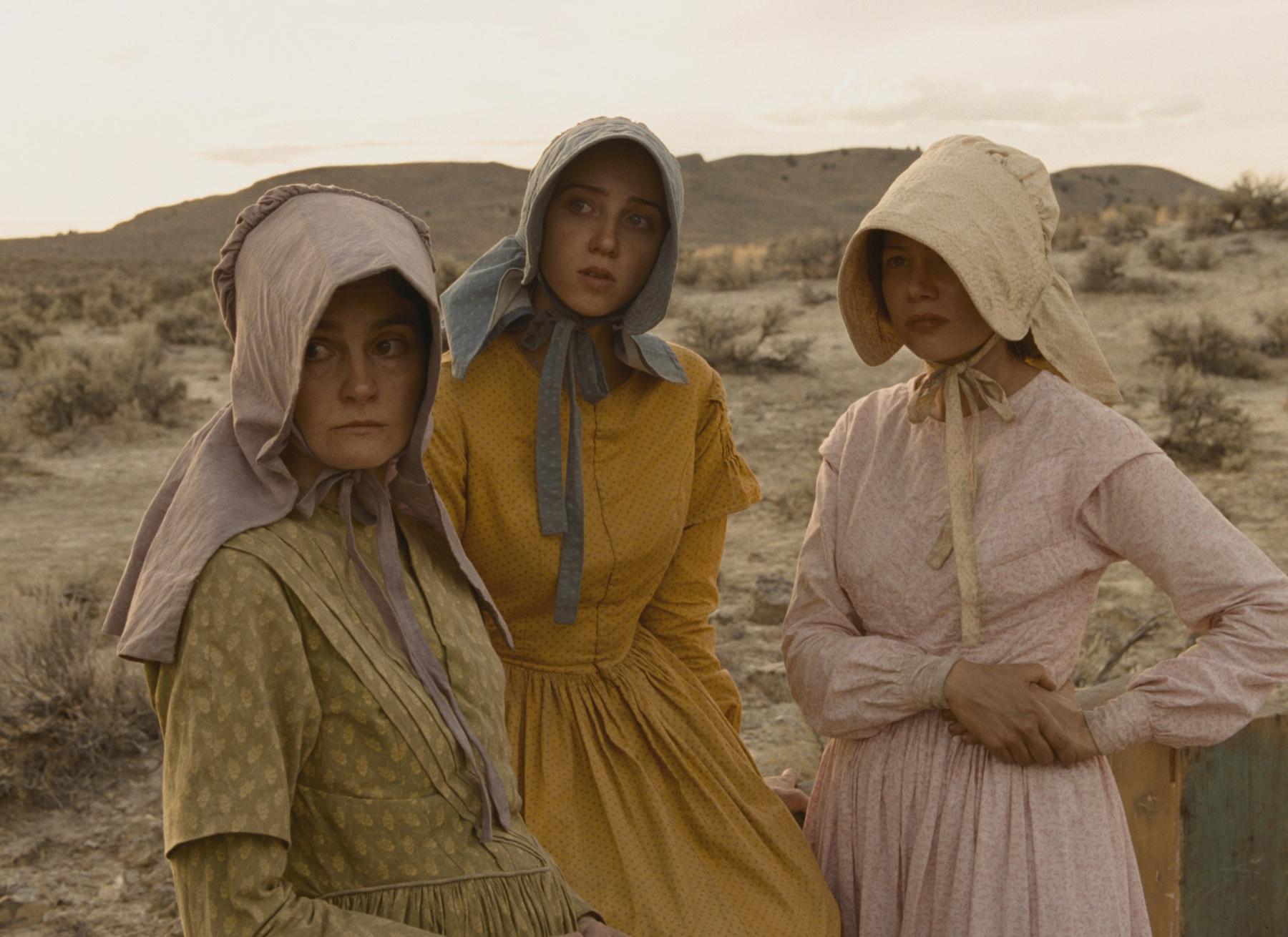
Northwest passage: Kelly Reichardt on “Meek’s Cutoff”

0

Over the past decade, Kelly Reichardt has consistently created an alternative cinema that is in opposition to modern Hollywood blockbusters. Her films, which emphasize minimalist and highly visual storytelling, transcend even the industry’s edgiest darlings (think Darren Aronofsky and Quentin Tarantino). Her films Ode (1999), Old Joy (2006), Wendy and Lucy (2008), and now Meek’s Cutoff (2010) cannot be categorized in the decade’s overhated mumblecore movement of Andrew Bujalski or the Duplass Brothers. Neither are they part of the world of extreme experimental artists, a la James Benning or Sharon Lockhart.

Somehow Reichardt has found a cinematic middle ground, balancing quiet and poetic allegories with accessible and emotional journeys — an achievement that present and future audiences will be hypnotized by for generations to come. After interviewing her for Wendy and Lucy, I spoke with her after Meek’s Cutoff played the 2011 Sundance Film Festival; it recently had its local debut at the San Francisco International Festival, and opens theatrically Fri/6.

San Francisco Bay Guardian: I recently saw your earliest films at the Pacific Film Archive retrospective and your adaptation of the Robby Benson-starring Ode to Billy Joe (1976), Ode (1999), was amazing! You shot the whole thing on Super 8, right? Do you like your earlier films?

Kelly Reichardt: Ode is very near and dear to my heart. It set me on my own way of making films. I don’t think I’m naturally a non-narrative person. And definitely not as much as I revere those kind of filmmakers like my colleagues: Peggy Ahwesh, Peter Hutton. I love seeing how their films unfold and really make the viewer be interactive in deciding what they’re about and what they mean to them. That’s what I’d like to do as a filmmaker. But I can see myself learning in all of my films, which is painful. A couple of students walked out of that screening of my earliest short films and I wanted to run out after them and say, “I totally understand!”

SFBG: You and [screenwriter] Jon Raymond seem to be consciously aware of just that! I know I have told you this before but I find your films so inspired. Your films are like the kind of classes I always wanted to have in college. You’re never telling me what to think, yet you are very precisely leading me towards something extremely imminent. And along the way, I get to experience my own journey with these characters and situations. Do you run into problems getting your films made and released because of this structure?

KR: That part of it, the endings, is [an element] coming from the world of non-narrative filmmaking. It doesn’t hand things over to the audience. It’s like a series of questions unfolding which is like a dream, which is something I want to bring into a more narrative form. It opens up the traditional genre a little which you already know how its’ suppose to go. Meek’s Cutoff and Wendy and Lucy were both released through Oscilloscope, while Old Joy was distributed by Kino. These are all small independent distributors and the things that they are looking for are not for everyone.

The hard part with filmmaking is getting the money to make the film. Everybody has a camera now. You can shoot a video. But if you’re not into naturalism and you’re trying to make things that are more extravagant, that vision is going to be much harder to just do on your own. If I were a student right now, my biggest fear would be how to rise up out of such a huge sea of voices. When I submitted my first feature, River of Grass, to Sundance in 1994, they had 600 entries that year which seemed overwhelming and huge. Six hundred and they were only gonna pick 16. And what was it this year? Didn’t they have something like 6,000 entries?

Getting your film out … worry about that later. Get your film made first. Plus there’s always the fear of even having something to say at the age of 20! Before you’ve lived on your own and been connected to the big black hole of employment, and public transportation and all those things. That could be good “big” fear to have as a young filmmaker.

SFBG: In your Q&A after the screening of Meek’s Cutoff at the Egyptian Theatre [in Park City, Utah], I was very excited about your bringing up forgotten and unavailable older films like Nicholas Ray’s The Lusty Men (1952).

KR: Me too! I was trying to make that point and I became so distracted by the woman sitting behind you filming. It’s just such a weird thing to look out and see 15 people videotaping you and you realize that no experience can ever just be with the people in the room again. Everything has to be some bigger purpose and I completely quit thinking about the film and the interaction. I think it’s a bizarre that people feel completely free about videotaping you and posting it on the Internet without asking me.

SFBG: Not only is it exciting that your films feel influenced by older cinema but you do it in a way that’s very much like Peter Bogdanovich, where it feels as if you truly understand the film’s themes and goals and you’re not just making a mixtape of your favorite scenes. Wendy and Lucy feels like a Vittorio De Sica neo-realist film, while Meek’s Cutoff feels like an existential William Wellman Western by way of Robert Flaherty’s Nanook of the North (1922). I mean, you even used the old Hollywood aspect ratio of 1.33:1 on Meek’s Cutoff! And it doesn’t come off kitschy; in fact, it feels even futuristic.

KR: It’s funny that you mention the aspect ratio. If anything is kitschy, and when you read back about the period, widescreen was what was kitschy. It was a gimmick! It’s what 3D or IMAX is to us today. What did Fritz Lang say, “Widescreens are for funerals and snakes.”

It’s funny now that this memory of widescreen is so embraced but it’s such a diminished landscape in a way. That question is always being asked to me in some tone of like, “When you accidentally picked the wrong aspect ratio did you have to just keep going with it?” (laughs) Though I knew going into it that it would limit the amount of theatres we can play Meek’s at. Sadly, very few theaters have the capabilities. 

SFBG: I’ve been watching a lot of Westerns this year and your horizons in every single shot of Meek’s Cutoff are truly spectacular. Your multi-layered colors! Your floating cowboys! The lined-up pioneers! I could just go on. All of it is so particular. How did you design this film? Did you do it on the landscape or storyboard it first?

KR: I storyboard but I can’t draw. (laughs) I have many different notebooks. Color is an early thing. But everything comes first from relentless scouting.  Scouting, scouting, scouting, scouting. I get familiar with the light and the colors of the day. The places you’re gonna be shooting in at certain times of the day. These locations were really remote and very hard to get to. And we ended up spending such a huge amount of time in that desert.

SFBG: Did you have to sleep out on the plains?

KR: We stayed in this town, Burns, Oregon. It’s a good two-street town and we’d drive off-road for two hours into the desert each day. This is where the actual wagon train got lost. There was nothing out there. We were actually finding pieces of wagon from the 1840s! So it would eat up a huge amount of our shooting day, which is already short because when you’re shooting in the mountains, the sun is gonna go behind them. So that’s four hours already out of your day.

My shooting schedule was so restricted that other producers would have said “You are sinking your ship by shooting out on these locations.” Fortunately my producers backed me and off we went, for better or worse. So you have to be on top of it when you’re there, knowing that there will be unexpected things to occur especially when you are dealing with oxen and mules and donkeys. All of that is to be embraced.

I also have to have a plan because we move so quickly. My DP [Chris Blauvelt] and I are talking, talking, talking. I have some books that are references, that I’ll steal frames from. Some that are location photos, people standing in the locations, some from old films. And some are just really crappy drawings I’ve done because I cannot draw, which I consider a huge handicap as a filmmaker. People always ask “Are you improvising?” We don’t have time for improv! Of course because of the weather, and the terrain, and rattlesnakes and the animals there’s certainly a certain amount of adjustment because when I storyboarded this, it wasn’t snowing. But you can’t go out there without a plan. The camera for me is the storyteller.

SFBG: Now you edit your own movies. Is that because you are a tyrant and you have to have it your own way or have you tried working with others? And by “tyrant,” I mean it in the nicest way possible.

KR: (laughs) You go through different stages: I have my writing partner [Jon Raymond] and that’s one stage and then it becomes very public and you’re working with a bunch of people when filming. Then editing is where you get your film back and it’s when I get to find my film. It’s a great moment when I’m in the editing room an I can say, “Oh yeah, that’s what Jon was originally talking about!” or “I felt that in Jon’s short story!”

But when you’re in production, there’s just so much going on! And editing is where you learn where you fucked up and should have put the camera. It’s the big payoff for me and I don’t want to hand it over to anyone else. It’s the interesting part of filmmaking. It’s where you can manipulate space and completely change the dynamic of a conversation or situation just by adding or taking away time. It’s not fun to edit with me, so I stopped using editors (laughs).

http://www.youtube.com/watch?v=AEmL9at6JT0

Meek’s Cutoff opens Fri/6 in Bay Area theaters.

Jesse Hawthorne Ficks is the Film History Coordinator at the Academy of Art University and programs the film series Midnites for Maniacs.

Let counties raise taxes

2

EDITORIAL The president of the state Senate, Darrell Steinberg (D-Sacramento), has a bill that could profoundly change that way California pays for government. At lot of insiders think it’s just a ploy, a way to force Republicans to come to the table and accept some tax measures, but Steinberg appears serious. He’s presenting the bill to the Governance and Finance Committee May 4, and a simple party-line majority vote could get it to the governor’s desk.

The bill, SB653, would allow counties and school districts to approve taxes — a wide range of taxes, the type that are now entirely under the control of the state. Local governments could impose an income tax, a transactions and use tax, an oil severance tax, a vehicle license fee, or a tax on alcohol, cigarettes, or marijuana. It’s part of what Gov. Jerry Brown calls “realignment” — returning more authority to local government, which is complicated and has advantages and disadvantages. But on its own, the tax measure makes perfect sense: if the residents of San Francisco want to pay a higher car tax, or income tax, or tax on booze, and use the money for better schools and public services, why shouldn’t they be allowed to do it?

San Franciscans pay far more in state taxes than the city gets in state money. That’s one of the great ironies of California finance: the more liberal counties, where the voters support adequate public services, wind up subsidizing the more conservative areas that demand tax cuts. A certain amount of that is inevitable, and even laudable: richer areas should be helping pay for schools, police, and roads in poorer areas. It’s certainly true in the arena of public education, where the courts have, properly, ruled that that state has to make sure every school district gets adequate funding so that kids in Marin County don’t get better educational opportunities than the kids in Tulare County.

And there’s always the risk that realignment will push the state back to the days when geographic inequality was even more dramatic, that California will wind up being, as Sen. Mark Leno (D-SF) once put it: “Hollywood next to Mississippi.”

But Steinberg’s bill doesn’t cut state funding at all; in fact, he’s among the Democrats working to avoid more budget cuts. SB653, properly administered, wouldn’t mean less money for any local agency. It would just remove the ceiling.

California is becoming too big to govern effectively with the current rules — and under the state Constitution, written in a very different era with a smaller, more homogeneous population, even a tiny number of Republicans can hold the budget process hostage. That means, for better or worse, that cities like San Francisco, where residents want decent services and a credible social safety net, are on their own. And if Brown’s proposals to put more of the service burden on the counties (for example, by shifting thousands of state prisoners into county jails) move forward, local governments are going to need the ability to raise their own resources.

Unfortunately, many of the taxes that state law currently allows local government to impose (sales taxes, for example) are regressive. Taxes on income and motor vehicles are far more fair and progressive, and ought to at least be available to cities and counties.

The Democrats in Sacramento need to take this seriously and work for its passage. It’s not the entire solution to the budget crisis and to economic inequality — but it’s an excellent start.


Film Listings

0

Film listings are edited by Cheryl Eddy. Reviewers are Kimberly Chun, Michelle Devereaux, Peter Galvin, Max Goldberg, Dennis Harvey, Johnny Ray Huston, Louis Peitzman, Lynn Rapoport, Ben Richardson, and Matt Sussman. For rep house showtimes, see Rep Clock. For first-run showtimes, see Movie Guide.

SAN FRANCISCO INTERNATIONAL FILM FESTIVAL

The 54th annual San Francisco International Film Festival runs through Thurs/5. Venues are the Sundance Kabuki, 1881 Post, SF; Castro, 429 Castro, SF; New People, 1746 Post, SF; San Francisco Museum of Modern Art, 151 Third, SF; and Pacific Film Archive, 2575 Bancroft, SF. For tickets (most shows $13) and complete schedule visit www.sffs.org.

OPENING

The Beaver See “The Darkness Underneath.” (1:31)

*Cave of Forgotten Dreams The latest documentary from Werner Herzog once again goes where no filmmaker — or many human beings, for that matter — has gone before: the Chauvet-Pont-d’Arc Cave, a heavily-guarded cavern in Southern France containing the oldest prehistoric artwork on record. Access is highly restricted, but Herzog’s 3D study is surely the next best thing to an in-person visit. The eerie beauty of the works leads to a typically Herzog-ian quest to learn more about the primitive culture that produced the paintings; as usual, Herzog’s experts have their own quirks (like a circus performer-turned-scientist), and the director’s own wry narration is peppered with random pop culture references and existential ponderings. It’s all interwoven with footage of crude yet beautiful renderings of horses and rhinos, calcified cave-bear skulls, and other time-capsule peeks at life tens of thousands of years ago. The end result is awe-inspiring. (1:35) (Eddy)

*Incendies When tightly wound émigré Nawal (Luba Azabal) dies, she leaves behind adult twins Jeanne (Mélissa Désormeaux-Poulin) and Simon (Maxim Gaudette) — and leaves them documents that only compound their feelings of grief and anger, suggesting that what little they thought they knew about their background might have been a lie. While resentful Simon at first stays home in Montreal, Jeanne travels to fictive “Fuad” (a stand-in for source-material playwright Wajdi Mouawad’s native Lebanon), playing detective to piece together decades later the truth of why their mother fled her homeland at the height of its long, brutal civil war. Alternating between present-day and flashback sequences, this latest by Canadian director Denis Villeneuve (2000’s Maelstrom) achieves an urgent sweep punctuated by moments of shocking violence. Resembling The Kite Runner in some respects as a portrait of the civilian victimization excused by war, it also resembles that work in arguably piling on more traumatic incidences and revelations than one story can bear — though so much here has great impact that a sense of over-contrivance toward the very end only slightly mars the whole. (2:10) Embarcadero. (Harvey)

Jumping the Broom It’s wedding (movie) season! Angela Bassett and Paula Patton star in this one. (1:48) Shattuck.

Last Night Married for three years and together “since college,” New York City yuppies Michael (Sam Worthington) and Joanna (Keira Knightley) have a comfortable, loving relationship, though it’s unclear how much passion remains. Still, it doesn’t take much for Joanna to bristle jealously when she meets Michael’s co-worker and frequent business-trip companion, Laura (Eva Mendes). As Michael and Laura flirt their way to an overnight meeting in Philly, Joanna runs into an old flame (Guillaume Canet); before long, it becomes a cross-cutting race to see who’ll cheat first. Writer-director Massy Tadjedin isn’t spinning a new story here — and though the film offers a sleek look at contemporary marriage, Last Night takes itself a tad too seriously, purporting to showcase realistic problems and emotions amid a cast beamed directly from Planet Gorgeous Movie Star. Beautiful people: they’re just like us? (1:30) (Eddy)

*Meek’s Cutoff See “Nothing Was Delivered.” (1:44) Albany, Embarcadero.

Queen to Play From first-time feature director Caroline Bottaro comes this drama about … chess. Wait! Before your eyes glaze over, here are a few more fast facts: it’s set in idyllic Corsica and features, as an American expat, Kevin Kline in his first French-speaking role. (Side note: is there a Kline comeback afoot? First No Strings Attached, then The Conspirator, and now Queen to Play. All within a few short months.) Lovely French superstar Sandrine Bonnaire plays Héléne, a hotel maid who has more or less accepted her unremarkable life — until she happens to catch a couple (one half of which is played by Jennifer Beals, cast because Bottaro is a longtime fan of 1983’s Flashdance!) playing chess. An unlikely obsession soon follows, and she asks Kline’s character, a reclusive doctor who’s on her freelance house-cleaning route, to help her up her game. None too pleased with this new friendship are Héléne’s husband and nosy neighbors, who are both suspicious of the doctor and unsure of how to treat the formerly complacent Héléne’s newfound, chess-inspired confidence. Queen to Play can get a little corny (we’re reminded over and over that the queen is “the most powerful piece”), and chess is by nature not very cinematic (slightly more fascinating than watching someone type, say). But Bonnaire’s quietly powerful performance is worth sticking around for, even when the novelty of whiskery, cardigan-wearing, French-spouting Kline wears off. (1:36) Embarcadero, Shattuck, Smith Rafael. (Eddy)

Something Borrowed Kate Hudson and Ginnifer Goodwin play frenemies of the highest order in this rom-com adapted from the best-selling novel. (1:53) Shattuck.

There Be Dragons Dougray Scott and Wes Bentley star in this drama set against the backdrop of the Spanish Civil War. (2:00)

*These Amazing Shadows If you love movies, it’ll be hard to resist These Amazing Shadows (subtitled “A story about the National Film Registry and the power of the movies”) — it’s chock full o’ clips from films that’ve been deemed worthy of inclusion in the National Film Registry’s elite ranks. This includes, of course, the likes of 1942’s Casablanca and 1939’s Gone With the Wind, but also more recent cultural touchstones like 1985’s Back to the Future and a number of experimental, short, and silent works, and even a few cult films too. Along the way film scholars and makers (including locals Barry Jenkins, Rick Prelinger, and Mick LaSalle) chime in on their favorite films and stress why preserving film is important. There’s a healthy dose of film history, as well, with mentions of groundbreaking director Lois Weber (one of early cinema’s most prolific artists, despite her gender) and a discussion of why racially questionable films like 1915’s The Birth of a Nation — a film that Boyz n the Hood (1991) director John Singleton recommended for Registry inclusion — are historically important despite their content. Dedicated film buffs won’t discover any surprises, and there’s not much discussion of queer film (unless John Waters talking about 1939’s The Wizard of Oz counts?), nor any mention of the current shift from film to digital formats (of course preserving old films is important, but will the Registry also start considering digital-only films for inclusion?) But perhaps these are topics for another film, not this nostalgia-heavy warm fuzzy that’ll affect anyone who remembers the magic of seeing a personally significant film — join the mob if it’s 1977’s Star Wars — for the first time. (1:28) Sundance Kabuki. (Eddy)

*Thor When it comes to superhero movies, I’m not easily impressed. Couple that with my complete disinterest in the character of Thor, and I didn’t go into his big-screen debut with any level of excitement. Turns out Kenneth Branagh’s Thor is a genre standout — the best I’ve seen since 2008’s Iron Man. For those who don’t know the mythology, the film follows Thor (Chris Hemsworth) as he’s exiled from the realm of Asgard to Earth. Once there, he must reclaim his mighty hammer — along with his powers — in order to save the world and win the heart of astrophysicist Jane Foster (Natalie Portman). Hemsworth is perfectly cast as the titular hero: he’s adept at bringing charm to a larger-than-life god. The script is a huge help, striking the ideal balance between action, drama, and humor. That’s right, Thor is seriously funny. On top of that, the effects are sensational. Sure, the 3D is once again unnecessary, but it’s admittedly kind of fun when you’re zooming through space. (2:03) (Peitzman)

ONGOING

The Adjustment Bureau As far as sci-fi romantic thrillers go, The Adjustment Bureau is pretty standard. But since that’s not an altogether common genre mash-up, I guess the film deserves some points for creativity. Based on a short story by Philip K. Dick, The Adjustment Bureau takes place in a world where all of our fates are predetermined. Political hotshot David Norris (Matt Damon) is destined for greatness — but not if he lets a romantic dalliance with dancer Elise (Emily Blunt) take precedence. And in order to make sure he stays on track, the titular Adjustment Bureau (including Anthony Mackie and Mad Men‘s John Slattery) are there to push him in the right direction. While the film’s concept is intriguing, the execution is sloppy. The Adjustment Bureau suffers from flaws in internal logic, allowing the story to skip over crucial plot points with heavy exposition and a deus ex machina you’ve got to see to believe. Couldn’t the screenwriter have planned ahead? (1:39) Shattuck. (Peitzman)

African Cats (1:40) 1000 Van Ness, Shattuck.

*Bill Cunningham New York To say that Bill Cunningham, the 82-year old New York Times photographer, has made documenting how New Yorkers dress his life’s work would be an understatement. To be sure, Cunningham’s two decades-old Sunday Times columns — “On the Street,” which tracks street-fashion, and “Evening Hours,” which covers the charity gala circuit — are about the clothes. And, my, what clothes they are. But Cunningham is a sartorial anthropologist, and his pictures always tell the bigger story behind the changing hemlines, which socialite wore what designer, or the latest trend in footwear. Whether tracking the near-infinite variations of a particular hue, a sudden bumper-crop of cropped blazers, or the fanciful leaps of well-heeled pedestrians dodging February slush puddles, Cunningham’s talent lies in his ability to recognize fleeting moments of beauty, creativity, humor, and joy. That last quality courses through Bill Cunningham New York, Richard Press’ captivating and moving portrait of a man whose reticence and personal asceticism are proportional to his total devotion to documenting what Harold Koda, chief curator at the Costume Institute at the Metropolitan Museum of Art, describes in the film as “ordinary people going about their lives, dressed in fascinating ways.” (1:24) Embarcadero, Shattuck. (Sussman)

Certified Copy Abbas Kiarostami’s beguiling new feature signals “relationship movie” with every cobblestone step, but it’s manifestly a film of ideas — one in which disillusionment is as much a formal concern as a dramatic one. Typical of Kiarostami’s dialogic narratives, Certified Copy is both the name of the film and an entity within the film: a book written against the ideal of originality in art by James Miller (William Shimell), an English pedant fond of dissembling. After a lecture in Tuscany, he meets an apparent admirer (Juliette Binoche) in her antique shop. We watch them talk for several minutes in an unbroken two-shot. They gauge each other’s values using her sister as a test case — a woman who, according to the Binoche character, is the living embodiment of James’ book. Do their relative opinions of this off-screen cipher constitute characterization? Or are they themselves ciphers of the film’s recursive structure? Kiarostami makes us wonder. They begin to act as if they were married midway through the film, though the switch is not so out of the blue: Kiarostami’s narrative has already turned a few figure-eights. Several critics have already deemed Certified Copy derivative of many other elliptical romances; the strongest case for an “original” comes of Roberto Rossellini’s Voyage to Italy (1954). The real difference is that while Rossellini’s masterpiece realizes first-person feelings in a third-person approach, Kiarostami stays in the shadow of doubt to the end. (1:46) Opera Plaza, Smith Rafael. (Goldberg)

The Conspirator It may not be your standard legal drama, but The Conspirator is a lot more enjoyable when you think of it as an extended episode of Law & Order. The film chronicles the trial of Mary Surratt (Robin Wright), the lone woman charged in the conspiracy to assassinate Abraham Lincoln. It’s a fascinating story, especially for those who don’t know much of the history past John Wilkes Booth. But while the subject matter is compelling, the execution is hit-or-miss. Wright is sympathetic as Surratt, but the usually great James McAvoy is somewhat forgettable in the pivotal role of Frederick Aiken, Surratt’s conflicted lawyer. It’s hard to say what it is that’s missing from The Conspirator: the cast — which also includes Evan Rachel Wood and Tom Wilkinson — is great, and this is a story that’s long overdue to be told. Still, something is lacking. Could it be the presence of everyone’s favorite detective, the late Lennie Briscoe? (2:02) Embarcadero, Empire, 1000 Van Ness, Piedmont. (Peitzman)

Dylan Dog: Dead of Night (1:47) SF Center.

Fast Five There are plenty of laugh-out-loud moments in Fast Five, in addition to a much demolition derby-style crunch — instances that stretch credulity and simultaneously trigger a chuckle at the OTT fantasy of the entire enterprise. Two unarmed men chained to the ceiling kick their way out of a torture cell, jump favela rooftops to freedom with nary a bullet wound in sight, and, in the movie’s smash-’em-up tour de force, use a bank vault as a hulking pair of not-so-fuzzy dice to pulverize an unsuspecting Rio de Janeiro. Not for nothing is rapper Ludacris attached to this franchise — his name says it all (why not go further than his simple closing track, director Justin Lin, now designated the keeper of Fast flame, and have him providing the rap-eratic score/running commentary throughout?) In this installment, shady hero Dominic (Vin Diesel) needs busting out of jail — check, thanks to undercover-cop-turned-pal Brian (Paul Walker) and Dominic’s sis Mia (Jordana Brewster). Time to go on the lam in Brazil and to bring bossa nova culture down to level of thieving L.A. gearheads, as the gearhead threesome assemble their dream team of thieves to undertake a last big heist that will set ’em up for life. Still, despite the predictable pseudo-twists — can’t we all see the bromance-bonding between testosteroni boys Diesel and Dwayne Johnson coming from miles of blacktop away? — there’s enough genre fun, stunt driving marvels, and action choreography here (Lin, who made his name in ambitious indies like 2002’s Better Luck Tomorrow, has developed a knack for harnessing/shooting the seeming chaos) — to please fans looking for a bigger, louder kick. (1:41) Empire, 1000 Van Ness. (Chun)

*Hanna The title character of Hanna falls perfectly into the lately very popular Hit-Girl mold. Add a dash of The Boys from Brazil-style genetic engineering — Hanna has the unfair advantage, you see, when it comes to squashing other kids on the soccer field or maiming thugs with her bare hands — and you have an ethereal killing/survival machine, played with impassive confidence by Atonement (2007) shit-starter Saoirse Ronan. She’s been fine-tuned by her father, Erik (Eric Bana), a spy who went out into the cold and off the grid, disappearing into the wilds of Scandinavia where he home-schooled his charge with an encyclopedia and brutal self-defense and hunting tests. Atonement director Joe Wright plays with a snowy palette associated with innocence, purity, and death — this could be any time or place, though far from the touch of modern childhood stresses: that other Hannah (Montana), consumerism, suburban blight, and academic competition. The 16-year-old Hanna, however, isn’t immune from that desire to succeed. Her game mission: go from a feral, lonely existence into the modern world, run for her life, and avenge the death of her mother by killing Erik’s CIA handler, Marissa (Cate Blanchett). The nagging doubt: was she born free, or Bourne to be a killer? Much like the illustrated Brothers Grimm storybook that she studies, Hanna is caught in an evil death trap of fairytale allegories. One wonders if the super-soldier apple didn’t fall far from the tree, since evil stepmonster Marissa oversaw the program that produced Hanna — the older woman and the young girl have the same cold-blooded talent for destruction and the same steely determination. Yet there’s hope for the young ‘un. After learning that even her beloved father hid some basic truths from her, this natural-born killer seems less likely to go along with the predetermined ending, happy or no, further along in her storybook life. (1:51) 1000 Van Ness, SF Center. (Chun)

Hoodwinked Too! Hood vs. Evil (1:25) 1000 Van Ness.

*In a Better World Winner of this year’s Best Foreign Language Film Oscar, this latest from Danish director Susanne Bier (2004’s Brothers, 2006’s After the Wedding) and her usual co-scenarist Anders Thomas Jensen (2005’s Adam’s Apples, 2003’s The Green Butchers) is a typically engrossing, complex drama that deals with the kind of rage for “personal justice” that can lead to school and workplace shootings, among other things (like terrorism). Shy, nervous ten-year-old Elias (Markus Rygaard) needs a confidence boost, but things are worrying both at home and elsewhere. His parents are estranged, and his doting father (Mikael Persbrandt) is mostly away as a field hospital in Kenya tending victims of local militias. At school, he’s an easy mark for bullies, a fact which gets the attention of charismatic, self-assured new kid Christian (William Jøhnk Nielsen), who appoints himself Elias’ new (and only) friend — then when his slightly awed pal is picked on again, intervenes with such alarming intensity that the police are called. Christian appears a little too prone to violence and harsh judgment in teaching “lessons” to those he considers in the wrong; his own domestic situation is another source of anger, as he simplistically blames his earnest, distracted executive father (Ulrich Thomsen) for his mother’s recent cancer death. Is Christian a budding little psychopath, or just a kid haplessly channeling his profound loss? Regardless, when an adult bully (Kim Bodnia as a loutish mechanic) humiliates Elias’ father in front of the two boys, Christian pulls his reluctant friend into a pursuit of vengeance that surely isn’t going to end well. With their nuanced yet head-on treatment of hot button social and ethical issues, Bier and Jensen’s work can sometimes border on overly-schematic melodrama, meting out its own secular-humanist justice a bit too handily, like 21st-century cinematic Dickenses. But like Dickens, they also have a true mastery of the creating striking characters and intricately propulsive plotlines that illustrate the points at hand in riveting, hugely satisfying fashion. This isn’t their best. But it’s still pretty excellent, and one of those universally accessible movies you can safely recommend even to people who think they don’t like foreign or art house films. (1:53) Lumiere. (Harvey)

Insidious (1:42) California.

*Jane Eyre Do we really need another adaptation of Jane Eyre? As long as they’re all as good as Cary Fukunaga’s stirring take on the gothic romance, keep ’em coming. Mia Wasikowska stars in the titular role, with the dreamy Michael Fassbender stepping into the high pants of Edward Rochester. The cast is rounded out by familiar faces like Judi Dench, Jamie Bell, and Sally Hawkins — all of whom breathe new life into the material. It helps that Fukunaga’s sensibilities are perfectly suited to the story: he stays true to the novel while maintaining an aesthetic certain to appeal to a modern audience. Even if you know Jane Eyre’s story — Mr. Rochester’s dark secret, the fate of their romance, etc. — there are still surprises to be had. Everyone tells the classics differently, and this adaptation is a thoroughly unique experience. And here’s hoping it pushes the engaging Wasikowska further in her ascent to stardom. (2:00) Albany, Lumiere, Piedmont. (Peitzman)

Kill the Irishman If you enjoy 1970s-set Mafia movies featuring characters with luxurious facial hair zooming around in Cadillacs, flossing leather blazers, and outwitting cops and each other — you could do a lot worse than Kill the Irishman, which busts no genre boundaries but delivers enjoyable retro-gangsta cool nonetheless. Adapted from the acclaimed true crime book by a former Cleveland police lieutenant, the film details the rise and fall of Danny Greene, a colorful and notorious Irish-American mobster who both served and ran afoul of the big bosses in his Ohio hometown. During one particularly conflict-ridden period, the city weathered nearly 40 bombings — buildings, mailboxes, and mostly cars, to the point where the number of automobiles going sky-high is almost comical (you’d think these guys would’ve considered taking the bus). The director of the 2004 Punisher, Jonathan Hensleigh, teams up with the star of 2008’s Punisher: War Zone, Ray Stevenson, who turns in a magnetic performance as Greene; it’s easy to see how his combination of book- and street smarts (with a healthy dash of ruthlessness) buoyed him nearly to the top of the underworld. The rest of the cast is equally impressive, with Vincent D’Onofrio, Val Kilmer, Christopher Walken, and Linda Cardellini turning in supporting roles, plus a host of dudes who look freshly defrosted from post-Sopranos storage. (1:46) Opera Plaza. (Eddy)

Legend of the Fist: The Return of Chen Zhen (1:46) Four Star.

*Limitless An open letter to the makers of Limitless: please fire your marketing team because they are making your movie look terrible. The story of a deadbeat writer (Bradley Cooper) who acquires an unregulated drug that allows him to take advantage of 100 percent of his previously under-utilized brain, Limitless is silly, improbable and features a number of distracting comic-book-esque stylistic tics. But consumed with the comic book in mind, Limitless is also unpredictable, thrilling, and darkly funny. The aforementioned style, which includes many instances of the infinite regression effect that you get when you point two mirrors at each other, and a heavy blur to distort depth-of-field, only solidifies the film’s cartoonish intentions. Cooper learns foreign languages in hours, impresses women with his keen attention to detail, and sets his sights on Wall Street, a move that gets him noticed by businessman Carl Van Loon (Robert DeNiro in a glorified cameo) as well as some rather nasty drug dealers and hired guns looking to cash in on the drug. Limitless is regrettably titled and masquerades in TV spots as a Wall Street series spin-off, but in truth it sports the speedy pacing and tongue-in-cheek humor required of a good popcorn flick. (1:37) 1000 Van Ness, SF Center. (Galvin)

*The Lincoln Lawyer Outfitted with gym’d-tanned-and-laundered manly blonde bombshells like Matthew McConaughey, Josh Lucas, and Ryan Phillippe, this adaptation of Michael Connelly’s LA crime novel almost cries out for an appearance by the Limitless Bradley Cooper — only then will our cabal of flaxen-haired bros-from-other-‘hos be complete. That said, Lincoln Lawyer‘s blast of morally challenged golden boys nearly detracts from the pleasingly gritty mise-en-scène and the snappy, almost-screwball dialogue that makes this movie a genre pleasure akin to a solid Elmore Leonard read. McConaughey’s criminal defense attorney Mickey Haller is accustomed to working all the angles — hence the title, a reference to a client who’s working off his debt by chauffeuring Haller around in his de-facto office: a Lincoln Town Car. Haller’s playa gets truly played when he becomes entangled with Louis Roulet (Phillippe), a pretty-boy old-money realtor accused of brutally attacking a call girl. Loved ones such as Haller’s ex Maggie (Marisa Tomei) and his investigator Frank (William H. Macy) are in jeopardy — and in danger of turning in some delightfully textured cameos — in this enjoyable walk on the sleazy side of the law, the contemporary courtroom counterpart to quick-witted potboilers like Sweet Smell of Success (1957). (1:59) 1000 Van Ness. (Chun)

*My Perestroika Robin Hessman’s very engaging documentary takes one very relatable look at how changes since glasnost have affected some average Russians. The subjects here are five thirtysomethings who, growing up in Moscow in the 70s and 80s, were the last generation to experience full-on Communist Party indoctrination. But just as they reached adulthood, the whole system dissolved, confusing long-held beliefs and variably impacting their futures. Andrei has ridden the capitalist choo-choo to considerable enrichment as the proprietor of luxury Western menswear shops. But single mother Olga, unlucky in love, just scrapes by, while married schoolteachers Lyuba and Boris are lucky to have inherited an apartment (cramped as it is) they could otherwise ill afford. Meanwhile Ruslan, once member of a famous punk band (which he abandoned on principal because it was getting “too commercial”), both disdains and resents the new order just as he did the old one. Home movies and old footage of pageantry celebrating Soviet socialist glory make a whole ‘nother era come to life in this intimate, unexpectedly charming portrait of its long-term aftermath. (1:27) Balboa. (Harvey)

*The Princess of Montpensier Marie (Mélanie Thierry), the titular figure in French director Bertrand Tavernier’s latest, is a young 16th century noblewoman married off to a Prince (Grégoire Leprince-Ringuet) of great wealth and property. But they’ve barely met when he’s called off to war — leaving her alone on his enormous estate, vulnerable to myriad suitors who seem to be forever throwing themselves at her nubile, neglected body. Lambert Wilson (2010’s Of Gods and Men) is touching as the older soldier appointed her protector; he comes to love her, yet is the one man upstanding enough to resist compromising her. If you’ve been jonesing for the kind of lush arthouse period epic that feels like a big fat classic novel, this engrossing saga from a 70-year-old Gallic cinema veteran in top form will scratch that itch for nearly two and a half satisfyingly tragic-romantic hours. (2:19) Opera Plaza, Smith Rafael. (Harvey)

*Of Gods and Men It’s the mid-1990s, and we’re in Tibhirine, a small Algerian village based around a Trappist monastery. There, eight French-born monks pray and work alongside their Muslim neighbors, tending to the sick and tilling the land. An emboldened Islamist rebel movement threatens this delicate peace, and the monks must decide whether to risk the danger of becoming pawns in the Algerian Civil War. On paper, Of Gods and Men sounds like the sort of high-minded exploitation picture the Academy swoons over: based on a true story, with high marks for timeliness and authenticity. What a pleasant surprise then that Xavier Beauvois’s Cannes Grand Prix winner turns out to be such a tightly focused moral drama. Significantly, the film is more concerned with the power vacuum left by colonialism than a “clash of civilizations.” When Brother Christian (Lambert Wilson) turns away an Islamist commander by appealing to their overlapping scriptures, it’s at the cost of the Algerian army’s suspicion. Etienne Comar’s perceptive script does not rush to assign meaning to the monks’ decision to stay in Tibhirine, but rather works to imagine the foundation and struggle for their eventual consensus. Beauvois occasionally lapses into telegraphing the monks’ grave dilemma — there are far too many shots of Christian looking up to the heavens — but at other points he’s brilliant in staging the living complexity of Tibrihine’s collective structure of responsibility. The actors do a fine job too: it’s primarily thanks to them that by the end of the film each of the monks seems a sharply defined conscience. (2:00) California, Opera Plaza. (Goldberg)

*Poetry Sixtysomething Mija (legendary South Korean actor Yun Jung-hee) impulsively crashes a poetry class, a welcome shake-up in a life shaped by unfulfilling routines. In order to write compelling verse, her instructor says, it is important to open up and really see the world. But Mija’s world holds little beauty beyond her cheerful outfits and beloved flowers; most pressingly, her teenage grandson, a mouth-breathing lump who lives with her, is completely remorseless about his participation in a hideous crime. In addition, she’s just been disgnosed with the early stages of Alzheimer’s, and the elderly stroke victim she housekeeps for has started making inappropriate advances. Somehow writer-director Lee Chang-dong (2007’s Secret Sunshine) manages not to deliver a totally depressing film with all this loaded material; it’s worth noting Poetry won the Best Screenplay Award at the 2010 Cannes Film Festival. Yun is unforgettable as a woman trying to find herself after a lifetime of obeying the wishes of everyone around her. Though Poetry is completely different in tone than 2009’s Mother, it shares certain elements — including the impression that South Korean filmmakers have recognized the considerable rewards of showcasing aging (yet still formidable) female performers. (2:19) Smith Rafael. (Eddy)

Pom Wonderful Presents: The Greatest Movie Ever Sold Don’t even think about shortening the title: Morgan Spurlock’s new documentary POM Wonderful Presents: The Greatest Story Ever Sold is ingenious, bitingly funny, and made possible by corporate sponsorship. POM paid good money to earn a spot about the title, so damned if I’m going to leave them out. Instead of keeping product placement subliminal — or at least trying — Spurlock shows exactly what goes into the popular marketing practice. His film isn’t so much critical as it is honest: he doesn’t fight product placement, but rather embraces it to his own advantage. It’s win-win. Spurlock gets to make his movie without losing any cash, and the audience gets a hilarious insider look into a mostly hidden facet of advertising. As he says, it’s about transparency, and no one can claim Spurlock is trying to go behind our backs. And what of the advertising that pops up throughout the film? I can only speak to my own experience, but yes, I’m drinking POM as I write this. (1:26) SF Center, Shattuck. (Peitzman)

Potiche When we first meet Catherine Deneuve’s Suzanne — the titular trophy wife (or potiche) of Francois Ozon’s new airspun comedy — she is on her morning jog, barely breaking a sweat as she huffs and puffs in her maroon Adidas tracksuit, her hair still in curlers. It’s 1977 and Suzanne’s life as a bourgeois homemaker in a small provincial French town has played out as smoothly as one of her many poly-blend skirt suits: a devoted mother to two grown children and loving wife who turns a blind eye to the philandering of husband Robert (Fabrice Luchini), Suzanne is on the fast track to comfortable irrelevance. All that changes when the workers at Robert’s umbrella factory strike and take him hostage. Suzanne, with the help of union leader and old flame Babin (Gerard Depardieu, as big as a house), negotiates a peace, and soon turns around the company’s fortunes with her new-found confidence and business savvy. But when Robert wrests back control with the help of a duped Babin, Suzanne does an Elle Woods and takes them both on in a surprise run for political office. True to the film’s light théâtre de boulevard source material, Ozon keeps things brisk and cheeky (Suzanne sings with as much ease as she spouts off Women’s Lib boilerplate) to the point where his cast’s hammy performances start blending into the cheery production design. Satire needs an edge that Potiche, for all its charm, never provides. (1:43) Clay, Shattuck, Smith Rafael. (Sussman)

Prom (1:44) 1000 Van Ness.

Rio (1:32) 1000 Van Ness, SF Center.

The Robber (1:37) Lumiere, Shattuck.

Scre4m Back in 1996, Wes Craven’s Scream revitalized the slasher genre with a script (by Kevin Williamson) that poked fun at horror clichés while still delivering genuine scares. The sequels offered diminishing returns on this once-clever formula; Scream 4 arrives 11 years past Scream 3, presumably hoping to work that old self-referential yet gory magic on a new crop of filmgoers. But Craven and Williamson’s hall-of-mirrors creation (more self-satisfied than self-referential, scrambling to anticipate a cynical audience member’s every second-guess) is barely more than than a continuation of something that was already tired in 2000, albeit with iPhone and web cam gags pasted in for currency’s sake. Eternal Ghostface target Sidney Prescott (Neve Campbell) returns to her hometown to promote what’s apparently a woo-woo self-help book (Mad Men‘s Alison Brie, as Sidney’s bitchy-perky publicist, steals every scene she’s in); still haunting Woodsboro are Dewey (David Arquette), now the sheriff, and Gale (Courteney Cox), a crime author with writer’s block. When the Munch-faced one starts offing high school kids, local movie nerds (Rory Culkin, Hayden Panettiere) and nubile types (Emma Roberts, Hayden Panettiere) react by screening all seven Stab films, inspired by the “real-life” Woodsboro murders, and spouting off about the rules, or lack thereof in the 21st century, of horror sequels. If that sounds mega-meta exhausting, it is. And, truth be told, not very scary. (1:51) 1000 Van Ness. (Eddy)

I Am File in the dusty back drawer of An Inconvenient Truth (2006) wannabes. The cringe-inducing, pretentious title is a giveaway — though the good intentions are in full effect — in this documentary by and about director Tom Shadyac’s search for answers to life’s big questions. After a catastrophic bike accident, the filmmaker finds his lavish lifestyle as a successful Hollywood director of such opuses as Bruce Almighty (2003) somewhat wanting. Thinkers and spiritual leaders such as Desmond Tutu, Howard Zinn, UC Berkeley psychology professor Dacher Keltner, and scientist David Suzuki provide some thought-provoking answers, although Shadyac’s thinking behind seeking out this specific collection of academics, writers, and activists remains somewhat unclear. I Am‘s shambling structure and perpetual return to its true subject — Shadyac, who resembles a wide-eyed Weird Al Yankovic — doesn’t help matters, leaving a viewer with mixed feelings, less about whether one man can work out his quest for meaning on film, than whether Shadyac complements his subjects and their ideas by framing them in such a random, if well-meaning, manner. And sorry, this film doesn’t make up for Ace Ventura: Pet Detective (1994). (1:16) Shattuck. (Chun)

*Source Code A post-9/11 Groundhog Day (1993) with explosions, Inception (2010) with a heart, or Avatar (2009) taken down a notch or dozen in Chicago —whatever you choose to call it, Source Code manages to stand up on its own wobbly Philip K. Dick-inspired legs, damn the science, and take off on the wings of wish fulfillment. ‘Cause who hasn’t yearned for a do-over — and then a do-over of that do-over, etc. We could all be as lucky — or as cursed — as soldier Colter Stevens (Jake Gyllenhaal), who gets to tumble down that time-space rabbit hole again and again, his consciousness hitching a ride in another man’s body, while in search of the bomber of a Chicago commuter train. On the upside, he gets to meet the girl of his dreams (Michelle Monaghan) — and see her getting blown to smithereens again and again, all in the service of his country, his commander-cum-link to the outside world (Vera Farmiga), and the scientist masterminding this secret military project (Jeffrey Wright). On the downside, well, he gets to do it over and over again, like a good little test bunny in pinball purgatory. Fortunately, director Duncan Jones (2009’s Moon) makes compelling work out of the potentially ludicrous material, while his cast lends the tale a glossed yet likable humanity, the kind that was all too absent in Inception. (1:33) 1000 Van Ness. (Chun)

Stake Land Not gonna lie — the reason I wanted to review this one was because of the film still in the San Francisco International Film Festival catalogue. Rotten-faced vampire with a stake through its neck? Yes, please! But while Jim Mickle’s apocalyptic road movie does offer plenty of gore, it’s more introspective than one might expect, following an orphaned teenage boy, Martin (Connor Paolo, Serena’s little bro on Gossip Girl), and his gruff mentor, Mister (Snake Plissken-ish Nick Damici), on their travels through a ravaged America. As books, films, and comics have taught us, whenever a big chunk of the human race is wiped out (thanks to zombies, vampires, an unknown cataclysm, etc.), the remaining population will either be good (heroic, like Mister and Martin, or helpless, like the stragglers they rescue, including a nun played by Kelly McGillis), or evil — cannibals, rapists, religious nuts, militant survivalists, etc. Stake Land doesn’t throw many curveballs into its end-times narrative, but it’s beautifully shot and doesn’t hold back on the brutality. Larry Fessenden (director of 2006’s The Last Winter) produced and has a brief cameo as a helpful bartender. (1:38) Roxie. (Eddy)

Tyler Perry’s Madea’s Big Happy Family (2:00) 1000 Van Ness, Shattuck.

Water for Elephants A young man named Jacob Jankowski (Robert Pattinson) turns his back on catastrophe and runs off to join the circus. It sounds like a fantasy, but this was never Jacob’s dream, and the circus world of Water for Elephants isn’t all death-defying feats and pretty women on horses. Or rather, the pretty woman also rides an elephant named Rosie and the casualties tend to occur outside the big top, after the rubes have gone home. Stumbling onto a train and into this world by chance, Jacob manages to charm the sadistic sociopath who runs the show, August (Christophe Waltz), and is charmed in turn by August’s wife, Marlena (Reese Witherspoon), a star performer and the object of August’s abusive, obsessive affections. Director Francis Lawrence’s film, an adaptation of Sarah Gruen’s 2006 novel, depicts a harsh Depression-era landscape in which troupes founder in small towns across America, waiting to be scavenged for parts — performers and animals — by other circuses passing through. Waltz’s August is a frightening man who defines a layoff as throwing workers off a moving train, and the anxiety of anticipating his moods and moves supplies most of the movie’s dramatic tension; Jacob and Marlena’s pallid love story feeds off it rather than adding its own. The film also suffers from a frame tale that feels awkward and forced, though Hal Holbrook makes heroic efforts as the elderly Jacob, surfacing on the grounds of — what else? — a modern-day circus to recount his tale of tragedy and romance. (2:00) Empire, 1000 Van Ness, SF Center. (Rapoport)

*Win Win Is Tom McCarthy the most versatile guy in Hollywood? He’s a successful character actor (in big-budget movies like 2009’s 2012; smaller-scale pictures like 2005’s Good Night, and Good Luck; and the final season of The Wire). He’s an Oscar-nominated screenwriter (2009’s Up). And he’s the writer-director of two highly acclaimed indie dramas, The Station Agent (2003) and The Visitor (2007). Clearly, McCarthy must not sleep much. His latest, Win Win, is a comedy set in his hometown of New Providence, N.J. Paul Giamatti stars as Mike Flaherty, a lawyer who’s feeling the economic pinch. Betraying his own basic good-guy-ness, he takes advantage of a senile client, Leo (Burt Young), when he spots the opportunity to pull in some badly-needed extra cash. Matters complicate with the appearance of Leo’s grandson, Kyle (newcomer Alex Shaffer), a runaway from Ohio. Though Mike’s wife, Jackie (Amy Ryan), is suspicious of the taciturn teen, she allows Kyle to crash with the Flaherty family. As luck would have it, Kyle is a superstar wrestler — and Mike happens to coach the local high school team. Things are going well until Kyle’s greedy mother (Melanie Lynskey) turns up and starts sniffing around her father’s finances. Lessons are learned, sure, and there are no big plot twists beyond typical indie-comedy turf. But the script delivers more genuine laughs than you’d expect from a movie that’s essentially about the recession. (1:46) Bridge, California, Piedmont. (Eddy)

REP PICKS

*A Place in the Sun A poor relation to wealthy manufacturers, George Eastman (31-year-old Montgomery Clift) accepts his uncle’s offer of a job, starting at the bottom but proving a quick study. As he rises up the ladder, he acquires an altatross — an atypically demure Shelley Winters as factory girl Alice — that becomes a serious liability as his stature rises enough to attract socialite goddess Angela (17 year-old Elizabeth Taylor). This kickoff to the Mechanics Institute’s month-long Taylor tribute was a sensation in 1951. Taylor had been a juvenile star (1944’s National Velvet), then a teenage ingenue, but this film established her as the most beautiful movie star of her generation — matched with dreamily vague Clift, a newcomer who’d created a sensation himself in 1948’s Red River and 1949s The Heiress. George Stevens — smack amidst his journey from being a lively iconoclast (Astaire and Rogers, Tracy and Hepburn, 1939’s Gunga Din) to the decreasingly prolific maker of solemn Oscar-bait epics — filmed the two of them in swooning, gigantic close ups that were the most star-makingly heated since Garbo met John Gilbert. In 1951, nobody read Clift’s aching sensitivity as gay; women wanted to clutch his bony, Brylcreemed body to their bosoms. Despite the actor’s tragic history — guarantee of his continued mythologizing — he’s a remote screen presence, as opposed to Taylor’s superficial ease. (She became an interesting actress later, when permitted to play harpies and hysterics.) But he’s very poignant in a monologue where George confesses all — well, nearly all — his vulnerable points to a potential future father-in-law. This adaptation of Theodore Dreiser’s 1925 An American Tragedy — an actual Great American Novel, published the same year as yea greater The Great Gatsby — is fairly frank for its era about unwedded pregnancies, the inaccessibility of abortion, and unbridgeable class divides. But it’s also aged unevenly, with awkward use of back-projection and a crucial softening of the novel’s most intense narrative turning point. The climatic courtroom drama is graceless; later progress more Christian-inspirational than Dreiser envisioned; nor does the fabled romance chemistry register as it once did. Still, this is a moment in film history: not one of Elizabeth Taylor’s best performances, but the one that secured her status as upmarket bombshell for a generation. Plus it won six Oscars, including Best Director. (2:02) Mechanics’ Institute. (Harvey)


 

Alerts

0

ALERTS


By Jackie Andrews

alert@sfbg.com


WEDNESDAY, MAY 4


Robert Reich lecture

Robert Reich — UC Berkeley professor of public policy, former U.S. secretary of labor, and best-selling author — asks the question, “Will corporate social responsibility stop a race to the bottom in labor standards?” Come hear what the man The Wall Street Journal called one of the “most influential business thinkers” has to say.

4–6 p.m., free

SFSU Seven Hills Conference Center

1600 Holloway, SF

(415) 338-2885

www.sfsu.edu/~news


THURSDAY, MAY 5


Chabot College walk-out

Chabot College students, as well as middle and high school students and other community members in and around Hayward, will walk out in protest of the construction of the Russell City Power Plant. Meet at Chabot College and march en masse to the proposed site of the plant for a lively rally.

Noon–3 p.m., free

Meet at Chabot College main courtyard

25555 Hesperian, Hayward

Facebook: Powerplanttaskforce Hayward


Hecho en San Francisco

Commemorate the Battle of Puebla while supporting local food vendors at this benefit for La Cocina and CUESA. Taste fresh tortillas, authentic puebla cooking, and the best of las cocinas Nopailito, Mijita, y Tacolicious — not to mention top shelf tequila, beer, and wine.

5:30–8:30 p.m., $50

CUESA Kitchen

Ferry Building, North Arcade, SF

www.hechoensanfrancisco.eventbrite.com


FRIDAY, MAY 6


War-tax resistance conference

Any interest in cutting off your own personal funding of America’s wars? Join the club. War-tax resisters from around the country are sure to attend this three-day national conference, which begins tonight and ends Sunday (at differing locales, so check the website for more info). Tonight’s discussion — following dinner at 6 p.m. — is on strengthening resistance through social networking.

6–9:30 p.m., $15

Berkeley Friends Church

1600 Sacramento, Berk.

www.nwtrcc.org


SATURDAY, MAY 7


Beyond gang injunctions

Join this community discussion on gang injunctions — a new strategy for policing gangs that has been criticized for siphoning money away from community programs while increasing racial profiling and other attacks on civil liberties. You’ll hear from prominent community leaders such as Sagnitche Salazar of Stop the Injunction Coalition and Whitney Young of Critical Resistance, among others, followed by a Q&A.

2:30–4:30 p.m., free

EastSide Arts Alliance

2277 International, Oakl.

www.radioproject.org


TUESDAY, MAY 10


Activism is not terrorism

Attend this reading and discussion of Will Potter’s Green is the New Red: An Insider’s Guide to a Social Movement Under Siege. In it, the award winning journalist discusses the “green scare” trend in the media and popular culture, which portrays environmental and animal rights activists as so-called ecoterrorists. Even the federal government is flippant with its use the word “terrorism,” he says, and it recently convicted a group of animal rights advocates of “animal enterprise terrorism.”

7 p.m., free

City Lights Books

261 Columbus, SF

www.citylights.com 

Mail items for Alerts to the Guardian Building, 135 Mississippi St., SF, CA 94107; fax to (415) 437-3658; or e-mail alert@sfbg.com. Please include a contact telephone number. Items must be received at least one week prior to the publication date.

Homeowner defense groups to target Wells Fargo shareholders

8

“Foreclosures are the new F-Word.” So said Regina Davis, executive director of the San Francisco Housing Development Corporation, at an April 29 seminar at SFHDC’s office on Third Street that explored ways to prevent more foreclosures in San Francisco, California and beyond.

Since the economic meltdown in 2008, there have been 2,000 foreclosures in San Francisco. And the majority have impacted low-income folks and communities of color, who were sold more predatory loans than other groups, Davis and a panel of foreclosure experts warned
And as the recession drags on, another 2,000 foreclosures could be in the works, further destabilizing communities and draining more resources from the city, in terms of lost property values and related tax revenues.

And while deep-pocketed lobbyists have been making it hard to pass laws that would offer at-risk homeowners more protections, homeowner defender groups have decided to target, and now protest against, the group they believe stand directly in the way of equitable reforms: the banks.
 “Wells-Fargo CEO John Stumpf took home $21 million in 2009 while his bank received $25 billion in TARP funds,” stated a flier that ACCE (formerly ACORN) and the Home Defenders League are distributing to urge folks to meet at Justin Herman Plaza at 11: 30 a.m., May 3 and march to the Wells Fargo shareholder meeting where protesters plan to personally deliver a list of their demands to WF CEO Stumpf.

“He and his cronies fought tooth and nail to kill consumer protection bills in California and around the country and are currently trying to gut a 50-state Attorneys General settlement with homeowners that have been defrauded,” the flier concluded.
It noted that ACCE and the Home Defenders League sponsored this event, in partnership with the California State Labor Federation, the California Nurses Association, Contra Costa Interfaith Supporting Community Organizing, Causa Justa: Just Cause, ENLACE, Jobs for Justice, National Education Association, Oakland Education Association PICO California, PICO National Network, SEIU United Service Workers West and Local 1021 and Tenants Together.

“We are also part of The New Bottom Line, a national campaign focused on creating an economy that works for the many, and not the few,” the flier stated.

5 Things: April 28, 2011

0

>>POP-UP-TASTIC Oh pop-up phenomenon…why are you so enticing? Is it because our hype-heavy culture is so ADHD that the newest and coolest bar, gallery, restaurant, or what have you is “out” even before it’s torn down and replaced by the next “it” concept? The once failing Corner restaurant on 18th and Mission is now bustling thanks to the eatery’s new format of hosting a different recession-plagued talent with a menu to die for every night of the week. So, too, are venues supporting a great idea, but not necessarily one with enough gas to keep it going long-term, like the coffee shop-record store-music venue-rehearsal space-anarcho bookbindery of our adolescent dreams. Enter the People’s Gallery, host to the Big Things pop-up shop this Sat/30, which will feature everything from a bookbinding workshop to sidewalk sale-type treasures, handmade goodies, photo exhibitions, and food. Get there early, for it might poof into the ether before you even get a chance to check out the buzz.

>>ANOTHER WEDDING OF THE CENTURY! As the media breaks out its best British accents, the complete mayhem engulfing the royal wedding reaches its fevered pitch tomorrow with the event itself. For the truly die-hard, there is but one place to take in the beauty of clan-building: the British consulate, where the official viewing party kicks off at 9 a.m. with remarks by UK Counsel General Julian Evans. Call Renee at (415) 407-7424 to RSVP.

>>BEATS AMBASSADOR When the publicity ploy involves bad-ass Ghanian American hip-hop, count us as happily-enlisted marketing allies. Blitz the Ambassador plays La Peña Cultural Center tonight, and is offering up a free stream of his new album Native Sun so that you can learn the words before you shake ass. The album is a powerful barrage of traditional percussion, guitar licks, and fly verses – worth banging in your headphones even if you can’t make Berkeley tonight.

Blitz the Ambassador, Native Sun:

>>TRUCKING COMPANY Do you dream of owning a food truck but aren’t quite sure how to fund it? Stop squirreling away your Tooth Fairy money and learn how to apply for a loan — and get approved — from a panel of finance experts, fellow foodies, and food truck owners. Tonight, our friends at Renaissance Entrepeneurship Center are sponsoring this workshop for only 10 bucks, but the free publicity that comes with Chicken John threatening to vomit all over your new local economy-boosting venture is absolutely priceless.

>>BACK TO THE BEACH The last eighteen months have brought a bunch of repeat-listen recordings from bands that invoke the oceanside, including Beach House, Dirty Beaches, and Beach Fossils, who return to San Francisco a week from today, taking the stage at Slim’s to play songs from their 2010 debut album and the more recent EP What a Pleasure.


Blast rocks Marrakech tourist restaurant: live report

4

Chaos here on the giant, tourist-packed Djemaa El Fna square in Marrakech, Morocco as an explosion has just rocked the Argana terrace restaurant two stories above the square at around noon local time.

We’ve seen apparent evidence of casualities being pulled from the wreckage of the dining room. A Reuters photographer has found out from the police that the source was gas, specifically reserve cannisters stored along the staircase (also, everyone here smokes a lot). Al Jazeera is reporting this now — as well as 10 dead. If we learn more we will update this post.

A previous large explosion at a Moroccan tourist cafe occurred in Casablanca in 2003, part of a series of Islamist suicide bombings that left 45 people dead.

UPDATE 1:56 p.m. local time: AP is now reporting 14 dead and word is still going around that the cause was a gas canister explosion, although AP is also reporting that the explosion resulted from a “concentration of gas in the basement” and that the state news agency MAP quotes an Moroccan interior ministry statement calling the explosion a “criminal act.” This raises concern among some observants, because two weeks ago in response to public demonstrations, King Mohammed VI “pardoned or reduced the sentences of 190, mainly Salafi jihadist, prisoners — roughly one in 10 of the 2,000 or so people tried, sentenced and jailed after the Casablanca bombings” according to the New York Times.

Our own observation of the damage suggests that a basement explosion is questionable. Damage appears to be concentrated on the second level (and the third floor windows were blown out), yet hawkers’ stalls on the square near the first floor seemed undamaged, although we were unable to get too close to the building. Also, the building itself is still standing.

Whatever the cause, after the concussive blast the scene itself was incredibly grisly, with injured staff and patrons, some visibly dismembered, being removed on yellow tablecloths or curtains, bodies strewn over railings, and members of the public frantically gesturing from the blackened terrace for assistance. Beams and sections of roofing were dangling from above the terrace, and crowds below watched helplessly until a fleet of ambulances tore through the packed square. Locals attempted to assure foreigners who had made their way to Cyber Parc Arsat Moulay Abdeselam — the city’s public wi-fi hotspot and rare green space — of their nation’s safety for tourism and lack of terrorist violence. 

UPDATE 7:15 p.m. local time: A tense and eventful day here in Marrakesh, as much of the Djemaa el Fna — usually writhing with snake charmers, storytellers, Berber musicians, and juice vendors — has been cordoned off by police for the blast investigation. A largely Moroccan crowd gathered to watch in silence; the tourists (a group of Welsh charity hitchhikers at our hotel, for example) mostly seemed to hole up in their hotels and share stories of near-misses and might-have-beens.

The word on the “Arab street” — literally, as we ate shwarma on Rue Bab Agnaou — veered from gas canisters as a cause to a basement water heater to a bomb. The Moroccan government is now officially investigating it as a bomb attack, but is stopping short from calling it terrorism. The death toll is now at 15, and the square is lined with police anti-riot vehicles. Shops remain open in the souks but the mood is somber, and even the more aggressive street vendors have dialed back their hustle, offering supportive words and plentiful information.

Both Al Qaeda in the Islamic Maghreb and the Polisario Front, which seeks to drive Morocco out of Western Sahara, are on the list of initial suspects in the explosion. Should the blast prove to be a terrorist bombing, it would be “the largest in Morocco since 2003, when 12 suicide bombers attacked five targets in Casablanca, killing 33 people,” the New York Times says in an article on the explosion. The King has promised a full investigation, as well as to pay for burial of the dead, according to the official Moroccan MAP news agency.

UPDATE AND WRAP-UP, May 1, Madrid, SpainWith the bombing now being blamed on Al Qaeda in the Maghreb, and the victims of this heinous attack all identified, I wanted to answer some readers’ questions. David and I were about 200 meters from the Argana Cafe, at a locutorio (cyber cafe), when we heard the blast. We finished up quickly and walked out onto the square, where we saw the immediate aftermath. We had spent the previous nine days traveling all over Morocco (it’s huge and incredibly diverse) and talking to people. Although we sensed much frustration with the country’s economic situation, and even a little with its politics, we never felt threatened in any way. Even after the explosion, Moroccan life proved especially resilient — there’s just too many people, including tourists, and too much going on to stop everything in its tracks for long.  Below is my original report.

And the next chief is…yes, Suhr!

3

Mayor Ed Lee appointed a deeply emotional Captain Greg Suhr as Chief of the San Francisco Police Department during a swearing-in ceremony where the majority of folks were either elected officials, running for election, running each other’s electoral campaigns—or wearing SFPD uniforms.

And in the end it seemed that the choice may have been influenced by pressure from the powerful San Francisco Police Officers Association, judging from the comment Lee jokingly directed at SFPOA leader Gary Delagnes, saying, “Gary, it’s time to get quiet and go to work.”

Lee told a standing-room only crowd that when he returned from Hong Kong to San Francisco four months ago finding a new police chief was his top priority. And that initially it was suggested (Lee did not say by whom) that he leave the SFPD situation alone and allow an elected mayor to appoint the next Chief.

‘While I am an interim mayor, this is not an interim decision,” Lee told the crowd, signaling that while he may be out of office in January, Suhr may be here to stay as the city’s top cop.

“Today, I’ve chosen the best candidate,” Lee continued, thanking Acting Chief Jeff Godown for his work leading the SFPD since former Mayor Gavin Newsom made the shocking decision to appoint former Chief George Gascón as District Attorney.

But while Newsom’s move may have upset the apple cart in the D.A.’s race, it sure seems to be working out well for Suhr.

Describing Suhr as “a police and people’s Chief: and “a reformer from the inside out,” Lee ran through a long list of the new Chief’s contributions to the SFPD. These included Suhr’s 30 years of service, his climb through the ranks to become Captain of the Mission station, his gig as Captain of the San Francisco Public Utilities Commission in a Homeland Security capacity, and, since 2009, as Captain of the Bayview station.

Suhr began by saying he was “speechless.” Donning glasses to read a speech that he had prepared the night before, Suhr choked up when he talked of being “fourth-generation, born and raised in San Francisco.” Recovering his composure, Suhr smoothly changed gears, as he joked how his appointment therefore makes him “a local hire,”—an insider reference to Sup. John Avalos’ recently approved local hire legislation that Mayor Lee is helping enact citywide.

Suhr recalled how he started out as a rookie on the midnight shift in the Tenderloin in 1981. He thanked his family, his friends and his girlfriend Wendy. And then he asked for a moment of silence “ to honor the memory of all the brave officers who have given their lives in the line of duty.”

Lee reclaimed the podium long enough to jokingly ask Suhr  “to investigate the whereabouts of my birth certificate” as his first assignment as the new chief.

Then it was Board President David Chiu’s turn. Chiu described Suhr as someone, ”who knows our streets, walked the walk, and knows the beats, someone who we all feel confident will be able to bring the SFPD the reform that former Chief Godown, Chief Gascón and Chief Heather Fong initiated. “

San Francisco Superior Court Judge Katherine Feinstein, who is the daughter of Sen. Dianne Feinstein and the presiding judge of the Superior Court, recalled how she has known Suhr since the mid 1980s. “I have watched him as each of our careers have moved forward,” Feinstein said, noting how there were some “steps forward and some steps backward” and how, “there were those who thought this day would never come.” (Feinstein’s words were the only reference to some of the less sunny moments in Suhr’s long and distinguished career. These included his 2003 indictment as part of Fajitagate, an incident that involved off-duty officers, a bag of take-out food, a beer bottle and injuries sustained by two local residents. Suhr was cleared of wrongdoing the next year, but was reassigned by then Chief Heather Fong to the PUC position after an incident in 2005, in which a police officer was seriously injured at an anarchist protest, and videographer Josh Wolf was held in federal prison for 226 days after he refused to release unedited footage of the protest.)

Next up was D.A Gascón and his rooster-like shock of silver hair. Gascón noted that when he first came to San Francisco, in the summer of 2009, he had no allegiances to, and no prior knowledge of, people inside the SFPD.

“I looked at Greg Suhr and one of the things that impressed me is how he worked with and related to people,” Gascón said, explaining why he appointed Suhr as Bayview Captain “Not only has he exceeded all expectations he did an incredible job,” he said.

 Police Commission President Thomas Mazzucco said that in the 100 days since the Commission announced it was looking for a new chief, it became clear that Suhr has the support of SFPD’s rank-and-file.

Mazzuco noted that he met Suhr in high school. “I knew he could hold a ball,” Mazzuco added, noting that he subsequently became Suhr’s football coach, even though he is younger than Suhr. “What the Police Commission has brought to us is not only a native son but also a cop’s cop. It’s an honor to have him as his chief.”

And after the swearing-in, the sentiment among officers in blue appeared to be strongly in Suhr’s favor. Lt. Ken Lee of Central Station recalled how he and Suhr went through the police academy together about 30 years ago.

“We went to different assignments but we’ve maintained a friendship,” Lee said. “The moment I met him I liked him. He was a very stand-up person, and as a native San Franciscan like myself, you could tell he had strong ties to the city. He’s a hard worker, he’s very dedicated to what he does.”

Lt. Mario Delgadillo, also of Central Station, said Suhr hasn’t lost his connection to the street. “That also means a lot, when you have a boss who’s walking with you,” Delgadillo said.

Suhr takes over the SFPD as it’s grappling with the fallout from a recent spate of scandals, including videos that Public Defender Jeff Adachi released that appear to show police misconduct at residential hotels and that forced DA Gascón to hand over his investigation of this alleged police misconduct to the FBI. Asked during a media roundtable what his appointment means for Acting Chief Godown, Suhr said Godown has returned to being Assistant Chief of Operations, which was the post he held before Gascón, who recruited Godown from LAPD, was appointed DA.

In response to a question about his top priorities as police chief, Suhr noted, “When I sit down with the mayor this afternoon, the mayor’s going to tell me what his priorities are. My first priority will be blocking the door open on the 5th floor so that if you wanna come see me you can, like it used to be. Then I have to meet with the command staff and captains and get their take on where they think we are, where they think we’re moving forward best, and match that up against how I’ve seen from a position of Bayview, how that matches up. And then see if I can’t meet with different community groups, the different police employee groups and the command staff.”

He didn’t mince words when it came to indicating that SFPD officers are going to be asked to give back during upcoming budget negotiations
“I’m sure that there’s going to have to be adjustments and I look forward to working with a collaborative effort with the mayor and the board and the unions and the rank and file,” Suhr said. “When the economy’s been good we’ve benefited by it, and now that the economy has … gone the other way, to some extent I think that the officers are willing to give back to do whatever needs to be done to keep the city safe.”

So, how does Suhr think he differs from former Chief Gascón? 

”He has a gorgeous head of hair,” Suhr joked. “To put it in a sports analogy, he’s a quarterback shortstop guy, and I’m more of a catcher, lineman, linebacker kind of guy. But I admire him, I think he moved a lot of issues forward for the police department, and I look forward to continuing those initiatives and giving a few of them a shot in the arm that I think were beginning to wane a bit.”

Suhr also talked about how he has always wanted to become a police officer (a comment that suggests he’s not planning to use the Chief’s post as a stepping stone to the District Attorney’s Office).

”When I went into the police department. on Silver Avenue which is now Willie Brown Academy — that was the police academy back in 1991 when I came in — man, we looked at just the regular uniformed police officers with just stars in our eyes, because they were just the sharpest, classiest folks that we were aspiring to be,” Suhr said.

And he indicated that as Chief, he won’t tolerate dishonesty in the face of ongoing investigations into alleged police misconduct. ”The character of a police officer must be above reproach,” Suhr said. “And I think that the investigation will show what it ends up showing, but I don’t think that there’s a police officer in San Francisco that would want to have a dishonest cop and I’d be at the top of that list. So I want all my officers to be of character that is above reproach.

Asked if he welcome clarification around the duties of SFPD officers assigned to the FBI’s Joint Terrorism Taskforce, Suhr said he believed an examination of the wording of the FBI’s most recent memorandum of understanding (MOU) with the department was already under way.

“I believe that the MOU is being revisited,” Suhr said. “I have not been a part of that, but again I think we have a real good policy with regard to our intelligence gathering and that does supercede any ask of any other agency. The officers are bound by policies and procedures. And that policy was well thought out with tremendous community and group input years and years ago, from situations that have not since repeated themselves. I think a lot of people back then couldn’t believe they happened in the first place, but I think measures were well thought out and put in place to make sure we don’t have a problem again.”

And at the end of the day, Suhr expressed the hope that his tenure as Chief would endure long after the interim mayor is replaced by an elected mayor.

”I’m a native San Franciscan, and this is a dream come true,” he said. “It’s my first day. However this story ends, with a little bit of luck (raps on the wood tabletop) it’s not going to end today.”

Hot sexy events: April 27-May 3

0

Hey there sexy, how’s life on the other side of the Intertubes? I wanna get real with some real questions in this week’s sexy events column. Don’t worry, it’s about you. Namely, we here at the SF of BG would like to know just what you feel is missing from sex coverage in this age of Aquarius (ha!) in which we live. Are you feeling like you have pressing sex ed questions that need answering? Are you wishing that there was more event coverage of the parties and perv-a-thons in our fair Sodom By the Bay?

See, we’re going through an evolution with our sex coverage, and though we’ve got some pretty hot and wild ideas up in our noggins, youse the readers are just that, and maybe you’re thinking something we missed. So how bout it – new voices, dildo reviews, heavy breathing monolouges? The Guardian’s mission is to be a voice for the community of San Francisco, so have at us. Um, our safe word is spelt. 


Erotic Reading Circle

Share your thoughts, air out those tired old insecurities – get real pervy with, whatever. The monthly Erotic Reading Circle at the Center for Sex and Culture provides a safe space for writers to share their bedroom-related materials. Carol Queen and Jen Cross of Writing Ourselves Whole facilitate the gathering, pretty much a must-do for any aspiring sex scribe. 

Weds/27 7:30 p.m., $5 suggested donation

Center for Sex and Culture 

1349 Mission, SF

www.sexandculture.org


Hot Draw

Unleash your wild, artistic side at these live drawing sessions – one need only peep the galleries on Mark I. Chester’s website to see that he doesn’t play when it comes to drawing dirty players. Kinky leathermen strut about for a crowd of strictly sketchy, strictly gay male artist scribblers.

Thurs/28 6:30-9:30 p.m., free

Mark I. Chester Studio

1229 Folsom, SF

(415) 621-6294

www.markichester.com


Art of Restraint

How would you like to be situated right in the center of a high-art, surround sound bondage performance? It’s all within your grasp, baby – this week’s Femina Potens event at Mission Control will string up local lovelies Fivestar and Madison Young, while adult film performers and submissives offering up chocolate-covered strawberries romp about. Does it sound too good to be true? Believe, child, believe. 

Sat/30 8 p.m.-3 a.m., $50-75

Mission Control 

www.missioncontrolsf.org


How Weird Street Faire

While not sexy per se, this fair sure is freaky: How Weird takes over a good portion of SoMa for stage upon stage of electronic ass-shaking, and community bonding. What community, you say? Bonding how, you ask? Well maybe just maybe that’s up to you, sailor. Head over in whatever state of disarray you like and get funky. 

Sun/1 noon- 8 p.m., $10 suggested donation

Howard and Second St., SF

www.howweird.org 


Kentucky Fried Woman’s Guilty Pleasures

You need this bucket of crispy, greasy, lip-smackin’ queers stripping down to their burlesque bundles like you need to watch your cholesterol intake. For reals, put down the trans fat. Instead, pop on over to Oakland’s Bench and Bar bar, and feast your eyes on the talents of Alotta Boutté, Scotty the Blue Bunny, and oh! So much more. Heart-stopping, in a good way. 

Sun/1 7:30-10:30 p.m., $10

Bench and Bar

510 17th St., Oakl.

(415) 374-1924

Facebook: Kentucky Fried Woman’s Guilty Pleasures 


“Finding and Maintaining a Happily Ever After: A Relationship Workshop for Lesbian Couples”

How do you make relationships last past the original courting period? Davina and Molly have married each other countless times in protest of unequal civil rights, and so they’re uniquely qualified (maybe) to talk about how to make matrimony mutually awesome (in and out of the bedroom).

Tues/3 6:30-8:30 p.m. $20-25 for singles $35-45 for pairs

Center for Sex and Culture 

1349 Mission, SF

www.sexandculture.org


Muni strike vote stems from “gigantic mistrust” of the MTA

7

At a time when public employee unions are being demonized, downsized, and degraded by conservatives and much of the general public, it was a bold gesture for Muni drivers to recently authorize their Transportation Workers Union Local 250A to defy city law and go on strike anyway. But following through on that threat and shutting down Muni may only turn the public even more strongly against that union.

Board of Supervisors President David Chiu said a Muni strike would be “a significant mistake” that he’s trying to avert, and City Attorney Dennis Herrera has issued a statement reminding the public and Muni workers that strikes are banned in the union contact and the City Charter and “we will take appropriate legal recourse.”

But the union’s Secretary-Treasurer Walter Scott told us the strike authorization vote was a result of the “gigantic mistrust” by Muni workers of their Municipal Transportation Agency bosses. “They wanted a strike authorization vote,” he said, which “shows that the membership is behind us” as union leaders negotiate a new contract in the wake of November’s Prop. G, which ended the union’s pay guarantees.

Among the recent factors that Scott said have led Muni workers to doubt that the agency is negotiating in good faith were the MTA’s unilateral decisions to withhold Health Care Trust Fund money that had gone to drivers in previous years and the new requirement that drivers bring in doctors’ notes if they call in sick, as well as the agency’s decision to hire public relations specialist Charlie Goodyear to publicize developments in the ongoing negotiations.

But Goodyear said those issues are diversions that haven’t been raised in the current negotiations, that the MTA was acting under authority it has under the charter, and that “we hope that the good work that’s been going on for five or six weeks continues” and the two sides reach an agreement on a new contract.

Scott also expressed hope that the two sides will reach a deal. “Nobody wants to strike, and we’re trying our damnedest to find a happy median in these negotiations,” he said.

As for the right of the drivers to strike, Scott agrees that the current contract prohibits it, but he noted that the contract expires on June 30 and that “on July 1, we have no contract. That’s went the legality [of a strike] comes into question.”

Herrera has noted that the City Charter also declares that “strikes by City employees are not in the public interest,” going on to note that “said employees shall be dismissed.” But Scott says Muni employees have already been so vilified by city officials and the local press that calling a strike wouldn’t hurt their standing with the public much more: “If I’m shot dead and someone stabs me, it doesn’t make that much of a difference.”

FEAST: 5 tapioca delights

0

diane@sfbg.com

When it comes to tapioca pudding, levels of neurosis tend to equal levels of nostalgia, with the haters depicting the starchy little pearls as “gummy, scary fish eyes” and the aficionados invoking Mom patiently stirring vanilla extract into the sweet milky mixture over a prairie Wedgewood.

Pearl drinks notwithstanding — and haven’t all those bubble tea places peaked yet? — tapioca pudding remains a rarity outside of a few Jewish delis and Southeast Asian restaurants. But when you do see it, the all-white comfort food has been getting a foodie and fusion makeover, with infusions of lime, maple syrup, and Grand Marnier; bases of cream, orange juice, or coconut milk (join us, lactose intolerant ones!); real vanilla beans instead of extract (sorry, moms), and purees of passionfruit, banana, and mango. Here are five places that serve their tapioca pudding proudly. Indeed, at a few of them, you either eat your tapioca (or sticky rice) or end your meal on a sour note. You choose. (Diane Sussman)


OUT THE DOOR

Oh, Charles Phan — is there no humble Vietnamese street food you can’t turn into a sought-after gourmet delicacy? Not even tapioca pudding — to which you added a dollop of mango mousse for extra sweetness, a splash of lemon juice for refreshing tartness, a bit of cream for extra richness, all in a smooth coconut milk base? If there’s any criticism to be had, it’s that OTD’s tapioca pudding is only offered every day at the Westfield Centre outpost (sorry, Ferry Buildingers, you have to wait until summer to get yours). Not nice, Charles Phan, making us traverse the carny ride of an escalator for a bit of tapioca. And while we’re at it, here’s another criticism: OTD’s Ferry Building tapioca comes in prepackaged plastic containers — or is it a compostable composite? — so BYOB (bowl).

845 Market, SF. (415) 541-9913, www.outthedoors.com


LE COLONIAL

Who says a night on the town can’t end in tapioca pudding? At the classic and classy Le Colonial, the French-Vietnamese restaurant in the Financial District, you can have it all. Le Colonial may also be the only restaurant in town that suggests a wine pairing for your tapioca pudding (a 2003 Royal Tokaji Aszu 5 Puttonyos). And, Le Colonial serves its tapioca, infused with coconut, over banana custard. That’s right, puddin’ heads, you don’t have to choose! Sop up the two-fer with Le Col’s wonton crisps, and get your textural, salty contrast. Granted, this tapioca isn’t cheap ($9). But this is your big night out — go ahead and splurge in your own homey, comfy way.

20 Cosmo Place, SF. (415) 931-3600, www.lecolonialsf.com


THE HOUSE

The House, along with lingering traces of the Beats, are two small respites from North Beach’s Italian theme-park vibe. Situated in an off-kilter, oddly-painted building on a triangulated corner at Grant and Fresno, the House serves Asian fusion fare like Maine crab cake with pickled ginger remoulade and wasabi noodles with Angus steak. Fusions aside, the House’s tapioca pudding may well be prettiest in all the land (take that, shellacked and air-brushed Martha Stewart Living centerfolds). For starters, House decorates its tapioca with a flowery swirl of mango puree that melds into the pudding for a jolt of extra sweetness. But it’s not just the artistry that makes it worth the $4 price tag: the pudding is smooth and creamy, with large pearls that have had all traces of gumminess warmed out of them.

1230 Grant, SF. (415) 986-8612, www.thehse.com


PHUKET THAI

If there’s a tapioca pudding that has remained faithful to its pedestrian roots, this is it. No cream, no liqueur, no mousse. Indeed, compared to other places, Phuket’s tapioca can seem on the thin side, and the corn kernels for added sweetness and texture are decidedly off-trend. But Phuket has one thing going for it that no other local tapioca purveyor has: it serves its tapioca warm. That’s right, the cooks make it just for you. And nothing says “ma-ma” like tapioca right off the stove.

248 Divsadero, SF. (415) 864-8584, www.phuketthaisf.com


WHOLE FOODS

Some days you need tapioca. You need it bad. You need it bad and you sure as hell aren’t going to make it yourself. And you’re certainly not going to eat another satay dish just to get to the tapioca, or resort to Kozy Shack (not because it’s bad — it’s good — but because the four-ounce containers are just too damn small and you’d have to eat the whole pack). Those are the days to head to Whole Foods’ prepared foods section, where eight-ounce containers of tapioca await. Although Whole Foods takes a classic approach to tapioca, it does up the gourmet ante by using cream (and milk) and a generous helping of vanilla. The result, of course, is smooth, creamy, and sweet — the way you wish your Mom had made it, if she hadn’t been saving the cream for something “special.”

Various locations, www.wholefoodsmarkets.com


FEAST: 10 contemporary kitchen essentials

0

By now, you (hopefully) know the basic building blocks of good eating: fresh, in-season vegetables and fruits, whole grains, and — for the carnivorous set — lean, unprocessed meat and fish. Awesome. But unless you’re an adherent of the new Paleo diet fad, which mimics the eating habits of our hunter-gatherer ancestors, it’s going to take a bit more to transform this no-frills foundation into something you’d want to sit down to. Here are a few kitchen essentials that can quickly shift your cooking from serviceable to superb. (Emily Appelbaum)


SESAME OIL

Ancient Assyrian legend holds that when the gods assembled to create the universe, their drink of choice was sesame seed wine. And when Ali Baba needed to unseal a magic cave stocked with treasure, it was Sesamum indicum, which bursts open at maturity, that he invoked with the famous phrase “Open, Sesame!” If you’re looking to introduce some similar magic into your cooking, sesame oil is a good place to start. The cold-pressed oil has a light flavor and high smoke point, making it ideal for fast, high-temperature stir fries and wok cooking. When toasted, the oil becomes rich, smoky, and deep. A few drops make salads and noodle dishes sinfully savory and create the perfect base for dipping sauces. For a decadent indulgence, try the following: spread hot toast with miso (fermented soybean paste), top with a slice of avocado, and a drizzle of toasted sesame oil, then close your eyes and float a bit.

Available at Ming Lee Trading Inc. 759 Jackson, SF. (415) 217-0088


TAHINI

Speaking of sesames, Bay Area veggies, vegans, and carnivores alike have been blending tahini, a paste made from hulled sesame seeds, into homemade hummus for years. When mixed with a little fresh garlic, lemon, and salt, tahini will make quick work of a can of garbanzos — but there are tons of other uses for this simple spread. Try branching out with bean dips. Include white cannellini beans, black beans, or even kidney beans, which are super-high in antioxidants. Ditch expensive bottled salad dressing in favor of tahini mixed with soy sauce, lemon juice, or cider vinegar, and any fresh herbs you like. Toss soba noodles with steamed veggies and tahini for a fast, healthy dish served hot or cold. Or, for a whole array of desserts, start by kneading tahini and honey into flour for a tender, pliable pastry.

Available at Semiramis Imports, 2990 Mission, SF. (415) 824-6555


QUINOA

If you haven’t tried this indigenous staple from the Andes, you’re missing out. Stocked with the full set of essential amino acids, these unassuming seeds may be the most complete protein source the plant kingdom can provide. Quinoa even made NASA’s short list for crops to be included in ecological life support systems for long-duration manned spaceflights. It cooks in minutes and — with its mild, nutty taste and light texture — it’s an ideal base for curries, stews, and cold salads mixed tabouleh-style. Unfortunately, the quinoa craze in wealthy countries has left the crop unaffordable in some traditional regions such as the Bolivian salt flats, where most cultivated quinoa is now grown for export. Be sure to look for quinoa from companies like La Yapa Organic that pay a fair price to farmers.

Available at Rainbow Grocery, 1745 Folsom, SF. (415) 863-0620, www.rainbow.coop


COCONUT MILK

If you’re the kind of good San Francisco citizen who duly visits the local farmers market every week, gets carried away by the textures and colors and aromas of nature’s bounty, and then balks at everything you’ve brought home when it comes time to stuff it in the fridge — fear not. Coconut milk is the thing for you. Nothing else can so quickly transform a mountain of disparate vegetables into a rich, harmonious meal. Nearly any food in any season (potatoes regular and sweet, carrots, sweet and spicy peppers, pineapple, green beans, onions, garlic, eggplant, zucchini, tomatoes, pumpkin, spinach, kale) can feel at home in a coconut milk bath, spiced with a pinch of curry powder or garam masala and perfumed with handful of fresh herbs.

Available at Khanh Phong Supermarket, 429 Ninth St., Oakl., (510) 839-9094


FRESH-GROUND BLACK PEPPER

My list of Things for Which There Is No Excuse is short, and most of the items on it — like tube tops and being mean — are negotiable under certain circumstances. But one entry that cannot be compromised on is the use of pre-ground black pepper. It is simply never, ever OK. The difference between the freshly cracked pepper and the plebian, tasteless grey powder that sifts from a can is like the difference between a jam band CD and a live show. Invest in a good-quality peppermill and you’ll end up putting pepper in all kinds of places you never imagined: after experiencing pepper’s pungency in soups and bisques, on roasted root vegetables, and over tomatoes served sliced and sprinkled with kosher salt, you’ll find yourself shaking it onto strawberries marinated in balsamic vinegar and pondering the possibilities of peppercorn ice-cream. A few turns of your grinder set to coarse can quite possibly make the world go ’round.

To browse more varieties of pepper than you crank a mill at, visit San Francisco Herb Co. 250 14th St., SF. (415) 861-3018, www.sfherb.com


FRESH-GROUND NUTMEG

Everything said on the subject of black pepper applies — with perhaps a smidge less fervor — to nutmeg. That sickly stuff stuck with humidity to the inside of a glass shaker at Starbucks does not even remotely resemble the delicately perfumed flakes that you scrape from a whole nutmeg seed, the hard, egg-shaped center of the nutmeg tree’s fruit). Once you stop shaking the horrid pre-ground granules over your coffee, you’re likely to realize the nutmeg is not just a sweet spice. It goes particularly well with cheese and cream sauces, enriches egg and pasta dishes, and enhances all types of savory cookery with that little something-something that makes diners go “hmmm.” But if you want to relegate it to the dessert realm, no one’s going to stop you from grating a little bit over your midnight dish of chocolate ice-cream.

Fremont-based organic spice company Spicely distributes to a bevy of Bay Area retailers, but their products are also available in bulk on its website, www.spicely.com


FRESH GINGER

Like nutmeg, the edible rhizome of Zingiber officinale is often relegated to the subsidiary role of sweet spice — at least in American cooking. But travel nearly anywhere else in the world, from Morocco to Malaysia, Venezuela to Vietnam, and ginger plays the snappy star in soups, roasts, stews, and salads. Grate fresh ginger and garlic into peanut oil as the base for a superlative stir-fry. Stir into soups for a revitalizing broth. For a crisp, peppery salad, shred cabbage, carrots, and green beans and toss with ginger, vinegar, or lime juice, and maybe a dollop of peanut butter (or use your newly purchased tahini). Pulse ginger, chiles, and garlic in your food processor for a quick crust to sear onto meats or tofu. Ginger is a versatile gal, so don’t be afraid to experiment.

Available at New May Wah Market, 707-719 Clement, SF. (415) 668-2583


FRESH LEMONS AND LIMES

Nothing wakes up heavy, sleepy flavors like a bright squeeze of acid, but don’t even bother with the bottled stuff here. Before you juice, take a second to zest the thin colored rind — which contains tons of essential oils — from the outside of the fruit, being careful to stay away from the white pith. Then cut in half through the equator and squeeze. Older fruits can be coaxed to spill their juice by rolling back and forth between the palm and the cutting board. Or zap in the microwave for just a few seconds. Lemons add zip to Italian and French dishes, limes to Asian, Indian and Latin. The brave and adventurous might even try whole lemons or limes — rind, pith, pulp, and all — chopped very finely in salsas; crusts for veggies, fish or tofu; and marinades. An old-timey recipe for something called Funeral Pie uses whole lemons, thrown in a blender with some sugar, eggs, and a little flour. The result is poured in a pie crust and “Viola!” A super-quick desert ready in a flash, in case of Great Aunt Millie’s untimely demise.

Bi-Rite Market stocks organic, biodynamic lemons and limes from Becks Grove whenever possible. 3639 18th St., SF. (415) 241-9760


BLACK BEAN SAUCE

Hot Chinese sriracha sauce might be manufactured right here in Northern California, but that’s no excuse for indiscriminately squirting that sticky red rooster bottle over everything — from eggs to escargot — that stands still long enough. If it’s spice you’re craving, aim for a subtler, deeper flavor. Chinese-style black bean sauces, garlic or chili, provide plenty of heat without the cloying, vinegary sweetness of sriracha. Instead, their fire is mellow and a bit smoky, and develops on the tongue. Try over steamed veggies such as asparagus, broccoli, or bok choy. Use to marinate tofu or chicken, and serve over everything from tempeh to tacos. If you like the taste, try going a step further and purchasing some fermented black beans — a salty, spicy condiment something like a cross between miso and Marmite.

Available at Pang Kee Bargain Market, 1308 Stockton, SF., (415) 982-1959


REAL MUSTARD

All mustards are essentially a combination of whole or ground mustard seeds suspended in vinegar and spices. But subtle variations in the type of grind and proportions of ingredients can make all the difference. If you inhabit the realm of ballpark-yellow, your culinary development has been sorely stunted. All mustards work as emulsifiers, making them ideal mix-ins for dressings, marinades, and notoriously finicky Hollandaise sauces. Whole grain mustards combined with miso, maple syrup, horseradish, or Parmesan cheese (not all at once!) make a crunchy coating for salmon, chicken, pork chops, or baked squash. Finely-ground mustards like German Hangstenberg are superhot and go well with preserved meats and blander veggies like cabbage. Some mustards are made with imported vinegars or champagnes, and are best paired with simple breads and cheeses so their unique flavors come through. And for something a little closer to home, try Mendocino Mustards, made in Fort Bragg.

Available at Canyon Market, 2815 Diamond, SF. (415) 586-9999


Land of the undead

0

VAMPIRE APOCALYPSE There are no sparkly torsos in Jim Mickle’s Stake Land, a movie that depicts a vampire snacking on a human infant within its first five minutes. After that bold declaration that this is not a film to be fucked with, Stake Land shifts its focus to a ragtag pair of travelers who’ve taken to rural America’s back roads, trying to annihilate as many vamps as possible: teenage Martin (Gossip Girl‘s Connor Paolo), and his gruff mentor, Mister (Nick Damici, who co-wrote the script with Mickle).

As books, films, and comics have taught us, whenever a big chunk of the human race is wiped out (thanks to zombies, an unknown cataclysm, etc.), the remaining population will either be good (heroic, like Mister and Martin, or helpless, like the stragglers they rescue, played by Kelly McGillis and Danielle Harris, among others), or evil — cannibals, rapists, religious nuts, militant survivalists, etc. Stake Land doesn’t throw many curveballs into its end-times narrative, but it’s beautifully shot and doesn’t hold back on the brutality. The film opens at the Roxie on the heels of its local debut at the San Francisco International Film Festival. I recently chatted with up-and-comer Mickle about horror, the Internet, and … well, what else is there, really?

SFBG Stake Land feels very much like a zombie apocalypse film, except for the choice of monster. Why vampires?

Jim Mickle [Co-writer Damici and I] had just done zombies — we had rat zombies in [2006’s] Mulberry Street — but I think we both felt we didn’t get to do everything that we wanted to do there. Yet, also, we didn’t want to do the Romero thing and just do one zombie movie after another. I think we were looking for another monster, and we both liked vampires. They’re human-based, so I think you can treat them like characters and not just monsters, and be able to have them stand in for a lot of different things socially — but also have a lot of fun with them.

SFBG A lot of vampire stories depict the vampires as living secretly among the human race, but in Stake Land, they’ve basically taken over.

JM Originally, we [planned the film as a Web series], and that was how it started. The first 10 pages were always the same, and from there it went to different webisodes, where, for example [the characters] stopped off in New York City and had to fight a hopping vampire in Chinatown. It was all about, “When are people gonna wake up and realize they are surrounded by vampires?” But we were gonna do it very low-budget, and the question was always, like, “Holy shit. How are we gonna pull this off?” When the idea became to make a feature out of it and to sort of merge all these stories together, it just felt like that — a bunch of stories strung together and very chapterized. We wanted to hang onto that, but also give it a backbone and an overriding theme.

SFBG Do you have plans to follow through on the Web series?

JM We did try to keep it going — we have these prequels that have come out [on the iTunes Movie Trailers page at trailers.apple.com]. There are seven total — each character has their own short film, basically, sort of right before we meet them in the movie. We wanted to keep the idea of the serial going. We liked the idea that there are these new ways to release movies, and the online presence really matters for movies now. I still have yet to see a really successful Web series, so we tried to find a way to do that and mix that in [with the prequels]. But we still have all those scripts, you know, and when people talk about sequels and stuff — we still have that material there, and it’ll be interesting to see where it goes.

STAKE LAND opens Fri/29 at the Roxie.

This place

0

arts@sfbg.com

LIT Begun in part as a series of maps accompanying public lectures, Rebecca Solnit’s Infinite City: A San Francisco Atlas (University of California Press, 167 pages, $24.95) is a remarkable act of gathering, one that presents myriad versions and visions of San Francisco and its surrounding areas that can inform a reader’s experience.

Infinite City was recently selected by the Northern California Independent Booksellers as one of its 2011 winners. Duality is a fundamental aspect of the book’s breadth and depth and sense of sharply critical appreciation — structurally, Solnit pairs distinct maps with corresponding chapter-length essays. In keeping with that characteristic, and also with the book’s group spirit (though admittedly on a much smaller and less intensive scale), I asked different Guardian contributors to share appraisals of one, or in most cases two, of the 22 sections. The result provides just a hint of what can be found within Infinite City. (Johnny Ray Huston)

MAP 3. “Cinema City: Muybridge Inventing Movies, Hitchcock Making Vertigo

The map for this chapter tracks the San Francisco life of Eadweard (sic) Muybridge, alongside landmarks from Alfred Hitchcock’s Bay Area masterpiece Vertigo. In “The Eyes of the Gods,” Solnit, who won the National Book Critics Circle award for her 2003 Muybridge bio River of Shadows, writes of the 19th century artist’s breakthrough high-speed photography, “It was as though the ice of frozen photographic time had broken free into a river of images.”

Many such rivers flowed all over this fair city when Vertigo premiered at the Stage Door Theatre at 420 Mason St. on May 9, 1958. Alas, only 10 of the more than 60 single-screen venues extant that year, all demarcated on Shizue Seigel’s fine map, are still functioning. Solnit rightly describes the shift to watching films on various digital delivery mechanisms as leaving contemporary culture with a “curious imagistic poverty.” As she concisely describes watching Milk and Once Upon a Time in the West on the Castro Theatre’s giant screen, we’re reminded that there is no comparison between enjoying cinema in such a grand setting and staring at a laptop. The great 20th century memoirist and observer Quentin Crisp wrote, “We ought to visit a cinema as we would go to a church. Those of us who wait for films to be made available for television are as deeply suspicious as lost souls who claim to be religious but who boast that they never go to church.”

That applies to you too, Netflix subscribers! The Roxie, Castro, Red Vic, Clay, and a small number of other houses of worship are still in business, so what are you waiting for? (Ben Terrall)

MAP 4. “Right Wing of the Dove: The Bay Area as Conservative/Military Brain Trust”

In “The Sinews of War are Boundless Money and the Brains of War Are in the Bay Area,” Solnit argues that antiwar, green, and left Bay Area hotspots are well known and don’t need to be charted again — unlike military contractors and assorted other forces of reaction in the region.

Solnit notes that many military bases that used to operate in the Bay Area are closed, “but the research, development, and profiteering continue as a dense tangle of civilian and military work, technological innovation, economic muscle, and political maneuvering for both economic and ideological purposes.”

Among the hard-right compounds providing counterevidence for that demonstration chestnut “the people united will never be defeated”: Lawrence Livermore National Labs (birthplace of Star Wars — the Reagan era money pit, not the George Lucas movie); Lockheed Martin, world’s largest “defense” contractor; the Hoover Institution, Stanford’s reactionary think tank; and Northrop Grumman, missile component designer. It’s useful to have so many of them in one place, if queasy-making.

On the lower left of the map sits Sandow Birk’s beautifully warped code of arms, which features the Cicero quote (Nervi belli pecunia infinita) that Solnit cites in her chapter title, under a half eagle/half dove, a rifle-toting soldier, and a scythe-clutching skeleton. It should be on the door of every U.S. military recruiting center. (Terrall)

MAP 6. “Monarchs and Queens: Butterfly Habits and Queer Public Spaces”

“How thoroughly the lexical landscape of gay history is invested with [a] paradigm of emergence,” notes poet Aaron Shurin in “Full Spectrum,” the chapter accompanying Infinite City‘s sixth map. Like one of the dazzlingly-named butterfly species rendered by Mona Caron on the map, Shurin flits gracefully between memoir and historiography as he tracks San Francisco’s ongoing evolution as a locus for queer emergence.

From North Beach to Polk Gulch, from Folsom to Castro, LGBT folk — be they American painted ladies, Satyr angel wings, or Mission blues — have continually migrated to and within the city to shed their cocoons and show their true colors. Local faux-queen Fauxnique traced this metamorphosis at the 2003 Miss Trannyshack Pageant when she climatically emerged as a regal butterfly to Elton John’s “Someone Saved My Life Tonight” (apropos to Shurin’s royalty motif, she won the crown). So too did the late Age of Aquarius painter Chuck Arnett, who often nestled butterfly imagery into his portraits of SoMa’s leather demimonde, and whose murals once adorned some of the many now-extinct bars also denoted by Ben Pease’s cartography. Only more than half a dozen of these “wildlife sanctuaries,” in Shurin’s parlance, have survived, with the Eagle Tavern’s announced closure marking another loss of habitat. Queers, though, are if anything adaptive, and my hope is that the future fluttering tribes of San Francisco will keep alighting on new ground to unfurl their wings. (Matt Sussman)

MAP 7. “Poison/Palate: The Bay Area in Your Body”

“Food is part of the Bay Area you hear about nowadays, exquisite upscale food at famous restaurants and gourmet markets. But it’s so boring we couldn’t stay focused on it in this map.” These refreshing, if rarely uttered words come two-thirds of the way through the chapter that accompanies the “Poison/Palate” map, Rebecca Solnit’s “What Doesn’t Kill You Makes You Gourmet.”

The phony Tuscany of Napa and the once-orchard-filled, now-EPA-Superfund-site-speckled Silicon Valley are wisely singled out for derision, a convenient duality in both geography and culture and the perfect framework on which to hang a critique of the local culinary community’s smug, myopic self-indulgence, by raising the not-so-elite-specters in Bay Area food history (the It’s It, the Popsicle, the Hangtown Fry, the Rice-a-Roni), and reintroducing the politics of food into the conversation, in the form of the chemical tonnage used to produce wine grapes, food giveaways at community gardens, Diet for a Small Planet, and Black Panther breakfast programs for school-kids. The sprawling topic is almost given too short a shrift, threatening to leap its mutant-mermaid-bedecked map.

Better is the 18th chapter, “How to Get From Ethiopia to Ocean Beach.” Solnit begins by loosely charting the ingredients that go into your cuppa joe: the water from Hetch Hetchy, the milk from West Marin, the coffee that courses through the port of Oakland, and, impishly, the leavings that flow toward the Southeast Water Pollution Control Plant. All that’s missing from the equation is the sugar that I need to make the darkest, brandy-and-cherry-tinged brew palatable. SF’s cafe culture is also deservedly lionized — though some might want to hurl china due to the exclusions on the accompanying map: why, for instance, call out Blue Danube Coffee House and not the grungier, more Chinese-populated Java Source? (Kimberly Chun)

MAP 8. “Shipyards and Sounds: The Black Bay Area since World War II”

Though author Joshua Jelly-Schapiro opens this chapter, subtitled “High Tide, Low Ebb,” with an eloquent invocation of Otis Redding’s “(Sittin’ on) The Dock of the Bay” — penned in Sausalito, by the way — it was the slight mention of Lowell Fulson’s “San Francisco Blues” that most resonated with me. “Ohh, San Francisco,” the lyric goes, “Please make room for me.” The facts presented in “Shipyards and Sounds” record The City’s answer as a genteel and progressive “No nigger.”

Beginning at the start of WWII, when Southern blacks migrated to the Bay Area to build ships in Hunters Point, Jelly-Schapiro points out that the main areas of wartime shipbuilding (Richmond, Hunters Point, Marin City) are “places that today remain centers of black population and of black poverty.” Indicating, to me, that little has changed since the 1940s in some significant ways. Don’t get mad at me, I didn’t say it. Jelly-Schapiro did.

Jelly-Schapiro also shows how terms like “redevelopment” displaced black Fillmore District residents to housing projects they’d been banned from during the war and land-grab euphemisms like “urban renewal” decimated black neighborhoods such as West Oakland. Electoral laws mandating that the SF Board of Supervisors be elected by citywide contests and not by district allowed a city that desegregated its schools and transit system in the 1860s to remain progressive and very, very white.

Jelly-Schapiro’s conclusion contains a critique of Bay Area celebrations when “Negro president” Barack Obama was elected in 2008. What he won’t say is covered in Shizue Seigel’s map. A sidebar shows the dwindling soul of a city, while the headers cover the founding of the Black Panthers and Sylvester’s solo debut at Bimbo’s. (D. Scot Miller)

MAP 9. “Fillmore: Promenading the Boulevard of Gone”

After the damned disheartening facts presented in the previous chapter, it’s both merciful and hopeful that “Little Pieces of Many Wars” — though just as rage-inducing — establishes some kind of equilibrium.

Gent Sturgeon’s incredible Rorschach-inspired artwork opens a thoroughly-researched piece on Fillmore Street and its many incarnations. Mary Ellen Pleasant’s abolitionist work and her eucalyptus trees — which still stand on the corners of Bush and Octavia streets — are a starting point for a leisurely stroll with Solnit, who runs the voodoo down, “The war between the states left its traces here,” she says, “as did the Second World War, and the war on poverty, the war on drugs, the stale and ancient war of racism, and the various forms of freelance violence.”

She remembers San Francisco as an abolitionist headquarters, and Fillmore Street as the first place Allen Ginsberg read “Howl.” Recalling the Fillmore’s rich heritage of jazz, poetry, and art, Solnit takes it even further, adding, “The wealthy sometimes claim to bring civilization to rough neighborhoods, but the Upper Fillmore neighborhood that was so culturally rich when it was the property of poor people in the 1950s is smoothed over in significance now.”

The tragedy of Japanese internment, and the cross-cultural exchange that was demolished by it and redevelopment loom like white sheets over the city to this day. But Solnit closes with an optimistic sense of resurgence, even though Nickie’s has gone Irish.

Ben Pease’s cartography shows the cross-currents of culture of yesterday’s Fillmore Street, but not much else. That’s not a complaint, really. (Miller)

 MAP 13. “The Mission: North of Home, South of Safe”

Two 2009 shootings on 24th Street pop out, in blood red, on the map accompanying Adriana Camarena’s “The Geography of the Unseen,” in much the same way that the spate of shooting deaths the previous year marked my brief time spent living in the Mission. In ’08, I lived in a Victorian flat at Treat and 23rd, distinguished by the fact that it was a favorite hang for the teenaged homies — its steps were slightly tucked back off the street, ideal when it came to hiding out, smoking dope, and snacking out — until my landlords installed a fence, ostensibly to keep the steps free of spit.

We were on the same block as an appliance-loaded junkyard; the last stop of an ancient Mission industrial railroad; and the Parque Niños Unidos, with its swampy, grassy corner, so often cordoned off to keep the tots from wading in the mud, its circling ice cream carts and its de facto refreshment stand, El Gallo Giro taco truck; and the community garden, where the feral kittens tumbled and hid and fresh produce was given away free every Sunday afternoon.

The Parque likely was the last thing 18-year-old poet Jorge Hurtado saw when he was shot and killed on our corner at 1 a.m. that year. I remember waking up that night to what sounded like a cannon boom, only the first of a slew that sweltering, ominous summer — Mark Guardado, president of the SF chapter of the Hells Angels, was killed a little over a week later, down Treat, in front of Dirty Thieves. The tension was thick and gooey in the air — who was next? The beauty of Shizue Seigel’s Mission map lies in how intimate it is, how it’s threaded around the shaggy-dog snatches of yarns Camarena catches among the day laborers waiting at Cesar Chavez and Bayshore, from the long litany of splintered families, time spent in the refuge of gangs at 24th and Shotwell, and then, in Frank Pena’s case, lives cut sadly short farther up 24th at Potrero. The included stories, rarely straying beyond the tellers’ voices and the facts they choose to reveal, stay with you — even if her sources’ internal lives remain, as the chapter’s subtitle goes, “the Geography of the Unseen.” (Chun)


NORTHERN CALIFORNIA INDEPENDENT BOOKSELLERS 2011 BOOK OF THE YEAR AWARDS


FICTION


Gold Boy, Emerald Girl, stories, Yiyun Li (Random House, 240 pages, $25)

Nonfiction

Packing for Mars: The Curious Science of Life in the Void, Mary Roach (W.W. Norton and Company, 336 pages, $15.95)

Honorable Mention: Autobiography of Mark Twain, Vol. 1, (University of California, 760 pages, $34.95)


POETRY

Come On All You Ghosts, Matthew Zapruder (Copper Canyon, 96 pages, $16)

Food Writing

My Calabria: Rustic Family Cooking from Italy’s Undiscovered South, Rosetta Costantino, Janet Fletcher, and Shelley Lindgren (W.W. Norton and Company, 416 pages, $35)

Children’s Picture Book

The Quiet Book, Deborah Underwood and Renata Liwska (Houghton Mifflin Books for Children, 32 pages, $12.95)

Honorable mention: Zero, Kathryn Otoshi (KO Kids, 32 pages, $17.95)


TEEN LIT

The Sky is Everywhere, Jandy Nelson (Dial, 288 pages, $17.99)

Honorable mention: The Mockingbirds, Daisy Whitney (Little, Brown Books for Young Readers, 352 pages, $16.99)


REGIONAL TITLE

Infinite City: A San Francisco Atlas, Rebecca Solnit (University of California, 167 pages, $24.95)

Honorable mention: A State of Change: Forgotten Landscapes of California, Laura Cunningham (Heyday, 352 pages, $50)


What to watch, part two

0

WEDS/27

The Ballad of Genesis and Lady Jaye (Marie Losier, U.S., 2011) Once dubbed “the wickedest man in the world”, shock artist and cofounder of seminal industrial music pioneers Throbbing Gristle Genesis Breyer P-Orridge has softened somewhat with time. Her plunge into pandrogyny, an ongoing artistic and personal process embarked upon with the late Jacqueline “Lady Jaye” Breyer P-Orridge, is an attempt to create a perfectly balanced body, incorporating the characteristics of both. As artists, the two were committed to documenting their process, but as marriage partners, much of their footage is sweetly innocuous home video footage: Genesis cooking in the kitchen decked out in a little black dress, Lady Jaye setting out napkins at a backyard bar-b-que or helping to dig through Genesis’ archives of COUM Transmissions and Throbbing Gristle “ephemera,” the two wrapped in bandages after getting matching nose jobs. “I just want to be remembered as one of the great love affairs of all time,” Jaye tells Genesis. This whimsical documentary by Marie Losier will go a long way toward making that wish a reality. Wed/27, 9:15 p.m., and May 5, 6:30 p.m., Kabuki. (Nicole Gluckstern)


THURS/28

Love in a Puff (Pang Ho-cheung, Hong Kong, 2010) In 2007 the global crackdown on smoking made its way to Hong Kong, where the smoking ordinance effectively banned the practice in all indoor areas. This has lead to the explosion of “hot pot packs,” where smokers from varying walks of life come together in solidarity to grab their drags in the streets. That’s the milieu of Love in a Puff, an utterly charming, endearingly funny rom-com from Hong Kong filmmaker Pang Ho-cheung. When Cherie, a pretty Sephora sales clerk and asthmatic with a magenta-hued bob, meets Jimmy, a blandly handsome 20-something advertising exec, over Capri Slims and Lucky Strikes, what follows is a thoroughly modern and tentative courtship waged through dozens of text messages, a dash of karaoke, and a chaste encounter in a Hong Kong “love hotel.” Throw in some haunted car trunks, rogue foreign pubes in bracelets, all night-smoke runs to beat brutal tax increases, and a dry-ice-in-the toilet fetish (“It’s like taking a dump in heaven!” exclaims Jimmy) and you get a thoroughly quirky but never overly cute take on modern romance, one that never blows smoke when it comes to navigating the messy realities of love. Thurs/28, 8:45 p.m., and Sat/30, 1:15 p.m., Kabuki. (Michelle Devereaux)


SAT/30

The Black Power Mixtape 1967-1975 (Göran Hugo Olsson, Sweden/U.S.) Cinematic crate-diggers have plenty to celebrate, checking the results of The Black Power Mixtape 1967-1975. Swedish documentarian Göran Hugo Olsson had heard whispers for years that Swedish television archives possessed more archival footage of the Black Panthers than anyone in the states — while poring through film for a doc on Philly soul, he discovered the rumors were dead-on. With this lyrical film, coproduced by the Bay Area’s Danny Glover, Olsson has assembled an elegant snapshot of black activists and urban life in America, relying on the vivid, startlingly crisp images of figures such as Stokely Carmichael and Huey P. Newton at their peak, while staying true to the wide-open, refreshingly nonjudgmental lens of the Swedish camera crews. Questlove of the Roots and Om’Mas Keith provide the haunting score for the film, beautifully historicized with shots of Oakland in the 1960s and Harlem in the ’70s. It’s made indelible thanks to footage of proto-Panther school kids singing songs about grabbing their guns, and an unforgettable interview with a fiery Angela Davis talking about the uses of violence, from behind bars and from the place of personally knowing the girls who died in the infamous Birmingham, Ala., church bombing of 1963. Sat/30, 9 p.m., Kabuki, and Tues/3, 6 p.m., New People. (Kimberly Chun)


SUN/1

Circumstance (Maryam Keshavarz, France/U.S./Iran/Lebanon) Thirteen (2003) goes to Tehran? The world of sex, drugs, and underground nightclubs in Iran provides the backdrop for writer-director Maryam Keshavarz’s lusty, dreamy take on the passionate teenagers behind the hijabs. Risking jail and worse are the sassy, privileged Atafeh (Nikohl Boosheri) and the beautiful, orphaned Shireen (Sarah Kazemy), who, much like young women anywhere, just want to be free — to swim, sing, dance, test boundaries, lose, and then find themselves. The difference here is that they’re under constant, unnerving surveillance, in a country where more than 70 percent of the population is younger than 30. Nevertheless, within their mansion walls and without, beneath graffitied walls and undulating at intoxicating house parties, the two girls begin to fall in love with each other, as Atafeh’s handsome, albeit creepy older brother Mehran (Palo Alto-bred Reza Sixo Safai) gazes on. The onetime musical talent’s back from rehab, has returned to the mosque with all the zeal of the prodigal, and has hooked up with the Morality Police that enforces the nation’s cultural laws. Filmed underground in Beirut, with layers that permit both pleasure and protest (wait for the hilarious moment when 2008’s Milk is dubbed in Farsi), Circumstance viscerally transmits the realities and fantasies of Iranian young women on the verge. Sun/1, 6 p.m., and Tues/3, 6:15 p.m., Kabuki. (Chun)

The Salesman (Sébastien Pilote, Canada) Indefatigably optimistic on the outside, small-town Quebec car salesman Marcel (Gilbert Sicotte) refuses to slow down, let alone retire — perhaps from fear that grief over his wife’s death would fill any hours left empty, though he’s far too composed to let that show. He has his daughter (Nathalie Cavezzali) and grandson (Jeremy Tessier) to dote on, and his customers to endlessly fuss over and reassure. But there are few customers these days because the local factory workers are on strike, their plant in danger of being shuttered. Sébastien Pilote’s quiet drama carefully accumulates everyday details toward a full understanding of Marcel and his milieu, the stability of both eventually threatened by factors that not even his formidable powers of denial can overcome. It’s the kind of movie so small and unassuming you’re caught completely unaware when it delivers a gut-punch. Sun/1, 6:15 p.m., Kabuki; Tues/3, 8:50 p.m., PFA; and May 5, 2 p.m., Kabuki. (Dennis Harvey)

13 Assassins Before you accuse Japan’s bad boy director Takashi Miike of going all prestige-y by making a Kurasawa-esque samurai pic, consider that his 13 Assassins is actually a remake of what was originally dismissed by many as a Seven Samurai knockoff, the late Eiichi Kudo’s 1963 film of the same name. Koji Yakusho stars as Shinzaemon Shimada, an aging ronin convinced to come out of the proverbial retirement to assassinate a psychotically brutal lord (Goro Inagaki) with a penchant for raping, killing, and wreaking general havoc. Shinzaemon assembles a ragtag team of warriors with varying levels of experience, and the requisite carnage ensues. Featuring solid performances and an impressively choreographed climax, this well-told tale nevertheless feels disappointing stale. The idea of the iconoclastic Miike reinventing the samurai genre is an intriguing one. But while the film at times gnashes the provocative pulp that most Miike devotees have come to crave, it admittedly elicits a measure of old-fashioned respectability that the genre, by default, seems to command like a master ordering his knightly charge. It certainly beheads all its targets, but with something of a shrug of its shoulders. Sun/1, 8:30 p.m., Castro. (Devereaux)


MON/2

Incendies (Denis Villeneuve, Canada/France, 2010) When tightly wound émigré Nawal (Luba Azabal) dies, she leaves behind adult twins Jeanne (Mélissa Désormeaux-Poulin) and Simon (Maxim Gaudette) — and leaves them documents that only compound their feelings of grief and anger, suggesting that what little they thought they knew about their background might have been a lie. While resentful Simon at first stays home in Montreal, Jeanne travels to fictive “Fuad” (a stand-in for source-material playwright Wajdi Mouawad’s native Lebanon), playing detective to piece together decades later the truth of why their mother fled her homeland at the height of its long, brutal civil war. Alternating between present-day and flashback sequences, this latest by Canadian director Denis Villeneuve (2000’s Maelstrom) achieves an urgent sweep punctuated by moments of shocking violence. Resembling The Kite Runner in some respects as a portrait of the civilian victimization excused by war, it also resembles that work in arguably piling on more traumatic incidences and revelations than one story can bear — though so much here has great impact that a sense of over-contrivance toward the very end only slightly mars the whole. Mon/2, 6:30 p.m., and May 5, 8 p.m., Kabuki. (Harvey)


TUES/3

Tabloid (Errol Morris, U.S., 2010) Taking a break from loftier subjects, Errol Morris’ latest documentary simply finds a whopper of a story and lets the principal participant tell her side of it — one we gradually realize may be very far from the real truth. In 1978 former Miss Wyoming Joyce McKinney flew to England, where the Mormon boy she’d grown infatuated with had been posted for missionary work by his church. What ensued became a U.K. tabloid sensation, as the glamorous, not at all publicity-shy Yankee attracted accusations of kidnapping, imprisonment, attempted rape, and more. Her victim of love, one Kirk Anderson, is not heard from here — presumably he’s been trying to live down an embarrassing life chapter ever since. But we do hear from others who shed considerable light on the now middle-aged McKinney’s continued protestations that it was all just one big misunderstanding. Most important, we hear from the lady herself — and she is colorful, unflappable, unapologetic, and quite possibly stone-cold nuts. Tues/3, 9:30 p.m., Kabuki, and May 5, 2:45 p.m., New People. (Harvey)

THE 54TH ANNUAL SAN FRANCISCO INTERNATIONAL FILM FESTIVAL runs through May 5. Venues are the Sundance Kabuki, 1881 Post, SF; Castro, 429 Castro, SF; New People, 1746 Post, SF; San Francisco Museum of Modern Art, 151 Third, SF; and Pacific Film Archive, 2575 Bancroft, SF. For tickets (most shows $13) and complete schedule visit www.sffs.org>.

It’s 6 a.m. somewhere

1

ruggy@yelp.com

RUGGY’S YELP On my 21st birthday, I wanted to suck every single ounce of inebriated enjoyment out of the milestone occasion and tipped back my first airplane bottle of 99 Bananas schnapps at 5:45 a.m. outside one of San Diego’s premiere 20-hour bars, the Silver Fox. Before arriving, I was convinced I’d be the only patron crazy enough to enter when its doors opened at 6 a.m., but I found myself among 10 to 15 others queued up, awaiting an 80-proof wake-me-up with trembling hands.

It was an eclectic bunch I was rubbing elbows with: one gentleman wore military fatigues and downed a quick pint before reporting for duty at 0700 hours. Two others were just getting off the graveyard shift — at a local graveyard. Another middle-aged man with hints of gray at the temples, who sported a midnight blue three-piece wool suit, was there to whet his whistle before entering court to act as a fiduciary in a public defense case.

As a wide-eyed and bushy-tailed souse-in-training, this heterogeneous bunch was exactly the cluster of oddballs I’d been hoping to share my first alcoholic beverage with as an adult. Now, many years later with weakened internal organs, I still occasionally find myself atop a bar stool before the crack of daylight. For you, I’ve highlighted a few early morning standouts on the front lines of cock’s crow intoxication.


VESUVIO CAFE

Consider a pre-work stop at Vesuvio as less of a giant leap toward self-diagnosed alcoholism, and more of an “only in San Francisco” moment. As you probably know, the great Jack Kerouac spent many a day and night throwing back hooch at this notorious North Beach watering hole. Things turned out pretty well for him — they even named the street outside after the guy! Maybe that won’t happen in your case, but the connection between boozing at Vesuvio and success is duly noted. Staff know how to pour fantastically stiff drinks, there’s a robust array of beers on tap, and the deep-red, second-story mezzanine interior is just the thing to offset the lights of Broadway’s sinful adult institutions staring you in the face as night turns to day, or vice versa.

Opens at 6 a.m. 255 Columbus, SF. (415) 362-3370, www.vesuvio.com


SUTTER STATION

Judging from the denizens entering through this bar’s rear door, there’s a reason regulars refer to that particular point of entry as the “Sutter gutter.” However, we’re talking FiDi here — it’s not uncommon to observe dedicated drunks doing 12-ounce curls alongside well-groomed day traders en route to the office. Cocktails aren’t much to write home about, but the daring can pair their glass of firewater with a bowl of Orville Redenbacher’s from the popcorn machine that rests idly near the north end of the bar. There’s no telling when that popcorn was made, but it’s there for you if you’re hankering for a complimentary continental breakfast.

Opens at 7 a.m. 554 Market, SF. (415) 434-4768


GOLD DUST LOUNGE

Sadly, Gold Dust’s camp-tastic cover crew Johnny Z and the Camaros aren’t firing away on the encumbered bandstand at this aboriginal hour — even the hardest working men in local showbiz deserve some distance from the oldest bar in Union Square from time to time. Irish coffees are the name of the game at this mature rathskeller, and they’ll only set you back $3.50. You’d drop more cash on a venti caramel macchiato (extra whip!) at the Starbucks across the street, but until the ‘Bucks starts subbing the sugar for plastic bottle bourbon, guess where I’d rather spend my hard-earned dollars.

Opens at 7 a.m. 247 Powell, SF. (415) 397-1695


Ghosts in the machine

0

LIT According to the Bureau of Invented Statistics, 99.9 percent of all poetry disappears into the void. This rate remains steady throughout history, though at certain times and places the figure undergoes radical fluctuations, plummeting to as low as 99 percent. Such periods are eventually given names like the San Francisco Renaissance, or the Elizabethan Renaissance. I mention this because I think Bay Area poetry has quietly entered one of those periods. Currently on my desk are four local debuts — Palm to Pine by Sunnylyn Thibodeaux; A GUSTONBOOK by Patrick James Dunagan; El Golpe Chileño by Julien Poirier; and gowanus atropolis by now-New Yorker Julien Brolaski — each of which appeared in the past six months, and each of which is ass-kicking and assured. In the 15 years I’ve been a poet here, I can’t recall a similarly fertile time.

The situation’s gotten so out of hand, a book I edited, Stranger in Town by Cedar Sigo, was nominated for an NCIBA award, and I actually knew the work of all the other nominees. The list was so good it didn’t matter who won, so I was pleased to see former and newly-returned SF resident Matthew Zapruder snag the award for his third full-length collection, Come On All You Ghosts (Copper Canyon Press, 96 pages, $16).

I haven’t checked, but I imagine most reviews of this book are compelled to describe it as “haunted” since it has Ghosts in the title and deals in part with the death of the poet’s father. It’s not a Kaddish-like outpouring of grief, in other words, but it’s haunted by death in a more oblique, post-New York School fashion. “This book you are holding/ is about dying,” Zapruder writes, yet too, it is about love (a relationship, it appears, inspired his return to SF). Such topics are strongly emotional, and Zapruder grapples with them through a self-conscious distance: “let us live/ here in this apartment and make/ sounds of love,” he writes, rather than simply “make love.” Or, in a characteristic locution, where a sentence becomes a unit within itself: “It doesn’t spoil my time is what/ spoils my time.” You could call this “emotion recollected in tranquility” — Wordsworth even appears — only there’s little tranquility. It deals more with the long run; when someone close to you dies, they’re dead for the rest of your life, long after grief has passed, and Ghosts wrestles with this haunted aspect of the human condition throughout.

As a fellow poet, I’m not without prejudices. I feel ambition is the enemy, and most long poems are baggy, misguided affairs. While Zapruder hasn’t shaken this belief, he has provided a mighty exception in the title poem, which may in fact be the greatest piece in the book. As a long poem, it’s taut and disciplined, only 15 pages entirely in tercets. Indeed, my one criticism of the book is that Zapruder is preeminently a poet of the single verse column, but my favorite poems in Ghosts — “After Reading Tu Fu,” say, or the one prose poem, “April Snow” — are those that break with this form. “Ghosts” rips along without being hemmed in by the three-line form, using it instead for gymnastics:

I myself am suspicious

and cruel. Sometimes

when I close my eyes


I hear a billion workers

in my skull

hammering nails from which


all the things I see

get hung. But poems

are not museums,


they are machines

made of words

I like this because Zapruder entirely flouts the formal constraint even as his lines retain status as individual units. The way the second stanza seems to well up to an image that disintegrates with the third stanza’s interestingly unseeable “all the things I see” and the midline off-rhyme of “skull” and “hung” reveal considerable technical chops concealed in the single verse form. They exert themselves there, but discreetly, shifting the sense of lines through intricate syntactic ruses like a modern-day Basil Bunting, whereas here they assert themselves more forcibly. The theme of the poem as a machine — that “anyone with a mind/ who cares can enter” — returns to close “Ghosts,” and this is not a bad way to think about poetry. As Zapruder’s book attests, the poetry that endures is built to last.


Pete Petrakis, PG&E fighter, dies at 82

1

bruce@sfbg.com

Peter L. “Pete” Petrakis, the Guardian investigative reporter who developed the stories in the mid 1970s that became known to Guardian readers as the PG&E/Raker Act scandal, died Feb. 28 in Everett, Wash.

In story after story, Pete laid out the scandal that the local media had buried for generations: how Pacific Gas and Electric Co. had in effect stolen San Francisco’s electrical power supply from the Hetch Hetchy dam in violation of the public power mandate of the federal Raker Act of 1913.

The act allowed the city an unprecedented concession, to build a dam in a national park (Yosemite) on the condition that the city have a public water and public power system. Pete detailed how PG&E used its corporate and political muscle to keep the cheap, green, hydropower from city residents and businesses and instead forced them to buy PG&E’s expensive private power, at a cost of billions of dollars through the years.

Pete learned of the scandal in the mid-1960s as a student of J. B. Neilands, a biochemistry professor and citizen activist at UC Berkeley.

Neilands had in the late 1950s started the campaign in his living room in the Berkeley Hills that ended up stopping PG&E from building a nuclear power plant upwind of San Francisco at Bodega Bay.

In the process of researching the Bodega Bay story, Neilands came upon an even bigger scandal: the PG&E/Raker Act scandal. After winning at Bodega Bay, Neilands did the research into the scandal and then brought it to me shortly after the Guardian began publication in 1966.

This was a huge story and I remember saying, “Joe, why are you bringing a big story like this to me?” He replied, “Nobody else will print it because of PG&E. You’re my only hope. If you don’t print the story, nobody will.”

But the story needed much more research and development on several levels.

A few weeks after Neilands’ story appeared, Pete came to me at the Guardian with the big new angle. He had figured out that the city’s charter revision committee was about to quietly gut the provision in the 1932 charter that updated the Raker Act and mandated the city to “gradually acquire” and “ultimately own” its own power system. Pete swung into action with a three-page story on Sept. 30, 1969 that detailed the capitulation to PG&E under the headline: “The Charter Board — afraid to enforce the Raker Act and bring cheap public power to San Francisco.”

He added a timeline: “How to Hetch Hetchy the City Charter.” And he explained that “to Hetch Hetchy” meant to “confuse and confound the public by adroit acts and deceptive words in order to turn to private corporate profit a trust set up for the people”

In short, Pete dug into the scandal with gusto and research skill and wicked wit. He produced several major stories over a five-year period with shocking new information on how PG&E was systematically screwing the city by stealing its Hetch Hetchy power. Each year, we would turn Pete’s stories over to the civil grand jury, with his documentation, and formally ask the grand jury to investigate the Hetch Hetchy scandal and make a report and recommendation.

Finally, in 1974, the grand jury, to our great surprise, came out with a report that corroborated Pete’s reporting. As our editorial put it in our Jan. 17, 1974 edition: “In short, the grand jury has corroborated almost everything the Guardian has been saying about the Hetch Hetchy scandal for the past five years.”

At Pete’s request, a Celebration of Life service was held privately at the family home on March 13. Pete requested that memorial contributions be made to the American Red Cross. Condolences can be sent to Julia Petrakis at petrakisjw@yahoo.com.

So long, Pete, you left the Guardian and San Francisco with one helluva story.


Editor’s notes

6

tredmond@sfbg.com

The candidates for mayor of San Francisco are already lining up endorsements — the Sierra Club held its interviews April 23, which seems awfully early to me, since some of the most interesting contenders in this town (Tom Ammiano, Matt Gonzalez) have a tendency to jump in at the last minute. And the filing deadline isn’t until August.

But the sooner the big names and organizations are lined up and the money is locked in, the harder it will be for anyone to pull off an August surprise. So unless the redistricting commission seriously messes with Mark Leno’s state Senate seat or Ed Lee bows to the pressure from Willie Brown, Rose Pak, and their allies and decides to go back on his promise and seek a full term, we’re probably looking at a rough approximation of what the voters will face in November.

With John Avalos in the race, the ballot’s become a lot more attractive to progressives. It’s not as if the other major candidates don’t have a lot to offer, and in some cases, they have a lot to offer to the left. There are smart, experienced, qualified people running.

But let’s be honest here: David Chiu, Dennis Herrera, Phil Ting, Leland Yee, and Bevan Dufty all operate somewhere in the squishy political center, a place where tax breaks for corporations are okay, where “homeownership opportunities” tend to trump the needs of tenants, where deals with big private developers are sculpted around the edges but never rejected outright, and where cuts in services are a larger part of the budget solution than taxes on the rich.

Michela Alioto-Pier is off on the far right of the San Francisco political world, and if she looks at all credible and gets any significant traction (and that’s a big if) she’ll be downtown’s favorite candidate. But until now, there was nobody holding the solid progressive banner.

I don’t think that means Avalos’ appeal is limited to the left; he’s in a swing district, and he’s very popular there, and he can talk about small business and community development and open, honest government. He doesn’t sound like a crazy radical; he’s polite and respectful and listens to people.

But I’m glad we have a candidate who won’t try to argue that 25 percent affordable housing at Treasure Island is something to be proud of, or that the Twitter tax break will create jobs, or that social inequality can’t be addressed through local policy. I’m glad there’s someone who can push the discussion and debate out of the middle, can force some of the others who want progressive support to take strong stands, and can liven things up a bit. Because without him, all of the candidates were sounding a lot alike — and I really don’t want to be bored this fall.

Spies in blue

19

sarah@sfbg.com

San Francisco cops assigned to the FBI’s terrorism task force can ignore local police orders and California privacy laws to spy on people without any evidence of a crime.

That’s what a recently released memo appears to say — and it has sent shockwaves through the civil liberties community.

It also has members of the S.F. Police Commission asking why a carefully crafted set of rules on intelligence gathering, approved in the wake of police spy scandals in the 1990s, were bypassed without the knowledge or consent of the commission.

“It’s a bombshell,” said John Crew, a long-time police practices expert with the American Civil Liberties Union of Northern California.

The ACLU obtained the document April 4 under the California Public Records Act after a long battle. It’s a 2007 memorandum of understanding outlining the terms of an agreement between the city and the FBI for San Francisco’s participation in the Joint Terrorism Task Force.

And, according to Crew, it effectively puts local officers under the control of the FBI. “That means Police Commission policies do not apply,” Crew said. “It allows San Francisco police to circumvent local intelligence-gathering policies and follow more permissive federal rules.”

Veena Dubal, a staff attorney at the Asian Law Caucus, agreed: “This MOU confirms our worst fears,” she said.

Dubal noted that in the waning months of the Bush administration, the FBI changed its policies to allow federal authorities to collect intelligence on a person even if the subject is not suspected of a crime. The FBI is now allowed to spy on Americans who have done nothing wrong — and who may be engaged in activities protected by the First Amendment.

FBI activity under this new “assessment” category has since come under fire, and a recent report in The New York Times showed that the FBI has conducted thousands of assessments each month, and that these guidelines continue under Obama.

And if the feds do control San Francisco police policy, then the San Francisco cops could be spying on innocent people — a dramatic change from longstanding city policy. “The MOU is disturbing,” Police Commission member Petra DeJesus told the Guardian. “The department is assuring us that local policies are not being violated — but it looks as if it’s subject to interpretation.”

It’s the latest sign of a dangerous trend: San Francisco cops are working closely with the feds, often in ways that run counter to city policy.

And it raises a far-reaching question: With a district attorney who used to be police chief, a civilian commission that isn’t getting a straight story from the cops, and a climate of secrecy over San Francisco’s intimate relations with outside agencies, who is watching the cops?


SPIES LIKE US

San Francisco has a long — and ugly — history of police surveillance on political groups. SFPD officers spied on law-abiding organizations during the 1984 Democratic National Convention; kept files in the 1980s on 100 Bay Area civil, labor, and special interest groups; and carried out undercover surveillance of political groups focused on El Salvador and Central America.

Those abuses led the Police Commission to develop a departmental general order in 1990 known as DGO 8.10. The local intelligence guidelines require “articulable and reasonable suspicion” before SFPD officers are allowed to collect information on anyone.

Even those rules weren’t enough to halt the spies in blue. In 1993, police inspector Tom Gerard was caught spying on political groups — particularly Arab American and anti-apartheid organizations and groups Gerard described as “pinko” — and selling that information to agents for the Anti-Defamation League.

As the ACLU and Asian Law Caucus noted in a December 2010 letter to Cdr. Daniel Mahoney: “That scandal was not just about the fact that peaceful organizations and individuals were being unlawfully spied upon and their private information sold to foreign governments, but that the guidelines adopted in 1990 had never been fully implemented by SFPD. No officers had been trained on the new guidelines and no meaningful audit had ever been implemented.”

Over the years, the commission has tried to keep tabs on police intelligence and prevent more spy scandals. The general order mandates that local police officials have to request general authority from a commanding officer and the chief to investigate any activity that comes under First Amendment protections — and must specify in the request what the facts are that give rise to this suspicion of criminal activity. The order also states that the chief can’t approve any request that doesn’t include evidence of possible criminal activity.

Those requests are reviewed monthly by the Police Commission and there are annual audits of the SFPD files to monitor compliance — so the notion that the local cops are joining the FBI spy squad without commission oversight is more than a little disturbing.

Officials with the FBI and SFPD are doing their best to reassure the local community that there’s nothing to worry about. But so far their replies seem to duck questions about whether FBI guidelines trump local policies. For example, the MOU states that “when there is a conflict, [task force members] are held to the standard that provides the greatest organizational benefit.”

We asked Mahoney to clarify: does that mean the local cops could be held to the FBI’s standards?

“The San Francisco Police Officer(s) who are assigned to the Joint Terrorism Task Force always have and continue to be required to follow all SFPD’s policies and procedures,” Mahoney replied in a statement.

That’s confusing; do they follow SFPD policies, or obey the MOU?

We asked FBI special agent-in-charge Stephanie Douglas whether SFPD officers are involved in surveillance and “assessments” (that FBI code word for creating spy files on individuals and groups) and whether they are identifying as SFPD or FBI officers.

“The FBI only initiates investigations on allegations of criminal wrongdoing or threats to our national security,” Douglas replied April 21. “Our investigations are conducted in compliance with the Constitution, the laws of the United States, the Attorney General Guidelines, the Domestic Investigation and Operations Guide, and all other FBI policies.”

Okay, that’s typical FBI-speak. Here’s more: “The JTTF is a task force comprised of FBI special agents, agents from other federal agencies, and local police officers who have been officially deputized as federal task force officers (TFOs) who have the power and authority of a federal agent. Because all JTTF TFOs are actually de facto federal agents, they are required to operate under federal laws and policies when involved in a JTTF case.”

So the cops are actually feds. But wait: “Our standard JTTF MOU recognizes, however, that the JTTF TFOs do wear two hats, as it were, and directs JTTF TFOs to follow his or her own agency’s policy when it is stricter than the FBI policy under certain circumstances,” Douglas concluded.

Again: not exactly clear, and not exactly reassuring.

“At some point they need to say whether SFPD officers are engaged in assessments,” Crew said.

These questions have spurred the Police Commission and Human Rights Commission to schedule a joint hearing in May to discuss what the document means, why SFPD never alerted the civilian oversight authorities, and whether a clarifying addendum can be tacked onto the agreement.


SPY FOR US OR LEAVE

The concerns are likely to be intensified by recent developments in Portland, Ore.

Portland dropped out of the Joint Terrorism Task Force in 2005 over concerns that local cops would be violating privacy laws. But in November 2010, the FBI thwarted a bomb plot allegedly linked to terrorists, and city officials came under pressure to rejoin the JTTF.

But Mayor Sam Adams has insisted on language that would bar local cops from doing surveillance and assessments, which, apparently, won’t fly with the feds.

On April 20, Willamette Week, the Portland alternative paper, wrote that Adams “effectively scuttled” Portland’s reentry into its local JTTF because of his anti-spying language.

In an April 19 letter to Adams, U.S. Attorney for Oregon Dwight Holton stated that Adams’ proposal of only allowing officers with the Portland Police Bureau to be involved in investigations and not in FBI assessments was a deal-breaker.

“Unfortunately, as currently drafted, the proposed resolution does not provide a way in which the PPB can rejoin the team,” Holton wrote. “There is a single provision that stands as a roadblock to participation — specifically the provision that seeks to have the City Council delineate only certain investigative steps a task force officer can take part in. Specifically, the resolution seeks to dictate for the JTTF which stages of an investigation task force officers from the [Portland police] can work on.”

“Investigation and prevention of complex crimes and terrorism are typically fluid and fast-moving,” he added. “It makes no sense to ask [Portland police] officers to be in for one part of a conversation, but out for another part of the same conversation as investigators discuss findings from assessments, investigations, etc. in evaluating and addressing terrorist threats in Portland and beyond.”

The message isn’t lost on San Francisco civil liberties activists. If you don’t let your cops join the spy squad, they can’t be a part of the task force.

“It was one thing to join the JTTF 10 years ago when they were operating under guidelines that, while not to the ALCU’s taste, were at least tied to some level of suspicion,” Adams said. “But they have taken their procedures and guidelines and moved them to the far right. It’s one thing to say that it’s necessary for the FBI to do that, and quite another to say that local agencies have to forfeit their own policies — and with no public debate or decision-making.”


ASK THE FEDS FIRST

Further complicating the question of police oversight is the fact that George Gascón, who was police chief when civil liberties groups started asking for a copy of the MOU last fall, refused to turn over the document without asking the feds first.

In a Jan. 4 letter to the ACLU and ALC, Gascón and Mahoney stated that the SFPD could not speak to information about the duties, functions, and numbers of officers assigned to the Joint Terrorism Task Force “without conferring with our partners in the Federal Bureau of Investigation.”

“I am sure you can appreciate the delicate balance we hold in crafting policy that not only supports our mission in the ultimate protection of life, but also in advancing democratic values through collaboration with the communities we serve,” Gascón and Mahoney wrote.

And Gascón is now district attorney.

“It raises the question of accountability,” said Public Defender Jeff Adachi “We want to make sure that police officers working in the city, regardless of whether it be for the feds or the SFPD, are complying with general orders and policies established by the department. But when officers go on an assignment with the feds, we don’t know if they are operating under parameters set by local law.”

Unearthing the FBI’s hitherto clandestine MOU with the SFPD appears to be yet another sign that local police are increasingly being subjected to federal policies not in keeping with local procedures.

As the Guardian previously reported, the 2008 decimation of San Francisco’s sanctuary city legislation and the 2010 activation of the federal government’s controversial Secure Communities program, which both happened during former Mayor Gavin Newsom’s tenure, means that the city of St. Francis now ranks among the top 38 counties nationwide that are deporting “noncriminal aliens.”

Dubal also noted that the FBI came to the SFPD in 1996 asking for help with the task force, but also sought a waiver from the Police Commission so officers could participate without having to follow local rules. “And within two weeks, then Mayor Willie Brown said, not in our town,” Dubal said. “So in 1997, the SFPD said we are not going to join unless we can follow our own rules. And in 2001, when the SFPD joined, it was under an MOU that required them to comply with SFPD rules and was signed in 2002 by then-SFPD Chief [Earl] Saunders.”

Dubal said that after local law enforcement agencies sign an MOU with the FBI, they designate and assign officers to work from FBI headquarters. “In the past, two SFPD officers, paid with San Francisco tax dollars, physically worked in the FBI’s office in a secure room where you can only go if you have security clearance. But they still can’t spy without reasonable suspicion, and they also need audits.”

Crew and Dubal said that in a recent meeting, SFPD officials assured them that local police were following General Order 8.10, but that they are open to creating an MOU addendum to clarify this.

Crew and Dubal remain unsure if the FBI would be agreeable to signing off on that. They note that the FBI has previously stated that its JTTF has sensitive investigations going on so it can’t give the public all the information. “Fine, but the issue is, Are these investigations based on suspicion, or are they based on religious background, associations, ethnicity, and travel patterns?” Dubal said.

They also doubt that the MOU would even have surfaced if not for comments that then SFPD Chief Gascón made, first in October 2009, then in March 2010, that triggered an uproar in the local Muslim, Arab, and Pakistani and Afghani communities.

At the time, Gascón, who has a law degree and graduated from the FBI Academy, had just landed in San Francisco fresh from a stint as police chief for Meza, Ariz., where he drew praise for speaking out against Maricopa County Sheriff Joe Arpaio’s inhumane treatment of undocumented immigrants Given this seemingly progressive stance, Gascón shocked civil libertarians in San Francisco when he said he wanted to unearth SFPD’s intelligence unit, which was disbanded amid scandal in the early 1990s.

“We have to realize that in the post-9/11 world, San Francisco is an iconic city, like New York, Washington. and Los Angeles,” Gascón said. “If somebody wanted to make a big statement about something they disliked about America, doing it here would definitely get attention. We need to know what is going on under the surface of the city.”

But Gascón did not say how a revived police spy unit, which had been shut down in large part due to Crew’s work, would operate. And six months later, he upset Bay Area Muslims during a March 2010 breakfast by reportedly saying that the Hall of Justice building was not just susceptible to earthquakes, but also to an attack by members of the city’s Middle Eastern community who could park a van in front of it and blow it up.

Gascón subsequently claimed that he “never referred to Middle Easterners or Arab Americans,” but that he had instead singled out the Afghanistan and Yemen communities because they pose “potential terrorism risks”

“In light of Gascón’s comments and his desire to resurrect the intelligence unit, people were asking, ‘Is it possible that the SFPD is also doing the same thing?'” Dubal asked, noting that she started getting complaints in 2009 and throughout 2010 about the FBI.

“Folks were saying that the FBI was asking about their religious identity, their family situation, and their political activities,” she recalled. “I certainly saw an upswing in innocent people being contacted. People were saying, ‘What the hell? — the FBI knocked on my door at 5 a.m.'”


COMMUNITIES UNDER SIEGE

A 2011 Human Rights Commission report documents frequent complaints from Arab, Muslim, and South Asian communities facing racial and religious profiling while traveling and unwaraanted interrogation, surveillance, and infiltration by local and federal law enforcement personnel at their homes, places of worship, and workplaces.

The report recommended asking the supervisors and the Police Commission to “ensure that all SFPD officers, including those deputized to the Joint Terrorism Task Force, follow and comply with local and state privacy laws, including DGO 8.10.”

On April 5, the Board of Supervisors voted 10-0 to approve a resolution, sponsored by Sup. Ross Mirkarimi and cosponsored by Sups David Chiu, Eric Mar, David Campos, and John Avalos, to endorse the HRC report.

All this is happening against the backdrop of FBI guidelines that have been loosened twice since September 2011, first by U.S. Attorney General John Ashcroft in the wake of the 9/11 terrorist attacks, then by Attorney General Michael Mukasey in the dying days of the Bush administration, and now by the Obama administration.

And as The New York Times reported in March, records obtained through a Freedom of Information Act request show that between Dec. 2008 and March 2009, the FBI began 11,667 assessments of people and groups for criminal/terror links, completed 8,605 assessments, and launched more than 400 intensive investigations based on the assessments. The FBI also told the Times that agents continue to open assessments at about the same pace

Crew noted that Mukasey’s guidelines marked the first time since 1976 that the FBI has been allowed to do assessments and collect files without a suspicion that a crime has occurred.

Dubal observed that the most relevant documents to emerge from a recent FOIA request to determine if the FBI has engaged in disturbing intelligence gathering activities are those related to “geomapping.”

“The materials are not particular to Northern California, but they show how FBI maps communities based in ethnic concentrations,” Dubal said.

Dubal also pointed to the case of Yasir Afifi, an Egyptian American student from Santa Clara, who found an FBI tracking device on his car when he took it in for an oil change. In March 2011, CAIR filed suit in Washington, D.C., alleging that the FBI violated Afifi’s First, Fourth, and Fifth Amendment rights by failing to obtain a warrant.

DeJesus recently told the Guardian that the Police Commission was never made aware of the MOU’s existence. “The chief should have checked in with the commission president, at the very least,” she said. “The idea that they were not reporting this to anyone is disconcerting.”

“The SFPD does not have the authority to enter into a secret agreement with the FBI whereby some of its officers are allowed to conduct intelligence operations in violation of the Police Commission’s General Order 8.10,” Crew added.

In a Jan. 25 letter to Mahoney, representatives from the ACLU and the ALC noted that “in the past, the SFPD had not previously deferred to the FBI on whether or how to openly address how San Francisco police officers will be supervised and held to well-established and painstakingly and collaboratively crafted San Francisco general orders.”

“These are low-level investigations that require no criminal predicate, meaning that when initiating an assessment, FBI agents can conduct intrusive forms of investigation without any criminal suspicion,” Dubal said. “These include interviewing innocent Americans, infiltrating organizations, using open source data to spy and surveil, going into religious centers such as mosques to spy and surveil, and recruiting and using informants.”


Appetite: Island bites, part three

0

After a dreamy week in Hawaii, I have a slew of recommendations to share with you in a multi-part series. In part one, I covered farmers market street food in Oahu. In part two, Honolulu’s cocktail scene. Now we dine in Honolulu, on the hunt for the best. (Next up, Kauai.)


THE SPENDY

Sushi Sasabune:

Starting off with a bang, the first course was Canadian albacore sashimi in miso. All photos by Virginia Miller

Though Honolulu’s Sasabune is related to the restaurant by the same name in LA, I had a superior experience here in Hawaii – probably due to the fact that I went whole hog here and ordered the 13 course omakase menu. It’s around $120 per person at lunch and costs over $200 for the same menu at dinner.

Lunch is peaceful – only the hardcore patronize Sasbune during the daytime hours. The restaurant’s decor is humble and pleasant with classic jazz playing.

13 courses really means over 20 varied bites as many courses include two different pieces of nigiri. You can spend less by stopping before your 13 courses have been brought out – just give the sushi chefs a few minutes’ warning, they prep a course or two ahead. 

Though I was stuffed around course nine, I couldn’t bring myself to tell them to stop, such was my desire to see what they would serve me next. Everything was impeccably fresh and expertly prepared — one of the best sushi meals of my life.


The Royal Hawaiian Hotel’s Azure:

Azure’s butter-poached filet of Wagyu beef

Island spirit and urban sophistication reign at Azure, one of the newer, hotter restaurants in Waikiki. It’s dinner companion is the magical Mai Tai Bar, which sits just outside its front door. 

I sat at a cabana-covered area on the sand amid ocean breezes, sipping from the well-chosen wine list. The a la carte menu is pricey ($12-29 for appetizers, $35-60 for entrees), making the ‘steal’ the five-course, $69 tasting menu – it only costs an additional $20 for wine pairings.

My tasting menu included a sashimi starter of Hawaiian yellowtail ahi and Japanese hamachi over an avocado and watermelon radish salad. Ginger syrup and a hint of lemongrass enhance the dish’s Asian spirit. A 2009 Crios de Susana Balbo malbec rose made for a refreshing pairing.

The second course was the strongest: the ocean cappuccino, a creamy bouillabaisse with chunks of Dungeness crab, black tiger shrimp, and potato, accented by Thai basil. Another highlight was an intermezzo between third and fourth courses, a lemon basil sorbet infused with pop rocks.

Third course was the Kona lobster tail risotto. Though I adore lobster tail, the risotto was not on par with the silky texture I expect from a Italian risotto.

Fourth course was butter-poached filet of Wagyu beef. The sweetness of Madeira and brandy played off the earthiness of taro and black truffle in the sauces. The presentation of the dish was striking: crowned with a fried duck egg, it came out under glass cover, smoke swirling inside.

For dessert we had local Kula strawberries and fior di latte cheese ice cream drizzled in balsamic and cinnamon syrup. A clean, straightforward finish.


Hiroshi:

Luxurious miso butterfish at Hiroshi

Our experience turned out to be a mixed bag at Hiroshi: despite the sweetest hosts at the door, our waiter was lackluster and disinterested. No explanation of dishes were offered until we asked for them. The other downside? A corporate, bland decor that lacks warmth or even casual sophistication. 

I’m keeping it on my recommendation list for one reason alone: chef Hiroshi Fukui’s creative food. A fish fanatic, he catches some of the menu’s offerings himself.

Fukui’s foie gras sushi ($10.50) was as decadent as it sounds: two nigiri pieces topped with lush foie gras and drizzled with a teriyaki-shiso glaze. Portuguese sausage potstickers ($9) came surrounded by sweet corn and tatsoi (rosette bok choy) with a kimchee foam that I wish had tasted more like kimchee.

Another stand-out was the miso yaki butterfish ($14.50). The small serving of butterfish melts and lingers like a luxurious dream, brightened with lemon ume gelee. Chef Hiroshi shows off his deft hand with a crispy skin New Zealand snapper ($24.95). The fish flakes beautifully in a tomato-hijiki (brown sea vegetable) broth. Tofu, fennel, edamame, and local Kahuku corn round out the platter. Try to ignore the service as you savor some of the more imaginative dishes and impeccable fish preparation in Honolulu.


THE MID-RANGE

Side Street Inn:

Prepare ye for gigantic plates of family-style Hawaiian food. Side Street Inn has two locations and both are packed with locals gorging on mountains of meat. Given the size of the plates ($11-15 for your average dish, $17-26 for steak/beef and pork entrees), eating here can be a steal. Beware of over-ordering. 

You’ll leave happy after traditional dishes like fresh ahi poke tossed with Maui onions, signature pan-fried island pork chops ($22), or lilikoi-glazed baby back ribs ($17). 

The two most satisfying dishes out of the eight I tried? One was the straightforward, utterly comforting kim chee fried rice ($13), a mountain of rice laced with everything from Portuguese sausage to peas. Number two was the catch of the day, the opakapaka (Hawaiian pink snapper), a giant whole fish grilled in citrus and oil. Flaky and delicious, this was the more elegant of the otherwise hearty platters, and a fine example of local fish specialties. It’s easy to see why this is a local classic. But whatever you do, come starving.


Alan Wong’s Pineapple Room: 

The Pineapple Room’s superb Loco Moco

As my schedule sadly did not afford time for dinner at Alan Wong‘s signature restaurant, I made do with what I would knew would be a distant second, lunch at his more casual Pineapple Room inside the Macy’s at the Ala Moana Center.

The Pineapple Room threw me off with its mall setting and Denny’s-style diner place settings. They would have been fine if they fit the decor, but it was a discordant mix of vintage Hawaiian plantation with dated 70’s tableware. But casual is great as long as the food is good, and here the food is playful and generously-portioned, one dish often enough for two.

$15.75 is a lot for a rueben, but Wong’s is a big one. Too bad the reuben didn’t hold up to exemplary versions elsewhere, although the addition of kimchee is conceptually brilliant. The sandwich was dry and the pastrami decent but lackluster — a side of wasabi potato salad fared much better.

The popular stir-fried soybeans ($8.50) were likewise disappointing: a pile of beans soaked in sesame oil, garlic, and chilies. They sounded better than they tasted, missing the crisp snap and heat that could have made the dish addictive.

The dish that got me, however, was Wong’s updated version of classic Loco Moco ($18.50). Using quality Kuahiwi Ranch natural beef for the hamburger patty, it rested on fried rice in a veal jus, topped with two Peterson Farm fried eggs. This was a blue collar dish elevated to culinary heights.

Skip the cocktails – the passionfruit “mojito” ($12) sounded good, made with cachaca, basil, tarragon, and mint, but I could not taste any cachaca. Better to go with Wong’s house-made fountain sodas. At $6 a pop, they hold a lot more flavor. I loved the intense tart of the yuzu soda.


THE CHEAP

Char Hung Sut: 

Making manapua at Char Hung Sut

Dingy Char Hung Sut was among the best food of my entire Hawaiian trip. Chinese women and men rolled dough for pork buns and formed dumplings as friendly staff chatted me up while I ordered just about everything on the menu. For less than $5, I walked out with a bag full of dim sum from this humble, take-out only storefront. 

The sticky sweet half moon dumpling contrasted nicely with the savory manapua (local term for pork bun): among THE best pork buns I’ve ever tasted. Completely unique to traditional Chinese versions, these are Hawaiian-style pork buns. The filling’s dark pink color comes from marinating the pork with just a bit of saltpeter (stone salt) prior to slow roasting. Dumplings were equally exemplary. Order everything. You’ll leave happy.


Liliha Bakery:

Liliha Bakery is a dated bakeshop serving what is now legendary in Honolulu: Liliha Bakery’s Coco Puffs. I can’t say I get the craze exactly. Chocolate pudding filled mini-cream puffs aren’t exactly melt-in-your-mouth. The pastry is a little dry and thick pudding filling is decidedly old school. But more power to ’em.

Where they got me was with lilikoi (passion fruit) or haupia (coconut cream)-filled malasadas. These sugar-crusted, Portuguese donut-like pastries are perfection filled with either. I have been craving them ever since I left the islands.

–Subscribe to Virgina’s twice monthly newsletter, The Perfect Spot