Live

Quick Lit: Oct. 1-Oct. 5

0

Literary readings, book tours, and talks this week

Litquake is back from Oct. 1-9 with more than 550 authors and events. Find out how to catch some this week after the jump.

Friday, Oct. 1

Litquake 2010 kickoff
Grab you litquake program and enjoy music by “Diva Deluxe” Suzy Williams and Brad Kay as they perform songs based on the work of well-known authors Kurt Vonnegut, Raymond Chandler, and more. You can also sip cocktails while browsing the gallery’s latest exhibit “Everyday,” showcasing new works by California tattoo artists. Litquake programming through Oct. 9.
5 p.m., free
111 Minna Gallery
111 Minna, SF
www.litquake.org

Saturday, Oct. 2

Off the Richter Scale
From poetry to comics to dad lit, this Litquake opening weekend event will feature literary tweeters, bloggers, illustrators, mystery writers, fathers, poets, historians, and more.
Noon – 4 p.m., free
Variety Preview Room Theatre
582 Market, SF
www.litquake.org

 
Watershed Environmental Poetry Festival
Enjoy a stellar line-up of poets and environmental writers including Brenda Hillman, Robert Haas, Allison Hawthorne Deming, Al Young, David Meltzer, Camille T. Dungy, and more. Also featuring a poem installation by Arthur Okamura, live music, environmental updates and information, and more.
Noon-4:30 p.m., free
Civic Center Park
Martin Luther King, Jr. at Center, Berk.
www.poetryflash.org

Sunday, Oct. 3

Barely Published Authors
Readings by up-and-coming masters of prose from the Bay Area including Jeremy Hatch, Mimi Lok, Caitlin Myer, Andre Perry, Paul Spinrad, Ian Tuttle, Alia Volz, and Olga Zilberbourg. Emceed by Ransom Stephens.
7 p.m., free
Make-Out Room
3225 22nd St., SF
www.litquake.org

“CLA All-Stars: 25 Years of San Jose’s Center for Literary Arts”
Join best-selling authors Maxine Hong Kingston (The Woman Warrior, Tripmaster Monkey), Mary Roach (Packing for Mars, Stiff, Spook, Bonk), Daniel Alarcon (Lost City Radio), and Andrew Sean Greer (The Story of a Marriage) as they read from their latest works. This program was developed in collaboration with the San Jose Center for Literary Arts and Litquake.
6:30 p.m., $10
The California Historical Society Museum
678 Mission, SF
(415) 357-1848

Ein Zweigabend: A Zweig Evening
Enjoy this literary and musical eveing dedicated to the works and memory of Austrian writer Stefan Zweig, featuring violinist Gregory Sykes, pianist Ian Scarfe, and vocalist Patrick Marks playing some of Zweig’s favorite music. Wine, champagne, and hors d’oeuvres.
7 p.m., $20 suggested donation
Green Arcade
1680 Market, SF
(415) 431-6800

North Beach Literary Tour
Learn more about the literary tradition of North Beach, from the Gold Rush, to the Beats, and into the modern era. The one mile tour concludes at Focus Gallery on 1534 Grant with readings by political satirists, socially savvy novelists, outlaw poets, and cultural historians Phil Bronstein, Will Durst, Ben Fong-Torres, Alan Kaufman, Ellen Sussman, and Jody Weiner.
5:30 p.m., free
Meet at The Beat Museum
540 Broadway, SF
www.litquake.org

Off the Richter Scale, Day Two
Day Two of Off the Richter Scale features panel discussions on alternative publishing and literature in translation and readings by Hedgebrook Alums and writers on California and San Francisco.
Noon – 4 p.m., free
Variety Preview Room Theatre
582 Market, SF
www.litquake.org

Monday, Oct. 4

Final Flight
Join author Peter Stekel for a reading and discussion of his new book, Final Flight: The Mystery of a WWII Plane Crash and the Frozen Airmen in the High Sierra.
6 p.m., free
University Press Books
2430 Bancroft, Berk.
(510) 548-0585


Tao Lin

Tao Lin takes his trademark minimalism in a different direction as he ponders the meaning of illicit sex for a generation with no rules in his new book, Richard Yates, named after the real-life writer. In Richard Yates, Lin narrates a tale about a young man dealing with the consequences of an affair with an underage, self-destructive girl.
7:30 p.m., free
The Booksmith
1644 Haight, SF
(415) 863-8688

“Original Shorts: Bottom’s Up”
Join this year’s esteemed scribblers as they reveal their original takes on the theme “Bottoms Up,” with Dodie Bellamy, Elizabeth Bernstein, Joshua Braff, Anne Finger, Shanthi Sekaran, Namwali Serpell, and James Warner.
7 p.m., free
Heart Wine Bar
1270 Valencia, SF
www.litquake.org

“Words and Waves”
A night of surf lit with Krista Comer and Elizabeth Pepin, Doug Dorst, Daniel Duane, Thomas Farber, Steven Kotler, emcee Mark Massara, Michael Scott Moore, Matt Warshaw, and Jaimal Yogis.
6:30 p.m., $5-$10 donation entitles you to order of the happy hour menu all night
Park Chalet
1000 Great Hwy, SF
www.litquake.org


Tuesday, Oct. 5


“Dave Cooper Gets Bent”

Award-winning cartoonist and illustrator Dave Cooper will sign his new book, Bent, and discuss his career in comics.
7 p.m., $5
Cartoon Art Museum
655 Mission, SF
www.cartoonart.org

I Live in the Future and Here’s How It Works
Hear New York Times technology writer Nick Bilton explain why social networks, the openness of the Internet, and all the handy new gadgets are becoming the foundation for “anchoring communities” that tame information overload and help us to determine what is important at this reading of his new book, I Live in the Future and Here’s How It Works: Why Your World, Work, and Brain are Being Creatively Disrupted. Part of Litquake.
7:30 p.m., free
The Booksmith
1644 Haight, SF
www.booksmith.com

“Tales of Hollywood Hell”
Litquake and Porchlight Storytelling collaborate for a special one-night show of true stories from inside the world’s entertainment machine. Book options, screenplays, adaptations, celebrity, and just plain Hollywood weirdness, explained without notes or memorization, featuring Exene Cervenka, Michael Tolkin, Martin Cruz Smith, Kristen Tracy, Jack Boulware, Joyce Maynard, and Jill Soloway. Hosted by Porchlight’s Arline Klatte and Beth Lisick.
8 p.m., $15
Herbst Theater
401 Van Ness, SF
www.litquake.org

“Virtual Reality: The Effect of Fiction on Your Mind”
Attend this Litquake panel discussion that looks into the readers’ interaction with the characters they meet in works of fiction, whether or not it’s healthy to visit imaginary worlds, and how well the authors themselves know their own characters. Featuring Robert Burton, M.D., former Chief of Neurology, Mt. Zion-UCSF Hospital, Elaine Petrocelli, President of Book Passage, Michelle Richmond, author of The Year of Fog and No One You Know, Blakey Vermeule, Ph.D., Associate Professor of English, Stanford University, and Mark Vonnegut, M.D., pediatrician, memoirist, and son of the late Kurt Vonnegut.
6:30 p.m., $12
Mechanic’s Institute
57 Post, SF
(415) 393-0100

NSFR(estaurant): My dinner with Dixie

0

All photos by Benjy Feen

I had a blind date with Dixie De La Tour, but I wasn’t nervous. If all else failed, at least she would bring stories to tell. And how – De La Tour is the founder and emcee of Bawdy Storytelling, a randy live series with two events next week (Wed/6 and Sat/9) that will bring writers, comedians, and normal folk-like to the stage to share corset-busting sexcapades with an audience of vicarious pervs.

“I don’t know how this got to be my life,” says Dixie, now installed across the restaurant table from me behind a glass of sweet tea, wearing a dashing fedora and magnetic waves of dyed red hair. Her blue eyes have the intent gaze in them that you can see on people that know how to hold the attention of the room. “I don’t have a degree in it like every other pervert in this town.”

It is true that De La Tour seems to have lucked out on the manner in which she makes her money. By day, she scouts scammers at Fling.com, a national dating site for casual hookups. Perhaps she’s a natural fraud-finder – the woman’s spent a life facilitating honest, fun sexual encounters. She’s also a contributor at She Loves Sex, a collection of blogs about all things sexual related to women, told in a knowledgeable women’s voice. For the site, De La Tour recently interviewed Rebecca, a soccer mom from Florida who has started a successful chain of swinger’s parties in between PTA meetings and classes towards her master’s in public relations. 

Bawdy Storytelling, started four years ago, runs through a different theme each month. Adderall Diaries writer Stephen Elliott and that webmaster savior of the perpetually broke gadabout, Johnny Funcheap will be spinning yarns at next week’s Litquake edition of Bawdy (Wed/6), which actually is not themed at all, but rather a collection of the all-star lineup’s “best true stories.”

Maybe she’s got no degree, but Dixie does have a history in the psychology of human sexual relations. Over her rum cake — and to the passing interest of our server — De La Tour tells me that she got the party started at the first Kinky Salon XXX edition. Well c’mon Dixie, story time. She obliges. 

Dixie De La Tour fires up the Bawdy crowd

Having transplanted from the Blue Ridge Mountains of Virginia and an unsatisfying heterosexual monogamous relationship with a bookie, De La Tour was in her element in late ’90s San Francisco. “You know that girl whose always down for the sex party? People would call me up and I’d be like, I’m there!” She became the doorperson for the original Kinky Salon parties at Mission Control, back in the days when the get-togethers were more “salon” and less “kinky” – there hadn’t been sex, at least as acknowledged by the party planners, for the first few Kinkys.

But one month, founders Polly and Scott decided to change the nature of their get-together. De La Tour recalls a woman arriving at the party who told her “I’m from New Hampshire and this is my first San Francisco sex party!” Well, by the time De La Tour had gotten off her shift and into the mix at Kinky, there was talking, there was certainly drinking, but at least explictly, no sex. 

“There was a bullhorn by the stage,” she remembers, fully in the swing of her tale. 

It is at this time that I should explain that Dixie has explained that she is herself, “not that big of an exhibitionist.” De La Tour is a facilitator, the person at the swinger’s party who loves nothing more to make introductions and get the fucking going… for others. That’s what she likes.

So back to the bullhorn. Having made the most of her time off door duty, she is a bit inebriated at this point. She takes the bullhorn and, having installed herself on stage in front of the party, booms to New Hampshire woman “Connecticut! Go have sex with that guy!” — or some such thing (having told me she is “much more interesting after two beers,” I am obliging her and my notes are a bit sparse from this point in the evening). She remembers them immediately going to have sex, although others from the night remember it differently. Good storytelling is all about the broad strokes.

But regardless, the rest is undisputed. Dixie soldiers on with the bullhorn, roaming about the club until she actually does encounter a couple copulating in the Pink Room and begins to shout very, very dirty things into the bullhorn at them. “Say my name, say you like my big dick” she shouts (“really, things that were not making very much sense,” she tells me, looking through that deadly scope of hindsight). Suddenly, couples rush into the Pink Room, and Dixie has officially started the orgy. Er, party. 

Later, she runs into the original fuckers in another room utilizing a fucking machine. She is stripped of her bullhorn, installed on said machine, and is chagrined (remember, not a big exhibitionist) when the tables are turned and the woman from this couple begins to yell her name into the bullhorn. “Yeah, you like my big dick, Dixie?” Partygoers rush into the room to see the performance, and aid in her enjoyment of machine. She is eventually brought to climax when a woman Eskimo kisses her. 

This is told with a smile, and by the end of it, we notice our server is frozen in her rounds of filling water glasses. “What on earth are you two talking about?” she says, giggling. But this is San Francisco, and as she is clearly intrigued, Dixie hands her a card that has all the Bawdy Storytelling events inscribed on its back. 

After our (professionally inclined) date, I feel as though I have met someone very special, someone who has the cojones to nurture a community that often stays behind closed doors. De La Tour tells me you can learn a lot from hearing a person talk for ten minutes, perhaps more than you can learn having a good time with them at a swinger’s party. 

And the connection is contagious. De La Tour started Bawdy Storytelling as a “coffee klatch for pervs,” where people would gather about the table and talk about how last night’s Kinky Salon went for them. Soon others wanted to sit in on the talks around the table, which led to Bawdy’s current public incarnation. And then everyone wanted to share a story, which led to Bawdy’s set program of four to six speakers a night, “so that people could see there was a set lineup and they weren’t on it,” De La Tour tells me. “Somebody’s always walking up to me and saying hey I got one for you!” This last line enunciated with a pointed finger and an intensification of that blue-eyed stare.

How nice to get sexuality out into the open. How nice to find meaning and simpatico in our sex. How nice to be Dixie De La Tour.


Bawdy Storytelling Graphic Confessions

Wed/6 8 p.m., $10

The Blue Macaw

2565 Mission, SF

www.bawdystorytelling.com

www.litquake.org


Lit Crawl: Bawdy in the Alley

Sat/9 8:30-9:30 p.m., free

Clarion Alley between 17th and 18th St., SF

www.bawdystorytelling.com

www.litquake.org


Flagging in the Park: the whirl story

0

“This is the gayest thing I’ve ever done in my life!” laughed my friend Ricky Strawberry as he twirled around and around, unfurling lengths of tie-dyed cloth to Hi-NRG dance tracks from a live DJ in the sunshine. If you know Ricky Strawberry, that’s pretty damn sparkly pink unicorn in a rainbow thong bathing under a Splenda waterfall gay. In fact, it was the gayest thing anyone in my pinko posse had ever done, as well, and we had a ball. It was gay, it was amazing, it was gaymazing, and you should do it too.

It? Flagging in the Park, the summertime monthly gathering of fluttering human butterflies in the AIDS Memorial Grove in Golden Gate Park. I wrote about it in this week’s Super Ego nightlife column — and it happens for the final time this year on Sat/2, 1 p.m.- 4p.m. 

Flagging — or flag dancing, wherein the dancer whirls around waving psychedelic-patterned, weighted pieces of fabric — has been around for several decades. I remember the first time I saw it was in the ’80s at a giant outdoor picnic in Detroit organized by Metra magazine, but it really took hold inside gay clubs during the ’90s, when circuit parties were on the rise. (Flag dancing of a non-gay-specific kind, using actual flags with poles, is an ancient art still practiced especially in Italy and New Orleans — and in Midwestern marching bands.) The exact gay origins are fuzzy — men dancing with giant fans at disco clubs were a common sight, and you will see lots of flaggers at the disco-celebrating Remember the Party event next weekend, for instance, which acts as a reunion for patrons of the classic Trocadero Transfer venue in the ’70s and ’80s.

Like many alternaqueers of my generation, flagging was a turnoff in the ’90s — it was too associated with annoyingly relentless circuit music, mainstream gym culture, and bad drugs in my mind. But that was a long time ago, and like a lot of things from that time, a rediscovery after old conflicts have died out puts things into a totally different perspective. (You don’t see much flagging in mainstream gay clubs these days, and the music at Flagging in the Park is a bit more fun and interesting than I thought it would be. For the October installment, the DJ is Steve Sherwood.) I was able to appreciate the art in a different context, and without prejudice. Flagging in the Park is a beautiful event, full of rich historical meaning. It welcomes everyone — there are also large contingents of hula-hoopers, poi-twirlers, and other talents — and has taken on a more spiritual aspect.

http://www.youtube.com/watch?v=Me3rZ99ArbU

When I went in August (I had heard about it for months, and was encouraged to finally attend by my friend Steven Satyricon’s lovely writeup over at The Juice Box site) I was lucky enough to see the organizer, Xavier Caylor, be sainted by the Sisters of Perpetual Indulgence for his community work. And Flagging in the Park (FITP) really does bring in a bunch of donations for community organizations, as well as provide community healing. “Without grief, you can’t have joy,” said Xavier, referencing the spirits around us in the AIDS Grove. Xavier took over FITP 10 years ago, and he teaches a flagging class at Gold’s Gym in the Castro every Wednesday, 6 p.m.-8 p.m. He’s also several thousand degrees of hotness, yowza. I wanted to know more about how he got involved, and some of the spiritual aspects of the art. His story is below — and you should drift on by this Saturday afternoon to see for yourself. Xavier provides plenty of free flags to borrow, and flagging really is a bit of good exercise, I discovered. 

XAVIER CAYLOR: “I picked up my first set of flags from a friend of a friend at a party on Will Rogers Beach in 1997. I was hooked and we proceeded to flag everywhere we could: at home, in clubs and circuit parties. I heard about FITP from a fellow that I met at a circuit party in Palm Springs; he told me of a community of good friends that met during the summer months at a park in SF. I managed to contact someone and planned a weekend getaway from So. Cal. to attend in July of 1998.

“In 1998 the recently dedicated National AIDS Memorial Grove was young, the flaggers met in the then newly planted fern grove and gravel circle on the far West side. Twenty people gathered on what was a truly magical day for me; I was amazed with the variety of people, flags, and energy there – like a kid in a candy store. I not only left my heart in San Francisco but gave it freely to a tie-dye artist that became the catalyst for me moving here in just three short months. For the next few years he and I co-produced the event, popularity soon crowded us out of the circle and into the meadow. I have been producing the event since 2001 less two years that a friend took it and moved it to Dolores Park. Originally the events were planned a few days in advance around a sunny weather forecast. In 2002 this changed, acquiring permits and making these outreach events for charity brought a whole new dimension to our gatherings.

“What does the event mean to me? It was and is a magical space where love was born and flourishes, where flaggers can come out of the clubs and into nature. Held in a place that was built out of grief, mourning, and reflection by something that devastated our community and for a few hours we pour color, love, celebration, and heritage carefully back while raising consciousness by giving back. It is the place that our tribes come together to socialize, bond, and strengthen community. It is also a place that people walking through the park can happen upon a surreal event, take it in for a minute, and leave having had the opportunity to try something new or just stop and take in the music and visuals before moving along to where ever it is they are going. I usually plan 3 or 4 FITPs per year between May and October — the last one was supposed to be the final one this year, but we had such a great crowd and great vibe that we decided to have one more.

http://www.youtube.com/watch?v=fd3pX-Ys1wI

“If you’ve picked up flags you’ve most likely been asked by someone to show them how to do “it.” I’ve been showing friends since day one, taught at workshops in SF, NY, SD, and Dallas. I’ve been involved with group and solo performances, led people in tie-dye, and given away hundreds of flags while traveling to parties in Brazil, Australia, Thailand, Spain and the UK ,not to mention many cities around the US.

“About my class at Gold’s Gym: When I moved to San Francisco Club Universe, 177 Townsend, on Sundays was known as Pleasuredome and was a venue with a huge stage that flaggers flocked to weekly to play and share their art. It was a beacon to flag dancers on the West coast and beyond, introducing a steady stream of club goers weekly to the glowing fabric twirling in the U.V. flooded stage. It’s close in 2002 was a blow to the dance and flag communities. In 2007 I approached the management at Gold’s and asked if I could hold a weekly space for flaggers to come and practice – I was envisioning a free space that I would hold for a year with the purpose of re-energizing my tribe and reviving that weekly space. Troy at Gold’s Gym enthusiastically offered me a position and added the class to their Group X fitness program – I’ve been teaching Wednesday nights since. It is a place that people that have never flagged can come and learn – I have flags for use and set up black lights to make them come to life. The community comes to practice, play and socialize. I support new and old flaggers at the gym and outside of the gym by leading tie-dye classes/open studios so people can make their own flags. Weekly pre class discussions are opportunities to share history, personal stories and current events. Other flow toys (like poi and fans) show up from time to time and I support them if and when I can.

http://www.youtube.com/watch?v=GC4qFjeSTvg

“The group of guys that started FITP in 1996 shared a common experience, they had all gone to a week long experience in consciousness building in San Diego called the Miracle of Love which used active meditation techniques developed by Osho Rajneesh. Those flaggers came together in 1998 to bring those techniques to the gay community through a weekend seminar that is still going strong called the ‘Men’s Inner Journey.’ It was through delving deep into the techniques of active meditation that I realized what a spiritual event flagging is. Though people don’t usually make the connection between flagging and meditation, there is a point when the body and mind are so engaged that in the exuberance of the dance the mind is set free to a place of stillness. I believe that meditation something lacking in our lives and something we need to recharge our spirit and connect with our soul.

“Flagging is a visually appealing dance that has lived primarily in the gay community for the past 40 years. It touches on spirituality by being an alternative form of meditation palatable for people on the go. I am proud to be one of the many that keeps this art form flourishing by holding the space to pass it to the next generation of artists. www.flaggercentral.com is a great resource for our community.”

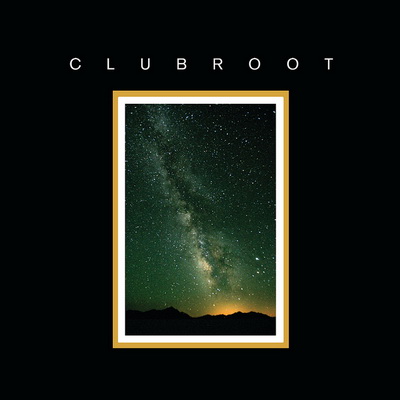
Snap Sounds: Clubroot

0

CLUBROOT

II MMX

(LoDubs, 2010)

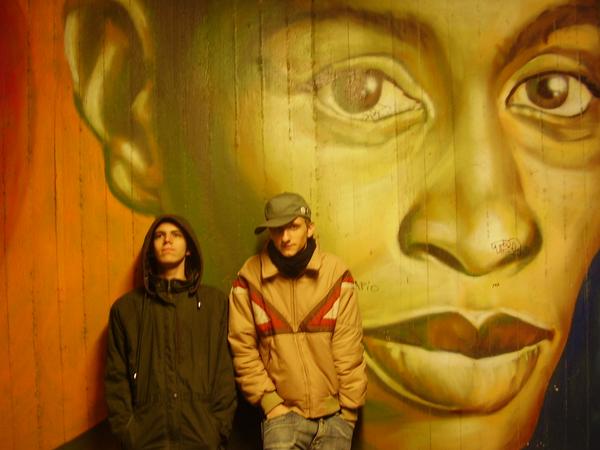
Purposely constructed anonymity as a reaction to this supposed Internet Age of Information is by now pretty passe in music circles (cf. Silver Columns, jj, Burial). So some may have rolled their eyes when future dubber Clubroot went that route with his first releases, even though the music was intellectually sensuous and the first full-length release received raves from Dubstepforum to Pitchfork.

Indeed, it seemed that Clubroot was following a little too closely in Burial’s footstep — no photos, no live sets, no given name — yet the music was tweeked slightly from that brainy dubstep god’s blueprint and showed a unique promise. But by now we’re all trained for the big, and in most cases anticlimactic, reveal. Since Clubroot’s been promoting a second album on Portland’s LoDubs label, he’s come out as 25-year-old Dan Richmond of St. Alban’s, UK, and is hitting the road for some live shows — ditching the reclusiveness (even though only obscured pics of him exist, and I wonder if he’ll be disguised for his upcoming show at Triple Crown). All signs, however, point not to anticlimax but to dance floor swoon.

II MMX is a 2 CD set that contains much of first album Clubroot, but the newer stuff advances beyond earlier hyper-cerebral and sometimes too-gloomy intentions for a trip into the deep forest. Yes, tracks like “Orbiting,” “Waterways,” “Dust Storm,” and the unfortunately titled “Cherubs Cry” channel some good ol’ pan flute sounds, tablas, and disembodied choruses that may call to mind New Age label Wyndham Hill or groups like Deep Forest, Enigma, even Enya. This is not a kiss of death — there’s a Balearic-derived trend blowing through right now that’s excavating those once-tacky sounds and making something fresh with them. It’s a neat trick, quite pleasant, and Clubroot is pulling it off. Call it dubstep’s version of chillwave.

While he can still show some spooked-out dubstep teeth on tracks like “Whistles & Horns” and “Physically” (and in his live mixes, like the one above for the inimitable Mary Anne Hobbs), Clubroot’s forging ahead in the pursuit of the thing every critic is calling post-dubstep, but which none can properly define. Good for him. Pack up that warped urban sitar loop and lead us into the trees, Clubroot — whoever you may be.     

(Reports from Seattle’s Decibel festival last week indicate that the live show’s a keeper, a LoDubs showcase that really stokes the diverse crowd. It’s not all ethereal — check out LoDubs head Jon AD’s killer lazer house-y set from the fest here. ) 

CLUBROOT With DJG, Djunya, and Jon A.D. Thurs/30, 10 p.m., $10. Triple Crown, 1760 Market, SF. www.triplecrownsf.com.

Our Weekly Picks: September 29-October 5, 2010

0

WEDNESDAY 29

MUSIC

Kylesa

The devil went down to Georgia, and sprinkled enough hoodoo in the water to cultivate quite a metal scene. But it ain’t just Mastodon and Baroness splitting ears in the town squares. Kylesa — you know, the band with the two drummers, the badass chick guitarist-vocalist (she’s one of two guitarists and one of three vocalists), and the coolest cover art in the biz — is about to drop its fifth full-length, Spiral Shadow. The title of lead track “Tired Climb” belies the album’s fierce riffs and heavy energy. But let’s stop pretending you weren’t going to this show anyway — local mighties High on Fire headlining the glorious Great American? With the added bonus of two ironclad openers? Can’t miss, hesher. (Cheryl Eddy)

With High On Fire and Torche

8 p.m., $20

Great American Music Hall

859 O’Farrell, SF

1-888-233-0449

www.gamhtickets.com


THURSDAY 30

DANCE

Mark Morris Dance Company

Just because his company has become a perennial audience favorite doesn’t mean we should ignore Mark Morris. After all, the acclaim is justified: there’s nobody else who — after 30 years of working — can still surprise and delight (and sometimes disappoint) us the way Morris can. This time he is bringing three West Coast premieres. If the buzz wafting in from the East Coast is any indication, the new Socrates set to Satie’s oratorio “Socrate” (piano and voice) should be outstanding. It will be performed with the stark Behemoth — Morris’ only no-music piece — and Looky, his bemused take on pretentious museum-going in which the inmates take over the show. (Rita Felciano)

Thurs/30–Sat/2, 8 p.m.;

Sun/3, 3 p.m., $34–$72

Zellerbach Hall

Bancroft at Telegraph, UC Berkeley, Berk.

(510) 642-9988

www.calperformances.org


DANCE

Lizz Roman and Dancers

San Francisco’s Gingerbread Danzhaus is the only venue in the city to provide dance studio space to professional companies while also serving as a nightclub in the after-hours. This weekend it will also be the seat of Lizz Roman and Dancers new site-specific work This Dance This Place, which aims to bring the architecture of Danzhaus to life through an interactive dance performance challenging viewers to really see the nooks and crannies of the space. With a live sound score, collaborative lighting and costume design, and dancers streaming from every danceable doorway, crevice, and ledge, this performance is sure to provoke thought on where and how dance is presented. (Emmaly Weiderholt)

Through Oct. 9

Thurs.–Sat., 8 p.m., $20

Danzhaus

1275 Connecticut, SF

www.lizzromananddancers.com


FRIDAY 1

DANCE

Nina Haft and Company

A few years ago, visitors to Zaccho Dance Theatre’s third-story performance space could look down onto San Francisco’s last working farm. The Bayside venue seems uniquely appropriate for Nina Haft’s site-specific Debris/Flows. Collaborating with German-born, Italian-trained Claudia Borna, the two women transformed this former warehouse space into a natural environment for 12 dancers to explore both outer and inner landscapes. In addition to watching the performance, audiences can contribute to Zaccho’s environment by planting seeds and eating food from local gardens. The dozen dancers will help you navigate the labyrinth. (Felciano)

Fri/1–Sat/2, 8 p.m. (also Sat/2, 6 p.m.);

Sun/3, 6 p.m., $12–>$18

Zaccho Dance Theatre

1777 Yosemite, Suite 330, SF

(510) 325-5646

www.brownpapertickets.com


MUSIC

Drums

A lot of the Drums’ music mines the sounds of the 1950s, smooshing it up with the more saccharine output of the Smiths and New Order, but there’s a lull halfway through the New York City band’s debut album where its intentions really become clear. A slower song than the rest of the album, “Down By The Water” mimics the believable earnestness of ’50s crooners completely without pretension. The Drums have been accused of lacking individualism, which is a fairly valid criticism considering you could drop some of their more upbeat tracks into a Smiths album and no one would bat an eye. But in latching onto eras where simplicity was something to be celebrated, the band succeeds by being sincere when tongue in cheek would have been way “cooler.” (Peter Galvin)

With the Young Friends

9 p.m., $15

Independent

628 Divisadero, SF

(415) 771-1421

www.theindependentsf.com


DANCE

SMUIN BALLET

Although the Smuin Ballet may be considered a relatively small ballet company, there’s nothing small about the renowned choreographers and kick-ass dancers Smuin attracts. Founded by Michael Smuin in 1994 and now under the artistic direction of Celia Fushille, the company presents classical ballet with a contemporary edge. It kicks off its 2010-11 home season with a fall program that includes the world premiere of Oh, Inverted World — set to the indie rock band the Shins and choreographed by the illustrious Trey McIntyre — as well as Michael Smuin’s twangy Bluegrass/Slyde and his more lyrical Brahms-Haydn Variations. (Katie Gaydos)

Through Oct. 9

8 p.m. (no show Mon/4);

Additional shows Sat/2–Sun/3, 2 p.m.), $20–$62

Palace of Fine Arts Theater

3301 Lyon, SF

(415) 978-2787

www.smuinballet.org


SATURDAY 2

FILM

The Incredible Shrinking Man

Ever get the feeling you’re being dwarfed by what’s going on around you in life? Well, that’s exactly what happens to the main character in the 1957 Jack Arnold sci-fi classic The Incredible Shrinking Man, in which a freak accident causes him to get smaller and smaller with every passing day. Featuring a host of inventive special effects and memorable scenes (among them his epic battle with a house spider), the movie screens tonight as part of the San Francisco Film Society’s annual “Film In The Fog” event. Let’s hope nature cooperates and offers up a little bit of a spooky mist to make for a cool and creepy early Halloween celebration. (Sean McCourt)

5 p.m. picnic, 7 p.m. film, free

Presidio, Moraga at Arguello, SF

www.sffs.org


MUSIC

The Sword

Austin, Texas, retro-metallers the Sword are in space. This summer, new album Warp Riders saw them rocket into full-fledged concept album territory, weaving a epic saga of interplanetary travel and mystical sci-fi warriors on a loom composed of Orange amplifiers. As fall descends, they’re taking the tunes and tales on the road, and their SF date marks the second stop on a grueling national run. Fans will be eager to bask in a bevy of new songs performed live, and the band’s adroit playing on the new record bodes extremely well for the experience. Prepare for blast-off! (Ben Richardson)

With Karma to Burn and Mount Carmel

8:30 p.m., $20

Regency Ballroom

1290 Sutter, SF

1-800-745-3000

www.theregencyballroom.com


FILM

American Splendor

Who is Cleveland’s most beloved figure? A few months ago the answer may have seemed obvious: superhuman baller LeBron James. At least until he got on the ESPN grandstand and announced he was going to Miami. Four days later Harvey Pekar died, and it put everything in perspective. A cranky file clerk who wrote wonderfully mundane comics about life’s pedestrian absurdities for more than 30 years, Pekar was an unlikely fit for the limelight (with legendary Letterman appearances to prove it). Fame found him nonetheless, culminating in this 2003 biopic featuring not only a suitable portrayal by the continually wincing Paul Giamatti, but also the inimitable figure himself. A fine entry into a persistent legacy. (Ryan Prendiville)

8:30 p.m., $5.50–$9.50

Pacific Film Archive

2575 Bancroft, Berk.

(510) 642-5249

www.bampfa.berkeley.edu


SUNDAY 3

EVENT

Estria Invitational Graffiti Battle

Graffiti’s outgrown furtive leaps over cyclone fencing and dark alley deployment. These days street art is a community builder, the old pros from the 1980s golden age having become teachers and respected figures in the art world. But that doesn’t mean it’s gotten stuffy. Case in point: Bay Area graff legend Estria Miyashiro’s free annual spray-off in the park. Names that are no strangers to the city’s bus stops, brick walls, and freight trains will be present to participate in and judge live painting: Nate1, Crayone TWS, and 2009’s champ Vogue TDK among them. Mix in stencil workshops, a youth sketchbook competition, and artist signings, and you’ve got a multi-generational homage to the art of aerosol. (Caitlin Donohue)

11 a.m.–5 p.m., free

DeFremery Park

1651 Adeline, Oakl.

(510) 895-5700

www.estriabattle.com


MONDAY 4

MUSIC

Guitar Wolf

In the future, anthropologists will study Guitar Wolf to calculate the speed of pop culture. The musical equivalent of Engrish, the trio channels Ramones-era punk rock (leather and all) to create Japanese “jet rock ‘n’ roll,” a louder, noisier, and enjoyably unintelligible hybrid. Tonight the band ends its first U.S. tour in five years, also the first since the death of bassist Billy. “However, it is not, not necessary to worry,” lead singer Seiji says on the band’s website. “New bassist player U.G.! U.G. is terrible! It is jet terrible! It fight! It fight rock! I will show Guitar Wolf is reborn to you!” (Prendiville)

With Hans Condor, Midnite Snaxxx, and DJ Classic Bar Music

9 p.m., $15

Bottom of the Hill

1233 17th St., SF

(415) 621-4455

www.bottomofthehill.com


TUESDAY 5

MUSIC

Guided By Voices

Ringleader Robert Pollard is rounding up the rest of indie rock giants Guided By Voices for a one-time reunion tour to commemorate Matador Records’ 21st anniversary. And this isn’t some half-ass reunion, either. This is the GBV lineup of the mid-1990s that spawned much-beloved albums such as Bee Thousand and Alien Lanes. Pollard’s been just as prolific on his own as he was before the group’s breakup in 2004, but there is just no comparing his solo work to GBV’s catalog. Don’t miss your chance to see one of the most influential indie rock bands of the past 20 years one last time. (Landon Moblad)

With Times New Viking

8 p.m., $24

Warfield

982 Market, SF

(415) 345-0900

www.thewarfieldtheatre.com 


The Guardian listings deadline is two weeks prior to our Wednesday publication date. To submit an item for consideration, please include the title of the event, a brief description of the event, date and time, venue name, street address (listing cross streets only isn’t sufficient), city, telephone number readers can call for more information, telephone number for media, and admission costs. Send information to Listings, the Guardian Building, 135 Mississippi St., SF, CA 94107; fax to (415) 487-2506; or e-mail (paste press release into e-mail body — no text attachments, please) to listings@sfbg.com. We cannot guarantee the return of photos, but enclosing an SASE helps. Digital photos may be submitted in jpeg format; the image must be at least 240 dpi and four inches by six inches in size. We regret we cannot accept listings over the phone.

Do it Clean

0

arts@sfbg.com

MUSIC For over 30 years now, the Clean have been at the forefront of the New Zealand rock scene. Despite some early lineup changes and temporary breakups, the core of the band — Robert Scott and brothers Hamish and David Kilgour — continue to tour together, work on solo or side projects, and occasionally release a new album. For special insight into Kiwi rock and all things Clean, I decided to get in touch with San Francisco expat Barbara Manning, who will be opening for the group at the Independent with her new band, the Rocket 69.

Welcoming me into her house in Chico, Manning pointed to a stack of vinyl and a couple dozen CDs she’d pulled out in a living room stocked full of records. She fancies herself as having one of the most thorough personal collections of New Zealand music around, and after just a quick glance it was easy to see why.

“We probably don’t have time for New Zealand Rock Music 101,” Manning said. “So I’ll just put some Clean stuff on.”

In Manning’s opinion, despite a well-developed and underrated rock music scene that has thrived since the late ’70s, New Zealand rock and roll can really be narrowed down to three essential contributors — the Bats, the Chills, and the Clean. While all three groups have enjoyed various degrees of success, the Clean’s appeal has extended far beyond the borders of their native home to impact everything from ’80s power pop to ’90s indie rock to contemporary garage sounds.

“People incorrectly think that the Clean started rock music in New Zealand,” Manning said. “But they were the first ones to make America notice.”

From the bouncy keyboard melody and chugging bass line of the 1981 hit “Tally Ho” to the more exploratory and expansive feel of some of their later work, the Clean have always excelled at combining a good pop song with a rough-around-the-edges “hypnotic groove,” as Manning put it. Pavement and Yo La Tengo have gone on record singing the group’s praises, and more recently, artists such as Kurt Vile and the late Jay Reatard have made Clean-like recordings.

“The Clean have an edge to them that was especially fresh in the ’80s, when there was a ton of crap out there,” said Manning. “It was great hearing good, urgent, jangly pop songs that cut away the fat.”

Despite loving their music for decades and recording songs for one of David Kilgour’s solo albums, Manning — who lived in San Francisco from 1986 to 1998 — has never seen the Clean perform live. When bassist Robert Scott called to make sure she was coming to the group’s Bay Area show, she jumped at the opportunity to get involved.

“I said, ‘I’ll be there,'<0x2009>” Manning remembered, “<0x2009>’and how ’bout I open for you?'<0x2009>”

Manning’s new project includes Maurice Spencer on guitar, Jonathan Stoyanoff on bass, and Marcel Deguerre on drums. She said that those in attendance can expect a “power pop-heavy” set made up of material from her songbook and a handful of covers. Both her band and the Clean inject a sinister irreverence into the sometimes cookie-cutter world of guitar-driven pop. As Manning put it, “It’s always nice to hear jangly pop music that’s not all paisley and flowery.”

THE CLEAN

With the Rocket 69

Mon/4, 8 p.m., $18–$20

The Independent

628 Divisadero, SF

(415) 771-1421

www.theindependentsf.com


False witness

0

arts@sfbg.com

FILM Documentaries that “tell” the Holocaust tend to employ archival footage generically as a kind of historical flavoring. It’s rare that we are asked to contemplate either the provenance of the images or the individual lives depicted. Yael Hersonski’s A Film Unfinished simultaneously confronts both of these gaps with a taut historiography of several reels of Nazi propaganda footage. Even in the German film’s inchoate form, we easily apprehend the propagandistic moves to further manipulate an already constructed reality (the Warsaw Ghetto) for objective “proof” of the necessity of Hitler’s Final Solution. Yet here before us, flowing at the speed of life, are the faces and places that would be destroyed within months of the filming.

Hersonski attempts to extricate the documentary value of this footage using frame-speed manipulations and edits that call attention to telling movements. She also films elderly survivors watching the footage alone in a darkened theater. In their capacity for recognition and incredulousness, they unravel the German point of view. By weaving these live responses with diary entries of those consigned to the ghetto along with the deposition of a German cameraman, Hersonski draws a fragmentary, highly specific account of the Holocaust’s crisis of representation. We discussed the film during a recent e-mail exchange.

SFBG The question of how to use archival footage responsibly is one that haunts the great Holocaust-themed films — Night and Fog (1955), Shoah (1985), and the films of Péter Forgács all find very different solutions. Can you describe the way your own attitudes regarding the appropriation of this archive developed during the time you worked on A Film Unfinished?

Yael Hersonski During the last decade I became more and more preoccupied with the thought of the near future, when no Holocaust survivors will be left to remember — the time when the archives will be the only source of witness. I’ve tried to examine the possibilities of exploring the image like an archaeologist analyses a palimpsest and to excavate, by cinematic means, new layers of reality from beneath the known imagery. I admit that [at one] time I felt that Night and Fog and Shoah were all that a filmmaker could express facing such an inconceivable, unprecedented event. For [Shoah director Claude] Lanzmann, the Holocaust lies firmly outside the archive as the ultimate Other, a black hole that threatens to swallow every visual witness, and thus resists the film archive and its raptures.

Forgács faces the impossibility of bearing witness exactly by confronting the contemporary viewer (who knows how it all ended) with private documentation that was abruptly stopped when the photographer himself was no longer capable of documenting, nor his dear ones of being documented. Forgács’ films introduce me again and again to the immense capacity of footage to reveal, in the form of a private history, the traces of an inconceivable past. My aim in showing the Warsaw Ghetto footage (for the first time in its entire length) and confronting the images with many points of view about the filmmaking itself was not to tell “the true story” of the Warsaw Ghetto, nor to expose the evil of Nazi propaganda (which was obvious even to the German filmmaker who discovered the reels in 1954), but to make the viewers question the way they see these images, and through them, perceive the past.

A FILM UNFINISHED opens Fri/1 in Bay Area theaters.

Practiced distance

0

arts@sfbg.com

FILM The first time I met Paul Clipson, we quickly discovered that we shared an intense regard for Nicholas Ray’s On Dangerous Ground (1952). I had just seen material that would become Clipson’s short film Union at a San Francisco Cinematheque screening a few days prior and found that its psychically charged shift from rural to urban spaces reminded me of the Ray movie (specifically, a single dissolve as Robert Ryan’s character drives back into the city). Union belongs to a different species of cinema, of course. It’s shot on Super 8 and 16mm, wordless, with a narrative situation (a girl running) refracted as pure kinesis. As became apparent talking with Clipson, however, his deep knowledge of film history is attuned to texture rather than taxonomy. The second time I watched Union, I realized that On Dangerous Ground was just a convenient name for the deeper, more elusive sense of recognition it stirred in me.

Since that first meeting, I have seen Clipson project films on a billowing screen under the stars; in the squat confines of the Café Du Nord for the On Land music festival, where his work expanded several performances; and on the sides of a dome structure atop Yerba Buena Center for the Arts. There have been more traditional screenings as well, though Clipson’s eclectic live projections are drawing attention — he’s fresh back from a brief European tour and will be featured in New York’s Views from the Avant-Garde this weekend. Before then, he’ll present a ranging survey of his recent efforts at SFMOMA, where he works as head projectionist.

The shifting context of live collaborations and crystallized short subjects is crucial to understanding Clipson’s work, and so "The Elements" will feature both: a suite of finished films sandwiched between projections with frequent collaborator Jefre Cantu-Ledesma and an ensemble, Portraits. An open frame of performance is a crucial catalyst for the searching lyricism of Clipson’s cinematography. He shoots frequently, building long reels to run with the music. Clipson refers to these unrehearsed dives as his research.

The camera style is at once impressionistic in its technique and boldly graphic in its compositions, haunted by familiar visual forms that, loosed from conventional perspective, are revealed to carry unexpected resonances and rhythms. What do we see? A million suns, made multiple by the surface of water and the curve of the camera lens; neon signs; flitting vertical obstructions; telephone wires; vegetation; intimate, handheld disclosures of vast distances; architectural surfaces. As with Joris Ivens’ early shorts, Clipson’s films register the city in its minor variations. Within the frame, a storm of vision emerges of superimpositions, dissolves, rack focus, zooms, and the interlacing of color and black-and-white stocks. It often seems that the objects he films are bringing the camera into focus and not the other way around.

When I ask about this, Clipson says, "I’ve found that the pulpy intensity of the Super 8 film decides the subject matter in a way. It’s like the film is in your brain telling you to shoot this or that — you can just imagine the luster." The intuitive nature of his in-camera montage meshes well with the aural landscapes of the live performances; a floating minimalism prevails. As a former member of Tarantel and co-steward of the Root Strata label, Cantu-Ledesme has been Clipson’s primary point of entry to this musical world. Speaking over the phone, he notes their easy camaraderie: "Once Paul is in the moment of filming, he’s just really responding to what is happening on the other side of the lens … and at least when I’m playing by myself, I try to have that same attitude."

In concert, the physical waves of sound and Clipson’s disembodied images are rich soil for a trance. It’s only in the concentrated shorts, however, that one finds the full extension of Clipson’s lyricism. The elliptical Sphinx on the Seine (2008) is still my favorite. Only eight minutes long, its shots seem to trace a voyage. We see the golden gleam of the sun as reflected by criss-crossing railways and snaking waterways, the shadow-world of a sidewalk, a phantasmal vision of Mount Fuji. Each of these lucid views slides away just as it ripens. Clipson’s collation of different cities is formally embedded in his composited images, which here appear as the fragile clues of some unknown existence. Like Sans Soleil (1983) and Mr. Arkadin (1955), two similarly itinerant films, Sphinx on the Seine evokes a tantalizing sense of placelessness.

One afternoon, both of us a little scatterbrained from a long week, Clipson and I get hung up on CinemaScope. He expresses admiration for the anamorphic framings of Ben Rivers’ I Know Where I’m Going (2009), and then draws a zigzag of appreciation between George Cukor’s 1954 A Star is Born ("The first 20 minutes"), Vincent Minnelli’s 1958 Some Came Running ("When you see it in the theater, it’s so much darker than on a television. You see shadows under people’s eyes"), and Otto Preminger’s general mastery of the form ("To me, those aren’t even compositions; they’re movements of thought"). It strikes me again and again that Clipson’s acute observations regarding film aesthetics are very much part of his creative force — yet his filmmaking doesn’t feel overcooked. Ben Rivers’ films work in a similar way: betraying a cinephile’s intimate knowledge of the medium, but out in the world all the same.

"Sometimes a few seconds of a film can live with you your whole life," Clipson tells me later that same afternoon, locating one such epiphany in the opening of Orson Welles’ Macbeth (1948): "There are all these dissolves going through the witches’ cauldron. You see a smoke circle, a storm cloud, what maybe is the surface of clouds from above, the cauldron and hands … I could just make films entirely inspired by that for 10 years because it’s so intangible, with such a beautiful, dense logic of images that resists immediate understanding." Indeed, it sounds like a Paul Clipson film.

"PAUL CLIPSON PRESENTS THE ELEMENTS"

Thurs/30, 7 p.m., $5

San Francisco Museum of Modern Art

151 Third St., SF

(415) 357-4000

www.sfmoma.org

When you’re having more than one

1

tiredmond@sfbg.com

BEER I saw a great T-shirt in upstate New York this summer, and it’s become my official motto: “You can’t drink all day if you don’t start in the morning.”

Well, maybe that’s a bit of an exaggeration — I’m not as young as I used to be, and the days of morning (or even afternoon) drinking are becoming rarer. But I’m still the guy Schaefer Beer was thinking about when they wrote that slogan in the 1960s about the “one beer to have when you’re having more than one.” Frankly, I’d rather down three or for (or five) cheap light beers than sit around all evening nursing one fine IPA.

So I’ve taken quite an interest in session beers — craft brews with an ABV (alcohol by volume) level of less than 4.5 percent. You can drink a session beer at lunch and still go back to work. You can drink a couple-three after work and not be too blotto to make dinner and put the kids to bed. Or, as one of our tasters put it: “If I hit a happy hour, I’m usually done for the night. But after these beers, I was still ready for an evening of drinking.”

The term “session beer” is usually traced back to England in the World War II era, where the pubs were only open for a short “session” during the lunch hour so the workers could get back to the munitions plants. They’ve become pretty popular on the East Coast, where session beer festivals abound, and they’re making their way west.

It’s still not easy to find good session beer — we live in the land of high-craft, high-alcohol brews, and a lot of the smaller breweries (scared, perhaps, of the evil “light beer” rep) stay away from the weaker, or at least less alcoholic, stuff. But if you shop around a bit, you can find some excellent local choices.

Our willing lab rats sampled six local brews — well, one, Stone Levitation Ale, comes from San Diego, but you can buy it locally — with Bud Light thrown in as a ringer. The tasting was blind, the labels on the bottles well disguised; I was the only one who knew which beer was which.

What we found: There are some truly excellent session beers out there. But not every craft session beer is created equal; our panel liked some a lot better than others. “None of them will grab a beer snob,” one taster noted. “But there were some good ones.”

(A note: Some of these brews — particularly the ones from Haight Street’s Magnolia Pub and Brewery — are available only from the brewhouse. Others can be found in bottles anywhere that carries a wide assortment of craft beers.)

The two samples from Magnolia were the clear winners. Our tasters uniformly liked the Dark Star Mild, calling it “dark and rich tasting, with a light finish and soft aftertaste.” One noted: “I could see sitting on a roof on a hot day and drinking this with my lunch.” Even one of our skeptics, who wasn’t thrilled with any of the offerings, noted “I could drink this one.”

Magnolia’s Sarah’s Ruby, a dark, thick brew, was a close second. One panelist noted: “It has a lot of flavor going on, something I would be happy to order in a bar.” Another liked the “nice taste of toasted barley and hops” while another called it “very robust, not at all like a light beer.”

Anchor Brewing Company’s Small Beer was a close third. The beer, which comes in at just 3.3 ABV, has an interesting history. Anchor brews a barleywine ale, Old Foghorn, that’s almost 10 percent ABV. The brewers then take the once-used mix of malt mash and brew from it a second time, getting a much lighter result. But it doesn’t taste like a rerun at all; one of us said it was “a nice beer that I’d like to keep at home and drink a lot of.” Another called it “musty and earthy” and noted that it would “go well with a cheeseburger or pizza.” And even the critics said, in the words of one, “this is pretty damn okay.”

Ale Industries’ Bliss got points for being “very drinkable.” Our panelist noted a nice malty taste and called it “woodsy and smooth,” although some described it as a bit watery. Stone Brewery’s Stone Levitation Ale came off as “strong, with a bit of licorice flavor,” although one drinker said its strength was also a weakness: “A bit to hoppy to drink a lot of it.”

The Bud Light, I fear, didn’t fare so well. We threw this in for fun (I, for one, remain a Bud Light fan) and for comparison. Although not technically defined as a session beer, it does clock in at 4.5 ABV, 20 percent lower than a standard Bud. Our tasters were not impressed: “This tastes like the 3.2 beer I had to drink during basic training in Fort Carson,” our resident former infantryman wrote. Or, as another put it, “Has the metallic finish that makes for great keg parties and awful hangovers.” Still the Bud Light got points for sessionability; “For sure the best choice for beer pong. You could probably consume mass quantities and still be OK in the morning.”

Ale Industries Orange Shush came in last, probably because its flavor is unique and quite different from the other samples. The critics called its flavor too fruity. The people who liked it, though, said that it was a “good light beer that I could drink all night.”

Which is, after all, the point.

The test of the Tenderloin

16

caitlin@sfbg.com

This is a story about love and money. Or a story about love, money, and location. — Rebecca Solnit, Hollow City (Verso 2000)

It’s a sunny day in the most maligned neighborhood in San Francisco. I’m walking down a busy sidewalk with an excited Randy Shaw, long-time housing advocate. He’s giving me a tour of his Tenderloin.

“There’s history everywhere you look here,” he notes as we rush about the dingy blocks of one of the city’s most densely populated, economically bereft communities. In a half-untucked navy button-down and square-frame glasses, Shaw reels off evidence of this legacy faster than I can write it down and still maintain our walking pace.

To our left, Hyde Street Studios, where the Grateful Dead recorded its 1970 album American Beauty. Across the street, a ramshackle building that once housed Guido Caccienti’s Black Hawk nightclub, where the sounds of jam-fests by the likes of Billie Holiday and John Coltrane would echo out onto the streets during its heyday in the 1950s. Throughout its history, the Tenderloin has been renowned for its nightlife: music, theater, sex work — and the social space that occurs between them.

Shaw came to the Tenderloin 30 years ago as a young law student and founded and built the Tenderloin Housing Clinic, a nonprofit agency that is now one of the largest property owners in the neighborhood and employs more than 250 full-time workers. Shaw has spent the last few decades fighting to improve conditions in the single-room occupancy hotels, or SROs, once notorious for malfunctioning heating systems and mail rooms that would dump the letters for their hundreds of low-income residents into a pile on the floor rather than fit them into personal lock boxes (which now line the walls of THC’s lobbies).

But that activism isn’t the reason for this tour. No, today Shaw is showing me why tourism can work in the Tenderloin. The heavy iron gate of an SRO is quickly buzzed open as the doorman recognizes him. Inside, working-class seniors mill about aided by walkers — this particular property is an old folks’ home — but over our heads, affixed to a majestically high ceiling, looms a triple-tiered glass and metal chandelier, evidence of the area’s architecturally important past.

“When I show people this,” Shaw smiles at my amazement at this bling in a nonprofit apartment building, “they’re amazed at the quality of the housing.” Further down the road, we peep in at a vividly Moorish geometric vaulted ceiling and a lobby that once housed a boxing gym where Miles Davis and Muhammad Ali liked to spar. Both are now home to the inner city’s poorest residents.

Of course, it’s not just tours that we’re talking when it comes to Shaw’s plans for the future. Shaw has acquired a 6,400-square-foot storefront in the Cadillac Hotel on the corner of Eddy and Leavenworth streets, where he plans to open the Uptown Tenderloin Museum in 2012. He says it will showcase the hood’s historical legacy as well as house a nighttime music venue in the basement. The increased foot traffic, he says, will do good things for public safety (a problem that has been identified as a high priority by the resident-run Tenderloin Neighborhood Association) and bring business to the neighborhood’s impressive collection of small ethnic restaurants.

An increased focus on the Tenderloin’s heritage and public image, Shaw says, will translate to more jobs and a better quality of life for the people who live here. “My goal is to have this be the first area in an American city where low income people have a high quality of life,” he says.

If Shaw is correct, it will indeed be a first. Many cities have attempted to transform low income areas with arts districts — and the end result has typically been the displacement of the poorer residents. Coalition on Homelessness director Jennifer Friedenbach described the process: “Gentrification follows a very specific path. First come police sweeps, then the arts, then the displacement. That’s the path that we’re seeing. Hopefully we’ll be able to avoid the displacement part,” she says.

It’d be great if the Tenderloin took the road less traveled — but will it?

Shaw’s best-case scenario seems unlikely, according to Chester Hartman, a renowned urban planning scholar and author of the numerous studies of San Francisco history and the activist handbook Displacement: How to Fight It (National Housing Law Project 1982). Hartman doubts the Tenderloin will remain a housing option for the city’s poor, given its central location and market trends. “The question is, what proportion will move and what will stay?” he said in a phone interview.

Earlier this summer, the National Endowment of the Arts awarded the SF Arts Commission $250,000 toward an arts-based “revitalization of the mid-Market neighborhood.” The area, which is adjacent to the Tenderloin, is considered by many to be the more outwardly visible face of the TL. In truth, the two neighborhoods share many of the same issues and public characteristics, including high density living and prominent issues with drugs.

Amy Cohen, Mayor Gavin Newsom’s director of neighborhood business development, said the Newsom administration is using the money “to implement arts programming that would have an immediate impact on the street. These activities would then build momentum for the longer-term projects.” At this point, plans for that “immediate impact” have started with the installation of lights on Market Street between Sixth and Eighth streets. Two other projects are also in effect: a city-sponsored weekly arts market on United Nations Plaza and an al fresco public concert series.

It’s hard to distinguish these moves from a general trend toward rebranding the image of the Tenderloin. These streets have already seen Newsom announce a historic preservation initiative that put $15,000 worth of commemorative plaques on buildings; it was also announced they would be added to the National Register of Historic Places, a move that allows property owners deep tax cuts for building renovations.

Cohen said her office has spent time trying to attract a supermarket (something the neighborhood, although flush with corner stores, currently lacks), but efforts seem to be faltering. “Grocery store operators and other retailers perceive that the area is unsafe and have expressed concerns about the safety of their employees and customers,” Cohen said. “The arts strategy makes sense because it builds on the assets that are there. Cultivating the performing and visual arts uses that are already succeeding will ultimately enhance the neighborhood’s ability to attract restaurants, retail, and needed services like grocery stores.”

These days, many of the small businesses in the area have window signs hyping “Uptown Tenderloin: Walk, Dine, Enjoy” over graphics of jazzy, people-free high-rises. Looking skyward, one observes the recent deployment of tidy street banners funded by the North of Market/Tenderloin Community Benefit District that pay homage to the number of untouched historic buildings in the neighborhood. The banners read “409 historic buildings in 33 blocks. Yeah, we’re proud.”

Figuring out who benefits from these new bells and whistles can seem baffling at times. Even the museum plan, which Shaw says will draw inspiration in part from New York’s Tenement Museum, has drawn criticism. A July San Francisco Magazine blog post was subtitled “An indecent proposal that puzzled even the San Francisco Visitors Bureau” and likened Shaw’s attempts to the “reality tourism movement” that takes travelers through gang zones in L.A. and poverty-stricken townships in South Africa.

This seems to be a misconstruction of what he’s attempting. “You know what no one ever calls out? The Mission mural tours, the Chinatown tours,” Shaw says.

And Shaw scoffs when I bring up that PR bane of the urban renewer: gentrification. He takes me through a brief rundown of the strict zoning laws in the Tenderloin, adding that many people don’t believe that poor people have the right to live in a high-quality neighborhood: “I haven’t been down here for 30 years to create a neighborhood no one wants to live in.”

Indeed, thanks to the efforts of Shaw and others, it would be hard for even the most determined developers to get rid of the SRO housing in the Tenderloin.

In the 1980s, community activists struggled to change the zoning designation of the neighborhood, which lacked even a name on many city maps. The area was zoned for high-rise buildings and was being encroached on by the more expensive building projects of tourist-filled Union Square, Civic Center, and the wealthier Nob Hill neighborhood. Their success came in the form of 1990s Residential Hotel Anti-Conversion Ordinance, which placed strict limits on landlords flipping their SROs into more expensive housing.

Hartman remains unconvinced of the efficacy of the protective measures activists have won in years past; indeed, even SRO rental prices have soared. According to the Central City SRO Collaborative, in the decade after the Anti-Conversion Ordinance, rental prices increased by 150 percent, not only pricing residents out of the Tenderloin but out of the city. “Where do they move?” Hartman asked. “It’s probably the last bastion of low-income housing in the city. That changes the class composition of the city.”

“The neighborhood has been changing slowly but steadily,” says District Six Sup. Chris Daly when reached by e-mail for comment on the Tenderloin’s future. He writes that rents in the neighborhood have been consistently rising and that several condo development proposals have crossed his desk. Daly has been involved in negotiating “community benefits” and quotas for low income housing in past mid-Market housing projects, but has been disappointed by subsequent affordable housing levels in projects like Trinity Plaza on the corner of Sixth and Market streets. In terms of the Tenderloin, he said, “it is untrue to say that the neighborhood is immune from gentrifying forces. It is shielded, but not immune.”

But some see the influx of art-based attention to the area as a possible boon to residents. Debra Walker, a San Franciscan artist who is running for the District 6 supervisor post, said she believes arts can be used “organically to resolve some of the chronic problems in the Tenderloin, street safety being the primary one in my mind.”

Though most of her fellow candidates expressed similar views when contacted for this story, western SoMa neighborhood activist Jim Meko said he thinks artists in the area are being used to line the pockets of the real estate industry. “The idea of creating an arts district is an amenity that the real estate dealers want to see because it makes the neighborhood less scary for their upper class audience” he says.

The area clearly has a rich legacy of nightlife, arts, and theater. The Warfield is here, as is American Conservatory Theater, the Orpheum, and the Golden Gate. So is the unofficial center of SF’s “off-off Broadway district,” which includes Cutting Ball Theater and Exit Theater. The Exit has been located in the TL since its first performance in 1983, held in the lobby of the Cadillac Hotel, and sponsors the neighborhood’s yearly Fringe Festival. There are art galleries and soup kitchens, youth and age, and more shouted greetings on the streets than you’ll hear anywhere else in the city.

No one is more aware of this diversity of character than Machiko Saito, program director of Roaddawgz, a TL creative drop-in center and resource referral service for homeless youth. I met Saito in the Roaddawgz studio, which occupies a basement below Hospitality House, a homeless community center that also houses a drop-in self-help center, an employment program, men’s shelter and art studio for adults in transition.

Despite its being empty in the morning before the open hours that bring waves of youth to its stacks of paints and silk-screens, Roaddawgz is in a glorious state of bohemian dishevelment that implies a well-loved space. It could be a messy group studio if not for the load-bearing post in the center of the room covered with flyers for homelessness resource centers and a “missing” poster signed “your Mom loves you.”

We talk about how important it is that the kids Saito works with have a place like this, a spot where they can create “when all you want to do is your art and if you can’t you’ll die.” A career artist herself, she cuts a dramatic figure in black, safety pins, and deep red lipstick painted into a striking cupid’s bow. Her long fingernails tap the cluttered desk in front of her as she tells me stories from the high-risk lives that Roaddawgz youth come to escape: eviction, cop harassment, theft, rape.

The conversation moves to some of the recent developments in the area. Saito and I recently attended an arts advisory meeting convened by the Tenderloin Economic Development Corporation’s executive director, Elvin Padilla, who has received praise from many of the TL types I spoke with regarding his efforts to connect different factions of the community. Attendees ranged from a polished representative from ACT, which is considering building another theater, for students, in a space on Market and Mason streets, to heralded neighborhood newbies Grey Area Foundation, to Saito and longtime community art hub Luggage Store’s cofounder Darryl Smith. Talk centered on sweeping projects that could develop a more cohesive “identity” for the neighborhood.

I ask Saito how it felt for her to be involved with a group whose vision of the neighborhood might be focused on slightly different happenings than what she lives through Roaddawgz. She says she’s been to gatherings in the past where negative things about the Tenderloin were highlighted. Of Padilla’s arts advisory meeting, she says, “I think that one of the reasons I wanted to go was that it’s important [for attendees] to remember that there’s a community out there. Things can get really complicated. It’s hard to come up with decisions that affect everyone positively. If we’re going to say, ‘The homeless are bad; the drug addicts are bad; the business owners that don’t beautify their storefronts…” She trails off for a moment. “I don’t want to lose the heart of the Tenderloin.”

In yet another Tenderloin basement — this one housing the North of Market-Tenderloin CBD, an organization that is known for its work employing ex-addicts and adults in transition — Rick Darnell has created the Tenderloin Art Lending Library. The library accepts donated works from painters and makes them available for use by Tenderloin residents, many of whom have recently moved into their SRO housing and are in need of a homey touch.

Darnell is rightfully ecstatic at the inclusive nature of his library, but has been hurt over its reception at an arts advisory meeting he attended to publicize its creation. “Someone whispered under their breath ‘I would never lend anything to anyone in the Tenderloin,’ ” he tells me. The exclusion that Saito and Darnell sometimes feel highlights the reality that the definition of the Tenderloin might well vary, even among those who are set on making it “a better place.” The arts community appears to suffer from fractures that appear along the lines of where people live, their organizational affiliation, their housing status, and how they think art should play a role in community building.

Sammy Soun is one Tenderloin resident who would welcome an increased focus on art in the Tenderloin. Soun was born in a Thailand refugee camp to Cambodian parents fleeing the civil wars in their country. He grew up in the Tenderloin, where his family lived packed into small studios and apartments.

But he was part of a community, with plenty of support, and lives in the neighborhood to this day, as do one of his four siblings and his daughter. Soun paints, does graffiti, draws — he’s considering transferring from City College to the San Francisco Art Institute. He has worked at the Tenderloin Boys and Girls Club for nine years, giving back to the kids he says “are the future. They’re going to be the ones that promote this place or keep it going — if they want to.” His sister, cousins, and uncles still live in the neighborhood. You might say he has a vested interest in the area’s future.

He finds the incoming resources for the Tenderloin arts scene to be a mixed bag. Soun has never been to the Luggage Store, although it’s one of the longtime community art hubs in the area. He can’t relate to the kinds of art done at the neighborhood’s recent digital arts center, Grey Area Foundation for the Arts, though he says the space has contacted him and friends to visit. His disconnect from the arts scene implies that future arts projects need to work harder on their community outreach — or even better, planning — with artists who call the Tenderloin home.

But Soun loves the new Mona Caron mural the CBD sponsored on the corner of Jones Street and Golden Gate Avenue. Well-known for her panoramic bike path mural behind the Church Street Safeway, Caron painted “Windows into the Tenderloin” after dozens of interviews and tours of the neighborhood with community members. Its “before and after” panels are a dummies’ guide for anyone seeking input on ways to strengthen the Tenderloin community — though the “after” does show structural changes like roads converted into greenways and roof gardens sending tendrils down the sides of buildings, the focal point is the visibility of families. Where children were ushered through empty parking lots single-file in the “before” section, the second panel shows families strolling, children running, a space that belongs to them.

Our interview is probably the first time somebody has asked Soun where he thinks arts funding in the Tenderloin should go. “For projects by the kids in the community,he said.

Truth be told, more art of any kind can only make the Tenderloin a better place — but if you’re trying to improve quality life, focus needs to be on plans that positively affect residents of all ages — art can be a vital part of that, but it should be one part of a plan that ensures rent control, safe conditions, and access to services. After all, if you’re going to rebrand the Tenderloin, you might want to look at the painting on the wall.

Dollars or sense?

28

rebeccab@sfbg.com

It’s no secret that San Francisco is a particularly costly place to live. It consistently ranks in the top 10 most expensive cities nationwide, and it isn’t uncommon to see people renting out their walk-in closets as makeshift bedrooms to make ends meet.

There’s ample evidence that the city’s market-rate housing is out of reach for many families, middle-class workers, and low-income populations, particularly during the recession. Yet the shortage of affordable housing is a problem that is going largely unaddressed at City Hall.

The city’s General Plan estimates that a full 61 percent of new housing would have to be affordable to satisfy the housing needs of city residents, but even the most demanding development standards fall far short, producing only about half that amount. And while most new affordable housing is built for low-income people, a sizable portion is intended for first-time homebuyers with salaries at the highest threshold of affordability. In recent years, about one-third of new “affordable housing” was built to sell to people with “moderate” incomes.

So as big plans are mapped out for new residential developments composed of mostly market-rate units, what’s the strategy for addressing the underlying affordability gap? And will it ever be enough to keep from further turning San Francisco into a city of rich people while its workers are forced to live elsewhere?

This map, which appears in San Francisco’s Five-Year Consolidated Plan, charts concentrations of low- and moderate-income households in the city using HUD 2000 income data. Under federal guidelines, people with low and moderate income could be eligible for affordable housing.

A San Francisco Unified School District proposal to create new housing for San Francisco teachers underscores just how mismatched housing prices are to income. The National Low Income Housing Coalition (NLIHC) estimates that San Francisco renters paying market rate in 2010 would have to earn $56,240 to afford rent a one-bedroom apartment, $70,400 for a two-bedroom unit, and $94,000 for a three-bedroom unit, assuming they spend no more than about one-third of their income on housing.

A starting teacher’s salary in San Francisco is $50,000, so early-career educators may feel the squeeze. A survey of teachers conducted for the proposal found that 81 percent of respondents were renters, most living with unrelated roommates. More than half had plans to relocate in five years to a city where they could afford to be homeowners.

Housing was a hot-button issue at the Sept. 16 Planning Commission hearing on the environmental impact review for a hospital and housing complex that California Pacific Medical Center wants to build near Van Ness Avenue.

“The CPMC EIR fails miserably to analyze the income of the CPMC work force, and where it’s supposed to be housed,” affordable housing advocate Calvin Welch told the Guardian. “It’s a profoundly important question. If they are [providing] jobs that produce incomes that are insufficient to pay for average market-rate housing in San Francisco, who’s responsibility is it going to be to build housing for that workforce?”


WHO CAN AFFORD IT?

San Francisco has a reputation as a diverse, politically engaged hub that supports emerging artists, independent thinkers, and advocates for youth, workers’ rights, healthy ecosystems, protections for the most vulnerable segments of society, and hundreds of other causes. Without economic diversity — which is only possible when housing is available to people with a range of incomes — it might be a different place.

NLIHC estimates that 65 percent of San Francisco households are renters, and a significant number are what the Mayor’s Office of Housing (MOH) calls “cost-burdened,” shelling out more than a third of their incomes on rent. To get by, tenants have been known to cram roommates in like sardines, or cling tenaciously to a rent-controlled unit.

In a thick report outlining affordable housing goals for 2010–14, MOH and two other city agencies clearly articulate the housing challenges facing low-income renters. For one thing, the report says rents are going up despite the economic recession and declining home prices. And most people’s salaries don’t stretch far enough to cover those high prices. Even though there are 16 billionaires and some fabulously wealthy CEOs residing in San Francisco, the majority of people work in more mundane occupations like waiting tables, retail, office work, nonprofit jobs, teaching, health care, or public service.

The MOH report notes that despite the city’s relatively high median income, there’s a widening gap between top earners and people on the lower end of the spectrum, so few households actually wind up in that middle zone. “In fact, over a quarter of San Francisco’s population earns under 50 percent of [area median income],” the report states. For individuals in 2010, this translates to one in four people earning $34,800 or less. Compounding that problem are recent unemployment figures indicating that nearly one in 10 is jobless.

About one half of San Francisco’s population is considered low- or moderate-income, the housing report notes, using the standards used to formulate affordable housing prices. MOH uses a tiered income matrix, calculated using federal guidelines, to determine who could qualify for housing below the market rate. If you make $20,900 or less, you’re counted as “extremely low income.” You’re “very low income” if you make between $21,000 and $34,800, “low income” if you earn between $35,496 and $55,700, and if you make between $56,376 and $83,500, you count as “moderate income.” Even these figures are skewed higher because they include data from wealthy Marin County. As a point of comparison, U.S. Census data estimates that the median income for American workers was $29,530 over the last several years.

Most of the new affordable housing constructed in San Francisco is aimed toward people in the lowest ranges, but in recent years one-third was built for those with moderate incomes, which could gentrify some parts of the city. “Supervisorial Districts 3, 6 and 10 had rates of more than 40 percent extremely low and low-income,” the MOH report notes. “These three districts make up the entire eastern part of the city.”

A Guardian analysis of Bureau of Labor Statistics occupational and wage estimates for 2009 suggests that about 71 percent of people who work in San Francisco (many commute from less expensive places) earned less than that highest “moderate” salary limit of $83,500. It suggests that the vast majority of the workforce could not afford market-rate housing unless they sought it in pairs or groups.

“A big issue is the inability of San Francisco’s employment market to produce jobs that pay people enough to afford housing,” Welch says. “There’s a mismatch between market-rate income and market-rate housing costs. We’re housing somebody else’s workforce.”

Another stab at assessing the affordable housing need gazes into the future. The Housing Element of the San Francisco General Plan includes an estimate for the city’s future housing needs for the better part of the decade. The city should build 31,200 new housing units to meet its need, the General Plan says, and “at least 39 percent of these new units must be affordable to very low and low-income households. Another 22 percent should be affordable to households with moderate incomes.”

What this adds up to is a full 61 percent of new residential development in San Francisco ought to be dedicated to some form of affordable housing. The calculation reveals a lot about the condition San Francisco is in, but it might as well be chalked up as a hollow academic exercise. Indeed, the report deems this goal “unrealistic.” The reality of the market and chronic government deficits ensures that there will not even be an attempt to meet it.


IF YOU BUILD IT

The trouble with affordable housing is that developers won’t build it unless there is a financial incentive. “The only way it works is not in the marketplace,” Welch said. “There’s no such thing as affordable land, affordable sheetrock, affordable architects, or affordable engineers. The profound condition … is that the market cannot produce affordable housing.” As long as developers can make higher profits building market-rate, they will.

That’s why government steps in to subsidize or mandate new affordable housing construction or preserve existing stock. Under the Inclusionary Housing Ordinance, if developers decide not to build the required 15 percent of affordable units, they must pay an in-lieu fee that gets funneled into an affordable housing fund.

In a good year, MOH Executive Director Douglas Shoemaker told the Guardian, the city receives $10 to $15 million from these fees, which is used in partnership with developers to build affordable projects. That system hasn’t worked so well lately. Last year funds for affordable housing were depleted instead of bolstered. Developers who paid their fees in anticipation of building new projects requested refunds after their projects were stalled, Shoemaker told the Guardian, so MOH gave back up to $12 million to developers instead of using that money to build new affordable housing.

This year, Mayor Gavin Newsom introduced what he called an “economic stimulus” program that allowed developers to defer payment of in-lieu fees. This guarantees that it will be a long, long time before new affordable housing can be built using those funds. So as it stands, the inclusionary housing law isn’t so effective at producing new affordable housing.

Projects done in conjunction with the San Francisco Redevelopment Agency, meanwhile, do include higher portions of affordable housing. With all of the planned Redevelopment projects combined — Treasure Island, the Hunter’s Point shipyard, and others — the city can expect to see perhaps 7,000 new affordable housing units in coming years, a portion of which will be condos meant for people in the “moderate” income range. It may well be better than other cities have offered, but it doesn’t begin to address the true need for more than 19,000 units outlined in the General Plan.

Shoemaker noted that San Francisco is a cut above the rest when it comes to affordable-housing requirements. “I just don’t think you could find a city that has more aggressive goals,” he said, noting that in major redevelopment areas, “We’re getting like 30 percent of homes to be affordable on some level.” Yet Shoemaker acknowledged, “the need is intense,” and “there’s more people we would like to serve.”

Olson Lee, deputy executive director of the San Francisco Redevelopment Agency, also described San Francisco as taking a very aggressive stance on affordable housing. Redevelopment devotes 50 percent of its tax-increment financing to affordable housing, where the state requires just 20 percent, Lee said. And some Redevelopment project areas include twice as much affordable housing as is required by state law, he added. “The city has done a tremendous amount of affordable housing,” he said. However, “the fact of the matter is, there’s a greater demand for affordable housing than the number of units.”

From 2005 to 2009, there were 3,607 new affordable housing units constructed, mostly for people at the lowest end of the pay scale, MOH reports. But in that same time frame, 3,465 rental units were converted to condominiums. One could argue that the city essentially broke even with its affordable housing stock in a decade where housing prices almost doubled. As San Francisco housing prices skyrocketed, the city’s 170,000 rent-controlled units served as the saving grace for the majority who couldn’t afford market-rate, and condo conversions continue to threaten the erosion of that very significant housing stock.

Debra Walker, a candidate for District 6 and a tenant representative on the Building Inspection Commission, told the Guardian that she believes a new financing system is needed for affordable housing. “The argument for development is that we get affordable housing money out of it,” she said, but “the inclusionary doesn’t get us enough housing. We cannot include affordable in those high-rises, because they’re so expensive to build.”

She has talked up the idea of a real estate transfer tax that would create a dedicated fund that could then be used in partnerships with affordable-housing developers. Shoemaker, for his part, noted that having a dedicated revenue stream for affordable housing would be very helpful. A committee comprised of the San Francisco Planning and Urban Research Association, Welch, developer Oz Erickson, and Shoemaker was formed earlier this year and actually arrived at a deal, but Newsom ultimately rejected it. Other creative solutions, Walker says, might include reusing shuttered commercial properties or building cheaper by design using different building materials. “It’s about looking at what it is we need,” she said, “and realizing people are in a pinch.”

The greatest complicating factor of the current system, in which the city relies on market-rate development to get new affordable housing, is that even though there a some 40,000 new residential units in the pipeline, developers can’t secure financing to start building them. For now, in the down economy, they only exist on paper.

“They’ll never get built,” Welch predicts, and as long as Newsom continues to extend entitlements for those planned projects in hopes that the market will get a jump, “it’s freezing September 2008 conditions, evidently forever,” limiting opportunities to build something more reasonable.

“They’re zombies,” Welch added. “Who the fuck is going to pay $2 million for a new condo when they can buy a $4 million building for $1 million in foreclosure?” But if the need for affordable housing began to be addressed, he said, something might start to happen. “If you converted half the pipeline units to rental,” he theorized, “they might get built.”

Rep Clock

0

Schedules are for Wed/29–Tues/5 except where noted. Director and year are given when available. Double and triple features are marked with a •. All times are p.m. unless otherwise specified.

ARTISTS’ TELEVISION ACCESS 992 Valencia, SF; www.atasite.org. $6. Out of Our Minds (Stone and Auf der Mar, 2009), Sat, 4:30. “Other Cinema:” Mellodrama: The Mellotron Movie (Dilworth, 2010), Sat, 8:30.

CASTRO 429 Castro, SF; (415) 621-6120, www.castrotheatre.com. $7.50-10. Metropolis: The Complete Restoration (Lang, 1927), Wed, 2, 5, 8. “Grace Kelly: Grace and Style:” •To Catch a Thief (Hitchcock, 1955), Thurs, 2:40, 7, and High Society (Walters, 1956), Thurs, 4:40, 9; •Rear Window (Hitchcock, 1954), Fri, 2:45, 7, and Dial M For Murder (Hitchcock, 1954), Fri, 4:50, 9:15.

CHRISTOPHER B. SMITH RAFAEL FILM CENTER 1118 Fourth St, San Rafael; (415) 454-1222, www.cafilm.org. $6.50-10.25. Howl (Epstein and Friedman, 2010), call for dates and times. Capturing Reality: The Art of Documentary (Ferrari, 2009), Thurs, 7. Fresh (Joanes, 2010), Oct 1-6, call for times. Film Portraits By Christopher Felver: Ferlinghetti (Felver, 2009), Sun, 6:30.

EMBARCADERO One Embarcadero Center, promenade level, SF; www.sffs.org. $12.50. Earth Made of Glass (Scranton, 2010), Thurs, 7. Screening followed by a panel discussion about documentary film as a form of investigative journalism.

HERBST THEATRE 401 Van Ness, SF; (415) 392-4400, www.lunafest.org. $10-75. “Lunafest,” short films by, for, and about women, Thurs, 7:30. Benefits the Breast Cancer Fund.

MECHANICS’ INSTITUTE 57 Post, SF; (415) 393-0100 (reservations required). $10. “CinemaLit: Apocalypse Noir:” The Innocents (Clayton, 1961), Fri, 6.

ODDBALL FILMS 275 Capp, SF; (415) 558-8117, info@oddballfilm.com. $10 (RSVP required as seating is limited). “The Lit Show: Rare Cinema + Live Literary Song,” with Suzy Williams and Brad Kay, Sun, 8.

PACIFIC FILM ARCHIVE 2575 Bancroft, Berk; (510) 642-5249, www.bampfa.berkeley.edu. $5.50-9.50. “Radical Light: Alternative Film and Video in the San Francisco Bay Area:” “1946-53,” short films, Wed, 7:30. “Shakespeare on Screen:” Angelic Conversations (Jarman, 1985), Thurs, 7. “Days of Glory: Revisiting Italian Neorealism:” La Terra Trema (Visconti, 1948), Fri, 7; Teresa Venerdi (De Sica, 1941), Sat, 6:30; Paisan (Rossellini, 1946), Sun, 4.”Drawn From Life: Comic Books and Graphic Novels Adapted:” American Splendor (Berman and Pulcini, 2003), Sat, 8:30. “Elegant Perversions: The Cinema of João César Monteiro:” The Last Dive (1992), Sun, 6:30.

PRESIDIO Moraga at Arguello, SF; www.sffs.org. Free. “Film in the Fog:” The Incredible Shrinking Man (Arnold, 1957) with “The Skeleton Dance” (Disney, 1929), Sat, 5.

RED VIC 1727 Haight, SF; (415) 668-3994. $6-10. I Am Love (Guadagnino, 2009), Wed, 2, 7, 9:30. Sweethearts of the Prison Rodeo (Beesley, 2010), Thurs, 7:15, 9:30. Fresh (Joanes, 2010), Oct 1-7, 7:15, 9:15 (also Sat-Sun, 2, 4; Wed, 2).

ROXIE 3117 and 3125 16th St, SF; (415) 863-1087, www.roxie.com. $5-9.75. The Agony and the Ecstasy of Phil Spector (Jayanti, 2008), Wed-Thurs, 7. Exit Through the Gift Shop (Banksy, 2010), Wed-Thurs, 9. “McSweeney’s Presents:” “Wholphin Issue 12 Release Party,” Wed, 7; “I’m Here,” short films by Spike Jonze and more, Thurs, 7:30. Who Is Harry Nilsson (And Why Is Everybody Talkin’ About Him?) (Scheinfeld, 2010), Oct 1-7, call for times.

SAN FRANCISCO MUSEUM OF MODERN ART 151 Third St, SF; www.sfmoma.org. $5. “Paul Clipson presents the Elements,” films by Clipson with music by Jefre Cantu-Ledesma and Portraits, Thurs, 7.

SAN FRANCISCO PUBLIC LIBRARY Koret Auditorium, 100 Larkin, SF; www.sfpl.org. Free. “Amandla! South Africa During and After Apartheid:” District 9 (Blomkamp, 2009), Thurs, noon.

VIZ CINEMA New People, 1746 Post, SF; www.vizcinema.com. $10-15. Sayonara Itsuka — Goodbye, Someday (Lee, 2010), Oct 1-7, check website for times.

YERBA BUENA CENTER FOR THE ARTS 701 Mission, SF; (415) 978-2787, www.ybca.org. $6-8. “Others/Ourselves: The Cinema of Robert Gardner:” Forest of Bliss (1986), Thurs, 7:30. “Sesame Street: A Celebration:” “Sesame Street at 40: Milestones on the Street,” best-of compilation, Fri, 7:30; Sat, 2. “San Francisco Jewish Film Festival Presents: Tough Guys: Images of Jewish Gangsters in Film:” Eight Men Out (Sayles, 1988), Sun, 2.

On the Cheap listings

0

On the Cheap listings are compiled by Paula Connelly. Submit items for the listings at listings@sfbg.com.

FRIDAY 1

Litquake 2010 kickoff 111 Minna Gallery, 111 Minna, SF; www.litquake.org. 5pm, free. Grab you litquake program and enjoy music by "Diva Deluxe" Suzy Williams and Brad Kay as they perform songs based on the work of well-known authors Kurt Vonnegut, Raymond Chandler, and more. You can also sip cocktails while browsing the gallery’s latest exhibit "Everyday," showcasing new works by California tattoo artists. Litquake programming through Oct. 9.

SATURDAY 2

Arab Cultural Festival Union Square, Geary at Powell, SF; www.arabculturalcenter.org. Noon-6pm, $6 suggested donation. Celebrate Arab heritage as Union Square is transformed into a traditional open market place with live music performances including Moroccan gnawa music, Arabic classical, and popular music, Arabic food, entertainment, folkloric dance performances, live fairytale performances, and more.

Community Healing Garden Huntington Square Park, Sacramento at Taylor, SF; (415) 552-1105. 11am-3pm, free. Pack a picnic and bring your friends and family to this healing focused afternoon of dance, live music, onsite art-making, bodywork, children’s activities, and health resources.

MAPP Begin at Red Poppy Art House, 2698 Folsom, SF; (415) 826-2402. 7pm-Midnight, free. Every two months, the Mission Arts and Performance Project gives space and voice to the multiplicity of perspectives and experiences of our urban art community by transforming garages, cafes, studios, gardens, and street corners into makeshift venues artistic display and performance. Get your "MAPP" from the Red Poppy Art House and wander around the mission for some art, music, poetry, dance, and film.

World Veg Festival San Francisco County Fair Building, 9th Ave. at Lincoln, SF; (415) 273-5481. Sat.-Sun. 10am-6pm, $7 suggested donation. Spend the weekend with you fellow vegetarians and healthy food enthusiasts taking in informative lectures about the vegetarian movement, creative vegan cooking demos, veggie speed dating, an eco fashion show, entertainment, and vendors offering international cuisine and animal friendly merchandise. A vegan dinner, cooked or raw, will be available at 6:45pm for $20.

BAY AREA

Watershed Environmental Poetry Festival Civic Center Park, Martin Luther King, Jr. at Center, Berk.; www.poetryflash.org. Noon-4:30pm, free. Enjoy a stellar line-up of poets and environmental writers including Brenda Hillman, Robert Haas, Allison Hawthorne Deming, Al Young, David Meltzer, Camille T. Dungy, and more. Also featuring a poem installation by Arthur Okamura, live music, environmental updates and information, and more.

SUNDAY 3

Castro Street Fair Castro at Market, SF; www.castrostreetfair.org. 11am-6pm, free. The theme of this year’s street fair is "get your freak on" and attendees are encouraged to bring a little of their inner freak to enjoy this daytime costume party featuring live music and drag performances, Bay Area DJs, a country western dance pavilion, carnival performers, local artists, vendors, and craftspeople, and much more.

North Beach Literary Tour Meet at The Beat Museum, 540 Broadway, SF; www.litquake.org. 5:30pm, free. Learn more about the literary tradition of North Beach, from the Gold Rush, to the Beats, and into the modern era. The one mile tour concludes at Focus Gallery on 1534 Grant with readings by political satirists, socially savvy novelists, outlaw poets, and cultural historians Phil Bronstein, Will Durst, Ben Fong-Torres, Alan Kaufman, Ellen Sussman, and Jody Weiner.

BAY AREA

Nature of Art Stream Trail, Redwood Regional Park, 7867 Redwood, Oakl.; www.artinnaturefestival.com. Noon-4pm, free. Move through several site-specific interactive installations with ongoing performances organized by Shamavesha, an international multidisciplinary performing arts collective, and directed by Italian composer and artistic director Laura Inserra. and to both watch, listen, and/or participate. Events include storytelling, watching artists create work, dance, music, martial arts, circus, theater, and children’s activities.

MONDAY 4

Tao Lin The Booksmith, 1644 Haight, SF; (415) 863-8688. 7:30pm, free. Tao Lin takes his trademark minimalism in a different direction as he ponders the meaning of illicit sex for a generation with no rules in his new book, Richard Yates, named after the real-life writer. In Richard Yates, Lin narrates a tale about a young man dealing with the consequences of an affair with an underage, self-destructive girl.

TUESDAY 5

Feast of Words SOMArts Cultural Center, 934 Brannan, SF; www.litquake.org. 7pm; $10, or free with potluck dish. Part potluck, part inspiration, and part quick-write for foodies and writers, this literary potluck with the theme "healing" offers a chance to participate in the three sentence throw down, share a theme-based work of eight minutes or less, join in the open mic, or just sit back and enjoy the show. Featured guests are author Darren De Leon and the SF Food Adventure Club.

Stage listings

0

Stage listings are compiled by Guardian staff. Performance times may change; call venues to confirm. Reviewers are Robert Avila, Rita Felciano, and Nicole Gluckstern. Submit items for the listings at listings@sfbg.com.

THEATER

OPENING

Hamlet Alcatraz Island; 547-0189, www.weplayers.org. By donation. Opens Sat/2, call for time. Runs Sat-Sun, times vary. Through Nov 21. As part of an artistic residency, We Players presents an island-wide interactive performance of the Shakespeare play.

Kiss of Blood Hypnodrome Theatre, 575 10th; (800) 838-3006, www.brownpapertickets.com. $25-35. Opens Thurs/30, 8pm. Runs Thurs-Fri, 8pm. Through Nov 19. Thrillpeddlers presents its signature Halloween show, with three one-act Grand Guignol terror plays.

The Shining: Live The Dark Room, 2263 Mission; 401-77891, www.darkroomsf.com. $7-10. Opens Fr/1, 8pm. Runs Fri-Sat, 8pm. Through Oct 23. The Dark Room becomes the Overlook Hotel in this stage production of the horror classic.

ONGOING

Absolutely San Francisco Phoenix Theatre, Stage 2, 414 Mason; 433-1235, www.absolutelysanfrancisco.com. $20-25. Fri-Sat, 8pm. Through Oct 23. A one-woman musical starring Karen Hirst, with book and music by Anne Doherty.

Aida War Memorial Opera House, 301 Van Ness, 864-1330, www.sfopera.com. $25-320. Wed/29, 7:30pm; Sat/2, 8pm; Oct 6, 7:30pm. San Francisco Opera presents Verdi’s classic, a co-production with English National Opera and Houston Grand Opera.

And Then They Came for Me: Remembering the World of Anne Frank New Conservatory Theatre Center, 25 Van Ness; 861-8972, www.nctcsf.org. Call for reservations. Mon-Thurs, 10 and 11:45am. Through Oct 10. YouthAware Educational Theatre presents a multimedia play by James Still, directed by Sara Staley.

Anita Bryant Died For Your Sins New Conservatory Theatre Center, 25 Van Ness; 861-8972, www.nctcsf.org. $24-40. Wed-Sat, 8pm; Sun, 2pm. Through Oct 24. New Conservatory Theatre Center presents a show by Brian Christopher Williams.

The Brothers Size Magic Theatre, Bldg D, Fort Mason Center; 441-8822, www.magictheatre.org. $20-60. Dates and times vary. Through Oct 17. Magic Theatre presents the West Coast premiere of Tarell Alvin McCraney’s play, directed by Octavio Solis.

Cat on a Hot Tin Roof Actors Theatre, 855 Bush; 345-1287, www.actorstheatresf.org. $26-38. Wed-Sat, 8pm. Through Oct 22. Actors Theatre presents Tennessee Williams’ sultry, sweltering tale of a Mississippi family, directed by Keith Phillips.

*Etiquette Yerba Buena Center for the Arts, 701 Mission; 978-2787, www.ybca.org. $8-10. Thurs-Sat, noon, 1pm, 2pm, 3pm, 4pm, 5pm, 6pm, 7pm, 8pm; Sun, noon, 1pm, 2pm, 3pm, 4pm, 5pm, 6pm. Through Sun/3. Rotozaza presents a participatory performance piece for two people.

*Faux Real Climate Theater at TJT, 470 Florida; (800) 838-3006, www.brownpapertickets.com. $15-20. Wed-Sat, 8pm (also Sat/9, 10pm). Through Oct 9. A drag queen stripped bare? Not on your life. But in baring some soul and some truth (“two lies” per), Fauxnique (aka Monique Jenkinson; aka a woman as a man as a woman&ldots;) does some productive and fascinating (re)working of this sly semi-confessional form. In a show that begins by asking, via David Bowie, “whatchya gonna say to the real me?”, Fauxnique undresses drag by singing (very ably) as often as syncing and otherwise playing knowingly with the “reveals” inherent in the drag tradition, taking audiences back with her to high school in Denver in the 1980s for a herstory lesson like few others. Questions about identity and art mingle with hip, hilarious, wonderfully “haute,” and seriously hardworking solo cabaret (assisted by transgresser-dresser and prop boy Kegan Marling). Originally unveiled in 2009, and fresh from a London debut, Faux Real returns for an extended but still too-brief run courtesy of the mighty little Climate Theater, currently ensconced in the Jewish Theatre’s luxurious little space. (Avila)

Futurestyle ’79 Off-Market Theater, Studio 250, 965 Mission; (8008) 838-3006, www.brownpapertickets.com. $15-20. Wed, 8pm. Through Oct 27. A fully improvised episodic comedy played against the backdrop of SF in 1979.

IPH… Brava Theater, 2781 24th St, 647-2822, www.brava.org. $15-35. Thurs-Sat, 8pm; Sun, 3pm (also Mon/4, 8pm). Through Oct 16. Brava Theatre and African-American Shakespeare Company present the US premiere of an adaptation of Iphigenia at Aulis.

Jerry Springer the Opera Victoria Theatre, 2961 16th; www.jerrysf.com. $20-36. Wed-Sat, 8pm. Through Oct 16. Ray of Light Theatre presents the West Coast premiere of the operatic farce by Stewart Lee and Richard Thomas.

KML Holds the Mayo Zeum Theater, 221 4th St; www.killingmylobster.com. $10-20. Thurs-Fri, 8pm; Sat, 7 and 10pm; Sun, 7pm. Through Sun/3. Killing My Lobster presents its fall comedy show, directed by co-founder Paul Charney.

Last Days of Judas Iscariot Gough Street Playhouse, 1620 Gough; (510) 207-5774, www.CustomMade.org. $10-30. Thurs-Sat, 8pm; Sun, 7pm. Through Oct 30. Custom Made Theatre presents Stephen Adly Guirgis’ meditation on the meaning of forgiveness.

Olive Kitteridge Z Space at Theater Artaud, 450 Florida; (800) 838-3006, www.zspace.org. $20-40. Wed-Thurs, 7pm; Fri-Sat, 8pm; Sun, 5pm. Through Oct 10. Page-to-stage company Word for Word takes on two chapters’ worth of Elizabeth Strout’s celebrated 2008 novel, comprised of a loosely connected set of stories surrounding the title character (played with cunning subtlety by Patricia Silver) and her immediate circle in a coastal town in Maine. In “Tulips,” we find the thorny but shrewd Olive, a former math teacher, and her patient husband Henry (Paul Finocchiaro), the town’s longtime pharmacist, transitioning not so smoothly into their retirement years. Olive—itchy, cantankerous and vaguely at a loss despite her sharp wit—resents her grown son’s (Patrick Alparone) happily distant life in New York and battles with the neighbors until her husband’s stroke leaves her at sea, unexpectedly vulnerable and open to the kindness of neighbors and strangers alike (played by an ensemble that includes Jeri Lynn Cohen, Nancy Shelby, and Michelle Belaver). In “River,” Olive, now a widow, begins a gradual, unlikely and bumpy romance with a recently widowed former academic (Warren David Keith). Director Joel Mullennix grabs hold of colorful details along the way—like the summer influx of rollerbladers and bicyclists—to further enliven the verbatim staging of these stories, but the effort can feel a little forced at times, as if betraying a sense that these well-acted, gently poetical and thoughtful stories and their complex protagonist do not always make for the most stimulating drama. (Avila)

A Picasso Royce Gallery, 2901 Mariposa; (866) 811-4111, www.apicassoonstage.com. $12-28. Thurs-Sat, 8pm. Through Oct 9. Expression Productions presents Jeffery Hatcher’s drama about the authenticity of three Picasso paintings.

Pinocchio Young Performers Theatre, Fort Mason Center, Bldg C, Third Floor, Room 300; 346-5550, www.ypt.org. $7-10. Sat-Sun, 1 and 3:30pm. Through Oct 10. Young Performers Theatre presents a new production of Carlo Collodi’s puppet tale.

*The Real Americans The Marsh MainStage, 1062 Valencia; (800) 838-3006; www.themarsh.org. $20-50. Wed-Fri, 8pm; Sun, 5pm. Through Nov 6. The fifth extension of Dan Hoyle’s acclaimed show, directed by Charlie Varon.

*Scapin American Conservatory Theatre, 415 Geary; 749-2228, www.act-sf.org. $10-90. Tues-Sun, times vary. Through Oct 23. Bill Irwin, the innovative former Pickle Family clown and neo-vaudevillian turned Broadway star, makes a San Francisco return at the helm—and in the title role—of American Conservatory Theater’s production of Moliere’s classic farce. It’s an excuse for some arch meta-theatrical high jinx as well as expert clowning, a love fest really, with many fine moments amid a general font of fun whose heady purity seems like it should fall under some FDA regulation or other—clearly, somebody has paid someone to look the other way, and for once the corruption is unreservedly welcome. Joining the fun is Irwin’s old comrade-in-arms and, here, sacks, Geoff Hoyle, as miserly and dyspeptic daddy Geronte. Other ACT regulars and veterans flesh out a winning cast, among them the ever versatile and inimitable Gregory Wallace as Octave, a flouncing Steven Anthony Jones as put-out patriarch Argante, René Augesen as boisterously unlikely “virgin” Zerbinette, and a wonderfully adept and scene-stealing Jud Williford in the role of Scapin sidekick Sylvestre. As for Irwin, his comedic sensibility shows itself scrupulously apt and timeless at once, and his sure, lithesome performance intoxicating and age-defying. As a director, moreover, he gives as generously to each of his fellow performers as he does to his adoring, lovingly tousled audience. (Avila)

The Secretaries Boxcar Playhouse, 505 Natoma; 255-7846, www.crowdedfire.org. $15-25 (pay what you can previews). Wed-Sat, 8pm. Through Oct 9. Crowded Fire revives the 1994 black comedy by New York’s Five Lesbian Brothers, a gleefully inappropriate bit of feminist satire that feels like the love child of John Waters and Valerie Solanas. Set in the front offices of the Cooney Lumber Mill in Big Bone, Oregon (delightfully rendered in Nick A. Olivero’s scenic design with New Yorker-like illustrations of the surrounding environs), the story follows narrator Patty (Elissa Beth Stebbins) as she recounts her initiation into a snappy coven of office ladies who not-so-secretly fell (rather than fall for) the town’s lumberjacks as if they were so much old growth forest. The mayhem and humor amuse, but probably seemed a lot fresher 16 years ago, making the simple plot seem thinly stretched. Nevertheless, the play’s details are nicely taken care of in artistic director Marissa Wolf’s fluid staging, featuring lots of play with fluids and a robust ensemble. In addition to Stebbins’s well-wrought and raunchy innocent, Leticia Duarte rocks her power-suit commandingly as no-nonsense supervisor and pack/pact-leader Susan; Eleanor Mason Reinholdt proves scarily endearing as the deceptively mincing, food-obsessed Peaches; Khamara Pettus has Norma Desmond eyes as Susan’s jealous onetime favorite Ashley; and Marilee Talkington approaches comic perfection in lovingly crafted twin roles: the boundingly predatory butch Dawn; and Patty’s hetero love interest and sexual-harassment-workshop–graduate, Buzz. (Avila)

BAY AREA

Angels in America, Part One Pear Avenue Theatre, 1220 Pear, Mtn View; (650) 254-1148, www.thepear.org. $15-30. Thurs-Fri, 8pm; Sat, 2 and 8pm; Sun, 2pm. Through Oct 16. Pear Avenue Theatre kicks off its fall “Americana” program with the Tony Kushner play.

Bleacher Bums Contra Costa Civic Theatre, 951 Pomona, El Cerrito; (510) 524-9132, www.ccct.org. $18. Fri-Sat, 8pm; Sun, 2pm. Through Sun/3. A sports comedy conceived by Joe Mantegna, directed by Joel Roster.

La Cage Aux Folles San Mateo Performing Arts Center, 600 N. Delaware; (650) 579-5565, www.broadwaybythebay.org. $20-48. Dates and times vary. Through Sun/3. Broadway By the Bay presents the gay musical based on the play of the same title.

*Compulsion Berkeley Repertory Theatre, Thrust Stage, 2025 Addison; (510) 647-2949, www.berkeleyrep.org. $29-85. Dates and times vary. Through Oct 31. Director Oscar Eustis of New York’s Public Theater marks a Bay Area return with an imaginatively layered staging of Rinne Groff’s stimulating new play. Compulsion locates the momentous yet dauntingly complex cultural-political outcomes of the Holocaust in the career of a provocative Jewish American character, Sid Silver, driven by real horror, sometimes-specious paranoia, and unbounded ego in his battle for control over the staging of Anne Frank’s Diary. A commandingly intense and fascinatingly nuanced Mandy Patinkin plays the brash, litigious Silver, based on real-life writer Meyer Levin, a best-selling author who obsessively pursued rights to stage his own version of Anne Frank’s story. The forces competing for ownership of, and identification with, Anne Frank and her hugely influential diary extend far beyond her father Otto, Silver, or the diary’s publishers at Doubleday (represented here by a smooth Matte Osian in a variety of parts; and a vital Hannah Cabell, who doubles as Silver’s increasingly alarmed and alienated French wife). But the power of Groff’s play lies in grounding the deeply convoluted and compromised history of that text and, by extension, the memory and meanings of the Holocaust itself, in a small set of forceful characters—augmented by astute use of marionettes (designed by Matt Acheson) and the words of Anne Frank herself (partially projected in Jeff Sugg’s impressive video design). The productive dramatic tension doesn’t let up, even after the seeming grace of the last-line, which relieves Silver of worldly burdens but leaves us brooding on their shifting meanings and ends. (Avila)

*East 14th: True Tales of a Reluctant Player Marsh Berkeley, 2120 Allston, Berk; www.themarsh.org. $20-50. Dates and times vary. Through Nov 21. Don Reed’s solo play, making its Oakland debut after an acclaimed New York run, is truly a welcome homecoming twice over. (Avila)

In the Red and Brown Water Marin Theatre Company, 397 Miller, Mill Valley; 388-5208, www.marintheatre.org. $32-53. Tues, 8pm; Thurs-Sat, 8pm; Wed, 7:30pm, Sun, 7pm (also Sat/2, 2pm). Through Oct 10. Marin Theatre Company presents the West Coast premiere of Tarell Alvin McCraney’s play.

In the Wound John Hinkel Park, Berk; (510) 841-6500, www.shotgunplayers.org. $10 (no one turned away). Sat-Sun, 3pm. Through Sun/3. Shotgun Players’ annual free performance in Berkeley’s John Hinkel Park is this year an impressively staged large-cast reworking of the Illiad from playwright-director Jon Tracy. In the Wound is actually the first of two new and related works from Tracy collectively known as the Salt Plays (the second of which, Of the Earth will open at Shotgun’s Ashby stage in December). Its distinctly contemporary slant on the Trojan War includes re-imagining the epic’s Greek commanders as figures we’ve come to know and loath here in the belly of a beast once know by the quaint-sounding phrase, “military-industrial complex.” Hence, Odysseus (Daniel Bruno) as a devoted family man in a business suit with a briefcase full of bloody contradictions emanating from his 9-to-5 as a “social architect” for the empire; or Agamemnon (an irresistibly Patton-esque Michael Torres) as the ridiculously macho, creatively foul-mouthed redneck American four-star commander-clown ordering others into battle. While the alternately humorous and overly meaningful American inflections can feel too obvious and dramatically limiting, they’re delivered with panache, amid the not unmoving spectacle of the production’s energetic, drum-driven choreography and cleverly integrated mise-en-scène. (Avila)

*Loveland The Marsh Berkeley, 2120 Allston Way; (800) 838-3006, www.brownpapertickets.com. $20-50. Fri, 7pm; Sat, 5pm. Through Nov 13. Ann Randolph’s acclaimed one-woman comic show about grief returns for its sixth sold-out extension.

MilkMilkLemonade La Val’s Subterranean, 1834 Euclid, Berk; www.impacttheatre.com. $10-20. Thurs-Sat, 8pm. Through Sat/2. Impact Theatre presents Joshua Conkel’s off off Broadway play about a lonely gay man trapped in a chicken farm.

She Loves Me Lesher Center for the Arts, 1601 Civic Drive, Walnut Creek; (825) 943-7469, www.CenterREP.org. $36-45. Wed, 7:30pm; Thurs-Fri, 8pm; Sat, 2:30 and 8pm; Sun, 2:30pm. Through Oct 10. Center REPertory company presents a musical choreographed and directed by Robert Barry fleming.

Trouble in Mind Aurora Theatre, 2081 Addison, Berk; (510) 843-4822, www.auroratheatre.org. $10-55. Wed-Sat, 8pm; Sun, 2 and 7pm; Tues, 7pm. Through Sun/3. It’s old enough be considered a period piece, but at no time does Aurora Theatre’s production of Alice Childress’ 1955 comic drama Trouble in Mind feel dated. Set backstage on Broadway, Trouble depicts the rehearsals of a play entitled Chaos in Belleville—an anti-lynching melodrama penned by a white author. The often hilariously manic director, Al Manners (Tim Kniffin) alternately patronizes, bullies, and flatters the predominantly black cast into portraying the basest plantation stereotypes—right down to the names “Petunia” and “Ruby”—all the while touting the work as an important statement about race relations. But the real lessons in race relations and breaking through the color barriers occur as the rehearsals progress and the cast, middle-aged “character actress” Wiletta Mayer (Margo Hall) in particular, begin to question the veracity of the script and the directorial instincts of Manners. Trouble’s exceptional cast keeps the dialogue crackling and the pace urgent, save for a heart-breakingly deliberate reminiscence powerfully delivered by Rhonnie Washington. As for the timeliness of a piece which highlights among other things the dearth of strong theatrical roles for African-Americans, it’s interesting to note that actors Elizabeth Carter, Jon Joseph Gentry, Margo Hall, and Rhonnie Washington are all making their Aurora Theatre debut with this particular play. (Nicole Gluckstern)

PERFORMANCE/DANCE


“Best of the Fringe Encore Performances” EXIT Theatre, 156 Eddy; 673-3847, www.sffringe.org. Fri/1-Sat/2, 7 and 8:30pm; $20. Four highlights from this year’s SF Fringe Festival get repeat performances.

“Blue Room Comedy” Club 93, 93 9th St; 264-5489. Free. Tues/5, 10pm. A weekly series that takes comedy to new lows.

“Body and Sound Arts Festival Concert” Kunst-Stoff Arts, 929 Market; www.dancemonks.com. Fri/1, 7pm; $15-30. An interdisciplinary arts festival dedicated to improvisation.

“Clown Cabaret at the Climate” The Jewish Theater, 470 Florida; 704-3260, www.climatetheater.com. Mon/4, 7 and 9pm; $10-15. Rising star clowns and seasoned pro clowns perform.

“The Ethel Merman Experience” Martuni’s, 4 Valencia; 241-0205, www.dragatmartunis.com. Sun/3, 7pm; $5. Rock gets the brassy Merman treatment.

“Free Night of Theatre” Union Square; www.tixbayarea.com. Wed/29, 10-am-4pm and 6pm; free. A sixth anniversary kick-off performance celebration in which free theater tickets are distributed.

“Funny Girlz” Brava Theater, 2781 24th St; (800) 838-3006, www.brownpapertickets.com. Wed/29, 8pm; $25. Kung Pao Kosher Comedy presents a smorgasboard of female comedians.

Insides Out!/Indecision Collision Stage Werx, 533 Sutter; (800) 838-3006, wwwbrownpapertickets.com. Thurs-Fri, 8pm (Insides Out!); Sat, 8pm (Indecision Collision); $12-20. A pair of solo performances by Katie O’Brien.

“ODC/Dance: Architecture of Light” ODC Theater, 3153 17th St; www.odctheater.org. Thurs/30-Sat/2, 8pm; $20-500. ODC celebrates the opening of its new building with performances.

“Qcomedy Showcase” Martuni’s, 4 Valencia; www.Qcomedy.com. Mon/4, 8pm; $5-16. Karen Ripley, Zoe Dunning, Pippi Lovestocking, and others perform.

Lizz Roman and Dancers Danzhaus, 1275 Connecticut; 970-0222, wwwlizzromandancers.com. Thurs/30-Sat/2 (also Oct 7-9), 8pm; $20. A new performance by the local company, with lighting by Jenny B.

“The Romane Event” Make Out room, 3225 22nd; 647-2888, www.pacoromane.com.Wed/29, 7:30pm; $7. Paco Romane hosts Tim Lee, Harmon Leon, and others.

“Rotunda Dance Series” San Francisco City Hall; www.dancersgroup.org. Fri/1, noon; free. Performances by Joanna Haigood/ZACCHO Dance Theatre.

Smuin Ballet Palace of Fine Arts Theatre, 3301 Lyon; (415) 978-2787, www.smuinballet.org. Fri/1 (through Oct 9), 8pm; call for prices. The company kicks off a new season with two premieres by Trey McIntyre.

“Swan Lake: Ballet for the People By the People” CounterPULSE, 1310 Mission; (800) 838-3006, www.brownpapertickets.com. Fri/1-Sat/2, 8pm; $10-15. ArtFace Performance Group presents an unconventional take on a classic.

“Trine” The Garage, 975 Howard; 518-1517, www.975howard.com. Fri/1-Sat/2, 8pm; $10-20. RAW presents work by Paco Gomes and Dancers and Damage Control Dance Theater.

BAY AREA

Bay Area Playback Theatre Belrose Theatre, 1415 5th Ave, San Rafael; 499-8528, www.BayAreaPlayback.com. Sat/2, 7:30pm; $18. Stories told by audience members are turned into imrpov theater by a troupe.

“The Funniest Bubble Show on Earth” The Marsh Berkeley, 2120 Allston; (800) 838-3006, www.themarsh.org. Sun/3, 11am (through Nov 21); $8-11. The Amazing Bubble Man (aka Louis Pearl) returns with his show.

Mark Morris Dance Group Zellerbach Hall, UC campus, Berk; (510) 642-9988, www.calperfs.berkeley.edu. Thurs/20-Sat/2, 8pm; Sun/3, 3pm; $34-72. The acclimaed dance company returns with a triple-bill of premieres.

Music listings

0

Music listings are compiled by Paula Connelly and Cheryl Eddy. Since club life is unpredictable, it’s a good idea to call ahead to confirm bookings and hours. Prices are listed when provided to us. Submit items for the listings at listings@sfbg.com.

WEDNESDAY 29

ROCK/BLUES/HIP-HOP

Biffy Cylro, Picture Atlantic Rickshaw Stop. 8pm, $12.

Erin Brazil and the Hitchcock Blondes, Fancy Dan Band, Passenger and Pilot, Middle Maki Café Du Nord. 8pm, $10.

Nick Curran, Siddhartha, Tokyo Raid, DJ Ron Elder Elbo Room. 9pm, $7.

*High on Fire, Torche, Kylesa Great American Music Hall. 8pm, $20.

*Jon Spencer Blues Explosion, Thee Oh Sees Bimbo’s 365 Club. 8pm, $18.

*Judgement Day, Tornado Rider, Definite Articles Independent. 8pm, $12.

Jesse Malin and the St. Marks Social, Moneybrother, Dave Smallen Bottom of the Hill. 9pm, $12.

Party Owl, Mallard, Burrows Hemlock Tavern. 9pm, $6.

Joey Ryan and Kenneth Pattengale, Ari Herstand, Sarah Dashew Hotel Utah. 8pm, $10.

DANCE CLUBS

Booty Call Q-Bar, 456 Castro, SF; www.bootycallwednesdays.com. 9pm. Juanita Moore hosts this dance party, featuring DJ Robot Hustle.

Hands Down! Bar on Church. 9pm, free. With DJs Claksaarb, Mykill, and guests spinning indie, electro, house, and bangers.

Indulgence Wednesdays Harry Denton’s Starlight Room, Sir Francis Drake Hotel, 450 Powell, SF; (415) 395-8595. 9:30pm. With DJs Cams, Daniella D, and Bruce.

Jam Fresh Wednesdays Vessel, 85 Campton, SF; (415) 433-8585. 9:30pm, free. With DJs Slick D, Chris Clouse, Rich Era, Don Lynch, and more spinning top40, mashups, hip hop, and remixes.

Kids in America Koko Cocktails, 1060 Geary, SF; (415) 885-4788. 9pm, free. With DJs Fuzzprobe and Bryna spinning eighties.

Mary-Go-Round Lookout, 3600 16th St, SF; (415) 431-0306. 10pm, $5. A weekly drag show with hosts Cookie Dough, Pollo Del Mar, and Suppositori Spelling.

RedWine Social Dalva. 9pm-2am, free. DJ TophOne and guests spin outernational funk and get drunk.

Respect Wednesdays End Up. 10pm, $5. Rotating DJs Daddy Rolo, Young Fyah, Irie Dole, I-Vier, Sake One, Serg, and more spinning reggae, dancehall, roots, lovers rock, and mash ups.

Synchronize Il Pirata, 2007 16th St, SF; (415) 626-2626. 10pm, free. Psychedelic dance music with DJs Helios, Gatto Matto, Psy Lotus, Intergalactoid, and guests.

THURSDAY 30

ROCK/BLUES/HIP-HOP

Françoiz Breut, Marianne Dissard, Joanna Barbera Hotel Utah. 9pm, $10.

*Despised Icon, Misery Index, Revocation, Arise DNA Lounge. 7:30pm, $16.

*Easy Star All-Stars, Cas Haley Slim’s. 9pm, $20.

Hans Grusel No Kabinet, Andrea Williams’ Anais Din, Spider Compass, Good Crime All Vulture Band, Organ of Qwerty, pl0c Munster, Mr. Cluck Hemlock Tavern. 9pm, $7.

Jimmy Eat World, We Were Promised Jetpacks Warfield. 8pm, $40.

Mark Matos and Os Beaches, Ghost Town Refugees, Alright Class Bottom of the Hill. 9pm, $10.

Matt and Kim, Limousines Fillmore. 8pm, $18.50.

Musashi Trio Coda. 9pm, $7.

Rank/Xerox, Ed Mudshi, Ornithology Eagle Tavern. 9:30pm, $6.

Reverend Peyton’s Big Damn Band, Mighty Regis, Jesse Morris and the Man Cougars Thee Parkside. 9pm, $10.

School of Seven Bells, Active Child, Foster the People Independent. 8pm, $15.

Vandella, todayokay Rickshaw Stop. 8pm, $10.

JAZZ/NEW MUSIC

MS Collective Enrico’s, 504 Broadway, SF; www.enricossf.com. 7pm.

FOLK/WORLD/COUNTRY

Aiden James Dolores Park Café. 7:30pm, $10 suggested donation.

Misisipi Rider, Toshio Hirano Amnesia. 9pm, $3.

DANCE CLUBS

Afrolicious Elbo Room. 9:30pm, $10. DJs Pleasuremaker and Señor Oz spin Afrobeat, tropicália, electro, samba, and funk.

CakeMIX SF Wish, 1539 Folsom, SF; www.wishsf.com. 10pm, free. DJ Carey Kopp spinning funk, soul, and hip hop.

Caribbean Connection Little Baobab, 3388 19th St, SF; (415) 643-3558. 10pm, $3. DJ Stevie B and guests spin reggae, soca, zouk, reggaetón, and more.

Drop the Pressure Underground SF. 6-10pm, free. Electro, house, and datafunk highlight this weekly happy hour.

Good Foot Som., 2925 16th St, SF; (415) 558-8521. 10pm, free. With DJs spinning R&B, Hip hop, classics, and soul.

Jivin’ Dirty Disco Butter, 354 11th St., SF; (415) 863-5964. 8pm, free. With DJs spinning disco, funk, and classics.

Koko Puffs Koko Cocktails, 1060 Geary, SF; (415) 885-4788. 10pm, free. Dubby roots reggae and Jamaican funk from rotating DJs.

LoDubs Pacific Tour Triple Crown. 9pm, $10. With DJs Clubroot, Jon AD, DJG, and Djunya spinning dubstep and bass.

Mestiza Bollywood Café, 3376 19th St, SF; (415) 970-0362. 10pm, free. Showcasing progressive Latin and global beats with DJ Juan Data.

Peaches Skylark, 10pm, free. With an all female DJ line up featuring Deeandroid, Lady Fingaz, That Girl, and Umami spinning hip hop.

Popscene 330 Rich. 10pm, $10. Rotating DJs spinning indie, Britpop, electro, new wave, and post-punk.

Solid Thursdays Club Six. 9pm, free. With DJs Daddy Rolo and Tesfa spinning roots, reggae, dancehall, soca, and mashups.

Wax Candy Beauty Bar. 10pm, free. With DJs Sergio, André Lucero, Worker, and Travis Dalton spinning disco, funk, house, techno, and more.

FRIDAY 1

ROCK/BLUES/HIP-HOP

"Costello Sings Lowe/Nick Sings Elvis" Great American Music Hall. 8 and 11pm, $125-200. Benefit for the Richard de Lone Special Housing Project. Austin and Caroline de Lone open the first show only.

Aram Danesh and the Superhuman Crew Coda. 10pm, $10.

Dolorata, Love Darling, Jo Boyer Thee Parkside. 9pm, $8-12.

Drums, Young Friends Independent. 9pm, $15.

44s, Kid Ramos Biscuits and Blues. 8 and 10pm, $20.

Jokes for Feelings, Rockfight Bottom of the Hill. 10pm, $12.

Jon Langford and Skull Orchard, Walter Salas-Humara, Mini-Mekons Café Du Nord. 9pm, $19.

Jamie Lidell, Zeus, Twin Shadow Bimbo’s 365 Club. 9pm, $25.

Mantles, Super Wild Horses, Royal Baths Hemlock Tavern. 9:30pm. $8.

Railroad Earth, Toubab Krewe Fillmore. 9pm, $25.

"Rock N’ Roll Sideshow" DNA Lounge. 9pm, $20. With Vau de Vire Society, Eric McFadden Trio, and more.

White Hills, Lumerians, White Cloud Rickshaw Stop. 8:30pm, $12.

JAZZ/NEW MUSIC

Roy Ayers Yoshi’s San Francisco. 8 and 10pm, $15-25.

"Wrack + Rova: On Procedural Grounds" Community Music Center, 544 Capp, SF; www.kylebruckmann.com. 8pm, $8-12.

FOLK/WORLD/COUNTRY

*Brass Tax Amnesia. 10pm, $5.

Emil Brynge, Emaline Dalapaix Amnesia. 9pm, free.

Carolina Chocolate Drops, Stairwell Sisters Slim’s. 9pm, $17.

Cornmeal, Devil’s Own, Michael Dean Damron Hotel Utah. 9pm, $12.

*Hardly Strictly Bluegrass Festival Speedway Meadows, Golden Gate Park, SF; www.strictlybluegrass.com. 2pm-7pm, free. Featuring the Subdudes, Sarah Lee & Johnny, The Ebony Hillbillies, Ralph Stanley & the Clinch Mountain Boys, Jenny and Johnny, George Porter Jr., Papa Mali and Matt Hubbard, MC Hammer, and more.

DANCE CLUBS

Braza! Som.10pm, $10. With special guest DJ Smash spinning an all Brazilian set.

Club Dragon Club Eight, 1151 Folsom, SF; www.eightsf.com. 9pm, $8. A gay Asian paradise. Featuring two dance floors playing dance and hip hop, smoking patio, and 2 for 1 drinks before 10pm.

Deeper 222 Hyde, 222 Hyde, SF; (415) 345-8222. 9pm, $10. With rotating DJs spinning dubstep and techno.

Dirty Bird Mezzanine. 9pm, $20. With DJs Justin Martin, Claude Vonstroke, Christian Martin, and Worthy.

Dirty Rotten Dance Party Madrone Art Bar. 9pm, $5. With DJs Morale, Kap10 Harris, and Shane King spinning electro, bootybass, crunk, swampy breaks, hyphy, rap, and party classics.

Exhale, Fridays Project One Gallery, 251 Rhode Island, SF; (415) 465-2129. 5pm, $5. Happy hour with art, fine food, and music with Vin Sol, King Most, DJ Centipede, and Shane King.

Fat Stack Fridays Koko Cocktails, 1060 Geary, SF; (415) 885-4788. 10pm, free. With rotating DJs B-Cause, Vinnie Esparza, Mr. Robinson, Toph One, and Slopoke.

Felabration 222 Hyde, 222 Hyde, SF; (415) 345-8222. 9pm, $10. With DJs David Harness and Said spinning Afro beat, house, and more in a celebration of Fela Kuti’s legacy.

Fubar Fridays Butter, 354 11th St., SF; (415) 863-5964. 6pm, $5. With DJs spinning retro mashup remixes.

Good Life Fridays Apartment 24, 440 Broadway, SF; (415) 989-3434. 10pm, $10. With DJ Brian spinning hip hop, mashups, and top 40.

Hot Chocolate Milk. 9pm, $5. With DJs Big Fat Frog, Chardmo, DuseRock, and more spinning old and new school funk.

Rockabilly Fridays Jay N Bee Club, 2736 20th St, SF; (415) 824-4190. 9pm, free. With DJs Rockin’ Raul, Oakie Oran, Sergio Iglesias, and Tanoa "Samoa Boy" spinning 50s and 60s Doo Wop, Rockabilly, Bop, Jive, and more.

Some Thing The Stud. 10pm, $7. VivvyAnne Forevermore, Glamamore, and DJ Down-E give you fierce drag shows and afterhours dancing.

Strangelove Cat Club. 9:30pm, $6. An undead wedding with DJs Tomas Diablo, Melting Girl, Xander, and Mz Samantha spinning goth and industrial.

That’s the Blap Elbo Room. 10pm, $5. With Low Limit, Dnae Beats, Benito, Salva, Kozee, Dials, and Bogl, plus host Z-Man.

Vitalic, Teenage Bad Girl 103 Harriet, 103 Harriet, SF; (415) 431-1200. 9pm, $22.50.

SATURDAY 2

ROCK/BLUES/HIP-HOP

Melissa Auf der Maur Café Du Nord. 9:30pm, $12.

EPMD Yoshi’s San Francisco. 10:30pm, $22.

Futureheads, So So Glos Great American Music Hall. 9pm, $17.

Jukebox the Ghost, AB and the Sea, Hooray for Earth Bottom of the Hill. 10pm, $10.

Infected Mushroom, Shpongle, Hallucinogen, Dissolve, Liam Shy Warfield. 8pm, $60.

Mammatus, Swanifant, Shari La Las Hemlock Tavern. 9:30pm, $7.

*La Plebe, Meat Sluts, Started-Its, Bloody Hells, Ol’ Cheeky Bastards, Girls with Guns Thee Parkside. 7pm, $10.

John Nemeth Biscuits and Blues. 8 and 10pm, $20.

Railroad Earth, Toubab Krewe Fillmore. 9pm, $25.

Adam Haworth Stephens, Mini Mansions, Sea of Bees Independent. 9pm, $15.

*Sword, Karma to Burn, Mount Carmel Regency Ballroom. 8:30pm, $20.

Peter Wolf Yoshi’s San Francisco. 8pm, $27.50.

JAZZ/NEW MUSIC

Brian Pardo Coda. 7pm, $5.

Stefanie Powers Rrazz Room. 8pm, $45.

FOLK/WORLD/COUNTRY

*Hardly Strictly Bluegrass Festival Speedway Meadows, Golden Gate Park, SF; www.strictlybluegrass.com. 11am-7pm, free. Featuring Kelly Willis, Carolyn Wonderland, Margot Leverett and the Klezmer Mountain Boys, Joan Baez, Trombone Shorty & Orleans Avenue, Bonnie Prince Billy & the Cairo Gang, Dry Branch Fire Squad, Buddy Miller, Gillian Welch, Hot Tuna Electric, The Wronglers, Carolina Chocolate Drops, Holly Golightly and the Brokeoffs, Conor Oberst, and more.

Very Be Careful Amnesia. 9pm, $7.

DANCE CLUBS

Bar on Church 9pm. Rotating DJs Foxxee, Joseph Lee, Zhaldee, Mark Andrus, and Nuxx.

Debaser Knockout. 11pm, $5. Wear your flannel and get in free before 11pm to this party, where DJ Jamie Jams and Emdee play alternative hits from the 1990s.

Everlasting Bass 330 Ritch. 10pm, $5-10. Bay Area Sistah Sound presents this party, with DJs Zita and Pam the Funkstress spinning hip-hop, soul, funk, reggae, dancehall, and club classics.

Fire Corner Koko Cocktails, 1060 Geary, SF; (415) 885-4788. 9:30pm, free. Rare and outrageous ska, rocksteady, and reggae vinyl with Revival Sound System and guests. Foundation Som., 2925 16th St., SF; (415) 558-8521. 10pm.

Gemini Disco Underground SF. 10pm, $5. Disco with DJ Derrick Love and Nicky B. spinning deep disco.

Get Loose Beauty Bar. 10pm, free. With DJ White Mike spinning hip hop, rock, indie dance, funk, soul, and more.

HYP Club Eight, 1151 Folsom, SF; www.eightsf.com. 10pm, free. Gay and lesbian hip hop party, featuring DJs spinning the newest in the top 40s hip hop and hyphy.

Kontrol Endup. 10pm, $20. With resident DJs Alland Byallo, Craig Kuna, Sammy D, and Nikola Baytala spinning minimal techno and avant house.

Leisure Paradise Lounge. 10pm, $7. DJs Omar, Aaron, and Jet Set James spinning classic britpop, mod, 60s soul, and 90s indie.

New Wave City DNA Lounge. 9pm, $7-12. The 80s dance party celebrates its 18th anniversary with Skip and Shindog, Lowlife, and Melting Girl.

Rock City Butter, 354 11th St., SF; (415) 863-5964. 6pm, $5 after 10pm. With DJs spinning party rock.

Saturday Night Soul Party Elbo Room. 10pm, $10. Sixties soul with DJs Lucky, Phengren Oswald, and Paul Paul.

Souf Club Six. 9pm, $7. With DJs Jeanine Da Feen, Motive, and Bozak spinning southern crunk, bounce, hip hop, and reggaeton.

Soundscape Vortex Room, 1082 Howard, SF; www.myspace.com/thevortexroom. With DJs C3PLOS, Brighton Russ, and Nick Waterhouse spinning Soul jazz, boogaloo, hammond grooves, and more.

Spirit Fingers Sessions 330 Ritch. 9pm, free. With DJ Morse Code and live guest performances.

Spirit Games Vol. 4 Rickshaw Stop. 8pm, $12-15. With Lagos Roots, DJs Papa Chango and Kush Arora, and bellydancer Jill Parker.

SUNDAY 3

ROCK/BLUES/HIP-HOP

First Aid Kit, Ferraby Lionheart, Sea of Cortez Bottom of the Hill. 9pm, $14.

Gotan Project, General Electriks Warfield. 8pm, $39-47.50.

Jon Langford, Justin Townes Earle Ameoba, 1855 Haight, SF; www.amoeba.com. 2pm, free.

Red Hot Blues Sisters Biscuits and Blues. 8 and 10pm, $15.

Vamps Great American Music Hall. 8pm, $41.

FOLK/WORLD/COUNTRY

Africa Rising featuring DJ Jerimiah Coda. 10pm, $10.

Ely Guerra, Kavarzee, Pastilla, DJ Juan Data Independent. 8pm, $22.

*Hardly Strictly Bluegrass Festival Speedway Meadows, Golden Gate Park, SF; www.strictlybluegrass.com. 11am-7pm, free. Martin Sexton, Randy Newman, Earl Scruggs, Emmylou Harris, Kate Gaffney, Indigo Girls, Sharon Jones & the Dap-Kings, MarchFourth Marching Band, Lucero, Elvis Costello and the Sugarcanes, Patti Smith, Rosanne Cash, Doc Watson & David Holt, The Avett Brothers, Nick Lowe and his Band, Nathaniel Rateliff, and more.

Kally Price, Old Blues, Emperor Norton’s Jazz Band Amnesia. 9pm, $5.

DANCE CLUBS

Afterglow Nickies, 466 Haight, SF; (415) 255-0300. An evening of mellow electronics with resident DJs Matt Wilder, Mike Perry, Greg Bird, and guests.

Call In Sick Skylark. 9pm, free. DJs Animal and I Will spin danceable hip-hop.

DiscoFunk Mashups Cat Club. 10pm, free. House and 70’s music.

Dub Mission Elbo Room. 9pm, $6. DJ Sep, Maneesh the Twister, and guest Robert Rankin’ spin dub, roots, and classic dancehall.

Gloss Sundays Trigger, 2344 Market, SF; (415) 551-CLUB. 7pm. With DJ Hawthorne spinning house, funk, soul, retro, and disco.

Honey Soundsystem Paradise Lounge. 8pm-2am. "Dance floor for dancers – sound system for lovers." Got that?

Jock! Lookout, 3600 16th St, SF; (415) 431-0306. 3pm, $2. This high-energy party raises money for LGBT sports teams.

Kick It Bar on Church. 9pm. Hip-hop with DJ Zax.

Lowbrow Sunday Delirium. 1pm, free. DJ Roost Uno and guests spinning club hip hop, indie, and top 40s.

Religion Bar on Church. 3pm. With DJ Nikita.

Stag AsiaSF. 6pm, $5. Gay bachelor parties are the target demo of this weekly erotic tea dance.

Swing Out Sundays Rock-It Room. 7pm, free (dance lessons $15). DJ BeBop Burnie spins 20s through 50s swing, jive, and more.

MONDAY 4

ROCK/BLUES/HIP-HOP

Alvon Biscuits and Blues. 8 and 10pm, $15.

Australian Pink Floyd Fillmore. 8pm, $41.50.

Clean, Barbara Manning Independent. 8pm, $20.

*Guitar Wolf, Hans Condor, Midnite Snaxxx, DJ Classic Bar Music Bottom of the Hill. 9pm, $15.

Pigeon John, DJ Abilities, Dark Time Sunshine Café Du Nord. 9pm, $12.

Talvin Singh presents Tablatronica Live, Janaka Selekta Bimbo’s 365 Club. 8pm, $25.

So Cow, Wrong Words, Neighbors Hemlock Tavern. 6:30pm, $7.

FOLK/WORLD/COUNTRY

Pedro Moraes Elbo Room. 9pm, $10.

Savannah Blue Amnesia. 8:30pm, free.

DANCE CLUBS

Black Gold Koko Cocktails, 1060 Geary, SF; (415) 885-4788. 10pm-2am, free. Senator Soul spins Detroit soul, Motown, New Orleans R&B, and more — all on 45!

Death Guild DNA Lounge. 9:30pm, $3-5. Gothic, industrial, and synthpop with Decay, Joe Radio, and Melting Girl.

Krazy Mondays Beauty Bar. 10pm, free. With DJs Ant-1, $ir-Tipp, Ruby Red I, Lo, and Gelo spinning hip hop.

M.O.M. Madrone Art Bar. 6pm, free. With DJ Gordo Cabeza and guests playing all Motown every Monday.

Manic Mondays Bar on Church. 9pm. Drink 80-cent cosmos with Djs Mark Andrus and Dangerous Dan.

Musik for Your Teeth Revolution Café, 3248 22nd St., SF; (415) 642-0474. 5pm, free. Soul cookin’ happy hour tunes with DJ Antonino Musco.

Network Mondays Azul Lounge, One Tillman Pl, SF; www.inhousetalent.com. 9pm, $5. Hip-hop, R&B, and spoken word open mic, plus featured performers.

Skylarking Skylark. 10pm, free. With resident DJs I & I Vibration, Beatnok, and Mr. Lucky and weekly guest DJs.

TUESDAY 5

ROCK/BLUES/HIP-HOP

Aural Logic Sound System, Back Beat Coda. 9pm, $7.

Clare Burson Café Du Nord. 8pm, $10.

Casiokids, Elissa P., Pixel Memory Bottom of the Hill. 9pm, $12.

CocoRosie Regency Ballroom. 8pm, $25.

Dead Meadow, 1776 Great American Music Hall. 8pm, $15.

Dead Westerns, Graves Brothers Deluxe, Mermaid Bones, THC: The Human Condition Elbo Room. 9pm, $7.

Guided By Voices, Times New Viking Warfield. 8pm, $34.

High Castle, Zulus, Scumby Hemlock Tavern. 9pm, $6.

"Steve Edmonson Get Well Benefit" Biscuits and Blues. 8 and 10pm, $15.

Touch Me Nots, Hans Condor, Guitar Magazine Knockout. 9:30pm, $5.

DANCE CLUBS

Alcoholocaust Presents Argus Lounge. 9pm, free. With DJ Johnny Repo and DJ Taypoleon.

Eclectic Company Skylark, 9pm, free. DJs Tones and Jaybee spin old school hip hop, bass, dub, glitch, and electro.

Rock Out Karaoke! Amnesia. 7:30pm. With Glenny Kravitz.

Share the Love Trigger, 2344 Market, SF; (415) 551-CLUB. 5pm, free. With DJ Pam Hubbuck spinning house.

Womanizer Bar on Church. 9pm. With DJ Nuxx.

Life and death in Sunnydale

7

Photographs by Sarah Phelan

On the first Friday afternoon in September, as most folks were trying to get an early start on their Labor Day weekend, C.L.A.E.R. director Sharen Hewitt and her advisory board member Carrie Manuel welcomed friends, family, neighbors—and a handful of D10 candidates—to a basketball hoop dedication ceremony outside C.L.A.E.R.’s office on Brookdale Ave at the heart of the  violence-racked Sunnydale housing project in Visitacion Valley.

By afternoon”s end, Hewitt had managed to get D 10 candidates Malia Cohen, Kristine Enea, Chris Jackson, Tony Kelly and Marlene Tran shooting hoops with a dozen African American youngsters who live in Sunnydale, the city’s largest public housing project, and talking about what they have learned about life and death in this deceptively pleasant-looking sun-and-fog bathed spot that overlooks the Bay, backs onto McLaren Park and the neighboring Gleneagles Golf course–little knowing that within two hours, yet another young black man would be fatally shot one block away from C.L.A.E.R.’s office.

Sunnydale’s appealing geographical location has made it the target of redevelopment plans that seek to rebuild 785 low income unit and add 925 market rate units into the mix—plans that have Hewitt concerned that Sunnydale’s current residents could end up being displaced through a combination of factors, including the San Francisco Housing Authority’s  announcement that many of these residents owe thousands in back rent, and City Attorney Dennis Herrera’s announcement that he is seeking a gang injunction against 41 alleged members of the Down Below Gangsters and the Towerside Gang, who have been engaged in a violent turf war in the Suinnydale for the past three years.

Many of these alleged gang members don’t actually live in Sunnydale, but their friends, families and their own children still do. Currently, seventy-five percent of lease holders in Sunnydale are single female heads of household. And while African Americansaccount for only six percent of San Francisco’s population citywide, black males represent 60 percent of the county jail’s population and feature in disproportionately high numbers in the city’s homicide statistics.

An unfortunate case in point occurred just hours after C.L.A.E.R.’s basketball hoop dedication, when 38 year old Asa Roberts was fatally shot on the first block of Brookdale Avenue, which is a stone’s throw from Hewitt’s office. Found after police responded to a report of gunshots at 8:20 p.m. at the Sunnydale projects, Roberts was pronounced dead at San Francisco General Hospital on what was his 38th birthday, making him the city’s 35th homicide this year.

And at the C.L.A.E.R. ceremony, held at 5:30 p.m. that day, the majority of kids in attendance raised their hands when asked if they knew someone who had been murdered—a shocking illustration of the traumatic stress that these children live with, even as they reside in one of the richest cities in the world

“This is more than just a basketball dedication ceremony and this is hardly just any basketball hoop, this hoop represents a small step toward safety and security for the residents of Sunnydale public housing,” Hewitt told the crowd, just hours before she would find herself rushing around the projects, trying to determine if families and kids in Sunnydale were safe, in the wake of Roberts’ shooting.

“In remembrance of Labor Day, one mother’s labor of love will unite a community under siege,” Hewitt said at C.L.A.E.R.’s 5:30 p.m. hoop dedication, recalling how she had seen Carrie Manuel’s four boys playing basketball against the wall of a public housing unit that was home to an old gas line with pipes that were in dire need of repair. Shocked, Hewitt called upon city partners and C.L.A.E.R. donors in an effort to get these boys a real hoop and thus minimize safety concerns.

“Because the little things change a community, “ Hewitt said.

Hewitt recalled how Sup. Bevan Dufty put her in touch with the Department of Recreation and Parks and the San Francisco Parks Trust, when he heard about the basketball hoop situation, and that these departments helped heed her call to action.

Hewitt also tipped her hat to the five D 10 candidates who attended the hoop dedication: Kristine Enea for being the first to respond to this particular crisis, Malia Cohen for her ongoing support of CLAER’s Brookdale Center, Tony Kelly for his general support of the community, Chris Jackson for connecting Sunnydale residents, including four named in Herrera’s gang injunction, to the Gateway to College program, and Marlene Tran for her work on public safety.

After the dedication, Hewitt paired each D10 candidate with one of the bright-eyed small boys that were eagerly waiting to play ball, as Manuel looked on.

“She’s a woman under siege,” Hewitt said of Manuel, recalling how this woman and her kids witnessed a homicide outside their window, and how Manuel’s 16-year-old son was murdered before his child—her first grandson—was born. “This family has been besieged by no less than three murders, but they don’t even have space to run up and down,” Hewitt observed.

“Look at what we do with nothing,” Hewitt said, pointing to the basketball hoop outside C.L.A.E.R.’s office. “We are not a service provider in a box.”

“Look at this beautiful property,” Hewitt said, pointing to the Bay that sparkled in the distance below and the fingers of  fog that tumbled across the sun-baked hills behind Viz Valley. “But this has not been such a beautiful place. This has been a forgotten district, a forgotten neighborhood, but not in our name.”

“This mother,” Hewitt continued, pointing to Manuel, “must be embraced by all of you. And we must give these boys more options than a cage or a coffin.”

Hewitt was referring to the disproportionately high number of young black males that end up jailed or dead in San Francisco, with many of those arrests and fatalities occurring in and around Sunnydale. But while the City Attorney’s office has responded to this pattern of crime and violence by issuing gang injunctions, Hewitt believes this strategy is a waste of money and resources, given that local non-profits which seek to provide education and restorative justice, have just had their budgets decimated.

Last month, City Attorney Dennis Herrera filed an injunction naming 41 alleged members of the Down Below Gangsters and the Towerside Gang, claiming that the two groups were engaged in turf wars that had terrorized the residents of the Sunnydale housing projects for the last three years. And on Thursday, September 30, Herrera will go to court to try to get a judge to support his injunction request.

But Hewitt fears that Herrera’s injunction will further stress an already fragile community.

“Gang injunctions are plaguing this neighborhood and their families, but we don’t have gangs, we have families,” Hewitt said, as local residents Larry C. Jones of TURF and the Marsha Kyer Foundation, and Robert Cowan, watched the kids and candidates play ball.

After the basket ball game, Hewitt asked the five D10 candidates what they had learned from the C.L.A.E.R-sponsored event

“I’m struck by how strong the entrepreneurial spirit is,” Marlene Tran said, surveying a greeting card business that Sunnydale youth Tyree Vaughan started, under the auspices of C.L.A.E.R. “For 35 years, I was with kids every day,” Tran continued, referring to her career as a teacher. “And when I was 9 years old in Hong Kong, I helped my mother with work, and at 16, I had my own import/export business. So, we should recognize youth, all the positive things they do.”


Kristine Enea also praised the entrepreneurial spirit that was evident on the ground in Sunnydale.”Entrepreneurship is a powerful drug,” Enea observed. “Every child should know the joy of holding in your hands a product that started as an idea in your head,”


“This neighborhood is getting ready to be demolished,” Hewitt interjected. “What do we have to do with Project Hope?”

Tony Kelly admitted that he had never been to C.L.A.E.R.’s office before.
“But I’ve been involved with Hope SF on Potrero Hill,” Kelly said. “With Hope SF, there’s this weird thing of competition between public housing sites, this, ‘Oh, we can only get one project taken care of,’ and ‘Oh, we can’t get services’  attitude. But this is the largest public housing project in the city. We need complete neighborhoods where we live.”

Chris Jackson complimented C.L.A.E.R. on doing so much with so little.
“When I look at how many millions we spend on community services, but not something as simple as a basketball hoop, which gives a dozen black youth access to exercise, team work and figuring out how to work together, I see that you are doing with $300 what Goodwill and JHS failed to do with millions,” Jackson said.” You have brought the community together.”

Hewitt, who likes to call herself Mini Mouse and isn’t afraid to challenge her biggest supporters, responded by urging the candidates to get more hands on.

“The rhetoric doesn’t bode well for the community,” Hewitt said. “You can’t only come here every six months.”

Malia Cohen, who is on C.L.A.E.R.’s board, expressed her belief that the community needs to do more in terms of giving back.
“This is a partnership, I brought resources here, but people who live here ought to respect the resources, and say, this is our home and we are going to sweep up,” Cohen said, pointing to untended pathways and a couple of wilted potted plants that had died for lack of watering outside C.L.A.E.R.’s office.

“You did this because you are a board member,” Hewitt retorted, giving Cohen, who she supports politically, a predictably hard time.“But where are we collectively in terms of challenging ourselves to respond?”

 “I see great opportunities here, but because of budget cuts, you haven’t had resources,” Cohen continued. “The Department of Children, Youth and Families has been funneling funds to mega-organizations, and not the grassroots.”

“One opportunity is with City College,” Jackson, who counts Hewitt as a mentor, interjected. “And we can give deeper. I believe 20 percent of our participants are from Viz Valley, and we can do a better job of reaching out to the 41 young men listed on gang injunction. It’s something the City Attorney should have talked about before he put in for the gang injunction. A week later, he declares he’s running for mayor, while those of us on the ground are left to clean up.”

“785 units will come back as low-income and there is a zero vacancy rate here, so the one-to-one replacement of the units is not so much the issue as the replacement of the people,” Hewitt told me, as she locked up her office and the rest of the city prepared to enjoy a Labor Day weekend in a world that is not scarred by memories of fblack and brown brothers dying in a hail of bullets in the street.

And as I drove away, towards the bonfire of vanities that is downtown San Francisco, I couldn’t shake the twin images of those young black boys raising their hands when asked if they knew someone who has been murdered, and of Hewitt, fearlessly grilling the D10 candidates, even as she tries to hold together this fragile community of color on a prayer and an increasingly frayed shoelace budget.

False witness: Yael Hersonski on “A Film Unfinished”

0

Documentaries that “tell” the Holocaust tend to employ archival footage generically as a kind of historical flavoring. It’s rare that we are asked to contemplate either the provenance of the images or the individual lives depicted. Yael Hersonski’s A Film Unfinished simultaneously confronts both of these gaps with a taut historiography of several reels of Nazi propaganda footage. Even in the German film’s inchoate form, we easily apprehend the propagandistic moves to further manipulate an already constructed reality (the Warsaw Ghetto) for objective “proof” of the necessity of Hitler’s Final Solution. And yet here before us, flowing at the speed of life, are the faces and places that would be destroyed within months of the filming.

Hersonski attempts to extricate the documentary value of this footage using frame-speed manipulations and edits which call attention to telling movements. She also films elderly survivors watching the footage alone in a darkened theater. In their capacity for recognition and incredulousness, they unravel the German point-of-view. By weaving these live responses with diary entries of those consigned to the ghetto along with the deposition of a German cameraman, Hersonski draws a fragmentary, highly specific account of the Holocaust’s crisis of representation. We discussed the film in a recent email exchange.

San Francisco Bay Guardian: The question of how to use archival footage responsibly is one that haunts the great Holocaust-themed films — Night and Fog (1955), Shoah (1985), and the films of Péter Forgács all find very different solutions. Can you describe the way your own attitudes regarding the appropriation of this archive developed during the time you worked on A Film Unfinished?

Yael Hersonski: During the last decade I became more and more preoccupied with the thought of the near future, when no Holocaust survivors will be left to remember — the time when the archives will be the only source of witness. I’ve tried to examine the possibilities of exploring the image like an archaeologist analyses a palimpsest, and to excavate, by cinematic means, new layers of reality from beneath the known imagery. I admit that [at one] time I felt that Night and Fog and Shoah were all that a filmmaker could express facing such an inconceivable, unprecedented event. For [Shoah director Claude] Lanzmann, the Holocaust lies firmly outside the archive as the ultimately Other, a black hole which threatens to swallow every visual witness, and thus resists the film archive and its raptures.
Forgács faces the impossibility of bearing witness exactly by confronting the contemporary viewer (who knows how it all ended) with private documentation which was abruptly stopped when the photographer himself was no longer capable of documenting, nor his dear ones of being documented. Forgács’ films introduce me again and again to the immense capacity of footage to reveal, in the form of a private history, the traces of an inconceivable past.

My aim in showing the Warsaw Ghetto footage (for the first time in its entire length) and confronting the images with many points of view about the filmmaking itself was not to tell “the true story” of the Warsaw Ghetto, nor to expose the evil of Nazi propaganda (which was obvious even to the German filmmaker who discovered the reels in 1954), but to make the viewers question the way they see these images and through them perceive the past.

SFBG: Did you set out to interrogate the decontextualization of these images in more conventional visual histories of the Holocaust and Warsaw Ghetto? The logic of many Holocaust documentaries, wittingly or not, is that the content of these images can be separated from the context in which they were made — that what we see speaks for itself. Your film challenges this assumption in many ways.

YH: I’ve always felt that the images from the Holocaust were mainly used the same way: as illustrations for many different stories, as visual background between interviews. We see the same images over and over again, [both] because the quantity of footage is finite (only 10 percent from what the Nazis documented on film survived the war), [but also] because of sheer laziness of filmmakers who find it more comfortable to use what’s [familiar]. The superficial use of an image enables it to show almost nothing — or merely repeats the humiliation of the victims that were captured on film as an anonymous helpless crowd. I emphasize a moment [by slowing it down] in which a woman is protesting against the humiliation caused by filming merely by means of her gaze and her body language. When I know this woman was probably murdered a short time after her image was taken, and when I hear at the same time the cameraman who was filming her speaking about how he could not even imagine what was going on, I feel closer to the reality of that image than I did before.

SFBG: How did you come to the idea of having the survivors respond to the archival footage in place of a more traditional question-and-answer interview? As viewers separated from these events, we’re able to treat these archival images as content — whereas I imagine for the person who was there, it’s inescapable that the footage literally represents how they were seen by the Germans. Were you concerned that you might be putting your subjects through a kind of secondary trauma by having them view the footage in such a way that they didn’t have their hands on the controls?

YH: I was looking not only for survivors from the Warsaw Ghetto, but for those who could actually recall the event of the filming in May 1942. I was quite amazed to locate more than the five survivors I interviewed for the film, because obviously the filming was a negligible event compared with the unimaginable horrors that went on there. When speaking with the survivors, I explained to them in detail how the filming would be done — that they would watch the whole film, alone, on the big screen, that it contained atrocious scenes (I described these), and that obviously it would be a difficult experience. Some of the survivors indeed refused to watch it, and some hesitated. Only those who felt it was their personal obligation to [speak to] the silent images, those who told me that the worst horrors exist not in any footage but in their own memories, [those who thought] it important to add their own point of view to the Nazi perspective — only these people were invited to be filmed. Still, I stopped the screening every time a reel was over and asked if they wished to continue. All of them asked to watch to the very end and felt a great relief after doing so.

The decision to film [the survivors] inside a cinema hall and to show the footage in 35mm stemmed from three [priorities]. First of all, I wanted to intensify the experience of the screening as much as I could, for I knew I would not — not in any case — film these survivors again. After they had given me their approval, I knew I had only one chance. I was also aware that the time of interview would be short, since all of them are physically too fragile to sit for more than two hours in such an intense emotional state. If there was a chance someone could recognize a person in the film or add any other important historical information about the footage, the only way to help them remember was to isolate them from their domestic surroundings and show them the film on the big screen.

The second reason relates to the character of the survivors as witnesses. Roughly [speaking], we can say that there are those survivors who won’t talk about the past, who remain silent merely to be able to live…and there are those who ceaselessly tell their stories, who give lectures and interviews, write books, and so on. They find witnessing [to be] their very vocation and destiny. The survivors who were filmed belong to the group who speaks. They have told their stories many times, and because they can’t tell it all any one time, their memory [often narrows] to [a] single narrative. Other details have remained in a less accessible memory. By changing the traditional scenery of the interview and creating a new interactive space [in which] the survivors were not just storytellers but also viewers and witnesses who comment, I hoped to help them to release some of the memories which [remained unspoken] by them.

The third reason was aesthetic: it was important for me to maintain [every aspect] of the film in relation to the archival documents and documentation itself. My initial idea, even before watching the footage for the first time, was to think of these archives as if they were a brain, with memories and even a subconscious. The labyrinth of the archive, with its knowns and unknowns, the desire to restore and remember, which is simultaneously the impulse to destroy and forget, can be used as a metaphor for our own memories and forgetfulness.

SFBG: Given your film’s deliberate consideration of the way the Nazi footage represents a constructed, stage-managed view of the Jews in the ghetto, I think many viewers might be curious why you choose to visually recreate the interview with Willy Wist. Why is this transcript recreated visually, while the various diary entries are only read?

YH: First of all, the diaries were written, [whereas] the preliminary interrogation with the cameraman was recorded on audio reels (the audio reels were recycled for the next interrogation, and therefore only the paper protocols survived). I insisted on emphasizing the various manners of documentation. Until we found the interrogation’s protocol, the only fact we knew about the cameraman was his name. When I first read the protocols, I was amazed to [discover] what a rare witness I was faced with. These images that we were educated to see in bits and pieces, as if they were some kind of an “objective” anonymous documentation of past events — suddenly there was a specific gaze of a cameraman, with his own impressions, speculations, inner monologues and so on, and he describes himself shooting scenes we can actually see in the footage. [It] enabled me to see the footage not merely as a sequence of images but as a real trace of reality, and as the atrociously painful (for the viewer) medium between the perpetrators and their victims. I knew I’d have to create the cameraman’s witness with different tools to distinguish it from other kinds of testimony, to emphasize the presence of a single gaze behind a single camera.

There is another crucial reason for delivering the texts from the protocols visually. After watching the footage for the first time, I felt there was no way to show it all without having any visual breaks between the different reels. At a certain point, our psychological mechanism of self-defense [prevents us from] absorbing more images, and we find ourselves looking yet not seeing. My goal here was quite the opposite: I was trying to figure out a way to enable the viewer to keep his gaze constantly fresh and involved. My solution was to produce visual breaks which would allow the viewer to dive into these dark waters again and again. Delivering the cameraman’s protocols in a visual way was something that helped me do this. But I was very strict in not changing even a single word from the protocols, not dramatizing it in any way, not working with the actors to establish an imaginary character of a cameraman, not interpreting his words, and most of all, not judging him in any way.

http://www.youtube.com/watch?v=Khut0kKn-c8

A Film Unfinished opens Fri/1 in Bay Area theaters.

Newsom campaign also plugging Sparks

9

UPDATED WITH RESPONSE FROM SPARKS.

Gavin Newsom’s campaign for lieutenant governor might have a tough time beating moderate Latino Republican Abel Maldonado – indeed, even many of his local allies privately tell us they fear he’s going to lose – but it is still using some of its significant resources and energy to promote the candidacy of Theresa Sparks, whom Newsom endorsed to replace Chris Daly on the Board of Supervisors.

“I’m hoping we can count on your vote for Gavin Newsom for lieutenant governor and Theresa Sparks for District 6 supervisor,” a volunteer with the Newsom campaign said during a call that I received today, the first I’ve gotten from the Newsom campaign.

As of Sept. 23, the Sparks campaign reported having $29,361 in the bank, about half of what her main District 6 rival Debra Walker had on hand on that date ($57,895), even though Sparks has out-fundraised Walker $124,000 to $110,000, according to the most recent campaign finance reports.

Yet even these strong local fundraising totals pale in comparison to what a statewide candidate like Newsom can pull down. As of the last full campaign report that extended through June 30, Newsom’s campaign had $494,000 in the bank after raising $1.4 million, and his recent late contribution reports show hundreds of thousands of dollars more rolling in since then.

Among the recent Newsom contributors are downtown political players such as the San Francisco Apartment Association ($3,500 on 9/16), Shorenstein Realty Services ($6,500 on 9/16), Recology (the company bidding on SF’s big garbage contract, $2,500 on 9/16), San Francisco Building Owners and Managers Association ($5,000 on 9/1), and Sen. Dianne Feinstein ($5,000 on 9/4) – all of which far exceeds the $500 local limit on campaign contributions

It’s unusual for a local and statewide candidate to share a phone-banking operation, and clearly a sign that Newsom would really like to deal with a more ideologically friendly (that is, less progressive) Board of Supervisors if he doesn’t move to Sacramento in January. And from a campaign finance perspective, both campaigns will probably need to document where the resources came from for this shared campaigning when the next pre-election statements are due on Oct. 5.

“Generally speaking, if they share resources they should be apportioning those costs,” Mabel Ng, deputy director of the San Francisco Ethics Commission, told the Guardian. Yet she also noted that California Gov. Code Section 84310 makes a distinction between automatic robo-calls and the kind of live “volunteer” that the caller identified himself as. “If it’s a live person, some of these rules don’t apply,” Ng said. If that’s the case, Sparks might be in for lots of no-cost campaigning during the final pre-election push.

The Newsom campaign has not responded to a Guardian inquiry about the issue, but Sparks returned our call after this article was initially posted. Although she took issue with the implication that there was anything wrong with her benefitting from calls by the Newsom campaign, comparing it to the support Walker has received from the Democratic County Central Committee, she admits to the coordination on the matter between her campaign and Newsom’s.

“Newsom had a volunteer phone bank and he asked if he shoudl add my name to it and I said yes,” Sparks told the Guardian, adding that she’s been pleased with the response to this effort and her own campaign’s phonebanking efforts.

Meanwhile, while Sparks just got a boost from above today, so did Newsom, who was the subject of an e-mail blast from former President Bill Clinton, who wrote, “We have a tremendous opportunity in Jerry Brown and Gavin Newsom, two leaders who realize the promise of their state and will get it back on track. Please join me in helping these candidates win in November.”

Party Radar: Frikstailers, Eoto and Mimosa, Chaser, Cockblock

0

OK there are like a million parties going one this week — and I’m just getting started. (Hurray first hangover of Folsom Street Fair weekend! That means I’m over the hump now, right?) Here are a few more good ones I couldn’t squeeze in to this week’s issue ….Whip it up!

EOTO AND MIMOSA

Decompression isn’t for a little while yet, but Fridays at 103 Harriet have been easing people back down from Burning Man in a proper wonky-dubstep style. 22-year-old beatsmaker MiMOSA, who just released intriguing “space age psychedelic bass” EP Silver Lining, joins live band Eoto, whose style I think of as electronic fusion, using jazz techniques (and live drummer) to bring laptop generated jams to life.

http://www.youtube.com/watch?v=oW-rCbix41g

Fri/24, 10 p.m.-4 a.m., $20. 103 Harriet, SF. www.1015.com


CHASER

She didn’t make the cut of our Hot Sluts, but my favorite drag queen whore Monistat (“hate to love her, love to hate her”) is having a grand birthday party on Saturday evening at the EndUp, with a slew of local drag luminaries — Ambrosia Salad, Faux King Awesome, Downey — performing songs by her favorite band Goldfrapp. With DJ duo Stereogamous in from Australia.

Sat/25, 5 p.m.-10 p.m., $5. The EndUp, 401 Sixth St., SF. www.theendup.com


COCKBLOCK FOLSOM PARTY

The fashion-forward queer girl (and friends!) club that brought us the actual, hilarious Lesbians Who Look Like Justin Bieber party hits you oh so good with some progressive pop and fun mashup dancing. Guardina Bestof the Bay “Best DJ” Nuxx and awesomely talented DJ Party Ben do it up. Spanin’ photobooth! Dress kinky!

Sat/25, 10 p.m., $7. Rickshaw Stop, 155 fell, SF. www.cockblocksf.com


FRIKSTAILERS

Longtime readers of my column — and people who just plain see me freaking on the streets — know I’ve been bananas for the cumbia nueva movement, most prominently represented by Buenos Aires club Zizek and its label, ZZK. One of the best acts on that label, nutty duo Frikstailers, is gonna be at the Red Devil Lounge on Monday, and it’s gonna be an air-horn blast — the club will be turned into a West Coast version of Zizek, so expect some serious Buenos.

http://www.youtube.com/watch?v=OJyTModwEQQ

Mon/27, 8 p.m., $10. Red Devil Lounge, 1695 Polk, SF. www.reddevillounge.com

Live Shots: Kele, Mezzanine, 09/18/2010

0

Kele (formerly Kele Okereke) played an invigorating, dance-oriented, and quite tipsy set at Mezzanine, mixing songs from new album The Boxer with hits from his other act, Bloc Party. Best of all, he stripped down quite early in the set, leaving the mixed crowd panting for more.

SF’s 16 billionaires (and who says this city is broke?)

61

The new Forbes 400 list of the richest Americans is out, and guess what? Sixteen of them live in San Francisco. That’s a lot of very rich people. Some new ones on the list this year, too. And that doesn’t count all the very, very rich who didn’t quite make the cut (Warren Hellman, for example, isn’t quite rich enough for this list.)


It’s another reminder: This is a wealthy city, folks. And some of the people who live here, who have done exceptionally well with the Bush tax cuts (and despite the recession) can well afford to pay more local taxes.


So next time a political candidate tells you we can’t raise taxes in a recession, tell them to check out the Forbes 400 and our own 16 billionaires.


Hot sexy events Sept 22-28

0

What’s going on in sexy San Francisco this week? Everything. End of column. Jokes! As a matter de facto, however, Folsom Street Fair has unfurled its chaps from its carry-on from Detroit and would already be generating some friction between its thighs (were they not a crotchless affair), the amount of sexy parties its been stirring up from SoMa to NoMa to Ma and beyond. After all, with all the fresh meat on the street this week, it seems a shame to relegate all the naughtiness to Sunday’s main event. Here’s a smattering of what’s going on in terms of pre-planned bacchanalia.


Lesbo Retro: A Dyke Porn Retrospective

Sexy founder of Harlem Shake Burlesque (and one of SFBG’s 2001 Sexiest People in the Bay Area ass pat) Simone de la Getto performs at this retrospective of films of lustful ladies, by lustful ladies. Shar and Jackie of S.I.R. Productions take you down this memory lane of film clips. Plus, free pizza!

Weds/22 8-9:30 p.m., $10

The Women’s Building

3543 18th St., SF

www.gv-ixff.org


Indie Erotic Film Festival

A whole Castro Theatre full of San Franciscans watching other San Franciscans get it on in homemade short films? And it’s the same week as Folsom? Sounds like a recipe for sweet, sweet trouble. Peaches Christ and her fab friends and Carol Queen will be on hand to add some levity to the goings-on – and to hand out the $1,500 for the best clip.

Thurs/23 7-8 p.m., $10

Castro Theatre

429 Castro, SF

www.gv-ixff.org


How To Eat a Peach: Pleasuring Her

Midori teaches the method for sucking out the sweetest juices (fruit props will be involved, natch) at this workshop for all those that love loving the ladies.

Sat/25 8- 10 p.m., $20

SF Citadel

1277 Mission, SF

(415) 626-1746

www.sfcitadel.org


Slut!

Dykey sluts, slutty dykes – you too deserve your own Folsom party! Host Oxana Olsen of Mall Madness hosts this hawt dance party, where prizes will be awarded for best uniform, leather outfit, and fetish wear.

Sat/25 9 p.m., free

The Lexington Club

3464 19th< St., SF

(415) 863-2052

www.lexingtonclub.com


Perverts Put Out


Oh how we love the words: as seen on Fox News! An onstage celebration of all things demonstrably slutty, this sporadic series will feature performances by Meliza Bañales, Greta Christina, Stephen Elliot, Robert Lawrence, Thomas Roche, Lori Selke, and horehound stillpoint. It may well be more than enough sexual confessional, monolouging, and live smut to satisfy for the evening.

Sat/25 7:30 p.m., $10-15 sliding scale

Center for Sex and Culture

1519 Mission, SF

(415) 255-1155

www.simonsheppard.com/pervertsputout.html


Magnitude

Folsom Street’s official dance party – because why ever would you romp about in the sunshine? Hit the floor to work up a froth to the tunes of DJ Manny Letham. Stay later for the Aftershock party to ensure you’ll be a hot mess for the Fair the next day! ($30-40 www.thediscosf.com)

Sat/25 10 p.m.-4 a.m., $80

525 Harrison, SF

www.folsomstreetfair.org


Pussyfest

Here kitty, kitty, kitty! Kinky Salon’s cat-themed play party is here, so grab your partner (no singles allowed), fluff your whiskers, and swing over to the cat fight.

Sat/25 9 p.m., $25-30 (members only)

Mission Control

2519 Mission, SF

www.kinkysalon.com


Folsom Street Fair

The grandaddy of all public, streetside leather events assumes its five-block throne in SoMa, where leather bars have been located since The Tool Box’s grand arrival in 1961. Join the 400,000 strong who will be frolicking at the third largest street fair in Cali.

Sun/26 11 a.m.- 6 p.m., $7 suggested donation

Folsom between Seventh and 12th Sts., SF

www.folsomstreetfair.org

Fleur De Lis SF shares her spanks

8

Sex blogger Fleur De Lis SF is the friend whose gossip makes you weak in the knees. We published excerpts of an interview with her in this week’s Hot Sluts! Sex Issue, but the full text frontal was so juicy, we giving it to you (hard), as well as some salacious shots from her first domantrix session with the magnetic Lady Ripplee Severin. Fleur is your girl who recounts (to your squeals) stories of meeting men at the grocery store salad bar, only to be ravished by them that night after a day of dirty emails exchanged at the office. The one who is up for any sexual frisson, pleasure, situation, from Craig’s List Casual Encounters to BDSM clubs. What – you don’t have one of those? Well lucky you, Fleur Di Lis SF likes to share. The mysterious online personality — who professes to be a white collar wage slave during the day — is posting her illustrated voyages throughout the city’s sexual underground on the regular.


San Francisco Bay Guardian: How long have you been writing the blog and what inspired you to start it?

Fleur De Lis SF: I posted my first blog on August 6, 2010, a Friday.  The inspiration came from this glorious sexy city.  I went to a sex club and realized that SF has a huge sexual subculture.  So, I just started to explore every aspect of it.  It evolved into a collection of true stories.  It is all non-fiction and yes it all really happened.  In essence SF inspired me and so Fleur De Lis SF was created.  

SFBG: Can you give me a brief description of yourself and how you got involved in sex writing?

FDLSF: I did not ever intend to write about sex.  I sort of stumbled upon it in a way. I am an educated, funny, smart and sexual woman  I have always had an active sex life and I used to entertain my friends with my sexcapade stories.  I am a story teller and so I started to write them down just the way I would tell them aloud.  I realized that my stories would probably entertain more people than just my friends.  Mainly, I want to educate people to embrace sex and sexuality.  I want people to accept who they are and who are we are sexually is a huge part of who we are as people.

SFBG: Do you think there are a lot of misconceptions about women and sex?  

FDLSF: Yes, because I think the misconception is that women don’t want to have sex as much as men.  Women are just as sexual as men and they should own it. 

SFBG: Do you feel that, by talking about sex so openly, you’re making a statement?

FDLSF: I talk about sex openly because it’s nothing to be ashamed of.  Our society does not give people a platform to talk about sex.  Sex stories are always a secret, a taboo, something you hide.  Women should be proud about being sexual that is my statement  there is nothing wrong with being an independent, smart, sexual woman.  

SFBG: What are some of your favorite sexy things in the Bay Area right now?

FDLSF: That would encompass a lot of things.  To me SF is sexy in general.  The people, the vibration, the art and the sexual current that burns brightly throughout it.  SF welcomes every walk of life to be sexual and it provides you with a variety of venues to choose from. 

SFBG: As an observer of the local sex scene, what do you think overall? Is this a really sexy place to be right now? 

FDLSF: I think San Francisco is by far one of the sexiest cities in the world.  SF makes it ok for people to be different and doesn’t judge them along the way.  I think it is my great privilege to live in this beautiful city.  I have just scratched the sexual surface of San Francisco and I can’t wait to see more.