Lit

Yann Martel brushes off the haters

0

Last night, Yann Martel, author of Life of Pi, and the new spectacularly panned follow up effort Beatrice and Virgil, took the stage at Kabuki Sundance Theater to speak with fellow writer Laura Fraser.

One can almost hear the semi colons when Martell speaks. “What makes life go well is not just external success; it’s how you feel about it.” It’s well and good that he seems relatively undisturbed by reviews of his work, because otherwise he might be a little ruffled these days; despite the phenomenal triumph of Life of Pi, the New York Times reviewer Michiko Kakutani heads up a long list of unimpressed critics, calling the new book “disappointing and often perverse.”

Seen onstage, Martel seems to be too engaged with philosophical conquesting to bog down in such matters.

An exotic biography (born in Spain!  Foreign service parents raised him in Costa Rica, France, and Mexico! Employed as a security guard and tree planter before coming to writing full time!) has left Martel with a desire to express the totality of human existence through the simplest narrative possible. All the better to communicate with the rest of the world, something which the author finds his “duty,” albeit a grand one. “It’s no easy fate,” to be endowed with such literary responsibility, he sighs.

Let’s leave aside, for a moment, the slings and arrows of outrageous book critics. What Martel took nine years to come up with in Beatrice and Virgil is what last night’s host Laura Fraser dubbed “meta fiction,” a Rubik’s cube of narrative not unlike Life of Pi’s structure. The book follows a writer who has become disenchanted by criticism from his editors; a character that Martel makes no bones about being a semi-autobiographical representation. The character finds inspiration renewed upon meeting a taxidermist, who needs help writing his own Beckett-like play starring personified characters based on his stuffed donkey and monkey friends that live in his shop. Oh, and the whole thing’s about the Holocaust.

It’s actually a less complicated version of what Martel had planned for the book at one point; a flipbook, “a book with two doors, but no exit,” which read one way would contain an essay about Holocaust lit, and the other, a fictional novel on the genocide.

Martel thinks it’s time to move past the strict rule that the Holocaust must be approached from a historical realist perspective because of the scope of the horror that occurred. By representing tragedy in a “non-literal, compact way,” he argues, the artist is able to create “art as suitcase: light, portable, [and] essential,” and speak to the emotional side of a tragedy where the voices of billions have been blurred into silence. Hence the donkey and monkey. He compares the need for these fictional characters to Orwell’s Animal Farm, Camus’ The Plague, and Picasso’s Guernica. One things for sure, Martel is a well read guy.

See we were totally there! Blurriness is the new artistic thing. Geez. Photo by Paula Connelly

It’s decadent really, the certain, bountifully nerdy joys involved with spending a Wednesday night watching onstage conversation with a book author. Respectful hushes. The discovery of exciting new vocabulary words. Audience opportunities to extrapolate theories of the meaning of titles and character names. Central among these pleasures, the chance to hear a person who has built their life on the solitude of reading and writing speak in front of a crowd. How do they do it, these authors? Masters of the written word, shouldn’t they be slobbering, anti-social messes at public speaking, at human relations in general?

But, scholarly as he may be, he’s well spoken, this Martel. He goes so far in his gregariousness, even, to engage with Canada’s prime minister, Stephen Harper, having sent the head of state a book every two weeks for the past three years to instill in him a deeper appreciation for the arts and their import in the character and integrity of a guy that can run a country. He holds our Prez highly, noting that, in contrast to Stephen’s complete lack of response to the literary missives, Obama sent him a thank you note upon reading Life of Pi.

The whole thing’s mind boggling. A celebrity in the public eye, easeful and unworried in the face of professional turmoil enough to spend his moments onstage discussing why the leader of his country should read a Harlequin romance novel (a. the company is based out of Canada, b. they’ve sold 5.63 billion titles to date)? The man doesn’t appear to be worried. A solid endorsement of any current project, if ere I’ve seen one.

La Trappe

4

paulr@sfbg.com

DINE Trappist monasteries are renowned for their contemplative silences, during dinner in particular, as well as for their beer-brewing. To get a sense of how these conflicting tendencies work themselves out in the great world, all you need to do is step into La Trappe Cafe, which could be the city’s only Belgian restaurant and whose signage describes it as a “Trappist lounge.” If this is true, it’s certainly in the beer sense and not the silent sense. Of course, beer does not conduce to silence, especially in the young — at least not right away — and La Trappe is nothing if not a haven for the young. And it’s in North Beach! North Beach has young people, tons of them, not just aging Italian tailors. They come pouring through the door in groups of two, three, and more and head immediately downstairs.

Downstairs is where the action is at La Trappe. Upstairs, on the main floor, is a perfectly nice North Beach storefront restaurant with lots of windows and an exhibition kitchen. But descend the curvy stairway and you find yourself in a moodily lit realm that’s like a cross between a speakeasy and a medieval monastery — only louder. St. Benedict, the sixth-century figure whose rules guided Trappist monks from their beginnings in 17th-century Normandy, surely would not be pleased by the din. But he might well approve of the many varieties of beer on offer; some of the labels, such as Chimay (brewed by “pères Trappistes”), are among Belgium’s best-known exports.

How different is Belgian food from Dutch food or, for that matter, German food? The potato plays an outsize role in all these cuisines. In Belgium, the spud is turned into glorious fries, served with mayonnaise for dipping (a hint there of French influence, about which more anon), and La Trappe’s version ($6) of this national dish is beautifully rendered. The fries are properly ectomorphic, with sturdy, crunchy exteriors and voluptuous, creamy insides. That are served in the traditional paper cone along with two dipping sauces of your choice. These range widely and include several kinds of mayo (regular, wasabi, Dijon) as well as curry ketchup, which will be familiar to aficionados of the German treat Currywurst and is quite gingery — an index of freshness, I would say.

Belgium, though small, is an interestingly fractured land. The capital city, Brussels, is mainly French-speaking, while in the more northerly city of Antwerp the dominant tongue is Flemish, a language related to Dutch and Low German. La Trappe describes its asparagus ($8) as prepared “Flemish style,” and this means the spears are steamed, then sprinkled with what looks like a light snowfall of grated Parmesan but is in fact shredded hard-boiled egg. I would have preferred the cheese. The egg added nothing to what is one of the most prized vegetables in French cuisine.

But such blips are a rarity at La Trappe. The food is solid and satisfying across a broad range that runs from California familiars like calamari salad ($10), dotted with halved cherry tomatoes and dressed with a red-wine vinaigrette subtly sweetened, I thought, with a dash of balsamic, to Belgian dishes such as Oostend fish gratin ($12), which looked like a small shepherd’s pie: a crust of melted cheese atop mussels and chunks of cod swimming in béchamel sauce. One of its near relatives has to be macaroni and cheese, with seafood substituting here for the pasta.

In a city of bad burgers, La Trappe’s ($11) is exceptional. The menu card announces that the beef is grass-fed and organic, from Marin Sun Farms, and usually I would interpret these proclamations of virtue as a warning that the burger will turn out to be dry and tasteless. But not here. If you order it medium-rare, you’ll get it that way, with a well-seared crust around a succulent, rosy core. Add a slice of Gouda on top ($1.50) and have the brioche bun, and you might be holding the best burger in town, certainly one of them. The fries are probably superfluous, since you’ve almost certainly had a coneful or two as a starting nibble, but they’re also irresistible.

The dessert menu contains at least one item of genuine interest, a parfait ($6) layered with strawberries, whipped cream, and pulverized Belgian biscuits our server likened to ginger snaps. You even get a whole biscuit so you can see what it looks like in its pre-pulverized form. By order of St. Benedict?

LA TRAPPE CAFE

Dinner: Tues.–Sat., 6–11 p.m.

800 Greenwich, SF

(425) 440-8727

www.latrappecafe.com

Beer and wine

DS/MC/V

Deafening downstairs

Tricky wheelchair access


Quick Lit: April 21-April 27

0

Literary readings, book tours, and talks this weekincluding NYT Dot Earth blogger Andrew Revkin, local activist Peter Berg, McSweeny’s Issue 34, poetry readings in honor of National Poetry month, and more.


Wednesday, April 21

Cosmic Conversation
Join KQED for a conversation with Dr. Neil deGrasse Tyson, host of NOVA scienceNOW, and Paula Apsell, senior executive producer of NOVA and NOVA scienceNOW, for a behind-the-scenes look at the science series and a discussion about the show’s “Pluto files.”
8 p.m., $15
Palace of Fine Arts
3301 Lyon, SF
(415) 392-4400
www.cityboxoffice.com

 
Greenpeace’s New Rainbow Warrior
Hear from Kumi Naiboo, the new Executive Director of Greenpeace International, discuss how to lead a grassroots group at a crucial point in the international environmental movement.
6:30 p.m., $20
Commonwealth Club
595 Market, 2nd floor, SF
(415) 597-6700

Daniele Mastrogiacomo
Hear Italian journalist Daniele Mastrogiacomo discuss his new book, Days of Fear, about how the Taliban kidnapped him, his driver, and his translator, about his subsequent travel throughout a system of Taliban underground hide-outs, the televised brutal murder of his driver, and his eventual release.
6:30 p.m., free
Italian Cultural Institute
425 Washington, Suite 200, SF
(415) 788-7142


Wherever There’s a Fight

Hear authors Elaine Elinson and Stan Yogi read from and sign their new book at this installment of Betty’s List Literary Salon.
6 p.m., free
Duboce Park Café
2 Sanchez, SF
www.wherevertheresafight.com


Thursday, April 22

Reza Aslan
Hear Reza Aslan, author of How to Win a Cosmic War: Confronting religious fundamentalism, discuss her theory that in a post 9/11 world, the U.S.’s “war on terror” adopts the same religiously polarizing rhetoric and cosmic worldview as the jihadists, and is therefore fighting a war that can’t be won.
8 p.m., $10-18
Jewish Community Center of San Francisco
Kanbar Hall
3200 California, SF
(415) 292-1233

Envisioning Sustainability
Hear author and environmental activist Peter Berg discuss his new collection of essays that helped to define the bioregional movement and shape the sustainability revolution.
7 p.m., free
Modern Times Bookstore
888 Valencia, SF
www.mtbs.com

How to Cool the Planet
Hear author Jeff Goodell discuss his new book that talks about the Earth’s possibilities for geoengineering, the idea that we can use technology to reduce global warming on Earth, which was recently made more popular by the eruption of Iceland’s Eyjafjallajokull volcano.
7 p.m.,free
Books Inc.
1760 4th St., Berk.
(510) 525-7777

“Medicean Music and Francesca Caccini”
Hear a presentation from Kip Cranna, from the SF Opera, about music from the Medicean world and hear Richard Savino, from CSU Sacramento, discuss Francesca Caccini, composer of the first published opera by a woman.
6 p.m., $15
Mechanics’ Institute
57 Post, SF
(415) 393-0100

“The Natural and Unnatural History of Yerba Buena Island and What Might be Next”
Hear a panel of experts present an illustrated overview of Yerba Buena Island’s history, ecological treasures, threats, and possible plans for the future.
7:30 p.m., free
Randall Museum
199 Museum Way, SF
www.natureinthecity.org

Poetry at Pegasus
Celebrate National Poetry Month at this reading with poets Kathleen Weaver, Gretchen Stengel, Susan Elliot Jardin, Cynthia Carmichael, and Jane Downs.
7:30 p.m., free
Pegasus Books Downtown
2349 Shattuck, Berk.
www.pegasusbookstore.com

RuPaul
Attend this book signing with the world’s most famous drag queen RuPaul, celebrating her recent book, Workin’ It! RuPaul’s Guide to Life, Liberty, and the Pursuit of Style.
7:30 p.m., free
Books Inc.
2275 Market, SF
(415) 864-6777

“Truth Emergency Interantional: Censorship, propaganda, and empire”
Attend this talk and booksigning with Peter Philips and Mickey Huff, co-editors of Project Censored 2010: The top 25 stories of 2010.
7 p.m., $5-20 sliding scale
Berkeley Unitarian Universalists
1924 Cedar, Berk.
http://www.bfuu.org

Friday, April 23

“The Contradictory Legacy of Haiti’s Revolution”
Attend this talk with Robert Fatton, Jr., author, scholar, and Professor of Government and Foreign Affairs at the University of Virginia, titled, “The Contradictory Legacy of Haiti’s Revolution: History and the earthquake crisis.”
6:30 p.m., free
California Institute of Integral Studies
Social and Cultural Anthropology Department
1453 Mission, Room 308, 3rd floor, SF
(415) 575-6249

Mark Kurlansky
Hear about Mark Kurlansky’s new book, The Eastern Stars: How baseball changed the Dominican town of San Pedro de Marcoris, about one small impoverished area in the Dominican Republic that has produced a suprising number of Major League Baseball talent.
7:30 p.m., free
Booksmith
1644 Haight, SF
(415) 863-8688

WritersCorps Reading Series
Attend this “Claim the Block” reading series featuring readings by young writers.
7:30 p.m., free
Yerba Buena Center for the Arts
701 Mission, SF
(415) 252-4655 to RSVP

Saturday, April 24

“America’s Muslim Roots”
Hear Bay Area Muslim journalists Hamza van Boom and Yahsmin Binti Bobo in conversation with Jonathan Curiel about his new book, Al’ America: Travels through America’s Arab and Islamic roots, which details the historic influence of Arab and Muslim culture on America from Columbus to the modern age.
6 p.m., $7
Islamic Cultural Center of Northern California
1433 Madison, Oak.
(510) 219-2431

“Outspoken: Vietnamese Poets of the Diaspora II”
Attend this event that celebrates the thriving Vietnamese community in the Bay Area with readings by poets Anh Vu Buchanan, Andrew Lam, Kim-An Lieberman, Trinh T. Minh-Ha, Dao Strom, and Lan Tran.
7 p.m., free
Fort Mason Center
Laguna at Marina, Fleet Room, SF
www.friendssfpl.org


Sunday, April 25


I Love You and I’m Leaving You Anyway
Mad Men writer Tracy McMillan tells the story about her relationship with her father, who was a convicted pimp, drug dealer, and felon, and what it has meant for her relationships with men.
3 p.m., free
Books Inc.
2251 Chestnut, SF
(415) 931-3633

Monday, April 26

The Immortal Life of Henrietta Lacks
As part of the Ask a Scientist lecture series, scientist and author Rebecca Skloot will discuss her new book about the life of a poor tobacco farmer who died of cervical cancer in 1951 but whose cells are still alive today and used for scientific research. Skloot will discuss bioethics, race issues, history, and family.
7 p.m., free
Horatius
350 Kansas, SF
(415) 252-3500

A Thousand Sisters
Hear author Lisa Shannon discuss her book which cronicles her journey to the Congo to meet the women there and share their stories.
7:30 p.m., free
Books Inc.
2251 Chestnut, SF
(415) 931-3633

Will Grayson, Will Grayson
Not Your Mother’s Book Club (NYMBC) presents John Green and David Levithan,
the authors of Will Grayson, Will Grayson, about two teens with the same name who cross paths in Chicago.
7 p.m., free
Books Inc.
601 Van Ness, SF
(415) 776-1111

Tuesday, April 27

Andrew Revkin
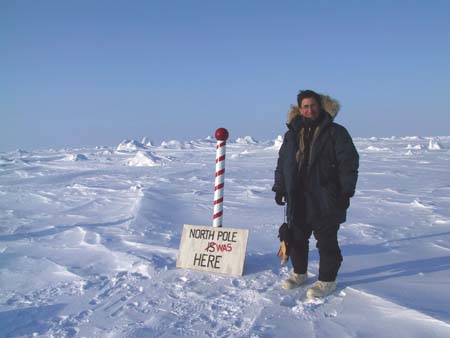
Hear award winning environmental journalist and author Andrew Revkin discuss his work on the New York Times’ Dot Earth blog, 25 years covering environmental and social subjects, and his previously published books, like The North Pole Was Here.
8 p.m., $20
Herbst Theater
401 Van Ness, SF
www.cityboxoffice.com

Hunting Eichmann
Hear author Neal Bascomb discuss his new book about a Nazi who escapes American POW camps and hides in the mountains in Buenos Aires before he is eventually caught and brought to trial.
7 p.m., free
Books Inc.
1760 4th St., Berk.
(510) 525-7777

McSweeny’s Issue 34
Attend this release of the highly anticipated Issue 34 of McSweeny’s presented by Nick McDonell, Tom Barbach, and Daniel Handler.
7:30 p.m., free
Books Inc.
2251 Chestnut, SF
(415) 931-3633

Noir Literary Night
Attend the 5th annual Nior Literary Night featuring Cara Black, author of Murder in the Palais Royal, David Corbett, author of Do They Know I’m Running?, and Joe Gores, author of Spade & Archer: The prequel to Dashiell Hammett’s the Maltese Falcon.
6 p.m., $12
Mechanic’s Institute
57 Post, SF
(415) 393-0100
www.milibrary.org

Karin Sanders
Attend a reading and discussion of Karin Sanders’ new book, Bodies in the Bog and the Archaeological Imagination, in conversation with Mark Sandberg.
5:30 p.m., free
University Press Books
2430 Bancroft, Berk.
(510) 548-0585

Nevius’ argument doesn’t fly

Here’s a line from the San Francisco Chronicle’s latest “hard-hitting” science news, penned by columnist C.W. Nevius:

“Birds have been flying around similar buildings for years, but apparently would suddenly lose their bearings and crash into this one.”

The building Nevius refers to, of course, is the proposed 555 Washington tower, the subject of mighty controversy which will go before the Board of Supervisors today, April 20.

The luxury condo tower would be erected beside the Transamerica Pyramid, and it’s drawn no shortage of criticism due to a variety of issues including, yes, the threat it poses to birds.

Nevius seems to be implying that anyone who would worry about the welfare of birds when there’s a recession going on is just plain silly. But is a luxury condo tower that most people can’t afford to live in really going to benefit the average San Franciscan who’s reeling from the recession?

And what about the birds, anyway? While the danger to birds is just one issue critics have pointed to — think increased traffic congestion, public parks darkened by shadows, spot-zoning that doubles the allowable height limit, etc. — Nevius dismisses it as ridiculous without, apparently, so much as glancing at the facts.

So in case anyone cares, here’s is a deeper explanation of the bird issue, derived from information (readily available via Google search) on the Golden Gate Audubon Society Web site. Since birds migrate at night, they can be thrown off course by tall, lighted structures. Scientists aren’t really sure why lit-up skyscrapers are so confusing to the delicate winged creatures, but they think it may have something to do with the fact that they use the stars as navigational cues.

“Once in among the lights, birds seem reluctant to fly out,” the Audubon Society informs us. “Sometimes they strike buildings or rooftop structures outright. Sometimes they continue flying in circles around the lighted buildings until they drop to the rooftop or the ground from exhaustion.”

So, the notion that birds have been flying around similar buildings for years without any problem is pretty much a myth. And the idea that they would lose their bearings seems to be backed by science — not (gasp!) some wild tale crafted by hysterical anti-development lefties who hate progress.

Some of the roughly 250 different kinds of birds that migrate through the Bay Area are threatened species.

The Golden Gate Audubon Society sponsors a voluntary program called Lights Out for Birds (an apt or unfortunate title, depending on how you look at it), in which building owners, managers, and tenants work together to turn off unnecessary lighting between key migration dates.

Now, this isn’t to say that 555 Washington ought to be halted purely because some endangered birds might meet their demise slamming against the fancy new addition to downtown San Francisco (though this prospect doesn’t exactly jive with they city’s green image, does it?). Whether or not the building moves forward is the subject of a rigorous public debate that we can surely look forward to very soon. But we just wanted to set the record straight on the bird bit, lest you feel disoriented and confused by Nevius’ reporting.

P.S. We emailed Nevius a little while ago for a comment. If he responds, we’ll post it as an update.

Quick Lit: April 14-April 20

0

Literary readings, book tours, and talks this week — including Alice Walker, Men and Dogs, Marin Poetry Festival, “Adapting to Climate Change,” and more

Wednesday, April 14

Louann Brizendine

Hear Neuropsychiatrist, author, and media commentator Dr. Louann Brizendine discuss her theories on the relationship dynamics that result from the neurobiology of the male and female brains, as outlined by her bestselling books, The Male Brain, and The Female Brain.

8 p.m., $20

Herbst Theater

401 Van Ness, SF

www.cityboxoffice.com


“Let Our Words Be Heard”

Attend this queer writing workshop and open mic that will take on the empowering, interactive process of discovering the use of words for healing, sharing histories, and celebrating community. Part of CUAV’s Safetyfest.

6 p.m., free

Modern Times Bookstore

888 Valencia, SF

www.mtbs.com


The Long Man

Best known for his work on DC Comics’ Detective Comics series in the 1970’s that produced many memorable Batman stories, Steve Englehart discusses his writing career and his new novel, The Long Man, a follow up to his first novel, The Point Man.

7 p.m., $5 suggested donation

Cartoon Art Museum

655 Mission, SF

(415) CAR-TOON


Men and Dogs

Hear San Francisco resident and author Katie Crouch discuss her new book about a girl who’s father went missing on a fishing trip in Charleston and how the mystery of his disappearance tests the whole family’s concept of loyalty and faith years later.

7:30 p.m., free

The Booksmith

1644 Haight, SF

(415) 863-8688


The Montefeltro Conspiracy

Join a humanities forum to discuss Marcello Simonetta’s The Montefeltro Conspiracy, a Renaissance mystery uncovering a nefarious plot, a murder, and a coded letter. In conjuction with the upcoming Humanities West 25th anniversary program, The Florence of the Medici: Commerce, Power, and Art in Renaissance Italy, starting April 30.

5:30 p.m., free

Commonwealth Club

595 Market, 2nd floor, SF

www.humanitieswest.org  


Thursday, April 15

If You Can Read This: The philosophy of bumper stickers

At this reading of his new book, Jack Bowen explores the philosophical ideals reflected in the most popular bumper stickers and claims that every bumper sticker holds at least a kernel of truth.

7:30 p.m., free

The Booksmith

1644 Haight, SF

(415) 863-8688


Noe Valley Celebrates the Book

Celebrate the 25th anniversary of Phoenix Books, an independent bookstore in Noe Valley, at this reading by local authors Allison Hoover Bartlett, Tony DuShane, Clare Willis, Lisa Gluskin Stonestreet and with music by Ted Savarese.

6 p.m., free

Phoenix Books

3957 24th St., SF

(415) 821-3477


Friday, April 16

Offbeat Bride

Hear Ariel Meadow Stallings discuss her new book, Offbeat Bride: Creative Alternatives for Independent Brides, where she offers inspiration, encouragement, and advice for brides on a budget.

7:30 p.m., free

The Booksmith

1644 Haight, SF

(415) 863-8688


Saturday, April 17

Adapting to Climate Change”

Attend this daylong “BioForum” about the challenges of climate change and prospective actions California could take to make a difference. Experts from UC Davis, NOAA, PG&E, and the California Academy of Sciences will be on hand to talk about impacts on local agriculture, fisheries, and energy policies. You might want to ask the PG&E representative why their company is trying to kill progressive, local Community Choice Aggregation efforts for the sake of preserving profits. 

9 a.m.; $25, lunch and coffee included

Pacific Energy Center

851 Howard, SF

1-800-794-7576


Melissa Broder

Hear Broder read from her first collection of poems, When You Say One Thing But Mean Your Mother.

6 p.m., free

Elbo Room

647 Valencia, SF

(415) 552-7788


Poetry at Pegasus

Celebrate National Poetry Month at this reading with poets Stephen Ratcliffe, Erica Lewis, and Benjamin Perez.

7:30 p.m., free

Pegasus Books Downtown

2349 Shattuck, Berk.

(510) 649-1320


“The Revolution Starts at Home”

Attend this workshop on practicing community accountability in real life with Leah Lakshmi Piepzna-Samarasinha discussing partner abuse within queer, politicized communities. Part of CUAV’s Safetyfest.

2 p.m., free

Modern Times Bookstore

888 Valencia, SF

www.mtbs.com


2048: Humanity’s Agreement to Live Together

Hear about author Kirk Boyd’s plant to draft an enforceable international agreement that could allow the people of the world to create a social order based on human rights.

7:30 p.m., free

The Booksmith

1644 Haight, SF

(415) 863-8688


Sunday, April 18

Marin Poetry Festival

Enjoy a free afternoon of poetry and music featuring Avotcja and Pedro Rosales, Dancing Bear, C.J. Sage, Adam David Miller, Michelle Baynes, and more.

2 p.m., free

Old Mill Park Amphitheater

300 Throckmorton, Mill Valley

Later in the evening, attend readings featuring San Francisco Poet Laureate Diane di Prima, winner of the 2006 National Book Award in poetry Nathaniel Mackey, and award winning poet Branda Hillman.

7 p.m., $20

Dominican University Campus

Angelico Hall

50 Acacia, San Rafael

marinpoetryfestival.com


“Writing and Publishing the Novel”

Attend this adult writers’ seminar lead by author Jason Roberts with panelists Vendela Vida, Daniel Alarcón, Rabih Alameddine, Andrew Foster Altschul, and Danielle Svetcov discussing the writing process, and issues relating to publishing, agents, and publishing houses.

6:30 p.m., $75

826 Valencia, SF

www.826valencia.org


Monday, April 19

Get Lit!

Bring your own literary contributions or those of your favorite authors to share at this candle lit, wine bar literary salon.

7 p.m., free

1550 Hyde Café and Wine Bar

1550 Hyde, SF

(415) 775-1550


Poetry at Pegasus

Celebrate National Poetry Month at this reading with poets Cheryl Dumesnil, Judy Halebsky, and Tiffany Higgins.

7:30 p.m., free

Pegasus Books Downtown

2349 Shattuck, Berk.

(510) 649-1320


Tuesday, April 20

Diane di Prima

Hear San Francisco Poet Laureate Diane di Prima discuss her career as an activist in the 1960’s, a writer of the Beat movement, author of 43 books of poetry and prose, and many more accomplishments in conversation with Alan Kaufman.

6 p.m., $12

Mechanics Institute

57 Post, SF

(415) 393-0100


For you Mom, Finally

In her latest book, food magazine editor, restaurant critic, and memoirist Ruth Reichl examines her mother’s life, giving voice to the painful truth that many women of our mothers’ generation had to sacrifice their dreams.

11 a.m., $10-18

Jewish Community Center of San Francisco

Kanbar Hall

3200 California, SF

(415) 292-1233


Alice Walker

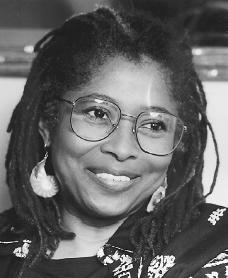
Essayist, poet, fiction writer, and ardent social activist Alice Walker will discuss her upcoming book, Overcoming Speechlessness: A Poet Encounters “the horror” in Rwanda, Eastern Congo, and Palestine/Israel, about her travels to each of those three regions, charting the aftermath of violent conflict and political upheaval. In conversation with Michael Krasny.

8 p.m., $20

Herbst Theater

401 Van Ness, SF

www.cityboxoffice.com


A lyrical “Eatrip” to Japan

0

A white tent, lit up like a lantern in the midst of a field darkened by night. A gathering of diverse souls; a musician, a hippie, a film director, all seated on the floor about a low, round dinner table. It could be anywhere (well no, not really, that whole tent thing is kind of crazy). But then, an exquisite dish is passed around, to the delight of the bohos gathered. It’s transcendent! It’s fresh! It’s radishes and strawberries. We’re not in Kansas anymore.

But we are in the midst of a beautiful film about Japanese food culture — Eatrip, which has its US premiere at New People’s Viz Cinema Sat/10 through Thur/15.

Here’s why I’m stoked; I know that outside my window the San Franciscan sun is shining down — but fellow Americans, believe you me when I say it’s raining. I’m talking about the deluge of knowledge our well meaning Information Age has hoisted on us regarding the tragedy of food in America. We’re fat, we eat processed shit, our system’s fucked. On and on. Where Eatrip triumphs is not only it’s beautiful, colorful food pornography (mixing grains and water in a big wooden bowl never looked so good), but rather its examination of somebody else’s relationship to what they eat. It’s a chance to look out from underneath our umbrellas to other weather systems. 

Sure, many of the eaters that director Yuri Nomura profiled are perhaps exceptional, most with one foot (at least) in the ethereal. One of her most lyrical sequences follows a woman around her cabin in the mountains, where she lives and prepares food with her children to feel closer to the earth. A Japanese back-to-lander? And why ever not? There’s also a monk featured, whose thoughts on food as one of life’s great pleasures might come as a surprise to folks familiar with the “eschewing worldly delights” view of meditative monkdom.

So how are we to relate this pastoral view of diet to Japanese culture as a whole? Does Eatrip reflect a country’s whose style of eating is more conscious and slow, or are these individuals outliers to the madness, a la Joel Salatin of Polyface Farms in Food, Inc.? We can ask him ourselves at the movie’s first showing this Saturday, when Nomura will be on hand for the showing and “food and talk party” with Mishima Brackett, former creative director at Chez Panisse.

In the meantime… strawberries and radishes… I could get down with that.

Eatrip US premiere & reception

w/ director Yuri Nomura

Sat/10 7 p.m., $50 ($10 for regular screenings)

Viz Cinema @ New People

1746 Post, SF

(415) 525-8600

www.newpeopleworld.com


Duck me

0

le.chicken.farmer@gmail.com

CHEAP EATS My cowboy hat had mold in it. My chicken farmer coat had mold in it. Even the buttons were fuzzy. My brother doesn’t take baths, he takes showers, and so the outdoor tub was full of insect skeletons, spiders, spider webs, and junk mail. There is a rumor that a guest of his hid some weed in the chicken coop. Not that I’m interested, but I took a look anyway and only saw straw.

I am tempted to get chickens again. There is no buried treasure that chickens will not eventually uncover, and I’ve always kind of wanted stoner chickens. I’ve always wondered what it would be like if they, as a species, were a little more chill and slept longer. Not that it would matter much to me at this point. Ten years of chicken farming has permanently programmed me to snap awake at first-light. In the year or so since I last farmed actual chickens, nothing has changed on this front.

Anyway, I don’t know if I can keep this place. My brother, who had been subletting it, went bust and lit out for Ohio, leaving me, for the moment, his van. Which burns oil, has a badly cracked windshield, no horn or high-beams, electrical problems, and a slow leak in at least one tire. What this all reminds me of, naturally, is every other car I’ve ever had except for that last little one, the new one, which I sold last year when I sold my soul to the devil, and my heart to someone even meaner.

So wheels being wheels, I am able at will to visit my old, now-haunted shack in the woods, at least until the brother comes back.

Should I get chickens?

Can anyone help me pay the rent? Surely I must have me some friends in town who like to sneak away and be haunted for a weekend by the ghost of broken water heaters, all-night face-touching in the dark, and the squawks of long-ago stewed chickens, scratching and pecking from dusk to dawn in search of rumored grass.

The editor of the paper I write for, if not the world, wrote to me while I was still in Europe and said, “If you come back, I will buy you duck soup.”

Technically he said when you come back, but for fun I want to think of this — this duck soup business — as just that: business. Like a contract extension. Or a contract renegotiation. Or a contract.

So correct me if I’m wrong, my lawyerly readers, but I interpret it like this: If I come back (which I did), what’s in it for me is one bowl of my favorite thing to eat in the whole wide world, duck noodle soup, and — as a kind of a signing bonus — an unwritten, nonverbal, body-languageless, and in-no-way-even-hinted commitment to continue to publish this column for as long as I am alive and can make a sentence — whichever comes first.

Well.

That’s a no-brainer, innit? No brain, no heart, no soul, but I’ve still got me my stomach, don’t I? And a healthy appetite and this shit van for a month, and two places to live and at least two bikes …

So I wrote back just as soon as I was in the country, give or take exactly 13 days, and agreed in spirit to the editor of the paper I write for’s proposal. Then I donned my best business skirt and matchingest sneakers, hopped on one of my at-least-two bikes, and pumped it to the Tenderloin to iron out the details.

The details: wide egg noodles, one whole, delicious, fall-apart tender duck leg quarter, and wontons in a wonderfully businesslike broth. Times two. As a show of support and solidarity, Mr. Redmond ordered the same exact thing!

So I told him my story, like I tell all my friends, only instead of making him cry or puke or curse or have to walk around the block a few times to clear his head, he came back with an even better story. And by better I mean worse. Which makes me feel kind of actually, I don’t know, good — knowing that shit happens to everyone, even editors.

It’s no frills, not undiscovered, cheap-even-if-you-have-to-pay-for-it, and by far my new favorite restaurant.

HAI KY MI GIA

Thu.–Tue.: 8 a.m.–6 p.m.

707 Ellis, SF

(415) 771-2577

Cash only

No alcohol


Quick Lit: April 7-April 13

0

Literary readings, book tours, and talks this week

Wednesday, April 7

How to Defeat Your Own Clone
Hear authors Terry Johnson and Kyle Kurpinsky deliver educational and entertaining advice on how to survive the not too distant bioengineered future at this reading of their recent book, How to Defeat Your Own Clone And Other Tips for Surviving the Biotech Revolution.
7:30 p.m., free
Booksmith
1644 Haight, SF
(415) 863-8688


The Racial Discourses of Life Philosophy: Négritude, Vitalism, and Modernity
Attend this reading and discussion on this new book by author Donna V. Jones, where she revisits narratives on life produced in the early twentieth century and shows how Bergson, Nietzsche, and the poets Léopold Senghor and Aimé Césaire fashioned the concept of life into a central aesthetic and metaphysical category while also implicating it in discourses on race and nation.
5:30 p.m., free
University Press Books
2430 Bancroft, Berk.
(510) 548-0585

Spiritual Life of Bay Area Tribes
Attend this lecture on the spiritual life of Bay Area native tribes by Richie Richards of Lakota descent, who is a Native American specialist dedicated to bringing Native American studies to elementary schools.
7:30 p.m., free
Northbrae Community Church
941 The Alameda, Berk.
(510) 526-3805

Thursday, April 8

Manwha For Girls
Join authors Trina Robbins, Mike Madrid, and curator Andrew Farago as they discuss the role of girls and women in comics and female comics artists in conjunction with the current exhibit, “Korean Comics: A society through small frames,” in the Jewett Gallery open through June 13.
6 p.m., free
San Francisco Main Library
Lower level, Latino/Hispanic community meeting room
100 Larkin, SF
(415) 557-4400

 
Mystery Panel
Check out this mystery panel featuring Shirley Tallman, author of Scandal on Rincon Hill, and Ronald Tierney, author of Death in Pacific Heights.
7 p.m., free
Books Inc. Laurel Village
3515 California, SF
(415) 221-3666


“Why there are words”

Hear a diverse group of award winning authors read selections from their work that fall under the theme “crazy.” Featured writers to include Ethan Watters, Tom Barbash, Wendy Tokunaga, Allison Landa, Ryan Sloan, and Aggie Zivaljevic.
7 p.m., $5
Studio 333
333A Caledonia, Sausalito
(415) 331-8272

Saturday, April 10

Amy Goodman
Investigative journalist Amy Goodman says, “The role of reporters is to go where the silence is and say something,” and she does exactly that. Goodman is known for her dedication to looking beyond mainstream media news to expose human rights violations and political injustice. Hear her discuss her views and recent book, Breaking the Sound Barrier.
5:30 p.m., $20
Commonwealth Club
595 Market, 2nd floor, SF
(415) 597-6700

Diet for a Hot Planet
Author Anna Lappe believes that if we are serious about addressing climate change, we have to talk about food. Hear more about this theory at a reading of her new book, Diet for a Hot Planet: the climate crisis at the end of your fork and what you can do about it. Sponsored by the Center for Urban Education about Sustainable Agriculture (CUSA).
11 a.m.; $10, proceeds to benefit the Small Planet Fund
Port Commission Hearing Room
Ferry Building
101 Embarcadero, SF
(415) 291-3276 ext. 106

Kings of Poetry
Attend this spoken word poetry event featuring African American poets from throughout the Bay Area. Open mic to follow.
2 p.m., free
San Francisco Main Library
3rd floor, African American Center
100 Larkin, SF
(415) 557-4400

Pearl of China
Hear Anchee Min discuss her latest novel about Nobel Prize winning author Pearl S. Buck, a writer that Min was forced to denounce during the Cultural Revolution in China. Part of the Asian Art Museum’s current exhibit celebrating Shanghai, through Sept. 5.
2:30 p.m., free
Chinatown Branch Library
1135 Powell, SF
(415) 355-2888

Sunday, April 11

Phillip Schultz
Hear Pulitzer Prize winning poet Philip Schultz read and discuss selections from his recent book of poetry, The God of Loneliness, at this celebration of the third anniversary of Writers Studio Workshops in San Francisco.
3 p.m., free
Space Gallery
1141 Polk, SF
(415) 377-3325

Judith Tannenbaum
Hear Judith Tannenbaum discuss her new book of poetry, By Heart: Poetry, prison, and two lives, about her relationship with poet Spoon Jackson, an inmate in the California prison system serving life without parole, as she examines injustices in our prison system.
4 p.m., free
Booksmith
1644 Haight, SF
(415) 863-8688

Monday, April 12

Mark Danner
Hear journalist and author Mark Danner discuss his new book, Stripping Bare the Body, written from and about the world’s war zones, with New York Times Op-Ed columnist Frank Rich.
8 p.m., $20
(415) 392-4400
www.cityboxoffice.com

Get Lit!
Bring your own literary contributions or those of your favorite authors to share at this candle lit, wine bar literary salon.
7 p.m., free
1550 Hyde Café and Wine Bar
1550 Hyde, SF
(415) 775-1550

Legend of a Suicide
Hear author David Vann discuss his new collection of five short stories and one novella that center around the story of an Alaskan father’s suicide.
7 p.m., free
Books Inc. Berkeley
1760 4th St., Berk.
(510) 525-7777

No Rich, No Poor!
Join Charles Andrews in this discussion based on his new book about whether capitalism can be repaired or if it needs to be replaced and what a potential new “program of common prosperity” could look like.
7 p.m., free
Modern Times Bookstore
888 Valencia, SF
(415) 282-9246
www.mtbs.com

Wordcatcher
Take a tour into the obscure territory of word origins in Phil Cousineau’s new book, Wordcatcher: An odyssey into the world of weird and wonderful words.
7:30 p.m., free
Booksmith
1644 Haight, SF
(415) 863-8688

Tuesday, April 13

The Collected Poetry of Dahlia Ravikovitch
Hear translators Chana Bloch and Chana Kronfeld discuss the poetry of Israel’s leading female poet Dahlia Ravikovitch and the newly released collection of her verse, Hovering at a Low Altitude: The collected poetry of Dahlia Ravikovitch. Ravikovitch’s innovative and political poetry provides an inspiring window into the writer’s tortured life as an activist in Israel.
12:30 p.m., free
111 Minna Gallery
111 Minna, SF
(415) 974-1719

“Andy Warhol: Good for the Jews?”
Hear author and performer Josh Kornbluth discuss his process in creating his one-man show, Andy Warhol: Good for the Jews?, in response to Warhol’s 1980 series of paintings of prominent Jewish historical figures.
7:30 p.m., free
Jewish Community Library
1835 Ellis, SF
(415) 567-3327, ext. 704

Quick Lit: March 31-April 6

0

Literary readings, book tours, and talks this week

Wednesday, March 31

Vito Acconci
Hear writer/visual artist turned designer and architect, Vito Acconci, talk about “Words/Action/Architecture,” where he will discuss recent and upcoming projects of Acconci Studio like an artificial island in Graz, an elevated subway station in Coney Island, and a street that runs through a building in Indianapolis.
7:30 p.m., free
Mills College
Lisser Theater
5000 MacArthur, Oak.
(510) 430-2164


Performing South Africa’s Truth Commission: Stages of Transition
Join author Catherine M. Cole as she discusses South Africa’s Truth and Reconciliation Commissions, which helped to end apartheid by providing a public forum to exposed human rights abuses, and how the truth commission as public ritual and national theater provided a medium for performing evidence and truth to legitimize a new South Africa.
5:30 p.m., free
University Press Books
2430 Bancroft, Berk.
(510) 548-0585


Thursday, April 1

James Hannaham and Andrew Sean Greer
McSweeney’s and Modern Times Bookstore present an April Fool’s Day evening of literary debauchery with James Hannaham reading from his award-winning novel, God Says No, and Andrew Sean Greer reading his acclaimed NASCAR piece from the McSweeney’s publication, San Francisco Panorama.
7 p.m., free
Amnesia
853 Valencia, SF
(415) 970-0012
www.mtbs.com

April Martin Chartrand
Attend this audio visual presentation of April Martin Chartrand’s book, Angel’s Destiny: A novel story of poems and illustrations, and experience the emotional life of a multi-cultural woman in the United States trying to overcome violent adversities and embrace self-love.
6 p.m., free
San Francisco Main Library
100 Larkin, SF
angelsdestiny2009.blogspot.com

K.M. Soehnlein
Hear Soehnlein read from his new book, Robin and Ruby, a sequel to The World of Normal Boys where he introduces the character Robin MacKenzie. In this new story of love and loss we meet Robin’s sister Ruby.
7:30 p.m., free
Books Inc.
2275 Market, SF
(415) 864-6777

Surviving the Dragon
Hear author Arjia Rinpoche share his inspiring survival story of the years he spent in Tibet during the Cultural Revolution at this reading for his book, Surviving the Dragon: A Tibetan Lama’s life under Chinese rule. Rinopoche witnessed the torture and arrest of his monastery family, spent 16 years in a forced labor camp, and endured many other hardships before he escaped to the United Stated in 1998.
7:30 p.m., free
The Booksmith
1644 Haight, SF
(415) 863-8688
www.booksmith.com

World Poetry Night in the Oral Tradition
Enjoy recited poetry from diverse cultures and time periods in the “oral tradition,” where one poem inspires another from classics such as Rumi, Sappho, Hafiz, Whitman, Shakespeare, T.S. Eliot, Dickinson, Neruda, and more.
7 p.m., $12
Mechanics’ Institute
57 Post, SF
(415) 393-0100
www.milibrary.org

Friday, April 2

Litpunk
Enjoy intense, punk-edged lit readings and music at this punk rock alternative to the popular Litquake annual reading series. Featuring Penelope Houston, lead singer of the Avengers, reading poetry, prose, and singing, John Shirley, author and former lead singer of SadoNation, Eddie Jetson, of Ice 9, “Jennifer Blowdryer,” Johnny Genocide, and more.
7:30 p.m., $5
Makeout Room
3225 22nd St., SF
(415) 647-2888


Reality Hunger: A manifesto

Author David Shields argues that our culture is obsessed with reality because we experience hardly any. At this reading, Shields will share his stance that aims to reframe how we think about “truthiness.”
7:30 p.m., free
The Booksmith
1644 Haight, SF
(415) 863-8688
www.booksmith.com

Saturday, April 3

Indivisible: An anthology of Contemporary South Asian American Poetry
Kick off national poetry month at this book launch, reading, and signing of this collection of poetry from contemporary American poets from different cultures and faiths who trace their origins back to Bangladesh, India, Nepal, Pakistan, and Sri Lanka. The anthology aims to capture the simultaneous tensions of belonging and not belonging in America.
Featured contributors: Ravi Chandra, Tanuja Mehrotra, and Swati Rana
7:30 p.m., free
Booksmith
1644 Haight, SF
(415) 863-8688
www.booksmith.com

Monday, April 5

The Hills in Berkeley
Attend this UC Berkeley geology talk where professor Dr. Doris Sloan will discuss the formation of the Hills in Berkeley.
7:30 p.m., $5
The Hillside Club
2286 Cedar, Berk.
(510) 848-3277
www.hillsideclub.org

Tuesday, April 6

Homero Aridjis with Lawrence Ferlinghetti
Hear Mexican poet, novelist, and environmentalist, Homero Aridjis read from his new collection of poetry, Solar Poems, addressing both his ecological concerns and a mystical relationship to the sun. Lawrence Ferlinghetti will also read several poems from the new bilingual edition of his book, What is Poetry?/¿Qué es la Poesía?, which Aridjis translated.
7 p.m., free
City Lights Bookstore
261 Columbus, SF
www.citylights.com

Biking Book Club
Join members of the SF Bike Coalition and other biking enthusiasts for this book club and discussion group about bike and transportation related books. The current book up for discussion is Traffic: Why we drive the way we do by Tom Vanderbilt. Bring ideas for future reads.
6:30 p.m., free
San Francisco Bicycle Coalition
995 Market, SF
www.sfbike.org/books

Insectopedia
Hear author Hugh Raffles discuss his new book that pays tribute to bugs of all kinds in this collection of 26 offbeat and bizarre essays and philosophical musings.
7 p.m., free
BookShop West Portal
80 West Portal, SF
(415) 564-8080

A 40-year Last Gasp that’s getting stronger

0

By Cécile Lepage

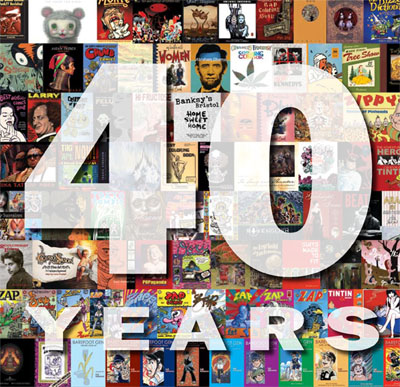
Last Gasp, San Francisco’s landmark independent and underground publisher, is turning 40. To celebrate this feat – in four decades, Last Gasp has spawned more than 300 comics and 250 books – it is throwing a party and an art show Thurs/April 1 at 111 Minna Gallery.

Who dared wager, in the mid-1970s, that Last Gasp would survive the withering of the underground comix scene? Head shops, the main outlet for unedited explicit sex-, drug-, and violence-ridden content (the “x” in comix stands for X-rated), were being prosecuted and forced to shut down due to anti-drug paraphernalia laws. Comics stores favored the more mainstream adventures of masked men in tights. Finally,“there wasn’t the same appetite for comics anymore,” according to Colin Turner, associate publisher to his dad Ron, who founded Last Gasp. No matter: the small venture outlived its peers by continually adapting, tuning to consumer demand and catering to bookstores’ standards and their stapled-leaflet scorn. Over the years, Last Gasp branched out into artist monographs, coloring pads, music-related books and graphic novels.

Yet, browsing its odds-and-ends catalogue, one gets the sense that Last Gasp hasn’t compromised its bizarre and satirical bent. Sure, it might carry such mundane items as coloring books, but beware of the twist! Gangsta Rap Coloring Book flaunts 48-pages of line drawn gangsta rappers. As for Tee Corinne’s Cunt Coloring Book, well, the title says it all. Last Gasp may have diversified, but it never reneged on complete artistic license, the hallmark of underground comix.

Today, Last Gasp thrives in the areas of lowbrow art and pop surrealism. Lowbrow is an umbrella label for “art forms that are popular and wonderful, that people love, but that aren’t respected in the fine art world”, according to Colin. It ranges from tattoos and Kustom Kulture to street art and graffiti – artistic expressions rooted in pop culture that take place on canvases ranging from car exteriors to skin..

As for pop surrealism, the genre emerged from cartoon-y visuals only to reclaim traditional old master painting craftsmanship. Artists such as Scott Musgrove, Camille Rose Garcia and Mark Ryden colonize canvasses with impeccably-rendered phantasmagorical creatures and weird visions. Neglected for years by art institutions, the loose-knit community of lowbrow artists is gradually being endorsed by upscale galleries and museums, a shift that once again attests to Ron Turner’s prescient flair. Back in the day, he promptly discerned underground comix’ wide appeal and cultural relevance, supporting the work of then-young and aspiring artists such as R. Crumb, Bill Griffith, and Spain Rodriguez, all of whom matured into cult or mainstream icons.

It could be said that Ron Turner got sidetracked into publishing. In the late 1960s, the Fresno native enrolled in the SF State psychology department. The Peace Corps volunteer, freshly returned from a stint in Sri Lanka, was thrust into the Bay Area countercultural upheaval and its myriad of grassroots movements. As a Berkeley Ecology Center activist, he figured that he could raise funds by releasing an environmentally-oriented comic book.

“I thought the graphic approach would engage teenagers, help them thwart authority figures, and provide answers to ecological concerns”, Ron recalls. With the mentorship of Gary Arlington, the San Francisco Comic Book Company owner who was selling Zap Comix under the counter, he compiled and printed 20,000 copies of Slow Death Funnies 1. By that time, his Ecology Center accomplices had dispersed, and their successors only agreed to redeem 10 copies of the title. “My garage was filled with 19,990 Slow Death Funnies 1 and I had to find a way to get rid of them”, he laughs.

This task proved easier than one might initially presume: with his good-humored nature, Turner unloaded his goods at 200 locations, not just head shops but also universities, hairdressers and even a leather jacket store. Eventually,Last Gasp reprinted the comic and sold around 45,000 copies. After this initiation, the socially-aware Turner satyed in the business because “it was a kooky way to shed some light on issues that needed attention.”

Last Gasp’s second publication was the all-woman feminist first It Ain’t Me Babe. “At the time, I was living alone with my newly-born daughter and I was drawing comics,” says Trina Robbins, who put together the title. “But you wouldn’t know it, because the 98% male underground comix industry had shut me out. I heard that Ron was looking for material for a women’s liberation comic book. I phoned him. The next day he visited me, wrote me a check for $1,000 — which in those days was quite an amount of money — and voilà!”

The 1975 book Amputee Love probed another rarely addressed topic, the sexual life of a crippled couple. “UC medical centers purchased some copies to sensitize nurses to the fact that amputation does not mean death of sexuality,” says Ron Turner. Other notable contributions to unconventional subject matters include Anarchy (1978) and Cocaine Comix (1976).

According to Ron Turner, cartoonists hold the highest rank in creativity because they can communicate their vision the most clearly: “Most art is some form of propaganda. The artist wants to sell you on his vision and what it leads to.” Turner’s fascination with human behavior conditioning stems from his psychology studies.

At 70, Ron Turner still sports a hippie hairstyle: a white hair ponytail and an eccentric plaited beard running down to the navel of his buddha-like belly. Comix aficionados regard him not only as a pillar but also as a guardian angel. “Last Gasp is unique in that it’s a publishing house and also a distributor. It has kept many smaller and larger presses afloat,” explains Cartoon Art Museum curator Andrew Farago.

Niched in a corner room of Last Gasp’s Florida Street offices, Turner’s personal collection of popular art is an eclectic mix of original drawings and paintings, side show banners, circus items and vinyl sculptures. “Are these for real?”, hollers a guy named Charlie, who is lending a hand in preparing the anniversary art show. He has uncovered a pile of four framed paintings that serial killer John Wayne Gacy made while on death row. Lowbrow art is definitely not for the fainthearted.

Past, present, future

0

arts@sfbg.com

MUSIC Am I the only one who feels an overwhelming sensation of near implosion when listening to Flying Lotus? I’m not talking about Steven Ellison’s crackling, low-end production that leans on off-kilter percussion while swerving on warm synth melodies like the late great J Dilla tipping on trucks (although that liquidic soul is mad electrifying too). Ellison also summons this other lunatic style that seeps into my android brain right when I least expect. It’s a sort of smattering mercury-noise that builds to the point of maximum intensity and then falls away suddenly, disclosing a clearing of purplish-orange haze.

All that cyberkinetic production, however, works in tandem. Ellison’s gift is not so much that he can shock and awe with singular frenetic beats, but that he can craft a holistic mood that engages, holds, and in the thick of its hypnotic momentum, casts an entrancing spell. I’d make the case that the effect is a movement of dislocation and reembodiment, parallel to the transcendental objectives behind experimental forms of both spiritual and space jazz recorded in the late 1960s and ’70s. There’s no question that Ellison channels the celestial blood of Alice Coltrane (his great-aunt and perhaps greatest muse) in his testament. And just as those avant-garde jazz legends made headway finding musical freedom within intergalactic space-ways (the infinite within), Ellison charts something of a fractured spatio-temporal exploration himself.

I’m going to take a leap (if you will allow a journalist such an experiment) and tentatively pretend that the titles for Fly Lo’s records map the spiritual blueprint shaping his music. We’ll see if we can make some progress with this approach.

Ellison’s first full-length record, 1983 (Plug Research, 2006), marks the temporal origin of the 27-year-old and a return to a certain aesthetic sphere of possibilities. Ellison graces this effort with video game bleeps and zaps, that stark retro-futuristic sound of 1980s sci-fi film and monstrous joystick machines. But the drenched robotics nourishing “Massage Situation” and the warped sonic bits that weave through arresting drum programming in “Vegas Collie” don’t mine nostalgia. Instead, Ellison recontextualizes familiar sounds in magnetic ways, breathing life into vacuous drones from the past. History is revived to reimagine the future and overlay a richness of sensual value onto the present.

In 2008, Flying Lotus made ground with Los Angeles (Warp), a pioneering effort that won the ears of hip-hop heads, pitch-forking indie rockers, and electronic bass fiends/geeks alike. The record seems to have quickly become one of those pivotal works of art that serve as a reference point for nearly everything new school in electronic music. And Los Angeles, the city itself, the last stop on the New World’s burdened journey for Manifest Destiny, has also become such a symbolic environment for today’s musical wanderers. It’s a city of tense contradictions: endless opportunity and suffocation, cosmopolitan diversity and isolating segregation, an artificial neon-lit haven placed in a sun-choked desert by the sea. It’s not so different perhaps from that Old Word paradise mucked with broken dreams — Jerusalem. Such is the spatio-origin and milieu for Flying Lotus’ second full-length, as we hop on a sizzling “Camel” and “Melt!”; disintegrate into fuzz-drenched traffic on “Orbit 405”; and open our new metallic bodies in the whirlwind swamps around a “Parisian Goldfish.”

The third record on the horizon, Cosmogramma (Warp), set for release in the U.S. on May 4, breaks away from particular spatio-temporal signifiers to reach for the universal. Ellison baptized the record as a “cosmic drama,” and the title itself suggests nothing less than a grammar of infinitum. The single “Computer Face//Pure Being” is perhaps the best example yet of the antagonistic force that fuels Flying Lotus’ adventurous work. It incites a centrifugal experience — perilous and transformative — out of malfunctioning and utterly animate computer jazz. Yes, the age of machines with soul has dawned.

FLYING LOTUS

With Kode9

Sat/27, 9 p.m., $17.50

Mezzanine

444 Jessie, SF

(415) 625-8880

www.mezzaninesf.com

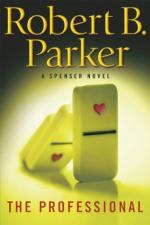
Trash Lit: Spenser says goodbye in ‘The Professional’

0

The Professional
Robert B. Parker
Penguin Books, 289 pages, $26.99

I just read the last Spenser novel, ever.

That’s a hard sentence to write. Spenser’s been around a long time, and I’ve read all 37 of Robert B. Parker’s classic tough-guy detective books, and even though they all have the same characters, similar plots, similar dialogue and similar themes, they’re all good. Every last one of them.

And I think it’s probably a good thing that this was the last one of them. I don’t know if Parker realized he was coming to the end of his life as he wrote The Professional, but you get the sense that Spenser is coming to the end of his. Not that the guy’s going to die – like Travis McGee, Spenser will long outlive his creator. But this book has a sort of melancholy sadness to it, a sweet sort of swan song feeling, and by the time you get to the end, you sense that Spenser’s pretty much done.

The plot is typical Parker: A sleazy con man is seducing young women who have rich older husbands. He videotapes the encounters and then threatens the clueless chicks with blackmail. He wants money, big money, or he’ll tell the hubbies – and the days of living large (and waiting to inherit the cash) will come to an end. The women are afraid to go to the cops, of course, so they go to Spenser. His job is to make the con man back off.

It’s the sort of thing that in an earlier version of Spenser would have been too simple to drag out into an entire novel. He’d go with his buddy Hawk, warn the sleazeball that the future was looking pretty shaky, maybe smack him around a bit just for good measure, the dude would split town and all would be well.

But this time, Spenser can’t do it. He almost kinda likes the creep, who is utterly straightforward about his lust for young women, his love for the chase and the score and his gleeful wonder at the fact that he’s figured out a way to make money at the game. Spenser and his main squeeze, Harvard shrink Susan Silverman, puzzle over the bad guy, polyamory relationships and the ethics of sex, while one of the rich hubbies, who has figured things out, sends two dumb-as-a-box-of-rocks thugs to kill Mr. Smooth. So Spenser has to stop them, but as it turns out, he kind of likes the thugs, too, since they are, after all, totally authentic: Marginal men who realize they have no value to society except for their ability to be half-rate muscle.

In the end, there’s a murder, and Spenser makes everything (almost) right. But his heart really isn’t in it.

In fact, this is the first and only Spenser book I’ve ever read that had an overdone edge to it. The dialogue is what makes Parker’s stuff work, and the interactions between Spenser and Silverman and Hawk in The Professional were predictable and dull. It’s as if the master of modern pot-boilers, the Man himself, Robert B. Parker, author of more than 50 top-rate books, was finally running out of steam.

There are the usual literary references (including a nice plug for Janet Evanovich, one of my longtime faves), but they seemed forced. The violence is tired. I was almost ready to give up, but I stuck around for the end, which was worthwhile – if only because it told me that this was the last we’d be hearing from Spenser.

The Professional reminded me of The Green Ripper, John D. MacDonald’s latter-era McGee book, where the author is clearly done with the character but cranks him up for one last stand, one final favor to the fans, a victory lap that gets more and more painful as it nears the finish line.

If you’re a Parker fan, you need to read The Professional. It’s a wake, of sorts; a chance to say goodbye. And it may have been Parker’s way to telling his fans that the fun is finally over.

Place of refuge?

0

LIT If you’ve been tracking the battle over San Francisco’s sanctuary ordinance, or you’re simply interested in the fight for immigration reform at the federal level, then check out Just Like Us: The True Story of Four Mexican Girls Coming of Age in America (Scribner, 400 pages, $27.99). Written by Helen Thorp, a journalist married to Denver mayor and Colorado gubernatorial candidate John Hickenlooper, Just Like Us is the true story of four young girls whom Thorp tracked for five years, starting with their senior year in high school.

“All had at least one parent who entered the country from Mexico without the right documentation,” Thorp says over the phone. “One was born here; one had a green card; and two didn’t have papers, so they were split down the middle on their legal status — through no fault of their own — but because of a situation they inherited.” This split led to differing experiences as all four girls came of age in the United States, even though all excelled in public high school.

“Two of them didn’t have the same opportunities, privileges, or even ways to pay for college as the two with papers had,” Thorp explains, noting that she changed the names of all four students to protect their identities. The main narrative of Thorp’s book sticks closely to the experiences of these four exemplary girls — including the political firestorm that broke out in Denver (and spread statewide) after an undocumented Denver resident committed a violent crime.

The echoes for San Francisco are obvious. The slaying in 2008 of three members of the Bologna family by the alleged killer Edwin Ramos, an immigrant who repeatedly passed through the city’s justice system as a juvenile, increased the heat in a political firestorm that had been crackling since the city passed its City of Refuge ordinance in 1989 and burst into flames in December 2007. That was when federal agents intercepted San Francisco probation officers at a Houston airport as they tried to repatriate Honduran teenagers by flying them home instead of reporting them for formal federal deportation.

In the Denver-based story Thorp recounts in Just Like Us, a young man who never had much schooling and was in Colorado without the necessary paperwork shot two police officers at a party, killing one. To add to the intrigue, the man was employed as a dishwasher at a restaurant owned in part by Thorp’s husband.

“It certainly was a heinous crime, since this young man shot two police officers in the back,” Thorp recalls. “Even the Mexican immigrant community was horrified, and no one rallied to his side. He was disrupting a baptismal party for a Mexican family in a popular social hall. He destroyed the celebration and he had a young daughter, who he essentially ended up abandoning, when he went to jail. He had lived in Los Angeles — that’s where he purchased the gun — and may have had gang ties. That, at least, was what was alleged at his sentencing. He shot the police officers because he felt one of them had insulted him and allegedly had mishandled him. His pride was wounded, but his response was so aggravated, there was no justification for it.”

As a result of this tragedy, which touched one of the high school students she was tracking, Thorp ended up becoming close to the widow of the police officer. “His family had an immigrant background, and he grew up in a Spanish-speaking family — though that was not reported in the media — and his widow’s mother was an immigrant from England who kept her green card and never became a citizen,” Thorp continues. “So the widow ended up having an incredibly nuanced point of view and would comment on what happened to her family with more grace and generosity than you would ever expect a human being to muster in those circumstances.”

Thorp feels that heated debates between advocates on opposing sides of the immigration equation is a result of what she calls “a collision of different beliefs.”

“We believe strongly that you are innocent until proven guilty, and we believe in the United States as a nation founded by immigrants. But we also believe in the value of law and order, so we don’t have a favorable view of illegal immigrants, and definitely not of illegal immigrants who commit crimes,” Thorp observes. She also noted that people tend to view juvenile immigrants in a kinder light: “They are morally in a different category than people who made the decision to come here without documents.”

But Thorp suggests that tackling immigration locally may be a losing proposition. “I understand why people want to tackle the subject at a local level since the federal government continues not to resolve the issue,” she says. “But you run into the fact that, peculiarly, this issue needs a federal solution even though we feel the impacts at the local level.” She believes the Obama administration needs to create reform that clarifies whether the feds are offering people a path to citizenship and that involves penalties for those who knowingly broke the law when they came here without papers,

“I understand that San Francisco is on the cutting edge of many things, but I can’t imagine that my husband, as mayor, would adopt a sanctuary policy in Denver,” she says. “And that’s because the concept of a sanctuary city in Colorado is only used by social conservatives with derision. The way ‘sanctuary city’ is used here signals a flagrant disrespect for law and order.”

That said, Thorp notes that the question of whether local police should become an arm of U.S. Immigration and Customs Enforcement (ICE) and an enforcer of federal immigration laws has been debated, and that people generally agree that this is not the job of the local police. “Local police department budgets are exhausted simply by doing the other tasks we’ve given them. If you add to that locking up nonviolent offenders [accused of being here illegally], it would break the bank.”

Work it!

2

arts@safbg.com

LIT/VISUAL ART Yvan Rodic has to be one of the luckiest souls on the planet. He’d have to be to make my cynical ass fall in love with him. His new book Facehunter (Prestel, 320 pages, $24.95), a pastiche of photo book, style manual, travelogue and (hallelujah!) manifesto, has just the right combination of couture and subversion to earn a place on every cigarette- burned coffee table in the world.

"Globalization is a myth," he declares in his introduction. "The belief that international brands and pop culture are making the world a standardized society populated by clones is an old-skool science-fiction vision of the future, not the reality of the 21st century."

If anyone would know it is Rodic, who has traveled in nearly 30 countries, taking pictures of real people looking real fly for his blog, which eventually landed him as a contributor to Tokion, GQ, and Modette, which in turn got him a book deal with Prestel. Told you he was lucky. But luck, in this case, is only preparation meeting opportunity, because Rodic has an eye and a philosophy that is long overdue in the worlds of art, fashion and photography.

"Judging from the people I’ve met on my travels, it’s obvious that instead of talking about globalization, we should talk of ‘creole-ization,’" he says. Rodic calls this phenomenon of customizing identity from fragments of culture from different parts of world "New Creole Culture." I can think of another name for it …

Whether standing in front of the lush foliage of Turku or the stark grayness of a Manhattan winter, the clothes and the everyday people in Facehunter are beautiful. The mostly 20-something Nordic models within Rodic’s pictures are to be expected. He calls his peers "the iPod generation," and credits them for taking "this chameleon-like approach to fashion, exploring the many facets of their personalities with radically different looks, or customizing their individual styles with elements from different eras and cultures." John Galliano, Prince, Vivienne Westwood, Afrika Bambaataa, and myself cuff you on the ear for that one, young’un.

The real surprises in Facehunter come from Rodic’s more atypical models: the stout, the squat, the over 30. In these photos, I find the folks who really knew how to "work it" in the parlance of prêt-à-porter rabble-rousers. They bring a radical cohesion to the book’s overall aesthetic. People from cities as disparate as Sao Paulo, Singapore, and Warsaw have a shared sense of what is fashionable, transcending economics, geography, race, and gender — an encouraging sign if there ever was one.

There are no labels mentioned in Facehunter, no designers, allowing the clothes to speak for themselves, and even better, allowing you to bite that style without it coming back to bite you in the ass. Rodic posits that the rise of the "New Creole Culture" encourages this.

"Trends are dead, baby!" my new favorite shutterbug announces. "Nietzsche’s exhortation ‘Become what you are’ is now a reality." I couldn’t have said it better myself.

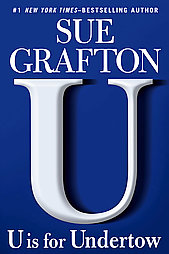
Trash Lit: Grafton’s craft in ‘U is for Undertow’

0

U is for Undertow
Sue Grafton
Putnam. 403 pages, $27.95

I love the Sue Grafton books. I bought A is for Alibi in 1983, when it came out, and I’ve read every one of them since. Unlike, say, Patricia Cornwell, whose characters age (and get crabbier) as time passes, Kinsey Milhone is eternal, always young, always living in a town called Santa Teresa that’s a lot like Santa Barbara, always living with her old (but never dying) landlord, Henry, always eating at the foul Hungarian restaurant down the street. Milhone is a comfortable protagonist, never deeply tortured, but never exactly adjusted either, and even her OCD habits (locking her car – and telling us she locked her car – about 50 times a book) are endearing.

This one’s set in 1988, where Milhone is quite at home, and in 1963-1967, where Sue Grafton is less so. Grafton’s got a problem with hippie chicks – one of the central villains in U is for Undertow is a girl named Shelly who later changes her name to Destiny. She’s an almost embarrassing parody of how middle America saw flower children in the late 1960s – except that she appears in 1963, before there were a lot of real hippies about in the land. To make matters worse, she brags that she was part of the beat scene in San Francisco and slept with both Ferlinghetti and Ginsberg – which is fairly unlikely, even in fiction; I don’t know who Allen Ginsberg, a proudly gay poet, was fucking in 1963, but I don’t think there were many hippie chicks on the list.

The horror of the dirty girl is almost too much to believe! Destiny is living in a bus with the son of a respectable family who dropped out of college to join her – and she has a child by another man who’s left the picture! And she’s raising her child (gasp) a vegan! And he runs around naked! And she’s preggers again, this time with his kid, and she insists on natural childbirth! She is, of course, also a total beyotch, who doesn’t respect the mother of the once-nice-young-boy loser who is under her hippie-chick spell.

There’s other stuff I didn’t love in here – one young character, who hates his stepmom, gets in trouble at his fancy private school and is forced to transfer to the horrors of a public school, where he of course meets awful bad kids who corrupt him entirely and turn him into a druggie.

In and around all this, though, is a fascinating mystery. It involves two kidnappings from the ’60s, a guy who might or might not have fabricated repressed memories, a dead dog in a dead girls’ grave, and a tangled tale across three decades that weaves the lives of the good and the bad (and it’s deliciously hard to tell which is which) into a first-rate detective story.

We also along the way learn some new clues about Milhone’s past (great trivia about Aunt Gin for serious fans of the series) and get a couple of excellent Grafton comments about the important things in life:

“At the time, I’d introduced [cancer patient] Stacey to junk food, which he’d never eaten in his life. Thereafter, I tagged along with him as he went from McDonald’s to Wendy’s to Arby’s to Jack in the Box. My crowning achievement was introducing him to the In-N-Out Burger. His appetite increased, he regained some of the weight he’d lost during the cancer treatments, and his enthusiasm for life returned. Doctors were still scratching their heads.”

Hippie-chick sex. Hippie chick seduction of a high school kid. Sweet Kinsey-shoots-murderer scene. (“It’s only in the movies the bad guys keep firing. In real life, they sit down and behave.”) I almost gagged on the ’60s stuff, but I stayed up way past my bedtime to get to the end.

Our weekly picks

0

WEDNESDAY (24th)

MUSIC

Noise Pop: The Ghost of a Saber Toothed Tiger

Noise Pop is in full effect, and Sean Lennon manages to pull double duty with the most important ladies in his life, performing with Plastic Ono Band as well as a group that includes his girlfriend Charlotte Kemp Muhr. The latter project, dubbed Ghost of a Saber Toothed Tiger, presents lavish folk songs not too far-flung from Lennon’s solo output, including a few spaced-out covers of that material. But Muhl’s harmonies lend a new depth and tone to the sublime psych gems. Performing under the pseudonyms Amatla and Zargifon, the duo is joined at this performance by members of Cornelius’s band (Keigo Oyamada, Shimmy Hirotaka Shimizu, Yuko Araki), adding to the full sound. (Peter Galvin)

With If By Yes (Petra Hayden and Yuka Honda)

8 p.m., $20

The Independent

628 Divisadero, SF

(415) 771-1421

www.theindependentsf.com

MUSIC

Noise Pop: Harlem, Young Prisms

Best party of Noise Pop probably has to be the Harlem show. The Bay Area isn’t trifling when it comes to garage rock, but the Texan trio can hang with the best of them (and in fact, they have some ties to them). They’ve got the best rock ‘n’ roll invocation of Caspar the Friendly Ghost since fellow Austin boy Daniel Johnston, and a handsome guitar sound. And yeah, they have a song called “Psychedelic Tits” that Jayne Mansfield would be proud to dance to regardless of whether Frank Tashlin was watching. They can write about unhappily blasting ABBA in the rain in the South of France and make it sound like the best time. Opening for them are Mexican Summer signees Young Prisms, one of the best new bands in San Francisco. (Johnny Ray Huston)

With Best Coast, the Sandwitches

8 p.m., $12

Cafe Du Nord

2170 Market, SF

(415) 861-5016

www.cafedunord.com

MUSIC

Jimmy Scott and the Jazz Expressions

There is nothing quite like Jimmy Scott singing “Sometimes I Feel Like a Motherless Child.” I’ve seen Scott testify when singing this song — even at 85 years old, he grabs hold of it with ferocity. That’s how it is when a song tells the story of your life, and Scott, well he’s the kind of singer who turns a song into a story. Back in the ’60s, Scott brought fearless singing on songs such as “Day By Day.” In recent years, his takes on standards like “All of Me” have had an increased sense of mischievous humor. If you haven’t seen Jimmy Scott live, you should, because there is no one quite like him, and no document of a concert in Tokyo, no matter how enjoyable, can match the experience. (Huston)

8 p.m., $18

Yoshi’s San Francisco

1330 Fillmore, SF

(415) 655-5600

www.yoshis.com

THURSDAY (25th)

FOOD/SPOKEN WORD

“In the Defense of Food”

Food. It’s one thing that can bring people together, create tears of joy, make mouths water, and conjure dreams. Although many of us try to fight the temptation to indulge in delectable bites, we are, in fact a society obsessed with savory morsels that bring us to our knees, and keep us begging for more. So let’s talk about it. Poetri, the star of the original Def Poetry Jam on Broadway, will unleash his inner love for food, and top spoken word artists from the Bay Area will also spend the evening praising unforgettable treats. And yes, food sampling and wine tasting are on the menu. (Elise-Marie Brown)

6 p.m., $20 (RSVP required)

Museum of the African Diaspora

685 Mission, SF

(415) 358-7200

www.moadsf.org

DANCE

Robert Moses’ Kin: The Cinderella Principle

When Robert Moses formed his dance company 15 years ago, he called it Robert Moses’ Kin. Moses knows that families today no longer just run along bloodlines. Nontraditional, blended, interracial, same-sex, single parent, no-kids families have become common. Hence The Cinderella Principle: Try These On to See If They Fit, an hour-long, full company work for which he collaborated with playwright Anne Galfour. The choreographic impetus came from interviews with people who are engaged in redefining kinship. Since dance companies often refer to themselves as family, Cinderella seems a particularly appropriate subject for a choreographer to undertake. The live music by Todd Reynolds includes beat boxer Kid Beyond. Cinderella will be joined by two works from 2008, Toward September and Hush. (Rita Felciano)

8 p.m (also Fri/26-Sat/27), $20-35.

Yerba. Buena Center for the Arts

701 Mission, SF

(415) 978-2787

www.ybca.org

VISUAL ART

Jill Storthz: Woodcuts

San Francisco has a lot of artists, but how many artists have San Francisco in heart and mind? Jill Storthz does — she’s written about the city’s influence on her work’s “splintered ramshackle quality entwined with colored light, earth, and space. Points for use of the word ramshackle, no doubt, but Storthz’s woodcuts have a lightness and grace to them, and the piece on the postcard for her latest show is rich with color in a manner that doesn’t listlessly parrot Mission School motifs. Storthz doesn’t draw within the lines of color theory — in other words, her art is distinct, not derivative. (Huston)

5:30–7 p.m. (through March), free

The Grotto

490 2nd St, SF

www.jillstorthz.com

www.sfgrotto.org

FRIDAY (26th)

ART/PHOTOGRAPHY

Third Annual International Juried Plastic Camera Show

What happened to the days when a basic point-and-shoot camera with film could make life exciting? We didn’t have the option of viewing photos instantly — instead, we had to march over to the one-hour photo and wait as our roll of film was developed. Whether the pictures came out in focus or not, the whole point was to document a moment in time when something worthy of a photo took place. At the Juried Plastic Camera Show, renowned photographers will showcase their work with the use of low-grade cameras — sans all the fancy equipment — and unveil beautiful pieces at that. (Brown)

6 p.m., free

RayKo Photo Center

428 Third St., SF

(415) 495-3773

www.raykophoto.com

MUSIC

Noise Pop: Atlas Sound

Buffalo Springfield died so that we might have Neil Young, and Peter Gabriel gave up the ghost with Genesis so his angelic 1980s pipes could blast from the boombox of an adolescent John Cusack. Sometimes branching off is a good idea. So it is with the music of Atlas Sound, the more-than-side project of Deerhunter’s Bradford Cox. The group’s recent album Logos (Kranky/4AD, 2009) is a hodgepodge of druggy, reverbed, and blissed-out beauty recorded whenever, wherever, and with whatever from 2007 to 2009. (Brady Welch)

With Geographer, Magic Wands, Nice Nice

8 p.m., $16-18

Great American Music Hall

859 O’Farrell, SF

(415) 885-0750

www.noisepop.com

FILM

Downstream

As recent entries The Book of Eli, The Road (2009), and I Am Legend (2007) have demonstrated, it’s easy to nuke a fascinating sci-fi genre into ponderous, sentimental meh-ness. (Not every postapocalyptic film can be as cool as 1979’s Mad Max.) Self-distributed Downstream avoids the heart-tugging route, for the most part: after his scientist father is killed, a boy grows up to be a straggly-haired drifter in a ravaged world where there’s no gas and very few women (thanks to cancers caused by genetically altered food). His one hope is of finding a rumored city kept civilized by clean energy. Its over-reliance on split-screen can be distracting, but Downstream deserves props for approaching dystopia from an intriguingly green perspective. (Cheryl Eddy)

Fri/26-Sat/27, 8 p.m.; Sun/28, 7 p.m.; $12

Victoria Theatre

2961 16th St., SF

(415) 863-7576

www.downstreamthemovie.com

MUSIC

Brian McKnight, Lalah Hathaway

Tonight, two respected R&B singers come together in one of the most soulful towns. Brian McKnight has made an imprint with his singing and songwriting on such hits as “Back at One” and “Anytime.” He also plays nine instruments. His timeless voice is an inspiration to several of today’s R&B singers. Opening for McKnight is Lalah Hathaway, daughter of the legendary Donny Hathaway. Her buttery alto tone is reminiscent of her father’s voice, but she injects her own timbre and control into every note. (Lilan Kane)

8pm, $50–$75

Fox Theater

1807 Telegraph, Oakl.

(510) 302-2277

www.thefoxoakland.com

SATURDAY (27th)

EVENT

Monster Jam

A stampede of horsepower comes thundering into the Bay Area today as the Monster Jam series of monster truck races and events hits Oakland, featuring ground-shaking custom creations such as “Iron Man,” “Donkey Kong,” “Maximum Destruction,” and the long-running fan favorite “Grave Digger.” Spectators will be treated to both races and full-on “freestyle” events — where the 10,000 pound muscle machines fly through the air at distances up to 130 feet and reach heights up to 35 feet in the air — not to mention crushing cars aplenty. Get in touch with your inner gear-head and speed on over to the Coliseum early, where a pit party precedes the night’s main events, allowing fans to get up close and personal with the burly beasts. (Sean McCourt)

3 p.m. pit party, 7 p.m. main event; $7.50–$30 ($125 for an all access pass)

Oakland Coliseum

7000 Coliseum Way, Oakl.

(800) 745-3000

www.monsterjam.com

MUSIC

California Honeydrops

It’s cold season, so if you are experiencing a sore throat, grab some California Honeydrops. Their music makes you feel good. Originating in the Oakland subway stations in 2007, California Honeydrops has played worldwide. Led by vocalist and trumpeter Lech Wierzynski, the band embraces roots, blues, and New Orleans-style horn lines to create a modern sound with a traditional influences. The playful rhythm section includes Chris Burns on the keys, drummer Ben Malament, and bassist Seth Ford-Young, with spicy shouts from saxophonist Johnny Bones. Bring your dancing shoes. (Kane)

$10–$15, 7:30 and 9 p.m.

Red Poppy Art House

2698 Folsom, SF

(415) 826-2402

www.redpoppyarthouse.org

ART/FILM

Cartune Xprez: 2010 Future Television

Combine images of old Sunday morning cartoons, live video theater, and psychedelic colors and shapes into a cosmic video and you’ve got Cartune Xprez: an out-of-body dream sequence come to life. Many of the directors will be on hand to explain the concepts for their work, so don’t be scared if you misinterpret their tour de force. Artists who have presented at Cartune Xprez in the past include Shana Moulton, Day-Glo maniacs Paper Rad, and collage visionary Martha Colburn. (Brown)

8 p.m., $5

LoBot Gallery

1800 Campbell, Oakl.

www.lobotgallery.com

SUNDAY (28th)

EVENT/LIT

“Meet Ann Bannon: Queen of Lesbian Pulp Fiction”

Pulp fiction isn’t just Tarantino kitsch. For pre-Stonewall gay and lesbian writers, the creation of pulp titles with something more — a way to forge community, share desires, and spark imagination. For some, if not all, this meant pulp was a political act. It would be difficult to find a better representative of lesbian pulp fiction than Ann Bannon, whose five-volume Beebo Brinker Chronicles has seen numerous reprints and recently inspired a stage play. In conjunction with the West Coast premiere of the stage version of Beebo Brinker, Bannon is coming to town for a tea party. Heat it up and add honey. (Huston)

1 p.m., $20–$40

Brava Theater Center

2789 24th St., SF

(415) 641-7657

www.brava.org The Guardian listings deadline is two weeks prior to our Wednesday publication date. To submit an item for consideration, please include the title of the event, a brief description of the event, date and time, venue name, street address (listing cross streets only isn’t sufficient), city, telephone number readers can call for more information, telephone number for media, and admission costs. Send information to Listings, the Guardian Building, 135 Mississippi St., SF, CA 94107; fax to (415) 487-2506; or e-mail (paste press release into e-mail body — no text attachments, please) to listings@sfbg.com. We cannot guarantee the return of photos, but enclosing an SASE helps. Digital photos may be submitted in jpeg format; the image must be at least 240 dpi and four inches by six inches in size. We regret we cannot accept listings over the phone.

Snap your fingers for our new poet laureate

0

“The only war that matters is the war against the imagination.” Diane di Prima, San Francisco’s new poet laureate as of last year, should be an expert on imagination’s primacy. Her work in such volumes as The Revolutionary Letters (1971) helped to shine a light on the role women played in Bohemia- not always the most well-lit arena. On Fri/19, the Mission Cultural Center for Latino Arts holds a reception to laud the most well known female voice of the Beat movement, and celebrate her turn as our city’s bard.

Here’s the bio-in-a-nutshell; born Italian-American in Brooklyn, Di Prima was a precocious writer, corresponding with Ezra Pound by the age of 19. After attending Swarthmore she starting gettin’ wierd with in with the Beats in Manhattan, in 1966 spending time on Timothy Leary’s Millbrook psychedelic community. She’s worked closely with Amiri Baraka, and the two co-founded the New York Poet’s Theatre. She became a connective figure between the Beats and hippies, moving to California permanently in the ’60s where got in with the radical improv group, the Diggers, and started studying world religions. She’s written over 48 books. 48 books! Would that we all could have a paragraph like that written on our lives.

And the poetry? The words often often personal, serving to widen Di Prima’s scope beyond an individual life to constancies in the human condition. But rather than stretch my capacity as a poetry critic, let us just revel in the glory of the words themselves. Below, “Revolutionary Letter #1” from Revolutionary Letters.


I have just realized the stakes are myself

I have no other

ransom money, nothing to break or barter but my life

my spirit measured out, in bits, spread over

the roulette table, I recoup what I can

nothing else to shove under the nose of the maȋtre de jeu

nothing to thrust out the window, no white flag

this flesh all I have to offer, to make the play with

this immediate head, what it comes up with, my move

as we slither over this go board, stepping always

(we hope) between the lines


The poet laureate honor was first bestowed on Lawrence Ferlinghetti by Willie Brown in 1998. MCCLA’s event will also feature past honorees Devorah Major, Jack Hirschman and Janice Mirikitani, amongst other members of the rhymey profession.

Celebrate Diana di Prima

Fri/19 7:30 p.m., free

Mission Cultural Center for Latino Arts

2868 Mission, SF

(415) 821-1155

www.missionculturalcenter.org

The Sexy Professor speaks at City Lights

0

Literary critic, Stanford professor, and sexy-brainy scholar Terry Castle will be speaking at City Lights Books on Tuesday, Feb. 9, about The Professor and Other Writings, a series of meditations on topics ranging from Art Pepper to the Polermo catacombs to Susan Sontag. When read together, the essays coalesce into a singular, fearless new memoir.

Castle has produced an incredible body of literary criticism and, in her work, she often explores the complicated relationship between literature and sex. Books like The Apparitional Lesbian and The Literature of Lesbianism examine depictions of love between women in the Western literatary canon. Boss Ladies, Watch Out: Essays on Women, Sex, and Writing investigates female sexuality in works by famous women writers.

But don’t let the lit theory put you off. Even those allegedly allergic to theory will enjoy the candid, intelligent essays in Castle’s latest work. Her intellectual gifts are obvious — even her informal pieces have the pleasing effect of making their reader feel smarter — but Castle remains accessible to a wide audience. In fact, her writing seems targeted at those who exist on the outskirts, or even outside, of the literary cognoscenti. Castle makes no secret of her distaste for the “preening and plumage display” of current day literary criticism, or what she calls “jargon-ridden pseudo-writing,” and her informal pepperings of middle- and low-brow references throughout The Professor add to Castle’s likableness. None of my college professors would ever (admittedly) discuss the “hotitude” of famous Hollywood stars; neither would they (admittedly) jam out to bass-bomping hip hop on their iPods.

The Professor is marketed as a memoir, but it reads more like a collection of prose pieces, each distinguished by their own specific ideas and themes. Though a touch gossipy, “Desperately Seeking Susan,” about Castle’s prickly friendship with Susan Sontag, is a delightful read. Near the essay’s end, the two women attend a dinner party at Marina Abromovic’s apartment also attended by (if this tells you anything) Lou Reed, Laurie Anderson, and the “freaking-looking” singer from Fischerspooner. The disaster that ensues is a finely-rendered comedy of manners, equal parts hilarious and grim.

Castle’s “Que Modo Deum,” a collage posted on her blog

Castle touches on the work of jazz saxophonist Art Pepper, whose underrated genius is vaunted by jazz enthusiasts, in “My Heroin Christmas”. In “Travels With My Mom“, a short travelogue which can be read online, the author’s relationship with her mother is illuminated in a series of seemingly innocuous glimpses. The title-essay, “The Professor,” which was my favorite, is a searing reflection on sexual discovery, and details the romantic entanglements of Castle’s own college days, the most significant one being her relationship with a troubled female professor that arrives full circle, many years later, in a chance meeting that I refuse to spoil for you here.

The essays in this fine collection are personal to their author, but their focus is outwardly directed. They observe and describe, in rich personal detail, other things and other people. They are not a periscope view into Castle’s human psyche, lesbian psyche, or any psyche for that matter. Castle is far too tasteful to go there. In The Professor there is no hint of the solipsistic introspection or blubbering confessionalism that has gives bad name to the memoir form. Castle is generous with personal anecdotes, opinions, and history, but her subjective experiences are used to shed light on ideas that remain, while important to the author, wholly independent of any one person’s life. I enjoyed this collection immensely. 

Terry Castle
Tue/9, 7:30pm, free

City Lights Book Store

261 Columbus Ave. (at Broadway)

(415) 362-8193

www.citylights.com

The Professor and Other Writings
By Terry Castle
352 pages. HarperCollins.
$25.95

Psst … wanna buy Mission Street Food?

0

By Robyn Johnson

missionfood0210.jpg
Fly-by-night no more? Photo from SF Eater

First off, if you haven’t taken the Mission Street Food ride, then you should. Every Thursday and Saturday night, Lung Shan Restaurant, normally a modest-to-divey Chinese food establishment located off Mission and 18th Street, transforms a la Cinderella into a singular dining adventure. A dimly lit ambience with strings of red, white lights strung along the wall below oddly works in harmony with the kitschy Oriental tableaux. Diners are seated family style, due to the long lines and cramped space, so you might find yourself making a few new friends.

And each day rotating guest chefs craft a unique menu that aspires to the innovative, fun, and cheap. Gourmetification of so-called low-brow foods are the delicious norm; for example this Thursday, in honor of the Superbowl, you can order Frito Pie, which their site describes as “smoked short rib and beef tongue chili with Frito crust with a [vegetarian] option of smoked scallion and pasilla chili with Rancho Gordo Pinto Beans.”

If all this wasn’t unconventional enough, Mission Street Food donates all its profits to charity, about $22,000 in its first year of operation. And now, they want to go full-time. Like their current business model—symbiotically renting space from a restaurant that couldn’t afford to stay open seven days week—the venture has an equally unique idea to front the capital needed to create a permanent restaurant. Husband and wife team Anthony Myint and Karen Leibowitz are asking for 100 investors to each pay $500, with a promise of annual dividends around $70. At any time the investor can cash out for $1000 worth of gift certificates redeemable at the restaurant. It’s just crazy enough to work.

Want to take a bite?

Trash Lit: Things are weird around ‘Mariposa’

0

Editor’s note: Guardian Executive Editor Tim Redmond has a bad 30-year addiction to mystery/crime/thriller books. He’s decided that he may as well put this terrible habit to productive use by writing about these sometimes awful, sometimes entertaining and — on rare occasion — significant works of mass-market literature. Read his last installment here

mariposa.jpg

Mariposa
By Greg Bear
(Vanguard Press, 340 pages, $25.95)

By Tim Redmond

Good science fiction has a moral, of sorts. Frank Herbert wrote about the scary power of a charismatic leader. Robert Heinlein gave us the fun of free love and the lie of religion. William Gibson outlined the weird dangers of a digital society. My favorite sci-fi movie ever, RoboCop (1987), was all about the perils of privatizing public services.

Mariposa is part science fiction and part action thriller, and the mix works. I liked this book a lot – it’s got creepy tech advances — digital storage devices that dissolve in your blood; tattoos that allow you to exchange information by skin-to-skin contact; monitoring chips that follow your every move; roller bots; a new drug that makes you a near-legendary fighter and totally fucks up your brain – as well as a message that’s eerily relevant.

Mariposa‘s opening is bizarre. The first chapter seduces you in a way that reminds me of Neuromancer. It’s the second decade of the 21st century. Oil prices have collapsed, destabilizing much of the Middle East. The United States is $30 trillion in debt and the president has had to accept IMF-style international receivership. “And it’s all our fault,” one character notes. “We do hate paying taxes, and we do love our government services.”

And the news media? “The dwindling national press – those journalists who still worked for networks or newspapers or the five prime news sites and could afford to travel rather than just sit in front of a screen and suck coffee and pontificate on what others saw and wrote – was as worn out and discouraged as the rest of the nation.”

Most of Texas is no longer under effective federal control. The FBI is in the process of being dismantled.The real, emerging power in the nation, and perhaps soon the world, is the head of a giant private security company that got rich off military contracts. In fact, he’s trying to prove how powerful he is by orchestrating the death sentence of a 15-year-old kid who has the misfortune to be the son of a federal agent.

Into this nightmare step a handful of still-loyal FBI operatives working directly for the dying president, who has been shot with a bullet laced with deadly engineered proteins. They’re trying to rescue a deep cover agent planted in the Talos Corporation — someone who is trying to sneak the explosive data in the company’s files out of a tightly controlled compound. They’re also out to save the 15-year-old’s life before the Texas corrections system, which pretty much reports to Talos, gets to stick him with a lethal injection.

Syntobe proteins that turn Coca Cola syrup into bombs. Desert car chase with hellfire missiles in drone planes. Robot snakes retrieving blood laced with digital downloads. Slightly lame FBI sex. Wicked drug-addled martial arts fighting. A hero who fights off powerful sedatives to take out six guys with a pole ax. I have to say: This one goes down as one of the best action books of the last year.

Events

0

Events listings are compiled by Paula Connelly. Submit items for the listings at listings@sfbg.com.

WEDNESDAY 3

BAY AREA

Venezuelan Revolution Humanist Hall, 390 27th St., Oak.; (510) 681-8699. 7:30pm, free. Attend this screening of the film The Revolution Will Not Be Televised, a documentary that captured the military coup in Venezuela in 2002, followed by a discussion with Laurie Tanenbaum and Nick Wechsler, who recently traveled to Venezuela with Global Exchange.

THURSDAY 4

Art of Activism Sundance Kabuki Cinema, 1881 Post, SF; www.redfordcenter.org. 7pm, $20. Celebrate the work of individuals who have a significant impact on people’s lives at this inaugural presentation from the Redford Center, an organization dedicated to finding creative solutions for social and environmental challenges.

Sexplorations Exploratorium, 3601 Lyon, SF; (415) 561-0360. 6pm, $15. Let’s talk about sex at this installment of the Exploratorium’s After Dark series at this talk titled “Sexplorations: Exploring nature’s reproductive strategies.” Author Mary Roach will lead the discussion on the ways in which Nature is both conservative and creative in pursuit of procreation.

Sky Train Modern Times Books, 888 Valencia, SF; (415) 282-9246. 7pm, free. Hear writer and activist Canyon Sam discuss her 2007 trip through the Himalayas as she collected stories from women profiling their resistance, courage, and spiritual resilience through fifty years of Chinese occupation.

FRIDAY 5

Arts of Pacific Asia Festival Pavilion, Fort Mason Center, SF; www.caskeylees.com. Fri- Sat 11am-7pm, Sun 11am-5pm; $15. Check out this 24th annual San Francisco Tribal and Textile Art show and see more than 10,000 antiques, textiles and art from Pacific Asia that span more than 2,000 years of Asian arts, culture and history.

Carnaval Celebration deYoung Museum, 50 Hagiwara Tea Garden Drive, Golden Gate Park, SF; (415) 750-3600. 5:30pm; free, does not include museum admission. Precita Eyes will be joining up with the deYoung every month to celebrate the Mission district arts community, starting with this tribute to Carnaval in San Francisco featuring art, artists, writers, performances, and more.

Pinball Art Pacific Pinball Museum, 1510 Webster, Alameda; pacificpinball.org. 2pm, $15. Play with a historic collection of 30’s, 40’s, and 50’s woodrails, in addition to some modern day pinball machines, at this opening of the “Pinball Fine Art” exhibit. Admission includes museum, machine play, finger food, and more.

SATURDAY 6

Crissy Field Center Crissy Field Center, 1199 East Beach Drive, SF; (415) 561-7752. 11am, free. Attend the opening of the Crissy Field Center’s new eco friendly community building, which includes an Urban Ecology lab and a Sustainable Arts workshop. The event will feature live and DJ music, tours, games, and more.

I Heart My Valentine Madrone Art Bar, 500 Divisadero, SF; (415) 241-0202. 2pm, free. Find the perfect handmade gift for your loved ones at this craft sale featuring locally designed fine art, jewelry, and more.

MAPP Red Poppy Art House, 2698 Folsom, SF; (415) 826-2402. Also at various locations in the Mission District, go to Red Poppy Art House for a map; www.sfmapp.com. 7pm, free. Enjoy art exhibits, music, poetry, dance, and film at this on-going collaboration with community organizers and local residents, which places art and performance on the street level through the use alternative spaces to manifest a non-centralized intercultural arts happening.

BAY AREA

Amy Bloom Diesel, A Bookstore, 5433 College, Oak.; (510) 653-9965. 3pm, free. Hear author Amy Bloom discuss her new collection of short stories, When the God of Love Hangs Out, followed by a book signing.

Festival of Women Authors H’s Lordships, 199 Seawall, Berk.; (510) 848-6370. 9am, $70. Enjoy a full day of literary entertainment with fellow book lovers and writers with featured accomplished authors Bonnie Tsui, Michelle Richmond, Dana Whitaker, and Vivienne Sosnowski.

SUNDAY 7

Love of Chocolate Ride Meet at Panhandle Statue, Fell and Baker, SF; www.sfbike.org. 11:30am, free. Hang out with some other cocoa crazy cyclists for an afternoon of learning about, eating, and even drinking chocolate in honor of Valentine’s Day. Bring cash for chocolate purchases. Rain cancels.

MONDAY 8

Lesbian Health 101 Lange Room, UCSF Parnassus Campus Library, 530 Parnassus, SF; (415) 476-2334. 2pm, free. Attend this symposium and reception for the release of the first lesbian textbook ever published, featuring chapter authors, leading lesbian researchers, and clinicians sharing their expertise.

“Thinking Outside the Doc Box” Mezzanine, 444 Jessie, SF; sffs.org. 7:30pm, $8. Hear industry professionals dismantle the myth that only character-driven documentaries receive broadcast funding at this featuring clips from inventive non-narrative documentaries and representatives from the industry discussing ideas and techniques.

TUESDAY 9

Rediscovering Literary Genius 111 Minna, 111 Minna, SF; (415) 512-8812. 12:30pm, free. At this Lit and Lunch event presented by the Center for the Art of Translation, hear award winning translator Susan Bernofsky discuss the work of Robert Walser, who is only now being hailed as a literary genius in the United States even thought his work is almost a century old.

Referendum on the Jewish Deli Saul’s Restaurant & Delicatessen, 1475 Shattuck, Berk.; (510) 848-3354. 6pm, $10. Learn what sustainability means for the future of Deli cuisine and culture at this forum with Michael Pollan, Gil Friend, Willow Rosenthal, and more heavy hitters from the organic, sustainable food movement. Proceeds benefit The Center for Ecoliteracy.

Cheap dates

0

By Chloe Roth

Crosby, Stills, and Nash once crooned, “If you can’t be with the one you love, love the one you’re with.” If you’re lucky enough (or unlucky, for the V-Day scrooges out there) to find yourself paired up with anyone on this recession-doomed Valentine’s Day, you might be worried about how to show appreciation for your significant other while staying within your budget. The Beatles aptly sang, “I don’t care too much for money, money can’t buy me love.” And unless you’re currently in love with an escort, they are absolutely right. So this Feb. 14, whether you’re engaged in a truly loving and reciprocal relationship, passing time with a willing partner while you look for the ideal one, or courting a gold-digging opportunist, you can show the one you’re with a good time without doling out a lot of cash.

After all, “cheap date” doesn’t have to be a pejorative term used to describe the town bicycle (yeah, yeah, everyone’s had a ride). In the current economic climate, “cheap date” may describe your only option, but fret not! If you can’t afford an expensive five-course meal or want to steer clear of the overpopulated movie theaters (i.e. avoid seeing the cheesy rom-com your partner picked out), there are plenty of alternatives. Here are a few non-dinner-and-a-movie examples of how to show your honey a good (and affordable) time in either San Francisco or the East Bay.

BIG KID ACTIVITIES

When you were six, falling down in public was routine and relatively painless (given you didn’t have very far to fall). It’s a little different now that you’re an adult, especially if your clumsy face-plant happens in front of someone you’re trying to get into bed. But, really, what better way to get to know someone than through total humiliation? For many cold-weather novices (and too-cool-for-Brian-Boitano snobs), ice-skating offers the perfect opportunity for mutual embarrassment and, thus, subsequent bonding. On Valentine’s Day, the Yerba Buena Ice Skating and Bowling Center (750 Folsom, SF. www.skatebowl.com, 415-820-3532) is open to the public from 1-2:30 p.m. and 4-5:30 p.m. Admission for adults is $8 (or $11 with skate rental), a pretty low price to pay for feeling like a kid again. If you find yourself on the other side of the Bay Bridge and still fancy a skate, head over to Oakland Ice Center (519 18th St., Oakl. 510-268-9000, www.oaklandice.com). It’s open for public skating on from 1-3 p.m. and 3:15-5:15 p.m. (also $8, $11 with skate rental).

THE GROPE-A-DOPE DETOUR

If you skip the Valentine’s Day movie but still hope to get some R-rated action from an old-fashioned guy or gal, take advantage of San Francisco’s topography and drive up to Twin Peaks (501 Twin Peaks Road, SF.). It’s timeless, it’s free, and it’s quintessentially San Franciscan. Plus, who doesn’t love the classic make-out session at a lookout point? If you’re lucky, sneaking some of this old-fashioned romance into your night will get you one step closer to the set of twin peaks you’ve been trying gain access to since your first date. Or, if you’d like to catch a view of the Bay from Berkeley, drive up to Indian Rock (950 Indian Rock Ave., Berk.) or the Lawrence Hall of Science (Centennial Dr., Berk. www.lawrencehallofscience.org).

THE SIP AND SOAK SERIES

If you’re in the East Bay and you’d like to get your date a little drunk in the middle of the afternoon (and why wouldn’t you?), take them to the Takara Tasting Room (708 Addison, Berk., 510-540-8250, www.takarasake.com). The popular local sake company offers five different courses of sake tasting for a mere $5. And since sake has an average alcohol content of 15 percent (that’s 3 times more than most beers), you can get a pretty nice buzz going. If you want to continue on a more pampering route, then head over to Piedmont Springs (3939 Piedmont, Oakland 510-652-9191, www.piedmontsprings.com) for a little soak in a rustic redwood tub. Sure, you could do the whole candle-lit bath thing at home, but who wants to spend the next day cleaning up puddles, soap rings, and melted wax when you could, well, not? Piedmont Springs offers private outdoor tubs ($15), saunas ($13), and their popular combination room ($20). And if you’d like to plan a little sip-and-soak series in SF, check out the Valentine’s Day lineup at the San Francisco Brewer’s Guild’s Beer Week 2010 (www.sfbeerweek.org/feb14). Then once you’re nice and drunk, head to one of SF’s more affordable spas: Kabuki Springs & Spa (1750 Geary, SF. 415-922-6000, www.kabukisprings.com), or Imperial Day Spa (1875 Geary, SF. 415-771-1114, www.imperialdayspa.com). Side note: please remember that hot-tubbing while inebriated is not the safest thing to do, so be smart about it. Drowning does not a romantic Valentine’s Day make.

FREE FLASHMOB FLIRTING

If it’s nearing the evening and you’re still seeking a last-minute hookup, the best (and strangest) place to look would be the Great San Francisco Pillow Fight (Embarcadero, SF. www.pillowfight.info), held annually in Justin Herman Plaza. When the Ferry Building clock strikes 6 p.m., grab a pillow you’re willing to destroy and start some feathery flashmob chaos. If you’re not familiar with the term “flashmob,” Wikipedia (that ever-reliable source of real information) defines it as “a large group of people who assemble suddenly in a public place, perform an unusual action for a brief time, then quickly disperse.” If all goes well, you’ll go home afterwards, sweaty and covered in feathers, and perform more unusual acts with your newfound Valentine.

“The Viagra Diaries”: sexy chick lit for the over-sixty set

0


If the idea that a mainstream San Francisco newspaper would publish a weekly sex/dating column called The Viagra Diaries — targeted at local singles over the age of sixty — sounds like a work of fiction, it’s not because Violet Blue isn’t in her sixth decade yet.

The Viagra Diaries is a novel by Barbara Rose Brooker, a 73-year-old local writer whose latest protagonist happens to be a septuagenarian dating columnist named Anny Applebaum. [No doubt revered Russian historian and political journalist Anne Applebaum is tickled — Ed.] The name of Applebaum’s fictional column supplies the book’s title. Old but hardly wise, Anny struggles with personal finance and falls into a messy relationship with an emotionally unavailable older man. Given that Anny shares Carrie Bradshaw’s mental age, perhaps it makes sense that her column is more like “Sex and the City” than “Sexually Speaking with Dr. Ruth.”

Known to Anny’s readers as “Mr. X,” Marv is a 75-year-old diamond dealer whose merits include being addicted to JDate, constant cheating, and lusting helplessly after women who are too young for him. He wears a flashy gold Rolex and drives a Mercedes convertible. His eloquence is revealed in statements like, “I love all sports. I ski all over the world. My first wife was a champion French skier. She ran off with her trainer and died in a ski accident.” Ever drawn to the bad boy, ingenue Anny enters into a mostly-NSA sexual relationship with Marv, and the emotional detritus provides fodder for her column. Brooker’s novel seems to argue that poor decision-making skills, romantic and otherwise, are not wasted on the young.

Brooker sold the movie rights to The Viagra Diaries and has appeared recently on the morning talk circuit promoting her book. Her goal, she’s said, was to show that old age doesn’t necessitate BINGO and nursing homes, that old people can have successful careers, grand aspirations, and good sex too. This argument, to which Sophia Loren is a walking testament, is hardly new. At one extreme, I suppose you have something like 77-year-old Philip Roth’s The Humbling, featuring a sexually-potent protagonist in his mid-sixties who likes a lesbian threesome every now and again, and on the other, something like this.

The Viagra Diaries is addressed to a particular type of older woman. Helen Gurley Brown would read this book. Doris Lessing and A. S. Byatt would not. But by its intended audience, The Viagra Diaries will be well-received. Joan Rivers, not known for being easy to please, described it as “a poignant picture of dating, romantic love, parenting an adult daughter, and sex after sixty.” Brooker is no belletrist, but she manages to unassumingly, sometimes even unintentionally, charm. With scaffolding borrowed from the much-loved chick lit canon, her characters are immediately recognizable to anyone who has ever read a matte-finished paperback with a stylized handbag or lipstick tube on the cover. It makes perfect sense for Anny and Marv, old though they be, to fashion themselves after Candace Bushnell and Helen Fielding characters. What better method can there be to feeling young-at-heart than to indulge in the immature follies of the young?

Clouds and mirrors

1

Carl Fisher turned a mosquito-plagued, malarial sandbar into Miami Beach, “The Sun and Fun Capital of The World,” in less than a decade — dredging up sea bottom to build the island paradise, an all-American Las Vegas-by-the- Sea, where Frank Sinatra and Jackie Gleason partied and Richard Nixon received two Republican nominations for president. Art Deco hotels lined the beach, bold as Cadillacs, defiant in the path of hurricanes, their confident Modern lines projecting postwar American power. Morris Lapidus, the architect of the Fontainebleau Hotel, understood that the skin-deep city Fisher conjured out of neon and sunshine was a stage for the leisure fantasies of the ruling class. When his iconic Collins Avenue hotel opened in 1954, Lapidus said he wanted to design a place “where when (people) walk in, they do feel ‘This is what I’ve dreamed of, this is what we saw in the movies.'”

For many years in Miami, that movie was Scarface, as Colombian drug lords shot it out in mall parking lots. A shiny new downtown skyline of banks and condos emerged during a recession economy from the laundered proceeds of drug smuggling. Today the cocaine cowboys have all died, or done their time and moved on. Their descendents are selling art.

Art Basel came to Miami Beach in 2002, and the rise of Miami as an international art world capital neatly coincided with the glory days of the housing bubble. According to Peter Zalewski of Condovulture.com, around 23,000 new condo units were built in and around downtown Miami during the Art Basel era — twice the amount built in the 40 previous years. The success of the international art exhibition has inspired a fever dream among city leaders, in which Miami’s skyline and neighborhoods are radically transformed by art world-related real estate development.

Cesar Pelli’s $461 million, 570,000-square-foot Carnival Center for the Performing Arts opened in 2006 in a moribund section of downtown known for its proximity to the faded 1970s-era mall, the Omni. That same year, the Miami Art Museum (MAM) hired as its new director Terence Riley, the former curator for architecture and design at the New York Museum of Modern Art. Heralded in his new city as “the Robert Moses of the new Miami millennium,” Riley initiated the development of Museum Park. This 29-acre complex would be home to new buildings for the Miami Art Museum and the Miami Museum of Science and Planetarium. It was to be built on the site of Miami’s last public waterfront park, Bicentennial Park, long a sort-of autonomous zone for Miami’s homeless residents. While the new MAM is not scheduled for completion until 2013, by 2007, a 50-floor, 200-unit luxury condo development, 10 Museum Park, had already been finished across the street.

Art Basel Miami Beach brings an estimated 40,000 people to Miami each year to look at art, party, and more important, look at celebrities as they look at art and party. The art fair, once dubbed “the planet’s highest concentration of wealth and talent,” generates an estimated $500 million in art sales each year. Yet while Miami leaders seek to present to the world Basel’s image of wealth and glamour, the iconic image of South Florida today has abruptly become the newly built and entirely empty condo development. Zalewski estimates that 40% of the condo units built since 2003 remain unsold. Florida’s foreclosure rate is the second-highest in the nation, and for the first time since World War II, people are leaving Florida faster than they are arriving. Just months before this year’s Art Basel Miami Beach, a New York Times cover story told of the lone occupant in a towering Broward County condo that had gone entirely into foreclosure. As the fair approached, I wondered: can art really save a city like Miami? Or is its reliance on art world money part of the city’s collapse?

ATLANTIS CITY

At this year’s Art Basel, the glitz was, of course, played down, what with the global economic collapse and Art Basel’s main corporate sponsor, top Swiss bank UBS, now the subject of an FBI probe on charges of helping billionaire clients evade taxes. In the weeks before the opening of the fair, it was announced that the legendary UBS free caviar tent would not be open this year. One could not help but notice that the ice sculptures on the beach itself, hallmarks of the recent boom, were gone, already as fabled as the lost city of Atlantis.

Still, the epic “Arts and Power” issue of Miami magazine hit the stands on time, luxurious full-color spreads on oversize glossy pages. Press from all over the world wrote a month’s worth of previews leading up to the event, and on the day of the VIP vernissage, TV news reporters from all continents were there to dutifully record the arrivals of billionaires, celebrities, and fashion models at the Miami Beach Convention Center. As Art Basel Miami Beach 2009 opened, the floor of the convention center was eerily quiet, with hardly a sound except a hushed, determined whisper a bit like paper money being rubbed together. It seemed to me like everyone was doing her or his part, as if the whole art fair was a sort of performance art piece demonstrating the vigor of the free market in dark times.

This murmur ceased completely, and the air filled with the muted clicking of camera shutters, as Sylvester Stallone passed me on the convention floor. Stallone, too, was stoic, his expression hidden by dark sunglasses at mid-day. He stopped next to me and began to talk to TV news cameras about his own paintings on display, presented by the gallery Gmurzynska. Close-up and in person, clumps of the actor’s face, now just inches from mine, seemed to lay inert and dead like the unfortunate globs of oil paint he had arranged on his own canvasses. Pieces of puffy cheek hung limp and jowly under taut eyebrow skin, Botox and facelifts fighting age for control. For a paparazzi flashbulb moment, I thought I saw in Rambo’s sagging face a metaphor for the doomed efforts to prop up a whole failing way of life.

The Miami Beach Convention Center’s 500,000 square feet had been blocked out into booths and concourses that comprised a pseudo-city of art. As a city, it most resembled some parts of the new Manhattan — crowded yet curiously hollowed out and lifeless, under relentless surveillance, full of nostalgia for its former, more vital self. Groundbreaking art that once had the power to shock, move, or startle — Rauschenberg’s collages, Richard Prince’s Marlboro men, Barbara Krueger’s text block barrages — were presented here as high-priced real estate. In the city of art, time stood still; Matisse, de Kooning, and Duchamp had all retired to the same street. A sailor portrayed in a 2009 life-size portrait by David Hockney seemed to gaze wistfully across the hall toward a 1981 silk-screened print of a dollar sign by Andy Warhol. The life-size portraits by Kehinde Wiley felt just like the city in summer, how the radio of every passing car seems to be blasting the same song. A print of a photo of Warhol and Basquiat together in SoHo stood catty-corner to a 1985 Warhol paining of the text, “Someone Wants To Buy Your Apartment Building.”

I wondered if this city of art offered clues as to the kind of city that developers imagined Miami might become.

ART MAUL

Across Biscayne Bay, away from Miami Beach in the city of Miami, the fever dream of art was turning a down-and-out neighborhood in the poorest city in America into an outdoor art mall. Fifteen satellite art fairs and 60 galleries staged simultaneous exhibitions in Miami during the week of Art Basel Miami Beach. Virtually all this art was crammed into about 80 square blocks north of downtown Miami, bisected by North Miami Avenue. The area included Miami’s African American ghetto, Overtown, the warehouse district of the low rent Puerto Rican neighborhood, Wynwood, and the resurgent Miami Design District up to its shifting borders with Little Haiti.

Walking up North Miami Avenue and Northwest Second Avenue the night before the exhibitions began, I could see the usually moribund main drags transforming before my eyes. Warehouses vacant the other 50 weeks of the year were hastily being turned into galleries or party spaces. Solely for Art Basel week, the Lower East Side hipster bar Max Fish had built an exact replica of its Ludlow Street digs in an Overtown storefront. In Wynwood, the paint still appeared wet on a fresh layer of murals and graffiti running up and down the streets.

The modern-day Carl Fisher most perhaps most responsible for dredging this new art world Miami up from the bottom of the sea is Craig Robins. “I transformed the image of my city from Scarface into Art Deco,” is how Robins put it when I talked to him in the Design District offices of his development firm, Dacra. Widely considered to be the person who brought Art Basel to Miami Beach, Robins is, at a youthful 46, the man who perhaps more than anyone embodies the values and tastes of a new Miami where art and real estate have become as inseparable as fun and sun. Robins takes art seriously — he is a major collector of artists like John Baldessari, Elizabeth Peyton, Rirkrit Tiravanija, and Richard Tuttle — and he made his name and fortune by restoring the derelict Art Deco motels on his native Miami Beach during the early 1990s into the international high-end tourist destination now known as South Beach. Today Robins is one of the principal owners of the warehouses in the Miami Design District and Wynwood.

With his casual dress, shaved head, and stylish Euro glasses, Robins could easily fit in as one of the German tourists who flock to the discos on the South Beach that he developed. His offices offer a rotating display of the works of art in his collection. Around the time of Art Basel, his staff had installed many works by the SoCal conceptual artist John Baldessari, in honor of Baldessari’s upcoming career retrospective at the Tate Gallery in London. Robins was friendly and projected a relaxed cool; when I’d met him on the convention center floor and asked for an interview, he gave me an affectionate shoulder squeeze and said, “Call my assistant and we’ll hang, OK?” A few days later, he grinned somewhat impishly when I sat down said, “I notice you sat in the Martin Bas chair,” as if it was a Rorschach test. Honestly, it was the only piece of furniture in the design collector’s office that looked dependably functional.

Not surprisingly, Robins was adept at explaining the art theory behind his development projects, and the ways Dacra is bringing art, design, and real estate together “to make Miami a brand name.” He said he learned from the successful preservation of historic buildings in his South Beach projects that consumers were starting to reject the cookie-cutter commodities of the mall and “starting to value unique experiences” made from “a combination of permanent and temporary things.” On the streets of the Design District and Wynwood, Robins sought to bring together restaurants, fashion showrooms, and high-end retail stores, surrounded by parties, international art shows, and public art. “This gives a richness to the experience of Miami,” Robins said. “That is the content that Miami is evolving toward right now.” I thought of Lapidus, the Godfather of Art Deco, and his quote about the Fontainebleau: In Wynwood, Robins wanted to turn not just a hotel lobby but an entire neighborhood into a place where visitors feel they have entered a movie.

Robins grew more excited as he discussed his vision. “With my work at Dacra, I build communities,” he told me. “When we brought Art Basel here, Miami immediately became recognized as a world-class city.”

Others are skeptical. “Miami will always be an attractive place for people to visit in December, but you can’t graft culture onto a city,” says Alan Farago of the widely read blog Eye On Miami. “It’s a mistaken belief that art can be a totem or a symbol of a great city without there being any substance. Miami will continue to be a pretender because there is no investment in local culture beyond building massive edifices like the Performing Arts Center.”

Indeed, the center — now renamed the Adrienne Arsht Performing Arts Center, in honor of a wealthy benefactor — has become perhaps another in a long line of tragicomic failed improvements for the area. Bunker-like, it has been likened by some architecture critics to an upside-down Jacuzzi. Though 20 years in the making and long heralded by boosters as a building that would instantly make Miami a “world-class city,” the center has operated at a deficit and suffered from poor attendance since its opening. The future of Museum Park suddenly turned cloudy a month before the opening of this year’s Art Basel, when Miami Art Museum director Terrence Riley unexpectedly resigned days after unveiling the architects Herzog and de Meuron’s final model for the new buildings. Riley sited a desire to return to private practice as an architect, but online speculation had it that he already knew cash-strapped Miami would ultimately be unable to raise the money to build the museum.

Farago wonders what would change if the city did have the money. “In Miami on one hand, we have public school teachers using their own salaries to buy art supplies for their students,” he says. “Then we have these one-off art events and a performing arts center that brings us road shows of Rent, Annie, and 101 Dalmatians.”

When I asked Robins what lasting benefits Art Basel provided to the community, he cited a roster of new restaurants opened by star chefs and fashion showrooms. “It encourages people to come down here year-round,” he said. It was clear that Robins was discussing amenities designed for tourists, or for a speculative community of future residents who might be enticed to come to Miami.

I suggested that there were actually two different communities in Wynwood with potentially opposing interests. I told Robins I’d attended a community meeting held by the activist groups Power University and the Miami Workers Center. There, Wynwood residents discussed how their rents had doubled, how the city continued to neglect the facilities at Roberto Clemente Park, and how the increased presence of police escorting the art patrons to the new galleries had made them feel like they didn’t belong in their own neighborhood.

Robins, who had been very loose and calm during the first 45 minutes of our talk, became visibly upset. He launched into a sustained rant. “Well, look, active communities are a good thing,” he said, shaking his head. “But just because a community is active doesn’t mean it is rational. You go and sit in these meetings and half the people are nuts. Half are just there because they are miserable people and they have some soapbox to go and rant about all these things that they think they have some entitlement to attack government about when they never do anything themselves for anyone. I find that 20 percent of these people are totally irrational, mean-spirited people who would never agree with anyone about anything good.”

“What kind of people do you mean?” I asked.

“People who feel disenfranchised! They’re very angry. They have psychological problems and they want a forum to vent. I’m not implying we should stifle democracy — I’m a big believer in it! I’m saying these people should not be taken seriously by enlightened people!”

Robins rose to look at a clock on his desk. Not surprisingly, our time was up. I politely excused myself to the restroom. When I returned it was like no tantrum had ever happened. Robins’ impish grin even returned as I asked him to pose for a photo in front of one of his Baldessari prints. I had him stand in front of Cigar Smoke to Match Clouds That are Different (By Sight/ First Version), a 1972-3 triptych of photos. As the artist looks into a mirror at clouds over his shoulder in the sky, he blows out a mouthful of twisting cigar smoke, trying to match their elusive shape in the air.

GIMME DANGER

Out on the streets of Wynwood, it was still mostly quiet, expectant, but the scene at David Lynch’s art opening gave one a sense of what the coming weekend would be like. Lynch was presenting photos from a book of staged stills he is releasing with a CD of music by Danger Mouse. Hundreds of hipsters, mostly locals, guzzled free booze and gawked when new Miami resident Iggy Pop showed up, shirtless as usual, in a Miami Vice-style blue blazer. As I watched the Godfather of Punk pose for pictures with his arm around Danger Mouse, I thought of the city of art, the Jackson Pollacks and Donald Judds together at last, on the convention center floor. I had the eerie feeling that the Internet had come to life.

I left the opening and walked at random through the streets of Wynwood at 2:00 a.m. While looking at murals and thinking about the changes Art Basel had wrought, I unexpectedly came upon a small street party of people I knew. The side street intersection was lit up like a stage with an enormous floodlight. Street artist SWOON stood high on a scissor lift, painting a mural on a warehouse wall, while below a couple of kids dressed like old tramps wrestled with a big, brown stuffed bear.

The bear split open, and thousands of tiny white particles of stuffing poured out into a warm Miami breeze, swirling high into the air and reflecting the glow from the floodlight. I ran to join the kids, who were now playing and laughing in the sudden snowstorm. A guy I recognized from Brooklyn rode by on a tall bike. Bay Area artist Monica Canilao went careening by on a scooter with no helmet. A cop drove by and smiled and waved. Guys from Overtown with cornrows and gold teeth were laying out a spread of huge chicken legs on a flaming grill. Some punk kids from Brooklyn sat on the curb, drinking beer. A girl in the group laid her head on a boy’s shoulder as they all watched SWOON work.

For a second, I flashed back to the Stallone scene earlier in the day, back on the convention floor. Here, in this intersection, I had found something living and breathing. This could be the real city of art. But I also knew the SWOON mural was commissioned by Jeffrey Deitch. I stood and watched the painting and the dancing and laughing and eating in the fake December snowstorm and contemplated what the city would be like if we all had the free time, resources, and permission to take to the streets and transform the city any way we pleased. Was this a window to a different world where anything might be possible?

Or was it just art?

The second half of this essay will run in the Jan. 27 Guardian. *