Lit

Live Shots: Fact/SF at The Garage, 4/14/11

0

I remember when I was a little girl, I used to live down at my Grandma Kay’s house in Belmont. She had a big living room, with floor to ceiling windows that looked out over the bay. I used to dance around on the wooden floors in my socks to her Peggy Lee and Patsy Cline cassettes, which I played over and over again. It was a strange time. Grandma Kay was sick with cancer and I was too young to totally understand what was going on.

Last night I went to watch FACT/SF at the Garage. The first piece was two people, sitting in metal folding chairs, a lit cigarette filling the room with sweet smoke. There was not an inch of movement, just the sound of Peggy Lee singing “Is That All There Is.” It was melancholy and brought me right back to that living room in Belmont, and I wondered how many other people in the audience had some strange connection to that song.

This is my third time seeing FACT/SF and every time I see them it’s emotional. Yes, there are perfect pirouettes and elegant extensions, but then there’s always something deep, slightly dark and always thought-provoking. 

There’s a little bit of theater, at least a few wonderfully wacky costumes, and of course, there are the eyeballs. Choreographer Charles Slender has a serious thing about eyeballs and their ability to transform his dancers into more than just moving bodies. Whether the dancers are staring straight into your own eyes, or directly up at the ceiling, there’s an intensity about those eyeballs that brings so much to the performance.

The show, which has one more run tonight, is a collection of new and old works, including an excerpt from the evocative “The Consumption Series,” with it’s fluffy red tutus and bright orange tangerines. I know you haven’t made any plans for tonight, so now you’ve got some. Now then: let’s keep dancing. Let’s break out the booze and have a ball …


Heady

0

culture@sfbg.com

CAREERS AND ED “Just to let you know, this class is different than other yoga classes,” warns the receptionist at the San Francisco Integral Yoga Institute. It’s Monday night and I’ve just shown up at the institute to try my first restorative yoga class. “You roll around on pillows …” he continues.

I get it — restorative yoga is not your typical barrage of sun salutations and yogic pretzel bends — so I nod reassuringly and head up the flights of stairs to the top floor of the institute’s Victorian-style mansion-cum-yoga-palace, emerging in the dark, candle-lit room where the class will be held. There are high wood ceilings and plenty of space on the carpeted floor, where a pile of pillows wait for each student.

Our instructor will be Divya Nanda, a guest teacher who has been affiliated with the institute for more than 40 years. Wearing silky orange garments from head to toe, she radiates a calming, peaceful presence.

Here we go. Let’s just get it out there. I’m not a yoga person. If I happen to take a break from Internet-beer time long enough to exercise, I prefer to do it alone with my iPod rather than in a room full of strangers.

But I’m a stressed-out soul, generally speaking, and restorative yoga’s smooth, centering movements sound appealing. This form of yoga is geared toward relaxation and uses slow-moving techniques to give students a sense of peacefulness, spiritual fulfillment, and mind-body connection — all things yours truly is 100 percent lacking. Most yoga studios in the city offer some form of restorative class, which can be perfect for those suffering from injuries or just in need of a little slow-paced nurturing.

“Restorative yoga is based in the philosophy of the whole yoga practice, which is to be peaceful,” Nanda says. “Peace is within you, so we go within.”

Within we go, starting with “oms,” “hari oms,” and simple warm-ups — downward dog pose interspersed with concentrated breathing exercises and stretches. All the while, Nanda circulates throughout the room, adjusting our positions and making sure that we’re completely relaxed and comfortable.

During one warm-up that involved sitting with our knees tucked under us, Nanda looked over at me and said, “Hannah, you might want to do this one in the cross-legged position, I don’t want you to hurt your ankles.” I was shocked. How did she know my ankles were aching — x-ray yogi vision?

After the deep breathing, we move on to poses that entailed lying in super-comfortable, unconventional asanas. They make me feel like a sleepy baby. Designed to place minimal pressure on joints, they include splaying out our legs and arms, every part of our bodies supported by soft pillows.

Along the way, Nanda shares soothing thoughts: “The future is a mystery. The past is history. What we have is now, the golden present.” “Beyond the thinking mind there is a great peacefulness,” and so on. We end the class with guided meditation and this Sanskrit chant: “From the unreal to the real, from the darkness to the light, from our fears to the knowledge of our immortal natures.”

Leaving Nanda’s world was bittersweet: I’m sad to go, realizing I’ve never given myself a sanctioned stretch of time to nurture my reflective side. But emerging from the institute, walking back out into the gentle buzz of Dolores Street, I feel so centered that I can almost hear my body whispering to me. Was that an “om shanti,” relaxed core of mine? I can’t be sure — but I know it won’t be my last time in restorative yoga. Below, a brief list of ways to learn to nurture yourself in the Bay.

Restorative yoga

Mondays 7:30 p.m. –9 p.m., $9 for first class, $12 for subsequent classes, Integral Yoga Institute, 770 Dolores, SF. www.integralyogasf.org


INTERPRETING DREAMS WITH HORARY ASTROLOGY

You may not have heard of the San Francisco Astrological Society, but as far as Bay Area star sign enthusiasts are concerned, it’s a big deal. This year it will be hosting astrology-focused lectures on topics like “The Cycle of Saturn,” “2012 and Beyond.” If you’re interested in what your dreams can tell you about the future, you’ll have to check out this upcoming talk. It promises to teach about the basic techniques needed to unlock your dreams for clues on what’s to come using ancient Greek dream interpretation methods and horary astrology, a sect of astrology based on creating a horoscope for the exact moment in which a question is asked.

May 26, 7:30 p.m., $7 for members, $12 for nonmembers. Building C, Fort Mason Center, SF., www.sfastrologicalsociety.com


SENSUAL TOUCH AND DEEPER CONNECTION (IN AND OUT OF THE BEDROOM)

If you’re not big on touching people, then this class is probably not for you — although it might have the power to change your mind on the subject. This one-time workshop with somatic therapist and intimacy coach Shara Ogin teaches you how to take physical contact to the next level. From intimacy to sex to sensual massage, Ogin plans to show students how to make each experience more intimate and cosmically close.

April 19, 6–8 p.m., $40/pair advance, $45 at door. Good Vibrations, 1620 Polk, SF. www.goodvibes.com


EVOLVING WESTERN HERBAL TRADITIONS

Medical herbalist, new age crusader, and self-proclaimed member of the herbal renaissance, David Hoffman teaches this class focusing on the history of herbalism in the United States and the world. The workshop ranges from discussions about herbs in science and medicine to ways herbs are used in the our country and the changing role of botanical medicine in a modern global context. Rolling papers not included.

Aug. 23, 10 a.m.–5 p.m., $100. Charlotte Maxwell Complimentary Clinic, 2601 Mission, SF. www.ohlonecenter.org


Roller derby: the San Francisco treat

4

Drizzly March was a slow time for San Fran sports fans — the last Super Bowl Sunday pig-in-a-blanket put to bed a month before, the NBA trade deadline past and playoffs a distant dream; and today’s April 1 major league baseball opening games an agonizing countdown away. Short of swimming through the dreary rains to San Jose’s Shark Tank, what’s a rowdy, rooting beer-guzzler to do?

Heading to Golden Gate Park to cheer on some equally rowdy rollers might not be the first thought that comes to mind, but it’s exactly what thousands of die-hard derby-goers did on March 19, when the storied San Francisco Bay Bombers elbowed past the Brooklyn Red Devils in the American Roller Skating Derby league’s world championship game.

Some may not consider a wet night in a packed Kezar Pavilion to be a legit answer to the pro-sports dry spell. But the Bay Area-based ARSD league is serious about its professional status, taking pride in everything from the team uniforms to the traditional banked track – a far cry, if you please, from the fishnets and flat floors of newer leagues

Bombers’ general manager Jim Fitzpatrick, who skated for the team from 1977 to 1987, has now delivered his third straight league title since rejoining as GM in 2007 (the ARSD doesn’t hold its championship game every year). For his efforts, he’s received three straight general manager of the year awards. But for him, the real thrill is keeping banked track derby – and its SF history – alive. 

“As a little kid growing up in San Francisco roller derby was huge,” Fitzpatrick said. “Everyone watched the Bombers on TV, everyone knew them. I dreamed about playing for them in Kezar. Now, I want to honor the tradition of the old derby.”

The venerable “old derby” is rooted in19th century roller marathons that lasted for days, sometimes caused deaths, and, on the whole, managed to acquire a reputation as less-than-legitimate. The sport was popularized as a Depression-era divertissement by Chicagoan Leo Seltzer, who in 1935 built a banked track and took it on the road, dubbing it the Transcontinental Roller Derby. At each stop, skaters would circle the wooden ring as many as 57,000 times, simulating a days-long journey from New York to California, with lit-up placeholders marking teams’ make-believe progress across a billboard-sized map of the U.S.. 

Derby historians credit crowds’ hunger for blood (not that 57,000 laps would be tedious otherwise, Nascar notwithstanding) with the spectacle’s increasing focus on physical contact and frightening pile-ups. The endurance element gave way to a derby more similar to that of today, where a “jammer” on each team gains points by bumping, jumping and jostling past opposing teams’ “blockers.” 

In 1949, Seltzer created the National Roller Derby League to showcase the scintillating sport, which was poised to become a television sensation. Echoing his earlier pilgrim’s progress, he packed up the whole shebang and moved it first to Los Angeles and then to the Bay, where the 1954 formation of the San Francisco Bay Bombers created a lasting sports legacy with some of the game’s most enduring stars. (Bomber Joanie Weston was even reputed to be the era’s highest-paid female athlete.) 

The iconic Bombers were the epitome of the banked track derby that aficionados like Fitzpatrick remember watching on their family room TV sets as youths. Dozens of games a year were taped in Kezar Pavilion, adjacent to then-home of both the Oakland Raiders and the San Francisco 49ers. From there, KTVU broadcast Bombers’ games to hundreds of cities nationwide, making roller derby the Rice-a-Roni of sports, synonymous with San Francisco. 

Seltzer eventually transferred ownership to his son, Jerry, who would later recall the glory of San Francisco’s skating days, when Kezar regularly sold out. And just for an added taste of legitimacy: the Bombers shared locker rooms with their NFL stadium-mates. 

“There were no dressing rooms in Kezar Stadium,” the younger Seltzer wrote in a blog he kept, “so when the 49ers played a home game they used the tacky dressing rooms in the Pavilion. Sometimes there was virtually no overlap between the time the players left and our teams arrived, to really scummy and wet dressing rooms.” 

Fitzpatrick affirmed that the dressing rooms still exist today, though Kezar Stadium has been knocked down and rebuilt. Under the parking lot, connected to a tunnel that once funneled the teams out to a roaring crowd, the rooms are a kind of shrine to days-gone-by – days when the 49ers and the Raiders would lace up roller skates and join the Bombers on the banked track, sometimes indulging in a bit of competitive action off the football field.

“Of course,” Fitzpatrick said, “That was before the NFL took off and salaries skyrocketed.  Once that happened, the guys couldn’t afford to be fooling around.”

Though their fun ended, there was still plenty of thrill left on the banked track. The ‘60s marked the height of television popularity for the Bombers who, across the nation, were considered the team to beat.

Seltzer’s league folded in 1973, a disaster attributed to everything from the rising cost of fuel to the diversification of televised sports and events. Since then, leagues have appeared, disappeared, fractured and gone defunct, the sport’s popularity waxing and waning, the focus shifting between skill and sensation. 

“Other games and jams have come along,” Fitzpatrick explained, applying the term “silly stuff,” to a whole array of roller sports, from L.A.-based Roller Games to CBS’ over the top show Roller Jam. Fitzpatrick even alluded to “midgets on skates” – and while that might be happening somewhere out there, it doesn’t take tiny rollers to get folks to think of derby as sports entertainment: the WWE on wheels, with sexpot women in the starring roles. 

Mixed-gender for-profit leagues like the Bombers’ league ARSD leave off the false eyelashes, but fans still debate whether the scores – and punches – are fake.

According Fitzpatrick, the Bombers’ aggression is all real.

“It’s a competitive sport,” he said, “based on contact and maneuverability. It’s like when someone cuts you off on the road – like road rage, tempers flare.”

Fitzpatrick’s sincerity never falters, and it’s clear he’s proud of his skaters when he describes how player coach Richard Brown scored the last point of the 43-40 game despite sweltering heat, or when he hails rookie Crista Chua as the female standout who learned under fire and performed under pressure, despite the championship being only her second real game.

And for their part, the players are just as serious. Chua said she trains hard for the team, staying in shape with running, weights, extra skating practices, and yoga sessions to stay flexible. 

Despite the sensationalism, Fitzpatrick’s goal is to keep roller derby on track – and so far, his efforts have resulting in a sterling record. Will it ever be as good as lacing up the ol’ skates for a game of his own? According to Fitzpatrick, it’s even better.

“To see something completely disappear, and then to be able to carry on – I’m that much more grateful,” he said.

As for the future: “I want to keep on the path, looking ahead to great skating and great ability. There’s always going to be showmanship in every sport, but I want to honor the athleticism.”


Hot sexy events: March 23-29

0

Though the SF Jacks, the gay jerk-off club now well into its third decade of existence in San Francisco, was started in the anxiety and agony of the AIDS epidemic, it shouldn’t be readily categorized as a safe sex for swingers party. No, these are guys that just really like to get themselves off in the company of like-minded individuals. Unlike some of the cruiser bars and clubs around town, Jacks’ weekly meetups take place in a well-lit room with minimal distractions from the show at hand – making it somewhat of a spiritual experience for some of its enthusiastic adherents. The peckerplay is moving operations to the Center for Sex and Culture this week, so the time, we think, is ripe for a look back at the group’s long line of love.

In? Just check out the group’s regular newsletters dating from the early ’80s to early ’90s — neatly preserved on its website — a fetching collage of Talmudic quotes, earnestly rendered dick art, and tantalizing record of theme nights past, including an appliance night, a Platonic love night (at which the Greek and the broad-shouldered were tempted with discounts on admission), and a flower-powered Hippiedick night. Now for the rest of the sex event explosion this week in the city. 


The League

Time to get classy, all you fluidly-gendered folk. This night, part of Femina Potens‘ series of events at Mission Control, invites you to dress up dandy (top hat and spats), va-va-voom (backless gowns and vintage lingerie), or some mixture of the two (all of the above) and pose nattily while you are entertained by a talented evening cabaret. 

Weds/28 8 p.m.-midnight, $10 for members of Mission Control, free for Femina Potens members

Mission Control 

www.missioncontrolsf.org 


“How to Have Sex With a Transguy”

Pondering the matter yourself? Put your faith in Dr. Liam “Captain” Snowdon, who is teaching this class about ways to pleasure your transman. Roles in bed, the role of surgeries in sexual feeling, and more will all be touched on. All genders and orientations welcome!

Weds/23 6-8 p.m., $20-25

Good Vibrations

1620 Polk, SF

(415) 345-0500

www.goodvibes.com 


Hot Draw!

Calling all gay male artists – Mark I. Chester has a regular drawing session with quite a cast of characters assembled as models – so sharpen your pencils and get the sneer on that leather daddy just right or perfect your rendering of the shiny metal ring clamped about the life drawing model’s balls… attached to a rope… attached to the ceiling. At any rate, do your part to render the art of fetish into whatever medium most fluffs your creativity.

Thurs/17 6:30-9:30 p.m., suggested donation

Mark I. Chester studio

1229 Folsom, SF

www.markichester.com


Shibari Relief

“Come join us. We know what it’s like to live on a faultline.” Such is the pitch from Shibari Relief, a kinky fundraiser set up to aide our buddies affected by the Japanese earthquake/tsunami/nuclear threat/kitchen sink. The group will be setting up shop with an auction of kinky art and two tickets to this year’s Shibaricon in Chicago, among other kinky goodies. Come down off your ropes, kinky community, and do something good for our neighbors across the Pacific.

Sun/27 2-5 p.m., $20 suggested donation

Wicked Grounds

289 Eighth St., SF

(415) 503-0405

www.shibarirelief.org


SF Jacks

In need of a release, or maybe a good buddy? SF Jacks has both for the distinguishing homo – a room full of menfolk bonding over hot jerk-off action. Check your clothes at the door and get to wanking… 

Mon/28 7:30 p.m., $7 donation suggested

Center for Sex and Culture

1349 Mission, SF

(415) 267-6999

www.sexandculture.org


Lit: A Slow Death: 83 Days of Radiation Sickness

3

This review originally appeared in the Jan. 7-13, 2009 issue of the Bay Guardian:

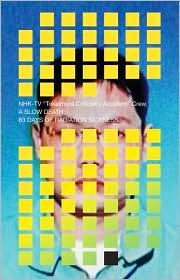
John Gall’s art for A Slow Death: 83 Days of Radiation Sickness (Vertical 160 pages $19.95) is unique in a gaze-snatching fashion. It combines hues of yellow and green, block patterns, and a news photo backdrop into an attractive, enigmatic, and faintly disturbing image that makes a browser wonder, “What exactly is inside this book?”

The answer is an account of a nuclear plant worker’s gradual demise after he was accidentally exposed to 20,000 times the maximum tolerable amount of neutron beam radiation. As some alleged environmentalists (including figureheads such as Al Gore) have begun touting the benefits of “non-carbon sources” of energy — an evasive way of saying “atomic power” — Hisashi Ouchi’s death comes across as an extreme cautionary tale.

Credited to NHK-TV “Tokaimura Criticality Accident Crew” and constructed from a television documentary about the nuclear accident, A Slow Death bluntly but compassionately renders Ouchi’s physical symptoms, which included massive skin loss, and the emotional impact his plight had on the doctors and nurses who treated him. The last extraordinary aspect of Ouchi’s story involves his heart, which persevered and remained relatively healthy while the rest of him demonstrated the impact of radiation. As the book puts it, “it continued living amidst the destruction of virtually every other cell in his body.” 

Cult fiction

0

arts@sfbg.com


LIT I read a lot of thrillers. Mysteries, murder, international intrigue, weird pulp crime … I’ve been addicted since I was in high school and discovered John D. McDonald, Alistair McLean, and Trevanian. These days, I live by James Patterson, Michael Connolly, Robert B. Parker, Janet Evanovich, Lee Child, and John Lescroart.


And I just found the best new thriller writer, and the best new character, to come along since Mr. Child invented Jack Reacher. The writer’s name is Taylor Stevens, her character is Vanessa Michael Munroe, and the first book of what I hope will be a continuing series is called The Informationist (Crown, 307 pages, $23).


Buy it. It’s amazing. And when Stevens is as big as Patterson, you can say you helped discover her.


V. M. Munroe is an awesome protagonist. She ran away from her missionary parents as a teen to sign on with one of Africa’s most notorious gunrunners, and now she deals in information — secrets somebody wants but almost nobody can find.


The book’s set in Central Africa, where Munroe has been hired to find the kidnapped daughter of a Texas oil billionaire.


By the way: she’s skinny, slight, and a total fucking badass who rides a Ducati and effortlessly beats the shit out of the poor losers who try to accost her at a gas station. She speaks 22 languages. She’s the first trans thriller lead, too, a person who slips effortlessly from female to male. Of course, she’s got personal demons, and part of the back story is her battle to silence them. By the end of the second chapter, I had written this in my notes: “I love Vanessa already. Nobody else like her on the literary scene. Nobody.”


The plot is tight, the characters come alive, the sex is fun and intense sometimes but not overdone. The scene at the end involving a sniper, a knife fight, and a stunning decapitation (tell you more and I’ll ruin a gut-wrenching chapter) as good as anything I’ve read in years.


Unlike a lot of thriller authors, Stevens can write. Check it out:


The details of the case ran through her head, and with them came the memories. It was another life, another world, untamed and vast, where stretches of two-lane tarmac ran vein-like through sub-Saharan emptiness, and buses — old, rusting, belching black smoke — pumped the blood of humanity along the way.


And this from a woman who has a sixth-grade education.


Seriously. One of the most amazing things about Stevens is that she grew up in a cult in Central Africa, wasn’t allowed to go beyond basic education, and wasn’t allowed to read books.


I caught up with her in February; here are some excerpts from our talk.


SFBG Tell me a little about your background and how you came to write this book.


Taylor Stevens I was born into and raised in the Children of God, an apocalyptic religious cult. That’s the only world I knew. It was very secluded; all our interactions with what went on outside the community were accompanied by an adult cult member. We didn’t have access to TV; books were almost nonexistent; we didn’t listen to the radio. My entire world was framed within the context of the cult.


SFBG When did you get out?


TS I didn’t get out until I was in my late 20s. I was quite afraid to leave, not of what the cult would do to me, but of what God would do to me. My ex husband — then my husband — and I took a long time to plan how to get out because we didn’t want to end up like some other cult members who had left with no education, no money, no career, on the streets. We had a baby at the time. The group didn’t believe in education. The standard acceptance was sixth-grade education.


SFBG So where did you learn to write?


TS It’s a big mystery, huh? Like my main character, I guess, I absorb languages — at least I absorbed English. I had to teach myself.


The ultimate inspiration came from reading Robert Ludlum, one of the first authors I read, and it was quite by accident. After we made it to the United States, we were so broke, we were living — a family of four — on $13 an hour. I would buy books at garage sales because it was so cheap, then I would sell them again and use the money to buy more books. The first book I read was The Holcroft Covenant. It was so much beyond anything I’d seen before in reading, so I started reading Ludlum voraciously. I found The Bourne Identity and started reading it, and when I was reading The Bourne Ultimatum I was amazed by these places and people. I said to myself, “I wish I could write about all these exotic settings.” And then I thought, “Wait a minute, I’ve lived in places far more exotic than this.”


I’ve always wanted to write, but the cult would never let me write. I got in horrible trouble growing up and trying to write.


SFBG So did you just sit down and start working on The Informationist?


TS That was the first thing I wrote. I had dabbled when I was 15, but I had all my stuff taken and burned. I figured that if I’m going to write, I’d


better learn something about writing. So I bought a couple of used books on writing fiction and I learned from those.


SFBG In this genre of thriller fiction, there aren’t a lot of female protagonists. Was that something you were thinking about?


TS No, because I had no idea. I didn’t know what was out there at all. Even to this day, I’m not very widely read. I’ve read maybe 250 books. I just wrote what made sense to me.


SFBG One of the interesting things about Vanessa is that she has something of a trans element to her. Sometimes she’s Vanessa and sometimes she’s Michael. How did you come up with that?


TS When I first started writing this book, it didn’t have any plot. I just wanted to use Africa as my setting. Jason Bourne was my ideal because I wanted a character who was tormented — not the ideal good guy or good girl, because life doesn’t work like that. Right while I was reading the Ludlum books, I saw the Tomb Raider movies, back to back, and what I loved about Lara Croft was that, while she was a bit of a caricature, she was very sexual, very feminine on every level. I didn’t want my character to lose her femininity in her badassery.


As far as playing the role of a male, in my experience in having lived in some of these countries, it’s completely implausible that you would have a woman be able to go in there and root around and get what she needed. It wouldn’t happen. So the only way she could do it is if she could pull herself off as a man.


SFBG I’m not going to give away too much of the plot, but the subplot of her coming from of a background where she was living at 14 with a gunrunner, there is a certain parallel with you.


TS Her life and my life are not at all similar. But to understand her pain and the frustrations she went through — there’s no way to create that without living with it. I did draw on the sense of emotions my friends and I grew up with. We didn’t have a happy childhood, so it wasn’t difficult to conjure that emotional torment, because it’s very real.


SFBG They’re going to make a movie out of this book, and I’m thinking if they stay true to the scene at the end with the decapitation, you’re going to have a hard time getting even an R rating. I read a lot of thrillers, and I’ve rarely seen such a graphically brutal thing. It’s brilliant, and it’s gut-wrenching. Where did that come from?


TS It just made sense. This person already straddles a fine line between brilliance and insanity. And for her to lose the only one person who loves her for what she was, in such an arbitrary manner, there was no other way she could respond.


SFBG I hope there’s a sequel.


TS It’s already written. And I use my background in a more direct way — and there’s a third book I’m working on now. And if I’m given an opportunity, I hope there will be much more of Michael Munroe.

Appetite: 2 intriguing new food memoirs

0

Just released in early March, here are two new reads I’d recommend not only for foodies but for fans of the absorbing, well-crafted memoir.

>>Life, On the Line by Grant Achatz & Nick Kokonas: When Alinea’s chef genius Grant Achatz writes a memoir, it’s destined to get buzz among foodies. When this visionary chef was diagnosed with stage four tongue cancer, threatened to lose his tongue and taste buds (something devastating to anyone, much less a celebrated chef), it was news well beyond the food world.

Achatz’s first memoir, written with his business partner, Nick Kokonas, is much more than a cancer survival story. It is also more than a chef memoir. Appropriately titled, Life, On the Line, it may not be the most literary of food memoirs, but it is gripping. I couldn’t stop reading of Achatz’s humble Michigan roots, his rise as a chef under Charlie Trotter and Thomas Keller, and particularly the incessant drive that led him to opening his own, widely acclaimed restaurant just as he entered his thirtieth decade.

Life, On the Line is raw, honest, with a straightforwardness that is refreshing. A bittersweet tone underlies this impressive success story. I love Alinea as much as most who’ve had the privilege of eating there, and this book certainly acquaints me in a real, unsentimental way with the minds behind it.

I’m already plotting how I can get to Chicago after his unparalleled concepts of Aviary and Next open…

>>Blood, Bones & Butter by Gabrielle Hamilton: Who knew chef of NY’s beloved Prune, in the East Village, was first and foremost a writer? Early word on the street was that her book was, as Anthony Bourdain himself said, “the best memoir by a chef ever.”

I find the hype a bit high, but do think cooks and food lovers will find much to savor in Blood, Bones and Butter. Though I found it not as compelling as Achatz’s Life, On the Line, Hamilton shines in her mastery of the English language, making it a more pleasurable read.  From idyllic, dreamy parties her parents threw at her rural Pennsylvania childhood home, to the devastation of their divorce that led Hamilton to support herself in restaurant jobs from teen years on, her choice of words creates vivid pictures of each era of her life.

Amidst dish-washing and butchery, she describes her move back to school at “the Harvard of the Midwest” (University of Michigan), where she gets an MFA in fiction writing. It’s an intriguing journey from writing to unexpectedly running her own restaurant. You can’t help but feel writing is her first calling.

As she describes the lamb roasts of her youth, you clearly envision it, and acutely wish you were there: “… the lambs on their spits were hoisted off the pit onto the shoulders of men, like in a funeral procession, and set down on the makeshift plywood-on-sawhorse tables to be carved. Then the sun started to set and we lit the paper bag luminaria, which burned soft glowing amber, punctuating the meadow and the night, and the lamb was crisp-skinned and sticky from slow roasting, and the root beer was frigid and it caught, like an emotion, in the back of my throat.”

** Catch Gabrielle this week in SF at Camino in Oakland (3/11), Omnivore Books (3/12).

–Subscribe to Virgina’s twice monthly newsletter, The Perfect Spot


The Performant: Lady in Red

0

Cirque Noveau and Carletta Sue Kay blaze and seduce 

Even though nothing I saw over the weekend had anything remotely to do with Mardi Gras (Sunday’s Motown Parade in the Fillmore, was on the radar, but I melt in the rain), subtle little visuals kept it very much on my mind. In fact, as I type this, it nags me that I’m missing out on another Rosenmontag, Rose Monday, which is being celebrated all across Germany, a blowout which rivals the best Carnival celebrations from around the world, packed with parades, costumed revelry, and oceans of bier. I’m trying to compensate with a Rammstein CD and a 21st Amendment IPA, but really, it isn’t the same. Let “next year in Cologne” be the rallying cry! There are so many ways to dream.

Despite there not being any roses in my Montag, rose red colored my weekend. First found swirling in the startling tsunami of stage blood spilled by Impact Theatre in their Russian-mafia-meets-Romeo-and-Juliet adaptation, it also glowed wickedly, stretched across the muscled torsos of the performers of Cirque Noveau, in a production that closed last weekend entitled Devil Fish

Somewhat hampered by a plot line as thin as a contortionist’s body-stocking, the Circus improved immensely whenever they dropped the narrative and amped up the acrobatics. The sultry “Devil’s Advocate” Haley Vilora, in glittering red tiger stripes, contorted her body across the stage and through the air, a mesmerizing, gelatinous ooze. Peruvian performer (and show director) Angelo Rodriguez strutted across the stage as the Devil, and also took to the air with his signature cube. And Calvin Kai Ku entertained as a lovelorn clownfish with the hots for aerialist Morgaine Rosenthal, who floated on a set of straps with partner Ryan Webb, her red dress fluttering in the spotlight, a victory banner. 

Something tells me that recondite crooner Carletta Sue Kay knows a little about victory. I first encountered the beau-dazzling alter ego of Randy Walker in a whorehouse off the Carquinez Straits, singing longingly as if to an empty room of heartbreak, male beauty, and candy canes. Part torch singer, part small-town librarian with a knack for Karaoke show-stoppers, Carletta Sue’s enviable pipes turn often hilarious lyrics into rough gems of wisdom such as “is there a lot of dog shit in Paris?/I don’t know why I never noticed it before/Until you said goodbye to me in Paris/it’s just not the same to me anymore.” 

At Sunday’s show at the Makeout room (with the Suicide Dragons and the Sandwitches), the stage was lit red as always, which took the frump out of an embroidered sweater and peasant skirt combo and infused CSK with outlaw glamour, especially when she wailed into the mic like a soul train diva. The crowning moment of the show was definitely the stirring rendition of “If I Was Your Woman,” a song that Carletta promised would fuck her up. I don’t know how she sounds today, rasping through Rosenmontag like some film noir private eye, but on Sunday, her voice was a banner, bathed in red. 


Mad science

2

Is the Bay Area’s experimental beat scene finally coming together? After a few years of lagging behind the explosion of beat conductor talent in Los Angeles, and suffering a steady exodus of potential down south, the Bay Area’s time for creating a forward leaning psychedelia — composed from the bass-infused backbone of instrumental hip-hop — might have arrived.

This week, San Francisco’s DJ veteran Mophono releases his debut full-length, Cut Form Crush, on his upstart CB Records. It’s a colossal experiment in deconstructed percussive patterns and warped synth keys, washed with distorted textures, panning effects, and field recordings. Since 2006, Mophono has hosted the weekly party Change the Beat, guided by only one principle: blow up the soundsystem with unlikely combinations of sounds.

Last week, Change the Beat resident and SF mainstay Salva also dropped his first full-length effort, Complex Housing (Friends of Friends), an excellent dance record that glides across an array of genres infatuated with the interplay of bass, groove, and melody: hip-hop, house, UK funky, Chicago juke, and ghetto-tech all get equal treatment.

Here’s the rub: Although Salva insists that the Bay is still home, especially through his SF-grounded imprint Frite Nite, which supports bubbling acts like Ana Sia and B.Bravo, he was practically unpacking boxes in his new L.A. crib when I spoke to him on the phone before writing this article. On the other hand, another L.A. force of sonic gravity, Low End Theory — Daddy Kev’s acclaimed weekly, which helped form the social fabric that pushed Flying Lotus, the Gaslamp Killer, and Daedalus, among many others, to international attention — has kicked off a monthly residence in San Francisco. Ultimately, both cities can benefit from creative exchange, so let’s just say that California’s got it going on.

Born Benji Illgen, Mophono has been rocking parties in the Bay Area for nearly 20 years as DJ Centipede. His early obsession with digging for records — one that’s amassed a vinyl vault of around 6,000 records — defied genre and era for a love of percussion in all its forms, including conspicuous absence. “I’m drawn to rhythm, both as a DJ and as this metronome-carrier-guy who maintains turntables,” Illgen tells me over the phone, as raucous noise and strange bangs reverberate in the background.

Cut Form Crush could be called a study of drums: percussive patterns unfold and disappear, giving rise to new formations set on their own uneasy path toward self-dissolution. While the drums, crunchy and multilayered, degenerate, a barrage of synth noise and warped textures dance frenetically around the pockets of space jarred open by the percussive momentum. This record alarms as much it disorients.

In many ways, Cut is the product of all the music Illgen has absorbed over the course of the past two decades. From closely following the development of hip-hop and U.K. electronic genres and digging into psychedelic rock, musique concrète, jazz-funk, Kosmische, and post-punk, Illgen became interested in the way imaginative music is made through improvisation. “Bands in the ’60s would get in these zones, really rhythmic areas, and they would tap into a minimal expression,” says Illgen. “I’m interested in those minimal, odd breakdowns, when these cats just jam out on some craziness.”

Rather than just sampling loops and bits from these sources, Illgen decided to reproduce the creative environments that shaped their genesis. “I’d get groups and musicians together in my little studio who aren’t necessarily band mates but are involved in the same sort of music community,” says Illgen. “Then we’d just vibe out. We’d create these recordings that later I’d access and reconfigure the sounds.”

One of the outcomes of this recording process is the dizzying song “Cut Form Crunch,” extracted from multiple sessions with Flying Lotus and later edited into a condensed can of musical psychosis. Thick-bodied synth keys vibrate over muddled bass thumps and compressed percussive claps as if dubstep’s basic components were thrown together into a washing machine, cycling in rotation. “Electric Kingdom” maneuvers through dubstep’s signature helicopter wobble, curdling an off-kilter rhythm with sequenced claps and blips. In “Cut Form Crush Groove,” Illgen reworks the early disco breaks that established the basic framework of hip-hop in circa-1980s South Bronx. A Vocoder-dissimulated MC channels the cosmic frequency of Afrika Bambaataa, calling us to respect the foundation. But even these more conventional drum patterns and familiar vocal refrains wisp away into static and gurgling fuzz.

What Illgen emphasizes in his recording technique is a preference for textural environment over the clarity and crispness often associated with quality. “I see experimentation as an open-minded direction to making music,” he says. “I don’t know what I’m going to find, but if I open my ears, I’ll find something. And I’ll let that dictate where the music goes.”

Paul Salva takes a similar improvisational approach to music production. “Without all the theory and formal training, I have to relish this time where I’m feeling out the instruments and learning what to do with them,” he says. “As amateurs, and coming from a place of ignorance, kids are doing amazing shit — by accident.”

Despite his Chicago upbringing, Salva initially gravitated to West Coast backpacker hip-hop and the East Coast stylings of the Diggin’ In The Crates (DITC) crew before taking an interest in his hometown-bred house and its ghetto-tech offspring. “Record store culture really helped solidify my eclecticism,” he says. “Through working at Gramaphone Records in Chicago and also in Miami, I got into IDM, drum ‘n’ bass, and whatever else caught my ears.” Recently, as genre allegiances have begun to dissolve among young musicians and listeners, Salva grew comfortable with the idea of consolidating his diverse tastes and producing a record on his own terms. Although Complex Housing takes influences from a flux of emerging ideas and sounds across the spectrum of today’s future bass and beat scene innovators, it finds an enduring coherence in being, very simply, a well-crafted dance record.

“Wake Ups” has Salva showing his chops on the synthesizer and the drum machine, layering lush boogie-funk chords over a skittering rhythmic grind. In “Keys Open Doors,” he anchors dirty disco arpeggios with poly-percussion pilfered from the odd-shuffle of UK funky and grime. In these songs, the gritty underside of club music — recalling its many places of origin and evolution in abandoned warehouses and neon-lit bars, juiced from electric outlets in public parks and now the outer zones of the Internet — emerges from layers of shimmering production. The record reaches toward its apex with “I’ll Be Your Friend,” a future-funk rendition of Robert Owens’ early ’90s house classic of the same title. Salva edits Owens’ longing hook into a repetitive chant, spliced around a minimal rhythmic knock and atmospheric washes of sound that delicately grow and just as softly decay.

What consistently stands out within the record is Salva’s ability for crafting effusive melodies over rolling bass lines. It’s an absolutely seductive combination that hinges on a resilient tension in the music: a mechanistic but unsteady beat underpins the expressive quality of the chord progressions. Salva owes this effect at least in part to his recording technique of combining live instrumentation on the keyboard with laptop robotics. “When I’m making music with live instruments, I have more of an open palette,” he says. “When I’m in the computer, in the sequencer — the options are nearly limitless — anything goes. And because of that, my creativity can be stifled if I don’t place restrictions on myself.”

Salva and Mophono both figure out surprising and compelling ways to tap into the elusive formula of creativity. In the end, the search for the future beat is more of a mad science than an exact one.

FIX UP PRESENTS: SALVA COMPLEX HOUSING RELEASE PARTY

With Shlomo, B.Bravo, Epcot, and more

Thurs./17, 9 p.m.; $8

222 Hyde

222 Hyde, SF

(415) 345-8222

www.222hyde.com


CB RECORDS PRESENTS: MOPHONO CUT FORM CRUSH RELEASE PARTY

With Gaslamp Killer and Citizen Ten

Sat./19, 10 p.m.; call for price

SOM

2925 16th St., SF

(415) 558-8521

www.som-bar.com

Printed matters: A specific glance at the 44th California International Book Fair

0

Do you want the pristine first edition of Bram Stoker’s Dracula for 45 grand, or the slightly worn copy for 25 grand? Such were the questions that presented themselves at the 44th Annual California Antiiquarian Book Fair, which took place at SF’s Concourse Exhibition Center from February 11 through 13. A special shout out to local merchants Serendipity Books and Bolerium Books, both of whom had some of the event’s most interesting and affordable pleasures and treasures on display.

Political activists still oppose Chiu’s handbill regulation

12

Progressive political activists and First Amendment advocates continue to have concerns about how Sup. David Chiu’s legislation to regulate handbill distribution will affect low-budget political campaigns, despite Chiu’s efforts to address the criticism.

Two weeks ago, he delayed deliberation on the measure, saying it wasn’t his intention to curtail political speech. The measure returns to the Board of Supervisors tomorrow (Tues/15), but the activists are asking that it be sent back to committee for more work.

Chiu and the Department of Public Works Menu and Flyer Littering Task Force introduced the legislation in an effort to clean up littering and to effectively penalize handbill distribution that doesn’t meet the new regulations of securing literature and ensuring it does not become litter. The new law would require handbills to be securely fastened on doorways or placed under doormats preventing them from becoming litter on the sidewalks and streets.

“You can’t just throw something on a stoop that can be blown away,” Catherine Rauschuber, one of Chiu’s legislative aides who worked on the measure, told us. Handbills can be anything from a menu for a local restaurant to a flyer promoting a community event to campaign advertising and political information. Newspapers are exempt.

But critics of the measure, including California First Amendment Coalition Director Peter Scheer, say it needs a lot more work to pass constitutional muster and safeguard free speech rights.

“The proposed amendment to the San Francisco ordinance is not a ‘reasonable’ regulation of handbills and leaflets because it leaves the distributor of such constitutionally protected materials in doubt as to how to comply,” he told the Guardian. “Specifically, the materials are required to be ‘secured.’ However, the most efficient means of doing so—using tape or other adhesive—is itself prohibited.”

Littering a neighborhood with unsecured handbills is already a criminal infraction, one that is rarely enforced, and Chiu’s legislation would make it an administrative penalty managed at the discretion of DPW. Rauschuber said the penalty would usually be a fine of around $100.

The DPW requested the authority to administer the penalties because it wasn’t a priority of the District Attorney’s Office to prosecute violators, and DPW officials said it would be more effective in lowering the instances of littering, Rauschuber told us.

Political activists such as Karen Babbitt worry about the effect the new legislation will have on grassroots campaigns. She believes that the language of the ordinance creates a disadvantage to political candidates with low-budget campaigns.

“If you place a piece of literature under a doormat and it still somehow ends up on the sidewalk, the campaign can be fined,” she told the Guardian. “I can’t think of a way that I, as a volunteer, could prove that I’d initially placed the piece of lit securely. I try to place them securely, but the wind sometimes still blows them away—especially in windy neighborhoods like Diamond Heights.”

The board’s Land Use and Economic Development Committee approved the measure on Jan. 24, and while political activists say it needs more work, those concerned about litter welcome the change.

Dawn Trennart, a member of the Middle Polk Neighborhood Association and the Menu and Flyer Littering Task Force, saw the handbills become a litter problem in her neighborhood last spring and brought it to Chiu’s attention.

“It is a litter and security problem,” said Trennart said. “The handbills get stuck in doors and cannot lock properly.”

The law would also allow buildings to post a smaller “no handbills” sign with 30-point font, instead of the current requirement of eight square inches, to prohibit distribution. Babbitt believes the ordinance is superfluous to the efforts political volunteers already make.

“Most folks I’ve volunteered with over the years already try to place pieces of literature in ways that keep them from blowing away. It makes your candidate look bad, after all, to have her or his literature blowing all over the neighborhood,” she said.

But she and other activists complain that the new law would presume the campaigns are guilty without offering proof. Scheer also pointed to a 1943 U.S. Supreme Court ruling in the case of Martin v. City of Struthers, which found that litter is not a compelling enough argument to regulate handbill distribution.

Scheer believes that, in order to satisfy the First Amendment, the ordinance should not only state what handbill distributors cannot do, but also state what they can do to avoid penalties, which is commonly called a “safe harbor” provision.

Still, political activists complain that they were not involved in the drafting of the ordinance. While the Sierra Club, ACLU, SF Labor Council, and other groups that distribute political handbills were not consulted, the activists note that Golden Gate Restaurant Association and other business groups were brought in to help shape the legislation.

By asking for the measure to be sent back to committee, where public testimony is taken, the political activists hope their concerns will finally be addressed.

The Performant: Of eggs and robots

0

Thomas John’s “The Lady on the Wall,” and the Slave Robots of Carl Pisaturo

A few years ago, at the Edinburgh Fringe Festival, I saw Dov Weinstein’s imitable Tiny Ninja Theatre enact “Macbeth” on a dollhouse-sized stage, which one viewed through cheap plastic binoculars from a distance of about ten feet. It will always remain one of my favorite versions of that particular play. Weinstein’s ability to perform as a literal cast of hundreds and run his own tech without fumbling his lines nor cues put many much larger (and taller!) companies to shame, and though the intention was quite obviously to amuse, Weinstein and his tiny plastic ninja cast still managed to convey the nuances of a more  serious artistry. Thomas John’s puppet noir “The Lady on the Wall,” which played at the Garage last weekend, displayed the same perfect balance of dorky and deliberate, featuring an unlikely cast of, not ninjas, but eggs.

Dressed in a nice suit just a little too big (like an adolescent boy clad in his father’s clothes for the talent show), Thomas narrated the piece with the deadpan delivery of a professional street performer (which he is), making every bad egg-related pun in the book, as bacon, and eventually eggs, sizzled on a hotplate grill beside him. Maneuvering his fragile characters from the countryside to “Carton City” and back again, Thomas also incorporated small moments of juggling, shadow-puppetry, and DIY lighting effects into his 45-minute thriller. The somewhat scrambled plot (ha!) involved the mysterious death of a lovely lady egg named Maud, aka “Humpty Dumpty,” done wrong by a cad named Frank, and perhaps the victim of a mysterious marauder: “The Poacher”.

Other members of the cast spanned the gamut of noir archetypes, including a gruff, “hard-boiled” private eye (Bob), an ingénue (Molly Meringue), a suspect aristocrat (Sir Benedict), and a whole carton-full of doomed ovum -— the final body count of the show ultimately rivaling “Hamlet”. As for-adults puppetry in the Bay Area has been experiencing a bit of a slump of late, with the majority of produced shows coming in from out-of-town (here’s looking’ at you, Avenue Q), it was great to see such a unique spin on the medium by such a dexterous, likable, and local performer.

Speaking of unique spins, it would be hard to think of a more unique spin on classical dance than the Slave Robots of Carl Pisaturo, on display during MAPP in his studio workshop-cum-gallery, Area 2881. With a meticulously-arranged workspace in the back, and a front room full of spinning, whirling, brightly-lit, kinetic sculptures made of  mostly mechanical components, Area 2881 is a low-key, yet entirely reverent, church of geek. Pisaturo’s centerpiece creations, a pair of skeletal humanoid figures with an astounding degree of hand and arm motion, and nightmarish Frank Garvey-designed body “panels,” are known merely as “Slave Zero” and “Slave One”.

As stirring instrumental music and projections of building demolition looped behind the backlit slaves, they “danced” along, using an expressive range of gesture to surprisingly emotional effect. More proof, if proof were needed, that robots — in addition to eggs and tiny plastic ninjas — can be artists too.

Don’t trip

0

New Rkelly album out Dec 14th that I will soon be immensely non-ironically enjoying
2:48 PM  Dec10th via web

sometimes listening to KMEL all day feels like an insane psychological experiment
4:15 PM Dec 9th via web

Damn…Aretha Franklin is dying? 🙁
3:02 AM Dec 9th via Echofon

nothing is worse than a one man beatbox loop station band unless he is breakdancing or juggling or doing graffiti at the same time
11:31 PM Dec 5th via web

reggie watts- the quirky comedian who incorporates beat box loop station songs into his act. I will regret that youtube search for life.
11:16 PM Dec 5th via web

Just informed someone who didn’t know that dio was dead. Heavy moment
7:36 PM Dec 3rd via Echofon

I wonder what kind of pussy the guys in Trans-siberian orchestra get?
11:10 PM Dec 1st via web

2nd bubba sparxx record is so good.
Sunday, Nov 28, 2010 10:51:05 PM via web

Your house is my nitrous den. I leave my gear there RT @ALEXISPENNEY just saw the cannister and balloons that @swiftumz left in our pantry
2:04 PM Nov 25th via Echofon

K-Ci and JoJo have a reality show!!
2:24 PM Nov 25th via web

everyones “beatles on itunes” jokes fucking suck
2:24 PM Nov 17th via web

wow…singer from blur and FLEA are working on an album of AFRICAN music with Tony Allen…THIS IS NOT A JOKE
1:01 PM Nov 17th via web

“I like any bar I can lay down in”
11:14 PM Nov 12th via Echofon

Been thinking about the west Memphis three a lot lately- about how much I don’t care.
11:12 PM Nov 12th via Echofon

trey songz “bottoms up”is like the best shit out right now.
1:32 PM Nov 12th via web

wow just saw the most racist mcrib commercial ever
5:49 PM Nov 11th via web

leaving hateful comments on local bands youtube pages
12:36 AM Nov 11th via web

I’d like a time lapse film of the healthy, fresh organic food I buy at the beginning of the week slowly wilting in my fridge.
11:55 PM Nov 10th via web

Jackée and Rodney Dangerfields duet of “Great balls of fire” is the definitive version of that song.
5:41 PM Nov 6th via Echofon

@HunxandhisPunx watching ladybugZ 🙂
4:49 PM Nov 6th via Echofon

almost every outkast song gets exponentially shittier each time you hear it.
5:14 PM Nov 15th via web

Die Antwoord is like the worst phenomenon
12:51 PM Nov 5th via web

Big Momma’s House 3 better be in 3D
5:48 PM Oct 27th via web

I hope Eddie Rabbitt wasn’t a stage name because that’s a bad one
1:51 AM Oct 24th via Echofon

I love a rainy night (RIP Eddie Rabbit)
1:50 AM Oct  24th via Echofon

just told drake to shut up and angrily turned off the radio.
1:56 PM Oct 21st via web

they need to invent more dimensions so movies can have more sequels
5:17 PM Oct 11th via web

really happy the Usher/Tre Songz tour is called the “OMG tour”. Gonna be bummed when this era is over.
12:29 PM Oct 7th via web

Always excited to meet someone with an “Anticon” hoody cuz I can tell them all about actual good music to listen to. Especially rap
9:18 PM Oct 1st via Echofon

Last night while complaining about Marley children, I was informed that marc bolans son performs t Rex covers under the name “Rolan Bolan”
3:53  PM Sept 28th via Echofon

wearing a different michael jackson shirt than yesterday.
3:15 PM Sept 15th via web

true story: when I saw pantera in high school I threw an employees hat I took from taco bell onstage and dimebag wore it for the whole show!
2:09 AM Sept 14th via web

making more hits with superproducer @mylesusa today!
6:57 PM Sept 11th via the web

I do really love how earth wind and fire never abandoned the kalimba.
5:23 AM Sept 4th via web

spent 21$ at 7-11 now playing guitar in the mirror as things are heating up
4:52 AM Sept 4th via Echofon

Congratulations to Cee Lo for writing a song worse than “crazy”, no fuck YOU cee lo.
6:51 PM Sept 3 via Echofon

the playlist entitled “me” on my itunes is morphing into a super good album
12:06 AM Sept 2 via web

BART tickets are the best DIY floss
2:35 AM August 13th via Echofon

So stoked on my team of super producers @mylesusa @commasounds @staylucid @swiftumz
10:47 PM Aug 11th via Echofon

@HarlemWhateverr put on the Go-betweens and call it a day. Duh
12:03 PM July 30th via Echofon in reply to HarlemWhateverr

The Hannah Montana movie on second viewing blurs the lines of reality way more than inception or the matrix.
2:12 AM July 19th via Echofon

She also described someone she thought was cute as “thom yorke-like”…double doozy
7:41 PM July 13th via Echofon

Not talking to this lady anymore who isn’t excited about Weird Als upcoming show at the Warfield. #dealbreaker
7:40 PM July 13 via Echofon

lyric from the new prince song: “from the heart of minnesota, here comes the purple yoda” #notjoking
10:58 AM July 12th via web

Starting mixtape at 3am…no Jim Nabors
3:09 AM July 9th via Echofon

Jim Nabors record thrown out of my 4th story window #jimnabors
3:07AM July 7th via Echofon

Listening to Jim Nabors record #timeforbed
3:06 AM July 7th via Echofon

i’m wearing swim trunks and an oversize ICP shirt right now
10:19 PM July 6th via web

“someone spilled a beer in the doritos?” actual quote
2:29 AM July 3rd via Echofon

my iPhone recognizes “chillwave” as a word
11:05 July 1 via Echofon

I wish someone would just organize a flash mob of people punching themselves in the face
11:16 PM Jun 25th via web

Hmmm I wonder how that new sushi place that just opened across the street from the JAIL is…
4:15 PM Jun 25th via Echofon

listening to GAS at work, makes my whole day like an episode of twin peaks
3:01 PM Jun 25th via web

JAH- please make it rain on everyone trying to see Pavement tonight. =D
1:16 PM Jun 25th via web

Toni tone Tony “house of music” LP hasn’t left my record player for a week. A seriously great album.
1:11 AM Jun 24th via Echofon

Whoa macy gray is on TV…always wondered what happened to him
12:52 AM Jun 24th via Echofon

@truepanther sorry dean-nice try, but i’m already signed
3:13 AM Jun 19th via web in reply to truepanther

inhaling insane amounts of sour diesel and listening to durutti column right now #lifeisgood
2:58 AM Jun 19th via web

I should go to bed but I can’t stop listening to mercyful fate #worshipsatan
1:07 AM Jun 17th via web

ouch! curtis mayfield just made me shed a little tear right here at my desk
2:47 PM Jun 11th via web

maybe betty white could join RUNDMC as the DJ???
5:55 PM Jun 3rd via web

is anything stupider than graffiti? Maybe beatboxing?
1:04 PM May 25th via web

Every time I clean my room I find a hit of E
7:07 PM May 18th via Echofon

Listening to Alice Coltrane “universal consciousness” and I have not one shitty thing to say about it. #positivity #universalconsciousness
6:53 PM May 18th via web

this improvisation battle between brian setzer and the country bears fiddle player is intense
11:59 PM May 17th via web

i’ve already given country bears a four star rating on netflix based on the first three minutes.
11:18 PM May 17th via web

holy shit this live action country bears movie is fucking horrifying!!!
11:17 PM May 17th via web

Every time wyclef says “one time” on killing me softly a small part of me dies #shutupandlettheladysing
11:35 AM May 5 via Echofon

I reckon cypress hills bongo player is among the best i’ve ever seen #\:=D
10 PM April 20th via Echofon

These children just handed us a lit joint as big as my index finger
8:55 PM April 20th via Echofon

A new teenage fanclub album and big mommas house 3 in the same year? regained my will to live.
1:15 Pm April 20th via Echofon

I wish the voice in my head was Lee Hazelwoods or Harry Nillsons, maybe then I’d listen to my conscience.
3:41 Pm April 16th via web

Fuck you bjork, you’re the dave matthews band of weird chicks
5:50 PM Mar 31st via Echofon

Bob Marley’s kids are whiter than Michael Jackson’s kids
10:24 PM Mar 17th via Echofon

The oscars r so backwards…that lady is going to win for ‘the hurt locker’ when she should have won for ‘point break’
11:08 PM Mar 4 via Echofon

“do you like noise music?” “no I like that song on the new cat food commercial”
4:44 PM Mar 4 via Echofon

Kinda wish yoko would stop talking about peace and stuff and just brag to the crowd about how great it felt to be filthy rich
10:40 PM Feb 23rd via Echofon

I’m excited to see yoko Ono tomorrow because deerhoof is opening and I want to hate on them
6:20 PM Feb 22nd via Echofon

seriously “on the beach” is like the last thing i’d want to listen to on the beach
12:43 PM Jan 29th via web

Just got asked my favorite question when I’m carrying a guitar in public. “Do you play music?”
3:29 PM Jan 23rd via Echofon

KMEL just had a mini Aaliyah marathon. Not complaining.
4:53 PM Jan 14th via web

I’m confident that I can play guitar better than the following people – Bono, mick jagger, eddie vedder, and the guy from puddle of mudd
12:59 Am Jan 8th via web

“puddle of mudd” performing on tv. shit like this amazes me.
12:57 AM Jan 8th via web

I’m serious when I say the lady who plays the cello for the go betweens can outshred anyone
4:36 PM Jan 6th via Echofon

swiftumz’ album Don’t Trip is coming out on Holy Mountain in spring 2011

Speed Reading: Edie Fake’s Gaylord Phoenix

0

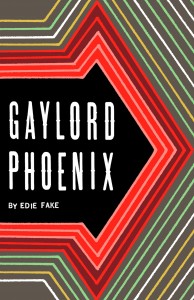
The moment I saw Edie Fake‘s book Gaylord Phoenix (Secret Acres, 256 pages, $17.95) on a table at a local shop was a lifesaver. Not much contemporary art or stuff actually reaches me — and jolts me — at the mysterious and elusive spot(s) where my imagination and spirit reside, and the drawings and stories of Fake do exactly that. I have some issues of Gaylord Phoenix from when it was in serial form, and Fake’s comic Rico McTaco, but I had no idea a lavish color book of Gaylord Phoenix existed, and the discovery was about as close to finding a treasure as I’ve had in recent daily life.

Over the last few weeks I’ve looked at Gaylord Phoenix a lot in bed, on the verge of sleep and dreams, and occasionally while in transit from one place to another. Both experiences, if not ideal, seem right for entering the book’s universe. It is the kind of epic journey in which a reader — not to mention the characters — can get lost. Gaylord Phoenix is a love and lust story. It’s a quest through terrain that is strange yet also familiar, especially if you have access to your queerness or inner experience. It is funny, it is disturbing, it is gorgeous, it is mesmerizing.

Gaylord Phoenix the character has a projector for a nose; webbed hands which can morph into other shapes; a hairy chest, arms, and legs; and (most of the time) tubular genitals that can penetrate and be penetrated, fill or envelop. There is a slightly woeful or stricken quality to Gaylord’s personality, as rendered via facial features and half-capsule head. Yet hexes, spells, “crystal bloodlust,” orgiastic oceans of tears, experimental examination rites, and periods of bereft solitude are not enough to stop Gaylord Phoenix from searching for pleasure and communion with the surrounding world.

That world — a world of many worlds — is one of the things that makes Gaylord Phoenix special. Fake’s hand-rendered cubes, pyramids, hexagons, Bridget Riley-like black-and-white vortexes (referred to in the ultra-spare, brilliant dialogue), wizard cone hats, mazes, temples, wood grains and vines, crocodile skins, fish scales, clouds and cave formations, and plumage accumulate detail and color over the course of the book. What might have been interpreted as technical improvement within Gaylord Phoenix‘s serial manifestations as a comic is revealed in the book to be material for a dramatic and visionary climax and denoument.

In the realm of comics and graphic novels, Gaylord Phoenix could be seen as a fantastic inverse of the sexual horror in Dash Shaw‘s BodyWorld. It arrives at a time when various musicians and visual artists are also tapping into mystic and occult energy, though its singularity of vision reminds me of Jack Smith and Kenneth Anger channeled from archival celluloid strip to contemporary line drawings on the printed page. Ultimately, there is nothing like it.

A few years ago, Fake lived in SF, and attended one of the Guardian’s Goldies celebrations with Amanda Kirkhuff, whose pencil drawings and oil paintings of female pop icons and news figures transmit an equally pure power. They aren’t here now, they’re each moving onward in their own ways, but this city was lucky to play host to them for a while, and it would be great to see them again. 

Where the Magik happens

0

arts@sfbg.com

MUSIC Because of the rusty pieces of corrugated sheet metal crudely affixed to its exterior, I almost mistake Tiny Telephone, a recording studio, for a very large, dilapidated storage unit. But on a brick-red door, alphabet letter magnets spell out “tiny,” and only bits of dried glue and fragments of “telephone” remain. This must be it.

Through the door, a two-wall art installation made of reclaimed redwood (by resident artist Claire Mack) in the lounge/kitchen area catches my eye. I’ve seen pictures of it on the studio’s website. This is it. It’s easy to imagine Death Cab For Cutie or San Francisco songstress Thao drinking beer, shooting the shit, and jamming in this room.

Once I plop down on the couch, pop-folk icon John Vanderslice, owner and manager of Tiny Telephone, pulls up a chair. Minna Choi, the artistic director of Magik*Magik Orchestra, the studio’s official house orchestra, takes a seat on a tan area rug.

“It’s probably like how everyone feels when you’re from San Francisco and you move to the East Coast and there are no good taquerias,” Vanderslice says, laughing, when I ask him about the history of Tiny Telephone. “I was in a small local band,” he elaborates. “We wanted to make a record. We toured every local studio. It was like there were only either rehearsal places with garbage on the floor, or posh, unaffordable, hardwood-floor, uptight-owner situations. There was nothing in the middle.”

In September 1997, Vanderslice opened Tiny Telephone to give independent musicians the opportunity to make affordable hi-fi recordings. Magik*Magik Orchestra entered the picture in 2008. “We wanted to simplify the process of incorporating classically-trained musicians into a nonclassical environment,” Choi says. “So I e-mailed [John].”

“It was like genius!” Vanderslice blurts out.

Adding the orchestra to Tiny Telephone is in tandem with Vanderslice’s evolution as an artist. On 2004’s Cellar Door (Barsuk), he strayed from electric guitar and used acoustic guitar and keyboards. “[Electric guitars] really take up a lot of territory,” he explains. “It’s a little bit like a cock-block. [Keyboards] can sit in one area, and then you can put something directly above them and below them in the frequency spectrum, so there’s plenty of room for, like, a French horn.” This year’s White Wilderness (Dead Oceans), finds Vanderslice’s tenor accompanied by acoustic guitar and a 19-piece ensemble gleaned from Magik*Magik Orchestra’s roughly 180-person membership.

“It’s great to go in a different direction,” Vanderslice says. “It’s great to move on.”

We all stand to start the tour. As I walk across the aqua blue floor, my hand grazes Fender amps that line the walkway to the main recording room. Inside, it’s dimly lit. When Vanderslice flips a switch, a white deer head becomes illuminated — like a statue of an idol — by Christmas lights strung on a pump organ. In one breath, he enumerates some of the equipment that is available: 14 guitar amps, a Hammond b3, a grand piano, keyboards, an EMT reverb plate. The lexicon of music recording equipment is dizzying. Vanderslice points to the walls: “These are all untreated cedar panels. This is cotton batting.” As we leave the room, he pauses to mention that the studio has been booked for more than 400 days in a row.

We climb a few rickety stairs to enter the control room, where we’re joined by Ian Pellicci, Tiny Telephone’s house engineer. With its UV meters, faders, and colored knobs, the room’s Neve console, built in 1976 for the BBC in London, looks like a prop taken from the bridge of the original Star Trek‘s Enterprise. This is the tape machine,” says Choi. “I’m proud to say that I was here when they put all of the light bulbs in, then all of a sudden it came alive like Wall-E.”

To encourage analog recording, Tiny Telephone provides free two-inch tape to clients. “Not that digital is terrible. But the technology has a ways to go,” Pellicci says. “There’s a greater dimension to the sound [of analog].”

Next we shuffle into the isolation room. “We’re basically in an anechoic isolation room where people can do vocals, drums — ” Vanderslice begins to explain. But with the room’s door open, I can hear the raucous sounds of construction taking place down the hallway.

Next door, what once was an auto shop is being converted into a separate studio, a “B Room” Opening in June, the B Room will be set up as an arts nonprofit modeled after The Bay Bridged and 826 Valencia. Unlike Tiny Telephone, which costs $350 per day plus engineers, the B Room will cost $200 daily. “We wanted to give bands a low-cost option to record on a tape machine, on a real console with microphones, in a space where they can make as much noise as they want,” says Vanderslice.

“With this other price point, [Vanderslice] is tapping into another group of bands and artists,” Choi adds. “There are probably so many diamonds in the rough — crazy talent waiting to be discovered.”

As the tour winds down, Vanderslice shares his vision of Tiny Telephone and the B Room: “We’re going to put a picnic table outside, a basketball hoop — we’re going to build community. And that’s what it’s all about.”

Deconstructing Cinderella, deconstructing La Llorona

1

They say you shouldn’t judge a person until you’ve walked a mile in their shoes. Ana Teresa Fernandez, the featured artist in Galería de la Raza’s upcoming video exhibition “La Llarona Unfabled,” (opening Sat/12) has obliged in regards to that feminist foil, Cinderella. For her video installation, Fernandez spent hours standing wearing a melting pair of “glass slippers” made of ice on a dirty West Oakland street. The experience, she feels, left her more than qualified to criticize the social constructs embodied by fairy tale’s scullery maid-cum-princess.

Originally conceived by Galería’s executive director Carolina Ponce de León, “La Llorona Unfabled” will include work from four other artists: Monica Enriquez-Enriquez, Geraldine Lozano, Rosario Sotelo, and Tanya Vlach. The five will respond to issues of gender, class, identity, and migration in an effort to re-craft cultural narratives into feminist and Latina perspectives.

Which is not to say the exhibition won’t speak to all women. “It isn’t about brown, white, rich, poor,” Fernandez affirms. “It is about the self, learning to find your true voice and talents and making that voice the thing which sustains you in life.”

In her art, Fernandez uses lessons from her own life to challenge feminine mythologies — from the Mexican folktale of La Llorona, the weeping woman, to the story of Cinderella –  to “show little girls that they can be the protagonists of their own stories,” she says. Born in Tampico, Mexico, Fernandez was recruited by San Francisco Art Institute with a full scholarship – an opportunity that she met with amazement, and which enabled her to do the art she loves for a living. But Fernandez didn’t have a Prince Charming to make her dreams come true, or a fairy godmother for that matter. For that, she had to rely on talent, hard work and a passion for subverting the macho norms of classic art.

Growing up, the artist experienced very clear ideas about where women belonged. Her mother, a runner, was chastised for wearing short-shorts and sneaking out of the house to race with men. Ana, also an athlete, broke four national swimming records by the time she was eight. “They had to train me with the boys,” she recalls. Now 29, the artist has traveled the world but still feels that by supporting herself through painting, she is swimming against the current.  

Like many children in Mexico, Fernandez grew up hearing the story of La Llorona, the colonial-era fable of a beautiful peasant girl who is abandoned by her noble (read: white) husband.  She drowns her two children, and then herself in the river and is condemned to forever wander its banks, wailing for her lost sons. To Fernandez, the story was a clear message that a woman need to rescued by a man or else face a life of desperation. “What’s that game?” she asks, snapping her fingers. “Old Maid. If you’re not chosen, you’re nobody.” 

Even as the child of educated parents from a big city, Fernandez feels she has to fight the story’s notions of class and race, isolation and empowerment. “There is something to be said about changing the incredible enlaid guilt of how you must act or what you must do as a woman where I grew up – which sounds so incredibly old-fashioned.” 

Inspired by the “strong, elegant women” of her childhood, Fernandez’s paintings – the body of her artistic work up til now – balance the sensuality of the female body with the constrictions that work and fashion place upon it. In “Siren’s Shadow,” a woman swims in a cocktail dress and heels, literally dragged down by those conventional symbols of femininity. In the “La Llorona”  show, these same themes are explored through video and performance art, with water taking on additional meaning as a symbol of La Llorona, weeping endlessly into the river.

“Siren’s Shadow” by Ana Teresa Fernandez 

With the added dimension of time that video brings to Fernandez’s work, its dismantling of the ideals of femininity encoded in myth and art is shown more dynamically. As she stands over sewage in her ice shoes cast from the exaggerated stilettos worn by exotic dancers, waiting for her prince to come, Fernandez’s “glass slippers” and the mythology they imply literally melt away. 

Fernandez is reluctant to align herself with the tradition of Chicana painters working in San Francisco. Her paintings are a far cry from the bold, primary colors of Mujeres Muralistas, the Mission’s famous group of female street artists who lit up Balmy Alley. While she says the Mission feels like her “home away from home,” with its pockets of Mexican culture, Fernandez admits that her work relates more to the European masters and is “much more influenced by male painters.”

Which seems a little incongruous, given her subject material, but Fernandez argues that the virtuosic style of her painting is in itself a subversion, given that the role of the virtuoso painter wasn’t always available to women. Many female artists, especially Latina artists, committed “rebellious acts” against virtuosic tradition in order to get noticed, creating Kahlo-like fantasy worlds rather than create art in the patriarchal classical vein. 

By contrast, Fernandez’s figures, richly constructed out of layers of oil on canvas, glow with heat and realism. “Michelangelo and Botticelli and Brunelleschi were all men that fascinated me,” she says. 

In fact, to someone not paying attention, the muscled, sculptural bodies in Fernandez’s work may not seem so different from the sexualized objects they are meant to replace. But “hyper-sensuality is not the same as sexuality – it oozes, rather than blurts out,” she explains. “It’s quieter, it lingers longer. That’s what I try to play with.” 

She hopes to balance the tradition by adding a female voice without compromising the work’s aesthetic qualities. “In painting women have always been interpreted by men.” As in her life, in her art Fernandez chooses not to retreat into the realm assigned to her by men. She would rather beat them at their own game.


“La Llorona Unfabled: Stories to (Re)Tell to Little Girls”

Artist Talk Sat/12, 2-4 p.m., free

Opening Reception Sat/12, 7:30 p.m., free

Through April 16

La Galería de la Raza

2857 24th St., SF

(415) 826-8009

www.galeriadelaraza.org


A fiction writer that beats FOX News for war coverage

0

Kudos to the New Yorker for bringing Daniel Alarcón to the attention of the eastern rag’s audience. The Oakland writer is one of the three West coast scribes from the New Yorker’s 20 Under 40 “young” writers anthology who will be reading at City Lights Books on Weds/19. I suggest you go check up on the event – if not for the magazine’s time-proven track record of tagging future lit stars, then because the more people in this country who read Alarcón, the less likely we are to plunge our country into madness.

Alarcón’s are war stories, but not in the sense that we grow up with in America, where the term brings to mind bombs and sharp, whizzing death. Alarcon draws on his cultural memory of home country Peru (where he left for Birmingham, Alabama when he was three years old) to speak of the more prosaic nature of conflict through the eyes of people to whom it is brought, not those that strap on uniforms and board helicopters to go to it. 

Take the novel he’s best known for, Lost City Radio (Harper Collins, 288 pages, $24.95). It takes place – in the grand tradition of Latin American epics — in a mythic town, or at least an unnamed city. A war has raged for years, resulting in the disappearance of radio star Norma’s husband, Rey. An orphaned boy from the city shows up and with him an end to her endless, ragged wonderings about what happened to Rey. Every one of the book’s characters is struggling to deal with the real nature of war: a messy business, sure — but not one where the women, children, and elderly are left at home, as they are in many of our country’s depictions of conflict.

There are few gunshots fired in Lost City Radio. Instead, the scene of war is rendered in social notes – illicit dance parties held after curfew, names you can and can’t say on the radio, acceptance of loss, confusion. The story that Alarcón contributes to 20 Under 40 is Second Lives, which tells the story of a Peruvian family who sends their eldest son away from inflation and civil war to America, where he promptly immerses himself in the American life, which is to say he starts water-skiing, job-hopping, and stops writing home to his mom, dad, and brother.

What would our wars — including the one we are waging on immigration — be like if the general populace of our country saw it this way, instead of through the clip art pyrotechnics of TV news channels? 

Plus, Alarcón is the only author I’ve ever heard to name-check a seminal tome from my childhood, The Phantom Tollbooth as being an influential one in his life. Plus, he lives in Oakland. The night’s other readers, Chris Adrian and Yiyun Li, both hail from the Bay too. The last time the New Yorker pulled this same anthology stunt in 1999 they pegged Junót Diaz, Jonathan Franzen, and Jhumpa Lahiri before their ascent into best-sellerdom, so it’ll be perfect if you’re the before-the-curve type about the national fiction scene.


20 Under 40: Stories from the New Yorker

Weds/19 7 p.m., free

City Lights Books

261 Columbus, SF

(415) 362-4921

www.citylights.com


The music library

1

arts@sfbg.com

MUSIC “They wanna give you it all at the library.”

Dade Elderon’s come up with a perfect promotional catchphrase for the SF Public Library’s Main Branch. We’re IMing about the library, where he sets up his gear and writes and records songs on a 9-to-5 schedule. “One part of the library is a very high-tech, clean learning environment. It’s a temple. Then you go down to the [first-floor] bathroom and it’s like a dirty, filthy circus. There is a lot going on in that bathroom. Every stall is a different challenge.”

A few days later, I meet Elderon on the library’s fourth floor. As is his practice, he’s reserved one of the private rooms and has set up his equipment, most notably a Korg Electribe EMX-1 and ESX-1. “This is what I bring to the library — I have a [Roland] TR-606 and other gear at home and at a friend’s house,” he says, handing me a spare pair of headphones. “I use this [the ESX-1] strictly as a drum machine, and load up different sounds depending on what kind of song I want to make. I program the melodies on the EMX-1 because if you run too many parts at once on the ESX-1, it will make the sound muddy.”

For the next half-hour, Elderon — long bangs spilling out from the right side of his SF Giants cap — gives me a brief tutorial, explaining polycyclic wave forms, saw waves, and different hi-hats while running through a variety of sounds, from hip-hop to trance to freestyle. Sitting with him, I can see how the room, with its soundproof clear glass and stylish card-catalog wallpaper, is an ideal readymade recording studio. “I really like the tables and the glass setup,” Elderon says. “It’s peaceful. Sometimes people will stand outside with a ‘What are you doing?’ look on their faces, but I just ignore it. I don’t know what people might think these things [the Electribes] are — some people are suspicious of them, maybe.”

Contrary to a paranoiac’s sense of appearance, Elderon isn’t working with explosives, though he is hoping some of his projects will blow up. Party Effects, the Oakland techno bass crew he helped figurehead, has disbanded, and these days he’s working with a number of different recording artists. “This is a track I’m making with Dz MC’s, a Brazilian freestyle singer,” he says, as a percolating, skittering melody dances around a haunted-sounding female vocal.

Along with Dz MC’s, who has a following in Brazil, Elderon has been making tracks with aspiring Stateside singers such as Gloria Hernandez, a local vocalist whose voice possesses freestyle-ready sass and snap, and Nikki Marx, whose sexy photos and real-life story have intrigued Elderon and his roommate and former Party Effects partner, Alexis Penney. “She’s German, lives in New York City, and works on Wall Street as a day trader,” Elderon explains, as we look at some of Marx’s provocative photos. “Alexis is obsessed with her, and we can’t figure her out.”

At the moment, Elderon is also in the early stages of some remix projects for 679 Artists, a Warner Music Group label based in London that represents Little Boots, Marina and the Diamonds, and Streets. Along with his other roommate, Myles Cooper, he’s also contributing a track to an upcoming album by H.U.N.X., the “gayest music ever” electropop side project of Hunx and His Punx’s Seth Bogart. “I guess Myles’s idea is to make the most annoying song anyone has ever made, and I think he’s doing it,” Elderon says appreciatively. “Seth and I are making a gay freestyle song. He wants it to be over the top. I sampled him making a bunch of sex noises, and I’m going to sprinkle them throughout the track.”

Elderon’s adept way with genre suits one of his recording monikers, Adeptus. He chose the name because — along with invoking “to attain” in Latin, a quest he likens to Afrika Bambaataa’s search for the perfect beat — he likes its “Gothic, occult, and dark-sounding” qualities. On the one hand, he’s a fan of Ace of Base’s 1990s Euro dance pop — in fact, he’s competing against eight other remixers in an Ace of Base-sponsored contest in which the person who comes up with the best mix of “The Sign” wins a car. But on his own tracks, he’s drawn to seductive somber sounds. As he puts it, “I’m attracted to minor scales.”

The public library as a recording studio and potential pop gold mine — it’s all in a day’s music-making for Elderon, who cut his teeth recording with the eccentric, literally offbeat Tarythyas in Party Effects. “His bedroom is the craziest room I’ve ever been in,” Elderon says, when asked to describe Tarythyas’s home dwelling. “There’s no less than 20 to 30 fish tanks in the room, all lit up. There are crazy toys and lights everywhere, and six different computer workstations.”

The strange is familiar to Elderon, whose past includes a military stint and studies in cellular microbiology, and whose current day job involves flying to Turkey once a month to rescue street animals for a fledgling animal-rights crusader in Beverly Hills. He shows me some passports of pets he’s recently flown back to the U.S., including a cat that possesses a mack’s satisfied smile. “The animals freak out on the plane, so they give me a ketamine spray,” he says.

For now, Elderon is the one traveling, but he’s hoping his music will be going international soon as well. At one point he describes Turkey as a “nexus of weird cultures,” and the same description could be applied to his music, which has pop immediacy, but allows room for wild personality. He’s out to attain something special, and it’s just beginning to materialize.

On the Cheap Listings

0

On the Cheap listings are compiled by Caitlin Donohue. Submit items for the listings at listings@sfbg.com. For further information on how to submit items for the listings, see Picks.

WEDNESDAY 5

Concierto de Reyes Mission Cultural Center for Latino Arts, 2868 Mission, SF; (415) 643-5001, www.missioncultural.org. 2pm, free. The Coro Hispano of San Francisco, a chorus comprised of Spanish-speaking community members, has been celebrating Latin America through song since 1975. Join ’em for their annual kids holiday concert, which will cover turf as varied as renaissance motets and aguinaldos (Christmas folk music) from Peru, Venezuela, Puerto Rico, and more.

Glen Canyon habitat restoration Glen Park Recreation Center, 70 Elk, SF; (415) 337-4705, www.sfrecpark.org. 9am-noon, free. Sure, you’ve made “that” resolution for the millionth time. But how about you snap out of that pudgy pity party and truck out to a little exercise that benefits more than just your waist line? SF parks are in need of TLC if they want to fend off invasive species and you can join in on the action at this morning of weeding, planting, and pruning. Dress to get muddy and active – and indulge in the free snacks provided free of your Christmas cookie guilt.

FRIDAY 7

Jaime Cortez: “Universal Remote” Southern Exposure, 3030 20th St., SF; (415) 863-2141, www.soex.org Through Feb. 19. Opening reception 7-9pm, free. It’s been months, but we still have a big in our hearts the size of a glittery glove. Thankfully, here comes visual artist Jaime Cortez’s solo exhibition, which calls out the tragic, tremendous pop culture whorl that was MJ – and highlights the King of Pop’s fluid moves through race, sexuality, and zombie-human relations.

Oakland Art Murmur Telegraph and 23rd St., Oakl.; www.oaklandartmurmur.com. 6-10 p.m., free. Rediscover what downtown Oakland’s got going on art-wise with this monthly show-and-tell by the neighborhood’s best and brightest art galleries. This week, catch Jennie Ottinger’s book art at Johansson Projects (excerpt from her truncated version of As I Lay Dying: “Holy shit, this family is cursed! Very National Lampoon’s Vacation.“)

SATURDAY 8

Parent-child snow globe class Randall Museum, 199 Museum Way, SF; (415) 554-9600, www.randallmuseum.org. 1-4pm, $6 for children; $10 for parent-child duos. The holidays are over, and yeah it’s still cold and rainy. But take heart! Winter can be time for good cheer even after Santa’s packed up the sleigh and gone north. Make a shakable wonder with your wee one and enjoy the rest of Randall Museum’s “Saturdays are Special” event (10am-4pm), which includes railroad exhibits, live animal feedings, and the rest of the science-y wonders present throughout the rest of this always-free museum.

Vintage Paper Expo Hall of Flowers, Golden Gate Park, Lincoln and Ninth Ave., SF; (328) 883-1702, www.vintagepaperfair.com. 10am-6pm, free. (Also Sun/9, 10am-4pm) Postcards, photos, brochures, stereoviews, and so much more! What’s a stereoview, you ask? Why, nothing less than an antique 3D image – something you can acquaint yourself with at this fair of all things printed and retro. The Vintage Paper Expo’s got over 100 vendors this year, all primed to sell you affordable scraps of history.

Writers With Drinks The Make Out Room, 3225 22nd St., SF; (415) 647-2888, www.writerswithdrinks.com. 7:30-9:30pm, $5-10 sliding scale. Writers? Drink? Well, I guess there’s a first time for everything! This long-standing lit night series pairs local scribes (this month’s are girl group Gogos founder Jane Wiedlin and socio-writer Ethan Watters) with a crowd that’s anything but stiff for readings, skits, and stand-up.

MONDAY 10

Cinema Drafthouse: Machete The Independent, 628 Divisadero, SF; (415) 771-1421, www.theindependentsf.com. 9pm, free. A deliberately silly revenge plot that’s both spot-on vintage homage and semi-serious commentary on America’s ongoing immigration debate gets the Indy’s free movie night treatment. Watch the film with a beer in hand (or two) – and feel free to shout advice to the characters on-screen. You’re in a music venue, for chrissakes.

TUESDAY 11

Pecha Kucha 330 Ritch, 330 Ritch, SF; www.pecha-kucha.org. 7pm, $5 donation suggested. Embarking as we are on month number one of year two-thousand-and-one-one, the theme of this month’s installation of this cross-discipline art night series is, yes, “one.” Not the most specific theme, sure – but that’s the way artists like it, and when you’ve assembled a passel of them from fields as varied as industrial design, animation, and fashion, sometimes it’s best just to step back and watch them unify.

Eat, pray, defend chick lit

1

caitlin@sfbg.com

LIT I read Eat, Pray Love a while ago, and I’m nervous to tell you that I liked it. Ever since bottle blonde Julia Roberts assumed her best worried-kitten face for the book’s film version, no self-respecting lit snob would ever admit to having enjoyed Elizabeth Gilbert’s account of her year of finances-be-damned travel, healing from divorce, and fulminations on the belabored pursuit of love.

The release of her follow-up, Committed (Viking Adult), a socio-historical look at marriage couched in the story of Gilbert’s own unexpected union to her green card-challenged hubby Felipe — and the announcement of her Jan. 14 appearance at the Yoga Journal Conference — goaded me to examine just why people are down on Gilbert. After perusing the con side (a blog called Drink Curse Hate was enlightening) I found that the ire seems to hinge on two precepts: that she is self-centered, and that her writing is what we diminutively refer to as chick lit. Well three, if you count complaints about her flippant usage of Eastern spirituality for self-help. But I’m not sure I have much to answer back to on that front.

First, a self-centered writer? Well stomp my keyboard and call me Danielle Steele. Writers write because we think we have something interesting and important to say. There are plenty of writers who write about themselves, and only themselves, and whom people fall over themselves to love. Hey, David Sedaris. Eat, Pray, Love is indeed all about Gilbert, but that doesn’t make it uninteresting. Glamorous travel writer leaves unsatisfying marriage, mends heart with an empowering trek around the world, yoga, Italian food, and impressively hunky Brazilian men encountered along the way. Hate on, haters, you’d write about it if it happened to you.

Second, chick lit. Literature written for chicks, by chicks, about chicks — am I getting the definition right? This term can stop being a pejorative one yesterday, as far as I’m concerned. And really, any book that teaches women that it’s okay to long for more than children and complete kitchen sets (which EPL does in spades) should be applauded in these uncertain times.

The funny thing about Gilbert is that before Eat, Pray, Love, she had a thriving writing career. Her creative nonfiction books were about men, of all things: an account of the macho culture of a Maine fishing village (named Stern Men) and the tale of an awe-inspiring, if prickly master outdoors-man (this titled The Last Man in America). Gilbert was a regular contributor at Spin and GQ, for which she penned the article on her days bartending at one of Manhattan’s most testosterone-heavy dives, Coyote Ugly Saloon. There was a movie based on that one, by the way.

“I couldn’t believe that Disney wanted to buy this story, it was so raunchy,” Gilbert tells me over the phone from the converted New Jersey church where she and Felipe had set up shop just prior to the onset of Eat, Pray, Love fever. “I still don’t know how they did it — I was like no! I can still smell the vomit.”

No, she could never have anticipated the last book’s zeitgeist-level success. No, she doesn’t expect Committed to replicate those sales numbers. The Eat, Pray, Love mania was “like a big circus parade going on just outside my door nonstop. I spend my day washing dishes and doing laundry and then I look out the window and go, ‘Wow, there’s that circus out there — they have dancing bears!’ and then I go back to doing what I’m doing.”

As far as she’s concerned, the book was the pinnacle of her career — and that’s fine. “The definition of a phenomenon is that it only happens once and you don’t know why it happened.”

But my money’s on Committed to be a success in its own right. The premise: Gilbert’s just not that into marriage. But marry she must, to secure Brazilian hubs Felipe the right to live in the country they’ve made their home, so she embarks on finding out what the hell it is about societally recognized partnership that people down through history have found acceptable, even appealing. She comes up with divergent and fascinating tidbits: that early Christians eschewed marriage, a socially conservative writer’s thesis that marriage is in itself a subversive act.

I read the book in a day. Gilbert’s conversational flow carries you through her life’s intimate details, like the transcribed list of personal faults she complied for Felipe. (She includes her need for attention and overly enthusiastic cold shoulder, yet leaves out the inevitability that every iota of their relationship will at one point be discussed by book clubs around the country.) A tone as engaging as hers has rarely been applied to the question of what marriage means in this day and age, and it’s refreshing to see that matter given some thought — even if her research is by her own admission not exhaustive. Hey, I probably wouldn’t have read the book if it had been.

I wanted to give the book to my newly sprouted crop of married friends, see how my mom reacts to Gilbert’s conclusions on child rearing, copy a chapter on the importance of solo travel for my boyfriend to read.

But they’d probably make fun of me. Elizabeth Gilbert? Please, that’s chick lit.

YOGA JOURNAL CONFERENCE: AN EVENING WITH ELIZABETH GILBERT

Jan. 14, 7:30 p.m.,

$29–$39 conference attendees, $49–$59 regular admission

Hyatt Regency

5 Embarcadero Center, SF

(800) 561-7407

www.yjevents.com


On the Cheap Listings

0

On the Cheap listings are compiled by Caitlin Donohue. Submit items for the listings at listings@sfbg.com. For further information on how to submit items for the listings, see Picks.

WEDNESDAY 29

Snowboard movie night The Riptide, 3639 Taraval, SF; (415) 681-8433, www.riptidesf.com. 9pm, free. It’s absolutely dumping on Tahoe, but you’re stuck “working” tomorrow at your “place of employment”? Square. But Riptide forgives you – in fact, the Sunset bar is hosting a night of free snowboarding movies, free snacks, and muchos drink specials. Sponsored by SFO Snowboards, you might score some free gear in their bi-monthly raffle.

THURSDAY 30

Wizard of Oz Paramount Theatre, 2025 Broadway, Oakl.; (510) 465-6400, www.paramounttheatre.com. 7Pm, $5. Honestly, five dollars just to tool around in the art deco splendor of the Paramount Theatre would be well worth your money – but once they throw in a screening of the uber-classic adventure in Weirdo Land (sorry Scarecrow, y’all are bizarre), you can hardly afford not to go. Don’t we all want to click together our ruby slippers and wish ourselves away to good, old-fashioned fun?

FRIDAY 31

Japanese New Year’s bell-ringing ceremony Asian Art Museum, 200 Larkin, SF; (415) 581-3500, www.asianart.org. 10am-2pm, free with $12 museum admission. Guarantee luck and lovin’ in 2011 with this day of art activities and traditional community ceremony. Numbered tickets, assigned on a first-come-first-served basis will be on offer if you’d like to ring the museum’s 2,100 pound, 16th century bell from the Tajima province in Japan.

Roller Disco New Year’s Eve CellSpace, 2050 Bryant, SF; (415) 648-7562, www.cellspace.org. 9:30, $10. Black Rock Roller Disco, the purveyors of a thousand scraped knees over the past 10 years at Burning Man, truck out their well-loved rink for your countdown to 2011. Tire of wheeling yourself around? Dance slightly more agilely in the back room’s new wave lounge.

Jon Sugar’s all ages rock and comedy New Year’s Eve Tikka Masala, 1668 Haight, SF; gawksf@yahoo.com. 8pm-1am, free. The founder of Gay Artists and Writers Kollective (GAWK) Jon Sugar hosts a night of actors, DJs, and alternative art of all stripes at this welcoming party for the young and old.

Vampire Tour SF Corner of California and Taylor, SF; (650) 279-1840, www.sfvampiretour.com. 8-10pm, $20. The cold ones were not an invention of Stephanie Meyer, believe it or not. In fact, vamps have been amongst us for the longest, particularly if you believe Kitty Nasarow, who loves to bring us mortals around on her immortal historical tours and claims to have been turned frigid by none other than Count D himself. Learn about the blood-suckers’ role in the creation of SF.

SATURDAY 1

Kwanzaa imani ceremony Marcus Bookstore, 1712 Fillmore, SF; (415) 292-6172. 3pm, free. The culmination to SF’s holiday celebration of unity, self-determination, responsibility, purpose, and creativity takes places at the country’s longest-operating African-American owned bookstore. The imani rite focuses on faith in one’s people, parents, teachers, and the righteousness of struggle – happy thoughts for a new year of challenges.

Victorian 12th Night Ball Masonic Lodge, 100 N Ellsworth, San Mateo; www.peers.org. 7pm, $15-20. New Year’s Eve is over, so you’ve already let it all hang out – time to cinch it back in with this Dickens-era period ball. A 7pm dance lesson will teach you all you need to know about Viennese and rotary waltzes – come in your bustled, beauteous Victorian garb to enjoy a light English buffet and dancing with the Period Events and Entertainments Re-Creation Society.

MONDAY 3

Pilates to the People The Long Haul Infoshop, 3124 Shattuck, Berk.; (510) 540-0751, www.eastbayfreeskool.wikia.com. 7-8:30pm, donations. Silly you – you thought pilates was just for MILFs who lunch and their yappy little bow-wows? The core strength-building workout can actually be a blessing for all those who are looking to build a firm center in their lives. You can check out the miracle of healthy muscles at this weekly East Bay Free Skool offering – and check out the anarcho lit at the Long Haul while you’re at it.

TUESDAY 4

“Feast of Words” literary potluck SOMArts Cultural Center, 934 Brannan, SF; (415) 863-1414, www.feastofwords.eventbrite.com. 7-9pm, $5-12. Just right to take the edge off of your holiday come down: a foodie-writer potluck to which you must bring edibles, readables, or both. The evening’s program includes a talk by writer Faith Adiele, snacks from Canvas Underground, and a quick write competition based around the theme of “blurred identity.”

Thank you later

0

arts@sfbg.com

YEAR IN MUSIC The past year brought dozens of excellent albums, and hip-hop sounds topped the list. This wasn’t inevitable. Please recall 2009, when critics cited precious little rap in their favorites, save for Raekwon’s Only Built 4 Cuban Linx … Part 2 and Mos Def’s The Ecstatic. But in 2010, both rockists and heads reserved space for Kanye West’s My Beautiful Dark Twisted Fantasy, Big Boi’s Sir Lucious Left Foot: Son of Chico Dusty, the Roots’ How I Got Over, Drake’s Thank Me Later, and Flying Lotus’ Cosmogramma. And let’s not forget minor but important recordings such as Curren$y’s Pilot Talk and Yelawolf’s Trunk Muzik 0-60.

This winning slate confirmed that major label-backed rap is undergoing a renaissance. Nearly every artist made an impact by keeping their eye on the mainstream, from security guard-turned-bad actor Rick Ross recruiting Erykah Badu and Cee-Lo Green for his Teflon Don, to Bun B allowing Canadian teen idol Drake to call himself an “honorary member of UGK” on the former’s Trill O.G. Some complained that these rappers focused too much on claiming the hearts of soccer mama grizzlies and teens raised on Bratz dolls. But after years of boorish thugs peddling D-boy anthems and R&B gimmicks, this new pop sensibility sounded refreshing. (The sole exception may be Ludacris, who found success with Battle of the Sexes by offering a slick and familiar mix of strip club anthems and babymaker suites.)

B.o.B’s The Adventures of Bobby Ray was the most extreme product of these pop mirages. The Atlanta rapper scored two No. 1 hits (“Nothin’ but You” and “Airplanes”), but divided critics and fans by recruiting emo-rock burnout Rivers Cuomo and Hot Topic heroine Hayley Williams for his collection of gooey ballads. At its best, The Adventures of Bobby Ray had a charming innocence; at worst, it sounded like pandering. But at least it offered well-written tunes. In contrast, Nicki Minaj’s grating Pink Friday mashed bad 1980s John Hughes-approved synth-pop and soaring Rihanna choruses into a barely coherent mess. It proved that despite Nicki’s talent for ear-catching stunts, from her star turn as the bisexual chick who’ll do you and your man on Usher’s “Lil’ Freak” to her cipher-destroying rhymes on Kanye West’s “Monster” and Ludacris’ “My Chick Bad,” she was still a disappointingly underdeveloped songwriter.

Lost in the intense debate over the rap major domo was the demise of Definitive Jux. Once the mighty inheritor to the Fondle ‘Em tradition of B-boy nonconformity, and the source of key early-2000s works by Cannibal Ox, Aesop Rock, and Mr. Lif, it sagged under the weight of subpar and underpromoted releases before label head El-P mercifully pulled the plug last February. The news lit up the Internet for a day or two and then was seemingly forgotten. When Noz from cocaineblunts.com asked Yelawolf if he was “heartbroken” over Definitive Jux’s demise, the Alabama rapper answered: “I didn’t even know it ended. Well … I’m not heartbroken about it.” How ironic that Yelawolf was once a lyrical-minded backpacker too, before switching to gritty tales of deep South meth dealers.

There were other disturbing signs that Definitive Jux’s indie-rap scene was no longer ground zero for fledging MCs, from conscious rap advocates Little Brother breaking up, to Minneapolis freestyle ace Michael “Eyedea” Larsen dying at the tragically young age of 28. “Underground rap is dead,” noted Sean Fennessey in a Pitchfork essay hyping Los Angeles collective Odd Future. “In its stead, a different brand of homespun rappers have taken hold. Consider Lil B and Soulja Boy, who have been prolifically working the Web … to achieve their own kind of teenage heroism.”

Underground rap is not dead. It thrives with Bay Area imprints such as Interdependent Media (Truthlive’s Patience) and national players such as Duck Down Records (Skyzoo & Illmind’s Live from the Tape Deck) and Alpha Pup Records (Nocando’s Jimmy The Lock). Some of these labels subsist on scattershot independent distribution. Others recruit majors to achieve wider market penetration, including Stones Throw and EMI Label Services (Guilty Simpson’s OJ Simpson and Aloe Blacc’s retro-soul gem Good Things), and Decon and E1 Music (Black Milk’s Album of the Year). And who can blame them? These days, labels need all the help they can get. However, the principal philosophy of economic and artistic independence as an end unto itself has been forgotten.

In Robin D.G. Kelley’s 2002 book Freedom Dreams, a rapturous appreciation of 20th century black intellectualism, he writes, “Unfortunately, too often our standards for evaluating social movements pivot around whether or not they ‘succeeded’ in realizing their visions rather than on the merits or power of the visions themselves. … And yet it is precisely these alternative visions and dreams that inspire new generations.” Kelley could have referred to the many critics that marked Little Brother as hopelessly elitist for insisting that hip-hop should address more than the spoils of drug wars; dismissed the late Eyedea, Sage Francis, and others as silly white boys for addressing suburban middle-class concerns; and buried Definitive Jux as a repository of uncool, impossibly dense super-scientific lyricism.

By many measures, the indie-rap scene has been a failure. Unlike the network of homespun labels built by punks in the 1980s, the indie-rap scene didn’t create a thriving community without considerable financing from youth-targeting corporations, lifestyle brands, and advertising firms. And perhaps its denizens wrongly castigated dirty South rappers as ignorant, claimed that mainstream superstars like Jay-Z and Diddy were sell-outs, and turned the underground movement into a kind of purity test — all past conflicts that continue to bedevil it today. Yet these dreamers courageously imagined hip-hop culture as not only a way to entertain people and make money, but as a transformative experience that can help instill positive growth and change lives. They built a culture that holds key lessons for future rap generations.

The blog-rap generation doesn’t hold any illusions of being alternative, unless it’s manufacturing limp blasphemy like Odd Future’s use of Nazi imagery. (As Anti-Defamation League spokesman Abraham Foxman told The New York Times in a story on the Holocaust documentary Shoah, “To most kids growing up today, Hitler could be Genghis Khan.”) They’ll use any trope to be successful, from falsely claiming that they’re coke barons to bragging about their limited-edition sneaker collection and how much weed they smoke. There’s a gleeful egalitarianism in their digital miscellany. The beats bang but are same-y and indistinct, and the voices are barely distinguishable. As Wiz Khalifa simply said on his breakout single, “Black & Yellow”: “You can do it big.”

Some critics separated wheat from chaff with technical criteria such as internal rhyme schemes and double-time flow, as if MCs were ice skaters or guitar wankers. But the best artists simply illuminated their money hunger by any means necessary, effortlessly adding interesting twists to tired rap clichés. When Drake crooned on Thank Me Later, “I want this shit forever, man,” he evoked a poor man’s Nat King Cole. And when Curren$y ranted, “A gee is what I am, a jet is what I be” like a Southern Popeye on Pilot Talk II, he was insistent enough that you almost believed him.

And then there was Kanye West and My Beautiful Dark Twisted Fantasy. He created a spectacle out of an hour-long justification for his obnoxiousness, invited the genre’s biggest stars to support his meanderings on chauvinism and virility (or “my black balls”) and, most provocatively, continued a public call-and-response with Gil Scott-Heron. The conversation began with West’s sampling of Scott-Heron’s melancholy “Home Is Where the Hatred Is” for his 2005 album Graduation. Then Scott-Heron replied by using West’s “Flashing Lights” melody for “On Coming from a Broken Home,” the bittersweet coming-of age tale from Scott-Heron’s valiant yet muddled comeback, I’m New Here.

West ended Fantasy by sampling a large section from Scott-Heron’s 1970 spoken-word performance “Comment #1,” and retitling it “Who Will Survive in America?” The poem originally captured the COINTELPRO era and the U.S. government’s eradication of black radicals, but West seemed to use it for a different point. Perhaps he’s saying that fame serves as a protective armor against systemic racism and how “at the airport they check all through my bag and tell me that it’s random.” Or maybe he’s making a wry comment on celebrity culture as the only way to survive in America. Fantasy‘s cryptic epilogue perfectly summarized this year’s rap dreamers, lost in the pop Matrix.