Leather

Film Listings

0

Film listings are edited by Cheryl Eddy. Reviewers are Kimberly Chun, Michelle Devereaux, Peter Galvin, Max Goldberg, Dennis Harvey, Johnny Ray Huston, Louis Peitzman, Lynn Rapoport, Ben Richardson, and Matt Sussman. For rep house showtimes, see Rep Clock. For first-run showtimes, see Movie Guide.

SAN FRANCISCO INTERNATIONAL FILM FESTIVAL

The 54th annual San Francisco International Film Festival runs through May 5. Venues are the Sundance Kabuki, 1881 Post, SF; Castro, 429 Castro, SF; New People, 1746 Post, SF; San Francisco Museum of Modern Art, 151 Third, SF; and Pacific Film Archive, 2575 Bancroft, SF. For tickets (most shows $13) and complete schedule visit www.sffs.org.

OPENING

*…But Film is My Mistress and Images from the Playground Swedish critic Stig Bjorkman will visit the Rafael with two recent documentaries he’s made about

his country’s–and one of the last century’s–greatest filmmakers, Ingmar Bergman. The feature-length Mistress adds commentary from admiring colleagues Olivier Assayas, John Sayles, Arnaud Desplechin, Bertolucci, Scorcese, Lars von Trier and Woody Allen to a scrutiny of Bergman’s working methods, as glimpsed in eight features from 1966’s Persona to 2003’s Saraband. It’s fascinating to watch Liv Ullmann and Ingrid Bergman endlessly questioning their scenes on 1978’s Autumn Sonata, charming to watch the director walk arm-in-arm down a street with his invaluable cinematographer Sven Nykvist. Bjorkman’s half-hour Images from the Playground is comprised of home movies and behind-the-scenes footage mostly shot by Bergman himself from the early 1950s onward, accompanied by audio reflections from him and major collaborators. In contrast to the filmmaker’s rep for doom and gloom, these clips show everybody having a pretty good time on the job, goofing for the camera, while his unbridled enthusiasm for his actresses suggests something was swinging in Sweden well before the Sixties. Dennis (1:35) Smith Rafael. (Harvey)

Dylan Dog: Dead of Night Brandon Routh stars as the titular supernatural investigator in this adaptation of the Italian comic-book series. (1:47)

Fast Five Vin Diesel and Paul Walker: still furious after all these years. (1:41)

Hoodwinked Too! Hood vs. Evil Hayden Panettiere, Glenn Close, and Joan Cusack lend their voices to this 3D animated sequel. (run time not available) Legend of the Fist: The Return of Chen Zhen Donnie Yen stars in Andrew Lau’s period martial arts actioner. (1:46) Four Star.

*My Perestroika Robin Hessman’s very engaging documentary takes one very relatable look at how changes since glasnost have affected some average Russians. The subjects here are five thirtysomethings who, growing up in Moscow in the 70s and 80s, were the last generation to experience full-on Communist Party indoctrination. But just as they reached adulthood, the whole system dissolved, confusing long-held beliefs and variably impacting their futures. Andrei has ridden the capitalist choo-choo to considerable enrichment as the proprietor of luxury Western menswear shops. But single mother Olga, unlucky in love, just scrapes by, while married schoolteachers Lyuba and Boris are lucky to have inherited an apartment (cramped as it is) they could otherwise ill afford. Meanwhile Ruslan, once member of a famous punk band (which he abandoned on principal because it was getting “too commercial”), both disdains and resents the new order just as he did the old one. Home movies and old footage of pageantry celebrating Soviet socialist glory make a whole ‘nother era come to life in this intimate, unexpectedly charming portrait of its long-term aftermath. (1:27) Balboa. (Harvey)

*The Princess of Montpensier Marie (Mélanie Thierry), the titular figure in French director Bertrand Tavernier’s latest, is a young 16th century noblewoman married off to a Prince (Grégoire Leprince-Ringuet) of great wealth and property. But they’ve barely met when he’s called off to war — leaving her alone on his enormous estate, vulnerable to myriad suitors who seem to be forever throwing themselves at her nubile, neglected body. Lambert Wilson (2010’s Of Gods and Men) is touching as the older soldier appointed her protector; he comes to love her, yet is the one man upstanding enough to resist compromising her. If you’ve been jonesing for the kind of lush arthouse period epic that feels like a big fat classic novel, this engrossing saga from a 70-year-old Gallic cinema veteran in top form will scratch that itch for nearly two and a half satisfyingly tragic-romantic hours. (2:19) Smith Rafael. (Harvey)

Prom Every teen movie has a prom scene; this ensemble movie’s just cutting to the chase is all. (1:44)

The Robber A bank robber uses his marathoning skills to escape crime scenes in this Austrian thriller based on a true story. (1:37)

Stake Land See “Land of the Undead.” (1:38) Roxie.

Too Perfect Five 14-year-old boys come of age in this Bay Area-made film. (1:15) Orinda.

ONGOING

The Adjustment Bureau As far as sci-fi romantic thrillers go, The Adjustment Bureau is pretty standard. But since that’s not an altogether common genre mash-up, I guess the film deserves some points for creativity. Based on a short story by Philip K. Dick, The Adjustment Bureau takes place in a world where all of our fates are predetermined. Political hotshot David Norris (Matt Damon) is destined for greatness — but not if he lets a romantic dalliance with dancer Elise (Emily Blunt) take precedence. And in order to make sure he stays on track, the titular Adjustment Bureau (including Anthony Mackie and Mad Men‘s John Slattery) are there to push him in the right direction. While the film’s concept is intriguing, the execution is sloppy. The Adjustment Bureau suffers from flaws in internal logic, allowing the story to skip over crucial plot points with heavy exposition and a deus ex machina you’ve got to see to believe. Couldn’t the screenwriter have planned ahead? (1:39) (Peitzman)

African Cats (1:40)

Arthur (1:45)

Atlas Shrugged (1:57)

*Bill Cunningham New York To say that Bill Cunningham, the 82-year old New York Times photographer, has made documenting how New Yorkers dress his life’s work would be an understatement. To be sure, Cunningham’s two decades-old Sunday Times columns — “On the Street,” which tracks street-fashion, and “Evening Hours,” which covers the charity gala circuit — are about the clothes. And, my, what clothes they are. But Cunningham is a sartorial anthropologist, and his pictures always tell the bigger story behind the changing hemlines, which socialite wore what designer, or the latest trend in footwear. Whether tracking the near-infinite variations of a particular hue, a sudden bumper-crop of cropped blazers, or the fanciful leaps of well-heeled pedestrians dodging February slush puddles, Cunningham’s talent lies in his ability to recognize fleeting moments of beauty, creativity, humor, and joy. That last quality courses through Bill Cunningham New York, Richard Press’ captivating and moving portrait of a man whose reticence and personal asceticism are proportional to his total devotion to documenting what Harold Koda, chief curator at the Costume Institute at the Metropolitan Museum of Art, describes in the film as “ordinary people going about their lives, dressed in fascinating ways.” (1:24) (Sussman)

Ceremony It’s easy to dismiss Ceremony as derivative. The plot isn’t exactly original. But recycled material aside, it’s an entertaining indie diversion and a promising feature-length debut from writer-director Max Winkler. The underrated Michael Angarano stars as Sam Davis, a pretentious shit who owes a lot to Holden Caulfield by way of Rushmore‘s Max Fischer. Sam tricks his best friend Marshall (Reece Thompson) into accompanying him on a weekend getaway, with the real objective of winning back his lost love Zoe (Uma Thurman). But Zoe is all set to marry blowhard Whit Coutell (Lee Pace) and is not too keen on blowing off her wedding. None of the characters are all that likable — a quirky indie comedy must — and there are few surprises. But Winkler’s script is cute, and his cast is charming enough to carry the material along. The scenes between Angarano and Thompson are the film’s best. Here’s hoping they stand out enough to earn these young actors the recognition they deserve. (1:40) (Peitzman)

Certified Copy Abbas Kiarostami’s beguiling new feature signals “relationship movie” with every cobblestone step, but it’s manifestly a film of ideas — one in which disillusionment is as much a formal concern as a dramatic one. Typical of Kiarostami’s dialogic narratives, Certified Copy is both the name of the film and an entity within the film: a book written against the ideal of originality in art by James Miller (William Shimell), an English pedant fond of dissembling. After a lecture in Tuscany, he meets an apparent admirer (Juliette Binoche) in her antique shop. We watch them talk for several minutes in an unbroken two-shot. They gauge each other’s values using her sister as a test case — a woman who, according to the Binoche character, is the living embodiment of James’ book. Do their relative opinions of this off-screen cipher constitute characterization? Or are they themselves ciphers of the film’s recursive structure? Kiarostami makes us wonder. They begin to act as if they were married midway through the film, though the switch is not so out of the blue: Kiarostami’s narrative has already turned a few figure-eights. Several critics have already deemed Certified Copy derivative of many other elliptical romances; the strongest case for an “original” comes of Roberto Rossellini’s Voyage to Italy (1954). The real difference is that while Rossellini’s masterpiece realizes first-person feelings in a third-person approach, Kiarostami stays in the shadow of doubt to the end. (1:46) Smith Rafael. (Goldberg)

*Circo The old notion of “running away with the circus” seldom seemed appealing — conjuring images of following an elephant around with a shovel — and it grows even less so after watching Aaron Schock’s warm, touching documentary. The kids here might one day run away from the circus. They’re born into Grand Circo Mexico, one of four circuses run by the Ponce family, which has been in this business for generations; if they’re old enough to walk, they’re old enough to perform, and help with the endless setup and breakdown chores. (Presumably child labor laws are an innovation still waiting to happen here.) Touring Mexico’s small towns in trucks with a variety of exotic animals, it’s a life of labor, with on-the-job training in place of school — arguably not much of a life for child, as current company leader Tino’s wife Ivonne (who really did run away with the circus, or rather him, at age 15) increasingly insists. Other family members have split for a normal life, and Tino is caught between loyalty to his parents’ ever-struggling business and not wanting to lose the family he’s raised himself. This beautifully shot document, scored by Calexico and edited by Mark Becker (of 2005’s marvelous Romantico), is a disarming look at a lifestyle that feels almost 19th century, and is barely hobbling into the 21st one. (1:15) (Harvey)

The Conspirator It may not be your standard legal drama, but The Conspirator is a lot more enjoyable when you think of it as an extended episode of Law & Order. The film chronicles the trial of Mary Surratt (Robin Wright), the lone woman charged in the conspiracy to assassinate Abraham Lincoln. It’s a fascinating story, especially for those who don’t know much of the history past John Wilkes Booth. But while the subject matter is compelling, the execution is hit-or-miss. Wright is sympathetic as Surratt, but the usually great James McAvoy is somewhat forgettable in the pivotal role of Frederick Aiken, Surratt’s conflicted lawyer. It’s hard to say what it is that’s missing from The Conspirator: the cast — which also includes Evan Rachel Wood and Tom Wilkinson — is great, and this is a story that’s long overdue to be told. Still, something is lacking. Could it be the presence of everyone’s favorite detective, the late Lennie Briscoe? (2:02) (Peitzman)

*Hanna The title character of Hanna falls perfectly into the lately very popular Hit-Girl mold. Add a dash of The Boys from Brazil-style genetic engineering — Hanna has the unfair advantage, you see, when it comes to squashing other kids on the soccer field or maiming thugs with her bare hands — and you have an ethereal killing/survival machine, played with impassive confidence by Atonement (2007) shit-starter Saoirse Ronan. She’s been fine-tuned by her father, Erik (Eric Bana), a spy who went out into the cold and off the grid, disappearing into the wilds of Scandinavia where he home-schooled his charge with an encyclopedia and brutal self-defense and hunting tests. Atonement director Joe Wright plays with a snowy palette associated with innocence, purity, and death — this could be any time or place, though far from the touch of modern childhood stresses: that other Hannah (Montana), consumerism, suburban blight, and academic competition. The 16-year-old Hanna, however, isn’t immune from that desire to succeed. Her game mission: go from a feral, lonely existence into the modern world, run for her life, and avenge the death of her mother by killing Erik’s CIA handler, Marissa (Cate Blanchett). The nagging doubt: was she born free, or Bourne to be a killer? Much like the illustrated Brothers Grimm storybook that she studies, Hanna is caught in an evil death trap of fairytale allegories. One wonders if the super-soldier apple didn’t fall far from the tree, since evil stepmonster Marissa oversaw the program that produced Hanna — the older woman and the young girl have the same cold-blooded talent for destruction and the same steely determination. Yet there’s hope for the young ‘un. After learning that even her beloved father hid some basic truths from her, this natural-born killer seems less likely to go along with the predetermined ending, happy or no, further along in her storybook life. (1:51) (Chun)

Henry’s Crime Keanu Reeves is one of those actors who’s spectacularly franchise-wealthy — due to those Matrix movies wherein his usual baffled solemnity was ideal — yet whom the public otherwise feels scant evident loyalty toward, and producers don’t know what to do with. Now that he’s aging out of his looks, can he transform into a character actor? Maybe. Reeves played charming suitors in Something’s Gotta Give (2003) and The Private Lives of Pippa Lee (2009), both very much supporting roles. He seems increasingly interested in indie films, which he surely doesn’t need to pay the rent, and he’s certainly the best reason to see Henry’s Crime, a pleasant, middling, retro crime caper costarring frequently better actors at dimmer wattage than usual. The film is an old hat out of the Damon Runyon trunk, in which lovable crooks mix it up with hoity theatrical types and nobody gets hurt except (barely) the really bad guys. James Caan — who starred in similar enterprises during their post-The Sting heyday plays the veteran convict-conman who schools Reeves’ hapless Buffalo, N.Y., toll-taker Henry after our hero is slammer-thrown for an armed robbery he didn’t know he was embroiled in until it was over. Upon release, Henry discovers the targeted bank and nearby theater had a Prohibition-era secret tunnel between them. Having already done the time, he figures he might as well do the crime by finishing the aborted bank job for real. He enlists local stage diva Julie (Vera Farmiga) as well as Caan’s parole-coaxed Max. Resulting wacky hijinks render Max a theater “volunteer” and Henry as Julie’s Cherry Orchard costar, all so they can access the walled-up passageway to the bank vault. Much of this is ridiculous, of course, and not intentionally so. The climax is classic movies-getting-how-theater-works-wrong. But its contrivance functions to some extent because the lead actor convinces us it should. (1:48) (Harvey)

Hop (1:30)

*In a Better World Winner of this year’s Best Foreign Language Film Oscar, this latest from Danish director Susanne Bier (2004’s Brothers, 2006’s After the Wedding) and her usual co-scenarist Anders Thomas Jensen (2005’s Adam’s Apples, 2003’s The Green Butchers) is a typically engrossing, complex drama that deals with the kind of rage for “personal justice” that can lead to school and workplace shootings, among other things (like terrorism). Shy, nervous ten-year-old Elias (Markus Rygaard) needs a confidence boost, but things are worrying both at home and elsewhere. His parents are estranged, and his doting father (Mikael Persbrandt) is mostly away as a field hospital in Kenya tending victims of local militias. At school, he’s an easy mark for bullies, a fact which gets the attention of charismatic, self-assured new kid Christian (William Jøhnk Nielsen), who appoints himself Elias’ new (and only) friend — then when his slightly awed pal is picked on again, intervenes with such alarming intensity that the police are called. Christian appears a little too prone to violence and harsh judgment in teaching “lessons” to those he considers in the wrong; his own domestic situation is another source of anger, as he simplistically blames his earnest, distracted executive father (Ulrich Thomsen) for his mother’s recent cancer death. Is Christian a budding little psychopath, or just a kid haplessly channeling his profound loss? Regardless, when an adult bully (Kim Bodnia as a loutish mechanic) humiliates Elias’ father in front of the two boys, Christian pulls his reluctant friend into a pursuit of vengeance that surely isn’t going to end well. With their nuanced yet head-on treatment of hot button social and ethical issues, Bier and Jensen’s work can sometimes border on overly-schematic melodrama, meting out its own secular-humanist justice a bit too handily, like 21st-century cinematic Dickenses. But like Dickens, they also have a true mastery of the creating striking characters and intricately propulsive plotlines that illustrate the points at hand in riveting, hugely satisfying fashion. This isn’t their best. But it’s still pretty excellent, and one of those universally accessible movies you can safely recommend even to people who think they don’t like foreign or art house films. (1:53) (Harvey)

*Jane Eyre Do we really need another adaptation of Jane Eyre? As long as they’re all as good as Cary Fukunaga’s stirring take on the gothic romance, keep ’em coming. Mia Wasikowska stars in the titular role, with the dreamy Michael Fassbender stepping into the high pants of Edward Rochester. The cast is rounded out by familiar faces like Judi Dench, Jamie Bell, and Sally Hawkins — all of whom breathe new life into the material. It helps that Fukunaga’s sensibilities are perfectly suited to the story: he stays true to the novel while maintaining an aesthetic certain to appeal to a modern audience. Even if you know Jane Eyre’s story — Mr. Rochester’s dark secret, the fate of their romance, etc. — there are still surprises to be had. Everyone tells the classics differently, and this adaptation is a thoroughly unique experience. And here’s hoping it pushes the engaging Wasikowska further in her ascent to stardom. (2:00) (Peitzman)

Kill the Irishman If you enjoy 1970s-set Mafia movies featuring characters with luxurious facial hair zooming around in Cadillacs, flossing leather blazers, and outwitting cops and each other — you could do a lot worse than Kill the Irishman, which busts no genre boundaries but delivers enjoyable retro-gangsta cool nonetheless. Adapted from the acclaimed true crime book by a former Cleveland police lieutenant, the film details the rise and fall of Danny Greene, a colorful and notorious Irish-American mobster who both served and ran afoul of the big bosses in his Ohio hometown. During one particularly conflict-ridden period, the city weathered nearly 40 bombings — buildings, mailboxes, and mostly cars, to the point where the number of automobiles going sky-high is almost comical (you’d think these guys would’ve considered taking the bus). The director of the 2004 Punisher, Jonathan Hensleigh, teams up with the star of 2008’s Punisher: War Zone, Ray Stevenson, who turns in a magnetic performance as Greene; it’s easy to see how his combination of book- and street smarts (with a healthy dash of ruthlessness) buoyed him nearly to the top of the underworld. The rest of the cast is equally impressive, with Vincent D’Onofrio, Val Kilmer, Christopher Walken, and Linda Cardellini turning in supporting roles, plus a host of dudes who look freshly defrosted from post-Sopranos storage. (1:46) (Eddy)

The King’s Speech Films like The King’s Speech have filled a certain notion of “prestige” cinema since the 1910s: historical themes, fully-clothed romance, high dramatics, star turns, a little political intrigue, sumptuous dress, and a vicarious taste of how the fabulously rich, famous, and powerful once lived. At its best, this so-called Masterpiece Theatre moviemaking can transcend formula — at its less-than-best, however, these movies sell complacency, in both style and content. In The King’s Speech, Colin Firth plays King George VI, forced onto the throne his favored older brother Edward abandoned. This was especially traumatic because George’s severe stammer made public address tortuous. Enter matey Australian émigré Lionel Logue (Geoffrey Rush, mercifully controlled), a speech therapist whose unconventional methods include insisting his royal client treat him as an equal. This ultimately frees not only the king’s tongue, but his heart — you see, he’s never had anyone before to confide in that daddy (Michael Gambon as George V) didn’t love him enough. Aww. David Seidler’s conventionally inspirational script and BBC miniseries veteran Tom Hooper’s direction deliver the expected goods — dignity on wry, wee orgasms of aesthetic tastefulness, much stiff-upper-lippage — at a stately promenade pace. Firth, so good in the uneven A Single Man last year, is perfect in this rock-steadier vehicle. Yet he never surprises us; role, actor, and movie are on a leash tight enough to limit airflow. (1:58) Castro. (Harvey)

*Limitless An open letter to the makers of Limitless: please fire your marketing team because they are making your movie look terrible. The story of a deadbeat writer (Bradley Cooper) who acquires an unregulated drug that allows him to take advantage of 100 percent of his previously under-utilized brain, Limitless is silly, improbable and features a number of distracting comic-book-esque stylistic tics. But consumed with the comic book in mind, Limitless is also unpredictable, thrilling, and darkly funny. The aforementioned style, which includes many instances of the infinite regression effect that you get when you point two mirrors at each other, and a heavy blur to distort depth-of-field, only solidifies the film’s cartoonish intentions. Cooper learns foreign languages in hours, impresses women with his keen attention to detail, and sets his sights on Wall Street, a move that gets him noticed by businessman Carl Van Loon (Robert DeNiro in a glorified cameo) as well as some rather nasty drug dealers and hired guns looking to cash in on the drug. Limitless is regrettably titled and masquerades in TV spots as a Wall Street series spin-off, but in truth it sports the speedy pacing and tongue-in-cheek humor required of a good popcorn flick. (1:37) (Galvin)

*The Lincoln Lawyer Outfitted with gym’d-tanned-and-laundered manly blonde bombshells like Matthew McConaughey, Josh Lucas, and Ryan Phillippe, this adaptation of Michael Connelly’s LA crime novel almost cries out for an appearance by the Limitless Bradley Cooper — only then will our cabal of flaxen-haired bros-from-other-‘hos be complete. That said, Lincoln Lawyer‘s blast of morally challenged golden boys nearly detracts from the pleasingly gritty mise-en-scène and the snappy, almost-screwball dialogue that makes this movie a genre pleasure akin to a solid Elmore Leonard read. McConaughey’s criminal defense attorney Mickey Haller is accustomed to working all the angles — hence the title, a reference to a client who’s working off his debt by chauffeuring Haller around in his de-facto office: a Lincoln Town Car. Haller’s playa gets truly played when he becomes entangled with Louis Roulet (Phillippe), a pretty-boy old-money realtor accused of brutally attacking a call girl. Loved ones such as Haller’s ex Maggie (Marisa Tomei) and his investigator Frank (William H. Macy) are in jeopardy — and in danger of turning in some delightfully textured cameos — in this enjoyable walk on the sleazy side of the law, the contemporary courtroom counterpart to quick-witted potboilers like Sweet Smell of Success (1957). (1:59) (Chun)

Miral (1:42)

*Of Gods and Men It’s the mid-1990s, and we’re in Tibhirine, a small Algerian village based around a Trappist monastery. There, eight French-born monks pray and work alongside their Muslim neighbors, tending to the sick and tilling the land. An emboldened Islamist rebel movement threatens this delicate peace, and the monks must decide whether to risk the danger of becoming pawns in the Algerian Civil War. On paper, Of Gods and Men sounds like the sort of high-minded exploitation picture the Academy swoons over: based on a true story, with high marks for timeliness and authenticity. What a pleasant surprise then that Xavier Beauvois’s Cannes Grand Prix winner turns out to be such a tightly focused moral drama. Significantly, the film is more concerned with the power vacuum left by colonialism than a “clash of civilizations.” When Brother Christian (Lambert Wilson) turns away an Islamist commander by appealing to their overlapping scriptures, it’s at the cost of the Algerian army’s suspicion. Etienne Comar’s perceptive script does not rush to assign meaning to the monks’ decision to stay in Tibhirine, but rather works to imagine the foundation and struggle for their eventual consensus. Beauvois occasionally lapses into telegraphing the monks’ grave dilemma — there are far too many shots of Christian looking up to the heavens — but at other points he’s brilliant in staging the living complexity of Tibrihine’s collective structure of responsibility. The actors do a fine job too: it’s primarily thanks to them that by the end of the film each of the monks seems a sharply defined conscience. (2:00) (Goldberg)

*Poetry Sixtysomething Mija (legendary South Korean actor Yun Jung-hee) impulsively crashes a poetry class, a welcome shake-up in a life shaped by unfulfilling routines. In order to write compelling verse, her instructor says, it is important to open up and really see the world. But Mija’s world holds little beauty beyond her cheerful outfits and beloved flowers; most pressingly, her teenage grandson, a mouth-breathing lump who lives with her, is completely remorseless about his participation in a hideous crime. In addition, she’s just been disgnosed with the early stages of Alzheimer’s, and the elderly stroke victim she housekeeps for has started making inappropriate advances. Somehow writer-director Lee Chang-dong (2007’s Secret Sunshine) manages not to deliver a totally depressing film with all this loaded material; it’s worth noting Poetry won the Best Screenplay Award at the 2010 Cannes Film Festival. Yun is unforgettable as a woman trying to find herself after a lifetime of obeying the wishes of everyone around her. Though Poetry is completely different in tone than 2009’s Mother, it shares certain elements — including the impression that South Korean filmmakers have recognized the considerable rewards of showcasing aging (yet still formidable) female performers. (2:19) Smith Rafael. (Eddy)

Pom Wonderful Presents: The Greatest Movie Ever Sold Don’t even think about shortening the title: Morgan Spurlock’s new documentary POM Wonderful Presents: The Greatest Story Ever Sold is ingenious, bitingly funny, and made possible by corporate sponsorship. POM paid good money to earn a spot about the title, so damned if I’m going to leave them out. Instead of keeping product placement subliminal — or at least trying — Spurlock shows exactly what goes into the popular marketing practice. His film isn’t so much critical as it is honest: he doesn’t fight product placement, but rather embraces it to his own advantage. It’s win-win. Spurlock gets to make his movie without losing any cash, and the audience gets a hilarious insider look into a mostly hidden facet of advertising. As he says, it’s about transparency, and no one can claim Spurlock is trying to go behind our backs. And what of the advertising that pops up throughout the film? I can only speak to my own experience, but yes, I’m drinking POM as I write this. (1:26) (Peitzman)

Potiche When we first meet Catherine Deneuve’s Suzanne — the titular trophy wife (or potiche) of Francois Ozon’s new airspun comedy — she is on her morning jog, barely breaking a sweat as she huffs and puffs in her maroon Adidas tracksuit, her hair still in curlers. It’s 1977 and Suzanne’s life as a bourgeois homemaker in a small provincial French town has played out as smoothly as one of her many poly-blend skirt suits: a devoted mother to two grown children and loving wife who turns a blind eye to the philandering of husband Robert (Fabrice Luchini), Suzanne is on the fast track to comfortable irrelevance. All that changes when the workers at Robert’s umbrella factory strike and take him hostage. Suzanne, with the help of union leader and old flame Babin (Gerard Depardieu, as big as a house), negotiates a peace, and soon turns around the company’s fortunes with her new-found confidence and business savvy. But when Robert wrests back control with the help of a duped Babin, Suzanne does an Elle Woods and takes them both on in a surprise run for political office. True to the film’s light théâtre de boulevard source material, Ozon keeps things brisk and cheeky (Suzanne sings with as much ease as she spouts off Women’s Lib boilerplate) to the point where his cast’s hammy performances start blending into the cheery production design. Satire needs an edge that Potiche, for all its charm, never provides. (1:43) Smith Rafael. (Sussman)

Red, White and Blue (1:42) Roxie.

Rio (1:32)

Scre4m Back in 1996, Wes Craven’s Scream revitalized the slasher genre with a script (by Kevin Williamson) that poked fun at horror clichés while still delivering genuine scares. The sequels offered diminishing returns on this once-clever formula; Scream 4 arrives 11 years past Scream 3, presumably hoping to work that old self-referential yet gory magic on a new crop of filmgoers. But Craven and Williamson’s hall-of-mirrors creation (more self-satisfied than self-referential, scrambling to anticipate a cynical audience member’s every second-guess) is barely more than than a continuation of something that was already tired in 2000, albeit with iPhone and web cam gags pasted in for currency’s sake. Eternal Ghostface target Sidney Prescott (Neve Campbell) returns to her hometown to promote what’s apparently a woo-woo self-help book (Mad Men‘s Alison Brie, as Sidney’s bitchy-perky publicist, steals every scene she’s in); still haunting Woodsboro are Dewey (David Arquette), now the sheriff, and Gale (Courteney Cox), a crime author with writer’s block. When the Munch-faced one starts offing high school kids, local movie nerds (Rory Culkin, Hayden Panettiere) and nubile types (Emma Roberts, Hayden Panettiere) react by screening all seven Stab films, inspired by the “real-life” Woodsboro murders, and spouting off about the rules, or lack thereof in the 21st century, of horror sequels. If that sounds mega-meta exhausting, it is. And, truth be told, not very scary. (1:51) (Eddy)

Soul Surfer (1:46)

*Source Code A post-9/11 Groundhog Day (1993) with explosions, Inception (2010) with a heart, or Avatar (2009) taken down a notch or dozen in Chicago —whatever you choose to call it, Source Code manages to stand up on its own wobbly Philip K. Dick-inspired legs, damn the science, and take off on the wings of wish fulfillment. ‘Cause who hasn’t yearned for a do-over — and then a do-over of that do-over, etc. We could all be as lucky — or as cursed — as soldier Colter Stevens (Jake Gyllenhaal), who gets to tumble down that time-space rabbit hole again and again, his consciousness hitching a ride in another man’s body, while in search of the bomber of a Chicago commuter train. On the upside, he gets to meet the girl of his dreams (Michelle Monaghan) — and see her getting blown to smithereens again and again, all in the service of his country, his commander-cum-link to the outside world (Vera Farmiga), and the scientist masterminding this secret military project (Jeffrey Wright). On the downside, well, he gets to do it over and over again, like a good little test bunny in pinball purgatory. Fortunately, director Duncan Jones (2009’s Moon) makes compelling work out of the potentially ludicrous material, while his cast lends the tale a glossed yet likable humanity, the kind that was all too absent in Inception. (1:33) (Chun)

Trust Outta-hand sexting and predatory online pedophilia gets Schwimmerized with Trust, which creeps into the theaters with all the sudden stealth of a—surprise!—predatory online pedophile. Nevertheless, like any relevant drama torn from the headlines, Trust starts off with promise, as director David Schwimmer attempts to replicate the budding chat-room romance of Annie (Liana Liberato) and her supposed male tween counterpart with playful onscreen text. The constant, increasingly intimate chatting takes a sexy turn while the crush confesses that he’s actually in college, then older still, and finally instigates a meet-up. Few can accuse Annie’s ad-man father Will (Clive Owen) and quirky mom Lynn (Catherine Keener) of being uncaring—but the consequences of Annie’s relationship quickly upend the family in ways that have the frustrated, guilt-ridden Owen rampaging with the barely capped rage that he does so well (a skill that threatens to typecast him). Liberato, who flips from fresh-faced hope to utter desperation, and Keener, who can make drinking a glass of water compelling, do much better, though Trust never truly grabs even the most wired social networker. Must be all that annoying texting. (1:55) (Chun)

Tyler Perry’s Madea’s Big Happy Family (2:00)

Water for Elephants A young man named Jacob Jankowski (Robert Pattinson) turns his back on catastrophe and runs off to join the circus. It sounds like a fantasy, but this was never Jacob’s dream, and the circus world of Water for Elephants isn’t all death-defying feats and pretty women on horses. Or rather, the pretty woman also rides an elephant named Rosie and the casualties tend to occur outside the big top, after the rubes have gone home. Stumbling onto a train and into this world by chance, Jacob manages to charm the sadistic sociopath who runs the show, August (Christophe Waltz), and is charmed in turn by August’s wife, Marlena (Reese Witherspoon), a star performer and the object of August’s abusive, obsessive affections. Director Francis Lawrence’s film, an adaptation of Sarah Gruen’s 2006 novel, depicts a harsh Depression-era landscape in which troupes founder in small towns across America, waiting to be scavenged for parts — performers and animals — by other circuses passing through. Waltz’s August is a frightening man who defines a layoff as throwing workers off a moving train, and the anxiety of anticipating his moods and moves supplies most of the movie’s dramatic tension; Jacob and Marlena’s pallid love story feeds off it rather than adding its own. The film also suffers from a frame tale that feels awkward and forced, though Hal Holbrook makes heroic efforts as the elderly Jacob, surfacing on the grounds of – what else? – a modern-day circus to recount his tale of tragedy and romance. (2:00) (Rapoport)

White Irish Drinkers What is 20-year TV veteran John Gray (of series The Ghost Whisperer) doing writing-directing yet another indie Mean Streets (1973) knockoff? That’s fresh-outta-film-school business. Why is anyone doing one of those so long after the expiration date for that second (or by now third) generation shit? This trip down some very familiar roads — 1997’s Good Will Hunting and 1977’s Saturday Night Fever being others — stars SF native Nick Thurston as a 1975 Brooklyn youth with a violent alcoholic father (Stephen Lang), long-suffering mother (Karen Allen), and an older brother drifting into criminality (Geoffrey Wigdor). As outside influences this talented closet artist has the requisite upscaling girl (Leslie Murphy) urging him to dream big, and a wistfully downtrodden employer (Peter Riegert) providing the plot gimmick as a failing movie-palace owner who hopes to turn around his fortunes with a one-night-stand by the Rolling Stones. Everything about White Irish Drinkers feels recycled from other movies. Though the performers work hard and the progress is entertaining enough, there’s way too much déjà vu here for one film to bear and still stand on its own punch-drunk legs. (1:49) (Harvey)

*Win Win Is Tom McCarthy the most versatile guy in Hollywood? He’s a successful character actor (in big-budget movies like 2009’s 2012; smaller-scale pictures like 2005’s Good Night, and Good Luck; and the final season of The Wire). He’s an Oscar-nominated screenwriter (2009’s Up). And he’s the writer-director of two highly acclaimed indie dramas, The Station Agent (2003) and The Visitor (2007). Clearly, McCarthy must not sleep much. His latest, Win Win, is a comedy set in his hometown of New Providence, N.J. Paul Giamatti stars as Mike Flaherty, a lawyer who’s feeling the economic pinch. Betraying his own basic good-guy-ness, he takes advantage of a senile client, Leo (Burt Young), when he spots the opportunity to pull in some badly-needed extra cash. Matters complicate with the appearance of Leo’s grandson, Kyle (newcomer Alex Shaffer), a runaway from Ohio. Though Mike’s wife, Jackie (Amy Ryan), is suspicious of the taciturn teen, she allows Kyle to crash with the Flaherty family. As luck would have it, Kyle is a superstar wrestler — and Mike happens to coach the local high school team. Things are going well until Kyle’s greedy mother (Melanie Lynskey) turns up and starts sniffing around her father’s finances. Lessons are learned, sure, and there are no big plot twists beyond typical indie-comedy turf. But the script delivers more genuine laughs than you’d expect from a movie that’s essentially about the recession. (1:46) (Eddy)

Your Highness One of the dangers of reviewing a film like Your Highness is that stoner comedies have a very specific intended audience. A particular altered state is recommended to maximize one’s enjoyment. I tend not to show up for professional gigs with Mary Jane as my plus-one, so I had to view the latest from Pineapple Express (2008) director David Gordon Green through un-bloodshot eyes. While Express was more explicitly ganja-themed, Your Highness is instead a comedy that approximates the experience of getting as high as possible, then going directly to Medieval Times. Never gut-bustingly funny, Your Highness still reaps chuckles from its hard-R dialogue and plenty of CG-assisted sight gags involving genetalia. James Franco and Danny McBride star as princes, one heroic and one ne’er-do-well, who quest to save a maiden kidnapped by an evil wizard (Justin Theroux). Natalie Portman turns up as a thong-wearing warrior, just ’cause it’s that kind of movie. Forget the box office; only time and the tastes of late-night movie watchers will dictate whether Your Highness is a success or a bust. Case in point: nobody thought much of Half Baked (1998) when it was released, but in certain circles, it’s become a bona fide classic. Say it with me now: “Fuck you, fuck you, fuck you, you’re cool, and fuck you. I’m out!” (1:42) (Eddy)


 

Get off on green

0

Your outdoor environment is looking a little cleaner after Friday’s Earth Day efforts, so now it’s time for some dirty bedroom rewards. Don’t worry– it’s possible to carry your eco-ethics into the other room. Let your passion for saving the environment slide between the sheets for love making in all shades of green.

Being a good little environmentalist all year deserves a (nice) spank, but sometimes the products we use and things we do to feel good make the Earth feel bad. Phthalate-infected vibrators, cuffs from overseas, lube made in nasty factories, and mounds of landfill-bound packaging are definite turn-offs.Tree-humpers should take note from the hoards of San Francisco foodies eating out every night: treat your bed like you would a table and go for conscious, local, and sustainable. From foreplay to fornication, here are a couple of stimulating Bay Area resources for keeping things hot between you and Mother Nature. 


wbuffalo

Setting the mood:

Skip the machine-made colognes and perfumes and keep it simple — you can pick some herbal aphrodisiacs made from your own backyard garden. If you forgot to plant said garden, check out White Buffalo Naturals collection of stimulating smells. All products are made locally in small batches by Nicole Spencer, a traditional herbalist who is all about the Big O (a.k.a. organic) and growing or wild-harvesting the plants she uses for the White Buffalo line herself. 


pact

Sexy underthings:

Stripping down to your factory-made granny panties or tighty-whities could be a huge boner-dissapointer if you’re about to get down with an earth lover. Pull on a pair of PACT undies, a Berkeley company that sources super-soft, organic Turkish cotton and in the process, allows you to participate what they call, a social movement — your purchase supports farmers, responsible labor practices, and a chain of non-profits dedicated to change. Wow– instant orgasm.


condom

Protection:

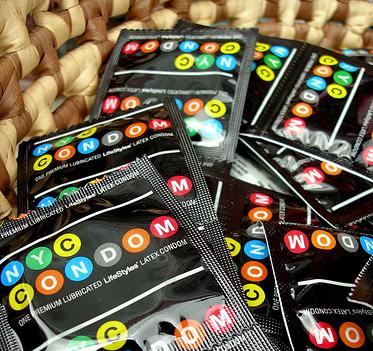
Condoms aren’t very sweet on the environment but nothing says green like curbing the population of our crowded city. Unfortunately rubbers can’t be composted or recycled, so you’ll just have to make up for it in other areas. Rubber offsets? Buy in bulk and save on wasteful packaging. 


transaction

Supportive supplies:

Leather can really help tie ’em down and strap ‘er on, but it’s important to know your hide source isn’t hiding any secrets. Project TransAction is an Oakland-based independent leatherworking company who promises to keep things ethical and earth-friendly. Their super-attractive harnesses, cuffs, and collars will keep anyone in line with a smirk, especially when they hear these babies were made with water-based inks, biodegradable cleaners and non-toxic dyes.


moon


Setting:

Screw PG&E and conserve utilities. Turn down the heat and let your bodies control the temperature. Turn off the lights and replace with flickering soy candles. Go outside and let the moon cast some flattering shadows. Do it in the garden (backyard not community) and then save water by showering off the dirt together.


jimmyjane

Stimulating Extras:

As guilty or proud as it made you feel, that rabbit vibe you picked up at the adult superstore didn’t suffer a short life due to overuse. Cheaply made sex toys are a dime a dozen, but their small sticker price makes for a big pile at the landfill. Quality is important, ladies and gents, and a good toy should hum for more than a year. Jimmyjane‘s vibrators are totally down for extended use, inviting you to play and please with a three-year warranty. The San Francisco company’s design-centric products buzz pretty and smart: responsibly manufactured, energy efficient, replaceable parts, and rechargeable batteries. 


Why the Eagle is home

4

Some people don’t fit in. Anybody who has walked in the margins for any period of time gets this. And anybody who gets this, honestly, understands that within the margins of the outsider, there are narrower margins to inhabit. If you came to San Francisco, or the Bay Area, as an outsider’s outsider, you may have found a home of sorts at the Eagle Tavern.

I came to San Francisco a long time ago. I came out, I did my time in the Castro. I migrated out of there as I migrated out of my 20s and wound up hanging in the SoMa bars, where I felt more comfortable and had more in common with the men who frequented them. The scene down there was edgier for sure, maybe outright crazy at times, but at least it seemed a little more down to earth. The people were interesting and fun. Artists, musicians, addicts, hustlers, drag queens. Home.

Beyond my identity as a queer man, I’ve also worked as a musician for the last three or so decades. I’ve had a reasonable amount of mainstream success. But I also do a lot of smaller projects, which don’t always make me money but are in many ways what I live and breathe for.

About 10 years ago, one of my musical brothers in arms, Doug Hilsinger, who is the talent booker at the Eagle, asked my to play with the Cinnamon Girls, his Neil Young tribute … The catch, well you gotta wear a dress. In fact, well, you get to have a couple of drinks and rock out LOUD (really loud) and play Neil songs … and we do, and if you’ve heard us, you know we do it right, and we do it well. It’s shambolic, drunken, and artful. Awesome fun, the art of the bar band, a stage to play on and an audience to listen.

Do a little cultural deconstruction here: a band of straight and gay musicians get together and play Neil Young songs at a leather bar in San Francisco, simply for fun, to a mixed audience (the Eagle is notoriously mixed straight and gay on music nights). I believe you call this cultural cross-pollination, when groups of people who might not anticipate socializing do so by accident and create some unanticipated unity. It’s not at a scripted event, but it is part of the day-to-day workings of the Eagle Tavern in San Francisco. Could you please tell me, if you happen to know, if there is any other place on the planet (seriously) where something like this happens? People throw around phrases like “unique San Francisco institution” a little to easily sometimes. THIS is the real deal.

And this is, by the way, one of about 100 plus events that may happen at the Eagle in any given year. What else may happen? AIDS fundraisers, political rallies (I’ve seen no fewer than five city supervisors and two state senators plying the crowd at the Sunday beer bust). Hilsinger’s regular Thursday night indie music night has seen a host of great and notable artists for a decade, offering a venue to people who might otherwise have a hard time finding a stage. I’ve been to memorials and wakes there. My partner Troy and I had our reception for our illegal San Francisco gay marriage at the Eagle back in 2004.

The Eagle isn’t really as much a bar as it is an oddball equivalent of the old school public house, the bar that also has become a community center. Add to all of this a history of more than 30 years, far enough back to when leather was really the outsider community within the community, old enough to have lost a lot of clientele and fought hard to stay in business during the AIDS crisis. Old enough to have weathered the shifting demographic of SoMa during the dot-com and Web 2.0 economic tidal shifts. That’s called institutional endurance, and its rare. You can ask any bar owner or restaurant owner about this.

The Eagle Tavern, for all of these reasons and many more, is culturally significant in this town. Should it close so that an owner (who doesn’t live in town and who has shown callously that he doesn’t give a damn about the community) can “clean it up” and make, presumably, a straight bar that caters to the bridge-and-tunnel scene (or even a new, trendy gay bar focused on younger clientele), we as a city are going to lose something that simply cannot be replaced.

Victor Krummenacher is a musician and designer.


Endangered Eagle may still have hope

4

news@sfbg.com

An important community institution never truly dies. It remains in the hearts and minds of everyone it has touched — a fact that that patrons who have lived and loved (sometimes literally) in the Eagle Tavern understand. But that doesn’t mean they’re ready to loosen their talons and let go.

With the help of San Francisco’s supervisors, some seriously committed community energy — and maybe even a Dallas cowboy who likes his leather — they may not have to.

For the past week, patrons of one of San Francisco’s oldest and boldest gay leather bars have been rallying to save their stomping ground from uncertain fate. It started when they found that rumors swirling since early in the year were true: the Eagle was slated to close at the end of April and faced a May 1 eviction.

Since then, defenders of the 12th Street space have scraped together emergency meetings and impromptu marches, a surprise leather night at the Skylark Bar (owned by a believed-to-be buyer), and a demonstration on the steps of City Hall. Letters were sent to the Board of Supervisors, petitions signed, and pink tent campouts planned as vigils.

Through it all, the message carrying most clearly was that the Eagle Tavern is far more than a swingin’ hot spot. “It’s our history and it’s our culture,” said organizer Kyle DeVries at a rally on the steps of City Hall last Tuesday. “And we’re proud of what we’ve given to this city.”

That “what” includes more than $1 million raised through the years at popular Sunday beer busts supporting everything from breast cancer research to AIDS awareness. But it also includes providing a safe haven and sense of belonging for San Francisco’s queer community for more than three decades.

And now, patrons have learned they will eek out another month. Thanks to the huge outpouring of support from Eagle denizens, and political pressure from three San Francisco supervisors, the end-of-April plan to fly the coop has been delayed at least until the end of May, Eagle manager Ron Hennis said.

But since the issue first exploded April 11, efforts to save the sacred space haven’t slowed down. At press time, supporters were planning an April 19 “Tuesday roost” at the Eagle in hopes of pumping energy and cash back into the tavern on a night known to be quiet.

Sup. Scott Wiener, along with Sups. David Campos and Jane Kim, sent a letter to the San Francisco Police Department that reviews liquor license sales in connection with the California Department of Alcohol Beverage Control. The letter reviewed the Eagle’s importance in SF’s queer community and stated that its authors are “adamantly opposed to any sale that would result in the Eagle’s destruction.”

The supervisors urged the SFPD to “closely scrutinize, consistent with applicable legal standards, any requested liquor license transfer relating to the Eagle to ensure that any such transfer will not harm the LGBT community by putting an end to the Eagle.”

So far, these efforts have been promising for Eagle patrons. In a phone interview, Wiener told us that Skylark owner Steve Englebrecht has pulled out of negotiations to buy the place. But the situation remains complex.

Eagle manager Ron Hennis explained that current owners John Gardiner and Joe Banks decided to sell the Eagle a year ago to focus on their other SoMa leather bar, Hole in the Wall Saloon, which has been plagued with high-cost property battles of its own.

Gardiner and Banks didn’t respond to our e-mails. But Hennis said they intended to sell the business — which includes the Eagle name, equipment, and liquor license — to people they felt would maintain the existing spirit of the bar: Hennis, Eagle entertainment coordinator Doug Hilsinger, and Lila Thirkield, owner of the Lexington Club.

Hennis and Hilsinger told us a contract was signed and the deal had progressed through an initial set of inspections and into escrow when the property’s owner, John Nikitopoulos, refused to negotiate a new lease with the prospective owners.

Despite successful conversations up to that point, Gardiner and Banks “turned off and didn’t say why,” Hennis said.

Further complicating the matter, Gardiner and Banks’ lease ran out and Nikitopoulos hasn’t renewed it. He’s been renting the property month-to-month and is reportedly raising the monthly price tag, which has remained the same for the past 10 years.

Hennis said the owners were still paying rent when they were threatened with eviction — which would mean a death sentence for the Eagle unless they could sell the business to a party Nikitopoulos would be willing to negotiate a lease with.

In the midst of the stalemate, Nikitopoulos offered to buy the business (and most important, the liquor license) from Gardiner and Banks, who refused saying they’d already agreed to sell to Hennis and his partners. Nikitopoulos then approached Hennis, suggesting Hennis purchase the business as planned and then sell him the liquor license. When Hennis also turned down the landlord’s offer — without the liquor license, Hennis wouldn’t actually own the bar — he disappeared from the conversations.

At the April 12 demonstration, mayoral candidate Bevan Dufty called for the stakeholders involved to recognize that in a city that “values history — indeed, is defined by history,” the lease on the Eagle is “more than just a business transaction.

“The owner of this building needs to come to the table and talk about this,” he urged.

But Nikitopoulos, a resident of Santa Rosa who inherited the property from his father, hasn’t responded to Hennis, reporters, or even to calls from Sup. Wiener. He was, however, reportedly in communication with Englebrecht when the Skylark owner swept in to purchase the space and liquor license — but not the name or the leather culture.

Though Englebrecht withdrew, supporters worry Nikitopoulos could potentially negotiate a lease with a different tenant — leaving the bar a casualty of SoMa’s continued gentrification.

Longtime Eagle patron Mike Talley, who has lived in SoMa for more than two decades, fears the Eagle would fit perfectly into a familiar story of luxury lofts, astronomical rent increases, and — inevitably — mass evictions. He explained that what the Chronicle’s late columnist Herb Caen called the Miracle Mile — a strip of SoMa gay and leather bars that once numbered in the dozens — now consists of just a few properties “hanging in there.”

Mark Kliem, a.k.a Sister Zsa Zsa Glamour of the Sisters of Perpetual Indulgence, echoed Talley’s concern, saying, “The rest of the entire world is family-friendly. Why can’t we have this one little half-mile area to call queer space?”

It’s worth noting that the Eagle is by no means exclusively gay. It is famous for its Thursday-night rock shows where, according to an Eagle DJ, “a melting pot of hipsters, stoners, and rockers mixed with the leather crowd.”

“Everyone was cool,” he said. “Everyone was welcome.”

Still, the bar has become an icon of San Francisco’s queer community.

Kim, who represents the district, presented the Eagle with a letter of commendation recognizing its 30 outstanding years as a “venue, cultural institution, safe haven, and home for the LGBT community” at the April 12 meeting.

“You can’t threaten something as important as this institution,” Campos added.

Wiener, Kim, and California Sen. Mark Leno also praised the Eagle at Sunday’s regularly scheduled beer bust. Leno lauded the efforts of local drag queen/community organizer Anna Conda, and referred to the week’s events as “Stonewall West.”

If anything, the week of demonstrations has drawn San Francisco’s queer community closer. And there is hope that the crowd can stay together in the spot they claimed for themselves. One white-horse possibility is Mark Frazier, owner of a Dallas bar also named the Eagle — and also home to a leather crowd.

Seth Munter of Herth Realty in San Francisco said Frazier has been eyeing the SF Eagle for more than a year, and that he is “interested and able to participate in continuing the Eagle as it has been, either with partners or on his own.”

Reached by phone in Dallas, Frazier told us he’s dreamt of the business since before his own Eagle took flight in 1995. “I think the San Francisco Eagle has a lot of history and a core base of support,” he said. “Any time you go into a business with so much support, it’s going to be successful.”

Frazier stressed that like the SF original, his Eagle has raised substantial sums for charity. Though he acknowledged that the bottom line of all businesses is to make money, “the successful ones continue to give back to the community — and not only monetarily.”

So far, Frazier said he has “exchanged e-mails with the powers that be” and that he is confident the Eagle’s troubles stem from a “communication gap” he could help fix.

Hennis expressed hope about the possibility of working with Frazier in addition to pursuing other options like historical preservation.

Demonstrators have penned more than 100 hand-written letters to the Historic Preservation Commission urging it to assign the Eagle landmark status. Commissioner Alan Martinez said such a process could cost thousands of dollars and would not “grant the right to dictate businesses or tenants.”

Still, he announced publicly that giving the building historic status is not “about turning the city into a museum — it’s about our history.”

Though landmark status protects the physical property, it would also provide legitimacy, an instantaneous way to tell the building’s story and bind the community together. And no matter what happens with the sale of the Eagle, that’s one possibility that flies.


Film Listings

0

Film listings are edited by Cheryl Eddy. Reviewers are Kimberly Chun, Michelle Devereaux, Peter Galvin, Max Goldberg, Dennis Harvey, Johnny Ray Huston, Louis Peitzman, Lynn Rapoport, Ben Richardson, and Matt Sussman. For rep house showtimes, see Rep Clock. For first-run showtimes, see Movie Guide.

SAN FRANCISCO INTERNATIONAL FILM FESTIVAL

The 54th annual San Francisco International Film Festival runs April 21–May 5. Venues are the Sundance Kabuki, 1881 Post, SF; Castro, 429 Castro, SF; New People, 1746 Post, SF; San Francisco Museum of Modern Art, 151 Third, SF; and Pacific Film Archive, 2575 Bancroft, SF. For tickets (most shows $13) and complete schedule visit www.sffs.org.

THURS/21

Castro Beginners 7.

FRI/22

Kabuki The Place In Between 2. “Irresistable Impulses” (shorts program) 3:15. The Good Life 3:45. Miss Representation 6. Hahaha 6:15. I’m Glad My Mother is Alive 6:45. Attenberg 7. Walking Too Fast 8:45. Meek’s Cutoff 9. Microphone 9:15. The City Below 9:30. Stake Land 11:30.

New People Hot Coffee 6:30. Nainsukh 9:15.

PFA Silent Souls 7. Jean Gentil 8:40.

SAT/23

Kabuki “Youth Media Mash-Up” noon. Mysteries of Lisbon 12:15. The Autobiography of Nicolae Ceausescu 12:45. The Colors of the Mountain 1. Year Without a Summer 3. Life, Above All 4. “Mind the Gap” (shorts program) 4:45. Better This World 6. The Future 6:15. Le Quattro Volte 6:45. The Light Thief 7:15. World on a Wire 8:45. Living On Love Alone 9:30. “Get With the Program” (shorts program) 9:45. The Troll Hunter 11:30.

New People Pink Saris 1. The Last Buffalo Hunt 3:20. The Pipe 6. Hospitalité 9.

SFMOMA The Mill and the Cross 12:30. !Women Art Revolution 3.

PFA Foreign Parts 2:15. The Green Wave 4. Autumn 6:15. The High Life 8:40.

SUN/24

Kabuki “Irresistable Impulses” (shorts program) noon. A Cat in Paris 12:30. Jean Gentil 1. Nainsukh 2:30. The Green Wave 2:45. Walking Too Fast 3. “Cupid With Fangs” (shorts program) 3:15. Silent Souls 4:45. Crime After Crime 6. At Ellen’s Age 6:15. The Colors of the Mountain 6:30. “The Deep End” (shorts program) 7. Asleep in the Sun 8:45. “State of Cinema: Christine Vachon” 9. The Stool Pigeon 9:15. “From A to Zellner” (shorts program) 9:45.

New People A Useful Life noon. Microphone 2. The Autobiography of Nicolae Ceausescu 5:15. The Future 9:15.

PFA Something Ventured 2. Children of the Princess of Cleves 4:15. Chantrapas 6:15. The Arbor 8:45.

MON/25

Kabuki Children of the Princess of Cleves 2. The City Below 4. Meek’s Cutoff 4:30. Hot Coffee 6:30. Autumn 6:45. Cave of Forgotten Dreams 7. She Monkeys 7:15. Salon: The Social Justice Documentary 8:30. Hahaha 9. The Light Thief 9:15. I’m Glad My Mother is Alive 9:30. Stake Land 9:45.

New People The Troll Hunter 6:15. Year Without a Summer 9:15.

PFA A Useful Life 7. !Women Art Revolution 8:40.

TUES/26

Kabuki Hot Coffee 2. Hahaha 3:30. Ulysses 4. Chantrapas 6. Jean Gentil 6. The Sleeping Beauty 6:15. Nostalgia for the Light 6:30. She Monkeys 8:45. New Skin For the Old Ceremony 9. The Whistleblower 9:15. Cave of Forgotten Dreams 9:30.

New People The Last Buffalo Hunt 6:30. “Cupid With Fangs” (shorts program) 9.

PFA Better This World 6:30. Position Among the Stars 8:50.

OPENING

African Cats This Earth Day release, narrated by Samuel L. Jackson, follows cheetah and lions on the African savanna. (1:40) Shattuck.

Ceremony It’s easy to dismiss Ceremony as derivative. The plot isn’t exactly original. But recycled material aside, it’s an entertaining indie diversion and a promising feature-length debut from writer-director Max Winkler. The underrated Michael Angarano stars as Sam Davis, a pretentious shit who owes a lot to Holden Caulfield by way of Rushmore‘s Max Fischer. Sam tricks his best friend Marshall (Reece Thompson) into accompanying him on a weekend getaway, with the real objective of winning back his lost love Zoe (Uma Thurman). But Zoe is all set to marry blowhard Whit Coutell (Lee Pace) and is not too keen on blowing off her wedding. None of the characters are all that likable — a quirky indie comedy must — and there are few surprises. But Winkler’s script is cute, and his cast is charming enough to carry the material along. The scenes between Angarano and Thompson are the film’s best. Here’s hoping they stand out enough to earn these young actors the recognition they deserve. (1:40) Lumiere. (Peitzman)

Pom Wonderful Presents: The Greatest Movie Ever Sold Don’t even think about shortening the title: Morgan Spurlock’s new documentary POM Wonderful Presents: The Greatest Story Ever Sold is ingenious, bitingly funny, and made possible by corporate sponsorship. POM paid good money to earn a spot about the title, so damned if I’m going to leave them out. Instead of keeping product placement subliminal — or at least trying — Spurlock shows exactly what goes into the popular marketing practice. His film isn’t so much critical as it is honest: he doesn’t fight product placement, but rather embraces it to his own advantage. It’s win-win. Spurlock gets to make his movie without losing any cash, and the audience gets a hilarious insider look into a mostly hidden facet of advertising. As he says, it’s about transparency, and no one can claim Spurlock is trying to go behind our backs. And what of the advertising that pops up throughout the film? I can only speak to my own experience, but yes, I’m drinking POM as I write this. (1:26) SF Center. (Peitzman)

Red, White and Blue Noah Taylor stars in this mystery punctuated by shocking twists. (1:42) Roxie.

Trust A teenager is victimized by an internet predator in this drama. Clive Owen and Catherine Keener play her horrified parents. (1:55) Opera Plaza.

Tyler Perry’s Madea’s Big Happy Family She’s baaack. (2:00) Shattuck.

Water for Elephants A young man (Robert Pattinson) joins a circus (populated by the likes of Reese Witherspoon and Christoph Waltz) in this drama based on the best-selling novel. (2:00) Balboa, Marina.

White Irish Drinkers What is 20-year TV veteran John Gray (of series The Ghost Whisperer) doing writing-directing yet another indie Mean Streets (1973) knockoff? That’s fresh-outta-film-school business. Why is anyone doing one of those so long after the expiration date for that second (or by now third) generation shit? This trip down some very familiar roads — 1997’s Good Will Hunting and 1977’s Saturday Night Fever being others — stars SF native Nick Thurston as a 1975 Brooklyn youth with a violent alcoholic father (Stephen Lang), long-suffering mother (Karen Allen), and an older brother drifting into criminality (Geoffrey Wigdor). As outside influences this talented closet artist has the requisite upscaling girl (Leslie Murphy) urging him to dream big, and a wistfully downtrodden employer (Peter Riegert) providing the plot gimmick as a failing movie-palace owner who hopes to turn around his fortunes with a one-night-stand by the Rolling Stones. Everything about White Irish Drinkers feels recycled from other movies. Though the performers work hard and the progress is entertaining enough, there’s way too much déjà vu here for one film to bear and still stand on its own punch-drunk legs. (1:49) Lumiere, Shattuck. (Harvey)

ONGOING

The Adjustment Bureau As far as sci-fi romantic thrillers go, The Adjustment Bureau is pretty standard. But since that’s not an altogether common genre mash-up, I guess the film deserves some points for creativity. Based on a short story by Philip K. Dick, The Adjustment Bureau takes place in a world where all of our fates are predetermined. Political hotshot David Norris (Matt Damon) is destined for greatness — but not if he lets a romantic dalliance with dancer Elise (Emily Blunt) take precedence. And in order to make sure he stays on track, the titular Adjustment Bureau (including Anthony Mackie and Mad Men‘s John Slattery) are there to push him in the right direction. While the film’s concept is intriguing, the execution is sloppy. The Adjustment Bureau suffers from flaws in internal logic, allowing the story to skip over crucial plot points with heavy exposition and a deus ex machina you’ve got to see to believe. Couldn’t the screenwriter have planned ahead? (1:39) Balboa, Shattuck. (Peitzman)

Arthur (1:45) Empire, 1000 Van Ness, SF Center.

Atlas Shrugged (1:57) Shattuck, SF Center.

*Bill Cunningham New York To say that Bill Cunningham, the 82-year old New York Times photographer, has made documenting how New Yorkers dress his life’s work would be an understatement. To be sure, Cunningham’s two decades-old Sunday Times columns — “On the Street,” which tracks street-fashion, and “Evening Hours,” which covers the charity gala circuit — are about the clothes. And, my, what clothes they are. But Cunningham is a sartorial anthropologist, and his pictures always tell the bigger story behind the changing hemlines, which socialite wore what designer, or the latest trend in footwear. Whether tracking the near-infinite variations of a particular hue, a sudden bumper-crop of cropped blazers, or the fanciful leaps of well-heeled pedestrians dodging February slush puddles, Cunningham’s talent lies in his ability to recognize fleeting moments of beauty, creativity, humor, and joy. That last quality courses through Bill Cunningham New York, Richard Press’ captivating and moving portrait of a man whose reticence and personal asceticism are proportional to his total devotion to documenting what Harold Koda, chief curator at the Costume Institute at the Metropolitan Museum of Art, describes in the film as “ordinary people going about their lives, dressed in fascinating ways.” (1:24) Embarcadero, Shattuck. (Sussman)

Certified Copy Abbas Kiarostami’s beguiling new feature signals “relationship movie” with every cobblestone step, but it’s manifestly a film of ideas — one in which disillusionment is as much a formal concern as a dramatic one. Typical of Kiarostami’s dialogic narratives, Certified Copy is both the name of the film and an entity within the film: a book written against the ideal of originality in art by James Miller (William Shimell), an English pedant fond of dissembling. After a lecture in Tuscany, he meets an apparent admirer (Juliette Binoche) in her antique shop. We watch them talk for several minutes in an unbroken two-shot. They gauge each other’s values using her sister as a test case — a woman who, according to the Binoche character, is the living embodiment of James’ book. Do their relative opinions of this off-screen cipher constitute characterization? Or are they themselves ciphers of the film’s recursive structure? Kiarostami makes us wonder. They begin to act as if they were married midway through the film, though the switch is not so out of the blue: Kiarostami’s narrative has already turned a few figure-eights. Several critics have already deemed Certified Copy derivative of many other elliptical romances; the strongest case for an “original” comes of Roberto Rossellini’s Voyage to Italy (1954). The real difference is that while Rossellini’s masterpiece realizes first-person feelings in a third-person approach, Kiarostami stays in the shadow of doubt to the end. (1:46) Opera Plaza, Smith Rafael. (Goldberg)

*Circo The old notion of “running away with the circus” seldom seemed appealing — conjuring images of following an elephant around with a shovel — and it grows even less so after watching Aaron Schock’s warm, touching documentary. The kids here might one day run away from the circus. They’re born into Grand Circo Mexico, one of four circuses run by the Ponce family, which has been in this business for generations; if they’re old enough to walk, they’re old enough to perform, and help with the endless setup and breakdown chores. (Presumably child labor laws are an innovation still waiting to happen here.) Touring Mexico’s small towns in trucks with a variety of exotic animals, it’s a life of labor, with on-the-job training in place of school — arguably not much of a life for child, as current company leader Tino’s wife Ivonne (who really did run away with the circus, or rather him, at age 15) increasingly insists. Other family members have split for a normal life, and Tino is caught between loyalty to his parents’ ever-struggling business and not wanting to lose the family he’s raised himself. This beautifully shot document, scored by Calexico and edited by Mark Becker (of 2005’s marvelous Romantico), is a disarming look at a lifestyle that feels almost 19th century, and is barely hobbling into the 21st one. (1:15) Lumiere, Shattuck. (Harvey)

The Conspirator It may not be your standard legal drama, but The Conspirator is a lot more enjoyable when you think of it as an extended episode of Law & Order. The film chronicles the trial of Mary Surratt (Robin Wright), the lone woman charged in the conspiracy to assassinate Abraham Lincoln. It’s a fascinating story, especially for those who don’t know much of the history past John Wilkes Booth. But while the subject matter is compelling, the execution is hit-or-miss. Wright is sympathetic as Surratt, but the usually great James McAvoy is somewhat forgettable in the pivotal role of Frederick Aiken, Surratt’s conflicted lawyer. It’s hard to say what it is that’s missing from The Conspirator: the cast — which also includes Evan Rachel Wood and Tom Wilkinson — is great, and this is a story that’s long overdue to be told. Still, something is lacking. Could it be the presence of everyone’s favorite detective, the late Lennie Briscoe? (2:02) Embarcadero, Empire, 1000 Van Ness, Piedmont, Presidio. (Peitzman)

*Hanna The title character of Hanna falls perfectly into the lately very popular Hit-Girl mold. Add a dash of The Boys from Brazil-style genetic engineering — Hanna has the unfair advantage, you see, when it comes to squashing other kids on the soccer field or maiming thugs with her bare hands — and you have an ethereal killing/survival machine, played with impassive confidence by Atonement (2007) shit-starter Saoirse Ronan. She’s been fine-tuned by her father, Erik (Eric Bana), a spy who went out into the cold and off the grid, disappearing into the wilds of Scandinavia where he home-schooled his charge with an encyclopedia and brutal self-defense and hunting tests. Atonement director Joe Wright plays with a snowy palette associated with innocence, purity, and death — this could be any time or place, though far from the touch of modern childhood stresses: that other Hannah (Montana), consumerism, suburban blight, and academic competition. The 16-year-old Hanna, however, isn’t immune from that desire to succeed. Her game mission: go from a feral, lonely existence into the modern world, run for her life, and avenge the death of her mother by killing Erik’s CIA handler, Marissa (Cate Blanchett). The nagging doubt: was she born free, or Bourne to be a killer? Much like the illustrated Brothers Grimm storybook that she studies, Hanna is caught in an evil death trap of fairytale allegories. One wonders if the super-soldier apple didn’t fall far from the tree, since evil stepmonster Marissa oversaw the program that produced Hanna — the older woman and the young girl have the same cold-blooded talent for destruction and the same steely determination. Yet there’s hope for the young ‘un. After learning that even her beloved father hid some basic truths from her, this natural-born killer seems less likely to go along with the predetermined ending, happy or no, further along in her storybook life. (1:51) Empire, Four Star, 1000 Van Ness, SF Center. (Chun)

Henry’s Crime Keanu Reeves is one of those actors who’s spectacularly franchise-wealthy — due to those Matrix movies wherein his usual baffled solemnity was ideal — yet whom the public otherwise feels scant evident loyalty toward, and producers don’t know what to do with. Now that he’s aging out of his looks, can he transform into a character actor? Maybe. Reeves played charming suitors in Something’s Gotta Give (2003) and The Private Lives of Pippa Lee (2009), both very much supporting roles. He seems increasingly interested in indie films, which he surely doesn’t need to pay the rent, and he’s certainly the best reason to see Henry’s Crime, a pleasant, middling, retro crime caper costarring frequently better actors at dimmer wattage than usual. The film is an old hat out of the Damon Runyon trunk, in which lovable crooks mix it up with hoity theatrical types and nobody gets hurt except (barely) the really bad guys. James Caan — who starred in similar enterprises during their post-The Sting heyday plays the veteran convict-conman who schools Reeves’ hapless Buffalo, N.Y., toll-taker Henry after our hero is slammer-thrown for an armed robbery he didn’t know he was embroiled in until it was over. Upon release, Henry discovers the targeted bank and nearby theater had a Prohibition-era secret tunnel between them. Having already done the time, he figures he might as well do the crime by finishing the aborted bank job for real. He enlists local stage diva Julie (Vera Farmiga) as well as Caan’s parole-coaxed Max. Resulting wacky hijinks render Max a theater “volunteer” and Henry as Julie’s Cherry Orchard costar, all so they can access the walled-up passageway to the bank vault. Much of this is ridiculous, of course, and not intentionally so. The climax is classic movies-getting-how-theater-works-wrong. But its contrivance functions to some extent because the lead actor convinces us it should. (1:48) Embarcadero. (Harvey)

Hop (1:30) 1000 Van Ness, Shattuck.

*In a Better World Winner of this year’s Best Foreign Language Film Oscar, this latest from Danish director Susanne Bier (2004’s Brothers, 2006’s After the Wedding) and her usual co-scenarist Anders Thomas Jensen (2005’s Adam’s Apples, 2003’s The Green Butchers) is a typically engrossing, complex drama that deals with the kind of rage for “personal justice” that can lead to school and workplace shootings, among other things (like terrorism). Shy, nervous ten-year-old Elias (Markus Rygaard) needs a confidence boost, but things are worrying both at home and elsewhere. His parents are estranged, and his doting father (Mikael Persbrandt) is mostly away as a field hospital in Kenya tending victims of local militias. At school, he’s an easy mark for bullies, a fact which gets the attention of charismatic, self-assured new kid Christian (William Jøhnk Nielsen), who appoints himself Elias’ new (and only) friend — then when his slightly awed pal is picked on again, intervenes with such alarming intensity that the police are called. Christian appears a little too prone to violence and harsh judgment in teaching “lessons” to those he considers in the wrong; his own domestic situation is another source of anger, as he simplistically blames his earnest, distracted executive father (Ulrich Thomsen) for his mother’s recent cancer death. Is Christian a budding little psychopath, or just a kid haplessly channeling his profound loss? Regardless, when an adult bully (Kim Bodnia as a loutish mechanic) humiliates Elias’ father in front of the two boys, Christian pulls his reluctant friend into a pursuit of vengeance that surely isn’t going to end well. With their nuanced yet head-on treatment of hot button social and ethical issues, Bier and Jensen’s work can sometimes border on overly-schematic melodrama, meting out its own secular-humanist justice a bit too handily, like 21st-century cinematic Dickenses. But like Dickens, they also have a true mastery of the creating striking characters and intricately propulsive plotlines that illustrate the points at hand in riveting, hugely satisfying fashion. This isn’t their best. But it’s still pretty excellent, and one of those universally accessible movies you can safely recommend even to people who think they don’t like foreign or art house films. (1:53) Embarcadero, Shattuck. (Harvey)

Insidious (1:42) 1000 Van Ness.

*Jane Eyre Do we really need another adaptation of Jane Eyre? As long as they’re all as good as Cary Fukunaga’s stirring take on the gothic romance, keep ’em coming. Mia Wasikowska stars in the titular role, with the dreamy Michael Fassbender stepping into the high pants of Edward Rochester. The cast is rounded out by familiar faces like Judi Dench, Jamie Bell, and Sally Hawkins — all of whom breathe new life into the material. It helps that Fukunaga’s sensibilities are perfectly suited to the story: he stays true to the novel while maintaining an aesthetic certain to appeal to a modern audience. Even if you know Jane Eyre’s story — Mr. Rochester’s dark secret, the fate of their romance, etc. — there are still surprises to be had. Everyone tells the classics differently, and this adaptation is a thoroughly unique experience. And here’s hoping it pushes the engaging Wasikowska further in her ascent to stardom. (2:00) Albany, Embarcadero, Piedmont, Presidio. (Peitzman)

Kill the Irishman If you enjoy 1970s-set Mafia movies featuring characters with luxurious facial hair zooming around in Cadillacs, flossing leather blazers, and outwitting cops and each other — you could do a lot worse than Kill the Irishman, which busts no genre boundaries but delivers enjoyable retro-gangsta cool nonetheless. Adapted from the acclaimed true crime book by a former Cleveland police lieutenant, the film details the rise and fall of Danny Greene, a colorful and notorious Irish-American mobster who both served and ran afoul of the big bosses in his Ohio hometown. During one particularly conflict-ridden period, the city weathered nearly 40 bombings — buildings, mailboxes, and mostly cars, to the point where the number of automobiles going sky-high is almost comical (you’d think these guys would’ve considered taking the bus). The director of the 2004 Punisher, Jonathan Hensleigh, teams up with the star of 2008’s Punisher: War Zone, Ray Stevenson, who turns in a magnetic performance as Greene; it’s easy to see how his combination of book- and street smarts (with a healthy dash of ruthlessness) buoyed him nearly to the top of the underworld. The rest of the cast is equally impressive, with Vincent D’Onofrio, Val Kilmer, Christopher Walken, and Linda Cardellini turning in supporting roles, plus a host of dudes who look freshly defrosted from post-Sopranos storage. (1:46) Opera Plaza. (Eddy)

The King’s Speech Films like The King’s Speech have filled a certain notion of “prestige” cinema since the 1910s: historical themes, fully-clothed romance, high dramatics, star turns, a little political intrigue, sumptuous dress, and a vicarious taste of how the fabulously rich, famous, and powerful once lived. At its best, this so-called Masterpiece Theatre moviemaking can transcend formula — at its less-than-best, however, these movies sell complacency, in both style and content. In The King’s Speech, Colin Firth plays King George VI, forced onto the throne his favored older brother Edward abandoned. This was especially traumatic because George’s severe stammer made public address tortuous. Enter matey Australian émigré Lionel Logue (Geoffrey Rush, mercifully controlled), a speech therapist whose unconventional methods include insisting his royal client treat him as an equal. This ultimately frees not only the king’s tongue, but his heart — you see, he’s never had anyone before to confide in that daddy (Michael Gambon as George V) didn’t love him enough. Aww. David Seidler’s conventionally inspirational script and BBC miniseries veteran Tom Hooper’s direction deliver the expected goods — dignity on wry, wee orgasms of aesthetic tastefulness, much stiff-upper-lippage — at a stately promenade pace. Firth, so good in the uneven A Single Man last year, is perfect in this rock-steadier vehicle. Yet he never surprises us; role, actor, and movie are on a leash tight enough to limit airflow. (1:58) Shattuck. (Harvey)

*Limitless An open letter to the makers of Limitless: please fire your marketing team because they are making your movie look terrible. The story of a deadbeat writer (Bradley Cooper) who acquires an unregulated drug that allows him to take advantage of 100 percent of his previously under-utilized brain, Limitless is silly, improbable and features a number of distracting comic-book-esque stylistic tics. But consumed with the comic book in mind, Limitless is also unpredictable, thrilling, and darkly funny. The aforementioned style, which includes many instances of the infinite regression effect that you get when you point two mirrors at each other, and a heavy blur to distort depth-of-field, only solidifies the film’s cartoonish intentions. Cooper learns foreign languages in hours, impresses women with his keen attention to detail, and sets his sights on Wall Street, a move that gets him noticed by businessman Carl Van Loon (Robert DeNiro in a glorified cameo) as well as some rather nasty drug dealers and hired guns looking to cash in on the drug. Limitless is regrettably titled and masquerades in TV spots as a Wall Street series spin-off, but in truth it sports the speedy pacing and tongue-in-cheek humor required of a good popcorn flick. (1:37) California, Four Star, 1000 Van Ness, SF Center. (Galvin)

*The Lincoln Lawyer Outfitted with gym’d-tanned-and-laundered manly blonde bombshells like Matthew McConaughey, Josh Lucas, and Ryan Phillippe, this adaptation of Michael Connelly’s LA crime novel almost cries out for an appearance by the Limitless Bradley Cooper — only then will our cabal of flaxen-haired bros-from-other-‘hos be complete. That said, Lincoln Lawyer‘s blast of morally challenged golden boys nearly detracts from the pleasingly gritty mise-en-scène and the snappy, almost-screwball dialogue that makes this movie a genre pleasure akin to a solid Elmore Leonard read. McConaughey’s criminal defense attorney Mickey Haller is accustomed to working all the angles — hence the title, a reference to a client who’s working off his debt by chauffeuring Haller around in his de-facto office: a Lincoln Town Car. Haller’s playa gets truly played when he becomes entangled with Louis Roulet (Phillippe), a pretty-boy old-money realtor accused of brutally attacking a call girl. Loved ones such as Haller’s ex Maggie (Marisa Tomei) and his investigator Frank (William H. Macy) are in jeopardy — and in danger of turning in some delightfully textured cameos — in this enjoyable walk on the sleazy side of the law, the contemporary courtroom counterpart to quick-witted potboilers like Sweet Smell of Success (1957). (1:59) Four Star, 1000 Van Ness. (Chun)

Miral (1:42) California.

*Of Gods and Men It’s the mid-1990s, and we’re in Tibhirine, a small Algerian village based around a Trappist monastery. There, eight French-born monks pray and work alongside their Muslim neighbors, tending to the sick and tilling the land. An emboldened Islamist rebel movement threatens this delicate peace, and the monks must decide whether to risk the danger of becoming pawns in the Algerian Civil War. On paper, Of Gods and Men sounds like the sort of high-minded exploitation picture the Academy swoons over: based on a true story, with high marks for timeliness and authenticity. What a pleasant surprise then that Xavier Beauvois’s Cannes Grand Prix winner turns out to be such a tightly focused moral drama. Significantly, the film is more concerned with the power vacuum left by colonialism than a “clash of civilizations.” When Brother Christian (Lambert Wilson) turns away an Islamist commander by appealing to their overlapping scriptures, it’s at the cost of the Algerian army’s suspicion. Etienne Comar’s perceptive script does not rush to assign meaning to the monks’ decision to stay in Tibhirine, but rather works to imagine the foundation and struggle for their eventual consensus. Beauvois occasionally lapses into telegraphing the monks’ grave dilemma — there are far too many shots of Christian looking up to the heavens — but at other points he’s brilliant in staging the living complexity of Tibrihine’s collective structure of responsibility. The actors do a fine job too: it’s primarily thanks to them that by the end of the film each of the monks seems a sharply defined conscience. (2:00) Albany, Opera Plaza. (Goldberg)

*Poetry Sixtysomething Mija (legendary South Korean actor Yun Jung-hee) impulsively crashes a poetry class, a welcome shake-up in a life shaped by unfulfilling routines. In order to write compelling verse, her instructor says, it is important to open up and really see the world. But Mija’s world holds little beauty beyond her cheerful outfits and beloved flowers; most pressingly, her teenage grandson, a mouth-breathing lump who lives with her, is completely remorseless about his participation in a hideous crime. In addition, she’s just been disgnosed with the early stages of Alzheimer’s, and the elderly stroke victim she housekeeps for has started making inappropriate advances. Somehow writer-director Lee Chang-dong (2007’s Secret Sunshine) manages not to deliver a totally depressing film with all this loaded material; it’s worth noting Poetry won the Best Screenplay Award at the 2010 Cannes Film Festival. Yun is unforgettable as a woman trying to find herself after a lifetime of obeying the wishes of everyone around her. Though Poetry is completely different in tone than 2009’s Mother, it shares certain elements — including the impression that South Korean filmmakers have recognized the considerable rewards of showcasing aging (yet still formidable) female performers. (2:19) Shattuck, Smith Rafael. (Eddy)

Potiche When we first meet Catherine Deneuve’s Suzanne — the titular trophy wife (or potiche) of Francois Ozon’s new airspun comedy — she is on her morning jog, barely breaking a sweat as she huffs and puffs in her maroon Adidas tracksuit, her hair still in curlers. It’s 1977 and Suzanne’s life as a bourgeois homemaker in a small provincial French town has played out as smoothly as one of her many poly-blend skirt suits: a devoted mother to two grown children and loving wife who turns a blind eye to the philandering of husband Robert (Fabrice Luchini), Suzanne is on the fast track to comfortable irrelevance. All that changes when the workers at Robert’s umbrella factory strike and take him hostage. Suzanne, with the help of union leader and old flame Babin (Gerard Depardieu, as big as a house), negotiates a peace, and soon turns around the company’s fortunes with her new-found confidence and business savvy. But when Robert wrests back control with the help of a duped Babin, Suzanne does an Elle Woods and takes them both on in a surprise run for political office. True to the film’s light théâtre de boulevard source material, Ozon keeps things brisk and cheeky (Suzanne sings with as much ease as she spouts off Women’s Lib boilerplate) to the point where his cast’s hammy performances start blending into the cheery production design. Satire needs an edge that Potiche, for all its charm, never provides. (1:43) Clay, Shattuck, Smith Rafael. (Sussman)

Rio (1:32) 1000 Van Ness, Presidio, SF Center.

Scre4m Back in 1996, Wes Craven’s Scream revitalized the slasher genre with a script (by Kevin Williamson) that poked fun at horror clichés while still delivering genuine scares. The sequels offered diminishing returns on this once-clever formula; Scream 4 arrives 11 years past Scream 3, presumably hoping to work that old self-referential yet gory magic on a new crop of filmgoers. But Craven and Williamson’s hall-of-mirrors creation (more self-satisfied than self-referential, scrambling to anticipate a cynical audience member’s every second-guess) is barely more than than a continuation of something that was already tired in 2000, albeit with iPhone and web cam gags pasted in for currency’s sake. Eternal Ghostface target Sidney Prescott (Neve Campbell) returns to her hometown to promote what’s apparently a woo-woo self-help book (Mad Men‘s Alison Brie, as Sidney’s bitchy-perky publicist, steals every scene she’s in); still haunting Woodsboro are Dewey (David Arquette), now the sheriff, and Gale (Courteney Cox), a crime author with writer’s block. When the Munch-faced one starts offing high school kids, local movie nerds (Rory Culkin, Hayden Panettiere) and nubile types (Emma Roberts, Hayden Panettiere) react by screening all seven Stab films, inspired by the “real-life” Woodsboro murders, and spouting off about the rules, or lack thereof in the 21st century, of horror sequels. If that sounds mega-meta exhausting, it is. And, truth be told, not very scary. (1:51) 1000 Van Ness. (Eddy)

Some Days Are Better Than Others First-time director Matt McCormick doesn’t break any new stylistic or thematic ground with his ensemble drama, but Some Days Are Better Than Others does boast an interesting bit of stunt casting. Indie rock fans will recognize the Shins’ James Mercer as mopey Eli, who drifts between temp jobs trying to earn enough money to go back to school because he hates working so much; fellow musician Carrie Brownstein appears as Katrina, a recently-dumped, reality TV-obsessed dog-shelter worker; her character is the kind of emo thrift-shopper that Portlandia would had no trouble poking fun at. Other points on this sad-sack square are a lonely woman ((Renee Roman Nose) who finds an erstwhile cremation urn, and an elderly man (David Wodehouse) obsessed with the kaleidoscope-like patterns he captures while filming soap bubbles. Moments of wry humor (Katrina checks messages at “mumblemail.net”) and some Ghost World-ish jabs at mainstream go-getters (including a moving-company douchebag who hires Eli to help clean out a recently-deceased woman’s house) keep Some Days from being a total downer, but be warned: this is one melancholy movie. Shins fans will enjoy the scene where Eli, alone in his room, rehearses for a yearned-for karaoke date with a Bonnie Tyler classic. (1:33) Roxie. (Eddy)

Soul Surfer (1:46) 1000 Van Ness, SF Center.

*Source Code A post-9/11 Groundhog Day (1993) with explosions, Inception (2010) with a heart, or Avatar (2009) taken down a notch or dozen in Chicago —whatever you choose to call it, Source Code manages to stand up on its own wobbly Philip K. Dick-inspired legs, damn the science, and take off on the wings of wish fulfillment. ‘Cause who hasn’t yearned for a do-over — and then a do-over of that do-over, etc. We could all be as lucky — or as cursed — as soldier Colter Stevens (Jake Gyllenhaal), who gets to tumble down that time-space rabbit hole again and again, his consciousness hitching a ride in another man’s body, while in search of the bomber of a Chicago commuter train. On the upside, he gets to meet the girl of his dreams (Michelle Monaghan) — and see her getting blown to smithereens again and again, all in the service of his country, his commander-cum-link to the outside world (Vera Farmiga), and the scientist masterminding this secret military project (Jeffrey Wright). On the downside, well, he gets to do it over and over again, like a good little test bunny in pinball purgatory. Fortunately, director Duncan Jones (2009’s Moon) makes compelling work out of the potentially ludicrous material, while his cast lends the tale a glossed yet likable humanity, the kind that was all too absent in Inception. (1:33) Balboa, Marina, 1000 Van Ness. (Chun)

*Win Win Is Tom McCarthy the most versatile guy in Hollywood? He’s a successful character actor (in big-budget movies like 2009’s 2012; smaller-scale pictures like 2005’s Good Night, and Good Luck; and the final season of The Wire). He’s an Oscar-nominated screenwriter (2009’s Up). And he’s the writer-director of two highly acclaimed indie dramas, The Station Agent (2003) and The Visitor (2007). Clearly, McCarthy must not sleep much. His latest, Win Win, is a comedy set in his hometown of New Providence, N.J. Paul Giamatti stars as Mike Flaherty, a lawyer who’s feeling the economic pinch. Betraying his own basic good-guy-ness, he takes advantage of a senile client, Leo (Burt Young), when he spots the opportunity to pull in some badly-needed extra cash. Matters complicate with the appearance of Leo’s grandson, Kyle (newcomer Alex Shaffer), a runaway from Ohio. Though Mike’s wife, Jackie (Amy Ryan), is suspicious of the taciturn teen, she allows Kyle to crash with the Flaherty family. As luck would have it, Kyle is a superstar wrestler — and Mike happens to coach the local high school team. Things are going well until Kyle’s greedy mother (Melanie Lynskey) turns up and starts sniffing around her father’s finances. Lessons are learned, sure, and there are no big plot twists beyond typical indie-comedy turf. But the script delivers more genuine laughs than you’d expect from a movie that’s essentially about the recession. (1:46) Bridge, California, Piedmont. (Eddy)

Your Highness One of the dangers of reviewing a film like Your Highness is that stoner comedies have a very specific intended audience. A particular altered state is recommended to maximize one’s enjoyment. I tend not to show up for professional gigs with Mary Jane as my plus-one, so I had to view the latest from Pineapple Express (2008) director David Gordon Green through un-bloodshot eyes. While Express was more explicitly ganja-themed, Your Highness is instead a comedy that approximates the experience of getting as high as possible, then going directly to Medieval Times. Never gut-bustingly funny, Your Highness still reaps chuckles from its hard-R dialogue and plenty of CG-assisted sight gags involving genetalia. James Franco and Danny McBride star as princes, one heroic and one ne’er-do-well, who quest to save a maiden kidnapped by an evil wizard (Justin Theroux). Natalie Portman turns up as a thong-wearing warrior, just ’cause it’s that kind of movie. Forget the box office; only time and the tastes of late-night movie watchers will dictate whether Your Highness is a success or a bust. Case in point: nobody thought much of Half Baked (1998) when it was released, but in certain circles, it’s become a bona fide classic. Say it with me now: “Fuck you, fuck you, fuck you, you’re cool, and fuck you. I’m out!” (1:42) 1000 Van Ness, SF Center. (Eddy) 


Leathered looks: Fashion takes at International Ms. Leather

2

The four-day celebration of leatherwomen has come to a shiny, exhausted, possibly bruised, and blushing close. The 2011 International Ms Leather title was awarded to New York’s Sara Vibes Saturday night and she proudly accepted her glorious hide-sash with a naughty grin. Vibe and fellow contestants looked stunning in an array of leather accessories throughout the pageant, but intermission exposed an entire audience of notable leather-bound fashion from hat to boot.

Super-tight leather pants, bare-asses ‘n’ chaps, vests, and corsets are obvious go-tos for any leather event, but this crowd ventured into capes, hats, full dresses, flowing skirts, multiple belts, and bracelets. Leather dominated the fabric scene, replacing the usual cotton-poly blends and turning a t-shirt shape into an erotic instigator. I didn’t see any leather stockings — practicality is still valid, especially when the after party is taking place in a designated ‘play room.’ 

This slideshow is only a minor glimpse, mostly some notable lady leathers. Check out Leatherati’s photos of the event and shots of the actual contest. 


Playing in a Domina’s toy box: Mistress Minax shares her favorites

5

Cat whiskers and raindrops are horribly dull items to top a list of favorite things — Maria was obviously not the right person to ask. Professional and lifestyle domina, Mistress Minax, has the real list and a collection of preferred leather, rubber and steel toys that will make more than just the hills feel alive.

Eve “Mistress” Minax knows what’s good; 12 years of experience as a dom, BDSM educator, consultant, performer and trainer has fine-tuned her ability to pick out sexy props for work and after-hours fun. Her play spaces, the Minax Mini-Mansion and Dungeonette, are neatly lined with items simultaneously inviting and intimidating; shelves of curious gadgets packed with possibilities.

“I like layering,” she says in regards to her diverse set-up. “I’m not just going to use electricity on you for three hours or beat you for three hours. I mean, I can, but I’d rather work through a series of play.”

Minax considers electricity, bondage and sensory deprivation to be her specialties, but a session is all about the individual’s desire.

“I want you to reach sensory overload. Not to the point where you scream, ‘get me out’, but I want to keep the body so alive that there becomes a vibrant awareness of every little thing. You come to a zen state of mind.”

When Minax first started working she had a minimal set-up: leather corset, sexy pair of boots, crop, whip, some rope, nipple clamps. and a play space.

“And now I’m pretty well equipped,” she smirks about the obvious understatement. “It’s a combination of curiosity, necessity, and desire.”

But who are the shining stars in her current toy box? Minax paces around her dungeon and then her bedroom, enthusiastically pointing out canes and slings, boot collections and cages; pleasure obviously comes in many forms. Choosing is hard, but if she had to make a list, or only take a handful of items onto a deserted, kinky island, these are her picks.

minax103

ET-312

“The machine that has made me a very happy woman.” The electric current can tingle or torture depending on desired intensity. She’s got three versions, including one with remote, so it can discretely buzz in public.

minax104

Sleep sack 

 It completely immobilizes, freeing the person and allowing them intense and interesting play. “With bondage comes surrender.”

minax105

Suspended cage 

 Great paired with bondage belt, mitts, hood and ankle restraints. The crank that lifts the cage from the ground makes a perfect sinister-sound, very complimentary for those wishing to role-play “a scary lady hoisting me up in a cage” scenario. 

minax106

Martin’s Cuffs

 “Fetishisically quite beautiful.”

minax107

Multipurpose cage

 Doubles as a bondage table. StirRups to come.

minax108

The medical room

 Dr. Eve really likes catheters and urethra dilation.  

minax109

Canes 

 Minax previously injured her wrist from all the whipping action but she’s healed and ready for some Corporal. 

minax102

Hoods 

Her favorite hood has a zipper down the front, providing optional eye and mouth holes. Very versatile. Ideal for novices and flexible experimentation.

minax109

Pumping set

 Can be used on any and all body types for A to B transformation. Enlarge a clit, breasts, balls, ect. “It’s quite primal. Like Bonobos, flashing their huge genitalia at one another. It’s very exciting.”

minax110

Betty Dodson’s vaginal barbellHitachi Magic Wand and Njoy 11 

Great for all types of holes. A classic. And two full pounds of fun.


Still interested in kettles and brown-paper packages tied up with strings? Or are these bound to be a few of your new favorite things?


Hot sexy events: April 13-19

1

Where better to talk dirty than on the techno-verse? Nowhere, that’s where. Our fave SF sex blogger – c’mon, besides ourselves — Fleur De Lis SF makes an appearance at this used-to-be (before it expanded it occasional East Bay nights) monthly storytelling event, as does Reid Mihalko, a sexpert who has made appearances on Tyra Banks’ TV show, in addition to other seemingly unlikely places for a perv like him. Hot tip: Fleur De Lis just wrote about how Mihalko ahem, enjoyed meeting her the other day at Monika Thomas’ Sex Geek Potluck – knowing these two, could a round two be far behind? 

Bawdy Storytelling: Taking Dirty and Technology

It’s shocking how often people use the Internet these days for things that don’t involve sex. Well, not these folks. This month’s Bawdy has assembled a top shelf lineup of pervs, including Allison Moon, creator of Burning Man’s home for queer women, Camp Beaverton, and as-of-recently author of a new lesbian werewolf novel. Everyone will be talking about how they’ve used technology to get super viral. Sexting during the event encouraged.  

Weds/13 8 p.m., $10

The Blue Macaw

2565 Mission, SF

www.bawdystorytelling.com


“Advanced CBT: Ready for the Ride?”

EMS/TENS-type electrical stimulation, cock and ball bondage, how to torture and tease your partner – who is ready for a walk on the wild side? Surely, that would be the attendees of this workshop, led by Gabriele Hoff, who has interviewed over 1200 couples and individuals for her research into the topic. 

Weds/13 6-8 p.m., $20-25

Good Vibrations

1620 Polk, SF

(415) 345-0500

www.goodvibes.com 


Eddie Dane memorial

Good night, sweet clown. Eddie Dane was a lot of things to a lot of people in the burlesque community, but a bummer to mourn – never! Help the tassel-twirlers say goodbye to one of the country’s great Burly Q troupe leaders at this free memorial burlesque revue, why don’t you?

Thurs/14 8 p.m., free

DNA Lounge

375 11th St., SF

(415) 626-1409

www.hubbahubbarevue.com


International Ms. Leather 25th Anniversary weekend

So very much for leatherwomen going on this weekend! The International Ms. Leather celebration hits town on Thursday, and if speed tricking, uniform parties, and of course, the yearly competitions for Ms. Leather and Ms. Bootblack are up your alley, you’d be best served by getting down that of this weekend-long celebration of women in hides. 

Thurs/14-Sun/17, $25-155

www.imsl.org


Kinky Salon: Prohibition

You know what wasn’t outlawed during Prohibition? That’s right, ukuleles. So dance I say, to the organic pluckings of Five Cent Coffee, just one of the live music and performances acts that will be going on at Kinky Salon – while a building full of new friends have sex all around you. Kazoo orgy? 

Sat/16 10 p.m.-late, $25-35 members only

Mission Control 

www.missioncontrolsf.org


“Let’s Talk About Sex”

Lee Harrington thinks you – yes you! – deserve to live the sex life of your dreams. To that end, he’s holding this frank discussion about what turns us all on when no one is looking. It’s all about airing your dirty laundry, and feeling good about it. Are you in?

Tues/19 7:30 p.m., $15-25 sliding scale

Center for Sex and Culture

1349 Mission, SF

(415) 552-7399

www.sexandculture.org


Film Listings

0

Film listings are edited by Cheryl Eddy. Reviewers are Kimberly Chun, Michelle Devereaux, Peter Galvin, Max Goldberg, Dennis Harvey, Johnny Ray Huston, Louis Peitzman, Lynn Rapoport, Ben Richardson, and Matt Sussman. For rep house showtimes, see Rep Clock. For first-run showtimes, see Movie Guide.

OPENING

An Affirmative Act A lesbian couple fights for their right to stay married in this narrative courtroom drama. (1:33) Four Star.

*Circo The old notion of “running away with the circus” seldom seemed appealing — conjuring images of following an elephant around with a shovel — and it grows even less so after watching Aaron Schock’s warm, touching documentary. The kids here might one day run away from the circus. They’re born into Grand Circo Mexico, one of four circuses run by the Ponce family, which has been in this business for generations; if they’re old enough to walk, they’re old enough to perform, and help with the endless setup and breakdown chores. (Presumably child labor laws are an innovation still waiting to happen here.) Touring Mexico’s small towns in trucks with a variety of exotic animals, it’s a life of labor, with on-the-job training in place of school — arguably not much of a life for child, as current company leader Tino’s wife Ivonne (who really did run away with the circus, or rather him, at age 15) increasingly insists. Other family members have split for a normal life, and Tino is caught between loyalty to his parents’ ever-struggling business and not wanting to lose the family he’s raised himself. This beautifully shot document, scored by Calexico and edited by Mark Becker (of 2005’s marvelous Romantico), is a disarming look at a lifestyle that feels almost 19th century, and is barely hobbling into the 21st one. (1:15) Lumiere, Shattuck. (Harvey)

The Conspirator It may not be your standard legal drama, but The Conspirator is a lot more enjoyable when you think of it as an extended episode of Law & Order. The film chronicles the trial of Mary Surratt (Robin Wright), the lone woman charged in the conspiracy to assassinate Abraham Lincoln. It’s a fascinating story, especially for those who don’t know much of the history past John Wilkes Booth. But while the subject matter is compelling, the execution is hit-or-miss. Wright is sympathetic as Surratt, but the usually great James McAvoy is somewhat forgettable in the pivotal role of Frederick Aiken, Surratt’s conflicted lawyer. It’s hard to say what it is that’s missing from The Conspirator: the cast — which also includes Evan Rachel Wood and Tom Wilkinson — is great, and this is a story that’s long overdue to be told. Still, something is lacking. Could it be the presence of everyone’s favorite detective, the late Lennie Briscoe? (2:02) Embarcadero, Piedmont. (Peitzman)

Henry’s Crime See “Breaking Point.” (1:48) California, Embarcadero.

Meet Monica Velour Kim Cattrall stars as an aging porn star in this comedy. (1:37)

Rio Jesse Eisenberg and Anne Hathaway lend their voices to this animated bird adventure. (1:32) Presidio.

Scre4m It’s kinda fun to just look at the cast list and wonder which demi-star will suffer the most hideous death at the hands of ol’ Ghostface: Emma Roberts? Adam Brody? Shanae Grimes? (run time not available)

Some Days Are Better Than Others First-time director Matt McCormick doesn’t break any new stylistic or thematic ground with his ensemble drama, but Some Days Are Better Than Others does boast an interesting bit of stunt casting. Indie rock fans will recognize the Shins’ James Mercer as mopey Eli, who drifts between temp jobs trying to earn enough money to go back to school because he hates working so much; fellow musician Carrie Brownstein appears as Katrina, a recently-dumped, reality TV-obsessed dog-shelter worker; her character is the kind of emo thrift-shopper that Portlandia would had no trouble poking fun at. Other points on this sad-sack square are a lonely woman ((Renee Roman Nose) who finds an erstwhile cremation urn, and an elderly man (David Wodehouse) obsessed with the kaleidoscope-like patterns he captures while filming soap bubbles. Moments of wry humor (Katrina checks messages at “mumblemail.net”) and some Ghost World-ish jabs at mainstream go-getters (including a moving-company douchebag who hires Eli to help clean out a recently-deceased woman’s house) keep Some Days from being a total downer, but be warned: this is one melancholy movie. Shins fans will enjoy the scene where Eli, alone in his room, rehearses for a yearned-for karaoke date with a Bonnie Tyler classic. (1:33) Roxie. (Eddy)

ONGOING

The Adjustment Bureau As far as sci-fi romantic thrillers go, The Adjustment Bureau is pretty standard. But since that’s not an altogether common genre mash-up, I guess the film deserves some points for creativity. Based on a short story by Philip K. Dick, The Adjustment Bureau takes place in a world where all of our fates are predetermined. Political hotshot David Norris (Matt Damon) is destined for greatness — but not if he lets a romantic dalliance with dancer Elise (Emily Blunt) take precedence. And in order to make sure he stays on track, the titular Adjustment Bureau (including Anthony Mackie and Mad Men‘s John Slattery) are there to push him in the right direction. While the film’s concept is intriguing, the execution is sloppy. The Adjustment Bureau suffers from flaws in internal logic, allowing the story to skip over crucial plot points with heavy exposition and a deus ex machina you’ve got to see to believe. Couldn’t the screenwriter have planned ahead? (1:39) 1000 Van Ness, Shattuck, Sundance Kabuki. (Peitzman)

Arthur (1:45) Empire, Four Star, Marina, 1000 Van Ness, SF Center, Sundance Kabuki.

*Battle: Los Angeles Michael Bay is likely writhing with envy over Battle: Los Angeles; his Transformers flicks take a more, erm, nuanced view of alien-on-human violence. But they’re not all such bad guys after all; these days, as District 9 (2009) demonstrated, alien invasions are more hazardous to the brothers and sisters from another planet than those trigger-happy humanoids ready to defend terra firma. So Battle arrives like an anomaly — a war-is-good action movie aimed at faceless space invaders who resemble the Alien (1979) mother more than the wide-eyed lost souls of District 9. Still reeling from his last tour of duty, Staff Sergeant Nantz (Aaron Eckhart) is ready to retire, until he’s pulled back in by a world invasion, staged by thirsty aliens. In approximating D-Day off the beach of Santa Monica, director Jonathan Liebesman manages to combine the visceral force of Saving Private Ryan (1998) with the what-the-fuck hand-held verite rush of Cloverfield (2008) while crafting tiny portraits of all his Marines, including Michelle Rodriguez, Ne-Yo, and True Blood‘s Jim Parrack. A few moments of requisite flag-waving are your only distractions from the almost nonstop white-knuckle tension fueling Battle: Los Angeles. (1:57) 1000 Van Ness. (Chun)

*Bill Cunningham New York To say that Bill Cunningham, the 82-year old New York Times photographer, has made documenting how New Yorkers dress his life’s work would be an understatement. To be sure, Cunningham’s two decades-old Sunday Times columns — “On the Street,” which tracks street-fashion, and “Evening Hours,” which covers the charity gala circuit — are about the clothes. And, my, what clothes they are. But Cunningham is a sartorial anthropologist, and his pictures always tell the bigger story behind the changing hemlines, which socialite wore what designer, or the latest trend in footwear. Whether tracking the near-infinite variations of a particular hue, a sudden bumper-crop of cropped blazers, or the fanciful leaps of well-heeled pedestrians dodging February slush puddles, Cunningham’s talent lies in his ability to recognize fleeting moments of beauty, creativity, humor, and joy. That last quality courses through Bill Cunningham New York, Richard Press’ captivating and moving portrait of a man whose reticence and personal asceticism are proportional to his total devotion to documenting what Harold Koda, chief curator at the Costume Institute at the Metropolitan Museum of Art, describes in the film as “ordinary people going about their lives, dressed in fascinating ways.” (1:24) Embarcadero, Shattuck. (Sussman)

*Cedar Rapids What if The 40 Year Old Virgin (2005) got so Parks and Rec‘d at The Office party that he ended up with a killer Hangover (2009)? Just maybe the morning-after baby would be Cedar Rapids. Director Miguel Arteta (2009’s Youth in Revolt) wrings sweet-natured chuckles from his banal, intensely beige wall-to-wall convention center biosphere, spurring such ponderings as, should John C. Reilly snatch comedy’s real-guy MVP tiara away from Seth Rogen? Consider Tim Lippe (Ed Helms of The Hangover), the polar opposite of George Clooney’s ultracompetent, complacent ax-wielder in Up in the Air (2009). He’s the naive manchild-cum-corporate wannabe who never quite graduated from Timmyville into adulthood. But it’s up to Lippe to hold onto his firm’s coveted two-star rating at an annual convention in Cedar Rapids. Life conspires against him, however, and despite his heartfelt belief in insurance as a heroic profession, Lippe immediately gets sucked into the oh-so-distracting drama, stirred up by the dangerously subversive “Deanzie” Ziegler (John C. Reilly), whom our naif is warned against as a no-good poacher. Temptations lie around every PowerPoint and potato skin; as Deanzie warns Lippe’s Candide, “I’ve got tiger scratches all over my back. If you want to survive in this business, you gotta daaance with the tiger.” How do you do that? Cue lewd, boozy undulations — a potbelly lightly bouncing in the air-conditioned breeze. “You’ve got to show him a little teat.” Fortunately Arteta shows us plenty of that, equipped with a script by Wisconsin native Phil Johnston, written for Helms — and the latter does not disappoint. (1:26) Shattuck. (Chun)

Certified Copy Abbas Kiarostami’s beguiling new feature signals “relationship movie” with every cobblestone step, but it’s manifestly a film of ideas — one in which disillusionment is as much a formal concern as a dramatic one. Typical of Kiarostami’s dialogic narratives, Certified Copy is both the name of the film and an entity within the film: a book written against the ideal of originality in art by James Miller (William Shimell), an English pedant fond of dissembling. After a lecture in Tuscany, he meets an apparent admirer (Juliette Binoche) in her antique shop. We watch them talk for several minutes in an unbroken two-shot. They gauge each other’s values using her sister as a test case — a woman who, according to the Binoche character, is the living embodiment of James’ book. Do their relative opinions of this off-screen cipher constitute characterization? Or are they themselves ciphers of the film’s recursive structure? Kiarostami makes us wonder. They begin to act as if they were married midway through the film, though the switch is not so out of the blue: Kiarostami’s narrative has already turned a few figure-eights. Several critics have already deemed Certified Copy derivative of many other elliptical romances; the strongest case for an “original” comes of Roberto Rossellini’s Voyage to Italy (1954). The real difference is that while Rossellini’s masterpiece realizes first-person feelings in a third-person approach, Kiarostami stays in the shadow of doubt to the end. (1:46) Opera Plaza, Shattuck, Smith Rafael. (Goldberg)

*Hanna The title character of Hanna falls perfectly into the lately very popular Hit-Girl mold. Add a dash of The Boys from Brazil-style genetic engineering — Hanna has the unfair advantage, you see, when it comes to squashing other kids on the soccer field or maiming thugs with her bare hands — and you have an ethereal killing/survival machine, played with impassive confidence by Atonement (2007) shit-starter Saoirse Ronan. She’s been fine-tuned by her father, Erik (Eric Bana), a spy who went out into the cold and off the grid, disappearing into the wilds of Scandinavia where he home-schooled his charge with an encyclopedia and brutal self-defense and hunting tests. Atonement director Joe Wright plays with a snowy palette associated with innocence, purity, and death — this could be any time or place, though far from the touch of modern childhood stresses: that other Hannah (Montana), consumerism, suburban blight, and academic competition. The 16-year-old Hanna, however, isn’t immune from that desire to succeed. Her game mission: go from a feral, lonely existence into the modern world, run for her life, and avenge the death of her mother by killing Erik’s CIA handler, Marissa (Cate Blanchett). The nagging doubt: was she born free, or Bourne to be a killer? Much like the illustrated Brothers Grimm storybook that she studies, Hanna is caught in an evil death trap of fairytale allegories. One wonders if the super-soldier apple didn’t fall far from the tree, since evil stepmonster Marissa oversaw the program that produced Hanna — the older woman and the young girl have the same cold-blooded talent for destruction and the same steely determination. Yet there’s hope for the young ‘un. After learning that even her beloved father hid some basic truths from her, this natural-born killer seems less likely to go along with the predetermined ending, happy or no, further along in her storybook life. (1:51) Empire, 1000 Van Ness, Presidio, SF Center, Sundance Kabuki. (Chun)

Hop (1:30) 1000 Van Ness, Presidio, Shattuck.

I Am File in the dusty back drawer of An Inconvenient Truth (2006) wannabes. The cringe-inducing, pretentious title is a giveaway — though the good intentions are in full effect — in this documentary by and about director Tom Shadyac’s search for answers to life’s big questions. After a catastrophic bike accident, the filmmaker finds his lavish lifestyle as a successful Hollywood director of such opuses as Bruce Almighty (2003) somewhat wanting. Thinkers and spiritual leaders such as Desmond Tutu, Howard Zinn, UC Berkeley psychology professor Dacher Keltner, and scientist David Suzuki provide some thought-provoking answers, although Shadyac’s thinking behind seeking out this specific collection of academics, writers, and activists remains somewhat unclear. I Am‘s shambling structure and perpetual return to its true subject — Shadyac, who resembles a wide-eyed Weird Al Yankovic — doesn’t help matters, leaving a viewer with mixed feelings, less about whether one man can work out his quest for meaning on film, than whether Shadyac complements his subjects and their ideas by framing them in such a random, if well-meaning, manner. And sorry, this film doesn’t make up for Ace Ventura: Pet Detective (1994). (1:16) Shattuck. (Chun)

*In a Better World Winner of this year’s Best Foreign Language Film Oscar, this latest from Danish director Susanne Bier (2004’s Brothers, 2006’s After the Wedding) and her usual co-scenarist Anders Thomas Jensen (2005’s Adam’s Apples, 2003’s The Green Butchers) is a typically engrossing, complex drama that deals with the kind of rage for “personal justice” that can lead to school and workplace shootings, among other things (like terrorism). Shy, nervous ten-year-old Elias (Markus Rygaard) needs a confidence boost, but things are worrying both at home and elsewhere. His parents are estranged, and his doting father (Mikael Persbrandt) is mostly away as a field hospital in Kenya tending victims of local militias. At school, he’s an easy mark for bullies, a fact which gets the attention of charismatic, self-assured new kid Christian (William Jøhnk Nielsen), who appoints himself Elias’ new (and only) friend — then when his slightly awed pal is picked on again, intervenes with such alarming intensity that the police are called. Christian appears a little too prone to violence and harsh judgment in teaching “lessons” to those he considers in the wrong; his own domestic situation is another source of anger, as he simplistically blames his earnest, distracted executive father (Ulrich Thomsen) for his mother’s recent cancer death. Is Christian a budding little psychopath, or just a kid haplessly channeling his profound loss? Regardless, when an adult bully (Kim Bodnia as a loutish mechanic) humiliates Elias’ father in front of the two boys, Christian pulls his reluctant friend into a pursuit of vengeance that surely isn’t going to end well. With their nuanced yet head-on treatment of hot button social and ethical issues, Bier and Jensen’s work can sometimes border on overly-schematic melodrama, meting out its own secular-humanist justice a bit too handily, like 21st-century cinematic Dickenses. But like Dickens, they also have a true mastery of the creating striking characters and intricately propulsive plotlines that illustrate the points at hand in riveting, hugely satisfying fashion. This isn’t their best. But it’s still pretty excellent, and one of those universally accessible movies you can safely recommend even to people who think they don’t like foreign or art house films. (1:53) Embarcadero, Shattuck. (Harvey)

Insidious (1:42) 1000 Van Ness.

*Jane Eyre Do we really need another adaptation of Jane Eyre? As long as they’re all as good as Cary Fukunaga’s stirring take on the gothic romance, keep ’em coming. Mia Wasikowska stars in the titular role, with the dreamy Michael Fassbender stepping into the high pants of Edward Rochester. The cast is rounded out by familiar faces like Judi Dench, Jamie Bell, and Sally Hawkins — all of whom breathe new life into the material. It helps that Fukunaga’s sensibilities are perfectly suited to the story: he stays true to the novel while maintaining an aesthetic certain to appeal to a modern audience. Even if you know Jane Eyre’s story — Mr. Rochester’s dark secret, the fate of their romance, etc. — there are still surprises to be had. Everyone tells the classics differently, and this adaptation is a thoroughly unique experience. And here’s hoping it pushes the engaging Wasikowska further in her ascent to stardom. (2:00) Albany, Embarcadero, Piedmont, Sundance Kabuki. (Peitzman)

Kill the Irishman If you enjoy 1970s-set Mafia movies featuring characters with luxurious facial hair zooming around in Cadillacs, flossing leather blazers, and outwitting cops and each other — you could do a lot worse than Kill the Irishman, which busts no genre boundaries but delivers enjoyable retro-gangsta cool nonetheless. Adapted from the acclaimed true crime book by a former Cleveland police lieutenant, the film details the rise and fall of Danny Greene, a colorful and notorious Irish-American mobster who both served and ran afoul of the big bosses in his Ohio hometown. During one particularly conflict-ridden period, the city weathered nearly 40 bombings — buildings, mailboxes, and mostly cars, to the point where the number of automobiles going sky-high is almost comical (you’d think these guys would’ve considered taking the bus). The director of the 2004 Punisher, Jonathan Hensleigh, teams up with the star of 2008’s Punisher: War Zone, Ray Stevenson, who turns in a magnetic performance as Greene; it’s easy to see how his combination of book- and street smarts (with a healthy dash of ruthlessness) buoyed him nearly to the top of the underworld. The rest of the cast is equally impressive, with Vincent D’Onofrio, Val Kilmer, Christopher Walken, and Linda Cardellini turning in supporting roles, plus a host of dudes who look freshly defrosted from post-Sopranos storage. (1:46) Lumiere. (Eddy)

The King’s Speech Films like The King’s Speech have filled a certain notion of “prestige” cinema since the 1910s: historical themes, fully-clothed romance, high dramatics, star turns, a little political intrigue, sumptuous dress, and a vicarious taste of how the fabulously rich, famous, and powerful once lived. At its best, this so-called Masterpiece Theatre moviemaking can transcend formula — at its less-than-best, however, these movies sell complacency, in both style and content. In The King’s Speech, Colin Firth plays King George VI, forced onto the throne his favored older brother Edward abandoned. This was especially traumatic because George’s severe stammer made public address tortuous. Enter matey Australian émigré Lionel Logue (Geoffrey Rush, mercifully controlled), a speech therapist whose unconventional methods include insisting his royal client treat him as an equal. This ultimately frees not only the king’s tongue, but his heart — you see, he’s never had anyone before to confide in that daddy (Michael Gambon as George V) didn’t love him enough. Aww. David Seidler’s conventionally inspirational script and BBC miniseries veteran Tom Hooper’s direction deliver the expected goods — dignity on wry, wee orgasms of aesthetic tastefulness, much stiff-upper-lippage — at a stately promenade pace. Firth, so good in the uneven A Single Man last year, is perfect in this rock-steadier vehicle. Yet he never surprises us; role, actor, and movie are on a leash tight enough to limit airflow. (1:58) Empire, Red Vic, Shattuck. (Harvey)

*Limitless An open letter to the makers of Limitless: please fire your marketing team because they are making your movie look terrible. The story of a deadbeat writer (Bradley Cooper) who acquires an unregulated drug that allows him to take advantage of 100 percent of his previously under-utilized brain, Limitless is silly, improbable and features a number of distracting comic-book-esque stylistic tics. But consumed with the comic book in mind, Limitless is also unpredictable, thrilling, and darkly funny. The aforementioned style, which includes many instances of the infinite regression effect that you get when you point two mirrors at each other, and a heavy blur to distort depth-of-field, only solidifies the film’s cartoonish intentions. Cooper learns foreign languages in hours, impresses women with his keen attention to detail, and sets his sights on Wall Street, a move that gets him noticed by businessman Carl Van Loon (Robert DeNiro in a glorified cameo) as well as some rather nasty drug dealers and hired guns looking to cash in on the drug. Limitless is regrettably titled and masquerades in TV spots as a Wall Street series spin-off, but in truth it sports the speedy pacing and tongue-in-cheek humor required of a good popcorn flick. (1:37) California, 1000 Van Ness, SF Center, Sundance Kabuki. (Galvin)

*The Lincoln Lawyer Outfitted with gym’d-tanned-and-laundered manly blonde bombshells like Matthew McConaughey, Josh Lucas, and Ryan Phillippe, this adaptation of Michael Connelly’s LA crime novel almost cries out for an appearance by the Limitless Bradley Cooper — only then will our cabal of flaxen-haired bros-from-other-‘hos be complete. That said, Lincoln Lawyer‘s blast of morally challenged golden boys nearly detracts from the pleasingly gritty mise-en-scène and the snappy, almost-screwball dialogue that makes this movie a genre pleasure akin to a solid Elmore Leonard read. McConaughey’s criminal defense attorney Mickey Haller is accustomed to working all the angles — hence the title, a reference to a client who’s working off his debt by chauffeuring Haller around in his de-facto office: a Lincoln Town Car. Haller’s playa gets truly played when he becomes entangled with Louis Roulet (Phillippe), a pretty-boy old-money realtor accused of brutally attacking a call girl. Loved ones such as Haller’s ex Maggie (Marisa Tomei) and his investigator Frank (William H. Macy) are in jeopardy — and in danger of turning in some delightfully textured cameos — in this enjoyable walk on the sleazy side of the law, the contemporary courtroom counterpart to quick-witted potboilers like Sweet Smell of Success (1957). (1:59) Four Star, 1000 Van Ness, SF Center, Sundance Kabuki. (Chun)

Max Manus One of Norway’s most expensive films to date, Max Manus follows the rise to infamy of the title character, a charismatic World War II resistance fighter whose specialty was blowing up German ships docked in occupied Oslo harbor. Again, I emphasize: this is a World War II movie about Norway made by Norwegians — though the Brits play a role, there’s nary a mention of the United States. That fact is the single most refreshing part of a movie that’s nonetheless clearly been inspired by stateside war epics, with traumatic flashbacks, male bonding, sadistic Nazis, rousing if familiar-sounding dialogue (“Being a commando takes more than courage!”), etc. Star Aksel Hennie anchors a film that’s painted in pretty broad strokes with a nuanced performance befitting the real-life Manus’ legacy as an everyman who became a hero. (1:58) Balboa. (Eddy)

Miral (1:42) Opera Plaza.

*Of Gods and Men It’s the mid-1990s, and we’re in Tibhirine, a small Algerian village based around a Trappist monastery. There, eight French-born monks pray and work alongside their Muslim neighbors, tending to the sick and tilling the land. An emboldened Islamist rebel movement threatens this delicate peace, and the monks must decide whether to risk the danger of becoming pawns in the Algerian Civil War. On paper, Of Gods and Men sounds like the sort of high-minded exploitation picture the Academy swoons over: based on a true story, with high marks for timeliness and authenticity. What a pleasant surprise then that Xavier Beauvois’s Cannes Grand Prix winner turns out to be such a tightly focused moral drama. Significantly, the film is more concerned with the power vacuum left by colonialism than a “clash of civilizations.” When Brother Christian (Lambert Wilson) turns away an Islamist commander by appealing to their overlapping scriptures, it’s at the cost of the Algerian army’s suspicion. Etienne Comar’s perceptive script does not rush to assign meaning to the monks’ decision to stay in Tibhirine, but rather works to imagine the foundation and struggle for their eventual consensus. Beauvois occasionally lapses into telegraphing the monks’ grave dilemma — there are far too many shots of Christian looking up to the heavens — but at other points he’s brilliant in staging the living complexity of Tibrihine’s collective structure of responsibility. The actors do a fine job too: it’s primarily thanks to them that by the end of the film each of the monks seems a sharply defined conscience. (2:00) Albany, Opera Plaza. (Goldberg)

Paul Across the aisle from the alien-shoot-em-up Battle: Los Angeles is its amiable, nerdy opposite: Paul, with its sweet geeks Graeme (Simon Pegg) and Clive (Nick Frost), off on a post-Comic-Con pilgrimage to all the US sites of alien visitation. Naturally the buddies get a close encounter of their very own, with a very down-to-earth every-dude of a schwa named Paul (voiced by Seth Rogen), given to scratching his balls, spreading galactic wisdom, utilizing Christ-like healing powers, and cracking wise when the situation calls for it (as when fear of anal probes escalates). Despite a Pegg-and-Frost-penned script riddled with allusions to Hollywood’s biggest extraterrestrial flicks and much 12-year-old-level humor concerning testicles and farts, the humor onslaught usually attached to the two lead actors — considered Lewis and Martin for pop-smart Anglophiles — seems to have lost some of its steam, and teeth, with the absence of former director and co-writer Edgar Wright (who took last year’s Scott Pilgrim vs. the World to the next level instead). Call it a “soft R” for language and an alien sans pants. (1:44) 1000 Van Ness. (Chun)

*Poetry Sixtysomething Mija (legendary South Korean actor Yun Jung-hee) impulsively crashes a poetry class, a welcome shake-up in a life shaped by unfulfilling routines. In order to write compelling verse, her instructor says, it is important to open up and really see the world. But Mija’s world holds little beauty beyond her cheerful outfits and beloved flowers; most pressingly, her teenage grandson, a mouth-breathing lump who lives with her, is completely remorseless about his participation in a hideous crime. In addition, she’s just been disgnosed with the early stages of Alzheimer’s, and the elderly stroke victim she housekeeps for has started making inappropriate advances. Somehow writer-director Lee Chang-dong (2007’s Secret Sunshine) manages not to deliver a totally depressing film with all this loaded material; it’s worth noting Poetry won the Best Screenplay Award at the 2010 Cannes Film Festival. Yun is unforgettable as a woman trying to find herself after a lifetime of obeying the wishes of everyone around her. Though Poetry is completely different in tone than 2009’s Mother, it shares certain elements — including the impression that South Korean filmmakers have recognized the considerable rewards of showcasing aging (yet still formidable) female performers. (2:19) Balboa, Opera Plaza, Shattuck, Smith Rafael. (Eddy)

Potiche When we first meet Catherine Deneuve’s Suzanne — the titular trophy wife (or potiche) of Francois Ozon’s new airspun comedy — she is on her morning jog, barely breaking a sweat as she huffs and puffs in her maroon Adidas tracksuit, her hair still in curlers. It’s 1977 and Suzanne’s life as a bourgeois homemaker in a small provincial French town has played out as smoothly as one of her many poly-blend skirt suits: a devoted mother to two grown children and loving wife who turns a blind eye to the philandering of husband Robert (Fabrice Luchini), Suzanne is on the fast track to comfortable irrelevance. All that changes when the workers at Robert’s umbrella factory strike and take him hostage. Suzanne, with the help of union leader and old flame Babin (Gerard Depardieu, as big as a house), negotiates a peace, and soon turns around the company’s fortunes with her new-found confidence and business savvy. But when Robert wrests back control with the help of a duped Babin, Suzanne does an Elle Woods and takes them both on in a surprise run for political office. True to the film’s light théâtre de boulevard source material, Ozon keeps things brisk and cheeky (Suzanne sings with as much ease as she spouts off Women’s Lib boilerplate) to the point where his cast’s hammy performances start blending into the cheery production design. Satire needs an edge that Potiche, for all its charm, never provides. (1:43) Clay, Shattuck, Smith Rafael. (Sussman)

*Rubber This starts out just on the right side of self-conscious prank, introducing a droll fourth-wall-breaking framework to a serenely surreal central conceit: An old car tire abandoned in the desert miraculously animates itself to commit widespread mayhem. Credit writer-director-editor-cinematographer-composer Quentin Dupieux for an original concept and terrific execution, as our initially wobby antihero wends its way toward civilization, discovering en route it can explode (or just crush) other entities with its “mind.” Which this rumbling black ring of discontent very much enjoys doing, to the misfortune of various hapless humans and a few small animals. Rubber is an extended Dadaist joke that has adventurous fun with filmic and genre language. Beautifully executed as it is, the concept tires (ahem) after a while, reality-illusion games and comedic flair flagging by degrees. Still, it’s so polished and resourceful a treatment of an utterly peculiar idea that no self-respecting cult film fan will want to say they didn’t see this during its initial theatrical run. (1:25) Lumiere. (Harvey)

Soul Surfer (1:46) 1000 Van Ness, SF Center.

*Source Code A post-9/11 Groundhog Day (1993) with explosions, Inception (2010) with a heart, or Avatar (2009) taken down a notch or dozen in Chicago —whatever you choose to call it, Source Code manages to stand up on its own wobbly Philip K. Dick-inspired legs, damn the science, and take off on the wings of wish fulfillment. ‘Cause who hasn’t yearned for a do-over — and then a do-over of that do-over, etc. We could all be as lucky — or as cursed — as soldier Colter Stevens (Jake Gyllenhaal), who gets to tumble down that time-space rabbit hole again and again, his consciousness hitching a ride in another man’s body, while in search of the bomber of a Chicago commuter train. On the upside, he gets to meet the girl of his dreams (Michelle Monaghan) — and see her getting blown to smithereens again and again, all in the service of his country, his commander-cum-link to the outside world (Vera Farmiga), and the scientist masterminding this secret military project (Jeffrey Wright). On the downside, well, he gets to do it over and over again, like a good little test bunny in pinball purgatory. Fortunately, director Duncan Jones (2009’s Moon) makes compelling work out of the potentially ludicrous material, while his cast lends the tale a glossed yet likable humanity, the kind that was all too absent in Inception. (1:33) Marina, 1000 Van Ness, Sundance Kabuki. (Chun)

Sucker Punch If steampunk and Call of Duty had a baby, would it be called Baby Doll? That seems to be the question posed by director-cowriter Zack Snyder with his latest edge-skating, CGI-laden opus. Neither as saccharine and built-for-kids as last year’s Legend of the Guardians, nor as doomed and gore-besotted as 2006’s 300, Sucker Punch instead reads as a grimy Grimm’s fairy tale built for girls succored on otaku, Wii, and suburban pole dancing lessons. Already caught in a thicket of storybook tropes, complete with a wicked stepfather and vulnerable younger sister, Baby Doll (Emily Browning) is tossed into an asylum for wayward girls, signed up for a lobotomy that’s certain to put her in la-la land for good. Fortunately she has a great imagination — and a flair for disassociating herself from the horrors around her —and the scene suddenly shifts to a bordello-strip club populated by such bad-girls-with-hearts-of-gold as Sweet Pea (Abbie Cornish) and sister Rocket (Jena Malone). There Baby Doll discovers yet another layer in the gameplay: like a prospective hoofer in Dancing with the Stars, she must dance her way to the next level or next prize — while deep in her imagination, she sees herself battling giant samurai, robot-zombie Nazis, dragons, and such, assisted by the David Carradine-like, cliché-spouting wise man (Scott Glenn) and accompanied by an inspiring score that includes Björk’s “Army of Me” and covers of the Pixies and Stooges. Things take a turn for the girl gang-y when she recruits Sweet Pea, Rocket, and other random stripper-‘hos (Vanessa Hudgens and Real World starlet Jamie Chung) in her scheme to escape. Why bother, one wonders, since Baby Doll seems to be a genuine escape artist of the mind? The ever-fatalistic Snyder obviously has affection for his charges: when the shadows inevitably close in, he delicately refrains from the arterial spray as the little girls bite the dust in what might be the closest thing to a feature-length anime classic that Baz Luhrmann would give his velvet frock coat to make. (2:00) 1000 Van Ness. (Chun)

Super Naive, vaguely Christian, and highly suggestible everyman Frank (Rainn Wilson) snaps when his wife (Liv Tyler) is seduced away by sleazy drug dealer Jacques (Kevin Bacon). With a little tutoring from the cute girl at the comic store, Libby (Ellen Page), he throws together a pathetically makeshift superhero costume and equally makeshift persona as the Crimson Bolt. Time to dress up and beat down local dealers, child molesters, and people who cut in line with cracks like, “Shut up, crime!” Frank’s taking stumbling, fumbling baby steps toward rescuing his lady love, but it becomes more than simply his mission when Libby discovers his secret and tries to horn in on his act as his kid sidekick Boltie. Alas, what begins as a charming, intriguing indie about dingy reality meeting up with violent vigilantism goes full-tilt Commando (1985), with all the attendant gore and shocks. In the process director James Gunn (2006’s Slither) completely squanders his chance to peer more deeply into the dark heart of the superhero phenom, topping off this vaguely Old Testament reading of good and evil with an absolutely incoherent ending. (1:36) Lumiere. (Chun)

*Win Win Is Tom McCarthy the most versatile guy in Hollywood? He’s a successful character actor (in big-budget movies like 2009’s 2012; smaller-scale pictures like 2005’s Good Night, and Good Luck; and the final season of The Wire). He’s an Oscar-nominated screenwriter (2009’s Up). And he’s the writer-director of two highly acclaimed indie dramas, The Station Agent (2003) and The Visitor (2007). Clearly, McCarthy must not sleep much. His latest, Win Win, is a comedy set in his hometown of New Providence, N.J. Paul Giamatti stars as Mike Flaherty, a lawyer who’s feeling the economic pinch. Betraying his own basic good-guy-ness, he takes advantage of a senile client, Leo (Burt Young), when he spots the opportunity to pull in some badly-needed extra cash. Matters complicate with the appearance of Leo’s grandson, Kyle (newcomer Alex Shaffer), a runaway from Ohio. Though Mike’s wife, Jackie (Amy Ryan), is suspicious of the taciturn teen, she allows Kyle to crash with the Flaherty family. As luck would have it, Kyle is a superstar wrestler — and Mike happens to coach the local high school team. Things are going well until Kyle’s greedy mother (Melanie Lynskey) turns up and starts sniffing around her father’s finances. Lessons are learned, sure, and there are no big plot twists beyond typical indie-comedy turf. But the script delivers more genuine laughs than you’d expect from a movie that’s essentially about the recession. (1:46) Bridge, California, Piedmont, SF Center. (Eddy)

Winter in Wartime (1:43) Smith Rafael.

Your Highness One of the dangers of reviewing a film like Your Highness is that stoner comedies have a very specific intended audience. A particular altered state is recommended to maximize one’s enjoyment. I tend not to show up for professional gigs with Mary Jane as my plus-one, so I had to view the latest from Pineapple Express (2008) director David Gordon Green through un-bloodshot eyes. While Express was more explicitly ganja-themed, Your Highness is instead a comedy that approximates the experience of getting as high as possible, then going directly to Medieval Times. Never gut-bustingly funny, Your Highness still reaps chuckles from its hard-R dialogue and plenty of CG-assisted sight gags involving genetalia. James Franco and Danny McBride star as princes, one heroic and one ne’er-do-well, who quest to save a maiden kidnapped by an evil wizard (Justin Theroux). Natalie Portman turns up as a thong-wearing warrior, just ’cause it’s that kind of movie. Forget the box office; only time and the tastes of late-night movie watchers will dictate whether Your Highness is a success or a bust. Case in point: nobody thought much of Half Baked (1998) when it was released, but in certain circles, it’s become a bona fide classic. Say it with me now: “Fuck you, fuck you, fuck you, you’re cool, and fuck you. I’m out!” (1:42) 1000 Van Ness, Presidio, SF Center, Sundance Kabuki. (Eddy) 


Film Listings

0

Film listings are edited by Cheryl Eddy. Reviewers are Kimberly Chun, Michelle Devereaux, Peter Galvin, Max Goldberg, Dennis Harvey, Johnny Ray Huston, Louis Peitzman, Lynn Rapoport, Ben Richardson, and Matt Sussman. For rep house showtimes, see Rep Clock. For first-run showtimes, see Movie Guide.

OPENING

Arthur For those keeping score at home, this is 456th remake of 2011. And it’s only April! (1:45) Four Star, Marina.

*Bill Cunningham New York See “The Joy of Life.” (1:24) Embarcadero, Shattuck.

Born to Be Wild Morgan Freeman narrates this IMAX nature doc. (:40)

*Hanna See “Hanna and Her Sisters.” (1:51) Presidio.

*In a Better World Winner of this year’s Best Foreign Language Film Oscar, this latest from Danish director Susanne Bier (2004’s Brothers, 2006’s After the Wedding) and her usual co-scenarist Anders Thomas Jensen (2005’s Adam’s Apples, 2003’s The Green Butchers) is a typically engrossing, complex drama that deals with the kind of rage for “personal justice” that can lead to school and workplace shootings, among other things (like terrorism). Shy, nervous ten-year-old Elias (Markus Rygaard) needs a confidence boost, but things are worrying both at home and elsewhere. His parents are estranged, and his doting father (Mikael Persbrandt) is mostly away as a field hospital in Kenya tending victims of local militias. At school, he’s an easy mark for bullies, a fact which gets the attention of charismatic, self-assured new kid Christian (William Jøhnk Nielsen), who appoints himself Elias’ new (and only) friend — then when his slightly awed pal is picked on again, intervenes with such alarming intensity that the police are called. Christian appears a little too prone to violence and harsh judgment in teaching “lessons” to those he considers in the wrong; his own domestic situation is another source of anger, as he simplistically blames his earnest, distracted executive father (Ulrich Thomsen) for his mother’s recent cancer death. Is Christian a budding little psychopath, or just a kid haplessly channeling his profound loss? Regardless, when an adult bully (Kim Bodnia as a loutish mechanic) humiliates Elias’ father in front of the two boys, Christian pulls his reluctant friend into a pursuit of vengeance that surely isn’t going to end well. With their nuanced yet head-on treatment of hot button social and ethical issues, Bier and Jensen’s work can sometimes border on overly-schematic melodrama, meting out its own secular-humanist justice a bit too handily, like 21st-century cinematic Dickenses. But like Dickens, they also have a true mastery of the creating striking characters and intricately propulsive plotlines that illustrate the points at hand in riveting, hugely satisfying fashion. This isn’t their best. But it’s still pretty excellent, and one of those universally accessible movies you can safely recommend even to people who think they don’t like foreign or art house films. (1:53) Embarcadero. (Harvey)

Max Manus One of Norway’s most expensive films to date, Max Manus follows the rise to infamy of the title character, a charismatic World War II resistance fighter whose specialty was blowing up German ships docked in occupied Oslo harbor. Again, I emphasize: this is a World War II movie about Norway made by Norwegians — though the Brits play a role, there’s nary a mention of the United States. That fact is the single most refreshing part of a movie that’s nonetheless clearly been inspired by stateside war epics, with traumatic flashbacks, male bonding, sadistic Nazis, rousing if familiar-sounding dialogue (“Being a commando takes more than courage!”), etc. Star Aksel Hennie anchors a film that’s painted in pretty broad strokes with a nuanced performance befitting the real-life Manus’ legacy as an everyman who became a hero. (1:58) Balboa. (Eddy)

*Poetry Sixtysomething Mija (legendary South Korean actor Yun Jung-hee) impulsively crashes a poetry class, a welcome shake-up in a life shaped by unfulfilling routines. In order to write compelling verse, her instructor says, it is important to open up and really see the world. But Mija’s world holds little beauty beyond her cheerful outfits and beloved flowers; most pressingly, her teenage grandson, a mouth-breathing lump who lives with her, is completely remorseless about his participation in a hideous crime. In addition, she’s just been diagnosed with the early stages of Alzheimer’s, and the elderly stroke victim she housekeeps for has started making inappropriate advances. Somehow writer-director Lee Chang-dong (2007’s Secret Sunshine) manages not to deliver a totally depressing film with all this loaded material; it’s worth noting Poetry won the Best Screenplay Award at the 2010 Cannes Film Festival. Yun is unforgettable as a woman trying to find herself after a lifetime of obeying the wishes of everyone around her. Though Poetry is completely different in tone than 2009’s Mother, it shares certain elements — including the impression that South Korean filmmakers have recognized the considerable rewards of showcasing aging (yet still formidable) female performers. (2:19) Opera Plaza, Shattuck, Smith Rafael. (Eddy)

Soul Surfer Biopic about teen surfer and shark-attack survivor Bethany Hamilton. (1:46)

Your Highness Failed Oscar host James Franco goes back to his day job in his anachronistic medieval comedy from David Gordon Green (2008’s Pineapple Express). (1:42) Presidio.

ONGOING

The Adjustment Bureau As far as sci-fi romantic thrillers go, The Adjustment Bureau is pretty standard. But since that’s not an altogether common genre mash-up, I guess the film deserves some points for creativity. Based on a short story by Philip K. Dick, The Adjustment Bureau takes place in a world where all of our fates are predetermined. Political hotshot David Norris (Matt Damon) is destined for greatness — but not if he lets a romantic dalliance with dancer Elise (Emily Blunt) take precedence. And in order to make sure he stays on track, the titular Adjustment Bureau (including Anthony Mackie and Mad Men‘s John Slattery) are there to push him in the right direction. While the film’s concept is intriguing, the execution is sloppy. The Adjustment Bureau suffers from flaws in internal logic, allowing the story to skip over crucial plot points with heavy exposition and a deus ex machina you’ve got to see to believe. Couldn’t the screenwriter have planned ahead? (1:39) Four Star, 1000 Van Ness, Piedmont, SF Center, Shattuck, Sundance Kabuki. (Peitzman)

*Battle: Los Angeles Michael Bay is likely writhing with envy over Battle: Los Angeles; his Transformers flicks take a more, erm, nuanced view of alien-on-human violence. But they’re not all such bad guys after all; these days, as District 9 (2009) demonstrated, alien invasions are more hazardous to the brothers and sisters from another planet than those trigger-happy humanoids ready to defend terra firma. So Battle arrives like an anomaly — a war-is-good action movie aimed at faceless space invaders who resemble the Alien (1979) mother more than the wide-eyed lost souls of District 9. Still reeling from his last tour of duty, Staff Sergeant Nantz (Aaron Eckhart) is ready to retire, until he’s pulled back in by a world invasion, staged by thirsty aliens. In approximating D-Day off the beach of Santa Monica, director Jonathan Liebesman manages to combine the visceral force of Saving Private Ryan (1998) with the what-the-fuck hand-held verite rush of Cloverfield (2008) while crafting tiny portraits of all his Marines, including Michelle Rodriguez, Ne-Yo, and True Blood‘s Jim Parrack. A few moments of requisite flag-waving are your only distractions from the almost nonstop white-knuckle tension fueling Battle: Los Angeles. (1:57) 1000 Van Ness, Shattuck. (Chun)

*Carancho What Psycho (1960) did for showers this equally masterful, if far more bloody, neo-noir is bound to do for crossing the street at night. Argentine director Pablo Trapero has spun his country’s grim traffic statistics (the film’s opening text informs us that more than 8,000 people die every year in road accidents at a daily average of 22) into a Jim Thompson-worthy drama of human ugliness and squandered chances. Sosa (Ricardo Darín of 2009’s The Secret in Their Eyes) is the titular “carancho,” or buzzard, a disbarred lawyer-turned-ambulance chaser who swoops down on those injured in road accidents on behalf of a shady foundation that fixes personal injury lawsuits. It’s only a matter of time before he crosses paths with and falls for Lujan (a wonderful Martina Gusman, also of Trapero’s 2008 Lion’s Den), a young ambulance medic battling her own demons and a grueling work schedule. A May-December affair begins to percolate until Sosa botches a job and incurs the wrath of the foundation, kicking off a chain reaction that only leads to further tragedy for him and his newfound love. Trapero keeps a steady hand at the wheel throughout, deftly guiding his film through intimate scenes that lay bare Lujan’s quiet desperation and Sosa’s moral ambivalence as well as genuinely shocking moments of violence. The Academy passed over Carancho as one of this year’s nominees for Best Foreign Language Film, but Hollywood would do well to learn from talent like Trapero’s. (1:47) Lumiere. (Sussman)

*Cedar Rapids What if The 40 Year Old Virgin (2005) got so Parks and Rec‘d at The Office party that he ended up with a killer Hangover (2009)? Just maybe the morning-after baby would be Cedar Rapids. Director Miguel Arteta (2009’s Youth in Revolt) wrings sweet-natured chuckles from his banal, intensely beige wall-to-wall convention center biosphere, spurring such ponderings as, should John C. Reilly snatch comedy’s real-guy MVP tiara away from Seth Rogen? Consider Tim Lippe (Ed Helms of The Hangover), the polar opposite of George Clooney’s ultracompetent, complacent ax-wielder in Up in the Air (2009). He’s the naive manchild-cum-corporate wannabe who never quite graduated from Timmyville into adulthood. But it’s up to Lippe to hold onto his firm’s coveted two-star rating at an annual convention in Cedar Rapids. Life conspires against him, however, and despite his heartfelt belief in insurance as a heroic profession, Lippe immediately gets sucked into the oh-so-distracting drama, stirred up by the dangerously subversive “Deanzie” Ziegler (John C. Reilly), whom our naif is warned against as a no-good poacher. Temptations lie around every PowerPoint and potato skin; as Deanzie warns Lippe’s Candide, “I’ve got tiger scratches all over my back. If you want to survive in this business, you gotta daaance with the tiger.” How do you do that? Cue lewd, boozy undulations — a potbelly lightly bouncing in the air-conditioned breeze. “You’ve got to show him a little teat.” Fortunately Arteta shows us plenty of that, equipped with a script by Wisconsin native Phil Johnston, written for Helms — and the latter does not disappoint. (1:26) California, Four Star. (Chun)

Certified Copy Abbas Kiarostami’s beguiling new feature signals “relationship movie” with every cobblestone step, but it’s manifestly a film of ideas — one in which disillusionment is as much a formal concern as a dramatic one. Typical of Kiarostami’s dialogic narratives, Certified Copy is both the name of the film and an entity within the film: a book written against the ideal of originality in art by James Miller (William Shimell), an English pedant fond of dissembling. After a lecture in Tuscany, he meets an apparent admirer (Juliette Binoche) in her antique shop. We watch them talk for several minutes in an unbroken two-shot. They gauge each other’s values using her sister as a test case — a woman who, according to the Binoche character, is the living embodiment of James’ book. Do their relative opinions of this off-screen cipher constitute characterization? Or are they themselves ciphers of the film’s recursive structure? Kiarostami makes us wonder. They begin to act as if they were married midway through the film, though the switch is not so out of the blue: Kiarostami’s narrative has already turned a few figure-eights. Several critics have already deemed Certified Copy derivative of many other elliptical romances; the strongest case for an “original” comes of Roberto Rossellini’s Voyage to Italy (1954). The real difference is that while Rossellini’s masterpiece realizes first-person feelings in a third-person approach, Kiarostami stays in the shadow of doubt to the end. (1:46) Embarcadero, Shattuck, Smith Rafael. (Goldberg)

Diary of a Wimpy Kid: Rodrick Rules (1:36) 1000 Van Ness.

Even the Rain It feels wrong to criticize an “issues movie” — particularly when the issues addressed are long overdue for discussion. Even the Rain takes on the privatization of water in Bolivia, but it does so in such an obvious, artless way that the ultimate message is muddled. The film follows a crew shooting an on-location movie about Christopher Columbus. The film-within-a-film is a less-than-flattering portrait of the explorer: if you’ve guessed that the exploitation of the native people will play a role in both narratives, you’d be right. The problem here is that Even the Rain rests on our collective outrage, doing little to explain the situation or even develop the characters. Case in point: Sebastian (Gael García Bernal), who shifts allegiances at will throughout the film. There’s an interesting link to be made between the time of Columbus and current injustice, but it’s not properly drawn here, and in the end, the few poignant moments get lost in the shuffle. (1:44) Opera Plaza. (Peitzman)

Hop (1:30) 1000 Van Ness, Presidio, Shattuck.

I Am File in the dusty back drawer of An Inconvenient Truth (2006) wannabes. The cringe-inducing, pretentious title is a giveaway — though the good intentions are in full effect — in this documentary by and about director Tom Shadyac’s search for answers to life’s big questions. After a catastrophic bike accident, the filmmaker finds his lavish lifestyle as a successful Hollywood director of such opuses as Bruce Almighty (2003) somewhat wanting. Thinkers and spiritual leaders such as Desmond Tutu, Howard Zinn, UC Berkeley psychology professor Dacher Keltner, and scientist David Suzuki provide some thought-provoking answers, although Shadyac’s thinking behind seeking out this specific collection of academics, writers, and activists remains somewhat unclear. I Am‘s shambling structure and perpetual return to its true subject — Shadyac, who resembles a wide-eyed Weird Al Yankovic — doesn’t help matters, leaving a viewer with mixed feelings, less about whether one man can work out his quest for meaning on film, than whether Shadyac complements his subjects and their ideas by framing them in such a random, if well-meaning, manner. And sorry, this film doesn’t make up for Ace Ventura: Pet Detective (1994). (1:16) Shattuck. (Chun)

*The Illusionist Now you see Jacques Tati and now you don’t. With The Illusionist, aficionados yearning for another gem from Tati will get a sweet, satisfying taste of the maestro’s sensibility, inextricably blended with the distinctively hand-drawn animation of Sylvain Chomet (2004’s The Triplets of Belleville). Tati wrote the script between 1956 and 1959 — a loving sendoff from a father to a daughter heading toward selfhood — and after reading it in 2003 Chomet decided to adapt it, bringing the essentially silent film to life with 2D animation that’s as old school as Tati’s ambivalent longing for bygone days. The title character should be familiar to fans of Monsieur Hulot: the illusionist is a bemused artifact of another age, soon to be phased out with the rise of rock ‘n’ rollers. He drags his ornery rabbit and worn bag of tricks from one ragged hall to another, each more far-flung than the last, until he meets a little cleaning girl on a remote Scottish island. Enthralled by his tricks and grateful for his kindness, she follows him to Edinburgh and keeps house while the magician works the local theater and takes on odd jobs in an attempt to keep her in pretty clothes, until she discovers life beyond their small circle of fading vaudevillians. Chomet hews closely to bittersweet tone of Tati’s films — and though some controversy has dogged the production (Tati’s illegitimate, estranged daughter Helga Marie-Jeanne Schiel claimed to be the true inspiration for The Illusionist, rather than daughter and cinematic collaborator Sophie Tatischeff) and Chomet neglects to fully detail a few plot turns, the dialogue-free script does add an intriguing ambiguity to the illusionist and his charge’s relationship — are they playing at being father and daughter or husband and wife? — and an otherwise straightforward, albeit poignant tale. (1:20) Opera Plaza. (Chun)

Inside Job Inside Job is director Charles Ferguson’s second investigative documentary after his 2007 analysis of the Iraq War, No End in Sight, but it feels more like the follow-up to Alex Gibney’s Enron: The Smartest Guys in the Room (2005). Keeping with the law of sequels, more shit blows up the second time around. As with No End in Sight, Ferguson adeptly packages a broad overview of complex events in two hours, respecting the audience’s intelligence while making sure to explain securities exchanges, derivatives, and leveraging laws in clear English (doubly important when so many Wall Street executives hide behind the intricacy of markets). The revolving door between banks, government, and academia is the key to Inside Job‘s account of financial deregulation. At times borrowing heist-film conventions (it is called Inside Job, after all), Ferguson keeps the primary players in view throughout his history so that the eventual meltdown seems anything but an accident. The filmmaker’s relentless focus on the insiders isn’t foolproof; tarring Ben Bernanke, Henry Paulson, and Timothy Geithner as “made” guys, for example, isn’t a substitute for evaluating their varied performances over the last two years. Inside Job makes it seem that the entire crisis was caused by the financial sector’s bad behavior, and this too is reductive. Furthermore, Ferguson does not come to terms with the politicized nature of the economic fallout. In Inside Job, there are only two kinds of people: those who get it and those who refuse to. The political reality is considerably more contentious. (2:00) Opera Plaza. (Goldberg)

Insidious (1:42) 1000 Van Ness.

*Jane Eyre Do we really need another adaptation of Jane Eyre? As long as they’re all as good as Cary Fukunaga’s stirring take on the gothic romance, keep ’em coming. Mia Wasikowska stars in the titular role, with the dreamy Michael Fassbender stepping into the high pants of Edward Rochester. The cast is rounded out by familiar faces like Judi Dench, Jamie Bell, and Sally Hawkins — all of whom breathe new life into the material. It helps that Fukunaga’s sensibilities are perfectly suited to the story: he stays true to the novel while maintaining an aesthetic certain to appeal to a modern audience. Even if you know Jane Eyre’s story — Mr. Rochester’s dark secret, the fate of their romance, etc. — there are still surprises to be had. Everyone tells the classics differently, and this adaptation is a thoroughly unique experience. And here’s hoping it pushes the engaging Wasikowska further in her ascent to stardom. (2:00) Albany, Embarcadero, Piedmont, Sundance Kabuki. (Peitzman)

Kill the Irishman If you enjoy 1970s-set Mafia movies featuring characters with luxurious facial hair zooming around in Cadillacs, flossing leather blazers, and outwitting cops and each other — you could do a lot worse than Kill the Irishman, which busts no genre boundaries but delivers enjoyable retro-gangsta cool nonetheless. Adapted from the acclaimed true crime book by a former Cleveland police lieutenant, the film details the rise and fall of Danny Greene, a colorful and notorious Irish-American mobster who both served and ran afoul of the big bosses in his Ohio hometown. During one particularly conflict-ridden period, the city weathered nearly 40 bombings — buildings, mailboxes, and mostly cars, to the point where the number of automobiles going sky-high is almost comical (you’d think these guys would’ve considered taking the bus). The director of the 2004 Punisher, Jonathan Hensleigh, teams up with the star of 2008’s Punisher: War Zone, Ray Stevenson, who turns in a magnetic performance as Greene; it’s easy to see how his combination of book- and street smarts (with a healthy dash of ruthlessness) buoyed him nearly to the top of the underworld. The rest of the cast is equally impressive, with Vincent D’Onofrio, Val Kilmer, Christopher Walken, and Linda Cardellini turning in supporting roles, plus a host of dudes who look freshly defrosted from post-Sopranos storage. (1:46) SF Center. (Eddy)

The King’s Speech Films like The King’s Speech have filled a certain notion of “prestige” cinema since the 1910s: historical themes, fully-clothed romance, high dramatics, star turns, a little political intrigue, sumptuous dress, and a vicarious taste of how the fabulously rich, famous, and powerful once lived. At its best, this so-called Masterpiece Theatre moviemaking can transcend formula — at its less-than-best, however, these movies sell complacency, in both style and content. In The King’s Speech, Colin Firth plays King George VI, forced onto the throne his favored older brother Edward abandoned. This was especially traumatic because George’s severe stammer made public address tortuous. Enter matey Australian émigré Lionel Logue (Geoffrey Rush, mercifully controlled), a speech therapist whose unconventional methods include insisting his royal client treat him as an equal. This ultimately frees not only the king’s tongue, but his heart — you see, he’s never had anyone before to confide in that daddy (Michael Gambon as George V) didn’t love him enough. Aww. David Seidler’s conventionally inspirational script and BBC miniseries veteran Tom Hooper’s direction deliver the expected goods — dignity on wry, wee orgasms of aesthetic tastefulness, much stiff-upper-lippage — at a stately promenade pace. Firth, so good in the uneven A Single Man last year, is perfect in this rock-steadier vehicle. Yet he never surprises us; role, actor, and movie are on a leash tight enough to limit airflow. (1:58) Empire, 1000 Van Ness, Piedmont, Shattuck, Smith Rafael, Sundance Kabuki. (Harvey)

*Last Lions It’s hard being a single mom. Particularly when you are a lioness in the Botswana wetlands, your territory invaded and mate killed by an invading pride forced out of their own by encroaching humanity. Add buffalo herds (tasty yes, but with sharp horns they’re not afraid to use) and crocodiles (no upside there), and our heroine is hard-pressed to keep herself alive, let alone her three small cubs. Derek Joubert’s spectacular nature documentary, narrated by Jeremy Irons (in plummiest Lion King vocal form) manages a mind-boggling intimacy observing all these predators. Shot over several years, while seeming to depict just a few weeks or months’ events, it no doubt fudges facts a bit to achieve a stronger narrative, but you’ll be too gripped to care. Warning: those kitties sure are cute, but this sometimes harsh depiction of life (and death) in the wild is not suitable for younger children. (1:28) Opera Plaza. (Harvey)

*Limitless An open letter to the makers of Limitless: please fire your marketing team because they are making your movie look terrible. The story of a deadbeat writer (Bradley Cooper) who acquires an unregulated drug that allows him to take advantage of 100 percent of his previously under-utilized brain, Limitless is silly, improbable and features a number of distracting comic-book-esque stylistic tics. But consumed with the comic book in mind, Limitless is also unpredictable, thrilling, and darkly funny. The aforementioned style, which includes many instances of the infinite regression effect that you get when you point two mirrors at each other, and a heavy blur to distort depth-of-field, only solidifies the film’s cartoonish intentions. Cooper learns foreign languages in hours, impresses women with his keen attention to detail, and sets his sights on Wall Street, a move that gets him noticed by businessman Carl Van Loon (Robert DeNiro in a glorified cameo) as well as some rather nasty drug dealers and hired guns looking to cash in on the drug. Limitless is regrettably titled and masquerades in TV spots as a Wall Street series spin-off, but in truth it sports the speedy pacing and tongue-in-cheek humor required of a good popcorn flick. (1:37) 1000 Van Ness, SF Center, Sundance Kabuki. (Galvin)

*The Lincoln Lawyer Outfitted with gym’d-tanned-and-laundered manly blonde bombshells like Matthew McConaughey, Josh Lucas, and Ryan Phillippe, this adaptation of Michael Connelly’s LA crime novel almost cries out for an appearance by the Limitless Bradley Cooper — only then will our cabal of flaxen-haired bros-from-other-‘hos be complete. That said, Lincoln Lawyer‘s blast of morally challenged golden boys nearly detracts from the pleasingly gritty mise-en-scène and the snappy, almost-screwball dialogue that makes this movie a genre pleasure akin to a solid Elmore Leonard read. McConaughey’s criminal defense attorney Mickey Haller is accustomed to working all the angles — hence the title, a reference to a client who’s working off his debt by chauffeuring Haller around in his de-facto office: a Lincoln Town Car. Haller’s playa gets truly played when he becomes entangled with Louis Roulet (Phillippe), a pretty-boy old-money realtor accused of brutally attacking a call girl. Loved ones such as Haller’s ex Maggie (Marisa Tomei) and his investigator Frank (William H. Macy) are in jeopardy — and in danger of turning in some delightfully textured cameos — in this enjoyable walk on the sleazy side of the law, the contemporary courtroom counterpart to quick-witted potboilers like Sweet Smell of Success (1957). (1:59) 1000 Van Ness, Presidio, SF Center, Sundance Kabuki. (Chun)

Miral (1:42) Embarcadero.

*Of Gods and Men It’s the mid-1990s, and we’re in Tibhirine, a small Algerian village based around a Trappist monastery. There, eight French-born monks pray and work alongside their Muslim neighbors, tending to the sick and tilling the land. An emboldened Islamist rebel movement threatens this delicate peace, and the monks must decide whether to risk the danger of becoming pawns in the Algerian Civil War. On paper, Of Gods and Men sounds like the sort of high-minded exploitation picture the Academy swoons over: based on a true story, with high marks for timeliness and authenticity. What a pleasant surprise then that Xavier Beauvois’s Cannes Grand Prix winner turns out to be such a tightly focused moral drama. Significantly, the film is more concerned with the power vacuum left by colonialism than a “clash of civilizations.” When Brother Christian (Lambert Wilson) turns away an Islamist commander by appealing to their overlapping scriptures, it’s at the cost of the Algerian army’s suspicion. Etienne Comar’s perceptive script does not rush to assign meaning to the monks’ decision to stay in Tibhirine, but rather works to imagine the foundation and struggle for their eventual consensus. Beauvois occasionally lapses into telegraphing the monks’ grave dilemma — there are far too many shots of Christian looking up to the heavens — but at other points he’s brilliant in staging the living complexity of Tibrihine’s collective structure of responsibility. The actors do a fine job too: it’s primarily thanks to them that by the end of the film each of the monks seems a sharply defined conscience. (2:00) Albany, Lumiere. (Goldberg)

*Orgasm, Inc. Liz Canner’s doc begins as she’s hired to do some editing work for a drug company in need of a loop of erotic videos to excite the women who’re testing its latest invention: a cream targeting so-called “Female Sexual Dysfunction.” As it turns out, basically everyone with a lab is frantically trying to develop a female Viagra; potential profits could rake in billions. Canner’s intrigued enough to leave the porn-editing bay and further investigate the race to scientifically calculate exactly what women need to achieve orgasm. Of course, it’s not as simple as what men need — though that doesn’t stop pharmaceutical giants from pushing potentially harmful drugs, inventors from convincing women to get invasive operations to test something called the “Orgasmatron” (note: Woody Allen not included), surgeons from pimping scary “genital reconstruction surgery,” or TV doctors from defining what a “normal” woman’s sex life should be. San Francisco’s own Dr. Carol Queen is among the inspiring experts interviewed to help cut through all the big-money bullshit. (1:19) Roxie. (Eddy)

Paul Across the aisle from the alien-shoot-em-up Battle: Los Angeles is its amiable, nerdy opposite: Paul, with its sweet geeks Graeme (Simon Pegg) and Clive (Nick Frost), off on a post-Comic-Con pilgrimage to all the US sites of alien visitation. Naturally the buddies get a close encounter of their very own, with a very down-to-earth every-dude of a schwa named Paul (voiced by Seth Rogen), given to scratching his balls, spreading galactic wisdom, utilizing Christ-like healing powers, and cracking wise when the situation calls for it (as when fear of anal probes escalates). Despite a Pegg-and-Frost-penned script riddled with allusions to Hollywood’s biggest extraterrestrial flicks and much 12-year-old-level humor concerning testicles and farts, the humor onslaught usually attached to the two lead actors — considered Lewis and Martin for pop-smart Anglophiles — seems to have lost some of its steam, and teeth, with the absence of former director and co-writer Edgar Wright (who took last year’s Scott Pilgrim vs. the World to the next level instead). Call it a “soft R” for language and an alien sans pants. (1:44) 1000 Van Ness. (Chun)

Potiche When we first meet Catherine Deneuve’s Suzanne — the titular trophy wife (or potiche) of Francois Ozon’s new airspun comedy — she is on her morning jog, barely breaking a sweat as she huffs and puffs in her maroon Adidas tracksuit, her hair still in curlers. It’s 1977 and Suzanne’s life as a bourgeois homemaker in a small provincial French town has played out as smoothly as one of her many poly-blend skirt suits: a devoted mother to two grown children and loving wife who turns a blind eye to the philandering of husband Robert (Fabrice Luchini), Suzanne is on the fast track to comfortable irrelevance. All that changes when the workers at Robert’s umbrella factory strike and take him hostage. Suzanne, with the help of union leader and old flame Babin (Gerard Depardieu, as big as a house), negotiates a peace, and soon turns around the company’s fortunes with her new-found confidence and business savvy. But when Robert wrests back control with the help of a duped Babin, Suzanne does an Elle Woods and takes them both on in a surprise run for political office. True to the film’s light théâtre de boulevard source material, Ozon keeps things brisk and cheeky (Suzanne sings with as much ease as she spouts off Women’s Lib boilerplate) to the point where his cast’s hammy performances start blending into the cheery production design. Satire needs an edge that Potiche, for all its charm, never provides. (1:43) Clay, Shattuck, Smith Rafael. (Sussman)

Rango (1:47) Empire, 1000 Van Ness, Sundance Kabuki.

Red Riding Hood In order to appreciate a movie like Red Riding Hood, you have to be familiar with the teen supernatural romance genre. Catherine Hardwicke’s sexy reinterpretation of the fairy tale is not high art: the script is often laughable, the acting flat, and the werewolf CGI embarrassing. But there’s something undeniably enjoyable about Red Riding Hood, especially in the wake of the duller, more sexually repressed Twilight series. Amanda Seyfried stars as Valerie, a young woman living in a village of werewolf cannon fodder. She’s torn between love and duty — or, more accurately, Peter (Shiloh Fernandez) and Henry (Max Irons). Meanwhile, a vicious werewolf hunter (Gary Oldman) has arrived to overact his way into killing the beast. It’s a silly story with plenty of hamfisted references to the original fairy tale, but if you can embrace the camp factor and the striking visuals, Red Riding Hood is actually quite fun. Though, to be fair, it might help if you suffer through Beastly first. (1:38) SF Center. (Peitzman)

*Rubber This starts out just on the right side of self-conscious prank, introducing a droll fourth-wall-breaking framework to a serenely surreal central conceit: An old car tire abandoned in the desert miraculously animates itself to commit widespread mayhem. Credit writer-director-editor-cinematographer-composer Quentin Dupieux for an original concept and terrific execution, as our initially wobby antihero wends its way toward civilization, discovering en route it can explode (or just crush) other entities with its “mind.” Which this rumbling black ring of discontent very much enjoys doing, to the misfortune of various hapless humans and a few small animals. Rubber is an extended Dadaist joke that has adventurous fun with filmic and genre language. Beautifully executed as it is, the concept tires (ahem) after a while, reality-illusion games and comedic flair flagging by degrees. Still, it’s so polished and resourceful a treatment of an utterly peculiar idea that no self-respecting cult film fan will want to say they didn’t see this during its initial theatrical run. (1:25) Lumiere. (Harvey)

*Source Code A post-9/11 Groundhog Day (1993) with explosions, Inception (2010) with a heart, or Avatar (2009) taken down a notch or dozen in Chicago —whatever you choose to call it, Source Code manages to stand up on its own wobbly Philip K. Dick-inspired legs, damn the science, and take off on the wings of wish fulfillment. ‘Cause who hasn’t yearned for a do-over — and then a do-over of that do-over, etc. We could all be as lucky — or as cursed — as soldier Colter Stevens (Jake Gyllenhaal), who gets to tumble down that time-space rabbit hole again and again, his consciousness hitching a ride in another man’s body, while in search of the bomber of a Chicago commuter train. On the upside, he gets to meet the girl of his dreams (Michelle Monaghan) — and see her getting blown to smithereens again and again, all in the service of his country, his commander-cum-link to the outside world (Vera Farmiga), and the scientist masterminding this secret military project (Jeffrey Wright). On the downside, well, he gets to do it over and over again, like a good little test bunny in pinball purgatory. Fortunately, director Duncan Jones (2009’s Moon) makes compelling work out of the potentially ludicrous material, while his cast lends the tale a glossed yet likable humanity, the kind that was all too absent in Inception. (1:33) Marina, 1000 Van Ness, Sundance Kabuki. (Chun)

Sucker Punch If steampunk and Call of Duty had a baby, would it be called Baby Doll? That seems to be the question posed by director-cowriter Zack Snyder with his latest edge-skating, CGI-laden opus. Neither as saccharine and built-for-kids as last year’s Legend of the Guardians, nor as doomed and gore-besotted as 2006’s 300, Sucker Punch instead reads as a grimy Grimm’s fairy tale built for girls succored on otaku, Wii, and suburban pole dancing lessons. Already caught in a thicket of storybook tropes, complete with a wicked stepfather and vulnerable younger sister, Baby Doll (Emily Browning) is tossed into an asylum for wayward girls, signed up for a lobotomy that’s certain to put her in la-la land for good. Fortunately she has a great imagination — and a flair for disassociating herself from the horrors around her —and the scene suddenly shifts to a bordello-strip club populated by such bad-girls-with-hearts-of-gold as Sweet Pea (Abbie Cornish) and sister Rocket (Jena Malone). There Baby Doll discovers yet another layer in the gameplay: like a prospective hoofer in Dancing with the Stars, she must dance her way to the next level or next prize — while deep in her imagination, she sees herself battling giant samurai, robot-zombie Nazis, dragons, and such, assisted by the David Carradine-like, cliché-spouting wise man (Scott Glenn) and accompanied by an inspiring score that includes Björk’s “Army of Me” and covers of the Pixies and Stooges. Things take a turn for the girl gang-y when she recruits Sweet Pea, Rocket, and other random stripper-‘hos (Vanessa Hudgens and Real World starlet Jamie Chung) in her scheme to escape. Why bother, one wonders, since Baby Doll seems to be a genuine escape artist of the mind? The ever-fatalistic Snyder obviously has affection for his charges: when the shadows inevitably close in, he delicately refrains from the arterial spray as the little girls bite the dust in what might be the closest thing to a feature-length anime classic that Baz Luhrmann would give his velvet frock coat to make. (2:00) Empire, 1000 Van Ness. (Chun)

Super Naive, vaguely Christian, and highly suggestible everyman Frank (Rainn Wilson) snaps when his wife (Liv Tyler) is seduced away by sleazy drug dealer Jacques (Kevin Bacon). With a little tutoring from the cute girl at the comic store, Libby (Ellen Page), he throws together a pathetically makeshift superhero costume and equally makeshift persona as the Crimson Bolt. Time to dress up and beat down local dealers, child molesters, and people who cut in line with cracks like, “Shut up, crime!” Frank’s taking stumbling, fumbling baby steps toward rescuing his lady love, but it becomes more than simply his mission when Libby discovers his secret and tries to horn in on his act as his kid sidekick Boltie. Alas, what begins as a charming, intriguing indie about dingy reality meeting up with violent vigilantism goes full-tilt Commando (1985), with all the attendant gore and shocks. In the process director James Gunn (2006’s Slither) completely squanders his chance to peer more deeply into the dark heart of the superhero phenom, topping off this vaguely Old Testament reading of good and evil with an absolutely incoherent ending. (1:36) Embarcadero, California. (Chun)

*Win Win Is Tom McCarthy the most versatile guy in Hollywood? He’s a successful character actor (in big-budget movies like 2009’s 2012; smaller-scale pictures like 2005’s Good Night, and Good Luck; and the final season of The Wire). He’s an Oscar-nominated screenwriter (2009’s Up). And he’s the writer-director of two highly acclaimed indie dramas, The Station Agent (2003) and The Visitor (2007). Clearly, McCarthy must not sleep much. His latest, Win Win, is a comedy set in his hometown of New Providence, N.J. Paul Giamatti stars as Mike Flaherty, a lawyer who’s feeling the economic pinch. Betraying his own basic good-guy-ness, he takes advantage of a senile client, Leo (Burt Young), when he spots the opportunity to pull in some badly-needed extra cash. Matters complicate with the appearance of Leo’s grandson, Kyle (newcomer Alex Shaffer), a runaway from Ohio. Though Mike’s wife, Jackie (Amy Ryan), is suspicious of the taciturn teen, she allows Kyle to crash with the Flaherty family. As luck would have it, Kyle is a superstar wrestler — and Mike happens to coach the local high school team. Things are going well until Kyle’s greedy mother (Melanie Lynskey) turns up and starts sniffing around her father’s finances. Lessons are learned, sure, and there are no big plot twists beyond typical indie-comedy turf. But the script delivers more genuine laughs than you’d expect from a movie that’s essentially about the recession. (1:46) Bridge, California, Piedmont, SF Center. (Eddy)

Winter in Wartime (1:43) Embarcadero, Shattuck, Smith Rafael.


On the Cheap Listings

0

On the Cheap listings are compiled by Jackie Andrews. Submit items for the listings at listings@sfbg.com. For further information on how to submit items for the listings, see Picks.

WEDNESDAY 6

Fantomas by the Bay City Lights Books, 261 Columbus, SF; (415) 362-8193 , www.citylightsf.com. 7pm, free. Help kick off a four day celebration of Pierre Souvestre and Marcel Allain’s literary pulp arch-villain, Fantomas, with a reception and absinthe-tasting featuring readings, lectures, film screenings, art exhibitions, and performances by Robin Walz, Daniel Handler, Mel Gordon, Howard Rodman, Jill Tracy, and more.

Japan relief fundraiser Project One Gallery & Lounge, 251 Rhode Island, SF; (415) 938-7173, www.p1sf.com. 7pm-2am, $10. Join forces with the American Red Cross to raise money for those who have been affected by the earthquake and tsunami in Japan with DJs, drinks, and dancing. All proceeds from the bar – including tips! – as well as the door price will go directly to the cause. While you’re here, check out the gallery’s current exhibition, “Warhol Reimagined: The New Factory”.

THURSDAY 7

Iconic gay paper celebrates 40th anniversary GLBT History Museum, 4127 18th St., SF; (415) 621-1107, www.glbthistory.org. 7pm, $5. Tonight, the Bay Area Reporter, the country’s oldest continuously published newspaper, celebrates its 40th anniversary and will launch their first ever Best of the Gays reader’s poll with an awards ceremony – be sure to vote online beforehand. Plus, a new special exhibit chronicling B.A.R.’s struggle to secure justice and equality for the entire gay-munity.

FRIDAY 8

West Portal Avenue sidewalk sale West Portal between Ulloa and 15th St., SF; www.pacificfinearts.com. 10am-5pm, free. Today, the West Portal neighborhood — bustling with quaint stores, restaurants, and coffeehouses — will line it’s main thoroughfare with an arts and crafts exhibition. Come admire the work of over 60 artists, including Mendy Marks and Locke Heemstra. Expect to find everything from jewelry and photography to handcrafted leather bags, sheepskin slippers, and more.

Community Wellness Fair Glide Memorial Church, 330 Ellis, SF; www.glide.org. 10am-2pm, free. While the rest of the country debates health care reform, we in San Francisco enjoy plenty of health care options for the under-insured. Today, everyone can celebrate health and wellness as Glide Health Services launches their new Wellness Center – which will build upon their holistic healthcare approach by adding nutrition and cooking classes, stress reduction services, and even relationship help. There will be games, prizes, healthy vendors, and free health screenings for the whole family.

SATURDAY 9

Cesar Chavez Day celebration Dolores Park, Dolores and 19th St., SF; www.cesarchavezday.org. 10am-6pm, free. Celebrate the legacy of Caesar Chavez, the American farm worker and activist who helped found the National Farm Workers Association, at this day-long celebration featuring a parade and street fair. Assemble at Dolores park at 10 am and march toward the 24th Street fair where festival booths, speakers, and other entertainment await.

Obscura Day festivities Peralta Hacienda Historical Park, 2465 34th Ave., Oakl.; www.peraltahacienda.org. 2:30-5:30pm, free. Peek behind the scenes at Peralta Hacienda on Obscura Day, an international day of expeditions, back-room tours, and hidden treasures in cities and towns around the world. Here, step back in time and experience a Victorian farmhouse by candlelight while enjoying tamales in the kitchen. Or, if you’re brave enough, try to catch a glimpse of the ghost of Maria Peralta!

SUNDAY 10

Sunday Streets Great Highway, SF; www.sundaystreetssf.com. 11am-4pm, free. The second “Streets” of the season will begin at the SF Zoo and follow the Great Highway down to Golden Gate Park and continue down JFK Drive, ending at Sloat. Bring your roller skates, unicycle, skateboard, or just a plain pair of walking shoes and enjoy the activities and vendors that line the nearly six miles of car-free roads.

MONDAY 11

“How to coexist with coyotes” San Francisco Public Library Sunset Branch, 1305 18th Ave., SF.; (415) 355-2808, www.sfpl.org. 7-8:30pm, free. Coyotes are making a comeback here in San Francisco, and the resident expert on the topic, filmmaker Melissa Peabody, will show and discuss her film San Francisco: Still Wild at Heart and tell you how our new furry friends add richness and surprise to our already kooky town.

TUESDAY 12

Lit & Lunch with Yiyun Li Minna Street gallery, 111 Minna, SF.; www.catranslation.org. 12:30-1:30pm, free. Fans of Yiyun Lee the novelist may not be aware of her lesser known translations of the works of the late Chinese writer Shen Congwen. Tonight, Li will discuss Congwen’s modernist style and how he challenged the political sensors in China.


Dick Meister: More Than a Game

1

Baseball season again. That smell again. It overwhelms me — the incredibly fresh smell of newly cut grass and stale earthy odor of freshly watered basepaths, the very essence of baseball.

I’m up on the edge of some infield, somewhere, crouching. I’m up on my toes, leaning forward anxiously and peering intently at a batter, my stubby-fingered fielder’s glove skimming the dirt. Bits of damp grass cling to the paper-thin kangaroo leather of my black spiked shoes and those of my teammates. Our uniforms hang on us in folds, like baggy woolen sacks.

Is it 1942? 1945? 1950?

Is it a ballpark in San Francisco? We look like human billboards with that splashy lettering all over the front of our uniform shirts. What’s that it says? Leslie Salt, Bucher Asbestos, Ghiselli Meats, Farallon Cleaners? Molkenbuhr Jewelers? Johnnies Billiards?

It could be any one of the two dozen or so neighborhood parks in SF that I so clearly recall, parks that swarmed year-round with players – young kids, teenagers, twenty-year-olds, middle aged men. Baseball was the ladder the younger players hoped to climb to fame and fortune, the chief form of recreation for all.

Sunday was the big day. Three games on each of the parks’ diamonds, at ten in the morning, at noon and two o’clock, between the city’s hundreds of merchant-sponsored teams, well sprinkled with professionals during the winter.

But the field I recall could be in Boonville, California. Or in Coquille, Oregon. 
Or Medicine Hat, Alberta. Or in any of the other towns where I also once played – in tumble-down parks, you’d probably call them, though we hardly noticed.

Mingled with the moist smell of the grass and the dirt and the sourness of sweat-soaked flannel uniforms is the sweet and sour of freshly cut lumber. It wafts from the mills where summertime semi-professional ballplayers from the city earned their keep when not racing across lumpy, sun-blistered fields while entire towns watched, cheered and jeered.

I mean places like Boonville, a town of 700 people 120 miles north of San Francisco, where I played a half-century ago, a 17-year-old shortstop not yet out of high school in San Francisco certain he was making the first stop on the road to major league stardom.

The Boonville fans – farmers, sheepherders, lumbermen and their families – barreled into town at noontime on Saturdays and Sundays, straight down the highway that doubled as Main Street, climbed out of dented and dusty pickups and long fish-tailed sedans and hurried into the Boonville Lodge. They jostled good-naturedly as they yelled out their orders: Beer and chicken-fried steak, beer and hamburger steak, beer and fried chicken or, for those feeling flush, beer and the house special, T-bone steak.

Soon the laughing, noisy crowd, grasping bottles of beer and washtubs filled with ice and more beer, crossed the highway and jounced down a dirt road on the other side to a field a few hundred yards away. The heat rose in waves; you could see it through the thick clouds of dust kicked up by the infielders, warming up as the crowd clambered up into the bleachers, rattling the seats formed from sagging wooden planks, old, dry and smelling of resin.

The crowd of two, three-hundred people yelled out advice and encouragement full blast through the afternoon, and fans came down under the bleachers between innings to offer icy, dripping bottles of beer that we downed in quick, gasping gulps.

It didn’t end with the games. We walked, players and fans, the sweat-soaked lot of us, across the highway afterward, replaying the games as we made our way to the lodge, there to continue our talk, inside and in boisterous groups that spilled out onto the sidewalk. More beer, and the raucous, endlessly blasting jukebox sound of country boys singing country songs.

That was Boonville on just about any weekend in the summer of 1950. That could have been just about any small town anywhere.

But sometimes when I remember baseball, I’m not playing at all. I’m in Seals Stadium in San Francisco, and younger. It’s a Saturday afternoon in the summer of 1941.

We hear the haunting echo of bat against ball that fills the virtually empty stadium during pre-game practice, the shuffle of feet as the crowd begins filing in. We hear the thump of balls in gloves as the players warm up, performing one of the most effortlessly graceful of human activities, a simple game of catch between skilled ballplayers. We hear the sing-song chatter of the players.

Suddenly, the umpire-in-chief bellows, “Play ball!” The crowd cheers, and the San Francisco Seals stream out of the home team dugout just behind the square white pillow of third base, figures in loosely-fitting uniforms of white daubed with black and orange. They move with arrogant grace onto the emerald green of the outfield and rich deep brown of the infield. We leap up to join in a fresh round of cheers.

Half-stumbling with excitement, we bound down flights of concrete steps 
between rows of dark green wooden seats set apart by ornate arms of cast-iron. We reach over the low railing in left field and into the San Francisco Seals’ bullpen to pluck at the pinstriped sleeve of a hero’s garment.

It’s Pard Ballou, the great relief pitcher. He’s the best, we’re sure, in the whole Pacific Coast League – a friendly, fat-faced man who’s always there, and always, the grownups tell us, just a little “under the influence.” Well, his breath does smell kind of bad sometimes – but, boy, can Old Pard pitch.

“Hi ya, kids,” says Pard, squinting up through the bright sunlight as he turns sideways on the bullpen bench. “How ya today?” He winks, and grins in a funny, lopsided way. “Think we can beat the bums?”

Seals Stadium was a very special place, but so was the little ballpark in Boonville and the neighborhood parks of San Francisco. So are the parks and stadiums of today, whatever their size and wherever they are. Jim Lefebvre, who played long and well for the Los Angeles Dodgers, likens them to temples.

Temples? Well, it may be only a game, but think about it.

A baseball park is a place of myth, isn’t it, of tradition, and veneration and ritual and order, of wisdom being passed from generation to generation, from elder to younger.

A temple also is a place in which to pay reverence to beauty, and what’s more beautiful than the graceful motion and timing of baseball, its unique rhythm, the exquisite ebb and flow of action and anticipation, action and thought. That’s right, exquisite, and you know it, unless you’ve been watching exclusively on TV, with its commercials, instant replays and non-stop announcers.

A ballpark is a place, too, where you demonstrate faith. Everyone who enters a ballpark believes it’s always possible to “beat the bums,” that it isn’t over until the very last out of the very last inning, that the innings, the game can go on for as long as the players perform well.

The commandments in the rule book promise that. There are no clocks measuring off quarters and halves, no point during a game when there is not 
enough time left to win, no rule saying how long it should take to make three outs and complete an inning, or how long it should take to win or lose a game.

Yes, life outside the temple may not always offer quite so much hope. But if it did, who’d need religion? Who’d need baseball?

Dick Meister is a longtime San Francisco journalist. Contact him through his website www.dickmeister.com

Wicked Grounds suspended in limbo

9

Coffee pots and spankings may soon cease to coexist at Wicked Grounds, San Francisco’s only kink café that announced plans to close last week due to crippling debt. Fans of the sexy space have since pleaded for a chance to help and offered up donations, but instead of accepting the cash with a hungry growl, owners have asked people to hold off and “think about it.”

No this isn’t a clever scheme to rake in even more moola with a big, slutty, pitty party — owners and husband and wife duo Ryan Galiotto and Rose White want their customers to contemplate other causes that need a boost. This from the Wicked Grounds website:

Please consider what is going on in our community, our country, our world: Bay Area’s Lyon Martin, who provide much needed health services to the queer community, is on the brink of closure; STI and HIV/Aids testing, prevention, and research is woefully underfunded; our community has yet to be awarded equal civil rights in so many areas; a series of natural disasters have made those that survived homeless and fighting for even the basics. Wicked Grounds might be an important part of our community, but so much money is needed in other places for even bare necessities.

Wicked Grounds isn’t quite refusing the money — by no means do they want to lock the doors. “We just want people’s emotions to calm down so they can think about it,” Galiotto says, noting how much they appreciate the community’s show of love. “We’re just trying to be responsible.”

wickedgrounds1

Galiotto getting his hands dirty

The shop has only been open since September 2009 but its honesty and openness has harnessed a whole lot of friends and connected a community of kinks that otherwise may not have mingled, teased and whipped. Over half the evenings in each month are reserved for special munches, themed play parties, and gatherings that welcome both veterans and newbies.

“At first I thought we would just be popular with the leather family,” Galiotto remembers. But their Folsom Street neighbors weren’t the only people who started showing up. Now customers bring in “littles” color pictures to post on the back refrigerator, a submissive group meets to chat and trade secrets; “ponies” stampede around the tables. All kinds of other fetish fans and even your average vanilla folks come in for sober conversation and the beverage of choice — coffee.

“When you come in here, you don’t have to worry about your neighboring table becoming upset over your topic of conversation. We’re not open for the ‘general’ public — just the public.”

And the patrons aren’t the only people having a good time. Steam milk, pull shot, get spanked — as witnessed on a Monday morning, baristas behind the counter at Wicked Grounds have lots of options for work-related benefits. Galiotto is even supportive of employee hook-ups. “Just sanitize as appropriate,” he laughs. “As long as everything is food safe. Like I always say, we’re all about team building.”

wickedgrounds2

Employees Xin Farrish and Zev Hoffman play at work

Manager Xin Farrish is broken-hearted about the possibility of closure and the elimination of a friendly third space for people to explore new ideas. Wicked Grounds has consistently been a space for education. Last week while Farrish was baking a batch of brownies she watched a visiting Norwegian couple get suspension bondage lessons. She casually comments that “it was cool.”

Farrish hopes to pull together a bake sale and is still brainstorming with the other employees and Grounds lovers for fundraising ideas. 

“It’s more of a safe space than a business. We’re not a dungeon, not a shop and not just coffee. And without this space, there will be a big hole in San Francisco.”

Galiotto is now battling a stress-induced cold and coming up with the $100k to save the place seems impossible — but so does the thought of saying goodbye. The money the couple put into the café could have bought a home and the means with which to start a family, but for him and Rose, a kink café seemed more important.  

wickedgrounds4

Galiotto taking a deserved break

“It would have been selfish for us to just build a cushy home. Yes, [Rose and I] could have made decisions that would have made our life easier,” he says with watery eyes. “But we built a home for a lot of other people.”

Galiotto and White will be making a decision on the future of their kinky love child by the end of the week. 

Hot sexy events: March 30-April 5

0

Which does SF care more about: sex education or Internet technologies? This weekend’s Sex::Tech conference renders the question moot, for the moment. The conference’s two days are devoted to exploring the ways kids’ sexual health can be improved using the wonders that modern living’s servitude to screens can produce. 

But look at me getting all BDSM! (Hard to forget my computer domme even for a moment.) This is gonna be an awesome event. And it looks to be a hot topic: presale tickets and youth-accompanied adult passes have already sold out, but you can still register on-site.

Among the various speakers are three young women who have produced short films on the meaning of masculinity for today’s youth, online peer educators, university experts who will speak to the utility of web-collected data in health studies, and tech-savvy peeps eager to make the connection between our addiction to the Internet and improved sex ed. So what’s the best way to communicate the importance of STD testing? These folks have got an app for that.  


“Etiquette, Protocol, and Postures: A Formal Kink Educational Series”

Show your respect for your BDSM relationship by learning the rules of the rope. Special attention is paid to adapting the standard kink protocol to your own personal situation. Slave bethie taps on five years of kink fealty to make your submissive/dominant persona soar.  

Thurs/31 8-10 p.m., $20

SF Citadel

1277 Mission, SF

(415) 626-2746

www.sfcitadel.org 


“Fist Full of Film: Blood, Gore, and Girls”

The best chance you have this week to watch The Craving, director Val Killmore’s lesbian canniball thriller. And don’t worry, you won’t have to go home all riled up and looking for blood: Femina Potens is sponsoring a play party after this film screening featuring horror movie-themed BDSM performances and so much more. Sign up for a yearlong Femina Potens membership if you’d like to attend the after-party. 

Thurs/31 8-10 p.m., $10

Mission Control

www.feminapotens.org


Kok Bar opening party 

Twinks and punks and leather daddies – jocks, bears, skins oh my! The bar that used to be Chaps has shuffled off its unecessary association with any article of clothing and is going straight to the point. So let’s celebrate the opening of a brand new hole in the city, one that will celebrate all the fucks of years past and looks forward to those of the future. 

Fri/1 9 p.m., free

Kok Bar

1225 Folsom, SF

www.kokbarsf.com


Bent: Wild

SF’s party for kinky 18 to 30-something year olds gets feral with this month’s theme: wild animals. Dress up in your furry finery and avail yourself to the Citadel’s dungeon play spaces, take in the animal exhibition show at 10:30 p.m., or hell – bust out your animal instincts and show your stripes in the show yourself. 

Fri/1 9 p.m.-2 a.m., $20

SF Citadel

1277 Mission, SF

(415) 626-2746

www.sfcitadel.org 


Sex::Tech conference

Instead of your usual debauchery and deviance (or hey, in addition to them), here are some things you can learn this weekend: youth perspective on public health issues, how to make an app using new software technologies, how edu-tainment works as a preventative health tool, and what exactly goes on behind the scenes at 16 and Pregnant. Oh yes. 

Sat/2-Sun/3, $300

Stanford Court Renaissance Hotel

905 California, SF

www.sextech.org


“Cultivating the Deep Heart: Deeper Explorations of Tantra”

Tantra teacher Evalena Rose instructs on how to shift your kundalini energies to produce the biggest bang in the bedroom. The class focuses on exercises that will help you activate, open, and get ready for that “full body orgasm.” Explosion! 

Sun/3 $20-25 single, $35-45 couple

Good Vibrations

1620 Polk, SF

(415) 345-0500

www.goodvibes.com 


Exercises in style

0

arts@sfbg,com

HAIRY EYEBALL Will Yackulic’s return to painting has none of the grandiosity or pretension that the phrase “return to painting” might suggest. Rather, Yackulic’s abstract canvases at Gregory Lind offer a contained (one might say modest, even, as each rectangle measures in the neighborhood of 144 square inches) but no less exhilarating exploration of the tension between the two qualities of his work that are so perfectly pinpointed by the show’s title, “Precision and Precarity.”

Although it has been six years since Yackulic last picked up a brush, his approach here is not unlike the works on paper he has steadily created in the interim. Much like his wave fields made from the dense accumulation of precisely spaced typewriter keystrokes, there is a finessing of the medium in this new group of (mostly) oil paintings that never claims mastery. The material seems to have had as much of the final say as the artist’s hand.

The subject of the conversation — geometric abstraction — has been a recurring one for Yackulic. This time, instead of floating geodesic orbs, the starting point was a Jenga-like stack of woodshop scraps Yackulic constructed and then set about capturing using a variety of colors, paint application techniques, perspectives, and degrees of abstraction. One canvas, the appropriately titled Smolder, even appears to have been burnt with a cigarette.

Some paintings come across as proper still lifes, engaging with the woodpile as a physical object. Taken together, the heavy yolk-yellow highlights and brown shadows of Claypool’s and the nocturnal blues and watery purples of Crepuscular and Evening Arrangement form a dance of the hours played across what could be a model of one of mid-20-century architect Joseph Eichler’s experiments in suburban modernism.

Other canvases respond to the form as a prompt about pure shape, discarding fixed dimensionality. In Over/Under, jutting lines become breakwalls for an incoming tide of indigo that has spilled over into the canvas’ azure lower half. Yackulic also employs other shapes (the cross-hatches in XXX, the Easter-ish green and pink dots of Sick Day) to colonize what becomes, over the course of the show, familiar terrain.

All this shape shifting brings to mind Raymond Queneau’s Exercises in Style (1949), in which the experimental French writer retells the same banal incident 99 times employing a different voice, genre, or formal device with each successive iteration. Yackulic does much of the same thing in “Precision and Precarity,” only the story he’s retelling is the abstract tradition in modern art.

Retelling, though, shouldn’t be confused with repeating, and Yackulic doesn’t shy away from giving his exercises in style some bite when necessary. The aforementioned Smolder, although hung closest to the gallery’s entrance, provides a humorous coda to the rest of the show. Slanted lines, suggestive of the beams of Yackulic’s original model, disappear into a black cloud of pencil smudge as if to playfully say, “You know what else depends on precision and precarity? Arson.”


SKELETONS IN THE CLOSET

Camilla Newhagen’s soft sculptures made from everyday clothing are anything but soft. Bras and reclaimed suits are stuffed full of polyester and contorted into unsettling anthropomorphic forms reminiscent of Hans Bellmer’s monstrous feminine sculptures. However, the strongest piece in the powerful but small selection of Newhagen’s work now at Jack Fischer is the least assuming: a man’s white Oxford shirt on a hanger, sheared of everything save its collar and one sleeve, and tacked to the wall with the aid of invisible push pins.

Ghostly and extremely sensuous, Pin Point Oxford evacuates gender and class from an overly marked and rather quotidian garment. The white button-down is no longer so buttoned-down. Much like the work of Belgian designer Martin Margiela, who famously fashioned dresses to look like dress-forms and vests from leather gloves, Newhagen has created a piece of irresistible anti-clothing. It’s a pity you can’t slip it on. *

WILL YACKULIC: PRECISION AND PRECARITY

Through April 30

Gregory Lind Gallery

49 Geary, Fifth Floor

(415) 296-9661

www.gregorylindgallery.com

CAMILLA NEWHAGEN

Through May 7

Jack Fischer Gallery

49 Geary

(415) 956-1178

www.jackfischergallery.com

Film Listings

0

Film listings are edited by Cheryl Eddy. Reviewers are Kimberly Chun, Michelle Devereaux, Peter Galvin, Max Goldberg, Dennis Harvey, Johnny Ray Huston, Louis Peitzman, Lynn Rapoport, Ben Richardson, and Matt Sussman. For rep house showtimes, see Rep Clock. For first-run showtimes, see Movie Guide.

OPENING

*The Elephant in the Living Room Or, the mountain lion in the kitchen. The gaboon viper in the garage. Americans are crazy enough without needing to keep dangerously exotic pets, but keep them they do, as director Michael Webber discovers in this surprisingly emotional documentary. The film focuses on a pair of Ohio men: the fearless, big-hearted Tim Harrison, a cop and firefighter who’s also the point person when a cast-off or escaped pet’s in a jam; and Terry Brumfield, weakened by depression and the effects of a lingering truck accident, who keeps a pair of fully-grown lions in a dilapidated cage in his junk-strewn yard. As Tim tends to his real-life superhero duties (including going incognito to an exotic pet show and purchasing the deadliest snake on offer, then taking it to a venom lab where it’s put to work saving lives), Terry worries over the continued care of his prized pets, who he sees as family members. The two men inevitably meet, and their relationship is the heart of Webber’s film, which touches on the more sensational aspects of wild-animal ownership via news reports (remember that chimpanzee who ate that woman’s face off?) while never making Terry out to be a villain. On a more selfish note, here’s hoping any puff adder habitats in my neighborhood remain securely latched. (1:43) Four Star. (Eddy)

Hop Comedy about a live-action guy tangling with an animated Easter bunny, from the same director who made Alvin and the Chipmunks (2007) and Garfield: A Tail of Two Kitties (2006). (1:30) Presidio, Shattuck.

Insidious Saw (2004) and Paranormal Activity (2007) creators join forces for this PG-13 horror movie about a family whose young son is menaced by evil spirits. (1:42)

Miral Slumdog Millionaire (2008) beauty Freida Pinto stars in Julian Schnabel’s drama about an orphan girl growing up amid Israel-Palestine unrest. (1:42) Embarcadero.

*Orgasm, Inc. Liz Canner’s doc begins as she’s hired to do some editing work for a drug company in need of a loop of erotic videos to excite the women who’re testing its latest invention: a cream targeting so-called “Female Sexual Dysfunction.” As it turns out, basically everyone with a lab is frantically trying to develop a female Viagra; potential profits could rake in billions. Canner’s intrigued enough to leave the porn-editing bay and further investigate the race to scientifically calculate exactly what women need to achieve orgasm. Of course, it’s not as simple as what men need — though that doesn’t stop pharmaceutical giants from pushing potentially harmful drugs, inventors from convincing women to get invasive operations to test something called the “Orgasmatron” (note: Woody Allen not included), surgeons from pimping scary “genital reconstruction surgery,” or TV doctors from defining what a “normal” woman’s sex life should be. San Francisco’s own Dr. Carol Queen is among the inspiring experts interviewed to help cut through all the big-money bullshit; she’ll be part of a panel discussion after the film’s Monday, April 4, 6:45 p.m. show. Director Canner will appear Saturday, April 2, from 8:30-9:30 p.m. at Good Vibrations (www.goodvibes.com) on Valencia Street. (1:19) Roxie. (Eddy)

Potiche When we first meet Catherine Deneuve’s Suzanne — the titular trophy wife (or potiche) of Francois Ozon’s new airspun comedy — she is on her morning jog, barely breaking a sweat as she huffs and puffs in her maroon Adidas tracksuit, her hair still in curlers. It’s 1977 and Suzanne’s life as a bourgeois homemaker in a small provincial French town has played out as smoothly as one of her many poly-blend skirt suits: a devoted mother to two grown children and loving wife who turns a blind eye to the philandering of husband Robert (Fabrice Luchini), Suzanne is on the fast track to comfortable irrelevance. All that changes when the workers at Robert’s umbrella factory strike and take him hostage. Suzanne, with the help of union leader and old flame Babin (Gerard Depardieu, as big as a house), negotiates a peace, and soon turns around the company’s fortunes with her new-found confidence and business savvy. But when Robert wrests back control with the help of a duped Babin, Suzanne does an Elle Woods and takes them both on in a surprise run for political office. True to the film’s light théâtre de boulevard source material, Ozon keeps things brisk and cheeky (Suzanne sings with as much ease as she spouts off Women’s Lib boilerplate) to the point where his cast’s hammy performances start blending into the cheery production design. Satire needs an edge that Potiche, for all its charm, never provides. (1:43) Clay, Shattuck, Smith Rafael. (Sussman)

*Rubber This starts out just on the right side of self-conscious prank, introducing a droll fourth-wall-breaking framework to a serenely surreal central conceit: An old car tire abandoned in the desert miraculously animates itself to commit widespread mayhem. Credit writer-director-editor-cinematographer-composer Quentin Dupieux for an original concept and terrific execution, as our initially wobby antihero wends its way toward civilization, discovering en route it can explode (or just crush) other entities with its “mind.” Which this rumbling black ring of discontent very much enjoys doing, to the misfortune of various hapless humans and a few small animals. Rubber is an extended Dadaist joke that has adventurous fun with filmic and genre language. Beautifully executed as it is, the concept tires (ahem) after a while, reality-illusion games and comedic flair flagging by degrees. Still, it’s so polished and resourceful a treatment of an utterly peculiar idea that no self-respecting cult film fan will want to say they didn’t see this during its initial theatrical run. (1:25) Lumiere. (Harvey)

*Source Code A post-9/11 Groundhog Day (1993) with explosions, Inception (2010) with a heart, or Avatar (2009) taken down a notch or dozen in Chicago —whatever you choose to call it, Source Code manages to stand up on its own wobbly Philip K. Dick-inspired legs, damn the science, and take off on the wings of wish fulfillment. ‘Cause who hasn’t yearned for a do-over — and then a do-over of that do-over, etc. We could all be as lucky — or as cursed — as soldier Colter Stevens (Jake Gyllenhaal), who gets to tumble down that time-space rabbit hole again and again, his consciousness hitching a ride in another man’s body, while in search of the bomber of a Chicago commuter train. On the upside, he gets to meet the girl of his dreams (Michelle Monaghan) — and see her getting blown to smithereens again and again, all in the service of his country, his commander-cum-link to the outside world (Vera Farmiga), and the scientist masterminding this secret military project (Jeffrey Wright). On the downside, well, he gets to do it over and over again, like a good little test bunny in pinball purgatory. Fortunately, director Duncan Jones (2009’s Moon) makes compelling work out of the potentially ludicrous material, while his cast lends the tale a glossed yet likable humanity, the kind that was all too absent in Inception. (1:33) Marina. (Chun)

Super Naive, vaguely Christian, and highly suggestible everyman Frank (Rainn Wilson) snaps when his wife (Liv Tyler) is seduced away by sleazy drug dealer Jacques (Kevin Bacon). With a little tutoring from the cute girl at the comic store, Libby (Ellen Page), he throws together a pathetically makeshift superhero costume and equally makeshift persona as the Crimson Bolt. Time to dress up and beat down local dealers, child molesters, and people who cut in line with cracks like, “Shut up, crime!” Frank’s taking stumbling, fumbling baby steps toward rescuing his lady love, but it becomes more than simply his mission when Libby discovers his secret and tries to horn in on his act as his kid sidekick Boltie. Alas, what begins as a charming, intriguing indie about dingy reality meeting up with violent vigilantism goes full-tilt Commando (1985), with all the attendant gore and shocks. In the process director James Gunn (2006’s Slither) completely squanders his chance to peer more deeply into the dark heart of the superhero phenom, topping off this vaguely Old Testament reading of good and evil with an absolutely incoherent ending. (1:36) Embarcadero, California. (Chun)

ONGOING

The Adjustment Bureau As far as sci-fi romantic thrillers go, The Adjustment Bureau is pretty standard. But since that’s not an altogether common genre mash-up, I guess the film deserves some points for creativity. Based on a short story by Philip K. Dick, The Adjustment Bureau takes place in a world where all of our fates are predetermined. Political hotshot David Norris (Matt Damon) is destined for greatness — but not if he lets a romantic dalliance with dancer Elise (Emily Blunt) take precedence. And in order to make sure he stays on track, the titular Adjustment Bureau (including Anthony Mackie and Mad Men‘s John Slattery) are there to push him in the right direction. While the film’s concept is intriguing, the execution is sloppy. The Adjustment Bureau suffers from flaws in internal logic, allowing the story to skip over crucial plot points with heavy exposition and a deus ex machina you’ve got to see to believe. Couldn’t the screenwriter have planned ahead? (1:39) Four Star, 1000 Van Ness, Piedmont, Presidio, SF Center, Shattuck, Sundance Kabuki. (Peitzman)

*Battle: Los Angeles Michael Bay is likely writhing with envy over Battle: Los Angeles; his Transformers flicks take a more, erm, nuanced view of alien-on-human violence. But they’re not all such bad guys after all; these days, as District 9 (2009) demonstrated, alien invasions are more hazardous to the brothers and sisters from another planet than those trigger-happy humanoids ready to defend terra firma. So Battle arrives like an anomaly — a war-is-good action movie aimed at faceless space invaders who resemble the Alien (1979) mother more than the wide-eyed lost souls of District 9. Still reeling from his last tour of duty, Staff Sergeant Nantz (Aaron Eckhart) is ready to retire, until he’s pulled back in by a world invasion, staged by thirsty aliens. In approximating D-Day off the beach of Santa Monica, director Jonathan Liebesman manages to combine the visceral force of Saving Private Ryan (1998) with the what-the-fuck hand-held verite rush of Cloverfield (2008) while crafting tiny portraits of all his Marines, including Michelle Rodriguez, Ne-Yo, and True Blood‘s Jim Parrack. A few moments of requisite flag-waving are your only distractions from the almost nonstop white-knuckle tension fueling Battle: Los Angeles. (1:57) 1000 Van Ness, Shattuck. (Chun)

*Black Swan “Lose yourself,” ballet company head Thomas (Vincent Cassel) whispers to his leading lady, Nina (Natalie Portman), moments before she takes the stage. But Nina is already consumed with trying to find herself, and rarely has a journey of self-discovery been so unsettling. Set in New York City’s catty, competitive ballet world, Black Swan samples from earlier dance films (notably 1948’s The Red Shoes, but also 1977’s Suspiria, with a smidgen of 1995’s Showgirls), though director Darren Aronofsky is nothing if not his own visionary. Black Swan resembles his 2008 The Wrestler somewhat thematically, with its focus on the anguish of an athlete under ten tons of pressure, but it’s a stylistic 180. Gone is the gritty, stripped-down aesthetic used to depict a sad-sack strongman. Like Dario Argento’s 1977 horror fantasy, the gory, elegantly choreographed Black Swan is set in a hyper-constructed world, with stabbingly obvious color palettes (literally, white = good; black = evil) and dozens of mirrors emphasizing (over and over again) the film’s doppelgänger obsession. As Nina, Portman gives her most dynamic performance to date. In addition to the thespian fireworks required while playing a goin’-batshit character, she also nails the role’s considerable athletic demands. (1:50) Red Vic. (Eddy)

*Carancho What Psycho (1960) did for showers this equally masterful, if far more bloody, neo-noir is bound to do for crossing the street at night. Argentine director Pablo Trapero has spun his country’s grim traffic statistics (the film’s opening text informs us that more than 8,000 people die every year in road accidents at a daily average of 22) into a Jim Thompson-worthy drama of human ugliness and squandered chances. Sosa (Ricardo Darín of 2009’s The Secret in Their Eyes) is the titular “carancho,” or buzzard, a disbarred lawyer-turned-ambulance chaser who swoops down on those injured in road accidents on behalf of a shady foundation that fixes personal injury lawsuits. It’s only a matter of time before he crosses paths with and falls for Lujan (a wonderful Martina Gusman, also of Trapero’s 2008 Lion’s Den), a young ambulance medic battling her own demons and a grueling work schedule. A May-December affair begins to percolate until Sosa botches a job and incurs the wrath of the foundation, kicking off a chain reaction that only leads to further tragedy for him and his newfound love. Trapero keeps a steady hand at the wheel throughout, deftly guiding his film through intimate scenes that lay bare Lujan’s quiet desperation and Sosa’s moral ambivalence as well as genuinely shocking moments of violence. The Academy passed over Carancho as one of this year’s nominees for Best Foreign Language Film, but Hollywood would do well to learn from talent like Trapero’s. (1:47) Lumiere, Shattuck. (Sussman)

*Cedar Rapids What if The 40 Year Old Virgin (2005) got so Parks and Rec‘d at The Office party that he ended up with a killer Hangover (2009)? Just maybe the morning-after baby would be Cedar Rapids. Director Miguel Arteta (2009’s Youth in Revolt) wrings sweet-natured chuckles from his banal, intensely beige wall-to-wall convention center biosphere, spurring such ponderings as, should John C. Reilly snatch comedy’s real-guy MVP tiara away from Seth Rogen? Consider Tim Lippe (Ed Helms of The Hangover), the polar opposite of George Clooney’s ultracompetent, complacent ax-wielder in Up in the Air (2009). He’s the naive manchild-cum-corporate wannabe who never quite graduated from Timmyville into adulthood. But it’s up to Lippe to hold onto his firm’s coveted two-star rating at an annual convention in Cedar Rapids. Life conspires against him, however, and despite his heartfelt belief in insurance as a heroic profession, Lippe immediately gets sucked into the oh-so-distracting drama, stirred up by the dangerously subversive “Deanzie” Ziegler (John C. Reilly), whom our naif is warned against as a no-good poacher. Temptations lie around every PowerPoint and potato skin; as Deanzie warns Lippe’s Candide, “I’ve got tiger scratches all over my back. If you want to survive in this business, you gotta daaance with the tiger.” How do you do that? Cue lewd, boozy undulations — a potbelly lightly bouncing in the air-conditioned breeze. “You’ve got to show him a little teat.” Fortunately Arteta shows us plenty of that, equipped with a script by Wisconsin native Phil Johnston, written for Helms — and the latter does not disappoint. (1:26) California, Four Star, Sundance Kabuki. (Chun)

Certified Copy Abbas Kiarostami’s beguiling new feature signals “relationship movie” with every cobblestone step, but it’s manifestly a film of ideas — one in which disillusionment is as much a formal concern as a dramatic one. Typical of Kiarostami’s dialogic narratives, Certified Copy is both the name of the film and an entity within the film: a book written against the ideal of originality in art by James Miller (William Shimell), an English pedant fond of dissembling. After a lecture in Tuscany, he meets an apparent admirer (Juliette Binoche) in her antique shop. We watch them talk for several minutes in an unbroken two-shot. They gauge each other’s values using her sister as a test case — a woman who, according to the Binoche character, is the living embodiment of James’ book. Do their relative opinions of this off-screen cipher constitute characterization? Or are they themselves ciphers of the film’s recursive structure? Kiarostami makes us wonder. They begin to act as if they were married midway through the film, though the switch is not so out of the blue: Kiarostami’s narrative has already turned a few figure-eights. Several critics have already deemed Certified Copy derivative of many other elliptical romances; the strongest case for an “original” comes of Roberto Rossellini’s Voyage to Italy (1954). The real difference is that while Rossellini’s masterpiece realizes first-person feelings in a third-person approach, Kiarostami stays in the shadow of doubt to the end. (1:46) Embarcadero, Shattuck, Smith Rafael. (Goldberg)

Desert Flower Based on the best-selling “model memoir,” Desert Flower spins the remarkable tale of Waris Dirie, who fled across the Somalian desert as a young teen to escape an arranged marriage. The marriage was not the most cruel tradition to be imposed on the girl, however — as a toddler, she’d been circumcised, and the crude operation (designed to keep her “pure” until marriage) caused her pain for years after. Waris (played as an adult by Ethiopian supermodel Liya Kebede) eventually makes her way to London, where she’s discovered by a top photographer (Timothy Spall) while mopping floors at a fast-food restaurant. Part culture-clash drama, part girl-power success story (Waris befriends a spunky Topshop clerk, played by Sally Hawkins), Desert Flower is directed (by Sherry Hormann) with the heavy-handedness of a TV movie. But the film does a powerful job drawing attention to a subject not often discussed — despite the efforts of activists like the real-life Dirie, female circumcision still affects some 6,000 girls a day — and for that it cannot be faulted. (2:00) Sundance Kabuki. (Eddy)

Diary of a Wimpy Kid: Rodrick Rules (1:36) 1000 Van Ness.

Even the Rain It feels wrong to criticize an “issues movie” — particularly when the issues addressed are long overdue for discussion. Even the Rain takes on the privatization of water in Bolivia, but it does so in such an obvious, artless way that the ultimate message is muddled. The film follows a crew shooting an on-location movie about Christopher Columbus. The film-within-a-film is a less-than-flattering portrait of the explorer: if you’ve guessed that the exploitation of the native people will play a role in both narratives, you’d be right. The problem here is that Even the Rain rests on our collective outrage, doing little to explain the situation or even develop the characters. Case in point: Sebastian (Gael García Bernal), who shifts allegiances at will throughout the film. There’s an interesting link to be made between the time of Columbus and current injustice, but it’s not properly drawn here, and in the end, the few poignant moments get lost in the shuffle. (1:44) Balboa, Opera Plaza. (Peitzman)

I Am File in the dusty back drawer of An Inconvenient Truth (2006) wannabes. The cringe-inducing, pretentious title is a giveaway — though the good intentions are in full effect — in this documentary by and about director Tom Shadyac’s search for answers to life’s big questions. After a catastrophic bike accident, the filmmaker finds his lavish lifestyle as a successful Hollywood director of such opuses as Bruce Almighty (2003) somewhat wanting. Thinkers and spiritual leaders such as Desmond Tutu, Howard Zinn, UC Berkeley psychology professor Dacher Keltner, and scientist David Suzuki provide some thought-provoking answers, although Shadyac’s thinking behind seeking out this specific collection of academics, writers, and activists remains somewhat unclear. I Am‘s shambling structure and perpetual return to its true subject — Shadyac, who resembles a wide-eyed Weird Al Yankovic — doesn’t help matters, leaving a viewer with mixed feelings, less about whether one man can work out his quest for meaning on film, than whether Shadyac complements his subjects and their ideas by framing them in such a random, if well-meaning, manner. And sorry, this film doesn’t make up for Ace Ventura: Pet Detective (1994). (1:16) Shattuck. (Chun)

*The Illusionist Now you see Jacques Tati and now you don’t. With The Illusionist, aficionados yearning for another gem from Tati will get a sweet, satisfying taste of the maestro’s sensibility, inextricably blended with the distinctively hand-drawn animation of Sylvain Chomet (2004’s The Triplets of Belleville). Tati wrote the script between 1956 and 1959 — a loving sendoff from a father to a daughter heading toward selfhood — and after reading it in 2003 Chomet decided to adapt it, bringing the essentially silent film to life with 2D animation that’s as old school as Tati’s ambivalent longing for bygone days. The title character should be familiar to fans of Monsieur Hulot: the illusionist is a bemused artifact of another age, soon to be phased out with the rise of rock ‘n’ rollers. He drags his ornery rabbit and worn bag of tricks from one ragged hall to another, each more far-flung than the last, until he meets a little cleaning girl on a remote Scottish island. Enthralled by his tricks and grateful for his kindness, she follows him to Edinburgh and keeps house while the magician works the local theater and takes on odd jobs in an attempt to keep her in pretty clothes, until she discovers life beyond their small circle of fading vaudevillians. Chomet hews closely to bittersweet tone of Tati’s films — and though some controversy has dogged the production (Tati’s illegitimate, estranged daughter Helga Marie-Jeanne Schiel claimed to be the true inspiration for The Illusionist, rather than daughter and cinematic collaborator Sophie Tatischeff) and Chomet neglects to fully detail a few plot turns, the dialogue-free script does add an intriguing ambiguity to the illusionist and his charge’s relationship — are they playing at being father and daughter or husband and wife? — and an otherwise straightforward, albeit poignant tale. (1:20) Four Star, Opera Plaza. (Chun)

Inside Job Inside Job is director Charles Ferguson’s second investigative documentary after his 2007 analysis of the Iraq War, No End in Sight, but it feels more like the follow-up to Alex Gibney’s Enron: The Smartest Guys in the Room (2005). Keeping with the law of sequels, more shit blows up the second time around. As with No End in Sight, Ferguson adeptly packages a broad overview of complex events in two hours, respecting the audience’s intelligence while making sure to explain securities exchanges, derivatives, and leveraging laws in clear English (doubly important when so many Wall Street executives hide behind the intricacy of markets). The revolving door between banks, government, and academia is the key to Inside Job‘s account of financial deregulation. At times borrowing heist-film conventions (it is called Inside Job, after all), Ferguson keeps the primary players in view throughout his history so that the eventual meltdown seems anything but an accident. The filmmaker’s relentless focus on the insiders isn’t foolproof; tarring Ben Bernanke, Henry Paulson, and Timothy Geithner as “made” guys, for example, isn’t a substitute for evaluating their varied performances over the last two years. Inside Job makes it seem that the entire crisis was caused by the financial sector’s bad behavior, and this too is reductive. Furthermore, Ferguson does not come to terms with the politicized nature of the economic fallout. In Inside Job, there are only two kinds of people: those who get it and those who refuse to. The political reality is considerably more contentious. (2:00) Opera Plaza. (Goldberg)

*Jane Eyre Do we really need another adaptation of Jane Eyre? As long as they’re all as good as Cary Fukunaga’s stirring take on the gothic romance, keep ’em coming. Mia Wasikowska stars in the titular role, with the dreamy Michael Fassbender stepping into the high pants of Edward Rochester. The cast is rounded out by familiar faces like Judi Dench, Jamie Bell, and Sally Hawkins — all of whom breathe new life into the material. It helps that Fukunaga’s sensibilities are perfectly suited to the story: he stays true to the novel while maintaining an aesthetic certain to appeal to a modern audience. Even if you know Jane Eyre’s story — Mr. Rochester’s dark secret, the fate of their romance, etc. — there are still surprises to be had. Everyone tells the classics differently, and this adaptation is a thoroughly unique experience. And here’s hoping it pushes the engaging Wasikowska further in her ascent to stardom. (2:00) Albany, Embarcadero, Piedmont, Sundance Kabuki. (Peitzman)

Kill the Irishman If you enjoy 1970s-set Mafia movies featuring characters with luxurious facial hair zooming around in Cadillacs, flossing leather blazers, and outwitting cops and each other — you could do a lot worse than Kill the Irishman, which busts no genre boundaries but delivers enjoyable retro-gangsta cool nonetheless. Adapted from the acclaimed true crime book by a former Cleveland police lieutenant, the film details the rise and fall of Danny Greene, a colorful and notorious Irish-American mobster who both served and ran afoul of the big bosses in his Ohio hometown. During one particularly conflict-ridden period, the city weathered nearly 40 bombings — buildings, mailboxes, and mostly cars, to the point where the number of automobiles going sky-high is almost comical (you’d think these guys would’ve considered taking the bus). The director of the 2004 Punisher, Jonathan Hensleigh, teams up with the star of 2008’s Punisher: War Zone, Ray Stevenson, who turns in a magnetic performance as Greene; it’s easy to see how his combination of book- and street smarts (with a healthy dash of ruthlessness) buoyed him nearly to the top of the underworld. The rest of the cast is equally impressive, with Vincent D’Onofrio, Val Kilmer, Christopher Walken, and Linda Cardellini turning in supporting roles, plus a host of dudes who look freshly defrosted from post-Sopranos storage. (1:46) SF Center. (Eddy)

The King’s Speech Films like The King’s Speech have filled a certain notion of “prestige” cinema since the 1910s: historical themes, fully-clothed romance, high dramatics, star turns, a little political intrigue, sumptuous dress, and a vicarious taste of how the fabulously rich, famous, and powerful once lived. At its best, this so-called Masterpiece Theatre moviemaking can transcend formula — at its less-than-best, however, these movies sell complacency, in both style and content. In The King’s Speech, Colin Firth plays King George VI, forced onto the throne his favored older brother Edward abandoned. This was especially traumatic because George’s severe stammer made public address tortuous. Enter matey Australian émigré Lionel Logue (Geoffrey Rush, mercifully controlled), a speech therapist whose unconventional methods include insisting his royal client treat him as an equal. This ultimately frees not only the king’s tongue, but his heart — you see, he’s never had anyone before to confide in that daddy (Michael Gambon as George V) didn’t love him enough. Aww. David Seidler’s conventionally inspirational script and BBC miniseries veteran Tom Hooper’s direction deliver the expected goods — dignity on wry, wee orgasms of aesthetic tastefulness, much stiff-upper-lippage — at a stately promenade pace. Firth, so good in the uneven A Single Man last year, is perfect in this rock-steadier vehicle. Yet he never surprises us; role, actor, and movie are on a leash tight enough to limit airflow. (1:58) Empire, 1000 Van Ness, Piedmont, Shattuck, Sundance Kabuki. (Harvey)

*Last Lions It’s hard being a single mom. Particularly when you are a lioness in the Botswana wetlands, your territory invaded and mate killed by an invading pride forced out of their own by encroaching humanity. Add buffalo herds (tasty yes, but with sharp horns they’re not afraid to use) and crocodiles (no upside there), and our heroine is hard-pressed to keep herself alive, let alone her three small cubs. Derek Joubert’s spectacular nature documentary, narrated by Jeremy Irons (in plummiest Lion King vocal form) manages a mind-boggling intimacy observing all these predators. Shot over several years, while seeming to depict just a few weeks or months’ events, it no doubt fudges facts a bit to achieve a stronger narrative, but you’ll be too gripped to care. Warning: those kitties sure are cute, but this sometimes harsh depiction of life (and death) in the wild is not suitable for younger children. (1:28) Opera Plaza. (Harvey)

*Limitless An open letter to the makers of Limitless: please fire your marketing team because they are making your movie look terrible. The story of a deadbeat writer (Bradley Cooper) who acquires an unregulated drug that allows him to take advantage of 100 percent of his previously under-utilized brain, Limitless is silly, improbable and features a number of distracting comic-book-esque stylistic tics. But consumed with the comic book in mind, Limitless is also unpredictable, thrilling, and darkly funny. The aforementioned style, which includes many instances of the infinite regression effect that you get when you point two mirrors at each other, and a heavy blur to distort depth-of-field, only solidifies the film’s cartoonish intentions. Cooper learns foreign languages in hours, impresses women with his keen attention to detail, and sets his sights on Wall Street, a move that gets him noticed by businessman Carl Van Loon (Robert DeNiro in a glorified cameo) as well as some rather nasty drug dealers and hired guns looking to cash in on the drug. Limitless is regrettably titled and masquerades in TV spots as a Wall Street series spin-off, but in truth it sports the speedy pacing and tongue-in-cheek humor required of a good popcorn flick. (1:37) 1000 Van Ness, Presidio, SF Center. (Galvin)

*The Lincoln Lawyer Outfitted with gym’d-tanned-and-laundered manly blonde bombshells like Matthew McConaughey, Josh Lucas, and Ryan Phillippe, this adaptation of Michael Connelly’s LA crime novel almost cries out for an appearance by the Limitless Bradley Cooper — only then will our cabal of flaxen-haired bros-from-other-‘hos be complete. That said, Lincoln Lawyer‘s blast of morally challenged golden boys nearly detracts from the pleasingly gritty mise-en-scène and the snappy, almost-screwball dialogue that makes this movie a genre pleasure akin to a solid Elmore Leonard read. McConaughey’s criminal defense attorney Mickey Haller is accustomed to working all the angles — hence the title, a reference to a client who’s working off his debt by chauffeuring Haller around in his de-facto office: a Lincoln Town Car. Haller’s playa gets truly played when he becomes entangled with Louis Roulet (Phillippe), a pretty-boy old-money realtor accused of brutally attacking a call girl. Loved ones such as Haller’s ex Maggie (Marisa Tomei) and his investigator Frank (William H. Macy) are in jeopardy — and in danger of turning in some delightfully textured cameos — in this enjoyable walk on the sleazy side of the law, the contemporary courtroom counterpart to quick-witted potboilers like Sweet Smell of Success (1957). (1:59) Balboa, Marina, 1000 Van Ness, SF Center, Sundance Kabuki. (Chun)

Mars Needs Moms (1:28) 1000 Van Ness.

The Music Never Stopped Based on a Dr. Oliver Sacks case history, this neurological wild-ride focuses on the generation gap in extremis: after a ’60s teenage son rebels against his parents, staying incommunicado in the interim, he resurfaces over two decades later as a disoriented, possibly homeless patient they’re called to identify at a hospital. He’s had a benign brain tumor removed — yet it had grown so large before surgery that it damaged gray-matter areas including those handling recent memory. As a result, Gabriel (Lou Taylor Pucci) relates to Mr. (J.K. Simmons) and Mrs. Sawyer (a terrific but underutilized Cara Seymour) as if they were still his upstate NY domestic keepers. A radiant Julia Ormond plays the music therapist who convinces them Gabe might respond to music, which had helped serially glue and sever the father-son bond decades earlier. This is an inherently fascinating psychological study. But director Jim Kohlberg and his scenarists render it placidly inspirational, with too little character nuance, scant period atmosphere (somewhat due to budgetary limitations), and weak homage to the Grateful Dead (ditto) rendering an unusual narrative oddly formulaic. (1:45) Shattuck, Sundance Kabuki. (Harvey)

*Of Gods and Men It’s the mid-1990s, and we’re in Tibhirine, a small Algerian village based around a Trappist monastery. There, eight French-born monks pray and work alongside their Muslim neighbors, tending to the sick and tilling the land. An emboldened Islamist rebel movement threatens this delicate peace, and the monks must decide whether to risk the danger of becoming pawns in the Algerian Civil War. On paper, Of Gods and Men sounds like the sort of high-minded exploitation picture the Academy swoons over: based on a true story, with high marks for timeliness and authenticity. What a pleasant surprise then that Xavier Beauvois’s Cannes Grand Prix winner turns out to be such a tightly focused moral drama. Significantly, the film is more concerned with the power vacuum left by colonialism than a “clash of civilizations.” When Brother Christian (Lambert Wilson) turns away an Islamist commander by appealing to their overlapping scriptures, it’s at the cost of the Algerian army’s suspicion. Etienne Comar’s perceptive script does not rush to assign meaning to the monks’ decision to stay in Tibhirine, but rather works to imagine the foundation and struggle for their eventual consensus. Beauvois occasionally lapses into telegraphing the monks’ grave dilemma — there are far too many shots of Christian looking up to the heavens — but at other points he’s brilliant in staging the living complexity of Tibrihine’s collective structure of responsibility. The actors do a fine job too: it’s primarily thanks to them that by the end of the film each of the monks seems a sharply defined conscience. (2:00) Albany, Lumiere. (Goldberg)

Paul Across the aisle from the alien-shoot-em-up Battle: Los Angeles is its amiable, nerdy opposite: Paul, with its sweet geeks Graeme (Simon Pegg) and Clive (Nick Frost), off on a post-Comic-Con pilgrimage to all the US sites of alien visitation. Naturally the buddies get a close encounter of their very own, with a very down-to-earth every-dude of a schwa named Paul (voiced by Seth Rogen), given to scratching his balls, spreading galactic wisdom, utilizing Christ-like healing powers, and cracking wise when the situation calls for it (as when fear of anal probes escalates). Despite a Pegg-and-Frost-penned script riddled with allusions to Hollywood’s biggest extraterrestrial flicks and much 12-year-old-level humor concerning testicles and farts, the humor onslaught usually attached to the two lead actors — considered Lewis and Martin for pop-smart Anglophiles — seems to have lost some of its steam, and teeth, with the absence of former director and co-writer Edgar Wright (who took last year’s Scott Pilgrim vs. the World to the next level instead). Call it a “soft R” for language and an alien sans pants. (1:44) 1000 Van Ness. (Chun)

*Phil Ochs: There But For Fortune When Phil Ochs was at his peak, he was one of the finest polemical folksingers to come out of the ’60s, and when he tumbled from those heights, the fall was terrible: he lost more than friends and fame — he appeared to completely lose himself, to substance abuse and mental illness. Director Kenneth Bowser does the singer-songwriter justice with this documentary, threading to-the-ramparts tunes like “Hazard, Kentucky,” questioning numbers a la “Love Me, I’m a Liberal,” and achingly beautiful songs such as “Jim Dean of Indiana” throughout political events of the day, scenes from a protest movement that were inextricably entangled with Ochs’ oeuvre. Along with the many clips of Ochs in performance are interviews with the artist’s many friends, cohorts, and fans including Van Dyke Parks (who is becoming a Thurston Moore-like go-to for a generation’s damaged voices), brother (and music archivist) Michael Ochs, Joan Baez, Tom Hayden, Peter Yarrow, Billy Bragg, daughter Meegan Ochs, and Ed Sanders. Expect an education in Ochs’ art, but also, perhaps more importantly (to the singer-songwriter), a glimpse into a time and place that both fed, fueled and bestowed meaning on his songs. Bowser succeeds in paints the portrait of a performer that was both idealistic and careerist, driven to fight injustice yet also propelled to explore new creative avenues (like recording with local musicians in Africa). Did Ochs fall — by way of drink, drugs, and mental illness — or was he pushed, as the artist claimed when he accused CIA thugs of destroying his vocal chords? The filmmaker steps back respectfully, allowing us to draw our own conclusion about this life lived fully. (1:38) Balboa, Smith Rafael. (Chun)

*Queen of the Sun: What Are the Bees Telling Us? There are plenty of docs out there detailing the slow decline of the human race — self-inflicted decline, that is, thanks to our disregard for long-term environmental damage caused by our greedy, polluting ways. But unlike the recent Carbon Nation (2010), for example, which took a broad look at renewable energy, Queen of the Sun studies a far more specific issue. A tiny one, in fact: the size of a honeybee. Of course, as the movie points out, this honeybee-sized disaster is actually a global disaster in the making. The latest from Taggart Siegel, director of 2005’s The Real Dirt on Farmer John, investigates the global bee crisis, talking to numerous beekeepers and scientists to discover why bees are disappearing, how their mass-vanishing act affects the food chain, and what (if anything) can be done before it’s too late. Creative animation and quite a few characters (including a shirtless French guy who tickles his hive with his graying mustache) keep Queen of the Bees from feeling too much like a lecture; in fact, it’s quite an eye-opener. You’ll think twice before ever swatting another bee. (1:23) Roxie. (Eddy)

Rango (1:47) Empire, Presidio, 1000 Van Ness, Sundance Kabuki.

Red Riding Hood In order to appreciate a movie like Red Riding Hood, you have to be familiar with the teen supernatural romance genre. Catherine Hardwicke’s sexy reinterpretation of the fairy tale is not high art: the script is often laughable, the acting flat, and the werewolf CGI embarrassing. But there’s something undeniably enjoyable about Red Riding Hood, especially in the wake of the duller, more sexually repressed Twilight series. Amanda Seyfried stars as Valerie, a young woman living in a village of werewolf cannon fodder. She’s torn between love and duty — or, more accurately, Peter (Shiloh Fernandez) and Henry (Max Irons). Meanwhile, a vicious werewolf hunter (Gary Oldman) has arrived to overact his way into killing the beast. It’s a silly story with plenty of hamfisted references to the original fairy tale, but if you can embrace the camp factor and the striking visuals, Red Riding Hood is actually quite fun. Though, to be fair, it might help if you suffer through Beastly first. (1:38) 1000 Van Ness, SF Center. (Peitzman)

Sucker Punch If steampunk and Call of Duty had a baby, would it be called Baby Doll? That seems to be the question posed by director-cowriter Zack Snyder with his latest edge-skating, CGI-laden opus. Neither as saccharine and built-for-kids as last year’s Legend of the Guardians, nor as doomed and gore-besotted as 2006’s 300, Sucker Punch instead reads as a grimy Grimm’s fairy tale built for girls succored on otaku, Wii, and suburban pole dancing lessons. Already caught in a thicket of storybook tropes, complete with a wicked stepfather and vulnerable younger sister, Baby Doll (Emily Browning) is tossed into an asylum for wayward girls, signed up for a lobotomy that’s certain to put her in la-la land for good. Fortunately she has a great imagination — and a flair for disassociating herself from the horrors around her —and the scene suddenly shifts to a bordello-strip club populated by such bad-girls-with-hearts-of-gold as Sweet Pea (Abbie Cornish) and sister Rocket (Jena Malone). There Baby Doll discovers yet another layer in the gameplay: like a prospective hoofer in Dancing with the Stars, she must dance her way to the next level or next prize — while deep in her imagination, she sees herself battling giant samurai, robot-zombie Nazis, dragons, and such, assisted by the David Carradine-like, cliché-spouting wise man (Scott Glenn) and accompanied by an inspiring score that includes Björk’s “Army of Me” and covers of the Pixies and Stooges. Things take a turn for the girl gang-y when she recruits Sweet Pea, Rocket, and other random stripper-‘hos (Vanessa Hudgens and Real World starlet Jamie Chung) in her scheme to escape. Why bother, one wonders, since Baby Doll seems to be a genuine escape artist of the mind? The ever-fatalistic Snyder obviously has affection for his charges: when the shadows inevitably close in, he delicately refrains from the arterial spray as the little girls bite the dust in what might be the closest thing to a feature-length anime classic that Baz Luhrmann would give his velvet frock coat to make. (2:00) Empire, 1000 Van Ness, Presidio. (Chun)

*Win Win Is Tom McCarthy the most versatile guy in Hollywood? He’s a successful character actor (in big-budget movies like 2009’s 2012; smaller-scale pictures like 2005’s Good Night, and Good Luck; and the final season of The Wire). He’s an Oscar-nominated screenwriter (2009’s Up). And he’s the writer-director of two highly acclaimed indie dramas, The Station Agent (2003) and The Visitor (2007). Clearly, McCarthy must not sleep much. His latest, Win Win, is a comedy set in his hometown of New Providence, N.J. Paul Giamatti stars as Mike Flaherty, a lawyer who’s feeling the economic pinch. Betraying his own basic good-guy-ness, he takes advantage of a senile client, Leo (Burt Young), when he spots the opportunity to pull in some badly-needed extra cash. Matters complicate with the appearance of Leo’s grandson, Kyle (newcomer Alex Shaffer), a runaway from Ohio. Though Mike’s wife, Jackie (Amy Ryan), is suspicious of the taciturn teen, she allows Kyle to crash with the Flaherty family. As luck would have it, Kyle is a superstar wrestler — and Mike happens to coach the local high school team. Things are going well until Kyle’s greedy mother (Melanie Lynskey) turns up and starts sniffing around her father’s finances. Lessons are learned, sure, and there are no big plot twists beyond typical indie-comedy turf. But the script delivers more genuine laughs than you’d expect from a movie that’s essentially about the recession. (1:46) Bridge, California, SF Center. (Eddy)

Winter in Wartime (1:43) Embarcadero, Shattuck, Smith Rafael.

REP PICKS

Fat, Sick & Nearly Dead Joe Cross appears in person for a special screening of his weight-loss documentary; visit www.balboamovies.com for details and advance tickets. (1:40) Balboa.

*Some Girls Do, The President’s Analyst This last double bill in the Vortex Room’s March of vintage espionage offers something silly and something sublime. The former is journeyman U.K. director Ralph Thomas’ 1969 feature, a slick 007 knockoff with Richard Johnson — a homelier Sean Connery lookalike — being pursued far and wide by foes of “the world’s first supersonic airliner.” Plus a lot of sexy girls, natch, including Ohio-born starlet Synde Rome — whose stunning filmography would include roles opposite Marty Feldman, David Bowie, and The Pumaman (1960), not to mention a Polanski movie — as miniskirted twit “Flicky,” and Israeli bombshell Daliah Lavi. The semi-spoof no doubt taxed the finances of Rank Organization, that British studio remembered for its muscleman-striking-gong logo, which had missed out on the Bond bonanza. It’s enjoyably dated disposable entertainment. By contrast, 1967’s The President’s Analyst by writer-director Theodore J. Flicker, whose non-promotion to the status of Woody Allen or Mel Brooks deprived us of unimaginable comic gold, is possibly the greatest of all 1960s movie satires. A marvelous James Coburn plays the title figure, whose privileged access to the Oval Office results in tracking by assassins worried he “knows too much,” to the free world’s peril. Parodying everything from spy flicks to emergent hippie culture, it’s an undervalued classic you’ll remain unacquainted with at your peril. Vortex Room. (Harvey)


5 Things: March 24, 2011

0

>>BEES ARE BACK IN TOWN On March 24, Hayes Valley Farm welcomes back the bees. Hives previously kept at the urban farm were wiped out by a mysterious pesticide sabotage, but head beekeeper Karen Peteros, co-founder of San Francisco Bee-Cause, has stayed busy bringing the pollinators back. Tonight’s oddly matched Return of the Bees event at the Korean American Community Center will feature a discussion about the new hives, as well as a meet-and-greet with San Francisco Sups. Jane Kim (D-6) and Scott Wiener (D-8) and Ross Mirkarimi (D-5). Catching the buzz of urban farming politics? Become a budding apiarist by signing up for an urban beekeeping workshop.

>>A NEW KIND OF NINJA  A recent New York Times editorial by 24-year-old Matthew Klein started out by drawing a parallel between Western youth and those young people in the Arab world who keep fomenting uprisings. “We all enjoy speculating about which Arab regime will be toppled next, but maybe we should  be looking closer to home. High unemployment? Check. Out-of-touch elites? Check. Frustrated young people?” he wrote. “About one-fourth of Egyptian workers under 25 are unemployed, a statistic that is often cited as a reason for the revolution there. In the United States, the Bureau of Labor Statistics reported in January an official unemployment rate of 21 percent for workers ages 16 to 24.” What all these unemployed young’uns do with all their free time? Apparently, they re-imagine themselves as ninjas on YouTube.

>>GENDER MYSTIC Didik Nini Thowok, a popular dancer, choreographer and comedian from Indonesia, will be in San Francisco April 21 through 24. According to a post on the Asian Art Museum website, “Didik is one of the few remaining Indonesian dancers today who explores transgender culture and its historical connection with mystical practices in Indonesia.” Didik will give a short talk about his creative process and a dance performance, followed by audience Q&A, on Saturday, April 23 at the Asian Art Museum. The talk is free with museum admission. 

You know your spring closet is begging for this Dry Bones “Hep Cat” button-down from Self Edge. Buy it Saturday AND help out communities in Japan? Me-yow. 

>>LAND OF THE RISING CREDIT CARD BILL Bust out those pocketbooks, cause it’s time to lend a hand across the Pacific. Local retailers like Valencia Corridor holder-downers Five and Diamond, Self Edge, and The Summit are among those participating in Saturday’s worldwide Shop For Japan event. So open up that studded hand-tooled leather clutch, dive into the pocket of your artisan Japanese jeans, indulge your soy mocha addiction — whatever, just do it to it, moneybags.

>>UGLY DOG, PRETTY CAUSE Can’t hardly wait for this summer’s Petaluma Sonoma-Marin Fair ugliest dog contest? The O.G. ugly dog pagaent has spawned its share of imitation events and Associated Press kowtows, and now there’s a kooky little documentary about the bonkers owners that parade their boxers with underbites and Chinese crested with… well, the typical Chinese crested attributes, with a little extra wartage and askew tounge thrown into the mix. Assuage your barely contained anticipation with tonight’s Worst in Show screening in Berkeley. Bonus: half of your ticket price goes to help out East Bay furry friends! That’s enough to make us wanna grab some fuzzy hips and f’in conga:

Hot sexy events: March 23-29

0

Though the SF Jacks, the gay jerk-off club now well into its third decade of existence in San Francisco, was started in the anxiety and agony of the AIDS epidemic, it shouldn’t be readily categorized as a safe sex for swingers party. No, these are guys that just really like to get themselves off in the company of like-minded individuals. Unlike some of the cruiser bars and clubs around town, Jacks’ weekly meetups take place in a well-lit room with minimal distractions from the show at hand – making it somewhat of a spiritual experience for some of its enthusiastic adherents. The peckerplay is moving operations to the Center for Sex and Culture this week, so the time, we think, is ripe for a look back at the group’s long line of love.

In? Just check out the group’s regular newsletters dating from the early ’80s to early ’90s — neatly preserved on its website — a fetching collage of Talmudic quotes, earnestly rendered dick art, and tantalizing record of theme nights past, including an appliance night, a Platonic love night (at which the Greek and the broad-shouldered were tempted with discounts on admission), and a flower-powered Hippiedick night. Now for the rest of the sex event explosion this week in the city. 


The League

Time to get classy, all you fluidly-gendered folk. This night, part of Femina Potens‘ series of events at Mission Control, invites you to dress up dandy (top hat and spats), va-va-voom (backless gowns and vintage lingerie), or some mixture of the two (all of the above) and pose nattily while you are entertained by a talented evening cabaret. 

Weds/28 8 p.m.-midnight, $10 for members of Mission Control, free for Femina Potens members

Mission Control 

www.missioncontrolsf.org 


“How to Have Sex With a Transguy”

Pondering the matter yourself? Put your faith in Dr. Liam “Captain” Snowdon, who is teaching this class about ways to pleasure your transman. Roles in bed, the role of surgeries in sexual feeling, and more will all be touched on. All genders and orientations welcome!

Weds/23 6-8 p.m., $20-25

Good Vibrations

1620 Polk, SF

(415) 345-0500

www.goodvibes.com 


Hot Draw!

Calling all gay male artists – Mark I. Chester has a regular drawing session with quite a cast of characters assembled as models – so sharpen your pencils and get the sneer on that leather daddy just right or perfect your rendering of the shiny metal ring clamped about the life drawing model’s balls… attached to a rope… attached to the ceiling. At any rate, do your part to render the art of fetish into whatever medium most fluffs your creativity.

Thurs/17 6:30-9:30 p.m., suggested donation

Mark I. Chester studio

1229 Folsom, SF

www.markichester.com


Shibari Relief

“Come join us. We know what it’s like to live on a faultline.” Such is the pitch from Shibari Relief, a kinky fundraiser set up to aide our buddies affected by the Japanese earthquake/tsunami/nuclear threat/kitchen sink. The group will be setting up shop with an auction of kinky art and two tickets to this year’s Shibaricon in Chicago, among other kinky goodies. Come down off your ropes, kinky community, and do something good for our neighbors across the Pacific.

Sun/27 2-5 p.m., $20 suggested donation

Wicked Grounds

289 Eighth St., SF

(415) 503-0405

www.shibarirelief.org


SF Jacks

In need of a release, or maybe a good buddy? SF Jacks has both for the distinguishing homo – a room full of menfolk bonding over hot jerk-off action. Check your clothes at the door and get to wanking… 

Mon/28 7:30 p.m., $7 donation suggested

Center for Sex and Culture

1349 Mission, SF

(415) 267-6999

www.sexandculture.org


Satisfying crunch

1

arts@sfbg.com

MUSIC For three nights, Burger Boogaloo is going to sate the appetites of Bay Area garage fiends with a hunger for rock. It makes perfect sense that the weekend event is building to a Sunday night finale involving Midnite Snaxx. Sharing the stage with Nobunny, as well as Shannon Shaw’s side project, Egg Tooth, the Snaxx bring a skilled chef’s resume to the bill: Tina Lucchesi, a hairstylist at Down at Lulu’s by day, has blasted amps in bands such as the Bobbyteens and Trashwomen, while Dulcinea Gonzalez, who does time at the Guardian while the sun is out, was a member of the Loudmouths. (Bassist Renee Leal of the LaTeenos completes the trio.) I recently caught up with guitarist-vocalist Gonzalez and drummer Lucchesi.

SFBG You two are garage rock veterans. How do you feel about the Bay Area garage scene right now?

Tina Lucchesi It’s different now, for sure. It’s younger.

Dulcinea Gonzalez I’m happy to be playing music. We haven’t lost our lust for rock ‘n’ roll.

SFBG One of your songs is “October Nights.” What’s special about that time of year?

DG October is when Budget Rock is happening. We tend to party hard, and the weather tends to be better. [The song’s] a celebration of rock ‘n’ roll and living in the Bay Area.

TL It’s Rocktober!

DG Tina wants us to have a record cover where we’re werewolves, like Ozzy Osbourne [on the cover of Bark at the Moon].

SFBG Are there any looks you have in mind for upcoming shows or photos?

DG Don’t give Tina any ideas, she loves to dress up. We had taco suits for Halloween. We hope to do a video soon where we can express our funnier side.

TL This is a T-shirt, tennis shoes, leather jacket kind of band, which is good. It’s cas.

SFBG Why do you think there’s such a connection between garage rock and food, especially in the Bay Area, with bands like yours and Personal and the Pizzas, and labels like Burger Records?

DG I guess it has to do with wanting satisfaction right away. We like our music a little dirty, sleazy, fun, and poppy, and those kinds of foods are the same way — a guilty pleasure.

SFBG What are some of Midnite Snaxx’s favorite snacks?

TL Probably nachos — the vegetarian nachos from [Taqueria] Cancun, with cheese. The midnight buffet that drunkenly happens at my house dips into anything in the fridge.

DG Pizza from Lanesplitter’s. We’ve had some terrible, terrible Taco Bell runs after practice and going to the Avenue.

TL Sometimes we get healthy and go eat sushi at Koryo because they’re open until 3 a.m.

DG That’s when we just got paid.

TL They have half-off specials now. [laughs]

SFBG What’s on the Midnight Snaxx menu, recording and release-wise?

DG We put out our first single on Raw Deluxe. Our next single is on Total Punk Records, an offshoot of Floridas Dying. It comes out in May. Then we have big plans to record our LP for Red Lounge Records in Germany, which will be out in the summer.

SFBG How did you wind up on a German label?

DG This guy [Martin Christoph of Red Lounge] follows a lot of the bands that Tina’s been in and he knew one of my past bands, and he liked the rawness of our recordings. We’re stoked. Hopefully this means we get to go to Europe.

TL Time for schnitzel and beer [laughs].

DG Jason Testasecca from Nobunny is recording the album at Tina’s house.

SFBG Is there anything that people should expect from Midnite Snaxx at your Burger Fest show?

DG Tina, what are you gonna do?

TL They should expect a full-blast snack attack all over their faces.

BURGER BOOGALOO

Fri/25–Sun/27, $10

Thee Parkside

1600 17th St., SF

(415) 252-1330

burgerrecords.webs.com

www.theeparkside.com 


Film Listings

0

Film listings are edited by Cheryl Eddy. Reviewers are Kimberly Chun, Michelle Devereaux, Peter Galvin, Max Goldberg, Dennis Harvey, Johnny Ray Huston, Louis Peitzman, Lynn Rapoport, Ben Richardson, and Matt Sussman. For rep house showtimes, see Rep Clock. For first-run showtimes, see Movie Guide.

OPENING

The Beaver Jodie Foster directs and co-stars in this film about a man (Mel Gibson) who communicates using a hand puppet. No word if said hand puppet calls anyone “sugar tits.” (1:30)

*Carancho What Psycho (1960) did for showers this equally masterful, if far more bloody, neo-noir is bound to do for crossing the street at night. Argentine director Pablo Trapero has spun his country’s grim traffic statistics (the film’s opening text informs us that more than 8,000 people die every year in road accidents at a daily average of 22) into a Jim Thompson-worthy drama of human ugliness and squandered chances. Sosa (Ricardo Darín of 2009’s The Secret in Their Eyes) is the titular “carancho,” or buzzard, a disbarred lawyer-turned-ambulance chaser who swoops down on those injured in road accidents on behalf of a shady foundation that fixes personal injury lawsuits. It’s only a matter of time before he crosses paths with and falls for Lujan (a wonderful Martina Gusman, also of Trapero’s 2008 Lion’s Den), a young ambulance medic battling her own demons and a grueling work schedule. A May-December affair begins to percolate until Sosa botches a job and incurs the wrath of the foundation, kicking off a chain reaction that only leads to further tragedy for him and his newfound love. Trapero keeps a steady hand at the wheel throughout, deftly guiding his film through intimate scenes that lay bare Lujan’s quiet desperation and Sosa’s moral ambivalence as well as genuinely shocking moments of violence. The Academy passed over Carancho as one of this year’s nominees for Best Foreign Language Film, but Hollywood would do well to learn from talent like Trapero’s. (1:47) Lumiere, Shattuck. (Sussman)

Desert Flower Based on the best-selling “model memoir,” Desert Flower spins the remarkable tale of Waris Dirie, who fled across the Somalian desert as a young teen to escape an arranged marriage. The marriage was not the most cruel tradition to be imposed on the girl, however — as a toddler, she’d been circumcised, and the crude operation (designed to keep her “pure” until marriage) caused her pain for years after. Waris (played as an adult by Ethiopian supermodel Liya Kebede) eventually makes her way to London, where she’s discovered by a top photographer (Timothy Spall) while mopping floors at a fast-food restaurant. Part culture-clash drama, part girl-power success story (Waris befriends a spunky Topshop clerk, played by Sally Hawkins), Desert Flower is directed (by Sherry Hormann) with the heavy-handedness of a TV movie. But the film does a powerful job drawing attention to a subject not often discussed — despite the efforts of activists like the real-life Dirie, female circumcision still affects some 6,000 girls a day — and for that it cannot be faulted. (2:00) (Eddy)

Diary of a Wimpy Kid: Rodrick Rules Sequel to last year’s hit comedy based on the best-selling YA books by Jeff Kinney. (1:36)

Kill the Irishman If you enjoy 1970s-set Mafia movies featuring characters with luxurious facial hair zooming around in Cadillacs, flossing leather blazers, and outwitting cops and each other — you could do a lot worse than Kill the Irishman, which busts no genre boundaries but delivers enjoyable retro-gangsta cool nonetheless. Adapted from the acclaimed true crime book by a former Cleveland police lieutenant, the film details the rise and fall of Danny Greene, a colorful and notorious Irish-American mobster who both served and ran afoul of the big bosses in his Ohio hometown. During one particularly conflict-ridden period, the city weathered nearly 40 bombings — buildings, mailboxes, and mostly cars, to the point where the number of automobiles going sky-high is almost comical (you’d think these guys would’ve considered taking the bus). The director of the 2004 Punisher, Jonathan Hensleigh, teams up with the star of 2008’s Punisher: War Zone, Ray Stevenson, who turns in a magnetic performance as Greene; it’s easy to see how his combination of book- and street smarts (with a healthy dash of ruthlessness) buoyed him nearly to the top of the underworld. The rest of the cast is equally impressive, with Vincent D’Onofrio, Val Kilmer, Christopher Walken, and Linda Cardellini turning in supporting roles, plus a host of dudes who look freshly defrosted from post-Sopranos storage. (1:46) (Eddy)

*Queen of the Sun: What Are the Bees Telling Us? There are plenty of docs out there detailing the slow decline of the human race — self-inflicted decline, that is, thanks to our disregard for long-term environmental damage caused by our greedy, polluting ways. But unlike the recent Carbon Nation (2010), for example, which took a broad look at renewable energy, Queen of the Sun studies a far more specific issue. A tiny one, in fact: the size of a honeybee. Of course, as the movie points out, this honeybee-sized disaster is actually a global disaster in the making. The latest from Taggart Siegel, director of 2005’s The Real Dirt on Farmer John, investigates the global bee crisis, talking to numerous beekeepers and scientists to discover why bees are disappearing, how their mass-vanishing act affects the food chain, and what (if anything) can be done before it’s too late. Creative animation and quite a few characters (including a shirtless French guy who tickles his hive with his graying mustache) keep Queen of the Bees from feeling too much like a lecture; in fact, it’s quite an eye-opener. You’ll think twice before ever swatting another bee. (1:23) Roxie. (Eddy)

Sucker Punch From what I can tell, Sucker Punch is Zach Snyder’s remake of his 300 (2006), except with jailbait instead of Spartans. (2:00) Presidio.

*Win Win See “#Winning.” (1:46) Bridge.

Winter in Wartime A 13-year-old boy joins the resistance movement in 1945 Nazi-occupied Holland. (1:43) Embarcadero, Shattuck, Smith Rafael.

ONGOING

The Adjustment Bureau As far as sci-fi romantic thrillers go, The Adjustment Bureau is pretty standard. But since that’s not an altogether common genre mash-up, I guess the film deserves some points for creativity. Based on a short story by Philip K. Dick, The Adjustment Bureau takes place in a world where all of our fates are predetermined. Political hotshot David Norris (Matt Damon) is destined for greatness — but not if he lets a romantic dalliance with dancer Elise (Emily Blunt) take precedence. And in order to make sure he stays on track, the titular Adjustment Bureau (including Anthony Mackie and Mad Men‘s John Slattery) are there to push him in the right direction. While the film’s concept is intriguing, the execution is sloppy. The Adjustment Bureau suffers from flaws in internal logic, allowing the story to skip over crucial plot points with heavy exposition and a deus ex machina you’ve got to see to believe. Couldn’t the screenwriter have planned ahead? (1:39) Marina, 1000 Van Ness, Piedmont, SF Center, Shattuck, Sundance Kabuki. (Peitzman)

*Battle: Los Angeles Michael Bay is likely writhing with envy over Battle: Los Angeles; his Transformers flicks take a more, erm, nuanced view of alien-on-human violence. But they’re not all such bad guys after all; these days, as District 9 (2009) demonstrated, alien invasions are more hazardous to the brothers and sisters from another planet than those trigger-happy humanoids ready to defend terra firma. So Battle arrives like an anomaly — a war-is-good action movie aimed at faceless space invaders who resemble the Alien (1979) mother more than the wide-eyed lost souls of District 9. Still reeling from his last tour of duty, Staff Sergeant Nantz (Aaron Eckhart) is ready to retire, until he’s pulled back in by a world invasion, staged by thirsty aliens. In approximating D-Day off the beach of Santa Monica, director Jonathan Liebesman manages to combine the visceral force of Saving Private Ryan (1998) with the what-the-fuck hand-held verite rush of Cloverfield (2008) while crafting tiny portraits of all his Marines, including Michelle Rodriguez, Ne-Yo, and True Blood‘s Jim Parrack. A few moments of requisite flag-waving are your only distractions from the almost nonstop white-knuckle tension fueling Battle: Los Angeles. (1:57) California. (Chun)

Biutiful Uxbal (Javier Bardem) has problems. To name but a few: he is raising two young children alone in a poor, crime-beset Barcelona hood. He is making occasional attempts to rope back in their bipolar, substance-abusive mother (Maricel Álvarez), a mission without much hope. He is trying to stay afloat by various not-quite legal means while hopefully doing the right thing by the illegals — African street drug dealers and Chinese sweatshop workers — he acts as middleman to, standing between them and much less sympathetically-inclined bossmen. He’s got a ne’er-do-well brother (Eduard Fernandez) to cope with. Needless to say, with all this going on (and more), he isn’t getting much rest. But when he wearily checks in with a doc, the proverbial last straw is stacked on his camelback: surprise, you have terminal cancer. With umpteen odds already stacked against him in everyday life, Uxbal must now put all affairs in order before he is no longer part of the equation. This is Alejandro González Iñárritu’s first feature since an acrimonious creative split with scenarist Guillermo Arriaga. Their films together (2006’s Babel, 2003’s 21 Grams, 2000’s Amores Perros) have been criticized for arbitrarily slamming together separate baleful storylines in an attempt at universal profundity. But they worked better than Biutiful, which takes the opposite tact of trying to fit several stand-alone stories’ worth of hardship into one continuous narrative — worse, onto the bowed shoulders of one character. Bardem is excellent as usual, but for all their assured craftsmanship and intense moments, these two and a half hours collapse from the weight of so much contrived suffering. Rather than making a universal statement about humanity in crisis, Iñárritu has made a high-end soap opera teetering on the verge of empathy porn. (2:18) Shattuck. (Harvey)

*Black Swan “Lose yourself,” ballet company head Thomas (Vincent Cassel) whispers to his leading lady, Nina (Natalie Portman), moments before she takes the stage. But Nina is already consumed with trying to find herself, and rarely has a journey of self-discovery been so unsettling. Set in New York City’s catty, competitive ballet world, Black Swan samples from earlier dance films (notably 1948’s The Red Shoes, but also 1977’s Suspiria, with a smidgen of 1995’s Showgirls), though director Darren Aronofsky is nothing if not his own visionary. Black Swan resembles his 2008 The Wrestler somewhat thematically, with its focus on the anguish of an athlete under ten tons of pressure, but it’s a stylistic 180. Gone is the gritty, stripped-down aesthetic used to depict a sad-sack strongman. Like Dario Argento’s 1977 horror fantasy, the gory, elegantly choreographed Black Swan is set in a hyper-constructed world, with stabbingly obvious color palettes (literally, white = good; black = evil) and dozens of mirrors emphasizing (over and over again) the film’s doppelgänger obsession. As Nina, Portman gives her most dynamic performance to date. In addition to the thespian fireworks required while playing a goin’-batshit character, she also nails the role’s considerable athletic demands. (1:50) Shattuck. (Eddy)

*Cedar Rapids What if The 40 Year Old Virgin (2005) got so Parks and Rec‘d at The Office party that he ended up with a killer Hangover (2009)? Just maybe the morning-after baby would be Cedar Rapids. Director Miguel Arteta (2009’s Youth in Revolt) wrings sweet-natured chuckles from his banal, intensely beige wall-to-wall convention center biosphere, spurring such ponderings as, should John C. Reilly snatch comedy’s real-guy MVP tiara away from Seth Rogen? Consider Tim Lippe (Ed Helms of The Hangover), the polar opposite of George Clooney’s ultracompetent, complacent ax-wielder in Up in the Air (2009). He’s the naive manchild-cum-corporate wannabe who never quite graduated from Timmyville into adulthood. But it’s up to Lippe to hold onto his firm’s coveted two-star rating at an annual convention in Cedar Rapids. Life conspires against him, however, and despite his heartfelt belief in insurance as a heroic profession, Lippe immediately gets sucked into the oh-so-distracting drama, stirred up by the dangerously subversive “Deanzie” Ziegler (John C. Reilly), whom our naif is warned against as a no-good poacher. Temptations lie around every PowerPoint and potato skin; as Deanzie warns Lippe’s Candide, “I’ve got tiger scratches all over my back. If you want to survive in this business, you gotta daaance with the tiger.” How do you do that? Cue lewd, boozy undulations — a potbelly lightly bouncing in the air-conditioned breeze. “You’ve got to show him a little teat.” Fortunately Arteta shows us plenty of that, equipped with a script by Wisconsin native Phil Johnston, written for Helms — and the latter does not disappoint. (1:26) California, Empire, Sundance Kabuki. (Chun)

Certified Copy Abbas Kiarostami’s beguiling new feature signals “relationship movie” with every cobblestone step, but it’s manifestly a film of ideas — one in which disillusionment is as much a formal concern as a dramatic one. Typical of Kiarostami’s dialogic narratives, Certified Copy is both the name of the film and an entity within the film: a book written against the ideal of originality in art by James Miller (William Shimell), an English pedant fond of dissembling. After a lecture in Tuscany, he meets an apparent admirer (Juliette Binoche) in her antique shop. We watch them talk for several minutes in an unbroken two-shot. They gauge each other’s values using her sister as a test case — a woman who, according to the Binoche character, is the living embodiment of James’ book. Do their relative opinions of this off-screen cipher constitute characterization? Or are they themselves ciphers of the film’s recursive structure? Kiarostami makes us wonder. They begin to act as if they were married midway through the film, though the switch is not so out of the blue: Kiarostami’s narrative has already turned a few figure-eights. Several critics have already deemed Certified Copy derivative of many other elliptical romances; the strongest case for an “original” comes of Roberto Rossellini’s Voyage to Italy (1954). The real difference is that while Rossellini’s masterpiece realizes first-person feelings in a third-person approach, Kiarostami stays in the shadow of doubt to the end. (1:46) Clay, Shattuck, Smith Rafael. (Goldberg)

Even the Rain It feels wrong to criticize an “issues movie” — particularly when the issues addressed are long overdue for discussion. Even the Rain takes on the privatization of water in Bolivia, but it does so in such an obvious, artless way that the ultimate message is muddled. The film follows a crew shooting an on-location movie about Christopher Columbus. The film-within-a-film is a less-than-flattering portrait of the explorer: if you’ve guessed that the exploitation of the native people will play a role in both narratives, you’d be right. The problem here is that Even the Rain rests on our collective outrage, doing little to explain the situation or even develop the characters. Case in point: Sebastian (Gael García Bernal), who shifts allegiances at will throughout the film. There’s an interesting link to be made between the time of Columbus and current injustice, but it’s not properly drawn here, and in the end, the few poignant moments get lost in the shuffle. (1:44) Opera Plaza, Shattuck. (Peitzman)

*Heartbeats Twenty-one-year-old French Canadian Xavier Dolan — who wrote, directed, and starred in 2009’s I Killed My Mother — returns with the romantic farce Heartbeats, a film peppered with homages to the films, art, and literature that inspired it. While the story is simple — friends Francis (Dolan) and Marie (Monia Chokri) both fall for stunning stranger Nicolas (Niels Schneider) — Dolan’s visual references give his film weight. As with his first movie, he draws from his own life, though Heartbeats is more an amalgamation of stories than Dolan’s singular experience. (1:35) Lumiere. (Peitzman)

*The Human Resources Manager What happens when a nameless, faceless “human resource” begin to resolve into a palpably real being with hopes, fears, loved ones, a hometown, a past? The harried Human Resources Manager of a big Jerusalem bakery finds out when one of his employer’s foreign workers is killed in a suicide bombing. After her body remains unclaimed in a city morgue, his employer is tagged with callous indifference, and it’s up to the beleaguered HR Manager (Mark Ivanir) — already suffering from something of an existential crisis — to undertake damage control. That task turns out to be absurdly above and beyond the ordinary when he retraces his late charge’s footsteps and tracks down her family in Romania, dogged by a meddling reporter (Guri Alfi). Back in the bleak old country, “neither east nor west,” as he’s constantly reminded, the HR Manager encounters a suitably salty, strange array of characters — the earthy Consul (Rozina Cambos) and the deceased’s divorced husband (Reymond Amsalem) and her feral son (Noah Silver) — though who can actually claim the lady’s remains? The troublesome chore turns into a journey about reconnecting with the people the HR Manager stopped seeing as full-fledged, complicated beings. Working from A.B. Yehoshua’s 2006 novel, A Woman in Jerusalem, director Eran Riklis deigns to give his characters names, apart from the dead, and instead focuses on crafting a carefully balanced, altogether enjoyable and accessible black comedy, rendering it all with a delicate touch that Anton Chekhov might have approved of. (1:43) Opera Plaza. (Chun)

I Am File in the dusty back drawer of An Inconvenient Truth (2006) wannabes. The cringe-inducing, pretentious title is a giveaway — though the good intentions are in full effect — in this documentary by and about director Tom Shadyac’s search for answers to life’s big questions. After a catastrophic bike accident, the filmmaker finds his lavish lifestyle as a successful Hollywood director of such opuses as Bruce Almighty (2003) somewhat wanting. Thinkers and spiritual leaders such as Desmond Tutu, Howard Zinn, UC Berkeley psychology professor Dacher Keltner, and scientist David Suzuki provide some thought-provoking answers, although Shadyac’s thinking behind seeking out this specific collection of academics, writers, and activists remains somewhat unclear. I Am‘s shambling structure and perpetual return to its true subject — Shadyac, who resembles a wide-eyed Weird Al Yankovic — doesn’t help matters, leaving a viewer with mixed feelings, less about whether one man can work out his quest for meaning on film, than whether Shadyac complements his subjects and their ideas by framing them in such a random, if well-meaning, manner. And sorry, this film doesn’t make up for Ace Ventura: Pet Detective (1994). (1:16) Shattuck. (Chun)

*The Illusionist Now you see Jacques Tati and now you don’t. With The Illusionist, aficionados yearning for another gem from Tati will get a sweet, satisfying taste of the maestro’s sensibility, inextricably blended with the distinctively hand-drawn animation of Sylvain Chomet (2004’s The Triplets of Belleville). Tati wrote the script between 1956 and 1959 — a loving sendoff from a father to a daughter heading toward selfhood — and after reading it in 2003 Chomet decided to adapt it, bringing the essentially silent film to life with 2D animation that’s as old school as Tati’s ambivalent longing for bygone days. The title character should be familiar to fans of Monsieur Hulot: the illusionist is a bemused artifact of another age, soon to be phased out with the rise of rock ‘n’ rollers. He drags his ornery rabbit and worn bag of tricks from one ragged hall to another, each more far-flung than the last, until he meets a little cleaning girl on a remote Scottish island. Enthralled by his tricks and grateful for his kindness, she follows him to Edinburgh and keeps house while the magician works the local theater and takes on odd jobs in an attempt to keep her in pretty clothes, until she discovers life beyond their small circle of fading vaudevillians. Chomet hews closely to bittersweet tone of Tati’s films — and though some controversy has dogged the production (Tati’s illegitimate, estranged daughter Helga Marie-Jeanne Schiel claimed to be the true inspiration for The Illusionist, rather than daughter and cinematic collaborator Sophie Tatischeff) and Chomet neglects to fully detail a few plot turns, the dialogue-free script does add an intriguing ambiguity to the illusionist and his charge’s relationship — are they playing at being father and daughter or husband and wife? — and an otherwise straightforward, albeit poignant tale. (1:20) Opera Plaza. (Chun)

Inside Job Inside Job is director Charles Ferguson’s second investigative documentary after his 2007 analysis of the Iraq War, No End in Sight, but it feels more like the follow-up to Alex Gibney’s Enron: The Smartest Guys in the Room (2005). Keeping with the law of sequels, more shit blows up the second time around. As with No End in Sight, Ferguson adeptly packages a broad overview of complex events in two hours, respecting the audience’s intelligence while making sure to explain securities exchanges, derivatives, and leveraging laws in clear English (doubly important when so many Wall Street executives hide behind the intricacy of markets). The revolving door between banks, government, and academia is the key to Inside Job‘s account of financial deregulation. At times borrowing heist-film conventions (it is called Inside Job, after all), Ferguson keeps the primary players in view throughout his history so that the eventual meltdown seems anything but an accident. The filmmaker’s relentless focus on the insiders isn’t foolproof; tarring Ben Bernanke, Henry Paulson, and Timothy Geithner as “made” guys, for example, isn’t a substitute for evaluating their varied performances over the last two years. Inside Job makes it seem that the entire crisis was caused by the financial sector’s bad behavior, and this too is reductive. Furthermore, Ferguson does not come to terms with the politicized nature of the economic fallout. In Inside Job, there are only two kinds of people: those who get it and those who refuse to. The political reality is considerably more contentious. (2:00) Lumiere. (Goldberg)

*Jane Eyre Do we really need another adaptation of Jane Eyre? As long as they’re all as good as Cary Fukunaga’s stirring take on the gothic romance, keep ’em coming. Mia Wasikowska stars in the titular role, with the dreamy Michael Fassbender stepping into the high pants of Edward Rochester. The cast is rounded out by familiar faces like Judi Dench, Jamie Bell, and Sally Hawkins — all of whom breathe new life into the material. It helps that Fukunaga’s sensibilities are perfectly suited to the story: he stays true to the novel while maintaining an aesthetic certain to appeal to a modern audience. Even if you know Jane Eyre’s story — Mr. Rochester’s dark secret, the fate of their romance, etc. — there are still surprises to be had. Everyone tells the classics differently, and this adaptation is a thoroughly unique experience. And here’s hoping it pushes the engaging Wasikowska further in her ascent to stardom. (2:00) Albany, Embarcadero, Piedmont, Sundance Kabuki. (Peitzman)

The King’s Speech Films like The King’s Speech have filled a certain notion of “prestige” cinema since the 1910s: historical themes, fully-clothed romance, high dramatics, star turns, a little political intrigue, sumptuous dress, and a vicarious taste of how the fabulously rich, famous, and powerful once lived. At its best, this so-called Masterpiece Theatre moviemaking can transcend formula — at its less-than-best, however, these movies sell complacency, in both style and content. In The King’s Speech, Colin Firth plays King George VI, forced onto the throne his favored older brother Edward abandoned. This was especially traumatic because George’s severe stammer made public address tortuous. Enter matey Australian émigré Lionel Logue (Geoffrey Rush, mercifully controlled), a speech therapist whose unconventional methods include insisting his royal client treat him as an equal. This ultimately frees not only the king’s tongue, but his heart — you see, he’s never had anyone before to confide in that daddy (Michael Gambon as George V) didn’t love him enough. Aww. David Seidler’s conventionally inspirational script and BBC miniseries veteran Tom Hooper’s direction deliver the expected goods — dignity on wry, wee orgasms of aesthetic tastefulness, much stiff-upper-lippage — at a stately promenade pace. Firth, so good in the uneven A Single Man last year, is perfect in this rock-steadier vehicle. Yet he never surprises us; role, actor, and movie are on a leash tight enough to limit airflow. (1:58) Embarcadero, Empire, 1000 Van Ness, Piedmont, Shattuck, Sundance Kabuki. (Harvey)

*Last Lions It’s hard being a single mom. Particularly when you are a lioness in the Botswana wetlands, your territory invaded and mate killed by an invading pride forced out of their own by encroaching humanity. Add buffalo herds (tasty yes, but with sharp horns they’re not afraid to use) and crocodiles (no upside there), and our heroine is hard-pressed to keep herself alive, let alone her three small cubs. Derek Joubert’s spectacular nature documentary, narrated by Jeremy Irons (in plummiest Lion King vocal form) manages a mind-boggling intimacy observing all these predators. Shot over several years, while seeming to depict just a few weeks or months’ events, it no doubt fudges facts a bit to achieve a stronger narrative, but you’ll be too gripped to care. Warning: those kitties sure are cute, but this sometimes harsh depiction of life (and death) in the wild is not suitable for younger children. (1:28) Opera Plaza, Shattuck. (Harvey)

*Limitless An open letter to the makers of Limitless: please fire your marketing team because they are making your movie look terrible. The story of a deadbeat writer (Bradley Cooper) who acquires an unregulated drug that allows him to take advantage of 100 percent of his previously under-utilized brain, Limitless is silly, improbable and features a number of distracting comic-book-esque stylistic tics. But consumed with the comic book in mind, Limitless is also unpredictable, thrilling, and darkly funny. The aforementioned style, which includes many instances of the infinite regression effect that you get when you point two mirrors at each other, and a heavy blur to distort depth-of-field, only solidifies the film’s cartoonish intentions. Cooper learns foreign languages in hours, impresses women with his keen attention to detail, and sets his sights on Wall Street, a move that gets him noticed by businessman Carl Van Loon (Robert DeNiro in a glorified cameo) as well as some rather nasty drug dealers and hired guns looking to cash in on the drug. Limitless is regrettably titled and masquerades in TV spots as a Wall Street series spin-off, but in truth it sports the speedy pacing and tongue-in-cheek humor required of a good popcorn flick. (1:37) 1000 Van Ness, Presidio, SF Center. (Galvin)

*The Lincoln Lawyer Outfitted with gym’d-tanned-and-laundered manly blonde bombshells like Matthew McConaughey, Josh Lucas, and Ryan Phillippe, this adaptation of Michael Connelly’s LA crime novel almost cries out for an appearance by the Limitless Bradley Cooper — only then will our cabal of flaxen-haired bros-from-other-‘hos be complete. That said, Lincoln Lawyer‘s blast of morally challenged golden boys nearly detracts from the pleasingly gritty mise-en-scène and the snappy, almost-screwball dialogue that makes this movie a genre pleasure akin to a solid Elmore Leonard read. McConaughey’s criminal defense attorney Mickey Haller is accustomed to working all the angles — hence the title, a reference to a client who’s working off his debt by chauffeuring Haller around in his de-facto office: a Lincoln Town Car. Haller’s playa gets truly played when he becomes entangled with Louis Roulet (Phillippe), a pretty-boy old-money realtor accused of brutally attacking a call girl. Loved ones such as Haller’s ex Maggie (Marisa Tomei) and his investigator Frank (William H. Macy) are in jeopardy — and in danger of turning in some delightfully textured cameos — in this enjoyable walk on the sleazy side of the law, the contemporary courtroom counterpart to quick-witted potboilers like Sweet Smell of Success (1957). (1:59) Marina, 1000 Van Ness, SF Center, Sundance Kabuki. (Chun)

Mars Needs Moms (1:28) 1000 Van Ness, SF Center.

The Music Never Stopped Based on a Dr. Oliver Sacks case history, this neurological wild-ride focuses on the generation gap in extremis: after a ’60s teenage son rebels against his parents, staying incommunicado in the interim, he resurfaces over two decades later as a disoriented, possibly homeless patient they’re called to identify at a hospital. He’s had a benign brain tumor removed — yet it had grown so large before surgery that it damaged gray-matter areas including those handling recent memory. As a result, Gabriel (Lou Taylor Pucci) relates to Mr. (J.K. Simmons) and Mrs. Sawyer (a terrific but underutilized Cara Seymour) as if they were still his upstate NY domestic keepers. A radiant Julia Ormond plays the music therapist who convinces them Gabe might respond to music, which had helped serially glue and sever the father-son bond decades earlier. This is an inherently fascinating psychological study. But director Jim Kohlberg and his scenarists render it placidly inspirational, with too little character nuance, scant period atmosphere (somewhat due to budgetary limitations), and weak homage to the Grateful Dead (ditto) rendering an unusual narrative oddly formulaic. (1:45) Shattuck, Sundance Kabuki. (Harvey)

*Of Gods and Men It’s the mid-1990s, and we’re in Tibhirine, a small Algerian village based around a Trappist monastery. There, eight French-born monks pray and work alongside their Muslim neighbors, tending to the sick and tilling the land. An emboldened Islamist rebel movement threatens this delicate peace, and the monks must decide whether to risk the danger of becoming pawns in the Algerian Civil War. On paper, Of Gods and Men sounds like the sort of high-minded exploitation picture the Academy swoons over: based on a true story, with high marks for timeliness and authenticity. What a pleasant surprise then that Xavier Beauvois’s Cannes Grand Prix winner turns out to be such a tightly focused moral drama. Significantly, the film is more concerned with the power vacuum left by colonialism than a “clash of civilizations.” When Brother Christian (Lambert Wilson) turns away an Islamist commander by appealing to their overlapping scriptures, it’s at the cost of the Algerian army’s suspicion. Etienne Comar’s perceptive script does not rush to assign meaning to the monks’ decision to stay in Tibhirine, but rather works to imagine the foundation and struggle for their eventual consensus. Beauvois occasionally lapses into telegraphing the monks’ grave dilemma — there are far too many shots of Christian looking up to the heavens — but at other points he’s brilliant in staging the living complexity of Tibrihine’s collective structure of responsibility. The actors do a fine job too: it’s primarily thanks to them that by the end of the film each of the monks seems a sharply defined conscience. (2:00) Albany, Embarcadero. (Goldberg)

Paul Across the aisle from the alien-shoot-em-up Battle: Los Angeles is its amiable, nerdy opposite: Paul, with its sweet geeks Graeme (Simon Pegg) and Clive (Nick Frost), off on a post-Comic-Con pilgrimage to all the US sites of alien visitation. Naturally the buddies get a close encounter of their very own, with a very down-to-earth every-dude of a schwa named Paul (voiced by Seth Rogen), given to scratching his balls, spreading galactic wisdom, utilizing Christ-like healing powers, and cracking wise when the situation calls for it (as when fear of anal probes escalates). Despite a Pegg-and-Frost-penned script riddled with allusions to Hollywood’s biggest extraterrestrial flicks and much 12-year-old-level humor concerning testicles and farts, the humor onslaught usually attached to the two lead actors — considered Lewis and Martin for pop-smart Anglophiles — seems to have lost some of its steam, and teeth, with the absence of former director and co-writer Edgar Wright (who took last year’s Scott Pilgrim vs. the World to the next level instead). Call it a “soft R” for language and an alien sans pants. (1:44) California, Four Star, 1000 Van Ness, Presidio. (Chun)

*Phil Ochs: There But For Fortune When Phil Ochs was at his peak, he was one of the finest polemical folksingers to come out of the ’60s, and when he tumbled from those heights, the fall was terrible: he lost more than friends and fame — he appeared to completely lose himself, to substance abuse and mental illness. Director Kenneth Bowser does the singer-songwriter justice with this documentary, threading to-the-ramparts tunes like “Hazard, Kentucky,” questioning numbers a la “Love Me, I’m a Liberal,” and achingly beautiful songs such as “Jim Dean of Indiana” throughout political events of the day, scenes from a protest movement that were inextricably entangled with Ochs’ oeuvre. Along with the many clips of Ochs in performance are interviews with the artist’s many friends, cohorts, and fans including Van Dyke Parks (who is becoming a Thurston Moore-like go-to for a generation’s damaged voices), brother (and music archivist) Michael Ochs, Joan Baez, Tom Hayden, Peter Yarrow, Billy Bragg, daughter Meegan Ochs, and Ed Sanders. Expect an education in Ochs’ art, but also, perhaps more importantly (to the singer-songwriter), a glimpse into a time and place that both fed, fueled and bestowed meaning on his songs. Bowser succeeds in paints the portrait of a performer that was both idealistic and careerist, driven to fight injustice yet also propelled to explore new creative avenues (like recording with local musicians in Africa). Did Ochs fall — by way of drink, drugs, and mental illness — or was he pushed, as the artist claimed when he accused CIA thugs of destroying his vocal chords? The filmmaker steps back respectfully, allowing us to draw our own conclusion about this life lived fully. (1:38) Smith Rafael. (Chun)

Rango (1:47) Empire, Presidio, 1000 Van Ness, Sundance Kabuki.

Red Riding Hood In order to appreciate a movie like Red Riding Hood, you have to be familiar with the teen supernatural romance genre. Catherine Hardwicke’s sexy reinterpretation of the fairy tale is not high art: the script is often laughable, the acting flat, and the werewolf CGI embarrassing. But there’s something undeniably enjoyable about Red Riding Hood, especially in the wake of the duller, more sexually repressed Twilight series. Amanda Seyfried stars as Valerie, a young woman living in a village of werewolf cannon fodder. She’s torn between love and duty — or, more accurately, Peter (Shiloh Fernandez) and Henry (Max Irons). Meanwhile, a vicious werewolf hunter (Gary Oldman) has arrived to overact his way into killing the beast. It’s a silly story with plenty of hamfisted references to the original fairy tale, but if you can embrace the camp factor and the striking visuals, Red Riding Hood is actually quite fun. Though, to be fair, it might help if you suffer through Beastly first. (1:38) 1000 Van Ness, Shattuck, SF Center. (Peitzman)

*True Grit Jeff Bridges fans, resist the urge to see your Dude in computer-trippy 3D and make True Grit your holiday movie of choice. Directors Ethan and Joel Coen revisit (with characteristic oddball touches) the 1968 Charles Portis novel that already spawned a now-classic 1969 film, which earned John Wayne an Oscar for his turn as gruff U.S. Marshall Rooster Cogburn. (The all-star cast also included Dennis Hopper, Glen Campbell, Robert Duvall, and Strother Martin.) Into Wayne’s ten-gallon shoes steps an exceptionally crusty Bridges, whose banter with rival bounty hunter La Boeuf (a spot-on Matt Damon) and relationship with young Mattie Ross (poised newcomer Hailee Steinfeld) — who hires him to find the man who killed her father — likely won’t win the recently Oscar’d actor another statuette, but that doesn’t mean True Grit isn’t thoroughly entertaining. Josh Brolin and a barely-recognizable Barry Pepper round out a cast that’s fully committed to honoring two timeless American genres: Western and Coen. (1:50) Shattuck. (Eddy)

Unknown Everything is blue skies as Dr. Martin Harris (Liam Neeson) flies to Germany for a biotech conference, accompanied by lovely wife Elizabeth (January Jones in full Betty Draper mode). Landing in Berlin things quickly become grey, as he’s separated from his wife and ends up in a coma. Waking in a hospital room, Harris experiences memory loss, but like Harrison Ford he’s getting frantic with an urgent need to find his wife. Luckily she’s at the hotel. Unluckily, so is another man, who she and everyone else claims is the real Dr. Harris. What follows is a by-the-numbers thriller, with car chases and fist fights, that manages to entertain as long as the existential question is unanswered. Once it’s revealed to be a knock-off of a successful franchise, the details of Unknown‘s dated Cold War plot don’t quite make sense. On the heels of 2008’s Taken, Neeson again proves capable in action-star mode. Bruno Ganz amuses briefly as an ex-Stasi detective, but the vacant parsing by bad actress Jones, appropriate for her role on Mad Men, only frustrates here. (1:49) 1000 Van Ness, SF Center. (Ryan Prendiville)

You Won’t Miss Me Look at this fucking hipster: dour, aimless Shelly (Stella Schnabel, daughter of Julian) has her own New York City apartment (plus access to a country home, the ability to travel to Atlantic City on a whim, etc.) despite having no apparent source of income. Shelly drifts, going on auditions to further her as-yet unsuccessful acting career; leaving monotone voice mails for her mother; visiting her therapist; hooking up with assorted unwashed dudes; and hanging out with her insipid friends, one of whom helps our hapless 21st century protagonist set up her very first email account. That Shelly is depressed is a given; why anyone would choose to watch this drag of a film is a mystery. Director Ry Russo-Young aims to break up the angst by deploying an array of formats — from Super 8 to Flip — but no amount of artsy quirks (or cameos recognizable only to mumblecore enthusiasts) can make up for You Won’t Miss Me‘s uninvolving plot and unsympathetic characters. For a less painful (though by no means pain-free) experience, seek out last year’s similar Tiny Furniture instead. (1:21) Roxie. (Eddy)

REP PICKS

Dimension 5 and ESPY The Vortex Room March series of vintage espionage obscurities continues with this double bill of two particularly off-radar relics. First up is a 1966 U.S. B-flick that was one of a gazillion cheap James Bond imitations flooding the market at the time. It stars Jeffrey Hunter — a fading late 50s movie star who this same year made the mistake of surrendering Star Trek‘s Kirk role to William Shatner. He’s Justin Power, a big swingin’ dick type who works for “Espionage, Inc.,” surrounded by a bevy of pantingly available female assistants. He discovers a “fantastic Red plot” to “destroy Los Angeles unless all Allied forces are withdrawn from Southeast Asia” being executed by Bond villain Harold “Oddjob” Sakata, who shows off his wrestling physique in a wheelchair and barks things (obviously dubbed by another actor) like “You?! Attack me?! Your superior?!?!” Our hero is thrown a “horizontal curve” by the “curious cat” Kitty (France Nguyen of 1958’s South Pacific and 1993’s Joy Luck Club), an ally with her own hidden agenda. The cheesy big gimmick is Power’s use of a “time travel belt,” but the main attraction today is the film’s occasionally jaw-dropping sexist and racist condescensions. More overtly fantasy-oriented is 1974’s Japanese ESPY from director Jun Fukuda, a veteran of Toho Godzilla epics. Gifted with telekinetic powers, racecar driver Miki (handsome ex-model Masao Kusakari, still active in movies and TV) is drafted into a organization of similar extra-normal abilities to avert international crisis — unknown forces are assassinating world leaders attempting to negotiate peace in various trouble spots. Turns out “superhumans” living among us want to winnow the “weak” human race. It’s good mutants vs. these bad mutants in a globe-trotting adventure that anticipates elements of X-Men (2000), The Fury (1978), Scanners (1981), and even Team America: World Police (2004) while hovering on the borders of spy, kung fu, disaster flick, and (briefly but memorably) sexploitation … with a very groovy 70s soundtrack to boot. Vortex Room. (Harvey)<\!s>2


Hot sexy events: March 16-22

1

Although it’s not often that the Wall Street Journal alerts us to convincing arguments for the existence of prostitution, that seems to be the case today. The Journal published findings from a Duke University paper done on sex workers in Kenya that concluded that many prostitutes found relief in hard times from their clients. Illnesses in the family, unexpected handicaps, and staggering funeral bills were all cited as instances in which sex workers fell back on the largesse of their regular clients for financial support. 

Respectful relationships between sex workers and johns – yet another nail in the coffin for those that would ban the industry on the basis of worker exploitation.


The Art of 8 Limbs

Leave your bag of tools at home this time, kinky community. Disciple, local expert in kinky grappling and cell popping, will be teaching this class in utilizing one’s own body as an implement in body impact play and striking. And just to make sure you’re not inflicting pain on unsuspecting parties, part of the night will be devoted to stretching exercises you can perform before you put the techniques into play.

Thurs/17 8-10 p.m., $20

SF Citadel

1277 Mission, SF

(415) 626-2746

www.sfcitadel.org 


Exiles Mini Un-Conference

What’s an un-conference? Well, it’s unplanned, unpredictable, and undone when The Exiles, women’s BDSM group are running it. Come with something to teach and you can sign up on a schedule grid. Come with something to learn and you’ll do just that. After the impromptu workshops, the group is holding its officer elections, so a return to order is inevitable. Women-identifying folks only, please. 

Fri/18 7:30-10:30 p.m., free

Women’s Building 

3543 18th St., SF

www.theexiles.org


Kinky Salon Mardi Gras

This pansexual swinger’s party will probably be the easiest place in town to give away your beads. Get frisky while Bombshell Betty, Fromagique, Dangerous Delilah, and more take turns onstage to burlesque and brass band your inhibitions away.

Sat/19 10 p.m.-late, $25-35 members only

Mission Control

www.missioncontrolsf.org


Chaps Closing Party

You may have heard Chaps is closing. To send you leather lusties into the next few weeks without a cruise bar at 1225 Folsom, the bar is holding this sayonara party. Chuck Slaton and Ron Morrison, owners of the original Chaps, will be on hand, so take that shot, bend over, and wave – it’s been a heady three years. 

Sat/19 9 p.m.-late, free

Chaps 

1225 Folsom, SF

(415) 255-2427

www.chapsbarsanfrancisco.com


“Ask Me, I’ll Tell You: Men and Women Talk Out Loud About Sex and Aging”

How does down and dirty change when gravity comes to roost and you’re staring down retirement? Good question, one that even those approaching that age don’t rightly know how to answer. Joan Price gives this lecture on spicing up senior sex, lessons that you can also cull from her books,  Better Than I Ever Expected: Straight Talk about Sex After Sixty and Naked at Our Age: Talking Out Loud about Senior Sex.

Tues/22 6-8 p.m., $25-30

Good Vibrations

1620 Polk, SF

(415) 345-0500

www.goodvibes.com 


Sex Work Shop Talk

Take a load off those stilettos for a chat with your peers – that’s the mission of these semi (check the sexworkshoptalk.com website for the next date) weekly meet-ups for members of the sex trade just for industry types to connect on work-related topics. This week the get-together will also feature makeup tips for all genders, and a clothing/toy/makeup swap. Oh, and chocolate. There will be chocolate.

Tues/22 6:30 p.m., $3-10 suggested donation

Center for Sex and Culture

1349 Mission, SF

(415) 552-7399

www.sexandculture.org


2 unusual destinations for cocktails in Los Angeles

0

Due to proximity, many of us find ourselves in LA often. Though the cocktail scene finally began to mature there a couple years ago, it’s difficult to find something different than what we’ve long seen in our own city. Here are two cocktail stops (one bar, one Mexican restaurant) offering something memorable for your next jaunt down to the City of Angels. Tlapazola is a humble, mid-range Mexican restaurant in West LA, with a second location in Venice. The food is stand-out on its own, prepared with care, a step above with Oaxacan moles and French cooking technique.

I was particularly impressed with the cocktails, which I didn’t even come here for. I heard they had a broad tequila selection (they do), but their cocktails are shockingly creative. There’s a tiny bar with no seating at the front of the restaurant, hardly a showcase for their drinks.

Ron-Chata ($9) is creamy with Whalers white rum, Kraken spiced rum, and Tres Leches triple-cream liqueur. A house cinnamon syrup adds spice, fruity notes come from prickly pear puree, and caramelized walnut delivers contrasting crunch.

Tlapazola ($10), the house drink, is made with Joya azul mezcal reposado, agave nectar, lime juice and old fashioned bitters. Cilantro adds an herbal tinge, while their own black mole adds heat, texture and meatiness. Further intrigue is added with a spritz of Pechuga mezcal mist, a favorite mezcal from Del Maguey.

I only regret not being able to try more Tlapazola cocktails.

Elsewhere in the metropolis — and not to be confused with downtown LA’s Library Bar (a pleasantly casual, book-lined hang-out, though not memorable on the drink front) — the Library Bar, hidden off the back of the Hollywood Roosevelt Hotel’s lobby, makes about the best cocktails I’ve ever had in LA (alongside the molecular creativity of The Bazaar).

A surprising respite off the jarring, touristy Hollywood Boulevard across from Grauman’s Chinese Theater, it’s a one-bartender show on any given night. This means you will wait for a drink, but it is worth it.

A farmers’ market spread of fruits, herbs and vegetables, selected daily, hints at the delights in store. There’s no menu. Tell bartender Matt Biancaniello your preferences or mood, trusting him to concoct a winner. And he will.

Though I love faux zebra bar stools and chairs, paired with sultry, brown leather couches in the mellow room, the one sour note is common in my experience at LA bars: the clientele.

Only one of a handful of people that night seemed to actually be any kind of cocktail appreciator. And he was driving home the point fairly loudly to the girls he was trying to flirt with. These women asked for a vodka tonic or some variation thereof… I couldn’t help but wish that these types would go to any of the hundreds of bars nearby that would happily serve them just such a flavorless drink, leaving this a quiet haven for cocktail aficionados and adventurous palates.

But it’s to Biancaniello’s credit that he cheerfully asked these women questions, pushing their boundaries using various herbs and white rum or gin instead of vodka. Stretching them a bit, but not too far, he did what a great bartender should do: educate and enlighten, without condescension.

For those with expanded taste, delights await. Tastes run savory with vegetables or spices, lush with foams or house-infused liqueurs, tart with an array of citrus. As Biancaniello will say, he’s clearly inspired by the likes of Scott Beattie. If not reaching that level of artistry, he pursues it.

On my visit, Biancaniello made cocktails with white raspberries and sage, or hops-infused gin. After asking for something savory and different, I was a little disappointed to get a drink with gin and strawberries, Last Tango in Modena (which Jonathan Gold calls one of the best cocktails in LA as of 3/3). It was expertly made, though not my favorite of the night. Hendricks gin gave it a cucumber crispness, married with strawberries, topped with St. Germain foam, brown with a sweet, 25yr balsamic vinegar. I have had the aged vinegar and strawberry combo before, from drinks to ice cream, though this was certainly a superior version.

He mixed rum with California’s Winter bounty: blood oranges, Meyer lemons and satsumas. St. Elizabeth’s Allspice Dram imparted a Wintery spice. A crisped orange slice exhibited a Beattie-like touch.

I especially took to Kentucky Bubble Bath, a bourbon cocktail (Bulleit, in this case), brightened with lemon. Gently floral with house lavender syrup (hence the bubble bath), Cynar artichoke liqueur adds a layer of gentle bitterness.

Cocktail lovers should make a beeline for this bar whenever they’re in LA. It’s not typical for that city, or anywhere, really. The skillful one-man-show, California farmers market bounty, and intimate setting (minus a bit of clientele douchebaggery) make it a drink destination.

But please, if you want a vodka tonic, just go to the perfectly nice-looking bar at the front of the hotel instead.

–Subscribe to Virgina’s newsletter, The Perfect Spot