Kids

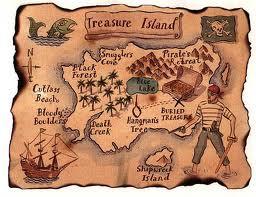
Treasure Island: So “special”

2

Actually, there are a bunch of problems. The Chron says the developers want to make the place “special,” a community of its own:


Developers hope the project, which goes before the Board of Supervisors for approval today, will feel like an urban village in the middle of a bustling metropolitan area. They hope urban farms, plentiful public transit and shared community spaces will give residents of the island a sense of community not found in other developments. …


For Treasure Island to be successful, developers and city planning experts agree that the residents of the island must feel like part of a special, distinct neighborhood where people want to spend time, and not just another community of commuters to San Francisco.


But the numbers don’t add up.

The plans call for 19,000 people living on the island — and there won’t be anywhere near enough employment opportunities for even a fraction of that number. So most of the residents are going to work somewhere else. Which means that twice a day they’ll have to travel — to and from San Francisco or to and from the East Bay — and there’s just no easy way to get that many people off that island to those locations.

Ther Bay Bridge is already beyond capacity during the periods when most of these people are going to be commuting. Yes, you can add a bunch of Muni buses to carry a lot of people, but that’s going to cost a lot of money. So would increasing ferry service to the level that this project would require. And if the past 50 years of San Francisco development is any guide (and it ought to be), the developers won’t pay enough for the transportation and the city won’t have the money to do it right so it won’t happen.

And even if the project meets the developers’ dreams in 30 years, it’s going to be a long, messy slog along the way. 

How, for example, will people who live on the island get their kids to school? Given San Francisco’s school-choice system, and the fact that there won’t be elementary, middle and high schools on the island anyway, and the school district can’t pay for the bus routes it has now, much less for new buses going to Treasure Island, you’re going to have hundreds of parents going to schools all over the city — and there will be only one way to get there: In cars.

(I’m all for no-car travel, but let’s be serious: Who’s got the time to take a kindergartener on the ferry downtown and on one or maybe two bus connections to a school — then turn around and take another bus to work? It isn’t going to happen. And nobody’s sending elementary school kids on Muni to school alone.)

If the supermarket isn’t built before most people move in, then you’ve got the grocery problem: It’s hard to do a week’s shopping on Muni and then a ferry. And what happens when you forget the milk (or run out of beer on the weekend?) No way to walk to the store, so you get in the car.

To make it even worse, 80 percent of the people who live there will be rich (since that’s who can afford market-rate housing). They’ll all have cars (and the developer kindly is providing parking spaces for all of them).

I just don’t see how it’s going to work. 

Film Listings

0

Film listings are edited by Cheryl Eddy. Reviewers are Kimberly Chun, Michelle Devereaux, Peter Galvin, Max Goldberg, Dennis Harvey, Johnny Ray Huston, Louis Peitzman, Lynn Rapoport, Ben Richardson, and Matt Sussman. For rep house showtimes, see Rep Clock. For first-run showtimes, see Movie Guide.

ANOTHER HOLE IN THE HEAD

The eighth Another Hole in the Head Film Festival runs through June 17 at the Roxie Theater, 3117 16th St., SF. For tickets ($11) and complete schedule, visit www.sfindie.com.

OPENING

*Beginners See “Father’s Day.” (1:44) Embarcadero.

Bride Flight Who doesn’t love a sweeping Dutch period piece? Ben Sombogaart’s Bride Flight is pure melodrama soup, enough to give even the most devout arthouse-goer the bloats. Emigrating from post-World War II Holland to New Zealand with two gal pals, the sweetly staid Ada (Karina Smulders) falls for smarm-ball Frank (Waldemar Torenstra, the Dutchman’s James Franco) and kind of joins the mile high club to the behest of her conscience. The women arrive with emotional baggage and carry-ons of the uterine kind. As the harem adjusts to the country mores of the Highlands, Frank tries a poke at all of them in a series of sex scenes more moldy than smoldery. This Flight, set to a plodding score and stuffy mise-en-scene, never quite leaves the runway. Not to mention the whole picture, pale as a corpse, resembles one of those old-timey photographs of your great grandma’s wedding. These kinds of pastoral romances ought to be put out to, well, pasture. (2:10) Clay, Shattuck. (Ryan Lattanzio)

Judy Moody and the Not Bummer Summer A girl has an adventurous summer in this live-action family film adapted from the best-selling book. (1:31) Shattuck.

My Heart is an Idiot Although My Heart is an Idiot is billed as a documentary about love, it fails to wade in at any depth. Instead, it focuses on the routine personal issues its subject, Davy Rothbart (editor-publisher of Found magazine), has with his own past and present romances. The only person mystified by his troubled relationships, though, is Davy. You want to palm your forehead and mumble “duh” throughout much of the film, but therein lies, perhaps, its one saving grace; Davy is almost miraculously endearing as a tragic romantic cast by himself as the protagonist of his own epic love story. Is this self-indulgent? Yes. Is he naive? Yes. Does he look kinda pathetic? Absolutely. Though it’s hard not to empathize with and even quietly champion someone who thoroughly wants to believe in true love (even if he doesn’t seem to know what that means), it’s also ultimately hard to really care. (1:34) Roxie. (Cooper Berkmoyer)

*Le Quattro Volte See “Wheel in the Sky Keeps on Turnin’.” (1:28) Lumiere, Shattuck.

Submarine Coming-of-age tale about a 15-year-old who becomes a little too interested in the sex life of his parents. (1:37)

Super 8 They’re heeeere. (1:52) California, Four Star, Presidio.

ONGOING

*L’Amour Fou Pierre Thoretton’s documentary L’amour fou opens with two clips of men bidding farewell. The first, from 2002, is of the French-Algerian couturier Yves Saint Laurent announcing his retirement in a moving and emotional speech worthy of his favorite writer Marcel Proust. The second is of Pierre Bergé, Saint Laurent’s longtime business partner and former lover, eulogizing his departed friend at the designer’s memorial service six years later. Thoretton’s film is suffused with goodbyes, many tender and candid, some portentous and rehearsed. To be sure, L’amour fou is a touching portrait of the powerful and tempestuous bond between Saint Laurent and Bergé, a bond that lasted close to five decades and resulted in one of the great empires of 20th century fashion. But it is also, alongside David Teboud’s two 2002 YSL documentaries, another entry in the hagiography of Saint Laurent, one cannily steered by Bergé as much as by Thoretton. Well-spoken and charming, Bergé still comes off as the punchy entrepreneurial foil to Saint Laurent’s dazzling but fragile genius. He can be both hyperbolic (praising Saint Laurent’s gifts) but also forthcoming (discussing the designer’s demons). Former muses Loulou de la Falaise and Betty Catroux are also interviewed, but this is clearly Bergé’s show. (1:43) Opera Plaza. (Sussman)

*Bill Cunningham New York To say that Bill Cunningham, the 82-year old New York Times photographer, has made documenting how New Yorkers dress his life’s work would be an understatement. To be sure, Cunningham’s two decades-old Sunday Times columns — “On the Street,” which tracks street-fashion, and “Evening Hours,” which covers the charity gala circuit — are about the clothes. And, my, what clothes they are. But Cunningham is a sartorial anthropologist, and his pictures always tell the bigger story behind the changing hemlines, which socialite wore what designer, or the latest trend in footwear. Whether tracking the near-infinite variations of a particular hue, a sudden bumper-crop of cropped blazers, or the fanciful leaps of well-heeled pedestrians dodging February slush puddles, Cunningham’s talent lies in his ability to recognize fleeting moments of beauty, creativity, humor, and joy. That last quality courses through Bill Cunningham New York, Richard Press’ captivating and moving portrait of a man whose reticence and personal asceticism are proportional to his total devotion to documenting what Harold Koda, chief curator at the Costume Institute at the Metropolitan Museum of Art, describes in the film as “ordinary people going about their lives, dressed in fascinating ways.” (1:24) Opera Plaza. (Sussman)

*Blank City “No one was doing what they were trained to do” — key to the explosion in Super-8 movie-making in late ’70s and mid-’80s New York City, according to John Lurie, star of 1984’s Stranger Than Paradise. Filling in the blanks of a burnt-out city-turned-artistic playground, musicians like Lurie and Jim Jarmusch made films, and artists such as Jean-Michel Basquiat and Richard Kern plopped themselves in front of the camera or behind it. Those grainy artifacts were populated by performers oozing with character and charisma, à la Steve Buscemi and Debbie Harry, while combos that ran the generational gamut, from Patti Smith to the Contortions to Sonic Youth, provided the soundtracks as well as the vivid onstage visuals. French filmmaker Celine Danhier does the noble work of trying to encapsulate and couple the disparate No Wave and Transgressive cinemas under the umbrella of shared geography — the squatter-friendly, pre-Times Square-cleanup New York — though organizationally and conceptually Blank City has a tough time surmounting flaws like choppy chronology and uneven allotments of screen time. The No Wave years get short shrift — you’re yearning to see more of the actual films. Should these two movements be paired in the first place — and where does the wildly successful 1983 hip-hop document Wild Style fall (and why isn’t the same year’s Style Wars included)? Danhier fails to make convincing connections, though the snippets of interviews with provocateurs like Amos Poe and Lydia Lunch almost make up for it (who knew, say, that late Dreamlander Cookie Mueller was Rainer Werner Fassbinder’s dealer, as John Waters gossips?), and snippets of movies such as the vibrant Downtown 81 (1981) transmit the scene’s energy — loud, clear, and cacophonous. (1:35) Shattuck. (Chun)

*Bridesmaids For anyone burned out on bad romantic comedies, Bridesmaids can teach you how to love again. This film is an answer to those who have lamented the lack of strong female roles in comedy, of good vehicles for Saturday Night Live cast members, of an appropriate showcase for Melissa McCarthy. The hilarious but grounded Kristen Wiig stars as Annie, whose best friend Lillian (Maya Rudolph) is getting hitched. Financially and romantically unstable, Annie tries to throw herself into her maid of honor duties — all while competing with the far more refined Helen (Rose Byrne). Bridesmaids is one of the best comedies in recent memory, treating its relatable female characters with sympathy. It’s also damn funny from start to finish, which is more than can be said for most of the comedies Hollywood continues to churn out. Here’s your choice: let Bridesmaids work its charm on you, or never allow yourself to complain about an Adam Sandler flick again. (2:04) Empire, Marina, 1000 Van Ness, Shattuck, Sundance Kabuki. (Peitzman)

*Cave of Forgotten Dreams The latest documentary from Werner Herzog once again goes where no filmmaker — or many human beings, for that matter — has gone before: the Chauvet-Pont-d’Arc Cave, a heavily-guarded cavern in Southern France containing the oldest prehistoric artwork on record. Access is highly restricted, but Herzog’s 3D study is surely the next best thing to an in-person visit. The eerie beauty of the works leads to a typically Herzog-ian quest to learn more about the primitive culture that produced the paintings; as usual, Herzog’s experts have their own quirks (like a circus performer-turned-scientist), and the director’s own wry narration is peppered with random pop culture references and existential ponderings. It’s all interwoven with footage of crude yet beautiful renderings of horses and rhinos, calcified cave-bear skulls, and other time-capsule peeks at life tens of thousands of years ago. The end result is awe-inspiring. (1:35) SF Center, Shattuck. (Eddy)

*The Double Hour Slovenian hotel maid Sonia (Ksenia Rappoport) and security guard Guido (Filippo Timi) are two lonely people in the Italian city of Turin. They find one another (via a speed-dating service) and things are seriously looking up for the fledgling couple when calamity strikes. This first feature by music video director Giuseppe Capotondi takes a spare, somber approach to a screenplay (by Alessandro Fabbri, Ludovica Rampoldi, and Stefano Sardo) that strikingly keeps raising, then resisting genre categorization. Suffice it to say their story goes from lonely-hearts romance to violent thriller, ghost story, criminal intrigue, and yet more. It doesn’t all work seamlessly, but such narrative unpredictability is so rare at the movies these days that The Double Hour is worth seeing simply for the satisfying feeling of never being sure where it’s headed. (1:35) Piedmont, Shattuck, Smith Rafael. (Harvey)

*Everything Must Go Just skirting the edge of sentimentality and banality, Everything Must Go aims to do justice by its source material: Raymond Carver’s rueful, characteristically spare short story, “Why Don’t You Dance?,” from the 1988 collection Where I’m Calling From. And it mostly succeeds with some restraint from its director-writer Dan Rush, who mainly helmed commercials in the past. Everything Must Go gropes toward a cinematic search for meaning for the Willy Lomans on both sides of the camera — it’s been a while since Will Ferrell attempted to stretch beyond selling a joke, albeit often extended ones about masculinity, and go further as an actor than 2006’s Stranger Than Fiction. The focus here turns to the despairing, voyeuristic whiskey drinker of Carver’s highly-charged short story, fills in the blanks that the writer always carefully threaded into his work, and essentially pushes him down a crevasse into the worst day of his life: Ferrell’s Nick has been fired and his wife has left him, changing the locks, putting a hold on all his bank accounts, and depositing his worldly possessions on the lawn of their house. Nick’s car has been reclaimed, his neighbors are miffed that he’s sleeping on his lawn, the cops are doing drive-bys, and he’s fallen off the wagon. His only reprieve, says his sponsor Frank (Michael Pena), is to pretend to hold a yard sale; his only help, a neighborhood boy Kenny who’s searching for a father figure (Christopher Jordan Wallace, who played his dad Notorious B.I.G. as a child in 2009’s Notorious) and the new neighbor across the street (Rebecca Hall). Though Rush expands the characters way beyond the narrow, brilliant scope of Carver’s original narrative, the urge to stay with those fallible people — as well as the details of their life and the way suburban detritus defines them, even as those possessions are forcibly stripped away — remains. It makes for an interesting animal of a dramedy, though in Everything Must Go‘s search for bright spots and moments of hope, it’s nowhere near as raw, uncompromising, and tautly loaded as Carver’s work can be. (1:36) Piedmont, SF Center. (Chun)

Fast Five There are plenty of laugh-out-loud moments in Fast Five, in addition to a much demolition derby-style crunch — instances that stretch credulity and simultaneously trigger a chuckle at the OTT fantasy of the entire enterprise. Two unarmed men chained to the ceiling kick their way out of a torture cell, jump favela rooftops to freedom with nary a bullet wound in sight, and, in the movie’s smash-’em-up tour de force, use a bank vault as a hulking pair of not-so-fuzzy dice to pulverize an unsuspecting Rio de Janeiro. Not for nothing is rapper Ludacris attached to this franchise — his name says it all (why not go further than his simple closing track, director Justin Lin, now designated the keeper of Fast flame, and have him providing the rap-eratic score/running commentary throughout?) In this installment, shady hero Dominic (Vin Diesel) needs busting out of jail — check, thanks to undercover-cop-turned-pal Brian (Paul Walker) and Dominic’s sis Mia (Jordana Brewster). Time to go on the lam in Brazil and to bring bossa nova culture down to level of thieving L.A. gearheads, as the gearhead threesome assemble their dream team of thieves to undertake a last big heist that will set ’em up for life. Still, despite the predictable pseudo-twists — can’t we all see the bromance-bonding between testosteroni boys Diesel and Dwayne Johnson coming from miles of blacktop away? — there’s enough genre fun, stunt driving marvels, and action choreography here (Lin, who made his name in ambitious indies like 2002’s Better Luck Tomorrow, has developed a knack for harnessing/shooting the seeming chaos) — to please fans looking for a bigger, louder kick. (1:41) 1000 Van Ness. (Chun)

The First Grader After a government announcement offering free elementary school educations to all Kenyans, an elderly man, Maruge (Oliver Litondo), shuffles to the nearest rural classroom in search of reading lessons. Though school officials (and parents, miffed that the man would take a child’s place in the already overcrowded system) protest, open-minded head teacher Jane (Naomie Harris) allows him to stay and study. Maruge’s freedom-fighter past, which cost him his family at the brutal hands of the British, is an important part of this true story, which otherwise would’ve felt a bit too heavy on the heartwarming tip. (His classmates, actual students at the school used for filming, are pretty unavoidably adorable.) As directed by Justin Chadwick (2008’s The Other Boleyn Girl ), Harris and Litondo turn in passionate performances, but the film unfolds like a heavy-handed TV movie. The facts of this story are inspiring enough — the film shouldn’t have to try so hard. (1:43) Shattuck, Smith Rafael. (Eddy)

Forks Over Knives Lee Fulkerson steps up as the latest filmmaker-turned-guinea-pig to appear in his own documentary about nutrition. As he makes progress on his 12-week plan to adopt a “whole foods, plant-based diet” (and curb his Red Bull addiction), he meets with other former junk food junkies, as well as health professionals who’ve made it their mission to prevent or even reverse diseases strictly through dietary changes. Along the way, Forks Over Knives dishes out scientific factoids both enlightening and alarming about the way people (mostly us fatty Americans, though the film investigates a groundbreaking cancer study in China) have steadily gotten unhealthier as a direct result of what they are (or in some cases, are not) eating. Fulkerson isn’t as entertaining as Morgan Spurlock (and it’s unlikely his movie will have the mainstream appeal of 2004’s Super Size Me), but the staunchly pro-vegan Forks Over Knives certainly offers some interesting, ahem, food for thought. (1:36) Opera Plaza. (Eddy)

The Hangover Part II What do you do with a problematic mess like Hangover Part II? I was a fan of The Hangover (2009), as well as director-cowriter Todd Phillips’ 1994 GG Allin doc, Hated, so I was rooting for II, this time set in the East’s Sin City of Bangkok, while simultaneously dreading the inevitable Asian/”ching-chang-chong” jokes. Would this would-be hit sequel be funnier if they packed in more of those? Doubtful. The problem is that most of II‘s so-called humor, Asian or no, falls completely flat — and any gross-out yuks regarding wicked, wicked Bangkok are fairly old hat at this point, long after Shocking Asia (1976) and innumerable episodes of No Reservations and other extreme travel offerings. This Hangover around, mild-ish dentist Stu (Ed Helms) is heading to the altar with Lauren (The Real World: San Diego‘s Jamie Chung), with buds Phil (Bradley Cooper) and Doug (Justin Bartha) in tow. Alan (Zach Galifianakis) has completely broken with reality — he’s the pity invite who somehow ropes in the gangster wild-card Mr. Chow (Ken Jeong). Blackouts, natch, and not-very-funny high jinks ensue, with Jeong, surprisingly, pulling small sections of II out of the crapper. Phillips obviously specializes in men-behaving-badly, but II‘s most recent character tweaks, turning Phil into an arrogant, delusional creep and Alan into an arrogant, delusional kook, seem beside the point. Because almost none of the jokes work, and that includes the tired jabs at tranny strippers because we all know how supposedly straight white guys get hella grossed out by brown chicks with dicks. Lame. (1:42) Empire, Four Star, Marina, 1000 Van Ness, Presidio, SF Center, Shattuck, Sundance Kabuki. (Chun)

*Incendies When tightly wound émigré Nawal (Luba Azabal) dies, she leaves behind adult twins Jeanne (Mélissa Désormeaux-Poulin) and Simon (Maxim Gaudette) — and leaves them documents that only compound their feelings of grief and anger, suggesting that what little they thought they knew about their background might have been a lie. While resentful Simon at first stays home in Montreal, Jeanne travels to fictive “Fuad” (a stand-in for source-material playwright Wajdi Mouawad’s native Lebanon), playing detective to piece together decades later the truth of why their mother fled her homeland at the height of its long, brutal civil war. Alternating between present-day and flashback sequences, this latest by Canadian director Denis Villeneuve (2000’s Maelstrom) achieves an urgent sweep punctuated by moments of shocking violence. Resembling The Kite Runner in some respects as a portrait of the civilian victimization excused by war, it also resembles that work in arguably piling on more traumatic incidences and revelations than one story can bear — though so much here has great impact that a sense of over-contrivance toward the very end only slightly mars the whole. (2:10) Shattuck. (Harvey)

Kung Fu Panda 2 The affable affirmations of 2008’s Kung Fu Panda take a back seat to relentlessly elaborate, gag-filled action sequences in this DreamWorks Animation sequel, which ought to satisfy kids but not entertain their parents as much as its predecessor. Po (voiced by Jack Black), the overeating panda and ordained Dragon Warrior of the title, joins forces with a cavalcade of other sparring wildlife to battle Lord Shen (Gary Oldman), a petulant peacock whose arsenal of cannons threatens to overwhelm kung fu. But Shen is also part of Po’s hazy past, so the panda’s quest to save China is also a quest for self-fulfillment and “inner peace.” There’s less character development in this installment, though the growing friendship between Po and the “hardcore” Tigress (Angelina Jolie) is occasionally touching. The 3-D visuals are rarely more than a gimmick, save for a series of eye-catching flashbacks in the style of cel-shaded animation. (1:30) 1000 Van Ness, Presidio, SF Center, Sundance Kabuki. (Sam Stander)

Midnight in Paris Owen Wilson plays Gil, a self-confessed “Hollywood hack” visiting the City of Light with his conservative future in-laws and crassly materialistic fiancée Inez (Rachel McAdams). A romantic obviously at odds with their selfish pragmatism (somehow he hasn’t realized that yet), he’s in love with Paris and particularly its fabled artistic past. Walking back to his hotel alone one night, he’s beckoned into an antique vehicle and finds himself transported to the 1920s, at every turn meeting the Fitzgeralds, Gertrude Stein (Kathy Bates), Dali (Adrien Brody), etc. He also meets Adriana (Marion Cotillard), a woman alluring enough to be fought over by Hemingway (Corey Stoll) and Picasso (Marcial di Fonzo Bo) — though she fancies aspiring literary novelist Gil. Woody Allen’s latest is a pleasant trifle, no more, no less. Its toying with a form of magical escapism from the dreary present recalls The Purple Rose of Cairo (1985), albeit without that film’s greater structural ingeniousness and considerable heart. None of the actors are at their best, though Cotillard is indeed beguiling and Wilson dithers charmingly as usual. Still — it’s pleasant. (1:34) Albany, Piedmont, Shattuck, Sundance Kabuki. (Harvey)

*Nostalgia for the Light Chile’s Atacama Desert, the setting for Patricio Guzmán’s lyrically haunting and meditative documentary, is supposedly the driest place on earth. As a result, it’s also the most ideal place to study the stars. Here, in this most Mars-like of earthly landscapes, astronomers look to the heavens in an attempt to decode the origins of the universe. Guzmán superimposes images from the world’s most powerful telescopes — effluent, gaseous nebulas, clusters of constellations rendered in 3-D brilliance — over the night sky of Atacama for an even more otherworldly effect, but it’s the film’s terrestrial preoccupations that resonate most. For decades, a small, ever dwindling group of women have scoured the cracked clay of Atacama searching for loved ones who disappeared early in Augusto Pinochet’s regime. They take their tiny, toy-like spades and sift through the dirt, finding a partial jawbone here, an entire mummified corpse there. Guzmán’s attempt through voice-over to make these “architects of memory,” both astronomers and excavators alike, a metaphor for Chile’s reluctance to deal with its past atrocities is only marginally successful. Here, it’s the images that do all the talking — if “memory has a gravitational force,” their emotional weight is as inescapable as a black hole. (1:30) Opera Plaza. (Devereaux)

Pirates of the Caribbean: On Stranger Tides The last time we saw rascally Captain Jack Sparrow (Johnny Depp), he was fighting his most formidable enemy yet: the potentially franchise-ending Pirates of the Caribbean: At World’s End (2007). The first Pirates movie (2003) was a surprise critical success, earning Depp his first-ever Oscar nomination; subsequent entries, though no less moneymaking, suffered from a detectable case of sequel-itis. Overseeing this reboot of sorts is director Rob Marshall (2002’s Chicago), who keeps the World’s End notion of sending Jack to find the Fountain of Youth, but adds in a raft of new faces, including Deadwood‘s Ian McShane (as Blackbeard) and lady pirate Penélope Cruz. The story is predictably over-the-top, with the expected supernatural elements mingling with sparring both sword-driven and verbal — as well as an underlying theme about faith that’s nowhere near as fun as the film’s lesser motifs (revenge, for one). It’s basically a big swirl of silly swashbuckling, nothing more or less. And speaking of Depp, the fact that the oft-ridiculous Sparrow is still an amusing character can only be chalked up to the actor’s own brand of untouchable cool. If it was anyone else, Sparrow’d be in Austin Powers territory by now. (2:05) 1000 Van Ness, Sundance Kabuki. (Eddy)

Queen to Play From first-time feature director Caroline Bottaro comes this drama about … chess. Wait! Before your eyes glaze over, here are a few more fast facts: it’s set in idyllic Corsica and features, as an American expat, Kevin Kline in his first French-speaking role. (Side note: is there a Kline comeback afoot? First No Strings Attached, then The Conspirator, and now Queen to Play. All within a few short months.) Lovely French superstar Sandrine Bonnaire plays Héléne, a hotel maid who has more or less accepted her unremarkable life — until she happens to catch a couple (one half of which is played by Jennifer Beals, cast because Bottaro is a longtime fan of 1983’s Flashdance!) playing chess. An unlikely obsession soon follows, and she asks Kline’s character, a reclusive doctor who’s on her freelance house-cleaning route, to help her up her game. None too pleased with this new friendship are Héléne’s husband and nosy neighbors, who are both suspicious of the doctor and unsure of how to treat the formerly complacent Héléne’s newfound, chess-inspired confidence. Queen to Play can get a little corny (we’re reminded over and over that the queen is “the most powerful piece”), and chess is by nature not very cinematic (slightly more fascinating than watching someone type, say). But Bonnaire’s quietly powerful performance is worth sticking around for, even when the novelty of whiskery, cardigan-wearing, French-spouting Kline wears off. (1:36) Smith Rafael. (Eddy)

*13 Assassins 13 Assassins is clearly destined to be prolific director Takashi Miike’s greatest success outside Japan yet. It’s another departure for the multi-genre-conquering Miike, doubtless one of the most conventional movies he’s made in theme and execution. That’s key to its appeal — rigorously traditional, taking its sweet time getting to samurai action that is pointedly not heightened by wire work or CGI, it arrives at the kind of slam-dunk prolonged battle climax that only a measured buildup can let you properly appreciate. In the 1840s, samurai are in decline but feudalism is still hale. It’s a time of peace, though not for the unfortunates who live under regional tyrant Lord Naritsugu (Goro Inagaki), a li’l Nippon Caligula who taxes and oppresses his people to the point of starvation. Alas, the current Shogun is his sibling, and plans to make little bro his chief adviser — so a concerned Shogun official secretly hires veteran samurai Shinzaemon (Koji Yakusho) to assassinate the Lord. Fully an hour is spent on our hero doing “assembling the team” stuff, recruiting other unemployed, retired, or wannabe samurai. When the protagonists finally commence their mission, their target is already aware he’s being pursued, and he’s surrounded by some 200 soldiers by the time Miike arrives at the film’s sustained, spectacular climax: a small village which Shinzaemon and co. have turned into a giant boobytrap so that 13 men can divide and destroy an ogre-guarding army. A major reason why mainstream Hollywood fantasy and straight action movies have gotten so depressingly interchangeable is that digital FX and stunt work can (and does) visualize any stupid idea — heroes who get thrown 200 feet into walls by monsters then getting up to fight some more, etc. 13 Assassins is thrilling because its action, while sporting against-the-odds ingeniousness and sheer luck by our heroes as in any trad genre film, is still vividly, bloodily, credibly physical. (2:06) Bridge, Shattuck, Smith Rafael. (Harvey)

*Thor When it comes to superhero movies, I’m not easily impressed. Couple that with my complete disinterest in the character of Thor, and I didn’t go into his big-screen debut with any level of excitement. Turns out Kenneth Branagh’s Thor is a genre standout — the best I’ve seen since 2008’s Iron Man. For those who don’t know the mythology, the film follows Thor (Chris Hemsworth) as he’s exiled from the realm of Asgard to Earth. Once there, he must reclaim his mighty hammer — along with his powers — in order to save the world and win the heart of astrophysicist Jane Foster (Natalie Portman). Hemsworth is perfectly cast as the titular hero: he’s adept at bringing charm to a larger-than-life god. The script is a huge help, striking the ideal balance between action, drama, and humor. That’s right, Thor is seriously funny. On top of that, the effects are sensational. Sure, the 3D is once again unnecessary, but it’s admittedly kind of fun when you’re zooming through space. (2:03) 1000 Van Ness. (Peitzman)

The Tree of Life Mainstream American films are so rarely adventuresome that overreactive gratitude frequently greets those rare, self-conscious, usually Oscar-baiting stabs at profundity. Terrence Malick has made those gestures so sparingly over four decades that his scarcity is widely taken for genius. Now there’s The Tree of Life, at once astonishingly ambitious — insofar as general addressing the origin/meaning of life goes — and a small domestic narrative artificially inflated to a maximally pretentious pressure-point. The thesis here is a conflict between “nature” (the way of striving, dissatisfied, angry humanity) and “grace” (the way of love, femininity, and God). After a while Tree settles into a fairly conventional narrative groove, dissecting — albeit in meandering fashion — the travails of a middle-class Texas household whose patriarch (a solid Brad Pitt) is sternly demanding of his three young sons. As a modern-day survivor of that household, Malick’s career-reviving ally Sean Penn has little to do but look angst-ridden while wandering about various alien landscapes. Set in Waco but also shot in Rome, at Versailles, and in Saturn’s orbit (trust me), The Tree of Life is so astonishingly self-important while so undernourished on some basic levels that it would be easy to dismiss as lofty bullshit. Its Cannes premiere audience booed and cheered — both factions right, to an extent. (2:18) California, Embarcadero. (Harvey)

*Win Win Is Tom McCarthy the most versatile guy in Hollywood? He’s a successful character actor (in big-budget movies like 2009’s 2012; smaller-scale pictures like 2005’s Good Night, and Good Luck; and the final season of The Wire). He’s an Oscar-nominated screenwriter (2009’s Up). And he’s the writer-director of two highly acclaimed indie dramas, The Station Agent (2003) and The Visitor (2007). Clearly, McCarthy must not sleep much. His latest, Win Win, is a comedy set in his hometown of New Providence, N.J. Paul Giamatti stars as Mike Flaherty, a lawyer who’s feeling the economic pinch. Betraying his own basic good-guy-ness, he takes advantage of a senile client, Leo (Burt Young), when he spots the opportunity to pull in some badly-needed extra cash. Matters complicate with the appearance of Leo’s grandson, Kyle (newcomer Alex Shaffer), a runaway from Ohio. Though Mike’s wife, Jackie (Amy Ryan), is suspicious of the taciturn teen, she allows Kyle to crash with the Flaherty family. As luck would have it, Kyle is a superstar wrestler — and Mike happens to coach the local high school team. Things are going well until Kyle’s greedy mother (Melanie Lynskey) turns up and starts sniffing around her father’s finances. Lessons are learned, sure, and there are no big plot twists beyond typical indie-comedy turf. But the script delivers more genuine laughs than you’d expect from a movie that’s essentially about the recession. (1:46) Shattuck. (Eddy)

*X-Men: First Class Cynics might see this prequel as pandering to a more tweeny demographic, and certainly there are so many ways it could have gone terribly wrong, in an infantile, way-too-cute X-Babies kinda way. But despite some overly choppy edits that shortchange brief moments of narrative clarity, X-Men: First Class gets high marks for its fairly first-class, compelling acting — specifically from Michael Fassbender as the enraged, angst-ridden Magneto and James McAvoy as the idealistic, humanist Charles Xavier. Of course, the celebrated X-Men tale itself plays a major part: the origin story of Magneto, a.k.a. Erik Lehnsherr, a Holocaust survivor, is given added heft with a few tweaks: here, in an echo of Fassbender’s turn in Inglourious Basterds (2009), his master of metal draws on his bottomless rage to ruthlessly destroy the Nazis who used him as a lab rat in experiments to build a master race. The last on his list is the energy-wrangling Sebastian Shaw (Kevin Bacon), who’s set up a sweet Bond-like scenario, protected by super-serious bikini-vixen Emma Frost (January Jones). The complications are that Erik doesn’t ultimately differ from his Frankensteins — he pushes mutant power to the detriment of those puny, bigoted humans — and his unexpected collaborator and friend is Xavier, the privileged, highly psychic scion who hopes to broker an understanding between mutants and human and use mutant talent to peaceful ends. Together, they can move mountains—or at least satellite dishes and submarines. Jennifer Lawrence as Raven/Mystique and Nicholas Hoult as Hank McCoy/Beast fill out the cast, voicing those eternal X-Men dualities — preserving difference vs. conformity, intoxicating power vs. reasoned discipline. All core superhero concerns, as well as teen identity issues — given a fresh charge. (2:20) Empire, 1000 Van Ness, Presidio, Sundance Kabuki. (Chun)


Treasure Island goes to the Board

37

There’s three reasons I’ll always remember the Chronicle’s Phil Bronstein: he used to be married to Sharon Stone, he got bitten by a Komodo Dragon at the L.A. zoo, and he had the audacity to write a column in the Chronicle that was titled “Treasure Island eco-dream is bad choice for funds.”
Now it’s true that Bronstein was a 1986 Pulitzer Prize finalist for his work in the Philippines. But that was 25 years ago, and I didn’t read what he wrote, so I can’t comment on the quality of his work  then. But now I live in the East Bay and drive past Treasure Island most days of the week—and I have been waiting for someone at the Chronicle to finally voice something other than their usual preppy praise for this increasingly large development in the middle of the Bay.
 
And Bronstein certainly did have plenty to say about Treasure Island. And it wasn’t the usual upbeat pap about “bold and robust visions” that the Chron usually serves up when it concerns anything that involves Lennar and public-private development. Instead,  Bronstein began by describing T.I.  as a “onetime secretive Navy base filled with deer, political patronage and who knows what buried in the ground.”

Now, part of Bronstein’s fire may have been a result of him writing his column in April, a few weeks after a massive earthquake and tsunami hit Japan, triggering a nuclear meltdown. Or two or three.

Bronstein’s infamous rant even mentioned some of the radiologically impacted things at Treasure Island that, as he put it, “leached into the soil from weaponry or other deadly items: radium and PCBs 100,000 times the acceptable levels.”
And then he compared Lennar and billionaire Ron Burkle to “contemporary development pirates.” Believe me, that was a surprise to read in the Chronicle.

“This year, they’re scheduled to break ground on a huge multibillion-dollar public-private ecotopia mini-city built upon toxic waste and landfill,” Bronstein wrote. “This glorious contradiction might become a triumph of super-green living and high-end dreams. But it also represents something else: bad choices about how to spend public money in ever tighter times.”

Bronstein noted that the Board has a brief panic in April when they considered whether a Japan-style disaster could wipe out the T.I. plan, but that Rich Hills of the Mayor’s Office said the “disaster potential has already been addressed.”
“Unless we have what Hills called ‘a freak disaster,’” Bronstein added with a cutting bite that his Komodo dragon would have been proud of, including Bronstein’s inclusion of the fact that Treasure Island is on the California Emergency Management Agency’s tsunami inundation map, and that while we are coughing up $105 million to developers who want to profit from high-density living on T. I, all of us are neglecting aging infrastructure that we already have.

“While T.I. developers are busy putting some kind of shower cap-like cover over the land so trees and foundations don’t touch toxic ground that can’t and won’t be cleaned up, our children stand a pretty good chance of being flattened like pancakes in existing structures while they’re learning math and history during the next, inevitable big quake,” Bronstein concluded.
Meanwhile, those of us who drive the seismically-compromised Bay Bridge each day can’t help wondering how folks who decide to move to the development that’s being planned for Treasure Island will ever get off the island—unless they have a pirate ship.

That’s because every morning, we get to see a long line of drivers waiting—without much success—for drivers on the Bay Bridge to slow down and let them into the traffic.

Those of us who sometimes commute by ferry also know how tricky it is try and catch the last ferry, which leaves the San Francisco Ferry Building at 8:25 p.m. That’s way earlier than most commission meetings end. And earlier than most nightlife begins.

And then there’s the question of what happens when you get back to Treasure Island–and realize you forgot to buy milk, collect the dog, or pick up the kids from day care.

Now, maybe the city and the developers believe they have thoroughly considered and answered all these questions. But have they done any outreach to East Bay commuters, whose journey will likely be further impacted by the T.I. plan? If so, I certainly haven’t heard about it. And what about the folks in Berkeley who likely won’t be able to see San Francisco once a bunch of high-rises pop up in the Bay? Have they been consulted?

This Tuesday (June 7) at 5 p.m., the Board will hear an appeal of the city’s Treasure Island environmental impact report and consider a huge batch of related documents. (And I’m willing to bet that most current supervisors don’t know too much about this plan, and probably have only flipped through the thousands of pages of documentation related to it)

The appeal was filed by the Sierra Club, Golden Gate Audubon Society, and Arc Ecology, who last year filed an appeal around the city’s EIR for Lennar’s massive Hunters Point Shipyard/Candlestick Project. Only this time, this trio is being joined by a group of Treasure Island residents—and former Board President Aaron Peskin.

Which reminds me: Three weeks after Bronstein wrote his amazing Treasure Island hit, piece, his fellow columnists at the Chronicle, Phillip Matier and Andy Ross, were back, sounding much more like the Chronicle’s attack dogs usually do, when it comes to anyone who dares to find the city and Lennar’s massive plans less than perfect: “Peskin, who as a supervisor was notorious for his middle-of-night phone rants to department heads, called the proposed high-rise plan that just squeaked by the Planning Commission a ‘laughingstock mistake,’” M& R crowed.

But in the end, they quoted the very thought that Peskin wants M&R to print and Chronicle readers to consider about the city’s current Treasure Island plan:

“It will horrify San Francisco and the Bay Area for decades to come,” Peskin said.

Now, as the folks joining Peskin in opposing the city’s current plan note, they aren’t trying to stop the development of Treasure Island. They are simply fighting the latest plan.

“The developer and the city already have an approved EIR and project plan for a 6,000 unit smaller scale, more transit friendly project that was passed in 2006,” Arc Ecology states in a flier that it plans to distribute at the June 7 hearing. “Environmentalists and many of the appellants supported that plan. Don’t be fooled by the rhetoric. It was the earlier plan that won all the awards for sustainability.”

And as Arc points out, the city’s latest EIR and the plan currently before the Board is an entirely different animal from the city’s 2006 plan.

“It’s 25 percent bigger than the 2006 plan, tipping the scales on its impacts,” Arc states. “It increases the housing by 25 percent to 8,000 units, decreases transit service and affordable housing and competes with hotels and businesses that already exist downtown.”

“What can you do? Tell the Board to go back to the 2006 plan,” Arc advises.

The flier also lists a bunch of bullet points that outline some of the coalition’s objections.

“It’s unsustainable,” the flier states, claiming that under the new plan, there will be, “too many cars, too much traffic, too much air pollution.”

Under the new plan, there is also a seven percent reduction on the affordable housing set aside and a 17 percent reduction in overall affordable housing units, Arc notes. That’s another way of saying, “There is not enough affordable housing.”

And Arc claims the island will remain contaminated (see Bronstein’s rant about radionuclides and PCBs at the beginning of this post) even after the Navy completes its toxic and radiological cleanup. That the 40-story high-rise towers will obstruct views of San Francisco from the East Bay, and vice versa. And that the project financing plan will drive the city further into debt for at least another 15 years.

Arc’s flier concludes by asserting that the whole plan is undemocratic.
“Once approved, there will be no further environmental review of project plans—ever!” Arc claims. “Once approved the project will be implemented by an unelected nonprofit corporation. There has been no outreach or involvement of East Bay residents despite traffic and view impacts. The plan repays $55 million in additional developer costs to purchase this island with hundreds of millions of dollars of impacts on Bay Area residents.”

Now, I’m sure officials for the City and the developer will have plenty of counter arguments–and possibly busloads of low-income T.I. residents/unemployed SF workers, who will be shipped into the Board’s Chambers to argue that they need the Board to approve this plan so they can have new homes and jobs. Because that’s what happened last year, when Arc and the Sierra Club and Golden Gate Audubon expressed their concerns about plans to carve up the Candlestick State Park Recreation Area and build a bridge over the Yosemite Slough. And suddenly found themselves cast as the big bad villains, when it came to the city and Lennar’s wish to ram through the Candlestick/Shipyard plan.

But regardless of whether you believe in the project, oppose it, or don’t know much about it, make sure you show up at 5pm in Room 250 at City Hall on June 7, if you want to hear what actually goes down. Especially if you work in San Francisco, and live in the East Bay, because much of the Treasure Island traffic will directly impact the East Bay. 

Or as Arc puts it, “This new project is 25 percent larger than the prior one and like the difference between a 75 degree day and a 100 degree day – this increase in size makes all the difference. The new project will overdrive bridge capacity, create too much traffic, not enough transit, reduced levels of affordable housing, and vests enormous public power in an unaccountable, unelected development authority.  Please tell the Board they don’t have to go back to the drawing board – just to the 2006 plan and recirculate the EIR.”
 

Locals shine at the Slumberland Showcase

0

This year’s SF Popfest culminated in last Saturday’s doozy of a Slumberland Showcase, boasting 10 bands in eight hours’ time for a day-to-night festival of jangly art-pop for the twinkle-toes in all of us. Despite the draw of bigger names like 14 Iced Bears and the June Brides’ Phil Wilson — both of 1980s UK pop and C86 fame — it’s safe to say that a few local bands truly represented and made us all proud, possibly even stealing the show.


Oakland’s Kids on a Crime Spree features Mario Hernandez of Ciao Bella and From Bubblegum to Sky, writing in his usual style of layered and lush melodies with vocal harmonies — and handclaps! Also noteworthy is righteous drummer babe, Becky Barron, who has apparently mastered the art of dancing and drumming at the same time, and doing a pretty good job at it.

Here’s a video for “Sweet Tooth,” a catchy track off of their brand new LP “We Love You So Much” on, you guessed it, Slumberland. Children, the elderly, and those prone to epileptic seizures beware — it’s super stroboscopic.


Not quite local, but close enough, Oxnard’s Sea Lions delivered an amazing follow-up performance to their January 22 show and San Francisco debut at the Knockout. Those of us in attendance earlier this year have been waiting with bated breath for this eclectic bunch to grace the stage once again, and it was well worth the wait. Adrian Pillado’s reverb-y Calvin Johnson-esque voice juxtoposed with the band’s nerdy and jangly pop numbers is unexpected, yet works really well.  

Check out the vintage celluloid artifacts of old Oxnard in the 1960s and 70s in the band’s music video for the tunes “I Loved Her So Much” and “I Wish I Was Lou Reed”:


What the hell is a Terry Malts and why is it so amazing?

Jokes aside, the band plowed through a perfect set of expertly crafted pop songs, this time amping up the volume and speed, as well as their signature crunchy fuzz that left the croud unaware of what hit them. Many say this local trio stole the show.

Behold, the music, but beware — you will have these catchy tunes stuck in your head for days:


Tumble Down by corey_lee Terry Malts – Distracted by Slumberland Records


Art Musems are always a delight! This band’s resemlance to the Clean and other Flying Nun acts is unmistakable. Their unconventional set-up on stage and their slightly folky flavor set them apart from the rest of the evening’s line up, and the electronic stylings of Virginia Weatherby is mezmerizing to watch. With releases on both Slumberland and Woodsist, we will certainly be seeing more of these guys soon.


Unfortunately I missed Brilliant Colors while, um, running an errand — the performance turnaround was so speedy!– but I’m sure they were fabulous as always with their disjointed-yet-lovely Raincoats-y melodies, like these numbers:

Brilliant Colors – How Much Younger by Slumberland Records Never Mine by brilliantcolorsinfo

SFBG Radio: The drug war and kids

10

It’s fine to belive that drugs ought to be legal — but how do you talk to your kids about it? Johnny and Tim have a lively discussion after the break.

KidsNDrugs by endorsements2010

Not in our neighborhood

6

news@sfbg.com

San Francisco faces an enormous shortage of affordable housing for young people at risk of homelessness, but a pair of projects intended to address the issue are under fire from neighborhood activists in supervisorial District 2, home to the city’s wealthiest residents.

The proposed conversion of the defunct Edward II Hotel and the major overhaul at the Booker T. Washington Community Service Center (BTWCSC) could create a combined 74 units of affordable housing for vulnerable youth, complete with services and support systems to help young people coming from foster or homeless families.

“We are building houses for young people who are getting their start in life,” said Julian Davis, president of the board of BTWCSC. “There was a great need for foster youth housing that has been studied ad nauseam … Our center wanted to contribute.”

But both projects have run into strong neighborhood opposition that appears to have turned D2 Sup. Mark Farrell against the projects as proposed, despite initial support for the BTWCSC project by both Farrell and his predecessor, Michela Alioto-Pier. Farrell’s approach has frustrated project opponents and caused the representative of a neighboring district, Sup. Ross Mirkarimi, to sponsor the project.

“The project emanated from Michela Alioto-Pier and she supported the original project, which is why I joined her in support and it initially appeared that Sup. Farrell was joining that support,” Mirkarimi told us, noting that he is continuing to champion the project because it borders his district and because “the Booker T center has a long reach and serves clients from throughout city.”

After hearing from constituents concerned about parking, the size of the five-story building that is proposed, and other issues, Farrell dropped his sponsorship of the project and submitted alternative legislation that cut the building to four stories, presenting it to project proponents without their input as a take-it-or-leave-it proposal.

“The thing I find most puzzling about this is the lack of communication with me personally,” BTWCSC Executive Director Pat Scott said of Farrell, noting how helpful Alioto-Pier and Farrell’s staff had been before opponents convinced him to drop his support for the project. “I was a little taken aback, quite frankly. I would just assume that he’d talk to me.

But Farrell said he was simply trying to heed neighborhood concerns and craft a compromise that would get neighbors to drop their lawsuit threats and appeal of the Planning Commission’s 6-1 vote to approve the project. “I can’t control what happened in the past, I’m only here to make sure everyone is happy now,” Farrell told us. “I absolutely support the project, I think the community center is great … We’re arguing over a story.”

Yet Scott noted that project proponents already had compromised on a project that was initially proposed for eight stories, and she said that even at five stories, it isn’t coming anywhere near what the city actually needs. So while Farrell casts it as a fight over one story, Scott said, “10 units is a big thing in a city that has nothing for these kids.”

That need was outlined in a 2007 report by the Mayor’s Transitional Youth Task Force. The group of city officials and nonprofit providers, convened by then-Mayor Gavin Newsom, studied issues affecting at-risk youth between the ages 16 and 24 and one of the major needs identified was housing.

A follow-up study found that 4,500 to 6,800 young people are “homeless or marginally housed each year.” The citywide affordable housing stock for this population sat at meager 314 units at the time.

“We are not doing a good enough job as a city and as a state [to help at-risk youth],” Davis said. “Once they leave the foster care system, there is very little support for them.”

The report called for 400 new affordable housing units for this population to be completed or under construction by 2012. Edward II and BTWCSC are located in the Marina and the Western Addition, respectively, in proximity to affluent neighborhoods in a district with a dearth of affordable housing.

“With supportive housing [going] into neighborhoods that never had affordable housing, there is a certain unknown and it makes people uncomfortable,” said Gail Gilman, Executive Director of Community Housing Partnership, which owns and manages the Edward II project.

Patricia Vaughey, a resident of the Marina-Cow Hollow area since 1976, is perhaps the most vocal critic of the project. She has used the neighborhood associations and every other city forum she can find as platforms to lambaste the plans. “It just kills my soul to see this project,” she told us, voicing a variety of concerns about how the project would be managed. “I am so worried about the kids … We are asking for the best program in the country and we are not getting it.”

Yet Gilman said that considerable energy and many resources have been invested in designing Edward II and that she trusts Larkin Street Youth Service, a respected nonprofit agency, to do the programming. “We chose to partner with Larkin Street because they are the experts in this area,” she said.

Vaughey characterized the stretch of Lombard Street between Divisadero and Van Ness streets, where Edward II will be located, as marred by crime and prostitution and unsuitable for this project. “We have a little Tenderloin down here,” she said.

Gilman disputed that characterization and said the building was chosen after an extensive search and that it met the criteria of having the right sized building in a safe neighborhood with good access to public transit and open space.

But many residents have expressed concern over the pending change to zoning for the building. And if the BTWCSC project couldn’t win Farrell’s support, the Edward II project faces an even more uphill battle because Farrell told us, “There’s an even stronger level of neighborhood concern over that project…. It’s going to be a tough hill to climb.”

The contentious issue under review by the Planning Department is an application to expand the density limit from 16 units to 24.

John Miller, president of the Marina Community Association, said that “from a neighborhood dynamic perspective,” a change to density is problematic. He said changing the density for one building is a slippery slope that could hurt the entire neighborhood. “Higher density is inconsistent with the neighborhood. It could work beautifully at lower density.”

Miller said potential renters in the vicinity would be concerned with “loitering that could occur when people are coming and going … With so many people there is no sense of community”

Yet as with BTWCSC, proponents say simply slashing the project to a smaller size would kill it because then it wouldn’t pencil out financially. Making an issue of density is therefore obstruction of the project because compromise cannot be reached on the issue.

Farrell, a venture capitalist, said he ran the numbers on BTWCSC and believes it would still be a viable project at four stories if the Mayor’s Office of Housing is able to offer some unspecified assistance, as he said the officials there have pledged to him they would. “I know we need more affordable housing,” Farrell said, rejecting suggestions that D2 residents tend to oppose all affordable housing projects. “I don’t think that should be a part of this conversation.”

Farrell criticized the outreach done by Edward II proponents, telling us, “I don’t think it was done in a tactful way.” But Miller said a recent meeting with Gilman and others was positive. “It was an effort on their part to respond to the neighborhood concerns as best they can,” Miller said.

“We are confident we can partner with the community in a proactive way to address the concerns that are addressable,” Gilman said. “If we diligently work with the community, we can have positive project.”

Edward II is on track to come before the Planning Commission in mid-July, while the appeal of the BTWCSC project is scheduled to be heard by the Board of Supervisors Land Use Committee on June 6 at 1 p.m. Neither Mirkarimi nor Farrell offered predictions, but both said the issue of whether the project should be four or five stories will likely be a key part of the discussion.

“Coming through the process has made me super supportive of all plans for transition age housing. I was already a supporter but this made me a fervent supporter,” Scott said. “The amount of opposition by people who don’t care what happens to our children — it makes you want to fight.”

A mother’s touch

0

arts@sfbg.com

FILM The Rome of Pier Paolo Pasolini’s spirited second feature is that of the outer rings, the transitional borgata where ugly high-rise apartments interrupt wild grass and occasional industry. Pasolini, who lived for many years in such an outskirt with his mother, pointedly blurs development and ruin in his fluid camera observations of this liminal zone, much as he blurs the figure of mother and lover in Anna Magnani’s titular heroine. Like Mildred Pierce, Mamma Roma wishes prosperity for her child at any cost. She moves him from what she deems a rural backwater to the borgata for a shot at a “decent life,” which for her means selling vegetables rather than sex. Their new home is cruel in many ways, however. Ettore (Ettore Garofolo) slides toward delinquency, and soon an ex-lover presses Mamma Roma back into prostitution.

The basis of this mustachioed man’s hold on the proud woman is unclear, but it’s enough that we grasp the indentured terms of their relationship. The gaps in time and exposition feed the film’s tonal volatility. Poignant coming-of-age scenes in the grass slide into Magnani’s loud declamations, sociological analysis intermingles with passionate iconoclasm, all too brief glimpses of joy give way to degradation, and startling cuts between scenes set the whole thing aquiver. The basic dilemma is between critical detachment and confessional intimacy (the poet’s taste in men ran to young street kids like Ettore, and he had a worshipful relationship with his own mother, going so far as to cast her as Mary in his 1964 film, The Gospel According to St. Matthew). Mamma Roma is a study of the Italian postwar landscape, to be sure, but one which extends to the realms of desire and emotion.

Much of this comes down to the casting of Magnani, then entering the twilight of her career after a successful stint in Hollywood (where she nabbed the 1955 Oscar for her role in The Rose Tattoo, written expressly for her by a smitten Tennessee Williams). Jean-Luc Godard also made a film about a prostitute with an actress named Anna in 1962 (Vivre Sa Vie), but whereas he needed to make an imaginative leap to place Mlle. Karina in film history (her character goes to see fellow Dane Falconetti in The Passion of Joan of Arc), Magnani requires no such transference: her singular career thread the relative truths of neorealism and the Method. As Pasolini’s chosen symbol of self-sacrifice and Rome itself, perhaps the signal reference is her death scene in Roberto Rossellini’s Rome, Open City (1945).

Pasolini documents an economic occupation rather than a military one, and the spiritual malaise that hangs over the picture is more diffuse than in Rossellini’s picture. Nothing illustrates the director’s bending neorealism so well as a pair of recessive tracking shots of Mamma Roma walking the night. The shots are underexposed so that the street lights appears abstracted and the men who emerge from darkness as ghosts — or is she the ghost, persisting in her monologues no matter who’s listening? Done with a poverty of means, these sequences nonetheless conjure a kind of spiritual possession in the grip of material disgrace.

There are glimmers of Pasolini’s later films in Mamma Roma (a stray mention of Dante’s Circle of Shit flashing forward to his notorious 1975 movie, Salò, or the 120 Days of Sodom), but its most significant innovation may lie in its yoking melodrama to a caustic modernist sensibility, thereby preparing a whole vein of art cinema later epitomized by R.W. Fassbinder. Mamma Roma‘s lessons may well have been absorbed, but it still looks tender and dire as ever. *

MAMMA ROMA

Thurs/2 and Sat/4, 7:30 p.m;

Sun/5, 2 p.m.; $6–$8

Yerba Buena Center for the Arts

701 Mission, SF

(415) 978-2787

www.ybca.org


The mystery of Terry Malts

0

arts@sfbg.com

MUSIC The shroud of mystery surrounding Terry Malts is no accident. It turns out that all three band members are also core members of another local band (plus a few instrumental switcheroos) that has received some notoriety over the years, even snagging a spot on the soundtrack of one of those beloved television shows about WASP-y rich kids.

But to call it a side project or a spin-off from those-who-shall-remain-nameless — as is often done around town among people in the know — is disingenuous to all that is Terry Malts, a solid, well-conceived musical effort in its own right. Straying from the cliché of the self righteous musician, the band members seem to take little seriously in conversation. They cite poppers and tall cans of beer as influences and joke about having never heard of the aforementioned “other” band. But the music is no joke.

When asked what the real deal was with this seemingly covert operation, guitarist Corey Cunningham replies that the band “wanted a fresh start” and thought it best to “let people reach their own perspective.” Plus, he adds, there is no line where one of their bands begins and another ends. “I see it as though we are different people in a different band.”

Perhaps that’s why people seem to pigeonhole them into a punk corner in an effort to understand who and what the band Terry Malts is. The constant Ramones comparisons — though understandable on a superficial level — should make eyes roll because Terry Malts is so much more than that: carefree bubblegum pop of the 1960s combined with the fuck-you attitude of 1970s punk and a layer of fuzz and feedback enough to please any jaded post-punk-post-indie pop music snob.

These guys tear it up live as well — Nathan Sweatt’s fast-pounding drums are tight enough to incite a dance riot, and Cunningham’s high-driving distorted guitar leads sound like he took a bubble bath with a blender. Phil Benson, towering in stature and personality, seems as if he’s singing love ballads to his bass guitar — hugging his instrument up high and smiling while bopping up and down. But don’t misread that as precious. The boys have ass-kicking spunk that results in live performances and recordings that keep you wanting — no, needing — more.

The band just released a 7-inch on Slumberland Records, the still-relevant Oakland via Washington, D.C., label that released recordings from such college radio chart toppers as Small Factory, Velocity Girl, and 14 Iced Bears in the early 1990s. “I’ve been buying Slumberland records since high school, so it’s a big deal for me,” says Cunningham. Owner Mike Schulman sought them out after hearing this year’s double-A-sided Distracted cassette on Loglady.

Three tracks were chosen for the 7-inch release “I’m Neurotic,” with “Distracted” and “Where is the Weekend” wrapping up the B-side. The title track kicks off with a blast of overdrive and propulsive drum beat and continues on a steady rhythm with intermittent bursts of feedback. The sing-songy “Distracted,” a song about moving on after a heartbreak, is so blissfully poppy and sweet that you could eat it. Perhaps “Where is the Weekend” is the most straightforward and in-your-face — an anthem for the modern proletariat working a crap-ass job for low wages in an overpriced city where the weekend fun can’t come soon enough.

When asked what’s on the horizon for this up-and-coming band, Benson wisecracks: “There’s been talk of a possible LP. Perhaps a series of three flexis, each featuring a different instrument, that while played together on three separate turntables reveal a single masterpiece. We shall see.” Oh yes, we shall. *

TERRY MALTS

W/ Melted Toys and Permanent Collection

June 2, 9 p.m., $3

The Knockout

3223 Mission, SF

www.knockoutsf.com

Our Weekly Picks: June 1-7, 2011

0

THURSDAY 2


MUSIC

Architecture in Helsinki

Some bands like to have fun. Not in trashing hotel rooms or humiliating groupies with fish, but actually in the music. OK Go, Los Campesinos!, and Of Montreal: different tones, different levels of schizophrenia, but always a pervasive sense of enjoyment in making music. Australia’s Architecture in Helsinki has always had a random streak: shifting vocal harmonies of its members atop music that might emerge from a glockenspiel one second, an mbira the next. The latest album, Moment Bends, finds the group embracing a more polished, electronic sound. But one thing remains true: no matter what adjective precedes it, any description of the band is still going to contain the word “pop.” (Ryan Prendiville)

With Hooray For Earth

9 p.m., $21

Great American Music Hall

859 O’Farrell, SF

(415) 885-0750

www.gamh.com

9 p.m., $21

Slim’s

333 11th St., SF

(415) 255-0333

www.slims-sf.com


EVENT

Fred Armisen

One of the brightest stars on the roster of players on Saturday Night Live, Fred Armisen has created a host of hilarious characters and is a master of side-splitting celebrity impersonations, channeling people such as President Obama, Larry King, and former New York governor David Paterson. Armisen’s latest project is the outstanding Portlandia, which he cocreated and costars in with former Sleater-Kinney guitarist Carrie Brownstein. Fans won’t want to miss tonight’s special event, where Armisen will engage in an on stage conversation with Mythbusters host Adam Savage about his career and life. (Sean McCourt)

8 p.m., $23

Herbst Theatre

401 Van Ness, SF

(415) 392-4400

www.cityarts.net


DANCE

Zeropoint

Choreographer Sara Shelton Mann and media artist David Szlasa join forces for Zeropoint, a multimedia performance event presented by Z Space and Mixed Bag Productions, tackling nuclear meltdown, perception, and world healing. Composed of dance, video, and social experiment, this world premiere rises on the heels of the team’s powerful recent production, Tribes/Dominion. Shelton Mann, the longtime leader of Contraband (a group of artists working together during the 1980s and ’90s who profoundly influenced Bay Area dance), continues to employ cross-disciplinary work addressing human potential in a time of global change. Don’t miss the latest creation by this dynamic duo layering video and contemporary performance. (Julie Potter)

Thurs/2–Sat/4, 8 p.m., $25

Z Space

450 Florida, SF

(415) 626-0453

www.zspace.org


FRIDAY 3


DANCE

Embodiment Project

Nicole Klaymoon’s Embodiment Project bridges modern dance with the longstanding cultural tradition of street dance in Of Her Rib, a hip-hop drama. Singer-songwriter Valerie Troutt performs live vocals and special guest performances include L.A. funk and hip-hop band, the Elevaters as well as Bay Area hip-hop dance company, Mix’d Ingrdnts to open the evening. Having worked with Rennie Harris and Marc Bamuthi Joseph, Klaymoon is among a growing number of artists folding street dance into theatrical contexts. Through song, movement, and spoken word, the Embodiment Project initiates a conversation about unity, action, and strength. (Potter)

Fri/3–Sun/5, 8 p.m., $20–$28

Dance Mission Theater

3316 24th St., SF

(415) 826-4441

www.dancemission.com


DANCE

Anne Bluethenthal and Dancers

Anne Bluethenthal’s work is so embedded in San Francisco’s dance culture that we tend to take it for granted. Not a good idea. She started out as a gorgeous dancer making exquisite solos for herself and expanded into choreography grounded in the vulnerable human heart. A few years ago, producing had become financially so onerous that she almost gave up. Fortunately, she didn’t. Somewhere she picked up more energy and has been as productive as ever. In its 26th year, her company is presenting a triple bill, Goin’ Gaga, which looks at generational differences between queer women; ABD’s Year of Guerrilla Art, a documentation of weekly public dance making; and excerpts from Daughters Untold, a work that examines violence and sexual exploitation. A rich program by a rich artist. (Rita Felciano)

Fri/3–Sat/4, 8 p.m.; Sun/5, 6 p.m., $15–$20

CounterPULSE

1310 Mission, SF

1-800-838-3006

www.counterpulse.org


DANCE

Rotunda Dance Series

Long before the gold rush settlers and Spanish missionaries descended on the Bay Area, the Ohlone people populated the region, living in a hunter-gatherer society with a culture of sweat lodges, talking circles, and healing ceremonies. The tribe shares their traditions with a free Rotunda Dance Series performance by Rumsen Ohlone Tribe’s Humaya Singers and Dancers presented by Dancers’ Group and World Arts West. As the kickoff for the 2011 Ethnic Dance Festival, this special opening ceremony illustrates an important part of Bay Area history and the Ohlone’s enduring heritage, presence, and cultural life. (Potter)

Noon, free

San Francisco City Hall Rotunda

1 Dr. Carlton B. Goodlett, SF

(415) 920-9181

www.dancersgroup.org


SATURDAY 4


FILM

The Love Bug

Featuring the wacky adventures of Herbie, the beloved Volkswagen Beetle with a mind of its own, Walt Disney’s 1968 movie The Love Bug remains an endearing family favorite. Set in San Francisco and boasting shots of a variety of local landmarks and locations, the film is a great selection for an afternoon matinee to help celebrate the 75th anniversary of Cliff’s Variety, the neighborhood store that stands in the Castro Theatre’s original location. Tickets, soda, and popcorn are all 75 cents, and as an added treat, kids and kids at heart will be able to have their pictures taken with ol’ No. 53 himself. (McCourt)

Noon, 75 cents

Castro Theatre

429 Castro, SF

(415) 621-6120

www.castrotheatre.com


MUSIC

Saturn Returns

Unlike our frantic Earth, with its 365- day orbit, the ringed planet Saturn moseys through the cosmos, revolving around the sun only once every 29 years. Some say this three-decade cycle symbolizes a person saying astrological sayonara to one major phase of existence and entering another, a.k.a. your “Saturn return.” Saturn Returns — a localized super group made up of members of Old Grandad, Acid King, and Night After Night, all bands with various metallic tendencies — might be melodically embodying this starry maxim. With a softness unlike any of their other projects, it’s almost as though they’ve rocked across some fiery threshold and into a focused, dare I say, pretty, melancholy on the other side. Heavy mellow. (Kat Renz)

With Walken and Aerial Ruin

9:30 p.m., $7

Thee Parkside

1600 17th St., SF

(415) 252-1330

www.theeparkside.com


SUNDAY 5


VISUAL ART

“Court Sketches From the New Frontier”

Best known ’round these parts as a David Lynch-inspired singer-songwriter after her critically-acclaimed 2008 album The Ideal Hunter, Kira Lynn Cain originally trained as a fine artist at the San Francisco Art Institute. Her first solo art show hangs in the site that hosted her first musical performance, the appropriately noir-ish Rite Spot. The highly detailed pen-and-ink drawings in “Court Sketches From the New Frontier” are indeed inspired by a new frontier — Cain’s recent move from the Mission District to the historic town of Nevada City, a gold rush-meets-New Age hideout in the Sierra foothills. Cain’s surreal, playfully grim works incorporate strange creatures, even stranger landscapes, and a distinctively dreamlike sensibility. Come out, and be enchanted. (Cheryl Eddy)

Through Aug. 6 (reception tonight, 6–8 p.m., free)

Rite Spot

2099 Folsom, SF

(415) 552-6066

www.ritespotcafe.net


MONDAY 6


MUSIC

Winter’s Bone: The Complete Musical Score”

Get ready for a musical journey deep into the Ozarks, steeped in the rich traditions of classic Americana as the musicians behind the stellar soundtrack to the Oscar-nominated 2010 movie Winter’s Bone come to the city tonight as part of their first-ever national tour. Marideth Sisco, Blackberry Winter, Bo Brown, Van Colbert, Dennis Crider, Tedi May, and Linda Stoffel will all perform the songs — including “Missouri Waltz” and “High On A Mountain” — that helped set the stark tone and created a rich backdrop for the excellent film. (McCourt)

8 p.m., $20

Great American Music Hall

859 O’Farrell, SF

(415) 885-0750

www.gamh.com


TUESDAY 7


MUSIC

Gates of Slumber

It may have taken bruising Indianapolis power trio Gates of Slumber awhile to unleash its full potential, but now that it’s untrammeled, nothing can stand in its way. New platter The Wretch features a new, more thunderous drummer, improved production, and a stripped-down, somber songwriting style that showcases singer-guitarist Karl Simon’s haunting vocals. Lyrics about barbarians with battle-axes — a staple of the band’s previous offerings — make way for tortured, introspective ruminations on life’s many vicissitudes. Also augmented is the presence of bassist Jason McCash’s languid, groovy low-end. Touring in support of UK legends Orange Goblin, these mournful Midwesterners are a must-see. (Ben Richardson)

With Naam and DJ Rob Metal

9 p.m., $14

Bottom of the Hill

1233 17th St., SF

(415) 621-4455

www.bottomofthehill.com 


The Guardian listings deadline is two weeks prior to our Wednesday publication date. To submit an item for consideration, please include the title of the event, a brief description of the event, date and time, venue name, street address (listing cross streets only isn’t sufficient), city, telephone number readers can call for more information, telephone number for media, and admission costs. Send information to Listings, the Guardian Building, 135 Mississippi St., SF, CA 94107; fax to (415) 487-2506; or e-mail (paste press release into e-mail body — no text attachments, please) to listings@sfbg.com. Digital photos may be submitted in jpeg format; the image must be at least 240 dpi and four inches by six inches in size. We regret we cannot accept listings over the phone.

Film Listings

0

Film listings are edited by Cheryl Eddy. Reviewers are Kimberly Chun, Michelle Devereaux, Peter Galvin, Max Goldberg, Dennis Harvey, Johnny Ray Huston, Louis Peitzman, Lynn Rapoport, Ben Richardson, and Matt Sussman. For rep house showtimes, see Rep Clock. For first-run showtimes, see Movie Guide. Due to the Memorial Day holiday, theater information was incomplete at presstime.

ANOTHER HOLE IN THE HEAD

The eighth Another Hole in the Head Film Festival runs June 2-17 at the Roxie Theater, 3117 16th St., SF. For tickets ($11) and complete schedule, visit www.sfindie.com.

OPENING

*Blank City “No one was doing what they were trained to do” — key to the explosion in Super-8 movie-making in late ’70s and mid-’80s New York City, according to John Lurie, star of 1984’s Stranger Than Paradise. Filling in the blanks of a burnt-out city-turned-artistic playground, musicians like Lurie and Jim Jarmusch made films, and artists such as Jean-Michel Basquiat and Richard Kern plopped themselves in front of the camera or behind it. Those grainy artifacts were populated by performers oozing with character and charisma, à la Steve Buscemi and Debbie Harry, while combos that ran the generational gamut, from Patti Smith to the Contortions to Sonic Youth, provided the soundtracks as well as the vivid onstage visuals. French filmmaker Celine Danhier does the noble work of trying to encapsulate and couple the disparate No Wave and Transgressive cinemas under the umbrella of shared geography — the squatter-friendly, pre-Times Square-cleanup New York — though organizationally and conceptually Blank City has a tough time surmounting flaws like choppy chronology and uneven allotments of screen time. The No Wave years get short shrift — you’re yearning to see more of the actual films. Should these two movements be paired in the first place — and where does the wildly successful 1983 hip-hop document Wild Style fall (and why isn’t the same year’s Style Wars included)? Danhier fails to make convincing connections, though the snippets of interviews with provocateurs like Amos Poe and Lydia Lunch almost make up for it (who knew, say, that late Dreamlander Cookie Mueller was Rainer Werner Fassbinder’s dealer, as John Waters gossips?), and snippets of movies such as the vibrant Downtown 81 (1981) transmit the scene’s energy — loud, clear, and cacophonous. (1:35) (Chun)

*Dumbstruck Don’t get it twisted and splintered, Charlie McCarthy: this almost-earnest doc devoted to one of the world’s geekiest forms of entertainment, ventriloquism, knows its subject comes cloaked in cheese and then some. But despite a slightly clunky, by-the-book structure — writer-director Mark Goffman (The West Wing, Law & Order: SVU) never quite takes the potentially loaded material beyond its certain safe, linear confines — Dumbstruck surprises with its profiles of the very eccentric people who are driven to spiel through dummies. Kim, a former Miss Ohio beauty queen, is trying to rise above kiddie shows and hit the coveted cruise circuit, as her mother wrings her hands at home, worrying that her daughter will never stop playing with dolls and start popping out some real children. Wilma has hit rock bottom, ostracized by her family because of her love of ventriloquism and on the verge of eviction, and Terry has made it to the top after years of struggle, winning America’s Got Talent and ultimately a $100 million contract at a Vegas Casino. Goffman obviously put in the hours with his subjects — you just wish he had dug deeper into the interior life of his ventriloquists: why does Kim, who resembles a human Barbie doll, feel compelled to perform through her grotesque floozy puppet, and why did the waifish tween Dylan choose the smooth-talking black doll as his counterpart? I’ll be waiting for answers in the Waiting for Guffman-style feature that just might come in Dumbstruck‘s wake. (1:24) (Chun)

Empire of Silver Love, not money, is at the core of Empire of Silver — that’s the M.O. of a Shanxi banking family’s libertine third son, or “Third Master” (Aaron Kwok) in this epic tug-of-war between Confucian duty and free will. The Third Master pines for his true love, his stepmother (Hao Lei), yet change is going off all around the star-crossed couple in China at the end of the 19th century and the start of the 20th, and the youthful scion ends up pouring his passion into the family business, attempting to tread his own path, apart from his Machiavellian father (Tielin Zhang). Much like her protagonist, however, director (and Stanford alum) Christina Yao seems more besotted with romance than finance, bathing those scenes with the love light and sensual hues reminiscent of Zhang Yimou’s early movies. Though Yao handles the widescreen crowd scenes with aplomb, her chosen focus on money, rather than honey, leaches the action of its emotional charge. It doesn’t help that, on the heels of the Great Recession, it’s unlikely that anyone buys the idea of a financial industry with ironclad integrity — or gives a flying yuan about the lives of bankers. (1:52) (Chun)

Mia and the Migoo A young girl fights to protect the planet in this traditionally-animated French import. (1:32)

The Tree of Life See “The Importance of Being Self-Important.” (2:18)

X-Men: First Class Matthew Vaughn (2010’s Kick-Ass) helms this reboot of the comic-book series, with a new cast headed up by James McAvoy, Michael Fassbender, and January Jones. (2:20)

ONGOING

*L’Amour Fou Pierre Thoretton’s documentary L’amour fou opens with two clips of men bidding farewell. The first, from 2002, is of the French-Algerian couturier Yves Saint Laurent announcing his retirement in a moving and emotional speech worthy of his favorite writer Marcel Proust. The second is of Pierre Bergé, Saint Laurent’s longtime business partner and former lover, eulogizing his departed friend at the designer’s memorial service six years later. Thoretton’s film is suffused with goodbyes, many tender and candid, some portentous and rehearsed. To be sure, L’amour fou is a touching portrait of the powerful and tempestuous bond between Saint Laurent and Bergé, a bond that lasted close to five decades and resulted in one of the great empires of 20th century fashion. But it is also, alongside David Teboud’s two 2002 YSL documentaries, another entry in the hagiography of Saint Laurent, one cannily steered by Bergé as much as by Thoretton. Well-spoken and charming, Bergé still comes off as the punchy entrepreneurial foil to Saint Laurent’s dazzling but fragile genius. He can be both hyperbolic (praising Saint Laurent’s gifts) but also forthcoming (discussing the designer’s demons). Former muses Loulou de la Falaise and Betty Catroux are also interviewed, but this is clearly Bergé’s show. (1:43) (Sussman)

The Beaver It’s been more than 15 years since Jodie Foster sat in the director’s chair; she’s back with The Beaver, which tells the unique story of Walter Black (Mel Gibson), a clinically depressed man who struggles through his suicidal desires with the help of a beaver puppet. Walter uses the puppet — which he also voices — as a way of connecting with his family and the outside world. The film examines both the comedic aspects and the devastating reality of mental illness, and the script walks the line between dark and light — it’s the first feature from Kyle Killen, who created the critically adored but short-lived TV series Lone Star. The Beaver gets points for ambition, but it’s ultimately too all over the place to come together in the end. The moments of humanity are undercut by scenes of Walter and his wife Meredith (Foster) having sex with the puppet in the bed — intentionally funny, but jarring nonetheless. Still, Foster’s direction is solid and, for all its faults, The Beaver is a great reminder of Gibson’s legitimate talent. (1:31) (Peitzman)

*Bill Cunningham New York To say that Bill Cunningham, the 82-year old New York Times photographer, has made documenting how New Yorkers dress his life’s work would be an understatement. To be sure, Cunningham’s two decades-old Sunday Times columns — “On the Street,” which tracks street-fashion, and “Evening Hours,” which covers the charity gala circuit — are about the clothes. And, my, what clothes they are. But Cunningham is a sartorial anthropologist, and his pictures always tell the bigger story behind the changing hemlines, which socialite wore what designer, or the latest trend in footwear. Whether tracking the near-infinite variations of a particular hue, a sudden bumper-crop of cropped blazers, or the fanciful leaps of well-heeled pedestrians dodging February slush puddles, Cunningham’s talent lies in his ability to recognize fleeting moments of beauty, creativity, humor, and joy. That last quality courses through Bill Cunningham New York, Richard Press’ captivating and moving portrait of a man whose reticence and personal asceticism are proportional to his total devotion to documenting what Harold Koda, chief curator at the Costume Institute at the Metropolitan Museum of Art, describes in the film as “ordinary people going about their lives, dressed in fascinating ways.” (1:24) (Sussman)

*Bridesmaids For anyone burned out on bad romantic comedies, Bridesmaids can teach you how to love again. This film is an answer to those who have lamented the lack of strong female roles in comedy, of good vehicles for Saturday Night Live cast members, of an appropriate showcase for Melissa McCarthy. The hilarious but grounded Kristen Wiig stars as Annie, whose best friend Lillian (Maya Rudolph) is getting hitched. Financially and romantically unstable, Annie tries to throw herself into her maid of honor duties — all while competing with the far more refined Helen (Rose Byrne). Bridesmaids is one of the best comedies in recent memory, treating its relatable female characters with sympathy. It’s also damn funny from start to finish, which is more than can be said for most of the comedies Hollywood continues to churn out. Here’s your choice: let Bridesmaids work its charm on you, or never allow yourself to complain about an Adam Sandler flick again. (2:04) (Peitzman)

*Cave of Forgotten Dreams The latest documentary from Werner Herzog once again goes where no filmmaker — or many human beings, for that matter — has gone before: the Chauvet-Pont-d’Arc Cave, a heavily-guarded cavern in Southern France containing the oldest prehistoric artwork on record. Access is highly restricted, but Herzog’s 3D study is surely the next best thing to an in-person visit. The eerie beauty of the works leads to a typically Herzog-ian quest to learn more about the primitive culture that produced the paintings; as usual, Herzog’s experts have their own quirks (like a circus performer-turned-scientist), and the director’s own wry narration is peppered with random pop culture references and existential ponderings. It’s all interwoven with footage of crude yet beautiful renderings of horses and rhinos, calcified cave-bear skulls, and other time-capsule peeks at life tens of thousands of years ago. The end result is awe-inspiring. (1:35) (Eddy)

The Conspirator It may not be your standard legal drama, but The Conspirator is a lot more enjoyable when you think of it as an extended episode of Law & Order. The film chronicles the trial of Mary Surratt (Robin Wright), the lone woman charged in the conspiracy to assassinate Abraham Lincoln. It’s a fascinating story, especially for those who don’t know much of the history past John Wilkes Booth. But while the subject matter is compelling, the execution is hit-or-miss. Wright is sympathetic as Surratt, but the usually great James McAvoy is somewhat forgettable in the pivotal role of Frederick Aiken, Surratt’s conflicted lawyer. It’s hard to say what it is that’s missing from The Conspirator: the cast — which also includes Evan Rachel Wood and Tom Wilkinson — is great, and this is a story that’s long overdue to be told. Still, something is lacking. Could it be the presence of everyone’s favorite detective, the late Lennie Briscoe? (2:02) (Peitzman)

*The Double Hour Slovenian hotel maid Sonia (Ksenia Rappoport) and security guard Guido (Filippo Timi) are two lonely people in the Italian city of Turin. They find one another (via a speed-dating service) and things are seriously looking up for the fledgling couple when calamity strikes. This first feature by music video director Giuseppe Capotondi takes a spare, somber approach to a screenplay (by Alessandro Fabbri, Ludovica Rampoldi, and Stefano Sardo) that strikingly keeps raising, then resisting genre categorization. Suffice it to say their story goes from lonely-hearts romance to violent thriller, ghost story, criminal intrigue, and yet more. It doesn’t all work seamlessly, but such narrative unpredictability is so rare at the movies these days that The Double Hour is worth seeing simply for the satisfying feeling of never being sure where it’s headed. (1:35) Smith Rafael. (Harvey)

*Everything Must Go Just skirting the edge of sentimentality and banality, Everything Must Go aims to do justice by its source material: Raymond Carver’s rueful, characteristically spare short story, “Why Don’t You Dance?,” from the 1988 collection Where I’m Calling From. And it mostly succeeds with some restraint from its director-writer Dan Rush, who mainly helmed commercials in the past. Everything Must Go gropes toward a cinematic search for meaning for the Willy Lomans on both sides of the camera — it’s been a while since Will Ferrell attempted to stretch beyond selling a joke, albeit often extended ones about masculinity, and go further as an actor than 2006’s Stranger Than Fiction. The focus here turns to the despairing, voyeuristic whiskey drinker of Carver’s highly-charged short story, fills in the blanks that the writer always carefully threaded into his work, and essentially pushes him down a crevasse into the worst day of his life: Ferrell’s Nick has been fired and his wife has left him, changing the locks, putting a hold on all his bank accounts, and depositing his worldly possessions on the lawn of their house. Nick’s car has been reclaimed, his neighbors are miffed that he’s sleeping on his lawn, the cops are doing drive-bys, and he’s fallen off the wagon. His only reprieve, says his sponsor Frank (Michael Pena), is to pretend to hold a yard sale; his only help, a neighborhood boy Kenny who’s searching for a father figure (Christopher Jordan Wallace, who played his dad Notorious B.I.G. as a child in 2009’s Notorious) and the new neighbor across the street (Rebecca Hall). Though Rush expands the characters way beyond the narrow, brilliant scope of Carver’s original narrative, the urge to stay with those fallible people — as well as the details of their life and the way suburban detritus defines them, even as those possessions are forcibly stripped away — remains. It makes for an interesting animal of a dramedy, though in Everything Must Go‘s search for bright spots and moments of hope, it’s nowhere near as raw, uncompromising, and tautly loaded as Carver’s work can be. (1:36) (Chun)

Fast Five There are plenty of laugh-out-loud moments in Fast Five, in addition to a much demolition derby-style crunch — instances that stretch credulity and simultaneously trigger a chuckle at the OTT fantasy of the entire enterprise. Two unarmed men chained to the ceiling kick their way out of a torture cell, jump favela rooftops to freedom with nary a bullet wound in sight, and, in the movie’s smash-’em-up tour de force, use a bank vault as a hulking pair of not-so-fuzzy dice to pulverize an unsuspecting Rio de Janeiro. Not for nothing is rapper Ludacris attached to this franchise — his name says it all (why not go further than his simple closing track, director Justin Lin, now designated the keeper of Fast flame, and have him providing the rap-eratic score/running commentary throughout?) In this installment, shady hero Dominic (Vin Diesel) needs busting out of jail — check, thanks to undercover-cop-turned-pal Brian (Paul Walker) and Dominic’s sis Mia (Jordana Brewster). Time to go on the lam in Brazil and to bring bossa nova culture down to level of thieving L.A. gearheads, as the gearhead threesome assemble their dream team of thieves to undertake a last big heist that will set ’em up for life. Still, despite the predictable pseudo-twists — can’t we all see the bromance-bonding between testosteroni boys Diesel and Dwayne Johnson coming from miles of blacktop away? — there’s enough genre fun, stunt driving marvels, and action choreography here (Lin, who made his name in ambitious indies like 2002’s Better Luck Tomorrow, has developed a knack for harnessing/shooting the seeming chaos) — to please fans looking for a bigger, louder kick. (1:41) (Chun)

The First Grader After a government announcement offering free elementary school educations to all Kenyans, an elderly man, Maruge (Oliver Litondo), shuffles to the nearest rural classroom in search of reading lessons. Though school officials (and parents, miffed that the man would take a child’s place in the already overcrowded system) protest, open-minded head teacher Jane (Naomie Harris) allows him to stay and study. Maruge’s freedom-fighter past, which cost him his family at the brutal hands of the British, is an important part of this true story, which otherwise would’ve felt a bit too heavy on the heartwarming tip. (His classmates, actual students at the school used for filming, are pretty unavoidably adorable.) As directed by Justin Chadwick (2008’s The Other Boleyn Girl ), Harris and Litondo turn in passionate performances, but the film unfolds like a heavy-handed TV movie. The facts of this story are inspiring enough — the film shouldn’t have to try so hard. (1:43) Smith Rafael. (Eddy)

Forks Over Knives Lee Fulkerson steps up as the latest filmmaker-turned-guinea-pig to appear in his own documentary about nutrition. As he makes progress on his 12-week plan to adopt a “whole foods, plant-based diet” (and curb his Red Bull addiction), he meets with other former junk food junkies, as well as health professionals who’ve made it their mission to prevent or even reverse diseases strictly through dietary changes. Along the way, Forks Over Knives dishes out scientific factoids both enlightening and alarming about the way people (mostly us fatty Americans, though the film investigates a groundbreaking cancer study in China) have steadily gotten unhealthier as a direct result of what they are (or in some cases, are not) eating. Fulkerson isn’t as entertaining as Morgan Spurlock (and it’s unlikely his movie will have the mainstream appeal of 2004’s Super Size Me), but the staunchly pro-vegan Forks Over Knives certainly offers some interesting, ahem, food for thought. (1:36) (Eddy)

The Hangover Part II What do you do with a problematic mess like Hangover Part II? I was a fan of The Hangover (2009), as well as director-cowriter Todd Phillips’ 1994 GG Allin doc, Hated, so I was rooting for II, this time set in the East’s Sin City of Bangkok, while simultaneously dreading the inevitable Asian/”ching-chang-chong” jokes. Would this would-be hit sequel be funnier if they packed in more of those? Doubtful. The problem is that most of II‘s so-called humor, Asian or no, falls completely flat — and any gross-out yuks regarding wicked, wicked Bangkok are fairly old hat at this point, long after Shocking Asia (1976) and innumerable episodes of No Reservations and other extreme travel offerings. This Hangover around, mild-ish dentist Stu (Ed Helms) is heading to the altar with Lauren (The Real World: San Diego‘s Jamie Chung), with buds Phil (Bradley Cooper) and Doug (Justin Bartha) in tow. Alan (Zach Galifianakis) has completely broken with reality — he’s the pity invite who somehow ropes in the gangster wild-card Mr. Chow (Ken Jeong). Blackouts, natch, and not-very-funny high jinks ensue, with Jeong, surprisingly, pulling small sections of II out of the crapper. Phillips obviously specializes in men-behaving-badly, but II‘s most recent character tweaks, turning Phil into an arrogant, delusional creep and Alan into an arrogant, delusional kook, seem beside the point. Because almost none of the jokes work, and that includes the tired jabs at tranny strippers because we all know how supposedly straight white guys get hella grossed out by brown chicks with dicks. Lame. (1:42) (Chun)

*Hesher Young teen TJ (Devin Brochu) has lost his mom, and her shockingly sudden passing has sent his entire family into a tailspin. His father (Rainn Wilson) can barely rouse himself from his heavily medicated stupor, while his lonely grandmother (Piper Laurie) is left to care for the wrecked men folk as best she can. All TJ can do is to try to desperately hang onto the smashed car that has been sold to the used car salesman and then the junkyard. So it almost seems like a dream when he catches the attention of an aloof, threatening metalhead named Hesher (a typecast-squashing, perfectly on-point Joseph Gordon-Levitt), squatting in an empty suburban model home. Hesher threatens to kill him, then moves in, becoming his so-called “friend” and brand-new, unwanted shadow. What’s a grieving family lost in its own tragic inertia supposed to do with a home invasion staged by an angry, malevolent spirit? Coming to terms with Hesher’s presence becomes a lot like going through Kubler-Ross’s five stages of grief: there’s the denial that he’s taken over the living-room TV and rejiggered the cable to get a free porn channel, the anger that he’s set fire to your enemy’s hot rod and left you at the scene of the crime, and lastly the acceptance that there’s no good, right, or unmessy way to say goodbye. Director Spencer Susser (with co-writer David Michod of 2010’s Animal Kingdom) modeled the character of Hesher after late Metallica bassist Cliff Burton, and that fact, along with the film’s independent-minded spirit, is probably one of the reasons why Metallica allowed more than one of their songs to be used in the film. Hesher itself also likely had something to do with it: if the intrigue with heavy-metal-parking-lot culture doesn’t do donuts in your cul-de-sac, then the sobering story might. (1:45) (Chun)

Hobo With a Shotgun Hobo With a Shotgun began as a $150 faux-trailer short that got considerable exposure online and off. The resulting long-form debut for director Jason Eisener and scenarist John Davies is doubtless the zenith in Halifax, Nova Scotia-shot retro ‘ploitation splatter comedies to date. Which tells you nothing, of course. But it is pretty good — not great — insofar as spoofy gross-out nods to yesteryear’s exploitation cinema go. Better than Machete (2010), a whole lot better than the likes of Zombie Strippers! (2008) or 95 percent of what Troma puts out. Grizzled Rutger Hauer stars as the titular character who rides rails into an equally nameless berg nicknamed “Fuck Town” because it’s so plagued by drugs ‘n’ thugz. The hoodlums are led by crime kingpin “The Drake” (Brian Downey) and goon sons (Gregory Smith, Nick Bateman) whose violent perversities are Caligula-licious. With corrupt police force in pocket, they’re free to terrorize the populace via acts of degradation and violence pushed over the bad-taste top and then some. When Hauer’s hobo rescues a prostitute (Molly Dunsworth) from this clan’s clutches, he trips his own mental wire from peaceably detached transient to pawnshop-armed streetsweeper of scum, à la 1980s vintage vigilante cheese. Hobo With a Shotgun faithfully apes exploitation conventions, from its lurid widescreen Technicolor hues to a score combining overproduced 1970s funky soundtrack kitsch with ’80s direct-to-video synth pulsing. Throughout, Hauer maintains a straight face. Maybe a tad more so than necessary — this movie could have used the wilder streak crazy-coot comedic streak shown by Jeff Bridges in last year’s True Grit or Kurt Russell in 2007’s Grindhouse. (1:26) Lumiere. (Harvey)

*Incendies When tightly wound émigré Nawal (Luba Azabal) dies, she leaves behind adult twins Jeanne (Mélissa Désormeaux-Poulin) and Simon (Maxim Gaudette) — and leaves them documents that only compound their feelings of grief and anger, suggesting that what little they thought they knew about their background might have been a lie. While resentful Simon at first stays home in Montreal, Jeanne travels to fictive “Fuad” (a stand-in for source-material playwright Wajdi Mouawad’s native Lebanon), playing detective to piece together decades later the truth of why their mother fled her homeland at the height of its long, brutal civil war. Alternating between present-day and flashback sequences, this latest by Canadian director Denis Villeneuve (2000’s Maelstrom) achieves an urgent sweep punctuated by moments of shocking violence. Resembling The Kite Runner in some respects as a portrait of the civilian victimization excused by war, it also resembles that work in arguably piling on more traumatic incidences and revelations than one story can bear — though so much here has great impact that a sense of over-contrivance toward the very end only slightly mars the whole. (2:10) (Harvey)

*Into Eternity Danish artist Michael Madsen (no, not that Michael Madsen) sneaks into Werner Herzog territory with this rather existential documentary about nuclear waste storage. Though he lacks Herzog’s distinctive, delightful style (his narration is way too corny, and his interview subjects lack any discernable quirks), Madsen is onto something here. Ostensibly, his film is an exploration of Finland’s Onkalo, an enormous underground facility built to store highly dangerous waste until it is no longer radioactive. Ho-hum, until you realize the facility must remain intact and functional for 100,000 years. How, Into Eternity asks, can we plan that far in the future? We can anticipate most natural-disaster scenarios, but what about human intrusion? How can we prevent future civilizations from drilling into the deadly cache, either accidentally or deliberately? How do we warn them? Should we warn them? Will humans even be around that far in the future? All we are is dust in the wind? Needless to say, this quiet, stylistically unassuming doc goes way, way deeper than 500 meters below Finland’s ancient bedrock. (1:15) Roxie. (Eddy)

Kung Fu Panda 2 The affable affirmations of 2008’s Kung Fu Panda take a back seat to relentlessly elaborate, gag-filled action sequences in this DreamWorks Animation sequel, which ought to satisfy kids but not entertain their parents as much as its predecessor. Po (voiced by Jack Black), the overeating panda and ordained Dragon Warrior of the title, joins forces with a cavalcade of other sparring wildlife to battle Lord Shen (Gary Oldman), a petulant peacock whose arsenal of cannons threatens to overwhelm kung fu. But Shen is also part of Po’s hazy past, so the panda’s quest to save China is also a quest for self-fulfillment and “inner peace.” There’s less character development in this installment, though the growing friendship between Po and the “hardcore” Tigress (Angelina Jolie) is occasionally touching. The 3-D visuals are rarely more than a gimmick, save for a series of eye-catching flashbacks in the style of cel-shaded animation. (1:30) (Sam Stander)

*Meek’s Cutoff After three broke down road movies (1994’s River of Grass, 2006’s Old Joy, 2008’s Wendy and Lucy), Kelly Reichardt’s new frontier story tilts decisively towards socially-minded existentialism. It’s 1845 on the choked plains of Oregon, miles from the fertile valley where a wagon train of three families is headed. They’ve hired the rogue guide Meek to show them the way, but he’s got them lost and low on water. When the group captures a Cayeuse Indian, Solomon proposes they keep him on as a compass; Meek thinks it better to hang him and be done with it. The periodic shots of the men deliberating are filmed from a distance — the earshot range of the three women (Michelle Williams, Zoe Kazan, and Shirley Henderson) who set up camp each night. It’s through subtle moves like these that Meek’s Cutoff gives a vivid taste of being subject to fate and, worse still, the likes of Meek. Reichardt winnows away the close-ups, small talk, and music that provided the simple gifts of her earlier work, and the overall effect is suitably austere. (1:44) (Goldberg)

Midnight in Paris Owen Wilson plays Gil, a self-confessed “Hollywood hack” visiting the City of Light with his conservative future in-laws and crassly materialistic fiancée Inez (Rachel McAdams). A romantic obviously at odds with their selfish pragmatism (somehow he hasn’t realized that yet), he’s in love with Paris and particularly its fabled artistic past. Walking back to his hotel alone one night, he’s beckoned into an antique vehicle and finds himself transported to the 1920s, at every turn meeting the Fitzgeralds, Gertrude Stein (Kathy Bates), Dali (Adrien Brody), etc. He also meets Adriana (Marion Cotillard), a woman alluring enough to be fought over by Hemingway (Corey Stoll) and Picasso (Marcial di Fonzo Bo) — though she fancies aspiring literary novelist Gil. Woody Allen’s latest is a pleasant trifle, no more, no less. Its toying with a form of magical escapism from the dreary present recalls The Purple Rose of Cairo (1985), albeit without that film’s greater structural ingeniousness and considerable heart. None of the actors are at their best, though Cotillard is indeed beguiling and Wilson dithers charmingly as usual. Still — it’s pleasant. (1:34) (Harvey)

Pirates of the Caribbean: On Stranger Tides The last time we saw rascally Captain Jack Sparrow (Johnny Depp), he was fighting his most formidable enemy yet: the potentially franchise-ending Pirates of the Caribbean: At World’s End (2007). The first Pirates movie (2003) was a surprise critical success, earning Depp his first-ever Oscar nomination; subsequent entries, though no less moneymaking, suffered from a detectable case of sequel-itis. Overseeing this reboot of sorts is director Rob Marshall (2002’s Chicago), who keeps the World’s End notion of sending Jack to find the Fountain of Youth, but adds in a raft of new faces, including Deadwood‘s Ian McShane (as Blackbeard) and lady pirate Penélope Cruz. The story is predictably over-the-top, with the expected supernatural elements mingling with sparring both sword-driven and verbal — as well as an underlying theme about faith that’s nowhere near as fun as the film’s lesser motifs (revenge, for one). It’s basically a big swirl of silly swashbuckling, nothing more or less. And speaking of Depp, the fact that the oft-ridiculous Sparrow is still an amusing character can only be chalked up to the actor’s own brand of untouchable cool. If it was anyone else, Sparrow’d be in Austin Powers territory by now. (2:05) (Eddy)

Potiche When we first meet Catherine Deneuve’s Suzanne — the titular trophy wife (or potiche) of Francois Ozon’s new airspun comedy — she is on her morning jog, barely breaking a sweat as she huffs and puffs in her maroon Adidas tracksuit, her hair still in curlers. It’s 1977 and Suzanne’s life as a bourgeois homemaker in a small provincial French town has played out as smoothly as one of her many poly-blend skirt suits: a devoted mother to two grown children and loving wife who turns a blind eye to the philandering of husband Robert (Fabrice Luchini), Suzanne is on the fast track to comfortable irrelevance. All that changes when the workers at Robert’s umbrella factory strike and take him hostage. Suzanne, with the help of union leader and old flame Babin (Gerard Depardieu, as big as a house), negotiates a peace, and soon turns around the company’s fortunes with her new-found confidence and business savvy. But when Robert wrests back control with the help of a duped Babin, Suzanne does an Elle Woods and takes them both on in a surprise run for political office. True to the film’s light théâtre de boulevard source material, Ozon keeps things brisk and cheeky (Suzanne sings with as much ease as she spouts off Women’s Lib boilerplate) to the point where his cast’s hammy performances start blending into the cheery production design. Satire needs an edge that Potiche, for all its charm, never provides. (1:43) (Sussman)

Queen to Play From first-time feature director Caroline Bottaro comes this drama about … chess. Wait! Before your eyes glaze over, here are a few more fast facts: it’s set in idyllic Corsica and features, as an American expat, Kevin Kline in his first French-speaking role. (Side note: is there a Kline comeback afoot? First No Strings Attached, then The Conspirator, and now Queen to Play. All within a few short months.) Lovely French superstar Sandrine Bonnaire plays Héléne, a hotel maid who has more or less accepted her unremarkable life — until she happens to catch a couple (one half of which is played by Jennifer Beals, cast because Bottaro is a longtime fan of 1983’s Flashdance!) playing chess. An unlikely obsession soon follows, and she asks Kline’s character, a reclusive doctor who’s on her freelance house-cleaning route, to help her up her game. None too pleased with this new friendship are Héléne’s husband and nosy neighbors, who are both suspicious of the doctor and unsure of how to treat the formerly complacent Héléne’s newfound, chess-inspired confidence. Queen to Play can get a little corny (we’re reminded over and over that the queen is “the most powerful piece”), and chess is by nature not very cinematic (slightly more fascinating than watching someone type, say). But Bonnaire’s quietly powerful performance is worth sticking around for, even when the novelty of whiskery, cardigan-wearing, French-spouting Kline wears off. (1:36) Smith Rafael. (Eddy)

Rio (1:32)

Something Borrowed (1:53)

*13 Assassins 13 Assassins is clearly destined to be prolific director Takashi Miike’s greatest success outside Japan yet. It’s another departure for the multi-genre-conquering Miike, doubtless one of the most conventional movies he’s made in theme and execution. That’s key to its appeal — rigorously traditional, taking its sweet time getting to samurai action that is pointedly not heightened by wire work or CGI, it arrives at the kind of slam-dunk prolonged battle climax that only a measured buildup can let you properly appreciate. In the 1840s, samurai are in decline but feudalism is still hale. It’s a time of peace, though not for the unfortunates who live under regional tyrant Lord Naritsugu (Goro Inagaki), a li’l Nippon Caligula who taxes and oppresses his people to the point of starvation. Alas, the current Shogun is his sibling, and plans to make little bro his chief adviser — so a concerned Shogun official secretly hires veteran samurai Shinzaemon (Koji Yakusho) to assassinate the Lord. Fully an hour is spent on our hero doing “assembling the team” stuff, recruiting other unemployed, retired, or wannabe samurai. When the protagonists finally commence their mission, their target is already aware he’s being pursued, and he’s surrounded by some 200 soldiers by the time Miike arrives at the film’s sustained, spectacular climax: a small village which Shinzaemon and co. have turned into a giant boobytrap so that 13 men can divide and destroy an ogre-guarding army. A major reason why mainstream Hollywood fantasy and straight action movies have gotten so depressingly interchangeable is that digital FX and stunt work can (and does) visualize any stupid idea — heroes who get thrown 200 feet into walls by monsters then getting up to fight some more, etc. 13 Assassins is thrilling because its action, while sporting against-the-odds ingeniousness and sheer luck by our heroes as in any trad genre film, is still vividly, bloodily, credibly physical. (2:06) (Harvey)

*Thor When it comes to superhero movies, I’m not easily impressed. Couple that with my complete disinterest in the character of Thor, and I didn’t go into his big-screen debut with any level of excitement. Turns out Kenneth Branagh’s Thor is a genre standout — the best I’ve seen since 2008’s Iron Man. For those who don’t know the mythology, the film follows Thor (Chris Hemsworth) as he’s exiled from the realm of Asgard to Earth. Once there, he must reclaim his mighty hammer — along with his powers — in order to save the world and win the heart of astrophysicist Jane Foster (Natalie Portman). Hemsworth is perfectly cast as the titular hero: he’s adept at bringing charm to a larger-than-life god. The script is a huge help, striking the ideal balance between action, drama, and humor. That’s right, Thor is seriously funny. On top of that, the effects are sensational. Sure, the 3D is once again unnecessary, but it’s admittedly kind of fun when you’re zooming through space. (2:03) (Peitzman)

The Topp Twins: Untouchable Girls It’s hard to name an American equivalent of New Zealand’s Topp Twins — a folk-singing, comedy-slinging, cross-dressing duo who’re the biggest Kiwi stars you’ve never heard of (but may be just as beloved as, say, Peter Jackson in their homeland). Recent inductees in the New Zealand Music Hall of Fame, the fiftysomething Jools and Lynda, both lesbians, sing country-tinged tunes that slide easily from broad and goofy (with an array of costumed personas) to extremely political, sounding off on LGBT and Maori rights, among other topics. Even if you’re not a fan of their musical style, it’s undeniable that their identical voices make for some stirring harmonies, and their optimism, even when a serious illness strikes, is inspiring. This doc — which combines interviews, home movies, and performance footage — will surely earn them scores of new stateside fans. (1:24) (Eddy)

Water for Elephants A young man named Jacob Jankowski (Robert Pattinson) turns his back on catastrophe and runs off to join the circus. It sounds like a fantasy, but this was never Jacob’s dream, and the circus world of Water for Elephants isn’t all death-defying feats and pretty women on horses. Or rather, the pretty woman also rides an elephant named Rosie and the casualties tend to occur outside the big top, after the rubes have gone home. Stumbling onto a train and into this world by chance, Jacob manages to charm the sadistic sociopath who runs the show, August (Christophe Waltz), and is charmed in turn by August’s wife, Marlena (Reese Witherspoon), a star performer and the object of August’s abusive, obsessive affections. Director Francis Lawrence’s film, an adaptation of Sarah Gruen’s 2006 novel, depicts a harsh Depression-era landscape in which troupes founder in small towns across America, waiting to be scavenged for parts — performers and animals — by other circuses passing through. Waltz’s August is a frightening man who defines a layoff as throwing workers off a moving train, and the anxiety of anticipating his moods and moves supplies most of the movie’s dramatic tension; Jacob and Marlena’s pallid love story feeds off it rather than adding its own. The film also suffers from a frame tale that feels awkward and forced, though Hal Holbrook makes heroic efforts as the elderly Jacob, surfacing on the grounds of — what else? — a modern-day circus to recount his tale of tragedy and romance. (2:00) (Rapoport)

*Win Win Is Tom McCarthy the most versatile guy in Hollywood? He’s a successful character actor (in big-budget movies like 2009’s 2012; smaller-scale pictures like 2005’s Good Night, and Good Luck; and the final season of The Wire). He’s an Oscar-nominated screenwriter (2009’s Up). And he’s the writer-director of two highly acclaimed indie dramas, The Station Agent (2003) and The Visitor (2007). Clearly, McCarthy must not sleep much. His latest, Win Win, is a comedy set in his hometown of New Providence, N.J. Paul Giamatti stars as Mike Flaherty, a lawyer who’s feeling the economic pinch. Betraying his own basic good-guy-ness, he takes advantage of a senile client, Leo (Burt Young), when he spots the opportunity to pull in some badly-needed extra cash. Matters complicate with the appearance of Leo’s grandson, Kyle (newcomer Alex Shaffer), a runaway from Ohio. Though Mike’s wife, Jackie (Amy Ryan), is suspicious of the taciturn teen, she allows Kyle to crash with the Flaherty family. As luck would have it, Kyle is a superstar wrestler — and Mike happens to coach the local high school team. Things are going well until Kyle’s greedy mother (Melanie Lynskey) turns up and starts sniffing around her father’s finances. Lessons are learned, sure, and there are no big plot twists beyond typical indie-comedy turf. But the script delivers more genuine laughs than you’d expect from a movie that’s essentially about the recession. (1:46) (Eddy)


SFBG Radio: Is college worthless?

8

Is college worthless? Too expensive? One of the founders of PayPal thinks so, and he’s paying kids to drop out. Johnny thinks — well, maybe. Tim thinks that’s completely ridiculous. Plus: a rant on American Idol. Check it out after the jump.

CollegeWorthlessSoIsAI by endorsements2010

Appetite: Island bites, part five

0

Kauai: dreamy island respite, painfully beautiful, truly relaxing (other than east side traffic!) Last time, I covered restaurants and cheap eats, and killer cocktails on the island. This time, the final post in the series, I’ll focus on the best places to stay, and more on libations from coffee to rum.


HOTELS

Grand Hyatt Kauai, Poipu Beach:

Do yourself a favor and stay at Grand Hyatt Kauai. A resort in the full sense of the word, it is its own world unto itself. From lava rock waterways and multiple levels of pools (including a salt water-sand pool), to its world class spa, Anara, and open air couples cabanas, you leave here feeling as if you’ve truly had a vacation.

Dinner at Tidepools, features pina coladas sipped poolside, taking in the sunset from the deck of your room with a bottle of wine, conversing with the parrots in the massive open air atrium, live bands, and a scotch in Stevenson’s Library. It’s all unforgettable. Yes, it will cost you, but service is impeccable and the experience ranks up there with (or above) the best I’ve had, anywhere – and that includes the Ritz Carlton and the Four Seasons. The unreal setting, balmy by day, lit by tiki torches at night, is unbeatable.


Outrigger Waipoli Beach Resort, Kapaa:

My initial take on Outrigger Waipouli wasn’t strong. On a busy, strip mall-lined stretch of East Kauai in the town of Kapaa, its appears fairly generic from the outside, while kids swarm the lovely pool area (modeled loosely after Grand Hyatt’s incredible pools and waterways). At the time, the one spa for adults was overtaken by eight children.

But from a non-descript hallway, the door to our room opened onto what felt like our own private beach house. Two bedrooms, three bathrooms, a spacious living room and kitchen; each room had sliding doors opening onto the lawn than ran right down to the beach. Breezes flowed through the space, which felt private and removed from any of the hotel’s structure. Dishware, wine glasses, coffeemaker, everything we needed was in the kitchen, making it feel like a home away from home. It was the one part of the trip where we could cook and watch movies (Blue Hawaii, thank you very much) on flat screens in each room.

Though the location is not near as idyllic or removed as Grand Hyatt on Poipu Beach (it’s certainly more affordable), inside our room we felt secluded, rested and as if we could settle in for weeks.


DRINKS

Kauai Coffee Plantation, Eleele: 

The coast from the caffeinated climes of Kauai Coffee

Originally McBryde Sugar Plantation back in the 1880s, Kauai Coffee is Kauai’s one and only coffee plantation, encompassing over 3,000 acres set right on the ocean. A more striking setting I could hardly envision. A half day personal tour with its amazing sales manager, Marty Amaro, was a highlight in Kauai. We off-roaded in his truck over red dirt roads, through coffee fields, and next to ocean rocks where we watched sea turtles lolling.


Coffee plant at Kauai Coffee

They do everything locally themselves. I toured the factory, climbed atop a coffee harvesting tractor, witnessed bean roasting and bagging on a vertical form-fill-and-seal machine, and of course, sipped Kauai coffee. Amaro makes a mean iced mocha, let me tell you. I was envisioning a sweet, chocolate-y drink but it’s a bracing, coffee lover’s delight, refreshing and cool on a hot island day.

Kauai Coffee grows farm varietals of Arabic coffee: yellow catuai, red catuai (both with high levels of acidity for medium-bodied coffee), typica (medium acidity for medium-bodied coffee), Kauai Blue Mountain (medium acidity and full-bodied), and Mundo Novo (low acidity but full-bodied).

Coffee beans roasting

They run the largest drip-irrigated coffee estate in the world, sourcing waters from a nearby dam in the foothills, roasting over 600,000 pounds of coffee a year: an amazing feat when you see the size of the room it all happens in. Similar to wine, harvesting happens annually, around September through November, when staff double in size to get it all processed.

You can join the coffee club for a reasonable $15.25 to receive one 10 oz. bag, or $29 for two. Besides some of the elegant estate coffees, I find the newer Big Braddah a real representation of Kauai spirit: casual, familial, playful. I’m definitely not a flavored coffee type, but I am pleasantly embarrassed to admit I was taken with the Hawaiian coconut caramel crunch coffee. Each batch is painstakingly hand-flavored and the result is not so much sweet as integrated and nutty.

Kauai Coffee should be a stop on any visit to Kauai.


Koloa Rum, Lihue: 

I found Koloa Rum to be a bit of a mixed bag. The setting is memorably Hawaiian: a traditional sugar plantation-style tasting room on the grounds of the delightful Kilohana Plantation (a former sugar plantation preserved since its 1930s heyday). The distillery’s elegant packaging makes for a strong first impression.

Staff are gracious and aim to please. But complex Hawaii liquor laws are such that tastes remain exceptionally tiny, cannot be shared, and though they have created a mai tai mix, it’s illegal for them to mix alcohol – you won’t find cocktails of any kind here.

Using a 1,210 gallon copper pot still originally used for Kentucky bourbons post World War II, white, gold, and dark rums work best as entry points to the pleasures of rum. I know some who find them flat or not as nuanced as other rums, yet each one has won bronze or silver medals at esteemed rum tasting competitions like the Miami Rum Renaissance Festival.

I expected to find the gold ($30.95) and dark ($32.95) rums too sweet, given their somewhat unnatural coloring, which comes from crystallized sugar and molasses. But they were more balanced than I expected. But I’d be most inclined to drink the white ($29.95): clean and light, appropriate for cocktails. Another recent launch is the spiced rum.

If you’re in the area, it is a worthy stop: a local venture using the last of the little sugarcane left from the island, and pure mountain rainwater of nearby Mt. Wai’ale’ale.


Java Kai, Kapaa: 

The best coffee I had in Kauai, the bracing coffee at Java Kai is a local favorite for a strong cappuccino or espresso. It doesn’t have the friendliest staff (which is unusual in Hawaii), but that’s no matter when coffee is being prepared right. It was my regular morning stop on this side of the island (P.s. – it’s ideal iced, next door at Mermaids Cafe.


Kalaheo Cafe, Kalaheo: 

On the south shore of Kauai, this casual cafe would be at home in any hip, small town. Kalaheo Cafe has a healthy, locals vibe and is packed for breakfast. Eat-in or take-out, stand-outs include straight-from-the-oven baked goods (apple coffee cake is one). Using local coffees like Kauai Coffee, they serve robust espressos and cappuccinos. There may be no third wave, artful foam atop that capp, but rest assured it will wake you up. For one picky about coffee and how it is prepared, I didn’t feel like I had to suffer for good coffee on the sleepy island of Kauai.


— Subscribe to Virgina’s twice monthly newsletter, The Perfect Spot


Film Listings

0

Film listings are edited by Cheryl Eddy. Reviewers are Kimberly Chun, Michelle Devereaux, Peter Galvin, Max Goldberg, Dennis Harvey, Johnny Ray Huston, Louis Peitzman, Lynn Rapoport, Ben Richardson, and Matt Sussman. For rep house showtimes, see Rep Clock. For first-run showtimes, see Movie Guide.

OPENING

The Hangover Part II What could possibly go wrong this time? (1:42) Four Star, Marina, Presidio, Shattuck.

Hobo With a Shotgun See “Last Train to Fuck Town.” (1:26) Lumiere.

*Into Eternity Danish artist Michael Madsen (no, not that Michael Madsen) sneaks into Werner Herzog territory with this rather existential documentary about nuclear waste storage. Though he lacks Herzog’s distinctive, delightful style (his narration is way too corny, and his interview subjects lack any discernable quirks), Madsen is onto something here. Ostensibly, his film is an exploration of Finland’s Onkalo, an enormous underground facility built to store highly dangerous waste until it is no longer radioactive. Ho-hum, until you realize the facility must remain intact and functional for 100,000 years. How, Into Eternity asks, can we plan that far in the future? We can anticipate most natural-disaster scenarios, but what about human intrusion? How can we prevent future civilizations from drilling into the deadly cache, either accidentally or deliberately? How do we warn them? Should we warn them? Will humans even be around that far in the future? All we are is dust in the wind? Needless to say, this quiet, stylistically unassuming doc goes way, way deeper than 500 meters below Finland’s ancient bedrock. (1:15) Roxie. (Eddy)

Kung Fu Panda 2 Po (Jack Black) and company return for 3D martial-arts misadventures. (1:30) Cerrito, Four Star, Presidio.

Midnight in Paris Owen Wilson plays Gil, a self-confessed “Hollywood hack” visiting the City of Light with his conservative future in-laws and crassly materialistic fiancée Inez (Rachel McAdams). A romantic obviously at odds with their selfish pragmatism (somehow he hasn’t realized that yet), he’s in love with Paris and particularly its fabled artistic past. Walking back to his hotel alone one night, he’s beckoned into an antique vehicle and finds himself transported to the 1920s, at every turn meeting the Fitzgeralds, Gertrude Stein (Kathy Bates), Dali (Adrien Brody), etc. He also meets Adriana (Marion Cotillard), a woman alluring enough to be fought over by Hemingway (Corey Stoll) and Picasso (Marcial di Fonzo Bo) — though she fancies aspiring literary novelist Gil. Woody Allen’s latest is a pleasant trifle, no more, no less. Its toying with a form of magical escapism from the dreary present recalls The Purple Rose of Cairo (1985), albeit without that film’s greater structural ingeniousness and considerable heart. None of the actors are at their best, though Cotillard is indeed beguiling and Wilson dithers charmingly as usual. Still — it’s pleasant. (1:34) Embarcadero. (Harvey)

ONGOING

American: The Bill Hicks Story (1:41) Sundance Kabuki.

*L’Amour Fou Pierre Thoretton’s documentary L’amour fou opens with two clips of men bidding farewell. The first, from 2002, is of the French-Algerian couturier Yves Saint Laurent announcing his retirement in a moving and emotional speech worthy of his favorite writer Marcel Proust. The second is of Pierre Bergé, Saint Laurent’s longtime business partner and former lover, eulogizing his departed friend at the designer’s memorial service six years later. Thoretton’s film is suffused with goodbyes, many tender and candid, some portentous and rehearsed. To be sure, L’amour fou is a touching portrait of the powerful and tempestuous bond between Saint Laurent and Bergé, a bond that lasted close to five decades and resulted in one of the great empires of 20th century fashion. But it is also, alongside David Teboud’s two 2002 YSL documentaries, another entry in the hagiography of Saint Laurent, one cannily steered by Bergé as much as by Thoretton. Well-spoken and charming, Bergé still comes off as the punchy entrepreneurial foil to Saint Laurent’s dazzling but fragile genius. He can be both hyperbolic (praising Saint Laurent’s gifts) but also forthcoming (discussing the designer’s demons). Former muses Loulou de la Falaise and Betty Catroux are also interviewed, but this is clearly Bergé’s show. (1:43) Albany, Embarcadero. (Sussman)

The Beaver It’s been more than 15 years since Jodie Foster sat in the director’s chair; she’s back with The Beaver, which tells the unique story of Walter Black (Mel Gibson), a clinically depressed man who struggles through his suicidal desires with the help of a beaver puppet. Walter uses the puppet — which he also voices — as a way of connecting with his family and the outside world. The film examines both the comedic aspects and the devastating reality of mental illness, and the script walks the line between dark and light — it’s the first feature from Kyle Killen, who created the critically adored but short-lived TV series Lone Star. The Beaver gets points for ambition, but it’s ultimately too all over the place to come together in the end. The moments of humanity are undercut by scenes of Walter and his wife Meredith (Foster) having sex with the puppet in the bed — intentionally funny, but jarring nonetheless. Still, Foster’s direction is solid and, for all its faults, The Beaver is a great reminder of Gibson’s legitimate talent. (1:31) Elmwood, SF Center, Shattuck, Sundance Kabuki. (Peitzman)

*Bill Cunningham New York To say that Bill Cunningham, the 82-year old New York Times photographer, has made documenting how New Yorkers dress his life’s work would be an understatement. To be sure, Cunningham’s two decades-old Sunday Times columns — “On the Street,” which tracks street-fashion, and “Evening Hours,” which covers the charity gala circuit — are about the clothes. And, my, what clothes they are. But Cunningham is a sartorial anthropologist, and his pictures always tell the bigger story behind the changing hemlines, which socialite wore what designer, or the latest trend in footwear. Whether tracking the near-infinite variations of a particular hue, a sudden bumper-crop of cropped blazers, or the fanciful leaps of well-heeled pedestrians dodging February slush puddles, Cunningham’s talent lies in his ability to recognize fleeting moments of beauty, creativity, humor, and joy. That last quality courses through Bill Cunningham New York, Richard Press’ captivating and moving portrait of a man whose reticence and personal asceticism are proportional to his total devotion to documenting what Harold Koda, chief curator at the Costume Institute at the Metropolitan Museum of Art, describes in the film as “ordinary people going about their lives, dressed in fascinating ways.” (1:24) Bridge, Elmwood. (Sussman)

*Bridesmaids For anyone burned out on bad romantic comedies, Bridesmaids can teach you how to love again. This film is an answer to those who have lamented the lack of strong female roles in comedy, of good vehicles for Saturday Night Live cast members, of an appropriate showcase for Melissa McCarthy. The hilarious but grounded Kristen Wiig stars as Annie, whose best friend Lillian (Maya Rudolph) is getting hitched. Financially and romantically unstable, Annie tries to throw herself into her maid of honor duties — all while competing with the far more refined Helen (Rose Byrne). Bridesmaids is one of the best comedies in recent memory, treating its relatable female characters with sympathy. It’s also damn funny from start to finish, which is more than can be said for most of the comedies Hollywood continues to churn out. Here’s your choice: let Bridesmaids work its charm on you, or never allow yourself to complain about an Adam Sandler flick again. (2:04) Balboa, Empire, Marina, 1000 Van Ness, Shattuck, Sundance Kabuki. (Peitzman)

*Cave of Forgotten Dreams The latest documentary from Werner Herzog once again goes where no filmmaker — or many human beings, for that matter — has gone before: the Chauvet-Pont-d’Arc Cave, a heavily-guarded cavern in Southern France containing the oldest prehistoric artwork on record. Access is highly restricted, but Herzog’s 3D study is surely the next best thing to an in-person visit. The eerie beauty of the works leads to a typically Herzog-ian quest to learn more about the primitive culture that produced the paintings; as usual, Herzog’s experts have their own quirks (like a circus performer-turned-scientist), and the director’s own wry narration is peppered with random pop culture references and existential ponderings. It’s all interwoven with footage of crude yet beautiful renderings of horses and rhinos, calcified cave-bear skulls, and other time-capsule peeks at life tens of thousands of years ago. The end result is awe-inspiring. (1:35) SF Center, Shattuck, Sundance Kabuki. (Eddy)

The Conspirator It may not be your standard legal drama, but The Conspirator is a lot more enjoyable when you think of it as an extended episode of Law & Order. The film chronicles the trial of Mary Surratt (Robin Wright), the lone woman charged in the conspiracy to assassinate Abraham Lincoln. It’s a fascinating story, especially for those who don’t know much of the history past John Wilkes Booth. But while the subject matter is compelling, the execution is hit-or-miss. Wright is sympathetic as Surratt, but the usually great James McAvoy is somewhat forgettable in the pivotal role of Frederick Aiken, Surratt’s conflicted lawyer. It’s hard to say what it is that’s missing from The Conspirator: the cast — which also includes Evan Rachel Wood and Tom Wilkinson — is great, and this is a story that’s long overdue to be told. Still, something is lacking. Could it be the presence of everyone’s favorite detective, the late Lennie Briscoe? (2:02) Opera Plaza. (Peitzman)

*The Double Hour Slovenian hotel maid Sonia (Ksenia Rappoport) and security guard Guido (Filippo Timi) are two lonely people in the Italian city of Turin. They find one another (via a speed-dating service) and things are seriously looking up for the fledgling couple when calamity strikes. This first feature by music video director Giuseppe Capotondi takes a spare, somber approach to a screenplay (by Alessandro Fabbri, Ludovica Rampoldi, and Stefano Sardo) that strikingly keeps raising, then resisting genre categorization. Suffice it to say their story goes from lonely-hearts romance to violent thriller, ghost story, criminal intrigue, and yet more. It doesn’t all work seamlessly, but such narrative unpredictability is so rare at the movies these days that The Double Hour is worth seeing simply for the satisfying feeling of never being sure where it’s headed. (1:35) Albany, Clay, Piedmont, Smith Rafael. (Harvey)

*Everything Must Go Just skirting the edge of sentimentality and banality, Everything Must Go aims to do justice by its source material: Raymond Carver’s rueful, characteristically spare short story, “Why Don’t You Dance?,” from the 1988 collection Where I’m Calling From. And it mostly succeeds with some restraint from its director-writer Dan Rush, who mainly helmed commercials in the past. Everything Must Go gropes toward a cinematic search for meaning for the Willy Lomans on both sides of the camera — it’s been a while since Will Ferrell attempted to stretch beyond selling a joke, albeit often extended ones about masculinity, and go further as an actor than 2006’s Stranger Than Fiction. The focus here turns to the despairing, voyeuristic whiskey drinker of Carver’s highly-charged short story, fills in the blanks that the writer always carefully threaded into his work, and essentially pushes him down a crevasse into the worst day of his life: Ferrell’s Nick has been fired and his wife has left him, changing the locks, putting a hold on all his bank accounts, and depositing his worldly possessions on the lawn of their house. Nick’s car has been reclaimed, his neighbors are miffed that he’s sleeping on his lawn, the cops are doing drive-bys, and he’s fallen off the wagon. His only reprieve, says his sponsor Frank (Michael Pena), is to pretend to hold a yard sale; his only help, a neighborhood boy Kenny who’s searching for a father figure (Christopher Jordan Wallace, who played his dad Notorious B.I.G. as a child in 2009’s Notorious) and the new neighbor across the street (Rebecca Hall). Though Rush expands the characters way beyond the narrow, brilliant scope of Carver’s original narrative, the urge to stay with those fallible people — as well as the details of their life and the way suburban detritus defines them, even as those possessions are forcibly stripped away — remains. It makes for an interesting animal of a dramedy, though in Everything Must Go‘s search for bright spots and moments of hope, it’s nowhere near as raw, uncompromising, and tautly loaded as Carver’s work can be. (1:36) Piedmont, Sundance Kabuki. (Chun)

Fast Five There are plenty of laugh-out-loud moments in Fast Five, in addition to a much demolition derby-style crunch — instances that stretch credulity and simultaneously trigger a chuckle at the OTT fantasy of the entire enterprise. Two unarmed men chained to the ceiling kick their way out of a torture cell, jump favela rooftops to freedom with nary a bullet wound in sight, and, in the movie’s smash-’em-up tour de force, use a bank vault as a hulking pair of not-so-fuzzy dice to pulverize an unsuspecting Rio de Janeiro. Not for nothing is rapper Ludacris attached to this franchise — his name says it all (why not go further than his simple closing track, director Justin Lin, now designated the keeper of Fast flame, and have him providing the rap-eratic score/running commentary throughout?) In this installment, shady hero Dominic (Vin Diesel) needs busting out of jail — check, thanks to undercover-cop-turned-pal Brian (Paul Walker) and Dominic’s sis Mia (Jordana Brewster). Time to go on the lam in Brazil and to bring bossa nova culture down to level of thieving L.A. gearheads, as the gearhead threesome assemble their dream team of thieves to undertake a last big heist that will set ’em up for life. Still, despite the predictable pseudo-twists — can’t we all see the bromance-bonding between testosteroni boys Diesel and Dwayne Johnson coming from miles of blacktop away? — there’s enough genre fun, stunt driving marvels, and action choreography here (Lin, who made his name in ambitious indies like 2002’s Better Luck Tomorrow, has developed a knack for harnessing/shooting the seeming chaos) — to please fans looking for a bigger, louder kick. (1:41) 1000 Van Ness. (Chun)

The First Grader After a government announcement offering free elementary school educations to all Kenyans, an elderly man, Maruge (Oliver Litondo), shuffles to the nearest rural classroom in search of reading lessons. Though school officials (and parents, miffed that the man would take a child’s place in the already overcrowded system) protest, open-minded head teacher Jane (Naomie Harris) allows him to stay and study. Maruge’s freedom-fighter past, which cost him his family at the brutal hands of the British, is an important part of this true story, which otherwise would’ve felt a bit too heavy on the heartwarming tip. (His classmates, actual students at the school used for filming, are pretty unavoidably adorable.) As directed by Justin Chadwick (2008’s The Other Boleyn Girl ), Harris and Litondo turn in passionate performances, but the film unfolds like a heavy-handed TV movie. The facts of this story are inspiring enough — the film shouldn’t have to try so hard. (1:43) Opera Plaza, Smith Rafael. (Eddy)

Forks Over Knives Lee Fulkerson steps up as the latest filmmaker-turned-guinea-pig to appear in his own documentary about nutrition. As he makes progress on his 12-week plan to adopt a “whole foods, plant-based diet” (and curb his Red Bull addiction), he meets with other former junk food junkies, as well as health professionals who’ve made it their mission to prevent or even reverse diseases strictly through dietary changes. Along the way, Forks Over Knives dishes out scientific factoids both enlightening and alarming about the way people (mostly us fatty Americans, though the film investigates a groundbreaking cancer study in China) have steadily gotten unhealthier as a direct result of what they are (or in some cases, are not) eating. Fulkerson isn’t as entertaining as Morgan Spurlock (and it’s unlikely his movie will have the mainstream appeal of 2004’s Super Size Me), but the staunchly pro-vegan Forks Over Knives certainly offers some interesting, ahem, food for thought. (1:36) Opera Plaza. (Eddy)

*Hanna The title character of Hanna falls perfectly into the lately very popular Hit-Girl mold. Add a dash of The Boys from Brazil-style genetic engineering — Hanna has the unfair advantage, you see, when it comes to squashing other kids on the soccer field or maiming thugs with her bare hands — and you have an ethereal killing/survival machine, played with impassive confidence by Atonement (2007) shit-starter Saoirse Ronan. She’s been fine-tuned by her father, Erik (Eric Bana), a spy who went out into the cold and off the grid, disappearing into the wilds of Scandinavia where he home-schooled his charge with an encyclopedia and brutal self-defense and hunting tests. Atonement director Joe Wright plays with a snowy palette associated with innocence, purity, and death — this could be any time or place, though far from the touch of modern childhood stresses: that other Hannah (Montana), consumerism, suburban blight, and academic competition. The 16-year-old Hanna, however, isn’t immune from that desire to succeed. Her game mission: go from a feral, lonely existence into the modern world, run for her life, and avenge the death of her mother by killing Erik’s CIA handler, Marissa (Cate Blanchett). The nagging doubt: was she born free, or Bourne to be a killer? Much like the illustrated Brothers Grimm storybook that she studies, Hanna is caught in an evil death trap of fairytale allegories. One wonders if the super-soldier apple didn’t fall far from the tree, since evil stepmonster Marissa oversaw the program that produced Hanna — the older woman and the young girl have the same cold-blooded talent for destruction and the same steely determination. Yet there’s hope for the young ‘un. After learning that even her beloved father hid some basic truths from her, this natural-born killer seems less likely to go along with the predetermined ending, happy or no, further along in her storybook life. (1:51) SF Center. (Chun)

*Hesher Young teen TJ (Devin Brochu) has lost his mom, and her shockingly sudden passing has sent his entire family into a tailspin. His father (Rainn Wilson) can barely rouse himself from his heavily medicated stupor, while his lonely grandmother (Piper Laurie) is left to care for the wrecked men folk as best she can. All TJ can do is to try to desperately hang onto the smashed car that has been sold to the used car salesman and then the junkyard. So it almost seems like a dream when he catches the attention of an aloof, threatening metalhead named Hesher (a typecast-squashing, perfectly on-point Joseph Gordon-Levitt), squatting in an empty suburban model home. Hesher threatens to kill him, then moves in, becoming his so-called “friend” and brand-new, unwanted shadow. What’s a grieving family lost in its own tragic inertia supposed to do with a home invasion staged by an angry, malevolent spirit? Coming to terms with Hesher’s presence becomes a lot like going through Kubler-Ross’s five stages of grief: there’s the denial that he’s taken over the living-room TV and rejiggered the cable to get a free porn channel, the anger that he’s set fire to your enemy’s hot rod and left you at the scene of the crime, and lastly the acceptance that there’s no good, right, or unmessy way to say goodbye. Director Spencer Susser (with co-writer David Michod of 2010’s Animal Kingdom) modeled the character of Hesher after late Metallica bassist Cliff Burton, and that fact, along with the film’s independent-minded spirit, is probably one of the reasons why Metallica allowed more than one of their songs to be used in the film. Hesher itself also likely had something to do with it: if the intrigue with heavy-metal-parking-lot culture doesn’t do donuts in your cul-de-sac, then the sobering story might. (1:45) California, Lumiere. (Chun)

*Incendies When tightly wound émigré Nawal (Luba Azabal) dies, she leaves behind adult twins Jeanne (Mélissa Désormeaux-Poulin) and Simon (Maxim Gaudette) — and leaves them documents that only compound their feelings of grief and anger, suggesting that what little they thought they knew about their background might have been a lie. While resentful Simon at first stays home in Montreal, Jeanne travels to fictive “Fuad” (a stand-in for source-material playwright Wajdi Mouawad’s native Lebanon), playing detective to piece together decades later the truth of why their mother fled her homeland at the height of its long, brutal civil war. Alternating between present-day and flashback sequences, this latest by Canadian director Denis Villeneuve (2000’s Maelstrom) achieves an urgent sweep punctuated by moments of shocking violence. Resembling The Kite Runner in some respects as a portrait of the civilian victimization excused by war, it also resembles that work in arguably piling on more traumatic incidences and revelations than one story can bear — though so much here has great impact that a sense of over-contrivance toward the very end only slightly mars the whole. (2:10) Opera Plaza, Shattuck. (Harvey)

Jumping the Broom (1:48) SF Center.

*Meek’s Cutoff After three broke down road movies (1994’s River of Grass, 2006’s Old Joy, 2008’s Wendy and Lucy), Kelly Reichardt’s new frontier story tilts decisively towards socially-minded existentialism. It’s 1845 on the choked plains of Oregon, miles from the fertile valley where a wagon train of three families is headed. They’ve hired the rogue guide Meek to show them the way, but he’s got them lost and low on water. When the group captures a Cayeuse Indian, Solomon proposes they keep him on as a compass; Meek thinks it better to hang him and be done with it. The periodic shots of the men deliberating are filmed from a distance — the earshot range of the three women (Michelle Williams, Zoe Kazan, and Shirley Henderson) who set up camp each night. It’s through subtle moves like these that Meek’s Cutoff gives a vivid taste of being subject to fate and, worse still, the likes of Meek. Reichardt winnows away the close-ups, small talk, and music that provided the simple gifts of her earlier work, and the overall effect is suitably austere. (1:44) Roxie, Shattuck. (Goldberg)

*My Perestroika Robin Hessman’s very engaging documentary takes one very relatable look at how changes since glasnost have affected some average Russians. The subjects here are five thirtysomethings who, growing up in Moscow in the 70s and 80s, were the last generation to experience full-on Communist Party indoctrination. But just as they reached adulthood, the whole system dissolved, confusing long-held beliefs and variably impacting their futures. Andrei has ridden the capitalist choo-choo to considerable enrichment as the proprietor of luxury Western menswear shops. But single mother Olga, unlucky in love, just scrapes by, while married schoolteachers Lyuba and Boris are lucky to have inherited an apartment (cramped as it is) they could otherwise ill afford. Meanwhile Ruslan, once member of a famous punk band (which he abandoned on principal because it was getting “too commercial”), both disdains and resents the new order just as he did the old one. Home movies and old footage of pageantry celebrating Soviet socialist glory make a whole ‘nother era come to life in this intimate, unexpectedly charming portrait of its long-term aftermath. (1:27) Balboa. (Harvey)

*Nostalgia for the Light Chile’s Atacama Desert, the setting for Patricio Guzmán’s lyrically haunting and meditative documentary, is supposedly the driest place on earth. As a result, it’s also the most ideal place to study the stars. Here, in this most Mars-like of earthly landscapes, astronomers look to the heavens in an attempt to decode the origins of the universe. Guzmán superimposes images from the world’s most powerful telescopes — effluent, gaseous nebulas, clusters of constellations rendered in 3-D brilliance — over the night sky of Atacama for an even more otherworldly effect, but it’s the film’s terrestrial preoccupations that resonate most. For decades, a small, ever dwindling group of women have scoured the cracked clay of Atacama searching for loved ones who disappeared early in Augusto Pinochet’s regime. They take their tiny, toy-like spades and sift through the dirt, finding a partial jawbone here, an entire mummified corpse there. Guzmán’s attempt through voice-over to make these “architects of memory,” both astronomers and excavators alike, a metaphor for Chile’s reluctance to deal with its past atrocities is only marginally successful. Here, it’s the images that do all the talking — if “memory has a gravitational force,” their emotional weight is as inescapable as a black hole. (1:30) Lumiere, Smith Rafael. (Devereaux)

Pirates of the Caribbean: On Stranger Tides The last time we saw rascally Captain Jack Sparrow (Johnny Depp), he was fighting his most formidable enemy yet: the potentially franchise-ending Pirates of the Caribbean: At World’s End (2007). The first Pirates movie (2003) was a surprise critical success, earning Depp his first-ever Oscar nomination; subsequent entries, though no less moneymaking, suffered from a detectable case of sequel-itis. Overseeing this reboot of sorts is director Rob Marshall (2002’s Chicago), who keeps the World’s End notion of sending Jack to find the Fountain of Youth, but adds in a raft of new faces, including Deadwood‘s Ian McShane (as Blackbeard) and lady pirate Penélope Cruz. The story is predictably over-the-top, with the expected supernatural elements mingling with sparring both sword-driven and verbal — as well as an underlying theme about faith that’s nowhere near as fun as the film’s lesser motifs (revenge, for one). It’s basically a big swirl of silly swashbuckling, nothing more or less. And speaking of Depp, the fact that the oft-ridiculous Sparrow is still an amusing character can only be chalked up to the actor’s own brand of untouchable cool. If it was anyone else, Sparrow’d be in Austin Powers territory by now. (2:05) Balboa, Castro, Cerrito, Empire, 1000 Van Ness, Presidio, Sundance Kabuki. (Eddy)

Priest (1:27) 1000 Van Ness, SF Center.

*The Princess of Montpensier Marie (Mélanie Thierry), the titular figure in French director Bertrand Tavernier’s latest, is a young 16th century noblewoman married off to a Prince (Grégoire Leprince-Ringuet) of great wealth and property. But they’ve barely met when he’s called off to war — leaving her alone on his enormous estate, vulnerable to myriad suitors who seem to be forever throwing themselves at her nubile, neglected body. Lambert Wilson (2010’s Of Gods and Men) is touching as the older soldier appointed her protector; he comes to love her, yet is the one man upstanding enough to resist compromising her. If you’ve been jonesing for the kind of lush arthouse period epic that feels like a big fat classic novel, this engrossing saga from a 70-year-old Gallic cinema veteran in top form will scratch that itch for nearly two and a half satisfyingly tragic-romantic hours. (2:19) Smith Rafael. (Harvey)

Potiche When we first meet Catherine Deneuve’s Suzanne — the titular trophy wife (or potiche) of Francois Ozon’s new airspun comedy — she is on her morning jog, barely breaking a sweat as she huffs and puffs in her maroon Adidas tracksuit, her hair still in curlers. It’s 1977 and Suzanne’s life as a bourgeois homemaker in a small provincial French town has played out as smoothly as one of her many poly-blend skirt suits: a devoted mother to two grown children and loving wife who turns a blind eye to the philandering of husband Robert (Fabrice Luchini), Suzanne is on the fast track to comfortable irrelevance. All that changes when the workers at Robert’s umbrella factory strike and take him hostage. Suzanne, with the help of union leader and old flame Babin (Gerard Depardieu, as big as a house), negotiates a peace, and soon turns around the company’s fortunes with her new-found confidence and business savvy. But when Robert wrests back control with the help of a duped Babin, Suzanne does an Elle Woods and takes them both on in a surprise run for political office. True to the film’s light théâtre de boulevard source material, Ozon keeps things brisk and cheeky (Suzanne sings with as much ease as she spouts off Women’s Lib boilerplate) to the point where his cast’s hammy performances start blending into the cheery production design. Satire needs an edge that Potiche, for all its charm, never provides. (1:43) Elmwood, Opera Plaza. (Sussman)

Queen to Play From first-time feature director Caroline Bottaro comes this drama about … chess. Wait! Before your eyes glaze over, here are a few more fast facts: it’s set in idyllic Corsica and features, as an American expat, Kevin Kline in his first French-speaking role. (Side note: is there a Kline comeback afoot? First No Strings Attached, then The Conspirator, and now Queen to Play. All within a few short months.) Lovely French superstar Sandrine Bonnaire plays Héléne, a hotel maid who has more or less accepted her unremarkable life — until she happens to catch a couple (one half of which is played by Jennifer Beals, cast because Bottaro is a longtime fan of 1983’s Flashdance!) playing chess. An unlikely obsession soon follows, and she asks Kline’s character, a reclusive doctor who’s on her freelance house-cleaning route, to help her up her game. None too pleased with this new friendship are Héléne’s husband and nosy neighbors, who are both suspicious of the doctor and unsure of how to treat the formerly complacent Héléne’s newfound, chess-inspired confidence. Queen to Play can get a little corny (we’re reminded over and over that the queen is “the most powerful piece”), and chess is by nature not very cinematic (slightly more fascinating than watching someone type, say). But Bonnaire’s quietly powerful performance is worth sticking around for, even when the novelty of whiskery, cardigan-wearing, French-spouting Kline wears off. (1:36) Shattuck, Smith Rafael. (Eddy)

Rio (1:32) Elmwood, 1000 Van Ness, SF Center.

Something Borrowed (1:53) 1000 Van Ness, Presidio.

*Source Code A post-9/11 Groundhog Day (1993) with explosions, Inception (2010) with a heart, or Avatar (2009) taken down a notch or dozen in Chicago —whatever you choose to call it, Source Code manages to stand up on its own wobbly Philip K. Dick-inspired legs, damn the science, and take off on the wings of wish fulfillment. ‘Cause who hasn’t yearned for a do-over — and then a do-over of that do-over, etc. We could all be as lucky — or as cursed — as soldier Colter Stevens (Jake Gyllenhaal), who gets to tumble down that time-space rabbit hole again and again, his consciousness hitching a ride in another man’s body, while in search of the bomber of a Chicago commuter train. On the upside, he gets to meet the girl of his dreams (Michelle Monaghan) — and see her getting blown to smithereens again and again, all in the service of his country, his commander-cum-link to the outside world (Vera Farmiga), and the scientist masterminding this secret military project (Jeffrey Wright). On the downside, well, he gets to do it over and over again, like a good little test bunny in pinball purgatory. Fortunately, director Duncan Jones (2009’s Moon) makes compelling work out of the potentially ludicrous material, while his cast lends the tale a glossed yet likable humanity, the kind that was all too absent in 2010’s Inception. (1:33) 1000 Van Ness. (Chun)

*13 Assassins 13 Assassins is clearly destined to be prolific director Takashi Miike’s greatest success outside Japan yet. It’s another departure for the multi-genre-conquering Miike, doubtless one of the most conventional movies he’s made in theme and execution. That’s key to its appeal — rigorously traditional, taking its sweet time getting to samurai action that is pointedly not heightened by wire work or CGI, it arrives at the kind of slam-dunk prolonged battle climax that only a measured buildup can let you properly appreciate. In the 1840s, samurai are in decline but feudalism is still hale. It’s a time of peace, though not for the unfortunates who live under regional tyrant Lord Naritsugu (Goro Inagaki), a li’l Nippon Caligula who taxes and oppresses his people to the point of starvation. Alas, the current Shogun is his sibling, and plans to make little bro his chief adviser — so a concerned Shogun official secretly hires veteran samurai Shinzaemon (Koji Yakusho) to assassinate the Lord. Fully an hour is spent on our hero doing “assembling the team” stuff, recruiting other unemployed, retired, or wannabe samurai. When the protagonists finally commence their mission, their target is already aware he’s being pursued, and he’s surrounded by some 200 soldiers by the time Miike arrives at the film’s sustained, spectacular climax: a small village which Shinzaemon and co. have turned into a giant boobytrap so that 13 men can divide and destroy an ogre-guarding army. A major reason why mainstream Hollywood fantasy and straight action movies have gotten so depressingly interchangeable is that digital FX and stunt work can (and does) visualize any stupid idea — heroes who get thrown 200 feet into walls by monsters then getting up to fight some more, etc. 13 Assassins is thrilling because its action, while sporting against-the-odds ingeniousness and sheer luck by our heroes as in any trad genre film, is still vividly, bloodily, credibly physical. (2:06) California, Embarcadero, Smith Rafael. (Harvey)

*Thor When it comes to superhero movies, I’m not easily impressed. Couple that with my complete disinterest in the character of Thor, and I didn’t go into his big-screen debut with any level of excitement. Turns out Kenneth Branagh’s Thor is a genre standout — the best I’ve seen since 2008’s Iron Man. For those who don’t know the mythology, the film follows Thor (Chris Hemsworth) as he’s exiled from the realm of Asgard to Earth. Once there, he must reclaim his mighty hammer — along with his powers — in order to save the world and win the heart of astrophysicist Jane Foster (Natalie Portman). Hemsworth is perfectly cast as the titular hero: he’s adept at bringing charm to a larger-than-life god. The script is a huge help, striking the ideal balance between action, drama, and humor. That’s right, Thor is seriously funny. On top of that, the effects are sensational. Sure, the 3D is once again unnecessary, but it’s admittedly kind of fun when you’re zooming through space. (2:03) Empire, 1000 Van Ness, Sundance Kabuki. (Peitzman)

The Topp Twins: Untouchable Girls It’s hard to name an American equivalent of New Zealand’s Topp Twins — a folk-singing, comedy-slinging, cross-dressing duo who’re the biggest Kiwi stars you’ve never heard of (but may be just as beloved as, say, Peter Jackson in their homeland). Recent inductees in the New Zealand Music Hall of Fame, the fiftysomething Jools and Lynda, both lesbians, sing country-tinged tunes that slide easily from broad and goofy (with an array of costumed personas) to extremely political, sounding off on LGBT and Maori rights, among other topics. Even if you’re not a fan of their musical style, it’s undeniable that their identical voices make for some stirring harmonies, and their optimism, even when a serious illness strikes, is inspiring. This doc — which combines interviews, home movies, and performance footage — will surely earn them scores of new stateside fans. (1:24) Shattuck. (Eddy)

Water for Elephants A young man named Jacob Jankowski (Robert Pattinson) turns his back on catastrophe and runs off to join the circus. It sounds like a fantasy, but this was never Jacob’s dream, and the circus world of Water for Elephants isn’t all death-defying feats and pretty women on horses. Or rather, the pretty woman also rides an elephant named Rosie and the casualties tend to occur outside the big top, after the rubes have gone home. Stumbling onto a train and into this world by chance, Jacob manages to charm the sadistic sociopath who runs the show, August (Christophe Waltz), and is charmed in turn by August’s wife, Marlena (Reese Witherspoon), a star performer and the object of August’s abusive, obsessive affections. Director Francis Lawrence’s film, an adaptation of Sarah Gruen’s 2006 novel, depicts a harsh Depression-era landscape in which troupes founder in small towns across America, waiting to be scavenged for parts — performers and animals — by other circuses passing through. Waltz’s August is a frightening man who defines a layoff as throwing workers off a moving train, and the anxiety of anticipating his moods and moves supplies most of the movie’s dramatic tension; Jacob and Marlena’s pallid love story feeds off it rather than adding its own. The film also suffers from a frame tale that feels awkward and forced, though Hal Holbrook makes heroic efforts as the elderly Jacob, surfacing on the grounds of — what else? — a modern-day circus to recount his tale of tragedy and romance. (2:00) 1000 Van Ness, SF Center, Sundance Kabuki. (Rapoport)

*Win Win Is Tom McCarthy the most versatile guy in Hollywood? He’s a successful character actor (in big-budget movies like 2009’s 2012; smaller-scale pictures like 2005’s Good Night, and Good Luck; and the final season of The Wire). He’s an Oscar-nominated screenwriter (2009’s Up). And he’s the writer-director of two highly acclaimed indie dramas, The Station Agent (2003) and The Visitor (2007). Clearly, McCarthy must not sleep much. His latest, Win Win, is a comedy set in his hometown of New Providence, N.J. Paul Giamatti stars as Mike Flaherty, a lawyer who’s feeling the economic pinch. Betraying his own basic good-guy-ness, he takes advantage of a senile client, Leo (Burt Young), when he spots the opportunity to pull in some badly-needed extra cash. Matters complicate with the appearance of Leo’s grandson, Kyle (newcomer Alex Shaffer), a runaway from Ohio. Though Mike’s wife, Jackie (Amy Ryan), is suspicious of the taciturn teen, she allows Kyle to crash with the Flaherty family. As luck would have it, Kyle is a superstar wrestler — and Mike happens to coach the local high school team. Things are going well until Kyle’s greedy mother (Melanie Lynskey) turns up and starts sniffing around her father’s finances. Lessons are learned, sure, and there are no big plot twists beyond typical indie-comedy turf. But the script delivers more genuine laughs than you’d expect from a movie that’s essentially about the recession. (1:46) California, Piedmont. (Eddy)


Appetite: Napa’s affordable eats and surprising treats

10

After countless weekends in Napa over the years, I’m flush with recommendations for worthy restaurants and hotels. It’s not always the most affordable area, but my recent visits north have revealed a number of delightfully reasonable options within the bounds of Napa and Yountville, both new and established. 

They’ve also uncovered a few unexpected dishes – and in the case of one restaurant with a new chef, a whole range of them.

Napa Valley Marriott: Sleep… and a superior burger 

Breakfast, lunch, or dinner — don’t check your watch, just order the Knife and Fork burger at the Marriott

For those familiar with the hotel before its two years of multi-million dollar renovations, Napa Valley Marriott is a whole new ballgame. It now sports a warm, modern look with a soothing spa, an ultra-cool poolside patio with couches and firepits, and a new restaurant-bar. Though you may not be able to tell from the street outside, it’s really a dramatic revamp.

In the high season summer months, make a weekend of it with rooms in the low $200-300 range (or mid $200 range on weeknights). Rooms have also been completely redecorated with gentle colors and artwork, plasma screens, and comfy beds. The ones facing the courtyard are particularly tranquil. The only thing lacking? Free wi-fi. It’ll run you $4.95 a day.

Chef Brian Whitmer’s garden restaurant is a revelation. I’ve seen Napa restaurants with their own gardens, but nothing as lush as his. Spring peas are crispy and sweet right off the vine, and leafy greens make for abundant salads. Whether you stay in the hotel or not, it’s worth a detour to check out.

Cozy up in a chic booth, or a grab a stool at the curved bar and order the spicy Knife and Fork burger ($12) for breakfast, lunch, or dinner. It doesn’t matter when, just order it. This burger is made of Caggiano chorizo, which is savory and spicy, yet also delicate, melt-in-your-mouth, on a Model Bakery brioche. Layered with aged cheddar, watercress, the restaurant’s secret sauce, and a fried egg, it’s one of the better things I’ve eaten in Napa in awhile — an utterly unique burger. You won’t regret making a stop for this one.

3425 Solano, Napa. (707) 253-7433, www.napavalleymariott.com


Ubuntu: Vegetarian perfection

Chef Jeremy Fox brought nationwide fame to this eatery, often named among the best vegetarian restaurants in the country by publications like the New York Times. I’ve always enjoyed my previous visits.

But I’ll tell you now, with young chef Aaron London at the helm, it’s better than ever. The food has moved from winning vegetarian cuisine to work-of-art vegetarian cuisine. It’s gone from high quality to superb. As a non-vegetarian, I would say it has become possibly the best vegetarian restaurant I’ve been to anywhere and one of the best dining experiences in Napa.

What’s interesting about chef London is that he’s been at Ubuntu since the beginning, working as Fox’s sous chef. I hear he influenced a number of dishes in those lauded early days, though we did not hear much about him. Nominated for Rising Star Chef at this year’s James Beard Awards, we should be hearing a lot more about him.

He’s revamped the menu in such a way that each $10-19 dish is far more than the sum of its parts. You read of roasted and raw asparagus ($16) with burratta cheese coated in potato chip crumbs, but you really have no idea what you’re in for. A garden-fresh dish comes out, smeared with earthy potato skin puree, lavished with pine nut and currant soffrito, dotted with frisee, greens, and edible flowers. It’s an art piece that not only stuns visually but tantalizes the tongue with its range of flavors.

The two key words I’d use to describe London’s cooking outside of artistic? Texture and contrast. Every single dish of the six I recently had the pleasure of dining on were a study in layers and texture. Sweet complimented savory. Earthy and bright co-mingled. Crunchy partnered with creamy. Surprises came in every dish. Not a one was lackluster.

I could wax eloquent about the merits of each — some served on stone labs that kept them warm – but the menu changes frequently and this article would grow tedious. So I will simply say: go, and be prepared to be blown away.

1140 Main, Napa. (707) 251-5656, www.ubuntunapa.com


Bistro Sabor: Funky, fun Latin

Bistro Sabor‘s menu initially appears Mexican, but it’s really a mix of Latino cuisines in the new downtown Napa. The space is hip with brightly-painted, graffiti-bedecked walls, and the staff couldn’t be more helpful, particularly considering its order-at-the-counter casualness. 

On a Saturday night, tables were cleared for 10 p.m. salsa dancing, a hit with the local Latino community. Beer and wine keep it festive (wish they had a hard liquor license to serve tequila). The food? Fresh, satisfying, and all under $15. A two taco special of grilled sea bass ($11) is impeccably flaky, topped with scallion-cilantro slaw and a pineapple habanero salsa. Even accompanying rice and black beans are a notch above the rest. A rock crab quesadilla ($10) is less creative but still warm and cheesy, while pupusas, pozole, blood orange avocado salad, and lomo saltado exhibit a range from El Salvador to Peru. It’s playful Latin street food with quality ingredients. A win for Napa and cheap eats.

1126 First St., Napa. (707) 252-0555, www.bistrosabor.com


Dim Sum Charlie’s: Dim sum with a side of magic

I’ll tell you right now: you can get better, cheaper dim sum at dozens of places in SF. In fact, for the nearly $7 Dim Sum Charlie’s charges for a mere four dumplings, I can get at least twelve, and buns, at my favorite city spots. Why go? First off, there’s not much dim sum in Napa and Charlie’s is decent, though far from memorable. Warning: some have commented on menu listings that could be perceived as racist (“ten dolla make you holla”?).

But the setting is still a reason to go. Dim sum and noodles are served out of a classic Airstream trailer. Sure I’ve seen it before, but lover of all things retro that I am, I still find it charming. And what’s different about this trailer setting is its canopy of lights and dirt lot strewn with picnic tables and a campfire. Rollicking tunes make it feel like a backyard party — a bit like camping in retro-kitsch style. With dim sum.

It doesn’t really matter what you order. Bring friends. Pull up to a picnic table or fireside with hot sauce and chopsticks, and sing along to the Beastie Boys as you slurp noodles and fill up on pork buns.

728 First St., Napa. (707) 815-2355, www.dimsumcharlies.com (look for the Airstream trailer)


Yountville Coffee Caboose: Coffee lovers

You’ll not go wrong with coffee and pastries at the original Bouchon Bakery across the street. But when that line is unbearable (or even if it isn’t), I’m delighted to hit up a locals coffee go-to: Yountville Coffee Caboose. Yes, it’s actually in a train caboose off Washington Street. It often features Bay Area coffees like Ritual, brewed strong, robust and with proper crema.

6523 Washington, Yountville


Grace’s Table: Local’s breakfast 

Grace’s Table has its minor missteps: its raved about skillet cornbread with lavender butter ($6) was dry and rather flavorless. And $10-18 entrees for breakfast pushes a little high for a casual neighborhood restaurant. But as an open air, corner space with sweet waitstaff and soothing decor, it’s a welcome brunch stop.

Quiche of the day ($12 with salad or soup – can also be had a la carte) was the stand-out, fluffy and light. The crust almost reminded me of Tartine in its buttery flakiness. Mini bagels with house-cured salmon and cream cheese ($10) are playful approach to morning food, though the bagels are not exceptional (but isn’t that ever the case outside of New York?) Grace’s is a pleasant place to start your day with coffee and a newspaper. 

1400 Second St., Napa. (707) 226-6200, www.gracestable.net


C Casa Taqueria: Breakfast to go 

C Casa, a worthy newer addition to Oxbow Public Market, works for a cheap breakfast. With grass-fed beef, free range chicken, sustainable fish, and local produce, it’s a forward-thinking taqueria, yet it maintains authenticity of flavor. A breakfast taco brimming with over-medium egg and chorizo ($4.50), is meaty and satisfying first thing in the morning. Also stuffed in there? Black beans, avocado, pico de gallo, garlic aioli, and cilantro.

Located within Oxbow Public Market, 610 First St., Napa. (707) 226-7700, www.myccasa.com


Ad Hoc: Ok, one splurge

Ad Hoc’s Liberty Farm duck breast: more than a mouthful

At $52 per person without anything to drink (its another $39 for wine pairings), Ad Hoc is quite expensive, even if it is the one and only Thomas Keller’s “casual” venture. Watch where you sit: I’d be annoyed eating inside where too many kids (at this price?) and a noisy din make make for a less than appealing ambiance. The few tables outside on the tiny patio, however, are idyllic. 

As is the food in the four-course dinner. One appetizer, a main, a cheese course, and dessert, all served family-style and impeccably prepared with ingredients from their cheery garden behind the restaurant. No substitutes — you eat whatever is on the daily menu. 

And that’s alright when you get a salad as a beautiful as a recent mix of lettuces, pickled haricots verts (green beans), toasted pine nuts, red radishes, and shaved asparagus. Dotted with green garlic buttermilk dressing and king trumpet mushrooms, it was far more gratifying than those ingredients may sound on paper. Ditto the added course of ivory salmon ($15 supplement) baked in phyllo pastry, drizzled with porcini cream, and accented with fresh, white corn. Liberty Farm duck breast was actually a little too much for two people, but deftly prepared and served with a bowl of chickpea stew gentle with curry. We finished with strawberry shortcake on biscuits, slathered in lemon curd.

At roughly $34 per person, the Sunday brunch is the way to do Ad Hoc from a slightly more affordable, angle.

6476 Washington, Yountville. (707) 944-2487, www.adhocrestaurant.com


— Subscribe to Virgina’s twice monthly newsletter, The Perfect Spot


American Idol: The weeping edition

12

Six weeks ago, who could have imagined — the American Idol final is Scotty and Lauren? Please. So many talented people gone, so little talent left ….


I like Scotty, I really do, despite the religion and the aw-shucks sheepishness. I think he’s a sincere kid who will have a great career as a country music singer. But AI is supposed to showcase broad-based talent, and that’s not him.


Lauren is also a nice kid, and the scene with her crying as she viewed the flood wreckage was way, way over the top, but sincere. (In fact, there was an awful lot of weeping this week. Scotty wept all the way home. The only one who didn’t seem overcome by emotion was Haley, who was also the best performer. But I guess it’s all about the televised tears. You cry and you love God and you get a recording contract. What a great country.)


A few noteworthy moments in the penultimate week:


Ryan reports 95 million votes. Somebody’s got an app out there.


Steven once again has gold glittery pants. It goes with the feathers in his hair, I guess.


Shameless huckerism just gets worse: The three finalists get to go to the special showing of “Super 8” — followed immediately by an ad for “Super 8.” The kids all look miserable doing their final Ford music video.


Then on comes — ready? — Il Volo, a group of three young Italian opera singers who sing “O Sole Mio” in Italian. They’re totally talented, no complaints, but it’s really odd and the three finalists are kind of dumbfounded.


There’s a six-second appearance by 50 Cent, who looks as if he’d rather be anywhere else in the world.


The videos of the carefully orchestrated “home visits” are long, dumb and about as sappy as it gets. Lauren’s bodyguard is gigantic. Then we go on to the results — and it’s clear that the voters have been so wrong for so long that the show is becoming a farce. Good people gone? Pia. Casey. James. Now Haley. Any of them could have been legitimate finalists. But it’s all about the cuteness and the emotion, and I’m over it.


Final prediction: Viv wants Lauren, because she says (and it’s a good point) that Scotty and James will wind up with great careers anyway, but if Lauren finishes second and doesn’t get the Idol contracts, she’s never going anywhere on her own. But come on — it has to be Scotty. It’s not even a choice. At least he’s good at something.

“Unadulterated, uncensored kids”: Youth Speaks’ grand slam is back

0

When the then-17 year old Erica McMath-Sheppard became one of our Best of the Bay Local Heroes last year, she hadn’t just earned the distinction – she had taken it as her own. What else could we have done when we heard about her winning presence onstage at the Youth Speaks grand slam spoken word finals?

And from her firey performance sprang something greater – Erica, a foster child, was able to cast a light on a system that is royally messed-up but largely unseen, since the main people who have to deal with its fall-out are young, voiceless.

All this is to say that the Youth Speaks grand slam is taking place once again this Fri/30, and that you should be there if you really want to hear what’s up with today’s youth. Screw the evening news, turn off your MTV, get real.

“To me, it’s the voice of 21st century America. Unadulterated, uncensored kids.” Youth Speaks executive director James Kass was a Jewish kid from New York who was a little discouraged with the lack of diversity in his MFA program at SF State. And “I was sick of boring poetry readings.”

So he started a slam himself, featuring people who are many things, but never boring: high school kids. The first month, the slam attracted 70 people. With the help of spoken word artist Justin Chin, traditional competition rules were subverted to make them more kid-friendly – judges’ ratings of each contestant were done in private, rather than putting developing artists on blast in front of a crowd. It’s its second month of existence, the slam sold out. Kass realized that a place for kids to nuture their poetry skills just didn’t exist in San Francisco — and (roughly)that is the Youth Speaks school program was born. 

Now, the non-profit works with 30,000-40,000 Bay Area kids a year, by Kass’ count. Yep. Many of those kids are attendees of the group’s assembly programs, but narrow that down to the students who participate in the slams (including Queeriousity, YS’ popular queer slam series), afterschool programs, one-on-one partnerships with adult working artists, and in-house youth publishing label, First Word Press, and that number is still a solid 3,000-4,000.

Who are these kids? Kass says they come from the suburbs, the city, all socioeconomic levels, races, and represent the gamut of teenage sexualities. “It really is representative of the demographics of the Bay Area.”

Poetry slams reward the innate literacy in all of us, our fervent desire to be heard and share thoughts. You don’t need to be a Spellbound letter savant to spit a pentameter that’ll make people shift in their seats, or leave that night beaming. But performing can inspire those who have found success onstage to hone their craft off of it. “As a first step into literacy, spoken word removes barriers,” says Kass, who also points out that most world cultures have strong oral poetry traditions.

Plus, stand-up poetry fits the dramatic arch of the life of an adolescent today, their ability to believe two completely different things – passionately – from one day to the next. “The kids can, and literally do, write a poem on the bus on the way to [a slam.]. It’s super-fresh and they can get feedback on it right away. Sometimes that urgency translates to something a lot of people will relate to.”

Should you need more proof of the way kids take to spoken word, one need only look at the brief history of Brave New Voices, the national championship that Kass organized back in 1998, he says, “with one other teacher from Connecticut,” the only other place he found organized youth spoken word programs at the time.

It’s thrived. Recently, Brave New Voices was the subject of an HBO-Russell Simmons reality series (Kass comments: “we struggled with HBO at first about how they wanted to define the kids,” but that the finished product turned out pretty good).

This year, Brave New Voices will feature 550 kid champions from 53 parts of the world – including the brave new voices that win this weekend’s Bay Area slam. Those kids, incidentally, will be your home team. On July 20-23, the competition will be held in the Bay for the first time ever. Check them out this weekend at the YS grand slam to witness one step in their rise to glory – or just to hear what the young adults of the Bay Area have to say these days. 


Youth Speaks 15th annual Grand Slam Finals

Fri/20 7 p.m., $6-50

Davies Symphony Hall

201 Van Ness, SF

www.youthspeaks.org

www.cityboxoffice.com 


After-party featuring guest DJ will.i.am

Fri/20 10 p.m.-1 a.m., free with grand slam ticket purchase

Brick and Mortar Music Hall

1710 Mission, SF

www.brickandmortarmusic.com

Finally, a prosecutor leaps into D.A.’s race

73

From the moment I walked into Sharman Bock’s District Attorney campaign launch and saw the roomful of “signs proclaiming, “A prosecutor for District Attorney”, I realized that Bock isn’t the type of candidate to hold her punches. And that makes perfect sense, because unlike the other candidates in the D.A.’s race, Bock, 48,  is a seasoned prosecutor.


Bock, as I soon found out, is also a longtime San Francisco resident, who moved here from Iran when she was four and has lived in the city for more than four decades. She went to high school here, returned after graduating cum laude from Georgetown University Law Center, and earned a clerkship with the Hon. D. Lowell Jensen of the Northern District of California, before starting her prosecutorial career in Alameda County, where she has served as an Assistant D.A. since 1989.  And she continues to live in San Francisco, where she is currently raising two kids with her husband in the Richmond District.


Joined by Congressmember Jackie Speier, Lulu Flores, President of the National Women’s Political Caucus, and Shronda Wallace, whose mother was brutally murdered in 1989, Bock made no bones about why she has decided to spring into the race.


“I’m running for San Francisco District Attorney because this is a job that requires a seasoned prosecutor who knows what it takes to put the most violent and dangerous criminals behind bars and keep them there,” Bock said. “I am a professional prosecutor. I want to give voters a real choice. No other candidate in this race has prosecuted even a single criminal case. This is no job for rookies. The stakes are too high and rookies make mistakes.”


When Bock noted that her conviction rate is over 90 percent, and that she has never lost a serious or violent jury trial, I wondered how successful the other main contenders–former SFPD Chief George Gascón, who Mayor Gavin Newsom appointed as D.A. in January, and former San Francisco Police Commissioner David Onek, are going to be when it comes to downplaying the fact that neither, as Bock wasn’t afraid to remind reporters, “has ever prosecuted a criminal case.”


“This is not a managerial, police or career job,” Bock continued, confronting head-on the arguments Gascón and Onek have already tossed out in response to questions about how they can be D.A. given their complete lack of prosecutorial experience.


“It’s certainly not a job for a rookie, and with 22 years of experience, I’m ready,” Bock commented.


“To lead an office of trial lawyers, you’d have to walk a mile in their shoes,” Bock added, noting that currently she is doing just that. “I’m responsible for supervising extremely experienced trial lawyers each day,” she said, referring to her job as Assistant D.A. in Alameda County.


Praising the record of former D.A. Kamala Harris, who was elected Attorney General in November, Bock observed that San Francisco “sets the national standard. Kamala did a good job, and I’d like to keep the momentum going. We can’t lose it.”


Next, Bock outlined some of the highlights of her prosecutorial career.


A national expert on efforts to combat human trafficking, Bock leads the Human Exploitation and Trafficking (HEAT) Unit, which prosecutes complex trafficking cases. In fact, Bock actually prosecuted the first human trafficking case in California.


Based on her expertise with DNA and other forensic evidence, Bock was tapped to lead the Cold Case Unit, which focuses on solving old murder and sexual assault cases.


Bock also oversees other specialized felony units, including Public Integrity, Child Sexual Assault, Sexually Violent Predator and Restitution, which recovered more than $15 million for victims of violent crime last year.


In 2009, Bock received the Fay Stender Award from the California Women’s Lawyers Association for her “ability to affect change and her commitment to representing the underprivileged. And in 2010, the California Legislature recognized Bock as “Woman of the Year” for her groundbreaking work to stop human trafficking.


“American children are being sold for sex in our own backyard,” Bock warned, as she talked about what she has learned from her decades as a prosecutor. She said solving cold cases “provides closure that is priceless for families of victims” and is part of keeping the community safe. She talked about the fact that she is an independent prosecutor, who won’t be conflicted by police misconduct and crime lab scandals, unlike our current D.A. And she wrapped up by voicing her desire to serve—and remain in—San Francisco. “I am committed to giving back and serving the city I love,” Bock said.


Meanwhile, across the city, D.A. Gascón had just a neighborhood prosecution program in the Bayview and Mission districts. According to a Gascón press release, the program, “brings immediacy to the resolution of crimes that diminish the livability of local communities by employing a restorative justice model” and “brings the D.A.’s Office into the community, positioning the office to be more directly and immediately responsive to the needs of community members.”


Gascón promised that the program will engage “residents in the process of determining an appropriate sanction focused on repairing the harm done to the community and setting the offender on the path to long-term productivity. This approach will bring a swifter and more certain resolution to offenses that have repeatedly gone unchecked for too long.”


The idea is that designated Assistant D.A’s will be assigned to  local police station to pre-screen eligible individuals and determine if the offenses they have been cited for by police are suitable to be heard in neighborhood courts. “Under the supervision of the District Attorney’s Office local residents are trained in restorative justice to adjudicate matters, instead of having cases charged and heard in criminal courts,” Gascón stated. “The adjudicators represent a wide swath of the community and include merchants, home owners retirees and students.”


Gascón says a range of non-violent offenses, including drinking in public, vandalism and petty theft, fit the criteria for matters that can be reviewed in the neighborhood court.“Eligible individuals cannot be under the supervision of the criminal justice system,” he stated. “Individuals who volunteer to have their matters heard in the neighborhood courts agree to abide by the prescribed outcomes that focus on restoring both the community and the offender. Individuals who are successful in meeting the terms avoid the blight of a mark on their criminal record. By taking this restorative justice approach, the program seeks to break the cycle of crime. It increases the accountability of the offenders to the community and the community’s stake in the offenders’ rehabilitation.”


Gascón claimed the program saves money by significantly shortening the length of time it takes to resolve offenses. “Typically the offenses being heard in a neighborhood court in one to two weeks from the time a citation is written would take nine months to a year to be heard in a criminal court,” he stated. “The average cost of having these cases charged and heard in a traditional criminal court would be $1500 per misdemeanor compared to $300 in a neighborhood court.”


Gascón concluded by noting that this new neighborhood prosecution program will operate under the direction of the newly-formed Collaborative Courts Division of the D.A.’s Office and is scheduled to spread citywide. “The Bayview and Mission district launches are part of D.A. Gascón’s initiative to increase accountability and integration of the former Community Court programs,” Gascón’s press release stated. “The neighborhood prosecution program model will eventually be adopted and employed city-wide, district by district as a replacement for the former model.”


Bock for her part seemed less than impressed by the fairness of Gascón’s program. “People dealing with quality of life crimes deserve a District Attorney,  a defense attorney and a judge,” she said. “You can’t shortchange justice “


And she wasn’t shy about sharing her thoughts on the conflict of interest Gascón faces when dealing with the ongoing police misconduct and crime lab scandals.“George Gascón is between a rock and a hard place,” Bock said. “He was in charge of the police district during that time period,” she observed. “And it’s important that the police don’t get thrown under the bus in the process.”


And unlike Gascón, Bock is personally opposed to the death penalty.“I will oppose any effort to further that law, and I would support ballot measures to change it,” Bock said. “It hasn’t had a deterrent effect, it doesn’t make the community safer, but it is the law of the state.”


As D.A., Bock would implement the same procedures that former D.A. Kamala Harris had in place—a committee where each case is reviewed in fact and law, and not reflective of a personal opinion. “I would look at each case,” Bock said.


“I want to make this city as safe to live in as I have fought in Oakland to achieve,” Bock continued, noting that when she graduated, she faced a choice of a corporate job or public service. “I chose public service,” she said.


Unlike Gascón, Bock does not think the city’s recently enacted sit-lie legislation has resolved anything. “Sit-lie is a perfect example of why political hot-button measures don’t work,” Bock said. “People should be able to use the sidewalks. But at the same time, there are people with serious mental health issues. Sit-lie hasn’t solved any problem. And the good news about me is that I am not a politician.”


Congressmember Jackie Speier enthusiastically endorsed Bock. “This is a very important race for San Francisco, and it’s not a political race,” Speier said. “It’s a race about safety and prosecution and making sure we have a District Attorney who is going to be here for thecommunity.”


Speier noted that Bock has worked for some of the finest law firms, has dedicated more than 20 years of her life to prosecuting heinous criminals, has deep roots in San Francisco, and is on the board of numerous non-profits.


“She has been successful in over 1,000 cases—tough cases, including murder, torture and sex trafficking,” Speier continued. “She is someone who has the capacity to handle this job like no one I’ve ever seen. Her passion for her work knows no bounds.”


“And she is truly committed to San Francisco,” Speier added. “It’s no secret that the present occupant of the D.A.’s office is interested in being a highly placed person in the F.B.I. I think Gaston will be good in some respects should he seek that.”


“Politics is a funny thing, the process works the way it does, but the people of San Francisco have an opportunity to compare and contrast—and this is a stark contrast,” Speier concluded, pointing to Bock’s “impeccable credentials and proven track record in the prosecution of criminals,” and describing her as “the best and brightest” as she lauded Bock’s leadership skills and talent as a prosecutor.


Lula Flores, who flew in from Washington, D.C. to announce the National Women’s Political Caucus early endorsement of Bock, described Bock as a “progressive forward-thinking candidate.”


“We need more women in leadership safety positions,” Flores said, noting that Bock “represents diversity and is the most qualified and most experienced candidate.”


“She will do the best job,” Flores continued. “San Francisco is home to a myriad of leaders, it is the place that has grown so many of our national leaders.”


And Shronda Wallace recalled how her mother’s 1989 murder had been “all but forgotten, but then Sharman Bock took charge.”
Wallace described how, using DNA from the crime, Bock “re-created the scene, identified the killer, proved he intended to kill my mother, convicted him, and put him in prison without parole for the rest of his life. Through her determined and relentless prosecution of this cold case, not only did Sharman Bock make me feel safer, but she brought me desperately needed closure, and that is something I will never forget.”


Summer fairs and festivals

0

ONGOING

Young At Art Festival de Young Museum, Golden Gate Park, SF. (415) 695-2441, www.youngatartsf.com. Through May 22, free. The creative achievements of our city’s youth are celebrated in this eight day event curated and hosted by the de Young Museum.

* Oakland Asian Cultural Center Asian Pacific Heritage Festival Oakland Asian Cultural Center, 388 Ninth St., Oakl. (510) 637-0462, www.oacc.cc. Through May 26. Times and prices vary. Music, lectures, performances, family-friendly events in honor of Asian and Pacific American culture and traditions.

DIVAfest Exit Theatre, 156 Eddy, SF. (415) 931-2699, www.theexit.org. Through May 28. Times and prices vary. Bastion of the alternative, EXIT Theatre showcases its 10th annual buffet of fierce women writers, performers, and directors. This year features two plays, beat poetry, musical exploration, and more.

* Yerba Buena Gardens Festival Yerba Buena Gardens, Mission and Third St., SF. (415) 543-1718, www.ybgf.org. Through Oct. 31. Times vary, free. A series of cultural events, performances, activities, music, and children and family programs to highlight the green goodness of SoMa’s landscaped oasis.


May 18-June 5

San Francisco International Arts Festival Various venues. (415) 399-9554, www.sfiaf.org. Times and prices vary. Celebrate the arts through with this mish-mash of artistic collaborations dedicated to increasing human awareness. Artists included hail from around the world and right here in the Bay Area.


May 21

* A La Carte & Art Castro St. between Church and Evelyn, Mountain View. (650) 964-3395, www.miramarevents.com. 10am-6pm, free. With vendors selling handmade crafts, microbrewed beers, fresh foods, a farmers market, and even a fun zone for kids, there’s little you won’t find at this all-in-one fun fair. Asian Heritage Street Celebration Larkin and McAllister, SF. www.asianfairsf.com. 11am-6pm, free. This year’s at the country’s largest gathering of APA’s promises a Muay Thai kickboxing ring, DJs, and the latest in Asian pop culture fanfare — as well as tasty bites to keep your strength up.

Freestone Fermentation Festival Salmon Creek School, 1935 Bohemian Hwy, Sonoma. (707) 479-3557, www.freestonefermentationfestival.com. Noon-5pm, $12. Learn about the magical wonders of fermentation with hands-on and mouth-on demonstrations, exhibits, and tasty live food nibbles.

Uncorked! San Francisco Wine Festival Ghirardelli Square, SF. (415) 775-5500, www.ghirardellisq.com. 1-6pm, $45-50 for tasting tickets, free for other activities. Uncorked! brings you the real California wine experience with tastings, cooking demonstrations, and even a wine 101 class for those who are feeling not quite wine-refined.


May 20-29

SF Sex Worker Film and Art Festival Various venues, SF. (415) 751-1659, www.sexworkerfest.com. Times and prices vary. Webcam workshops, empowering film screenings, shared dialogues on plant healing to sex work in the age of HIV: this fest has everything to offer sex workers and the people who love ’em.


May 22

Lagunitas Beer Circus Lagunitas Brewing Co., 1280 N McDowell, Petaluma. (303) 447-0816, www.craftbeer.com. Noon-6pm, $40. All the wonders of a live circus — snake charmers, plate spinners, and sword swallowers — doing their thing inside of a brewery!


May 21-22

* Maker Faire San Mateo County Event Center, 2495 South Delaware, San Mateo. www.makerfaire.com. Sat, 10am- 8pm; Sun, 10am-6pm, $5-25. Make Magazine’s annual showcase of all things DIY is a tribute to human craftiness. This is where the making minds meet. Castroville Artichoke Festival Castroville, Calif. (831) 633-0485, www.artichokefestival.org. Sat., 10am- 6pm; Sun., 11 am- 4:30 p.m., free. Pay homage to the only vegetable with a heart: the artichoke. This fest does just that, with music, parades, and camping.


May 28-29 

San Francisco Carnaval Harrison between 16th and 22nd St., SF. 10am-6pm, free. The theme of this year’s showcase of Latin and Caribbean culture is “Live Your Fantasy” — bound to bring dreams alive on the streets of the Mission.


June 3-12

Healdsburg Jazz Festival Various venues, Healdsburg. (707) 433-463, www.healdsburgjazzfestival.org. Times and prices vary. Bask in the lounge-lit glow of all things jazz-related at this celebration in Sonoma’s wine county.


June 3-July 3 

SF Ethnic Dance Festival Zellerbach Hall, Berk. and Yerba Buena Center for the Arts, SF. www.worldartswest.org. Times and prices vary. A powerful display of world dance and music taking to the stage over the course of five weekends.


June 4

* Berkeley World Music Festival Telegraph, Berk. www.berkeleyworldmusicfestival.org. Noon-9pm, free. Fourteen world music artists serenade the streets and stores of Telegraph Avenue and al fresco admirers in People’s Park.

Huicha Music Festival Gundlach Bundschu Winery, 2000 Denmark St., Sonoma. (707) 938-5277, www.gunbun.com/hmfevent. 2-11pm, $55. Indie music in the fields of a wine country: Fruit Bats, J Mascis of Dinosaur Jr, Sonny and the Sunsets, and more.


June 4-5

Union Street Eco-Urban Festival Union from Gough to Steiner and parts of Octavia, SF. (800) 310-6563, www.unionstreetfestival.com. 10am-6pm, free. Festival goers will have traffic-free access to Cow Hollow merchants and restaurant booths. The eco-urban theme highlights progressive, green-minded advocates and products.

The Great San Francisco Crystal Fair Fort Mason Center, Building A., SF. (415) 383-7837, home.earthlink.net/~sfxtl/index.html. Sat., 10am-6pm; Sun., 10am-4pm, $6. Gems and all they have to offer: beauty, fashion, and mysterious healing powers.


June 5

* Israel in the Gardens Yerba Buena Gardens, SF. (415) 512-6420, www.sfjcf.org. 11am-5pm, free. One full day of food, music, film, family activities, and ceremonies celebrating the Bay Area’s Jewish community and Israel’s 63rd birthday.


June 10-12

Harmony Festival Sonoma County Fairgrounds, 1350 Bennett Valley, Santa Rosa. www.harmonyfestival.com. 10am-10pm, $45 one day, $120 for three day passes. This is where your love for tea, The Flaming Lips, goddess culture, techno, eco-living, spirituality, and getting drunk with your fellow hippies come together in one wild weekend.

Queer Women of Color Film Festival Brava Theater. 2789 24th St., SF. (415) 752-0868, www.qwocmap.org. Times vary, free. A panel discussion called “Thinkers and Trouble Makers,” bisects three days of screenings from up-and-coming filmmakers with stories all their own.


June 11-12

* Live Oak Park Fair 1301 Shattuck, Berk. (510) 227-7110, www.liveoakparkfair.com. 10am-6pm, free. This festival’s 41st year brings the latest handmade treasures from Berkeley’s vibrant arts and crafts community. With food, face-paint, and entertainment, this fair is perfect for a weekend activity with the family.


June 11-19 

San Mateo County Fair San Mateo County Fairgrounds. 2495 S. Delaware, San Mateo. www.sanmateocountyfair.com. June 11, 14, 18, and 19, 11am-10pm; all other days, noon-10pm, $10 for adults. It features competitive exhibits from farmers, foodies, and even technological developers — but let’s face it, we’re going to see the pig races.


June 12

Haight Ashbury Street Fair Haight between Stanyan and Ashbury, SF. www.haightashburystreetfair.org. 11am-5:30pm, free. Make your way down to the grooviest corner in history and celebrate the long-standing diversity and color of the Haight Ashbury neighborhood, featuring the annual battle of the bands.


June 16-26

Frameline Film Festival Various venues, SF. www.frameline.org. Times and prices vary. This unique LGBT film festival comes back for its 35th year showcasing queer documentaries, shorts, and features.


June 17-19 Sierra Nevada World Music Festival Mendocino County Fairgrounds. 14400 CA-128, Boonville. (916) 777-5550, www.snwmf.com. Fri, 6pm-midnight; Sat, 11am-midnight; Sun, 11am-10pm, $60 for Friday and Sunday day pass; $70 for Saturday day pass, $150 three day pass. Featuring Rebulution, Toots and the Maytals, and Jah Love Sound System, this fest comes with a message of peace, unity, and love through music.


June 18 

Summer SAILstice Encinal Yacht Club, 1251 Pacific Marina, Alameda. (415) 412-6961, www.summersailstice.com. 8am-8pm, free. Boat building, sailboat rides, sailing seminars, informational booths, music, a kid zone, and of course, wind, sun, and water.

Pinot Days Festival Pavilion, Fort Mason Center, SF. (415) 382-8663, www.pinotdays.com. 1-5pm, $50. Break out your corkscrews and head over to this unique event. With 220 artisan winemakers pouring up tastes of their one-of-a-kind vino, you better make sure you’ve got a DD for the ride home.


June 18-19

North Beach Festival Washington Square Park, SF. (800) 310-6563, www.northbeachchamber.com. Sat, 10am-6pm; Sun, 10am-6pm, free. Make your way down to the spaghetti capital of SF and enjoy food, music, arts and crafts booths, and the traditional blessing of the animals.

Marin Art Festival Marin Civic Center, San Rafael. (415) 388-0151, www.marinartfestival.com. 10am-6pm, $10. A city center designed by Frank Lloyd Wright plays host to this idyllic art festival. Strolling through pavilions, sampling wines, eating grilled oysters, and viewing the work of hundreds of creative types.


June 20-Aug 21

Stern Grove Music Festival Stern Grove. Sloat and 19th Ave., SF. (415) 252-6252, www.sterngrove.org. Sundays 2pm, free. This free outdoor concert series is a must-do for San Francisco summers. This year’s lineup includes Neko Case, the SF Symphony, Sharon Jones, and much more.


June 25-26

San Francisco Pride Celebration Civic Center Plaza, SF; Parade starts at Market and Beale. (415) 864-FREE, www.sfpride.org. Parade starts at 10:30am, free. Gays, trannies, queers, and the rest of the rainbow waits all year for this grand-scale celebration of diversity, love, and being fabulous. San Francisco Free Folk Festival Presidio Middle School. 450 30th Ave., SF. (415) 661-2217, www.sffolkfest.org. Noon-10pm, free. Folk-y times for the whole family — not just music but crafts, dance workshops, crafts, and food vendors too.


June 29-July 3

International Queer Tango Festival La Pista. 768 Brannan, SF. www.queertango.freehosting.net. Times vary, $10-35. Spice up your Pride (and Frameline film fest) week with some queer positive tango lessons in culturally diverse, welcoming groups of same sex couples.


June 30-July 3

High Sierra Music Festival Plumas-Sierra Fairgrounds, Quincy. www.highsierramusic.com. Gates open at 8am Thursday. $205 weekend pass, $90 parking fee. Yonder Mountain String Band, My Morning Jacket, and most importantly, Ween. Bring out your sleeping bags for this four day mountaintop grassroots festival.


July 2

Vans Warped Tour Shoreline Amphitheatre, Mountain View. www.vanswarpedtour.com. 11am, $46-72. Skating, pop punk, hardcore, screamo, and a whole lot of emo fun.


July 2-3

Fillmore Jazz Festival Fillmore between Jackson and Eddy, SF, 1-800-310-6563, www.fillmorejazzfestival.com. 10am-6pm, free. Thousands of people get jazzed-up every year for this musical feast in a historically soulful neighborhood.


July 4

City of San Francisco Fourth of July waterfront celebration Pier 39, Embarcadero and Beach, SF. (415) 709-5500, www.pier39.com. Noon-9:30pm, free. Ring in the USA’s birthday on the water, with a day full of music and end up at in the city’s front row when the fireworks take to the sky.


July 9-10

Renegade Craft Fair Fort Mason Festival Pavilion. Buchanan and Marina, SF. (312) 496-3215, www.renegadecraft.com. 11am-7pm, free. Put a bird on it at this craft fair for the particularly indie at heart.


July 14-24

Midsummer Mozart Festival Various Bay Area venues. (415) 627-9141, www.midsummermozart.org. Prices vary. You won’t be hearing any Beethoven or Schubert at this midsummer series — the name of the day is Mr. Mozart alone.


July 16-17

Connoisseur’s Marketplace Santa Cruz between Camino and Johnson, Menlo Park. (650) 325-2818, www.miramarevents.com. 10am-6pm, free. Let the artisans do what they do best — you’ll polish off the fruits of their labor at this outdoor expo of artisan food, wine, and craft.


July 21-Aug 8

SF Jewish Film Festival Various Bay Area venues. www.sfjff.org. Times and prices vary. A three week smorgasbord of world premiere Jewish films at theaters in SF, Berkeley, the Peninsula, and Marin County.


July 22-Aug 13

Music@Menlo Chamber Music Festival Menlo School, 50 Valparaiso, Atherton. (650) 330-2030, www.musicatmenlo.org. Classical chamber music at its best: this year’s theme “Through Brahms,” will take you on a journey through Johannes’ most notable works.


July 23-Sept 25

 SF Shakespeare Festival Various Bay Area venues. www.sfshakes.org. Various times, free. Picnic with Princess Innogen and her crew with dropping a dime at this year’s production of Cymbeline. It’s by that playwriter guy… what’s his name again?


July 30

Oakland A’s Beer Festival Eastside Club at the Oakland-Alameda Coliseum, 7000 Coliseum Way, Oakl. www.oakland.athletics.mlb.com. 4:05-6:05pm, free with game ticket. Booze your way through the Oakland A’s vs. Minnesota Twins game while the coliseum is filled with brewskies from over 30 microbreweries, there for the chugging in your souvenir A’s beer mug.


July 30-31

 Berkeley Kite Festival Cesar Chavez Park, 11 Spinnaker, Berk. www.highlinekites.com. 10am-5pm, free. A joyous selection of Berkeley’s coolest kites, all in one easy location.


July 31

Up Your Alley Dore between Folsom and Howard, SF. www.folsomstreetfair.com. 11am-6pm, $7-10 suggested donation. Whether you are into BDSM, leather, paddles, nipple clamps, hardcore — or don’t know what any of the above means, this Dore Alley stroll is surprisingly friendly and cute once you get past all the whips!


Aug 1-7

SF Chefs Various venues, SF. www.sfchefs2011.com. Times and prices vary. Those that love to taste test will rejoice during this foodie’s paradise of culinary stars sharing their latest bites. Best of all, the goal for 2011’s event is tons of taste with zero waste.


Aug 7

SF Theater Festival Fort Mason Center. Buchanan and Marina, SF. www.sftheaterfestival.org. 11am-5pm, free. Think you can face about 100 live theater acts in one day? Set a personal record at this indoor and outdoor celebration of thespians.


Aug 13

San Rafael Food and Wine Festival Falkirk Cultural Center, 1408 Mission, San Rafael. 1-800-310-6563, www.sresproductions.com. Noon-6pm, $25 food and wine tasting, $15 food tasting only. A sampler’s paradise, this festival features an array of tastes from the Bay’s best wineries and restaurants.


Aug 13-14

Nihonmachi Street Fair Post and Webster, SF. www.nihonmachistreetfair.org. 11am-6pm, free. Founded by Asian Pacific American youths, this Japantown tradition is a yearly tribute to the difficult history and prevailing spirit of Asian American culture in this SF neighborhood.


Aug 20-21

Oakland Art and Soul Festival Entrances at 14th St. and Broadway, 16th St. and San Pablo, Oakl. (510) 444-CITY, www.artandsouloakland.com. $15. A musical entertainment tribute to downtown Oakland’s art and soul, this festival features nationally-known R&B, jazz, gospel, and rock artists.


Aug 20-22

* SF Street Food Festival Folsom St from Twenty Sixth to Twenty Second, SF. www.sfstreetfoodfest.com. 11am-7pm, free. All of the city’s best food, available without having to go indoors — or sit down. 2011 brings a bigger and better Street Food Fest, perfect for SF’s burgeoning addiction to pavement meals.


Aug 29-Sept 5

Burning Man Black Rock City, Nev. (415) TO-FLAME, www.burningman.com. $320. This year’s theme, “Rites of Passage,” is set to explore transitional spaces and feelings. Gather with the best of the burned-out at one of the world’s weirdest, most renowned parties.


Sep 10-11

* Autumn Moon Festival Street Fair Grant between California and Broadway, SF. (415) 982-6306, www.moonfestival.org. 11am-6pm, free. A time to celebrate the summer harvest and the end of summer full-moon, rejoice in bounty with the moon goddess.


Sept 17-18

SF International Dragon Boat Festival California and Avenue D, Treasure Island. www.sfdragonboat.com. 10am-5pm, free. The country’s largest dragon boat festival sees beautiful man-powered boats take to the water in 300 and 500 meter competitive races.


Sept 23-25

SF Greek Food Festival Annunciation Cathedral. 245 Valencia, SF. www.sfgreekfoodfestival.org. Fri.-Sat., 11am-10pm; Sun., noon-9pm, free with advance ticket. Get your baba ghanoush on during this late summer festival, complete with traditional Greek dancing, music, and wine.


Sept 25

Folsom Street Fair Folsom between 7th and 12th St., SF. www.folsomstreetfair.org. 11am-6pm, free. The urban Burning Man equivalent for leather enthusiasts, going to this expansive SoMa celebration of kink and fetish culture is the surest way to see a penis in public (you dirty dog!).


Sept 30-Oct 2

Hardly Strictly Bluegrass Speedway Meadows, Golden Gate Park, SF. www.strictlybluegrass.com. 11am-7pm, free. Pack some whiskey and shoulder your banjo: this free three day festival draws record-breaking crowds — and top names in a variety of twangy genres — each year.


Items with asterisks note family-fun activities.


Duck soup

0

I shouldn’t be so hard on Kaiser. I myself am prone to misdiagnoses. Example: the knee injury I sang the blues about two weeks ago that turned out to be a hamstring problem.

When I passed out in the bathroom at 5 a.m. and came to, all bonked and a-crumple, my first thought was Too Much Whiskey. Then I realized I hadn’t drunk anything for at least two weeks. So I must have been dehydrated.

Whatever. As you know, my cure for almost anything — including the common cold, uncommon anxiety, hammies, depression, and dehydration — is roast duck noodle soup. So when I saw Thailand Restaurant on Castro Street across from the theater, after all these years, I wondered if they had it.

The last time I ate at Thailand Restaurant, just to give you an idea, might have been the first time I had ever eaten Thai food. I’m pretty sure it was the first time I had tom ka gai. We’re talking early ’90s.

I was hungry. Then, I was always hungry. Now I’m just hungry when I’m awake. Like last week when I renoticed Thailand Restaurant. I was awake, depressed, dehydrated, and hamstring challenged. Plus some other things, so even though it was only 5 p.m., I ascended the steps.

And they did have roast duck noodle soup! Like a regular walking into a bar, I ordered it before I even sat down. Then I sat down. In the window. And I looked out the window and thought about my old friend Satchel Paige the Pitcher.

He lives in Thailand now. Teaches English, is married to a Thai woman named Ann Paige the Pitcher, and they have cute little half-Thai, half-tall kids. Every couple years or so I get to see them, usually in Sacramento.

I would like to go to Thailand one day.

I’m not sure what I would do there, besides eat, but the other day Satchel Paige the Pitcher surprised the pus out of me by knocking on my door.

I opened it and just blinked and blinked.

“Hi Dani,” he said. It’s dark in my apartment. It’s also small.

“Satchel Paige the Pitcher!” I said. And I gave him a big hug and welcomed him to my small, dark apartment. Which he barely fit into.

Embarrassingly, I was still in my pajamas, even though it was afternoon. I was writing; I just hadn’t bothered to get dressed yet because sometimes, you know, I don’t. On writing days. I am rarely visited, and even rarelier by Satchel Paige the Pitcher.

I mean really, the only person who ever drops by besides Earl Butter — who doesn’t count cause he lives upstairs — is the Maze. And the Maze comes at night, so I tend to have clothes on. Lately he brings chicken saag from my new favorite restaurant, Pakwan, because it’s one of the worst restaurants in the city to eat in at, and I happen to live two blocks away.

And I happen to love their chicken saag.

But that ain’t what this is about. This is about me being in the darkest of moods, for the third week in a row, and sitting in a second-story window, looking down on Castro Street, thinking about Satchel Paige the Pitcher and waiting for duck soup to come fix everything.

He’s moving back, you know, he thinks. Maybe. Probably, but to Sacramento. And do you know why? Because in Thailand, he says, girls don’t play team sports.

His cute little kids being girls, and Thai ones, I can’t think of a better reason to move to Sacramento. Where would I be, for example, without team sports? I could draw a line all the way back to my earliest memories: football, soccer, baseball, football, volleyball, baseball, golf. Ironically, that was where I started: golf. But that ain’t a team sport, and I already said I’m not going to golf.

There must be a gene. Before I am a writer, a musician, a woman even, or a queer, I am an athlete. Satch has got it. His kids, probably. And if I don’t get back out there, soon — happy birthday to me — I am going to go absolutely fucking bonkers. Here’s my soup. 

THAILAND RESTAURANT

Sun.–Thurs. 11 a.m.–10 p.m.;

Fri.–Sat. 11 a.m.–10:30 p.m.

438-A Castro, SF

(415) 863-6868

Beer and wine

MC/V

Film Listings

0

Film listings are edited by Cheryl Eddy. Reviewers are Kimberly Chun, Michelle Devereaux, Peter Galvin, Max Goldberg, Dennis Harvey, Johnny Ray Huston, Louis Peitzman, Lynn Rapoport, Ben Richardson, and Matt Sussman. For rep house showtimes, see Rep Clock. For first-run showtimes, see Movie Guide.

OPENING

American: The Bill Hicks Story The late comedian gets his due in this documentary about his life and career. (1:41) Sundance Kabuki.

*L’Amour Fou See “The Long Goodbye.” (1:43) Embarcadero.

The First Grader After a government announcement offering free elementary school educations to all Kenyans, an elderly man, Maruge (Oliver Litondo), shuffles to the nearest rural classroom in search of reading lessons. Though school officials (and parents, miffed that the man would take a child’s place in the already overcrowded system) protest, open-minded head teacher Jane (Naomie Harris) allows him to stay and study. Maruge’s freedom-fighter past, which cost him his family at the brutal hands of the British, is an important part of this true story, which otherwise would’ve felt a bit too heavy on the heartwarming tip. (His classmates, actual students at the school used for filming, are pretty unavoidably adorable.) As directed by Justin Chadwick (2008’s The Other Boleyn Girl ), Harris and Litondo turn in passionate performances, but the film unfolds like a heavy-handed TV movie. The facts of this story are inspiring enough — the film shouldn’t have to try so hard. (1:43) Embarcadero. (Eddy)

Pirates of the Caribbean: On Stranger Tides Jack’s back. (2:05) Balboa, Presidio.

*13 Assassins See “Bastard Samurai.” (2:06) Embarcadero.

The Topp Twins: Untouchable Girls It’s hard to name an American equivalent of New Zealand’s Topp Twins — a folk-singing, comedy-slinging, cross-dressing duo who’re the biggest Kiwi stars you’ve never heard of (but may be just as beloved as, say, Peter Jackson in their homeland). Recent inductees in the New Zealand Music Hall of Fame, the fiftysomething Jools and Lynda, both lesbians, sing country-tinged tunes that slide easily from broad and goofy (with an array of costumed personas) to extremely political, sounding off on LGBT and Maori rights, among other topics. Even if you’re not a fan of their musical style, it’s undeniable that their identical voices make for some stirring harmonies, and their optimism, even when a serious illness strikes, is inspiring. This doc — which combines interviews, home movies, and performance footage — will surely earn them scores of new stateside fans. (1:24) Lumiere. (Eddy)

ONGOING

The Beaver It’s been more than 15 years since Jodie Foster sat in the director’s chair; she’s back with The Beaver, which tells the unique story of Walter Black (Mel Gibson), a clinically depressed man who struggles through his suicidal desires with the help of a beaver puppet. Walter uses the puppet — which he also voices — as a way of connecting with his family and the outside world. The film examines both the comedic aspects and the devastating reality of mental illness, and the script walks the line between dark and light — it’s the first feature from Kyle Killen, who created the critically adored but short-lived TV series Lone Star. The Beaver gets points for ambition, but it’s ultimately too all over the place to come together in the end. The moments of humanity are undercut by scenes of Walter and his wife Meredith (Foster) having sex with the puppet in the bed — intentionally funny, but jarring nonetheless. Still, Foster’s direction is solid and, for all its faults, The Beaver is a great reminder of Gibson’s legitimate talent. (1:31) SF Center, Sundance Kabuki. (Peitzman)

*Bill Cunningham New York To say that Bill Cunningham, the 82-year old New York Times photographer, has made documenting how New Yorkers dress his life’s work would be an understatement. To be sure, Cunningham’s two decades-old Sunday Times columns — “On the Street,” which tracks street-fashion, and “Evening Hours,” which covers the charity gala circuit — are about the clothes. And, my, what clothes they are. But Cunningham is a sartorial anthropologist, and his pictures always tell the bigger story behind the changing hemlines, which socialite wore what designer, or the latest trend in footwear. Whether tracking the near-infinite variations of a particular hue, a sudden bumper-crop of cropped blazers, or the fanciful leaps of well-heeled pedestrians dodging February slush puddles, Cunningham’s talent lies in his ability to recognize fleeting moments of beauty, creativity, humor, and joy. That last quality courses through Bill Cunningham New York, Richard Press’ captivating and moving portrait of a man whose reticence and personal asceticism are proportional to his total devotion to documenting what Harold Koda, chief curator at the Costume Institute at the Metropolitan Museum of Art, describes in the film as “ordinary people going about their lives, dressed in fascinating ways.” (1:24) Embarcadero. (Sussman)

*Bridesmaids For anyone burned out on bad romantic comedies, Bridesmaids can teach you how to love again. This film is an answer to those who have lamented the lack of strong female roles in comedy, of good vehicles for Saturday Night Live cast members, of an appropriate showcase for Melissa McCarthy. The hilarious but grounded Kristen Wiig stars as Annie, whose best friend Lillian (Maya Rudolph) is getting hitched. Financially and romantically unstable, Annie tries to throw herself into her maid of honor duties — all while competing with the far more refined Helen (Rose Byrne). Bridesmaids is one of the best comedies in recent memory, treating its relatable female characters with sympathy. It’s also damn funny from start to finish, which is more than can be said for most of the comedies Hollywood continues to churn out. Here’s your choice: let Bridesmaids work its charm on you, or never allow yourself to complain about an Adam Sandler flick again. (2:04) Balboa, Empire, Four Star, 1000 Van Ness, Sundance Kabuki. (Peitzman)

*Cave of Forgotten Dreams The latest documentary from Werner Herzog once again goes where no filmmaker — or many human beings, for that matter — has gone before: the Chauvet-Pont-d’Arc Cave, a heavily-guarded cavern in Southern France containing the oldest prehistoric artwork on record. Access is highly restricted, but Herzog’s 3D study is surely the next best thing to an in-person visit. The eerie beauty of the works leads to a typically Herzog-ian quest to learn more about the primitive culture that produced the paintings; as usual, Herzog’s experts have their own quirks (like a circus performer-turned-scientist), and the director’s own wry narration is peppered with random pop culture references and existential ponderings. It’s all interwoven with footage of crude yet beautiful renderings of horses and rhinos, calcified cave-bear skulls, and other time-capsule peeks at life tens of thousands of years ago. The end result is awe-inspiring. (1:35) SF Center, Sundance Kabuki. (Eddy)

The Conspirator It may not be your standard legal drama, but The Conspirator is a lot more enjoyable when you think of it as an extended episode of Law & Order. The film chronicles the trial of Mary Surratt (Robin Wright), the lone woman charged in the conspiracy to assassinate Abraham Lincoln. It’s a fascinating story, especially for those who don’t know much of the history past John Wilkes Booth. But while the subject matter is compelling, the execution is hit-or-miss. Wright is sympathetic as Surratt, but the usually great James McAvoy is somewhat forgettable in the pivotal role of Frederick Aiken, Surratt’s conflicted lawyer. It’s hard to say what it is that’s missing from The Conspirator: the cast — which also includes Evan Rachel Wood and Tom Wilkinson — is great, and this is a story that’s long overdue to be told. Still, something is lacking. Could it be the presence of everyone’s favorite detective, the late Lennie Briscoe? (2:02) Four Star, Opera Plaza. (Peitzman)

*The Double Hour Slovenian hotel maid Sonia (Ksenia Rappoport) and security guard Guido (Filippo Timi) are two lonely people in the Italian city of Turin. They find one another (via a speed-dating service) and things are seriously looking up for the fledgling couple when calamity strikes. This first feature by music video director Giuseppe Capotondi takes a spare, somber approach to a screenplay (by Alessandro Fabbri, Ludovica Rampoldi, and Stefano Sardo) that strikingly keeps raising, then resisting genre categorization. Suffice it to say their story goes from lonely-hearts romance to violent thriller, ghost story, criminal intrigue, and yet more. It doesn’t all work seamlessly, but such narrative unpredictability is so rare at the movies these days that The Double Hour is worth seeing simply for the satisfying feeling of never being sure where it’s headed. (1:35) Clay, Smith Rafael. (Harvey)

*Everything Must Go Just skirting the edge of sentimentality and banality, Everything Must Go aims to do justice by its source material: Raymond Carver’s rueful, characteristically spare short story, “Why Don’t You Dance?,” from the 1988 collection Where I’m Calling From. And it mostly succeeds with some restraint from its director-writer Dan Rush, who mainly helmed commercials in the past. Everything Must Go gropes toward a cinematic search for meaning for the Willy Lomans on both sides of the camera — it’s been a while since Will Ferrell attempted to stretch beyond selling a joke, albeit often extended ones about masculinity, and go further as an actor than 2006’s Stranger Than Fiction. The focus here turns to the despairing, voyeuristic whiskey drinker of Carver’s highly-charged short story, fills in the blanks that the writer always carefully threaded into his work, and essentially pushes him down a crevasse into the worst day of his life: Ferrell’s Nick has been fired and his wife has left him, changing the locks, putting a hold on all his bank accounts, and depositing his worldly possessions on the lawn of their house. Nick’s car has been reclaimed, his neighbors are miffed that he’s sleeping on his lawn, the cops are doing drive-bys, and he’s fallen off the wagon. His only reprieve, says his sponsor Frank (Michael Pena), is to pretend to hold a yard sale; his only help, a neighborhood boy Kenny who’s searching for a father figure (Christopher Jordan Wallace, who played his dad Notorious B.I.G. as a child in 2009’s Notorious) and the new neighbor across the street (Rebecca Hall). Though Rush expands the characters way beyond the narrow, brilliant scope of Carver’s original narrative, the urge to stay with those fallible people — as well as the details of their life and the way suburban detritus defines them, even as those possessions are forcibly stripped away — remains. It makes for an interesting animal of a dramedy, though in Everything Must Go‘s search for bright spots and moments of hope, it’s nowhere near as raw, uncompromising, and tautly loaded as Carver’s work can be. (1:36) Sundance Kabuki. (Chun)

Fast Five There are plenty of laugh-out-loud moments in Fast Five, in addition to a much demolition derby-style crunch — instances that stretch credulity and simultaneously trigger a chuckle at the OTT fantasy of the entire enterprise. Two unarmed men chained to the ceiling kick their way out of a torture cell, jump favela rooftops to freedom with nary a bullet wound in sight, and, in the movie’s smash-’em-up tour de force, use a bank vault as a hulking pair of not-so-fuzzy dice to pulverize an unsuspecting Rio de Janeiro. Not for nothing is rapper Ludacris attached to this franchise — his name says it all (why not go further than his simple closing track, director Justin Lin, now designated the keeper of Fast flame, and have him providing the rap-eratic score/running commentary throughout?) In this installment, shady hero Dominic (Vin Diesel) needs busting out of jail — check, thanks to undercover-cop-turned-pal Brian (Paul Walker) and Dominic’s sis Mia (Jordana Brewster). Time to go on the lam in Brazil and to bring bossa nova culture down to level of thieving L.A. gearheads, as the gearhead threesome assemble their dream team of thieves to undertake a last big heist that will set ’em up for life. Still, despite the predictable pseudo-twists — can’t we all see the bromance-bonding between testosteroni boys Diesel and Dwayne Johnson coming from miles of blacktop away? — there’s enough genre fun, stunt driving marvels, and action choreography here (Lin, who made his name in ambitious indies like 2002’s Better Luck Tomorrow, has developed a knack for harnessing/shooting the seeming chaos) — to please fans looking for a bigger, louder kick. (1:41) 1000 Van Ness. (Chun)

Forks Over Knives Lee Fulkerson steps up as the latest filmmaker-turned-guinea-pig to appear in his own documentary about nutrition. As he makes progress on his 12-week plan to adopt a “whole foods, plant-based diet” (and curb his Red Bull addiction), he meets with other former junk food junkies, as well as health professionals who’ve made it their mission to prevent or even reverse diseases strictly through dietary changes. Along the way, Forks Over Knives dishes out scientific factoids both enlightening and alarming about the way people (mostly us fatty Americans, though the film investigates a groundbreaking cancer study in China) have steadily gotten unhealthier as a direct result of what they are (or in some cases, are not) eating. Fulkerson isn’t as entertaining as Morgan Spurlock (and it’s unlikely his movie will have the mainstream appeal of 2004’s Super Size Me), but the staunchly pro-vegan Forks Over Knives certainly offers some interesting, ahem, food for thought. (1:36) Bridge. (Eddy)

*Hanna The title character of Hanna falls perfectly into the lately very popular Hit-Girl mold. Add a dash of The Boys from Brazil-style genetic engineering — Hanna has the unfair advantage, you see, when it comes to squashing other kids on the soccer field or maiming thugs with her bare hands — and you have an ethereal killing/survival machine, played with impassive confidence by Atonement (2007) shit-starter Saoirse Ronan. She’s been fine-tuned by her father, Erik (Eric Bana), a spy who went out into the cold and off the grid, disappearing into the wilds of Scandinavia where he home-schooled his charge with an encyclopedia and brutal self-defense and hunting tests. Atonement director Joe Wright plays with a snowy palette associated with innocence, purity, and death — this could be any time or place, though far from the touch of modern childhood stresses: that other Hannah (Montana), consumerism, suburban blight, and academic competition. The 16-year-old Hanna, however, isn’t immune from that desire to succeed. Her game mission: go from a feral, lonely existence into the modern world, run for her life, and avenge the death of her mother by killing Erik’s CIA handler, Marissa (Cate Blanchett). The nagging doubt: was she born free, or Bourne to be a killer? Much like the illustrated Brothers Grimm storybook that she studies, Hanna is caught in an evil death trap of fairytale allegories. One wonders if the super-soldier apple didn’t fall far from the tree, since evil stepmonster Marissa oversaw the program that produced Hanna — the older woman and the young girl have the same cold-blooded talent for destruction and the same steely determination. Yet there’s hope for the young ‘un. After learning that even her beloved father hid some basic truths from her, this natural-born killer seems less likely to go along with the predetermined ending, happy or no, further along in her storybook life. (1:51) 1000 Van Ness, SF Center. (Chun)

*Hesher Young teen TJ (Devin Brochu) has lost his mom, and her shockingly sudden passing has sent his entire family into a tailspin. His father (Rainn Wilson) can barely rouse himself from his heavily medicated stupor, while his lonely grandmother (Piper Laurie) is left to care for the wrecked men folk as best she can. All TJ can do is to try to desperately hang onto the smashed car that has been sold to the used car salesman and then the junkyard. So it almost seems like a dream when he catches the attention of an aloof, threatening metalhead named Hesher (a typecast-squashing, perfectly on-point Joseph Gordon-Levitt), squatting in an empty suburban model home. Hesher threatens to kill him, then moves in, becoming his so-called “friend” and brand-new, unwanted shadow. What’s a grieving family lost in its own tragic inertia supposed to do with a home invasion staged by an angry, malevolent spirit? Coming to terms with Hesher’s presence becomes a lot like going through Kubler-Ross’s five stages of grief: there’s the denial that he’s taken over the living-room TV and rejiggered the cable to get a free porn channel, the anger that he’s set fire to your enemy’s hot rod and left you at the scene of the crime, and lastly the acceptance that there’s no good, right, or unmessy way to say goodbye. Director Spencer Susser (with co-writer David Michod of 2010’s Animal Kingdom) modeled the character of Hesher after late Metallica bassist Cliff Burton, and that fact, along with the film’s independent-minded spirit, is probably one of the reasons why Metallica allowed more than one of their songs to be used in the film. Hesher itself also likely had something to do with it: if the intrigue with heavy-metal-parking-lot culture doesn’t do donuts in your cul-de-sac, then the sobering story might. (1:45) Embarcadero. (Chun)

*Incendies When tightly wound émigré Nawal (Luba Azabal) dies, she leaves behind adult twins Jeanne (Mélissa Désormeaux-Poulin) and Simon (Maxim Gaudette) — and leaves them documents that only compound their feelings of grief and anger, suggesting that what little they thought they knew about their background might have been a lie. While resentful Simon at first stays home in Montreal, Jeanne travels to fictive “Fuad” (a stand-in for source-material playwright Wajdi Mouawad’s native Lebanon), playing detective to piece together decades later the truth of why their mother fled her homeland at the height of its long, brutal civil war. Alternating between present-day and flashback sequences, this latest by Canadian director Denis Villeneuve (2000’s Maelstrom) achieves an urgent sweep punctuated by moments of shocking violence. Resembling The Kite Runner in some respects as a portrait of the civilian victimization excused by war, it also resembles that work in arguably piling on more traumatic incidences and revelations than one story can bear — though so much here has great impact that a sense of over-contrivance toward the very end only slightly mars the whole. (2:10) Lumiere. (Harvey)

Jumping the Broom (1:48) 1000 Van Ness.

Last Night Married for three years and together “since college,” New York City yuppies Michael (Sam Worthington) and Joanna (Keira Knightley) have a comfortable, loving relationship, though it’s unclear how much passion remains. Still, it doesn’t take much for Joanna to bristle jealously when she meets Michael’s co-worker and frequent business-trip companion, Laura (Eva Mendes). As Michael and Laura flirt their way to an overnight meeting in Philly, Joanna runs into an old flame (Guillaume Canet); before long, it becomes a cross-cutting race to see who’ll cheat first. Writer-director Massy Tadjedin isn’t spinning a new story here — and though the film offers a sleek look at contemporary marriage, Last Night takes itself a tad too seriously, purporting to showcase realistic problems and emotions amid a cast beamed directly from Planet Gorgeous Movie Star. Beautiful people: they’re just like us? (1:30) Sundance Kabuki. (Eddy)

*Limitless An open letter to the makers of Limitless: please fire your marketing team because they are making your movie look terrible. The story of a deadbeat writer (Bradley Cooper) who acquires an unregulated drug that allows him to take advantage of 100 percent of his previously under-utilized brain, Limitless is silly, improbable and features a number of distracting comic-book-esque stylistic tics. But consumed with the comic book in mind, Limitless is also unpredictable, thrilling, and darkly funny. The aforementioned style, which includes many instances of the infinite regression effect that you get when you point two mirrors at each other, and a heavy blur to distort depth-of-field, only solidifies the film’s cartoonish intentions. Cooper learns foreign languages in hours, impresses women with his keen attention to detail, and sets his sights on Wall Street, a move that gets him noticed by businessman Carl Van Loon (Robert DeNiro in a glorified cameo) as well as some rather nasty drug dealers and hired guns looking to cash in on the drug. Limitless is regrettably titled and masquerades in TV spots as a Wall Street series spin-off, but in truth it sports the speedy pacing and tongue-in-cheek humor required of a good popcorn flick. (1:37) 1000 Van Ness. (Galvin)

*My Perestroika Robin Hessman’s very engaging documentary takes one very relatable look at how changes since glasnost have affected some average Russians. The subjects here are five thirtysomethings who, growing up in Moscow in the 70s and 80s, were the last generation to experience full-on Communist Party indoctrination. But just as they reached adulthood, the whole system dissolved, confusing long-held beliefs and variably impacting their futures. Andrei has ridden the capitalist choo-choo to considerable enrichment as the proprietor of luxury Western menswear shops. But single mother Olga, unlucky in love, just scrapes by, while married schoolteachers Lyuba and Boris are lucky to have inherited an apartment (cramped as it is) they could otherwise ill afford. Meanwhile Ruslan, once member of a famous punk band (which he abandoned on principal because it was getting “too commercial”), both disdains and resents the new order just as he did the old one. Home movies and old footage of pageantry celebrating Soviet socialist glory make a whole ‘nother era come to life in this intimate, unexpectedly charming portrait of its long-term aftermath. (1:27) Balboa. (Harvey)

*Nostalgia for the Light Chile’s Atacama Desert, the setting for Patricio Guzmán’s lyrically haunting and meditative documentary, is supposedly the driest place on earth. As a result, it’s also the most ideal place to study the stars. Here, in this most Mars-like of earthly landscapes, astronomers look to the heavens in an attempt to decode the origins of the universe. Guzmán superimposes images from the world’s most powerful telescopes — effluent, gaseous nebulas, clusters of constellations rendered in 3-D brilliance — over the night sky of Atacama for an even more otherworldly effect, but it’s the film’s terrestrial preoccupations that resonate most. For decades, a small, ever dwindling group of women have scoured the cracked clay of Atacama searching for loved ones who disappeared early in Augusto Pinochet’s regime. They take their tiny, toy-like spades and sift through the dirt, finding a partial jawbone here, an entire mummified corpse there. Guzmán’s attempt through voice-over to make these “architects of memory,” both astronomers and excavators alike, a metaphor for Chile’s reluctance to deal with its past atrocities is only marginally successful. Here, it’s the images that do all the talking — if “memory has a gravitational force,” their emotional weight is as inescapable as a black hole. (1:30) Lumiere. (Devereaux)

Priest (1:27) 1000 Van Ness, SF Center.

*The Princess of Montpensier Marie (Mélanie Thierry), the titular figure in French director Bertrand Tavernier’s latest, is a young 16th century noblewoman married off to a Prince (Grégoire Leprince-Ringuet) of great wealth and property. But they’ve barely met when he’s called off to war — leaving her alone on his enormous estate, vulnerable to myriad suitors who seem to be forever throwing themselves at her nubile, neglected body. Lambert Wilson (2010’s Of Gods and Men) is touching as the older soldier appointed her protector; he comes to love her, yet is the one man upstanding enough to resist compromising her. If you’ve been jonesing for the kind of lush arthouse period epic that feels like a big fat classic novel, this engrossing saga from a 70-year-old Gallic cinema veteran in top form will scratch that itch for nearly two and a half satisfyingly tragic-romantic hours. (2:19) Smith Rafael. (Harvey)

Potiche When we first meet Catherine Deneuve’s Suzanne — the titular trophy wife (or potiche) of Francois Ozon’s new airspun comedy — she is on her morning jog, barely breaking a sweat as she huffs and puffs in her maroon Adidas tracksuit, her hair still in curlers. It’s 1977 and Suzanne’s life as a bourgeois homemaker in a small provincial French town has played out as smoothly as one of her many poly-blend skirt suits: a devoted mother to two grown children and loving wife who turns a blind eye to the philandering of husband Robert (Fabrice Luchini), Suzanne is on the fast track to comfortable irrelevance. All that changes when the workers at Robert’s umbrella factory strike and take him hostage. Suzanne, with the help of union leader and old flame Babin (Gerard Depardieu, as big as a house), negotiates a peace, and soon turns around the company’s fortunes with her new-found confidence and business savvy. But when Robert wrests back control with the help of a duped Babin, Suzanne does an Elle Woods and takes them both on in a surprise run for political office. True to the film’s light théâtre de boulevard source material, Ozon keeps things brisk and cheeky (Suzanne sings with as much ease as she spouts off Women’s Lib boilerplate) to the point where his cast’s hammy performances start blending into the cheery production design. Satire needs an edge that Potiche, for all its charm, never provides. (1:43) Opera Plaza, Smith Rafael. (Sussman)

Queen to Play From first-time feature director Caroline Bottaro comes this drama about … chess. Wait! Before your eyes glaze over, here are a few more fast facts: it’s set in idyllic Corsica and features, as an American expat, Kevin Kline in his first French-speaking role. (Side note: is there a Kline comeback afoot? First No Strings Attached, then The Conspirator, and now Queen to Play. All within a few short months.) Lovely French superstar Sandrine Bonnaire plays Héléne, a hotel maid who has more or less accepted her unremarkable life — until she happens to catch a couple (one half of which is played by Jennifer Beals, cast because Bottaro is a longtime fan of 1983’s Flashdance!) playing chess. An unlikely obsession soon follows, and she asks Kline’s character, a reclusive doctor who’s on her freelance house-cleaning route, to help her up her game. None too pleased with this new friendship are Héléne’s husband and nosy neighbors, who are both suspicious of the doctor and unsure of how to treat the formerly complacent Héléne’s newfound, chess-inspired confidence. Queen to Play can get a little corny (we’re reminded over and over that the queen is “the most powerful piece”), and chess is by nature not very cinematic (slightly more fascinating than watching someone type, say). But Bonnaire’s quietly powerful performance is worth sticking around for, even when the novelty of whiskery, cardigan-wearing, French-spouting Kline wears off. (1:36) Smith Rafael. (Eddy)

Rio (1:32) 1000 Van Ness, SF Center.

Something Borrowed (1:53) 1000 Van Ness, Presidio.

*Source Code A post-9/11 Groundhog Day (1993) with explosions, Inception (2010) with a heart, or Avatar (2009) taken down a notch or dozen in Chicago —whatever you choose to call it, Source Code manages to stand up on its own wobbly Philip K. Dick-inspired legs, damn the science, and take off on the wings of wish fulfillment. ‘Cause who hasn’t yearned for a do-over — and then a do-over of that do-over, etc. We could all be as lucky — or as cursed — as soldier Colter Stevens (Jake Gyllenhaal), who gets to tumble down that time-space rabbit hole again and again, his consciousness hitching a ride in another man’s body, while in search of the bomber of a Chicago commuter train. On the upside, he gets to meet the girl of his dreams (Michelle Monaghan) — and see her getting blown to smithereens again and again, all in the service of his country, his commander-cum-link to the outside world (Vera Farmiga), and the scientist masterminding this secret military project (Jeffrey Wright). On the downside, well, he gets to do it over and over again, like a good little test bunny in pinball purgatory. Fortunately, director Duncan Jones (2009’s Moon) makes compelling work out of the potentially ludicrous material, while his cast lends the tale a glossed yet likable humanity, the kind that was all too absent in 2010’s Inception. (1:33) 1000 Van Ness. (Chun)

There Be Dragons (2:00) SF Center.

These Amazing Shadows If you love movies, it’ll be hard to resist These Amazing Shadows (subtitled “A story about the National Film Registry and the power of the movies”) — it’s chock full o’ clips from films that’ve been deemed worthy of inclusion in the National Film Registry’s elite ranks. This includes, of course, the likes of 1942’s Casablanca and 1939’s Gone With the Wind, but also more recent cultural touchstones like 1985’s Back to the Future and a number of experimental, short, and silent works, and even a few cult films too. Along the way film scholars and makers (including locals Barry Jenkins, Rick Prelinger, and Mick LaSalle) chime in on their favorite films and stress why preserving film is important. There’s a healthy dose of film history, as well, with mentions of groundbreaking director Lois Weber (one of early cinema’s most prolific artists, despite her gender) and a discussion of why racially questionable films like 1915’s The Birth of a Nation — a film that Boyz n the Hood (1991) director John Singleton recommended for Registry inclusion — are historically important despite their content. Dedicated film buffs won’t discover any surprises, and there’s not much discussion of queer film (unless John Waters talking about 1939’s The Wizard of Oz counts?), nor any mention of the current shift from film to digital formats (of course preserving old films is important, but will the Registry also start considering digital-only films for inclusion?) But perhaps these are topics for another film, not this nostalgia-heavy warm fuzzy that’ll affect anyone who remembers the magic of seeing a personally significant film — join the mob if it’s 1977’s Star Wars — for the first time. (1:28) Sundance Kabuki. (Eddy)

*Thor When it comes to superhero movies, I’m not easily impressed. Couple that with my complete disinterest in the character of Thor, and I didn’t go into his big-screen debut with any level of excitement. Turns out Kenneth Branagh’s Thor is a genre standout — the best I’ve seen since 2008’s Iron Man. For those who don’t know the mythology, the film follows Thor (Chris Hemsworth) as he’s exiled from the realm of Asgard to Earth. Once there, he must reclaim his mighty hammer — along with his powers — in order to save the world and win the heart of astrophysicist Jane Foster (Natalie Portman). Hemsworth is perfectly cast as the titular hero: he’s adept at bringing charm to a larger-than-life god. The script is a huge help, striking the ideal balance between action, drama, and humor. That’s right, Thor is seriously funny. On top of that, the effects are sensational. Sure, the 3D is once again unnecessary, but it’s admittedly kind of fun when you’re zooming through space. (2:03) Empire, Four Star, 1000 Van Ness, Presidio, Sundance Kabuki. (Peitzman)

True Legend Just because True Legend is as canned and derivative as a Five Venom Fist sucker punch or a lousy Kung Fu episode, doesn’t mean there are moments of enjoyment to be culled from the spectacle in this, the first Chinese martial arts flick on 3-D. In fact, it’s easy to read True Legend as Matrix series action choreographer Yuen Woo Ping ripping himself off by returning to the tipsy territory of one of his early films (the influential 1978 Jackie Chan comedy Drunken Master), calling in favors, and updating it with the international crowd-pleasing elements pulled from the many movies he’s worked on, from Iron Monkey (1993) to Crouching Tiger, Hidden Dragon (2000) to the Kill Bill flicks (2003 and 2004). Our hero, Su Can (Vincent Zhao/Man Cheuk Chiu), is the good-hearted Qing dynasty general who just wants to settle down humbly and peacefully with wife Ying (Xuan Zhou of 2000’s Suzhou River) and open his own wushu school. He hands off a power position to his foster brother (and his wife’s blood sibling), Yuan (Andy On), and retreats to the country. Alas, bro comes calling with vengeance on his mind and destroys Su Can’s happy family, sending Ying into the winemaking biz and transforming the injured Su Can into a long-haired madman (picture a more innocuous Chinese Charles Manson intent on bashing the gods of wushu). This sets us up for some majestic Crouching Tiger-like nature scenes, a climactic bout with foreign fighters in line with nationalistic sentiments of recent Chinese martial arts offerings a la 2010’s Ip Man 2, and and some rather poorly explicated yet humorous scenes of a dreadlocked, now alcoholic and homeless Su Can discovering a new martial art — Zui Quan (the Drunken Fist) — while resembling a shaggy, ragged, breakdancing B-boy. The latter just might inspire the sooty-faced crust punk in each of us to take up MMA. While kicking considerable old-school cred — along with brief guest turns by Michelle Yeoh, Jay Chou, Gordon Liu, and David Carradine — True Legend is about as messy, shambolic, and up for entertaining action as a urine-soaked panhandler with a soiled yet solid iron fist. (1:56) Opera Plaza. (Chun)

Water for Elephants A young man named Jacob Jankowski (Robert Pattinson) turns his back on catastrophe and runs off to join the circus. It sounds like a fantasy, but this was never Jacob’s dream, and the circus world of Water for Elephants isn’t all death-defying feats and pretty women on horses. Or rather, the pretty woman also rides an elephant named Rosie and the casualties tend to occur outside the big top, after the rubes have gone home. Stumbling onto a train and into this world by chance, Jacob manages to charm the sadistic sociopath who runs the show, August (Christophe Waltz), and is charmed in turn by August’s wife, Marlena (Reese Witherspoon), a star performer and the object of August’s abusive, obsessive affections. Director Francis Lawrence’s film, an adaptation of Sarah Gruen’s 2006 novel, depicts a harsh Depression-era landscape in which troupes founder in small towns across America, waiting to be scavenged for parts — performers and animals — by other circuses passing through. Waltz’s August is a frightening man who defines a layoff as throwing workers off a moving train, and the anxiety of anticipating his moods and moves supplies most of the movie’s dramatic tension; Jacob and Marlena’s pallid love story feeds off it rather than adding its own. The film also suffers from a frame tale that feels awkward and forced, though Hal Holbrook makes heroic efforts as the elderly Jacob, surfacing on the grounds of — what else? — a modern-day circus to recount his tale of tragedy and romance. (2:00) Empire, Marina, 1000 Van Ness, SF Center, Sundance Kabuki. (Rapoport)

*Win Win Is Tom McCarthy the most versatile guy in Hollywood? He’s a successful character actor (in big-budget movies like 2009’s 2012; smaller-scale pictures like 2005’s Good Night, and Good Luck; and the final season of The Wire). He’s an Oscar-nominated screenwriter (2009’s Up). And he’s the writer-director of two highly acclaimed indie dramas, The Station Agent (2003) and The Visitor (2007). Clearly, McCarthy must not sleep much. His latest, Win Win, is a comedy set in his hometown of New Providence, N.J. Paul Giamatti stars as Mike Flaherty, a lawyer who’s feeling the economic pinch. Betraying his own basic good-guy-ness, he takes advantage of a senile client, Leo (Burt Young), when he spots the opportunity to pull in some badly-needed extra cash. Matters complicate with the appearance of Leo’s grandson, Kyle (newcomer Alex Shaffer), a runaway from Ohio. Though Mike’s wife, Jackie (Amy Ryan), is suspicious of the taciturn teen, she allows Kyle to crash with the Flaherty family. As luck would have it, Kyle is a superstar wrestler — and Mike happens to coach the local high school team. Things are going well until Kyle’s greedy mother (Melanie Lynskey) turns up and starts sniffing around her father’s finances. Lessons are learned, sure, and there are no big plot twists beyond typical indie-comedy turf. But the script delivers more genuine laughs than you’d expect from a movie that’s essentially about the recession. (1:46) Four Star, Opera Plaza, Presidio. (Eddy)