Jobs

The two defining votes of 2012

38

The Board of Supervisors will be facing two votes in the next couple of months that will define this board, establish the extent of the mayor’s political clout — and potentially play a decisive role in the political futures of several board members.

Oh: They’ll also have a lasting impact on the future of this city.

I’m talking about 8 Washington and CPMC — one of them the most important vote on housing policy to come along in years, the other a profound decision that will change the face of the city and alter the health-care infrastructure for decades to come.

Both projects have cleared the Planning Commission, as expected. Neither can go forward without approval from a majority of the supervisors. And there will be intense downtown lobbying on both of them.

The 8 Washington project would create what developer Simon Snellgrove calls the most expensive condos ever built in San Francisco. A piece of waterfront property would become a gated community for the very, very rich, many of whom won’t even live here most of the time. If it’s approved, the economy won’t collapse, neighborhoods won’t be destroyed — but it will make a powerful statement about the city’s housing policy. The message: We build housing for the 1 percent. We are a city that caters only to one very tiny group of people. We are willing to let the needs of the few drive our policy over the needs of the many.

Face it: There is no shortage of housing for the people who will buy Snellgrove’s condos. There’s a severe shortage of housing for most of the people who actually work in San Francisco. And the city’s housing policy is so scewed up that it’s making things worse. That’s the message of 8 Washington.

Then there’s CPMC. California Pacific Medical Center wants to put a snazzy state-of-the art new medical center on Van Ness, which is all well and good. But the giant nonprofit Sutter Health, which operates CPMC, has been openly hostile to some of the city’s demands (for housing, transit and other environmental mitigiation) and the proposal that Mayor Ed Lee has signed off on is way out of balance. There’s not anything even close to a reasonable link between jobs and housing — which will impact the entire city. You bring in a lot of new workers and don’t help build enough housing for them and everyone’s rent goes up.

CPMC also wants to radically downsize St. Luke’s Hospital, the only full-service facility on the south side of town except for the overcrowded and overloaded SF General. Health care for a sizable part of the city will suffer.

This is a very big deal, and the Chamber of Commerce is pushing hard for the supes to approve it. A lot of labor and the entire affordable housing community is against it.

So put those two votes in front of a board where the progressive majority has been very shaky of late — and where Lee will be working hard to line up six votes — and you’ve got potential political dynamite. Supervisor John Avalos told me he has serious concerns about both projects. Sup. David Campos told me he feels the same way. Sup Eric Mar is unlikely to vote for 8 Washington and unlikely to oppose the health-care workers and the progressive leaders who want to block the CPMC deal and make Sutter come back with a better offer, but some elements of labor are pushing hard for 8 Washington and Mar is up for re-election in one of the city’s swing districts.

Sup. David Chiu is against 8 Washington. I’ve called Sups. Jane Kim and Christina Olague (who was not a fan of the project when she was on the Planning Commission) but they haven’t gotten back to me. Olague is running for re-election this fall in the city’s most progressive district, one that’s right on the edge of the CPMC project site; Kim’s district is on the other edge.

You can’t really count to six on either of these projects without getting Chiu and/or Kim and/or Olague. Chiu has no progressive opposition, but if he supports the CPMC deal, someone may decide to challenge him. If Olague supports either project, it will give her opponents plenty of fodder for the fall campaign (John Rizzo, who is running against her, told me he opposes both). If Olague opposes the two projects, it’s going to be much harder for anyone to run against her from the left since she will have demonstrated that she can stand up the mayor on tough issues.

I’ll let you know if I hear more.


For your (even further) consideration: expanded short takes on SFIFF, week two

1

Ahoy! Yes, there’s still time to gorge on the 55th annual SFIFF; even if you’re just getting into movie-watching mode today, there’s a full week (plus a day) of festival madness left. Right here on Pixel Vision we’ll be posting reports from the fest as it happens (check out Sam Stander’s post here!); read on if you want to plan ahead to catch some of the best of what’s to come. (Most shows are $13 and venues are the Castro Theatre, 429 Castro, SF; Pacific Film Archive, 2575 Bancroft, Berk.; SF Film Society Cinema, 1746 Post, SF; and Sundance Kabuki Cinema, 1881 Post, SF.)

WED/25
Polisse (Maïwenn, France, 2011) Comparisons to The Wire are not to be tossed around lightly, but when the Hollywood Reporter likened Polisse to an entire season of the masterpiece cop show packed into a single film, it was onto something. Director, co-writer, and star Maïwenn (the object of desire in 2003’s High Tension) hung out with real officers serving in Paris’ Child Protection Unit, drawing inspiration from their dealings with pedophiles, young rape victims, negligent mothers, pint-sized pickpockets, and the like (another TV show worth mentioning in comparison: Law & Order: SVU). But Polisse (the title is deliberately misspelled, as if by a child) is no simple procedural; it plunges the viewer directly into the day-to-day lives of its boisterous characters, who are juggling not just stressful careers but also plenty of after-hours troubles, particularly relationship issues. Between heartwrenching moments on the job (and off), the unit indulges in massive cut-loose episodes of what amounts to group therapy: charades, dance parties, and room-clearing arguments, most of which involve huge quantities of booze. Watching Polisse is a messy, emotional, rewarding experience; no wonder it picked up the Jury Prize at the 2011 Cannes Film Festival. Wed/25, 6pm; Thu/26, 3pm, FSC. (Cheryl Eddy)

Last Screening (Laurent Achard, France, 2011) A bit of an odd duck, 30-ish, nondescript Sylvain (Pascal Cervo) is in denial over the imminent closure of the small French repertory cinema he’s operated and lived in for years. But that’s hardly his most alarming mental hang-up: in his spare time he frequently goes around stalking and killing random women for a grisly purpose that has to do (of course) with his dear, departed, thoroughly demented mother. The only horror item in this year’s slim SFIFF “Late Show” section, Laurent Achard’s pulseless genre homage tips hat to 1960’s Peeping Tom and other, less obvious cineastic objets d’amour — most conspicuously, Renoir’s 1954 French Can Can, which is playing at Sylvain’s theater — but doesn’t seem interested in suspense, or psychology, or even style. It’s coldly unpleasant yet dull. Wed/25, 9:30pm, FSC. Sat/28, 10pm, Kabuki. (Dennis Harvey)


THU/26
Rebellion
(Mathieu Kassovitz, France, 2011) The latest polemical film from the director of La Haine (1995) presents National Gendarmerie Intervention Group Captain Philippe Lejorus’ account of his experiences during the 1988 New Caledonia hostage crisis. It’s an election year in France, so all bets are off as to how the unfortunate fiasco will resolve. Striking camerawork distinguishes this tense, morally complex drama, which features Kassovitz as Lejorus, a humane negotiator in the midst of a politically charged battle for hearts, minds, and civil rights. The film is edited to embody its political context, with distancing effects such as voiceover and suddenly reframed shots that emphasize the two sides of a disagreement. Thu/26, 6pm; Tue/1, 9:45pm; May 3, 4:30pm, Kabuki. (Sam Stander)

Crulic — The Path to Beyond (Anca Damian, Romania/Poland/France, 2011) As the graphic novel has made the comic book into an adult art form, so recently the animated feature has increasingly matured toward diverse, weighty, mature themes. Anca Damian’s film is the autobiography of one Claudiu Crulic (excellently voiced by Vlad Ivanov), a Romanian Everyman who recounts his luckless life from the grave. He grows up motherless, shunted around, drifting through jobs, finally scoring halfway decent employment and a girlfriend as a guest worker in Poland. Then he’s arrested for a crime he didn’t commit. Fed up after being kicked like a dog his whole life, he commences a hunger strike for justice. And at that point the hitherto delightfully droll collage of numerous low-tech animation techniques begins to drag a bit, because Damian’s style is too impish to support tragedy, let alone a dirge-like portrait of physical deterioration á la Hunger (2008). But still, this is an impressive stretch of the medium. Thu/26, 6:30pm, PFA. Sun/29, 12:30pm; May 2, 6:16pm, Kabuki. (Harvey)

Unfair World (Filippos Tsitos, Greece/Germany, 2011) Veteran Turkish-Greek actor Antonis Kafetzopoulos stars in this deadpan crime drama about a gullible, alcoholic police officer who falls for a duplicitous cleaning lady after a plan to prove a suspect’s innocence goes horribly awry. While the film quickly establishes a nice black-comic momentum — cop first encounters cleaner while intentionally tripping a security guard chasing her for shoplifting — a muddled storyline and glacial pace soon saps it of any vigor. What could have been a beguiling exercise in absurdity becomes a leaden misfit-character study. Still, the misfits are at least interesting: with his heavy-lidded, hangdog sadness, Kafetzopoulos is a sort of Greek Philip Baker Hall (a good thing), and it’s hard to wholly dislike a movie featuring such bon mots as “I shit on your dreams!” Thu/26, 6:30pm; Sat/28, 6:15pm, Kabuki. Sun/29, 8:15pm, PFA. (Michelle Devereaux)


FRI/27
Where Do We Go Now?
(Nadine Labaki, France/Lebanon/Egypt/Italy, 2011) With very real, deadly sectarian conflict on their doorstep, a group of Lebanese village women are making it up as they go along in this absurdist, ultimately inspiring dramedy with a dash of musical. Once sheltered by its isolation and the cheek-to-jowl intimacy of its denizens, the uneasy peace between Muslims and Christians in this small town threatens to shatter when the outside world begins to filter in, first through town-square TV broadcasts then tit-for-tat jabs that appear ready to escalate into violence. So the village’s women conspire to preserve harmony any way they can, even if that means importing a motley cadre of Ukrainian “exotic” dancers. What results is a postdebauchery climax that almost one-ups 2009’s The Hangover — and a film that injects ground-level merriment and humanity into the headlines, thanks to director, cowriter, and star Nadine Labaki (2007’s Caramel), who has a gimlet eye and a generous spirit. Fri/27, 6:45pm, Kabuki; Mon/30, 3:15pm, Kabuki. (Kimberly Chun)

Pierre Rissient: Man of Cinema (Todd McCarthy, U.S., 2007) Legendary French film publicist, programmer, director, and movie junkie Pierre Rissient gets his own filmic homage in this documentary from Hollywood Reporter critic Todd McCarthy (1992’s Visions of Light). Rissient, who will receive the Mel Novikoff Award at this year’s festival, is certainly a character — the round-faced septuagenarian oozes a puppy-dog cuddliness cut with a formidable intellect and a hint of tart, old-man pervy-ness. But this collection of talking heads interspersed with classic film clips is unfortunately a bit of a snooze. Considering said talking heads include cinematic firebrands like Werner Herzog and the late Claude Chabrol, and with a character passionate as Rissient at its center, that’s surprising. “No one in the world of cinema can tell you what he does,” Chabrol remarks. After watching the film you probably won’t be able to figure it out either. Fri/27, 4pm, FSC. Mon/30, 6:30pm, PFA. (Devereaux)

Patience (After Sebald) (Grant Gee, England, 2011) Grant Gee has compiled a meditation on a meditation — subtitled “A walk through The Rings of Saturn,” his documentary is an extension, if not exactly an adaptation, of the genre-defying travel narrative by the late German author W.G. Sebald. Writers and scholars expound on their particular love for the novel and its author, and the imagery featured on screen frequently echoes the startlingly spare photographs that litter its pages. The approach seems to align with the Chris Marker-esque investigative methods of its subject, traversing networks between fact and fiction, memory and the modern world. This book, as with any beloved artwork, means many things to many people, but Gee manages to capture the peculiar appeal of Rings, even if all it really leaves you with is an intense desire to read or reread the book. Fri/27, 6:30pm, PFA. Sat/28, 6:30pm, FSC. Tue/1, 9:30pm, Kabuki. (Stander)


SAT/28
Somebody Up There Likes Me
(Bob Byington, U.S., 2012) A textbook illustration of what’s so frequently right and wrong with Amerindie comedies today, Bob Byington’s feature starts out near-brilliantly in a familiar, heightened Napoleon Dynamite-type milieu of ostensibly normal people as self-absorbed, socially hapless satellites revolving around an existential hole at the center in the universe. The three main ones meet working at a suburban steakhouse: Emotionally nerve-deadened youth Max (Keith Poulson), the even more crassly insensitive Sal (Nick Offerman), and nice but still weird Lyla (Teeth‘s estimable Jess Weixler). All is well until the film starts skipping ahead five years at a time, growing more smugly misanthropic and pointless as time and some drastic shifts in fortune do nothing to change (or deepen) the characters. Still, the performers are intermittently hilarious throughout. Sat/28, 6:45pm, Kabuki. Sun/29, 9:15pm, FSC. Tue/1, 6:15pm, Kabuki. (Harvey)


SUN/29
Policeman (Nadav Lapid, Israel, 2011) This diptych-structured provocation explores two subsets of Jewish Israeli society — the macho nationalism of a group of police who are also dedicated family men, and the aspirations of a cadre of privileged young revolutionaries who seek to overthrow the Israeli state they see as oppressive. Neither set is particularly likeable, so the political implications of the film are somewhat ambiguous, though still entirely unsettling; the Israel-Palestine issue is a huge neon elephant in the room, occasionally acknowledged but never looked at directly. Certain moments of sudden symbolically rich violence will (and already have, in Cinema Scope) invite comparisons to Haneke, though the overall tone is something different. This is a character-driven film, and despite the unpleasantness of the personalities, the cast is uniformly stellar. Sun/29, 9pm, Kabuki. May 2, 3:45pm; May 3, 8:15pm, FSC. (Stander)


MON/30
Chicken With Plums (Vincent Paronnaud and Marjane Satrapi, France/Germany/Belgium, 2011) Steeped in whimsy — and a longing for love, beauty, and home — this latest effort from brilliant Persian-French cartoonist-filmmaker Marjane Satrapi and director Vincent Paronnaud flaunts the odd contours of its eccentric narrative, enchants with its imaginative tangents, sprawls like an unincapsulated life, and then takes off on aching, campy romantic reverie—a magical realistic vision of one Iranian artist’s doomed trajectory. Master violinist Nasser Ali Khan (Mathieu Amalric) is seeking the ineffable — a replacement for his destroyed instrument — and otherwise he’s determined to die. We trace the mystery of his passing, backward, with wanders through the life of his family and loved one along the way in this playful, bittersweet feast. Despite Amalric’s glazed-eyed mugging, which almost spoils the dish, Satrapi’s wonderfully arch yet lyrical visual sensibility and resonant characters — embodied by Maria de Medeiros, Jamel Debbouze, Golshifteh Farahani, and Isabella Rossellini, among others — satisfy, serving up so much more than chicken with plums. Mon/30, 6:15pm; May 2, 12:30pm, Kabuki. (Chun)


TUE/1
Hysteria (Tanya Wexler, U.S./England, 2011) Tanya Wexler’s period romantic comedy gleefully depicts the genesis of the world’s most popular sex toy out of the inchoate murk of Victorian quackishness. In this dulcet version of events, real-life vibrator inventor Mortimer Granville (Hugh Dancy) is a handsome young London doctor with such progressive convictions as a belief in the existence of germs. He is, however, a man of his times and thus swallows unblinking the umbrella diagnosis of women with symptoms like anxiety, frustration, and restlessness as victims of a plague-like uterine disorder known as hysteria. Landing a job in the high-end practice of Dr. Robert Dalrymple (Jonathan Pryce), whose clientele consists entirely of dissatisfied housewives seeking treatments of “medicinal massage” and subsequent “parosysm,” Granville becomes acquainted with Dalrymple’s two daughters, the decorous Emily (Felicity Jones) and the first-wave feminist Charlotte (Maggie Gyllenhaal). A subsequent bout of RSI offers empirical evidence for the adage about necessity being the mother of invention, with the ever-underused Rupert Everett playing Edmund St. John-Smythe, Granville’s aristocratic friend and partner in electrical engineering. Tue/1, 9:30pm, Kabuki. May 3, 6pm, FSC. (Rapoport)


MAY 3 (Closing Night)

Don’t Stop Believin’: Everyman’s Journey (Ramona S. Diaz, U.S.) The director of 2003’s Imelda returns with this portrait of a way more sympathetic Filipino celebrity: Arnel Pineda, plucked from obscurity via YouTube after Journey’s Neil Schon spotted him singing with a Manila-based cover band. Don’t Stop Believin’ follows Pineda, who openly admits past struggles with homelessness and addiction, from audition to 20,000-seat arena success as Journey’s charismatic new front man (he faces insta-success with an endearing combination of nervousness and fanboy thrill). He’s also honest about feeling homesick, and the pressures that come with replacing one of the most famous voices in rock (Steve Perry doesn’t appear in the film, other than in vintage footage). Especially fun to see is how Pineda invigorates the rest of Journey; as the tour progresses, all involved — even the band’s veteran members, who’ve no doubt played “Open Arms” ten million times — radiate with excitement. May 3, 7pm, Castro. (Eddy)

Guardian endorsements for June 5 election

34

>>OUR ONE-PAGE “CLEAN SLATE” PRINTOUT GUIDE IS HERE. 

As usual, California is irrelevant to the presidential primaries, except as a cash machine. The Republican Party has long since chosen its nominee; the Democratic outcome was never in doubt. So the state holds a June 5 primary that, on a national level, matters to nobody.

It’s no surprise that pundits expect turnout will be abysmally low. Except in the few Congressional districts where a high-profile primary is underway, there’s almost no news media coverage of the election.

But that doesn’t mean there aren’t some important races and issues (including the future of San Francisco’s Democratic Party) — and the lower the turnout, the more likely the outcome will lean conservative. The ballot isn’t long; it only takes a few minutes to vote. Don’t stay home June 5.

Our recommendations follow.

PRESIDENT

BARACK OBAMA

Sigh. Remember the hope? Remember the joy? Remember the dancing in the streets of the Mission as a happy city realized that the era of George Bush and The Gang was over? Remember the end of the war, and health-care reform, and fair economic policies?

Yeah, we remember, too. And we remember coming back to our senses when we realized that the first people at the table for the health-policy talks were the insurance industry lobbyists. And when more and more drones killed more and more civilian in Afghanistan, and the wars didn’t end and the country got deeper and deeper into debt.

Oh, and when Obama bailed out Wall Street — and refused to spend enough money to help the rest of us. And when his U.S. attorney decided to crack down on medical marijuana.

We could go on.

There’s no question: The first term of President Barack Obama has been a deep disappointment. And while we wish that his new pledge to tax the millionaires represented a change in outlook, the reality is that it’s most likely an election-year response to the popularity of the Occupy movement.

Last fall, when a few of the most progressive Democrats began talking about the need to challenge Obama in a primary, we had the same quick emotional reaction as many San Franciscans: Time to hold the guy accountable. Some prominent left types have vowed not to give money to the Obama campaign.

But let’s get back to reality. The last time a liberal group challenged an incumbent in a Democratic presidential primary, Senator Ted Kennedy wounded President Jimmy Carter enough to ensure the election of Ronald Reagan — and the begin of the horrible decline in the economy of the United States. We’re mad at Obama, too — but we’re realists enough to know that there is a difference between moderate and terrible, and that’s the choice we’re facing today.

The Republican Party is now entirely the party of the far right, so out of touch with reality that even Reagan would be shunned as too liberal. Mitt Romney, once the relatively centrist governor of Massachusetts, has been driven by Newt Gingrich and Rick Santorum so deeply into crazyland that he’s never coming back. We appreciate Ron Paul’s attacks on military spending and the war on drugs, but he also opposes Medicare and Social Security and says that people who don’t have private health insurance should be allowed to die for lack of medical care.

No, this one’s easy. Obama has no opposition in the Democratic Primary, but for all our concerns about his policies, we have to start supporting his re-election now.

U.S. SENATE

DIANNE FEINSTEIN

The Republicans in Washington didn’t even bother to field a serious candidate against the immensely well-funded Feinstein, who is seeking a fourth term. She’s a moderate Democrat, at best, was weak-to-terrible on the war, is hawkish on Pentagon spending (particularly Star Wars and the B-1 bomber), has supported more North Coast logging, and attempts to meddle in local politics with ridiculous ideas like promoting unknown Michael Breyer for District Five supervisor. She supported the Obama health-care bill but isn’t a fan of single-payer, referring to supporters of Medicare for all as “the far left.”

But she’s strong on choice and is embarrassing the GOP with her push for reauthorization of an expanded Violence Against Women Act. She’ll win handily against two token Republicans.

U.S. CONGRESS, DISTRICT 2

NORMAN SOLOMON

The Second District is a sprawling region stretching from the Oregon border to the Golden Gate Bridge, from the coast in as far as Trinity County. It’s home to the Marin suburbs, Sonoma and Mendocino wine country, the rough and rural Del Norte and the emerald triangle. There’s little doubt that a Democrat will represent the overwhelmingly liberal area that was for almost three decades the province of Lynn Woolsey, one of the most progressive members in Congress. The top two contenders are Norman Solomon, an author, columnist and media advocate, and Jared Huffman, a moderate member of the state Assembly from Marin.

Solomon’s not just a decent candidate — he represents a new approach to politics. He’s an antiwar crusader, journalist, and outsider who has never held elective office — but knows more about the (often corrupt) workings of Washington and the policy issues facing the nation than many Beltway experts. He’s talking about taxing Wall Street to create jobs on Main Street, about downsizing the Pentagon and promoting universal health care. He’s a worthy successor to Woolsey, and he deserves the support of every independent and progressive voter in the district.

U.S. CONGRESS, DISTRICT 12

NANCY PELOSI

Nancy Pelosi long ago stopped representing San Francisco (see: same-sex marriage) and began representing the national Democratic party and her colleagues in the House. She will never live down the privatization of the Presidio or her early support for the Iraq war, but she’s become a decent ally for Obama and if the Democrats retake the House, she’ll be setting the agenda for his second term. If the GOP stays in control, this may well be her last term.

Green Party member Barry Hermanson is challenging her, and in the old system, he’d be on the November ballot as the Green candidate. With open primaries (which are a bad idea for a lot of reasons) Hermanson needs support to finish second and keep Pelosi on her toes as we head into the fall.

U.S. CONGRESS, DISTRICT 12

BARBARA LEE

This Berkeley and Oakland district is among the most left-leaning in the country, and its representative, Barbara Lee, is well suited to the job. Unlike Pelosi, Lee speaks for the voters of her district; she was the lone voice against the Middle East wars in the early days, and remains a staunch critic of these costly, bloody, open-ended foreign military entanglements. We’re happy to endorse her for another term.

U.S. CONGRESS, DISTRICT 13

JACKIE SPEIER

Speier’s more of a Peninsula moderate than a San Francisco progressive, but she’s been strong on consumer privacy and veterans issues and has taken the lead on tightening federal rules on gas pipelines after Pacific Gas and Electric Company killed eight of her constituents. She has no credible opposition.

STATE SENATE, DISTRICT 11

MARK LENO

Mark Leno started his political career as a moderate member of the Board of Supervisors from 1998 to 2002. His high-profile legislative races — against Harry Britt for the Assembly in 2002 and against Carole Migden for the Senate in 2008 — were some of the most bitterly contested in recent history. And we often disagree with his election time endorsements, which tend toward more downtown-friendly candidates.

But Leno has won us over, time and again, with his bold progressive leadership in Sacramento and with his trailblazing approach to public policy. He is an inspiring leader who has consistently made us proud during his time in the Legislature. Leno was an early leader on the same-sex marriage issue, twice getting the Legislature to legalize same-sex unions (vetoed both times by former Gov. Arnold Schwarzenegger). He has consistently supported a single-payer health care system and laid important groundwork that could eventually break the grip that insurance companies have on our health care system. And he has been a staunch defender of the medical marijuana patients and has repeatedly pushed to overturn the ban on industrial hemp production, work that could lead to an important new industry and further relaxation of this country wasteful war on drugs. We’re happy to endorse him for another term.

STATE ASSEMBLY, DISTRICT 17

TOM AMMIANO

Ammiano is a legendary San Francisco politician with solid progressive values, unmatched courage and integrity, and a history of diligently and diplomatically working through tough issues to create ground-breaking legislation. We not only offer him our most enthusiastic endorsement — we wish that we could clone him and run him for a variety of public offices. Since his early days as an ally of Harvey Milk on gay rights issues to his creation of San Francisco’s universal health care system as a supervisor to his latest efforts to defend the rights of medical marijuana users, prison inmates, and undocumented immigrants, Ammiano has been a tireless advocate for those who lack political and economic power. As chair of Assembly Public Safety Committee, Ammiano has blocked many of the most reactionary tough-on-crime measures that have pushed our prison system to the breaking point, creating a more enlightened approach to criminal justice issues. We’re happy to have Ammiano expressing San Francisco’s values in the Capitol.

STATE ASSEMBLY, DISTRICT 19

PHIL TING

Once it became abundantly clear that Assessor-Recorder Phil Ting wasn’t going to get elected mayor, he started to set his eyes on the state Assembly. It’s an unusual choice in some ways — Ting makes a nice salary in a job that he’s doing well and that’s essentially his for life. Why would he want to make half as much money up in Sacramento in a job that he’ll be forced by term limits to leave after six years?

Ting’s answer: he’s ready for something new. We fear that a vacancy in his office would allow Mayor Ed Lee to appoint someone with less interest in tax equity (prior to Ting, the city suffered mightily under a string of political appointees in the Assessor’s Office), but we’re pleased to endorse him for the District 19 slot.

Ting has gone beyond the traditional bureaucratic, make-no-waves approach of some of his predecessors. He’s aggressively sought to collect property taxes from big institutions that are trying to escape paying (the Catholic Church, for example) and has taken a lead role in fighting foreclosures. He commissioned, on his own initiative, a report showing that a large percentage of the foreclosures in San Francisco involved some degree of fraud or improper paperwork, and while the district attorney is so far sitting on his hands, other city officials are moving to address the issue.

His big issue is tax reform, and he’s been one the very few assessors in the state to talk openly about the need to replace Prop. 13 with a split-role system that prevents the owners of commercial property from paying an ever-declining share of the tax burden. He wants to change the way the Legislature interprets Prop. 13 to close some of the egregious loopholes. It’s one of the most important issues facing the state, and Ting will arrive in Sacramento already an expert.

Ting’s only (mildly) serious opponent is Michael Breyer, son of Supreme Court Justice Breyer and a newcomer to local politics. Breyer’s only visible support is from the Building Owners and Managers Association, which dislikes Ting’s position on Prop. 13. Vote for Ting.

DEMOCRATIC COUNTY CENTRAL COMMITTEE

You can say a lot of things about Aaron Peskin, the former supervisor and retiring chair of the city’s Democratic Party, but the guy was an organizer. Four years ago, he put together a slate of candidates that wrenched control of the local party from the folks who call themselves “moderates” but who, on critical economic issues, are really better defined as conservative. Since then, the County Central Committee, which sets policy for the local party, has given its powerful endorsement mostly to progressive candidates and has taken progressive stands on almost all the ballot issues.

But the conservatives are fighting back — and with Peskin not seeking another term and a strong slate put together by the mayor’s allies seeking revenge, it’s entirely possible that the left will lose the party this year.

But there’s hope — in part because, as his parting gift, Peskin helped change state law to make the committee better reflect the Democratic voting population of the city. This year, 14 candidates will be elected from the East side of town, and 10 from the West.

We’ve chosen to endorse a full slate in each Assembly district. Although there are some candidates on the slate who aren’t as reliable as we might like, 24 will be elected, and we’re picking the 24 best.

DISTRICT 17 (EAST SIDE)

John Avalos

David Campos

David Chiu

Petra DeJesus

Matt Dorsey

Chris Gembinsky

Gabriel Robert Haaland

Leslie Katz

Rafael Mandelman

Carole Migden

Justin Morgan

Leah Pimentel

Alix Rosenthal

Jamie Rafaela Wolfe


DISTRICT 19 (WEST SIDE)

Mike Alonso

Wendy Aragon

Kevin Bard

Chuck Chan

Kelly Dwyer

Peter Lauterborn

Hene Kelly

Eric Mar

Trevor McNeil

Arlo Hale Smith

State ballot measures

PROPOSITION 28

YES

LEGISLATIVE TERM LIMITS

Let us begin with a stipulation: We have always opposed legislative term limits, at every level of government. Term limits shift power to the executive branch, and, more insidiously, the lobbyists, who know the issues and the processes better than inexperienced legislators. The current system of term limits is a joke — a member of the state Assembly can serve only six years, which is barely enough time to learn the job, much less to handle the immense complexity of the state budget. Short-termers are more likely to seek quick fixes than structural reform. It’s one reason the state Legislatures is such a mess.

Prop. 28 won’t solve the problem entirely, but it’s a reasonable step. The measure would allow a legislator to serve a total of 12 years in office — in either the Assembly, the Senate, or a combination. So an Assembly member could serve six terms, a state Senator three terms. No more serving a stint in one house and then jumping to the other, since the term limits are cumulative, which is imperfect: A lot of members of the Assembly have gone on to notable Senate careers, and that shouldn’t be cut off.

Still, 12 years in the Assembly is enough time to become a professional at the job — and that’s a good thing. We don’t seek part-time brain surgeons and inexperienced airline pilots. Running California is complicated, and there’s nothing wrong with having people around who aren’t constantly learning on the job. Besides, these legislators still have to face elections; the voters can impose their own term limits, at any time.

Most of the good-government groups are supporting Prop. 28. Vote yes.

PROPOSITION 29

YES

CIGARETTE TAX FOR CANCER RESEARCH

Seriously: Can you walk into the ballot box and oppose higher taxes on cigarettes to fund cancer research? Of course not. All of the leading medical groups, cancer-research groups, cancer-treatment groups and smoking-cessation groups in the state support Prop. 29, which was written by the American Cancer Society and the American Heart Association.

We support it, too.

Yes, it’s a regressive tax — most smokers are in the lower-income brackets. Yes, it’s going to create a huge state fund making grants for research, and it will be hard to administer without some issues. But the barrage of ads opposing this are entirely funded by tobacco companies, which are worried about losing customers, particularly kids. A buck a pack may not dissuade adults who really want to smoke, but it’s enough to price a few more teens out of the market — and that’s only good news.

Don’t believe the big-tobacco hype. Vote yes on 29.

San Francisco ballot measures

PROPOSITION A

YES

GARBAGE CONTRACT

A tough one: Recology’s monopoly control over all aspects of San Francisco’s waste disposal system should have been put out to competitive bid a long time ago. That’s the only way for the city to ensure customers are getting the best possible rates and that the company is paying a fair franchise fee to the city. But the solution before us, Proposition A, is badly flawed public policy.

The measure would amend the 1932 ordinance that gave Recology’s predecessor companies — which were bought up and consolidated into a single behemoth corporation — indefinite control over the city’s $220 million waste stream. Residential rates are set by a Rate Board controlled mostly by the mayor, commercial rates are unregulated, and the company doesn’t even have a contract with the city.

Last year, when Recology won the city’s landfill contract — which was put out to bid as the current contract with Waste Management Inc. and its Altamont landfill was expiring — Recology completed its local monopoly. At the time, Budget Analyst Harvey Rose, Sup. David Campos, and other officials and activists called for updating the ordinance and putting the various contracts out to competitive bid.

That effort was stalled and nearly scuttled, at least in part because of the teams of lobbyists Recology hired to put pressure on City Hall, leading activists Tony Kelley and retired Judge Quentin Kopp to write this measure. They deserve credit for taking on the issue when nobody else would and for forcing everyone in the city to wake up and take notice of a scandalous 70-year-old deal.

We freely admit that the measure has some significant flaws that could hurt the city’s trash collection and recycling efforts. It would split waste collection up into five contracts, an inefficient approach that could put more garbage trucks on the roads. No single company could control all five contracts. Each of those contracts would be for just five years, which makes the complicated bidding process far too frequent, costing city resources and hindering the companies’ ability to make long-term infrastructure investments.

It would require Recology to sell its transfer station, potentially moving the waste-sorting facility to Port property along the Bay. Putting the transfer station in public hands makes sense; moving it to the waterfront might not.

On the scale of corrupt monopolies, Recology isn’t Pacific Gas and Electric Co. It’s a worker-owned company and has been willing to work in partnership with the city to create one of the best recycling and waste diversion programs in the country. For better or worse, Recology controls a well-developed waste management infrastructure that this city relies on, functioning almost like a city department.

Still, it’s unacceptable to have a single outfit, however laudatory, control such a massive part of the city’s infrastructure without a competitive bid, a franchise fee, or so much as a contract. In theory, the company could simply stop collecting trash in some parts of the city, and San Francisco could do nothing about it.

As a matter of public policy, Prop. A could have been better written and certainly could, and should, have been discussed with a much-wider group, including labor. As a matter of real politics, it’s a messy proposal that at least raises the critical question: Should Recology have a no-bid, no contract monopoly? The answer to that is no.

Prop. A will almost certainly go down to defeat; Kopp and Kelly are all alone, have no real campaign or committee and just about everyone else in town opposes it. Our endorsement is a matter of principle, a signal that this longtime garbage deal has to end. If Recology will work with the city to come up with a contract and a bid process, then Prop. A will have done its job. If not, something better will be on the ballot in the future.

For now, vote yes on A.

PROPOSITION B

YES

COIT TOWER POLICY

In theory, city department heads ought to be given fair leeway to allocate resources and run their operations. In practice, San Francisco’s Department of Recreation and Parks has been on a privatization spree, looking for ways to sell or rent public open space and facilities as a way to balance an admittedly tight budget. Prop. B seeks to slow that down a bit, by establishing as city policy the premise that Coit Tower shouldn’t be used as a cash cow to host private parties.

The tower is one of the city’s most important landmarks and a link to its radical history — murals painted during the Depression, under the Works Progress Administration, depict local labor struggles. They’re in a bit of disrepair –but that hasn’t stopped Rec-Park from trying to bring in money by renting out the place for high-end events. In fact, the tower has been closed down to the public in the past year to allow wealthy patrons to host private parties. And the city has more of that in mind.

If the mayor and his department heads were acting in good faith to preserve the city’s public spaces — by raising taxes on big business and wealthy individuals to pay for the commons, instead of raising fees on the rest of us to use what our tax dollars have already paid for — this sort of ballot measure wouldn’t be necessary.

As it is, Prop. B is a policy statement, not an ordinance or Charter amendment. It’s written fairly broadly and won’t prevent the occasional private party at Coit Tower or prevent Rec-Park from managing its budget. Vote yes.


Dick Meister: Fair Trade: Not With Columbia

1

By Dick Meister

Dick Meister, former labor editor of the SF Chronicle and KQED-TV Newsroom, has covered labor and politics for more than a half century. Contact him through his website, www.dickmeister.net, which includes more than 350 of his columns.

By all accounts, Colombia is one of the world’s worst abusers of workers and their unions. Yet President Obama has just signed a Free Trade Agreement with Columbian President Juan Manuel Santos.

The agreement, set to go into effect May 15, will align the United States with a nation in which working people have very few of the basic labor rights long granted U.S. workers.

In fact, trying to exercise those rights in Colombia can be fatal. Two-dozen Colombian labor leaders and organizers were killed during the past year.

The U.S.-Colombia trade agreement was supposed to implement an “Action Plan on Labor Rights” that the two nations agreed to in 2011. The plan was designed to “protect internationally recognized labor rights, prevent violence against labor leaders, and prosecute the perpetrators of such violence” in Colombia.

Violence continues, however, as does the anti-union actions of the Colombian government and Colombian employers. Colombian union leaders noted in a joint statement that though the action plan calls for some badly needed reforms, it does not address many others also needed. That includes combating the serious violations of labor and human rights that continue to plague Colombia.

Many workers, for example, are prevented from exercising the two most important of all labor rights – the right to collective bargaining and to free association. The labor leaders said the government has done very little to prosecute the employers who deny those rights and other fundamental rights of workers.

“Labor activists and other human rights defenders remain subject to threats and violence, including murder, when they stand up to fight for their rights,” the leaders concluded.

As now written, the leaders said, the Colombia Free Trade Agreement “perpetuates a destructive economic model that expands the rights and privileges of big business and multinational corporations at the expense of workers, consumers and the environment.”

Other trade agreements that have followed that basic model have “historically benefitted a small minority of business interests, while leaving workers, families and communities behind.”

Key U.S. labor leaders also have denounced the U.S.-Colombia trade agreement, even though it was championed by President Obama, who generally gets high marks from labor’s establishment, as he should.

AFL-CIO President Richard Trumka saw Obama’s signing of the agreement as “deeply disappointing and troubling. We regret that the administration has placed commercial interests above the interests of workers and their trade unions.”

That is, the administration thinks the returns U.S. businesses and the economy generally gain from trading with Colombia are more important than protecting Colombian workers from exploitation by rejecting deals with businesses that violate the workers’ rights.

Trumka and the Colombian union leaders want a new trade agreement with lofty but reachable goals of creating jobs on a widespread scale, boosting economic development and raising the standard of living in both the United States and Colombia.

Workers would be guaranteed stronger protections. But more than that, Trumka and the Colombian leaders would add provisions “to ensure a healthy environment, safe food and production, and the ability to regulate financial and other markets to avoid crises like that of 2008.”

That would be fair trade as well as free trade – a vital, necessary fair and free trade agreement that would benefit millions of people on both sides of the agreement.

Dick Meister, former labor editor of the SF Chronicle and KQED-TV Newsroom, has covered labor and politics for more than a half century. Contact him through his website, www.dickmeister.net, which includes more than 350 of his columns.


Film Listings

0

Film listings are edited by Cheryl Eddy. Reviewers are Kimberly Chun, Max Goldberg, Dennis Harvey, Lynn Rapoport, and Matt Sussman. For rep house showtimes, see Rep Clock.

SAN FRANCISCO INTERNATIONAL FILM FESTIVAL

The 55th San Francisco International Film Festival runs April 19-May 3; most shows $13. Venues: Castro Theatre, 429 Castro, SF; Pacific Film Archive, 2575 Bancroft, Berk.; SF Film Society Cinema, 1746 Post, SF; and Sundance Kabuki Cinema, 1881 Post, SF. For additional info, visit www.sffs.org.

OPENING

*Attenberg Isolated in a seaside Greek hamlet, naive about the ways of the world, and committed to watching her brilliant, terminally ill father slowly ebb away, Marina (Ariane Labed) might be living in a kind of hell from the viewpoint of many of her 20-something peers. But as imagined by writer-director Athina Rachel Tsangari, Marina’s circumscribed life instead teems with small, fascinating moments and weird, awkward instances of intimacy — the kind that add up to a compelling portrait of a coming of age and a kind of arrival of wisdom. About to face a lonely future with the imminent passing of architect dad Spyros (Vangelis Mourikis), Marina works as a driver, tooling around town to the chilled anguish of Suicide, attempting to learn about the facts of life from sexually experienced chum Bella (Evangelia Randou, a ringer for musician Eleanor Friedberger), and sparring playfully with her father. “We built an industrial colony on top of sheep pens and thought we were making a revolution,” he says in one scene, looking out at the water. “I like it. It’s soothing, all this uniformity,” Marina replies. “That’s because deep down you’re an optimistic bourgeois modernist.” “Bonjour, bourgeois.” A ripple is sent through Marina’s insular existence with the arrival of an engineer (Yorgos Lanthimos) — a real candidate for an intimate social experiment. Aligning herself firmly with her protagonist, Tsangari is gifted with a unique voice and has a remarkable eye for a resonant, poetic image. She channels both into a quiet film reminiscent of indies an age away à la Stranger Than Paradise (1984), finding a vein of humanistic hope during end times. (1:35) Presidio. (Chun)

Chimpanzee Just in time for Earth Day, Tim Allen narrates this kid-friendly, Jane Goodall-approved nature doc. (2:00) Shattuck.

4:44 Last Day on Earth Abel Ferrara’s latest imagines what the end of the world might be like for a volatile Lower East Side couple — he’s an ex-junkie (Ferrara favorite Willem Dafoe), she’s a young painter (Shanyn Leigh, Ferrara’s real-life companion). The film’s title refers to the predicted instant that an environmental catastrophe will completely dissolve the ozone layer, but 4:44 is mostly set indoors, specifically within the headspace of Dafoe’s character. It’s a gritty film that veers between self-indulgence and stuff that honestly seems pretty practical (sure, there’s a lot of Skyping, but if the world were ending, wouldn’t you?); as far as inward-looking disaster movies go, anyone planning an apocalypse film festival could double-bill 4:44 nicely with 2011’s Melancholia. (1:25) Balboa. (Eddy)

Letters From the Big Man Don’t fear the yeti. Filmmaker Christopher Munch (1991’s The Hours and Times) gets back to nature — and a more benevolent look at the sasquatch — with the engrossing Letters From the Big Man. Sarah (Lily Rabe, Jill Clayburgh’s daughter, perhaps best known for her ghostly American Horror Story flapper) is a naturalist and artist determined to get off trail, immerse herself in her postfire wilderness studies in southwestern Oregon, and leave the hassles and heartbreak of the human world behind. She’s far from alone, however, as she senses she’s being tailed — even after she confronts another solo hiker, Sean (Jason Butler Harner), who seems to share her deep love and knowledge of the wild. What emerges — as Sarah lives off the grid, sketches soulful-eyed Bigfoots, and powers her laptop with her bike — is a love story that might bear a remote resemblance to Beauty and the Beast if Munch weren’t so completely straight-faced in his belief in the big guys. The question, the mystery, isn’t whether or not sasquatch exist, according to the filmmaker, who paces his tale as if it were as big and encompassing as an ancient forest — rather, whether we can hold onto a belief in nature and its unknowables and coexist. (1:44) Roxie, Smith Rafael. (Chun)

The Lucky One Iraq War veteran Logan (Zac Efron) beats PTSD by walking with his German shepherd from Colorado to the Louisiana bayou, in search of a golden-haired angel in cutoff blue jean short shorts (Taylor Schilling). His stated (in soporific voice-over) aim is to meet and thank the angel, who he believes repeatedly saved his life in the combat zone after he plucked her photograph from the rubble of a bombed-out building. The snapshot offers little in the way of biographical information, but luckily, there are only 300 million people in the United States, and he manages to find her after walking around for a bit. The angel, or Beth, as her friends call her, runs a dog kennel with her grandmother (Blythe Danner) while raising her noxiously Hollywood-precocious eight-year-old son (Riley Thomas Stewart) and fending off the regressive advances of her semi-villainous ex-husband (Jay R. Ferguson). Logan’s task seems simple enough, and he’s certainly walked a fair distance to complete it, but rather than expressing his gratitude, he becomes tongue-tied in the face of Beth’s backlit blondness and instead fills out a job application and proceeds to soulfully but manfully burrow his way into her affections and short shorts. Being an adaptation of a Nicholas Sparks novel, The Lucky One requires some forceful yanking on the heartstrings, but director Scott Hicks (1999’s Snow Falling on Cedars, 1996’s Shine) is hobbled in this task by, among other things, Efron’s wooden, uninvolved delivery of queasy speeches about traveling through darkness to find the light and how many times a day a given woman should be kissed. (1:41) Marina, Shattuck. (Rapoport)

*Marley Oscar-winning documentarian Kevin Macdonald (1999’s One Day in September; he also directed Best Actor Forest Whitaker in 2006’s The Last King of Scotland) takes on the iconic Bob Marley, using extensive interviews — both contemporary (with Marley friends and family) and archival (with the musician himself) — and performance and off-the-cuff footage. The end result is a compelling (even if you’re not a fan) portrait of a man who became a global sensation despite being born into extreme poverty, and making music in a style that most people had never heard outside of Jamaica. The film dips into Marley’s Rastafari beliefs (no shocker this movie is being released on 4/20), his personal life (11 children from seven different mothers), his impact on Jamaica’s volatile politics, his struggles with racism, and, most importantly, his remarkable career — achieved via a combination of talent and boldness, and cut short by his untimely death at age 36. (2:25) California, Embarcadero. (Eddy)

*My Way South Korean director Kang Je-gyu (2004 Korean War epic Taegukgi) returns to the battlefield for another bombastic action flick with a very complicated bro-down at its center. This time, it’s World War II, and the head-butting protagonists are not actually brothers, but lifelong frenemies: Japanese Tatsuo (mega-idol Joe Odagiri) and South Korean Joon-sik (Taegukgi star Jang Dong-gun). They meet in occupied South Korea, where class and country lines amp up their frequent confrontations as competitive long-distance runners. When WW2 breaks out, Joon-sik is forced to join the Japanese army, with guess who ordering him around; during My Way‘s meaty war-is-hell section, the men’s relationship endures a Soviet labor camp, knife (and fist) fights, blizzards, gunshot wounds, deafness, countless explosions (including lots of exploding bodies), sprints on the beach, bellowing arguments, runaway tanks, grenades, Nazis, D-Day, and moments of heroism, cowardice, insanity, weepy emotion, and dumb luck. Somehow, Kang keeps the pace between “frenetic” and “superfly TNT” for a solid two hours — the man may not care much for subtlety, but My Way is nothing if not insanely entertaining. (1:59) SF Center. (Eddy)

*Surviving Progress The very definition of a movie that most needs to be seen by the people least likely to see it — i.e. most folk the right of the political dial — this excellent documentary manages to interweave virtually all the leading planet threatening woes of our era in a succinct and entertaining fashion. Its thesis is author Ronald Wright’s notion that “We’re at the end of a failed experiment.” It’s been around a while, so you’ve doubtless heard of it: the Industrial Revolution. That shift from small-scale, self-sustaining agrarian communities to much larger ones dependent on mass production and import-export created pockets of enormous First World wealth and comfort. But the populations that benefitted used up resources wildly out of proportion to their number; now countries like China and India want their share of the industrialized pie, just as we’ve realized those resources might actually run out. Cue summaries of the harm global warming, overpopulation, consumption, soil depletion, “market fundamentalism,” etc. have done and will do, as duly noted here by a roster of A-list experts including Stephen Hawking and Jane Goodall. (The latter vividly contextualizes just how out of whack humanity has gone by opining that ours is the only species capable of terminating its future by destroying its own habitat.) While this may sound like a bitter pill to swallow, not to mention one you’ve swallowed many times before, Surviving Progress colorfully weaves together a vast assortment of audiovisual materials as well as information, to highly watchable results. Do the earth a favor: see this movie, and drag a skeptic you know along. (1:26) Lumiere, Shattuck. (Harvey)

Think Like a Man Based on Steve Harvey’s best-seller Act Like a Lady, Think Like a Man, this ensemble rom-com stars Romany Malco, Gabrielle Union, Kevin Hart, and Wendy Williams. (2:02) Shattuck.

ONGOING

American Reunion Care for yet another helping of all-American horn dogs? The original American Pie (1999) was a sweet-tempered, albeit ante-upping tribute to ’80s teen sex comedies, so the latest in the franchise, the older, somewhat wiser American Reunion, is obliged to squeeze a dab more of the ole life force outta the class of ’99, in honor of their, em, 13th high school reunion. These days Jim (Jason Biggs) is attempting to fluff up a flagging postbaby sex life with wife Michelle (Alyson Hannigan). Kevin (Thomas Ian Nicholas) yearns to get in touch with his buried bad boy. Oz (Chris Klein) has become a sportscaster-reality competition star and is seemingly lost without old girlfriend Heather (Mena Suvari). Stifler (Seann William Scott) is as piggishly incorrigible as ever—even as a low-hanging investment flunky, while scarred, adventuring biker Finch (Eddie Kaye Thomas) seems to have become “the most interesting man in the world.” How much trouble can the gang get into? About as much of a mess as the Hangover guys, which one can’t stop thinking about when Jim wakes up on the kitchen floor with tile burns and zero pants. Half the cast—which includes Tara Reid, John “MILF!” Cho, Natasha Lyonne, and Shannon Elizabeth — seems to have stirred themselves from their own personal career hangovers, interludes of insanity, and plastic surgery disasters (with a few, like Cho and Thomas, firmly moving on), and others such as parental figures Eugene Levy and Jennifer Coolidge continuing to show the kids how it’s done. Still, the farcical American franchise’s essentially benign, healthy attitude toward good, dirty fun reads as slightly refreshing after chaste teen fare like the Twilight and High School Musical flicks. Even with the obligatory moment of full-frontal penis smooshing. (1:53) Metreon, 1000 Van Ness. (Chun)

Bad Fever Dustin Guy Defa’s tiny, odd character study centers on one Eddie Cooperschmidt (Kentucker Audley, a director himself), who looks like Mr. February 1992 on a calendar of sensitive grunge band hunks, but acts more like Homer Simpson — the Nathanael West version, not Matt Groening’s. He still lives with mom (unsympathetically played by Annette Wright), doesn’t or can’t hold a job, has no friends, fumbles through an oddly formal vocabulary, and carries himself like a 13-year-old who’s just had all his growth spurts in one go. In other words, he’s the sort of character whose precise status — just socially inept, or developmentally disabled, or both? — is a mystery the film doesn’t bother clarifying. Nor do we find out what the story is behind Irene (Eleonore Hendricks), his hard-bitten antithesis, who seems to be staying in an empty school classroom as some sort of weird art experiment rather than because she’s “homeless,” and who manipulates the hapless Eddie into videotaped situations that are perverse but stop short of pornography. (Or rather he — almost certainly a virgin — stops short there.) As if more goofy pathos were needed here, Eddie’s dream is to be a stand-up comedian, a career he is about as well equipped for as brain surgeon. When Eddie plays his big first (and probably last) comedy gig, the onscreen audience appears to be wondering the same thing you might: is this just sad, or some kind of Andy Kaufman-type performance piece? Painstakingly low-key and realistic in execution, Bad Fever‘s success will depend on whether you can swallow it conceptually — these characters are surrounded by a real world, but they can seem unreal themselves. (1:24) Roxie. (Harvey)

*The Ballad of Genesis and Lady Jaye Once dubbed “the wickedest man in the world”, shock artist and cofounder of seminal industrial music pioneers Throbbing Gristle Genesis Breyer P-Orridge has softened somewhat with time. Her plunge into pandrogyny, an ongoing artistic and personal process embarked upon with the late Jacqueline “Lady Jaye” Breyer P-Orridge, is an attempt to create a perfectly balanced body, incorporating the characteristics of both. As artists, the two were committed to documenting their process, but as marriage partners, much of their footage is sweetly innocuous home video footage: Genesis cooking in the kitchen decked out in a little black dress, Lady Jaye setting out napkins at a backyard bar-b-que or helping to dig through Genesis’ archives of COUM Transmissions and Throbbing Gristle “ephemera,” the two wrapped in bandages after getting matching nose jobs. “I just want to be remembered as one of the great love affairs of all time,” Jaye tells Genesis. This whimsical documentary by Marie Losier will go a long way toward making that wish a reality. (1:12) Roxie. (Nicole Gluckstern)

Blue Like Jazz Tap or bottled water, rainy Portland, Ore. or dry Texas — how does a sincere, young Bible-thumping Baptist reconcile the two — a fish out of water nonetheless determined to swim upstream and make his way to adulthood. Based on the Donald Miller memoir-of-sorts, Blue Like Jazz may look like a Nicholas Sparks romantic opus from afar, but in the care of director-cowriter Steve Taylor, this tale of a young man coming to terms with the wider, wilder world apart from the strict confines of lock-in abstinence groups snatches a bit of the grace John Coltrane tapped in A Love Supreme. The earnest Donald (True Blood‘s Marshall Allman) is all set to go to his nearby Bible Belt Christian university until his bohemian jazz-loving dad pulls favors and enrolls him at free-form Reed College. Donald will have to closet his holy-roller background if, as his new lesbian pal (Tania Raymonde) cautions, he “plans on ever making friends or sharing a bowl or seeing human vagina without a credit card.” Donald finds his way back to meaning and spirit — and the fun is getting there, as he joins a civil-disobedience-club-for-credit (Malaysian cocktail tennis was canceled) and falls for passionate activist Penny (Claire Holt). Allman, who also co-executive produced, emerges as a thoughtful actor who can carry a potentially maudlin and ultimately lovable collegiate coming-of-age story on his own. (1:47) 1000 Van Ness, Opera Plaza. (Chun)

*Bully Anyone who’s ever been a kid on the wrong side of a bully — or was sensitive and observant enough not to avert his or her eyes — will be puzzling over the MPAA’s R rating of this doc, for profanity. It’s absurd when the gory violence on network and basic cable TV stops just short of cutting characters’ faces off, as one blurred-out bus bully threatens to do to the sweet, hapless Alex, dubbed “Fish Face” by the kids who ostracize him and make his life hell on the bus. It’s a jungle out there, as we all know — but it’s that real, visceral footage of the verbal (and physical) abuse bullied children deal with daily that brings it all home. Filmmaker Lee Hirsch goes above and beyond in trying to capture all dimensions of his subject: the terrorized bullied, the ineffectual school administrators, the desperate parents. There’s Kelby, the gay girl who was forced off her beloved basketball team after she came out, and Ja’Maya, who took drastic measures to fend off her tormenters — as well as the specters of those who turned to suicide as a way out. Hirsch is clearly more of an activist than a fly on the wall: he steps in at one point to help and obviously makes an uplifting effort to focus on what we can do to battle bullying. Nevertheless, at the risk of coming off like the Iowa assistant principal who’s catching criticism for telling one victim that he was just as bad as the bully that he refused to shake hands with, one feels compelled to note one prominent component that’s missing here: the bullies themselves, their stories, and the reasons why they’re so cruel — admittedly a daunting, possibly libelous task. (1:35) Metreon, Piedmont, Shattuck, Smith Rafael. (Chun)

*The Cabin in the Woods If the name “Joss Whedon” doesn’t provide all the reason you need to bum-rush The Cabin in the Woods (Whedon produced and co-wrote, with director and frequent collaborator Drew Goddard), well, there’s not much more that can be revealed without ruining the entire movie. In a very, very small nutshell, it’s about a group of college kids (including Chris “Thor” Hemsworth) whose weekend jaunt to a rural cabin goes horribly awry, as such weekend jaunts tend to do in horror movies (the Texas Chainsaw and Evil Dead movies are heavily referenced). But this is no ordinary nightmare — its peculiarities are cleverly, carefully revealed, and the movie’s inside-out takedown of scary movies produces some very unexpected (and delightfully blood-gushing) twists and turns. Plus: the always-awesome Richard Jenkins, and in-jokes galore for genre fans. (1:35) California, Metreon, 1000 Van Ness, Presidio. (Eddy)

*Casa de mi Padre Will Ferrell’s latest challenge in a long line of actorly exercises and comic gestures — from his long list of comedies probing the last gasps of American masculinity to serious forays like Stranger Than Fiction (2006) and Everything Must Go (2010) — is almost entirely Spanish-language telenovela-burrito Western spoof Casa de mi Padre. Here Ferrell tackles an almost entirely Spanish script (with only meager, long-ago high school and college language courses under his belt) alongside Mexican natives Gael García Bernal and Diego Luna and telenovela veteran Genesis Rodriguez. This clever, intriguing, occasionally very funny, yet not altogether successful endeavor, directed by Matt Piedmont and written by Andrew Steele, sprang from Ferrell’s noggin. Ferrell is nice guy Armando, content to stay at home at the ranch, hang with his buddies, and be dismissed by his father (Pedro Armendáriz Jr.) as a dolt. The arrival of his sleazy bro Raul (Luna) and Raul’s fiancée Sonia (Rodriguez) change everything, bringing killer narco Onza (Bernal) into the family’s life and sparking some hilariously klutzy entanglements between Armando and Sonia. All of this leads to almost zero improvisation on Ferrell’s part and plenty of meta, Machete-like spoofs on low-budget fare, from Sergio Leone to Alejandro Jodorowsky. Casa punctures padre-informed transmissions of Latin machismo, but it equally ridicules the idea of a gringo actor riding in and superimposing himself, badly or otherwise, over another country’s culture. (1:25) Four Star. (Chun)

*Damsels in Distress Whit Stillman lives! The eternally preppy writer-director (1990’s Metropolitan; 1994’s Barcelona; 1998’s The Last Days of Disco), whose dialogue-laden scripts have earned him the not-inaccurate descriptor of “the WASP Woody Allen,” emerges with this popped-collar take on girl-clique movies like Mean Girls (2004), Clueless (1995), and even Heathers (1988). At East Coast liberal-arts college Seven Oaks (“the last of the Select Seven to go co-ed”), frat guys are so dumb they don’t know the names of all the colors; the school newspaper is called the Daily Complainer; and a group of girls, lead by know-it-all Violet (Greta Gerwig), are determined to lift student morale using unconventional methods (tap dancing is one of them). After she’s scooped into this strange orbit, transfer student (Analeigh Tipton) can’t quite believe Violet and her friends are for real. They’re not, of course — they’re carefully crafted Stillman creations, which renders this very funny take on college life a completely unique experience. Did I mention the musical numbers? (1:38) SF Center. (Eddy)

*The Deep Blue Sea Caught between the devil and the deep blue sea, filmmaker Terence Davies, much like his heroine, chooses a mutable, fluid sensuality, turning his source material, Terence Rattigan’s acclaimed mid-century play, into a melodrama that catches you in its tide and refuses to let go. At the opening of this sumptuous portrait of a privileged English woman who gives up everything for love, Hester (Rachel Weisz) goes through the methodical motions of ending it all: she writes a suicide note, carefully stuffs towels beneath the door, takes a dozen pills, turns on the gas, and lies down to wait for death to overtake her. Via memories drifting through her fading consciousness, Davies lets us in on scattered, salient details in her back story: her severely damped-down, staid marriage to a high court judge, Sir William (Simon Russel Beale), her attraction and erotic awakening in the hands of charming former RF pilot Freddie Page (Tom Hiddleston), her separation, and her ultimate discovery that her love can never be matched, as she hazards class inequities and ironclad gender roles. “This is a tragedy,” Sir William says, at one point. But, as Hester, a model of integrity, corrects him, “Tragedy is too big a word. Sad, perhaps.” Similarly, Sea is a beautiful downer, but Davies never loses sight of a larger post-war picture, even while he pauses for his archetypal interludes of song, near-still images, and luxuriously slow tracking shots. With cinematographer Florian Hoffmeister, he does a remarkable job of washing post-war London with spots of golden light and creating claustrophobic interiors — creating an emotionally resonant space reminiscent of the work of Wong Kar-wai and Christopher Doyle. At the center, providing the necessary gravitas (much like Julianne Moore in 2002’s Far From Heaven), is Weisz, giving the viewer a reason to believe in this small but reverberant story, and offering yet another reason for attention during the next awards season. (1:38) Embarcadero, Smith Rafael. (Chun)

Detention The latest from A-list music video director turned B-movie helmer Joseph Kahn (2004’s Torque) realllllly wants to be a cult classic. Not sure that’s a certainty, but midnight would definitely be the appropriate hour to view this teen-slasher parody that also enfolds body-swapping, time travel, out-of-control parties, stuffed bears, accidental YouTube porn, unrequited love, the dreaded Dane Cook, and cinema’s most sledgehammer-heavy 1990s nostalgia to date — despite the fact that Detention‘s central homage is to The Breakfast Club, which came out in 1985. Nominally grounding the film’s garish look, broad humor, and breakneck pace are the charms of young leads Shanley Caswell (as klutzy tomboy Riley) and Hunger Games star Josh Hutcherson (as a Road House-worshiping skater), who displays questionable if admirable show biz aspirations by serving as one of Detention‘s executive producers. He was, after all, born in 1992, which in Detention‘s estimation was “like, the coolest year ever!” (1:30) Metreon. (Eddy)

Footnote (1:45) Albany, Clay.

*Friends With Kids Jennifer Westfeldt scans Hollywood’s romantic comedy landscape for signs of intelligent life and, finding it to be a barren place possibly recovering from a nuclear holocaust, writes, directs, and stars in this follow-up to 2001’s Kissing Jessica Stein, which she co-wrote and starred in. Julie (Westfeldt) and Jason (Adam Scott) are upper-thirtysomething New Yorkers with two decades of friendship behind them. He calls her “doll.” They have whispered phone conversations at four in the morning while their insignificant others lie slumbering beside them on the verge of getting dumped. And after a night spent witnessing the tragic toll that procreation has taken on the marriages of their four closest friends — Bridesmaids (2011) reunion party Leslie (Maya Rudolph), Alex (Chris O’Dowd), Missy (Kristen Wiig), and Ben (Jon Hamm), the latter two, surprisingly and less surprisingly, providing some of the film’s darkest moments — Jason proposes that they raise a child together platonically, thereby giving any external romantic relationships a fighting chance of survival. In no time, they’ve worked out the kinks to their satisfaction, insulted and horrified their friends, and awkwardly made a bouncing baby boy. The arrival of significant others (Edward Burns and Megan Fox) signals the second phase of the experiment. Some viewers will be invested in latent sparks of romance between the central pair, others in the success of an alternative family arrangement; one of these demographics is destined for disappointment. Until then, however, both groups and any viewers unwilling to submit to this reductive binary will be treated to a funny, witty, well crafted depiction of two people’s attempts to preserve life as they know it while redrawing the parameters of parenthood. (1:40) SF Center. (Rapoport)

*House of Pleasures Set in a fin de siècle French brothel, Bertrand Bonello’s lushly rendered drama is challenging and frequently unpleasant. Bonello sees the beauty and allure of his subjects, the many miserable women of this maison close, but rarely sinks to sympathy for their selfish and sometimes sadistic clients. Bound as they are by their debts to their Madame, the prostitutes are essentially slaves, held to strict and humiliating standards. All they have is each other, and the movie’s few emotional bright spots come from this connection. The filmmaking is wily and nouvelle vague-ish, featuring anachronistic music and inventive split-screen sequences. Additionally, there is a spidery complexity to the film’s chronology, wherein certain scenes repeat to reveal new contexts. This unstuck sense of newness is perhaps didactic — this could and does happen now as well as then — but it also serves to make an already compelling ensemble piece even richer and more engaging. (2:02) SF Film Society Cinema. (Sam Stander)

The Hunger Games Katniss Everdeen (Jennifer Lawrence) is a teenager living in a totalitarian state whose 12 impoverished districts, as retribution for an earlier uprising, must pay tribute to the so-called Capitol every year, sacrificing one boy and one girl each to the Hunger Games. A battle royal set in a perilous arena and broadcast live to the Capitol as gripping diversion and to the districts as sadistic propaganda, the Hunger Games are, depending on your viewpoint, a “pageant of honor, courage, and sacrifice” or a brutal, pointless bloodbath involving children as young as 12. When her little sister’s name comes up in the annual lottery, Katniss volunteers to take her place and is joined by a boy named Peeta Mellark (Josh Hutcherson), with whom she shares an old, unspoken bond. Tasked with translating to the screen the first installment of Suzanne Collins’s rabidly admired trilogy, writer-director Gary Ross (2003’s Seabiscuit, 1998’s Pleasantville) telescopes the book’s drawn-out, dread-filled tale into a manageable two-plus-hour entertainment, making great (and horrifying) use of the original work’s action, but losing a good deal of the narrative detail and emotional force. Elizabeth Banks is comic and unrecognizable as Effie Trinket, the two tributes’ chaperone; Lenny Kravitz gives a blank, flattened reading as their stylist, Cinna; and Donald Sutherland is sufficiently creepy and bloodless as the country’s leader, President Snow. More exceptionally cast are Woody Harrelson as Katniss and Peeta’s surly, alcoholic mentor, Haymitch Abernathy, and Stanley Tucci as games emcee Caesar Flickerman, flashing a bank of gleaming teeth at each contestant as he probes their dire circumstances with the oily superficiality of a talk show host. (2:22) Marina, 1000 Van Ness, Presidio, SF Center, Sundance Kabuki. (Rapoport)

*The Hunter Shot and set during Iran’s contentious 2009 Presidential campaign, The Hunter starts as a Kafka-esque portrait of quiet desperation in a cold, empty Tehran, then turns into a sort of existential thriller. The precise message may be ambiguous, but it’s no surprise this two-year-old feature has so far played nearly everywhere but Iran itself. Ali (filmmaker Rafi Pitts) is released from prison after some years, his precise crime never revealed. Told that with his record he can’t expect to get a day shift on his job as security guard at an automotive plant, he keeps hours at odds with his working wife Sara (Mitra Haijar) and six-year-old daughter Saba (Saba Yaghoobi). Still, they try to spend as much time together as possible, until one day Ali returns to find them uncharacteristically gone all day. After getting the bureaucratic runaround he’s finally informed by police that something tragic has occurred; one loved one is dead, the other missing. When his thin remaining hope is dashed, with police notably useless in preventing that grim additional news, Ali snaps — think Peter Bogdanovich’s 1968 Targets. He’s soon in custody, albeit in that of two bickering officers who get them all lost in the countryside. Pitts, a long-ago child performer cast here only when the actor originally hired had to be replaced, makes Ali seem pinched from the inside out, as if in permanent recoil from past and anticipated abuse. This thin, hunched frame, vulnerable big ears, and hooded eyes — the goofily oversized cap he wears at work seems a deliberate affront — seems so fixed an expression of unhappiness that when he flashes a great smile, for a moment you might think it must be someone else. He’s an everyman who only grows more shrunken once the film physically opens up into a natural world no less hostile for being beautiful. (1:32) Roxie. (Harvey)

*The Island President The titular figure is Mohamed Nasheed, recently ousted (by allies of the decades long dictator he’d replaced) chief executive of the Republic of Maldives — a nation of 26 small islands in the Indian Ocean. Jon Shenk’s engaging documentary chronicles his efforts up to and through the 2009 Copenhagen Climate Summit to gather greater international commitment to curbing greenhouse gas emissions. This is hardly do-gooderism, a bid for eco-tourism, or politics as usual: scarcely above sea level, with nary a hill, the Maldives will simply cease to exist soon if waters continue to rise at global warming’s current pace. (“It won’t be any good to have a democracy if we don’t have a country,” he half-jokes at one point.) Nasheed is tireless, unjaded, delightful, and willing to do anything, at one point hosting “the world’s first underwater cabinet meeting” (with oxygen tanks, natch) as a publicity stunt. A cash-strapped nation despite its surfeit of wealthy vacationers, it’s spending money that could go to education and health services on the pathetic stalling device of sandwalls instead. But do bigger powers — notably China, India and the U.S. — care enough about this bit-part player on the world stage to change their energy-use and economic habits accordingly? (A hint: If you’ve been mulling a Maldivian holiday, take it now.) Somewhat incongruous, but an additional sales point nonetheless: practically all the film’s incidental music consists of pre-existing tracks by Radiohead. (1:51) Smith Rafael. (Harvey)

*Jeff, Who Lives at Home The failure-to-launch concept will always thrive whenever and wherever economies flail, kids crumble beneath family trauma, and the seduction of moving back home to live for free with the parental units overcomes the draw of adulthood and individuation. Nevertheless brotherly writing and directing team Jay and Mark Duplass infuse a fresh, generous-minded sweetness in this familiar narrative arc, mainly by empathetically following those surrounding, and maybe enabling, the stay-at-home. Spurred by a deep appreciation of Signs (2002) and plentiful bong hits, Jeff (Jason Segel) decides to go with the signals that the universe throws at him: a mysterious phone call for a Kevin leads him to stalk a kid wearing a jersey with that name and jump a candy delivery truck. This despite the frantic urging of his mother (Susan Sarandon), who has set the bar low and simply wants Jeff to repair a shutter for her birthday, and the bad influence of brother Pat (Ed Helms), a striving jerk who compensates for his insecurities by buying a Porsche and taking business meetings at Hooters. We never quite find out what triggered Jeff’s dormancy and Pat’s prickishness — two opposing responses to some unspecified psychic wound — yet by Jeff, Who Lives at Home‘s close, it doesn’t really matter. The Duplass brothers convince you to go along for the ride, much like Jeff’s blessed fool, and accept the ultimately feel-good, humanist message of this kind-hearted take on human failings. (1:22) SF Center. (Chun)

Jiro Dreams of Sushi Celebrity-chef culture has surely reached some kind of zeitgeist, what with the omnipresence of Top Chef and other cooking-themed shows, and the headlines-making power of people like Paula Deen (diabetes) and Mario Batali (sued for ripping off his wait staff). Unconcerned with the trappings of fame — you’ll never see him driving a Guy Fieri-style garish sports car — is Jiro Ono, 85-year-old proprietor of Sukiyabashi Jiro, a tiny, world-renowned sushi restaurant tucked into Tokyo’s Ginza station. Jiro, a highly-disciplined perfectionist who believes in simple, yet flavorful food, has devoted his entire life to the pursuit of “deliciousness” — to the point of sushi invading his dreams, as the title of David Gelb’s reverential documentary suggests. But Jiro Dreams of Sushi goes deeper than food-prep porn (though, indeed, there’s plenty of that); it also examines the existential conflicts faced by Jiro’s two middle-aged sons. Both were strongly encouraged to enter the family business — and in the intervening years, have had to accept the soul-crushing fact that no matter how good their sushi is, it’ll never be seen as exceeding the creations of their legendary father. (1:21) Embarcadero, Piedmont, Shattuck, Smith Rafael. (Eddy)

*The Kid with a Bike Slippery as an eel, Cyril (Thomas Doret) is the bane of authorities as he tries to run away at any opportunity from school and a youth home — being convinced that the whole adult world is conspiring to keep his father away from him. During one such chase he literally runs into hair-salon proprietor Samantha (Cécile De France), who proves willing to host him on weekends away from his public facility, and is a patient, steadying influence despite his still somewhat exasperating behavior. It’s she who orchestrates a meeting with his dad (Jerémié Renier, who played the child in the Dardennes’ 1996 breakthrough La Promesse), so Cyril can confront the hard fact that his pa not only can’t take care of him, he doesn’t much want to. Still looking for some kind of older male approval, Cyril falls too easily under the sway of Wes (Egon Di Mateo), a teenage thug whom everyone in Samantha’s neighborhood knows is bad news. This latest neorealist-style drama from Belgium’s Dardenne Brothers treads on very familiar ground for them, both in themes and terse execution. It’s well-acted, potent stuff, if less resonant in sum impact than their best work. (1:27) Opera Plaza. (Harvey)

*The Lady Luc Besson directs Michelle Yeoh — but The Lady is about as far from flashy action heroics as humanly possible. Instead, it’s a reverent, emotion-packed biopic of Nobel Peace Prize winner Aung San Suu Kyi, a national hero in Burma (Myanmar) for her work against the country’s oppressive military regime. But don’t expect a year-by-year exploration of Suu’s every accomplishment; instead, the film focuses on the relationship between Suu and her British husband, Michael Aris (David Thewlis). When Michael discovers he’s dying of cancer, he’s repeatedly denied visas to visit his wife — a cruel knife-twist by a government that assures Suu that if she leaves Burma to visit him, they’ll never allow her to return. Heartbreaking stuff, elegantly channeled by Thewlis and especially Yeoh, who conveys Suu’s incredible strength despite her alarmingly frail appearance. The real Iron Lady, right here. (2:07) Bridge, Shattuck. (Eddy)

L!fe Happens Ah, another movie in the Juno-Knocked Up continuum of “Unplanned and totally ill-advised pregnancy? Welp, guess I’m having a baby!” We never know if a “shmishmortion” occurs to Kim (Krysten Ritter), because she has unprotected sex in the first scene and the next scene is “one year later,” with infant in tow. The wee babe’s dad, a surfer with neck tattoos, is out of the picture; Kim makes do with her job as a dog walker (Kristen Johnston plays her kid-hating, cheesy-diva boss) and the good graces of her roommates, sardonic budding self-help guru Deena (Kate Bosworth) and cheerful Laura (Rachel Bilson), whose only defining characteristic is that she’s a virgin (omg, the irony). As directed by Kat Coira (who co-wrote with Ritter), L!fe Happens lurches toward Hollywood conventionality by pairing Kim with a hunky guy (Geoff Stults) who doesn’t realize she’s a MILF. Fortunately, that storyline is frequently overshadowed — seriously, they might as well have named the baby “Plot Device” or “Conflict Generator” — by the remarkably realistic I-love-you-but-sometimes-I-want-to-kill-you relationship between BFFs Kim and Deena, which forms the film’s true emotional core. +100 for casting Weeds‘ Justin Kirk as an ascot-wearing weirdo who woos the icy Deena, with (not-so) surprising results. (1:40) 1000 Van Ness. (Eddy)

Lockout Just when you thought Luc Besson was turning over a new, serious-minded leaf with Aung San Suu Kyi biopic The Lady, Lockout arrives to remind you that this is the dude whose earliest efforts (1990’s La Femme Nikita, 1997’s The Fifth Element) have since been subsumed beneath piles of dispose-o-flicks that resemble outtakes from the Transporter movies (which he produced, natch). That’s not to say there aren’t certain pleasures to be found in tossed-off action flicks; Lockout, which inexplicably needed two directors (James Mather and Stephen St. Leger, who co-wrote with Besson), is enjoyable enough in the moment, in addition to being completely, consistently ludicrous throughout. Guy Pearce plays the wisecracking Snow, a wrongfully-convicted government agent who’s about to suffer the Punishment of the Future: being sedated and then blasted to space prison for 30 years. That is, until the First Daughter (Maggie Grace) finds herself trapped aboard the facility when a riot breaks out. Naturally, reluctant rescuer Snow is chosen for prison-break-in-reverse duties. The rest goes like this: Boom! Quip! Boom! Quip! Lockout purports to be from an “original idea” by exec producer Besson, a bold claim considering the movie is more or less Con Air (1997) pasted over the Die Hard series and John Carpenter’s Escape movies. (1:35) 1000 Van Ness, SF Center, Shattuck. (Eddy)

Mirror Mirror In this glittery, moderately girl-powery adaptation of the Snow White tale (a comic foil of sorts to this summer’s gloomier-looking Snow White and the Huntsman), Julia Roberts takes her turn as stepmom, to an earnest little ingenue (Lily Collins) whose kingly father (Sean Bean) is presumed dead and whose rather-teeny-looking kingdom is collapsing under the weight of fiscal ruin and a thick stratum of snow. Into this sorry realm rides a chiseled beefcake named Prince Alcott (Arnie Hammer), who hails from prosperous Valencia, falls for Snow White, and draws the attentions of the Queen (Roberts) from both a strategic and a libidinal standpoint. Soon enough, Snow White (Snow to her friends) is narrowly avoiding execution at the hands of the Queen’s sycophantic courtier-henchman (Nathan Lane), rustling up breakfast for a thieving band of stilt-walking dwarves, and engaging in sylvan hijinks preparatory to deposing her stepmother and bringing light and warmth and birdsong and perennials back into fashion. Director Tarsem Singh (2000’s The Cell, 2011’s Immortals) stages the film’s royal pageantry with a bright artistry, and Roberts holds court with vicious, amoral relish as she senses her powers of persuasion slipping relentlessly from her grasp. Carefully catering to tween-and-under tastes as well as those of their chaperones, the comedy comes in various breadths, and there’s meta-humor in the sight of Roberts passing the pretty woman torch, though Collins seems blandly unprepared to wield her power wisely or interestingly. Consider vacating your seats before the extraneous Bollywood-style song-and-dance number that accompanies the closing credits. (1:46) Metreon, 1000 Van Ness. (Rapoport)

*Monsieur Lazhar When their beloved but troubled teacher hangs herself in the classroom — not a thoughtful choice of location, but then we never really discover her motives — traumatized Montreal sixth-graders get Bachir Lazhar (Fellag), a middle-aged Algerian émigré whose contrastingly rather strict, old-fashioned methods prove surprisingly useful at helping them past their trauma. He quickly becomes the crush object of studious Alice (Sophie Nelisse), whose single mother is a pilot too often away, while troublemaker Simon (Emilien Neron) acts out his own domestic and other issues at school. Lazhar has his own secrets as well — for one thing, we see that he’s still petitioning for permanent asylum in Canada, contradicting what he told the principal upon being hired — and while his emotions are more tightly wrapped, circumstances will eventually force all truths out. This very likable drama about adults and children from Quebec writer-director Philippe Falardeau doesn’t quite have the heft and resonance to rate among the truly great narrative films about education (like Laurent Cantet’s recent French The Class). But it comes close enough, gracefully touching on numerous other issues while effectively keeping focus on how a good teacher can shape young lives in ways as incalculable as they are important. (1:34) Albany, Embarcadero, Smith Rafael. (Harvey)

People v. The State of Illusion Writer-producer-star Austin Vickers’ slice of self-help cinema is a motivational lecture illustrated by a lot of infomercial-type imagery, plus a narrative strand: when a stressed-out yuppie single dad’s carelessness results in a traffic death, he’s sent to prison. Naturally Aaron (played by J.B. Tuttle) hate, hate, hates it there, until the world’s most philosophically advanced janitor (Michael McCormick) gradually gets him to understand that the real “prison” is his mind — freedom requires only an “awareness shift.” The larger film, with Vickers addressing us directly and various experts chipping in, furthers that notion to suggest even cellular science supports the notion that reality is a matter of perception — and thus the roadblocks and limitations that gum us up on life’s paths (relationships, income, self-doubt, et al.) can be overcome if one believes so and acts accordingly. This elaborate pep talk isn’t really the sort of thing you can evaluate in art or entertainment terms, save to say it’s well-crafted for its type. As for value in other terms, well, odds are you’ve heard all this in one form or another before. But if you happen to be stuck in any kind of personal prison, who knows, People might be just the prod that gets you moving. (1:26) Opera Plaza. (Harvey)

*The Raid: Redemption As rip-roaring as they come, Indonesian import The Raid: Redemption (from, oddly, a Welsh writer-director, Gareth Huw Evans) arrives to reassure genre fans that action films are still being made without CG-embellished stunts, choppy editing, and gratuitous 3D. Fists, feet, and gnarly weapons do the heavy lifting in this otherwise simple tale of a taciturn special-forces cop (Iko Uwais) who’s part of a raid on a run-down, high-rise apartment building where all the tenants are crooks and the landlord is a penthouse-dwelling crime boss (Ray Sahetapy). Naturally, things go awry almost immediately, and floor-to-floor brawls (choreographed by Uwais and co-star Yayan Ruhian, whose character is aptly named “Mad Dog”) comprise nearly the entirety of the film; of particular interest is The Raid‘s focus on pencak silat, an indigenous Indonesian fighting style — though there are also plenty of thrilling gun battles, machete-thwackings, and other dangerous delights. Even better: Redemption is the first in a planned trilogy of films starring Uwais’ badass (yet morally rock-solid) character. Bring it! (1:40) Metreon. (Eddy)

*Salmon Fishing in the Yemen In Lasse Hallström’s latest film, a sheikh named Muhammed (Amr Waked) with a large castle in Scotland, an ardent love of fly-fishing, and unlimited funds envisions turning a dry riverbed in the Yemeni desert into an aquifer-fed salmon-run site and the surrounding lands into an agricultural cornucopia. Tasked with realizing this dream are London marketing consultant Harriet Chetwode-Talbot (Emily Blunt) and government fisheries scientist Alfred Jones (Ewan McGregor), a reluctant participant who refers to the project as “doolally” and signs on under professional duress. Despite numerous feasibility issues (habitat discrepancies, the necessity for a mass exodus of British salmon, two million irate British anglers), Muhammed’s vision is borne forward on a rising swell of cynicism generated within the office of the British prime minister’s press secretary (Kristin Scott Thomas), whose lackeys have been scouring the wires for a shred of U.K.-related good news out of the Middle East. Ecology-minded killjoys may question whether this qualifies. But putting aside, if one can, the possible inadvisability of relocating 10,000 nonnative salmon to a wadi in Yemen — which is to say, putting aside the basic premise — it’s easy and pleasant enough to go with the flow of the film, infected by Jones’s growing enthusiasm for both the project and Ms. Chetwode-Talbot. Adapted from Paul Torday’s novel by Simon Beaufoy (2009’s Slumdog Millionaire), Salmon Fishing is a sweet and funny movie, and while it suffers from the familiar flurried third-act knotting together of loose ends, its storytelling stratagems are entertaining and its characters compellingly textured, and the cast makes the most of the well-polished material. (1:52) California, Four Star, Opera Plaza, Piedmont. (Rapoport)

*The Salt of Life Gianni Di Gregorio is both a triumph over and cautionary illustration of the aging uomo, racking up decades of experience yet still infantilized by that most binding tie. He’s a late bloomer who’s long worked in theater and film in various capacities, notably as a scenarist for 2008’s organized crime drama Gomorrah. That same year he wrote and directed a first feature basically shot in his own Rome apartment. Mid-August Lunch was a surprise global success casting the director himself as a putz, also named Gianni, very like himself (by his own admission), peevishly trying to have some independence while catering to the whims of the ancient but demanding mother (Valeria De Franciscis) he still lives with. Lunch was charming in a sly, self-deprecating way, and The Salt of Life is more of the same minus the usual diminishing returns: the creator’s barely-alter ego Gianni is still busy doing nothing much, dissatisfied not by his indolence but by its quality. But his pint-sized, wig-rocking, nearly century-old matriarch has now moved to a plush separate address with full-time care — and Salt‘s main preoccupation is Gianni’s discovery that while he’s as available and interested in women as ever, at age 63 he is no longer visible to them. While Fellini confronted desirable, daunting womanhood with a permanent adolescent’s masturbatory fantasizing, Di Gregorio’s humbler self-knowledge finds comedy in the hangdog haplessness of an old dog who can’t learn new tricks and has forgotten the old ones. (1:30) Smith Rafael. (Harvey)

*A Separation Iran’s first movie to win Berlin’s Golden Bear (as well as all its acting awards), this domestic drama reflecting a larger socio-political backdrop is subtly well-crafted on all levels, but most of all demonstrates the unbeatable virtue of having an intricately balanced, reality-grounded screenplay — director Asghar Farhadi’s own — as bedrock. A sort of confrontational impartiality is introduced immediately, as our protagonists Nader (Peyman Moadi) and Simin (Leila Hatami) face the camera — or rather the court magistrate — to plead their separate cases in her filing for divorce, which he opposes. We gradually learn that their 14-year wedlock isn’t really irreparable, the feelings between them not entirely hostile. The roadblock is that Simin has finally gotten permission to move abroad, a chance she thinks she must seize for the sake of their daughter, Termeh (Sarina Farhadi). But Nader doesn’t want to leave the country, and is not about to let his only child go without him. Farhadi worked in theater before moving into films a decade ago. His close attention to character and performance (developed over several weeks’ pre-production rehearsal) has the acuity sported by contemporary playwrights like Kenneth Lonergan and Theresa Rebeck, fitted to a distinctly cinematic urgency of pace and image. There are moments that risk pushing plot mechanizations too far, by A Separation pulls off something very intricate with deceptive simplicity, offering a sort of integrated Rashomon (1950) in which every participant’s viewpoint as the wronged party is right — yet in conflict with every other. (2:03) Lumiere, Shattuck. (Harvey)

A Simple Life When elderly Ah Tao (Deanie Ip), the housekeeper who’s served his family for decades, has a stroke, producer Roger (Andy Lau) pays for her to enter a nursing home. No longer tasked with caring for Roger, Ah Tao faces life in the cramped, often depressing facility with resigned calm, making friends with other residents (some of whom are played by nonprofessional actors) and enjoying Roger’s frequent visits. Based on Roger Lee’s story (inspired by his own life), Ann Hui’s film is well-served by its performances; Ip picked up multiple Best Actress awards for her role, Lau is reliably solid, and Anthony Wong pops up as the nursing home’s eye patch-wearing owner. Wong’s over-the-top cameo doesn’t quite fit in with the movie’s otherwise low-key vibe, but he’s a welcome distraction in a film that can be too quiet at times — a situation not helped by its washed-out palette of gray, beige, and more gray. (1:58) Metreon. (Eddy)

*They Call it Myanmar: Lifting the Curtain Recent elections signal that Myanmar’s status as “the second-most isolated country on the planet,” per Robert H. Lieberman’s doc, may soon be changing. With that hopeful context, this insightful study of Myanmar (or Burma, depending on who’s referring to it) is particularly well-timed. Shot using clandestine methods, and without identifying many of its fearful interviewees — with the exception of recently-released-from-house-arrest politician Aung San Suu Kyi, a Nobel Peace Prize winner — They Call it Myanmar offers a revealing look at a country largely untouched by corporate influences and pop culture. Myanmar’s military dictatorship is the opposite of a cult of personality; it’s scarier, one subject reflects, because “it’s a system, not an individual,” with faceless leaders who can be quietly be replaced. The country struggles with a huge disconnect between the very rich and the very poor; it has a dismal health care system overrun by “quacks,” and an equally dismal educational system that benefits very few children. Hunger, disease, child labor — all prevalent. Surprisingly, though the conditions that surround them are grim, Myanmar’s people are shown to be generally happy and deeply spiritual as they go about their daily lives. A highlight: Lieberman’s interactions with excited Buddhist pilgrims en route to Kyaiktiyo Pagoda, with an up-close look at the miraculously teetering “Golden Rock.” (1:23) Lumiere. (Eddy)

The Three Stooges: The Movie (1:32) Metreon, 1000 Van Ness, Presidio.

Titanic 3D (3:14) Metreon, 1000 Van Ness.

*The Turin Horse Hungarian auteur Béla Tarr’s final cinematic statement is extrapolated from a climactic episode in the life of Friedrich Nietzsche, wherein the philosopher tearfully intervened in the beating of a horse on the streets of Turin. Tarr, working with frequent collaborators Ágnes Hranitzky and László Krasznahorkai, conjures the lives of a horseman and his daughter as they barely subsist amid a windswept wasteland. This glacial Beckettian dirge of a film, shot in black and white and composed of Tarr’s trademark long takes, doesn’t so much develop these two characters as wear them down. Their stultifying daily routines — cleaning the stable, fetching water from the well, changing and cleaning their numerous layers of clothing — occupy much of the film, so it is all the more unsettling when this wretched lifestyle is torn asunder by the whims of nature. (2:26) SF Film Society Cinema. (Sam Stander)

*21 Jump Street One of the more pleasant surprises on the mainstream comedy landscape has to be this, ugh, “reboot” of the late-’80s TV franchise. I wasn’t a fan of the show — or its dark-eyed, bad-boy star, Johnny Depp — back in the day, but I am of this unexpectedly funny rework overseen by apparent enthusiast, star, co-writer, and co-executive producer Jonah Hill, with a screenplay by Scott Pilgrim vs. the World (2010) co-writer Michael Bacall. There’s more than a smidge of Bacall’s other high school fantasy, Project X, in the buddy comedy premise of nerd (Hill’s Schmidt) meets blowhard (Channing Tatum’s Jenko), but 21 Jump Street thankfully leapfrogs the former with its meta-savvy, irreverent script and har-dee-har cameo turns by actors like Ice Cube as Captain Dickson (as well as a few key uncredited players who shall remain under deep cover). High school continues to haunt former classmates Schmidt and Jenko, who have just graduated from the lowly police bike corps to a high school undercover operation — don’t get it twisted, though, Dickson hollers at them; they got this gig solely because they look young. Still, the whole drug-bust enchilada is put in jeopardy when the once-socially toxic Schmidt finds his brand of geekiness in favor with the cool kids and so-called dumb-jock Jenko discovers the pleasures of the mind with the chem lab set. Fortunately for everyone, this crew doesn’t take themselves, or the source material, too seriously. (1:49) Metreon, 1000 Van Ness, Shattuck, Sundance Kabuki. (Chun)

We Have a Pope What if a new pope was chosen … but he didn’t want to serve? In this gentle comedy-drama from Italian writer-director Nanni Moretti (2001’s The Son’s Room), Cardinal Melville (veteran French actor Michel Piccoli) is tapped to be the next Holy Father — and promptly flips out. The Vatican goes into crisis mode, first calling in a shrink, Professor Brezzi (Moretti), to talk to the troubled man, then orchestrating a ruse that the Pope-elect is merely hiding out in his apartments as the crowds of faithful rumble impatiently outside. Meanwhile, Melville sneaks off on an unauthorized, anonymous field trip that turns into a soul-searching, existential journey; along the way he hooks up with a group of actors that remind him of his youthful dreams of the stage — and help him realize that being the next Pope will require a performance he’s not sure he can deliver. Back at the Vatican, all assembled are essentially trapped until the new Pope is publicly revealed; the bored Cardinals kill time by playing cards and, most amusingly, participating in a volleyball tournament organized by Brezzi. Irreverent enough, though I’m not sure what kind of audience this will draw. Papal humorists? (1:44) Embarcadero. (Eddy)

Wrath of the Titans Playing fast and loose with Greek myths but not agile enough to kick out a black metal jam during a flaming underworld power-grab, Wrath of Titans is, as expected, a bit of a CGI-crammed mess. Still, the sword-and-sandals franchise has attracted scads of international actorly talent — the cast is enriched this time by Édgar Ramírez (2010’s Carlos), Bill Nighy, and Rosamund Pike — and you do get at least one cool monster and paltry explication (Cerberus, which bolts from earth for no discernible reason except that maybe all hell is breaking loose). Just because action flicks like Cloverfield (2008) have long dispensed with narrative handlebars doesn’t mean that age-old stories like the Greek myths should get completely random with their titanic tale-spinning. Wrath opens on the twilight of the gods: Zeus (Liam Neeson) is practically groveling before Perseus (Sam Worthington) — now determined to go small, raise his son, and work on his fishing skills — and trying to persuade him to step up and help the Olympians hold onto power. Fellow Zeus spawn Ares (Ramírez) is along for the ride, so demigod up, Perseus. In some weird, last-ditch attempt to ream his bro Zeus, the oily, mulleted Hades (Ralph Fiennes) has struck a deal with their entrapped, chaotic, castrating fireball of a dad Cronus to let them keep their immortality, on the condition that Zeus is sapped of his power. Picking up Queen Andromeda (Pike) along the way, Perseus gets the scoop on how to get to Hell from Hephaestus (Nighy playing the demented Vulcan like a ’60s acid casualty, given to chatting with mechanical owl Bubo, a wink to 1981 precursor Clash of the Titans, which set the bar low for the remake). Though there are some distracting action scenes (full of speedy, choppy edits that confuse disorientation for excitement) and a few intriguing monsters (just how did the Minotaur make it to this labyrinth?), there’s no money line like “Release the Kraken!” this time around, and there’s way too much nattering on about fatherly responsibility and forgiveness —making these feel-good divinities sound oddly, mawkishly Christian and softheaded rather than mythically pagan and brattily otherworldly. Wasn’t the appeal of the gods linked to the fact that they always acted more like outta-hand adolescents than holier-than-thou deities? I guess that’s why no one’s praying to them anymore. (1:39) Metreon, 1000 Van Ness. (Chun)


In city workers’ shoes

6

We both work under City Hall’s iconic dome as civil servants. While I often work late into the evening hours as a supervisor, Robert’s back-breaking work as a janitor is often done past the midnight hour, five nights a week.

I had the opportunity to meet Robert last week, as part of the “Walk A Day In Our Shoes” program of Service Employees International Union, Local 1021.

Robert is 52 years old. He’s worked for the city since 1999. Before that, he worked for San Francisco Unified School District. He sweeps and mops the floors and stairs of the famous rotunda and cleans 150 cubicles.

Last week, Robert had me take off my jacket and tie, roll up my sleeves and do his job for a while. I swept the marble floors, which are truly unending. I mopped the grand marble staircase behind happy couples exchanging wedding vows. He let me attempt to push a gigantic whirring machine that felt more like a Zamboni than a vacuum.

When I was younger, I had a summer job as a janitor at a public high school, so I know how truly strenuous Robert’s job is.

Robert injured his spine as a result of pushing that heavy vacuum for years. When he was in the hospital treating his spinal injury, the doctors discovered cancer. While in chemotherapy, he didn’t miss a day of work. He lives cancer-free today.

Robert is also a green pioneer at City Hall — he started a recycling program here before it was popular to do so. After that, the rest of the city caught on. He has photos of himself and the past four mayors in his home. He offers directions to visitors. He has a son, and they both live in his sister’s home. He speaks lovingly of his wife, who he lost to diabetes several years ago.

As our economy evolves, we can’t leave people like Robert — those who support our world-class city —behind. While we court businesses who create new jobs in our city, we also need to reinvest in the people who do the important work that often goes unnoticed.

Hospital workers are up at 4am, preparing meals for patients. Library technicians provide bilingual translation for our children. Others, like Robert, are up until 1am, making sure we have a clean and safe environment to work every day.

After years of concessions to balance deep budget deficits, city workers experienced ongoing cuts to their wages and benefits. In current contract negotiations, they are being asked to give hundreds more each month in healthcare costs to insure their children.

We appreciate all they have done to help our city in times of need. As our city recovers economically, it’s time to thank them, to ask others to help shoulder the costs for affordable housing, parks and recreation facilities and schools, and to reform our local business tax — which is paid by only 10% of our city’s companies.

Last week, I got to know a fellow civil servant whose work we need to remember to value. Which is why I will stand alongside Robert, labor unions, nonprofits, community members and neighbors on Wednesday, April 18, in front of City Hall from 4pm to 7pm. Please join us in supporting the workforce that supports us all, 24 hours a day. 

David Chiu is president of the Board of Supervisors.Thousands of community allies, elected officials, and SEIU 1021 members will rally on Wednesday, April 18 to close tax loopholes on mega banks and corporations from 4pm to 7pm at City Hall.

Meister: The obvious solution to our social security problem

3

By Dick Meister

Dick Meister, former labor editor of the SF Chronicle and KQED-TV Newsroom, has covered labor and politics for more than a half-century. Contact him through his website, dickmeister.com, which includes more than 350 of his columns.

Guaranteeing America’s working people a decent retirement has become increasingly difficult with the decline of traditional pension plans and the glaring inadequacy of the 401 (k) savings accounts that have replaced them.

So what to do? The answer is obvious to the AFL-CIO, and should be to everyone else: Increase Social Security benefits.

As AFL-CIO President Richard Trumka notes, “Social Security is a phenomenally successful program that represents the very best in American values and has virtually no waste, no corruption and almost no overhead.”

The program does have one serious problem, however – “its benefits are too low.”

Trumka certainly has that right. The average Social Security payout for men is only about $16,000 a year, barely above the minimum wage. Payouts for women average only about $12,000 a year, barely above the poverty line.

Most of those drawing benefits earned much more during their working days. The retirement programs in most other industrialized countries pay retirees benefits in amounts far closer to what they made while working.

It’s for very good reason that the AFL-CIO has taken an official position calling for “an across the board increase in Social Security benefits,” including adjustments to account for retirees’ steadily escalating health care costs and, among other economic setbacks, “the loss of home equity experienced by millions of Americans in the Great Recession.”

Remedial action is clearly needed. As the AFL-CIO says, “Our retirement system is falling apart at the seams. Millions of Americans are afraid to retire because they know they can’t maintain their standard of living in retirement, and more and more seniors have to keep working well past the age when they should be retiring.”

Democratic Senator Tom Harkin of Iowa, who calls Social Security “the most successful program in history,” has introduced a bill – the Rebuild America Act – that includes changes in the program such as the AFL-CIO is advocating.

Harkin’s bill would increase benefits by about $60-$70 a month and guarantee that the trust fund from which benefits are drawn would remain solvent and able to pay out full benefits for at least another 40 years, in large part by removing the $110,100 cap on income subject to Social Security deductions.

Quite a contrast to what’s been discussed in Washington, where most of the talk about Social Security has been about Republican proposals to cut benefits. That has especially included increasing the retirement age and cutting back cost-of-living adjustments.

Harkin’s measure would not only revitalize the Social Security system. It also calls for modernizing transportation and energy infrastructures and education systems, increasing access to quality child care, expanding time-and-a-half overtime pay, raising the minimum wage, increasing the availability of paid sick leave, expanding union rights and increasing opportunities for disabled workers. The bill also would end tax breaks for companies that ship jobs overseas.

Increasing Social Security benefits remains a top priority with Harkin and other Democrats. As the AFL-CIO sees it, “the overwhelming majority of working Americans of every political persuasion in every part of the country ‘get’ the absolutely critical importance of adequate Social Security benefits, but our elites don’t seem to get it. Social security is the solution, not the problem.”

Dick Meister, former labor editor of the SF Chronicle and KQED-TV Newsroom, has covered labor and politics for more than a half-century. Contact him through his website, dickmeister.com, which includes more than 350 of his columns.

Film Listings

0

Film listings are edited by Cheryl Eddy. Reviewers are Kimberly Chun, Max Goldberg, Dennis Harvey, Lynn Rapoport, and Matt Sussman. For rep house showtimes, see Rep Clock.

OPENING

*Applause See “Diva in the Headlights.” (1:27) Lumiere, Shattuck.

Bad Fever Dustin Guy Defa’s tiny, odd character study centers on one Eddie Cooperschmidt (Kentucker Audley, a director himself), who looks like Mr. February 1992 on a calendar of sensitive grunge band hunks, but acts more like Homer Simpson — the Nathanael West version, not Matt Groening’s. He still lives with mom (unsympathetically played by Annette Wright), doesn’t or can’t hold a job, has no friends, fumbles through an oddly formal vocabulary, and carries himself like a 13-year-old who’s just had all his growth spurts in one go. In other words, he’s the sort of character whose precise status — just socially inept, or developmentally disabled, or both? — is a mystery the film doesn’t bother clarifying. Nor do we find out what the story is behind Irene (Eleonore Hendricks), his hard-bitten antithesis, who seems to be staying in an empty school classroom as some sort of weird art experiment rather than because she’s “homeless,” and who manipulates the hapless Eddie into videotaped situations that are perverse but stop short of pornography. (Or rather he — almost certainly a virgin — stops short there.) As if more goofy pathos were needed here, Eddie’s dream is to be a stand-up comedian, a career he is about as well equipped for as brain surgeon. When Eddie plays his big first (and probably last) comedy gig, the onscreen audience appears to be wondering the same thing you might: is this just sad, or some kind of Andy Kaufman-type performance piece? Painstakingly low-key and realistic in execution, Bad Fever‘s success will depend on whether you can swallow it conceptually — these characters are surrounded by a real world, but they can seem unreal themselves. (1:24) Roxie. (Harvey)

Blue Like Jazz Tap or bottled water, rainy Portland, Ore. or dry Texas — how does a sincere, young Bible-thumping Baptist reconcile the two — a fish out of water nonetheless determined to swim upstream and make his way to adulthood. Based on the Donald Miller memoir-of-sorts, Blue Like Jazz may look like a Nicholas Sparks romantic opus from afar, but in the care of director-cowriter Steve Taylor, this tale of a young man coming to terms with the wider, wilder world apart from the strict confines of lock-in abstinence groups snatches a bit of the grace John Coltrane tapped in A Love Supreme. The earnest Donald (True Blood’s Marshall Allman) is all set to go to his nearby Bible Belt Christian university until his bohemian jazz-loving dad pulls favors and enrolls him at free-form Reed College. Donald will have to closet his holy-roller background if, as his new lesbian pal (Tania Raymonde) cautions, he “plans on ever making friends or sharing a bowl or seeing human vagina without a credit card.” Donald finds his way back to meaning and spirit — and the fun is getting there, as he joins a civil-disobedience-club-for-credit (Malaysian cocktail tennis was canceled) and falls for passionate activist Penny (Claire Holt). Allman, who also co-executive produced, emerges as a thoughtful actor who can carry a potentially maudlin and ultimately lovable collegiate coming-of-age story on his own. (1:47) (Chun)

*Bully Anyone who’s ever been a kid on the wrong side of a bully — or was sensitive and observant enough not to avert his or her eyes — will be puzzling over the MPAA’s R rating of this doc, for profanity. It’s absurd when the gory violence on network and basic cable TV stops just short of cutting characters’ faces off, as one blurred-out bus bully threatens to do to the sweet, hapless Alex, dubbed “Fish Face” by the kids who ostracize him and make his life hell on the bus. It’s a jungle out there, as we all know — but it’s that real, visceral footage of the verbal (and physical) abuse bullied children deal with daily that brings it all home. Filmmaker Lee Hirsch goes above and beyond in trying to capture all dimensions of his subject: the terrorized bullied, the ineffectual school administrators, the desperate parents. There’s Kelby, the gay girl who was forced off her beloved basketball team after she came out, and Ja’Maya, who took drastic measures to fend off her tormenters — as well as the specters of those who turned to suicide as a way out. Hirsch is clearly more of an activist than a fly on the wall: he steps in at one point to help and obviously makes an uplifting effort to focus on what we can do to battle bullying. Nevertheless, at the risk of coming off like the Iowa assistant principal who’s catching criticism for telling one victim that he was just as bad as the bully that he refused to shake hands with, one feels compelled to note one prominent component that’s missing here: the bullies themselves, their stories, and the reasons why they’re so cruel — admittedly a daunting, possibly libelous task. (1:35) Piedmont, Shattuck. (Chun)

*The Cabin in the Woods If the name “Joss Whedon” doesn’t provide all the reason you need to bum-rush The Cabin in the Woods (Whedon produced and co-wrote,  with director and frequent collaborator Drew Goddard), well, there’s not much more that can be revealed without ruining the entire movie. In a very, very small nutshell, it’s about a group of college kids (including Chris “Thor” Hemsworth) whose weekend jaunt to a rural cabin goes horribly awry, as such weekend jaunts tend to do in horror movies (the Texas Chainsaw and Evil Dead movies are heavily referenced). But this is no ordinary nightmare — its peculiarities are cleverly, carefully revealed, and the movie’s inside-out takedown of scary movies produces some very unexpected (and delightfully blood-gushing) twists and turns. Plus: the always-awesome Richard Jenkins, and in-jokes galore for genre fans. (1:35) California, Presidio. (Eddy)

*Damsels in Distress Whit Stillman lives! The eternally preppy writer-director (1990’s Metropolitan; 1994’s Barcelona; 1998’s The Last Days of Disco), whose dialogue-laden scripts have earned him the not-inaccurate descriptor of “the WASP Woody Allen,” emerges with this popped-collar take on girl-clique movies like Mean Girls (2004), Clueless (1995), and even Heathers (1988). At East Coast liberal-arts college Seven Oaks (“the last of the Select Seven to go co-ed”), frat guys are so dumb they don’t know the names of all the colors; the school newspaper is called the Daily Complainer; and a group of girls, lead by know-it-all Violet (Greta Gerwig), are determined to lift student morale using unconventional methods (tap dancing is one of them). After she’s scooped into this strange orbit, transfer student (Analeigh Tipton) can’t quite believe Violet and her friends are for real. They’re not, of course — they’re carefully crafted Stillman creations, which renders this very funny take on college life a completely unique experience. Did I mention the musical numbers? (1:38) (Eddy)

Detention The latest from A-list music video director turned B-movie helmer Joseph Kahn (2004’s Torque) realllllly wants to be a cult classic. Not sure that’s a certainty, but midnight would definitely be the appropriate hour to view this teen-slasher parody that also enfolds body-swapping, time travel, out-of-control parties, stuffed bears, accidental YouTube porn, unrequited love, the dreaded Dane Cook, and cinema’s most sledgehammer-heavy 1990s nostalgia to date — despite the fact that Detention‘s central homage is to The Breakfast Club, which came out in 1985. Nominally grounding the film’s garish look, broad humor, and breakneck pace are the charms of young leads Shanley Caswell (as klutzy tomboy Riley) and Hunger Games star Josh Hutcherson (as a Road House-worshiping skater), who displays questionable if admirable show biz aspirations by serving as one of Detention‘s executive producers. He was, after all, born in 1992, which in Detention‘s estimation was “like, the coolest year ever!” (1:30) (Eddy)

*The Lady Luc Besson directs Michelle Yeoh — but The Lady is about as far from flashy action heroics as humanly possible. Instead, it’s a reverent, emotion-packed biopic of Nobel Peace Prize winner Aung San Suu Kyi, a national hero in Burma (Myanmar) for her work against the country’s oppressive military regime. But don’t expect a year-by-year exploration of Suu’s every accomplishment; instead, the film focuses on the relationship between Suu and her British husband, Michael Aris (David Thewlis). When Michael discovers he’s dying of cancer, he’s repeatedly denied visas to visit his wife — a cruel knife-twist by a government that assures Suu that if she leaves Burma to visit him, they’ll never allow her to return. Heartbreaking stuff, elegantly channeled by Thewlis and especially Yeoh, who conveys Suu’s incredible strength despite her alarmingly frail appearance. The real Iron Lady, right here. (2:07) Bridge, Shattuck. (Eddy)

L!fe Happens Ah, another movie in the Juno-Knocked Up continuum of “Unplanned and totally ill-advised pregnancy? Welp, guess I’m having a baby!” We never know if a “shmishmortion” occurs to Kim (Krysten Ritter), because she has unprotected sex in the first scene and the next scene is “one year later,” with infant in tow. The wee babe’s dad, a surfer with neck tattoos, is out of the picture; Kim makes do with her job as a dog walker (Kristen Johnston plays her kid-hating, cheesy-diva boss) and the good graces of her roommates, sardonic budding self-help guru Deena (Kate Bosworth) and cheerful Laura (Rachel Bilson), whose only defining characteristic is that she’s a virgin (omg, the irony). As directed by Kat Coira (who co-wrote with Ritter), L!fe Happens lurches toward Hollywood conventionality by pairing Kim with a hunky guy (Geoff Stults) who doesn’t realize she’s a MILF. Fortunately, that storyline is frequently overshadowed — seriously, they might as well have named the baby “Plot Device” or “Conflict Generator” — by the remarkably realistic I-love-you-but-sometimes-I-want-to-kill-you relationship between BFFs Kim and Deena, which forms the film’s true emotional core. +100 for casting Weeds‘ Justin Kirk as an ascot-wearing weirdo who woos the icy Deena, with (not-so) surprising results. (1:40) (Eddy)

Lockout When the president’s daughter is trapped amid a prison uprising in outer space, the government has no choice but to call in Snake Plissken — er, Guy Pearce — to save the day. (1:35) Shattuck, Vogue.

*Monsieur Lazhar When their beloved but troubled teacher hangs herself in the classroom — not a thoughtful choice of location, but then we never really discover her motives — traumatized Montreal sixth-graders get Bachir Lazhar (Fellag), a middle-aged Algerian émigré whose contrastingly rather strict, old-fashioned methods prove surprisingly useful at helping them past their trauma. He quickly becomes the crush object of studious Alice (Sophie Nelisse), whose single mother is a pilot too often away, while troublemaker Simon (Emilien Neron) acts out his own domestic and other issues at school. Lazhar has his own secrets as well — for one thing, we see that he’s still petitioning for permanent asylum in Canada, contradicting what he told the principal upon being hired — and while his emotions are more tightly wrapped, circumstances will eventually force all truths out. This very likable drama about adults and children from Quebec writer-director Philippe Falardeau doesn’t quite have the heft and resonance to rate among the truly great narrative films about education (like Laurent Cantet’s recent French The Class). But it comes close enough, gracefully touching on numerous other issues while effectively keeping focus on how a good teacher can shape young lives in ways as incalculable as they are important. (1:34) Albany, Embarcadero, Smith Rafael. (Harvey)

People v. The State of Illusion Writer-producer-star Austin Vickers’ slice of self-help cinema is a motivational lecture illustrated by a lot of infomercial-type imagery, plus a narrative strand: when a stressed-out yuppie single dad’s carelessness results in a traffic death, he’s sent to prison. Naturally Aaron (played by J.B. Tuttle) hate, hate, hates it there, until the world’s most philosophically advanced janitor (Michael McCormick) gradually gets him to understand that the real “prison” is his mind — freedom requires only an “awareness shift.” The larger film, with Vickers addressing us directly and various experts chipping in, furthers that notion to suggest even cellular science supports the notion that reality is a matter of perception — and thus the roadblocks and limitations that gum us up on life’s paths (relationships, income, self-doubt, et al.) can be overcome if one believes so and acts accordingly. This elaborate pep talk isn’t really the sort of thing you can evaluate in art or entertainment terms, save to say it’s well-crafted for its type. As for value in other terms, well, odds are you’ve heard all this in one form or another before. But if you happen to be stuck in any kind of personal prison, who knows, People might be just the prod that gets you moving. (1:26) Opera Plaza. (Harvey)

A Simple Life When elderly Ah Tao (Deanie Ip), the housekeeper who’s served his family for decades, has a stroke, producer Roger (Andy Lau) pays for her to enter a nursing home. No longer tasked with caring for Roger, Ah Tao faces life in the cramped, often depressing facility with resigned calm, making friends with other residents (some of whom are played by nonprofessional actors) and enjoying Roger’s frequent visits. Based on Roger Lee’s story (inspired by his own life), Ann Hui’s film is well-served by its performances; Ip picked up multiple Best Actress awards for her role, Lau is reliably solid, and Anthony Wong pops up as the nursing home’s eye patch-wearing owner. Wong’s over-the-top cameo doesn’t quite fit in with the movie’s otherwise low-key vibe, but he’s a welcome distraction in a film that can be too quiet at times — a situation not helped by its washed-out palette of gray, beige, and more gray. (1:58) Metreon. (Eddy)

The Three Stooges: The Movie Why? (1:32) Presidio.

*The Turin Horse Hungarian auteur Béla Tarr’s final cinematic statement is extrapolated from a climactic episode in the life of Friedrich Nietzsche, wherein the philosopher tearfully intervened in the beating of a horse on the streets of Turin. Tarr, working with frequent collaborators Ágnes Hranitzky and László Krasznahorkai, conjures the lives of a horseman and his daughter as they barely subsist amid a windswept wasteland. This glacial Beckettian dirge of a film, shot in black and white and composed of Tarr’s trademark long takes, doesn’t so much develop these two characters as wear them down. Their stultifying daily routines — cleaning the stable, fetching water from the well, changing and cleaning their numerous layers of clothing — occupy much of the film, so it is all the more unsettling when this wretched lifestyle is torn asunder by the whims of nature. (2:26) SF Film Society Cinema. (Sam Stander)

We Have a Pope What if a new pope was chosen … but he didn’t want to serve? In this gentle comedy-drama from Italian writer-director Nanni Moretti (2001’s The Son’s Room), Cardinal Melville (veteran French actor Michel Piccoli) is tapped to be the next Holy Father — and promptly flips out. The Vatican goes into crisis mode, first calling in a shrink, Professor Brezzi (Moretti), to talk to the troubled man, then orchestrating a ruse that the Pope-elect is merely hiding out in his apartments as the crowds of faithful rumble impatiently outside. Meanwhile, Melville sneaks off on an unauthorized, anonymous field trip that turns into a soul-searching, existential journey; along the way he hooks up with a group of actors that remind him of his youthful dreams of the stage — and help him realize that being the next Pope will require a performance he’s not sure he can deliver. Back at the Vatican, all assembled are essentially trapped until the new Pope is publicly revealed; the bored Cardinals kill time by playing cards and, most amusingly, participating in a volleyball tournament organized by Brezzi. Irreverent enough, though I’m not sure what kind of audience this will draw. Papal humorists? (1:44) Embarcadero. (Eddy)

ONGOING

American Reunion Care for yet another helping of all-American horn dogs? The original American Pie (1999) was a sweet-tempered, albeit ante-upping tribute to ‘80s teen sex comedies, so the latest in the franchise, the older, somewhat wiser American Reunion, is obliged to squeeze a dab more of the ole life force outta the class of ‘99, in honor of their, em, 13th high school reunion. These days Jim (Jason Biggs) is attempting to fluff up a flagging postbaby sex life with wife Michelle (Alyson Hannigan). Kevin (Thomas Ian Nicholas) yearns to get in touch with his buried bad boy. Oz (Chris Klein) has become a sportscaster-reality competition star and is seemingly lost without old girlfriend Heather (Mena Suvari). Stifler (Seann William Scott) is as piggishly incorrigible as ever—even as a low-hanging investment flunky, while scarred, adventuring biker Finch (Eddie Kaye Thomas) seems to have become “the most interesting man in the world.” How much trouble can the gang get into? About as much of a mess as the Hangover guys, which one can’t stop thinking about when Jim wakes up on the kitchen floor with tile burns and zero pants. Half the cast—which includes Tara Reid, John “MILF!” Cho, Natasha Lyonne, and Shannon Elizabeth — seems to have stirred themselves from their own personal career hangovers, interludes of insanity, and plastic surgery disasters (with a few, like Cho and Thomas, firmly moving on), and others such as parental figures Eugene Levy and Jennifer Coolidge continuing to show the kids how it’s done. Still, the farcical American franchise’s essentially benign, healthy attitude toward good, dirty fun reads as slightly refreshing after chaste teen fare like the Twilight and High School Musical flicks. Even with the obligatory moment of full-frontal penis smooshing. (1:53) California, Four Star, Metreon, 1000 Van Ness, Presidio. (Chun)

*The Artist With the charisma-oozing agility of Douglas Fairbanks swashbuckling his way past opponents and the supreme confidence of Rudolph Valentino leaning, mid-swoon, into a maiden, French director-writer Michel Hazanavicius hits a sweet spot, or beauty mark of sorts, with his radiant new film The Artist. In a feat worthy of Fairbanks or Errol Flynn, Hazanavicius juggles a marvelously layered love story between a man and a woman, tensions between the silents and the talkies, and a movie buff’s appreciation of the power of film — embodied in particular by early Hollywood’s union of European artistry and American commerce. Dashing silent film star George Valentin (Jean Dujardin, who channels Fairbanks, Flynn, and William Powell — and won this year’s Cannes best actor prize) is at the height of his career, adorable Jack Russell by his side, until the talkies threaten to relegate him to yesterday’s news. The talent nurtured in the thick of the studio system yearns for real power, telling the newspapers, “I’m not a puppet anymore — I’m an artist,” and finances and directs his own melodrama, while his youthful protégé Peppy Miller (Bérénice Béjo) becomes a yakky flapper age’s new It Girl. Both a crowd-pleasing entertainment and a loving précis on early film history, The Artist never checks its brains at the door, remaining self-aware of its own conceit and its forebears, yet unashamed to touch the audience, without an ounce of cynicism. (1:40) 1000 Van Ness. (Chun)

*The Ballad of Genesis and Lady Jaye Once dubbed “the wickedest man in the world”, shock artist and cofounder of seminal industrial music pioneers Throbbing Gristle Genesis Breyer P-Orridge has softened somewhat with time. Her plunge into pandrogyny, an ongoing artistic and personal process embarked upon with the late Jacqueline “Lady Jaye” Breyer P-Orridge, is an attempt to create a perfectly balanced body, incorporating the characteristics of both. As artists, the two were committed to documenting their process, but as marriage partners, much of their footage is sweetly innocuous home video footage: Genesis cooking in the kitchen decked out in a little black dress, Lady Jaye setting out napkins at a backyard bar-b-que or helping to dig through Genesis’ archives of COUM Transmissions and Throbbing Gristle “ephemera,” the two wrapped in bandages after getting matching nose jobs. “I just want to be remembered as one of the great love affairs of all time,” Jaye tells Genesis. This whimsical documentary by Marie Losier will go a long way toward making that wish a reality. (1:12) Roxie. (Nicole Gluckstern)

*Casa de mi Padre Will Ferrell’s latest challenge in a long line of actorly exercises and comic gestures — from his long list of comedies probing the last gasps of American masculinity to serious forays like Stranger Than Fiction (2006) and Everything Must Go (2010) — is almost entirely Spanish-language telenovela-burrito Western spoof Casa de mi Padre. Here Ferrell tackles an almost entirely Spanish script (with only meager, long-ago high school and college language courses under his belt) alongside Mexican natives Gael García Bernal and Diego Luna and telenovela veteran Genesis Rodriguez. This clever, intriguing, occasionally very funny, yet not altogether successful endeavor, directed by Matt Piedmont and written by Andrew Steele, sprang from Ferrell’s noggin. Ferrell is nice guy Armando, content to stay at home at the ranch, hang with his buddies, and be dismissed by his father (Pedro Armendáriz Jr.) as a dolt. The arrival of his sleazy bro Raul (Luna) and Raul’s fiancée Sonia (Rodriguez) change everything, bringing killer narco Onza (Bernal) into the family’s life and sparking some hilariously klutzy entanglements between Armando and Sonia. All of this leads to almost zero improvisation on Ferrell’s part and plenty of meta, Machete-like spoofs on low-budget fare, from Sergio Leone to Alejandro Jodorowsky. Casa punctures padre-informed transmissions of Latin machismo, but it equally ridicules the idea of a gringo actor riding in and superimposing himself, badly or otherwise, over another country’s culture. (1:25) Four Star, Metreon, Shattuck. (Chun)

*The Deep Blue Sea Caught between the devil and the deep blue sea, filmmaker Terence Davies, much like his heroine, chooses a mutable, fluid sensuality, turning his source material, Terence Rattigan’s acclaimed mid-century play, into a melodrama that catches you in its tide and refuses to let go. At the opening of this sumptuous portrait of a privileged English woman who gives up everything for love, Hester (Rachel Weisz) goes through the methodical motions of ending it all: she writes a suicide note, carefully stuffs towels beneath the door, takes a dozen pills, turns on the gas, and lies down to wait for death to overtake her. Via memories drifting through her fading consciousness, Davies lets us in on scattered, salient details in her back story: her severely damped-down, staid marriage to a high court judge, Sir William (Simon Russel Beale), her attraction and erotic awakening in the hands of charming former RF pilot Freddie Page (Tom Hiddleston), her separation, and her ultimate discovery that her love can never be matched, as she hazards class inequities and ironclad gender roles. “This is a tragedy,” Sir William says, at one point. But, as Hester, a model of integrity, corrects him, “Tragedy is too big a word. Sad, perhaps.” Similarly, Sea is a beautiful downer, but Davies never loses sight of a larger post-war picture, even while he pauses for his archetypal interludes of song, near-still images, and luxuriously slow tracking shots. With cinematographer Florian Hoffmeister, he does a remarkable job of washing post-war London with spots of golden light and creating claustrophobic interiors — creating an emotionally resonant space reminiscent of the work of Wong Kar-wai and Christopher Doyle. At the center, providing the necessary gravitas (much like Julianne Moore in 2002’s Far From Heaven), is Weisz, giving the viewer a reason to believe in this small but reverberant story, and offering yet another reason for attention during the next awards season. (1:38) Embarcadero, Shattuck, Smith Rafael. (Chun)

Dr. Seuss’ The Lorax (1:26) Metreon, 1000 Van Ness.

Footnote (1:45) Albany, Clay.

*Friends With Kids Jennifer Westfeldt scans Hollywood’s romantic comedy landscape for signs of intelligent life and, finding it to be a barren place possibly recovering from a nuclear holocaust, writes, directs, and stars in this follow-up to 2001’s Kissing Jessica Stein, which she co-wrote and starred in. Julie (Westfeldt) and Jason (Adam Scott) are upper-thirtysomething New Yorkers with two decades of friendship behind them. He calls her “doll.” They have whispered phone conversations at four in the morning while their insignificant others lie slumbering beside them on the verge of getting dumped. And after a night spent witnessing the tragic toll that procreation has taken on the marriages of their four closest friends — Bridesmaids (2011) reunion party Leslie (Maya Rudolph), Alex (Chris O’Dowd), Missy (Kristen Wiig), and Ben (Jon Hamm), the latter two, surprisingly and less surprisingly, providing some of the film’s darkest moments — Jason proposes that they raise a child together platonically, thereby giving any external romantic relationships a fighting chance of survival. In no time, they’ve worked out the kinks to their satisfaction, insulted and horrified their friends, and awkwardly made a bouncing baby boy. The arrival of significant others (Edward Burns and Megan Fox) signals the second phase of the experiment. Some viewers will be invested in latent sparks of romance between the central pair, others in the success of an alternative family arrangement; one of these demographics is destined for disappointment. Until then, however, both groups and any viewers unwilling to submit to this reductive binary will be treated to a funny, witty, well crafted depiction of two people’s attempts to preserve life as they know it while redrawing the parameters of parenthood. (1:40) SF Center, Sundance Kabuki. (Rapoport)

*House of Pleasures Set in a fin de siècle French brothel, Bertrand Bonello’s lushly rendered drama is challenging and frequently unpleasant. Bonello sees the beauty and allure of his subjects, the many miserable women of this maison close, but rarely sinks to sympathy for their selfish and sometimes sadistic clients. Bound as they are by their debts to their Madame, the prostitutes are essentially slaves, held to strict and humiliating standards. All they have is each other, and the movie’s few emotional bright spots come from this connection. The filmmaking is wily and nouvelle vague-ish, featuring anachronistic music and inventive split-screen sequences. Additionally, there is a spidery complexity to the film’s chronology, wherein certain scenes repeat to reveal new contexts. This unstuck sense of newness is perhaps didactic — this could and does happen now as well as then — but it also serves to make an already compelling ensemble piece even richer and more engaging. (2:02) SF Film Society Cinema. (Sam Stander)

The Hunger Games Katniss Everdeen (Jennifer Lawrence) is a teenager living in a totalitarian state whose 12 impoverished districts, as retribution for an earlier uprising, must pay tribute to the so-called Capitol every year, sacrificing one boy and one girl each to the Hunger Games. A battle royal set in a perilous arena and broadcast live to the Capitol as gripping diversion and to the districts as sadistic propaganda, the Hunger Games are, depending on your viewpoint, a “pageant of honor, courage, and sacrifice” or a brutal, pointless bloodbath involving children as young as 12. When her little sister’s name comes up in the ann­ual lottery, Katniss volunteers to take her place and is joined by a boy named Peeta Mellark (Josh Hutcherson), with whom she shares an old, unspoken bond. Tasked with translating to the screen the first installment of Suzanne Collins’s rabidly admired trilogy, writer-director Gary Ross (2003’s Seabiscuit, 1998’s Pleasantville) telescopes the book’s drawn-out, dread-filled tale into a manageable two-plus-hour entertainment, making great (and horrifying) use of the original work’s action, but losing a good deal of the narrative detail and emotional force. Elizabeth Banks is comic and unrecognizable as Effie Trinket, the two tributes’ chaperone; Lenny Kravitz gives a blank, flattened reading as their stylist, Cinna; and Donald Sutherland is sufficiently creepy and bloodless as the country’s leader, President Snow. More exceptionally cast are Woody Harrelson as Katniss and Peeta’s surly, alcoholic mentor, Haymitch Abernathy, and Stanley Tucci as games emcee Caesar Flickerman, flashing a bank of gleaming teeth at each contestant as he probes their dire circumstances with the oily superficiality of a talk show host. (2:22) Marina, 1000 Van Ness, Presidio, SF Center, Sundance Kabuki. (Rapoport)

*The Hunter Shot and set during Iran’s contentious 2009 Presidential campaign, The Hunter starts as a Kafka-esque portrait of quiet desperation in a cold, empty Tehran, then turns into a sort of existential thriller. The precise message may be ambiguous, but it’s no surprise this two-year-old feature has so far played nearly everywhere but Iran itself. Ali (filmmaker Rafi Pitts) is released from prison after some years, his precise crime never revealed. Told that with his record he can’t expect to get a day shift on his job as security guard at an automotive plant, he keeps hours at odds with his working wife Sara (Mitra Haijar) and six-year-old daughter Saba (Saba Yaghoobi). Still, they try to spend as much time together as possible, until one day Ali returns to find them uncharacteristically gone all day. After getting the bureaucratic runaround he’s finally informed by police that something tragic has occurred; one loved one is dead, the other missing. When his thin remaining hope is dashed, with police notably useless in preventing that grim additional news, Ali snaps — think Peter Bogdanovich’s 1968 Targets. He’s soon in custody, albeit in that of two bickering officers who get them all lost in the countryside. Pitts, a long-ago child performer cast here only when the actor originally hired had to be replaced, makes Ali seem pinched from the inside out, as if in permanent recoil from past and anticipated abuse. This thin, hunched frame, vulnerable big ears, and hooded eyes — the goofily oversized cap he wears at work seems a deliberate affront — seems so fixed an expression of unhappiness that when he flashes a great smile, for a moment you might think it must be someone else. He’s an everyman who only grows more shrunken once the film physically opens up into a natural world no less hostile for being beautiful. (1:32) Roxie. (Harvey)

The Iron Lady Curiously like Clint Eastwood’s 2011 J. Edgar, this biopic from director Phyllida Lloyd and scenarist Abi Morgan takes on a political life of length, breadth and controversy — yet it mostly skims over the politics in favor of a generally admiring take on a famous narrow-minded megalomaniac’s “gumption” as an underdog who drove herself to the top. Looking back on her career from a senile old age spent in the illusory company of dead spouse Denis (Jim Broadbent), Meryl Streep’s ex-British Prime Minister Margaret Thatcher steamrolls past hurdles of class and gender while ironically re-enforcing the fustiest Tory values. She’s essentially a spluttering Lord in skirts, absolutist in her belief that money and power rule because they ought to, and any protesting rabble don’t represent the “real England.” That’s a mindset that might well have been explored more fruitfully via less flatly literal-minded portraiture, though Lloyd does make a few late, lame efforts at sub-Ken Russell hallucinatory style. Likely to satisfy no one — anywhere on the ideological scale — seriously interested in the motivations and consequences of a major political life, this skin-deep Lady will mostly appeal to those who just want to see another bravura impersonation added to La Streep’s gallery. Yes, it’s a technically impressive performance, but unlikely to be remembered as one of her more depthed ones, let alone among her better vehicles. (1:45) Opera Plaza. (Harvey)

*The Island President The titular figure is Mohamed Nasheed, recently ousted (by allies of the decades long dictator he’d replaced) chief executive of the Republic of Maldives — a nation of 26 small islands in the Indian Ocean. Jon Shenk’s engaging documentary chronicles his efforts up to and through the 2009 Copenhagen Climate Summit to gather greater international commitment to curbing greenhouse gas emissions. This is hardly do-gooderism, a bid for eco-tourism, or politics as usual: scarcely above sea level, with nary a hill, the Maldives will simply cease to exist soon if waters continue to rise at global warming’s current pace. (“It won’t be any good to have a democracy if we don’t have a country,” he half-jokes at one point.) Nasheed is tireless, unjaded, delightful, and willing to do anything, at one point hosting “the world’s first underwater cabinet meeting” (with oxygen tanks, natch) as a publicity stunt. A cash-strapped nation despite its surfeit of wealthy vacationers, it’s spending money that could go to education and health services on the pathetic stalling device of sandwalls instead. But do bigger powers — notably China, India and the U.S. — care enough about this bit-part player on the world stage to change their energy-use and economic habits accordingly? (A hint: If you’ve been mulling a Maldivian holiday, take it now.) Somewhat incongruous, but an additional sales point nonetheless: practically all the film’s incidental music consists of pre-existing tracks by Radiohead. (1:51) Lumiere, Shattuck, Smith Rafael. (Harvey)

*Jeff, Who Lives at Home The failure-to-launch concept will always thrive whenever and wherever economies flail, kids crumble beneath family trauma, and the seduction of moving back home to live for free with the parental units overcomes the draw of adulthood and individuation. Nevertheless brotherly writing and directing team Jay and Mark Duplass infuse a fresh, generous-minded sweetness in this familiar narrative arc, mainly by empathetically following those surrounding, and maybe enabling, the stay-at-home. Spurred by a deep appreciation of Signs (2002) and plentiful bong hits, Jeff (Jason Segel) decides to go with the signals that the universe throws at him: a mysterious phone call for a Kevin leads him to stalk a kid wearing a jersey with that name and jump a candy delivery truck. This despite the frantic urging of his mother (Susan Sarandon), who has set the bar low and simply wants Jeff to repair a shutter for her birthday, and the bad influence of brother Pat (Ed Helms), a striving jerk who compensates for his insecurities by buying a Porsche and taking business meetings at Hooters. We never quite find out what triggered Jeff’s dormancy and Pat’s prickishness — two opposing responses to some unspecified psychic wound — yet by Jeff, Who Lives at Home’s close, it doesn’t really matter. The Duplass brothers convince you to go along for the ride, much like Jeff’s blessed fool, and accept the ultimately feel-good, humanist message of this kind-hearted take on human failings. (1:22) SF Center, Sundance Kabuki. (Chun)

Jiro Dreams of Sushi Celebrity-chef culture has surely reached some kind of zeitgeist, what with the omnipresence of Top Chef and other cooking-themed shows, and the headlines-making power of people like Paula Deen (diabetes) and Mario Batali (sued for ripping off his wait staff). Unconcerned with the trappings of fame — you’ll never see him driving a Guy Fieri-style garish sports car — is Jiro Ono, 85-year-old proprietor of Sukiyabashi Jiro, a tiny, world-renowned sushi restaurant tucked into Tokyo’s Ginza station. Jiro, a highly-disciplined perfectionist who believes in simple, yet flavorful food, has devoted his entire life to the pursuit of “deliciousness” — to the point of sushi invading his dreams, as the title of David Gelb’s reverential documentary suggests. But Jiro Dreams of Sushi goes deeper than food-prep porn (though, indeed, there’s plenty of that); it also examines the existential conflicts faced by Jiro’s two middle-aged sons. Both were strongly encouraged to enter the family business — and in the intervening years, have had to accept the soul-crushing fact that no matter how good their sushi is, it’ll never be seen as exceeding the creations of their legendary father. (1:21) Embarcadero, Piedmont, Shattuck, Smith Rafael. (Eddy)

John Carter More or less an adaptation of Tarzan author Edgar Rice Burroughs’ 1917 sci-fi classic A Princess of Mars, John Carter is yet another film that lavishes special effects (festooned with CG and 3D) on a rote story filled with characters the viewer couldn’t give two craps about. Angry Civil War veteran John Carter (Taylor Kitsch, more muscleman than thespian) mysteriously zips to Mars, a planet not only populated by multiple members of the cast of HBO’s Rome (Ciarán Hinds, James Purefoy, and the voice of Polly Walker), but also quite a bit of Red Planet unrest. Against his better judgment, and with the encouragement of a comely princess (tragic spray-tan victim Lynn Collins), Carter joins the fight, as red people battle blue people, green four-armed creatures pitch in when needed, and sinister silver people (led by Mark Strong) use zap-tastic powers to manipulate the action for their amusement. If you’re expecting John Carter to be a step up from Conan the Barbarian (2011), Prince of Persia (2010), etc., because it’s directed by Andrew Stanton (the Pixar superstar who helmed 2008’s Finding Nemo and 2010’s WALL*E), eh, think again. There’s nothing memorable or fun about this would-be adventure; despite its extravagant 3D, it’s flatter than a pancake. (2:17) Metreon, 1000 Van Ness. (Eddy)

*The Kid with a Bike Slippery as an eel, Cyril (Thomas Doret) is the bane of authorities as he tries to run away at any opportunity from school and a youth home — being convinced that the whole adult world is conspiring to keep his father away from him. During one such chase he literally runs into hair-salon proprietor Samantha (Cécile De France), who proves willing to host him on weekends away from his public facility, and is a patient, steadying influence despite his still somewhat exasperating behavior. It’s she who orchestrates a meeting with his dad (Jerémié Renier, who played the child in the Dardennes’ 1996 breakthrough La Promesse), so Cyril can confront the hard fact that his pa not only can’t take care of him, he doesn’t much want to. Still looking for some kind of older male approval, Cyril falls too easily under the sway of Wes (Egon Di Mateo), a teenage thug whom everyone in Samantha’s neighborhood knows is bad news. This latest neorealist-style drama from Belgium’s Dardenne Brothers treads on very familiar ground for them, both in themes and terse execution. It’s well-acted, potent stuff, if less resonant in sum impact than their best work. (1:27) Embarcadero. (Harvey)

Mirror Mirror In this glittery, moderately girl-powery adaptation of the Snow White tale (a comic foil of sorts to this summer’s gloomier-looking Snow White and the Huntsman), Julia Roberts takes her turn as stepmom, to an earnest little ingenue (Lily Collins) whose kingly father (Sean Bean) is presumed dead and whose rather-teeny-looking kingdom is collapsing under the weight of fiscal ruin and a thick stratum of snow. Into this sorry realm rides a chiseled beefcake named Prince Alcott (Arnie Hammer), who hails from prosperous Valencia, falls for Snow White, and draws the attentions of the Queen (Roberts) from both a strategic and a libidinal standpoint. Soon enough, Snow White (Snow to her friends) is narrowly avoiding execution at the hands of the Queen’s sycophantic courtier-henchman (Nathan Lane), rustling up breakfast for a thieving band of stilt-walking dwarves, and engaging in sylvan hijinks preparatory to deposing her stepmother and bringing light and warmth and birdsong and perennials back into fashion. Director Tarsem Singh (2000’s The Cell, 2011’s Immortals) stages the film’s royal pageantry with a bright artistry, and Roberts holds court with vicious, amoral relish as she senses her powers of persuasion slipping relentlessly from her grasp. Carefully catering to tween-and-under tastes as well as those of their chaperones, the comedy comes in various breadths, and there’s meta-humor in the sight of Roberts passing the pretty woman torch, though Collins seems blandly unprepared to wield her power wisely or interestingly. Consider vacating your seats before the extraneous Bollywood-style song-and-dance number that accompanies the closing credits. (1:46) Metreon, 1000 Van Ness. (Rapoport)

*The Raid: Redemption As rip-roaring as they come, Indonesian import The Raid: Redemption (from, oddly, a Welsh writer-director, Gareth Huw Evans) arrives to reassure genre fans that action films are still being made without CG-embellished stunts, choppy editing, and gratuitous 3D. Fists, feet, and gnarly weapons do the heavy lifting in this otherwise simple tale of a taciturn special-forces cop (Iko Uwais) who’s part of a raid on a run-down, high-rise apartment building where all the tenants are crooks and the landlord is a penthouse-dwelling crime boss (Ray Sahetapy). Naturally, things go awry almost immediately, and floor-to-floor brawls (choreographed by Uwais and co-star Yayan Ruhian, whose character is aptly named “Mad Dog”) comprise nearly the entirety of the film; of particular interest is The Raid’s focus on pencak silat, an indigenous Indonesian fighting style — though there are also plenty of thrilling gun battles, machete-thwackings, and other dangerous delights. Even better: Redemption is the first in a planned trilogy of films starring Uwais’ badass (yet morally rock-solid) character. Bring it! (1:40) California, Metreon, Sundance Kabuki. (Eddy)

Safe House Frankly, Denzel Washington watchers are starved for another movie in which he’s playing the smartest guy in the room. Despite being hampered by a determinedly murky opening, Safe House should mostly satisfy. Washington’s Tobin Frost is well-used to dwelling into a grayed-out borderland of black ops and flipped alliances — a onetime CIA star, he now trades secrets while perpetually on the run. Fleeing from killers of indeterminate origin, Tobin collides headlong with eager young agent Matt (Ryan Reynolds), who’s stuck maintaining a safe house in Cape Town, South Africa. Tasked with holding onto Tobin’s high-level player by his boss (Brendan Gleeson) and his boss’s boss (Sam Shepard), Matt is determined to prove himself, retain and by extension protect Tobin (even when the ex-superspy is throttling him from behind amid a full-speed car chase), and resist the magnetic pull of those many hazardous gray zones. Surrounded by an array of actorly heavies, including Vera Farmiga, who collectively ratchet up and invest this possibly not-very-interesting narrative — ”Bourne” there; done that — with heart-pumping intensity, Washington is magnetic and utterly convincing as the jaded mouse-then-cat-then-mouse toying with and playing off Reynolds go-getter innocent. Safe House’s narrative doesn’t quite fill in the gaps in Tobin Frost’s whys and wherefores, and the occasional ludicrous breakthroughs aren’t always convincing, but the film’s overall, familiar effect should fly, even when it’s playing it safe (or overly upstanding, especially when it comes to one crucial, climactic scrap of dialogue from “bad guy” Washington, which rings extremely politically incorrect and tone-deaf). (2:00) SF Center. (Chun)

*Salmon Fishing in the Yemen In Lasse Hallström’s latest film, a sheikh named Muhammed (Amr Waked) with a large castle in Scotland, an ardent love of fly-fishing, and unlimited funds envisions turning a dry riverbed in the Yemeni desert into an aquifer-fed salmon-run site and the surrounding lands into an agricultural cornucopia. Tasked with realizing this dream are London marketing consultant Harriet Chetwode-Talbot (Emily Blunt) and government fisheries scientist Alfred Jones (Ewan McGregor), a reluctant participant who refers to the project as “doolally” and signs on under professional duress. Despite numerous feasibility issues (habitat discrepancies, the necessity for a mass exodus of British salmon, two million irate British anglers), Muhammed’s vision is borne forward on a rising swell of cynicism generated within the office of the British prime minister’s press secretary (Kristin Scott Thomas), whose lackeys have been scouring the wires for a shred of U.K.-related good news out of the Middle East. Ecology-minded killjoys may question whether this qualifies. But putting aside, if one can, the possible inadvisability of relocating 10,000 nonnative salmon to a wadi in Yemen — which is to say, putting aside the basic premise — it’s easy and pleasant enough to go with the flow of the film, infected by Jones’s growing enthusiasm for both the project and Ms. Chetwode-Talbot. Adapted from Paul Torday’s novel by Simon Beaufoy (2009’s Slumdog Millionaire), Salmon Fishing is a sweet and funny movie, and while it suffers from the familiar flurried third-act knotting together of loose ends, its storytelling stratagems are entertaining and its characters compellingly textured, and the cast makes the most of the well-polished material. (1:52) Four Star, Opera Plaza, Piedmont, Shattuck, Sundance Kabuki. (Rapoport)

*The Salt of Life Gianni Di Gregorio is both a triumph over and cautionary illustration of the aging uomo, racking up decades of experience yet still infantilized by that most binding tie. He’s a late bloomer who’s long worked in theater and film in various capacities, notably as a scenarist for 2008’s organized crime drama Gomorrah. That same year he wrote and directed a first feature basically shot in his own Rome apartment. Mid-August Lunch was a surprise global success casting the director himself as a putz, also named Gianni, very like himself (by his own admission), peevishly trying to have some independence while catering to the whims of the ancient but demanding mother (Valeria De Franciscis) he still lives with. Lunch was charming in a sly, self-deprecating way, and The Salt of Life is more of the same minus the usual diminishing returns: the creator’s barely-alter ego Gianni is still busy doing nothing much, dissatisfied not by his indolence but by its quality. But his pint-sized, wig-rocking, nearly century-old matriarch has now moved to a plush separate address with full-time care — and Salt’s main preoccupation is Gianni’s discovery that while he’s as available and interested in women as ever, at age 63 he is no longer visible to them. While Fellini confronted desirable, daunting womanhood with a permanent adolescent’s masturbatory fantasizing, Di Gregorio’s humbler self-knowledge finds comedy in the hangdog haplessness of an old dog who can’t learn new tricks and has forgotten the old ones. (1:30) Opera Plaza, Smith Rafael. (Harvey)

*A Separation Iran’s first movie to win Berlin’s Golden Bear (as well as all its acting awards), this domestic drama reflecting a larger socio-political backdrop is subtly well-crafted on all levels, but most of all demonstrates the unbeatable virtue of having an intricately balanced, reality-grounded screenplay — director Asghar Farhadi’s own — as bedrock. A sort of confrontational impartiality is introduced immediately, as our protagonists Nader (Peyman Moadi) and Simin (Leila Hatami) face the camera — or rather the court magistrate — to plead their separate cases in her filing for divorce, which he opposes. We gradually learn that their 14-year wedlock isn’t really irreparable, the feelings between them not entirely hostile. The roadblock is that Simin has finally gotten permission to move abroad, a chance she thinks she must seize for the sake of their daughter, Termeh (Sarina Farhadi). But Nader doesn’t want to leave the country, and is not about to let his only child go without him. Farhadi worked in theater before moving into films a decade ago. His close attention to character and performance (developed over several weeks’ pre-production rehearsal) has the acuity sported by contemporary playwrights like Kenneth Lonergan and Theresa Rebeck, fitted to a distinctly cinematic urgency of pace and image. There are moments that risk pushing plot mechanizations too far, by A Separation pulls off something very intricate with deceptive simplicity, offering a sort of integrated Rashomon (1950) in which every participant’s viewpoint as the wronged party is right — yet in conflict with every other. (2:03) Lumiere, Shattuck. (Harvey)

*They Call it Myanmar: Lifting the Curtain Recent elections signal that Myanmar’s status as “the second-most isolated country on the planet,” per Robert H. Lieberman’s doc, may soon be changing. With that hopeful context, this insightful study of Myanmar (or Burma, depending on who’s referring to it) is particularly well-timed. Shot using clandestine methods, and without identifying many of its fearful interviewees — with the exception of recently-released-from-house-arrest politician Aung San Suu Kyi, a Nobel Peace Prize winner — They Call it Myanmar offers a revealing look at a country largely untouched by corporate influences and pop culture. Myanmar’s military dictatorship is the opposite of a cult of personality; it’s scarier, one subject reflects, because “it’s a system, not an individual,” with faceless leaders who can be quietly be replaced. The country struggles with a huge disconnect between the very rich and the very poor; it has a dismal health care system overrun by “quacks,” and an equally dismal educational system that benefits very few children. Hunger, disease, child labor — all prevalent. Surprisingly, though the conditions that surround them are grim, Myanmar’s people are shown to be generally happy and deeply spiritual as they go about their daily lives. A highlight: Lieberman’s interactions with excited Buddhist pilgrims en route to Kyaiktiyo Pagoda, with an up-close look at the miraculously teetering “Golden Rock.” (1:23) Shattuck. (Eddy)

*This Is Not a Film Jafar Panahi is no longer allowed to make films in Iran. So, with the help of documentarian Mojtaba Mirtahmasb, he made This Is Not a Film. After arrests in 2009 and 2010, Panahi was sentenced to a 20-year ban from filmmaking and a six-year prison term for “assembly and colluding with the intention to commit crimes against the country’s national security and propaganda against the Islamic Republic,” as reported by the Green Voice of Freedom, a human rights website. He is also barred from leaving the country or giving interviews. This Is Not a Film, an “effort” credited to him and Mirtahmasb, seems simple at first: Panahi eats breakfast and gets dressed in long, self-shot takes. Then, after Mirtahmasb arrives to take over the camera, he talks to his lawyer, begins to narrate and reconstruct the last film he was working on, explores memories of filmmaking, and interacts with his neighbors. The editing becomes more complex, more cinematic, and more problematic as the day progresses.There’s a cliché in criticism that certain technically accomplished movies are “pure cinema,” and in a sense, if this is not a film, it’s pure filmmaking. It presents itself as a document, but its authenticity is questionable, and for a man who is banned from filmmaking, so is its legitimacy. But it is a process in action and in dialogue with itself. It is an act of defiance, and the product of an artist’s self-effacing need to express himself. Whether or not this is a film, it is a profound artistic howl. (1:15) SF Film Society Cinema. (Stander)

Titanic 3D (3:14) Metreon, 1000 Van Ness, Sundance Kabuki.

*21 Jump Street One of the more pleasant surprises on the mainstream comedy landscape has to be this, ugh, “reboot” of the late-‘80s TV franchise. I wasn’t a fan of the show — or its dark-eyed, bad-boy star, Johnny Depp — back in the day, but I am of this unexpectedly funny rework overseen by apparent enthusiast, star, co-writer, and co-executive producer Jonah Hill, with a screenplay by Scott Pilgrim vs. the World (2010) co-writer Michael Bacall. There’s more than a smidge of Bacall’s other high school fantasy, Project X, in the buddy comedy premise of nerd (Hill’s Schmidt) meets blowhard (Channing Tatum’s Jenko), but 21 Jump Street thankfully leapfrogs the former with its meta-savvy, irreverent script and har-dee-har cameo turns by actors like Ice Cube as Captain Dickson (as well as a few key uncredited players who shall remain under deep cover). High school continues to haunt former classmates Schmidt and Jenko, who have just graduated from the lowly police bike corps to a high school undercover operation — don’t get it twisted, though, Dickson hollers at them; they got this gig solely because they look young. Still, the whole drug-bust enchilada is put in jeopardy when the once-socially toxic Schmidt finds his brand of geekiness in favor with the cool kids and so-called dumb-jock Jenko discovers the pleasures of the mind with the chem lab set. Fortunately for everyone, this crew doesn’t take themselves, or the source material, too seriously. (1:49) Marina, Metreon, 1000 Van Ness, Shattuck, Sundance Kabuki. (Chun)

Wrath of the Titans Playing fast and loose with Greek myths but not agile enough to kick out a black metal jam during a flaming underworld power-grab, Wrath of Titans is, as expected, a bit of a CGI-crammed mess. Still, the sword-and-sandals franchise has attracted scads of international actorly talent — the cast is enriched this time by Édgar Ramírez (2010’s Carlos), Bill Nighy, and Rosamund Pike — and you do get at least one cool monster and paltry explication (Cerberus, which bolts from earth for no discernible reason except that maybe all hell is breaking loose). Just because action flicks like Cloverfield (2008) have long dispensed with narrative handlebars doesn’t mean that age-old stories like the Greek myths should get completely random with their titanic tale-spinning. Wrath opens on the twilight of the gods: Zeus (Liam Neeson) is practically groveling before Perseus (Sam Worthington) — now determined to go small, raise his son, and work on his fishing skills — and trying to persuade him to step up and help the Olympians hold onto power. Fellow Zeus spawn Ares (Ramírez) is along for the ride, so demigod up, Perseus. In some weird, last-ditch attempt to ream his bro Zeus, the oily, mulleted Hades (Ralph Fiennes) has struck a deal with their entrapped, chaotic, castrating fireball of a dad Cronus to let them keep their immortality, on the condition that Zeus is sapped of his power. Picking up Queen Andromeda (Pike) along the way, Perseus gets the scoop on how to get to Hell from Hephaestus (Nighy playing the demented Vulcan like a ‘60s acid casualty, given to chatting with mechanical owl Bubo, a wink to 1981 precursor Clash of the Titans, which set the bar low for the remake). Though there are some distracting action scenes (full of speedy, choppy edits that confuse disorientation for excitement) and a few intriguing monsters (just how did the Minotaur make it to this labyrinth?), there’s no money line like “Release the Kraken!” this time around, and there’s way too much nattering on about fatherly responsibility and forgiveness —making these feel-good divinities sound oddly, mawkishly Christian and softheaded rather than mythically pagan and brattily otherworldly. Wasn’t the appeal of the gods linked to the fact that they always acted more like outta-hand adolescents than holier-than-thou deities? I guess that’s why no one’s praying to them anymore. (1:39) Metreon, 1000 Van Ness. (Chun)

 

Alerts

0

FRIDAY 13

Born N Raised in Frisco Eric Quesada Center for Culture and Politics, 518 Valencia, SF, 6:30pm, free www.tinyurl.com/poormagevent. A celebration of the end of the People Skool/Escuela de la Gente Winter 2012 session’s course, entitled Born N Raised in Frisco. This class concerned the “stories, poetry, music and media of people who have undergone the trauma of eviction, removal, gentriFUKation, displacement and/or forced migration out of San Francisco due to poverty, redlining, and/or re-devil-opment” and is part of the Uncle Al Robles Living Library project. People Skool, presented by POOR Magazine, lets the voices of San Francisco be heard, and this graduation party will continue the mission of POOR Magazine- to provide “poor people-led/indigenous people-led, grassroots, arts familia creating media, education and art on poverty, racism, disability, indigenous resistance and im/migraiton locally and globally.” 

SATURDAY 14

Just Cause Direct Action Training Lake Merritt United Methodist Church, 1330 Lakeshore, Oakland, 9am-6pm, free. Register at www.tinyurl.com/99springoakland. Around the country, a huge coalition of organizations moveon.org, Green For All, Code Pink, Jobs With Justice, UNITE HERE, and dozens of others have joined forces to present the 99% Spring action training. Their goal is true train 100,000 people in non-violent direct action and this is the week. In the Bay Area, a community-wide training will be led by Causa Justa / Just Cause, Mujeres Unidas y Activas (MUA), the School of Unity and Liberation (SOUL), and the Ruckus Society. The first part of the day will be a lesson on the current political economy, the second part a training in nonviolent direct action “open to people who are organizing with local organizations, Occupy groups, or who want to get involved in actions this Spring.” Smaller trainings in San Francisco will also take place at Million Fishes gallery and the UNITE HERE Local 2 headquarters.

Occupy Oakland Patriarchy BBQ and Speakout Rainbow Park, 5800 International Blvd, 1-5pm, free, www.tinyurl.com./OOpatriarchy. Occupy Oakland continues its weekly Saturday barbecues, meant to engage those who have been occupying with other Oakland residents, share free food, and build community. Last week, they commemorated the anniversary of the death of Black Panther Party icon Lil Bobby Hutton with a celebration of black power; this week, the theme is a speak-out on issues ranging from cuts to schools and services to low wages to racist policing. As organizers say, “the cycle of violence that currently exists attacks poor people, people of color, and women, and is specifically designed to keep us weak so we will passively accept our place in society.”

SUNDAY 15

Youth Theater Project Mission Cultural Center for Latino Arts, 2868 Mission, SF, 4/14 7pm and 4/15 2pm, free, www.tinyurl.com/youththeaterproject. The San Francisco Mime Troupe presents theater written by and about youth in San Francisco. The play comes after an eight-week workshop, and according to the Mime Troupe “The Project promotes artistic expression, discipline, and cross-cultural understanding as creative alternatives to drugs, gangs, prejudice, hostility and violence.” 

If I could do it all over

2

If had to re-start your academic career today, what would you study? In this era of budget cuts to education and general economic miasma, some Bay Area academics would be reconsidering their options, some would stay their course — and some have important advice for today’s budding scholars. 

MELINDA STONE, UNIVERSITY OF SAN FRANCISCO ASSOCIATE PROFESSOR

FILM STUDIES

I would first take some time off from school, jump into the world, and try it out for a year or two. I would WWOOF (Willing Workers on Organic Farms) around the country and around the world. Once I had some out of school experience, I would be ready and willing to pursue a higher education — not just because my parents or society said it was the thing to do, but because I was excited and eager to learn more. I would study urban agriculture — funnily enough, my colleagues and I just created an urban agriculture program at USF. We need to be thinking and engaging critically and creatively to shape our urban spheres into sustainable systems. Programs like urban agriculture are doing just that.

JAMES MARTEL, SAN FRANCISCO STATE UNIVERSITY PROFESSOR

POLITICAL SCIENCE

I’d ideally do exactly what I am doing now: studying political theory. I really love my job and feel very grateful that I get paid to do this. However, I don’t think that I could have had the career I had if I was starting out today.

What I’d probably do is to bolster my study of political theory with more courses in continental philosophy and critical thinking, that way I could present myself to more kinds of jobs and broaden my reach. I also think it would help to focus on something concrete — an area study, a specific tradition, a specific thinker, because I think generalists don’t do so well these days. In graduate school I would concentrate more on publishing and going to conferences than I did when I was getting my own Ph.D.

When I was in grad school, the belief was that we lived in a meritocracy and good work would get good jobs; even then (the mid-’90s), the profession was changing, but I didn’t pay any attention and got lucky. Not that I had it that easy, I was a visiting professor at three universities before I got a tenure track job. Even so, I don’t think a newly minted Ph.D. can have the same luxury anymore. Today you can’t hide in your ivory tower. My younger peers are much less starry-eyed about academia than I was at their age. Maybe that is one small silver lining to the horrendous academic job market.

VINCENT BARLETTA, STANFORD UNIVERSITY ASSOCIATE PROFESSOR

IBERIAN AND LATIN AMERICAN CULTURES

At the end of Don Quijote, the eponymous main character emerges from his book-induced delirium, renounces chivalry, and dies. I’m not ready to die, so I’m reluctant to imagine a career course other than the wholly quixotic, book-filled one that I chose over two decades ago. The Quijote teaches us that all imagining has consequences. If I begin to imagine another less difficult life, what will become of me? Will this life begin to crack and splinter? While I’m not simple enough to believe that flirtations and daydreams can hasten death, why tempt fate?

If imagination is a lethal pin, history is a cushion. When I was a kid growing up in the East Bay, an aluminum bat under my bed and a stack of bootlegged Elvis Costello cassettes in a shoebox, I dreamed of being lots of things: a private eye in Honolulu, a blade runner, the president. I dreamed of a playing guitar like Marc Ribot. Of being rich. Does Barack Obama play guitar? If so, he’s realized all of my adolescent dreams, and I hope they make him happy. As for my life, Don Quijote was born only for me, and I for him.

DINA IBRAHIM, SAN FRANCISCO STATE UNIVERSITY ASSOCIATE PROFESSOR

BROADCAST AND ELECTRONIC COMMUNICATION ARTS

If I were starting my career all over again, I would still get a bachelor’s degree in journalism with a minor in international relations. I would also get a master’s degree in Middle East studies, followed by a Ph.D. in journalism. The only thing I would change is making up my mind a little faster. I was undeclared during my freshman year, with no clue what I wanted to study. I met a bunch of cool kids who were working at the college newspaper and as I began hanging out in the newsroom, suddenly it all made sense. I was naturally nosy, I love writing, and get a huge kick out of talking to strangers and telling stories. Journalism was the perfect career for me. I always had a fascination with global politics so I looked forward to attending every IR class. I’m glad I didn’t get a master’s in journalism, because I don’t think that would have advanced my career at all. But the Middle East studies degree gave me an in-depth understanding of the region’s history, societies, economies and political systems. It was an excuse to read a lot about subjects I was passionately interested in, and being required to read and write papers kept me in line and gave me the discipline I needed. I got the Ph.D. because I wanted to teach at the university level, and I enjoyed learning to do research. 

I tell my students all the time that it is really important to study what you love, but I know it isn’t easy to figure out what that is, and whether they can actually make a decent living out of it. I often begin advising sessions by asking my student “what’s your dream job?” and if they give me a specific answer, it makes it much easier to help them pick the right classes that they are paying a lot of money for. I knew I wouldn’t necessarily get rich as a journalist, but I knew it would be fun and rewarding. My parents are both medical doctors and wanted me to be a physician as well. I have no regrets whatsoever, because I know I would have made a great doctor, and definitely made more money than I do now, but I would have been miserable. A college degree is increasingly expensive, and it is crucial that a lot of thought and consideration goes into choosing a field of study that is a good investment. A good degree of study should train you to acquire actual skills that you can use to market yourself in today’s competitive job market.

Heading East: The flight from San Francisco

13

EDITORIAL There is no simple free-market solution to gentrification and displacement. There’s no way a crowded city like San Francisco can simply rely on the forces of supply and demand to protect vulnerable populations. And there’s no way the city’s flawed housing policy can prevent the loss of thousands of San Franciscans — particularly young, creative people who help keep a city lively — from fleeing to a town where they can actually afford the rent.

Richard Florida, the famous social and economic theorist who coined the term “creative class” argues that artists and writers and geeks and musicians are the forces that drive modern economies. His pioneering 2002 essay in the Washington Monthly was titled “Why cities without gays and rock bands are losing the economic development race.”

Florida’s something of an elitist and he ignores the contributions that tens of thousands of others (including retired people, union members and nonprofit workers) make a community. He idolizes tech culture and often ignores issues like class and race.

But he’s got a point: Nobody who’s doing anything cool wants to live in a city where everyone is rich and everything is clean and boring. And that’s the danger San Francisco faces.

Just go over to Oakland for a few days and talk to all the people who were once part of this city’s cultural scene. They’ll tell you what anyone with any sense knows: You don’t attract creative people to a city by giving out tax breaks for corporations and building fancy office space. The rock bands that Florida talks about aren’t going to stay in a city because it has high-end jobs for people with advanced degrees. Artists need a place where they can afford the rent.

San Francisco is still a great urban center, by any possible standard, and has all the qualities of diversity, openness, energy, politics and fun that have made generations of immigrants from all over the world want to make it their home. But at a certain point, housing becomes more important than all of the other development issues that local government can address.

Take Andy Duvall, a musician we interviewed who was part of San Francisco for 15 years before he was literally priced out of town. For half of what he was paying in the Mission, Duvall has more than twice the space in Oakland — and the situation is just getting worse. While most of the country is still mired in a deep housing slump (and parts of San Francisco are facing a foreclosure crisis), rents in this town are soaring, beyond the affordability of almost anyone who currently lives here. According to the city’s own statistics, only about 10 percent of San Franciscans can afford the rent on a median market-rate apartment. That means if they’re evicted or lose their homes, they have to leave town.

The supervisors held a hearing April 9 on affordable housing, and the message was profound: “Affordable housing preserves the neighborhood in more ways than one; residents are the foundation on which the economy is built. From any angle, if we can’t afford to live here, there is no city,” observed Val Sinckler, a Western Addition resident.

But while the mayor is working to attract companies that will pay high-end salaries to people who can afford to pay far more rent than the average San Franciscan, he’s a long way from coming up with the money to even begin to mitigate the problem.

An effective policy to preserve San Francisco requires strict regulation (to prevent evictions and displacement), a mandate that commercial developers build housing for their workforce and that residential developers meet the needs of low- and moderate-income residents — and a large investment of public money in affordable housing. If Lee isn’t willing to talk serious about those three crucial elements, then he’s presiding over the decline of one of the world’s coolest cities.

Editorial: The flight from San Francisco

23

EDITORIAL There is no simple free-market solution to gentrification and displacement. There’s no way a crowded city like San Francisco can simply rely on the forces of supply and demand to protect vulnerable populations. And there’s no way the city’s flawed housing policy can prevent the loss of thousands of San Franciscans — particularly young, creative people who help keep a city lively — from fleeing to a town where they can actually afford the rent.

Richard Florida, the famous social and economic theorist who coined the term “creative class” argues that artists and writers and geeks and musicians are the forces that drive modern economies. His pioneering 2002 essay in the Washington Monthly was titled “Why cities without gays and rock bands are losing the economic development race.”

Florida’s something of an elitist and he ignores the contributions that tens of thousands of others (including retired people, union members and nonprofit workers) make a community. He idolizes tech culture and often ignores issues like class and race.

But he’s got a point: Nobody who’s doing anything cool wants to live in a city where everyone is rich and everything is clean and boring. And that’s the danger San Francisco faces.

Just go over to Oakland for a few days and talk to all the people who were once part of this city’s cultural scene. They’ll tell you what anyone with any sense knows: You don’t attract creative people to a city by giving out tax breaks for corporations and building fancy office space. The rock bands that Florida talks about aren’t going to stay in a city because it has high-end jobs for people with advanced degrees. Artists need a place where they can afford the rent.

San Francisco is still a great urban center, by any possible standard, and has all the qualities of diversity, openness, energy, politics and fun that have made generations of immigrants from all over the world want to make it their home. But at a certain point, housing becomes more important than all of the other development issues that local government can address.

Take Andy Duvall, a musician we interviewed who was part of San Francisco for 15 years before he was literally priced out of town. For half of what he was paying in the Mission, Duvall has more than twice the space in Oakland — and the situation is just getting worse. While most of the country is still mired in a deep housing slump (and parts of San Francisco are facing a foreclosure crisis), rents in this town are soaring, beyond the affordability of almost anyone who currently lives here. According to the city’s own statistics, only about 10 percent of San Franciscans can afford the rent on a median market-rate apartment. That means if they’re evicted or lose their homes, they have to leave town.

The supervisors held a hearing April 9 on affordable housing, and the message was profound: “Affordable housing preserves the neighborhood in more ways than one; residents are the foundation on which the economy is built. From any angle, if we can’t afford to live here, there is no city,” observed Val Sinckler, a Western Addition resident.

But while the mayor is working to attract companies that will pay high-end salaries to people who can afford to pay far more rent than the average San Franciscan, he’s a long way from coming up with the money to even begin to mitigate the problem.

An effective policy to preserve San Francisco requires strict regulation (to prevent evictions and displacement), a mandate that commercial developers build housing for their workforce and that residential developers meet the needs of low- and moderate-income residents — and a large investment of public money in affordable housing. If Lee isn’t willing to talk serious about those three crucial elements, then he’s presiding over the decline of one of the world’s coolest cities.


Mayor McLaughlin on synthetic biology issue

1

For my story about synthetic biology in this week’s Guardian, I tried to reach Mayor Gayle McLaughlin of Richmond, where Lawrence Berkeley National Laboratory is building its second campus. The group Synbiowatch is questioning the safety and environmental responsibility of these new technologies. McLaughlin was traveling and just got back to us, so we thought we’d share the perspective of a Green Party mayor of the city where this work will take place.

SFBG: Do you have any concerns about safety at the lab or with the regulation of the synthetic biology field?

GM: I understand that this issue is extremely important. I was at the symposium “Unmasking the Synthetic Biology Lab” held in Berkeley last week and have been learning about the risks and concerns related to this field.

SFBG: Are you worried that we’re entering another “economic bubble,” this time with so-called “green jobs,” and that it could pop like previous bubbles and end up hurting Richmond?

GM: I think that green and sustainable job development will continue, as there is an absolute necessity for our human survival that we create a sustainable planet on which to live and thrive as well as pass along to future generations.

SFBG: The activists say the Precautionary Principle should dictate a slower and more careful and regulated approach to developing newly engineered microorganisms, do you share that view?

GM: I absolutely agree. There needs to a slow and deliberate process that fully researches and regulates this new engineering. I believe that science has a responsibility to examine step by step what is in the interest of us all as human beings – what truly advances us and what may cause us more problems.

SFBG: While the lab diversifies Richmond’s economy, much this research is funded by and could ultimately by developed by Chevron and other big energy companies. Is that appropriate for research into new energy forms that is sponsored with public money?

GM: I agree that the lab diversifies Richmond’s economy and I support opportunities it offers our community that come from positive, safe and healthy scientific exploration, education, and job opportunities. 

The fact that big energy corporations are funding much of the research definitely brings up concerns for me. We need to make sure that science is not conducted with an eye toward profit-making, but rather for the advancement of humanity. We know that our society currently is corporate-run, so we need to continuously raise the issue that true science has an obligation not to the corporations but to the people. This issue is something that should be raised everywhere.

Alerts

0

yael@sfbg.com


WEDNESDAY 4

Occupy the Dream

The SF Interfaith Allies of Occupy call for a rally to end racism, stop foreclosures, protect jobs, and hold corporations and financial institutions accountable. “At a time when Jews and Christians celebrate the ancient stories of liberation let us name the Caesars and Pharaohs of today,” say organizers of this latest event as part of Occupy the Dream. The event also commemorates the assassination of Martin Luther King, Jr on April 4, 1968.

11:30am, free

City Hall

1 Dr. Carlton B. Goodlett Place, SF


SATURDAY 7

Bill McKibben speaks

Bill McKibben is a leading figure in the fight against global warming. He started in 1989 with his book The End of Nature and went on to found 350.org, which has coordinated 15,000 rallies against climate change since 2009. He will speak about where to go next in the climate change crisis as well as discussing the current struggle against the Keystone XL pipeline.

10am, $15 in advance and $18 at the door

First Unitarian Universalist Church

1187 Franklin, SF

www.postcarbon.org/event/776185-progressive-perspectives-presents-bill-mckibben-in


SUNDAY 8

Birding by bike

The SF Bike Coalition hosts this tour of the birds of Lake Merced and Golden Gate Park. San Francisco could always have more bike routes, but the ones it does have provide an excellent pathway for this birding trip, in which participants don’t need to leave the city to observe both resident and migrating species. David and Annie Armstrong host birding by bike; David is an amateur ornithologist who has been birding and leading bike trips in San Francisco for 12 years. Bring your bike and binoculars.

8:45am, free

Vélo Rouge Café

798 Arguello, SF

www.sfbike.org/?chain#4876


TUESDAY 10

Remembering Bataan

On April 9, 1942, Filipino and American soldiers surrendered to Japanese forces after more than four months of holding their ground in the forest of Bataan, a large Philippine province; 15,000 then died en route to prisoner of war camps in what became known as the Bataan Death March. Students and faculty at Cal State University-East Bay will commemorate its 70th anniversary with a night of voices and perspectives from the battle. The event will feature a screening of the documentary Forgotten Soldiers, as well as speakers from the Philippine Scouts Heritage Society, Battling Bastards of Bataan, Bay Area Civilian Ex-Prisoners of War and the U.S. Armed Forces of the Far East, the the Philipine-American Student Alliance, who will present research on American film depictions of Filipino soldiers at the time and the stories of Bataan Death March survivors.

4pm, free

Cal State University- East Bay Theater

25800 Carlos Bee Blvd, Hayward

(510) 885-3000


“Your Money, and How Wells Fargo Gets Away With It”

To prepare for the April 24 Wells Fargo shareholders’ meeting in San Francisco, the International Forum on Globalization’s plutonomy program is sponsoring this teach-in and training. David Solnit from the Occupy SF direct action work group will be leading a workshop on nonviolent action, and people from across the social spectrum will be speaking on how irresponsible corporate banking has adversely affected their lives — from janitors to students, families to immigrant rights advocates. 

6pm-9pm, free

San Francisco State University

Humanities Building, Room 587

1600 Holloway, SF

www.moveon.org

Reject the CPMC deal

0

EDITORIAL For most of the past year, Mayor Ed Lee had been taking a tough line with California Pacific Medical Center, the health-care giant that wants to build a state-of-the-art 555-bed hospital on Cathedral Hill. The mayor had been telling a stunningly recalcitrant CMPC management that the outfit would have to put upwards of $70 million into affordable housing and spent millions more on transit, neighborhood and charity-care programs to mitigate the impacts of the massive project.

But late in March, something happened. Under immense pressure from the Chamber of Commerce and other big business groups, the mayor buckled and agreed to a deal with woefully inadequate mitigation measures. The supervisors should reject the plan and force CPMC to do better.

The biggest problem with a project this size is the mix of jobs and housing. Lee is properly concerned about creating jobs in a city where unemployment in some neighborhoods is stubbornly high. But the proposed deal only guarantees a tiny fraction of the 1,500 permanent new jobs for San Francisco residents.

That means a city that has almost zero vacancy in affordable housing is going to have to absorb a workforce much of which won’t be able to buy or rent anything at current market rates. That means more competition for scarcer housing and higher rents and home costs for everyone.

By any basic planning logic, CPMC should be on the hook for providing enough affordable housing for at least some reasonable percentage of its workforce. Instead, the hospital chain is offering about $33 million, only $3 million of which will be paid up front. That won’t even address half of the housing impact. Besides, the jobs will be there when construction starts, and more when the hospital opens; the limited affordable housing money will come much later. The highest-paid doctors and administrators may be able to afford the pricey new market-rate condos the city is madly approving — but where, exactly, are the nurses, orderlies, clerks, janitors and other health-care workers going to live?

CPMC has agreed to provide charity care at the same level is currently does — which is abysmally low, among the lowest of all nonprofit hospital chains in California. So that’s not an advantage.

And it has promised to keep open St. Luke’s Hospital in the Mission — the only full-service hospital other than SF General in the southeast part of town. But the proposal calls for cutting the number of beds by nearly two-thirds, from 229 to 80. And it allows for the closure of that hospital if CPMC’s system-wide operating margin falls below 1 percent (something that will be hard for the city to challenge, since CPMC handles the books).

It’s cynical how CPMC is using this critical medical facility in an underserved area as a bargaining chip. Already, hospital lobbyists are warning that St. Luke’s will be shut down if they don’t get what they want on Cathedral Hill.

Meanwhile, CPMC has labor trouble and is refusing to guarantee that existing employees at facilities that will be demolished will be able to keep their jobs and seniority at the new hospital.

We realize that CPMC needs to build a new facility to replace aging and seismically unsafe structures elsewhere in town. But the hospital chain also has a responsibility to address the impacts this project will have on San Francisco. And right now, it’s not a good deal.

Playing God?

6

steve@sfbg.com

THE GREEN ISSUE When Richmond was selected as the site for Lawrence Berkeley National Laboratory’s huge second campus in January, city officials and community leaders celebrated the “green” jobs it would create, hundreds of them, diversifying an economy dependent on Chevron and its massive oil refinery. But a new coalition called Synbiowatch (www.synbiowatch.org) is questioning how green those jobs really are and raising fears about the new scientific realm on which they rely.

It’s called synthetic biology, which combines engineering and computer science with the biological sciences to design new microbes that don’t exist in nature — living, self-replicating organisms — taking the field of genetic engineering to another level by allowing scientists to actually write new DNA codes and incubate new life forms.

Proponents tout myriad potential benefits from the approach, from medical treatments (such as developing new anti-malarial drugs or creating new viruses that would attack cancer cells in humans) to the creation of renewable energy sources that might eventually replace fossil fuels, a major focus of the new lab and its main partner, the U.S. Department of Energy’s Joint BioEnergy Institute (JBEI).

“JBEI researchers are engineering new types of microbes using the latest tools in biotechnology,” notes a cartoonish video on its website (www.jbei.org) explaining how these engineered organisms will turn grasses and other abundant biomass matter into powerful fuels — a task that is not yet possible — which can run cleaner burning internal combustion engines.

But the environmentalists, labor organizers, scientists, and community activists who make up Synbiowatch say this technology not only doesn’t live up to its speculative hype, but that it is being developed too rapidly and without adequate oversight given its potential to alter natural ecosystems in unpredictable ways.

“We need a precautionary approach to health and safety,” Jim Thomas — program manager for ETC Group (which stands for Erosion, Technology, and Concentration) and lead author of the 2007 report “Extreme Genetic Engineering: An Introduction to Synthetic Biology” — told journalists during a March 28 briefing at Center for Genetics and Society in Berkeley.

He was joined by UC Berkeley microbial ecologist Ignacio Chapela, a researcher who has publicized environmental impacts of the biotechnology industry; Nnimmo Bassey, executive director of Environmental Rights Action in Nigeria and chair of Friends of the Earth International; molecular biologist Becky McClain, who won a $1.4 million civil lawsuit against her old employer, Pfizer, after blowing the whistle on safety violations in its biotech research; Henry Clark of the West County Toxics Coalition; and Richmond activist Gopal Dayaneni of Movement Generation Justice and Ecology Project. All took part in a conference the next day entitled “Unmasking the Bay Area Bio Lab and Synthetic Biology: Health, Justice, and Communities at Risk.”

Thomas said this coalition formed in recent years to counter the rapid development of what he says is now a $1.6 billion industry that has successfully resisted meaningful government regulation and oversight, despite the fact that the microbes it produces “have no analog in nature, and they will grow and reproduce.”

With no natural predators, the new microbes could reproduce unchecked. “We cannot allow these corporations to play God. They are not God,” said Bassey, who has spent a career combating the false claims and environmental degradation of some of the same big energy corporations (such as Chevron, Shell, and BP) sponsoring this new research. “It’s reckless, it’s out of control, it’s all about money.”

The biggest target of these activists’ ire is Jay Keasling, who directs the JBEI program, helped found the Richmond lab, and has pioneered synthetic biology research for LBNL and UC Berkeley, in addition to starting several companies to take advantage of that research. His latest is Lygos, which he formed in February to develop commercial applications for JBEI’s work on developing new fuels.

Keasling tells us that his critics are wrong and that these new microbes are basically just modifications of substances that scientists have worked with for decades and know how to safely handle. “What we’re trying to do is make the engineering of biology more reliable, so it’s safer and more predictable,” Keasling told us.

He dismissed the idea that these new microbes could threaten ecosystems if they escape from the lab, noting that microbes whose genetic sequencing has been altered in experiments over the last 40 years haven’t proven to be resilient in nature. “When they’re exposed to the environment, they generally don’t survive,” he said. “They get eaten by the other microbes completely.”

But the fear raised by Synbiowatch is that these rapid technological advances could produce a more durable new microbe, and that these scientists are essentially playing God with the basic building blocks of life before they really understand the implications of what they’re creating. Does Keasling think it’s possible that one of his new microbes might be more of a survivor than its predecessors?

“There’s always a possibility, but in 40 years of doing research in this area, that has not been found,” Keasling told us.

That’s not good enough for Synbiowatch and other critics, who say that it’s important to practice the Precautionary Principle — which places the burden of proof on innovators to prove that new technologies won’t be harmful to the environment or human health — before this new lab ramps up its research and development.

The new facility is expected to produce more than 800 jobs. Dayaneni said it’s understandable that Richmond officials embraced the new lab and the prospect of green jobs, but he called the promises of synthetic biology “a wolf in sheep’s clothing, or a wolf genetically engineered to look like a sheep.” He called the new lab “a shell institution for a host of corporate interests” seeking to “synthesize fuel in a petri dish” as much to create an economic bubble as a long-term energy solution.

But he and Bassey said the nascent industry isn’t focused on the many potential downsides of its pursuit, including the degradation of vast tracts of land and consumption of natural resources in order to acquire the sugars needed to fuel the process. “They will need a massive amount of land,” Bassey said. “This is what the progenitors of synthetic biology have failed to acknowledge.”

Keasling does acknowledge that to develop large-scale energy production of the new technology — something he said is still decades away from being viable — will indeed require vast tracts of land growing crops such as jatropha that have been developed for their fuel production potential, something Bassey said will displace poor people around the world.

“Farmers are being tricked to grow crops that are only for industrial uses,” he said. “Farmers that would normally grow crops for food will now be growing it for machines.”

Bassey ridiculed claims that such crops would only utilized marginal lands, but Keasling said the idea is to make use of currently nonproductive vegetation such as switchgrass, using the new microbes to extract sugars from their cellulose. “My hope is the plants will be grown on marginal land and the people who own it will make money from growing it,” Keasling said. “In some ways, it’s giving something back to the farmers.”

Dayaneni compared the new facility and industry to the short-sighted hubris of the nuclear industry before Japan’s Fukushima disaster: “You don’t build a nuclear power plant on the edge of the ring of fire and you don’t build a synthetic biology laboratory on the edge of the ring of fire either.”

Yet Keasling said he and his colleagues are far more aware of these issues and the need for safety and security than activists are giving them credit for. “The synthetic biology community is made up of people who are really concerned about the environment,” Keasling told us.

But McClain said her case shows corporations will often disregard worker safety and environmental consequences in pursuit of profits, often with the complicity of scientists enamored by new discoveries. “There is a lack of integrity and leadership in our scientific leadership,” she said, later adding, “The bottom line is we’re giving the scientific community the right to self-regulate, but that comes with responsibility.”

Keasling said he thinks there is a middle ground possible because “we’re not against regulation, we believe in regulation, it’s important, but it has to be sensible.” He also defended the role that large energy and biotechnology corporations have played in funding this research and licensing the patented new technologies it produces.

“We live in a capitalist system, somebody has to fund this research and science,” Keasling said. “The government doesn’t have the money.”

Film Listings

0

Film listings are edited by Cheryl Eddy. Reviewers are Kimberly Chun, Max Goldberg, Dennis Harvey, Lynn Rapoport, and Matt Sussman. For rep house showtimes, see Rep Clock.

OPENING

American Reunion Care for yet another helping of all-American horn dogs? The original American Pie (1999) was a sweet-tempered, albeit ante-upping tribute to ‘80s teen sex comedies, so the latest in the franchise, the older, somewhat wiser American Reunion, is obliged to squeeze a dab more of the ole life force outta the class of ‘99, in honor of their, em, 13th high school reunion. These days Jim (Jason Biggs) is attempting to fluff up a flagging postbaby sex life with wife Michelle (Alyson Hannigan). Kevin (Thomas Ian Nicholas) yearns to get in touch with his buried bad boy. Oz (Chris Klein) has become a sportscaster-reality competition star and is seemingly lost without old girlfriend Heather (Mena Suvari). Stifler (Seann William Scott) is as piggishly incorrigible as ever—even as a low-hanging investment flunky, while scarred, adventuring biker Finch (Eddie Kaye Thomas) seems to have become “the most interesting man in the world.” How much trouble can the gang get into? About as much of a mess as the Hangover guys, which one can’t stop thinking about when Jim wakes up on the kitchen floor with tile burns and zero pants. Half the cast — which includes Tara Reid, John “MILF!” Cho, Natasha Lyonne, and Shannon Elizabeth — seems to have stirred themselves from their own personal career hangovers, interludes of insanity, and plastic surgery disasters (with a few, like Cho and Thomas, firmly moving on), and others such as parental figures Eugene Levy and Jennifer Coolidge continuing to show the kids how it’s done. Still, the farcical American franchise’s essentially benign, healthy attitude toward good, dirty fun reads as slightly refreshing after chaste teen fare like the Twilight and High School Musical flicks. Even with the obligatory moment of full-frontal penis smooshing. (1:53) California, Four Star, Piedmont. (Chun)

*Comic-Con IV: A Fan’s Hope When what is now known as the San Diego Comic-Con International launched in 1970, attendance consisted of a couple hundred comic-book fans. Now, it’s a huge event thronging with hundreds of thousands of geek-leaning movie, TV, video game, and — oh, yeah — comic-book fans; it’s also become an essential part of the hype-building machine for every major pop-culture property. Super Size Me (2004) director Morgan Spurlock’s lively doc examines the current state of Comic-Con with input from those who’ve ridden the nerd train to fame and fortune (Joss Whedon, Guillermo Del Toro, Stan Lee) — but the film’s most compelling sequences zero in on a handful of ordinary folks obsessed with the event for a variety of reasons. There’s the proprietor of a Denver comics shop, a 38-year Comic-Con veteran, faced with the chilling prospect of having to sell his most valuable (and most beloved) comic in order to keep his business afloat; the Carrie Brownstein look alike who spends the entire year crafting incredibly detailed costumes for Comic-Con’s annual masquerade contest; the soldier and family man who dreams of drawing comics for a living; and the sweetly dorky young man nervously planning to propose to his girlfriend … during a Kevin Smith panel. To its credit, Comic-Con IV never mocks its subjects, and it manages to infuse its many storylines with surprising emotional depth. Extra points for the clever, comics-inspired transitions, too. Director Spurlock appears in person for post-film Q&As Sun/8 at 5 and 7:30pm shows. (1:26) Vogue. (Eddy)

*Free Men Amid moderate hoopla for Casablanca’s 70th anniversary, it’s a good time for something that was a whole lot more common back then — a wartime drama not about battle or victimization, but espionage intrigue crossing the lines between military, diplomatic, and civilian sectors. Arrested for participating in the black market in the occupied Paris of 1942, North African émigré Younes (Tahar Rahim from 2009’s A Prophet) evades prison or deportation by agreeing to spy on a local mosque suspected by the Nazis of harboring and smuggling out Jews. His clumsy efforts are quickly found out by a visiting imam (Michael Lonsdale), with the result that Younes — whose brother (Farid Larbi) is already a committed fighter in the Resistance underground — winds up playing double-agent, pretending to serve the police and SS while actually working against them. En route he becomes entangled in the disparate agendas of others including Leila (Lubna Azabal), who’s secretly involved in the Algerian liberation movement, and Salim (Mahmud Shalaby), an apolitical, bisexual singer whose career ambitions blind him to the personal dangers he risks. Ismaël Ferroukhi’s handsome, twisty drama won’t have you white-knuckling the armrests, but it’s an intelligent, satisfying throwback to the colorful characters and narrative intricacies of another era’s cinematic melodramas — with the welcome update of making non-white players our protagonists rather than “exotic” support players. (1:39) Lumiere, Shattuck. (Harvey)

*Goon An amiable Massachusetts bar bouncer who’s the odd one out within his highly-educated, high-achieving Jewish family (led by Eugene Levy), Doug Glatt (Seann William Scott) can punch your lights out as easily — and with as little malice — as he’d flip a light switch. That skill looks useful to a local hockey team in need of an enforcer to disable relevant members of the opposing team when needed, then sit in the penalty box. Soon “Doug the Thug’s” burgeoning reputation brings him to the relative big leagues of Halifax, where his main job for the Highlanders is protecting a star (Marc-André Grondin) who’s been skittish since his serious bruising at the hands of “Ross the Boss” (Liev Schreiber), our hero’s veteran equivalent. Based very loosely on Doug “The Hammer” Smith’s memoir, this latest from director Michael Dowse (2004’s It’s All Gone Pete Tong) and co-scenarist Jay Baruchel (who also plays Doug’s incredibly crass best friend) is a cut above most Canadian hockey comedies — which, trust me, is not saying much. But it is indeed rather endearing eventually as an exercise in rude, pretty funny yet non-loutish humor about oafish behavior. A lot of its appeal has to do with Scott, who is arguably miscast and somewhat wasted as this “Hebrew Dolph Lundgren” — the actor’s forte being manic, impulsive, near-lunatic rather than slow-witted characters — yet who helps Goon maintain a no-foul friendliness in inverse proportion to its face-mashing action on ice. The writing could be sharper, but apparently there is only room for one smart hockey satire in our universe, and that spot was taken by Slap Shot 35 years ago. (1:30) Lumiere. (Harvey)

*They Call it Myanmar: Lifting the Curtain Recent elections signal that Myanmar’s status as “the second-most isolated country on the planet,” per Robert H. Lieberman’s doc, may soon be changing. With that hopeful context, this insightful study of Myanmar (or Burma, depending on who’s referring to it) is particularly well-timed. Shot using clandestine methods, and without identifying many of its fearful interviewees — with the exception of recently-released-from-house-arrest politician Aung San Suu Kyi, a Nobel Peace Prize winner — They Call it Myanmar offers a revealing look at a country largely untouched by corporate influences and pop culture. Myanmar’s military dictatorship is the opposite of a cult of personality; it’s scarier, one subject reflects, because “it’s a system, not an individual,” with faceless leaders who can be quietly be replaced. The country struggles with a huge disconnect between the very rich and the very poor; it has a dismal health care system overrun by “quacks,” and an equally dismal educational system that benefits very few children. Hunger, disease, child labor — all prevalent. Surprisingly, though the conditions that surround them are grim, Myanmar’s people are shown to be generally happy and deeply spiritual as they go about their daily lives. A highlight: Lieberman’s interactions with excited Buddhist pilgrims en route to Kyaiktiyo Pagoda, with an up-close look at the miraculously teetering “Golden Rock.” (1:23) Bridge. (Eddy)

*This Is Not a Film See “The Necessity of Images.” (1:15) SF Film Society Cinema.

Titanic 3D It’s baaack. (3:14) Metreon.

ONGOING

*The Artist With the charisma-oozing agility of Douglas Fairbanks swashbuckling his way past opponents and the supreme confidence of Rudolph Valentino leaning, mid-swoon, into a maiden, French director-writer Michel Hazanavicius hits a sweet spot, or beauty mark of sorts, with his radiant new film The Artist. In a feat worthy of Fairbanks or Errol Flynn, Hazanavicius juggles a marvelously layered love story between a man and a woman, tensions between the silents and the talkies, and a movie buff’s appreciation of the power of film — embodied in particular by early Hollywood’s union of European artistry and American commerce. Dashing silent film star George Valentin (Jean Dujardin, who channels Fairbanks, Flynn, and William Powell — and won this year’s Cannes best actor prize) is at the height of his career, adorable Jack Russell by his side, until the talkies threaten to relegate him to yesterday’s news. The talent nurtured in the thick of the studio system yearns for real power, telling the newspapers, “I’m not a puppet anymore — I’m an artist,” and finances and directs his own melodrama, while his youthful protégé Peppy Miller (Bérénice Béjo) becomes a yakky flapper age’s new It Girl. Both a crowd-pleasing entertainment and a loving précis on early film history, The Artist never checks its brains at the door, remaining self-aware of its own conceit and its forebears, yet unashamed to touch the audience, without an ounce of cynicism. (1:40) California, Castro, 1000 Van Ness. (Chun)

*The Ballad of Genesis and Lady Jaye Once dubbed “the wickedest man in the world”, shock artist and cofounder of seminal industrial music pioneers Throbbing Gristle Genesis Breyer P-Orridge has softened somewhat with time. Her plunge into pandrogyny, an ongoing artistic and personal process embarked upon with the late Jacqueline “Lady Jaye” Breyer P-Orridge, is an attempt to create a perfectly balanced body, incorporating the characteristics of both. As artists, the two were committed to documenting their process, but as marriage partners, much of their footage is sweetly innocuous home video footage: Genesis cooking in the kitchen decked out in a little black dress, Lady Jaye setting out napkins at a backyard bar-b-que or helping to dig through Genesis’ archives of COUM Transmissions and Throbbing Gristle “ephemera,” the two wrapped in bandages after getting matching nose jobs. “I just want to be remembered as one of the great love affairs of all time,” Jaye tells Genesis. This whimsical documentary by Marie Losier will go a long way toward making that wish a reality. (1:12) Roxie. (Nicole Gluckstern)

*Boy Apparent in his 2007 film Eagle vs. Shark and his brief turns writing and directing The Flight of the Conchords, filmmaker Taika Waititi seems to embody a uniquely Polynesian sensibility, positioned at a crossroads that’s informed by his Te-Whanau-a-Apanui heritage and his background in the Raukokore area of New Zealand, as well as an affection of global pop culture and a kind of keeping-it-real, keeping-it-local, down-home indie sensibility. All of which has fed into Boy, which became the highest-grossing New Zealand film of all time when it was released in its homeland in 2010. Its popularity is completely understandable. From the lush green inlands and stunning beaches of Waihau Bay to its intimate, gritty and humorous sketch of its natives, this affectionate, big-hearted bildungsroman is a lot like its 11-year-old eponymous hero — eminently lovable and completely one of a kind. Despite the tragedies and confines of his small-town rural life, Boy has a handle on his world: it’s 1984, and his pals spend their time hanging out at the snack shop and harvesting weed for one deadbeat biker parent. Boy’s brother Rocky (Te Aho Aho Eketone-Whitu) believes he has superpowers and is scarred by the fact that his birth was responsible for their mother’s death, and Michael Jackson has just been crowned the king of pop. Then, while his grandma’s away, Boy’s own deadbeat dad, Alamein (Waititi) appears on the scene, turning an extended family of small children on its head — and inspiring many a Thriller dance-slash-dream sequence. Waititi finds his way inside Boy’s head with Crayola-colorful animated children’s drawings, flashbacks, and the kind of dreamy fluidity that comes so naturally during long, hot Polynesian days, all while wonderfully depicting a world that far too few people have glimpsed on screen. (1:30) Smith Rafael. (Chun)

*Casa de mi Padre Will Ferrell’s latest challenge in a long line of actorly exercises and comic gestures — from his long list of comedies probing the last gasps of American masculinity to serious forays like Stranger Than Fiction (2006) and Everything Must Go (2010) — is almost entirely Spanish-language telenovela-burrito Western spoof Casa de mi Padre. Here Ferrell tackles an almost entirely Spanish script (with only meager, long-ago high school and college language courses under his belt) alongside Mexican natives Gael García Bernal and Diego Luna and telenovela veteran Genesis Rodriguez. This clever, intriguing, occasionally very funny, yet not altogether successful endeavor, directed by Matt Piedmont and written by Andrew Steele, sprang from Ferrell’s noggin. Ferrell is nice guy Armando, content to stay at home at the ranch, hang with his buddies, and be dismissed by his father (Pedro Armendáriz Jr.) as a dolt. The arrival of his sleazy bro Raul (Luna) and Raul’s fiancée Sonia (Rodriguez) change everything, bringing killer narco Onza (Bernal) into the family’s life and sparking some hilariously klutzy entanglements between Armando and Sonia. All of this leads to almost zero improvisation on Ferrell’s part and plenty of meta, Machete-like spoofs on low-budget fare, from Sergio Leone to Alejandro Jodorowsky. Casa punctures padre-informed transmissions of Latin machismo, but it equally ridicules the idea of a gringo actor riding in and superimposing himself, badly or otherwise, over another country’s culture. (1:25) Metreon, Shattuck. (Chun)

*The Deep Blue Sea Caught between the devil and the deep blue sea, filmmaker Terence Davies, much like his heroine, chooses a mutable, fluid sensuality, turning his source material, Terence Rattigan’s acclaimed mid-century play, into a melodrama that catches you in its tide and refuses to let go. At the opening of this sumptuous portrait of a privileged English woman who gives up everything for love, Hester (Rachel Weisz) goes through the methodical motions of ending it all: she writes a suicide note, carefully stuffs towels beneath the door, takes a dozen pills, turns on the gas, and lies down to wait for death to overtake her. Via memories drifting through her fading consciousness, Davies lets us in on scattered, salient details in her back story: her severely damped-down, staid marriage to a high court judge, Sir William (Simon Russel Beale), her attraction and erotic awakening in the hands of charming former RF pilot Freddie Page (Tom Hiddleston), her separation, and her ultimate discovery that her love can never be matched, as she hazards class inequities and ironclad gender roles. “This is a tragedy,” Sir William says, at one point. But, as Hester, a model of integrity, corrects him, “Tragedy is too big a word. Sad, perhaps.” Similarly, Sea is a beautiful downer, but Davies never loses sight of a larger post-war picture, even while he pauses for his archetypal interludes of song, near-still images, and luxuriously slow tracking shots. With cinematographer Florian Hoffmeister, he does a remarkable job of washing post-war London with spots of golden light and creating claustrophobic interiors — creating an emotionally resonant space reminiscent of the work of Wong Kar-wai and Christopher Doyle. At the center, providing the necessary gravitas (much like Julianne Moore in 2002’s Far From Heaven), is Weisz, giving the viewer a reason to believe in this small but reverberant story, and offering yet another reason for attention during the next awards season. (1:38) Embarcadero, Piedmont, Shattuck, Smith Rafael. (Chun)

Dr. Seuss’ The Lorax (1:26) Metreon, 1000 Van Ness, Shattuck.

Footnote (1:45) Clay.

*Friends With Kids Jennifer Westfeldt scans Hollywood’s romantic comedy landscape for signs of intelligent life and, finding it to be a barren place possibly recovering from a nuclear holocaust, writes, directs, and stars in this follow-up to 2001’s Kissing Jessica Stein, which she co-wrote and starred in. Julie (Westfeldt) and Jason (Adam Scott) are upper-thirtysomething New Yorkers with two decades of friendship behind them. He calls her “doll.” They have whispered phone conversations at four in the morning while their insignificant others lie slumbering beside them on the verge of getting dumped. And after a night spent witnessing the tragic toll that procreation has taken on the marriages of their four closest friends — Bridesmaids (2011) reunion party Leslie (Maya Rudolph), Alex (Chris O’Dowd), Missy (Kristen Wiig), and Ben (Jon Hamm), the latter two, surprisingly and less surprisingly, providing some of the film’s darkest moments — Jason proposes that they raise a child together platonically, thereby giving any external romantic relationships a fighting chance of survival. In no time, they’ve worked out the kinks to their satisfaction, insulted and horrified their friends, and awkwardly made a bouncing baby boy. The arrival of significant others (Edward Burns and Megan Fox) signals the second phase of the experiment. Some viewers will be invested in latent sparks of romance between the central pair, others in the success of an alternative family arrangement; one of these demographics is destined for disappointment. Until then, however, both groups and any viewers unwilling to submit to this reductive binary will be treated to a funny, witty, well crafted depiction of two people’s attempts to preserve life as they know it while redrawing the parameters of parenthood. (1:40) Four Star, SF Center, Sundance Kabuki. (Rapoport)

*House of Pleasures Set in a fin de siècle French brothel, Bertrand Bonello’s lushly rendered drama is challenging and frequently unpleasant. Bonello sees the beauty and allure of his subjects, the many miserable women of this maison close, but rarely sinks to sympathy for their selfish and sometimes sadistic clients. Bound as they are by their debts to their Madame, the prostitutes are essentially slaves, held to strict and humiliating standards. All they have is each other, and the movie’s few emotional bright spots come from this connection. The filmmaking is wily and nouvelle vague-ish, featuring anachronistic music and inventive split-screen sequences. Additionally, there is a spidery complexity to the film’s chronology, wherein certain scenes repeat to reveal new contexts. This unstuck sense of newness is perhaps didactic — this could and does happen now as well as then — but it also serves to make an already compelling ensemble piece even richer and more engaging. (2:02) SF Film Society Cinema. (Sam Stander)

Hugo Hugo turns on an obviously genius conceit: Martin Scorsese, working with 3D, CGI, and a host of other gimmicky effects, creates a children’s fable that ultimately concerns one of early film’s pioneering special-effects fantasists. That enthusiasm for moviemaking magic, transferred across more than a century of film history, was catching, judging from Scorsese’s fizzy, exhilarating, almost-nauseating vault through an oh-so-faux Parisian train station and his carefully layered vortex of picture planes as Hugo Cabret (Asa Butterfield), an intrepid engineering genius of an urchin, scrambles across catwalk above a buzzing station and a hotheaded station inspector (Sacha Baron Cohen). Despite the special effects fireworks going off all around him, Hugo has it rough: after the passing of his beloved father (Jude Law), he has been stuck with an nasty drunk of a caretaker uncle (Ray Winstone), who leaves his duties of clock upkeep at a Paris train station to his charge. Hugo must steal croissants to survive and mechanical toy parts to work on the elaborate, enigmatic automaton he was repairing with his father, until he’s caught by the fierce toy seller (Ben Kingsley) with a mysterious lousy mood and a cute, bright ward, Isabelle (Chloe Grace Moretz). Although the surprisingly dark-ish Hugo gives Scorsese a chance to dabble a new technological toolbox — and the chance to wax pedantically, if passionately, about the importance of film archival studies — the effort never quite despite transcends its self-conscious dazzle, lagging pacing, diffuse narrative, and simplistic screenplay by John Logan, based on Brian Selznick’s book. Even the actorly heavy lifting provided by assets like Kingsley and Moretz and the backloaded love for the fantastic proponents at the dawn of filmmaking fail to help matters. Scorsese attempts to steal a little of the latters’ zeal, but one can only imagine what those wizards would do with motion-capture animation or a blockbuster-sized server farm. (2:07) Metreon. (Chun)

The Hunger Games Katniss Everdeen (Jennifer Lawrence) is a teenager living in a totalitarian state whose 12 impoverished districts, as retribution for an earlier uprising, must pay tribute to the so-called Capitol every year, sacrificing one boy and one girl each to the Hunger Games. A battle royal set in a perilous arena and broadcast live to the Capitol as gripping diversion and to the districts as sadistic propaganda, the Hunger Games are, depending on your viewpoint, a “pageant of honor, courage, and sacrifice” or a brutal, pointless bloodbath involving children as young as 12. When her little sister’s name comes up in the annual lottery, Katniss volunteers to take her place and is joined by a boy named Peeta Mellark (Josh Hutcherson), with whom she shares an old, unspoken bond. Tasked with translating to the screen the first installment of Suzanne Collins’s rabidly admired trilogy, writer-director Gary Ross (2003’s Seabiscuit, 1998’s Pleasantville) telescopes the book’s drawn-out, dread-filled tale into a manageable two-plus-hour entertainment, making great (and horrifying) use of the original work’s action, but losing a good deal of the narrative detail and emotional force. Elizabeth Banks is comic and unrecognizable as Effie Trinket, the two tributes’ chaperone; Lenny Kravitz gives a blank, flattened reading as their stylist, Cinna; and Donald Sutherland is sufficiently creepy and bloodless as the country’s leader, President Snow. More exceptionally cast are Woody Harrelson as Katniss and Peeta’s surly, alcoholic mentor, Haymitch Abernathy, and Stanley Tucci as games emcee Caesar Flickerman, flashing a bank of gleaming teeth at each contestant as he probes their dire circumstances with the oily superficiality of a talk show host. (2:22) Balboa, Marina, 1000 Van Ness, Presidio, SF Center, Sundance Kabuki. (Rapoport)

*The Hunter Shot and set during Iran’s contentious 2009 Presidential campaign, The Hunter starts as a Kafka-esque portrait of quiet desperation in a cold, empty Tehran, then turns into a sort of existential thriller. The precise message may be ambiguous, but it’s no surprise this two-year-old feature has so far played nearly everywhere but Iran itself. Ali (filmmaker Rafi Pitts) is released from prison after some years, his precise crime never revealed. Told that with his record he can’t expect to get a day shift on his job as security guard at an automotive plant, he keeps hours at odds with his working wife Sara (Mitra Haijar) and six-year-old daughter Saba (Saba Yaghoobi). Still, they try to spend as much time together as possible, until one day Ali returns to find them uncharacteristically gone all day. After getting the bureaucratic runaround he’s finally informed by police that something tragic has occurred; one loved one is dead, the other missing. When his thin remaining hope is dashed, with police notably useless in preventing that grim additional news, Ali snaps — think Peter Bogdanovich’s 1968 Targets. He’s soon in custody, albeit in that of two bickering officers who get them all lost in the countryside. Pitts, a long-ago child performer cast here only when the actor originally hired had to be replaced, makes Ali seem pinched from the inside out, as if in permanent recoil from past and anticipated abuse. This thin, hunched frame, vulnerable big ears, and hooded eyes — the goofily oversized cap he wears at work seems a deliberate affront — seems so fixed an expression of unhappiness that when he flashes a great smile, for a moment you might think it must be someone else. He’s an everyman who only grows more shrunken once the film physically opens up into a natural world no less hostile for being beautiful. (1:32) Roxie. (Harvey)

Intruders Despite his aptitude for filling a tux nicely with a loaded, Don Draper-esque suaveness, Clive Owen has a way of dominating the screen with his rage — a mad man more likely to brawl than deliver biting ad lines — so it’s hard for Intruders to escape the specter of his role in 2010’s Trust, as a dad futilely attempting to protect his daughter from an online predator. Consider Intruders the dark-fantasy offspring of that film and 2006’s Pan’s Labyrinth. A nightmare appears to be materializing for two children in Spain and England: Juan (Izan Corchero) is being tormented by a shadowy figure who creeps into his room at night, and his mother (Pilar López de Ayala) and priest (Daniel Brühl) seem unable to stop the visitations or exorcise the demon that resembles a grand inquisitor in a hoodie. Meanwhile, Mia (Ella Purnell) discovers that the terrifying faceless figure she’s been writing about for her school fiction class is becoming a reality for both her and her protective papa (Owen). Is it a figment of their imagination — a case of folie à deux (and along with Apart, the second hitting the theaters in the last month) — or something potentially more terrifying, like the imaginative power of a child’s mind? 28 Weeks Later (2007) director Juan Carlos Fresnadillo attempts to sustain the mystery throughout, but that calculated juggling act only succeeds in making the final “gotcha” ending — involving, yes, wronged angry dad Owen — seem like a bit of a cheat. (1:40) Metreon. (Chun)

The Iron Lady Curiously like Clint Eastwood’s 2011 J. Edgar, this biopic from director Phyllida Lloyd and scenarist Abi Morgan takes on a political life of length, breadth and controversy — yet it mostly skims over the politics in favor of a generally admiring take on a famous narrow-minded megalomaniac’s “gumption” as an underdog who drove herself to the top. Looking back on her career from a senile old age spent in the illusory company of dead spouse Denis (Jim Broadbent), Meryl Streep’s ex-British Prime Minister Margaret Thatcher steamrolls past hurdles of class and gender while ironically re-enforcing the fustiest Tory values. She’s essentially a spluttering Lord in skirts, absolutist in her belief that money and power rule because they ought to, and any protesting rabble don’t represent the “real England.” That’s a mindset that might well have been explored more fruitfully via less flatly literal-minded portraiture, though Lloyd does make a few late, lame efforts at sub-Ken Russell hallucinatory style. Likely to satisfy no one — anywhere on the ideological scale — seriously interested in the motivations and consequences of a major political life, this skin-deep Lady will mostly appeal to those who just want to see another bravura impersonation added to La Streep’s gallery. Yes, it’s a technically impressive performance, but unlikely to be remembered as one of her more depthed ones, let alone among her better vehicles. (1:45) Opera Plaza. (Harvey)

*The Island President The titular figure is Mohamed Nasheed, recently ousted (by allies of the decades long dictator he’d replaced) chief executive of the Republic of Maldives — a nation of 26 small islands in the Indian Ocean. Jon Shenk’s engaging documentary chronicles his efforts up to and through the 2009 Copenhagen Climate Summit to gather greater international commitment to curbing greenhouse gas emissions. This is hardly do-gooderism, a bid for eco-tourism, or politics as usual: scarcely above sea level, with nary a hill, the Maldives will simply cease to exist soon if waters continue to rise at global warming’s current pace. (“It won’t be any good to have a democracy if we don’t have a country,” he half-jokes at one point.) Nasheed is tireless, unjaded, delightful, and willing to do anything, at one point hosting “the world’s first underwater cabinet meeting” (with oxygen tanks, natch) as a publicity stunt. A cash-strapped nation despite its surfeit of wealthy vacationers, it’s spending money that could go to education and health services on the pathetic stalling device of sandwalls instead. But do bigger powers — notably China, India and the U.S. — care enough about this bit-part player on the world stage to change their energy-use and economic habits accordingly? (A hint: If you’ve been mulling a Maldivian holiday, take it now.) Somewhat incongruous, but an additional sales point nonetheless: practically all the film’s incidental music consists of pre-existing tracks by Radiohead. (1:51) Embarcadero, Shattuck. (Harvey)

*Jeff, Who Lives at Home The failure-to-launch concept will always thrive whenever and wherever economies flail, kids crumble beneath family trauma, and the seduction of moving back home to live for free with the parental units overcomes the draw of adulthood and individuation. Nevertheless brotherly writing and directing team Jay and Mark Duplass infuse a fresh, generous-minded sweetness in this familiar narrative arc, mainly by empathetically following those surrounding, and maybe enabling, the stay-at-home. Spurred by a deep appreciation of Signs (2002) and plentiful bong hits, Jeff (Jason Segel) decides to go with the signals that the universe throws at him: a mysterious phone call for a Kevin leads him to stalk a kid wearing a jersey with that name and jump a candy delivery truck. This despite the frantic urging of his mother (Susan Sarandon), who has set the bar low and simply wants Jeff to repair a shutter for her birthday, and the bad influence of brother Pat (Ed Helms), a striving jerk who compensates for his insecurities by buying a Porsche and taking business meetings at Hooters. We never quite find out what triggered Jeff’s dormancy and Pat’s prickishness — two opposing responses to some unspecified psychic wound — yet by Jeff, Who Lives at Home‘s close, it doesn’t really matter. The Duplass brothers convince you to go along for the ride, much like Jeff’s blessed fool, and accept the ultimately feel-good, humanist message of this kind-hearted take on human failings. (1:22) California, SF Center, Sundance Kabuki. (Chun)

Jiro Dreams of Sushi Celebrity-chef culture has surely reached some kind of zeitgeist, what with the omnipresence of Top Chef and other cooking-themed shows, and the headlines-making power of people like Paula Deen (diabetes) and Mario Batali (sued for ripping off his wait staff). Unconcerned with the trappings of fame — you’ll never see him driving a Guy Fieri-style garish sports car — is Jiro Ono, 85-year-old proprietor of Sukiyabashi Jiro, a tiny, world-renowned sushi restaurant tucked into Tokyo’s Ginza station. Jiro, a highly-disciplined perfectionist who believes in simple, yet flavorful food, has devoted his entire life to the pursuit of “deliciousness” — to the point of sushi invading his dreams, as the title of David Gelb’s reverential documentary suggests. But Jiro Dreams of Sushi goes deeper than food-prep porn (though, indeed, there’s plenty of that); it also examines the existential conflicts faced by Jiro’s two middle-aged sons. Both were strongly encouraged to enter the family business — and in the intervening years, have had to accept the soul-crushing fact that no matter how good their sushi is, it’ll never be seen as exceeding the creations of their legendary father. (1:21) Embarcadero, Piedmont, Shattuck, Smith Rafael. (Eddy)

John Carter More or less an adaptation of Tarzan author Edgar Rice Burroughs’ 1917 sci-fi classic A Princess of Mars, John Carter is yet another film that lavishes special effects (festooned with CG and 3D) on a rote story filled with characters the viewer couldn’t give two craps about. Angry Civil War veteran John Carter (Taylor Kitsch, more muscleman than thespian) mysteriously zips to Mars, a planet not only populated by multiple members of the cast of HBO’s Rome (Ciarán Hinds, James Purefoy, and the voice of Polly Walker), but also quite a bit of Red Planet unrest. Against his better judgment, and with the encouragement of a comely princess (tragic spray-tan victim Lynn Collins), Carter joins the fight, as red people battle blue people, green four-armed creatures pitch in when needed, and sinister silver people (led by Mark Strong) use zap-tastic powers to manipulate the action for their amusement. If you’re expecting John Carter to be a step up from Conan the Barbarian (2011), Prince of Persia (2010), etc., because it’s directed by Andrew Stanton (the Pixar superstar who helmed 2008’s Finding Nemo and 2010’s WALL*E), eh, think again. There’s nothing memorable or fun about this would-be adventure; despite its extravagant 3D, it’s flatter than a pancake. (2:17) Metreon, 1000 Van Ness. (Eddy)

*The Kid with a Bike Slippery as an eel, Cyril (Thomas Doret) is the bane of authorities as he tries to run away at any opportunity from school and a youth home — being convinced that the whole adult world is conspiring to keep his father away from him. During one such chase he literally runs into hair-salon proprietor Samantha (Cécile De France), who proves willing to host him on weekends away from his public facility, and is a patient, steadying influence despite his still somewhat exasperating behavior. It’s she who orchestrates a meeting with his dad (Jerémié Renier, who played the child in the Dardennes’ 1996 breakthrough La Promesse), so Cyril can confront the hard fact that his pa not only can’t take care of him, he doesn’t much want to. Still looking for some kind of older male approval, Cyril falls too easily under the sway of Wes (Egon Di Mateo), a teenage thug whom everyone in Samantha’s neighborhood knows is bad news. This latest neorealist-style drama from Belgium’s Dardenne Brothers treads on very familiar ground for them, both in themes and terse execution. It’s well-acted, potent stuff, if less resonant in sum impact than their best work. (1:27) Embarcadero, Shattuck. (Harvey)

Mirror Mirror In this glittery, moderately girl-powery adaptation of the Snow White tale (a comic foil of sorts to this summer’s gloomier-looking Snow White and the Huntsman), Julia Roberts takes her turn as stepmom, to an earnest little ingenue (Lily Collins) whose kingly father (Sean Bean) is presumed dead and whose rather-teeny-looking kingdom is collapsing under the weight of fiscal ruin and a thick stratum of snow. Into this sorry realm rides a chiseled beefcake named Prince Alcott (Arnie Hammer), who hails from prosperous Valencia, falls for Snow White, and draws the attentions of the Queen (Roberts) from both a strategic and a libidinal standpoint. Soon enough, Snow White (Snow to her friends) is narrowly avoiding execution at the hands of the Queen’s sycophantic courtier-henchman (Nathan Lane), rustling up breakfast for a thieving band of stilt-walking dwarves, and engaging in sylvan hijinks preparatory to deposing her stepmother and bringing light and warmth and birdsong and perennials back into fashion. Director Tarsem Singh (2000’s The Cell, 2011’s Immortals) stages the film’s royal pageantry with a bright artistry, and Roberts holds court with vicious, amoral relish as she senses her powers of persuasion slipping relentlessly from her grasp. Carefully catering to tween-and-under tastes as well as those of their chaperones, the comedy comes in various breadths, and there’s meta-humor in the sight of Roberts passing the pretty woman torch, though Collins seems blandly unprepared to wield her power wisely or interestingly. Consider vacating your seats before the extraneous Bollywood-style song-and-dance number that accompanies the closing credits. (1:46) Balboa, Metreon, 1000 Van Ness, Presidio, Sundance Kabuki. (Rapoport)

*Pina Watching Pina Bausch’s choreography on film should not have been as absorbing and deeply affecting of an experience as it was. Dance on film tends to disappoint — the camera flattens the body and distorts perspective, and you either see too many or not enough details. However, improved 3D technology gave Wim Wenders (1999’s Buena Vista Social Club; 1987’s Wings of Desire) the additional tools he needed to accomplish what he and fellow German Bausch had talked about for 20 years: collaborating on a documentary about her work. Instead of making a film about the rebel dance maker, Wenders made it for Bausch, who died in June 2009, two days before the start of filming. Pina is an eloquent tribute to a tiny, soft-spoken, mousy-looking artist who turned the conventions of theatrical dance upside down. She was a great artist and true innovator. Wenders’ biggest accomplishment in this beautifully paced and edited document is its ability to elucidate Bausch’s work in a way that words probably cannot. While it’s good to see dance’s physicality and its multi dimensionality on screen, it’s even better that the camera goes inside the dances to touch tiny details and essential qualities in the performers’ every gesture. No proscenium theater can offer that kind of intimacy. Appropriately, intimacy (the eternal desire for it) and loneliness (an existential state of being) were the two contradictory forces that Bausch kept exploring over and over. And by taking fragments of the dances into the environment — both natural and artificial — of Wuppertal, Germany, Wenders places them inside the emotional lives of ordinary people, subjects of all of Bausch’s work. (1:43) Four Star, Shattuck. (Rita Felciano)

*The Raid: Redemption As rip-roaring as they come, Indonesian import The Raid: Redemption (from, oddly, a Welsh writer-director, Gareth Huw Evans) arrives to reassure genre fans that action films are still being made without CG-embellished stunts, choppy editing, and gratuitous 3D. Fists, feet, and gnarly weapons do the heavy lifting in this otherwise simple tale of a taciturn special-forces cop (Iko Uwais) who’s part of a raid on a run-down, high-rise apartment building where all the tenants are crooks and the landlord is a penthouse-dwelling crime boss (Ray Sahetapy). Naturally, things go awry almost immediately, and floor-to-floor brawls (choreographed by Uwais and co-star Yayan Ruhian, whose character is aptly named “Mad Dog”) comprise nearly the entirety of the film; of particular interest is The Raid‘s focus on pencak silat, an indigenous Indonesian fighting style — though there are also plenty of thrilling gun battles, machete-thwackings, and other dangerous delights. Even better: Redemption is the first in a planned trilogy of films starring Uwais’ badass (yet morally rock-solid) character. Bring it! (1:40) California, Metreon, Sundance Kabuki. (Eddy)

Safe House Frankly, Denzel Washington watchers are starved for another movie in which he’s playing the smartest guy in the room. Despite being hampered by a determinedly murky opening, Safe House should mostly satisfy. Washington’s Tobin Frost is well-used to dwelling into a grayed-out borderland of black ops and flipped alliances — a onetime CIA star, he now trades secrets while perpetually on the run. Fleeing from killers of indeterminate origin, Tobin collides headlong with eager young agent Matt (Ryan Reynolds), who’s stuck maintaining a safe house in Cape Town, South Africa. Tasked with holding onto Tobin’s high-level player by his boss (Brendan Gleeson) and his boss’s boss (Sam Shepard), Matt is determined to prove himself, retain and by extension protect Tobin (even when the ex-superspy is throttling him from behind amid a full-speed car chase), and resist the magnetic pull of those many hazardous gray zones. Surrounded by an array of actorly heavies, including Vera Farmiga, who collectively ratchet up and invest this possibly not-very-interesting narrative — “Bourne” there; done that — with heart-pumping intensity, Washington is magnetic and utterly convincing as the jaded mouse-then-cat-then-mouse toying with and playing off Reynolds go-getter innocent. Safe House‘s narrative doesn’t quite fill in the gaps in Tobin Frost’s whys and wherefores, and the occasional ludicrous breakthroughs aren’t always convincing, but the film’s overall, familiar effect should fly, even when it’s playing it safe (or overly upstanding, especially when it comes to one crucial, climactic scrap of dialogue from “bad guy” Washington, which rings extremely politically incorrect and tone-deaf). (2:00) SF Center. (Chun)

*Salmon Fishing in the Yemen In Lasse Hallström’s latest film, a sheikh named Muhammed (Amr Waked) with a large castle in Scotland, an ardent love of fly-fishing, and unlimited funds envisions turning a dry riverbed in the Yemeni desert into an aquifer-fed salmon-run site and the surrounding lands into an agricultural cornucopia. Tasked with realizing this dream are London marketing consultant Harriet Chetwode-Talbot (Emily Blunt) and government fisheries scientist Alfred Jones (Ewan McGregor), a reluctant participant who refers to the project as “doolally” and signs on under professional duress. Despite numerous feasibility issues (habitat discrepancies, the necessity for a mass exodus of British salmon, two million irate British anglers), Muhammed’s vision is borne forward on a rising swell of cynicism generated within the office of the British prime minister’s press secretary (Kristin Scott Thomas), whose lackeys have been scouring the wires for a shred of U.K.-related good news out of the Middle East. Ecology-minded killjoys may question whether this qualifies. But putting aside, if one can, the possible inadvisability of relocating 10,000 nonnative salmon to a wadi in Yemen — which is to say, putting aside the basic premise — it’s easy and pleasant enough to go with the flow of the film, infected by Jones’s growing enthusiasm for both the project and Ms. Chetwode-Talbot. Adapted from Paul Torday’s novel by Simon Beaufoy (2009’s Slumdog Millionaire), Salmon Fishing is a sweet and funny movie, and while it suffers from the familiar flurried third-act knotting together of loose ends, its storytelling stratagems are entertaining and its characters compellingly textured, and the cast makes the most of the well-polished material. (1:52) Albany, Embarcadero, 1000 Van Ness, Piedmont, Presidio, Sundance Kabuki. (Rapoport)

*The Salt of Life Gianni Di Gregorio is both a triumph over and cautionary illustration of the aging uomo, racking up decades of experience yet still infantilized by that most binding tie. He’s a late bloomer who’s long worked in theater and film in various capacities, notably as a scenarist for 2008’s organized crime drama Gomorrah. That same year he wrote and directed a first feature basically shot in his own Rome apartment. Mid-August Lunch was a surprise global success casting the director himself as a putz, also named Gianni, very like himself (by his own admission), peevishly trying to have some independence while catering to the whims of the ancient but demanding mother (Valeria De Franciscis) he still lives with. Lunch was charming in a sly, self-deprecating way, and The Salt of Life is more of the same minus the usual diminishing returns: the creator’s barely-alter ego Gianni is still busy doing nothing much, dissatisfied not by his indolence but by its quality. But his pint-sized, wig-rocking, nearly century-old matriarch has now moved to a plush separate address with full-time care — and Salt‘s main preoccupation is Gianni’s discovery that while he’s as available and interested in women as ever, at age 63 he is no longer visible to them. While Fellini confronted desirable, daunting womanhood with a permanent adolescent’s masturbatory fantasizing, Di Gregorio’s humbler self-knowledge finds comedy in the hangdog haplessness of an old dog who can’t learn new tricks and has forgotten the old ones. (1:30) Opera Plaza, Shattuck, Smith Rafael. (Harvey)

*A Separation Iran’s first movie to win Berlin’s Golden Bear (as well as all its acting awards), this domestic drama reflecting a larger socio-political backdrop is subtly well-crafted on all levels, but most of all demonstrates the unbeatable virtue of having an intricately balanced, reality-grounded screenplay — director Asghar Farhadi’s own — as bedrock. A sort of confrontational impartiality is introduced immediately, as our protagonists Nader (Peyman Moadi) and Simin (Leila Hatami) face the camera — or rather the court magistrate — to plead their separate cases in her filing for divorce, which he opposes. We gradually learn that their 14-year wedlock isn’t really irreparable, the feelings between them not entirely hostile. The roadblock is that Simin has finally gotten permission to move abroad, a chance she thinks she must seize for the sake of their daughter, Termeh (Sarina Farhadi). But Nader doesn’t want to leave the country, and is not about to let his only child go without him. Farhadi worked in theater before moving into films a decade ago. His close attention to character and performance (developed over several weeks’ pre-production rehearsal) has the acuity sported by contemporary playwrights like Kenneth Lonergan and Theresa Rebeck, fitted to a distinctly cinematic urgency of pace and image. There are moments that risk pushing plot mechanizations too far, by A Separation pulls off something very intricate with deceptive simplicity, offering a sort of integrated Rashomon (1950) in which every participant’s viewpoint as the wronged party is right — yet in conflict with every other. (2:03) Albany, Lumiere. (Harvey)

*The Secret World of Arrietty It’s been far too long between 2008’s Ponyo, the last offering from Studio Ghibli, and this feature-length adaptation of Mary Norton’s children’s classic, The Borrowers, but the sheer beauty of the studio’s hand-drawn animation and the effortless wonder of its tale more than make up for the wait. This U.S. release, under the very apropos auspices of Walt Disney Pictures, comes with an American voice cast (in contrast with the U.K. version), and the transition appears to be seamless — though, of course, the background is subtly emblazoned with kanji, there are details like the dinnertime chopsticks, and the characters’ speech rhythms, down to the “sou ka” affirmative that peppers all Japanese dialogue. Here in this down-low, hybridized realm, the fearless, four-inches-tall Arrietty (voiced by Bridgit Mendler) has grown up imaginative yet lonely, believing her petite family is the last of their kind: they’re Borrowers, a race of tiny people who live beneath the floorboards of full-sized human’s dwellings and take what they need to survive. Despite the worries of her mother Homily (Amy Poehler), Arrietty begins to embark on borrowing expeditions with her father Pod (Will Arnett) — there are crimps in her plans, however: their house’s new resident, a sickly boy named Shawn (David Henrie), catches a glimpse of Arrietty in the garden, and caretaker Hara (Carol Burnett) has a bit of an ulterior motive when it comes to rooting out the wee folk. Arrietty might not be for everyone — some kids might churn in their seats with ADD-style impatience at this graceful, gentle throwback to a pre-digital animation age — but in the care of first-time director Hiromasa Yonebayashi and Ghibli mastermind Hayao Miyazaki, who wrote co-wrote the screenplay, Arrietty will transfix other youngsters (and animation fans of all ages) with the glorious detail of its natural world, all beautifully amplified and suffused with everyday magic when viewed through the eyes of a pocket-sized adventurer. (1:35) Metreon, Shattuck. (Chun)

*Shame It’s been a big 2011 for Michael Fassbender, with Jane Eyre, X-Men: First Class, Shame, and A Dangerous Method raising his profile from art-house standout to legit movie star (of the “movie stars who can also act” variety). Shame may only reach one-zillionth of X-Men‘s audience due to its NC-17 rating, but this re-teaming with Hunger (2008) director Steve McQueen is Fassbender’s highest achievement to date. He plays Brandon, a New Yorker whose life is tightly calibrated to enable a raging sex addiction within an otherwise sterile existence, including an undefined corporate job and a spartan (yet expensive-looking) apartment. When brash, needy, messy younger sister Cissy (Carey Mulligan, speaking of actors having banner years) shows up, yakking her life all over his, chaos results. Shame is a movie that unfolds in subtle details and oversized actions, with artful direction despite its oft-salacious content. If scattered moments seem forced (loopy Cissy’s sudden transformation, for one scene, into a classy jazz singer), the emotions — particularly the titular one — never feel less than real and raw. (1:39) Opera Plaza. (Eddy)

*Tim and Eric’s Billion Dollar Movie It’s almost impossible to describe Adult Swim hit Tim and Eric Awesome Show, Great Job!, but “cable access on acid” comes pretty close. It’s awkward, gross, repetitive, and quotable; it features unsettling characters portrayed by famous comedians and unknowns who may not actually be actors. It all springs from the twisted brains of Tim Heidecker and Eric Wareheim, now on the big screen with Tim and Eric’s Billion Dollar Movie. The premise: Tim and Eric (amplified-to-the-extreme versions of Heidecker and Wareheim) get a billion to make a movie, and the end result is a very short film involving a lot of diamonds and a Johnny Depp impersonator. On the run from their angry investors (including a hilariously spitting-mad Robert Loggia), the pair decides to earn back the money managing a run-down mall filled with deserted stores (and weird ones that sell things like used toilet paper) and haunted by a man-eating wolf. Or something. Anyway, the plot is just an excuse to unfurl the Tim and Eric brand of bizarre across the length of a feature film; if you’re already in the cult, you’ve probably already seen the film (it’s been On Demand for weeks). Adventurous newcomers, take note: Tim and Eric’s comedy is the ultimate love-it-or-hate-it experience. There is no middle ground. There are, however, some righteously juicy poop jokes. (1:32) Roxie. (Eddy)

*21 Jump Street One of the more pleasant surprises on the mainstream comedy landscape has to be this, ugh, “reboot” of the late-’80s TV franchise. I wasn’t a fan of the show — or its dark-eyed, bad-boy star, Johnny Depp — back in the day, but I am of this unexpectedly funny rework overseen by apparent enthusiast, star, co-writer, and co-executive producer Jonah Hill, with a screenplay by Scott Pilgrim vs. the World (2010) co-writer Michael Bacall. There’s more than a smidge of Bacall’s other high school fantasy, Project X, in the buddy comedy premise of nerd (Hill’s Schmidt) meets blowhard (Channing Tatum’s Jenko), but 21 Jump Street thankfully leapfrogs the former with its meta-savvy, irreverent script and har-dee-har cameo turns by actors like Ice Cube as Captain Dickson (as well as a few key uncredited players who shall remain under deep cover). High school continues to haunt former classmates Schmidt and Jenko, who have just graduated from the lowly police bike corps to a high school undercover operation — don’t get it twisted, though, Dickson hollers at them; they got this gig solely because they look young. Still, the whole drug-bust enchilada is put in jeopardy when the once-socially toxic Schmidt finds his brand of geekiness in favor with the cool kids and so-called dumb-jock Jenko discovers the pleasures of the mind with the chem lab set. Fortunately for everyone, this crew doesn’t take themselves, or the source material, too seriously. (1:49) Marina, Metreon, 1000 Van Ness, Shattuck, Sundance Kabuki. (Chun)

Wrath of the Titans Playing fast and loose with Greek myths but not agile enough to kick out a black metal jam during a flaming underworld power-grab, Wrath of Titans is, as expected, a bit of a CGI-crammed mess. Still, the sword-and-sandals franchise has attracted scads of international actorly talent — the cast is enriched this time by Édgar Ramírez (2010’s Carlos), Bill Nighy, and Rosamund Pike — and you do get at least one cool monster and paltry explication (Cerberus, which bolts from earth for no discernible reason except that maybe all hell is breaking loose). Just because action flicks like Cloverfield (2008) have long dispensed with narrative handlebars doesn’t mean that age-old stories like the Greek myths should get completely random with their titanic tale-spinning. Wrath opens on the twilight of the gods: Zeus (Liam Neeson) is practically groveling before Perseus (Sam Worthington) — now determined to go small, raise his son, and work on his fishing skills — and trying to persuade him to step up and help the Olympians hold onto power. Fellow Zeus spawn Ares (Ramírez) is along for the ride, so demigod up, Perseus. In some weird, last-ditch attempt to ream his bro Zeus, the oily, mulleted Hades (Ralph Fiennes) has struck a deal with their entrapped, chaotic, castrating fireball of a dad Cronus to let them keep their immortality, on the condition that Zeus is sapped of his power. Picking up Queen Andromeda (Pike) along the way, Perseus gets the scoop on how to get to Hell from Hephaestus (Nighy playing the demented Vulcan like a ’60s acid casualty, given to chatting with mechanical owl Bubo, a wink to 1981 precursor Clash of the Titans, which set the bar low for the remake). Though there are some distracting action scenes (full of speedy, choppy edits that confuse disorientation for excitement) and a few intriguing monsters (just how did the Minotaur make it to this labyrinth?), there’s no money line like “Release the Kraken!” this time around, and there’s way too much nattering on about fatherly responsibility and forgiveness —making these feel-good divinities sound oddly, mawkishly Christian and softheaded rather than mythically pagan and brattily otherworldly. Wasn’t the appeal of the gods linked to the fact that they always acted more like outta-hand adolescents than holier-than-thou deities? I guess that’s why no one’s praying to them anymore. (1:39) Metreon, 1000 Van Ness. (Chun) *
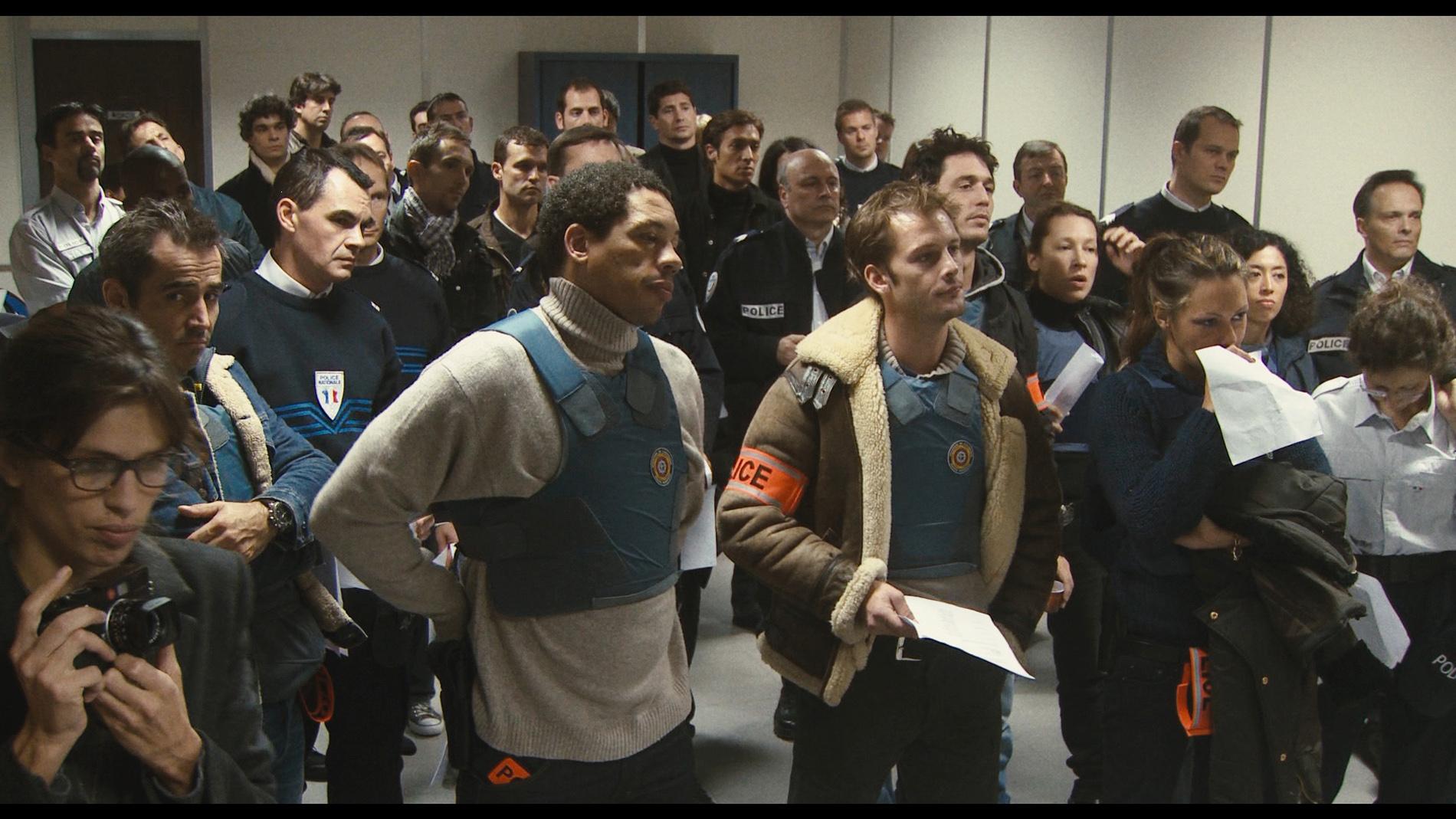
 

We and Mr. Jones

1

caitlin@sfbg.com

THE GREEN ISSUE No one can accuse Van Jones of being a one trick pony. In the early days of his activist career he monitored police violence in the Bay Area, and from there gradually widened the frame of his activist efforts. Jones formed the Ella Baker Center for Human Rights in Oakland in 1996, then became a green jobs pioneer, promoting environmentally-friendly work in low income communities — a revolutionary tactic that eventually landed him a short-lived adviser position within President Obama’s Council on Environmental Quality.

In his new book Rebuild the Dream (Nation Books, 278pp, $25.99) Jones has expanded his talking points to include the ways in which the financial sector has let us down, how Obama only did what we forced him to do (we gotta yell louder, Jones says), and how we can help fix the economy by focusing on “collaborative consumption.” Call it holistic activism. He’s launched a national junket to talk Rebuild that will bring him to the Commonwealth Club on April 16.

It is perhaps this kind of nuanced approach that scared the bejeezus out of the conservative demagogues whose smear campaign convinced Jones to resign from his White House post in 2009. Leave it to Glenn Beck to shame someone for saying he wanted “a whole new system” (as Jones proclaimed in a speech at a youth climate change conference.) The conservative media accused Jones of a communist past — which was accurate enough — and of signing a 9/11 truther petition that said that George Bush had prior knowledge of the World Trade Center attacks. He was innocent of this last point, the organization in question admitted months later, to a deafening media silence.

But Jones hasn’t retracted his call for a new system. In fact, in the pages of Rebuild the Dream he seems to step into a post-resignation hybrid role, in which he is no longer an outsider activist, but still has no formal role in Washington, D.C. Accordingly, he seems less fired up by the actions of national politicians as the agenda-pushing energy of the Tea Party and Occupy movements, which his new book spends entire chapters analyzing and critiquing. Even certain innovative businesses get a shout-out.

“You have Kiva, Kickstarter, Airbnb, and Zip Car already beginning to point to a future economy where more people are sharing fewer things,” Jones told the Guardian in a phone interview last week. “That’s good for people and the planet. You are also are saving money and you’re relying on people and relationships rather than dollars, you’re refinancing your social capital.”

He calls this economic ethos “collaborative consumption,” and it’s a heady idea for proponents of self-sustaining communities. Building a new economy on this business model, however, will take some tweaking that’s not covered in Rebuild — the city-level debate on whether SF Airbnb users should be subject to the city’s 14 percent hotel tax is one current-day example of how things can get complicated.

Rebuild offers a fairly honest critique of Obama’s successes and failures during the president’s first year in office. Nonetheless, the timing of the book, with it’s underlying message that we need to stay engaged in the political system to achieve real change, seems somewhat cagily timed. Is Rebuild the Dream part of Obama’s re-election campaign?

“The answer is no,” Jones is quick to reply. “We’re a non-partisan organization, we don’t endorse political candidates.”

But the election year publication is no coincidence: he wants all candidates to start talking about fixing the institutional reasons behind inequality.

“The two factors once used to pull people out of poverty were home ownership and education,” he says. “Those have now become the two factors by which people are being pulled into poverty because of the underwater mortgage problem and the fact that kids are coming away from college with massive debt and no ability to get a job. We think that these are issues that the politicians need to be forced to respond to and rethink.”

VAN JONES

April 17, 7pm, $20

Commonwealth Club

595 Market, second floor, SF.

(415) 597-6700

www.commonwealthclub.org


Editorial: Reject the CPMC deal!

17

EDITORIAL For most of the past year, Mayor Ed Lee had been taking a tough line with California Pacific Medical Center, the health-care giant that wants to build a state-of-the-art 555-bed hospital on Cathedral Hill. The mayor had been telling a stunningly recalcitrant CMPC management that the outfit would have to put upwards of $70 million into affordable housing and spent millions more on transit, neighborhood and charity-care programs to mitigate the impacts of the massive project.

But late in March, something happened. Under immense pressure from the Chamber of Commerce and other big business groups, the mayor buckled and agreed to a deal with woefully inadequate mitigation measures. The supervisors should reject the plan and force CPMC to do better.

The biggest problem with a project this size is the mix of jobs and housing. Lee is properly concerned about creating jobs in a city where unemployment in some neighborhoods is stubbornly high. But the proposed deal only guarantees a tiny fraction of the 1,500 permanent new jobs for San Francisco residents.

That means a city that has almost zero vacancy in affordable housing is going to have to absorb a workforce much of which won’t be able to buy or rent anything at current market rates. That means more competition for scarcer housing and higher rents and home costs for everyone.

By any basic planning logic, CPMC should be on the hook for providing enough affordable housing for at least some reasonable percentage of its workforce. Instead, the hospital chain is offering about $33 million, only $3 million of which will be paid up front. That won’t even address half of the housing impact. Besides, the jobs will be there when construction starts, and more when the hospital opens; the limited affordable housing money will come much later. The highest-paid doctors and administrators may be able to afford the pricey new market-rate condos the city is madly approving — but where, exactly, are the nurses, orderlies, clerks, janitors and other health-care workers going to live?

CPMC has agreed to provide charity care at the same level is currently does — which is abysmally low, among the lowest of all nonprofit hospital chains in California. So that’s not an advantage.

And it has promised to keep open St. Luke’s Hospital in the Mission — the only full-service hospital other than SF General in the southeast part of town. But the proposal calls for cutting the number of beds by nearly two-thirds, from 229 to 80. And it allows for the closure of that hospital if CPMC’s system-wide operating margin falls below 1 percent (something that will be hard for the city to challenge, since CPMC handles the books).

It’s cynical how CPMC is using this critical medical facility in an underserved area as a bargaining chip. Already, hospital lobbyists are warning that St. Luke’s will be shut down if they don’t get what they want on Cathedral Hill.

Meanwhile, CPMC has labor trouble and is refusing to guarantee that existing employees at facilities that will be demolished will be able to keep their jobs and seniority at the new hospital.

We realize that CPMC needs to build a new facility to replace aging and seismically unsafe structures elsewhere in town. But the hospital chain also has a responsibility to address the impacts this project will have on San Francisco. And right now, it’s not a good deal.


Guest opinion: Free Muni for all youth

20

On Tuesday, April 3, the Municipal Transportation Agency board faces a decision between providing free Muni passes for all San Francisco youth or providing free passes to only low-income youth. ComMunity advocates and Sup. David Campos have identified the funding. We are calling on the MTA board to take this opportunity to invest in a new generation of transit riders by establishing free Muni for ALL youth.

The movement to win free Muni passes for youth originated from cuts of between 40 percent and 100 percent to yellow school busses over the next two years.  As a society, we have responsibility to make sure youth can access free public education — and as a city we have a responsibility to get kids to school even as state funding is eliminated.

Right now 60 percent of all trips in San Francisco are taken by car, and for years we have not seen a huge change in transit mode share. If San Francisco wants to meet our climate objectives, we need to take steps now to encourage young people to get out of their cars.  In New York City, a program of free transit passes for youth has created generations of loyal transit riders. In order to truly become a transit-first city, we need to do the same here.

While the struggle to afford bus fare is obviously a larger challenge for very low-income families, due to the high cost of living in the city, there are many working-class and middle-income families who also struggle with the costs of transit for their children. The costs of housing, food, healthcare, and transit add up quickly for San Francisco families and have all contributed to a crisis of family flight out of San Francisco.

San Francisco currently has the smallest child population of any major U.S. city. While this is complex problem, requiring a huge investment in affordable housing and a strategy to bring more working-class jobs to the city, by establishing free Muni for all youth the city can take a very concrete step forward towards making the city more family friendly. Thousands of families would benefit from an extremely modest investment of $8.7 million a year.

The low-income youth and parents who have been at the forefront of this movement advocating for the free youth passes are nervous about their own ability to access a low-income-only pass because of the bureaucratic challenges they experience trying to apply to other government programs. The Muni Lifeline pass for low-income adults is very hard to access, requiring applicants to wait for hours during a weekday at the Human Service Agency headquarters.

The Federal Free School Lunch Program requires parents to provide documentation of income level. Using a means test would be difficult and costly to administer and could exclude some low-income young people — especially those from undocumented families and the children of parents who work in the informal economy. San Francisco should not create paperwork barriers that will prevent our young people from getting to school.

The documentation required now to get youth clipper cards prevents many families from getting them. Immigrant families who do not have copies of all their birth certificates are prevented from getting youth passes when they encounter difficulties getting birth records from their native countries.

With all of those factors, it just makes sense to make Muni free for all youth.

Jane Martin is an organizer with People Organized to Win Employment Rights (POWER).

Meister: It’s not true, what they say about pensions

12

By Dick Meister

Dick Meister, former labor editor of the SF Chronicle and KQED-TV Newsroom, has covered labor and politics for more than a half-century. Contact him through his website, www.dickmeister.com, which includes more than 350 of his columns.

So, what are we going to do about those big fat pensions collected by public employees? You know, those retirement benefits that supposedly are threatening to bankrupt state and local governments everywhere.

What to do? That’s easy. We can make that problem disappear quickly – just like that! We need only realize that the problem simply does not exist, despite the claims by rabid anti-union forces and the many people who they’ve duped.

Here’s the basic situation: Anti-union forces are attempting to weaken the public employee defined pension plans that provide employees a specific monthly payment on retirement. The plans cover about five million older Americans, providing money that many drawing benefits very much need to escape poverty and stay off government assistance.

Those receiving the benefits, many at rates granted originally in lieu of pay raises, in turn create more than $358 billion in economic output nationwide and create more than 2.5 million jobs.

State spending on pensions amounts to no more than 4 percent of the state budget, on average. In most states, employees must contribute up to 8 percent of their wages to their pension fund, a bit more than private employees contribute toward their pensions.

You should also know that, despite what you may have heard, government pension funds are not going broke. They in fact have been growing as Wall Street has been doing better.

Those basic facts and others that are often lost amid the anti-pension clamor from those on the political right who would just as soon do away entirely with pensions, But they were laid out clearly by panelists in a forum earlier this year sponsored by the National Public Pension Coalition.

Panelist Dean Baker, an economist who is  co-director of the Center for Economic and Policy Research, noted the concern that pensions are endangering government services stems from “a crisis that has been invented” by employer groups.

Baker said the make-believe crisis stems largely from the 2008-09 market crash. That caused an estimated $800 billion of the $1 trillion shortfall in pension plans, but he said the plans should be able to recoup their losses.

But what of the public employees supposedly drawing pensions of $100,000 a year, or even more? As panelists pointed out, they’re pretty much make-believe, too.

Then how much do they make? In New York, as another panelist, New York State Controller Thomas DiNapoli reported, the average pension, including those of police and firefighters, is just a little over $19,000 a year. Three-quarters of New York’s pensioners overall get less than $30,000 a year, and less than one-half of 1 percent get more than $100,000.

Panel member Janet Cowell, North Carolina’s state treasurer, said the average pension in her state is a mere $22,000 a year. She said fewer than 300 retirees get $100,000-plus pensions – “and some of those are basketball coaches.”

Rhode Island retiree Dolores Bresette, a voice from the trenches, as it were, told her unfortunately not uncommon story to the panel.

She said “I worked for the State of Rhode Island for 37 years and contributed 9 percent of my salary to my pension fund. Now, after years of saving and preparing for my retirement, so much of what I and thousands of other public workers were promised is being taken away.” That’s because of last November’s enactment of a “Retirement Security Act” which, among other things, suspended cost-of-living adjustments for Rhode Island retirees indefinitely.

“There are real human implications of the current efforts to dismantle public workers’ pension funds”, Bresette declared, “and people in Washington and the country need to see that.”

She and other panelists warned that “in addition to the human implications there are serious social and economic consequences that will develop over the long term if the shift away from defined-benefit pensions continues. Instead of dismantling public employee retirement systems, policymakers should be working to improve retirement security for the private sector workforce.”

Policymakers will soon face another major crisis related to retirement benefits, noted panel member Hank Kim, an expert on public employee retirement systems. He said that overall, pension funds covering privately employed workers now contain more than $8 trillion less than they’ll soon owe retirees.

If pension benefits are denied or reduced as a result, that could very well cause a significant segment of the 75 million baby boomers to delay retirement. Which would put them in competition for jobs with 80 million younger workers, the so-called millennials, over the next 10 to 15 years.

That could also cost taxpayers. For, as panelist DiNapoli said, if needy retirees couldn’t find jobs that would provide them enough to live on, the government would ultimately have to provide them welfare grants.

The pension opponents wouldn’t be left with much of a choice. They’d have to abandon their anti-pension position or agree to tax increases which, as you might imagine, they don’t much care for.

Either way, we’d be winners.

Dick Meister, former labor editor of the SF Chronicle and KQED-TV Newsroom, has covered labor and politics for more than a half-century. Contact him through his website, www.dickmeister.com, which includes more than 350 of his columns.


I


Stage Listings

0

Stage listings are compiled by Guardian staff. Performance times may change; call venues to confirm. Reviewers are Robert Avila, Rita Felciano, and Nicole Gluckstern. Submit items for the listings at listings@sfbg.com. For further information on how to submit items for the listings, see Picks.

THEATER

OPENING

Hot Greeks Hypnodrome Theatre, 575 10th St, SF; www.brownpapertickets.com. $30-69. Previews Thurs/22-Sat/24, 8pm. Opens March 29, 8pm. Runs Thurs-Sat, 8pm. Through May 5. Thrillpeddlers launch a new version (new cast, songs, costumes, etc.) of the Cockettes classic by Scrumbly Koldewyn and Martin Worman.

The Rita Hayworth of this Generation Shotwell Studios, 3252-A 19th St, SF; www.brownpapertickets.com. $10-15. Opens Fri/23, 8pm. Runs Fri-Sat, 8pm. Through April 7. Writer and performer Tina D’Elia performs her solo, multi-character play about a queer Latina performer inspired by the legendary Hollywood goddess.

ONGOING

A Bright Room Called Day Gough Street Playhouse, 1620 Gough, SF; www.custommade.org. $25-32. Thurs-Sat, 8pm; Sun, 7pm. Through April 8. Custom Made Theatre performs Tony Kushner’s drama set in Berlin just before the Nazi takeover.

"Celebration of Women’s History Month:" The Right Thing Thick House, 1695 18th St, SF; www.3girlstheatre.org. $30. Dates and showtimes vary. Through April 1. Over one long day of legal mediation, aggrieved former CEO Zell Gardner (a brash but vulnerable Catherine Castellanos) and attorney Manny Diamond (a sharp, loquacious Louis Parnell) square off against Zell’s former Big Pharma pals headed up by vindictive interim CEO David Heller (a coolly cutting Lol Levy) flanked by Zell’s longtime colleague Chris McKnight (a nicely down-to-earth John Flanagan). Zell’s lawyer becomes increasingly ambivalent, however, as Manny discovers his tough, brassy mess of a pill-popping client has been less than forthcoming about the charge of sexual harassment the other side is using to justify her dismissal and the company’s pocketing of the three million Zell expected as compensation — a charge involving Zell’s 19-year-old goddaughter, Sam (Karina Wolfe). Attempting to reconcile the parties and broker a deal is retired judge Leigh Mansfield (Helen Shumaker), but she has her work cut out for her with this crowd. AJ Baker’s new drama — the inaugural production of newcomers 3Girls Theatre — take issues of sexual politics and power in its high-powered setting and cracks them against the everyday familial and social dynamics that are perhaps a casualty of the corporate ethos, but without opening them up to a satisfactory degree. Director Suze M. Allen assembles a generally strong cast (Castellanos is riveting throughout), and some scenes smolder with just the right teeth-baring tension, but pacing is inconsistent and the script’s own wayward drift — together with an odd, unnecessary video backdrop—distract from the concentrated treatment the story demands. (Avila)

*Fool For Love Boxcar Studios, 125A Hyde, SF; www.boxcartheatre.org. $25. Showtimes vary. Through April 14. Another installment of Boxcar Theatre’s epic Sam Shepard repertory project, Fool for Love inaugurates their newest performance space within their Hyde Street Studios location. A depressingly realistic reproduction of a claustrophobic motel room, the tiny jewel-box theatre provides no refuge for the actors, and certainly not for the audience, each trapped beneath the pitiless gaze of the other. And if that too-close-for-comfort intimacy doesn’t get to you, the intentionally difficult subject matter — a "typical" Shepardian foray into alcohol-fueled ranting, violence, incest, and casual cruelty — probably will. Shepard’s strength in monologue shows itself off to meaty effect from May’s (Lauren Doucette) melancholy description of her mother’s love affair with the Old Man (Jeff Garrett) to Eddie’s (Brian Trybom) candid admittance to May’s timid suitor Martin (Geoffrey Nolan) that he and May are not cousins at all but half-siblings who have "fooled around" with each other. In addition to the reliably strong performances from each of the actors, Fool features a notably clever bit of staging involving the Old Man who appears not as a specter wandering the periphery of the stage, but as a recurring figure on the black-and-white television, interrupting the flow of cheesy Westerns with his garrulous trailer park wisdom and an omnipresent Styrofoam cup filled, one suspects, with something stronger than just coffee. (Gluckstern)

Glengarry Glen Ross Actors Theatre of San Francisco, 855 Bush, SF; (415) 345-1287, www.brownpapertickets.com. $26-40. Fri/23-Sat/24, 8pm. David Mamet’s cutthroat comedy, courtesy of the Actors Theatre of San Francisco.

It’s All the Rage Studio Theater, Marsh San Francisco, 1062 Valencia, SF; (415) 282-3055, www.themarsh.org. $15-50. Thurs, 8pm; Sat, 8:30pm, Sun, 7pm. Through April 15. Longtime comedian and radio host Marilyn Pittman’s solo play wrestles with the legacy of her parents’ violent deaths in a 1997 murder-suicide initiated by her father. It’s disturbing material that Pittman, a stout middle-aged woman with a gregarious and bounding personality, approaches indirectly via a good deal of humor — including recounting the first time she did her growing-up-lesbian bit before her mother in a DC comedy club. But the pain and confusion trailing her for 13 years is never far behind, whether in accounts of her own battle with anger (and the broken relationships it has left in its wake) or in ominous memories of her too complacent mother or her charming but domineering father, whose controlling behavior extended to casually announcing murderous dreams while policing the boundaries of his marriage against family interference. A fine mimic, Pittman deploys a Southern lilt in playing each parent, on a stage decorated with a hint of their Southwestern furnishings and a framed set of parental photographs. In not exactly knowing where to lay blame for, or find meaning in, such a horrifying act, the play itself mimics in subtler form the emotional tumult left behind. There’s a too brief but eerie scene in which her veteran father makes reference to a murder among fellow soldiers en route to war, but while PTSD is mentioned (including as an unwanted patrimony), the 60-minute narrative crafted by Pittman and director David Ford wisely eschews any pat explanation. If transitions are occasionally awkward and the pace a bit loose, the play leaves one with an uncomfortable sense of the darker aspects of love, mingled with vague concentric histories of trauma and dislocation in a weird, sad tale of destruction and staying power. Note: review from the show’s 2009 run at the Marsh. (Avila)

Julius Caesar Buriel Clay Theater, African American Art and Culture Complex, 762 Fulton, SF; 1-800-838-3006, www.african-americanshakes.org. $10-30. Sat, 8pm; Sun, 4pm. Through April 1. African-American Shakespeare Company performs a version of the Bard’s classic set during the ongoing civil wars of West Africa.

*Maurice New Conservatory Theatre Center, 25 Van Ness, SF; (415) 861-8972, www.nctcsf.org. $25-45. Wed/21-Sat/24, 8pm; Sun/25, 2pm. The eponymous hero of E.M. Forster’s late novel (written early but published only posthumously) wrestles with his love for another man in Edwardian England — oscillating between defiant assertion of feeling and an anguished recoil into desperate treatments like hypnotism — but manages to find happiness as a homosexual by the end of the story. No doubt that would have most appalled the guardians of those extremely homophobic, repressive times. Today there’s still much to recognize in the confused feelings and social censure faced by such a figure, though what helps make the 1998 stage adaptation (by Brits Andy Graham and Roger Parsley) so compelling a story is the not always flattering complexity and honesty with which Forster portrays the (at least partly autobiographical) Maurice Hall — played winningly by an intelligent, agile Soren Santos in New Conservatory Theatre Center’s persuasive U.S. premiere. Maurice’s outré sexuality is one thing; his class position and status as a man are another, affording him certain limited protection and also contributing to certain weaknesses of character, which become most apparent vis-à-vis his mother (a quietly potent Lindsey Murray) and sister (an effervescent Hilary Hyatt) as well as his second love, ambitious young laborer Alec Scudder (a nicely restrained Andrew Nolan). Director George Maguire rightly concentrates on the reciprocal influences between these vital characters and gets fine performances from his entire cast in an uncluttered, sure and measured production, with capable John Hurst in several supporting roles and Alex Kirschner doing excellent work as Clive Durham, Maurice’s Cambridge classmate and mercurial first love. (Avila)

Merchants Exit Stage Left, 156 Eddy, SF; www.brownpapertickets.com. $10-25. Thurs/22-Sat/24, 8pm. According to playwright Susan Sobeloff, the vision for Merchants, premiering this month at the EXIT Theatre, came to her after watching Shakespeare’s The Merchant of Venice, a play at least partially responsible for cementing the caricature of the money-hungry Jew in Western literary tradition for centuries to come. Her intention to write a play featuring a family of more "rounded" Jews doesn’t entirely coalesce once it becomes clear that the bulk of the dramatic tension actually revolves very closely around monetary concerns. As one family business folds, and other members get squeezed out of their jobs by the new economy, a new family business of sorts begins to grow around the quirky, confessional performance art of youngest daughter, Mercedes (Maura Halloran). Emotional blackmail and sheer desperation kickstart their efforts to turn Mercedes into a financially-sustainable "brand," while the all too human costs of burnout, fatigue, and simmering resentments are roundly disregarded, until a crisis point is reached. It’s difficult to connect with this particular set of almost comically self-absorbed characters, despite the desire to root for the underdog, and the play would have benefited from a staging that allowed either more humor or more humanity to creep into the relentless tirades that characterize much of the dialogue. (Gluckstern)

The Real Americans Marsh Studio Theater, 1062 Valencia, SF; (415) 282-3055, www.themarsh.org. $25-50. Fri, 8pm; Sat, 5pm. Extended through April 14. Dan Hoyle revives his hit solo show about small-town America.

Sam Marlowe and the Mean Streets of San Francisco Stage Werx, 446 Valencia, SF; (415) 412-3989, www.catchynametheatre.org. $20. Thurs-Sat, 8pm. Through April 7. Catchy Name Theatre presents a world premiere noir play by Jim Strope.

*True West Boxcar Studios, 125A Hyde, SF; (415) 967-2227, www.boxcartheatre.org. $25. Thurs-Sat, 8pm. Through April 7. The first installment of Boxcar Theatre’s four-play Sam Shepard repertory project, True West ushers in the ambitious run with a bang. This tale of two brothers who gradually assume the role of the other is one of Shepard’s most enduring plays, rich with humorous interludes, veering sharply into dangerous terrain at the drop of a toaster. In time-honored, True West tradition, the lead roles of Austin, the unassuming younger brother, and Lee, his violent older sibling, are being alternated between Nick A. Olivero and Brian Trybom, and in a new twist, the role of the mother is being played by two different actresses as well (Adrienne Krug and Katya Rivera). The evening I saw it, Olivero was playing Austin, a writer banging away at his first screenplay, and Trybom was Lee, a troubled, alcoholic drifter who usurps his brother’s Hollywood shot, and trashes their mother’s home while trying to honor his as yet unwritten "contract". The chemistry between the two actors was a perfect blend of menace and fraternity, and the extreme wreckage they make of both the set (designed by both actors), and their ever-tenuous relationship, was truly inspired. (Gluckstern)

Waiting for Godot New venue: SF Playhouse Stage Two, 533 Sutter, SF; (415) 336-3522, www.tidestheatre.org. $20-32. Thurs, 7pm; Fri-Sat, 8pm. Extended through April 14. The fuchsia papier-mâché tree and swirling grey-on-white floor pattern (courtesy of scenic designer Richard Colman) lend a psychedelic accent to the famously barren landscape inhabited by Vladimir (Keith Burkland) and Estragon (Jack Halton) in this production of the Samuel Beckett play by newcomers Tides Theatre. The best moments here broadcast the brooding beauty of the avant-garde classic, with its purposely vague but readily familiar world of viciousness, servility, trauma, want, fear, grudging compassion, and the daring, fragile humor that can look it all squarely in the eye. (Avila)

The Waiting Period MainStage, Marsh San Francisco, 1062 Valencia, SF; (415) 282-3055, www.themarsh.org. $15-50. Fri, 8pm; Sat, 5pm. Extended through April 27. Brian Copeland (comedian, TV and radio personality, and creator-performer of the long-running solo play Not a Genuine Black Man) returns to the Marsh with a new solo, this one based on more recent and messier events in Copeland’s life. The play concerns an episode of severe depression in which he considered suicide, going so far as to purchase a handgun — the title coming from the legally mandatory 10-day period between purchasing and picking up the weapon, which leaves time for reflections and circumstances that ultimately prevent Copeland from pulling the trigger. A grim subject, but Copeland (with co-developer and director David Ford) ensures there’s plenty of humor as well as frank sentiment along the way. The actor peoples the opening scene in the gun store with a comically if somewhat stereotypically rugged representative of the Second Amendment, for instance, as well as an equally familiar "doood" dude at the service counter. Afterward, we follow Copeland, a just barely coping dad, home to the house recently abandoned by his wife, and through the ordinary routines that become unbearable to the clinically depressed. Copeland also recreates interviews he’s made with other survivors of suicidal depression. Telling someone about such things is vital to preventing their worst outcomes, says Copeland, and telling his own story is meant to encourage others. It’s a worthy aim but only a fitfully engaging piece, since as drama it remains thin, standing at perhaps too respectful a distance from the convoluted torment and alienation at its center. (Avila)

BAY AREA

Cabaret Larkspur Café Theater (American Legion Hall Post 313), 500 Magnolia, Larkspur; www.brownpapertickets.com. $25-45. Fri-Sat, 8pm; Sun, 7pm (no show April 8). Through April 15. Independent Cabaret Productions and Shakespeare at Stinson move their production of the Kander and Ebb classic from Fort Mason to the North Bay.

The Coast of Utopia: Voyage Ashby Stage, 1901 Ashby, Berk; www.shotgunplayers.org. $20-30. Opens Fri/23, 8pm. Runs Wed-Thurs, 7pm; Fri-Sat, 8pm; Sun, 5pm. Through April 29. Shotgun Players present Tom Stoppard’s riff on pre-revolutionary Russia.

A Doctor in Spite of Himself Berkeley Repertory Theatre, Roda Theatre, 2015 Addison, Berk; (510) 647-2949, www.berkeleyrep.org. $14.50-73. Thurs/22 and Sat/24, 8pm; Wed/21 and Sun/25, 7pm (also Sun/25, 2pm). Berkeley Rep performs a contemporary update of the Molière comedy.

*The Kipling Hotel: True Misadventures of the Electric Pink ’80s New venue: Marsh Berkeley, 2120 Allston, Berk; (415) 282-3055, www.themarsh.org. $20-50. Sat, 8:30pm; Sun, 7pm. Extended through May 6. This new autobiographical solo show by Don Reed, writer-performer of the fine and long-running East 14th, is another slice of the artist’s journey from 1970s Oakland ghetto to comedy-circuit respectability — here via a partial debate-scholarship to UCLA. The titular Los Angeles residency hotel was where Reed lived and worked for a time in the 1980s while attending university. It’s also a rich mine of memory and material for this physically protean and charismatic comic actor, who sails through two acts of often hilarious, sometimes touching vignettes loosely structured around his time on the hotel’s young wait staff, which catered to the needs of elderly patrons who might need conversation as much as breakfast. On opening night, the episodic narrative seemed to pass through several endings before settling on one whose tidy moral was delivered with too heavy a hand, but if the piece runs a little long, it’s only the last 20 minutes that noticeably meanders. And even with some awkward bumps along the way, it’s never a dull thing watching Reed work. (Avila)

Now Circa Then Lucie Stern Theatre, 1305 Middlefield, Palo Alto; (650) 463-1960, www.theatreworks.org. $19-69. Tues-Wed, 7:30pm; Thurs-Sat, 8pm (also Sat, 2pm); Sun, 2 and 7pm. Through April 1. TheatreWorks performs Carly Mensch’s comedy about a romance that blooms between two historical re-enactors.

The Pirates of Penzance Julia Morgan Center for the Arts, 2640 College, Berk; (510) 845-8542, www.juliamorgan.org. $17-35. Fri-Sat, 7pm (also Sat, 2pm); Sun, noon and 5pm. Through April 1. Berkeley Playhouse performs the Gilbert and Sullivan classic, with the setting shifted to a futuristic city.

Red Berkeley Repertory Theatre, Thrust Stage, 2025 Addison, Berk; (510) 647-2949, www.berkeleyrep.org. $14.50-83. Opens Thurs/22, 8pm. Runs Tues and Thurs-Fri, 8pm (also March 29 and April 26, 2pm; no show April 27); Wed, 7pm; Sat-Sun, 2pm (also Sat, 8pm; Sun, 7pm; no matinee March 31). Through April 29. Berkeley Rep performs John Logan’s Tony Award-winning play about artist Mark Rothko.

Titus Andronicus La Val’s Subterranean, 1834 Euclid, Berk; www.impacttheatre.com. $10-20. Thurs-Sat, 8pm. Through March 31. Impact Theatre takes on the Bard’s bloodiest tragedy.

The World’s Funniest Bubble Show Marsh Berkeley, TheaterStage, 2120 Allston, Berk; (415) 826-5750, www.themarsh.org. $8-50. Extended run: Sun/25 and April 1, 11am. Also May 5-27 (Sat-Sun, 11am); June 3-July 15 (Sun, 11am). Louis "The Amazing Bubble Man" Pearl returns with this kid-friendly, bubble-tastic comedy.

PERFORMANCE/DANCE

"Arthur in Underland" CounterPULSE, 1310 Mission, SF; www.counterpulse.org. Fri/23-Sat/24, 8pm. $15-24. Dandelion Dancetheater performs a new work about a young man whose life is changed when he becomes part of a rock group’s entourage.

"Elect to Laugh" Studio Theater, Marsh San Francisco, 1062 Valencia, SF; (415) 282-3055, www.themarsh.org. Tues, 8pm. Ongoing through Nov 6. $15-50. Will Durst and friends perform in this weekly political humor show that focuses on the upcoming presidential election.

"Enchantingly Wicked" Davies Symphony Hall, 201 Van Ness, SF; www.sfgmc.org. Wed/21, 8pm. $15-75. San Francisco Gay Men’s Chorus and Stephen Schwartz perform musical theater hits.

Hope Mohr Dance Z Space, 450 Florida, SF; www.zspace.org. Thurs/22-Sat/24, 8pm. $20-25. The company presents its fifth San Francisco home season, with a rare solo by Hope Mohr and the Bay Area debut of New York-based choreographer-performer Dusan Tynek’s company.

"Improvised Shakespeare" Bayfront Theater, Fort Mason Center, Marina at Laguna, SF; www.improv.org. Sat/24, 8pm. $20. Bay Area Theatre Sports (BATS) presents Improvised Shakespeare, a fine troupe (and a slightly different lineup each night, but on March 10 including Kasey Klemm, Rebecca Stockley, Tim Orr, William Hall, Zoe Galvez, and Regina Saisi) with no idea what full length Shakespeare-ish play they will lay on their eager audience until the latter gift them with a title and a key word or two. The rest is remarkably well-tethered mayhem, as cast spontaneously riffs on the audience cue, the conventions of Elizabethan drama, and its own inventions —including the unintentional slip of the tongue, which in this context can prove as productive as anything. March 10 saw the premiere — and simultaneous closing — of an ephemeral little comedy called Two Crows. The players strutted and fretted (or frolicked, really) an hour or so upon the stage.’Twas an idiotic tale, told by some of the sharpest improvisers around, and signifying nothing, save good times. (Avila)

"indifference and MASTERWORK" CounterPULSE, 1310 Mission, SF; www.eventbrite.com. Thurs/22-Sun/25, 8pm, $17-30. New works by artists-in-residence Lisa Townsend and Mica Sigourney.

"ODC Dance/Downtown" Yerba Buena Center for the Arts, Novellus Theater, 700 Howard, SF; www.odcdance.org. Through Sun/25, programs and showtimes vary. $15-750. ODC/Dance kicks off its 41st annual home season with two programs of new works, plus an opening-night gala.

"Octopus’s Garden" Alcove Theater, 414 Mason, Fifth Flr, SF; www.thealcovetheater.com. Sat, 8pm. Through April 7. $25-35. PianoFight performs Scott Herman’s modern-family drama.

"Regeneration" Yerba Buena Center for the Arts, 701 Mission, SF; www.ybca.org. Thurs/22-Sat/24, 8pm, $25. Performance duo Eiko and Koma highlight new and old works from their four-decade oeuvre.

"2012 Rhino Benefit Extravaganza" Eureka Theatre, 215 Jackson, SF; www.therhino.org. Mon/26, 8pm. $25. Queer talent performances (plus free food and drinks!) to benefit Theatre Rhinoceros.