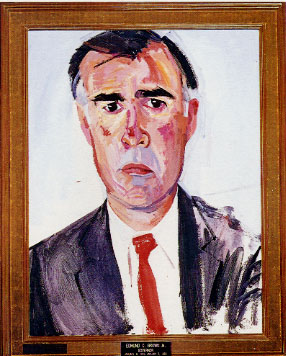
Jerry Brown

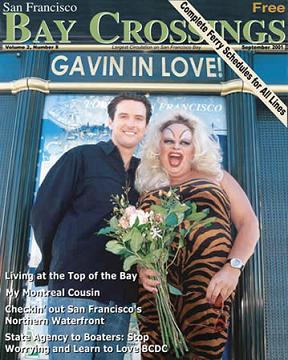
Gav’s running for (lite) guv!

1

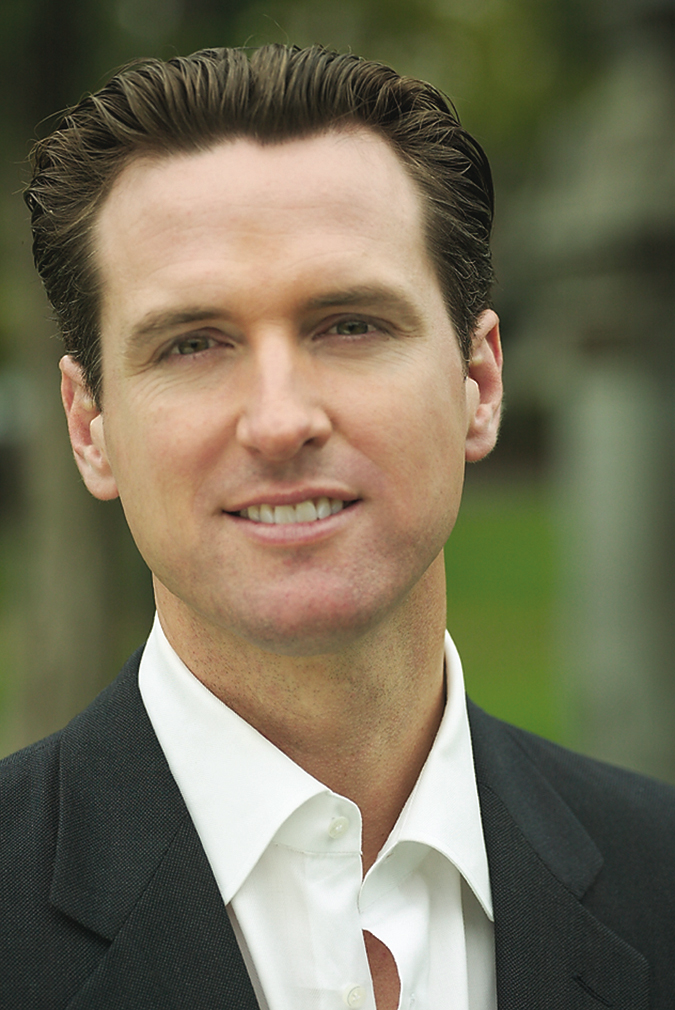
It’s not any big surprise that Gavin Newsom is officially running for lieutenant governor; we all knew that was in the cards. Newsom’s downtown allies don’t want him running, because he might win — which would mean a vacancy in the mayor’s office. But it’s really all about Newsom, and he doesn’t want to be termed out with nowhere to go.


Calitics makes the point that


In many ways, this race will showcase the future leadership of California Democrats. The winner of the primary will go on to defeat Abel Maldonado and will be a top contender to be the next governor, whether they succeed Jerry Brown or (god forbid) Meg Whitman. It’s to the benefit of Democrats and progressives that this race be issue-oriented, and free of the unfortunate personal attacks that would undermine all the candidates involved.


And Newsom loves the idea of being showcased as the future leader of California Democrats.


Newsom got a big bounce the moment he announced, when state Sen. Dean Florez, one of two other Democratic candidates for the office, dropped out and endorsed Newsom.


That leaves just Newsom and Janice Hahn, a Los Angeles City Council member who’s got an aggressive campaign (featuring Garry South, the asshole political consultant who used to work for Newsom).


Newsom starts off with a major lead; all the money he spent campaigning for governor gave him significant name recognition, and in a Democratic primary for a low-profile office, that makes a lot of difference. And his likely opponent in November is Abel Maldonado, a not-terribly-appealing Republican.


So the talk in San Francisco is all about who becomes the next mayor if Newsom wins — and already, the Newsom strategists are trying to figure out how to prevent the progressive district-elected board from appointing his replacement. The latest strategy: A Charter amendment establishing that a vacancy in the Mayor’s Office has to be filled in a special election.


Hard to argue against that — except that the special election would be in the spring of 2011, and the general election would be that fall, meaning two expensive elections (one of them guaranteed to have low turnout) in the course of 11 months.


There’s no way Newsom’s getting six votes on this board for his idea, which means he’s going to have to raise the money to gather 47,000 signatures. And if he does, the supervisors ought to respond with their own Charter amendment — establishing that vacancies on the Board of Supervisors (now filled by a mayoral appointment) also require a special election. That’s only fair.


And while Newsom and his allies talk about how unfair it is to have district supervisors, some of whom were elected with as few as 10,000 votes, decide on the next mayor, it’s worth thinking through what a special election for mayor would look like. For starters, a lot of people would probably run — and the results would be utterly unpredictable. Suppose everyone who really wants to be mayor jumped in: Leland Yee, Dennis Herrera, Aaron Peskin, Ross Mirkarimi, Bevan Dufty, maybe Michela Alioto-Pier, maybe Sean Elsbernd, maybe even Mark Leno … and the turnout will be ultra-low, and, well, the next mayor’s going to be elected with a remarkably small number of votes.


Assume a turnout of 100,000 — high for a special election. And assume seven candidates (there would probably be a lot more). That means the winner would be unlikely to have more than 20,000 first-place votes.


If it’s a ranked-choice voting situation, any of the above could pull it off. If it’s a simple plurality, hey: someone like Chris Daly, who has a small but highly devoted constituency, would have as good a chance as anyone.


The bottom line is that a special election doesn’t guarantee anything — in fact, it could turn out to be downtown’s worst nightmare.


Here’s the letter Newsom sent to potential supporters:


I didn’t come to this decision easily, but, after a great deal of consultation with my family, constituents and supporters, I believe that the best way for me to serve is by taking all of the many things that are right about California and applying them to fixing what’s wrong in Sacramento.  


The issues I fought for when I ran for Governor last year haven’t changed: our state still faces a massive budget crisis, painful unemployment, and rising student fees that threaten the stability and accessibility of our University system.  Too many Californians lack access to quality health care and too many schools are overcrowded and underfunded.


But, despite our challenges, I will always believe in California – the dynamism of its past and the promise of its future.  I’m also convinced that those of us who love this state have both an obligation and the capacity now to reform it and make it better. To do that, we need to embrace a new way of doing things in Sacramento and we need new leaders who are willing to stand up and change state government.


I’m proud that I have the support of Speaker Nancy Pelosi, Senate President Darrell Steinberg, Assembly Speaker John Perez, Sacramento Mayor Kevin Johnson, United Farm Workers co-founder Delores Huerta and California Nurses and teachers and I hope I can count on your support too.


And here’s some of the press coverage:


LA Times on Newsom run, including information on early fundraising.


Calitics on Florez’s exit from the race, including text of Florez
message and press release.


Newsom announces his candidacy in an interview with reporter Phil
Matier
on CBS 5. (video)

 Chronice on Newsom’s chances.


 Willie Brown on who will succeed Newsom as mayor.
 
Chronicle speculates on who will replace Newsom, specifically on the
possibility of David Chiu becoming mayor.

LA Observed on Gary South vs. Newsom.


LA Times blog on awkward Newsom-Brown pairing.
Making the protests count

37

It was wonderful to see so many people all over the state taking to the streets to protest cuts in education and public services. The rally at San Francisco’s Civic Center wasn’t just young radical agitators, either — most of the people there were parents with kids, families, people who are just fed up with the threats to the future of this state and don’t want to take it any more.


And now that the press and public and maybe even the elected officials are focused on the issue, it’s time to move to the next step. Politicians can talk all they want about “standing with the families” and supporting education, but in the end, there’s only one way to adequately fund K-12 and higher education in California. And that’s to raise taxes.


You can talk about waste all you want, and there’s certainly waste at the University of California. But we’re looking at a need that runs into the billions, multiple billions, tens of billions — and eliminating a few million bucks of waste here and there isn’t going to solve the problem.


You’re not going to solve it by reallocating the state’s budget money, either, since there’s no single large pot of cash that can be taken and given to the schools without devastating another necessary public service. The only real possibility is the prison system, a financial sink hole if ever there were one — but again: You can’t just cut prison spending by eliminating services to prisoners. They get so little as it is — and the federal courts won’t allow any reductions in health care and the state’s already under court order to reduce overcrowding.


You could probably solve half of the schools’ fiscal problems by releasing from prison every single inmate serving time for a drug offense; that’s the kind of dramatic steps we’re talking about. And if anyone wants to launch a political campaign to let 30,000 prisoners free tomorrow, I’m with you.


But it’s not going to happen, not in this climate. So the only real option is to get more revenue. That means raising taxes at the state level, repealing Prop. 13 to allow local property tax hikes, or raising taxes at the city level.


And here’s who the protesters need to be targeting:


1. The governor. Arnold Schwarzenegger not only refuses to allow new taxes as part of the budget, he vetoed Sen. Mark Leno’s bill that would have allowed local government to raise its own car taxes. He’s at (916)-445-2841.


2. The Republican leadership of the state Legislature. These folks go into the budget talks with the power of a minority that can block the two-thirds vote required for tax hikes, and they’ve both signed “no new taxes” pledges. These two people are among the single largest reason that the California school are facing such huge cuts. Assemblymember Martin Garrick,  916-319-2074. Senator Dennis Hollingsworth, (916) 651-4036.


3. Attorney General Jerry Brown. He’s running for governor as the Democratic candidate, and he has already announced that he won’t raise taxes and that Prop. 13 is untouchable. He won’t even support Assemblymember Tom Ammiano’s bill to legalize and tax marijuana. He needs to hear from his constituents that those positions won’t fly. (916) 322-3360


4. The mayor of San Francisco. Gavin Newsom is happy to announce that he supports education funding, but he’s never come forward with a single significant new tax increase for the city. Local taxes could be split between the general fund and the schools, and the progressives on the Board of Supervisors are looking for revenue options. Call the mayor and tell him: If Sacramento won’t raise taxes to educate our kids, we’d like to do it at home, in San Francisco. 415-554-6141.


5. Any state or local official who claims to support the schools but won’t publicly endorse and work for higher taxes. Folks, there’s no other way out of this.


And at the next rally, let’s chant: Repeal Prop. 13, Now! Tax the rich in San Francisco — Now!

Jerry Brown and the Rose Bird factor

16

Jerry Brown hadn’t even formally announced that he was running for governor when the San Francisco Chronicle brought up the name of Rose Bird.


It’s fine to talk about where Brown is vulnerable, and there’s no shortage of material. The guy has a long public record; anyone who served two terms as governor in the 1970s and early 1980s, and two terms as mayor of Oakland, and one term as chair of the state Democratic Party, and did a couple of years as a KPFA talk show host, is going to have baggage. He’s also got a wealth of experience.


But the Rose Bird stuff is a cheap shot.


Here’s how the Chron describes it:


Rose Bird: As governor, Brown appointed Bird to be chief justice of the state Supreme Court. After she invalidated the death sentence of every case she reviewed, voters in 1986 made her and two others the first judges unseated from the court. To voters older than 45, Bird’s name is shorthand for “liberal judges.”


Actually, voters ousted her after a savage campaign funded by big business interests who were mad at her pro-labor and pro-free speech rulings. The death penalty was their weapon, and even then it was pretty bogus: The Bird Court consistently upheld the constitutionality of the death penalty.


But in the early 1980s, death-penalty law was unsettled in the United States; the U.S. Supreme Court had in 1977 ruled that executions were legal in America, but set strict standards for states to follow. Most states were struggling to sort out what the ruling meant and to figure out how to comply. By 1986, when Bird was under assault, 38 states had adopted death-penalty laws, but only 13 had actually executed anyone. In conservative states like Arkansas, Kentucky, Mississippi and Tennessee, judges were trying to determine if the laws fit the Supreme Court’s standards — essentially what the Bird Court was doing in California.


And in California, the death-penalty statute had been written by John Briggs, the guy who wanted to keep gay people from teaching in the schools. The Briggs law was, by all accounts, poorly drafted, unclear and convoluted, and applying it under the federal standard was a challenge.


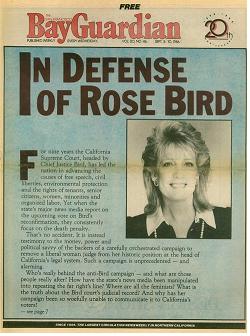
In other words, as we wrote at the time (In Defense of Rose Bird, Sept. 3, 1986):


The charge that the Bird court has refused to enforce the death penalty is simply inaccurate … the California Supreme Court has simply been doing what most state and federal courts have done over the past ten years: carefully scrutinizing death sentences to ensure that they are valid under the federal and state constitutions and complex and ever-changing standards of the U.S. Supreme Court.


The real issue didn’t make the press. Again, from our cover story at the time:


For nine years, the California Supreme Court, headed by Chief Justice Bird, has led the nation in advancing the causes of free speech, civil liberties, environmental protection and the rights of tenants, senior citizens, women, minorities and organized labor.


 Big-business interests organized and funded a massive campaign to get rid of Bird — not because of the death penalty but for purely economic reasons.


The Chronicle got it wrong back then, and is getting it wrong again today.

Jerry Brown releases forceful announcement speech

6

Jerry Brown announced his candidacy for governor by posting a three-minute speech on You Tube that was forceful and direct, making the case that California is in crisis and needs experienced, knowledgeable leadership, not an anti-government outsider who’s new to politics.

“We tried that and it doesn’t work. We found out that not knowing is not good,” Brown said in a veiled swipe at both Gov. Arnold Schwarzenegger and likely Republican nominee Meg Whitman, a former CEO with no political experience who has rarely even voted.

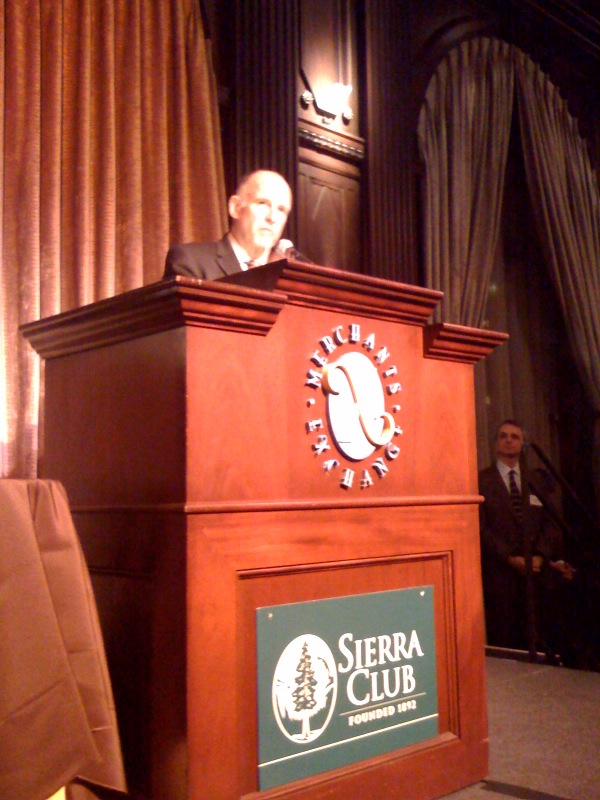
This speech was right on the money, and a sharp contrast to his recent Sierra Club speech, which I criticized here – demonstrating that when Brown gets his game face on, he’s still a formidable political pro.

“It’s no secret that Sacramento isn’t working today. Partisanship has become poisonous, political posturing has replaced leadership, and the budget: it’s always late, it’s always in the red, and it’s always wrong,” he said.

It was short on specifics, but that’s probably understandable at this stage. He talked about created a “leaner” state government, but also decried the cuts in education spending, and ended up staking out an interesting position on the critical issue of taxes, pledging, “No new taxes unless you the people vote for them.”

Perhaps Brown is just the guy to begin to persuade Californians that we can’t have it all, and that we’ll have to raise taxes on rich individuals and corporations if we want to do something about our underfunded infrastructure and declining public services. After all, he described our current situation as “a crisis” and said, “You deserve the truth and that’s what you’ll get from me.”

If he wins, this will likely be this septuagenarian’s last job in politics, one in which he’ll hopefully be willing to push for what needs to be done, even if that hurts his popularity. “At this stage in my life, I’m prepared to focus on nothing else but fixing the state I love.”   


Ethics for political consultants?

1

I got an email from Garry South today. He’s the guy who used to run Gavin Newsom’s campaign for governor. Now he’s turned on his previous client. And he’s sent out a message to political reporters explaining why Newsom — the guy he was pushing for governor of California — is actually a worthless hack.


Here’s the mail:


STATEMENT BY GARRY SOUTH


CHIEF STRATEGIST, JANICE HAHN FOR LT. GOVERNOR


FORMER SENIOR ADVISOR, GAVIN NEWSOM FOR GOVERNOR


I am surprised and perplexed that my friend and former client Mayor Gavin Newsom apparently has decided to jump into the lieutenant governor’s race at the last minute – especially against an already-announced candidate who would be the first woman lieutenant governor in California history.


In every one of several conversations we had about the job while he was running for governor, the Mayor expressed nothing but disinterest in and disdain for the office of lieutenant governor. In fact, he was derisively dismissive of Gray Davis’s decision to run for and serve as lieutenant governor prior to running for governor (“I’m not a Gray Davis,” he said). On a couple of occasions, he directed me to repudiate publicly in the strongest terms that he had any interest in ever running for lieutenant governor.


The Mayor himself told the Chronicle in October that rumors he may run for lieutenant governor were “absurd” and “a complete lie,” and angrily accused Jerry Brown of personally spreading false information to that effect. As recently as December, he himself said flatly “no” when asked directly on a San Francisco radio show whether he intended to run for lieutenant governor.


In addition, when he precipitously pulled out of the governor’s race in late October – against my advice – he said he couldn’t continue as a statewide candidate because he was a husband, a new father and the mayor of San Francisco. So far as I know, he’s still a husband, a new father and the mayor of San Francisco. So it’s pretty hard to see what’s changed over the last four months that would now allow him to run for another statewide office.


If the Mayor does run, it is his responsibility to explain why he now claims to want an elected office he summarily dismissed publicly numerous times over the last several months, and which just earlier this year he called “a largely ceremonial post” … “with no real authority and no real portfolio.”


Now, if Garry South were an attorney, I think he could be disbarred for that statement. Lawyers can’t discuss anything that transpired between them and their ckients.And it sounds to me like he’s taking confidential conversations between himself and his client — talks that occured during campaign strategy sessions — and passing them along to the world.


But since political consultants have no regulations, nothing will happen to him.


Now, there is a code of ethics of the American Association of Political Consultants, which you can read here. It says, in part:


  • I will treat my colleagues and clients with respect and never intentionally injure their professional or personal reputations.

  • I will respect the confidence of my clients and not reveal confidential or privileged information obtained during our professional relationship.

  • Of course, the AAPC is just a trade group, with no enforcement. (Just as journalism codes of ethics are not enforceable by anyone.) But if you ask me, it’s a little slimy.


    Editor’s Notes

    0

    Tredmond@sfbg.com

    Gavin Newsom never got any traction in the race for governor, in part because he completely alienated the progressive base in his hometown. And when you have unionized city employees holding protests outside your campaign fundraisers — and you’re in a Democratic primary in California — you’ve got serious problems.

    And now, oddly enough, the progressives in San Francisco may be his biggest allies in the race for the second-place job of lieutenant governor.

    There are some good reasons for that.

    For starters, a lot of us thought that Newsom, whatever his positions on issues, wasn’t ready to run California — to deal with all of the massive problems the state faces and to take on the brutal politics of Sacramento. And I think his behavior during his brief gubernatorial campaign demonstrated that we were right.

    But the Lite Guv job is a lot different. You don’t have to balance a state budget that’s $20 billion in the red; you don’t have to solve water problems. It’s a place where you can learn about state politics on the job, without really screwing things up.

    And if his real goal is to run for U.S. Senate down the road, say, when Dianne Feinstein retires, he’ll be in a good place to launch that campaign.

    But let’s face it. A lot of this is practical politics. With either Jerry Brown or Meg Whitman in the Governor’s Office, the state will continue to be screwed up and it will be even more important that cities take on their own economic destinies. And Newsom, as a bitter lame duck, simply can’t do that.

    The progressive political community isn’t unanimous at all. But a lot of people are thinking that if Newsom’s ascension to Sacramento means that the district supervisors will have a chance to appoint a progressive mayor, it’s worth the trade-off.

    Notes from the Sierra Club’s gala dinner

    0

    While I focused on Jerry Brown’s disappointing speech to the Sierra Club San Francisco Bay Chapter’s gala dinner on Wednesday night, there are a few more notable nuggets in my notebook worth posting here, starting with what appears to be the collapse of plans for a California Constitutional Convention.

    The Guardian recently reported on the difficulties that the campaign was having, but consultant Clint Reilly told me that the effort is basically over, with fundraising shortfalls being the final nail in the coffin. That’s one more reason why “hope” seems to be in such short supply on the political landscape.

    The event was held in the Merchant Exchange, a building owned by Reilly, who helped underwrite the gathering. So it was no surprise that the evening was MCed by his wife, Janet Reilly, who is running a strong campaign to replace Michela Alioto-Pier on the Board of Supervisors.

    There were lots of political luminaries at the event (list to follow), but there was one particularly notable attendee and particularly notable absence. Los Angeles City Council member Janice Hahn was one of the few politicos from down south, making the rounds in support of her run for lieutenant governor. But Mayor Gavin Newsom, who is considering challenging her, didn’t show up.

    Also a no-show was U.S. Sen. Barbara Boxer, who appeared by video to address the gathering and express appreciation for being the recipient of the Sierra Club’s first Phillip Burton Badge of Courage Award for environmental stewardship. Accepting the award on her behalf was California Democratic Party chair John Burton, who was his usual salty self, taking a dig at the San Francisco Chronicle by referring to someone who wrote “for the Chronicle back when that was a newspaper,” and describing the award’s namesake thusly: “My brother was an outstanding environmentalist who didn’t like the outdoors much.”

    He also made this funny, self-effacing crack at the start of his speech: “I think a third of the people in this room would like to see the accelerator stuck on the rug of my Prius.” I was not among that third.

    There was a strong turnout of local political leaders, but tellingly, only from the left side of the political spectrum. The members of the Board of Supervisors who turned out were David Chiu, Chris Daly, Ross Mirkarimi, Eric Mar, and John Avalos. Other political luminaries on hand included City Attorney Dennis Herrera, Sen. Leland Yee (Yee and Herrera are each running for mayor) City College trustee John Rizzo (who introduced Brown), Senator-turned-Oakland mayoral candidate Don Perata, District Attorney Kamala Harris, Rep. Jerry McNerney, and Sen. Loni Hancock.

    Rambling Jerry Brown speech raises fear among Dems

    22

    If Jerry Brown’s keynote speech last night to a gala environmentalist dinner is any indication, the Democratic Party faces an uphill battle to win this year’s governor’s race. The rambling, alternately vague and academic, and often pointless address did little to inspire or excite a large, sympathetic crowd that was loaded with top Democrats. In fact, some party luminaries were openly aghast at the poor performance, with one making this succinct (if off-the-record) assessment: “We’re fucked.”

    Brown has never been a dynamic speaker, but the unscripted, half-hour speech – given at the Sierra Club San Francisco Bay Chapter’s David Brower Dinner in San Francisco, a $250 per head affair that drew top Bay Area Democrats – illustrates the danger of letting a primary be decided by legend and money rather than political persuasion.

    Brown’s fundraising prowess and strong poll numbers chased Gavin Newsom and other potential rivals out of the Democratic Party gubernatorial primary, even though Brown hasn’t really outlined his political vision for California, given many extended speeches since being discussed as a candidate for governor, or even officially declared his candidacy (he and others have until March 12 to do so).

    “This thing is really daunting,” Brown said of the governor’s race toward the end of the speech, seemingly unsure that he was ready to run, but saying he would make an announcement sometime in the next couple weeks.

    Brown started his speech by telling the crowd that he didn’t know what he was going to talk about, so when he arrived (late) for the speech, he asked San Francisco Democratic Party chair Aaron Peskin what he should say, and Peskin told him to talk about how there were more salmon in the streams and better overall environmental health back when Brown was governor in the ‘70s.

    But rather than taking that advice and giving a forceful call to strengthen environmental regulation or conjure up California’s better days, Brown meandered around and mused on that and other topics, feeding fears that the 71-year-old candidate might come off as a nostalgic, slightly senile former-Governor Moonbeam rather than an effective agent of needed change.

    “During that period when I was governor, I’m not going to call it the golden age because some people think I’m in the golden age, so I don’t want to get people confused. That’s why I don’t want to talk about way back then, because there are a number of people I can see weren’t even born then, so it gets a little embarrassing and I like to pretend it was just yesterday. But in that period, California created almost twice as many jobs as the nation did. We created jobs at about 24 percent over eight years and the nation grew jobs at 13 percent, so almost twice as much. And then Deukmejian did pretty good, he had about the same, maybe half a percent more,” Brown rambled, ticking off statistics, hedging his point by noting how little governors can really do to create jobs, before working up to a decent line that was flatly delivered: “It was a time when the environment got its biggest boost, as far as public policy.”

    Nobody applauded, so he continued. “I was thinking tonight, I was trying to figure out that if I did announce, what the hell would I say? And so I decided to go back and read my first announcement, January 24, 1974. I was 35 then, it was another time, I’m now a little older than that. But I talked about clean air, I talked about the energy crisis and getting new sources of energy. I talked about statewide land use planning” – that last item drawing some applause – “and I talked about jobs. And I was thinking, wow, we still got a jobs problem, we got an energy problem, we have a land use problem that feeds into the energy problem, and while the air is cleaner in many respects, it’s not clean enough, or it isn’t healthy enough.”

    On substance, Brown had his moments. But even on the need for better statewide land use planning, he went off on a tangent, saying he didn’t even know what that meant when he filled out a Sierra Club questionnaire back in the ‘70s, and he’s not sure how to accomplish it now. 

    “You have to make it easier to live closer to where you work,” Brown said in what of his few lines of the night that drew applause, although he didn’t begin to explain how he might achieve this goal. And on a controversial subject that is easily attacked by the right – big government wants more control over private property – Brown’s lackadaisical discussion of the issue was disconcerting.

    He even rankled a few Sierra Club members by vaguely criticizing East Bay growth controls designed to reduce sprawl, which the Attorney General’s Office is seeking to overturn: “Pleasanton wants to create 50,000 jobs, but they have a housing cap – for all I know, Sierra Club probably supported that housing cap, so I want to just rub your nose in the housing cap for just a minute – the trouble with the housing cap is they want to create all these jobs.”

    Brown tried to argue that allowing more housing in Pleasanton is a strategy for combating global warming because there are jobs there and it would reduce commutes, but he’s going to need to be more on his game than he is right now to win that argument. Instead, we get his fairly dismissive summary of this important issue: “Land use is a big deal, it’s difficult, lots to do on that.”

    Against businesswoman Meg Whitman, the Republican gubernatorial primary frontrunner, there is real potential in Brown’s basic belief that markets need to be regulated and that running the government isn’t just like running a business. And somehow, Brown will need to find a way to better distill and deliver that message to counter the right’s pro-business sound bites. 

    “There are people saying business knows best,” Brown said, meandering off about companies and widgets for a minute before continuing his point. “But when you look at what we really have to deal with, it’s not just about economics and the market. It’s also about ecology and morality, and morality is about customs, it’s about traditions, it’s about our deepest patterns of how we all relate to one another and that can’t just be assimilated into market incentives. The market assumes honesty, you meet your promises, and also assumes there’s a framework, because things can just run off the cliff and that’s exactly what’s happening. As you add more people, you have more cars, and when you have more cars, they burn fossil fuel and what’s happening in California is you have cars reproducing faster than people…That’s the real challenge here, that we’re trying to get the idea out that we’re trying to save the future.”

    The people vs. corporate power

    2

    steve@sfbg.com

    The June 8 election is shaping up to be one that pits the people against powerful business interests, a contest that will demonstrate either that money still rules or that growing public opposition to corporate con-jobs has finally taken root.

    On the state level, the five ballot measures include two brazen money-making schemes and two experiments in election reform, along with primary races that are still in flux. In San Francisco, where the ballot measures still have a few more weeks to shake out, the election will feature two rarely contested judges races, recession relief for renters, City Hall fiscal reforms, and a fight for control of the local Democratic Party.

    So far, only four local measures have qualified for the San Francisco ballot, all placed there by members of the Board of Supervisors. Progressives qualified the Renters Economic Relief package (which limits rent increases during recessions and sets conditions for landlords passing costs to tenants), an initiative establishing community policing standards, and one affirming city support for making Transbay Terminal the northern high-speed rail terminus. Supervisors were unanimous in supporting a charter amendment governing the Film Commission.

    But the board is still hashing out changes to the more controversial ballot proposals, a debate that will continue at its Feb. 23 meeting. They include an overhaul of how the city funds its pension program and an effort to remove Muni salary minimums from the city charter, both by Sup. Sean Elsbernd; a $652 million seismic safety bond proposed by Mayor Gavin Newsom; and a Sup. John Avalos charter amendment that would prevent the mayor from unilaterally defunding certain budget expenditures. All measures must be approved by March 5.

    Also still forming up in the coming weeks are primary races for legislative seats (although no incumbents appear to be facing strong challenges) and all eight state constitutional offices, including governor (where Attorney General Jerry Brown seems poised to easily win the Democratic nomination), lieutenant governor, and attorney general (which District Attorney Kamala Harris is running for).

    Candidates have until March 12 to declare themselves for statewide and legislative offices, as well as for the San Francisco Democratic County Central Committee, which could play a key role in this fall’s Board of Supervisors elections. Two years ago, a slate of progressives led by Aaron Peskin and Chris Daly launched a surprise attack to wrest control of the board away from the moderates who have long controlled it. Newsom, U.S. Sen. Dianne Feinstein, and their downtown allies are expected to try hard to regain control over their party’s purse-strings and endorsements.


    JUDGING THE JUDGES

    Another struggle from two years ago is also being replayed. In 2008, then-Sup. Gerardo Sandoval successfully challenged Superior Court Judge Thomas Mellon, arguing the Republican-appointed jurist was too conservative (and the entire court is not diverse enough) for San Francisco. This time the target is Judge Richard Ulmer, a conservative appointed by Gov. Arnold Schwarzenegger. Ulmer is being challenged by two LGBT attorneys, Daniel Dean and Michael Nava, the latter endorsed by Sen. Mark Leno, Assembly Member Tom Ammiano, and Peskin, who chairs the Democratic Party and could be helpful in the race. “He’s a brilliant guy,” Leno said of Nava.

    Leno also has endorsed deputy public defender Linda Colfax, a Latina lesbian, in a four-way race to replace retiring Judge Wallace Douglass. The other candidates are Harry Dorfman, Roderick McLeod, and Robert Retana. If no candidate wins a majority of votes, the top two finishers square off in a runoff election in November.

    Leno said he’s thrilled to see a diverse crowd of attorneys seeking judgeships: “This governor has failed horribly in his appointments, not only with the LGBT community, but with communities of color as well.”


    TWO COMPANIES TRY TO BUY CALIF.

    The struggle between the broad public interest and the wealthy power brokers that have long-dominated California politics is most apparent in the state propositions, which have been certified and for which ballot arguments are now being collected by the California Secretary of State’s Office.

    Two of those ballot measures, Propositions 16 and 17, are blatantly self-serving efforts by a pair of powerful corporations to increase their profitability, however deceptively and with overwhelming amounts of campaign cash they are presented.

    Prop. 16, sponsored by Pacific Gas & Electric Co., would require local governments to get two-thirds of voters to approve creation of energy programs like Clean Power SF, San Francisco’s plan for developing renewable energy projects and selling that power directly to citizens.

    As we’ve reported (“Battle royale,” Jan. 13, and “PG&E attack mailer puts City Hall on defensive,” Dec. 22, 2009), PG&E placed the measure on the ballot to avoid having to repeatedly crush public power initiatives around the state with multimillion dollar campaigns, even though political leaders like Leno and Sup. Ross Mirkarimi say the measure violates the state’s community choice aggregation law. That law allows local governments to create energy programs and prohibits PG&E from interfering with those efforts.

    “The unregulated behavior of corporate arrogance is killing our democracy. Prop. 17, sponsored by Mercury Insurance, would let companies increase car insurance premiums for a variety of reasons that are now prohibited by the 1988 measure Prop. 103. Mercury has continuously attacked that landmark law, using lawsuits, huge political contributions, sponsored legislation, and, according to newly released documents from the California Department of Insurance (see “The malevolence of Mercury Insurance,” Feb. 10, Guardian Politics blog), blatantly illegal activity in setting premiums and excluding certain customers, such as artists, bartenders, and members of the military.

    “The Mercury initiative is even more pernicious than what it was doing before,” Harvey Rosenfield, who wrote Prop. 103 and works for Consumer Watchdog, told the Guardian. “Under Mercury’s initiative, if you’ve never had prior insurance, you can be surcharged for the first time. Then they’ve thrown in some other tricks and traps.”

    Mercury spokesperson Coby King told us the company has been unfairly maligned and denies that the measure is simply about boosting its profits: “Prop. 103 is the law of the land, but to the extent there are improvements that can be made that are pro-business and pro-consumer, Mercury has not been shy about acting in the public interest.”

    Yet few public interest groups or public officials believe the claims being made by Mercury or PG&E, and they hope that the public won’t be fooled.

    “These are measures designed to give a financial advantage to a specific industry or company,” U.S. Rep. John Garamendi, who battled Mercury as California’s first insurance commissioner, told us. He strongly opposes both measures, but did say, “Money talks. It always has, particularly in propositions.”

    Yet Leno said he’s a bit more hopeful: “Californians have been savvy in the past, and I do believe they’ll be able to see through the tens of millions of dollars in misleading ads.”

    “To me, it’s a classic case study of what’s going on with the initiative process in California and with politics in general,” said Derek Cressman, western regional director of California Common Cause. “There are two initiatives literally sponsored by corporations to push very narrow interests.”

    Yet Cressman said recent events could help. There’s been a big public outcry in recent weeks over the U.S. Supreme Court’s decision to allow unlimited corporate spending to influence elections, the role that insurance companies played in sinking federal health care reform efforts, and the way businesses interests are hindering efforts to deal with global warming.

    “It makes people aware of the overwhelming role corporations are playing in dictating government policy,” Cressman said.


    TAKE OUT THE MONEY

    A pair of election reform measures might help lessen the influence of money and political parties. Prop. 14 is an open primaries measure that Sen. Abel Maldonado (R-Santa Maria) got placed on the ballot as a condition for breaking last year’s budget stalemate. It would create a single primary ballot and send the top two finishers to the general election, regardless of party.

    Prop. 15, the California Fair Elections Act, takes direct aim at the corrupting influence of money in elections, creating a pilot public finance program in the secretary of state races for 2014 and 2018. The measure, which has broad support from politicians and good government groups in the Bay Area, is modeled on successful programs in Maine and Arizona.

    “No elected official should be in the fundraising game the way they are now,” campaign chair Trent Lange told us. “This is a way to change how we fund elections.”

    The idea is to create a model that will eventually be used for other offices. The campaign fund would be generated by a $350 annual fee on lobbyists, lobbying firms, and lobbyist employers. Currently lobbyists pay just $12.50 per year to register, which Lange said, “just shows the power of lobbyists in Sacramento.” *


    L.A. Times writer takes on PG&E initiative

    0

    Los Angeles Times writer Michael Hiltzik weighs in again on the PG&E initiative, which is now on the ballot as Prop. 16.


    He argues that the deck is stacked in PG&E’s favor here — the utility can spend all the money it wants — $30 million, $40 million, whatever — and the public agencies that will be hurt by the measure have no ability to fight back since they can’t spend taxpayer money that way PG&E can spend ratepayer money.


    His conclusion:


    Every candidate for governor should be required to state, for the record, whether he or she thinks it’s OK for PG&E to subvert the electoral process by spending $6.5 million (and counting) exclusively for its own corporate benefit. Thus far the GOP candidates, Meg Whitman and Steve Poizner, have been silent as far as I can tell, as has the putative Democratic nominee, Attorney General Jerry Brown.

    And the rest of us should turn out to vote June 8, by the millions, to make a statement about who owns the state of California: the people, or PG&E?


    Let’s push Jerry Brown on PG&E initiative

    3

    When the state Legislature approved the law allowing cities to create local public power co-ops, the bill specifically barred private utilities from interfering. So it’s easy to argue that Pacific Gas and Electric Co.’s ballot initiative to squash public power is, in fact, direct interference.

    After all, the measure would create an almost insurmountable obstacle to creating community choice aggregation.

    And the attorney general of California ought to be making that precise argument in court and trying to get this ballot initiative thrown out.

    Sen. Mark Leno, a strong foe of the measure, told us he’s been in touch with Attorney General Jerry Brown’s staff, and is urging them to take action. He said he’s been assured the office is looking into the issue.

    It will be interesting to see what Brown does. As governor, he was a strong opponent of PG&E’s Diablo Canyon nuclear power plant, and spoke at anti-nuclear rallies, but since then, he’s been awful wishy washy (and has, for example, never been an open supporter of public power.)

    Now, however, he’s running for governor — and PG&E is one of the most hated institutions in the state. The old Jerry took on corporate power and positioned himself as a populist; this latest incarnation of Jerry could pick up a lot of progressive support (which he badly needs) and force Meg Whiman into a corner (what, is she going to support PG&E?).

    So how about it, Jerry?

    (And by the way, the San Francisco supervisors ought to pass a resolution calling on Brown to sue to get this evil measure off the ballot.)


    The malevolence of Mercury Insurance

    9

    Yesterday’s San Francisco Chronicle reports on a long history of illegal practices by Mercury Insurance – including discrimination against soldiers, artists, bartenders, and other professions in auto insurance coverage and rates – and the long-overdue political and regulatory attention being paid to the company.

    But that’s just the tip of the iceberg. The real story of Mercury’s dealings in California is even more insidious, and it has implications to the health care reform legislation being pushed by President Obama and congressional Democrats, which would require all Americans to buy health insurance, just as all California motorists are required to buy car insurance from Mercury and other companies.  

    Documents from the California Department of Insurance (275 pages worth, which we also obtained and which you can download here) detail the Mercury’s deceptive practices, but it was hardly a secret how Mercury operated, brazenly and openly defying standards and regulations that voters created in 1988 by approving Prop. 103.

    The author of that measure, respected activist Harvey Rosenfield of Consumer Watchdog, has been sounding the alarm about Prop. 17, a measure that Mercury has placed on the June ballot that would overturn key parts of Prop. 103, allowing insurance companies to jack up premiums for those who haven’t been loyal and continuous insurance customers that paid every bill on time.

    Rosenfield recently stopped by the Guardian and offered a fascinating history of insurance regulation in California – and his battles with his number one nemesis, Mercury Insurance.

    “Prior to the passage of Prop. 103, which the voters approved in 1988, insurance companies were not regulated in California. They could basically get away with anything and they did. In 1984, the state Legislature mandated that people buy auto insurance and guess what happened? After that, everyone in the marketplace is required to buy insurance and there’s no protection against how much insurance companies could charge you for it or even if they refused to sell it to you because of where you lived or the color of your skin, there were just no protections,” Rosenfield told us.

    “One of the most pernicious practices after the Legislature said you have to buy insurance was that when you went to the insurance companies and said, ‘OK, I’m required by law to buy insurance, now sell it to me.’ They’d say, well you didn’t have it before, so we’re not going to sell it to you now. Or, you didn’t have it before so therefore we’re going to surcharge you and double the price of insurance. Talk about a Catch 22.”

    So consumer groups sued and Rosenfield started writing Prop. 103. In 1987, the courts said this was a legislative issue, not a judicial one, so the groups turned to the California Legislature.

    “Of course, the Legislature was too beholden to the insurance lobbyists to do any of the proposals that we were offering, so we went to the ballot box in 1988. Prop. 103 did many things: it called for a rollback, requires insurance companies to open up their books and justify premiums, it requires auto insurance companies to base your premium on your driving record, the number of miles you drive every year, and your driving experience. No longer would your ZIP code be the dominant determinant for how much you pay. And that battle, just to get that put it in place, we didn’t win that until 20 years after 103 began. We won in basically in 2006, 18 years later, after court challenges and going to the commissioner.”

    While Prop. 103 allows the insurance commissioner to set additional reasonable factors in setting insurance premiums, Rosenfield said, “The one rating factor that Proposition 103 prohibits is the one that insurance companies used before. Prop. 103 says you cannot base insurance premiums or refusing to insure somebody on the absence of prior insurance.”

    But as the new documents and other court findings showed, Mercury ignored that provision and used it as a factor anyway, setting a surcharge of about 45 percent of the premium price if you hadn’t had insurance before, for which they were again sued.

    “Mercury realizes they’re going to lose the civil suit, goes to Sacramento, spreads a fortune in campaign contributions, and lo and behold, gets a bill passed overriding this provision of Prop. 103, legalizing its surcharges. [Gov. Gray] Davis vetoes it in 2002 on the grounds that it violates Prop. 103. Another year goes by, Mercury spreads even more money around, and this time Davis is up in a recall election and needs Mercury’s money. So he takes the money, it’s $100,000 or more, and Davis signs the bill. We have to go to court and challenge the bill as an unconstitutional amendment to Proposition 103, which we finally succeed in doing and it’s upheld by the Court of Appeals in 2005. All that time, Mercury is overcharging people. Ultimately, Mercury is told, the law you sponsored is invalid and you can’t do it anymore, so it stops in 2005 – 10 years of wanton, brazen violation of the law. And that brings us to the Mercury initiative.”

    But because these surcharges are so lucrative – in some states, a Consumer Watchdog investigation found, doubling or tripling premiums – Mercury decided to spend millions of dollars to place Prop. 17 on the June ballot, and it will spend millions more to fool consumers into believing that its somehow good for them.  

    “The Mercury initiative is even more pernicious than what it was doing before, and here’s why. Under Mercury’s initiative, if you’ve never had prior insurance, you can be surcharged for the first time. It overturns the Prop. 103 provision and legalizes these surcharges. Then they’ve thrown in some other tricks and traps, as you’d expect an insurance company to do on a ballot measure.”

    What are those tricks and traps? How have they been able to get away with this for so long? Why did Attorney General Jerry Brown, a candidate for governor, give the measure such a favorable and misleading ballot title and summary? Why has the Democratic Party been so unwilling to challenge them? We’ll have much more on Mercury and its corrupting corporate influence in future issues of the Guardian.

    Coby King, Mercury’s vice president and spokesperson, wouldn’t speak directly about the newly revealed documents or the concerns they’re causing among regulators and politicians, sending us the same prepared statement he send to Chronicle, which says consumer groups are trying to “mislead consumers and rehash old allegations.”

    Yet I pressed him on why Mercury has for decades shown such contempt for the regulatory framework created by Prop. 103, which the company has now challenged through lawsuits, sponsored legislation, lavish political contributions, the new ballot measure, and even through blatant violations of the law. He tried to refer me to Kathy Fairbanks, who headed the Mercury-backed front group, Californians for Fair Auto Insurance Rates, which is pushing Prop. 17.

    But when I noted that the group is supposedly independent of Mercury, and it is the company’s hostility to Prop. 103 that I was asking about, he finally said this: “Prop. 103 is the law of the land, but to the extent there are improvements that can be made that are pro-business and pro-consumer, Mercury has not been shy about acting in the public interest.”

    Ah, so it’s the public interest that Mercury has been acting in. Got it.


    Gavin for Lite Guv?

    1

    Willie Brown thinks it’s a good idea. And you can tell Newsom wants to consider it, since he knows there’s nothing else obvious for him to do once his term as mayor is up — and there are going to be a lot of options not too far down the road. Sen. Dianne Feinstein isn’t getting any younger, and at some point she’ll retire. If Jerry Brown doesn’t get elected governor, the Democrats will be looking for someone very different in four years. But once a politician like Newsom is out of office and out of the spotlight, he’ll have a hard time coming back.

    So he could sit up there in the Lite Gov’s office, doing what John Garamendi did — taking on issues like cuts to the University of California (the Lt. Gov. sits on the Board of Regents) and making speeches about reform, and maybe he could get out in front of this constitutional convention stuff, and keep his name in the news, without having to make a single difficult or unpleasant decision that he can be blamed for later.

    You know he wants to do it ….

    But there’s this problem, and for Newsom, it’s very real.

    As people close to the mayor have told me repeatedly, the money people who helped put the mayor in office — and who would have to be around to help him run for any other office — are not at all pleased with the prospect of Newsom leaving San Francisco a year early. See, that would give the district-elected supervisors the chance to fill the mayor’s job for the last year of Newsom’s term, and the person they appointed would be able to run as an incumbent.

    And while it’s not clear who could get six votes (David Chiu? David Campos? Ross Mirkarimi? Aaron Peskin?) it’s pretty clear that the new mayor would not be an ally of Newsom’s pals.

    Sure, when he was running for governor, it seemed fine — having their guy in charge of the state was worth the loss of the San Francisco mayor’s office. But for a relatively powerless job? I think they’d crucify him.

    GOP meltdown could help Jerry Brown

    0

    And lord knows, he needs it. Jerry’s campaign is nowhere, his message is muddled, he’s got no connection at all to young voters and unless he takes steps to define himself pretty darn soon, he’s going to be chopped up into yesterday’s hash by the Republican hit squads.

    But here’s a glimmer of hope: The last two GOP candidates are at war. Really. Steve Poizner has even called in the FBI.

    In a remarkable letter, Poizner argues that Meg Whitman’s campaign threatened to spend $40 million beating him up — and then promised to deliver a U.S. Senate nomination to him if he’d come to his senses and get out of the race.

    Here’s an email that Poizner claims came from Mike Murphy, one of Whitman’s top campaign consultants:

    212010whitman.jpg

    Pretty harsh. You know this stuff goes on all the time — power politics is a lot like the world of the Mob, except more careers die than people. But only rarely is a consultant so stupid as to put it in an email.

    Poizner wants the U.S. Attorney, the FBI and everyone else he can think of involved, but guess who gets first crack at what could be a violation of state election law? That’s right — Attorney General Jerry Brown. Who really can’t lose here — if he finds that Whitman’s campaign was guilty of threats and intimidation, he makes his likely primary opponent look awful. If he thinks she didn’t break any laws, he can claim a conflict of interest, make it sound like the feds really ought to prosecute, and walk away shaking his head.

    A rare bit of good news. And a bit of insight into how Ms. Ebay would actually govern.


    Jerry Brown’s in big trouble

    0

    By Tim Redmond

    When the friendly, progressive, Democratic politics blogs like Calitics start comparing Brown to Martha Coakley, you know there’s a big problem. I like Jerry Brown personally; he’s always fun to talk to and be charming and captivating in small-group discussions. I also think he’s been wrong on a whole lot of issues, and is really squishy on taxes and the state budget.

    But if he thinks he’s going to be governor, he better get on the stick, and soon.

    Meister: The Courage of Rose Bird

    0

    Dick Meister, is a former City Editor of the Oakland Tribune, labor editor of the SF Chronicle and labor reporter on KQED-TV’s “Newsroom.” Contact him through his website, www.dickmeister.com, which includes more than 250 of his recent columns.

    The Courage of Rose Bird

    By Dick Meister

    Farmworkers rarely have had a greater champion than Rose Bird, the late chief justice of California’s Supreme Court who died ten years ago this month, her vital help for farmworkers largely forgotten by the general public.

    Much was made of Bird’s unyielding opposition to capital punishment, a stand that was most responsible for voters ousting her from the court in 1986. But close attention also should be paid to her role in granting basic rights to farmworkers and others who had long been denied them.

    Bird’s public efforts on their behalf began two years before she joined the court in 1977, during her tenure as Democratic Gov. Jerry Brown’s secretary of agriculture. Bird, the first woman to hold any cabinet-level position in California, was also one of the few non-growers who’ve held the agriculture post.

    A timely move on Prop. 13

    5

    By Tim Redmond

    Calitics reports this morning that the California Nurses Association is preparing a split-roll ballot initiative for 2010. The outline of the measure looks good, both in terms of impact (billions and billions in extra tax revenue for local government) and politics (a clear message to homeowners that this won’t raise their taxes). As Robert Cruickshank notes, the proposals would

    • Tax commercial property at fair market value, and frequently reassess property taxes at fair market value (instead of locking in a value and rate, as Prop 13 currently does). The main difference between the two initiatives is how that reassessment is accomplished.

    • Provide a small business exclusion of up to $1 million

    • Double homeowners’ exemption from $7,000 to $14,000 (as a sweetener to voters)

    It’s a clever approach, one that almost certainly polls well with voters, since the initiatives offer tax relief for residential owners and small businesses – making it crystal clear, at least in the initiative language, that this is NOT an attack on the sacred cow of residential property protections offered in Prop 13.

    CNA has the money and the clout to get this going, and it could become one of the most important campaigns of the year. If the group goes forward — and I hope that happens — wafflers like Jerry Brown will have to take a stand, and tell us whether they’re with big business and commercial landlords or with the millions of Californians who are getting screwed by an unfair tax system and deep cuts in public services.

    The Jerry Brown tapes

    3

    By Tim Redmond
    111709brown.jpg
    Hillary Clinton never did this!

    I think it’s pretty clear now that Jerry Brown’s press office made a huge mistake in secretly recording conversations with reporters. (For starters, why do it in secret? I’ve done plenty of interviews where I turned on the tape recorder and the politician’s press secretary said, hey, I’m going to record this, too, just so we have a copy and we can be sure you’re report is accurate. Which is always fine with me, and I’m sure would have been fine with the reporters in this case.)

    But one good thing came out of it: We have the full transcripts of some fascinating interviews.

    Joe Matthews at Foxandhoundsdaily has posted the full 93-page pdf here.

    I agree with Matthews — the best interview is the one with AP reporter Beth Fouhy. It shows the good and the bad side of Jerry Brown in full glory, more than any summary or even detailed profile could. It also shows why the progressives need to be prepared to really push Brown on some critical issues — because whatever he was in the 1970s, he’s not acting like a progressive today.

    Some of the remarkable details from the interview:

    Fouhy: I think you make a really good point. Hillary [Clinton] had never been a candidate.

    JB: She doesn’t have the scope. She didn’t work with Mother Theresa. She didn’t spend six months working in a Zen Buddhism. She didn’t take Linda Ronstadt to Africa. She didn’t have her own astronaut. I had Rusty Triker (sic), an astronaut. I put him on the state energy commission. There is a certain texture to who I am, and it’s unique, so I don’t know how you compare it.

    JB: I’d like to do something about the prisons. They’re very expensive and have a gross inefficiency, the recidivism rate in California prisons is the highest in the country. What that means is that they’re not working. They keep people off the street, but when they return them, they’re as bad as when they went in, if not worse.

    JB: The last time there was real creativity in the state was when I was governor. We created the California Conservation Corp., made the state the leader in wind energy, that was the time when these new innovations in Silicon Valley came along. I brought people into government. We protected the wild and scenic rivers. In fact, people stigmatized, they said there were too many new ideas.

    JB: Is the past yesterday? Or ten years from today?

    Fouhy: Do you think that Prop. 13 needs to go away?

    JB: The real estate taxes have grown since Prop. 13 dramatically. Because property has shifted. Property shits, the tax rate goes up to the current assessed value. …. 13 has centralized decision making in state government and it may be that local government needs more authority to make decisions and I think that’s worth looking at.

    So Brown at least gets the point on the state prisons — but he pulls a world-class duck on Prop. 13. He talks about creativity in government, and it’s true — back in his first term, the state did all sorts of cool stuff. But that was when Brown was willing to take risks. Now he’s sounding too much like a grump who doesn’t think anything can really change — witness his battle with John Burton, in which he proclaimed that single-payer “is never going to happen.”

    The old Jerry Brown would never have used that term.

    So he’s got his old weird (sometimes lovable) spacy-ness, but not so much of the bold vision. Not a great combo.

    GOP makes lame attack on Jerry Brown

    1

    By Tim Redmond

    Okay, I promise this is the last item about Jerry Brown today (two’s plenty enough).

    The CA Republican Party has released an attack on on the attorney general, trying to make a huge deal out of the secret taping of reporters.

    I’m not much in favor of secret taping of anyone, although some leading thinkers on First Amendment issues aren’t sure this is such a huge deal. Peter Scheer at the California First Amendment Coalition, for example, argues that

    Talking to a reporter on the phone (or in person) is about as open and nonconfidential an exchange as sitting for a live television interview or typing into a blog on a public, unrestricted website. The whole point of a conversation with a print journalist is to provide her with information to be communicated to her paper’s entire readership. A genuinely confidential communication with a reporter is the rare exception, not the rule.

    But that’s beside the point. Carla Marinucci at the Chron says

    Ouch. The ad pounds Jerry in the same way that Jerry’s GOP guv rivals and other GOPpers did earlier this week: Point out that ordering a self-investigation will fail you in Conflict of Interest 101 every time.

    But really, is this the best the GOP can do? There are so many things to criticize about Jerry Brown, and we’ll be hearing them over and over all next year. This one just seems kind of lame. I think this whole “scandal” is over, and nobody really cares anymore.

    The Examiner’s swipe at Jerry Brown

    3

    By Tim Redmond

    Newspapers that subscribe to wire services like AP have the right to condense, edit, and pretty much use the material any way they want. The results can be telling.

    Witness the AP story that ran today on Jerry Brown’s campaign for governor.

    You can read what appears to be the full, unedtied version here.

    Then there’s the version that ran in the print edition of the Examiner. You can find that by going here and paging through to p. 17.

    I got an interesting email from h. brown on the two stories. His analysis:

    What was cut:

    “Obama [won] the biggest margin of victory in a
    California presidential election since at least
    WW II.”

    Praise for Brown:

    “opening government for women and minorities”

    “Democratic party becoming increasingly diverse”

    [The original story] said that Brown is: “famously independent”

    The Examiner editors changed it to:

    “famously erratic personality and propensity
    for outlandish statements”

    Again: Nothing out of the ordinary here at all, editors do this stuff every day. But it’s an interesting window into how media bias shows up in the most subtle little ways.

    The mayor’s future

    3

    By Tim Redmond

    Melissa Griffin thinks Gavin Newsom should run for …. U.S. Senate!

    Actually, that’s not really news, since most political observer think it’s his only choice at this point (either that, or lose his celebrity status altogether, which I don’t think he could tolerate). Problem is, neither Dianne Feinstein nor Barbara Boxer seems ready to retire anytime soon, so he’ll have to wait a while — and what the hell will he do in the meantime?

    There are all sorts of fun things to speculate on — Feinstein could decide to run for governor (highly unlikely, unless Jerry Brown decides not to run, which is also highly unlikely, unless Feinstein agreed that if she won, she’d appoint her old friend Jerry to her Senate seat, which would leave Newsom out in the cold.)

    Or something could happen to one of the two (Feinstein is 76, Boxer 69), but both are in pretty good health, and it’s ugly for a politician to have to sit around hoping that someone dies so he can have the job.

    I don’t think Feinstein’s running for governor, but if she does, she’ll win and choose the next senator, and it won’t be Gavin Newsom. So I’m afraid he’s going to be flailing around for a while (and at a certain point, after he’s termed out as mayor, maybe the Lt. Gov. job won’t look quite so bad).

    Editorial: The next Gavin Newsom

    0

    EDITORIAL It’s possible that Mayor Gavin Newsom took a long look at himself, his life, and his future last week and decided that politics — intense, 24/7/365 politics — wasn’t what he wanted right now. It’s possible (as Randy Shaw noted in Beyondchron.org) that Newsom "now joins longtime adversary Chris Daly in putting family relationships ahead of one’s political career." It’s possible that he never really wanted a future in electoral politics and was driven to run for governor less by personal ambition than by the desire of his advisors to see him in a higher political role.

    In that case, Newsom has a responsibility to do the best job he can over the final two years of his term as mayor, then step away and find something else to do with his life.

    But since it’s also possible — even likely — that Newsom still hopes to have a political career, and that his decision to drop out of the governor’s race was as much about his failure to gain any traction as it was about his family obligations, it’s worth talking about why his campaign failed and what he can and should do next.

    For starters, Newsom never expected to beat Attorney General Jerry Brown in the big-donor fundraising battle. He was hoping to put together a grassroots operation, to mobilize the Obama constituency, and build a war chest with tens of thousands of small donors organized through social media and technology. And that kind of effort could have worked — Brown has name recognition and money, but not much else. It’s hard to imagine large masses of young activists donating time and energy to his primary campaign.

    The problem was, those legions of California activists weren’t terribly excited about Newsom either. And there are good reasons for that — reasons Newsom needs to understand if he wants to run for statewide elected office in the future.

    If the real Gavin Newsom had been anything like the campaign picture his handlers tried to present, he would have been a serious candidate. Newsom the candidate was a leader who brought San Franciscans together to get things accomplished. He was a progressive thinker who created universal health care and an effective budget process with a rainy day fund that prevented teacher layoffs. He was bold enough to challenge federal and state law on same-sex marriage and demand equality for all.

    But Newsom the mayor was actually a snippy politician who refused to work with the Board of Supervisors and would never engage his opponents. He was great at press releases but short on accomplishments — universal health care and the rainy day fund were projects put together by Tom Ammiano, one of the supervisors the mayor disdained, who is now a state Assembly member. He refused to take a lead role fighting Pacific Gas and Electric Co. to promote clean energy and public power. And for all his success in moving same-sex marriage forward, he never once managed to bring that kind of progressive energy or policy-making to economic issues. His budget this year was the same as Republican Gov. Arnold Schwarzenegger’s budget — cuts and fees only. No new taxes.

    As a result, the progressives and independent voters in his own town didn’t support his campaign — and without the environmentalists, labor, tenants, and progressive elected officials from San Francisco behind him, there was no way he could generate an honest grassroots movement in a Democratic primary.

    Now he’s back from the campaign trail — and he has two years to pick up on the lessons of his ignominious political collapse. If he wants any kind of a political future, he needs to change. First, he needs to start engaging and working with the supervisors — even the ones who disagree with him. (Showing up for "question time" would be a huge step). He needs to take the city’s structural budget deficit seriously and present plans for progressive taxes to help close it. He needs to show he can take on big powerful local interests — PG&E, for example — by opposing the utility’s anti-public power initiative and putting his political capital on the line to support community choice aggregation.

    Newsom the imperial mayor has, we hope, been a bit humbled. Let’s see if he comes out of this chapter as an embittered, angry (and ultimately unsuccessful) mayor committed to punishing his enemies — or a serious city leader who can live up to his own hype.

    The old Gov. Moonbeam shit

    1

    Okay, I’ve got a lot of problems with Jerry Brown. He was an awful mayor of Oakland, sided with the developers and the cops, and seemed to lose almost all of his progressive insticts. He’s against raising taxes on the rich. He won’t even support marijuana decriminalization.

    There are good reasons to criticize the guy, and I’m right there at the front of the line.

    But I fear that’s not what the press is going to do over the next year. It’s way too much fun to dredge up the old Gov. Moonbeam shit

    Check out Carla Marinucci today:

    now’s a good time to re-introduce you to author Jerry Brown, whose ’90s book “Dialogues” also contains a few memorable quotes that may end up in some 2010 gubernatorial campaign ads …. For Brown fans, the material illustrates the intellectual curiousity and independence that they say set him apart in the current pack of pols. For conservatives, it’s more proof he’s still that ultra-liberal, wacky “Moonbeam” character.

    (btw, ultra-liberal is the Chron’s disparaging term for progressive. Although C.W. Nevius seems to like “militantly liberal.”)

    So here are some of the examples of questions Brown asked in his interviews that the Chron thinks are utterly wacky:

    *To author and philosopher Noam Chomsky:

    *”How would you compare the propaganda system in the so-called free world to an authoritarian system? What are the differences?”

    Umm, Chomsky is a brilliant linguist, an expert on the use of words. That’s a perfectly legit question to ask him. And it’s based on what anyone who follows the news media knows very well — that a lot of what is presented as unbiased news is actually slanted to promote a point of view. Why is that strange or wacky?

    OR:

    *To Judi Bari, late “Earth First!” enviromental activist:

    *”None of us is an isolated monad with this bundle of private property rights outside the fabric of these larger obligations. So I very much believe that it’s time to take another step in the evolution of capitalism. Right now, I don’t think the federal government can make that happen…it can’t even operate what it owns, so that’s not the answer. But we’re on a track of real destruction socially and ecologically and we have to understand that as clearly as we can in order to come up with a better set of rules.”

    *To Wolfgang Sachs, author and enviromental researcher:

    *”As you observe modernizing projects in the world today that are operated by multinational corporations without much interference from national governments, do you see fascistic elements there? There are certainly enormous changes imposed without the consent of the governed.”

    Again: Brown’s points are pretty basic, pretty clear — and almost indisputably correct.

    The Sacramento Bee has had fun with some of Brown’s old lefty stuff on KPFA, but again, I have to ask: What did he say that was wrong?

    He called capital punishment “state murder” and said U.S. Sens. Dianne Feinstein and Barbara Boxer, both Democrats, had “sold out” U.S. truck drivers by letting their Mexican counterparts drive uninspected vehicles into the United States.

    In one of the most controversial excerpts, Brown called the prison system a racket that pumped profits out of the poor’s misfortunes and into the pockets of prison guards.

    “The big lockup is about drugs,” Brown stated in an excerpt from late 1995. “Here’s the real scam. The drug war is one of the games to get more convictions and prisoners. There’s a lot of chemicals out there and when certain ones are made illegal, they become a huge profit opportunity and bring violence, crime and more people to imprison.”

    Again: What, exactly, is wrong with anything he said? It’s all perfectly true.

    More from the Bee:

    Garry South, a top strategist for Democratic gubernatorial candidate Gavin Newsom, said the KPFA (94.1 FM) broadcasts would make Brown vulnerable if he reaches the general election.

    Brown opened an exploratory committee for a gubernatorial run last month but has not officially announced his candidacy.

    “California Democrats need to ponder very seriously the prospect of putting up a candidate for governor who comes with reams of radio-show rantings and ravings like Brown,” South wrote in an e-mail.

    Rantings and ravings? Does Newsom support the death penalty? NAFTA? The drug war? If he does, that’s a bigger problem than Brown’s off-the-cuff radio remarks.

    Does Newsom protest too much?

    2

    By Tim Redmond

    Gavin Newsom is strongly denying the “swirling rumors” that he might drop out of the race for governor and settle for second fiddle. He kind of has to do that if he wants to keep raising money — although all these reports, some of which come from his own shop, aren’t going to help him. And the more vocally he insists he will never drop out of the governor’s race, the more embarrassing it will be if he gets to the point where he has no choice. I don’t think he’ll stay in the race to the bitter end if the polls and the money show him getting clobbered; nothing worse for a political career than a 20-point loss in a primary.

    I agree that the polls at this point are pretty meaningless — it’s mostly about name ID and the few issues Newsom is known for, like same-sex marriage (which plays badly with older voters, who are the ones most likely to be contacted by pollsters. Newsom’s voters all use cell phones.) What’s more significant is that our mayor is having trouble raising money — and sadly, in California, it take tens of millions to reach voters who might not know much about you (and need to change their opinions pretty radically).

    So I can understand why some Newsom allies think he should just cut a deal with Jerry Brown and run for lieutenant gov. It makes a certain amount of political sense: Newsom is young, and the Lt. job is perfect for him — it’s all about holding press conferences and cutting ribbons. Four years of that, plenty of time to make statewide connections, build a donor base and create the image he wants, and he’ll be ready to go for the top job — which might very well be open. Brown is 71; by the time he’d be up for re-election he’d be 76, and looking at serving in one of the toughest jobs in American into his 80s. One term might be all he’s up for.

    And besides, not to be ghoulish or anything, but whenever you take the Number Two spot behind a septuagenarian office holder, the possibility that you’ll wind up Number One is always on your mind. Brown is pretty damn healthy; all that meditation and stuff is good for you. But you never know.

    The problem is that someone else will want the LT job, and if he waits too long, it looks like he’s taking the consolation prize and doesn’t really care about it, and all these quotes will come back to haunt him. Imagine how much it would suck to agree to be the understudy — and then get beat for that job.