

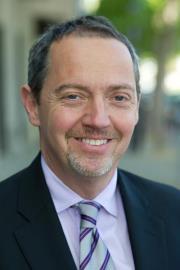
Bevan Dufty’s been running for mayor for about two years now. He’s often the star of the debates — if only because he has an engaging personality and is willing to laugh at himself, a rare trait in a politicians. And although he way typcially aligned with the fiscal conservatives on the Board of Supervisors, he has the support of the progressive SEIU Local 1021 — in large part because he’s talking about working with city employees instead of demonizing them. He also told us that the next mayor of San Franciisco needs to have a black agenda — to address the alarming outmigration of African Americans and the economic damage that’s been done to that community. You can listen to the full interview and watch video after the jump.
Interview
Breaking free
rebeccab@sfbg.com
An ordeal that began with a hiking trip on July 31, 2009 in Northern Iraq came to a close Sept. 21 when Shane Bauer and Josh Fattal were released from Tehran’s Evin Prison. They’d languished in an 8-by-13-foot cell for 781 days while their friends and supporters waged a creative, behind-the-scenes campaign to free them.
Bauer and Fattal were ferried out in a convoy with Swiss and Omani officials and flown to Oman, where news cameras captured their joyful reunion with loved ones. Waiting on the tarmac with their family members was Sarah Shourd, Bauer’s fiancée, who’d been arrested with them and was released last September after spending 410 days in solitary confinement. It was the first time since their arrest that “the hikers” — as the trio came to be labeled in the campaign calling for their release — were together outside prison walls, free at last.
Watching their reunion from Seattle, their friend Shon Meckfessel — who went to Northern Iraq with them but hadn’t felt up to hiking that day — was overjoyed. “It’s like I’ve collapsed from relief,” he told us by phone. “I just feel like I’ve been asphyxiated for the last two years, and suddenly I remember what air smells like.”
In the Bay Area, friends who’d pulled together to work toward their release breathed a huge, collective sigh of relief. “It was just a crazy, amazing adrenaline rush of happiness,” said Jennifer Miller, who befriended Shourd years earlier while doing human rights work focused on violence against women in Juarez.
Bauer and Fattal had stood trial only weeks earlier in an Iranian court, on charges of espionage and illegally crossing an unmarked border between Iraq and Iran. They were found guilty and sentenced to eight years each in prison. Their release coincided with Iranian President Mahmoud Ahmadinejad’s visit to the United States for the United Nations General Assembly conference.
As Bauer, Shourd, and Fattal remained isolated at the mercy of guards they could barely communicate with, their family and supporters kept up a steady drumbeat calling for their release. They recruited actors, intellectuals, and foreign diplomats to urge the Iranian government — which has not had diplomatic ties with the U.S. Since 1979 — to let the Americans go. Once Bauer and Fattal were free and wandering around New York City, they’d morphed into minor celebrities — strangers approached them in the streets to wish them well.
In the end, nobody can say just what persuaded the Iranian government to release Bauer and Fattal. “Sarah was talking with diplomats in all kinds of countries. The thing is, none of us really knows what the calculus was,” said Liam O’Donoghue, a friend who helped out with the campaign.
The campaign was multi-faceted, with friends and family coordinating parallel efforts from various locales. While Bauer and Fattal’s group of friends in the Bay Area are quick to note that their work reflected just one slice of the overall push for the young men’s freedom, the grassroots organizing effort they created clearly had some effect in the end.
“If Shane, Sarah, and Josh were just three random people who didn’t have this group of friends who were so proficient at organizing, I think they would have still been in jail,” O’Donoghue mused.
Shortly after Bauer and Fattal were freed, Iran’s foreign ministry issued a statement acknowledging the involvement of the Sultan of Oman, United Nations Secretary General Ban Ki-Moon, Iraqi President Jalal Talabani, and — more surprisingly, given his adversarial relationship with the U.S. — Venezuelan President Hugo Chavez, who enjoys a close relationship with Ahmadinejad.
Once reports surfaced emphasizing Chavez’s involvement, the news broke that actor Sean Penn had played a role, too — by flying to Venezuela to encourage Chavez to approach Ahmadinejad about the case.
Yet the stage had already been set by friends of the hiking trio, a small crew of passionate social justice activists based in San Francisco and Oakland. They possessed skills as organizers, but this time the goal was more personal — they wanted nothing more than for their friends to be free.
TIME TO ORGANIZE
Based on the 17 alarmed messages on his voicemail, David Martinez knew something terrible had happened involving Bauer and Shourd. An independent filmmaker, Martinez was close to both and had collaborated with Bauer in 2007 to produce a film about Darfur.
Soon after learning that they were being detained in Iran, he found himself swept into a whirlwind, ad-hoc grassroots organizing effort as friends and family of the hikers contacted one another, fired off rapid emails, and organized conference calls to try and determine how to respond.
“We created this working group, this conference group — we wanted everybody’s expertise,” explained attorney Ben Rosenfeld, who has known Shourd for more than a decade and offered free legal representation to Shourd’s mother. “We set out to build a brain trust, essentially, and we did that very, very quickly.”
Shourd and Bauer had been living in Damascus, Syria, at a Palestinian camp when they decided to take a short trip to Iraqi Kurdistan. Shourd was teaching English to Iraqi refugees, and Bauer — a photojournalist — was writing articles about the Middle East. Fattal, an environmental educator, was visiting them. They journeyed along with Meckfessel to Kurdistan, a forested region of Iraq known as a safe destination for U.S. citizens. But once they arrived, Meckfessel felt groggy, so he opted to stay behind while the other three went off in search of a waterfall.
“I was on a bus to meet them and got a call from Shane that they were being arrested by Iranian authorities,” Meckfessel told the Guardian. After notifying their families, he flew to Istanbul to stay with a friend.
Back in the Bay Area, word of the hikers’ plight was starting to make news. “I had producers from morning shows like Good Morning America ringing my doorbell from the beginning,” Rosenfeld said.
Martinez was on a conference call with the core group of organizers when Meckfessel contacted him via Skype from Istanbul — and by that point, the national media was hungry for a statement from the elusive fourth hiker. So the group worked with Meckfessel to craft a statement for the press.
The first challenge they faced was this: Should they emphasize that Bauer, Shourd, and Fattal were humanitarian activists, or should they downplay their political leanings by casting them as adventuresome Americans with a love of the outdoors? Both portrayals were true, but the most important audience, as Rosenfeld pointed out, was ultimately their captors.
Meckfessel said he thought highlighting their politics would help their case. “The first minute after I got the phone call [from Bauer] … I thought that basically our involvement in the region as journalists, as academics, and as educators, and our long public record speaking out for human rights and as critics of US foreign policy in the area … would get them out,” he said.
Meckfessel later created a website, FreeOurFriends.eu, to emphasize the humanitarian and journalistic work that the three were engaged in. In the summer of 2010, he maxed out two credit cards to go on a 30-city European tour to drum up support overseas.
Despite the group’s initial contact with the Committee to Protect Journalists as well as Bauer’s editors at The Nation and Mother Jones, some were opposed to emphasizing the journalism aspect. “Think back to July 2009 in Iran,” Martinez said, referencing the popular uprising known as the Green Revolution that had sent shockwaves through Iran just months earlier. “Our friends were and are journalists involved in social movements and people’s movements. I’m pretty sure if you did a Google search with ‘Iran, July, 2009, activists,’ you’d come up with something like torture, prison. That is why we thought … let’s just say they’re hikers.”
So they came to be known as “the hikers,” and a website was created to go along with the campaign, called Free the Hikers.
“We wanted to make sure we weren’t divulging details about them that they weren’t divulging to their interrogators,” Rosenfeld said. “We wanted to be careful not to piss off the U.S. or the State Department. And, if we seemed too orchestrated, it might feed into Iran’s paranoid theories that they were spies. So we had to try to solve for all of these variables at the same time.”
It began to dawn on them that they were contending not only with the soured relationship between the U.S. and Iran, but an internal power struggle within Iran that had intensified in the wake of mass internal dissent. “The government that grabbed Shane, Josh, and Sarah was at war with its own people,” Martinez reflected. “They were prisoners of the historical moment.”
Nor was the trio the first in their circle of friends to stumble into a horrendous situation overseas. Tristan Anderson, of Berkeley, was attending a nonviolent protest of the Israeli occupation in a Palestinian village at the beginning of 2009 when he was hit by a high-velocity teargas projectile fired by Israeli Defense Forces, and sustained serious brain injuries.
“Tristan’s like a minor celebrity in Iran,” Meckfessel noted. “He’s known not only for initially getting shot … but Tristan’s whole case got a lot of sympathetic media in Iran.” When his three friends were captured, “the first thought I had was, we have proof that we’re all friends with Tristan,” he said.
On Feb. 10, 2010, Anderson’s parents, Nancy and Mike Anderson, sent a letter to Ahmadinejad. “It pains us greatly, on top of the tragedy we have already suffered, to see Tristan’s close friends made to bear the burden of grievances between nations,” they wrote.
GAME OF DIPLOMACY
The idea to approach the Venezuelan government started when Raymor Ryan, an Irish author who lives in Chiapas, phoned Martinez. “He said, ‘The only thing that’s going to really affect them is state power — this is a game of diplomacy,'” Martinez recounted. He suggested Venezuela — a country that is not only on friendly terms with Iran, but has connections with social movements. Martinez liked the idea, but first he ran it by another friend, famed academic Immanuel Wallerstein.
In an email, Wallerstein summarized for the Guardian the advice he gave. “The Iranians are using this as part of their struggles with the United States,” he wrote. “The least likely way to obtain their release is to allow U.S.-Iranian relations to be the issue, or to allow the virtues of the Iranian regime to be the issue. I suggested that they try to work with various left-of-center governments in Latin America, which have friendly relations with Iran, and see if they will intervene with the Iranian government. I did not single out Venezuela. After that, I was out of the picture.”
In October of 2009, Rosenfeld reached out to an attorney he knew through the National Lawyers Guild, Eva Golinger, who’s authored seven books, lives in Caracas, and occasionally serves as an adviser to Chavez. She agreed to help.
Nicolas Maduro, Venezuela’s foreign minister, told her he thought Chavez would be open to helping. “The foreign minister went to Tehran, and they told me they were going to broach the subject,” Golinger said. “When they came back, they told me unfortunately, it wasn’t a topic that was received favorably by the Iranians.”
Rosenfeld and Martinez were crazed, but they had another idea. Perhaps Chavez would be more responsive to appeals from lefty luminaries. Thanks to behind-the-scenes arrangements made by campaign organizers working every connection they could muster, a letter dated Feb. 26, 2010 was sent to Chavez on behalf of Noam Chomsky, Angela Davis, and Harry Belafonte.
“All three of the hikers are dedicated to improving living conditions for poor and oppressed people throughout the world, and to fostering a better understanding among their fellow citizens of the U.S.’s hegemonic role in global politics and economic privation,” they wrote.
Soon after, Golinger had a chance to speak with Chavez directly, when she was invited to join him on a trip to Uruguay to attend the presidential inauguration. “He said, ‘do you think they’re spies?’ I said, look, I don’t think they’re spies. I think they were gringos in the wrong place at the wrong time,” she recounted. “Chavez said, yeah, no problem. I’ll help.”
Soon after, the campaign recruited anti-war activist Cindy Sheehan to write to Chavez, too. But the months rolled by without word of a trial date, let alone a release. Rosenfeld thought up a new way to reach Chavez — by encouraging actor Sean Penn to speak with him.
Penn enjoyed a good relationship with the Venezuelan president and had been regularly traveling to the region to aid in earthquake relief efforts in Haiti, which Venezuela was deeply involved in. Rosenfeld asked Matt Gonzalez, chief attorney of the San Francisco Public Defender’s Office and a friend of Penn’s, to mention it to him.
Within months, Penn discussed the hikers’ case with Chavez, according to Golinger. Then, in September of 2010, Shourd was finally released. Bay Area friends described it as a moment of sheer joy, but also bittersweet, because Bauer and Fattal remained behind bars. Miller invited friends and organizers over to her place in Oakland to join her in the surreal experience of watching their friend deliver a speech on television.
Meckfessel was in Rome as part of his “Free Our Friends” tour through Europe. “I got a text message from somebody that she had been released, and I burst into tears of relief,” he said. “Then, just as I was preparing to do my presentation in Rome, I got a call — and it was Sarah. I just shouted and cried in front of this big group of Romans, and everyone was applauding.”
Upon her return, Shourd wasted no time throwing herself into the campaign. “I just have so much admiration and respect for Sarah,” Miller said. “She went from coming out of prison, and needing time to heal from that, to becoming a full-force, 24/7 international diplomacy worker.”
Shourd, Bauer, and Fattal were unavailable for an interview for this article, but their families emailed a statement. “As Josh and Shane said when they got home, many of their friends put their own lives on hold to fight for their freedom,” they wrote. “We are grateful to the many people who worked in many different ways to help Shane and Josh. Every single effort mattered and made a difference.”
INEXCUSABLE ACTS
When the day of their release finally came, Golinger watched in Caracas as television broadcasts showed Bauer and Fattal bounding down the steps of the plane and leaping into the arms of their loved ones. She sent a text to Maduro, the Venezuelan foreign minister, who was in New York for the UN General Assembly. “I asked … were we involved?” Minutes later, she received a text in response. “He said, fundamentally, yes.” The Iranian foreign minister had told him that the release went through because of Chavez’s request.
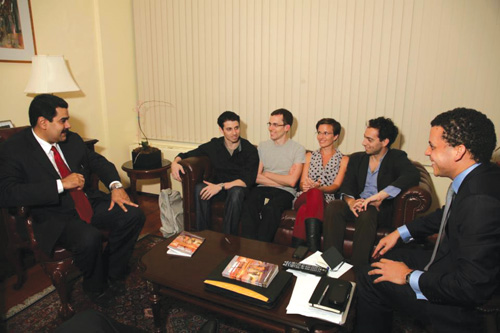
Days later, in New York, the hikers visited the Venezuelan consulate. And on the same trip, their first time back on U.S. soil, Bauer and Fattal held a press conference.
“The only explanation for our prolonged detention is the 32 years of mutual hostility between America and Iran,” Bauer said. “The irony is that Sarah, Josh, and I oppose U.S. policies towards Iran which perpetuate this hostility. We were convicted of espionage because we are American. It is that simple.”
He went on: “In prison, every time we complained about our conditions, the guards would immediately remind us of comparable conditions at Guantanamo Bay. They would remind us of CIA prisons in other parts of the world, and the conditions that Iranians and others experience in prisons in the U.S. We do not believe that such human rights violations on the part of our government justify what has been done to us, not for a moment. However, we do believe that these actions on the part of the U.S provide an excuse for other governments, including the governments of Iran, to act in kind.”
Addicted to print
arts@sfbg.com
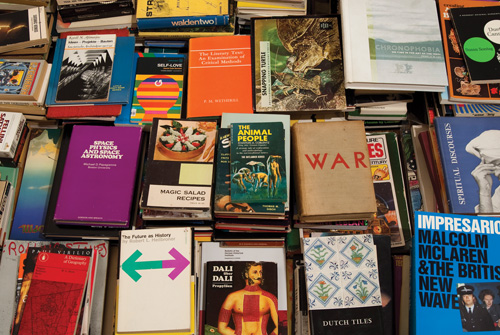
LIT Poet Nick Hoff is best known for his acclaimed translation of Friedrich Hölderlin’s Odes and Elegies (Wesleyan, 2008), while Matt Borruso has achieved some notoriety as a visual artist (his “The Hermit’s Revenge Fantasy” is at Steven Wolf Fine Arts through Sat/8). Yet both are also seasoned book scouts, those scavengers of estate sales, thrift shops, and flea markets who find saleable treasures buried in otherwise worthless piles of printed matter. And it’s in this capacity that they’ve embarked on a collaborative experiment in what one might call “conceptual commerce:” Scanners, a used bookstore that opened October 1 and closes at the end of the month.
The impulses behind Scanners are various. In the face of what Hoff calls “the media’s hysteria about the death of print,” both he and Borruso remain interested in the book as material object rather than simply bearer of text, easily replaceable by more efficient digital media. But in an immediate sense, the project is informed by their experience in a profession that, like many, has felt the digital squeeze. The word “scanner,” says Hoff, is a derisive term among book scouts for the increasingly numerous competitors whose knowledge of a book’s value solely stems from their mobile barcode scanners.
“At a library sale,” Hoff continues, “for every person without a device, there’s 50 people scanning books. The device tells them whether it has value. The traditional book scout who knew about book culture is becoming a thing of the past.”
While scanners have drastically increased competition, devaluing that knowledge built through long practice, Borruso and Hoff are quick to own the advantages of the digital age; their ability to sell books online directly to consumers rather than a book dealer has offset the blow to their bottom line. And knowledge retains its edge. “Not everything has a barcode,” Borruso says with a sly smile, and throughout our conversation, it’s clear both men value the thrill of the chase at least as much as its results. Borruso speaks of the “adrenaline” that comes from finding that overlooked tome, while Hoff dwells on the more profound relationship a reader has with a long-sought book than with an instantly purchased text. Both savor the role chance plays in their acquisitions.
With Scanners, they seek to replicate the conditions for such discovery. Herein lies the name’s opposite sense, of scanning physical shelves for the book chance may bestow. To this end, the duo intends to organize the store according to non-traditional categories — replacing the specific “economics,” for example, with the open-ended “money” — and emphasizing face-out visual display. Perhaps inevitably, the artist Borruso is more interested in the display aspect, while the writer Hoff is eager to see what categories will emerge from the 400 boxes of books they’ve stashed away over the past year.
Much of this, Borruso says during our interview, “is still theoretical,” as they only had a three-day window at the end of September to set up shop, using a break in the exhibit schedule of the Mina Dresden Gallery to inhabit its foot-traffic-friendly Valencia space. There’s something appropriate about staging this bookstore in an art gallery, for the project is at once scrupulous and absurd, requiring all the effort of opening a real bookstore — cash registers, credit card capability, etc. — even as they intend to close in a month. “It’s not a viable business model,” Borruso laughs.
Being temporary, as Hoff notes, makes the bookstore “into an event itself.” Nonetheless, there will be events within the event, beginning with a conversation on bookselling between William Stout, owner of William Stout Architectural Books, and Paul Yamazaki, bookbuyer for City Lights. Upcoming events — listed on the store’s website — focus on archiving in the digital age, the neuroscience of reading, and artists’ use of found source material, reflecting Hoff and Borruso’s diverse interests in printed matter.
“Our idea is to highlight things people will respond to a physical level,” Borruso concludes. “To base a store on things you wouldn’t be able to appreciate in digital format. Some of these things you might see and think, ‘I want that,’ but you would never know that seeing it even in jpeg form. You need to see it as an object, as a thing.” 2
“ON BOOKSTORES AND BOOKSELLING”
William Stout in conversation with Paul Yamazaki
Wed/5, 6:30 p.m., free
312 Valencia, SF
Endorsements 2011

Editor’s Note: These are our full endorsements for the 2011 election on November 8. Our Clean Slate clipout guide to take to the polls is here. Listen and watch our interviews with many of the major candidates here. For information about San Francisco voter registration, early voting, and other city election provisions, click here.
The way the San Francisco Chronicle is reporting it, this city isn’t paying much attention to the Nov. 8 election. An Oct. 2 story cited a rumored poll showing that a third of the voters still think Gavin Newsom is mayor. And “nobody has a really big, attention-grabbing personality.”
And yet, this is a crucial election. The city’s in serious trouble. The budget has a huge structural imbalance, blue-collar jobs are vanishing, affordable housing lags far behind condominiums for millionaires — and planning decisions that are made in the next administration will change the shape of the city for decades to come.
Meanwhile, a discredited political machine run by former Mayor Willie Brown is trying mightily to get its sleazy tentacles back into City Hall.
There are important races for sheriff and district attorney, too. San Francisco has a long history of progressive sheriffs, dating back to Dick Hongisto in the 1970s. Now, after 30 years, Mike Hennessey is retiring — and it’s possible that the city could lose the distinction of having a national leader in alternatives to incarceration, anti-recidivism and humane treatment of prisoners.
San Francisco has another distinction, this one less laudable: This is the first city in modern history to have a police chief become district attorney. And three challengers are trying to change that.
We’ve spent weeks meeting with the candidates. We’ve held a series of forums on the key issues. Our interviews are all on the politics blog.
So don’t sit this one out. Vote early, vote often, and vote as if the future of the city is at stake. Our recommendations follow.
MAYOR
1. John Avalos
2. Dennis Herrera
3. Leland Yee
The first mayoral election in San Francisco to feature ranked-choice voting and public financing has opened the way to a broad field of candidates. There are eight contenders who have served either as supervisors or as citywide elected officials — and if the interim mayor, Ed Lee, had kept his promise and stayed out of the race, this would be perhaps the most competitive field in modern history.
Unfortunately, Lee — who was chosen to replace Gavin Newsom only because he vowed to be a caretaker and not run for a full term — backed down from his promise, and, thanks to a boatload of special interest money, is now the clear favorite.
But Lee still lacks the support of a majority of the voters (polls show him with around 30 percent, meaning 70 percent are either undecided or voting for somebody else), which gives the rest of the field — or at least, a few of the top contenders — a fighting chance.
In some ways, Lee has been refreshing. After years of the arrogant and superficial Gavin Newsom, Lee has brought humility, a sense of humor and a degree of openness to the office that has won him fans across the political spectrum.
But frankly, the entire process that brought us to this position stinks of backroom deals involving some very unsavory characters. Lee, a career bureaucrat, wasn’t even interested in the job (and wasn’t even in the country) when the Board of Supervisors met to choose Newsom’s replacement. At the last minute, Newsom, Chief of Staff Steve Kawa, former Mayor Willie Brown and a few others orchestrated a deal that aced out Sheriff Mike Hennessy — the progressive choice — and put Lee in Room 200. And then, after denying for months that he had any intention of running in the fall, he changed his mind — telling Sup. David Chiu that he was “unable to resist Willie Brown and [Chinatown powerbroker] Rose Pak.”
In a recent interview, Lee said he would give Brown an A+ for his time running the city.
That’s a very bad sign. The years when Brown was mayor were awful. Between 1996 and 2001, some 20,000 people were driven out of San Francisco. Evictions ran as high as 200 a month. It seemed as if every day, another low-income family or senior citizen or artist community was forced out of the Mission to make way for rich dot-comers and illegal live-work lofts. At one point, Brown even said that the city was so expensive that poor people shouldn’t live here.
Developers ran the Planning Department. Pacific Gas & Electric Co. (which now has Brown on a juicy legal retainer) ran the Public Utilities Commission. The city was deeply damaged by cronyism and corruption. Anyone who thinks those years were anything other than a disaster has no business in Room 200, City Hall.
Even with all of that, we were willing to give Lee a shot. It’s been tough to find three candidates to endorse, and we were hoping he’d come talk to us, impress us, and leave us the option of putting him on the list. But after taking weeks to schedule an endorsement interview, he didn’t show up.
The Brown-Newsom legacy has been terrible for San Francisco. This is a city where the rich are getting richer, housing prices are out of reach for working-class people, tenants are getting screwed, affordable housing is falling far behind the need — and the Planning Department is talking about building housing for another 40,000 rich people, destroying blue-collar jobs in the process. City Hall badly needs change.
It’s critical to end the 16 years of regressive policies and bring in a mayor who is independent of the old, corrupt political machine. And while we are strong supporters of Sup. John Avalos, with ranked-choice voting, we believe that it’s important to round out the slate with candidates who also have a reasonable chance of winning.
Avalos is by far the best candidate, the strongest on the issues, the one who can be counted on to bring a progressive reform agenda and an age of innovation to City Hall. More than anyone else in the race, he understands the crisis facing the city and the need for dramatic action to protect tenants, poor people and what’s left of the city’s middle class. He realizes that San Francisco can’t continue to allow developers to build million-dollar condos without mandating a more-than equal amount of below-market-rate housing.
He realizes that the public sector is under attack nationwide, and that San Francisco needs to fight back — and that means raising taxes on the rich to preserve and expand public services. He told us he’d like to see the city’s revenue increase by $500 million a year by the end of his mayoral term — enough not only to halt the ongoing budget cuts but to begin to restore essential programs that Newsom gutted. He’s already begun exploring legislation to create a municipal bank to take money that now goes to Wells Fargo and Bank of America and use it to make loans to local small businesses.
He also realizes the danger of secrecy, corruption and cronyism in undermining faith in government. He’s been an excellent supervisor, and the city would be well served by an Avalos administration.
Our second choice is City Attorney Dennis Herrera. We’ve had problems with Herrera in the past — his office disqualified a referendum on redevelopment in Bayview Hunters Point on the basis of a ridiculous interpretation of state law that he could easily have challenged. He’s promoted gang injunctions that are anathema to civil liberties. His office has allowed city departments to keep secret more documents than necessary. He’s weak on housing, declining to call for a moratorium on new market-rate units until affordable housing catches up.
But he, as much as Newsom, was responsible for promoting and defending San Francisco’s landmark same-sex marriage campaign, he’s got a strong record on consumer and environmental protection — and on most issues, he’s a decent progressive. By all accounts, he’s a good manager. He has a solid grasp of public policy issues. He agrees that a big part of the solution to the city’s budget crisis has to be new revenue. He promised not only to introduce and lead a public power campaign but to appoint public-power-friendly commissioners to the Public Utilities Commission.
He would replace the Brown-Newsom hacks on key city commissions and in top administration positions — and we’re convinced that he’s principled enough to put an end to pay-to-play, unregistered lobbyists and the growing tide of sleaze in the Mayor’s Office. He’s a hard worker with strong executive experience, and San Francisco would be well served by a Herrera administration.
Then there’s the third choice — which was, to put it mildly, a challenge.
There are a few decent candidates out there who have good things to say. The Green Party’s Terry Baum, one of only three women in the race, is right on all the issues, but has no electoral experience — and honestly, little chance of winning.
Assessor-Recorder Phil Ting has been great on Prop. 13 and has gone after big business and the Catholic Church on tax issues; his “Reset SF” campaign relies a little too much on the idea that crowd-sourcing policy solutions will save the day, but we like Ting. Unfortunately, he’s barely registering in the major polls and his campaign hasn’t developed the kind of traction it needs to make him a viable challenger.
Supervisor David Chiu was a progressive once, and he claims he still is. He’s personable and accessible and votes the right way more than half the time. But he is single-handedly responsible for giving the conservatives control of the Board of Supervisors. He was a swing vote for Ed Lee for mayor, he supported the Twitter tax break, he’s trying to block Sup. David Campos’ move to close a loophole in the city’s health-care law — and in general, he’s too quick to compromise and move to the center.
Bevan Dufty is the only candidate who shows a consistent sense of humor (“I’m a little Strawberry Shortcake meets Hello Kitty”), and he’s often the star of the candidate forums. He’s the only candidate talking seriously about the crisis in the African American community. He opposed the sit-lie law. He’s got some wonderful wild ideas, like getting Virgin Airlines to decorate the inside of Muni buses to make the ride colorful and exciting. He actually cares about city workers. We appreciate having Dufty in the race.
But he’s been abysmal on tenant issues, and told us that he thinks landlord tenant battles “are too adversarial.” Overall, his voting record on economic issues has been consistently with the conservative wing of the board. We hope the next mayor finds a spot for him in city government; he has a lot to offer. But we just disagree on too many issues.
Jeff Adachi has been an excellent public defender and talks passionately about social justice. He has strong roots in the progressive community. We give him credit for forcing pension reform onto the agenda. But he seems a bit too willing to attack the public sector as the source of the city’s economic woes — he refused to support the last public power measure and his main budget proposal is to make city employees pay more for their pensions –without in any way pairing that with a hike in the taxes that big businesses and wealthy people pay. And his lone-wolf approach to the pension issue has been divisive and doesn’t play well in this labor town.
Joanna Rees has offered some interesting, independent ideas, but she’s never held any elective office or had any involvement in local politics.
That leaves Sen. Leland Yee. A classic lesser of the evils.
Yee has a very mixed record. He was a conservative School Board member who wouldn’t even talk about higher taxes and once tried to split the wealthier West Side off into its own school district. He had a pretty bad voting record on the Board of Supervisors, particularly on tenant issues. He didn’t support health benefits for transgender city employees. But on a board almost entirely controlled by then-Mayor Brown, he was something of an independent, one of only two or three supervisors ever willing to go up against the powerful mayor.
And he’s moved to the left in the past couple of years. He has fully apologized for his vote on transgender benefits, has been strong on labor issues — and is (and always has been) a leading voice on open government. He has 100 percent voting scores from the leading labor and environmental groups in Sacramento. He has the support of a lot of local progressive groups, including SEIU Local 1021. He is supporting the proposal by Sup. David Campos to close the loophole in the city’s health-care law. He told us he would oppose any effort to change district elections.
Yee makes us nervous. As we noted in a profile (see “The Real Leland Yee,” 8/30/11):
“He’s grown, changed, and developed his positions over time. Or he’s become an expert at political pandering, telling every group exactly what it wants to hear. He’s the best chance progressives have of keeping the corrupt old political machine out of City Hall — or he’s a chameleon who will be a nightmare for progressive San Francisco.
“Or maybe he’s a little bit of all of that.”
But in the end, after 24 years in public life, it’s safe to say that Yee is not part of the old machine, not part of the Newsom/Kawa/Brown team that put Lee in office, not part of anyone’s corrupt operation. He’s himself, for better and for worse, and he’ll clean house in the Mayor’s Office. And at a time when City Hall could too easily drift back into the very bad old days, we’re willing to take a chance on Leland Yee.
DISTRICT ATTORNEY
1. David Onek
2. Sharmin Bock
3. Bill Fazio
District Attorney George Gascon is not a bad guy. He was a better police chief than many of the people we’ve seen in that job. He has a history of standing up for immigrants under very, very difficult circumstances — as the chief of police in Mesa, Arizona he had to tangle with a rabidly anti-immigrant sheriff and a conservative population, and he emerged with solid credentials. He brought some much-needed professionalism and stronger management practices to the SFPD. He’s personable, accessible and works hard to stay in touch with the community. As D.A., he’s worked well with the public defender and has (finally) come around to opposing the death penalty.
We just wish that Gavin Newsom hadn’t decided that the way to advance his own political career and agenda was to put his police chief in the District Attorney’s Office.
There are reasons that no police chief in the United States has become a district attorney — certainly not in modern history. The D.A. and the cops have to work together, but they also have to have a certain degree of separation — or there are inevitable, unacceptable, unworkable conflicts of interest. And while Gascon talks about transparency, he’s fighting the release of a crucial memo on problems in the crime lab.
So we’re looking for a new district attorney, and there are three contenders, each of them with strengths and weaknesses.
Our first choice is David Onek, whose career in nonprofit and academic work leaves him short of the courtroom and management experience we’d like to see in the next D.A. but who has by far the strongest credentials and agenda for reform. He starts off every interview and discussion by saying that the criminal justice system in California is broken — not bent, not sprained, not in need of a little attention, but utterly broken. The entire premise that’s driven criminal law in the past several decades — that offenders, including nonviolent and drug offenders, need to be sent to prison for longer and longer terms — has proven a failure. “We’re arresting and prosecuting people just fine,” he told us. “We need to reform the system.” And San Francisco could make a national statement by electing a district attorney who wants to change criminal justice, not just make it work better.
Onek’s strong focus on juvenile justice would be a profound policy shift — juvie is typically a secondary thought in the justice system. Onek promised never to charge a youthful offender as an adult without going before a judge first — and would do that only in rare cases. His plan is to get kids out of the justice system before they become hardened criminals. He’s also talking about working on employment opportunities for ex-offenders. He has always been opposed to the death penalty, and we think he’s taking seriously the need for more aggressive investigation and prosecution of political corruption.
Onek has never tried a case — a major drawback. On the other hand, neither has the incumbent. We acknowledge that putting someone with negligible prosecutorial experience in the top job is a stretch — but the justice system is such a mess that we’re willing to gamble on an idealistic reformer.
Two qualified, experienced prosecutors are also in the race. We give a slight edge to Sharmin Bock, who has spent her career in the Alameda County District Attorney’s Office. Bock’s spent a lot of time working on crimes against women and portrays herself as in independent, which is both good and bad: Good because it would give her an outsiders perspective on the office, bad because, unlike Alameda County’s D.A., San Francisco’s prosecutor is part of the local political infrastructure. But she does have some background prosecuting bad cops — she was part of the office that went after Oakland’s notorious Riders.
Bill Fazio, who was a San Francisco prosecutor and is now a defense lawyer, shares Bock’s courtroom experience. And his days on the defense side of the aisle have changed some of his perspectives — the one-time tough-on-crime guy who in 1999 ran for this office as a death-penalty advocate now agrees that executions are a terrible mistake. He’s a little shaky on drug crimes (“it’s only a problem when it’s a problem”) and to this day, he says the prosecution of the Fajitagate cops was “ridiculous” (wrong, Bill — there was a systemic cover-up, and it’s too bad the top brass got away with it). But we’ll give him our final nod.
SHERIFF
1. Ross Mirkarimi
Mike Hennessey has been sheriff of San Francisco for so long, and has done such a great job, that hardly anyone in town really thinks about the politics of the office any more. We take it for granted that we have the most progressive sheriff in the state, maybe the nation. We just assume that the jails will be run well, that the deputies will be held to a high standard of behavior, that alternatives to incarceration will be part of the program, that evictions will be handled in a humane way, that anti-recidivism programs will be funded and given priority, that immigrants won’t face automatic deportation — and that San Francisco’s top elected law-enforcement official will be a leader in innovative ways to approach law enforcement.
But it wasn’t always that way, and it won’t necessarily be that way in the future. This is a crucial election, pitting a progressive reformer who comes from the civilian world against two career law-enforcement officers. It’s a chance to vote for someone who will continue Hennessey’s legacy or to risk turning back the clock. That’s why we’re strongly endorsing Ross Mirkarimi, and only Ross Mirkarimi.
Hennessey was never a cop. He started off as a poverty lawyer, working in prison legal services under Dick Hongisto, who launched the tradition of progressive sheriffs in this city. He ran as a civilian and won — and there’s a value to that. The Sheriff’s Office in San Francisco has no Police Commission, no Office of Citizen Complaints; the only oversight of 850 sworn officers is the elected sheriff.
Since Hennessey’s election, law enforcement lobbyists have managed to make changes in state law that bar anyone without formal police training from serving as a sheriff. Under current law, Mike Hennessey — who is widely respected by his peers — wouldn’t be allowed to seek the office.
Mirkarimi meets the qualifications. He went through the San Francisco Police Academy as an investigator for the District Attorney’s Office and graduated as president of his class. He holds the Peace Officers Standards and Training certificate and is thus in an unusual position: He can run for sheriff without being part of the law-enforcement fraternity.
It’s not as if Mirkarimi is a stranger to the issues. He spent much of his first term in office working on public safety. When he took office in 2005, District Five, particularly the Western Addition, was plagued with violent crime. He personally appeared at every homicide scene, pushed for more police on the streets and for foot patrols and worked to organize the community around crime — and it worked. The murder rate dropped dramatically.
These days, Mirkarimi is working on anti-recidivism programs and wants to bring that approach to the office. Which is critical: Over the next two years, as the state implements a prison-system realignment, hundreds more inmates will be entering the San Francisco County Jail system — and while Hennessey has made a lot of progress, almost three quarters of the people who leave jail in San Francisco wind up getting in trouble with the law again.
The person who knows the job best is Hennessey — and he’s made his position clear. When Hennessey decided three years ago that he was going to retire at the end of his term, he met with Mirkarimi and told him he’d like to see the supervisor as his successor. In fact, Hennessey told us, he offered to appoint Mirkarimi as undersheriff, so he could learn the job and run as the second-in-command. But that wasn’t possible — city law prohibits sitting supervisors from taking another city job (unless it’s an elected position).
If Hennessey had become acting mayor he would have appointed Mirkarimi sheriff. “Ross is the person I want to see in the job,” Hennessey said. He noted two important reasons.
First, he said, “one of the hardest parts of any law enforcement management job is maintaining discipline in the ranks. And that’s very hard to do if you’re an insider. I’ve always considered myself a citizen more than a peace officer, and that’s allowed me to do the job.”
Second, Hennessey told us, “One of the reasons I was successful is that I’ve been an innovator. I see Ross as having that spirit. And I don’t see that in the other two candidates.”
If John Avalos isn’t elected mayor, Mirkarimi could become the only truly progressive person holding citywide office in San Francisco. In seven years on the Board of Supervisors, he was not only a leader on environmental and public safety issues but was an utterly reliable progressive vote. He represents part of the next generation of progressive leadership in San Francisco, and we’re proud to endorse him for sheriff.
There are two other candidates running — Chris Cunnie, a former San Francisco cop and head of the Police Officers Association, and Paul Miyamoto, a captain in Hennessey’s department. Both have experience, and both vowed to carry on Hennessey’s progressive legacy. But we can’t support either of them.
Cunnie was head of the POA when that union opposed the police reform measure that gave the supervisors three appointments to the Police Commission. He made a habit of blasting progressive District Attorney Terence Hallinan for not being nice enough to the cops. And under his leadership, the POA opposed a promotions plan designed to bring more women and people of color into leadership positions in the SFPD. He’s done some good things, and told us he wants to work to get people with substance abuse problems out of the legal system and into treatment (he was a very successful executive at Walden House, the treatment facility). But he’s endorsed by POA President Gary Delagnes, who has been a major obstacle to police reform.
Miyamoto spent his life in law enforcement and has the management experience, but lacks the kind of innovative agenda that Hennessey told us the next sheriff needs.
The bottom line is simple: All three candidates spend a lot of time touting the legacy and great work that Hennessey did, and all of them vow to continue in his footsteps. But Hennessey himself says the only candidate who can continue his legacy is Ross Mirkarimi.
That’s a pretty clear choice.
San Francisco ballot measures
PROPOSITION A
YES
SCHOOL BONDS
A lot of the educational facilities in San Francisco are in need of repair and renovation, and some of these improvements are critical for meeting health and safety standards. They include elementary schools, middle schools, high schools and child development centers, many of which are located in the city’s southeastern neighborhoods. This measure would allow the San Francisco Unified School District to issue $531 million in bonds to repair and rebuild facilities.
The expenditure comes with a number of safeguards and strings attached. SFUSD is required by law to conduct an annual financial audit to ensure that funding is being properly used, and an independent citizens’ oversight committee will be created within two months of approval to inform the public about how the proceeds are used. Vote yes.
PROPOSITION B
YES
STREET REPAVING BOND
There are few more basic functions of government than maintaining the streets. This $248 million general obligation bond would fund improvements to benefit drivers, pedestrians, bicyclists, and public transit users. And if San Francisco doesn’t make this investment now, it will cost even more later to fix the roads once they’ve begun to degrade, so this really is a no-brainer. Some — particularly the right-wing, anti-tax scolds — might argue that keeping the roads in good shape should be part of the city’s annual budget rather than being paid for with borrowed money repaid by increased property taxes and rents. We might even agree, if the wealthy were being fairly taxed and the city was bringing in at least $248 million in additional annual revenue. But in this era of declining government resources, this bond is desperately needed. Most of it, almost $150 million, goes to resurfacing the streets, while $50 million goes to new improvements (including improved bike lanes) and $22 million each go to signal upgrades and sidewalk and ramp improvements. Leaders from across the political spectrum support it. Vote yes on B.
PROPOSITION C
PENSION REFORM
YES
PROPOSITION D
PENSION REFORM
NO
We’ll admit to a bit of political crankiness on this one: Our initial instinct was to oppose both of these measures. Sure, there are abuses in the city’s pension system (particularly among public safety employees). Sure, since the stock market crash, the cost to the city of funding the pension system has risen to levels unsustainable in our current fiscal environment. And at some point, the supervisors were going to have to deal with it.
But there’s a basic unfairness about all of this that bothers us: The city workers are being asked to give up part of their pay — but the wealthiest individuals and big corporations in San Francisco are giving up nothing. It’s part of the national trend — the poor and middle class are shouldering the entire burden of the economic crisis, and the rich aren’t suffering a bit.
That said, there’s political reality here — both of the pension reform measures will probably pass, and the one that gets more votes will take effect. And there’s really no choice between them — Prop. C, the measure written with the input and support of the mayor, the supervisors and labor, is the better option.
The two proposals are complicated. Both would reduce the city’s obligation to pay into the employee pension plan, particularly in years when the economy is bad, the stock market is down and the pension fund portfolio is shrinking. Both require city employees to work longer for lower pensions. Both have complex formulas for how that would happen.
Prop. D, written by Public Defender Jeff Adachi, has a slightly better formula for allocating the pain: Under his plan, employees making lower salaries would pay less than employees at the high end of the scale. His is also stronger on pension “spiking” — pensions would be based on the average pay of an employees last five years. Under the City Hall plan, that would be a three-year average.
But overall, Prop. C is a better measure — in large part because it reflects a legitimate process of collective bargaining. Adachi did his plan all by himself, with no input from labor or others at City Hall. Prop. C was hammered out in a series of meetings with members of the board, the mayor, and representatives of the city employee unions that will actually pay for the changes. That, generally, is how the process ought to work.
We would have demanded tax reform before we supported any pension reform, but given the options facing us, we’re going Yes on C and No on D.
PROPOSITION E
NO
CHANGING VOTER-APPROVED MEASURES
The right of the people to directly reform government laws when their elected representatives fail to do so is one of the most cherished and effective electoral reforms of the Progressive Era, when the initiative, recall, and referendum were established. But this measure would have the people voluntarily give up some of that power by allowing the Board of Supervisors to alter or repeal voter-approved ballot measures. Supervisor Scott Wiener, who pushed this measure with support from the big business community, never really explained why it was necessary or what legislation he was targeting — but among the potentially vulnerable measures are tenant protections and the city’s transit-first policy.
Wiener argued that this was just about not cluttering up the ballots with minor administrative tweaks. Do you see anything like that on the ballot? No, neither do we, and we aren’t buying that this is a problem in need of such a radical solution. The deck is already stacked against grassroots groups forced to resort to gathering signatures or persuading progressive supervisors to sponsor a ballot measure. Supervisors shouldn’t be able to undo what voters decide, not with a simple majority vote (after seven years) or even a two-thirds vote (after three years), particularly when they have plenty of power to place new measures on the ballot to address problems unintentionally created by voters. Vote no on E.
PROPOSITION F
NO
CAMPAIGN CONSULTANT RULES
Proposition F contains some straightforward, housekeeping-style changes to the city’s ethics rules governing the activities of campaign consultants. But it also includes a provision that’s fundamentally disempowering to the voters.
On the positive side, the measure would allow the Ethics Commission to accept reports from political consultants electronically, which makes sense, and it would require reports to be filed monthly rather than quarterly. But this is one of those cases of the bad outweighing the good. The definition of a campaign consultant would change from an individual earning $1,000 per calendar year on campaign activities to an individual earning $5,000 per year, effectively dimming the concept of sunshine in open government and making it harder for members of the public to learn of activities that affect local government.
More importantly, F flunks the smell test when it comes to accountability to voters, since it would make it possible for politicians, not just voters, to change the law governing campaign consultant activity. This is a departure from the current system, which requires the voters to weigh in on any change to campaign consultant law. This effectively grants elected officials greater control over the rules their own political consultants must follow, eliminating an important safeguard. Vote no.
PROPOSITION G
YES
SALES TAX INCREASE
San Francisco desperately needs new tax revenue to slow the steady decline in government funding and services over the last 10 years. We’d like to see a variety of options for voters to choose from, particularly options that primarily hit the richest individuals and corporations in the city (such as a local income tax, a commercial rent tax, transit impact fees, etc.). And if there were better options, we might not support Mayor Ed Lee’s plan to maintain the current sales tax rate rather than letting it drop by a half-percent as the state rate sunsets.
Sales taxes are regressive, hitting the poor harder than the rich, and not the best funding mechanism. We’re also not fond of this measure’s provisions to set that money aside to fund public safety programs and services to seniors and children, which is clearly a gimmick by tax-averse politicians to sell this measure to voters.
But the bottom line is that years of deep cuts have taken a disastrous toll on the city budget — threatening core social services and, yes, even public safety programs — and the city needs the money. Besides, this simply keeps the city’s 8.5 percent sales tax rate where it is, at a level we’ve already budgeted for. We’ll endorse Prop. G — but we look forward to seeing some more progressive measures on the ballot next fall.
PROPOSITION H
NO
NEIGHBORHOOD SCHOOLS
Prop. H is a policy statement that would have no immediate impact — but it’s still dangerous. It’s an attempt to undermine the School Board’s assignment policy, a system worked out over more than two years after dozens of hearings and meetings. The current system isn’t perfect — but there’s no way to create a perfect way to assign kids to schools in a city where some neighborhoods are still segregated by race, the quality of local schools is unequal, the district offers special programs at school sites scattered across the city — and parents want the right to chose schools outside their neighborhoods.
So the assignment process allows parents to chose seven schools, weighs the demographics of the family and makes an effort to both ensure diversity and give as many families one of their choices as possible. It works more than 80 percent of the time. Prop. H would mandate that geography — proximity to a school — was given the highest priority in assignment. That means kids in rich neighborhoods would go to better schools — and some schools would be effectively re-segregated by race. It’s a terrible idea, and needs to be defeated. Vote No.
The Guardian endorsements were prepared by our editorial board, Rebecca Bowe, Bruce B. Brugmann, Tim Redmond and Steven T. Jones.
Our Weekly Picks: October 5-11
THURSDAY 6
Datarock
I honestly swing back and forth on Norway’s Datarock. It has a whole self-embraced nerd element to its music that is great in a Devo sort of way (“Computer Camp Love,” “The Pretender.”) But then an anthemic, fun, fun, fun song like the recently released “California” comes along and makes me feel like I did poppers and decided hitting myself with a ball-peen hammer was a good idea. (Or was it the other way around?) Maybe Datarock is just better live, or in the musical it’s supposedly making, but I’d say ultimately the highs — along with the variety of the openers at this show, especially the IDM, sunny sounds of France’s Anoraak — definitely outweigh any of my apprehensions. (Ryan Prendiville)
With Anoraak, BAERTUR, Syntax Terrorkester
9 p.m., $15
Mezzanine
444 Jessie, SF
(415) 625-8880
www.mezzaninesf.com
THURSDAY 6
CSS
Cansei de ser Sexy (CSS) showcases a signature dancefloor swagger in third release, La Liberación, reminiscent of the band’s 2005/2006 self-titled debut. The song “City Girl” supplies easy, carefree rhymes and endless, bubbly attitude, while closing track “Fuck Everything” promotes all sorts of wanton aggression. But the São Paulo band shows it can do slower and moodier as well. The new album’s hidden gem is “Red Alert,” a low-slung collaboration with beats maestro Ratatat that promotes deviousness of a more rhythmic kind. (Kevin Lee)
With Men
8 p.m., $35
The Fillmore
1805 Geary, SF
(415) 346-6000
www.thefillmore.com
FRIDAY 7
“Rotunda Dance Series”
San Francisco beckons to travelers for all kinds of reasons. When Theatre Flamenco, Hawaiian dance company Na Lei Hulu I Ka Wekiu, and cast members of Beach Blanket Babylon descend on City Hall for a festive installment of the Rotunda Dance Series, they’ll be celebrating the 50th anniversary of the city’s Grants for the Arts, a program of the Hotel Tax Fund, which uses tourism tax dollars to support arts organizations that attract visitors to San Francisco. The free performance presented by Dancers’ Group and World Arts West, in partnership with San Francisco Grants for the Arts and San Francisco City Hall brings you hula, duende, and laughs in a single lunch hour. (Julie Potter)
Noon, Free San Francisco City Hall Rotunda
1 Dr. Carlton B. Goodlett, SF
(415) 920-9181
www.dancersgroup.org
FRIDAY 7
“Midnites For Maniacs”
Continuing his excellent “Midnites For Maniacs” movie series, host Jesse Hawthorne Ficks presents “Monsters In Your Own Backyard,” an awesome triple feature tonight featuring The Goonies (1985), The Hole (2009), and Gremlins 2: The New Batch (1990). Director Joe Dante, who helmed two of the three films (The Hole and Gremlins 2), will appear live in-person for an on-stage interview (time permitting) about his 35 years of work in Hollywood, which also includes the original Piranha (1978), The Howling (1981), Gremlins (1984), and Explorers (1985). It’s going to be a late night party — but remember, whatever you do, don’t feed your furry friends after midnight. (Sean McCourt)
7 p.m., $15
Castro Theatre
429 Castro, SF.
(415) 621-6120
SATURDAY 8
“Popovich Comedy Pet Theater”
Forget about the musical Cats — there’s another show to dig your claws into. Led by the comedy and juggling talents of Gregory Popovich, Popovich Comedy Pet Theater features a cast of animals including cats, dogs, and birds performing incredible feats such as tightrope walking, pushing strollers, and balancing on their front paws. After working for many years at the Moscow Circus, Popovich decided to start an entire troupe of animal performers; he set about searching shelters and then rescued and trained his newly found friends. His ever-growing family now has a regular gig in Las Vegas, so don’t miss this chance to see this one-of-kind fuzzy and feathery family. (McCourt)
4 and 7 p.m., $17–<\d>$25
Victoria Theatre
2961 16th St., SF
(415) 863-7576
SATURDAY 8
Blow Up Forever II
The beautiful party people behind Blow Up are going bigger this month: bigger space, bigger lineup, bigger line? (Hopefully not.) As a requisite, some will go to be seen. Some will go because they always have a great time at Blow Up, even if they don’t quite remember it and the fine young things make them feel old and self-conscious. Some will go for the fine young things. Some will go to see art-punk-dance rockers the Rapture, which returns to SF having just released its kind-of-long-awaited-maybe-never-gonna-happen-new album, In the Grace of Your Love. All will have a good time. (Ryan Prendiville)
With the Rapture, Fred Falke, Lifelike, Poolside, Treasure Fingers, Jeffrey Paradise, The Tenderloins, B33SON, and Eli Glad
9 p.m., $18.50–$22.50
The Factory
525 Harrison, SF
www.blowupforever.com
SATURDAY 8
Cymbals Eat Guitars
Cymbals Eat Guitars, a noisy four-piece indie rock band from Staten Island, NY, has switched its lineup and signed with Seattle’s Barsuk Records since its 2009 debut, Why There Are Mountains. On the second LP, Lenses Alien (2011), a more confident Cymbals Eat Guitars continues to pay homage to indie forefathers like Pavement and Sonic Youth. The sophomore effort, however, is darker and more grandiose than Mountains. Expect floods of feedback, and be prepared to question your notions of melody and noise. (Frances Capell)
With Hooray For Earth and the Dandelion War
10 p.m., $14
Bottom of the Hill
1233 17th St., SF
(415) 621-4455
www.bottomofthehill.com
SUNDAY 9
Girls
It’s been a busy month for local indie-darlings Girls. The band released its sophomore LP Father, Son, Holy Ghost (True Panther) on Sept. 13 to widespread critical acclaim. (It borrows from hits of the past yet sounds entirely new, making it an instant classic.) And on the record’s release Girls toured the nation and made its television debut on Late Night with Jimmy Fallon. With a full band, featuring an organist and a trio of gospel backup singers, gifted songwriter Christopher Owens and bassist-recording mastermind Chet “JR” White return to San Francisco for the final show of their US tour. Welcome home. (Capell)
With Sonny & The Sunsets and Carletta Sue Kay
8 p.m., $20
Great American Music Hall
859 O’Farrell, SF
(415) 885-0750
www.gamh.com
SUNDAY 9
“An Evening with Susan Orlean and Rin Tin Tin”
Before Benji, Beethoven, or Air Bud, there was Rin Tin Tin, discovered as a puppy on a French World War I battlefield by enterprising dog lover (and U.S. soldier) Lee Duncan. The charismatic German Shepard would grow up to become one of early Hollywood’s megastars, raking in dough for studios (his two most frequent roles: wolves, himself) and elevating the popularity of his breed, which at the time was still relatively novel in America. Acclaimed author Susan Orlean (The Orchid Thief) visits San Francisco to talk about her new book, Rin Tin Tin: The Life and the Legend (a must-read, especially if you love Orlean’s writing and/or dogs) and host a screening of her favorite among “Rinty”‘s cinematic efforts, 1925 silent Western Clash of the Wolves. (Cheryl Eddy)
7:30 p.m., $15
San Francisco Film Society | New People Cinema
1746 Post, SF
MONDAY 10
“West Wave Dance Festival: 3orMORE”
It looks like the 20th West Wave Dance Festival is going out with a bang. If tonight’s program even approximates the last two shows — fun choreography, packed houses — one has every reason to look forward to a tradition that for a while seemed to be limping towards its demise. Widening the reach seems to have done the trick. So it’s no surprise that in addition to well-known locals — Dance Ceres, Moving Arts, Christian Burns — you’ll see newer or visiting companies such as Nhan Ho Project (San Jose), Body Traffic (Los Angeles), and Nicole Bridgens (of South Africa). Why are they on the same program? They all choreographed for at least three dancers, and artistic director Joan Lazarus trusted them to choose a piece. (Rita Felciano)
8 p.m., $22–$25
ODC Theater
3153 17th St., SF
1-866-55-TICKETS
MONDAY 10
Nick Lowe
After making hits in the New Wave and being closely associated with Elvis Costello — producing his first five records and writing “(What’s So Funny ‘Bout) Peace, Love, and Understanding” — Nick Lowe decided to seek out new challenges. The result is a career that hasn’t borrowed elements from genres, but constantly finds the acerbic songwriter positioned firmly in traditions, whether it be lounge-y jazz, roots rock, or country and western. On his latest chameleon-like record, The Old Magic, Lowe proves his formula lies not in a particular style but in combining wit with sincerity, from pondering mortality (and his place in the musical pantheon) on “Closing Time” to just what to do when love’s gone away on “I Read A Lot.” (Prendiville)
With JD McPherson
8 p.m., $30 seated show
Great American Music Hall
859 O’Farrell, SF
(415) 885-0750
www.gamh.com
MONDAY 10
Japanther
Since 2001, Brooklyn art-punks Ian Vanek and Matt Reilly have been churning out fuzzy garage-pop anthems and touring like nobody’s business. Japanther’s music is hard, fast, and catchy as hell; its shows are notoriously chaotic and delightfully dangerous. Vanek and Reilly shred drums and a three-string bass guitar over playful tape recorded beats, often whipping audiences into dance party riots. Songs of rebellion sung into kitschy yellow telephone mics, Japanther is punk-meets-fun personified. Get sweaty. (Capell)
With Unstoppable Death Machines
8 p.m., $7
Hemlock Tavern
1131 Polk, SF
(415) 923-0923
www.hemlocktavern.com
TUESDAY 11
Jeff Jarvis
Everyone’s griping over the recent changes on Facebook and that’s partly because the social networking site now allows users to track how Internet acquaintances are spending their every waking hour. But City of New York University journalism professor Jeff Jarvis says that degree of openness isn’t such a bad thing. In his new book Public Parts: How Sharing in the Digital Age Improves the Way We Work and Live, Jarvis argues that some of humankind’s greatest inventions (the printing press, for example) shifted perspectives on personal privacy. He goes on to say the tension technology presents between personal and public space is only natural — kind of like how people always look up their exes on Facebook.(Lee)
6 p.m., $15 for nonmembers, $5 for students
World Affairs Council Auditorium
312 Sutter, SF
(415) 293-4600
www.itsyourworld.org
The Guardian listings deadline is two weeks prior to our Wednesday publication date. To submit an item for consideration, please include the title of the event, a brief description of the event, date and time, venue name, street address (listing cross streets only isn’t sufficient), city, telephone number readers can call for more information, telephone number for media, and admission costs. Send information to Listings, the Guardian Building, 135 Mississippi St., SF, CA 94107; fax to (415) 487-2506; or e-mail (paste press release into e-mail body — no text attachments, please) to listings@sfbg.com. Digital photos may be submitted in jpeg format; the image must be at least 240 dpi and four inches by six inches in size. We regret we cannot accept listings over the phone.
Rick Perry’s nutcase preacher
Did anyone else catch Terry Gross’s brilliant interview with C. Peter Wagner, the leader of the New Apostolic Reformation? He’s one of Rick Perry’s peeps, and his crew was involved in Perry’s big prayer meeting a few months back.
Lord, the guy is off his tree. I mean, full-on wackamole batso crazy.
Japan, for example, is in deep economic decline because it’s controlled by demons who were allowed to take over the country when the emperor had sex with the Sun Goddess. (She’s not a nice girl, the Sun Goddess.) Wagner isn’t sure how that happened, physically, but he’s certain that it did (since humans have been known to have sex with the incubus and succubus).
Must have been hot.
And, of course, there are a lot of demons in Congress — and not only Democrats. There might be some demonic Republicans, too. They have to be diagnosed with a five-page questionnaire so the demons can be cast out.
Oh, and some whole cities are controlled by demons. (I wonder which ones those might be?)
When you talk about demons over cities, we’re talking about what — sometimes what we refer to as territorial spirits, and they’re more high-ranking spirits in the hierarchy of darkness and they’re more powerful and they require different approaches, and it’s not as easy as commanding them to leave in the name of Jesus. So sometimes there has to be repentance, sometimes there has to be — there has been bloodshed in that city that needs to be repented of, there has been idolatry in the city that has ruined the land. There’s been immorality that needs to be repented of, and there are several social things that people really need to acknowledge that they’re bad and repent of them and ask forgiveness.
Mercy.
So this is the kind of dude who will be hanging around the White House in the Perry Administration. Talk about demons overhead.
The Hangover: Sept. 30-Oct. 2
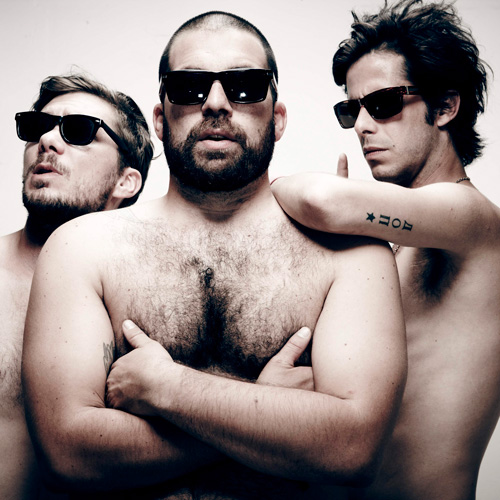
Jounce with us, if you will, through the Guardian staff’s frenzied weekend. Here’s our live reviews, hot raging, random sightings.
**The wonderfully energetic (and wonderfully tall) Robin Simmons puts on an occasional gig in the middle of Dolores Park called the Boombox Affair, hooking up a wall of old boomboxes as turntable speakers and letting disco-minded DJs go nuts with their all-vinyl obsessions. On Friday’s Odyssey party at Deco Lounge, he went indoors and at night hosting a three-hour set by DJ David Harness that reminded of those ancient “back in the day” days. Just 30-40 freaks, many of whom were previously unfamiliar to each other, jacking all night in the dark to some heavy tunes as the walls sweat and pounded. Hopefully the party will come back around soon. (Marke B.)
**I was not acquainted with the work of dOP before I attended Friday night’s Liaison Showcase at Public Works — the French techno trio has some excellent grooves and an absurdly over-the-top “sexy” aesthetic that would make their hits like “Horny” hilarious, if they weren’t actually very, very horny. Example: the chain-smoking boys are just fine wiggling around onstage half-naked, and the singer-rapper-screamer is one of the hottest little tattooed bear cubs I’ve ever seen. He spent most of the set playing with his nipples and shaking sweat from his shoulder hair. The crowd ate it up. (Marke B.)
**Saturday at the Warfield for Amon Tobin’s ISAM tour was like entering the 22nd century, except surrounded by young Pixar workers who couldn’t stop screaming, “Amaaazing!” everytime one of the realtime 3-D effects of the stage set was unveiled. Why? Because it really was amaaazing. Opener Eskmo did an entrancing job live-sampling cookware and plastic Coke bottles to build left-field grooves that weren’t afraid of floor-bending tempo changes. (Marke B.)
**With flickering string lights strung from the center of the grand ballroom and splayed out brass instruments across the stage, Beirut’s performance at the Fox Theater in Oakland on Saturday warmed like a fancy indoor county fair. The sound, which can be bass-problematic at the Fox, was good this evening, near perfect for the otherworldly folk-marching band from Santa Fe. Ringleader Zach Condon switched back and forth from ukulele to his beloved trumpet, singing in deep baritone throughout, once stepping to his newly rediscovered favorite, the keys. Here’s our interview with Condon from last week. (Emily Savage)
**What else is there to say about Saturday’s Hard French party besides the fact that Scott Weiner got to express his gratitude to us for his official Guardian ass towel? The queer patio shakefest at El Rio (theme: “Hardly Strictly French.” Overalls.) featured hand-wagging talents of many of the candidates for November’s city elections. Plus, Sups. Weiner and Jane Kim tagged along for the ride and they aren’t even running for anything. (Caitlin Donohue)
**The crowd at Odd Future’s show at the Warfield on Friday may have looked like Warped Tour cool kids, but you couldn’t fault them on their choice in music. The crew from Compton bug-eyed and jello-kneed through and generally crushed their set, although we were all out of their by 11 p.m. What Warfield, not into bands hurling their most enthusiastic devotees back into the crowds spine-first? Here’s the full review, btw. (Caitlin Donohue)
**So we only made it to Sunday of Hardly Strictly Bluegrass, but damn if that afternoon’s Devotchka set and red wine from the bottle wasn’t a welcome entree to sunny banjo strumming. Even the crowd itself was hotter than ever (where did all these surfer-hippie hotties come from and to whence have they now returned?) — and in contrast to Outside Lands’ frenzied crowds, filtered through the fenceless areas calmly and happily. Yay free concerts! Happy birthday, Mr. Hellman. (Caitlin Donohue)
Endorsement interviews: Terry Baum
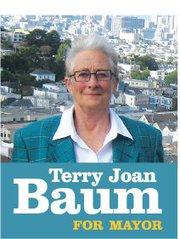
Terry Joan Baum is the Green Party candidate for mayor. She told us she got in the race to get progressive issues out and on the agenda; she was a candidate before Sup. John Avalos announced, and she says she’d be supporting him if she weren’t a candidate. She told us she’s the only candidate calling for criminal charges against PG&E in the San Bruno explosion. “I understand that I’m a longshot,” she said, “but I’ve already influenced the debates.” Listen to the interview and watch the video after the jump.
Jens Lekman, penguins, and choice words for Kirsten Dunst at the California Academy of Sciences

Last Thursday, two girls rushed to the front of the stage at the California Academy of Sciences, one visibly shaking with a mix of excitement and concern, her friend trying to calm her. They stood particularly near the stage in the thin crowd watching Geoffrey O’Connor, where otherwise only photographers dared to tread. After bouncing through a song, they turned to each other, then tentatively towards me. “This isn’t Jens Lekman yet, is it?” one asked. “No, not until 8:30,” I said, and she shook my shoulders as a sign of approval, before being pulled away by her friend, to skip off together back inside the Academy, presumably to have a few more cocktails and look at the penguins. (I can relate to the confusion, though, I’m a huge Kanye West fan, even though I have no idea what he looks or sounds like.)
O’Connor, of Australian band the Crayon Fields, in all likelihood took no notice. With his spindly body, pale skin, and (above all) accent, the confusion with fellow singer songwriter (and main attraction) Lekman probably happens all the time. But O’Connor seemed perfectly at home with an audience of polite people holding back. He switched from the mic to guitar over programmed beats, taking a moment here or there to lean against a speaker, striking a pose and looking directly into the cameras. During “Idle Lover” he left the stage, walking through the East Garden, to stand on a chair to finish his song, perched above a few party goers previously engaged in conversation. Above all he brought a certain nonplussed laconic humor. “This next song is my most apologetic,” he said. “It’s called ‘So Sorry.’” When he finished, the once reserved crowd reenacted the land grab scene from Far and Away (1992).
Lekman was unimposingly charming, able to make stage banter seem like choice b-sides and unfinished lyrics. Introducing “Waiting for Kirsten,” a new song off his great An Argument with Myself EP, the raconteur said, “The thing about Kirsten Dunst is, she said in an interview once that she liked my music…and I’ve been trying to not be too impressed by that.” The song details the actress’s failure to get into a club in Lekman’s homeland of Sweden. “In Gothenberg they don’t have VIP lines,” the chorus says, and Lekman went on to explain that “you won’t get in just because you have the right clothes, or a lot of money, or you made out with Spider-Man.” After a set of new material alongside older favorites, including a softer version of “Black Cab” and “The Opposite of Hallelujah” nicely mixed with a bit of The Chairmen of the Board’s “Give Me Just a Little More Time,” Lekman immediately went into two short encores, since he said the crowd was too thick to get offstage. When he finally did step down, a few excited fans made an arch with their arms for him to pass through. He went around.
Photo by Stephen Ho.
Your Sunday meal plan: Sweet treats, Latino eats at this weekend’s food events

After the demise of the Underground Market, a bit of a streetside, downlow foodie vacuum has developed in SF. Sure, we’ve still got Off the Grid, Mission Community Market, and for the moment at least, the Free Farm Stand — but it’s not enough food-themed events for a town that rejoices in innovation and knowing what to eat before one’s coworker does. Hot! New! More! Luckily this Sunday there’s ample opportunity to get your locally-sourced snack on, in style.
Street Sweets
A bright-faced gentleman with a messenger bag arrived at our office to drop off samples of the SF-made snacks that will be sold at this pop-up underground dessert market. That clandestine terminology perhaps best described the reasoning behind the “bacon crack” from chocolatiers Nosh This (which also produces homemade limoncello, soups, and Frito pies). Our meat-eating staffers found it “delicious, really delicious,” but give those people salt and pig fat and they’ll eat anything, really.
Also on the menu: raw milk ice cream from Jilli’s. This arrived in darling little jam jars that you can peep on the website, stuffed with the brand’s super-creamy blackberry flavor. Jacky Hayward, owner of Jilli’s, says that she’ll be serving it Sunday with a hot crumble on top and whipped cream. Surely your brain will collapse from all the refined sugar (ours did!) after sampling these PLUS mango blueberry white chocolate masala cookies from baker-blogger Irvin Lin, a.k.a. Eat the Love, the third partner in this secretive sweetfest.
Sign up on the website and you’ll find out where it is on Sat/1. Just don’t tell the New York Times about it, mmkay?
Sun/2 1-6 p.m., free
Undisclosed location, SF
El Mercado
No need to keep this one on the DL: this Latin American-themed food fair is comprised of vendors on the up and up with the Health Department – most notably El Taco Bike, which serves steamed tacos de canasta from the back of a three-wheeled, pedal-powered, self-made contraption, as we reported in our interview with creator and restaurant owner Alfonso Dominguez (vegans take note, a similar operation has been spotted in the Mission).
But it’s not all buche and carnitas. Cerveza and tragos will be available for passers-by, as well as Latin American crafts, live music onstage by DJ Wonway Posibul of the Latin Soul Brothers, Vanessa Ayala, and an acoustic set by badass electro-hip-hop-Latin beatmaker Bang Data. Even an on-site curandera? I mean, tell the New York Times about it already.
Sun/2 noon-6 p.m., free
Era Art Bar and Lounge
19 Grand, SF
Progressives battle downtown over economic and political reforms
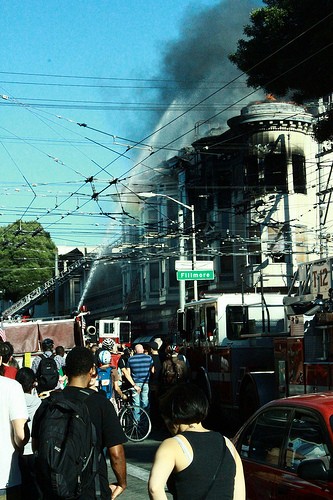
Battles between progressive members of the Board of Supervisors and downtown power brokers such as the San Francisco Chamber of Commerce defined City Hall politics for much of the last decade, until the new politics of “civility” and compromise took hold this year, a dynamic that has favored downtown interests. But now, a pair of important, high-profile issues headed to the full board on Tuesday has revived the old dynamic. And in both cases, wealthy interests are putting enormous pressure on the board.
The first involves a proposal – put forward by Sups. Sean Elsbernd and Mark Farrell, the two most conservative supervisors – to gut the city’s system for publicly financing campaigns because downtown is threatening a lawsuit. They propose to end San Francisco’s program of giving publicly financed candidates more money when a privately funded candidate exceeds the spending cap because the Supreme Court recently struck down similar provisions in Arizona.
This week, after convening in closed session to discuss the threat of litigation by downtown groups, the board voted 7-3 – with Sups. David Campos, Jane Kim, and Eric Mar opposed, and Sup. Ross Mirkarimi absent because he rushed out to large structure fire in his district – for the Elsbernd/Farrell measure, one vote short of the supermajority needed to amend the current city law.
Campaign finance reform advocates such as Steven Hill argue that it’s unfair to modify the city program right in the middle of an election season in which Mayor Ed Lee and the wealthy independent expenditure groups supporting him are poised to spend millions of dollars to defeat a large field of mostly publicly funded mayoral candidates.
Hill and his allies are appealing to Mirkarimi – who told the Chronicle that he is leaning toward supporting the amendment when the measure returns to the board on Tuesday – not to support what they consider an overly broad capitulation to downtown’s threats. They’re also lobbying Sup. John Avalos to switch his vote, while downtown players are putting the screws to supervisors as well.
In an interview with the Guardian, Mirkarimi clarified his stance, noting that he was the sponsor of the original public financing law and his goal is to protect it, even if it needs to be modified to withstand a legal challenge. “I’m looking for alternatives to fortify San Francisco’s program,” he told us, noting that he missed some of this week’s discussion and he’s hoping something can be done to retain provisions that level the financial playing field with wealthy candidates.
Meanwhile, downtown forces are pulling out the stops to kill Sup. David Campos’ legislation that would prevent San Francisco businesses from pocketing money they set aside for their employees’ health care under a city mandate that they provide health coverage – totaling about $50 million last year – legislation that gets its first hearing tomorrow (Friday/30) at 10 am.
Board President David Chiu has put forward competing legislation that is more to the Chamber’s liking, letting businesses (mostly restaurants that are even placing surcharges of customers’ bills, ostensibly to subsidize their legal obligations) keep the money. But Campos and his labor allies believe they have the six votes they need to pass the legislation, thanks largely to moderate Sup. Malia Cohen’s pledge to support the measure.
While even some supporters have quibbled with the timing of this measure, Campos notes the urgency of keeping money intended for workers in their hands. “It’s an outrage and the longer we wait, the worse it gets,” Campos tells us, noting that the practice, “is what many of us consider fraud.”
Unfortunately, even if the board approves the measure this Tuesday, it will still need the signature of Mayor Lee to become law. While he hasn’t formally taken a position, given that his political base is the downtown crowd, he’s expected to veto the measure. But we’ll ask him about it tomorrow when he’s scheduled to meet with the Guardian for an endorsement interview at 2 pm.
Time and space pilot

MUSIC Pioneering electronic composer Pierre Schaeffer used a specific word to describe his work, which took ‘common’ noises and manipulated them into music — acousmatic: “referring to sounds that one hears without seeing the causes behind it.”
Every sound on genre-defying musician Amon Tobin’s latest album is a mystery. The 2007 album Foley Room utilized cinematic studio techniques, reaching back to the roots of electronic music. Now Tobin has shot that line of inquiry into the other direction, seemingly returning from the future with ISAM, an album as alien as it is familiar. “As technology develops, you can go one of two ways,” Tobin says in a phone interview. “You can do the same things that people did ten years ago just with less stress involved, or you can take that tech and try to get more out of what it was designed to do — things other people haven’t figured out yet.”
Tobin occasionally lets people peak behind the curtain. A video earlier in the year showed his hands at work, recording light bulbs (they make sounds, if you know how to play them), plugging them into a high-end, triple axis, pressure sensitive MIDI controller. This last instrument, a Haken Continuum, comes with enough of a learning curve to exclude most people from duplicating what Tobin does with it: morph conventional sounds into conceptual instruments that only exist in the artist’s mind. When it came time to post ISAM online, Tobin annotated the album, revealing sonic origins. The enchanting female vocals that appear on tracks like “Wooden Toy,” for instance, are his own, gender-modified.
There was also a warning: “anyone looking for jazzy brks [sic] should look elsewhere at this point or earlier :). it’s 2011 folks, welcome to the future.” A clear statement, breaking away from the sample heavy style that Tobin was once known for, material tailored for DJ sets, in a club. With ISAM, that’s not the whole story. “Electronic music isn’t always dance music, in fact dance music is just a section of electronic music,” Tobin says. “This record isn’t dance music, its not about raving or any of that stuff.” It’s the kind of album that might make you want to put on headphones and let the mind run wild. For all its meditative qualities, though, it’s hard on the bass and expressive, with a range that begs to be heard in a louder arena.
Thinking of a tour, Tobin “had the problem that all electronic musicians have, which is how the fuck do you present electronic music, which is so not to do with performance, as a live thing that’s engaging?” The solution, a next-level stage set created by L.A.’s V Squared Labs, Chicago’s Leviathan, and S.F.’s Blasthaus, has Tobin cast as the pilot of a space-going vessel in a narrative that the artist admits is “not War and Peace, not a brilliant epic thing, but it’s enough to give meaning and direction to the visual content.”
A 25-foot-long, multi-dimensional structure of giant pixel cubes resembling a game of Tetris going very badly, the ISAM installation comes to life via a system that allows multiple projectors to transform every surface into a screen. It’s effectively 3D without the need for dorky glasses and eye strain. (A promo video released on YouTube surely sold more tickets than a hundred articles like this.) Tobin’s place on stage is within the piece, positioned like a magician or contortionist: inside a box. Which, perhaps, is just where he’d like to be. “I always kind of put myself in the corner of a stage if I can,” Tobin says, “because there’s nothing worse than standing in front of a thousand people who are all staring at my every minute movement and feeling like maybe I should just turn the lights off, because there’s nothing to see here.”
The unconventional choice of positioning the artist more like ghost in the shell than man on a pedestal has its limit. Alex Lazarus, the creative director on the project says in conceptualizing the performance Tobin “wanted people to focus more on the actual music and visual representation as opposed to focusing on him.” But Lazarus says “he can’t just not be seen, so I had to open my big mouth and tell him that we could use this smart glass in his cube, which can be turned on and off to see inside. It’s cool and all, but it’s extremely expensive and every single time we have to touch it I’m petrified that we’re gonna break it.”
Seeing the wizard at work alleviates the creeping possibility of a Milli Vanilli situation, but still, like Brad Pitt in Se7en, I want to know what’s in the box. (What can I say? I’m no fun — I also want to know how magicians do their tricks and how Pepperidge Farms draws the little faces on Goldfish crackers.) Is Tobin manning extra controls to sync the visuals? Is it all automated? Specific details, however, are generally off limits, as both Lazarus and Tobin invoke “proprietary technology.” Which is fair. Considering how many people worked on innovating the project, a trade secret is valuable. (Years after debuting, the similarly impressive LED tech behind Daft Punk’s ‘pyramid’ paid off again when its designers essentially reshaped it into deadmau5’s ‘cube.’)
Tobin says there’s absolutely no compromise musically. Even when he does a more traditional DJ set, he has it all worked out ahead of time. “When I go and see a show I don’t want to see people wanking off on their equipment,” Tobin says. “I love to watch things that have been really well thought out and practiced.” Whatever he’s doing in that box, he’s enjoying it. “I feel like I’m in an Apollo 13 capsule. The whole thing is based on the idea of it being a spaceship and the funny thing is I come into the cube and it literally looks like a cockpit from the inside.”
I ask him if this means he doesn’t have to pretend for the part. “Well,” Tobin says, “if I was pretending I’d probably have a band up there trying to play the record. Kind of a waste of every one’s time.” His voice is deadpan, but sounds like he’s grinning, just a bit. *
AMON TOBIN
Sat/1 (sold out) and Sun/2, 8 p.m., $29.50–$39.50
The Warfield
982 Market, SF (415) 345-0900 www.thewarfieldtheater.com
On Guard

news@sfbg.com
FRAUD OR ‘FAKED FACTS’?
“The only thing I care about,” Sen. Leland Yee proclaimed at a press conference outside City Hall Sept. 26, “is the Central Subway.”
The mayoral candidate called the press conference to announce that he wants the high-profile Chinatown transit project to move forward — yet he has concerns that it could be jeopardized by recent revelations of apparent waste, fraud, and abuse relating project contracts.
Yee announced he’d submitted a public records request to Mayor Ed Lee’s office, asking the interim mayor and candidate to turn over “all correspondence between the Mayor’s Office or the City Administrator’s Office and CCDC or powerbroker Rose Pak.”
The media event was prompted by reports in the San Francisco Chronicle revealing that the Chinatown Community Development Center (CCDC), an affordable housing nonprofit and Central Subway subcontractor closely aligned with Lee, had received about $750 per hour to attend project meetings, $578 per visitor for outreach, and $25,000 to host a single community meeting, figures he rattled off during the press conference.
“Those are the kinds of abuses, those are the kinds of mismanagement that has been going on, and we really need to put a stop to that,” Yee said, adding, “We now have a chance of derailing the Central Subway. And I, for one, am going to do everything that I can to ensure that the Central Subway, in fact, is built. But we cannot do that when you have these kinds of golden chairs, these kinds of waste and abuse … So what we are now asking is just simply the right of the public to know what’s been happening.”
Reached by phone, Rev. Norman Fong, who will replace outgoing CCDC executive director Gordon Chin in October, said he was concerned that his nonprofit organization — which has a mission of building affordable housing for low-income residents — had become a target for mayoral candidates looking to score political points. “I’m learning that politics is dirty,” he said.
Asked about the exorbitant payments to CCDC highlighted in the Chronicle, Fong said, “they’re all lies.” He pointed to a response penned by CCDC attorney Gen Fujioka in the local political blog Beyond Chron, charging that the numbers were inaccurate or distorted and taking San Francisco’s paper of record to task for what he deemed “faked ‘facts.'”
Yet it was tough to discern independently whether the math was fuzzy without the documents in hand. Recognizing this, Fong said his organization planned to address the issue publicly on Sept. 28 and make contract documents available on its website. “CCDC wants to be totally transparent,” he said. “We have nothing to hide.”
Meanwhile, Yee and CCDC aren’t the only ones at odds when it comes to discussing the finer points of the Central Subway deal.
On Sept. 19, retired Judge Quentin Kopp, a Central Subway opponent, mailed a letter to the Little Hoover Commission, an independent state oversight agency, urging it to conduct an audit of the use of state funds allocated to the Central Subway. Kopp cited an annual cost increase of $15.1 million (according to the Federal Transportation Administration) to San Francisco Municipal Transportation Agency (SFMTA) operations, increased travel times, and a dramatic decrease in projected ridership to back up his argument that “the project makes no sense from either a transportation or financial standpoint; it will result in a continuing waste of funds and inappropriate expenditures.”
Yet when the Guardian asked SFMTA chief Ed Reiskin in a recent interview to address these concerns, Reiskin responded as if this assessment was news to him. “I’m not sure what the discrepancies are that you’re talking about,” he said. “We have a lot more people who are going to be living along that corridor, and as you know with the Stockton bus we’re beyond capacity. So if it were going to cost $15 million more — which I don’t believe is correct — this is investment that we need to make.” (Rebecca Bowe)
LIFE AFTER DEATH
The state of Georgia killed a man who is quite possibly innocent last week, pushing the debate over the death penalty back onto the front pages. Well, some front pages — the execution of Troy Davis made page one of the New York Times, but was buried inside the San Francisco Chronicle.
Which is odd, because here in San Francisco, the death penalty is moderately big news: Nearly all of the candidates for district attorney are proclaiming how immoral, expensive, and ineffective it is.
In fact, if the change in attitude among San Francisco prosecutors in any indication, public sentiment on ending the barbaric practice may be shifting in the right direction.
Consider this: In 1999, three major candidates sought the office of D.A.: Former Supervisor (and defense lawyer) Terence Hallinan, veteran prosecutor Bill Fazio and Deputy Public Defender Matt Gonzalez. Hallinan was a death penalty foe, but was pretty quiet about it; he and Fazio wound up in a runoff, and Fazio asked Gonzalez to endorse him. Gonzalez told us he asked Fazio one question: Will you promise never to seek the death penalty? Fazio hemmed and hawed, but refused to make that promise. Hallinan won.
Today, candidate David Onek has made opposition to executions a centerpiece of his campaign. Fazio is loudly proclaiming his opposition to the death penalty. So is incumbent and former Police Chief George Gascon, who told us that he will never file capital charges (not even in the case of the murder of a police officer) and wants the death penalty repealed.
Maybe were getting somewhere. (Tim Redmond)
AFTER THE DEAL
During the debate earlier this year over giving big tax breaks to Twitter and other companies that create jobs in the Mid-Market and Tenderloin neighborhoods — an initiative pushed primarily by Mayor Ed Lee, his Office of Economic and Workforce Development, and Sups. David Chiu and Jane Kim — critics called the deal a wasteful giveaway that mostly benefited commercial landlords and rich corporations.
Not so, said advocates of the deal, touting the community benefits agreements (CBAs) that Twitter and other companies would be forced to enter into. They said it was all about keeping Twitter in town and eliminating the vacant storefronts in the Mid-Market area. And when City Economist Ted Egan said creating a punitive fee on vacant commercial properties would be more effective at that goal than tax breaks, Kim announced her intent to carry that legislation.
Later, Sup. David Campos — who voted against the Twitter deal, along with Sups. John Avalos and Ross Mirkarimi — also endorsed the idea and said he wanted to help Kim move it forward.
There were meetings and reports on the legislation, including a 15-page analysis by the Budget and Legislative Analyst’s Office in June that looked at how other cities have similar ordinances and how it would work here. It estimated that charging the owners of vacant commercial buildings (there are at least 77 in San Francisco, half of them owned by banks) could raise about $1.8 million per year (or as much as $17 million if we used Washington DC’s model of very steep fines), in addition to encouraging the owners to fill the buildings with tenants.
But then, the idea was quietly abandoned for the year. “The Budget Analyst and City Attorney determined that this change would need to go to the voters. The Revenue Coalition and neighborhood stakeholders decided not to pursue this legislation for the November 2011 ballot,” Kim legislative aide April Veneracion wrote to the Guardian.
She told us by phone that the decision was the consensus of a working group that included critics of the Twitter deal such as Coalition on Homelessness director Jennifer Friedenbach and SEIU Local 1021 Political Director Alysabeth Alexander. But Alexander says she’s still very supportive of the idea, as well as a fee to cover city costs on foreclosed properties.
“It’s still a high priority for our union,” Alexander told us, saying it was her understanding that Kim’s office didn’t get the required legal analysis back from the City Attorney’s Office in time to qualify for the ballot. But a review of documents under the Sunshine Ordinance turned up drafts of that analysis from as early as May 16, well in advance of the deadline for getting on this year’s ballot.
Veneracion (speaking for Kim, who refuses to talk to the Guardian) said the ordinance might end up on next year’s ballot: “We want to continue to pursue this.”
And what about Twitter’s CBA? Well, after initially saying publicly that the CBA must be in place before the legislation was approved, Kim decided to move the legislation forward anyway, saying the CBA would be completed imminently.
But that CBA still isn’t anyway close to completion, and it probably won’t be inked until later next year. OEWD Director Jennifer Matz said the final legislation doesn’t require the CBA until companies apply for the tax exclusion, which in Twitter’s case will be around November 2012.
“When they apply, that triggers the need for a community benefits agreement,” Matz told us. If only measures that benefited the city and its residents moved as rapidly through City Hall as those that benefit big corporations. (Steven T. Jones)
LA MISION. PRESENTE.
It felt as if, in the words of one observer, the entire San Francisco left was on hand Sept. 25 for a memorial service for Eric Quezada, the Mission District organizer and community leader who died Aug. 24 after a long battle with cancer. He was 45.
The speakers talked of his life as an activist, a hell-raiser, a champion soccer player, and a devoted father. But they also talked of the community he defended all these years — about the part of the Mission that doesn’t eat fancy tapas and sip $12 martinis on Valencia Street, the folks who fought displacement during the dot-com boom and fight every day for affordable housing, immigrant rights, tenant protections, and limits on speculation and gentrification. That Mission was his life’s work. Long may it survive.
The family needs help with medical expenses — and also to help with the education of Eric’s daughter, Ixchel. Contributions can be made at www.missionassetfund.org/ixchel or mailed to 470 Columbus Ave., Suite 211, San Francisco, 94133. Checks should be made payable to Eric Quezada Memorial Fund. A fundraiser is being held at Jane Morrison’s home at 44 Woodland Ave. on Oct. 16 between 3-5 p.m. (Redmond)
The worst-kept secrets

rebeccab@sfbg.com
In an age of blogs, tweets, hacks, and piles of beans spilled by Wikileaks, the notion of media censorship may seem dated. But the rundown of stories Project Censored calls attention to this year serves as a reminder that mainstream media outlets favoring the superficial over the substantive don’t give us all the information we need.
Since 1976, Project Censored has endeavored to spotlight important news articles that didn’t find their way into mainstream headlines. Originating with a classroom assignment in a communications course taught by Carl Jensen at Sonoma State University, the perennial project has evolved into a book, a radio show, and the Project Censored and Media Freedom International websites, which aggregate underreported independent news stories from around the globe.
Students and professors engaged in unearthing oft-ignored stories, part of a nationwide network of affiliates working under the direction of history professor Mickey Huff, bringing a harsh critique to standard mainstream media fare.
“Corporate media (singular) is the information control wing of the global power structure,” former Project Censored director Peter Phillips writes in the introduction to Censored 2012: Sourcebook for the Media Revolution. “The corporate media systematically censors the news stories that challenge the propaganda of empire.”
In Huff’s words, “We try to highlight the things that are highly relevant, that seem to be conspicuously absent.”
Huff says the selection process for the top censored stories begins with nominations of independent articles that readers feel warrant greater attention than they’ve received. From there, students comb through Lexis Nexis or other databases to see whether they’ve been adequately covered. If not, they fact-check the stories with professors or other experts in the field.
Once they’ve been “validated” in this way, they’re posted to Project Censored’s sister site, Media Freedom International. The famed Top 25 Censored Stories list, which has long served as the tagline of the organization, is the result of a ranked-choice voting process in which judges and affiliates select from the entire pool of validated news articles posted from April to April.
The end product — an annual book featuring a compilation of the censored stories as well as sociological essays on media censorship and scathing critiques of “junk food news” churned out by the likes of Fox News — can be considered a kind of historical almanac, Huff says.
“Journalism is the rough draft of history,” he notes, “and if you have these mainstream corporate news outlets getting so much of it wrong or missing it, how does that impact historical construction?”
For the most part, Project Censored’s story list offers a sampling of smart, investigative journalism produced by the independent press. They include deep investigative pieces such as “Diet Hard With A Vengeance,” by David Moberg of In These Times, and a heart rending portrayal by Chris Hedges of a marine stationed in a mortuary unit in Iraq.
Yet there are instances when Project Censored seems to wander too far afield. Their claims of “censorship” seem dubious at times, as with the charge that the mainstream media has ignored the real unemployment rate because it hasn’t turned an eye toward the analysis of economist John Williams, who maintains a website called Shadow Government Statistics.
Huff and Phillips regularly discuss questions surrounding the Sept. 11, 2001 attacks on the World Trade Center on their KPFA radio show, and their emphasis on this particular issue, along with a recent tendency to give weight to fringe theories concerning things like suspicious contrails issuing from airplanes, have caused allies of the organization to defect in the past.
The organization’s definition of censorship has evolved, too, to the point where the authors cast it as a form of propaganda that is “intentional by nature … In essence, this is a conspiracy.”
Nevertheless, the Project Censored team delivers yet another rundown of surprising, alarming, and thought-provoking stories that are worth noting — more so, perhaps, because they received so little attention to begin with. Without further ado, here are the top 10.
#1 MORE SOLDIER SUICIDES THAN COMBAT DEATHS
Six more, to be exact. That’s the figure reported by Good Magazine and spotlighted by Project Censored in an article highlighting the fact that 462 American soldiers were killed in combat in 2010 while 468 soldiers, counting enlisted men and women as well as veterans, took their own lives.
This was the second consecutive year that more soldiers died by their own hands than in combat; in 2009, the 381 suicides of active-duty soldiers recorded by the military also exceeded the number of deaths in battle. The Good report, which references Congressional Quarterly as a source, was published in January 2011, just weeks after military authorities announced that a psychological screening program seemed to be stemming the suicide rate among active-duty soldiers.
“This new data, that American soldiers are now more dangerous to themselves than the insurgents, flies right in the face of any suggestion that things are ‘working,'” Good Senior Editor Cord Jefferson wrote.
Project Censored also spotlighted Chris Hedges’ sobering portrayal of Jess Goodell, a marine who was stationed in the Mortuary Affairs unit in Iraq. Goodell published a memoir titled “Death and After in Iraq,” also the name of Hedges’ column.
#2 US MILITARY’S ‘FRIEND’ FAKE-OUT
Anyone suspicious of “sock puppets,” those online commenters pretending to be someone they’re not, would be unnerved by the US military’s “online persona management service,” a little-known program described in The Guardian UK, Raw Story, and Computerworld stories unearthed and highlighted by Project Censored.
The U.S. Central Command (Centcom) secured a contract with a Los Angeles-based tech company to develop the program, which enables US service workers to use fake online personas on social media sites to influence online chatter. Using up to 10 false identities, they can counter charged political dialogue with pro-military propaganda.
“These ‘personas’ were to have detailed, fictionalized backgrounds, to make them believable to outside observers, and a sophisticated identity protection service was to back them up, preventing suspicious readers from uncovering the real person behind the account,” according to a Raw Story account.
A Centcom spokesperson told the Guardian UK that the program would only intervene in online conversations in Arabic, Farsi, Urdu, or Pashto, and that it wouldn’t initially target Twitter or Facebook. However, critics likened this U.S. endeavor to manipulate social media to China’s attempts to control and restrict free speech on the Internet.
#3 OBAMA’S HIT LIST
The Central Intelligence Agency (CIA) and the U.S. military have the authority to kill U.S. citizens abroad, outside war zones, if strong evidence exists that they’re involved terrorist activity, the Washington Post reported in a front page story in January of 2010.
Despite this prominent press treatment of targeted assassinations under the Obama administration, Project Censored deems this an underreported news story because “a moral, ethical, and legal analysis of the assassinations seems to be significantly lacking inside the corporate media.”
The authors instead point us to coverage in Salon, the Inter Press Service, Common Dreams, and several other sources that sharply question the president’s authority to license extrajudicial executions of individuals. In December of 2010, Human Rights Watch asked for clarification of the legal rationale behind this practice after a judge dismissed a lawsuit challenging the notion.
Columnist Glenn Greenwald blasts the practice in Salon: “Bush merely imprisoned [Jose Padilla] for years without a trial. If that’s a vicious, tyrannical assault on the Constitution — and it was — what should they be saying about the Nobel Peace Prize winner’s assassination of American citizens without any due process?”
#4 HUMAN CAUSED FOOD CRISIS
David Moberg offers an in-depth breakdown of the global food crisis for In These Times in an article highlighted by Project Censored, touching on the environmental context of worsening droughts and flooding, as well as the economic ramifications of a system in which free-market speculators stand to profit from volatile food prices.
Beyond crop reductions resulting from irregular weather patterns, Moberg places the blame for rising food prices and increasing malnutrition on flawed economic policies. “Hunger is currently a result of poverty and inequality, not lack of food,” he concludes.
The food price index rose to its highest level since 1990 in February 2011, according to a report by the Food and Agriculture Organization of the United Nations. “Since 2010 began, roughly another 44 million people have quietly crossed the threshold into malnutrition, joining 925 million already suffering from lack of food,” Moberg writes. “If prices continue to rise, this food crisis will push the ranks of the hungry toward a billion people.”
#5 PRISON COMPANIES FUND ANTI-IMMIGRANT LEGISLATION
When Arizona Gov. Jan Brewer ran for reelection in 2010, her greatest out-of-state campaign contributions came from high-ranking executives of Corrections Corporation of America (CCA), one of the nation’s largest prison companies. Brewer gained notoriety among immigrant rights advocates after championing SB 1070, strict anti-illegal immigration legislation that drew criticism for legitimizing racial profiling.
SB 1070 established new crimes and corresponding prison sentences relating to illegal immigration; CCA profits directly from building and operating prisons and detention centers. Bringing it closer to home, CCA previously employed two of Brewer’s legislative aides as lobbyists.
In a Counterpunch article entitled “Wall Street and the Criminalization of Immigrants” that is spotlighted by Project Censored, Peter Cervantes-Gautschi spotlights Brewer’s links to CCA and goes deeper still, offering an historic account of how investors in CCA and prison giant Geo Group have for years actively pushed for legislation that would result in the widespread incarceration of undocumented immigrants.
#6 GOOGLE SPIES?
A flurry of stories aired in the spring of 2010 when it became apparent that Google Street View vehicles, in the process of collecting data for its mapping service, also picked up consumer “payload” data on Wi-Fi networks, including e-mail messages, website data, user names, and passwords.
The tech giant publicly apologized for what it characterized as a mistake, saying it had “failed badly.” The Federal Trade Commission (FTC) admonished Google in a letter, but declined to pursue it further. From there, Project Censored authors make the leap that the FTC abandoned its inquiry because a week earlier, Obama attended a Democratic Party fundraiser at the Palo Alto home of Google executive Marissa Mayer, citing a San Francisco Chronicle article about the $30,000-per person affair.
Project Censored authors also point to an article by Eric Sommer titled “Google’s Deep CIA Connections,” appearing on Pravda.ru (a website whose most most-read article was “Bermuda Triangle: New Anomalous Phenomenon Discovered”). Sommer claims that “Google is, in fact, a key participant in U.S. military and CIA intelligence operations,” basing his argument on a perplexing set of links between investors in Google and CIA technologies.
#7 STAY POSITIVE — AT ALL COSTS
A military training program that Project Censored has deemed “U.S. Army and psychology’s largest experiment — ever” was profiled in a detailed American Psychologist series in early 2011. Comprehensive Solider Fitness (CSF) is described as a “holistic approach to warrior training,” emphasizing positive psychology as a means to counter mental health problems arising from horrific combat situations.
While the American Psychologist series reads like a puff piece finessed by the professionals who developed CSF, Project Censored spotlighted articles in Truthout and The Psychology of Well-being that raised questions about the wisdom of launching a required, untested psychology program for more than 1 million soldiers, one that encourages soldiers to think positive even in the face of traumatizing events.
In an article appearing on OpEdNews.com, authors Roy Eidelson, Marc Pilisuk, and Stephen Soldz write that the CSF “training” program would better be described as a research project. They point out that a hypothesis of the program’s success lies at the very core of CSF, “yet it is merely a hypothesis — a tentative explanation or prediction that can only be confirmed through further research.”
#8 THE MYTH OF CLEAN NUCLEAR POWER
The terrifying meltdowns of Japan’s Fukushima nuclear reactors reignited a worldwide debate about the wisdom of relying on nuclear energy as an electricity source. While Germany opted to phase out its nuclear facilities by 2022 in the wake of the tragedy, the U.S. Nuclear Regulatory Commission (NRC) came under scrutiny after a Union of Concerned Scientists report analyzed 14 “near misses” at nuclear power plants in 2010, revealing the shortcomings in NRC inspections.
Project Censored’s critique of mainstream media’s treatment of nuclear power is that it’s too willing to endorse the idea that nuclear power is safe so long as proper safety measures are in place, and that major news publications readily go along with the nuclear industry’s branding of the power source as “clean” and “carbon free” when it’s really not.
Claiming that “the refrain of the corporate media” is that nuclear power is “perfectly harmless,” the authors spotlight a number of articles and literature from anti-nuclear nonprofit organizations explaining the health hazards of radiation, plus Jeff Goodell’s “America’s Nuclear Nightmare,” an in-depth Rolling Stone article investigating ties between the NRC and the nuclear industry.
#9 THE GOVERNMENT IS MANIPULATING THE WEATHER
This one stretches credulity, and it’s probably the best example of why Project Censored has gained detractors even on the left in recent years. The authors point us to a Centre for Research on Globalization article entitled, “Atmospheric Geoengineering: Weather Manipulation, Contrails and Chemtrails,” by Rady Ananda, who begins by informing readers, “The military-industrial complex stands poised to capitalize on controlling the world’s weather.”
It describes an “international symposium” held in Belgium in May of 2010 during which “scientists asserted that manipulation of climate through modification of Cirrus clouds is neither a hoax nor a conspiracy theory,” and is “fully operational.”
That sounds rather serious, but a web video of that symposium easily located online offers a closer look. One speaker begins by showing slides of old paintings to demonstrate “what the sky is supposed to look like,” then offers evidence of a chemtrail cover-up by quoting an unnamed pilot who tells someone in an online comment that he could reveal the truth about chemtrails, but is bound by contract to shoot anyone he tells.
Scientific American and other publications have reported that geoengineering — spreading tiny atmospheric particles to reflect sunlight as a method to counter climate change — has actually come under serious consideration in recent years. Yet Project Censored seems to conflate this with a fringe obsession with supposedly suspicious airplane contrails.
#10 THE “REAL” UNEMPLOYMENT RATE
The U.S. Bureau of Labor Statistics (BLS) calculates the “official unemployment rate” by counting everyone who had no job, was available for work, and had actively sought work in the last four weeks, according to the BLS website. But alternative BLS statistics incorporate so-called “discouraged workers,” unemployed individuals who’ve given up on the job hunt.
In the first four months of 2011, the national unemployment rate officially stood at around 9 percent, while a BLS statistic incorporating discouraged workers and the marginally employed bumped that figure up to 15.9 percent.
However, Project Censored highlights an article by Greg Hunter published on Information Clearinghouse, claiming that the “real” unemployment rate is actually 22.1 percent, or one out of five US residents. Hunter’s claim is based on his interview with San Francisco-based economist John Williams, who maintains a website called Shadow Government Statistics. By ignoring the claims of this economist, Project Censored argues, the mainstream media is engaging in censorship.
As with several claims in this year’s list, that may be stretching things a bit. *
The Censored 2012 book release party will be at at Moe’s Books in Berkeley, 2475 Telegraph Ave, Oct. 1, 7 P.M.
Endorsement Interviews: Leland Yee
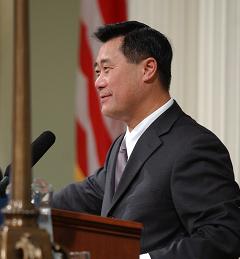
State Sen. Leland Yee, who is running for mayor, has been involved in local politics since the 1980s, when he joined the School Board. He’s been a supervisor elected at-large, a district supervisor, a state Assembly member and now a senator. And he stirs up strong passions in the city — supporters of Mayor Ed Lee say they urged him to get into the mayor’s race in part to stop Yee from winning. Yee was a fiscal conservative on the Board of Supervisors, but in Sacramento, he’s been a foe of budget cuts. And he told us he wants to see new revenue — including a city income tax — to make sure that “the people who need services get them.”
You can listen to our interview with Yee and see the video after the jump.
Gascon justifies secrecy in Guardian interview

Three top candidates for district attorney held a joint press conference this morning calling out District Attorney George Gascon for refusing to release a controversial memo by a consultant hired by the DA’s office outlining problems with DNA analysis in the city’s crime lab, which was overseen at the time by then-Police Chief Gascon.
Instead of obeying a judge’s order that he release the document, Gascon is clinging to a thin legal interpretation that it is a work product that he can withhold, choosing instead to spend city resources appealing the ruling. Journalist Peter Jamison has repeatedly written about the memo and the crime lab in the SF Weekly, but it was the Bay Guardian who got Gascon’s most extensive comments to date on it during his endorsement interview with us last week.
Starting just after the 23 minute mark when I asked about the memo and continuing for more than 10 minutes, Gascon – who earlier presented himself as one of the state’s most progressive law enforcement officials – takes credit for exposing problems with the crime lab but offers a fairly tortured rationale for hiding a document that might prove embarrassing during election season.
The California Public Records Act allows limited disclosure exceptions for what’s called “work product,” or drafts of internal documents meant to be works in progress, but it doesn’t require those documents to remain secret (as with personnel records, for example). Gascon admits that he could release the document but that he chooses not to.
“There are several concerns here. This is a memo that is largely the opinions of an individual that is a work product, it is within the office of the District Attorney’s Office, and there is good public policy as to why you have work product. You want to have robust discussions and honest self assessment of what works and what doesn’t work,” he said.
We noted that the consultant, Rockne Harmon, was brought in to bring problems with the crime lab to light so they could be addressed (not attorneys discussing the strengths and weaknesses of a case, the example Gascon cited), that Harmon actually wants to memo to be released, and that no possible public harm could come from this.
Gascon even agreed with that last point, telling us, “This document is quite harmless, but it’s the concept of the ability of people to have honest self-assessment and self-critical discussions.” He said they were reviewing the judge’s ruling and “we’ll comply with the court.” Then, the very next day, he announced that he would appeal the ruling.
Clearly – as DA candidaes David Onek, Sharmin Bock, and Bill Fazio noted this morning – Gascon is hiding the document because he’s worried it will make him look bad. And as our discussion with Gascon illustrates, he is not someone who places a high value on transparency, which is a real problem given the history of damaging secrecy in both the SFPD and the DA’s office.
So give a listen to a candid discussion about a breaking news story on an important issue and weigh in with your thoughts. BTW, as an added bonus, keep listening to the interview to hear the perspective of an unlikely supporter that Gascon brought with him: attorney Matt Gonzalez, who galvanized the progressive movement with his 2003 mayoral run.
Endorsement Interviews: George Gascon
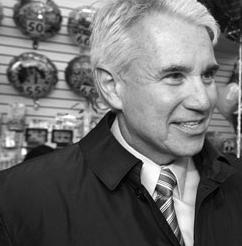
George Gascon is, as far as we can determine, the only police chief in the country ever to become a district attorney. It’s put him in an odd position, particularly given the recent problems in the SFPD: He has to monitor and possibly prosecute people who used to work for him. That conflict has been a big part of the campaigns against him.
Gascon discussed the situation at length, telling us that he’s proud to be “a progressive chief of police who became district attorney.” He said that he was the one who brought some of the department’s problems (the crime lab, the lack of a Brady policy) to light. “I have taken on police corruption aggressively,” he said.
You can listen to the full interview (and see the video) after the jump.
Consider it moved: Shots from Saturday’s Moving Planet Day celebrations
Cloudy skies may have kept the crowds down at Saturday’s Moving Planet Day celebration in Civic Center Plaza, but the people that did show up could see light shining through. For being a climate change demonstration, the tone was pretty sunny. After marching from Justin Herman Plaza through downtown, a passel of environmental speakers, from 350.org founder Bill McKibbon to Richmond mayor Gayle McLaughlin, took the stage to talk about ongoing clean energy projects — and to exhort attendees to keep doing their part to reduce fossil fuel reliance. Click here to check out our interview from last week with one of the day’s organizers. Check back tomorrow, when we’ll run photos and talk to organizers from Moving Planet Days around the world.
28 films in six days: Jesse Hawthorne Ficks at the 2011 Toronto International Film Festival (part one!)
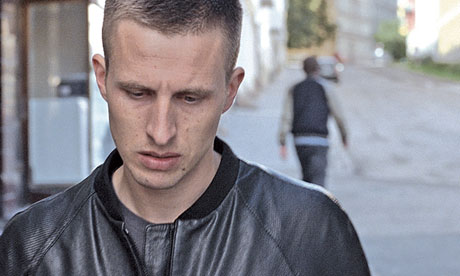
Check out parts two (here) and three (here).
1) Oslo, August 31st (Joachim Trier, Norway) This bleaker-than-bleak exploration of drug addiction hypnotically deconstructs the genre, exposing previous entries like 2000’s Requiem for a Dream as oddly glorified and even romanticized. As with his surprise hit Reprise (2008), the soundtrack for Trier’s film (Chromatics, White Birch) seals the colder-than-cold universe that lead character Øystein (played brilliantly by Anders Borchgrevink) inhabits. Not for folks who can’t handle needles dangling out of arms.
2) This Is Not a Film (Jafar Panahi, Iran) As immediate as a heart attack, this 75 minute documentary by prison-bound Iranian filmmaker Jafar Panahi (who is serving a six-year sentence with a 20-year ban on directing films or even talking to the media), truly is not a film. What is it actually? How about a terrifying cry for expression from one of the most daring and political filmmakers alive. While the world waits for his hopeful release, go watch The White Balloon (1995), The Mirror (1997), The Circle (2000), Crimson Gold (2003), and Offside (2006) as soon as possible.
3) Mausam (Pankaj Kapur, India) Withdrawn from the festival’s public screening schedule at the last minute due to censor complications by the Indian Film Board, this epic melodrama starts out joyous and clean-shaven and devolves into a ferris wheel of destruction. While the tone feels off-balance in the film’s second half, especially with its baffling sequences mimicking Top Gun (1986), Sonam Kapoor’s devastating performance, combined with some foot stompin’ singing and dancing, make this a quite enjoyable ride. Indian censors put a disclaimer before the film, explaining that the Indian Air Force did not approve the film’s presentations of flight sequences or fire explosions.
4) The Ides of March (George Clooney, USA) In the same vein as Michael Ritchie’s The Candidate (1975) and Tim Robbins’ Bob Roberts (1992), George Clooney explores the nooks and crannies of the contradictions and hypocrisies of the idealistic Democratic Party. Whereas those films were ripe with cinema verite stylings, Clooney oddly steers clear of any sort of artistic pretension and lets his actors (Ryan Gosling, a snaggletoothed Paul Giamatti) chew up the scenery.
5) Into the Abyss (Werner Herzog, Germany/Canada) This dark and memorable look at death row inmates as well as the families of the victims should spark some spectacular debates, in true Herzog fashion. Though he sometimes only had 15 minutes to interview a particular prisoner, Herzog’s footage is gripping; the finesse of Herzog’s longtime editor Joe Bini helps make the subjects seem human — not simply, solely, monsters, but rather people who have committed monstrous acts. I can’t stop thinking about this one.
6) Le Havre (Aki Kaurismäki, Finland) The almighty Finnish filmmaker is back with yet another old fashioned morality tale for the Nick Cave generation. His characters may be a whole lot older than those in Leningrad Cowboys Go America (1989), but Kaurismäki’s take on the world is just as delightfully offbeat as ever, when an eight-year-old African refugee washes ashore in a small town in Finland. As the kindly Marcel (André Wilms) and other townsfolk do their best to protect the boy from a policeman who feels like he’s just stepped out of 1940s film noir, time seems to be running out for Marcel’s longtime life partner. Be prepared for a handful of frogs getting caught in your throat as this mini masterpiece gently rests itself onto your list of underrated films in the coming year.
7) A Dangerous Method (David Cronenberg, Canada/Germany/UK/Switzerland) Don’t believe those disappointed critics! This tightly-knit theatrical adaptation accessibly explores the worlds of Freud and Jung with a precise coldness that should remind Cronenberg fans of Dead Ringers (1991) and Spider (2006). And while this film isn’t as gooey as his visceral entries Videodrome (1983) and A History of Violence (2005), the absence of spilled guts is exactly why this film might reach a much wider audience. (Folks who may keep their psyches much cleaner than you or I). Potential Oscar nods are in order for a jaw-dropping Keira Knightley and the ever-flawless Viggo Mortensen.
8) Keyhole (Guy Maddin, Canada) Given $100k to make anything he’d like (“I could’ve taken a Polaroid and pocketed the rest”) Canadian enfant terrible Guy Maddin has concocted yet another whirlwind of black and white tears, repressed fears, and a lifetime of forgotten years. With more oppressed family members hidden away in closets and attics than a V.C. Andrews book, the psychotic camerawork, ominous narration, and ever-present rapid-fire editing equals offbeat cinematic bliss.
9) Jeff Who Lives at Home (Jay Duplass and Mark Duplass, USA) The Duplass Brothers have officially gone Hollywood. Jason Segal is a perfect fit for the brothers’ slacker lead and Susan Sarandon plays his poignant mother perfectly. It’s Ed Helms who’s the odd one out in this surprisingly moral tale; he seems to overplay his middle-class character rather than disappearing into the role. Though the film is funny, it’s more of a drama than a comedy; for that reason (along with its big-name cast), Jeff might be the Duplasses’ first big hit. It just feels a bit half-in/half-out. Either way, you’ve got to root for the Duplass Brothers. Plus this film should make you appreciate how priceless last year’s underrated Cyrus (2010) truly was.
10) Dark Horse (Todd Solondz, USA) For better or worse, Todd Solondz has made a name for himself. And his latest is right on par with the rest of his films. In fact Dark Horse could be a remake of his debut Welcome to the Dollhouse (1995), but this time we’re following a 250-pound Jewish man child, Abe (Jordan Gelber) who still lives at home, collects action figures, and hates just about everyone on the planet. The film plays like a live-action adaptation of Chicago cartoonist Chris Ware’s Rusty Brown as Abe defiantly self-destructs as well as destroys everything he may or may not love. Will polarize audiences, per usual for Solondz, as audiences question if he’s being mean-spirited or just self-reflexive. (I can’t wait to watch it again.)
Coming soon: more of Jesse Hawthore Ficks’ takes on the 2011 Toronto International Film festival, including films from Lars von Trier, Michael Winterbottom, and … Bobcat Goldthwait? Ficks teaches film history at the Academy of Art University; he also curates the Midnites for Maniacs film series, celebrating celebrates dismissed, underrated, and overlooked films.
Foreplay: Two pre-Folsom scenes
As Folsom Street Fair (Sat/24) looms over us like a leather daddy with an itchy whip paw, the city readies itself for the roughest, naughiest, sweatiest weekend of the year. Yesterday, I ran all over the city checking in with the sex scene. I kept my clothes mostly on, but then it is only Thursday…
Monarchy-Andrew Wedge fitting at Mr. S Leather
“This is Spartaaa!” I’m standing outside one of SoMa’s crucial leather one-stops with an old hand local kink photographer Rich Trove (check his site after the Fair for shots of your flings in the sunshine) and a fashion journalist from the Chronicle. Guess which one is trying to explain to the other what a traditional S&M harness looks like?
Our motley crew has been assembled by Folsom Street Fair’s executive director Demetri Moshoyannis to lurk around Mr. S‘s fitting room while British synthpoppers Monarchy was being fitted for their custommade Andrew Wedge harnesses. The band will be wearing them at their FSF performance on Sunday at 5:10 p.m. on the 12th Street stage.
“We have no idea what we’re in for,” smiled a member of the band’s entourage. Of course, that wasn’t exactly true — keyboardist Andrew Armstrong attended the fair with a friend six years ago.
“It kind of freaked me out in a good way,” said Armstrong, modeling the tight neoprene half-tank that Wedge (who vends high end fur and leather designs from places like the Castro’s Sui Generis) had fit over he and his bandmate’s white dress shirts and under the sharp black blazers they were sporting.
“There’s something a bit religious about it,” he said of Wedge’s designs, which had been agreed upon after a series of emails between the two of them. “It’s futuristic, but masculine as well. Even though we’re basically wearing bra tops.”
“England is very prudish. Well, we take these things seriously, but we do it behind closed doors,” he continued. Again, I found it hard to take him at his word, seeing as the band supplied its own imposing, matching black latex masks for the occasion. They don’t go out in public without them, it turns out, a comment on the nature of celebrity.
The crew and designer lined up for one last photo opportunity in front of Mr. S’s black leather and harness covered four post king-sized bed. “Not in front of the dildos!” cautioned Moshoyannis. “We want these to be pictures they can use.” Clearly he meant in the Chronicle.
Side note: if you’re still checking for some sexy threads for this weekend, you could do worse than check out Mr. S’s new sports section. Complete with urinals on the walls and an impressive selection of wrestling singlets, I found myself especially turned on by the display of $12 Style Pig knee socks. I picked some up in red, or as the helpful sales assistant clarified, fisting.
Good Vibrations’ Indie Erotic Film Festival at the Castro Theatre
Best reason to finally buy an iPhone: the Ohmibod Freestyle G. I snagged the mp3 compatible vibrator (really, really feel the rhythmn on your favorite beats) at the IXFF’s pre-party upstairs at the Castro, where Jiz Lee, Carol Queen, Kitty Stryker, and other SF local lustfuls drank cocktails of St. George absinthe and rootbeer, slapped on costume mustaches and generally enjoyed the burlesque stylings of Twilight Vixen Revue.
When the short erotic film competition began, it got surprisingly jocky. Lucia Aniello’s Dildo Sport, Kelly Robinson and Oscar Salisbury’s Fight, Flight, Or Fuck, and Rollo Wenlock’s computer-aged 30 Love all featured tennis, so I guess the New York Times article was onto something with that balls metaphor.
“30 love” – short film. from Rollo Wenlock on Vimeo.
Not everything was heavy breathing-appropriate, either. SF’s own Levni Yilmaz entered one of his backlit Magic Marker-ed creations from his series “Tales of Mere Existence,” What Would Penis Do?, a look at his awkward childhood forays into sexual activity. There was the quirky bunnies and peanuts and women’s rooms in Always, Only, Ever — an entry from Barbara Benas of Brooklyn — not to mention an I-guess-hot tryst between a female American soldier and burkha-clad woman in a designer cave, Julien Rotterman’s Salam and Love.
But some of it was. Erika Lust — who earlier this week had an IXFF evening dedicated to her erotic, high glamour European flicks — shared Love Hotel, a threesome flick that made a trip to Barcelona seem highly advisable. Sadly, as the evening’s hosts (Peaches Christ, Hugs Bunny, Lady Bear, and Dr. Carol Queen — when Carol Queen plays the evening’s straightman you know you’re in for it) pointed out, Lust edited out all signs of genitals. Sigh.
The evening’s winner, as determined by an overwhelming audience response at the end of the night, was La Putiza. Created by Mexican director Gerardo Delgado, the short flick combined erotic comic art, overblown superhero crusading, and joyful, copious amounts of gay sex. Sure, the aesthetic was refined and the lead actor was fuckable, but one suspects that the secret to Delgado’s success, entering into this most phallic of all SF weekends, went back to Peaches Christ’s gleeful promise at the start of the night’s program: 30-foot penises. For Good Vibes’ interview with the filmmaker, voyage here.
Thanks Castro Theatre, hope we didn’t make too much of a mess.
Other Cinema remembers Helen Hill with “The Florestine Collection”

Other Cinema kicks off its fall 2011 season Sat/24 with a bittersweet program: the local premiere of Helen Hill‘s The Florestine Collection — her last film, left unfinished after her 2007 death, completed thanks to the dedicated efforts of her husband, Paul Gailiunas. Hill was only 36 when she was shot to death by an intruder (still unidentified) who broke into her New Orleans, LA home; her husband was injured but survived, and the couple’s toddler thankfully escaped unharmed.
South Carolina-born Hill made her first film at age 11, attended Harvard for undergrad, and received her MFA from California Institute of the Arts. Her unique animation techniques (including cut-out puppets) drew from the fairy-tale works of groundbreaking German animator Lotte Reiniger (whose remarkable filmography stretched from the 19-teens up through the 1970s) as well as DIY methods like hand-processing. She was continually inspired by her adopted hometown of New Orleans, as well as her chosen activist causes, including Food Not Bombs and animal rights. She also created the 2001 reference tome Recipes for Disaster: a Handcrafted Film Cookbooklet.
http://www.youtube.com/watch?v=o7ReG3l_9fM
Hill’s upbeat, friendly attitude (“I love New Orleans!”) and excitement at helping to set up the New Orleans Film Collective (you can also catch a glimpse of her pet potbellied pig!) are evident in this 2003 interview with Timecode: NOLA. The Florestine Collection was inspired by a particularly special day in 2001 (detailed in this interview with Gailiunas) when Hill discovered some 100 handmade dresses discarded after the recent death of an elderly seamstress. Hill’s reaction (per the article: “‘This is the best trash-pile find in the world!’ she exclaimed”) was followed by curiosity about the woman’s identity; the film reflects her findings. Joy and wonder, it seems, were two of Hill’s most accessible emotions — and despite her tragic, terrible death, her work lives on to inspire other creative thinkers and free spirits.
Other Cinema’s program also includes a slew of work by other experimental animators, including Martha Colburn, Kelly Sears, Jim Trainor, Janie Geiser, and more; the fall season runs through Dec. 17 and includes nights dedicated to such diverse topics as Muzak, Mexico and Canada, eco-horror films, social media, and Marshall McLuhan. In other words, fans of strange and unusual cinema: your Saturday nights are set until 2012.
Sat/24, 8:30 p.m., $6
Artists’ Television Access
992 Valencia, SF
www.othercinema.com
On Guard!

news@sfbg.com
CENTRAL SUBTERFUGE
While supporters of the controversial Central Subway project — from Mayor Ed Lee and his allies in Chinatown to almost the entire Board of Supervisors — dismiss the growing chorus of critics as everything from ill-informed to racist, they refuse to address the biggest concerns about the project.
In a nutshell, the main concerns center on serious design flaws (such as the lack of direct connections to either Muni or BART), the city’s responsibility for any cost overruns on this complex $1.6 billion project, its estimated $15.2 million increase to Muni’s already strained annual operating budget (a figure used by the Federal Transportation Administration, well over the local estimate of $1.7 million), and the city’s unwillingness to implement its own plans for improving north-south transit service on congested Stockton Street rather than relying solely on such an expensive option for serving Chinatown that doesn’t start until 2019.
Judge Quentin Kopp, a longtime former legislator, called this summer’s grand jury report, “Central Subway: Too Much Money for Too Little Benefit,” the best he’s ever read and one that should be heeded. He recently wrote a letter to top state officials urging them to reconsider the $488 million in state funding pledged to the project. As we reported last week, mayoral candidate Dennis Herrera is also challenging a project that he supported before its most recent cost overruns and design changes.
But supporters of the project pushed back hard on Sept. 14, using taunts and emotional rhetoric that avoided addressing the core criticisms. “Beneath the unfounded criticism about costs is actually a disagreement over values. The grand jury report relied upon by critics makes a only brief and superficial criticism about costs,” Norman Fong and Mike Casey wrote in an op-ed in last week’s Guardian.
Actually, the 56-page grand jury report goes into great detail about why it believes cost overruns are likely, citing the myriad risks from tunneling and SFMTA’s administrative shortcomings and history of mismanagement, including on this project’s less-complicated first phase, the T-Third line, which was 22 percent over budget and a year and half late in completion. Even with the contingencies built into the Central Subway budget, the report notes that a similar overrun would increase the local share of this project from $124 million to more than $150 million.
Mayor Lee purportedly addressed criticism of the project during the Question Time session in the Sept. 14 Board of Supervisors meeting, prompted by a loaded question from Sup. Sean Elsbernd offering Lee the “opportunity to move beyond the clichés and one-liners of political campaigns.”
But Lee’s answer was classically political, touting the estimated 30,000 jobs it would create, praising those who have pushed this project since the 1980s, offering optimistic ridership estimates (that exceed current FTA figures by about 9,000 daily riders), and ignoring concerns about whether the city can cover the ever-increasing capital and operating costs.
“Now is the time to support the Central Subway,” Lee said, flashing his trademark mustachioed grin.
We called the normally responsive Elsbernd, who prides himself on his fiscal responsibility, twice, to ask about financial concerns surrounding the project and he didn’t call back. During their mayoral endorsement interviews with the Guardian last week, we also asked Sups. John Avalos and David Chiu to address how they think the city will be able to afford this project, and neither had good answers about the most substantive issues (listen for yourself to the audio recordings on our Politics blog).
Once Congress gives final approval to $966 million in federal funding for this project sometime in the next couple months, the city will be formally committed to the Central Subway and all its costs. It’s too bad that, even during election season, all its supporters have to offer to address valid concerns are “clichés and one-liners.”(Steven T. Jones)
BLACK AGENDA
Mayoral candidates faced tougher questions than usual at a Sept. 15 forum hosted by the Harvey Matthews Bayview Hunters Point Democratic Club. Whereas debates hosted in the Castro and Mission Bay, for instance, featured questions on how candidates planned to clean up city streets, what they thought about AT&T’s plan to place utility boxes on city sidewalks, or how they’d promote a more business-friendly environment, residents brought a thornier set of concerns to the Bayview Opera House.
One question pointed to an alarming statistic based on U.S. Census data and cited by racial justice advocates, showing that residents of the predominantly African American Bayview Hunters Point have a life expectancy that’s 14 years lower, on average, than that of residents of the more well-to-do Russian Hill.
Someone else asked about improving mental health services for lower-income community members struggling with post-traumatic stress syndrome (PTSD). High unemployment figured in as a key concern. And one member of the audience wanted to know how candidates planned to “improve the behavior of the police,” alluding to the mid-July officer-involved shooting that left 19-year-old Seattle resident Kenneth Harding dead, triggering community outrage.
Mayor Ed Lee attended the beginning of the forum but left early to attend an anniversary celebration for the Bayview Hunters Point Foundation; other participants included Terry Joan Baum, Jeff Adachi, Bevan Dufty, Dennis Herrera, David Chiu, Michela Alioto-Pier, and Joanna Rees.
Answers to Bayview residents’ sweeping concerns varied, yet many acknowledged that the southeastern neighborhood had been neglected and ill-served by city government for years.
“There is no economic justice here in Bayview Hunters Point,” Adachi said. “There never has been. That’s the reality.” He pointed to his record in the Pubic Defender’s Office on aggressively targeting police misconduct, and played up his pension reform measure, Prop. D, as a vehicle for freeing up public resources for critical services.
Dufty, who has repeatedly challenged mayoral contenders to incorporate a “black agenda” into their platforms, spoke of his vision for a mayor’s office with greater African American representation, and emphasized his commitment to improving contracting opportunities for minority-owned businesses.
Herrera, meanwhile, was singled out and asked to explain his support for gang injunctions, an issue that has drawn the ire of civil liberties groups. “I only support gang injunctions as a last resort,” he responded. “We shouldn’t have to use them. But … people should be able to walk around without being caught in a web of gang violence. I put additional restrictions on myself to go above and beyond what the law requires, to make sure that I am balancing safe streets with protecting civil liberties.”
Herrera asserted that gang violence had been reduced by 60 percent in areas where he’d imposed the controversial bans on contact between targeted individuals, and noted that the majority of those he’d sought injunctions against in Oakdale weren’t San Francisco residents.
Baum brought questions about a lack of services back to the overarching issue of the widening income and wealth gaps. “Right now, the money is being sucked upward as we speak,” she said. “We have to bring that money back down.”
She closed with her signature phrase: “Tax the rich. Duuuuh.” (Rebecca Bowe)
DUFTY REMEMBERS
The selection of Ed Lee as interim (or not-so-interim) mayor of San Francisco was one of those moments that left just about everyone dazed — how did a guy who wasn’t even in town, who had shown no interest in the job, who had never held elective office, suddenly wind up in Room 200?
Well, former Sup. Bevan Dufty, who was going to nominate Sheriff Mike Hennessey and switched to providing the crucial sixth vote for Lee at the last minute, told us the story during his mayoral endorsement interview last week.
Remember: Lee, as recently as a few days earlier, had told people he didn’t want to be mayor. “An hour before the meeting, Gavin (Newsom) called Michela (Alioto-Pier) and me into his office and said Ed Lee had changed his mind,” Dufty told us. He walked out of the Mayor’s Office uncommitted, he said, and even Newsom wasn’t sure where Dufty would go.
After two rounds of voting, with Dufty abstaining, there were five votes for Lee. So Dufty asked for a recess and went back to talk to Newsom — where he was told that the mayor thought the reason the progressives were supporting Hennessey was that the sheriff had agreed to get rid of about 20 mayoral staffers — including Chief of Staff Steve Kawa, “who had engineered Ed Lee running.”
So Kawa, with Newsom’s help, preserved his job and power base. “It’s all turnabout,” Dufty said. “I figure Mike Hennessey’s had a couple of beers and a couple of good times thinking about my vote. But that’s politics.” (Tim Redmond)
ALMOST FREE?
Friends and supporters of Shane Bauer and Josh Fattal were kept in a state of agonizing suspense over whether the two men, both 29, would be released from the Iranian prison where they’ve been held for more than two years following an ill-fated hiking trip in Iraqi Kurdistan.
On Sept. 13, Iranian President Mahmoud Ahmadinejad stated publicly that Bauer and Fattal could be freed “in a couple of days.” The announcement brought hope for family and friends who, just weeks earlier, had absorbed the news that the men were sentenced to eight years in prison after an Iranian court found them guilty of committing espionage, a charge that the hikers, the United States government, religious leaders, and human rights advocates have characterized as completely baseless.
Reports followed that the Iranian judiciary would commute the hikers’ sentences and release them in exchange for bail payments totaling $1 million. But by Sept. 16, when supporters gathered in San Francisco in hopes that of an imminent announcement, they were instead greeted with new delays.
The constantly shifting accounts hinted at internal strife within the Iranian government, and contributed to the sense that Bauer and Fattal were trapped as pawns in a power struggle. By Sept. 19, their Iranian lawyer remained in limbo, awaiting the signature of a judge who was scheduled to return from vacation Sept. 20.
“Shane and Josh’s freedom means more to us than anything and it’s a huge relief to read that they are going to be released,” the hikers’ families said in a statement Sept. 13. “We’re grateful to everyone who has supported us and looking forward to our reunion with Shane and Josh. We hope to say more when they are finally back in our arms.” (Rebecca Bowe)