

› kimberly@sfbg.com
SONIC REDUCER Massive wood phalli. Steaming pits of gooey geothermal activity paired with shameful cages of sulky, muttonchopped Japanese monkeys. (No wonder their bottoms are red.) Fingers going pleasantly numb after noshing on fugu innards sashimi. That’s the salty floating world of old-school onsen (hot springs) life in Japan — as experienced by yours truly earlier this month.
The GOP got a well-deserved scrubbing while I was gently simmering in soupy milk-blue water at Myoban Onsen in the hills above Beppu, down south on hard-drinking Kyushu island in Japan. My kindred lady bathers sneak discreet glances at each other’s invariably saggy, soggy, well-brined flesh — appearances by the blinged-out, booted fashion-damaged dolls more common to Gwen Stefani vids and Tokyo and Osaka streets are almost nil at these OG public soakathons, though you do get the occasional yakuza, singing soulfully postbath. “Drunk!” okasan, a.k.a. my mother, hisses with disapproval. Signs of those bad boys’ continuing patronage abound: even our Osaka Hyatt’s fitness center and spa boasts a sign forbidding the excessively drunk or abundantly tattooed. We tell the attendant that we probably won’t be making the cut.
The art of onsen bathing goes a little like this: Scuttle out of the changing room starkers — locker key secured with a rubber bracelet around the wrist. Hustle to a free station — equipped with stool, wash tub, faucet, and handheld showerhead — to soap and rinse off offending personal filth. Then waddle over to the big, boiling communal tub — either mineral salted au naturel, Jacuzzi driven, or hotter than hell, as it was at the Meiji-era Takegawara Onsen in Beppu. Sink down to your neck. Sigh deeply. Sweat. Cook until just past al dente so that your muscles begin to resemble the hot noodles you suck down at the standing-room-only ramen stands on most train station platforms. Chase with a cold Sapporo.
Few Kansai and Kyushu wanderers are searching for pop culture kicks in Beppu — there’s a dank air of slightly seedy sadness lapping round the edges of the onsen town’s arcades of shuttered shops and windowless hostess bars. We suck down eggs, coffee, and custards cooked in or with the mineral water at the unbathable geothermal hot spots, otherwise known as jigokus, or hells. These tourist traps have been given a halfhearted theme-park treatment: bright red demonic statues overlook belching pits of steam, crocodiles pile in too-crowded concrete pens, and a miserable-looking crane parades psychotically in a barely big enough cage. It’s best to head into the bamboo thickets and green wilderness, toward smaller towns like Usuki, a few train stops away. The small town is graced by 10th-century stone Buddha images, delectable bird tempura at Kokoro Club, and Furen Limestone Cave, a less-traveled national monument fanged with gorgeous, eerie massive white stalactites that shame those in The Descent.
The clubs in Fukuoka are said to be just as surreally scary — eating live critters (odorigui, or “dancing-eating”) is apparently quite the height of nightlife derring-do. But instead, I ended up at the promenades of Hiroshima, near the extremely moving Hiroshima National Peace Memorial Hall for the Atomic Bomb Victims. Teenagers in spiky mullets, trailing goth getups, and trendy ethno-hippie rags commune for grub like superspicy eggplant, enoki mushroom, and sausage curry. If it gets overwhelming, duck into a virtual escape hatch like Media Center Popeye, where you can rent a cubicle and gorge on games, DVDs, Web surfing, manga, and junk food till the morning. Those nostalgic for Tower Records can stop into one of the chain’s Japanese holdouts — on the top floor of the Parco department store next to an ass-kicking musical instrument emporium. Your one-stop shop for starting your own mind-blowing Japanese band?
I’d find my inspiration in OOIOO, Boredoms drummer Yoshimi P-we’s all-XX-chromosomal foursome. The Osaka-area faux-turned-real group’s latest Thrill Jockey full-length, Taiga, is a stunner, a major flutter forward from last year’s Gold and Green (no surprise, since the latter was actually recorded in, oh my, ’00). Bookended by the primal drum chants of “UMA” and “UMO,” Taiga (Japanese for “big river”) mixes the pervasive percussion of Ai and guests Yo2ro Tatekawa and Thiam Misato — so reminiscent of the taiko beat of Japanese folk festivals — with P-we’s animal yowls and womanly harmonies. Out folkies might take note of the stinging guitar lines of Kayan, the steel-pan dementia of guest Tonchi, and the skillfully applied electronic gloss and mechanistic punctuation — at times miming the blistering peal coming from pachinko parlors, at others rhyming with the drone of train bells. Like a swift current, the mix powers past poppier releases like Feather Float (Birdman, 2001) and creates a specific aural space just as so many J-psych combos do, according to Paul Collett in Japanese Independent Music (Sonore). Theirs is a streaming, sexy binary realm that’s both drastically organic and wholly synthetic. You’re soaking in it. SFBG
IRASSHAI! OTHER RECENT JAPANESE RELEASES
ENVY, INSOMNIAC DOZE (TEMPORARY RESIDENCE)
An early ’90s hardcore act goes the moody, slow-boil route of Mogwai and Isis, with vague invocations of Jade Tree combos — and screaming vocals in Nipponese.
SOLAR ANUS, SKULL ALCOHOLIC: THE COMPLETE SOLAR (TUMULT)
One of the best band names — no buts about it. Released by Aquarius Records’ Andee Connor, this twofer retrospective clobbers with slabs of metallic Mudhoney-raving-on-rat-poison groovitude.
SUISHOU NO FUNE, WHERE THE SPIRITS ARE (HOLY MOUNTAIN)
If you missed the Tokyo group’s Oct. 19 Bottom of the Hill date, you can catch this recording by femme guitarist Pirako Kurenai and masculine ax-swinger Kageo, which had us wracked by Keiji Haino flashbacks.
SUNN O))) AND BORIS, ALTAR (SOUTHERN LORD)
Tokyo’s heavies bump throbbing uglies with Stephen O’Malley and Greg Anderson, along with the Melvins’ Joe Preston and other guests, and slow things way, way, way down.
Independent
Yes, the news is grim, but that is why journalists need to fight back
By Bruce B. Brugmann
SOS: The news in the media is grim and getting grimmer by the day. Journalists and journalism schools and journalism organizations have been much too passive in this time of great peril and need to start fighting back, particularly through their journalism organizations. The Northern California chapter of the Society of Professional Journalists struck the right note at its splendid annual Excellence in Journalism awards dinner last Thursday night. Below, in our editorial for Wednesday’s Guardian, are some of our ideas for action. We will be presenting more on a regular basis. Check our previous ideas in the Guardian and on the Bruce blog. Meanwhile, join SPJ, Media Alliance and FAIR, and follow the media news on the Romenesko media column at Poynter.org and ChainLinks.org, the newspaper union website of news alerts and stories in the land of ChainLinks.
And support the independent voices. And support the independent- minded journalists on the chain papers who risk their jobs to fight the forces of consolidation and chains-are-us journalism, mainstream and alternative.
Much more to come, send along your ideas, B3
Goldies Music winner Traxamillion
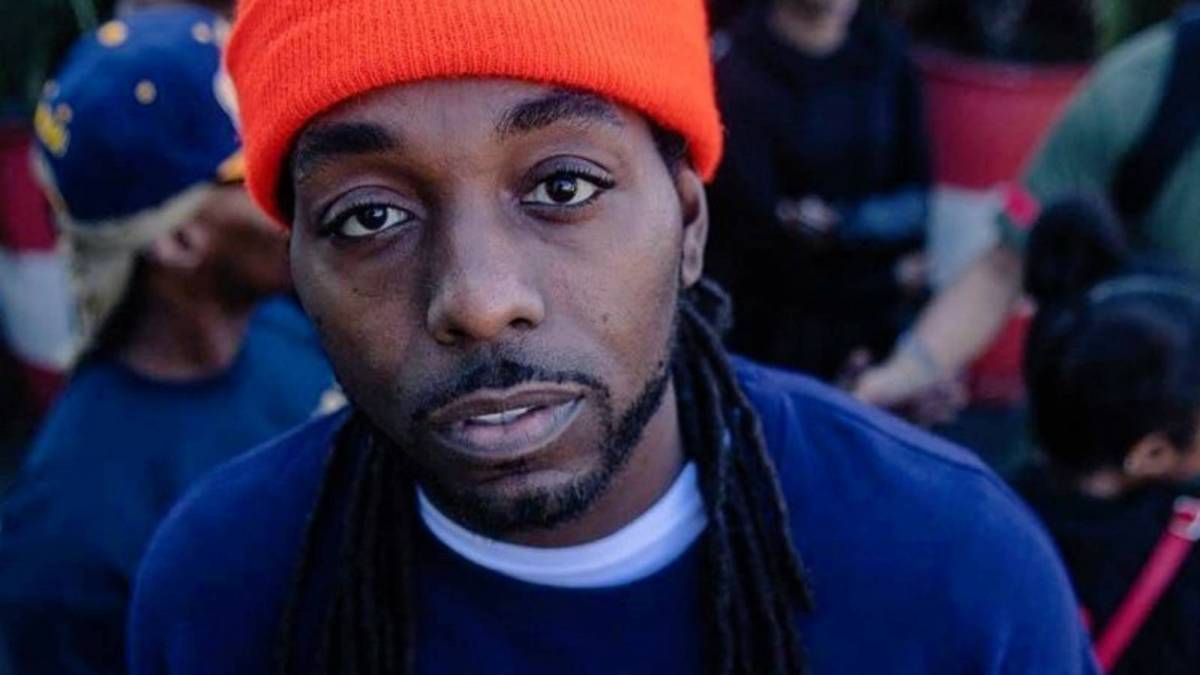
When I met Traxamillion, the young producer-rapper was in the lab with Balance, recording a faithful cover of EPMD’s “You’re a Customer” for a Mind Motion mixtape. Naturally, I would have preferred seeing Trax record an original, but watching him vibe to a classic was perhaps more revelatory. Where many producers insist on their isolation from outside influences, Trax is an unapologetic lover of music.
“Everybody’s a fan,” the musician, born in East Orange, NJ, and raised in San Jose, points out. “Somebody inspired somebody to make a beat, to rap. That’s how I go about my beats. I listen to shit. I get inspired. I appreciate it and harness and learn from it. I’ve always tried to mimic what’s going on, on the radio.”
Despite this unpretentious attitude toward his art, Traxamillion has developed a highly original sound of his own — bright, downright cheerful noises animate his eminently danceable grooves — and he’s already earned a place in Bay Area rap history. In June 2005 he topped the local rap charts as producer of Keak Da Sneak’s infectious independent single “Super Hyphy” (Rah), proving the Yay could hang in the mix with big-label megastars while opening up the airwaves to a long-suppressed flood of local talent.
“The beat was inspired by the youngstas,” Traxamillion says. “My little cousins came through drunk, wildin’ out on a birthday, and started dancin’. I was paying attention to their movements, thinking, ‘I gotta make some music for these cats,’ because the youngstas are really the hyphy movement. When I was making the beat, I was replaying their dancin’ in my head, and ‘Super Hyphy’ came out an hour and a half later.”
Knowing he had a hit on his hands, Trax shot the beat at Keak, who reportedly wrote the song in one session during a drive home from Tahoe. Within a few weeks “Super Hyphy” was all over the radio.
“It took two months to get to number one [on KMEL’s list of most requested tracks in June 2005],” Trax recalls. “But it was fresh, and Keak’s so abstract when he comes with something — people are fiendin’ for it. People loved it, and it still slaps to this day. It’s a big club anthem in the Bay.”
“It was weird because it was my first time on the radio, period, as a producer,” Trax says. “I was, like, ‘Man, this is crazy — all these people are going crazy to my song. This is my shit I made in my mother’s bedroom.’ I be at the club, watching everybody at the peak of the song when they would run it back like three or four times, going, ‘God-damn!’ Nobody knew it was me.”
If Traxamillion’s name wasn’t ringing bells, “Super Hyphy” was, and in short order he was working with the Team, whose “Just Go” earned the producer further spins. But when he returned to the local number one slot on KMEL’s most requested tracks in December 2005, producing “Getz Ya Grown Man On” for East Palo Alto’s then-unknown Dem Hoodstarz, Trax proved his success with Keak was no fluke. The remix — with guests Mistah FAB, San Quinn, Clyde Carson, and Turf Talk — has even picked up national airplay and features prominently on Dem Hoodstarz’s Band-Aide and Scoot (SMC) as well as Trax’s own The Slapp Addict (Slapp Addict). “The Slapp Addict is the soundtrack to the hyphy movement,” Trax says of the album. Its single-producer, multirapper format has earned it a reputation as a Bay Area Chronic. “It’s basically a Who’s Who of the Bay, produced by me. After ‘Grown Man,’ I was superhot. People were, like, ‘I want to work with you.’ In turn, everybody did songs for me, ’cause game recognize game. Damn near a year’s worth of creativity went into that album.”
In addition to spawning singles like “The Sideshow” (Too Short and FAB) and “Wakin’ ’Em Up” (Turf Talk and Hoodstarz), Slapp Addict has spun off another huge hit collaboration with Keak. “On Citas” demonstrates the producer’s special rapport with the Bay’s hottest rapper.
“When me and Keak get together, we make hits,” Trax says. “When I first met Keak, he told me, ‘Man, your beats and my voice — it’s a marriage.’ Ain’t nothin’ I’m doin’ or nothin’ he doin’ — it’s just his shit plus my shit equals hits.” (Garrett Caples)
Goldies Dance winner Sean Dorsey
One look at Sean Dorsey — a debonair dancer with slightly mussed hair and innovative modern dance choreographer — and two words instantly come to mind: dip me!
But watching him dance, you see more of a rough-and-tumble Gene Kelly than a gliding Fred Astaire. Which isn’t to say he can’t throw down a steamy tango, as he does in Red Tie, Red Lipstick, a moving pas de deux about violence against a transgender couple. Dorsey featured the piece, with narration by trans poet Marcus Van, in his first full-length show, Outsider Chronicles, staged last year at ODC Theater and soon to be remounted Nov. 16 to 18 at the Dance Mission Theater.
Since moving to San Francisco in 2001 from Vancouver, Dorsey has blazed a fierce trail for transgender performers. He immediately became enamored with the city when he met site-specific choreographer Lizz Roman while visiting here with the Kokoro Dance company. “There was very little release technique or inversion work in Vancouver,” the native Canadian recalls. “I totally fell in love with her [Roman’s] movement and what she was doing.”
The feeling was mutual, and Roman gave the young dancer a spot in her company. Dance Brigade founder Krissy Keefer also went mad for Dorsey, granting him a solo slot in the now-defunct Lesbian and Gay Dance Festival. Even our pampered SF LGBT audience wasn’t used to seeing butch-looking dancers like Dorsey onstage, and its response was ecstatic.
By the spring of 2002 he was in ODC Theater’s Pilot Program, which nurtures emerging choreographers as they develop new work eventually showcased on the theater’s floor. Three months later he founded the groundbreaking Fresh Meat Productions, which brings trans and queer performers, filmmakers, musicians, and writers together annually to tell their stories through their chosen artistic discipline. Since the first two-day show at ODC Theater that summer, Fresh Meat has moved on to cosponsoring Tranny Fest, a festival of independent trans cinema now helmed by Dorsey’s partner, filmmaker Shawna Virago, and also helped to organize national tours of trans artists. Currently, Dorsey, the nonprofit’s artistic director, is organizing a show for a trans printmaker at the Femina Potens gallery and another solo show for a trans visual artist.
Amid all the organizing, marketing, and promoting, Dorsey brought his own point of view to queer performance with last year’s Outsider Chronicles, via an individual artist grant from the San Francisco Arts Commission. Written and choreographed by Dorsey, the program combines modern dance with music and narration in five stories that reflect the life of a transgender person — as well as any human being who has ever had a crush, a secret, or a high school guidance counselor with a textbook full of bad advice. Each vignette (most performed with dance partner Meir Culbreth) expresses a language of movement that is boldly real and acutely honest.
Through Fresh Meat and his own choreography, Dorsey has been able to combine art and activism in a way that creates alliances, fosters a community of like-minded artists, and changes our notion of what defines dance and, at its most basic level, our bodies. Next on the horizon, the onetime housing and poverty activist who realized his dance career almost accidentally while on a hiatus from grad school plans to use his Gerbode Emerging Choreographer Award to continue combining his two great passions. Tentatively titled Some Went Untold, the envisioned piece will be based on interviews Dorsey conducts with trans folk across the land.
“I’m still, like, ‘Hello, hello, hello, where are all the trans dancers?’” Dorsey says. “I’m hoping very soon that there will be more trans dancers to work with.” He also hopes to find the time to learn ballroom dance. Let the dipping begin! (Deborah Giattina)
The Guardian slate
By Tim Redmond
So, the folks at sfist posted an item earlier today about the door-hangers with the Guardian logo and the Guardian slate on them. Sfist got it wrong, then apologized, but I want to clear up any confusion here:
The Guardian doesn’t do slate cards.
We do endorsements, based on our own independent analysis of what’s best for the city, the state and the country. When we’re done, some of the candidates inevitably decide to quote from our endorsements or use our headlines or our logo to promote their campaigns. That’s fine with me — political campaigns use newspaper quotes, headlines and logos all the time. Even if it wasn’t fine with me, I don’t think there’s anything we could do to stop it.
A few years ago, some of the progressive campaigns got together and decided to reprint the entire list of Guardian endorsements as a door hanger “slate card.” Again: Fine with me. Again: Nothing I could do if it wasn’t. Once or twice since then, as a matter of courtesy, the campaigns have called to let me know what they’re doing. I always say the same thing: Please, out of courtesy, make it clear that the card you produce is neither paid for by nor produced by the Bay Guardian. Sometimes they do, sometimes they don’t.
In this case, I guess, there was some confusion, leading some to wonder if we “sold” our endorsements. We take our endorsments more seriously than anything else we do; just ask anyone who’s been through the process or anyone who’s ever worked here. We don’t control what individual campaigns do with our endorsements. But we aren’t involved, make no money off it, don’t control content, don’t decide where the doorhangers go and many times (like this year) didn’t even know it was happening.
Hope that clears things up.
30 years and one minute: Film Arts Foundation
The Film Arts Foundation turns 30 this year, and to celebrate it’s throwing a party at the Castro Theatre. One-minute movies are a major element of the FAF’s birthday bash — 60-second efforts by some of the organization’s filmmaking members will be shown as part of an evening program MCed by Peter Coyote and Nancy Kelly. Considering FAF members include Les Blank, Debra Chasnoff, Nathaniel Dorsky, Rob Epstein, Sam Green, George Kuchar, Amanda Micheli, Jenni Olson, Jay Rosenblatt, Caveh Zahedi, and Terry Zwigoff, the result promises to be exciting.
Normally, in early November the Film Arts Festival rolls around, but this is an important transitional year for the organization, with recent changes such as the hiring of executive director Eric Hayashi. The Film Arts Fund for Independent Cinema continues to award money to filmmakers whose visions are individual and who aren’t — unlike the vast majority of directors today — following the dictates of TV markets. This year Green (currently working on a movie about utopian visions) and recent Guardian profile subjects James T. Hong and Michelle Silva (“Wild Eyes,” 5/18/05) are among the grant recipients. (Johnny Ray Huston)
FILM ARTS FOUNDATION’S 30TH ANNIVERSARY CELEBRATION
Wed/8, 6:30–8 p.m. reception; 8 p.m. screening; 10 p.m. after-party
Castro Theatre
429 Castro, SF
$15–$75
(415) 552-FILM
www.filmarts.org/30years
Prosecute election theft
EDITORIAL There’s no doubt at all that a group of downtown businesses operating through a series of supposedly independent political committees organized in part by attorney Jim Sutton have used every tool at their disposal to influence the outcome of the District 6 supervisorial election. And there’s no doubt that what these folks have done violates at least the spirit of the city’s election laws, which were designed to offer, as much as legally possible, a level playing field for candidates and full disclosure of campaign expenses.
There’s also no doubt that Sutton has been willing to bend and at times break the rules: in 2002 his law firm was fined $240,000 — the largest penalty of its kind in city history — for failing to disclose late contributions from Pacific Gas and Electric Co. to a campaign to defeat a public power initiative.
At some point this sort of conduct rises to the level of a crime — and at least some respectable, credible activists and observers think the attacks on Sup. Chris Daly have reached that level. In a letter to the Guardian, published on page 8, former ethics commissioner Joe Lynn argues that Sutton and his allies are guilty of attempting to steal an election.
There’s no crime in the books called “Grand Theft, Election,” although there probably should be. But Lynn says that what’s happened here — unregulated committees raising and spending tens of thousands of dollars and not fully disclosing it until late in the cycle — is not merely sleazy and unethical but criminal.
We’re always nervous about bringing the criminal justice system into political disputes (we still remember how then-mayor Art Agnos pushed the district attorney into conducting a witch-hunt investigation into the opponents of a downtown ballpark ballot measure). But we’re also sick of seeing the likes of Sutton, Don Fisher, and SFSOS operate with virtual impunity when what they are doing comes very, very close to a conspiracy to subvert local election laws. The Ethics Commission needs to conduct a full investigation here, but that body can impose only civil penalties, which means cash fines — and for billionaire Fisher, whose money is behind a lot of these shenanigans, a stiff fine is just the cost of doing business.
District Attorney Kamala Harris ought to look into this. The problem is that Sutton was her lawyer in a heated campaign in 2003 during which her opponent, Terence Hallinan, raised similar charges. So Harris is conflicted; the best solution would be to appoint outside counsel — a special prosecutor, to use the Washington terminology — to investigate whether Sutton, Fisher, SFSOS, or anyone else ought to face criminal prosecution. The sooner that process gets started, the better. SFBG
The Sentinel’s Lobbyists
by Amanda Witherell
It’s no secret that the San Francisco Sentinel has really slipped since Luke Thomas struck out on his own with Fog City Journal, but an article this past weekend represents a new low. “Has Anti-Incumbent Fever hit San Francisco?” makes reference to three polls showing Rob Black leading Chris Daly in the District 6 race for Supervisor. The author of the piece, Sam Lauter links to an article in the Chron about the polls, but he could have just linked to the raw data — at least one of the polls was commissioned through his political consulting firm, Barnes, Mosher, Whitehurst, Lauter(ahem) and Partners.
This lobbying firm is also a liason for much of the thousands of dollars being spent by independent expenditure committees on anti-Daly hit pieces. Before messing around in local elections, Lauter had a career in governmental relations at PG&E, though a Sentinel reader wouldn’t know it — there’s no bio included with the author’s “article,” except that it was formerly printed in a “Red Meat for a Blue State” online publication. Meanwhile, another unauthored Sentinel article criticizes Daly for supposed contributions from lobbyists, though fails to mention that the anti-Daly movement is controlled by a similar crowd of money-runners.
So why did the SF Weekly’s Matt Smith endorse a PG@E attorney for supervisor?
Matt Smith, a columnist for the SF Weekly/Village Voice/New Times, parachuted into the Sunset to check out the field of supervisorial candidates and ended up last week all but endorsing Doug Chan as the PG@E candidate for supervisor.
What Smith’s investigation didn’t turn up was the disturbing fact that Chan is an attorney whose law firm, Chan, Doi, and Leal, has received more than $460,913 in fees from PG@E in the past five years, according to documents on file with the California Public Utilities Commission. (See my earlier blog and our editorial for more details).
Chan is also the beneficiary of a tidal wave of sleazy independent expenditure mailings to Sunset residents, probably from the same PG@E/downtown gang creating the tidal wave of IE sleaze on behalf of Rob Black in the Chris Daly race. (See our stories). The PG@E gang want Chan and Black in City Hall. I asked Smith by email if this were a continuation of the PG@E-smitten campaign that then editor John Mecklin and then reporter Peter Bryne conducted on behalf of PG@E and against the two public power campaigns in 200l and 2002. He parried the question. Chan and the Weekly both ended up in the Guardian’s Hall of Shame after the PG@E victories.
The point: maybe, if this is how the New Times would go about endorsements, it isn’t such a good idea to raise the issue. Their politics appear to be desert libertarianism on the rocks, with stalks of neocon policy. What would the Village Voice/New Times position be on the war and Bush et al? Well, back to Dan Savage, the Voice/New Times sex columnist who has been known to slip an endorsement into his column. (See my previous blog).
P.S. Full disclosure: I live out in the West Portal district a few blocks from the Sunset District. And I am getting tired of supervisors like Sean Elsbernd and Fiona Ma and supervisorial candiates like Doug Chan who come on as “neighborhood” candidates but once in office quickly become anti-neighborhood, pro-PG@E, pro-Downtown supervisors and callup votes for the mayor, PG@E, and downtown. My alternative choices for the Sunset:
Jaynry Mak and David Ferguson, who understand the perils of PG@E and the virtues of public power. B3
WEDNESDAY
Oct. 25
Theater
Hamlet and Hamlet:
Blood in the Brain
’Tis the season for dueling Hamlets – dueling unconventional Hamlets, in fact. Stuart Bousel and his No Nude Men Productions stick with the title of Shakespeare’s original but interpret the play as myth rather than canon fodder, casting the movie-length result so that male parts are played by women and female parts are played by men. Developed in partnership with California Shakespeare Theater and Campo Santo, Naomi Iizuka’s Hamlet: Blood in the Brain places the drama amid the drug-related violence of ’80s-era Oakland. Opening night forces you to overcome Hamlet-like indecision to choose one of these two versions, but at least you have a month or so to see both. (Johnny Ray Huston)
Hamlet
8 p.m. (continues Thurs.-Sat., 8 p.m.; through Nov. 18)
Climate Theater
285 Ninth St., SF
(415) 621-1503
www.horrorunspeakable.com
Hamlet: Blood in the Brain
8 p.m. (Thurs.-Sun., 8 p.m.; through Nov. 20; special benefit performance Sat/28, 7 p.m.)
Intersection for the Arts
446 Valencia, SF
$9-$20 ($25-$40 for Sat/28 benefit)
(415) 626-3311
www.theintersection.org
Film
United Nations Association Film Festival
Tonje Hessen Schei’s documentary Independent Intervention is the single most staggering doc yet made about the unholy matrimony of the military-industrial complex and the media. Using corporate newsreels, interviews with journalists, and footage from unembedded correspondents, the film relentlessly stabs its audience with egregious facts about the war in Iraq that have been avoided by mainstream reports. Both painful and empowering, this is a film everyone needs to see. Another highlight among the 31 docs playing at the United Nations Association Film Festival is Ben Lewis’s Blowing Up Paradise, which plots the history of France’s nuclear bomb testing on the French Polynesian island of Moruroa. (Sara Schieron)
Through Thurs/26
Stanford University
See Web site for program information
www.unaff.org
Save Daly — and the city
EDITORIAL The sleaze in District 6 is utterly out of control. So far, five different organizations, all claiming to be independent of any candidate, have sent out expensive mailers blasting away at incumbent Chris Daly (and urging voters, either directly or indirectly, to support his main opponent, Rob Black).
The law says that these groups can spend all the money they want, without abiding by campaign contribution limits, as long as they aren’t coordinating with Black’s staff, but let’s not be naive here: this is a carefully planned and orchestrated campaign by a handful of wealthy, powerful interests that will spend whatever it takes to get rid of one of the board’s most reliable progressive leaders.
Daly’s a hard worker, has a solid record, and is popular in his district — but after a while, this much negative campaigning starts to take a toll. And for the sake of the progressive movement in San Francisco, Black and the downtown forces simply can’t be allowed to defeat Daly.
Daly is more than a good supervisor (although he certainly meets that qualification). He’s part of the class of 2000, one of a crew of activists who swept into power in the first district elections as a rebellion against the developer-driven politics of then-mayor Willie Brown. He has become one of the city’s most promising young leaders, someone who, with a bit more seasoning (and diplomacy), could and should have a bright future in local politics.
He’s also very much a district supervisor and a symbol of how district elections allowed the neighborhoods to take back the city. The attack on him is an attack on the entire progressive movement and all that’s been accomplished in this city in the past six years.
Daly needs help. He needs volunteers to walk precincts, distribute literature, and get out the vote. This has to be a top priority for independent neighborhood and progressive activists in San Francisco. There’s a campaign rally Oct. 28 at 10 a.m. at the northeast corner of 16th Street and Mission. Daly’s campaign headquarters are at 2973 16th St. The phone is (415) 431-3259. Show up, volunteer, give money … this one really, really matters. SFBG
SPECIAL: Scary monsters and supercreeps
› a&eletters@sfbg.com
Halloween is the season for self-expression in all of its many glorious forms: costumes, music, dance, art, theater, and maybe even a few forms that can’t be classified. Whether you’re a trash-culture junkie or a splatter-movie freak, a pagan ritual follower or a brazen exhibitionist, you’ll definitely find something chilling, somewhere in the Bay Area. Here’s a sampling; for more Halloween and Día de los Muertos events, go to www.sfbg.com.
PARTIES AND BENEFITS
FRIDAY 27
The Enchanted Forest Cellar, 685 Sutter, SF; 441-5678. 10pm-2am. $5-10. Silly Cil presents the seventh annual Enchanted Forest costume ball; woodland nymphs and mythical creatures are welcome. DJs McD and Scotty Fox rock the forest with hip-hop and ’80s sounds.
Hyatt Regency/98.1 KISS FM Halloween Bash Hyatt Regency, 5 Embarcadero Center, SF; 788-1234. 8 pm. $28.50 advance ($30 door). KISS Radio’s Morris Knight MCs an evening of costumed revelry. DJ Michael Erickson brings the dance mix.
Rock ’n’ Roll Horror Show Rickshaw Stop, 155 Fell, SF; 820-3907. 7:30pm. $5-10 donation. Rock out and scream loud for a good cause: proceeds go to the ninth SF Independent Film Festival. A screening of 1987 B-movie Street Trash is followed by the sounds of Sik Luv, Wire Graffiti, Charm School Drop Outs, and Madelia.
SambaDa: Afro-Brazilian, Afro-Exotic Halloween Extravaganza Elbo Room, 647 Valencia, SF; 552-7788. 10pm. $8-10. Don’t feel like ghosts and goblins and blood and guts? How about samba and bossa nova grooves to keep your feet busy?
BAY AREA
Halloween Madness Speisekammer, 2424 Lincoln, Alameda; (510) 522-1300. 9pm. Free. Skip Henderson and the Starboard Watch offer hard-drinking sailor songs. Come in costume and get a free rum drink, matey.
SATURDAY 28
Exotic Erotic Ball Cow Palace, 2600 Geneva, SF; 567-2255, www.exoticeroticball.com. 8pm-2am. $69. P-Funker George Clinton, ’80s icon Thomas Dolby, and rapper Too Short are among the musical guests at this no-holds-barred celebration. Put on your sexiest, slinkiest number and admire the antics of trapeze artists, fetish performers, and burlesque show-stoppers, as well as those of the attendees.
SUNDAY 29
Fresh/Halloween T-Dance Ruby Skye, 420 Mason, SF; www.freshsf.com. 6pm-midnight. $20. Sassy, slinky, and sexy costumes abound at this Halloween dance party. DJ Manny Lehman spins.
MONDAY 30
Dead Rock Star Karaoke Cellar, 685 Sutter, SF; 441-5678. 8pm-2am. Free. Elvises, Jim Morrisons, and Kurt Cobains deliver heartrending renditions of favorite songs.
TUESDAY 31
A Nightmare on Fulton Street Poleng Lounge, 1751 Fulton, SF; www.polenglounge.com. 8pm-2am. $5-10. The third annual Holla-ween showcases a rich harvest of fat beats, thanks to the DJ skills of Boozou Bajou.
Scary Halloween Bash 12 Galaxies, 2565 Mission, SF; 970-9777. 8pm. $10. All dressed up but not feeling like heading to the Castro? Want to hear a marching band? No, wait, come back. It’s the Extra Action Marching Band, which specialize in baccanalian freak-shows. Sour Mash Jug Band and livehuman leave you grinning beneath that rubber mask.
FILM/MUSIC/THEATER/ART
WEDNESDAY 25
Art Hell ARTwork SF Gallery, 49 Geary, suite 215, SF; 673-3080. noon-5:30pm. Free. Bay Area artists render darkness, death, and all things devilishly creepy. Sale proceeds go to the San Francisco Artist Resource Center. Also open Thu/26-Sat/28, same hours.
THURSDAY 26
Babble on Halloween Dog Eared Books, 900 Valencia, SF; 282-1901. 8pm. Free. There’s nothing like shivers up the spine to go with cupcakes and wine! Bucky Sinister, Tony Vaguely, and Shawna Virago creep you out with spooky stories and bizarre performances.
A Second Final Rest: The History of San Francisco’s Lost Cemeteries California Historical Society Library, 678 Mission, SF; 357-1848. 6pm. Free. Trina Lopez’s documentary tells the story of how San Francisco relocated burial grounds in the wake of the 1906 earthquake and fire — ironically sending some of the city’s settlers on a last journey after death.
Shocktoberfest!! 2006: Laboratory of Hallucinations Hypnodrome, 575 10th St, SF; 377-4202. 8pm. $20. The Thrillpeddlers are back with a gross-out lover’s delight: public execution, surgery, and taxidermy in three tales of unspeakable horror. Also Fri/27-Sat/28, 8pm.
FRIDAY 27
BATS Improv/True Fiction Magazine’s Annual Halloween Show Bayfront Theater, 8350 Fort Mason Center, SF; www.improv.org. 8pm. $18 ($15 advance). Madcap improvisational comics of True Fiction Magazine transform audience suggestions into hilariously bizarre pulp fiction–inspired skits. In the spirit of the season, TFM is sure to throw ghoulish horror into the mix. Also Sat/28.
Hallowe’en at Tina’s Café Magnet, 4122 18th St, SF; 581-1600. 9pm. Free. What’s Halloween in San Francisco without any drag? Before you consider the sad possibilities, let Tina’s Café banish those thoughts with a deliciously campy drag queen cabaret show. Mrs. Trauma Flintstone MCs.
Rural Rampage Double Feature Alliance Française de San Francisco, 1345 Bush, SF; www.ham-o-rama.com. 7:30pm. Free. Those midnight movie aficionados at Incredibly Strange Picture Show unreel a shriekingly tasty lineup from the “scary redneck” genre: Two Thousand Maniacs and the original Texas Chainsaw Massacre.
SATURDAY 28
11th Annual Soapbox Pre-Race Party/Halloween Show El Rio, 3158 Mission, SF; 282-3325. 9pm. $7. What better way is there to get revved up for the Oct. 29 Soapbox Derby in Bernal Heights? With a full evening of good ’n’ greasy garage rock and rockabilly, thanks to the All Time Highs, Teenage Harlets, and the Phenomenauts, this party gets you in touch with your inner speed demon.
Pirate Cat Radio Halloween Bash Li Po Cocktail Lounge, 916 Grant, SF; www.piratecatradio.com. 8pm. $5. The community radio station presents an evening of crazy rock mayhem with Desperation Squad, the band now famous for getting shot down on TV’s America’s Got Talent! Wealthy Whore Entertainment, the Skoalkans, and Pillows also perform.
Shadow Circus Vaudeville Theatre Kimo’s, 1351 Polk, SF; p2.hostingprod.com/@shadowcircus.com. 9pm. $5. Shadow Circus Creature Theatre hosts a variety show of ukulele riffs, comedy, burlesque, and filthy-mouthed puppets.
Spiral Dance Kezar Pavilion, Golden Gate Park, 755 Stanyan, SF; www.reclaiming.org. 6pm. Free. Reclaiming, an international group observing pagan traditions, celebrates its 27th annual Spiral Dance with a magical ritual incorporating installations, drama, and a choral performance.
BAY AREA
Flamenco Halloween La Peña Cultural Center, 3105 Shattuck, Berk; (510) 849-2568, ext. 20. 8:30pm. $15. Flametal brings the evil to flamenco with mastermind Benjamin Woods’s fusion of metal and the saddest music in the world.
Murder Ballads Starry Plough, 3101 Shattuck, Berk; (510) 841-0188. 9pm. $8. Murder, misfortune, and love gone really, really wrong — all sung by an impressive array of garage rockers, accordionists, and female folk-metal songstresses. There’s even a duo who specializes in suicide songs! Dress up so no one can recognize you weeping into your beer.
SUNDAY 29
The Elm Street Murders Club Six, 60 Sixth St., SF; www.myspace.com/theelmstmurders. 7:30pm. $20. Loosely based on A Nightmare on Elm Street, this multimedia interactive stage show promises heaping helpings of splatter.
MONDAY 30
The Creature Magic Theatre, building D, Fort Mason Center, SF; 731-4922. 8pm. Free. Reservations required. Black Box Theatre Company gives a single performance before a studio audience of their new podcast adaptation of Mary Shelley’s Frankensten. This version tells the story from the monster’s point of view.
Independent Exposure 2006: Halloweird Edition 111 Minna Gallery, 111 Minna, SF; 447-9750. 8pm. $6. Microcinema International assembles a festively creepy collection of short films from around the world, focusing on the spooky, unsettling, and just plain gross.
TUESDAY 31
Bat Boy: The Musical School of the Arts Theater, 555 Portola, SF; 651-4521. 7pm. $20. It’s back: a Halloween preview performance of the trials and tribulations of everyone’s favorite National Enquirer icon, Bat Boy. Camp doesn’t get any better than this.
Cramps Fillmore, 1805 Geary, SF; 346-6000. 8pm. $30. Don’t get caught in the goo-goo muck. The Demolition Doll Rods and the Groovie Ghoulies also whip you up into a rock ’n’ roll frenzy.
One Plus One (Sympathy for the Devil) San Francisco Art Institute Lecture Hall, 800 Chestnut, SF; 771-7020. 7:30pm. Free. Before the Rolling Stones became some of the richest people on earth, Mick, Keith, and the boys dabbled on the dark side. At a rare screening of Jean-Luc Godard’s One Plus One, you get a chance to see them at the height of their flirtation with evil, performing the still-mesmerizing “Sympathy for the Devil.”
EVENTS/FESTIVALS/KID STUFF
FRIDAY 27
Haunted Haight Walking Tour Begins at Coffee to the People, 1206 Masonic, SF; 863-1416. 7pm. $20. How else can you explain all of those supernatural presences drifting between the smoke shops and shoe stores? Here’s a chance to find out about the more lurid chapters in the neighborhood’s history. Also Sat/28-Tues/31, 7pm.
SATURDAY 28
Boo at the Zoo San Francisco Zoo, 1 Zoo, SF; 753-7071. 10am-3pm. Free with zoo admission. Costumed kiddies can check out the Haunted Nature Trail and the Creepy Crawly Critters exhibit. Live music, interactive booths, games, and prizes keep little ghosts and goblins delighted.
Children’s Halloween Hootenanny Stanyan and Waller, SF; www.haightstreetfair.org. 11:30am-5pm. Free. The Haight Ashbury Street Fair folks provide children ages 2 to 10 with games, activities, theater, and food. Costumes are encouraged.
Family Halloween Day Randall Museum, 199 Museum, SF; 554-9600. 10am-2pm. Free. Trick-or-treaters play games, carve pumpkins, create creepy crafts, and take part in the costume parade. Jackie Jones amazes with a musical saw and dancing cat; Brian Scott, a magic show.
Hallo-green Party Crissy Field Center, 603 Mason, SF; 561-7752. 10am-2pm. $8. It’s never too early to teach your children about environmentalism. The party includes a costume contest and a chance to bob for organic apples.
House of Toxic Horrors Crissy Field Center, 603 Mason, SF; 561-7752. 10am-2pm and 4-8pm, $8. Ages 9 and older. No, it’s not a Superfund site, but it should be equally educational: the center’s first haunted house addresses the scary world of environmental horror. Sludge and smog lurk behind every corner.
BAY AREA
Boo at the Zoo Oakland Zoo, 9777 Golf Links, Oakl; (510) 632-9525. 10am-3pm. Free with zoo admission. Dress up the kids and bring them over to the zoo for scavenger hunts, crafts, rides on the Boo Choo Choo Train, puppet shows, and musical performances. Also Sun/29, 10am-3pm.
SUNDAY 29
Halloween’s True Meaning Shotwell Studios, 3252-A 19th St., SF; 289-2000. 1-3pm, $5-15 sliding scale. Kids are encouraged to come in costume for this afternoon of interactive theater led by Christina Lewis of the Clown School. Enjoy Halloween history, storytelling, role-playing, and face-painting.
Pet Pride Day Sharon Meadow, Golden Gate Park, SF; 554-9427. 11am-3pm. Free. Dress up your pet in something ridiculous and head down to Golden Gate Park to laugh at all of the other displeased pups! The pet costume contest is always a blast, as is the dog-trick competition.
BAY AREA
Haunted Harbor Festival and Parade Jack London Square, Oakl; 1-866-295-9853. 4-8pm. Free. Families can check out live entertainment, games, crafts, activities, and prizes. The extravagantly decked-out boats in the parade are not to be missed.
Rock Paper Scissors’ Annual Street Scare Block Party 23rd Ave. and Telegraph, Oakl; www.rpscollective.com. Noon-5pm. Free. Who doesn’t love block parties? The kid-friendly blowout has something for everyone: fortune-telling, craft-making, pumpkin-carving, and all sorts of wacky games and prizes. And barbecue — witches love a good barbecue.
MONDAY 30
Halloween Heroes Benefit Exploratorium, Palace of Fine Arts, 3601 Lyon, SF; (650) 321-4142, www.wenderweis.org. 6:30pm. $185 for a parent and child. A benefit for the Exploratorium Children’s Educational Outreach Program and the Junior Giants Baseball Program, this lavish costume party for kids promises to be equally fun for the parents. Many of the exhibits are turned into craft-making and trick-or-treat stations.
TUESDAY 31
Halloween in the Castro Market and Castro, www.halloweeninthecastro.com. 7pm-midnight. $5 suggested donation. You and 250,000 of your new best friends — reveling in the streets and getting down to thumping beats. Don’t even think of driving to get there, and don’t forget: no drinking in the streets.
Vampire Tour of San Francisco Begins at California and Taylor, SF; (650) 279-1840, www.sfvampiretour.com. 8pm. $20. This isn’t Transylvania, but San Francisco has had its share of vampires. Just ask Mina Harker, your fearless leader, if you dare take this tour.
DÍA DE LOS MUERTOS
ONGOING
BAY AREA
‘Laughing Bones/ Weeping Hearts’ Oakland Museum of California, 1000 Oak, Oakl; (510) 238-2200. Wed-Sat, 10am-5pm. $8. Guest curator Carol Marie Garcia has assembled a vibrant collection of installations produced by local artists, schools, and community groups, all celebrating the dead while acknowledging the sorrow of those left behind. Through Dec. 3.
THURSDAY NOV. 2
Death and Rebirth Precita Eyes Mural Arts Center, 2981 24th St, SF; 334-4091. 7-10pm. Free. Precita Eyes Muralists will be celebrating the work of founder Luis Cervantes with a breathtaking mural exhibit and celebration.
Día De Los Muertos Procession and Outdoor Altar Exhibit 24th St and Bryant, SF; www.dayofthedeadsf.org. 7pm. Free. Thousands of families, artists, and activists form a procession to honor the dead and celebrate life, ending at the Festival of Altars in Garfield Park, at 26th Street and Harrison. Local artists have created large community altars at the park; the public is invited to bring candles, flowers, and offerings.
Fiesta De Los Huesos’ Gala Opening Reception Mission Cultural Center for the Latino Arts, 2868 Mission, SF; 643-5001. 6-11pm. $5. Curator Patricia Rodriguez has put together a family-oriented party, with musical performances, mask carving, sugar skull–making, videos, and other tempting creations among the exhibits, altars, and installations. The exhibition opens Oct. 27.
BAY AREA
Día De Los Muertos Benefit Concert 2232 MLK, 2232 Martin Luther King Jr., Oakl; www.2232mlk.com. 7pm. $8-20 sliding scale. Hosted by the Chiapas Support Committee, this benefit concert features Fuga, los Nadies, la Plebe, and DJ Rico. Early arrivals get free pan dulce and hot chocolate.
SUNDAY NOV. 5
Dia De Los Muertos Family Festival Randall Museum, 199 Museum, SF; 554-9681. 1-5pm. $100 and up for family of five. The family event benefits the museum’s Toddler Treehouse and other toddler programs. Arts and crafts, food, and entertainment make this a rewarding educational experience for kids. Attendees learn how to make masks and sugar skulls and to decorate an altar. Los Boleros provide festive entertainment.
BAY AREA
Día De Los Muertos Fruitvale Festival International Blvd., between Fruitvale Ave and 41st Ave, Oakl; (510) 535-6940. 10am-5pm. Free. With the theme “love, family, memories,” the Unity Council in Oakland has put together a full day of family celebration. Five stages showcase music and dance performances by local and world-renowned artists. More than 150 exhibitors and nonprofits highlight wares and services. Art and altars are on view, and the Children’s Pavilion promises to be a rewarding educational experience for kids of all ages.
THURSDAY NOV. 9
Mole to Die For Mission Cultural Center For Latino Arts, 2868 Mission, SF; 643-5001. 7-10pm. $5. Try it all at this mole feeding-frenzy and vote for your favorite.
MONDAY
Oct. 23
Music
Be Good Tanyas
Some of the finest purveyors of sepia-toned old-timey sounds, Vancouver’s Be Good Tanyas whisk together the scatterings of John Steinbeck’s dust bowl with the slow drawl of southern gothic to create songs that conjure images of moonshiners on the lam and hobos hopping trains bound for nowhere. Every now and then, they toss in a sly anachronism to remind you this isn’t your grandma’s bluegrass. This evocatively soulful troupe of dusty-trail wanderers will seduce you with their subtle coupling of bygone-era themes with a 21st-century sensibility. (Todd Lavoie)
With Ana Egge
8 p.m.
Independent
628 Divisadero, SF
$20
(415) 771-1421
www.theindependentsf.com
www.begoodtanyas.com
Music
Cursive
Three years after The Ugly Organ, Cursive find themselves in an unenviable position: how do they follow up a monolith? With Happy Hollow (Saddle Creek), the band builds a mythical Midwestern town that is happy on the surface, but upon a peek through the windows, this happiness is revealed to be hollow. Vocalist-lyricist Tim Kasher sets out his thesis on “Opening the Hymnal/Babies”: “The beautiful truth of it is, this is all we are/ We simply exist/ You’re not the chosen one/ I’m not the chosen one.” Musically, Happy Hollow moves between guitar screeches and nickelodeon keyboard riffs, but it’s the horns that never seem to stop punctuating the fact that if God isn’t dead, he’s certainly on vacation. (Duncan Scott Davidson)
8 p.m.
Fillmore
1805 Geary, SF
$18
(415) 346-6000
FRIDAY
Oct. 20
Music
Slim Cessna’s Auto Club
Colorado’s harsh geographic and metaphoric isolation have given rise to a whole subgenre of hellfire-and-brimstone-tinged balladeering perhaps best exemplified by Slim Cessna’s Auto Club. Part old Appalachia, part new country, part salvation, and part eternal damnation, the Auto Club epitomize “the Denver Sound,” and their manic live presence, dueling vocalists, and frenetic fingerpicking will have you breaking out your best bling-bling belt buckles and spurs. (Nicole Gluckstern)
With Rykarda Parasol
and Ill Gotten Gainz
9 p.m.
12 Galaxies
2565 Mission, SF
$10
(415) 970-9777
www.12galaxies.com
www.slimcessnasautoclub.com
Music
Lyrics Born and Cut Chemist
The pairing of Lyrics Born and Cut Chemist seems like a match made in heaven. The former is a rapper for people who don’t like rappers, and the latter is a DJ for people who hate DJs. Lyrics Born’s melodic vocal style is singing as much as it is rapping, and Cut Chemist’s groovy, organic spinning is light-years away from the cut-and-paste mush-ups of everyday hip-hop DJs and the sterile pulse of the techno raveheads. (Aaron Sankin)
Also Sat/21
With Pigeon John
9 p.m.
Independent
628 Divisadero, SF
$25
(415) 771-1421
www.theindependentsf.com
www.lyricsborn.com
www.cutchemist.com
Online Exclusive: Method Man at the crossroads
a&eletters@sfbg.com
When a bumped phone interview with hip-hop legend and putf8um artist Method Man mushroomed into a proposed
backstage post-show encounter, I naturally jumped at the chance.
Being a devotee of the ultimately more funk-based grooves of Bay Area hip-hop, I tend not to pay
attention to the doings of NYC, and I can’t claim to have ever followed the Wu-Tang Clan in general or Meth
in particular, though I have always admired both from afar. Yet one needn’t follow the Big Apple’s scene in
great detail to appreciate its impact, and with Meth’s successful film and TV career, most recently as a recurring character in this season of HBO’s cop drama The Wire, one needn’t even listen to hip-hop anymore
to appreciate his.
This situation is exactly what’s troubling Method Man. His very success in the cultural mainstream, he
feels, has been held against him by the hip hop-industry, a curious situation considering
mainstream success is the perceived goal and direct subject matter of most raps these days. Unlike the
recent fashion among rappers like Andre3000 to pooh-pooh their interest in music in favor of their
“acting career,” Meth wants to be known primarily as an MC. But Hollywood success has proved to be a
slippery slope, paved by Ice-T and Ice Cube — each in his turn the most terrifying, authentic street rapper
imaginable — to the end of your hit-making potential in hip-hop.
Couple this perception with Meth’s vocal challenges of the effect of corporate media consolidation, and it’s
not difficult to imagine why Def Jam released his fourth solo album, 4:21: The Day After, without a peep
at the end of August, as if the label had written him off despite his track record of one gold and two
putf8um plaques.
Still, no one who’s heard the angry, defiantly shitkicking 4:21 (executive produced by the RZA, Erick
Sermon, and Meth himself) or saw the show Meth put on that evening (leaping from the stage to the bar and
running across it by way of introduction, later executing a backwards handspring from the stage into the crowd by way of ending) could possibly doubt his vitality as an MC. He put on a long, exhausting show,
heavy with new material, that utterly rocked the packed house.
Shortly after the show ended, I was brought backstage by Meth’s road manager, 7, to a tiny corridor of a
dressing room crammed with various hangers on. A man in a warm-up suit with a towel over his head was
sitting alone on a short flight of steps in the center of the room.
“That’s him,” 7 said, before disappearing to take care of other business.
It was like being sent to introduce yourself to a boxer who’d just finished a successful but punishing
brawl. The face that looked up at my inquiry was that of a man who’d retreated somewhere far away into
himself, requiring a momentary effort to swim to the surface. Quite suddenly I found myself face to face
with Method Man, whose presence immediately turned all heads in the room our way as he invited me to sit down
for a brief discussion of his new album and his dissatisfaction with his treatment by the music
industry.
SAN FRANCISCO BAY GUARDIAN: I read the statement on your Web site [www.method-man.com] in which you
discuss your problems with the industry. Could you describe the problems you’ve been having?
METHOD MAN: My big problem with the industry is the way they treat hip-hop artists as opposed to artists
in other genres. Hip-hop music, they treat it like it’s fast food. You get about two weeks of promotion
before your album. Then you get the week of your album, then you get the week after, then they just
leave you to the dogs.
Whereas back in the day, you had artists in development, a month ahead of time before you even
started your campaign, to make sure that you got off on the right foot.
Nowadays it’s like there’s nobody in your corner anymore. Everybody’s trying to go into their own
little club, for lack of a better word. Everybody has their own little cliques now. Ain’t no money being
generated so the labels are taking on a lot of artists because of this at once that they don’t even have
enough staff members to take care of every artist, as an individual. Their attention is elsewhere, or only
with certain people.
SFBG: Your new single [“Say,” featuring Lauryn Hill] suggests you’ve had problems with the way critics have
received your recent work and even with the radio playing your records. How can someone of your status
be having trouble getting spins?
MM: You know what it is, man? A lot of people have come around acting like I’m the worst thing that ever
happened to hip-hop, as good as I am.
Hating is hating. I’ve been hated on, but just by the industry, not in the streets. They never liked my crew
[the Wu-Tang Clan] anyway. They think we ain’t together anymore and they try to pick at each and
every individual. Some motherfuckers they pick up. Other people they just shit on. I guess I’m just the
shittee right now, you know what I mean?
SFBG: Do you think it has to do with the age bias in hip-hop? The idea an MC is supposed to be 18 or 20?
MM: You know what I think it is? As our contracts go on, we have stipulations where, if we sell a certain
amount of albums, [the labels] have to raise our stock. A lot of times dudes just want to get out their
contracts so they can go independent and make more money by themselves. There’s a lot of factors that
play into it.
SFBG: Are you not getting enough label support?
MM: A label only does so much anyway. It’s your team inside your team that makes sure that you got a video.
Or that you got that single out there, or that your tour dates are put together correctly. The labels,
they basically just do product placement. They make sure that all your stuff is in the proper place where
it’s supposed to be at. They’re gonna make sure your posters are up. They’re going to make sure that
they’re giving out samples of other artists that are coming out also. [But i]t’s really up to us [the
artists] to make sure our music is going where it’s supposed to.
Right now there’s so many artists people can pick and choose from, don’t nobody like shit no more.
SFBG: Do you think you’re getting squeezed out of radio play as a result of corporate media
conslidation?
MM: Absolutely; this shit ain’t nothing new. It isn’t just happening to me. It’s been going on since dudes
have been doing this hip-hop music. They bleed you dry and then they push you the fuck out.
That’s why I always stress to the fans to take your power back. I always hear people talking about things
like, “Damn, what happened to these dudes? What happened to these guys? I always liked their shit.”
But the fans, not just the industry, tend to turn their backs on dudes. They get fed so much bullshit,
they be like, “Fuck it; I’m not dealing with that shit. I’m going to listen to this.”
SFBG: So what about your acting career? Do you feel like you’ve been overexposed as an actor or that
you’ve been spread too thin and are readjusting your focus?
MM: Fuck Hollywood, B.
SFBG: But I heard you say on the radio today you wanted to play a crackhead and get an Oscar….
MM: I do want to play a crackhead in a movie. I’m going to be a crackhead who dies of an overdose at the
end of the movie, and people cry, and I’m going to get me an Oscar. But fuck Hollywood; tell ‘em to come see
me. Tell ‘em to come to my door.
SFBG: Obviously, from what you said during the show and the lyrics on 4:21: The Day After you haven’t
renounced smoking marijuana, so could you discuss the concept behind “4:21”? Is it about the difficulties
of living the hard-partying lifestyle of the rap artist?
MM: It was just symbolic of a moment of clarity for me. I made a symbol for myself of a moment of
clarity. You know I’ve always been an avid 4:20 person. I like to get out there and smoke with the
best of them. But I picked “4:21” as like, the day after. I got tired of people running up on me and
being like, “You was funny in that movie,” because I was an MC first and foremost. It used to be like, “Yo,
that fuckin’ verse you did on that song, that was hot.” Now it’s like, “My kids love you; they love that
movie, How High.”
It gets to the point when even when I’m having a serious moment, or a serious conversation, people
laugh at the shit like it’s funny. But they laugh cause they thinking of the movie; they thinking of
some sitcom shit.
SFBG: Besides yourself and RZA, Erick Sermon executive produced the album. Can you talka bout your
connection with him?
MM: I’ve been fuckin’ with E ever since I’ve been fuckin’ with Redman. E knows what I like, you know
what I’m saying? The same way he knows what Redman likes. And RZA, that’s a given right there. I’ve been
down with RZA’s shit A1 since day one.
SFBG: 4:21 also features a collaboration with Ol’ Dirty Bastard. When did you guys record this track?
MM: “Dirty Meth” — that’s a posthumous joint with O.D.B. It was after he was gone already. I tell everyone
that so they know.
SFBG: But he seems to permeate the new album.
MM: He does. Good word, too. He permeates it.
Deliverance
Few American independent features in recent memory have seemed as truly capable of turning something old into something surprisingly new as Old Joy — an achingly beautiful ode to the varieties and vagaries of iPod-era young male disaffection based on a short story by Jon Raymond and transformed into something richly steeped in the increasingly remote cinematic traditions of ’70s New Hollywood by Kelly Reichardt, a filmmaker all-too-little heard from since her startlingly downbeat Badlands rethink, River of Grass, played film festivals more than a dozen years ago.
An oft-times emotionally elliptical tale of two increasingly estranged friends, Mark (Daniel London) and Kurt (Will Oldham), approaching the end of their 20s, Old Joy is, however, far more than yet another return to the once-hallowed terrain of Amer-indies past. It is resolutely modern and of the moment — in everything from its narrative nuances and politically loaded peripheral details (including a startling glimpse of the marquee for a movie house called the Baghdad) to its cognoscenti-inclined casting of Oldham as the philosopher-fool at the (off-)center of its tear-shaped universe. Old Joy finally attains escape velocity from the anomie of the past by deciding to wear its hand-me-down stripes inside out. In the process it rediscovers the sort of between-here-and-there heartbeat once found within Henry Gibson’s archly overblown anthem to Americanarama in Robert Altman’s Nashville: how far we all have come till now, and how far we’ve got to go.
Set mainly among the verdant, mountainous Cascades of rural Oregon and poignantly bookended by brief episodes in the quasi-Buddhist backyard retreats of suburban Portland and the vagrant-haunted halogen corridors of its (relatively small-town) inner-city nights, Old Joy ultimately extends well beyond those parameters even as it dissolves into them. “It’s all just one huge thing now,” Oldham’s Kurt at one point rather blankly declaims. “Trees in the city, garbage in the forest. What’s the big difference?” And though Reichardt’s film scarcely seems to have an answer to that question, her filmmaking paints a wholly deliberate picture of contemporary America in contrasting tones of talk radio babble and freak-flag-flying drum circle excess. Old Joy finally comes to limn a new millennium mural within which the collapse of dissenting voices on both the right and left of the political spectrum is an indistinguishable part of one great, awful, swirling whole.
With betweenness a central, dynamic element of Reichardt’s film, it seems somehow entirely surprising and altogether natural that she proves to be a filmmaker intent on discovering a new frontier by following the bread crumb trails of some joyfully old-fashioned cinematic extremes. No better example of that tendency can be found than in the way that Reichardt counters her own heartfelt if generationally predictable fealty to a ’70s touchstone like Five Easy Pieces (implicit in a roadside diner scene) with a far stranger red wagon reference to an altogether unlikelier era’s angry-funny relic, Steve Martin’s The Jerk. Old Joy’s adenoidally intoned expression of age-old alienation manages to escape the antigravity of tradition. Reichardt’s movie trumps the oppressive politics-present-and-accounted-for exertions of cornball kitsch like World Trade Center with a succession of mumbling inarticulations, inchoate male intimacies, and the barely stressed but overwhelmingly evident assumption that when it comes to rediscovering certain perpetually misplaced American verities, Two-Lane Blacktop may be just another way of saying Planes, Trains and Automobiles.
Loading a dog and a doggie tent into the back of a Volvo and running down the road to nowhere (occasionally in reverse) on their way to half-remembered paradises among the mighty pines, Mark and Kurt slowly begin to explore their mutual and individual disappointments with the world, themselves, and each other. Not since the windscreen mindscapes of Wim Wenders’s Kings of the Road has the conjunction of motion sickness, modern living, and the struggles of overgrown boys seeking to finally attain the status of men seemed so moving — and so at pains to find a way to get moving at all.
As the strains of Yo La Tengo’s dream-drift soundtrack and cinematographer Peter Sillen’s high-def digi-vistas of roadside splendor increasingly blur together and as Mark and Kurt at last begin to haltingly immerse themselves in the baptismal fluids of Old Joy’s promised land — the Bagby Hot Springs, a remote and rustic respite for body and soul nestled deep in the old-growth woods — Reichardt’s film finally finds a way to cross the myriad bridges briefly glimpsed from Mark’s Volvo windows as Old Joy’s relatively brief but precisely calibrated screen time whizzes by. But if what you find once Old Joy finally reaches its destination seems neither precisely a sense of uplift or letdown, rest assured that’s a carefully patterned part of Reichardt’s picture too — a moment that seems neither an ending or a new beginning but yet another frozen teardrop in a world that’s only just begun to thaw.
OLD JOY
Opens Fri/20
See Movie Clock at www.sfbg.com for theaters and showtimes
www.kino.com/oldjoy
For an interview with Old Joy writer Jon Raymond, go to Pixel Vision at www.sfbg.com/blogs/pixel_vision.
Joy sticks
› kimberly@sfbg.com
SONIC REDUCER Skip the cherries — life at times seems like a big fat bowl of Froot Loops — the type that figure-eight, undulate, and connect in the most unpredictable ways. For instance, Bonnie “Prince” Billy, né Will Oldham, and his ungainly, increasingly ecstatic shadow folk-country — that association’s only right and natural. Oldham and Gen X cinematic hot-spring stoner sagas — it’s altogether plausible. But Oldham and Diddy, the Bad Boy impresario identified in his own PR literature as a “mogul” before proffering the job title “artist” — huh?
What could these two possibly have in common apart from their age, 36? It’s a logical leap if you study Diddy — arriving about two hours late for his recent roundtable interview at the Ritz-Carlton with absolutely zero Burger King Whoppers for yours truly and the other journos who were ready to gnaw their own typing arms off in hunger and antsiness. Instead the mogul packs a makeup artist and hair man (who brandishes a far-from-puffy comb — sorry) and plays us no tracks from his new, still-scarce album, Press Play (Bad Boy/Universal), yet carries it in his bejeweled hand like a salesman. (Perhaps in answer to the inevitable query: with fashion design, artist development, reality TV, label jockeying in his past, and DiddyTV on YouTube currently serving up alleged shots of Sean in the john, why does he even bother making an album? Diddy’s comeback: “It’s a gift and curse, because I do so many things. I’m making sure people know how serious I am about music.”)
Well, Diddy and Oldham name games are the most obvious thread. Like Diddy, a.k.a. Puff Daddy, a.k.a. P. Diddy, a.k.a. Puffy, a.k.a. Sean Combs — Oldham is a man of many hats, personae, songs: a humble troubadour, a rambling tangent-exploring interview, a perpetual touring player, a before-his-time out-folker, a Hollywood-shunning onetime teen star of Matewan. At one point it seemed like he had a recording name for his every sound, if not every album — Bonnie “Prince” Billy was just the latest handle in a line that included Palace Brothers, Palace, Will Oldham, and at least one disc that sported no name at all. It was disorienting, delirious, and hard to track, and at times it just made you want to throw your hamburger mitts up, shave the nearest beard, and beat yourself around the face and neck.
Oldham probably feels much the same after fielding the same question repeatedly, explaining that he once thought of his albums much like films or plays and wanted to label each uniquely. “I thought it would be a way of focusing things on each record,” he says from his native Louisville, Ky. “People would say, ‘I like this record,’ rather than ‘I like the music of …’ I didn’t realize that it was sort of a definitely pointless battle — to see about maybe trying to make people focus on records as independent entities rather than representations of an individual’s or group’s work, and it became sooo energy-expending to always explain this name thing. I was finally just, like, ‘This is just bullshit.’”
And if Diddy and his whirlwind junket offered little apart from the lingering impression that for some reason it was critical for him to leave the scent of power and money (he’s reportedly worth $315 million) on local media — then Oldham is his opposite. On time and generously unearthing the contents of his mind, he’s disarmingly candid and eager to dive into the depths of his past, untangling his feelings and thoughts about acting, recording, and mentoring (he famously championed a solo Joanna Newsom and played her music for their label, Drag City). Yet unlike Diddy, who appears to be jetting around the country in search of the artistic credibility he first found in music as a producer, Oldham has never been more on top of his so-called game.
His new album, The Letting Go (Drag City), is the worthy, relatively full-blown, and outright beauteous studio follow-up to his 2005 stunner Superwolf with Matt Sweeney. This time Dawn McCarthy of the Bay Area’s Faun Fables leaves her imprint — her vocals echoing somewhere in the vicinity of Sandy Denny and Joan Baez. Under the gaze of Icelandic producer Valgeir Sigurosson (Björk’s sometime engineer whom Oldham met while touring with the swan queen), The Letting Go is awash with melancholic melodic Southern rock and blues-folk, tunes that revolve around cursed love, child ghosts, and frosty wakes. Captured in Reykjavík and decorated with an image of Makapu’u beach on Oahu, The Letting Go doesn’t sound on the surface like the product of volcanic island ramblings and rumblings — but its lyrics do hint at the tragedy of believing that each man or woman is an island.
That’s why Oldham has gone out of his way to introduce performers like Newsom and McCarthy to his audiences. “Part of it is to reveal how interconnected things could be if you want them to be,” he explains with a soft Southern drawl. “Part of it is also, if the world isn’t going your way and there’s a certain amount always of loneliness to do battle with, sometimes you realize it doesn’t have to be that way. You don’t have to be this solitary figure in the world.” The yearning to connect, this time with an old friend, surfaces in Old Joy, a film by Kelly Reichardt (River of Grass), which has caught praise on the festival circuit for its rapturously, deliberately paced meditation on two men’s slow-growth rambles through old-growth Oregon wilderness. Oldham’s first substantial starring role since Matewan (he most recently appeared in Junebug), his character, Kurt, is a slacker gone to seed, soon to be homeless, and still in search of his next high, his next life lesson, his next brush with grace. After helping Reichardt brainstorm hot-spring locales in Kentucky, the man who could have ended up like Macaulay Culkin or so many Coreys — and instead laid down the blueprint for, one imagines, Jenny Lewis — accepted the part. “I knew Kelly was going to be working in a way I like to work, which is just like a full immersion process,” he says, making the connection much as he pulls together Old Joy, his 1997 album, Joya (Drag City), Madonna, Emily Dickinson, and The Letting Go. “Everybody goes there. Everybody’s basically on call…. The line between tasks is a semipermeable membrane. That’s how I like making records too.” SFBG
BONNIE “PRINCE” BILLY
With Dark Hand and Lamplight and Sir Richard Bishop
Oct. 30–31, 8 p.m.
Great American Music Hall
859 O’Farrell, SF
$18
(415) 885-0750
For more on Will Oldham and Diddy, go to www.sfbayguardian.com/blogs/music.
GooTube is dead
› annalee@techsploitation.com
TECHSPLOITATION By the time you read this, the meme “GooTube” will already be dead. Everyone will have stopped talking about the freakishly large amount of money Google paid for video-sharing Web site YouTube. They will therefore no longer need to refer to this event as if it were a celebrity marriage like Bennifer or Brangelina.
Despite this extremely desirable state of affairs for the English language, we will nevertheless remain perplexed and obsessed with Google’s latest bid to make all forms of digital expression searchable.
I wouldn’t mind the “make the world searchable” thing if it weren’t for the part where Google accomplishes this laudable goal by owning everything in the world first. As thousands of YouTube contributors have already pointed out grumpily, somebody should be paying them part of that $1.6 billion. Really, somebody should.
Let’s pretend for a minute, however, that Google didn’t buy YouTube for its stellar content. Let’s say — and I know I’m being crazy here, but bear with me — that Google bought YouTube for its audience of millions. News Corp. bought MySpace for the same reason last year. Like News Corp., Google wanted eyeballs, not a bunch of movies with cats freaking out and kids drinking milk until they barf.
Alright, let’s face it: you are the real reason why Google paid all that money to YouTube. And by “you” I mean the person who watched the milk barf video, then watched a bunch of clips from The Colbert Report and briefly searched for videos tagged “kaiju porn.” As those people who are done using the word “GooTube” have already pointed out, Google no doubt plans to turn YouTube into another place to paper with ads, sort of like Gmail or its search engine. It’ll monetize your eyeballs if it’s the last thing it does.
Another possible reason why Google bought YouTube is because it fits with the company’s copyright reformist agenda. Google has already been testing the limits of corporate activism in the copy wars with its frankly awesome Google Book Search. This controversial project, which led to a lot of legal chest-thumping in the publishing industry, allows people to search the full text of thousands of books. Maybe YouTube will be a kind of Google Book for movies, with fully-searchable videos that allow artists, students, and film geeks to appreciate the motion picture in a whole new way.
Even if Google hadn’t intended YouTube to be another Google Book, the media industry is treating it that way. Time Warner president Dick Parsons told the London Guardian last week that his company intends to get its copyright complaints about YouTube “kicked up to the Google level.” And by that I don’t think he means the level where you get free espresso and a lava lamp for your desk.
So Google bought you when it bought YouTube, and it also bought itself a legal headache that will hopefully lead to some better laws around digital copyright. What are you getting out of the deal? Frankly, worse than nothing. You probably won’t see the benefits from Google’s copy war anytime soon. And worst of all, I predict you’ll lose one of the best things about YouTube when Google forces it to submit to the old “make it fully searchable” regime.
The thing is, YouTube isn’t about searchability. You don’t go there to plug in a search term and find information. You go there for the same reason you go to the local independent movie theater — you want a place where somebody has put together a unique and bizarre lineup of films to watch. YouTube rules because of users who act like the owners of very tiny movie theaters or cable stations by finding cool videos and posting them on their “channels.”
These people offer findability, which is practically the opposite of searchability. When you search, you have to already know what you want to find. You have to plug in “espresso” or “fainting goats.” Findability means that you can discover things for which you’d never dream of searching. Findability is what YouTube has now, and what Google has never had.
So what will you lose when Google turns YouTube into one of its searchable data troves? You may lose the ability to find a video of a beautiful thing you never knew existed. SFBG
Annalee Newitz is a surly media nerd who was once offered $1.6 billion for her Web 2.0 company, but she said, “No way, man. I’m not gonna sell out, ’cause I gotta keep the AJAX real, just like it is on the street.”
The Guardian turns 40: some things never change
As we were working away on our 40th anniversary issue, we got a new lead from an unusual venue on a 40-year-old Guardian story: Hearst was once again blacking out major stories to protect its corporate interests. And this time, the Hearst blackout was helping bolster a key point in the Clint Reilly/Joe Alioto antitrust suit aimed at breaking up the emerging Hearst/Media News Group/Dean Singleton conglomerate that would put a hammerlock on the Bay Area newspaper business.
The key point: that the Hearst/Chronicle and the Singleton papers that now ring the Bay aren’t competing, as the two publishers loudly claim, and they aren’t going to as long as there is an economic/financial umbilical cord tying them together. To explain:
The Wall Street Journal reported in a lead front page story on Oct. 6th that two Bay Area companies, Hearst and McKesson Corporation, were accused in a major federal case in Boston of inflating the cost of prescription drugs by an estimated $7 billion. The Journal reported that a Hearst subsidiary, a drug data publishing company called First DataBank, in San Bruno, had reached a settlement with a group of unions in Massachusetts and Pennsylvania over how the company gathered and presented prices in the pharmaceutical catalog it has published for years. First DataBank/Hearst price listings play an enormous role in determining what Americans pay for medications.
As G. W. Schulz makes clear in his Guardian story, “A tough pill to swallow, how a drug data publisher owned by media giant Hearst inflated the cost of medicine,” this is a major story for anybody anywhere who is agitated over the ever escalating price of prescription drugs. Moreover, it was a major local story because it involved two big San Francisco companies and a third company just down the Peninsula in San Bruno. Still more: when George started checking out the story, he found that there were more Hearst clinkers: Hearst was fined $4 million in 200l, the highest pre-merger antitrust fine in U.S. history according to Justice, for failing to turn over key documents during its monopoly move to purchase a medical publishing subsidiary. Hearst was also forced by the Federal Trade Commission to unload the subsidiary to break up its monopoly and disgorge $l9 million in profits generated during its ownership. Hot stuff. And particularly so since Justice and the AG claim to be closely investigating the terms of the Hearst/Singleton monopoly arrangement. Yet Hearst blacked out the stories-and the Singleton papers are not as yet pursuing the stories with the vigor of real competitive papers.
So the questions pop up: Will Justice and the California AG, given the recent Hearst transgressions, bear down harder on a Hearst deal aimed at destroying daily competition and imposing regional monopoly in the Bay Area? Will they disclose the documents and the results of their investigations? Questions to Hearst corporate in New York and Singleton corporate in Denver: Why didn’t you allow your city desks and business desks to cover this major local story involving prescription costs that affect most everybody? Will you now? If not, why not? Or do you want people to read the story only in the local independent alternative paper? B3
SFBG stories:
A tough pill to swallow by G.W. Schulz
The first 40 by Bruce B. Brugmann
MONDAY
Event
Black Panther DVD release
Celebrate the 40th anniversary of the Black Panther Party’s inception at a DVD release party for What We Want, What We Believe: The Black Panther Party Library, produced by Roz Payne of Newsreel, the 1960s independent filmmaking collective. Payne screens selections from the four-disc set, which includes exclusive material from her extensive archives of FBI documents. Former Panters join the filmmaker in conversation. (Deborah Giattina)
7:30 p.m.
AK Press Warehouse
674-A 23rd Street, Oakl.
Donations accepted
(510) 208-1700
www.akpress.org
Music
Ladytron
Back in 2001, when Liverpool electro wizards Ladytron released their debut album, 604 (Emperor Norton), hipsters everywhere seemingly decided they had found the perfect backdrop for shopping. Little wonder: the band spun stylishly retro synth sounds from the new wave and disco eras and welding them to a more rockish sensibility, crafted catchy, inventive pop songs about love, sex, and yes, shopping. Since then, Ladytron have incorporated denser, gloomier textures and occasional blurs of buzz saw guitars into their sound, culminating in the spellbinding melodrama of 2005’s Witching Hour (Rykodisc). (Todd Lavoie)
With Cansei de Ser Sexy
8 p.m.
Fillmore
1805 Geary, SF
$25
(415) 346-0600
www.livenation.com
www.ladytron.com
WEDNESDAY
Oct. 11
Film
MCCLA Video Fest
Filmmakers from nine countries submitted pieces for judgment in the Mission Cultural Center for Latino Arts Video Fest. Each film was to be representative of the artist’s view of the Latino community, and from the looks of it, no two views are remotely alike. The winning pieces, which range from fiction and experimental to documentary, will be shown in four programs this Wednesday and Thursday at the Roxie. For anyone who is interested in amateur filmmaking, this should prove to be a visual treat indeed. (Erin Halasey)
6:45 and 9 p.m.
Also Thurs/12, 7 and 9 p.m.
Roxie Film Center3117 16th St., SF
$8
(415) 863-1087
www.roxie.comwww.videofest.blogspot.com
Music
John Scofield plays the Music of Ray Charles
Jamie Foxx has already made a lucrative career out of impersonating Ray Charles, and I’m not sure how many Charles tribute acts we really need. That said, there’s nothing normal about the music of John Scofield. Scofield is one of the best and most unpredictable jazz guitarists working today. He has more than held is own while playing with heavyweights Miles Davis and Medeski Martin and Wood. In 2005, Scofield cut an album of Ray Charles covers, That’s What I Say (Verve), that blew both the Ray movie soundtrack (Atlantic/WEA) and Genius Loves Company (Concord) out of the water. Maybe after seeing this show you’ll think all the other Charles-related tributes are a bit pointless. (Aaron Sankin)
8 p.m.
Independent
628 Divisadero
$25
(415) 771-1421
www.independentsf.com
www.johnscofield.com