Homeless

The agenda for Mayor Lee

0

EDITORIAL San Francisco has its first Chinese American mayor, and that’s a major, historic milestone. Let’s remember: Chinese immigrants were among the most abused and marginalized communities in the early days of San Francisco. In 1870, the city passed a series of laws limiting the rights of Chinese people to work and live in large parts of the city. Chinese workers built much of the Transcontinental Railroad — at slave wages and in desperately unsafe conditions that led to a large number of deaths. The United States didn’t even repeal the Chinese Exclusion Act (an anti-immigration law) until 1943, and for years, Chinatown was one of the poorest and most neglected city neighborhoods.

So there’s good reason for Asians to celebrate that the last door in San Francisco political power is now open. And Mayor Ed Lee comes from a civil rights background; he got his start in politics working as a poverty lawyer and tenant organizer.

Unfortunately, his path to Room 200 was badly marred by some ugly backroom dealing involving Willie Brown, the most corrupt mayor in modern San Francisco history. Even Lee’s supporters agree the process was a mess and that it undermines Lee’s credibility. So it’s important for Mayor Lee to immediately establish that he’s independent of Brown and his cronies, that his administration will not just be a Gavin Newsom rerun, and that progressives can and should support him.

He has a tough job ahead. We urge him to make a clean break with the past and set the city in a new direction. Here are a few ways to get started.

Clear out the Newsom operatives and bring some new people with progressive credentials into the senior ranks. Newsom’s chief of staff, Steve Kawa, has been a shadow mayor for the past year while Newsom was on the campaign trail, and is the architect of much of what the outgoing administration has done to sow political division and cripple city government. Lee needs his own chief advisor.

Show up for question time and work with the district-elected supervisors. Newsom was openly dismissive of the board and refused to take the supervisors seriously as partners in city government. Lee should appear once a month to answer questions from the board in public, should meet regularly with all the supervisors and appoint a liaison that the board can work with and trust. He needs to make his administration as transparent and open as possible and ensure that everyone at City Hall follows the letter and spirit of the Sunshine Ordinance.

Make it clear that the next city budget includes substantial new revenue. Newsom offered nothing but Republican politics when it came to city finance; his only solutions to the massive structural deficit involved service cuts.

The deficit will be even worse than projected this year, since Gov. Jerry Brown wants to transfer much of the state’s responsibility for public safety and public health back to local government — and there won’t be enough state money attached to handle the new burden. Lee needs to publicly call on Brown and the Legislature to give cities more ability to raise taxes on the local levee. Then he should start planning for a June ballot package that will raise as much as $250 million in new revenue for the city.

A substantially higher vehicle license fee on expensive cars, a congestion management fee, a significant annual transit impact fee on downtown offices, a restructured business tax, and a progressive tax on income of more than $50,000 a year would more than eliminate the structural deficit.

There are plenty of other revenue ideas out there; not all can or would pass on a single ballot. But Lee needs to make it clear that revenue will be part of the solution — and that he will use all the political capital he can muster to convince the voters to go along.

<\!s> Get serious about community choice aggregation. Newsom loved to talk about his environmental agenda, but when it came to challenging the hegemony of Pacific Gas and Electric Co. and its dirty power portfolio, he ran for cover. His hand-picked Public Utilities Commission director, Ed Harrington, has been an obstacle to implementing the city’s CCA plan. Lee needs to get rid of Harrington or direct him to cooperate with the supervisors and get San Francisco on the path to clean public power.

<\!s> Establish a real affordable housing program. The city plans to build housing for as many as 60,000 new residents in the southeast neighborhoods — but only a fraction of them will be affordable. This city is already well on its way to becoming a high-end bedroom community for Silicon Valley; only a clear policy that limits new market-rate condos until there’s a plan for adequate affordable housing will turn things around.

<\!s> Support Sanctuary City and quit helping federal immigration authorities break up families. Newsom was just awful on this issue; Lee needs to work with Sup. David Campos to implement more humane laws.

<\!s> End the demonization of homeless people and public employees. Newsom came to power attacking the homeless (with Care Not Cash) and went out attacking the homeless (with the sit-lie law). Lee ought to tell the Police Department not to aggressively enforce the ordinance.

<\!s> Take on the sacred cows of the Police and Fire departments. The biggest salary and pension problems in the city are in the two public safety departments. The Fire Department budget has been bloated for years. If everyone else is taking cuts, so should the highest-paid cops and the overstaffed fire stations.

Some of Lee’s supporters insist he’s a solid progressive and that we shouldn’t hold the details of his selection — or the fact that he was chosen by people who are openly hostile to the progressive agenda — against him. We’re open to that — but the progressive community will judge him on his record. And he has to start right away.

Editor’s Notes

2

tredmond@sfbg.com

Former Mayor Willie Brown says that choosing a person of color for a leadership position should be a progressive value. Board of Supervisors President David Chiu says the new mayor, Ed Lee, is a progressive. Several supervisors and other political observers say the six-vote progressive majority on the board is gone.

And nobody really talks about what that word means.

Progressive is a term with a long political vintage, but it’s changed (as has the political context) since the 1920s. (Progressives these days aren’t into Prohibition.) So I’m going to take a few minutes to try to sort this out.

I used to tell John Burton, the former state senator, that a progressive was a liberal who didn’t like real estate developers. But that was in the 1980s, when the Democratic Party in town was funded by Walter Shorenstein and other developers who were happy to be part of the party of Dianne Feinstein, happy to be liberals on some social issues (Shorenstein insisted that the Chamber of Commerce hire and promote more women), and happy to promote liberal candidates like John and Phil Burton for state and national office — as long as they didn’t mess with the gargantuan money machine that was high-rise office development in San Francisco.

But these days it’s not all about real estate; it’s that the level of economic inequality in the United States has risen to levels unseen since the late 1920s. So I sat down on a Saturday night when the kids went to bed(yeah, this is my social life) and made a list of what I think represent the core values of a modern American progressive. It’s a short list, and I’m sure there’s stuff I’ve left off, but it seems like a place to start.

This isn’t a litmus test list (we’ve endorsed plenty of people who don’t agree with everything on it). It’s not a purity test, it’s not a dogma, it’s not the rules of entry into any political party … it’s just a definition. My personal definition.

Because words don’t mean anything if they don’t mean anything, and progressive has become so much of a part of the San Francisco political dialogue that it’s starting to mean nothing.

For the record: when I use the word "progressive," I’m talking about people who believe:
1. That civil rights and civil liberties need to be protected for everyone, even the most unpopular people in the world. We’re for same-sex marriage, of course, and for sanctuary city and protections for immigrants who may not have documentation. We’re also in favor of basic rights for prisoners, we’re against the death penalty, and we think that even suspected terrorists should have the right to due process of law.
2. That essential public services — water, electricity, health care, broadband — should be controlled by the public, not by private corporations. That means public power and single-payer government run health insurance.
3. That the most central problem facing the city, the state, and the nation today is the dramatic upward shift of wealth and income and the resulting economic inequality. We believe that government at every level — including local government right here in San Francisco — should do everything possible to reduce that inequality. That means taxing high incomes, redistributing wealth, and using that money for public services (education, for example) that tend to help people achieve a stable middle-class lifestyle. We believe that San Francisco is a rich city, with a lot of rich people, and that if the state and federal government won’t try to tax them to pay for local services, the city should.
4. That private money has no place in elections or public policy. We support a total ban on private campaign contributions, for politicians and ballot measures, and support public financing for all elections. Corruption — even the appearance of corruption — taints the entire public sector and helps the fans of privatization, and progressives especially need to understand that.
5. That the right to private property needs to be tempered by the needs of society. That means you can’t just put up a highrise building anywhere you want in San Francisco, of course, but it also means that the rights of tenants to have stable places for themselves and their families to live is more important than the rights of landlords to maximize return on their property. That’s why we support strict environmental protections, even when they hurt private interests, and why be believe in rent control, including rent control on vacant property, and eviction protections and restrictions on condo conversions. We think community matters more than wealth, and that poor people have a place in San Francisco too — and if the wealthier classes have to have less so the city can have socioeconomic diversity, that’s a small price to pay. We believe that public space belongs to the public and shouldn’t be handed over to private interests. We believe that everyone, including homeless people, has the right to use public space.
6. That there are almost no circumstances where the government should do anything in secret.
7. That progressive elected officials should use their resources and political capital to help elect other progressives — and should recognize that sometimes the movement is more important that personal ambitions.

I don’t know if Ed Lee fits my definition of a progressive. He hasn’t taken a public position on any major issues in 20 years. We won’t know until we see his budget plans and learn whether he thinks the city should follow Gavin Newsom’s approach of avoiding tax increases and simply cutting services again. We won’t know until he decides what to tell the new police chief about enforcing the sit-lie law. We won’t know until we see whether he keeps Newsom’s staff in place or brings in some senior people with progressive values.
I agree that having an Asian mayor in San Francisco is a very big deal, a historic moment — and as Lee takes over, I will be waiting, and hoping, to be surprised.

EDITORIAL: The Agenda for Mayor Lee

6

San Francisco has its first Chinese American mayor, and that’s a major, historic milestone. Let’s remember: Chinese immigrants were among the most abused and marginalized communities in the early days of San Francisco. In 1870, the city passed a series of laws limiting the rights of Chinese people to work and live in large parts of the city. Chinese workers built much of the Transcontinental Railroad at slave wages and in desperately unsafe conditions that led to a large number of deaths. The United States didn’t even repeal the Chinese Exclusion Act (an anti-immigration law) until 1943, and for years, Chinatown was one of the poorest and most neglected city neighborhoods.

So there’s good reason for Asians to celebrate that the last door in San Francisco political power is now open. And Mayor Ed Lee comes from a civil rights background; he got his start in politics working as a poverty lawyer and tenant organizer.

Unfortunately, his path to Room 200 was badly marred by some ugly backroom dealing involving Willie Brown, the most corrupt mayor in modern San Francisco history. Even Lee’s supporters agree the process was a mess and that it undermines Lee’s credibility. So it’s important for Mayor Lee to immediately establish that he’s independent of Brown and his cronies, that his administration will not just be a Gavin Newsom rerun, and that progressives can and should support him.

He has a tough job ahead. We urge him to make a clean break with the past and set the city in a new direction. Here are a few ways to get started.

Clear out the Newsom operatives and bring some new people with progressive credentials into the senior ranks. Newsom’s chief of staff, Steve Kawa, has been a shadow mayor for the past year while Newsom was on the campaign trail, and is the architect of much of what the outgoing administration has done to sow political division and cripple city government. Lee needs his own chief advisor.

Show up for question time and work with the district-elected supervisors. Newsom was openly dismissive of the board and refused to take the supervisors seriously as partners in city government. Lee should appear once a month to answer questions from the board in public, should meet regularly with all the supervisors and appoint a liaison that the board can work with and trust. He needs to make his administration as transparent and open as possible and ensure that everyone at City Hall follows the letter and spirit of the Sunshine Ordinance.

Make it clear that the next city budget includes substantial new revenue. Newsom offered nothing but Republican politics when it came to city finance; his only solutions to the massive structural deficit involved service cuts.

The deficit will be even worse than projected this year, since Gov. Jerry Brown wants to transfer much of the state’s responsibility for public safety and public health back to local government and there won’t be enough state money attached to handle the new burden. Lee needs to publicly call on Brown and the Legislature to give cities more ability to raise taxes on the local levee. Then he should start planning for a June ballot package that will raise as much as $250 million in new revenue for the city.

A substantially higher vehicle license fee on expensive cars, a congestion management fee, a significant annual transit impact fee on downtown offices, a restructured business tax, and a progressive tax on income of more than $50,000 a year would more than eliminate the structural deficit.

There are plenty of other revenue ideas out there; not all can or would pass on a single ballot. But Lee needs to make it clear that revenue will be part of the solution and that he will use all the political capital he can muster to convince the voters to go along.

Get serious about community choice aggregation. Newsom loved to talk about his environmental agenda, but when it came to challenging the hegemony of Pacific Gas and Electric Co. and its dirty power portfolio, he ran for cover. His hand-picked Public Utilities Commission director, Ed Harrington, has been an obstacle to implementing the city’s CCA plan. Lee needs to get rid of Harrington or direct him to cooperate with the supervisors and get San Francisco on the path to clean public power.

Establish a real affordable housing program. The city plans to build housing for as many as 60,000 new residents in the southeast neighborhoods but only a fraction of them will be affordable. This city is already well on its way to becoming a high-end bedroom community for Silicon Valley; only a clear policy that limits new market-rate condos until there’s a plan for adequate affordable housing will turn things around.

Support Sanctuary City and quit helping federal immigration authorities break up families. Newsom was just awful on this issue; Lee needs to work with Sup. David Campos to implement more humane laws.

End the demonization of homeless people and public employees. Newsom came to power attacking the homeless (with Care Not Cash) and went out attacking the homeless (with the sit-lie law). Lee ought to tell the Police Department not to aggressively enforce the ordinance.

Take on the sacred cows of the Police and Fire departments. The biggest salary and pension problems in the city are in the two public safety departments. The Fire Department budget has been bloated for years. If everyone else is taking cuts, so should the highest-paid cops and the overstaffed fire stations.

Some of Lee’s supporters insist he’s a solid progressive and that we shouldn’t hold the details of his selection or the fact that he was chosen by people who are openly hostile to the progressive agenda against him. We’re open to that but the progressive community will judge him on his record. And he has to start right away.

What progressive means

85

Willie Brown says that choosing a person of color for a leadership position should be a “progressive” value. David Chiu says Ed Lee is a progressive. Several supervisors, and other political observers, say the six-vote progressive majority on the board is gone.

And nobody really talks about what that word means.

Progressive is a term with an excellent political vintage, but it’s changed (as has the political context) since the 1920s. (Progressives these days aren’t into prohibition.) So I’m going to take a few minutes to try to sort this out.

I used to tell John Burton that a progressive was a liberal who didn’t like real estate developers, but that was in the 1980s, when the Democratic Party in town was funded by Walter Shorenstein and other developers, who were happy to be part of the party of Dianne Feinstein, happy to be liberals on some social issues (Shorenstein insisted that the Chamber of Commerce hire and promote more women) and happy to promote liberal candidates like John and his brother Phil for national office – as long as they didn’t mess with the gargantuan money machine that was highrise office development in San Francisco.
Arguing that Shorenstein’s economic agenda was driving up housing prices, destroying low-income neighborhoods and displacing tenants was a waste of time; the liberals like Burton (who also represented real estate developers as a private attorney) weren’t interested.

But these days it’s not all about real estate; it’s about the fact that the level of economic inequality in the United States has risen to levels unseen since the late 1920s, and the impacts are all around us. And it’s about (Democratic) politicians in San Francisco blaming Sacramento, and (Democratic) politicians in Sacramento blaming Washington, and the Democratic Party in the United States abandoning economic equality as a guiding principle.

So I sat down on a Saturday night when the kids went to be (yeah, this is my social life) and made a list of what I think represent the core values of a modern American progressive. It’s a short list, and I’m sure there’s stuff I’ve left off, but it seems like a place to start.

For all the people who are going to blast me in the comments, let me say very clearly: This isn’t a litmus-test list (we’ve endorsed plenty of people who don’t agree with everything on it). It’s not a purity test, it’s not a dogma, it’s not the rules of entry into any political party … it’s just a definition. My personal definition.

Because words don’t mean anything if they don’t mean anything, and progressive has become so much of a part of the San Francisco political dialogue that it’s starting to mean nothing.
For the record: When I use the word “progressive,” I’m talking about people who believe:

1. That civil rights and civil liberties need to be protected for everyone, even the most unpopular people in the world. We’re for same-sex marriage, of course, and for Sanctuary City and protections for immigrants who may not have documentation. We’re also in favor of basic rights for prisoners, we’re against the death penalty, and we think that even suspected terrorists should have the right to due process of law.

2. That essential public services – water, electricity, health care, broadband – should be controlled by the public and not by private corporations. That means public power and single-payer government run health insurance.

3. That the most central problem facing the city, the state and the nation today is the dramatic upward shift of wealth and income and the resulting economic inequality. We believe that government at every level – including local government, right here in San Francisco – should do everything possible to reduce that inequality; that means taxing high incomes, redistributing wealth and using that money for public services (education, for example) that tend to help people achieve a stable middle-class lifestyle. We believe that San Francisco is a rich city, with a lot of rich people, and that if the state and federal government won’t try to tax them to pay for local services, the city should.

4. That private money has no place in elections or public policy. We support a total ban on private campaign contributions, for both politicians and ballot measures, and support public financing for all elections.

5. That the right to private property needs to be tempered by the needs of society. That means you can’t just put up a highrise building anywhere you want in San Francisco, of course, but it also means that the rights of tenants to have stable places for themselves and their families to live is more important than the rights of landlords to maximize return on their property. That’s why we support strict environmental protections, even when they hurt private interests, and why be believe in rent control, including rent control on vacant property, and eviction protections and restrictions on condo conversions. We think community matters more than wealth and that poor people have a place in San Francisco too — and if the wealthier classes have to have less so that the city can have socio-economic diversity, that’s a small price to pay. We believe that public space belongs to the public, and shouldn’t be handed over to private interests; we believe that everyone, including homeless people, has the right to use public space.

6. That there are almost no circumstances where the government should do anything in secret.

7. That progressive elected officials should use their resources and political capital to help elect other progressives – and should recognize that sometimes the movement is more important that their own personal ambitions.

I could add a lot more, but I think those six factors are at the heart of what I mean when I talk about progressives. We support a lot of other things; I put the right of workers to unionize under Number 3, since unions (along with public schools and subsidized higher education) are one of the major forces behind a stable middle class and a more equal society. We think racism and homophobia are never acceptable, and we support affirmative action, but that goes under Number 1.

This is not a socialist manifesto; I never mentioned worker control of the means of production. Progressives don’t oppose private enterprise; they just think that some things essential for the good of society don’t belong in the private sector, and that the private sector should be regulated for the good of all of us. We trust and support small businesses much more than big corporations – and we think their interests are not the same.

I don’t know if Ed Lee fits my definition of a progressive. We won’t know until we see his budget plans, and learn whether he thinks the city should follow Gavin Newsom’s approach of avoiding tax increases and simply cutting services again. We won’t know until he decides what the tell the new police chief about enforcing the sit-lie law. We won’t know until we see whether he keeps Newsom’s staff in place or brings in some senior people with progressive values. We know that the people who pushed him to take the job aren’t progressives by any definition, but you never know. I agree that having an Asian mayor in San Francisco is a very big deal, an historic moment — and when Lee takes office, I will be waiting, and hoping, to be surprised.

Chris Daly’s Final Say

18

As part of my effort to compile a list of most roastable moments of Sup. Chris Daly‘s decade-long career at City Hall, I asked the termed-out D6 supervisor if he would sit down for an exit interview. And shortly before Christmas, when there was still hope the Board would select a progressive interim mayor, and Daly had not yet vowed to politically haunt Board President David Chiu with shouts of, “It’s on like Donkey Kong” , we arranged to meet me at the Buck Tavern on Market Street, which Daly, who now holds the liquor license, is threatening to rename “Daly’s Dive.”

As it happens, the lion’s share of our conversation ended up taking place by cell, since Daly got stuck in late afternoon commuter traffic, as he drove to San Francisco from Fairfield, where his wife and children have lived since April 2009, making him a fitting symbol of the East-Bay-and-beyond migration pattern of couples who live in San Francisco, until they have more than one kid.

Except not all couples with two small kids get to move into one of two foreclosed properties that the in-laws bought with $545,000 cash in spring 2009. At the time, Daly’s critics accused him making such a mess of governing the city that he had decided against raising his own family here. Daly predictably disagreed. “There are few people who think about the future of San Francisco and the health of the city more than me,” Daly told reporters, explaining that his wife wanted family support raising their children, so she had moved to the same cul-de-sac as her parents, as Daly continued to live in a condo in San Francisco with roommates and to see his family on weekends.

Anyways, on the dark and stormy night that I interviewed Daly in mid-December, he acknowledged that he was going to be in for one helluva roast at the Independent on Jan. 5. in the worst possible sense of the tradition.
“Will there be controversial subjects, things that on the face of it, are not very nice? Yes,” Daly said.

And then he claimed he had agreed to this ordeal, because, under the roast’s traditional format , he would get to go last—and thus would get to have the last word.
“Why would I want to end my City Hall career like this? Because I get to go last, and can really say what’s on my mind,” Daly said. “Unless the D.J. wants to say something as he’s spinning.”

Daly’s comment suggests that folks who attend his roast at the Independent will witness a historically vicious verbal drubbing on all sides, since no one has ever accused Daly of holding back from saying what was on his mind. Even if it has led to seemingly counterproductive “We are shocked, SHOCKED!” responses. Like the time Sup. Michela Alioto Pier introduced an ultimately doomed etiquette ordinance, after Daly swore at a constituent during a City Hall meeting, in 2004.

Daly said at the time that he comes from a background as a housing-rights organizer on the streets of Philadelphia and San Francisco, where confrontation was an effective political tool. But he also claimed that he had learned an important lesson.
“In the future it’s going to be better for me personally and politically to focus my energy positively on the people I care about instead of negatively on the people I think are doing them harm,” Daly reportedly said.

Fast forward six years, and Daly is unrepentant about his record of fighting for low-income people, while openly defying City Hall’s unwritten rules of etiquette.
“Etiquette always seemed a little silly, something for the ‘other’ San Francisco, for the prim and the proper and that’s not what I am concerned about,” Daly said. “I’m aware of the turn-the-other-check philosophy, and, if I were religious, I’d be out of the Old Testament. I’d be, if someone pokes you in the eye, I’d poke back.”

Daly says he stopped caring about etiquette towards the end of his first year in office. “When those in power use that power to put down those who are less advantaged, when I see that, I respond quickly and with as much force as I can to prevent them from doing that kind of thing again,” he said. “ If you want to attack homeless people for political advantage, I’m going to attack you right back. That’s not ‘proper,’ but I think it’s just.”

Daly says he also soon realized tthat the truth wasn’t the driver.
“I already knew that money, power and significant forces would be pushing back against me but then I discovered that the actual truth wasn’t what played out there in the world of spin. It’s like when the Examiner’s Josh Sabatini asked me how I want to be remembered, and I said, “Not as the caricature the Examiner created of me.”

Daly, who moved to San Francisco in 1993 to work on homeless and affordable housing issues, was at the heart of the movement around Ammiano’s 1999 write-in campaign for mayor, and part of the progressive sweep onto the Board, in 2000.

“For me, it’s never been about being a ‘good’ vote. I breathe leftist progressive politics,” Daly said. “Where I can make more of a mark is in terms of setting the stage for those votes and holding the line in districts that are not progressive. I’m very proud of my attempts to hold the line on issues, but the work doesn’t make any friends.”

Daly noted that after he made comments about Newsom’s alleged cocaine use during the 2007 Mayor’s race, downtown interests threw everything they had left at him.
‘They got a lot of hits in, but no total blows,” he opines. “Last time I checked, I saved the city $150 million on the Americas Cup deal that they were going to ram rod through.”

And so, as he prepares to begin life as a bar owner, don’t expect Daly to pass up opportunities to launch verbal attacks, if he believes they are warranted, political consequences be damned.

“People want to have the power without any of the negativity they associate with all the shit we have to deal with to build this power,” Daly added. “So, it’s all, Daly and [former Board President Aaron] Peskin took control of the Democratic Party at midnight. Well, how did you want us to take over? “

Daly claims if you take away “negatives” attributed to him, you take away his wins. “People call me a lot of things, but I’m not a loser, I win a lot” Daly added, noting that Democrats being nice to Republicans has led to losses in D.C., not gains. “So, yes, I’ve got a lot of negatives, and they’ve clearly been made into a target, but if I can take the hits, and help people I care about, I’m happy to do it. That’s what I’ve done for ten years.”

Daly says he’s become “pretty desensitized to criticism,” even as he admits to being a sensitive person, deep inside. “I don’t think I’d have quite the visceral response to poverty and oppression, if I wasn’t sensitive,” he said. “I care deeply about people’s struggles. That’s why I’m here, but I also have a pretty solid critique of capitalism and I know how to follow the money, so when I get criticized by some downtown mouthpiece, I know what time it is.”

Daly says he started the Daly Blog several years ago, to push back against what he felt was unfair treatment in the media. And he says he endorsed outgoing mayor Newsom for Lt. Governor, despite their long and antagonistic history, so progressives could have a shot at installing a mayor in Room 200.

“My money now is on the selection of the mayor going to the new Board, and Avalos getting it in the 13th round of voting,” Daly said.

Daly made that prediction three weeks before the progressives on the Board seem poised to hand the keys to R.200 to City Administrator Ed Lee—thereby eliciting Daly’s ballistic “Donkey Kong” outburst.

With the outgoing Board set to meet Friday to make a selection, here’s another Daly roastable moment, this time from Peskin, related to the fall-out that ensued after Daly made two appointments to the SFPUC, while serving as acting mayor for one day, while then Mayor Willie Brown was out of the country, on a trip to Tibet.

“When Mayor Willie Brown left office, Charlotte Schultz had an unveiling ceremony of Brown’s picture. Newsom, who by then was mayor, was presiding. And Charlotte had a beautiful easel with a golden drape over it. When she pulled back the curtain there was a picture of Daly, who was listed as “41st and a half” mayor presiding from 9 a.m. to 2 p.m. on October 22,” Peskin recalled, noting that under Daly’s picture there was another curtain that contained Brown’s actual portrait.”

And while Daly’s controversial statements and outbursts always make headlines, there is no denying that he helped make the progressive agenda, including establishing mandatory paid sick days, universal healthcare, and forcing developers to contribute in affordable housing or services for poor, an integral part of city policy.
 “The Chronicle used him as the poster child to try and dissuade anyone from supporting a progressive agenda,” former Sup. Jake McGoldrick observed. “He was used to smear any of our good ideas. And Chris never seemed to understand that some of us needed to be a little more sensitive, since we needed to get re-elected and didn’t represent districts that were as progressive as his. Personal attacks make the whole situation smell bad.”

Sup. John Avalos, who served as Daly’s legislative aide until he was elected as D11 supervisor, acknowledged that a lot of folks have accused Daly of doing irreparable harm to the progressive movement and being a gift to Newsom and the moderates at City Hall.
“People try and make hay out of it,” he said. “But his antics have probably hurt him more than anyone,” Avalos added, noting that he ran in 2008 as Daly’s former legislative aide.
‘And it didn’t hurt me, and I made no bones about where I came from.”

And then there’s the fact Daly defeated the Chamber ’s Rob Black in the 2006 election. “We don’t do enough to have better relationships between ourselves,” Avalos added , reflecting on the divided progressive movement. “It’s more than just one person.”
 
Peskin for his part acknowledges that Daly will be missed on the Board.
 “He sucked the oxygen out of the room and made it all super lefty and caustic, and it certainly did not allow a better conversation to evolve,” Peskin said. “But it’s still going to be a pretty profound loss.”

Jerry Brown wants to eliminate Redevelopment

10

Calitics reveals today that newly sworn-in Gov. Jerry Brown told the Sacramento Bee that he’s proposing to eliminate local redevelopment agencies as part of a set of austerity measures that he is proposing in a purported effort to shock folks into approving new revenues

Brown’s shocking proposal got me calling tenants rights activist Calvin Welch and Arc Ecology executive director Saul Bloom, who both have strong and well- informed views on what’s up with local redevelopment agencies and how they could be improved. And interestingly neither Bloom nor Welch was in favor of eliminating redevelopment.

Welch, who hadn’t yet had time to read the article when I called him, actually laughed when I outlined Brown’s basic idea, which admittedly is big on shock value and thin on explanations, at least at this point.
‘That would be very interesting, but the devil’s in the details.” Welch observed, noting that voters just approved Prop. 22 in Nov. 2010 to prevent the state from taking city redevelopment money to balance the budget in Sacramento. (Unfortunately, Prop. 22’s passage still doesn’t protect San Francisco from having its budget raided by the state, since it’s defined as both a city and a county.)

“That’s an astounding idea,” Welch added, trying to wrap his mind around Brown’s out-of-the-blue proposal. “Because in San Francisco, there are redevelopment areas, including Bayview Hunters Point, Mission Bay and the Transbay Terminal, that have already been authorized for another 25-30 years.”

“Perhaps the language would be ‘no new redevelopment’ but I don’t know how you would do that,” Welch added, noting that Brown has not only been governor before, but was also mayor of Oakland. (During his term as mayor, Brown was credited with starting the revitalization of Oakland but was also accused of being more interested in downtown redevelopment and economic growth than political ideology.)

Welch noted that San Francisco was fortunate in being able to reshape its Redevelopment financing arrangements in 1990 under then mayor Art Agnos.

“It was probably the most progressive and long standing reform of Art Agnos’ administration—and no one understands it,” Welch said. As Welch tells it, when Agnos came into office, he inherited a city that had been bankrupted by a decade of mayor Dianne Feinstein’s business-friendly policies, much like how San Francisco has been milked in the past decade by Newsom’s business-friendly policies.

“Redevelopment doesn’t pay its way in the post Prop. 13 world,” Welch stated. “Under Mayor Gavin Newsom, we’ve had the most market rate housing produced and the biggest deficits in what was a real estate collapse, as part of the collapse of the economic markets. And under Mayor Feinstein’s 10-year rule, we saw massive amounts of commercial office space built that never paid its way, leaving Agnos with a $103 million deficit.”

Welch notes that Agnos also inherited a huge homeless crisis (something Welch says Feinstein was in denial over) and that Agnos sought to reform Redevelopment in large part as a way to address the city’s growing lack of affordable housing. “Art basically said, let’s take a look at tax increment financing,” Welch said, referring to a tax financing arrangement, under which a municipality can a) do an assessed value of an area before redevelopment takes place, b) estimate what that same area’s local taxes would be after redevelopment, and c) borrow money against the incremental difference between a) and b).

“Art said, ‘I want to do that and I want to use the hundreds of millions of dollars available through redevelopment for affordable housing,’” Welch recalled. He noted that Agnos succeeded in his mission by shifting the San Francisco Redevelopment Agency’s mission from ‘urban renewal’ (which had negative connotations following the displacement of African American and other low-income communities from the Fillmore in the 1960s) to ‘community development,’ making Redevelopment subject to the same budgetary process as other departments, and insisting that 20 percent of tax increment financing dollars be devoted to affordable housing.
“But we said, ‘no, 50 percent has to be devoted to affordable housing and Art agreed, and that’s been the case since 1990,” Welch recalled. “And since then our Redevelopment Agency has been the principal source of affordable housing revenue in San Francisco.”

So, in another words, the San Francisco Redevelopment Agency is pretty much alone in the state, in terms of devoting half its tax increment financing revenues to affordable housing. But by the same token, San Francisco’s Redevelopment Agency is pretty much alone in the state in terms of not being governed directly by a city council or a county Board of Supervisors. Instead, it’s governed by a Commission, whose members are appointed solely by the mayor . And therein lies the problem, Welch says.
‘It would only take six votes on the Board of Supervisors, or eight votes to override a mayoral veto, to change that,” Welch observed.

But to date there haven’t been eight votes to do that, even with a progressive Board.
Welch believes the problem is that supervisors, who currently each only have two legislative aides, fear swampage from Redevelopment responsibilities.
“To contemplate taking over a multibillion dollar agencies and taking on the likes of Catellus with only two staffers, well it’s a recipe for disaster,” Welch said, acknowledging that additional reforms, including splitting appointments on the Redevelopment Commission between the mayor and the Board, or allowing the Board to hire additional legislative staff to work on redevelopment issues, could solve the problem.

Bloom, who recently sued after the Redevelopment Commission threw his non-profit under the bus, said his non-profit’s recent experience perfectly illustrates why and how Redevelopment should be reformed, rather than completely eliminated.
“Redevelopment is a process that has been much abused, so it’s easy to say, let’s get rid of it, but I’m not there, ”Bloom said, noting that his beef has been with the way his non-profit was treated by Redevelopment Commissioners, rather than Redevelopment staff.
“But I do believe there needs to be a modification of the process, in which redevelopment is put in the hands of an entity that is answerable to the public.”

Bloom believes this modification could be achieved by making the Board of Supervisors the governing body of the Redevelopment Agency, which is already the case in almost all municipalities in California.
“Give that role to the Board of Supervisors because you can fire your supervisor,” Bloom said, noting that currently there are no limits on how long individuals, who are appointed by the mayor, can serve on the Redevelopment Commission. ‘If you give that role to the supervisors, they will be able to utilize more staff to become better Board members. So, this is an opportunity to increase people’s participation in the process.”

Meanwhile, it’s possible that Brown’s threat to eliminate Redevelopment will be like the time Warren Buffett, who’d just been announced as then newly elected Gov. Arnold Schwarzenegger’s financial adviser, caused a brou-haha when he threatened to reform that even holier of cows, Prop. 13.


Homelessness: Newsom’s real legacy

4

OPINION His voice tinged with modest pride, Gavin Newsom recently announced that he has housed 12,000 people since becoming mayor. This is an absurdly high number, four times larger then any street count of homeless people since he has been in office, but it’s been accepted by the media and public.

Homelessness has been a key issue for Newsom. He first got elected in large part by taking it on, and has been celebrated in some quarters as a champion for homeless people.

But digging behind the veneer, removing bus tickets out of town, permanent housing his predecessor, Willie Brown, created, and temporary stays and duplication, there are 1,395 permanently affordable housing units that Newsom can truly take credit for. More frequently his administration has housed people (fewer then 2,000) by leasing residential hotel rooms from slumlords and charging homeless people unaffordable rents to live there.

Only 14 percent of the units have been for families, although they make up 40 percent of the homeless population.

Newsom put three different initiatives on the ballot that have spurred hatred against homeless people. His signature operation was mixing kindness with punishment. This way, he wooed conservatives who saw through the camouflage, and liberals who did not.

Care Not Cash was the first measure. That campaign focused on accusing homeless welfare recipients of spending all their money on booze and drugs. The proponents claimed they would take public assistance away, in return for housing and treatment. The treatment part never came to fruition, and of course proponents never mentioned they were counting shelter as housing.

Care Not Cash catapulted Newsom into the limelight. His self-deprecating charm conveyed the message: “The status quo simply isn’t working.” In the end, benefits were slashed and perpetual shelter vacancies were created while shelter-seekers were turned away. Food lines exploded.

Newsom could have used his power to raise the money to house people — without stealing it from other destitute people. He chose not to.

The next year Newsom ran for mayor and simultaneously put an anti aggressive panhandling initiative on the ballot. In classic Newsom strategy, the proposition loosely defined the term “aggressive” and bizarrely required, but did not fund, substance abuse treatment for perpetrators.

It was the meanest campaign in three decades. Several violent acts were wrongly attributed to homeless people. The Golden Gate Restaurant Association put out billboards claiming homeless people spread venereal disease. Once implemented, the initiative made no visible impact on the number of panhandlers in San Francisco.

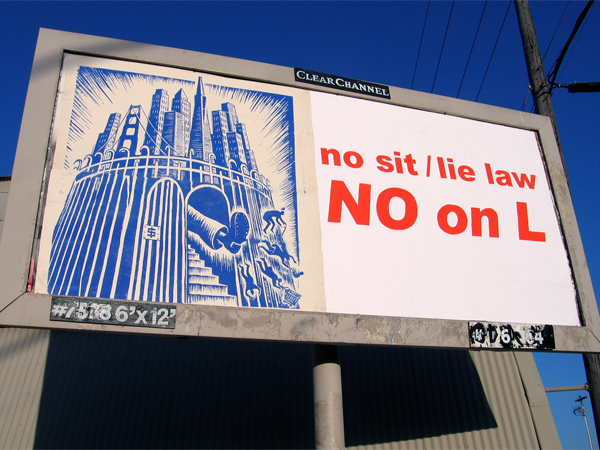
Most recently, Newsom introduced Proposition L, an ordinance that could put people in jail for 30 days on a second offense just for sitting or lying on the sidewalk. It passed, and set the parameters for very nasty dialogue about poor people once again in San Francisco.

All three of these votes took place very strictly along class lines — affluent people supported them and poor people did not.

Homelessness is not a lifestyle choice; it’s a symptom of poverty. Yet Newsom’s legacy of hatred against homeless people has made it difficult to amass the public support needed to create true solutions. Overstating his accomplishments and spreading myths about homeless people sets us back. It gives San Franciscans the impression homeless people have the help they need but simply choose to remain out on the cold hard pavement.

In a city filled with thousands of destitute people, it is now illegal to sleep unsheltered. After Newsom’s plaster media façade crumbles, this will be his lasting legacy. *

Jennifer Freedenbach is executive director of the Coalition on Homelessness.


Newsom’s homeless policy failure

11

I have no reson to dispute the figures in the Chron this morning showing that Mayor Newsom has moved 12,210 people off the streets of San Francisco, 6,692 of them placed into supportive housing and 5,518 shipped out of town with a free bus ticket. Randy Shaw, who has a city contract to run some of the hotels that Newsom is using for formerly homeless people, says Newsom has the “best record [on the issue] of any mayor in the United States”


And still the Chron laments, there are still homeless people on the streets:


Yet many of San Francisco’s neighborhoods remain plagued with panhandlers, and residents and tourists alike complain of feeling scared or just plain disgusted.


Let me suggest one possible reason that there’s so much panhandling still going on: Even the formerly homeless who now have residential hotel rooms don’t have enough money to eat. That’s because Newsom’s signature “Care Not Cash” measure took money away from welfare payments and shifted it into housing. These days, general assistance pays just $59 a month. Try living on that. Even with food stamps (which don’t buy you meals if you don’t have a kitchen to cook in) the money the city pays out is too little. So people beg for more.


Yes, there are people who panhandle to buy money for drink and drugs. Reality check here: People — homeless or otherwise — are going to drink and do drugs in this city. Give them enough money in a monthly welfare check and they’ll use that instead of bothering the tourists. Panhandling isn’t easy or pleasant; people don’t do it because they want to. They do it because there’s no other way to get money.


(And please, my trolls: Don’t tell me that these folks should “get a job.” There are currently five unemployed people for every job opening in America, and it’s worse in San Francisco.)


Of course, now that Newsom has decided to evict the Haight Ashbury Neighborhood Council recycling center — a place where homeless people can legally make a little money without panhandling — the problem’s going to get worse.  

Editor’s Notes

0

tredmond@sfbg.com

In the grand scheme of things — the $400 million budget deficit, the pending selection of a new mayor, that sort of thing — the eviction of the Haight Ashbury Neighborhood Council Recycling Center doesn’t sound like an earthshaking issue. The San Francisco Chronicle’s C.W. Nevius (who is pretty much on the wrong side of everything these days) proclaimed last week that it was just a little neighborhood tiff, nothing to do with the soul of the city.

But it annoys me as much as anything that’s happened this fall — and it says a lot about the way Gavin Newsom governs San Francisco and explains why so many of us will be so happy when he leaves town.

Let me come right out and say it: the HANC eviction is class warfare. It’s not about the appropriate use of park land or the need for a community garden. It’s about the fact that the mayor doesn’t like poor people trundling through an upscale part of town with shopping carts full of recycling.

Let me quote what Rebecca Bowe wrote in a blog post at sfbg.com:

“In its current function, the HANC Recycling Center is empowering to many different kinds of people. Most aren’t homeless. Tough-as-nails Asian grandmas show up with bags full of cans that they can exchange for some extra spending money. Urban gardeners purchase native plants in hopes of pleasing native insects and birds. People on fixed incomes get a small financial boost by turning in recyclables.

“A small number of HANC Recycling Center patrons do sleep outside. In order to earn small amounts of cash for things like food, many of them have to go digging around in garbage cans, which is gross and humiliating. Why would someone paw through the garbage for hours, battling bees and germs, and then haul smelly bottles uphill in a shopping cart just to make a few bucks? My guess is that it’s to ward off desperation. They make their own work and they get to eat.”

Let me focus on that last sentence for a second. As my friend Tiny at Poor Magazine likes to point out, being poor or homeless is a lot of work. Collecting cans, cashing them in, finding a way to survive on that minuscule income … it’s not easy. It takes as much effort and as many hours as most traditional full-time occupations.

But Newsom doesn’t want poor people in his city. He doesn’t want anyone bothering the wealthy. And he doesn’t care about facts or the public sentiment.

City residents — those folks Nevius and Newsom love to celebrate — showed up in large numbers at the Recreation and Park Commission to oppose the closure. There’s no logic to it at all; the center pays rent and creates jobs. The community gardens will cost money — and in the shade (where the center is located), it will be hard to grow much produce.

But never mind: Newsom got what he wanted. A city that will spend millions in public money on yacht races while making life on the streets that much meaner. Good riddance, Gav.

Rec & Park trashes HANC Recycling Center

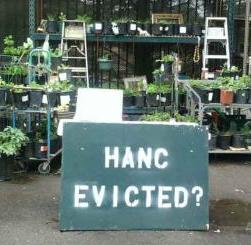
At yesterday’s Recreation & Park Commission meeting on Dec. 2, hundreds of San Francisco residents turned out to urge commissioners not to replace the Haight Ashbury Neighborhood Council (HANC) Recycling Center with a community garden. Their pleas fell on deaf ears.

It didn’t matter that a sunnier spot for a community garden had already been identified in the same area, with funding approved by the commission more than a year ago. It didn’t matter that thousands of people use the recycling center every month, and that the nonprofit bolsters community gardens throughout the city with donations and funding. It didn’t matter that we’re in a recession and there were jobs on the line. It didn’t matter that HANC pays rent to a city department facing a $12.5 million deficit, but the community garden would cost $250,000.

All that mattered in the end was that Rec & Park, and Mayor Gavin Newsom, wanted the HANC recycling center out. They thought removing it might discourage homeless people from sleeping in the park and hanging around the neighborhood. After nearly four hours of listening to residents urge them not to do it, the commissioners yawned and pushed the eject button. They unanimously voted in favor of the community garden. A 90-day eviction notice is expected to go out to HANC today.

The fight over HANC’s eviction has been described as a political battle between progressives and moderates, a showdown between heroes who stand up for public safety versus intimidating thugs and the lefties who enable them, and even a sequel to the sit /lie controversy. I think there’s an 800-pound gorilla sitting in the middle of this fight that no one wants to talk about: Class.

Community gardens are wonderfully empowering. I used to volunteer at one at a public housing complex in North Carolina. It was especially important for people who lived in that low-income community, since they benefited from nutritious produce that also lowered their grocery bills. Under the city’s plan for this new, gated community garden, 30 of the 40 garden plots will go to area residents. Given the affluence of that neighborhood, the garden beds will likely go to people who can afford organic groceries at Whole Foods without breaking into a sweat. For well-to-do San Franciscans, growing produce is not a means of survival — it’s about feeling good, and being green. By itself, there’s nothing wrong with that.

The problem is that it will be installed at the expense of a long-standing community resource that employs 10 people and lightens the load for hundreds of others during a recession, when people are truly struggling to get by. The Rec & Park Commission has essentially decided that this parcel of public space should be taken from a nonprofit that benefits people of all classes, and given to a small number of residents who’ve voiced complaints about “quality-of-life issues.”

In its current function, the HANC Recycling Center is empowering to many different kinds of people. Most aren’t homeless. Tough-as-nails Asian grandmas show up with bags full of cans that they can exchange for some extra spending money. Urban gardeners purchase native plants in hopes of pleasing native insects and birds. People on fixed incomes get a small financial boost by turning in recyclables.

A small number of the HANC Recycling Center patrons do sleep outside. In order to earn small amounts of cash for things like food, many of them have to go digging around in garbage cans, which is gross and humiliating. Why would someone paw through the garbage for hours, battling bees and germs, and then haul smelly bottles uphill in a shopping cart just to make a few bucks? My guess is that it’s to ward off desperation. They make their own work, and they get to eat.

“Some of them may use drugs,” one of the speakers acknowledged last night. “But,” he paused for dramatic effect. “Some of us use drugs, too.”

When sit / lie was under debate, critics wondered where the homeless were supposed to go, if they couldn’t sit on the sidewalks. Often, the reply was that they could go to the parks. But this latest attack on the homeless shows that they aren’t welcome there, either.

This is an opinion piece.

EDITORIAL: Save the HANC recycling center

11

The foes of the Haight Ashbury Neighborhood Council recycling center — including the mayor and Rec-Park Director Phil Ginsberg, who desperately want to get the low-income riff-raff who sell cans and bottles for a living out of the Haight and Inner Sunset — pulled out all the stops Dec 2, dragging good ol’ Chuck Nevius, who’s always ready to stand up for what isw clean and well-manicured and free of urban grit, into the fight. The Nevius column in the Chron is almost too perfect; he describes the center as “a noisy, ugly industrial plant” that doesn’t belong in Golden Gate Park. Well, the center is technically in the park, I suppose, but it’s not exactly smack amid Speedway Meadow or the Arboretum; it’s way off on the edge, in an area that most people don’t even think of as the park.

But see, here’s the real issue:

It is a magnet for the down and out, some of whom use the can and bottle payout as an ATM for booze and drugs, and even raid the neighborhood bins to fill their carts.

Imagine: A magnet for the “down and out” in the Haight. Imagine: A way for people to make some money without panhandling (which Nevius dislikes) or hassling tourists (which Nevius dislikes) or selling drugs (which Nevius dislikes) or stealing (which all of us dislike). Imagine: A community-run institution that actually creates green jobs for people who might otherwise be homeless (and doing things that Chuck Nevius dislikes).

The real issue is that the mayor never liked HANC (since he lives in the Haight, he ought to stop by a HANC meeting sometime; it’s really not that scary) and doesn’t like the idea of homeless people congregating around the recycling center, and would just as soon get rid of anything that doesn’t fit his vision of a squeaky clean, fully gentrified city.

And it’s not as if Ginsberg wants to restore that corner of the park to native flora; it will be, in his vision, a community gardening center. Nice, but not exactly a natural space. The new center would also attract small crowds — but of a very different demographic. Which, again, is what this is all about.

The HANC recycling center does everything that Gavin Newsom claims to support. It provides green jobs. It offers employment opportunities for people who are on the margins of society, and lets them get back on their feet — without a penny of taxpayer money. It promotes recycling and sound urban ecology.

The private company that collects our garbage and recycling, which is called Recology, doesn’t like the fact that poor people go around and collect cans and bottles from the blue bins on the sidewalk; the stuff is worth money, and the company would rather keep it. But in the end, the material goes to the same place and stays out of the landfills, which ought to be the point. And honestly, isn’t scavenging and recycling cans and bottles a better occupation than agressive panhandling and crime?

The center’s a bargain for San Francisco, and the personal peeves and suburban sensibilities of Newsom, Ginsberg and Nevius shouldn’t shut it down. The Recreation and Parks Commission should direct Ginsberg to back off on eviction proceedings and let the center stay.


What the Dickens

5

caitlin@sfbg.com

DAYS OF YORE For some, the holidays mean a frenzied stagger through the mall or a return to the cocoon of familial love. Others simply curl into a fetal position and try to block out consumerism’s bland canned tinkle of bells.

But for many in the Bay Area, the holidays mean donning some crinoline, a corset, or a snappy cravat and traipsing about a maze of freshly built village streets — engaging perfect strangers with a faux Victorian British accent. Such is life at the Great Dickens Christmas Fair, a nine-day event celebrating its 32nd year of “‘Appy Christmas, guv’nuh!”

In a foul, holiday-incurred blackness of a hangover, I was learning about the intricacies of epochal mass delusion in the Dickens family parlor — a party of cucumber sandwiches and polite conversation in a cozy corner of the Cow Palace, where the fair is set. Kevin Patterson, a beaming dandy of a man, greeted me with a blast of British cheer, although we quickly settled back into Californian when my somewhat reduced energy level and clumsy manhandling of a porcelain teacup became apparent.

Patterson’s parents started the fair, inspired by the sartorial glee of the Renaissance Pleasure Faire. “It was a natural shift from Queen Elizabeth and Shakespeare to Queen Victoria and Charles Dickens,” he tells me. Three generations of his family are now involved in its production, including his children and wife, Leslie. He says a fair of this kind exists nowhere else, not even in merry olde England.

I’m trying to figure out what makes a person want to be a part of such an involved pantomime. The three acres of Dickensian playground are host to more than 800 performers. There are the can-can girls flashing their bloomers at Mad Sal’s dockside alehouse, Father Christmas, homeless drunks, even the queen herself, who promenades past us to the loud delight of the waitstaff inside the family parlor.

The cast also includes a shriveled Scrooge (who is flown over from England specifically to play the role), dogs, and small children. Here and there dart 10-year-old boys delivering telegrams. Everyone is speaking in some approximation of Victorian dialect, and most seem reluctant to break through their shamming — we run into a belligerent William Sykes, apparently prior to being deported to Australia on charges of manslaughter, in one of the fair’s five (!) bars at one point and are nearly put off our spiced mead by his growlings.

It’s all about the season, Patterson explains. He tells me that the Victorian era, the birthplace of the Industrial Revolution, was when many of the traditions we celebrate today came about. “It was a simpler time.”

Perhaps, but not if you base your impressions of, say, the costume guidelines for the hundreds of cheery participants (easily seen on the fair’s website), or the dialect instructions, or the weekly e-mail missives that gently remind players that cell phones were not a feature of 1800s England and are not to be brandished, even if it is to take a photo of the live corset models or — gasp! — Dickens himself. “Authenticity is important. Most people in our cast care so much about doing it right,” says Patterson.

The rules of conduct are so expansive that classes are offered at a nearby high school in the weeks leading up to the fair for those hoping to brush up on their speech, improvisation skills (all the better to create the “environmental theater” effect Patterson IS looking for) as well as how to make your own clothing. Most people in those days had to, you know.

But the casual visitor to the Great Dickens Christmas Fair need not adhere to all these strictures, though I did feel très gauche in my jeans and hooded sweatshirt. We spent most of our time in the “unsavory” parts of town where custom dictates glottal stops for words with double t’s, and “anyfink” instead of “anything.” You find the filthiest drunks thereabouts, not to mention the boozy pub songs of Mad Sal’s, and a boudoir photography booth to show off your new spendy corsetry from Hayes Valley’s Dark Garden.

Not to mention an absinthe bar (pouring some local brews), hair-braiding salons, an explorer’s club, steampunk wonder shows, tarot readers, meat pies, crafts galore — and the happenstance magic of coming across a bunch of Dickensians spontaneously acting out some scene of yore-ness, not because they’re being watched by a gawking family but because they really, really like playing out life in Victorian England.

In one such scene, two women were strumming mandolins on the floor, their tiny ankle boots peeking out from voluminous skirts. Around them a perfectly period audience looked on from chairs set against the walls. Even in my slightly dehydrated, deflated state, I could enjoy their dedication to this homey weirdness.

“It’s our family holiday. We look forward to celebrating it every year,” twinkles Patterson, as I bid adieu to the posh environs of the family parlor. Charles Dickens himself sees me out onto the fake street outside, thanking me for attending his fair.

GREAT DICKENS CHRISTMAS FAIR

Sat/4–Sun/5, Dec.11–12, Dec.18–19;

11 a.m.–7 p.m., $12–$25

Cow Palace

2600 Geneva, SF

1-800-510-1558

www.dickensfair.com


Emergency forum Tues. / 30 on HANC recycling center eviction

8

An emergency community forum will be held tonight, Nov. 30, about the Recreation and Parks Department’s plan to evict the Haight Ashbury Neighborhood Council (HANC) Recycling Center from a parking lot in Golden Gate Park. If Mayor Gavin Newsom and his former chief of staff, Rec & Park General Manager Phil Ginsburg, succeed in their plan to evict the 36-year old recycling center, they’ll kill 10 green jobs, eliminate a rare source of income for poor people, and put an end to a community resource that costs San Francisco taxpayers nothing.

HANC believes the recycling center is being targeted by Newsom’s administration as a form of political payback, since the progressive organization opposed Proposition L, the sit / lie ordinance, which Newsom supported.

Ginsburg wants to evict the recycling center, which pays rent to the city, and replace it with a community gardening center that would cost $250,000. The shaded lot doesn’t seem like an ideal site for growing produce.

A memo issued Nov. 29 from Ginsburg to Rec & Park Commissioners notes that it is legal for the department to move forward with the eviction without commission approval. Apparently, Newsom’s administration intends to send 10 people to the unemployment line and kick a 36-year-old green resource to the curb without any public input, despite receiving 400 postcards from San Francisco residents opposing the eviction. The Rec & Park Commission will take up the issue of the new community garden center at its Thurs., Dec. 2 meeting.

Tonight’s emergency forum, organized by Keep Arboretum Free, is an attempt to open up a space for public dialogue.

A stakeholder meeting took place this afternoon with Ginsburg, District 5 Sup. Ross Mirkarimi, Department of the Environment Director Melanie Nutter, representatives from the San Francisco Police Department, represenatives from the offices of Assembly Member Tom Ammiano and City Attorney Dennis Herrera, HANC, and area residents.

Jim Rhoads of the HANC Recycling Center told the Guardian just after the meeting, “They’re going to evict us by the end of December. That’s their goal. The mayor has it in for us and he wants to get us out before he leaves.”

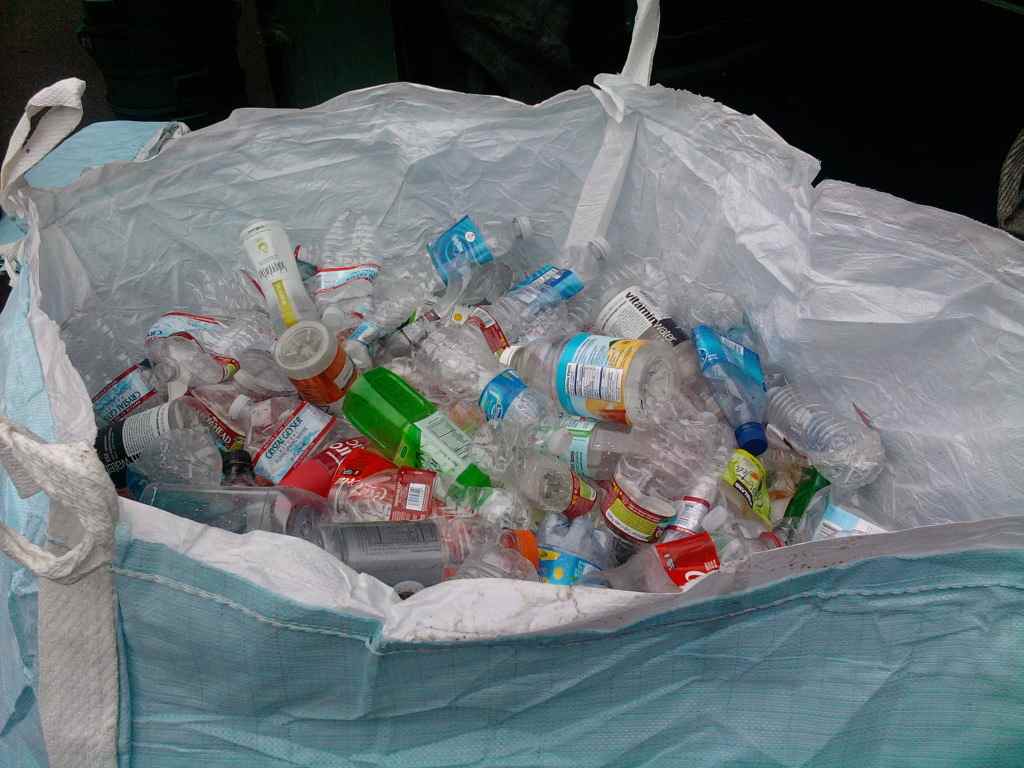
The recycling center, located at Frederick and Arguello streets, operates a buyback program for recyclable materials as well as a San Francisco native plant nursery. Residents from the Inner Sunset Park Neighbors have voiced complaints about “quality-of-life issues” that they link with some of the center’s patrons. During buyback hours, held from 10 a.m. to 3 p.m., people arrive with shopping carts filled of cans and bottles to exchange for small amounts of cash. Some of them are homeless.

Representatives from HANC, Rec & Park, and the Inner Sunset Park Neighbors have been invited to speak at tonight’s forum. “There are strongly felt opinions on both sides,” a flier for the event notes. “In the interest of a broad discussion, a number of long time local residents organized this forum for a full public airing of the issues prior to the Dec. 2 Commission meeting.”

The forum will be held tonight, Tuesday, Nov. 30, from 7 to 9 p.m. at St. John of God, 5th Avenue at Irving St.

To voice your opinion about Rec & Park’s plan to evict HANC, call Phil Ginsburg at 415-831-2701 or email him at Philip.Ginsburg@sfgov.org.

Green vs. “green”

12

rebeccab@sfbg.com

Years ago, Greg Gaar was a scavenger, wandering the neighborhoods around Twin Peaks picking up bottles and other kinds of recyclable trash. He began working at the Haight Ashbury Neighborhood Council (HANC) Recycling Center in 1982.

During his tenure, a project designed primarily to divert waste from the landfill expanded to include a unique San Francisco native plant nursery. Located on a converted parking lot on Frederick Street near Lincoln Boulevard, the recycling center is a drop-off for recyclable materials, including used veggie oil, and a source for soil and 65 species of potted plants.

Gaar started small. “I took some seeds,” he explained, “and scattered them into a flat. They came up like fur on a dog’s back.” Over the years, he researched the natural history of the area, saved seeds, and cultivated the grounds surrounding the recycling center. HANC also converted a traffic triangle across the street into a thriving garden.

The Recreation and Parks Department, directed by Phil Ginsburg — former chief of staff to Mayor Gavin Newsom — is seriously considering a plan to evict HANC recycling center and replace it with a garden resource center.

While trading one garden center for another might not seem like a big deal, it appears to be an attack on poor people who make their living recycling cans and bottles, a group that organized to oppose Proposition L, the sit-lie ordinance that Newsom supported in this election.

Or as HANC Executive Director Ed Dunn put it: “He’s going to take it from his enemies and give it to his friends.”

The HANC recycling center has leased Rec and Park property since its inception in 1974, and it’s been at its current location for 30 years. HANC does not receive any city funding for the center, and it pays a small amount in rent for use of the parking lot. It processes roughly 160 tons of recycling per month.

Newsom has worked hard to cultivate his reputation as a green mayor and promote green-job creation, but evicting the recycling center would kill 10 green jobs. Many of the employees were formerly homeless and previously earned petty cash gathering cans to exchange at the center’s buyback station. They were hired without any help from San Francisco taxpayers and now they’re earning living wages while diverting waste from the landfill.

But some neighborhood residents are annoyed by the presence of people who arrive at the center with shopping carts filled to the brim with bottles and cans that they can exchange for cash. Buyback hours are held from 10 a.m. to 3 p.m., so during those times, people who haul around bundles of recyclables line up to receive modest rewards for their hours of effort.

HANC, a progressive organization, publicly and vehemently opposed Prop. L, the voter-approved ordinance that bans sitting and lying down on city sidewalks. Newsom enthusiastically endorsed Prop. L.

Dunn believes the recycling center is being targeted due to HANC’s position on that issue. “It’s all about political payback,” says Dunn. Incidentally, Haight voters rejected sit-lie and HANC sees the pending recycling-center eviction as part of the same agenda. “It’s all part of the gentrification that’s enveloping San Francisco,” said Jim Rhoads, who chairs the HANC Recycling Committee.

Once word of the plans got out, letters started pouring into to Newsom’s and Ginsburg’s offices from the Sierra Club, San Francisco Tomorrow, the Senior Action Network, and other organizations. Additionally, the center’s supporters mailed at least 400 postcards opposing the eviction.

Residents have voiced complaints about the shopping-cart recyclers, some of whom are homeless. The Inner Sunset Park Neighbors (ISPN), which is petitioning Rec and Park to evict the recycling center, has a message posted on its website linking the shopping-cart pushers with “quality-of-life issues such as aggressive panhandling, drug use/dealing, and public safety.” ISPN also charges that the recyclers swipe cans and bottles from rolling curbside bins. The neighborhood group had not responded to requests for an interview by press time.

Rhoads believes that if the recycling buyback program is removed, it would only encourage panhandling — after all, people already lacking basic resources would lose a critical source of income. “People will be very desperate,” he said. According to the results of a HANC survey, one in six recyclers regularly turning up at the center to exchange bottles for cash sleeps outside.

The Recreation and Park Commission will discuss the possible HANC eviction at its Dec. 2 meeting. And since the recycling center is on a month-to-month lease, the 36-year-old green resource could soon suffer eviction. There’s likely to be significant resistance, since the HANC Recycling Center has forged partnerships with urban-agriculture projects throughout the city.

It was a fiscal sponsor of the Garden for the Environment and donated several tons of cardboard for mulching at Hayes Valley Farm. The HANC nursery project has distributed plants to urban agriculture projects throughout the city, including school garden plots, urban habitat corridors designed to protect rare species, and the Mission Greenbelt Project, a network of sidewalk gardens in the Mission.

Details on the proposed garden resource center that would be installed in lieu of the HANC Recycling Center are sketchy. An artist’s rendering of the plan, drawn up by the city’s Department of Public Works, envisions an outdoor classroom amphitheatre, raised garden beds, a semi dwarf orchard, and a composting area. However, Guardian inquiries to Rec and Park requesting more specific details about funding and operation went unanswered by press time. 

Are you ready for GWAR??

1

Apparently, even the massive, all-powerful aliens and scumdogs of the universe known as GWAR have trouble with reception on their iPhones.

While conducting a phone interview before a show in Hollywood, band leader Oderus Urungus’ connection cut out twice, leaving him grumbling, “Maybe I’m clutching my iPhone too tightly!”

Perhaps it was his giant claws proving to be too much for our puny human technology to handle — either way, once the connection was re-established, the intergalactic beast that has led GWAR for more than a quarter century had no shortage of hilarious and outrageous things to say.

Having just finished taping a segment for the Fuel TV show Daily Habit, Oderus was being informed that he had revealed a bit more of himself to the television audience than he had thought. “I just did the show apparently with my balls hanging out the entire time and nobody told me! That’s not like a big thing for Oderus, my balls usually are hanging out — but to try to get on national TV, I’m willing to do the ball tuck, but apparently the ball tuck didn’t work, it was horrible, it looked like a duck-billed platypus coming out of a burrow or something!”

Although someone out there in TV land was undoubtedly offended by this show of alien masculinity, they can just add themselves to the scores of non-believers and critics who have unsuccessfully assailed the musical and cultural force that is GWAR over the past couple of decades. Currently celebrating their 25th anniversary, the heavy metal space gang that brought our planet recorded gems such as Scumdogs of the Universe and This Toilet Earth are back in all their unholy glory with a new album, The Bloody Pit of Horror (Metal Blade).

Propelled by the first sleazy single, “Zombies, March!,” Oderus Urungus and his cohorts have returned in fine beastly form, ready to again spread their love to fans around the globe — which of course means spraying audiences with all manner of fake blood, bodily fluids, and god knows what else.

At a time when many bands their age would be mellowing out and producing so-called “mature” material, GWAR has shown that they are only getting dirtier and heavier with time, as any fan should expect from a group with their background and history.

“With any of the records we’ve made, we didn’t really go into it with a preconceived notion of what it was going to sound like. We just went at it and tried to make the record that was appropriate to what we felt like at the time, and I guess we were feeling particularly ferocious [with this one],” says Oderus. “We just wanted to emphasize how fucking awesome we are, and recall a day not so long ago when bands actually put out an album about once a year — nowadays that just doesn’t happen, bands take forever in between albums, and half the time they’re full of re-mixes, or tracks from other albums that got cut.

We just wanted to have a whole bunch of great music for our fans, and just celebrate the idea of GWAR. One of the things about this album that’s a little different that gives it that ferocious sound is that we tuned down I believe to F#, which is basically the loosest that guitar strings can be and still stay on the neck — it sounds like the guitars are vomiting — in a good way! I think it makes for a very powerful record.”

When asked if his band of rubber aliens, mutants, deviants and demons ever looks back on their history and thinks about the fact that they’ve been  doing what they do successfully for so long, the answer is a firm “No.”

“If we took the time to go back and actually examine what we were doing, we’d be so shocked and appalled that we’d stop doing it. It’s better to just keep mindlessly plugging onward,” laughs Oderus. “[With that being said] we are very well aware of just how awesome it is what we’ve managed to do, and we intend to keep doing it as long as possible — or until we escape the planet Earth, whichever comes first.”

With the release of The Bloody Pit of Horror, GWAR have been hitting the road in support, crossing the United States and making an appearance on national late night television, with a performance last month on Late Night with Jimmy Fallon.

“We did Springer and Joan Rivers like 20 years ago, and it took them 20 years to let us back on television!”

Oderus himself has been making several more recent appearances on TV, however — in the last year or so he’s been a regular guest on, of all places, a Fox News program, Red Eye. Although it does sound like an awfully strange pairing, the intergalactic barbarian thinks that Fox sees in him a potential for higher ratings, thus justifying having a giant space beast running around their studios.

“It is an odd match that they would put GWAR in a position where I can not only comment on society but do it over and over again, but obviously they’re having a little fun with it. It’s pretty funny to be walking around the Fox studios in New York City and run into Glenn Beck…yeah, Oderus and him are hanging out, backstage buddies!”

Having toured all over the world in the past 25-plus years, Oderus and his bandmates have seen all manner of crazy and twisted things, but the singer says that no place can hold a candle to what’s he’s seen and experienced right here in San Francisco.

“Pretty much every time we’ve been to San Francisco, it’s been insane, since the very first GWAR tour where we showed up in an old school bus, and ended up parked in the Tenderloin for a week straight, that neighborhood was really bad. And then our show at the Warfield where the bums were dropping dead right outside of the venue; the line was going around the block, they were three dead homeless people laying on the sidewalk, and out fans were just very politely stepping over their corpses, that was pretty weird!”

He also mentions a doorman selling crack by the side of the stage within just a few feet of a nearby cop — one that at first the band didn’t even believe was a real officer. “I thought he was a guy that dressed up in a joke cop outfit, because his uniform was so fucked up and dirty, and he was driving this cop car that was all beat to shit, the fenders were even hanging off it!”

With that said, Oderus is eagerly looking forward to playing here in the city on Sunday, and has some words of praise for his local fans.

“San Franciscans — you still have a complete, stone cold lock on the sickest, weirdest, most fucked up town in the United States. New Orleans has nothing on you people!”

http://www.youtube.com/watch?v=qusEPwdM7B8&feature=related

GWAR

With the Casualties, Infernaeon, and Mobile Death Camp
Sun/21, 7:30 p.m., $22-$25
Regency Ballroom
1290 Sutter St., SF
(800) 745-3000
www.theregencyballroom.com

Spread the warm fuzzies

0

Caitlin@sfbg.com

Congratulations. Now that you’re reading an article on giving back during the holidays, the healing can begin. Gentle friend, you are now free to have the warm fuzzies! Seriously, though, volunteering and making sure the presents you buy contribute to a good cause are admirable pursuits during this time of fireplace and family — but most of the organizations listed below do their thang year round. Use the season of giving to ignite a relationship with one of them that will continue long past the menorahs been packed away and Christmas tree set aflame by wandering packs of Mad Maxes.


VOLUNTEERING


ROADDAWGZ

The Tenderloin drop-in center provides a creative outlet for homeless and transitionally housed youth. It’s always looking for volunteers to help with artistic and literary programs, administration, technical support, fundraising, and outreach.

(415) 923-9085, www.roaddawgz.org


SF FOOD BANK

Four hundred tons of food pass through the Food Bank’s warehouse each week. That’s a lot of box wrangling! This Thanksgiving, the bank’s hoping to provide 35,705 families with Turkey Day dinner — so get on down to their facilities to lend a hand, no lengthy orientation or time commitment required.

www.sffoodbank.org/volunteer


SF SPCA

How much is that doggy in the window? You’ll have the answer to this and other questions when you become a volunteer with SF’s pioneering no-kill animal shelter and its furry yearly Macy’s display windows, site of 300 adoptions and $50,000 in donations last holiday season. Greeter and matchmaker positions are available.

www.sfspca.org


GLIDE CHURCH

Glide’s got the goods when it comes to your soup kitchen service time this holiday season. (Hurry, spots fill quickly!) But maybe people aren’t your thing. In that case, come join the church’s good Samaritans who keep Boedekker Park in the Tenderloin in good working order for the TL community every third Saturday from 9 a.m.-noon.

www.glide.org


LARKIN STREET YOUTH SERVICES

Calling all shopaholics — we’ll take a break from harassing you about consumerism if you’ll turn your retail frenzy to a good cause. Larkin Street is looking for donations of everything from clothes to electronics to personal care items and gift certificates for its homeless youth holiday gift drive. Chip in, willya?

www.larkinstreetyouth.org


GIFTS THAT GIVE BACK


UNDER ONE ROOF

From Harvey Milk notecards to San Francisco martini glasses, Under One Roof has a wealth of kitschy-cool presents for someone who could use a little City by the Bay in their life. What’s even better is that Under One Roof has been selling these things since 1990 to raise money for agencies that provide HIV/AIDS support.

518 Castro, SF. (415) 503-2300, www.underoneroof.org


COLE HARDWARE

Roommate needs to stop borrowing your hammer? Cole’s got what you need to wrap up self-reliance for him this holiday season — and with its community partnership program, you can choose from a long list of neighborhood and national nonprofits (like local schools) to receive 10 percent of the money from your purchases.

Various locations, SF. www.colehardware.com


CREATIVITY EXPLORED HOLIDAY ART SALE

When you’re developmentally disabled, the term “outsider art” takes on new meaning — but points the way to some ravishingly perceptive masterpieces. Creativity Explored provides a support center for these nontraditional Picassos, and you can lend weight to their mission by shopping their holiday art sale.

Dec. 3–22, free. Mon. and Tues. 10 a.m.–3 p.m., Wed through Fri., 10 a.m.–7 p.m. Sat noon-6 p.m. 3245 16th St., SF. (415) 863-2108, www.creativityexplored.org


LA COCINA GIFT FAIR

The budding food entrepreneurs supported by this nonprofit will be more than happy to take the cookie-baking off your hands. Give your loved ones a box of chocolate-caramel shortbread squares or a delicious pierogi made by enterprising members of your community.

Dec. 10, 4–9 p.m., free. Mission Cultural Center for Latino Arts, 2868 Mission, SF. (415) 824-2729, www.lacocinasf.org

On the cheap listings

0

On the cheap listings are compiled by Caitlin Donohue. Submit items for the listings at listings@sfbg.com. For further information on how to submit items for the listings, see Picks.

Wednesday 17

Lara Adair Books Inc., 2251 Chestnut, SF; (415) 931-3633, www.booksinc.net. 7 p.m., free. Author Adair shares the secrets she’s privy to via her life of writing and coaching others – and that she’s published in her newest how-to, Naked, Drunk, and Writing. Pick up some pointers at this author talk, just don’t take the title too seriously now.

Dine Around, Shop Around, Drink Around Various venues, SF; (415) 558-6999 x230, www.dineshopdrink.aef-sf.org. 11 a.m.-2 p.m. A great excuse to paint the town red at some of your favorite neighborhood shops and eateries – tonight, 25 percent of your purchases will go towards HIV/AIDS and breast cancer support agencies.

Mole to Die For Mission Cultural Center for Latino Arts, 2868 Mission, SF; (415) 821-1155, www.missionculturalcenter.org. 7-10 p.m., $7. Dive into this Oaxacan delicacy at MCCLA’s cook-off, which this year features a special green mole for the true culinary enthusiasts.

“Saving the Last of the Wild: North American Corridors” California Academy of Sciences, 55 Music Concourse, SF; (415) 379-8000, www.wcs.org/patronseventCA. 6-8 p.m., free. A panel of scientific minds discuss the threat of human development to migration paths – lord, those animals have it rough! RSVP recommended.

Thursday 21

Switchback launch party Books and Bookshelves, 99 Sanchez, SF; www.swback.com. 7-9 p.m., free. The USF graduate school literary journal celebrates the sunshine on Issue No. 12, themed “Minority vs. Majority.” Raise your wine glass to live readings by scholarly bards, and ponder the conflicts between the few and the many in our society.

Friday 22

de Young artisan fair de Young Museum, 50 Hagiwara Tea Garden, SF; (415) 750-3600, www.famsf.org. (also Sat/20) 9:30 a.m.-8:30 p.m., free. Maybe you can’t afford the art up on the walls for your favorite masterpiece loved one this holiday season, but you can snag some one-of-a-kind gifts from the fine arts museum’s bazaar of local artesanals. Browse and shop accessories, clothing, and more.

Hospitality House “Art for the House” art auction The Shooting Gallery, 839 Larkin, SF; (415) 749-2184, www.hospitalityhouse.org. 6-10 p.m., free. Have a drink in the Tenderloin while you peruse for purchase the artwork of individuals from various community programs for the homeless and transitionally housed, including Roaddawgz and the Community Arts Program.

bay area

“Dracula to Twilight” Other Change of Hobbit, 3264 Adeline, Berk. (510) 654-6226, www.otherchangeofhobbit.com. 6-8 p.m., free. A professor and a chronicler of the Saint-Germain novels discuss the portrayal of blood-sucking undead in pop culture’s film and literature. Mortals welcome to attend, just make that your scarf is tied tightly and your garlic earrings are on hand.

Saturday 23

Celebrate People’s History release party Center for Political Education, 522 Valencia, SF; www.politicaleducation.org. 7 p.m., free. Perhaps you’ve caught CPH’s compelling radical prints on your neighborhood community center or bus shelter’s walls – they’ve been around since 1998. The group’s published a retrospective of their most vivid public art and you can celebrate its release here with historian Lincoln Cushing and artist Favianna Rodriguez.

“Science of Perception”: Human Potential Laboratory Southern Exposure, 3030 20th St., SF; (415) 863-2141, www.soex.org. (Also Sun/21) Noon-9 p.m., free. The Anonymous Immortal Collective and career alchemist Ean Huggins-McLean present an opportunity to extend the elasticity of your mortal coil: healing foods, training for aura-sighting, and more from their “new health care system” at this two-day workshop.

Tenderloin Reading Series Koko Cocktails, 1060 Geary, SF; (415) 596-7614. 7 p.m., free. The quarterly dish on the quirks and perks of the infamous TL features readings of poetry, fiction, and creative non-fiction. The much maligned neighborhood doesn’t get too many chances to revel in itself, so this is a great chance to celebrate your city.

bay area

Home and Hope interfaith benefit concert Transfiguration Episcopal Church, 3900 Alameda de las Pulgas, San Mateo. 7 p.m., donations accepted. The Foster City Community Chorus and East Bay Church of Religious Science Choir sing their hearts out in support of Home and Hope Shelter Services. The bringing of pie to the after-reception is highly encouraged.

Vintage Paper Fair Centre Concord, 5298 Clayton, Concord; (415) 814-2330, www.vintagepaperfair.com. (Also Sun/21) 10 a.m.-6 p.m., free. Maybe a bathroom plastered with old school cosmetic ads? Perhaps paper mache your refrigerator with postcards from famous foodie destinations? You can line your apartment with ephemera from antiquity after a shop-stroll through this bazaar of retro paper products – over a million scraps will be on sale.

Wednesday 17

bay area

Charity Turkey Bowl Serra Bowl, 3301 Junipero Serra, Daly City. (650) 992-3444, www.serrabowl.com. 10 a.m.-4 p.m., lanes $25 per hour, donations accepted. Dust off that strike form, young bowler: Serra Bowl is donating a turkey per ten-pin knockout to hunger organizations all day today. Now that’s reason enough to hit the lanes, no?

Jail bait

0

le.chicken.farmer@gmail.com

CHEAP EATS On a day when I felt really very much like oiling a countertop with my elbows, I oiled a countertop with my elbows! This proves that such a thing as free will exists, I think.

Proving that I’m not a very great thinker, because maybe I was predetermined to want what I wanted, or maybe we all want the same thing: barbecued pork ramen.

Other evidence of my not-greatness, brainwise, includes knocking over the popcorn, letting my bike basket get moldy, and locking myself out of my apartment seven or eight times a day. I’m exaggerating.

The good news is, I have managed to live my life so far entirely in and occasionally locked out of apartments. Or at least vans. I have never been homeless, or, worse, incarcerated against my will. Every time I see a mental institution I think: there, but for the grace of God, go I. Same with jails.

My poor mom, who has been in both of those places, kicking and screaming, is also in me. See? I believe in genetics. I don’t believe in God, but I do believe in “the grace of God,” I guess, because so far I have managed to pass as merely kooky. And in this people tend to humor me and keep spare keys to my apartment.

Still, there’s a certain moodiness with which one walks or bicycles past the Hall of Justice, if one is me. I mean, if I’m driving a car I’m okay, because the sight of all those police just scares me into closing my eyes, thinking about ponies, and stepping on the gas.

Pedically speaking, I stick to the other side of the street, basking in the barrage of bail bondage. It’s San Francisco’s most alliterative block of businesses, you know: Bail Bonds, Bail Bonds, Bail Bonds, Bail Bonds, Sushi, Bail Bonds, Bail Bonds, Bail —

What the? Did I just say sushi?

Yep. Believe it, jurors and judges. Oh, and bad guys, you no longer have to go to jail without first having one last California roll, or meet with your friendly neighborhood bail bondsmanperson over McDonalds. God damn, what a great city this is! What a wonderful and humane criminal justice system we have here, now that Live Sushi is on the block.

Good luck finding the entrance.

I took the trouble because a) they had a counter, although it wasn’t exactly what my elbows had had in mind. On the other hand, there was a cooking show on TV, and b) they had ramen. And soba and udon. For like, $8 or $9 at lunch time. Which it was.

I wished I could afford some sushi too, but, nah. This is not no criminal justice system sushi, pricewise. It’s Potrero Hill, only crammed between a bunch of bail bonds boutiques. So alls I could afford was a bowl of barbecue pork ramen and a glass of ice water.

Gotta say: the water was very very good, and cold, and came with free refills, and the soup was excellent. The pork could have been a bit less cooked, but the broth was delicious, and I loved the little curly pickles and the ginger. And the ramen. Great bowl of soup, new favorite restaurant. And I think I learned something from watching TV, but I forget what it was. Something about chicken bones.

Anyway, I stopped at Trader Joe’s and bought me their cheapest chicken on the way home, because Mr. Wong was coming over for his own private, personal cooking show, his first, and I wanted to show him how to make five meals from one chicken … a trick I learned by listening to Spot 1019 in the old days.

I didn’t want to start cooking dinner without him, although that’s usually what I do as soon as I’m done with lunch. So, to kill time, I decided to clean the mold off of my super cool Toto Too bike basket.

I went upstairs to borrow some bleach off Earl Butter and, of course, locked myself out of my apartment. There’s a couch in the lobby. And a magazine rack. For the rest of the afternoon, I didn’t get anything done.

LIVE SUSHI BISTRO

Mon.–Fri.: 11 a.m.–10 p.m.;

Sat.–Sun.: 4:30 p.m.–10 p.m.

1 Gilbert, SF

(415) 558-8778

D,MC,V

Beer and wine

SF local artist’s purpose within reach

0

“I wanted to teach people, tell them how to do it. I always dream about taking back the city through art.” Reynaldo Cayetano Jr. is showing me his photographic prints in a Lower Haight coffee shop. He’s explaining to me how a guy who grew up in San Francisco came to be on the brink of his third art show in San Francisco (Purpose: Beyond Reach, coming up on Sat/20 at Rancho Parnassus).

Is it weird that this trajectory needs explaining? Common sense says that growing up in a world-class art city would give you a leg up on an career amidst darkrooms and gallery openings. But that’s not the case in cities, really. Local kids get the boot for all kinds of reasons in today’s 21st century – especially creative types who aren’t ready to divest their days to the rat race necessary to stay and live in our great urban spaces.

Maybe to look for real, SF-grown artists you have to see beyond the standard downtown gallery scene. Cayetano’s art shows take place at non-traditional venues – the most recent of which was Bayanihan Community Center on Sixth Street, in the neighborhood that Cayetano grew up. The 23 year old populates the shows half with friends he grew up with and half simpatico souls he meets around the city (full disclosure: my boyfriend falls into this category for the upcoming Sat/20 show). 

Cayetano (Rey to friends) says he’s always been “a spectator of art.” He began sketching as a teen, copying his older brothers who liked to draw. “But soon I was getting better than they were,” he tells me, smiling over coffee and a pastry at the round table we’re sitting at with fellow Inks of Truth artist, photographer Chris Beale (whose shots illustrate this article). 

We’re passing around the portfolio of the two men, who met in a City College photojournalism class and bonded over being the only ones working with film in a digital world (“making it, like, twice as hard on ourselves,” they tell me, clearly relishing the challenge). Cayetano’s folder of prints shows street scenes from his recent trip to the Phillipines — a journey he’s made only twice since his father, mother, two brother, and he moved to California in 1993. 

Real talk: Reynaldo Cayetano and a new friend downtown. Photo by Chris Beale

I turn the page and there is a black and white closeup of his uncle’s knotted hands, then photos from his life in SF: friends, protesters at immigration rallies, corners and streets he’s walked for years. Beale, a long time SF resident originally hailing from Baltimore, has crisply developed shots of Rey in his own book, a dissenter giving the finger to City Hall’s golden cupola, an image of the two’s friend – and emcee who’ll be playing his new album at Saturday’s event – Patience the Virtuous, gazing into the MUNI bus yards. 

Rey started curating his group shows — which display the work of a loosely bound collective called Inks of Truth — to fight ignorance in the SF community. Ignorance of pedestrians, that is. Spurred by a good friend’s death on the Alemany and San Jose S-curve (the young woman for whose 21st birthday present the camera he shoots with was intended), he brought together creative acquaintances for an event that “was supposed to be an art show, but leaned towards awareness.”

Photos from that show and Rey’s second depict a crowd of young people enjoying themselves amidst the physical evidence of their collective creativity, at one point clearing the floor for some b-boys to get in on the show and tell. It’s hardly the scene you see at many wine and cheese receptions that mark the debut of an artist’s work at other places around the city.

The events’ orchestration were big moves for a guy that has trouble seeing himself as a professional artist. “As soon as I call myself that, it comes with… I don’t want to say baggage, but it implies a lot of knowledge,” Rey tells me. “At first I thought that I shouldn’t have a show because I’m not a photographer, but then I thought no – that’s why I should do it.” When I ask him whether he sees a lot of the peers he grew up with in the Sixth Street neighborhood getting in on the SF art scene, he’s hesitant to make sweeping statements. “I feel like it’s lagging, but it’s not to the point where it’s hopeless.”

Perhaps this lag is what gives Cayetano the motivation for his inclusive shows. Saturday’s will feature works by sixteen artists in a variety of mediums. Cayetano is hungry to give others the adrenaline rush and fufillment that comes from finally, seeing one’s work on the wall. 

But it’s not always easy. In the midst of his own worry over producing events without professional guidance, Rey’s dealing with the varying levels of commitment of artists showing their beloved creative mindsprings for the first time. But overall, the process is one he seems to take inspiration in. “It’s great to give them that kind of anxiety, it’s a good stress. If you’re not stressing in the process, it’s not explosive,” he reasons.

In addition to bringing a taste of artistic involvement to the talented around him, the upcoming Purpose: Beyond Reach show at the Sixth Street cafe has another, even more salient community connection. It’s a food drive for Martin de Porres House of Hospitality, a place that Beale says is the soup kitchen of choice for many of the homeless people he’s spoken with. 

Cayetano elected Martin de Porres as the beneficee for its relatively small capacity. After speaking with representatives from larger shelters like Glide, he discovered “even if you raise a lot of cans, for a big shelter it will be gone within a meal.” Art show attendees are expected to load down their backpacks for entrance: those over the age of 21 are expected to donate at least five cans of food. 

For Cayetano, it was important that his third show reflect the entirety of the community where he was raised.  “It’s a testament of growing up on Sixth Street. The people out on the street now are the same ones that were there when I was growing up.” All the better to reflect the real community of San Francisco — if not that, then what are we painting for?


“Purpose: Beyond Reach”

Sat/20 4-10:30 p.m., free with can donation (21 and up, five to seven; 20 and younger three to five) 

Rancho Parnassus

132 Sixth St., SF

(415) 503-0700

www.wix.com/purposebeyondreach/inksoftruth


OUT. THE GLENN BURKE STORY

0
Please join Comcast SportsNet Bay Area for the premiere screening of Out. The Glenn Burke Story.  This a one-hour documentary tells the dramatic tale of Burke’s legacy as the first openly homosexual Major League Baseball player.  As Burke began to reveal glimpses into his sexuality, the baseball establishment began to close him out.  The film tells the tumultuous story of the wedge that was driven between Burke and management that led to his abrupt retirement.
 
The screening and town hall discussion will take place at the  Castro Theatre on Wednesday, November 10.  Tickets are $5 and proceeds support Marty’s Place, which was created to provide warm shelter and tender loving care for homeless persons with HIV/AIDS, as provided to a homeless Glenn Burke for shelter and care as he coped with the effects of HIV/AIDS. For more information and to purchase tickets, visit  www.csnbayarea.com/pages/out.
Wednesday, November 10th at 7:30PM @ Castro Theatre, 429 Castro Street, San Francisco
WIN a pair of tickets to OUT. THE GLENN BURKE STORY by sending an e-mail to promos@sfbg.com with your full name and the subject line “OUT” by Tuesday, Nov 8th at 11pm.

The Sit Lie Posse can “liberate” a billboard in 10 minutes

A press release went out yesterday announcing that a group called the Sit Lie Posse had “liberated” six billboards and 60 bus shelters with original artwork in opposition to Proposition L, San Francisco’s proposed sit / lie ordinance. The posters bear three different images, including one featuring a “Gascon-topus,” illustrated with the face of San Francisco Police Chief George Gascon and the body of a gigantic octopus. Gascon is a strong advocate for the ordinance, which would ban sitting and lying down on San Francisco sidewalks.

While members of the posse did not provide a phone number or reveal their true identities, the Guardian did manage to get in touch via email with a spokesperson of the posse, who goes by the name Jim Rawley.

Rawley says he chose his name in honor of the character from John Steinbeck’s The Grapes of Wrath, who manages the utopian Weedpatch camp and treats the impoverished Joad family with dignity and respect. Rawley also reveals the technique the Sit Lie Posse uses to liberate bus-shelter ads, and tells us how long it takes for the crew to put up displays of their artwork throughout the city. A few of our questions and answers appear below.

San Francisco Bay Guardian: Does the Sit Lie Posse have a budget? If so, how much?
Jim Rawley: The Sit Lie Posse is a volunteer group unaffiliated with any electoral campaign. We made our guerrilla ads by hand and paid for our materials out of pocket. It cost us $150 to liberate six billboards and 60 bus shelter ads.

 
SFBG: How long does it take to liberate a billboard? How about a bus shelter ad? Does the posse use wheat-paste?
JR: Our billboards took about 10 minutes and the bus shelters took 2-3 minutes. We accessed the bus shelters using a master key and attached our work with Velcro, the industry standard for bus shelters because of quick, easy insertion. We attached our billboards with wheat-paste. Despite the efforts of Clear Channel and a heavy rainstorm, our bus shelters and billboards are still up.


SFBG: The Sit / Lie Posse has created quite a stir. C.W. Nevius writes in this morning’s column: “Opponents are attempting to make a comparison with the civil rights movement in the South in the ’50s and ’60s. Apparently their view is that an unkempt panhandler camping on the sidewalk equates to the Freedom Riders opposing racial discrimination. Weird.” What would you say to Nevius in response?

 JR: We expected that the Chronicle would try to ridicule, belittle and smear our work, especially since C.W. Nevius and his advocacy columns instigated Prop L. In the 1950s and 60s civil rights workers were maligned by the mainstream press, harassed by the police and subject to physical violence. It takes time for social movements to gain legitimacy in the eyes of the state and the corporate media. In their own words, Chronicle columnist C.W. Nevius and Police Chief George Gascon have said that Prop L enforcement would exclude tourists and center on the homeless. Regardless of your opinion on homelessness, it’s clearly discrimination when the law is based upon a person’s appearance and applies only to certain groups – the poor and people of color. Even more so when the stated intent of the enforcement is to drive certain people out of a neighborhood. This is San Francisco’s kindler, gentler version of Jim Crow segregation.


SFBG: What was the inspiration behind the Gascon-topus?

JR: We came up with the Gascon-topus as a reference to sci-fi movie posters. Prop L will give unchecked power to the police to conduct unconstitutional searches and arrests. In the face of such a monstrous attack on civil liberties, we wanted to respond with wit, humor and satire.


SFBG: Why do you think it’s important to fight against expanded policing in public space?

JR: It’s important to fight additional policing in pubic space to preserve our civil liberties and to save the character of San Francisco. Most San Franciscans don’t want to sacrifice the city’s diversity and rebellious creativity in order to recreate San Francisco as one massive, sanitized shopping mall with all action controlled by the police. Most San Franciscans don’t want undocumented immigrants and day laborers to be deported after a bogus bust for sitting. Most people don’t want to see the poor disqualified from government housing because they committed the crime of sitting. Most people don’t want to be subjected to unconstitutional drug searches after being detained for sitting, nor do people want to see parolees sent back to prison for the crime of sitting. Public space and civil liberties are vital to a healthy democracy. Public space is the only area beyond private property and the marketplace where San Franciscans can come together to exercise civil rights and collectively shape the future of the city. We need to defend that space and extend it against threats from wealthy business interests and their allies in government.