Health

Judge Kopp to run for D.A.?

11

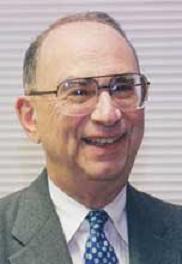
Yep: Quentin Kopp, the 82-year-old former supervisor, former state Senator, retired Superior Court judge and political fixture in this city for four decades, is being talked about as a potential challenger to the new district attorney, George Gascon.


I just talked to Kopp, and he confirmed that a lot of people have approached him about running in November, and while he’s not a candidate at this point, he hasn’t ruled it out. “If I do run — and I have to think about the rigors of a campaign — I would run on a platform of using the district attorney’s office to root out political corruption,” he said.


Kopp has always been fairly conservative on law-and-order issues and is a supporter of the death penalty. His political base has always been on the West side of town. But in a typically untraditional fashion, Kopp has become a bit more liberal in his later years — and has always been a strong supporter of open government and a foe of political sleaze.


And he seems to be in good health and certainly hasn’t lost his political vigor. (And, he reminds me, the legendary DA of New York, Robert Morgenthau, served past his 90th birthday.) So Kopp would be a formidable candidate in what’s shaping up to be a fairly large field.


Never a dull moment in this town.

What progressive means

85

Willie Brown says that choosing a person of color for a leadership position should be a “progressive” value. David Chiu says Ed Lee is a progressive. Several supervisors, and other political observers, say the six-vote progressive majority on the board is gone.

And nobody really talks about what that word means.

Progressive is a term with an excellent political vintage, but it’s changed (as has the political context) since the 1920s. (Progressives these days aren’t into prohibition.) So I’m going to take a few minutes to try to sort this out.

I used to tell John Burton that a progressive was a liberal who didn’t like real estate developers, but that was in the 1980s, when the Democratic Party in town was funded by Walter Shorenstein and other developers, who were happy to be part of the party of Dianne Feinstein, happy to be liberals on some social issues (Shorenstein insisted that the Chamber of Commerce hire and promote more women) and happy to promote liberal candidates like John and his brother Phil for national office – as long as they didn’t mess with the gargantuan money machine that was highrise office development in San Francisco.
Arguing that Shorenstein’s economic agenda was driving up housing prices, destroying low-income neighborhoods and displacing tenants was a waste of time; the liberals like Burton (who also represented real estate developers as a private attorney) weren’t interested.

But these days it’s not all about real estate; it’s about the fact that the level of economic inequality in the United States has risen to levels unseen since the late 1920s, and the impacts are all around us. And it’s about (Democratic) politicians in San Francisco blaming Sacramento, and (Democratic) politicians in Sacramento blaming Washington, and the Democratic Party in the United States abandoning economic equality as a guiding principle.

So I sat down on a Saturday night when the kids went to be (yeah, this is my social life) and made a list of what I think represent the core values of a modern American progressive. It’s a short list, and I’m sure there’s stuff I’ve left off, but it seems like a place to start.

For all the people who are going to blast me in the comments, let me say very clearly: This isn’t a litmus-test list (we’ve endorsed plenty of people who don’t agree with everything on it). It’s not a purity test, it’s not a dogma, it’s not the rules of entry into any political party … it’s just a definition. My personal definition.

Because words don’t mean anything if they don’t mean anything, and progressive has become so much of a part of the San Francisco political dialogue that it’s starting to mean nothing.
For the record: When I use the word “progressive,” I’m talking about people who believe:

1. That civil rights and civil liberties need to be protected for everyone, even the most unpopular people in the world. We’re for same-sex marriage, of course, and for Sanctuary City and protections for immigrants who may not have documentation. We’re also in favor of basic rights for prisoners, we’re against the death penalty, and we think that even suspected terrorists should have the right to due process of law.

2. That essential public services – water, electricity, health care, broadband – should be controlled by the public and not by private corporations. That means public power and single-payer government run health insurance.

3. That the most central problem facing the city, the state and the nation today is the dramatic upward shift of wealth and income and the resulting economic inequality. We believe that government at every level – including local government, right here in San Francisco – should do everything possible to reduce that inequality; that means taxing high incomes, redistributing wealth and using that money for public services (education, for example) that tend to help people achieve a stable middle-class lifestyle. We believe that San Francisco is a rich city, with a lot of rich people, and that if the state and federal government won’t try to tax them to pay for local services, the city should.

4. That private money has no place in elections or public policy. We support a total ban on private campaign contributions, for both politicians and ballot measures, and support public financing for all elections.

5. That the right to private property needs to be tempered by the needs of society. That means you can’t just put up a highrise building anywhere you want in San Francisco, of course, but it also means that the rights of tenants to have stable places for themselves and their families to live is more important than the rights of landlords to maximize return on their property. That’s why we support strict environmental protections, even when they hurt private interests, and why be believe in rent control, including rent control on vacant property, and eviction protections and restrictions on condo conversions. We think community matters more than wealth and that poor people have a place in San Francisco too — and if the wealthier classes have to have less so that the city can have socio-economic diversity, that’s a small price to pay. We believe that public space belongs to the public, and shouldn’t be handed over to private interests; we believe that everyone, including homeless people, has the right to use public space.

6. That there are almost no circumstances where the government should do anything in secret.

7. That progressive elected officials should use their resources and political capital to help elect other progressives – and should recognize that sometimes the movement is more important that their own personal ambitions.

I could add a lot more, but I think those six factors are at the heart of what I mean when I talk about progressives. We support a lot of other things; I put the right of workers to unionize under Number 3, since unions (along with public schools and subsidized higher education) are one of the major forces behind a stable middle class and a more equal society. We think racism and homophobia are never acceptable, and we support affirmative action, but that goes under Number 1.

This is not a socialist manifesto; I never mentioned worker control of the means of production. Progressives don’t oppose private enterprise; they just think that some things essential for the good of society don’t belong in the private sector, and that the private sector should be regulated for the good of all of us. We trust and support small businesses much more than big corporations – and we think their interests are not the same.

I don’t know if Ed Lee fits my definition of a progressive. We won’t know until we see his budget plans, and learn whether he thinks the city should follow Gavin Newsom’s approach of avoiding tax increases and simply cutting services again. We won’t know until he decides what the tell the new police chief about enforcing the sit-lie law. We won’t know until we see whether he keeps Newsom’s staff in place or brings in some senior people with progressive values. We know that the people who pushed him to take the job aren’t progressives by any definition, but you never know. I agree that having an Asian mayor in San Francisco is a very big deal, an historic moment — and when Lee takes office, I will be waiting, and hoping, to be surprised.

Hennessey, Lee and change

8

I’m not surprised that Randy Shaw is defending Ed Lee and arguing that either Lee or Mike Hennessey would be fine as interim mayor:


Ed Lee is not Gavin Newsom. Lee has dedicated his life to public service, spent years as a poverty lawyer, and has proved an outstanding administrator over the past two decades.


Shaw worked with Lee way back in the 1980s, when they were both young, underpaid lawyers doing housing work for some of the poorest San Franciscans. Both of them were doing crucial work that nobody else would handle; both of them were making San Francisco a better place. While I sometimes disagree with Shaw (and he seems to be all about attacking the Guardian these days) we have been close allies over the years on almost all the issues that matter. And I’m not going to attack Ed Lee or suggest that he’s forgotten his roots in immigrant rights and poverty law.


Here’s what I will say: If Ed Lee is interim mayor, you can expect very little change in Room 200. There’s a reason that Newsom wants Lee in office, and it’s not that he was a great progressive lawyer once. Newsom (and Sean Elsbernd, who nominated Lee) don’t want to see the mayor’s staff infrastructure — the people really running the city — dismantled. They don’t want any real changes in how business is done — and how the budget is addressed — from the way things worked the past seven years.


Lee hasn’t survived (and thrived) under so many different mayors by rocking the boat. He would be a cautious administrator who, I suspect, would avoid anything controversial (like tax increases on the wealthy or big cuts in the bloated Fire Department). Ed Lee is not Gavin Newsom — but his staff will be Gavin Newsom’s staff and, through the inertia that is San Francisco bureaucracy, not much will change in the next 11 months.


That’s what the conservatives on the board want, and I understand that. I don’t think Hennessey would make dramatic changes, either — the whole idea of a caretaker mayor is that the person who fills out Newsom’s term won’t try to put his own stamp on city government. (And let’s remember, Hennessey sided with Newsom on privatizing jail health services) But I think Hennessey would bring some new blood into the office and would be more likely to consider an approach to the budget that differs significantly from what Newsom has offered.


Everyone agrees that Lee is a smart, competent manager; that’s why he won unanimous approval as the City Administrator, an office that doesn’t involve major policy initiatives. So if you think things are basically okay in San Francisco, and you don’t want any major policy shifts out of the Mayor’s Office until after the next election, Ed Lee will do a fine job for you. That’s not demonizing him; that’s just explaining the reality here.


Me, I don’t think things are okay in this city at all. I’m looking for dramatic, profound, radical change in the next mayor. I’m not going to get it from either of these interim candidates, but after talking to Hennessey, I think if the supervisors pushed for a better, more progressive budget, he’d go along. I’m not so sure about Lee. And the fact that Newsom and every member of the conservative wing of the board wants Lee over Hennessey says something to me. These people aren’t fools; they don’t want any surprises. That’s why they’re making this move.


I’ve been wrong before. Hope I’m wrong this time. Maybe Mayor Ed Lee will support $250 million worth of new revenue measures, like a city income tax and a business tax overhaul that makes the biggest companies pay more. But if that was part of his agenda, I suspect Elsbernd and Newsom would have a clue — and then he wouldn’t be their choice.


Chris Daly’s Final Say

18

As part of my effort to compile a list of most roastable moments of Sup. Chris Daly‘s decade-long career at City Hall, I asked the termed-out D6 supervisor if he would sit down for an exit interview. And shortly before Christmas, when there was still hope the Board would select a progressive interim mayor, and Daly had not yet vowed to politically haunt Board President David Chiu with shouts of, “It’s on like Donkey Kong” , we arranged to meet me at the Buck Tavern on Market Street, which Daly, who now holds the liquor license, is threatening to rename “Daly’s Dive.”

As it happens, the lion’s share of our conversation ended up taking place by cell, since Daly got stuck in late afternoon commuter traffic, as he drove to San Francisco from Fairfield, where his wife and children have lived since April 2009, making him a fitting symbol of the East-Bay-and-beyond migration pattern of couples who live in San Francisco, until they have more than one kid.

Except not all couples with two small kids get to move into one of two foreclosed properties that the in-laws bought with $545,000 cash in spring 2009. At the time, Daly’s critics accused him making such a mess of governing the city that he had decided against raising his own family here. Daly predictably disagreed. “There are few people who think about the future of San Francisco and the health of the city more than me,” Daly told reporters, explaining that his wife wanted family support raising their children, so she had moved to the same cul-de-sac as her parents, as Daly continued to live in a condo in San Francisco with roommates and to see his family on weekends.

Anyways, on the dark and stormy night that I interviewed Daly in mid-December, he acknowledged that he was going to be in for one helluva roast at the Independent on Jan. 5. in the worst possible sense of the tradition.
“Will there be controversial subjects, things that on the face of it, are not very nice? Yes,” Daly said.

And then he claimed he had agreed to this ordeal, because, under the roast’s traditional format , he would get to go last—and thus would get to have the last word.
“Why would I want to end my City Hall career like this? Because I get to go last, and can really say what’s on my mind,” Daly said. “Unless the D.J. wants to say something as he’s spinning.”

Daly’s comment suggests that folks who attend his roast at the Independent will witness a historically vicious verbal drubbing on all sides, since no one has ever accused Daly of holding back from saying what was on his mind. Even if it has led to seemingly counterproductive “We are shocked, SHOCKED!” responses. Like the time Sup. Michela Alioto Pier introduced an ultimately doomed etiquette ordinance, after Daly swore at a constituent during a City Hall meeting, in 2004.

Daly said at the time that he comes from a background as a housing-rights organizer on the streets of Philadelphia and San Francisco, where confrontation was an effective political tool. But he also claimed that he had learned an important lesson.
“In the future it’s going to be better for me personally and politically to focus my energy positively on the people I care about instead of negatively on the people I think are doing them harm,” Daly reportedly said.

Fast forward six years, and Daly is unrepentant about his record of fighting for low-income people, while openly defying City Hall’s unwritten rules of etiquette.
“Etiquette always seemed a little silly, something for the ‘other’ San Francisco, for the prim and the proper and that’s not what I am concerned about,” Daly said. “I’m aware of the turn-the-other-check philosophy, and, if I were religious, I’d be out of the Old Testament. I’d be, if someone pokes you in the eye, I’d poke back.”

Daly says he stopped caring about etiquette towards the end of his first year in office. “When those in power use that power to put down those who are less advantaged, when I see that, I respond quickly and with as much force as I can to prevent them from doing that kind of thing again,” he said. “ If you want to attack homeless people for political advantage, I’m going to attack you right back. That’s not ‘proper,’ but I think it’s just.”

Daly says he also soon realized tthat the truth wasn’t the driver.
“I already knew that money, power and significant forces would be pushing back against me but then I discovered that the actual truth wasn’t what played out there in the world of spin. It’s like when the Examiner’s Josh Sabatini asked me how I want to be remembered, and I said, “Not as the caricature the Examiner created of me.”

Daly, who moved to San Francisco in 1993 to work on homeless and affordable housing issues, was at the heart of the movement around Ammiano’s 1999 write-in campaign for mayor, and part of the progressive sweep onto the Board, in 2000.

“For me, it’s never been about being a ‘good’ vote. I breathe leftist progressive politics,” Daly said. “Where I can make more of a mark is in terms of setting the stage for those votes and holding the line in districts that are not progressive. I’m very proud of my attempts to hold the line on issues, but the work doesn’t make any friends.”

Daly noted that after he made comments about Newsom’s alleged cocaine use during the 2007 Mayor’s race, downtown interests threw everything they had left at him.
‘They got a lot of hits in, but no total blows,” he opines. “Last time I checked, I saved the city $150 million on the Americas Cup deal that they were going to ram rod through.”

And so, as he prepares to begin life as a bar owner, don’t expect Daly to pass up opportunities to launch verbal attacks, if he believes they are warranted, political consequences be damned.

“People want to have the power without any of the negativity they associate with all the shit we have to deal with to build this power,” Daly added. “So, it’s all, Daly and [former Board President Aaron] Peskin took control of the Democratic Party at midnight. Well, how did you want us to take over? “

Daly claims if you take away “negatives” attributed to him, you take away his wins. “People call me a lot of things, but I’m not a loser, I win a lot” Daly added, noting that Democrats being nice to Republicans has led to losses in D.C., not gains. “So, yes, I’ve got a lot of negatives, and they’ve clearly been made into a target, but if I can take the hits, and help people I care about, I’m happy to do it. That’s what I’ve done for ten years.”

Daly says he’s become “pretty desensitized to criticism,” even as he admits to being a sensitive person, deep inside. “I don’t think I’d have quite the visceral response to poverty and oppression, if I wasn’t sensitive,” he said. “I care deeply about people’s struggles. That’s why I’m here, but I also have a pretty solid critique of capitalism and I know how to follow the money, so when I get criticized by some downtown mouthpiece, I know what time it is.”

Daly says he started the Daly Blog several years ago, to push back against what he felt was unfair treatment in the media. And he says he endorsed outgoing mayor Newsom for Lt. Governor, despite their long and antagonistic history, so progressives could have a shot at installing a mayor in Room 200.

“My money now is on the selection of the mayor going to the new Board, and Avalos getting it in the 13th round of voting,” Daly said.

Daly made that prediction three weeks before the progressives on the Board seem poised to hand the keys to R.200 to City Administrator Ed Lee—thereby eliciting Daly’s ballistic “Donkey Kong” outburst.

With the outgoing Board set to meet Friday to make a selection, here’s another Daly roastable moment, this time from Peskin, related to the fall-out that ensued after Daly made two appointments to the SFPUC, while serving as acting mayor for one day, while then Mayor Willie Brown was out of the country, on a trip to Tibet.

“When Mayor Willie Brown left office, Charlotte Schultz had an unveiling ceremony of Brown’s picture. Newsom, who by then was mayor, was presiding. And Charlotte had a beautiful easel with a golden drape over it. When she pulled back the curtain there was a picture of Daly, who was listed as “41st and a half” mayor presiding from 9 a.m. to 2 p.m. on October 22,” Peskin recalled, noting that under Daly’s picture there was another curtain that contained Brown’s actual portrait.”

And while Daly’s controversial statements and outbursts always make headlines, there is no denying that he helped make the progressive agenda, including establishing mandatory paid sick days, universal healthcare, and forcing developers to contribute in affordable housing or services for poor, an integral part of city policy.
 “The Chronicle used him as the poster child to try and dissuade anyone from supporting a progressive agenda,” former Sup. Jake McGoldrick observed. “He was used to smear any of our good ideas. And Chris never seemed to understand that some of us needed to be a little more sensitive, since we needed to get re-elected and didn’t represent districts that were as progressive as his. Personal attacks make the whole situation smell bad.”

Sup. John Avalos, who served as Daly’s legislative aide until he was elected as D11 supervisor, acknowledged that a lot of folks have accused Daly of doing irreparable harm to the progressive movement and being a gift to Newsom and the moderates at City Hall.
“People try and make hay out of it,” he said. “But his antics have probably hurt him more than anyone,” Avalos added, noting that he ran in 2008 as Daly’s former legislative aide.
‘And it didn’t hurt me, and I made no bones about where I came from.”

And then there’s the fact Daly defeated the Chamber ’s Rob Black in the 2006 election. “We don’t do enough to have better relationships between ourselves,” Avalos added , reflecting on the divided progressive movement. “It’s more than just one person.”
 
Peskin for his part acknowledges that Daly will be missed on the Board.
 “He sucked the oxygen out of the room and made it all super lefty and caustic, and it certainly did not allow a better conversation to evolve,” Peskin said. “But it’s still going to be a pretty profound loss.”

2010 Offies!

0

tredmond@sfbg.com

When a major conservative political movement starts using a name that typically refers to the act of scrotal fellatio, you know it’s morning again in America. In 2010, the teabaggers came home. They nominated candidates who think masturbation is selfish and wonder why monkeys aren’t still evolving into humans. They held rallies urging the government to “get out of my Medicare,” which happens to be a government program. Their leaders praised dictators and urged women who had been raped to look at the bright side of things.

And those were just the headlines.

It’s hard to imagine a year that could be worse than 2010 — but it was a great vintage for the Offies.

Presenting the Off Guard awards for the silliest, most insane, and absolute worst of the year that was.

AND SHE FIGURES IF WE ARREST EVERYONE WITH BROWN SKIN, WE CAN FINALLY GET THIS SORT OF BEHAVIOR UNDER CONTROL

Arizona Governor Jan Brewer told reporters that illegal immigration resulted in beheadings in the desert.

BUT AS LONG AS YOU DON’T TOUCH YOURSELF WHEN YOU THINK OF THE DEVIL, IT’S GOING TO BE OKAY

Christine O’Donnell, the Republican candidate for Senate in Delaware who decried masturbation as a “selfish act,” said she only dabbled in witchcraft and had just one date on a satanic altar.

EXCEPT THAT WE ALREADY ARE, AND WE ALREADY ARE

Jerry Brown said he opposed the state’s marijuana legalization measure because “we can’t compete with China if we’re all stoned.”

LOOK BUSY

A Pew Research Center poll showed that 41 percent of Americans think Jesus will return in the next 40 years.

HEY, IF WE’D JUST CREATED THE WORST ENVIRONMENTAL DISASTER OF THE DECADE, WE’D WANT A LITTLE BREAK, TOO

A few days after the worst oil spill in U.S. history, BP Chief Executive Tony Hayward complained that he wanted his life back.

BUT HE SWEARS HE’LL STOP AT BEHEADINGS

Insurance Commissioner Steve Poizner said if he were governor he’d give the National Guard live ammunition to shoot at immigrants on the border.

AFTER ALL, IF THEY’RE NOT IN AN AIRPLANE, THEY CAN’T DO ANY DAMAGE

GOP Senate candidate Carly Fiorina said that people on the federal no-fly list should have the right to own guns.

OOH, WHEN YOU TALK TOUGH LIKE THAT YOU ALMOST SOUND LIKE SOMEONE WHO COULD STAND UP TO THE REPUBLICANS. OR MAYBE NOT

President Obama asked whose ass he should kick at BP.

IT’S OKAY, THOUGH, AS LONG AS THEY WEREN’T ENGAGING IN ANY SELFISH ACTS

Staffers at the Securities and Exchange Commission got caught spending as much as eight hours a day downloading porn at the office.

AND SOMETIMES GOP CANDIDATES ARE NITWITS

Nevada GOP Senate candidate Sharron Angle praised Chilean dictator Augusto Pinochet for his efforts to privatize that country’s retirement system, saying “sometimes dictators have good ideas.”

YEAH, COME ON, WHY CAN’T YOU LOOK AT THE BRIGHT SIDE OF THINGS?

Sharron Angle said that women who have become pregnant as the result of rape or incest should “turn lemons into lemonade.”

DAMN GUMMINT TRYING TO INTERFERE WITH PRIVATE BIDNESS

GOP Congressman Joe Barton of Texas apologized to BP for a White House “shakedown.”

YES, AS A MATTER OF FACT I DO OWN THE WHOLE GODDAM SCHOOL

Meg Whitman’s son threw softball equipment over a fence to kick a group of computer science and physics students off the Princeton rugby field.

NICE, SINCE THOSE GROUPS ALL GOT ALONG SO WELL

GOP Senate candidate Chuck DeVore compared Palestinian activists to Nazis, Fascists, and Communists.

AND OF COURSE, THAT WORKS SO WELL WITH MODERN MANAGED CARE

Nevada banned chicken costumes from the polls after Nevada Senate candidate Sue Lowden said that people should barter with doctors for health care the way “our grandparents would bring a chicken to the doctor.”

ANOTHER GREAT MOMENT IN THEOLOGY FROM THE MAN WHO BROUGHT YOU THE PEDOPHILE PRIEST COVER UP

Pope Benedict said it was okay for male prostitutes to wear condoms.

SO HE’S GOT THAT GOING FOR HIM. WHICH IS NICE

Formerly classified State Department cables revealed that the premier of Korea is still an excellent drinker.

ACTUALLY, THEY TOOK ONE LOOK AT THE TEA PARTY AND DECIDED THEY WERE BETTER OFF AS THEY ARE

Senate candidate Christine O’Donnell said that evolution was a myth; after all, she wondered, “why aren’t monkeys still evolving into humans?”

THE CHURCH HAS ALWAYS BEEN KNOWN FOR ITS SENSE OF PERSPECTIVE

The Vatican announced that the ordination of women and the abuse of children were both “grave crimes.”

THAT’S OKAY, IT WILL LOOK GOOD ON HIS RESUME

Gavin Newsom decided to run for lieutenant governor after saying he didn’t know what the job was.

YOUR TAX DOLLARS AT WORK, CIA EDITION

The United States held high-level negotiations with a supposedly senior Taliban operative who turned out to be a Pakistani shopkeeper.

BUT WAIT — HOW WILL WE KNOW IF WE’RE SUPPOSED TO WORRY OR NOT?

The Department of Homeland Security abandoned color-coded safety alerts.

THE INTELLIGENCE AND CULTURAL TASTE OF THE AMERICAN PEOPLE IS SIMPLY STAGGERING

Sarah Palin’s daughter, Bristol, made it to the final round of Dancing with the Stars.

WHICH MAKES HIM ENTIRELY QUALIFIED TO SERVE AS A REPUBLICAN POLITICIAN

Dan Quayle’s son ran for Congress in Arizona and admitted that he had been posting on “dirty Scottsdale” under the name of Brock Landers, a sidekick to porn star Dirk Diggler.

IS HE ONE OF THE NAZI FASCIST COMMUNISTS, TOO?

Rand Paul said Obama’s criticism of BP was “un-American.”

WAIT — WAS THAT A BROWN ALERT?

The California Highway Patrol shut down its South Lake Tahoe office after officers found an anal vibrator and thought it was a bomb.

HONESTY IS JUST PART OF THE PROCESS OF RECOVERY

Tiger Woods admitted that he sucked.

EXCEPT THAT IT MOSTLY BENEFITS THE INSURANCE INDUSTRY

Vice President Joe Biden called the health reform bill “a big fucking deal.”

IT’S THOSE CUTE WOODEN SHOES, YOU SEE

NATO Commander John Sheehan said Dutch soldiers were too gay.

DAMN, AND HE’S SUCH AN ATTRACTIVE MAN. I’M SURE THE TSA FOLKS WERE REALLY LOOKING FORWARD TO IT

John Tyner told Transportation Security Administration officials in San Diego that if “you touch my junk, I’ll have you arrested.”

AND HE WASN’T EVEN TALKING ABOUT HER

Sarah Palin demanded that Rahm Emanuel apologize for using the term “fucking retarded.”


SINCE WE ALL KNOW THOSE PEOPLE DON’T KNOW HOW TO SPEAK IN PUBLIC

MSNBC Host Chris Matthews was so excited by an Obama speech that he said he “forgot he was black.”

THE CUSTOMER IS ALWAYS RIGHT

Pacific Gas & Electric Co. spent $50 million on a ballot initiative to stop public power, and lost after getting soundly defeated in every county where the utility has customers.

YOU MAY BE PART OF THE FAMILY, BUT WHEN IT COMES TO MY POLITICAL CAREER, HONEY, YOU’RE OUT THE DOOR

Meg Whitman fired her housekeeper when she found out she was in the country illegally.

BUT THEY’RE ALIKE ANYWAY, RIGHT?

Sharron Angle defended a campaign ad depicting menacing-looking Hispanic men by telling members of the Hispanic Student Union at the University of Nevada, Las Vegas that many of the members looked Asian.

OF COURSE, SHE SKIPPED THE FIRST FEW AMENDMENTS — BOOORING!

Christine O’Donnell said she couldn’t find anything about the separation of church and state in the Constitution.

BECAUSE IN A FIREFIGHT, THE FIRST THING ANYONE WOULD BE THINKING ABOUT IS HIS SERGEANT’S CUTE ASS

Sen. John McCain said he opposed ending “don’t ask, don’t tell,” talked about all the soldiers and Marines who lost limbs, and said that “when your life is on the line, you don’t want anything distracting.”

SINCE WE ALL KNOW THAT HEALTH INSURANCE MAKES YOUR PEE SMELL FUNNY

Federal judge Henry Hudson asked Obama administration officials whether the new health care plan was similar to forcing all Americans to eat asparagus.

SO IT’S JUST AS WELL THOSE PEOPLE ON THE NO-FLY LIST HAVE THE RIGHT TO KEEP AND BEAR ARMS

Sharron Angle said that the Obama administration’s policies might require “Second Amendment solutions.”

IT’S PERFECTLY FINE FOR HOMOSEXUALS TO ATTEND MARRIAGE CEREMONIES, AS LONG AS THEY’RE JUST THE HIRED HELP

Sir Elton John played at Rush Limbaugh’s wedding.

SURE, GREAT FUN. JUST LIKE SHOOTING YOUR FRIENDS WITH A HUNTING RIFLE

Dick Cheney said he had been a “big supporter of water boarding.”

DAMN, SUPERVISOR, THE OFFIES WILL MISS YOU

Chris Daly vowed to say “fuck” at every single board meeting in 2010.

Editor’s Notes

0

tredmond@sfbg.com

Social inequality is morally wrong, politically dumb, and economically unsustainable. It also makes you fat.

Seriously.

There’s a book by two British epidemiologists that argues the physical and mental health case for economic equality — and it’s full of great stuff. It’s a year old, but I read a nice analysis of it in Nicholas Kristof’s column in the Jan. 2 New York Times. Kristof notes that Richard Wilkinson and Kate Pickett, both British epidemiologists, cited vast and growing evidence that societies with greater equality are in general more healthy. And by that they mean not only that those societies have less crime and violence; the people who live with greater equality actually have less heart disease, mental illness, and obesity.

The book is called The Spirit Level: Why Greater Equality Makes Societies Stronger. A lot of it’s kind of touchy-feeley, but in the end, they come to a scientific conclusion: “The relationships between inequality and poor health and social problems are too strong to be attributable to chance.”

The two scientists also take on one of the great taboos of modern economics. They argue that growth isn’t necessarily good, that the standard goal of every official government policy in every major nation in the world — capitalist, socialist, or communist — over at least the past half-century, has been based on a flawed assumption.

There aren’t even that many progressives in this country who want to challenge the idea that the economy needs to grow to solve problems like unemployment and poverty. Sim Van Der Ryn, the visionary planner and architect, once told me that it makes no sense to have “a perpetually adolescent economy.” But in most polite company, that’s heresy.

But our new governor, who once employed Van Der Ryn as the director of the Office of Appropriate Technology, has a few heretical cells in his Jesuit-trained brain. And while I don’t expect him to turn the state’s growth frenzy on its head, he ought to be willing to think about this:

The solution to California’s problems may lie more with redistributing the pie than with making it larger.

I’m not arguing that we should abandon growth, particularly at a time of high unemployment. But keep in mind: corporate profits are already up, both here and nationwide — but the big companies are hoarding their cash and not hiring. Banks are making money again — but they’re not lending it out. We’re in a different sort of recovery here, one that may, for the moment, be structurally jobless. During the deep recession, businesses figured out how to survive with fewer employees, and they’re not about to start expanding the payroll.

And of course, the public sector has done nothing but shrink, and there’s little talk of anything but more shrinking.

So maybe the only way we’re going to get out of this is to inject more money into the economy, not by borrowing but by sending some of the idle wealth at the top back down to the level where it might become production. It might make us all a lot healthier. Because it turns out that you don’t have to eat the rich; just tax them.

Out with the old

6

On the chilly morning of Dec. 21, a crowd of prominent local and state figures huddled in an industrial parking lot overlooking the brick smokestack of the Potrero power plant, which has been in operation for more than 40 years. It was the winter solstice, the morning after a lunar eclipse, and an historic environmental moment for San Francisco.

A longstanding battle to shut down the aging, polluting power plant was finally coming to an end, and it would be effectively shuttered as the calendar flipped to the new year. Although the past decade had been marked by political infighting and a relentless push to persuade the California Independent System Operator (CAISO) to shut it down sooner, the tone that day was buoyant as people made the rounds, embracing one another and offering congratulations and thanks.

Among those who lined up before the media were Mayor Gavin Newsom, who will be sworn in as lieutenant governor in early 2011; Sup. Sophie Maxwell, whose 10 years on the Board of Supervisors is coming to a close; City Attorney Dennis Herrera, who’s thrown his hat into the mayoral race; and San Francisco Public Utilities Commission General Manager Ed Harrington, whose name has been floated as a contender for interim mayor.

Each of these local politicians played a role in the contentious battle to close the plant, and each candidly admitted that shouting matches on the subject had erupted over the years. Yet they all expressed thanks to one another and to community members in the Potrero Hill, Dogpatch, and Bayview/Hunters Point neighborhoods, where residents were most directly affected by the noxious air pollution generated by the plant.

“They say it takes a village to raise a child. Well, it takes a state and a city to close this power plant,” said Maxwell, whose District 10 includes the neighborhoods affected by the power plant. “I started working on these plants when I took office, and now the plants are leaving with me.” Maxwell was credited with displaying dogged persistence and playing an instrumental role in pushing for the shutdown the plant.

“There were a lot of phone calls, there were a lot of arguments, there were a lot of disputes. But the fact of the matter is that everybody was focused on the same goal — and that was getting this plant shut down,” said Herrera, who has also been a key player in the decade-long fight to shut down the plant.

Newsom sounded a similar note. “I want to compliment everybody for their steadfastness and their devotion to this process,” the mayor said. “We didn’t always necessarily agree.”

Joshua Arce, who worked with community members to shut down the plant as part of his work with the Brightline Defense Project, was clearly pleased by the announcement. “It’s a fantastic day. We’re at last going to see the billowing smokestack come down, and for good,” Arce said.

The shutdown finally came to pass because the CalISO, which regulates the state power grid, was willing to accept new energy system upgrades as sufficiently reliable. For years, despite the community’s insistence that the plant was having an unacceptable impact on public health and disproportionately affected low-income communities of color, CalISO refused to terminate a contract requiring the plant to stay in operation for grid-reliability purposes.

However, new pieces to the city’s energy puzzle were recently fitted into place. The Trans Bay Cable, a 53-mile submarine power line that can transmit 400 megawatts of electricity from a Pittsburg generating station to San Francisco, became fully operational Nov. 23, months behind schedule. Meanwhile, a Pacific Gas & Electric Co. re-cabling project deemed important to San Francisco’s electricity reliability was completed Dec. 5.

“This plant has been part of the reliable supply for San Francisco … for a long time. And more recently, it actually provided the security for San Francisco should anything happen outside of San Francisco,” Yakout Mansour, president and CEO of the CalISO said during the shutdown ceremony. “But the time is here to replace the plant with an alternative to make the city more secure and reliable with much less polluting options.”

The CalISO issued a letter to the plant owner, which recently merged with another company and changed its name from Mirant to GenOn, stating that the must-run agreement would be terminated effective Jan. 1. The date of the final termination is Feb. 28, pending approval from the Federal Energy Regulatory Commission (FERC).

Now the major question is what will become of the power plant site, a vast strip of industrial real estate wedged between Illinois Street and the waterfront. “Many ideas have been thrown out there. People have come to us and said everything from office and industrial and research and development, to wind turbines,” noted Sam Lauter, a local spokesperson for GenOn. Lauter noted that community meetings would be held soon to discuss the future site use.

The site was previously owned by PG&E, and the utility is responsible for cleaning up lingering toxic residue including lampblack, a byproduct of coal processing, left behind when PG&E sold the site. Because of the pollution, residential units cannot legally be constructed on the site, even after cleanup.

There is one unfortunate consequence to shuttering the plant. According to plant manager Mike Montany, five or six of the 28 employees of the plant will lose their jobs. The rest will either retire or go to work at a new facility, he said.

While San Francisco will be poised to ring in the new year with improved air quality thanks to the elimination of its last polluting energy facility, residents of the area where the city’s power will now be sourced from won’t be so lucky. They are faced with the construction of two new power plants. The undersea Trans Bay Cable will run from the PG&E’s substation in San Francisco — a humming network of cables and transformers located beside the power plant that will stay put after the shutdown — to a generating station in Pittsburg, located in the delta near the confluence of the Sacramento and San Joaquin rivers.

GenOn owns the Pittsburg power plant, and it recently held a groundbreaking ceremony for a new power plant in neighboring Antioch, called Marsh Landing. At the same time, the California Public Utilities Commission (CPUC) recently gave the green light for another new power plant in that area. The $1.5 billion PG&E facility would be located in Oakley, which borders Antioch. It won commission approval Dec. 16, despite an earlier decision rejecting the proposal.

The plans for new power plants were approved just after the conclusion of an important United Nations convention on Climate Change in Cancún, Mexico, and amid news reports highlighting scientists’ conclusion that polar bears have a shot at survival only if serious efforts are taken to reduce greenhouse gas emissions. While the cheerful ceremony to shut down the Potrero power plant was a satisfying conclusion to a long battle, there’s a long road yet ahead in the overarching struggle against climate change.

Get out of the way, Mr. Mayor

4

EDITORIAL Let us begin with the obvious: Mayor Gavin Newsom has absolutely no business deciding who should replace him. His petulant statements suggesting that he will delay taking office as lieutenant governor until the supervisors pick a candidate he likes are an embarrassment to the city. If he actually refuses to take the oath of office Jan. 3, when his term in Sacramento begins, it will damage his reputation and political career.

Newsom knew when he decided to seek higher office that he’d be leaving the city early if he won. He knew that under the City Charter, the Board of Supervisors would choose a new mayor. He knew that a progressive majority on the board was likely to elect someone whose political views differ from his. If he didn’t want that to happen, he should have stayed in town and finished his term.

Instead, his ambition and ego drove him to Sacramento, and he needs to accept that he is now out of the process. He should publicly agree to follow the state Constitution and join Governor-elect Jerry Brown for a timely swearing-in ceremony. Meanwhile, the supervisors need to make it very clear that they won’t accept this sort of political blackmail and will choose the next mayor on their own terms.

There’s only one more regularly scheduled meeting of the current board, on Tuesday, Jan. 4, the day after Newsom’s term as lieutenant governor begins. It’s unfortunate that the progressive majority on the board hasn’t been able to find a consensus candidate, and it’s appearing more and more likely that the next mayor will be a short-termer, a caretaker who agrees to fill out Newsom’s term. We’ve consistently argued that Newsom’s successor ought to be someone who can run for a full term in November, but there’s certainly a case to be made for the right person to take on the job for just 11 months. A progressive caretaker could fire all the failed managers left over (at high salaries) from Newsom’s tenure and make cuts to sacred cows like the police and fire departments without worrying about reelection. We’d still rather see a candidate with the courage and skill to make the tough choices and run in November on that record. But if that’s not possible, it’s important that an interim mayor be chosen carefully.

It’s also important that the progressive supervisors consider the long-term implications of their choice: If the next mayor only serves out Newsom’s remaining time, who’s going to run in November — and what will the interim mayor do to promote the prospects of a progressive candidate?

A number of names are floating around as possible caretakers, and several would do at least an adequate and perhaps an exceptional job. Former Board President Aaron Peskin has brilliant political instincts and knows how to run the city; he’s let us down on a few votes, but would work well with the progressive board majority. Sheriff Mike Hennessey is popular with the voters and has good progressive credentials (other than the move to privatize jail health services, which makes him somewhat unpalatable to labor), but he’s never faced anything resembling the political nightmare of the city’s current fiscal crisis. Sup. Ross Mirkarimi has a great legislative record and has hinted that he’d consider the job, but he still has two years to go as supervisor and would have to give up his seat and put his political career on hold. Former Mayor Art Agnos is the only one on the list who’s actually run the city at a time of crisis and would certainly be willing to make the tough decisions. If he could run an open office and listen to a diverse constituency, he might make up for the mistakes he made his first time in the job.

None of these candidates could do the job alone — and if they want to serve a short term as mayor, they need to start talking openly about it, explaining what their plans would be and give San Franciscans (and not just six supervisors) a reason to support them.

EDITORIAL: Get out of the way, Mr. Mayor

36

 Let us begin with the obvious: Mayor Gavin Newsom has absolutely no business deciding who should replace him. His petulant statements suggesting that he will delay taking office as lieutenant governor until the supervisors pick a candidate he likes are an embarrassment to the city. If he actually refuses to take the oath of office Jan. 3, when his term in Sacramento begins, it will damage his reputation and political career.

Newsom knew when he decided to seek higher office that he’d be leaving the city early if he won. He knew that under the City Charter, the Board of Supervisors would choose a new mayor. He knew that a progressive majority on the board was likely to elect someone whose political views differ from his. If he didn’t want that to happen, he should have stayed in town and finished his term.

Instead, his ambition and ego drove him to Sacramento, and he needs to accept that he is now out of the process. He should publicly agree to follow the state Constitution and join Governor-elect Jerry Brown for a timely swearing-in ceremony. Meanwhile, the supervisors need to make it very clear that they won’t accept this sort of political blackmail and will choose the next mayor on their own terms.

There’s only one more regularly scheduled meeting of the current board, on Tuesday, Jan. 4, the day after Newsom’s term as lieutenant governor begins. It’s unfortunate that the progressive majority on the board hasn’t been able to find a consensus candidate, and it’s appearing more and more likely that the next mayor will be a short-termer, a caretaker who agrees to fill out Newsom’s term. We’ve consistently argued that Newsom’s successor ought to be someone who can run for a full term in November, but there’s certainly a case to be made for the right person to take on the job for just 11 months. A progressive caretaker could fire all the failed managers left over (at high salaries) from Newsom’s tenure and make cuts to sacred cows like the police and fire departments without worrying about reelection. We’d still rather see a candidate with the courage and skill to make the tough choices and run in November on that record. But if that’s not possible, it’s important that an interim mayor be chosen carefully.

It’s also important that the progressive supervisors consider the long-term implications of their choice: If the next mayor only serves out Newsom’s remaining time, who’s going to run in November and what will the interim mayor do to promote the prospects of a progressive candidate?

A number of names are floating around as possible caretakers, and several would do at least an adequate and perhaps an exceptional job. Former Board President Aaron Peskin has brilliant political instincts and knows how to run the city; he’s let us down on a few votes, but would work well with the progressive board majority. Sheriff Mike Hennessey is popular with the voters and has good progressive credentials (other than the move to privatize jail health services, which makes him somewhat unpalatable to labor), but he’s never faced anything resembling the political nightmare of the city’s current fiscal crisis. Sup. Ross Mirkarimi has a great legislative record and has hinted that he’d consider the job, but he still has two years to go as supervisor and would have to give up his seat and put his political career on hold. Former Mayor Art Agnos is the only one on the list who’s actually run the city at a time of crisis and would certainly be willing to make the tough decisions. If he could run an open office and listen to a diverse constituency, he might make up for the mistakes he made his first time in the job.

None of these candidates could do the job alone and if they want to serve a short term as mayor, they need to start talking openly about it, explaining what their plans would be and give San Franciscans (and not just six supervisors) a reason to support them. 


Maybe bankruptcy would save California

54

First of all: ain’t going to happen. The state needs to spend $6.6 billion on bond debt, and has more than $50 million available. No default looming. I’m with Robert Cruickshank at Calitics: The law shouldn’t give bondholders first claim on the state’s money. But it does.


That said, some of the people who commented on my last post on the subject seem almost to be drooling at the prospect of a state or municipal bankruptcy; a judge, they argue, could force big reductions in employee pensions.


But there’s another twist on this that my colleague Johnny Angel Wendell just passed along to me:


In a normal bankruptcy, a judge looks not just at debts and obligations but at assets. A bankrupt corporation has to turn over all it has, including accounts receivable; hiding money isn’t legal. So suppose a bankruptcy judge looked at California and said: This is a rich state with lots of assets, and the only reason it can’t collect on those assets and make good on its debts — the number one responsibility of a bankruptcy judge — is that it’s hamstrung by some ridiculous laws. Bankruptcy judges have sweeping authority to restructure corporations; perhaps by the same standard, a judge could restructure not only California’s accounts payable and obligations but its ability to bring in money.


Imagine a court saying: Prop. 13 interferes with California’s ability to pay its debts. The two-thirds requirement for tax hikes interferes with California’s ability to pay its debts. Sorry, those laws are gone.


A federal judge has already mandated that California spend billions on better prison health care; why not mandate that the state raise taxes to cover its costs?


So all you fiscal conservatives who are looking only at the debts and liabilities side of the balance sheet, think about what you’re asking for. Because there’s an asset side, too — and California’s is pretty big.

Editor’s Notes

3

tredmond@sfbg.com

When the talk comes around to budget politics these days — and these days, nobody in politics can talk about much else — there’s a pretty consistent line out there, from the mainstream left to the far right, and it goes like this:

Public employees have been riding high on great pay and benefits, and they’re going to have to accept that those days are over. We can do it nicely, and negotiate and all, but the people who work for the city and the state are getting a haircut. Pension reform. Health care premium hikes. Two-tiered wage systems. Sorry, folks — there’s no other choice.

And I understand the feeling. There are plenty of unemployed people out there who aren’t happy that they’re still paying taxes to support generous pay and health benefits for workers who are consistently maligned as lazy. There are small business owners who can barely afford minimally adequate health insurance for themselves and their employees. There are underpaid private-sector workers who get jealous when they hear what you make over at City Hall.

I get it, and in terms of political reality, public-sector pensions, pay, and benefits are going to have to be part of any budget resolution in Sacramento or San Francisco.

But let me say something else.

In the past 30 years, while public-sector unions were getting organized, becoming a political force and negotiating decent pay and benefits, the United States economy was shifting radically, in a way that we hadn’t seen since the turn of the Century. From Reagan on through Bush I, Clinton and Bush II, powerful forces in Washington launched a class war in this country, one that has as many victims as most of the traditional wars we’ve fought in the past century. The winners have been a small number of people and businesses that have grown impossibly rich — by taking money away from everyone else.

And they aren’t getting any cuts. In fact, their pay, pensions, benefits, and wealth aren’t even on the table. Which is profoundly unfair.

Of the 400 richest people in America (according to Forbes), 80 live in California. Their combined new worth is $231.8 billion — about 10 times the size of the state’s budget deficit. If they gave up just a modest amount of the benefits they get from living in this state and this country (and yes, the rich got that way in part because of the benefits they get from living here), we wouldn’t have a budget crisis at all.

The people who declared this war were smart enough to figure out how to divide the opposition, to turn us against each other. That’s why they keep winning.

SFBG Radio: What will Jerry do?

0

When Jerry Brown goes to UCLA to talk about education, what’s he going to say? How’s he going to promote the UC system when he’s facing a $25 billion budget crisis? Johnny and Tim talk abou that (and the Obama health care law and a few other things) after the jump.

sfbgradio12132010 by endorsements2010

Progressives oppose Obama’s deal with Republicans

10

With San Francisco’s own Rep. Nancy Pelosi leading the way, House Democrats have voted to oppose the tax cut deal that President Barack Obama cut with the Republicans – a deal most Americans oppose because of its expensive extension of tax cuts for the wealthy – demonstrating that progressives and even mainstream liberals are increasingly willing to push back against a president that has take their support for granted.

During his press conference this week, Obama adopted a belittling attitude toward his progressive critics who have pointed that Obama ran for office overtly opposing President George W. Bush’s policy of slashing taxes on the super-rich, which ballooned the federal deficit. And now, in interests of “getting things done,” Obama is standing with Republicans to promote that very policy.

Obama even boasted “the polls are on our side on this,” a statement polls taken since then have shown is simply untrue, as he ridiculed his progressive critics as willing to let unemployment payments expire and middle class tax cuts expire, as Republicans have threatened if Democratic are unwilling to extend tax cuts for the wealthy.

Speaking on PBS’s NewsHour the other night, Nobel Prize winning economist Paul Krugman said he was appalled that Obama would echo this right-wing way of looking at the world, saying, “The president going after his progressive critics is enormously self-indulgent.”

Indeed it was, and those progressive critics now seem to have the upper hand, leaving Obama in the position of either working with Republicans to “ram this down the throats of the American people” (to borrow the GOP description of his health care reform measure) or to finally start working cooperatively with progressives to oppose the Republicans’ transparently hypocritical and unsustainable fiscal policy.

This is a big test for the Democratic Party and it’ll be interesting to see how it plays out in the coming days.

Elizabeth Edwards, breast cancer and the battle for a cure

2

When the news hit that Elizabeth Edwards had died at 61, I was sitting in the press box at San Francisco City Hall listening to the supervisors debate the merits of local hire legislation. In fact, I only became aware that Edwards had passed away, because Sup. Michela Alioto-Pier, who was sitting in front of me, was surfing the Internet on her laptop and I happened to see the headline.

The news immediately reminded me, all too powerfully, of the brave fight that my sister-in-law Leila, 47, lost last year after a six-year battle with the disease. She left behind a husband and two young sons, and I always feel a mix of pride at how hard she fought and desperation at how she still wasn’t able to win, whenever I remember her long slide towards death last fall.

“I have so much to live for,” Leila often told me, reflecting on how much she loved her husband and sons, how she wanted to finish her novel (which she managed to wrap up in the last months of her life) and how she still wanted to visit so many places and people in the world.

An avid advocate for peace, especially in the Middle East, where her father’s family came from, Leila was not one to give up on a cause, once she had it in her crosshairs. She attacked breast cancer with that same dogged determination. She read everything she could on the topic, changing her diet, modifying her lifestyle, going through chemo and the inevitable loss of her beautiful hair, and, at the end, taking a chance with experimental drugs.

I will never forget her telling me, one gut-wrenching afternoon last September, that the doctors had told her there was nothing more they could do. The disease had gone to her liver, and that she was beginning to feel panic and fear. It wasn’t easy to hear that admission, it must have been even harder for her to share it, and it left me hoping that one day, no other woman would ever have to go through this painful battle again.

I wanted Leila to live to see her sons grow up, to enjoy the company of her husband, to write, travel and work for her goal of world peace. But eventually, it became clear that she was not going to make it. When her death finally came, last October, I felt relief that she was no longer suffering, even as I shed tears for her, her family, and all the folks in the world who are going through similar battles.

So, when I got home last night, I immediately went online and wallowed in the huge wave of grief that Edwards’ death evoked as a symbol of the millions of women who live with and die from cancer worldwide.

Some noted that Edwards had not been conducting regular check ups when she found a lump in her breast (an uncomfortable reminder to all of us who haven’t got a check up recently). Others observed that her diagnosis likely fueled her passion for universal health care and helped the passage of Obamacare (a more welcome reminder that despite all the criticisms of Obama, he has pushed through monumental reforms that many will benefit from).

Some wrote about the ever-present fear for survivors that the cancer could come back, and how this awareness had  served to make them more fully appreciate every moment that they do have. Others pointed to the grim reality that even with access to great doctors, advanced treatment options and money, Edwards still could not prevail, because a cure has still not been found.

I’ll end this tribute to Edwards, my sister-in-law, and all the women who have struggled with this terrible disease with a message that landed in my inbox Dec. 7 from California’s First Lady Maria Shriver:

“I was deeply saddened to learn of the passing of my dear friend, Elizabeth Edwards,” Shriver wrote. “My heart goes out to her loving family. Elizabeth was a mighty warrior, and I’ve long admired her courage, her compassion and her personal quest for truth. She was a public servant, a dedicated mother, a tireless advocate and a loyal friend. She showed up to speak at The Women’s Conference every time I asked, and our audience was always moved by the open and honest way she would share the struggles she faced along her journey. I hope her children know their mother was an inspiration to women everywhere — a truly great woman.”

And I’ll add my hope that this nation will intensify its search for a cure for a disease that is the second leading cause of cancer deaths in women today (after lung cancer) and the most common cancer among women, excluding nonmelanoma skin cancers. According to the American Cancer Society, 1.3 million women will be diagnosed with breast cancer annually worldwide, 465,000 will die from the disease, and about 1 in 35 women die from breast cancer in the U.S. Scary? Yes. Curable? Hell, yeah (I hope and pray). Let’s just make sure it remains a national priority.

Hot sexy events: December 8-14

1

So how’s this for weird: rich folks get freaky too! Yes indeed, according to our friends at the Bay Citizen, upon the launch of an investigation into her and her husband’s possible involvement in an inside trading ring (don’t they just always want to get into those things?) Pac Heights lady-who-lunches Annabel McClellan was discovered to be working on the gosh darn kinkiest iPhone app we’ve ever heard of: My Nookie. 

The app allows users to dish down to the nitty-gritty about their super hot hookups, right down to the positions, location of consummation, and partner used and abused. Share the info with your friends and even send de-personalized My Nookie messages to potential partners with purple anonymous avatars performing the sex event you’d like to try with them. Says McClellan (whose lawyer denies her involvement with the app)’s business partner Milly Hanley to the Bay Citizen, “we are housewives, our kids are older now. We were looking for something to do.” Consider your wealth-induced ennui assuaged, ladies! Now onto the sex events.

Women’s Community Clinic benefit

What’s really, really sexy? A capable, respectful place to nurture your reproductive health, that’s what. Join the women of Pin Up Clinic for live tunes and readings by Carol Queen, Lorelei Lee, and Tina Horn, plus a chance to get your 2011 copy of their frisky sexy lady calendar. All proceeds go to the Women’s Community Clinic, a place that’s more than worthy of your oooh’s and aaah’s. 

Wed/8 6-8 p.m., free

Good Vibrations

1620 Polk, SF

(415) 345-0500

www.goodvibes.com


Little Minksy’s Burlesque

For six years, Douglas Good has been holding an SF burlesque show every week – do you know how many pasties that is? His event, Little Minksy’s (named after the banned shows that rocked NYC at the turn of the 20th century) features this week talent from Alotta Boutte, Dottie Lux, Kentucky Fried Woman, Bitter Waitress, and more. It packs Club Deluxe every time – so get there early for a good shot of these lady lumps and attentive bar service. 

Thurs/9 9 p.m.-2 a.m., $5

Club Deluxe

1511 Haight, SF

(415) 552-6949

www.sfclubdeluxe.com


Kinky Holiday Fantasia

Just your typical holiday party here folks, nothing to see: ornament hanging (on bare skin), (living) tree and menorah lighting, jingle bell (boobs), and seasonal (bondage) fashion. More than enough fodder to keep you snickering through your family’s sit-down to watch It’s a Wonderful Life for the 800th time. 

Thurs/9 7:30-10:30 p.m., $15-25 sliding scale

SF Citadel

1277 Mission, SF

(415) 626-2746

www.sfcitadel.org


“Modern Love: A Panel About Open Relationships”

Are we still swinging, San Francisco? Smart money’s on hell yeah, particularly if you ask the speakers at this panel on polyamory: Ethical Slut author Dossie Easton will be there, as well as Carol Queen (She. Is. Everywhere.), and Sarah and Chris, creators of Mission Control’s KISS play party. Perfect for the seasoned spouse-swapper, or any couples looking to open up their loving arms in the future.

Fri/10 6-8 p.m., free

Good Vibrations

1620 Polk, SF

(415) 345-0500

www.goodvibes.com


Whobilation

Dr. Suess was due for a kinky overhaul, wasn’t he? Attire yourself in your Whoville best for this holiday play party, where the pinks and purples of the Mission Control harem rooms will try their best not to clash with all the green and red (let’s face it, Judaism has inspired a lot less easily-mimicked pop culture characters, Hanukkah Harry notwithstanding). Like all the other Kinky Salon parties, Whobilation features super sexy talent onstage during the mayhem. On this night of nights, Berkeley’s Burley Sisters Burlesque and Ophelia Coer de Noir take to the fore and Skanky Claus will lead all in a resounding session of dirty carols. 

Sat/11 10 p.m.-late, $25-35 members and allies only

Mission Control 

www.missioncontrolsf.org


“Abuse in Kinky Relationships: How to Reveal, Deal, and Heal”

It can be tough to distinguish love’s good and bad pain – particularly in the world of BDSM. But peer facilitator-in-training Jocelyn is a veteran of both, and is holding this class to teach about how to identify, fix, and recover from abusive relationships — in and out of the dungeon. 

Tues/14 8-10 p.m., $20

SF Citadel

1277 Mission, SF

(415) 626-2746

www.sfcitadel.org


Class of 2010: Malia Cohen

4

sarah@sfbg.com

It took two weeks and 19 updates of San Francisco’s ranked-choice voting system before Malia Cohen, a former Mayor Gavin Newsom staffer and partner in a firm that helps businesses and nonprofits create public policy, was declared the winner of the hotly contested race to represent District 10, which includes Bayview, Hunters Point and Ingleside. The nail-biting time lag was a byproduct of complex calculations that involved 22 candidates, no clear front-runners, and a slew of absentee and provisional ballots.

But when the RCV dust settled, the results proved that the D10 vote continues to break down along class, race, and gender lines. These RCV patterns personally benefited Cohen’s success in picking up second- and third-place votes.

But they also helped D10’s African American community, now smaller than its growing Asian community but still larger that the black community in any other distinct in the city, send an African American supervisor back to City Hall. And it avoided a run-off between Lynette Sweet and Tony Kelly, who won most first-place votes.

Some chalk up Cohen’s victory to her polished appearance, the middle-of-the road positions she took on the campaign trail, and an impressive list of endorsements that include the San Francisco Democratic Party, the Labor Council, the Building and Construction Trades Council, state Sen. Leland Yee (D-SF), Assembly Speaker Pro Tempore Fiona Ma (D-SF), Board of Supervisors President David Chiu, SF Democratic Party Chair Aaron Peskin, and BART Board President James Fang.

But Cohen told us she thinks coalition building was the key. “Endorsements only account for a quarter of the reasons why you win,” she said. “It’s all about building an organization, a net that goes deep and wide.”

Some progressives were alarmed by a Dec. 1 fundraiser to help settle Cohen’s campaign debt whose guest list included Newsom, former Mayor Willie Brown, Sup. Sean Elsbernd, Ma, Building Owners and Managers Association director Ken Cleaveland, Kevin Westlye of the Golden Gate Restaurant Association, and Janan New of San Francisco Apartment Association.

Cohen dismissed concerns over this conservative showing of après-campaign support. “Fear not,” she said. “It is a fundraiser event. And now that I’m a newly elected supervisor, I look forward to meeting everyone. And I will do a great job representing everyone.

So what should we expect from Cohen, who ran as a fourth-generation “daughter of the district from a labor family” on a platform of health, safety, and employment — and will soon represent the diverse southeast sector, which has the highest unemployment, crime, recidivism, foreclosure and African American out-migration rates citywide and is ground zero for Lennar Corp.’s plan to build thousands of condos at Candlestick and the shipyard?

“I’m a bridge-builder,” said Cohen, who attributes her surprisingly tough but open-minded edge to being the oldest of five sisters.

So far, she’s not going out on a progressive limb. She told us she favors a caretaker mayor: “I’d like someone to maintain the business of the city, someone who has zero political ambition,” she said. “That way it creates an even playing field for the mayoral race.”

Cohen says she is determined to address quality of life concerns, including filling potholes, re-striping crosswalks and introducing traffic calming measures, and taking on critical criminal justice issues, including City Attorney Dennis Herrera’s gang injunction in the Sunnydale public housing project in Visitacion Valley. She opposes Herrera’s strategy but notes: “If not gang injunctions, then what? I can’t dispute that they get short-term results, but what about the long-term impacts? We need long-term solutions.”

Cohen supports Sup. John Avalos’ efforts to pass mandatory local hire legislation but is open to “creative solutions” to help get it over the finishing line. “People who live here should be working here,” Cohen said. “But is 50 percent the magic mandatory hire number? I don’t know.”

Cohen, who just survived a foreclosure attempt, has promised to be a “fierce advocate” for constituents facing similar challenges, including those who met predatory loan brokers at church.

But asked how she would cut spending or raise revenue to address the city’s massive budget deficit, she had no specific answer.

Yet Cohen disagrees with detractors who say she lacks experience. “I may look cute, but don’t be misled. I have a public policy background and fire in my belly. I’m a union candidate, I’m smart, I’m talented, and above all, I love the people in D10 and the rest of San Francisco. I want everyone to prosper and receive benefits. So give me a shot.”

Is your food fair?

0

caitlin@sfbg.com

FAIR FOOD We’ve all worked in a restaurant, haven’t we? I know I have — many — and gosh if they aren’t tricky little employment situations. Overtime, what? Breaks, really? And health care — well who the hell gets health care at a restaurant?

But this being San Francisco, restaurant workers are entitled to all these things courtesy of our hard-won labor laws. Which of course doesn’t mean that workers get them all the time, but that they should. And the bars and eateries that provide these benies — along with job safety, respect, and other luxuries — should be the ones that get the business of the conscientious diner.

Until recently the identity of these decent restaurants was only obtainable by sneaking back into the kitchen to chat. But the advocacy group Young Workers United (www.youngworkersunited.org) is changing that. Its guide to SF restaurants, Dining With Justice, is now in its second year of publication, teaching those who want to know where they can get a nice meal served by someone who is happy and secure in their job.

“It’s kind of a counter to Zagat and Yelp,” YWU organizer Edwin Escobar tells me. Escobar just got done talking about his group’s campaign to a room full of City College of San Francisco students at the school’s “Turn the Tables” teach-in last week. The event was sponsored by CCSF’s labor and community studies program and featured presentations from community groups and SF’s Office of Labor Standards Enforcement.

To research the guide, YWU members interviewed 250 employees at 32 restaurants. The 58-question survey ranked businesses in five fields: compliance with wage and working hours laws, job mobility, job satisfaction, health and safety, and job security. Only nine businesses received stars in three or more the categories; none received five out of five.

“People think, oh, it’s San Francisco, all the workers get treated well. But that’s not the case. Restaurants and retail businesses get away with murder,” Escobar says. His organization provides labor law education and advocacy for low-wage workers around the city in an attempt to stem workplace violations.

Recently, YWU shed some light on some of the troubles faced by workers in a struggle with one of the city’s most beloved type of snack stop: the taqueria. The group helped the Latino staff of the Taqueria Azteca chain (which has locations in the Castro and Noe Valley) recoup more than $2 million in back pay from owners who had cheated them of overtime compensation and even minimal control over their schedules. Escobar says one mother involved in the legal proceedings had been given a choice by management: return to work one week after giving birth or lose her job.

“The workers who get cheated the most in San Francisco are Asian immigrants,” says Shaw San Liu, another speaker at “Turn the Tables.” Liu is a lead organizer with the Chinese Progressive Association (www.cpasf.org), which since 1970 has worked to empower the Chinatown community to deal head on with social inequities. Earlier this year, the association released a report on the state of employment in Chinatown restaurants based on one-on-one interviews with 435 workers. The results were disheartening: 50 percent had worked under-minimum wage jobs; 80 percent had been cheated out of overtime; 64 percent had received no on-the-job training; a majority had been injured on the job; and more than half were paying all medical costs out of pocket.

That’s just not cool in a town that nominally protects workers against all these things by law. Liu says CPA would like to publish a guide similar to Dining With Justice to reward responsible restaurants but has run into cultural stumbling blocks. Law-abiding businesses didn’t want to be singled out as such because, owners said, it would make their neighbors look bad. “Everyone knows minimum wage in Chinatown is $1,000 a month,” says Liu. “They didn’t want to be known as the goody two-shoes.”

There are clear challenges to improving the lot of the person serving you your brunch, burritos, and dim sum. But everyone has a part to play in making it happen. “At this point, we’re just asking consumers to be aware,” Liu says.

Efforts like Dining With Justice are a real step in the right direction. YWU plans to expand its scope next year into other city neighborhoods. “Surely there are more than just nine restaurants treating their workers right in this city. We want to know about them,” YWU organizer Tiffany Crain tells the room of students assembled before her. Crain added that if anyone in attendance works for a good employer, they should call her — just as they should call her if they are getting cheated out of wages or a healthy working environment.

“You want to make money?” Liu asked SF restaurant owners. “You’re going to make money if people think you’re a good employer.” In San Francisco, diners like to think they’re eating sustainably: organic, local, and fair to workers. Also, a chef who is happy in his or her job makes for a better dining experience.

Here are restaurants that scored four stars in Dining With Justice.

Arizmendi Bakery

1331 Ninth Ave.; (415) 566-3117, www.arizmendibakery.com

Arlequin

384 Hayes; (415) 626-1211

The Corner

2199 Mission; (415) 875-9258, www.thecornersf.com

Frjtz

590 Valencia; (415) 863-8272 and 581 Hayes; (415) 864-7654, www.frjtzfries.com

Mission Pie

2901 Mission; (415) 282-1500, www.missionpie.com

Poesia

4072 18th St.; (415) 252-9325, www.poesiasf.com

Zazie

941 Cole; (415) 564-5332, www.zaziesf.com

Editor’s notes

2

Tredmond@sfbg.com

The New York Times, the old established voice of the liberal media elite, ran a piece on Sunday looking for answers to the nation’s persistent economic crisis. Reporter David Segal interviewed prominent economists on the left and right — the likes of John H. Cochrane at the University of Chicago, James K. Galbraith at the University of Texas, even Gar Alperowitz at the University of Maryland, who’s kind of (God help us) a socialist.

The right-wingers talked about the need to cut government, the left-wingers talked about community co-ops and green technology, and all sides agreed that the situation was dire and would probably get worse. But nobody even mentioned wealth inequality.

It’s kind of mind-boggling. It’s as if the entire subject is off the table, taboo, something that doesn’t get discussed in the company of polite economists. And that’s just crazy.

Look: the 400 richest Americans today have combined assets of about $1.5 trillion. Raise that number to 5,000 and you can about double the total wealth. This is a very rich country; our prospects aren’t bleak at all. With a bit of enlightened public policy, we could profoundly improve the economic situation in just a few months.

I have no PhD. I barely escaped Wesleyan University with an economics degree in 1980, squeaking out a D in my last class by promising the (very conservative) professor that if he failed me, I’d be back next year. But it doesn’t take econometric wizardry to add up the figures. They go like this: A one-time 20 percent wealth tax on the 5,000 richest Americans — including many people who have pledged to give away half their wealth anyway — would generate about $600 billion. Nobody would miss any meals; no families would lose their homes, or even their second or third homes, or their personal jets. Expand the pool a little and you could easily reach $1 trillion.

With that money, you could immediately create 7 million jobs (at an average of $50,000 a year) and fund them for three years. That would cut the unemployment rate in half. What would those people do? Plenty. They could rebuild the country’s roads and highways and bridges, and build high-speed rail systems, and work in health care clinics, and teach art and music and writing, and clean up environmental messes … there’s loads of work in this country. And even with a modest estimate of the economic multiplier, those 7 million public sector jobs would create another 3 million private sector jobs, and all of a sudden, the country’s booming again. And a lot of those people who were hired by the government could now transition to private business. (And those very rich people would do well in the boom, as they always do, and might even make most of their money back.)

Raise taxes on the top 5 percent of the nation’s wage earners and corporations and you would generate enough money to keep the program going until the private economy could pick up the slack. Then eliminate the Social Security tax on the first $25,000 of income and expand it to cover all income up to $250,000 and suddenly — a huge incentive for small businesses to hire new workers and a stable retirement system for the next two generations.

It’s not that hard. It’s not a socialist revolution. Nobody really gets hurt, and a lot of people benefit. I mean, it seems to me that it ought to be part of the discussion. Maybe that’s why I was such a lousy economics student.


Editor’s notes

0

Tredmond@sfbg.com

The pollsters like to call it the Santa Claus effect, and we’ve seen it over and over in surveys of California voters in the past few months. I think of it more as some sort of deep political pathology, a schizophrenia combined with delusions that underlies the state’s inability to get anything done.

Here’s what the data shows:

California voters don’t want cuts to higher education; in fact, they want to see more money spent on the University of California system, the California State University system, and local community colleges. They don’t want cuts to K-12 education either. Nor do they want to shut down state parks, release prisoners early, close public hospitals, stop building high-speed rail, reduce state support of local government … or do anything else that would save a significant amount of money.

And they don’t want tax increases.

If you ask people how they think the state should balance the budget, they talk about cutting waste — even though the current Republican governor admits there’s not that much waste left to cut.

I could spend hours talking about how we got here, how decades of corruption and bad governmental priorities soured people so much on the public sector that they don’t believe the state can be trusted to spend their money properly. But part of the issue is that the news media (which love to find a little waste here and there to trumpet) are very bad at presenting the choices.

Nobody in Sacramento’s going to do anything serious about the budget until Jerry Brown takes office; that’s just how it is. So this psycho-financial nightmare is going to fall in his lap — and I wonder sometimes if he ought to force us all to make the choices we want to avoid.

Maybe Brown ought to call a special election in February or March and put two — and exactly two — measures before the voters. Both would balance the state budget. One would do it almost entirely with cuts, and those cuts would be clearly defined: public schools would shut down all over the state. Class size would rise to 40 or more kids. UC would close half its campuses and admit half the number of qualified students it does today. At least 100,000 prisoners would be released as several prison are mothballed. The entire state park system would be shuttered. And that’s just the start. Consumer protection agencies would be abolished, public health devastated — there wouldn’t be a single thing that Californians take for granted that would survive.

Because that’s what a cuts-only, no borrowing budget would look like.

The other proposition would save those services by closing tax loopholes that benefit big business and raising income taxes on the wealthiest people in the state. Brown would have to travel up and down the state and make it clear: these are the choices we face. You can’t solve a $20 billion budget crisis without either tearing the state apart or raising taxes.

No more ducking. No more pretending. No more looking around for Santa Claus. Make the choice, folks: accept new taxes on a small percentage of the population, or give up on the state.

It’s a scary thought, but it may have to come to that.


Mädchen gone wild

1

Every nation had its distinct cinematic response to the sexual revolution of the 1960s and ’70s. Germany’s was characteristic in offering the pretense of order, “scientific” educational value, and encouraging a healthy collective morality — even if all this was usually mere gloss over the usual, more marketable qualities of copious T&A.

Encouraged by Scandinavian films already tearing down censorship barriers worldwide, Deutschland screens (the free-Western ones only, needless to say) began addressing the matter directly in 1968. Then, Oswalt Kolle, a psychiatrist’s son and tabloid journalist turned celebrity sex educator, commenced making features like Sexual Partnership (1968), The Sensual Male (1970), and Your Child, That Unknown Creature (1970). These fairly sober mixtures of documentary and dramatized “case histories” were as widely translated as his writings. (Nonetheless, Kolle and his family relocated to Amsterdam, citing constant harassment by conservative German politicians and media as the cause.)

Such success inevitably attracted imitation. Dr. Gunther Hunold’s Schulmädchen-Report had made best-seller waves with its collection of interviews with 14- to 20-year-old women about their sexual experiences and opinions. Enter Wolf C. Hartwig of Rapid Film, producer-distributor of such savory titles as Satan Tempts With Love (1960) and Your Body Belongs to Me (1959). He bought the book’s film rights, retaining Hunold as co-scenarist and consultant for 1970’s Schoolgirl Report: What Parents Don’t Think Is Possible, which proved so enormously popular that an entire national subgenre was born.

The resulting series of Schoolgirl Report features stretched through the entire Me Decade. All 13 are being issued on DVD by the Impulse Pictures label of South San Francisco’s CAV Distributing Corporation, a project that reaches its precise midpoint next month with 1974’s Schoolgirl Report Volume 7: What the Heart Must Thereby …. Watching too many of these interchangeable vintage sexploitation “documentaries” in close succession can be hazardous to your mental health, but in moderation — as with most things – — they prove instructive.

Volume 1 set the mold, sometimes in stone: factors like the groovy Farfisa-acid guitar-flute rock instrumental theme by Gert Wilden and His Orchestra (whose original soundtracks would continue to run a delightfully dated gamut from go-go discotheque to cocktail jazz to Mantovani-like schmuzak), cheap production values, Ernst Hofbauer’s on-the-nose direction, the wooden acting (despite allegedly “starring many anonymous youths and parents”), and an entire opening credits sequence would scarcely budge in film after film. More flexible within a limited range were the bodies bared by 20-something actors playing teens (seldom convincingly) and the framing devices for each installation of variably comic, dramatic, and tragic vignettes.

The first movie started with a flower-decal-covered VW full of hippie chicks and dudes driving by as a female voice says “That’s us: today’s youth. We want a new morality without hypocrisy.” Then an actor playing a reporter announces this “effective and spontaneous documentary shows our youth as they really are. [It] will open many parents’ eyes.”

More likely the Schoolgirl films opened a lot of men’s pants. For all the earnest jabber about “sexual prejudice and why German families hang on to it,” Hartwig, Hofbauer, scenarist Gunther Heller (Hunold split after the series’ launch) and company weren’t interested in liberating minds — let alone promoting feminism — so much as wrapping age-old male fantasies in a cloak of socioanthropological inquiry.

Women are occasionally victimized in the Schoolgirl universe: a lone black girl is set up for gang rape by racist classmates, a country lass is forced into prostitution by loutish dad, etc. But such instances usually end up with the protagonist rescued by a convenient Prince Charming, often as our narrator urges us to question whether they brought the abuse on themselves.

The overwhelming majority of tales present a brave new world of brazenly aggressive females demanding satisfaction whenever, wherever, with whomever. Particularly with older men, including priests, teachers, bus drivers, family friends, guest workers (Rinaldo Talamonti often appears as a comedy-relief Italian stereotype addressed in terms like “Hey, spaghetti! Show us your macaroni!”), even sexy older brothers.

Their behavior sometimes edges from fantasy fodder into the fanatical, as when a married fencing instructor tells his obsessed student, “You must be reasonable!” and she replies “I’ll be reasonable when I’m 75!” Or when another underage lassie brags that beyond regular partner sex, “I also do myself four or five times a day.” Most disturbing is a frequent refrain of blackmail, almost invariably used by nymphets on a reluctant authority figures to maintain a sexual relationship (and/or good grades). In the ickiest instance, Volume 5‘s 15-year-old Margit seduces Grandpa, saying if he refuses she’ll say he raped her; three months of action later he confesses to parents and police rather than endure more shame.

Ostensibly celebrating women’s newfound sexual freedom, the Schoolgirl Reports often seem to regard that as a menace to society as well. (At one curious point we’re informed “They’re all reading Valerie Solanas’ SCUM Manifesto, which turns men into slaves and a necessary evil for sex.”) Needless to say, the series’ major off-camera collaborators were an entirely penis-bearing roll call.

These films made tens of millions, not just in Western Europe but in overseas locations where their copious full-frontal nudity (nearly all female, of course) required cutting or fogging to meet local standards. Entries appeared around the globe under titles like Campus Pussycats, Smartie Pants, Further Confessions of a Sixth Form Girl, and Super Sexy Show. The 1980 final chapter didn’t hit American screens until three years later as Making Out — quite the reduction from an original German title translating as Don’t Forget the Love in Sex. Meanwhile Germany had been flooded with copycat “reports” (housewife, schoolboy, nurse, etc.), and in 1975 saw the legalization of hardcore porn. So a once ubiquitous, now quaint and bizarre example of mainstream softcore slowly petered (ahem) out.

The Impulse-CAV discs are notably stingy with extras — there aren’t any, not even trailers or a horrible-English-dubbing option — but in a way that suits their blunt appeal. After all, one shouldn’t expect many frills from movies wherein a dessert-spooning virgin (sex aside, ice cream appears this generation’s predominant onscreen indulgence) muses that a passing motorist “could help me get rid of that bothersome hymen,” or the “pathological dream world” of a girl troubled by incestuous thoughts features psychedelic imagery of Daddy menacing her nubile naked self with a shish kabob.

Critical care

5

Sarah@sfbg.com

A complex and controversial project that would involve five San Francisco hospitals — including building a huge showcase facility for the wealthy atop Cathedral Hill — has prompted a debate about what average city residents need from the health care system.

California Pacific Medical Center, an affiliate of Sutter Health, proposes to downsize St. Luke’s Hospital, which primarily serves a low-income population in the Mission District, as part of a $2.5 billion proposal to renovate and retrofit three existing medical campuses, close another one, and build housing and a megahospital on Cathedral Hill that would draw patients from around the country.

CPMC’s grandiose plan was being considered strictly as a land use decision, despite its far-reaching impact on the city’s health care system. So Sup. David Campos created legislation calling for the city to create a citywide health services master plan and to use that as another tool for gauging future medical projects.

Debate over that legislation left some activists on both sides unhappy, with progressives disappointed that it won’t be able to stop a CPMC project they see as neglectful of the poor, and moderates wary of creating a new way to challenge development projects in the face of widespread unemployment in the construction industry.

But it struck a fine enough balance to win 8-3 approval by the board Nov. 16, enough to override a threatened mayoral veto. “I’m really happy and excited about the passage of this legislation,” Campos told the Guardian after the vote.

The legislation has a two-part mandate, with the first part kicking in as soon as it has final approval. It requires the Planning Department, with input from the Department of Public Health, to prepare a health care services master plan to identify current and projected needs for health care services and where they should be provided.

The second part, which begins in 2013, requires Planning to determine whether medical projects are consistent with the findings of this plan. That delay is credited to a last-minute amendment Campos granted during a Nov. 15 committee hearing after the hospital industry complained that the process could jeopardize its ability to meet state-mandated seismic retrofitting deadlines for projects already in the planning pipeline.

The passage of Campos’ legislation comes eight months after President Barack Obama signed the Patient Protection and Affordable Care Act. Hailed by its supporters as the most significant change to the U.S. health care delivery systems in 40 years, the reform package has also been greeted with criticism on both ends of the political spectrum. Progressives complain that it relies too heavily on private insurance companies and medical providers, while Tea Party supporters says that it’s government run amok and they have vowed to “kill the bill.” Senate Minority Leader Mitch McConnell (R-Ky) recently compared so-called Obamacare to “tyranny” in a speech to conservative legal scholars.

But here in San Francisco, the debate over Campos’ legislation — as heated and divisive as it was at times — yielded a surprising amount of consensus around the long-neglected idea that government should play a role in health care planning.


PULLING THE PLUG

The passage of Campos’ legislation marks the first time in 30 years that a government entity has mandated health care services planning in California. That approach West Bay Health Systems Agency, whose creation he opposed as governor of California.

Lucy Johns, a San Francisco-based health care planning consultant who wrote the only health care services master plan California has ever had, recalls what happened in the mid-1970s after President Gerald Ford signed legislation that established health system agencies nationwide.

“California established 14 health systems agencies, including the West Bay Health System Agency, which governed the nine Bay Area counties,” Johns told the Guardian. “The legislation mandated that they be established by every state, with the federal government providing the funding. So every state had to decide how many, how big, and how structured the health system agencies would be.”

Johns notes that state legislators were constrained when it came to the decisions these health service agencies made. “The governing bodies of the health systems agencies had to have a membership that was 51 percent consumer and 49 percent healthcare provider, which included doctors, nurses, and hospital administrators,” she said.

That history served as a backdrop for discussion of the Campos legislation, with the Planning Department staff report noting, “With the elimination of the West Bay Health Systems Agency in 1981, there is no longer a routine or comprehensive analysis of health service resources, needs, trends, and local impacts conducted for changes to or within medical uses.”

“It’s truly a historic moment for San Francisco,” Campos said after his legislation passed its Nov. 16 first reading (the second and final reading is set for Nov. 23, after Guardian press time). “We are the first city in the country to make sure land use decisions are aligned to our health care needs. That’s an unprecedented step that will shape the future of healthcare planning for years to come.”

Campos acknowledged that the passage of Obama’s heath reform package — which includes a mandate to purchase private health insurance beginning in 2014 — was also a catalyst for his legislation, along with the CPMC project.

“But it had more to do with seeing that the city didn’t have the tools it needed to evaluate projects in terms of whether they met the city’s healthcare needs and how they might impact people’s access to healthcare,” Campos said. “The main catalyst came from the community, which felt it was being asked to make decisions that will have long-lasting health care implications, but didn’t have any way to understand those needs. Those concerns were compounded by changes at the national level — and the recognition that these changes offer us an opportunity to engage in planning.”

Campos’ legislative victory came two months after members of the Cathedral Hill Neighbors Association joined nurses, medical workers, patients, and community groups in voicing concerns at a Sept. 23 public hearing about the draft environmental impact report for CPMC’s Cathedral Hill hospital and the other facilities that are part of its proposal.

These groups collectively expressed fear that downsizing St. Luke’s, closing the CPMC California campus, and transforming CPMC Pacific campus to an outpatient-only hospital will force low-income people to travel farther to access health care services while offering better service to the wealthy at Cathedral Hill. And neighbors worried that the proposed complex would increase traffic and require the demolition of rent-controlled apartments.

Formed in 1991 through the merger of Pacific-Presbyterian Medical Center and Children’s Hospital of San Francisco, CPMC has been affiliated with Sutter Health since 1996 and currently has four medical campuses in San Francisco: Pacific in Pacific Heights, California in Presidio Heights, Davies in the Duboce Triangle, and St. Luke’s in the Mission.

But CPMC’s longtime goal was to build a facility intended to be like the Mayo Clinic of the West Coast, a 15-story, 555-bed full-service hospital and specialty care facility at the corner of Van Ness Avenue and Geary Boulevard. Company officials have made approval for that project conditional on keeping St. Luke’s open in the face of the state’s deadline on seismic safety standards that the hospital doesn’t now meet.

“St. Luke’s Hospital was the big issue that got our attention,” Le Tim Ly, lead organizer for the Chinese Progressive Association, told the Guardian. His group has worked with residents in the city’s southeast sector around environmental justice, air quality, and pollution issues when they became aware of the threat to St. Luke’s. “All this, coupled with efforts to downsize Luke’s, left us alarmed by the disproportionate impact on an already impacted area.”

But alarm over CPMC’s plans has now revived the idea of healthcare planning.


MAKING A PLAN

As recently as the beginning of November, representatives for the Hospital Council of Northern and Central California — whose members include CPMC, Chinese Hospital, Jewish Home, Kaiser Permanente, Laguna Honda, St Luke’s, St. Mary’s, San Francisco General Hospital, and Veterans Affairs Medical Center — seemed opposed to any change in the way healthcare planning is done in San Francisco.

At a Nov. 1 hearing on the Campos legislation at the board’s Land Use and Economic Development Committee, Ron Smith, the Hospital Council’s senior vice president for advocacy, said his organization favored maintaining the city’s current procedures. “We would like to propose that the Health Commission does the planning, the Planning Commission does the land use, and that there is a required determination process which is in the current legislation,” Smith said. “We’re proposing that that continue.”

But two weeks later, after Campos amended his legislation so projects now in the planning pipeline are exempt from having to comply with the city’s health care services master plan, some members of the Hospital Council seemed to have a change of heart.

CPMC’s Chief Executive Officer Warren Browner surprised just about everybody when he publicly stated in mid-November that CPMC supports health care planning. “We strongly support the efforts of the city — we are in favor of health planning,” Browner said at a Nov. 15 hearing on the legislation.

“That statement was extraordinary,” said Lucy Johns, recalling CPMC’s history of resisting government control. “The conversation about this legislation has already changed the discourse, at least in public.”

Linda Schumacher, chief executive officer of Chinese Hospital, a community-owned, not-for-profit facility, explained at the same hearing that her organization had been concerned that Campos’ legislation would affect her hospital’s ability to move ahead with a $150 million project that has been in the pipeline since 2003.

“We thank you for that amendment that allows the effective date to be changed,” she said.

“It shows how much progress had been made, even before this legislation goes into effect,” Campos said of the hospital industry’s apparent shift in attitude. “It’s a monumental step, something that was not expected as recently as a few months ago.”

But Ly of the Chinese Progressive Association said he believes the Hospital Council still doesn’t want to see the city getting involved. “As recently as a month ago, their folks were speaking out against any kind of legislation. But I think they started seeing the writing on the wall.”

Ly fretted about the potential negative impact of Campos’ last-minute amendments. Sup. Campos’ plan represents a victory. But we could use that information as soon as possible. The 2013 deadline means the city will be handicapped: it will have information it can’t use yet.”

Ly ventures that the hospital industry’s approach will be to try to lessen the impact of the legislation. “As written, it still provides the Planning Commission and the board with the discretion to approve projects,” Ly said. “Ultimately, the struggle is about values. Just because there are plans and guidance doesn’t mean the healthcare needs of the community will become a top priority — it just provides us with tools to make an assessment.”

Campos counters that his bill will allow the city to create incentives for, and apply pressure on, the hospital industry. “If they truly want their projects to be expedited and approved before state-mandated seismic retrofitting deadlines kick in, they’ll propose plans that work for the community,” Campos explained.

But even as it publicly vows to be supportive, the Hospital Council continues to express concerns about the Campos legislation. “It’s the council’s job is to be supportive now that the board has approved Campos’ plan,” Smith said. “And Sup. Campos was very generous. He started talking to us in June. But we really didn’t get a handle on his proposal until much later. We think the idea of healthcare planning is very good. We still have concerns about the process, but now the board has voted on the legislation, our goal is to do our best to work with the law.”

Concerns that the legislation would be used to mire projects in repeated appeals and give too much weight to critics’ concerns was raised at the Nov. 16 hearing by Sup. Sean Elsbernd.

“Right now, if anyone has concerns, there’s a conditional use process and a CEQA [California Environmental Quality Act] process,” Elsbernd told the Guardian. “But this turns up a brand new appeal. It means the appeals are heard at the same time, but you’ve now created a third route.”

Campos responded to these concerns by amending the legislation to clarify that the board must act on consistency determination appeals at the same time it acts on other related appeals, so projects won’t be delayed.

Evidently this wasn’t enough to appease the San Francisco Chamber of Commerce. “We cannot be supportive of that piece of legislation,” Rob Black, the Chamber’s vice president of public policy, told the Guardian after the legislation was approved. “We believe appeals should be done at the Department of Public Health in conjunction with service providers, since San Francisco provides 20 percent of service, and private organizations provide the remaining 80 percent.”

Black says the Chamber was pleased Campos amended his legislation so as not to slow down projects that are currently in the planning pipeline. But he claimed Campos’ legislation could actually limit access to healthcare services. “The Chamber is concerned that Campos’ legislation will make it harder for doctors to pool together in pods, and if we don’t do that, it won’t make healthcare more available because services will be more expensive,” Black said. “But we absolutely think” the city should analyze gaps in providing health care to San Franciscans.

Campos’ aide Hillary Ronen confirmed that Black is correct in saying that anyone can appeal a hospital project’s consistency determination. “But the final analysis will revolve around asking if the proposed project meets the health care needs of San Francisco,” she said. “If it doesn’t, and the board doesn’t believe there’s a compelling public policy reason to approve the project, [the board] can override the approval.”


PATIENTS VS. PROFITS

Mary Michelucci, a registered nurse for 40 years and a member of the California Nurses Association, is hopeful that Campos’ legislation will rein in the hospital industry.

“I hope that any plan that would favor patient care over profit would be the way to go,” Michelucci said. “Running a hospital is expensive. But with the profits that Sutter and CPMC are making, they can afford this.”

Michelucci says the dispute over St. Luke’s came to a head three years ago, when nurses began to suspect that CPMC was planning to let the facility fail, suspicions that intensified when CPMC closed St. Luke’s neonatal intensive care unit 18 months ago.

“Now the babies who need neonatal special care are transported to CPMC’s California campus, which is in the Richmond,” Michelucci said. “But the moms may be discharged and most of them live in the Mission or Bayview-Hunters Point.”

Michelucchi still fears that CPMC will wage “a horrific campaign” against the California’s Nurses Association as it continues to push the plan for its megahospital. “CPMC wants to be in complete control of the registered nurses,” she said. “We, unfortunately, are their conscience, while they are a business model in the business of healthcare. The decisions they make about healthcare are not in the interests of patients or nurses, and we are the thorn in their side.”

All this is happening against the backdrop of the worst economic recession since the Great Depression, and for construction workers facing high unemployment rates in San Francisco, CPMC’s megaproject clearly represents light at the end of a very dark tunnel.

“CPMC is my future,” William Hestor, a 28-year-old father of two and member of SEIU-United Healthcare Workers, said at the Nov. 15 hearing. “We worked hard on a contract and we just want to make sure our hospital is built on time.”

CPMC media spokesperson Kevin McCormack told the Guardian that the real issue between CPMC and the CNA is union membership at CPMC’s Cathedral Hill facility. “CPMC is reducing beds at St. Luke’s because the beds aren’t in use, but the facility will be able to take care of 90 percent of patients’ needs and if you need specialist care, a shuttle will take you to Cathedral Hill,” McCormack said. “This centralized arrangement is the best way to attract the best staff and equipment.”

McCormack noted that there are union members and 1,200 nonunion nurses working at CPMC facilities in San Francisco. “We are bringing together nonunion and union nurses together at this facility, and we don’t feel we have the right to force our nonunion nurses to join,” he said, adding that since the Teamsters, the Carpenters, and SEIU-United Healthcare Workers (UHW) are already unionized at the Pacific and California campuses, they’ll be allowed to unionize at Cathedral Hill.

CNA member Eileen Prendiville, who has worked in San Francisco as a registered nurse for decades, recalls the negative changes she has already seen at CPMC’s facilities, including eliminating registered nurses and specialty services.

“If you pull services, as they have, of course you’ll have fewer patients. And the physicians start leaving, so it’s a vicious cycle,” she said. “St. Luke’s was a small community hospital but now it’s all about corporate medicine.”

Sup. Eric Mar sided with those seeking to exempt current projects from the city’s health care services master plan. But Sup. Sophie Maxwell noted that the Planning Commission will take a facility’s historical role into account in determining whether projects are consistent with the city’s health care services plan.

“We believe that addressed community concerns,” Maxwell said. “St. Luke’s would never have been targeted for closure had this legislation been on the books in the past.”

Campos insists his legislation is not simply about CPMC. “Ultimately this legislation stems from a number of pleas we have heard in the last couple of years from people throughout the city,” he said. “It takes the institutional master planning process to the next level. We have tried to consolidate the appeal process under existing law. Important as the legislation is, it’s key to make sure we have the right master plan because that’s where the heavy lifting will take place.”

Meanwhile, the final EIR is being completed for the CPMC project, which should go before the Board of Supervisors for approval early next year.