Green

SF’s bike project ban is coming to an end

5

Despite high-profile recent improvements to San Francisco’s bicycle network – including a half-dozen new bike lanes since last fall, a green bike lane on Market Street separated from cars, and new on-street bike parking on Valencia and Divisidero streets – the city is still prevented by a court injunction from creating bike lanes that have been sought for a decade. But that could change as early as next week.

On Tuesday, June 22, Superior Court Judge Peter Busch will hear oral arguments and consider whether to end the four-year-old injunction against the city executing any of the projects or policies outlined in its Bicycle Plan, a ban perversely created by the court finding the plan violated the California Environmental Quality Act because it wasn’t subjected to a full-blown environmental impact report, which cost more than a million bucks and took two years.

Despite the fact that EIR was completed and certified last year, the plaintiffs who sued the city over the plan five years ago – anti-bike activist Rob Anderson and his attorney, Mary Miles – sued again, claiming the study was inadequate and decrying how the plan would take space from cars to improve bicycle safety.

In her brief, Miles noted how the EIR finds “89 significant impacts of traffic, transit, and loading but fails to mitigate or offer feasible alternatives to each of these impacts.” Referring to the near universal political support in San Francisco for making improvements to the bike network despite these impacts, Anderson told the Guardian last month,“It’s a leap of faith they’re making here that this will be good for the city.”

But the brief that the city filed in the case argues that leap of faith is a decision for policymakers, whether or not Anderson and Miles agree with it. The city position is that cars have ruled the roads for long enough and now it’s time they shared some space with the fastest growing transportation choice in San Francisco, where the number of regular cyclists has nearly doubled in recent years.

“Petitioners are clearly disappointed that, despite the disproportionate number of drivers over bicyclists, City decisionmakers chose to implement improvements to the bicycle network that may inconvenience some drivers and some transit riders on certain streets at certain times. But the CEQA process does not approve or deny projects; it merely requires that decisions be made with environmental consequences in mind. By improving the City’s bicycle network, the decisionmakers determined that the City would encourage more people to use a bicycle for everyday transportation,” Deputy City Attorney Audrey Williams Pearson wrote in her brief.

With oil continuing to spew into the Gulf of Mexico, the atmosphere becoming steadily more concentrated with planet-threatening fossil fuel emissions, and the politicians in Washington DC offering only hollow rhetoric about our stubborn addiction to oil-powered convenience, San Francisco elected officials from across the ideological spectrum took a small but important step in promoting safer bicycling.

Now, it’s up to Judge Busch (who partially lifted the injunction last fall, allowing the handful of projects I mentioned above) to take the next step, which he will do probably within days (or weeks at the latest) after hearing from both sides June 22 starting at 9:30 a.m. in Superior Court, Department 301, at the corner of Polk and McAllister streets.


P.S. If you want to celebrate the impending end of the bike injunction with thousands of other bicyclists, walkers, dancers, and other non-motorized movers and shakers, show up on car-free Valencia, Harrison, and 24th streets this Sunday from 10 a.m. to 3 p.m. for the latest installment of Sunday Streets.

Quick Lit: June 16-June 22

0

Literary readings, book tours, and talks this week

Voices of James Joyce, Fungi-Inspired Poems, The Queer Art of Failure, well read women, and more.

Wednesday, June 16

“The Voices of James Joyce”
It’s the 9th annual Bloomsday Celebration, an evening of readings of old and new favorites from Joyce’s Ulysses and Dubliners with traditional song and music. Performances by actors Robert Ayres, Bruce Bierman, Renee Gibbons, Oonagh Kavanagh, Laura Sheppard, and Maurice Wren.
7 p.m., $12
Mechanics’ Institute
57 Post, SF
(415) 393-0100
www.milibrary.org

Thursday, June 17

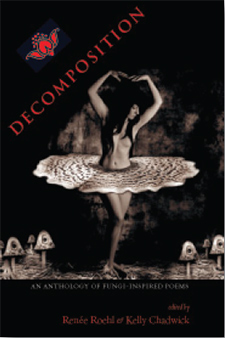
Decomposition

Celebrate mushrooms in poetry at this reading from the new anthology, Decomposition: Fungi-Inspired Poems, a collection of classic and comtemporary mushroom poems.
7 p.m., free
Ecology Center Store
2530 San Pablo, Berk.
(510) 548-3402

InsideStorytime Legends
Enjoy readings from Christina Sunley, author of The Tricking of Freya, Anne Finger, author of Call Me Ahab, Nicholas Nicastro, author of Antigone’s Wake, and others.
6:30 p.m., $3-$5 sliding scale
Café Royale
800 Post, SF
(415) 505-0869
www.insidestorytime.com


Lee Kravitz

The former editor of Parade presents this memoir about his mid-life journey to tie up loose ends titled, Unfinished Business: One Man’s Extraordinary Year of Trying to Do the Right Things.
7:30 p.m., free
Books Inc. Alameda
1344 Park, Alameda
(510) 522-2226

Eric Poole
Poole will read from his new memoir about his childhood in the Midwest in the 1970s, Where’s My Wand.
7:30 p.m., free
Books Inc.
2275 Market, SF
(415) 864-6777

“The Value of Stuff”
Attend this unique conversation with Anne Leonard, author of the book and popular movie The Story of Stuff, and Raj Patel, author of The Value of Nothing.
7 p.m., $10-$20 suggested donation
The David Browner Center
2150 Allston, Berk.
http://earthisland.org/events/stuff

Friday, June 18

The Madonnas of Echo Park
Author Brando Skyhorse gives voice to the Mexican-American community of Echo Park, CA.
7 p.m., free
Books Inc. SF Opera Plaza
601 Van Ness, SF
(415) 776-1111

The Velvet Rage
Popular psychologist and author Alan Downs reads from his ground breaking new book.
7:30 p.m., free
Books Inc. Castro
2275 Market, SF
(415) 864-6777

Saturday, June 19

Backseat Saints
Joshilyn Jackson presents this novel full of sly wit and off-kilter characters.
7 p.m., free
Books Inc. Berkeley
1760 4th St., Berk.
(510) 525-7777


The Daddy Shift

Celebrate Father’s Day early at this discussion and reading with author Jeremy Adam Smith of his new book, The Daddy Shift: How Stay-at-Home Dads, Breadwinning Moms, and Shared Parenting Are Transforming the American Family. Smith with also be joined by authors Jeff Gillenkirk and Mike Adamick.
5 p.m., free
The Green Arcade
1680 Market, SF
(415) 431-6800

Watermark
Meet author Vanitha Sankaran at this reading and signing of her new book about the mute daughter of a papermaker in a small French village in 1320.
2 p.m., free
Borders
200 King, SF
(415) 357-9931

Monday, June 21

Burning Wire
Jeffery Deaver presents his newest Lincoln Rhyme novel, about the brilliant criminologist and his partner.
7:30 p.m., free
Books Inc. Alameda
1344 Park, Alameda
(510) 522-2226

Visit from the Goon Squad
Jennifer Egan brings us a book about time, survival, and the sparks ignited by colliding destinies.
7:30 p.m., free
Books Inc. Marina
2251 Chestnut, SF
(415) 931-3633

Well-Read Lives
Author Barbara Sicherman will read and discuss her new book Well-Read Lives: How books inspired a generation of American Women.
5:30 p.m., free
University Press Books
2430 Bancroft, Berk.
(510) 548-0585

Women, Food, and God
Geneen Roth talks about overeating and the underlying reasons for using food as an emotional buffer.
7:30 p.m., free
Books Inc. Berkeley
1760 4th St., Berk.
(510) 525-7777

Tuesday, June 22

Face to Face: Children of the AIDS crisis in Africa
View a slideshow about the AIDS crisis in Africa with authors Ruthann Richter and Karen Ande. Co-sponsored by the Orphan Support League and in conjunction with a local gallery.
7 p.m., free
Books Inc. Berkeley
1760 4th St., Berk.
(510) 525-7777

“Sizzle!”
Enjoy this month’s enstallment of  Femina Potens’ literary series
“The Queer Art of Failure.” Featuring Jack Halberstam, author of Female Masculinity, providing his unique perspective on Genderqueer life.
8 p.m., $10
Femina Potens Art Gallery
2199 Market, SF
http://feminapotens.org

Ironside

1

paulr@sfbg.com

DINE When the Giants opened their new baseball stadium on China Basin 10 years ago, an improvement in ballpark food was immediately noted. You could have ahi tuna while watching Barry Bonds, and this was — at least for some, at least for a time — an ethereal combination. The ballpark even had a fancy restaurant attached, Acme Chophouse, but the shift in food culture rippled beyond the stadium proper into the surrounding blocks, which were rapidly becoming residential.

Because baseball is the core of all-Americana, it isn’t surprising that baseball-influenced food has a definite American flavor. Yes, in many ways San Francisco is the least American of American cities, and we love our ahi tuna, but we like mac ‘n’ cheese too. And no place I’ve been to lately in the environs of the baseball park more nicely captures in food this complex sense of city and country than Ironside.

The restaurant opened last autumn on Second Street, just a half-block or so from the ballpark. And if you sit at a window table on a mild evening, watching the crowd either assembling or dispersing, you have the pleasant sense of peeking in on a Fellini film: faces, body shapes, clothes, shoes, conversations, emotional fields, all drifting past like fish in a huge aquarium.

Not that the inside is hard on the eyes. It’s a handsome confection of wood, brick, glass, and stainless steel, the blending of rustic-industrial and über-urban that at its best, as here, is simultaneously minimal and warm. The look is a cozier version of nearby Zuppa’s. The food, though, is another story — a lovable hodgepodge executed with verve and presented with exuberance.

In the American grain we have the mac ‘n’ cheese ($9), made with Gruyère and (for aromatic effect) smoked cheddar cheese — just enough style to be distinctive but not so much as to become an overwrought mess. Also: meatballs ($8), in a spicy tomato sauce and presented with elegant but semi-useless points of toasted baguette. Incidentally, are meatballs American, Italian-American, Italian, or Swedish?

Salads (for me) seldom command much interest, but Ironside’s arugula salad ($10) is a modest masterpiece: a green carpet of baby leaves dotted with chunks of crispy prosciutto, ribbons of shaved fennel, spicy pecans, and sections of blood orange. The binding agent is nominally a white balsamic vinaigrette, but really it’s the lovely balance of salty, tart, sharp, and crunchy. To get the full reaction you have to be sure to get a bit of each constituent in every bite, which can be tricky.

Flammenkuchen ($10) is the German word for the Alsatian flatbread known in French as tarte flambée. I haven’t seen one of these on a local menu since the demise of mc2 in the dot-com crash of nine years ago. Ironside’s toppings — of bacon, beer-braised scallions, and crème fraïche — are pretty much the traditional ones. We liked the light, crispy crust but found that the pie as a whole needed a bit of salt, maybe because crème fraïche isn’t as salty as cheese.

Bigger plates are at greater risk for becoming dull than are their smaller siblings, probably because a main dish in our culture is usually a big chunk of flesh that tends to overwhelm everything around it. A seared filet of bluenose sea bass ($19) the size of a bar of soap is a sizable piece of protein, but at Ironside it isn’t permitted to take over the dish. In fact, it could almost be seen as an accompaniment or condiment to the large, colorful heap of shelling beans on one side of the plate and the berm of crispy kasha on the other, with a cordon of luminous carrot beurre blanc — a wonderful, simple idea — to sew things up.

Such a final saucing flourish would have helped at least one of the desserts, the brownie and banana sundae ($7), which was really more of a big — and chewy and moist — brownie flanked by banana halves and topped with a scoop of vanilla ice cream and some whipped cream, than a sundae, which, strictly speaking, would be ice-cream-centric. The drizzling of chocolate sauce seemed unequal to the task of holding all this together.

Our handsome young server could have been an extra from Milk. I hadn’t seen such evocative facial hair since those long-ago days when actual clones roamed the earth. He thanked us profusely for everything. As Joan Crawford might have put it, just whom is thanking whom here?

IRONSIDE

Lunch: Mon.–Fri., 11 a.m.–2:30 p.m.

Dinner: Tues.–Sat., 5:30–10 p.m.

680A Second St., SF

(415) 896-1127

www.ironsidesf.com

Beer and wine

Mc/V

Noisy

Wheelchair accessible

Tale of two landfills

2

Sarah@sfbg.com

Everyone should make a pilgrimage to the landfill where their city’s garbage is buried. For San Francisco residents to really understand the current trash situation — and its related issues of transportation, environmental justice, greenhouse gas reduction, corporate contracting, and pursuing a zero waste goal — that means taking two trips.

The first is a relatively short trek to Waste Management’s Altamont landfill in the arid hills near Livermore, which is where San Francisco’s trash has been taken for three decades. The next is a far longer journey to the Ostrom Road landfill near Wheatland in Yuba County, a facility owned by Recology (formerly NorCal Waste Systems, San Francisco’s longtime trash collector) on the fertile eastern edge of the Sacramento Valley, where officials want to dispose of the city’s trash starting in 2015.

Both these facilities looked well managed, despite their different geographical settings, proving that engineers can place a landfill just about anywhere. But landfills are sobering reminders of the unintended consequences of our discarded stuff. Plastic bags are carried off by the wind before anyone can catch them. Gulls and crows circle above the massive piles of trash, searching for food scraps. And the air reeks of methane, a potent greenhouse gas that is second only to carbon dioxide as a manmade cause of global warming.

It’s also a reminder of a fact most San Franciscans don’t think much about: The city exports mountains of garage into somebody else’s backyard. While residents have gone a long way to reduce the waste stream as city officials pursue an ambitious strategy of zero waste by 2020, we’re still trucking 1,800 tons of garbage out of San Francisco every day. And now we’re preparing to triple the distance that trash travels, a prospect some Yuba County residents find troubling.

“The mayor of San Francisco is encouraging us to be a green city by growing veggies, raising wonderful urban gardens, composting green waste and food and restaurant scraps,” Irene Creps, a San Franciscan who owns a ranch in Wheatland, told us. “So why is he trying to dump San Francisco’s trash in a beautiful rural area?”

Behind that question is a complicated battle with two of the country’s largest private waste management companies bidding for a lucrative contract to pile San Francisco’s trash into big mountains of landfill far from where it was created. This is big and dirty business, one San Francisco has long chosen to contract out entirely, unlike most cities that at least collect their own trash.

So the impending fight over who gets to profit from San Francisco’s waste, a conflict that is already starting to get messy, could illuminate the darker side of our throwaway culture and how it is still falling short of our most wishful rhetoric.


TALKING TRASH

The recent recommendation by a city committee to leave the Altamont landfill and turn almost all the city’s waste functions — collection, sorting, recycling, and disposal — over to Recology (see “Trash talk,” 3/30) angered Waste Management as well as some environmentalists and Yuba County residents.

WM claimed the contract selection process had been marred by fraud and favoritism, and members of YUGAG( Yuba Group Against Garbage) charged that sending our trash on a train through seven counties will affect regional air quality and greenhouse gas emissions and target a poor rural community. Observers also want details such as whether San Francisco taxpayers will have to pay for a new rail spur and a processing facility for organic matter.

Mark Westlund of the Department of Environment told the Guardian that negotiations between the city and Recology are continuing and the contract bids remain under seal. “Hopefully they’ll be concluded in the near future,” Westlund said. “I can’t pinpoint an exact date because the deal is still being fleshed out, but some time this summer.”

Under the tentative plan, Recology’s trucks would haul San Francisco’s trash across the Bay Bridge to Oakland, where the garbage would be loaded onto trains three times a week and hauled to Wheatland. Recology claims its proposal is better for the environment and the economy because it takes trucks off the road and removes organic matter from the waste before it reaches the landfill and turns into methane gas.

But WM officials reject the claim, noting that both facilities will convert methane to electricity, energy now used to fuel the trucks going to Altamont. The landfill produces 8.5 MW of electricity annually, some of which is converted into 4.7 million gallons of liquid natural gas used by 300 trucks. The Ostrom Road facility would produce far less methane, using it to create 1.5 MW of electricity annually.

Recology officials say removing organic matter to produce less methane is an environmental plus because much of the methane from Altamont escapes into the atmosphere and adds to global warming, although WM claims to capture 90 percent of it. Yet David Assman, deputy director of the San Francisco Department of the Environment, doesn’t believe WM figures, telling us that they are “not realistic or feasible.”

State and federal environmental officials say about a quarter of the methane gas produced in landfills ends up in the atmosphere. “But they acknowledge that this is an average. Some landfills can be worse, others much better if they have a good design. And there is no company that has done as much work on this as Waste Management,” company spokesperson Chuck White told us, citing WM-sponsored studies indicating a methane capture rate as high as 92 percent. “The idea of 90 percent capture of methane is very credible if you are running a good operation.”

Ken Lewis, director of WM’s landfills, said the facility’s use of methane to cleanly power its trucks has been glossed over in the debate over this contract. “We’re just tapping into the natural carbon cycle,” Lewis told us.

But Recology spokesperson Adam Alberti (who works for Singer & Associates, San Francisco’s premier crisis communications firm) counters that it’s better to avoid producing methane in the first place because some of it escapes and adds to global warming, which Recology claims it will do by sorting the waste, in the process creating green jobs in the organics recycling and reducing the danger of the gases leaking or even exploding.

“But what has Recology done to show us that the capture rate at their Ostrom landfill is on the high side?” Lewis asks. “Folks in San Francisco say it’s not possible, but we’ve got published reports.”

Assman admits that San Francisco won’t be able to ensure that other municipalities that use Ostrom Road will be focusing on organics recycling. While questions remain about how that facility will ultimately handle a massive influx of garbage, Altamont has been housing the Bay Area’s trash for decades. And even though San Francisco’s current contract will expire by 2015, this sprawling facility nestled in remote hillsides can still handle more trash for decades to come.


ZERO SUM

Perhaps the most striking aspect of the Altamont landfill is the 30-foot-tall fence that sits on a ridge on the perimeter of the facility. It’s covered with plastic bags that have escaped the landfill and rolled like demonic tumbleweeds along what looks like a desolate moonscape.

Wind keeps the blades turning on the giant Florida Power-owned windmills that line the Altamont hills, but it also puffs plastic bags up like little balloons that take off before the bulldozers can compress them into the fill. Lewis said he bought a special machine to suck up the bags, and employs a team of workers to collect them from the buffer zone surroundinge site.

Although difficult to control or destroy, plastic bags are not a huge part of the waste volume. San Francisco has already banned most stores from using them, and the California Legislature is contemplating expanding the ban statewide in a effort to limit a waste product now adding to a giant trash heap in the middle of the Pacific Ocean.

“Plastic bags are a visual shocker,” said Marc Roberts, community development director for the city of Livermore. “In that sense, they are similar to Styrofoam. It’s pretty nasty stuff, can get loose, and doesn’t break down. But they’re not a major part of the volume.”

Yet Roberts said that these emotional triggers give us a peek into the massive operations that process the neverending stream of waste that humans produce and don’t really think about that often.

“Our world is so mechanized,” Roberts observed. “Stuff disappears in middle of night, and we don’t see where it goes.”

San Francisco officials confirm that the trend of disappearing stuff in the night will continue, no matter which landfill waste disposal option the city selects.

“No matter what option, it’s going to involve some transportation to wherever,” Assman said. Currently, Recology and WM share control over San Francisco’s waste stream. But that could change if the waste disposal contract goes to Recology.

A privately-held San Francisco firm, Recology has the monopoly over San Francisco’s waste stream from curbside collection to the point when it heads to the landfill. Waste Management, a publicly-traded company that is the nation’s largest waste management operation, owns 159 of the biggest landfills in the nation, including Altamont, the seventh-largest capacity landfill in the nation.

San Francisco started sending its trash to Altamont in 1987, when it entered into a contract with Waste Management for 65 years or 15 million tons of capacity, a level expected to be hit by 2015, triggering the current debate over whether it would be better to send San Francisco’s waste on a northbound train.


TRAIN TO WHEATLAND

Creps, 76, a retired school teacher, warns folks to watch out for rattlesnakes as she shows them around this flood-prone agricultural community.

“This is an ancient sea terrace, and now it’s fertile grazing ground between creeks,” Creps said as we walked around the ranchland that Creps’ grandfather settled when he came to California in 1850. Today he lies buried here in a pioneer cemetery, along with Creps’ adopted daughter, Sophie, who was killed at age 27 after she witnessed a friend’s murder in Oakland in 2006.

Creps’ cousin, Bill Middleton, who grows walnuts on a ranch adjacent to hers, worries about the landfill’s potential impact on the groundwater. “The water table is really high here, so you’ve go a whole pond of water sitting under this thing,” Middleton said.

Wheatland’s retired postmaster, Jim Rice, recalled that when the landfill opened on Ostrom Road in the 1980s, individual cities had veto power over any expansion plans. “But Chris Chandler, who was then the Assembly member for Sutter County and is now a judge, carried a bill in legislature to do away with veto power,” Rice said.

“So we lost out and ended up with a dump,” Middleton said.

Creps believes the landfill should be for the use of local residents only. “There’s a lot of development going on around here and the population is going to grow,” she said. “But at this rate, this landfill will be used up before Yuba and the surrounding counties can use it. And that’s not fair. They think they can get a foothold in places off the beaten path.”

Yet not everyone in Yuba County hates San Francisco’s Ostrom Road plan. On June 7, the Yuba-Sutter Economic Development Corporation backed Recology’s plan to build a rail spur to cover the 100 yards from the Union Pacific line to the landfill site.

EDC’s Brynda Stranix said the garbage deal is still subject to approval by San Francisco officials, but will bring needed money to the county. “The landfill is already permitted to take up to 3,000 tons of garbage a day and it’s taking in about 800 tons a day now,” Stranix said.

If the deal goes through, it would triple the current volume at the landfill, entitling Yuba County to $22 million in host fees over 10 years.

Recology’s Phil Graham clarified that Ostrom Road is considered a regional landfill, one that has already grown to 100 feet above sea level and is permitted to rise another 165 feet into the air. “So even with the waste stream from San Francisco,” he said, “we’ll still be operating well under the tonnage limits.”

“The world has changed. Federal regulations come in, and landfill operations change,” Recology’s Alberti said as we toured the site. “And there really are no longer any local landfills. This one is already operating, accepting regional waste.”

He claimed that Livermore residents had similar concerns to those now expressed in Yuba County when San Francisco’s waste started going to Altamont. Livermore and Sierra Club brought a lawsuit around plans to expand the dump, a suit that forced WM to create an $10 million open space fund.

Alberti said he understands that people like Creps are concerned. “But we are not seeking an expansion. The only thing we are asking for is a rail track.

“From our point of view it’s simple,” he continued. “We have the facility; Ostrom Road is close to rail; and it’s not open to the public. So it’s a tightly contained working area.”

Graham, the facility’s manager, also dismissed concerns that the landfill might harm the groundwater or the health of the local environment. “A lot of people don’t know how highly regulated we are,” he said. “That’s why we are having public meetings. Our compass is out in the community. These are people we work and live with.”

Alberti said YUGAG and other opponents of the landfill aren’t numerous. “If we draw the circle wider to the two-county area, how many people even know a landfill is operating here?”

Graham takes that as a testament to how well the facility is operated. “I consider that a compliment. Obviously, we weren’t causing any problems.”


TRASH MONOPOLY

Those who run both landfills say they recognize that their industry’s heyday is over, and that the future will bring a more complicated system that sends steadily less trash to the landfills.

“Eventually we will be all out of business,” Alberti predicted. “One reason we changed our name was knowing that landfills are not sustainable. And that’s a significant difference. Waste Management is the largest landfill owner in the world. Recology is a recycling company that owns a few landfills and, for that reason, does innovative things like the food scraps program.”

But the company with the new green name has traditionally been a powerhouse in San Francisco’s trash industry, becoming a well-entrenched monopoly after buying out two local competitors — Sunset Scavenger and Golden Gate Disposal and Recycling — a triad that has long held exclusive rights over the city’s waste.

The 1932 Refuse Collection and Disposal Ordinance gave the company now calling itself Recology a rare and enviably monopoly on curbside collection, one that had no expiration date and would be difficult to change. “So legally, it’s not an option,” Assman said.

Retired Judge Quentin Kopp, a former member of the Board of Supervisors and California Legislature, got involved in an unsuccessful effort to break Recology’s curbside monopoly in the 1990s when the company then known as NorCal Waste asked for another rate increase. But he found the contractual structure to be almost impossible to break.

“The DPW director examines all the allowable elements and makes recommendations to the Rate Board,” Kopp said. “And the Rate Board consists of three people: the chief administrative officer, the controller, and the general manager of the San Francisco Public Utilities Commission.”

SFPUC General Manager Ed Harrington says Recology’s curbside monopoly is unusual compared to other places, but it also makes the company a strong contender to the landfill contract. “It comes down to economies of scale. If you don’t have a contract with a facility that does recycling or waste disposal, you can collect the garbage, but where are you going to take it?”

Harrington said the situation was better before Recology purchased Sunset Scavenger, which mostly handled residential garbage, and Golden Gate, which mostly handled commercial garbage. Today, he said, the city has little control over commercial garbage rates or Recology’s overall finances. “That made it more difficult, and we only set the rate of residential garbage collection,” Harrington observed. “They have never come before the rate appeal board over commercial rates. I have asked who subsidizes whom, the commercial or the residential, and they say they think the commercial. But we have no ability to govern or manage those rates.”

WM’s Skolnick said a positive outcome of the current contract negotiations would be to break Recology’s monopoly on curbside collection. “We have to work to keep our business. That’s the competitive process. But we have a competitor that can encroach into our area even though we can’t encroach on San Francisco. And they claim to have one of the most competitive rates in the country — but try getting those numbers,” he said.

WM’s David Tucker added: “We’d like if San Francisco jumped into the 21st century and had a competitive bid process.”


DIRTY BUSINESS

The battle between WM’s local landfill option and Recology’s plan for a longer haul but with more diversion of organic materials is complicated, so much so that the local Sierra Club chapter has yet to take a position.

Glen Kirby of the Sierra Club’s Alameda County chapter told the Guardian that the Sierra Club’s East Bay, San Francisco, and Yuba chapters are taking a “wait and see what becomes public next” stance for now. But insiders say the club’s national position is against landfill gas conversion projects like that at Altamont, possibly favoring Recology’s bid.

Recology proponents claim the Sierra Club didn’t initially oppose landfill gas conversions because its members in the East Bay benefit from an open space fund that WM pays into as mitigation for a 1980 expansion at the Altamont. And Alberti claimed that WM’s analysis of greenhouse gas emissions from the competing waste transportation plans was flawed.

“Their calculation is a shell game. And it relies on Recology using diesel when we are using green biodiesel trains. This is not your grandfather’s train any more. One train equals 200 trucks,” Alberti said.

But WM’s Lewis defends the company’s analysis, which showed Recology’s bid to be worse for greenhouse gas emissions than WM’s.

“Landfill gas is a byproduct of an existing system,” Lewis said, noting that 43 percent of the trash buried at Altamont comes from San Francisco. The implication is that a large part of the methane in the landfill comes from — and benefits — San Francisco.

“We are delivering waste products that contain organics,” he said. “We realized that we could flare methane [to burn it up] or produce electricity. California has very aggressive landfill gas requirements, and the collection rates are relatively good at most sites. But once you’ve collected it, what to do? Historically, they flared the gas. Twenty years ago, there was not a lot of technology to allow anything else.”

Lewis says WM began producing electricity from the gas in 1987. “What we do in the future is decoupled from what was giving us the methane in the past,” he said. “Today we are managing what was brought here 15-20 years ago. It’s your hamburger, cardboard, and paper that has been sitting up there since 1998. We’re doing something good with something that we used to flare.”

“If Altamont was closed today, the gas yield coming off it would be enough to produce 10,000 gallons a day for the next 25 years,” WM’s Bay Area president Barry Skolnick interjected.

And Lewis observed that if you take organics out of the waste stream, as Recology proposes, that matter has value, whether in a digester to produce energy or a composting operation. That complicates the comparison of the two bids.

“We agree that if you can get that waste out in a clean form, that’s a good thing,” Lewis said. “But composting is a very highly polluting approach. In the process of degrading, it gives off a lot of volatiles and carbon dioxide. So air districts have not traditionally been very positive on sitting aerobic composting facilities.”


WHAT’S NEXT?

The contract that San Francisco has tentatively awarded to Recology is for 5 million tons or 10 years, whichever comes sooner. As such, it’s a much smaller contract than the city’s 1987 contract with WM, mostly because the future is uncertain.

But trucks will remain a part of the equation. Recology is proposing to continue driving 92 truckloads of garbage over the Bay Bridge per day, possibly to keep the Teamsters happy, frustrating transportation advocates who believe direct rail haul or barges across the bay would be greener options.

In December 2009, Mayor Gavin Newsom and Bob Morales, director of the Teamsters Union Waste Division, cowrote an op-ed in the Sunday Sacramento Bee, in which they argued the case for increased recycling and composting as a “zero waste” strategy for California and as a way to generate green jobs and reduce global warming.

“Equally important for the future of our green economy is that recycling and composting mean jobs,” Newsom and Morales wrote. “The Institute for Local Self-Reliance reports that every additional 10,000 tons recycled translates into 10 new frontline jobs and 25 new jobs in recycling-based manufacturing.”

Newsom and Morales clarified that they do not support waste-to-energy or landfilling as part of their zero waste vision.

“It makes no sense to burn materials or put them in a hole in the ground when these same materials can be turned into the products and jobs of the future,” they stated.

Yet WM’s Skolnick sees a certain hypocrisy in San Francisco turning its back on the methane gas that its garbage helped create at Altamont over the past three decades. “Here’s a very progressive city, and we want to take their waste from the last 30 years and use gas from it to fuel their trucks,” he said. “But they want to haul waste three times as far to Wheatland. What does that say about San Francisco’s mission to become the greenest city?”

David Pilpel, a political activist who has followed the contract, agreed that San Francisco officials can’t simply walk away from Altamont and call it a green move, but he would like to see the city use rail rather than trucks. “Instead of putting stuff on long-haul trucks, put it on a rail gondola and haul it around the peninsula to Livermore,” he said. “The Altamont expansion was for San Francisco’s purposes. So to say now, ‘We’ll go elsewhere,’ is lame.”

Sally Brown, a research associate professor at the University of Washington, acknowledges that landfills have done a great job of giving us places to dump our stuff and can be skillfully engineered to release less methane and capture more productive biogases.

“However, we are entering a new era where resources are limited and carbon is king,” Brown wrote in the May 2010 edition of Biocycle magazine. “In this new era, dumping stuff may cease to be an option because that stuff has value. and that value can be efficiently extracted for costs that are comparable to or lower than the costs — both environmental and monetary — associated with dumping.”

The San Francisco Board of Supervisors will vote on the contract later this year, deciding whether to validate the Department of the Environment’s choice of Recology or go with WM. Either way, lawsuits are likely to follow.

Reading the June election tea leaves

0

Everyone’s reading the tea leaves after the local election. The November supes races will be a huge deal, and it’s really tempting to try to figure out what the DCCC results mean for the fall. Paul Hogarth at BeyondChron takes it on here. Chris Daly (no surprise) disagrees.


Let me see if I can sort some of this out.


Hogarth’s basic argument is that the progressives didn’t really do so well in the election:


“In District 8, moderate Scott Wiener finished 1,400 votes ahead of progressive Rafael Mandelman – as the two face the same electorate in November. The renters’ financial hardship measure, Proposition F, lost badly citywide – and finished far worse in neighborhoods that are usually pro-tenant. Debra Walker fared well in her run for DCCC, but most of her votes were not in District 6 – and results there suggest that another candidate for Supervisor could make such a race highly competitive.”


Hogarth is completely upfront and honest about disclosing that he’s a supporter of one of Walker’s opponents, Jane Kim — a former Green who is now a Democrat (and is very much a progressive), but wasn’t in the DCCC race. Theresa Sparks wasn’t in the DCCC race either. Nor was Jim Meko. There are several strong candidates in that race, and they don’t break down along easy political lines. So looking at how many votes Walker got in D6 seems a little off point; there’s nobody to compare her to.


Back to D8. Hogarth:


“Now we know [the D8 breakdown], and the numbers are even worse for Mandelman. Scott Wiener finished approximately 1,400 votes ahead in District 8 (my vote count shows him at 5,954 to Mandelman’s 4,561.) As a comparison, in December 2002 – the last time District 8 saw a hotly contested race on “moderate v. progressive” lines – Bevan Dufty got 11,000 votes, Eileen Hansen 10,000.”


That would seem to make Wiener the much stronger candidate going into the fall.


But there’s another key factor here: turnout. Low-turnout races are mostly (not always, but mostly) better for the more conservative candidate, and in this case, the turnout was really low. Just 32 percent of the voters went to the polls.


Let’s take a look at the 2002 election, the last time we had an open seat in D 8 with a progressive and a moderate running. In the general election in November, progressive Eileen Hansen came in first, with 9,820 votes to Bevan Dufty’s 8,795. But another progressive, Tom Radulovich was also in the race, and this was before ranked-choice voting. Radulovich got 5,221 votes, the majority of which probably would have gone to Hansen.


Turnout was a little over 50 percent.


In the runoff, in December, turnout dropped to 38.8 percent. Dufty got 11,096 votes, and Hansen 9,995. You could argue that most of the Radulovich votes went to Dufty — possible — but more likely, in the runoff, the more liberal voters who had come out in November to vote for Gray Davis for governor and also voted for Hansen just stayed home in December.


And this fall, Wiener will be more in the position that Hansen was in: There’s a third candidate in the race, Rebecca Prozan, and she’s more likely to take votes from Wiener than from Mandelman. And, of course, there’s RCV this time around — and with two gay men and a lesbian in the race, nobody really knows how the second-choice votes will play out.


Daly plays with the turnout numbers:


For the sake of argument, let’s concede that Mandelman starts out 1000-1400 votes behind Wiener among the 11,000 or so District 8 Democrats who voted for DCCC last week. Given that over 31,000 District 8 residents voted in the 2006 Supervisor race (in a contest that was not the most competitive,) we can assume that at least 20,000 additional people will vote this November. In a 2-person contest, Mandelman would need to win 53.5% of these votes in order to win. Given that less frequent voters trend significantly more progressive, and with the addition of Democratic Party branding and the weight of its mail program, 53.5% is almost assured.


Well, I dunno — in 2002, with a contested governor’s race and a contested D8 race, only 26,600 people voted, but it’s safe to say the numbers will be well above 11,000. And it’s not a two-person contest. But I think it’s also safe to say that those higher-turnout voters are the votes most likely to swing toward Mandelman.  


Jim Stearns, a political consultant with long experience in San Francisco (and no candidate in the D8 race), has another interesting analysis he sent over to me:


“Mandelman’s strategy was to spend his limited resources as part of a team effort to maintain progressive leadership on the DCCC. In so doing, he focused more heavily on slate cards that went district-wide than on mailers in District 8 promoting his own candidacy.


 Wiener, on the other hand, abandoned his fellow moderates and spent his money mostly on his own candidacy. This shortsighted strategic blunder will be extremely costly for Wiener in November.


 The result? Wiener got more votes in District 8, but lost his bid to regain his position as chair of the DCCC. Mandelman got fewer votes, but has significantly increased his chances of winning the Democratic Party endorsement this November. That endorsement is worth far more than the mere 1,000 vote difference between Wiener and Mandelman today.”


None of this means Walker will beat Kim and Sparks in November, or that Mandelman will beat Wiener and Prozan. It just means that I suspect the DCCC results don’t really say much about the relative strengths of any of the candidates when it comes to a focused, district-centered race in a high-turnout fall election.


I emailed Hogarth and ran the turnout argument by him. His response:


I tried to caution in my piece that there’s only so much you can see in the numbers — and that you’re right; voter turnout in November will be a lot higher.  Maybe I should have made this a bigger point.  But progressives are deluding themselves if they think turnout will be as high as it was in November 2008.  And if I were Rafael, I would have reason to worry that Scott did so much better than me in D8.  Also keep in mind that, despite the drop-off of DCCC voters, 48% of people in D8 who participated in this election cast a ballot for Scott Wiener.


Correct — turnout won’t be as high as it was in the presidential race. But it might very well be as high as it was in 2002, when there was a contested race for governor, as there will be this fall. Lots of Democratic candidates — particularly Gavin Newsom and Kamala Harris — will be doing GOTV operations in the city, and while Newsom and Harris won’t be supporting Mandelman, I don’t think either of them will limit their turnout efforts to precincts that run toward Wiener. The more liberal dems who vote in November, the better Harris and Newsom do against Republicans; that’s what they care about.


There’s no question that Scott Wiener will be a formidable contender in November. He’s got money, he’s got Mark Leno, and he’s running in a district that has elected moderate gay men since the return of district elections. But it’s remarkable how well the progressives have done in swing districts of late (see: Eric Mar, John Avalos), and Mandelman will, as Daly says, be the consensus candidate of every progressive group in town. He’ll almost certainly have the Democratic Party — which matters even more when Democrats at the top of the ticket are driving turnout. And he’ll have the same sort of boots on the ground that gave Mar a victory in a very tight race.


At this point, I think Mandelman and Wiener both have a shot at finishing first; it will probably be very close. And Rebecca Prozan runs third.


Oh, and the tenant measure? It lost because there wasn’t an effective campaign behind it. Tenant measures don’t automatically win in tenant-heavy San Francisco; time and again over the years we’ve seen that when there’s a measure that pushes the edge (and face it, I strongly supported Prop. F, but it was pushing the edge) and there’s landlord money against it, you need a full-scale concerted campaign for it. Progressives were paying a lot of attention to the DCCC, and to defeating Props. 16 and 17. Prop. F got lost. I’m not happy about that, but I’m not terribly surprised, either — and I don’t think it means much in the long run.


Chris Daly went a bit too far attacking Hogarth for his connections to Mark Leno, who is a Wiener supporter, and suggesting that the folks at BeyondChron — who are, after all, first and foremost tenant lawyers — are going to be backing Scott Wiener in the fall. I don’t see that happening; I can’t imagine it happening. I just think they read a little too much into the DCCC results.

On the Cheap listings

0

On the Cheap listings are compiled by Paula Connelly. Submit items for the listings at listings@sfbg.com.

THURSDAY 17

Another Science Fiction Get Lost Travel Books, 1885 Market, SF; (415) 437-0529. 7pm, free. San Francisco author and archivist Megan Prelinger will discuss and show images from her new book, Another Science Fiction: Advertising the space race 1957-1962, where she presents 100s of advertisement images from a time that marked the beginning of space research as well as the golden age of science fiction writing.

FRIDAY 18

FINKTOONS Element Lounge, 1028 Geary, SF; (415) 440-0111. 10pm, free if you say "FINKTOONS" at the door. What do you get when you cross sketch comedy, horror movies, cartoons, and bizarre short films? FINKTOONS, of course. Enjoy a night of never before seen sketches and cartoons, including a live performance by the project’s co-creators Brandon Fink and Tyler Moazed.

Giants County Fair McCovey Cove, Giants Lot A, behind AT&T Park, SF; www.sfgiants.com/fair. Fri./11-Sun/20, free. This old-fashioned county fair with a San Francisco spin features games, fair food, music, a CUESA urban farming tent dedicated to cooking and gardening, and over 20 carnival rides, including a Ferris wheel, bumper cars, super-swings, and more. $5 per ride or $20 for unlimited rides. The fair will overlap with six Giants games, including the Bay Bridge Series against the A’s.

SATURDAY 19

Breaking Ground San Francisco County Fair Building, 9th Ave. at Lincoln, Golden Gate Park, SF; (415) 750-5110. 9am-1pm, free. This urban gardening youth conference is open to all Bay Area high school students featuring youth led, hands on workshops, information about jobs and paid internship opportunities, food and entertainment, tours of some of San Francisco’s coolest gardens, and more.

Mission Community Market 22nd St. between Mission and Bartlett, SF; http://missioncommunitymarket.blogspot.com. 4pm-8pm, free. Attend the kick off to this weekly summer outdoor market that celebrates the Mission by promoting healthy eating, locally owned businesses, community programs, public space, and live music in the street. Proceeds from all food bought at Lolo’s, Café Revolution, and Escape from New York Pizza will be donated to the MCM Fund. All market profits will be reinvested into public space improvements. Featuring live music by Seth Augustus, Diana Gameros, Santos Perdidos, and King City and live performances from Abada Capoeira, Danza Azteca, and Sirron Norris.

"Obviously You’re Not a Golfer" Kokoro Studio, 682 Geary, SF; (415) 400-4110. 7pm, free.

The Flat Earth Collective presents this literary event featuring readings by Tom Andes, David Holler, Erica Lewis, and Sara Mumolo and dramatic performances of new work by Sarah Ciston and Tavia Stewart-Streit.

StreetSmARTS African American Art and Culture Complex, 762 Fulton, SF; www.sfartscommission.org/streetsmarts. 6pm, free. Celebrate StreetSmARTS pilot-program murals, a program that connects established muralists with San Francisco private property owners to create vibrant art based on visual concepts reflecting the fabric of the neighborhood and make property less likely to be vandalized. Festivities to feature live muraling, film screenings, speakers, DJs, and a break-dance contest. A StreetSmARTS art exhibition will be unveiled at midnight.

Tetris Tournament II The Lab, 2948 16th St., SF; (415) 864-8855. 8pm, $5-$15 sliding scale. Test your skills with the world’s most popular puzzle game at this karaoke-style arcade competition. Musician, media artist, and performer Bryan Von Reuter rigged it so the highest scoring players will reap all the glory on a jumbo-tron projected screen and score board with DJ Middle D spinning records all night.

SUNDAY 20

Cardboard Tube Fighting League Hayes Valley Farm, 450 Laguna, SF; www.tubeduel.com. 3pm, free. Come in your best cardboard armor attire, bring food to participate in the picnic potluck, and vie for a chance to win a legendary cardboard sword. Prizes also awarded for best cardboard costume. If you need a costume go to the free Cardboard Amor Building Workshop Sat/19 3pm at Hayes Valley Farm. Bring scissors, glue, twine, and anything you think you might need to build righteous armor.

Rock the Bike Valencia and 24th St., SF; www.projectsoundwave.com. The ongoing green sound festival, Project Soundwave, teamed up with Rock the Bike to bring you this unique free environmental music event at the Mission District Sunday Streets program featuring the acoustic punk sounds of Kemo Sabe brought to you by pedal powered mics, amps, and instruments.

MONDAY 21

BAY AREA

Summer Solstice Celebration Muir Beach, Golden Gate National Recreation Area, Route 1, Marin; (415) 388-2596. 6pm, free. Celebrate the longest day of the year at this bonfire solstice party featuring storytelling and songs. Dress warmly and bring a mug for hot drinks. No reservations required.

Ubiquity Anniversary Exhibit Guerilla Art Café, 1620 Shattuck, Berk.; (510) 845-CAFÉ. 6pm, free. Attend the opening of this art exhibit celebrating the 20th anniversary of Bay Area funk and soul from Ubiquity Records with paints of, and inspired by, Darondo, Eugene Blacknell, Sugarpie Desanto, and Twilight. The opening will feature Guerilla Café art collective and Ubiquity artists live painting and creating a video montage. Throughout the show, Guerilla will host guest appearances by the musicians and DJ sets playing their music.

For Lit, Talks, and Benefits listings, visit the Pixel Vision blog at

Rep Clock

0

Schedules are for Wed/16–Tues/22 except where noted. Director and year are given when available. Double and triple features are marked with a •. All times are p.m. unless otherwise specified.

ARTISTS’ TELEVISION ACCESS 992 Valencia, SF; www.atasite.org. $5-6. “OpenScreening,” Thurs, 8. For participation information, email ataopenscreening@atasite.org. Top of the Food Chain (Paisz), Fri, 8.

CAFÉ OF THE DEAD 3208 Grand, Oakl; (510) 931-7945. Free. “Independent Filmmakers Screening Nite,” Wed, 6:30.

CASTRO 429 Castro, SF; (415) 621-6120, www.castrotheatre.com. $8-13. Sex and the City 2 (King, 2010), Wed, call for times. San Francisco International LGBT Film Festival, June 17-27. See film listings.

CHRISTOPHER B. SMITH RAFAEL FILM CENTER 1118 Fourth St, San Rafael; (415) 454-1222, www.cafilm.org. $6.50-10.25. Babies (Balmès, 2010), call for dates and times. The Girl With the Dragon Tattoo (Oplev, 2009), call for dates and times. Looking for Eric (Loach, 2010), call for dates and times. Micmacs (Jeunet, 2010), call for dates and times. Touching Home (Miller and Miller, 2009), call for dates and times.

CONTEMPORARY JEWISH MUSEUM 736 Mission, SF; (415) 655-7800, info@thecjm.org. Free with museum admission ($8-10). Sixty Six (Weiland, 2006), Sun, 2.

DE YOUNG MUSEUM Piazzoni Mural Room, 50 Hagiwara Tea Garden Dr, Golden Gate Park, SF; (415) 488-1211, www.marinmindscapes.com. Free. Marin Mind/Scapes (2010), Sat, 2.

DECO LOUNGE 510 Larkin, SF; (415) 346-2025, www.decosf.com. Free. “Queer Cinema 101,” Mon, 10. Holly DeVille hosts this weekly show highlighting films that have had an impact on queer culture.

EXPLORATORIUM McBean Theater, 3601 Lyon, SF; http://asifa.net. Free. “A Tribute to the International Festival of Animation and to Prescott Wright: The Early Years,” Fri, 7:30.

FILM NIGHT IN THE PARK This week: Old Mill Park, 300 block of Throckmorton, Mill Valley; (415) 272-2756, www.filmnight.org. Donations accepted. Star Trek (Abrams, 2009), Fri, 8. Dolores Park, Dolores and 19th St, SF; same contact info and price. Grease (Kleiser, 1978), Sat, 8.

FORBIDDEN ISLAND TIKI LOUNGE 1304 Lincoln, Alameda; www.forbiddenislandalameda.com. Free. “Forbidden Thrills: Freaky Filipino Flix!”: •Mad Doctor of Blood Island (de Leon and Romero, 1968), Mon, 7:30, and For Your Height Only (Nicart, 1981), Mon, 9:15.

HUMANIST HALL 390 27th St, Oakl; www.humanisthall.org. $5. Processed People (Nelson and Nelson), Wed, 7:30.

JACK LONDON SQUARE PAVILION THEATER 98 Broadway, Oakl; www.oakuff.org. Free. “Oakland Underground Film Festival: Leading Local Talent Local Shorts Showcase,” Fri, 7:30.

ODDBALL FILMS 275 Capp, SF; (415) 558-8117, info@oddballfilms.com (RSVP required as space is limited). $5-10. “Oddball Wants Children: A Matinee of Accidental Edutainment for Kids and their Adults,” Sat, 3 (kid-friendly matinee), 8.

PACIFIC FILM ARCHIVE 2575 Bancroft, Berk; (510) 642-5249, www.bampfa.berkeley.edu. $5.50-9.50. Gravity Was Everywhere Back Then (Green, 2010), Wed, 7:30. “Akira Kurosawa Centennial:” The Lower Depths (1957), Thurs, 7; The Bad Sleep Well (1960), Sat, 6:30; Ikiru (1952), Sun, 7:15. “Tales from the Golden Age: Recent Romanian Cinema:” Police, Adjective (Porumboiu, 2009), Fri, 7 and Sun, 5. “Brought to Light: Recent Acquisitions to the PFA Collection:” The Host (Bong, 2006), Fri, 9:15; Payday (Duke, 1972), Sat, 9:15.

RED POPPY ART HOUSE 2698 Folsom, SF; www.redpoppyarthouse.org. $10-15. “Mission Ear and Eye,” live film music by Lisa Mezzacappa and Nightshade, plus music by Katy Stephan, Adam Shulman, and the Holly Martins, and live film projection by Alfonso Alvarez, Fri, 9.

RED VIC 1727 Haight, SF; (415) 668-3994. $6-10. Mother (Bong, 2010), Wed-Thurs, 7, 9:35 (also Wed, 2). The Runaways (Sigismondi, 2010), Fri-Sat, 7:15, 9:30 (also Sat, 2). Smoked (The Movie), Sat, 4:20. Oceans (Perrin and Cluzand, 2010), Sun-Mon, 7:15, 9:25 (also Sun, 2). No One Knows About Persian Cats (Ghobadi, 2009), June 22-23, 7:15, 9:25 (also June 23, 2).

ROXIE 3117 and 3125 16th St, SF; (415) 863-1087, www.roxie.com. Free-$10.75. The Full Picture (Bowden, 2008), Wed-Thurs, 7, 8:45. “San Francisco United Film Festival,” narrative and documentary films, Wed-Thurs.

“TEMESCAL STREET CINEMA” 49th St at Telegraph, Oakl; www.temescalstreetcinema.com. Free. Pelada (Fergusson, Boughen, Oxenham, and White, 2010), Thurs, 8. With free popcorn and live music.

YERBA BUENA CENTER FOR THE ARTS 701 Mission, SF; (415) 978-2787, www.ybca.org. $6-8. Bluebeard (Breillat, 2009), Thurs-Sat, 7:30; Sun, 2.

Film listings

0

Film listings are edited by Cheryl Eddy. Reviewers are Kimberly Chun, Michelle Devereaux, Max Goldberg, Dennis Harvey, Johnny Ray Huston, Erik Morse, Louis Peitzman, Lynn Rapoport, Ben Richardson, and Matt Sussman. For rep house showtimes, see Rep Clock. For first-run showtimes, see Movie Guide.

FRAMELINE34

The 34th San Francisco International LGBT Film Festival runs June 17-27 at the Castro, 429 Castro, SF; Roxie, 3117 16th St, SF; Victoria, 2961 16th St, SF; and Rialto Cinemas Elmwood, 2966 College, Berk. Tickets (most shows $8-15) can be purchased at www.frameline.org. All times pm unless otherwise noted.

THURS/17

Castro The Secret Diaries of Miss Anne Lister 7. Off World 10.

FRI/18

Castro The Real Anne Lister noon. "Curious Thing" (shorts program) 1:45. Sasha 4:30. The Owls 7. Grown Up Movie Star 9:30.

Roxie "Hustlers and Exhibitionists: Andy Warhol Retrospective" 7. "Bi Request" (shorts program) 9:30.

Victoria 8: The Mormon Proposition 7. Open 9:30.

SAT/19

Castro "Fun in Boys’ Shorts" (shorts program) 11am. "Fun in Girls’ Shorts" (shorts program) 1:30. Elvis and Madona 4. I Killed My Mother 6:45. A Marine Story 9:30.

Roxie Mississippi Queen 11am. On These Shoulders We Stand 1:30. Postcard to Daddy 4. Hooters 6:30. "Sex, Leather Jackets, and Hustlers: Andy Warhol Retrospective" 9:30.

Victoria "Trans Francisco" (shorts program) 11am. The Adonis Factor 2. "Gay Aesthetics and Iconography in the Films of Andy Warhol" (illustrated talk) 4:15. Arias With a Twist 6:30. The Man Who Loved Yngve 9:30.

SUN/20

Castro "Dottie’s Magic Pockets Live!" 11am. We Were Here: Voices From the AIDS Years in San Francisco 1. The Topp Twins: Untouchable Girls 3:45. The Four Faced Liar 6:30. The Consul of Sodom 9:30.

Roxie Mountains That Take Wing 11am. "Skinnyfat" (shorts program) 1:45. "Generations: Youth and Elders Making Movies" (shorts program) 4:15. Bear Nation 6:45. Out of the Blue 9:30.

Victoria Beyond Gay: The Politics of Pride 11am. Paulista 1:30. "F**king Traditional Values: Queer Women of Color Shorts" (shorts program) 4:15. William S. Burroughs: The Man Within 7. The Queer X Show 9:30.

MON/21

Castro Dzi Croquettes 11am. Swimming with Lesbians 2. Off World 4. The Last Summer of La Boyita 7. Brotherhood 9:30.

Roxie New York Memories 7. "Are You Krazy?" (shorts program) 9:30.

Victoria Riot Acts: Flaunting Gender Deviance in Music Performance 7. My Normal 9:30.

Elmwood The Sea Purple 7. Plan B 9:30.

TUES/22

Castro The Motionless 11am. Sex in an Epidemic 1:15. Is It Just Me? 3:45. Undertow 7. Baby Jane? 9:45.

Roxie Gayby 7. One Night 9:30.

Victoria The Sisters 7. Eyes Wide Open 9:30.

Elmwood William S. Burroughs: The Man Within 7. The Fish Child 9:30.

OPENING

Bluebeard Writer-director Catherine Breillat returns to her 2001 Fat Girl‘s motifs of troubled sisterhood and the adolescent female imagination in this stealthy adaptation of Charles Perrault’s pathological fairy tale. Bluebeard‘s parable of murder coiled around marriage resonates rather obviously with Breillat’s own signature themes, but she avoids obviousness by serving the punishing logic of Perrault’s story chilled. That Breillat is concerned with how the fairy tale is experienced, and specifically the adolescent desires it awakens, is clear from the frame narrative in which two sisters (named autobiographically) ritualistically read "Bluebeard," both of them knowing it (and each other’s reactions) by heart. Their dualities mirror those of the sisters trapped inside the story, the younger of whom, prone to romantic fantasies of castles and marooned by her father’s death, joins Bluebeard in unholy matrimony. Marie-Catherine (Lola Créton) may be a sprite next to the titular ogre (Dominique Thomas), but never underestimate the appetite of a younger sibling. Breillat’s visual style is unassuming in its tableaus, but her mastery of point-of-view and restricted narration brings great insight to the mechanisms of the fairy tale. Créton conjures the younger girl’s familiar mix of confidence and innocence with something like joy, while Thomas plays Bluebeard as a tender foil. He appears nearly forlorn when he uncovers his young wife’s fateful act of disobedience and realizes he will now and forever carry out the terrible deed we expect of him. A sharp turn provides a different moral than we might expect, and while it’s not so self-consciously shocking an ending as Fat Girl‘s, it inscribes the birth of a storyteller named Catherine with far greater piquancy.(1:20) Yerba Buena Center for the Arts. (Goldberg)

*Coco Chanel and Igor Stravinsky Revered for the innovative fashion house that set the bar for style and was always knocked off but never cut prices for the real deal (and still sniffs at online clothing sales), Gabrielle "Coco" Chanel gets her second biopic, as an artist on par with composer Igor Stravinsky in this rhapsodically sensuous love letter to an unlikely romance. It opens with the designer and future branding legend (depicted with burning eyes and pantherine mystery by Anna Mouglalis) attending the controversial, riot-starting 1913 premiere of Stravinsky’s The Rite of Spring in Paris. Recognizing Stravinsky (a viral avant-garde stud-muffin in the hands of Mads Mikkelsen, last in deadlocks and warrior face in Clash of the Titans) as a simpatico radical spirit, Chanel lends her house to the composer. He comes with considerable baggage: a slew of children and a consumptive wife, Katarina (Elena Morozova). Morozova’s performance as the angel-faced earth mother scorned, so blatantly disrespected by the rad lovers madly getting down on the music-room carpet, almost steals the show, but then the house-porn fabulosity of the recreated Chanel villa in Garches — a symbol of their hermetic attraction and shot like a seductive, claustrophobic, black-and-white deco womb — takes over, and we’re back in the thick of CoGor’s somewhat inexplicable affair once again. (1:55) Shattuck. (Chun)

Gravity Was Everywhere Back Then Before it was torn down by a new landowner, multimedia artist Brent Green went to visit the house built by late Kentucky hardware store clerk Leonard Wood — a poor man’s Winchester Mystery House, endlessly elaborated with newly knocked-down walls and weird handmade detailing. This obsessive one-man construction effort was commenced as a hopeful "healing machine" for its other resident, his beloved wife Mary, and continued after her death from cancer. Green built his own backyard replica of the house for this experimental first feature, a sort of live-action stop motion movie whose characters like move like puppets in stuttering frame jumps, with animation, dubbed occasional dialogue, crude intertitles, and some gently fantastical imagery adding to its dreamlike aura. Mary (played by Donna K.) makes a curious living breeding and selling wild bird eggs; Leonard (Michael McGinley), among his other callings, composes and records droning minimalist "church music." They met, purportedly, in a car crash. Green’s strangle-voiced blank verse narration and filmic folk-art affectations can sometimes make Gravity just sit there — certainly it feels longer than its 75 minutes. But it also has an off-center lyricism that in the end serves honorably this story of profound love between two very odd people. The director (who currently has an installation across the street at the Berkeley Art Museum) will appear at this one-night Pacific Film Archive screening. (1:20) Pacific Film Archive. (Harvey)

Jonah Hex Josh Brolin and Megan Fox star in this Wild West-set graphic novel adaptation. (1:81) Elmwood.

Lovers of Hate Living out of his car after being dumped by Diana (Heather Kafka), perpetually dour Rudy (Chris Doubek) can hardly find a place to take a shower. In stark contrast to his desperate situation, Rudy’s brother Paul (Alex Karpovsky) is a successful children’s fantasy writer, holed up in a borrowed mansion in Utah to work on his next book. Rudy decides to pay his bro an unwelcome surprise visit, but he arrives just behind Diana, who has come to have a serious chat (and also some sex) with Paul. Still in love with Diana, Rudy skulks unnoticed through the tremendous house, playing vengeful voyeur to the new couple’s already rather weird relationship. Lovers of Hate‘s central trinity are not especially nice people, but neither are any of them evil; writer-director Bryan Poyser balances pity and disgust at their painfully human actions, without necessarily making a case for why we care. (1:33) Roxie. (Sam Stander)

*The Oath Laura Poitras’ disturbing documentary is a portrait of two men closely bound to al Qaeda, though only one is interviewed. That would be Abu Jandal, a husband, father, current Yemen taxi driver, erstwhile jihadist operating from Bosnia to Afghanistan, and former chief bodyguard to Osama bin Laden. The off-camera one is his brother-in-law Salim Hamdan, a Guantanamo Bay prisoner from late 2001 whom he’d recruited as bin Laden’s driver-mechanic. Was Salim merely a for-hire worker with no knowledge of the 9/11 conspiracy or other terrorist actions? Was his lengthy imprisonment an example of the War on Terror’s flaunting of legal conventions? (After Hamdan won a Supreme Court victory, Congress invented a whole new kind of charge — "material support to terrorism" — to keep him in custody.) These are questions more pondered than answered here. We do, however, get a big close-up dose of Jandal, who laments the harm he might have done his bro-in-law while still counseling young Muslim Yemenites and his own barely-past-toddler son in jihadist righteousness, not excluding justification of killing Western civilians. He comes off as dangerous and charming, a hustler and braggart. Offering further insight into what makes up (or sculpts) a terrorist mindset is a pre-9/11 clip of an elegant, prissy bin Laden — a salt pillar of airless judgment
sure he’s channeling the intentions of Allah. (1:36) Lumiere, Shattuck. (Harvey)

The Sun Behind the Clouds In this doc, the Dalai Lama comments on the 2008 Tibetan demonstrations against Chinese rule. (1:19) Opera Plaza, Shattuck.

Toy Story 3 Somehow, it’s terrifying that in this installment, the toy-owning kid is heading off to college. (1:49) Cerrito, Marina.

*Winter’s Bone See "True Grit." (1:40) California, Embarcadero.

ONGOING

The A-Team Why was the original A-Team the most popular band of mercenaries on TV? The estimable chemistry and comedic skills of Mr. T; legit Breakfast at Tiffany‘s star George Peppard; conservative commentator Dwight Schultz; and Dirk Benedict, fresh from his role as the original Starbuck on Battlestar Galactica, played a major part, as did the quasi-anti-authoritarian, boyish, blow-’em-up-real-good tone, making it more of a cartoonishly violent kin to MASH than First Blood (1982). The cheeky humor and snappy writing were the real key to The A-Team‘s popularity — the reason impressionable protein units like yours truly tuned in. Director Joe Carnahan (2006’s Smokin’ Aces) and cast seem to have sussed out a bit of that magic, especially when the sun-roasted Bradley Cooper as Faceman and Sharlto Copley as Murdock roll with the what-the-hell non-sequiturs (less sure is the star of last year’s District 9‘s grip on exactly what accent he’s been charged with). But the cinematic version won’t be rehabbing the public’s view of guns-for-hire like Blackwater anytime soon. Liam Neeson lacks the cigar-chomping paternal bravado of Peppard, Quinton "Rampage" Jackson is tasked with the unenviable job of following T time, and the script, complete with the ludicrously elaborate plans and a spark-challenged romance between Cooper and Jessica Biel, is just a rough excuse to watch boys and their toys. (1:57) Cerrito, 1000 Van Ness, Presidio, SF Center. (Chun)

*Babies Thomas Balmes’ camera records the first year in the lives of four infants in vastly different circumstances. They’re respectively born to hip young couple in Tokyo’s high-tech clutter; familiar moderately alterna-types (the father is director Frazer Bradshaw of last year’s excellent indie drama Everything Strange and New) in SF’s Mission District; a yurt-dwelling family isolated in the vast Mongolian tundra; and a Namibian village so maternally focused that adult menfolk seem to have been banished. Yes, on one level this is the cutest li’l documentary you ever saw. But if you were planning to avoid thinking that is all (or most) of what Babies would be like, you will miss out big time. Void of explanatory titles, voice-over narration, or subtitle translations, this is a purely observatory piece that reveals just how fascinating the business of being a baby is. There’s very little predictable pooping, wailing, or coddling. Instead, Balmes’ wonderful eye captures absorbing moments of sussing things out, decision-making, and skill learning. While the First World tykes firstborns both — are hauled off to (way) pre-school classes, the much less day planned Third Worlders have more complex, unmediated dealings with community. Those range from fending off devilish older siblings to Mongol Bayarjargal’s startlingly casual consorting with large furry livestock. (Imagine the horror of parents you know were their baby found surrounded by massive cows — a situation that here causes no concern whatsoever for adults, children, or bovines.) So accustomed to the camera that it doesn’t influence their behavior, the subjects here are viewed with an intimacy that continually surprises. Babies is getting a wider-than-usual release for a documentary, one cannily timed to coincide with Mother’s Day. But don’t be fooled: this movie is actually very cool. (1:19) Presidio, Shattuck, Smith Rafael, Sundance Kabuki. (Harvey)

*City Island The Rizzo family of City Island, N.Y. — a tiny atoll associated historically with fishing and jurisdictionally with the Bronx — have reached a state where their primary interactions consist of sniping, yelling, and storming out of rooms. These storm clouds operate as cover for the secrets they’re all busy keeping from one another. Correctional officer Vince (Andy Garcia) pretends he’s got frequent poker nights so he can skulk off to his true shameful indulgence: a Manhattan acting class. Perpetually fuming spouse Joyce (Julianna Margulies) assumes he’s having an affair. Daughter Vivian (Dominik García-Lorido) has dropped out of school to work at a strip joint, while the world class-sarcasms of teenager Vinnie (Ezra Miller) deflect attention from his own hidden life as an aspiring chubby chaser. All this (plus everyone’s sneaky cigarette habit) is nothing, however, compared to Vince’s really big secret: he conceived and abandoned a "love child" before marrying, and said guilty issue has just turned up as a 24-year-old car thief on his cell block. Writer-director Raymond De Felitta made a couple other features in the last 15 years, none widely seen; if this latest is typical, we need more of him, more often. Perfectly cast, City Island is farcical without being cartoonish, howl-inducing without lowering your brain-cell count. It’s arguably a better, less self-conscious slice of dysfunctional family absurdism than Little Miss Sunshine (2006) — complete with an Alan Arkin more inspired in his one big scene here than in all of that film’s Oscar-winning performance. (1:40) Shattuck. (Harvey)

*Exit Through the Gift Shop Exit Through the Gift Shop is not a film about the elusive graffiti-cum-conceptual artist and merry prankster known as Banksy, even though he takes up a good chunk of this sly and by-no-means impartial documentary and is listed as its director. Rather, as he informs us — voice electronically altered, face hidden in shadow — in the film’s opening minutes, the film’s real subject is one Thierry Guetta, a French expat living in LA whose hangdog eyes, squat stature, and propensity for mutton chops and polyester could pass him off as Ron Jeremy’s long lost twin. Unlike Jeremy, Guetta is not blessed with any prodigious natural talent to propel him to stardom, save for a compulsion to videotape every waking minute of his life (roughly 80 percent of the footage in Exit is Guetta’s) and a knack for being in the right place at the right time. When Guetta is introduced by his tagger cousin to a pre-Obamatized Shepard Fairey in 2007, he realizes his true calling: to make a documentary about the street art scene that was then only starting to get mainstream attention. Enter Banksy, who, at first, is Guetta’s ultimate quarry. Eventually, the two become chummy, with Guetta acting as lookout and documenter for the artist just as the art market starts clambering for its piece of, "the Scarlet Pimpernel of street art," as one headline dubs him. When, at about three quarters of the way in, Guetta, following Banksy’s casual suggestion, drops his camcorder and tries his hand at making street art, Exit becomes a very different beast. Guetta’s flashy debut as Mr. Brainwash is as obscenely successful as his "art" is terribly unimaginative — much to the chagrin of his former documentary subjects. But Guetta is no Eve Harrington and Banksy, who has the last laugh here, gives him plenty of rope with which to truss himself. Is Mr. Brainwash really the ridiculous and inevitable terminus of street art’s runaway mainstream success (which, it must be said, Banksy has handsomely profited from)? That question begs another: with friends like Banksy, who needs enemies? (1:27) Lumiere, Shattuck, Sundance Kabuki. (Sussman)

*The Father of My Children Grégoire Canvel (Louis-Do de Lencquesaing) is a perpetual motion machine: a Paris-based veteran film producer of complicated multinational whose every waking moment is spent pleading, finessing, reassuring, and generally putting out fires of the artistic, logistic, or financial kind. But lately the strain has begun to surpass even his Herculean coping abilities. Debtors are closing in; funding might collapse for a brilliant but uncommercial director’s already half-finished latest. After surviving any number of prior crises, Gregoire’s whole production company might finally dissolve into a puddle of red ink and lawsuits. He barely has time to enjoy his perfect family, with Italian wife Sylvia (Chiara Caselli) and three young daughters happily ensconced in a charming country house. Something’s got to give — and when it does, writer-director Mia Hansen-Love’s drama (very loosely based on the life of a late European film producer) drastically shifts its focus midway. Her film’s first half is so arresting — with its whirlwind glimpse at a job so few of us know much about, yet which couldn’t be more important in keeping cinema afloat — that the second half inevitably seems less interesting by comparison. Still, for about 55 minutes The Father of My Children offers something you haven’t quite seen before, an experience well worthwhile even if the subsequent 55 are less memorable. (1:50) Opera Plaza. (Harvey)

*The Full Picture The unusually high proportion of non-native San Franciscans not only underlines our living in a "destination" city, but also suggests that many of us were eager to leave something behind. Certainly it’s no accident The Full Picture’s fraternal protagonists both chose to live here. Yes, it’s a lovely place. It also happens to be 3,000 insulating miles from where they were raised, and where the dragon still dwells. Unfortunately, she can fly: sensible heels clacking militaristically across airport tarmac first clue us to the personality of monster-mother Gretchen Foster (Bettina Devin), who sweetly announces she’s off to visit "my boys" in SF, then breathes fire when that charm fails to secure a first class upgrade. Clearly it’s going to be a bumpy ride. Jon Bowden’s first feature is based on his original play, and this screen incarnation doesn’t entirely leave the whiff of stagecraft behind. It’s smart, fluid, funny, and biting, as well as a nice addition to the roster of movies that really do convey something about living here. (1:20) Roxie. (Harvey)

Get Him to the Greek At this point movie execs can throw producer Judd Apatow’s name on the marquee of a film and it’s a guaranteed blockbuster. It’s hard to say whether this Forgetting Sarah Marshall (2008) spin-off benefits from the Apatow sign of approval or if it would be better off standing on its own, but it definitely doesn’t benefit from comparisons to its predecessor. Russell Brand returns as the British rock star Aldous Snow, and Jonah Hill, playing a different character this time, is given the task of chaperoning the uncooperative Snow from London to LA in 48 hours. Despite a great cast, including a surprisingly animated P. Diddy, the story is pretty bland and can’t match the blend of drama and comedy that Marshall achieved. Of course, none of that matters because the movie execs are right: if you like Apatow’s brand of humor, you’re going to have a good time anyway. (1:49) Empire, Four Star, 1000 Van Ness, Presidio, SF Center, Shattuck, Sundance Kabuki. (Peter Galvin)

*The Girl With the Dragon Tattoo By the time the first of Stieg Larsson’s so-called "Millennium" books had been published anywhere, the series already had an unhappy ending: he died (in 2004). The following year, The Girl With the Dragon Tattoo became a Swedish, then eventually international sensation, its sequels following suit. The books are addicting, to say the least; despite their essential crime-mystery-thriller nature, they don’t require putting your ear for writing of some literary value on sleep mode. Now the first of three adaptive features shot back-to-back has reached U.S. screens. (Sorry to say, yes, a Hollywood remake is already in the works — but let’s hope that’s years away.) Even at two-and-a-half hours, this Girl With the Dragon Tattoo by necessity must do some major truncating to pack in the essentials of a very long, very plotty novel. Still, all but the nitpickingest fans will be fairly satisfied, while virgins will have the benefit of not knowing what’s going to happen and getting scared accordingly. Soon facing jail after losing a libel suit brought against him by a shady corporate tycoon, leftie journalist Mikael Blomkvist (Michael Nyqvist) gets a curious private offer to probe the disappearance 40 years earlier of a teenage girl. This entangles him with an eccentric wealthy family and their many closet skeletons (including Nazi sympathies) — as well as dragon-tattooed Lisbeth Salander (Noomi Rapace), androgynous loner, 24-year-old court ward, investigative researcher, and skillful hacker. Director Niels Arden Oplev and his scenarists do a workmanlike job — one more organizational than interpretive, a faithful transcription without much style or personality all its own. Nonetheless, Larsson’s narrative engine kicks in early and hauls you right along to the depot. (2:32) Clay, Piedmont, Shattuck, Smith Rafael. (Harvey)

Harry Brown Shades of Dirty Harry (1971) for the tea cozy and tweed set: elegantly rendered and very nicely played, Harry Brown might be the dark, late-in-the-day elder brother to 1971’s Get Carter, in the hands of eponymous lead Michael Caine. He’s a pensioner mourning the passing of his beloved wife, his mysterious life as a Marine stationed in Northern Ireland firmly behind him. Then his chess-playing pal Leonard (David Bradley) is terrorized and killed by the unsavory gang of heroin dealing hoodlums who lurk near their projects in a tunnel walkway like gun-toting, foul-mouthed, sociopathic trolls. Harry Brown is, er, forced to forsake a vow of peace and go commando on the culprits’ asses, triggering some moments of ultraviolence that are unsettling in their whole-hearted embrace of vigilante justice. Like predecessors similarly fixated on vengeance in their respective urban hells, a la Hardcore (1979) and Taxi Driver (1976) (Harry Brown echoes key moments in the latter, in particular — see, for instance, its keenly tense, eerily humorous gun shopping scene), Harry Brown is essentially an arch-conservative film, if good looking and even likable with Caine meting out the punishment. The overall denouement just might make some seniors feel very, very good about the coiled potential for hurt embedded in their aging frames. (1:42) Four Star. (Chun)

Holy Rollers Holy Rollers isn’t a movie — it’s a headline stretched out to 90 minutes. Yes, the set-up is worthy of adaptation: Hassidic Jewish kid begins importing ecstasy from Amsterdam. And it’s based on a true story! But the film is far too matter-of-fact, never delving into the important questions that might elevate it past a glorified reenactment. That’s not to say the performances aren’t good. Jesse Eisenberg continues to prove he can do well in leading roles, while supporting actors Justin Bartha and Ari Graynor are both charming, in their own ways. The problem is the material. What is Holy Rollers saying about the war on drugs, or organized religion, or the desire to live above one’s means? Nothing, really. The tone is equally problematic, as it repeatedly fails to find the right blend of comedy and drama. The movie’s major selling point is that it will make you want to visit Amsterdam — you know, if you didn’t already. (1:29) Lumiere, Shattuck. (Peitzman)

*Iron Man 2 Tony Stark (Robert Downey Jr.) returns, just as rich and self-involved as before, though his ego his inflated to unimaginable heights due to his superheroic fame. Pretty much, he’s put the whole "with great power comes great responsibility" thing on the back burner, exasperating everyone from Girl Friday Pepper Potts (Gwyneth Paltrow); to BFF military man Rhodey (Don Cheadle, replacing the first installment’s Terrence Howard); to certain mysterious Marvels played by Samuel L. Jackson and Scarlett Johansson; to a doofus-y rival defense contractor (Sam Rockwell); to a sanctimonius Senator (Garry Shandling). Frankly, the fact that a vengeful Russian scientist (Mickey Rourke) is plotting Tony’s imminent death is a secondary threat here — for much of the film, Tony’s biggest enemy is himself. Fortunately, this is conveyed with enjoyable action (props to director Jon Favreau, who also has a small role), a witty script (actor Justin Theroux — who knew? He also co-wrote 2008’s Tropic Thunder, by the way), and gusto-going performances by everyone, from Downey on down. Stay for the whole credits or miss out on the geek-gasm. (2:05) California, 1000 Van Ness, Sundance Kabuki. (Eddy)

*Joan Rivers: A Piece of Work Whether you’re a fan of its subject or not, Ricki Stern and Annie Sundberg’s documentary is an absorbing look at the business of entertainment, a demanding treadmill that fame doesn’t really make any easier. At 75, comedian Rivers has four decades in the spotlight behind her. Yet despite a high Q rating she finds it difficult to get the top-ranked gigs, no matter that as a workaholic who’ll take anything she could scarcely be more available. Funny onstage (and a lot ruder than on TV), she’s very, very focused off-, dismissive of being called a "trailblazer" when she’s still actively competing with those whose women comics trail she blazed for today’s hot TV guest spot or whatever. Anyone seeking a thorough career overview will have to look elsewhere; this vérité year-in-the-life portrait is, like the lady herself, entertainingly and quite fiercely focused on the here-and-now. (1:24) Bridge, Embarcadero. (Harvey)

The Karate Kid The most baffling thing about The Karate Kid is its title: little Dre Parker (Jaden Smith) never actually learns karate. He practices kung-fu, an entirely different form of martial arts — you know, from a different country. There’s something obnoxious and absurd about the misnomer: the film seems to suggest that if you’ve seen one Asian culture, you’ve seen them all. That aside, it’s not a bad movie. Smith is mostly pretty likeable, and there’s a definite satisfaction to seeing him grow from bullied weakling to kung-fu star. And Jackie Chan gets to exercise his dramatic chops — he even gets a crying scene! But Karate Kid is a "reboot," the preferred term for the endless stream of unnecessary remakes Hollywood keeps churning out. You can’t help but think about the superior 1984 version. Jaden Smith is no Ralph Macchio, Jackie Chan is no Pat Morita, and kung-fu is no karate. Don’t even get me started on the "jacket on, jacket off" crap. Which, if you say it quickly, sounds a little adult for a PG movie. (2:20) SF Center, Sundance Kabuki. (Peitzman)

Killers (1:40) 1000 Van Ness.

Letters to Juliet If you can stomach the inevitable Barbara Cartland/Harlequin-romance-style clichés — and believe that Amanda Seyfried as a New Yorker fact-checker — then Letters to Juliet might be the ideal Tuscan-sunlit valentine for you. Seyfried’s Sophie is on a pre-honeymoon trip to Verona with her preoccupied chef-restaurateur intended, Victor (Gael Garcia Bernal), who’s more interested in sampling cheese and purchasing vino than taking in the romantic attractions of Verona with his fiancée. Luckily she finds the perfect diversion for a wannabe scribe: a small clutch of diehard romantics enlisted by the city of Verona to answer the letters to Juliet posted by lovelorn ladies. They’re Juliet’s secretaries — never mind that Juliet never managed to maintain a successful or long-term relationship herself. When Sophie finds a lost, unanswered letter from the ’50s, she sets off sequence of unlikely events, as the letter’s English writer, Claire (Vanessa Redgrave), returns to Verona with her grandson Charlie (Christopher Egan), in search of her missed-connection, Lorenzo. Alas, Lorenzo’s long gone, and the fact-checker decides to help the warm-hearted, hopeful Claire find her lost lover. Unfortunately Sophie’s chemistry with both her matches isn’t as powerful as Redgrave’s with real-life husband Franco Nero — after all he was Lancelot to her Guenevere in 1967’s Camelot and the father of her son. Still, Redgrave’s power as an actress — and her relationship with Nero — adds a resonance that takes this otherwise by-the-numbers romance to another level. (1:46) SF Center. (Chun)

*Looking for Eric Eric Bishop (Steve Everts) is a single dad, frustrated at his inability to bond with his teenage sons and heartbroken over his failed marriage to Lily (Stephanie Bishop), the woman he walked out on 20 years ago but never managed to get over. Just when things are looking dire, Eric is delivered in surprising, magical fashion by hallucinatory visitations from Eric Cantona, his favorite soccer player, a philosophical Frenchman who was as renowned for his inscrutable press conferences as he was for his scintillating goals. Cantona plays himself, and passes pensive joints with Bishop as they slowly piece his shattered life back together. American viewers might be have trouble deciphering the intricacies of soccer culture or the molasses-thick Mancunian accents, but at its heart the movie (by Brit director Ken Loach) is an amusing, tautly crafted fable of middle-aged alienation giving way to hope and gumption. (1:57) Smith Rafael. (Richardson)

Marmaduke (1:27) 1000 Van Ness.

Micmacs An urge to baby-talk at the screen underlines what is wrong with Jean-Pierre Jeunet’s new film: it is like a precocious child all too aware how to work a room, reprising adorable past behaviors with pushy determination and no remaining spontaneity whatsoever. There will be cooing. There will be clucking. But there will also a few viewers rolling their eyes, thinking "This kid rides my last nerve." It’s easy to understand why Jeunet’s movies (including 2001’s Amélie) are so beloved, doubtless by many previously allergic to subtitles. (Of course, few filmmakers need dialogue less.) They are eye-candy, and brain-candy too: fantastical, hyper, exotic, appealing to the child within but with dark streaks, byzantine of plot yet requiring no close narrative attention at all. The artistry and craftsmanship are unmissable, no ingenious design or whimsical detail left unemphasized. In Micmacs, hero Bazil (Dany Boon) is a lovable misfit who lost his father to an Algerian landmine, then loses his own job and home when he’s brain-injured by a stray bullet. He falls in with a crazy coterie of lovable misfits who live underground, make wacky contraptions from junk, and each have their own special, not-quite-super "power." They help him wreak elaborate, fanciful revenge on the greedy arms manufacturers (André Dussollier, Nicolas Marié) behind his misfortunes, as well as various human rights-y global ones. So there’s a message here, couched in fun. But the effect is rather like a birthday clown begging funds for Darfur — or Robert Benigni’s dreaded Life is Beautiful (1997), good intentions coming off a bit hubristic, even distasteful. (1:44) Embarcadero, Shattuck, Smith Rafael. (Harvey)

La Mission A veteran S.F. vato turned responsible — if still muy macho — widower, father, and Muni driver, fortysomething Che (Benjamin Bratt) isn’t the type for mushy displays of sentiment. But it’s clear his pride and joy is son Jess (Jeremy Ray Valdez), a straight-A high school grad bound for UCLA. That filial bond, however, sustains some serious damage when Che discovers Jes has a secret life — with a boyfriend, in the Castro, just a few blocks away from their Mission walkup but might as well be light-years away as far as old-school dad is concerned. This Bratt family project (Benjamin’s brother Peter writes-directs, his wife Talisa Soto Bratt has a supporting role) has a bit of a predictable TV-movie feel, but its warm heart is very much in the right place. (1:57) Four Star, Opera Plaza. (Harvey)

*Ondine You want to believe in mermaids, leprechauns, tooth fairies, and Father Christmas — and director Neil Jordan plays with those hopes, and fears, in this unabashedly romantic fable set in a Irish fishing village. Mullet-ed fisherman Syracuse (Colin Farrell), dubbed "Circus," thanks to his days as a drinking fool, is the butt of everyone’s jokes till he happens to catch a mysterious girl (Alicja Bachleda) in his net. She calls herself Ondine, shies away from people, and sings in an unknown tongue to the sea, drawing salmon, lobster, and fortune to the fisherman otherwise down on his luck. His precocious daughter, Annie (Alison Barry), is in need of a kidney transplant — and a measure of hope — and she grows convinced that her father’s hidden-away water baby is a selkie, a mythical Celtic sea creature that can shed its seal skin, bond with humans, and make wishes come true. Unfortunately believing in magic doesn’t always make it so, though Ondine gracefully limns that space between belief and reality, squeezing small moments of pleasure and humor from its rough, albeit attractive, characters and absolutely stunning landscapes in scenes beautifully lensed by onetime Wong Kar Wai cinematographer Christopher Doyle. (1:43) Albany, Piedmont, Opera Plaza. (Chun)

*Please Give Manhattan couple Kate (Catherine Keener) and Alex (Oliver Platt) are the proprietors of an up-market vintage furniture store — they troll the apartments of the recently deceased, redistributing the contents at an astonishing markup — and they’ve purchased the entire apartment of their elderly next-door neighbor (Ann Guilbert). As they wait for her to expire so they can knock down a wall, they try not to loom in anticipation in front of her granddaughters, the softly melancholic Rebecca (Rebecca Hall) and the brittle pragmatist Mary (Amanda Peet). Filmmaker Nicole Holofcener has entered this territory before, examining the interpersonal pressures that a sizable income gap can exert in 2006’s Friends with Money. Here she turns to the pangs and blunderings of the liberal existence burdened with the discomforts of being comfortable and the desire to do some good in the world. The film capably explores the unexamined impulses of liberal guilt, though the conclusion it reaches is unsatisfying. Like Holofcener’s other work, Please Give is constructed from the episodic material of mundane, intimate encounters between characters whose complexity forces us to take them seriously, whether or not we like them. Here, though, it offers these private connections as the best one can hope for, a sort of domestic grace accrued by doing right, authentically, instinctively, by the people in your immediate orbit, leaving the larger world to muddle along on its axis as best it can. (1:30) Elmwood, Lumiere, Piedmont. (Rapoport)

Prince of Persia: The Sands of Time It takes serious effort to make a movie with a story dumber than the video game it’s based on. Director Mike Newell somehow accomplishes this feat with Prince of Persia: The Sands of Time, a Disneyfied flop that flails clumsily in the PG-13 demilitarized zone, delivering sanitized violence, chaste romance, and dreary drama. Jake Gyllenhaal plays Dastan, an urchin boy — one jump, ahead of the bread line — adopted by the king and raised to be the wise-cracking black sheep in a family of feuding princes. He’s got Middle East ninja skills — one swing, ahead of the sword — and his infiltration of a sacred city nets him the magical Dagger of Time, a gilded rewind button coveted by his evil uncle Nizam (Ben Kingsley), who wants to use it for, well, evil, and Princess Tamina (Gemma Arterton), who’s sworn to protect it. Pressing a button on the dagger’s hilt allows its wielder to undo past events. If you have the misfortune of seeing this movie, you’ll want one for yourself. (2:10) California, 1000 Van Ness, Sundance Kabuki. (Richardson)

Robin Hood Like it or not, we live in the age of the origin story. Ridley Scott’s Robin Hood introduces us to the outlaw while he’s still in France, wending his way back to Albion in the service of King Richard III. The Lionheart soon takes an arrow in the neck in order to demonstrate the film’s historical bona fides, and yeoman archer Robin Longstride (Russell Crowe) — surrounded by a nascent band of merry men — accidentally embroils himself in a conspiracy to wrest control of England. The complications of this intrigue hie Robin to Nottingham, where he is thrown together with Maid Marion (Cate Blanchett), a plucky rural aristocrat who likes getting her hands dirty almost as much as she likes a bit of smoldering Crowe seduction. A lot of hollow medieval verisimilitude ensues, along with a good bit of slow-mo swordplay, but the cumulative effect is tepid and rote. (2:20) 1000 Van Ness. (Richardson)

The Secret in Their Eyes (2:07) Albany, Embarcadero.

Sex and the City 2 Sex and the City 2 couldn’t be anymore brazenly shameless, dizzyingly shallow, or patently offensive if it tried. This is aspiration porn, pure and simple, kitted out in the Orientalist trappings of a Vogue spread and with all the emotional intelligence of a 12 year-old brat. As the first SATC film nearly made short work of any shred of nuance or humanity that Carrie, Samantha, Charlotte, and Miranda carried over from their televised selves, SATC 2 fully embraces the bad pun-spewing, couture-clad clichés the girls have hardened into. Sure they have kids, husbands, career changes, and menopause to deal with, but who cares about those tired signposts of middle age when there is more shit to buy, more champagne to swill, private airlines to fly on, $22,000-a-night luxury suites to inhabit, Helen Reddy songs to butcher, and whole other peoples — specifically, the people of Abu Dhabi, who speak funny, dress funnier, and have craaazy notions about what it means to be "one of the girls" — to alternately boss around, offend, and pity? (Fun SATC2 fact: did you know that in the "new Middle East" women secretly wear designer duds underneath their abayas?) Oh, that one tiny pang of sympathy you feel during the tipsy confessional between Charlotte and Miranda in which they bond over how being a mother and giving up one’s life ambition is difficult? A mirage. Because really, the greater concern is flying back to JFK first class or bust. And let’s not even get into the few bones the film tosses to the homos, such as the opening set piece: a gay wedding only a straight man could’ve thought up, replete with a shopworn Liza Minnelli having her Gene Kelly-in-Xanadu moment. But seriously, Michael Patrick King, don’t get it twisted: Stanford may call it such, but it’s not "cheating" if you’re already in an open relationship. Then again, if being a foil for your straight BFF’s insecurities about the luxe confines of monogamy gets you a gift registry at Bergdorf’s, why not? The laughs are cheaper this time around, but SATC 2‘s fuckery is strictly price-upon-request. (2:24) Castro, Empire, Marina, 1000 Van Ness, Presidio, SF Center, Shattuck, Sundance Kabuki. (Sussman)

Shrek Forever After 3D It’s easy to give Dreamworks a hard time for pumping out a fourth sequel to a film that never really needed a sequel in the first place. But Shrek Forever After isn’t all that bad — it’s mostly just irrelevant. The film does begin on an interesting note, with Shrek discovering the consequences of settling down with a wife and kids: serious ennui. It’s refreshing to see a fairy tale in which "happily ever after" is revealed to be rather mundane. But soon there are wacky magical hijinks that spawn an alternate universe, a cheap way to inject new life into tired old characters. (You like Puss in Boots? Well, he’s fat now.) Luckily, the voice actors are still game and the animation remains top-notch. The 3D effects are well used for once, fleshing out Shrek’s world rather than providing an unnecessary distraction. The end result is a mildly entertaining addition to the franchise, but like the alternate universe in which Shrek finds himself stranded, there’s no real reason it should exist. (1:33) 1000 Van Ness. (Peitzman)

Solitary Man Consider this another chapter in a larger recession-era cinematic narrative: a kind of corollary to Up in the Air and another dispatch from the flip side of the American dream — namely, American failure. Wheeling, dealing, disgusting, and charming in turns, Michael Douglas manages the dubious achievement of making a hungry and lecherous BMW dealership honcho compelling, even as we roll our eyeballs in disgust. His Ben Kalmen was once at the top of the world, a fairy-tale self-made star whose luxury auto commercials were all over TV, a sharp-tongued wife (Susan Sarandon) and tenderly tolerant daughter (Jenna Fischer) by his side. After his career lands in the crapper, Ben begins a long climb up, trading favors with his girlfriend Jordan (Mary-Louise Parker) and taking her daughter Allyson (Imogen Poots) to his alma mater for her college interview. During this trip down memory lane he renews his ties with old pal Jimmy (Danny DeVito) and befriends budding schlub Daniel (Jesse Eisenberg), all while making some very bad, reflexively womanizing choices. If you can stomach its morally bereft, perpetually backsliding yet endearingly honest protagonist, you’ll be rewarded with on-point dialogue and a clear-eyed yet empathetic character study concerning the free fall of a self-sabotaging, old-enough-to-know-better prick, individualistic to the core and even more. Is Ben as worthy of a bailout, or a second chance, as the American auto industry? The answer remains up in the air. (1:30) Empire, Piedmont, Shattuck, Sundance Kabuki. (Chun)

*Splice "If we don’t use human DNA now, someone else will," declares Elsa (Sarah Polley), the brash young genetic scientist bent on defying the orders of her benign corporate benefactors in Vincenzo Natali’s pseudo-cautionary hybrid love child, Splice. From that moment on, it’s pretty clear that any ethical conundrums the movie raises aren’t really worthy of debate: what Elsa wants to do in the name of scientific progress — splice human DNA into gooey muscle masses to provide said corporation with proteins for gene therapy — is, you know, deranged. Elsa bucks both corporate policy and sound moral judgment and does it anyway, much to the horror of her husband and fellow hotshot research scientist, Clive (Adrien Brody). Her genetic tinkering soon results in the dramatic birth of something akin to a homicidal fetal chick crossed with a skinned bunny. It grows at an alarming rate, and when human characteristics become apparent, Elsa clings to it with the instinctual vigor of a tigress protecting her cub. When Elsa and Clive are forced to hide their creation at Elsa’s abandoned family farmhouse to escape detection from prying corporate eyes, Splice evolves into another kind of hybrid: a genetically engineered Scenes from a Marriage (1973) crossed with the DNA of The Omen (1976) and grafted onto the most very special My So-Called Life episode ever. Not that there’s anything wrong with that. Splice may be a ludicrous, cut-rate exercise in Brood-era David Cronenberg — but it’s a damned entertaining one. (1:45) 1000 Van Ness, Sundance Kabuki. (Devereaux)

Touching Home Hometown boys (Logan and Noah Miller) make good in this based-on-a-true-story tale of identical twins who must divide their time at home between training for major league baseball and looking after their alcoholic father. The brothers, who also wrote and directed the film, aim for David Gordon Green by way of Marin, but fall short of mastering that director’s knack for natural dialogue. Ed Harris is, unsurprisingly, compelling as the alcoholic father, but the actors in the film who are not named Ed Harris tend to contribute to the script’s distracting histrionics. Touching Home has some amazing NorCal cinematography, and I could see how family audiences might enjoy its "feel bad, then feel good" style of melodrama. But while it’s awkward to say that someone’s real-life experiences come off as trite, there are moments here that feel as clichéd as a Lifetime movie. (1:48) Smith Rafael. (Galvin)

Women Without Men Potent imagery has always been at the forefront of photographer and installation artist Shirin Neshat’s explorations of gender in Islamic society, and her debut feature Women Without Men certainly has its share. Loosely based on Shahrnush Parsipur’s novel of the same name, the film follows four Iranian women (down from the novel’s original five) — Fakhri, an upper-class military wife who longs to reconnect with an old lover; Zarin, a traumatized prostitute who escapes captivity; Munis, a housebound young woman reborn as a political dissident; and her friend, Faezeh, who longs to marry Munis’ domineering brother — in the days leading up to the 1953 coup d’etat that overturned democracy and restored the Shah to power. From the suicidal leap — filmed so as to suggest flight as much as falling — which opens the film, to the mist-shrouded groves of a rural orchard that becomes a refuge for the women, each shot is as striking for its beauty as it is uneven in conveying the allegorical significance behind all the lushness. The casts’ largely stilted performances don’t help much in this regard either. "All that we wanted to was to find a new form, a new way," says Munis in voiceover. As a creative act of mourning for Iran’s short-lived experiment in democracy — a moment, Neshat acknowledges in the film’s postscript, that clearly resonated with last year’s Green revolution — Women Without Men ambitiously attempts, albeit with mixed success, to envision just that. (1:35) Elmwood. (Sussman)

Music listings

0

Music listings are compiled by Paula Connelly and Cheryl Eddy. Since club life is unpredictable, it’s a good idea to call ahead to confirm bookings and hours. Prices are listed when provided to us. Submit items at listings@sfbg.com.

WEDNESDAY 16

ROCK/BLUES/HIP-HOP

Bernadette, Stripmall Architecture, Conspiracy of Venus, Ziva Independent. 8pm, $14. With a burlesque performance by the Cheese Puffs.

Better Than Lahar, Last Ambassadors Elbo Room. 9pm, $7.

Jay Brannan, Terra Naomi, Jhameel Bottom of the Hill. 9pm, $14.

Brother Raven, Golden Retriever, Moholy-Nagy Hemlock Tavern. 9pm, $6.

David Broza, GE Smith Great American Music Hall. 8pm, $35.

Delphic, Butterfly Bones, Delle Vellum Rickshaw Stop. 8pm, $12.

Genius and the Thieves, Victory and Associates, Hi-Nobles El Rio. 8pm, $7.

Cathy Lemon and Johnny Ace with guests Tommy Castro, Kid Andersen, and Ron

Thompson Biscuits and Blues. 8 and 10pm, $15.

Pink Noise, Spiro Agnew, Sharing Type Kimo’s. 9pm, $5.

Ray Collins Hot Club, Go Getters Verdi Club, 2424 Mariposa, SF; www.atownagency.com. 8pm, $15.

Spindrift Knockout. 9:30pm, $7.

Tea Leaf Green Café du Nord. 9pm, $30.

Wheels on Fire Pissed-Off Pete’s, 4528 Mission, SF; www.pissedoffpetes.com. 9pm.

DANCE CLUBS

Booty Call Q-Bar, 456 Castro, SF; www.bootycallwednesdays.com. 9pm. Juanita Moore hosts this dance party, featuring DJ Robot Hustle.

Hands Down! Bar on Church. 9pm, free. With DJs Claksaarb, Mykill, and guests spinning indie, electro, house, and bangers.

Jam Fresh Wednesdays Vessel, 85 Campton, SF; (415) 433-8585. 9:30pm, free. With DJs Slick D, Chris Clouse, Rich Era, Don Lynch, and more spinning top40, mashups, hip hop, and remixes.

Machine Sloane, 1525 Mission, SF; (415) 621-7007. 10pm, free. Warm beats for happy feet with DJs Sergio, Conor, and André Lucero.

Mary-Go-Round Lookout, 3600 16th St, SF; (415) 431-0306. 10pm, $5. A weekly drag show with hosts Cookie Dough, Pollo Del Mar, and Suppositori Spelling.

RedWine Social Dalva. 9pm-2am, free. DJ TophOne and guests spin outernational funk and get drunk.

Respect Wednesdays End Up. 10pm, $5. Rotating DJs Daddy Rolo, Young Fyah, Irie Dole, I-Vier, Sake One, Serg, and more spinning reggae, dancehall, roots, lovers rock, and mash ups.

Synchronize Il Pirata, 2007 16th St, SF; (415) 626-2626. 10pm, free. Psychedelic dance music with DJs Helios, Gatto Matto, Psy Lotus, Intergalactoid, and guests.

Yoruba Dance Sessions Bacano! Som., 2925 16th St, SF; (415) 558-8521. 9pm, free. With resident DJ Carlos Mena and guests spinning afro-deep-global-soulful-broken-techhouse.

THURSDAY 17

ROCK/BLUES/HIP-HOP

Athlete, Carney Independent. 8pm, $15.

Electric Sister, Deeva, Royal Highness Café du Nord. 9pm, $12.

Melody Gardot Fillmore. 8pm, $35.

Jeremy Jay, My First Earthquake, Attachments Rickshaw Stop. 8pm, $10.

Eilen Jewell, Sallie Ford and the Sound Outside Hotel Utah. 9pm, $10.

Kill Moi, Cinematography, Fake Your Own Death Independent. 9:30pm, $6.

Mallard, Wolf, Ryan Moritz, Camp Out Thee Parkside. 9pm, $6.

Moanin’ Dove, Geographer, Leopold and His Fiction, DJ John Vanderslice Bottom of the Hill. 9pm, $10.

Moonalice, Eoin Harrington, Barry "The Fish" Melton Great American Music Hall. 7:30pm, $25. Benefit for Haight Ashbury Free Clinics.

Nachtmahr, Underbyte DNA Lounge. 9pm, $15.

Thrones, Hot Victory Hemlock Tavern. 9pm, $10.

*US Bombs, Forgotten, Druglords of the Avenues, Cunt Sparrer Slim’s. 8pm, $14.

FOLK/WORLD/COUNTRY

JimBo Trout and the Fishpeople Atlas Café. 8pm, free.

Tipsy House Plough and Stars. 9pm.

DANCE CLUBS

Afrolicious Elbo Room. 9:30pm, $5-7. DJs Pleasuremaker and Señor Oz and special guest Frank(e) spin Afro-tropical, samba, and funk.

Caribbean Connection Little Baobab, 3388 19th St, SF; (415) 643-3558. 10pm, $3. DJ Stevie B and guests spin reggae, soca, zouk, reggaetón, and more.

Club Jammies Edinburgh Castle. 10pm, free. DJs EBERrad and White Mice spinning reggae, punk, dub, and post punk.

Drop the Pressure Underground SF. 6-10pm, free. Electro, house, and datafunk highlight this weekly happy hour.

Electric Feel Lookout, 3600 16th St, SF; (415) 431-0306. 9pm, $2. With DJs subOctave and Blondie K spinning indie music videos.

Good Foot Som., 2925 16th St, SF; (415) 558-8521. 10pm, free. With DJs spinning R&B, Hip hop, classics, and soul.

Jivin’ Dirty Disco Butter, 354 11th St., SF; (415) 863-5964. 8pm, free. With DJs spinning disco, funk, and classics.

Koko Puffs Koko Cocktails, 1060 Geary, SF; (415) 885-4788. 10pm, free. Dubby roots reggae and Jamaican funk from rotating DJs.

Mestiza Bollywood Café, 3376 19th St, SF; (415) 970-0362. 10pm, free. Showcasing progressive Latin and global beats with DJ Juan Data.

Nightvision Harlot, 46 Minna, SF; (415) 777-1077. 9:30pm, $10. DJs Danny Daze, Franky Boissy, and more spinning house, electro, hip hop, funk, and more.

Peaches Skylark, 10pm, free. With an all female DJ line up featuring Deeandroid, Lady Fingaz, That Girl, and Umami spinning hip hop.

Popscene 330 Rich. 10pm, $10. Rotating DJs spinning indie, Britpop, electro, new wave, and post-punk.

Rock Candy Stud. 9pm-2am, $5. Luscious Lucy Lipps hosts this electro-punk-pop party with music by ReXick.

Solid Thursdays Club Six. 9pm, free. With DJs Daddy Rolo and Tesfa spinning roots, reggae, dancehall, soca, and mashups.

FRIDAY 18

ROCK/BLUES/HIP-HOP

Birdmonster, Dynamite Walls, King Baldwin Bottom of the Hill. 10pm, $12.

Bryan Minus and the Disconnect, Baker London, Odd Owl Brainwash Café, 1122 Folsom; www.brainwash.com. 8pm.

Junip, LoveLikeFire Rickshaw Stop. 8:30pm, $15.

Jamie Lidell Amoeba, 1855 Haight, SF; (415) 831-1200. 6pm, free.

Jamie Lidell, Alex B Independent. 9pm, $20.

LSD and the Search for God, Meek, Fuxa, DJ Darragh Skelton Hemlock Tavern. 9:30pm, $8.

Manicato, Band Data Elbo Room. 10pm, $13.

"Mix Tape: A Night of Music with Locus Favorite and Emerging Artists" ARC Studios and Gallery, 1246 Folsom; http://kearnystreet.org. 8pm, $10. Benefit for Kearny Street Workshop.

Moccretro, Borneo Epicenter Café, 764 Harrison, SF; (415) 543-5436. 7pm, free.

Portugal the Man, Builders and the Butchers, Morning Teleportation Fillmore. 9pm, $20.

*Chuck Prophet and the Mission Express, Stephanie Finch and the Company Men, DJ

QM, Rec-League, Adverse, Parable Paul Hotel Utah. 9pm, $10.

EC Scott Bimbo’s 365 Club. 8 and 10pm, $20.

Shellshag, Grass Widow, Dirty Marquis, Street Eaters El Rio. 9pm, $8.

Kelley Stoltz Great American Music Hall. 9pm, $16.

Tha Dogg Pound (Daz and Kurupt), thekeenone, Beatiki, Sincere, DJ Mr. E Rock-It Room. 10pm, $25.

Thou, Molloch, Fell Voices, Pale Chalice, DJ Rob Metal Thee Parkside. 9pm, $8.

Wang Chung, Notorious Slim’s. 9pm, $25.

Devon Williams, Impediments, Haunted Tiger, Blue Jungle, Cum Stain, Cosmonauts Pissed-Off Pete’s, 4528 Mission, SF; www.pissedoffpetes.com. 9pm.

JAZZ/NEW MUSIC

Audium 9 1616 Bush, SF; (415) 771-1616. 8:30pm, $15.

Black Market Jazz Orchestra Top of the Mark. 9pm, $10.

Karen Segal Group Savanna Jazz. 7:30pm, $8.

Lalah Hathaway Yoshi’s San Francisco. 8 and 10pm, $22-30.

FOLK/WORLD/COUNTRY

Bluegrass Bonanza Plough and Stars. 9pm.

Ila Mawana Mojito. 9pm, $7.

Amy Obenski, Liz Ryder Bazaar Café, 5927 California, SF; (415) 831-5620. 7pm, free.

Pine Box Boys, Good Luck Thriftstore Outfit, Shitkickers Café du Nord. 9:30pm, $12.

Rob Reich and Craig Ventresco Amnesia. 6pm, free.

Tempo: A Brazilian Musical Journey Icthus Gallery, 1769 15th St., SF; (415) 563-3896. 7:30pm, $20. Featuring Brazilian popular music, prayer songs, bossa nova, poetry, movement, and more.

DANCE CLUBS

Activate! Lookout, 3600 16th St, SF; (415) 431-0306. 9pm, $3. Face your demigods and demons at this Red Bull-fueled party.

Blow Up Rickshaw Stop. 10pm, $10. With rotating DJs.

Carl Craig and Amp Fiddler Mighty. 10pm, $12.

Dirty Rotten Dance Party Madrone Art Bar. 9pm, $5. With DJs Morale, Kap10 Harris, and Shane King spinning electro, bootybass, crunk, swampy breaks, hyphy, rap, and party classics.

Electric Kingdom Eve Lounge, 575 Howard, SF; www.trueskool.com. 10pm, free. With DJ Ren the Vinyl Archaeologist spinning electro, breaks, and house.

Exhale, Fridays Project One Gallery, 251 Rhode Island, SF; (415) 465-2129. 5pm, $5. Happy hour with art, fine food, and music with Vin Sol, King Most, DJ Centipede, and Shane King.

Fat Stack Fridays Koko Cocktails, 1060 Geary, SF; (415) 885-4788. 10pm, free. With rotating DJs Romanowski, B-Love, Tomas, Toph One, and Vinnie Esparza.

Fubar Fridays Butter, 354 11th St., SF; (415) 863-5964. 6pm, $5. With DJs spinning retro mashup remixes.

Gay Asian Paradise Club Eight, 1151 Folsom, SF; www.eightsf.com. 9pm, $8. Featuring two dance floors playing dance and hip hop, smoking patio, and 2 for 1 drinks before 10pm.

Good Life Fridays Apartment 24, 440 Broadway, SF; (415) 989-3434. 10pm, $10. With DJ Brian spinning hip hop, mashups, and top 40.

Hot Chocolate Milk. 9pm, $5. With DJs Big Fat Frog, Chardmo, DuseRock, and more spinning old and new school funk.

Hubba Hubba Revue: Hell DNA Lounge. 9pm, $10-15. Burlesque.

Look Out Weekend Bambuddha Lounge. 4pm, free. Drink specials, food menu and resident DJs White Girl Lust, Swayzee, Philie Ocean, and more.

Loose Stud. 10pm-3am, $5. DJs Domino and Six spin electro and indie, with vintage porn visual projections to get you in the mood.

M4M Fridays Underground SF. 10pm-2am. Joshua J and Frankie Sharp host this man-tastic party.

Oldies Night Knockout. 9pm, $2-4. Doo-wop, one-hit wonders, and more with DJs Primo, Daniel, and Lost Cat.

Radioactivity 222 Hyde, SF; (415) 440-0222. 6pm. Followed by Warm Leatherette at Space Gallery, 1141 Polk, SF; (415) 377-3325. 9pm. A back to back traveling Cold Wave night with DJs spinning danceable post-punk and psychedelic.

Rockabilly Fridays Jay N Bee Club, 2736 20th St, SF; (415) 824-4190. 9pm, free. With DJs Rockin’ Raul, Oakie Oran, Sergio Iglesias, and Tanoa "Samoa Boy" spinning 50s and 60s Doo Wop, Rockabilly, Bop, Jive, and more.

Too Cool for (Pre)School Som. 9pm, $10-$20 donation. With DJs Space Cowboy, Mancub, Shissler, and more. Proceeds to benefit the Silverspot Cooperative Nursery School.

SATURDAY 19

ROCK/BLUES/HIP-HOP

*Earthless, Dirty Power, Hot Fog, Carlton Melton Bottom of the Hill. 9pm, $12.

"Epic Daze: Cannabis Cup USA" Mezzanine. 6:30pm. With Eagles of Death Metal, Lyrics Born, and more.

Terry Hanck Biscuits and Blues. 8 and 10pm, $20.

*He Who Cannot Be Named, White Barons, Lords El Rio. 10pm, $7.

Head Like a Kite, Jonesin’, Smoosh Hemlock Tavern. 9:30pm, $7.

Jim Lauderdale Noe Valley Ministry, 1021 Sanchez, SF; www.noevalleymusicseries.com. 8:15pm, $22.

Mensclub, Bar Feeders, Sassy, Thinger El Rio. 4pm, $8.

*Murphy’s Law, Hoods, Pressure Point, Wolves and Thieves Thee Parkside. 9pm, $12.

Playing for Change Band Slim’s. 9pm, $35.

Point of View, Binky, New Hope for the Dead Thee Parkside. 3pm, free.

Super Adventure Club, PC Muñoz’s Left Hook, Punk Funk Mob Hotel Utah. 9pm, $8.

Thumper Pissed-Off Pete’s, 4528 Mission, SF; www.pissedoffpetes.com. 9pm.

JAZZ/NEW MUSIC

Al Coster Group Savanna Jazz. 7:30pm, $5.

Audium 9 1616 Bush, SF; (415) 771-1616. 8:30pm, $15.

Eric Kurtzrock Trio Ana Mandara, Ghirardelli Square, 891 Beach, SF; (415) 771-6800. 8pm, free.

Lalah Hathaway Yoshi’s San Francisco. 8 and 10pm, $30.

Rita Lackey and friends Caffe Trieste, 1667 Market, SF; www.caffetrieste.com. 6:30pm.

FOLK/WORLD/COUNTRY

Infamous Stringdusters Café du Nord. 9pm, $14.

Andy Irvine Plough and Stars. 9pm.

Keep the Faith: New Old Time Chautauqua Cowell Theater, Fort Mason, Marina at Bay, SF; (415) 345-7575. 7:30pm, $28. A benefit for KPFA.

Sun Araw, Jealousy Amnesia. 9pm, $6.

DANCE CLUBS

Bar on Church 9pm. Rotating DJs Foxxee, Joseph Lee, Zhaldee, Mark Andrus, and Niuxx.

Bootie DNA Lounge. 9pm, $6-12.

Booty Bassment Knockout. 10pm, $5. Booty-shaking hip-hop with DJs Ryan Poulsen and Dimitri Dickenson.

Club Skirts Orson, 508 4th St., SF; (415) 777-1508?. 9pm, free. With Topp Twins performing live and more. Honoring the women’s films at Frameline.

Cock Fight Underground SF. 9pm, $7. Locker room antics galore with electro-spinning DJ Earworm and hostess Felicia Fellatio.

Dead After Dark Knockout. 6-9pm, free. With DJ Touchy Feely.

Fire Corner Koko Cocktails, 1060 Geary, SF; (415) 885-4788. 9:30pm, free. Rare and outrageous ska, rocksteady, and reggae vinyl with Revival Sound System and guests.

Fringe Madrone Art Bar. 9pm, $5. With DJs Blondie K and subOctave spinning indie music videos.

Full House Gravity, 3505 Scott, SF; (415) 776-1928. 9pm, $10. With DJs Roost Uno and Pony P spinning dirty hip hop.

Larry Heard aka Mr. Fingers Som. 9pm, $20.

Gemini Pride Party Supperclub. 9:30pm, $10. With DJs Mei Lwun, Nuxx, Kipp Glass, and Tristan Jaxx and dance performances throughout the night.

HYP Club Eight, 1151 Folsom, SF; www.eightsf.com. 10pm, free. Gay and lesbian hip hop party, featuring DJs spinning the newest in the top 40s hip hop and hyphy.

Non Stop Bhangra Rickshaw Stop. 9pm, $20. Bhangra beats with Dholrhythms and DJ Jimmy Love.

Prince vs. Michael Madrone Art Bar. 8pm, $5. With DJs Dave Paul and Jeff Harris battling it out on the turntables with album cuts, remixes, rare tracks, and classics.

Rock City Butter, 354 11th St., SF; (415) 863-5964. 6pm, $5 after 10pm. With DJs spinning party rock.

Saturday Night Soul Party Elbo Room. 10pm, $10. Sixties soul with DJs Lucky, Phengren Oswald, and Paul Paul.

Social Club Lookout, 3600 16th St, SF; (415) 431-0306. 9pm. Shake your money maker with DJs Lee Decker and Luke Fry.

Spirit Fingers Sessions 330 Ritch. 9pm, free. With DJ Morse Code and live guest performances.

SUNDAY 20

ROCK/BLUES/HIP-HOP

*BellRays, Hank IV, Carlos, Primitivas, Ezee Tiger Bottom of the Hill. 2pm, $12.

Christian Mistress, Serpent Crown Hemlock Tavern. 9pm, $6.

Drag the River, Famous, Stacey Dee and Lil Jen Thee Parkside. 8pm, $10.

Angélique Kidjo, Sarazino Sigmund Stern Grove, 19th Ave at Sloat, SF; www.sterngrove.org. 2pm, free.

Little Wings, Aaron Novik’s Thorny Brocky, NoHow On Make-Out Room. 8pm, $8.

Andy McKee, Johnny Dickinson Great American Music Hall. 8pm, $21.

A Place to Bury Strangers, Light Pollution, Weekend Rickshaw Stop. 7:30pm, $14.

Rescues Café du Nord. 8pm, $10.

"Soundwave Festival ((4)): Rock the Bike at Sunday Streets Mission" 24th St and Valencia, SF; www.projectsoundwave.com. 1pm, free. Bike-powered music with Kemo Sabe.

Bobbie Spider Webb Biscuits and Blues. 8 and 10pm, $15.

William Control, Mankind Is Obsolete, Savi0r, Cystem Cex DNA Lounge. 8:30pm, $15.

JAZZ/NEW MUSIC

Lalah Hathaway Yoshi’s San Francisco. 5 and 7pm, $5-30.

Cal Keoola and Jon Rubin Bliss Bar, 4026 24th St, SF; www.blissbarsf.com. 4:30pm, $10.

Tango #9 Café Royale, 800 Post, SF; (415) 641-6033. 7pm, free.

FOLK/WORLD/COUNTRY

Kally Price Band, SF Bourbon Kings Amnesia. 9pm, $7-$10.

Kitchen Fire Thee Parkside. 4pm, free.

Ray Martinez and Azabache El Rio. 4pm, $8.

Darcy Noonan, Richard Mandel, Jack Glider and friends Plough and Stars. 9pm.

2010 Country Throwdown Tour Shoreline Amphitheatre, One Amphitheatre Parkway, Mountain View; (650) 967-3000. 1pm, $21-$41. With Montgomery Gentry, Jamey Johnson, Little Big Town, Jack Ingram, Eric Church, Eli Young Band, Lost Trailers, Heidi Newfield, and more.

DANCE CLUBS

Call In Sick Skylark. 9pm, free. DJs Animal and I Will spin danceable hip-hop.

DiscoFunk Mashups Cat Club. 10pm, free. House and 70’s music.

Dub Mission Elbo Room. 9pm, $6. Dub, roots, and classic dancehall with Vinnie Esparza and Ludichris.

Gloss Sundays Trigger, 2344 Market, SF; (415) 551-CLUB. 7pm. With DJ Hawthorne spinning house, funk, soul, retro, and disco.

Honey Soundsystem Paradise Lounge. 8pm-2am. "Dance floor for dancers – sound system for lovers." Got that?

Jock! Lookout, 3600 16th St, SF; (415) 431-0306. 3pm, $2. This high-energy party raises money for LGBT sports teams.

Kick It Bar on Church. 9pm. Hip-hop with DJ Zax.

Lowbrow Sunday Delirium. 1pm, free. DJ Roost Uno and guests spinning club hip hop, indie, and top 40s.

Religion Bar on Church. 3pm. With DJ Nikita.

Stag AsiaSF. 6pm, $5. Gay bachelor parties are the target demo of this weekly erotic tea dance.

MONDAY 21

ROCK/BLUES/HIP-HOP

Boyce Avenue, Tamar Kaprelian Café du Nord. 8:30pm, $14.

Brian Jonestown Massacre, Federale Fillmore. 9pm, $22.50.

Gregory Isaacs Independent. 9pm, $30.

Peggy Sue, Pepper Rabbit, todayokay Bottom of the Hill. 9pm, $12.

Pulse Right Bullet Vibe, Great Magnet Band, Rules to Ruin El Rio. 7pm, $5.

Smokin’ Joe Lubeck with Bnois King Biscuits and Blues. 8 and 10pm, $16.

Yelawolf, DJ Quest, Z-Man, DJ B. Cause Slim’s. 9pm, $15.

FOLK/WORLD/COUNTRY

Homespun Rowdy, Bluegrass Jam Amnesia. 6pm, free.

DANCE CLUBS

Bacano! Som., 2925 16th St, SF; (415) 558-8521. 9pm, free. With resident DJs El Kool Kyle and Santero spinning Latin music.

Black Gold Koko Cocktails, 1060 Geary, SF; (415) 885-4788. 10pm-2am, free. Senator Soul spins Detroit soul, Motown, New Orleans R&B, and more — all on 45!

Ceremony Knockout. 10pm, free. Darkpop, goth, industrial, and more with DJs Deadbeat and Yule Be Sorry.

Death Guild DNA Lounge. 9:30pm, $3-5. Gothic, industrial, and synthpop with Decay, Joe Radio, and Melting Girl.

Krazy Mondays Beauty Bar. 10pm, free. With DJs Ant-1, $ir-Tipp, Ruby Red I, Lo, and Gelo spinning hip hop.

M.O.M. Madrone Art Bar. 6pm, free. With DJ Gordo Cabeza and guests playing all Motown every Monday.

Manic Mondays Bar on Church. 9pm. Drink 80-cent cosmos with Djs Mark Andrus and Dangerous Dan.

Monster Show Underground SF. 10pm, $5. Cookie Dough and DJ MC2 make Mondays worth dancing about, with a killer drag show at 11pm.

Musik for Your Teeth Revolution Café, 3248 22nd St., SF; (415) 642-0474. 5pm, free. Soul cookin’ happy hour tunes with DJ Antonino Musco.

Network Mondays Azul Lounge, One Tillman Pl, SF; www.inhousetalent.com. 9pm, $5. Hip-hop, R&B, and spoken word open mic, plus featured performers.

Skylarking Skylark. 10pm, free. With resident DJs I & I Vibration, Beatnok, and Mr. Lucky and weekly guest DJs.

TUESDAY 22

ROCK/BLUES/HIP-HOP

Brier Rose, Big Blue Whale, American Studies Hemlock Tavern. 9pm, $6.

Fat Freddy’s Drop, Jeremy Sole Independent. 9pm.

Gema, Sang Matiz Elbo Room. 9pm, $7.

Dave Hause, Chon Travis, Travis Hayes and friends Thee Parkside. 8pm, $6.

Hot Air Platoon, Storming Stages and Stereos Knockout. 9pm, $3.

Kate Miller-Heidke Café du Nord. 8pm, $12.

Old Tunnel Road, Wee the Band El Rio. 7pm, free.

Psychedelic Furs, She Wants Revenge Fillmore. 8pm, $32.50.

Rooney, Young Veins, Black Gold Slim’s. 8pm, $16.

Shants, Il gato, Jen Grady Bottom of the Hill. 9pm, $8.

Topp Twins Swedish American Hall (upstairs from Café du Nord). 8pm, $20.

DANCE CLUBS

Eclectic Company Skylark, 9pm, free. DJs Tones and Jaybee spin old school hip hop, bass, dub, glitch, and electro.

La Escuelita Pisco Lounge, 1817 Market, SF; (415) 874-9951. 7pm, free. DJ Juan Data spinning gay-friendly, Latino sing-alongs but no salsa or reggaeton.

Matmos, So Percussion, Lexington Mountain Boys Rickshaw Stop. 8pm, $12.

Rock Out Karaoke! Amnesia. 7:30pm. With Glenny Kravitz.

Share the Love Trigger, 2344 Market, SF; (415) 551-CLUB. 5pm, free. With DJ Pam Hubbuck spinning house.

Womanizer Bar on Church. 9pm. With DJ Nuxx.

Love Art Lab’s sexy shade of green

0

“She’s more high brow, and I’m more…” Golden girl of classic porn, and ex-prostitute, Annie Sprinkle and I are eating lunch in her Bernal Heights kitchen. She’s searching for the words to compare her partner Beth Stephens’ and her own artistic repertoires. The two women are in the midst of what they call the Love Art Lab, a far reaching, seven year project that’s seen them married eight times all over the globe in lavishly creative ceremonies that invoke Sprinkle’s and Stephens’ commitment to “ecosexuality.”

It’s a concept they’ve coined to connote sensual relationship with nature, and the two very much believe that it’s a message that should be heard. They’ll be exhibiting photos of their work and other pieces of art at the Good Vibrations gallery later this month (Thurs/24). Sprinkle has just invited me to their upcoming nuptials- this year she and Beth will be having two ceremonies, one in honor of the moon in LA, and one to the mountains, in Akron, Ohio.

“Low brow,” Sprinkle concludes. “No, let’s say more funky.” A tour of the two womens’ home offices confirm that the couple has somewhat different approaches to life. Stephens’ is the more orderly of the two. An art teacher at UC Santa Cruz who is taking classes towards a PhD in performance studies at UC Davis, her room is stacked with books in an appropriately scholarly manner. The two met when Beth contacted Sprinkle with an invitation to appear in her photography project at Rutgers University. A print from that shoot hangs on the office wall; Stephens, a dyke in a white tee shirt and crew cut, leans back against her motorcycle, Annie’s pendulous tits framing her face. They both look very happy to be there.

Sprinkle is a different kind of academic – she also has her PhD, awarded by the Institute for the Advanced Study of Human Sexuality in 2003, which may have made her the first adult film star-sex worker to earn their doctorate. Sprinkle rose to skin flick fame with projects like Deep Inside Annie Sprinkle (1982), which also starred Ron Jeremy and which Sprinkle wrote and directed. A staunch feminist, she’s played a big role in popularizing “alternative” porn – in her own words, “edu porn, doco porn, cancer erotica [Sprinkle and Stephens dealt with the pain of Sprinkle’s breast cancer diagnosis by shaving their heads and fucking while a photographer friend documented], eco sexuality, and feminist porn.” Padding around in her furry red slippers, square glasses, and an animal print camisole stretched over the famous knockers, Sprinkle shows me her “office.” It resembles the boudoir of a spiritual, sex positive Miss Piggy. It’s painted in Sprinkles beloved pinks and purples, and crammed with boas, trinkets, and statuettes of many armed deities arranged into shrines.

“We think of each other as exotic,” Stephens tells me when, at Annie’s insistence, we catch her on her cell phone midway through registering their new RV in Santa Cruz, which they plan to drive across the country. “Because we’re very different, we get a kick out of each other.” 

Que tetones!: Love Art Lab’s yellow wedding in Canada was the first to legally proclaim Stephens and Sprinkle married. Photo courtesy of Love Art Lab

The couple is on a mission to eroticize every aspect of life. Their ecosexualism seems to be the ultimate New Age belief system, a reimagining of the environmental movement – or is it nature worship?- to make the whole thing, well, sexier. Sprinkle explains that ecosexuality is the feeling that you get when the sun hits your skin a certain way, or when you see a sunset that blows your mind. “Everything is sex in a way,” Sprinkle muses. “It’s just that we have an expanded view of what sex is.” 

Sprinkle is no stranger to sex as activism. “I haven’t been so excited about something since the feminist porn wars,” she tells me, sweetly. Ecosexuality is her and Stephens’ way of bringing the environmental issue to the fore amongst their academic, artistic, and sex worker friends. “We’re trying to seduce people that aren’t normally into the environmental movement,” Sprinkle says of the attendees of her weddings. “They’re not Birkenstock people.”

It’s a sexual identity that clearly resonates deeply with the two. “We really think of ourselves as more ecosexuals than queer these days,” Sprinkle says. I mention her comment to Stephens, who replies “I can’t think of anything more queer than [ecosexuality] – I think it’s more of an evolution than a change for us.” Their upcoming mountain wedding was spurred by the mountain top removal going on in the Appalachians, where Beth spent her childhood. There, Stephens tells me, coal mining operations will literally blast off hundreds of feet from the summits to get to hidden loads. “The Appalachian area has been stereotypically made fun of and dehumanized,” she says. “This activity can go on and on and no one seems to care.”

But Annie and Beth do. And after seeing their lavishly attired ceremonies (the mono hued weddings feature fantastic costumes and, Annie tells me, can get rather risque), their friends will too. “We’re using sexuality as a potential tool to make people more environmentally conscious,” Sprinkle tells me as we sit at her kitchen table, eating the ecosexual friendly salad she’s prepared. “This whole thing is at the crest of something really big, I can feel it.” Insert naughty comment here – dirty talk need not be divorced from social change in the world of Love Art Lab. 

Annie Sprinkle and Beth Stephens in “Sybaritic Cougars with Ecosexual Tendencies”

Thurs/24 6-8 p.m., free

Good Vibrations

1620 Polk, SF

(415) 345-0400

www.loveartlab.org


Bread and Circuses: Mexico and the World Cup

0

MEXICO CITY (June 11th) — The Caliente Sports Book down the street is buzzing with betters studying dog and horse races, Major League Baseball, even golf, on the multiple screens. Of particular interest are those channels running wrap-ups of the afternoon match between Mexico and 2006 World Cup champion Italy, from which the national team emerged victorious in a final prelim before this year’s edition of the Copa del Mundo gets underway later this week.


Italy, it may be remembered, won the much-coveted cup four years ago on penalty kicks after France was reduced to playing with ten men on the field when super-star Zenedine Zidane was disqualified for ferociously head-butting a rival who purportedly called his mother and sister “whores.” Beating Italy was a decided plus for Mexico’s downtrodden spirits as the Mundiales approach.


One group of aficionados was not much interested in Mexico’s fortunes in the upcoming fandango in South Africa. Instead, they gathered around a big screen in one corner of the betting parlor cheering on the Los Angeles Lakers in a National Basketball Association Finals match-up with the Boston Celtics. “Forget about football,” sneered “El Guerro” Gonzalez, a regular, “this is where the real money gets made.” Because pro basketball games routinely rack up hundred-point scores, betters have multiple opportunities to wager on winners and losers, over and under point spreads, total points in a quarter, and whether Kobe Bryant will hit the next three-pointer.


But the basketball euphoria will dissipate post haste as the World Cup takes center stage. Although the NBA’s despotic commissioner David Stern promotes his product as the world game, basketball hardly holds a candle to what the U.S. provincially terms “soccer” and the rest of the Planet Earth calls football.


Indeed, the “Copa del Mundo” (“Cup of the World”) will soon sweep every other sporting event from the screens — let alone political scandal, of which there is plenty in this distant neighbor nation, including the upcoming Super Sunday gubernatorial elections July 4th, and even droughts, floods, and other natural disasters. The interminable drug war that has taken 23,000 lives in the past three years will move to the backburner. Ditto an economy that is tailspinning out of control — a million workers lost their jobs in the first three months of this year alone despite President Felipe Calderon’s rosy claims of “recovery.”


Speculation about the disappearance of one of the nation’s most powerful politicians will fade from the primetime news, and the first year anniversary of the incineration of 49 babies in a government-run day care center owned in part by the first lady’s cousin will not even be noticed. The military takeover of the great Cananea copper mine and the dissolution of the miners union, is not news. New revolutions — this is, after all, the hundredth year anniversary of our landmark revolution — could rock the land, but for the next month, Mexico will live and die on what happens to the national team in South Africa.
“In football, we find our revenge against the adversaries of our lives,” philosophizes sociologist Jose Maria Candia in a recent Contralinea magazine interview, “if it goes badly at work, in the economy, politics, the project of the nation, when 11 boys put on the green jersey and do well in an international tournament, we feel vindicated by life.”
With 32 national teams from all five continents in the competition for the World Cup, the fate of the “seleccion” will have palpable impact on domestic tranquility. The political outfall of the Mundiales is unpredictable. Pumped up on toxic nationalism and xenophobia, football is a blood sport in southern climes. Honduras and El Salvador once fought a full-fledged war over soccer.


If the national team wins or acquits itself well, success will strengthen the government in charge no matter how poorly it has served the country. Likewise, a shoddy performance can topple rulers. In Mexico, increasingly unpopular president Felipe Calderon, who won high office in fraud-marred elections three years ago, is banking on the national selection’s triumphs in the opening round to invigorate his deteriorating image. Calderon’s bet is hardly a sure thing.


Mexico, Number 17 on the Federation of World Football Federation’s rankings (now the Coca Cola FIFA rankings), plays host South Africa in the inaugural match of the tournament, and “His Excellency” Felipe Calderon (dixit South African president Jacob Zuma) will be a guest of honor. The “Bafana Bafana” (“Boys Boys”) as the locals are worshipped, have won their last four prelim matches and in the 2009 Confederation Cup took Spain, which some football gurus fix as the best team in the world, into overtime. Their fanatics’ incessantly droning “vuvazelas” or plastic trumpets are said to drive opponents mad.


On the other hand, should Mexico beat sentimental favorite South Africa, it will make Calderon few friends on the African continent — five other African teams are in the draw, with war-torn Cote d’Ivoire the cream of the crop.


Aside from the Bafana Bafana, France and Uruguay are the real class of Mexico’s four-team group — while the French have appeared lackadaisical of late, whipping the South Americans is improbable. Anything less than reaching the quarterfinals will not rehabilitate Calderon’s popularity.


Mexico has a young team that fluctuates between indifference and playing out of control. It is anchored by seven Mexican players from the European and Turkish leagues, and the wily but slow-footed veteran Cuauhtemoc Blanco. Burned repeatedly by the national team’s poor performances in the Mundiales, many fans such as Manuel Garcia, a waiter at the old quarter Mexico City eatery Café La Blanca, consider that only divine intervention can save Mexico — and Calderon — from ignominious elimination.


When and if Mexico wins its matches though, wild celebrations are guaranteed to erupt around the gilded Angel of Independence on the bustling Paseo de Reforma — drunkenness, fisticuffs, and hooliganism are de rigor. Flag-draped caravans of honking cars will jam the boulevards of this conflictive megalopolis. On game days, half the population of Mexico, led by its president, will don green jerseys and play hooky from work and school. Saloons will fill to the brim with fans spilling out into the streets, jostling for a peek at the plasma screens. Masses to insure that God is on Mexico’s side will be pronounced from the altars and saints dressed up in the national colors.


Although football is tantamount to religion in this country where 70% of the population lives in and around the poverty line, only the super rich will have the wherewithal to jet off to Africa. Instead, the underclass will monitor the Mundiales at the “FIFA Fan Fest” on giant screens erected in the great Zocalo plaza from which nearly a hundred hunger-striking members of the Mexican Electricity Workers Union (SME), near death after a month of voluntary starvation, will no doubt be evicted so as not to dampen the fiesta.


Televisa and TV Azteca, Mexico’s two-headed television monopoly, which will transmit the games (the premium package includes 3-D) will have the nation eating out of its hands (and guzzling Corona beer.)  The TV monoliths have leased rights to broadcast the Mundiales from the Swiss-based FIFA, the absolute dictator of the sport for the past 106 years that counts 204 out of 208 football federations worldwide on its roster. FIFA TV revenues are expected to top $167,000,000 for the 2010 World Cup.


This year’s Copa del Mundo is awash with drama. Will the Argentine selection, a perennial favorite, graced by the world’s best player, Leonel “the Flea” Messi, blow up under their sometimes psychotic coach Diego Maradona, himself a Mundiales’ immortal? Will the first round match between England and the U.S. (14th on the FIFA listings with a world-class star, Landon Donovan, to prove it) invoke the star-crossed Yanqui upset of the Brits 60 years ago in 1950 in Brazil, the only time these two teams have ever met in the World Cup?


If the U.S. gets by England, a match between Mexico and its hated gringo rival would up the drama quotient here considerably. A face-off between South Korea and North Korea, both of which are in the draw albeit in separate groups, could lead to nuclear confrontation.


How will tiny, bruised Honduras, which played through a coup d’etat to qualify, fare against the big guns? What kind of karmic reward is in store for France, which slimed its way into the World Cup with mega-star Thierry Henry’s illegal hand-slap goal against the Irish? Will Germany be dispirited by the suicide of its troubled veteran goalie (is this a Wim Wenders’ film)? Will five-time champ Brazil, which is hosting both the 2014 World Cup and the 2016 Olympics, be so overloaded with hubris that the selection will forget to play football?


But unquestionably the drama of dramas is focused on host South Africa, the land of blood and gold, Nelson Mandela, Steve Biko, Joe Slovo, and the last great struggle for liberation from colonialism.


South Africa, an unlikely site for the World Cup, was promised the games by Swiss football impresario Joseph Batter during his 1998 campaign to become the czar of the FIFA. Blatter, who was said to have been backed by Middle East oil money, needed African votes to put him over the top. Although Nigeria and Morocco were also proposed to host the 2010 Cup, South Africa, the continent’s fastest-growing economy, was chosen both as a tribute to African football and to Nelson Mandela. Blatter even flew the frail, aging apostle of African liberation, to London to ballyhoo the designation.
Whether the beloved Mandiba will be well enough to attend the inauguration is the drama within the drama.


In his youth, Nelson Mandela was a keen amateur boxer and enthusiasm for sports has colored his life. Football is indeed the national sport of black South Africans, 75% of the population. During Mandela’s 28 years of imprisonment on Robbin Island for the crime of defying apartheid, his fellow prisoners and comrades in the African National Congress (ANC), played football incessantly, taping up rags into balls, and booting them up and down the narrow prison corridors. But Madiba was held in isolation and could never participate.


Nelson Mandela’s vision for the new South Africa encompassed sports as a path to racial reconciliation. If football was a black sport in South Africa, rugby is an Afrikaner obsession — the Springboks were the maximum icon of the apartheid regime. As president, Mandela brought the 1995 World Rugby Cup to Johannesburg, a story fictionalized in the film “Invictus,” and won the hearts and minds of his former persecutors. Now the World Cup 2010 is slated to project South Africa before the world as a dynamic, multi-racial powerhouse.


The truth is always more diffuse. Jacob Zuma, the country’s very corruptible third president, and his predecessors have sunk between $3.7 and $6 billion USD in infrastructure to burnish their images in a nation where 43% of South Africa’s 45.000.000 peoples live on $2 or less a day. The gleaming $300,000,000 Soccer City Stadium where the July 11th finals will be staged, abuts Soweto, the festering high-crime enclave of 3,000,000 mostly threadbare citizens, 30% of whom suffer from AIDS, according to the World Health Organization. Gangs of orphaned children rule the street.


Similarly, the stadium at Port Elizabeth on Nelson Mandela Bay, which came in at $287,000,000, was built over a slum from which hundreds were evicted. A school complex was demolished to make way for the Neusprot venue (only $140,000,000) — 13 such stadiums have risen from the dust amidst a storm of charges of kickbacks, bribery, and favoritism.
If recent history is any hint, the new stadiums will quickly become certifiable white elephants. Even Beijing’s much-praised “Birds’ Nest” coliseum designed for the 2008 Olympics is reportedly tenantless, and the Greek economy just collapsed in part thanks to  the burden of debt incurred for infrastructure for its Olympic Games. 


With a population scuffling just to feed itself, filling all this dazzling stadia with paying customers is problematic. Even the $18 cheap seats — a week’s wages in the cities and a month’s income in some rural areas — are mostly out of reach in a country where 50% of the work force is out of work. To deflect a grave social crisis in the making, the FIFA is offering 120,000 free admissions, about 2,200 seats for each of the World Cup’s 62 contests. Riots have already occurred at “friendly” preliminary games.


Ever since the bad old days of ancient Rome, bread and circuses have been a powerful formula for social control. In South Africa, as in Mexico, the World Cup is designed to make the discontented forget their discontent. For the next month, the violence, corruption, and class and race hatreds that dominate daily life in Mexico, South Africa, and the rest of what used to be called the third world will disappear beneath the social surface.


Although conflict is my bread and butter, I’m not going to miss the 2010 Mundiales for the world. 


John Ross is at home in the maw of the Monstruo watching the World Cup. You can complain to him at johnross@igc.org


Welcome to Peter Darbee’s world

“The only thing worse than a thug is an ineffective thug,” a source, who has closely tracked Pacific Gas & Electric Co.’s activities for years, told us yesterday. “And that’s what [PG&E CEO] Peter Darbee is revealing himself to be.”

That’s pretty harsh, and isn’t just some hot air blown off by a disgruntled employee or a customer angry about a power shutoff. PG&E’s problem now is that since Darbee set out on the political adventure known as Proposition 16, this kind of characterization isn’t so far off from the sentiments publicly expressed by a number of powerful figures that the company must continue to work with.

California Public Utilities Commission President Michael Peevey wrote in an op-ed in the San Jose Mercury News that, “Pure and simple, Proposition 16 is a clever, brazen, buzzword-driven effort by one company to manipulate the California Constitution to protect its current monopoly.” Peevey isn’t exactly known as a PG&E hater –- green-power advocates have complained to the Guardian in the past that they think he’s too willing to honor the company’s requests. But Prop 16 clearly irked Peevey, who presides over the commission that decides whether PG&E will be allowed to raise rates.

Half a dozen state senators, including Senate pro tem Darrell Steinberg, rebuked PG&E over Prop 16, writing in a formal letter in December that it “calls into question your company’s integrity.”

On June 9, the day after voters shot down Prop 16, PG&E shares dropped 2.2 percent — the greatest decline of electricity utilities in the S&P 500 — possibly signaling a fluctuation in shareholder confidence. The Los Angeles Times ran a story pointing out (as the Guardian did) that the majority of counties that voted “no” on Prop 16 overlap with PG&E’s service territory, suggesting that the initiative dubbed by opponents as “PG&E’s power grab” was roundly rejected by its own customers.

Yet amid all the signs that PG&E had gone too far, despite all the indications that the utility had alienated regulators and political allies and royally pissed off its customers to boot, CEO Peter Darbee was patting himself on the back. While others were beginning to see Darbee as an unaccountable power-monger, Darbee evidently regarded himself as a fearless, courageous leader.

In a memo obtained by the Guardian that the CEO sent out to PG&E employees the day after Prop 16 was defeated, Darbee compares PG&E’s $46 million, failed quest to alter the state constitution through Prop 16 to the company’s decision to withdraw from the U.S. Chamber of Commerce. The utility won the respect of environmentalists when it dumped the national business organization last fall, denouncing its do-nothing approach to climate change.

Darbee suggests that PG&E’s willingness to take a stand in both instances is evidence of strong corporate leadership, but it’s an odd comparison to make. As Steinberg and other senators pointed out in their December letter, Prop 16 would’ve served to limit renewable energy development, not facilitate it. “It is unacceptable for a company that is falling behind in meeting state adopted goals for clean energy to impede the efforts of others who would attain those goals through innovative means,” Steinberg wrote.

Without further ado, here’s what Darbee had to say after Prop 16 went down. The essay, which was submitted as an opinion piece to the San Francisco Chronicle, is prefaced with a note to employees.

——————————————————————————————–
From: A Message From Peter Darbee
Sent: Wednesday, June 09, 2010 2:18 PM
To: All PG&E Mail Recipients; All PGE Corp Employees
Subject: After Election Day, A Reflection On Leadership

To All Employees:

As we look forward after the culmination of a hard campaign on Proposition 16, I wanted to share with you a short opinion essay that we submitted today to the San Francisco Chronicle. It addresses head on some of the questions we have all seen about PG&E’s stance on tough issues-from Proposition 16 to climate change, or any number of other examples many of us can no doubt recall. It makes clear that, in each case, our focus is on leadership, even-or maybe especially-when it requires tremendous courage.

I believe passionately that this is one of the aspects of our character that sets PG&E apart from many other companies. That’s been true throughout our history, and it’s even more true today.

As is always the case, the paper may or may not choose to print this piece. We hope they will. It’s an important and timely message for our customers. But it’s just as important and timely for all of us as employees. And, whether it appears in print or not, it’s a message we can all take heart in and carry forward proudly to others.

________________________________

The Price of Leadership

By Peter Darbee, Chairman, CEO and President, PG&E Corporation

Prime Minister Tony Blair said a few years ago, “I do not seek unpopularity as a badge of honour, but sometimes it is the price of leadership. And the cost of conviction.”

I was reminded of that observation this spring, as Pacific Gas and Electric Company came under widespread criticism for its support of Proposition 16, a statewide initiative to give people the right to vote on proposals to create risky new public agencies to provide electric power.

Many of those who criticized our support of Proposition 16 have long applauded our leadership at the state and national level on environmental issues and as a clean-energy provider. At the state level, PG&E helped champion passage of AB32, the Global Warming Solutions Act of 2006.

PG&E also supported California’s aggressive vehicle emissions standards, opposing efforts by a national business organization to overturn them.

At the national level, we were instrumental in forging an historic alliance of major utilities, other large businesses, national environmental groups and labor unions to support comprehensive and effective clean-energy and climate change legislation in Congress. The work of the U.S. Climate Action Partnership, of which PG&E has been a major contributor, is widely credited with inspiring major congressional initiatives on this vital issue.

While PG&E has been frequently honored for its environmental performance and commitment, including Newsweek magazine’s ranking as the country’s greenest utility in 2009, our environmental leadership has aroused controversy as well.

Last year, in a widely discussed move, PG&E withdrew its membership in a national business organization over fundamental differences on the need for climate change legislation. While a number of other major businesses followed our lead, others questioned why we broke ranks to support actions that could increase energy costs. We have explained, without apology, the science behind our stand and our careful choice of policies to utilize market forces to minimize costs.

Some of our longtime supporters, who decried Proposition 16, believe the PG&E they once admired lost its way somewhere along the line. I would tell them that their disagreement with us-which we respect-is the price of our leadership on important issues of the day. By staking out bold positions, we of course invite controversy. But the alternative is to be cowed by fear of criticism into ducking our leadership opportunities and responsibilities. Surely our society needs more leadership, not less.

After a lively debate, the voters have now spoken on Proposition 16 and we respect the outcome. We hope our critics will equally respect our willingness to participate in the system and engage on the important issues of the day. Through mutual engagement and mutual dialog, we can improve our company, our communities and our country.

Arizona getting you down? Here’s some activist inspiration.

0

Two things I learned about Rosario Dawson last night:

  1. When she was little, she spent time living in a San Francisco squat with her “free spirited” mother.

  2. She’s heading up one of the most important non partisan political organizations in the country.

Dawson was honored with a Redford Center “Art of Activism” award at the Sundance Kabuki Theaters last night — and definitely not (should I feel bad saying this?) because she is the kind of natural beauty that made the host of the program and other honorees stutter through their on stage exchanges with her.

Voto Latino is an organization that was co founded by Dawson, Maria Teresa Kumar, and Brandon Hernandez as a way to encourage Latino participation in democracy. Which, given all this insanity in the aftermath of Arizona’s Senate Bill 1070, strikes me as what’s been missing in the back and forth vitrol; what it means to the people that it explicitly denegrates.

Dawson told the Art in Activism audience last night that her group’s mission is to take back the immigration issue from the divide and separate tactics of conservatives. Voto Latino’s anti 1070 ad campaign, which is slated to debut on national televisions shortly, is “about us together,” says the actress-activist. Privileged or not, she emphasived, we’ve all gotten to where we are today based on the labor of our community, even gorgeous movie stars.

The organization has been a pioneer in young Latino involvement in politics. They put together one of the first text message based political campaign in 2006, sent Latino youth to report on the 2008 party conventions that the young people identified as important to them, and have produced a tongue in cheek telenovela series, La Pasión de la Desición, that interjects talk of voter registration into the florid embraces of the popular genre. To combat the negative messaging of Arizona’s legislation, Dawson says they’ll be assembling an online map of the country where Latinos can publish their stories, becoming visible in a debate that often leaves out their voice.

Rosario Dawson and Wilmer Valdarama star in an episode of Voto Latino’s La Pasión de la Desición

So yay, Rosario’s awesome. We’re all awesome.

Although I must say, some of us may be extra-super awesome. Dawson was definitely upstaged last night by another one of the evening’s honorees; East Oakland’s Mandela Food Co-op worker-owner (and last week’s SFBG interviewee), the inspirational James Berk.

Berk, wearing a crisp suit and glasses, took a no-nonsense approach to a ceremony that at times ran dangerously close to hyperbole. It was immensely refreshing, especially when the 19 year old cautioned the audience not to regard him as an anomaly in the social activism field on account of his youth (Dawson took the moment to compare his struggle to hers with the media’s insistence that celebrities are different from us in some way, evoking about zero sympathy on my part. Still love you, Rosario!).

In all the labored modesty of the evening, Berk came across as a man who knows the worth of what he and his team have been able to accomplish. This is a guy who has gone from a malnourished teen whose neighborhood’s sole food sources were the corner store’s nutritional garbage, to the co owner of a place that sells low cost, fresh local food to his neighbors.

When asked what he wanted the people sitting out in the audience to take away from the night of awe inspiring activist stories, he took a moment to fully gauge what he was about to say. When he spoke, his message was clear. “Don’t forget. And don’t forget my name,” he said. Unsure about what to do to make change in this country? Look to our true leaders, people; Berk’s not.

P.S. Definitely not trying to forget the night’s other honoree, Martha Ryan. Ryan, a nurse who had never headed up her own program, started the Homeless Prenatal Program for at risk women and their families. Half of her staff is comprised of women that were once in the program.

Newsom’s fiscal conservatism undermines his agenda

15

Gavin Newsom’s nomination for lieutenant governor places many San Franciscans in an uncomfortable position, one that was illustrated well by the victory speech that he gave last night just as our story our on his latest budget – in which he proudly rejected taxes in favor of deep spending cuts and future budget deficits — was coming off the presses.

Even though most San Francisco progressives don’t like our fiscally conservative mayor, few of us would rather vote for his Republican challenger, Abel Maldonado, despite the fact that this moderate Latino is actually fairly close to Newsom ideologically. “We don’t want to underestimate the challenge we have. There’s never been a moderate Latino on the statewide ballot,” Newsom pollster Ben Tulchin told me last night.

SF Labor Council President Tim Paulson was at the Newsom event gritting his teeth as he talked about the opportunity progressives now have to work with “a mayor of San Francisco we have issues with,” noting that, “What I find interesting in the easy win for Newsom is how there is going to be a real campaign around this man. It could establish a narrative for what California is about.”

And he’s right, but the danger is if Newsom sticks with his inflexible and longstanding “no new taxes” stance then the narrative could be that neither major political party’s top nominees are willing to tap millionaires, oil companies, and other entities that can afford it in order to fund education, health care, and the development of a green economy, which Newsom said are his top priorities. That and “jobs,” by which he means only private sector jobs, based on his past statements and actions and current failure to support new tax measures.

But Newsom doesn’t seem to see the glaring contradiction in his political philosophy, which he illustrated as he told a story about the potential to achieve strong economic growth while aggressively pursuing solutions to global warming and other environmental challenges, which he and progressives both seem to believe are not just possible, but “the opportunity of a lifetime.”

Newsom noted that the only four wealthy countries that signed the Kyoto Protocols and met their greenhouse gas reduction goals – Sweden, Denmark, United Kingdom, and Germany – have similar economic strategies. “All four of these countries had three things in common vis-a-vis the United States: Lower unemployment, higher growth, and lower income disparities,” he said.

Yet Newsom left out another key commonality that was even more central to their success, and big reason for two of Newsom’s three items: All have far higher tax rates than the U.S. and a more vibrant, respected, and well-funded public sector that was able to guide that economic transformation and ensure a smart, equitable distribution of the country’s wealth – something Newsom has been overtly hostile to as mayor and while campaigning for statewide office.

Nonetheless, he continued, “What’s interesting about these four countries is they dramatically shifted their framework in terms of economic growth and economic development towards a cleaner and greener energy future and they were rewarded with higher growth and lower unemployment. I think that’s suggestive, in the context of this debate.”

So do I, suggestive of the need for Newsom (and Jerry Brown) to finally realize it’s going to take money and a rejuvenated public sector to meet his stated goals for education, health care, and the environment. In San Francisco, his reluctance to challenge the Chamber of Commerce fallacy that taxes kill growth has left a legacy of dangerously diminished social services and increasing budget deficits running indefinitely into the future.

But the four countries that Newsom claims to admire don’t think that way. They don’t boast of cutting social services while proposing even more business tax cuts, and they don’t say things like, “It’ll take an entrepreneurial look at solving problems in this state.” He’s sounds like Meg Whitman and the Republicans.

What we need is the other Gavin Newsom, the one who last night also said, “Now is the time for serious problem solving in California….It is a time for California to fundamentally change.”

But first, Mr. Mayor, you’re going to need to embrace a few fundamental changes of your own.


Everyone hates PG&E

5

Well, maybe not everyone, but the results from last night’s election are fascinating. A $50 million campaign, with the opposition struggling to come up with $100,000 — and PG&E still lost. Calitics has a fun comparison that makes one of the key points: The company lost most heavily in its own service areas. People who have to deal with PG&E — and its high rates, poor service, blackouts, botched smart-meter program and financial greed — voted strongly against allowing the company to further entrench its monopoly power. In essence, PG&E lost at home.


A couple of other interesting factors: The results show, I think, that whatever you say about the decline of newspapers, their endorsements still matter. Every major newspaper in the state opposed Prop. 16, and that clearly had an impact. The No on 16 campaign didn’t have the money for any media buys; the press coverage and strong anti-PG&E endorsements had to carry the message.


TURN, Ross Mirkarmi, Mark Leno, Tom Ammiano and consultant Gail Kaufman deserve credit for raising what little money they could and leveraging it into a stunning statewide victory. Considering that the turnout skewed heavily Republican, the defeat of Prop. 16 will go down as one of the great progressive victories in California history.


The local numbers were astounding: In San Francisco, Prop. 16 went down 2-1, with 67 percent of the voters rejecting PG&E’s ploy. That’s the strongest mandate for public power I’ve ever seen. Same for the rest of the Bay Area: Alameda County, 64 percent No. San Mateo County, 60 percent No. Marin County, 61 percent No. Mayor Gavin Newsom ought to take a look at the map on the Secretary of State’s website; it shows that the voters he needs to get elected lieutenant governor have rejected PG&E and want a public-power option.


The collapse of PG&E’s attempt to buy democracy in California gives San Francisco some breathing room on its community choice aggregation contract, which is excellent news. The supervisors can now take some time to go over the details — and prepare for the next major battle, the marketing campaign to education local residents about the value of community-controlled green energy.


PG&E is clearly on the run — CEO Peter Darbee has driven the company to a point where it has no friends left. Could be a great era for public power efforts.

Quick Lit: June 9-June 15

0

Literary readings, book tours, and talks this week

Rosario Dawson, Writers with Drinks, Adam Savage, David Breashears, Gail Sheehy, and more.

Wednesday, June 9

Art of Activism with Rosario Dawson
The Redford Center will celebrate actress, activist, and Voto Latino co-founder Rosario Dawson. The program will also honor our Art of Activism award winners James Berk and Martha Ryan, two Bay Area leaders nominated by their communities for their outstanding work.
7 p.m., $20
Sundance Kabuki Cinemas
1881 Post, SF
www.redfordcenter.org

The Artist in the Office
Author Summer Pierre discusses her new book, The Artist in the Office: How to creatively survive and thrive seven days a week.
7:30 p.m., free
Books Inc. Marina
2251 Chestnut, SF
(415) 931-3633

David Breashears
Hear Breashears discuss mountain climbing and filmmaking, as well as pay tribute to the spirit of the late photographers and adventurers Galen and Barbara Rowell. Wilderness explorer and writer Craig Childs will be presented with the 2009 Rowell Award for the Art of Adventure.
7:30 p.m., $35
Mark Hopkins Intercontinental Hotel
Peacock Court
1 Nob Hill Circle, SF
www.commonwealthclub.org

Killing Time
Author John Hollway recounts an 18-year odyssey to prove the innocence of John Thompson, a man who is convicted and sentenced to death for the murder of a prominent white man in New Orleans.
7 p.m., free
Books Inc. Laurel Village
3515 California, SF
(415) 221-3666

Second Nature: The inner lives of animals
Animal behaviorist and author Jonathan Balcombe draws on his latest research, observational studies, and personal anecdotes to reveal the animal experience, including emotions, problem solving, and moral judgment.
7 p.m., free
Green Arcade
1680 Market, SF
(415) 431-6800

Thursday, June 10

The Confessions of Catherine de Medici
C.W. Gortner will read from his new novel about the dramatic, tragic, and misunderstood life of one of history’s most powerful and controversial women.
7 p.m., free
BookShop West Portal
80 West Portal, SF
(415) 564-8080

The First Tycoon
Author T.J. Stiles presents, The First Tycoon: The epic life of Cornelius Vanderbilt, the first authoritative look at Vanderbilt’s life.
7 p.m., free
Books Inc. Berkeley
1760 4th St., Berkeley
(510) 525-7777

Forbidden Creatures
Author Peter Laufer shares his newest nonfiction book titled, Forbidden Creatures: Inside the world of animal smuggling and exotic pets.
7:30 p.m., free
Books Inc. Castro
2275 Market, SF
(415) 864-6777

Seaworthy
Author Linda Greenlaw talks about her new book which offers a compelling narrative about a person setting her own terms and finding her true self between land and water.
7:30 p.m., free
Books Inc. Marina
2251 Chestnut, SF
(415) 931-3633

“Why There Are Words” Reading Series
Hear authors read from their work on the theme of “heat” at this informal art gallery literary salon featuring Cara Black, Catherine Brady, Elizabeth Eslami, Joe Quirk, Prartho Sereno, and Todd Zuniga.
7 p.m., $5
Studio 333
333 Caledonia, Sausalito
http://whytherearewords.wordpress.com

Friday, June 11

The Devil’s Punchbowl
Hear contemporary writers living in California reflect on aspects of the state’s natural and man-made geography at this release of The Devil’s Punchbowl: A cultural and geographic map of California.
7 p.m., free
Modern Times Bookstore
888 Valencia, SF
www.mtbs.com

Saturday, June 12

Very Good Looking Seeks Same
Author Robert Philipson will read and sign copies of his new book where he presents an entertaining and honest collection of original poetry depicting gay men in search of love.
4 p.m., free
A Different Light Bookstore
489 Castro, SF
(415) 431-0891

Writers with Drinks
This literary variety show combines poetry, stand-up, comedy, science fiction, romance, mystery, literary fiction, erotica, memoir, zines, and  blogs with drinks to raise money for local, worthy causes. This installment to feature Tobias Wolff, Lev Grossman, Taylor Mali, Andrew Lam, Corrina Bain, and Bill Carter with host Charlie Jane Anders. All proceeds benefit the Center for Sex and Culture.
7:30 p.m., $5-$10 sliding scale
Make Out Room
3225 22nd St., SF
www.writerswithdrinks.com

Sunday, June 13


Scent of the Missing
Susannah Charleston details her training and experiences with Dallas’ elite Metro Area Rescue K9 unit, which carries over into her training her own search-and-rescue dog, Puzzle.
2 p.m., free
BookShop West Portal
80 West Portal, SF
(415) 564-8080


Monday, June 14

“Make It: How to DIY”
Hear Mark Frauenfelder, editor of Make magazine, in conversation with the host of Mythbusters Adam Savage about how to create useful gadgets from everyday objects.
6:30 p.m., $20
Commonwealth Club
2nd floor
595 Market, SF
(415) 597-6700


Tuesday, June 15

Bonobo Handshake
In 2005, author Vanessa Woods accepted a marriage proposal from a man she barely knew and agreed to join him on a research trip to the Democratic Republic of the Congo. After settling in a bonobo sanctuary, Woods realized that both the human and ape inhabitants were refugees from unspeakable violence.
7 p.m., free
BookShop West Portal
80 West Portal, SF
(415) 564-8080

Kicking In
See author Richard Wirick discuss his latest story collection, a compilation of dark, edgy, tales chronicling the outer limits of drug culture.
7:30 p.m., free
Books Inc. Marina
2251 Chestnut, SF
(415) 931-5158

Passages in Caregiving
Best-selling author Gail Sheehy will discuss her new book which recounts her journey as a caregiver for her husband, media pioneer Clay Felker, and offers stories about other Americans who find ways to outwit our broken health care system and ways to keep the caregiver healthy.
7:30 p.m., $25
Jewish Community Center
3200 California, SF
(415) 292-1233
www.jccsf.org/arts

Private Life
Pulitzer Prize winning author Jane Smiley discusses her new novel that traverses the intimate landscape of one woman’s life from the 1880’s to World War II.
7 p.m., free
Books Inc. Opera Plaza
601 Van Ness, SF
(415) 776-1111

She Looks Just Like You
Amie Miller presents a much needed cultural road map to what it means to become a parent, even when the usual categories don’t fit.
7:30 p.m., free
Books Inc. Castro
2275 Market, SF
(415) 864-6777

Film listings

0

Film listings are edited by Cheryl Eddy. Reviewers are Kimberly Chun, Michelle Devereaux, Max Goldberg, Dennis Harvey, Johnny Ray Huston, Erik Morse, Louis Peitzman, Lynn Rapoport, Ben Richardson, and Matt Sussman. For rep house showtimes, see Rep Clock. For first-run showtimes, see Movie Guide.

OPENING

The A-Team Is nothing sacred? (1:57) Presidio.

The Full Picture See "Mama Drama." (1:20) Roxie.

Holy Rollers Holy Rollers isn’t a movie — it’s a headline stretched out to 90 minutes. Yes, the set-up is worthy of adaptation: Hassidic Jewish kid begins importing ecstasy from Amsterdam. And it’s based on a true story! But the film is far too matter-of-fact, never delving into the important questions that might elevate it past a glorified reenactment. That’s not to say the performances aren’t good. Jesse Eisenberg continues to prove he can do well in leading roles, while supporting actors Justin Bartha and Ari Graynor are both charming, in their own ways. The problem is the material. What is Holy Rollers saying about the war on drugs, or organized religion, or the desire to live above one’s means? Nothing, really. The tone is equally problematic, as it repeatedly fails to find the right blend of comedy and drama. The movie’s major selling point is that it will make you want to visit Amsterdam — you know, if you didn’t already. (1:29) Contemporary Jewish Museum, Lumiere, Shattuck. (Peitzman)

*Joan Rivers: A Piece of Work Whether you’re a fan of its subject or not, Ricki Stern and Annie Sundberg’s documentary is an absorbing look at the business of entertainment, a demanding treadmill that fame doesn’t really make any easier. At 75, comedian Rivers has four decades in the spotlight behind her. Yet despite a high Q rating she finds it difficult to get the top-ranked gigs, no matter that as a workaholic who’ll take anything she could scarcely be more available. Funny onstage (and a lot ruder than on TV), she’s very, very focused off-, dismissive of being called a "trailblazer" when she’s still actively competing with those whose women comics trail she blazed for today’s hot TV guest spot or whatever. Anyone seeking a thorough career overview will have to look elsewhere; this vérité year-in-the-life portrait is, like the lady herself, entertainingly and quite fiercely focused on the here-and-now. (1:24) Embarcadero. (Harvey)

The Karate Kid Is nothing sacred? (2:20)

Kinatay See Trash. (1:45) Yerba Buena Center for the Arts.

9500 Liberty 9500 Liberty spins off co-directors Eric Byler and Annabel Park’s YouTube series of "interactive documentary" footage surrounding a recent immigration policy struggle in Prince William County, Virginia. The Board of County Supervisors passed a resolution in 2007 mandating that police perform an immigration status check on any individual they had "probable cause" to believe was an illegal alien. The filmmakers emphasize the significance of new media in this local battle, as both sides mobilize through aggressive blogging. And you heard the part about how this movie is based on YouTube videos, right? The filmmakers’ sympathies are clear, as they reveal the hateful rhetoric of the anti-illegal immigration forces, but their emotional appeal hardly seems irresponsible — it serves to highlight the humanity often obscured by reductive xenophobia. The film apparently predates the recent Arizona immigration strife, but as the story unfolds, the parallels are both eerie and hopeful. (1:21) Lumiere. (Sam Stander)

*Ondine You want to believe in mermaids, leprechauns, tooth fairies, and Father Christmas — and director Neil Jordan plays with those hopes, and fears, in this unabashedly romantic fable set in a Irish fishing village. Mullet-ed fisherman Syracuse (Colin Farrell), dubbed "Circus," thanks to his days as a drinking fool, is the butt of everyone’s jokes till he happens to catch a mysterious girl (Alicja Bachleda) in his net. She calls herself Ondine, shies away from people, and sings in an unknown tongue to the sea, drawing salmon, lobster, and fortune to the fisherman otherwise down on his luck. His precocious daughter, Annie (Alison Barry), is in need of a kidney transplant — and a measure of hope — and she grows convinced that her father’s hidden-away water baby is a selkie, a mythical Celtic sea creature that can shed its seal skin, bond with humans, and make wishes come true. Unfortunately believing in magic doesn’t always make it so, though Ondine gracefully limns that space between belief and reality, squeezing small moments of pleasure and humor from its rough, albeit attractive, characters and absolutely stunning landscapes in scenes beautifully lensed by onetime Wong Kar Wai cinematographer Christopher Doyle. (1:43) Albany, Clay, Piedmont. (Chun)

*Perrier’s Bounty Not about sparkling water, director Ian Fitzgibbon and writer Mark O’Rowe’s giddy Irish crime tale is this year’s In Bruges (2008): a crass, self-consciously clever, amusingly characterful, and twisty take on Brit gangster tropes, with double-plus good actors and very scenic widescreen photography. Cillian Murphy — convincingly scruffy now that he’s aging out of excessive prettiness — plays a Dublin reprobate whose debt to some shady types is overdue. His attempts to neutralize that situation rapidly envelope the best-friend neighbor he’s secretly sweet on (Jodie Whittaker, Peter O’Toole’s protégée in 2006’s Venus) and the coke addict father (Jim Broadbent) he’s generally estranged from. Perrier’s Bounty
remains crafty and jaunty even as foretold "brutal and tragic events" unfold. Of course it’s contrived — but well contrived, with performances (including Brendan Gleeson as the titular crime boss) and piled-up incidents alike quite enjoyable. (1:28) Opera Plaza. (Harvey)

ONGOING

*Babies Thomas Balmes’ camera records the first year in the lives of four infants in vastly different circumstances. They’re respectively born to hip young couple in Tokyo’s high-tech clutter; familiar moderately alterna-types (the father is director Frazer Bradshaw of last year’s excellent indie drama Everything Strange and New) in SF’s Mission District; a yurt-dwelling family isolated in the vast Mongolian tundra; and a Namibian village so maternally focused that adult menfolk seem to have been banished. Yes, on one level this is the cutest li’l documentary you ever saw. But if you were planning to avoid thinking that is all (or most) of what Babies would be like, you will miss out big time. Void of explanatory titles, voice-over narration, or subtitle translations, this is a purely observatory piece that reveals just how fascinating the business of being a baby is. There’s very little predictable pooping, wailing, or coddling. Instead, Balmes’ wonderful eye captures absorbing moments of sussing things out, decision-making, and skill learning. While the First World tykes firstborns both — are hauled off to (way) pre-school classes, the much less day planned Third Worlders have more complex, unmediated dealings with community. Those range from fending off devilish older siblings to Mongol Bayarjargal’s startlingly casual consorting with large furry livestock. (Imagine the horror of parents you know were their baby found surrounded by massive cows — a situation that here causes no concern whatsoever for adults, children, or bovines.) So accustomed to the camera that it doesn’t influence their behavior, the subjects here are viewed with an intimacy that continually surprises. Babies is getting a wider-than-usual release for a documentary, one cannily timed to coincide with Mother’s Day. But don’t be fooled: this movie is actually very cool. (1:19) Piedmont, Presidio, Shattuck, Smith Rafael, Sundance Kabuki. (Harvey)

*City Island The Rizzo family of City Island, N.Y. — a tiny atoll associated historically with fishing and jurisdictionally with the Bronx — have reached a state where their primary interactions consist of sniping, yelling, and storming out of rooms. These storm clouds operate as cover for the secrets they’re all busy keeping from one another. Correctional officer Vince (Andy Garcia) pretends he’s got frequent poker nights so he can skulk off to his true shameful indulgence: a Manhattan acting class. Perpetually fuming spouse Joyce (Julianna Margulies) assumes he’s having an affair. Daughter Vivian (Dominik García-Lorido) has dropped out of school to work at a strip joint, while the world class-sarcasms of teenager Vinnie (Ezra Miller) deflect attention from his own hidden life as an aspiring chubby chaser. All this (plus everyone’s sneaky cigarette habit) is nothing, however, compared to Vince’s really big secret: he conceived and abandoned a "love child" before marrying, and said guilty issue has just turned up as a 24-year-old car thief on his cell block. Writer-director Raymond De Felitta made a couple other features in the last 15 years, none widely seen; if this latest is typical, we need more of him, more often. Perfectly cast, City Island is farcical without being cartoonish, howl-inducing without lowering your brain-cell count. It’s arguably a better, less self-conscious slice of dysfunctional family absurdism than Little Miss Sunshine (2006) — complete with an Alan Arkin more inspired in his one big scene here than in all of that film’s Oscar-winning performance. (1:40) Opera Plaza, Shattuck. (Harvey)

*Exit Through the Gift Shop Exit Through the Gift Shop is not a film about the elusive graffiti-cum-conceptual artist and merry prankster known as Banksy, even though he takes up a good chunk of this sly and by-no-means impartial documentary and is listed as its director. Rather, as he informs us — voice electronically altered, face hidden in shadow — in the film’s opening minutes, the film’s real subject is one Thierry Guetta, a French expat living in LA whose hangdog eyes, squat stature, and propensity for mutton chops and polyester could pass him off as Ron Jeremy’s long lost twin. Unlike Jeremy, Guetta is not blessed with any prodigious natural talent to propel him to stardom, save for a compulsion to videotape every waking minute of his life (roughly 80 percent of the footage in Exit is Guetta’s) and a knack for being in the right place at the right time. When Guetta is introduced by his tagger cousin to a pre-Obamatized Shepard Fairey in 2007, he realizes his true calling: to make a documentary about the street art scene that was then only starting to get mainstream attention. Enter Banksy, who, at first, is Guetta’s ultimate quarry. Eventually, the two become chummy, with Guetta acting as lookout and documenter for the artist just as the art market starts clambering for its piece of, "the Scarlet Pimpernel of street art," as one headline dubs him. When, at about three quarters of the way in, Guetta, following Banksy’s casual suggestion, drops his camcorder and tries his hand at making street art, Exit becomes a very different beast. Guetta’s flashy debut as Mr. Brainwash is as obscenely successful as his "art" is terribly unimaginative — much to the chagrin of his former documentary subjects. But Guetta is no Eve Harrington and Banksy, who has the last laugh here, gives him plenty of rope with which to truss himself. Is Mr. Brainwash really the ridiculous and inevitable terminus of street art’s runaway mainstream success (which, it must be said, Banksy has handsomely profited from)? That question begs another: with friends like Banksy, who needs enemies? (1:27) Embarcadero, Sundance Kabuki. (Sussman)

*The Father of My Children Grégoire Canvel (Louis-Do de Lencquesaing) is a perpetual motion machine: a Paris-based veteran film producer of complicated multinational whose every waking moment is spent pleading, finessing, reassuring, and generally putting out fires of the artistic, logistic, or financial kind. But lately the strain has begun to surpass even his Herculean coping abilities. Debtors are closing in; funding might collapse for a brilliant but uncommercial director’s already half-finished latest. After surviving any number of prior crises, Gregoire’s whole production company might finally dissolve into a puddle of red ink and lawsuits. He barely has time to enjoy his perfect family, with Italian wife Sylvia (Chiara Caselli) and three young daughters happily ensconced in a charming country house. Something’s got to give — and when it does, writer-director Mia Hansen-Love’s drama (very loosely based on the life of a late European film producer) drastically shifts its focus midway. Her film’s first half is so arresting — with its whirlwind glimpse at a job so few of us know much about, yet which couldn’t be more important in keeping cinema afloat — that the second half inevitably seems less interesting by comparison. Still, for about 55 minutes The Father of My Children offers something you haven’t quite seen before, an experience well worthwhile even if the subsequent 55 are less memorable. (1:50) Embarcadero. (Harvey)

Get Him to the Greek At this point movie execs can throw producer Judd Apatow’s name on the marquee of a film and it’s a guaranteed blockbuster. It’s hard to say whether this Forgetting Sarah Marshall (2008) spin-off benefits from the Apatow sign of approval or if it would be better off standing on its own, but it definitely doesn’t benefit from comparisons to its predecessor. Russell Brand returns as the British rock star Aldous Snow, and Jonah Hill, playing a different character this time, is given the task of chaperoning the uncooperative Snow from London to LA in 48 hours. Despite a great cast, including a surprisingly animated P. Diddy, the story is pretty bland and can’t match the blend of drama and comedy that Marshall achieved. Of course, none of that matters because the movie execs are right: if you like Apatow’s brand of humor, you’re going to have a good time anyway. (1:49) Empire, Four Star, 1000 Van Ness, Presidio, SF Center, Shattuck. (Peter Galvin)

*The Girl With the Dragon Tattoo By the time the first of Stieg Larsson’s so-called "Millennium" books had been published anywhere, the series already had an unhappy ending: he died (in 2004). The following year, The Girl With the Dragon Tattoo became a Swedish, then eventually international sensation, its sequels following suit. The books are addicting, to say the least; despite their essential crime-mystery-thriller nature, they don’t require putting your ear for writing of some literary value on sleep mode. Now the first of three adaptive features shot back-to-back has reached U.S. screens. (Sorry to say, yes, a Hollywood remake is already in the works — but let’s hope that’s years away.) Even at two-and-a-half hours, this Girl With the Dragon Tattoo by necessity must do some major truncating to pack in the essentials of a very long, very plotty novel. Still, all but the nitpickingest fans will be fairly satisfied, while virgins will have the benefit of not knowing what’s going to happen and getting scared accordingly. Soon facing jail after losing a libel suit brought against him by a shady corporate tycoon, leftie journalist Mikael Blomkvist (Michael Nyqvist) gets a curious private offer to probe the disappearance 40 years earlier of a teenage girl. This entangles him with an eccentric wealthy family and their many closet skeletons (including Nazi sympathies) — as well as dragon-tattooed Lisbeth Salander (Noomi Rapace), androgynous loner, 24-year-old court ward, investigative researcher, and skillful hacker. Director Niels Arden Oplev and his scenarists do a workmanlike job — one more organizational than interpretive, a faithful transcription without much style or personality all its own. Nonetheless, Larsson’s narrative engine kicks in early and hauls you right along to the depot. (2:32) Bridge, Piedmont, Shattuck, Smith Rafael. (Harvey)

Harry Brown Shades of Dirty Harry (1971) for the tea cozy and tweed set: elegantly rendered and very nicely played, Harry Brown might be the dark, late-in-the-day elder brother to 1971’s Get Carter, in the hands of eponymous lead Michael Caine. He’s a pensioner mourning the passing of his beloved wife, his mysterious life as a Marine stationed in Northern Ireland firmly behind him. Then his chess-playing pal Leonard (David Bradley) is terrorized and killed by the unsavory gang of heroin dealing hoodlums who lurk near their projects in a tunnel walkway like gun-toting, foul-mouthed, sociopathic trolls. Harry Brown is, er, forced to forsake a vow of peace and go commando on the culprits’ asses, triggering some moments of ultraviolence that are unsettling in their whole-hearted embrace of vigilante justice. Like predecessors similarly fixated on vengeance in their respective urban hells, a la Hardcore (1979) and Taxi Driver (1976) (Harry Brown echoes key moments in the latter, in particular — see, for instance, its keenly tense, eerily humorous gun shopping scene), Harry Brown is essentially an arch-conservative film, if good looking and even likable with Caine meting out the punishment. The overall denouement just might make some seniors feel very, very good about the coiled potential for hurt embedded in their aging frames. (1:42) Four Star. (Chun)

*Iron Man 2 Tony Stark (Robert Downey Jr.) returns, just as rich and self-involved as before, though his ego his inflated to unimaginable heights due to his superheroic fame. Pretty much, he’s put the whole "with great power comes great responsibility" thing on the back burner, exasperating everyone from Girl Friday Pepper Potts (Gwyneth Paltrow); to BFF military man Rhodey (Don Cheadle, replacing the first installment’s Terrence Howard); to certain mysterious Marvels played by Samuel L. Jackson and Scarlett Johansson; to a doofus-y rival defense contractor (Sam Rockwell); to a sanctimonius Senator (Garry Shandling). Frankly, the fact that a vengeful Russian scientist (Mickey Rourke) is plotting Tony’s imminent death is a secondary threat here — for much of the film, Tony’s biggest enemy is himself. Fortunately, this is conveyed with enjoyable action (props to director Jon Favreau, who also has a small role), a witty script (actor Justin Theroux — who knew? He also co-wrote 2008’s Tropic Thunder, by the way), and gusto-going performances by everyone, from Downey on down. Stay for the whole credits or miss out on the geek-gasm. (2:05) California, 1000 Van Ness, Sundance Kabuki. (Eddy)

Killers (1:40) Empire, Marina, 1000 Van Ness.

Letters to Juliet If you can stomach the inevitable Barbara Cartland/Harlequin-romance-style clichés — and believe that Amanda Seyfried as a New Yorker fact-checker — then Letters to Juliet might be the ideal Tuscan-sunlit valentine for you. Seyfried’s Sophie is on a pre-honeymoon trip to Verona with her preoccupied chef-restaurateur intended, Victor (Gael Garcia Bernal), who’s more interested in sampling cheese and purchasing vino than taking in the romantic attractions of Verona with his fiancée. Luckily she finds the perfect diversion for a wannabe scribe: a small clutch of diehard romantics enlisted by the city of Verona to answer the letters to Juliet posted by lovelorn ladies. They’re Juliet’s secretaries — never mind that Juliet never managed to maintain a successful or long-term relationship herself. When Sophie finds a lost, unanswered letter from the ’50s, she sets off sequence of unlikely events, as the letter’s English writer, Claire (Vanessa Redgrave), returns to Verona with her grandson Charlie (Christopher Egan), in search of her missed-connection, Lorenzo. Alas, Lorenzo’s long gone, and the fact-checker decides to help the warm-hearted, hopeful Claire find her lost lover. Unfortunately Sophie’s chemistry with both her matches isn’t as powerful as Redgrave’s with real-life husband Franco Nero — after all he was Lancelot to her Guenevere in 1967’s Camelot and the father of her son. Still, Redgrave’s power as an actress — and her relationship with Nero — adds a resonance that takes this otherwise by-the-numbers romance to another level. (1:46) SF Center. (Chun)

Living in Emergency Filmmakers follow four volunteers of Médecins Sans Frontiéres (MSF) in Liberia and the Congo, from the initial shock of a first-timer to the overwhelming exhaustion of a veteran. Morally ambiguous decisions have left many of them arrogant and bitter and it’s apparent that these people are not the inflated heroes that we might wish, but normal people who were drawn to test themselves in circumstances of little hope. Some fail. Living in Emergency is an interesting glimpse into a provocative world, and the morally icky stuff is sometimes worse than the blood and death on screen. But a glimpse is all it is. The filmmakers clearly have an agenda that doesn’t include time for exploring the lives of any of the doctors, patients or procedures, and they leave the audience wondering whether there might be more lurking beneath the surface. (1:33) Opera Plaza. (Galvin)

*Looking for Eric Eric Bishop (Steve Everts) is a single dad, frustrated at his inability to bond with his teenage sons and heartbroken over his failed marriage to Lily (Stephanie Bishop), the woman he walked out on 20 years ago but never managed to get over. Just when things are looking dire, Eric is delivered in surprising, magical fashion by hallucinatory visitations from Eric Cantona, his favorite soccer player, a philosophical Frenchman who was as renowned for his inscrutable press conferences as he was for his scintillating goals. Cantona plays himself, and passes pensive joints with Bishop as they slowly piece his shattered life back together. American viewers might be have trouble deciphering the intricacies of soccer culture or the molasses-thick Mancunian accents, but at its heart the movie (by Brit director Ken Loach) is an amusing, tautly crafted fable of middle-aged alienation giving way to hope and gumption. (1:57) Smith Rafael. (Richardson)

Marmaduke (1:27) 1000 Van Ness.

Micmacs An urge to baby-talk at the screen underlines what is wrong with Jean-Pierre Jeunet’s new film: it is like a precocious child all too aware how to work a room, reprising adorable past behaviors with pushy determination and no remaining spontaneity whatsoever. There will be cooing. There will be clucking. But there will also a few viewers rolling their eyes, thinking "This kid rides my last nerve." It’s easy to understand why Jeunet’s movies (including 2001’s Amélie) are so beloved, doubtless by many previously allergic to subtitles. (Of course, few filmmakers need dialogue less.) They are eye-candy, and brain-candy too: fantastical, hyper, exotic, appealing to the child within but with dark streaks, byzantine of plot yet requiring no close narrative attention at all. The artistry and craftsmanship are unmissable, no ingenious design or whimsical detail left unemphasized. In Micmacs, hero Bazil (Dany Boon) is a lovable misfit who lost his father to an Algerian landmine, then loses his own job and home when he’s brain-injured by a stray bullet. He falls in with a crazy coterie of lovable misfits who live underground, make wacky contraptions from junk, and each have their own special, not-quite-super "power." They help him wreak elaborate, fanciful revenge on the greedy arms manufacturers (André Dussollier, Nicolas Marié) behind his misfortunes, as well as various human rights-y global ones. So there’s a message here, couched in fun. But the effect is rather like a birthday clown begging funds for Darfur — or Robert Benigni’s dreaded Life is Beautiful (1997), good intentions coming off a bit hubristic, even distasteful. (1:44) Embarcadero, Shattuck, Smith Rafael. (Harvey)

La Mission A veteran S.F. vato turned responsible — if still muy macho — widower, father, and Muni driver, fortysomething Che (Benjamin Bratt) isn’t the type for mushy displays of sentiment. But it’s clear his pride and joy is son Jess (Jeremy Ray Valdez), a straight-A high school grad bound for UCLA. That filial bond, however, sustains some serious damage when Che discovers Jes has a secret life — with a boyfriend, in the Castro, just a few blocks away from their Mission walkup but might as well be light-years away as far as old-school dad is concerned. This Bratt family project (Benjamin’s brother Peter writes-directs, his wife Talisa Soto Bratt has a supporting role) has a bit of a predictable TV-movie feel, but its warm heart is very much in the right place. (1:57) Shattuck. (Harvey)

*Please Give Manhattan couple Kate (Catherine Keener) and Alex (Oliver Platt) are the proprietors of an up-market vintage furniture store — they troll the apartments of the recently deceased, redistributing the contents at an astonishing markup — and they’ve purchased the entire apartment of their elderly next-door neighbor (Ann Guilbert). As they wait for her to expire so they can knock down a wall, they try not to loom in anticipation in front of her granddaughters, the softly melancholic Rebecca (Rebecca Hall) and the brittle pragmatist Mary (Amanda Peet). Filmmaker Nicole Holofcener has entered this territory before, examining the interpersonal pressures that a sizable income gap can exert in 2006’s Friends with Money. Here she turns to the pangs and blunderings of the liberal existence burdened with the discomforts of being comfortable and the desire to do some good in the world. The film capably explores the unexamined impulses of liberal guilt, though the conclusion it reaches is unsatisfying. Like Holofcener’s other work, Please Give is constructed from the episodic material of mundane, intimate encounters between characters whose complexity forces us to take them seriously, whether or not we like them. Here, though, it offers these private connections as the best one can hope for, a sort of domestic grace accrued by doing right, authentically, instinctively, by the people in your immediate orbit, leaving the larger world to muddle along on its axis as best it can. (1:30) Lumiere, Piedmont, Shattuck. (Rapoport)

Prince of Persia: The Sands of Time It takes serious effort to make a movie with a story dumber than the video game it’s based on. Director Mike Newell somehow accomplishes this feat with Prince of Persia: The Sands of Time, a Disneyfied flop that flails clumsily in the PG-13 demilitarized zone, delivering sanitized violence, chaste romance, and dreary drama. Jake Gyllenhaal plays Dastan, an urchin boy — one jump, ahead of the bread line — adopted by the king and raised to be the wise-cracking black sheep in a family of feuding princes. He’s got Middle East ninja skills — one swing, ahead of the sword — and his infiltration of a sacred city nets him the magical Dagger of Time, a gilded rewind button coveted by his evil uncle Nizam (Ben Kingsley), who wants to use it for, well, evil, and Princess Tamina (Gemma Arterton), who’s sworn to protect it. Pressing a button on the dagger’s hilt allows its wielder to undo past events. If you have the misfortune of seeing this movie, you’ll want one for yourself. (2:10) California, 1000 Van Ness, Sundance Kabuki. (Richardson)

Robin Hood Like it or not, we live in the age of the origin story. Ridley Scott’s Robin Hood introduces us to the outlaw while he’s still in France, wending his way back to Albion in the service of King Richard III. The Lionheart soon takes an arrow in the neck in order to demonstrate the film’s historical bona fides, and yeoman archer Robin Longstride (Russell Crowe) — surrounded by a nascent band of merry men — accidentally embroils himself in a conspiracy to wrest control of England. The complications of this intrigue hie Robin to Nottingham, where he is thrown together with Maid Marion (Cate Blanchett), a plucky rural aristocrat who likes getting her hands dirty almost as much as she likes a bit of smoldering Crowe seduction. A lot of hollow medieval verisimilitude ensues, along with a good bit of slow-mo swordplay, but the cumulative effect is tepid and rote. (2:20) 1000 Van Ness. (Richardson)

The Secret in Their Eyes (2:07) Albany, Embarcadero.

Sex and the City 2 Sex and the City 2 couldn’t be anymore brazenly shameless, dizzyingly shallow, or patently offensive if it tried. This is aspiration porn, pure and simple, kitted out in the Orientalist trappings of a Vogue spread and with all the emotional intelligence of a 12 year-old brat. As the first SATC film nearly made short work of any shred of nuance or humanity that Carrie, Samantha, Charlotte, and Miranda carried over from their televised selves, SATC 2 fully embraces the bad pun-spewing, couture-clad clichés the girls have hardened into. Sure they have kids, husbands, career changes, and menopause to deal with, but who cares about those tired signposts of middle age when there is more shit to buy, more champagne to swill, private airlines to fly on, $22,000-a-night luxury suites to inhabit, Helen Reddy songs to butcher, and whole other peoples — specifically, the people of Abu Dhabi, who speak funny, dress funnier, and have craaazy notions about what it means to be "one of the girls" — to alternately boss around, offend, and pity? (Fun SATC2 fact: did you know that in the "new Middle East" women secretly wear designer duds underneath their abayas?) Oh, that one tiny pang of sympathy you feel during the tipsy confessional between Charlotte and Miranda in which they bond over how being a mother and giving up one’s life ambition is difficult? A mirage. Because really, the greater concern is flying back to JFK first class or bust. And let’s not even get into the few bones the film tosses to the homos, such as the opening set piece: a gay wedding only a straight man could’ve thought up, replete with a shopworn Liza Minnelli having her Gene Kelly-in-Xanadu moment. But seriously, Michael Patrick King, don’t get it twisted: Stanford may call it such, but it’s not "cheating" if you’re already in an open relationship. Then again, if being a foil for your straight BFF’s insecurities about the luxe confines of monogamy gets you a gift registry at Bergdorf’s, why not? The laughs are cheaper this time around, but SATC 2‘s fuckery is strictly price-upon-request. (2:24) Castro, Empire, Marina, 1000 Van Ness, Presidio, SF Center, Shattuck, Sundance Kabuki. (Sussman)

Shrek Forever After 3D It’s easy to give Dreamworks a hard time for pumping out a fourth sequel to a film that never really needed a sequel in the first place. But Shrek Forever After isn’t all that bad — it’s mostly just irrelevant. The film does begin on an interesting note, with Shrek discovering the consequences of settling down with a wife and kids: serious ennui. It’s refreshing to see a fairy tale in which "happily ever after" is revealed to be rather mundane. But soon there are wacky magical hijinks that spawn an alternate universe, a cheap way to inject new life into tired old characters. (You like Puss in Boots? Well, he’s fat now.) Luckily, the voice actors are still game and the animation remains top-notch. The 3D effects are well used for once, fleshing out Shrek’s world rather than providing an unnecessary distraction. The end result is a mildly entertaining addition to the franchise, but like the alternate universe in which Shrek finds himself stranded, there’s no real reason it should exist. (1:33) 1000 Van Ness, Sundance Kabuki. (Peitzman)

Solitary Man Consider this another chapter in a larger recession-era cinematic narrative: a kind of corollary to Up in the Air and another dispatch from the flip side of the American dream — namely, American failure. Wheeling, dealing, disgusting, and charming in turns, Michael Douglas manages the dubious achievement of making a hungry and lecherous BMW dealership honcho compelling, even as we roll our eyeballs in disgust. His Ben Kalmen was once at the top of the world, a fairy-tale self-made star whose luxury auto commercials were all over TV, a sharp-tongued wife (Susan Sarandon) and tenderly tolerant daughter (Jenna Fischer) by his side. After his career lands in the crapper, Ben begins a long climb up, trading favors with his girlfriend Jordan (Mary-Louise Parker) and taking her daughter Allyson (Imogen Poots) to his alma mater for her college interview. During this trip down memory lane he renews his ties with old pal Jimmy (Danny DeVito) and befriends budding schlub Daniel (Jesse Eisenberg), all while making some very bad, reflexively womanizing choices. If you can stomach its morally bereft, perpetually backsliding yet endearingly honest protagonist, you’ll be rewarded with on-point dialogue and a clear-eyed yet empathetic character study concerning the free fall of a self-sabotaging, old-enough-to-know-better prick, individualistic to the core and even more. Is Ben as worthy of a bailout, or a second chance, as the American auto industry? The answer remains up in the air. (1:30) Shattuck, Sundance Kabuki. (Chun)

*Splice "If we don’t use human DNA now, someone else will," declares Elsa (Sarah Polley), the brash young genetic scientist bent on defying the orders of her benign corporate benefactors in Vincenzo Natali’s pseudo-cautionary hybrid love child, Splice. From that moment on, it’s pretty clear that any ethical conundrums the movie raises aren’t really worthy of debate: what Elsa wants to do in the name of scientific progress — splice human DNA into gooey muscle masses to provide said corporation with proteins for gene therapy — is, you know, deranged. Elsa bucks both corporate policy and sound moral judgment and does it anyway, much to the horror of her husband and fellow hotshot research scientist, Clive (Adrien Brody). Her genetic tinkering soon results in the dramatic birth of something akin to a homicidal fetal chick crossed with a skinned bunny. It grows at an alarming rate, and when human characteristics become apparent, Elsa clings to it with the instinctual vigor of a tigress protecting her cub. When Elsa and Clive are forced to hide their creation at Elsa’s abandoned family farmhouse to escape detection from prying corporate eyes, Splice evolves into another kind of hybrid: a genetically engineered Scenes from a Marriage (1973) crossed with the DNA of The Omen (1976) and grafted onto the most very special My So-Called Life episode ever. Not that there’s anything wrong with that. Splice may be a ludicrous, cut-rate exercise in Brood-era David Cronenberg — but it’s a damned entertaining one. (1:45) California, 1000 Van Ness, Sundance Kabuki. (Devereaux)

Touching Home Hometown boys (Logan and Noah Miller) make good in this based-on-a-true-story tale of identical twins who must divide their time at home between training for major league baseball and looking after their alcoholic father. The brothers, who also wrote and directed the film, aim for David Gordon Green by way of Marin, but fall short of mastering that director’s knack for natural dialogue. Ed Harris is, unsurprisingly, compelling as the alcoholic father, but the actors in the film who are not named Ed Harris tend to contribute to the script’s distracting histrionics. Touching Home has some amazing NorCal cinematography, and I could see how family audiences might enjoy its "feel bad, then feel good" style of melodrama. But while it’s awkward to say that someone’s real-life experiences come off as trite, there are moments here that feel as clichéd as a Lifetime movie. (1:48) Smith Rafael. (Galvin)

Women Without Men Potent imagery has always been at the forefront of photographer and installation artist Shirin Neshat’s explorations of gender in Islamic society, and her debut feature Women Without Men certainly has its share. Loosely based on Shahrnush Parsipur’s novel of the same name, the film follows four Iranian women (down from the novel’s original five) — Fakhri, an upper-class military wife who longs to reconnect with an old lover; Zarin, a traumatized prostitute who escapes captivity; Munis, a housebound young woman reborn as a political dissident; and her friend, Faezeh, who longs to marry Munis’ domineering brother — in the days leading up to the 1953 coup d’etat that overturned democracy and restored the Shah to power. From the suicidal leap — filmed so as to suggest flight as much as falling — which opens the film, to the mist-shrouded groves of a rural orchard that becomes a refuge for the women, each shot is as striking for its beauty as it is uneven in conveying the allegorical significance behind all the lushness. The casts’ largely stilted performances don’t help much in this regard either. "All that we wanted to was to find a new form, a new way," says Munis in voiceover. As a creative act of mourning for Iran’s short-lived experiment in democracy — a moment, Neshat acknowledges in the film’s postscript, that clearly resonated with last year’s Green revolution — Women Without Men ambitiously attempts, albeit with mixed success, to envision just that. (1:35) Opera Plaza. (Sussman)<\!s>

Prop 16 opponents celebrate

It’s now official: Prop 16 is toast.

With 87 percent of the election results in, Prop 16 was losing, 52.6 percent “no” to 47.4 percent “yes.”

Yes, that’s the measure that the state’s most powerful utility company, Pacific Gas & Electric Co., just sunk a record-breaking $46 million into. 

On election night, victory belonged to a small, brainy group of under-funded green-power activists, filmmakers, bloggers, and attorneys who put their hearts and souls into beating PG&E’s measure. The measure was designed to destroy municipal energy programs that offer an opportunity to depart from PG&E with greener power. Sup. Ross Mirkarimi was a vocal opponent of Prop 16, and the chief supporter of San Francisco’s community choice aggregation program.

Not long after Mirkarimi made an entrance at the Otis Lounge in San Francisco, where opponents of Proposition 16 were glued to computer screens watching election results roll in, the green “Yes” box displayed on the voting results website turned to a “No.”

“We’re winning!” Someone shouted. A cheer arose, and hands shot into the air. Mirkarimi’s face broke into a beaming grin. Public power advocates Eric Brooks, Bruce Wolfe, and Paul Fenn stood nearby, along with Dave Room of the Local Clean Energy Alliance and Ben Zolno, a blogger who created YouTube videos against Prop 16.

Matt Freedman, of The Utility Reform Network (TURN), was perched with a computer on his lap for the duration of the night, and his co-workers, including TURN executive director Mark Toney, clustered around and watched, eyes wide and faces lit up, as things started trending in their favor.

“PG&E has one thing, and one thing only on their side, which is money,” Toney said early in the night, when the numbers were close, but still too early to tell. “The fact that we’re so close is amazing, given that they’ve outspent us 500 to 1.”

State Sen. Mark Leno, an outspoken opponent of Prop 16, made an appearance early in the night, then returned later as things swung in the favor of the opponents.

“I think [Prop 16] represents the epidemic of corporate greed that is so challenging in this country right now, whether it’s banking or the oil industry,” Leno said. “I think a victory tonight would really speak to Calfornia voters rebuking the lies and the deceit” spread by PG&E.

As the results grew stronger in their favor, opponents went into celebration mode. 

A little after 1 a.m., the exuberant crew took an impromptu stroll to San Francisco’s PG&E headquarters on Beale Street.

Banners adorned PG&E’s fortress-like building. Printed on them was the slogan, “We can do this.”

Note: This post has been updated from an original version.

Freedom for

0

arts@sfbg.com

MUSIC It can be tough to see the woods for the trees, to eyeball the big picture ideas amid the seductive specifics of a lush, ancient green aroma of a redwood forest after a rain, or the honeyed, sun-washed lethargy that comes with a warm summer day. But pin down one crucial branch of Brooklyn band Woods with an archetypal Barbara Walters query — “If Woods could be any tree, what tree would it be?” — and you just might get, “Omigod, I’m drawing a blank.”

Jarvis Taveniere, once of Wooden Wand and the Vanishing Voice and now heading up Woods along with founder Jeremy Earl, pauses and ponders the arboreal possibilities on a beautiful day in upstate New York. He has a gin and tonic in one hand and a Pink Floyd rock bio in the other. He could be swimming, learning to dive, and hurting his shoulder instead on this mellow day, just before Woods uproots and sets out on tour.

“I was going to say redwood. I thought that sounded cheesy, but I’m going to say it anyway,” he decides. “There’s history there — it’s extremely old and huge. And I’d like to hear what they have to say: ‘Tree, tell me about Henry Miller — what was he like?'”

Taveniere will have his chance to speak to the trees when Woods gets to SF and Big Sur. The latter’s Henry Miller Memorial Library is the site of the Woodsist Festival, nominally a showcase for Earl’s label, Woodsist, but really, as Taveniere puts it, “just any excuse to get up there” and play with friends like SF’s the Fresh and Onlys. “You don’t have to sit in the sun and buy $5 bottles of water,” he quips.

Woods take to California’s leafy retreats like seedlings to the herbaceous floor of old-growth forest, making a ritual of roaming beneath the bowers of Muir Woods. “We have to go to Muir Woods every tour,” says Taveniere, who grew up in upstate New York along with Earl and spent his youth “hiding out” in the woods building forts and fashioning his own little world. “It’s just the tranquil feeling you get over there, especially living in New York and being on tour and some of us living in city. We always leave in a such nice peaceful state, resetting the mind a little.”

That kick-back feeling, mixed with the unexpected sensation of having your mind suddenly kick-started, suffuses Woods music, from the unpredictable musical twists and unlikely power of the band’s live performances to the most recent Woods album, At Echo Lake (Woodsist), a sunnily insinuating document of summer 2009, named for the humble New Jersey vacation spot near Earl’s hometown. It shimmers with surf ‘n’ turf rumble (“From the Horn”), Badfinger-esque melancholy (“Mornin’ Time”), and nether-worldly noise and triangle plinks (“Pick Up”) — sometimes in the very same song. Who would think lines like “Numbers make no difference unless you shine like you should/And the night hangs it back in place” could touch the heart strings like they do? Woods’ deep sweetness and natural mystery runs throughout like a fresh, cool stream.

At Echo Lake is the fruit of songwriting stints in Brooklyn — and the lure of barbecue, which enticed friends like the Magik Markers’ Pete Nolan to contribute drums to “Get Back” and Matt Valentine to “lay down some sweet santar” (a modified banjo-sitar) on “Time Fading.” “You trick them to come up for barbecue,” Taveniere jests. “Everyone’s loose, having a good time — it’s the perfect opportunity to create.”

WOODS

With Kurt Vile and the Art Museums

Fri/11, 8 p.m., $16

Slim’s

333 11th St., SF

(415) 522-0333

www.slims-sf.com

WOODSIST FEST BIG SUR

With Real Estate, Kurt Vile, Moon Duo, the Fresh and Onlys

Sat/12, 3-11 p.m., $22.50 (sold out/waiting list)

Highway 1, Big Sur

www.myspace.com/folkyeahpresents

www.henrymiller.org

Ruchi

1

paulr@sfbg.com

DINE The boomlet in south Indian cuisine that began a few years ago with the opening of Dosa has now given us Ruchi — and meanwhile Dosa itself is on the march, having toted its dosas from the Mission uphill to Pacific Heights. Ruchi, like Dosa, offers dosas — pan-fried disks made from rice and lentils — but the two restaurants’ dosa styles are quite dissimilar, about which more presently.

Ruchi opened about six months ago on a stretch of Third Street in SoMa that, like so many stretches of so many streets in SoMa, is flooded with speeding traffic. The automotive torrent is certainly a hazard and almost certainly a disadvantage; (the original) Dosa, by contrast, occupies the old Val 21 space at Valencia and 21st Streets, with tons of pedestrians and a big public parking garage around the corner.

But Ruchi’s location does have its advantages. What was once an industrial neighborhood, largely empty at night, is increasingly residential, with new housing developments popping up right and left. There is even — almost — a quaint village feel to Ruchi’s block of Third. Across the way is a nice Italian restaurant, La Briciola, and if you were to wave at its patrons, it might be a little like waving at your fellow villagers across a placid creek, once a mere trickle through your settlement, that abruptly somehow became a whitewater. Still, they could see you and they might wave back.

Inside, Ruchi is a tasteful, muted modern, in earth tones. Just past the door is a length of slatted fence that looks like something to keep Spot the dog penned up in the kitchen instead of letting him run around peeing on every rug in the house. On the one hand the design is a little generic, but on the other it stands patiently in the background while the food steps up to be noticed. Our server one evening described south Indian cooking to us as “aromatic,” which for me helped explain the wonderful, pungent presence of fresh ginger in so many of the dishes.

Ginger, when combined with garlic and scallions, is strongly redolent of the wok cuisines, and whether or not Ruchi’s greens pullakoora ($8), a spicy spinach dish, was cooked in a wok, it had the sharp freshness of stir-fried vegetables you might find in a Chinese or Vietnamese restaurant.

The utappam dosa ($8), a house favorite according to the menu, surely hadn’t been cooked in a wok, but it did carry a strong charge of ginger, along with scallion and green chili. If you are used to Dosa’s dosas — thin, crisp, and folded in half — then you might find Ruchi’s version, which resembles a slightly spongy pizza scattered with toppings, unexpected. We were told to cut it up like a pizza, and we did, satisfyingly.

South Indian cooking might indeed be aromatic rather than spicy, but Ruchi’s menu doesn’t lack for spicy items. The mirchi bajji ($5), in particular — serrano peppers coated in chickpea batter and fried to look like little corn dogs — is as blazing a dish as I’ve ever had. Although I like spicy food, I could only eat two before the heat, building slowly but inexorably, forced me to pull off the road with steam billowing from under the hood.

Chili overheating, like influenza, is an affliction that just has to play itself out, and there isn’t much you can do except be patient. Sips of water and beer offered moments of respite, but I had higher hopes for the yogurt sauce surrounding the lentil patties in a dish called dahi vada ($6), until we recognized that there was chili heat lurking in the apparently cool, creamy, wintry yogurt. When the water gushing from your fire hose turns out to be gasoline, you experience a setback.

Kebabs of chicken tikka ($9) — boneless cubes of a rather orange hue, like tandoori chicken — were expertly seasoned and wonderfully plump and tender. But a kachoomar salad ($5), though a colorful jumble of diced onions, cucumber, tomatoes, and cilantro, was a little too salty despite the advertised (and presumably acidic) lemon vinaigrette. The saltiness came from what seemed to me like fish sauce — another hint of southeast Asia.

And, for the second week in a row, a winning dessert makes an improbable appearance. I’ve had plenty of kulfi (a kind of ice cream) before and never been particularly wowed. But Ruchi’s pistachio version ($5), though possibly the least colorful item on the menu (it looked like a bit of ice floe), gave intense pleasure both as flavor and texture, the latter a fudgy denseness with the faintest hint of granularity. Housemade, too; accept no substitute.

RUCHI

Lunch: Mon.–Sat., 11:30 a.m.–2:30 p.m.

Dinner: Mon.–Sat., 5–9 p.m.

474 Third St., SF

(415) 392-8353

www.ruchisf.com

Beer and wine

AE/MC/V

Not noisy

Wheelchair accessible


The best worst I’ve ever had

0

By Sam Stander

There are few fandoms so charmingly enthusiastic as the hordes of video-hounds who treasure Troll 2 (1990), by many accounts the worst movie ever made. This past Saturday night, the East Bay took its turn in the publicity blitz for Best Worst Movie, a documentary about the Troll 2 phenomenon, directed by the ridiculous horror flick’s then-child star Michael Paul Stephenson. Stephenson appeared with his costar George Hardy in San Francisco on Friday, but only Hardy was on hand for the Saturday night screenings at Berkeley’s Shattuck Cinemas.

The theater wasn’t full, but many of its seats were filled with Troll 2 diehards — the woman seated to my right sported a green shirt bearing the legend “GOBLIN.” The uninitiated might be wondering what such a shirt has to do with a movie named for trolls; well, Troll 2 doesn’t feature any trolls, but rather a town (called Nilbog) filled with sap-thirsty vegetarian goblins. About ten minutes before the lights went down for Best Worst Movie, one guy in the audience loudly paraphrased Stephenson’s revelatory line from the film, shouting, “Oh no, Nilbog is ‘goblin’ spelled backwards!”

VIDEO: http://www.youtube.com/watch?v=fTfjb8Fgiyg

These were, by and large, not Troll 2 virgins, and their reactions to the documentary were warm and joyful. Even some of Best Worst ‘s most uncomfortable or sad moments drew laughter — Stephenson’s movie impeccably balances the camp-informed following of the film with tenderly observed portraits of the ordinary, extraordinary, and occasionally mad participants in the original film fiasco.

As the credits for Best Worst Movie rolled, George Hardy, who plays Troll 2 ’s father figure, Michael Waits, took to the front of the theater, mic in hand. He’s 55 now, a well-established dentist in Alexander City, Alabama, and after a first wave of engaging with his cultish fans that began a few years ago, he’s back on the road to promote the documentary. On Saturday he gave numerous shout-outs to his cousins and dentist friends in the audience at Shattuck Cinemas, often speaking directly to them.

VIDEO: http://www.youtube.com/watch?v=5tFgZ6DmXmw

Hardy answered questions about the experience with the mostly Italian crew of Troll 2 — “pretty unprofessional, really” — as well as participating in the documentary. For one part of Best Worst, where the core cast returned to the house where much of Troll 2 takes place, he indicated they paid $1500 to clean up the house just so they could enter it.

Hardy spoke in awed tones of a dental patient from 12 years back who had come out of the woodwork for the San Francisco screening the night before — she lived just down the street from the Lumiere Theatre. But the real emotion came when he started to talk about Michael Paul Stephenson, for whom he seems to have a great deal of admiration and love. His light, scatterbrained yet sincere approach to answering the audience’s questions might have been due to tipsiness. “I did have a glass of wine before I came over here,” he admitted.

VIDEO: http://www.youtube.com/watch?v=_OiD6IlBmtk

I asked Hardy if he’s received any other offers for film roles since the resurgence of Troll 2. He pointed out that he has appeared in one other film, Street Team Massacre (2007), but volunteered the fact that he can’t memorize lines.

Hardy said this was something like theater number 78 on the Best Worst Movie tour, but declared Shattuck Cinemas one of the nicest venues. Then it was back to number 77 again, the Lumiere in SF, to do another Q&A and introduce a midnight screening of the offending film itself, Troll 2. That screening was similarly attended by a small knot of fans, but for those in the audience who hadn’t had the pleasure, Hardy offered, “It’s a religious experience, I promise.”

VIDEO: http://www.youtube.com/watch?v=9KCct4RwLNM

Mandela Food Cooperative gets the Redford nod

0

The following is a sentence you wouldn’t be reading a year ago. Yesterday, I went grocery shopping in West Oakland. But, thanks to James Berk, and his fellow worker-owners at the Mandela Foods Cooperative, I did – and way more importantly, residents in an area that went without a source of produce and other healthy foods for years now have a place to buy the food they’ll need to make dinner. Berk’s being honored for his work by the Robert Redford Center’s “The Art of Activism” award (Wed/9), another fist pump from Bob for the Bay’s finest community leaders.

“Having been a resident of West Oakland,” the 19 year old Berk told me in a phone interview “I didn’t have a car. [If you’re] not going to go to Pack N Save, your options were Hungry Man dinners and Hot Pockets.” Berk was sick of it. He took his first steps towards addressing the problems that face Oakland’s low income neighborhoods in 2007, when the executive director of Mandela Marketplace (the food co-op’s umbrella organization), Dana Harvey, came to his high school looking for help with a survey that would address the area’s issues and needs.

Berk jumped on the project, and the survey confirmed what was already obvious to those that responded; corner stores weren’t cutting it when it came to the nutritional needs of families. Thus began a lengthy process to do something about it, a process that Berk was an integral part of. Two years later, on June 6th, 2009, Mandela Food Cooperative opened the doors to its 2,500 square foot storefront in the Mandela Marketplace complex, a colorful stand of buildings across the street from the West Oakland BART stop.

On my trip to see what the Cooperative was all about (and yes, buy groceries), I realized that the store’s aim was to improve more than just the contents of West Oakland’s refrigerators. Small placards near the stacks of fresh (a mix between organic and conventionally grown) veggies and fruits signal one of the place’s least heralded aspects; its purchasing practices don’t just support low income consumers, but producers as well.

Carrots where there once was none in West Oakland

Each card has a photo of one of the co-op’s produce suppliers, and a short note on how they run their farm. “Mandela Marketplace buys direct from small minority farmers, who in a lot of cases wouldn’t be able to provide enough of a harvest to sell to the bigger supermarkets,” Berk tells me. Black and Latino faces beam out from the pictures on the walls, proof that the co-op is working on the larger issue of an inequitable food system that provides no easy breaks for the little guys on the production end, either.

“There’s been a lot of positive feedback,” Berk says. “We have customers we see on a day to day basis, but we can still do more.” With zero storage space, there was initially problems keeping food on the shelves – demand can be difficult to predict, which has been part of the learning process for the store’s worker-owners.

But logistical issues haven’t slowed down the staff of Mandela Food Cooperative, which also runs pop-up markets at senior centers, where limited mobility would otherwise curtail residents’ ability to do their own shopping. Every Saturday in the store, a nutritionist holds an open health and disease prevention class, occasionally cooking with ingredients like quinoa to highlight their role in a healthy diet. The families that come through while I’m in the store can choose among two aisles of bulk foods, locally produced cheeses, soy products, and items from the butcher counter. Berk sees the neighborhood’s enthusiastic reaction to the market as proof it has the power to improve the way people eat.

Nowadays, Berk works a couple days a week at the co-op, does youth empowerment work with WYSE (West Oakland Youth Standing Empowered), and works on Mandela Marketplace’s program that focuses on getting nutritious food and positive businesses practices into convenience stores, the Healthy Neighborhood Stores Alliance. He’s a community leader who tends to minimize his own role in the change he’s helped to create and focus on what it means that his groups have found success.

Berk will share the stage at the Redford Center awards ceremony with co-honorees, actress Rosario Dawson (who in addition to being smokin’ hot, co-founded Vote Latino, and is active in a variety of social causes), and Martha Ryan, whose San Francisco Homeless Prenatal Program has provides medical care and support services to over 3,000 unhoused families a year. Berk’s hopeful that the recognition he and his program are receiving spreads the taste for change to others who are in the same place he was back in 2007.

“Residents who have no prior business experience were able to make this happen,” Berk says. “If we can do it, than others can too. In areas like West Oakland throughout the country, people don’t always have the power to get a loan from the bank. But they have the power to make something like this happen.”

“The Art of Activism”

Wed/9 7-9 p.m., $20

Sundance Kabuki Cinemas

1881 Post, SF

(510) 809-0790

www.redfordcenter.org

Newsom and his commissioners just love Candlestick/Shipyard report

4

 Text by Sarah Phelan, photos by Luke Thomas

Today, I’m dedicating Michael Franti’s  “Say hey, (I love you)” to the entire Redevelopment Commission and the four Planning Commissioners who approved the City’s final Environmental Impact Report plan for Lennar’s Candlestick/ shipyard development. I’m doing so, not because I love these commissioners, who are  all mayoral appointees, but because they all seem to love everything about the final report, despite ongoing concerns about building a bridge over an environmentally sensitive slough, taking park land for luxury condos and unresolved questions about the Navy’s cleanup of the shipyard.(Yes, the EIR doesn’t address the toxic cleanup, but does it make sense to approve it before the Navy has completed its cleanup assessment plan?)

I’m also dedicating Franti’s bubbly soul-lifting song to Planning Commissioners Christina Olague. Kathrin Moore and Hisashi Sugaya for refusing to rubberstamp the final EIR or the related CEQA findings. Thanks guys for having some moral backbone!

Mayor Gavin Newsom, presumably tweeting while leaving town again on the Lt. Governor campaign trail, hailed yesterday’s rubberstamping process as a critical milestone.
“This is a major milestone for our efforts to transform the shipyard from an environmental blight to a showcase of jobs, affordable housing, parks and green-technology investment for the Bayview and our entire City,” Newsom said in a press release. “The approvals of the EIR and Redevelopment Plan reflect the years of hard work, rigorous study and extensive community involvement invested in revitalizing our City’s Southeastern Waterfront…our progress today is a testament to their leadership and commitment to thoroughly cleaning up the Shipyard so we can forge ahead towards a new vision for Hunters Point.”

One of the key points to emerge from last night’s hearing is the bifurcated nature of the process, which yesterday let the city push the EIR certification through, before the Navy completes a related EIS (environmental impact statement) about the cleanup on the shipyard—including areas of land where Lennar hopes to develop homes if the 49ers leave.

Fog City Journal’s Luke Thomas told me today that during public comment, the Nation of Islam’s Minister Christopher Muhammad called the commissioners “paid prostitutes” and “political whores” and said there would be a “political earthquake” if the commissioners go forward with EIR. 

“However, I don’t think he understood that the EIR and the EIS (which deals with the toxic cleanup) are two separate documents,” Thomas said, accurately noting that the joint commission was only voting on the EIR yesterday.

(According to Thomas, the Minister also promised that coalition of activists that would dog Newsom up and down the State during his campaign for Lt. Governor to expose Newsom’s record, so expect more fireworks along the campaign trial this summer.)

Another key fact to emerge from yesterday’s hearing was the lack of public comment on the part of almost all the candidates running to replace D. 10 Sup. Sophie Maxwell, whose district includes this massive development. Only Kristine Enea, Tony Kelly and Espanola Jackson spoke on the record—with Enea in favor of the plan with amendments, and Kelly and Jackson opposed as things currently stand.

Now, you’d think that everyone running in this race would be eager to show D. 10 constituents (and beyond) that they were at the meeting, not only silently tracking, but also publicly expressing their opinions. And while it’s true that Marlene Tran and DeWitt Lacy filled in speaker cards, Chris Jackson showed up during the proceedings, and Lynette Sweet got ushered into the press box by Sup. Bevan Dufty, none of these D. 10 candidates got their thoughts in the public record. Now, no doubt Cedric Akbar, Bill Barnes, Isaac Bowers, James Calloway, Malia Cohen, Ed Donaldson, Marie Franklin, Rodney Hampton Jr., La Vaughan Moore, Geoffrea Morris, Steve Moss, Jacqueline Norman, Nina Pickerrell, Dwayne Robinson, Diane Wesley Smith, Eric Smith, (and the many others rumored to be running) had their reasons for not being there, and I’d be happy to hear all about it from all of them between now and the November election.

But it doesn’t instill confidence in candidates when they won’t say in public what they are only too willing to say off the record. So, kudos to Enea, Kelly and Jackson for taking that leap and refusing to act like politicians before they have even been elected.

“So much of it was shocking but not surprising,” Tony Kelly told me today, after he recovered from last night’s meeting which lasted until 2 a.m. ‘Everyone knew there would be a snappy 4-3 decision by the Planning Commission on the stuff that mattered. And in a way, I can see why the mayoral appointees on the Commission would decide that they would leave it to the elected officials on the Board to stop this plan. But there was zero excuse for the lameness of the Redevelopment Commission [who are all mayoral appointees]. Still, it showed what the Planning Commission [which today consists of four mayoral appointees, and three Board appointees] must have been like  before it was reformed [and still consisted solely of mayoral appointees].”

“It was heartbreaking to see the endless parade of Bayview Hunters Point residents saying, ‘I need a job,’ or ‘ I need to live in a new house,’ as they argued in favor of certifying the project’s final EIR, despite all the flaws,” Kelly acknowledged.

Still, as Kelly points out, the city could have pushed to acquire foreclosed housing in D. 10 so residents in substandard public housing could be relocated into decent units now, instead of having to stay at least another five years, or longer, in rat, cockroach and sewage inundated units, under Lennar’s plan.

Kelly also notes that the city could have used the Redevelopment Agency’s “massive power” to do stuff up and down Third St, where unemployment is especially visible.

“Having done planning elsewhere, this plan [for Candlestick and the shipyard] is like planning on Mars,” Kelly said. ‘This is a bigger badder version of 555 Washington.”

Last but not least, Kelly voiced concern that a couple of peaker plants will be built within Lennar’s project area.
.“There are going to be two combustion turbines generating steam heat, but not electricity within the project boundaries,” Kelly clarified. “That means they don’t have to register as a power plant, but they will be generating greenhouse gases. The only difference is they won’t be generating electricity.”

So, now the charade of approvals heads to the Port Commission, which has got some folks asking whether Port Commissioner Stephanie Shakofsky, another Newsom appointee should recuse herself , given that her non-profit is clearly such a fan of the project.


Bongtastic!

0

Science: it brought us non-stick saute pans, the Internet, timed traffic lights — and now, once again, it is making our lives better through the advancement of empirical knowledge. Of course, I’m referring to the findings enclosed in the new publication from Berkeley’s Ten Speed Press, Bongology.

Author Chris Stone is hardly one to rest on his laurels. Indeed, he has made significant contributions to the world of science, art, and culinary wisdom. The fruits of his endeavors can easily be referenced by his three publications; Spliffgami, Bongology, and the upcoming Baked: Marijuana Munchies to Make and Bake. A true renaissance man, a man for our time.

In honor of his achievements, I’ve assembled here a top ten list of his most illustrious designs for the scientifically correct consumption of herbals. You too, can be a scientist. By making bongs, people, lots of bongs. (*Insert golf claps)

  1. “Mini Liquor Bottle Vaporizer”: Airplane people, you tell me I can’t bring my pipe on the plane. So, whatever, that’s cool. I’m just gonna smoke out of your in flight service refreshments. Thanks, Dr. Stone! Ba-bam!

  2. “The Party Hookah”: What to do when the entire party wants to get high at once? Emily Post, to my knowledge, has never codified etiquette for the situation. The smart hostess will have at least one of these homemade beauties on hand, which can accommodate five super buddies at once.

  3. “Office Bong”: Again, big ups Doc Stone, this time for helping me understand the world around me. I finally grok the “caffeine addiction” of my Guardian editors. (No one in particular, mind you. Cough Marke B. cough.) This little gem of creativity needs only your standard to-go coffee cup, some everyday office supplies, and a healthy regard for creativity in the workplace.

  4. “Jam Jar Hookah”: God I love precious things. This has immense potential to be, scientifically speaking, the cutest fucking thing ever.

  5. “Earth Pipe”: Dude, I love the Earth. Wanna smoke out of it? No lie people, Dr. Stone (his real name, fancy!) has pioneered a way to use the very dirt beneath your feet to get lifted.

  6. “The Lung”: Actually, the illustration of the finished product of this particular model makes my stomach turn a little. But a large plastic bag inflating and collapsing into a liter bottle is just… so… sciencey — it makes the top ten!

  7. “Teapot Bong”: Granny will love it! I hear this is how they smoke in England.

  8. “Backyard Bong”: Finally, put those watering cans to use! I hear this is how they smoke in Berkeley.

  9. “Recorder Pipe”: Everyone was required to learn “Three Blind Mice” on their recorder in fifth grade. Didn’t they know that music is a gateway drug?    

  10. “The Bathroom Bong”: Don’t get squeamish on me now, people! We’re just delving deep into the realms of science. The first step to deployment of this specimen requires making your toilet cistern air tight. And that’s all I’m authorized to release.  

aaaand my least favorite: “The Mask”: No, no, no! I refuse to put a gas mask on my face and fill it with weed. I don’t care what cutting commentary it is on the futility of war, it’s just freaky and vaguely unsafe.