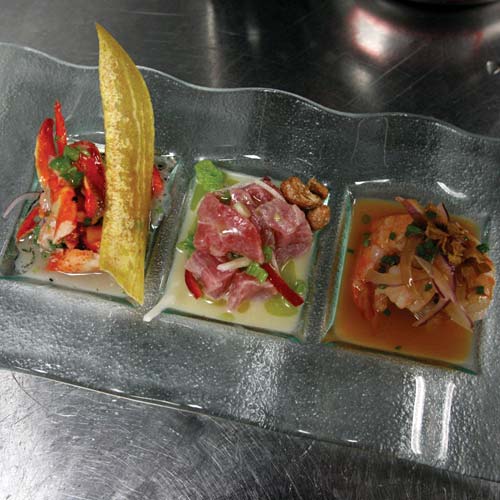
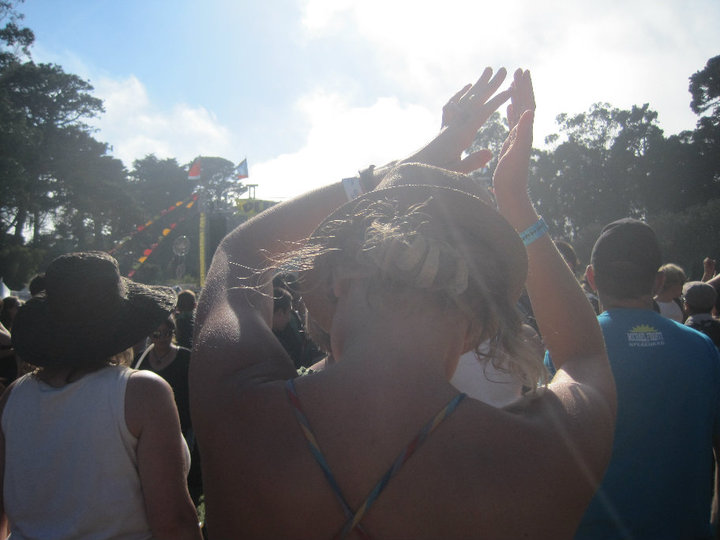
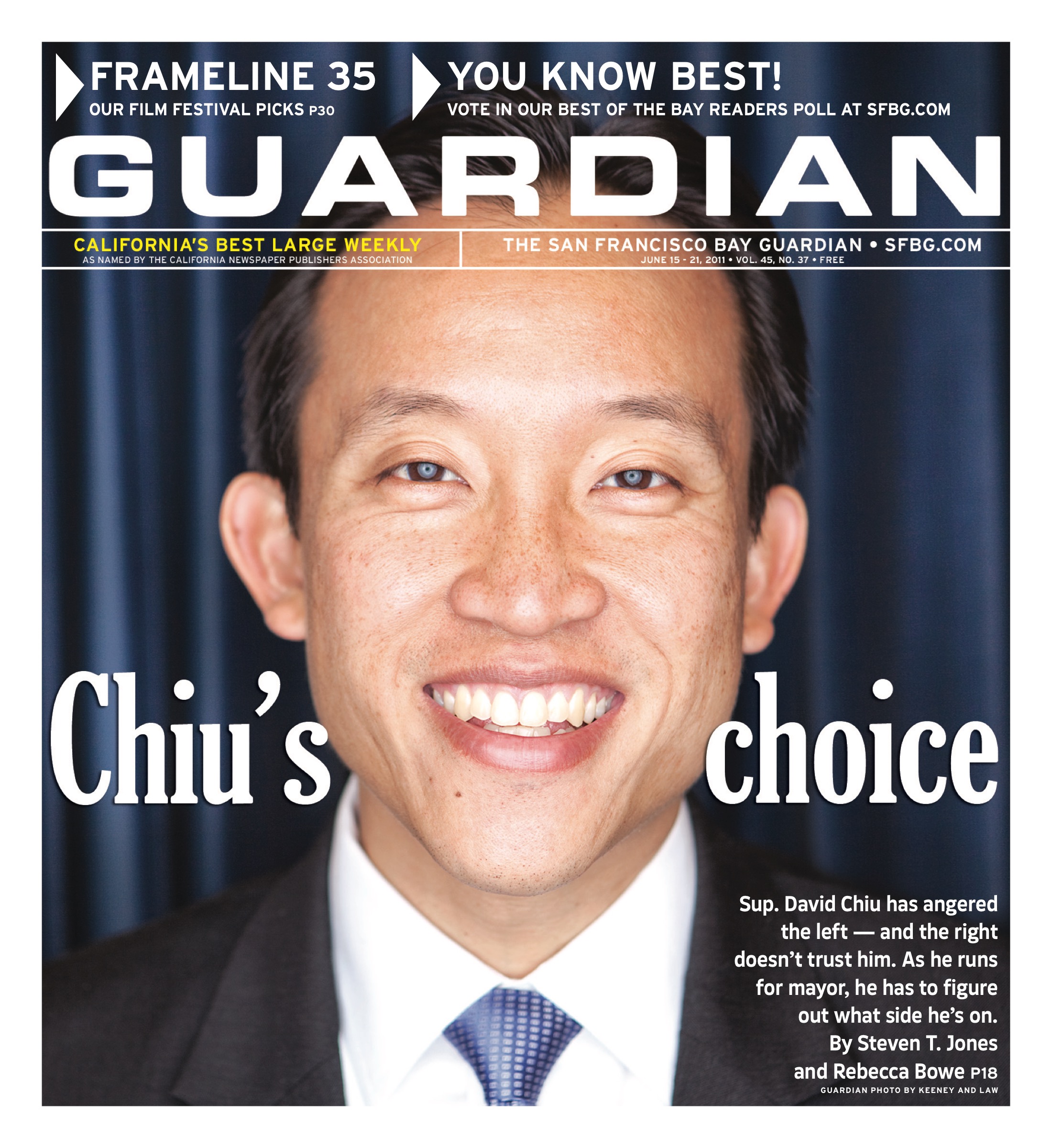
food

Criolla Kitchen

5

DINE The soft bigotry of low expectations — one of those marvelous phrases dreamed up by George W. Bush’s hardworking speechwriters, who fed him their words the way you would put junk mail through a shredder — was on my mind recently when I walked into Criolla Kitchen, which earlier this spring replaced Bagdad Cafe at the corner of Market and Sanchez streets. My expectations were low. Why? Because Bagdad Cafe was the last titan of mediocre 24-hour gay diners in the Castro. Oh, it had its charms, and it had been there forever, but people weren’t piling in for the food.

Still, when the old soldier mustered out at the end of March, I felt a pang, because it was one of the last memories of what the Castro once had been — for that matter of what this city had once been. And when I learned that it was to be replaced by a restaurant serving Creole food, I thought: eh. Bagdad Cafe, for all its winsome qualities, did leave the premises with the bar set on the low side food-wise, and Louisiana cooking has never been particularly well-represented here.

But: the man behind Criolla Kitchen is Randy Lewis, late of Mecca, Le Club, and other distinguished kitchens, so more optimism might have been warranted. Lewis’ food is brightly seasoned, full of life, and reasonably priced, while the setting — a triangle of light, a slice of glass pie with a flower stall on the sidewalk outside for color — recalls an early edition of Zuni Cafe.

It’s always seemed right to me, in a wistful sort of way, that we don’t have particularly distinguished Louisiana food here. This isn’t Louisiana, after all; if you want good Louisiana cooking, you should go there. The Cajun and Creole culinary traditions of the Mississippi delta are an authentic cuisine, a blend of French, Spanish, Caribbean, and African influences quite different from those that make up our own, also authentic — and distinctive — style.

The delta style is a little brighter and more pointed than ours — more Matisse than Monet — and because I am personally fond of extroverted food rendered in primary colors, I found myself bewitched by Criolla Kitchen. There is a lot of fried stuff on the menu, and why Southerners like to fry things so much remains a mystery to me. But they do it well, and it does taste good. I’ve heard people fret endlessly about eating too much of it, but I’ve never heard them say they don’t like it.

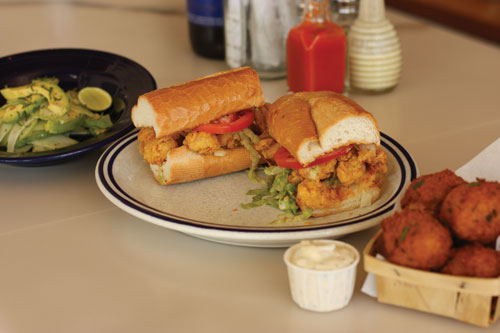
Besides, if you want hush puppies ($5.90), like little fried corn dogs except with shrimp inside, you can balance your account with the likes of the mirliton salad ($5.90). Mirliton is a cross between a cucumber and a pepper, and has a cool crunch and refreshing quality you might associate with sorbet. The salad was enriched with slices of ripe, creamy avocado, then lighted up with a well-balanced vinaigrette of lemon and cumin. As for the hush puppies, you dip them in a pickle rémoulade, a modified mayonnaise that’s a lot like what the French call sauce gribiche. It’s rich, but with enough acidity to make at least a slight dent in the hush puppy fattiness.

The ribs ($18.90), we were told, were slow-barbecued at an undisclosed location in the East Bay. I found them flavorful but slightly dry. The barbecue sauce on the side, on the other hand, had a pepperiness far more assertive than is typical of the commercially available stuff, which tends to be sweet and thick even if with some kick. This sauce was taut and lean, with low body fat. We also admired the accompanying sides of coleslaw (tangy, not sweet, and with long threads of green cabbage) and potato salad, made from smashed new potatoes and sober, direct mayonnaise. The importance of good mayonnaise in this kind of cooking can’t be overstated; it also made the difference (along with a tangy-fresh baguette) in the shrimp po’boy ($10.90).

All the juiciness absent from the ribs turned up in the fried chicken ($12.90), a full half-bird served with red beans and rice. Even the breast meat was juicy, while the skin and the artfully seasoned batter had fused into a shell that was an experience unto itself — almost like shards of savory candy.

Dessert could only be pecan pie ($3.90), which was not at all cloying and for that matter didn’t even really resemble a slice of pie — more a kind of crumble, with chunks and bits of pastry everywhere. We didn’t mind, but … is there such a thing as a pie shredder?

CRIOLLA KITCHEN

Dinner: Sun..–Thurs., 6–11 p.m.;

Fri.–Sat., 6 p.m.–midnight

Brunch: Sat.–Sun., 10:30 a.m.–2:30 p.m.

2295 Market, SF

(415) 552-5811

www.criollakitchen.com

Beer and wine

AE/DS/MC/V

Noisy

Wheelchair accessible


Appetite: 3 restaurants to watch

0

Here are two new places that just opened, showing a lot of promise… and one that keeps getting better.

Sexy ’70s foodie lounge : CHAMBERS EAT+DRINK

The Phoenix Hotel has long exuded rock star hipness. Its prior restaurant was more bar than food destination… and it really wasn’t memorable on the drink front, though the mid-century motel poolside setting is special. The pool remains, now with cactus wall and bright orange chairs. Drinks, though decent, still aren’t worth a special trip, but the food is.

With chef Trevor Ogden behind brand new Chambers Eat+Drink inside the Phoenix, I had no doubt it would be good. Young and ambitious, he has impressed me from his days at Mission Beach Cafe. With a complete decor revamp, I am delighted to say there’s no atmosphere like it in SF. A sleek 1970s den lined with hundreds of records (yes, LPs), the place is outfitted in leather, plaid couches, quirky lamps, knick-knacks, themes varying between restaurant, lounge and pool.

The food keeps up. Shaved Spring Salad ($8) is a knock-out of asparagus, wild arugula, and sheep’s milk ricotta topped with shaved Summer squash and lightly fried mushrooms. In a saffron tarragon vinaigrette, it nods to the long days of Summer. Smoking Salmon ($12) arrives wrapped like a rose blossom over a mini-hearth, emitting smoke from roasting coals. A bowl of yuzu sake creme fraiche, chive oil and salmon caviar/roe complete the playful presentation.

In a city with no shortage of fine burgers, Ogden makes an utterly satisfying one ($12): Prather Ranch beef is pink and juicy topped with whole grain aioli, butter lettuce, heirloom tomato, and red onion so smoky it feels as if the burger was grilled by campfire. It comes with thyme-dusted Kennebec fries, while add-ons include crispy-braised pork belly ($3) or avocado ($2.50). There are a handful of entrees ranging $18-26, or one could go with a mix of small plates. PB & L.T. ($10) is essentially pork belly in rice paper wrap, layered with butter lettuce, heirloom tomato, house sambal (chili sauce), and champagne aioli. A fun way to eat belly, almost light yet satisfying. Cauliflower soubise soup ($7) was the only misstep for me – too salty: basil, dried olives, and pink peppercorn added nuance, but over-salting left the impression of being one note.

Ogden is also handling the desserts. They read better than they tasted in opening weeks… but there is promise here. A giant Manhattan creme brulee ($8) is rye bourbon creme brulee doused in macerated cherries and blood orange reduction with candied orange peel. To be fair, I’m not a big creme brulee fan so overall it came off too pudding-like, but high marks for the drink-as-dessert concept. Carrot Caraway Cake ($7) hit blessedly savory with caraway, Kaffir lime nectar and candied carrot tops. Dots of creme fraiche frosting didn’t seem enough to balance out the slight dryness of the cake.

I’m pleased to see a new addition with dramatic, unusual environs that is also for the gourmet. We don’t always do it up in the setting department in SF, preferring to (rightly) focus on the food first. But it doesn’t hurt to do both.

CHAMBERS EAT+DRINK 601 Eddy Street at Polk, 415-829-2316, www.chambers-sf.com

Louisiana Authenticity : BOXING ROOM , Hayes Valley (549 Irving Street, between 6th & 7th, 415-592-8174)

The new Boxing Room may not immediately recall Louisiana: exposed wood, modern chandeliers and an open space look like any typical current-day restaurant. But the food coming out of the kitchen from the hands of Chef Justin Simoneaux, a Southern Louisiana native, just begins to assuage my constant hunger for New Orleans.

First off, I can’t tell you how thrilled I was to see Creole cream cheese on his menu. I fill up on that silky, gently sweet goodness whenever I’m in Nola but had yet to see it here. Seems he couldn’t find it either so Simoneaux made his own. He’s currently serving it with a salad ($8) of mixed greens, strawberries, and spiced pecans.

Deep fried alligator with a Creole remoulade ($11) is about the freshest alligator I’ve tasted – even better than what I’ve had in Nola or Florida. He’s taken painstaking efforts to source the best possible ingredients and it shows: this alligator is more tender and flavorful than its fried status would suggest. Crawfish Étouffée ($13 small, $20 large) is a beloved dish served in varying styles, but often reminiscent of gumbo. Simoneaux’s roux base for the Étouffée is subtly sweet and savory. A beauty… but I could have used a little more crawfish.

Stuffed mirliton and eggplant ($17) is a superb vegetarian dish and maybe the most creative entree. Over a sweet, stewed tomato ratatouille, Grana Padano cheese accents a small, stuffed eggplant and larger mirliton, Southern Lousiana’s beloved vegetable (also known as chayote). Crispy Boudin Balls ($5) is delicious Cajun boudin sausage fried into breaded balls. Don’t miss the free starter of crackers with pimento cheese spread. I’ll take more pimento cheese, thanks. Bananas foster cake ($7) is a moist, dense take on one of Nola’s greatest desserts, served with a subtle bourbon ice cream.

There’s also oysters, fried chicken and red beans, beers on draft (a nice list ranging from Belgians to Louisiana beers), wines on tap, and plenty of bottles. Zydeco plays in the background. At least two waiters are from Louisiana – we sure enjoyed chatting ours up about the glories of food from that state. The only thing missing is a Mint Julep.

BOXING ROOM, Hayes Valley 549 Irving Street, between 6th & 7th streets, 415-592-8174, www.boxingroomsf.com

Daily-changing freshness: OUTERLANDS

Outerlands keeps getting better. Since chef Brett Cooper came on board and their liquor license came through, allowing for seasonal cocktails, it’s more of a destination than it was. I always liked the woodsy, narrow interior but found waits at brunch chaotic and the food all-around solid, if not noteworthy. There is now amped-up artistry, particularly in vegetarian dishes, distantly reminiscent of what one might see at Napa’s Ubuntu.

There are roughly only two $10 cocktails a night. Recently, I liked a Smash in a mason jar: Buffalo Trace bourbon, fresh peaches, lemon and rosemary. More refreshing than unforgettable, it was as garden-fresh as dinner was. Co-owner David Muller’s bartending background at places like Slanted Door clearly informs house-made ingredients and knowledgeable mix of ingredients, like an aperitif of Junipero gin, absinthe, Campari, fennel, sparkling wine.

Dinner highlights included baby carrots and leeks ($9) dotted with fennel, nettles and toasted almond breadcrumbs, and a plate of Mixed Beets ($8), juicy in red frill mustard and sherry, accented by dollops of the most divine, creamy house ricotta. Savory bread pudding ($9) is a puffy dream of their house bread baked with caramelized onions, chard, rosemary, crusted with Gruyere cheese.

Dessert ($7 each) was a mason jar filled with strawberry rhubarb parfait, creamy and fresh, but with barely a taste of rhubarb or fennel. More of both would have made for a superior dessert. More exciting, despite its straightforward sound, was a chocolate budino: lush dark chocolate, hazelnuts, graham cracker, toasted meringue, and thankfully plenty of salt to keep it savory.

Outerlands has evolved into something special by the beach, and a win for anyone who lives out that way.

OUTERLANDS, 4001 Judah Street at 45th Ave., 415-661-6140, www.outerlandssf.com

Subscribe to Virgina’s twice monthly newsletter, The Perfect Spot

Ameri-cows rejoice!

0

Come our nation’s day of independence, all non-meat eaters will eat one: a homogenized, unexciting tofu dog. Especially if they are shy and/or lazy – the dog package conveniently slips into one’s red-white-and-blue woven straw tote, and they are easily sneakable onto BBQ grills without a huge amount of haranguing from friends pumped up on animal proteins. 

But they suck (except for Field Roast sausages, whole food fist pump). And thankfully, this year all you little veggies have an option to the tube-shaped madness: the San Francisco Vegetarian Society‘s Healthy Holiday BBQ on Sun/3.

Belly up to the benefit for Go Vegan Radio (which airs Sundays at 3 p.m. on am channel GREEN 960) BBQ for treats from a tummy grumbling V-list: Souley Vegan, Rudi’s Bakery, and Sunshine Burger among other moo-friendly vegan magic makers. 

But what would a vegan gathering be without a little speechifying on topics that affect your belly and other things? Dr. Elliott Katz, the founder of In Defense of Animals will give a talk to reaffirm your anti-burger convictions, and at 2:30 p.m., animal rights crusaders Jake Conroy of the persecuted e-activists Shac Seven, Alfredo Kuba, and Pat Cuviello will flap jaw in a panel discussion entitled “Coffee, Cake, and Constitution.” 

Oh, and vegan bodybuilder Kenneth G. Williams will be there. Stoked!

Meat-free muscles: Kenneth G. Williams

Should Sunday’s festivities leave you unable to stomach the thought of being restricted to one kind of coleslaw and buns on the Fourth itself, you’re in luck: bring your best cornmeal-crusted tempeh over to the Presidio for a conveniently-located potluck before the fireworks, also sponsored by the Veg Society (details below).


San Francisco Healthy Holiday BBQ

Sun/3 noon-3:30 p.m., $10 suggested donation

First Unitarian Universalist Center

1187 Franklin, SF

www.sfvs.org


Fourth of July SF Vegetarian Society-Living Foods picnic potluck

Mon/4 1 p.m., free

O’Reilly Avenue between Lincoln and Eddy, SF

www.sfvs.org


Hot sexy events June 29-July 5

0

Love the mommy bloggers. Such a feel good moment when a harried parent gets to sit down and share (even electronically, even through a screen) just what they’ve been feeling about their day with the kids. Y’know, how to talk to a youngster about adoption, wise words from grandma, the best new G-spot stimulator.

Oh yes, there’s a new kind of mommy in town. Or at least, pervy parents are finally getting their due. Dirty mommies now have their very own local blog, and meet-up.

To compliment personal online screeds that are already being penned by Shar Rednour of How Good Sex Made Me a Great Mom, of the example above, and sex toy shop mommies Moms In Babeland, Madison Young organized Sexy Mamas Social Club (she’s also held workshops on motherhood and sexuality at Good Vibes, and ate breast milk icecream as performance art this year). It’s open to moms in the sex trade, moms who have sex on screen, moms in alternative sexuality communities, and moms who support all of the above. The group meets for brunch at one in the afternoon on Fridays, which is another reason to like it. 


Sex With Emily livecast

Today, Emily Morse told me all about the new semen cookbook (there’s something weird in the air about cooking with cum). She’s got this squeaky little voice, she’s broadcasts outta San Francisco, she has very little qualms about talking about her decidedly heterosexual, but fairly entertaining love life. And she’s there for you everyday so that you can snicker through the afternoon, especially when your boss asks you what you’re listening to and you say “making Jello shots with male ejaculate.” Now I wish that would happen. 

Monday-Friday 1-2 p.m.

www.sexwithemily.com


Go-Go Studs night

There’s nothing worse than being in the middle of a good grind and looking up to see the scantily clad go-gos with looks of boredom on their Adonis-like faces. Well hell, how hard do you have to work it to get a rise out of them? KOK feels your pain, so they’ve assembled a line-up of faces so fresh they’ve had no time to weary of your (adorable) flailing. Sexxy.

Fri/1 11:30 p.m.-1 a.m., $2 after 11 p.m.

KOK Bar

1225 Folsom, SF

www.kokbarsf.com


Sexy Mama’s Social Club

Because sexy thangs shouldn’t be barred from having kids – or from continuing to be hella sexy. New mamí Madison Young has apparently organized a get-together for mommas from the sex industry. Be you a sex worker, a sex writer, polyamorous, an adult film actress, or just supportive, roll through this brunch (the group’s third) to be part of a new old girl’s club. 

Fri/11-4 p.m.

Email Madison Young at feminapotens@gmail.com for details

www.feminapotens.org 


Nasty

In addition to hosting a frequently-updated site of HIV/AIDS research news, Project Inform throws a good party. We think – Powerhouse‘s Nasty will now go to benefit the HIV/AIDS advocacy organization, which is promising for many reasons. The party’s raised over $30,000 for the AIDS Emergency Fund in the past, and it’s kind of your dirty, dirty duty to make sure that it gets off (ha) on the right food with Project Inform. All for charity! 

Fri/1 10 p.m.-1 a.m., $5

Powerhouse 

1347 Folsom, SF

www.projectinform.org


Pyro Passion with Stefanos and Chey

Why wait til the Fourth for the fireworks? Rumor has it this power couple of SF BDSM learned their fireplay skills in a sub-zero Minnesota dungeon – that’s one way to figure out how to be sensual with flame, but getting taught by the experts, with super hot models, in one of the city’s best-known dungeons – you’ve upped them on comfort factor, at least. Learn skills in tools, safety, and the psychology of properly lighting your lover aflame.

Thurs/30 8-10 p.m., $20

SF Citadel

1277 Mission, SF

(415) 626-2746

www.sfcitadel.org 


Appetite: Time for tea

0

Ever a fan of a civilized (and delicious) respite for afternoon tea, here I present to you two divergent ways to raise your pinky in the city.

Kettle Whistle at Burritt Room: A gourmand’s pop-up tea

Currently scheduled to take place on the last Saturday of every month through October, Kettle Whistle launched its inaugural tea this past week in the spacious back room of Burritt Room’s turn-of-the-century-style bar, tucked upstairs in the Crescent Hotel.

The brainchild of pastry chef par excellence William Werner of Tell Tale Preserve Co. and tea mavens Lawrence Lai and Ann Lee of Naivetea, Kettle Whistle is essentially a pop-up high tea, one where ladies (and men) meet over crumpets and scones. But this is no typical tea.

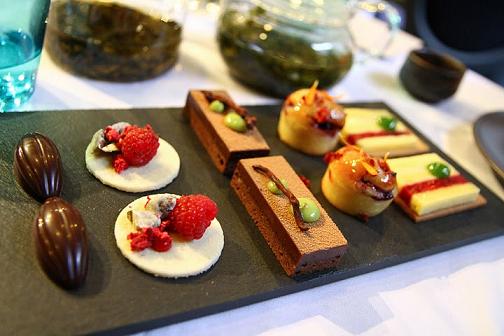
At a pricey $55 per head, it’s even more costly than high tea at the stunning Palace Hotel — but Kettle Whistle has vastly superior food and drinks. Though dishes and tea pairings will rotate, you can be assured of three themed courses: savory bites, followed by scones and crumpets (the passion fruit olive oil curd on this tray will blow your mind — regular old lemon curd might never seem the same), ending with dessert. There’s even a take home bag of tea and a snack (mine came labeled “damn good granola,” a savory-sweet mix).

You’ll be full after three courses because the savory and dessert courses offer four to five different bites, each from Werner’s creative hand. An heirloom tomato sable on a homemade cracker with lemon and a strip of lardo iberico de Bellota was revelatory. Spheres of tomato and pig fat dissolved in my mouth like a dream I wish I could have over and over again. On the dessert platter, a chocolate and salted caramel fondant was silky save for a crispy strip of chocolate on top, enlivened with avocado and lime layers. I’d go back just to see what Werner will serve next.

Naivetea’s Taiwanese teas (a local Bay Area company run by Taiwan natives) are elegant, worthy companions — not overpowering nor overshadowed by any of the courses. My favorite was their award-winning (it recently took home first place at the North American Tea Championship) Dong Ding Oolong, a gentle beauty with backbone, whose toasted rice and caramel notes shine.

Kettle Whistle’s two July 23 seatings are already filling up, so I’d look into reserving a spot now. Dress up, wear a hat, and come hungry.

Through October. 417 Stockton, SF. (415) 400-0500, www.naivetea.com


Rose Tea: Casual tea cafe

Rose Tea, an open, airy new shop, is a peaceful respite off Irving Street that doubles as take-out cafe and flower shop. It’s only been open a few weeks, but my two visits there have been rewarded with herbal teas (I like the Fire on Ice: ginger and lime steeped with fresh mint leaves) served in a bottomless pot with a mini-French almond cake and jam for $6.50.

Sandwiches ($5.95-7.50) are made with care on rye bread with sides of fruit and nuts. I liked the chicken, apple, cream cheese, and raisins version, and the feta, avocado, and walnut with tomato and basil. Plates come finished with house macarons or baklava. With what appears to be Armenian and Greek roots (if the jams for sale are any indication), the cafe also offers Turkish coffee, an espresso bar, and spiced rose chai. It’s a welcome neighborhood spot for a pot of tea and a bite.

549 Irving, SF. (415) 592-8174, www.roseteasf.com


Subscribe to Virgina’s twice monthly newsletter, The Perfect Spot


Dick Meister: Paid sick leave is good for us all

5

The latest figures show that some 44 million workers in private employment  – more than 40 percent of the private sector workforce – do not have paid sick days that they could use to recover from illnesses, including contagious illnesses such as the flu, or worse.

It should be of particular concern that those occupations which are currently least likely to provide paid sick days include occupations most likely to have regular contact with the public – most importantly and most disturbingly, food service and food preparation.

That raises serious health problems – especially in these tight economic times, when workers need to stay on the job as much as they can, no matter how ill they are, to earn as much money as they can. Which, of course, endangers the health of those who come in contact with them, as well as delaying their recovery from their illness.

Public health experts note that the fewer the number of workers who are able to stay at home when sick, the more likely it is that diseases will spread. In addition to the increased suffering of the public and other workers which that causes, it also causes significant economic losses.

Laws have been proposed in several states and in Congress that would require employers to grant paid sick leaves to their employees, but it seems unlikely that the measures, however much they are needed, will pass any time soon – if at all.

But there has at least been a start, however slight, toward what’s broadly needed. That’s a paid sick leave law that was adopted by the city of San Francisco five years ago – the first citywide such law in the country. If nothing else, the San Francisco ordinance proves that such laws are quite feasible, and not the “job killers” that anti-labor forces contend they would be.

San Francisco business groups fought fiercely against adoption of the ordinance and thankfully lost big time. The ordinance was approved by 61 percent of the voters in a citywide election in 2006.

Under the ordinance, workers in businesses with fewer than 10 workers can earn up to five paid sick days a year, while workers in larger businesses can earn up to nine paid sick days.  Workers accrue one hour of paid sick leave for every 30 hours they work. They may use the sick time to recover from their own illnesses, care for a sick family member, or seek routine medical care.

A recent independent survey of nearly 1,200 San Francisco workers and nearly 700 employers by the Institute for Women’s Policy Research came up with findings that the city ordinance was, in the words of the California AFL-CIO, “overwhelmingly positive for workers, businesses and the public.”

The labor federation called the study “further evidence policies that help working families meet their responsibilities at work and at home are good for everyone.”

The study shows, in short, that the San Francisco ordinance has had a great impact on workers’ lives but little or no impact on the city’s businesses.  They overwhelmingly report that the law has not cut into their profits. Two-thirds of them reported no problems implementing the law.

It seems likely that the reason for the slight impact on businesses business can be attributed to the fact that most workers take sick leave days only when they need them.  Even though the law allows workers five to nine sick days a year, San Francisco workers used a median of just three days a year. And one-quarter of the workers didn’t take a single sick day.

Even the major opponent of the law prior to its passage, the local, politically powerful restaurant association that led the political fight against the city ordinance, now concedes it hasn’t led to employee abuses or hurt restaurants or other business.

Most important, as the state AFL-CIO noted, the survey proved that having paid sick days makes a substantial difference for working families.  More than half the workers surveyed said they’ve benefitted from the law. Among other important things, the law has given workers who need paid sick days the most, including parent and workers with chronic health conditions, the time they need to care for their health and that of their children.

The labor federation reports that it hears regularly “the stories of parents who are forced to choose between their children’s health and the financial well-being of their family . . . who have put off visits to the doctor and sacrifice their health to avoid losing their jobs.

Washington, D.C. and Milwaukee have followed San Francisco’s lead and adopted ordinances providing paid sick leave for workers.  And some states, California, New Jersey and Connecticut among them, have adopted similar though less extensive laws.

But what’s most needed is a federal law – a law that, if properly enforced, would grant sick leave pay to all workers, helping them, their families and anyone else who might be exposed to their illness.

It’s obviously the sensible thing to do.


Dick Meister, former labor editor of the SF Chronicle and KQED-TV Newsroom, has covered labor and politics for more than a half-century as a reporter, editor, author and commentator. Contact him through his website, www.dickmeister.com, which includes more than 300 of his columns.


One Hundred Days of Spring: As Mid-Market talks, two organizers do

1

All photos by Stephen Heraldo

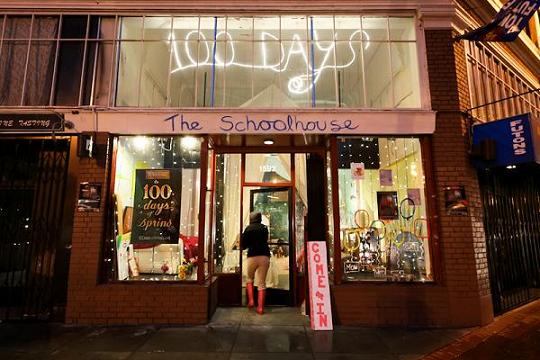
Just beyond the scope of the perpetual debate of revitalizing Mid-Market — defined as the stretch from Fifth Street to Van Ness Avenue — an extraordinary project is quietly closing its doors on an oblique, no-man’s-land corner of Market near Franklin. There, for one hundred days and nights, an empty glass storefront opened up to spill a swath of light and music onto the cigarette-studded sidewalk — without funding, a business model, or (as founders Will Greene and Sam Haynor are the first to say) much of anything else.

“Ask us our mission statement,” One Hundred Days of Spring organizer Haynor challenges.

“We don’t have one,” Greene, his creative partner, cuts in.

“Well, yes we do,” says Haynor.

“Yeah, that not doing it seemed like a cop-out,” the pair concludes.

“It” was creating more than three months of free and donation-based events, classes, and recorded stories representing a variegated slice of the local population: hipster kids in art collectives, professionals on their Market Street commutes, and low income neighborhood residents, including many who bed down each night on the block.

As part of Central Market Partnership’s ongoing efforts to inject arts and culture into revitalization plans for mid-Market, the San Francisco Office of Economic and Workforce Development is joining with the Arts Commission to hold a series of focus groups exploring ways to engage artists, small businesses and cultural organizations in the making of a thriving creative district.

Five focus groups have already met, according to OEWD’s Jordan Klein, and over the coming weeks, more gatherings — of community residents, transportation advocates, historical preservation advocates, and nonprofit leaders — will provide insight for the Central Market Economic Strategy, to be released in the late summer or early fall.

One Hundred Days of Spring wasn’t on the agenda of any of these meetings. A former boutique clothing store sandwiched between SROs and auto body shops on a strip shadowed by the sheer, block-long face of a Honda dealership, the space’s previous tenants didn’t last long. But transformed into a gypsy-tent-circus-wagon-theater-gallery-cum-classroom, the storefront, reborn as the Schoolhouse, rooted itself in the neighborhood in just a few months.

The hundred days are now over. But if the packed closing ceremony was any indication, Haynor and Greene’s model is one that the community is keen to reproduce. Mark Singer, a research librarian and freelance writer who found the project in what the two founders call the “analog way” — by stumbling across the threshold — told supporters, “I challenge everyone in this room to replicate what we’ve seen here, seen in the last hundred days.”

“The ultimate goal,” Haynor said, “is not only to share and to educate, but at the end of one hundred days, to have created one hundred new ideas for people to carry out into the world.”


Nothing to it

One Hundred Days of Spring was an experiment in community-supported programming. Rather than relying on or waiting for grant money, Haynor and Greene hoped to show that a community space can be self-sustaining — for the benefit of those who can contribute more and those who must contribute less.

“San Francisco is grant rich,” Haynor explains, “but it’s also full of people waiting for grants. They have a bunch of awesome ideas, but by the time the grant cycle comes around, the initial spark is gone. For us, going after a grant would just eat up time, and we wouldn’t end up doing what we wanted.”

Instead, the two 25-year-olds pooled their savings and paid $2,000 a month for rent from March to June, $200 for utilities, plus a few hundred extra for renovations and insurance. Within three weeks of the initial idea, they had moved into the space and populated a calendar of events through friends, friends of friends, and tools like SF Chalkboard. They were running full tilt by day six. 

In just over three months, the team offered more than 250 classes, shows, and tutorials — sometimes five in a day — covering everything from truffle-making and fermentation to bike repairs, aerial silks, and open mics. By collecting donations on a pay-what-you-can basis, Haynor and Greene were able to recover a large portion of their initial output, and also garner an extra $4,000 to reinvest into the project.

Greene on the value of 100 days of events: “If you try to put a value on what we have now, that we didn’t have then, you couldn’t buy it for $4,000.”

Though the Schoolhouse founders ended up $4,000 short, Greene says they “could have broken even” if they had focused more on the project’s revenue-generating components, like filming videos for musicians who performed in the space.

Even so, for Greene the worth of One Hundred Days of Spring was indisputable. “If you try to put a value on what we have now, that we didn’t have then, you couldn’t buy it for $4,000,” he says.

When Judy Nemzoff, community arts and education program director for the Arts Commission, stopped by the Schoolhouse and asked how Haynor and Greene did what they did, the two replied, “Well, we just signed a lease.”


It takes two

Inside the Schoolhouse, the laid-back attitude seemed to likewise shrug “nothing to it but to do it.” But the warm, easy atmosphere belied the late nights and hard work it took to get ‘er done.

Understanding how One Hundred Days of Spring came to be — and why it worked so well — means understanding a bit about its creators

Greene and Haynor, hanging at the Schoolhouse

Haynor and Greene have the kind of friendship people make movies about. Besides the sort-of charming things like finishing each other’s sentences and bragging about accomplishments each knows the other would never mention for himself, there’s the sense that somehow, these two unassuming fellows are going to change the world.

“We’re a good balance,” Greene says. With the air of someone showing how two-plus-two equals four, he explains, “Sam’s a bit spastic, and I can plunge a toilet.”

“We have different skill sets, but we share goals,” he continues. “We keep each other in check. We’re both very often wrong, but we’re rarely both wrong at the same time.”

Coco Spencer, who joined One Hundred Days of Spring as an intern partway through and become an indispensible team member, says she was willing to dedicate so many hours to the Schoolhouse because, “Basically, Sam and Will are the most inspiring people I’ve ever met.”

Haynor and Greene were campers and later counselors together at the Bar 717 Ranch in Trinity County. There, they found each other, and also a passion for teaching — or, as they put it, “helping people to be good versions of themselves.”

Though each has traveled and embarked on sundry individual projects — Greene as a musician and videographer, Haynor as a chess champion and conflict-area journalist — they continue to connect over their drive to educate in unique new ways.


Bathroom, beats, and big ideas

At the Schoolhouse, that meant engaging community members through a service-based approach. “Our main goal is to provide resources to people who need resources,” Greene says. “We’re not interested in providing resources to people who have resources.”

Given the diversity of The Schoolhouse’s participants, “resources” could mean different things.

Haynor explains, “For some people, we’re a bathroom. For some we’re a place to stop in and say ‘hi.’ For some, we’re a place to do events.”

“We’re successful because we’re always doing something fun, and everyone feels invited,” Greene says. “It’s the loose nature of our project. There’s no doorman, no guy with a cash box.”

There were challenges (“Sam’s been trying to put together homeless poetry readings, but he’s scheduled them for the first of the month. That’s when everyone gets their checks, so everyone gets drunk,” Greene says at one point), but there were also many moments — like when a woman from the block walked up and started giving Haynor a massage, or when Greene calmly negotiated with a rowdy, intoxicated visitor, encouraging her to pipe down and eventually leave — that pointed to a deft interface with the surrounding community.

“They respect our storefront more than they do the others,” Greene says. Some locals worked shifts at the Schoolhouse in return for resources. Others stopped in for music, for food and nutrition classes, or to look at the art. Some simply came by to talk about living in the area.

During an “Un-Talent Show”, a performer named SofT humorously described a street-dweller’s perpetual problem: carrying belongings. He showed an in-stitches audience how to bundle objects in an old sweater — a wholly relatable rap on wrapping. Another visit came from Benny, one of SF’s famous itinerant tamale sellers, who lives in an SRO across the street and makes what partakers described as “possibly the world’s best tamales” across town in his girlfriend’s kitchen.

Haynor describes a woman who walked into a sewing workshop — run by SF Social Fabric, a volunteer-staffed bike maintenance and sewing skills collective — with “some trepidation.”

“She was in a room with a bunch of people who were nothing like her,” he says, “but we got to know each other over the fact that we all wear clothes. And they all fall apart.”

Neighborhood connections at the Schoolhouse

“There’s a duality to this corner,” Haynor says. “From doctors to the people who live on the block to all the people in the middle who travel Market Street. Before us, some wouldn’t even cross the street.”

“At our best,” he continues, “we’re a place people from another demographic can discover the old-fashioned way — with their eyes and their feet. They cross the threshold, ask what we’re doing, decide to stay, and learn something. Now, I can’t go five minutes without seeing someone I know, or someone who I recognize, or someone who just popped in.”

Singer, a perfect example of the phenomenon, started stopping by between two and five times a week after his initial discovery. He framed the project’s importance in simpler terms: “This is where we need these things to happen. Where it smells like urine on a hot day.”


Let’s put on a show!

Singer believes that projects like the Schoolhouse can “transform parts of San Francisco” by providing services that are more than “just artists and gallery-talk.” The Schoolhouse, he says, “was something visceral.”

“One Hundred Days of Spring created an infinite possibility for community that can’t be replicated on a screen or keyboard. We’re not talking Internet cafés with white earbuds, but humans breathing in the same space — collaborating, communicating in one room, and that room changing every darn day.”

Indeed, the walls of the Schoolhouse were repainted so many times over the course of the hundred days — with layers of murals, street art, installations, white space for projecting films — that Spencer, who took charge of many of the events’ logistics, joked she was hoping to reduce the interior square footage, and thus, the rent.

The zealous energy required to transform the space again and again was reminiscent — Singer pointed out — of Babes-in-Arms-era Mickey Rooney and Judy Garland exclaiming Hey, kids! Let’s put on a show in this old barn! That down-home, DIY energy may be just what efforts like the Mid-Market revitalization require.

Greene, who attended one of the Central Market Partnership’s focus groups, says the consensus was that knowledge about and access to space were the biggest obstacles to creating and executing programs of any kind.

“People are looking for answers,” he says, “looking for some larger entity to hand them space, or looking tax breaks. There’s the feeling that you can’t just do what you want to do.”

“Rather than saying ‘if you give us space, we’ll fill it with beautiful things,’ you can say ‘I’m just going to do it.’ If you’re willing to make it happen, if you work really hard, if you work with the people you’re trying to reach, then you don’t have to worry about anything else.”

Despite the waiting, wanting, hoping attitudes Greene says he encountered, he points out that plenty of others are “just doing it.” The Schoolhouse helped along a few such visionaries by sponsoring two “Grant Prix Dinners.” During the informal roundtables, entrepreneurs presented project ideas between courses. Participants paid a fee for dinner and a ballot on which to elect their favorite projects – to whom the entry frees were turned over as seed money at the end of the night. 


Bringing together the neighborhood

At times, especially in San Francisco and other urban areas where real estate is costly, amping up a neighborhood’s arts and cultural amenities has acted as a roundabout measure to invite the type of gentrification that sweeps streets clean. That kind of programming is not intended to serve current residents so much as to usher in new ones. 

By contrast, the Schoolhouse made a conscious decision to serve the neighborhood’s existing population — with safer-feeling streets resulting, and much more quickly, at that. 

One Hundred Days of Spring was a bold, direct move to engage the local community. As such, it was highly effective not only at providing needed resources, but at tempering the less-desirable qualities of the neighborhood by creating a sense of community and responsibility among residents and passers-through.

“Coming out of Muni, walking home on Market Street,” Singer had said, “can frankly be pretty scary. There’s substance abuse, drug deals, and people who may or may not be harmless.” The Schoolhouse, he said, helped diffuse that lack of ownership and feeling of “anything goes.” For Singer – and Schoolhouse denizens of all backgrounds — the space managed to help tie a few new knots. 

“The Schoolhouse brought me closer to a world that’s very marginal,” Singer said. “the homeless world.”

Whether or not Mid-Market planners will look to the Schoolhouse for a lesson in effective community building, the project’s two masterminds have undoubtedly developed a model they can draw on in the future.

Haynor and Greene plan to continue working together on community education projects. With One Hundred Days of Spring under their belts, they will be able to approach supporters “not just with an idea, but with a proven concept.”

“We are both in this together to see what we’re both capable of,” Haynor said. “To see if we’re any good at this thing.”

In the style of banter so typical of the pair, Greene added, “So we can figure out the rest of what we’re going to do with our whole darn lives.”


Zero Zero

0

paulr@sfbg.com

DINE Our recent bout of pizza chic was bound to reach some sort of apex sooner or later, like all fevers, and it now appears to have done so at Zero Zero, the Bruce Hill endeavor that opened last summer in the old Azie space adjoining LuLu. The name refers to a vaunted Neapolitan flour used to make pizza dough, but it also seems to suggest the turn of the millennium, with its near-5,000 Nasdaq and the reinvention of SoMa as the urban version of Silicon Valley. If you’d gone to sleep about 10 years ago and were just now waking up, you probably wouldn’t think much had changed, except that pizza had become very grand indeed during your little nap.

As a pizza master, Hill has a formidable pedigree. He was the longtime chef at Oritalia, one of the city’s most interesting and innovative restaurants of the 1980s and 1990s before moving on to reinvigorate the cooking at both the Waterfront and Bix. The Zero Zero gamble is to open a pizzentric restaurant in the heart of the city’s new restaurantland instead of at its fringes, in the lower Haight (Ragazza), Dogpatch (Piccino), or Glen Park (Gialina). A major plus of the location is that a rich lode of clientele is near at hand; being upstairs at Zero Zero on a busy weekend night is a little like trying to work your way through the break room of the Abercrombie and Fitch catalog. Clearly pizza is familiar and reassuring to people who aren’t too many years past their college graduations and who are now living in SoMa’s innumerable new luxury lofts. But is pizza enough to carry a serious restaurant?

Hill has gracefully hedged his bets by laying out a menu that’s considerably broader and more sophisticated than a few tomato-red pies to be washed down with steinfuls of brew. The kitchen turns out an assortment of crudo, antipasti, and pasta plates to keep things interesting. And if you don’t want pizza at all, you can certainly get by — although you won’t find so much as a single conventional large dish. It’s little dishes, with or without pizza. Or bupkes.

We found the food beautifully conceived and presented, although several dishes struck me as being on the verge of too salty. This is odd, considering that so much restaurant food has struck me as underseasoned over the years. Whenever I come upon oversalted food in a restaurant, I find myself thinking of the young chefs-in-waiting who can often be seen in clusters on the sidewalks in front of culinary academies, puffing away at their ciggies. It is well known that smoking cigarettes dulls the sense of taste and affects the way a chef is seasoning things.

A crudo of California halibut flaps ($12.95) was presented on a narrow sushi platter, as if subtly to enhance our sense of its freshness. And it was glisteningly tender, its butteriness deepened by Fiordolio EVOO. But the promised “panzanella” was just golden-crisp croutons with salt sprinkled over the top. It is surprising how much damage even a little salt can do to delicate food. I also found too salty an otherwise marvelous salad of wild arugula ($9.50) with quarters of ultra-ripe yellow nectarine and marcona almonds. The greens, with their almost prickly freshness, could have been picked five minutes before. But the lemon vinaigrette tended toward briny. One dish we did find in good tune was expertly braised octopus ($13.95), cubed and tender and plated with Sicilian chickpea fritters that could have passed for polenta triangles, along with the wondrous weed purslane and an agrodolce (sweet-sour) sauce. There was an important clue in this dish — that saltiness is a relative phenomenon. It can be balanced.

The pizzas buck the local trend by using a slightly thicker, puffier crust. One nice feature of puffs: they blister well. Blisters suggest that the pie has been rushed to you straight from the oven, like a popover. The topping combinations are elegant and restrained; even a relatively lavish pie, the Fillmore ($15.95), with leeks, mozzarella, hen-of-the-wood mushrooms, garlic, thyme, and three cheeses (parmesan, pecorino, fontina), remained coherent, with fresh herb breath.

But Zero Zero’s best feature is probably its build-your-own-dessert option. You choose your base ($4), your ice cream ($4.95) — simple flavors but housemade — and your toppings ($1 each). Olive oil and sea salt are among them, but so is chocolate hazelnut crunch. Which would you rather have? 

ZERO ZERO

Dinner: Sun.–Thurs., 5:30-10 p.m.;

Fri.–Sat., 5:30–11 p.m.

Lunch: Mon.–-Fri., noon–-2:30 p.m.

Brunch: Sat.–Sun., 11:30 a.m.–2:30 p.m.

826 Folsom, SF

(415) 348-8800

www.zerozerosf.com

Full bar

AE/DS/MC/V

Noisy

Wheelchair accessible


Girls just want to have fun

9

culture@sfbg.com

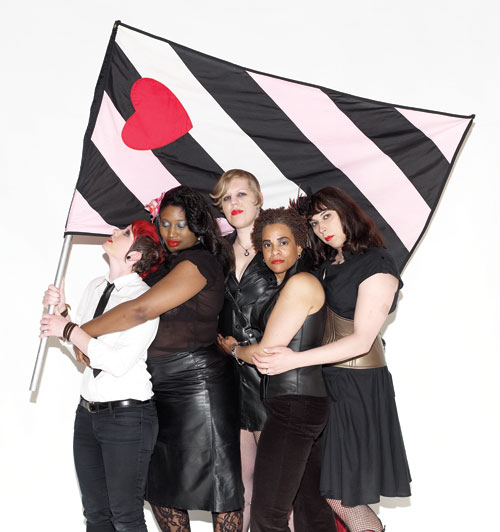
SEX It was their first official slumber party and a late-night run to the grocery store for pink hair dye was in order. Decked out in a combination of pink, pajamas, and leather, the San Francisco girls of Leather shrieked and giggled as they wandered the aisles searching for anything rosy-colored. The girls could easily have been mistaken for a freshman herd of coeds soaked in Malibu and cheap vodka, but as the group’s president, Leland, remembers, they were “just high on girls.”

Until they discovered the store’s collection of pink and white unicorns — on sale.

“We all oohed and ahhed and ended up purchasing six of them, surprising the other girls by returning to the party with an entire unicorn herd,” Leland says. From sleeping bags and hair braiding to dirty storytelling and play piercing, the night teetered between innocent and naughty, sweet and sexy. “So many unicorns, so many needles, and so much blood!” she said.

The SF girls of Leather (the girls prefer a lowercase “g” and uppercase “L” out of respect for the traditions of the leather community) are giddy and flirty: the epitome of seventh-grade girliness, complete with kinky sleepovers, hearts, and cuteness. As this year-old group sees it, maturity is overrated when it comes to BDSM — and a hint of silliness in a dark dungeon can only heighten the sex appeal. Who else is going to giggle or blush after a spank?

The group’s approach to leather is hardly in line with the masculine traditions that have come to be associated with the history of the kink community. But in the year since the girls formed their group, they’ve been working to secure their place in the continuum of leather lovers. And judging from the group’s growing membership — and accolades from the leather community at large — SFgoL is providing a much-needed refuge for marginalized fans of lighthearted play, splashing accents of pink across the traditional wash of black.


GIRL GOALS

Historically, a girl in the leather community has been defined as the female-identified version of a boy — a submissive expected to service a dominant individual in various kinds of BDSM play. But in SFgoL parlance, girl means something way more fun. Top, bottom, submissive, dominant, giver, receiver, experienced, or curious: all roles are welcome in the group, as long as you “girl” identify.

Which means what, exactly?

“Leather doesn’t have to be serious,” says Leland, who is of the mind that people of all ages, bodies, and sexual preferences can find bliss by tapping into their own personalized “girl-space.”

“You’re a leathergirl if you feel like it,” says SFgoL Vice President Kate McKinley. Even boys and bois are allowed in the group — as long as they have a “girl heart.” Coincidentally, McKinley wears one of these around her neck — a silver heart necklace.

“I play girly and therefore this group is where I belong,” she says.

An important tenet of the leather life, service (traditionally, the practice of obediently pleasing a dominant character) is still an integral part of the girl group’s goals — but its definition of the term goes beyond tending to masters and daddies.

In the year since the group’s inception, SFgoL has volunteered at multiple fundraisers and organized charity drives for nonprofits benefiting women in the leather community and beyond. Members are free to service individuals but are required to serve the community by means of philanthropy: grown-up Girl Scouts earning merit badges for kink.

Their efforts haven’t gone unnoticed — the San Francisco Bay Area Leather Alliance recognized SFgoL as its best new organization of 2010. “Contributing to the community makes it easier for us to enjoy what we’re doing,” says SFgoL member Anita, who asked that we not use her last name for professional reasons.

Anita moved to San Francisco from Norway on a work visa, but soon found herself lusting for a close encounter with leather. She discovered some BDSM groups for women interested in playing with women, but because she identified as straight when she arrived in the city, the SFgoL’s more inclusive membership requirements felt like a better fit.

She was also attracted to the group because it didn’t require members be in a dominant-submissive relationship. She was free to play with whomever, whenever, and however she pleased. “I’m a girl and I was interested in exploring the leather community in a group where I could just be myself and share my feelings,” she says.

Last month the SFgoL celebrated its one-year anniversary with 18 full members and more than 100 girls on its Listserv. The numbers are a strong indicator of its success, especially since the current version of the SFgoL isn’t the city’s first attempt at a girly collective. In 2004, a leathergirl group was formed, but failed to secure footing in the established leather community. The second time around seems to be the shiny charm — or maybe these girls are just extra-charming?

“We do have a smokin’ hot group of girls,” giggles Leland, looking around the table and raising her eyebrows at Anita and McKinley.

It’s lunch hour on a Tuesday and the three girls flirt like crazy, constantly laughing and finishing each other’s sentences between small bites of spicy Thai food. The three are a prime example of the group’s demeanor and exactly why Leland has enforced a “no cruising” rule during official meetings.

“The meetings are meant to be safe space and for taking care of business. But yes, we can play outside the meetings,” she says, batting her lashes as the other girls smirk, hiding a thousand secrets anyone with a pulse would die to hear.


RESIZING THE LEATHER FIT

Since its inception, the leather community has been predominately male. Icons like Marlon Brando, and the work of Tom of Finland and the Satyrs Motorcycle Club, defined modern masculinity in the 1950s, igniting a kinky obsession in the gay community. A badass jacket, muir cap, and related wardrobe of black hide became a symbol of sexual power and masculine independence, eradicating the stereotype that all gay men were effeminate.

Leather rules and traditions grew from military protocol and were diligently enforced by masters and their slaves, daddies and their boys. Women were intrigued, but struggled to find a place among the men; many leather bars turned away women at the door.

Over time, elements of BDSM became associated with leather and the community began to flex. During the ’80s, leatherwomen competitions popped up, and in the ’90s, groups like San Francisco’s Outcasts — now the Exiles —provided the community with strong female-identified role models. In 2006, the Exiles helped open Betty Paige’s Secret, which in subsquent years of the festival became Venus’ Playground. It was the first leatherwomen play space at the Folsom Street Fair.

It’s been six years since the Venus milestone, yet during this April’s International Ms. Leather competition in San Francisco, it was apparent that questions about the role of women in the leather community remain.

In a moment of call and response, “Where are the leatherwomen?” was shouted into the microphone. The answer was loud and proud: “Here we are! We’re here!” followed by a rumble of audience applause. Women may be standing their ground with paddles in hand, but the exchange was telling of their struggle for continued acknowledgment.

Deborah Isadorah, a veteran of kink and current leather momma, has been entranced by the leather community for more than 40 years, and is proud to have watched the roles of women expand. But in Isadorah’s eyes, the progression has been slow going.

“We live in a patriarchal society and that reflects on every part of our society, including leather,” she says, sipping a latte in Oakland and soaking in the spring sun.

“The men outnumber us physically in this community, [but that] doesn’t mean women’s voices are missing,” she continues. Isadorah is pleased with the progress of her generation of leatherwomen and is happy to sit back and nurture the younger crop. “I think we’ve done our job: to educate women about their bodies and the opportunities they have to explore sexuality beyond what society thinks is appropriate.”

Today, nearly half the current directors of the Leather Alliance, the community’s well-respected governing board, are female.

“We’re sitting at the table now,” says Daddy Vick Germany, a female-bodied leather daddy who has been a part of the Bay Area’s leather community for more than 15 years and serves as a director for the Alliance. Overall, Daddy Vick is content with the community’s moves toward inclusivity. “The men are leaving more space for us,” she says.

But traces of segregation can still be found. “Sometimes men just don’t see you — you’re not even in their line of vision,” she says, referring to a recent experience at the Up Your Alley street fair where a man blindly butted in front of her while she stood in a concession line. She recognizes that these incidents can be subconscious, but any female who roams the SoMa leather fairs is bound to encounter this feeling of invisibility. It makes her “mad as hell.”

Elected SF Dyke Daddy in 2002, Vick made substantial efforts to bridge gaps between the sexes. She’s currently running for SF Leather Daddy, a traditional competition built on fundraising for the AIDS crisis. In 2009 a transman won the competition, but if she wins, Daddy Vick would be the first female-bodied daddy to hold the title. Her candidacy alone is sure to shake things up with leathermen who believe in upholding traditional roles — but her motives are pure.

“I’m not doing this to make a statement as a female daddy. I’m running because I think I’m a good daddy for the community,” she says, meaning she cares about being a supportive, reliable father figure for those around her. The “working title” would help her foster change more effectively than her individual efforts.

Besides Folsom’s Venus’ Playground, there are no official social spaces intended for leatherwomen. This makes sharing communal bars and events incredibly important. Change is a slow process, but Daddy Vick says ample motivation is brewing in all corners, and — paired with the diffusion of kink — the space for growth can only flourish. Leather is opening into an umbrella term with the capacity to encompass multiple elements of fetish, and to further accept people of all genders, bodies, and preferences in any role.

In this respect, Daddy Vick thinks the SFgoL could play an important role. “It just takes people like Leland, coming in with a different energy. People who stand up in the crowd, see a need, and start organizing.”


FOLLOW THE PINK BRICK ROAD

While leatherwomen made slow but steady strides in the past decade, those straddling the space between butch and femme — the girl space — began breaking ground for themselves, too. In 2003 an international Leather Girl Network was born, led by the Bay Area’s Cheryl D. The group intended to mirror the already well-established leather boy community. Girls everywhere were giddy with possibilities.

“I had always identified with the title of ‘girl.’ I was a girl who liked to serve the community, but I was also a switch,” says Mistress Pilar, a longtime leather veteran and member of the original, and now revived, SF girls of Leather. Being a switch — someone who doesn’t commit to top or bottom exclusively — meant her definition of girl didn’t fit with that of the Leather Girl Network, which stated: girl equals submission. She wasn’t alone in her dilemma.

In 2004, San Francisco girls decided to put together their own troop, headed by girl Lori, the 2003 San Francisco Leather Dyke girl (a contest that no longer exists), and girl Hayden, the 2004 title-holder. They intentionally left the definition of girl open to allow for individual interpretation. The leather community shuddered at the loose restraints, confused by the men, boys, and transpeople that joined the girl ranks.

“People in the leather community were not comfortable with this idea at the time. No one even liked talking about it,” says Pilar, referring to the notion that a girl didn’t need to be a biological woman to be in their group. “The attitude that people should ‘get off the fence’ really hurt.”

The initial group grew to about 30 members and its short three years as a successful alliance was packed with fundraising, volunteer work, and super-girly fun. But eventually the negative attitudes, biased expectations, and confusion over the definition of “girls” wore down on moral.

“People would walk up to me and demand, ‘girl, clean my boots’ and I would say, ‘I don’t serve you, I serve the community,'” Pilar says shaking her head.

Even Daddy Vick remembers how the group of strong, independent individuals struggled to prove themselves to the wider leather community. The girls, she says, “took a lot of flak” for contesting tradition. “There was still a belief in place that girls and boys couldn’t be leaders. Some thought girls and boys should be seen and not heard.”

The girls managed to have good times regardless, but Pilar says by early 2007 the group was down to five members who reluctantly agreed the end had come. It wasn’t until the 2010 International Ms. Leather competition — when Pilar decided to donate the leftover SF girls memorabilia and a curious Leland started asking questions — that SFgoL sparked back into life, with a little PR and a lot of ambition.

“Leland is a wonderful leader. She creates a really positive image of a girl,” says Pilar, nostalgically looking over an old stack of meeting notes, scribbled calendars, and photos from the original group. The dissolution of her crew hit hard, and it’s bittersweet for Pilar to hear about the new group’s instant success. But more than anything, she’s proud. “I feel like a proud mom. Those are my girls.”

Coincidentally, just as the girls sprung out of the woodwork and formed an official group, the San Francisco boys of Leather, a longstanding and once very active organization, hung up their chaps and caps due to a decline in membership. The boys generously donated all their remaining funds to the girls.

Steve Gaynes, the 1994 SF Leather Daddy and Alliance director representing the 15 Association, a longstanding sexual fraternity for men interested in BDSM, has been a leatherman since 1978 and has watched all kinds of groups come and go. He says the ebb and flow is just a reflection of the community’s current needs.

“The energy ran of out the boys and ran into the girls. If there’s no driving force behind a group, it will die,” he says, noting the community’s excitement for the new girl group. “They’re enthusiastic, inclusive, and have clear ideas for their future. And they’re doing [it all] with a lot of respect for tradition.”

And the SFgoL’s continued dedication to volunteer work and partnerships with other groups have shown the community at large that it values the path paved by the forefathers — and foremothers — of leather.

Paying tribute to old protocol is simple. Isadorah boils it down to three simple rules: integrity, honesty, and service to the community. Judged by this metric, she says, anyone who thinks the SFgoL is out of line is just being stubborn. “Whenever something happens in the community that brings change, there will always be someone who is offended,” Gaynes says. “You won’t know you’ve created change until you’ve offended those people. Change is good and should be embraced.”


LOOKING OUT FOR THE GIRLS

Leland and McKinley agree that there seems to be a buzz of excitement surrounding the SfgoL lately. The group’s logo is everywhere, and partnerships are being fostered across the community. Leland has even been asked to serve as a director for the SF Leather Alliance.

But her primary concern is making sure the SFgoL remains a safe, welcoming landing pad for girls who are new to the leather community. And these days, the media is providing all sorts of inspiration for curiosity. Rihanna’s song “S&M” speaks directly to sexual play, but even a quick Google search for “girls in leather” retrieves images of celebrities in fetish gear, from Lindsay Lohan and Miley Cyrus in leather leggings to Emma Watson in a full latex suit with collar. In general, our society is opening up to alternative sex and women want in on the action.

But girls who jump in with little research and few friends may not leave with the most positive experiences. The inherent power dynamic associated with BDSM relationships and play can blur the lines between consent and abuse, and Leland says it’s important for newbies to have mentors within reach. “Sometimes the person you’re playing with may not have your best intentions at heart,” she says. “But as an alliance of girls, we can look out for each other.”

Our Weekly Picks: June 29-July 5, 2011

0

WEDNESDAY 29

FILM

Green  

Swedish-French filmmaker Patrick Rouxel’s Green documents the life and death of a female orangutan in a rainforest of Indonesia. The 48-minute film won the Natural History Museum Environment Award in Great Britain for its narration-free depiction of a habitat ravaged by loggers, forest fires, and dwindling biodiversity. Head to the San Francisco Main Library to see a free screening of Green; afterward, there will be an opportunity to speak with members of the Rainforest Action Network Forest Team and ask questions of activists from the Bay Area working in the field. If you can’t make it, Green streams for free at greenplanetfilms.org. (David Getman)

6 p.m., free

Koret Auditorium

San Francisco Main Library

100 Larkin, SF

(415) 557-4277

www.sfpl.org


MUSIC

Tera Melos

There are many bands formerly treasured for innovation and aggression that — as the members got older and actually learned how to play their instruments — suddenly got boring, like a crappy caterpillar emerging from a brilliant cocoon. Although it has undergone a dramatic sonic change, Tera Melos is, happily, not one of these bands. Since gaining a vocalist and switching around members, Tera Melos has blossomed into a jaw-droppingly technically adept (it always was) pop band that draws from the best of its math rock past to craft songs that are as catchy as they are challenging. Add to this an impressive stage presence, bolstered by the joy of watching everyone in the band shred on his respective ax of choice with mind-blowing ability, and a rare but winning combination is born. (Cooper Berkmoyer)

With Les Butcherettes and Adebisi Shank

8 p.m., $14

Great American Music Hall

859 O’Farrell, SF

(415) 885-0750

www.gamh.com


FRIDAY 1

MUSIC

Death Grips at Low End Theory SF

For almost any other hip-hop group out there, the sound of Sacramento’s Death Grips would be too much. It’s loud, it’s abrasive, and it’s rough around the edges. Even a relatively relaxed song on the debut album Ex-Military features a distorted power-chord sampled from Link Wray’s “Rumble.” But the lyrical ferociousness displayed by MC Ride, Mexican Girl, Info Warrior, and Flatlander manages to match the beat. With nonstop drummer Zach Hill of Hella performing live with this latest rap-rock hybrid, the show should be punk enough to make you forget about earlier, lesser experiments in the genre (i.e., Limp Bizkit). (Ryan Prendiville)

With TOKiMONSTA, Free the Robots, Bangers, Nobody, D-Styles, and Nocando

10 p.m., $15

103 Harriet, SF

(415) 431-1200

www.1015.com


PERFORMANCE

Circus Bella

As if all the hallmarks of the circus weren’t entertaining enough, Circus Bella sets performers to a live quartet playing New Orleans jazz, French waltz, klezmer, and other music from around the globe — along with plain old American circus marches. Circus Bella features nine artists who showcase the usual clowning along with trapeze, ropewalking, juggling, and contortion in open-air venues. The circus has been touring since 2008 and arrives for a brief stay of nine free performances in assorted Bay Area parks. After today’s show, there’s also the chance to meet the artists-musicians, including America’s Got Talent veterans Zoë Klein and Dave Paris, also known as Paradizo Dance. (Getman)

Fri/1–Sat/2, noon

Also Sat/2, 2:15 p.m., free

Yerba Buena Gardens

760 Howard, SF

(415) 543-1718

www.ybgf.org


MUSIC

Group Doueh

Bamaar Salmou (the Doueh of Group Doueh) is a guitarist like you’ve never heard before. Many have tried to incorporate African music into a rock rubric. Yet while a few succeed somewhat (notably Sun City Girls), most fail outright. Salmou’s strength is that the music seems to have emerged organically. Group Doueh is based in the Western Sahara where Salmou has been playing guitar for almost 30 years, drawing on the regional stylings of Saharan music as well as Western music that would filter into the area on cassette. The end result is something as heavy and raw as Jimi Hendrix (apparently of favorite of Salmou’s) and as vibrant as the western edge of North Africa, a tapestry of sound that no amount of orientalist posturing will ever be able to successfully imitate. (Berkmoyer)

With Nick Waterhouse and the Tarots, Mark Gergis DJ set

9 p.m., $14

Rickshaw Stop

155 Fell, SF

(415) 861-2011

www.rickshawstop.com


VISUAL ART

ColorFest

As the city gets buried under its pale gray seasonal shroud of fog, the Exploratorium is rebelling, giving a giant middle finger to the weather encroaching on its dome with its summer-long celebration of color. For two months, the hands-on museum is delving into the visible spectrum with ColorFest, featuring more 30 color-related exhibits, a six-part Chromatic Cinema series, and weekly demos on the science behind rainbow-riffic things like kaleidoscopes, prisms, and dye-making. Or sip cocktails, dance, and listen to live music during the adults-only “After Dark” events on the first Thursday of each month: July’s theme is red and August’s is blue. Wayward San Francisco spirits, this just might be the cure for the summertime blues. (Kat Renz)

Through Sept. 5

Tues.–Sun., 10 a.m.–5 p.m., $10–$15

Exploratorium

3601 Lyon, SF

(415) 561-0363

www.exploratorium.edu


SATURDAY 2

THEATER

2012: The Musical!

Okay, it’s officially summer: the San Francisco Mime Troupe, now in its 52nd season of confusing noobs who’re expecting actual mimes onstage, is opening its annual park-hopping musical production. At first glance, one might worry that 2012: The Musical! might be some kind of disaster-movie parody. Fear not — SFMT is smarter and way more hilarious than that. 2012 refers to the show-within-the-show being mounted by Theater BAM!, a fictional political theater company whose creative integrity is jeopardized when its members have to choose between selling out (and staying afloat) or staying staunchly idealistic (and going under). Written by Michael Gene Sullivan with Ellen Callas, with music by Bruce Barthol with Pat Moran, 2012 kicks off at Dolores Park and romps up and down California (Ukiah to Hollywood) throughout the summer. (Cheryl Eddy)

Various venues through Sept. 25

Sat/2–Mon/4, 2 p.m., free

Dolores Park

19th St. at Dolores, SF

www.sfmt.org


MUSIC

DJ MartyParty

Half of PANTyRAiD with Glitch Mob’s Ooah, DJ MartyParty is picking up where Prince left off: seemingly obsessed with purple. Not only is Purple the title of his new album, it’s also his genre, the aesthetic of his website, and presumably the shade of his mood ring 24/7. For those of you without a color-coded record collection, his “Twisted Summer Mixtape” online is a bit more descriptive: a promising soundtrack for warm nights. Eclectic vocal samples (Adele, Eleanor Rigby, Khia’s crack) and layered melodies combine with a measured amount of vibrato bass and soul-clappin’ hi-hats, ensuring that the mood stays hot (purple is the most sensual color) without overheating. (Prendiville)

With Bogl, Manitous, Shawna, Mozaic, Dax, and Napsty

10 p.m., $10–$12

Public Works

161 Erie, SF

(415) 932-0955

www.publicsf.com


MUSIC

Melodians

Chances are, you’ve probably heard the Melodians without even knowing it. The Kingston, Jamaica, trio’s biggest hit, “Rivers of Babylon,” is omnipresent as far as roots reggae goes, and as an early addition to the Trojan Records roster, it helped pioneer a musical genre that would become a movement. The Melodians’ catalog is widely covered by all manner of upstroke-friendly musicians, and although dwarfed in size by those of similar artists such as Desmond Dekker and Lee Perry, the early material is just as consistently great as any other late-1960s Kingston reggae music (does anyone else always read “reggae music” in a Jamaican accent?) Two of three original members remain, and although well into their 60s, they show no signs of letting up, having toured consistently since 2007 with the Yellow Wall Dub Squad. (Berkmoyer)

9 p.m., $20

Brick and Mortar Music Hall

1710 Mission, SF

(415) 800-8782

www.brickandmortarmusic.com


EVENT

Breastfest Beer Festival

The 11th annual Breastfest Beer Festival gives San Franciscans the chance to get tipsy and taste-test knowing that all those beers aren’t just supporting a habit, but also a good cause. The festival expands this year to include the unlimited sampling of drinks from 60 breweries, four cider companies, and three wineries. In addition, Breastfest features fresh food and live music from1980s cover band Metal Shop. So far, the festival has brought in more than $225,000 to the Charlotte Maxwell Complementary Clinic (CMCC), an innovative public health center that gives women in dire financial straits and others fighting cancer alternative medical and social services, free. (Getman)

5 p.m., $45

Fort Mason Center

Marina at Laguna, SF

(415) 461-4677

www.thebreastfest.org


MONDAY 4

EVENT

U.S.S. Hornet Fourth of July Family Party

The aircraft carrier U.S.S. Hornet was a major factor in World War II’s Pacific theatre — its 20,000-plus tons were instrumental in the Doolittle Raid, the Battle of Midway, and Guadalcanal, among others. The decorated ship was also on hand in 1969 to scoop up Neil Armstrong and company after Apollo 11 splashed down post-moon walk. Alas, the Hornet can’t talk (though its alleged ghost sightings might suggest otherwise), but it survived its many adventures to become part of a museum that also hosts occasional parties, including today’s suitably patriotic July 4 bash. Tour the carrier’s multiple decks, check out the Apollo Moon Mission exhibit, play carnival games, and boogie to live music (Celtic, retro, and classic rock). Guests are encouraged to stick around for a front-row view of the traditional fireworks over the bay. (Eddy)

1–9 p.m., $10–$25

707 W. Hornet

Pier 3, Alameda

(510) 521-8448, ext. 282

www.hornetevents.com 


The Guardian listings deadline is two weeks prior to our Wednesday publication date. To submit an item for consideration, please include the title of the event, a brief description of the event, date and time, venue name, street address (listing cross streets only isn’t sufficient), city, telephone number readers can call for more information, telephone number for media, and admission costs. Send information to Listings, the Guardian Building, 135 Mississippi St., SF, CA 94107; fax to (415) 487-2506; or e-mail (paste press release into e-mail body — no text attachments, please) to listings@sfbg.com. Digital photos may be submitted in jpeg format; the image must be at least 240 dpi and four inches by six inches in size. We regret we cannot accept listings over the phone.

On the Cheap Listings

0

On the Cheap listings are compiled by Jackie Andrews. Submit items for the listings at listings@sfbg.com. For further information on how to submit items for the listings, see Picks.

WEDNESDAY 29

Support SF Pride At Work Women’s Building, 3543 18th St., SF; www.sfprideatwork.org. 6-8pm, sliding scale donation. Help support the LGBTQ arm of the labor movement at SF Pride at Work’s annual fundraiser featuring art, music and karaoke, and tasty treats. This year, in addition to a silent auction and art sale featuring work from the Beehive Collective, Jamie Q, Lex Non Scripta, and others, DJ BootyKlap will take the decks to get you dancing.

THURSDAY 30

“Small” Creativity Explored, 3245 16th St., SF.; www.creativityexplored.org. 7-9pm, free. You won’t find “Guernica”-sized works at this art exhibition. “Small” is all about artwork that can fit in the palm of your hand, and features over 100 pee wee stylings from 40 big talents. There will be smatterings from art modes from ceramics to woodblock prints, and mixed-media pieces exploring a wide variety of themes – the only parameter given to the artists was the size (seven by seven inches) allowing them to either interpret life’s minutia or immensity in any media they choose.

FRIDAY 1

“Homebrew” Rare Device, 1845 Market, SF; www.raredevice.net. 7-9pm, free. Artist and founder of Born Ugly skate mag Mickael Broth shows all new work at this opening reception for the former hooligan (as a young’n, he enjoyed graffiti and stealing beer from neighbors’ garages, and later spent 10 months in the slammer for vandalism.) The show, up all month, features an installation composed of drawings, paintings, and photographs that follow the theme of the home – which helped Broth overcome a crippling fear of one day coming home to his house in flames with his dog trapped inside. However morbid the inspiration, the result is inspiring and surprisingly optimistic.

SATURDAY 2

Fillmore Jazz Festival Fillmore between Jackson and Eddy, SF; www.fillmorejazzfestival.com. Sat/2 and Sun/3, 10am-6pm, free. Celebrate the rich history and jazz tradition of San Francisco’s Fillmore District with two days, and three stages of up-and-coming acts and seasoned crooners – like Mingus Amungus, Scary Larry and many others. Of course there will also be arts and crafts to check out, eclectic cuisine from a variety of food vendors, and other goods to purchase.

SUNDAY 3

Neko Case at the Stern Grove Festival Stern Grove, 19th Ave. and Sloat, SF; www.sterngrove.org. 2pm, free. Enjoy a free concert at this beautiful outdoor amphitheater in the park. Singer-songwriter Neko “Lungs for Days” Case headlines this 74 year-old tradition of free performing arts at the Grove. Also performing is local faves the Dodos, and to occupy the kiddies, Magik Magik orchestra (the Tiny Telephone recording studio’s official house orchestra) will get them making music together at the “build a band” workshop.
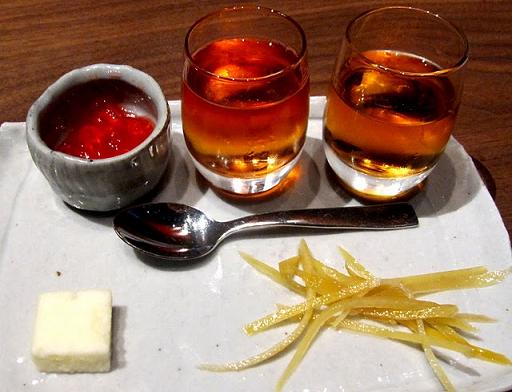
These Colors Don’t Run SOMArts Cultural Center, 934 Brannan, SF; www.squart.eventbrite.com. 3-11:30pm, $10. There’s a lot going on at this nine hour party – a mini-Hard French complete with BBQ, an experimental drag show, live bands including Dave End, Night Call, and Double Dutchess, and something called – ahem — squart performances. Not to be confused with the flatulent surprise known as a shart, squarting involves glitter, nudity, adult diapers, and spandex and works like this: artists break into randomly assigned teams and receive a list of theme criteria, for which they have two hours to assemble a piece and face a panel of judges for anything-goes spontaneous performance art.

East Bay Symphony and fireworks Craneway Pavilion, 1414 Harbor Way South, Richmond; www.oebs.org. 6:30pm, free. Enjoy live music, food, and fireworks for this Independence Day weekend celebration. Oakland East Bay Symphony will perform patriotic standards and popular movie scores to fireworks and breathtaking views of the San Francisco skyline. The venue will host a Fourth of July-themed concession menu, and you’ve got options: the adjacent Boiler restaurant will remain open during the event.

MONDAY 4

Pier 39 July Fourth celebration Pier 39, Embarcadero, SF; www.pier39.com. 1pm, free. Take the family to Pier 39 for this year’s Independence Day celebration featuring live music, fireworks, and all the attractions that Pier 39 always has to offer (sea lions!) Live performances lined up for this event are beach pop-y Ruby Summer and Tainted Love, everyone’s favorite ’80s cover band. There will also be a Club 90 dance party featuring club hits from back in the day. After the sun goes down, be sure to stick around for the fireworks display.


Appetite: Dining with two European winemakers

0

There’s nothing quite like dining with the person who made the wine you’re drinking — intimate and focused, it gives one a special insight into what’s in one’s glass. Earlier this month, I met with three Napa-Sonoma winemakers. Recently, I had the chance to spend time with two Europeans from the unparalleled regions of Bordeaux and Kamptal. Look for these wines in local wine shops — or ask that your shopkeeper stock them, they’re that good.

LAURENZ V., Austria – The Gruner Veltliners and Rieslings of Laurenz V.’s — whose name is pronounced “Laurenz Five” — hail from one of my favorite wine-making countries. I adore these two varietals when they come from skilled hands, and those of Laurenz Maria Moser V certainly qualify. He comes from five generations of winemaking, and his grandfather was the legendary Professor Dr. Lorenz Moser III, inventor of the Lenz Moser Hocherziehung trellising system that caught on across European vineyards.

Lunch with Moser entailed colorful stories and many a laugh — the man is hilarious. It also meant a line-up of gorgeous Gruners from a terraced landscape in the Kamptal region, north of Vienna. His wines are stainless steel-fermented, a technique which yields a crisp, bright Gruner profile.

We tasted through seven Gruners, from a juicy 2009 Laurenz und Sophie Singing to his Charming line (years 2005-2009). I was partial to the 2005, full and balanced with acidity and apple spice, as well as the 2006 with its clean nose and creamy yet mineral taste. We even sampled a honeyed 1980 (!) Gruner to witness the possibilities of a Gruner aging — contrary to popular opinion, they can mature quite prettily. 

We ended with a lively citrus-apple 2009 Prinz Von Hessen ‘H’ riesling and a lush, grapefruit-touched Johannisberger Klaus Riesling Kabinett Trocken. The two reflected the range of beautiful wines that come out of Austria. 


Chateau Palmer, Bordeaux, France – When one is invited to a personal dinner with a winemaker from Bordeaux, France, it’s a requirement to jump at the opportunity. During three plus hours with Bernard de Laage at Berkeley’s Claremont Hotel we tasted twelve Chateau Palmer, de Laage’s blends of equal parts merlot and cabernet sauvignon with just a touch of petit verdot. Comparing vintages side by side, we were able to gain a deeper appreciation of the inflections and strengths brought by each harvest. 

For me, the stand outs were the lush 2000 Palmer, the less aged but still bright 2005 Alter Ego — a robust, young expression of Chateau Palmer — an opulent and exuberant 1999 Palmer, and the musty, full, smoky but acidic 2002 Palmer. I actually couldn’t find a single low point in the 1998-2006 line-up.

The evening, part of Berkeley Wine Festival (check out its site for future dinners), was over the top — spectacular views of the San Francisco Bay from the back room of Claremont Hotel’s Meritage restaurant. Twinkling lights on a warm night made a brilliant partner to rising star chef Josh Thomsen‘s menu. I was duly impressed with all his dishes, and wouldn’t be surprised if we see a lot more from him in coming years. My top dish of the five course dinner was the Maine sea scallops topped with Hudson Valley foie gras. Served over rhubarb-balsamic compote and endive, it was the dining pinnacle of the night. But for sheer satisfaction, I’m giving my points to Thomsen’s succulent Creek Stone beef short rib.

All in all, a happy marriage of wine, food, people, and setting.


— Subscribe to Virgina’s twice monthly newsletter, The Perfect Spot


Carrot coladas: Vegan happy hour, anyone?

0

A short list of cocktails that are not vegan: Irish coffee, anything involving Drambuie or Martini and Rossi vermouth, cheese-garnished Bloody Marys. (Thanks Barnivore.)

This spring, I interviewed six SF vegans on the state of animal product-free lifestylin’ out here in the Bay. They agreed it was all pretty awesome, given the kitchen creativity and commitment to healthy eating that lives out here. But they identified one thing that our hills and valleys are lacking: a strong sense of vegan community. 

And what’s a better community builder than alcohol?A vegan — and thus more hardcore — version of worldwide sustainability boozery crew Green Drinks, Vegan Drinks SF has been gathering up meat-defeaters for the past two years, dumping them (with fair notice) on the city’s watering holes for a vegan cocktail special, scintillating mingling opportunities, and drunken event announcements to cap the whole thing off. This week, there’s a meet-up at Martuni’s on Thurs/30. We caught up with Elizabeth Castoria, the managing editor of Vegan Drinks progenitor VegNews, to find out more about the phenomenon. 

Ah, and if you’re really feeling the concept, you might try meat-free speed dating.


San Francisco Bay Guardian: How many meetings of Vegan Drinks SF have there been? 

Elizabeth Castoria: We started in February of 2009, and typically skip the months of November and December because since Vegan Drinks is always held on the last Thursday of the month, those two months tend to get swallowed by the holidays. If my math’s right, that’s 25 meetings so far. 


SFBG: Are the drinks specifically vegan? I know that animal products tend to lurk in alcoholic beverages when you least expect them.

EC: The nice thing is that the vast majority of hard liquor is vegan (it’s much more common to find beer and wine that’s been processed with animal byproducts). Our monthly drink special changes up, but it’s always a liquor-based martini. 


SFBG: Who are the Vegan Drinkers? How many people came to the last event? 

EC: We don’t take tickets at the door or anything, but about 50 were in attendance at the last event. The group usually ranges between around 50-ish people to 75-ish, and it’s a real mix. Most are probably between the ages of 25 and 55, and the personalities are diverse, as in any group. Most are professionals who come right from work. 


SFBG: Why Martuni’s for this one? Does the place have a special vegan allegiance? 

EC: When we were scouting out places, Martuni’s seemed like a really good fit because it has a fairly spacious back room that’s semi-private. Skip, the owner, has been really wonderful about coming up with creative drink specials every month. He also happens to have both a popcorn popper and a really adorable little hot dog cart, and he went out and got us a bunch of vegan hot dogs, buns, and condiments that sold for $1. It’s wonderful to partner with someone who’s so enthusiastic! 


SFBG: And knowing Martuni’s, there will be some amazing lounge act in the back room…

EC: Ha! Not intentionally. Though Martuni’s martinis are notoriously strong, so after a few, you never know! We do, however, have a brief announcement period at the end of every event so that anyone who has a project or opportunity to share has the chance to do so. 


SFBG: Drunk events announcements, love it. Why’d you start Vegan Drinks? 

EC: Vegan Drinks as an idea actually started in New York in 2008. When our staff started seeing photos from their events that looked like way too much fun, we got jealous. So we started our own chapter! The point is just to create a space for people to come together, spend time among like-minded folks, and hang out. It purposefully doesn’t have an agenda beyond “let’s have drinks and chat” because so often events are fundraisers, or outreach, or festivals, or readings, or something else that involves a level of obligation, and it’s really nice to just get together with people in the community and hang out without any pressure. 


SFBG: Have you seen any interesting animal product-free collaborations spring up out of these meetings? What are the hot vegan conversation topics that people are mingling over these days?

EC: Certainly some networking happens, and some projects have come from that. For example, even with Vegan Drinks itself, we started organizing the events, and then connected with the Vegansaurus bloggers, and now we co-sponsor the event with them. In terms of hot topics, food is a nearly ubiquitous theme at vegan gatherings. New restaurants, places people have eaten recently for the first time and had either good or bad experiences, new recipes people are experimenting with and those kinds of things definitely come up.


(Carrot colada photo by Wendall T. Webber via Food & Drink)


Vegan Drinks

Thurs/28 6-8 p.m., free with purchase of drink 

Martuni’s 

4 Valencia, SF

(415) 241-0205

www.sfvegandrinks.com


SFBG Radio: Commies and the U.S. Marine Corps

1

Today Johnny offers a special observation: After hearing a friend in the Army denounce “socialism,” he concludes that the military, particularly the Marine Corps, operates a lot like a communist organization. You know — relatively level pay, “from each according to his ability, to each according to his need,” free food and medical care, putting the needs of the whole over the needs of the individual …. commie stuff. (No — this is not Johnny channelling McCarthy and holding up names of Communist Marines. Trust me) Listen up after the jump.

MarinesAreCommies by endorsements2010

The Guardian Hot Pink List 2011

3

For the past few years, as part of our annual Queer Issue, we’ve rounded up a few of the people who have inspired us with their unique approaches to queer life. Whether they’re activists, artists, performers, or just plain hot-to-trot rabble-rousers, they’ve made our queer hearts beat a little faster (and reminded us of the fantastic diversity and dedication of the community). This year, we’ve gathered together another Hot Pink bunch, and asked them. “What inspires you right now — and what could the queer community use more of?” This year’s Hot Pink List was photographed by Keeney + Law


HONEY MAHOGANY

Singer, performer, social worker, photographer, glamour girl — Miss Honey Mahogany (www.itshoney.com) does it all and leaves you breathless. Catch up with her on the SFMOMA Pride Parade float (a drag salute to Paris, 1928) on Sunday, June 26, and look for her forthcoming EP this summer. “I feel really lucky to be coming of age as a performer at a time when there seem to be more and more queers out there in the public eye. Whether it be in popular media, politics, art, advocacy work, research … we are everywhere! One thing I would really like to see in the next few years is the rise of new, massively popular gay icons … and I mean ICONS, not celebrities. I think the world is ready for that. In fact, I think the world needs it.”


ROSE SLAM! JOHNSON

Have fun or make a difference? Bike-food-community activist Rose Slam! Johnson has found the two can make hot partners. She helped plan SF Bike Coalition’s Bike to School Day, and merrily oversees the Western Addition’s Urban Eating League, Apothocurious (a bike-powered organic food subscription service, www.apothocurious.com), and her own queer adult outdoors camp. This summer, she’s embarking on an multimonth bike ride and camping with Northwest queer youth. “Fear and defensiveness often distract us. By bringing people together around things we are passionate about — food, bikes, community, fun — we are able to move towards love, acceptance, and healing.”


KB BOYCE AND CELESTE CHAN

The masterminds behind Queer Rebels (www.queerrebels.com), an organization that showcases queer artists of color, KB and Celeste are involved in everything from Community United Against Violence (www.cuav.org) to “TuffNStuff: The Last Delta Drag King,” KB’s musical act. Upcoming “Queer Rebels of the Harlem Renaissance” (Friday, July 1 and Saturday, July 2), part of the national Queer Arts Festival (www.queerculturalcenter.org) is a stage extravaganza celebrating that great period. And TuffNStuff performs at the Trans March Rally (www.transmarch.org) Friday, June 24 from 3:30 p.m.-6:30 p.m. “We are inspired by new queer work that creates our own myths, reveals hidden histories, and is unapologetically, riotously gay!”


ALIX P. SHEDD

“It’s very rare to find an aesthetically dedicated queer space that isn’t centered around alcohol, includes queer youth, and is right for all different kinds of performers and performances. Somewhere you can scream, dance, and love everything that’s gay.” So Alix (with help from Lorin Murphy and a ton of volunteers) found a space, painted it pink, and launched the Big Gay Warehouse (www.biggaywarehouse.org). For the past year, the bGw has hosted many of the city’s most intriguing queercentric events, from punk concerts and video nights to sensory derangements and environmental makeovers. Alas, bGw’s days are numbered due to rising rents, but Alix — who’s also involved in trans-women-empowering nonprofit thrift store the Junque Shoppe and designs a clothing line called Apocalypse Vintage — already has the next move in mind.


MICAH TRON (WITH DJ JEANINE DA FEEN)

Super-sharp MC Micah Tron has been rising through the Bay’s hip-hop ranks with a deep electric sound and sexy come-ons. Check her out at www.soundcloud.com/Micahtron and peep her forthcoming EP “Jungle Music,” produced by the HOTTUB crew. She’ll be performing at the Crooked party at the Showdown on Friday, June 24 and on the Pride celebration main stage (www.sfpride.org) on Sunday, June 26 at 11:50 a.m. with her DJ Jeanine Da Feen. “Walking the streets of San Francisco inspire me, there’s nothing like being surrounded by people who aren’t afraid to be themselves. Our community could use more self-acceptance — we’re beautiful people!”


JOCQUESE “JOQ” WHITFIELD

Work! Voguer extraordinaire, Jocquese teaches the wonderful Tuesday night Vogue and Tone class — “a dance class with a party feel” — at Dance Mission Theatre (www.dancemission.com). He’s also part of the raucous Miss Honey nightlife crew and is a collaborator, with Shireen Rahimi, on the West Coast Dopest Outsiders youth life skills program, encouraging “movement through movement.” He’ll be performing at Crooked and Pride with Micah Tron. “I think we live in a society where we place sexuality on everything. I want to strip that away and tell people to just be themselves and dance.”


DIEGO GOMEZ/ TRANGELA LANSBURY

George Washington was due for a kick-ass sex change — so artist and illustrator Diego Gomez (designnurd.blogspot.com) started painting colorful characters like Storm from X-Men, She-Ra, and Jem on dollar bills, a.k.a. “Diego Dollars.” As the designer for Tweaker.org, he gets out valuable information from the San Francisco AIDS Foundation. He’s currently illustrating an “all-Latin porn-graphic novel” called Spicey and a comic book called “CuntBricks,” making clothes and accessories for Barney’s New York and local boutique Sui Generis, crafting with his “Needle X Change” knitting group, performing as his alter ego Trangela Landsbury, and a ton of other neon-bright activities. “I’d like to see more glitter and gold in the future and ‘happy’ surprises (not to mention endings).”


CHRISTOPHER REYNOLDS AND ALYSIA SEBASTIANI

Sustainability was all the queer conceptual rage this past year — but Christopher and Alysia, the powerhouses behind landscape design firm Reynolds-Sebastiani (www.reynolds-sebastiani.com) have been setting the principles in motion by designing and maintaining spaces throughout the city that morph norms to create alternative environments that adapt to change. Recent projects include a redesign of the Phoenix Hotel grounds, to be unveiled at Juanita More’s Pride Party on Sunday, June 26 and a show of amazing terrariums using vintage bottles they unearthed at St. Francis Fountain in the Mission’s new event space, Candy Kitchen, opening Thursday, June 23, 6 p.m.-10 p.m., and continuing for two weeks. “Like any cultural paradigm shift, sustainable practices must reach and change the popular vernacular in order to become truly sustainable — in this way they’re like queer culture,” says Christopher.

Pasión

2

paulr@sfbg.com

DINE Amid the restaurant babble of Ninth and Irving streets (UCSF’s answer to Harvard Square), there is one restaurant that stands out as a spot for people who already have all the degrees they’re ever going to get, and that is Pasión. The name suggests both the high energy of the place and the style of its cooking, which draws many of its influences from Latin America and, in particular, Peru. The young chef and owner José Calvo-Perez, a native San Franciscan whose father Julio launched what was to become the highly successful Fresca enterprise, describes the style as “modern Latin.”

The space was the longtime home of P.J.’s Oyster Bed (Pasión moved in late last year), and because it’s in the middle of a cluttered block, it doesn’t stand out as a physical fact as much as it does as an idea. You could walk right by without noticing it, or you might notice it but think it’s just another one of the sort of food emporia you so often find near large university campuses. But once you’re inside, you find that Pasión feels a little like Miami: twinkles and gleams here and there in the suggestively dark lighting, a sense of human warmth, a dramatic open kitchen with two faces at right angles, and a main dining area doubled around the back of the bar like a horseshoe. The restaurant is on the loud side, and no doubt that’s in large part because it’s busy. Clearly there was an unmet demand for this kind of destination in the neighborhood.

Pasión might not be that innovative — pan-Latin cooking was unexpected 10 years ago; it is less so now. Still, it can’t be a bad thing to claim descent from Fresca. Some of the more prominent signifiers of that lineage on the menu are the pollo a la brasa ($18), a beautifully roasted half-chicken with Peruvian-style spices and fine french fries, and a broad selection of ceviches.

As someone who likes ceviche without loving it, I was pleasantly surprised by the exquisiteness of the Pasión version ($10), which brought together cubes of ahi tuna and salmon, kernels of purple corn, and bits of cilantro, red onion, and yellow pepper — I haven’t seen so much color in one place since looking into a box of Crayola crayons — in a marinade softened and deepened by passion-fruit purée. Too many ceviches seem to me to be joltingly salty-sour, salt and lime being a pair of alpha ingredients that will fight if there is no mediator. (Morty Seinfeld: “You’ve gotta have a buffer zone!”) A little sugar, a little sweetness, brings a necessary balance, and all the better if the sweetness comes, as here, from a natural source, a sweet fruit, instead of a sack of C&H.

But, even in America, land of the sweet, sweetness isn’t always a good thing. The aioli that served as a dipping sauce for salt-cod fritters ($10) had been enhanced with lemon and honey (honeioli?), but for me it was too sweet and reminded me of Miracle Whip. The fritters themselves, presented in a small basket, were right at the edge of being too crisp. And yes, that is a kind of euphemism.

The duck empanadas ($10) were better, though of course they were very rich, made as they were with shreds of duck confit and smoked duck. Here the richness of the meat and the frying was moderated by a clever combination of currants and a sherry reduction — fruit to the rescue again.

Is there a good way to serve paella in a restaurant? Calvo-Perez was probably bound to try to figure one out, since he apprenticed in Spain. My thought would be to make a big, proper one every hour or so and serve portions of it, but Pasión appears to follow a made-to-order model. The kitchen’s vegetarian version, called arroz verde ($18), was made with cilantro rice and did have a green sheen, but it was as much gray as green, and this wasn’t reassuring. The dish, although presented in a small, cast-iron paella pan, lacked the crust of caramelized rice you hope will form on the bottom. It was also afflicted by a bitterness we finally traced to large chunks of celery, lurking in the murk like alligators in a bog among the green peas, shiitake mushrooms, pickled carrots, and green beans. It also featured an abundance of red onion slivers, which were methodically plucked out (not by me), like bits of shrapnel being removed from a wounded soldier. Obviously some people feel passionately about raw red onions.

Pasión

Dinner: Sun.–Thurs., 5–10 p.m.;

Fri.–Sat., 5–11 p.m.

Brunch: Sat.–Sun., 10 a.m.–3 p.m.

737 Irving, SF

(415) 742-5727

www.pasionsf.com

Full bar

AE/DS/MC/V

Noisy

Wheelchair accessible


Busted!

0

le.chicken.farmer@gmail.com

CHEAP EATS I have already written a restaurant review, a poem, and a cheerful pop song about my anal abscess. I don’t know how else to celebrate the cursed motherfucker. I could curse … But I guess I’ve done that too.

I’ve already had it lanced twice. Those were the good times. Except that on the first occasion I missed a day of work, and on the second I missed a baby shower. I felt so badfully about the missed baby shower that I invited the moms-to-be, Pod and the Attack, to breakfast the following Saturday. Technically I guess maybe I invited myself to breakfast. At their house.

Bless them, they made my favorite: waffles! With fresh strawberries! They made bacon! They made eggs! They made roasted tomatoes! It was the perfect meal! It was a masterpiece! It was culinary genius! It was the time of our lives!

Problem: I forgot to go. I don’t know, I was looking forward to it all week and then I woke up on Saturday morning, went, “Dum-de-doe,” and decided — oh, I don’t know — maybe do a little recording, or something.

I record in my kitchen because it’s the quietest room in my apartment, if I turn off the refrigerator. My cell phone was in the closet. At the designated hour, Pod went to West Oakland BART and waited for me.

When she called to say what-the-where-the-fuck-are-you? I was in the kitchen. I had my headphones on, refrigerator off, and was laying some blistering electric ukulele tracks onto Garage Band, singing: “It’s a new day/ It’s a driving rain/ I’m gonna have anal surgery/ It’s gonna be OK/ Gonna feel no pain / Or if I do it will be good for me.” La la la la la la.

And so forth.

Then.

I saw my cell phone while I was getting ready for work. It was lit up like a Christmas tree: texts, voicemails, e-mails. What-the-where-the-fuck-was-I? Oh my sweet baby Jesus, you can imagine my horror, and self-hatred — nay, loathing — as it all sunk in. How did I do that? How could I? Was my head so far up my ass that … ?

Well, technically it was, damn me. Clobber me in the kidneys with a golf club. I felt as low as a horse’s hoof cheese. And that was before the Attack sent me a picture of their spread, Pod in all her pregnancy sitting down to eat those wonderful things I said, plus cantaloupe.

Minus me.

I’ve done some dumb-ass things in my day, but don’t know if I’ve ever hated myself more. I couldn’t imagine how I was ever going to forgive myself. I still kinda can’t. I mean, the bacon alone looked so good in that picture.

They were of course very gracious and forgiving, and I was of course determined to make it up somehow. I invited them over to Berkeley that evening for some of the chicken pot pie that me and the kids were making. They declined.

I invited them to breakfast the following morning. Out somewhere, on me, and they accepted. We went to the Sunny Side Café in Albany, which was alleged to be kind of fancy-pants, and great.

Never in my life, before this, have I wanted a meal to cost more than it did. But, alas, it didn’t. It was like normal weekend brunch prices, roughly $10 apiece. Less tragically, but more to the point, I didn’t think the food was that good. Let alone great. I may have malordered. Maybe I was still traumatized by my brain fart from the morning before, but my spinach-and-sausage scramble was bland city, even with salt-pepper-Tapatío. The roasted tomatoes … meh.

Pod’s pigs in blankets … that was better. And the Attack, she got it right. She hit the jackpot with the Alameda, a stack-up of good stuff — ham, cheese, french toast, eggs — and some other things I personally don’t go for, which is to say mushrooms and Hollandaise. Oh, and a balsamic reduction.

It’s her new favorite restaurant.

SUNNY SIDE CAFÉ

Mon.–Fri. 8 a.m.–3 p.m.;

Sat.–Sun. 8:30 a.m.–3 p.m.

1499 Solano, Albany

(510) 527-5383

Full bar

AE/D/MC/V


Cleaning up UC’s mess

5

news@sfbg.com

By 7 a.m., when engineering students begin to trickle into Cory Hall at UC Berkeley, Arnold Meza has already scrubbed the floors, wiped clean the chalkboards, and emptied the trash of 30 offices and many of the classrooms and hallways of the six-floor building.

His early shift as a custodian is a gift, he says, because it is steady compared to his former swing-shift schedule, but Meza is still barely making rent. And he is a single father of four. Like many service workers in the University of California system, Meza wonders how the university can refuse to give him a 3 percent wage increase while top UC executives receive six-figure bonuses every year.

“It falls on broken promises,” Meza said while tying up a bag of trash, one of hundreds he would take out that week. Meza was referring to an agreement in 2009 between the university and its service workers unions, including Meza’s union, AFSCME (American Federation of State, County and Municipal Employees). At that time, the administration established a minimum wage (currently $13 per hour) for the more than 7,000 service workers and agreed, if funding was available, to increase wages annually to bring their low-wage workers out of poverty.

But the university is going back on its promise, refusing to increase wages with the funding dedicated for that very purpose, the East Bay Alliance for a Sustainable Economy and the Partnership for Working Families (EBASE) notes in its recent report titled “Bad Budgeting, Broken Promises.”

As the UC Office of the President sees it, the 2009 discussion was not an agreement at all, but a “conditional memorandum of understanding” that would only be effective if state funding was available, said UCOP spokeswoman Dianne Klein.

“We’ve already taken $500 million in cuts. We’ll have to take another $500 million in cuts. Because there is no new money, the memorandum of understanding is moot,” Klein told us.

The state budget vetoed by Governor Jerry Brown last week would have set the UC system back $150 million in cuts on top of the $500 million in cuts approved by Brown in January. How much more will actually be cut from UC funding remains to be seen, but the forecast is not promising.

Despite the cuts, the proposed budget bill states that $3 million in distributed state funds should go toward the salaries and benefit of service workers in the UC system. In a March 24 letter to the governor, UC President Mark Yudof requested that the governor veto that restriction so the university could use the dedicated $3 million “to preserve our flexibility in dealing with the $500 million reduction.”

Compared to the total UC budget of $21.8 billion, that $3 million makes up only 0.014 percent — nickels and dimes to give employees a living wage.

Meanwhile, Meza and his fellow coworkers struggle to put food on the table, making ends meet by working two jobs. After his 4 a.m. to noon Monday through Friday shift, Meza works eight-hour shifts as a car mechanic on weekends. Similarly, many UC service workers collect cans to get a few dollars from the recycling center.

“When I started here 20 years ago, I was making close to $9 an hour. That wasn’t enough,” recalled Meza, who put his four children through public high school on that salary. Today, Meza brings home about $2,400 a month, barely enough to cover rent and a few bills at his El Cerrito home.

“I want my kids to go to college. But financially, I can’t afford it,” he said. “For me, it’s a sad reality.”

Meza’s union, AFSCME, is working with UC to lower the workers’ contribution to retirement pensions to 1.5 percent. The university proposes a 3.5 percent pension plan to go into effect this July and 5 percent in July 2012—the same amount requested from top UC executives. At their low wage, that would cost the service workers the equivalent of one biweekly paycheck a year.

Some UC executives, such as UC Berkeley Chancellor Robert Birgeneau, receive additional retirement perks. Roughly 200 highly paid UC executives receive a supplemental retirement benefit of 5 percent of their annual pay, said Nikki Fortunato Bas, the executive director of EBASE. That’s a total annual cost to UC of $4 million.

“If UC gets its way in 2011, instead of getting to climb that next rung on the ladder out of poverty, [the low wage workers] will take a step backward through a combination of increased contributions to retirement and healthcare and UC withholding a 3 percent raise,” Bas said. “All the while, UC is showering already highly-paid executives with six-figure bonuses.”

In an infamous budget battle that has required the UC system to restructure its quickly diminishing funding from the state, more than 100,000 employees’ paychecks have been reduced while top execs like UCLA Ronald Reagan Medical Center CEO David Feinberg receive thousands of dollars in bonuses. In September 2010, Feinberg’s base pay was increased by 22 percent and he received a $250,000 “retention bonus,” for a total compensation of $1.33 million.

These astounding numbers, as part of a $3.1 million package in bonuses for 37 UC executives last September, were quoted in the EBASE report, using data from the UC Regents website (www.universityofcalifornia.edu/regents).

UCOP says the retention bonuses are necessary “because we pay below market as it is [for top executives’ salaries],” said Klein, and the UC needs to offer huge bonuses to keep the executives from moving to higher paying universities. “You have two options: sayonara or we’ll match it,” Klein said. “You can’t recruit in the classifieds for these people … and you’ll have to replace them for the same money, anyway.”

The bonuses are not state-funded, said Klein, but are taken from research grants, patient care, and even federal funding. But Bas said the problem is with UC’s priorities: “Time and again, they have shown that they can find money to give bonuses or backfill sports programs,” she said. “UC may look at this as a matter of technicalities, but we cannot ignore the stories of employees and their families who are struggling to get by.”

As it stands, UC is short-staffed when it comes to service workers. “We’ve been short-staffed for the last 10 years,” said Meza, who estimates that UC Berkeley employs about 140 custodians, less than one-third of the 460 or so custodians the university employed in the 1980s. The result is that the students suffer, said Meza. “The students are getting the short end of the stick because we can only clean once a week in some classrooms because we’re short staff. We see the students pay a lot with tuition, and they’re getting less.”

Already, student fees have increased by more than 32 percent, and another 8 percent fee increase is pending, reported EBASE. As the state continues to make cuts, students and low wage service workers suffer the consequences.

According to the California Budget Project, a single-parent family needs to make $68,375 a year just to make ends meet in Alameda County. “UC workers have reduced-cost healthcare, so this number could be adjusted downward to $58,544,” said Bas. “For a custodian at UC Berkeley or UC San Francisco making $30,000 or even $40,000 a year, this means working two jobs and collecting cans just to scrape by.”

When his oldest was nine years old, Meza remembers, he used to drive his family to the recycling center to get cash for cans he had taken out of the garbage. “The kids were happy in the car because I was going to get money for food when I recycled cans,” which meant there would be dinner on the table that night, Meza said, apologizing for getting teary-eyed at the memory.

“I just don’t want people who work here to go through what I went through to raise a family,” he said.

No matter how many cars Meza fixes on the weekend, he never seems to have a break from the stress of trying to cover fuel, rent, heating bills, doctors’ bills, and other necessities. He’s only 43, but he feels much older after 20 years of working two jobs, seven days a week, providing for four children on his own.

UC workers, unions like AFSCME and other stakeholders have proposed $600 million in budget alternatives such as reducing the excessive 7-to-1 employee-to-management ratio (at UC Berkeley, the average is four employees to one manager). Yet UC does not appear to be seriously considering these alternatives; its current goal is to take back the $3 million dedicated to its low-wage service workers.

“We think this is a matter of finding the will within the UC administration to do what’s right by honoring their word to protect working families’ a path out of poverty,” Bas said.

Two months ago, Meza and his fellow union members marched into UC Berkeley’s Chancellor Robert Birgeneau’s office and asked him to spend one day in the life of a service worker on campus. He still hasn’t answered their request.

“People are really struggling here. We are committed to working and we give 110 percent — that should be accounted for,” said Meza. “Give us our 3 percent. We earned it.”

Lust for Life: The true meaning of Gay Christmas

22

Yeah, Pride’s got its problems – but that doesn’t mean it can’t be epic

Every year without fail, my friends and I talk about how June is Gay Christmas in San Francisco. We pronounce it like it has to be capitalized and ends with an exclamation point. Sometimes I even sing the words a little — “Gaaay Christmas! La-la!” — like the holiday comes complete with its own carols. 

Sometimes I say “Gay Christmas” with a hint of irony and sarcasm. I bitch every year about how the Pride parade in San Francisco has become a big corporate conglomeration (not unlike Actual Christmas, right?). I bitch about how Pride has become an expensive and boozy festival celebrating the worst, most consumerist, most assimilationist parts of queer culture. I bitch about how Pride is a festival that has amazing roots and history and import, but at least in San Francisco, it has lost its way. That Pride has morphed from being a glittering and debauched radical celebration of queer love and life into a hokey tourist trap designed to sell rainbow key chains and pink triangle tea towels. 

The disgusting thing is that it is dangerous to hold a Pride festival in most parts of the world, even in other parts of the U.S. (have you seen what’s been happening in Texas lately, let alone in Uganda or Russia?). I’d like to think that when our brethren in other places are seriously RISKING MURDER to march down a city block and declare their queerness and gender variance, those of us in the privileged position of living in the queer Oz would be doing more to help them out. I’ve dedicated my life to queer activism, but I’m implicating myself here, too: not knowing how to help in situations that are so desperate and scary can feel hopeless and overwhelming, and the whole mess just ends up making me cynical about Pride in the Bay Area. 

I will probably always be cynical about the big corporate festival on Sunday, but the rest of June in San Francisco is a privilege to experience, a wonder to behold if you chill out and count your blessings and get some perspective. So in that spirit, I wanna tell you about my best Pride – what Pride can be like when you’re inspired and enthused, when everything feels alive and shimmering. 

Pride 2008 was my best Pride. I was 25 and newly, deeply, madly, stupidly in love. The kind of love that pumped my heart up so big I thought it was going to expand like a balloon and fill my entire ribcage. The kind of love where I threw all responsibility and caution to the wind. 

I took the week off work to stay home and fuck my new long-distance girlfriend. I didn’t say that to my job, of course, I said “my girlfriend is visiting from Oregon for Pride,” but I’m fairly sure my supervisor knew what I’d be doing when I asked for the vacation time (it was a queer non-profit). Me and this girlfriend have since broken up (in classic dyke fashion, we’re friends and artistic collaborators now). But the memory of the Pride week we spent together still makes me grin.

We had eight days together, and we made the most of it. We rolled around in my bed, in alleyways, in parks. One night she threw me up against a fence by the UC Extension school at the bottom of Hayes Valley, slipped her hand up my skirt in full view of all those cars and pedestrians. 

But eventually the San Francisco summer evening fog won out, and we made our way back to my apartment to warm up. Aside from public sex, we ventured out of my bed for the following: Take-out Thai food on my couch, pancakes at It’s Tops (the preciously tiny 1930s art-deco diner), a movie at Frameline, the last Queer Open Mic hosted by Cindy Emch, the Trans March, the Dyke March, and a porn shoot. 

I’m amazed that she and I managed to get so much done, fucking as much as we did. For queer people in love during the gayest week of the year, we were extremely productive. Our productivity was probably bolstered by the fact that we didn’t sleep much. We’d crash out at five a.m. after having sex for hours, and then we were up again at 10, but we wouldn’t manage to actually remove ourselves from each other or my room till two in the afternoon. We’d roll out of my bed hungry and bleary-eyed, covered in the salt of each other’s come and sweat, utterly and deliriously fuck drunk. 

So we’d shower together, lather up our hair and skin with her rose castile soap. Sometimes the smell of rosewater still makes me think of her. Then it would be time to put on sexy outfits and go off on another adventure.

It was a magic and manic way to spend Pride, getting lost in my best girl, my sweetest butch, the smartest kindest hottest person I’d ever met. (Falling in love makes me prone to hyperbole.) It makes me feel radiant, brilliant, witty, and drop-dead gorgeous, it makes me feel like I can change the world in one fell swoop. 

And me and my girl, we were gonna start a revolution together. We shot a scene for her porn movie that week, the movie that would become Doing It Ourselves: The Trans Women Porn Project – which is actually a revolutionary project, the first and only film of it’s kind: a porn movie made by, for, and about trans women and their partners. I was fucking a total genius, and I was thrilled and proud to have her on my arm. “Yeah, that’s right!” I felt like shouting to every single passer-by, “My girlfriend is BAD ASS, and so am I!”

My girl bought me bondage rope the exact color of the magenta streaks in my hair. She’d picked it out for me before she came to San Francisco, carefully looking for just the right the color for me. That week was like waking up every morning and opening up a present. It was like Christmas, goddammit! Every day was an adventure! There was a hot girl in my bed! There were awesome friends to hang out with who told us what a cute couple we were! There was pad thai and French toast with nutella & bananas to eat! Fences to get thrown up against! Movies to see! Marches to march in! Porn to shoot! Spin the Bottle to be played in Dolores Park! Could life get more amazing?! I felt Crazy With Love!, like all my emotions had to be capitalized and end with an exclamation point. Suddenly Gay Christmas made a lot of sense.

That Saturday we marched in the first ever Femme Sharks and Sea Creature Allies contingent in the San Francisco Dyke March. Forty femmes paraded down 18th Street wearing hot pink fake-satin fins on their heads and backs, fins that were cobbled together with cotton balls and staples, precariously taped to us with Scotch tape or tied to us with yarn. People carried signs: “THE IMF CAN KISS MY DORSAL FIN!” “FEMME SHARKS CAN FUCK YOUR ASS AND CHANGE YOUR OIL!” We chanted: “FEMME SHARKS WANT JUSTICE – AND WE WANNA GET BANGED!” And when she and I got home, she tied me up with the magenta rope she’d bought just for me. Afterwards, we spooned and moped about the fact that she was leaving the next day.

Falling in love over Gay Christmas made the original intent of Pride feel real to me – the glitter, the fun, the exhausted exhilaration, and that feeling of being absolutely enthralled with how brilliant and awesome we are, how much we can accomplish as a community when we put our big, pumped-up, loved-up hearts to it. 

So, reader, for this Gay Christmas, I wish that for you. I hope that you fall in love, and I don’t just mean with a sweetheart. I mean I hope that you feel love with your whole body and heart. Love a political movement, an art piece, yourself. Put on your best duds. Treat your lover or yourself to some rope, a cockring, a strap-on that matches your hair or your signature eyeshadow. Eat some chocolate-chip pancakes at an art deco diner and make sure to ask for extra whipped cream. Stay up till 5 in the morning having sex or masturbating. Above all, remember how fabulous and brave and bad-ass you are, and celebrate it.

Gina de Vries is a queer writer, performer, activist, writing instructor, cultural worker, and native San Franciscan. She has a long history doing political organizing and arts work within queer, trans and gender-variant, and sex worker communities, and has performed, taught, and lectured everywhere from chapels to leatherbar backrooms to the Ivy League. She’s currently pursuing her master in fiction writing at SF State, where she’s working on a book. Find out more at www.ginadevries.com and queershoulder.tumblr.com.

BYO Flair: A guide to this weekend’s festival explosion

0

If there is one thing I know about festivals it is this: the gear you pack can leave you hydrated, hip and happy — or break you down to a sunburned, schlubby hunk of bad vibes. (It’s true – shoddy preparation for Reggae on the River 2006 left me stranded in the psych tent with disoriented girlfriend during the Ziggy and Damian Marley concert. Clearly, a hipper fedora would have solved everything.) 

This weekend plays host to a freakishly large share of summer festivals, so consider this your guide to happy cavorting in the sun. Cups, caps, frocks, and foods: here, friends, are our picks for best festie flair.  

Sierra Nevada World Music Festival

The perfect weekend campout for those that can’t handle the crushing crowds of the more commercial festivals this summer. Even the little things (children) will appreciate the open-minded approach to beautiful noise here.

Bring: Consider SNWMF a three-day immersion program in getting loose. Translation: you need costumes. If you’re heading up from San Francisco, we’ve got the perfect sartorial layover for you. Sebastopol’s Funk & Flash vintage store is far enough removed from the big city that its stock hasn’t been picked to all hell by the club kid set, so festie-bound you can benefit from its racks of flowery skirts, and tons of sparkle. Go, do you! 

Fri/17-Sun/19, $60-150

Boonville Fairgrounds

CA-128, Boonville

www.snwmf.com


Juneteenth Festival and Parade

The website proclaims this celebration of African American heritage to be the largest gathering of blacks in Northern California, but it remains to be seen whether you’ll fixate on the cultural signifcance while attending the event itself: with an impressive classic car show and three-on-three basketball tournament, all the historical reflection might have to wait until after the festival. 

Bring: No brainer accessory: a hat from Hats of the Fillmore, an independent business that’s been holding it down on Fillmore’s main drag for years. High quality at surprisingly low prices, you can don one of these lids to fit in perfectly with the jazzy milieu of SF’s traditionally black neighborhood. 

Sat/18 11 a.m.-7 p.m., free

Fillmore and Geary, SF

www.sfjuneteenth.org


Alameda Sailing Festival

Hey Muffy, take a break from hating on the impending America’s Cup to catch a day of boating buoyancy. The Encinal Sailing Foundation will be providing turns on the high seas for a “nominal” fee, and there will be seminars on “pilates for sailors,” boating to Mexico, and how to get your captain’s license. Afterwards, we know some great places to get drunk in Alameda!

Bring: This really goes for every fest on the list, but possibly the most important piece of flair is a fun, functional backpack to hold your water (flask), sunscreen, cell phone, and snacks. We love the Brooklyn Circus’ BKc satchels – but for the moment you’ve gotta special order them from New York. That’s fine, this ain’t the last weekend of the summer! The store’s preppy style (without the snooty WASP-y supply chain behind it) would be divine if you’re looking to drop some dough on a nice sailing fest outfit. 

Sat/18 10 a.m.-8 p.m., free

Encinal Yacht Club

1251 Pacific Marina, Alameda

www.summersailstice.com


Bicycle Music Festival

You read our profile on Fossil Fool, so you know all about the current trend towards bike-fueled culture fun. According to all the volunteers that have been standing near Mona Caron’s bike mural behind the Church Street Safeway for the past few days, this fest will be the perfect spot to enjoy the zeitgeist. Saddle up for awesome tunes, and community-building bike rides between concert sites. 

Bring: Hedgehog mug from Gravel and Gold so you can (chicly, adorably) reap the benefits of the fest’s pedal-powered smoothie maker. It also comes in rabbit, fyi. The calories you consume in said smoothies work doubletime — once you’re done drinking, take your turn powering the generator for the drinks or one of the music stages yourself.

Sat/18 noon-11:25 p.m., free

Various locations, SF

www.bicyclemusicfestival.com


Berry Festival

You know this sun isn’t going to last past 4th of July, so now is the perfect time to up your antioxidant intake and arm the old immune system against “summer” colds. CUESA and the Ferry Building farmers market is holding this day of loving for berry season – sample the treats available in the market stalls and let chef Daniel Clayton of Nibblers Eatery and Wine Bar show you how to whip up some healthy, hearty grub with the juicy little devils. 

Bring: a nice navy sweatshirt from Mollusk for the Bay breezes and inevitable tayberry stains. 

Sat/18 11 a.m.-1 p.m., free

Ferry Building, SF

www.cuesa.org


California Big Time Indian Gathering

The Ohlones are hosting their first gathering of Native peoples in their ancestral lands in two centuries. Come to learn more about real SF locals through dance, rituals, and craft exhibitions.

Bring: Mocs that slip off easy – you’re not gonna want a layer of separations between the well-manicured lawns of Yerba Buena and your soles. 

Sat/18 noon-11 p.m., free

Yerba Buena Gardens

Howard between Second and Third St., SF

www.worldartswest.org


North Beach Festival

Sure, the neighborhood street fests all start to look the same after awhile. But there are good parts of that same: family-friendly musical acts, artery-busting festie food, and an excuse to run amok in the streets. The North Beach incarnation has been going for 56 years, and manages to sneak a couple unique facets into the standard cruise-shop-eat formula SF has perfected. 

Bring: your kitty cat companion for the yearly St. Francis of Assisi animal blessings. Also, a flirty, locally made frock from NooWorks is totally Maria from West Side Story – perfectly for the neo-Catholic-in-the-summertime vibe you’ll be channeling. 

Sat/18-Sun/19 10 a.m.-6 p.m., free

Washington Square Park

Union and Columbus, SF

www.northbeachchamber.com


Northern California Pirate Festival

Never underestimate the amount of people willing to drop serious time and dime on dressing up in period costumes. You’ve seen the Renaissance fairs and the Dickens Christmas Fair – now it’s time to peep the pirates. Two very full days of pirate entertainers and replica boats (not to mention squadrons of pirate clothing vendor booths) await you if you be brave enough to cross the seas to Vallejo. 

Bring: Your 826 Valencia designer spyglass, for scurvy-watching of course. 

Sat/18-Sun/19 10 a.m.-6 p.m., free

Vallejo Waterfront

Mare Island Way (near the ferry terminal), Vallejo

www.norcalpiratefestival.com


Picklewater Free Circus Festival

As we mentioned in last year’s profile of our favorite free circus troupe, Circus Bella, nothing quite highlights the magic (and eccentricity) of this city quite like catching a high-flying aerial act smack dab in the heart of downtown. Picklewater is taking over Union Square for the third year in a row this weekend, and we suggest you head down — if only to catch the amazed gaze of the throngs of tourists that’ll be on hand to remind you that yes, your city is freakin’ amazing. 

Bring: Your medical marijuana card, and attending accoutrements. 

Sun/19 2-4 p.m., free

Union Square

Post and Powell, SF

www.jewelssf.org


Sharon Jones and the Dap Kings at the Stern Grove Festival

The 74th season of this green glade’s free concert series kicks off with a killer show from the queen of throwback soul. 

Bring: The Stern Grove scene struts more with its picnic spread than by any accessory or fly outfit. A retro basket (check Goodwill, people are always ditching picnic baskets) will be a useful score, and in terms of snack to make (they must be homemade!), peep our favorite new vegan cooking blog, The Vegan Stoner. It’s perfect, even if you had to self-medicate your hangover before you started prepping for the journey out to the Sunset.  

Feat. Ben L’Oncle Soul

Sun/19 2 p.m., free

Stern Grove

19th Ave. and Sloat, SF

www.sterngrove.org


Mission Street mural unveiling

But why spend all your time at the big events? Artist Aaron Lawrence is holding an al fresco event of his own – pulling the dropcloth off the work he and muralist Rocky Villanueva did on a new apartment building on Mission. He’s making a party of it, so get there early if you want to get down on the free burritos provided. 

Bring: Tapatio, tall can Tecate. Bring two cans, share them. 

Sun/19 2-5:30 p.m., free

Mission between 18th and 19th St., SF

Facebook: Sunday Mural Reveal Party


Appetite: Splendorini’s cocktail creations

0

I’ve got to concur with the Chronicle’s five choices for its 2011 Bar Stars. Between this column and my Perfect Spot newsletter, you’ve heard me talk about drinks made by all five bartenders chosen (like Kevin Diedrich and Alex Smith). Today, I’ll share the hottest concoctions by awardee Carlo Splendorini.

Splendorini made some beautiful drinks during his tenure at Gitane, so it’s no surprise that he’s continuing his tradition of excellence as lead bartender at Michael Mina’s flagship restaurant. Giving each creation Italian charm (and channeling Old Blighty thanks to his time at Nobu London), he’s ably backed by a strong bartending crew that includes Kate Bolton.

My latest visit with Splendorini took place before his Bar Stars honor – and after sampling seven of his cocktails, I was throughly impressed with the range, restraint, and beauty he showed in his selections – always lessons in refinement. He’s inventive, yet manages to leave one with the lingering sensation of balance. His drinks are as impressive, but never gimmicky as the latest cocktail trend.

Using Zucca, a bittersweet Italian amaro-aperitif, as the base of his Fraggle Cup ($11) was genius. It was particularly refreshing on the rocks with fresh tangerine wedges and a mini-forest of ginger stalks standing tall in the large glass in which it was served. I recommend this drink to anyone: especially for the exposure it provides to the range possible in amaro-based drinks.

A self-serve sazerac ($10) is as fun as it sounds: deconstructed, and waiting for you to ingest any way you find desirable – either which the ingredients mixed together or taken separately. A shot of Rittenhouse 100 rye was paired with an absinthe marshmallow, lemon zest, and a truly inspired Peychaud’s bitters jelly. Balanced layers were achieved in Splendorini’s gorgeous Schiedam Blossom (photo on right, $12 – part of the Nolet Gin cocktail competition open through July 15). Nolet Gin and sake melded with a fennel-ginger cordial, silky with egg white.

I could go on, but instead, I urge you to sit down at the bar with a few orders of Mina’s impeccable food, and let Splendorini and crew work their magic on you.


— Subscribe to Virgina’s twice monthly newsletter, The Perfect Spot


Ears of the Beholder outdoor show at El Rio

0

An afternoon show under fruit trees and bright sunshine is always nice, but a line-up of super chill local music is extra conducive to ideal weekend mentality. As long as the weather keeps up its good behavior, Saturday’s Ears of the Beholder four-band showcase will be a total hit and a great introduction to some homegrown electro-pop.

Ears of the Beholder is a pretty rad indie-music blog, started by an San Francisco guy named Peter in 2008. The site promotes a lot of great shows around the city, handpicked with the best intentions. Start with beer, dab your beak with sunscreen and don’t forget the layers; the show may start early at the lovely El Rio, but it won’t wrap until after sunset. The ticket price also includes food, which means you won’t have to run-off mid-set for dinner and instead, you’re encouraged to plop down for a full evening. Take a listen to the line-up:

Phantom Kicks

This SF band keeps things feather-light with pretty, super mellow guitars. They’re minimalist post-rock that’s super easy on the ears and their new synth addition is sure to add in a sweet surge of electro-pop. 


Blackbird Blackbird

The mystical chimes, mermaid voices, and super glassy synth melodies of San Francisoc’s Blackbird Blackbird wash over your senses in slow-motion. They’re a perfect soundtrack for underwater swimming.


Old Arc

These Santa Cruz guys keep things psychedelic, but add in a heavier, more danceable punch. Their random bag of tricks switches up quick and the super diverse samples insures things stay uber fresh from track to track.


Yalls

The honest, fragile vocals from this Oakland native are compelling enough, but then he adds in pianos and totally weird racing beats. There’s something twisted about the combinations he throws and the unpredictability of it all keeps you along for the bright ride. 


EARS OF THE BEHOLDER OUTDOOR SHOW

Sat./18, 3 p.m., $8

El Rio

3158 Mission Street, SF

www.ElRioSF.com

Alexander’s Steakhouse

0

paulr@sfbg.com

DINE “This doesn’t really look like a steakhouse,” a friend said recently while scanning the ambience of Alexander’s Steakhouse, which opened last fall in the fabulous Bacar space. Since Alexander’s isn’t an ordinary steakhouse, it’s probably okay that it doesn’t look like one. It’s probably additionally okay that it still looks more or less like Bacar: old brick, gleaming copper and chrome, a vault-like spaciousness, the wall of translucent glass cells in which bottles of wine are stored as if by giant oenophile bees. Even the lounge below decks is still there; it’s is a peaceful haven from the tumult upstairs, with its noticeable Hooters atmospherics.

The central novelty of Alexander’s (the original is in San Jose) is the sensibility of the chef, Jeffrey Stout, whose culinary poles are Japan and France. In this respect the kitchen’s nearest relation in town is probably 5A5, the splendid Asian-inflected steakhouse in the Barbary Coast. Stout’s wrinkle is to swirl some Gallic seasoning into the pot. And while most of the food’s cues seem to be taken from east Asia, the kitchen does turn out such sly treats as truffled french fries ($12 for a good-sized stack). As someone who’s not wild about truffles, despite or because of their expensive exclusivity, I was surprised to find this was an effective idea, with the earthy taste and scent of the truffles neatly nested in the crunchy, all-American bonhomie of the potatoes. Americanness isn’t a neglected theme here, either, incidentally, from Maine lobster to a credible salad of iceberg lettuce ($10), with Point Reyes blue cheese, a fine dice of smoked bacon, and a tangy buttermilk dressing I thought to describe as “ranch.”

“Please don’t call it ranch,” a voice across the table implored. Well, okay, but that’s what it was. Next to the lettuce wedge sat cubes of candied applewood smoked bacon ($5), like a stack of miniature bricks. In their meatiness they could easily have passed for Canadian bacon.

For a steakhouse, there’s a surprising amount of seafood, including Kusshi oysters ($4 each) and hamachi shots ($4 each), cubes of fish served like ceviche in martini glasses with an electric ensemble of chile coins, ginger, and truffled ponzu sauce. There was also, one evening, a main dish of halibut ($34), a perfectly nice filet that had a length of chicken skin roasted onto it. This wasn’t quite a bad idea, but it wasn’t a good one, either. Chicken skin would in theory provide some chicken fat, which is full of flavor and moistness, important considerations when dealing with fish. But halibut is a hardy fish that stands up well to chefly handling, and the chicken skin turned ornery in the roasting, like gum stuck to the bottom of a shoe. Worst of all, the fish seemed to have dried out a bit during its time in the kitchen — not fatally, but still.

Well, you’re thinking, what fool orders fish at a steakhouse? The point of such a place must be the beef, and what grander beef is there than prime rib? Alexander’s offers it in two sizes: 14 ounces ($38) or 20 ounces ($42), the 20-ouncer seeming almost big enough to have been pulled from its own Cryovac pack. The meat, we were told, had been slow-roasted for hours and were presented with jus and a trio of horseradish creams.

(The service, incidentally, must be the among the wordiest in the city. Each item is described at length, with the particulars flying at you like buckshot. Complicating matters is the noisiness of the place, which is like being in the pit of the New York Stock Exchange when full and can make some of the servers hard to understand. I saw lips moving, I heard sounds, but I could not piece together a narrative. Like Woody Allen in Annie Hall, I nodded, smiled, and hoped for the best.)

The beef looked splendid — rather on the purplish, rare side, but that was fine. It was also tough. This was a new prime-rib experience for me; in the past it’s always been tender, if not quite butter-like. Alexander’s meat had a good, rich flavor, but it was hard to separate flavor from texture when texture was calling attention to itself. I’ve often roasted my own prime rib at the holidays, but I’ve never had it show this kind of obstinacy.

Pastry chef Dan Huynh’s dessert menu is littered with French terms (financier, crème brûlée), along with something called “dark dimensions” ($12) that sounded like an episode of The Twilight Zone but turned out to be a miniature playground of chocolate, including logs of malted chocolate ice cream and a small bowl of popcorn. All was tender.

ALEXANDER’S STEAKHOUSE

Dinner: Mon.–Sat., 5:30–10 p.m.;

Sun., 5:30–9 p.m.

448 Brannan, SF

(415) 495-1111

www.alexanderssteakhouse.com

Full bar

AE/DS/MC/V

Noisy

Wheelchair accessible