Film

Appetite: The green fairy transforms

0

Absinthe is on the move from its initial novelty phase once finally legalized in the US in 2007 into an era where appreciators of fine drink are gaining greater education and refinement on the subject. No, it is not a hallucinogen (more on that in a minute), and no, it’s not the artificially sweetened and colored liqueurs flooding the market (but labeled as absinthe). When made as it has been historically, it’s a natural, herbal spirit with a rich culture surrounding it. 

We owe increasing knowledge to artisan producers of absinthe near and far. Some are local guys, like Lance Winters of St. George Spirits, the first producer in the US when the ban was lifted, or more recently, Davorin Kuchan of Old World Spirits, producing green (verte) and bleue (white) absinthes. Then there’s absinthe historians and experts like Peter Schaf and John Troia of Tempus Fugit Spirits who import some of the best absinthes from France and Switzerland, such as Duplais’ brilliant verte and blanche (white) versions. Schaf also created Vieux Pontarlier, a classic-style absinthe made in Pontarlier, France, from local wormwood, long considered the finest grown in the world (where most wormwood was sourced over 100 years ago). Schaf, Winters and Ted Breaux of Lucid, formed a recent panel during SF Cocktail Week, a two hour session (and tasting) on the green fairy (read about it here).

Another source for absinthe education is books, the latest being A Taste for Absinthe, by R. Winston Guthrie with James F. Thompson. Though predominantly a cocktail recipe source, this elegant new book, with photography by Liza Gershman, offers an encompassing summary of the history and culture surrounding absinthe, from its poster art, to the spoons, glasses, fountains and accouterments used to serve it. It’s an artful drink requiring leisure and attention, not a hallucinogen, a myth still falsely promoted around the world (thujone is the fragrant chemical found in wormwood and other plants, such as sage, believed to be a neurotoxoin in extremely high doses – governments have strict regulations on the levels of thujone allowed in the making of absinthe so it is not remotely dangerous yet qualifies as actual absinthe). Kudos for film anecdotes throughout the book on movies where absinthe is imbibed, classic films I grew up watching that are rare to run across now like Lust for Life and Madame X. 

On the recipe side, the book is broken down into five sections: classics, fruit and citrus, whiskey and gin, liqueurs and bitters, and modern classics. The recipes are compiled from some of our country’s best bartenders, including many SF locals. While straightforward classics like Death in the Afternoon (absinthe and champagne) and a bright Brunelle (lemon, absinthe, citrus) are all here, there are also modern takes such as Neyah White’s Green Goddess: absinthe, Square One cucumber vodka, simple syrup, lime fresh basil and thyme. There’s even dessert-like recipes… try an Absinthe & Old Lace: gin, absinthe, creme de menthe, cream, egg white and chocolate mole bitters. 

A Taste for Absinthe is clearly well-researched, with many of the sources above tapped to bring together a comprehensive book worthy of a place on the shelves of absinthe aficionados as well as novices. This Monday at Book Passage (6pm) is a book release event with the author, photographer, and an all-star line-up of bartenders at neighboring Slanted Door serving four cocktails from the book: 

The event is free… well, purchased drinks and the book are on your own dime, but that’s a small price to pay for a little education.
 

Monday, 10/4 – 6pm

 Book Passage

1 Ferry Building # 42


www.atasteforabsinthe.com


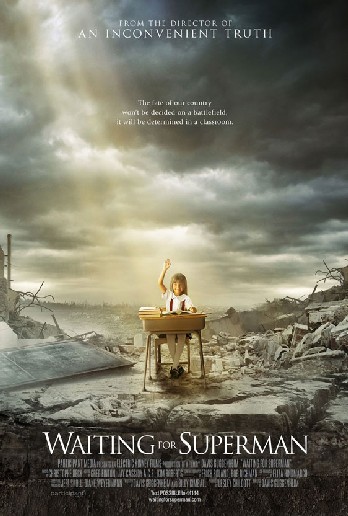
Oscar-winning director Davis Guggenheim talks “Waiting for ‘Superman'”

2

Where do you go from global warming?

Director Davis Guggenheim won an Academy Award for 2006’s An Inconvenient Truth. His latest film, Waiting for “Superman”, takes on the United States’ failing public education system. In some ways, the documentary represents a return to Guggenheim’s first subject. “The very first documentary I made followed first-year teachers, because I believed that teachers were the answer to our schools,” he says. “And I still believe that. Now I wanted to talk about the kids and their families, and what’s at stake for them.”

The kids and families in question are the subjects of Waiting for “Superman”, which follows five young people in search of a better education. While the scope of the film is large — covering the history and bureaucracy that has created this national epidemic — Guggenheim is careful never to stray far from the victims of the crisis.

“The really hard part about it is how complicated this issue is, and it’s hard to simplify it,” he explains. “And I wanted it to be understandable to everybody. Whenever I got lost, I would always bring it back to the kids. It’s a very simple story: five kids, all they want is to go to a great school.”

In the film, Guggenheim looks at the complex situation from several different angles. Some of his targets are predictable — budget cuts and lack of accountability. But he also focuses on areas that might be less familiar to audiences, such as the detrimental effect teacher’s unions can have on schools. While Guggenheim asserts that he is a pro-union liberal, he suggests that teacher’s unions create contracts that make it difficult to deal with many of the problems public schools face today.

“I’m a member of the Directors Guild of America,” he says. “They make sure I get paid properly. They make sure my rights are taken care of. But they don’t tell Hollywood how to make movies, and they don’t protect bad directors.” Guggenheim’s analogy is apt. These unions push for tenure, which most teachers receive automatically after two years. Once they have tenure, it’s very hard for them to be let go — even if they are performing poorly at their jobs.

“I think teachers should get even stronger and demand more pay,” Guggenheim continues. “But they should not have these contracts that keep reform from happening.” Some of the fixes Guggenheim proposes seem like no-brainers. As he points out, the drive behind Waiting for “Superman” is one most people can relate to, whether they’re parents of students directly affected by the situation, or simply compassionate people.

“What’s amazing about public education is that everyone wants great schools,” Guggenheim notes. “It’s not like you’re going to argue that. With global warming, maybe you could argue about whether it’s real or not. But in America, everyone believes in great schools.” On the other hand, we’ve become cynical. We see president after president enter the White House with the promise of education reform. And yet, as Waiting for “Superman” documents, for the most part we’re no better off than we were before. In some areas, we’re worse.

“The problem is, people over time, they give up, because they feel like it’s too complicated, or it’s impossible to fix,” Guggenheim reflects. “And I tried to make a movie to get people to start to care again, and to believe that it’s possible, and to fight so that every kid can get a great education.” Guggenheim sincerely believes in his cause — he sees the documentary as just a jumping-off point for a larger movement. And while it’s easy to feel daunted by the magnitude of the problems our nation faces, he’s confident that things can get better, provided we have the motivation.

“Change can happen really fast,” Guggenheim says. “Before World War II, we could only make a couple planes a year. When we all got excited and committed, we made a thousand planes a year.”  He hopes that Waiting for “Superman” will inspire that desire for change. Guggenheim believes that it’s something we all feel, and that education may simply be something we’ve ignored for too long.

“We’ve been not wanting to deal with our schools,” he says, “and I think we could jump right in. The solutions are there.” But he’s also clear about what it takes: “We’re not gonna fix our schools unless everyone is outraged, and everyone demands that all of our schools work.”

Waiting for “Superman” opens Fri/1 in Bay Area theaters.

Crusader of the cables: Fannie Mae Barnes

0

Whoever said a cable car couldn’t be operated on woman power alone clearly had never met the steam engine on this grandmother. Fannie Mae Barnes of Oakland, California was the first woman ever to operate a cable car grip – not because it was a higher paying position, or an easier gig, but because she was told that women didn’t have the strength to do the job right.

Barnes started pumping iron, passed the 25-day grip operator training program notorious for its 80 percent drop out rate, and became a source of civic pride. She even drove the Olympic torch up the Hyde Street hill en route to the 2002 Winter Olympics. A documentary about her achievement, “Getting a Grip,” will be shown tonight at Lunafest, a traveling film festival that screens movies made by and about women to benefit the Breast Cancer Fund. We caught up with Barnes for a phone interview about knocking down one of the city’s diehard gender divisions of labor.


San Francisco Bay Guardian: What made you want to be a cable car operator?

Fannie Mae Barnes: It wasn’t about being a conductor, it was the grip up front, which is totally different from the conductor. In ’98 I went up front and became the first female ever to be certified as a grip. 


SFBG: What’s the difference?

FMB: The difference is this: on the cable car it takes two people to operate, you have the person in the rear that does the back break at any given time it’s needed and collect the fares. Up front you have the gripman that controls the cable car. There’s a huge device that weighs about 375 pounds and it’s called the grip and it grips the cable that’s underneath the ground that’s moving at nine and a half miles per cable speed. It’s a ITAL job. It’s very different from conducting.


SFBG: So you’re lifting a 375 pound weight to operate the cable car?

FMB: As far as pulling back, yeah. The cable car itself weighs eight tons, empty. It’s a miniature train. A lot of guys will try to muscle the grip, but it’s really more a finesse thing – you have to leverage it with your body weight. 


SFBG: How did you become the first woman to operate the grip?

FMB: Well they had said that they always need gripmen because it’s a difficult job. They had mentioned that it was a job that woman could not do because we lacked the upper body strength. So I said hey, come on now, you know, there’s absolutely nothing a woman can’t do. I mean if you can take care of a family, I mean, come on. This was in ’97 that this article came out. So in ’97 I decided I had to step up to the plate and be that woman, so I did it. I worked out extensively for six months to a year. I couldn’t let the year 2000 come into existence without a woman up front. So I did it, February 14th, 1997.


SFBG: What were you doing before you started working at the cable cars?

FMB: I was driving buses. I drove buses for 11 years. Some of my friends who had drove buses had left and were over in the cable cars division, so that’s what I did. And once I started working there I loved it. It’s a totally different scene, you know, you have a lot of tourists and they just want to ride and have fun.


SFBG: What kind of reaction did you get from the other cable car grips?

FMB: Well a lot of the guys were betting money against me that I would not make it. But then I had positive input too from some guys, so I went with the positive side. I knew that I was going to make it because I was training hard for it and it was something that I felt that I could do, and anytime you really apply yourself and it’s something that you want to do, you can do it.


SFBG: What gave you that conviction to know you could be that first woman? Is that something your family taught you?

FMB: Yeah, more or less. My mom always taught me growing up that whatever you want to do hon, you can do it, you just have to set your mind to it and go for it. 


SFBG: So what are you doing with your golden years of retirement?

FMB: I work with an organization, Ghana Women and Children of North America. We’ve only been existence for a year, we do non-profit work with organizations in Africa. We put electricity in a primary and secondary school, we bought them two computers, a printer, and we opened up the Internet for them. 


Lunafest

Featuring films Getting a Grip, Top Spin, and Tightly Knit

Thur/30 6 p.m., $20

Herbst Theater

401 Van Ness, SF

(415) 392-4400

www.lunafest.org


Getting our rocks off: a historical perspective

4

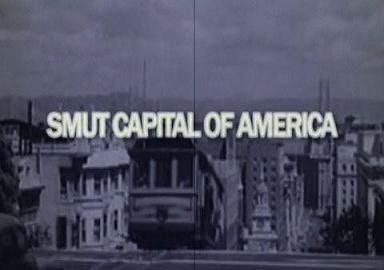
San Francisco is waiting for its Boogie Nights. Unbeknownst to Hollywood, our fair berg was the infant creche of hardcore pornography, spawning a subculture of porn theaters that thrived despite police harassment and political pressure.

We were number one! Luckily, a few brave men are resurrecting our porn golden age money shot – read on for a first look at documentary The Smut Capital of America and an interview with the director himself, Michael Stabile.


Smut Capital is by no means Stabile’s first porn rodeo. The co-editor of Gay Porn Blog, he and Smut Capital editor-cinematographer Ben Leon are both mainstays in the SF gay porn scene. The two were researching their upcoming doc on the life of gay smut powerhouse Falcon Studios founder Chuck Holmes when Stabile came across a New York Times article that inspired the title of their new project, which is a work in progress for which the team is fundraising in order to release the finished film in 2011.

“Until then I’d always thought of it as an industry that emerged from LA, but San Francisco was actually the city that birthed the porno theater. It was the beginning of the sexual revolution, and in a lot of ways these directors were documenting this newly found freedoms.” Stabile attributes the renaissance to hippie women “with really no hangups,” a progressive zeitgeist that had seized the city in the late sixties and early seventies, and film processing studios that were willing to develop sexually explicit material. By the era’s zenith in 1972, there were porno film theaters in neighborhoods across the city.

Not that everyone was down to get all that action on screen. Dianne Feinstein, first in her post as the city’s first female president of the Board of Supervisors and then as SF’s first female mayor, led a crusade focused on cleaning up the Tenderloin, which incidentally included sweeping the neighborhood free of its supply of adult movie houses. What ensued was an orchestrated harassment policy that different porn theaters dealt with in different ways.

Established theaters, Stabile says, actually benefited from the police and media persecution. “They’d come in with cameras, it’d be on the five o clock news and it would be great for them,” he says. “Advertising was very limited at the Chronicle. Feinstein would come in with her troops and would detail everything that was going on. Suddenly there was a way to talk about it, so people would flood into the theaters.” The Mitchell Brothers grew so adept at playing the cat and mouse game, he says, that they would post Feinstein’s office number on their marquee under the words “call for a good time.”

But not everyone prospered. Smaller theaters that depended on a few workers to operate, like Alex DeRenzy’s Screening Room, suffered when police would take key staffers on pointeless joyrides around town before booking them on charges of vice crime. Eventually factors like these, and more importantly the advent of video porn in the 1980s pulled the adult film business down to Los Angeles.

The move shifted the purpose of sex films away from their original role in the Sexual Revolution. Says Stabile “People were doing it here because they enjoyed it, because they wanted their own sexualities represented. It’s not like that in LA for the most part, where even a lot of the gay studios are owned by straight men looking to turn a profit.”

But don’t worry, the party’s not over. One of Stabile’s main goals with the film is not just to highlight good sex gone by, but that which cums and goes even today. When asked whether SF is still a presence in the world of porn, he had no equivocation. “Its one of the great untold stories in the local media – San Francisco has a huge porn presence. Raging Stallion, Falcon, Hot House – seven of the top ten gay porn studios are located up here, there’s Kink.com, porn writers like Violet Blue,” he says.

It appears that the tech savvy and sexual freedom that led to our capital crowning are still alive and well on these city streets. Phew! Now you may now go back to your regularly scheduled local porn browsing.

Our Weekly Picks: September 29-October 5, 2010

0

WEDNESDAY 29

MUSIC

Kylesa

The devil went down to Georgia, and sprinkled enough hoodoo in the water to cultivate quite a metal scene. But it ain’t just Mastodon and Baroness splitting ears in the town squares. Kylesa — you know, the band with the two drummers, the badass chick guitarist-vocalist (she’s one of two guitarists and one of three vocalists), and the coolest cover art in the biz — is about to drop its fifth full-length, Spiral Shadow. The title of lead track “Tired Climb” belies the album’s fierce riffs and heavy energy. But let’s stop pretending you weren’t going to this show anyway — local mighties High on Fire headlining the glorious Great American? With the added bonus of two ironclad openers? Can’t miss, hesher. (Cheryl Eddy)

With High On Fire and Torche

8 p.m., $20

Great American Music Hall

859 O’Farrell, SF

1-888-233-0449

www.gamhtickets.com


THURSDAY 30

DANCE

Mark Morris Dance Company

Just because his company has become a perennial audience favorite doesn’t mean we should ignore Mark Morris. After all, the acclaim is justified: there’s nobody else who — after 30 years of working — can still surprise and delight (and sometimes disappoint) us the way Morris can. This time he is bringing three West Coast premieres. If the buzz wafting in from the East Coast is any indication, the new Socrates set to Satie’s oratorio “Socrate” (piano and voice) should be outstanding. It will be performed with the stark Behemoth — Morris’ only no-music piece — and Looky, his bemused take on pretentious museum-going in which the inmates take over the show. (Rita Felciano)

Thurs/30–Sat/2, 8 p.m.;

Sun/3, 3 p.m., $34–$72

Zellerbach Hall

Bancroft at Telegraph, UC Berkeley, Berk.

(510) 642-9988

www.calperformances.org


DANCE

Lizz Roman and Dancers

San Francisco’s Gingerbread Danzhaus is the only venue in the city to provide dance studio space to professional companies while also serving as a nightclub in the after-hours. This weekend it will also be the seat of Lizz Roman and Dancers new site-specific work This Dance This Place, which aims to bring the architecture of Danzhaus to life through an interactive dance performance challenging viewers to really see the nooks and crannies of the space. With a live sound score, collaborative lighting and costume design, and dancers streaming from every danceable doorway, crevice, and ledge, this performance is sure to provoke thought on where and how dance is presented. (Emmaly Weiderholt)

Through Oct. 9

Thurs.–Sat., 8 p.m., $20

Danzhaus

1275 Connecticut, SF

www.lizzromananddancers.com


FRIDAY 1

DANCE

Nina Haft and Company

A few years ago, visitors to Zaccho Dance Theatre’s third-story performance space could look down onto San Francisco’s last working farm. The Bayside venue seems uniquely appropriate for Nina Haft’s site-specific Debris/Flows. Collaborating with German-born, Italian-trained Claudia Borna, the two women transformed this former warehouse space into a natural environment for 12 dancers to explore both outer and inner landscapes. In addition to watching the performance, audiences can contribute to Zaccho’s environment by planting seeds and eating food from local gardens. The dozen dancers will help you navigate the labyrinth. (Felciano)

Fri/1–Sat/2, 8 p.m. (also Sat/2, 6 p.m.);

Sun/3, 6 p.m., $12–>$18

Zaccho Dance Theatre

1777 Yosemite, Suite 330, SF

(510) 325-5646

www.brownpapertickets.com


MUSIC

Drums

A lot of the Drums’ music mines the sounds of the 1950s, smooshing it up with the more saccharine output of the Smiths and New Order, but there’s a lull halfway through the New York City band’s debut album where its intentions really become clear. A slower song than the rest of the album, “Down By The Water” mimics the believable earnestness of ’50s crooners completely without pretension. The Drums have been accused of lacking individualism, which is a fairly valid criticism considering you could drop some of their more upbeat tracks into a Smiths album and no one would bat an eye. But in latching onto eras where simplicity was something to be celebrated, the band succeeds by being sincere when tongue in cheek would have been way “cooler.” (Peter Galvin)

With the Young Friends

9 p.m., $15

Independent

628 Divisadero, SF

(415) 771-1421

www.theindependentsf.com


DANCE

SMUIN BALLET

Although the Smuin Ballet may be considered a relatively small ballet company, there’s nothing small about the renowned choreographers and kick-ass dancers Smuin attracts. Founded by Michael Smuin in 1994 and now under the artistic direction of Celia Fushille, the company presents classical ballet with a contemporary edge. It kicks off its 2010-11 home season with a fall program that includes the world premiere of Oh, Inverted World — set to the indie rock band the Shins and choreographed by the illustrious Trey McIntyre — as well as Michael Smuin’s twangy Bluegrass/Slyde and his more lyrical Brahms-Haydn Variations. (Katie Gaydos)

Through Oct. 9

8 p.m. (no show Mon/4);

Additional shows Sat/2–Sun/3, 2 p.m.), $20–$62

Palace of Fine Arts Theater

3301 Lyon, SF

(415) 978-2787

www.smuinballet.org


SATURDAY 2

FILM

The Incredible Shrinking Man

Ever get the feeling you’re being dwarfed by what’s going on around you in life? Well, that’s exactly what happens to the main character in the 1957 Jack Arnold sci-fi classic The Incredible Shrinking Man, in which a freak accident causes him to get smaller and smaller with every passing day. Featuring a host of inventive special effects and memorable scenes (among them his epic battle with a house spider), the movie screens tonight as part of the San Francisco Film Society’s annual “Film In The Fog” event. Let’s hope nature cooperates and offers up a little bit of a spooky mist to make for a cool and creepy early Halloween celebration. (Sean McCourt)

5 p.m. picnic, 7 p.m. film, free

Presidio, Moraga at Arguello, SF

www.sffs.org


MUSIC

The Sword

Austin, Texas, retro-metallers the Sword are in space. This summer, new album Warp Riders saw them rocket into full-fledged concept album territory, weaving a epic saga of interplanetary travel and mystical sci-fi warriors on a loom composed of Orange amplifiers. As fall descends, they’re taking the tunes and tales on the road, and their SF date marks the second stop on a grueling national run. Fans will be eager to bask in a bevy of new songs performed live, and the band’s adroit playing on the new record bodes extremely well for the experience. Prepare for blast-off! (Ben Richardson)

With Karma to Burn and Mount Carmel

8:30 p.m., $20

Regency Ballroom

1290 Sutter, SF

1-800-745-3000

www.theregencyballroom.com


FILM

American Splendor

Who is Cleveland’s most beloved figure? A few months ago the answer may have seemed obvious: superhuman baller LeBron James. At least until he got on the ESPN grandstand and announced he was going to Miami. Four days later Harvey Pekar died, and it put everything in perspective. A cranky file clerk who wrote wonderfully mundane comics about life’s pedestrian absurdities for more than 30 years, Pekar was an unlikely fit for the limelight (with legendary Letterman appearances to prove it). Fame found him nonetheless, culminating in this 2003 biopic featuring not only a suitable portrayal by the continually wincing Paul Giamatti, but also the inimitable figure himself. A fine entry into a persistent legacy. (Ryan Prendiville)

8:30 p.m., $5.50–$9.50

Pacific Film Archive

2575 Bancroft, Berk.

(510) 642-5249

www.bampfa.berkeley.edu


SUNDAY 3

EVENT

Estria Invitational Graffiti Battle

Graffiti’s outgrown furtive leaps over cyclone fencing and dark alley deployment. These days street art is a community builder, the old pros from the 1980s golden age having become teachers and respected figures in the art world. But that doesn’t mean it’s gotten stuffy. Case in point: Bay Area graff legend Estria Miyashiro’s free annual spray-off in the park. Names that are no strangers to the city’s bus stops, brick walls, and freight trains will be present to participate in and judge live painting: Nate1, Crayone TWS, and 2009’s champ Vogue TDK among them. Mix in stencil workshops, a youth sketchbook competition, and artist signings, and you’ve got a multi-generational homage to the art of aerosol. (Caitlin Donohue)

11 a.m.–5 p.m., free

DeFremery Park

1651 Adeline, Oakl.

(510) 895-5700

www.estriabattle.com


MONDAY 4

MUSIC

Guitar Wolf

In the future, anthropologists will study Guitar Wolf to calculate the speed of pop culture. The musical equivalent of Engrish, the trio channels Ramones-era punk rock (leather and all) to create Japanese “jet rock ‘n’ roll,” a louder, noisier, and enjoyably unintelligible hybrid. Tonight the band ends its first U.S. tour in five years, also the first since the death of bassist Billy. “However, it is not, not necessary to worry,” lead singer Seiji says on the band’s website. “New bassist player U.G.! U.G. is terrible! It is jet terrible! It fight! It fight rock! I will show Guitar Wolf is reborn to you!” (Prendiville)

With Hans Condor, Midnite Snaxxx, and DJ Classic Bar Music

9 p.m., $15

Bottom of the Hill

1233 17th St., SF

(415) 621-4455

www.bottomofthehill.com


TUESDAY 5

MUSIC

Guided By Voices

Ringleader Robert Pollard is rounding up the rest of indie rock giants Guided By Voices for a one-time reunion tour to commemorate Matador Records’ 21st anniversary. And this isn’t some half-ass reunion, either. This is the GBV lineup of the mid-1990s that spawned much-beloved albums such as Bee Thousand and Alien Lanes. Pollard’s been just as prolific on his own as he was before the group’s breakup in 2004, but there is just no comparing his solo work to GBV’s catalog. Don’t miss your chance to see one of the most influential indie rock bands of the past 20 years one last time. (Landon Moblad)

With Times New Viking

8 p.m., $24

Warfield

982 Market, SF

(415) 345-0900

www.thewarfieldtheatre.com 


The Guardian listings deadline is two weeks prior to our Wednesday publication date. To submit an item for consideration, please include the title of the event, a brief description of the event, date and time, venue name, street address (listing cross streets only isn’t sufficient), city, telephone number readers can call for more information, telephone number for media, and admission costs. Send information to Listings, the Guardian Building, 135 Mississippi St., SF, CA 94107; fax to (415) 487-2506; or e-mail (paste press release into e-mail body — no text attachments, please) to listings@sfbg.com. We cannot guarantee the return of photos, but enclosing an SASE helps. Digital photos may be submitted in jpeg format; the image must be at least 240 dpi and four inches by six inches in size. We regret we cannot accept listings over the phone.

SKI-thal weapon

4

arts@sfbg.com

MUSIC E-A-SKI has been in the game nearly 20 years, producing tracks with then-partner CMT for Spice 1’s eponymous 1992 debut on Jive Records and subsequently working with the likes of Master P, Ice Cube, and even Dr. Dre. He’s also maintained a career as a rapper. Yet despite several local radio hits and four major-label deals — Priority, Relativity, Dreamworks, Columbia — he’s never released an album. The deals have always soured, yet the astute businessman has always made money on them, as his professional-grade studio in the middle of a huge house hidden beyond the Oakland Hills attests.

I’ve come by for a private screening of SKI’s new video, "No Problems," the first single from The Fifth of Skithoven, an album he plans to release next year through his own label, IMGMI. If "private screening" sounds highfalutin’, "No Problems" is no ordinary clip. It’s a six-minute film, directed by Wayans Brothers associate Michael Tiddes, that recently won an award for best music video at the 13th Okanagan International Film Festival in Kelowna, British Columbia.

"I didn’t just want to keep putting videos out there," SKI explains. "I wanted to do something more cinematic to express the music."

A John Woo-like allegory of rap integrity, "No Problems" finds SKI battling to reclaim his soul from the Devil, wagering the contents of a mysterious Pulp Fictionesque briefcase that he can do it. The "x-factor," as SKI puts it, is the actor playing the gravel-voiced, gangsta Devil: Danny Glover. After meeting years ago in activist circles — SKI frequently mentors inner-city youth — the two recently reconnected when they found themselves members of the same gym. Despite the demands of Glover’s schedule (seven films currently in post-production, according to imdb.com), the Lethal Weapon star made time for the shoot.

"I did it ’cause SKI kept bugging me," Glover laughs during a quick phone call. "No, seriously. I respect what he does with Oakland and the community, and I thought it’d be fun." Judging by his over-the-top supervillain meltdown as SKI emerges triumphant, Glover had plenty of fun with the role.

"It was an honor for him to even want to be in a hip-hop project," SKI says. "I did my first line with him and just froze, like, ‘This is Danny Glover!’ I ain’t gonna lie, I got star-struck! And I’ve done a lot of stuff."

It’s hard to imagine a tongue-tied E-A-SKI, but then again, even Frank Sinatra looks intimidated alongside Marlon Brando in Guys and Dolls (1955). Getting Glover in his video is exactly the type of rabbit SKI consistently pulls out of his hat to keep himself relevant in a genre in which artists usually have short self-lives. Even on his own independent label, SKI routinely places videos on MTV, most recently 2009’s "Rare Form" by IMGMI-signee and Frontline-member Locksmith. Although there’s a trailer for "No Problems" on MTV’s movie blog, and SKI plans more film festival screenings, the video remains unreleased.

"I want to make its debut a big thing," SKI says. "Like MTV showing the trailer, having a build up, then boom! — a Jam of the Week. We have a relationship, so they’re open to it. But it’s still in the works because I’m trying to see what’s best for my album."

Like a rap Paul Masson, SKI will serve no wine before its time, and Skithoven is no exception, though he’s already lined up tracks with the likes of Tech 9ine, Freeway, and Ice Cube (whose upcoming I Am the West [Lench Mob] includes a bonus track produced by SKI). "It’s like a puzzle," he says. "I like to get the pieces and now I’m structuring it." But will we finally see an album from the man known as "The Bay’s Dre," or will there be more of the Detox-like delays that have led him to shelve previous discs like Earthquake and Apply Pressure? SKI’s patience is unwavering.

"I never let people dictate to me," he says. "I’m gonna do what I wanna do. I’ve always been a firm believer in, if I can’t do what I want to do at that time and then too much time goes by, it’s time to reinvent."

www.myspace.com/mreaski

False witness

0

arts@sfbg.com

FILM Documentaries that “tell” the Holocaust tend to employ archival footage generically as a kind of historical flavoring. It’s rare that we are asked to contemplate either the provenance of the images or the individual lives depicted. Yael Hersonski’s A Film Unfinished simultaneously confronts both of these gaps with a taut historiography of several reels of Nazi propaganda footage. Even in the German film’s inchoate form, we easily apprehend the propagandistic moves to further manipulate an already constructed reality (the Warsaw Ghetto) for objective “proof” of the necessity of Hitler’s Final Solution. Yet here before us, flowing at the speed of life, are the faces and places that would be destroyed within months of the filming.

Hersonski attempts to extricate the documentary value of this footage using frame-speed manipulations and edits that call attention to telling movements. She also films elderly survivors watching the footage alone in a darkened theater. In their capacity for recognition and incredulousness, they unravel the German point of view. By weaving these live responses with diary entries of those consigned to the ghetto along with the deposition of a German cameraman, Hersonski draws a fragmentary, highly specific account of the Holocaust’s crisis of representation. We discussed the film during a recent e-mail exchange.

SFBG The question of how to use archival footage responsibly is one that haunts the great Holocaust-themed films — Night and Fog (1955), Shoah (1985), and the films of Péter Forgács all find very different solutions. Can you describe the way your own attitudes regarding the appropriation of this archive developed during the time you worked on A Film Unfinished?

Yael Hersonski During the last decade I became more and more preoccupied with the thought of the near future, when no Holocaust survivors will be left to remember — the time when the archives will be the only source of witness. I’ve tried to examine the possibilities of exploring the image like an archaeologist analyses a palimpsest and to excavate, by cinematic means, new layers of reality from beneath the known imagery. I admit that [at one] time I felt that Night and Fog and Shoah were all that a filmmaker could express facing such an inconceivable, unprecedented event. For [Shoah director Claude] Lanzmann, the Holocaust lies firmly outside the archive as the ultimate Other, a black hole that threatens to swallow every visual witness, and thus resists the film archive and its raptures.

Forgács faces the impossibility of bearing witness exactly by confronting the contemporary viewer (who knows how it all ended) with private documentation that was abruptly stopped when the photographer himself was no longer capable of documenting, nor his dear ones of being documented. Forgács’ films introduce me again and again to the immense capacity of footage to reveal, in the form of a private history, the traces of an inconceivable past. My aim in showing the Warsaw Ghetto footage (for the first time in its entire length) and confronting the images with many points of view about the filmmaking itself was not to tell “the true story” of the Warsaw Ghetto, nor to expose the evil of Nazi propaganda (which was obvious even to the German filmmaker who discovered the reels in 1954), but to make the viewers question the way they see these images, and through them, perceive the past.

A FILM UNFINISHED opens Fri/1 in Bay Area theaters.

Practiced distance

0

arts@sfbg.com

FILM The first time I met Paul Clipson, we quickly discovered that we shared an intense regard for Nicholas Ray’s On Dangerous Ground (1952). I had just seen material that would become Clipson’s short film Union at a San Francisco Cinematheque screening a few days prior and found that its psychically charged shift from rural to urban spaces reminded me of the Ray movie (specifically, a single dissolve as Robert Ryan’s character drives back into the city). Union belongs to a different species of cinema, of course. It’s shot on Super 8 and 16mm, wordless, with a narrative situation (a girl running) refracted as pure kinesis. As became apparent talking with Clipson, however, his deep knowledge of film history is attuned to texture rather than taxonomy. The second time I watched Union, I realized that On Dangerous Ground was just a convenient name for the deeper, more elusive sense of recognition it stirred in me.

Since that first meeting, I have seen Clipson project films on a billowing screen under the stars; in the squat confines of the Café Du Nord for the On Land music festival, where his work expanded several performances; and on the sides of a dome structure atop Yerba Buena Center for the Arts. There have been more traditional screenings as well, though Clipson’s eclectic live projections are drawing attention — he’s fresh back from a brief European tour and will be featured in New York’s Views from the Avant-Garde this weekend. Before then, he’ll present a ranging survey of his recent efforts at SFMOMA, where he works as head projectionist.

The shifting context of live collaborations and crystallized short subjects is crucial to understanding Clipson’s work, and so "The Elements" will feature both: a suite of finished films sandwiched between projections with frequent collaborator Jefre Cantu-Ledesma and an ensemble, Portraits. An open frame of performance is a crucial catalyst for the searching lyricism of Clipson’s cinematography. He shoots frequently, building long reels to run with the music. Clipson refers to these unrehearsed dives as his research.

The camera style is at once impressionistic in its technique and boldly graphic in its compositions, haunted by familiar visual forms that, loosed from conventional perspective, are revealed to carry unexpected resonances and rhythms. What do we see? A million suns, made multiple by the surface of water and the curve of the camera lens; neon signs; flitting vertical obstructions; telephone wires; vegetation; intimate, handheld disclosures of vast distances; architectural surfaces. As with Joris Ivens’ early shorts, Clipson’s films register the city in its minor variations. Within the frame, a storm of vision emerges of superimpositions, dissolves, rack focus, zooms, and the interlacing of color and black-and-white stocks. It often seems that the objects he films are bringing the camera into focus and not the other way around.

When I ask about this, Clipson says, "I’ve found that the pulpy intensity of the Super 8 film decides the subject matter in a way. It’s like the film is in your brain telling you to shoot this or that — you can just imagine the luster." The intuitive nature of his in-camera montage meshes well with the aural landscapes of the live performances; a floating minimalism prevails. As a former member of Tarantel and co-steward of the Root Strata label, Cantu-Ledesme has been Clipson’s primary point of entry to this musical world. Speaking over the phone, he notes their easy camaraderie: "Once Paul is in the moment of filming, he’s just really responding to what is happening on the other side of the lens … and at least when I’m playing by myself, I try to have that same attitude."

In concert, the physical waves of sound and Clipson’s disembodied images are rich soil for a trance. It’s only in the concentrated shorts, however, that one finds the full extension of Clipson’s lyricism. The elliptical Sphinx on the Seine (2008) is still my favorite. Only eight minutes long, its shots seem to trace a voyage. We see the golden gleam of the sun as reflected by criss-crossing railways and snaking waterways, the shadow-world of a sidewalk, a phantasmal vision of Mount Fuji. Each of these lucid views slides away just as it ripens. Clipson’s collation of different cities is formally embedded in his composited images, which here appear as the fragile clues of some unknown existence. Like Sans Soleil (1983) and Mr. Arkadin (1955), two similarly itinerant films, Sphinx on the Seine evokes a tantalizing sense of placelessness.

One afternoon, both of us a little scatterbrained from a long week, Clipson and I get hung up on CinemaScope. He expresses admiration for the anamorphic framings of Ben Rivers’ I Know Where I’m Going (2009), and then draws a zigzag of appreciation between George Cukor’s 1954 A Star is Born ("The first 20 minutes"), Vincent Minnelli’s 1958 Some Came Running ("When you see it in the theater, it’s so much darker than on a television. You see shadows under people’s eyes"), and Otto Preminger’s general mastery of the form ("To me, those aren’t even compositions; they’re movements of thought"). It strikes me again and again that Clipson’s acute observations regarding film aesthetics are very much part of his creative force — yet his filmmaking doesn’t feel overcooked. Ben Rivers’ films work in a similar way: betraying a cinephile’s intimate knowledge of the medium, but out in the world all the same.

"Sometimes a few seconds of a film can live with you your whole life," Clipson tells me later that same afternoon, locating one such epiphany in the opening of Orson Welles’ Macbeth (1948): "There are all these dissolves going through the witches’ cauldron. You see a smoke circle, a storm cloud, what maybe is the surface of clouds from above, the cauldron and hands … I could just make films entirely inspired by that for 10 years because it’s so intangible, with such a beautiful, dense logic of images that resists immediate understanding." Indeed, it sounds like a Paul Clipson film.

"PAUL CLIPSON PRESENTS THE ELEMENTS"

Thurs/30, 7 p.m., $5

San Francisco Museum of Modern Art

151 Third St., SF

(415) 357-4000

www.sfmoma.org

It’s raining yuks

0

caitlin@sfbg.com

STAGE Ho there! You with the sad-face! Check out these whoop-whooping upcoming comedy events and turn that ;( onto a 🙂 right quick.


THE ENDGAMES

It’s no laughing matter. Twelve San Francisco improv teams will enter Kitchen Stadium — sorry, the Ninth Street Independent Film Center — but only one will rise to the top like clownin’ Mario Batalis. Not only does the winner score the honor of beating less funny peers in front of a crowd (and G-list celebrity judges — the author of this article included), but he or she also gets a four-week run at the venue. We hear the art of improv involves never saying “no” — how you gonna turn down the cutthroat crazy of The Endgames?

Thursdays through Nov. 11, 9 p.m., $10

Ninth Street Independent Film Center

145 Ninth St., SF

www.endgamesimprov.blogspot.com


KUNG PAO KOSHER PRESENTS: FUNNY GIRLZ

It ain’t easy being a woman in the stand-up biz. But you’ll never know it watching the four women who will be onstage for this long-running (11 years!) annual lineup from Kung Pao Kosher Comedy. Kung Pao began as a haven for Jews on Christmas and has expanded into a year-round lineup of multicultural, multi-hilarious events. This year’s Funny Girlz include Pakistani native Brit Shazia Mirza (“at least, that’s what it says on my pilot’s license,” she quips); San Franciscan Clara Clayy; Dhaya Lakshminarayanan, one of India’s rare female comedians; and Kung Pao founder Lisa Geduldig. Breaking boundaries, busting glass ceilings? Try being an intelligent, funny female stand-up. Unfortunately, that can be radical enough at times.

Weds/29, 8 p.m., $25

Brava Theater

2781 27th St., SF

(415) 522-3737

www.koshercomedy.com


WILL FRANKEN

So your stash ran out, or you’re detoxing, or you’re done with the hallucinogenics, or whatever. Page back through your neatly stacked Guardian Best of the Bay issues and there it is: “Best Alternative to Psychedelic Drugs”: comedian Will Franken. Shall we listen in on one of his absurdist rants? “Every 60 seconds in America, 60 seconds go by. For every one minute, there are 59 others just waiting to form an hour. By the time this sentence is over, I will have finished saying it.” Franken is one of SF’s glorious bizarros, spackling his acts with TV commercials that fold into dual-voiced skits that segue to celebrations of diversity … for profit! Just don’t freak when does his Antichrist voice.

Fri/1 and Sat/2 8 p.m., $20

The Purple Onion

140 Columbus, SF

(415) 956-1653

www.caffeemacaroni.com


IMPROVISED SHAKESPEARE

Improv is a strange beast. Improv comedians find more thrill from throwing body and soul into the dark abyss of audience suggestion and happenstance genius than they do from conventional stand-up’s hours in front of the mirror perfecting that ever-so-crucial eyebrow raise or purposefully awkward arm movement. But from the abyss, great rewards they reap. No company in San Francisco has learned this lesson more effectively than BATS Improv, which has been entertaining Bay Area audiences since 1986. This week’s offering? “Warp Speed” is an all-improvised take on Star Trek – no Kirk, no Spock but a flurry of new characters made up on the spot, as well as, we’re sure, some seriously kooky props and alien situations.

Fri/1 8 p.m., $17–$20

BATS Improv

B350 Fort Mason Center, SF

(415) 474-6776

www.improv.org


KRISTEN SCHAAL

It’s a tricky line, but one Kristen Schaal walks well: that fissure between cute and psycho. She’s gone and perfected the odd balance on TV’s “Flight of the Conchords” as Mel, the persistent stalker of the eponymous New Zealand folk-humor duo. But standup comedy is where she got her start and laid the groundwork for her nerdy suave. Her sets vary between dark and light — she wants to tell you about her dream! Her sex dream. Featuring Winston Churchill. (The sex wasn’t great.)

Thurs/7–Sun/10 8 p.m., $17.50–$20.50

Cobb’s Comedy Club

915 Columbus, SF

(415) 928-4320

www.cobbscomedyclub.com


OUT LOUD COMEDY & ARTS FESTIVAL

It may not be the first comedy mélange devoted to our hilarious homos — Assemblymember Tom Ammiano’s Valencia Rose Cabaret flounced off with that title in the 1980s — but the four-day Out Loud fest may be the brightest and most focused yet. Shall we lead with the high-wattage names? Castro Theatre will be packed for “An Evening with Sandra Bernhard,” whose Nancy Bartlett on Roseanne was the first recurring lesbian character on American TV. Film snark Frank Decaro from The Daily Show will also be out and about, sassing up a corner of The Lookout interviewing his fellow festivators and performing with a swath of TV feys at the Swedish-American Music Hall for an evening called “Rooftops and Bottoms.” But you don’t gotta be on TV to kick it. Local drag cutup Sasha Soprano has rousted six of the finest becoiffed and becoming spotlight stars for Saturday’s “The Drag Queens of Comedy” at the Castro Theater. How exactly will their shtick be different from the rest of the shows on our fall highlights list? We asked one of the night’s main acts, Miss Coco Peru, a classy redhead who has kept New York City audiences enthralled since the early 1990s with monologues that switch between the weighty and the witty. “Well, it takes us all a lot longer to get ready,” she said. Oh, and you don’t heckle a drag queen — unless you think a stiletto to the sacrum will straighten out your kinks down there.

Oct. 7–10

See website for times, locations, and prices

www.outloudcomedy.com

Rep Clock

0

Schedules are for Wed/29–Tues/5 except where noted. Director and year are given when available. Double and triple features are marked with a •. All times are p.m. unless otherwise specified.

ARTISTS’ TELEVISION ACCESS 992 Valencia, SF; www.atasite.org. $6. Out of Our Minds (Stone and Auf der Mar, 2009), Sat, 4:30. “Other Cinema:” Mellodrama: The Mellotron Movie (Dilworth, 2010), Sat, 8:30.

CASTRO 429 Castro, SF; (415) 621-6120, www.castrotheatre.com. $7.50-10. Metropolis: The Complete Restoration (Lang, 1927), Wed, 2, 5, 8. “Grace Kelly: Grace and Style:” •To Catch a Thief (Hitchcock, 1955), Thurs, 2:40, 7, and High Society (Walters, 1956), Thurs, 4:40, 9; •Rear Window (Hitchcock, 1954), Fri, 2:45, 7, and Dial M For Murder (Hitchcock, 1954), Fri, 4:50, 9:15.

CHRISTOPHER B. SMITH RAFAEL FILM CENTER 1118 Fourth St, San Rafael; (415) 454-1222, www.cafilm.org. $6.50-10.25. Howl (Epstein and Friedman, 2010), call for dates and times. Capturing Reality: The Art of Documentary (Ferrari, 2009), Thurs, 7. Fresh (Joanes, 2010), Oct 1-6, call for times. Film Portraits By Christopher Felver: Ferlinghetti (Felver, 2009), Sun, 6:30.

EMBARCADERO One Embarcadero Center, promenade level, SF; www.sffs.org. $12.50. Earth Made of Glass (Scranton, 2010), Thurs, 7. Screening followed by a panel discussion about documentary film as a form of investigative journalism.

HERBST THEATRE 401 Van Ness, SF; (415) 392-4400, www.lunafest.org. $10-75. “Lunafest,” short films by, for, and about women, Thurs, 7:30. Benefits the Breast Cancer Fund.

MECHANICS’ INSTITUTE 57 Post, SF; (415) 393-0100 (reservations required). $10. “CinemaLit: Apocalypse Noir:” The Innocents (Clayton, 1961), Fri, 6.

ODDBALL FILMS 275 Capp, SF; (415) 558-8117, info@oddballfilm.com. $10 (RSVP required as seating is limited). “The Lit Show: Rare Cinema + Live Literary Song,” with Suzy Williams and Brad Kay, Sun, 8.

PACIFIC FILM ARCHIVE 2575 Bancroft, Berk; (510) 642-5249, www.bampfa.berkeley.edu. $5.50-9.50. “Radical Light: Alternative Film and Video in the San Francisco Bay Area:” “1946-53,” short films, Wed, 7:30. “Shakespeare on Screen:” Angelic Conversations (Jarman, 1985), Thurs, 7. “Days of Glory: Revisiting Italian Neorealism:” La Terra Trema (Visconti, 1948), Fri, 7; Teresa Venerdi (De Sica, 1941), Sat, 6:30; Paisan (Rossellini, 1946), Sun, 4.”Drawn From Life: Comic Books and Graphic Novels Adapted:” American Splendor (Berman and Pulcini, 2003), Sat, 8:30. “Elegant Perversions: The Cinema of João César Monteiro:” The Last Dive (1992), Sun, 6:30.

PRESIDIO Moraga at Arguello, SF; www.sffs.org. Free. “Film in the Fog:” The Incredible Shrinking Man (Arnold, 1957) with “The Skeleton Dance” (Disney, 1929), Sat, 5.

RED VIC 1727 Haight, SF; (415) 668-3994. $6-10. I Am Love (Guadagnino, 2009), Wed, 2, 7, 9:30. Sweethearts of the Prison Rodeo (Beesley, 2010), Thurs, 7:15, 9:30. Fresh (Joanes, 2010), Oct 1-7, 7:15, 9:15 (also Sat-Sun, 2, 4; Wed, 2).

ROXIE 3117 and 3125 16th St, SF; (415) 863-1087, www.roxie.com. $5-9.75. The Agony and the Ecstasy of Phil Spector (Jayanti, 2008), Wed-Thurs, 7. Exit Through the Gift Shop (Banksy, 2010), Wed-Thurs, 9. “McSweeney’s Presents:” “Wholphin Issue 12 Release Party,” Wed, 7; “I’m Here,” short films by Spike Jonze and more, Thurs, 7:30. Who Is Harry Nilsson (And Why Is Everybody Talkin’ About Him?) (Scheinfeld, 2010), Oct 1-7, call for times.

SAN FRANCISCO MUSEUM OF MODERN ART 151 Third St, SF; www.sfmoma.org. $5. “Paul Clipson presents the Elements,” films by Clipson with music by Jefre Cantu-Ledesma and Portraits, Thurs, 7.

SAN FRANCISCO PUBLIC LIBRARY Koret Auditorium, 100 Larkin, SF; www.sfpl.org. Free. “Amandla! South Africa During and After Apartheid:” District 9 (Blomkamp, 2009), Thurs, noon.

VIZ CINEMA New People, 1746 Post, SF; www.vizcinema.com. $10-15. Sayonara Itsuka — Goodbye, Someday (Lee, 2010), Oct 1-7, check website for times.

YERBA BUENA CENTER FOR THE ARTS 701 Mission, SF; (415) 978-2787, www.ybca.org. $6-8. “Others/Ourselves: The Cinema of Robert Gardner:” Forest of Bliss (1986), Thurs, 7:30. “Sesame Street: A Celebration:” “Sesame Street at 40: Milestones on the Street,” best-of compilation, Fri, 7:30; Sat, 2. “San Francisco Jewish Film Festival Presents: Tough Guys: Images of Jewish Gangsters in Film:” Eight Men Out (Sayles, 1988), Sun, 2.

On the Cheap listings

0

On the Cheap listings are compiled by Paula Connelly. Submit items for the listings at listings@sfbg.com.

FRIDAY 1

Litquake 2010 kickoff 111 Minna Gallery, 111 Minna, SF; www.litquake.org. 5pm, free. Grab you litquake program and enjoy music by "Diva Deluxe" Suzy Williams and Brad Kay as they perform songs based on the work of well-known authors Kurt Vonnegut, Raymond Chandler, and more. You can also sip cocktails while browsing the gallery’s latest exhibit "Everyday," showcasing new works by California tattoo artists. Litquake programming through Oct. 9.

SATURDAY 2

Arab Cultural Festival Union Square, Geary at Powell, SF; www.arabculturalcenter.org. Noon-6pm, $6 suggested donation. Celebrate Arab heritage as Union Square is transformed into a traditional open market place with live music performances including Moroccan gnawa music, Arabic classical, and popular music, Arabic food, entertainment, folkloric dance performances, live fairytale performances, and more.

Community Healing Garden Huntington Square Park, Sacramento at Taylor, SF; (415) 552-1105. 11am-3pm, free. Pack a picnic and bring your friends and family to this healing focused afternoon of dance, live music, onsite art-making, bodywork, children’s activities, and health resources.

MAPP Begin at Red Poppy Art House, 2698 Folsom, SF; (415) 826-2402. 7pm-Midnight, free. Every two months, the Mission Arts and Performance Project gives space and voice to the multiplicity of perspectives and experiences of our urban art community by transforming garages, cafes, studios, gardens, and street corners into makeshift venues artistic display and performance. Get your "MAPP" from the Red Poppy Art House and wander around the mission for some art, music, poetry, dance, and film.

World Veg Festival San Francisco County Fair Building, 9th Ave. at Lincoln, SF; (415) 273-5481. Sat.-Sun. 10am-6pm, $7 suggested donation. Spend the weekend with you fellow vegetarians and healthy food enthusiasts taking in informative lectures about the vegetarian movement, creative vegan cooking demos, veggie speed dating, an eco fashion show, entertainment, and vendors offering international cuisine and animal friendly merchandise. A vegan dinner, cooked or raw, will be available at 6:45pm for $20.

BAY AREA

Watershed Environmental Poetry Festival Civic Center Park, Martin Luther King, Jr. at Center, Berk.; www.poetryflash.org. Noon-4:30pm, free. Enjoy a stellar line-up of poets and environmental writers including Brenda Hillman, Robert Haas, Allison Hawthorne Deming, Al Young, David Meltzer, Camille T. Dungy, and more. Also featuring a poem installation by Arthur Okamura, live music, environmental updates and information, and more.

SUNDAY 3

Castro Street Fair Castro at Market, SF; www.castrostreetfair.org. 11am-6pm, free. The theme of this year’s street fair is "get your freak on" and attendees are encouraged to bring a little of their inner freak to enjoy this daytime costume party featuring live music and drag performances, Bay Area DJs, a country western dance pavilion, carnival performers, local artists, vendors, and craftspeople, and much more.

North Beach Literary Tour Meet at The Beat Museum, 540 Broadway, SF; www.litquake.org. 5:30pm, free. Learn more about the literary tradition of North Beach, from the Gold Rush, to the Beats, and into the modern era. The one mile tour concludes at Focus Gallery on 1534 Grant with readings by political satirists, socially savvy novelists, outlaw poets, and cultural historians Phil Bronstein, Will Durst, Ben Fong-Torres, Alan Kaufman, Ellen Sussman, and Jody Weiner.

BAY AREA

Nature of Art Stream Trail, Redwood Regional Park, 7867 Redwood, Oakl.; www.artinnaturefestival.com. Noon-4pm, free. Move through several site-specific interactive installations with ongoing performances organized by Shamavesha, an international multidisciplinary performing arts collective, and directed by Italian composer and artistic director Laura Inserra. and to both watch, listen, and/or participate. Events include storytelling, watching artists create work, dance, music, martial arts, circus, theater, and children’s activities.

MONDAY 4

Tao Lin The Booksmith, 1644 Haight, SF; (415) 863-8688. 7:30pm, free. Tao Lin takes his trademark minimalism in a different direction as he ponders the meaning of illicit sex for a generation with no rules in his new book, Richard Yates, named after the real-life writer. In Richard Yates, Lin narrates a tale about a young man dealing with the consequences of an affair with an underage, self-destructive girl.

TUESDAY 5

Feast of Words SOMArts Cultural Center, 934 Brannan, SF; www.litquake.org. 7pm; $10, or free with potluck dish. Part potluck, part inspiration, and part quick-write for foodies and writers, this literary potluck with the theme "healing" offers a chance to participate in the three sentence throw down, share a theme-based work of eight minutes or less, join in the open mic, or just sit back and enjoy the show. Featured guests are author Darren De Leon and the SF Food Adventure Club.

Alerts

0

alert@sfbg.com

WEDNESDAY, SEPT. 29

Celebrate Fair Trade


Temple San Francisco is kicking off Fair Trade Month with a party to raise awareness and funds to support the Fair Trade movement. Taste appetizers made with Fair Trade certified ingredients, get a sneak peak at Fair Trade certified clothing, try cocktails made with FAIR vodka, a Fair Trade spirit made with quinoa, and mingle with other ethical consumers.

8 p.m., $15

Temple San Francisco

540 Howard, SF

www.transfairusa.org

THURSDAY, SEPT. 30

Earth Made of Glass


Attend this screening of director Deborah Scranton’s documentary about the wounds that remain after the 1994 Rwandan genocide. The films chronicles the continuing struggles of an ordinary citizen and head of state as they try to uncover the past and face the future. The film will be followed by a panel discussion on the functions, roles, and processes of documentary film as a form of investigative journalism featuring Deborah Scranton; Robert Rosenthal, executive director of the Center for Investigative Reporting; Mathilde Mukantabana, president of Friends of Rwanda; and moderator Phil Bronstein, editor-at-large for the San Francisco Chronicle.

7 p.m., $12.50

Embarcadero Center Cinema

1 Embarcadero Center, SF

(415) 561-5000

FRIDAY, OCT. 1

"Emerging Autonomous Movements in Cuba"


Learn about some of the challenges facing Cubans today as they try to form new movements using horizontal organizing models that seek alternatives to a bureaucratic centralized state and include autonomy and creative and political freedom. The panel, videos, and discussion include a history of Cuban anarchism. Come early at 6 p.m. for a vegan Cuban dinner. Proceeds support autonomous and antiauthoritarian collectives in Cuba.

7 p.m., $20–$100 donation

Modern Times Bookstore

888 Valencia, SF

(415) 282-9246

SATURDAY, OCT. 2

Bunny Art Show


Browse and buy bunny art, inspired by rescued bunnies, to benefit East Bay rabbit rescue shelters. All art was created by well-known and young Bay Area artists. You can also meet and adopt a bunny from East Bay Rabbit Rescue, Harvest Home Animal Sanctuary, House Rabbit Society, and more local shelters and rescues. Bring your bunny for bunny speed-dating or for a free nail trim.

11 a.m.–4 p.m., free

East Bay SPCA Tri-Valley Adoption Center

4651 Gleason, Dublin

www.eastbayrabbit.petfinder.com

SUNDAY, OCT. 3

Take a Kid Mountain Biking


Kids 8 to 16 and their families are invited to participate in this day of free mountain biking activities in McLaren Park. The event offers skill instruction, guided short and long loop rides, bike maintenance, helmet fitting, information about urban bike routes, a raffle, photo booth, free Clif Bar snacks, and more. Bring your own bikes. Sponsored by SPUR, Specialized Bicycles, Clif Bar, IMBA, and the YMCA.

9 a.m.–12:30 p.m., free

McLaren Park

Mansell at Visitacion, SF

www.sfurbanriders.org

Mail items for Alerts to the Guardian Building, 135 Mississippi St., SF, CA 94107; fax to (415) 437-3658; or e-mail alert@sfbg.com. Please include a contact telephone number. Items must be received at least one week prior to the publication date.

False witness: Yael Hersonski on “A Film Unfinished”

0

Documentaries that “tell” the Holocaust tend to employ archival footage generically as a kind of historical flavoring. It’s rare that we are asked to contemplate either the provenance of the images or the individual lives depicted. Yael Hersonski’s A Film Unfinished simultaneously confronts both of these gaps with a taut historiography of several reels of Nazi propaganda footage. Even in the German film’s inchoate form, we easily apprehend the propagandistic moves to further manipulate an already constructed reality (the Warsaw Ghetto) for objective “proof” of the necessity of Hitler’s Final Solution. And yet here before us, flowing at the speed of life, are the faces and places that would be destroyed within months of the filming.

Hersonski attempts to extricate the documentary value of this footage using frame-speed manipulations and edits which call attention to telling movements. She also films elderly survivors watching the footage alone in a darkened theater. In their capacity for recognition and incredulousness, they unravel the German point-of-view. By weaving these live responses with diary entries of those consigned to the ghetto along with the deposition of a German cameraman, Hersonski draws a fragmentary, highly specific account of the Holocaust’s crisis of representation. We discussed the film in a recent email exchange.

San Francisco Bay Guardian: The question of how to use archival footage responsibly is one that haunts the great Holocaust-themed films — Night and Fog (1955), Shoah (1985), and the films of Péter Forgács all find very different solutions. Can you describe the way your own attitudes regarding the appropriation of this archive developed during the time you worked on A Film Unfinished?

Yael Hersonski: During the last decade I became more and more preoccupied with the thought of the near future, when no Holocaust survivors will be left to remember — the time when the archives will be the only source of witness. I’ve tried to examine the possibilities of exploring the image like an archaeologist analyses a palimpsest, and to excavate, by cinematic means, new layers of reality from beneath the known imagery. I admit that [at one] time I felt that Night and Fog and Shoah were all that a filmmaker could express facing such an inconceivable, unprecedented event. For [Shoah director Claude] Lanzmann, the Holocaust lies firmly outside the archive as the ultimately Other, a black hole which threatens to swallow every visual witness, and thus resists the film archive and its raptures.
Forgács faces the impossibility of bearing witness exactly by confronting the contemporary viewer (who knows how it all ended) with private documentation which was abruptly stopped when the photographer himself was no longer capable of documenting, nor his dear ones of being documented. Forgács’ films introduce me again and again to the immense capacity of footage to reveal, in the form of a private history, the traces of an inconceivable past.

My aim in showing the Warsaw Ghetto footage (for the first time in its entire length) and confronting the images with many points of view about the filmmaking itself was not to tell “the true story” of the Warsaw Ghetto, nor to expose the evil of Nazi propaganda (which was obvious even to the German filmmaker who discovered the reels in 1954), but to make the viewers question the way they see these images and through them perceive the past.

SFBG: Did you set out to interrogate the decontextualization of these images in more conventional visual histories of the Holocaust and Warsaw Ghetto? The logic of many Holocaust documentaries, wittingly or not, is that the content of these images can be separated from the context in which they were made — that what we see speaks for itself. Your film challenges this assumption in many ways.

YH: I’ve always felt that the images from the Holocaust were mainly used the same way: as illustrations for many different stories, as visual background between interviews. We see the same images over and over again, [both] because the quantity of footage is finite (only 10 percent from what the Nazis documented on film survived the war), [but also] because of sheer laziness of filmmakers who find it more comfortable to use what’s [familiar]. The superficial use of an image enables it to show almost nothing — or merely repeats the humiliation of the victims that were captured on film as an anonymous helpless crowd. I emphasize a moment [by slowing it down] in which a woman is protesting against the humiliation caused by filming merely by means of her gaze and her body language. When I know this woman was probably murdered a short time after her image was taken, and when I hear at the same time the cameraman who was filming her speaking about how he could not even imagine what was going on, I feel closer to the reality of that image than I did before.

SFBG: How did you come to the idea of having the survivors respond to the archival footage in place of a more traditional question-and-answer interview? As viewers separated from these events, we’re able to treat these archival images as content — whereas I imagine for the person who was there, it’s inescapable that the footage literally represents how they were seen by the Germans. Were you concerned that you might be putting your subjects through a kind of secondary trauma by having them view the footage in such a way that they didn’t have their hands on the controls?

YH: I was looking not only for survivors from the Warsaw Ghetto, but for those who could actually recall the event of the filming in May 1942. I was quite amazed to locate more than the five survivors I interviewed for the film, because obviously the filming was a negligible event compared with the unimaginable horrors that went on there. When speaking with the survivors, I explained to them in detail how the filming would be done — that they would watch the whole film, alone, on the big screen, that it contained atrocious scenes (I described these), and that obviously it would be a difficult experience. Some of the survivors indeed refused to watch it, and some hesitated. Only those who felt it was their personal obligation to [speak to] the silent images, those who told me that the worst horrors exist not in any footage but in their own memories, [those who thought] it important to add their own point of view to the Nazi perspective — only these people were invited to be filmed. Still, I stopped the screening every time a reel was over and asked if they wished to continue. All of them asked to watch to the very end and felt a great relief after doing so.

The decision to film [the survivors] inside a cinema hall and to show the footage in 35mm stemmed from three [priorities]. First of all, I wanted to intensify the experience of the screening as much as I could, for I knew I would not — not in any case — film these survivors again. After they had given me their approval, I knew I had only one chance. I was also aware that the time of interview would be short, since all of them are physically too fragile to sit for more than two hours in such an intense emotional state. If there was a chance someone could recognize a person in the film or add any other important historical information about the footage, the only way to help them remember was to isolate them from their domestic surroundings and show them the film on the big screen.

The second reason relates to the character of the survivors as witnesses. Roughly [speaking], we can say that there are those survivors who won’t talk about the past, who remain silent merely to be able to live…and there are those who ceaselessly tell their stories, who give lectures and interviews, write books, and so on. They find witnessing [to be] their very vocation and destiny. The survivors who were filmed belong to the group who speaks. They have told their stories many times, and because they can’t tell it all any one time, their memory [often narrows] to [a] single narrative. Other details have remained in a less accessible memory. By changing the traditional scenery of the interview and creating a new interactive space [in which] the survivors were not just storytellers but also viewers and witnesses who comment, I hoped to help them to release some of the memories which [remained unspoken] by them.

The third reason was aesthetic: it was important for me to maintain [every aspect] of the film in relation to the archival documents and documentation itself. My initial idea, even before watching the footage for the first time, was to think of these archives as if they were a brain, with memories and even a subconscious. The labyrinth of the archive, with its knowns and unknowns, the desire to restore and remember, which is simultaneously the impulse to destroy and forget, can be used as a metaphor for our own memories and forgetfulness.

SFBG: Given your film’s deliberate consideration of the way the Nazi footage represents a constructed, stage-managed view of the Jews in the ghetto, I think many viewers might be curious why you choose to visually recreate the interview with Willy Wist. Why is this transcript recreated visually, while the various diary entries are only read?

YH: First of all, the diaries were written, [whereas] the preliminary interrogation with the cameraman was recorded on audio reels (the audio reels were recycled for the next interrogation, and therefore only the paper protocols survived). I insisted on emphasizing the various manners of documentation. Until we found the interrogation’s protocol, the only fact we knew about the cameraman was his name. When I first read the protocols, I was amazed to [discover] what a rare witness I was faced with. These images that we were educated to see in bits and pieces, as if they were some kind of an “objective” anonymous documentation of past events — suddenly there was a specific gaze of a cameraman, with his own impressions, speculations, inner monologues and so on, and he describes himself shooting scenes we can actually see in the footage. [It] enabled me to see the footage not merely as a sequence of images but as a real trace of reality, and as the atrociously painful (for the viewer) medium between the perpetrators and their victims. I knew I’d have to create the cameraman’s witness with different tools to distinguish it from other kinds of testimony, to emphasize the presence of a single gaze behind a single camera.

There is another crucial reason for delivering the texts from the protocols visually. After watching the footage for the first time, I felt there was no way to show it all without having any visual breaks between the different reels. At a certain point, our psychological mechanism of self-defense [prevents us from] absorbing more images, and we find ourselves looking yet not seeing. My goal here was quite the opposite: I was trying to figure out a way to enable the viewer to keep his gaze constantly fresh and involved. My solution was to produce visual breaks which would allow the viewer to dive into these dark waters again and again. Delivering the cameraman’s protocols in a visual way was something that helped me do this. But I was very strict in not changing even a single word from the protocols, not dramatizing it in any way, not working with the actors to establish an imaginary character of a cameraman, not interpreting his words, and most of all, not judging him in any way.

http://www.youtube.com/watch?v=Khut0kKn-c8

A Film Unfinished opens Fri/1 in Bay Area theaters.

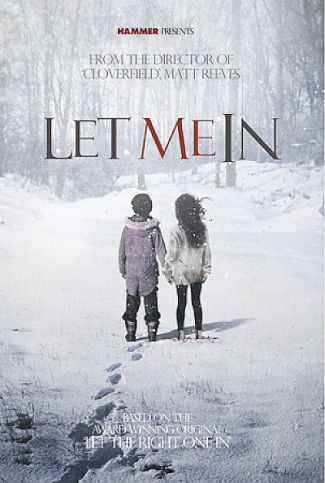
Matt Reeves on vampires, remakes, and “Let Me In”

3

When Let Me In — the film which dares an Americanized do-over of 2008 Swedish import Let the Right One In — was first announced, fans of the original film let rip synchronized screeches of “Whyyyyy?”, shortly followed by angry, ten-point arguments as to why Hollywood is really sucking balls lately. Consensus was that Let the Right One In, which picked up armloads of festival and critical awards (including the San Francisco Film Critics’ Circle’s Best Foreign Language Film honors), was not a film that deserved to be put through the remake machine. Sure, it only made a couple of million bucks stateside, but maybe it wasn’t the kind of film (unlike 2008’s similarly vampire-themed Twilight) that the masses were supposed to gobble up. After all, it had subtitles. Such a drag.

Matt Reeves, he of Cloverfield (2008) and Felicity fame, is aware of the fanboy-hater contingent that awaits his latest release. His Let Me In is a largely faithful retread, with some recognizable kid actors — Kodi Smit-McPhee (stronger here than he was in last year’s The Road) and tween It Girl Chloë Grace Moretz (Kick Ass) — and the lure of legendary British horror house Hammer (back in the producing biz after decades) helping him attract audiences. I suspect many people who’ll go see Let Me In may not have seen Let the Right One In — either because the original’s release wasn’t wide or lengthy enough, or because of that whole foreign-film bias. (Also, diehard fans of the first film may boycott the new version, just on principle. Hey, I did it with the recent A Nightmare on Elm Street, which in my mind NEVER HAPPENED).

Gotta say, though, Let Me In could have been worse than “faithful,” which is way better than “redundant” or “totally offensive.” Reeves, who penned the script from John Ajvide Lingqvist’s novel (Lindqvist himself wrote the script for the 2008 film) stays true to the material, shifting the action to the snowy New Mexico mountains and injecting some Cold War and new wave flair into the 80s setting. I spoke with him recently, just after the film’s screening at Austin, TX’s Fantastic Fest — coincidentally the very festival where Let the Right One In won the Jury Prize for Best Horror Feature in 2008. He kindly put up with my many remake-themed queries.

San Francisco Bay Guardian: How was Fantastic Fest?

Matt Reeves: It was great. It’s been fantastic (laughs). It’s really cool that they chose Let Me In to open the festival, because this is one of the places that Let the Right One In was incredibly well-received. I knew that there’d be a passionate audience for Lindqvist’s story here, and that also we’d have to past the test of being watched by people who really have a passionate love for Tomas Alfredson’s [2008] film. I thought, if we’re embraced here, and if we pass that test, then that will be a really big hurdle, and the screening went really, really well. It was very exciting.

SFBG: I didn’t realize until I was watching the movie that it was a Hammer Films production. How’d you get hooked up with them?

MR: Well, they got the rights to the film. I think that the Swedish producers met with lots of different places, and I think maybe they were drawn to the idea of being the first Hammer vampire film in over 30 years. But they were the ones who got the rights, is the answer. It’s interesting because I think a lot of people, in terms of their concern about this movie being a remake — there’s a lot of question about it being, “Oh, well, Hollywood comes in with a lot of money and ups the effects, and does all this stuff,” but Hammer is an independent company. And we didn’t have a lot of resources. It was a pretty small film, actually. It was definitely a labor of love, and one that we made in this kind of passionate way.

I think it’s pretty cool to be part of the relaunching of Hammer, especially since as a kid these are the kind of movies that terrified me (laughs). All of the Christopher Lee vampire films, I watched. But I was so afraid of them that my biggest memory of Hammer is actually watching them from behind a chair, late at night on local television. They’d show these Hammer films, and I’d come across them, and there’d be some kind of garish blood or lurid scene. I found them very disturbing! And there’s something ironic about the idea that, after they invaded my nightmares, now I’m somehow part of the relaunching. It’s cool but also kind of ironic.

SFBG: Why do you think vampires are such a consistently popular film subject, especially today?

MR: In the best genre films, you’re able to smuggle in something under the surface that you exploit through the metaphor. In this case, I think Lindqvist was really telling a story about the pain of adolescence and coming of age. But I think it really says something about the vampire myth that all of these vampire stories are so different: True Blood is different from Twilight, which is different from Let Me In. And it really does say something about what an incredibly durable myth that is, that you can translate it into so many different contexts. It can be about so many different things, even though on the surface they seem like they’re about the same subject. I don’t think those three versions of the story could be any more different, and that is very interesting, I think.

It’s always about what you use that metaphor for, and I think what attracted me to this one was that it was such a different way of presenting actually a very realistic story. It seems kind of contradictory to say, but it isn’t. He’s using this horror story, this vampire story, to describe how growing up, being bullied and having that difficulty, essentially feels like a horror story. It’s talking specifically about that kind of trauma, of growing up in that way and it feeling like a nightmare.

SFBG: You mentioned that the audience in Austin embraced the movie, but I feel like there’s been a lot of people, especially on the internet, who’ve been horrified by the idea of remaking Let the Right One In. What’s your response to that reaction?

MR: When I first got involved, it was almost a year before the movie was even released, and nobody had ever heard of it. When they showed it to me — I was trying to get a passion project of mine made, and they felt that it didn’t have an overt genre to it. It was more of kind of an independent character piece. And they said, “You know, right now it’s a challenging time to make this. We really love the writing, but we’re not going to make this. But we’d love to work with you, and we want to remake this film. We’re trying to get the rights to it.” After I watched it, I literally called them up the next day and said, “I don’t know if you should remake this movie. It’s great.” And they said, “Yeah, but we think there’s a way to bring it to an audience that won’t necessarily see a subtitled film, and we love this story. Think about it.”

The thing about it is, I so connected to that coming-of-age story, and then I found out it was based on a book. So I read Lindqvist’s book, and he had actually written the screenplay for Alfredson’s film. He did a very faithful adaptation of his book. And I kind of fell in love with the story even more. I ended up writing to Lindqvist, because I kind of saw this opportunity to take that story and translate it into an American context. He grew up in the 80s, I’m about his age, and he’s talking about this coming-of-age in Sweden. And I started thinking about that kind of story in the 80s America that I remember, the Reagan era. I thought that might be very interesting, and would be a film that essentially would be another interpretation of this story, as opposed to being anything that is trying to step on the toes of this beautiful film.

I entered it with that in mind: I wanted to find a way to do something that was personal and yet still faithful to this story. The level at which I was daunted at that point was just that I felt a responsibility that it had to be done in this way that was very personal, because I didn’t want in any way to seem to be, I don’t know, dissing that movie. I thought it was remarkable. And then when the movie came out, it earned such acclaim. I wasn’t surprised, because I thought, “Well, the movie’s a masterpiece. So of course it’s gonna get that kind of reaction.” But then I was sort of like, “Uh-oh. What did I do?” Because by that point I’d already written the screenplay and I was deeply committed to it. I thought, “Wow, I wonder if people will even give this film a chance.”

On the outside, I totally get it, because most remakes are horrendous, and they’re usually one of two approaches: there’s the soulless retread, where somebody goes through the motions but none of the passions or emotions come through, or the kind of run-roughshod bastardization version of the story, where you kind of use some piece of the story, but you kill all original intentions. I think those are both very dispiriting approaches, and they’re what people are used to from a lot of Hollywood remakes. When people were having that response, I couldn’t even say that I was like, “What’s the matter with them?” I put myself in their shoes and thought, “You know, I would think the same thing.” But I knew I was making it really as a labor of love, and it was a story I cared about. And I thought, well, we’ll see what happens. I know that I’m a fan. So if I’m a fan I feel, not the responsibility to the fans, I feel the responsibility as a fan. And so I was just trying to do as personal and committed version of the film as I could, and I knew the rest would have to take care of itself.

SFBG: Why do you think horror is the genre that’s been remade the most?

MR: That’s a good point. I think because the stories are incredibly visual, and people see a chance to take that kind of story —

SFBG: And make it 3D.

MR: I don’t know about making it 3D. It’ll be interesting to see if there’s more of that. Although now, I see that there is this feeling that adding 3D to something as a magic formula does not necessarily work either. I think [remakes happen] because horror movies are very cinematic, visual storytelling that works at a universal level, but there’s still this sense that, to reach a wider, English-speaking audience, that they could be [remade] in English. [Like the Japanese Ring movies, for example.] I think that people who see those movies, producers and studios, they see how that translation might work, because they see a visual medium, and they see those stories being told, and they think, “Oh, well we know that story works, and it’s not just about language.” I’m gonna guess that’s why, but to be honest with you, I have no idea.

SFBG: Do you think all of the horror ideas are used up? Why can’t people come up with original scripts?

MR: Oh, people can come up with original scripts. We should throw in the towel now if somebody can’t come up with an original script that isn’t a remake.

SFBG: Are there more remakes than there used to be?

MR: There have been remakes always in the history of Hollywood. But I will say, at the same time that there are probably just as many remakes, there are also fewer movies that were ever made than there were in the past. I think, percentage-wise, the amount of remakes is much higher. And it is dispiriting because you do want to see original ideas coming through. Part of me thinks and hopes that it’s cyclical. I know there will always be remakes, but I think that there are some great ones: I love John Carpenter’s The Thing. There are lots of remakes that I think are tremendous.

It comes down to, you understand why a studio or a producer is interested in remaking. You hope that they fall in love with the story first, but they certainly see an opportunity to sell a story to another audience. But it comes down to the intention of the filmmakers and their personal commitment, and if they are connected in a way that you can see their passion, and that there’s something expressed there that’s worthwhile, then that’s totally valid. I think that movies like that are great. And obviously that’s what I tried to do. But I’m totally with you: it’d be horrible if the only thing that happened was that we only saw things that were being remade. The thing is, though, if you’re not seeing a remake, you’re still oftentimes seeing movies are the same movie [as one that came before], with a different title, but the same story, the same plot. It is dispiriting. You want to see some vitality and risk-taking.

As ironic as it sounds, that was what I loved about this story: yes, it’s a remake, but it’s a very risky story. It’s a story on the shoulders of two 12-year olds. It’s an adult story with mixtures of tones. It’s got tremendously dark, adult things with really, really tender childlike stuff. That juxtaposition is quite powerful, and it’s certainly not an easy sell by any means. Who knows how we’ll even do. But I loved Lindqvist’s story, and I connected to it on a personal level. My druthers in life is not to go out and [do remakes]. In fact, I resisted even this one when it was first presented to me. But it was an opportunity to do something, ironically, that felt personal to me.

Let Me In opens Fri/1 in Bay Area theaters.

Allen town: Toronto International Film Festival 2010

0

Every time a new Woody Allen film arrives (a near-annual event since 1969) the same old, lazy complaints (“It’s not one of his best”) arrive faster than you can say “pontificate.”  Yet 10 or 20 years later it seems that somehow many of those uncelebrated films seem to become “one of his best.” See Broadway Danny Rose (1984), Husbands and Wives (1992), or Sweet and Lowdown (1999).

With his latest entry, You Will Meet a Tall Dark Stranger (opening locally Fri/1), Allen delivers another pitch-perfect mini-guide to the hilarious horrors of growing old … something Allen (according to the director himself, speaking at his Toronto International Film Festival press conference) wouldn’t wish on anyone. What looks and feels like a whimsical rom-com about aging is, in fact, a sobering and even paralyzing blueprint of what exists in most relationships or marriages. Don’t let the fun and breezy vibe of quirky narration deter you. Not only is there more of a bittersweet edge to Allen’s familiar archetypes, but the UK-produced film works as a perfect counterpart to Mike Leigh’s latest monument Another Year (2010). I wouldn’t be surprised if Stranger‘s Gemma Jones earns an Oscar nomination for her performance in what will surely be one of the year’s most truthful films.

After talking to a handful of critics at the TIFF this year about their unimpressed or indifferent reactions to Woody Allen’s latest, I feel it’s important to take a moment to revisit exactly what Allen has made over this past decade of films. Wrapping up his fourth full decade of prolific filmmaking, he has somehow stayed surprisingly strong in such a bipolar industry.

Here’s a quick guide to the brilliance of Woody Allen during the Y2Ks.

1. Vicky Cristina Barcelona (2008) While it’s wonderful to see directors like Noah Baumbach, David O. Russell, and Wes Anderson making cinema inspired by Allen, he can still beat all of them at his own game. Showcasing defining roles for Rebecca Hall and Scarlet Johansson as well as juicy parts for Javier Bardem and Penélope Cruz, the film also features gorgeous cinematography by Javier Aguirresarobe (of Pedro Almodóvar fame) that punctuates this realistic-romance to transcendental heights. Woody + Almodóvar = blissful chronic dissatisfaction.

2. Match Point (2005) and Cassandra’s Dream (2007) Who would have ever guessed that making films in the UK would reawaken Allen’s serious side? Of course, there were hints; see also: Interiors (1978) and Another Woman (1988). While Match Point was perhaps overly hyped and Cassandra’s Dream utterly dismissed, both of these morality tales contain profound character studies, hauntingly performed by Jonathan Rhys Meyer, Colin Farrell, and Ewan McGregor. Both are well worth revisiting. Who says people aren’t making movies about the new Depression?

3. Melinda and Melinda (2004) While this masterful deconstruction may have left audiences cold the first time around, what shines so brightly about this gem is how deftly the same story being told both from a comedic and tragic perspective slowly starts to blend into one. Radha Mitchell was robbed of an Oscar nod here and Will Ferrell delivers one of the all time best Woody impersonations.

4. Small Time Crooks (2000) When Woody Allen’s character in the 1980 masterpiece Stardust Memories, Sandy Bates, is approached by his fans, they often make the comment “I love your work … especially the earlier, funny ones.” Well, if you wanna talk about one of Allen’s funniest films, it’s right here. Not only do Tracey Ullman, Jon Lovitz, and Michael Rapaport deliver laugh-out-loud performances, nothing will prepare you for Allen’s girlfriend in the film — she’s played by Elaine May, director of The Heartbreak Kid (1972) and Ishtar (1986). The two of them together light up the screen.

5. Anything Else (2003) Rounding out the top five is this overlooked treasure championing both Christina Ricci as a neurotic 20-something and Stockard Channing as her newly reenergized single mother. While it could be said that Jason Biggs is a bit too awkward, both Danny DeVito and Allen shine in what even Quentin Tarantino ranked as one of the best films of the decade.

Throw in the hilarious little rainy day ditties such as the match made in heaven Whatever Works (2009) with Larry David and the ScarJo-starring, surprisingly sweet if not a bit silly Scoop (2006) and you’ve got one helluva great decade. I understand that sometimes it’s easier to move on from your favorite artists of the past to find the hot new Hollywood or Sundance sensation. But to paraphrase Preston Sturges’ Sullivan’s Travels (1941): don’t forget about the clowns and buffoons who attempt to lighten our burden a little with laughs while putting a mirror up to the society around us. All that … plus a little sex too, of course.  
 
Jesse Hawthorne Ficks is the Film History Coordinator at the Academy of Art University and programs Midnites for Maniacs, a monthly series at the Castro Movie Theatre that celebrates dismissed, underrated, and overlooked cinema. 

9/11 rescuers need rescuing

0

Dick Meister, former labor editor of the SF Chronicle and KQED-TV Newsroom, has covered labor and politics for a half-century. Contact him through his website, www.dickmeister.com, which includes more than 250 of his columns.

A new AFL-CIO report shows that more than 13,000 of the truly heroic firefighters, police and other rescuers who were the first to rush to the scene of the attacks on the World Trade Center in New York City on Sept. 11, 2001 are still being treated for the serious injuries they received.

They were exposed to a highly toxic mix of chemicals, jet fuel, asbestos, lead, glass fragments and other debris that caused a wide range of respiratory, intestinal and mental health problems. Also exposed were nearly 53,000 other first responders who are being monitored for signs of 9/11 related illness. Yet another 71,000 are being watched closely because they also were exposed to the extremely harmful toxins while helping clear debris.

The number of reported victims continues to grow. For example, another new study, from the Mount Sinai Medical Center, shows that some 70 percent of the 10,000 workers involved in the cleanup who were tested between 2000 and 2004, now say they have new or more serious respiratory illnesses.

In addition to firefighters and police, the victims include construction workers, residents of the area and school children, among others. The new report, by the AFL-CIO’s James Parks and Mike Hall, focuses in part on one of the first to reach Ground Zero — Vito Friscia, a Brooklyn homicide detective.  He was only a block away when the second of the Twin Towers fell. He rushed to the site through a dense cloud of toxins to seek – and to rescue – survivors.  Friscia spent a week helping with the rescue efforts.

Today, Detective Friscia has a deep cough that won’t go away, chronic sinus problems and shortness of breath.

“But I’m no hero,” he insists. “I was just doing my job.” Many others involved in the rescue efforts say pretty much the same thing – that they were just doing their jobs as police officers, firefighters or as other public service employees.

Frisia’s sister-in-law, Maria Pusteri, has produced a documentary film, “Vito After,” which takes a detailed look at what the detective has endured since his rescue efforts.  The film, first released in 2005, recently made its international debut in London.

What’s needed now, the AFL-CIO says, is to provide long-term medical care and careful monitoring of the tens of thousands of rescue and recovery workers and community members whose health remains at serious risk because of their exposure to contaminated materials.

The AFL-CIO rightly blames part of the problem on Republican opposition. For instance, the Bush administration refused to create or support a permanent research, monitoring and health care program for Ground Zero workers. And the administration also cut funding for health care related to the 9/11 cleanup.

 Just before the congressional recess in August, House Republicans managed to block a bill – the 9/11 Health and Compensation Act – that would provide $7.5 billion for long-term monitoring and health care of victims.

This prompted another of the ailing first responders, Greg Staub, to complain that “they told us if we did our job, they’d take care of us. We did our job. Now we’re sick and they don’t remember who we are anymore.” Staub was forced to retire from the New York City Fire Department last year because of chronic lung problems stemming from his rescue efforts.

The odds, however, are that the House Republicans will not be able to block passage of the proposed Health and Compensation Act when comes up for a second vote, which is expected soon.

Those who rushed to Ground Zero to help the 9/11 victims clearly need – and certainly deserve – lots of help, probably at least as much as provided by the bill. As one of those treating the 9/11 victims noted, “Our patients are sick, and they will need ongoing care for the rest of their lives.”

Providing that care is the very least we can do.

Dick Meister, former labor editor of the SF Chronicle and KQED-TV Newsroom, has covered labor and politics for a half-century. Contact him through his website, www.dickmeister.com, which includes more than 250 of his columns.

Hot sexy events Sept 22-28

0

What’s going on in sexy San Francisco this week? Everything. End of column. Jokes! As a matter de facto, however, Folsom Street Fair has unfurled its chaps from its carry-on from Detroit and would already be generating some friction between its thighs (were they not a crotchless affair), the amount of sexy parties its been stirring up from SoMa to NoMa to Ma and beyond. After all, with all the fresh meat on the street this week, it seems a shame to relegate all the naughtiness to Sunday’s main event. Here’s a smattering of what’s going on in terms of pre-planned bacchanalia.


Lesbo Retro: A Dyke Porn Retrospective

Sexy founder of Harlem Shake Burlesque (and one of SFBG’s 2001 Sexiest People in the Bay Area ass pat) Simone de la Getto performs at this retrospective of films of lustful ladies, by lustful ladies. Shar and Jackie of S.I.R. Productions take you down this memory lane of film clips. Plus, free pizza!

Weds/22 8-9:30 p.m., $10

The Women’s Building

3543 18th St., SF

www.gv-ixff.org


Indie Erotic Film Festival

A whole Castro Theatre full of San Franciscans watching other San Franciscans get it on in homemade short films? And it’s the same week as Folsom? Sounds like a recipe for sweet, sweet trouble. Peaches Christ and her fab friends and Carol Queen will be on hand to add some levity to the goings-on – and to hand out the $1,500 for the best clip.

Thurs/23 7-8 p.m., $10

Castro Theatre

429 Castro, SF

www.gv-ixff.org


How To Eat a Peach: Pleasuring Her

Midori teaches the method for sucking out the sweetest juices (fruit props will be involved, natch) at this workshop for all those that love loving the ladies.

Sat/25 8- 10 p.m., $20

SF Citadel

1277 Mission, SF

(415) 626-1746

www.sfcitadel.org


Slut!

Dykey sluts, slutty dykes – you too deserve your own Folsom party! Host Oxana Olsen of Mall Madness hosts this hawt dance party, where prizes will be awarded for best uniform, leather outfit, and fetish wear.

Sat/25 9 p.m., free

The Lexington Club

3464 19th< St., SF

(415) 863-2052

www.lexingtonclub.com


Perverts Put Out


Oh how we love the words: as seen on Fox News! An onstage celebration of all things demonstrably slutty, this sporadic series will feature performances by Meliza Bañales, Greta Christina, Stephen Elliot, Robert Lawrence, Thomas Roche, Lori Selke, and horehound stillpoint. It may well be more than enough sexual confessional, monolouging, and live smut to satisfy for the evening.

Sat/25 7:30 p.m., $10-15 sliding scale

Center for Sex and Culture

1519 Mission, SF

(415) 255-1155

www.simonsheppard.com/pervertsputout.html


Magnitude

Folsom Street’s official dance party – because why ever would you romp about in the sunshine? Hit the floor to work up a froth to the tunes of DJ Manny Letham. Stay later for the Aftershock party to ensure you’ll be a hot mess for the Fair the next day! ($30-40 www.thediscosf.com)

Sat/25 10 p.m.-4 a.m., $80

525 Harrison, SF

www.folsomstreetfair.org


Pussyfest

Here kitty, kitty, kitty! Kinky Salon’s cat-themed play party is here, so grab your partner (no singles allowed), fluff your whiskers, and swing over to the cat fight.

Sat/25 9 p.m., $25-30 (members only)

Mission Control

2519 Mission, SF

www.kinkysalon.com


Folsom Street Fair

The grandaddy of all public, streetside leather events assumes its five-block throne in SoMa, where leather bars have been located since The Tool Box’s grand arrival in 1961. Join the 400,000 strong who will be frolicking at the third largest street fair in Cali.

Sun/26 11 a.m.- 6 p.m., $7 suggested donation

Folsom between Seventh and 12th Sts., SF

www.folsomstreetfair.org

Hot sluts!

59

culture@sfbg.com

SEX ISSUE Forget those uptight pricks: sluts are awesome. There’s no shame in harboring a voracious appetite for sexiness in all its myriad expressions. Combined with a well-developed ethical stance and safe practices, it’s one of the joys of being human. In honor of the enormous, charitable Folsom Street leather and fetish fair (Sun/26, 11 a.m.–6 p.m., donations requested. www.folsomstreetfair.org), we wanted to honor some of our favorite local sluts with the pervy attention they want and deserve. 

>>CLICK HERE FOR PICS OF OUR FAVORITE HOT SLUTS!

SLUTTIEST CELLULOID

You’ve always wanted to watch your neighbors bang, right? Well moan enthusiastically in honor of the Good Vibrations Indie Erotic Film Festival, which every year puts the call out for the cream of the amateur blue filmmaker crop, then assembles the spunkiest for your viewing pleasure at the Castro Theatre. You too can be in the audience, which will ooh and aah its approval to choose the sexiest, steamiest home-screw, the lucky winner receiving a $1,500 money shot. So how does SF get it on? This year’s 12 finalists include preggo smut (Jeannie Roshar’s “Bun in the Oven”), good old-fashioned wordplay like Benjamin Williams’ “The Filth Element,” and sci-fi sexin’ (“Orgasm Raygun” by Martin Gooch). The fest precedes a range of specialty nights around town coordinated by Good Vibes, including Lebso Retro: A Dyke Porn Retrospective (Wed/22 at the Women’s Building). It’s gonna be a hot ticket, so grab a seat, relax your rear, and revel in the sight of sexy San Francisco.

Thurs/23 pre party: 7 p.m., $10; screening: 8 p.m., $10. Castro Theatre, 429 Castro, SF. (415) 621-6120, www.gv-ixff.org


SLUTTIEST QUEEN

“I’m so honored to be named Sluttiest Queen,” inimitable alternative drag goddess Suppositori Spelling tells us. “It’s nice to see that my work hasn’t gone unnoticed. I have so many performances that require nudity that when I drop my skirt lately it’s often met with a wave of yawns from my audience. I think they’re more shocked by the presence of panties nowadays.” (Her audience, found at her raucous weekly drag show Cocktailgate — Sundays, 9 p.m., $5. Truck, 1900 Folsom St., SF. www.trucksf.com — sheds a few panties themselves when she’s on stage.) “I could tell you stories so dirty hot that this paper would burn like a Koran in Florida” she continues, “but I’m so shy and reserved. I will say this, though: as far as the queer sex scene in San Francisco goes, we seem to be in the flush of a renaissance. I keep stumbling upon things that even make me blush — like the gentleman who preferred a visible handjob on public transportation during rush hour as foreplay. But I encourage whatever floats your boat or creams your Twinkie. I just want to clarify, however, that “ouch” is not a safe word!”

Suppositori emcees the Seventh Street stage at Folsom Street Fair from 11 a.m.–2 p.m., followed by a special performance at 2:30 p.m., and then a “hanky code” themed Cocktailgate at its regular time.


SLUTTIEST BOYS

Dan and JD, a.k.a. Two Knotty Boys, are no strangers to the twists and loops of BDSM performance. Native San Franciscans both, they not only create mesmerizing stage shows in which they bind nubile flesh to their will, but also produce end results so visionary that you’d be excused for leaving off the “fetish” and dubbing it merely “fashion.” A ever-so-tightly cinched halter top of gleaming white cord, a barely there cobweb bikini that requires an expert hand to remove, overlays of skirts and dresses that hobble the wearer seductively and at the same time, show off the contours of the female body. It’s neat, it’s adjustable, it’s sexily professional work. It’s easy to see why the duo has filmed more than 100 video tutorials and taught countless workshops in the Bay and beyond for their eager fans: the Boys have tied up hundreds of women but, unlike some humiliation artists, they have never tied down their subjects’ beauty and comfort.

www.twoknottyboys.com


SLUTTIEST PARTIERS

Was it written on the rock hard abs of some San Franciscan sex god that all coital gatherings in this city have to be stark and stoic? Thankfully, the colorful gang over at Kinky Salon never got that memo. Creators Polly and Scott have created a swinger’s playland party in the pink and purple rooms of Mission Control whose focus is flair: playful costume themes have focused on everything from kitty cats (the upcoming Pussyfest) to undersea adventure and fairy tale characters. You’ve never lived, it would seem, until your Snow White costume has been peeled off on the couch in the Harem Room by Tinkerbell and Captain Hook. More recently, the team has created a new magazine to celebrate the vast array of sexualities that their partygoers lay claim to: San Fran Sexy. The rag includes erotic history lessons from sexologist Dr. Carol Queen, memoir pieces from Bawdy Storytelling’s Dixie De La Tour, photos from recent Kinky Salon soirees, and news of sensual events to come.

www.kinkysalon.com


SLUTTIEST ROCKERS

“If the Meat Sluts were a Pink Lady, we’d be Rizzo! We ain’t no prudes like Sandy!” says BB Rumproast of rockin’ band the Meat Sluts (www.myspace.com/themeatsluts). In a world of vegan dogs, her XXX-chromosomed trash rock-punk explosion is an all-beef foot long. The four women are cookin’ on stage — literally. In addition to the occasional back up steak dancing alongside their guitar licks and growls, the Meat Sluts have shared space at shows with a live hot dog-maker and a meat grinder flinging sausage and baloney onto hungry fans. It’s messy, carnivorous fun — the perfect expression of the group’s embrace of hedonistic appetite that could care less about what’s considered “ladylike” at the table of the musical establishment. “We are loose and crazy and not ashamed of it! We love man meat! We love weenies! Beef baloney, Slim Jims, T-bones, bring it ON!” says Rumproast. To quote the Sluts’ rager rally cry “Johnny Con Carne,” that’s what we call makin’ bacon.

The Meat Sluts play Dodgyfest 3, Oct 2, 7 p.m., $10. Thee Parkside, 1600 17th St., SF. www.theeparkside.com


SLUTTIEST BLOGGER

Fleur De Lis SF has a bone to pick with the way hot and horny females are portrayed. “Women are just as sexual as men and they should own it,” the blogger tells us. Need proof? Check out the blog she started this summer — just make sure your hands are free and you’ve got a little privacy while you do so. Her posts are missives from a professional woman’s enthusiastic exploration of sensual subcultures in “one of the sexiest cities in the world.” Though her identity is clad in secrecy, Fleur De Lis SF’s escapades with Craig’s List Casual Encounters, BDSM clubs, and randy run-ins at the grocery store will leave you slicker than a Slip ‘N Slide in 90 percent humidity. Erotic inspiration notwithstanding, what we love about this new It slut is her candor and assertiveness. “Mainly, I want to educate people to embrace sex and sexuality,” she says. “I want people to accept who they are, and who are we are sexually is a huge part of who we are as people.”

fleurdelissf.wordpress.com


SLUTTIEST MAN ACTION

For the past few years, hunky leatherman cruisers have been blessed with the return of a SoMa bar crawl, which, while hardly rivaling the infamous Miracle Mile of the 1970s and ’80s, at least offers hide-lusting bar-hoppers an array of options. Truck, Hole in the Wall, Powerhouse, the Eagle, Lone Star — all make for a daisy chain of fellow cock-seekers. But the piece de resistance is surely Chaps II, which gives itself wholly over to man-action bliss. The original Chaps, owned by Chuck Slaton and Ron Morrison, was notorious for its Crisco-minded shenanigans, and Chaps II, opened in 2008 by David Morgan, continues the proudly perverse tradition, with parties devoted to rope play, piss play, fisting, and sports gear aficionados, as well as regular nights simply dedicated to the Holy Grail of slutty manhood: cheap ass. (For those unfamiliar — cheap ass tastes like chicken parmesan.) Kudos to you, Chaps II, for keeping the BDSM spirit alive — and serving a healthy round of Jäger shots to boot.

1225 Folsom, SF. (415) 255-2427, www.chapsbarsanfrancisco.com


SLUTTIEST ROBOTS

Drilldo, Intruder MK II, the Satisfyher, Scorpion, the Little Guy, Annihilator, the Octapussy — these are some of the friendly, dripping sex robots you’ll meet at FuckingMachines.com, part of the Kink.com kingdom. The machines put a bevy of heaving beauties through the motions with their dildo-studded fingers and pulsating hacksaw thrusts. Designed by lucky site users, who submit their moving-parts fantasies, and the fiendishly clever sex-elves at the Fucking Machines workshop (with many of the machines fabricated on site at Kink’s HQ in the Mission Armory), these fascinating thingamabobs range from devilishly dirty to actually kind of cute. There’s even one modeled on Johnny 5 from Short Circuit, albeit renamed Fuckzilla and outfitted with a huge silicone phallus. The whole shebang is overseen by the enthusiastic Tomcat, who drives the point home that, yes, a chainsaw outfitted with 20 fake tongues “challenges the whole idea that women need someone to buy them dinner to get pleasure.” Fucking machines themselves have been around since the 1960s, he notes, “but when we started in 2001, we wanted to capitalize on the tech wave, while approaching the machine construction like sculpture.” Good thing the Fucking Machine bubble didn’t burst.


SLUTTIEST SLÜT

Burlesque heroine Baroness Eva Von Slüt knows what she’s got, and she’s happy to show it to you. The inked, buxom platinum blonde dove into burlesque in 2002, but she’s never been afraid of flaunting her dangerous curves onstage. “Whatever the thing is that women have that they hate their bodies, I just don’t have it. I don’t compare myself to other people because I know I look good.” Von Slüt produces her own burlesque shows, plays party-jumping jams with partner DJ Mod Days, and heads up the vocals for no less than two sexy bands — Thee Merry Widows, an all-girl psychobilly explosion of fishnets, red lipstick, and leather dresses, at whose shows Von Slüt will bust out in pasties and sequined panties, and the White Barons, a stripped down, hard-edged punk outfit in which Von Slüt lets her rebel growl loose. So what gets this freight train whistling? Purrs the lady, “Self-confidence and kindness. Also, I am a bit of a cougar, so gentlemen 10 years younger. I’m not opposed to men my age or older, but gosh they’re just so sweet when they’re young!”

Catch Von Slüt’s DJ session on Wednesday, Oct. 13 at Butter, 354 11th St., SF. www.myspace.com/missevavonslut


SLUTTIEST FREE-FOR-ALL

There are a lot of gay musclemen at the Folsom Street Fair, and there are a lot of steamy, shirtless gay man-parties surrounding the event (causing quite a few Monday morning tragedies). But what about everyone else? “I was talking to my friends at Kink,” says Folsom organizer Demetri Moshoyannis, “and they said that once the fair ended, all the leathermen had a place to go, but everyone at the Kink booth just had to go home. So this year we teamed up with them to change that.” The result? A glorious-sounding omnisexual dance party called Deviants that’s open to everyone. The acknowledgment that gay muscle men aren’t the only ones who can get down and dirty into the wee hours is refreshing. But so is the musical lineup — the Juan Maclean, Zach Moore from Space Cowboys, Australia’s Stereogamous — which offers something beyond the carnival circuit-music at many of the other parties. Musclemen are welcome, too, of course, as long as they’re willing to shake their chains on the dance floor.

Sun/26, 6 p.m.–2 a.m., $30 advance. 525 Harrison, SF. www.folsomstreetfair.org/deviants


SLUTTIEST PIE

It’s not too many harems that offer you 40 different ways to satisfy your cravings. But hot, lip-smacking loving can be yours — in three different locations or for delivery, no less! — whenever that urge to do something naughty hits, whether you like it on your lunch hour or for a post-bar dirty stopover. Oh, Pizza Orgasmica, you sure do know what gets us going. The local chain has umpteen big, salacious pies with nookie-themed names for your perusing. And although the Ménage à Trois, with it’s cuddle puddle of five salty cheeses, will leave you panting, and the Latin Lover’s barbeque sauce, chicken, zucchini, onions, and cilantro make for a meaty, spicy affair, the sluttiest pie award has got to go to the Farmer’s Daughter. She looks like a demure little milkmaid (after all, you can find her on the vegetarian menu) — but once her drizzles of creamy bianca cheese hit your tongue, and her fresh corn and broccoli fill your mouth … it’s a tumble in the hay you won’t soon forget. Old MacDonald would be scandalized.

Various locations, www.pizzaorgasmica.com


SLUTTIEST CLOWN

When it comes gender-bending sexual escapades, we landlubbing bipeds tend to give short shrift to our finned, feathered, and multi-legged Earthmates. That’s why we’re giving a hearty bottoms up to the California Academy of Science’s Amphiprion ocellaris. The showy orange and white striped fish, whose common name is clownfish, is best known as the aquatic brat in Finding Nemo. But we don’t care about Nemo’s celebrity — or his billions. We salute him for his ability to shift from male to female when needed, giving her access to the entire spectrum of fishy sexuality. One of the planet’s rare sequential hermaphrodites, all clownfish are born male (protandrous hermaphrodites) but become female when the female in a breeding pair dies. You may never look at a clownfish the same way again — and you should certainly go and look at them at the Cal Academy aquarium (www.calacademy.org), where the San Franciscan clownfish ride tiny fixies, design websites, and sip Blue Bottle. Kidding! But maybe we should rethink always calling them “Nemo.” How about Nema for a change? Or Nemo-ma. Or, oh goddess of LGBT fish love, Nemaphrodite.


SLUTTIEST BUFFET

It’s lunchtime Friday and you need a juicy thigh in your mouth: Gold Club is there. And no, we’re not talking about the lovely ladies popping, dropping, and locking it all over the SoMa strip club’s pleasure poles. Carnal urges take on new meaning when it comes to the joint’s $5 all you can eat Friday buffet, an omnivorous affair stuffed with roast beef, lasagna, fresh veggies, hummus, brownies, and their signature breasts (or as one Yelper so memorably dubbed them, “fried chicken tit-tays!”) The spread attracts a diverse crowd of office workers and lap-dance connoisseurs of all genders, endowed with an appetite for crispy skin and jiggling glutei maximi alike. So pair your plate with a $4 happy hour cocktail — available until 7 p.m. — and don’t forget to share your savings with the working women up front.

Gold Club’s all you can eat buffet Fridays 11 a.m.– 2 p.m., $5. 650 Howard, SF. (415) 536-0300, www.goldclubsf.com

Slutty profiles written by Marke B., Caitlin Donohue, Johnny Ray Huston, and Diane Sussman.

Our Weekly Picks: September 22-28, 2010

0

WEDNESDAY 22

MUSIC

Mary Wilson

As one of the founding members of the Supremes, Mary Wilson sang on countless classic rock, R&B, soul, and doo-wop hits, including “Baby Love,” “Come See About Me,” “Stop! In The Name Of Love,” “Back In My Arms Again,” and many, many more. While that legendary group’s rise to fame has been celebrated in fictionalized form with the hit film and stage production Dreamgirls, Wilson has continued to perform and record, wowing fans with her outstanding voice that still powerfully belts out her hits, along with her interpretations of jazz standards. Fans can expect a bit of both when she comes to the city for a series of special, intimate shows. (Sean McCourt)

Wed/22-Sat/25, 8 p.m.; Sun/26, 7 p.m., $40–$55

Rrazz Room

Hotel Nikko

222 Mason, SF

1-866-468-3399

www.therrazzroom.com


EVENT

Jonathan Safran Foer

Every once in a while, a nonfiction book arrives that makes my head hurt, my tear ducts blow, and my appetite long for more discerning times ahead. Last time it was The Omnivore’s Dilemma. This time it’s Eating Animals, the author of loss literature Everything is Illuminated and Extremely Loud and Incredibly Close Jonathan Safran Foer’s voyage into the depraved bowels of our country’s factory farms. Since I lack the power of Safran Foer’s elegant prose, lemme summarize his findings: they are a stain upon our earth. Let him tell you himself at this benefit for the ever-fantastic 826 Valencia. (Caitlin Donohue)

8 p.m., $20

Herbst Theater

401 Van Ness, SF

(415) 392-4400

www.cityarts.net


DANCE

Alyce Finwall Dance Theater and PunkkiCo Dance

From the outside, a red door is all that distinguishes performing arts venue the Garage from other warehouse-like SoMa buildings. Once inside, the intimate space seems too small to function as a theater. Yet the diverse range of upcoming and established choreographers that RAW (the venue’s resident artist workshop) hosts always manages to bring explosive dance to the small, box-like space. This week RAW hosts PunkkiCo Dance and Alyce Finwall Dance Theater. Using the Garage’s interior space for inspiration, choreographer Raisa Punkki and her company present End Trance, a piece exploring large movement within claustrophobic spaces. Similarly, Alyce Finwall Dance Theater (directed by choreographer-dancer Finwall) explores explosive and raw movement in a piece that investigates femininity, beauty, and identity, to name a few. (Katie Gaydos)

Through Thurs/23

8 p.m., $15

Garage

975 Howard, SF

(415) 518-1517

www.975howard.com


THURSDAY 23

MUSIC

Big Boi

When is Outkast dropping its next album? When it damn well feels like it, that’s when. In the meantime, get up with the more elegant side of the ATL hip-hop duo — the checkered space-ghetto luxe of André 3000’s “Hey Ya!” partied hard, but when you found your dance partner and were ready to really get down, where’d you turn? “The Way You Move,” that’s where. Big Boi’s double time flows fill in languorous beats on new solo album Sir Lucious Leftfoot: The Son of Dusty Chico, which Jive demurred on because it was too much “a piece of art.” Their loss, and when Def Jam picked it up again, our gain. (Donohue)

8 p.m., $35

Regency Ballroom

1300 Van Ness, SF

www.theregencyballroom.com


EVENT

Oktoberfest by the Bay

Can’t make it all the way to Munich this year to mark the 200th anniversary of Oktoberfest? Then throw on your lederhosen and dirndls and bring your appetite for beer, bratwurst, and Bavarian-themed good times and head down to our own San Francisco waterfront for the 11th annual Oktoberfest by the Bay. A smorgasbord of food awaits to soak up the specialty suds being offered up by Spaten, as will a host of bands playing traditional music for all the partygangers raising their steins and dancing the schuhplattln. Prost! (McCourt)

Thurs/23–Fri/24, 5 p.m.–midnight; Sat/25, 11 a.m.–midnight;

Sun/26, 11 a.m.–6 p.m., $25–$30

Pier 48 (across from AT&T Park), SF

1-888-746-7522

www.oktoberfestbythebay.com


FRIDAY 24

PERFORMANCE

3 For All

Some veteran performers think they know it all already, feeling sufficient unto themselves. But despite the dizzying level of expertise evinced by 3 For All’s Rafe Chase, Stephen Kearin, and Tim Orr, these guys still take suggestions. In fact, they don’t do what they do without a little help from the audience, by way of nouns, adjectives, and odd phrases shouted out in eager expectation that these three improv masters will take their idea and transform it into a breathless and hysterical wonder of theatrical spontaneity. Really, if you haven’t seen 3 For All do its thing, you haven’t seen all that improv has to offer. These are the troupe’s last San Francisco performances of 2010. (Robert Avila)

Through Sat/25

8 p.m., $22–$25

Bayfront Theater

Fort Mason Center, Bldg. B

Marina at Laguna, SF

www.improv.org


FILM

“Radical Light: Return to Canyon, Program II”

Filmmaker Bruce Baillie first conceived of Canyon Cinema as a communal gathering in the redwood groves between Oakland and Moraga. The screenings showcased fresh, avant-garde work and self-produced newsreels, along with classic serials and government films. “We’d sit under the trees in the summer with all the dogs and people and watch,” Baillie once reminisced to interviewer Scott MacDonald. Canyon came down the mountain soon enough, but this special 50th anniversary event revives its original al fresco spirit. The show features many fine Canyon films new and old, as well as a newsreel produced by the kids of the Canyon School with help from USF’s film students. Baillie will be there too, still tossing the seeds of creative growth. (Max Goldberg)

6 p.m., free

Canyon School

187 Pinehurst, Canyon

www.sfcinematheque.org


EVENT

“24 Days of Central Market Arts: Kick-off Event”

In an area known for its uninviting sights and smells, visitors to the central Market Street area can instead treat themselves to the sights and sounds of art during 24 Days of Central Market Arts. The three-week festival kicks off today with LEVYdance, Robert Moses’ Kin, and Kunst-Stoff, followed by Cali & Co & The Welcome Matt, and vocalist Joshua Klipp with Sarah Bush Dance Project. Saturday continues with performers including La Alternativa and Hope Mohr Dance. The event culminates Sunday with more performances, belly dance classes, an improv dance jam, and indie rockers Handshake. (Emmaly Wiederholt)

Through Oct. 17

Kick-off: Fri/24, 1–2 p.m. and 5–7 p.m.;

Sat/25-Sun/26, 1–-5 p.m., free

Mint Plaza

Fifth St. between Market and Mission, SF

www.centralmarketarts.org


DANCE

Lenora Lee

In Lenora Lee’s Passages, politics and art work in tandem to tell the story of one person. Yet the piece also speaks for the courage and determination of thousands of others who left — and still leave — everything behind to make a better life for themselves, their children, and in Lee’s case, a grandchild. Lee’s grandmother was married in China and spent 10 years waiting to reunite with her husband on Gold Mountain, as California was called. She became an anchor in the little girl’s life, one in which dance lessons and visits with Grandma fused. The interdisciplinary Passages — with media design by Olivia Ting and a score by Francis Wong — commemorates the centennial of the Angel Island Immigration Station. (Rita Felciano)

Fri/24–Sat/25, 8 p.m.; Sun/26, 2:30 p.m., $20

Dance Mission Theater

3316 24th St., SF

1-800-838-3006

www.asianimprov.org


SUNDAY 26

MUSIC

Git Some

Gotta love hard rockers — and even harder livers — like those in Denver’s Git Some. Mixing hardcore maximalism with post-punkin’ Jesus Lizard freewheelery, the foursome — founded by ex-Planes Mistaken for Stars members Chuck French and Neil Keener — tear through bulldozers à la “There Is So Much Blood” and thrashers such as “Entrails for the Altar” on the new Loose Control with the barely harnessed ferocity of zombies served a groaning sideboard of fresh body parts. Translation: meaty satisfaction — the added wrinkle being the occasional butt-wiggling, cheese-gobblin’ guitar-god flourish found on, say, “Broken Bodies Glisten.” Taste the glove — and Git Some love? (Kimberly Chun)

With Pins of Light and Hazzard’s Cure

8 p.m., $6

Knockout

3223 Mission, SF

(415) 550-6994

www.theknockoutsf.com


TUESDAY 28

MUSIC

Odd Nosdam

Get your cerebral and head-bopping fix at this show featuring two all-star experimental electronic artists. The Bay Area’s Odd Nosdam makes sound collages with ideas and samples pulled from the worlds of hip-hop, ambient music, drone, and indie-rock, often set among creative drum patterns you can still tap your foot to. Austria-based musician Christian Fennesz (see music feature) combines spacey, manipulated electric guitar with dissonant textures and glitchy beats. Either of these guys playing on their own would make for a fantastic show. Together, for $10 per set, you’d be a fool to miss it. (Landon Moblad)

With Fennesz

8 p.m., $20

Swedish American Hall (above Café Du Nord)

2170 Market, SF

(415) 861-5016

www.cafedunord.com


EVENT

Guillermo del Toro

In addition to directing superbly haunting, dark, atmospheric films like Hellboy (2004) and Pan’s Labyrinth (2006), Guillermo del Toro also pens novels (with cowriter Chuck Hogan), the second of which, The Fall, hits stores this week. Though the topic of vampires may seem worn out to some, with the teenybopper Twilight series driving some genre fans to swear they’ll stake themselves at the mention of one more fang-based outing, del Toro brings the bite back into the fold with this second part of a planned trilogy of tales. Join the talented artist for a special evening of discussion about his work on the written page and silver screen. (McCourt)

7:30 p.m., $12–$75

Sundance Kabuki Theater

1881 Post, SF

1-800-838-3006

www.booksmith.com 


The Guardian listings deadline is two weeks prior to our Wednesday publication date. To submit an item for consideration, please include the title of the event, a brief description of the event, date and time, venue name, street address (listing cross streets only isn’t sufficient), city, telephone number readers can call for more information, telephone number for media, and admission costs. Send information to Listings, the Guardian Building, 135 Mississippi St., SF, CA 94107; fax to (415) 487-2506; or e-mail (paste press release into e-mail body — no text attachments, please) to listings@sfbg.com. We cannot guarantee the return of photos, but enclosing an SASE helps. Digital photos may be submitted in jpeg format; the image must be at least 240 dpi and four inches by six inches in size. We regret we cannot accept listings over the phone.

Winner takes it all

0

DOCUMENTARY Before American Idol and all subsequent parasitical imitators, there was nothing on American TV quite like the annual Eurovision Song Contest. In fact, there still isn’t — that event’s multinational scope and emphasis on original (or at least regional) material is eons from AI‘s hits regurgitated by wailing wannabes.

Originating in 1956, the climactic broadcast is hosted each year by a different city. It’s been a wellspring of MOR trash, serving a mainstream demographic similar to yet distinct from U.S. tastes, less susceptible to pop vs. rock snobbism. Its most celebrated success story ABBA was the quintessential ESC group — glam, groomed, Top 40, and camera-ready — whose winning 1974 “Waterloo” launched their career as the Me Decade’s most vanilla disco-pop enterprise. Celine Dion also won, 14 years later. Let us forget that.

Other artists have been less stressfully forgotten — indeed, few Eurovision winners or competitors graduate to significant careers. Eurovision has increasingly been criticized as representing overly generic, visually showy musical acts. TV ratings have slumped. Yet in developing and/or post-glasnost countries, it remains a major cultural event.

Thus 2003’s Junior Eurovision Song Contest founding naturally hooked a wide audience still susceptible to the crack-like combo of kiddie cuteness and vaguely nationalized Vegas showmanship.

Brit Jamie J. Johnson’s doc Sounds Like Teen Spirit: A Popumentary arrives here as the opening feature in the San Francisco Film Society’s inaugural International Children’s Film Festival. A treasure trove of both snarkalicious garishness and sympathetic characters worth rooting for, it is an all-ages-access joy.

Johnson focuses on a few diverse aspirants in the 2007 competition, all age 10 to 15. They include tiny Tom Jones-in-training Cyprian Yiorgos Ioannides and Georgian belter Marina Baltadzi, whose advance toward the top (among more than 14,000 initial entrants) becomes a source of national pride. In this context, Belgian quartet Trust seem incongruous for being an actual band who play instruments, write their own songs, and require no dance or costume input. Most competing acts recall the Brady Bunch and 1984’s Breakin’ 2: Electric Boogaloo — musically, choreographically, Spandex-sartorially — albeit with touristy “ethnic” twists.

Refreshingly, no kids here seem pushed forward by Lindsay Lohan-esque stage mamas or papas — their ambition is very much their own. No doubt most will cringe in later years at the pubescent portrait Spirit paints. But this good-humored documentary loves its subjects, and so will you.

NY/SF INTERNATIONAL CHILDREN’S FILM FESTIVAL

Sept. 24–26, $8–$20

Embarcadero Center Cinema

One Embarcadero Center,

Promenade Level, SF

(925) 866-9559

www.sffs.org

Franco’s reign

1

FILM Contrary to popular belief, James Franco is not always high; he is just very, very tired. When the near-ubiquitous actor-writer-director-visual artist-scholar-astronaut-Japanese body pillow enthusiast — who recently came out to the Advocate (as straight) — was in town for the Howl premiere at the Castro Theatre last June, he looked suitably exhausted and bedraggled — in an impish, adorable way, mind you.

Franco, who also recently (and somewhat inexplicably) admitted to compulsively masturbating four to five times a day, suffered from perpetual bouts of yawn-talking during his interview with the Guardian. He was a half-hour late due to a professed need for some “alone time.” Draw your own conclusions.

Taking on the outsized persona of poet-provocateur Allen Ginsberg in Howl is yet another item to tick off on his list of improbable accomplishments, which range from studying for simultaneous graduate degrees to starring on the venerable daytime soap opera General Hospital (as the mysterious, um, “Franco”) in between movie gigs and solo art shows.

And an accomplishment it most definitely is. It’s almost inconceivable that the same actor who initially gained acclaim for his uncanny portrayal of James Dean could also perfect the role of another great midcentury icon, the formidable bear-guru of all things counterculture, less than a decade later.

“I guess I thought if I ever played one of the Beats, it would never be Allen Ginsberg,” he admits, a fact that ironically drew him to the role. “It was actually more attractive to play Ginsberg rather than Neal Cassady or Jack Kerouac, who were closer to a James Dean type.” Fortunately for the slight, almost delicate Franco, this wasn’t the Ginsberg that most of us have come to know. “It’s Ginsberg to an age right before he became heavier and bearded and bald, the recognizable Ginsberg,” he explains.

Franco’s passion for the Beats goes back to his rebellious teen years, when he and his friends took regular trips from his Palo Alto home to City Lights bookstore in North Beach. “Everybody loved Kerouac, Burroughs’ Junky, or whatever. But Ginsberg — he was in touch with all the movements that came after the Beat movement, so he always stayed current. Now Ginsberg is probably my favorite.” Surprisingly, a major source of Franco’s inspiration for the role was his older brother, Tom, a sculptor who is “very into meditation.”

Besides an affinity for the darkly offbeat, the late Ginsberg and his onscreen doppelganger might have something else in common: a dangerous flirtation with overexposure. So far, at least, it hasn’t hurt Franco, who still allows himself plenty of me-time to reflect on a brilliant, if overextended, career in his own (very personal) way.

HOWL opens Fri/24 in Bay Area theaters.