Film

Rep Clock

0

ARTISTS’ TELEVISION ACCESS 992 Valencia, SF; www.atasite.org. $4-10. “The Touching of Hands,” solo and collaborative projects by Scott Treleaven, Genesis Breyer P-Orridge, and Terence Hannum. “Radical Light: Small Gauge Diaries and Portraits,” Thurs, 7:30. Presented by SF Cinematheque in conjunction with Pacific Film Archive. “Mission Eye and Ear: New Live Cinema Series,” Fri, 8. “Other Cinema:” “Goldwave + Wrongdisco + Katelus,” Sat, 8:30. “ATA Sunday Saloon,” with Rank/Xerox, Tenants, and Mothercountry Motherfuckers, Sun, 2. “The New Talkies,” modern films with new narration, Sun, 7:30.

CASTRO 429 Castro, SF; (415) 621-6120, www.castrotheatre.com. $7.50-15. We Were Here (Weissman, 2011), Wed-Thurs, 7, 9:15 (also Wed, 2:30, 4:45). Director David Weissman in person after 7 p.m. shows. “Sing-a-Long:” The Little Mermaid (Clements and Musker, 1989), March 5-9, 7:30 (also Sat-Sun, 1; Wed, 2).

CHRISTOPHER B. SMITH RAFAEL FILM CENTER 1118 Fourth St, San Rafael; (415) 454-1222, www.cafilm.org. $6.50-15. Even the Rain (Bollaín, 2010), call for dates and times. The Illusionist (Chomet, 2010), call for dates and times. Nora’s Will (Chenillo, 2009), call for dates and times. Absent (Hunt, 2010), Thurs, 7. With filmmaker Justin Hunt and musician James Hetfield. I Am (Shadyac, 2011), March 4-10, call for times.

“EAST BAY INTERNATIONAL JEWISH FILM FESTIVAL” Various East Bay venues; www.eastbayjewishfilm.org. Most shows $5-10. Over 50 films from around the world, March 3-13.

EMBARCADERO CENTER One Embarcadero, Promenade Level, SF; www.sfgreenfilmfest.org. $12.50. “San Francisco Green Film Festival,” environmental films, Thurs-Sun.

GOETHE-INSTITUT SAN FRANCISCO 530 Bush, SF; (415) 263-8760. $7. “From the Wild West to Outer Space: East German Films:” The Silent Star (Maetzig, 1960), Thurs, 7.

HUMANIST HALL 390 27th St, Oakl; www.humanisthall.org. $5. Collapse (Smith, 2009), Wed, 7:30.

LARK 549 Magnolia, Larkspur; (415) 924-5111, www.larktheater.com. $25-30. “Silent Surrealism,” with live accompaniment by Hot Club of San Francisco, Thurs, 8.

MECHANICS’ INSTITUTE 57 Post, SF; (415) 393-0100, rsvp@milibrary.org. $10. “CinemaLit Film Series: Heros and Misfits: The Films of Stephen Frears:” My Beautiful Launderette (1985), Fri, 6.

PACIFIC FILM ARCHIVE 2575 Bancroft, Berk; (510) 642-5249, www.bampfa.berkeley.edu. $5.50-9.50. “Film 50: History of Cinema:” The 5,000 Fingers of Dr. T (Rowland, 1953), Wed, 3:10. “Radical Light: Alternative Film and Video in the San Francisco Bay Area:” “Pieces of Eight: Fragments, Curiosities, and Hidden Realities,” Wed, 7:30; “The Video Collectives: Lord of the Universe, Media Burn, and Game of the Week,” Sun, 5:15. “Merce Cunningham Dance Company: The Legacy Tour Special Screening:” Craneway Event (Dean, 2009), Thurs, 7; Sat, 5. “Under the Skin: The Films of Claire Denis:” White Material (Denis, 2009), Fri, 7; Chocolat (Denis, 1988), Fri, 9; Paris, Texas (Wenders, 1984), Sat, 7:15; I Can’t Sleep (Denis, 1994), Sat, 3. Pelada (Boughen and Fergusson, 2010), Tues, 5:30, 7:45. This event, $15; proceeds benefit Albany and El Cerrito High School soccer teams.

PARAMOUNT 2025 Broadway, Oakl; 1-800-745-3000, www.ticketmaster.com. $5. The Birds (Hitchcock, 1963), Fri, 8.

RED VIC 1727 Haight, SF; (415) 668-3994; www.redvicmoviehouse.com. $6-10. Megamind (McGrath, 2010), Wed-Thurs, 7:15, 9:20 (also Wed, 2). “The Found Footage Festival,” Fri-Sat, 7:15, 9:15. This event, $12. Vision: From the Life of Hildegard von Bingen (von Trotta, 2009), Sun-Mon, 7, 9:15 (also Sun, 2, 4:15). I Love You Phillip Morris (Ficarra and Requa, 2009), March 8-9, 7:15, 9:25 (also March 9, 2).

ROXIE 3117 and 3125 16th St, SF; (415) 863-1087, www.roxie.com. $10. The Woman Chaser (Devor, 1999), Wed-Thurs, 7, 9:15. YERBA BUENA CENTER FOR THE ARTS 701 Mission, SF; (415) 978-2787, www.ybca.org. $6-8. “Volume 14: Middle East,” nine videos focusing on the Middle East compiled by ASPECT: The Chronicle of New Media Art, Jan 13-March 27 (gallery hours Thurs-Sat, noon-8; Sun, noon-6).


Schedules are for Wed/2–Tues/8 except where noted. Director and year are given when available. Double and triple features are marked with a •. All times are p.m. unless otherwise specified.

Bug artist under glass

1

Kevin Clarke is riffling through drawers, tossing around their various contents and muttering to himself, “I can’t believe I can’t find the lingerie.”

On every surface of his Richmond home, which doubles as his studio, the instruments of his trade are scattered: pins, needles, razorblades and film. But this isn’t some sort of dungeon, and Clarke’s job isn’t to indulge clients’ fetishistic fantasies. His trade is insect art, and the lingerie is for his beetles.

Clarke is a trained conservation biologist who now spends his days boiling butterflies and spreading insect wings, creating whimsical dioramas and gorgeous butterfly wing necklaces he bills as “museum quality insect art.” This year marks the first that his company, Bug Under Glass, has been his sole source of income, but Clarke’s fascination with all things creepy-crawly started long ago.

“I grew up in Massachusetts, where I was fortunate enough to have a huge tract of land behind my house,” he says. “I explored, played with dirt, and got to know insects really well.”

A generation later, Clarke – who is expecting a wee one of his own with wife, Jen – worries that children today won’t have access to anything like the natural world he experienced as a youngster. Urban and suburban areas in the United States are undergoing a process of fragmentation, he explains, that leaves mere pockets of green space too small to support native species. 

“Most people driving by don’t even realize it,” he says. Which is the reason he’s given up flirtations with dentistry and psychology – and a bona fide job in financial analysis – in order to educate through beautiful and humorous entomological displays.  

Though he draws the connection between finance and ecology – studying patterns in order to make predictions – Clarke simply wasn’t meant to wear a suit and sit behind a desk. In 2002, when a friend informed him that the California Academy of Sciences needed help preparing and cataloguing insects for a terrestrial arthropod inventory of Madagascar, Clarke began pinning bug parts for free.  Six months later, anticipating an opportunity to work in South Africa for famed ant scientist Brian Fisher, Clarke quit his finance job cold in order to train.

Clarke says he was a “geeky, eager kid who was always pestering (Fisher) for a job” – a description Fisher agrees with wholeheartedly, adding that “people studying insects tend to feel free to be more themselves.”

Indeed, it was after working for Fisher that Clarke returned to his hometown of Medfield, Mass., moving in with his parents at age 30 in order to pursue graduate studies in conservation biology. There, he saw his former backyard playground taken over by housing developments, his town “consumed by urbanization.” Suddenly, habitat preservation became a real, tangible issue.

 So how did the formally trained conservation biologist end up gluing farm-raised beetles to bicycles for a living? The seed was planted at the California Academy of Sciences, where Clarke worked in a room amidst 14 million specimens. 

“I was blown away by the diversity of insects, yet I was disappointed that these beautiful insects were in an area of the museum that people don’t ever see.”

Clarke’s art is his response to the growing alienation of people from their natural world. He is a purveyor of formally matted butterflies, artful displays of insects foiled by paper ephemera, and – to the delight of the young and young-at-heart – beetles humorously inserted into an array of human landscapes.

“It’s a great way to have a product that is educational, conservation-minded, and reminds people of a world they can’t necessarily always see,” Clarke says.

Clarke notes that the anthropomorphized insects – beetles playing the saxophone or sitting on the toilet reading a newspaper – are a particularly good way to draw in audiences with an insect aversion. “The same people who look at spiders in my traditional displays – the ones whose reactions are ‘ick, argh, eww’ – will get up real close,” he says. “It brings the natural world a little closer in a weird, distorted way.”

Clarke started building his displays as gifts for friends, but says “I’d always had this dream of making bugs my business.” Today that business supports his family, but also supports butterfly farmers – and conservation efforts – across the world. 

According to Kristin Natoli, a California Academy of Sciences biologist who supervises the importation of farmed butterfly chrysalises for the museum’s live exhibits, butterfly farming provides an important form of economic activity that doesn’t rely on destroying ecosystems, as agriculture or logging might. Instead, it ensures that rainforest areas from Costa Rica to Thialand, Indonesia to Africa are preserved, because butterfly farmers must collect wild larvae to breed, and plant native habitat on their property to raise their captive population. 

Clarke adds that butterfly farming is supported by the UN Wildlife Fund and The Nature Conservancy. “It’s a way to help impoverished people around rainforest areas that isn’t destructive,” he says.

Clarke has personally visited many of the farms from which he purchases his insects, and unlike butterfly observatories, Clarke’s shadowbox displays make use of animals that have lived out their full lifecycles and died naturally. They also provide a product that people can take home, sit on their shelf, and experience forever. 

For Clarke, who once worked as a stager for Pottery Barn making “life-size dioramas,” gluing arthropods onto park benches seemed like a natural next step. Fascinated by miniatures since childhood, he grew up with a huge train set in his basement and a family of hermit crabs who were treated to a constant stream of newly-renovated Lego architecture.

“It took me over a year to figure out how exactly to get them to stay on there,” he says, describing the day he finally conquered the difficulty of manipulating the bugs, which must be soaked, softened and pinned in place in a multi-step process. “I had just broken up with I girlfriend. I was drinking. It was euphoric.”

And the type of glue he uses?

“It’s a trade secret.  I can’t tell you,” he grins. “But I’ll give you a hint: I use three kinds.” 

Clarke hopes that his epiphany will ultimately help children relate to insects with less apprehension and more curiosity.  

“Fear of insects is a learned behavior,” he says. “When I see kids at my craft shows, they always want to come right up to the displays. Their parents are afraid.”

Clarke notes that insects account for 80 percent of all animals. Of nearly one million known insect species, less than one percent have been evaluated.  With some sources estimating that several thousand species go extinct each year, Clarke understands the importance of turning around our “nuisance” mentality toward insects.

“We’re stung by a bee or see ants in our kitchens, so our conception of insects is negative. We forget about the great things: ants spread 30 percent of all plant seeds and aerate more soil than earthworms … we learn things from insects, and they provide one in three free ecosystem services – things like pollination, that amount to billions, trillions of dollars annually.”

But “in general, scientists are horrible communicators,” Clarke says. He argues that showcasing insects in terms of their beauty, wonder, and – yes – humor can help bring the whole issue a little closer to home. 

“Because,” he says, paraphrasing author E.O. Wilson’s view on environmental destruction, “when it happens in your own backyard, you’ll care.”

You can shop Kevin’s creepy-crawlies online at www.bugunderglass.com

Cultura Madre

0
San Francisco Bay Guardian Presents
CULTURA MADRE
A Fiesta for the Olmec: Colossal Masterworks of Ancient Mexico 

Featuring Live Performances by
All Female Mariachi band:
Mariachi Femenil Orgullo Mexicano 6pm
And Los Cenzontles 7pm

Latin Soundscape by DJ Vanka (StellarTrax)

Taco Truck Industries will be providing live screen printing, BRING YOUR T-SHIRTS and other apparel to be printed on! 6pm- 8:30Pm

Bridge Walkers, an Interactive audio and video installation created San Francisco-based filmmaker and installation artist Catherine Herrera, a Cultural Encounters Commissions artist.

Mission Cultural Center presents a curated video collection from their DF<SF<TJ exhibition featuring:

“La Hora Nacional /The National Hour” (2010) by Carlos Amorales, a color film with sound that is a reflection on the pre-Hispanic collection and proposes a radical rupture from the institutional interpretation of Mexican history.

San Francisco-based video artist Sergio de La Torre will exhibit “New Dragon City” (2008) which features six Cantonese youths. Sergio’s videos address the new reality of the Cantonese community in Tijuana today.

FREE ALL AGES!
Friday, March 11th from 6-9PM @ de Young, 50 Hagiwara Tea Garden Drive

5 Things: February 28, 2011

0

Each day, our editors pick five (or so) things that might interest you

>>OSCAR AND ANN L.A. performance artist-sitcom regular Ann Magnuson is one of our favorite people ever (ask her about crashing in our tent at Burning Man). Sure she’s pretty famous, she ruled ’80s downtown New York, and she is, in fact, the Power of Pussy. But she’s funniest when she’s just straight-up laying down some home truths. Here’s her viral Oscar rant and here’s the film she should have won an Oscar for:

>>BUT STILL, MILA’S DRESS WASN’T ENOUGH TO SOOTHE OUR RANDY NEWMAN-INDUCED RAGE Return to a time when Hollywood rewarded more glamor, less non-threatening paunch — the Balboa Theatre is turning 81 this year, which means it was born the same year as Marilyn Monroe, Hugh Hefner, Harry Dean Stanton, and Cloris Leachman (to name just a few — 1926 was a very good year!) Of course, it was a tragic year too: silent-film hunk Rudolph Valentino died at the age of 31. This year’s Balboa birthday bash (March 6, 7 p.m., $10) pays tribute to the original Italian Stallion with a screening of his 1922 high-seas adventure Moran of the Lady Letty, which was filmed right here in San Francisco and Tiburon. Swoon! Frederick Hodges performs an original score to go with the film, plus there’ll be a magic lantern slides, short films, a live vaudeville show, talks by Valentino experts, and birthday cake for all. www.balboamovies.com.

>>GET YOUR CARNAVAL ON Controversial, yet totally back up-able stance: Carnaval blows most other SF parades outta the grandstand. Sequined spandex, dope Latin beats, and way less corporate involvement than say, the SOUTHWEST AIRLINES Chinese New Year Parade, plus it’s in the Mission – how funky can you really get surrounded by the evil towers of the Financial District? Mission Cultural Center’s putting out the call for dancers in its parade contingent this year, so for anyone who is looking for a little workout, and a whole lot more sabor in their lives, sign up for the bi-week rehearsals to strut the streets as part of the center’s Pre-Colombian-style festivating at the May 29th parade. Email carnaval@missionculturalcenter.org or call (415) 821-1155 to make it happen.

>>IT’S EARLY, BITCH Britney’s coming to the Castro for an a.m. appearance on “Good Morning America” at which throngs of sleep-deprived acolytes will vie to supply her with Hot Cookies and Seconals.

>>THERE’S NO PLACE LIKE SMALL HOME Frigid temps making your flat seem like barren, fossil fuel-sucking tundra? Heard. Would that we all had a small home, whose energy-efficient ways are ever-so-in-right-now – and beyond adorable. Look at them

Contibutors: Cheryl Eddy, Caitlin Donohue, and Marke B.


Live Review: Paula West brings the best things to the Rrazz Room

0

There’s a short list of outlets for female crooner aficionados these days. Sure, there are winning classic vocals from the likes of Madeleine Peyroux or Jane Monheit. But I’ve yet to witness the poignancy of Billie Holiday, the sass of Eartha Kitt, the sultriness of Julie London, or the sheer perfection of Ella Fitzgerald, in any current-day singer.

Though Paula West may not be a legend, she has become a leading international jazz vocalist and local treasure. Watching her perform every year for the past decade, I can vouch: she keeps getting better. She hasn’t recorded an album since 2002 and those she does have fail to fully capture the essence of live performance. Live, her impeccable breath control and diction shine, as does her soulful longing and contrasting wry humor.
What truly wows a jazz lover is West’s song selection. Each year she plays a multi-week run at Hotel Nikko’s Rrazz Room (how I miss her former setting, the now-shuttered Plush Room). West and composer/arranger, George Mesterhazy, convert songs to jazz in genres as wide-ranging as country or rock. Mesterhazy also leads West’s backing quartet (Mesterhazy on piano, Ed Cherry on guitar, Barak Mori on bass, and Jerome Jennings on drums). It’s not unusual to hear her sing the funky “Iko Iko” alongside the Scottish ballad “The Bonnie Banks o’ Loch Lomond.” Her love for Bob Dylan surfaces yearly in Dylan tunes arranged with jazz spirit — this year, it’s “Shelter from the Storm.”

This year, West keeps things upbeat with a bouncy rendition of Irving Berlin’s “The Best Things Happen While You’re Dancing,” “Come Runnin'” (made famous by Lena Horne), and the ever-delightful “At Long Last Love,” by Cole Porter, another songwriter she commonly performs. Hoagy Carmichael could never dream of his “Baltimore Oriole” being as sexy as it is with Mesterhazy’s sultry arrangement and Jerome Jennings’ exuberantly sensual drums. Easy listening rarely sounds as good as it does in West’s version of Glen Campbell’s “Wichita Lineman.”

West thanked us for coming out instead of staying home to watch reality TV, launching into what she dubs the “Reality Show Trilogy,” evoking laughter with Pearl Bailey’s “Tired”: “Washin’ and a-tubbin’/ Cleanin’ and a-scrubbin’/ Sure leaves my glamour with a scar…Tired of the tears I shed/ Tired of livin’ in the red/ Tired of my same old bed…’Cause I’m tired, yes I’m tired of you.”

The yearning is palpable in her gorgeous delivery of Irving Berlin’s “Supper Time,” which Ethel Waters sang in the film As Thousands Cheer. West’s rendition of “Miss Otis Regrets” is equally emotional, even chilling. West starts off in a steady, pleasing pace, mesmerizing as her show progresses with her impressive memorization of complex verse and controlled belting.

Sipping Rrazz Room’s mediocre, over-priced drinks becomes less obnoxious when you’re enveloped by West’s clear, dusky vocals and Mesterhazy’s skillful quartet. Her current run lasts until March 13, so there’s still time for a little “Baltimore Oriole.”

PAULA WEST
Through March 13, $35-45
The Rrazz Room
222 Mason Street
415-394-1189
www.therrazzroom.com
http://paulawestonline.com

Back to the streets

2

Coronel knew an old man in Granada who said

(who often said):

“I wish I were a foreigner, so that I

Could go home

— Zero Hour, Ernesto Cardenal

I first came into contact with the work of poet Roberto Vargas a couple of years ago, when I saw his face, projected several stories tall, on a wall just off Valencia Street.

I was riding my bike to the Day of the Dead procession when I came across filmmaker Veronica Majano screening historical footage of the old Mission District on the wall of Dog Eared Books. The footage of Vargas was from a movie called Back to the Streets, and it showed a Latino hippie fest in Precita Park circa-1970. Long-haired Chicanos smoked weed and danced and played bongos on the grass while Vargas read from a stage. On today’s Valencia Street, Vargas was a ghost returned from a long-lost Mission, now standing twenty feet tall on the bookstore’s wall, reading a powerful poem that angrily denounced the SFPD for the mysterious death of a Mission Latino youth in police custody.

The film of Vargas was a beautiful snapshot of Latino youth culture in the neighborhood before gang violence and gentrification, like a Mission High School yearbook scene from an exhilarating era of Latino self-determination. In 1970, the Free Los Siete movement was feeding the community at a free breakfast program out of St. Peter’s Church on Alabama Street and had started free clinics and legal aid programs in the Mission. In the years to follow, the neighborhood would see the founding of the Mission Cultural Center and Galeria de la Raza and the inception of many of the neighborhood’s now world-famous mural projects.

Looking at the groovy scene in the park, it was hard to imagine that just a few short years later, Vargas and other kids from the Mission would be fighting alongside the Sandinistas in the jungles and mountains of Nicaragua. Yet the utopian promise of the era’s poetry, art, and youth culture in many ways culminated in the guerrilla war in which Vargas and other poets from San Francisco would fight and ultimately — in 1979 — help defeat the forces of Nicaraguan dictator Anastasio Somoza.

On Feb. 24, the day of his 70th birthday, Roberto Vargas makes a rare return to San Francisco to perform in a poetry event at the Mission Cultural Center in honor of that Nicaraguan solidarity movement of the 1970s. A video will be shown of footage from that struggle — classic scenes of Vargas and others taking over the Nicaraguan consulate in San Francisco; of the famed nightly candlelight vigils at 24th and Mission BART Plaza in support of the Sandinistas — and Vargas will be reunited on stage to read with old poet friends like Lawrence Ferlinghetti, Diane di Prima, Alejandro Murguía, and Vargas’ old compañero from San Francisco State University’s Third World Liberation Front, actor Danny Glover. The event is not open to the public. Invitations have been given out and the small MCC theater’s 150 seats have already been filled. Yet the event provides an opportunity to publicly honor Roberto Vargas’ contributions to the Mission, and to reflect on the hopes and dreams of Mission past.


POETRY AND REVOLUTIONARY VISION

Poetry was a part of Vargas’ world from the beginning. Vargas was born in Nicaragua, but came to the United States when he was a small child. In his 1980 collection of poems Nicaragua Te Canto Besos, Balas, y Sueños, he writes of “living in an offbeat alley called Natoma Street (where I always imagined a lost Mayan city existed beneath the factories).” By the late 1950s, Vargas may have been the first Mission District Latino Beat poet. “I graduated from Mission High School in 1958 and used to hang out in North Beach, going around to see all the poets,” he says. “I met Allen Ginsberg when I was just a 19-year-old kid running around in North Beach. Diane di Prima, Bob Kaufman, Ted Berrigan — all the major poets knew me when I was in my teens.”

After a stint in the U.S. Marine Corps and an attempt at a boxing career that ended with a detached retina (an injury that also helped him avoid the Vietnam-era draft), Vargas went to SF State, where he was heavily active in the student strike of 1968-69. Students walked out of campus and battled riot police while standing on picket lines for five months to demand an ethnic studies program at the university.

In the spirit of the times, Vargas and other poets — including a young Mission Chicano named Alejandro Murguía — joined the Pocho-Che Collective to publish poetry by local Latino poets. The poets went to cut sugar cane in the Venceremos Brigade in Cuba. They put out small poetry chapbooks in the Mission, full of poems that linked Che Guevara’s call for Third World revolution with the experience of the Chicano barrios of the United States in a new vision tropical. In the era after the SF State strike, the city started funding community arts projects in the ghettos. Like all classic zines, the first copies of Pocho-Che were scammed, in this case late at night at Vargas’ new job in the Mission’s Neighborhood Arts Program. In the years to come, the group would eventually publish hardbound books by Vargas, Nina Serrano, and others.

Today, Murguía is a professor in the ethnic studies program at SF State that the strikers fought to originate. He is the author of the American Book Award-winning short story collection This War Called Love (2002) and the memoir The Medicine of Memory (2002). He remembers, “The poetry scene was incipient, very young, and the readings weren’t always very formal. Sometimes they were at community events or protest rallies. But we had contact with Latin America. We knew people who had been in Chile, like Dr. Fernando Alegría.”

Alegría was a poet who had been the cultural attaché to the U.S. under Allende in Washington. Vargas recalls, “Alegría had myself and some other young poets come to Chile and spend a month or two studying with [Pablo] Neruda. But, of course, our plans were canceled by the coup in Chile.”

Murguia remembers the September 1973 coup in Chile that overthrew the popularly elected Socialist democracy of Salvador Allende caused the young poets to organize rare formal readings at Glide Memorial Church in protest. “We had several big ones there,” he says. “There was a broad range of poets — Michael McClure, Fernando Alegría, Jack Hirschman, Bob Kaufman, Janice Mirikitami all read. There was a line going down the block to get in.”

In addition to their mentor, Alegría, Vargas, and Murguía also knew one of their heroes, the Nicaraguan Marxist poet and priest, Ernesto Cardenal. Cardenal lived under the Somoza dictatorship in a sort-of internal exile in a religious artist commune called Solentiname. Vargas wanted to bring Cardenal to read in the United States, but Somoza would not allow the poet, who was critical of the Nicaraguan dictator, to travel outside the country. Vargas went to his old pal Ginsberg for help.

“Because Allen knew me when I was a kid, he helped me with my organizing for Nicaragua,” says Vargas. “Allen was part of PEN, and in 1973 or ’74 he went to the State Department with other writers to put pressure on [Anastasio] Somoza. Eventually Somoza relented and we brought Cardenal to New York for a reading.”

The poetry of Cardenal was a north star to the young Mission poets. Cardenal’s epic 1957-60 masterwork Zero Hour is perhaps the literary foundation of revolution in Nicaragua. Influenced formally by Ezra Pound, Zero Hour weaves a sprawling history of Somozan oppression and U.S. intervention in Nicaragua together with lyrical imagery of Nicaragua’s natural beauty and wildlife. The poem creates a poignant sense that Nicaraguans, unable to enjoy and own these natural riches, had under Somoza become exiles within their own country.

Of particular interest to the young Mission poets, though, was Cardenal’s Homage to the American Indians (1969), a book-length meditation on the glory of Mayan and North American native civilizations. “For us, the work of Cardenal was very important,” says Murguía. “Homage to the American Indians is a continental vision of Native Americans — everything from the San Blas Indians of Panama to the Indians of Omaha to the Indians of Mexico City and Peru.”

In Homage, Cardenal evokes a lost Indian Utopia “so democratic that archaeologists know nothing about their rulers,” where “their pyramids were built with no forced labor, the peak of their civilization did not lead to an empire, and the word wall does not exist in their language.” He writes:

But how to write anew the hieroglyph,

How to paint the jaguar anew,

How to overthrow the tyrants?

How to build our tropical acropolis anew

Cardenal’s poems of this lost glorious past were to Vargas more pointedly a vision of a Latin American utopia that can also be regained in the future. In Cardenal’s work, says Vargas, “There is a longing for the simplicity of that civilization — the creativity, the innocence, the tribalism. Can we get it back after all the dictatorships, after all that capitalism has done? Cardenal showed us what we were, what we had, what we lost.”

Under Cardenal’s influence, the Mission poets turned seeing lost Mayan cities beneath the city’s factories into a literary movement. By 1975, members of Pocho-Che had started a magazine called El Tin Tan with Murguia as editor and Vargas as contributor. El Tin Tan presented a sweeping utopian vision of a borderless invisible Latino republic united culturally and politically under the sign of the palm tree. The poets situated the capital of this world right here in the Mission District.

“To tropicalize the Mission — to see it as a tropical pueblo — was a political act of defiance and self-determination,” says Murguía. “We were saying that we put this particular neighborhood — our pueblo, in a way — not in a context of North American history but in the context of Latin American history. The history of the eastern U.S. doesn’t affect California until 1848 when the first illegal immigrants came to California — not from the South, but from the East.

El Tin Tan,” Murguía continues, “was probably the first magazine that was intercontinental in scope, a combination of politics and literature and art and different trends from the Mission to Mexico City to Argentina and everywhere in between.” He proudly recalls that it ran the first North American essays on Salvadoran poetry, and translated and printed a short story by Nelson Marra, a writer imprisoned by the Uruguayan dictatorship.

Yet for all its international perspective, El Tin Tan remained firmly rooted in the Mission. Columns by Nuyorican poet Victor Hernández Cruz and news of the assassination of Salvadoran guerrilla poet Roque Dalton ran side by side with the first comics by future Galeria de la Raza founder Rene Yáñez, all folded between wildly colorful cover art by neighborhood favorites like the famed Chicano artist Rupert Garcia and the muralist Mike Rios.

“The magazines were colorful — tropical — on the outside, but very political on the inside,” says Murguía. “That was a metaphor for our own work.”

By this time, Vargas had become an Associate Director at the SF Arts Commission. From within City Hall, he started to pump city arts money into the Mission, helping to fund projects like Mike Rios’ mural of the people holding BART on their backs at 24th and Mission BART Plaza and the Balmy Alley Mural Project — art that can still be seen in public today.

Once, Vargas commissioned a Chuy Campesano mural for the Bank of America building at 22nd and Mission. “I read a poem called “Boa” and had the crowd dancing and chanting, Es la Boa, Es la Boa,” says Vargas. “We were trying to say, ‘You made your millions off our farmers, but now you are on our turf in the Mission here in occupied Mexico. So we’ll put hieroglyphics on the walls of your bank like we used to do!’ Someone from the bank tried to take the mic from me and cops came and escorted us out.”

Vargas’s story of the mural’s dedication ceremony captures the bravado of the era. “It was a beautiful time, all of us young and thinking we were going to change the world. We wanted to change the world through culture.”

The poets organized the community to demand a neighborhood’s arts center, too. In 1977, the dream was realized when the City, with pressure from Vargas from within City Hall in the Arts Commission, purchased an old, five-floor furniture store at 24th and Mission to be made into the Mission Cultural Center. Murguia became the center’s first director.

The Mission utopia was becoming a reality for Vargas. In Nicaragua Te Canto, he wrote:

We used to drive

Our lowered down Plymouths and Chevys

On top of the breast of a mountain to

Make love and drink wine… Never

Knowing what was going to happen after

Mission High School

The Mission is now an expression of real culture, a many-faceted being … both plus and minus with the soul of a human rainbow…My people watching slides of Sandino and Nica history … White children wearing guarachas and afros trippin’ down the streets to party. Young Salvadoran poets discussing the assassination of Roque Dalton … The Mission is now an implosion/explosion of human color, of walls being painted by muralistas. There is a collective feeling of compassion for each other Nicas Blacks Chicanos Chilenos Oppressed Indios. The sense of collective survival, histories full of Somozas, Wounded Knees written on the walls.

In Zero Hour, Cardenal wrote of Nicaragua’s trees and birds and lakes, and their call to revolution, as seen from its mountains:

What’s that light way off there? Is it a star?

Its Sandino’s light shining in the black mountain


Vargas, the excited Mission kid, echoed in his work:


Tonight I am sitting on a mountain called Bernal Hill

Tonight I see the flames of America Latina spreading from here …


STRUGGLE AND VICTORY — AND STRUGGLE

Perhaps inevitably, the Latin American Utopia Vargas and company created in poetry would seem so tantalizingly close to actualization that they would be forced to pick up the gun and fight for its existence.

When the enormous earthquake of 1972 left Nicaragua’s capital, Managua, in ruins, Nicaraguan refugees flocked to SF’s Mission District. Soon, San Francisco was home to more Nicaraguans than any place on Earth outside of Nicaragua. The family of Anastasio Somoza had controlled Nicaragua with brutal repression for generations. Somoza’s embezzling of relief funds for earthquake victims led to increased revolutionary activity against his rule. Taking their name from Augusto Sandino, a Nicaraguan revolutionary who led resistance against U.S. occupation of Nicaragua in the 1930s, La Frente Sandinista de Liberacion Nacional (FSLN) — or the Sandinistas, as they were popularly known — began guerrilla activities in late 1974 by taking government officials and Somoza relatives hostage in a raid on the house of the minister of agriculture. They received a $2 million ransom and had their communiqué printed in the national newspaper. Thus was born the Sandinista revolution.

In the Mission, Vargas, Murguía, and others were in touch with La Frente, and began organizing Sandinista solidarity rallies to coordinate with La Frente’s actions in Nicaragua. Out of offices in the Mission Cultural Center, along with El Tin Tan, the poets published a newspaper called La Gaceta about the situation in Nicaragua. The paper had a circulation of 5000 copies and was available for free all over the district. The sight of pro-Sandinista rallies at 24th and BART Plaza became so common that the plaza was popularly nicknamed Plaza Sandino.

Vargas organized takeovers of the Nicaraguan consulate in San Francisco and traveled the US, speaking about Nicaragua. Yet, soon, this kind of support didn’t seem like enough. In Cardenal’s poetry, victory was inevitable. Cardenal had written that Indian time was circular, that “history became prophecy,” and that therefore the “empire will always fall.” He had also written, “The hero is reborn when he dies. And the green grass is reborn from the ashes.” In poetry, Vargas and Murguia found inspiration to go to war.

In 1976 and 1977, Mission District residents, in solidarity with the FSLN, began quietly leaving San Francisco to join up with La Frente and pick up the gun in the Sandinista Revolution. Among them were Roberto Vargas and Alejandro Murguía.

“It was very romantic,” says Murguía. “If you grew up in the time after Che’s death, when you had Che’s figure calling for “1,2,3, many Vietnams” and a lot of different armed struggles going on all over Latin America, then it would seem logical, I think, if you were kind of young and crazy, that you would want to participate in some of these situations besides just doing solidarity work or organizing rallies. Also, the coup in Chile crushed our generation’s hope for electoral change in Latin America.”

Today, Murguía tries to situate the poets’ embrace of armed struggle within the spirit of those long ago times, but one senses that Vargas would not hesitate to join a guerrilla war tomorrow morning. When I ask him how the young poets made the leap from verse to bullets, he is incredulous at the question.

“We had to fight! There was no other way!” Vargas says. “We had the historical perspective and as a people we were worthless if we let that situation stand. We had our own books out. But are we really revolutionary poets if we just sit back and collect our laurels?”

Murguía compares the Sandinista war with the Spanish Civil War, when there were many international brigades in which writers had been involved. He suggests the poets went to war because they were poets. “If you knew the situation intimately in Nicaragua and you were reading Cardenal’s poems,” he says, “it was easy to see the connection between poets and political necessity.”

Vargas began organizing small, tight-knit cadres for battle in Nicaragua, recruiting his Sandinista guerrillas right off of the streets of the Mission. “I was secretive and I found them one by one,” he explains. “We were very clandestine and very compartmentalized. We never had more than a dozen people in our committee at once.”

Men who were menial laborers in San Francisco would one day be among the most respected heroes of the Nicaraguan Revolution. “When I recruited Chombo [Walter Ferretti], he was a cook at the Hyatt Regency,” says Vargas. “Later, Chombo would become a head of national security in Nicaragua. Another recruit was a former pilot, so I went to talk to him where he pumped gas at 21st and South Van Ness. That was Commandante Raúl Venerio. After the triumph of 1979, he would become the Chief of the Nicaraguan Air Force.”

When in San Francisco, Venerio later served as the editor of La Gaceta. In Nicaragua, the former gas station attendant became a real hero. “They got an airplane and attacked the National Palace,” says Vargas, laughing. “They hit it and split, and got away — real Mission boys!”

Before heading off to join La Frente, Vargas’ recruits would undergo a regimen of training and political education, an informal boot camp largely hidden in plain sight in the Bay Area.

“It was primitive,” remembers Murguía. “We didn’t really have someone with a military background to train us. We got just guns at pawn shops on Mission Street and practiced shooting at the firing range in Sharp Park down in Pacifica. We worked out with a friend who was a black belt in karate.”

Murguía says the most difficult part of training was the daily pre-dawn run of five laps around Bernal Hill. “We would run up the hill counter-clockwise — because that way is more difficult,” he says, “and we would wear these combat boots we bought at Leed’s Shoes on Mission.”

Besides being a part of physical conditioning, the run was a litmus test of the recruits’ commitment. “Doing activity like that is almost impossible if you’re not really psychologically into it,” says Murguía. “Try running five times around Bernal Hill! You start wondering after your third lap, ‘Goddamn! Why am I doing this?‘ Especially when no one is forcing you to do it!”

When I ask if the daily jog of 10 or 12 Latino men in combat boots on the hill at sunrise did not attract any, uh, attention, Murguía shrugs. “There were less people on the hill in those days,” he says. He recalls that the Mission cadres trained in complete anonymity: “We got money to rent planes and we took turns learning to fly the planes around the Bay Area. Nobody suspected anything because nobody knew anything about Nicaragua then.”

When I try to imagine a phalanx of Sandinistas at dawn on today’s Bernal Hill, surrounded by a crowd of early morning dog walkers, I can’t help but laugh. But the cadre’s training was deadly serious, and Murguía says its value was far more than psychological. “What I discovered when I went to the Southern Front was that our San Francisco cadres were some of the most advanced in the war,” he explains. “We understood the political situation and the tactic of insurrection and we had a minimum of physical conditioning. But some of these other cats, man! They literally just walked in off the street!”

For a time, Murguía remained the director of the Mission Cultural Center, while making regular trips to fight in Nicaragua. In 1977, Vargas resigned from the Arts Commission and went to battle for six or seven months. He and Murguía would spend the next couple of years rotating back and forth from the war front in Nicaragua to their solidarity work in the Mission. Murguía describes his entry into Nicaragua, his stay in various guerrilla safe houses in Costa Rica, and his experiences in the war in his 1991 American Book Award-winning fictionalized memoir, Southern Front.

Though Murguía says the actual military war on the ground was largely a stalemate between the Sandinistas and the Somozas’ National Guard, the Sandinistas were at last able to triumph through international pressure, strategic military victories, and a general strike. Somoza fled in July of 1979, and the Sandinistas entered Managua victorious on July 19 of the same year. Cardenal’s poem “Lights” describes the city as seen from a plane that brought the elder poet into a Managua free from the Somoza family’s rule for the first time in 43 years. In Managua, street graffiti declared, El triunfo de la revolución el triunfo de la poesía.

Vargas and Murguía, however, did not enter Managua with the victorious army. The Southern Front did not go to Managua, and Vargas had recently been sent back to the U.S., to coordinate a simultaneous take over of the Nicaraguan consulates in major U.S. cities from coast to coast to coincide with the victory in Managua.

Vargas’ work for Nicaragua did not end with victory. The Mission High kid now found himself serving in the new revolutionary government as cultural attaché to the United States. “I was jailed in the takeover of the DC consulate,” Vargas says, laughing, “but then I came back several months later to serve there!”

The voluble poet grows uncharacteristically silent when I ask him what it felt like to actually win the war.

“To win?,” he asks, pronouncing the word as if he was hearing it for the very first time. “Well … it’s like taking off a huge load, man. Like taking mountains off your back.” He is silent for a bit and then adds, “But what do you win? You win the right to continue the struggle.”

“To win was to reach the objective of getting rid of the Somoza family once and for all,” Vargas says. “But it was not really a win/lose situation.” Indeed, the Sandinistas inherited a country in ruins and in debt, with an estimated 50,000 war dead, and 600,000 homeless. Nicaragua’s left-wing powers would become an obsession for the Reagan Administration, who for the next ten years offered heavy financial assistance and training to the Contras, a coalition of pro-Somoza and anti-Sandinista guerrillas who fought to overthrow the revolutionary government. The U.S. strangled Nicaragua’s economy with a trade embargo like it employed against Cuba. In reality, for the Sandinistas, the war literally never ended.

“Somoza bombed everything in Nicaragua before he left the country. Reagan was spending — what? — $100 million a year annually against us at that time?” says Vargas. “They spent so much for a decade to destroy our little country.”

Nonetheless, poetry remained in the forefront of the Nicaraguan revolution. Cardenal was named Ministry of Culture, and he instituted poetry workshops across Nicaragua as part of a highly successful literacy campaign that raised literacy from just 12 percent to over 50 percent in the first 6 months of the revolutionary government. Soon, poetry was being written and taught in the tiniest villages and in the fields.

“We tried,” Vargas says bluntly. “We were doing very important land reform, incredible stuff for the economy. But it was dangerous to be a good example. We had the potential, but we had to hold off this enormous power [of the U.S.] for decades. Ultimately, we had to step back so they would not destroy Nicaragua.”

In 1990, Nicaraguan voters, weary of war and economic misery, chose to elect FSLN President Daniel Ortega’s U.S.-backed opponent, Violetta Chamorro, in the presidential election. “We lost the elections,” says Vargas. “But we had to allow them to demonstrate that we were not like Cuba or other revolutions. We lost beautiful young men and women to get that liberty.”

I ask Vargas to consider the successes and failures of the Nicaraguan revolution. He pauses and then seemingly changes the subject, excitedly telling me of the time he brought Ginsberg to meet the Sandinista soldiers. “Ginsberg was fascinated by the Sandinistas,” says Vargas. “And he wanted to see what he had been supporting on my behalf all these years. So I took him to the fighting along the Honduras border in 1984, during the Contra war.”

When Ginsberg went to the war zone, he brought not a rifle but a concertina. “I took him to meet these young soldiers in a trench. They see Allen with the concertina and they were like, ‘Who the hell is this guy?’ I told them he was a very famous poet. At once, they all started taking bits of paper out of their pockets that they had written poems on and started reading them to Allen. So there we are, with these soldiers in the trench with their rifles reading poetry, and Allen just wailing away on this concertina!”

I think of the strange road from Cardenal’s vision of lost Mayan cities to Vargas’ dreams of a Bernal Hill utopia to Ginsberg listening to soldiers’ poetry in a Nicaraguan trench, and I see that Vargas has answered my question with his own, the question asked by revolutionary poetry.


LOST CITIES, AND NEW ONES

The lost moment with Ginsberg in the trenches is like a missing chapter out of Roberto Bolaño’s Savage Detectives. Indeed Vargas’ story in many ways embodies that of Bolaño’s exile poet generation, of which he wrote, “They dreamed of a Latin American paradise and died in a Latin American hell.” Except for one crucial difference: Vargas is very much alive and still fighting.

Today, Vargas still puts in a tireless 50-hour work week as a labor organizer for the American Federation of Teachers in San Antonio, TX. During our conversation, he excitedly tells me of an action he is organizing for next month, a march of teachers on the Texas capital to protest budget cuts to education. “I camp out in the teacher’s lounge and talk to them when they are on break,” he says. “I signed up 50 new members last week!”

As he nears 70, the poet shows no signs of slowing down. “I can’t afford to!” he says. “My youngest son is only 17. When I get finished putting him through college, then maybe I can take a break.”

But work seems like more than necessity to Vargas; political struggle is the central theme of his life’s work. “Work, work, work, Erick,” he tells me. “That is what we have to do. I could go back and forth about what went wrong in Nicaragua, but there is more work to do and I have to stay positive. It is all part of the process.”

When Vargas comes back to the Mission Cultural Center this week, he will literally return, full circle, to a building he helped build. “We had no money to hire laborers, so we’d be there with our kids every weekend, building the place,” he remembers.

One of those kids was Vargas’ son, Mission poet Ariel Vargas, who will read in public with his father for the first time this week. “Cardenal baptized him when Ernesto came to bless the new Mission Cultural Center in 1977,” Vargas says. “He had offered to baptize any children who also might be there. In the end, there was a line of families around the block on 24th Street who had brought their children for Ernesto Cardenal to baptize. Ariel had already been there every weekend on his hands and knees sanding those huge gymnasium-like floors with us. The Mission Cultural Center is still there and that is our monument.” As he discusses the Mission, Vargas forgets the problems of the Nicaraguan revolution and begins talking nonstop again at last. He comes back to the stories that started our conversation. “You know, I lived at 110 Mullen on Bernal Hill,” he says, his excitement gathering. “Mike Rios was my neighbor. Rene Yáñez lived on the block. So it was all happening right there! Carlos Santana lived down the block at around 180 Mullen or something. We used to hear him and his band jamming all the time. The Arts Commission had a stage truck and I’d take it out to Precita Park and put the stage down for Carlos to play on.” I think of Cardenal’s vision of the repeating cycle of time, the promise that the empire will always fall and the hero will always be reborn. Much in the Mission has changed. But Vargas, the old poet, still looks out from Bernal Hill today and sees lost cities beneath the surface.


Time to start building a cold frame

4

No, I’m not talking about Democrats building shelters against the big chill that the Republicans are trying to bring down on public sector workers, and the impact of that push on folks engaged in pension reform debates in San Francisco. Instead, I’m looking at the possibility that snow could fall at sea level around San Francisco this weekend for the first time in 35 years–and wondering if gardeners need to start worrying about protecting crops and plants that don’t like icy climes.

Hardy winter vegetables and bulbs typically do fine under a warm blanket of snow. But a lot of folks in the Bay Area start growing stuff in January and February that’s not cut out for snow.
 
I’ve read that you can use empty coffee cans, milk jugs with the bottom cut out, or sandwich bags as makeshift plant protection, provided there’s enough space in these containers for your plants to breathe. But just as I was planning to raid the recycle bins, Adam, a fellow gardener and Guardianista, pointed out that such measures won’t withstand high winds, and that if I’m serious about protecting buds and blooms, I should consider building a cold frame

Hmm. Maybe I’ll get around to buying untreated lumber, fastening it with galanized screws, pounding wooden stakes into the ground, and battling sheets of plastic film, all before Saturday’s threat of snowflakes. Or maybe I’ll simpy pop sandwich bags over my plants by torch light Friday night.. Or say a Hail Gaia, and hope that my plants survive regardless, just like they did last week’s hail storms.

And I suspect the snow won’t last too long here, unlike the East Coast, where, as the Farmers Almanac notes, native tribes called the February full moon, which occurred Feb. 17 this year, the Full Snow Moon, since the heaviest snows usually fall in February.  In fact, reading the Farmer’s Alamanac made me recall the 12 years I spent shoveling snow in eastern Canada, and I’m once again reminded just how good we have it here. at least on the weather front.

“Some tribes also referred to it as the Full Hunger Moon or Little Famine Moon, since harsh weather conditions in their areas made hunting very difficult,” the Farmer’s Almanac observes. “Forced to gnaw on bones and sip bone marrow soup for sustenance, the Cherokee named it the Full Bony Moon.”

The Celts called February’s moon the Moon of Ice, the Chinese named it the Budding Moon in anticipation of spring. Here in the Bay Area, maybe we should call our February moon, the Full Hail Moon, since that’s what fell from the skies last week.

Where were you?

1

marke@sfbg.com

FILM Amid the worshipful bromides that attended the 100th birthday of zombie Ronald Reagan on Feb. 6, gay blogger Joe.My.God. helped bring back to light a transcript of a 1982 press briefing Q&A session between Reagan administration spokesman Larry Speakes and journalist Lester Kinsolving. It’s the first known time that AIDS was brought up at the White House.

Lester Kinsolving: Larry, does the president have any reaction to the announcement — the Centers for Disease Control in Atlanta, that AIDS is now an epidemic and have over 600 cases?

SPEAKES: What’s AIDS?

LK: Over a third of them have died. It’s known as “gay plague.” (Laughter.) No, it is. I mean it’s a pretty serious thing that one in every three people that get this have died. And I wondered if the president is aware of it?

SPEAKES: I don’t have it. Do you? (Laughter.)

LK No, I don’t …

SPEAKES: How do you know? (Laughter.)

LK: In other words, the White House looks on this as a great joke?

The answer, as the briefing spiraled into hysterics, was yes. It’s long been a source of bitterness that Reagan didn’t publicly refer to AIDS until 1987, after the disease had officially killed 20,849 Americans, been identified in 113 countries, and started to be “normalized” by the infection of young white children and closeted Hollywood superstars. But it was the laughter as gays lay dying that brought an angry population together, and that still rings in the ears of those who survived.

Reagan isn’t mentioned in David Weissman’s important and moving new documentary about San Francisco’s early response to the AIDS epidemic, We Were Here — although his communications director Pat Buchanan and Moral Majority leader Jerry Falwell get split-second references, as does the heinous Proposition 64, the heroically defeated 1986 California ballot measure that could have led the way to quarantining gays. We Were Here isn’t a political polemic about the lack of governmental support that greeted the onset of the disease. Nor is the film a kind of cinematic And the Band Played On, exhaustively laying out all the historical and medical minutiae of HIV’s dawn. (See PBS Frontline’s engrossing 2006 The Age of AIDS for that.) There’s no mention of crystal meth, the Internet, the HIV denialist movement, protease inhibitors, depression, or survivor guilt. ACT-UP and the AIDS quilt are discussed only briefly. And you’ll find virtually nothing about the infected world outside the United States or the ongoing fight against the disease.

A satisfying 90-minute documentary couldn’t possibly cover all the aspects of AIDS, of course, even the local ones. Instead, Weissman’s film, codirected with Bill Weber and full of often astonishing tidbits, concentrates mostly on AIDS in the 1980s and tells a more personal and, in its way, more controversial story. What happened in San Francisco when gay people started mysteriously wasting away? And how did the epidemic change the people who lived through it?

The first question provides the narrative framework of the film. In the beginning, we’re introduced to five quintessentially San Franciscan characters, identified only by their first names: Ed, Paul, Daniel, Guy, and Eileen. As they tell their stories about how and why they came to San Francisco, and familiar-yet-still-striking archival photos of an unfettered 1970s Castro District fill the screen, you begin to realize Weissman’s impressive canniness in choosing to focus on these wise and almost preternaturally calm people, who turn out to be major players in the horror that slowly engulfs the film. (And We Were Here is indeed structured like a horror flick, with subtle early notes of discord foreshadowing the graphic images to come. The only thing missing is the screaming.)

Guy, for example, is Guy Clark of the legendary Guy’s Flowers in the Castro. He leads the story from the “San Francisco (Be Sure to Wear Flowers in Your Hair)” era through the flower-bedecked funerals of the stricken — touching for a moment on the reaction in SF’s African American community — before bearing witness to a recent miraculous recovery, a man actually rising from a wheelchair to walk again. Other participants tell the stories of SF General Hospital’s groundbreaking AIDS Ward 5B/5A, the Shanti Project, Visual AIDS, and the “San Francisco model” of multifaceted, compassionate care for people with AIDS* before contemporary treatments became available.

The tales are well told and expertly woven together, as in Weissman’s earlier doc The Cockettes. Most of these people necessarily focused on the daily work of trying to help in order to stay sane. But where We Were Here really hits home is in its foregrounding of many unspoken or buried truths about that specific AIDS period that are in danger of being lost (one of which is that people who lived with HIV back then were often scaldingly candid about what was happening to their bodies.)

AIDS was annoying — it just went on and on. Participant Ed talks honestly about how he had to give up caring for patients out of exhaustion. AIDS got gay people where it really hurt: their vanity. The whole thing really fucked with your look. AIDS was bewildering. Suddenly people who had dropped out and run away to the Gay Mecca had to become medical experts, their recreational chemicals replaced with excruciating concoctions of exotic panic treatments. And women actually existed during AIDS. One of the most touching stories is about how the lesbian community rushed to donate blood.

The biggest act of emotional archeology, however, is the acknowledgement that some good came of AIDS. Not just in the well-known sense that it brought a marginalized community together and showed gay people as humans. It also personally transformed the narrators. Most of them found their calling, maybe lifelong satisfaction, during the AIDS crisis. We Were Here will affect viewers on a deep level, perhaps allowing many to weep openly about what happened for the first time. But it’s no mere sobfest. (My dead friends would have hated that.) It’s a testament to the absolute craziness of life, and the strange places it can take you — if you survive it.

WE WERE HERE OPENING PARTY with Rufus Wainwright Fri/25, 7:30 p.m., $25. Castro Theatre, 429 Castro, SF. Film plays the Castro Theatre through March 3. www.castrotheatre.com, www.wewereherefilm.com

*An earlier version of this article used the term “AIDS victims” to refer to those who had passed away from the disease. That term has a long and derogatory history, and still offended some readers, even when not used to refer to persons living with AIDS (PWAs), so we have replaced it above. It’s good evidence of how this film is re-enlivening debates. 

L.A. Confidential

0

arts@sfbg.com

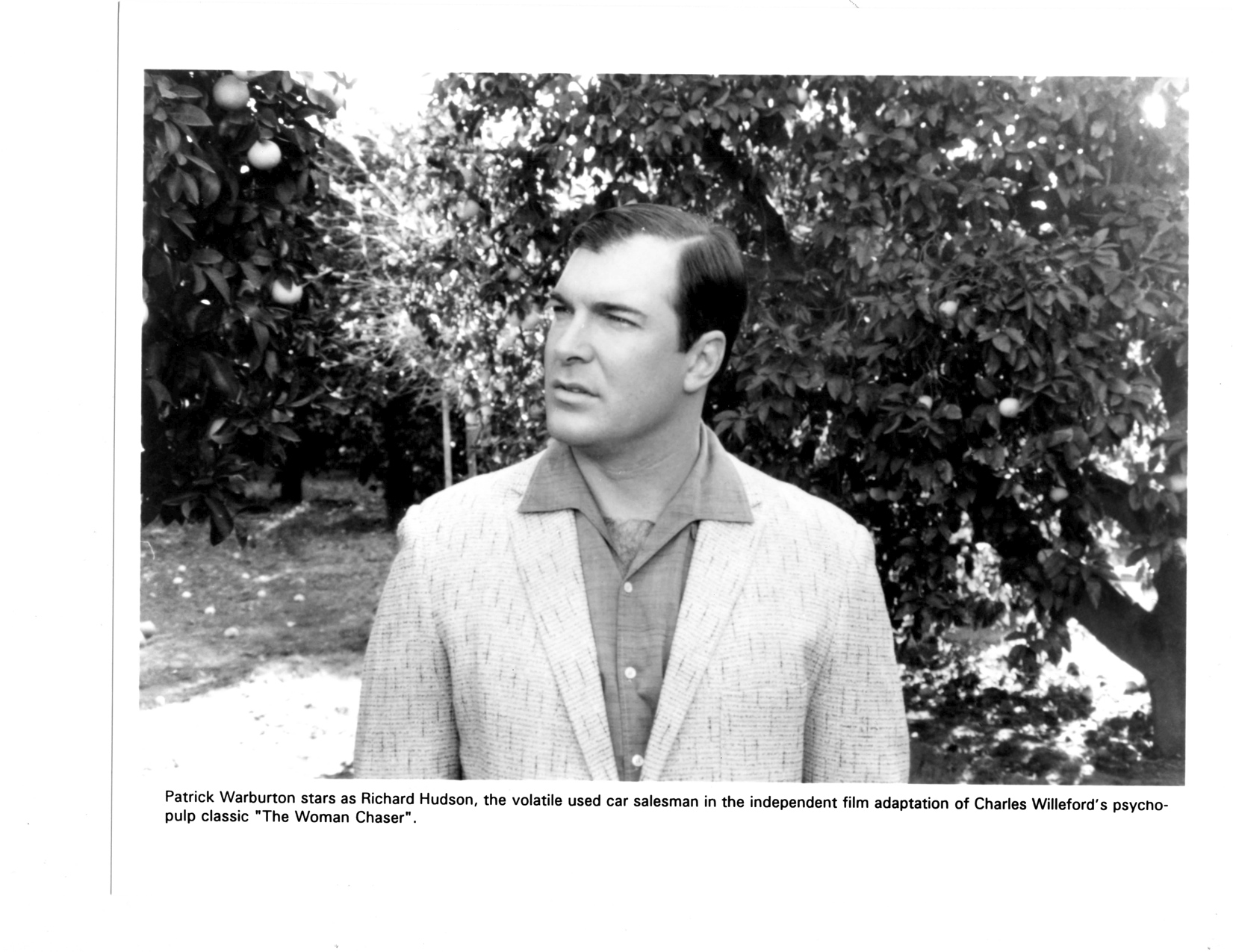
FILM Patrick Warburton occupies his own special niche. He is a big (6 feet, 3 inches), hirsute, square-jawed kinda white guy — the kind who saved screaming ingénues from gorillas or Martians in 1950s B flicks — who’s flourished parodying macho blowhards. Who doesn’t love Warburton? People who don’t know who he is, obviously.

They probably know him regardless, if not by name. First widely noted as Elaine’s emotionally deaf boyfriend on Seinfield, in recent years he’s starred in successful network sitcoms Rules of Engagement and Less than Perfect. They followed The Tick, a short-lived Fox superhero parody series everyone loved but the viewing public. He’s voiced various characters on Family Guy (a man’s gotta work), as well as loftier ‘toons including The Venture Bros., Kim Possible, and Scooby-Doo! Mystery Incorporated, playing Buzz Lightyear in Toy Story spinoffs, as well as endearing villain Kronk in The Emperor’s New Groove (2000).

The Emperor’s New Groove reunited him with Eartha Kitt, also a costar in his screen debut: 1987’s WTF Mandingo (1975) rip-off Dragonard, in which he played a race traitor Scottish hunk on an 18th century Caribbean slaving isle populated by such punishing extroverts as boozy Oliver Reed, chesty Claudia Uddy, and creaky Pink Panther boss Herbert Lom. This campsterpiece features steamy sex intercut with chicken sacrifice, a character called “Manroot,” appalling homosexual caricatures, much library music, and other incitements to drinking-game joy. (Start trolling eBay for used VHS copies now.)

These days, Warburton is promoting a past project he’d rather remember: 1999’s The Woman Chaser, billed as both his leading-role debut (hello! Dragonard!!) It was definitely the first feature for Robinson Devor (2005’s Police Beat, 2007’s Zoo), one of the most stubbornly idiosyncratic and independent American directors to emerge in recent years.

Derived from nihilist pulp master’s Charles Willeford 1960 novel, this perfect B&W retro-noir miniature sets Warburton’s antihero to swaggering across vintage L.A. cityscapes. Sloughing off an incestuously available mother and other bullet-bra’d she cats, his eye on one bizarre personal ambition, he’s a vintage man’s man bobbing obliviously in a sea of delicious, droll irony. Warburton appears with Devor at the Roxie for The Woman Chaser‘s theatrical-revival opening night. I caught up with the actor via phone last week.

SFBG Did The Woman Chaser have a significant impact on your career?

Patrick Warburton It should have. We debuted at the New York Film Festival, an amazing experience, then went to Sundance. The film got a nice little art house release in 15 or 20 cities. But after that, there were ownership issues, [and] it never went to DVD. So the audience has been extremely limited.

SFBG Yet a whole lot of people here seem to know and love it.

PW Of course I’ve always known San Francisco and its residents to possess far more beauty and art and culture than this desolate hell-hole we call Los Angeles.

SFBG Were you at all familiar with Charles Willeford before?

PW No, my first peek was Rob Devor’s screenplay adaptation, which was originally entitled King Size, then went back to the original [novel’s] title.

SFBG: A strange title, because the hero isn’t chasing women. In fact, he’s completely self-absorbed and alarmingly misogynist.

PW No, this isn’t about a guy chasing women. I guess that’s the way you sold a pulp novel back then, putting a man with a topless woman in a convertible on the cover of a paperback with a title like The Woman Chaser — even though Willeford’s interests were much more psychological. I was [36] years old, playing this role had my sexual interest at an all-time low. I didn’t get it. Meanwhile the actor, Patrick Warburton, was probably knocking one off in his dressing room once a day back then.

SFBG: Once?

PW Well, I was eating whatever the fuck I wanted, cuz this guy is a chain-smoking, whiskey-drinking car salesman. I got heavier than I’d ever been in my life, about 250 pounds. My wife was not pleased. [This character] was certainly an odd fellow, a misogynist.

SFBG How did you get involved?

PW My agent said “Here’s a script,” I met Rob, and we clicked. What’s interesting is it was right after the ninth season of Seinfeld. Anything else coming my way was because of that. But [Devor] had never seen an episode — I still don’t know if he has.

SFBG The movie does an incredible job recreating 1960 L.A. on a budget.

PW It was a grind. We’d procured a handful of permits, but mostly just ran into locations with our guerilla crew and stole shots. Rob really did have a vision. When you’re working long hours, you’re not getting paid a dime, you’re working with a director who has such a specific idea what he wants — he’s going to be a little bit of a pain in the ass. But it’s an experience I’ve come to appreciate over time. Because I’ve been on the other side, where you can’t believe what a piece of garbage you’re a part of. That movie was what it was wholly because of Rob. He’s truly an artist. You don’t get such opportunities very often in this business. We’ve talked about [working together] again, and the right thing hasn’t come up. But I would love that more than anything.

SFBG: On another subject, I must quote 12 words of dialogue: “Sometimes being a slave is a man more dignity than being free!” So ungrammatical, for starters. Please reveal every last thing about Dragonard.

PW Oh, God. It was the first thing I ever did, and I knew after that experience … well. You have to be able to accept it. The most you can ask for [in this industry] are experiences where you learn and in the end get a great product. Like doing The Dish (2000) in Australia was great. I spent quality time with Sam Neill and Geoffrey Wright, then this delightful film came out of it. But with something like Dragonard, if you’re going to grow as an actor, you’ve got to just shit it out. You’ve got to say, not only is this the most awful movie ever made, but I am the worst thing in it.

THE WOMAN CHASER

Feb. 25–March 3, 7 and 9:15 p.m. (also Sat/26, 2 and 4:30 p.m.), $$5–$9.75

Roxie

3117 16th St., SF

(415) 863-1087

www.roxie.com


Naughty girls (need love too)

0

SCANDAL! Flaubert’s Madame Bovary is one of those pillars of French culture whose dismissal might well get you deported. (Deservedly.) It has inspired innumerable adaptations and co-optations, including a Hindi musical, a VeggieTales episode, and a postmodernist novel posing as a nonfiction memoir-literary homage (Julian Barnes’ Flaubert’s Parrot). Its film incarnations have been reset everywhere from Portugal to Argentina to Rye, N.Y., attracting directors as celebrated as Jean Renoir and Vincente Minnelli and actresses as disparate as emotional heavy-lifter Pola Negri and chilly, twiggy Isabelle Huppert.

A few notches below that lofty company is 1969’s The Sins of Madame Bovary, a German-Italian coproduction with the era’s requisite mixture of dubbed multinationals — none very well remembered now — which is being issued this month by South San Francisco’s CAV Distributing. Despite its lurid title, this is a fairly faithful, if uninspired, version of the novel directed by journeyman Hans Schott-Schöbinger, whose less-than-illustrious prior credits included something called The Pastor with the Jazz Trumpet (1962).

It was a last career stop for him, but just the beginning for star Edwige Fenech, an Algerian-born beauty contest winner of Maltese and French extraction who would be the face that launched a thousand European exploitation movies — well, a lot of them anyway — over the next decade-plus. (Never entirely retired, she recently had a cameo in 2007’s Hostel: Part II.) Through all her giallos and sex comedies, Fenech, a brunette with a jones for heavy mascara, gamely deployed her beauty in various stages of undress, revealing a curvy figure with considerably less discretion than Flaubert allowed the tragic ninny he both pitied and ridiculed.

It’s probably on the shelf of every junior-high library now, but the original Madame Bovary was hugely scandalous — not just in her fictive world of bourgeois discontent, but in the salons, government offices, and courts of actual mid-19th century France. Couched in the most exquisite prose, her hapless infidelities — spurred by the fatal error of having married a nice, very dull country doctor — brought charges of immorality against author and original publisher (when it was serialized in a magazine) that came close to throwing the future pal to George Sand, Turgenev, and Emperor Napoleon III in prison.

Who knows how many titillated readers tried to emulate Emma B.’s suggested shag in a closed horse-drawn carriage only to discover their design in that era would in all likelihood make that exercise conducive to unpleasant contortions and muscle cramps? Perhaps that was another of Flaubert’s little jokes — as a many-mistress’d lifelong bachelor who’d explored the length of the Kinsey Scale (yet never truly moved out of his mother’s house) and had the venereal souvenirs to show for it. Yet one suspects he would have found the subsequent graphic sexualities of later banned books Lady Chatterley’s Lover, Ulysses, Tropic of Cancer, etc. to be merely vulgar.  


L.A. confidential: Patrick Warburton on “The Woman Chaser” — and “Dragonard”

0

Patrick Warburton occupies his own special niche. He is a big (6 feet, 3 inches), hirsute, square-jawed kinda white guy — the kind who saved screaming ingénues from gorillas or Martians in 1950s B flicks — who’s flourished parodying macho blowhards. Who doesn’t love Warburton? People who don’t know who he is, obviously.

They probably know him regardless, if not by name. First widely noted as Elaine’s emotionally deaf boyfriend on Seinfield, in recent years he’s starred in successful network sitcoms Rules of Engagement and Less than Perfect. They followed The Tick, a short-lived Fox superhero parody series everyone loved but the viewing public. He’s voiced various characters on Family Guy (a man’s gotta work), as well as loftier ’toons including The Venture Bros., Kim Possible, and Scooby-Doo! Mystery Incorporated, playing Buzz Lightyear in Toy Story spinoffs, as well as endearing villain Kronk in The Emperor’s New Groove (2000).

The Emperor’s New Groove reunited him with Eartha Kitt, also a costar in his screen debut: 1987’s WTF Mandingo (1975) rip-off Dragonard, in which he played a race traitor Scottish hunk on an 18th century Caribbean slaving isle populated by such punishing extroverts as boozy Oliver Reed, chesty Claudia Uddy, and creaky Pink Panther boss Herbert Lom. This campsterpiece features steamy sex intercut with chicken sacrifice, a character called “Manroot,” appalling homosexual caricatures, much library music, and other incitements to drinking-game joy. (Start trolling eBay for used VHS copies now.)

These days, Warburton is promoting a past project he’d rather remember: 1999’s The Woman Chaser (opening Fri/25 at the Roxie), billed as both his leading-role debut (hello! Dragonard!!) It was definitely the first feature for Robinson Devor (2005’s Police Beat, 2007’s Zoo), one of the most stubbornly idiosyncratic and independent American directors to emerge in recent years.

Derived from nihilist pulp master’s Charles Willeford 1960 novel, this perfect B&W retro-noir miniature sets Warburton’s antihero to swaggering across vintage L.A. cityscapes. Sloughing off an incestuously available mother and other bullet-bra’d she cats, his eye on one bizarre personal ambition, he’s a vintage man’s man bobbing obliviously in a sea of delicious, droll irony. Warburton appears with Devor at the Roxie for The Woman Chaser‘s theatrical-revival opening night. I caught up with the actor via phone last week.

SFBG Did The Woman Chaser have a significant impact on your career?
Patrick Warburton It should have. We debuted at the New York Film Festival, an amazing experience, then went to Sundance. The film got a nice little art house release in 15 or 20 cities. But after that, there were ownership issues, [and] it never went to DVD. So the audience has been extremely limited.

SFBG Yet a whole lot of people here seem to know and love it.
PW Of course I’ve always known San Francisco and its residents to possess far more beauty and art and culture than this desolate hell-hole we call Los Angeles.

SFBG Were you at all familiar with Charles Willeford before?
PW No, my first peek was Rob Devor’s screenplay adaptation, which was originally entitled King Size, then went back to the original [novel’s] title.

SFBG A strange title, because the hero isn’t chasing women. In fact, he’s completely self-absorbed and alarmingly misogynist.
PW No, this isn’t about a guy chasing women. I guess that’s the way you sold a pulp novel back then, putting a man with a topless woman in a convertible on the cover of a paperback with a title like The Woman Chaser — even though Willeford’s interests were much more psychological. I was [36] years old, playing this role had my sexual interest at an all-time low. I didn’t get it. Meanwhile the actor, Patrick Warburton, was probably knocking one off in his dressing room once a day back then.

SFBG Once?
PW Well, I was eating whatever the fuck I wanted, cuz this guy is a chain-smoking, whiskey-drinking car salesman. I got heavier than I’d ever been in my life, about 250 pounds. My wife was not pleased. [This character] was certainly an odd fellow, a misogynist.

SFBG How did you get involved?
PW My agent said “Here’s a script,” I met Rob, and we clicked. What’s interesting is it was right after the ninth season of Seinfeld. Anything else coming my way was because of that. But [Devor] had never seen an episode — I still don’t know if he has.

SFBG The movie does an incredible job recreating 1960 L.A. on a budget.
PW It was a grind. We’d procured a handful of permits, but mostly just ran into locations with our guerilla crew and stole shots. Rob really did have a vision. When you’re working long hours, you’re not getting paid a dime, you’re working with a director who has such a specific idea what he wants — he’s going to be a little bit of a pain in the ass. But it’s an experience I’ve come to appreciate over time. Because I’ve been on the other side, where you can’t believe what a piece of garbage you’re a part of. That movie was what it was wholly because of Rob. He’s truly an artist. You don’t get such opportunities very often in this business. We’ve talked about [working together] again, and the right thing hasn’t come up. But I would love that more than anything.

SFBG On another subject, I must quote 12 words of dialogue: “Sometimes being a slave is a man more dignity than being free!” So ungrammatical, for starters. Please reveal every last thing about Dragonard.
PW Oh, God. It was the first thing I ever did, and I knew after that experience … well. You have to be able to accept it. The most you can ask for [in this industry] are experiences where you learn and in the end get a great product. Like doing The Dish (2000) in Australia was great. I spent quality time with Sam Neill and Geoffrey Wright, then this delightful film came out of it. But with something like Dragonard, if you’re going to grow as an actor, you’ve got to just shit it out. You’ve got to say, not only is this the most awful movie ever made, but I am the worst thing in it.

http://www.youtube.com/watch?v=OKKWHkMlzPc

SFBG It doesn’t even sound like your speaking voice in that film.
PW I tell people I was dubbed.

SFBG You were?
PW No. I just say that to minimize all responsibility. Going down to South Africa at age 22 for my first movie … my very first day was with Oliver Reed, drunk on whiskey as usual at 10 a.m., doing a sword fight. Terrifying. I decided hey, I’m in prime drinking condition, I’ll try to keep up, though I refused to start before 5 p.m. I ended up going on pretty much a two-month bender with him.

SFBG Plus Dragonard had the late Eartha Kitt, another famously trying person to work with.
PW Eartha Kitt was a fascinating woman. When I got back from South Africa, she was performing [in concert] and I went to see her. Afterwards she invited me to her hotel room. I really didn’t know what the fuck I was doing there. I’m on the couch, she’s on the bed, petting one of her cats like Cruella de Vil. “How are you daaahling.” I must have been shaking. Years later we worked together in [Disney cartoon] The Emperor’s New Groove. Looking at the relationship between [her evil queen] Yzma and [his clueless musclehead sidekick] Kronk in that, I had to laugh. It’s so strange sometimes, how life imitates art, or art imitates life.

SFBG I believe there’s an actual website for devotees of onscreen flogging, and you are the absolute champ. [Warburton’s character is lashed for an onscreen eternity.]
PW I guess that was one way they figured to keep the budget down. “Hey, let’s just kill five minutes watching this guy get whipped!”

SFBG It’s funny, because making fun of the kind of heroic jocktard Dragonard takes seriously turned became your metier. Did you always see comedy as your strength, or did it just evolve that way?
PW No, it pretty much just evolved that way. After Dragonard I thought, “No one is ever going to take you seriously as an actor again — do something else!” [In recent years] I’ve watched it, with friends, after a lot of drinks. It definitely takes a few beers. But for a long time, I hoped every copy of that movie had been lost or destroyed, more than Paris Hilton or whoever wishes their sex tapes were just erased. Or maybe they don’t … anyway, I kinda went into hiding after that movie and thought: “OK, you asshole, are you going to be an actor or not?”

SFBG Yet you perservered.
PW I did. I did persevere.

THE WOMAN CHASER
Feb. 25–March 3, 7 and 9:15 p.m. (also Sat/26, 2 and 4:30 p.m.), $5–$9.75
Roxie
3117 16th St., SF
(415) 863-1087
www.roxie.com

Rep Clock

0

As David Fincher prepares to collect his Social Network (2010) Oscar (place your bets at one of the assorted Oscar parties listed below), the Castro screens his 2007 Zodiac Wed/23.

Schedules are for Wed/23–Tues/1 except where noted. Director and year are given when available. Double and triple features are marked with a •. All times are p.m. unless otherwise specified.

ARTISTS’ TELEVISION ACCESS 992 Valencia, SF; www.atasite.org. $6-10. “Fog Tropes,” film and live experimental sound pieces, Thurs, 8. “Noise Pop Film Festival:” Pool Party (Aala, 2010), Fri, 7; Tom Zé: Astronauta Libertado (González, 2010), Fri, 9; Ivory Tower (Gonzales, 2010), Sun, 2; Miroir Noir: Neon Bible Archives (Morisset, 2009), Sun, 4.

ASIAN ART MUSEUM 200 Larkin, SF; www.asianart.org. Free with museum admission ($7-17). On Wayang: My Life With Shadows (2011), and Shadow Master (1979), Sun, 1:30.

BALBOA THEATRE 3630 Balboa, SF; www.balboamovies.com. $10. “Balboa’s Unique Oscar Party,” Sun, 3:30.

CASTRO 429 Castro, SF; (415) 621-6120, www.castrotheatre.com. $7.50-12. •Zodiac (Fincher, 2007), Wed, 12:30, 6:15, and The Dark Knight (Nolan, 2008), Wed, 3:25, 9:10. •Chinatown (Polanski, 1974), Thurs, 1:45, 7, and L.A. Confidential (Hanson, 1997), Thurs, 4:10, 9:25. We Were Here (Weissman, 2011), Fri, 7:30 (benefit premiere; tickets, $25); Feb 26-March 3, 7, 9:15 (also Sat-Sun and Wed, 2:30, 4:45). Director David Weissman in person after the premiere, 7 p.m. shows, and both Sat-Sun early shows.

CHRISTOPHER B. SMITH RAFAEL FILM CENTER 1118 Fourth St, San Rafael; (415) 454-1222, www.cafilm.org. $6.50-15. Even the Rain (Bollaín, 2010), call for dates and times. The Illusionist (Chomet, 2010), call for dates and times. Nora’s Will (Chenillo, 2009), Feb 25-March 3, call for times. “Oscar Night America,” Sun, 3:30. This event, $55.

HUMANIST HALL 390 27th St, Oakl; www.humanisthall.org. $5. The End of Poverty? (Diaz, 2008), Wed, 7:30. To Dream of Falling Upwards (Alli, 2011), Fri, 8.

JEWISH COMMUNITY CENTER OF THE EASY BAY 1414 Walnut, Berk; (510) 848-0237, www.brownpapertickets.com. $6-8. Father’s Footsteps (Carmel, 2007), Thurs, 7:30.

MECHANICS’ INSTITUTE 57 Post, SF; (415) 393-0100, rsvp@milibrary.org. $10. “CinemaLit Film Series: New Year’s Revolutions:” This Gun For Hire (Tuttle, 1942), Fri, 6.

PACIFIC FILM ARCHIVE 2575 Bancroft, Berk; (510) 642-5249, www.bampfa.berkeley.edu. $5.50-9.50. “Film 50: History of Cinema: Fantasy Films and Realms of Enchantment:” “Silly Symphonies,” (Walt Disney Productions, 1931-1937), Wed, 3:10. “Cinema Across Media: 1920s:” Rien que les heures (Cavalcanti, 1926), Wed, 7:30; L’Inhumaine (L’Herbier, 1924), Thurs, 7; “Silent Comedies of the 1920s,” Fri, 7. “Suspicion: The Films of Claude Chabrol and Alfred Hitchcock:” Merci pour le chocolat (Chabrol, 2000), Fri, 9:05. Shoah, Part 1 (Lanzmann, 1985), Sat, 5; Shoah, Part 2 (Lanzmann, 1985), Sun, 1.

RED VIC 1727 Haight, SF; (415) 668-3994; www.redvicmoviehouse.com. $6-10. White Material (Denis, 2009), Wed, 2, 7:15, 9:20. “Cinematic San Francisco: A Benefit for the Red Vic Movie House,” multi-media event with Rebecca Solnit, Christian Bruno, Sam Freen, and more, Thurs, 7:30. This event, $20. Gumby (Clokay, 1995), Sat, 2. The Adventures of Mark Twain (Vinton, 1985), Sat, 4. Meet the Feebles (Jackson, 1989), Fri-Sat, 7:15, 9:15. The Muppet Movie (Frawley, 1979), Sun-Mon, 7:15, 9:20 (also Sun, 2, 4). Megamind (McGrath, 2010), March 1-3, 7:15, 9:20 (also March 2, 2).

ROXIE 3117 and 3125 16th St, SF; (415) 863-1087, www.roxie.com. $10. “Noise Pop Film Festival:” This is Noise Pop (Werbach, 2011), Wed, 7; The Extraordinary Ordinary Life Of José González (Karlsson and Egerstrand, 2010), Wed, 9. “Laurel Nakadate: Fever Dreams” (Nakadate, 2009-2010), Thurs, 7, 9:40. The Woman Chaser (Devor, 1999), Feb 25-March 3, 7, 9:15 (also Sat, 2, 4:30). “Up the Oscars Benefit Bash,” Sun, 3:45. This event, $15. “Brushes With Fame Presented by Porchlight,” Tues, 7:30. This event, $10.

ST. AIDAN’S CHURCH 101 Gold Mine, SF; www.brownpapertickets.com. $10-15. Lesson Plan (Neel, 2011), Sat, 8.

VIZ CINEMA New People, 1746 Post, SF; www.vizcinema.com. $10. “Noise Pop Film Festival:” Look at What the Light Did Now (Seck, 2010), Thurs, 7; The Family Jams (Barker, 2009), Thurs, 9. YERBA BUENA CENTER FOR THE ARTS 701 Mission, SF; (415) 978-2787, www.ybca.org. $6-8. “Volume 14: Middle East,” nine videos focusing on the Middle East compiled by ASPECT: The Chronicle of New Media Art, Jan 13-March 27 (gallery hours Thurs-Sat, noon-8; Sun, noon-6). Uncle Boonmee Who Can Recall His Past Lives (Weerasethakul, 2010), Wed, 7. “Around the World in 33 Films: The Jeonju Digital Project,” Thurs and Sat, 7, 9; Sun, 2, 4.

Music Listings

0

WEDNESDAY 23

ROCK/BLUES/HIP-HOP

Admiral Radley, Typhoon, Social Studies, Fake Your Own Death Bottom of the Hill. 8pm, $14. Part of Noise Pop.

Chuckle Berries, Shrouds, Hondettes, Elvis Christ Knockout. 9pm, $6.

Coronas, Jamestown Revival Slim’s. 8pm, $13.

Dan Deacon, Ed Schrader’s Music Beat, Sister Crayon, Lily Taylor Rickshaw Stop. 8pm, $15. Part of Noise Pop.

Geographer, Butterfly Bones, K. Flay, Funeral Party Independent. 8pm, $15. Part of Noise Pop.

New Monsoon Yoshi’s San Francisco. 7pm, $16.

No Babies, Havarti Party, Arms N’ Legs Hemlock Tavern. 9pm, $5.

+One Trio, Danny Heines, Los Angeles Television Milk Bar. 9pm, $5.

Pendulum, Innerpartysystem Fillmore. 8pm, $25.

Skinwalkers, Necronauts, Electric Shepherd El Rio. 8pm, $5.

Sweet Chariot, Travor Childs and the Beholders, Love Dimension Hotel Utah. 9pm, $6.

Trampled Under Foot Biscuits and Blues. 8 and 10pm, $20.

Versus, Telekinesis, Love Language, Burnt Ones Café Du Nord. 8pm, $16. Part of Noise Pop.

JAZZ/NEW MUSIC

Cat’s Corner with Christine and Nathan Savanna Jazz. 9pm, $10.

Dink Dink Dink, Gaucho, Michael Abraham Amnesia. 7pm, free.

Ben Marcato and the Mondo Combo Top of the Mark. 7:30pm, $10.

Paula West and George Mesterhazy Quartet Rrazz Room. 8pm, $35.

DANCE CLUBS

Club Shutter Elbo Room. 10pm, $5. Goth with DJs Nako, Omar, and Justin.

Booty Call Q-Bar, 456 Castro, SF; www.bootycallwednesdays.com. 9pm. Juanita Moore hosts this dance party, featuring DJ Robot Hustle.

Cannonball Beauty Bar. 10pm, free. Rock, indie, and nu-disco with DJ White Mike.

Hands Down! Bar on Church. 9pm, free. With DJs Claksaarb, Mykill, and guests spinning indie, electro, house, and bangers.

Jam Fresh Wednesdays Vessel, 85 Campton, SF; (415) 433-8585. 9:30pm, free. With DJs Slick D, Chris Clouse, Rich Era, Don Lynch, and more spinning top40, mashups, hip hop, and remixes.

Mary-Go-Round Lookout, 3600 16th St, SF; (415) 431-0306. 10pm, $5. A weekly drag show with hosts Cookie Dough, Pollo Del Mar, and Suppositori Spelling.

No Room For Squares Som., 2925 16th St, SF; (415) 558-8521. 6-10pm, free. DJ Afrodite Shake spins jazz for happy hour.

Respect Wednesdays End Up. 10pm, $5. Rotating DJs Daddy Rolo, Young Fyah, Irie Dole, I-Vier, Sake One, Serg, and more spinning reggae, dancehall, roots, lovers rock, and mash ups.

Synchronize Il Pirata, 2007 16th St, SF; (415) 626-2626. 10pm, free. Psychedelic dance music with DJs Helios, Gatto Matto, Psy Lotus, Intergalactoid, and guests.


THURSDAY 24

ROCK/BLUES/HIP-HOP

*”Eighth Annual Johnny Cash Birthday Tribute” Knockout. 8pm, $10. With Royal Deuces, B Stars, Misisipi Mike’s Midnight Gamblers, Gold Diggers, Los High Tops, and Careless Hearts.

Everest, Red Cortez, All Smiles Hotel Utah. 9pm, $8.

Film School, Apex Manor, Gregory and the Hawk, Melted Toys Café Du Nord. 8pm, $14. Part of Noise Pop.

*Floating Goat, Begotten, Hornss Hemlock Tavern. 9pm, $6.

Guitarmageddon Blues Ball Slim’s. 9pm, $13.

Hood Internet, Database Rickshaw Stop. 9pm, $21. Part of Noise Pop.

Led Zepagain Yoshi’s San Francisco. 8pm, $16.

Leftover Crack, Rockfight, DHC Thee Parkside. 9pm, $12.

Ted Leo, AB and the Sea, Kevin Seconds, Angel Island Bottom of the Hill. 8pm, $12. Part of Noise Pop.

Pixel Memory, Kodacrome, Sex Admirals El Rio. 8pm, $5.

Johnny Rawls Biscuits and Blues. 8 and 10pm, $20.

Stone Foxes, Voxhaul Broadcast, Ferocious Few, Soft White Sixties Independent. 8pm, $12. Part of Noise Pop.

JAZZ/NEW MUSIC

Shelani Alix Café Royale, 800 Post, SF; (415) 641-6033. 8pm, free.

Derek Smith Latin Jazz Band and Dee Spencer SFSU Student Bands Savanna Jazz. 7:30pm, $5.

Organism featuring Jim Gunderson and “Tender” Tim Shea Bollyhood Café. 6:30-9pm, free.

Stompy Jones Top of the Mark. 7:30pm, $10.

Paula West and George Mesterhazy Quartet Rrazz Room. 8pm, $40.

FOLK/WORLD/COUNTRY

Bhi Bhiman and Justin Farrin Revolution Café, 3248 22nd St, SF; (415) 642-0474. 8:30pm, free.

Bluegrass and old-time jam Atlas Café. 8-10pm, free.

DANCE CLUBS

Afrolicious Elbo Room. 9:30pm, $5. DJs Pleasuremaker and Señor Oz plus guest Ohmega Watts spin Afrobeat, tropicália, electro, samba, and funk.

Caribbean Connection Little Baobab, 3388 19th St, SF; (415) 643-3558. 10pm, $3. DJ Stevie B and guests spin reggae, soca, zouk, reggaetón, and more.

Drop the Pressure Underground SF. 6-10pm, free. Electro, house, and datafunk highlight this weekly happy hour.

Guilty Pleasures Gestalt, 3159 16th St, SF; (415) 560-0137. 9:30pm, free. DJ TophZilla, Rob Metal, DJ Stef, and Disco-D spin punk, metal, electro-funk, and 80s.

Funktastique Tunnel Top, 601 Bush, SF; (415) 986-8900. 10pm, free. Rare grooves, funk, and electro-swing with Dr. Musco.

Jivin’ Dirty Disco Butter, 354 11th St., SF; (415) 863-5964. 8pm, free. With DJs spinning disco, funk, and classics.

Mestiza Bollywood Café, 3376 19th St, SF; (415) 970-0362. 10pm, free. Showcasing progressive Latin and global beats with DJ Juan Data.

1984 Mighty. 9pm, $2. The long-running New Wave and 80s party has a new venue, featuring video DJs Mark Andrus, Don Lynch, and celebrity guests.

Peaches Skylark, 10pm, free. With an all female DJ line up featuring Deeandroid, Lady Fingaz, That Girl, and Umami spinning hip hop.

Red Bull Thre3style DNA Lounge. 8pm, $10-15. DJ contest with a closing set by DJ Jazzy Jeff.

Thursday Special Tralala Revolution Café, 3248 22nd St, SF; (415) 642-0474. 5pm, free. Downtempo, hip-hop, and freestyle beats by Dr. Musco and Unbroken Circle MCs.


FRIDAY 25

ROCK/BLUES/HIP-HOP

Aesop Rock, Kimya Dawson Great American Music Hall. 8pm, $20. Part of Noise Pop.

Apache, Vanishing Breed, Fangs Hemlock Tavern. 9:30pm, $6.

Battlehooch, Nobunny, Exray’s, Downer Party Bottom of the Hill. 9pm, $12. Part of Noise Pop.

*Black Cobra, Futur Skullz, Hazzard’s Cure El Rio. 10pm, $8.

Blisses B, Fierce Bad Rabbit, Hurricane Roses, Jonathan Meek and the Mutes Kimo’s. 9pm, $5-7.

Concretes, Birds and Batteries, Magic Bullets, Psychic Friend Rickshaw Stop. 8pm, $15. Part of Noise Pop.

Death, Zolar X Slim’s. 9pm, $16.

Leftover Crack, Vacuum, Sharp Objects Thee Parkside. 9pm, $12.

Lisa Loeb Yoshi’s San Francisco. 8pm, $30.

Janiva Magness Biscuits and Blues. 8 and 10pm, $22.

Josh Ritter, Scott Hutchinson Fillmore. 9pm, $25.

Tamaryn, Black Ryder, Soft Moon, Wax Idols Café Du Nord. 8pm, $13. Part of Noise Pop.

Young Prisms Independent. 8pm, $13. Part of Noise Pop.

JAZZ/NEW MUSIC

Black Market Jazz Orchestra Top of the Mark. 9pm, $10.

Sameer Gupta’s Namaskar Red Poppy Art House. 8pm, $15.

Suzanna Smith and group Savanna Jazz. 7:30pm, $8.

Paula West and George Mesterhazy Quartet Rrazz Room. 8pm, $45.

FOLK/WORLD/COUNTRY

Albino!, Russ Liquid Elbo Room. 10pm, $10.

“Americana Jukebox” Plough and Stars. 9:30pm, $6-10. With Magnolia Row, Snap Jackson, and Knock On Wood Players.

Baxtalo Drom Amnesia. 9pm, $7-10.

Makru Revolution Café, 3248 22nd St, SF; (415) 642-0474. 9pm, free.

DANCE CLUBS

Afro Bao Little Baobab, 3388 19th St, SF; (415) 643-3558. 10pm, $5. Afro and world music with rotating DJs including Stepwise, Steve, Claude, Santero, and Elembe.

CNY With Monsters of Bass Tour 103 Harriet, 103 Harriet, SF; www.1015.com. 9pm, $15. With MartyParty, FreQNasty, and Opiuo.

DJ Dtek Medjool, 2522 Mission, SF; www.medjoolsf.com. 10:30pm, $10.

Duniya Dancehall Blue Macaw, 2565 Mission, SF; (415) 920-0577. 10pm, $10. With live performances by Duniya Drum and Dance Co. and DJs dub Snakr and Juan Data spinning bhangra, bollywood, dancehall, African, and more.

Exhale, Fridays Project One Gallery, 251 Rhode Island, SF; (415) 465-2129. 5pm, $5. Happy hour with art, fine food, and music with Vin Sol, King Most, DJ Centipede, and Shane King.

Fubar Fridays Butter, 354 11th St., SF; (415) 863-5964. 6pm, $5. With DJs spinning retro mashup remixes.

Good Life Fridays Apartment 24, 440 Broadway, SF; (415) 989-3434. 10pm, $10. With DJ Brian spinning hip hop, mashups, and top 40.

Hot Chocolate Milk. 9pm, $5. With DJs Big Fat Frog, Chardmo, DuseRock, and more spinning old and new school funk.

Hubba Hubba Revue: Around the World in 25 Girls DNA Lounge. 9pm, $10-15. Burlesque performances.

Psychedelic Radio Club Six. 9pm, $7. With DJs Kial, Tom No Thing, Megalodon, and Zapruderpedro spinning dubstep, reggae, and electro.

Rockabilly Fridays Jay N Bee Club, 2736 20th St, SF; (415) 824-4190. 9pm, free. With DJs Rockin’ Raul, Oakie Oran, Sergio Iglesias, and Tanoa “Samoa Boy” spinning 50s and 60s Doo Wop, Rockabilly, Bop, Jive, and more.

Some Thing Stud. 10pm, $7. VivvyAnne Forevermore, Glamamore, and DJ Down-E give you fierce drag shows and afterhours dancing.

Teenage Dance Craze: The Number One Twisting Party in the Universe Knockout. 10pm, $4. With DJs Russell Quan, dX the Funky Gran Paw, and guest Mr. Okie Oran.

Vintage Orson, 508 Fourth St, SF; (415) 777-1508. 5:30-11pm, free. DJ TophOne and guest spin jazzy beats for cocktalians.


SATURDAY 26

ROCK/BLUES/HIP-HOP

Max Bemis, Trophy Fire, Westwood and Willow, Dave Smallen Bottom of the Hill. 8pm, $15. Part of Noise Pop.

Best Coast, Wavves, Hunx and His Punx, Royal Baths Regency Ballroom. 8pm, $22. Part of Noise Pop.

Cody Chesnutt Yoshi’s San Francisco. 8 and 10pm, $25.

Dan Band, Diamond Dave Independent. 9pm, $25.

*Death Angel, Lazarus A.D., Bonded By Blood Slim’s. 8pm, $23.

East Bay Grease, Black, Touch-Me-Nots Hemlock Tavern. 9:30pm, $7.

Haberdasher, Love Dimension, Chelsea TK El Rio. 6pm, free.

Headslide Thee Parkside. 3pm, free.

JGB with Melvin Seals Great American Music Hall. 9pm, $25.

Joe Buck Yourself, Hooten Hallers Thee Parkside. 9pm, $8.

Kicker, Meat Sluts Bender’s, 800 S. Van Ness, SF; www.bendersbar.com. 10pm, $5.

Linda Kost Savanna Jazz. 7:30pm, $8.

No Age, Grass Widow, Rank/Xerox, Crazy Band Rickshaw Stop. 8pm, $15. Part of Noise Pop.

Santos! Knockout. 10pm, $10. With DJs Daniel and dX the Funky Gran Paw.

Earl Thomas Biscuits and Blues. 8 and 10pm, $22.

JAZZ/NEW MUSIC

Paula West and George Mesterhazy Quartet Rrazz Room. 8pm, $45.

FOLK/WORLD/COUNTRY

Eliyahu and the Qadim Ensemble Red Poppy Art House. 8pm, $15-20.

Go Van Gogh Revolution Café, 3248 22nd St, SF; (415) 642-0474. 9pm, free.

“Rogues of the Barbary Coast” Hotel Utah. 9pm, $8. With Mad Maggies, Shark Alley Hobos, and Brian Belknap.

“Songbird Festival and Con Brio Present: Music to Freak To” Amnesia. 9pm. With Kelly McFarling, Con Brio, and Ben Flax.

Craig Ventresco and Meredith Axelrod Atlas Café. 4pm, free.

DANCE CLUBS

Afro Bao Little Baobab, 3388 19th St, SF; (415) 643-3558. 10pm, $5. Afro and world music with rotating DJs including Stepwise, Steve, Claude, Santero, and Elembe.

Bar on Church 9pm. Rotating DJs Foxxee, Joseph Lee, Zhaldee, Mark Andrus, and Nuxx.

Bootie SF: Request Night DNA Lounge. 9pm, $6-12. Mash-ups with Adrian and Mysterious D.

Breath Control, DJ Pickpocket, Dominique Leone, Ben Bracken, Damon Palermo Lab, 2948 16th St, SF; (415) 864-8855. 8pm, $7-12.

DJ Nik Medjool, 2522 Mission, SF; www.medjoolsf.com. 10:30pm, $10.

4OneFunktion Elbo Room. 10pm, $5-10. Hip-hop with guest Jeremy Sole and residents B. Cause, Mista B, A-Ron, and a performance by F.A.M.E.

Frankie Knuckles, David Harness Mighty, 119 Utah, SF; www.mighty119.com. 10pm.

Go Bang! Deco Lounge, 510 Larkin, SF; (415) 346 – 2025. 9pm, $5. Recreating the diversity and freedom of the 70’s/ 80’s disco nightlife with DJs Steve Fabus, Tres Lingerie, Sergio, and more.

HYP Club Eight, 1151 Folsom, SF; www.eightsf.com. 10pm, free. Gay and lesbian hip-hop party, featuring DJs spinning the newest in the top 40s hip hop and hyphy.

Reggae Gold Club Six. 9pm, $15. With DJs Daddy Rolo, Polo Mo’qz, Tesfa, Serg, and Fuze spinning dancehall and reggae.

Rock City Butter, 354 11th St., SF; (415) 863-5964. 6pm, $5 after 10pm. With DJs spinning party rock.

Martin Solveig Ruby Skye, 420 Mason, SF; www.rubyskye.com. 9pm, $15.

Spirit Fingers Sessions 330 Ritch. 9pm, free. With DJ Morse Code and live guest performances.


SUNDAY 27

ROCK/BLUES/HIP-HOP

“Battle of the Bands” DNA Lounge. 5:30pm, $12. With Younger Dryas, Death of a Legend, Heap of Stone, and more.

Biffy Clyro, Moving Mountains, Bird By Bird Rickshaw Stop. 8pm, $12.

Fresh and Onlys, Growlers, Pleasure Kills, Wrong Words Bottom of the Hill. 1pm, $12. Part of Noise Pop.

Ben Gibbard, Zach Rogue Great American Music Hall. 8pm, $25. Part of Noise Pop.

Glassjaw, These People, Tidal Arms Regency Ballroom. 8pm, $25.

JAZZ/NEW MUSIC

Ernie Small Memorial Big Band Savanna Jazz. 7:30pm, $5.

Elaine Lucas Bliss Bar, 4026 24th St., SF; www.blissbarsf.com. 4:30pm, $10.

Shana Morrison Rrazz Room. 7pm, $25.

Aaron Priskorn Revolution Café, 3248 22nd St, SF; (415) 642-0474. 8pm, free.

“Women in Jazz” Yoshi’s San Francisco. 7pm, $20. With Ruth Davies, Roberta Donnay, Brenda Wong Aoki, and Destiny Muhammad; benefit for the Jazz Heritage Center.

FOLK/WORLD/COUNTRY

Country Casanovas Thee Parkside. 2pm, free.

David Friedman Unity San Francisco, 222 Bush, SF; www.unitysf.com. 2pm, $27. Benefit for UnitySF.

DANCE CLUBS

Dub Mission Elbo Room. 9pm, $6. Dub, roots, and classic dancehall with DJ Sep, Ludachris, and guest DJ Crazy Baldhead.

45Club: 100 Yards of Funky Soul Records Knockout. 10pm, free. With Dirty Dishes, English Steve, and dX the Funky Gran Paw.

Gloss Sundays Trigger, 2344 Market, SF; (415) 551-CLUB. 7pm. With DJ Hawthorne spinning house, funk, soul, retro, and disco.

Honey Soundsystem Paradise Lounge. 8pm-2am. “Dance floor for dancers – sound system for lovers.” Got that?

Kick It Bar on Church. 9pm. Hip-hop with DJ Zax.

La Pachanga Blue Macaw, 2565 Mission, SF; www.thebluemacawsf.com. 6pm, $10. Salsa dance party with live Afro-Cuban salsa bands.

Religion Bar on Church. 3pm. With DJ Nikita.

Swing Out Sundays Rock-It Room. 7pm, free (dance lessons $15). DJ BeBop Burnie spins 20s through 50s swing, jive, and more.


MONDAY 28

ROCK/BLUES/HIP-HOP

Brilliant Colors, Hot New Mexicans, Homeowners El Rio. 7pm, $6.

Hellogoodbye, Jukebox the Ghost, Gold Motel, Now Now Every Children Slim’s. 7:30pm, $16.

John Popper and the Duskray Troubadours, Lisa Bouchelle Independent. 8pm, $20.

Stone Fox, Bangs Make-Out Room. 8pm, $5-10.

Steve Smith and Vital Information Yoshi’s San Francisco. 8pm, $20.

Trifles, Twinks, Danger Babes Knockout. 9pm, $10-20. Benefit for KUSF.

DANCE CLUBS

Death Guild DNA Lounge. 9:30pm, $3-5. Gothic, industrial, and synthpop with Joe Radio, Decay, and Melting Girl.

Krazy Mondays Beauty Bar. 10pm, free. With DJs Ant-1, $ir-Tipp, Ruby Red I, Lo, and Gelo spinning hip hop.

M.O.M. Madrone Art Bar. 6pm, free. With DJ Gordo Cabeza and guests playing all Motown every Monday.

Manic Mondays Bar on Church. 9pm. Drink 80-cent cosmos with Djs Mark Andrus and Dangerous Dan.

Network Mondays Azul Lounge, One Tillman Pl, SF; www.inhousetalent.com. 9pm, $5. Hip-hop, R&B, and spoken word open mic, plus featured performers.

Sausage Party Rosamunde Sausage Grill, 2832 Mission, SF; (415) 970-9015. 6:30-9:30pm, free. DJ Dandy Dixon spins vintage rock, R&B, global beats, funk, and disco at this happy hour sausage-shack gig.

Skylarking Skylark. 10pm, free. With resident DJs I & I Vibration, Beatnok, and Mr. Lucky and weekly guest DJs.

Under Raps Showdown, 10 Sixth St, SF; www.showdownsf.com. 9pm, $3. Hip-hop open mic with hosts BPos and live beats by Optik.

Valencia: 1995 Elbo Room. 9pm, $5. Michelle Tea hosts this 90s party to benefit Valencia: The Movie(s), with DJs Pink Lightning and Junkyard, films by Justin Kelly, and more.


TUESDAY 1

ROCK/BLUES/HIP-HOP

Emilie Autumn Bottom of the Hill. 9:30pm, $13.

Fat Tuesday Band Biscuits and Blues. 8 and 10pm, $15.

Odd Owl, Laura Meyer El Rio. 7pm, free.

Shannon and the Clams, Guantanamo Baywatch, Uzi Rash, Boom Hemlock Tavern. 9pm, $7. Swans, Wooden Wand Regency Ballroom. 8pm, $34. JAZZ/NEW MUSIC Aaron Goldberg Trio, Hip-Bones Yoshi’s San Francisco. 8pm, $16. Conscious Contact Revolution Café, 3248 22nd St, SF; (415) 642-0474. 8:30pm, free. Ricardo Scales Top of the Mark. 6:30pm, $5. DANCE CLUBS Bombshell Betty and Her Burlesqueteers Elbo Room. 9pm, $10. Burlesque performers with live music by Fromagique. Eclectic Company Skylark, 9pm, free. DJs Tones and Jaybee spin old school hip hop, bass, dub, glitch, and electro. Extra Classic DJ Night Little Baobab, 3388 19th St, SF; www.bissapbaobab.com. 10pm. Dub, roots, rockers, and reggae from the 60s, 70s, and 80s. Share the Love Trigger, 2344 Market, SF; (415) 551-CLUB. 5pm, free. With DJ Pam Hubbuck spinning house.


Noise Pop Film Festival: the new new age?

0

The Family Jams, a documentary by Kevin Barker (the man behind Currituck Co. and and on-again-off-again accompanist of Vetiver), captures the careers of the genre-fucks Devandra Banhart, Joanna Newsom, and Vetiver in their infancy on a 2004 summer tour. (The doc screens Thurs/24 as part of the Noise Pop Film Festival; check out a trailer here.)

Near the film’s beginning, Barker, in a voiceover, shares a memory of seeing large flying cockroaches that lived in his grandmother’s kitchen drawers in Hawaii. In the next scene — whodathunk? — a large cockroach appears during a show in Houston, Texas when his musical family (Banhart, Newsom, and Andy Cabic of Vetiver, among others) plays together at the show’s end. Could this link ‘twixt families be made any more obvious?

The documentary also attempts to challenge the so-called limitations of the family’s categorization as folk, but fails. During a radio interview, Banhart asks Cabic, “How do you deal with being considered “folk? Do you accept the humiliation of their inaccuracy and narrow-mindedness?” And in his next breath, a (possibly intoxicated) Banhart says, “Mine is new age. You’ve got to understand, new age — it’s got a bad taste in everyone’s mouth.”

He goes on: “I’m trying to make it groovy again. I’m really trying to give it some credibility. New age — that’s appropriate because it’s a combination of different things.” So, the genre-defying Banhart gives himself a label.  Huh.

While The Family Jams has its humorous moments, like when a shirtless Banhart enters a door that clearly says “Shoes and Shirt Required Beyond This Point,” the doc’s high points come courtesy of concert footage. Jammin’ is what this family does best on camera. Otherwise, Barker’s film is largely a slow-moving study of community, and little else.

The Family Jams

Q&A with director Kevin Barker and members of Vetiver after the screening

Thurs/24, 9 p.m., $10

Viz Cinema

New People

1746 Post, SF

http://2011.noisepop.com/film/

Eye dance: Eonnagata and the heroics of being seen

1

Consider the need to be seen. The dance world is consumed by this challenge. Dancers repeatedly put ourselves in situations where we have optimal visibility via auditions, performances, and even day-to-day classes. Choreographers market themselves to be presented through grants and venues. But is this need, this desire to interest and engage and ultimately compel people to watch us, heroic, or simply pathetic? Suppose for a second not the plight of a common dancer trying to be seen, but of a very high profile dancer or choreographer, who for better or worse is seen, has been seen, and who people clamor to see. Would the work err more toward heroic because it is practically their duty to be seen?

On February 9-10, Cal Performances presented Eonnagata, a dance-theater work created and performed by Sylvie Guillem, Russell Maliphant, and Robert Lepage. Dancers everywhere are familiar with legendary French ballerina Guillem, and her focus of-late on the contemporary realm has turned many a classicist onto different kinds of dance. French-Canadian Lepage is a playwright, actor, film director, and stage director known for his versatility in nearly every form of theater craft. Maliphant is a British choreographer noted for merging ballet with contact improvisation, yoga, and martial arts. Together, with lighting designed by Michael Hulls, and costumes designed by the celebrated Alexander McQueen, they collaborated to create Eonnagata, a fusion of Japanese Kabuki theater, martial arts, and contemporary dance chronicling the life of Charles de Beaumont, Chevalier d’ Éon, a French diplomat and spy of the 17th century known for cross-dressing tendencies that eventually led to his gender being completely obscured.

While I enjoyed Eonnagata tremendously, for me the larger question beyond whether or not the piece was likeable was what the piece aimed to accomplish artistically. Eonnagata sought to ignite a discussion on gender while also capturing the essence of a truly eccentric life. Engaging in that particular work allowed Guillem, Lepage and Maliphant to send a message through their high profile status that this was the kind of work important to them. Is that where dance bridges from pathetic to heroic, when the point is no longer simply to be seen but to actually say something as well?

The high status of the artists involved in Eonnagata lent an air of legitimacy to the work and an abundance of resources were made available to them that they might not have enjoyed if they were under the popular radar. However, when I ask myself if Eonnagata would still have been heroic, or for that matter even worthwhile, had they not been superstars, the answer is a resounding yes. So it is not the product or the acclaim but the endeavor itself that is heroic.

But back to the need to be seen: if a dance is not seen is it still worthwhile? There’s a part of me that says yes. Had Guillem, Maliphant, and Lepage come together in a studio every day for a year and never shown anyone results, the effort would still have been a valid endeavor, seeing as most artistic processes don’t use all of the choreography generated in the final performance product. But at the same time, there is a sense of responsibility, especially for dance celebrities, to share their art because they can reach a larger audience and thus expose dance to people who might not otherwise seek it out. Perhaps with certain status one goes from needing to be seen to being obligated to be seen.

As a dancer, I feel an immense need to be seen. However, it is not just a narcissistic hope for admiration, but also a hope that I may articulate something meaningful. After all, I still need to see dance as well.

Noise Pop 2011 short takes

0


DAN DEACON

Don’t take drugs before a Dan Deacon concert — it’s a waste of your perfectly good toxins, because even sober attendees will feel totally fucked up after a show with the holy Jesus of electronic madness. Crawl! Spin! High fives! Jump! Close your eyes. Spin! Imagine you’re running in a forest, etc. You’ll leave a wolf. With Ed Schrader’s Music Beat, Oona, and Altars, Tues./22, 8 p.m., Independent. Also with Ed Schrader’s Music Beat, Sister Crayon, Lily Taylor. Wed./23, 8:30 p.m., Rickshaw Stop. (Amber Schadewald)


VERSUS, TELEKINESIS

Live through this — be it heartbreak, hearing loss, or the heavy-duty poker sessions in the basement of Lost Weekend Video. Versus’ Richard Baluyut has moved on from his gig at the invaluable Mission video store, but he hasn’t lost his way with a moody rocker: Versus’ On the Ones and Threes (Merge, 2010), its first album in a decade, finds beauty in the darkness — and in the return of old compatriots like original member (and Richard’s bro) Edward Baluyut and engineer Nicolas Vernhes (Deerhunter). Elsewhere on this insurmountable bill: Michael Benjamin Lerner of Telekinesis has grappled with hearing loss by way of a cryptic disease and coped with the demise of the relationship that inspired his debut. Sounds like he’s rising above, beautifully, via the gritty, grumble-y, bass-wrought numbers of 12 Desperate Straight Lines (Merge). With The Love Language, Burnt Ones. Wed./23, 8 p.m., 21+, Cafe Du Nord. (Kimberly Chun)


THE EXTRAORDINARY ORDINARY LIFE OF JOSE GONZALEZ

If the trailer is any indication, this portrait of the singer-songwriter and Junip member uses animation and some Idiots-like live action to illustrate his music. “The best stuff is generally an unexpected twist while still maintaining a thread,” he says in voice-over, as directors Mikels Cee Karlsson and Frederik Egerstrand show him trying to write, slumped over a desk in a dark room. Wed./23, 9 p.m., Roxie Theatre. (Johnny Ray Huston)


WAY BEHIND THE MUSIC

Anthony Bedard of Hank IV and the Hemlock Tavern hosts as Mark Eitzel, Thao Nguyen, Beth Lisick, Linda Robertson, Michelle Tea, Bucky Sinister, Jesse Michaels, Paul Myers, and Tom Heyman read from some of the most bizarre American music memoirs. This showcase includes the words of Justin Bieber, Jewel, Gene Simmons, George Jones, Marilyn Manson, Tori Amos, Vince Neil, and Denise McLean (mother of Backstreet Boy A.J. McLean), among others. Thurs./24, 7:30 p.m., Make-Out Room. (Jen Verzosa)


APEX MANOR

Terrible-two Spoon meets newborn Dinosaur Jr.? Apex Manor, the latest project from Ross Flournoy, brings such post-punk pack leaders to mind, as the effortless strains of jingle-jangle bliss and well-hooked-up rock ‘n’ roll course out of the new Year of Magical Drinking (Merge). But, really, it must have been Flournoy’s passionate, punchy performance on “Under the Gun,” coupled with a bitchin’ guitar solo, that captured Carrie Brownstein’s heart and won her NPR challenge to write and record a song in one weekend. That’s all gravy, though, considering that the exercise succeeded in busting Flournoy out of a lousy case of writer’s block after the breakup of his underrated Broken West. With Film School, Gregory and the Hawk, Melted Toys. Thurs./24, 8 p.m., 21+, Cafe Du Nord. (Chun)


SHANNON AND THE CLAMS

Hey freak, you know you’re one of us. The wait has been long, but the time is coming soon for Shannon and the Clams to release Sleep Talk on 1-2-3-4-Go! Records. Get ready to be blown away by Shannon Shaw’s voice, one of the great untamed forces-of-nature of rock ‘n’ roll, and my vote for the best pure sound you can hear at this year’s fest. With Jake Mann and the Upper Hand, Wet Illustrated. Fri./25, 5 p.m., 21+, Benders Bar. (Huston)


NICK ZINNER’S 1001 IMAGES

While most noted as the guitarist for the Yeah Yeah Yeahs, Nick Zinner is making a name for himself as a talented photographer. (He has four books of images to his name, including his latest, Please Take Me Off The Guest List.) In this exhibition of 1,001 photographs, the Bard College-educated, four-time Grammy nominee captures intimate moments of his world travels as a member of an iconic art rock and garage pop trio. Fri./25, 5 p.m., 21+, Public Works. (Versosa)

YOUNG PRISMS

Thick, super-gooey reverb-smothered toast, crunchy and burnt and totally delicious. Young Prisms is a group of five San Francisco residents who roast gritty shoegaze tracks straight over the fire while living together in a house that apparently feels like an “extended camping trip.” You can’t take small bites of Young Prisms — this sound is meant for inhaling. With Big Lights, Seventeen Evergreen, DJ Britt Govea. Fri./25, 8 p.m., 21+, Independent. (Schadewald)


TAMARYN, THE SOFT MOON

Noise Pop broods with this bill, which presents an opportunity to hear the widescreen songs from Tamaryn’s The Waves (my fave: “Dawning) in live form, and find out how they’ll translate to Cafe Du Nord’s close-quarters basement setting. Luis Vasquez is a busy guy — in addition to his band the Soft Moon, he also plays with the Lumerians, who’ll be putting out an album this spring. With the Black Ryder, Wax Idols. Fri./25, 8 p.m., 21+, Cafe Du Nord. (Huston)


BATTLEHOOCH, EXRAY’S, DOWNER PARTY, NOBUNNY

Whether playing impromptu shows on street corners or headlining Noise Pop at Bottom of the Hill, Battlehooch is a San Francisco five-piece with a brilliant manic-depressive sound that flips from indie pop to experimental noise rock. Joining Battlehooch are: Exray’s, an SF duo whose song “Hesitation” was handpicked for use in the blockbuster Social Network; pop-punk trio The Downer Party, which dazzles audiences with its songs of teenage angst; and Nobunny, a psychobilly-meets-garage rock force of nature. Fri./25, 9 p.m., Bottom of the Hill. (Verzosa)


HUNX AND HIS PUNX

Hunx masters songs of love and death — whether they be teen-death love anthems or odes to his late father — on the upcoming Too Young to Be in Love, with tremendous help from Punkette Shannon Shaw of Shannon and the Clams. (He’s also just recorded some “straight”-ahead classic rock-pop solo songs that will make it less possible for dunderheads to pigeonhole him as a gay comic novelty.) I’d tell you exactly what’s rad — as in truly radical — about the interplay between Hunx’s and Shaw’s voice, but I’m going to wait until the album comes out. Why don’t you find for yourself? With Best Coast, Wavves, Royal Baths. Sat./26, 8 p.m., Regency Ballroom. (Huston)


NO AGE

Yes, age — maturity has been good to the L.A. duo. Beyond the walls of grinding distortion lies Everything in Between (Sub Pop, 2010), and such raging jewels as “Fever Dreaming,” a hell-bent, hardcore-fed hurl through sheet-metal noise and bemused but anthemic Joey Ramone-style vocals. Somehow the twosome has reclaimed the epic poetry in art punk, scratching through the ethereal rubble of “Skinned” and the mournful crunch and glimmer of “Positive Amputation.” With Grass Widow, Rank/Xerox, Crazy Band. Sat./26, 8:30 p.m., Rickshaw Stop. (Chun)

Not forgotten

0

arts@sfbg.com

HAIRY EYEBALL Around 500 people a day pass through the long corridor that bisects San Francisco City Hall’s lower level: supervisors dashing to the café for a quick lunch; tour groups of elementary school children; aides making a post office run; the occasional member of a wedding party looking for the bathroom.

It is also one of the last places where you’d expect to find a politically vital art installation, which is what makes San Francisco Art Commission gallery director Meg Shiffler’s decision to hang its current exhibit, “Afghanistan in 4 Frames,” in such a public and heavily-trafficked area so gutsy. Though the SFAC regularly puts on three to four art shows a year in the City Hall space, none in recent memory have resonated so powerfully with the dynamics of the venue itself.

The “4 Frames” exhibit presents a ground-level (no pun intended) portrait of the country through the lenses of four photojournalists who, over the past five years, have embedded themselves with various military forces and units stationed there. Though each photographer varies in style and background, their work — presented as photo-essays — shares a focus on the day-to-day, intersecting lives of civilians and soldiers off the battlefield.

James Lee, a U.S. Marine Corps veteran and current San Francisco State University graduate student whose move to photography from writing was a recent one, captures in crisp color the downtime faced by young Afghan National Security Force soldiers stationed near the Pakistan border.

In contrast to the all-male environment Lee documents, Lynsey Addario’s series “Women at War” focuses on the experience of female U.S. troops and their engagement with female civilians. The Pulitzer Prize-winning photographer has a knack for taking a picture at the moment her subjects are at their most unguarded, whether sharing a laugh with each other or shaving their legs in the barracks.

Addario’s photos are pointedly hung on a wall across from Bay Area photographer Eros Hoagland’s slightly more testosterone-driven series, “Siege Perilous.” The high contrast black and white photos depicting British military forces in the Korengal Valley and Helmand Province practically crackle with tension.

Another veteran photographer, Teru Kuwayama, is the only one who works with actual film, and his grainy, black and white Holga and Leica portraits of rural clans and armed mercenaries feel as if they are from another era. Kuwayama’s most timely work on Afghanistan actually resides offsite and online: his Web reporting initiative, Basetrack, links deployed Marines with life at home through images and video created by embedded journalists (although just last week military brass asked the embeds to leave).

Afghanistan made front pages again last summer after WikiLeaks uncovered 90,000 pages of classified materials chronicling a five-year window in the U.S. military’s long slog there. But “4 Frames” reminds those who encounter it — as well as those who seek it out — that regardless of the headlines, there will always be an ongoing, human side to what has been so often dubbed “the forgotten war.” And forgetting is not a luxury we can afford.


THE ATROCITY EXHIBITION

Although a vastly different beast from “Afghanistan in Four Frames,” SFMOMA’s current juggernaut of a thematic survey “Exposed: Voyeurism, Surveillance and the Camera Since 1870” offers a pointed study in contrast, demonstrating how not to curate a photography show with clarity of vision or regard to what could be called an ethics of representation.

As proclaimed by its title, “Exposed,” which was organized by SFMOMA and the Tate Modern in London, where it originally premiered, attempts to track — across various eras, technologies, and milieu — what the introductory wall text calls the “voyeuristic impulse” in modern and contemporary photography: “an eagerness to see a subject commonly considered taboo.”

With such an open-ended criteria, the curators have essentially given themselves carte blanche to include everything from early 20th-century “detective cameras,” Walker Evans’ portraits of unknowing New York City subway passengers, Ron Galella’s paparazzi snaps of Jackie O., Nick Ut’s iconic image of a crying Kim Phuc in Vietnam (as well as his 2007 picture of a crying Paris Hilton), Robert Mapplethorpe’s BDSM pictures, surreptitious documentation of the liberation of Nazi concentration camps, and Trevor Paglen’s near-abstract renderings of distant military sites.

The 200 or so pieces are arranged in thematically-grouped galleries (“Celebrity and the Public Gaze,” “Witnessing Violence”) that wind through half of the museum’s fifth floor. By the time you’ve made it through the lengthy, final “Surveillance” section of the show, “Exposed” feels more like a photography catalog that become the genesis for an exhibit, and not the other way around.

Such tidy categorization has the negative effect of creating closed systems rather than allowing different pieces to speak to each other. For example, two harrowing, anonymously-attributed lynching photos belong next to one of the most moving selections in “Exposed,” Oliver Lutz’s Lynching of Leo Frank, which hangs in another gallery. At the same time, the very proximity of death images and paparazzi shots cheapens both.

When presenting highly-charged, difficult images, many of which document humankind at its most brutal and unsavory, the context they are displayed in becomes as crucial as the images themselves. “Exposed,” which feels like the result of several unseemly Google image searches rather than a decade of curatorial sweat, disappoints in this regard.

Atrocity. Murder. Fame. Kinky sex. It’s all here! The question no one seemed to ask is: does it need to be? “Exposed” is simply too much. *

AFGHANISTAN IN 4 FRAMES

Through May 13, free

City Hall

1 Dr Carlton B. Goodlett Place (ground floor), SF

(415) 554-6080

www.sfartscommission.org/gallery

EXPOSED: VOYEURISM, SURVEILLANCE, AND THE CAMERA SINCE 1870

Through April 17; free–<\d>$18

San Francisco Museum of Modern Art

151 Third St., SF

(415) 357-4000

www.sfmoma.org


Life after death

0

cheryl@sfbg.com

FILM “I like telling the story of life better than I do living it,” Spalding Gray explains in Steven Soderbergh’s And Everything Is Going Fine, a tribute to the late performer that cobbles together interviews and scenes from Gray’s trademark autobiographical monologues (including the award-winning Swimming to Cambodia, made into a film in 1987). Without using a narrator or any other talking heads, Everything emerges a poignant portrait — and a masterful work of editing, considering the man left hours and hours of storytelling behind.

“Behind,” that is, when he committed suicide in 2004. Everything doesn’t mention Gray’s death, but it looms over the whole movie, particularly since Gray — whose mother killed herself in 1967 — was fascinated by mortality. It’s hard to accuse Soderbergh of deliberately culling foreboding clips, since death (Gray’s mother’s, and fantasies about his own demise) was a theme the performer revisited obsessively.

That’s not to say he was totally without joy. He lights up when discussing his love of acting, sparked early in life and encouraged by a teacher who remarked on “Spud’s” excellent timing. Though he mostly kept to the stage (“I’m an inverted method actor. I was using myself to play myself. I was playing with myself!”), he did appear in several films — he met Soderbergh when the director cast him as a (suicidal) character in 1993’s King of the Hill; Soderbergh also directed the film version of performance piece Gray’s Anatomy (1996). The birth of Gray’s first child — a typically overwrought life experience since his baby mama wasn’t his long-term partner, but a woman he’d been having an affair with — turned the self-absorbed Gray on his head. He married his son’s mother and built a life with her, her daughter from a previous relationship, their first son, and their soon-to-arrive second son.

Though Gray did most of his monologues seated behind a desk, there’s a performance excerpt in Everything where he recreates his family having a spontaneous dance party to Chumbawumba’s “Tub Thumper.” It’s a transcendently playful moment, and the audience erupts into stunned applause when a grinning Gray shuffles back behind his desk.

But as Gray fans know, the famously morbid storyteller wasn’t demon-free for long: a gruesome 2001 car accident while vacationing in Ireland left him physically mangled and mentally shaken. Three years later, he took his fateful last trip on the Staten Island Ferry. With the blessing of Gray’s widow, Soderbergh took on the mighty task of telling his friend’s life story; like Gray, Everything‘s a downer, but moving, and not without thought-provoking after effects. 

AND EVERYTHING IS GOING FINE opens Fri/18 at the Sundance Kabuki.

Gleaming the Cubist

1

RARE SILENT FILM In the 1920s — avant-garde heyday for so many forms of media — ascendant youth culture, “machine age” fetishism, the off-leash romping of bob-haired women, and myriad other factors induced fierce resistance to much now considered of crucial historical and artistic import.

Not to say all this contested art was necessarily good. But much was arguably hated beyond reason. A major case in point plays in Feb. 24 as part of the Pacific Film Archive’s “Cinema Across Media: The 1920s” series. Marcel L’Herbier’s 1924 L’Inhumaine, “a fairy story of modern decorative art,” is a remarkable time capsule of avant-garde trends at their temporal and geographic peak — even if Paris then wasn’t having it.

These were heady times. Privileged intellectual L’Herbier was a heady guy, missing World War I combat service because an angry lover shot off his finger. Attracted to film’s possibilities after mulling career paths from composing to diplomacy, he began directing in 1918. Some soon hailed him as France’s greatest contributor to the medium. Cinema being bandied about then as the ultimate art form combining all before it, such praise was bound to induce hubristic abandon.

L’Herbier’s taste for rarefied experimentation was shared by close friend Georgette Leblanc, an operatic soprano famed for her Carmen and for originating other musical and acting roles. She was long-term muse to Symbolist playwright Maurice Maeterlinck, the millennial stage’s leading innovator. By 1924 that relationship was over, as was her singing career. Not one to be left behind, Leblanc proposed bankrolling a film that she would star in, directed by L’Herbier.

L’Herbier was amenable. He’d started his own production company to avoid the financial problems of prior lofty projects, but only sank deeper in hock. L’Inhumaine was to be a cinematic summit of prominent avant-gardists, its cubist sets alone the work of four designers including painter Fernand Léger and architect Robert Mallet-Stevens. A key sequence at the Théatre des Champs-Elysées called on all Leblanc and L’Herbier’s fashionable connections to impersonate some 2,000 concert-goers whipped into a near riot by the heroine’s infamy and artistry.

Unfortunately, actual public response to their end-product was equally rowdy. Critics heaped scorn; box office was catastrophic; and Leblanc did not deign to grace the silver screen again. It is easy to view L’Inhumaine as her fault: a teetering monument to an Olympian ego.

She plays Claire Lescot, “famous singer, bizarre woman,” who reigns over a salon of great minds and power-mongers enslaved by the fickle attentions that have branded her “inhuman.” When a young engineer (Jaque Catelain) announces he’ll kill himself if she doesn’t give him some sugah, she harrumphs “If you destroy your life so easily, it can’t be worth much.” He promptly plunges a race car off a cliff.

Squat, heavy in war paint and emotional lifting, 50-year-old Leblanc is clearly the most fascinating woman in the world here by write-in vote of one. L’Inhumaine‘s ungainly mix of vanity showcase, modern art trappings, and sci-fi eventually sees our songbird — not silent cinema’s most vivid profession — conquer tout le monde via a radio-television transmission. Which strangely also allows her to see les misérables briefly elevated by her art around the globe. When a jealous rajah poisons her, her “modern magician” scientist lover allows conquering Death itself in a cacophony of machinery and montage.

L’Inhumaine reflects its moment as much as the next year’s Battleship Potemkin (1925). That it was received more like 1923’s Salome — the infamous Rudolf Valentino-funded Art Nouveau version of Oscar Wilde’s play, which for reasons both credible and malicious was branded a “riot” of homosexual aesthetics — laid in the extreme disconnect between cutting-edge techniques and woozily old-hat theatrical content. There’s no denying the film is whopping camp, albeit camp curated (as L’Herbier intended) to complement the hugely influential International Exhibition of Modern Industrial and Decorative Arts opening in Paris in 1925.

This failure must have been tough, but the director persevered. His 1928 Zola update L’Argent (recently revived by the San Francisco Silent Festival) integrated modernist design and conventional storytelling far more successfully. While his sound-era films were considered less innovative, he remained a significant industry force, moving into producing cultural programs for TV.

When L’Herbier died in 1979, even L’Inhumaine had been partly rehabilitated, its ultramodernism treated (as is so often the case) more kindly in retrospect. Fifty years had transformed La Lescot’s grandiosity from ridiculous affectation to charming folly. 

L’INHUMAINE

Feb. 24, 7 p.m., $6.50–$9.50

Pacific Film Archive

2575 Bancroft, Berk.

(510) 642-5249

www.bampfa.berkeley.edu

Our Weekly Picks: February 16-22

0

WEDNESDAY 16

MUSIC

Dum Dum Girls

Dee Dee, bandleader of Dum Dum Girls, a 1960s pop-meets-early punk, all-girl four piece, is no dummy. Named not for the lollipops, but after the Vaselines’ album Dum-Dum and the Iggy Pop song “Dum Dum Boys,” DDG was initially a solo project on Dee Dee’s DIY record label, Zoo Music. To take her music beyond her bedroom, she called on the help of her friends: Jules (guitar and vocals), Bambi (bass), and Sandy (drums and vocals). DDR’s most recent album, Sub Pop release I Will Be, features Nick Zinner of the Yeah Yeah Yeahs, Crocodiles’ Brandon Welchez, and Los Angeles musician Andrew Miller. (Jen Verzosa)

With Minks and Dirty Beaches

9 p.m., $12

Bottom Of The Hill

1233 17th St., SF

(415) 621-4455

www.bottomofthehill.com


THURSDAY 17

EVENT

The Tribes of Burning Man

Either you are or you aren’t: I’m an aren’t. As in, not a Burning Man person. But that won’t stop me from trumpeting the release of The Tribes of Burning Man, the end result of six years of work by Steven T. Jones, known around the Guardian as Steve the City Editor and on Burning Man’s playa as “Scribe.” Chances are you’ve seen Jones’ Burning Man coverage in the Guardian’s pages over the years; his new book examines the history and philosophy of the annual event, as well as the ways that Burning Man has become a year-round lifestyle for some and a (counter-) cultural touchstone for hundreds of thousands of desert-goers. The Tribes launch party features readings by Jones and appearances by Burning Man leader Larry Harvey, circus performers Fou Fou Ha, beat boxer Kid Beyond, and other colorful characters from the book. (Cheryl Eddy)

7 p.m., $5 ($20 with book)

Project One

251 Rhode Island, SF

www.p1sf.com


MUSIC

3 Inches of Blood

Though it has endured many lineup changes, 3 Inches of Blood is always instantly recognizable, thanks to the falsetto assault of vocalist Cam Pipes (his real name). Drawing on power metal and thrash but hewing closely to the classic sounds of the New Wave of British Heavy Metal, Pipes and his Vancouver-based band have plied their rock the world over. Fire Up the Blades (2007) experimented with polished, immaculate production, with Slipknot drummer Joey Jordison producing, but 2009 release Here Waits Thy Doom stripped away the gloss, returning the band to its raw, urgent roots. Now that it’s coming to town, you won’t have to wait for your doom any longer. (Ben Richardson)

With Eluveitie, Holy Grail, System Divide

7:30 p.m., $20

Slim’s

333 11th St., SF

(415) 255-0333

www.slims-sf.com


FILM

“Around the World in 33 Films: The Jeonju Digital Project”

The still-young Jeonju International Film Festival is exceptional for privileging film culture over film markets. To take one significant example of this emphasis, for each edition the festival commissions three half-hour digital films by major auteurs. It’s almost impossible to imagine an American festival apportioning funds in this internationalist, art-first manner. Yerba Buena Center for the Arts screens all 33 Jeonju commissions from 2000-10 over the next two weeks. It’s an ambitious — and, one imagines, costly — program, so make it count. This first show features an especially strong class of 2010 (James Benning, Denis Côté, and Matías Piñeiro), with works by the new century’s preeminent film artists (Pedro Costa, Apichatpong Weerasethakul, Jia Zhangke, etc.) waiting in the wings. (Max Goldberg)

Feb 17–27 (2010 program: tonight, 7:30 p.m.), $8

YBCA Screening Room

701 Mission, SF

(415) 978-2700

www.ybca.org


FRIDAY 18

MUSIC

Chromeo

At first listen, Chromeo’s music would seem to run the risk of being a little tough to take seriously — if only it wasn’t so damn well-executed. Instead, the Montreal-based electro-funk duo creates perfectly retro-minded jams that skimp refuse to scrimp on creative songcraft or purely visceral dance floor diversion. The fantastic talk box solos don’t hurt either. Taking its cues from classic era funk, Hall and Oates-style blue-eyed soul, and modern synthpop, Chromeo’s 2010 album Business Casual has led to a slew of strong reviews, festival appearances, and a top 10 slot on Billboard’s dance/electronic chart. (Landon Moblad)

With MNDR and the Suzan

8 p.m., $25

Fox Theater

1807 Telegraph, Oakl.

(510) 548-3010

www.thefoxoakland.com


MUSIC

Bart B More

How old is Bart B More? In videos from his recent Asian tour, he’s got the pallid complexion that my friends did in high school. Maybe a result of the DJ lifestyle, spending too much time in clubs around 2 a.m. (or being Danish). The rest of Bart B’s existence, from what I can tell, consists of lifting weights and looking at Lamborghinis. Ah, to be an international beat maker, an up-and-comer who’s reputedly worth checking out. Anyway, Blasthaus resident Nisus has proven himself a reliable dance floor driver, delivering a binaural set at the Treasure Island Music Festival and excellently setting up the Twelves earlier this month. (Ryan Prendiville)

With Nisus and Tron Jeremy

9 p.m., $12.50

Rickshaw Stop

155 Fell, SF

(415) 861-2011

www.rickshawstop.com


MUSIC

Mark Growden

Back from another long stretch of touring and recording, wandering minstrel Mark Growden lands at the Brava Theatre with a brand new album Lose Me in the Sand and a posse of old-school Tucson troubadours as the backing band. Less sweepingly-thematic than 2010’s Saint Judas, the new album combines oddments of philosophy, romance, humor, and reminiscence, covering familiar tunes in startlingly unfamiliar ways, plus a handful of originals including a breakneck-paced courting song “Settle in a Little While” and a sepia-toned hometown lament “Killing Time.” Growden’s long-time collaborator and Porto Franco labelmate Seth Ford Young opens and also releases his eponymous debut album. (Nicole Gluckstern)

With Seth Ford Young

Fri/18–Sat/19, 8 p.m., $20–$50

Brava Theatre

2781 24th St., SF

(415) 641-7657

www.brava.org


PERFORMANCE

Move Thru Me

“I’m with the band” may sound smoother than “I’m with the dance company,” although either could be stated by the performers of Move Thru Me, a collaboration of Christine Cali’s Cali & Co Dance and Matthew Langlois’ the Welcome Matt band. A hybrid of rock ‘n’ roll and modern dance, the performance responds to the pursuit of a creative life and ongoing artistic practice. Prior to joining forces, Cali and Langlois each worked as independent artists for more than 15 years. The work includes a soundtrack of original music as well as online dance videos. As with any good concert tour — T-shirts! (Julie Potter)

Fri/18–Sat/19, 8 p.m. (also Sun/20, 5 p.m.), $10–$20

Dance Mission Theater

3316 24th St., SF

(415) 826-4441

www.dancemission.com


SATURDAY 19

EVENT

“From Produce to Production: New Traditions in Bay Area Food Culture”

Bay Area Now (BAN6), a triennial celebrating local artists from diverse disciplines, begins with a series of Bay Area-centric conversations about food, environmentalism, futurism, community activism, radical identities, and technology. The first roundtable discussion addresses new practices for growing, preparing and shopping for food, during which YBCA Executive Director Ken Foster will speak with food luminaries Bryant Terry, eco-chef and activist from Oakland and author of Vegan Soul Kitchen; Novella Carpenter, journalist, farmer and author of Farm City; and Leif Hedendal, a self-educated chef at San Francisco’s Greens and Oakland’s Citron restaurants, whose Bay Area culinary events combine art and food. (Potter)

1 p.m., free

Yerba Buena Center for the Arts

701 Mission, SF

(415) 987-2787

www.ybca.org


EVENT

The Fortune Cookie Chronicles

Planning on consuming a little New Year’s nosh during this weekend’s bunny-fueled festivities? Then you might be interested to know that the Japanese — not Chinese — invented the fortune cookie; Chinese takeout cartons can be found everywhere but China; and chop suey may or may not be an elaborate American hoax. I see all you smartphone nerds plinking “chop suey” into snopes.com right now, but save yourselves the trouble: New York Times reporter and author of The Fortune Cookie Chronicles Jennifer 8. Lee is here to unravel the history of Chinese cookery — and just in time for the Chinese New Year. The book is also seasoned with a healthy smattering of SF history to spice things up. (Emily Appelbaum)

2:30–4 p.m., free

San Francisco Public Library

Chinatown Branch

1135 Powell, SF

(415) 557-4400

www.sfpl.org


SUNDAY 20

EVENT

“San Francisco Mixtape Society presents Guilty Pleasures”

Listening to Ke$ha on repeat? Excited about Britney Spears’ upcoming release, Femme Fatale? Love to share music? Then the San Francisco Mixtape Society has you covered. It presents “Guilty Pleasures,” a night of music mixtape exchanges. Assemble a mixtape according to the theme in any format — cassette, CD, or USB — and leave with a fellow attendee’s mixtape; they’ll be exchanged throughout the evening via a raffle. Those who come armed with tunes will receive a free drink — and all the joy guilty pleasures can provide. (Verzosa)

4–6 p.m., free

Make-Out Room

3225 22nd St., SF

(415) 647-2888

www.sfmixtapesociety.com


MONDAY 21

EVENT

“The Cleveland Confidential Book Tour”

As the guitarist for Rocket from the Tombs and the Dead Boys, Cheetah Chrome helped write the sonic blueprint for punk rock — and now he’s written an autobiography, Cheetah Chrome: A Dead Boy’s Tale From The Front Lines of Punk Rock, which chronicles his explosive life and his role in one of the most infamous movements in modern pop culture. Joining him for “The Cleveland Confidential Book Tour” are Mike Hudson from the Pagans and Bob Pfeifer from Human Switchboard; don’t miss your chance to hear the story straight from the mouths of a triumvirate of punks’ founding fathers. (Sean McCourt)

Tonight, 6 p.m., $10

Hemlock Tavern

1131 Polk, SF

(415) 923-0923

www.hemlocktavern.com.

Tues/22, 7 p.m., free

Moe’s Books

2476 Telegraph, Berk.

(510) 849-2087

www.moesbooks.com

Feb. 23, 7 p.m., free

Gallery Fifty24

218 Fillmore, SF

www.noisepop.com


TUESDAY 22

MUSIC

Odd Future

The Internet has birthed yet another rap group with disturbing lyrics (see also: Die Antwoord), but this time there’s no doubt regarding the collective’s genuine intentions. Members of Los Angeles hip-hop skate crew Odd Future Wolfgang Kill Them All (OFWKTA) range in age from 16 to 23 and wax philosophical about typical teenage concerns, from school and love to murder and bondage. Sometimes the music comes off like a hip-hop parallel to horror metal, but ultimately Odd Future is less about fetishizing violence than it is about offering an unfettered forum for the group’s personalities. Though their ages imply novelty, listening to the sharp, dense flow of Earl Sweatshirt or the lo-fi contorted funk of Tyler the Creator confirms there can be no doubt that these kids are headed for big, big things. (Peter Galvin)

9 p.m., $16

Slim’s

333 11th St., SF

(415) 255-0333

www.slims-sf.com

The Guardian listings deadline is two weeks prior to our Wednesday publication date. To submit an item for consideration, please include the title of the event, a brief description of the event, date and time, venue name, street address (listing cross streets only isn’t sufficient), city, telephone number readers can call for more information, telephone number for media, and admission costs. Send information to Listings, the Guardian Building, 135 Mississippi St., SF, CA 94107; fax to (415) 487-2506; or e-mail (paste press release into e-mail body — no text attachments, please) to listings@sfbg.com. Digital photos may be submitted in jpeg format; the image must be at least 240 dpi and four inches by six inches in size. We regret we cannot accept listings over the phone.

Stage Listings

0

THEATER

ONGOING

Clue Boxcar Playhouse, 505 Natoma; 776-1747, www.boxcartheatre.org. $15-35. Wed-Fri, 8pm; Sat, 7 and 10pm. Through Sat/19. A play based on a film based on a board game is just the kind of tangled genealogy much goodtime theater is made of these days. So there’s nothing too new about Boxcar’s stage adaptation of the manic 1985 comedy derived from a once popular Parker Bros. diversion. In fact, it’s at least the second stage adaptation of same to be offered in San Francisco. (Impossible Productions remounted its version at the Dark Room just last year.) Nevertheless, led by adapter-director Nick A. Olivero, Boxcar’s production pursues its vision like a mad yen, with a loving fidelity and self-referential glee that are not so much inspired as just plain zealous (although Olivero’s scenic design does reach new heights: a TV-toned board-game set that the audience peers down on from six-feet-high balconies ringing the stage). Performances are dutiful and solid for the most part, with especially nice work from Brian Martin (as the butler) and J. Conrad Frank (as Mrs. Peacock). Although there’s something vaguely and not unpleasantly hypnotic about it all, groups of cult-film line-gleaners may be the best audience for this one. (Avila)

*Farragut North NOHSpace, 2840 Mariposa. www.opentabproductions.com. $25. Thurs-Sat, 8pm. Through March 5. Former Howard Dean speechwriter Beau Willimon’s formulaic but solidly crafted 2008 play about backroom politics and the seamy side of what’s euphemistically called the American democratic process seems like it’d make a good George Clooney movie. George Clooney thought so too. He’s making it now under the title The Ides of March. You can see it sooner and without all those goddamn movie stars in this low-budget, high-octane staging by OpenTab Productions (Fishing). Stephen (Ben Euphrat) is a 25-year-old wiz of a press secretary for a “maverick” governor heading into a major primary battle on the road to the White House. But an unexpected phone call leads “idealistic” power-lover Stephen into temptation, even as it reveals the real dynamics of the electoral system he thought he’d mastered. A battle for career survival ensues with his former boss (Alex Plant), in which loyalty is a password and decency the first sandbag to drop. Opening night had one or two timing issues and some actors lost in shadow, but director Dave Sikula builds the action well and gets strong performances from an uneven but generally winning cast. Particularly nice work comes from a convincingly unraveling Euphant, a coolly compassionate Carla Pauli (as precocious intern–turned–unwitting pawn), and the formidable Nathan Tucker as Stephen’s slickly conniving counterpart and Mephistopheles of the moment.

Next to Normal Curran Theatre, 445 Geary; (888) SHN-1799, www.shnsf.com. $30-99. Call for dates and times. Through Sun/20. Diana Goodman (Alice Ripley) is a woman too restlessly witty and big-souled to sit easy in the suburban home she shares with her husband (Asa Somers), 16-year-old daughter (Emma Hunton), and 18-year-old son (Curt Hansen). What’s worse, the 18-year-old died as a baby about 17 years ago, and has not been taking the news lying down. A mother’s grief winds through this sometimes clever, mostly sappy, and ultimately tedious Broadway rock musical about a bipolar woman and the impact of her illness on her family. Director Michael Greif’s (Rent) kinetic staging takes place across a three-level industrial-box set that houses musicians in its outer corners as well as the stereotypical family dwelling in its center. The set’s outer façade (moving panels featuring giant eyes and mouth) meanwhile suggests the whole thing as a model of the mind we’re witnessing come apart. The 2008 musical by Brian Yorkey (book and lyrics) and Tom Kitt (music) won a Pulitzer for its supposedly bold depiction of mental illness. But despite reasonable scoffing at the paternalistic, pharmacologically fueled regime of mainstream treatment (embodied by Jeremy Kushnier’s various doctors), neither Tony-winner Ripley’s jagged performance nor Yorkey’s book transcends a stultifying and finally grating set of narrative clichés, which the driving, mostly generic-sounding score only makes more obvious. A Woman Under the Influence this isn’t. (Avila)

Party of 2 – The New Mating Musical Shelton Theater, 533 Sutter; (800) 838-3006, www.partyof2themusical.com. $27-29. Sun, 3pm. Open-ended. A musical about relationships by Shopping! The Musical author Morris Bobrow.

*Pearls Over Shanghai Thrillpeddlers’ Hypnodrome, 575 Tenth St; 1-800-838-3006, www.brownpapertickets.com. $30-69. Sat, 8pm. Through April 9. Thrillpeddlers’ acclaimed production of the Cockettes musical continues its successful run.

Spalding Gray: Stories Left to Tell Gough Street Playhouse, 1620 Gough; (510) 207-5774, www.custommade.org. $10-25. Thurs-Sat, 8pm. Through Sat/19. Originally conceived as a one-off benefit show by Gray’s widow, Kathleen Russo and director Lucy Sexton, Spalding Gray: Stories Left to Tell intersperses segments of some of Gray’s most famous works—Swimming to Cambodia, Gray’s Anatomy, Monster in a Box—with excerpts from his journals, the stories left to tell. The original concept to have five actors representing five aspects of Gray’s words—adventure, career, family, journals, and love—seems to have been crafted with the specific purpose of allowing several people the opportunity to “speak for” Spalding, without actually performing “as” Spalding, appropriate enough for a celebratory memorial, but hard to accept as a capital-P play. It’s a conundrum that Custom Made Theatre cannot solve. Half the cast convey by their tone and manner the casual ease of campfire story-tellers, while the other half take a more performative approach to their recitations, particularly a smooth Patrick Barresi as “Career” and the likable Richard Wenzel as “Love.” The stories themselves are often hilarious, including Gray’s turns as a “Bowery Bum,” a jailbird in Nevada, and a sweat lodge initiate, while the stories that are not side-splittingly funny are poignant, painful, and even unflinchingly sentimental, especially in regards to his young sons. But as a work of theatre, they underwhelmed. (Gluckstern)

Treefall New Conservatory Theatre Center, 25 Van Ness; 861-8972, www.nctsf.org. $24-40. Call for dates and times. Through Feb 27. New Conservatory Theatre Center presents a tale of erotic attraction by Henry Murray.

What We’re Up Against Magic Theatre, Fort Mason Center, bldg D; 441-8822, www.magictheatre.org. Wed-Fri, 8pm; Sat, 2:30 and 8pm; Sun, 2:30pm; Tues, 7pm. Through March 6. Following the popularity of Theresa Rebeck’s Mauritius in 2009, Magic Theatre brings the New York playwright back for the world premiere of a decidedly flimsy comedy about sexual discrimination at a busy architecture firm. Eliza (Sarah Nealis) is the bright and brash new employee who finds herself shut out by an old boys network. Sodden boss Stu (Warren David Keith) resents her heartily for her competence and ambition, while ass-kissing power-jockey Weber (James Wagner) uses the leverage for all its worth. Gender solidarity with sole (but soulless) sister Janice (Pamela Gaye Walker) doesn’t get Eliza very far either. One guy at the firm, Ben (Rod Gnapp), alone knows better (among what amounts to an unbelievably inept staff). Eliza, meanwhile, crafts a form of revenge from her well-guarded solution to the otherwise stymieing “duct problem” in the plans for a new mall, a major account hitting the skids. Ben’s obsession with ducts is something of a key joke here, which ends up being characteristic of a play that stretches its not-very-new conceits thinly over two acts. The glass ceiling, ducts and all, is a bit too transparent in this bloodless production (helmed by artistic director Loretta Greco), leaving precious little to wonder or worry about. (Avila)


BAY AREA

The Agony and the Ecstasy of Steve Jobs Berkeley Rep, Thrust Stage, 2025 Addison, Berk; (510) 647-2949, www.berkeleyrep.org. $14.50-73. Call for dates and times. Through Feb 27. In his latest monologue (playing in repertory with another, The Last Cargo Cult), Mike Daisey explores the deeper implications of his own, and our, obsession with technology through a parallel look at the career of Apple’s megalomaniacal founder, and Daisey’s own reconnaissance trip to Apple’s manufacturing center in southern China. The story is well-crafted, Daisey’s delivery dependably expert—even if his humor occasionally strays into the more obvious, belabored humor of the office water-cooler wag—and the real-world vision of hell he paints in a behemoth suicide-ridden factory called Foxconn (apt if understated name there) all too salient. But the story gives us back as revelation what we already know, surely, about the horrifying labor system behind our various electronic gizmos and much else besides. It’s a kind of liberal conceit to play along with the indignation and head back out into the world fully willing to do battle against corporate capital, or at least sign an online petition. As a performer, meanwhile, Daisey has not budged from the formula he originally borrowed from Spalding Gray but made it even more his own. Indeed, to call his approach “indebted” to Gray is like saying the black market iPhone knock-offs he describes are merely an homage to Apple’s product. Beside his professed love for the latest high tech wizardry comes this uncanny attachment to the utterly low-tech, analog-monologue style of the late master.

Collapse Aurora Theatre, 2081 Addison, Berk; (510) 843-4822, www.auroratheatre.org. $34-55. Wed-Sat, 8pm; Sun, 2 and 7pm; Tues, 7pm (also Feb 19, 2pm). Through March 6. Aurora Theatre presents a comedy by Allison Moore.

Grapes of Wrath Marion E. Green Black Box Theater, 531 19th, Oakl; www.theatrefirst.com. $10-30. Thurs-Sat, 8pm; Sun, 2pm. Through Sun/20. TheatreFIRST presents Frank Galati’s stage adaptation of the John Steinbeck novel.

Heartbreak House Live Oak Theatre, 1301 Shattuck, Berk; (510) 649-0999, www.berkeleyrep.org. $12-15. Fri-Sat, 8pm (also Thurs/17, 8pm). Through Sat/19. Actors Ensemble of Berkeley presents the George Bernard Shaw comedy set just before World War I.

The Last Cargo Cult Berkeley Repertory Theatre, Thrust Stage, 2025 Addison, Berk; (510) 647-2949, www.berkeleyrep.org. $14.50-73. Call for dates and times. Through Sun/20. As fans of J. Maarten Troost have learned, life on an island “paradise” is far less idyllic than the imagination yearns to believe. So it’s hardly surprising that Mike Daisey’s monologue The Last Cargo Cult begins with a white-knuckle ride in a prop plane piloted by a man with a milky eye. Daisey’s destination, the Pacific island of Tanna, is the location of one of the world’s last so-called “cargo cults”, and their big celebration “John Frum Day” is approaching. Daisey’s intention to hang out at the festivities smacks a little of entitled voyeurism, but the parallel he manages to draw between the complexities of a religion dedicated to a mythical cargo of “awesome shit”, and our own dedication to the acquisition of same, is a striking one. From our almost blind faith in the value of basically valueless currency, to our even blinder faith that indenturing ourselves by debt will enrich us, the foundations of our own “cargo cult” are revealed smartly by Daisey to be just as precarious as if built at the base of a volcano as in Tanna. Still, I found the most revealing thing about the evening to be the moment when the couple next to me took off with a $100 bill they’d acquired free-of-charge at the door, to which I can’t help but ask them: “Did you get your money’s worth?” (Gluckstern)

Not a Genuine Black Man The Marsh Berkeley, TheaterStage, 2120 Allston, Berk; 826-5750, www.themarsh.org. $20-50. Fri, 8pm. Through Fri/18. Brian Copeland brings back his long-running solo show.

Seagull Wed, 7:30pm, Thurs-Sat, 8pm; Sun, 7pm; Tues, 8pm. Through Feb 27. Marin Theatre Company presents a new translation of Chekhov’s great play from former Oregon Shakespeare Festival artistic director Libby Appel. The translation feels crisp and lucid, but artistic director Jasson Minadakis’s production remains fairly unmoving despite some effective moments among a skilled cast, including the dependably charismatic Howard Swain (as the doctor). The surprising lack of connection or spark between the principal characters—especially the jaded writer (Craig Marker) and the infatuated, soon-to-be-ruined Masha (an otherwise vivacious Liz Sklar)—results in a dutiful production without that pent-up Chekhovian atmosphere that should envelop and follow you for hours if not days to come. (Avila)

Strange Travel Suggestions The Marsh Berkeley, Cabaret, 2120 Allston Way, Berk; (800) 838-3006, www.themarsh.org. $15-35. Thurs-Fri, 8pm; Sat, 5pm. Through Sat/19. Jeff Greenwald stars in a one-man show about the vagaries of wanderlust.

World’s Funniest Bubble Show The Marsh Berkeley, 2120 Allston Way, Berk; (800) 838-3006, www.themarsh.org. $8-11. Sun, 11am. Through April 3. The Amazing Bubble Man extends the bubble-making celebration.

PERFORMANCE/DANCE

BAY AREA

Marga’s Funny Mondays The Cabaret at The Marsh Berkeley, 2120 Allston; (800) 838-3006, www.themarsh.org. Mon/14, 8pm. $10. Marga Gomez hosts a Monday night comedy series.


Stage listings are compiled by Guardian staff. Performance times may change; call venues to confirm. Reviewers are Robert Avila, Rita Felciano, and Nicole Gluckstern. Submit items for the listings at listings@sfbg.com. For further information on how to submit items for the listings, see Picks. For complete listings, see www.sfbg.com.