Film

The naughty list: Sex on screen at the SF International LGBT Film Fest

22

Relationships, emotions and identities? Yada yada yada. The San Francisco International LGBT Film Festival may explore all the complicated bits of queerness but lest we forget that this festival is dedicated to a community centered around sexual preference. Who wants to see some hot, artsy gay sex on the big screen? If your hand is waving high in anticipation (among other body parts) you won’t be disappointed when you see what this year’s festival has hot on the reel.

Romantic and handholding gay characters will be a dime a dozen throughout the 10 days of films, which is awesome and wonderful in itself, but eventually all those homo chick-flicks might start to make your mouth water for something a bit more juicy. Gay porn is always a couple blocks or clicks away, but the independent, inspiring, adventurous, and beautiful varieties are much harder to get your lubed hands on. The unique visions of filmmakers from around the globe will be represented during the festival’s 35th year anniversary and if you time it right, you could probably find yourself pleased in public for a consecutive week and a half. Some are provocative, some sexually explicit, and others just have a lot of enjoyable visuals. Here are some steamy recommendations to provoke that scandalous theater hard-on and maybe even a Pride-ful romp with a fellow film-fester. 

Longhorns

longhorns

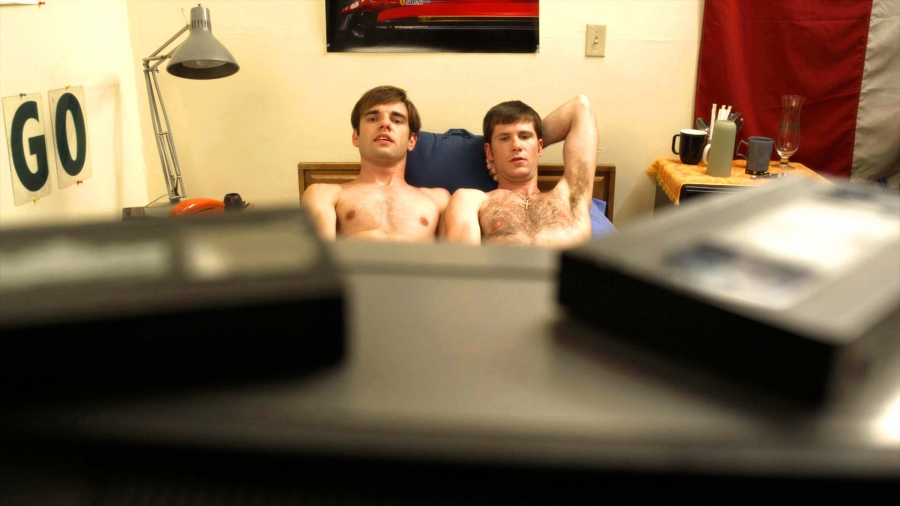
It’s Texas in 1982 when frat-boy Kevin and openly gay student Cesar become schoolmates. Kevin needs a little “help” and Cesar comes through with a helping hand. These study-buddies always end their homework and a well-deserved round of handjobs– lots of them. 


Community Action Center

cac

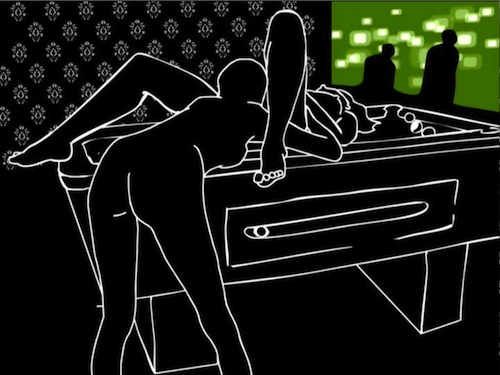
No dialogue. Just sex. Metallic bodies, gender-queer, paint splashing, fruit bashing, blood-red wooden dildos, witches, and dungeons will flash before your eyes in a series of shocking shorts. The performers were encouraged to go “hog wild” in this cinematic orgy and the results look dirty. 


I Want Your Love

want_love

Recreational sex always sounds like a good idea when booze does the convincing. Besties Jesse and Brenden decide to give it an arousing go, but predictably end up with sticky emotions. 


LA Zombie

la zombie

One word: wound fucking with prosthetic alien cocks. This sexy horror flick will get your adrenaline pumping all night.


May I Please Have Another

may_i_please

This series of six kinky shorts runs the gamete with a guitar-slaying transexual dominatrix, a queer leather family who sends off their bratty brother with a proper beating, the scenes behind International Mr. Leather, arousing poems, and surprising sexual encounters. 


Weekend

weekend

This extended one-night stand gets complicated as Russell and Glen get high, have loads of awesome sex, and chat for hours. Passionate and honest, it may be a love story but it’s also got enough skin to keep you perky. 


Three

three

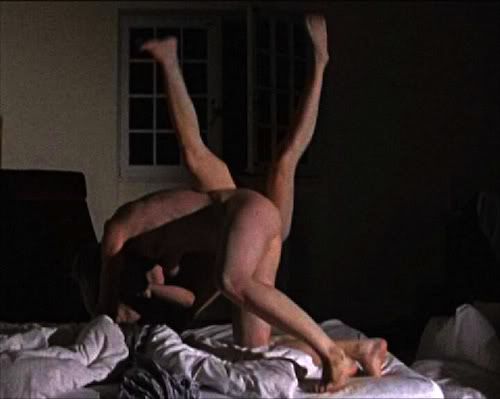
From the director of Run Lola Run, Germany’s Tom Tykwer explores bisexuality and human motivation through three test subjects: Simon, Hanna, and Adam. The erotic chaos is a complete mind-fuck that will send you to bed with dripping dreams. 


SF INTERNATIONAL LGBT FILM FEST

Thurs/15 – Sun/26

Times, locations and ticket prices vary

Check the schedule and get tickets in advance at www.Frameline.org


Tribes author burrows into the Big Apple

0

Thanks to the help of burners from at least five different tribes that I’ve covered or camped with at Burning Man, my New York City book tour was a successful adventure in art and community, from the Figment festival on scenic Governors Island to exotic eating and drinking in the East Village and Queens to a great underground party at an old Catholic school in Brooklyn to getting canonized by Rev. Billy and his 25-person choir into the Church of Earthalujah along with SF-based performance artist Guillermo Gómez-Peña.

The June 7-13 trip was in support of The Tribes of Burning Man: How an Experimental City in the Desert is Shaping the New American Counterculture, my book chronicling how an event born in San Francisco has spawned a vast, well-developed culture and ethos that is affecting life in cities around the world, even seemingly impervious megalopolises like the Big Apple.

I arrived on the red eye Wednesday morning just as a heat wave was peaking in New York, showing up mid-morning at the Upper East Side apartment of Jax, a recent transplant from SF who I worked with on last year’s Temple of Flux project. Her air conditioner hadn’t arrived yet, so I sweated through a needed nap before surrendering myself to exploring the city.

That night was my Tribes launch party in a great spot called Casa Mezcal on Orchard Street on the Lower East Side. Fellow Shadyvil campmate Wylie Stecklow had not only arranged the venue, which is owned by one of his law clients, but he moved the weekly Big Apple Burners happy hour and the final planning meeting for Figment (an event he co-founded four years ago) to the venue, giving me a built-in audience of interested burners who seemed to really appreciate my reading and discussion.

Also joining the party were two NYC figures who appear in my book: Not That Dave, Burning Man’s NYC regional contact and a Figment director, and Billy Talen, the former San Francisco performance artist who transformed himself into NYC’s Reverend Billy, pastor of the Church of Stop Shopping, which evolved into the Church of Life After Shopping before becoming the Church of Earthalujah to reflect a mission that expanded from economic justice and anti-consumerism to environmentalism and a holistic way of looking at the perils of our economic system.

As I’ve been doing at some of my Bay Area book events, I read chapters that introduced them and then let them speak, and they each had lively, weird, heart-warming things to say. Several other New Yorkers who I know through Burning Man showed up at the event to join the discussion, wish me well, and buy books. The most surprising guest was Mike Farrah, former Mayor Gavin Newsom’s old right-hand man who did more to facilitate the temporary placement of burner artworks in SF than anyone in City Hall. He now lives in NYC and showed up late, so after talking SF politics and BRC art over beers, we wandered past some of the oldest tenement buildings in the city together as we headed toward the subway.

The city was sweltering the next day (although Jax’s air conditioner had blessedly arrived), so I spent over three hours in the Metropolitan Museum of Art, which makes SF’s museums seem like mere gallery spaces. I walked through Central Park between the reservoir and the Great Lawn, which was being set up for that evening’s Black Eyed Peas concert, all the way to the Upper East Side and my reading at the Columbia University Bookstore (which nobody showed up for, a combination of school being out, the heat, and a freak thunderstorm that was just rolling in as my event began – my first flop after more than a dozen bookstore events).

But New York is a city for nightowls, as I was just beginning to appreciate, particularly after I made my way down to the East Village that night to meet a Garage Mahal campmate who I’ve known for years simply as Manhattan. He’s been living in his apartment for 15 years and the city for 25, developing a detailed knowledge of the best places to eat, drink, and otherwise indulge.

Manhattan won’t go to the Upper East Side, preferring to remain in “civilization,” as he calls the East Village, which earned its storied reputation as the center of the nightlife universe. We ate Japanese curry at Curry Ya, drank hard-to-find German Kolsch beer at Wechsler’s Currywurst, danced with saucy Armenian women on Avenue C, drank cold sake underground at Decibel, indulged in the most decadent fried pork sandwiches at Porchetta, mingled with beautiful young people in the Penny Farthing, and then drank cocktails on his stoop until dawn, the streets never going to sleep in this lively neighborhood.

On Friday in the early afternoon, I met Wylie at The Cube, a public art piece near the 8th Street subway stop, and we hopped a train down to the southern tip of Manhattan to catch the free ferry to Governors Island for the opening day of Figment, an art festival started there by burners in 2007 that has since expanded to Detroit, Boston, and Jackson.

Mayor Michael Bloomberg and other city officials have embraced and facilitated the popular three-day event, which now includes art projects such as a treehouse built of old doors, massive steel sculptures, and an elaborate miniature golf course that will remain on the island through the summer. Most of the projects featured the interactivity that is the hallmark of burner art, such as a sound project in an enclosed courtyard in which passerby had to figure out how they were controlling the sounds they heard.

Wylie and I pedaled on borrowed rental bikes to cover all the projects on a large island that is a decommissioned military base with gorgeous views of the Manhattan and New Jersey skylines. Out on the Picnic Point lawn, with the Statue of Liberty looking on from the bay, the venerable NYC-based Burning Man sound camp Disorient hosted a rocking set of DJs under a massive wooden sculpture that they built for Figment and the playa this year.

Unfortunately, Figment is permitted only as a daytime event that ends at 6 pm, because the energy of the 100-plus organizers and volunteers could have driven this party well into the wee hours. Instead, they all gathered after the event at the 340-year-old White Horse Tavern to discuss the day, celebrate, and share endless ideas for new art projects and ways of measuring and directing all the creative energy that flows through their event and city.

After partying until dawn again, Manhattan and I climbed into his car (yes, a car, in Manhattan, the better to cover more ground, he says) Saturday mid-afternoon, picked up a friend near Wall Street, and crossed the Brooklyn Bridge headed toward Astoria, Queens. There, we drank pitchers of rich Czech beer at the 100-year-old Bohemian Hall and Beer Garden, run by the nonprofit Bohemian Citizens’ Benevolent Society, a fraternal order open only to those with Czech blood. With an outdoor capacity of almost 1,000 people, this place was like my beloved Zeitgeist on steroids.

On the way back to the East Village that night, Manhattan did a sudden U-turn and parked in a bus zone in front of a crowded outdoor eatery called Tavern Kyclades, muttering something about needing octopus and telling us he’d just be a minute. The wait for tables at this amazing Greek seafood spot was 90 minutes, but after less than 10 he was back with a to-go container with three long octopus legs, grilled, tender, and just insanely good.

That night, the plan was to hit an underground party in Brooklyn, thrown in a former Catholic school by Rubulad, a venerable party crew. It was after 1 am when we finally left Manhattan’s apartment for the party, catching the subway at Union Square and arriving to find the party in full swing, with more than a dozen rooms with different offerings: DJ dance parties, avante garde films, a piano bar, live music from a trio that had the beautiful crowd dancing hard and smiling. As the party wound down, I headed to Queens with a new friend and we watched a new day dawn on the Empire State building standing tall in the distance.

Sunday might be a day of rest for some, but not for me, not with the kind of roll I was on. So I caught the last ferry to Governors Island at 3 pm and spent the afternoon at Figment with some other burner friends, Shanthi and Patty, who came back to the East Village with me afterward for my third and final Tribes event: being canonized by Reverend Billy during the Church of Earthalujah’s regular Sunday evening performance at Theatre 80 on St. Marks Place.

I’ve been covering Billy and his crew for years, from their performances in San Francisco’s Castro Theater and other local venues to their film “What Would Jesus Buy?” to their work at Burning Man, including their touching sendoff of burner work crews to the Gulf Coast in 2005 to do cleanup and rebuilding work after Hurricane Katrina, an effort that became Burners Without Borders.

As I write in my book, Billy and his choir of several dozen were transformed by Burning Man, and they have returned that embrace of a culture that magnifies and perpetuates their values. And after being called from the audience and walking toward the stage during a rousing rendition of the “When the Saints Go Marching In,” I was warmly embraced by the entire 25-member chorus – actually, it was probably closer to a group grope – and I became Saint Scribe.

And after that, it’s all a bit of a blur, and a vibrant, decadent, Big Apple blur. Thanks, everyone, for a truly memorable trip.

The ol’ Vic-trola

0

arts@sfbg.com

SOUND TO SPARE The potential closing of Haight Street’s Red Vic Theater has unsettled me. With one less place to go out and enjoy, what’s a shut-in-prone type like me to do?

Fortunately, when I spoke to Sam Sharkey, one of the co-op’s managing partners, he offered a ray of hope by saying that the Red Vic Movie House is here, organized — it just partnered with the Haight Street Fair and the California Jug Band Association for a benefit — and best of all, still screening movies, some of them music-related.

Let me take a breath for a minute to reflect and appreciate some of the carefully curated films I’ve encountered at this fine establishment. I’ve transcended the mundane through Ziggy Stardust’s gender-bending, screwed-up-eyes stage persona in Ziggy Stardust and the Spiders from Mars. Director D.A. Pennebaker, better known for documenting Bob Dylan in the 1960s, tried his hand at capturing the Bowie in full glam garb during a 1973 tour. Mick Ronson shreds on guitar to undeniably comical proportions. I recall the audience cracking up, something you just don’t get when you’ve opted to Netflix at home.

The less acclaimed — but equally gorgeous — somber sounds of a pop-star- turned-recluse proved to be quite a treat. Scott Walker: 30th Century Man (2006) was one of those films I didn’t know I needed to see, until the rainy day someone sent me a YouTube link to his song “It’s Raining Today.” The opening atmospheric sounds alone on this track are enough to captivate, but as it moves forward into Walker’s commanding crooning voice, you realize that he has the ability to convey dread and beauty at once. The film is a concrete testament to his influence on contemporary musicians.

Later I was given the soundtrack to boxing’s “Rumble in the Jungle,” set in early 1970s Zaire, where a showcase of mostly familiar soul artists pulled off a hugely successful stadium concert. Soul Power (2008) sort of serves as a musical counterpart to 1996’s When We Were Kings, which was the cinematic predecessor dealing with the same Ali vs. George fight. The symbolic implications of the event for African and African American pride are brought to the fore, and the concept of power is examined, whether it is achieved physically, politically or even musically.

Sharkey said that declining attendance was the Red Vic’s main obstacle. Single-screen theaters aren’t as much of a sustainable business anymore, as evidenced by the number that have closed in the last 10 to 20 years. The Castro Theatre and the Roxie in the Mission seem to be surviving, though — I wondered why people weren’t coming out for movies in the Haight anymore. Was it a bad rap from all the sit-lie buzz? Sharkey didn’t seem convinced on that argument, trusting that his patrons wouldn’t buy into that hype. He leaned toward more technology, calling this an age of competition and noting that the accessibility of movies via broadband Internet is just too convenient.

If you’re a music fan who wants to help curb the trend against local establishments falling by the wayside, then the no-brainer is to hit the Red Vic for the following music films. Rock out for the cause — or you may end up drowning in a sea of Whole Foods.

June 26-28, Phil Ochs: There But for Fortune. The unsung 1960s antiwar folksinger (who doesn’t mind taking a backseat to Dylan) gets the full doc treatment.

July 14, The Hippie Temptation. Vintage 1967 footage of the Haight-Ashbury scene in its glorious heyday as seen through the eyes of CBS News. Originally aired on TV, this “hilariously biased” take on flower power should have you craving the street peddlers’ wares immediately after the show.

July 15-16, Stop Making Sense. Classic Talking Heads circa 1984 at L.A.’s Pantages Theatre. Watching a jittery David Byrne working the crowd in his oversized boxy white suit should be worth the price of admission alone.

July 19-20, The Last Waltz. This one’s cool for a couple of reasons. First, it’s directed by Martin Scorsese and, second, it captures The Band’s final show at San Francisco’s old Winterland Ballroom, a place I’ve often dreamed of seeing a show.

Schizoid trickster

0

arts@sfbg.com

MUSIC Tyler, the Creator makes schizophrenic music. At least four entangled voices riddle his latest effort on XL Recordings, Goblin, the follow-up to his self-produced, rapped, and designed debut, Bastard, which he released on Tumblr.com in late 2009. One of those voices is some sort of inner conscience or demon, a pitched down grumble of bass, that doubles as Tyler’s obsequious therapist. But it also takes on the roll of ethical advisor and spiritual consultant: Tyler, you’re right to feel that way; people do like you; you shouldn’t kill all your friends. Even Tyler’s conscience disintegrates into corroded delusions and anxiety. Meanwhile, Tyler, at 20 years old, is an uncompromising, violent, self-hating, offensive, sexually repressed, obnoxious, yet sometime charming and funny protagonist who growls and spews partially digested rhymes over off-syncopated drum programming and synthetic keyboard washes.

The therapist conscience is a foil for Tyler’s caustic self-reflection in Goblin. This dynamic allows for multiple layers of inner dialogue, which subside only when other members of Los Angeles’ Odd Future collective (short for Odd Future Wolf Gang Kill Them All) give Tyler’s disturbed and heavily claustrophobic mental space some breathing room. Frank Ocean, the only member of the crew above the drinking age, waxes sincere R&B verses in “She,” bringing into contrast how Tyler’s unfulfilled desire for his lust interest degenerates into anger, voyeurism, and eventually, fantasies of possession. With Hodgy Beats, Tyler is hungriest on “Sandwitches.” Who the fuck invited ‘Mr. I Don’t Give a Fuck’/ Who cries about his daddy and a blog because his music sucks, he raps, before flipping the chorus of “Wolf Gang” into a call to arms for all who feel slighted by the establishment, any establishment.

In response to the rapid escalation of media attention circling Odd Future since last winter (which perhaps recently climaxed in a lengthy New Yorker article on the mysterious disappearance of member Earl Sweatshirt), Tyler negates excessively: the hip-hop blogs that gave him no love, kids with comfortable homes and families, music critics, moralists who accuse him of homophobia and misogyny. Tyler stands for defiance and offensiveness, rejection and swag, bastards and goblins, skateboards, skating apparel, and the simple joys of juvenile delinquency.

Another voice in Goblin is a rare appearance: some sort of helium-intoxicated creature. It slightly echoes Madlib’s incarnation of gratuitous violence in the Quasimoto character, culled straight from a Melvin Van Peebles’ film trailing a black man’s escape and redemption from the systematic violence brought to bear on his body in America’s inner city. But there’s not much of a redeeming light in Goblin. And the source of Tyler’s frustration and belligerent lashing out is all the more obscure. The record is thoroughly dystopian, despite its pretensions to comedy — a lonely soul trying to find its way in a desolate and often antagonistic world.

Tyler shares as much in spirit with the paranoid hallucinations of the Geto Boys’ “Mind Playing Tricks on Me,” minus the lighthearted melody, as with Eminem’s confessional tirades. Moments of vulnerability seem to, if not justify the violent outrage, then at least make it bearable (and for a certain listener, endearing). The critique in Goblin, if there is any critique, might be one of taking the system more seriously than it takes itself. The record is neither ironic nor detached, but a head-on dive into the gluttony of indulgences that comprise popular culture and much of everyday life today, as well as the psychological pain and alienation that the system manufactures in its wayside.

Goblin is not much of a crossover album, either. There aren’t many hooks to hold onto since much of the schizoid discourse replaces formal pop structures. It’s a sprawling record, some songs inching toward 10 minutes. The most memorable hook is the anarchic anthem of “Radicals” in which “Kill people! Burn shit! Fuck school!” is yelled in a repetitive chant. It’s hackneyed and silly enough to make you cringe. But the chant makes more sense when Odd Future performs live (let me tell you, shit is wild), where a sea of teenagers, and those of teen spirit, tap into the sort of rebellious energy you thought had dispersed into the dust of musical archives. This seduction also comes through in the recording. The beat fumbles sickly and the distorted melodic slime falls away to empty pockets of sound where Tyler calls to the listener: “Odd future, wolf gang. We came together cause we had nobody else. Do you? You just might be one of us. Are you?”

ODD FUTURE

Tues/21, 8 p.m., $20

Regency Ballroom

1300 Van Ness Ave., SF

(415) 673-5716

www.theregencyballroom.com


Crying in public

0

arts@sfbg.com

HAIRY EYEBALL Weaving my way through the groups of slower moving shoppers and tourists ambling out of the Powell Street BART Station, I realized I was already too late.

I had wanted to be present for the June 11 noon kickoff of Market Day — the large-scale public art event tied to Allison Smith’s current Southern Exposure exhibit “The Cries of San Francisco” — but when I reached Mint Plaza and had been handed a schedule I saw that my timing had been off by an hour.

Oh well. The point of Market Day wasn’t to necessarily be at a certain place at a certain hour to see a certain something. The “something” was supposedly happening all around me. The nearly 70 Bay Area artists, performers, and craftspeople Smith had gathered for this ambitious public art project had dispersed throughout Mint Plaza, and up and down Market Street between Fifth and Third streets, to peddle their wares (many homemade), offer more ineffable “services” (such as owning the expletive of your choice or telling you a story), or to simply “perform” in “character.”

The criers were to be like tiny pebbles subtly altering the fast-moving watercourse of weekend foot traffic. Granted, participation is hard to measure for something like “The Cries of San Francisco,” but wherever I turned, people seemed engaged even if the number of folks documenting a given artist seemed to greatly outnumber the members of the public they were interacting with.

I decided I needed a little more intimacy if I was to get my feet wet. I started back toward Market and ran into a woman dressed in steampunk-ish attire. Her name was Jamie Venci, a.k.a. the Questing Choreographer (each participating artist conveniently had a large nametag). She offered me an informative pamphlet about one of three historic buildings in the vicinity that had survived the 1906 earthquake if I promised to carry out the site-specific choreography contained within.

I agreed, and for convenience’s sake, I went with the Mint Building. Not five minutes later, I was on the steps of “the Granite Lady” attempting to convey the shape of its crenellated outline with my arms — per a step in Venci’s cutely drawn instructions — in what must have looked like a particularly inept approximation of tai chi.

Conceptual art requires a suspension of disbelief on the part of its audience. I was not merely being ridiculous in public, but was publicly enacting a new relationship to a space I had not really considered too closely before. I, as much as Venci, was the Questing Choreographer, and together we had collaborated on a piece.

The satisfaction I took in my demonstration of good faith was fleeting, as questions took over. What had passersby thought about what I was doing? And how could they really have anything to think about without some context for my undertaking? If a person dresses up in a colorful manner in San Francisco and carries on in public does anyone raise an eyebrow, let alone pause to consider the host of artistic and economic concerns that “The Cries of San Francisco” aimed to bring to the streets?

Materials for the event cited Mohamed Bouazizi, the Tunisian street vendor who set himself on fire to protest police harassment, as well as Carol Reed’s 1968 film version of the musical Oliver! as representational precedents. But despite the presence of Art for a Democratic Society’s Class War Store cart full o’ Marxism, the tenor of many of the criers was more playful than revolutionary. Whimsy was the order of the day.

Ha Ha La (Nathaniel Parsons) pushed around an “amusement park,” a steep ladder that participants would gingerly climb up and down while Parsons bellowed a New Age-y chant affirming their bravery and blessedness through a conch shell. After I took my turn on the rickety structure, I chose a souvenir badge that read, “You don’t have to behave you just gotta be brave.”

Also hard to miss was Maria de los Angeles Burr, who, as the Unsellable, had transformed herself into a walking pile of paper bags. “I have become burdened by too many possessions,” she muttered to me, as confused shoppers exiting from the Westfield Centre stopped to take pictures or gawked while hurrying on their way.

I wondered if they got the visual pun, or would simply move on and tune out the other criers much in the same way many of us avoid other solicitors like petitioners or canvassers.

I also wondered what the Market Street regulars — the men who sell cheap earrings, bootleg Giants merchandise, and faux-cashmere scarves from tables or the young hip-hop dancers who busk near the Powell Street cable car turnaround — thought about the criers. Did they view them as competition? As a friendly change-of-scene? Or did they see them at all?

By 4:30 p.m., all the criers had reconvened at Mint Plaza. They seemed tired from their day of art-making and being “on.” Continuing at a full clip, however, were tweens Colin Cooper and Cole Simon, by far the loudest and youngest hawkers, who had set up shop as the Masters of Disguise (one of their parents informed me that their after-school art teacher, a California College of the Arts student, had encouraged them to get involved with the project).

I walked away from our genial encounter $1 poorer but with a pair of plastic pink sunglasses and an orange mustache to my name. I felt braver with them on.

The carnival continues: the gallery installation component of “The Cries of San Francisco” is up until early next month and will host a series of performance events. Future Saturday marketplaces are scheduled for two Saturdays, June 18 and July 2 (noon to 6 p.m.). And on Wednesday, June 15 at 7 p.m., various criers will present a showcase of musical storytelling, speeches, and other forms of public address.

THE CRIES OF SAN FRANCISCO

Through July 2

Southern Exposure

3030 20th St., SF

(415) 893-1841

www.soex.org


In spite of himself

0

arts@sfbg.com

FILM Apparently Steve Coogan in no way cares if you think he’s an asshole. Fitting, then, that he has perfected an onscreen persona as vain and insecure as it is vapid and self-indulgent. Playing a fictionalized version of oneself has always been a tricky proposition, but Coogan has taken the gambit of self-portrayal-as-schmuck to the level of masochistic brilliance (Larry David, take note). Why would someone this purportedly insecure want to expose himself for the insecure mess that he is? Who cares? In The Trip, comedy as self-flagellation goes down with the ease of an expertly mixed cocktail at a Michelin-starred eatery.

Eclectic British director Michael Winterbottom, who previously worked with British actor Coogan in 2005’s Brechtian Tristram Shandy: A Cock and Bull Story and the 2002 cult fave 24 Hour Party People, humiliates Coogan (2008’s Tropic Thunder) on all number of levels in this largely improvised comic romp through England’s Lake District. Well, romp might be the wrong descriptive. Dubbed a “foodie Sideways” but more plaintive and less formulaic than that sun-dappled California affair, this TV-to-film adaptation displays a characteristic English glumness to surprisingly keen emotional effect.

Ironically, the “real” Coogan’s persona is rooted in a fictional character. Alan Partridge, the sniveling talk show host Coogan has embodied in all his vile glory for nearly two decades, has come to virtually define him not only as an actor but also, perversely, as a man. Partridge’s penchant for clueless assholery has reached legendary proportions in the United Kingdom, and the Coogan-is-Partridge attitude is clearly widespread. “Is it true what they say about you?” a young man asks before holding up a copy of the Daily Mail with the screaming headline “Coogan is a Cunt.” Yes, it’s part of the actor’s dream sequence, but it nicely folds his rampant insecurity together with the affirmation that (as seen in The Trip, anyway) he is indeed pretty much just that.

Coogan displays all the characteristically carefree joie de vivre of a colonoscopy patient with hemorrhoids as he sloshes through the gray northern landscape trying to get cell reception in between dining on haute cuisine and being wracked with self-doubt over his stalled movie career. His happily married, happy-go-lucky frenemy, comic actor Rob Brydon (his Tristram Shandy costar, also playing himself here), is subjected to constant denigration during their travels but takes it all in stride. “I’d love to quote your work back at you, but I don’t know any of it,” Coogan jabs after Brydon does a spot-on Partridge. A particular highlight is the much-vaunted scene featuring the pair’s dueling Michael Caine impressions.

While Coogan can’t help but come off like a pathetic middle-aged prick in a puffy coat, somehow his confused narcissism is our perverse panacea. Also be sure to enjoy the snot martinis and scallops, as well as Brydon’s gleeful “small man in a box” routine. Just don’t be put off by the schadenfreude. Coogan insists.

THE TRIP opens Fri/17 in Bay Area theaters.


The faith and the fury

0

arts@sfbg.com

FILM Hell hath no fury like an enraged Klaus Kinski. The late German actor, who rose to prominence in the 1970s as the combusting supernova at the center of the Wernzer Herzog films Aguirre: The Wrath of God (1972) and Cobra Verde (1987), was as famous for his coruscating off-camera temper as for his onscreen intensity. With Kinski, there is always the near-unanswerable question of to what extent is his performance acting and to what extent is he just being himself. Are we watching someone who has totally, obsessively (unhealthily?) committed to his craft, or a petulant diva whose overinflated ego perhaps bruises too easily?

Klaus Kinski: Jesus Christ the Savoir, a recently rediscovered concert film of a 1971 solo performance, makes a riveting case for all of the above. Filmed a year before he headed to the South American jungle with Herzog, Jesus Christ finds Kinski alone on a spot-lit stage before a packed house delivering a monologue that frames Christ as a persecuted outlaw. “Wanted: Jesus Christ,” he purrs, “charged with seduction, anarchistic tendencies, conspiracy against the authority of the state.”

Not five minutes in the catcalls begin, no doubt encouraged by Kinski’s sudden switch to the first person, making overt the already implicit and problematic association of himself with his subject. “I want my 10 marks back!” cries one audience member. “Shut up!” Kinski volleys back. When one particularly bold heckler climbs on stage to chasten Kinski for his un-Christ-like language, the actor has his security guards forcibly remove the young man and storms off stage to the audience’s cries of “fascist.”

Things only get uglier as the evening progresses. Kinksi returns a second time to proselytize for the continued relevance of scripture by drawing comparisons to then-current issues such as Vietnam and the growing counterculture. The audience, both fascinated and repelled by this wealthy actor whose truculent delivery and hostility toward his flock undercuts his message of nonviolence and justified outrage at the world’s horrors, continues to have its say. Many times, in fact. Kinski walks away from the mic twice more in disgust at the “riffraff.” It is only after the film’s credits that the visibly drained thespian finally delivers his sermon in full to the remaining faithful.

What’s surprising is the palpable sincerity beneath Kinski’s vitriol: He seems genuinely exasperated by the unreceptive crowd, even as each successive disciplinary outburst further alienates them. Of course, such naiveté is another symptom of privilege, but rarely are the privileged as hypnotic or as loose a cannon as Kinski. God bless him.

KLAUS KINSKI: JESUS CHRIST THE SAVIOR

Thurs/16, 7:30 p.m.; Sun/19, 2 p.m., $6–$8

Yerba Buena Center for the Arts

701 Mission, SF

(415) 978-2787

www.ybca.org *


The ballad of Peter and Raymond

0

arts@sfbg.com

Once upon a time (1987 to be exact), two young men who were old friends moved to San Francisco from the Midwest to take in all the big city had to offer. Like many 20-somethings, Eddie Lee “Sausage” and Mitchell “Mitch D” Deprey didn’t have a lot of money and wound up living in a somewhat derelict apartment in the Lower Haight with a bright pink exterior they dubbed “the Pepto Bismol Palace.” The paint was peeling and the walls were thin but the rent was cheap.

What Eddie and Mitch didn’t count on was having Peter J. Haskett and Raymond Huffman as their neighbors. “You blind cocksucker. You wanna fuck with me? You try to touch me, and I will kill you in a fucking minute.” “Shut up! Shut up! Shut up! Shut up, little man!”

The insults, tantrum-throwing, and threats of violence (which sometimes crossed over into actual fisticuffs) coming from next door were constant. When they weren’t drinking like fishes, Peter — acid-tongued, gay — and Ray — the more hotheaded of the two and an unrepentant homophobe — seemingly devoted their every waking hour to mercilessly tearing each other apart.

Weeks went by. Eddie and Mitch started to lose sleep. And after one failed attempt at complaining to Raymond’s face (he threatened death), they started tape-recording Peter and Ray’s endless geyser of vitriol — first, as possible future evidence — but also out of a growing voyeuristic fascination with these two seniors who had to be the world’s oddest and angriest odd couple.

The rest is history. Mitch and Eddie started including snippets of Peter and Ray’s bickering on mixtapes for friends. Somehow, the editor of the now-defunct SF noise music zine Bananafish heard a snippet and approached Mitch and Eddie about distributing compilations of the recordings to a large network of found sound fans. Gradually “Peter and Raymond” became known and much-beloved characters. Their warped repartee — frequently referred to using Raymond’s favorite rejoinder, “Shut up, little man!,” as shorthand — inspired several theatrical adaptations, short animated films, pages of comic book panels by artists such as Daniel Clowes, and even a one-off single from Devo side project the Wipeouters. SF Weekly did a cover story and there were reams of additional press. Hollywood types called wanting to know who owned the rights to Peter and Raymond. Things had gotten big.

“Shut Up Little Man has been an enchanted, messy cultural accident,” reflects Sausage (he’s kept the moniker) over a Skype conference call. “It was a personal obsession and a private joke that in a very curious way became an underground cultural phenomena.” Sausage, a visual artist and musician who supports himself as a rare-book seller, remains, in his words, “the official custodian” of Shut Up Little Man’s (SULM) legacy, which is copiously detailed on its website.

Deprey — who now works as an insurance agent in Wisconsin where he lives with his wife and teenage children — is also on the line. Although Sausage is doing most of the talking, he interjects from time to time to provide clarification. We are discussing Matthew Bate’s documentary Shut Up Little Man! An Audio Misadventure — perhaps the squarest peg in Frameline 35’s lineup. As much an attempt to comprehensively recount the above long, strange trip from start to finish, the film is also the newest chapter in the now 20-year saga of Peter, Raymond, Mitch, and Eddie.

Bate is a clever filmmaker who is able to translate a story that has primarily been told through sound into something visually compelling. Goofy animated interludes are woven between interviews with Clowes, Devo’s Mark Mothersbaugh, and the many other SULM fans who have created art inspired by Peter and Raymond. Sausage and Deprey also get plenty of screen time, and Bate goes so far as to have them play their 20-something selves in dramatized reenactments of their early days of interacting with and recording Peter and Raymond, who are played by actors. (Huffman died in 1992 of a heart attack brought on by colon cancer, pancreatitis, and alcoholism; Haskett died four years later of liver problems also due to alcoholism.)

Bate’s film is less successful in presenting a clear account of Sausage and Deprey’s 1994 controversial decision to copyright their recordings — which up to that point had been accompanied only by a note encouraging creative liberties and humbly asking for credit — going so far as to imply that this was an ideological about-face. As Sausage and Deprey tell it, they were simply doing the responsible, professional thing in the face of mounting disputes over who could or couldn’t sell the rights (the current disclaimer on the SULM website notes that “permission and licensing is usually granted, but please ask first”).

“Because this stuff was so viral and so innocuous, it wasn’t clear who owned any of this, ” explains Deprey, “We just didn’t want people wrongfully charging other people to use it. And the truth is, we’ve never gotten a penny from any of the artists [featured in the film].”

Still, Deprey and Sausage have now become the semiofficial executors of Peter and Raymond’s estate, even if it’s a legacy composed of hours and hours of blue streaks captured on tape. No surviving relatives of either Huffman or Haskett have come forward in the time that their infamy has grown, underscoring the fact that these two men — despite the venom they constantly spewed at back and forth — really only had each other.

“In a very real way, I think it’s a nontraditional love story,” says Sausage. “There’s a lot of passion and a lot of intimacy there. I mean, arguing is one of the most intimate things we can do as human beings.”

Indeed, Peter and Raymond’s highly dysfunctional Boston marriage might be the queerest onscreen relationship in the whole festival.

SHUT UP LITTLE MAN! AN AUDIO MISADVENTURE

June 22, 9:30 p.m., $11

Victoria Theatre

2961 16th St., SF

www.frameline.org

P.S. Shut Up Little Man! An Audio Misadventure was recently picked up by a distributor and will be released theatrically Aug. 26.


Sing out

0

arts@sfbg.com

FRAMELINE It may be summer break for America’s favorite Slushee-barraged show choir, but judging by the array of song-and-dance numbers in this year’s San Francisco International LGBT Film Festival, Glee fever continues to spike. Half of the fest’s showcase films celebrate the power of the performing arts, including Mangus!, about a young man’s against-all-odds dream of playing the lead in his high school’s production of Jesus Christ Spectacular. Leading Ladies features a mother-daughter-daughter trio immersed in the world of competitive ballroom dancing. And the shorts roster offers no less than three musicals — the Australian films Slut: The Musical and Cupcake: A Zombie Lesbian Musical hail, naturally, from the program “Zombies, Aussies, Musicals, Oh My!,” while Who’s the Top? explores a relationship’s diminished sexual undercurrents through musical comedy. Directed by Jennie Livingston, Who’s the Top? is paired with Paris Is Burning (1990), Livingston’s acclaimed full-length documentary on the late-1980s ball scene in New York City.

The on-and-off-stage drama continues with Jamie and Jessie Are Not Together, a tale of thespians, best friends, and housemate tension rooted more in unvoiced amour than in chore wheels and whose turn it is to buy toilet paper. As the title’s Chicago-dwelling characters negotiate Jamie’s imminent departure for the Big Apple and (she hopes) Broadway, a few wistful tunes are crooned, accompanied by the occasional step-ball-change, but the songs feel somewhat opportunistically tacked on, and the film’s strength lies more in its exploration of that foggy, foggy gray area between the romance of intimate friendship and the romance of ripping the clothes off of someone you really care about.

The tweens of Spork show slightly more promise, at least when it comes to working the dance floor at a nightclub unaverse to letting in 13-year-olds. Spork — so nicknamed by her burnout but well-meaning brother due to her intersex status — is shy, awkward, and isolated at school — when not being tortured by a clique of tiny, racist mean girls led by a Britney Spears wannabe named Betsy Byotch. The answer, clearly, is to best the Byotch in a high-stakes middle-school dance-off — for if we’ve learned one thing from Glee and every high school musical and dance-ical pumped out by Hollywood in the past few decades, it’s that community can be found through soaring vocal harmonies, choreographed ass-shaking, and following one’s dreams.

This lesson is perhaps best exemplified by Leave It on the Floor, which updates (and fictionalizes) the drag and tranny ball scene of Paris Is Burning, transports it to the warehouses of South Central L.A., and adds some infectious music and lyrics (the song “Justin’s Gonna Call” is particularly likely to stay trapped in your brain for days). Leave It‘s kicked-to-the-curb protagonist, Brad, is equally in need of community and a place to crash, and he finds both (after a fashion) in the House of Eminence, the reigning underdog of the ball scene, proudly populated by outcasts and freaks — as well as a hot dueting partner, queer family, and a closing-number set of runway moves that nearly set a warehouse ballroom on fire and probably won’t be coming to a show choir competition near you anytime soon.

FRAMELINE 35: SAN FRANCISCO INTERNATIONAL LGBT FILM FESTIVAL

June 16–26, most films $9–$15

Various venues

www.frameline.org


Camp rocks

0

arts@sfbg.com

FRAMELINE The eponymous character in Ash Christian’s Mangus! has a simple ambition: to be Jesus. That is, to play Jesus in the local production of Jesus Christ Spectacular. Mangus does get the part, but his dreams are crushed when a freak limo accident lands him in a wheelchair and his neighbors decide he’s no longer cut out to play their Lord and Savior.

“When you’re in a small town and you want to be an actor and you don’t get the lead, it’s the most devastating thing in the whole world,” says Christian (2006’s Fat Girls), who was inspired by his own history in community theater.

Mangus! is an interesting but wise choice for Frameline: while it features queer characters (including Mangus’ sister Jessica Simpson, played by Heather Matarazzo), the film as a whole is subtler than other festival picks. It has what Christian calls a “queer sensibility,” but much of that is subtextual.

“I don’t look at it as a queer film,” offers Matarazzo. “I just look at it as a really great dark comedy.”

Christian’s cast is full of actors who might be considered queer icons — among them Matarazzo, Jennifer Coolidge, and Leslie Jordan. But Matarazzo, who is openly gay, doesn’t want to restrict herself.

“When I’m playing to a specific audience because I want this to be a gay and lesbian film, that’s fine for any filmmaker who desires to do that,” she reflects. “But for me, film is really about unifying on all fronts.”

And Christian has his own ambitions. Mangus! is a dark comedy in the tradition of Christian’s cinematic idols John Waters and Todd Solondz. (It’s worth noting that Waters has a cameo in the film, and Matarazzo made her breakthrough in Solondz’s 1995 Welcome to the Dollhouse.) With this work, Christian tackles the topic of discrimination apart from sexuality.

“I’d never really seen a movie with a young disabled kid who had a dream,” he says. “It deals with discrimination in a small town, which I’ve definitely been a part of — not with a disability, but because of the gay thing.”

Mangus! is both hilarious and poignant because its filmmaker is unafraid to hold anything back. It somehow manages to walk the line between over-the-top and honest, presenting a portrayal of disability and sexuality that will only shock those not in on the joke.

“Ash is the perfect master of getting to bring absolute balance in terms of letting an audience pity a character, but then also cheer for him and go along with the ride,” Matarazzo notes. “There was never any kind of mentality of trying to manipulate the audience.”

For a while, Christian did worry about audiences taking his films the wrong way, but he admits that it’s no longer a concern. Indeed, he takes pleasure in making movies edgy enough to unnerve people.

“It’s just something that’s going to keep happening because I don’t want to tell boring stories for Lifetime,” he says. “It’s not really what I want to do. So it kind of turns me on now to have people actually have a problem with what I’m trying to say.”

Those who take Christian’s film in the intended tone will appreciate that it’s not meant to be mean-spirited. In the tradition of the great queer films that came before it, Mangus! lives outside the box: it’s unconventional, subversive, and yes, not even a little bit PC.

“In my heart, I’m not trying to say anything offensive at all,” Christian explains. “They’re just taking it that way.”

MANGUS!

Wed/15, 8:30 p.m., $11

Castro

429 Castro, SF

www.frameline.org


Heroes and hoedowns

0

arts@sfbg.com

FRAMELINE This year’s Bay Area-centric Frameline features run a thematic and identification gamut appropriate to the festival’s ever-inclusive programming. Several are celebrations of local LGBT heroines and heroines, some recently deceased and some still-with-us.

Scott Gracheff’s With You commemorates the life and legacy of late local resident Mark Bingham, who famously died on United Airlines Flight 93 and is strongly suspected of being among the passengers who stormed the cockpit and prevented that hijacked Newark-to-SFO flight from reaching its presumed governmental target in Washington, D.C., on 9/11.

As his activist mother Alice Hoagland and everyone else here says, it’s the sort of thing he would do — Bingham was, among other things, an avid rugby player, metalhead, daredevil, UC Berkeley frat president, world-class partier, several-time arrestee (for reckless hijinks rather than criminal menace), bear chaser, global traveler, dot-com-wave surfer, and “human labrador retriever” (as a long-term boyfriend calls him). He lived a very full life and doubtlessly would have continued living it to the limit if this encounter with terrorism hadn’t cut his time short at 31.

A life that remained eventful for nearly three times that length was that of Del Martin, who along with surviving partner Phyllis Lyon founded SF’s Daughters of Bilitis — the nation’s first lesbian political and social organization — in the highly conservative climate of 1955. They remained highly active in feminist, gay, senior, and other progressive causes over the decades. Martin’s death in 2008 at age 87 occasioned a tribute in the City Hall rotunda that is captured by veteran local filmmaker Debra Chasnoff’s Celebrating the Life of Del Martin. This hour-long document demonstrates the breadth of Martin’s influence as prominent politicians, musicians, authors, progressive and religious leaders, et al. pay homage.

How exactly to honor our dead is the question at the heart of Andy Abrahams Wilson’s very polished The Grove, which charts the creation of the National AIDS Memorial Grove — an idea brought to fruition by the surviving partner of local landscape gardener Stephen Marcus — as well as some struggles over its visibility (even most visitors to Golden Gate Park don’t seem to know it’s there) and purpose.

When a recent contest was held for an installation to be added to the site, two women designers won with a striking sculptural concept intended to make a potent statement à la D.C.’s Vietnam Veterans Memorial about the disease’s devastation. But the grove’s current board shot it down, preferring to maintain the space’s leafy, meditative feel — even if that might also maintain its relative public invisibility. Should the memorial comfort those who directly suffered loss, or metaphorically convey that loss in vivid terms for future generations?

Very much living with HIV — emphasis on the living part — is the subject of Dain Percifield’s Running in Heels: The Glendon “Anna Conda” Hyde Story. Glendon Hyde a.k.a. Anna Conda fled a horrific Bible Belt background to become one of SF’s premier drag personalities, running the Cinch’s popular Friday night Charlie Horse revue for five years until a new condo’s complaining tenants shut that down. Enraged by the city’s “war on fun,” hostility toward the homeless, and other issues to boot, he joined 13 other candidates running for District 6 (Tenderloin) supervisor last year. He didn’t win, but this doc will make you hope he tries again.

Last but far from least is this year’s sole Bay Area narrative feature, shot largely in Fruitvale even if it is set in Texas. A big leap from writer director David Lewis’ prior features, Longhorns is a delightful romantic comedy about several 1982 Lone Star state frat boys dealing with sexual impulses and related emotions that might — oh lawd no — mean they’s quar, not just “messing around.” With some soundtracked songs by H.P. Mendoza (2006’s Colma: The Musical), this total charmer is (as one character puts it) “hotter’n a billy goat in a pepper patch.”

FRAMELINE 35: SAN FRANCISCO INTERNATIONAL LGBT FILM FESTIVAL

June 16–26, most films $9–$15

Various venues

www.frameline.org

Quickies: Short Frameline reviews

0

Below are some reviews of films that intrigued us from the upcoming Frameline Film Festival. Check out more of our coverage here.

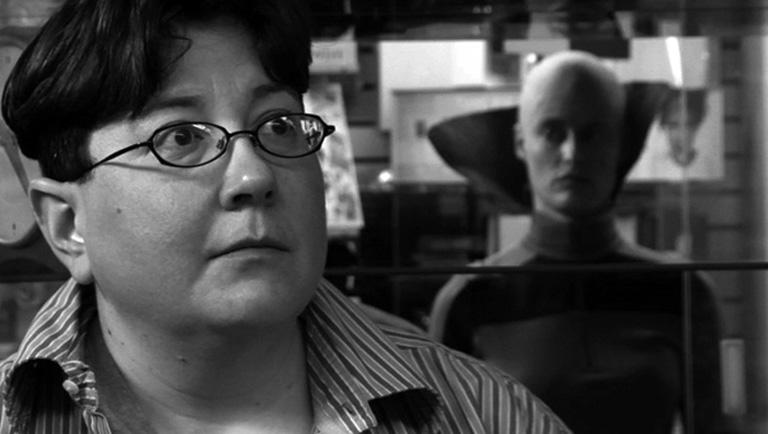
Codependent Lesbian Space Alien Seeks Same (Madeleine Olnek, U.S., 2011) Who can’t identify with that title? Metaphorically speaking, that is. Although Madeleine Olnek’s B&W feature insists on etaking it quite literally, to pretty hilarious results. Lonely stationery-store clerk Jane (Lisa Haas) tells her shrink she dreamed a close encounter in which a space ship dropped a note her way that read “What are you doing later?” Shortly thereafter, she finds herself the object of amorous pursuit by Zoinx (Susan Ziegler), one of several bald-pated, high Peter Pan-collared exiles from planet Zotz who’ve been dumped in Manhattan to seek “hot Earthling action” and get their hearts broken — because it is believed back home that “big feelings” of love are destroying the ozone. Ergo, guilty citizens must be rendered “numb and apathetic” by off-shore interspecies romance before safely returning. Meanwhile two badly mismatched government operatives (Dennis Davis, Alex Karpovsky) are spying upon the intergalactic love intrigue. Go Fish (1994) meets Plan 9 From Outer Space (1959), at last! June 25, 3:30 p.m., Castro. (Dennis Harvey)

The Evening Dress (Myriam Aziza, France, 2009) Everybody’s crushed on a teacher at some point, and indeed everybody in Helene Solenska’s (Lio) sixth grade French grammar class seems to have a crush on her. Why not: she’s attractive, wears sexy clothing (by classroom standards at least), and addresses the occasional sass with challenging provocation rather than simple discipline. But shy, studious Juliette (Alba Gaia Bellugi) has a crush bordering on obsession, particularly once she misinterprets teach’s attentions toward outgoing male student Antoine (Léo Legrand). You’re never too young to have a nervous breakdown, and our heroine’s increasingly reckless actions threaten to make her a pariah. Myriam Aziza’s feature is in that My Life as a Dog (1985) realm of movies about unpleasant childhoods that aren’t exploitative but at times grow truly discomfiting — it’s a worst case-scenario of pubescent imagination run amuck amid the usual teasing and bullying of peers. It’s a very good film if not an especially pleasant one. June 22, 4 p.m., Castro. (Harvey)

A Few Days of Respite (Amor Hakkar, Algeria and France, 2010) Quiet, bespectacled Moshen and his younger lover Hassan have fled Iran in the hopes of starting a new life together in Paris. They have only each other, and yet, because they lack visas, they must keep their distance while traveling to avoid arousing suspicion. While on a train in southern France, Moshen befriends Yolande, an older widow hungry for companionship who offers him a quick job painting her flat in a nearby small town. He agrees, forcing Hassan to continue hiding out, first in plain sight, and later, unknown to Yolande, in her attic, until tragedy drags everything out into the open. Algerian writer-director Amor Hakkar, who also plays Moshen, has crafted a sparse, intimate drama — emotionally enriched by its muted performances and minimal dialogue — about the lengths we are willing to go for love and the price we must pay in the process. Mon/20, 9:30 p.m., Elmwood; June 22, 9:30 p.m., Castro. (Matt Sussman)

How Are You? (Jannik Splidboel, Denmark, 2011) In the past few years Michael Elmgreen and Ingar Dragset, a Berlin-based artistic duo and romantic couple, have become international art world darlings known for their ambitious, playful, and critical large-scale installations, such as turning an exhibition space into a life-size replica of a New York City subway station or building a Prada pop-up shop in the Southwestern art mecca Marfa, Texas. At only 70 minutes, How Are You? can’t help but be a whirlwind tour, air kissing the bigger issues (commodity fetishism, identity politics, commercialism, and the vexed relationship the art world has to all three) Elmgreen and Dragset’s projects touch on while tracing the duo’s career trajectory all the way to their victory lap at the 2009 Venice Biennale. Brief but solid. Sun/19, 6:30 p.m., Roxie. (Sussman)

L.A. Zombie (Bruce LaBruce, Germany/U.S./France, 2010) If you’re going to see one Bruce LaBruce gay zombie erotic film, don’t make it L.A. Zombie. Alas, the latest from the queer Canadian auteur doesn’t hold up alongside its thematic predecessor, 2008’s Otto; or Up With Dead People. Lacking any of Otto‘s subtlety, L.A. Zombie is all sex, no substance. Sometimes that works: LaBruce’s The Raspberry Reich (2004) doesn’t go light on the porn, and that’s surely one of his best. But L.A. Zombie is lacking on all fronts. It stars noted gay porn actor Francois Sagat as a possible zombie (as in Otto, this is never made clear) who makes it his mission to fuck dead men back to life. Insert endless scenes of the zombie sticking his weird alien cock into gaping wounds and ejaculating blood onto corpses. If you can stomach that sentence, you can handle the film, but what’s the point? LaBruce’s past efforts have all the full-frontal male nudity without sacrificing the humor or cultural commentary. June 23, 9:30 p.m., Victoria. (Louis Peitzman)

Miwa: A Japanese Icon (Pascal-Alex Vincent, France, 2011) Chanteuse, star of stage and screen, outspoken champion of gay rights, drag queen: Akihiro Miwa has worn these many titles on her taxi-yellow, hair-like tiaras since she first rose to prominence as an androgynous torch singer at Tokyo jazz clubs in the 1950s. But it wasn’t until her dazzling star turn as the titular jewel thief in the camp classic Black Lizard (1968) that Miwa became a household name throughout Japan. Despite its clear admiration of its subject, Pascal Alex-Vincent’s documentary gives Miwa the Wikipedia treatment, resulting in a film that shares the unfortunate distinction of being both heartfelt and dull. Even his interviews with the lady herself come off as lusterless. Do yourself a favor, and track down a copy of Black Lizard instead. Mon/20, 1:30 p.m., Castro. (Sussman)

The Mouth of the Wolf (Pietro Marcello, Italy, 2009) This experimental narrative is a mix of archival footage and dramatic vignettes depicting the great love between two unlikely entwined souls who met in prison: ex-hood/longtime jailbird Enzo, a.k.a. Vincenzo Motta), and sometimes drug-addicted transsexual Mary Monaco (who died last year after filming). It’s also a lyrical appreciation of Genoa, the fabled northern Italian seaport that’s experienced tumultuous changes for over two millennia. Pietro Marcello’s unpinnable “docu-fiction” — Motta and Monaco apparently play themselves, a highlight being a 12-minute, nearly unbroken-shot dual interview — is frequently gorgeous cinematic poetry. If you seek the more conventional rewards of prose, you’ll probably be bored. However: anybody looking for Daddy should be informed that Enzo is pretty much the last word in unreconstructed macho-manliness. June 22, 9:30 p.m., Elmwood; June 24, 11 a.m., Castro. (Harvey)

Smut Capital of America (Michael Stabile, U.S., 2010) San Francisco. It’s smutty! You already know that, but do you know how deep-down and dirty it really is, in a historical sense? Basically we invented hardcore pornography in the 1960s (OMG, pubic hair!) and this lively local short, soon to expand to full-length, tells that story through fascinating archival footage, no-punch-pulled interviews with folks like John Waters and pornologist John Karr, and titillating naughty bits. Throughout there’s a feeling that a vital part of the story of sexual liberation, gay and straight, is being unearthed. And the raunchy tales of Polk Street hustlers, sticky-floored cinemas, and buck-wild hippie girls throwing open their golden gates will flood you with San Francisco pride. The short plays as part of the “Only in San Francisco” program with Running in Heels: The Glendon ‘Anna Conda’ Hyde Story and Making Christmas: The View From the Tom and Jerry Christmas Tree. Sun/19, 11 a.m., Victoria. (Marke B.)

Weekend (Andrew Haigh, U.K., 2011) The mumblecore-y movie many of us who lived through the 1990s wish was made back then: all that’s missing is the purposefully retro Cure soundtrack. Two scruffy, hipsterish, actually attractive Brit boys enjoy an ideal weekend fling. There is a fixie involved. Commitment-phobes each — one because he isn’t quite into the gay scene, one because he’s too full-on liberated for relationship gibberish — they gradually and adorably deal with their emotional attraction. By no means is this My Beautiful Launderette, and the melancholy self-regard might come a bit thick (Weekend was a big hit at the SXSW film fest, so … ), but it’s a well-acted, lovely film that examines the state of cute white skinny young bearded gay blokes today. Fri/17, 4:15, Castro. (Marke B.)

Without (Mark Jackson, U.S., 2011) This first feature by Seattle’s Mark Jackson (not to be confused with the Bay Area theater talent) is a stark reading of the psyche of 19-year-old Joslyn (Joslyn Jensen), newly arrived as temporarily caretaker to nearly-vegetative, wheelchair-bound Frank (Ron Carrier) while his kids and grandkids are on vacation. Left with this almost completely helpless charge — requiring butt-wiping, wheelchair-to-bed lifting, and regular transfusions of the Fishing Channel as stimulant — Joslyn seems to wallow in rather than escape her problems. Which appear to consist largely of a lesbian relationship whose gasping breaths we witness in occasional flashback. Isolated by no Internet or cellphone reception, not to mention her own powers of repression, Joslyn gradually looses grip as Jackson’s narrative grows more disturbing and ambiguous. Sat/18, 6:30 p.m., Victoria. (Harvey)

Frameline 35: San Francisco International LGBT Film Festival

June 16–26, most films $9–$15

Castro Theatre, 429 Castro, SF

Rialto Cinemas Elmwood, 2966 College, Berk.

Roxie Theater, 3117 16th St., SF

Victoria Theatre, 2961 16th St., SF

www.frameline.org


Our Weekly Picks: June 15-21, 2011

0

WEDNESDAY 15

EVENT

“Snakes and Lizards: The Summer of Slither”

“It is I; be not afraid.” Such were the comforting words, according to the Gospel of John, spoketh by Jesus C. unto his disciples after he reportedly walked across the sea. Now imagine another creature — right here, right now — capable of sprinting across the water: the neon-emerald mini-pterodactyl “green basilisk lizard,” expressing the same sentiment through its namesake stare. Need you be afraid of the 60 snakes and lizards — collectively known as “squamates” — visiting the California Academy of Sciences till September? Maybe. But these scaly species, along with their academy interpreters, have an important role this summer as live ambassadors from the reptilian realm. You just might find God, the devil, Darwin, or all three. (Kat Renz) Through Sept. 5

Mon.–Sat., 9:30 a.m.–5 p.m.;

Sun., 11 a.m.–-5 p.m., $19.95–$29.95

California Academy of Sciences

55 Music Concourse, Golden Gate Park, SF

(415) 379-8000

www.calacademy.org


THURSDAY 16

PERFORMANCE

Fresh Meat Festival

Fresh Meat, the transgender and queer performance festival, is 10 years fresh this year. And to celebrate, the festival offers its most ambitious program to date, four full nights’ worth of work, including Vogue Evolution, the New York City LGBT street dance group featured on the reality competition America’s Best Dance Crew. Also fleshing out this year’s roster: Los Angeles–based Robbie Tristan and Willem DeVries (same-sex ballroom world champions), New Mexico’s Cohdi Harrell (world-class trapeze artist), Sean Dorsey Dance, Na Lei Hulu I Ka Wekiu (an all-male hula company), the Gay Asian Pacific Alliance Men’s Chorus, glamourpuss singer-songwriter Shawna Virago, and comedian Natasha Muse. (Robert Avila)

Thurs/16–Sat/18, 8 p.m.;

Sun/19, 7 p.m., $15–$20

Z Space at Theater Artaud

450 Florida, SF

www.freshmeatproductions.org


FRIDAY 17

DANCE

Epiphany Productions Sonic Dance Theater

Recently returned from Mexicali, Mexico, the globetrotting choreographer Kim Epifano brings her art and travels back to SF with a home season work at the ODC Theater. Solo Lo Que Fue, a dance film shot at Cantina El Norteño, a historic bar in Mexicali, features a site-specific dance with performers from the region. The program also includes Heelomali, a multimedia piece created with composer and didgeridoo master Stephen Kent and Burmese harp player Su Wai, as well as Alonesome/Twosome, a duet inspired by an airmail drawing sent to Epifano by acclaimed artist Remy Charlip with live music by Epifano and Kent. Enjoy this armchair travel from the theater. (Julie Potter)

Fri/17–Sun/19, 8 p.m.; Sun/19, 7 p.m., $16–$20

ODC Theater

3153 17th St., SF

(415) 863-9834

www.odcdance.org


MUSIC

Horrid Red

Imagine an almost ludicrously compact car of obscure design speeding through the Teutonic countryside. It’s the early to mid-1980s. Driver and passenger, both with shaved heads and dressed entirely in black, are leaving their usual neon-soaked haunts in Berlin for a weekend in the mountains. They are very much in love, and Horrid Red is the soundtrack to their affections. Featuring three-fourths of shitgaze pioneers Teenage Panzerkorps, Horrid Red eschews the aggression of this other incarnation and opts instead for a near-perfect and haunting blend of krautrock, new wave, and early minimalist punk. Split between two continents (vocalist Bunker Wolf lives in Germany while the rest of the band resides right here in San Francisco), Horrid Red is a collaborative effort that only rarely allows for live performance. In other words, don’t miss them. (Cooper Berkmoyer)

With Burial Hex and Brute Heart

9:30 p.m., $8

Hemlock

1131 Polk, SF

(415) 923-0923

www.hemlocktavern.com


SATURDAY 18

DANCE

Patricia Bulitt

Patricia Bulitt is for the birds. Literally. She has been making dances about them for more than 30 years, first in Alaska, most recently in New Zealand and Japan. To her they are harbingers of peace and beauty, qualities she finds woefully absent in our humdrum existence, and her dances honor them. One piece was dedicated to the native birds of Lake Merritt in an Oakland refuge, another to a blackbird residing in grove on the UC Berkeley campus. But her biggest love is the majestic egret. Her Egretfully, performed on the lawn below the nesting couples at the Audubon Canyon Ranch, has become an annual event. (Rita Felciano)

2–4 p.m., free (contributions requested)

Audubon Canyon Ranch

4900 Shoreline Hwy., Stinson Beach

415-868-9244

www.egret.org


MUSIC

Pete Rock

Pete Rock recently tweeted about “dat Montel Williams blender, the fucking truth. Watch ur fingers, dat shit will blend ur joints up nicely lol.” A mainstay of classic 1990s hip-hop, Pete Rock isn’t new to blending, plucking from the depths of R&B, funk, and jazz records for his signature fusion of music styles. With his kitchen blender, Rock concocted an “apple, celery, parsley drink” and declared that “man dis shit is good.” Tonight is the chance to see what he’ll cook up outside the kitchen, as the legendary producer performs a two-hour set. In the spirit of remixes, Yoshi’s offers Japanese delicacies to sample alongside the music. (David Getman)

10:30 p.m., $25

Yoshi’s San Francisco

1330 Fillmore, SF

(415) 655-5600

www.yoshis.com


EVENT

Northern California Pirate Festival

Arrr! Forget about all other expeditions ye may have plotted for this here comin’ weekend, ya lousy bilge rats! Ye best be settin’ sail for swashbuckling adventures of all manner at the fifth annual Northern California Pirate Festival, a true buccaneer’s dream come true. Costumed revelry, sword-fighting, sailing ships, canon firings, music, food, grog, wenches, treasure, and more be in store, whether ye be a seasoned deck hand or a curious landlubber. What better way to spend Father’s Day weekend than to take Dad to see the new Pirates of the Caribbean flick — be warned, ye may want to bring along a healthy ration of rum — and then make way for a festival where you may actually walk away with $5,000 in gold coins and treasure? (Sean McCourt)

10 a.m.–6 p.m., free

Vallejo Waterfront Park

Adjacent to Vallejo Ferry Terminal

298 Mare Island Way, Vallejo

1-800-921-YARR

www.norcalpiratefestival.com


MUSIC

Bill Callahan

Apocalypse, Bill Callahan’s follow-up to 2009’s beautiful Sometimes I Wish We Were an Eagle, is a striking left turn from the lush production and personal reflection that populated much of that album. Instead, with his deeply rich baritone always front and center in the mix, Callahan has created a song cycle more in line with the fractured folk and wry humor of Smog, the alias he worked under for nearly 20 years. Apocalypse stretches eight songs over the course of 40 minutes, each full of stark takes on American roots music and wrapped in simple, haunting arrangements. It’s another example of Callahan’s slow, steady climb to the upper echelon of modern American songwriters. (Landon Moblad)

With Michael Chapman

9 p.m., $20

Independent

628 Divisadero, SF

(415) 771-1421

www.theindependentsf.com


SUNDAY 19

MUSIC

Sharon Jones and the Dap Kings

To ring in its 74th season of free summer performances, organizers of the Stern Grove Festival enlist Motown-revivalist masters Sharon Jones and the Dap Kings. With a massive voice in the lead and instruments authentic to the period, the band is tailor-made for the festival circuit and outdoor arenas. Today’s concert is the first of many to come this summer, including performances by Neko Case, Aaron Neville, and the trifecta that is the SF Symphony, Ballet, and Opera. Nothing beats listening to Sharon Jones and Co. jam — other than listening to Sharon Jones while picnicking on rolling hills.Beer and wine welcome. (Getman)

With Ben L’Oncle Soul

2 p.m., free

Sigmund Stern Grove

19th Ave. at Sloat, SF

(415) 252-6252

www.sterngrove.org


FILM

Wings of Desire

Before there was City of Angels (1998), and before there was “Stillness Is the Move,” there was 1987’s Wings of Desire. Three years after Paris, Texas, German New Wave director Wim Wenders made this art film that went on to inspire that insipid remake, as well as the Dirty Projectors’ pop song. An angel falls for a mortal trapeze artist amid the graffitied wasteland of West Berlin and sheds his wings in exchange for love, mortality, and coffee. With music from Nick Cave and Crime and the City Solution, it’s essential viewing for all the hopeless romantics hopelessly trapped in the ’80s, before being so was hip or ironic. Wenders just knows. (Ryan Lattanzio)

Sun/19–Mon/20, 7:30 p.m.

Also Sun/19, 2 and 4:45 p.m., $6–$9

Red Vic Movie House

1727 Haight, SF

(415) 668-3994

www.redvicmoviehouse.com


PERFORMANCE

“Hubba Hubba Revue: Flying Saucer Beach Party”

In the vein of classic B-movies from the 1950s and ’60s like Horror of Party Beach (1964), Hubba Hubba Revue’s Flying Saucer Beach Party promises to be a sci-fi summer kick off that will deliver a ghoulishly good time. In addition to a bevy of burlesque beauties from the Bay Area and the greater known universe, the afternoon will feature live surf rock from the Deadlies and Pollo Del Mar, special guests Balrok and the Cave Girls from Creepy KOFY Movie Time, a “Martians, Maidens, and Monsters” swimsuit and costume contest, and much more monstrous fun! (Sean McCourt)

2–8 p.m., $10–$12

DNA Lounge

375 11th St., SF

(415) 626-1409

www.dnalounge.com


TUESDAY 21

MUSIC

Martyrdod

When you describe a band as blackened crustcore from Sweden, you’re bound to raise a few eyebrows. Blackened crustcore? Why not just crustcore? Wait … what the hell is crustcore? Martyrdod has been around since 2001 and has consistently carried the banner high for heaviness in punk. What sets it apart from contemporaries, besides how utterly crushing it is, is the subtle way a black metal influence has worked itself into Martyrdod’s records; it’s punk and it’s heavy, but its also gloomy and terse. It’s filled with despair and anger and totally without hope. Think Motorhead if Lemmy was really into Crass and Darkthrone. The atmospheric considerations don’t diminish the intensity of the assault, and Martyrdod emerges on this, its West Coast tour, as a punishing force in punk. (Berkmoyer)

With No Statik and Yadokai

9:30 p.m., $7

Knockout

3223 Mission, SF

(415) 550-6994

www.theknockoutsf.com 


The Guardian listings deadline is two weeks prior to our Wednesday publication date. To submit an item for consideration, please include the title of the event, a brief description of the event, date and time, venue name, street address (listing cross streets only isn’t sufficient), city, telephone number readers can call for more information, telephone number for media, and admission costs. Send information to Listings, the Guardian Building, 135 Mississippi St., SF, CA 94107; fax to (415) 487-2506; or e-mail (paste press release into e-mail body — no text attachments, please) to listings@sfbg.com. Digital photos may be submitted in jpeg format; the image must be at least 240 dpi and four inches by six inches in size. We regret we cannot accept listings over the phone.


Stage Listings

0

Stage listings are compiled by Guardian staff. Performance times may change; call venues to confirm. Reviewers are Robert Avila, Rita Felciano, and Nicole Gluckstern. Submit items for the listings at listings@sfbg.com. For further information on how to submit items for the listings, see Picks. 

THEATER

OPENING

Assisted Living: The Musical Imperial Palace, 818 Washington, SF; 1-888-88-LAUGH, www.assistedlivingthemusical.com. $79.59-99.50 (includes dim sum). Opens Sat/18. Runs Sat-Sun, noon (also Sun, 5pm). Through July 31. Rick Compton and Betsy Bennett’s comedy takes on “the pleasures and perils of later life.”

Indulgences in the Louisville Harem Phoenix Theatre, 414 Mason, SF; 1-800-838-3006, www.offbroadwaywest.org. $20-40. Opens Thurs/17, 8pm. Runs Thurs-Sat, 8pm. Through July 30. Two spinster sisters find unlikely beaux in Off Broadway West Theatre’s production of John Orlock’s play.

ONGOING

All Atheists Are Muslim Stage Werx, 533 Sutter, SF; www.brownpapertickets.com. $20. Runs Sun, 7pm. Through July 10. Zahra Noorbakhsh returns with her timely comedy.

Assassins Eureka Theatre, 215 Jackson, SF; www.roltheatre.com. $20-36. Thurs-Sat, 8pm (also Sat, 2pm); Sun, 2pm. Through June 25. Whether the world truly needed a Sondheim musical about the joys of political assassination or not is debatable, but as long as there is one it might as well go for the gusto. Brought to you by Ray of Light Theatre, the folks behind last year’s production of Jerry Springer the Opera, Assassins imbues society’s greatest misfits with quirky relatability. From Joel Roster’s hangdog portrayal of Leon Czolgosz (McKinley’s assassin) to Lisa-Marie Newton’s frazzled Sara Jane Moore (attempted to off Ford), Danny Cozart’s foul-mouthed, Santa Claus-suited, Samuel Byck (out for Nixon) to Gregory Sottolano’s loopy Charles Guiteau (bagged Garfield), the solid cast examines the assassination impulse in a breezy, borderline goofy manner. The production takes a more somber tone when Lee Harvey Oswald (Michael Scott Wells) takes the stage, encouraged by John Wilkes Booth (Derrick Silva) to turn a presumptive suicide attempt into one of assassination, while the other assassins beg him to legitimize their dark impulse through his action. The pacing works best when at its most frenetic, though Silva’s Booth, a pokerfaced elder statesman, lends an air of balancing gravitas. But the true stars of the show might well be the ultra-tight, eight-person house band playing a wide variety of American musical styles from the last 150 years, confidently directed by David Möschler.(Nicole Gluckstern) *Blue Man Group Golden Gate Theatre, 1 Taylor, SF; www.tickets.shnsf.com. $50-200. Wed/15-Sat/18, 8pm (also Sat/18, 2pm); Sun/19, 2pm. Jaw-slackening feats of circus skill combine with elaborate otherworldly percussion, subtle fresh-off-the-spaceship clowning, and of course lots of blue body paint in the updated version of the long-running now internationally strewn multi-group Blue Man Group. Mutatis mutandis, it’s a two decades–old formula. But its driving, eyeball-popping musical spectacle and wry, deft way with mass culture send-ups and (albeit rather pushy) audience participation can’t help but entertain. (Avila)

Fighting Mac! Thick House Theatre, 1695 18th St, SF; 1-800-838-3006, www.therhino.org. $15-30. Wed/15-Sat/18, 8pm; Sun/19, 3pm. Theatre Rhinoceros performs John Fisher’s play about real-life queer British general Hector MacDonald.

“Fury Factory 2011” Various venues and prices; www.brownpapertickets.com. Through July 12. Over 30 Bay Area and national companies participate in this bi-annual theater festival.

*Little Shop of Horrors Boxcar Theatre Playhouse. 505 Natoma; www.boxcartheatre.org. $20-50. Tues-Sat, 8pm; Sun, 2pm. Through June 26. From the moment the irritable Mr. Mushnik (Alex Shafer) chases his temp clerk (Amy Lizardo) out the lobby door and onto the street for the opening number, it’s clear that Boxcar Theatre’s production of Little Shop of Horrors is going to be unique. Boasting an energetic cast, an ingenious set, a few updated lyrics, and a marvelously menacing man-eating plant, Little Shop is engaging enough to distract from the somewhat awkwardly-mixed wireless mikes, and the fact that the doo-wop trio (Nikki Arias, Lauren Spencer, and Kelly Sanchez), though each individually blessed with awesome pipes, don’t always vocally blend well together. But they play their streetwise characters to a tough and tender T, while the awkwardly schlubby Seymour Kleborn (John R. Lewis) and his battered muse Audrey (Bryn Laux) tend Seymour’s mysterious botanical discovery and their burgeoning love affair with real sweetness. Everyone’s favorite badass dentist is played to sadistic perfection by Kevin Clarke, who rolls up Natoma Street on an actual motorcycle, while the able chorus morphs from skid row bums to cynical ad execs without missing a musical beat. As usual, Boxcar Theatre’s design team is a strong one, particularly in the case of puppet designers Greg Frisbee and Thomas John, whose trio of Audrey Jrs. are superbly executed. (Gluckstern)

Much Ado About Lebowski Cellspace, 2050 Bryant, SF; www.sfindie.com. $25. Fri-Sun, 8pm. Through June 28. SF IndieFest and the Primitive Screwheads perform a Shakespeare-inflected take on the Coen Brothers’ classic film.

The Pride New Conservatory Theatre Center, 25 Van Ness, SF; (415) 861-8972, www.nctcsf.org. $24-40. Wed-Sat, 8pm; Sun, 2pm. Through July 10. New Conservatory Theatre Center performs the West Coast premiere of Alexi Kaye Campbell’s love-triangle time warp drama.

Risk is This…The Cutting Ball New Experimental Plays Festival EXIT on Taylor, 227 Taylor; (800) 838-3006, www.cuttingball.com. Free. Fri-Sat, 8pm. Through June 25. Cutting Ball Theater closes its 11th season with a festival of experimental plays, including works by Eugenie Chan, Rob Melrose, and Annie Elias.

The Stops New Conservatory Theatre Center, 25 Van Ness; 861-8972, www.nctcsf.org. $24-40. Wed-Sat, 8pm; Sun, 2pm. Through June 25. New Conservatory Theater Center presents a musical comedy set in San Francisco.

A Streetcar Named Desire Actors Theatre, 855 Bush; 345-1287, www.actorstheatresf.org. $26-38. Wed-Sat, 8pm. Through June 25. Actors Theatre of San Francisco presents the Tennessee Williams tale.

*Vice Palace: The Last Cockettes Musical Thrillpeddlers’ Hypnodrome, 575 10th St; (800) 838-3006, www.brownpapertickets.com. $30-35. Fri-Sat, 8pm; Sun, 7pm. Through July 31. Hot on the high heels of a 22-month run of Pearls Over Shanghai, the Thrillpeddlers are continuing their Theatre of the Ridiculous revival with a tits-up, balls-out production of the Cockettes’ last musical, Vice Palace. Loosely based on the terrifyingly grim “Masque of the Red Death” by Edgar Allan Poe, part of the thrill of Palace is the way that it weds the campy drag-glamour of Pearls Over Shanghai with the Thrillpeddlers’ signature Grand Guignol aesthetic. From an opening number set on a plague-stricken street (“There’s Blood on Your Face”) to a charming little cabaret about Caligula, staged with live assassinations, an undercurrent of darkness runs like blood beneath the shameless slapstick of the thinly-plotted revue. As plague-obsessed hostess Divina (Leigh Crow) and her right-hand “gal” Bella (Eric Tyson Wertz) try to distract a group of stir-crazy socialites from the dangers outside the villa walls, the entertainments range from silly to salacious: a suggestively-sung song about camel’s humps, the wistful ballad “Just a Lonely Little Turd,” a truly unexpected Rite of Spring-style dance number entitled “Flesh Ballet.” Sumptuously costumed by Kara Emry, cleverly lit by Nicholas Torre, accompanied by songwriter/lyricist (and original Cockette) Scrumbly Koldewyn, and anchored by a core of Thrillpeddler regulars, Palace is one nice vice. (Gluckstern)

Wish We Were Here New Conservatory Theatre Center, 25 Van Ness, SF; (415) 861-8972, www.nctcsf.org. $20-32. Thurs-Sat, 8pm; Sun, 2pm. Through June 25. Slacker meets genie in this Michael Phillis comedy.

BAY AREA

Care of Trees Ashby Stage, 1901 Ashby, Berk; (510) 841-6500, www.shotgunplayers.org. $17-26. Thurs-Sat, 8pm; Sun, 5pm. Through June 26. E. Hunter Spreen’s Care of Trees, which is receiving an inventively bold world premiere production in Shotgun’s capable hands is at once ambitious yet unsatisfying. The basic plot — “girl meets boy then turns into a tree &ldots; sort of” — is a quirky premise full of untapped potential. With so many possible interpretations of Georgia’s (Liz Sklar) unique predicament, the one that seems most predominant is an unwitting critique of the banality of the self-realization movement. “If I don’t do &ldots; what I see as right, then I’ll be lost to myself,” she tells her understandably frustrated husband Travis (Patrick Russell), as she abruptly shuts off her empathy-meter and bids him to do the same. During isolated pockets of dramatic tension, Georgia is stabbed in an altercation with a tree-hugger, suffers a series of violent seizures, is shuttled off to a battery of clueless doctors, and granted an audience with a Peruvian shaman, yet the underlying significance of actually turning into a tree, is barely explored, certainly never understood. Sklar and Russell turn in standout performances as the forest-crossed lovers, and the canopy of Nina Ball’s inventive set soars, but overall this Tree could stand to develop some stronger roots. (Gluckstern)

Distracted 529 South Second St, San Jose; (408) 295-4200, www.cltc.org. $15-35. Thurs/16-Sat/18, 8pm; Sun/19, 2pm. City Lights Theater Company of San Jose presents a drama written by Lisa Loomer and directed by Lisa Mallette.

East 14th: True Tales of a Reluctant Player Marsh Berkeley, 2120 Allston, Berk; www.themarsh.org. $20-50. Sat, 8:30pm; Sun, 7pm. Through Aug. 7. Don Reed’s hit solo comedy receives one last extension before Reed debuts his new show (a sequel to East 14th) in the fall.

Edward Albee’s Tiny Alice Marin Theatre Company, 397 Miller, Mill Valley; (415) 388-5208, www.marintheatre.org. $32-53. Tues, Thurs-Sat, 8pm (also Thurs/16, 1pm; June 25, 2pm); Wed and Sun, 7:30pm (also Sun, 2pm). Through June 26. Marin Theatre Company performs Albee’s most divisive play, an erotic thriller-cum-comic allegory.

Let Me Down Easy Berkeley Repertory Theatre, Roda Theatre, 2015 Addison, Berk; (510) 647-2949, www.berkeleyrep.org. $17-73. Tues and Thurs-Sat, 8pm (also Sat, 2pm); Wed, 7pm; Sun, 2pm. Through June 26. Anna Deavere Smith performs her latest solo show.

Metamorphosis Aurora Theatre, 2081 Addison, Berk; (510) 843-4822, www.auroratheatre.org. $10-55. Previews Wed/15, 8pm. Opens Thurs/16, 8pm. Runs Tues, 7pm; Wed-Sat, 8pm; Sun, 2 and 7pm. Through July 17. Aurora Theatre Company performs a terrifying yet comic adaptation of Kafka’s classic by David Farr and Gísli Örn Gardarsson.

[title of show] TheatreWorks at the Mountain View Center for the Performing Arts, 500 Castro, Mtn View; (650) 463-1960, www.theatreworks.org. $24-42. Tues-Wed, 7:30pm; Thurs-Sat, 8pm (also Sat, 2pm); Sun, 2 and 7pm. Through June 26. TheatreWorks performs a new musical about musicals by Hunter Bell and Jeff Bowen.

*Welcome Home, Julie Sutter Marion E. Greene Black Box Theater, 531 19th St, Oakl; www.theatrefirst.com. $10-30. Thurs/16-Sat/18, 8pm; Sun/19, 2pm. On her first day back from Iraq, African American Marine, mother, and amputee Jenny Sutter (a pensive, quietly affecting Omoze Idehenre) sits in Beckett-like stasis at a bus depot operated by a wound-up cockroach-crazed attendant (Joe Estlack), until a chatty middle-aged woman named Louise (Nancy Carlin), recovering from addiction to everything, convinces her to come to Slab City. The off-the-grid settlement of semi-permanent campers and kooks on the desert edge of Los Angeles turns out to have once been a Marine base, much to the dismay of traumatized and anguished Jenny, who can’t work up the courage to answer the cell phone calls from her mother and children, let alone return to them. A physically handicapped internet-certified preacher (Brett David Williams) meanwhile takes it upon himself to help Jenny, with assistance from sometime girlfriend and recidivist Louise and a local soi-disant shrink (Karol Strempke). They throw a public coming-home ceremony for the cast-off vet. It’s Slab City’s socially awkward and pugnacious jewelry maker Donald (a sharp Jon Tracy) who challenges the militarism and religious pabulum in this enterprise, even as he finds himself irresistibly drawn to the deeply wounded Jenny. Nevertheless, playwright Julie Marie Myatt’s involving story (smoothly and engagingly directed for TheatreFIRST by Domenique Lozano) carries a real if not quite heavy-handed spiritual dimension, peppered with traditional gospel tunes (heard in Johnny cash recordings during scene transitions but echoed by cast members at other times) and undergirded by doubting Jenny’s unconscious quest for signs of a seemingly absent Christian god. What she finds is a community of equally messed up but compassionate souls, and that’s enough. (Avila)

PERFORMANCE/DANCE

Epiphany Productions Sonic Dance Theater ODC Theater, 3153 17th St, SF; (415) 863-9834, www.odctheatre.org. Fri-Sat, 8pm; Sun, 7pm. $15-20. The company performs its 2011 home season, with Heelomali, Alonesome/Twosome, and Solo Lo Que Fue.

“Fauxgirls!” Kimo’s, 1351 Polk, SF; (415) 885-4535. Sat, 10pm. Free. The drag revue celebrates its 10th anniversary with Victoria Secret, Chanel, Davida Ashton, and more.

“Fresh Meat Festival” Z Space at Theater Artaud, 450 Florida, SF; www.freshmeatproductions.org. Thurs-Sat, 8pm; Sun, 7pm. $15-20. Transgender and queer performers take the stage at this 10th annual festival.

“Garage All-Stars II” Garage, 975 Howard, SF; www.975howard.com. Sat-Sun, 8pm, $10-20. Part of the National Queer Arts Festival, this performance includes new choreography by Sara Yassky and Tim Rubel Human Shakes.

“Here: An Evening of Work by Katherine Kawthorne” Shotwell Studios, 3252-A 19th St, SF; (415) 298-2000, www.ftloose.org. Fri-Sat, 8pm, $10-15. Multimedia dance works including Living Line, Sferic, and Lumen.

kDub Dance CounterPULSE, 1310 Mission, SF; 1-800-838-3006, www.counterpulse.org. Fri-Sat, 8pm. $16-20. The Los Angeles company makes its SF debut with the evening-length dance work Fruit.

“Radar Spectacle” Verdi Club, 2424 Mariposa, SF; www.brownpapertickets.com. Fri, 7pm. $10-100. Support the 2011 Radar LAB Writers’ Retreat by checking out this event, with performances by Cintra Wilson, Fauxnique, Keith Hennessy, Lovewarz, Lil Miss Hot Mess, and more.

San Francisco Ethnic Dance Festival Yerba Buena Center for the Arts, 701 Mission, SF; (415) 978-2787, www.ybca.org. Sat, noon; Sun, 1pm. Free-$24. The third weekend of the 33rd annual festival includes events celebrating the Rumson Ohlone tribe plus dance set to the words of transcendent poets.

“Trouble In Mind” Zeum Theatre, 221 Fourth St., SF; (415) 474-8800. Mon, 8pm, $30. The Lorraine Hansberry Theatre benefits from this staged reading of Alice Childress’ play, with Peter Coyote, Geoff Hoyle, Margo Hall, and others. 

Rep Clock

0

Schedules are for Wed/15–Tues/21 except where noted. Director and year are given when available. Double and triple features are marked with a •. All times are p.m. unless otherwise specified.

BALBOA 3620 Balboa, SF; www.balboamovies.com. $20. “Opera, Ballet, and Shakespeare in Cinema:” Coppelia, performed by Bolshoi Ballet, Wed, 7:30.

CASTRO 429 Castro, SF; (415) 621-6120, www.castrotheatre.com. $7.50-10. •Repulsion (Polanski, 1965), Wed, 2:50, 7, and Bunny Lake Is Missing (Preminger, 1965), Wed, 4:50, 9. “Frameline 35: San Francisco International LGBT Film Festival,” June 16-26. Visit www.frameline.org for complete schedule and ticket information.

CHRISTOPHER B. SMITH RAFAEL FILM CENTER 1118 Fourth St, San Rafael; (415) 454-1222, www.cafilm.org. $10.25. These Amazing Shadows (Mariano and Norton, 2011), Sun, 7. With filmmakers and special guest Peter Coyote in person. The Tree of Life (Malick, 2011), June 17-23, call for times. The Trip (Winterbottom, 2010), June 17-23, call for times. The Cove (Psihoyos, 2010), Tues, 7. This event, featuring a live performance by Bob Weir, $40; proceeds benefit Earth Island Institute and SaveJapanDolphins.org.

“FILM NIGHT IN THE PARK” This week: Old Mill Park, 300 block of Throckmorton, Mill Valley; (415) 272-2756, www.filmnight.org. Donations accepted. How to Train Your Dragon (DeBlois and Sanders, 2010), Fri, 8. Dolores Park, Dolores and 19th St, SF. Caddyshack (Ramis, 1980), Sat, 8.

FOUR STAR 2200 Clement, SF; www.lntsf.com. $10. “Asian Movie Madness” •Lovers in Turbulent Days (1980), and Rorita Couple, Thurs, call for times. For mature audiences only.

MARSH ARTS CENTER 2120 Allston, Berk; www.culturedisabilitytalent.org. $5-20. “Superfest 2011 International Disability Film Festival,” Fri, 11am-4pm; Sat, 10:30am-2:30pm; Sun, 11am-4pm. Films that portray the disability experience.

OPERA PLAZA 601 Van Ness, SF; www.anightmaretoremember.com. $12. “A Nightmare to Remember Film Festival,” horror films, Sat, 7-10.

PACIFIC FILM ARCHIVE 2575 Bancroft, Berk; (510) 642-5249, www.bampfa.berkeley.edu. $5.50-9.50. “The Cult of the Kuchars:” “Beyond Melodrama: Short Films By George and Mike Kuchar,” Wed, 7; “Artist Friends: Videos by George and Mike Kuchar,” Sun, 4:30; “Mike Kuchar Selects:” Empty Canvas (Damiani, 1963), Sun, 6:50. “Arthur Penn: A Liberal Helping:” The Chase (1966), Thurs, 7; Alice’s Restaurant (Penn, 1969), Sat, 6; Bonnie and Clyde (1967), Sat, 8:40. “Japanese Divas:” Ugetsu (Mizoguchi, 1953), Fri, 7; Odd Obsession (Ichikawa, 1959), Fri, 9.

RED VIC 1727 Haight, SF; (415) 668-3994; www.redvicmoviehouse.com. $6-10. The Cockettes (Weber and Weissman, 2002), Wed, 2, 7:15, 9:30. Insidious (Wan, 2011), Thurs-Sat, 7:15, 9:25. Wings of Desire (Wenders, 1988), Sun-Mon, 7:30 (also Sun, 2, 4:45). “Midnites for Maniacs:” •Broadway Danny Rose (Allen, 1984), June 21-22, 7:15; The Purple Rose of Cairo (Allen, 1985), June 21-22, 9:15 (also June 22, 2). Single film, $7; double feature, $10.

ROXIE 3117 and 3125 16th St, SF; (415) 863-1087, www.roxie.com. $5-9.75. “Another Hole in the Head Film Festival,” Wed-Thurs. Horror, sci-fi, and fantasy films; visit www.sfindie.com for complete schedule. Meek’s Cutoff (Reichardt, 2010), Wed-Thurs, 7. The Topp Twins: Untouchable Girls (Pooley, 2009), Wed-Thurs, 9. Making the Boys (Robey, 2010), June 17-23, call for times. “Frameline 35: San Francisco International LGBT Film Festival,” June 17-23. Visit www.frameline.org for complete schedule and ticket information. YERBA BUENA CENTER FOR THE ARTS 701 Mission, SF; (415) 978-2787, www.ybca.org. $6-8. Klaus Kinski: Jesus Christ the Savior (Geyer, 1971/2008), Thurs, 7:30; Sun, 2.

Film Listings

0

Film listings are edited by Cheryl Eddy. Reviewers are Kimberly Chun, Michelle Devereaux, Peter Galvin, Max Goldberg, Dennis Harvey, Johnny Ray Huston, Louis Peitzman, Lynn Rapoport, Ben Richardson, and Matt Sussman. For rep house showtimes, see Rep Clock. For first-run showtimes, see Movie Guide.

FRAMELINE

The 35th San Francisco International LGBT Film Festival runs June 16-26 at the Castro, 429 Castro, SF; Rialto Cinemas Elmwood, 2966 College, Berk; Roxie, 3117 16th St., SF; and Victoria, 2961 16th St., SF. For tickets (most films $9-$15) and complete schedule, visit www.frameline.org.

OPENING

The Art of Getting By The Art of Getting By is all about those confusing, mixed-up and apparently sexually frustrating months before high school graduation. George (Freddie Highmore) is a trench coat-wearing misanthrope — an old soul, as they say — whose parents and teachers are always trying to put him inside a box and tell him how to think. He finds a kindred sprit in Sally (Emma Roberts) who smokes and watches Louis Malle films. Hot. Heavily scored by the now-ancient songs of early ’00s blog bands, it may all sound like indie bullshit but this one has charm and wit despite its post-trend package. Like a sad little crayon, Highmore is a competent Michael Cera surrogate du jour. Writer-director Gavin Wiesen embraces hell of clichés, but he suitably sums up a generational angst along the way. The film may not always feel real, but it does have real feeling. Look out for great performances from Blair Underwood and Alicia Silverstone. (1:24) Shattuck, Sundance Kabuki. (Ryan Lattanzio)

*Beautiful Boy Save the children, but pity the parents. Director-cowriter Shawn Ku’s Beautiful Boy is one of two recent films concerning parents of kids who go on school killing sprees, and it’ll get potentially shortchanged due to the forthcoming We Need to Talk About Kevin‘s head-turning cast and its Hitchcockian literary source material. Still, Beautiful Boy shines in its own humble way, by dint of its quiet sense of integrity and refusal to pander. The bone-deep unhappiness suffusing the family concerned was present long before 18-year-old college student Sammy (Kyle Gallner) picked up a gun, killed more than a dozen people, then took his own life. Surviving parents Kate (Maria Bello) and Bill (Michael Sheen) already kept separate bedrooms under the same roof and led separate lives, with Bill pasting an unsettling grin on for work and Maria relentlessly pushing to make everything all right, neither noticing the barely perceptible warning signs that their only son was succumbing to despair. Belying its title, Beautiful Boy is less focused on the desperate youngster than on the adults attempting to cope with the horror he’s wrought — not necessarily cleaning up after him or picking up the pieces, but somehow finding their way through their own explosive responses. Bolstered by fine performances by Bello and Sheen, it’s yet another installment in the post-9/11 cinema of trauma — this time, attempting to imagine the unimaginable and to comprehend a kind of healing. (1:40) SF Center. (Chun)

Green Lantern Ryan Reynolds stars as the green-suited hero. (1:45) Four Star, Presidio, Sundance Kabuki.

Just Like Us You want to like Just Like Us, Egyptian American director-comedian Ahmed Ahmed’s documentary charting his tour of the Middle East. The comic gets credit for touching on potentially thought-provoking material while fishing for laughs amid a potential minefield of religious and cultural taboos and pushing audience boundaries in countries where national borders are hard-fought and loaded with controversy. Journeying from Dubai to Beirut to Ahmed’s ancestral homeland, the friendly band of merrymakers, including female comic Whitney Cummings, deals with self-censorship, sight-sees, and learns what kind of jokes fly with an audience unaccustomed to the conventions of standup comedy. Unfortunately the doc feels self-interested and suffers from the fact we hear so little from the ordinary people in the cheap seats. The hope is that Ahmed and his crew would break it all down and crack it open, but just as its title and its comedians’ jokes go, Just Like Us prefers to play it safe, underlining a good-natured message of inclusion and unity, never quite hitting the smart, sharp commentary that the best comedy aspires to. (1:12) Lumiere. (Chun)

*Last Mountain Appalachia remains a gorgeous natural refuge — at least those parts not razored by coal-mining corporations who dynamite the tops off hills in order to access mineral deposits. Flooding, deforestation, chemical contamination, and human ailments including brain tumors are among the significant accusations levied against greedy privatizations by Bill Haney’s documentary. On the other hand, a huge amount of the nation’s electricity hies from the region’s coal. Gorgeously photographed, Last Mountain is a stark portrait of political corruption rolling back all environmental regulation. Who’s the major reactionary villain here? Duh: W. At times the movie seems overmuch a promotion for Robert F. Kennedy, Jr., a croak-voiced environmental activist who objects to the spoilage of his privileged childhood vacation playground. But he’s right — at least ideologically. (To his credit, he calls out corporations as the dominating players in “our campaign finance system, which is just a system of legalized bribery.”) For locals who’ve both profited and suffered from strip-mining (the area’s cancer rate is sky-high, sometimes-fatal workplace violations ditto), as well as imported civil disobedience protestors, the reality is much harsher. (1:35) Embarcadero, Shattuck. (Harvey)

*Making the Boys In 1968 The Boys in the Band revolutionized Broadway and opened a lot of minds by being a hit play (and film) about NYC homosexuals. Yet on the cusp of “Gay Liberation” and for many years thereafter, much of the actual gay community hugely objected to author Mart Crowley’s fictive portrait of its ‘mos as insular, shallow, classist, bitchy, and guilt-ridden. It was (as interviewee Edward Albee notes here) a picture ideally suited to straight Broadway audiences who lined up to see queers rendered pitiful if still identifiably human. Crayton Robey’s absorbing documentary chronicles the bumpy road of Boys and its creators — Crowley never had another hit, floundering until he moved into TV series scripting. The cast of the 1970 movie version, directed by William Friedkin (one year before The French Connection, followed by The Exorcist), saw their big break turn into a virtual industry blacklisting. Exceptions were unimpeachably heterosexual thespians Laurence Luckinbill and Cliff Gorman, who only “played” gay. This engrossing document recalls a work that trailblazed, was rejected as politically correct, then re embraced as an important touchstone in gay visibility and self-empowerment. (1:33) Roxie. (Harvey)

Mr. Popper’s Penguins Jim Carrey plays a New Yorker who suddenly finds himself taking care of six penguins. Wackiness ensues. (1:35) Presidio.

*The Trip See “In Spite of Himself.” (1:52) Clay, Smith Rafael.

*Trollhunter Yes, The Troll Hunter riffs off The Blair Witch Project (1999) with both whimsy and, um, rabidity. Yes, you may gawk at its humongoid, anatomically correct, three-headed trolls, never to be mistaken for grotesquely cute rubber dolls, Orcs, or garden gnomes again. Yes, you may not believe, but you will find this lampoon of reality TV-style journalism, and an affectionate jab at Norway’s favorite mythical creature, very entertaining. Told that a series of strange attacks could be chalked up to marauding bears, three college students (Glenn Erland Tosterud, Tomas Alf Larsen, and Johanna Morck) strap on their gumshoes and choose instead to pursue a mysterious poacher Hans (Otto Jespersen) who repeatedly rebuffs their interview attempts. Little did the young folk realize that their late-night excursions following the hunter into the woods would lead at least one of them to rue his or her christening day. Ornamenting his yarn with beauty shots of majestic mountains, fjords, and waterfalls, Norwegian director-writer André Ovredal takes the viewer beyond horror-fantasy — handheld camera at the ready — and into a semi-goofy wilderness of dark comedy, populated by rock-eating, fart-blowing trolls and overshadowed by a Scandinavian government cover-up sorta-worthy of The Girl with the Dragon Tattoo (2009). (1:30) Lumiere, Shattuck. (Chun)

ONGOING

*L’Amour Fou Pierre Thoretton’s documentary L’amour fou opens with two clips of men bidding farewell. The first, from 2002, is of the French-Algerian couturier Yves Saint Laurent announcing his retirement in a moving and emotional speech worthy of his favorite writer Marcel Proust. The second is of Pierre Bergé, Saint Laurent’s longtime business partner and former lover, eulogizing his departed friend at the designer’s memorial service six years later. Thoretton’s film is suffused with goodbyes, many tender and candid, some portentous and rehearsed. To be sure, L’amour fou is a touching portrait of the powerful and tempestuous bond between Saint Laurent and Bergé, a bond that lasted close to five decades and resulted in one of the great empires of 20th century fashion. But it is also, alongside David Teboud’s two 2002 YSL documentaries, another entry in the hagiography of Saint Laurent, one cannily steered by Bergé as much as by Thoretton. Well-spoken and charming, Bergé still comes off as the punchy entrepreneurial foil to Saint Laurent’s dazzling but fragile genius. He can be both hyperbolic (praising Saint Laurent’s gifts) but also forthcoming (discussing the designer’s demons). Former muses Loulou de la Falaise and Betty Catroux are also interviewed, but this is clearly Bergé’s show. (1:43) Opera Plaza. (Sussman)

*Beginners There is nothing conventional about Beginners, a film that starts off with the funeral arrangements for one of its central characters. That man is Hal (Christopher Plummer), who came out to his son Oliver (Ewan McGregor) at the ripe age of 75. Through flashbacks, we see the relationship play out — Oliver’s inability to commit tempered by his father’s tremendous late-stage passion for life. Hal himself is a rare character: an elderly gay man, secure in his sexuality and, by his own admission, horny. He even has a much younger boyfriend, played by the handsome Goran Visnjic. While the father-son bond is the heart of Beginners, we also see the charming development of a relationship between Oliver and French actor Anna (Mélanie Laurent). It all comes together beautifully in a film that is bittersweet but ultimately satisfying. Beginners deserves praise not only for telling a story too often left untold, but for doing so with grace and a refreshing sense of whimsy. (1:44) Embarcadero, Piedmont, Sundance Kabuki. (Peitzman)

*Bill Cunningham New York To say that Bill Cunningham, the 82-year old New York Times photographer, has made documenting how New Yorkers dress his life’s work would be an understatement. To be sure, Cunningham’s two decades-old Sunday Times columns — “On the Street,” which tracks street-fashion, and “Evening Hours,” which covers the charity gala circuit — are about the clothes. And, my, what clothes they are. But Cunningham is a sartorial anthropologist, and his pictures always tell the bigger story behind the changing hemlines, which socialite wore what designer, or the latest trend in footwear. Whether tracking the near-infinite variations of a particular hue, a sudden bumper-crop of cropped blazers, or the fanciful leaps of well-heeled pedestrians dodging February slush puddles, Cunningham’s talent lies in his ability to recognize fleeting moments of beauty, creativity, humor, and joy. That last quality courses through Bill Cunningham New York, Richard Press’ captivating and moving portrait of a man whose reticence and personal asceticism are proportional to his total devotion to documenting what Harold Koda, chief curator at the Costume Institute at the Metropolitan Museum of Art, describes in the film as “ordinary people going about their lives, dressed in fascinating ways.” (1:24) Balboa, Opera Plaza. (Sussman)

Bride Flight Who doesn’t love a sweeping Dutch period piece? Ben Sombogaart’s Bride Flight is pure melodrama soup, enough to give even the most devout arthouse-goer the bloats. Emigrating from post-World War II Holland to New Zealand with two gal pals, the sweetly staid Ada (Karina Smulders) falls for smarm-ball Frank (Waldemar Torenstra, the Dutchman’s James Franco) and kind of joins the mile high club to the behest of her conscience. The women arrive with emotional baggage and carry-ons of the uterine kind. As the harem adjusts to the country mores of the Highlands, Frank tries a poke at all of them in a series of sex scenes more moldy than smoldery. This Flight, set to a plodding score and stuffy mise-en-scene, never quite leaves the runway. Not to mention the whole picture, pale as a corpse, resembles one of those old-timey photographs of your great grandma’s wedding. These kinds of pastoral romances ought to be put out to, well, pasture. (2:10) Opera Plaza, Shattuck. (Lattanzio)

*Bridesmaids For anyone burned out on bad romantic comedies, Bridesmaids can teach you how to love again. This film is an answer to those who have lamented the lack of strong female roles in comedy, of good vehicles for Saturday Night Live cast members, of an appropriate showcase for Melissa McCarthy. The hilarious but grounded Kristen Wiig stars as Annie, whose best friend Lillian (Maya Rudolph) is getting hitched. Financially and romantically unstable, Annie tries to throw herself into her maid of honor duties — all while competing with the far more refined Helen (Rose Byrne). Bridesmaids is one of the best comedies in recent memory, treating its relatable female characters with sympathy. It’s also damn funny from start to finish, which is more than can be said for most of the comedies Hollywood continues to churn out. Here’s your choice: let Bridesmaids work its charm on you, or never allow yourself to complain about an Adam Sandler flick again. (2:04) Empire, Marina, 1000 Van Ness, Shattuck, Sundance Kabuki. (Peitzman)

*Cave of Forgotten Dreams The latest documentary from Werner Herzog once again goes where no filmmaker — or many human beings, for that matter — has gone before: the Chauvet-Pont-d’Arc Cave, a heavily-guarded cavern in Southern France containing the oldest prehistoric artwork on record. Access is highly restricted, but Herzog’s 3D study is surely the next best thing to an in-person visit. The eerie beauty of the works leads to a typically Herzog-ian quest to learn more about the primitive culture that produced the paintings; as usual, Herzog’s experts have their own quirks (like a circus performer-turned-scientist), and the director’s own wry narration is peppered with random pop culture references and existential ponderings. It’s all interwoven with footage of crude yet beautiful renderings of horses and rhinos, calcified cave-bear skulls, and other time-capsule peeks at life tens of thousands of years ago. The end result is awe-inspiring. (1:35) Balboa, SF Center, Shattuck. (Eddy)

*The Double Hour Slovenian hotel maid Sonia (Ksenia Rappoport) and security guard Guido (Filippo Timi) are two lonely people in the Italian city of Turin. They find one another (via a speed-dating service) and things are seriously looking up for the fledgling couple when calamity strikes. This first feature by music video director Giuseppe Capotondi takes a spare, somber approach to a screenplay (by Alessandro Fabbri, Ludovica Rampoldi, and Stefano Sardo) that strikingly keeps raising, then resisting genre categorization. Suffice it to say their story goes from lonely-hearts romance to violent thriller, ghost story, criminal intrigue, and yet more. It doesn’t all work seamlessly, but such narrative unpredictability is so rare at the movies these days that The Double Hour is worth seeing simply for the satisfying feeling of never being sure where it’s headed. (1:35) Opera Plaza. (Harvey)

*Everything Must Go Just skirting the edge of sentimentality and banality, Everything Must Go aims to do justice by its source material: Raymond Carver’s rueful, characteristically spare short story, “Why Don’t You Dance?,” from the 1988 collection Where I’m Calling From. And it mostly succeeds with some restraint from its director-writer Dan Rush, who mainly helmed commercials in the past. Everything Must Go gropes toward a cinematic search for meaning for the Willy Lomans on both sides of the camera — it’s been a while since Will Ferrell attempted to stretch beyond selling a joke, albeit often extended ones about masculinity, and go further as an actor than 2006’s Stranger Than Fiction. The focus here turns to the despairing, voyeuristic whiskey drinker of Carver’s highly-charged short story, fills in the blanks that the writer always carefully threaded into his work, and essentially pushes him down a crevasse into the worst day of his life: Ferrell’s Nick has been fired and his wife has left him, changing the locks, putting a hold on all his bank accounts, and depositing his worldly possessions on the lawn of their house. Nick’s car has been reclaimed, his neighbors are miffed that he’s sleeping on his lawn, the cops are doing drive-bys, and he’s fallen off the wagon. His only reprieve, says his sponsor Frank (Michael Pena), is to pretend to hold a yard sale; his only help, a neighborhood boy Kenny who’s searching for a father figure (Christopher Jordan Wallace, who played his dad Notorious B.I.G. as a child in 2009’s Notorious) and the new neighbor across the street (Rebecca Hall). Though Rush expands the characters way beyond the narrow, brilliant scope of Carver’s original narrative, the urge to stay with those fallible people — as well as the details of their life and the way suburban detritus defines them, even as those possessions are forcibly stripped away — remains. It makes for an interesting animal of a dramedy, though in Everything Must Go‘s search for bright spots and moments of hope, it’s nowhere near as raw, uncompromising, and tautly loaded as Carver’s work can be. (1:36) SF Center. (Chun)

The Hangover Part II What do you do with a problematic mess like Hangover Part II? I was a fan of The Hangover (2009), as well as director-cowriter Todd Phillips’ 1994 GG Allin doc, Hated, so I was rooting for II, this time set in the East’s Sin City of Bangkok, while simultaneously dreading the inevitable Asian/”ching-chang-chong” jokes. Would this would-be hit sequel be funnier if they packed in more of those? Doubtful. The problem is that most of II‘s so-called humor, Asian or no, falls completely flat — and any gross-out yuks regarding wicked, wicked Bangkok are fairly old hat at this point, long after Shocking Asia (1976) and innumerable episodes of No Reservations and other extreme travel offerings. This Hangover around, mild-ish dentist Stu (Ed Helms) is heading to the altar with Lauren (The Real World: San Diego‘s Jamie Chung), with buds Phil (Bradley Cooper) and Doug (Justin Bartha) in tow. Alan (Zach Galifianakis) has completely broken with reality — he’s the pity invite who somehow ropes in the gangster wild-card Mr. Chow (Ken Jeong). Blackouts, natch, and not-very-funny high jinks ensue, with Jeong, surprisingly, pulling small sections of II out of the crapper. Phillips obviously specializes in men-behaving-badly, but II‘s most recent character tweaks, turning Phil into an arrogant, delusional creep and Alan into an arrogant, delusional kook, seem beside the point. Because almost none of the jokes work, and that includes the tired jabs at tranny strippers because we all know how supposedly straight white guys get hella grossed out by brown chicks with dicks. Lame. (1:42) Marina, 1000 Van Ness, SF Center, Shattuck, Sundance Kabuki. (Chun)

*Incendies When tightly wound émigré Nawal (Luba Azabal) dies, she leaves behind adult twins Jeanne (Mélissa Désormeaux-Poulin) and Simon (Maxim Gaudette) — and leaves them documents that only compound their feelings of grief and anger, suggesting that what little they thought they knew about their background might have been a lie. While resentful Simon at first stays home in Montreal, Jeanne travels to fictive “Fuad” (a stand-in for source-material playwright Wajdi Mouawad’s native Lebanon), playing detective to piece together decades later the truth of why their mother fled her homeland at the height of its long, brutal civil war. Alternating between present-day and flashback sequences, this latest by Canadian director Denis Villeneuve (2000’s Maelstrom) achieves an urgent sweep punctuated by moments of shocking violence. Resembling The Kite Runner in some respects as a portrait of the civilian victimization excused by war, it also resembles that work in arguably piling on more traumatic incidences and revelations than one story can bear — though so much here has great impact that a sense of over-contrivance toward the very end only slightly mars the whole. (2:10) Shattuck. (Harvey)

Judy Moody and the Not Bummer Summer Try not trying so hard, Judy Moody. The tween paperback fave gets an OTT makeover for the cineplex, as director John Schultz and company throw as many bells, whistles, silly new slang, kooky gruesome colors, CGI twinkles, sing-along subtitles, and zany hijinks into the mix as possible, in vain hope of keeping kiddie eyeballs from drifting. Bright-eyed redhead Judy Moody (Jordana Beatty) — think Pippi Longstocking, only way more annoying — is stuck at home for the season, sans most of her pals and parentals, scuttling her plans for a Not Bummer Summer filled with weirdly competitive thrill points (her very own invention) and pointless faux adventures (ditto). Her cute, arty, wack-eee Aunt Opal (Heather Graham) offers some diverting solace, but the summer seems to find its groove only after Judy slimily co-opts younger bro Stink’s (Parris Mosteller) obsession with Bigfoot. Lovers of visceral kid stuff will appreciate Judy and mob’s affection for pee and puke references — too bad the entire enterprise just reeks of very bummer desperation. (1:31) 1000 Van Ness, Shattuck. (Chun)

Kung Fu Panda 2 The affable affirmations of 2008’s Kung Fu Panda take a back seat to relentlessly elaborate, gag-filled action sequences in this DreamWorks Animation sequel, which ought to satisfy kids but not entertain their parents as much as its predecessor. Po (voiced by Jack Black), the overeating panda and ordained Dragon Warrior of the title, joins forces with a cavalcade of other sparring wildlife to battle Lord Shen (Gary Oldman), a petulant peacock whose arsenal of cannons threatens to overwhelm kung fu. But Shen is also part of Po’s hazy past, so the panda’s quest to save China is also a quest for self-fulfillment and “inner peace.” There’s less character development in this installment, though the growing friendship between Po and the “hardcore” Tigress (Angelina Jolie) is occasionally touching. The 3-D visuals are rarely more than a gimmick, save for a series of eye-catching flashbacks in the style of cel-shaded animation. (1:30) 1000 Van Ness, SF Center. (Sam Stander)

Midnight in Paris Owen Wilson plays Gil, a self-confessed “Hollywood hack” visiting the City of Light with his conservative future in-laws and crassly materialistic fiancée Inez (Rachel McAdams). A romantic obviously at odds with their selfish pragmatism (somehow he hasn’t realized that yet), he’s in love with Paris and particularly its fabled artistic past. Walking back to his hotel alone one night, he’s beckoned into an antique vehicle and finds himself transported to the 1920s, at every turn meeting the Fitzgeralds, Gertrude Stein (Kathy Bates), Dali (Adrien Brody), etc. He also meets Adriana (Marion Cotillard), a woman alluring enough to be fought over by Hemingway (Corey Stoll) and Picasso (Marcial di Fonzo Bo) — though she fancies aspiring literary novelist Gil. Woody Allen’s latest is a pleasant trifle, no more, no less. Its toying with a form of magical escapism from the dreary present recalls The Purple Rose of Cairo (1985), albeit without that film’s greater structural ingeniousness and considerable heart. None of the actors are at their best, though Cotillard is indeed beguiling and Wilson dithers charmingly as usual. Still — it’s pleasant. (1:34) Albany, Balboa, Embarcadero, 1000 Van Ness, Piedmont, Sundance Kabuki. (Harvey)

*My Perestroika Robin Hessman’s very engaging documentary takes one very relatable look at how changes since glasnost have affected some average Russians. The subjects here are five thirtysomethings who, growing up in Moscow in the 70s and 80s, were the last generation to experience full-on Communist Party indoctrination. But just as they reached adulthood, the whole system dissolved, confusing long-held beliefs and variably impacting their futures. Andrei has ridden the capitalist choo-choo to considerable enrichment as the proprietor of luxury Western menswear shops. But single mother Olga, unlucky in love, just scrapes by, while married schoolteachers Lyuba and Boris are lucky to have inherited an apartment (cramped as it is) they could otherwise ill afford. Meanwhile Ruslan, once member of a famous punk band (which he abandoned on principal because it was getting “too commercial”), both disdains and resents the new order just as he did the old one. Home movies and old footage of pageantry celebrating Soviet socialist glory make a whole ‘nother era come to life in this intimate, unexpectedly charming portrait of its long-term aftermath. (1:27) Balboa. (Harvey)

Pirates of the Caribbean: On Stranger Tides The last time we saw rascally Captain Jack Sparrow (Johnny Depp), he was fighting his most formidable enemy yet: the potentially franchise-ending Pirates of the Caribbean: At World’s End (2007). The first Pirates movie (2003) was a surprise critical success, earning Depp his first-ever Oscar nomination; subsequent entries, though no less moneymaking, suffered from a detectable case of sequel-itis. Overseeing this reboot of sorts is director Rob Marshall (2002’s Chicago), who keeps the World’s End notion of sending Jack to find the Fountain of Youth, but adds in a raft of new faces, including Deadwood‘s Ian McShane (as Blackbeard) and lady pirate Penélope Cruz. The story is predictably over-the-top, with the expected supernatural elements mingling with sparring both sword-driven and verbal — as well as an underlying theme about faith that’s nowhere near as fun as the film’s lesser motifs (revenge, for one). It’s basically a big swirl of silly swashbuckling, nothing more or less. And speaking of Depp, the fact that the oft-ridiculous Sparrow is still an amusing character can only be chalked up to the actor’s own brand of untouchable cool. If it was anyone else, Sparrow’d be in Austin Powers territory by now. (2:05) 1000 Van Ness. (Eddy)

*Le Quattro Volte There are “documentaries” that use staged or fictive elements to fib, and others toward some greater truth. Michelangelo Frammartino’s Le Quattro Volte is of the second type. You might well question just how much of this “docu-essay” simply occurred on camera, or occurred when/how it did for the camera. But that really doesn’t matter, because the results have their own enigmatic, lyrical truth, one that might not have been arrived at by pure observation. In some ways, this is a better movie about life, existence, and the possibility of God than The Tree of Life. At the very least, it’s shorter. It might help to know — though the film itself won’t tell you — that Frammartino drew inspiration from the purported theories of ancient Greek philosopher, mathematician, and mystic Pythagoras. (Purported because his sect was highly secretive and no writings survive.) He believed in transmigration of the soul, a.k.a. metempsychosis — souls reincarnating from human to animal to various elements, endlessly replenishing nature. There, now you have some CliffsNotes on a movie that itself chooses to wash over the viewer almost as neutrally as the stationary landscape studies of James Benning. Void of recorded music and nearly all speech (the few overheard bits go untranslated), Frammartino’s film — shot in and around the medieval Calabrian village of Serra San Bruno — is part neorealist nod and part metaphysical rapture. It is gorgeous, and occasionally goofy, just like the deity one might pick to be Up There. (1:28) Lumiere, Shattuck. (Harvey)

Submarine (1:37) SF Center.

*Super 8 The latest from J.J. Abrams is very conspicuously produced by Steven Spielberg; it evokes 1982’s E.T.: The Extra-Terrestrial as well as 1985’s The Goonies and 1982’s Poltergeist (so Spielbergian in nature you’d be forgiven for assuming he directed, rather than simply produced, the pair). But having Grandpa Stevie blessing your flick is surely a good thing, especially when you’re already as capable as Abrams. Super 8 is set in 1979, high time for its titular medium, used by a group of horror movie-loving kids to film their backyard zombie epic; later in the film, old-school celluloid reveals the mystery behind exactly what escaped following a spectacular train wreck on the edge of their small Ohio town. The PG-13 Super 8 aims to frighten, albeit gently; there’s a lot of nostalgia afoot, and things do veer into sappiness at the end (that, plus the band of kids at its center, evoke the trademarks of another Grandpa Stevie: Stephen King). But the kid actors (especially the much-vaunted Elle Fanning) are great, and there’s palpable imagination and atmosphere afoot, rare qualities in blockbusters today. Super 8 tries, and mostly succeeds, in progressing the fears and themes addressed by E.T. (divorce, loneliness, growing up) into century 21, making the unknowns darker and the consequences more dire. (1:52) California, Empire, Four Star, 1000 Van Ness, Presidio. (Eddy)

*13 Assassins 13 Assassins is clearly destined to be prolific director Takashi Miike’s greatest success outside Japan yet. It’s another departure for the multi-genre-conquering Miike, doubtless one of the most conventional movies he’s made in theme and execution. That’s key to its appeal — rigorously traditional, taking its sweet time getting to samurai action that is pointedly not heightened by wire work or CGI, it arrives at the kind of slam-dunk prolonged battle climax that only a measured buildup can let you properly appreciate. In the 1840s, samurai are in decline but feudalism is still hale. It’s a time of peace, though not for the unfortunates who live under regional tyrant Lord Naritsugu (Goro Inagaki), a li’l Nippon Caligula who taxes and oppresses his people to the point of starvation. Alas, the current Shogun is his sibling, and plans to make little bro his chief adviser — so a concerned Shogun official secretly hires veteran samurai Shinzaemon (Koji Yakusho) to assassinate the Lord. Fully an hour is spent on our hero doing “assembling the team” stuff, recruiting other unemployed, retired, or wannabe samurai. When the protagonists finally commence their mission, their target is already aware he’s being pursued, and he’s surrounded by some 200 soldiers by the time Miike arrives at the film’s sustained, spectacular climax: a small village which Shinzaemon and co. have turned into a giant boobytrap so that 13 men can divide and destroy an ogre-guarding army. A major reason why mainstream Hollywood fantasy and straight action movies have gotten so depressingly interchangeable is that digital FX and stunt work can (and does) visualize any stupid idea — heroes who get thrown 200 feet into walls by monsters then getting up to fight some more, etc. 13 Assassins is thrilling because its action, while sporting against-the-odds ingeniousness and sheer luck by our heroes as in any trad genre film, is still vividly, bloodily, credibly physical. (2:06) Bridge, Shattuck. (Harvey)

The Topp Twins: Untouchable Girls It’s hard to name an American equivalent of New Zealand’s Topp Twins — a folk-singing, comedy-slinging, cross-dressing duo who’re the biggest Kiwi stars you’ve never heard of (but may be just as beloved as, say, Peter Jackson in their homeland). Recent inductees in the New Zealand Music Hall of Fame, the fiftysomething Jools and Lynda, both lesbians, sing country-tinged tunes that slide easily from broad and goofy (with an array of costumed personas) to extremely political, sounding off on LGBT and Maori rights, among other topics. Even if you’re not a fan of their musical style, it’s undeniable that their identical voices make for some stirring harmonies, and their optimism, even when a serious illness strikes, is inspiring. This doc — which combines interviews, home movies, and performance footage — will surely earn them scores of new stateside fans. (1:24) Roxie. (Eddy)

The Tree of Life Mainstream American films are so rarely adventuresome that overreactive gratitude frequently greets those rare, self-conscious, usually Oscar-baiting stabs at profundity. Terrence Malick has made those gestures so sparingly over four decades that his scarcity is widely taken for genius. Now there’s The Tree of Life, at once astonishingly ambitious — insofar as general addressing the origin/meaning of life goes — and a small domestic narrative artificially inflated to a maximally pretentious pressure-point. The thesis here is a conflict between “nature” (the way of striving, dissatisfied, angry humanity) and “grace” (the way of love, femininity, and God). After a while Tree settles into a fairly conventional narrative groove, dissecting — albeit in meandering fashion — the travails of a middle-class Texas household whose patriarch (a solid Brad Pitt) is sternly demanding of his three young sons. As a modern-day survivor of that household, Malick’s career-reviving ally Sean Penn has little to do but look angst-ridden while wandering about various alien landscapes. Set in Waco but also shot in Rome, at Versailles, and in Saturn’s orbit (trust me), The Tree of Life is so astonishingly self-important while so undernourished on some basic levels that it would be easy to dismiss as lofty bullshit. Its Cannes premiere audience booed and cheered — both factions right, to an extent. (2:18) California, Embarcadero, Smith Rafael, Sundance Kabuki. (Harvey)

*X-Men: First Class Cynics might see this prequel as pandering to a more tweeny demographic, and certainly there are so many ways it could have gone terribly wrong, in an infantile, way-too-cute X-Babies kinda way. But despite some overly choppy edits that shortchange brief moments of narrative clarity, X-Men: First Class gets high marks for its fairly first-class, compelling acting — specifically from Michael Fassbender as the enraged, angst-ridden Magneto and James McAvoy as the idealistic, humanist Charles Xavier. Of course, the celebrated X-Men tale itself plays a major part: the origin story of Magneto, a.k.a. Erik Lehnsherr, a Holocaust survivor, is given added heft with a few tweaks: here, in an echo of Fassbender’s turn in Inglourious Basterds (2009), his master of metal draws on his bottomless rage to ruthlessly destroy the Nazis who used him as a lab rat in experiments to build a master race. The last on his list is the energy-wrangling Sebastian Shaw (Kevin Bacon), who’s set up a sweet Bond-like scenario, protected by super-serious bikini-vixen Emma Frost (January Jones). The complications are that Erik doesn’t ultimately differ from his Frankensteins — he pushes mutant power to the detriment of those puny, bigoted humans — and his unexpected collaborator and friend is Xavier, the privileged, highly psychic scion who hopes to broker an understanding between mutants and human and use mutant talent to peaceful ends. Together, they can move mountains—or at least satellite dishes and submarines. Jennifer Lawrence as Raven/Mystique and Nicholas Hoult as Hank McCoy/Beast fill out the cast, voicing those eternal X-Men dualities — preserving difference vs. conformity, intoxicating power vs. reasoned discipline. All core superhero concerns, as well as teen identity issues — given a fresh charge. (2:20) Empire, 1000 Van Ness, Presidio, Sundance Kabuki. (Chun)


 

The Performant: A pox upon’t

0


The Coen Brothers meet The Bard in Much Ado About Lebrowski

The best parodies are born from admiration for the targeted subject, be they the tortured plot twists of Spaceballs, the foppish mop-tops of The Rutles, or the beleaguered hero’s quest of Monty Python’s The Holy Grail. In a swoop guaranteed to appeal to worshippers of high and low culture alike, the Primitive Screwheads’ remount of last year’s hit mash-up Much Ado About Lebrowski manages to pay homage to one of the most-produced playwrights in the English language (ye olde Billy Shakespeare) and a pair of our most intriguing modern filmmakers (the Coen Brothers) in one borderline-blasphemous production, with enough in jokes and innuendo from both to keep aficionados of either on their toes. 

Lines from plays such as The Taming of the Shrew and Macbeth pepper the tortured syntax of the SoCal-meets-soliloquy text while characters from Raising Arizona and songs from Oh Brother, Where Art Thou mix effortlessly in with the endless “drinks of Russia White” and nihilist antics. 

Admittedly more closely calibrated to the many ludicrous tropes of the Coen Brothers’ film than those of Much Ado About Nothing, the Screwheads’ version begins with the appearance of three minstrels (John Carr, Paul Trask, and Sam Chase) who lead the room in a rousing rendition of “Ring of Fire” before launching into “Tumbling Tumbleweeds”, straight from the movie soundtrack. A fetching chorus line (Tara Navarro, Sarah Leight, Audra Wolfmann, and Suzanne Taylor) briefly set the scene before the Dude, henceforth dubbed “the Knave,” Geoffrey Lebowski (Alfred Muller) is hauled to the stage by two thugs (Karl Schackne and Omeid Far) who dunk his head in the commode — strategically located in the lap of a guy in the front row. From that point, no-one in the oddience is safe, the invasion of “space personal” a tried-and-true Primitive Screwheads tradition. 

Without a budget for much in the way of special effects (or props, or set…) the show very much relies on the merits of its actors, most of whom ably play multiple roles in the confused comedy of errors that transpires. Muller portrays “the Knave” with just the right blend of apathy and outrage, and his bowling buddies Sir Walter and Sir Daniel are hilariously inhabited by Steve Bologna and Omied Far (“Shut the firk up, Daniel!”). 

Inflatable beach balls rolled down the center aisle serving as the makeshift bowling lane, and a gigantic wooden sword as Sir Willaim’s weapon of choice. Dream sequences of giant bowling pins, Viking helmets, and an inexplicable pink unicorn are perhaps less visually psychedelic but no less hilarious than the ones from the movie, and the obvious willingness of the oddience to suspend disbelief and play along, partly assisted by rounds from the inexpensive bar, makes The Big Lebrowski as much a participatory event as spectator sport. And while “a knave by any other name would abide just as well,” you’d be hard-pressed to find any as up to the challenge as those who call the Primitive Screwheads family. Of course that’s just, forsooth, my opinion, man. 


Through June 25

 Fri-Sun 8 p.m., $20-25

Cellspace

2050 Bryant, SF

(415) 648-7562

www.primitivescrewheads.com/2011


‘Dirty Diaries’ divulges the arousing truths about feminist-made porn

2

“Be horny on your own terms,” says the collection of Swedish, female filmmakers behind Dirty Diaries, a series of shorts that fight the porn industry with totally hot, moan-worthy stimulation outside the usual boundaries. Tired of being told what’s hot and what’s not, these ladies strapped on their cameras and set out to create hardcore, feminist porn on their own terms, from raunchy BDSM and steamy phone sex, to flashing, fisting, and awesome fucking.

Mainstream smut loves to glorify silicon and fake orgasms. Their camera shots are predictable and proven to be cum-inspiring and cash-collecting.The industry is sexist, wallowing in our patriarchal society that brainwashes the consumer into thinking that only certain bodies and certain acts are jizz worthy. Dirty Diaries is not even close.

The project began after the film’s producer Mia Engberg, a well-respected Swedish filmmaker, put together a piece concentrating on the female orgasm, zooming in on the faces and bodies of real women. After its screening, Engberg was disgusted by the criticism she received from men in the audience; the women weren’t ‘pretty’ enough and the film didn’t appeal to male desires. Enough said.

Engberg recognized the need for more female-depictions of sexuality and decided to fill the void with some real-life erotic filling. She gathered up a bunch of novice filmmaker friends, encouraging them to run wild with their ideas and create the shorts they had always wanted to see. The result was Dirty Diaries’ 12 totally diverse films, released in Sweden in 2009. Some are hilarious, some are badass, but all keep it hot in their own style. The artistic approach is unlike anything else on the market and the variety of film styles, from gritty camera phones to an impressive animation, makes each piece a surprising tingle. 

dirty_2

“On Your Back Woman!” searches for the female machismo through sadomasochistic wrestling

Joel Shepard, film/video curator at the Yerba Buena Center for the Arts is proud to host the film’s U.S. premiere, with two showtimes— Thurs/9 and Sat/11, both at 7:30 p.m.– and hopes it will continue to shatter the ideas of how feminist porn looks, sounds, and feels. 

“When you think of feminist erotica, it’s easy to stereotype and imagine something soft. I was amazed by how confrontational some of these scenes can be,” he says, noting particularly, the camera angle of a fisting scene in “Brown Cock.” Super close-up and no fuss, the viewer doesn’t see a single face, only parts; pure and proud, wet and happy. Other pieces like “Flasher Girl on Tour” and “Dildoman” are much lighter in visuals, but their messages are weighted in social commentary about male sexuality and sexist double standards. Yet, still totally arousing. Totally.

Even the government-funded Swedish Film Institute agreed, or basically– they granted the film a chunk of change, even amidst the Moderate Party‘s disapproval, who argued that mainstream porn wouldn’t be given funding, so why does this kind of kink deserve a check? The Film Institute didn’t back down and stated that they stood behind their choice because Dirty Diaries aimed to try a new approach to depicting female sexuality. Isn’t Sweden sexy? 

dirty_3

“Flasher Girl on Tour” shows public masturbation in a whole new light

Tease yourself with the film’s trailer at www.DirtyDiaries.com and round up a crew of friends with diverse sexual preferences to see the film live– it’s a delightful kick in the pants for everyone. 


DIRTY DIARIES

Thu/9 & Sat/11, 7:30 p.m., $8 regular; $6 students, seniors, teachers & YBCA members

Yerba Buena Center for the Arts Screening Room

701 Mission St., SF

(415) 978-2787

www.ybca.org/film


Father’s day

0

arts@sfbg.com

FILM The central figures in Mike Mills’ Beginners — a grown son and his elderly, newly out father — share a relationship rarely featured on screen. But however unique the story seems, it’s based on real events in the writer-director’s life.

“I thought my dad coming out was the most awesome thing that ever happened in my life,” Mills (2005’s Thumbsucker) reflects. “What happened between us after he came out — it was the biggest story I had to tell. I like it when filmmakers make really personal stories.”

Even though Beginners is based on his life, Mills made sure the film would have a broader appeal. When he appealed to Ewan McGregor — eventually cast as Oliver, the son — Mills stressed the importance of expanding on the personal.

“The first thing I said to Ewan when I wrote a letter, I was like, ‘This has to be more than personal. It has to reach out to people. You can’t feel like you have to mimic or anything like that.'<0x2009>”

For McGregor, the truth behind the script was part of what attracted him to the project. Although he was committed to playing Oliver and not Mills himself, the actor also wanted to connect with the reality of the film.

“I thought it was a wonderful story,” McGregor says. “I wanted to know more and more about the real story. I think that’s always really important. That’s what makes you identify and commit to something wholeheartedly — believing in the story you’re telling.”

Veteran actor Christopher Plummer stars opposite McGregor as Hal, who comes out at 75 and proceeds to make the best of his twilight years. Again, Mills wanted the character of Hal to be distinct from his actual father, though he was charmed by the similarities between the two men.

“It was a real natural fit, I’ve got to say,” Mills admits. “Christopher got so many of the key points, like the humor.”

Indeed, all the actors — including costars Mélanie Laurent and Goran Visnjic — brought humor to their roles, helping Beginners achieve the bittersweet tone Mills intended. The film maintains a whimsical style, alternating between moments of joy and tragedy throughout. But on either end of the spectrum, it feels organic, something McGregor credits to the positive energy of the set.

“It was absolutely the best environment to create good acting, to create good work for us,” he notes. “It very much felt like we had this space — and the peace and quiet and the time — to live those scenes and to make them feel very, very real.”

Although McGregor says he doesn’t pick films based on their budgets, he does acknowledge the benefits of working on a smaller, independent movie.

“On a big film, there are maybe 500 people on the set — you don’t know who anyone is,” he explains. “All the direction is given through earpieces to everybody, and you can feel very lonely. But on a film like this, you’re just part of the process. It’s lovely, and it really feels wonderful.”

Mills is pleased with the finished product, which is one of the all-too-infrequent depictions of a happy older gay man. He believes that his father and the film-loving friends he met with weekly would have appreciated the portrayal. But he also notes the need for more.

“I’m very honored to get to treat a gay character in a movie hopefully with respect and curiosity,” Mills says. “The thing that would be more interesting would be a movie not just with an older gay man, but by an older gay man. We need more stories obviously through gay eyes, not just a straight guy telling a story about a gay guy.” *

BEGINNERS opens Fri/10 in San Francisco.


Ladies first

0

arts@sfbg.com

FILM The phenomenon of scene-stealing Japanese divas is all too familiar to this wannabe, having grown up in the clutches of unrepentantly demanding, real-life J-power matrons — the kind who will ply you with unsolicited advice, gifts, and edibles while smilingly applying the thumbscrews of sweet guile, pile-driving guilt, and sheer gambatte.

Where to begin when it comes to the overwhelming careers of the five femme forces of nature rhapsodized in “Japanese Divas” at the Pacific Film Archive? Inspired by, though not identical to, this spring’s series at the Film Forum in New York City, “Japanese Divas” flips the focus, with an elegantly loaded bow and a smile, away from the Toshiros, Chishus, and the other male stars of Japan’s cinematic classics and toward idealized Yasujiro Ozu beauty Setsuko Hara; the crossover face of midcentury Japanese film, Michiko Kyo; Kenji Mizoguchi favorite Kinuyo Tanaka; and Naruse muse Hideko Takamine. And though this incarnation of “Japanese Divas” can often seem like the Setsuko Hara show with its attention to Ozu’s works, other formidable females show themselves fully capable of grabbing viewers’ attention.

One compelling player is Tanaka, Mizoguchi’s once-go-to-gal for her open-faced humanity, unforgettable in the revered The Life of Oharu (1952) and the wrenching Sansho the Bailiff (1954) depicting noble women on their way down to the lower depths. At 24, but looking barely legal with her tremulous baby face and minuscule chin, Tanaka’s remarkable at the center of the 1933 Ozu silent Dragnet Girl as the titular shady lady straddling the straight world of good office wenches and fiery dance-hall molls.

In this slice of hard-boiled gangster tropes speckled with eloquent imagery, Tanaka’s fearsome, politically savvy Tokiko rules the school, be it boxing circles or the academy of 20th-century hard knocks, and plays all the angles. A prickly intelligence and overpowering will are clearly ping-ponging behind that dolly plate-face, as Tokiko fights for her heavily guylinered boy-toy Jyoji (Joji Oka) against challengers, both femme and fuzz, then undertakes the ultimate surrender. This dragnet girl is the whip-smart, indomitable harbinger of modern Japanese womanhood, come the hell of battle, the humility of occupation, and the struggles of survival while tugged by the tide of change.

In Mizoguchi’s biggest crowd-pleaser, and arguable masterpiece, 1953 ghost story Ugetsu, Tanaka crumbles, now the angelic, self-sacrificing wife and mother Miyagi, seemingly lacerated by stark branches in one of the filmmaker’s most strikingly composed images. The moment somehow foreshadows Tanaka’s professional break with Mizoguchi after he tried to stop Nikkatsu studio from hiring her as a director (her first film, Love Letter, was released the same year as Ugetsu).

Rivalry apparently knows few earthly bounds, and in Ugetsu, Tanaka found her worthy seductive, spectral counterpart in Machiko Kyo’s ethereal Lady Wakasa. Kyo — who stars in that other J-cinematic monument Akira Kurosawa’s Rashomon (1950) as well as Kon Ichikawa’s now-tough-to-see Odd Obsession (1959) — strides a quivering line between untouchable delicacy and teasing desire, her half-moon eyes flaring through an immaculate alien-aristocratic visage. Kyo’s almost unrecognizable as ’60s-cute, jewel-polishing, distrusted wife-in-a-box in The Face of Another (1966), Hiroshi Teshigahara’s mad, mod, fantastic-looking postwar treatise on disfiguring trauma and Japan’s obsession with the mask and identity.

My current favorite diva of the bunch: the bravely smiling, long-suffering Hideko Takamine, epicenter of Mikio Naruse’s wonderful drama, When a Woman Ascends the Stairs (1960). Also the star of Keisuke Kinoshita’s Technicolor Carmen Comes Home (1951) and his well-loved Twenty-Four Eyes (1954), Takamine’s put-upon, stubbornly independent hostess Mama is beautifully filled out with almost imperceptible shading — from the slightly arch, whiny tone she assumes when drunk and forced to consort with a heartless customer to the guarded polonaise of politeness she undergoes while sitting down with a rival hostess. Here, as Naruse matter-of-factly breaks down the economics of the biz, Takamine is less Douglas Sirk’s Jane Wyman than Rainer Werner Fassbinder’s Hanna Schygulla, colored in less lurid hues: a post-World War II heartbreaker all too familiar with the disaster attendant with hitching one’s hopes and fortunes to men. 

JAPANESE DIVAS

June 17–Aug. 20, $5.50–$9.50

Pacific Film Archive

2575 Bancroft, SF

(510) 642-5249

www.bampfa.berkeley.edu


Wheel in the sky keeps on turnin’

0

arts@sfbg.com

FILM There are “documentaries” that use staged or fictive elements to fib, and others toward some greater truth. Michelangelo Frammartino’s Le Quattro Volte is of the second type. You might well question just how much of this “docu-essay” simply occurred on camera, or occurred when/how it did for the camera. But that really doesn’t matter, because the results have their own enigmatic, lyrical truth, one that might not have been arrived at by pure observation. In some ways, this is a better movie about life, existence, and the possibility of God than The Tree of Life. At the very least, it’s shorter.

It might help to know — though the film itself won’t tell you — that Frammartino drew inspiration from the purported theories of ancient Greek philosopher, mathematician, and mystic Pythagoras. (Purported because his sect was highly secretive and no writings survive.) He believed in transmigration of the soul, a.k.a. metempsychosis — souls reincarnating from human to animal to various elements, endlessly replenishing nature.

Pythagoras and followers moved to a Greek-émigré outpost in the southern Italian region of Calabria to start their own religious community, one whose extreme exclusivity led to their persecution and demise — though the unquestionably brilliant leader’s ideas would live on not just in mathematics but as an influence on later quasi-religious “secret societies” like Freemasonry and Rosicrucianism.

There, now you have some CliffsNotes on a movie that itself chooses to wash over the viewer almost as neutrally as the stationary landscape studies of James Benning. Void of recorded music and nearly all speech (the few overheard bits go untranslated), Frammartino’s film — shot in and around the medieval Calabrian village of Serra San Bruno — is part neorealist nod and part metaphysical rapture. (No Harold Camping reference intended.) It is gorgeous, and occasionally goofy. Just like the deity one might pick to be Up There.

The narrative, so to speak, first focuses on a wizened goat herder (Giuseppe Fuda) who creakily drives his flock into the grazing hills. The world might be getting more crowded every minute, humanity overbearing on nature till hairy predators invade suburbs — but there are still some places people are mostly leaving. Metaphorical tumbleweeds might as well be tumbling through the streets of his depleted town. Coughing himself to sleep at night in his spare room — three chairs used as shelves, suggesting company he’ll never have — he’s an exemplar of a vanishing lifestyle, one seemingly little-changed since the town’s founding a millennium ago.

Indeed local human society appears less diverse, sturdy, and communicative than that of our protagonist’s goats, which fascinate. The young ones are cute as heck; the adults handsome and dignified. A kid whose birth we observe slides out of mom splay-legged, looking a bit like the “baby” in Eraserhead (1977), making a sound like a squeak toy — then later panicking at being left behind in a gully. Guarding the goat-pen, the herder’s dog freaks at a passing annual costumed parade of Passion Play reenactors. When the gate is broken, goats scatter surreally around town, including the quarters of their dying keeper. (This is where the “documentary” claim seems least probable, as the fabulous imagery can hardly have been an accident.)

Le Quattro Volte — the four times, meaning four soul migrations — goes on from there, transferring its focus from man to kid to a tree felled for another annual ritual. (Yes, that’s just three incarnations; Frammatino flummoxed me on the fourth.) It’s a frequently ravishing abstract, sonically as well as visually — collar-bells meld with church bells, and even the buzzing of flies seems part-of-the-natural-order beneficent.

Let’s face it: there has never been an unpretentious movie made by a filmmaker named Michelangelo. But this one merits that weight. It begins and ends with the area residents’ traditional creation of coal in a smoking pile of lumber that looks like a half-buried meteor. Point taken: in the end, we’re all compost recycled back to the air, earth, and sea. *

LE QUATTRO VOLTE opens Fri/10 in Bay Area theaters.

Truly, deeply, sweetly

0

arts@sfbg.com

LIGHTS OUT That randiest of Mission District corners, 17th and Capp streets, has long been a hotbed for DIY music, art, and the occasional can-blasting block party. Now San Francisco’s best-known indie video blogcast, Yours Truly (yourstru.ly) was taking it over. The Truly team — Caleb Moriarty, Nate Chan, Will Abramson, Babak Khoshnoud — recently invited me to a live shoot at a warehouse near the corner.

Lifelong music fans, the YT foursome creates intimate videos, following videographer Chan’s vision, of musicians performing songs in unusual spaces sliced with live interview material. Inspired by blogs like La Blogotheque and gorilla vs. bear, YT wanted to create a similar platform based in San Francisco. Besides local artists, YT films bands as they come through on tour; more recently, they’ve flown out to shoots, like one with Tame Impala in a Santa Cruz forest and one in Los Angeles, where they filmed Wavves.

“It’s very personal,” explains Chan about how they choose bands to film. “Only the four of us decide.” (Luckily, their sensibilities line up nicely with the great Indie Consensus: tUnE-YArDs, Little Dragon, Tyler, the Creator, Kurt Vile … ) Chan elaborates that they’re drawn to bands with strong pop sensibilities that perform well in a live setting. “The other challenge is finding the right space for it. We want the right mood.”

I can’t figure out which warehouse the shoot is taking place in because the correct door has lost its numbers, so I call Chan. I’m quickly escorted down into the basement of the Sub. I’ve been to shows here before, but those have always been on the second floor. Downstairs, there’s a wood-shop with off-white walls, piles of wood chippings, elaborate electric saws, a cabbie’s top-light on an electric organ advertising a strip joint, doors that lead nowhere, and a chorus of fellow onlookers.

Soon Claire Boucher, the force behind Montreal synth-pop project Grimes, and her crew arrive. Introductions all around, and then Boucher begins humming, unnecessarily apologizes, and goes into even more elaborate warm-up scales. Her look is striking — the limits of beauty are one of Grimes’ musical themes, and here they carry over. Boucher wears a plaid-collar dress-shirt under a taupe thrift-store sweater whose previous owner appears to be Santa, so she literally swims in it. It’s pocked with stickers, some sporting Lykke Li’s name, whom Grimes is touring with. (The band will be performing later that night at the Regency Ballroom.) Her bangs are bright blonde and the rest of her hair is dark black and pulled into a bun.

Within the wood-shop, Chan and Moriarty start rearranging Quikrete cement bags into tables, pile crates to make stools, and turn a red-painted door into a table-top that Boucher sets her keyboard on. Next, Chan unlocks a briefcase and pulls out his DSLR camera.

Boucher launches into a new song, still unnamed, that will be featured on Grimes’ next release. After the track, she waves her hands in circular motions above her head and declares she was nervous. Chan suggests they record “Vanessa,” Grimes’ hypnotizing track that has garnered her a large following. They do three takes of “Vanessa,” then Boucher announces to the rapt room that she’s more used to performing at dance parties. I think we were all simply too awe-struck to know how to react, but in response we burst into applause. (Clapping can be dancing.)

“It has to be really unobtrusive,” Moriarty says of making Yours Truly videos. “You’re trying to ask the artist how it feels and what they want to do over again. We’re trying to build the shoot around Claire but not trying to direct her.” Close-ups of fingers or lips, interview clips that capture an ephemeral moment or a bit of personality, and stripped-down versions of artists’ songs.

“It has to be very natural,” he adds. “I think people feel that when they watch the videos, they’re in the room.”

By letting the audience feel as close to the musician as I actually was during the shoot, the videos create an immediacy for fans. “Everything we create is purely passion-based,” Chan said. We love every band — and we want them to look good.”


A fountain of Penn

0

When Arthur Penn died at 88 last September, obituaries listing career highlights reinforced the notion that he was one of those directors — others include Mike Nichols and George Roy Hill — who were BFDs in the 1960s and ’70s yet rapidly faded from prominence thereafter. In Penn’s case the decline was especially steep, particularly given that during arguably the single most roiling period of change in mainstream American filmmaking, he was at the top of the heap in terms of prestige and thematic adventure.

Did he simply lose interest? Did some significant flops dishearten him? Whatever the cause, post-1976 his occasional films — he was never very prolific — became those of any competent journeyman whose projects seemingly picked him rather than vice versa. (Particularly dismaying was 1981 “turbulent ’60s” drama Four Friends, in which he reduced that era of his own greatest impact to stereotype-ridden soap opera.) After the respectable 1996 TV movie Inside, about apartheid, he never directed another feature.

The Pacific Film Archive’s June retrospective is titled “Arthur Penn: A Liberal Helping.” That moniker pays tribute to his lefty conscience, yet in another sense this assortment isn’t so liberal: there’s nothing here dating from after the 1976 Bicentennial Year, when both he made his last identifiably personal film and saw it widely trashed. (That would be The Missouri Breaks, a Jack Nicholson-Marlon Brando revisionist western that deserved better than it got but was doomed to ridicule by one of Brando’s deliberately bizarre later performances. Now, of course, that’s its major attraction.)

What we’ve got here is an extraordinary run: encompassing 1967’s Bonnie and Clyde, one of those movies that changed the movies in general; 1969’s counterculture pulse-taking Alice’s Restaurant; Little Big Man, the big-noise historical black-comedy literary adaptation (along with Nichols’ Catch-22) of 1970; and 1962’s The Miracle Worker, a joltingly good translation of the play he directed on Broadway. Even his commercial failures were exceptionally interesting, from 1958 film debut The Left Handed Gun (Paul Newman as Gore Vidal’s neurotic Billy the Kid) to 1965’s Mickey One (a dazzling, pretentious expressionist nightmare with Warren Beatty at its bewildered center) and 1975’s Night Moves (private eye Gene Hackman wading into a morass of Florida Keys corruption).

But there was a blot even during those glory days. In the mid-1960s the country was in thrall to civil rights struggles, and them “Hollywood liberals” duly responded. Penn’s 1966 The Chase was arguably the worst, most artificial “prestige” effort to deal with the issue this side of Otto Preminger’s 1967 Hurry Sundown, which humiliated Jane Fonda even more. (It has a scene in which she tries to arouse probably-gay Southern tycoon husband Michael Caine by fellating his saxophone.)

Hopes were high for a while, though. Adapting The Chase, Horton Foote’s 1952 Broadway failure about an escaped con settling a score with a Texas sheriff was no less than literary lioness Lillian Hellman, penning her first (and as it turned out, last) screenplay since being blacklisted as an alleged commie threat.

Everybody was excited about their involvement in the prestigious project, packed as it was with high-profile talent on and off-screen. (Besides Brando’s sheriff, Robert Redford’s fugitive, and Fonda as his pining ex-wife, the cast included E.G. Marshall, Angie Dickinson, Janice Rule, Miriam Hopkins, Robert Duvall, and James Fox.) Penn wanted to prove he could direct a large-scale commercial picture; Fonda to break away from sex-kitten roles; Redford to establish himself as a movie star; etc. All were thrilled about working with the exalted Brando, who badly needed a hit. He also strongly identified with the (initial) script’s potent commentary on civil rights struggles.

Like Foote before her, Hellman envisioned a taut, intimate drama about small-town tensions boiling over during one long night of drunkenness, bigotry, and violence. But this was, above all, a “Sam Spiegel Production.” And the notoriously egomaniacal, controlling, duplicitous producer (one colleague called him “a corkscrew … very effective … but twisted and bent”), hungry for more Oscar gold after a major roll encompassing The African Queen (1951), On the Waterfront (1954), The Bridge on the River Kwai (1957), Suddenly, Last Summer (1959), and Lawrence of Arabia (1962), kept pressing her to make it “larger.” He eventually brought other writers in to further tart things up.

As detailed in James Robert Parish’s book Fiasco: A History of Hollywood’s Iconic Flops, the steadily cheapening rewrites continued daily even after shooting commenced. Morale sank, with Brando the most conspicuous malcontent. (One scene he remained enthused about was his sheriff being badly beaten by local bigots — onscreen it’s as if the sleepwalking actor suddenly wakes up for a couple vivid minutes.) Penn clashed with the old-school cinematographer he hadn’t chosen. Adding insult to injury, Spiegel managed to exclude the director from the editorial process, insisting that the film be cut in London or Los Angeles while fully aware that Penn was stuck in New York City on a Broadway assignment.

The result was crude, inauthentic (it was shot in SoCal), stagey-looking, with variably laughable Texas accents and barn-door-broad sexual innuendos. Aiming for importance in the worst way imaginable, it instead recalls the lurid finger-waggling Southsploitation of such later non-triumphs as Shanty Tramp (1967), The Klansman (1974), Scum of the Earth (1963), Mandingo (1975), and (more recently) Hounddog (2007), albeit on a more grandiose scale. Embarrassingly, this movie about Southern prejudice and injustice kept any people of color waaaay in the background: its lone “noble Negro” was played by Joel Fluellen, billed 21st.

Reviews were scathing (“witless and preposterous drivel,” “a phony, tasteless movie”) and the expensive project tanked commercially as well. It also turned Spiegel’s luck for keeps: all his subsequent films were ambitious disappointments. Penn recovered, and then some — next stop, Bonnie and Clyde — but one suspects that he (or Foote, or Hellman, or Brando) never quite got over being so callously undermined and pushed around. For the next decade, at least, he made sure he’d never be in that kind of compromised position again.

ARTHUR PENN: A LIBERAL HELPING

June 10–29, $5.50–$9.50

Pacific Film Archive

2575 Bancroft, Berk.

(510) 642-5249

www.bampfa.berkeley.edu