Festivals

The Performant: Enter the Platypus

0

French “Art” and Fringe wins at the EXIT Theatre

Of all the theatre companies in the Bay Area currently operating, the most specifically focused may well be our premiere (or rather only) amateur Francophone company Le Theatre Platypus. Though the Goethe-Institut sometimes hosts touring productions, such as Bridge Marklund’s “Faust in the Box” which will play in the Institut auditorium March 3 and The Mission Cultural Center hosts occasional Spanish-language plays such as Dolores Prida’s “Coser y Cantar” (playing March 17-19), dedicated multi-lingual local troupes are unfortunately scarce. This makes going to see a Platypus play more than just a night out, but a bona-fide cultural immersion experience.

Thursday night at The EXIT Theatre Mainstage is not usually where you’d expect to find a sold-out house, but Platypus pulled it off with their French language presentation of Yasmina Reza’s “Art” a satirical look at the world of art commerce as well as an exploration of the relationship between three friends whose differing feelings about an art piece underscores the divide in their characters.

There are many things about watching the play in French that are just the same as watching it in English—or any other translation. The appearance-driven shallowness of Serge (Michel Tassetto) is no less shallow in French than in English, and the zealous arguments against “the modern” of his acerbic buddy Marc (Arnaud Merceron) are no less self-righteous. The insecure hypochondriac Yvan (Thomas Marigne), who wobbles between trying to placate the feelings of both and obsessing over his pending marriage, is no less a schlub en Francais, and the piece of art in question—a $40,000 canvas painted all in white—is no less an eyesore.

The difference definitely lay in the crowd, half of whom appeared to be bona-fide expats, half of whom appeared to be French American International School scholars out for extra credit, and all of whom most certainly appeared to be having a great time. It surprises me that there aren’t more dedicated non-English Language theatre companies in the Bay Area, considering our diverse population, and while the Bay Area is a breeding ground for new translations, it’s interesting to consider what sort of impact these same companies might have mounting a non-translated work.

Because it’s never too early to start obsessing over the San Francisco Fringe Festival, which will be celebrating it’s 20th year in September, a hard-core crew gathered at the EXIT café on Saturday to witness the annual lottery — the process by which all entrants are chosen. This year 25 out-of-town companies, 10 of whom were alternates, and 35 locals, ditto, were drawn out of the “hat” by Christian “Nothing-up-my-sleeves” Cagigal and Michelle Talgarow. The San Francisco Fringe, as well as all Fringe Festivals part of the Canadian Association of Fringe Festivals are 100% non-curated, which means literally anything goes. Working titles of this year’s chosen productions include “Hamlet vs. Zombies,” by The Skinny Improv, “Hitler’s L’il Abomination,” by Annette Roman, and “I Love You, We’re F*#ked,” by Kevin J. Thornton, worthy Fringe titles all. The only question now—how do I wait six more months to see them?

Beyond Berlin and Beyond

0

arts@sfbg.com

FILM In 1996 Ingrid Eggers cofounded Berlin and Beyond, that annual Castro Theatre showcase for all things celluloid (or digital) and German-language. Fourteen years later she retired from the San Francisco Goethe-Institut after two decades of service. B and B soldiers on without her, but Eggers now has her own weekend-long independent festival at that same art-deco movie palace.

Why a second S.F. German language film festival? “Because I think that German films are not really well-represented in the various film festivals in the Bay Area, especially not in the [San Francisco] International [Film Festival],” she says. “There was always a focus on French films, particularly under [ex-SFIFF chief] Peter Scarlet. We had French and Italian film weeks, but nothing German. The other thing is that with Berlin and Beyond having a [current] director who is, I guess, going into a more international direction with lots of coproductions, I think there are enough films that come from Germany that deserve an audience here.”

German Gems part zwei is hella heavy on debuts — six out of 10 features — which Eggers says “wasn’t intentional, but came about because lots of the bigger productions are very expensive [to book] these days. It’s not unusual to pay 1,000 euros for a single screening.” Plus, Germany is admirably generous when it comes to funding not just film production, but film schools and graduation feature projects.

One such gem showing this weekend, Philipp J. Pamer’s two-hour-plus Mountain Blood, is the sort of thing even veteran commercial talents might have a hard time getting bankrolled. It’s a 19th-century epic shot high in the Tyrolean Alps, involving romantic and military intrigue between sophisticated Bavarians and rough-edged Tyrols during a period of attempted French occupation. Eggers allows that kind of budgetary challenge would be “unheard of here for a first feature, but in Germany you can pull it off.”

Opening the festival is a movie by one far-from-new director. A quarter-century ago Percy Adlon (another Bavarian) ruled the arthouse circuit with Zuckerbaby (1985) and Bagdad Café (1987). There followed a gradual slide into obscurity suggesting Adlon wasn’t a maturing talent so much as a permanently immature one who got lucky a couple times early on.

Yet his Gems-launching historical fantasia Mahler on the Couch is wise, antic, over-the-top, and controlled. It portrays last-great-musical-Romantic Gustav Mahler (Johannes Silberschneider) as a neurotic egomaniac driven to the upholstery of Sigmund Freud (Karl Markovics) by worry over the professed infidelity of spouse Alma Mahler (Barbara Romaner).

This Freud is sometimes harshly insightful, to Gustav’s frequent distress. Yet this very trickily structured, farcically winking, incongruously picturesque film is less concerned with either of them than horny, tempestuous Alma — “the most beautiful girl in Vienna, from a good family, and very rich.” How disappointing, then, that she spends most of her adult life as wedded servant to a cultural behemoth. She, too, wanted to make music. But even had she turned out something well short of a genius in that regard, Adlon (cowriting and codirecting with son Felix) sympathizes with the fact that she was never allowed to discover that for herself.

Other German Gems highlights include Ina Weisse’s black comedy The Architect, in which a jaded, dysfunctional nuclear unit travels to an ancestral hamlet for a matriarch’s funeral and promptly falls apart in all kinds of unpredictable ways. Another bad dad is the subject of Lara Juliette Sanders’ documentary Celebration of Flight, about a 78-year-old ex-pilot and amateur airplane builder living on a Caribbean isle — though the film is too shy about probing the estranged family he’s basically exiled from. David Sieveking’s non-aerial nonfiction David Wants to Fly finds the incessantly onscreen director seeking an artistic father-mentor in David Lynch, though this patriarchal worship is soon torpedoed by the director’s skepticism toward his idol’s favorite cause, Transcendental Meditation.

Elsewhere, Thomas Stiller’s She Deserved It offers lurid teenage-bullying moral instruction à la Larry Clark, without the graphic sex. Andreas Pieper’s Disenchantments interweaves four stories about variously unhappy Berliners coping with “the dialectics of enlightenment.” (Now that is German.) For some welcome absurdism, there’s Björn Richie Lob’s Keep Surfing, which is Cali fragi-licious: its real-life subjects ride stationary river waves in the middle of Munich, which is like “water skiing in a wind tunnel.” Cowabunga, freunde!

GERMAN GEMS

Jan. 14–16, $11–$20

429 Castro, SF (415) 695-0864 www.germangems.com

March Fourth Marching Band reveals its gypsy secrets

1

One of these days, I’ll hop a bus outta this town. Pullin’ out of here on the wind, if you want to quote the Boss (sometimes I do). One of the groups I’ve been keeping my eye on as a possible accomplice is March Fourth Marching Band. You can find the million-piece ensemble’s rig parked at nearly every festival, ever – always with a few stilters or trombone players spilling out the door, sprawled on a tarp nearby, or if you’re lucky, tapping out a cheerful marching band symphony by a campfire at around five in the morning (hello, High Sierra!) 

And onstage! They’re like a big, loud circus onstage – until all of a sudden they’re off the stage and you’re engulfed in 360 degrees of marching band madness, now having a dance party with its frenzied audience. In anticipation of the band’s upcoming pre-NYE show at The Independent (Thurs/30), March Fourth’s bandleader John Averill sat down at his email portal to tell us all his secrets about where he found the mail order balls needed to make touring with so many moving parts possible.


San Francisco Bay Guardian: When March Fourth got together, was touring part of the original concept? How’d you get the balls to take such a massive group on the road?

John Averill: Well, the band was put together for a Fat Tuesday party, so at that time the main concern was learning seven songs to play. Touring was never part of the original concept.  After our first road trip, though, it was pretty evident to me that one, traveling as a group was fun, and two, our project had potential to reach audiences outside of our hometown. We purchased the actual balls to take this massive group on the road by fund-raising and applying to www.theballsyouneed.com. I think we spent like $172 or something. Most balls are less expensive, but M4 is a large group and therefore required extra large balls. But, to anyone out there looking for balls: it’s definitely worth it to spend the money for big balls, if you really need them. I think this year we’re going to purchase an extra set of back-up balls just in case.


SFBG: How many musicians do you typically have touring? What’s the toughest part of rolling so deep on tour?

JA: About 13 musicians, five dancers, and two bus drivers is what we’ve been touring with lately. The toughest part is making payroll, which is why we’ve been traveling with a “smaller” group (we used to travel with upwards of 30 people). When we go on tours that are longer than three weeks, there are also issues with accruing very little sleep and not having much personal space. We’re lucky that we get along so well or this thing would be a disaster after a couple of weeks. 

The whole gang. Photo by Andy Batt

SFBG: I’m really into the bus — I’ve seen your rig all over the place, camped out at festivals, etc. What do you keep on there? Does everyone sleep on it? Where’d you get the bus and what’s it’s make and model?

JA: Our bus is a 40-foot MCI coach. It was built in 1984 in Roswell, New Mexico, presumably by aliens. We bought it on eBay 3 years ago and converted it to suit our needs. It can sleep 10 people comfortably, or 20 semi-comfortably. It has become our home on wheels and is probably the single wisest investment we have ever made. It’s where we cook, get dressed, etc. Most promoters can’t pay for lodging for 20 people when we’re on tour so we sleep in, on top of, and around the bus. We keep our camping gear on top and set up tents when we can, and when it’s not miserable outside. Our bus doesn’t doesn’t have an official name, although it is called “Razzle Dazzle” by many. I personally refer to it as “The Shire,” although the idea to have round doors installed was not practical.


SFBG: Where do the costumes come from?

JA: The costumes are designed by the people who wear them, for the most part. Most of us are pretty good at finding cool vintage stuff and thrift-store items and then augmenting them to fit us. All of our dancers have mad costume skills — some are bona-fide full-time designers and they help out the musicians who don’t know how to sew.  


SFBG: What genre does March Fourth classify as? Are there groups out there that you see as your peers?

JA: I don’t know what our genre is. Is there a genre for rockin’ crazy fun global groove tribal symphony with stilts?  Actually, one of my favorite things about this project is that we don’t have a genre, and we’re not easy to pigeonhole. Yet, at the same time we’ve developed a “sound.”  There are some groups, like Gogol Bordello, Balkan Beat Box, Ozomatli, Yard Dogs Road Show, and Mucca Pazza who I see as energetic peers and/or kindred spirits, even though we don’t sound like any of them.


SFBG: Who are the group’s role models?

JA: You’d probably have to poll everyone in the band to get an accurate answer. Part of the original inspiration for putting the group together was after seeing Extra Action Marching Band and The Infernal Noise Brigade at Burning Man in 2002. Myself and a few others, were thinking “hey let’s try doing something like this in Portland,” but we never sought to emulate those groups in terms of the style of music we performed or how we presented ourselves. Now there’s an alternative marching band in just about every major city in the US and there are a couple of festivals like HONK! in Boston and HONK! Fest West in Seattle that have become a sort of mecca for large brass and drum-heavy bands to converge and play together. On a personal level, I’ve been inspired by the model created by the Grateful Dead, big bands of the 1930s, large contemporary ensembles such as Polyphonic Spree, and some of the stuff coming out of Brooklyn, Dap Tone Records in particular. I’m inspired by anyone who can actually make ends meet doing this.


March Fourth Marching Band

Thurs/30 9 p.m. $15-17

The Independent

628 Divisadero, SF

(415) 771-1421

www.theindependentsf.com


Goal difference

0

cheryl@sfbg.com

YEAR IN FILM Making a mistake on the playing field can haunt an athlete for the rest of his or her career. For Colombian soccer star Andrés Escobar, a particularly heartbreaking blunder — an own goal during the 1994 World Cup — proved fatal. Just two weeks after Colombia’s first-round defeat in the tournament they’d been favored to win, team captain Escobar was shot after leaving a nightclub in his hometown of Medellín. There were rumors the killer yelled “Goal!” as he unloaded.

Presented merely as a sports-history anecdote, Escobar’s demise is sad and senseless. But his murder wasn’t an isolated incident, just a particularly high-profile one; it was part of an unimaginable tide of violence that swept Colombia in the 1980s and ’90s. If you watched the 2010 World Cup on ESPN, you probably saw commercials for The Two Escobars, presented as part of the channel’s “30 for 30” documentary series. Participants included genre pioneer Albert Maysles, whose film was about Muhammed Ali; Ice Cube, who used his own South Central childhood to reflect on the Raiders’ 1982 move from Oakland to Los Angeles; and brothers Jeff and Michael Zimbalist, whose longer entry The Two Escobars sifted through years of Colombian history to trace the corresponding lives of Andrés “The Gentleman of Football” Escobar and drug kingpin Pablo Escobar.

At 32, Jeff, who lives in San Francisco, is the older brother by 17 months. In 2005, he codirected the award-winning Brazilian music doc Favela Rising. Michael, an actor and writer who ran a theater company in Mexico for several years, lives in New York City. Though they’re Americans, the Zimbalists feel a strong connection to Colombian culture. They were researching another film in the country (previous endeavors included a project with Colombian superstar Shakira) when ESPN asked them to pitch an idea for “30 for 30.” Though the shared last name of the unrelated Andrés and Pablo makes for a memorable title, the brothers didn’t use the coincidence as a starting point.

“We didn’t choose the title until really late, actually, because it felt like it was more of a portrait of a time period. It was about the hopes and dreams of the Colombian people as told through the vehicle of these two characters,” Jeff says. “The choice to use the two characters came about more organically than that, too. Initially we had the assignment to go find story ideas for the ESPN series that were about the impact of sports on society, and vice versa.”

After learning more about Andrés, they knew they’d found a captivating subject. They also realized that they would need to contextualize his story in order to tell it properly.

“We didn’t want to make a whodunnit about who pulled the trigger,” Jeff says. “It was a lot more interesting to ask the question of how an athlete gets killed for making a mistake. But in order to understand that, you need to understand what narco-soccer is. We quickly realized that hadn’t been covered before. And that meant that people were very reluctant to talk about it for a number of reasons: out of fear, shame, or they didn’t want to revisit a traumatic time period.”

The idea of “narco-soccer” led the filmmakers directly to their other subject. “You can’t really explain the whole context of narco without understanding Pablo Escobar. And it also felt unwieldy to not tie the societal story to a subject, or to a personal narrative,” Jeff explains. “So using Pablo as the tool through which we could explain society, and Andres as the tool through which we could understand sports, the next challenge was finding their overlaps. They only literally overlap a number of times in their lives. So how does the story justifies the use of these two characters? It has to be thematic — and there was tons of great, thematic overlap, and parallel and contrast, between the two Escobars.”

If you weren’t among the millions who watched The Two Escobars‘ repeat showings on ESPN (or caught it at the Sundance Kabuki as part of the San Francisco Film Society’s “SFFS Screen” programming), here’s a crash course in narco-soccer, as explained by the movie: during the ’80s and ’90s, Colombian drug lords invested in soccer teams as a way to launder their ill-gotten gains. As teams’ coffers grew, so did their ability to hire top-notch players. Sides flush with dirty cash racked up victories and corruption behind the scenes grew to outlandish proportions. Referees could easily be bought — or eliminated. A huge soccer fan who’d risen from poverty, then used his wealth to build fields in the slums, Pablo was one of these investors. Andrés, of course, was one of the league’s stars.

Using no narrator, The Two Escobars instead weaves its account with contemporary interviews (the exhaustive list of talking heads includes soccer legends, jailed gangsters, coaches, cops, and the sisters of both Escobars) and expertly edited archival footage that enables the viewer to witness just about everything discussed: the might of Colombia’s national team in the run-up to the 1994 World Cup; the sight of Pablo enjoying soccer on both his palatial estate and, incredibly, while incarcerated; the horrific violence that became an everyday occurrence during Pablo’s war on Colombia’s government.

Obtaining these hours of interviews and footage — only a fraction of which made it into the final cut — posed various challenges. “[Subjects] were reluctant to talk for many reasons: it’s taboo; it’s often felt to be dangerous still,” Jeff says. “So there is fear. And also, it is traumatic to go back and visit those emotions. A lot of people would rather bottle that up. I’m not one to judge because I didn’t live during the reign of Pablo Escobar and [anti-Escobar vigilante group] Los Pepes in Colombia. But I do believe that expressing that stuff and getting it out can be cathartic.”

Culling the archival footage used in The Two Escobars took months of plowing through broadcast vaults, the private archives of both Escobars, and films shot by military police and amateur videographers. “We knew it wasn’t gonna be as powerful a film, as accessible a film, if we just rooted it in present-day talking head interviews,” Jeff says. “We needed to transport the viewer back into that time period. A lot of our decision to tell both the narratives of Pablo and Andrés, and make it bigger than just the ESPN assignment, to make it a theatrical movie, was hanging on whether or not we were able to find enough compelling visuals to create real scenes. We had myself, my brother, and a team of people just going through tapes.”

Editing was a monumental task, proving both labor-intensive and emotionally trying. “It was very difficult to whittle down the story,” Michael says. “At one point, we had a film that was sort of focused on being the first exposé of this secret world of narco-soccer. We had hours of anecdotes that really blew our minds. We ended up reducing that whole part of the story to what you could call act one of the movie, and that was certainly difficult. You’re just sorry to see things go.”

Though The Two Escobars screened worldwide, not just on ESPN but at the Tribeca and Cannes film festivals, one place it hasn’t been seen is, ironically, Colombia. Due to the sensitive subject matter, and objections to the final product by Andrés Escobar’s family — who didn’t appreciate being associated with Pablo Escobar — “it’s been completely censored,” Jeff says, noting that he and his brother did not intend to mislead anyone during the filming.

“We always knew it was going to be extremely controversial,” Michael says. “I was nervous in terms of what the reactions from Colombians would be, because obviously it’s very delicate, very loaded subject matter. There’s so much visceral emotion for any Colombian who went through that period of time. Virtually everyone who lived there in the ’80s and ’90s was touched by that violence.”

Though the brothers are disappointed the film hasn’t been shown in Colombia, that doesn’t mean no Colombians have seen it.

“Everywhere we’ve shown the film and done a Q&A, there have been Colombians present,” Michael says. “That’s been a really rewarding experience.”

“For Colombians, it’s not an easy 100 minutes to sit through,” adds Jeff. “But by the end, [the Colombians we’ve met] do feel that it’s an accurate portrayal, that it’s balanced journalism, and that the message is an important one about Colombia moving forward. It presents a lot of hope through Andrés’ family. That was our goal, to create a portrayal of Andrés that was heroic. We made sure the voice of his family is the takeaway from the movie. I think it couldn’t be more clear once you see the film how opposite Pablo and Andrés are in terms of who they are and what they stand for. I hope that Colombians get a chance to see the film because they’ll realize that.” 

www.the2escobars.com

The jazz don

0

arts@sfbg.com

MUSIC Adam Theis says his school teachers always told him that to succeed, he’d have to learn how to focus. Surely what they meant was that he’d have to find enough things to focus on. For like all great connectors, Theis finds his genius in the multitudinous.

At least, that would explain why Theis’ loose network of funky jazz bands and musicians, the Jazz Mafia, has expanded to 70 members over the past decade — and why he has difficulties naming all the instruments he’s proficient at playing. His primary toy is the trombone, followed in no particular order by the electric bass, keyboards, tuba, conch shells, didgeridoo, and laptop.

Theis thrives on the large scale, and his current project has more moving parts than any he’s attempted in the past. A recent grant gave him the means to take a break from his 30-gigs-a-month schedule to compose a 50-piece orchestral symphonic score, Brass, Bows, and Beats. It debuted at the Palace of Fine Arts in 2009 and has since been touring jazz festivals across the continent. The production gathers together some of the Mafia’s finest wind, string, and percussion players, seats them behind hip-hop vocalists and MCs, and does much to convince one of the epic grandeur of hip-hop — if anyone still needs convincing in this day and age.

Brass, Bows, and Beats does all this while mixing a lot of other genres into the pot. Theis says he isn’t bothered by critics’ allegations that the work doesn’t rightly fit into the hip-hop tradition. “We’re not trying to do something that’s pure,” he says. “That’s pretty much never been the trip with our groups.” A friend who caught the piece’s SF debut summed up the scene aptly enough: “It’s like you’re watching something that has maybe never been done before.”

In the early aughts, Theis and many of the original members of his networks played a regular Tuesday night gig at North Beach’s Black Cat Club. The theme of those nights — when the Mafia was conceived — was improvisation. “We would always invite musicians to jump up — we’d give them space to do something and we’d vibe off it,” Theis says.

A recent transplant to the city, Theis couldn’t stop inviting in more players. “I’d meet an amazing new musician every day,” he explains. From these impromptu sessions came many of the Mafia’s lasting artistic collaborations. Even now, most Shotgun Wedding Quintet (Theis’ touring group) shows begin with a jam — some versions of which have made it into the score of the symphony.

You’d think that the guy that holds the Mafia baton would have an overarching vision for the crew. They’ve reached symphony status, and another orchestral piece is in the works. What’s next, a jazz army? A hip-hop city-state?

For now, Theis seems happy to let the capable musicians surrounding him riff off his beat. When I ask him about plans for the decade to come, he envisions his network becoming looser (“more of a structure for other musicians”), and the Jazz Mafia website (www.jazzmafia.com) morphing into a blog where one can read news about the bands involved, perhaps getting more involved with youth music education. Theis already holds concert-classes for hundreds of schoolkids at a time.

Which, of course, could mean Theis is on the hunt for new lieutenants. What can the Cosa Nostra do for you, young trumpeter?

JAZZ MAFIA’S 10TH ANNIVERSARY SHOW

Featuring The Realistic Orchestra with Latyrx

Sat/13, 9 p.m., $15–$20

Mezzanine

444 Jessie, SF

(415) 625-8880

www.mezzaninesf.com

How they’re sitting

182

caitlin@sfbg.com

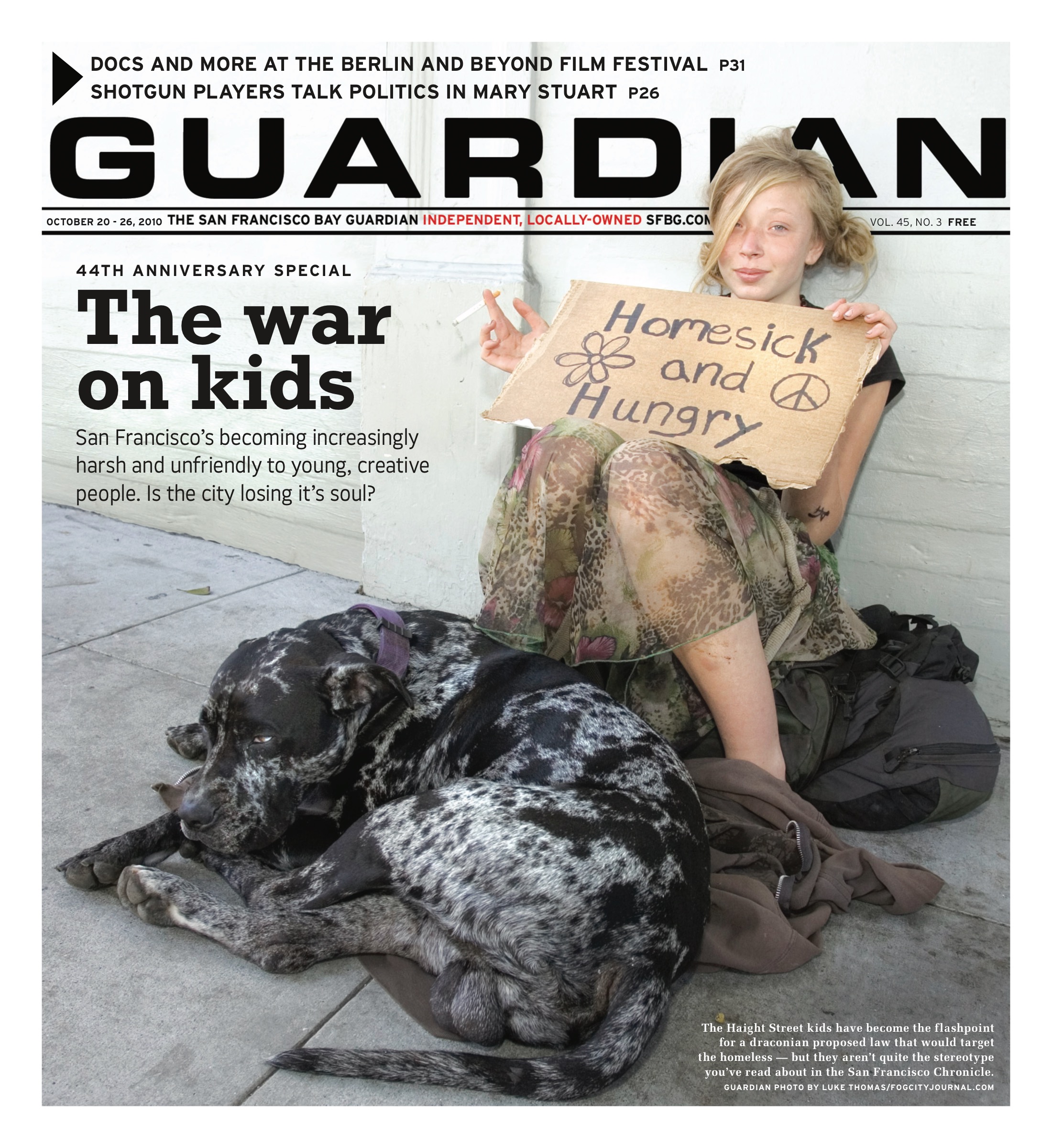
I’ve been hanging out with the Haight Street kids. Over the course of a week or so, I smoked weed, drank malt liquor, witnessed nasty run-ins with police officers — all events that anyone who has walked down the sidewalks of that legendary street would expect. But I also met people who’d give away their last dollar to a friend, people who know a thing or two about community, and people who don’t see sidewalks only as thoroughfares to commerce.

Ironically, though the homeless kids on Haight are the explicit inspiration for Proposition L, the sit-lie measure on the Nov. 2 ballot, their voices have been significantly absent from the vitriolic debate on its merits and faults. Ironic because of all people, it’s these young men and women — and the citizens of San Francisco who interact humanely with them — who could teach us the most about what public space in San Francisco could be.

I didn’t just stand with a notebook, fire questions, and walk away. I took a seat and spent time with the kids, to see for myself whether its true that they’re harassing people, letting their dogs run amok, and generally ruining everyone’s lives as much as sit-lie supporters say they are. That it turned out to be uplifting was an added bonus. I got to see what many don’t on their way to shop for souvenir bongs, retro dresses, and designer skateboards — the reason young people from around the country come to the neighborhood.

It doesn’t have anything to do with fancy Victorians and boutiques, which may explain the disconnect between the street kids and their detractors. They come for the legacy of individuals brave enough to slough off social mores that Haight-Ashbury residents are so ostensibly proud of — not to mention the companionship of others who are comfortable with their rejection of and by society. They come to share stories and pipes and encouragement, and it was cool to watch a streetscape in San Francisco that wasn’t geared solely to commerce.

And while the young people I talked to told me how much they liked to travel, to live free of convention and without ties to the workday world, after a while most acknowledged that they had left behind families who couldn’t or didn’t care for them, home situations that were uncomfortable enough to make life on the streets seem like a better alternative.

Although violent incidents, uncivil behavior, and threatening dogs are well-documented by other news sources, I didn’t see any of that when I was hanging out on Haight. That doesn’t mean that these things don’t exist — but it might suggest that some of the strident supporters of Prop. L are seeing what they want to see.

SPANGING

Steven, who asked us not to use his full name, is 20 and homeless. He grew up in Stockton, became a welder after high school, then decided he “didn’t want the hassle” of staying put for a wage job. His fingernails play host to an ungodly amount of dirt, but his tight blonde curls, pretty golden eyes (“they look like a lion’s!” says one friend in amazement) and mellow, generous demeanor make him a popular hub among his homeless peers.

It doesn’t hurt that he sells weed, small amounts at a time to passing tourists and acquaintances. He silently passes a pipe around to his companions with the slightest provocation. Steven approached me on the street before he knew I was a journalist, a fact that seemed to make little difference to him.

He says he came to the Haight “for the people,” for the area’s reputation of open souls and unconventional artists that originated in the glory days of Janis Joplin and the Grateful Dead. Like most of the kids I talked to, he eschewed the often dangerous shelter scene to sleep in Golden Gate Park or nearby Buena Vista Park despite the police surveillance that could result in spendy fines for park camping.

Although Steven’s worldly possessions fit into the large camping backpack he carries with him 24 hours a day, and even though he’s been living on Haight less than nine months — broken by a jaunt to Eugene, Ore., where he found it “too rainy” to join the town’s expansive street kid community — he doesn’t plan on being homeless forever. It’s just that nothing about this economic climate inspires him to sell his freedom for a paycheck. He plans to go to a four-year college eventually. He sees an education as the only way to get a “real” job. “But until then, why not do this?” he asks. I’m not sure if he’s waiting for my answer.

“This” is sit on Haight Street and “spange,” the term used for “flying a sign” and asking shoppers and neighbors walking by for money, often in a creative way. Of the many crimes street kids are guilty of in the eyes of supporters, spanging is the only one Prop. L would effect.

If Francisco voters approve it, anyone who sits or reclines on the sidewalk (with exceptions for the handicapped and those with permits — but not for the tired, workers on breaks, or people waiting for buses) will be subject to a fine of $50 to $100 for the first offense and $300 to $500, or a maximum of 10 days in jail, for someone found guilty twice within 24 hours of unduly supporting his or her body on the sidewalk between 7 a.m. and 11 p.m. Similar laws can be found up and down the West Coast — although Portland’s was pulled from the books last year after being found unconstitutional because it targeted the homeless.

I ask street kid after street kid why they’ve chosen this lifestyle. Many wouldn’t have it any other way. “Why do people want us off the street?” says Oz, a 21 year old from upstate New York who deals alongside Steven. “Probably because they can’t do this themselves.”

Though I’m skeptical at first, after a while I see why the unconventional group of “travelers” on Haight choose to spend their time spanging. Conversations get struck up with the most unusual people — the old hippie who bought a new Mad Hatter cap for the weekend, the suburban woman who might or might not like to buy some weed (she can’t decide). When a few businesses ask us to move so they can sweep the sidewalk or clear a doorway, the street kids I’m watching relocate with little protest. Many who walk past Steven seemed to find humor in his sign, which that day reads “Are you one paycheck away from having this be your job too?” He says he likes to switch his message daily. “Keep it fresh.”

By hanging out with the spangers, I get to see a Haight Street with human interaction at its core. People walk by, often dropping off surprisingly generous gifts: a ex-Grateful Dead roadie with a massive beard who lives in Fairfax and stopped by the neighborhood for a quick lunch with his daughter parks in front of Steven’s group and approaches them. “You kids hungry? You look like you could use a pizza.”

He emerges a half-hour later with a large cheese pie and drives away after chatting for a few minutes about the old days, to the glee of the group (many of the street kids are Dead Heads). The kids eat their fill, then start handing out the remaining pizza to people walking by, a comic role reversal. “I like to support the community — they get back all the money they get sucked out of them,” Steven tells me.

“NARCOTIC FUELED, ANTISOCIAL THUGS”

The campaign to put a sit-lie ordinance into effect in San Francisco kicked into gear with a Saturday morning stroll. As San Francisco Chronicle columnist C.W. Nevius — who regularly publicizes complaints against the Haight street kid culture — reported Feb. 27, Mayor Gavin Newsom recently relocated to the neighborhood and saw evidence of drug use on the main stretch of Haight where he was walking with his infant daughter. “As God as my witness, there’s a guy on the sidewalk smoking crack,” Newsom reportedly said.

The mayor threw his support behind a sentiment already being voiced by the Haight Ashbury Improvement Association, a resident-merchant alliance in the area. HAIA sees the street kids as disruptive outsiders. “These are not the flower children of the 1960s. It’s narcotic fueled, antisocial thugs who act like a quasi-gang,” Ted Loewenberg, president of the association, was quoted as saying in Business Week.

Adds the Prop L website: ” … the Haight-Ashbury district — once synonymous with peace and love — this corridor is now a hot spot for street bullies, pit bulls, and drug abuse.” It’s a deft cultural lobotomy that dissociates drugs from the Summer of Love, and a devious one that implies that street kids weren’t major players in that social revolution.

As for the bullies, I didn’t see any violence from the street kids in the days and nights I spent out on Haight Street.

I couldn’t get cops to talk to me about it, either. There were two police officers on foot traversing Haight’s main strip and I introduced myself when they stood chatting with a coffee shop owner in the afternoon sunshine and asked them about the sort of neighborhood complaints they regularly received about the street kids.

“No comment,” Cop No. 1 told me. Okay, Cop No. 2, your thoughts? “I don’t speak English.”

To my requests that they share their view of crime on Haight, I could get one response: “It’s complicated.” Later, when I returned to write down their badge numbers, they were standing silently, staring at a lone young man sitting against a wall next to his skateboard. The kid was looking at the ground. Eventually they handcuffed him and put him in a police car while he pleaded meekly about it “only being a little bit of weed — and I was only skateboarding on the sidewalk.”

The most aggression I witnessed from any party took place while I was tapping my feet to a group of traveling bluegrass musicians performing around 10 p.m. on a Thursday. Their cover of Del Shannon’s “Runaway” had inspired an older homeless man to strike up a curiously graceful stomp dance on the sidewalk. He was so drunk and fully immersed in the music that the bottle of Jim Beam in his flailing hand didn’t even register when the police officer approached him and asked, “What do you think you’re doing?”

The musicians began to pack up. “I could have told you this would happen 20 minutes ago,” one tells me, nodding toward the old man. “Don’t say a word or I’ll fucking take you in,” said the cop, who poured out the half-full bottle and wrote a ticket for the older man, who had made a few feeble protests that ended abruptly with the cop’s obscenity.

The officer said he’d received a complaint about the music, a line I heard from each cop I came into contact with on Haight — including one officer who cautioned a family with a toddler to pack up the bracelets they were selling to pay the towing charges on their van. “People don’t like to see people with kids out here, you better move it along,” the cop said.

“I’ve seen aggression because people start shit,” Steven tells me when I ask him about his experience with street violence. A man has just walked by chanting “dirty, dirty” in Steven’s and his friends’ faces. “They don’t like to see people sit on the ground.”

“There are people who come down here just to make themselves look better,” chimes in Oz. “Like ‘ha ha ha, I have air conditioning.’ All kinds of people start shit”

I asked if they knew they were the focus of a massive political debate in San Francisco. “No, what debate?” asked Steven.

“You mean sit-lie?” Oz asks. “It probably has to do with tourism. I don’t see why else they would do that.”

Even the most well-known recent case of Haight Street violence — which was reported June 11 by New York Times reporter Scott James as having “inspired a grass roots movement” that propelled Prop. L, seems to be a question of mutual aggression on the two sides of the street kids issue.

The story goes that a man named Thomas was hosing down the sidewalk in front of his house — a practice that is growing more common in the Haight to make property inhospitable to the homeless. He found himself “surrounded and engaged in a heated confrontation,” as James reports. Thomas reportedly shouted “Do you want a piece of me?” and a scuffle erupted between him and Chad Potter, a 26-year old homeless man, culminating with Potter being arrested and set free the next day. Thomas says Potter and friends continued to harass him after the incident.

James Orr, 24, is busking with his flute when I meet him sitting by a store that sells flowing hippie skirts and bumper stickers that command future tailgaters to “Coexist.” He’s looking to trade his wind instrument for a banjo, which he plays in addition to guitar. A rolling stone, Orr is in town for the Hardly Strictly Bluegrass festival that weekend — he travels the country going to festivals, and even scored a job recently at upstate New York’s Mountain Jam for the event’s blog site, taking photos with a borrowed camera of performances by (ex-member of The Band) Levon Helm and Michael Franti.

Orr’s quite erudite and eager to “say something articulate” about the situation of the street kids and travelers on Haight. He tells me that yeah, he’s seen aggression go down here on occasion. But he resents those situations leading to laws against sitting on the street.

“It’s another example of the few that do mess up casting a bad light on everyone else. Most of us just want to make some money, put a smile on someone’s face.” As a busker, he finds it baffling that people who are against the presence of the homeless would want him to stop plying his trade by making sitting illegal. “You should point out also that it’s how we make money!” he exclaims.

THE PIT BULLS

Snarling ruffians on frayed rope leashes stalking the city streets! As evidenced by the Civil Sidewalks campaign, dogs — specifically pit bulls — are another source of controversy on the pavement. Last December, SFist identified a C.W. Nevius tirade against the breed as example of its ongoing feature “Pit Bull Hate Watch.” The paper has pointed out that the demonized dogs can make great members of society and are often the subject of a media smear campaign.

But for many homeless youth, their dogs aren’t the means of imposing chaos on the gentry. They keep them for the same reasons we do: friendship, protection, love — and during the days I spent on Haight, it was a pleasure to pat the doggies while interviewing their owners. Most were as gentle and laid back as the kids they sprawled next to, a reasonably expected result from the 24 hours a day of socialization with humans that the homeless lifestyle affords.

Smiley is an inveterate street kid unlikely to go indoors anytime soon. “I don’t know how to do anything else,” she tells me. Now in her early 20s with a shock of magenta, purple, and dirty blonde hair and fanciful purple ear plugs that pierce her lobes before spiraling nearly to her shoulders, she’s been traveling since she was 12 — “a Bohemian by blood,” as she puts it. Not only did her parents move their household regularly throughout her childhood, but their heritage is Romani, from the traveling tribes of Eastern Europe.

For Smiley, travel outside the bounds of business trips and weekend vacations is her life’s norm, and Haight Street’s legacy resounds in her nomadic soul. “Most of the people that travelers idolize were here,” she tells me.

Smiley has a year-old behemoth black mutt with droopy eyes. He obliges her as she leans into him holding her spanging sign, which tells the world the pup needs Benadryl for an upcoming van ride to Southern California. “He’s carsick,” she tells me sheepishly. She admits that the dog can limit her mobility on public transportation, but his benefits outweigh his cost. He keeps her warm at night — and, more important for a young woman who is often on her own, he protects her. For a moment breaking out of tough girl mode, she tell me, “oh yeah, I don’t have to worry about anything when he’s around.”

We talk about the perceived threat of dogs on Haight Street. “They want us to leash them, which I guess I understand — but look at that!” A well-dressed woman in her 40s has her Chihuahua off its leash and it has run into the busy street, with her in hot pursuit. “That dog’s out of control,” Smiley smiles.

PISS

Sitting against a mural on a wall where Haight meets Clayton, I watch Piss, an outgoing, gangly guy in his early 20s with a curly blonde mohawk in a growing-out stage. I ask him where he got his unusual moniker. “I like to get drunk and piss on things,” he says.

Well. Originally from Billings, Mont., Piss has been traveling since his mid-teens. “Let’s just say me and my family don’t get along,” he tells me.

His answers to my questions about why he’s on the streets follow a path I see with many of the younger homeless youth: they insist that the lure of the open road was too hard to ignore, but eventually reveal that their parents kicked them out or were unable to care for them at a young age. Many, like Juju, another small-time weed dealer I met, bounced from family member to family member until frictions with them and their significant others left no recourse but the street.

Piss says he’s been to every state in the country, plus Canada and Mexico. With so many years on the road, he is, as they say, letting his freak flag fly. Piss has a blue, vaguely tribal tattoo that curls around his right eye. He’s wearing white tube socks on the dirty pavement. At first glance, he could be crazy — and maybe he is. Whatever his motivation for travel, it’s not to blend in with the locals.

Piss is also actively spanging passersby in a manner that oscillates between off-putting and charming. “You got some money for some crack and ice cream?” he inquires of a passing trio of young women. They shake their head, but before they’re gone completely he continues “I’m just kidding! I don’t like ice cream! Hey miss, you have a nice ass … day!”

Over the course of the hour that I watch him a stand up routine emerges. Beneath the grime, he’s a charismatic kid with an enviable sense of comedic timing.

As he ranges up and down a 20-foot stretch of sidewalk, belly laughs are elicited from a few targets, dollars surfacing here and there. One man carrying an accordion and wearing an expensive-looking pair of leather Chaco sandals donates a handful of strawberries to Piss and to those of us acting as his entourage.

But Piss’ play is a little rough — like a big puppy — and he’s alienating the people who don’t crack up over crack. A couple of people walk away quickly from his petitions shaking their heads over one of the zingers, their suspicions confirmed about those rowdy Haight Street kids.

He’s not doing anything more than what young travelers do all over the world. Thousands of families bid see you later to young adults en route to Prague, Peru, and Perth each year, where they lug their dirty backpacks through the world’s most wondrous towns.

Of course, these kids aren’t sleeping in the public parks of Cuzco — but in countries with plenty of cheap travelers’ hostels, you don’t have to. And though international flights cost more than the van rides and freight train hops that brought in most of the Haight Street kids, backpackers abroad do the same things: take fewer showers and flaunt social norms — not because they want to cause a problem for the natives of the lands they pass through, but because they are young, and discovering themselves for the first time, and can’t see much past that. Piss isn’t being violent, but he has lost the language to deal with “normies” and he’s seen as unpredictable to the not-traveling, not-disenfranchised around him. Which to those who see public space as a place that should be predictable, mean he’s a threat.

The clash between the settled and transient in the Haight is not new. Indeed, it’s what made the neighborhood famous. As far back as the mid-1960s, officials have been simultaneously fighting and publicizing the Haight’s worldwide reputation as a traveler’s meeting place, a place with a culture of loosened societal moorings and enlightenment through free love, drugs, and art.

Businesses claim that the omnipresent homeless drive away paying customers from Haight Street. It a curious claim in an area where the vagrant hippie culture made the place the tourist attraction it is today, and one that is belied by the entry of Whole Foods, which plans to open a branch this year at a lot at Haight and Stanyan vacant since 2006. When contrasted with the Tenderloin — another neighborhood with a visible street community — and its chronic problems attracting a grocery store, the Haight street kids’ effect on local commerce doesn’t seem to be all that grave.

They certainly aren’t making the place any less desirable of a neighborhood to live in for the wealthy. Real estate website Trulia.com puts the median listing price for homes in the Haight-Ashbury neighborhood at $962,264.

The Haight Street kids I spoke could all too easily see what sit-lie would mean for San Francisco. When you control public space, you control who is in public space — and they have no illusions about whether or not they’re included in the perfect world of those who push the measure. If it’s enacted, the subculture that made Haight famous — part of which still survives today in a different form — would be gone, leaving it sterile and safe for the head shops and clothing boutiques, an even less authentic version of the ’60s love fest their patrons come to the street for. One wonders if a scrubbed-clean Haight is even what the residents and business owners who have thrown their lot behind sit-lie truly want, or if they’ve been duped into sit-lie’s efficacy by the same forces that on a national level have convinced us that curtailing civil liberties will lead to freedom for the real Americans. It comes down to this: What do we want Haight Street to be? Do we want to capitalize and benefit from the accepting, messy, wildly creative legacy the 20th century endowed our streets, or do we want a clean, friendly, outdoor mall? The powers of homogenization and gentrification can demonize the little heathens on Haight Street all they want, but they’ve miscalculated if they think that they don’t belong in San Francisco — after all, Haight created them, not the other way around.

Our 44th Anniversary Issue also includes stories by Sarah Phelan on SF’s disadvantaged youth, Rebecca Bowe’s look at ageing out of the foster care system, and Tim Redmond’s editorial on the issues facing our rising generation

Ebony Hillbillies string along Hardly Strictly’s biggest year yet

1

Nine hundred thousand people and over 70 bands braved the drifting fog banks for this weekend’s 10th annual Hardly Strictly Bluegrass Festival. With a crowd that size, you have to think logistics. So at my interview with HSB bankroller-birthday boy Warren Hellman well before the madness, I asked who were the up and comers to look out for. I chicken-danced our way through Speedway Meadows accordingly.

“The Ebony Hillbillies,” Hellman told me, chuckling over lead singer – and as the band’s press kit explains, “bones” of the group — Gloria Gassaway’s penchant for abrupt audience interaction. The HSB performance would be its first in the Bay Area, and Hellman was happy to have been its means of infiltration, particularly for Gassaway’s no-nonsense stage presence. “She’s quite a woman,” he said.

Quite a woman indeed. the Hillbillies, hailing from Jamaica, Queens, are helping to sustain the tradition of African-American string bands that started with the genre’s inception in the Appalachians in the 1920s. Black pioneers in the music can seem ironic now, particularly at events like Hardly Strictly where the audience is majority white. 

But so it goes — and some of the weekend’s most exciting shows flew from the fiddles, banjos, and diddly bows of black groups like the Hillbillies and Carolina Chocolate Drops, firmly establishing that bluegrass (and neo-bluegrass, and string bands, and jazz, blues, rockabilly, country, rock ‘n’ roll, everything else that falls under “hardly) doesn’t have to be just for the honkies.

“I love making the audience have a good time. You come to see the show, you want to be entertained, but you also want to enjoy yourself,” Gassaway tells me when we catch up with her after the group’s set on Friday. 

Sporting matching moccasins with fiddle player Henrique Prince, and with purple feathers threaded into her hair, the ebullient Gassaway exchanged my compliment on her flair with an insight into her cultural heritage. Although they were born with blood from the Catawba tribe of the South and North Carolina borderland, Gassaway’s father instructed Gassaway and her siblings never to reveal the secret of their Native-American-ness to teachers at school so that they could avoid possible discrimination. 

“He told us, tell them you’re from Mexico, or African-American, or something – just not Native,” she says. She says she held onto that learned denial until a trip to Europe, during which she realized the beauty of her background. Now Gassaway sports turquoise jewelry onstage while playing the string music that her Black and Native ancestors must have heard almost a hundred years ago. “I’m Native, and I wear my heritage proudly,” she tells me.

Although the Hillbillies’ current configuration experienced its debut in San Francisco this weekend, it was by no means the first time individual band members had played in the City by the Bay. Bass player William Saltner recalled his last time here in the early ’60s. Saltner, a two-time Grammy winner for songwriting – he wrote “Where is the Love?” and co-wrote “Just the Two of Us” – was working with Miriam Makeba, who at the time was exiled from her home in apartheid South Africa. 

“We don’t play bluegrass, we play old tyme music,” Saltner clarifies backstage. “But we claim bluegrass in this crowd,” he continues with a sly smile.

That kind of genre-bending, always evident at HSB, continued throughout the three days of 2010’s festival. MC Hammer kicked off the weekend at his yearly performance at the middle-schooler’s show on Friday morning. Randy Newman, a newly bluegrass-friendly Elvis Costello, Robert Earl Keen, the Avett Brothers, Joan Baez, and Patti Smith all turned in stellar sets that could hardly fall into the “strictly” category. The diversity was reflected in the varying age demographics of the crowd, who for the most part eschewed the sanctity of the blanket that had reigned in years past – those faithful early risers that spread their tarps in front of stages in the small hours of the morning saw their space quickly infiltrated by standing room-only, stage-switching attendees. 

Temperatures in the high 60s did nothing to stem the tide of music fans that flooded the peaks and valleys of Golden Gate Park for the free festival, but they did threaten the Hillbillies’ chances of starting up a dance party with their stomp-ready old tyme strings with their opening act at the Banjo Stage on Friday. “Are you cold?” Gassaway inquired from her seat on stage. “Because I sure am!”

The cold weather seemed to make it difficult to keep strings in shape – the action stopped a few times so that a stoic Norris Bennett could tune his diddley bow, and then later his banjo to perfection. But the challenge seemed to energize the group’s firestarter. Of course, it doesn’t hurt when you can pull Hellman onstage for a little unscheduled entertainment, which Gassaway managed to accomplish in a moment when she spotted the man enjoying the show from the stage’s sidelines.

Perhaps he had it coming for hyping Gassaway’s sass. Hellman did his best to represent the honkies though, bowing out his legs and wagging his elbows in a “broke-legged chicken” dance on her command. But for all his obedience, he’s got a ways to go as far as Gassaway is concerned. A fact which she let him (and us now) know in the intro of a song entitled “Big Fat Men,” an ode to the joys of obese lovers.

Which the wiry Hellman could hardly be described as. Yet. But he’s got a good coach. “I’ve been feeding him cheesecake,” Gassaway tells me. Blow out the candle first, Warren – number ten was a good year for Hardly Strictly.


When you’re having more than one

1

tiredmond@sfbg.com

BEER I saw a great T-shirt in upstate New York this summer, and it’s become my official motto: “You can’t drink all day if you don’t start in the morning.”

Well, maybe that’s a bit of an exaggeration — I’m not as young as I used to be, and the days of morning (or even afternoon) drinking are becoming rarer. But I’m still the guy Schaefer Beer was thinking about when they wrote that slogan in the 1960s about the “one beer to have when you’re having more than one.” Frankly, I’d rather down three or for (or five) cheap light beers than sit around all evening nursing one fine IPA.

So I’ve taken quite an interest in session beers — craft brews with an ABV (alcohol by volume) level of less than 4.5 percent. You can drink a session beer at lunch and still go back to work. You can drink a couple-three after work and not be too blotto to make dinner and put the kids to bed. Or, as one of our tasters put it: “If I hit a happy hour, I’m usually done for the night. But after these beers, I was still ready for an evening of drinking.”

The term “session beer” is usually traced back to England in the World War II era, where the pubs were only open for a short “session” during the lunch hour so the workers could get back to the munitions plants. They’ve become pretty popular on the East Coast, where session beer festivals abound, and they’re making their way west.

It’s still not easy to find good session beer — we live in the land of high-craft, high-alcohol brews, and a lot of the smaller breweries (scared, perhaps, of the evil “light beer” rep) stay away from the weaker, or at least less alcoholic, stuff. But if you shop around a bit, you can find some excellent local choices.

Our willing lab rats sampled six local brews — well, one, Stone Levitation Ale, comes from San Diego, but you can buy it locally — with Bud Light thrown in as a ringer. The tasting was blind, the labels on the bottles well disguised; I was the only one who knew which beer was which.

What we found: There are some truly excellent session beers out there. But not every craft session beer is created equal; our panel liked some a lot better than others. “None of them will grab a beer snob,” one taster noted. “But there were some good ones.”

(A note: Some of these brews — particularly the ones from Haight Street’s Magnolia Pub and Brewery — are available only from the brewhouse. Others can be found in bottles anywhere that carries a wide assortment of craft beers.)

The two samples from Magnolia were the clear winners. Our tasters uniformly liked the Dark Star Mild, calling it “dark and rich tasting, with a light finish and soft aftertaste.” One noted: “I could see sitting on a roof on a hot day and drinking this with my lunch.” Even one of our skeptics, who wasn’t thrilled with any of the offerings, noted “I could drink this one.”

Magnolia’s Sarah’s Ruby, a dark, thick brew, was a close second. One panelist noted: “It has a lot of flavor going on, something I would be happy to order in a bar.” Another liked the “nice taste of toasted barley and hops” while another called it “very robust, not at all like a light beer.”

Anchor Brewing Company’s Small Beer was a close third. The beer, which comes in at just 3.3 ABV, has an interesting history. Anchor brews a barleywine ale, Old Foghorn, that’s almost 10 percent ABV. The brewers then take the once-used mix of malt mash and brew from it a second time, getting a much lighter result. But it doesn’t taste like a rerun at all; one of us said it was “a nice beer that I’d like to keep at home and drink a lot of.” Another called it “musty and earthy” and noted that it would “go well with a cheeseburger or pizza.” And even the critics said, in the words of one, “this is pretty damn okay.”

Ale Industries’ Bliss got points for being “very drinkable.” Our panelist noted a nice malty taste and called it “woodsy and smooth,” although some described it as a bit watery. Stone Brewery’s Stone Levitation Ale came off as “strong, with a bit of licorice flavor,” although one drinker said its strength was also a weakness: “A bit to hoppy to drink a lot of it.”

The Bud Light, I fear, didn’t fare so well. We threw this in for fun (I, for one, remain a Bud Light fan) and for comparison. Although not technically defined as a session beer, it does clock in at 4.5 ABV, 20 percent lower than a standard Bud. Our tasters were not impressed: “This tastes like the 3.2 beer I had to drink during basic training in Fort Carson,” our resident former infantryman wrote. Or, as another put it, “Has the metallic finish that makes for great keg parties and awful hangovers.” Still the Bud Light got points for sessionability; “For sure the best choice for beer pong. You could probably consume mass quantities and still be OK in the morning.”

Ale Industries Orange Shush came in last, probably because its flavor is unique and quite different from the other samples. The critics called its flavor too fruity. The people who liked it, though, said that it was a “good light beer that I could drink all night.”

Which is, after all, the point.

O victory forget your underwear

0

marke@sfbg.com

>>CLICK HERE FOR OUR INTERVIEW WITH JAMES FRANCO

Let’s get this out of the way right off the bat: The true “howl” in Rob Epstein and Jeffrey Friedman’s breezy bio-pic Howl is that of the ghost of Beat poet and queer countercultural icon Allen Ginsberg, patting his Buddha belly in the clouds and roaring at his good fortune to be portrayed by James Franco. Eat Pray Love‘s Elizabeth Gilbert may have scored the chick lit holy grail with Julia Roberts, but on the gay-o-meter, being reincarnated in the delectable body of Franco is pretty much to die for.

And Franco’s performance is a wonder, necessarily conveying all the maddening and inspiring elements of the young poet’s personality through subtle facial expressions, eye twinkles, and head cocks. I say necessarily because another thing Franco nails is Ginsberg’s pancake-flat vocal inflection. (Even at 31, Ginsberg came off like a nursing home resident grumbling over mushy latkes.)

There is the evangelical poeticizing and genius marketing. There is the awkward peacocking and needy perviness. And then there is Howl itself. I guess calling this a biopic is misleading. The movie is an amalgamation of styles — imagined interview, courtroom drama, historical flashback, animated fancy — that zeroes in on one particular slice of Ginsberg’s (and the nation’s) development: the celebrated 1957 obscenity trial over Howl the poem that seared Ginsberg, the Beats, and midcentury San Francisco into mainstream consciousness.

Focusing on that trial — City Lights publisher Lawrence Ferlinghetti and bookstore employee Shigeyoshi Murao were busted when Murao sold a copy of the poem to undercover cops — is an excellent strategy, and not just because, historical spoiler alert, Howl‘s victory provides a snappy climax. It also gives the filmmakers a chance to open a window on a particularly tumultuous time.

You get a little Mad Men-type excitement in the spot-on retro set designs and courtroom scenes, which rub old-school 1950s mores against the nascent cultural revolution. (Jon Hamm, Mad Men protagonist, plays the dashing defense lawyer.) You get some freshly presented Beat hagiography, with scenes of strapping young literary princes shaking off their fancy college pedigrees in New York and going, yes, on the road. Jack Kerouac, Neil Cassady, Peter Orlovsky … Beat fetishists will be readjusting their berets with glee.

Unfortunately, you also get long stretches of animated interpretations of the Howl text that seem incongruously imported from the neon-noir ’90s. Which in fact they were — illustrator Eric Drooker collaborated with Ginsberg for 1996’s Illuminated Poems, and he’s the animation designer here. The swirling ayurvedic tornadoes and cosmically copulating bodies, coupled with overly literal imagery (i.e. African American saxophonist during the “Negro streets at dawn” passage) took me back to a lot of bad French Canadian animation festivals.

Mostly though, you get the young Ginsberg. He didn’t attend the obscenity trial, and Howl’s framing device is an imagined interview in his fantastically shabby chic North Beach apartment during the legal proceedings. With Epstein and Friedman (The Times of Harvey Milk) directing, Gus Van Sant (Milk) executive producing, and Franco fresh from Milk himself, the set-up is pretty obvious. Another queer saint is being cinematically canonized. (Ginsberg, of course, was far from Milk on the political scale — his version of gay lib focused on the spiritual journey, not the systematic legal integration. Maybe Howl is meant to be the yang to Milk‘s yin.)

The idea of portraying an openly gay man in the 1950s is juicy — but Howl skews toward sexual yuks, like Neil Cassady’s girlfriend walking in on Ginsberg about to blow him. In this often rushed-feeling film, Ginsberg is allowed only a splash of existential longing before finding some fulfillment with his lifelong companion Orlovsky. But is that really fair, or even brave? After Milk, wouldn’t it be more courageous for this distinguished team to take on a lesbian activist? A transgender groundbreaker? A queer of color? Or even, gasp, the opportunistic, overexposed, NAMBLA-defending, hustler-gorging, radiantly nudist old man that Ginsberg became?

HOWL opens Fri/24 in Bay Area theaters.

VIRGINS & REJECTS FILM FESTIVAL

0

The Digital Filmmaking & Video Production department at The Art Institute of California- San Francisco proudly presents the 2nd annual Virgins and Rejects Film Festival. The Virgins and Rejects Film Festival is open to all filmmakers and gives them the opportunity to showcase their work for the first time. The festival debuted last year in San Francisco, California with a successful program of short media by filmmakers who had either never entered into a festival or had been rejected by previous festivals.
 
We are now seeking submissions for the 2nd annual Virgins & Rejects Film Festival. Submissions can be of any genre, and should range in length from 1-15 minutes. A full list of submission guidelines can be found at the Virgins & Rejects website.
 
Once chosen, the films will be screened at the Virgins & Rejects Film Festival held at the Roxie Theatre on Thursday, October 7th, 2010.

The Performant: A mutable feast — or, theater, buffet-style

0

If the venerable San Francisco Fringe Festival is a full-on Circus Circus-style, all-you-can-eat-buffet, I like to think of its kid cousin the San Francisco Theatre Festival  — which took place Sunday, August 8 — as more of a pu-pu platter. Tasty little morsels of performance presented in manageable, bite-sized chunks designed to whet the appetite for the main courses (the full productions) to come. I don’t know about you, but when I’m confronted with the choice between dainty nibbling, or cleaning each plate as it comes, I tend to adapt the life-is-uncertain principle and gorge myself on all the available goodies in sight.


Gorging comes more easily than restraint at all-day festivals, and it’s hard to determine before you bite whether your picks will be sweet or savory. A delectable treat, first of the day, was an excerpt from a brand new company: The 11th Hour Ensemble. The 11th Hour members’ 20-minute preview of their movement-based, Lewis Carroll-inspired “Alice” was fresh, exciting, hilarious, and completely unexpected. If their full-length production (opening September 8th) is half as charming as their highlights reel, it’ll be a don’t-miss. A quick dash across the park and into the Metreon brought me to Mugwumpin’s excerpt of their current show “This is all I Need” (playing at NOHspace through September 4). Thematically-connected to their last, site-specific “Occurrence” which took place in a semi-residential motel in June, “Need” explores the relationships between ourselves and our possessions. A particularly funny bit involved a convoluted daydream of property ownership and a barricade of berry boxes, but over too soon, it was back outside for a glimpse of No Nude Men (ha! there weren’t any! But there were zombies!). On my way to see San Francisco Recovery Theatre’s modernized take on the Amiri Baraka classic “Dutchman” (opening in October, I believe) I slipped into Ray of Light’s “Jerry Springer, the Opera” (opens September 10). Classically-trained singers reveling in lyrics about adult diaper-play, stripping, and self-abuse? Someone ought to write a show about that.

*******
A one-man smorgasbord of theatrical tropes and truisms, Will Franken played the Clubhouse this past weekend,serving up a bubbling stew of new material mixed in with a few old favorites. As physical as he is cerebral, commedian Franken’s act conforms far less to the traditional stand-up routine but rather to that of the highly-refined, abstracted-reality sketch comedy of Monty Python, The Kids in the Hall, and The Cody Rivers Show. Jim Carrey might be the man with the rubber face, but Franken’s whole persona is as elastic as a rubber band, and in a whirlwind 20-minute set, Franken portrayed a panoply of distinct characters from cross-dressing panhandler to schizophrenic marriage counselor, Al Gore to General Petraeus, an outsourced solar panel salesman in China to a well-meaning yet ultimately self-deluding “condom lady” in Whitechapel circa 1888. No passively-progressive sacred cow ever emerges from Franken’s contrarian logic unscathed—he’s out there gleefully hacking off the hindquarters and serving them up on a slightly tarnished platter before you can say “yoga mat.” But even late on a Friday night with no BYOB, just a taste of Franken’s mad creations left us salivating for more.

Te Vaka paddles up with news from the South Pacific

0

Opetaia Foa’i’s mother’s ancestral home is sinking into the ocean. And he’s not supposed to talk about it. Tuvalu, comprised of four South Pacific Islands whose combined mass comes to a grand total of ten square miles, has its own language, a distinct cultural heritage like many of its neighbors. But what struck Foa’i (who was born on Samoa and raised in an islander community on New Zealand) saw when he went back was that rising ocean levels had reached up the air strip his plane landed on. So he wrote a song about it. His music and dance group, Te Vaka (which comes to Great American Music Hall Fri/13) plays music that evokes not only the ancient tales of those faraway seas, but also the fact that they matter, here and now.

“I was in the bad books of my parents,” Foa’i tells me. We’re sitting with his wife, band manager Julie Foa’i, at a table in the courtyard of the Phoenix Hotel on Eddy Street. At the start of a whirlwind two year tour, the band is a bit boggled by their first view of the U.S. on this pass through. “We’re like, is the rest of our American tour going to look like this?” Julie tells me of the group’s quick trip out for supplies in the textured Civic Center-Tenderloin area before today’s drive to Santa Cruz. Her bewilderment is fetching, but it belies the fact the band has been touring the world for the last 15 years, during which time they’ve performed in Peter Gabriel’s WOMAD world music concert series, and in a whole passel of festivals the world over.

But back, for a moment, to the whole ocean taking over ancestral home thing. Opetaia wasn’t supposed to talk about it because in Tuvalu culture to speak of the rising waters, attributed scientifically to the dissipation of the polar ice caps, was to give them power. Simply not done. But Opetaia is a man who wanted a voice. One doesn’t go from doing covers in New Zealand bars to assembling a ten-piece ensemble of talented young island musicians, touring the world with them, and even recording with Peter Gabriel without a desire to be heard.

Not that he did it alone — there is a much loved story in the group of Julie quietly writing on a piece of scrap paper at a meeting “Take this music to the world”: she continues to be a driving force behind the group’s conquests. Te Vaka’s name comes from the word for “canoe,” paying tribute to the ancients that Opetaia says “sailed the ocean in a simple canoe using the environment to guide them. These guys, they populated the islands and they carried on — that’s why there’s this thread of culture connecting all the islands.” One senses the group thrives on that connection between cultures, cannot believe their luck when a new city is picking up what they’re putting down.

The song about the rising waters, “Toko Matua,” went on “Nukukehe,” Te Vaka’s third album. Subsequent releases have turned a gaze on AIDS, over fishing in the South Pacific — as well as the joys of island life. In addition to traditional music, Opetaia cites the artists that impressed him when he first went to the New Zealand mainland as a child with his parents for formal education: Jimi Hendrix, Joan Armatrang, Joni Mitchell. The band’s repertoire is now vast enough that they can tailor shows to their audience, upbeat for dancing crowds, slowed down for the times when a more traditional sound is appropriate.

And oh, those joys of island life. 

I mention an observation from many a review I’ve read of Te Vaka’s stage show: that it is undeniably, hip-thrustingly sensual. Is that a conscious effort on the part of the band? “We actually underdo everything!” laughs Opetaia. “If they call that sensual… If you want something sexy, go to Tahiti and the Cook Islands. The ritual of shaking hips, it has sexual connotations. That’s the original meaning, courting.” He smiles. “It’s not done on purpose.” “Although the girls do wear coconut bras,” Julie tells me. Apparently, the band has a boatload of costume changes at a typical show.

Which tends to confounds customs. Between the skins and feathers of the costumes to the backbone of the group’s percussion, the traditional log drums, they tend to get hassled a bit in the airport. Not to mention those drums are heavy. “We can’t do without them,” muses Opetaia. “But I can understand why other bands have ditched them.”

That’s not all that other groups from their region have ditched, either. The couple can’t name a single other band who has successfully brought the traditional sounds to the rest of world. “We’re the first that delivered it more South Pacific than any other group,” Opetaia says. Julie adds “we’re not vaguely related to what’s happening in Australia and New Zealand, most groups are doing reggae.” “It’s really sad,” Opetaia chimes in “I thought a lot of people would follow, there’s a lot of great musicians out there — but you’ve got to have patience” to make it big on the international scene “I think that’s what they need.” Of those who have turned to the fallback of modern island cultures everywhere, reggae, he says “they make more money than we do, but we don’t do this to be rock stars.”

But that patience that he was talking about is beginning to pay off for Te Vaka. Earlier this week, the group was selected to play the after-party for the Edmonton Folk Music Festival, a packed, high energy affair in a cavernous hotel ballroom. They were under the impression they’d be background music to the crowd, but were surprised when the floor started shaking beneath them. “You see that at rock parties — but people were jumping!” says Opetaia, aglow with the way the South Pacific’s sounds are resonating far beyond the reach of even the most intrepid canoe paddler.

Te Vaka

Fri/13 9 p.m., $26

Great American Music Hall

859 O’Farrell, SF

(415) 885-0750

www.gamh.com


Gods of Distortion: The Interviews (Part Two)

1

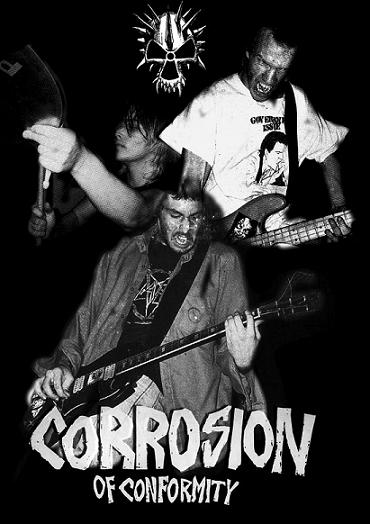
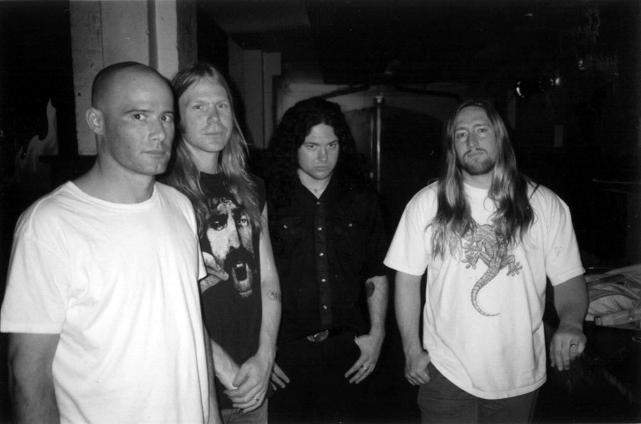
Check out Ben Richardson’s story on the Southern Lord Mini-Tour in this week’s Guardian. Here, he talks with Mike Dean, bassist and singer of Corrosion of Conformity.

San Francisco Bay Guardian: You guys are practicing in North Carolina now, in preparation for the tour?

Mike Dean: That’s right, yeah. It might be useful.

SFBG: How long has it been since you’ve played all these Animosity songs?

MD: Quite a while. Easily 23, 24 years, something like that. 23 years!

SFBG: How does that feel? Is it like putting on an old garment?

MD: Either I remember the stuff precisely, and it is like putting on an old garment – it feels just like yesterday, and I can play it – or there are parts of songs that I have no recollection of. It’s either completely natural or kind of strange.

SFBG: Can you point to any particular parts that seem unfamiliar?

MD: There’s a bridge-like part in the middle of the song “Holier,” that I completely forgot about!

SFBG: This must be due in part to the fact that your technique has changed a lot over the years. At this point you’re a veteran, a very well-schooled musician – not to say that you weren’t good to begin with…

MD: It’s funny that you should mention that. It’s an astute observation, because sometime around the time we did [1987’s] Technocracy, I started to play with my fingers more and more, and sort of leave the picking thing behind. Basically, it was like starting all over again, to some extent. Now, I can do all the things on Animosity and Technocracy with my fingers, as opposed to a pick, which I would just be dropping anyway.

SFBG: So you recorded Animosity playing with a pick, but now you can play all those parts with your fingers.

MD: Yeah, I guess I’m losing points for authenticity that way.

SFBG: Well, I’m a fan of the pick-less bass playing, in general, so I gotta support that approach.

MD: I am too, but I try to have a real open mind about it now. You’ll see videos, certain songs in which John Entwistle [of the Who] or John Paul Jones [of Led Zeppelin] use a pick to mix it up.

SFBG: Tell me a little bit about how you got involved with this Southern Lord Mini-Tour. How did it all come together?

MD: That’s an interesting story. I’ve done a little recording for a band that was on Southern Lord called Earthride. Maybe about five years ago. I kinda knew Greg [Anderson, owner of Southern Lord Records] from that business. Greg was kind of a hardcore fan when he was really young. I believe that Corrosion of Conformity stayed at his house in Seattle back in the day. I have a foggy recollection of that happening. It took me a while to sort of put that person together with the guy in SunnO)))) and Goatsnake, but eventually I made that connection. Dealing with him is pretty cool, and there are a lot of artists on his label that I admire, like Wino and Goatsnake, whom I thought were really good the first time I heard them – it’s hard to go wrong with basically the rhythm section from the California version of The Obsessed and the singer for Scream.

http://www.youtube.com/watch?v=Vk3rlgFrL3w&feature=related

SFBG: Did he reach out to you, or you to him?

MD: He reached out to us. He was looking to re-issue some old stuff, and that still hasn’t happened too much. We mentioned that we were gonna record a new release, and that may happen. So we just started talking to him about doing that, and he said “hey you wanna play some shows out here?” and we were like “oh yeah!” It kinda lit a fire under our ass to get some new songs down and go out and play ’em.

SFBG: This is the new release as a trio that I’m hearing rumors about, with the Animosity line-up?

MD: Yeah. The only tangible thing that’s done is a seven-inch vinyl, two versions of one song called “Your Tomorrow.” That should be available by the time we’re out playing on the West Coast. It was kind of a hurry-up production, though it sounds really good, and looks really good too.

SFBG: Are there any plans to do any new C.O.C. material with [singer-guitarist] Pepper [Keenan]?

MD: There are plans to do that. We have a multi-pronged general plan, to perhaps take this and do a full-length three-piece release, and get out there and play it some. That’ll be quite a story – it’s been a long time, and I think we have some new material that we’re excited about. I think at the point after we’ve done that, it’ll be a story to get the Deliverance line-up together. Before we got the three-piece together, we were supposed to go to Europe and play some festivals, we had some offers, but Pepper’s busy with his other group, Down, so his schedule’s a little jacked up. So almost as a joke, I said, “Well we should do a three-piece tour!” Everybody stopped and went “Uhhhh….maybe we should!”

SFBG: What had you been up to since C.O.C. went on hiatus, in 2006? You mentioned recording Earthride…

MD: Well, C.O.C. had been going without [drummer] Reed [Mullin], and in some point around 2004, we decided to make a record with Stanton Moore, from GalacticIn the Arms of God. That’s something I’m pretty proud of, something we did ourselves in Galactic’s now-demolished rehearsal space, which was flooded out of the warehouse district of New Orleans. We had a nice little tour with Clutch, in the UK. At that point, [C.O.C. guitarist] Woody [Weatherman] and I started a band that we tentatively called Righteous Fool, and he moved up to the mountains, to basically go into agriculture and have a kid — that kind of put a damper on our plans. Then I started getting in contact with Reed for the first time in quite a few years, and we started jamming together, and that became Righteous Fool, and through that combination of circumstances we have Righteous Fool opening up for the three-piece-C.O.C gigs we have lined up in a couple weeks. It’s a slightly greasier kind of feel.

SFBG: I was gonna ask, since there’s only one song up on the Righteous Fool MySpace, and it seems more in the uptempo vein, like the older C.O.C. stuff: what are your plans for the Righteous Fool sound? What side of your musical personality do you get to express in that project?

MD: Well…it’s kind of in its infancy. We’re a couple years into it, and some good songs have emerged, but it’s difficult to call where that’s gonna go. We have a pretty solid musical presence in the form of Jason Browning. I don’t really know what to say about that. There’re a lot of directions we could go. I think there’s going to be more of an emphasis on vocal harmonies, things like that. We have a couple fun things we do, with a Fleetwood Mac song, and a Skip James song.

SFBG: Well I think people are curious to see what’s going to happen with that, and excited to see the band live. You’ll be playing two sets in a pretty short duration on this tour. What do you think the audience reaction is going to be, going from a super-slow, enveloping Goatsnake set right into this pissed-off hardcore Animosity stuff.

MD: It’ll be interesting to see. There are a lot of people who perform that kind of music [doom metal, a la Goatsnake] at some point in their life, in their younger life, in their previous life, who might have been into the hardcore kind of thing, so there’s a lot of overlap there, in terms of the cast of characters who perform that kinda stuff well. At the time – it’s kind of humorous to think, now – some of the parts on Animosity that were slower, briefly dirge-like, somewhat Black Sabbath inspired – that was considered slow, and within a certain kind of close-minded scene, was actually controversial. It was a controversy that you would play a few measures of something slow or heavy rock-inspired.

I think we were credited with being on the forefront of that, but in a way, we were just imitating Black Flag, but taking our Black Sabbath influence a little more literally, and indulging some more regressive influences. We did something original with borrowed ideas. There are people that would say we were involved in the beginnings of that type of thing, y’know. I don’t think that would be too pompous to say. [Laughs] If it is, I just said it, so…

SFBG: You mentioned having respect for Wino earlier. Being in Saint Vitus in that SST scene, he encountered people who would really be pissed off that he would play slow, super-Sabbathy songs.

MD: That was a pretty crazy thing. I’d already been initiated to the music of the Obsessed by that time, and picked up an appreciation for it. And so to see that dude in Saint Vitus not playing a guitar! It was just absurd, but it kind of wound him up, and made him a more intense vocalist. He’s been playing some shows with Saint Vitus recently, and I’ve heard that that’s still the case. I haven’t witnessed any Saint Vitus in quite a few years.

SFBG: You should take the opportunity, if it arises. I’ve seen two shows in this resurrected Saint Vitus era and…

MD: There’s no Armando on drums…they have some other dude on drums…

SFBG: Yeah, they have a different drummer, but Wino and Dave [Chandler, guitarist] are still really potent.

MD: So Saint Vitus comes to Raleigh, NC in like 1986, and Wino stays at my house (it’s a house a lot of people live at) and here he is on this tour not playing guitar. He picks up an acoustic guitar and plays tunes in a couple funny different ways, and plays Robert Johnson songs verbatim, as they are on the one LP – Robert Johnson Complete Recordings – we were just like, “Oh, my God!”

SFBG: I’m curious as to how you got from playing hardcore with Sabbath interludes to playing that reinvented C.O.C. sound from the early nineties, which is much more directly Sabbath-influenced. But that transition corresponds with the time when you were out of the band…

MD: I think we were already looking in that direction. You go out there and you play hardcore music, and you’re on tour, and the quality of it – of some of the bands you see – isn’t that great, and you’re listening to music partially devoid of melody. You want to unwind, and listen to some older stuff, and you realize that the craftsmanship of the older stuff is a little more advanced, even though its time has come and gone. Whats the next logical thing if you’re listening to Sabbath, or the next logical regression, to try to take something new? Deep Purple! We were listening to a lot of that. It’s funny, because after I quit the band they ended up with a singer [Pepper Keenan] who’s obviously really Ian Gillian-inspired, and they hooked up with a producer who had really sound music theory ideas. That resulted in Blind.

I had kinda moved on. I met a nice girl and moved to San Francisco for half a year. I lived in Philadelphia and I was delivering things on my bike. I heard the Blind record, and I was like “Oh mah god, its really good!” That minute came and went, and around the end of 1993, they had a dispute coming up with new material, and they were looking for a bass player and a singer. They asked me, did I want to come and make a record, and I was like “Yeah, all right!”

SFBG: That’s been the thing doing research for this interview…I think the archetypal narrative for rock bands is that they have members in and out and it gets complicated, and there are a lot of hard feelings, whereas it seems like with C.O.C. there’ve been all these people in and out of the band, but it’s been very amicable. You left and came back; you’re playing in Righteous Fool with guys who had been in the band before…

MD: Well, you know, that’s not to say that there weren’t heated incidents involved in some of this revolving door activity. There might be some negativity that occasionally rears its head. But I think everybody tries to be an adult, and a compassionate person. I think Kyuss would be the band that had that more amicable situation. Drummers in and out, a couple bass players…

SFBG: I thought some guys from that band don’t even speak anymore…

MD: Well now, yeah, you’re right. The funny thing is that they were all supposed to be on Roadburn in Holland like the same day. Nick Oliveri playing his acoustic stuff. Mr. Garcia doing some Kyuss stuff…

SFBG: It seems like a lot of these differences are being put aside in the interest of these tours that are resurrecting bands – bands that have been broken up for awhile and are coming back to tour.

MD: There’s a big rash of that right now, and it’s one of things that actually kinda gives me pause about doing this, to some extent. The only thing I can do to allay my feelings of not wanting to be part of that is to attempt to offer something new. At this point, we have four or five new songs that we can perform. We’re doing this as part of readying ourselves to do something new. And I know people are excited about the old stuff, and its fun to play, fun to reinterpret, and we enjoy it, but it’s also about having something new. Because there are a lot of 40-, 45-year-old people who were in some moderately famous musical endeavor when they were 20, and they’re all coming out of the woodwork. There’s just a new market for it.

SFBG: Is it possible for you to expand on the drawbacks of these nostalgia tours? Not asking you to slag anyone off, obviously. Are there things that you could point to that give you the bad vibe with that trend?

MD: No, not really. I’m not going to point to anyone who’s substandard or insincere. At some point it just becomes a little redundant. I’m kind of an unlikely subject [for a retro-focused tour] because I’ve never been real big on the nostalgia factor. But here we are.

SFBG: It just seems like if it’s overdone, it can take away the spotlight from some of the cool new bands. But it cuts both ways, right, because if you have these nostalgia tours, you can have new bands as openers, and take advantage of the known quantity, the big name. If there’s a similarity in the music, then the fans of Saint Vitus, say, get exposed to up-and-coming bands in the same genre that the older cats who listen to Saint Vitus might not have heard of.

MD: Well Saint Vitus this doesn’t really even apply to…

SFBG: Well, yeah. You’re right…

MD: …regular time, the laws of time, don’t really apply to them. They started off working this old crazy freedom-rock ethos anyway. They started off being out of style, and they’re a special case.

SFBG: A bad example for me to cite. In general, do you think it’s a good time in musical history to be a metal band?

MD: It might be! One of these trips has a corporate sponsorship, so apparently someone believes that this can help with product placement and identity. That’s…pretty crazy.

SFBG: Do you follow any newer, up-and-coming music? I’ve been impressed in recent years by the resurgence of a lot of North Carolina-based bands that have been making names for themselves…

MD: You know, the funny thing is, Between the Buried and Me…we had no earthly idea that they were from Raleigh, North Carolina. I was just like “that band with the really badass drummer, and sort of exaggerated dynamics – they’re from Raleigh?! Really?!” I’m not actively following stuff like that, but I’ve heard of them, and I’ve heard them.

SFBG: How about Valient Thorr?

MD: Valient Thorr I’ve actually seen, and the funny thing is I do a lot of…I work a lot of events, I do rigging, and I used to do straight-up stagehand stuff, so I’ve moved Valient Thorr’s gear, at the Warped Tour. They were like, “No, no, you can’t move our gear, you’re Mike Dean!” And I was like, “Dude, the rent is due, every month, I will move it.” I like them, I like their crazy anti-war video from several years ago, with Mr. Brian Walsby. Have you seen that? Being on the Volcom label, no one ever sees their shit.

SFBG: It seems to me like Southern metal has experienced a crazy boom in the last five, 10 years or so. All these bands out of Georgia – Baroness, Mastodon, Kylesa, Black Tusk. You’re sort of in a unique position to speak to how well Southern rock can combine with heavy music.

MD: A lot of the bands that you just mentioned there are good, non-stereotypical versions of what you would call “Southern metal.” There are other acts that kind of exploit that in an uninteresting way. There’s a lot interesting musicianship in that stuff, which is pretty cool. I’m not a big flag-waver, but all those bands are pretty good. It’s kind of astounding how popular and successful Mastodon are.

SFBG: It’s crazy. I’ve seen them go from the club shows to the college amphitheaters. It’s crazy to see the change in the kind of people who you see at the show.

MD: I’ve never been to a Mastodon show. I’ve may have seen them open for somebody a long time ago, but I’ve never been to one of these big shows. I’d be curious to see.

SFBG: They’re total pros in one sense – the performance is really top notch. But the guitarist, Brent, is kind of a wild man, and I think they’re almost better when he’s three sheets to the wind, because it ups the intensity. If he’s getting angrier and angrier as the show goes on, his solos get more expressive…

MD: A whole album based on Moby Dick.

SFBG: Can’t argue with that, right?

MD: Those kids’ English teachers gotta be proud!

SFBG: One of the things I was struck by, listening to Animosity to prepare for this interview, was the strident political nature of a lot of the lyrics. Even though we live in very politically contentious times, there really hasn’t been the kind of musical reaction that existed under Reagan, when people were using music as a channel for their dissent. Do you have any insight, having written a seminal political hardcore album, about why that isn’t going on today?

MD: That’s an interesting observation. I don’t really know the answer to that. I don’t think there’s as much consensus, because of the disparate nature of media now, or the wider number of outlets. At that time, we had cable TV in its infancy, we had print media, we had three networks – I think that people would be more tuned in to the same media outlets at that point, and they would either accept it or reject it. I think there was more potential for mass consensus even in terms of dissent. Now it’s just so diffuse; people just look at things that reinforce their worldview. A lot of those worldviews don’t have anything to do with reacting to political situations, or reacting to wars that are going on. Also, I think expressing oneself through music didn’t result in any massive type of change. I don’t think its really an effective means of effecting any kind of change. It’s just blowing of steam…

SFBG: Well, Bono cured hunger in Africa. So, there’s that.

MD: I crewed for U2 on their 360 show as a local, working the spotlight, and the guy on the spotlight above me pissed himself in the spot chair – I got to watch the piss drip down.

SFBG: He couldn’t leave?

MD: Yeah, he couldn’t leave. I watched him drink some coffee beforehand, and I was wondering…

SFBG: You said it was the spotlight above you? That sounds like a bad situation…

MD: Fortunately, they were offset.

SFBG: Did you see a trickle of urine going by, a couple feet from you?

MD: I did. Yeah, I did.

SFBG: That’s brutal.

MD: They landed the truss, and the guy just left – he resigned on the spot.

THE SOUTHERN LORD WEST COAST MINI TOUR

Corrosion of Conformity, Goatsnake, Black Breath, Eagle Twin, Righteous Fool

Tue/10, 7 p.m., $25

DNA Lounge

375 11th St., SF

www.dnalounge.com

Gods of Distortion: The Interviews (Part One)

1

Check out Ben Richardson’s story on the Southern Lord Mini-Tour in this week’s Guardian. Here, he talks with Southern Lord founder and Goatsnake and SunnO))) guitarist Greg Anderson.

San Francisco Bay Guardian: So, first off, could you describe the planning of the Power of the Riff festival, and the Southern Lord Mini Tour that’s sort of spun off of that?

Greg Anderson: Well, last summer we did a Southern Lord event in Seattle with SunnO))), the other group that I play in. Basically it was two nights up there at this venue Neumo’s, and SunnO))) headlined each night, playing different sets each night. The support for both shows was Lord bands: we had Black Breath, Accused, Pelican, Earth, Trap Them. It was great! So the promoter of that venue – who put that on for us last year – called and asked if we wanted to do something similar this year – another Southern Lord event. So we were trying to put something together for that, and right around the same time, another good friend of mine told me that he’d been asked to put together something down here in Los Angeles, at the Echo and the Echoplex, and was I interested in getting involved in that. So with these things impending on the horizon, I thought I’d put together a decent line-up of Lord bands and make it happen.

Also, at the same time, I’d been talking with Mike Dean from C.O.C., who told me that they wanted to get out and play some shows with the three-piece line-up, the 80s Animosity line-up, and asked me if I was interested in working with them on that. So I thought I’d base it around them being the headliner and some of our bands on the bill as well. So that’s how it came together, and over the last couple months, I’ve been slowly putting together the pieces, getting other bands on board.

San Francisco just seemed like a natural choice, also, to do a show. San Francisco’s always been very supportive of Southern Lord and heavy music in general, so I thought “we’ve gotta do a show in San Francisco with this package – it’s gotta happen!”

SFBG: How long have you known Mike?

GA: He stayed at my house in 1986, when C.O.C. played in Seattle, actually, on the Animosity tour. It was an amazing show, and back then there were a lot of bands crashing on people’s floors. They still do, of course. I had a lot of bands stay at my house, and they were one of them. I met him then, but I didn’t reconnect with him as far as a working relationship goes until about 2003 – he was on the Probot record, as one of the vocalists on that, and I reconnected with him that way. A couple years later, he produced and recorded a record by this band on Southern Lord called Earthride.

It was kind of off and on. C.O.C.’s come to town, and I’ve talked to him and what-not. I have a lot of respect for his playing, over the years.

SFBG: Did the idea of playing the shows this summer precede the idea of releasing the seven-inch you guys are putting out, with the new track by that Animosity trio line-up?

GA: No, it all kinda came at the same time. I suggested it might be cool to have some new material, and he was really gung ho for doing that too, so we’re putting it together really for the shows that they’re playing – in time for the shows.

We thought it’d be cool. There are a lot of bands getting back together these days that rarely if ever have any new material, or really anything new. We had talked about that, and told me “hey, we’re actually playing a handful of new songs at these shows, so we’re really into writing new material.” So I said, “well, lets try to get something out there,” and that’s how the seven-inch happened.

SFBG: What’s your feeling on older, defunct, previously broken-up bands coming out of the woodwork? I saw an interesting comment of yours in another interview about the “Kyuss Syndrome,” in which a band isn’t a draw while they’re together, but if you give them some time, they build up this huge fanbase, whether or not they’re actually active and playing shows. What kind of ramifications do you see this trend having?

GA: First of all, I think it’s really great, actually. Some people kind of have a bitter attitude about it. They say “where were these people back in the day!” But the truth of the matter is that its really based around the internet, and the fact that information is so easily available, and cataloged and documented meticulously on the internet. You can find out a lot of stuff!

The other thing about the internet is that it’s like a trail, a path you can get on, on which you find one thing, and it leads to another thing, and it’s just a snowball effect. I think it’s just an amazing tool for discovery. It’s great, because there’s important music that’s been made, that before the internet, or without the internet, would have been much more difficult to learn about. Now, it’s easy, and I think people are getting turned on to all this stuff. The interest grows, and it makes it possible for these bands to come out and play to three to four times as many people as they did in their heyday.

It’s amazing! I’ve seen it in different genres. I saw At the Gates play in Los Angeles, and they sold out this huge place. I saw them in their first tour in the U.S., in the mid-nineties, and there were 50 people. It was the same thing with Saint Vitus. I saw them in the 80’s and it was a very select audience; very few people were there. Then, they come back, and they’re playing for three or four hundred people. I think it’s cool, I think it’s a real testament to the fact that this music is valid and incredible. It needs to be heard, and it needs to be given the respect that it’s due.

SFBG: Particularly in the case of At The Gates, there’s almost a sense of justice, in that a lot of people made a lot of money aping ATG when they weren’t around. Now they’re able to take advantage of a bunch of people who were introduced to the music through other bands that were playing an At the Gates style.

Do you think the proliferation of big summer metal festivals has had an effect on bands reforming? From what I can glean, that seemed to be an influence on Goatsnake getting back together, having this opportunity to play Roadburn, and you guys thinking “hey, why not?”

GA: I think there are two big factors: one – I won’t lie – the money is really attractive, especially when you get older, and you’ve got families, mortgages, etc. You can’t just crash on people’s couches – you’ve got responsibilities. When these festivals come along, or sponsorship from Scion or Converse comes along, it makes it so it can actually happen – the resources are there. And that’s something that wasn’t available – to my knowledge – in the 80s. These opportunities involving people with deep pockets who are willing to put it into underground music. It just didn’t exist. It definitely didn’t exist in the 80s and in the 90s, with the alternative music boom, stuff was available, but for underground metal and hardcore it wasn’t available.

Now, you’ve got these corporate sponsors who are putting together these insane events, and a lot of times – they’re free! Like the Power of the Riff fest that we’re putting on. We were able to get the funding to make it a free event. And at the request of the sponsor – they demanded that it be a free event – and we were like, “Wow! This is cool!” I think it’s an interesting time right now. There’s nothing like it. That wasn’t possible before. Like you’re saying with your question, it makes it so that these bands can get out there and do stuff. They have the resources to do that.

A lot of the bands I’ve seen are really kicking ass! I saw Saint Vitus a couple weeks ago, and it was mind-blowing – it was absolutely mind-blowing. They had it, man, they were killing. Eyehategod, same thing! These bands are charged! I saw Death Row play, which is like the original Pentagram – they were killer. It’s an interesting and cool time in music right now.

SFBG: Your bringing up Eyehategod and Death Row provides a good segue to my next question: does the doom metal genre have a particular affinity for a lot of interpollination between bands and musicians? For this kind of freewheeling collaboration, in which Goatsnake is tied into the Obsessed, and tied into SunnO))). I think of Eyehategod in the same way, with their connections to Down, and therefore C.O.C., and so forth. Do you think there’s something particular about doom-stoner metal that enables or inspires this kind of collaboration?

GA: I’ve never really thought about it before, to be honest with you. It’s just kind of a friendship or a brotherhood between the musicians, and kind of a desire to take things in different directions and do different things with it. You mentioned the Eyehategod thing, and that whole New Orleans scene is super, super-intertwined. Outlaw Order, Crowbar, Arson Anthem, and all these other bands that all share members. I think it’s really cool. Soilent Green. There’s tons of those bands, and I think it’s cool when bands can branch and do different side-projects. For me, as a fan, it’s interesting, and if you’re into the player or the players, and what they’re doing, it’s a real treat to have all these different outlets, rather than just doing one band, and one album a year.

I think it has to do with the punk rock roots that these people have and come from, and the DIY aesthetic of doing things on your own, and not really having to answer to a major label or someone telling you, “Well, you can’t do that, and you can only focus on this one band.” It’s kind of a shame, when you think about it. What if that spirit, and that mentality was happening with bands like Led Zeppelin and Sabbath? We’d have all these spin-offs and different projects that they were involved in, that were kind of pushing boundaries and doing different things. I think these [younger] people do what the hell they wanna do.

SFBG: Well you’re making my job easy, mentioning the punk rock ethos and the DIY ethos of these musicians, because my next question was about all the connections that exist between the 80s hardcore scene and the doom metal bands, and the doom bands that grow out of that scene and the musicians that play in hardcore bands and then do metal bands. I think I remember reading that you were a hardcore fan in your youth, and played in a more hardcore-oriented band. Do you have any insight into how those connections came to be? Stylistically, the types of music have some serious differences, and I know that at particular points in history, there was a lot of animosity between people who like their music fast and those who like it super-slow. Is there anything you can point to that speaks to the connection between those two worlds?

GA: I’m not sure I can explain or pinpoint why that’s a phenomenon, but you’re definitely right. What I was thinking when you were asking the question – I was thinking about Black Sabbath, because I think they’re one of those bands that everyone likes, and there are a couple hardcore bands like that too, like the Cro-Mags, and Bad Brains. Everyone can agree on those bands – at least a lot of people can.

I grew up in Seattle, and we didn’t get a chance to see a lot of outside, touring bands, because we were way up in the corner – we were sort of geographically isolated. There’s a lot of stuff that can happen because of that, and one result was the grunge explosion, where a strong local scene grew and was cultivated because there wasn’t a lot of outside influence. That also adds to how people got some of their open-mindedness. Grunge is a fusion of a bunch of different musical styles – punk included, metal included. What I thought was cool about Soundgarden, from the beginning, was that they sounded like a fusion of Zeppelin, Sabbath, and [Black] Flag. And the most important band in that scene growing up, at least for me, was the Melvins, who were the perfect combination of Black Sabbath and Black Flag. To have these prejudices against certain styles of music didn’t seem right to me, because there were all kinds of cool music happening around me. I know what you’re talking about – some of the punk rock attitude, and some of the metal attitude can be pretty narrow-minded at times. But at the time that I grew up in, the bands that I was heavily influenced by were available for me to see on a regular basis. That wasn’t the attitude, and it was obvious why it wasn’t the attitude.

I was turned onto metal first – Metallica, Motorhead, Raven, Slayer, Venom. Through those bands, and their attitude, and who they thanked on their records, and which T-shirts they wore, I got turned onto punk rock. And hardcore was a revelation because metal was played so fast and heavy, but then there were these hardcore bands that were playing even faster, like C.O.C. or D.R.I. The excitement involved in discovering new music has carried on throughout my entire life. And that was the start of it: being into metal, and then getting into hardcore.

SFBG: So the liner notes and sweaty T-shirts were like the internet of the 80s? Sticking with that theme of Seattle, and hardcore, and being psyched about discovering new music, can you talk to me about how you first came in contact with Black Breath, and the process of getting them on Southern Lord, and getting them on the tour this summer?

GA: It’s actually an interesting story! Over the last couple of years, especially playing with SunnO))), and working on this last record we were working on, I really turned away from, or wasn’t listening to much aggressive music. It was either experimental, or I was actually really into jazz music. It’s not like I was turning my back on heavy music, but my taste had just drifted a bit.

And then something snapped. I started listening to old hardcore records, like Jerry’s Kids, and Crucifix, which was sort of a reaction to where my mind was with the SunnO))) stuff. I wanted something that was the complete opposite of it. And so I was rediscovering stuff that I was listening to when I was younger, and I really got heavily into that. And I started searching about bands now that were happening, and I got turned onto His Hero is Gone, and a band called Cursed, and I was like “gosh, there’s actually some great music happening in the hardcore scene that I didn’t have any clue about!”

I got more into checking out the hardcore stuff that was happening over the last couple of years, and I got a record in the mail – a 12-inch, in the mail – by Black Breath. The font of their band logo was stolen from Celtic Frost, and they listed Poison Idea and Dismember as influences, and they were from Seattle, and I was like “Wow!” Because I actually get a lot of demo submissions, and most of it’s just CD-Rs, and honestly I just don’t have time to listen to ’em, but when we get a 12-inch we stop and think “that’s cool!”

SFBG: If I publish that information, you’re gonna get a lot more twelve-inches…

GA: [Laughs] If people are going to take the time to do that, it almost warrants me taking the time to listen to it. I think it’s a cool thing.

So I threw this record on, and I was totally blown away by the energy and intensity of it, and it so happened that this was close to a time that I was going back up to Seattle for Christmas. I ended up looking at the local paper to see what was going on around town, and they were playing one of the venues in Seattle. I went down to check it out, and their live show totally, totally blew me away. I hit ’em up after the show to see if they wanted to get a drink and talk about stuff, and it just kinda went from there.

SFBG: What was their reaction to that? It sounds sort of like the Miracle on 34th St. of metal…

GA: The funny thing is – and one of the things that really sold me on these guys – was that they were more impressed by the old hardcore band that I was in in Seattle – this band called Brotherhood, a hardcore band in the late 80’s. Being able to talk about that sold them on me. We bonded on a lot of different music. They’re really into the Swedish death metal of the 90s, which I’m really obsessed with as well.

Those guys actually turned me onto to a lot of other music as well. There’s this band that we just signed called Nails – they played a couple shows with Black Breath and I thought, “God, that’s great!”

SFBG: One last band-signing question. I noticed in another interview you did, you used a phrase “vigilantly heavy” to describe bands that you you appreciate. I can sort of figure out from context what you mean, but you applied it to Black Breath and I was hoping to get a more detailed description of how you’re using the word “vigilantly” in that way.

GA: I think it’s about being focused on what you’re doing. I notice a lot of intense focus from those guys on creating really amazing songs and riffs, especially. I’ve talked to them, and had in-depth conversations about that, and about how they write songs, and what they want. And they’re not just throwing the stuff together, and that’s pretty obvious. That’s one thing I’ve seen, with a lot of music these days. I won’t name any names, but there are more bands than ever, and more labels than ever – that’s kind of the curse of the internet, that there’s just too much music, too much information! It makes it more difficult to really find the good stuff. But I’m a seeker, man, and I enjoy that part of it, whether that’s going to a used record store and spending two hours flipping through all the used records, or really searching out music. When I find out about a band, I want to know everything about them – what other bands the members have been in, who’s influenced by them, who their influences were. That’s the same type of thing with Black Breath. They’re not just blowing stuff out there, and they’re really careful about what they do.

http://www.youtube.com/watch?v=HpOqsSV_S7c&feature=related

SFBG: To switch gears to a couple of Goatsnake questions to wrap up: do you remember the moment you first heard a Sunn amplifier?

GA: I do. I have two different recollections. One is Buzz Osbourne [of the Melvins], using the solid-state versions of the Sunn amps. I actually had no idea that Sunn had made a tube amp. I thought they were all about solid-state. In a lot of ways, to use a geek analogy, they were kind of the Peavey of the Northwest. They were based in central Oregon, in a town called Tualatin, and their whole thing, at least how I saw it, was that they were creating solid state amps and putting them out there at a reasonable price, for people who were getting into music. It was a good and cost-effective alternative to a Marshall, like a high-end model. Peavey was the same way – an inexpensive amplifier, usually solid-state, for people who were just learning to play guitar. Now, playing guitar is just so accepted and so huge that every company has a line of amps now that is targeted to this audience.

So this to me was what Sunn was about, and back in those days, you could go to any fucking pawn shop or any used store and get a Sunn head for really cheap! Especially pawn shops. That’s why bands like the Melvins picked up on them – because they were readily available.

The first time I heard the Model T, which is the amp I use in SunnO))), was actually in the mid-90’s. I was seeing this band in Olympia called Life, and the guitar player was this dude – actually a San Francisco dude, now – Tim Green, who went on to be in the [Fucking] Champs, and records bands now in San Francisco. And he played in this band that was amazing. Pretty Eyehategod-influenced. I went and saw him play in this basement, and he had this Sunn head, a tube amp, and I was like “what the hell is that!” It was super-loud, ripping, super-heavy, and immediately after I saw that, I searched one out – I had to have that amp. That was the beginning. I had never seen anyone play Sunn tube heads. I didn’t know they existed! And of course, after my search, I realized that they made a lot of them. But they stopped making them around the mid-70s, and that’s when they started making the solid-states, as a more reasonably-priced option.

SFBG: Do you remember the specific influences that were working on you around the time that Goatsnake was created?

GA: I moved to Los Angeles from Seattle in the mid-90s, and I had played in this band in Seattle called Engine Kid that was more – it was more about melody and dynamics, and we were really influenced by a lot of the stuff that was happening in Chicago, the Touch and Go style of bands like Shellac and Slint and Bastro and those kinda bands. But we were always into the heavy stuff too, and the Melvins, so there was that kinda influence.

When I moved to L.A., I had a chance to jam with the rhythm section from the Obsessed, because [Scott] Wino [Weinrich, singer-guitarist in the Obsessed] had just basically left town, and he was the leader of the band, and the band ended. They were just looking to do something new, and a friend of mine knew them and knew that I was looking to do something new too, so we put it together, under the guise of creating a heavy band, but with no guidelines.

At that point, I was listening to a ton of Eyehategod and a lot of Kyuss, and Slayer. Our common interests in that band – the bass player, drummer and I – were Pentagram, St. Vitus, and Trouble. That type of stuff. Basically, I started bringing them some music that I had written, and it was really heavy.

But we didn’t have a vocalist. And we thought, “how are we gonna do this?” We thought it would be too obvious to get a screamer, in the Eyehategod style. I really like that kind of music, but we wanted to go somewhere different, and to have some bit of melody in there. Pete Stahl was an old friend of all of ours, and we played him some of the demos, and he said “this is great, I think I could really do something with this.” It was a perfect combination, because the music’s really heavy, and I think you really expect someone to come screaming over it, but the vocals are really soulful, and really melodic. It was a really interesting contrast, and it set it apart from a lot of the other stuff coming out at that time.

SFBG: Was the harmonica Pete’s idea? That’s one of the things that put the music’s uniqueness over the top for me, is that it has this element that no other band takes advantage of.

GA: He’s a great harp player, too! When he first started doing it, I thought, “this reminds me of the first Sabbath record,” of “Wizard.” One thing I didn’t mention when you asked about the influences – at that point, I was overly super-obsessed with Sabbath. They’re my favorite band of all time, but at that time especially, I wanted to tap into something that had that sort of vibe. A lot of the music that was written for Goatsnake — all the time, but especially back then – was just sort of re-working Sabbath riffs. Turning them around, and playing them with much more distortion and tuned down a little bit more. Sabbath has always been, and always will be the most important inspiration for me. Also Sabbath, in my eyes, were basically just a heavy blues band. People ask me “Is Goatsnake stoner rock?” and I say, “No, it’s blues played slower, down-tuned and played a little heavier than you might have been used to hearing.”

SFBG: Can Goatsnake fans expect sort of a retrospective set? Is it gonna match up pretty closely with what you guys played at Roadburn?

GA: Yeah, it’s pretty much the same material that we’ve been working on. The big difference is that on Roadburn, we were playing with the original bass player for Goatsnake, Guy [Pinhas], who was in The Obsessed, and Acid King after that. But he lives in Europe, and he’s not able to come out for these other shows, so we’re going to be playing with Scott Reeder, who was in Kyuss, and who was actually in the Obsessed also – Guy took Scott’s place in the Obsessed. It’s amazing, because he’s actually played with Goatsnake before. He played on the last EP that we released, as well.

His playing is very different than Guy’s, and we’re going to attempt one song off the EP that we did with Scott. So we’re working on that, and he’s fitting in well with the other material. Actually, the last time Goatsnake played San Francisco was with Scott, in 2004. We played another Southern Lord showcase [at the Elbo Room].

SFBG: Is there a future plan for other Goatsnake shows down the road? I know you’re super-busy with your other band and, of course, your label, but I’m assuming that the people who read this interview will be dying to hear whether there’s a chance of a more extensive tour, or some new recordings.

GA: There definitely won’t be any extensive touring. Given all of our schedules, that’s just not possible. To be honest with you, I don’t think it’s an appropriate thing for this band to do. We’ve sort of made the decision, “We’re all having a good time, but let’s keep this special. Let’s do special events, and not beat it into the ground.” I think it’ll be every once in a while. We have actually already committed to doing one other show at the end of October, here in Los Angeles. Friends of ours and labelmates Pelican are doing their tenth anniversary show, and they asked us to play that show with them. That band Nails that I mentioned are going to open.

Other than that, we’ve gotten a lot of offers, and a lot of interesting ones, which have been really flattering. But we’re taking the mellow approach to it. Definitely not a “get in the van” kind of approach.

But I would love to make some more music with these guys. It’s just a matter of scheduling, and seeing what that’s about. That’s definitely something that I’m hoping for, but we’ll see. I don’t want to push anything. If it happens, it happens, and I’ll be stoked, but if it doesn’t, so be it.

THE SOUTHERN LORD WEST COAST MINI TOUR

Corrosion of Conformity, Goatsnake, Black Breath, Eagle Twin, Righteous Fool

7 p.m., $25

DNA Lounge

375 11th St., SF

www.dnalounge.com

Frameline34: Local drama “The Stranger in Us”

0

Local filmmaker Scott Boswell may not have set out to make the film he ended up with, but he stands behind the finished product. The Stranger In Us stars ShortbusRaphael Barker as Anthony, a young man who moves from Virginia to San Francisco in order to live with his boyfriend Stephen (Scott Cox). When the relationship turns violent, Anthony finds solace in his friendship with Gavin (Adam Perez), an underage street huster. I spoke to Boswell and Barker about the film’s origins, its unique content, and what this year’s San Francisco International LGBT Film Festival says about the future of queer cinema.

San Francisco Bay Guardian: What was your inspiration for The Stranger In Us? Where did the story come from?

Scott Boswell: Ultimately the story ended up being fairly autobiographical. But it started in a different place. Originally — and Raphael knows this because we talked about it — originally, I had intended to do a much more experimental film, kind of a hybrid documentary-narrative, because of my fascination with the Polk Street, Tenderloin area, which I’ve always had since I moved here in the mid ‘90s. I had considered doing a bit of a portrait of the neighborhood, and kind of infusing actors into it, just shooting a lot of footage and seeing what we came up with. There’s a part of me that wishes I had still done that, but in all honesty, I can say that after Raphael expressed some interest in the project, I suddenly felt like it needed to be more narrative in its scope. He didn’t suggest that. It was just my intuition around the project. So I had been talking to him about doing it for months, without even having a complete script, and continued writing it and auditioning actors. Eventually it became much more traditional in terms of its narrative. It became what it is now.

SFBG: And Raphael, what brought you onto the project?

Raphael Barker: Scott. There wasn’t really a finished script and a lot of it was sort of up in the air, but I was just really comfortable with the process and how it evolved, because it was Scott. He and I just hit it off really well.

SFBG: Did you collaborate at all in terms of creating the character of Anthony or writing the script?

SB: Not so much on the script. I run a screenwriting group, here in the city. It’s a small group and we meet a couple times a month, and they had the most impact on the final script. However, there are quite a few places in the script where it suddenly says, “We’re gonna improv here.” And there are definitely scenes where the actors brought the dialog to the scene. Quite a few, actually, especially between his character and Gavin, the street kid. Largely because they had such wonderful chemistry, and I felt like I could trust them to pull it off.

SFBG: Raphael, can you talk about how the improv process was, as an actor?

RB: Scott would set up the scene and then let us go, and just see what happens. And then would make comments as necessary and readjustments. But I felt very free to just let the scene kind of take over and do its thing. I think Scott and I are just both very instinctual. Like, “That’s not how I planned it, but I kind of like it that way. Let’s play with that.” I think especially when you’re talking about Gavin, there was something almost unwritten about our relationship that was allowed to evolve through improv.

SB: Right, because there’s a piece that’s semi-autobiographical that has a place in history, and then there’s the piece that — I feel like Gavin’s character brings a newness, a sort of unfinished, still to be defined ending. There was something about the energy that really brought novelty to the script.

SFBG: You said originally you wanted to showcase this particular neighborhood in your film, and then it became more of a narrative. But it’s still a very San Francisco film. How did you go about capturing that?

SB: The main thing was choosing that location as his studio that he moves into after leaving Stephen, which actually wasn’t true to my experience. However, the person on which Stephen is most based actually lives there, so I kind of flipped it. And the character on whom Gavin is based actually hung out in the Castro, not the Tenderloin. So I flipped those around, and then because the character is so stuck and lost and wandering, he was able to go out into the street and that became the portrait of the neighborhood right there. We had spent a lot of time trying to work out just how we were going to portray that, and ultimately he’s always in the space. I actually did go out and shoot footage of the neighborhood without Raphael, and none of that is in the film.

SFBG: Anthony moves to San Francisco from Virginia, so he’s experiencing the city from an outsider’s perspective. Why did you decide to write him that way? And Raphael, how did that affect your performance?

SB: I think it’s a very common experience in San Francisco. It seems like the majority of people I meet here have migrated from somewhere else. And I think especially for gay men, when we arrive here, we don’t always quite find what we’re expecting, and especially for queer youth, which is an idea that Gavin embodies. I’m very interested in that sort of push-pull between the desire to be in the city of San Francisco and the challenges that you can face when you arrive. So I was interested in exploring that experience, and I’ve found subsequently that quite a few people — they’re almost always gay men — have come to me and said that they relate to that experience. Different generations of men, and different decades of coming here. It seems to be a continuing phenomenon in a way. In that sense, I think it’s very much a San Francisco story, even though it could probably happen in just about any urban area, especially when someone who doesn’t have experience in an urban environment suddenly arrives and is just thrown into it.

RB: I experienced something very similar coming out here to chase after someone I was pretty in love with, and then being dumped like a week and a half after moving here. And just feeling like I didn’t have that orientation anymore, and everything in the city was associated with this person. I’m sure I’ve one of millions of stories of people — with San Francisco being a kind of pilgrimage, then as soon as we get here we complain about it. But we wouldn’t want to be anywhere else, so there’s kind of that love-hate relationship with it. So I could definitely relate to coming out here to be with someone and having all that kind of expectation and hope, and then me kind of losing that central focus and orientation and realizing, “Now what?” I think that’s a theme that’s not just gay or even queer, but it seems like anyone I talk to who comes from a different place has that similar experience. They knew they needed to be out of wherever they were at, but they weren’t sure what they were exactly coming into.

SFBG: The film also deals with an abusive relationship, which is something we don’t see a lot of in queer cinema. I was wondering why you think that is, and also why you wanted to include it in your movie?

SB: I don’t know why it is, but because it is [not often seen] is one of the main reasons I wanted to include it. Hustlers and street kids appear in a lot of gay cinema  — and just to go down that tangent for a second — which is why I chose to not make that character the protagonist but a supporting role. In terms of same sex domestic violence, it is an issue that permeates probably just about any community, but I have seen and heard very little about it among same sex couples. There are some things, some things written and there’s an organization in San Francisco called Community United Against Violence that works to combat and end violence. So there are resources out there, but I wanted to explore it because it’s an issue that’s personal for me, on several levels. It’s something that I’ve experienced and it’s also something that I just personally have always cared about. I volunteered to do work at battered women’s shelters in the past—this was actually in Madison, Wisconsin, long before I’d ever had any kind of experience with it. What I find really interesting is the degree to which people don’t really understand it. No one thinks they’re going to enter a relationship like that. I certainly didn’t think so. I thought I understood it.

RB: Much less something that’s so countercultural in some sense.

SB: Yes, exactly.

RB: Like, “Oh, if I can requite this kind of relationship, that’s kind of the end game.”

SB: The thing is you don’t necessarily recognize it when you’re there. People always say, many people say and have said about this film, “Why does he stay? Why doesn’t he leave?” It’s interesting that people continue to not understand that issue, because it’s clearly a very common human experience. So I guess in a sense, that question to me opens up a dialog on the issue that I find very important. I’ve been asked that a lot from people, and so far, that’s only come from the very limited number of people who have seen [the film].

SFBG: Well, without sounding like I’m trying to justify the abuse at all, these characters are complex enough that you get a sense of why they’re together. You can see how they got to that point. How did you go about creating that, and making sure they weren’t too clear cut or one-dimensional?

RB: I think to show just how much we loved each other is one way to do it.

SB: Yeah, that was important. I approached this very much as a character piece. I mean, that’s what interests me as a filmmaker and as a writer. In terms of the kind of genres I might be able to work in, I think it’s an area I probably have more of a knack for. But I think it’s true for any genre you’re working in, you have to rewrite. You have to be able to get down the ideas and the scenes on paper, and then take a look at them and be open to feedback. And assessing where it is that they’re black-and-white or flat and one-dimensional, and trying to create scenes that are more organic and layered. So that’s what we did. Once I knew what the story was, it still took me a good nine months to write the thing before we started shooting.

SFBG: One last, much broader question. How have you seen queer cinema change over the years, and what is the direction that you see it taking?

SB: In just the past few days, in the films that I’ve seen at Frameline this year, I’m very excited. I think queer cinema has gotten better and better. I have reaffirmed my understanding of the necessity of LGBT festivals, because it has definitely gone through phases. There was kind of an indie new queer cinema in the early ‘90s, when Gus Van Sant was coming on the scene, and Gregg Arraki and Todd Haynes. Then in the later ‘90s and maybe early 2000s, it kind of evolved into a lighter, more mainstream cinema, which I actually don’t relate to as much. But the best of them are actually quite good. What I’ve seen more recently, and I hope our film falls into that, is really kind of the ability to look more closely at ourselves and tell our own stories without any kind of concern about the broader mainstream appeal. I know that those kinds of films still exist. I think that independent cinema has gotten to a place where it’s not just simply seeing ourselves portrayed on screen anymore, but it has to be good cinema now.

RB: I saw a lot of films at the Frameline festival two or three years ago when the documentary about the making of Shortbus came out, and it just made me realize that the quality — instead of it being a kind of niche genre, I don’t want to say the opposite of what you’re saying, but I almost see Frameline as becoming redundant, because the films are good enough to stand on their own. They don’t have to be a genre film or a niche or a sexuality genre film. We have to keep working and working toward the specific, and then eventually the specific becomes universal. And I think that’s the beauty of the films that are starting to come out. In the Frameline context, it’s going to actually make it almost redundant because they’re just going to be good films, period. That’s what excites me, because everyone’s experience is so unique. And sure, we’re working within paradigms and categories, but I think it’s just getting better.

SB: It’s interesting looking at where these films fit in in terms of festivals and markets and things like that. I guess what I was trying to say is that I feel like Frameline still needs to be around in order for these films to get shown, because they’re not all going to fit into SF International, they’re not all going to fit into all of the big festivals. The sort of bigger queer films coming out may not need Frameline. There have been a quite a few in recent years: Bad Education, Mysterious Skin, Capote. They’re playing at the bigger festivals or getting distribution without festivals. There is sort of a distinction there. But when I see something like I Killed My Mother, which just kind of knocked me on my ass because I thought it was so brilliant, I don’t know where else I would have seen it.

THE STRANGER IN US

Wed/23, 6:45 p.m., Roxie

Fri/25, 11 a.m., Castro

www.frameline.org


Live Shots: 54th Annual North Beach Festival, 6/20/10

0

You know it’s summer time in the City when the smell of smoky meat wafts up your nostrils and jazzy tunes wind their way down the streets. As the marathon of fairs and festivals continues, where better to spend this weekend than at the North Beach Festival?

There were some amazing chalk artists scratching masterpieces into the asphalt, sweet tunes sung by the lovely Amanda King, sunbathers in Washington Square Park and lots of local vendors hawking their unique wares. Did I mention that the sun came out to play, too? It was a San Francisco wonder.

Love stories, politics, yodeling, and more: Frameline 34 short takes

2

The Secret Diaries of Miss Anne Lister (James Kent, UK, 2010) A BBC production set in the northern English countryside of the early 19th century, James Kent’s The Secret Diaries of Miss Anne Lister depicts the amatory adventures of a gentlewoman landowner (Maxine Peake) in search of a “female companion” with whom to live out her days. The narrative is somewhat breathless, the seductions equally so and yet a bit anemic, and our strong-willed, fearless heroine is admirable without being entirely engaging. Still, besides tapping into the Jane Austen slash fiction demographic, this tale of pre-Victorian bodice ripping and skirt lifting among the female gentry offers the considerable thrill of being adapted from the actual secret diaries of the titular Miss Lister, decoded by a biographer 150 years after her death. A documentary in the festival, Matthew Hill’s The Real Anne Lister, offers a complementary version of her story. Thurs/17, 7 p.m., Castro. (Lynn Rapoport)

I Killed My Mother (Xavier Dolan, Canada, 2009) The title I Killed My Mother suggests a different kind of movie from what it actually is. But that’s OK: though not a crime thriller, the film is still a tightly wound, high stakes drama. Writer-director Xavier Dolan stars as Hubert, the angsty son of the titular mother. When you consider that Dolan’s script is autobiographical — and that he was only 20 when the film was made — his performance becomes all the more impressive. As the mother, Chantale, Anne Dorval is also a force to be reckoned with. Despite its presence as part of a queer film festival, I Killed My Mother is not all that “gay” in the traditional “gay movie” sense. Hubert’s relationship with Antonin (François Arnaud) is secondary — what’s important is how his refusal to share it with his mother affects her. That helps make the movie a refreshing alternative to many more mainstream offerings. Sat/19, 6:45 p.m., Castro. (Louis Peitzman)

The Owls (Cheryl Dunye, USA, 2010) Expectations are high for The Owls: writer-director Cheryl Dunye again collaborates with Guinevere Turner, V.S. Brodie, and other notable queer performers — you can’t not think of classics like Go Fish (1994) and The Watermelon Woman (1996). The Owls isn’t quite at that level, but it’s a fairly thought-provoking piece. Four middle-aged lesbians — played by Dunye, Turner, Brodie, and Lisa Gornick — accidentally kill a younger lesbian and try to cover up the murder. Their ages are central: the fear of getting older is a major thematic concern. So, too, ideas of gender identity, with the introduction of androgynous Skye (Skyler Cooper). But Dunye breaks the fourth wall, staging her film as a pseudo-mockumentary with both the characters and the actors offering commentary. At just over an hour, The Owls can’t sustain all the back-and-forth, and too many intriguing ideas are left unfinished. Fri/18, 7 p.m., Castro. (Peitzman)

The Topp Twins: Untouchable Girls (Leanne Pooley, New Zealand, 2009) It’s hard to name an American equivalent of New Zealand’s Topp Twins — a folk-singing, comedy-slinging, cross-dressing duo who’re the biggest Kiwi stars you’ve never heard of (but may be just as beloved as, say, Peter Jackson in their homeland). Recent inductees in the New Zealand Music Hall of Fame, the fiftysomething Jools and Lynda, both lesbians, sing country-tinged tunes that slide easily from broad and goofy (with an array of costumed personas) to extremely political, sounding off on LGBT and Maori rights, among other topics. Even if you’re not a fan of their musical style, it’s undeniable that their identical voices make for some stirring harmonies, and their optimism, even when a serious illness strikes, is inspiring. This doc — which combines interviews, home movies, and performance footage — will surely earn them scores of new stateside fans. Sun/20, 3:45 p.m., Castro. (Cheryl Eddy)

Out of the Blue (Alain Tasma, France, 2007) Wearily preparing for a dinner party on a day they’ve both forgotten is their anniversary, Marion (Mireille Perrier) suddenly realizes her 22-year-marriage to Paul (Robin Renucci) is dead. Her decision to end it, however, comes as an infuriating surprise to him and a destabilizing one to their teenage daughter Justine (Chloé Coulloud). They all get quite a surprise when Marion’s new friendship with younger, flamenco-dancing female antiques dealer Claude (Rachida Brakni) turns into something more. This latest in a long line of very good French made-for-TV dramas at Frameline typically handles its complex load of familial and sexual issues with grace and intelligence, if with an occasional excess of high dramatics. Sun/20, 9:30 p.m., Roxie. (Dennis Harvey)

The Consul of Sodom (Sigfrid Monleón, Spain, 2009) Late Spanish poet Jaime Gil de Biedma was many things: an intellectual, aesthete, hedonist, bohemian, discotheque owner, Communist sympathizer (though the Party wouldn’t have him), publisher, more-or-less out gay man, and an occasional lover of flamboyant women like Bel (played by pop singer Bimba Bose). Sheltered by wealth and privilege — to the extent possible in Franco’s Spain — he dabbled in ghetto flesh, sometimes on trips abroad for his family’s tobacco family. As portrayed by actor Jordi Mollá and director Sigfrid Monleon, he’s a mixture of arrogance,
compassion, self-destruction, and shark-like perpetual motion. Seldom missing a chance to drop some full-frontal nudity or a kitschy period song (from 1950s to 80s), this biographical drama — which has been decried as overly sensationalized by some Spanish cultural watchdogs, including a few of the subject’s surviving cronies — is a shamelessly flamboyant and entertaining portrait of a life lived large. Sun/20, 9:30 p.m., Castro. (Harvey)

Dzi Croquettes (Tatiana Issa and Raphael Alvarez, Brazil, 2009) Whatever magic fairy dust fuelled the Cockettes’ glitter-covered hippy drag must’ve drifted down south to Brazil to inspire the similarly named Dzi Croquettes. Of course, that’s not the real origin of the equally colorful cabaret troupe, whose fantastic story is told in Raphael Alvarez and Tatiana Issa’s riveting and rollicking documentary. Blending Ziegfeld Follies-style glamour with agitprop, Dzi Croquettes were more polished and more overtly political than their North American sisters; something which frequently landed the group in hot water with José Sarney’s dictatorship. Finding an unlikely and unexpected advocate in Liza Minnelli, Dzi Croquettes fled their homeland in the mid 70s, becoming the unexpected toast of Europe until AIDS began to take its toll. Filled with delightful archival footage and insightful interviews with alumni, Dzi Croquettes is a joyful affirmation of the power of art (and a feathered boa or two) to effect positive change. Mon/21, 11 a.m., Castro. (Matt Sussman)

Brotherhood (Nicolo Donato, Denmark, 2009) It’s hard to feel much sympathy for neo-Nazis. Perhaps that goes without saying, but Danish film Brotherhood asks us to do just that: Lars (Thure Lindhardt) and Jimmy (David Dencik) meet in the service of Hitler’s ideals, then find themselves drawn to each other. As they struggle to come to terms with their attraction, we’re supposed to care. Fat chance. Although Lars initially disproves of the neo-Nazis, he becomes quickly (read: unrealistically) interested in their cause. Soon, he’s writing his own anti-Pakistani propaganda. And Jimmy is devoted to the movement from the get-go, even condemning “faggots” despite his own same-sex attraction. Maybe I’d feel differently if either Lars showed any sign of internal conflict. Neither displays a sense of regret over being a racist, xenophobic, anti-semitic asshole. They’re down with the gay but only in relation to each other. Who gives a crap if these two make it work? Mon/21, 9:30 p.m., Castro. (Peitzman)

Plan B (Marco Berger, Argentina, 2009) It’s the oldest story in the book: boy meets girl, boy loses girl, boy seduces girl’s new boyfriend. OK, maybe not, but the set-up isn’t entirely unheard of either. It’s a credit to Plan B’s sharp aesthetic and strong performances that it still feels fresh. The Argentinean export stars Manuel Vignau as Bruno. When his girlfriend Laura (Mercedes Quinteros) breaks up with him, he decides to get revenge by making his move on Laura’s supposedly bisexual boyfriend Pablo (Lucas Ferraro). If you’ve seen any romantic comedy ever, you know that what begins as a game for Bruno becomes true love. But Plan B doesn’t go the comedy route, and instead offers a compelling, somewhat subtle drama. The love affair is slow but well-paced, so that the inevitable conclusion feels earned and completely satisfying. Mon/21, 9:30 p.m., Elmwood; June 24, 6:30 p.m., Victoria. (Peitzman)

Undertow (Javier Fuentes-León, Peru, 2009) This sexy and delicate drama is a bisexual triangle that continues beyond the grave. In a Peruvian coastal hamlet, fisherman Miguel (Cristian Mercado) loves his pregnant wife and fellow church leader Mariela (Tatiana Astengo). But he’s also having a secret, passionate affair with Santiago (Manolo Cardona), an urbanite who moved there to paint the land- and seascapes, and who chafes at the restrictions Miguel places on their relationship. At a certain point one character dies, and writer-director Javier Fuentes-León seamlessly handles Undertow’s transition to magical realism. The leisurely story doesn’t go where one expects, ending on a perfect grace note of bittersweet acceptance. Tues/22, 7 p.m., Castro. (Harvey)

Children of God (Kareem J. Mortimer, Bahamas, 2009) Likely the first gay-themed film not just shot in but produced by the Bahamas, Kareem J. Mortimer’s first feature is an occasionally heavy-handed but consistently engrossing mix of romance, religion, and homophobia. Johnny (Johnny Ferro) is a withdrawn Nassau art student who’s a target of gay taunts and bashers. A teacher who says his paintings lack emotion gives him keys to her cottage on the “ultimate landscape” of isle Eleuthera, where he promptly meets the aggressively friendly and inquisitive Romeo (Stephen Tyrone Williams). Also headed here is Lena (Margaret Laurena Kemp), righteous wife of pastor Ralph (Ralph Ford), with whom she shares a strong penchant to publicly denounce the moral threat of “the gays.” She has, however, just left her husband after he furiously denied giving her VD — to confess might reveal that he is, in fact, playing around on the downlow. That’s just the starting point for a complicated, perhaps over-ambitious but sometimes powerfully sensual and poignant film that is definitely amongst this year’s Frameline highlights. June 23, 9:30 p.m., Castro. (Harvey)

Spring Fever (Lou Ye, China, 2009) Shot surreptitiously and chock full of gay sex, Chinese director Lou Ye’s latest film isn’t likely to earn him any additional slack from Chinese government censors (his 2006 film, Summer Palace, got him banned from filmmaking for five years after he failed to preview it before it screened at Cannes). Using hand-held cameras, public settings, and natural lighting, Lou follows Wang Ping (Wu Wei), who’s been having a passionate, messy affair with travel agent Jiang Cheng (Qin Hao). Things get more complicated when the snoop Wang’s wife hires to follow her closeted husband winds up pursuing the two men in ways he never imagined. What Spring Fever lacks in continuity and psychological depth, it makes up for with sexual candor and a genuine frisson of risk, given the secretive conditions under which it was made. That thrill doesn’t quite last through the film’s duration, but as a document of defiance Spring Fever is commendable. June 24, 9:30 p.m., Castro. (Sussman)

The String (Medhi Ben Attia, France/Belgium, 2010) The cross-cultural coming out drama is a perennial at LGBT film festivals, but Medhi Ben Attia’s assured debut feature presents a familiar tale in new surroundings with flashes of charm. Handsome architect Malik (Antonin Stahly) returns to his posh, Tunisian homestead from France to lay his father to rest, fully intent on coming out to his overly doting, oblivious mother (former Fellini muse Claudia Cardinale). But when he falls for hunky house-boy Bilal (Salim Kechiouche), he finds that the truth has a way of outing itself. Although Attia unspools his film’s titular metaphor rather quickly (having hid his true feelings for so long, Malik feels continuously “tied-up” by a piece of imaginary string), he deserves credit for his nuanced portrayal of gay life in the Maghreb and his inspired casting of Cardinale, who can’t help but radiate an Auntie Mame-ish joie de vivre even when the script calls for “disappointed” over “daffy.” June 25, 7 p.m., Victoria. (Sussman)

Hideaway (Francois Ozon, France, 2009) The very French insouciance with which Francois Ozon usually treats his characters and narratives sometimes makes a film seem perilously slight — yet more often than not he manages to pull off a surprising climactic resonance. Which is the case with this latest. When they both overdose on heroin, Mousse (Isabelle Carré) wakes up pregnant in the hospital — but her boyfriend doesn’t wake at all. Declining his mother’s offer to pay for an abortion, she retreats to a friend’s empty seaside chateau. There she gets an unexpected visitor in Raul (Louis-Ronan Choisy), her late lover’s surviving sibling. Their prickly interplay (and his affair with a local handyman) sometimes seems to be drifting pleasantly nowhere in particular — yet it does end up somewhere, rather poignantly. June 25, 9:30 p.m., Castro. (Harvey)

From Beginning to End (Aluízio Abranches, Brazil/Argentina/Spain, 2009) Just about the definition of upscale gay male softcore, this “big brother” fantasy has nothing to do with George Orwell. Its protagonists are inseparable Brazilian half-brothers (played as adults by Joao Gabriel Vasconcellos and Rafael Cardoso) whose bond caves in to the physical once parental boundaries are removed by mom’s death. This over-the-top kinship is tested when the younger bro is invited to train as a swimmer in the Olympics … in Russia. Near-plotless and borderline senseless, this shamelessly sexy tale from The Three Marias (2002) director Aluízio Abranches succeeds as a guilty pleasure on the sheer, convincing ardor he and his actors bring to their “taboo” love story. June 26, 6 p.m., Castro. (Harvey)

Howl (Rob Epstein and Jeffrey Friedman, USA, 2010) Beatniks get the Mad Men treatment — with a cast that includes that AMC hit’s Jon Hamm, playing the lawyer who defended the publisher of Allen Ginsberg’s quintessential rebel yell, Lawrence Ferlinghetti, against obscenity charges in San Francisco’s most celebrated trial of the 1950s. It’s fun to see that anally nostalgic aesthetic translated to ramshackle North Beach apartments and sophomoric, filthy-mouthed literary heroes. Not so much fun: the overly literal animation chosen by the directors (famed documentarians Rob Epstein and Jeffrey Friedman). Yes, parts of “Howl,” the poem, are animated — unfortunately in a style that calls to mind bad 1980s French Canadian pseudo-spiritual arthouse schlock. Still, this brief slice of beats is juicy, confined to the trial and the tale of Ginsberg’s poetic and sexual awakening. James Franco is wonderful as the young, self-obsessed, epically needy yet still irresistible crank. It was the first time I found myself wishing to see more of Ginsberg naked. June 27, 7:30 p.m., Castro. (Marke B.)

Frameline34: San Francisco International LGBT Film Festival
June 17-27, most shows $8-15
Castro, 429 Castro, SF; Roxie, 3117 16th St, SF; Victoria, 2961 16th St, SF; Rialto Cinemas Elmwood, 2966 College, Berk
www.frameline.org

Reel groundbreaking

0

FRAMELINE Appropriately enough, Kathy Wolfe — founder and CEO of this year’s Frameline Award winner, Wolfe Video — realized her calling while attending a Frameline screening.

“Somewhere around 1979, I went to a Frameline screening of [pioneering 1977 doc] Word is Out. Within the body of that film, there’s a challenge to make a difference,” she remembers, speaking from her San Jose office. “I started working in my local public access television station, and for four years I studied and worked in every aspect of video production. At the end of that, I actually had a few documentary-style pieces and some women’s music videos I wanted to sell. In order to get more serious, I took out a business license, and that was in 1985. But I very much was inspired by the challenge in the movie. Our mission today is very similar to the mission we had at that time: to make these images more available to the world at large so that people would feel empowered to come out.”

Today, Wolfe Video is the leading exclusive distributor of LGBT films, which they do via film festivals, video stores, video on demand, and the Internet, including their website, Wolfevideo.com. Their catalog includes hits like Big Eden (2000) and Claire of the Moon (1992), as well as the entire performance catalog of Lily Tomlin — whose early support helped the company make key contacts with distribution networks and retail outlets. According to president Maria Lynn, who joined in 1993, the fact that Wolfe Video is celebrating its 25th anniversary is a testament to the increasing popularity of LGBT films.

“[In 1985] the gay genre, as it were, was considered small and unknown. Now it’s a very significant genre in independent film. Between Wolfe distributing them, and filmmakers making them, and festivals like Frameline screening them, it has created its own category within independent film,” she says. “We have a lot of movies now that have a more mainstream appeal, for example Undertow, which is going to be a centerpiece at Frameline, is a beautiful film from Peru. And the way people talked about Brokeback Mountain as being about love — people will talk about this one similarly. It touches people very deeply and it is not limited to a gay and lesbian audience as well. That’s one of the biggest things that’s changed: the filmmakers have really been able to branch out, whether it’s with casting, or better stories, or bigger budgets.” 

FRAMELINE AWARD: WOLFE VIDEO

With Undertow Tues/22, 7 p.m., Castro

When the rich can sit on the sidewalks

77

By Tiny


OPINION Steel gates, steeds with silver spurs, lush red carpet lining the streets, uniformed officers guarding velvet-roped grand entrances to fancy costume balls while commoners are arrested if they so much as stop to rest on a nearby sidewalk. Sounds like the days of feudal England, or Marie Antoinette’s Paris. Guess again — its San Francisco, circa 2010.

In the wake of the proposed sit-lie law, which would make it illegal for poor people to sit or lie on any public sidewalk or street, the San Francisco is increasingly giving public streets and sidewalks away to large corporate festivals where rich, mostly white people stumble around with open containers, drunk and disorderly.

Since last month’s expanding Bay to Breakers "race," at which drunk, oddly dressed white people sat on curbs, stumbled into doorways, toppled onto the streets, and partied with entitled impunity as only people with race and class privilege can in this country, I have felt uneasy. This so-called run, supported by large corporations, has increased its land grab of several blocks of city streets, causing increased traffic, pollution, and blocked arteries for pedestrians, cyclists, and cars — all so that white people can party in undisturbed inebriation all across the city.

And if you think it was just a benign day of public drunkenness, think again. Several of my friends of color who made the mistake of being outside on race day were subjected to an onslaught of hate speech from some very threatening gang members (from the INGCHARLESSCHWABSTANFORD Gang. "You think this is Arizona?" "Are you here to be a valet?" "Go Back to Mexico."

I was riding my bicycle a week later only to be stopped on my route up Van Ness Street because of the two-day preparation, and then almost 24-hour exclusive usage of McAllister and Van Ness streets for the Black and White Ball. Again: a state-sanctioned, corporate-and-private-philanthro-pimped event for rich white people to get drunk and party on city streets.

Why is it that white people in a corporate-sanctioned party are seen as more safe or civilized than the rest of us — and how do houseless people, poor people, and people of color get criminalized in our own communities for the sole act of convening, standing, talking, or being?

It’s important to note that the rhetoric and propaganda in support of sit-lie has gone so far as to cite the struggle of disabled people to get by sidewalks "cluttered" with houseless people or businesses having their customers scared away by houseless folks convening. Yet the plethora of drunk people lying on sidewalks after Bay to Breakers are not seen as an obstacle to safety.

Tiny, a.k.a Lisa Gray-Garcia, is editor of POOR Magazine.

Democratizing the streets

steve@sbg.com

It’s hard to keep up with all the changes occurring on the streets of San Francisco, where an evolving view of who and what roadways are for cuts across ideological lines. The car is no longer king, dethroned by buses, bikes, pedestrians, and a movement to reclaim the streets as essential public spaces.

Sure, there are still divisive battles now underway over street space and funding, many centered around the San Francisco Municipal Transportation Agency, which has more control over the streets than any other local agency, particularly after the passage of Proposition A in 2007 placed all transportation modes under its purview.

Transit riders, environmentalists, and progressive members of the Board of Supervisors are frustrated that Mayor Gavin Newsom and his appointed SFMTA board members have raised Muni fares and slashed service rather than tapping downtown corporations, property owners, and/or car drivers for more revenue.

Board President David Chiu is leading the effort to reject the latest SFMTA budget and its 10 percent Muni service cut, and he and fellow progressive Sups. David Campos, Eric Mar, and Ross Mirkarimi have been working on SFMTA reform measures for the fall ballot, which need to be introduced by May 18.

But as nasty as those fights might get in the coming weeks, they mask a surprising amount of consensus around a new view of streets. “The mayor has made democratizing the streets one of his major initiatives,” Newsom Press Secretary Tony Winnicker told the Guardian.

And it’s true. Newsom has promoted removing cars from the streets for a few hours at a time through Sunday Streets and his “parklets” in parking spaces, for a few weeks or months at a time through Pavement to Parks, and permanently through Market Street traffic diversions and many projects in the city’s Bicycle Plan, which could finally be removed from a four-year court injunction after a hearing next month.

Even after this long ban on new bike projects, San Francisco has seen the number of regular bicycle commuters double in recent years. Bike to Work Day, this year held on May 13, has become like a civic holiday as almost every elected official pedals to work and traffic surveys from the last two years show bikes outnumbering cars on Market Street during the morning commute.

If it wasn’t for the fiscal crisis gripping this and other California cities, this could be a real kumbaya moment for the streets of San Francisco. Instead, it’s something closer to a moment of truth — when we’ll have to decide whether to put our money and political will into “democratizing the streets.”


RECONSIDERING ROADWAYS

After some early clashes between Newsom and progressives on the Board of Supervisors and in the alternative transportation community over a proposal to ban cars from a portion of John F. Kennedy Drive in Golden Gate Park — a polarizing debate that ended in compromise after almost two acrimonious years — there’s been a remarkable harmony over once-controversial changes to the streets.

In fact, the changes have come so fast and furious in the last couple of years that it’s tough to keep track of all the parking spaces turned into miniparks or extended sidewalks, replacement of once-banished benches on Market and other streets, car-free street closures and festivals, and healthy competition with other U.S. cities to offer bike-sharing or other green innovations.

So much is happening in the streets that SF Streetsblog has quickly become a popular, go-to clearinghouse for stories about and discussions of our evolving streets, a role that the San Francisco Bicycle Coalition — itself the largest grassroots group in the city, with more than 11,000 paid members — recently recognized with its Golden Wheel award.

“I think we are at a tipping point. All these little things have been percolating,” said San Francisco Planning Urban Research Association director Gabriel Metcalf, listing examples such as the creative reuse of San Francisco street space by Rebar and other groups (see “Seizing space,” 11/18/09), experiments in New York and other cities to convert traffic lanes to bicycle and pedestrian spaces, a new generation of more forward-thinking traffic engineers and planning professionals working in government, and more aggressive advocacy work by the SFBC, SPUR, and other groups.

“I think it’s all starting to coalesce,” Metcalf said. “Go to 17th and Valencia [streets] and feel what it’s like to have a sidewalk that’s wide enough to be comfortable. Or go ride in the physically separated bike lane on Market Street. Or take your kids to the playground at Hayes Green that used to be a freeway ramp.”

Politically, this is a rare area of almost universal agreement. “This is an issue where this mayor and this board have been very aligned,” Metcalf said. Winnicker, Newsom’s spokesperson, agreed: “The mayor and the board do see this issue very similarly.”

Mirkarimi, a progressive who chairs the Transportation Authority, also agreed that this new way of looking at the streets has been a bright spot in board-mayoral relations. “It is evolving and developing, and that’s a very good thing,” Mirkarimi said.

Both Winnicker and Mirkarimi separately singled out the improvements on Divisidero Street — where the median and sidewalks have been planted with trees and vegetation and some street parking spaces have been turned into designated bicycle parking and outdoor seating — as an example of the new approach.

“It really is a microcosm of an evolving consciousness,” Mirkarimi said of the strip.

Sunday Streets, a series of events when the streets are closed to cars and blossom with life, is an initiative proposed by SFBC and Livable City that has been championed by Newsom and supported by the board as it overcame initial opposition from the business community and some car drivers.

“There is a growing synergy toward connecting the movements that deal with repurposing space that has been used primarily for automobiles,” Sunday Streets coordinator Susan King told us.

Newsom has cast the greening initiatives as simply common sense uses of space and low-cost ways of improving the city. “A lot of what the mayor and the board have disagreements on, some of that is ideological,” Winnicker said. “But streets, parks, medians, and green spaces, they are not ideological.”

Maybe not, but where the rubber is starting to meet the road is on how to fund this shift, particularly when it comes to transit services that aren’t cheap — and to Newsom’s seemingly ideological aversion to new taxes or charges on motorists.

“We’re completely aligned when it comes to the Bike Plan and testing different things as far as our streets, but that all changes with the MTA budget,” said board President David Chiu, who is leading the charge to reject the budget because of its deep Muni service cuts. “Progressives are focused on the plight of everyday people who can’t afford to drive and park a car and have to rely on Muni. So it’s a question of on whose back will you balance the MTA budget.”


WHOSE STREETS?

The MTA governs San Francisco’s streets, from deciding how their space is allocated to who pays for their upkeep. The agency runs Muni, sets and administers parking policies, regulates taxis, approves bicycle-related improvements, and tries to protect pedestrians.

So when the mayoral-appointed MTA Board of Directors last month approved a budget that cuts Muni service by 10 percent without sharing the pain with motorists or pursuing significant new revenue sources — in defiance of pleas by the public and progressive supervisors over the last 18 months — it triggered a real street fight.

The Budget and Finance Committee will begin taking up the MTA budget May 12. And progressive supervisors, frustrated at having to replay this fight for a second year in a row, are pursuing a variety of MTA reforms for the November ballot, which must be submitted by May 18.

“We’re going to have a very serious discussion about MTA reform,” Chiu said, adding, “I expect there to be a very robust discussion about the MTA and balancing that budget on the backs of transit riders.”

Among the reforms being discussed are shared appointments between the mayor and board, greater ability for the board to reject individual initiatives rather than just the whole budget, changes to Muni work rules and compensation, and revenue measures like a local surcharge on vehicle license fees or a downtown transit assessment district.

Last week Chiu met with Newsom on the MTA budget issue and didn’t come away hopeful that there will be a collaborative solution such as last year’s compromise. But Chiu said he and other supervisors were committed to holding the line on Muni service cuts.

“I think the MTA needs to get more creative. We have to make sure the MTA isn’t being used as an ATM with these work orders,” Chiu said, referring to the $65 million the MTA pays to the Police Department and other agencies every year, a figure that steeply increased after 2007. “My hope is that the MTA board does the right thing and rolls back some of these service reductions.”

Transit riders have been universal in condemning the MTA budget. “The budget is irresponsible and dishonest,” said San Francisco Transit Riders Union project director Dave Snyder. “It reveals the hypocrisy in the mayor’s stated environmental commitments. This action will cut public transit permanently and that’s irresponsible.”

But the Mayor’s Office blames declining state funding and says the MTA had no choice. “It’s an economic reality. None of us want service reductions, but show us the money,” Winnicker said.

That’s precisely what the progressive supervisors are trying to do by exploring several revenue measures for the November ballot. But they say Newsom’s lack of leadership on the issue has made that difficult, particularly given the two-third vote requirement.

“There’s been a real failure of leadership by Gavin Newsom,” Mirkarimi said.

Newsom addressed the issue in December as he, Mirkarimi, and other city officials and bicycle advocates helped create the city’s first green “bike box” and honor the partial lifting of the bike injunction, sounding a message of unity on the issue.

“I can say this is the best relationship we’ve had for years with the advocacy community, with the Bicycle Coalition. We’ve begun to strike a nice balance where this is not about cars versus bikes. This is about cars and bikes and pedestrians cohabitating in a different mindset,” Newsom said.

Yet afterward, during an impromptu press conference, Newsom spoke with disdain about those who argued that improving the streets and maintaining Muni service during hard economic times requires money, and Newsom has been the biggest impediment to finding new revenue sources.

“Everyone is just so aggressive on trying to raise revenue. We’ve been increasing the cost of going on Muni the last few years. I think people need to consider that,” Newsom said. “We’ve increased the cost of parking tickets, increased the cost of using a parking meter, and we’ve raised the fares. It’s important to remind people of that. The first answer to every question shouldn’t be, OK, we’re going to tax people more or increase their costs.

“You have to be careful about that,” he continued. “So my answer to your question is two-fold. We’re going to look at revenue, but not necessarily tax increases. We’re going to look at revenue, but not necessarily fine increases. We’re going to look at revenue, but not necessarily parking meter increases. We’re going to look at new strategies.”

Yet that was six months ago, and with the exception of grudgingly agreeing to allow a small pilot program in a few commercial corridors to eliminate free parking in metered spots on Sunday, Newsom still hasn’t proposed any new revenue options.

“The voters aren’t receptive to new taxes now,” Winnicker said last week. Mirkarimi doesn’t necessarily agree, citing polling data showing that voters in San Francisco may be open to the VLF surcharge, if we can muster the same kind of political will we’re applying to other street questions.

“It polls well, even in a climate when taxation scares people,” Mirkarimi said.


BIKING IS BACK

It was almost four years ago that a judge stuck down the San Francisco Bicycle Plan, ruling that it should have been subjected to a full-blown environmental impact report (EIR) and ordering an injunction against any projects in the plan.

That EIR was completed and certified by the city last year, but the same anti-bike duo who originally sued to stop the plan again challenged it as inadequate. The case will finally be heard June 22, with a ruling on lifting the injunction expected within a month.

“The San Francisco Bicycle Plan project eliminates 56 traffic lanes and more than 2,000 parking spaces on city streets,” attorney Mary Miles wrote in her April 23 brief challenging the plan. “According to City’s EIR, the project will cause ‘significant unavoidable impacts’ on traffic, transit, and loading; degrade level of service to unacceptable levels at many major intersections; and cause delays of more than six minutes per street segment to many bus lines. The EIR admits that the “near-term” parts of the project alone will have 89 significant impacts of traffic, transit, and loading but fails to mitigate or offer feasible alternatives to each of these impacts.”

Yet for all that, elected officials in San Francisco are nearly unanimous in their support for the plan, signaling how far San Francisco has come in viewing the streets as more than just conduits for cars.

City officials deny that the bike plan is legally inadequate and they may quibble with a few of the details Miles cites, but they basically agree with her main point. The plan will take away parking spaces and it will slow traffic in some areas. But they also say those are acceptable trade-offs for facilitating safe urban bicycling.

The city’s main overriding consideration is that we must do more to get people out of their cars, for reasons ranging from traffic congestion to global warming. City Attorney’s Office spokesperson Matt Dorsey said that it’s absurd that the state’s main environmental law has been used to hinder progress toward the most environmentally beneficial and efficient transportation option.

“We have to stop solving for cars, and that’s an objective shared by the Board of Supervisors, and other cities, and the mayor as well,” Dorsey said.

Even anti-bike activist Rob Anderson, who brought the lawsuit challenging the bike plan, admits the City Hall has united around this plan to facilitate bicycling even if it means taking space from automobiles, although he believes that it’s a misguided effort.

“It’s a leap of faith they’re making here that this will be good for the city,” Anderson told us. “This is a complicated legal argument, and I don’t think the city has made the case.”

A judge will decide that question following the June 22 hearing. But whatever way that legal case is decided, it’s clear that San Francisco has already changed its view of its streets and other once-marginalized transportation choices like the bicycle.

Even the local business community has benefited from this new sensibility, with bicycle shops thriving around San Francisco and local bike messenger bag companies Timbuk2 and Rickshaw Bags experiencing rapid growth thanks to a doubling of the number of regular bicyclists in recent years.

“That’s who we’re aiming at, people who bike every day and make bikes a central part of their lives,” said Mike Waffenfels, CEO of Timbuk2, which in February moved into a larger location to handle it’s growth. “It’s about a lifestyle.”

For urban planners and advocates, it’s about making the streets of San Francisco work for everyone. As Metcalf said, “People need to be able to get where they’re going without a car.”

Benefits: May 5-May 11

0

Ways to have fun while giving back this week

Thursday, May 6

Art Changes Lives 2010: Celebrating Color
Attend this benefit auction for Creativity Explored programs, that positively impact the lives of artists with developmental disabilities and the community that is connected to them. Featuring mistress of ceremonies Peaches Christ, cuisine by Foreign Cinema, cocktails, live music, and more. Auction features original art by Creativity Explored artists. Guests are encouraged to wear chromatic attire.
6:30 p.m., $125
Foreign Cinema
2534 Mission, SF
www.creativityexplored.org

Hysteria
Attend this benefit for the Women’s Community Clinic, a non-profit health care provider for women in San Francisco, featuring a silent auction and a comedy performance by Maria Bamford.
6 p.m., $100
Jewish Community Center
3200 California, SF
hysteria.womenscommunityclinic.org

Kestral Sound Review
Enjoy this benefit project from a local collaborative of music lovers, where curators will showcase up and coming talent through a series of mini festivals they call “Volumes.” Proceeds from the first installment will go to help fight breast cancer. The festival to feature live performances by Bye Bye Blackbirds, Grand Lake, Misirlou, and more, art by Ted Folstand and KC Skinner, photography by Christine Zona, and more.
8 p.m., $5 donation
The Tempest
431 Natoma, SF
www.kestral.org

SF AIDS Foundation Leadership Recognition Dinner
Join other community members and allies in commending vanguards in the community’s efforts to end HIV and AIDS by honoring Dr. Grant Colfax, Director of the HIV Prevention and Research Section in the SF Department of Public Health AIDS Office, Lonnie Payne-Clark, California AIDS Hotline volunteer, fundraiser, and former board member of San Francisco AIDS Foundation and Pangaea Global AIDS Foundation, and Sports Basement, a sponsor and community partner of AIDS/LifeCycle and the Greater Than One training program.
6 p.m., $200
InterContinental Hotel
Grand Ballroom, 888 Howard, SF
(415) 487-3013

Friday, May 7

First Graduate
Attend this Cap and Gown celebration and help support First Graduate, an organization that helps local youth finish high school and become the first in their families to graduate from college. Featuring live jazz, food, dancing, and dessert.
6 p.m., $175
San Francisco City Hall
1 Dr. Carlton B. Goodlett Place, SF
www.firstgraduate.org

Saturday, May 8

National Kidney Walk
Take part in this fundraising walk to help provide resources and raise awareness for the 20 million people with kidney disease in the U.S.
9 a.m.; free to walk, walkers encouraged to raise $200
One Maritime Plaza
300 Clay, SF
www.kidneywalk.org

Peralta Elementary School Community Festival
Help support Peralta Elementary, an Oakland public school for kindergarten through fifth grades, at this spring festival featuring carnival games, sing a song and pot a plant, climbing wall, music, and edible carnival treats.
Noon – 4 p.m., free
Peralta Elementary School
460 63rd St., Oak.
(510) 658-8161

Sunday, May 9

Space Odyssey
Attend Southern Exposure’s annual fundraiser and art auction featuring live and silent art auction, creative projects, food and drink, and music. Proceeds help SoEx continue to be an independent local hub for the Bay Area visual arts community.
7:30 p.m., $35-$65
Southern Exposure
3030 20th St., SF
www.soex.org

Walk to Empower
Join over 1, 000 walkers participating in this Mother’s Day Breast Cancer Walk with a goal of raising $190,000 for those affected by breast cancer.
9 a.m., minimum group purchase of $50.00
Justin Herman Plaza
Market at Embarcadero, SF
www.networkofstrength.org