FBI

Hasan Elahi’s surveillance protest art

0

Hasan Elahi seems awfully jocular for a guy who is under constant surveillance. We’re standing in a room lined with 64 monitors, on which flash photos of his personal life from over the past seven years. “There’s gas stations, all the beds I’ve slept in,” the artist narrates as the slideshows progress. Rutgers, Brooklyn, Santa Fe, Philly, an unidentified toilet. “All the toilets I’ve ever done anything in,” he grins, checking to see if we get the joke.

Nowadays, Elahi is the one instigating his own surveillance. But the Bangladeshi American, an associate professor at the University of Maryland, was once detained at the Detroit airport by INS, who then turned him over to the FBI for six months of “interviews” regarding his international travel habits. His project of comprehensive self-documentation, now on display for an exhibition at the Intersection of the Arts (and opens today, Weds/2), grew out of this “terrifying” experience.

But the terror of the interrogation room seems far away at the moment as Elahi and I sit amidst gallery staff sawing wood and arranging wiring in preparation for the opening of “Hiding in Plain Sight.”

“After it was all over,” Elahi remembers of his detainment and subsequent investigation, as he lounges in a dark windbreaker, broken-in black pants, and neon green flip-flops “I asked the agents, can I get a memo saying I’m okay? But not ever having been formally charged, it’s a little bit of a problem to get formally exonerated. See, it’s all extra-judicial, there’s no law. But they did give me some numbers to call for when I was going to leave the country, and I called them! And pretty soon the phone calls got longer, you know, ‘there’s a really nice beach where I am right now, you should check it out.’ And then they turned into emails. I’m a very sharing guy.”

He smiles widely at his subversion of the process, shrugging his shoulders and raising his hands up like an overgrown Dennis the Menace. It’s hard to imagine anyone suspecting the man of terrorist activity.

“But it was such an unbalanced relationship! All I ever got back from the agent was ‘thank you, be safe.’ And I thought, why is he the only one who gets to know all this?”

So it started as a prank. Elahi wrote some “really clunky code” for his phone that tracked his geographical whereabouts, and started taking endless photos of the meals he ate, the view out of his condo window, the police van in his brother’s backyard, and posted them all to an “intentionally user-unfriendly” website – simultaneously pinging the FBI agent all the while. His website, Tracking Transience, now houses over 40,000 images, give or take.

Which seems like it helped him heal — he’s certainly stoked to talk about it now. In fact, so stoked I can barely get a word in edgewise over Professor Elahi’s lectures on the notion of camoflauge (“do you know why soldiers these days wear that pixelated camo? We don’t fight in nature anymore, it’s so that they appear to blend in with the machinery through night vision goggles!”) and externalized memory. 

So he’s gotta be doing something right.

Finally I interrupt. “But wasn’t it, you know, scary to be getting interrogated by the FBI? Does all this–” I swung my arm around at an image of a dinner from Elahi’s past at an East Bay hot plate restaurant. “Help to deal with that violation?”

Elahi pauses, but for just a moment. “It was truly terrifying. I knew who had the upper hand, the power – you know right away. You go into survival mode. In my case, that meant cooperate. Tell them every detail of everything.” He says he felt the proximity of incarceration, the planned ambivalence of interrogation questions intended to trip up incautious suspects. “The last thing on my mind was an art project.”

But being an artist, he eventually concocted a creative work to better understand what he went through. He says the deluge of information (you can’t, for example, use Elahi’s website to see where he was yesterday or right now, you have to sift through thousands of randomly-generated images at once) creates a role reversal, throwing the viewer into the role of intelligence officers grasping for clues of wrongdoing from a lifetime worth of information.

The irony is that in the endless self-documentation that qualified as bizarre in 2004 is now a part of everyday second life. That “clunky code,” Elahi tried to sell it to cell phone companies, but they laughed at him and asked who on earth would ever want to track their own every movement. But nowadays, I have a dozen friends who track themselves far more comprehensively for the world’s enjoyment than Elahi ever did. Not to mention New York artist Wafaa Bilal, who took surveillance protest art to a new level when he had a camera surgically implanted in his head last month. 

“Yeah, the project’s obsolete,” Elahi chuckles, back to the easy assurance of a man far removed from the dangers of the Patriot Act. He reminds me that the information share goes beyond, even, what we put in our status updates and foursquare check-ins. “Even times when you think you’re not being monitored — PG&E knows when you’re home when your utilities usage goes up.”

Which throws “Hiding in Plain Sight” into a different sort of light: from the prank on the FBI that it seems at first blush to that of a man accepting that he’s — that we’re all — being watched, and attempting to control what of the information is seen. After all, Elahi’s photos are taken from his perspective – his face and those of his companions never appear.

“The information that the FBI has on me has no value because you already have it,” he says. “I actually live a very anonymous life.”


Hasan Elahi: “Hiding in Plain Sight”

Through April 23

Opening reception: Weds/2 7-9 p.m., free

Intersection for the Arts

925 Mission, SF

(415) 626-2787

www.theintersection.org


“My girlfriend is a hacker”: Inside the EFF party

2

On our way to the Electronic Frontier Foundation’s 21st Birthday party, my programmer friend explained to me why, if it weren’t for the work of the good folks over at EFF, neither eBay nor WikiLeaks could do their thing.

See, it’s all about encryption, a topic my friend is slightly obsessed with. It used to be illegal for anyone but the government to send encrypted information through electronic channels, he explained, using technology that’s now commonplace and used in any website that requires a log in. In the 1990s, the EFF came along with a lawsuit to open up the ability to offer a secure transfer of information to the masses. The tech law firm prevailed, and soon it became possible to securely log in to a website and enter your credit card information without fear that it would be intercepted. Hence, the trail was blazed for online shopping.

From minds far more subversive than that of Meg Whitman sprang a very different use of the technology. Utilizing encryption software, WikiLeaks designed a way for whistleblowers to securely submit classified documents to an online repository.

That’s just one of many accomplishments that EFF could point to at its Feb. 16 celebration. A nonprofit, EFF “fights for freedom primarily in the courts,” according to its website, taking on the US government and major corporations on issues that threaten Internet freedom and digital rights. EFF boasts more than 61,000 contacts through its Action Center, which it uses to beat back bad legislation and raise awareness.

Just in the last few weeks, EFF has taken on the FBI over its plan to expand federal surveillance laws, weighed in on net neutrality, fended off against attacks from Congress over its aggressive protection of online privacy, and spearheaded a program that allows web users to surf secure all the time.

The EFF staged its 21st bash at Bricks and Mortar Media (BAMM.tv), a “content creation factory” in SoMa.

The place was adorned with festive, futuristic hacker art, from a flat-screen monitor displaying a word cloud, to a stage setup featuring an aerial array of computer bits and video game controllers.

One room featured a live video feed projected onto the wall with a strobe-light effect, and partygoers delighted in throwing kung-fu kicks in front of it and watching themselves flicker on screen like action figures seconds later.

In true tech-pioneer fashion, the night featured live nerdcore performances. What’s nerdcore? Let me put it this way. When the star of Dual Core shouts into the mic, “Throw your hands in the air if you’ve got mad skills,” the people he’s addressing really do have mad skills – like programming, web design, developing apps for mobile devices, managing vast databases, creating video games, and yes, even hacking. One of Dual Core’s raps included the line, “My girlfriend is a hacker.” He’s clearly smitten.

Several chiptune artists also performed, including Crashfaster  — “a chip musician, retro remixer, and low-bit concert promoter whose outreach has galvanized the Bay Area’s vibrant chiptune community,” according to EFF – and Trash80, “the eminent chip musician behind ArduinoBoy — software that helps integrate the Nintendo Game Boy into any existing electronic music arsenal.”

I had the honor of chatting with Doctor Popular, described on EFF’s site as a “professional yo-yoer, nerdcore artist, and innovator.” The good doctor makes music using only an iPhone, iPad, and some wires. He told me he writes songs using a handful of apps while riding CalTrain from San Francisco to San Mateo for his day job at a company that makes video games.

And oh, the nerdy crowd! The knowing glint in their eyes, those people who really understand how to manipulate technology. They program software, develop apps, eat, sleep and breathe online communication, whip out iPhones and Droid phones and talk about video games, latest versions of browsers and operating systems, and other matters that this reporter could not quite comprehend, because they were using acronyms.

They were gracious. “Sorry,” some one said to me after launching into a paragraph of alphabet-soup gibberish to my programmer friend. “Sometimes I forget, and then I notice people’s eyes glazing over.”

And yet, when you hang out with hardcore nerdcore fans, you learn the most fascinating things. For example, how when you begin typing “Torrent” into a Google search engine, the word “torrent” will not show up in the automatic feed that suggests search terms. Why? Well, there are theories.

Dirty business

24

rebeccab@sfbg.com

The owner of a certified minority-owned business in San Francisco is suing the city, charging that his telecommunications company went belly up after city officials falsely accused him of participating in a fraudulent kickback scheme within the city’s Department of Building Inspection (DBI).

The case and depositions of high-ranking officials offer a rare window into the inner workings of city government at a time when corruption was rife within DBI and regulations governing city contracting were considerably less strict. They also provide a glimpse at how city business was sometimes conducted under the administration of Mayor Willie Brown, a powerful figure who has resurfaced recently in San Francisco politics.

In addition, the case alleges inappropriate behavior by current Mayor Ed Lee when he was the city’s purchasing director. One of the depositions includes allegations that Lee, at Brown’s direction, approved a city contractor who was utterly unqualified and was later accused of being part of a criminal scam.

The plaintiff in the lawsuit — James Brady, CEO of Cobra Solutions — closed up shop years ago and moved to Sacramento with his wife and business partner, Debra. But he’s been locked in an ongoing legal battle against powerful forces in City Hall since 2003, when he claims the city stopped issuing payments to his company, terminated its contract, and declined to award it a new contract on suspicions of bribery.

“They want to make us look like we’re Bonnie and Clyde,” Brady told the Guardian. “We’ve never done a thing.”

Nancy Fineman, an attorney with the firm Cotchett, Pitre & McCarthy, which is representing the city in the case, said the corruption allegations against Cobra still stand and she emphasized, “The city attorney was not involved in doing anything wrong.”

In a complaint filed Jan. 7, attorney G. Whitney Leigh — law partner of former Board of Supervisors President Matt Gonzalez — alleges that a host of city officials are responsible for precipitating Brady’s financial ruin.

According to Leigh’s version of events, Cobra was dragged into an overzealous campaign to hold someone accountable after a contractor the city alleged was corrupt vanished, leaving a number of subcontractors unpaid and the city “with egg on its face.”

Leigh subpoenaed Ed Harrington, former city controller and current head of the San Francisco Public Utilities Commission; Deputy City Controller Monique Zmuda; former officials from the Office of Contract Administration, and others to testify out of court during discovery. Leigh describes the case as “a Shakespearean tragedy combined with a cartoon combined with a soap opera.”

For City Attorney Dennis Herrera, it might be more like a zombie flick. The city attorney is gaining momentum in his campaign for mayor and has taken an early lead in fundraising against his opponents. The Cobra Solutions saga might be one that he — and other top city officials — would rather forget.


CONFLICTS AND CRACKDOWNS

Appeals in the case have reached all the way to the California Supreme Court, which ruled that Herrera had a conflict of interest that should have disqualified his office from suing Cobra. Beginning in September 2000, before he was elected city attorney, Herrera provided legal representation to Cobra while working with a private firm called Kelly, Gill, Sherburne & Herrera.

Due to the disqualification, Herrera could not discuss specifics in the case. But he did offer us a general comment. “I’ve made it very clear that me and my office are going to have zero tolerance for corruption and individuals who would violate the public trust,” he said. “This case, I think, represents that philosophy.”

When Herrera was campaigning for city attorney in the November 2001 race, he ran on a platform of cracking down on fraud and corruption. The DBI case began as a triumphant delivery of that campaign promise.

In 2003, following a yearlong investigation by a Public Integrity Task Force that Herrera had convened, a corrupt DBI official named Marcus Armstrong got busted by the feds. He’d allegedly falsified the qualifications on his resume and set up shell companies to funnel money out of city coffers for his own personal gain. He pleaded guilty to corruption charges brought by the U.S. Attorney, and spent time in prison for cheating the city out of about $500,000.

Herrera brought a civil suit against Armstrong and a DBI contractor, Government Computer Sales, Inc. (GCSI), which allegedly partnered with Armstrong in a kickback scheme. Questions surrounded GCSI from the start. It only gained certification as a city contractor after being rejected multiple times by city staff as unqualified. Deborah Vincent-James, who directed the city’s Committee on Information Technology (COIT) at the time and has since died, testified in a 2008 deposition that GCSI was “fraudulent” and got the contract only because of ties to Mayor Brown.

Herrera hit a stumbling block when he amended the complaint to name Cobra Solutions and its management company, TeleCon Ltd., as another city contractor in on Armstrong’s kickback scheme. (Debra Brady was president of TeleCon, which predated Cobra. Although the Bradys insist the two entities were separate, Herrera named TeleCon in the suit as an alter ego of Cobra.)

Cobra struck back, claiming the City Attorney’s Office wasn’t entitled to file suit against the company because Herrera’s old firm had represented Brady. Herrera told us the whole thing came about “because of the 18 minutes that I billed to work for Cobra.”

Herrera’s office initially denied any conflict of interest. “Immediately upon discovery of Cobra’s role, the office screened Herrera off from further involvement in the investigation and all matters related to it in accordance with a stringent ethical screening policy Herrera established when he took office,” according to a statement issued by the City Attorney’s Office.

But the Supreme Court disagreed in a 2006 ruling. “The possibility that the City Attorney’s former client might be prosecuted for civil fraud by the City Attorney’s office may test public faith in the integrity of the judicial system,” the ruling stated, “raising the specter of perceptions that the former client will be treated more leniently because of its connections, or more harshly because of leaked confidences.”


COBRA’S CASH

The city’s lawsuit alleged that Cobra paid Armstrong about $240,000 in bribes in exchange for $2.4 million worth of business with DBI from April 1999 through 2000. The allegation was based on checks Cobra sent to Monarch Enterprises, which the city said was an Armstrong front. The investigation found that GCSI paid Armstrong about 10 percent of the contract amount in a similar fashion.

“Armstrong used these and all other funds received from Cobra for his personal benefit and gain,” the suit claimed. The complaint also charges, “Cobra … knew that Monarch enterprises was wholly owned and controlled by Armstrong, and that any payment made by Cobra was in fact a payment to Armstrong.”

But Cobra’s suit claims an FBI investigation into Cobra’s involvement found no wrongdoing. Additionally, “We turned all of our records over to the U.S. Attorney,” Leigh noted, and that didn’t lead to a criminal prosecution.

Brady calls the corruption allegation “a big lie,” and says his company’s name has been wrongfully sullied. He says Armstrong led him to believe Monarch Enterprises was an Internet company performing training, support, and computer security upgrades as a subcontractor. The bills came in, and Cobra believed it was responsible for paying for the service, Brady said. “We mailed the checks, and never thought about it.”

Before the trouble started, Cobra Solutions was in a growth phase, having gone from four employees to 35 in just a few years. James and Debra Brady moved from Colorado to San Francisco in the late 1980s with nothing. James Brady worked as a manager in several SROs, became a member of the Tenderloin Merchant’s Association and helped establish a credit union serving low-income residents.

The couple established TeleCon Ltd. and started out as city subcontractors providing voicemail services. At first, they had very limited resources. “Prior to being able to afford an office, Debra frequently used the telephones in the women’s lounge at Nordstrom to conduct business,” according to her bio.

Cobra was established after Vincent-James urged the Bradys to submit a bid for an upcoming contract. The city had opened up a Request for Proposals (RFP) for vendors who wanted to be admitted to the Computer Store, an entity created to speed up municipal orders for technical services.

Before then, it could take six months for the city to purchase so much as a desktop computer. A Human Rights Commission vetting process, designed to ensure that city contractors adhered to environmental and social justice criteria, caused long delays. Then-City Purchaser Ed Lee created the Computer Store to solve this logistical challenge. Vendors who applied for membership were vetted in the RFP (minority-owned businesses were given preference), admitted as certified contractors, and granted preference by city departments in need of IT services.

Cobra’s first departmental contract through the Computer Store was a $1.3 million agreement to provide technical services for DBI, working with Armstrong. Things got off to a rough start.

“We could never find the guy, he would never be at work, and when we did see him, he was complaining,” Brady recounted. According to Cobra’s complaint, “it ran into a series of disputes with DBI and Armstrong over the scope of work and particular payment issues,” and Cobra was eventually awarded a settlement reflecting services it provided after Armstrong changed the scope of the work.

Brady says he sought city help in dealing with Armstrong. According to Cobra’s complaint, he appealed for assistance to COIT, which oversaw the Computer Store. Cobra’s relationship with Armstrong soon soured, and the DBI deal dissolved.

According to the description of Vincent-James, “The relationship between James Brady … and Marcus got worse … Marcus got another company involved because James Brady would not do what Marcus wanted to do.”

The other company was GCSI.


NEW PHASE

Things got better for the Bradys before they got worse. Cobra became one of the city’s largest technology services providers, netting $14.5 million in contracts with various city agencies by 2003. They relocated to a nicer, more spacious office in the Financial District.

A partnership with IBM granted them access to higher credit limits than ever. The couple had a home custom-built in El Sobrante. When GCSI vanished without a trace, Vincent-James called on Cobra to hire some of the GCSI subcontractors who had gotten burned in the process, according to a deposition from former city purchaser Judith Blackwell.

By 2003, the Public Integrity Task Force’s DBI investigation was in full swing, but Brady didn’t know it. He says he started experiencing problems getting paid, yet couldn’t get an explanation from city agencies.

According to Cobra’s complaint, “The city intentionally frustrated payments to Cobra and TeleCon because investigators hastily and incorrectly concluded that the companies had conspired with Armstrong in a GCSI-type scheme to defraud the city.”

Fineman, the city’s attorney, said she strongly disagrees with “the idea that we just stopped and left them in the lurch,” emphasizing that there had been a whole separate legal proceeding arising out of the fact that “Cobra was not paying its subcontractors,” in violation of its contract.

The city defended its decision to delay Cobra’s payments by pointing to the GCSI scandal, which had left city agencies high and dry. “By the time the City discovered GCSI’s fraud and stopped making payments to GCSI, GCSI had already received millions of dollars in city payments that were not then passed on to the subcontractors,” a letter from the City Attorney’s Office to Brady’s attorneys explained. “Once the city started investigating the payments to GCSI that Marcus Armstrong authorized, GCSI’s assets, officers and staff disappeared. … The city has an obligation to its taxpayers to prevent the GCSI scenario from unfolding with regard to Cobra / TeleCon.”

Brady insists that because Cobra couldn’t get paid, it couldn’t pay its subcontractors, or its creditors, either — and the financial holdup triggered a cascade of losses. “I’ve got IBM, Booz Allen Hamilton, and American Express breathing down on me like a dragon,” he said. “Everybody wants to get paid. We owed folks after we couldn’t collect our receivables.”

The bills were piling up. “We were sinking fast,” said Debra Brady, “so we sold our house in El Sobrante.”

Brady said he was stunned to learn that Cobra had been named in Herrera’s suit.

“I have 37 employees, and I had to go in and tell them. I was all choked up and the phone was ringing, and it was my attorney on the line telling me that the FBI was coming. I could not believe that after everything we had achieved in the last three years, my former attorney was filing a lawsuit against me.”


CLEARING THEIR NAMES

After filing the complaint against Cobra, the City Attorney’s Office called on the company to submit to an audit — but Cobra refused on the basis that Herrera’s firm had represented it in the past. “The City Attorney’s assumption of the role of auditor seems calculated to exacerbate and expand the existing conflict of interest,” Cobra attorney Ethan Balogh wrote in an April 2003 letter. “This problem could easily be solved by allowing an agency other than the City Attorney to conduct the audit.”

In a lengthy back-and-forth, Herrera’s office responded: “You have never explained why your client, having been caught sending over $240,000 in cash to a San Francisco IT manager who authorized over $2.4 million in payments to Cobra/TeleCon during the period of time which he received those payments, has elected not to immediately … open its books and records to the city. Instead … you have raised a host of constantly-shifting objections and arguments as to why the city’s demand was inappropriate.”

Cobra’s lawsuit charges that the City Attorney’s Office never informed the Controller’s Office that Cobra would have allowed an audit by another party. At the same time, it charges, city attorneys weren’t allowing Cobra to communicate with the controller directly, due to the legal dispute.

“The question of who would do the audit and whether or not the City Attorney was doing the audit was not something that I was aware of or certainly had not agreed to,” Deputy City Controller Monique Zmuda said during her deposition.

Meanwhile, Cobra had received the highest Human Rights Commission score of any bidder for a renewal on the Computer Store contract, an HRC document shows. Brady received a letter stating that his company would be awarded a new Computer Store contract — but shortly after, he got a second letter reversing that award.

Judith Blackwell, who oversaw city purchasing under Brown’s administration, explained why during her deposition with Leigh. After Cobra’s bid evaluation, Blackwell testified, her office moved to award the contract — but the controller intervened, saying Cobra shouldn’t be awarded a new contract because of the Armstrong scandal. Blackwell wasn’t willing to throw Cobra out, however.

“I learned from watching politics that I cannot afford to bend the rules,” Blackwell testified. “If I step outside the precise boundaries in any way, or if any African American administrator does, they are probably not going to be interpreted in the same way as if anyone else did it. Based on the … procurement code, there is no way that I could, as the purchasing director, just throw them out.”

Blackwell testified that Zmuda requested that she sign paperwork denying Cobra the contract, and Blackwell received a warning when she refused. “She told me that I needed to remember that when [Mayor Brown] was gone that they, the Controller’s Office, and [Chief of Staff Steve Kawa] — I knew that is what she was implying — were in charge,” Blackwell said. Once Mayor Gavin Newsom replaced Brown, Blackwell was let go. She now lives in New York City.

Blackwell testified that losing her job came as a surprise, since she’d worked on Newsom’s campaign and expected to keep her position. “I had asked him something about why it happened and he said … he knew nothing about it and people were acting without, you know, basically not at his direction,” Blackwell testified. “I said, well, Mayor Newsom, you are in charge. And his response was, oh, I wish that were so.” 


ED LEE APPROVED UNQUALIFIED CONTRACTOR ACCUSED OF CORRUPTION

GCSI — a company accused of defrauding the city after improperly being given a city contract by Ed Lee, allegedly at the urging of then-Mayor Willie Brown — is long gone.

“I don’t think they’re around,” Nancy Fineman, an attorney representing the city, told the Guardian. “We’ve just been focused on Cobra and TeleCon.”

The story of how GCSI came to be a city contractor may be the most fascinating part of this case, one that could have repercussions today, even though it happened in the late-1990s.

Like Cobra Solutions, GCSI was a contractor with the city’s Computer Store — gaining admission after being repeatedly rejected by city staff, according to a 2008 deposition with former COIT director Deborah Vincent-James, who has died.

Vincent-James testified that GCSI didn’t meet the minimum qualifications and recounted how, during an interview with city officials about the bid, a member of the City Attorney’s Office noticed a wire peeking out from the suit of a GCSI representative who had been surreptitiously taping the meeting.

“San Francisco was not aware of GCSI’s wrongful conduct, financial problems, or legal difficulties at the time it hired GCSI to work on the DBI projects,” a city lawsuit claimed. Nor had the city realized that, “GCSI’s president and owner had been arrested and imprisoned by a federal judge for contempt of court and for disbursing funds in an effort to avoid …efforts to collect its loan.”

GCSI principal Robert Fowler resided in both Washington, D.C., and California, was believed to be a citizen of Sweden, and was also the director and owner of a bank located on the Caribbean island of St. Vincent, according to Herrera’s complaint.

“From day one, I knew that they were not qualified,” Vincent-James’ deposition transcript reads. She went on to say that the official city process for evaluating contractors was “totally bypassed.” Nonetheless, “We had to admit them to the Computer Store.”

“Who told you, you had to admit them to the Computer Store?” attorney Whitney Leigh asked.

“The director of purchasing,” states Vincent-James’ deposition transcript. “Ed Lee.”

She went on to testify that Lee had been acting under the direction of Mayor Brown. According to her deposition, “[Lee] was directed by the Mayor’s Office and told to do an evaluation process. They evaluated them. They were put in the store.” She also testified, “Principals of GCSI hired an attorney who had been in the State Legislature with Mayor Brown and … GCSI had felt that because we were asking intrusive questions during the oral interview, such as ‘Why do you have that wire hanging out of your coat?’ … They felt that biased the committee toward … not hiring them.”

Neither Brown nor Mayor Lee’s office responded to requests for comment.

GCSI is still a codefendant in the complaint, but the principals of the defunct company seem to be off the hook. A 2008 story from the Anchorage Daily News noted that Fowler had emerged as the head of a natural gas company in Alaska. The Bradys, meanwhile, are getting ready for another court date in March. “We keep going to court,” Debra Brady said. “I’m kind of like, when is the end coming?”

More John Ross poems

2

Thanks to some of the many John Ross fans out there, I’ve begun to collect a treasure trove of his poetry, much of it either unpublished or published in limited-circulation chapbooks. Even John didn’t have all of his work when he died, and there’s no central collection. So I’m going to post a couple more of my favorites here — and at somepoint, we have to figure out a way to publish the whole collection.


Here’s one from Running Out of Coast Lines (1985) called “Ohio.”


The snow is sooted


with the scrapings of burnt toast


and the crumbs of industry.


There are citizens asleep beneath it,


buried alive inside dark cocoons,


out of work and under the quilts


alarm clocks left unwound


to roll back the boozy winter,


just a deep snooze in February


the drifted fields and streets,


unscuffed, untraveled,


unhitched trailers,


going nowhere, no one


can find their car in Toledo anymore.


Snow is stasis, it sticks in Cleveland,


it freezes the veins of venom


inside the Cayahuga, gases


are suspended until further notice.


A man who once turned tractor tires


big as a house both of them


rolls over in the white bed


in Sandusky and tries to dream


only of the good parts.


Here’s “Kansas City” from The Daily Planet (1981)


Just when we absolutely had to split


she stepped up


like she owned a piece of history


and meant to lease it to us


right there on the spot.


I never knew Charlie Parker she said


slipping Bish the pic


in which she looked so slick


in a tophat and tuxedo


but I danced in the line


with June Williams


at the Jockey Club


before she run crazy in the streets


buckass naked up 18th


my she had a beautiful figure


June Williams


she said standing alone


in the doorway of the peeling porch


in the spring thundershower


pelting the helpless shrubbery outside.


O I toedance and play the vibes


and I can dance on tabletops too


only isn’t no work in Kansas City


since they merged the unions


the black union and the white one.


She wore a red beret and talked slow


loke she’d been slipping sweet-toothed wine


or else jamming skag, one.


Nope no work here in Kansas City


the machines play all the music now


they got a clique down at the union hall


things ain’t what


they used to be.


And one of my all time favorites, from The Daily Planet, is called “Wanted.”


 She is wanted


Catherine Louise Como


also known as


Kathleen May Wright


Manon Minette


Catherine Ann James


Manon James


Cathy Wright


Minon Manette


She is wanted


also known as


Catherine Share


Catherine Louise Share


Janice Thompson


Betty Cox


Darleen Cook


also known as


Suzanne Bronson


Donna Todd


Mary Thomas


Janet Gross


Betty Bowers


Jessica Daniels


also known as


Gypsy


she is wanted


born Xmas ’42


France a tough war


a known Caucasian


she is wanted.


She is wanted


and she has


brown eyes, brown hair


and small bullet wound scars


on her right sholder


and her right hip.


In two of the mug shots


taken several years ago


Sacramento Calif


her hair is pulled too taut


atop her ears


and her swollen lower lip


curls defiantly


at the police photographer.


In the third, taken months later,


the unbraided hawsers of her hair


tumble wantonly to her shoulders


and she looks like she wants to bite


the arresting officer


on the fat white folds


of his throat.


There are two sets of


small dangerous fingerprints,


checkforging fingerprints,


mail fraud fingerprints,


tilltapping fingerprints.


She is wanted by the FBI


she is wanted by the federal marshalls,


she is wanted in the U.S. Mails,


she is wanted in California, Oregon, Nevada,


and 47 other states.


She is wanted


and she is armed


and considered to be dangerous


and that small I think crescent-shaped scar


on her smooth white hip


drives me 74 way bananas


every time


I try to buy


a 20-cent stamp.


A (not so brief) history of hate

9

Since the horrific shooting of Rep. Giffords and the loss of Judge Roll, Christina Green, and four other innocent bystanders, folks have been grappling with the role of violent rhetoric in triggering the tragedy. And now the National Day Laborer Organizing Network has set up A History of Hate: Political Violence in a Rogue State to chronicle political violence and intimidation in Arizona since 1987, which is when U2’s Bono received a death threat because of his stance on Martin Luther King.

“Something strange happened toward the end of the Joshua Tree tour,” Bono noted in a 2006 interview. “We had campaigned for Martin Luther King Day in Tempe, Arizona, where the tour opened back in April. There was a governor there called Mecham who was holding out against it, and we had got involved in local politics there and took a stand. We went back to Tempe at the end of the tour, in December, to play the Sun Devil Stadium.”

“I was getting death threats throughout the tour,” Bono said. “This character was a racist offended by our work, he thought we were messing in other people’s business and taking sides with the Black man. One night the FBI said: ‘Look, it’s quite serious. He says he has a ticket. He said he’s armed.’… So we played the show, the FBI were around, everyone was a little unnerved. You just didn’t know, could he be in the building?”

A History of Hate’s stated mission is “collecting evidence of intolerance that have been brewing and boiling over in this country.” And it’s asking folks to  contribute their story to this growing archive, “so we can turn the tide from a history of hate to a future of progress.”

 “Our hearts go out to the victims and their families in this horrible tragedy,” NDLON director Pablo Alvarado stated. “We mourn alongside them in part because as day laborers, we understand deeply the experience of being targeted by violent hatred and extremism. If there is one lesson from those who have built the historical rights and privileges we enjoy, it is this: hate must be confronted so it can be overcome by love. It cannot be ignored and the world needs to know,” Alvarado continued. “What Arizona needs, and what all of us need, is to confront the hard truth of our current political environment with unifying steps. After we have paused to comprehend the immeasurable tragedy in Arizona, we must now do our part to make a more just society.”

Sounds like a good idea. Hey, maybe immigrant rights advocates and the communities they represent can submit all the hate mail and death threats they regularly receive –a burden they have so far largely borne alone and in silence.


Torture: The new national pastime

2

SAN FRANCISCO (Oct. 6th)  — The return of liver cancer has afforded me an unexpected opportunity to contemplate the National Pastime. 


As I emerged from a bout of chemotherapy in late September, the San Francisco Giants were locked in a neck-and-neck drawdown with the San Diego Padres for a post-season play-off spot and Baghdad-by-the-Bay was abuzz with pennant fever. 


The Padres, who had dominated the National League West since the early days of the 2010 season, had suddenly plummeted into an unprecedented funk, at one point losing ten straight games in a row.  Bare percentage points separated the two teams as they entered the final weekend of the pennant race with the local heroes only having to win one out of three games here at home. 


They, of course, lost the first two and die-hards cringed that déjà vu was about to drop all over again.  I have been a Giants fan since the day when the Polo Grounds, a misshapen stadium in upper Manhattan, was their chosen field of battle, and the scenario is an achingly familiar one for me. 


Suddenly, the wind had been sucked out of the Giants’ pennant hopes.  The orange “rally rags” that management distributes free of charge to the aficionados (it’s good for business) stopped twirling, altering wind currents over AT&T park.  Those idiotic panda hats issued during the pre-season to hype the disappointing exploits of third baseman Pablo Sandoval AKA “Kung Fu Panda,” lay dormant splayed upon the scalps of the fanaticos.  No one “Feared the Beards,” the fake whiskers that transform mild-mannered fans into facsimile Mad Bombers and remind the opposition that ace reliever Brian Wilson would soon be on the mound to rescue the locals.  No kind of mumbo jumbo seemed to snap the Giants out of their trance.


I saw the first hand-scrawled signs during the late innings of the Friday night series opener.  As usual, the Giants had been unable to put two hits together and were deep in the hole in yet another nail-biter with the Padres. Two young people of indeterminate sex squatted down by the first base boxes to display their homemade handiwork.  The wording, as best as I can remember, underscored that it was “torture” to be a Giants’ fan these days. 


“Did you see that?” I turned aghast to my fellow couch surfer, the notorious peoples’ lawyer Dennis Cunningham.  Dennis, who of late has been trying to prevent the feds from destroying fragments from the bomb that blew up Judi Bari and her Earth First! comrade Daryl Cheney in 1990, reasoning that that the threatened disappearance of the evidence would absolve the FBI of complicity in the matter, was similarly provoked.


Let me delineate the reasons for our dismay.  Torture, in my dictionary, means the egregious and prolonged physical abuse governments inflict upon those they suspect of harboring information detrimental to their interests.  When I speak of torture, I mean Abu Ghraib, Bagram, Guantanamo, CIO “black sites” — not an afternoon outing at Pac Bell Park. 


When I speak out against torture, I mean waterboarding, having your fingernails pulled out one by one and your scrotum sliced by a razor, electrical currents shoved up your anus, extreme sensory deprivation — not having to endure a close shave out at the old ballgame. 


When I speak out against torture, I think of the unending agony the Israelis inflict upon the Palestinian people, the castration of those who marched with Monsignor Romero, Victor Jara’s skull being shattered on the soccer stadium steps in Santiago — not Buster Posey and the “tools of ignorance.”


As the weekend progressed and the Giants continued to lose impossibly low-scoring games, the “Torture” syndrome gained increasing currency. Legions of Giants fans were now showing up to wave signs spotlighting the torture motif.  Now the offending word was spelled out in Giants’ colors and decorated with hearts and care bears.  Both the Chronicle and the Examiner (free — and worth every penny of it) were running the T-word in their leads. 


The kicker was a phone call from an old friend who has marched through this city for years decrying torture, injustice, and imperialist occupations.  “It’s torture to be a Giants fan,” she chirped merrily.  I just about did a Mike Tyson and bit her ear off to reciprocate. 


The mindless drumbeat mounted last weekend at AT&T Park trivializes torture, transforming horrendous crimes against humanity into a sports slogan to be inserted somewhere between the Stars Spangled Banner and God Bless America and further converting professional sports into a willing shill for U.S. domination of the Planet Earth.  First and foremost, baseball is a business and I expect torture will soon be deployed to sell everything from beer and sushi to seasons’ tickets.  The possibilities are depressingly endless.


“FANS JUMP ON THE TORTURE BANDWAGON,” the Morning Chron, about the poorest excuse for a daily newspaper in this benighted land, headlines this morning (Weds. Oct. 6th), guaranteeing that torture will be a part of the Giants’ sales pitch as they enter the second round of the play-offs.   Perhaps my illness has magnified the malaise but this past weekend’s low-jinks seem to underscore the premise with which I launched this screed: Torture is indeed the new national pastime.  


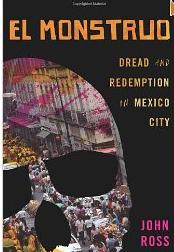
John Ross, author of “El Monstruo – Dread & Redemption in Mexico City,” will be covering the new national pastime while recuperating from chemotherapy.

We sue the FBI

1

The Bay Guardian has joined the ACLU of Northern California and the Asian Law Caucus in suing the FBI to demand access to records of federal agents spying on Muslim communities and organizations.


We filed a Freedom of Information Act request five months ago, seeking access to key records, including documents that would show how the FBI is:


•       investigating Islamic centers and mosques (as well as Christian churches and Jewish synagogues);
•       “assessing” religious leaders;
•       infiltrating communities through the use of undercover agents and  informants;
•       training agents in Islam and Muslim culture;
•       using race, religion and national origin in deciding whom to investigate; and
•        identifying particular schools for its Junior Agent Program.


The FBI has not released the documents, leaving us no choice but to file suit. The law firm of Morrison and Foerster is representing the plaintiffs pro bono. (Thanks, MoFo.)


“Clear information about the FBI’s activities is necessary in order to understand the scope of their surveillance tactics to assess whether they have had a chilling effect on the right to worship freely or to exercise other forms of expression,” said Julia Harumi Mass, staff attorney for the ACLU of Northern California.
 
“This lawsuit is about transparency.  The public is entitled to this information under the Freedom of Information Act.  The FBI admitted in March that our clients’ FOIA requests are entitled to expedited processing because of the widespread media attention on these issues, but the government has yet to provide them a single document,” said attorney Raj Chatterjee of Morrison & Foerster.   


There’s plenty of evidence that the feds are engaged in dubious, perhaps unlawful surveillance of Muslim communities. Check out this, and this and this. We’re hoping to shed some light on what the FBI is really doing here.


You can see a copy of the complaint here (pdf)

Stage Listings

0

Stage listings are compiled by Guardian staff. Performance times may change; call venues to confirm. Reviewers are Robert Avila, Rita Felciano, and Nicole Gluckstern. Submit items for the listings at listings@sfbg.com. For further information on how to submit items for the listings, see Picks. For complete listings, see www.sfbg.com.

THEATER

OPENING

BAY AREA

Antony & Cleopatra Forest Meadows Ampitheatre, 1475 Grand, San Rafael; 499-4488, www.marinshakespeare.org. $20-35. Previews Fri/20-Sun/22, 8pm. Opens August 28, 8pm. Runs Fri-Sat, 8pm; Sun, 4pm. Through Sept 25. Marin Shakespeare Company’s summer season continues with the tale of the Egyptian queen.

In the Wound John Hinkel Park, Berk; (510) 841-6500, www.shotgunplayers.org. $10 (no one turned away). Opens Sat/21, 3pm. Runs Sat-Sun, 3pm (also Sept 5, 3pm). Through Oct 3. Shotgun Players present a unique take on the Iliad, written and directed by ian tracy.

Macbeth Bruns Ampitheater, 100 California Shakespeare Way, Orinda; (510) 548-9666, www.calshakes.org. $34-70. Previews Wed/18-Fri/20, 8pm. Opens Sat/21, 8pm. Runs Fri-Sat, 8pm; Sun, 4pm (also Sept 11, 2pm). California Shakespeare Theater presents the tale of unbridled ambition and its consequences, directed by Joel Sass.

Trouble in Mind Aurora Theatre, 2081 Addison, Berk; (510) 843-4822, www.auroratheatre.org. $10-55. Previews Fri/20-Sat/21 and Tues/24, 8pm; Sun/22, 2pm. Opens August 26, 8pm. Run Wed-Sat, 8pm; Sun, 2 and 7pm; Tues, 7pm. Through Sept 26. Aurora Theatre presents Alice Childress’ look at racism through the lens of theater.


ONGOING

Abigail: The Salem Witch Trials Temple SF, 540 Howard; www.templesf.com. $10. Thurs/19, August 26, 9pm. Through August 26. Buzz Productions, with Skycastle Music and Lunar Eclipse Records, presents an original rock opera based on the Salem witch trials.

Divalicious New Conservatory Theatre Center, 25 Van Ness; 861-8972, www.nctcsf.org. $22-28. Wed-Sat, 8 p.m.; Sun, 2pm. Through Sun/22. Leanne Borghesi takes on the music of legends ranging from Garland to Midler.

Don’t Ask New Conservatory Theatre Center, 25 Van Ness; 861-8972; www.nctcsf.org. $24-36. Wed-Sat, 8pm; Sun, 2pm. Through Sept 19. New Conservatory Theatre Center presents the West Coast premiere of Bill Quigley’s play about the affair between a Private and his superior.

Gilligan’s Island: Live on Stage! The Garage, 975 Howard; (800) 838-3006, www.brownpapertickets.com. $15-20. Sun, 8pm. Through August 29. Moore Theatre and SAFEhouse for the Performing Arts brings the TV show to the stage, lovey.

Party of 2 Shelton Theater, 533 Sutter; (800) 838-3006, www.partyof2themusical.com. $25-29. Sun, 3pm. Through Sept 12. A new show written by Morris Bobrow.

Peter Pan Threesixty Theater, Ferry Park (on Embarcadero across from the Ferry Bldg); www.peterpantheshow.com. $30-125. Tues and Thurs, 7pm; Fri-Sat, 7:30pm (also Sat, 2pm); Wed, 2pm; Sun, 1 and 5pm. Through August 29. JM Barrie’s tale is performed in a specially-built 360-degree CGI theater.

*Posibilidad, or Death of the Worker Dolores Park and other sites; 285-1717, www.sfmt.org. Free. Sat-Sun, 2pm; also Sept 6, 2pm; Sept 17, 8pm. Through Sept 17. It may have been just a coincidence, but it certainly seems auspicious that the San Francisco Mime Troupe, itself collectively run since the 1970’s, would preview their latest show Posibilidad on the United Nations International Day of Cooperatives. The show, which centers around the struggles of the last remaining workers in a hemp clothing factory (“Peaceweavers”), hones in on the ideological divide between business conducted as usual, and the impulse to create a different system. Taking a clip from the Ari Lewis/Naomi Klein documentary The Take, half of the play is set in Argentina, where textile-worker Sophia (Lisa Hori-Garcia) becomes involved in a factory takeover for the first time. Her past experiences help inform her new co-workers’ sitdown strike and takeover of their own factory after they are told it will close by their impossibly fey, new age boss Ernesto (Rotimi Agbabiaka). You don’t need professional co-op experience to find humor in the nascent collective’s endless rounds of meetings, wince at their struggles against capitalistic indoctrination, or cheer the rousing message of “Esta es Nuestra Lucha” passionately sung by Velina Brown, though in another welcome coincidence, the run of Posibilidad also coincides with the National Worker Cooperative conference being held in August, so if you get extra inspired, you can always try to join forces there. (Gluckstern)

Sex Tapes for Seniors Victoria Theatre, 2961 16th; (800) 838-3006. $20-40. Fri-Sat, 8pm; Sun, 2pm. Through Sun/22. Older people have sex. It’s a revelation, incredibly, for the new, blandly do-goody yoga instructor (Erin Reis) at a retirement village called Shambhala Springs in the premiere of Mario Cossa’s sweet, sassy, but somewhat sterile and long-winded new musical. It’s maybe an eye-opener too for anyone in the audience too young to remember doing it in the Sixties—let alone in your sixties—and by eye-opener we mainly mean the ability to keep at least one eye open the entire show. Older audiences may find more to appreciate here. The odd cast of characters includes three couples—one straight (Charmaine Hitchcox and Terry Stokes), two gay (Phillipe Coquet and John Hutchinson; Rebecca Mills and Carolyn Zaremba), and a single widow (Nancy Helman Shneiderman) who dates but keeps another marriage at bay. (I promised myself I wouldn’t use the word feisty, but she is, as are several of the others.) They come up with a plan to make and sell the titular product, much to the horror of relatives and some other residents. But the storyline has more do to with individual relationships and the challenges of aging gracefully and living well. Performances are uneven, entrances routinely late, but there’s a built-in charm to that. Tyler Flanders’ music, however, generally limps along (despite dutiful treatment by a three-piece band) and Cossa’s lyrics only rarely stir. Although at least once all hell breaks loose: in the rousing, if not exactly arousing, number devoted to the fellatic benefits of dentures. Indeed, this play should probably have an NC-71 rating. (Avila)

*Show and Tell Thick House, 1695 18th St; (800) 838-3006, www.symmetrytheatre.com. Thurs-Sat, 8pm; Sun, 5:30 pm. Through Sun/22. $25. Symmetry Theatre Company, an impressive new group dedicated to addressing gender disparity in the casting of professional actors, makes a memorable debut with this expertly crafted, sinuous drama about the psychological aftermath—and tangled social roots—of a bombing in a small-town schoolroom from playwright (and former SF rez) Anthony Clarvoe (Control+Alt+Delete). The sole survivor of the horrific and mysterious attack is the stunned, deeply perplexed teacher (an affecting, quietly intense Chloe Bronzan), soon surrounded by grief-stricken parents demanding their childrens’ remains and a tight-knit, jaded forensics team led by a gradually smitten FBI agent (a suavely imposing Robert Parsons). Julia Brothers, Wylie Herman, Jessica Powell, and Erika Salazar round out a strong ensemble under the assured direction of Laura Hope, whose engaging production leaves much to think about in the realm of private turmoil and public chaos—including the nature of grief, modernity’s systemic violence, and the disorder generated and managed by the self-same state. Kate Boyd’s lush, strikingly ambiguous video design (featuring a set of evocative childrens’ drawings) and Cliff Caruthers’ beautifully spare and haunted sound (featuring a delicate stream of child voices) add measurably to the expanse of the play’s existential and political universe. (Avila)

Skin Tight CounterPULSE, 1310 Mission; www.counterpulse.org. $20 ($35 for gala opening). Thurs-Sat, 8pm. Through August 28. Rapid Descent Physical Performance Company presents the SF premiere of Gary Henderson’s play.

*Streetcar Named Desire Boxcar Playhouse, 505 Natoma; 776-1747, www.boxcartheatre.org. $15-25. Wed-Sat, 8pm. Through Sept 4. It’s no small feat, creating a sultry southern summer circa 1940’s smack-dab in the middle of a typically frosty San Francisco summer circa right here right now, but Boxcar Theatre rises admirably to the challenge. Rebecca Longworth’s creative staging of Tennessee Williams’ “A Streetcar Named Desireincludes musical interludes, ghostly apparitions, and the clattering of a cleverly impersonated streetcar that shakes the walls of Matt McAdon’s simply-detailed tenement flat and the spirits of one Blanche DuBois (Juliet Tanner), while the deliberately-muted lighting (Stephanie Buchner) and period-appropriate sound (Ted Crimy), add the appropriate layers of southern discomfort to the unfolding action. Especially captivating to watch are the performances of supporting characters Stella (Casi Maggio) and Mitch (Brian Jansen), who seem to almost helplessly orbit the hot flame of Stanley Kowalski’s sun (Nick A. Olivero) and the grimly flickering satellite of Blanche’s waning moon. As he does in “Cat on a Hot Tin Roof,” Seth Thygesen stands in for one dearly-departed, in this case Blanche’s old beau, Allan Gray, whose abrupt suicide de-magnetized her moral compass. And in addition to a saucy turn as next-door neighbor Eunice, Linnea George tracks the fractured emotions of the main characters on her mournful violin. (Nicole Gluckstern)

*This Is All I Need NOHspace, 2840 Mariposa; www.mugwumpin.org. Thurs-Sun, 8pm. Through Sept 4. $15-20. In our obsession with possessions, just who possesses who? Mugwumpin’s inventive, hilarious and repeatedly surprising new work—captivated and captivating—reminds us that a possession isn’t just a thing but also a (colonized) state of being. But there’s no manifesto here, so much as a multifaceted, deftly staged exploration of a theme so central to this bare and incredibly cluttered existence that we hardly even notice it. The four person ensemble (Madeline H.D. Brown, Joe Estlack, Erin Mei-Ling Stuart, and Christopher W. White), sharply co-directed by Liz Lisle and Jonathan Spector, brings various states of being and relation to life with aplomb—amid swift transformations of time and place, provocative contrasts and parallels, dexterous vocalizations, and supple and satisfyingly offbeat choreography. I’m purposely leaving out the details of the vignettes and the sometimes-startling mise en scène because it’s better that way. All you really need now is the price of a ticket. (Avila)

This World Is Good Phoenix Theater, 414 Mason; 913-7272, www.sleepwalkerstheatre.com. Thurs-Sat, 8pm. Through August 28. $18-24. The 1990s are giving way to a millennial moment of anti-climax known as Y2K, but the anxiety and dread are real, and the bloodiest century in human history looks poised to be outdone by the doom-drones of the next. Making at least academic sense of all that angst is Ally (Dina Percia), a brilliant young Latina writing her doctoral dissertation on Grunge and its landscape of youth alienation. Her best friend and occasional lover is a smitten young English prof (Damian Lanahan-Kalish), a dork with a degree and the pet name Scrotum Face. But as she delves into the world of ideas, Ally loses track of her family: single mother Emmy (Tessa Koning-Martinez) and, more tragically, talented but emotionally tortured younger brother Sam (Shoresh Alaudini), whose battered mind and compassionate heart craft a graphic story around a new “super hero” with no costume, no parallel identity, and indeed no special powers. When her family collapses, Ally reassembles the pieces from a new vantage, outside the ivory tower, where she makes art from a sort of crystalline “ordinariness” that complements her brother’s all-too-ordinary super hero. This World Is Good is the opening gambit in a new trilogy by local playwright J.C. Lee called This World and After, all being presented by Sleepwalkers Theatre this season. Artistic director Tore Ingersoll-Thorp helms a competently acted production, which helps lend Lee’s ambitious scope its tangible human proportions, though in truth the characters do not always feel fully drawn. There’s a fine monologue from Sam, both chilling and exhilarating, but also a proclivity throughout for awkwardly poetical speeches over dialogue. Still, there’s subtlety and real humor in the best parts, and enough here to want to see more. (Avila)

What Mama Said About Down There Our Little Theater, 287 Ellis; 820-3250, www.theatrebayarea.org. $15-25. Thurs-Sun, 8pm. Through August 28. Writer-performer-activist Sia Amma presents this largely political, a bit clinical, inherently sexual, and utterly unforgettable performance piece.

BAY AREA

Blithe Spirit Live Oak Theatre, 1301 Shattuck, Berk; (510) 649-5999, www.aeofberkely.org. $12-15. Fri-Sat, 8pm; also Thurs/19, 8pm. Through Sat/21. Actors Ensemble of Berkeley essays the eternal Noel Coward comedy, about a (naturally) Coward-esque writer (Stanley Spenger) who for the purposes of research and any passing amusement it may provide invites over a celebrated medium (an amusingly puffed-up Chris Macomber), only to have her inadvertently summon the ghost of his ex-wife (Erin J. Hoffman), who mischievously begins to drive a wedge between him and his new wife (Shannon Veon Kase). Director Hector Correa’s not-always-fitting casting choices contribute to a drearily perfunctory tone at the outset, which makes the first scenes somewhat painful going. However, Spenger proves admirably dry and restrained in the lead, and things pick up measurably with the arrival of the titular ghost, played with playful, bounding energy and notable grace by Hoffman. (Avila)

*East 14th: True Tales of a Reluctant Player Marsh Berkeley, 2120 Allston, Berk; www.themarsh.org. $20-50. Dates and times vary. Through Sept 12. Don Reed’s solo play, making its Oakland debut after an acclaimed New York run, is truly a welcome homecoming twice over. (Avila)

*Machiavelli’s The Prince Berkeley City Club, 2315 Durant, Berk; (510) 558-1381, www.centralworks.org. $14-25. Thurs-Sat, 8 p.m.; Sun, 5pm. Through Sun/22. Set in an intimate salon-space in the Berkeley City Club, this stage adaptation of one of the most famous documents on political power ever written gains a certain conversational quality. In fact, the script, penned by Gary Graves, is really just one long conversation—an imagined encounter between Nicolo Machiavelli and the man he dedicated his treatise to, Lorenzo de Medici II. Machiavelli (Mark Farrell) has been called by de Medici (Cole Alexander Smith) to possibly regain favor in his court after a long banishment. With him he brings a notebook of his musings on gaining and retaining political power, which he bestows on Lorenzo for him to read. As the Duke of Florence, Smith plays his character with the measured dignity and watchful countenance of a career mobster. He protests the extremism of his former teacher’s philosophy of rule even as he is casually seduced by its implications. Farrell’s Machiavelli tries to play his position with calculated Mephistopheles cool. However, he cannot escape the obvious taint of his own failures, and eventually, for all his talk of power, he is revealed to be ultimately powerless, though his ideas remain with de Medici, long after he himself is let go. (Gluckstern)

The Norman Conquests The Ashby Stage, 901 Ashby, Berk; (510) 841-6500, www.shotgunplayers.com. $20-25. Dates and times vary. Through Sept 5. Shotgun Players presents Alan Ayckbourn’s comic trilogy.

The Taming of the Shrew Forest Meadows Amphitheatre, 1475 Grand, San Rafael; (415) 499-4488, www.marinshakespeare.org. $20-25. Fri-Sun, 8pm; also Sun, 4pm and 5pm. Through Sept 26. Marin Theatre Company presents a swashbuckling version of the classic.

PERFORMANCE/DANCE

Bay Area Rhythm Exchange War Memorial and Performing Arts Center, Herbst Theatre, 401 Van Ness; 392-4400, www.stepology.com. Fri/20-Sat/21, 8pm. $17-25. Bay Area Tap Festival artists perform.

“Disoriented” Stage Werx Theater, 533, Sutter; www.brownpapertickets.com. Thurs/19, 8pm, $20. A trio of solo performances by Zahra Noorbakhsh, Colleen “Coke” Nakamoto, and Thao P. Nguyen.

“House Special” ODC Dance Commons, 351 Shotwell; www.odctheater.com. Sat/21, 8pm, $15. New work by Pearl Ubungun, Jesseilto Bie, and others.

Landscape With the Fall of Icarus Climate Theater, 470 Florida; www.brownpapertickets.com. Fri/20-Sat/21, 8pm, $15. Samauel Topiary presents an evening-length performance work.

“Sinners and Salivation-Themed Drag King Contest” DNA Lounge, 375 11th; www.sfdragkingcontest.com. Fri/20, 8pm (band) and 10pm (show), $20-35. The 15th annual contest, with special guest Jane Wiedlin, benefiting PAWS.

BAY AREA

“New Works Festival” Lucie Stern Theatre, 1355 Middlefield, Palo Alto; (650) 463-1960, www.theatreworks.org. Dates and times vary. Through August 22. $15-25 ($75 for festival pass). TheatreWorks presents its ninth annual festival.

New approach for the new U.S. attorney

0

EDITORIAL Joseph Russoniello, the U.S. attorney who terrorized immigrants, city employees, and medical marijuana growers, is finally out of office, replaced Aug. 13 by an Obama nominee screened by Sen. Barbara Boxer. Melinda Haag is the second female U.S. attorney in California history and the first since the 1920s. She’s taking over an office that pushed all the wrong priorities and served as an outpost of Bush administration values in Democratic Northern California, and she needs to turn that around, quickly and visibly.

President Obama has made it clear that he doesn’t want his Justice Department wasting valuable resources busting people who grow, sell, and use pot for medicine. And while the president has been slow and far too cautious on immigration reform, he has resisted the nativist movement and harsh attacks on undocumented immigrants. But a U.S. attorney has a tremendous amount of discretion on law enforcement priorities, and Haag could easily slide along, refusing to break with the policies of her predecessor.

That would be a serious mistake, one that would reflect poorly not only on the Obama administration but on Boxer, who under the traditions of Senatorial courtesy played a central role in choosing Haag.

The new U.S. attorney should:

Disband the grand jury that’s been investigating whether city employees violated federal law by failing to turn suspected illegal immigrants over to immigration authorities. The grand jury started sending subpoenas to city agencies two years ago and raised the specter that some local juvenile justice workers might face charges. The move set off policy changes by Mayor Gavin Newsom that have led to more than 100 young people being torn from their families and sent to federal immigration detention centers.

The grand jury operates at the U.S. attorney’s discretion, and while its activities are secret, Haag could and should announce that the investigation is closed and no charges are pending.

Inform City Attorney Dennis Herrera that no city employee will face federal criminal charges for complying with the city’s Sanctuary Ordinance. The threat of criminal charges has given Newsom cover for refusing to implement a sanctuary law that the supervisors passed over his veto. The law, sponsored by Sup. David Campos, directs city workers not to turn juveniles over to Immigration Control and Enforcement until they’ve been convicted of a felony. Herrera asked Russoniello for assurance that city employees could implement the law without fear of federal indictment, and the Republican appointee refused. Haag should give Herrera, and all city employees, written assurance that she won’t press charges over the sanctuary policy.

Stop the pot busts — and don’t try to undermine Prop. 19. Even after U.S. Attorney General Eric Holder made clear that he isn’t interested in harassing medical cannabis operations, local growers and outlets remain fearful of federal prosecution. And if the state’s voters legalize pot this fall, as appears likely, the weed will still be illegal under federal law. Haag needs to let the FBI and Drug Enforcement Administration know that she’s not going to take any cases involving legitimate medical marijuana operations — and that she won’t use her office to undermine state law if Prop. 19 passes.

Of course, if the U.S. attorney’s office stops wasting time and money cracking down on pot growers and immigrants, the lawyers who work under Haag may have time to do some more relevant and worthwhile law enforcement. They could, for example, start looking into enforcing a federal law called the Raker Act, which requires San Francisco to operate a public power system.

Immigrant advocates accuse ICE of “pattern of dishonesty”

13

A coalition of national civil rights organizations held a August 10 press conference to discuss recently released internal government documents that they say reveal “a pattern of dishonesty” regarding Immigration and Customs Enforcement (ICE)  “Secure Communities” (S-Comm) program.

Representatives with the National Day Laborer Organization Network (NDLON), the Center for Constitutional Rights (CCR), and the Kathryn O. Greenberg Immigration Justice Clinic of the Benjamin N. Cardozo School of Law noted that though ICE officials have declared their intention to expand S-Comm into every jurisdiction in the country by 2013, information about the program has been scarce, and development of its operational details has been shrouded in secrecy.

The coalition also pointed to a July 27 letter that U.S. Congresswoman Zoe Lofgren recently wrote to Secretary Janet Napolitano and Attorney General Eric Holder as evidence that ICE led Congress to believe that SecureComm is a voluntary, and not a mandatory, program.

In her letter, Lofgren, who is chair of the House of Representatives’ subcommittee on Immigration, Citizenship, Refugees, Border Security and International Law,  asks for “a clear opt-out procedure for municipalities that do not wish to participate in the S-Comm program.”

“As we discussed, Secure Communities is a voluntary program that relies upon the resources of both of your agencies [referring to DHS and DOJ] in order to provide State, local, and federal law enforcement agencies with information related to the immigration status of persons booked into our nation’s jails and prisons,” Lofgren wrote.

“I am aware that some local law enforcement agencies have expressed concern that participating in Secure Communities will present a barrier to their community policing efforts and will make it more difficult for them to implement a law enforcement strategy that meets their community’s public safety needs,” Lofgren observed.

“There appears to be significant confusion about how local law enforcement agencies may ‘opt out’ of participating in Secure Communities,” Lofgren continued.

Lofgren notes that staff from her House subcommittee were briefed on this program by ICE and were informed that localities could opt out simply by making such a request to ICE, while subsequent conversations with ICE and FBI CJIS added  to the confusion by suggesting that this might not be so.

“Please provide me with a clear explanation of how local law enforcement agencies may pot out of Secure Communities by having the fingerprints they collect and submit to the SIBs checked against criminal, not immigration, databases,” Lofgren concludes.

To date, Lofgren has not received a reply, a press spokesperson in her office confirmed.

Immigration rights advocates charge that S-Comm, which is operative in 544 jurisdictions in 27 states, functions like the controversial 287(g) program and Arizona’s SB1070, making state and local police central to the enforcement of federal immigration law.

They say the program, which automatically runs fingerprints through immigration databases for all people arrested, targets them for detention and deportation even if their criminal charges are minor, eventually dismissed, or the result of an unlawful arrest.

After reviewing the recently released ICE documents and other information, advocates for NDLON said they found evidence supporting their claim that ICE has been dishonest with the public and with local law enforcement regarding S-Comm’s true mission and impact.

“While ICE markets S-Comm as an efficient, narrowly tailored tool that targets ‘high threat’ immigrants, it actually functions as a dragnet for funneling people into the mismanaged ICE detention and removal system,” stated a NDLON press release. “ICE’s own records show that the vast majority (79 percent) of people deported due to S-Comm are not criminals or were picked up for lower level offenses.”

They also charge that the program serves as a smokescreen for racial profiling, allowing police officers to stop people based solely on their appearance and arrest non-citizens, knowing that they will be deported, even if they were wrongfully arrested and are never convicted.

“Preliminary data confirms that some jurisdictions, such as Maricopa County Arizona, have abnormally high rates of non-criminal S-Comm deportations,” NDLON continued.

 “Lastly, the impression ICE fosters that S-Comm is not mandatory and jurisdictions can opt out is riddled with questions,” they conclude.

 “These records reveal a dangerous trend,” said NDLON Executive Director Pablo Alvarado. “This program creates an explosion of Arizona-like enforcement at a time when the results have proven disastrous. Thanks to S-Comm, we face the potential proliferation of racial profiling, distrust of local police, fear, and xenophobia to every zip code in America.”

 “S-Comm co-opts local police departments to do ICE’s dirty work at significant cost to community relations and police objectives,” said CCR attorney Sunita Patel. “Without full and truthful information about the program’s actual mission and impact, police are operating in the dark. The bottom line is that thrusting police into the business of federal immigration enforcement isn’t good for anyone.”

 “ICE is racing forward imposing its S-Comm program on new states and localities every day, without any meaningful dialog or public debate,” warned Bridget Kessler, a teaching fellow at the Immigration Justice Clinic of the Benjamin N. Cardozo School of Law.

The three organizations vow to litigate for the release of more data and records “to uncover the truth behind S-Comm and other ICE efforts to draft local police into immigration enforcement.”

Also speaking at the Aug. 10 press conference was San Francisco Sheriff Mike Hennessey. Earlier this summer, Hennessey blew the whistle on S-COmm, after attending a meeting in May at which ICE revealed it was going to switch the program on in San Francisco in June.

But despite Hennessey’s efforts to opt San Francisco out of the program, S-Comm went live June 8 in San Francisco.

“We were told we could opt out through the State Attorney General’s Office,” Hennessey said, recalling how AG Jerry Brown’s office told him that San Francisco could only opt out through the feds.

“We were given the run around,” Hennessey said.“It’s a program forced upon individual local law enforcement agencies, no matter what the local community wants,” Hennessey said.

Henessey worries that the program is having a chilling effect on community policy efforts.

“Witnesses and victims of crime won’t come forward for fear they will be deported,” he said.

Henessey notes that ICE has detained folks who were arrested for minor traffic violations, and whose charges were subsequently dropped, as well as folks with no criminal records.

“My Board of Supervisors, my Police Commission and my mayor have said they would rather not participate in deportations at that level,” Hennessey noted.

He worries that the program could be expanded to include employment record checks.

“They say the program won’t be used for civil purposes, but it’s already being used for federal employment checks,” Hennessey said. “This further isolates minority communities from the mainstream.”

Beyond the rage

46

rebeccab@sfbg.com

Downtown Oakland became supercharged with emotion in the hours following the July 8 announcement of the verdict in the trial of former BART police officer Johannes Mehserle. And in the days that followed, the city remained electrified as residents struggled to make sense of the verdict, the rioting that occurred in its wake, and the historic significance of these developments.

But as the emotions dissipate, the issues behind the verdict and its aftermath remain — along with a series of questions that could determine whether this intensely scrutinized shooting of an unarmed man will lead to any changes in police practices or the justice system, as well as how the community will react if the judge imposes a light sentence.

After being moved out of the Bay Area because the publicity surrounding the case, a Los Angeles jury found Mehserle, a white officer, guilty of involuntary manslaughter for fatally shooting Oscar Grant, a 22-year-old unarmed black man who was detained on a BART train platform in Oakland on Jan. 1, 2009 following reports of a fight.

The verdict stood out as an almost unprecedented conviction of an officer in a case involving deadly use of force, and a departure from an all-too-familiar narrative in which tragedies resulting from police shootings bring no consequences for those responsible for pulling the trigger. However, in the wake of the verdict, Grant’s family members made it clear that they did not believe that justice had been served.

“This involuntary manslaughter verdict is not what we wanted, nor do we accept it,” Oscar Grant’s uncle, Cephus “Bobby” Johnson, said at a July 10 press conference at True Vine Ministries, a West Oakland church. “It’s been a long, hard road, but there are chapters in this war. The battle’s just getting started.”

To Grant’s relatives and a coalition of supporters who came together in response to the shooting, the trial is intrinsically linked to a long history of police brutality that occurs with impunity in cases involving youth of color. Meetings organized by clergy and community members have been held weekly in West Oakland over the past 19 months with the ultimate goal of bringing about greater oversight of the BART police and effective police reform on a broader scale.

On July 9, the U.S. Department of Justice announced that its Civil Rights Division, the U.S. Attorney’s Office, and the FBI have opened an investigation into the shooting and would determine whether prosecution at the federal level is warranted. Defense Attorney Michael Rains also made a motion to move Mehserle’s sentencing to a date later than Aug. 6, the date it was originally expected.

As the events of July 8 solidify into the Bay Area’s collective memory, attention is now shifting toward the next steps, and to lingering questions. Mehserle’s sentencing is key: will his sentence be light, reflecting the jury’s conclusion that he simply made a mistake — or will it include substantial prison time, reflecting the fact that he shot and killed an unarmed man without justification? Will he receive a lighter sentence than someone else without a criminal record found guilty of involuntary manslaughter simply because of his identity as a former officer with law enforcement organizations still in his corner? If Mehserle receives a long sentence, will it signify a shift in a justice system that many perceive as biased — or a stand-alone result of intense public scrutiny?

And as a result of all this, will the BART police finally get the type of training and serious civilian oversight they so badly need?


RAW REACTION

On the day the verdict was announced, thousands turned out for a peaceful rally near Oakland’s 12th Street BART Station and City Hall to hear speakers sound off about how their lives had been affected by police brutality.

As night fell, looting and rioting began to break out as the media covered scenes of rage set against small trash fires, causing anger and frustration for many Oakland residents who were dismayed and frightened by the chaos and disorder. More than 80 arrests were made, and dozens of stores including Sears, Whole Foods, Subway, Foot Locker, and numerous banks were damaged or looted. Police efforts to respond to the situation gave downtown city blocks the feeling of a war zone for several hours.

Reactions to the verdict, and the chaotic aftermath that followed, varied in the following days.

“The truth is that in American history, this is both a high point and a low point,” Olis Simmons, executive director of Youth UpRising — an Oakland nonprofit that works with youth of color — told the Guardian the following day. Speaking to the fact that an officer had been convicted in a case involving a wrongful death, she said: “I think it really is a signal that America is changing. This is the farthest we’ve ever gone.”

She said she hoped that people who were infuriated enough to react violently on the evening of July 8 would channel that energy toward constructive goals of pushing for a more satisfactory outcome. Before rallies and later rioting began that night, Youth UpRising sent people into the crowd to hand out glossy flyers proclaiming “violence isn’t justice.”

Davey D Cook, an independent radio journalist who extensively covered activity surrounding Grant’s death on a news site called Davey D’s Hip Hop Corner, said he thought the mainstream media was ready to have “a field day” with the riots, pointing out that they ran special coverage in the days leading up to verdict, building up anticipation of violent outbreaks. He also said that the scope of the rioting should be kept in perspective.

On his July 9 KPFA radio show, Hard Knock Radio, Cook added a salient point: “Broken windows can be replaced, and in two weeks, they will be. Stolen merchandise can be replaced, and it will be. But who’s going to replace this justice system that got looted? What insurance policy takes care of that?”

Just before the July 10 press conference, a town hall meeting was held inside True Vine Ministries. It was crammed full of supporters from Oakland, San Francisco, and beyond who listened as Minister Keith Muhammad — a representative of the Nation of Islam who has worked closely with the Grant family and traveled to Los Angeles to watch the trial — spoke at length. Muhammad was dressed immaculately in a suit and tie, and spoke with an air of fiery conviction.

“In the outcome of this case, there is surely more to be resolved that has yet to be addressed,” Muhammad said. He emphasized that “we’re not satisfied,” but added: “You should know that dissatisfaction is the foundation of all change.”

He raised a number of questions about the proceedings, asking why there was an absence of African Americans on the jury, and why the judge called an early recess when Grant’s teenage friend, Jamil Dewar, sobbed uncontrollably on the witness stand — but not when Mehserle sobbed on the stand. He noted that Grant’s friends were kept in handcuffs for six hours after witnessing Grant’s death.

In the days following July 8, much was also said about mainstream media coverage of the events, in particular the notion that “outside agitators” would come in and start trouble. “I do not like this divisive campaign to divide our community and protestors by calling people outsiders,” Oakland defense attorney Walter Riley wrote in a statement posted on Indybay.org. “This is a great metropolitan area … we expect people from all over the map to participate in Oakland. Calling people outsiders in this instance is a political attack on the movement. The subtext is that the outsiders are white and not connected to Oakland. From the days of the civil rights movement to now, the outsider labeling failed to address the underlying problems for which people came together. We must engage in respectful political struggle. I understand the frustration. I do not support destruction and looting as political protest.”


LOOKING FORWARD

Mehserle’s conviction suggests the jurors believed his defense that he meant to draw and fire his Taser instead of his gun. In legal terms, settling on involuntary manslaughter, rather than second-degree murder or voluntary manslaughter, means the jury was not convinced beyond a reasonable doubt that Mehserle had malice toward Grant. But the jury found that he was criminally negligent when he failed to notice that he had his gun instead of his Taser in the moments before he pulled the trigger.

“In California, and really in any state, it is extremely difficult for jurors to convict a police officer. There’s an extreme reluctance to do that,” Whitney Leigh, an attorney who formerly worked in the San Francisco Public Defender’s Office, told us.

“There are undoubtedly instances where things like this have happened at some time in the past in California, that weren’t videotaped,” Leigh continued. “But for the videotape, if you walked 10 witnesses in who said that what happened, happened, no one would believe them if the officer took the stand and said that’s not what happened. The only reason there’s a case at all is that there’s a videotape.”

Leigh said he thought that unless the public develops a better awareness that police misconduct regularly occurs, “individuals are going to continue to be victimized by a system that effectively encourages officers to believe that they can act with significant impunity.”

Asked whether he thought it was likely that the federal government would decide to step in after concluding its investigation, he said it was a tough call. “The Justice Department is highly selective in the cases it chooses to prosecute for these crimes,” he cautioned. “That said, the kinds of cases they choose are ones that tend to have a lot of public attention and concern, so this fits within that category. Since it’s such a public case, it can have more of a widespread impact.”

If Mehserle was prosecuted at the federal level, the case would invoke Criminal Code 18 U.S.C. Sec. 242, used when a government agent or an individual acting under the color of authority denies someone their civil rights through force, threats, or intimidation, based on their race, gender, or another protected category.

Then again, the federal government’s decision over whether or not to step in may be linked to the degree of severity of Mehserle’s sentence.

California Penal Code Section 193 specifies the mitigated, midterm, and aggravated sentences for involuntary manslaughter: two, three, or four years in state prison, respectively. Because Mehserle’s case involves his personal use of a firearm, a sentence enhancement of three, four, or 10 years can be added to his prison time under California Penal Code Section 12022.5.

The judge will weigh circumstances to determine Mehserle’s sentence, possibly including his record as a police officer, his criminal record, age, remorse, and other factors, explained Jim Hammer, a former prosecutor and current San Francisco Police Commission member. The judge could toss out the sentence enhancement for personal use of a gun — and there’s a possibility he would deem extreme circumstances, such as his police record, to warrant probation rather than prison time. But Hammer said he thought both of those outcomes are unlikely.

“The judge will want to appear more than fair, not giving special treatment,” Hammer said. “Judges have to stand [for] election too, and in the light of the fact that somebody’s dead, I think the chance of probation is incredibly slim.”

Even if Mehserle receives a light sentence and then faces prosecution at the federal level, there is a chance that information about his past record as an officer — which was not admitted as evidence, thanks to laws that afford protections for police officers in these kinds of cases — would continue to be shielded. The protection applies even though Mehserle resigned.

“The average person just wants courts to be fair,” Leigh said. “And there’s an inherent unfairness in a system that allows a government or a police department that has all the resources and records to … use against you while shielding what might be much more serious and relevant acts by police officers. That’s one change that would be great if that did happen.”

A key legal issue in the case and any possible federal case is reasonable doubt, Hammer said. “Reasonable doubt is everything, and no one talks about it. They just say, ‘Oh, he didn’t have intent.’ That’s not the issue. Can anybody really, honestly say that they don’t have some doubts about his intent?”

At the same time, Hammer tempered his legal analysis with some understanding of Grant’s mother’s pain in light of what happened to her son and as the verdict was reached.

“If the dictionary had three pictures of murder for a picture image, one would be shooting somebody in the back who is unarmed,” he told the Guardian. “What she’s saying is not outrageous. If it were my relative I would probably call it murder too. She’s not crazy.”

As things continue to unfold with Mehserle’s sentencing and the federal civil rights investigation, civil litigation is in the works too. Wrongful death civil lawsuits will likely be filed against BART by Oakland civil rights attorney John Burris on behalf of Grant’s mother, as well as another suit by five friends who were with Grant the night he was killed. BART settled a suit filed on behalf of Tatiana Grant, the slain man’s five-year-old daughter, in January. That total settlement should amount to more than $5.1 million, according to a media release on Burris’ website.

During an interview after the July 10 press conference, Johnson was asked how Grant’s young daughter was doing. He responded: “Tatiana is still struggling with the issue of when her daddy’s coming home. So it’s going to take time for her, when she does understand that he is not coming back home.”

Outside Grant’s family, many observers hope to see systemic change come out of this tragedy. Assembly Member Tom Ammiano introduced legislation to create civilian oversight of BART police after the shooting, but was unhappy to see how it was watered down during the legislative process. Now he wants to see stronger reforms.

“I think Oscar Grant’s death was inevitable based on the lack of caring about how those police were trained,” he told us. “If you’re going to have the kind of independent civilian oversight that’s going to prevent a repeat of what happened to Oscar Grant, you can’t have this namby-pamby law. The mantra has been, well, this is better than nothing. Unless they’re made to do it … it’s not going to happen the way we want.”

Immigration update: good news, bad news

7

Yesterday, the Board of Supervisors unanimously appointed tireless immigrant rights advocate Angela Chan to the San Francisco Police Commission.
That’s the good news.
The bad news? Attorney General and gubernatorial candidate Jerry Brown declined San Francisco Sheriff Mike Hennessey request to allow San Francisco to opt out of Secure Communities, ICE’s latest federal-local law enforcement collaboration.
“I think this program serves both public safety and the interests of justice,” Brown said. “ICE’s program advances an important law enforcement function by identifying those individuals who are in the country illegally and who have a history of serious crimes or who have previously been deported.”
“ Before the inception of Secure Communities allowing fingerprint identification, if a county suspected an arrestee was in the country illegally, the county submitted the person’s name to ICE for a background check,” Brown stated.

What Brown’s letter didn’t say was that, up until now in San Francisco, the county only submitted folks’ names to ICE if they were charged with a felony. Nor did he address why the federal government is sneaking around, switching this program on, without openly and transparently announcing their intentions to the local community.

Eileen Hirst, spokesperson for the San Francisco Sheriff’s Office said that, as a result of Brown’s letter, “As far as we know, San Francisco will be a part of Secure Communities as of June 1.”
In a statement, Sheriff Hennessey said, “I am disappointed with the Attorney General’s position and continue to be concerned that U.S. citizens and minor offenders will be caught up in the broad net of Secure Communities, and I will be studying the issue further to see how this program can be applied as fairly as possible and in the spirit of the sanctuary ordinance.”

So far, ICE’s data reveals the number of folks caught up in the Secure Communities net, plus a brief breakdown of the deportees’ level of crime.

It would be helpful, as several immigrants rights groups have suggested, if ICE revealed the nationality of these deportees, clarified if these folks were convicted of crimes or simply charged with them, and had to make frequent reports to Congress in which they included this data along with evidence that the program actually deports convicted criminals rather than folks simply arrested. Otherwise, the program could potentially be abused by renegades who realize that all you have to do to get someone deported is arrest them on trumped up charges

Anyways, you can read the rest of AG Brown’s letter below. My favorite line from Brown’s letter is, “Many of the people booked in local jails end up in state prison or go on to commit crimes in other counties or states.”  

Hmm. Does that mean that folks charged with crimes in this state are presumed guilty then, until proven otherwise? Or is that just the presumption about immigrants?


AG Brown’s letter:
“Dear Sheriff Hennessey:

I am writing in response to your letter regarding the Secure Communities program developed by U.S. Immigration and Customs Enforcement (ICE). The program is scheduled to be rolled out in San Francisco next month. You requested that the California Department of Justice (DOJ) block ICE from running checks on the fingerprints collected in San Francisco. The Secure Communities program is up and running in 169 counties in 20 states, including 17 counties in California. Because I think this program serves both public safety and the interest of justice, I am declining your request.

The DOJ Bureau of Criminal Identification and Investigative Services is the entity designated by California law to maintain a database of fingerprints used in the state for law enforcement purposes. When someone is arrested, the county forwards the fingerprints to the DOJ to identify the person, determine his or her criminal history and to discover any outstanding warrants. As in every other state, the DOJ forwards those fingerprints to the FBI to check for a history of criminal activity outside of the state. Under the Secure Communities program, the FBI forwards fingerprints collected at arrest to ICE. If ICE finds a match to prints in its database, ICE notifies the county. ICE’s stated intent and practice is to place holds on those individuals who are in the country illegally and who have a history of serious crimes or who have been previously deported.

Prior to the Secure Communities program, the name, but not the fingerprint, provided by an individual on arrest was run through ICE’s database of people known by ICE to be in the country illegally. Often, individuals with a criminal history were released before their immigration status was discovered. Using fingerprints is faster, race neutral and results in accurate information and identification.

In these matters, statewide uniformity makes sense. This is not simply a local issue. Many of the people booked in local jails end up in state prison or go on to commit crimes in other counties or states.

I appreciate your concern. But I believe that working with the federal government in this matter advances important and legitimate law enforcement objectives.

Sincerely,

EDMUND G. BROWN JR.
Attorney General.”

Insecure Sanctuary

9

Sarah@sfbg.com

The Board of Supervisors is urging San Francisco officials not to participate in Secure Communities, a controversial federal-local fingerprinting collaboration set to be activated June 1. But opting out of a program that threatens to make debates over “sanctuary city” protections of immigrants irrelevant may not be easy.

Speaking at a May 18 rally, Sup. Eric Mar warned that the use of Secure Communities by U.S. Immigration and Customs Enforcement (ICE) could cause the deportation of innocent residents and destroy local community policing efforts. “The police-ICE entanglement will hurt our communities and many people accused of minor crimes will see families torn apart,” Mar warned, as he urged the city to opt out of the Department of Homeland Security initiative, which identifies immigrants who are sitting in U.S. jails and may be deportable under federal immigration laws.

Cosponsored by Sups. John Avalos, David Campos, David Chiu, Chris Daly, Bevan Dufty, Sophie Maxwell, and Ross Mirkarimi, Mar’s resolution was scheduled for a May 25 vote that would make San Francisco the first jurisdiction in the nation to pursue withdrawing from the system.

“The shadow of Arizona is starting to cover other cities,” Mar said, referring to Arizona’s anti-immigrant legislation, SB 1070. “We can’t let Arizona come to San Francisco.”

ICE spokesperson Virginia Kice said the program’s focus is on criminal aliens. “These are folks who have been charged with or found guilty of felonies and have ignored deportation orders,” Kice said.

But ICE statistics show that the program mostly deports those with minor offenses. Between October 2008 and March 2010, Secure Communities submitted 1.9 million sets of digital fingerprints and deported 33,326 people nationwide. Fifteen percent of those deported (4,903 people) had criminal histories that included major drug and violent offenses such as murder, manslaughter, rape, robbery, and kidnapping (Level 1 crimes). The other 85 percent (28,423 people) were deported for less serious drug and property offenses (Level 2 crimes) and other minor charges (Level 3 crimes).

Kice admits that Level 2 and 3 offenders constitute the largest percentage of SC cases. “That’s because representatively more people are arrested for Level 2 and 3 offenses than Level 1,” she said. “That’s probably fortunate, because Level 1 crimes are very serious.”

But American Civil Liberties Union legislative counsel Joanne Lin warns that Secure Communities allows the federal government to circumvent local sanctuary policies and fast-track deportation. “It allows the Department of Homeland Security to identifty everyone who is booked, whether they are here lawfully or their charges are subsequently dropped or dismissed,” Lin said.

Mayor Gavin Newsom said he has no reservations about the program, which the Bush administration first announced in March 2008. “Sanctuary city policies were never meant to protect criminal behavior,” mayoral spokesperson Tony Winnicker said May 7, when San Francisco Sheriff Mike Hennessey blew the whistle on the federal-local fingerprinting collaboration. “At the end of the day, federal officials should enforce immigration laws. We report — we don’t deport.”

The program links local law enforcement databases to the Department of Homeland Security’s biometric system through interoperability agreements with states, allowing instantaneous information-sharing among local jails, ICE, and the FBI.

ICE implemented the program in North Carolina and Texas in October 2008. Under President Obama, the program has been activated in 169 jurisdictions in 20 states. ICE plans to have a Secure Communities presence in each state by 2011, and in each of the 3,100 state and local jails nationwide by 2013, according to its Web site.

Under the program, participating jails submit fingerprints of arrestees to immigration and criminal databases, thereby giving ICE a technological presence in prisons and jails. An overview conducted by the Washington, D.C.-based nonpartisan National Immigration Law Center observes that “the critical element” of the program is that, during booking in jail, arrestees’ fingerprints will be checked against DHS databases, rather than just against FBI criminal databases.

“ICE asserts that the purpose of the Secure Communities program is to target violent criminals for removal,” NILC observed. “Advocates had criticized the program’s operation because it took place at the beginning of the criminal process and therefore indiscriminately targeted persons arrested for crimes of all magnitudes, rather than persons convicted of serious crimes.”

“The underlying purpose may be to lay the groundwork for real immigration reform,” NILC concludes. “But the mechanisms put in place will be difficult to dismantle, and the civil rights violations they produce cannot be undone.”

Scott Lorigan of the California Department of Justice’s Bureau of Criminal Identification and Information signed an interoperability agreement with ICE’s John P. Torres in April 2009. Since then, the system has been activated in Alameda, Contra Costa, Fresno, Imperial, Los Angeles, Monterey, Orange, Sacramento, San Bernardino, San Diego, San Joaquin, San Luis Obispo, Santa Barbara, Solano, Sonoma, Stanislaus, and Ventura counties. Now it’s set to get switched on in San Francisco.

Campos thanks Hennessey for blowing the whistle, and lays the blame at Obama’s door. “None of us would have known this was happening,” Campos said. “This is the time for all San Francisco’s elected officials to stand up in support of the principles that led us to establish a sanctuary city. It’s not just the board, but also the mayor who needs to step up and say what just happened is not acceptable. This program eviscerates sanctuary city.”

Hennessey has written to California Attorney General Jerry Brown asking for assistance in opting out of the ICE program. Brown’s office is reviewing his request. “The California Department of Justice manages the statewide database of fingerprints that are essential to solving crimes, but we have no direct role in enforcing federal immigration laws,” Brown’s press secretary Christine Gasparac clarified. “We were informed by ICE that they will work with counties to opt out of their program. Because that is a process directly between the county and ICE, we’re advising local authorities who want to opt out to contact ICE directly.”

But it’s not clear what opting out will achieve. ICE’s Kice said jurisdictions can choose not to receive the immigration-related information on individuals who are fingerprinted, but that information will still be provided to ICE, which can act on it. Kice said that after an arrestee’s biometrics are forwarded to the feds, the information is bounced off FBI and DHS databases, and the information that comes back says if they have a record.

“What comes out is a recap of whatever relevant information is in the database,” she said. “For example, whether there has been a prior formal deportation or a prior arrest. It also shows if they have an adjusted status — whether they have legal permanent status. It will indicate if they are naturalized, in which case they are not subject to removal. That’s the information the community could cut off.”

“ICE always did these checks, but it was only available to local law enforcement agencies if they queried the system themselves, which required them to take a couple of extra steps,” Kice continued. “And it was name based. And that could be problematic, given duplicate names in system. That’s what fingerprints eliminate. Our concern is that municipalities are dependent to a large extent on information provided by the individual at the moment of arrest. We think the use of biometrics will ensure that folks who provide false information to local law enforcement officials don’t escape detection.”

Kice acknowledged that not everyone in the database is a violator. “The fact of having a record does not mean that you are a deportable alien,” she said. “And we understand that someone may get arrested and may not get convicted on their current charges. But what about a prior history? We know that folks have eluded detection, escaped, or been released from custody. So the individual may be someone who has other prior convictions. It’s the totality of their record that we are talking about here.”

At present, the San Francisco County Sheriff’s Department only reports noncitizens who are booked on felony charges. Hennessey expressed concerns about the unintended consequences of ICE technology interfacing with that of the Department of Justice’s fingerprint database.

He also warned that the 2,000 or so ICE referrals his office makes annually could explode. “We’ll be fingerprinting 35,000-40,000 persons annually,” Hennessey claimed. “And ICE has a record of secrecy. They won’t tell me what happened to folks they pick up. They won’t say if they are still in custody, been released or deported. The basis of sanctuary city is to protect immigrants who are not doing anything wrong or serious. When ICE grabs someone who failed to pay a traffic ticket and that person is supporting a family, I don’t think those crimes should rise to the level of deportation.”

The Daily Blurgh: No monkey business from Hollywood

0

Curiosities, quirks, oddites, and items from around the Bay and beyond

Boooo! SF-set Planet Of The Apes prequel probably won’t be shot in SF.

*****
Sea lion thinks it’s people!

*****


See San Francisco in glorious color, thanks to the wonderful online archive of Charles W. Cushman’s Kodachrome slides of the city, shot between 1938 and 1969 (Caliber SF via Eye on Blogs).

*****
The origins of Mission Carnaval.

*****
Things women in the news have done recently: impersonated an FBI supervisor, smuggled meth inside a bible, and hid in a coffin to escape custody.

*****
Richmondsf
takes a tour of the architectural marvel that is the Neptune Society’s Columbarium.

*****

In honor of the upcoming Harvey Milk Day, here’s a clip of Harvey schooling local, former News Talk host Juana on religious hypocrisy and the Briggs Initiative with plenty of passion and charm:

John Ross: To stop is to die

1

Editors note: John Ross is finishing up a book tour across the United States, and sending us his impressions of Obamalandia. You can read some of his previous posts here, here and here.


I. Baltimore/Washington


The Amtrak rumbles into the back end of Baltimore past block after block of abandoned, boarded-up row houses ripe for burning. This city of such magnificent renegades as Edgar Allen Poe, John Wilkes Booth, and Billie Holliday is mapped by grimy pocket ghettoes that made Baltimore a perfect stage-set for “The Wire.” When contrasted against the gleaming, refurbished downtown, these crime-scene neighborhoods incubate urban uprising.  Red Emma’s is one of a skein of anarcho bookstores with names like Sedition, Monkeywrench, and Bluestockings that have welcomed me on this grueling odyssey across the underbelly of Obamalandia. I’m enlivened by the energies these oases exude. Contemporary anarchists seem to have little time for the crippling ideological jousting that drained the lifeblood of my generation. Those bad old days of Marxist Leninist Maoist Trotskyist Stalinesque backbiting seem an absurd nightmare on the barricades of change these days.  

Tiffany, a tenor saxophonist who day gigs at OSHA over in D.C. and puts in after hours at the bookstore-cafe, and I pitch in to unload a busload of Bread & Puppet props for a zany, Zen show at a cavernous performance space Red Emma’s maintains in a vacated church. I get to trundle in the head of Ben Franklin, the villain in B&P’s latest mini-extravaganza in which $100 bills are the most pertinent puppets. A half century after its founding even before Vietnam caught fire, the puppeteers are still serving bread and aoeli to grateful audiences.

In D.C., I speak at the Institute for Policy Studies, a perennial leftist sounding board four blocks north of the White House and a billion light years from power, about how Washington has hooked Mexico on drug war. It is my first visit to the nation’s capitol with a black president in residence in the house that slaves once built. The Capo de Tutti Capos of the most grotesque criminal conspiracy on earth is too overwhelmed by swelling catastrophe offshore in the Gulf that will make Katrina look like a summer squall, impending car bombs in Times Square, and an economy that continues in freefall, to take time out for a chitchat.

On the day I speak in Washington, Teabaggers and their ilk are massing across the Potomac in an open-carry anti-Obama rally — newspaper photos depict white American males with what look like rocket launchers slung over their shoulders. The threats of this nativist scum are not idle ones. The economic collapse has stoked the bumfires that burn fiercely in the dormant craters of the American volcano.


II. New York
My roots on the North American landmass snake under the lower east side of Manhattan. The Ross (nee Grossinsky) DNA is imprinted everywhere on these mean streets. My grandma Mamie Zief (Ellis Islandese for “Jew”) relocated from Poland to a Rivington Street tenement at the turn of the 20th Century. Although I grew up in the West Village, I went east at an early age; after fleeing the family nest I squatted in the Shastone Monument building on Essex and Houston before escaping to Mexico in the late 1950s. Two of my kids grew up on Second Street and Avenue A, and my son the hiphop mogul still lives 500 yards away from the old homestead (Dante and I are working on a book that bounces off our mutual addictions to black music.)  

My presentations in the Big Apple fit neatly into this geographical schema. I lecture at NYU’s King Juan Carlos Center, once the site of concrete basketball courts where I expanded oodles of adolescent energies. I talk to the Friends of Brad Will at the Sixth Street Community Center where the slain Indymedia journalist, a lower east side rabble-rouser during the darkest days of the Giuliani dictatorship, regularly practiced yoga. Justice for Brad Will remains undone.
And I am lured into Amy Goodman’s state-of-the-art lair for 20 minutes of fame. Democracy Now even sends a car to fetch me up to Chelsea and I induce the stern goddess of left radio to smile — but perhaps it was merely a grimace.  

New York is chockablock with “I Love/Hate New York” minutes. One morning I descend from Dante’s sixth story inferno for a double espresso and the Lowisaida is infested with cops. I approach one of New York’s Finest, an amiable Caucasian, and inquire about the blue plague: “it’s the Will Smith show,” he smiles mischievously. Just then a motorcade of 50 bullet-proofed black vehicles swings off Houston with their lights flashing and sirens screaming and heads down the Bowery to Cooper Union where our commander-in-chief is to make a major speech addressing financial “reform” (in Mexico, we call this “plugging up the hole after the baby has drowned.”)

Goldman Sachs vultures in dark suits and furrowed brows listen intently but go mum to the press when they deadhead downtown back to Wall Street to continue fleecing the public’s pocket.

I step around the corner onto Houston, where a large enigmatic Shepard Fairey montage that references climate change has just been tagged (Dante who is well-versed in such iconography, speculates that the culprit is a tagger named “Nah” who is dedicated to dissing the public art of the stars of this genre.) Gallery slaves have been bussed in to erase the offending stains.  I am wearing my Mexican Electricity Workers tee-shirt, whose black and red colors and clenched fist logo match Fairey’s throw-up, and I am suddenly surrounded by a bevy of documenterians, at least one of whom is just off the boat from Andalusia. They pose me against Fairey’s wall for a thousand-click fashion shoot. New York New York!

Ironically (a word that doesn’t have much scratch here in Gotham), the Banksy flick “Exit Through The Gift Shop” is playing at a grind house across Houston, a cheese ball mockumentary that destroys this world-famous outlaw’s once-pristine reputation for thumbing his nose at power. Indeed, the best thing about the movie is that it is playing right next door to the Yonah Schimmil knishery. I order a kasha knish and sign the guest book with Subcomandante Marcos’s rubric.  

Also a mandatory dining stop in the old neighborhood: the immortal Katz’s (“Send a salami to your boy in the Army”) where pushy New Yorkers of the Hebraic persuasion scuffle to be next in line at the counter of this now 100% Puerto Rican-run deli. The brisket is still to die for.

New York City and environs is now home to a half million Mexicans, mostly from Puebla state, whose slow country drawls are a foil for the tropical machine-gun accents of Puerto Ricans and Dominicans. The Poblanos work in the kitchens of yupped-up food palaces (16 Oaxaquenos were burnt to a crisp walloping pots up in “Windows On The World” on the 108th floor of the Twin Towers on 9/11 day) or slave in 24-hour grocery stores run by Arabs and Hindus and Koreans.  

Mexican elites who have fled here from their imploding fatherland do not much rub elbows with their impoverished compatriots, except when they employ them as maids and babysitters One of the few upsides of the new Arizona Breathing While Brown law is that former pundit and Foreign Minister Jorge Castaneda might be jailed by Sheriff Joe Arpaio and his storm troopers and forced to don pink underwear if he were to be stopped without papers in Maricopa County.

III. BOSTON

The new Boston Tea Party that catapulted Scott Brown into the suddenly Kennedy-less Senate is not an anomaly in a city where the name of Charles Stuart (Google him up) still rings a bell.  

I speak at the Harvard Coop to a handful of bedraggled Harvard Square denizens who have found sanctuary from a driving rainstorm in this hallowed readery. I am invited to the David Rockefeller Center for Latin American Studies to rant at the future leaders of Latin America — but none show up. I spend an engaging evening with Jack Womack, whose “Zapata & The Mexican Revolution” is still the definitive text on the struggle of the incorruptible revolutionary. Jack, now emeritus in Harvard Yard, recently rebuked the Mexican government by turning down a literary prize because of President Felipe Calderon’s role in the firing of 43,000 workers in an undisguised ploy to privatize electricity generation in Mexico, and is currently chipping away at his life work, a history of working class struggle in the state of Veracruz. Jack and I converse in an argot stippled with so many arcane references to social upheaval south of the border that FBI eavesdroppers could surmise we are planning a new Mexican revolution — which, 100 years to the date of the last one, is not such a bad idea.    

I warm up for May 1st rallies by urging attendees at community meetings at the UNITE building in Chinatown and a U-U church in Jamaica Plains to join the protests. There are two marches and rallies set for International Workers Day in Beantown, the bitter fruit of a split in the movement the seeds of which I could not divine.  

On the Boston Commons, I spiel about the first May 1st back in 1886 when 80,000 immigrant workers stomped through Chicago to demand the eight-hour day, a day of solidarity and struggle around the world everywhere except in the country where it was birthed. The Haymarket Martyrs join us for a stroll through the streets of downtown Boston, held aloft by the ubiquitous Bread & Puppet comrades.  

All across Amerikkka, immigrant workers, incensed by the enactment of a law that makes inhaling the air of Arizona a jailable crime if you are a person the color of the earth, were on the march, perhaps a half million (high end estimates) strong — as many as 200,000 in Los Angeles and another 100,000 in Chicago; 25,000 more in Dallas and significant turnouts in New York and Washington but only 6,000 or so in Boston to which Mexicans have migrated in smaller numbers.  

This year’s surge, which was dwarfed by the gargantuan outpourings of 2006, featured a marked absence of Mexican flags as undocumented workers chose to cloak themselves in the Stars and Stripes in response to the feeding frenzy of the Fox News lynch mob.  

Although the condemnation of Arizona Goddamn was vibrant, it must be noted that there have been as many ICE raids under the Obaminators as under Bush and the crackdown on employers is targeting union-organized janitors. David Bacon, whose reportage remains a light in this darkness, recently noted that 175 SEIU janitors are about to be fired in San Francisco, once a sanctuary city for labor.

The People the Color of the Earth rolled through the streets of east Boston with gusto. “No One Is Illegal!” Sandra, my displaced Chilanga guardian angel, and I yodeled in unison with the compas.  “Do I Look Illegal?” read the homemade banner draped around the shoulders of a skinny pre-teener. Many high schoolers wore caps and gowns to highlight the prohibitions on financial aid that doom their college educations to MacDonald’s Hamburger U.

Speaker after speaker in a park down by the harbor  — where, indeed a few hundred years back down the pike the original Boston Tea Party was staged — raged against a system that still consigns immigrant workers to the lowest step on the American food chain. “Justicia! Justicia!” they clamored and their cries were no less relevant than those uttered by the “Martires de Chicago,” as the Haymarket martyrs are known throughout Latin America. By the time I took the mic, all the words had already been spoken but I finished up with the chant of the pensioners’ movement in Mexico City in whose ranks I am enrolled: “Parar Es Morir!” — To Stop Is To Die!

Me and the Monstruo have come to the end of our three month 66 performance journey through Obamalandia but there’s one thing you can count on: “Parar Es Morir.”  I’m not planning on stopping (or dying) any time soon.
  
John Ross will be returning to Mexico in mid- May to begin work on a new book, “From Bebop To HipHop – Fathers & Sons.”  You can consult him on particulars at johnross@igc.org