Events

Building better buses

3

By Adam Lesser

news@sfbg.com

GREEN CITY To hear Jaimie Levin talk is to understand that his cause is larger than just promoting alternative fuels for public transportation. “We either pay the tax ourselves or we pay the tax of sending money to the Middle East,” he said as we walked through the noisy AC Transit bus yard in East Oakland. “There’s a human cost of lives lost in a foreign war.”

AC Transit uses 6.5 million gallons of diesel per year. As the agency’s director of alternative fuels policy, it’s Levin’s job to lower that number. He has experimented with biodiesel and gas-electric hybrid buses. But the passion that consumes him these days is hydrogen. He has spent the last 10 years testing and deploying three hydrogen fuel cell buses for AC Transit, and he’s ready for more.

The first of 12 new hydrogen fuel cell buses begin arriving from Belgium at the end of April, doubling the number of fuel cell buses operating in the United States. They will run on multiple lines, including the 57, 18, and the NL transbay route, which runs between San Francisco and Oakland.

Levin promotes a mix of energy sources, but he argues that hydrogen is the best way to go, even if there’s a big near-term problem: the price of a hydrogen fuel cell bus. The new buses cost $2.5 million each compared to a standard diesel bus, which runs $400,000. Levin describes the buses as research vehicles and works with the National Renewable Energy Laboratory to monitor their performance.

“It’s not cheap. We understand that. These are still hand-made. We’re talking about making less than 20 vehicles,” he says. Levin is hopeful that if orders for hydrogen fuel cell buses could reach even 200, the cost of the fuel cells would come down by 45 percent. Levin has secured 16 different grants from federal, state, and regional agencies, ranging from the Federal Transportation Administration to the California Air Resources Board, to cover the $57 million program. The use of outside funds has been critical at a time when AC Transit is cutting service to deal with its budget shortfall.

The cost of the hydrogen fuel itself has caused some to ask if it’s a viable alternative to gasoline. A kilogram of hydrogen, which is equivalent to a gallon of gas in terms of energy content, typically costs $7-$8. But hydrogen fuel cells are twice as energy efficient as internal combustion engines.

AC Transit currently gets its hydrogen fuel from its own production facility that it built with Chevron, which is regularly criticized by environmental and human rights groups for everything from pollution to obscene profits to support for despotic regimes. “Chevron Hydrogen” billboards plaster the bus yard, and the logos are yellow and baby blue, a noticeable difference compared to the traditional blue and red Chevron insignia. There’s an ecofriendly, sunny quality to the branding.

But come September, Chevron will exit its collaboration with AC Transit, which will begin purchasing its hydrogen from a Linde plant in Southern California. Part of the reason is that the Chevron-designed system does not have the capacity to produce hydrogen for 12 buses. Industry watchers note that oil companies have scaled back initial forays into hydrogen, perhaps not wanting to facilitate the transition from fossil fuels.

“The big issue is the infrastructure side. What’s cooling it off right now is how far the oil companies have backed off,” said Tim Lipman, codirector of the UC Berkeley Transportation Sustainability Research Center. “If you’re an oil company, you’ve got to figure you’re going to lose money for a while — and you’re making tons of money in your existing business. It’s not broken right now. They don’t see an advantage of being the first to market. We’re not running out of oil.”

Maybe not yet, but between the global warming impacts of oil and the increased cost of extracting oil after the most readily available supplies peak, there is a pressing need to develop alternatives to fossil fuels.

“The oil companies were getting all sorts of pressure to get off oil and carbon so they go out looking for an alternative that looks good and takes the longest to implement. Hydrogen is perfect,” said David Redstone, editor of Hydrogen and Fuel Cell Investor, who has covered hydrogen for more than 10 years.

After studying hydrogen for so many years, Redstone has become skeptical about its real potential. “I was a believer when I started,” he told us. “I learned a lot. I knew a lot less when I started. I knew a lot less about the engineering and cost issues involved.”

For example, fuel cells require platinum, which acts as a catalyst to help burn hydrogen fuel. There is ongoing research to reduce the amount of platinum needed in a fuel cell, and exploratory work with less expensive catalysts like nickel. But for now and in the foreseeable future, hydrogen is still a very expensive technology. “They’ve been demonstrating these fuel cell buses for 20 years. It’s like the mentality at the companies involved is that it’s perfectly normal to be a demonstration technology forever,” added Redstone.

He believes that the realistic solutions to the overuse of fossil fuels lie in a mix of behavioral changes and economic incentives, not technological silver bullets. Stop suburban sprawl, get people to live closer to work, and start taxing carbon. Or in Redstone’s simpler terms, you’ve got to put an end to “assholes commuting 75 miles to work in a Hummer.”

The International Panel on Climate Change estimates that surface temperatures will rise 2 degrees to 11.5 degrees Farenheit in the 21st century. Greenhouse gas emissions are a major contributor to global warming.

The promise of hydrogen fuel is that its only emission is water. The major criticism of the move toward battery electric plug-in vehicles has been that the power to charge batteries comes from a power grid that is frequently a heavy greenhouse gas emitter. Half of the electricity generation in the U.S. comes from coal, the dirtiest of the fossil fuels.

But the hitch with hydrogen fuel is how to make it. You can’t drill for hydrogen, you have to create it in a process that requires energy. The predominant source for hydrogen fuel is natural gas, which emits less carbon than gasoline but is still a fossil fuel.

The holy grail of alternative energy is an efficient method for making hydrogen fuel from water instead of natural gas. The problem has been the significant amount of energy required to electrolyze water, to split apart H2O to make hydrogen fuel.

Levin believes he has the beginning of an answer. Before the end of 2010, AC Transit will complete its installation of a solar-powered proton electrolyzer in Emeryville. Solar panels will be built atop the roof of the hydrogen fueling station and the solar energy trapped will power the electrolyzer, in turn producing hydrogen fuel from water, hopefully about 60 kilograms per day, enough to power two buses. Levin received $6.4 million from the American Recovery and Reinvestment Act for the project. The remaining 10 hydrogen fuel cell buses will rely on hydrogen fuel made from natural gas.

As important as the production of hydrogen fuel are the pump stations to deliver it. Gov. Arnold Schwarzenegger’s promised “hydrogen highway” hasn’t happened. The initial plans called for 50 to 100 stations by the end of 2010, and a station every 50 miles, but there are now just 21 stations clustered in urban areas. And with oil companies withdrawing their support and government agencies hurting for resources, the hydrogen highway remains as far off as ever.

“I see the power of corporations growing and the power of politicians actually waning,” Lipman said. “Who is really going to benefit the most? It’s society and consumers, but they’re not going to lobby for it.”

When it comes to lobbying, few can outgun the power of the Western States Petroleum Association. WSPA is consistently among the top few lobbyists in California, spending $10.5 million to influence the Legislature in 2007-08. Even with the push for alternative energy options, it’s oil that really governs the debate. Relatively inexpensive and easily storable, oil is still king even as gasoline prices hover at $80 a barrel.

“We will never run out of oil, but the question is, can we afford it?” said WSPA spokesperson Tupper Hull. Rising oil prices have helped proponents of alternative energy because the cost spread between gasoline and other energy options has narrowed. But they worry that momentum will be lost if the recession lingers and oil drops in price.

Proponents of the “peak oil” theory say we are approaching a point at which global oil production will start declining, necessitating a rapid and potentially painful transition to new fuels. But identifying the peak is difficult, complicated by events such as the 2007 discovery of more than 5 billion barrels of oil off the coast of Brazil. The oil field was found under 7,060 feet of water, 10,000 feet of sand, and another 6,600 feet of salt. What the oil industry is ultimately worried about is whether we will hit a point where extracting oil gets so expensive that the cost of oil starts to cripple the global economy. Drilling four miles under the sea isn’t cheap.

In an e-mail exchange about Chevron’s AC transit hydrogen fueling station, Chevron spokesperson Brent Tippen wrote, “Hydrogen has potential as a transportation fuel in the long term, but significant technical and economic obstacles prevent it from being a widespread commercial fuel option right now.”

Levin is cautiously optimistic that it could be the gas companies like Linde and Praxair, and not the oil companies, that carry the hydrogen torch forward.

After a brief ride in a hydrogen fuel cell bus, Levin noted how quiet they are. At one point, he bought Tibetan bells and had them welded to the bus so it would be audible as it moved, but there wasn’t enough vibration to make them ring.

Therein lies Levin’s dream: a quiet, nonemitting vehicle for public transportation. And maybe even someday an entire society running on a clean, renewable, domestic fuel source. But for now he’ll start with what he’s got: a $2.5 million bus that emits water from the tailpipe and doesn’t make any noise.

Hooch with the pooch

2

By Robyn Johnson

You have to take the dog for a walk anyway, right? Why not stop in at your friendly neighborhood dog bar along the way? A few local bars make a point of catering to the canine crowd; here are some places where your (well-behaved) pet is welcome.


STRAY BAR

With its motto of “Sit. Stay. Drink.” and Smurf-esque French bulldog logo, Stray Bar flaunts its fur-buddy friendliness, and the bartenders always make sure to keep the dog-treat and water bowls filled. People amenities include a darts room, a TV (usually tuned to a sports game), a jukebox with a healthy cross section, and a few ample leather couches. The crowd tends toward the unpretentious and neighborly, so if you happen to see a grizzled fellow totter on by, greet him with a raised glass and a pat on the head — that’s Camden “the drunken sailor,” the owner’s beloved pooch, just making his usual rounds. Some rules to keep in mind: keep your pup on a leash and off the couches, no doggie roughhousing, and, of course, if you don’t clean up any mess your furry friend should make, you will be summarily ejected and banned. Also, for crowd and animal safety, don’t bring your four-legged pal on Fridays and Saturdays or during special events.

309 Cortland, SF. (415) 821-9263, www.straybarsf.com. Happy hour: $2–$3 beers, daily, 4–7 p.m.


LUCKY 13

If you and your dog are of a more dive-bar-patronizing persuasion, trot on over to Lucky 13. The consistently top-rated jukebox is loaded with classic punk, metal, and rockabilly tunes, and the two of you can rock out over complimentary doggie treats and cheap beers from the extensive microbrewery selection. (People treats usually range from free popcorn to cheese Goldfish.) Other fun bits include a pool table, a photo booth, and, best of all, an outdoor patio to give your dog a stretch and a breather — as long as you don’t mind sharing the air with smokers. Although pups can wander off their leashes, the basic tenets of responsible pet ownership still apply. Don’t let your dog act in any way that would, if you were to do the same, get you tossed out or arrested.

2140 Market, SF. (415) 487-1313. Happy hour: $1 off well drinks, 50¢ off beer, daily, 4–8 p.m.


FIRESIDE BAR

If, on the other hand, you are both creatures of finer tastes, seeking a more elegant excursion, take a walk to the Fireside Bar. At this modern-minded and cozy lounge, the purple walls and dark leather furniture strive for a chic ambience, and sofas are set up around — you might have guessed — a fireplace. It’s a lot like drinking in someone’s classy living room — someone who doesn’t mind your bringing over the dog. The bartenders also seem to be phenomenally friendly, and the eclectic jukebox plays everything from Flogging Molly to jazz. Dogs must always be on a leash, and water bowls are set out in case it gets a little too toasty.

603 Irving, SF. (415) 731-6433. Happy hour: $4 well drinks, 50¢ off beer and wine, daily, 1–7 p.m.


ALBATROSS PUB

It’s games galore at the Albatross Pub, the cheerful and spacious bar that describe its atmosphere as the “guts of an old wooden pirate ship.” Besides a pool table and a darts shooting gallery, Berkeley’s oldest pub boasts 17 types of board games to tickle patrons’ competitive spirit. Be wary, though: Connect Four always gets nabbed first. Yarr. If gaming doesn’t set your heart aflame, you can occupy yourself listening to the live music sets and sorting, or drinking your way, through the decent selection of Scotches, bourbons, whiskeys, and Belgian-style beers. One buck gets you an unlimited pass to the popcorn machine. Dogs must be on leashes and at the tables, so don’t sidle up to the bar with your furry companion in tow. And here’s one of the most important rules: dogs must be out by 8 p.m. Consider the Albatross the perfect place to stop by for a sip or two on your pup’s evening constitutional.

1822 San Pablo, Berkeley. (510) 843-2473, www.albatrosspub.com. Happy hour: 50¢ off pints, $2 off pitchers, free popcorn, and discounted pool, Wed.–Sat., 6–8 p.m.


HOMESTEAD

Homestead’s a lot like other Mission joints — cheap strong drinks, $2 Tecates, and a hipsterish crowd peppered with some normal folks (although according to Yelpers, an unusual number of attractive people seem to congregate here, so use that tip for whatever you will). The bevy of topless pinups hung on the walls sets the bar apart, as does the gorgeous Victorian decor, holdovers from and nods to the establishment of the first bar on the site in 1905. You can also look forward to free peanuts. The rules for dog patrons are on par with the ones at Lucky 13. Dogs can wander around without a leash, but don’t be an irresponsible a-hole pet owner. Treats and water bowls are available.

2301 Folsom, SF. (415) 282-4663, www.myspace.com/thehomesteadsf. Happy hour: $1 off drinks, Mon.–Wed. and Fri., 3–6 p.m.

Point for point

0

› arts@sfbg.com

LIT In Chekhov’s story “Lady with Lapdog,” there is a passage that describes the inner life “running its course in secret” as that which holds “everything that was essential, of interest and of value … hidden from other people.” This revelation resonates throughout Elif Batuman’s new book, The Possessed: Adventures with Russian Books and the People Who Read Them (Farrar, Straus, and Giroux, 304 pages, $15). Drawing its title from Dostoyevsky, The Possessed offers a compelling glimpse into the inner life of its author, one informed by a love for books.

Batuman’s graduate studies at Stanford took her on adventures to Samarkand, Uzbekistan; St. Petersburg, Russia; Ankara, Turkey; and Venice, Italy, but the richness of her descriptions owe less to exotic settings or the course of events than to the books she packs in her suitcase. Batuman’s chapters on Samarkand, which can be read as a crash course on Uzbek literature, are filled with recollections of Navoi, Farid al-Din Attar, Muqimiy, and G’afur G’ulom (the “Uzbek Maxim Gorky”).

Borges’s fanciful story “On Exactitude in Science” describes a map so large and exact that it covers the land “point for point.” The story ends with an eerie image of a tattered map stretching into the desert, inhabited by people and animals, until it becomes the very world that it outlines. In the same sense as Borges’s map, literature provides its own cartography. Like a true bibliophile, Batuman reads (and writes) as a traveler: a Don Quixote figure who navigates her way through the life that is revealed by tracing the longitudes of the life that is hidden.

From Stanford, where she currently teaches comparative literature, Batuman spoke with the Guardian about The Possessed.

SFBG In the last paragraph of “Summer in Samarkand” you write, “I am reluctant to say that what ended in Samarkand was my youth.” What do you mean by that?

Elif Batuman The pathos of graduate school is that you go in at 22, and they kind of spit you out at age 30, and you’re like, “Where did my youth even go? What became of it?” When you’re young, every adventure could be this life-changing thing that opens the door to something new, and after a certain point you kind of stay the same, and you’re doing all these things, but it’s just a succession of events. The biological narrative has ended, because you’ve reached adulthood, and the burden of creating that narrative falls onto you in a way that’s not the case when you’re young and everything is so dramatic.

SFBG At the same time, as a writer you feel that if you don’t incorporate your experience into some kind of narrative, it becomes a wasted experience.

EB One of the huge reliefs of writing this book is that I finally did something with that time in Samarkand. There is a nice story by Isaac Babel called “My First Fee” where he talks about how his untold stories are sitting in his heart “like a toad on a stone.” It is a little bit like that.

SFBG The Possessed is a literary memoir, and you write about people you meet in your academic career. You also talk about people you met at conferences, your boyfriends, and various academic trials and tribulations. What have these people’s reactions been?

EB I did get some negative response about “Who Killed Tolstoy” from a professor. She basically said that she thought I shouldn’t have published it, and she thought it was in terrible taste and horribly indiscreet.

SFBG Really?

EB It was [about] that episode on the bus. It was kind of a peculiar e-mail: “When I read this, I thought it was fiction, but recently I found out that this incident on the bus happened.”

SFBG When the guy who had an accident on the bus wouldn’t throw out his pants afterward?

EB Yeah. She used the phrase “despicably cruel.” I was frustrated by that e-mail, because it seemed to me the story was only being read as gossip when I tried really hard, when people did things that I thought were interesting or funny, to write about them in the service of some larger point. In the Tolstoy piece, it was about the universal frailty of the human body that affects all of us. It wasn’t about one guy who did something embarrassing, but about this horrible plight that we’re all in as human beings.

SFBG The Possessed got overwhelmingly positive reviews. When people said not-so-positive things, did you have to develop a thicker skin?

EB I can’t read reviews, because they freak me out. If they’re one paragraph, I’ll read it. My publishers send these publicity updates with one-sentence reviews in them, so I know the Buster Keaton–Susan Sontag quote [laughs].

SFBG “If Susan Sontag had coupled with Buster Keaton, their prodigiously gifted love child might have written this book.” It’s a weird description.

EB [Laughs.] It freaked out my mother. She was like, “Why would they say something like that? Why do they think Susan Sontag should be your mother and not me?’

Our Weekly Picks

0

THURSDAY 1

FILM

Gumby Dharma

When he created the characters Gumby and Pokey in the 1950s, Art Clokey indelibly imbedded himself into modern pop culture, making a lasting and loving impression on generations of fans. That magical connection is chronicled in the Emmy-winning 2005 documentary Gumby Dharma, which delves into the beloved animator’s long life, canvassing the more well-known side of Clokey and his artistic triumphs, as well as several personal tragedies and his search for a spiritual path. Clokey, who passed away in January, had a studio in Sausalito for many years, and his life and creations will be celebrated tonight at a screening of the wonderful documentary, with its producers and several special guests in attendance. (Sean McCourt)

7 p.m., $6.50–$9

Balboa Theater

3630 Balboa, SF

(415) 221-8184

www.balboamovies.com

www.gumbydharma.com


EVENT

Craft Bar

Oh, the infamous Bill Cosby sweater — that oversized knit with a plethora of shapes and colors that makes you cringe at the sight of it. Yeah, that one. Well, now you can air that old thing out and put it to some use at Craft Bar. Enjoy a night of dexterity and drinks as DIY virtuoso Katy Kristin demonstrates how to chop up that old throw and create plush stuffed animals and snuggly beer cozies. Before you know it, you’ll be downing tall cans at Zeitgeist with your new cozy. (Elise-Marie Brown)

6 p.m., $5 (free with student ID)

Museum of Craft and Folk Art

51 Yerba Buena Lane, SF

(415) 227-4888

www.mocfa.org


DANCE/PERFORMANCE

Reggie Wilson and Andréya A Ouamba: The Good Dance—Dakar/Brooklyn

Reggie Wilson’s San Francisco debut in 2007 disappointed because it only presented a few short pieces he had created in the 1990s. But at least it whetted the appetite for more substantial work similar to what he had presented in other Bay Area venues. Now all is forgiven. The Good Dance—Dakar/Brooklyn, co-commissioned by YBCA, is a full-evening dance theater piece by Wilson and Senegalese choreographer Andréya Ouamba that explores a mutual preoccupation: the continued presence of the past in our lives. The Mississippi and the Congo serve as the central metaphors for this cross-cultural collaboration of dance, text, and vocals by Wilson’s Fist & Heel Performance Group and Ouamba’s Compagnie 1er Temps. (Rita Felciano)

8 p.m. (through Sat/3), $25–$30

Yerba Buena Center for the Arts

700 Howard, SF

(415) 978-ARTS

www.ybca.org


VISUAL ART

“A Dog’s Life (with a Special Appearance by Cats)”

A collection of funny cartoons focusing on man’s best friend — along with some pals in the feline world — the new exhibit “A Dog’s Life (with a Special Appearance by Cats)” draws from the Schmulowitz Collection of Wit and Humor at the San Francisco Public Library. Among the selections on display are works from artists such as James Thurber, George Booth, and Charles Schulz. Snoopy is in the house. (McCourt)

9 a.m.–8 p.m. (through May 31), free

San Francisco Public Library

Skylight Gallery, sixth floor

100 Larkin, SF

(415) 557-4277

www.sfpl.org


COMEDY

Marga’s Laugh Party: April Fools Edition!

Marga Gomez threw an uproarious laugh party in February. Now she’s back to host another night of laughter, dancing, and, of course, boozin’. Special guest W. Kamau Bell is celebrating the release of his new comedy CD, Face Full of Flour (Rooftop Comedy Productions). Other comedians on the bill include Gomez, Yayne Abeba, Tessie Chua, Loren Kraut, and Bucky Sinister, while DJ Sammy Franco brings the music. (Brown)

8 p.m., $10

Cafe du Nord

2170 Market, SF

(415) 861-5016

www.cafedunord.com


FRIDAY 2

EVENT/VISUAL ART

“A Benefit for Ed Hannigan: WonderCon Weekend Party”

As an artist for DC and Marvel comics back in the 1970s and ’80s, Ed Hannigan helped bring to life titles such as Batman, Green Arrow, Spider Man, and more. Now suffering from multiple sclerosis, Hannigan is getting help from some superheroes. The nonprofit Hero Initiative takes care of ailing artists, many of whom have spent their careers as contractors and have no pensions or retirement funds. Tonight the organization is sponsoring a benefit party to raise money for Hannigan’s care, with several artists, such as Sergio Aragones (MAD, Groo), in attendance. The festivities include an auction of rare items. (McCourt)

8 p.m., $10–$35 sliding scale

Cartoon Art Museum

655 Mission, SF

(415) 227-8666

www.cartoonart.org


EVENT/VISUAL ART

Lower Haight Art Walk

Art openings and events are notorious for their intimidating nature. The art might be hard to “get,” and the elitists might challenge you on the difference between modern and postmodern perspectives when the reason you went in the first place was to snack on the free-range chicken tacos and sip homemade kombucha. The Lower Haight Art Walk, on the other hand, won’t give you a headache. Expect an evening of bar-hopping, live music, dancing, and — of course — art shows sprinkled throughout a four-block stretch in the Haight. Who knows, you might even like what you see and buy a piece or two. (Brown)

7 p.m., free

400–700 Haight, SF

www.lowerhaight.org

SATURDAY 3


COMEDY

Mo’nique

In Anthony Hamilton’s “Sister Big Bones” video, the R&B singer makes an ass of himself for Mo’nique’s curves, donning disguises and crashing his cruiser bike just to get closer to the bodacious lady’s heat. He’s not the only one with a crush. The stand-up comedian has made some of the bravest career choices in the business, augmenting her BET talk show with TV specials in which she talked with women in federal prison and, most famously, her role in last year’s Precious as the most horrific mother of all time — which made her a lock for the Best Supporting Actress Oscar. It’s easy to forget that on top of everything, she’s real funny too. Check her stand-up act this weekend — just be prepared to walk away with some more unrequited love in your life. (Caitlin Donohue)

8 p.m., $39.50–$59.50

Paramount Theater

2025 Broadway, Oakl.

(800) 745-3000

www.paramounttheatre.com


MUSIC/CLUB

Hard French

Look, hot queers into anything but ancient circuit techno and contemporary plasticene ladybots: I adore your Sunday beer busts, your Friday happy hours, your Monday-night free-for-alls (and all-for-mes). But when it comes to a jam-packed Saturday-afternoon dance party rocking girl groups, boogaloo, and garage stompers, it’s finally oui the hard way — Hard French, that is, a raucous party filling the weekend void with BBQ animals on the grill, marinated animals on the patio and dance floor, and DJ Carnitas and Brown Amy on the tables. DJ Bus Station John joins them this time around for some meaty amuse-bouches. My only quibble? It’s only once a month. Hélas! (Marke B.)

3–8 p.m., $5

El Rio

3158 Mission, SF

(415) 282-3325

www.elriosf.com


EVENT

Vinyl Addiction Launch Party

Vinyl toys — they’re surprisingly intriguing, aren’t they? Cute little round-headed rabbits and bears, baby dolls and yetis, usually with some subversive detail. That baby doll cranks its mouth open in a scream, and on closer inspection, the rabbit appears to be a necro-bunny, back from the grave. Maybe your little yeti’s sheer smoothness freaks you out after a while. What do they get up to on their shelves, late at night? Jesse Hernandez is on a mission to figure it out. The artist’s new online show, Vinyl Addiction, focuses on the creators of these little monsters, which are popping up all over as offshoots of the manga and graffiti scenes. Watch the premiere in New People’s trippy theater and celebrate the birth of something different in the art world. (Donohue)

7–10 p.m., free

New People

1746 Post, SF

(415) 525-8630

www.vinyladdiction.tv


SUNDAY 4

MUSIC/EVENT

Nobunny’s 9th Annual Easter Egg Bash

Can you imagine performing in a stinky, sweaty bunny mask for nine-plus years? Well, I guess you still wouldn’t have it as bad as Buckethead. Nobunny is garage-punker Justin Champlin, and this bunny shows no sign of giving up his floppy-eared head anytime soon, going so far as to stand in for the Easter Bunny himself at today’s Easter Egg Bash. Known for singing pants-less and drunk — often into a microphone shaped like a carrot — Nobunny puts on a show for those of us who like a little spectacle with our music. Go ahead and give a Muppet a hug — just don’t get any yolk in your hair. (Peter Galvin)

With the Bananas, Mayyors, Rantouls, Splinters, and Sir Lord Von Raven

8 p.m., $10

New Parish

579 18th St., Oakl.

(510) 444-7474

www.thenewparish.com


MUSIC

Hot Air Music Festival

Easter in San Francisco may mean hunky Jesi and egg-rolling nunnery, but we contemporary music lovers will be squealing “Good Lord” all day (polymodally chromatically, of course) at the San Francisco Conservatory of Music’s Hot Air marathon. Three wide-eared conservatory graduates — Matthew Cmiel, Andrew Meyerson, and Carolyn Smith — have put together eight straight hours’ worth of rare live aural pyrotechnics, including works by lionized off-beaters Steve Reich, Gyorgy Ligeti, and Lou Harrison, as well as wonderful newbies Mason Bates, Missy Mazzoli, and Luciano Chessa. Add in puppets, the Picasso Quartet, and local bass clarinet duo SQWONK, and that bunny is cooked. We’re stayin’ indoors. (Marke B.)

2–10 p.m., free

SF Conservatory of Music

50 Oak, SF

(415) 864-7326

www.hotairmusic.org


MONDAY 5

EVENT/FILM

“SFFS Film Arts Forum: Tales from Terror Town”

The premiere of Peaches Christ’s feature-length directorial debut, All About Evil, is just around the corner, and to whet everyone’s appetite for the nail-polish-hued blood, Christ herself — a.k.a. Joshua Grannell — is on hand tonight to discuss the perils and pleasures of making a movie with more talent (including Mink Stole, Natasha Lyonne, and teen idol Thomas Dekker) than money. Christ will be joined by the Butcher Brothers, whose new movie, The Violent Kind, is a biker bloodbath. (Johnny Ray Huston)

7 p.m., $8 ($5 for members)

Mezzanine

444 Jessie, SF

(925) 866-9559

www.sffs.org


TUESDAY 6

EVENT/VISUAL ART

“The Roadmap to Extinction: Are Humans Disappearing?”

Every once in a while, a wise man I know will tire of the endless discussion about the impending death of Earth. “It’s not going to be the end of the planet; it’s just going to be the end of us!” he is wont to exclaim. Truly, our global importance wanes as our carbon emissions wax. This self-extermination is the subject of a photo exhibit at this info night–reception for the Global Justice Ecology Project, an organization that works on the topics of climate justice and forest protection. In a uniquely San Franciscan convergence, the night’s learning is going down at Good Vibrations — a store whose arsenal of procreation-inspiring implements might huskily whisper “no” to the photo exhibition’s pressing query. (Donohue)

5:30–7:30 p.m., free

Good Vibrations

1620 Polk, SF

(415) 345-0400 www.globaljusticeecology.com www.goodvibes.com The Guardian listings deadline is two weeks prior to our Wednesday publication date. To submit an item for consideration, please include the title of the event, a brief description of the event, date and time, venue name, street address (listing cross streets only isn’t sufficient), city, telephone number readers can call for more information, telephone number for media, and admission costs. Send information to Listings, the Guardian Building, 135 Mississippi St., SF, CA 94107; fax to (415) 487-2506; or e-mail (paste press release into e-mail body — no text attachments, please) to listings@sfbg.com. We cannot guarantee the return of photos, but enclosing an SASE helps. Digital photos may be submitted in jpeg format; the image must be at least 240 dpi and four inches by six inches in size. We regret we cannot accept listings over the phone.

Events listings

0

Events listings are compiled by Paula Connelly. Submit items for the listings at listings@sfbg.com. For further information on how to submit items for the listings, see Picks.

THURSDAY 1

Last Gasp Anniversary Show 111 Minna Gallery, 111 Minna, SF; (415) 974-1719. 6pm, free. Celebrate the 40th anniversary of Last Gasp, publisher of underground books and comics, at this party and art show featuring art by Gary Baseman, Tim Biskup, Glenn Barr, Robert Crumb, and many more, and readings by local writers, including San Francisco Poet Laureate Diane di Prima.

St. Stupid’s Day Begins at Justin Herman Plaza, Embarcadero at Market, SF; www.saintstupid.com. Noon, free. Help bring color, music, and satire to the financial district’s "temples of the Free Market" at this parade featuring a "dead lottery ticket" offering at the Federal Reserve Bank headquarters, a penny toss at the "banker’s heart," a "sock exchange" at the old Pacific Stock Exchange building, and more. Brought to you by the First Church of the Last Laugh.

BAY AREA

"Book Smart" Oakland Public Library, Temescal Branch, 5205 Telegraph, Oak.; (510) 597-5049. Through April 30, free. Peruse the library while taking in a unique art exhibit of mixed-media paintings by Nancy Mizuno Elliott that will be scattered throughout the library to surprise people as they browse the stacks, exploring the interconnectedness of solitude and stimulation.

FRIDAY 2

Al-Mutanabbi Street San Francisco Zen Center, 300 Page, SF; (415) 255-6524. 7:30pm, free. Attend the first U.S. exhibition of the al-Mutanabbi Street Broadside Project, a collection of poetry and art commemorating the 2007 car bombing of Baghdad’s historic book-selling al-Mutanabbi Street, featuring a poetry reading by contributing authors. Donations will be accepted for Doctors Without Borders.

La Mesa Red Poppy Art House, 2698 Folsom, SF; (415) 826-2402. 8pm, free. Take part in this peer-to-peer salon featuring traditional musicians, dancers, and artists from the Alliance for California Traditional Arts (ACTA) Roundtable Series, which aims to strengthen Bay Area intercultural traditional arts networks and leadership.

SATURDAY 3

Big Idea Night Yerba Buena Center for the Arts, 701 Mission, SF; (415) 978-2787. 9pm, free. RSVP recommended: www.ybcafree.org. Celebrate the role we all play in the underground arts community at this event put together by the Oakland based art collective The People featuring DJs, dance demonstrations, live painting, participatory art, live dance videography, a local Caribbean food vendor, extended hours for current exhibits, and more.

"Consumed" Femina Potens Art Gallery, 2199 Market, SF; (415) 864-1558. 7:30pm, free. Sate your artistic hunger at the opening of a month long exhibit titled, "Consumed – Affairs with the edible," featuring artwork by Maria Kretschmann, Malia Schlaefer, Liz Maher, and Francesca Berrini that address women’s complex relationship with food. Meet the artists, rub elbows with fellow foodies, and enjoy refreshments and snacks.

Exploratorium Film Collection Exploratorium, McBean Theater, 3601 Lyon, SF; (415) 561-0360. 2pm; included in the price of admission, $15. Watch contemporary film works alongside classic experimental, documentary, and science films from the Exploratorium’s 16 mm collection as part if their 40th anniversary Cinema Arts Program.

Healthy Saturdays Golden Gate Park, JFK Drive between Tea Garden and Transverse, SF; www.sfbike.org/?ggp. All day every Saturday from April thru September, free. Enjoy the kick off of the season of car-free Saturdays in Golden Gate park weather you’re a skater, bicyclist, pedestrian, or onlooker.

Skate this Art Gallery 28, 1228 Grant, SF; (415) 563-6965. 6pm, free. Learn more about the art of skateboarding at the opening of this annual exhibit while helping to raise money for the North Beach Citizens (NBC) center, an outreach program for the disabled and homeless of North Beach. Reception to feature skateboard art auction, raffles, film screenings, poetry readings, and more.

Starchild on Sit Lie Magnet, 4122 18th St., SF; (415) 581-1600. 7pm, free. Hear Starchild, a bisexual, libertarian, activist, sex worker, and supervisorial candidate, discuss the proposed Sit/Lie law with Jon Sugar. The law proposes to ban sitting and lying on sidewalks in SF and will soon be voted on by the Board of Supervisors. Live music to follow.

West Coast Live San Francisco Ferry Building, Port Commission Room, second floor, 101 Embarcadero, SF; (415) 433-9500. 10am, $18. Attend a live broadcast of West Coast Live hosted by Sedge Thomson with special guests Anchee Min, Walter Mosley, and Olympia Dukakis, and featuring music by Dana Cooper and the Exceptional Mike Greensill. West Coast Live broadcasts from locations that convey the culture and sounds of the West to listeners.

SUNDAY 4

Spring Celebration and Easter Parade Union Street, Gough to Fillmore, SF; www.unionstreetsf.com. 10am-5pm, free. Catch the 2pm Easter parade, enjoy outdoor dining at temporary sidewalk bistros, listen to live music, compete in the Easter bonnet contest, and take part in some of the family oriented activities being offered at this local celebration of Spring.

MONDAY 5

Film Arts Forum Mezzanine, 444 Jessie, SF; (415) 625-8880. 7pm, $8. Join the San Francisco Film Society (SFFS) for an arts forum titled, "Tales from Terror," an appreciation, dissection, and dismantling of the misunderstood horror genre and its ties to the Bay Area.

Radio: It’s about local, dammit

8

By Johnny Angel Wendell


arts@sfbg.com

As the 2010 midterm elections approach, so rises the heat level in one of the American news media’s most vitriolic battlegrounds: AM (and increasingly FM) news/talk radio. Dominated almost entirely by the American right in all its permutations, the genre is part of what Hillary Clinton once deemed a "vast right-wing conspiracy." And while she may have overstated the case somewhat, talk radio is the angry white male’s jungle drum. As the broadcast point for the economic and social theorizing emanating from billionaire-funded think tanks like the Heritage Foundation and American Enterprise Institute, as well as repeating anti-government (when the government is not being run by Republicans) doggerel whose roots run all the way back to Father Coughlin’s screeds in the 1930s, it’s as effective a tool for mounting outrage (which is never aimed at corporate America, a telling sign, populism-wise).

Because of this obvious one-sidedness masquerading as news, many media critics on the left have demanded the reinstatement of the Fairness Doctrine — a law enacted in 1949 that required the holders of broadcast licenses to present issues of public importance in a way that a government commission deemed fair and equal, so both sides of an issue got equal time. The doctrine remained the standard by which talk radio operated until it was repealed in the late 1980s. Shortly after that, Rush Limbaugh began his ascent to the summit of talk radio, becoming its most popular voice. If the Fairness Doctrine was still in place, however, that might never have happened.

President Obama has said that he has no interest in restoring the doctrine, claiming it’s a distraction. Despite the fact that reinstating it would personally benefit yours truly as a left-leaning talk show host, I’m also opposed to it — it does not solve what truly ails talk radio today.

What’s really wrong with talk isn’t the imbalance between right and left — it’s local vs. national, live vs. syndicated. Tune in to nearly 80 percent of talk outside of morning and afternoon drive time, and it’s one national show after another: Rush Limbaugh, Sean Hannity, Glenn Beck, Dr. Laura. Their politics are irrelevant — they’re broadcasting on local frequencies and not discussing local events.

Talk radio does not need partisan balance. At this point, half the country gets its news from the Internet, where thousands of Web sites provide every conceivable point of view. What talk does need — and badly — is a requirement that stations devote at least half their time to local issues. Most of the day or part of the evening should be devoted to what actually affects the audience — schools, traffic, cops, corruption, our kids, our money, what we see and hear right in front of us.

Radio chains might scream bloody murder at this because syndication is cheaper. But the two most popular AM stations in the state — KFI AM640 in Los Angeles and KGO 810 in San Francisco — are locally-based stations. KGO has no syndicated programming at all Monday through Friday, and consistently has been the top-rated station in the city.

A Fairness Doctrine would be seen (rightfully so) as a way to shut up the right. But a 50/50 Doctrine would not — and given that the polarity of opinion on local issues is less (because it’s real and present), the blatant disregard for fact would evaporate quickly. This is worth lobbying for — if anything meant "bringing it all back home," local talk would be the optimal place to begin. *

Johnny Angel Wendell is a talk show host at KTLK AM 1150 in Los Angeles and has been on Green 960 and KIFR 106.8 in SF.

The cheeseman can

0

The subtitle of Rainbow Grocery cheesemonger Gordon “Zola” Edgar’s new memoir (supertitled Cheesemonger, appropriately enough) would be enough for me to count the book a success; “Life on the wedge.” Ha! See, right there, he had me ready to head out to his Omnivore Books reading (Sat/3) fangirl style, washed rind Taleggio in hand, hounding for an autograph. Luckily, the rest of his book is pretty good too. 

Where Cheesemonger triumphs is its accessibility. Edgar covers a lot of ground within its pages — Bay area agricultural/urban history, the ins and outs and importance of worker collectives, food justice, and of course, the art and science that is cheese. But it is all tied together with that rare liberal ethos that is both positive, and commonsensical. 

A word about those first three topics. Edgar’s tome ties how we eat to how we live to how our world works, coherently and colorfully enough that it stays interesting even to the casual reader. Cheesemakers, unlike produce farmers or vintners, have yet to really have their day in the sustainable food mania’s sun. Here in Cheesemonger, we get a clear picture of how factory produced cheese differs from that which is made from the milk of grass-fed cows and handcrafted by sustainable methodologies- and an explanation of why many dairy farmers have been forced to turn to mass production methods. Edgar utilizes his middle-man status at Rainbow’s worker collective in the book to neatly connect the latter with the stomachs and wallets of SF’s working Joes. Michael Pollan’s Omnivore’s Dillemma functions similarly — but Pollan’s got nothing on Edgar’s encyclopedic knowledge of the most delicious of all foods. 

Ah, cheese. On my journalist’s salary, most of the cheese I’m eating these days ranges between the gold standard “block” cheddar and whatever brie I can swipe off of art reception buffet tables, so this book’s vivid descriptions of handcrafted Telemes and Sainte-Maure de Touraines were awe inspiring. I now have a grocery list the length of one of my legs, full of fancy cheeses to try (thanks for that, Gordon).

I kid, because Edgar does a great job of acknowledging how fine cheese’s price tag can keep out of the mouths of most Americans. “When American foodies mock other Americans for not appreciating fine cheese, they should remember that the US equivalent to French Bried is a forty-pound block of commodity Cheddar,” he writes.

So milk thistle coagulated Serra de Estrela doesn’t often make it’s oozy, pungent way into your grocery basket- Cheesemonger still makes for great food porn. Edgar breaks down how cheeses are made, gives helpful information on basic categories, explains what makes a rind and why the hell cheese is aged in caves, and perhaps most importantly, what to look out for when you do decide to splurge on a wedge (tip: stay away from rBGH hormone). I learned things about how the dairy industry works that every milk-and-cheese consumer should know — particularly about our government’s regulations and how ridiculous allocations of subsidies affect the food that’s available on our shelves. As a self-identified “cheese punk,” Edgar convinces you that to try the raw milk, the stinky, the smaller portions of local, expensive stuff- when you can afford it, of course, is to fight the man’s influence over the standardization and control of our larders.

Now that is tasty radicalism. And now, pass the Roquefort.

Gordon Edgar

Sat/3 3 p.m., free

Omnivore Books

3885A Cesar Chavez, SF

(415) 282-4712

www.omnivorebooks.com


See you at the bar

0

By Allan McNaughton

This week, San Francisco and the world said goodbye to a good friend, a true gentleman, and a diehard rock and roll fan. Bruce Roehrs, columnist and reviewer for Maximumrocknroll magazine and a staple on the local punk rock scene, passed away peacefully at his home. The exact time and circumstances of his death have yet to be determined.

Roehrs was born in Philadelphia and spent his childhood in Fort Myers, Fla. His mother, Elizabeth, raised him and his younger brother, Ted, in a single-parent household. He was proud to cite her as the main influence on his life, and the many strengths of Roehrs’ character (his manners, work ethic, optimism, and loyalty) are a testament to her parenting. In the mid-1960s, he attended the University of Miami, where his interest in basic three-chord rock progressed into a passion for all forms of jazz, blues, and rock ‘n’ roll. After college, he spent time in Gainesville, Fla., and then Tucson, where he drove a Yellow Cab. Wherever he lived, he had to be close to a major city, where he could be sure to catch live music.

Roehrs moved to San Francisco in the early 1980s and soon became a fixture on the punk rock scene. His obvious passion for rock ‘n’ roll led to him being drafted by Maximumrocknroll founder Tim Yohannan to write for the magazine. His enthusiasm for the music he championed jumped off the page from his first reviews until the day he died.

In Roehrs’ most recent column for the magazine, the April issue, he froths at the mouth over the recent reunion of New York hardcore pioneers Agnostic Front while still devoting dozens of column inches to obscure punk, skinhead, and hardcore bands from Australia, Germany, and Boise, Idaho. His columns earned him thousands of fans all over the world. The massive outpouring of tributes that have appeared online since his passing give some idea of this love and respect. The stories his friends are sharing continue to give more insight on his unique personality, from the time Grand Funk Railroad gave him a bunch of acid to sell and he came back with $8 (he’d been giving it away to pretty girls), to his weekly grocery deliveries to a 90-year-old woman in his union. He always had a firm handshake for the fellas and a charming word for the ladies.

Roehrs’ many friends in San Francisco knew him as a fixture right in front of the stage whenever a great band was playing. He was a true music fan, from the latest just-out-of-the-garage projects of his drinking buddies to international stars like Motorhead, Cock Sparrer, and the U.K. Subs. He traveled extensively to pursue his passion, from flying to Texas or London to see his favorite bands, to driving through the South following his beloved AntiSeen.

While most of us find that our music tastes get mellower with age, Bruce joked that his tastes got harder, faster, and louder as he got older. He had less time for “wimpy shit” like the Undertones, although I know he always retained a soft spot for the Fall. He grabbed life by the neck the same way he would get you in an affectionate headlock if he saw you in the pit. He was also a longtime member of the Rumblers Car Club, was known to enjoy surfing and skiing, and could hold a reasoned conversation on pretty much any topic connected to history or current events. Still, nothing could top listening to loud, fast music over a couple of beers.

Roehrs will be sadly missed by his brothers Ted, Christopher, and Robert, his union brothers from San Francisco Carpenters Union Local 42, his brothers from the Rumblers CC, the staff and shitworkers of Maximumrocknroll, and his massive family of friends and fans on the international music scene. I’ll end this the way he would end his column: See you at the bar, you fucks!

For updates and memorial information, see www.maximumrocknroll.com

Director Atom Egoyan talks remakes, marriage, and “Chloe”

0

Canadian director Atom Egoyan (1994’s Exotica, 1997’s The Sweet Hereafter) was recently in town to discuss Chloe, his latest film, which producer Ivan Reitman commissioned him to direct. Based on, but markedly different from, the 2003 French film Nathalie, Chloe follows the unexpected course of events triggered when the middle-aged Catherine (Julianne Moore), suspecting her husband David (Liam Neeson) of having an affair, hires luxe call-girl Chloe (Amanda Seyfried) to tempt him.

San Francisco Bay Guardian: Do you know what attracted Ivan Reitman to this project?

Atom Egoyan: My only clue, really, is that in looking at his filmography, he made a film [in 1993] called Dave, which I enjoyed because it really is also a study of a marriage, a marriage that had gone completely cold. Sigourney Weaver plays the wife of a president, played by Kevin Kline, and they can’t stand each other. He dies, and a ringer is brought in, also played by Kevin Kline. All they have to do is make public appearances, because this couple doesn’t talk to each other in private at all. And she finds herself strangely falling in back love with her husband, and of course it isn’t her husband, it’s a surrogate. I think I understand why the person who made that film would be attracted to Chloe, because it’s dealing with similar themes.

SFBG: This is the first time you’ve directed a feature film script you haven’t written. Have you been approached before?

AE: Oh yes, all the time [gestures to two stacks at the end of the table, two and four inches thick, respectively]. I’ve had an agent since Exotica, sending me scripts. I was actually about to do a script after Exotica, a thriller, with Warner Brothers, and I spent a year in LA. And like anyone else, you can spend time there and have meetings and sort of not make movies. And I had an opportunity in Canada to make a certain type of  movie, so I went back and made The Sweet Hereafter, and I didn’t really ever regret that decision. I’m still sent scripts all the time. And some of them are tempting, some of them are films that you’d be interested in watching, but my question is, would I be able to spend a year, year-and-a-half, two years making the film, and remaining interested, and then talking about it?

SFBG: The script contains some of the recurrent themes in your work — identity, secrets, history; were there any other aspects that drew you to it?

AE: It was the study of a marriage. I thought it was a challenge to deal with this issue and this script that was written by a women, dealing with this very specific issue of a woman who feels she’s disappearing, and the crisis that it brings on in her, but also the very extreme action that she takes as a result. She wants to prove her husband is having an affair, and there are other ways of doing that than hiring a prostitute [laughs]. What she wants to do is not just prove he’s having an affair, but re-eroticize an image of him. because she can’t do that herself. There is something that Chloe’s stories are eliciting in her that she’s finding very compelling, and it’s a reconnection with her husband, a connection she once had. Unbeknownst to her, I think Chloe is finding it very powerful telling these stories to her of these encounters which she actually is having, though not necessarily [exactly as she is describing them]. It’s basically the story of these two women’s fantasies colliding in ways that they aren’t necessarily aware of.

SFBG: Did Reitman have something in mind that he wanted to change or add to the original film, a specific reason for wanting a remake? Had you seen Nathalie, and did you think about doing a remake?

AE: That’s the strange thing, I’ll tell you. I did see Nathalie, at the Toronto Film Festival in 2003. I enjoyed the film, and I know [director] Anne Fontaine, she’s a friend, someone I’ve known in Paris. It never would have occurred to me to do a remake. I wouldn’t have thought it was a particularly interesting premise to explore, but Ivan did. And then Ivan hired Erin Cressida Wilson to write the script, and by the time I got the script, it was intriguing. There were problems with it for me — it really pushed the thriller aspect way too far, so I felt it had to be pulled back, because the ending in the script I got was wildly different.

SFBG: Did you change anything else? The names are so tailored to the characters — “Catherine” means “pure,” “Chloe” means “blooming,” and “David” means “beloved” — that I wondered whether you or Erin had chosen them.

AE: Erin did. I think Erin’s incredibly attendant to all those things. She’s a really great writer and it was really a pleasure working with her, but I think there were things she felt she was being pushed to bring forward, certain more formulaic expectations of where the film should go. [Egoyan describes the specifics of making the ending less melodramatic. Redacted to avoid spoilers.] That alteration tonally just changes the whole film. I never wanted to demonize Chloe — I mean, the instigator in all this is Catherine, in a way, and I felt for Chloe and I wanted that to form our sense of who she was.

SFBG: You normally have great compassion for and involvement with your characters — and yet we never really find out anything about Chloe, not even if that’s really her name. Was there originally more story or backstory for her?

AE: Yeah, there was. But I think we must understand through the nature of her interaction with Catherine that there’s something she hasn’t received in her life, and I think we can figure that out, there are clues to that. I just didn’t want to make it too explicit because that felt reductive.

SFBG: She’s not really getting all that much from Catherine, is she?

AE: But she is. And it’s only my interpretation, I never want to assert orthodoxy over these movies, because I want them to be open, but I see that [how she comes to feel about] Catherine, all that she has from Catherine really is that someone is listening to her so attentively, listening to her tell stories about her day-to-day life. She’s paid to be forgotten. When they meet, Chloe’s crying in a bathroom cubicle, there’s some crisis that she’s experiencing, and from the moment that she meets Catherine, although you could say she sees her as a prospective client, I think there’s something in the first gesture, something that Catherine does, in that first touch — Chloe over-responds to it, maybe, but she needs to at that point.

SFBG: I wondered if this difference, that we never find out more about Chloe, was rooted in the fact that you hadn’t written the script.

AE: I have to admit, there is something, in retrospect, talking about it now, almost a year later, to do with Adoration [Egoyan’s 2009 film, starring his wife and longtime collaborator Arsinee Khanjian]. The deployment of exposition in the last part of that movie just doesn’t work for me somehow, when they begin to actually explain who they are. I really love the beginning of that film, the way it’s structured, and the way these [metaphoric] balls are being juggled — I don’t need to know exactly where and why, exactly what Arsinee is doing. Both these films involve  women are trying to get into the house of someone they either are in love with or were in love with. But if you make the comparison with Arsinee’s character in Adoration, the audience cannot have access to why that woman in that strange outfit wants to get into this house. There’s no way that that invites identification, and yet there’s tension and mystery….

SFBG: There was originally also more story and backstory on the son?

AE: Yes, Max Thieriot’s a really wonderful actor and he has a great story, which we had to cut. This will be on the  “deleted scenes” on the DVD. There’s a conversation with Catherine and Chloe about Catherine’s background….

SFBG: How long would the film have been if —

AE: The problem really wasn’t about the length, it just became unwieldy, it didn’t play right.

SFBG: The original script was set here. Was San Francisco’s iconic status as a locus for hedonism and sexual freedom a significant factor in Wilson’s original script?

AE: Yes, but there were things about it that made me recoil, because first, I was trying to wrap my head around the issue, how do you photograph this city in a way that hasn’t been shown before, when it’s been so detailed through films. My attraction to filming in Toronto is that it’s a place with a very distinct iconography — except most people don’t know what it is, so it creates this interesting tension. We’ve shown this film to a lot of people outside of Toronto, especially outside of Canada, and they’re going, “Where. Is. This. Place?” They feel they should know but they don’t.

SFBG: Because we’ve all seen Toronto masquerading as New York.

AE: Exactly. Toronto is like Chloe, paid to be something else. It becomes a controlling metaphor throughout the film.

SFBG: Was it relevant at all to the making of this movie that you and Arsinee had separated?

AE: We’re trying again. But I’ll be honest, it was a tough time for us when I was shooting, so . . . a lot of reflection on marriage. So this ended up being a strange and personal movie, and I was very thankful for Erin to have written it, because there is no way I could have gone to these [emotional] places as I was experiencing that. But we’re in a better place now.

Chloe opens Fri/26 in Bay Area theaters. Go here for Lynn Rapoport’s review of the film in this week’s Guardian.

John Ross: The damaged spine of America

2


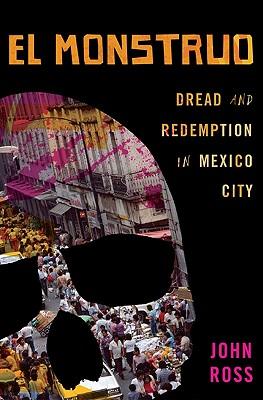
I am on a low-rent book tour with my new cult classic El Monstruo – Dread & Redemption In Mexico City.  For the next three months, I will stumble across this land from sea to stinking sea probing the underbelly of Obama’s America.  The findings will be posted on these pages.


LAS CRUCES N.M. — The snow was already dusting the Organ Mountains fringing this high desert town, promising a hard winter further up the spine of Obama’s America. I ride the Mexican bus (officially doing business as the El Paso-L.A, Limousine Express) when I ply the back roads of the southwest. Greyhound, with its stern rules and regulations and surly drivers who threaten their cargos with summary expulsion for minor infractions, doesn’t much inspire me these days.  


With notable exceptions, Greyhound passengers are a harried and haunted bunch, riding the Big Dog from trouble to trouble, often with all their possessions stuffed into plastic garbage bags. In the cruelest of gestures, the Greyhound management has recently banned garbage bags as an instrument of luggage.  Zombie passengers on the Big Dog stare out at the distant horizon submerged in their worries or stab music into their ears to sever all human communication. No one talks to their fellow travelers anymore.

By way of contrast, the Mexican bus bubbles with chatter.  “Platicame!” (“Talk to me!”) my seatmates insist. The chitchat often gravitates towards work — where they have recently toiled, the job towards which they are headed. Wistful nostalgia for their families and pueblos down in Mexico are common ground. Rancheros belch from the speakers and the taste of tamales flavors the ride. It feels like going home.

Bus rides are an opportunity to reinvent oneself. I am usually the only gabacho on these long hauls through the rugged mountains and barren deserts of the southwest, but I speak colloquial, unaccented Mexican and who I really am excites curiosities. These days, my kuffiyah wrapped around my scrawny neck, I pass myself as an Arab from Mexico City hawking books from tank town to tank town, a plausible story — back home, Arabs are often stereotyped as itinerant peddlers.

North of Las Cruces, the Mexican bus is pulled into a Migra shed and the conversation modulates real quick. A blonde woman agent jumps on board and demands to see everyone’s documents. She studies the passports and green cards under the glare of her flashlight and then shines it into the eyes of the passengers to see who will blink first. One young man — he looks like a university student – is pulled off the bus and is never seen again. When the Mexican bus slides out of the shed, the chatter resumes — but with one less voice in the mix.

Clayton, a young Wobbly who used to run a bookshop down by the rail yards in Albuquerque that was mostly frequented by hobos looking for a little warmth in a cold winter world, is now teaching at a troubled middle school. Patrol cars are often parked out front and half the kids – 99.99% of who are “Hispanics” (read Mexicans) – have juvenile police records. Clayton asks me in to talk to the students, who have never seen a real author in the flesh.  

We hunker down in the library and I step into my Grandpa persona and tell tales of the Mexican revolution while Clayton projects portraits of the Great Zapata and Pancho Villa on the audio-visual screen. I recount how the two men met in a rural schoolhouse in Xochimilco, now a borough of Mexico City, in December 1914. For an hour the two sat in frozen silence until Zapata, unable to contain his bitterness, declares that Carranza, their rival, is “un hijo de puta!” The kids fall off their little library chairs in gales of Mexican mirth. Clayton frets for his job but the librarian apparently doesn’t understand Spanish.  

I show the kids my books. Helen, a boisterous tweener, grabs “Iraqigirl” from Clayton’s hand and announces she is taking it home. The next day, she returns it with a review: “this is the best book I have ever read.” Two boys sit at the round reading table with copies of “El Monstruo — Dread & Redemption In Mexico City” and “Murdered by Capitalism — 150 Years of Life & Death on the American Left” spread before them. They pour over the subversive pages all through the lunch hour. When we prompt them that we have to leave, they hide the books under their hoodies.

 “I don’t have it — check me out!” Salvador (not his real name) challenges. The librarian rushes over and promises the boys that she has just ordered the books on line for them. They will be here Monday morning.  “But this is only Thursday,” protests Manuel (not his real name.)  

Garfield middle school is the best stop so far on this monstrous book tour.

Attendance at public events in Albuquerque is sparse. A vegan spread at the Catholic Worker House drums up a dozen hungry souls, a presentation of “Iraqigirl” at the Peace & Justice Center eight, including an Iraqi woman who leaves early. I show “Corazon del Tiempo” (“Heart of Time”), the new Zapatista movie (it was previewed at Sundance) in a small room at the university – Weather veterano Mark Rudd and the remarkable investigator Nelson Valdez and a handful of starry-eyed students (“Corazon” is a love story) show up.  


I sorely miss my old pal Tilda Sosaya who fought doggedly for prisoners’ rights in the nearly wholly privatized New Mexico prison system for decades after her son was imprisoned for ten years for some dumb teenage caper. Last March, I wrote Tilda that I had been diagnosed with liver cancer and she wrote back that she had it too. The cancer took her quickly and now she is gone and her son is back in prison. We fight for justice but life in this lane is not very just.

I catch the day train up to Santa Fe to visit with the writer Chellis Glendinning. Chellis has lived for the past 18 years on a tiny plot in Chimayo, the land of miraculous dirt and a key distribution point for black tar heroin from Sinaloa and Nayarit — see her “Chiva – How One New Mexican Town Took On The Global Heroin Trade.” Now she is pulling up stakes and throwing in with Evo Morales. Her jeep flies a Bolivian flag and she is rushing to be in Cochabamba for the tenth anniversary of the landmark struggle against the privatization of that city’s water supply by the Bechtel Corporation. Adios companera — la lucha sigue y sigue y sigue!

I am back on the Mexican bus heading towards Denver. The riders get off at whistlestops like Las Vegas and Durango and Colorado Springs where they will do the dirty work of this country — walloping pots, washing cars, cleaning motel rooms, milking cows, shoveling their manure, keeping Obama’s America spic and span for the next paying customer at minimum wages if indeed they are not cheated out of them by unscrupulous contractors.  

When the guy across the aisle gets curious, I revive my new identity as an Arab peddler. “Donde esta tu mujer?” he asks (“Where is your wife?”) and I lie that she is in Iraq taking care of her people. “The Yanquis invaded her country and bombed her neighborhood…”  “Pobre gente,” he sympathizes.  Santiago (is that his real name?) is from Hidalgo de Parral, Chihuahua and says he is on his way to work the Colorado ski resorts where so many Mexicans slave for Senor Charlie these days. He knows all about exile.  

I am invited to deliver a pair of lectures at Denver University, Condoleezza Rice’s alma mater (her father was provost.)  Doug Vaughn, also a DU grad who went left at an early age, notices that I will be speaking at the same time as Cindy Courville, Condi’s roommate who followed her to the National Security Council and then became U.S. emissary to the African Union.

My talks are programmed for the Josef Korbel Center for International Studies. Josef Korbel was Madeline Albright’s father, to give you some assessment of my chances of winning converts here. Indeed, the students are polite and well-groomed, models of future CIA assets — in tracking down the announcement of Courville’s talk on a Korbel Center bulletin board, Doug encounters a CIA recruitment leaflet. The grad students have been forewarned they will be visited by a representative of the lunatic fringe and busy themselves with their e-mail under the pretext of taking notes.  

Academic acrimony flourishes in the Denver- Boulder axis.  Everywhere else in this land where my father croaked, the trials and tribulations of Ward Churchill and his ill-timed assault on the “little Eichmans” deconstructed in the Twin Towers conflagration went out with the fish wrap the next morning — but here in mile-high city, mention of Ward and Colorado AIM can still start a prairie fire. Although such Churchill accusers as the governor and the Colorado U president have long since resigned due, in fact, to other scandals after successfully silencing Ward, his detractors’ thirst for blood remains unsatiated.

Infused with the venom of the dearly departed Bellencourts (who Churchill once dissed as “Nebraska wigmakers”), Ernesto B. Vigil, author of an action-packed bio of Corky Gonzalez, the Denver-based Xicano founder of the Nation of Aztlan, is still brandishing the long knives. Ward Churchill is a fake Indian, Ernesto obsesses, a white guy whose claim to indigenousness is backed up by white people because white people only listen to white people.  White people think they know everything, he scoffs in a heated e-mail in which he disparages my whiteness a dozen times in as many lines.

Actually, I don’t give a rat’s ass if Ward Churchill is one/sixteenth Cherokee or not (the tribal government recently expelled all its black members) — Churchill remains the most lucid writer on American genocide in this benighted country.

Boulder is said to be the most over-regulated city in North America although white liberal enclaves like Madison Wisconsin and Arcata California could give Boulder a run for its money.  I accompany Joe Richey, a local alternative radio sleuth, to the Boulder dog pound to bail out his black lab “Yanqui” (as in “Yanqui! Go home!) “Yanqui” has been adjudged guilty of illicit dog-like behavior i.e. nuzzling a neighborhood garbage can.  

After Joe pays off the authorities and the mutt is released to his custody and properly admonished, we drive past a local dog park.  In a paroxysm of charitable intent, the Boulder City Council permits the homeless to encamp at night amidst the dog turds but they must be gone by daybreak when the pooches of the city’s housed residents take possession or risk a $100 fine. How the homeless, forced to bed down in dog shit nightly, can afford this astronomical sum is unclear. Such is what passes for compassion on the underbelly of Obama’s Amerikkka.


On my final day in Denver, Hank Lamport, a local schoolteacher who favorably reviewed “El Monstruo” for the Post, today the only daily in this formerly two-newspaper town, drives me out to the Rocky Mountain Arsenal National Wildlife Rehabilitation Area. Until a few years ago, the Rocky Mountain Arsenal manufactured and stored deadly nerve gas, chiefly Serin — an occasional lost canister still spooks the wildlife.  The displays at the Visitors’ Center feature photos of workers filling “Honest John” missiles with the stuff. Napalm was also cooked up here. I study the glazed eyes of taxidermied foxes and coyotes and bald eagles and hastily bid adieu.

On the way out of town, we stop to worship the victuals in an Aurora, Colorado taco shop. Hank laments that when he first became a devotee of “Tacos y Salsas,” the clientele, uniformly Mexicanos, would greet him with a “buen provecho” (“good appetite” — a universal courtesy in the Spanish-speaking world) but now the customers have become so gringo-ized that the salutation is a lost art. Nonetheless, when we polish off our orders and head for the door, two working stiffs at the next table wish us each “buen provecho.”
  
It warms the cockles of my contused heart to know that such cultural resistance still percolates out here on the damaged spine of Obamalandia.

Next stop: the frozen, melancholy flatlands of the Great Midwest.  

John Ross and “El Monstruo – Dread & Redemption in Mexico City” (“gritty and pulsating” – NY Post) will be visiting Traverse City and Grand Rapids Michigan in the final week of March. You can catch them at the Headland Café in Chicago’s Rogers Park March 31st, Toronto’s Hoggtown April 1st-4th, and St. Louis Mo. April 7th.  


The new War on Fun

46

news@sfbg.com

For several years, the Guardian has been running regular stories chronicling what we’ve dubbed the Death of Fun, a trend of official crackdowns and shakedowns on people who throw parties and festivals in San Francisco. In the last year, that trend has started to morph into an often brutal War on Fun, with a growing list of atrocities and casualties associated with this overzealous new approach to killing the city’s entertainment industry.

Why this is happening is baffling to those most affected: nightclub owners and workers, party promoters, DJs and VJs, fundraising activists, and people just out to have a good time without being harassed by a cop. But in recent months, we’ve learned much more about what’s happening and who the main perpetrators are.

Two undercover enforcers have been at the center of just about every recent case of nightclubs or private parties being raided without warrants and aggressively shut down, their patrons roughed up (see “Fun under siege,” 4/21/09) and their money, booze, and equipment punitively seized “as evidence” (see “Police seize DJs laptops,” 11/24/09) even though few of these raids result in charges being filed in court.

Officer Larry Bertrand of the San Francisco Police Department’s Southern Station and Michelle Ott, an agent with the California Department of Alcoholic Beverage Control, are plainclothes partners who spend their weekends undercover, crashing parties, harassing disfavored nightclubs, brutalizing party-goers, and trying to send the unmistakable message that they’re in charge of San Francisco nightlife. Neither responded to our interview requests.

Isolated incidents of intolerant cops and NIMBY citizens who repeatedly complain about certain clubs or festivals has been a problem for years (see “Death of fun,” 5/24/06 and “Death of fun, the sequel,” 4/24/07). Top city officials have opted to cancel events such as Halloween in the Castro District rather than try to manage them better, and the nightlife community has tried to organize in defense of its interests (see “Fighting for the right to party,” 7/1/08) with mixed results.

But the personal War of Fun by Bertrand and Ott seems to have galvanized and united the nightlife and festival community like never before, leading to the creation of a new California Music and Culture Association and prompting threats of a federal lawsuit alleging the ABC-SFPD collaboration is a racketeering scheme designed to harass, disrupt, and extort people engaged in otherwise lawful activity.

The myriad horror stories associated with Bertrand and Ott have also finally begun to draw attention from the Mayor’s Office, which has quietly pushed the SFPD to rein in Bertrand and change its policies on raiding parties and seizing property. State Sen. Mark Leno also has gotten involved, brokering a March 12 meeting between club owners and Steve Hardy, director of ABC (which, in addition to cracking down on nightclubs — see “Busting bars,” 6/23/09 — has recently announced a campaign against fruit-infused liquor).

“They were going to see how they could unwind this a bit,” Leno told us, adding that he was “infuriated” by stories of abusive treatment of the public. “The fear that it spreads through the community is unacceptable.”

The question now is what Hardy, Mayor Gavin Newsom, and Police Chief George Gascón — who has ordered some crackdowns and wants greater authority to discipline problem officers — is going to do about it.


CHAOS AT A STUDENT PARTY

It was after midnight on Jan. 31 when Krystal Peak, a journalist with San Francisco State University’s Golden Gate Xpress, received a call from her managing editor. There was a commotion and a swarm of police cars outside a student party at Seventh and Minna streets near her home, and she was asked to investigate.

She came upon the aftermath of a melee between police and partygoers that had taken place after a fundraising event at a SoMa warehouse art space was upended. The benefit was organized to raise legal funds for students who staged a building occupation at the University of California at Berkeley, in defiance of budget cuts.

The event was clearly chaotic, and it’s hard to sort out exactly what happened and when. City officials say the partiers were throwing bottles and firecrackers at the police; people at the event say the cops started it all.

But the tales partygoers tell about the behavior of Bertrand and Ott, the undercover enforcers, are similar to a series of other stories involving the pair, stories published in the Guardian and elsewhere.

There had been multiple arrests by the time Peak arrived on the scene. Numerous witnesses asserted that things were going along without incident until a fire marshal arrived in response to a complaint, and in short order, two officers who’d been there in plainclothes for hours — Bertrand and Ott — began shouting, tackling people, and kicking in doors.

Police Chief George Gascón acknowledged that the department has been targeting underground parties. “We get a lot of resident complaints about it,” he said in a recent Guardian interview. “We’re talking about a lot of the underground parties, or the parties where the promoters are exceeding their authorities to a number of people.”

Several hundred attended this particular party. Of the 11 people arrested, eight were either detained or cited and released. None faced underage drinking or drug charges. At least five were charged with resisting arrest. One individual was charged with vandalism, two were charged with battery on an officer, and two detained for being drunk in public.

Peak began photographing the scene: busted-up chairs, uniformed officers guarding the entrance, police cars everywhere. She zoomed her lens to capture the wreckage inside. None of the uniformed officers seemed to have a problem with her — but when she spotted the undercover officers with exposed badges, that changed.

The cops broke through the door, yelling. “They said, ‘This is an investigation, you’re not allowed to be here.'<0x2009> she said. “We told them we were with the press.” They threatened to arrest her.

Shortly after, the plainclothes officers crossed in front of her to an unmarked car. She took another picture. Bertrand, a tall guy with a shaved head, allegedly turned and grabbed her arm, and both officers shouted at her. “[Ott] said to me, ‘Your flash has impeded my investigation,'” Peak recounted. She was cuffed and arrested on the spot, and her camera was confiscated.

She was cited for obstruction of justice, but the charges were dropped. And she got her camera back — but says the SD memory card, where all the photos were stored — was missing.

“I flipped [the camera] open … and found the SD card was missing,” she said. She asked Bertrand where it was. “He said, ‘I don’t know what you’re talking about,'” Peak recalled. Bertrand, she recalled, then looked around at a group of officers watching the exchange, and announced, “This woman is refusing to leave. I’m going to have to re-arrest her.” Ott appeared, according to Peak, and insisted that there was no evidence the memory card had been in the camera in the first place.

“My camera will not ignite a flash unless there’s a memory card in there,” Peak explained. In the end, she left empty-handed — without photos of the undercover officers.


BUSTING DOORS

Earlier, when the party was in full swing, a 24-year-old California State University, Fullerton student visiting from Los Angeles says when the fire marshal entered, Bertrand flashed his badge, yelling at everybody to get out. “It was really aggressive from the get-go,” said the Fullerton student, who spoke on condition of anonymity because he had a pending legal case. “It’s very hard for me to describe the intensity to which this guy was busting down doors.”

Later, the young man from L.A. said, he was following people who left in a rush, and ran to catch up. “Shortly after, I felt a blow to the back right of my head,” he said. “My glasses flew off, and I was tackled to the ground. My forehead was being pushed straight into the ground and they were holding my hair. I kept repeating … please, I can’t see — I’m legally blind. I thought three or four officers were on top of me, and they were saying, ‘Fuck you, you little anarchist punk.'<0x2009>”

That’s when he said he felt a sensation like “a bunch of really intense bee stings on my left side, just above my hipbone.” He thought he was Tasered — and photos he showed us depict a skin burn. SFPD officers are not authorized to carry Tasers.

“It sounds like a stun gun, not a Taser gun,” Ken Cooper, a firearms and Taser instructor based in New York, noted when the incident was described to him.

When we shared the photos with SFPD’s media relations department, Lt. Lyn Tomioka noted, “I can tell you that we do not have any tool that would produce the type of wounds shown in the picture that you attached, or produce a stinging sensation.”

The L.A. visitor said he was delivered this explanation from an officer while in the holding cell: “One of your anarchist buddies must’ve had a Taser, ran over to you trying to get one of our officers, got you instead, and ran away.”

Cooper Brislain, a Web developer from Santa Cruz, told us his iMac was destroyed that night. A friend of the owners of the art space, he was there doing video mixing for the party, he explained. After the trouble started, he began carrying his computer and mixing equipment toward the door. “The uniformed officers were going to let me go. I told them, ‘I just came here to perform.’ They seemed OK,” he said. Then he encountered Bertrand.

He … grabbed me by the collar, led me over toward the wall, and sat me down,” Brislain told us. He says Bertrand and Ott seized his computer. Brislain says no charges were filed against him.

The morning after, he found that his computer had been smashed up. His friends found it in pieces at the bottom of the stairs. To this day, he says he has not been able to retrieve his ID, which was seized that night. “I tried calling [Bertrand] on his extension to leave a message and never heard back,” he says. “They told me he probably wouldn’t return voicemails.” The District Attorney’s Office has a different perspective. D.A. spokesperson Brian Buckelew said the partygoers were drunk and “going nuts on police.” People were throwing firecrackers, he said. “It obviously got out of hand, and people were throwing bottles at police,” he said.

The student from L.A. allegedly shoved a female officer, Buckelew said. According to the report, he said, police officers were taking someone into custody, and he tried to pull them free.

Nevertheless, even Chief Gascón agrees that it’s not okay to destroy someone’s personal property. “If in fact the allegations were proven to be the case that an officer took somebody’s laptop and threw it down the stairs,” Gascón told us, “that would be inappropriate, and that officer would be sanctioned accordingly.” He noted that he met with an attorney from the Electronic Frontier Foundation about a recurring trend of officers — Bertrand in particular — seizing DJ laptops at underground parties. “We’ve met with them and we’ve agreed to actually tighten up the protocols in how this would be handled,” Gascón noted.


A RICO SUIT

The list of local nightclub clubs that have been recently targeted by Bertrand and Ott or subjected to ABC sanctions is long. It includes Great American Music Hall, Slim’s, DNA Lounge, Mist, Whisper, the Room, Vessel, Azul, Butter, and Club Caliente (which closed down after its mostly Latino customers were scared away by repeated raids).

“Using the now familiar pattern and ruse of ABC authority, these raids have been without warrant and without probable cause, under the pretext of finding liquor violations,” attorney Mark Webb wrote in a claim against the city, describing the harassment of Caliente owner Maurice Salinas and later adding, “Despite numerous raids, the invading officers [Bertrand and Ott] managed to ‘uncover’ a single infraction: one customer used his brother’s ID card, claiming he was over 21 to gain entry. For this reason, Mr. Salinas was cited and fined, bullied, intimidated, and yelled at on the spot.”

Webb said such behavior isn’t legitimate police work, but unlawful harassment. In fact, this experienced litigator said it’s far closer to the shakedowns and extortion rackets familiar to him from the start of his legal career in the late 1970s prosecuting organized crime cases in New York City.

That’s why he’s threatening to bring a novel lawsuit against the city and ABC under federal Racketeer Influenced and Corrupt Organization (RICO) Act, a law designed go after the mob, but which has since been adapted to target entities ranging from the tobacco industry to the Los Angeles Police Department.

Webb told us that interference with legitimate business operations, such as running a nightclub, is the essence of RICO suits. As part of the case, Webb plans to submit a surveillance video that shows Bertrand kneeling on the neck of bartender Javier Magallon from The Room and twisting his arm. Webb gave us a copy of the video.

Another element of making a RICO case is the use of intimidation and retaliation against those who complain — which was central to a March 17 SF Weekly story about promoter Arash Ghanadan being inappropriately singled out for arrest by Bertrand as retaliation for filing a complaint against the officer with the Office of Citizen Complaints.

Webb says he has a strong case that he intends to file soon, but that most of his clients just want the SFPD to rein in Bertrand and stop facilitating ABC actions. “I want to have a sit-down with Gavin Newsom,” Webb said. “I am calling on Mayor Newsom to come in and mediate what would be an expensive, divisive fight that will generate national interest … I think this thing can go way quickly without litigation.”

Newsom press secretary Tony Winnicker, who said Newsom has brought concerns about Bertrand to the chief’s attention, didn’t immediately embrace Webb’s offer. “The mayor would rather leave it to the chief,” Winnicker said.

So the question for Gascón is whether he’s willing to take on the cowboy cops within the SFPD’s ranks. After all, Bertrand is also on the San Francisco Police Officers Association Board of Directors.

The nightlife community is organized like never before and plotting its next move in fighting a war it didn’t initiate and barely understands. Whether that war continues now seems to be a question for the party crashers and their supervisors.

End the nightlife crackdown

0

Harassing parties and clubs shouldn’t be a priority for a cash-strapped city’s police department

EDITORIAL Police Chief George Gascón has asked for more authority to crack down on rogue cops, and has vowed to clean up the small handful of bad actors who are giving the department an ugly reputation for violence and abuse. But before San Franciscans are going to trust the chief, he’s got to show some evidence that he’s serious — and cleaning up the mess that is Southern Station’s crackdown on nightlife would be a great place to start.

As Rebecca Bowe and Steven T. Jones report in this issue, the SFPD seems to be waging war on parties, clubs, and events, particularly in the SoMa area. And it’s not pretty. Undercover cops sneak into events then call in the troops, who make multiple dubious arrests and, according to widespread accounts, seize or destroy laptops and other DJ equipment and beat up and abuse participants.

It’s a pointless waste of law enforcement resources. In a city where a significant number of murders remain unsolved, where merchants complain about street-level crimes that could easily be addressed by foot patrols, and where the chief complains that he lacks the funds to address all the problems he’s facing, we can’t fathom why stopping nightlife is a top police priority. At the very worst, some participants and promoters might be guilty of holding an event without the proper permits — but nobody’s getting robbed, assaulted, or killed.

And the tactics used by the officers are needlessly violent, sometimes brutal. According to lawsuits and eyewitness accounts, SFPD officers have smashed laptops, kicked and beaten partygoers, and arrested people with little cause. A San Francisco lawyer is preparing to file a RICO Act lawsuit against the city, charging that the police are conspiring with state liquor-control officials to harass people engaged in lawful activity.

The policy directives behind this appear to come from Cdr. James Dudley, the former captain of Southern Station, and the officer most directly responsible for the crackdown is Larry Bertrand. Paired with an officer from the state Department of Alcoholic Beverage Control, Bertrand attends parties in plain clothes, sometimes dressed as a raver.

Complaints about Bertrand and the crackdowns are piling up. We’ve been writing about it for months. SF Weekly picked up the story last week. There are complaints filed with the city’s Office of Citizen Complaints and lawsuits pending. The chief may not have known about the problems at the crime lab, but he has to be aware of what Bertrand is up to.

Gascón should direct Dudley and Bertrand to back off — to halt the undercover work, end the seizure of personal property such as laptops and DJ gear (it’s not a crime to own a computer or speaker system), and work with the clubs and the nightlife community to devise reasonable systems for dealing with permit issues. And he needs to do it publicly, to let San Franciscans know that he’s addressing the issue.

Mayor Gavin Newsom needs to get involved too, and make a clear public statement that harassing parties and clubs isn’t the top priority for a cash-strapped city’s police department.

Film listings

0

Film listings are edited by Cheryl Eddy. Reviewers are Kimberly Chun, Michelle Devereaux, Max Goldberg, Dennis Harvey, Johnny Ray Huston, Erik Morse, Louis Peitzman, Lynn Rapoport, Ben Richardson, and Matt Sussman. The film intern is Peter Galvin. For rep house showtimes, see Rep Clock. For first-run showtimes, see Movie Guide.

OPENING

Chloe See "Moore and Less." (1:36) Elmwood, SF Center, Sundance Kabuki.

Greenberg Roger Greenberg (Ben Stiller) is 40, and you might think he’s going through a midlife crisis — if he hadn’t been in pretty much this same crisis for 15 years or more. Still very edgy and fragile after a nervous breakdown-sparked institutional stay, he’s holing up at the comfortable Hollywood home of a big-deal brother while the latter and family are on vacation in Vietnam. (The implication being that Roger is most welcome here when no one else actually has to endure his prickly, high maintenance company.) While in residence he reconnects with old friends including the ex-girlfriend (Jennifer Jason Leigh) he dumped yet never quite got over — though clearly she did — and the ex-bandmate (Rhys Ifans) he burned by wrecking their one shot at a major-label deal. He also gets involved, kinda-sorta, with big bro’s personal assistant Florence (mumblecore regular Greta Gerwig), whose passivity and low self-esteem make her the rare person who might consider a relationship with someone this impossible. Like all Noah Baumbach films, especially the slightly overrated Squid and the Whale (2005) and vastly underrated Margot at the Wedding (2007), his latest pivots around a pathologically self-absorbed and insensitive protagonist who exasperates anyone unlucky or blind enough to fall into his or her orbit. Working from a story co-conceived by spouse Leigh, Baumbach’s script sports his usual sharp dialogue, penetrating individual scenes, and narrative surprises. But it also gets stuck in dislikable Roger’s rut, finding conflict easily but stubbornly resisting even the smallest useful change. For all its amusing and uncomfortable moments, Greenberg emerges a dual character slice with no real point. Neither Roger or Beth reward long scrutiny (least of all as a hapless potential couple), while the few screen minutes Ifans and Leigh get make you wish their roles had hijacked the focus instead. (1:40) Piedmont, Shattuck. (Harvey)

Hot Tub Time Machine At last, Crispin Glover returns to his time-travel movie roots! (1:55) California.

How to Train Your Dragon Yet another 3D cartoon for the kiddies. At least this one is about Vikings. (1:38)

*The Sun It may have taken five years for Alexander Sokurov’s The Sun (2005) to reach local theaters, but then the Russian master’s contemplation of Emperor Hirohito’s last days as Godhead is decidedly out of time. Painterly and slow like all Sokurov’s work, the film specifically follows his estranged reconstructions of Hitler’s retreat with Eva Braun (1999’s Moloch) and Lenin’s demise (2000’s Taurus). In August 1945, Hirohito broke with tradition by making a direct appeal to the Japanese people to end military operations; soon thereafter he renounced his divine rights. The Sun‘s elliptical narration intuits the emperor’s paled existence, and Issey Ogata’s lead performance, centering on a fish-out-of-water puckering of the lips, amply conveys the shuttered hours of a man who, in experience if not in fact, is not quite human. The muted use of available light and a disquieting sound design (faraway air-raid sirens yield to the barest brush of a finger) eschew historiography’s harsh glare, instead returning primal scenes of power to a dreamlike state of unknowing. Sokurov’s most hallucinatory effects are reserved for ashen views of firebombed Tokyo which float free from perspective or clear boundary; a brief fantasy in which fish-like warplanes spew apocalyptic destruction suggests the emperor’s childlike imagination and set the stage for his historical date with General MacArthur, realized by Sokurov less as a diplomatic breakthrough than a leaden twilight. (1:50) Shattuck. (Goldberg)

Waking Sleeping Beauty Hollywood history is full of epic rivalries, juicy scandals, multi-million-dollar mistakes, and triumphant comebacks. Sometimes, all of the above and more can be contained within a single studio, or even a single studio division, or even a single studio division during a finite number of years, as illustrated by this insidery peek at Disney’s animation division. The doc gives a bit of background, but focuses its attentions on 1984-1994, a ten-year span that saw the floundering department struggle through post-Walt, identity-crisis blues before blossoming into a rejuvenated powerhouse. Waking Sleeping Beauty director Don Hahn was a producer on the Oscar-nominated Beauty and the Beast (1991), so he’s uniquely positioned to tell the story as it unfolded, using home movies and countless interviews. High points include a glimpse of late composer Howard Ashman introducing his demo for the iconic Little Mermaid (1989) tune "Under the Sea" (it was Ashman’s idea to give the crab character a Jamaican accent), and plenty of dish on the legendary Jeffrey Katzenberg-Michael Eisner feud. (1:26) Embarcadero. (Eddy)

ONGOING

Ajami You may recognize the title of Yaron Shoni and Scandar Copti’s debut collaboration as one of five films nominated for a 2010 Academy Award in the Foreign Category. Though it didn’t bring home the grand prize, Ajami remains a complex and affecting story about desperation and its consequences in a religiously-mixed town in Israel. As we follow the lives of four of Ajami’s residents the narrative shifts perspective almost maddeningly, switching characters seemingly at the height of each story’s action. But once all of the stories fully intersect, the final product has the distinction of feeling both meticulously calculated and completely natural. I was most impressed to learn that Shani and Copti prepared their actors with improvised role-playing rather than scripts. By withholding what was going to happen in a scene before shooting, we are treated to looks of surprise and emotion on actor’s faces that never feel unnatural. Attaining such a level of realism may be Ajami‘s crowning achievement; it can’t have been easy to make a foreign world feel so familiar. (2:00) Shattuck. (Galvin)

Alice in Wonderland Tim Burton’s take on the classic children’s tale met my mediocre expectations exactly, given its months of pre-release hype (in the film world, fashion magazines, and even Sephora, for the love of brightly-colored eyeshadows). Most folks over a certain age will already know the story, and much of the dialogue, before the lights go down and the 3-D glasses go on; it’s up to Burton and his all-star cast (including numerous big-name actors providing voices for animated characters) to make the tale seem newly enthralling. The visuals are nearly as striking as the CG, with Helena Bonham Carter’s big-headed Red Queen a particularly marvelous human-computer creation. But Wonderland suffers from the style-over-substance dilemma that’s plagued Burton before; all that spooky-pretty whimsy can’t disguise the film’s fairly tepid script. Teenage Alice (Mia Wasikowska) displaying girl-power tendencies is a nice, if not surprising, touch, but Johnny Depp’s grating take on the Mad Hatter will please only those who were able to stomach his interpretation of Willy Wonka. (1:48) Castro, Empire, 1000 Van Ness, SF Center, Sundance Kabuki. (Eddy)

*The Art of the Steal How do you put a price on something that’s literally priceless? The Art of the Steal takes an absorbing look at the Barnes Collection, a privately-amassed array of Post-Impressionist paintings (including 181 Renoirs) worth billions — and the many people and corporate interests who schemed to control it. Founder Albert C. Barnes was an singular character who took pride in his outsider status; he housed his art in a specially-constructed gallery far from downtown Philadelphia’s museum scene, and he emphasized education and art appreciation first and foremost. But he had no heirs, and after his death in 1951, opportunists began circling his massive collection; the slippery political and legal dealings that have unfolded since then are nearly as jaw-dropping as Barnes’ prize paintings. Philly documentarian Don Argott has a doozy of a subject here, and his skillful, even suspenseful film does it justice. (1:41) Smith Rafael. (Eddy)

The Blind Side When the New York Times Magazine published Michael Lewis’ article "The Ballad of Big Mike" — which he expanded into the 2006 book The Blind Side: Evolution of a Game — nobody could have predicated the cultural windfall it would spawn. Lewis told the incredible story of Michael Oher — a 6’4, 350-pound 16-year-old, who grew up functionally parentless, splitting time between friends’ couches and the streets of one of Memphis’ poorest neighborhoods. As a sophomore with a 0.4 GPA, Oher serendipitously hitched a ride with a friend’s father to a ritzy private school across town and embarked on an unbelievable journey that led him into a upper-class, white family; the Dean’s List at Ole Miss; and, finally, the NFL. The film itself effectively focuses on Oher’s indomitable spirit and big heart, and the fearless devotion of Leigh Anne Tuohy, the matriarch of the family who adopted him (masterfully played by Sandra Bullock). While the movie will delight and touch moviegoers, its greatest success is that it will likely spur its viewers on to read Lewis’ brilliant book. (2:06) Oaks. (Daniel Alvarez)

Brooklyn’s Finest "Really? I mean, really?" asked the moviegoer beside me as the final freeze-frame of Brooklyn’s Finest slapped our eyeballs. Yes, that’s the sound of letdown, despite the fact that Brooklyn’s Finest initially resembled a promisingly gritty juggling act in the mode of The Wire and Cop Land (1997), Taxi Driver (1976) and Training Day (2001). Bitter irony flows from the title — and from the lives, loves, bad habits, pressure-cooker stress, and unavoidable moral dilemmas of three would-be everyday cops, all occupying several different rungs on a food chain where right and wrong have an unpleasant way of switching sides. Eddie (Richard Gere) is the veteran officer just biding his time till he gets his pension, all while comforting himself with the meager sensuous attentions of hooker Chantel (Shannon Kane). Sal (Ethan Hawke) is the bad detective, stealing from the dealers to fund a dream home for his growing family with Angela (Lili Taylor). Tango (Don Cheadle) is the undercover detective who has cultivated friendships with dealers like Caz (Wesley Snipes) and sacrificed his marriage for a long-promised promotion from his lieutenant (Will Patton) and his superior (Ellen Barkin, in likely the most misogynist portrayal of a lady with a badge to date). You spend most of Brooklyn’s Finest waiting for these cops to collide in the most unfortunate, messiest way possible, but instead the denouement leaves will leave one wondering about unresolved threads and feeling vaguely unsatisfied. In any case, director Antoine Fuqua and company seem to pride themselves on their tough-minded if at times cartoonish take on law enforcement, with Hawke in particular turning in a memorably OTT and anguished performance. (2:13) 1000 Van Ness. (Chun)

The Bounty Hunter There’s a real feeling of impotence in reviewing a movie whose ad was pasted on the side of the bus you took to the screening. This thing is determined to be seen, and that’s a true shame. Those who heed the call of the ubiquitous marketing campaign will have to sit through a dull parade of contrivances concerning a bounty hunter (Gerard Butler) whose latest catch is his court-skipping ex-wife (Jennifer Aniston). She’s a hotshot city journalist who’s forced to continue her investigation of a police cover-up while handcuffed to a car door and bickering with her old flame. The trajectory of the plot is obvious enough, but there’s so little chemistry between the two actors that the inevitable reconciliation practically constitutes a twist ending. Aniston saw fit not to whine her way through this role, which is something, but nothing nearly as complimentary can be said about Butler. He emotes in lurches, with the presence of a guy who’s not sure acting is the right direction for his life but still really wants to give it a go. If "This. Is. Sparta!" weren’t burned into my brain I would swear the man had never been in front of a camera before. (1:50) 1000 Van Ness, SF Center, Sundance Kabuki. (Jason Shamai)

The Crazies Disease and anti-government paranoia dovetail in this competent yet overwhelmingly non-essential remake of one of George A. Romero’s second-tier spook shows. In a small Iowa hamlet overseen by a benevolent sheriff (Timothy Olyphant) and his pregnant wife (Radha Mitchell), who’s also the town doctor, a few odd incidents snowball into all-out chaos when a mysterious, unmarked plane crashes into the local water supply. Before long, the few residents who aren’t acting like homicidal maniacs are rounded up by an uber-aggressive military invasion. Though our heroes convey frantic panic as they try to figure out what the hell is going on, The Crazies never achieves full terror mode. It’s certainly watchable, and even enjoyable at times. But memorable? Not in the slightest. (1:41) 1000 Van Ness. (Eddy)

Crazy Heart "Oh, I love Jeff Bridges!" is the usual response when his name comes up every few years for Best Actor consideration, usually via some underdog movie no one saw, and the realization occurs that he’s never won an Oscar. The oversight is painful because it could be argued that no leading American actor has been more versatile, consistently good, and true to that elusive concept "artistic integrity" than Bridges over the last 40 years. It’s rumored Crazy Heart was slotted for cable or DVD premiere, then thrust into late-year theater release in hopes of attracting Best Actor momentum within a crowded field. Lucky for us, this performance shouldn’t be overlooked. Bridges plays "Bad" Blake, a veteran country star reduced to playing bars with local pickup bands. His slide from grace hasn’t been helped by lingering tastes for smoke and drink, let alone five defunct marriages. He meets Jean (Maggie Gyllenhaal), freelance journalist, fan, and single mother. They spark; though burnt by prior relationships, she’s reluctant to take seriously a famous drunk twice her age. Can Bad handle even this much responsibility? Meanwhile, he gets his "comeback" break in the semi-humiliating form of opening for Tommy Sweet (Colin Farrell) — a contemporary country superstar who was once Bad’s backup boy. Tommy offers a belated shot at commercial redemption; Jean offers redemption of the strictly personal kind. There’s nothing too surprising about the ways in which Crazy Heart both follows and finesses formula. You’ve seen this preordained road from wreckage to redemption before. But actor turned first-time director Scott Cooper’s screenplay honors the flies in the windshield inherited from Thomas Cobb’s novel — as does Bridges, needless to say. (1:51) Piedmont, 1000 Van Ness, Shattuck, Sundance Kabuki. (Harvey)

Diary of a Wimpy Kid Spoiler alert: nothing happens in Diary of a Wimpy Kid. That was OK when it was just a book—author Jeff Kinney’s illustrated novel works due in large part to his whimsical drawings and tongue-in-cheek humor. It’s a kids’ book, but it’s fun for adults, too. The same can’t be said for the film adaptation: Diary of a Wimpy Kid sticks close to its source material without the creativity necessary to make it work on the big screen. As in the book, Greg Heffley (Zachary Gordon) navigates the treacherous terrain of middle school, struggling to cope with an awkward best friend, a brutal older brother, and parents who just don’t understand. All the actors turn in solid performances — Gordon is a particularly good find. But there’s so little here to work with. The best that can be said about Diary of a Wimpy Kid is that it’s cute and mostly harmless: a pleasant diversion for young’uns, and a tolerable bore for the parents they drag along. (2:00) 1000 Van Ness. (Peitzman)

*An Education The pursuit of knowledge — both carnal and cultural — are at the tender core of this end-of-innocence valentine by Danish filmmaker Lone Scherfig (who first made her well-tempered voice heard with her 2000 Dogme entry, Italian for Beginners), based on journalist Lynn Barber’s memoir. Screenwriter Nick Hornby breaks further with his Peter Pan protagonists with this adaptation: no man-boy mopers or misfits here. Rather, 16-year-old schoolgirl Jenny (Carey Mulligan) is a good girl and ace student. It’s 1961, and England is only starting to stir from its somber, all-too-sober post-war slumber. The carefully cloistered Jenny is on track for Oxford, though swinging London and its high-style freedoms beckon just around the corner. Ushering in those freedoms — a new, more class-free world disorder — is the charming David (Peter Sarsgaard), stopping to give Jenny and her cello a ride in the rain and soon proffering concerts and late-night suppers in the city. He’s a sweet-faced, feline outsider: cultured, Jewish, and given to playing fast and loose in the margins of society. David can see Jenny for the gem she is and appreciate her innocence with the knowing pleasure of a decadent playing all the angles. The stakes are believably high, thanks to An Education‘s careful attention to time and place and its gently glamored performances. Scherfig revels in the smart, easy-on-eye curb appeal of David and his friends while giving a nod to the college-educated empowerment Jenny risks by skipping class to jet to Paris. And Mulligan lends it all credence by letting all those seduced, abandoned, conflicted, rebellious feelings flicker unbridled across her face. (1:35) Oaks, Smith Rafael. (Chun)

*The Ghost Writer Roman Polanski’s never-ending legal woes have inspired endless debates on the interwebs and elsewhere; they also can’t help but add subtext to the 76-year-old’s new film, which is chock full o’ anti-American vibes anyway. It’s also a pretty nifty political thriller about a disgraced former British Prime Minister (Pierce Brosnan) who’s hanging out in his Martha’s Vineyard mansion with his whip-smart, bitter wife (Olivia Williams) and Joan Holloway-as-ice-queen assistant (Kim Cattrall), plus an eager young biographer (Ewan McGregor) recently hired to ghost-write his memoirs. But as the writer quickly discovers, the politician’s past contains the kinds of secrets that cause strange cars with tinted windows to appear in one’s rearview mirror when driving along deserted country roads. Polanski’s long been an expert when it comes to escalating tension onscreen; he’s also so good at adding offbeat moments that only seem tossed-off (as when the PM’s groundskeeper attempts to rake leaves amid relentless sea breezes) and making the utmost of his top-notch actors (Tom Wilkinson and Eli Wallach have small, memorable roles). Though I found The Ghost Writer‘s ZOMG! third-act revelation to be a bit corny, I still didn’t think it detracted from the finely crafted film that led up to it. (1:49) California, Piedmont, Sundance Kabuki. (Eddy)

*The Girl With the Dragon Tattoo By the time the first of Stieg Larsson’s so-called "Millennium" books had been published anywhere, the series already had an unhappy ending: he died (in 2004). The following year, The Girl With the Dragon Tattoo became a Swedish, then eventually international sensation, its sequels following suit. The books are addicting, to say the least; despite their essential crime-mystery-thriller nature, they don’t require putting your ear for writing of some literary value on sleep mode. Now the first of three adaptive features shot back-to-back has reached U.S. screens. (Sorry to say, yes, a Hollywood remake is already in the works — but let’s hope that’s years away.) Even at two-and-a-half hours, this Girl With the Dragon Tattoo by necessity must do some major truncating to pack in the essentials of a very long, very plotty novel. Still, all but the nitpickingest fans will be fairly satisfied, while virgins will have the benefit of not knowing what’s going to happen and getting scared accordingly. Soon facing jail after losing a libel suit brought against him by a shady corporate tycoon, leftie journalist Mikael Blomkvist (Michael Nyqvist) gets a curious private offer to probe the disappearance 40 years earlier of a teenage girl. This entangles him with an eccentric wealthy family and their many closet skeletons (including Nazi sympathies) — as well as dragon-tattooed Lisbeth Salander (Noomi Rapace), androgynous loner, 24-year-old court ward, investigative researcher, and skillful hacker. Director Niels Arden Oplev and his scenarists do a workmanlike job — one more organizational than interpretive, a faithful transcription without much style or personality all its own. Nonetheless, Larsson’s narrative engine kicks in early and hauls you right along to the depot. (2:32) Albany. (Harvey)

Green Zone Titled for the heavily-guarded headquarters of international occupation in Baghdad, Green Zone reunites director Paul "Shaky-Cam" Greengrass with star Matt Damon, the two having previously collaborated on the last two Bourne films. Instead of a super-soldier, this time around Damon just plays a supremely insubordinate one as he attempts to uncover the reason why his military unit can’t find any of Saddam’s WMDs. With the aid of the CIA, a Wall Street Journal reporter and a friendly Iraqi, Damon goes rogue in order to suss out the source of the misinformation. The Iraq War action is decent if scarce, but an overindulgence in (you guessed it) shaky-cam and political jargon cannot hide the fact that Green Zone‘s plot is simplistic and probably light on actual facts. Damon makes a fine cowboy-cum-hero, but the effectiveness of the mix of patriotism and Pentagon paranoia will vary based on your penchant for such things. Still, Green Zone moves fast enough that it remains worth a matinee for conspiracy thriller aficionados. (1:55) Empire, 1000 Van Ness, Sundance Kabuki. (Galvin)

The Hurt Locker When the leader of a close-knit U.S. Army Explosive Ordnance Disposal squad is killed in action, his subordinates have barely recovered from the shock when they’re introduced to his replacement. In contrast to his predecessor, Sgt. James (Jeremy Renner) is no standard-procedure-following team player, but a cocky adrenaline junkie who puts himself and others at risk making gonzo gut-instinct decisions in the face of live bombs and insurgent gunfire. This is particularly galling to next-in-command Sanborn (Anthony Mackie). An apolitical war-in-Iraq movie that’s won considerable praise for accuracy so far from vets (scenarist Mark Boal was "embedded" with an EOD unit there for several 2004 weeks), Kathryn Bigelow’s film is arguably you-are-there purist to a fault. While we eventually get to know in the principals, The Hurt Locker is so dominated by its seven lengthy squad-mission setpieces that there’s almost no time or attention left for building character development or a narrative arc. The result is often viscerally intense, yet less impactful than it would have been if we were more emotionally invested. Assured as her technique remains, don’t expect familiar stylistic dazzle from action cult figure Bigelow (1987’s Near Dark, 1989’s Blue Steel, 1991’s Point Break) — this vidcam-era war movie very much hews to the favored current genre approach of pseudo-documentary grainy handheld shaky-cam imagery. (2:11) Shattuck. (Harvey)

*The Last Station Most of the buzz around The Last Station has focused on Helen Mirren, who takes the lead as the Countess Sofya, wife of Leo Tolstoy (Christopher Plummer). Mirren is indeed impressive — when is she not? — but there’s more to the film than Sofya’s Oscar-worthy outbursts. The Last Station follows Valentin Bulgakov (James McAvoy), hired as Tolstoy’s personal secretary at the end of the writer’s life. Valentin struggles to reconcile his faith in the anarchist Christian Tolstoyan movement with his sympathy for Sofya and his budding feelings for fellow Tolstoyan Masha (Kerry Condon). For the first hour, The Last Station is charming and very funny. Once Tolstoy and Sofya’s relationship reaches its most volatile, however, the tone shifts toward the serious — a trend that continues as Tolstoy falls ill. After all the lighthearted levity, it’s a bit jarring, but the solid script and accomplished cast pull The Last Station together. Paul Giamatti is especially good as Vladimir Chertkov, who battles against Sofya for control of Tolstoy’s will. You’ll never feel guiltier for putting off War and Peace. (1:52) Albany. (Peitzman)

*The Most Dangerous Man in America: Daniel Ellsberg and the Pentagon Papers For many, Daniel Ellsberg is a hero — a savior of American First Amendment rights and one of the most outspoken opponents of the Vietnam war. But as this documentary (recently nominated for an Academy Award) shows, it’s never an an easy decision to take on the U.S. government. Ellsberg himself narrates the film and details his sleepless nights leading up to the leak of the Pentagon Papers — the top secret government study on the Vietnam war — to the public. Though there are few new developments in understanding the particulars of the war or the impact the release of the Papers had on ending the conflict, the film allows audiences to experience the famous case from Ellsberg’s point of view, adding a fresh and poignantly human element to the events; it’s a political documentary that plays more like a character drama. Whether you were there when it happened or new to the story, there is something to be appreciated from this tale of a man who fell out of love with his country and decided to do something about it. (1:34) Shattuck, Smith Rafael. (Galvin)

*Mother You can guarantee that a movie titled Mother is not gonna be a love fest, ever. And through the lens of The Host (2006) director-writer Bong Joon-ho, motherly love becomes downright monstrous — though altogether human. Much credit goes to the wonderful lead actress Kim Hye-ja as the titular materfamilias, who’s frantically self-sacrificing, insanely tenacious, quaintly charming, wolfishly fearsome, and wildly guilt-ridden, by turns. On the surface, she’s a sweetly innocuous herbalist and closet acupuncturist — happily, and a wee bit too tightly, tethered to her beloved son Yoon Do-joon (Won Bin). He’s a slow-witted, forgetful, and easily confused mop-top who flies into deadly rages when taunted or called a "’tard." When Do-joon is quickly arrested and charged with the murder of schoolgirl Moon Ah-jung (Mun-hee Na), Mom snaps into action with a panic-stricken, primal ferocity and goes in search of the killer to free her boy. But there’s more to Do-joon, his studly pal Jin-tae (Ku Jin), and Moon Ah-jung than meets the eye, and Mother discovers just how much she’s defined, and twisted, herself in relation to her son. Bong gives this potentially flat and cliched noirish material genuine lyricism, embedding his anti-heroine in a rural South Korean landscape like a penitent wandering in an existential desert, gently echoing filmmakers such as Ingmar Bergman and Abbas Kiarostami and beautifully transcending genre. (2:09) Shattuck. (Chun)

Our Family Wedding America Ferrera and Lance Gross play a couple of lovebirds who must jump through some serious family hoops before they get married in the mostly serviceable Our Family Wedding. What begins as a dual Guess Who’s Coming to Dinner, with the differences in each family’s traditions forcing complications and compromises, soon loses sight of its matrimonial plot as the focus steers towards a childish rivalry between the fathers. While it’s being marketed as a goofy comedy, the final product seeks a relatively sentimental tone, which makes the few slapstick moments — like a goat trying to rape Academy Award-winning actor Forest Whitaker — seem pretty inappropriate. Still, for some audiences the well-tread plot will act as comfort food: they fight, they make up, and it all ends in a big wedding where we watch the characters dance for damn near ten minutes. (1:41) 1000 Van Ness. (Galvin)

*A Prophet Filmmaker Jacques Audiard has described his new film, A Prophet, as "the anti-Scarface." Yet much like Scarface (1983), A Prophet bottles the heady euphoria that chases the empowerment of the powerless and the rise of the long-shot loner on the margins. In its almost-Dickensian attention to detail, devotion to its own narrative complexity, and passion for cinematic poetry, A Prophet rises above the ordinary and, through the prism of genre, finds its own power. The supremely opportunistic, pragmatically Machiavellian intellectual and spiritual education of a felon is the chief concern of here. Played by Tahar Rahim with guileless, open-faced charisma, Malik is half-Arab and half-Corsican — and distrusted or despised by both camps in the pen. When he lands in jail for his six-year sentence, he’s 19, illiterate, friendless, and vulnerable. His deal with the devil — and means of survival — arrives with Reyeb (Hichem Yacoubi), temporarily locked up before his testifies against the mob. Corsican boss Cesar Luciani (Niels Arestrup) wants him dead, and Malik is tagged to penetrate Reyeb’s cell with a blade hidden in mouth. After Malik’s gory rebirth, it turns out that the teenager’s a seer in more ways than one. From his low-dog position, he can eyeball the connections linking the drugs entering the prison to those circulating outside, as well as the machinations intertwining the Arab and Corsican syndicates. It’s no shock that when Cesar finds his power eroding and arranges prison leaves for his multilingual crossover star that Malik serves not only his Corsican master, but also his own interests, and begins to build a drug empire rivaling his teacher’s. Throughout his pupil’s progress, Audiard demonstrates a way with Henri Cartier-Bresson’s decisive moment, and when Malik finally breaks with his Falstaffian patriarch, it makes your heart skip a beat in a move akin to the title of the director’s last film. This Eurozone/Obama-age prophet is all about the profit — but he’s imbued with grace, even while gaming for ill-gotten gain. (2:29) Shattuck, Smith Rafael. (Chun)

Remember Me Ominously set in New York City during the summer of 2001, Remember Me, starring Robert Pattinson (of the Twilight series) and Emilie de Ravin (of TV’s Lost), pretty much answers the question of whether it’s still too soon to make the events of September 11 the subject of a date movie. Or rather, not the subject so much as the specter waiting just off-camera for its walk-on while brooding 21-year-old Tyler Hawkins (Pattinson) quotes Gandhi, gets into brawls, gets drunk, writes letters to his dead brother, and otherwise channels despondency and rage into various salubrious outlets. One of these is romancing (under circumstances severely testing the viewer’s credulity) de Ravin’s Ally Craig, grappling somewhat more constructively with her own familial tragedy. Ally is the sort of self-possessed, strong-willed young woman whose instincts, shortly after she’s been backhanded by her drunk father (Chris Cooper), tell her to placate and have sex with her drunk boyfriend when he comes home enraged after battling his own father (Pierce Brosnan). She is there to teach Tyler, through quirky habits like eating dessert first, what director Allen Coulter (2006’s Hollywoodland) wishes to teach us: that time is short and one must fill one’s life with meaningful actions — like throwing a fire extinguisher through a window to convince a classroom of tweens to stop bullying one’s little sister. The film is seeded with allusions to an impending catastrophe that feels less integrated than exploited. And it’s uncomfortable seeing the fall of the towers used to make the ground shake under a sweet, fairly depthless depiction of love and grief. (2:08) Empire, 1000 Van Ness, Sundance Kabuki. (Rapoport)

Repo Men If you are considering going to see Repo Men you’ll need to go ahead and turn off your brain first — the guy who wrote it sure did. The script is jam-packed with contrivances and tonal inconsistencies, which is a shame because the plot had potential. In a near future when mechanical replacement organs are a reality, Jude Law plays Remy, an ex-soldier hired by the Union to find recipients that cannot afford their bills and repossess their artificial organs to return to the manufacturer. After a freak accident, Remy needs a replacement organ himself and when he can’t pay, the Union sends his childhood friend and ex-partner Jake (Forest Whitaker) to retrieve it. Repo Men is at its best when it embraces its cartoonishness, when the film is so stupid that it transcends the hodge-podge story and glows with goofy grotesque action. If you can, stick around ’til the climax that includes an Old Boy (2003) homage (rip-off) and one of the more laugh-out-loud ridiculous endings I’ve seen in a long time. But high-art, this ain’t. (1:53) 1000 Van Ness, Shattuck, Sundance Kabuki. (Galvin)

The Runaways In Floria Sigismondi’s tale of the rise and fall of a 1970s all-girl band, LA producer Kim Fowley (Michael Shannon) proclaims that the Runaways are going to save rock and roll. It’s hard to gauge the sincerity of this pronouncement, but you can certainly hear, in songs like "Cherry Bomb" and "Queens of Noise," how the band must have brightened a landscape overrun by kings of prog rock. Unfortunately, a handful of teenagers micromanaged by a sleazy, abusive nutcase proved not quite up to the task, though the band did launch the careers of metal guitarist Lita Ford (Scout Taylor-Compton) and, more famously, Joan Jett (Kristen Stewart). Sigismondi’s film entertainingly sketches the Runaways’ beginnings in glam rock fandom and gradual attainment of their own rabid fan base. We get Currie lip-synching Bowie to catcalls at the high school assembly, Jett composing "Cherry Bomb" with Fowley, glamtastic hair-and-wardrobe eye candy, pills-and-Stooges-fueled intra-band fooling around, and five teenage girls sent off sans chaperone on an international tour with substantial quantities of hard drugs in their carry-on luggage. What follows is less pretty: a capsule version of the band’s disintegration after the departure of bottoming-out 16-year-old lead singer Cherie Currie (Dakota Fanning). In a film darkened by Currie’s trajectory, Jett’s subsequent success is a feel-good coda, but it’s awkwardly attached and emblematizes one of The Runaways‘ main problems. When the band begins to fall apart, the film doesn’t know which way to turn and ends up telling no one’s story well. (1:42) 1000 Van Ness, SF Center. (Rapoport)

She’s Out of My League From the co-writers of the abysmal Sex Drive (2008), She’s Out of My League could be another 90-minute assemblage of gross-out humor, dick jokes, and unabashed homophobia. As it turns out, the latest offering from Sean Anders and John Morris is legitimately funny — far better than the trailer (and that half-assed title) would have you believe. The adorkable Jay Baruchel stars as Kirk, a hapless loser who finds himself dating bonafide hottie Molly (Alice Eve). Once you get past the film’s silly conceit — Kirk’s only "movie ugly," and personality goes a long way — you’re left with a surprisingly charming comedy. The characters are amusing and the wit is sharp. Not to mention the fact that She’s Out of My League offers a downright heartfelt message. There’s a sincerity here that feels genuine instead of just tacked-on: yeah, yeah, it’s about what’s inside that counts, but there’s more to it than that. Ignore the dreadful "jizz in my pants" scene, and the movie’s almost an old-fashioned romcom. (1:44) 1000 Van Ness, SF Center. (Peitzman)

Shutter Island Director Martin Scorsese and muse du jour Leonardo DiCaprio draw from oft-filmed novelist Dennis Lehane (2003’s Mystic River, 2007’s Gone Baby Gone) for this B-movie thriller that, sadly, offers few thrills. DiCaprio’s a 1950s U.S. marshal summoned to a misty island that houses a hospital for the criminally insane, overseen by a doctor (Ben Kingsley) who believes in humane, if experimental, therapy techniques. From the get-go we suspect something’s not right with the G-man’s own mind; as he investigates the case of a missing patient, he experiences frequent flashbacks to his World War II service (during which he helped liberate a concentration camp), and has recurring visions of his spooky dead wife (Michelle Williams). Whether or not you fall for Shutter Island‘s twisty game depends on the gullibility of your own mind. Despite high-quality performances and an effective, if overwrought, tone of certain doom, Shutter Island stumbles into a third act that exposes its inherently flawed and frustrating storytelling structure. If only David Lynch had directed Shutter Island — it could’ve been a classic of mindfuckery run amok. Instead, Scorsese’s psychological drama is sapped of any mystery whatsoever by its stubbornly literal conclusion. (2:18) California, 1000 Van Ness, Sundance Kabuki. (Eddy)

Stage listings

0

Stage listings are compiled by Guardian staff. Performance times may change; call venues to confirm. Reviewers are Robert Avila, Rita Felciano, and Nicole Gluckstern. Submit items for the listings at listings@sfbg.com. For further information on how to submit items for the listings, see Picks.

THEATER

OPENING

The Diary of Anne Frank Next Stage, 1620 Gough; 1-800-838-3006, www.custommade.org. $10-28. Previews Fri/26-Sat/27, 8pm; Sun/28, 7pm. Opens Tues/30, 8pm. Runs Thurs-Sat, 8pm; Sun, 7pm. Through May 1. Custom Made performs Wendy Kesselman’s modern take on the classic.

An Enemy of the People Randall Museum Theatre, 199 Museum Wy; http://sffct.wordpress.com. Free. Opens Fri/26, 7:30pm. Runs Sat/28, 7:30pm; Sun/28, 3pm. Also: Eureka Valley Recreation Center Auditorium, 100 Collingwood. April 2-3 and 9-10, 7:30pm; April 11, 3pm. Through April 11. San Francisco Free Civic Theatre performs Henrik Ibsen’s drama.

Othello African American Art and Culture Complex, 762 Fulton; 1-800-838-3006, www.african-americanshakes.org. $20-30. Previews Thurs/25, 10am. Opens Fri/26, 8pm. Runs Wed-Thurs, 10am (school matinees); Sat/27, April 10, and April 17, 8pm; Sun/28, April 3, April 11, and April 18, 3pm. Through April 18. African-American Shakespeare Company closes its 15th season with this adaptation of Shakespeare’s play, set during a modern-day military tribunal in Iraq.

BAY AREA

A Seagull in the Hamptons Ashby Stage, 1901 Ashby, Berk; www.shotgunplayers.org. $15-30. Previews Thurs/24-Fri/25, 8pm. Opens Sat/26, 8pm. Runs Wed, 7pm; Thurs-Sat, 8pm; Sun, 5pm. Through April 25. Shotgun Players perform Emily Mann’s fresh spin on Chekhov’s The Seagull.

ONGOING

*…And Jesus Moonwalks the Mississippi Cutting Ball Theater, 277 Taylor; 1-800-838-3006, www.cuttingball.com. $15-30. Thurs-Sat, 8pm; Sun, 5pm. Through April 11. Amid the tumult of the American Civil War, a former slave named Damascus (a subtle, commanding Aldo Billingslea) searches for his daughter, desperate to pass on his song to her lest it be forgotten. Plucked from a tree and a noose by a god moved to see him get a second chance, he searches on, now as a woman named Demeter, until he finds a white family called the Verses, served by a downhome Shakespearean schemer named Brer Bit (Martin F. Grizzell, Jr.) and headed by a bitter matriarch (Jeanette Harrison) in the absence of the paterfamilias (David Sinaiko), a deserter-turned-scavenger making his way back with a Yankee bugler (Zac Schuman) in tow. Twin daughters Blanche (Sarah Mitchell) and Free (Erika A. McCrary), meanwhile, are not so very identical, and Demeter suspects that Free — whose imaginary friend is an African American Jesus with a decidedly 20th-centruy mojo (played by a beautifully deadpan-beatific David Westley Skillman) — is actually his/her own kin. In this inspired poetical-historical counter-narrative from Bay Area playwright Marcus Gardley, Greek mythology, African American folklore, personal family history, and Christian theology are all drawn irresistibly along in a great sweep of wild and incisive humor, passion, pathos and rousing gospel music as buoyant and wide as the Mississippi — or rather Miss Sippi (the impressive Nicole C. Julien), personification of the mighty and flighty river, backed by a chorus of blue-gowned sisters (Rebecca Frank, Halili Knox, Erica Richardson). The Cutting Ball–Playwrights Foundation coproduction, lovingly directed by Amy Mueller, sports exquisite design touches from Cutting Ball regulars like Michael Locher, whose gorgeous plank-wood set serves as the ideal platform for a work both magnificently simple and eloquently evocative. (Avila)

Baby: A Musical Off-Market Theatres, 965 Mission; 1-800-838-3006, www.roltheatre.com. $20-32. Thurs-Sat, 8pm; Sun, 2pm. Through April 18. Ray of Light Theatre performs a comedy about pregnancy.

Caddyshack: Live! Dark Room, 2263 Mission; 401-7987, www.brownpapertickets.com/event/99361. $20. Fri/26-Sat/27, 8pm. The Dark Room presents Jim Fourniadis’ live adaptation of the iconic movie.

Death Play EXIT Theatre, 156 Eddy; 673-3847, www.theexit.org. $15-20. Thurs/25-Sat/27, 8pm. Thunderbird Theatre Company presents the third installment in the comedy series by Sang S. Kim.

*Den of Thieves SF Playhouse, 533 Sutter; 677-9596, www.sfplayhouse.org. $40. Tues, 7pm; Wed-Sat, 8pm (also Sat, 3pm). Through April 17. Stephen Adly Guirgis has been good to SF Playhouse. The company already scored big with two of the New Yorker’s gritty, dark and sharply funny plays, Our Lady of 121st Street and Jesus Hopped the ‘A’ Train. Director Susi Damilano continues the streak with SF Playhouse’s latest, the less heavy but very funny Den of Thieves, about an unlikely foursome of inept bandits caught trying to heist a Mafioso’s safe under a discotheque in Queens — a simple tale that gives plenty of scope to Guirgis’s muscular way with dialogue and the clash of characters. The story opens on a depressed recovering kleptomaniac, Maggie (an affectingly understated Kathryn Tkel), and her 12-step sponsor Paul (the excellent Casey Jackson), a nerdy fast-talking mixed-race former safecracker, whose Jewish grandfather headed up a famous crime ring that robin-hooded their take to library construction for kids in the neighborhood. Enter Maggie’s former boyfriend, a Puerto Rican tough named Flaco (a hilariously spot-on Chad Deverman), with his new squeeze, erotic dancer Boochie (a deftly comic Corinne Proctor), and a lead on a large traceless sum of cash. Suddenly the smell of big money sends recovery out the window and makes uneasy bedfellows of the motley, hostile bunch. Enter angry but softhearted mobster Little Tuna (Ashkon Davaran), his sadistic sidekick Sal (Peter Ruocco), and big gun Big Tuna (Joe Madero). Facing mob vengeance, it’s time for some fast-talking and deal making among the mini-den, and all bets are off. The ending seems to have eluded Guirgis a little, but the way there makes for meaty comedy, while the exceptional cast sells the conceit so beautifully they make it a crime to miss. (Avila)

Desperate Affection Royce Gallery, 2901 Mariposa; www.expressionproductions.com. $28. Thurs-Sat, 8pm. Through April 10. Expression Productions presents a dark comedy by Bruce Graham.

Eat, Pray, Laugh! Off-Market Theaters, 965 Mission; www.brownpapertickets.com. $20. Wed, 8pm. Through April 28. Off-Market Theaters presents stand up comic and solo artist Alicia Dattner in her award-winning solo show.

KML Preaches to the Choir Jewish Theater, 470 Florida; www.killingmyblobster.com. $15-20. Thurs/25-Fri/26, 8pm; Sat/27, 7 and 10pm; Sun/28, 7pm. The award-winning sketch comedy group takes aim at the higher powers in this piece directed by Paco Romane.

*Loveland The Marsh, 1074 Valencia; 826-5750, www.themarsh.org. $15-50. Sat, 8:30pm; Sun, 7pm. Through April 25. Starting May 8, runs Sat, 5pm and Sun, 2pm at the Marsh Berkeley, 2120 Allston, Berk. Through June 13. Los Angeles–based writer-performer Ann Randolph returns to the Marsh with a new solo play partly developed during last year’s Marsh run of her memorable Squeeze Box. Randolph plays loner Frannie Potts, a rambunctious, cranky, and libidinous individual of decidedly odd mien, who is flying back home to Ohio after the death of her beloved mother. The flight is occasion for Frannie’s own flights of memory, exotic behavior in the aisle, and unabashed advances toward the flight deck brought on by the seductively confident strains of the captain’s commentary. The singular personality and mother-daughter relationship that unfurls along the way is riotously demented and brilliantly humane. (Avila)

Now and at the Hour EXIT Stage Left, 156 Eddy; 673-3847, www.theexit.org. $15-25. Fri/26-Sat/27, 8pm. EXIT presents the subtly unnerving show by theatrical magician Christian Cagigal.

Pearls Over Shanghai Hypnodrome, 575 Tenth St.; 1-800-838-3006, www.thrillpeddlers.com. $30-69. Sat, 8pm; Sun, 7pm. Through April 24. Thrillpeddlers presents this revival of the legendary Cockettes’ 1970 musical extravaganza.

Ramble-Ations: A One D’Lo Show Brava Theater Center, 2781 24th St; 647-2822, www.brava.org. $10-25. Thurs-Sat, 8pm; Sun, 3pm. Through April 3. Performance artist D’Lo offers up a comedic solo show from a unique (gay, Hindi, Sri Lankan, SoCal, hip-hop) perspective.

The Real Americans The Marsh, 1062 Valencia; 826-5750, www.themarsh.org. $18-50. Wed-Fri, 8pm (April 16, show at 9pm; starting April 24, no Fri shows except May 28, 8pm); Sat, 5pm; Sun, 3pm. Through May 30. The Marsh presents the world premiere of Dan Hoyle’s new solo show.

Shopping! The Musical Shelton Theater, 533 Sutter; 1-800-838-3006, www.brownpapertickets.com. $27-29. Fri-Sat, 8pm. The musical is now in its fifth year at Shelton Theater.

Something You Might Want Stagewerx Theatre, 533 Sutter; www.catchynametheatre.org. $16. Fri/26-Sat/27, 8pm; Sun/28, 3pm. CatchyNameTheatre presents this dark comedy written and directed by Jim Strope.

Suddenly Last Summer Actors Theatre, 855 Bush; 345-1287, www.actorstheatresf.org. $15-35. Thurs-Sat, 8pm. Through April 10. Actors Theatre presents one of Tennessee Williams’ finest and most famous plays.

The Sugar Witch New Conservatory Theatre Center, 25 Van Ness; 861-4914, www.nctcsf.org.

Wed-Sat, 8 pm; Sun, 2pm. Through April 4. NCTC presents the premiere of Nathan Sanders’ crime story.

Truce Noh Space, 2840 Mariposa; 826-1958. $10-25. Wed-Sat, 8pm. Through April 3. Playwright-performer Marilee Talkington stars in Vanguardian Productions’ presentation of her autobiographical work about a woman struggling with impending blindness.

What Mama Said About Down There Our Little Theater, 287 Ellis; 820-3250, www.theatrebayarea.org. $15-25. Thurs-Sun, 8pm. Through July 30. Writer-performer-activist Sia Amma presents this largely political, a bit clinical, inherently sexual, and utterly unforgettable performance piece.

BAY AREA

Concerning Strange Devices from the Distant West Roda Theatre, 2015 Addison, Berk; (510) 647-2949, berkeleyrep.org. $13.50-27. Days and times vary. Through April 11. Berkeley Rep presents a sexy and intriguing new show from Naomi Iizuka.

*East 14th: True Tales of a Reluctant Player Marsh Berkeley, 2120 Allston, Berk; www.themarsh.org. $20-35. Fri/26, April 9, 16, 30, and May 7, 9pm; Sun/28, 7pm; April 10, May 1, and May 8, 8pm; April 18 and 25, 2pm. Don Reed’s solo play, making its Oakland debut after an acclaimed New York run, is truly a welcome homecoming twice over. (Avila)

Handless Central Stage, 5221 Central, Richmond; 1-800-838-3006, www.raggedwing.org. $15-30. Thurs/25-Sat/27, 8pm. Ragged Wing Ensemble presents Amy Sass’ re-invention of the folk-tale The Handless Maiden.

*Learn to be Latina La Val’s Subterranean, 1834 Euclid, Berk. impacttheatre.com. $10-20. Thurs/25-Sat/27, 8pm. Impact Theatre continues its 14th season with the world premiere of Enrique Urueta’s play.

PERFORMANCE

"Act Wright Performance" Bayanihan Community Center, 1010 Mission; 239-0249. Wed, 8pm. $10. Kularts presents this ensemble theater showcase directed by Anthem Salgado.

Alicia Dattner Off-Market Theatre, 965 Mission; 538-9232, www.cafearts.com. Wed, 8pm, $20. The comedian performs her solo show.

"Funny That Way" Actors’ Theatre, 855 Bush; www.brownpapertickets.com/event/102787. Sun, 7pm. $8. Bay Area comedians perform to raise money for anti-poverty organization Tripura Foundation.

"King Tut: The Boy Who Would Be King" Bayview Opera House, 4705 Third St; 824-0386. Fri-Sat, 8pm (also Sat, 2:30pm); Sun, 4pm. $10-20. Farah Dews’ play recreates King Tut’s coronation.

"Naked Comedy!" Clubhouse, 414 Mason, Ste 502; 921-2051. Sat, 9pm. $12-15. Will Franken headlines.

PianoFight Studio 250 at Off-Market, 965 Mission; www.pianofight.com. Mon, 8pm. $20. The female-driven variety show Monday Night ForePlays returns with brand-new sketches, dance numbers, and musical performances.

"Sheherezade X: A Year in Review (2009)" Phoenix Theatre, 414 Mason; 885-8526. Fri-Sat, 8pm. $25. Short plays by local writers take on topics as varied as Muni and Bernie Madoff.

Virgin Play Series Magic Theatre, Fort Mason Center, Bldg D, Marina at Laguna, SF; 240-4454, http://magictheatre.org. Mon, 6pm. Free (reservations recommended). Magic Theatre presents Martha Heasley Cox’s series of staged readings of works currently in development.

DANCE

"Dance Anywhere" Various locations; www.danceanywhere.org. Fri, noon. This worldwide conceptual art piece celebrates the power of dance. Check website for local events.

"ODC Pilot 56: My Young Nostalgic Life" ODC Dance Commons, Studio B, 351 Shotwell; 863-9834. Sat-Sun, 8pm (also Sun, 5pm). $12. Six emerging choreographers present new works.

BAY AREA

Ballet Folklórico de México de Amalia Fernandez Marin Center, 10 Avenue of the Flags, San Rafael; www.marincenter.rorg. Fri, 8pm. $25-65. The distinguished company performs traditional dance from Mexico.

Merce Cunningham Dance Company Zellerbach Hall, UC Berkeley, Bancroft at Telegraph, Berk; (510) 642-9988, www.calperformances.org. Fri-Sat, 8pm. $30-50. The company presents the late legend’s final work, Nearly 90².

Editor’s Notes

6

Tredmond@sfbg.com

In 2003, after the United States invaded Iraq, a San Francisco Chronicle technology columnist named Henry Norr got fired for participating in an antiwar demonstration. Marching against the war, the Chron’s managers decided, was a conflict of interest. Although Norr didn’t write about politics, or international affairs, or anything other than computers, he was sent packing.

A year later, Chronicle reporter Rachel Gordon was barred from covering the biggest story in town — Mayor Gavin Newsom’s decision to allow same-sex marriages — because she’d married her same-sex partner. Again the paper’s editors went up on their big high horses and pronounced her conflicted.

So how come it’s fine for columnist and former mayor Willie Brown — who writes about politics all the time — to work as a flak for Pacific Gas and Electric Co.?

Brown was on hand to represent PG&E March 17 at a California Public Utilities Commission hearing on Proposition 16, a statewide ballot measure aimed at blocking public power. He sat with the PG&E executives and said in public that he was there on PG&E’s behalf. PG&E has been a client of his private law firm, and he acknowledged that the company "sought my counsel" over the past few years.

Sounds like a lot more obvious conflict than anything Norr or Gordon did.

But guess what? The Chron has a different standard for celebrity former mayors who carry water for corrupt utilities. When we asked Chronicle editor Ward Bushee about Brown’s obvious conflict, here’s what he said: "Willie Brown writes a popular weekly column for the Chronicle, and readers frequently tell us that they look forward to reading his informed insights and entertaining opinions on issues ranging from politics to movies.

"Our readers like his column to a large degree because he’s the Willie Brown with a long and colorful political history and many connections," he continued. "Willie is not an employee or a member of the Chronicle staff but his columns go through standard editing procedures. He understands conflict of interest as well as anyone. I’m confident that he would not use his column to promote or benefit outside interests or clients. But if you feel differently, why don’t you contact him and ask him these questions directly."

Um, actually, Mr. Bushee, you need a history lesson. Brown was notorious for using his position as speaker of the state Assembly to promote the interests of his private law clients — something that could have gotten him disbarred in 47 states (but not this one). So he has a long history of "promoting … outside interests or clients."

And I did try to contact him. The first time I called, he answered his phone but said he was too busy to talk. I’ve left messages since then, and he hasn’t called back.

For the record, I enjoy Brown’s column too. And for the record, I have no problem with a journalist taking stands on issues. I speak about issues all the time — on panels, on the radio, at community events … anytime anyone’s willing to listen, I’ll tell you what I think. Which is pretty much what you read right here.

But I never get paid for advocating for anyone, certainly not PG&E. And I don’t like double standards.

Frankly, Bushee is wrong here. If Willie Brown can show up as PG&E’s spokesperson at a public hearing on a major political issue and still cover San Francisco and California politics as a columnist (without, by the way, ever disclosing in his column that a major player in the political world is a private client of his), then the Chron should give Henry Norr his job back. And Rachel Gordon should be able to write about the politics of same-sex marriage. Because this looks really, really bad.

End the nightlife crackdown

5

EDITORIAL Police Chief George Gascón has asked for more authority to crack down on rogue cops, and has vowed to clean up the small handful of bad actors who are giving the department an ugly reputation for violence and abuse. But before San Franciscans are going to trust the chief, he’s got to show some evidence that he’s serious — and cleaning up the mess that is Southern Station’s crackdown on nightlife would be a great place to start.

As Rebecca Bowe and Steven T. Jones report in this issue, the SFPD seems to be waging war on parties, clubs, and events, particularly in the SoMa area. And it’s not pretty. Undercover cops sneak into events then call in the troops, who make multiple dubious arrests and, according to widespread accounts, seize or destroy laptops and other DJ equipment and beat up and abuse participants.

It’s a pointless waste of law enforcement resources. In a city where a significant number of murders remain unsolved, where merchants complain about street-level crimes that could easily be addressed by foot patrols, and where the chief complains that he lacks the funds to address all the problems he’s facing, we can’t fathom why stopping nightlife is a top police priority. At the very worst, some participants and promoters might be guilty of holding an event without the proper permits — but nobody’s getting robbed, assaulted, or killed.

And the tactics used by the officers are needlessly violent, sometimes brutal. According to lawsuits and eyewitness accounts, SFPD officers have smashed laptops, kicked and beaten partygoers, and arrested people with little cause. A San Francisco lawyer is preparing to file a RICO Act lawsuit against the city, charging that the police are conspiring with state liquor-control officials to harass people engaged in lawful activity.

The policy directives behind this appear to come from Cdr. James Dudley, the former captain of Southern Station, and the officer most directly responsible for the crackdown is Larry Bertrand. Paired with an officer from the state Department of Alcoholic Beverage Control, Bertrand attends parties in plain clothes, sometimes dressed as a raver.

Complaints about Bertrand and the crackdowns are piling up. We’ve been writing about it for months. SF Weekly picked up the story last week. There are complaints filed with the city’s Office of Citizen Complaints and lawsuits pending. The chief may not have known about the problems at the crime lab, but he has to be aware of what Bertrand is up to.

Gascón should direct Dudley and Bertrand to back off — to halt the undercover work, end the seizure of personal property such as laptops and DJ gear (it’s not a crime to own a computer or speaker system), and work with the clubs and the nightlife community to devise reasonable systems for dealing with permit issues. And he needs to do it publicly, to let San Franciscans know that he’s addressing the issue.

Mayor Gavin Newsom needs to get involved too, and make a clear public statement that harassing parties and clubs isn’t the top priority for a cash-strapped city’s police department.


Hot sex events this week: March 24-30

0

Spring is in the air — how else to explain the uptick in the moods of our neighborhood flyboys and meter maids? Not to mention those high-waisted short-shorts the young people are sporting. I say, since May through July’s gonna be foggy anyways, let’s call it summer. So let’s get to lovin’ people, people. Here’s your sex events to-do list this week.

“Marks” by Aaron Nagel

Ironic as though it may sound, pedophilic priests have dealt the Catholic church a massive blow when it comes to its relationship with sexy imagery. But were we to move past their nefarious dealings, we would remember that the blood, the stylistic posings, the virgin/slut paradox — these things are hot. Aaron Nagel recalls the fact with his current exhibition, comprised of brooding female nudes ensconced in saint-like, archery themed poses. 

Through Sat/27, free

Shooting Gallery 

839 Larkin, SF

(415) 931-8035

www.shootinggallery.com

————————-

Quest for the Crown

The East Bay Kings put on this vamp-a-rama, which features the best of the girls who would be boys onstage talent this side of Tuesday. New performances (and performers) every week, guaranteed to get your Jacuzzi bubbling.

Wed/24 9:30 p.m., $5

White Horse Inn

6551 Telegraph, Oakland

(510) 652-3820

————————-

Deep Throat and the Art of Oral Sex

Has he been a good boy recently? Reward him with your attendance at this workshop, where Madison Young will go beyond the whole shtick with the banana to teach you how to politely decline that pesky gag reflex- plus ways in which fellatio can be just as fun for the partner that’s down on their knees.

Wed/24 8-10 p.m., $25-30

Good Vibrations 

603 Valencia, SF

(415) 522-5460

www.goodvibes.com

————————-

“Keep your Relationship Spark Alive”

God bless the Gay Couples Institute for giving homosexuals the chance to get as neurotic as straights- under professional supervision, of course. In addition to their regular therapeutic services programming, they’re sponsoring this couple’s “date night” who those who want to reinvigorate- and spice up- their bond. Plus, adult refreshments on the house. Advance registration recommended. 

Sat/27 5-6:30 p.m., free 

Pisco Latin Lounge

1815 Market, SF

(415) 552-4451

www.gaycouplesinstitute.org

————————-

Intergenerational Story Circle: “Gender Identity and Roles in a Changing World”

Leave it to the Unitarians to throw together an all-inclusive ponder session on the state of our social-sexual psyches today. This month’s story circle focuses on how we’re defining gender these days- what it means to be a “man,” a “woman,” or a “transsexual” and how/if that’s different from our ideal roles. Feel free to use air quotations and the word “paradigm.”

Sun/28 12:30- 1:45 p.m., free

Berkeley Fellowship of Unitarian Universalists

1924 Cedar, Berkeley

(510) 841-4824

www.bfuu.org

————————-

Alice in Wonderland

Besides being a big, voluptuous romp in the mind of Lewis Carroll/Disney/Tim Burton (can you imagine a more twisted wonderland?), this Alice oozes sexual innuendo. She escapes the embarrassingly vanilla fumbles of her would-be fiancée to strike up an is-it-real frisson with her “friend,” Johnny Depp’s Mad Hatter. To show an actual affair between the two would be literary infidelity- and crazy! But we’re all mad here… 

In various Bay area theaters

————————-

Boots

Nothing like a man who can really stomp around. This continuation of the legendary leather bar’s legacy throws a fab fete for the underclothed burlies, with a bootblack on duty, of course. It’s sponsored by Stompers Boots, SF’s- no, make that America’s- sexiest bootery. Love the shop local spirit. Get you down to Folsom Street, young stud.

Sat/27 10 p.m. (go-go studs start @ 11:30 p.m.), free

Chaps II

1225 Folsom

(415) 225-CHAP

www.chapsbarsanfrancisco.com


Appetite: The shots heard (and tasted) ’round the world

0

It’s fast approaching: the 11th Annual Whiskies of the World — happening on Sat/27 — is a must for all whisk(e)y lovers. Four full hours in the Hotel Nikko (dress respectably: no T-shirts or shorts, in keeping with the level of fine imbibements) are dedicated to sampling as much fine whisky or whiskey, scotch, and bourbon as you can. Check out the vendor list and strategize ahead of time or you might find yourself adrift in this whiskey wonderland.

It will be my first time at WOW, as it’s called, though the similar Whiskyfest is one of my favorite events all year. There are seminars on the brown stuff, small batch distillers (like Oregon’s excellent Bend Distillery) offering a break from and contrast to all that whisk(e)y with everything from grappa to eau di vie, plenty of buffet-style food to soak it up, chocolate and fudge pairings, mixologist booths if you want it in a cocktail, and live music from Bushmills Pipe and Drum Band, with raucous Irish bagpipes.

Line-up early for your seminar/s of choice, happening in three different rooms simultaneously, you might choose to engage in The Great Whisk(e)y Debate on the merits of bourbon vs. scotch vs. Canadian, or sit in with the wonderful Steve Beal, who’ll walk you through Classic Malts of Scotland (loved his class at Whiskyfest and he says this is essentially the same class). Moonshine Renaissance is a timely topic from the perspective of Joe Michalek, founder of Piedmont Distillers in NC, and the Craft Panel Discussion is fine lineup of four distillers, like Brian Ellison of Death’s Door to the great Fritz Maytag of Anchor Brewing, discussing craft distilling across the country.

There are parties (Occidental Cigar Bar and Bourbon & Branch) and dinners (Nihon Lounge) the two nights before, though note some are for WOW’s Dram Club members only, which anyone can sign up for. Sip, discover and enjoy, adhering to the old Irish proverb: “What whiskey will not cure, there is no cure for.”

Sat/27
VIP: 5:15pm, $120
General: 6-10pm, $110
Hotel Nikko, 222 Mason, SF
(408) 225-0446
www.hotelnikkosf.com
www.whiskiesoftheworld.com

Let the Eagle Fly!

1

The long and dramatic struggle for basic labor and civil rights by the California farmworkers led by Cesar Chavez is wonderfully told in an exceptional new musical, “Let the Eagle Fly,” that’s now playing a limited engagement in San Jose, the city where Chavez began the organizing career that brought him worldwide acclaim.

The musical score is excellent, as are the musicians and the actors – some in their teens or younger, others with broad experience. They tell the story of Chavez and the early struggles of the farm workers union he founded in 1964 and led for three decades – in lively song and dance, often with humor. And for all its artistry, the story they tell is accurate, down to small details. I know first-hand of the events dramatized, since I covered them in detail as the SF Chronicle’s labor editor.

Chavez’ start as an organizer for the Community Services Organization, his unwavering belief in the non-violent tactics of Mohandas Gandhi, his fasts and other personal sacrifices and those of his sometimes reluctant family . . .

The rushed and exhausting motions of vegetable pickers, wielding 18-inch hoes as they scurry over the fields like spiders, bent double, rhythmically bending, stooping and straightening, as they scoop up lettuce, carrots and other produce. Bend and pick. Bend and pick. Endlessly . . .

The fruit pickers, making their way swiftly through vineyards, reaching high to pluck the grapes. Reaching, stretching and picking. Reach, stretch, pick. Endlessly. Fast and endlessly.

The racist growers who fought fiercely to avoid giving their Chicano grape pickers decent pay and working conditions . . . the Kern County sheriff who sided with the growers . . . the dogged determination of Chavez and his followers . . . the nationwide grape boycott that finally won the workers the right to bargain with the growers and, in doing so, finally win union contracts guaranteeing them decent pay and working conditions . . . Chavez’ untimely death in 1993 . . .

The words and music show and tell all that and much more, and the audience can’t help but be drawn into the dramatic finale. We were quickly on our feet, cheering, applauding, clapping rhythmically, singing along with the actors, followed by a standing, cheering, much deserved ovation.

Only four more performances are left in the run of “Let the Eagle Fly” in the San Jose City College Theater – Thursday March 25, at 8 p.m.; Friday March 26, at 8 p.m.; Sunday, March 28, at 2 p.m.; and a final performance Wednesday, March 31, at 7:30 p.m. Details on ticket availability, prices and directions are available at www.lettheeaglefly.com.

Viva la huelga!

San Francisco writer Dick Meister is the co-author of “A Long Time Coming: The Struggle to Unionize America’s Farm Workers (Macmillan).

Occupation! exhibit highlights racism at SF businesses

1

By Cécile Lepage

San Francisco has always had a liberal streak, but not so its business community, as a current exhibit highlights. In 1963 and ‘64, San Francisco was hit with massive demonstrations that denounced businesses’ discriminatory hiring practices and demanded equal work opportunity for African-Americans. Crowds picketed on Auto Row, in front of Mel’s Drive-In, Lucky Store, the Sheraton Palace Hotel, and Bank of America.

The Main Library exhibit “Occupation! Economic Justice as a Civil Right in San Francisco, 1963-64” retraces a struggle for economic justice that was specific to the city by the Bay, where thousands of African-Americans had moved to during World War II to work on the shipyards. When the war effort wound down, they were the first to be fired. Only direct actions—sit-ins, sleep-ins, and shop-ins—were able to shake the status quo: they led to more than 260 employment agreements for minority workers. There’s only a few days left to discover this important yet underrepresented piece of SF history: the display ends on March 27.

We spoke with curator Nancy J. Arms Simon about the exhibit and its relevance:

SFBG: How did this exhibition come to be?

NAS: It was actually the brainchild of Susan Goldstein, from the San Francisco History Center, and Catherine Powell, the director of the Labor Archives and Research Center. They had talked about collaborating on an exhibit related to labor, drawing from both collections.

In the meantime, I had fallen in love with the photographs of the photojournalist Phiz Mezey that I had discovered at the Labor Archives. She documented the April ‘64 demonstrations on Auto Row. So, it was a perfect blending. Those pictures are amazing because esthetically they’re incredible. On every single one of them, the layout just keeps your eyes circling. And the other part is that Phiz Mezey had been removed from her position at San Francisco State University, where she had been a professor. She had refused to sign the Communist Levering Act that all public employees were required to sign. In the 1950s, anyone who worked for a state agency had to sign an anti-communist oath.

While she was petitioning San Francisco State for years to get her job back, which she did in 1978, she was also trying to support herself and her kids. And so she became a documentary photographer. So I had become intrigued with her and with that story. When I started the project, I thought it would be an exhibit on the Auto Row protests. I didn’t even realize that this was part of a greater series of events that had spanned for two years.

SFBG: What were people asking for?

NAS: What they wanted was jobs, what I refer to as front-end jobs. I don’t like the idea of using the terms skilled and unskilled labor, because too many things that are very skilled get lumped under unskilled labor.

Blacks in San Francisco were assigned to jobs where they didn’t interact with the public. Basically, they weren’t allowed to. So they were allowed to be mechanics, janitors, but they weren’t allowed to be service people: bank tellers, waitresses, salesmen. There were two big pushes conjointly going on. There was the push for equality in housing, to end the segregation in housing, and also this push for jobs. If you don’t have access to jobs, there’s so much that you lose along with that. There’s that compounded effect of not saving to send your kids to college or provide for your own retirement… 

SFBG: But during the Second World War, [President] Roosevelt had enacted the Fair Employment Practices Act that made discrimination unlawful with companies that held government contracts.

NAS: But it was slated to end once the war was over. It was voted through to continue slowly across the country state by state, but it wasn’t nationwide until ‘64, when LBJ signed the Civil Rights Act. So for 20 years, from 1945 to 1964, people who had known a certain quality of life were fighting just to maintain it. Laws to promote equality might have been enacted, or agreements might have been signed, but having the law didn’t mean anything. There was this understanding that you can never let out the pressure; you have to keep pushing to make sure that that equality is actually enacted.

SFBG: How did the protesters organize their actions?

NAS: There’s a lot of lessons on how you effectively make change. There was a lot of unity amongst the groups, CORE, the WEB Du Bois Club, and the Ad-hoc Committee to End Discrimination. They had lawyers in place. Before a protest, they would decide who could afford to get arrested, and who couldn’t. So the people who could afford to get arrested would go to a certain level, they would maybe go inside the building. And all the leaders always made a point to get arrested, because they knew that that would get more press. And they also intentionally clogged the courts. They made sure that hundreds of people would get arrested just to slow things down and make it more difficult on the system.

It was really effective. And I think there’s a lot of these lessons that we miss today. They started with Mel’s Diner and they did get the owner to sign the agreements. Over at Lucky Store grocery, they did a shop-in. This is non-violent protest at its most beautiful! They went in and filled their shopping carts, they got to the counter and got them all run through. Remember, this is all scanned by hand. And then, once everything was scanned, they would say, “I will pay for these groceries once you give better jobs to Blacks,” and then they would leave. And all these bagged groceries filled the entire floor! All this stuff had to be put away. Plus people were picketing outside the store. So not only are you creating this major headache and throwing this wrench in the wheel, you’re also blocking people from shopping. So they were significantly cutting into their income.

SFBG: The Sheraton Palace Hotel rally was the biggest protest to take place.

NAS: It was really hard to narrow it down to a few statements to get into a showcase! About 1,500 protesters surrounded the hotel on March 6, 1964. There were other events leading up to that, though, they had tried negotiations, they had started smaller pickets outside. There would have been a court order to end the picket. So this is all building up.

During the major protest, I think 450 people entered the building and wouldn’t leave the lobby. The police carried them out, but they came back. They slept in overnight. And then the mayor, Jack Shelley, stepped in. He worked on the negotiation process and made it happen. After that, literally, the day they signed the agreement, they started picketing on Auto Row. This is how well organized they were. At the same time, other businesses were signing agreements for hiring Blacks, because they didn’t want this kind of press to happen. Remember, this is all happening in “liberal” San Francisco, so the fact that this is not good press for them counted.

SFBG: In the outcomes, you were careful to underline how these events had an impact on individuals’ lives.

NAS: It’s so easy for us in hindsight to know that civil rights were the right thing to fight for. But just think about what it would take out of somebody to get arrested. Tracy Sims, who later became Tamam Tracy Moncur, basically took the fall for her group. Because there were so many people arrested, they sent them to court in groups of 10 to12 people. She ended up getting 60 days in jail, plus a $200 fine. It was horrible for her. She was an idealistic 18-year-old. She knew she was doing the right thing. They were successfully changing laws just to confirm she was doing the right thing. And then she’s punished. After she served her time, her mother was already back on the East Coast, and she went to live with her mom.

SFBG: You were able to gather artifacts to tell this story, pins in particular.

NAS: These are all part of the Labor Archive collection. Graphically, they’re so simple, easy to read. You see them in photographs and they absolutely pop out. My favorite one is this “= Quality” one. It’s timeless. You’ve got the word play of equality equals quality. It’s got the silhouettes of a white child and a black child. What does equality really mean? It means equal quality for everybody. It’s not just a word. I really love that one, because it’s still so contemporary. Objects have got a power of their own. If you can stop and think of what’s involved, why they were created, and all the places they’ve been to… Some of the old pins will have the printer’s union stamp and the sheet metal workers’ stamp Look at that! That’s pride in your work right there.