Education

Alerts

0

alert@sfbg.com

WEDNESDAY, APRIL 28

SF Hep B Free


Attend this kick-off rally for a new hepatitis B ad campaign. The campaign addresses recent federal data confirming that SF has the highest rate of liver cancer in the country, primarily due to the high rate of hepatitis B among Asian Americans. Fiona Ma, Dr. Edward Chow, Ted Fang, and others will be speaking.

5:30 p.m., free

Togonon Gallery

77 Geary, 2nd floor, SF

www.sfhepbfree.org

Workers Memorial Day


Commemorate workers killed on the job and defend injured workers at this protest to reactivate the labor movement, protect the lives and safety of workers in the workplace, and demand healthcare and justice for all.

7 p.m., free

ILWU Local 34

801 2nd St., SF

www.workersmemorialday.org

THURSDAY, APRIL 29

Support SFBG’s slate card


Show your support for the Guardian’s June 2010 slate of endorsed candidates for the Democratic County Central Committee (DCCC) at this fundraiser featuring live music by the Valerie Orth Band and Lumaya, DJs Smoove and Kramer, a performance by Fou Fou Ha, and more. Although the Guardian is not directly affiliated with this event, proceeds go to a Guardian slate card mailer prepared and distributed by the candidates.

7 p.m., $20–$100 suggested donation

CELLspace

2050 Bryant, SF

alixro@yahoo.com

Oakland teachers strike


Join the picket lines at your Oakland neighborhood public school to protest the district’s top-heavy administration, over-reliance on private contracts, and continued cuts to essential programs.

6 a.m. protest at a school near you

11 a.m. march and rally at Frank Ogawa Plaza

14th at Broadway, Oakl.

Oaklandteachers.wordpress.com

FRIDAY, APRIL 30

Project Homeless Connect


Celebrate Arbor Day by taking part in the groundbreaking of a new fruit tree orchard at Project Homeless Connect’s Growing Home Community Garden, a project that aims to provide an ongoing source of fresh fruit for San Francisco’s homeless community.

1 p.m., free

Project Homeless Connect

Octavia between Page and Oak, SF

RSVP to (858) 523-9020 or (510) 601-4211

SATURDAY, MAY 1

International Workers’ Day


This march and rally will demand full rights for undocumented workers; money for jobs and education not war and occupation; and no more budget cuts or fee hikes that are just taxes on the poor. Sponsored by the May Day 2010 Coalition and the ANSWER Coalition.

Noon, free

24th St. and Mission, SF

answersf.org

TUESDAY, MAY 4

HIREvent


Find out about job opportunities in accounting, education, management, public safety, customer service, sales, technology, law administration, and more at this job fair featuring resume recommendations and employers ready to hire.

11 a.m., free

Hotel Whitcomb

1231 Market, SF

1-888-THE JOBS

Mail items for Alerts to the Guardian Building, 135 Mississippi St., SF, CA 94107; fax to (415) 255-8762; or e-mail alert@sfbg.com. Please include a contact telephone number. Items must be received at least one week prior to the publication date.

The Circus is back in SF

0

By Chhavi Nanda

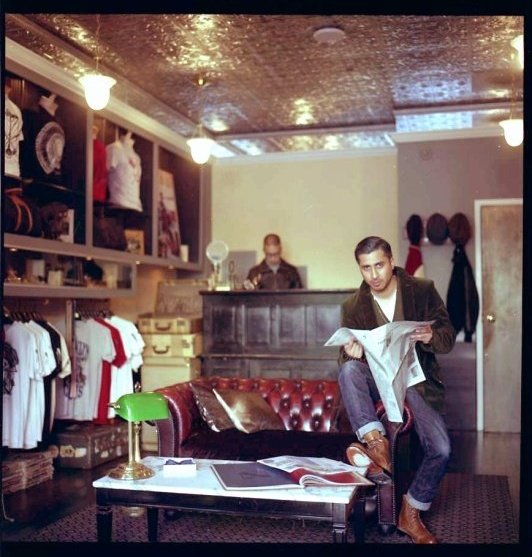
In the remains of what was left of Brooklyn Circus SF, I joined Gabe Garcia, BKC’s art director, for an intimate interview in the heart of San Francisco, the Fillmore.  Recently, the SF branch of the awesome men’s clothiers was forced to close for a few weeks due to a flood from the apartment building above. The damages caused the joint to pack up for a bit. The circus must go on, though, and Brooklyn Circus SF will be reopening this Fri/23, just like new. Thankfully Gabe, even in his frenzied panic to get the store back up and running,  talked to me about his career, the direction of fashion in San Francisco and New York City, and the industry in general. 


SFBG: Do you feel like your formal education at FIT in NYC helped prepare you for working in the industry?

Gabe Garcia: No, not at all.  FIT taught me the fundamentals of sewing, patternmaking, and things of that sort, but most of all what taught me the most was New York City itself. Living in NYC made me actually discipline myself. I didn’t even really know anyone in the city. I tried to get most out of school that I could, but NYC — being such a creative place — prepared me most for the industry.

SFBG: How do you compare fashion and the motivation behind designers in NYC in contrast to San Francisco? What would you like to see in fashion that is lacking in San Francisco, but prominent in NYC?

GG: San Francisco has a more laid-back attitude. Energy in the air is very infectious, so a majority of the people in San Francisco are very casual.  When people dress up to leave their house in the morning here, people are less motivated, which is cool, but peoples’ attitudes do transfer to their outfits. In NYC there is more pressure, desire and intrest. Life is about inspiration and how your surroundings inspire you. Each day I am in NYC I am inspired. Right now, what I am most inspired by is old cars. And all antiques in general, furniture, cars, etc.

SFBG: BKC is not only a fashion label, not it is also considered a lifestyle. Being a part of the BKC team means not only do you focus on the design aspect of the company, but also production, sales, finance, advertising, marketing, photography and blogging. Another than design, how else do you contribute to the BKC team?

GG: My position has evolved since I’ve been with the company. When we started I was standing right by Ouiji (the Brooklyn Circus owner) painting the walls of the store in Brooklyn. I started under Ouigi’s wing. Then I wanted to bring Brooklyn back to San Francisco. I found a way to do what I love while still living close to home. I built a bridge for my career and myself. The first thing we did was scout a perfect location. I am mostly involved with art direction, the creative concept and process, never avoiding the creative process.

SFBG: Can we anticipate any Brooklyn Circus collaborations anytime soon? What is your perspective on collaborations?
GG: Brand and image direction is really important to us right now. I have learned the things that you do wrong are just as impactful, if not more impactful, as the right decision. If you make a decision to go left instead of right, you could take the brand into the wrong direction. We want our brand to be here for the long run. We want to practice the fundaments of these big brands that have been here forever. If we do collaborate it just needs to make sense. It has to be a part of the big picture. Only if it a long term endeavor, we stay. The true importance is to stay with your brand vision. For example Porshe had approached Lacoste with a collaboration idea. Although Porshe is a huge company, Lacoste didn’t jump at that opportunity, because it just wasn’t in the DNA of the company. You see what I mean?  

SFBG: Would you ever consider starting your own label?
I have thought about it. Mostly small capsule collections though, like wallets, hats, neckwear, things like that. I really enjoy working in a team; I like people to bounce my creative ideas of. I like to think of myself as a visionary.

Appetite: 3 upcoming events covering sips ’round the world

0

From Dry Creek Valley barrel-tasting  to the snowy peaks of Austria, here are a trio of flavorful events that encompass a full range of delectable vino.

4/22 Wine Enthusiast’s Toast of the Town

One of the big wine events each year, this swank soiree in the War Memorial Opera House hits major cities (like NY and Chicago), often selling out. Tasting runs the gamut of the US (from Cali to South Carolina), through Tuscany, France, Chile, New Zealand, and so on. Food is almost an equal highlight here from Wine Country favorites such as the girl & the fig and Mustards, or Urban Tavern, Farallon, Chez Papa, even Oakland’s Home of Chicken & Waffles.

5-7pm VIP; 7-10pm general public grand tasting
$89 general; $169 VIP
War Memorial House
401 Van Ness, SF.
www.wineenthusiast.com/toast


4/24-25 Passport to Dry Creek Valley

A Wine Country locals’ favorite event annually, this weekend focuses on Dry Creek Valley and starts off with a classy shindig at Dry Creek Kitchen on Friday night. Then it uncorks the weekend with two days of barrel tasting (yes, you can purchase futures) and newly-released wines at over 60 wineries, Mingle with winemakers and growers as bands play (from blues to rock) or belly dancers dance. There’s food at each winery, everything from oysters to BBQ, even games of bocce ball and early morning vineyard tours.

11am-4:30pm
$120 for 2-day passport; $70 Sunday only
At participating wineries around Dry Creek Valley, Sonoma County
www.wdcv.com


5/3 Austria Uncorked

How familiar are you with Austrian wines? Well, it’s time you became acquainted. Bottlenotes is selling tickets to this unique event (only held here and New York City) on a mellow Monday in Fort Mason. There’s more than 80 Austrian wines represented with Austrian cheeses and snacks to boot. The entire evening becomes one pleasurable education on top sips from this gorgeous country.

6-9pm, $60
The Officers Club, 1 Fort Mason
www.austriauncorked.com
facebook.com/austrianwine
twitter.com/AustrianWine

John Ross: Time travelling down the Mississippi

1

 Editors note: John Ross is wandering the country on a book tour, sharing his observations of Obamalandia, 2010. You can read his previous dispatches here and here  

I. Role models


When I finally made Chicago, they were all waiting for me down there two blocks south of the end of the Blue Line, through the wrought-iron gates of Forest Home Cemetery, past the ostentatious mausoleums of fabulous gypsies and clustered around the heroic monument to the Haymarket Martyrs: Red Emma, looking a little dingy these days; Elizabeth Gurley Flynn, the Rebel Girl; William Z. Foster, the CPUSA’s most rigid ideologue and the leaders of its black sector Henry Winston and William Patterson; the anarchist femme fatal Voltairine de Cleyres; hobo-ologist Ben Reitman; and, of course my personal role model, Lucy Parsons, who outlived her Albert (hung by the State for the Haymarket frame-up) by 50 years, traveling this poisoned landscape from sea to stinking sea speechifying to the masses and hawking her incendiary pamphlets to make ends meet. A single wilted rose adorned the soft granite pillow that bears her name and dates.


Scattered amidst the tombstones of the 70-plus anarchists and communists, radicals and rabble-rousers that Irving Abrams and the Pioneer Aid Society planted here are the DNAs of Joe Hill and Big Bill Haywood and Eddie Balchowsky, the one-winged barrelhouse piano player who gave up his arm to Franco’s fascists in the Spanish Civil War. Irving himself has a box seat at the foot of the Haymarket marker, now a National Historical Landmark managed by the government that these brave souls in residence once sought to overthrow.

Emma Goldman and her condescending epitaph (“a people must rise up to liberty”) was unquestionably Irving’s greatest steal, having won the bidding war for her cadaver after she croaked up in Toronto, to bring her home to the country from which she had been deported decades before for counseling young men not to sign up for the First Imperialist War. But despite the old-time luminaries in repose, I had journeyed down to Forest Home to visit with a recent implant, Franklin Rosemont, the anarchist writer and majordomo of Charles Kerr, the oldest radical publishing house in the U.S., now being sustained by his widow Penelope.  

“Surrealism Forever!” reads Franklin’s slab, in keeping with the celebratory tone of this section of the old boneyard. Franklin, who passed abruptly last year, is buried within the arc of the Haymarket monument.  The Cottons, Clara and Warren (not known to be subversives), keep him company.    

I doubt that our current president, whose adopted city Chicago is, has ever communed with these noble spirits, but it would be an educational experience if ever he should make his way down to Forest Home. Enveloped by deal-making devotees of Chicago’s backroom Democratic Party politics like Rahm Emmanuel, Valerie Jarrett, and Education Secretary Arne Duncan (now neck-deep in a hometown scandal for A-listing the scions of the influential in Chicago’s elite public schools), the examples set by Lucy Parsons and Emma Goldman might have stiffened Obama’s shaky backbone and taught him to stand up for the principles he has abandoned as the CEO of the planet’s longest-running criminal conspiracy.

Michael James rules the venerable Heartland Café in Rogers Park in the extreme northwest of this windy metropolis, a schmooze and booze venue for the left side of the local Democratic Party machine for the past three decades.  Both Obama and Bill Ayers have crossed its threshold occasionally at the same time, and Michael, the facilitator of “Rising Up Angry,” a militant Uptown youth group at the tail end of the turbulent ’60s, is now the chairperson of the local Demo ward committee. Although he will never concede that Baracko has squandered the faith that millions invested in him, I sense growing disappointment with Hope Man’s wishy-washy performance 15 months into his tainted term in office.  

As always, I bunked with the James Gang — Paige, the kids, and the estimable Che, a Labrador with a most dignified demeanor — and plunged into Chicago’s stimulating cultural mix. Also in residence: the foot-stomping Irish fiddler Paddy Jones, just in from Tralee — three years ago, Mike dragged Paddy and I off to the Korean baths where the local political class conspires. We sat buck naked in the sauna and Paddy insisted I regale him with the cautionary tale of El Che (the revolutionary martyr not the mutt).  

This time around, Michael escorted me to the late Nelson Algren’s birthday party in a church close by this quintessential Chicago scribbler’s beloved Division Street neighborhood, during which mash notes from his lover Simone de Beuvoir were read, lending credence to Frankie Lyman’s pointed inquiry “Why Do Fools Fall In Love?”

Yet another highpoint of my weeklong pilgrimage to the Hog Butcher of the World were a pair of meetings in Pilsen, an industrial enclave where the U.S. Communist Party first convened hard by Blue Island Avenue back in 1919 and now the most pertinent barrio in Mexico’s second U.S. city. More than a hundred Latino activists showed up to hear me rant and rave about the prospects for a new Mexican revolution and plot this year’s May 1st march in a city where immigrant workers first took to the streets 124 years ago to demand redress for crimes inflicted upon the working class by the bosses of industry and commerce. Four years ago, a half million immigrant workers marched here to demand recognition of their rights and despite the broken promises encapsulated in the Schumer-Graham proposed Immigration “Reform” bill, Chicago’s Mexican community is warming up for another red-hot May Day.  

II.  Resurrection

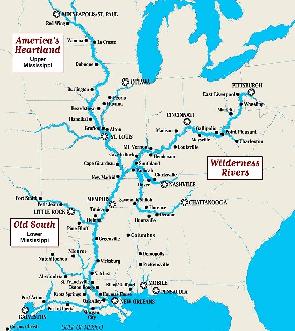
I followed the contours of the mighty Mississippi from Chicago to St. Louis through rich bottomland that is now the domain of Archer Daniels Midland. St. Louis is an urban hub that features wide, well-kept lawns and bushels of dirty money — Monsanto, Boeing, Peabody Energy, and Talx, which counsels greedy congloms on unemployment compensation, are all headquartered here.  

Yet, despite the capitalist connivance, the city has its own sui generis radical history. The 1877 railroad strike spread from the east to St. Louis and set the style for labor strife in the west, and the anarchist Flores Magon brothers published “Regeneracion,” the bible of the 100 year-old Mexican revolution, here before they were run out of town in the teens of the past century.

My days in St. Louis were well spent. I preached an Easter Sunday sermon at the Mid Rivers Ethical Society, sharing my vision of resurrection and insurrection in the aforementioned Forest Home boneyard, and offered up my palaver at a Black Green Party forum in a soul food parlor off Delmar, spreading the news of the Mexican government’s execrable persecution of  electrical workers pushed out of their workplaces last October at bayonet point by the military and police in a scheme to privatize electricity generation south of the border.  

I walked the St Louis Walk of Fame, stepping over the stars of the likes of William Burroughs, Chuck Berry, Walker Evans, and Fontella Bass, all of whom had to leave town to achieve a modicum of notoriety. I even encountered my very first St. Louie Cardinal, a crimson-hued bird perched in a sapling, spring zephyrs ruffling its crest, from which the Anheuser Busch dynasty drew the logo for the local nine in this beisbol-intoxicated town (they were previously dubbed the “Perfectos” after a popular cigar.)

III. Black & Brown

Further down river, the scrublands of Mississippi spread into the horizon beneath the cramped commuter flight in from Memphis. I had not touched down in the state since Freedom Summer 1964, when I arrived on the very day that the bodies of three civil rights workers (Michael Schwerner, Andrew Goodman, and James Chaney) were unearthed beneath a dam in Philadelphia, Miss.  

Although Black and White speak more cordially to each other these days and there are few black bodies swinging from the poplar trees, Mississippi God Damn (dixit Nina Simone) is still moldering down below. I could feel the heat at my hotel just off the Millsaps College campus in Jackson, where a statewide PTA meeting was in progress. In the conference rooms, black parents squared off against white school administrators over curriculums and the unequal quality of education. This is a commemoration year for black activism, the 40th anniversary of the killings at Jackson (and Kent) State and the 50th for SNCC — and old grievances burn long and deep.

The old civil rights movement achieved only token parity in this the poorest state in the union. Now a new civil rights movement is focusing on the flood of Mexican and Latino workers who poured into Mississippi in the wake of Katrina, and brown people are today’s niggers down at the bottom of the food chain.

Only 34,000 “Hispanics” were officially counted in the 2000 state census but Bill Chandler, a veteran of the Texas farm workers union and spokes for the Mississippi Immigrant Rights Alliance (MIRA), thinks that three times as many undocumented workers, lured to the state by casino construction, were overlooked back then. In 2010, Chandler calculates that the immigrant numbers have swelled to 200,000, nearly 10% of the state population, and taken together with close to a 40% Afro-American share, Mississippi now verges on becoming a majority People of Color entity. A similar equation is at work throughout the Deep South with Alabama and South Carolina and Georgia also hanging in the balance. Such changing demographics help to explain the vitriol the Teabaggers and White Citizen Council types shower upon the newcomers.

Back in August 2008, Immigration Control and Enforcement broke its own despicable workplace raid record by imprisoning (in Jena La., the site of other racist outrages) and deporting 595 Mexican and Latino workers who had been employed by Howard Industries down in Laurel. Chandler thinks the pogram was accomplished with the complicity of the company which was intent on cheating workers out of their wages. MIRA eventually won checks for most of those detained and deported.

An even more outrageous incidence of lingering Mississippi bigotry was the treatment of Cirila Balthazar Cruz, a mono-lingual Chatino indigena from Oaxaca who was picked up by police as she stumbled along the highway shoulder trying to get to a local hospital to give birth. Her baby daughter Ruby was subsequently stolen from her by child welfare authorities who deemed her an unfit mother because she couldn’t speak English and given to a well-appointed childless white couple. As might be anticipated, such blatant racism struck a tender nerve south of the border and a year later, Ruby was returned to her birth mother.  

Justice in Mississippi, as in much of Obamalandia, remains elusive but every once in a while the push of the people from down below captures such small prizes.

On their East Coast swing, John Ross & “El Monstruo” will visit Washington/Baltimore (Red Emma’s April 19th/ University of Maryland – Baltimore on the 20th/ Institute for Policy Studies the 21st); New York (NYU the 22nd/ Sixth Street Community Center the 23rd/Bluestockings the 25th); and Boston (Harvard Coop the 27th/David Rockefeller Center for Latin American Studies the 28th/Mass Global Action the 29th/IPS-Jamaica Plains the 30th/ topped of by a May 1st rally on the Boston Commons between Noon & Two.) All events are all free.


Pioneers! O Urban Pioneers!

0

By Robyn Johnson

culture@sfbg.com

People are returning to land like it’s the 1970s all over again, but they’re not packing up for Vermont, letting their hair go au naturel, and unplugging from the grid to do it. Urban agriculture is sprouting up like, well, sprouts. And while we all feel strongly about sustainability and pay a lot of lip service to higher ideals, the majority of us probably aren’t willing to adopt the radical homemaker lifestyle and sacrifice cell phone coverage, The Colbert Report, or regular social interactions. The following cursory guide highlights a few urban farms in SF and immediate environs where you can volunteer or access food, as well as resources for cultivating your space in the concrete tangle (even if you live in a third-story apartment) and options for the time-honored tradition of gleaning.


MANY FARMHANDS MAKE LIGHT WORK

Community farms offer support not always available for the individual plots of community gardens (which typically have astronomically long wait-lists anyway), or even your own cramped Bay Area backyard. And for 60-hour-work-weekers, it might be taxing to grow more than a bit of basil or mold on that cheese in the back of the fridge. If you don’t have the time, energy, space, or inclination to follow famed urban farmer Novella Carpenter’s fantastic example (ghosttownfarm.wordpress.com), consider volunteering at the following places to satisfy your green thumb’s bidding.

As Chris Burley, the director of Hayes Valley Farm (www.hayesvalleyfarm.com) told me, “People are looking for a tangible way to get their hands dirty and address the impacts of our ecologically destructive, industrialized food system while doing something meaningful and connecting with their community.” And that’s exactly the goal that the farm, located off Laguna and Fell steets, has been aiming to fulfill since its inception as a way to revitalize an unused lot, once a freeway onramp, into a shared space.

Although the farm is still taking root, so to speak, the plan is to eventually grow enough fresh and organic food to feed the neediest nearby members plus the volunteers working to cultivate the space. Education also plays a major part in the function of the project, with Thursday and Sunday “work parties” where people can get that hand-dirtying experience, as well as regular classes on urban gardening and permaculture.

Altho Quesada Gardens Initiative (www.quesadagardens.org) primarily operates as a community-directed organization that seeks to strengthen the social systems of Bayview-Hunters Point, local food production has become one of the top concerns of the neighborhood. The resident-led nonprofit connects and maintain backyard farms and free food-producing community gardens throughout the area. In one of the neater facets of its food justice work, the group also helps maintain the kitchen garden of roving supper club Old Skool Café (www.oldskoolcafe.org), which employs at-risk or previously incarcerated youth. With such kick-ass people, it’s no wonder that urban farm hero Will Allen adopted one of the satellite gardens on his visit to the Bayview. Community volunteer meetings and gardening days tend to be informal, so e-mail for specific opportunities.

Sometimes the best things in life really are free. Located at Gough and Eddy on land kindly lent by the Lutheran Church, The Free Farm (www.thefreefarm.org) intends to give away 100 percent of its produce. Still in its initial development stages, the fledgling project welcomes volunteers every Saturday and Wednesday from 10 a.m.-2 p.m. to help with the launch. Working in tandem with its sister organization, The Free Farm Stand in the Mission also offers fresh fruits and vegetables donated by other local urban farmers. Although places like Little City Gardens (www.littlecitygardens.com) and folks who glean from public land contribute, the bulk of the produce comes from the 18th Street and Rhode Island (www.18thandrhodeisland.org) farm maintained by the SF Permaculture Guild, which offers volunteer opportunities as well. With a goal to sextuple the farm’s output within the next five years, it could probably use a little bit more help. Work days are on Friday.

For West Oakland residents, two nonprofits have been power-housing to combat the food desert that plagues the area. City Slickers Farms (www.cityslickerfarms.org) operates several all volunteer-run farms throughout the neighborhood that could always use a few extra work hands. Collectively these six lots cultivate ducks and chickens, bee hives, veggies, fruit trees, and medicinal herbs, the produce of which are distributed through the Saturday Farm Stand on a sliding scale or work-trade basis — no one’s turned away. And if you still have a mighty urge for some composting, weeding, planting, and mulching, People’s Grocery (www.peoplesgrocery.org) runs three farms that constantly need tending. The 55st Street location tends fruit trees, culinary herbs, and vegetables; 59th Street is a slightly less cultivated space in collaboration with Berkeley’s Spiral Gardens Community Food Security Project (www.spiralgardens.org), which runs its own food garden off Oregon and Sacramento streets for you West Berkeleyites. People’s Grocery’s newest land acquisition, the plot behind the California Hotel off of 35th and Chestnut streets, hosts a greenhouse and a biointensive microfarm that replaced its 3.5 acre Sunol site last January.


HOME SWEET URBAN HOMESTEAD

If you have access to private land to cultivate, or even if you don’t, the following resources will set you on the path to food freedom. These classes, demonstration sites, and professional landscaping services will help you turn backyards, rooftops, and even windows into humming generators of small-scale urban agriculture.

Before you even think to take a shovel to your virgin backyard or start a worm bin, visit Garden for the Environment (www.gardenfortheenvironment.org). A one-acre demonstration garden in the heart of Golden Gate Heights that also teaches organic food production and sustainable landscaping with weekly workshops, you can see how it’s done before trial-and-erroring on that graywater irrigation system or chicken coop. The resource directory on its Web site also serves as an invaluable aid for at-home troubleshooting. Hotlines for gardening and composting issues, where to find recycled lumber, how to test your soil, manure suppliers, wasp removal companies — it’s all there.

DIY food production classes abound everywhere in the Bay Area but the one-stop shopper won’t find a better resource than the Institute of Urban Homesteading (www.iuhoakland.com) in Oakland. It offers a comprehensive curriculum ranging from beekeeping, butchery, goat farming, brewcraft, herbal medicine, bread making, fermentation, berry patches, and other topics of the same ilk. It’s a real crash course in manifesting your inner Laura Ingalls Wilder. With no central location, classes are taught in the teachers’ homes, which presents a neat opportunity to see real-time urban homesteading and the different ways people create sustainable places in an urban setting. Also consider Urban Kitchen SF (www.urbankitchensf.com) and BioFuel Oasis (www.biofueloasis.com) in Berkeley for supplementary courses.

If you’re feeling overwhelmed and green behind the ears, several services will landscape your yard into a cornucopia of organic delectables and even continue the maintenance if you just can’t do anything with that black thumb of death. Star Apple Edible Gardens (www.starappleediblegardens.com) provides a range of services throughout the Bay Area, the simplest being consultations and composting tutorials. You also can order ready-made kitchen gardens or go whole kit and caboodle and have customized “garden design and installation, pathway and hardscape installation, irrigation design and installation, planting, plant feeding and cultivation, regular harvesting of your garden crops, and design, installation, and maintenance of composting systems.” Other similar businesses include All Edibles (www.alledibles.com), which specifically works with East Bay dwellers, and Chris Sein of Wildheart Gardens (www.wildheartgardens.com), who also consults on backyard chickens and mushrooms.

For a lot of us in the Bay Area, the dream of having a backyard is about as likely as Glenn Beck admitting that Obama is not a herald of an impending Orwellian dictatorship. So what can the more dispossessed among us do to return to the soil? Popular in Europe and becoming more so here, rooftop gardens are a great solution to space issues. Graze the Roof (www.grazetheroof.blogspot.com), the community vegetable patch on top of Glide Memorial Church, hosts rooftop gardening workshops. You can also gain experience by volunteering on work days every Thursday or first Saturdays. For those feeling less than philanthropic or sociable, pop over to your local bookstore to pick up the Use Your Roof Guidebook by Bay Area Localize (www.baylocalize.org). Seven bucks and four easy chapters gets you on your way to a more edible roof.

For balcony-less apartment dwellers, and maybe those with vaulted ceilings, window farms have become the new rooftop gardens. An open-source project that’s evolved over the past year, Windowfarms (www.windowfarms.org) gives how-tos for its innovatively cheap and space-conscious hydroponics system — jerry-rigged from repurposed plastic water bottles, tubing, and fish tank pumps that hangs in vertical columns in the window — as free PDFs on its Web site. It also hosts community boards where members share improvements to the system, which is constantly being updated. Alas, window farms can only really successfully raise leafy greens, but having a homegrown salad in a studio apartment is still pretty darn amazing.

If you already have your urban farm bustling along — or even just a prolific citrus tree — then yard-sharing is a great way to spread the fruit of your labor throughout the community. Neighborhood Fruit (www.neighborhoodfruit.com), SF Glean (www.sfglean.org), and Produce to the People (www.producetothepeople.org) will gladly help you to unload the excess bounty and distribute it to the hungry.

What do you get for your tax dollars?

0

By Steven Hill

OPINION Most Americans seem to regard April 15 — the day income tax returns are due — as a recurring tragedy akin to a biblical plague. Europe frequently plays the punching bag role during these moments because there is a perception that the poor Europeans are overtaxed serfs.

But a closer look reveals that this is a myth that prevents Americans from understanding the vast shortcomings of our own system.

The fact is, in return for their taxes, Europeans receive a generous support system for families and individuals that Americans must pay for exorbitantly, out-of-pocket, if we are to receive it at all. That includes high-quality health care for every single citizen, the average cost of which is about half what Americans pay, even as various studies show that Europeans achieve healthier results.

But that’s not all. In return for their taxes, Europeans also receive affordable childcare, a decent retirement pension, free or inexpensive university education, job retraining, paid sick leave, paid parental leave, ample vacations, affordable housing, senior care, efficient mass transportation, and more. To receive the same level of benefits as Europeans, most Americans fork out a ton of money in out-of-pocket payments, in addition to our taxes.

For example, while 47 million Americans have no health insurance, many who do pay escalating premiums and deductibles. Anthem Blue Cross of California announced that its premiums will increase by up to 40 percent. But all Europeans receive health care in return for a modest amount deducted from their paychecks.

Friends have told me they are saving nearly $100,000 for their children’s college education, and most young Americans graduate with tens of thousands of dollars in debt. But European children attend for free or nearly so (depending on the country).

Childcare in the U.S. costs over $12,000 annually for a family with two children; in Europe, it costs about one-sixth that amount, and the quality is far superior. Millions of Americans are stuffing as much as possible into their IRAs and 401(k)s because Social Security provides only about half the retirement income needed. But the more generous European retirement system provides about 75 percent to 85 percent (depending on the country) of retirement income. Either way, you pay.

Americans’ private spending on old-age care is nearly three times higher per capita than in Europe because Americans must self-finance a significant share of their own senior care. Americans also tend to pay more in local and state taxes, as well as in property taxes. Americans also pay hidden taxes, such as $300 billion annually in federal tax breaks to businesses that provide health benefits to their employees.

That’s something to keep in mind as you pay your income taxes.

Steven Hill is the author of the recently published Europe’s Promise: Why the European Way is the Best Hope in an Insecure Age (www.EuropesPromise.org) and director of the Political Reform Program for the New America Foundation.

On Tax Day, are Americans getting our money’s worth?

0

Editor’s Note: While the teabaggers try to claim Tax Day as a national day of protest against government and taxes, San Francisco author and activist Steven Hill (the father of the city’s ranked choice voting system) offers a different perspective, noting that it isn’t taxes and government that we should be so angry about today, but how little we get for them, thanks largely to right-wing opposition to expanding public services

By Steven Hill
Most Americans seem to regard April 15 — the day income tax returns are due to the Internal Revenue Service — as a recurring tragedy akin to a Biblical plague.  Particularly this year, with US government deficits soaring, everyone from the teabaggers to Fox News and Senate Republicans are sounding the alarm about a return to “big government.” Recently former New York mayor Rudy Giuliani even stated that President Obama was moving us towards — gasp — European socialism.
Europe frequently plays the punching bag role during these moments because there is a perception that the poor Europeans are overtaxed serfs.  But a closer look reveals that this is a myth that prevents Americans from understanding the vast shortcomings of our own system.

A few years ago, an American acquaintance of mine who lives in Sweden told me that, quite by chance, he and his Swedish wife were in New York City and ended up sharing a limousine to the theater district with a southern U.S. Senator and his wife. This senator, a conservative, anti-tax Democrat, asked my acquaintance about Sweden and swaggeringly commented about “all
those taxes the Swedes pay.” To which this American replied, “The problem with Americans and their taxes is that we get nothing for them.” He then went on to tell the senator about the comprehensive level of services and benefits that Swedes receive.

“If Americans knew what Swedes receive for their taxes, we would probably riot,” he told the senator. The rest of the ride to the theater district was unsurprisingly quiet.

The fact is, in return for their taxes, Europeans are receiving a generous support system for families and individuals for which Americans must pay exorbitantly, out-of-pocket, if we are to receive it at all. That includes quality health care for every single person, the average cost of which is about half of what Americans pay, even as various studies show that Europeans achieve healthier results.  

But that’s not all.  In return for their taxes, Europeans also are receiving affordable childcare, a decent retirement pension, free or inexpensive university education, job retraining, paid sick leave, paid parental leave, ample vacations, affordable housing, senior care, efficient mass transportation and more. In order to receive the same level of benefits as Europeans, most Americans fork out a ton of money in out-of-pocket payments, in addition to our taxes.

For example, while 47 million Americans don’t have any health insurance at all, many who do are paying escalating premiums and deductibles.  Indeed, Anthem Blue Cross announced that its premiums will increase by up to 40%. But all Europeans receive health care in return for a modest amount deducted from their paychecks.

Friends have told me they are saving nearly a hundred thousand dollars for their children’s college education, and most young Americans graduate with tens of thousands of dollars in debt.  But European children attend for free or nearly so (depending on the country).

Childcare in the U.S. costs over $12,000 annually for a family with two children, but in Europe it cost about one-sixth that amount, and the quality is far superior. Millions of Americans are stuffing as much as possible into their IRAs and 401(k)s because Social Security provides only about half the retirement income needed. But the more generous European retirement system provides about 75-85 percent (depending on the country) of retirement income. Either way, you pay.

Americans’ private spending on old-age care is nearly three times higher per capita than in Europe because Americans must self-finance a significant share of their own senior care. Americans also tend to pay more in local and state taxes, as well as in property taxes.  Americans also pay hidden taxes, such as $300 billion annually in federal tax breaks to businesses that provide health benefits to their employees.

When you sum up the total balance sheet, it turns out that Americans pay out just as much as Europeans — but we receive a lot less for our money.  

Unfortunately these sorts of complexities are not calculated into simplistic analyses like Forbes’ annual Tax Misery Index, a “study” which shows European nations as the most miserable and the low-tax United States as happy as a clam — right next to Indonesia, Malaysia and the Philippines.

In this economically competitive age, increasingly these kinds of services are necessary to ensure healthy, happy and productive families and workers. Europeans have these supports, but most Americans do not unless you pay a ton out-of-pocket. Or unless you are a member of Congress, which of course provide European-level support for its members and their families.

That’s something to keep in mind on April 15.  Happy Tax Day.

[Steven Hill is the author of the recently published “Europe’s Promise: Why the European Way is the Best Hope in an Insecure Age” (www.EuropesPromise.org) and director of the Political Reform Program for the New America Foundation].

Josh Wolf in the eye of the storm (again)

Josh Wolf has landed in hot water again — this time in connection with his reporting from inside the student occupation at Wheeler Hall on the University of California Berkeley campus to protest budget cuts.

The blogger and videographer was jailed in 2006 after resisting a subpoena to testify before a Federal grand jury because he had taken footage at a 2005 San Francisco protest against the G8 summit. His case was widely reported on, in part because he set a record for jail time served — 226 days — for refusing to give up newsgathering materials. Police believed Wolf possessed footage that could be used to press charges for vandalism of a police car and an assault on an officer. He didn’t.

Now the 27-year-old filmmaker, a student at the Graduate School of Journalism at UC Berkeley, faces a possible seven-month suspension in the wake of a student occupation of Wheeler Hall last November 20. Wolf was one of two reporters whose footage from inside Wheeler Hall was included in a Democracy Now! broadcast about the occupation — but he was the only UC Berkeley student who has said he was there documenting the event as a member of the press.

Wolf says he wore a police-issued press badge around his neck during the Wheeler Hall occupation. Press passes can serve to flag journalists as being in a separate category from civilians in situations involving law enforcement, but displaying one does not always provide a reporter immunity from arrest. The video he shot was integrated into a report produced with independent journalist Brandon Jourdan, who was also inside the building. Wolf and Jourdan were both arrested — but their footage was widely viewed on Democracy Now!, a national alternative news outlet.

In an “informal resolution” issued April 9, UC Berkeley’s Center for Student Conduct found that Wolf “participated in a disturbance of the peace,” charging him with multiple violations of the student conduct code. Wolf’s role as a journalist is not discussed in the list of charges, making it seem as if he’s being lumped in with the student protesters, despite being there as a reporter.

But the fact that he wears another hat as a journalist clearly hasn’t escaped the campus enforcers of the student conduct code. As part of the disciplinary measure, Wolf was also directed to write a 10-page essay reflecting on a list of questions, including: “How do you consider and reconcile the roles of being a student and being a journalist? At what points does either role become more important to you and why? What are your limits as a journalist? Where and how do you draw lines for yourself in terms of things you will or will not do to pursue professional goals?”

Wolf is being given the option of writing the paper and taking the seven-month suspension (a plea bargain of sorts), or moving on to a formal adjudication process that would entail going before a five-member hearing panel, like a court trial. His plan is to try and get an extension for the informal resolution process as a means of getting the charges dropped altogether.

Berkeley Associate Dean of Students Christina Gonzales, whose office oversees the Center of Student Conduct, was unable to discuss Wolf’s particular case because of a federal law prohibiting public disclosure on such matters. Nonetheless, she offered some general comments. “In the big picture, whenever you’re dealing with conduct, you do take into consideration circumstances,” Gonzales said. “If some one reported, ‘I have special credentials’ or whatever, then [the Center for Student Conduct] will go back as part of their research on any of the cases and try to find out as much information they can to determine if that was a known fact, whatever it is that the student’s telling us.” She stressed that the informal resolution was only a first step in the disciplinary process, and that no formal decision has been made at this point in time.

 “There’s always information that comes from others that’s taken into consideration with the whole picture,” Gonzales added.

Wolf says that when he asked Laura Bennett, Assistant Director at the Center for Student Conduct, whether it would impact the outcome of his case if he submitted a letter from Jourdan confirming that he was there as a reporter, he didn’t get a straightforward response. “Her response was, well, that kind of a letter would simply lead me to have more questions, such as, ‘how did you get into the building, who did what, what happened inside the building,’ a whole bunch of stuff that I’m not inclined to help with for any number of reasons,” Wolf said. “Some of this was given on a privileged basis. … And admittedly it’s like, wait, I went down this rabbit hole before, with the grand jury, and I’m not about to deviate from that path.”

Jourdan, who has contributed to the Huffington Post, Reuters, and the New York Times, among other outlets, told the Guardian that he wrote a letter supporting Wolf in this case. “To the best of his ability, he was there to capture a moment in history,” Jourdan said. Wolf is holding off on submitting the letter for now.

“I think what’s happening in the UC system is there’s a sort of crackdown,” added Jourdan, who faces his own charges after reporting on a March 4 demonstration against budget cuts to education that broke onto a West Oakland freeway. “When journalists are charged with criminal offenses … it’s impeding the work. The information is not free flowing. It’s imperative that journalists be given access to cover something … that in time will be seen as an historic movement.”

Pick up next week’s issue or visit us online for a more detailed report.

The dawn of Earth Day

2

tredmond@sfbg.com

GREEN ISSUE The heavens welcomed Earth Day to America. All over the country, April 22, 1970 dawned clear and sunny; mild weather made it even easier to bring people into the streets. The Capitol Mall was packed, and so many members of Congress were making speeches and appearing at events that both houses adjourned for the day.

Mayors, governors, aldermen, village trustees, elementary school kids, Boy Scout troops, labor unions, college radicals, and even business groups participated. In fact, the only organization in the nation that actively opposed Earth Day was the Daughters of the American Revolution, which warned ominously that "subversive elements plan to make American children live in an environment that is good for them."

By nightfall, more than 20 million people had participated in the First National Environmental Teach-In, as the event was formally known. It established the environmental movement in the United States and helped spur the passage of numerous laws and the creation of hundreds of activist groups.

It was, by almost all accounts, a phenomenal success, an event that dwarfed the largest single-day civil rights and antiwar demonstrations of the era — and the person who ran it, 25-year-old Denis Hayes, wasn’t happy.

His concern with the nascent movement back then says a lot about where environmentalism is 40 years later.

Gaylord Nelson, a mild-mannered U.S. senator from Wisconsin, came up with the idea of Earth Day on a flight from Santa Barbara to Oakland. Nelson was the kind of guy who doesn’t get elected to the Senate these days — a polite, friendly small-town guy who was anything but a firebrand.

A balding, 52-year-old World War II veteran who survived Okinawa, Nelson was a Democrat and generally a liberal vote, but he got along fine with the die-hard conservatives. He kept a fairly low profile, and did a lot of his work behind the scenes.

But long before it was popular, Nelson was an ardent environmentalist — and he was always looking for ways to bring the future of the planet into the popular consciousness.

In August 1969, Nelson was on a West Coast speaking tour — and one of his mandatory stops was the small coastal city that seven months earlier had become ground zero for the environmental movement. Indeed, a lot of historians say that Earth Day 1970 was the coming out party for modern environmentalism — but the spark that made it possible, the event that turned observers into activists, took place Jan. 28, 1969 in Santa Barbara.

About 3:30 on a Tuesday afternoon, a photographer from the Santa Barbara News Press got the word that something had gone wrong on one of the Union Oil drilling platforms in the channel just offshore. The platforms were fairly new — the federal government had sold drilling rights in the area in February 1968 for $603 million, and Union was in the process of drilling its fourth offshore well. The company had convinced the U.S. Geological Survey to relax the safety rules for underwater rigs, saying there was no threat of a spill.

But shortly after the drill bit struck oil 3,478 feet beneath the surface, the rig hit a snag — and when the workers got the equipment free, oil began exploding out. Within two weeks, more than 3 million gallons of California crude was on the surface of the Pacific Ocean, and a lot of it had washed ashore, fouling the pristine beaches of Santa Barbara and fueling an angry popular backlash nationwide.

Nelson received an overwhelming reception at his Santa Barbara talk — and horrified as he was by the spill, he was glad that an environmental concern was suddenly big news. But, as he told me in an interview years ago, he still wasn’t sure what the next steps ought to be — until, bored on an hour-long flight to his next speech in Berkeley, he picked up a copy of Ramparts magazine.

The radical left publication, once described as having "a bomb in every issue," wasn’t Nelson’s typical reading material. But this particular issue was devoted to a new trend on college campuses — day-long "teach-ins" on the Vietnam War.

Huh, Nelson thought. A teach-in. That’s an intriguing idea.

Hayes was a student in the prestigious joint program in law and public policy at Harvard. He’d been something of a campus activist, protesting against the war, but hadn’t paid much attention to environmental issues. He needed a public-interest job of some sort for a class project, though, so when he read a newspaper article about the senator who was planning a national environmental teach-in, he called and offered to organize the effort in Boston. Nelson invited him to Washington, was impressed by his Harvard education and enthusiasm, and hired him to run the whole show.

The senator was very clear from the start: the National Environmental Teach-In would not be a radical Vietnam-style protest. The event would be nonpartisan, polite, and entirely legal. Hayes and his staffers chafed a bit at the rules (and the two Senate staffers Nelson placed in the Earth Day office to keep an eye on things), and they ultimately set up a separate nonprofit called the Environmental Action Foundation to take more aggressive stands on issues.

Meanwhile, Hayes did the job he was hired to do — and did it well. Everywhere he turned, from small towns to big corporations, people wanted to plug in, to be a part of the first Earth Day. Many wanted to do nice, noncontroversial projects: In Knoxville, Tenn., students decided to scour rivers and streams for trash to see if they could each clean up the five pounds of garbage the average American threw away each day. In dozens of communities, people organized tree-plantings. In New York, Mayor John Lindsay led a parade down Fifth Avenue.

A few of the actions were more dramatic. A few protesters smashed a car to bits, and in Boston, 200 people carried coffins into Logan International Airport in a symbolic "die-in" against airport expansion. In Omaha, Neb., so many college students walked around in gas masks that the stores ran out. But it was, Hayes realized, an awful lot of talk and not a lot of action. The participants were also overwhelmingly white and middle-class.

Hayes wasn’t the only one feeling that way. In New York, author Kurt Vonnegut, speaking from a platform decorated with a giant paper sunflower, added a note of cynicism.

"Here we are again, the peaceful demonstrators," he said, "mostly young and mostly white. Good luck to us, for I don’t know what sporting event the president [Richard Nixon] may be watching at the moment. He should help us make a fit place for human beings to live. Will he do it? No. So the war will go on. Meanwhile, we go up and down Fifth Avenue, picking up trash."

Hayes finally broke with the politics of his mentor early on Earth Day morning when it was too late to fire him. The next day, the National Environmental Teach-In office would close and the organization would shut down. From that moment on, he could say what he liked and not worry who he offended.

"I suspect," he told a crowd gathered at the Capitol Mall, "that the politicians and businessmen who are jumping on the environmental bandwagon don’t have the slightest idea what they are getting into. They are talking about filters on smokestacks while we are challenging corporate irresponsibility. They are bursting with pride about plans for totally inadequate municipal sewage plants. We are challenging the ethics of a society that, with only 6 percent of the world’s population, accounts for more than half the world’s annual consumption of raw materials.

"We are building a movement," he continued, "a movement with a broad base, a movement that transcends traditional political boundaries. It is a movement that values people more than technology and political ideologies, people more than profit.

"It will be a difficult fight. Earth Day is the beginning."

I first met Hayes in 1990, near the office in Palo Alto where he was planning the 20th anniversary of Earth Day. He’d continued his environmental work inside and outside government, at one point running the National Energy Laboratory under President Jimmy Carter. Earth Day 20 was shaping up as a gigantic event, one that would ultimately involve 200 million people around the globe. Earth Day was becoming the largest secular holiday on the planet.

Hayes was excited about the event, which he was running this time without the moderating influence of a U.S. senator. And he was aiming for a much more activist message — in fact, at that point, he was pretty clear that the U.S. environmental movement was running out of time.

"Twenty years ago, Earth Day was a protest movement," he told a crowd of more than 300,000 in Washington, D.C. "We no longer have time to protest. The most important problems facing our generation will be won or lost in the next 10 years. We cannot protest our losses. We have to win."

And now another 20 years have passed — and by many accounts, we are not winning. Climate change continues, and even accelerates; an attempt at a global accord just failed; and Congress can’t even pass a mild, watered-down bill to limit carbon emissions.

And Hayes, now president of the Bullitt Foundation, a sustainability organization in Seattle, thinks the movement has a serious problem. "Earth Day has succeeded in being the ultimate big tent," he told me by phone recently. "To some rather great extent, is had some measure of success."

But he noted that "in American politics these days, it’s not the breadth of support, it’s the intensity that matters. Environmentalists tend to be broadly progressive people who care about war and the economy and health care. They aren’t single-issue voters. And somehow, the political intensity is missing."

Hayes isn’t advocating that environmentalists forget about everything else and ignore all the other issues — or that the movement lose its broad-based appeal — but he said it’s time to bring political leaders and policies under much, much sharper scrutiny and to "stop accepting a voting record of 80 percent."

It’s hard today to be bipartisan, and compromise is unacceptable, Hayes told me. "I was probably right [in 1990]," he said. "If what you’re aspiring to do is stop the greenhouse gases before they do significant damage to the environment, it’s too late." At this point, he said, it’s all about keeping the damage from turning into a widespread ecological disaster.

"I would like to see Earth Day 50 be a celebration," he said. "I would like to see by then a real price on carbon, nuclear power not proliferating, and a profound, stable investment in cost-effective, distributed renewable energy." But for that to happen, "we need to have a very intense core of environmental voters who realize that these threats to life on the planet are more important than a lot of other things."

Tim Redmond is the author, with Marc Mowrey, of Not In Our Back Yard: The People and Events that Shaped America’s Modern Environmental Movement (William Morrow, 1993) which can still be found in the remainder bins of a few used book stores.

Events listings

0

Events listings are compiled by Paula Connelly. Submit items for the listings at listings@sfbg.com.

WEDNESDAY 14

How to Grow Veggies Baazar Café, 5927 California, SF; (415) 831-5620. 7pm, free. Just because you live in a small apartment in San Francisco with no backyard doesn’t mean you can’t grow fruits and vegetables. Pam Pierce, author of Golden Gate Gardening, will be on hand to teach attendees how to do just that.

Mission Bay Farmers’ Market 3rd Street between 4th and 5th Streets on Campus Way, SF; 1-800-949-FARM, or www.pcfma.com. 10am-2pm, free. Check out the opening of the weekly Mission Bay Farmers’ Market and take home some produce, flowers, seafood, tofu, and more from over two dozen vendors.

THURSDAY 15

“The Americanitis Elixir” Southern Exposure, 3030 20th St., SF; (415) 863-2141. 7pm, free. If you are suffering from Americanitis, the cure may be in your own backyard. Bring some hand picked fruits or herbs to share and watch as artist Alison Pebworth and collaborator Jerome Waag debut a San Francisco Americanitis Elixir, distilled from the vital spirits of collected native ingredients.

BAY AREA

Jewish Jokes JCC of the East Bay, 1414 Walnut, Berk.; (510) 848-0237. 7:30pm, $9. Hear performers and scholars tell jokes, look at the history of Jewish humor, and explore the future featuring Jewish comedian Joseph Nguyen, Jewish clown Jeff Raz, and Jewish joke expert Mel Gordon. Jewish joke open mic to follow.

Strictly Sail Pacific Jack London Square, 1956 Webster, Oak.; www.strictlysailpacific.com. Thurs.-Fri. 10am-6pm, $12; Sat. 10am-7pm, $15; Sun. 10am-5pm, $15. Join other sailing enthusiasts for this four day sailing show featuring the hottest new sailboats, gear, and accessories, including the latest in green sailing, and activities, demonstrations, and seminars.

FRIDAY 16

CubaCaribe Dance Mission Theater, 3316 24th St., SF; (415) 273-4633. Fri. and Sat. 8pm, Sun. 7pm; $15. Through May 2, visit cubacaribe.org for full schedule. Enjoy this festival of dance and music “From Katrina to Port-au-Prince” celebrating the spirit of the Caribbean with artists from Haiti, New York, New Orleans, and Cuba.

World Wide Hustle[rs] Luggage Store Annex, Cohen Alley, 509 Ellis, SF; (415) 255-5971. 6pm, free. Attend the opening reception of collaborative work by Robin David and Angela Angel that pays homage to markets and workers across the globe, inspired by true narratives from Chile, India, Mexico, the Philippines, and Tanzania.

SATURDAY 17

Bug Day Randall Museum, 199 Museum Way, SF; (415) 554-9600. 10am, $3 suggested donation. Bring your family or date and explore the incredible worlds of arthropods, creepy crawlies, hoppers, and slitherers. Learn how important bugs are to the earth and our survival, enjoy love entertainment, make bug-related crafts, play bug games, and bring a picnic lunch to enjoy with the view.

Goat Cheese Festival Ferry Plaza Farmers’ Market, Ferry Building, One Ferry Building, SF; (415) 291-3276. 10am-1pm, free. Celebrate all things goat at this festival sponsored by the Center for Urban Education about Sustainable Agriculture (CUESA) featuring samples, cooking demonstrations, a reading by Gordon Edgar, author of Cheesemonger: A life on the wedge, a chance to pet baby goats, and more.

“Insight and Inspiration” de Young Museum, Koret Auditorium, 50 Hagiwara Tea Garden, Golden Gate Park, SF; (415) 750-3627. 10am, $10. Attend this panel discussion with Bay Area fiber artist Judith Content, and Studio Art Quilt associates Marion Coleman, Charlotte Bird, and more discussing fiber art, different creative processes for making fiber art, and the history of contemporary fiber art.

Swankety Swank Trunk Sale 289 Divisadero, SF; (415) 932-6615. 11am, free. Part of San Francisco’s “Shop Local SF” program, Swankety Swank will be hosting monthly trunk sales through Labor Day. This month’s sale features DJ Sunshine Jones spinning smooth music and art, furniture, accessories, and clothes made by local artists.

SUNDAY 18

American College of Traditional Chinese Medicine San Francisco War Memorial Building, Green Room, 401 Van Ness, SF; (415) 355-1601 ext. 12. 2pm, free. Celebrate the 30th anniversary of the ACTCM with local politicians, community health organizers, and other members of the community and enjoy performances by the renowned Monks of the Shaolin Temple, Chinese folk dancers, a traditional Lion Dance performance, and more.

Northern California Book Awards San Francisco Public Main Library, Koret Auditorium, 100 Larkin, SF; (510) 525-5476. 1pm, free. Find out the winners of this year’s book awards at this ceremony, where all nominated books will be saluted, but only a few will win. Nominees are entered in categories for fiction, general nonfiction, creative nonfiction, poetry, translation, and children’s literature and include Michael Chabon, Dave Eggers, Joseph Stroud, Catherine Brady, Yiyun Li, and more. To view a full list of nominees, visit www.poetryflash.org.

Tequila and Tamales by the Bay Fort Mason Center, Conference Center, Buchanan at Marina, SF; (415) 695-9296. Noon, $40. Sample tamales from Cocina Poblana, La Espiga de Oro, Tamale Factory, the Whole Tortilla, and Evelia and sip tequilas from Don Julio, Jose Cuervo, and El Relingo at this festival featuring contests, craft vendors, and more to benefit the Benchmark Institute.

MONDAY 19

No


TUESDAY 20

“Cool Cuisine” San Francisco Main Library, 100 Larkin, SF; (415) 557-4484. 6pm, free. Hear chef Laura Stec and atmospheric scientist Eugene Cordero, Ph.D., discuss how to move to a diet that counters the biggest environmental problems while also eating more healthy and getting more pleasure out of food at this talk titled, “Cool Cuisine: Taking a bite out of global warming.

Youth Speaks’ young poets roar

2

“Poetry’s made a big difference in my life. It’s allowed me to express myself in ways that I never would have been able to,” says Erica McMath Sheppard, 17, one the winners of Sat/3’s Youth Speaks Teen Poetry Slam at the Warfield Theater.

Her victory was the culmination of many years of hard work. Erica started participating in the Youth Speaks program when she was 13, and competing in the yearly slam competition at 14 years old. On Saturday, before a sold out crowd at the Warfield, she spoke with a light borne of a difficult adolescence, one spent in the cold bureaucracy of Child Protective Services, but through which she has nonetheless thrived academically.

“You look at America in the 21st century, who is the voice? What does it look like?” Youth Speaks executive director James Kass founded the non-profit in 1996 to provide public school kids with access to arts education in a state where such programs are rapidly being downsized into nonexistence. He says that, although professional artists have emerged from Youth Speaks’ programs, what the YS assemblies, after school workshops, and guest speakers really want to accomplish is the development of teens’ creativity, and by extension, their ability to think critically about the problems of the day. “Some kids go into teaching, go into non profit work,” he says. “This is about developing leaders.”

It’s a mission that resonates. One need only consider last Saturday’s event at the Warfield. Rows of cheering fans, hanging on their every word — would that this rapt attention were always present when youth spoke.

“It was an exciting experience,” says McMath-Sheppard, whose two poems focused on eating issues and the fallacies of Child Protective Services, whose care has shuffled her from homes in Potrero Hill, to the Tenderloin, to the Mission — where she is legally required to move from the day she turns 18. “It was so inspiring to share that love from the stage, and get the hugs and kind words afterwards. It was amazing.”

McMath will join Youth Speaks winners Bryant Phan (Oakland, age 17), Hadeel Ramadan, (San Bruno, 19), Jasmine Williams (Daly City, 19), Dominic Nicholas (Oakland, 18), and Natasha Huey (Berkeley, 19) in representing the Bay area at the Brave New Voices Festival in Los Angeles on July 23rd.


“I don’t really title my poems,” says McMath. “I know a lot of poets do, I just don’t label them like that.” Below, her untitled slam winning case against Child Protective Services.

Yesterday I had a meeting with my social worker

Katie said, “Children and family services will only house you until you’re 18 if you have your high school diploma or GED.”

She asked when I turn 18. I said, “June 18 th.”

I asked when I had to leave. She said “June 18th”

On my 18 th birthday I could be homeless

the only exception to this rule is if I were to decide to drop out of high school, but if I was gonna drop out, it would’ve been in 9 th grade—not 65 days before I graduate.

I just found out I will be booted from my house

Happy birthday Ericka get the fuck out

Correction—Happy birthday number 35876-b

We need you to get your shit and leave immediately

and I was angry

and I am scared

because it’s hard to recognize your own potential when know one else wants to let the fire inside of you burn

she told me if I was to get pregnant additional services would be offered

I asked if this was her suggestion

She replied, “No, but I did want you to have this information though…”

On my 18 th birthday, I could be homeless

You do not become an adult because you turn 18

you just get to buy a pack of cigarettes to deal with this shit

Why cant CPS understand that I am still a child

Or I was never allowed to be

Because I was always too busy

working

paying bills

Being active at my little sister’s back to school night

And now finding a place to stay

This is the reason that three percent of foster youth go to college and only one of that three percent graduates

My last roommate was a prostitute

And as much as I wanted to giver her a speech about how precious her body was

I couldn’t

Because she was in the same position I am in now

She was a number

and I am number 35876-b

I am not as strong as I make myself out to be

I don’t learn how to magically do shit when I turn 18

I am disorganized

have time management issues

have a hard time code switching when I need to

I need help and this system refuses to help me

And you could believe that I can help my damn self ‘cause I been helping my dam self my entire life

But why doesn’t Katie acknowledge how important it is for me to go to college (slowly)

At 18 my number turns into what’s called inactive dependency

Emancipation

Lincoln freed the slaves

Katie is freeing me

This system was set up for

People

excuse me

numbers like me live off of welfare checks,

And taste crack instead of their degree

and lay on there black and make babies

Then we can be the black Brady bunch and live on food stamps

Or purposely go to jail after all it is three hots and a cot

How do u expect us to fly with broken wings

Numbers like me are notorious for failing

Because I am black

A women

Disabled

Broke/lower class

don’t live with her mother and doesn’t know her father

And in this shady as child protective services system

But no protecting will be offered when I turn 18

I don’t want to be 35876-b

I just want Katie and the whole protective services system to notice me

Katie did you know that I will be the 1 st generation in my family to get my degree

Katie did you know that I go to two different schools one at day another by night just to guarantee that I will graduate on time

did you know that I am a poet

Katie did you know that I am a person

that my name is Erica Sheppard McMath not 35876-b

Katie I wish you where here to hear this but you don’t get paid on Saturdays (pause)

and please excuse my unpleasant attitude but on behalf of every other foster youth I need to tell you that abandonment is not a joyful feeling

I understand that to you this is just a 9-5

but for me this is my life that is being put on the line

we are in this system because we were abandon

once again I am being abandon

and I will be ok because I’ve always done what I have needed to do therefore I will survive Katie

but no thanks to you

Uproot: Notes from the underground food scene

0

Recently Kitchen Table Talks, a monthly series of discussions on the US food system, invited a panel of SF entrepreneurs from the emerging underground food scene for a QA, hoping to answer big questions like what’s driving the trend and whether or not it has a future. As Iso Rabins from forageSF, Leif Hedendal, a veteran chef of secret suppers, Lucera Muñoz Arrellano, the owner of a bacon-wrapped hot dog cart in the Mission, shared their stories, I got a sense that no one had an overarching theory about the recent surge of popular interest. But it’s clear a lot of passionate people are firmly committed to redefining our food culture whether the man likes it or not.

Rabins originally began forageSF as a way to educate people about wild food with guided foraging tours that served to recontextualize nature as not an abstraction but an integrated environment to which we are inherently bound; it can even feed us. As he saw more and more people’s interest in preparing food grow and their resources dwindle, forageSF evolve to include the Underground Market, a venue for foragers and other uncertified producers to sell their goods. He’s had a few run-ins with the health department, but since he’s now operating under the quasi-legal status of a club he said he pretty much plans on running the market till forced to shut down.

In the long term, though, Rabins doesn’t have much interest in “legitimizing” the market considering enough certified farmers markets already exist, and to him, adjusting to the regulations would circumscribe the innovative spirit of the project. But he does see it developing into more of a launching pad for those wanting to make the switch over to the mainstream.

Hedendal, after working in brick-and-mortar food establishments, became disillusioned with what he described as kitchen culture — the demanding schedule and strict hierarchy that disconnected workers from the community, and thus, one of the main pleasures of cooking. He’s also critical of the “cheating” that many restaurants resort to in order to still be considered sustainable and not go broke. After getting out of the professional world almost a decade ago, he’s been involved with various food projects and secret dinners that sought to uphold the values of community, affordability, and creativity — it’s a pretty long and impressive resume. As of right now, he’s cooking for Dinner Discussions, which brings together food and socially-engaged artists. But for all his negative experiences working in restaurants, Hedendal’s ultimate goal is to open one that satisfies his values of true sustainability and community—maybe impossible now but who knows what will be eventually possible with the changing tides in our food and economic culture.

Lucero Muñoz Arrellano, though, kept the conversation grounded in the practical reality for a lot of those who informally vend on the streets. When asked why she began selling the popular Mexican hot dogs, she answered, assisted by a translator, that her biggest reason was to find a way to support her children, bringing it home that for many in this recession, underground food is a means to surviving in a shrinking job market that’s squeezing out the marginalized—especially those who might lack formal education or English language skills.

I don’t want to sell her short, though; her experiences and trials as an informal street vendor have given her a goal other than just subsisting. With her recent acceptance into the incubator program at La Cocina, a nonprofit geared towards nurturing low-income food entrepreneurs, Arrellano has been inspired to convince others to legalize their businesses. She’s intimately familiar with the hurdles that are almost impossible to navigate—like the bureaucratese of the necessary documentation that frustrates many non-English speakers or those who have limited education. And she also knows the risks that informal vendors suffer. At a minimum, the $250 citation fee can wipe out more than a day’s worth of work, not to mention the threat of having the cart confiscated and losing what may be their only livelihood. Some work in fear of arrest and deportation. A very big risk indeed.

In some ways the talk was illuminating and in other ways it confirmed ideas I deeply support. I suspect, given the wide-arching participation in decentralizing the mainstream food industry, the underground scene is not solely about hipster novelty-seeking. (Though, let’s not lie, that does play a significant part.) It also reflects the growing public re-evaluation of dysfunctional socioeconomic systems and support for those who are redefining how and what we eat.

Hot sex events: April 7-13

0


Dear Good Vibrations,

Please stop putting on such awesome classes, you’re making me look like I don’t have anything else to write about for sex events.

Thanks,

Caitlin

Just kidding, Good Vibes! But honestly, a quick shout out to our local legendary sex toy company. This place was started in 1977 by sex educator Joani Blank, and since then has made lovers of all kinds of sexual persuasions very, very happy with it’s high quality toys, classes and videos. But you already knew that. Onto this week’s sex events! Not coincidentally, they feature three Good Vibes lessons for very bad girls and boys. But it would appear the rest of the Bay has caught the fever for some bedroom education as well… 


Prostate Play and Pleasure

Dr. Charles Glickman knows what it takes to make your little prostate guy happy. In this free hour long class, he’ll run down the toys, tips, and techniques to shed some love on you or your partner’s gland of love.

Wed/7 6:30-7:30 p.m., free

Good Vibrations

2504 San Pablo, Berkeley

(510) 841-0171

www.goodvibes.com


The Sexuality of Pregnancy and Birth

The store continues it’s non stop sex ed blockbusting with this class, which takes away the confusion and uncertainty regarding pregnancy and sexual activity. Sexual pleasure as a labor enhancer? Which positions will show love for that belly of joy? Carrie Flemming, birth advocate/artist/health worker shows the way.

Wed/7 8 p.m.-10 p.m., $25-30

Good Vibrations

603 Valencia 

www.goodvibes.com


Freedom Dreams

Don’t miss the kick off party for Safetyfest, Community United Against Violence’s educational workshop series on avoiding domestic violence in queer/trans relationships. The party will feature queer performance group Mango with Chili, bangin’ DJs, a kissing booth, and of course, lots of learnin’ on how to keep your honey and yourself safe.

Thur/8 7-10 p.m., $5-20 sliding scale

Bench and Bar

510 17th St., Oakland

 www.cuav.org


Booze, Broads and Hotrods

For all those into the smoothness of curves, the rev of the engine, the smell of hot grease… the 12th annual car show/jive dance party/burlesque showcase, Booze, Broad and Hotrods. Get you out to Milbrae for cheap hotel rooms at the Clarion, a pre 1965 classic car show, and front row seats for La Cholita, the infamous burlesqueteer who will be performing throughout the evening.

Sat/10 3 p.m. – 1:30 a.m., $18-20

Clarion Hotel

401 East Milbrae, Millbrae


Secret Desires: Playing with Erotic Edges

On how to bring what you’ve always thought would remain a fantasy in your head to the fore of your lovemaking. Cleo DuBois shows the way to “deeply authentic sex.” And perhaps a little more honesty in the bedroom, to boot.

Tues/13 8-10 p.m., $25-30

Good Vibrations

1620 Polk, SF

www.goodvibes.com


Girl Sex 101

Allison Moon wants to teach you the same lessons on licking, grinding, and girl on girl sexual communication that she dispenses at Burning Man’s Camp Beaverton for Wayward Girls. Won’t you let her?

Tues/13 7-9 p.m.

Center for Sex and Culture

1519 Mission, SF

(310) 694-4895 

www.sexandculture.org


School of Shimmy: Burlesque 101

I’m unclear on whether it’s B.Y.O.P. (Bring Your Own Pasty), but regardless, you should get your shakable ass down to El Rio for Red Hot Burlesque’s crash course on that classiest form of clothes shucking. Important: will there be $1 Pabsts?

Tues/13 7-9 p.m., $30 (reservations recommended)

El Rio 

3158 Mission, SF

(201) 615-9245 

www.redhotsburlesque.com


Hot for learning

0

caitlin@sfbg.com

CAREERS AND ED Quick — what art, sport, language, trade, or superpower would you acquire, given the opportunity? Answer in mind? Sweet! And attainable. In this wild and woolly city of ours, there’s an expert waiting to teach you just the skill you’ve been missing. Here are a few to get you started.


HEAVY METAL AEROBICS

Jane Fonda had no idea that one day her neon Spandex would stretch and sweat to strains of Judas Priest and Iron Maiden, but there you have it. Get in shape with Workshop’s cardio/strength-training rock routine.

Sun 1:30-2:30 p.m., Tues 7:45- 8:45 p.m. $10. Workshop, 1798 McAllister, SF.(415) 874-9186.www.workshopsf.org


MINI NONSTOP BHANGRA

Your babies will be in the Bollywood mood when they attend this family version of the popular Indian folk dance lessons/club night. Bhangra dancing is take-no-prisoners fun.

April 10, 12 p.m.–3 p.m. $5-$10. Rickshaw Stop, 155 Fell, SF. (415) 694-9080.

www.mininonstopbhangra.com


PLEIN AIR LANDSCAPE WORKSHOP

Learn to interpret the urban wonderland around you à la Cézanne, with pencil and watercolors complimenting each other’s touch. This City College Continuing Education class takes you out in the field to get your art on.

April 10–May 15, 9 a.m.–2 p.m. $140-$150. Fort Mason Building B, SF. (415) 561-1860. www.ccsf.edu/Services/Continuing_Education


FUNDAMENTALS OF WOODWORKING

Ever want to build a mandolin, learn about electromagnetism, or construct your own steel forge? Nonprofit organization the Crucible has got you covered. Woodworking 101 is a good way to ease in for the hands-on newbie.

April 24–25, 10 a.m.–6 p.m. $235. The Crucible, 1260 Seventh St., Oakl. (510) 444-0918. www.thecrucible.org


INTRO TO CLIMBING

Wondering where all the healthy beautiful people hide themselves in SF? Get thee to the climbing gym. Just make sure you take the intro course before scuttling up that nearest wall. Babygirl’s not impressed by unintentional abseiling.

Mon–Fri 12:30, 2:30, 6 and 7 p.m., Sat–Sun 10:30 a.m., 1 and 3 p.m. $28. Mission Cliffs, 2295 Harrison, SF. (415) 550-0515. www.touchstoneclimbing.com


BASIC MARIJUANA SEMINAR

Your gateway class into the world of Oaksterdam University’s encyclopedic knowledge of all things ganja related. Its 101 weekend course schools you in weed history, law, horticulture, treat-making, and “budtending,” sure to snag you that sweet gig at the dispensary down the street.

April 10-11 & 17-18, 11 a.m.- 4 p.m., $250. Oaksterdam, 1600 Broadway, Oakl. (510) 251-1544. www.oaksterdamuniversity.com


DISCOVERING YOUR LIFE PURPOSE AND CAREER DIRECTION

This class clearly isn’t for you — because you have the rest of your life healthfully, successfully planned and plotted … right? Just in case you don’t, Randi Benator leads a workshop on finding the career path that will help you give your best to your community and yourself.

July 17 10 a.m.– 5 p.m. $150. SF State Downtown Campus, 835 Market, SF (415) 817-4247. www.cel.sfsu.edu

Part of the solution

0

Caitlin@sfbg.com

CAREERS AND ED Just a thought. As our country becomes an economic-cultural stew fraught with problems so complex we don’t even know yet what they are, different approaches to education may be necessary for tomorrow’s good guys. Which is why it’s so positive that Bay Area higher ed institutions have developed unique degree programs that anticipate tomorrow’s issues today. From robot wars to social stratification — learn about this stuff and you’ve got the skills you need for the battles to come.


PHILIPPINE STUDIES

Rare is the program in our country that offers a concentration in the culture and history of the Philippines. But with 40,072 Filipinos in the Bay Area, that’s an oversight USF was happy to correct with this concentration, which can be paired with any of its undergraduate degrees to create a Filipino context within science, art, nursing, or the humanities.

University of San Francisco, 2130 Fulton, SF. (415) 422-5555, www.usfca.edu


LABOR AND COMMUNITY STUDIES

This associate degree program focuses on giving working people the educational background they need to be effective in the world of labor union activism — collective bargaining, labor law, and workplace discrimination issues, among other things. The school also runs not-for-credit programs that link minority students and workers up with job training for careers in the trades. Kicking ass for the working class, and all that.

City College of San Francisco, Evans Campus, 1400 Evans, SF. (415) 550-4459

www.ccsf.edu


TRANSFORMATIVE LEADERSHIP

On the slightly less tangible end of the spectrum, the California Institute for Integral Studies offers an online master’s degree program for “personal transformation and creating positive change in the world.” Courses focus on group mediation, identifying one’s own strengths and weaknesses, and effective leadership. Let Your Love Shine 101 (for professionals).

California Institute for Integral Studies, 1453 Mission, SF. (415) 575-6100, www.ciis.edu


EQUITY AND SOCIAL JUSTICE IN EDUCATION

There’s no way an equitable educational system wouldn’t improve this crazy old country of ours. To that end, the future teachers and leaders in this concentration of the master’s program in education study historical/political perspectives of injustice in schools, with a mind to changing things about the way Americans learn.

San Francisco State University, 1600 Holloway, SF. (415) 338-1111, www.sfsu.ca


DISABILITY STUDIES

A unique minor at Berkeley examines how the concept of disability has been shaped and created by our social constructs over time. Attention is also paid to how the interpretation of disability has been highlighted in law, art, and politics. The Web site on the study features a wheelchair basketball league open to all comers regardless of bodily capabilities.

University of California Berkeley, Berk. (415) 643-7691, www.berkeley.edu


COMPUTER GAME DESIGN

Look, not everything in the future’s gonna be heavy! We’re still gonna need people who are real good at making blood look realistic and keeping a step ahead of everyone’s World of Warcraft avatars. The students in this undergraduate major have seen the light: if we don’t master the machines, they master us.

University of California Santa Cruz, 1156 High, Santa Cruz. (831) 459-0111, www.ucsc.edu

Where’s teacher?

4

By Brady Welch

news@sfbg.com

Horace Mann Middle School principal Mark Sanchez sounded exhausted when we reached him on March 26. It wasn’t because Horace Mann is such a tough school, although the Mission District campus does have a disproportionate number of at-risk students. And it wasn’t because it was the Friday before spring break, although that might have had something to do with it.

All week Sanchez had been reeling from news that a whopping 10 out of his 20 full-time teachers had been issued pink slips by the San Francisco Unified School District. Including counselors, a vice principal, and other staff, the budget cuts essentially lopped off 24.6 percent of the school’s workforce, an unprecedented blow that speaks volumes about the state of California public education.

“A lot of the kids were wondering if the school was getting shut down,” Sanchez said. And although Horace Mann isn’t closing, with so many axed teachers, it might seem like a new school to many students come August. “If a significant number [of teachers] are moved, we don’t know what we’re in for.”

There is a legend that you will meet the person who will seal your fate long before the final event happens. And in an interesting turn of events, it was Sanchez who, as president of the Board of Education in 2007, hired current SFUSD Superintendent Carlos Garcia. Attempting to close a staggering $113 million budget gap over the next two years, it fell to Garcia on Feb. 23 to send out 645 layoff notices across the district in a list that included 163 administrators, 239 elementary school teachers, 124 high school teachers, and 104 middles school positions. Horace Mann was hit particularly hard because so many of its staff lacked seniority. Final decisions on layoffs will be made next month by the school board.

The first indications of this massive fiscal blood-letting came Jan. 20, when Garcia sent a letter to the entire district on learning of Gov. Arnold Schwarzenegger’s budget. The document was a glaring reminder of how bad things had gotten in Sacramento, and the superintendent wrote candidly of what he saw and what it meant for the district. “These numbers are large, and they will be devastating.”

Aside from the extraordinary blow to personnel, the proposed SFUSD budget will increase class sizes, freeze salaries, cancel summer school except for those who need credits to graduate, and reduce the number of days of classroom instruction to 175 annually, putting the district in conflict with a state law mandating at least 180 days. Given its deep cuts, Sacramento probably won’t enforce the statute.

“The state itself is in such a budget crisis,” Sanchez told us. “And [it’s] refusing to raise taxes. The fix has to be at the state level.”

But that’s been difficult since the passage of Proposition 13, the 1978 measure that limits property tax increases and gives control of whatever revenue is generated directly to the state. Because all state budgets must pass the Legislature with a two-thirds super-majority vote, a disciplined minority of virulently antitax Republicans block budgets that adequately fund education nearly every time.

Yet now, the bill for that political stalemate is coming due at schools like Horace Mann.

Beyond the numbers and politics, the Guardian wanted to get a closer look at how this regular cycle of cuts and layoffs is affecting teachers and students, so we spoke to a couple of eighth grade English teachers at Horace Mann who described it as dismal.

“I try to put it at the back of my mind, to be honest,” said Matt Borowsk, one of the 10 teachers at Horace Mann who received a pink slip. Borowsk reiterated a common sentiment that all teachers — potentially laid off or not — just want to do their jobs and focus on their classes. “I want to be able to stay and do my work and make improvements. And I want to do what I can for the school community and work with students,” he said. “I’m still in it, and I’m in it for the long run, despite what issues the district has about keeping their teachers.”

Gail Eigl, a teacher at Horace Mann for eight years who is tenured and therefore not at risk of a layoff, concurred. “No one I know who got a pink slip has changed their attitude. People are trying to stay focused on the present and teach.”

It’s an admirable response, and one Eigl understands well. She was laid off after her first year there in 2001. “Six of us got pink slips,” she recalled. “It was terrible.” She went looking for a job in South San Francisco, but in a strange turn of events, SFUSD called and offered her a job at Argonne Elementary in the Richmond District. A year later, she was back where she started at Horace Mann, and until now, she hadn’t really looked back.

“It’s like the school keeps having problems,” she said, an opinion that also hints at SFUSD’s skewed notion of teaching as a stable career path.

Borowski offers a similar story. This year’s pink slip is his second. Last year he received one after teaching only a year in Burlingame, which is how he ended up in San Francisco. Such rampant doling out of pink slips has nothing to do with Borowski’s performance. Rather, it has everything to do with seniority. And because the state is in such a crunch, it’s hard to stay in any school long enough before the budget’s grim reaper comes to collect.

“People who are able to stick through the first five years, they genuinely want to be a good teacher, make seniority, and not have to worry about it,” he said. And “because Horace Mann is a school where new teachers go, because it’s a tough school, then they’re the most vulnerable to layoffs. Which starts this vicious cycle.”

It’s classic Catch-22. Facing such a budget shortfall, how does SFUSD keep teachers who have little or no seniority teaching in the very schools whose litany of needs put those teachers there in the first place? In many ways, these are the most committed and passionate teachers the district has, and they represent for their classes a level of discipline and stability absent in many of their students’ home lives.

Many of Eigl’s students are low-income, speak English as a second language, or both. Some of their parents are deceased, others are undocumented immigrants, and a few are in jail.

“I honor tenure,” she told us. “I know there’s a reason for it. But right now, it doesn’t seem to be working for us.” Eigl brings up the case of a new parent liaison the school received this year, a critically important position that takes time building solid relationships with students’ families. “She got a pink slip too,” Eigl told us, the exasperation evident in her voice.

“I think people are really defeated inside. It’s so frustrating,” she continued. When asked what she meant by that, Eigl became heated. “It’s California! We’re supposed to be the richest economy. We should have money for schools. Why are other states doing so much more? We’re at the bottom. Where’s the money?” She suggested that Horace Mann should be granted special status because of its high-needs student body.

“It’s almost predictable that students who have a lot of unpredictability in their lives will suffer for this,” Sanchez told us. “It will be destabilizing for them. Teachers will get disrupted as well. A lot of what you do in schools has so much to do with outside the classroom, and it takes a lot of time to get acclimated.” At a tough school like Horace Mann, he says, “there’s been a lot of professional development and new programs.”

Borowski stresses the sentiment forcefully. “It’ll be devastating if the pink slips go through. It’ll be a huge mess.”

Both teachers participated in the massive statewide protests against the cuts on March 4. But other than letting Sacramento know how public educators feel, nothing concrete has come out of it. Sanchez suggested that it might be possible to sue the state for violating its statute on the minimum number of school days. Even SFUSD, at the last Board of Education meeting on March 23, didn’t rule out the possibility of suing the state for lack of adequate funding.

Negotiations are ongoing between the district and the United Educators of San Francisco teachers union about final layoffs. Those will be finalized May 15. Meanwhile, teachers at Horace Mann and across the district will continue to do their jobs despite how grim the outlook may be. As Eigl puts it, “It’s like out of a book from a bad future.”

Access denied

3

rebeccab@sfbg.com

If tuition goes up to $40 per course unit at the community college where Dielly Diaz is working toward her associate of arts degree, she’s not sure she’ll be able to afford it. But Diaz isn’t just worried about her own shot at an education. She also wonders what’s in store for her 19-year-old daughter, a student at Laney Community College in Oakland. For parents scrambling in the face of the economic downturn even as their kids prepare for the future, she said, “it’s like we’re getting hit both ways.”

Diaz, who is 39 and originally from Venezuela, says she decided to enter Berkeley City College’s adult education program to earn her degree because the recession threw her into a precarious position, shaking the stability of her job as a mortgage loan officer. When she started just a year ago, tuition was $20 per course unit. It has since gone up to $26, and now the California Legislative Analyst’s Office is recommending ratcheting it up to $40.

Even as students are being asked to shell out more, California’s community colleges are reeling from the impacts of budget cuts: faculty layoffs, swelling class sizes, fewer available courses, and reductions in student services. For students hoping to transfer to other public institutions in the California State University (CSU) or University of California (UC) systems — or even for those seeking to develop a skill set that can garner a living wage — maneuvering the shredded educational framework can be frustrating. This past year, roughly 250,000 students statewide were denied access to community colleges due to a lack of course availability, according to education advocacy group Against Cuts.

“When you see all that, it’s like OK, I feel like I really need to do something,” Diaz said. “It’s not like we can just sit and wait, letting the cuts happen. I think we can really get organized.”

Between school, work, and being a mom, Diaz started pitching in on community outreach for Against Cuts, a grassroots effort that took shape last fall in the wake of devastating education cutbacks. It was one of hundreds of organizations that collectively launched mass demonstrations decrying funding slashes to education on March 4. The newly energized education movement plans to propel another mass rally to descend on Sacramento in the fall, Diaz noted, in the meantime focusing on awareness-raising efforts like an April 17 teach-in at Berkeley City College.

California’s community colleges are unique among the state’s higher education institutions in that they represent a gateway for nontraditional students to get a foothold for career advancement or a fresh start for people trying to improve their lives. They also offer an affordable option to complete lower-division coursework before transferring, a path that’s starting to become a bottleneck since courses needed to meet transfer requirements have been affected by cuts.

Yet even as fees climb and class sizes balloon, more people are opting to go the community college route, and demand for enrollment is only expected to increase. Some are college-age students whose families have been priced out of other institutions.

“We’re having this flood of people from the CSUs and UCs now trying to do their freshmen and sophomore year with us and then transfer,” notes Berkeley City College faculty member Joan Berezin. Others are individuals who can’t find work in an economic climate marked by 12.5 percent unemployment. “When we get hog-tied and cut and restricted, we close off possibilities to everyone,” Berezin says. “People who’ve just lost their jobs, people whose parents have lost their jobs, they’re all coming to us.”

Of the nearly 3 million students attending community college statewide, women and people of color are in the majority, and 80 percent work while attending school. It’s still a relative bargain for education, but fees are keeping pace with the rising costs of housing, transportation, childcare, and food.

“I have students who are homeless, who are living in their cars,” Berezin notes. “So we can say, oh, $40 a unit, that’s not a big deal. But if you’re taking 12 units and you have no income — and you don’t qualify for financial aid ’cause you don’t have an address … that’s a huge amount of money.”

Financial aid is available, but with narrow eligibility requirements — and even some of that funding may be headed for sacrifice on the budgetary chopping block. Gov. Arnold Schwarzenegger’s budget for the 2010-11 fiscal year proposes suspending new awards for the Competitive Cal Grant Program, for a savings of $45.5 million. About 70 percent of Cal Grant award recipients attend community colleges.

“This award is dispersed according to income and GPA,” explained Theresa Tena, director of fiscal policy at the Community College League of California. “Many of our students have a high GPA and a low income.” Some 22,500 students receiving this financial help would be affected by the proposal — and Tena says more than 150,000 eligible students already compete for the award packages.

Research increasingly shows that students from working-class families are being priced out of college — even community college — and that it’s harder to pay their own way without taking on serious amounts of debt. A California Postsecondary Education Commission (CPEC) report found that in 1975, a community college student would have earned well over the amount needed for a year of school, including housing and other expenses, by working a summer job in retail. Today that same student would only be able to scrape together about two-thirds of the needed amount — and that’s assuming every single penny was saved.

“In the old days, going to community college was a break-even proposition,” notes Adrian Griffin, assistant director of research and policy development for the CPEC. “With stagnating wages at the low end of the job market, it doesn’t work this way anymore.”

The blow to community colleges caused by a loss in state revenue and consequential budget cuts mirrors the damage done to the entire public education system. While the recession has triggered especially hard times, this low point follows a long-term trend of diminishing state funding for education. In 1965, the state general fund provided $15 for every $1 paid in fees by UC or CSU students, according to the CPEC. By 2009–10, that state contribution had declined to $1.40 for every dollar paid in fees. “We’ve gone from a taxpayer-supported system to a semi-privatized system,” Griffin observed.

This point hasn’t been lost on the education advocates at Against Cuts, who are pushing for reform in tax policy as a solution for restoring public education in California. An information packet created by the group highlights a nearly 50 percent decline in the share of corporate income paid in taxes since 1981, even as corporate profits have shot up.

“There is no reason for education to be cut in California, the world’s eighth-largest economy,” Diaz said. “We can’t just continue to accept and accept and accept. Having a population that does not have access to education is dangerous.”

Quick Lit: April 7-April 13

0

Literary readings, book tours, and talks this week

Wednesday, April 7

How to Defeat Your Own Clone
Hear authors Terry Johnson and Kyle Kurpinsky deliver educational and entertaining advice on how to survive the not too distant bioengineered future at this reading of their recent book, How to Defeat Your Own Clone And Other Tips for Surviving the Biotech Revolution.
7:30 p.m., free
Booksmith
1644 Haight, SF
(415) 863-8688


The Racial Discourses of Life Philosophy: Négritude, Vitalism, and Modernity
Attend this reading and discussion on this new book by author Donna V. Jones, where she revisits narratives on life produced in the early twentieth century and shows how Bergson, Nietzsche, and the poets Léopold Senghor and Aimé Césaire fashioned the concept of life into a central aesthetic and metaphysical category while also implicating it in discourses on race and nation.
5:30 p.m., free
University Press Books
2430 Bancroft, Berk.
(510) 548-0585

Spiritual Life of Bay Area Tribes
Attend this lecture on the spiritual life of Bay Area native tribes by Richie Richards of Lakota descent, who is a Native American specialist dedicated to bringing Native American studies to elementary schools.
7:30 p.m., free
Northbrae Community Church
941 The Alameda, Berk.
(510) 526-3805

Thursday, April 8

Manwha For Girls
Join authors Trina Robbins, Mike Madrid, and curator Andrew Farago as they discuss the role of girls and women in comics and female comics artists in conjunction with the current exhibit, “Korean Comics: A society through small frames,” in the Jewett Gallery open through June 13.
6 p.m., free
San Francisco Main Library
Lower level, Latino/Hispanic community meeting room
100 Larkin, SF
(415) 557-4400

 
Mystery Panel
Check out this mystery panel featuring Shirley Tallman, author of Scandal on Rincon Hill, and Ronald Tierney, author of Death in Pacific Heights.
7 p.m., free
Books Inc. Laurel Village
3515 California, SF
(415) 221-3666


“Why there are words”

Hear a diverse group of award winning authors read selections from their work that fall under the theme “crazy.” Featured writers to include Ethan Watters, Tom Barbash, Wendy Tokunaga, Allison Landa, Ryan Sloan, and Aggie Zivaljevic.
7 p.m., $5
Studio 333
333A Caledonia, Sausalito
(415) 331-8272

Saturday, April 10

Amy Goodman
Investigative journalist Amy Goodman says, “The role of reporters is to go where the silence is and say something,” and she does exactly that. Goodman is known for her dedication to looking beyond mainstream media news to expose human rights violations and political injustice. Hear her discuss her views and recent book, Breaking the Sound Barrier.
5:30 p.m., $20
Commonwealth Club
595 Market, 2nd floor, SF
(415) 597-6700

Diet for a Hot Planet
Author Anna Lappe believes that if we are serious about addressing climate change, we have to talk about food. Hear more about this theory at a reading of her new book, Diet for a Hot Planet: the climate crisis at the end of your fork and what you can do about it. Sponsored by the Center for Urban Education about Sustainable Agriculture (CUSA).
11 a.m.; $10, proceeds to benefit the Small Planet Fund
Port Commission Hearing Room
Ferry Building
101 Embarcadero, SF
(415) 291-3276 ext. 106

Kings of Poetry
Attend this spoken word poetry event featuring African American poets from throughout the Bay Area. Open mic to follow.
2 p.m., free
San Francisco Main Library
3rd floor, African American Center
100 Larkin, SF
(415) 557-4400

Pearl of China
Hear Anchee Min discuss her latest novel about Nobel Prize winning author Pearl S. Buck, a writer that Min was forced to denounce during the Cultural Revolution in China. Part of the Asian Art Museum’s current exhibit celebrating Shanghai, through Sept. 5.
2:30 p.m., free
Chinatown Branch Library
1135 Powell, SF
(415) 355-2888

Sunday, April 11

Phillip Schultz
Hear Pulitzer Prize winning poet Philip Schultz read and discuss selections from his recent book of poetry, The God of Loneliness, at this celebration of the third anniversary of Writers Studio Workshops in San Francisco.
3 p.m., free
Space Gallery
1141 Polk, SF
(415) 377-3325

Judith Tannenbaum
Hear Judith Tannenbaum discuss her new book of poetry, By Heart: Poetry, prison, and two lives, about her relationship with poet Spoon Jackson, an inmate in the California prison system serving life without parole, as she examines injustices in our prison system.
4 p.m., free
Booksmith
1644 Haight, SF
(415) 863-8688

Monday, April 12

Mark Danner
Hear journalist and author Mark Danner discuss his new book, Stripping Bare the Body, written from and about the world’s war zones, with New York Times Op-Ed columnist Frank Rich.
8 p.m., $20
(415) 392-4400
www.cityboxoffice.com

Get Lit!
Bring your own literary contributions or those of your favorite authors to share at this candle lit, wine bar literary salon.
7 p.m., free
1550 Hyde Café and Wine Bar
1550 Hyde, SF
(415) 775-1550

Legend of a Suicide
Hear author David Vann discuss his new collection of five short stories and one novella that center around the story of an Alaskan father’s suicide.
7 p.m., free
Books Inc. Berkeley
1760 4th St., Berk.
(510) 525-7777

No Rich, No Poor!
Join Charles Andrews in this discussion based on his new book about whether capitalism can be repaired or if it needs to be replaced and what a potential new “program of common prosperity” could look like.
7 p.m., free
Modern Times Bookstore
888 Valencia, SF
(415) 282-9246
www.mtbs.com

Wordcatcher
Take a tour into the obscure territory of word origins in Phil Cousineau’s new book, Wordcatcher: An odyssey into the world of weird and wonderful words.
7:30 p.m., free
Booksmith
1644 Haight, SF
(415) 863-8688

Tuesday, April 13

The Collected Poetry of Dahlia Ravikovitch
Hear translators Chana Bloch and Chana Kronfeld discuss the poetry of Israel’s leading female poet Dahlia Ravikovitch and the newly released collection of her verse, Hovering at a Low Altitude: The collected poetry of Dahlia Ravikovitch. Ravikovitch’s innovative and political poetry provides an inspiring window into the writer’s tortured life as an activist in Israel.
12:30 p.m., free
111 Minna Gallery
111 Minna, SF
(415) 974-1719

“Andy Warhol: Good for the Jews?”
Hear author and performer Josh Kornbluth discuss his process in creating his one-man show, Andy Warhol: Good for the Jews?, in response to Warhol’s 1980 series of paintings of prominent Jewish historical figures.
7:30 p.m., free
Jewish Community Library
1835 Ellis, SF
(415) 567-3327, ext. 704

Rep Clock

0

Schedules are for Wed/7–Tues/13 except where noted. Director and year are given when available. Double features are marked with a •. All times are p.m. unless otherwise specified.

ARTISTS’ TELEVISION ACCESS 992 Valencia, SF; www.atasite.org. $6. "Films by Lukas Lukasik," short films, Fri, 8pm. "Other Cinema:" With the Wind in Our Hair (Sachs, 2010), Sat, 8:30. Co-presented with San Francisco Cinematheque as part of its "States of Belonging" series. "Brunch," live electronics and 4D phantasmagoria by Craig Baldwin and others, Sun, 11-6.

CAFÉ OF THE DEAD 3208 Grand, Oakl; (510) 931-7945. Free. "Independent Filmmakers Screening Nite," Wed, 6:30.

CASTRO 429 Castro, SF; (415) 621-6120, www.castrotheatre.com. $7.50-10. "Legendary Composers: Lalo Schifrin:" •The President’s Analyst (Flicker, 1967), Wed, 2:15, 7, and Kelly’s Heroes (Hutton, 1970), Wed, 4:15, 9:05; •Enter the Dragon (Clouse, 1973), Thurs, 7, and Hell in the Pacific (Boorman, 1968), Thurs, 9. "Midnites for Maniacs: In-One-End-And-Out-The-Other Triple Feature:" •The Gate (Takács, 1987), Fri, 7:30; Hackers (Softley, 1995), Fri, 9:30; and Prince of Darkness (Carpenter, 1987), Fri, 11:45. $10 for one or all three films. Sunrise (Murnau, 1927), Sun, 1:30, 4, 7:30. Theater closed Mon-Tues.

CERRITO 10070 San Pablo, El Cerrito; www.rialtocinemas.com. $7. "Cerrito Classics:" Diva (Beineix, 1982), Thurs, 7:15.

CHRISTOPHER B. SMITH RAFAEL FILM CENTER 1118 Fourth St, San Rafael; (415) 454-1222, www.cafilm.org. $6.50-10. Breath Made Visible (Gerber, 2009), call for dates and times. The Girl With the Dragon Tattoo (Oplev, 2009), call for dates and times. The Most Dangerous Man in America: Daniel Ellsberg and the Pentagon Papers (Ehrlich and Goldsmith, 2009), call for dates and times. A Prophet (Audiard, 2009), call for dates and times. Vincere (Bellocchio, 2009), call for dates and times. The Greatest (Feste, 2009), April 9-15, call for times.

HUMANIST HALL 390 27th St, Oakl; www.humanisthall.org. $5. If Only I Were an Indian (Paskievich, 1996), Wed, 7:30.

LUMIERE 1572 California, SF; (415) 267-4893. $8-10.50. 2012: Time for Change (Amorim, 2010), Fri-Sun, 7.

MECHANICS’ INSTITUTE 57 Post, SF; (415) 393-0100, rsvp@milibrary.org. $10. "CinemaLit Film Series: Day and Noir:" Born to Kill (Wise, 1947), Fri, 6.

PACIFIC FILM ARCHIVE 2575 Bancroft, Berk; (510) 642-5249, www.bampfa.berkeley.edu. $5.50-9.50. "Film 50: The History of Cinema:" Annie Hall (Allen, 1977), Wed, 3. "What’s a Matta U?": Somersault (Shortland, 2004), Wed, 7. "Joseph Losey: Pictures of Provocation:" King and Country (1966), Thurs, 7:30; Boom! (1968), Fri, 9; Mr. Klein (1976), Sat, 8:20. "Celebrating Chekhov:" An Unfinished Piece for Player Piano (Mikhalkov, 1977), Fri, 7; The Lady with the Dog (Heifitz, 1960), Sat, 6:30. "What’s It All Mean: Films by William T. Wiley and Friends:" "Films by Wiley and Robert Nelson," Sun, 3. "Life, Death, and Technicolor: A Tribute to Jack Cardiff:" Pandora and the Flying Dutchman (1951), Sun, 5:15. "Dotted Lines: Women Filmmakers Connect the Past and the Present:" "Stages of Belonging: Films by Lynne Sachs (1994-2009)," Tues, 7:30. Co-presented by the San Francisco Cinematheque.

PIEDMONT 4186 Piedmont, Oakl; (510) 464-5980. $5-8. "Cult Classics Attack 5:" City of Lost Children (Jeunet and Caro, 1995), Fri-Sat, midnight.

PLAYLAND-NOT-AT-THE-BEACH 10979 San Pablo, El Cerrito; (510) 592-3002, www.playland-not-at-the-beach.org. Free with museum admission ($10-15). Playland Remembered! (Wyrsch, 2010), Sat-Sun, every half hour starting at 10:30.

PRESENTATION THEATER USF School of Education Building, 2350 Turk, SF; (415) 422-6525. Free. Speaking in Tongues (Jarmel and Schneider, 2009), Thurs, 7.

RED VIC 1727 Haight, SF; (415) 668-3994. $6-10. My Son, My Son, What Have Ye Done (Herzog, 2009), Wed, 2, 7:15, 9:20. Crazy Heart (Cooper, 2009), Thurs-Sat, 7:15, 9:35 (also Sat, 2, 4:20). The Most Dangerous Man in America: Daniel Ellsberg and the Pentagon Papers (Ehrlich and Goldsmith, 2009), Sun-Tues, 7:15, 9:20 (also Sun, 2, 4).

ROXIE 3117 and 3125 16th St, SF; (415) 863-1087, www.roxie.com. $5-9.75. Breath Made Visible (Gerber, 2009), Wed-Thurs, 6:45, 8:30. "San Francisco International Women’s Film Festival," Wed, 7, 9:15. "Out in Israel Film Series," Thurs, 7, 9:15. Call for Fri-Tues shows and times.

SAN FRANCISCO CINEMATHEQUE Oddball Film + Video, 3225 22nd St, SF; www.sfcinema.org. $10. "States of Belonging Program II," Sun, 8. With filmmaker Lynne Sachs in person.

SAN FRANCISCO INTERNATIONAL WOMEN’S FILM FESTIVAL Various Bay Area locations; www.sfwff.com. Ticket prices vary. The Women’s Film Institute presents their sixth annual festival of women filmmakers and films. Wed-Sun.

VIZ CINEMA New People, 1746 Post, SF; www.newpeopleworld.com/films. $8-10. Sakuran (Ninagawa, 2007), Wed-Thurs, call for times. Eatrip (Nomura, 2009), April 10-15, call for times.

YERBA BUENA CENTER FOR THE ARTS 701 Mission, SF; (415) 978-2787, www.ybca.org. $6-8. "The Word and the Image: Films by Marguerite Duras:" Destroy, She Said (1969), Thurs, 7:30. "Independent Inuit Film: The Fast Runner Trilogy:" Before Tomorrow (Cousineau and Ivalu, 2008), Fri, 7:30; Atanarjuat, the Fast Runner (Kunuk, 2001), Sun, 2.