Drugs

Ma seeks to ban raves in latest War on Fun offensive

11

Someone needs to tell Assembly member Fiona Ma that the ’90s – with its myopic War on Drugs mentality, ascendant rave scene, and chest-beating “tough on crime” political one-upsmanship – are over, even though we’re still paying that era’s bills. Because Ma just introduced AB 74, which seeks to bans raves in California.

Why now? Well, her website says this “historic legislation” was written “on the heels of recent drug-related tragedies in Los Angeles and the Bay Area,” referring to three drug-related deaths at two events last May and June. And even though the same statement claims “attendance at raves can range from 16,000 to 185,000 people,” Ma somehow thinks that a few overdoses justifies a broad ban on dance parties (although she pointedly exempts live concerts, for reasons she doesn’t explain, even though the exact same argument can be made about concerts).

As a representative from the vibrant city of San Francisco, Ma (who did not return our calls for comment) is an embarrassment, taking the already-regressive War on Fun efforts by so-called “moderate” politicians to a new low. But unfortunately, the effort to ban public dance parties has already gained traction at the federal level with provisions of the long-controversial RAVE Act – promoted by top Democrats as well as Republicans — finally sneaking their way onto the books last year.

And now, Ma wants to get into the act, as always seeking to curry favor with the cops in the process (not to mention the alcohol industry, a prime funder of the War on Drugs and the ambitions of its political foot soldiers such as Ma). If they get their way, nothing short of our basic constitutional right of freedom of assembly is at risk, and that should be of concern to people of all ideological stripes.

Homelessness: Newsom’s real legacy

4

OPINION His voice tinged with modest pride, Gavin Newsom recently announced that he has housed 12,000 people since becoming mayor. This is an absurdly high number, four times larger then any street count of homeless people since he has been in office, but it’s been accepted by the media and public.

Homelessness has been a key issue for Newsom. He first got elected in large part by taking it on, and has been celebrated in some quarters as a champion for homeless people.

But digging behind the veneer, removing bus tickets out of town, permanent housing his predecessor, Willie Brown, created, and temporary stays and duplication, there are 1,395 permanently affordable housing units that Newsom can truly take credit for. More frequently his administration has housed people (fewer then 2,000) by leasing residential hotel rooms from slumlords and charging homeless people unaffordable rents to live there.

Only 14 percent of the units have been for families, although they make up 40 percent of the homeless population.

Newsom put three different initiatives on the ballot that have spurred hatred against homeless people. His signature operation was mixing kindness with punishment. This way, he wooed conservatives who saw through the camouflage, and liberals who did not.

Care Not Cash was the first measure. That campaign focused on accusing homeless welfare recipients of spending all their money on booze and drugs. The proponents claimed they would take public assistance away, in return for housing and treatment. The treatment part never came to fruition, and of course proponents never mentioned they were counting shelter as housing.

Care Not Cash catapulted Newsom into the limelight. His self-deprecating charm conveyed the message: “The status quo simply isn’t working.” In the end, benefits were slashed and perpetual shelter vacancies were created while shelter-seekers were turned away. Food lines exploded.

Newsom could have used his power to raise the money to house people — without stealing it from other destitute people. He chose not to.

The next year Newsom ran for mayor and simultaneously put an anti aggressive panhandling initiative on the ballot. In classic Newsom strategy, the proposition loosely defined the term “aggressive” and bizarrely required, but did not fund, substance abuse treatment for perpetrators.

It was the meanest campaign in three decades. Several violent acts were wrongly attributed to homeless people. The Golden Gate Restaurant Association put out billboards claiming homeless people spread venereal disease. Once implemented, the initiative made no visible impact on the number of panhandlers in San Francisco.

Most recently, Newsom introduced Proposition L, an ordinance that could put people in jail for 30 days on a second offense just for sitting or lying on the sidewalk. It passed, and set the parameters for very nasty dialogue about poor people once again in San Francisco.

All three of these votes took place very strictly along class lines — affluent people supported them and poor people did not.

Homelessness is not a lifestyle choice; it’s a symptom of poverty. Yet Newsom’s legacy of hatred against homeless people has made it difficult to amass the public support needed to create true solutions. Overstating his accomplishments and spreading myths about homeless people sets us back. It gives San Franciscans the impression homeless people have the help they need but simply choose to remain out on the cold hard pavement.

In a city filled with thousands of destitute people, it is now illegal to sleep unsheltered. After Newsom’s plaster media façade crumbles, this will be his lasting legacy. *

Jennifer Freedenbach is executive director of the Coalition on Homelessness.


Mysteries of the death-drug scramble

0

news@sfbg.com

The California prison system finally released some documents on its efforts to procure the chemicals it needs to execute prisoners, and the 1,000 pages show the desperate lengths state officials have gone to procure the death drugs.

At one point, the California Department of Corrections and Rehabilitation looked at importing drugs from Pakistan. In October, prison officials sent agents on a secret midnight mission to Arizona to acquire sodium thiopental, one of the drugs used in executions, from that state’s supply.

In the end, CDCR wound up buying an extraordinary quantity of the stuff from a supplier in London — potentially putting California in the disturbing position of serving as the death-drug dealer to the rest of the country.

The protocol for lethal injections in California, and 33 other states, calls for three drugs — sodium thiopental to put the condemned inmate in a coma; pancurium bromide to paralyze the muscles; and potassium chloride to stop the heart.

But sodium thiopental, also known as Sodium Pentothal, has been in short supply in this country, in part because the one company that currently makes it, Hospira, has production backlogs. There’s not a whole lot of need for the drug in modern medicine — it’s largely been replaced with other anesthetics — and Hospira has made it clear in repeated press statements that it doesn’t want its product used in executions.

So when the last batch of the stuff in the state’s hands expired in October, California had to put executions on hold while prison officials scrambled to find some more.


HIDING THE TRUTH

The whole process was cloaked in secrecy. Nobody at CDCR would tell us where they were looking for the sodium thiopental, who would be procuring it, or how the supply chain might work. That, of course, is crucial, in a grisly way: If the anesthetic didn’t perform properly (that is, if the state got a bad batch from an unregulated supplier), a prisoner could go through unspeakable agony as the second batch of drugs made it impossible to breathe.

The Guardian filed a request in October under the California Public Records Act seeking details on the purchase attempts, but CDCR stonewalled. The American Civil Liberties Union, also seeking the documents, filed a lawsuit, and a judge ordered the release of a large volume of material.

Those documents, now available at aclunc.org, is heavily redacted, and much of the material we expected to see is missing. But the documents contain some remarkable revelations.

For starters, there’s an internal timeline going back to 2007 showing that CDCR officials knew back then, while the drug protocol was being developed, that there would be problems. The Drug Enforcement Administration will only allow a doctor to order the class III controlled substances. And the federal receiver overseeing the prison system wouldn’t allow any of the three doctors on staff at San Quentin State Prison to sign the order forms, although the documents didn’t say why.

In January 2007, CDCR tried to recruit outside doctors to order the drugs — but physicians in California have traditionally declined to assist in executions. Indeed, the American Medical Association policy bars doctors from participating in capital punishment in any way, including “prescribing or administering tranquilizers.”

It wasn’t until May 2010 that CDCR was able to find doctors willing to order the deadly drugs; the names of those physicians are not in the documents.

The timeline shows that in June 2010, CDCR became aware that there was a shortage of sodium thiopental, but there was no public discussion of the situation. Plans to execute Albert Greenwood Brown, a convicted murderer set to die in September 2010, went forward.

But the courts weren’t rushing the execution — and the last batch of sodium thiopental in CDCR’s possession expired Oct. 1.

As the clock ticked down toward that expiration date, the documents show, CDCR officials — all the way up to Corrections Secretary Matthew Cate — were involved in an all-out scramble to get more of the drug.

At one point, a Sept. 16 e-mail — from an official whose name is blacked out — notes that CDCR had contacted between 80 and 100 hospitals to try to buy some sodium thiopental, but “none of them have a drop.”

The documents note that CDCR officials even suggested that there were supplies of sodium thiopental in Pakistan. An Aug. 17 e-mail from John McAuliffe, a contract worker helping CDCR with executions, says the agency is trying to get federal government approval to import the drug.

One e-mail even suggests that an unnamed CDCR employee was in the area and could make a side trip to Pakistan to pick up the stuff.


THE LONDON CONNECTION

There are, of course, serious issues with importing controlled substances into the United States, and the documents show efforts by CDCR to get the DEA to approve imports. The Pakistan deal apparently went nowhere — but later e-mails show CDCR officials contacting a supplier in London. The name of the supplier is blacked out on all the documents, but CDCR’s deputy press secretary, Terry Thornton, later confirmed that the manufacturer was Archimedes Pharma.

Immediately after the California order for 521 grams of sodium thiopental went through, Britain’s secretary of state for business, Vince Cable, issued an order barring any further exports of the drug for use in executions.

Like most of the civilized world, the United Kingdom does not allow the death penalty.

In the meantime, Scott Kernan, CDCR’s undersecretary for operations, was trying to get enough of the death drug domestically to carry out at least one execution. A series of e-mails show contacts between California and Arizona, which recently had imported its own supply — and there are indications that Gov. Arnold Schwarzenegger was willing to call his counterpart in Arizona to help consummate the deal.

“I’m sure either the secretary or even the governor could make a call,” a Sept. 9 e-mail from Kernan to McAuliffe notes.

Then on Sept. 29, Kernan sent an e-mail to Assistant Secretary Anthony Chaus discussing a “secret and important mission.” Kernan wanted Chaus to send a team to a state prison complex in Florence, Ariz., a desert town about 40 miles southeast of Phoenix, to pick up 12 grams of the death drug.

At midnight Sept. 30, the warden in Florence gave the CDCD agents 24 vials, each containing half a gram of sodium thiopental. The agents drove it to Bakersfield, where another team picked up the vials and drove the rest of the way to San Quentin.

In a stomach-turning e-mail, Kernan sent a note Sept. 29 to an unnamed Arizona official saying “you guys in Arizona are life savers” and offering to “by [sic] you a beer next time I get that way.”

By then, a federal judge had delayed Brown’s execution until 2011.

Among the most startling revelation was the sheer quantity of sodium thiopental California eventually ordered from the firm in London. Even with training supplies and backup, it only takes between six and 12 grams of sodium thiopental to render a prisoner unconscious — meaning that the 521 grams that CDCR purchased for $36,413 are enough to kill between 43 and 86 people. The expiration date on the chemical is 2014.

It’s highly unlikely, given the legal hurdles and time involved in even one execution, that California would schedule more than three over the next three years. What possible use could the state have for so much death drug?

Thornton, CDCR’s press person, wouldn’t respond to our queries. But Natasha Minsker, the director of the ACLU’s Death Penalty Project, said she’s concerned that California will try to become a supplier for other prison systems. “It certainly raises questions,” she told us.

There’s a lot missing from the documents. In many instances, the names of the officials who sent and received e-mails are redacted. And there are obvious pieces of the puzzle missing from the files CDCR has released.

“There’s no e-mail from the DEA or the FDA,” Minsker said, “although CDCR was clearly contacting them. There’s nothing from the governor’s office, although it’s likely they were also involved.”

Overall, Minsker said, the documents “show how sneaky CDCR was trying to be about all of this.”

The ACLU filed another suit Dec. 13 seeking the release of some of the redacted material as well as records of CDCR’s efforts between October and December.

If those documents are ever released, they may address some of the looming questions about the material the state uses to kill people.

Elizabeth Edwards, breast cancer and the battle for a cure

2

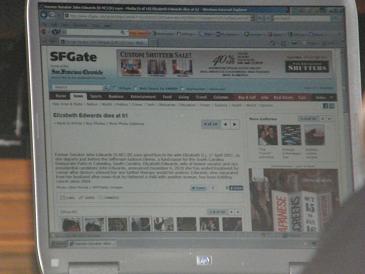
When the news hit that Elizabeth Edwards had died at 61, I was sitting in the press box at San Francisco City Hall listening to the supervisors debate the merits of local hire legislation. In fact, I only became aware that Edwards had passed away, because Sup. Michela Alioto-Pier, who was sitting in front of me, was surfing the Internet on her laptop and I happened to see the headline.

The news immediately reminded me, all too powerfully, of the brave fight that my sister-in-law Leila, 47, lost last year after a six-year battle with the disease. She left behind a husband and two young sons, and I always feel a mix of pride at how hard she fought and desperation at how she still wasn’t able to win, whenever I remember her long slide towards death last fall.

“I have so much to live for,” Leila often told me, reflecting on how much she loved her husband and sons, how she wanted to finish her novel (which she managed to wrap up in the last months of her life) and how she still wanted to visit so many places and people in the world.

An avid advocate for peace, especially in the Middle East, where her father’s family came from, Leila was not one to give up on a cause, once she had it in her crosshairs. She attacked breast cancer with that same dogged determination. She read everything she could on the topic, changing her diet, modifying her lifestyle, going through chemo and the inevitable loss of her beautiful hair, and, at the end, taking a chance with experimental drugs.

I will never forget her telling me, one gut-wrenching afternoon last September, that the doctors had told her there was nothing more they could do. The disease had gone to her liver, and that she was beginning to feel panic and fear. It wasn’t easy to hear that admission, it must have been even harder for her to share it, and it left me hoping that one day, no other woman would ever have to go through this painful battle again.

I wanted Leila to live to see her sons grow up, to enjoy the company of her husband, to write, travel and work for her goal of world peace. But eventually, it became clear that she was not going to make it. When her death finally came, last October, I felt relief that she was no longer suffering, even as I shed tears for her, her family, and all the folks in the world who are going through similar battles.

So, when I got home last night, I immediately went online and wallowed in the huge wave of grief that Edwards’ death evoked as a symbol of the millions of women who live with and die from cancer worldwide.

Some noted that Edwards had not been conducting regular check ups when she found a lump in her breast (an uncomfortable reminder to all of us who haven’t got a check up recently). Others observed that her diagnosis likely fueled her passion for universal health care and helped the passage of Obamacare (a more welcome reminder that despite all the criticisms of Obama, he has pushed through monumental reforms that many will benefit from).

Some wrote about the ever-present fear for survivors that the cancer could come back, and how this awareness had  served to make them more fully appreciate every moment that they do have. Others pointed to the grim reality that even with access to great doctors, advanced treatment options and money, Edwards still could not prevail, because a cure has still not been found.

I’ll end this tribute to Edwards, my sister-in-law, and all the women who have struggled with this terrible disease with a message that landed in my inbox Dec. 7 from California’s First Lady Maria Shriver:

“I was deeply saddened to learn of the passing of my dear friend, Elizabeth Edwards,” Shriver wrote. “My heart goes out to her loving family. Elizabeth was a mighty warrior, and I’ve long admired her courage, her compassion and her personal quest for truth. She was a public servant, a dedicated mother, a tireless advocate and a loyal friend. She showed up to speak at The Women’s Conference every time I asked, and our audience was always moved by the open and honest way she would share the struggles she faced along her journey. I hope her children know their mother was an inspiration to women everywhere — a truly great woman.”

And I’ll add my hope that this nation will intensify its search for a cure for a disease that is the second leading cause of cancer deaths in women today (after lung cancer) and the most common cancer among women, excluding nonmelanoma skin cancers. According to the American Cancer Society, 1.3 million women will be diagnosed with breast cancer annually worldwide, 465,000 will die from the disease, and about 1 in 35 women die from breast cancer in the U.S. Scary? Yes. Curable? Hell, yeah (I hope and pray). Let’s just make sure it remains a national priority.

Newsom’s homeless policy failure

11

I have no reson to dispute the figures in the Chron this morning showing that Mayor Newsom has moved 12,210 people off the streets of San Francisco, 6,692 of them placed into supportive housing and 5,518 shipped out of town with a free bus ticket. Randy Shaw, who has a city contract to run some of the hotels that Newsom is using for formerly homeless people, says Newsom has the “best record [on the issue] of any mayor in the United States”


And still the Chron laments, there are still homeless people on the streets:


Yet many of San Francisco’s neighborhoods remain plagued with panhandlers, and residents and tourists alike complain of feeling scared or just plain disgusted.


Let me suggest one possible reason that there’s so much panhandling still going on: Even the formerly homeless who now have residential hotel rooms don’t have enough money to eat. That’s because Newsom’s signature “Care Not Cash” measure took money away from welfare payments and shifted it into housing. These days, general assistance pays just $59 a month. Try living on that. Even with food stamps (which don’t buy you meals if you don’t have a kitchen to cook in) the money the city pays out is too little. So people beg for more.


Yes, there are people who panhandle to buy money for drink and drugs. Reality check here: People — homeless or otherwise — are going to drink and do drugs in this city. Give them enough money in a monthly welfare check and they’ll use that instead of bothering the tourists. Panhandling isn’t easy or pleasant; people don’t do it because they want to. They do it because there’s no other way to get money.


(And please, my trolls: Don’t tell me that these folks should “get a job.” There are currently five unemployed people for every job opening in America, and it’s worse in San Francisco.)


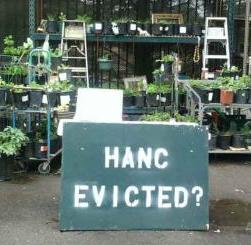
Of course, now that Newsom has decided to evict the Haight Ashbury Neighborhood Council recycling center — a place where homeless people can legally make a little money without panhandling — the problem’s going to get worse.  

Dufty was Avalos’ eighth vote on local hire

3

History was made at City Hall on December 7, when the Board voted 8-3 to approve local hire legislation for city-funded construction projects.
“This is the strongest local hiring measure in the nation, “ said Sup. John Avalos, the legislation’s chief sponsor. “It doesn’t just have a mandated 50 percent goal. It has a ‘by trade’ mandate. It requires 50 percent of apprentices to be residents. More than anything we are moving away from a good faith policy. That’s a sea change in our local hiring discussion.”
Sup. Sophie Maxwell thanked Avalos “for taking up the mantle” and pushing construction industry legislation that will provide opportunities for ”growing the middle class instead of importing it.”
“This industry closes the economic gap,” Maxwell said,
Board President David Chiu, Sups. John Avalos, David Campos, Chris Daly, Bevan Dufty, Eric Mar, Sophie Maxwell and Ross Mirkarimi voted for the legislation. But Dufty was the eighth vote that gave the measure a veto-proof majority. His vote came after he met ABU (Aboriginal Blacks United) leader James Richards and other advocates of unemployed residents. They see the legislation as a way to invest local tax dollars in local communities, reduce crime and poverty, and lessen pollution by reducing workers’ commutes.


“It’s been too long that we have been protesting and fighting this good faith effort,” Richards said.” We need a mandatory policy.”
ABU member Troy, 47, who was born and raised in the Bayview, and has two sons, said he had been unemployed for six months.
“If we don’t work, nobody works, that’s ABU’s motto,” Troy said. ‘We can’t have nobody come from Marin, taking our jobs and pushing us back onto the streets, selling drugs. We gotta put the merry back into Christmas.”


“A lot of moving parts had to come together for this legislation to be successful,” Dufty told the Board, a couple of hours after he met ABU’s Richards. “This is very reminiscent of Healthy San Francisco, which was one of the most monumental changes in the city.”
Dufty said he believes that, much like Healthy San Francisco, local hire legislation is bigger than just San Francisco. “At a certain point, I looked at labor and said, yes, I’m going for this legislation, but not just for San Francisco,” Dufty said. “You want to take this concept to other cities.”


Dufty  was hopeful that Mayor Gavin Newsom will get behind the legislation, before its Dec.14 second reading.
“But I respect that there may be a little bit of coming together between now and the second reading,” he said.
Newsom spokesperson Tony Winniker told reporters that the mayor plans to review the amended legislation and consult with impacted contractors and unions before deciding whether to veto the legislation.
A December 1 report from city economist Ted Egan estimated that the local hire legislation will create 350 jobs and cost the city $9 million annually, or 1 percent of whatever it spends on public works. (San Francisco is set to spend an estimated $27 billion on capital projects over the next decade.)
Vincent Pan of Chinese Affirmative Action, which supports Avalos’ local hiring policy, suggested that the mayor “check the temperature.”
“It would be leadership on the part of the mayor not to veto legislation that’s about San Francisco,” Pan said.

Rec & Park trashes HANC Recycling Center

At yesterday’s Recreation & Park Commission meeting on Dec. 2, hundreds of San Francisco residents turned out to urge commissioners not to replace the Haight Ashbury Neighborhood Council (HANC) Recycling Center with a community garden. Their pleas fell on deaf ears.

It didn’t matter that a sunnier spot for a community garden had already been identified in the same area, with funding approved by the commission more than a year ago. It didn’t matter that thousands of people use the recycling center every month, and that the nonprofit bolsters community gardens throughout the city with donations and funding. It didn’t matter that we’re in a recession and there were jobs on the line. It didn’t matter that HANC pays rent to a city department facing a $12.5 million deficit, but the community garden would cost $250,000.

All that mattered in the end was that Rec & Park, and Mayor Gavin Newsom, wanted the HANC recycling center out. They thought removing it might discourage homeless people from sleeping in the park and hanging around the neighborhood. After nearly four hours of listening to residents urge them not to do it, the commissioners yawned and pushed the eject button. They unanimously voted in favor of the community garden. A 90-day eviction notice is expected to go out to HANC today.

The fight over HANC’s eviction has been described as a political battle between progressives and moderates, a showdown between heroes who stand up for public safety versus intimidating thugs and the lefties who enable them, and even a sequel to the sit /lie controversy. I think there’s an 800-pound gorilla sitting in the middle of this fight that no one wants to talk about: Class.

Community gardens are wonderfully empowering. I used to volunteer at one at a public housing complex in North Carolina. It was especially important for people who lived in that low-income community, since they benefited from nutritious produce that also lowered their grocery bills. Under the city’s plan for this new, gated community garden, 30 of the 40 garden plots will go to area residents. Given the affluence of that neighborhood, the garden beds will likely go to people who can afford organic groceries at Whole Foods without breaking into a sweat. For well-to-do San Franciscans, growing produce is not a means of survival — it’s about feeling good, and being green. By itself, there’s nothing wrong with that.

The problem is that it will be installed at the expense of a long-standing community resource that employs 10 people and lightens the load for hundreds of others during a recession, when people are truly struggling to get by. The Rec & Park Commission has essentially decided that this parcel of public space should be taken from a nonprofit that benefits people of all classes, and given to a small number of residents who’ve voiced complaints about “quality-of-life issues.”

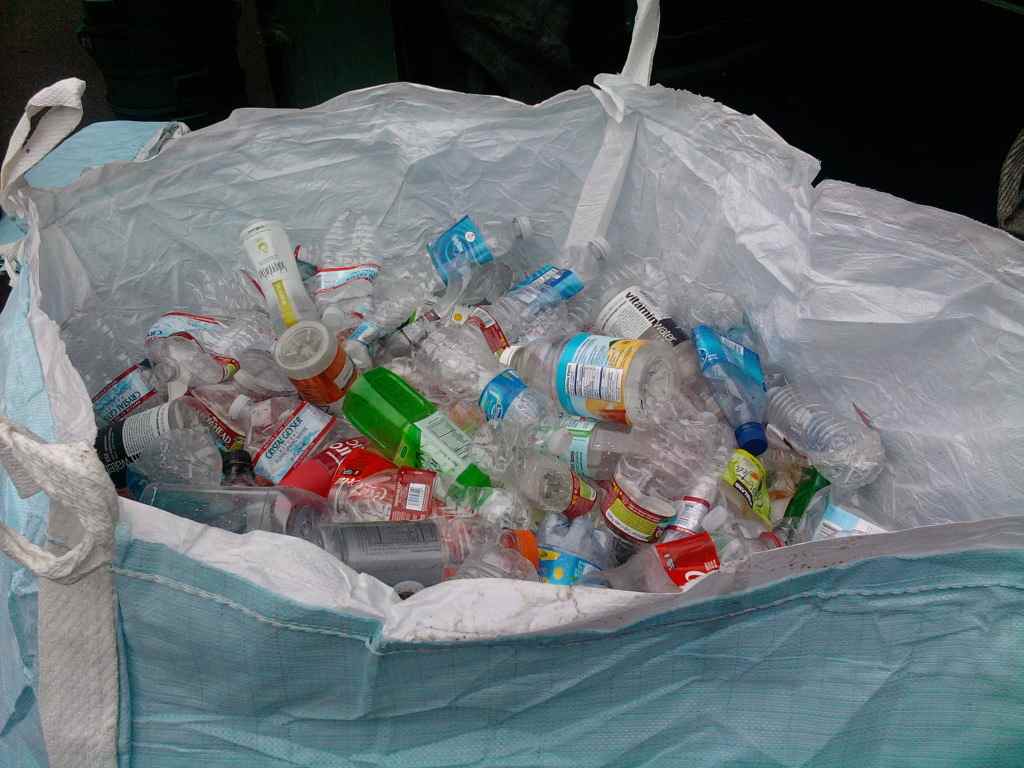
In its current function, the HANC Recycling Center is empowering to many different kinds of people. Most aren’t homeless. Tough-as-nails Asian grandmas show up with bags full of cans that they can exchange for some extra spending money. Urban gardeners purchase native plants in hopes of pleasing native insects and birds. People on fixed incomes get a small financial boost by turning in recyclables.

A small number of the HANC Recycling Center patrons do sleep outside. In order to earn small amounts of cash for things like food, many of them have to go digging around in garbage cans, which is gross and humiliating. Why would someone paw through the garbage for hours, battling bees and germs, and then haul smelly bottles uphill in a shopping cart just to make a few bucks? My guess is that it’s to ward off desperation. They make their own work, and they get to eat.

“Some of them may use drugs,” one of the speakers acknowledged last night. “But,” he paused for dramatic effect. “Some of us use drugs, too.”

When sit / lie was under debate, critics wondered where the homeless were supposed to go, if they couldn’t sit on the sidewalks. Often, the reply was that they could go to the parks. But this latest attack on the homeless shows that they aren’t welcome there, either.

This is an opinion piece.

EDITORIAL: Save the HANC recycling center

11

The foes of the Haight Ashbury Neighborhood Council recycling center — including the mayor and Rec-Park Director Phil Ginsberg, who desperately want to get the low-income riff-raff who sell cans and bottles for a living out of the Haight and Inner Sunset — pulled out all the stops Dec 2, dragging good ol’ Chuck Nevius, who’s always ready to stand up for what isw clean and well-manicured and free of urban grit, into the fight. The Nevius column in the Chron is almost too perfect; he describes the center as “a noisy, ugly industrial plant” that doesn’t belong in Golden Gate Park. Well, the center is technically in the park, I suppose, but it’s not exactly smack amid Speedway Meadow or the Arboretum; it’s way off on the edge, in an area that most people don’t even think of as the park.

But see, here’s the real issue:

It is a magnet for the down and out, some of whom use the can and bottle payout as an ATM for booze and drugs, and even raid the neighborhood bins to fill their carts.

Imagine: A magnet for the “down and out” in the Haight. Imagine: A way for people to make some money without panhandling (which Nevius dislikes) or hassling tourists (which Nevius dislikes) or selling drugs (which Nevius dislikes) or stealing (which all of us dislike). Imagine: A community-run institution that actually creates green jobs for people who might otherwise be homeless (and doing things that Chuck Nevius dislikes).

The real issue is that the mayor never liked HANC (since he lives in the Haight, he ought to stop by a HANC meeting sometime; it’s really not that scary) and doesn’t like the idea of homeless people congregating around the recycling center, and would just as soon get rid of anything that doesn’t fit his vision of a squeaky clean, fully gentrified city.

And it’s not as if Ginsberg wants to restore that corner of the park to native flora; it will be, in his vision, a community gardening center. Nice, but not exactly a natural space. The new center would also attract small crowds — but of a very different demographic. Which, again, is what this is all about.

The HANC recycling center does everything that Gavin Newsom claims to support. It provides green jobs. It offers employment opportunities for people who are on the margins of society, and lets them get back on their feet — without a penny of taxpayer money. It promotes recycling and sound urban ecology.

The private company that collects our garbage and recycling, which is called Recology, doesn’t like the fact that poor people go around and collect cans and bottles from the blue bins on the sidewalk; the stuff is worth money, and the company would rather keep it. But in the end, the material goes to the same place and stays out of the landfills, which ought to be the point. And honestly, isn’t scavenging and recycling cans and bottles a better occupation than agressive panhandling and crime?

The center’s a bargain for San Francisco, and the personal peeves and suburban sensibilities of Newsom, Ginsberg and Nevius shouldn’t shut it down. The Recreation and Parks Commission should direct Ginsberg to back off on eviction proceedings and let the center stay.


War on drugs rages on

0

By Pamela A. MacLean

news@sfbg.com

The two Norton brothers thought someone was breaking into their Oakland apartment to kill them one pre-dawn day in October 2007. Instead, a couple dozen well-armed and screaming federal drug agents stormed the place, rousted the pair, and dragged them around the apartment before arresting them.

Winslow and Abraham Norton operated one of the most successful medical marijuana dispensaries in the Bay Area, the Compassionate Patients’ Cooperative of California, in Hayward. In just the first six months of 2007, the operation grossed $26 million.

But if they thought facing a federal indictment on charges of conspiracy to possess and distribute more than 1,000 kilos of marijuana and money laundering was their worst nightmare, the Norton brothers just weren’t dreaming big enough.

The pair — with all-American good looks, close-cropped beards, and infectious smiles — finish each other’s sentences when they describe their run-in with the federal justice system.

“We were 11 and 14 when medical marijuana was legalized, and we grew up in Berkeley,” Abraham said “It may be naïve, but we didn’t understand the legality. Now we know federal law a lot better.”

Abraham, 26, and Winslow, 29, played by the rules in California’s fledgling medical marijuana law. In 2005 they got an Alameda County permit to operate from the former Sheriff Charles Plummer, a seller’s permit from the state, paid taxes, and had random inspections by local police.

They even hired security guards to patrol the place to make sure patients felt safe. After abandoning a couple of security companies as “no good,” they hired a tough bunch that had former Navy SEALS, Marines, and cops in their ranks, SEAL-Mar Security. They rotated a crew of 44 different guards who patrolled outside and carried Glocks, Smith & Wessons, Sig Sauers, and Rugers to make sure no one caused trouble.

“We are very proud we were squeaky clean and examined under a microscope,” Winslow said. “We never did a deal out the back door,” Abraham insisted. They sold so much marijuana to legitimate patients “it never made sense and it would have hurt the company” to do any illegal side deals, Winslow said.

But selling marijuana is still a federal crime, and in negotiations the prosecutor insisted the brothers accept five-year minimum prison terms. They refused, offering to plead guilty to conspiracy and let U.S. District Judge D. Lowell Jensen set the sentence. Assistant U.S. Attorney Steve Corrigan balked. Then, according to the Nortons and their lawyers, Corrigan upped the ante, threatening to indict their mother, who helped out in the co-op by opening up for the early shift.

“We had to tell her over a Thanksgiving,” Winslow said. “It was pretty miserable. We didn’t know what to do.”

Then, in February 2009, the government indicted their father instead, along with a coworker, and added a far more serious charge: aiding in the carrying of a firearm to further a drug crime. That charge alone carries up to life in prison, but no less than five years.

The Nortons had no guns. It was the gun-toting security team that was “aiding” in a drug conspiracy.

“It is plain and simple coercion, nothing less than that,” said Harold Rosenthal, Abraham’s attorney.

“When we heard the charge, we said ‘you must be kidding,'” says Doron Weinberg, the high-profile defense lawyer who defended record producer Phil Spector in his 2007 murder trial. “I have never before heard of a person charged with violation of a gun law because they hired a security guard.”

Although there is a new U.S. attorney, Melinda Haag, she isn’t talking. “It is an ongoing case so we have no comment,” said her spokesman Jack Gillund.

Sheriff Plummer, who retired in 2007 after 50 years in law enforcement, said of the weapons charges: “It’s bullshit.”

“While I don’t favor their type of business, it was legal. I wanted to make damn sure they were protected, people were protected, and the building was protected. I told them to hire a security crew,” he said.

Abraham says Plummer assured them during a county Board of Supervisors meeting that if they did everything he required, the feds would leave them alone. “I could have said that,” Plummer said when asked about that assurance.

Although the new charge is “aiding” use of weapons, the security crew was not charged with a crime. It had no effect on the guards or the company, according to Tom Turner, one of SEAL-Mar’s owners.

The indictment of their father, Michael, was no accident. Michael is a patient of the dispensary, but the brothers and his lawyer, Bill Osterhoudt, say Michael had no ownership interest in the co-op.

What Michael Norton does have is a criminal record. In the 1980s, he went to prison for two years in what was known as the Kona coffee caper. He bought low-cost Guatemalan coffee beans and sold them as pricey Hawaiian Kona coffee.

Piled on to the Norton brothers’ legal problems is a tax bill that went unpaid when the federal agents raided their apartment and the business. When the federal agents swept in three years ago, they seized the brothers’ two cars, a house they just bought, more than 300 pounds of marijuana, and an electronic deposit of nearly $340,000 in sales tax sent to the state Board of Equalization, according to Winslow.

“We thought the wire transfer cleared. We had confirmation, but the government still seized it,” Abraham said. “They stole the money,” Winslow said. That debt, with penalties and interest, is now close to $1 million, according to Abraham.

“The feds snatched the sales tax money and left the Nortons liable for it, and now they have liens against them for the money,” Rosenthal said.

The irony for the brothers is that they believe they were the first dispensary to voluntarily pay sales taxes. “We collected them for six months and took a check for $1 million to the BOE,” Abraham said. “They didn’t want to take money from medical marijuana sales and told us to call it something else,” Winslow said. “We refused. They wanted us to lie and say the bags cost $300 and the contents were free. But that would have screwed up our accounting.”

After accepting the initial payment, within a week the board issued letters to all the dispensaries in the state asking for sales tax, according to the brothers.

Judge Jensen rejected defense efforts to get the gun charges thrown out in September. But Jensen, a Republican former prosecutor, signaled he is not happy and ordered both sides to sit down Dec. 9 for formal talks before a magistrate to see if they can resolve the case.

“It’s not enough to say we want the case dropped,” Abraham said. “Our credit is destroyed. We can’t work.”

“Three years later we are still fighting it,” Winslow said. “We’ve been fighting this almost as long as the dispensary existed.”

As for the brothers’ chances to negotiate a resolution with the feds, Rosenthal said, “I’m somehow hoping the clouds are going to part and sanity is going to set in.”

Music Listings

0

Music listings are compiled by Cheryl Eddy. Since club life is unpredictable, it’s a good idea to call ahead to confirm bookings and hours. Prices are listed when provided to us. Submit items for the listings at listings@sfbg.com. For further information on how to submit items for the listings, see Weekly Picks.

WEDNESDAY 10

ROCK/BLUES/HIP-HOP

Bobs Café Du Nord. 8pm, $24.

Chicago Afrobeat Band Boom Boom Room. 9:45pm, $8.

Delorean, Lemonade, Butterfly Bones Great American Music Hall. 8pm, $16.

Grinn and Barrett, Coyotes, Red Light Circuit El Rio. 8pm, $5.

Have Special Power, Poison Control Center, Guitar vs. Gravity Elbo Room. 9pm, $7.

Derick Hughes Biscuits and Blues. 8pm, $16.

Gregg Laswell, Harper Blynn Independent. 8pm, $15.

Mae, Terrible Things, Windsor Drive Bottom of the Hill. 8pm, $14.

Terry Malts, Devon Williams, Lilac Hemlock Tavern. 9pm, $6.

Personal and the Pizzas, Natural Child, Wrong Words Rickshaw Stop. 8pm, $10.

Slick Rick Yoshi’s San Francisco. 8pm, $25.

Stars, Delays Fillmore. 8pm, $27.50.

DANCE CLUBS

Booty Call Qbar, 456 Castro, SF; www.bootycallwednesdays.com. 9pm, $3. Jualina More!, Joshua J, and guests spin booming, booty-shaking beats.

Fixup 222 Hyde; www.fixupsf.com. 9:30pm, $5. Bass music monthly with special guest Submerse.

Hands Down! Bar on Church. 9pm, free. With DJs Claksaarb, Mykill, and guests spinning indie, electro, house, and bangers.

Jam Fresh Wednesdays Vessel, 85 Campton, SF; (415) 433-8585. 9:30pm, free. With DJs Slick D, Chris Clouse, Rich Era, Don Lynch, and more spinning top40, mashups, hip hop, and remixes.

Mary-Go-Round Lookout, 3600 16th St, SF; (415) 431-0306. 10pm, $5. A weekly drag show with hosts Cookie Dough, Pollo Del Mar, and Suppositori Spelling.

Mods vs. Rockers Make-Out Room. 9pm. With Nectarine Pie and mod, garage, punk, and new wave DJs.

RedWine Social Dalva. 9pm-2am, free. DJ TophOne and guests spin outernational funk and get drunk.

Respect Wednesdays End Up. 10pm, $5. Rotating DJs Daddy Rolo, Young Fyah, Irie Dole, I-Vier, Sake One, Serg, and more spinning reggae, dancehall, roots, lovers rock, and mash ups.

Synchronize Il Pirata, 2007 16th St, SF; (415) 626-2626. 10pm, free. Psychedelic dance music with DJs Helios, Gatto Matto, Psy Lotus, Intergalactoid, and guests.

THURSDAY 11

ROCK/BLUES/HIP-HOP

Leila Broussard, Bess Rogers, Allison Weiss Hotel Utah. 8pm, $10.

Marc Broussard Yoshi’s San Francisco. 8pm, $30.

Collie Buddz and New Kingston, Los Rakas Independent. 9pm, $30.

Candy Claws, Chain Gang of 1974, Blackbird Blackbird Rickshaw Stop. 8pm, $12.

Ghostface Killah, Sheek Louch, Music by Frank Dukes Slim’s. 9pm, $22.

Jack Grisham and the West Coast Dudes, Stagger and Fall Thee Parkside. 9pm, $10-12.

Mayer Hawthorne and the County, Gordon Voidwell Bimbo’s 365 Club. 8pm, $16.

Mental 99 El Rio. 7pm, free.

RJ Mischo Biscuits and Blues. 8pm, $16.

Nitzer Ebb, //Tense//, Soft Metals, Terminal Twilight Mezzanine. 8:30pm, $20.

Taxes, Fake Your Own Death, Kill Moi, DJ Ted Bagel Radio Bottom of the Hill. 9pm, $10.

Tyrone Wells, Andrew Belle, Crown Point Café Du Nord. 8pm, $18.

Yo Mama’s Big Fat Booty Band Boom Boom Room. 9:30pm, $8.

Zoobombs, Uzi Rash, Cruddy Hemlock Tavern. 9pm, $6.

DANCE CLUBS

Afrolicious Elbo Room. 9:30pm, $10. DJs Pleasuremaker and Señor Oz with special guest Black Pearl 504 spin Afrobeat, tropicália, electro, samba, and funk.

CakeMIX SF Wish, 1539 Folsom, SF; www.wishsf.com. 10pm, free. DJ Carey Kopp spinning funk, soul, and hip hop.

Caribbean Connection Little Baobab, 3388 19th St, SF; (415) 643-3558. 10pm, $3. DJ Stevie B and guests spin reggae, soca, zouk, reggaetón, and more.

Drop the Pressure Underground SF. 6-10pm, free. Electro, house, and datafunk highlight this weekly happy hour.

Good Foot Som., 2925 16th St, SF; (415) 558-8521. 10pm, free. With DJs spinning R&B, Hip hop, classics, and soul.

Jivin’ Dirty Disco Butter, 354 11th St., SF; (415) 863-5964. 8pm, free. With DJs spinning disco, funk, and classics.

Kissing Booth Make-Out Room. 9pm, free. DJs Jory, Commodore 69, and more spinning indie dance, disco, 80’s, and electro.

Koko Puffs Koko Cocktails, 1060 Geary, SF; (415) 885-4788. 10pm, free. Dubby roots reggae and Jamaican funk from rotating DJs.

Mestiza Bollywood Café, 3376 19th St, SF; (415) 970-0362. 10pm, free. Showcasing progressive Latin and global beats with DJ Juan Data.

Motion Sickness Vertigo, 1160 Polk, SF; (415) 674-1278. 10pm, free. Genre-bending dance party with DJs Sneaky P, Public Frenemy, and D_Ro Cyclist.

Peaches Skylark, 10pm, free. With an all female DJ line up featuring Deeandroid, Lady Fingaz, That Girl, and Umami spinning hip hop.

Roger Sanchez Vessel. 9:30pm, $10-20. “The Return of House Tour” with Sidney Samson.

Wax Candy Ambassador, 673 Geary, SF; www.ambassador415.com. 9pm, free. Disco-licious party jams with Andre Lucero, Worker, Travis Dalton, and Sergio.

FRIDAY 12

ROCK/BLUES/HIP-HOP

“Bohemian Carnival” DNA Lounge. 9pm, $20. With Vau de Vire Society, Gooferman, Bambi Killers, and DJ Smoove.

Doomtree, POS, Dessa, Sims, Cecil Otter, Mike Mictlan, Lazerbeak, Paper Tiger, Rec-League Slim’s. 9pm, $15.

Emmitt-Nershi Band, Hot Buttered Rum Special String Band Independent. 9pm, $25.

Holy Shit, Bitter Honeys Knockout. 9pm, $7.

Talib Kweli Yoshi’s San Francisco. 8 and 10pm, $26.

Mayday Parade, Breathe Carolina, Every Avenue, Artist vs. Poet, Go Radio Regency Ballroom. 6pm, $20.

Narrows, Skinwalker, New Trust Bottom of the Hill. 10pm, $12.

Charles Neville, Youssoupha Sidibe and the Mystic Rhythms Coda. 9pm, $17.

Nosaj Thing, Toro Y Moi, Jogger Rickshaw Stop. 9pm, $18.

Number Prophets, Pebble Theory, Heart Touch Hotel Utah. 9pm, $8.

Rod Piazza and Mighty Flyers Biscuits and Blues. 8pm, $22.

Rocket Summer: Bruce Avary, his instruments and your voices, He Is We, Travis Hayes and An-Nhein Le Thee Parkside. 9pm, $15.

Le Serpent Rouge, Mardi Love and Zoe Jakes, Brass Menazeri Great American Music Hall. 9pm, $21.

Sista Sekunden, Roller, Lecherous Gaze, Fast Asleep Submission, 2183 Mission, SF; www.sf-submission.com. 9pm, $8.

This Charming Band, For The Masses Café Du Nord. 9:30pm, $12.

Young Offenders, Northern Towns, Sydney Ducks Hemlock Tavern. 9:30pm, $7.

JAZZ/NEW MUSIC

Paul Dresher Ensemble ODC Theater, 3153 17th St, SF; www.odctheater.org. 8pm, $18.

SF Jazz High School All-Stars Concert Jewish Community Center, 3200 California, SF; www.sfjazz.org. 8pm, $5-15.

3 Leg Torso Red Poppy Art House. 8pm, $15.

FOLK/WORLD/COUNTRY

Hobbyhorse Red Vic, 1665 Haight, SF; www.myspace.com/redvicsessions. 7:45pm, $2.

Marco Periera and Brasil Guitar Duo Herbst Theatre, 401 Van Ness, SF; www.omniconcerts.com. 8pm, $24-38.

DANCE CLUBS

Exhale, Fridays Project One Gallery, 251 Rhode Island, SF; (415) 465-2129. 5pm, $5. Happy hour with art, fine food, and music with Vin Sol, King Most, DJ Centipede, and Shane King.

Fat Stack Fridays Koko Cocktails, 1060 Geary, SF; (415) 885-4788. 10pm, free. With rotating DJs B-Cause, Vinnie Esparza, Mr. Robinson, Toph One, and Slopoke.

Fo’ Sho! Fridays Madrone Art Bar. 10pm, $5. DJs Kung Fu Chris and Makossa spin rare grooves, soul, funk, and hip-hop classics.

Fubar Fridays Butter, 354 11th St., SF; (415) 863-5964. 6pm, $5. With DJs spinning retro mashup remixes.

Good Life Fridays Apartment 24, 440 Broadway, SF; (415) 989-3434. 10pm, $10. With DJ Brian spinning hip hop, mashups, and top 40.

Heartical Roots Bollywood Café. 9pm, $5. Recession-friendly reggae.

Hot Chocolate Milk. 9pm, $5. With DJs Big Fat Frog, Chardmo, DuseRock, and more spinning old and new school funk.

Rockabilly Fridays Jay N Bee Club, 2736 20th St, SF; (415) 824-4190. 9pm, free. With DJs Rockin’ Raul, Oakie Oran, Sergio Iglesias, and Tanoa “Samoa Boy” spinning 50s and 60s Doo Wop, Rockabilly, Bop, Jive, and more.

Some Thing The Stud. 10pm, $7. VivvyAnne Forevermore, Glamamore, and DJ Down-E give you fierce drag shows and afterhours dancing.

Strictly Video 111 Minna. 9pm, $10. With VDJs Shortkut, Swift Rock, GoldenChyld, and Satva spinning rap, 80s, R&B, and Dancehall.

Treat Em Right Elbo Room. 10pm, $5. Hip-hop, funk, and more with DJs Vinnie Esparza and B. Cause, plus guest Primo.

SATURDAY 13

ROCK/BLUES/HIP-HOP

Blisses B, Tyler Matthew Smith, Vandella Café Du Nord. 9:30pm, $10.

Cat Party, Pins of Light Bender’s, 800 S. Van Ness, SF; www.bendersbar.com. 10pm, $5.

Dead to Me, Cobra Skulls, Thousand Watt Stare, Invalids Thee Parkside. 9pm, $10.

Full On Flyhead, Stomacher, Swoon, Nosebleed Academy Slim’s. 9pm, $14.

Hank IV, Carlton Melton, Circle Pit, Outlaw Bottom of the Hill. 9pm, $10.

Hot Lunch, Spider Fever, Harderships El Rio. 9pm, $7.

Junip, Sharon Van Etten Independent. 9pm, $20.

Talib Kweli Yoshi’s San Francisco. 8 and 10pm, $26.

Charles Neville, Youssoupha Sidibe and the Mystic Rhythms Coda. 10pm, $17.

Over the Rhine, Lucy Wainwright Roche Great American Music Hall. 9pm, $25.

Sista Monica Biscuits and Blues. 8pm, $22.

Trophy Fire, Ash Reiter, Foolproof Four Hemlock Tavern. 9:30pm, $7.

Two Headed Spy, Deeper, Thumper, Cold Steel Renegade Hotel Utah. 9pm, $8.

Dean Wareham Fillmore. 9pm, $25.

JAZZ/NEW MUSIC

Jazz Mafia, Realistic Orchestra, Latryx Mezzanine. 9pm, $20.

Jazz Sawyer 3rio Coda. 7-9pm, $5.

Paul Dresher Ensemble ODC Theater, 3153 17th St, SF; www.odctheater.org. 8pm, $18.

3 Leg Torso San Francisco Museum of Modern Art, 151 Third St, SF; www.ticketweb.com. 10am, $5-18.

FOLK/WORLD/COUNTRY

Banda de Turistas, Pacha Massive Elbo Room. 4pm, $5.

Broceliande Seventh Avenue Performances, 1329 Seventh Ave, SF; www.sevenperforms.org. 7:30pm, $15-20.

Go Van Gogh Café International, 508 Haight, SF; www.cafeinternational.com. 7pm.

Slavic Soul Party! Swedish American Hall (above Café Du Nord). 8pm, $30.

DANCE CLUBS

Bar on Church 9pm. Rotating DJs Foxxee, Joseph Lee, Zhaldee, Mark Andrus, and Nuxx.

Bootie DNA Lounge. 9pm, $6-12. Mash-ups with guest DJ Axel.

Frolic Stud. 9pm, $3-7. DJs Dragn’Fly, NeonBunny, and Ikkuma spin at this celebration of anthropomorphic costume and dance. Animal outfits encouraged.

Prom Milk. 9pm, $8. Wave not Wave DJs Jacob Fury and Mario Muse spin rock ‘n’ roll at this prom-themed dance party.

Rock City Butter, 354 11th St., SF; (415) 863-5964. 6pm, $5 after 10pm. With DJs spinning party rock.

Same Sex Salsa and Swing Magnet, 4122 18th St, SF; (415) 305-8242. 7pm, free.

Spirit Fingers Sessions 330 Ritch. 9pm, free. With DJ Morse Code and live guest performances.

Spotlight Siberia, 314 11th St, SF; (415) 552-2100. 10pm. With DJs Slowpoke, Double Impact, and Moe1.

Tormenta Tropical Elbo Room. 10pm. Electro cumbia with DJs Spoke Mathambo and Mshini Wam, Zuzuka Poderosa, Disco Shawn and Oro 11, and Panamami.

SUNDAY 14

ROCK/BLUES/HIP-HOP

Macy Blackman and the Mighty Fines Biscuits and Blues. 8pm, $15.

Cornershop, Tyde, Mar Carroll Independent. 8pm, $25.

High Places, Soft Circle, Sun Bottom of the Hill. 9pm, $10.

Erin Mckeown Café Du Nord. 8pm, $15.

Nile, Ex Deo, Psycroptic, Keep of Kalessin Slim’s. 7:30pm, $30.

Tennis, Eulogies Hotel Utah. 9pm, $8.

Thralls, Reverse Dotty, Spiro Agnew Hemlock Tavern. 9pm, $6.

JAZZ/NEW MUSIC

Sepia Yoshi’s San Francisco. 8pm, $22.

Vijay Iyer Trio Yerba Buena Center for the Arts, 701 Mission, SF; www.sfjazz.org. 7pm, $30-50.

FOLK/WORLD/COUNTRY

Rosanne Cash Palace of Fine Arts Theatre, 3301 Lyon, SF; www.sfjazz.org. 7pm, $25-65.

Hammerlock, K-9 Thee Parkside. 4pm, free.

DANCE CLUBS

DiscoFunk Mashups Cat Club. 10pm, free. House and 70’s music.

Dub Mission Elbo Room. 9pm, $6. Dub, dubstep, roots, and dancehall with DJ Sep, J Boogie, and guest Spliff Skankin’.

Gloss Sundays Trigger, 2344 Market, SF; (415) 551-CLUB. 7pm. With DJ Hawthorne spinning house, funk, soul, retro, and disco.

Hacienda Deco Lounge, 510 Larkin, SF; www.decosf.com. 10pm, $3. Classic electronic tracks with DJs Inquilab, Robots in Heat, Tristes Tropiques, and guest Chris Orr.

Honey Soundsystem Paradise Lounge. 8pm-2am. “Dance floor for dancers – sound system for lovers.” Got that?

Pachanga Coda. 5pm, $10. Salsa with DJs Fab Fred and Antonio, plus Orquesta La Moderna Tradición.

Play T-Dance DNA Lounge. 5pm-midnight, $25. House with DJ Rich Russ and DJ John LePage.

Swing Out Sundays Rock-It Room. 7pm, free (dance lessons $15). DJ BeBop Burnie spins 20s through 50s swing, jive, and more.

Tensnake Public Works, 161 Erie, SF; www.publicsf.com. 9pm, $10. Cosmic disco.

MONDAY 15

ROCK/BLUES/HIP-HOP

Alejandro Chavez, Korelenko, Upwords Movement El Rio. 7pm, $7.

Pomegranates, Oh No Oh My, Big Tree Rickshaw Stop. 8pm, $10.

Rattlesnakes, Silent Comedy, Scrote with Stripminers, Pink Snowflakes Elbo Room. 9pm, $7.

Someone Still Loves You Boris Yeltsin, Lonely Forest, Alright Bottom of the Hill. 9pm, $10.

Thermals, Night Marchers, White Fang Independent. 8pm, $16.

Nico Vega, Imagine Dragons, Saint Motel Café Du Nord. 8pm, $10.

DANCE CLUBS

Black Gold Koko Cocktails, 1060 Geary, SF; (415) 885-4788. 10pm-2am, free. Senator Soul spins Detroit soul, Motown, New Orleans R&B, and more — all on 45!

Krazy Mondays Beauty Bar. 10pm, free. With DJs Ant-1, $ir-Tipp, Ruby Red I, Lo, and Gelo spinning hip hop.

M.O.M. Madrone Art Bar. 6pm, free. With DJ Gordo Cabeza and guests playing all Motown every Monday.

Death Guild DNA Lounge. 9:30pm, $3-5. Gothic, industrial, and synthpop with Decay, Joe Radio, and Melting Girl.

Manic Mondays Bar on Church. 9pm. Drink 80-cent cosmos with Djs Mark Andrus and Dangerous Dan.

Musik for Your Teeth Revolution Café, 3248 22nd St., SF; (415) 642-0474. 5pm, free. Soul cookin’ happy hour tunes with DJ Antonino Musco.

Network Mondays Azul Lounge, One Tillman Pl, SF; www.inhousetalent.com. 9pm, $5. Hip-hop, R&B, and spoken word open mic, plus featured performers.

Skylarking Skylark. 10pm, free. With resident DJs I & I Vibration, Beatnok, and Mr. Lucky and weekly guest DJs.

TUESDAY 16

ROCK/BLUES/HIP-HOP

Bright Blues, Drums and Color, Moonshine and the Drugs Hemlock Tavern. 9pm, $6.

Cermak, Califia El Rio. 7pm, free.

Curse of Panties, Red Light Mind, Stowaways Hotel Utah. 9pm, $6.

Fat Tuesday Band Biscuits and Blues. 8pm, $15.

Generalissimo, Pegataur, Nero Order Café Du Nord. 8:30pm, $10.

Margot and the Nuclear So and Sos, Jookabox, Burnt Ones Great American Music Hall. 8pm, $16.

Bruno Mars, Donnis Slim’s. 8pm, $19.

Perfect Circle Fillmore. 8pm, $40.

Sole and the Skyrider Band, Egadz and Edison, Epcot, DJ Bomarr Bottom of the Hill. 9pm, $10.

Twiztid, Blade, Mclordz and Sauce Funky, Kung Fu Vampire Regency Ballroom. 7:30pm, $23.

Vaccuum, Unlearn, Kruel, Neo Cons Knockout. 9:30pm, $5.

DANCE CLUBS

Alcoholocaust Presents Argus Lounge. 9pm, free. With DJ Ken Prank and DJ Grenadine.

Brazilian Wax Elbo Room. 9pm, $7. With Samba de Raiz featuring Jorge Alabe, plus DJs Carioca and P-Shot.

Eclectic Company Skylark, 9pm, free. DJs Tones and Jaybee spin old school hip hop, bass, dub, glitch, and electro.

Share the Love Trigger, 2344 Market, SF; (415) 551-CLUB. 5pm, free. With DJ Pam Hubbuck spinning house.

Womanizer Bar on Church. 9pm. With DJ Nuxx.

California’s secret death drug

0

news@sfbg.com

California was forced to postpone the execution of convicted murderer Albert Greenwood Brown in September because the state had run out of sodium thiopental, part of the death drug cocktail used in lethal injections.

The last batch of the drug expired Oct. 1 and the manufacturer won’t have more until 2011. So as of early October, all executions had been postponed until next year.

But on Oct. 6 the state Department of Corrections and Rehabilitation announced in a court filing that it had obtained 12 grams of sodium thiopental, also known as sodium pentothal, with an expiration date of 2014. That could mean some swifter executions.

But it also raises a critical legal question: where did the drug come from, and did the state violate federal or international laws obtaining it?

CDCR isn’t talking. Terry Thornton, deputy press secretary, refused to identify the source of the newly acquired drug. But it clearly didn’t come from the manufacturer Hospira. The company, the only U.S. manufacturer of sodium pentothol, says it has none available and is in no rush to sell it to the CDCR. In a statement released by Hospira, company spokesperson Daniel Rosenberg announced that “the drug is not indicated for capital punishment and Hospira does not support its use in this procedure.”

Natasha Minsker, death penalty policy director for the ACLU of Northern California, said it would be tricky for the state to buy the drug from anyone else. “Hospira is the only approved manufacturer in the U.S.,” she said.

But there’s a hint of where California’s supply might have come from. Arizona also recently obtained some of the death drug — Arizona Attorney General Terry Goddard told the Arizona Republic that it was delivered from an unidentified source in Britain.

But the British press has raised questions about the deal. No European country has the death penalty and both British and European Union laws bar exporting for profit materials used for executions.

Both the Arizona and California batches have the same expiration date.

Ty Alper, associate director of the Death Penalty Clinic at Boalt Hall School of Law, explained that to his knowledge, “California got [the sodium thiopental] from a foreign source,” He raised questions about the possible risks of obtaining the drug from an unknown outfit.

“If the drug is not FDA approved, could it have contaminants in it? Could it perform differently?” Alper asked. “If that drug doesn’t work right then, everybody knows the execution will be horribly painful and torturous.”

So far, the U.S. Supreme Court hasn’t bought that argument. Oct. 25 the court voted 5-4 to clear the way for Arizona to execute Jeffrey Landrigan, a convicted murderer. “There is no evidence in the record to suggest that the drug obtained from a foreign source is unsafe … There was no showing that the drug was unlawfully obtained, nor was there an offer of proof to that effect,” the unsigned opinion stated.

Landrigan was executed Oct 27.

However, we can’t find any evidence that California obtained the drug legally. There are no FDA-approved importers, and federal law strictly limits the ability of anyone to bring powerful drugs directly into the country. Title 21 United States Code of the Controlled Substances Act, Section(b) states: “It shall be unlawful to import into the customs territory of the United States from any place outside thereof (but within the United States), or to import into the United States from any place outside thereof, any nonnarcotic controlled substance in Schedule III, IV, or V, unless such nonnarcotic controlled substance … (1) imported for medical, scientific, or other legitimate uses”

Sodium pentothal is a Schedule III drug.

Executing a human being clearly doesn’t count as a “medical or scientific” use — no doctor is involved in administering the lethal drugs. Of course, there might be an opinion from the state attorney general concluding that killing a condemned prisoner is an “other legitimate use” but the office won’t produce one. When we asked if obtaining the drug from a foreign supplier was legal, Christine Gasparac, a spokesperson for Attorney General Jerry Brown, stated in an e-mail that “You’ll have to contact the California Department of Corrections and Rehabilitation for a response to your questions” and that “this office was not involved in the procurement of the drug.”

CDCR hasn’t presented any import license, purchase order, chain of custody documents, or anything else to show where the deadly stuff originated. We’ve filed a written request under the California Public Records Act for the data, but have not received a reply.

That bothers state Sen. Mark Leno (D-SF), who chairs the Public Safety Committee. “I am concerned that a state agency, using taxpayer money, is buying something and refusing to disclose where the money went,” he told us.

Procuring sodium thiopental may become even harder in the future — it has only limited use in medicine.

Dr. Philip Lumb, chair of department of anesthesiology at the University of Southern California medical school, said that over the past few years the drug Propofol has replaced sodium thiopental in the majority of surgical cases. (Propofol is the same drug Michael Jackson overdosed on.)

“It is still available — we still have it,” Lumb said. “It is used sometimes for brain procedures.”

But if Hospira isn’t making much and doesn’t want to sell it to prisons for executions, and European companies can get in trouble for exporting it, California may find that a drug it relies on to kill people isn’t available from any legitimate source. Which means the custodians of our prison system could, in effect, be buying lethal drugs on the black market.

They put other people in prison for that.

Sfbg Radio: Sex, drugs and rock ‘n’ roll

4

You want to save the American economy? Try legalizing sex, drugs and roc ‘n’ roll. That’s Johnny’s proposal. listen up after the jump.

sfbgradio10272010 by endorsements2010

Picks

0


WEDNESDAY 27

THEATER

West Side Story

West Side Story is back. Directed by Arthur Laurents, author of the original 1957 script, this rendition of the classic Romeo and Juliet story via 1950s New York City brings fresh life to the rivaling Jets and Sharks and Tony and Maria’s forbidden love. Musical favorites in Leonard Bernstein and Stephen Sondheim’s legendary score include “Tonight,” “America,” “Maria,” “I Feel Pretty,” and “Somewhere.” Jerome Robbins’ spirited dynamic choreography is as much a part of the magic as the story and music. See why West Side Story has captivated audiences for decades when its tour hits San Francisco. (Emmaly Wiederholt)

Through Nov. 28

Showtimes vary, $30–$99

Orpheum Theater

1192 Market, SF

1-888-SHN-1799

www.shnsf.com


THURSDAY 28

FILM

“Witches!”

This year’s Halloween-y new releases, Paranormal Activity 2 and Saw 3D (the seventh entry in that undying series), may not be enough to satisfy your need for horror. Luckily, SFMOMA administers a double dose, starting with 1973’s Season of the Witch, an early George Romero film, about a housewife who becomes enmeshed in witchcraft. The must-see, though, is 1977’s Suspiria, in which an American ballet student travels to Germany to attend a new school where sinister goings-on are as common as pointe shoes. Directed by Dario Argento, the film is a Technicolor nightmare and an essential addition to the season. Read on for more Halloween movie revivals, including an additional Suspiria screening. (Ryan Prendiville)

7 p.m., $5 (free with museum admission)

Phyllis Wattis Theater

San Francisco Museum of Modern Art

151 Third St., SF

(415) 357-4000

www.sfmoma.org

FILM

“French Cinema Now”

A week before presenting a run of Olivier Assayas’ 330-minute cine-event, Carlos, the San Francisco Film Society hosts its annual sampling of Gallic small wonders. “French Cinema Now” welcomes a few familiar faces (Isabelle Huppert in Copacabana, Catherine Deneuve in Hidden Diary, one of Guillaume Depardieu’s last performances in A Real Life), along with auteur turns from Bertrand Tavernier (The Princess of Montpensier) and Alain Cavalier (Irène). Closing night brings Certified Copy, in which Abbas Kiarostami, like Hou Hsiao-hsien before him, calls upon Juliette Binoche for his French twist. If early reviews are any indication, the Iranian filmmaker remains intimately concerned with epistemology in spite of the change in scenery. (Max Goldberg)

Through Nov. 3

Showtimes vary, $12.50

Embarcadero Center Cinema

One Embarcadero Center, Promenade Level, SF

www.sffs.org

DANCE

“Performing Diaspora: Devendra Sharma”

During last year’s Performing Diaspora, Devendra Sharma’s Mission Suhani proved to be a major hit. Inspired by the tradition of arranged marriages dowries, it put a light-hearted twist on what has become a controversial though deeply embedded cultural practice. Mission charmed with the wit of its dramatization of this tale about greed, betrayal, and sweet revenge. It is performed by Nautanki Theater, a company of amateurs and professionals residing in Fresno. Nautanki is a North Indian folkloric style, half musical theater, half dance that has migrated to the Central Valley and, clearly, seems to be thriving within the local Indian community. (Rita Felciano)

Thurs/28–Sat/30, 8 p.m.; Sun/31, 3 p.m.,

$19–$24

CounterPULSE, SF

1310 Mission, SF

1-800-838-3006

www.counterpulse.org


FRIDAY 29

MUSIC

Ray Parker Jr.

With an instantly recognizable tune and shout along opportunities galore (“Who ya gonna call?”), the “Ghostbusters” theme song likely brings back a flood of fun memories for anybody who grew up in the 1980s or is a fan of the hit movie and much-played music video. Written and performed by Ray Parker Jr., the tune has had a life of its own ever since it was unleashed on audiences more than 25 years ago. Spirits should be high at tonight’s concert as Parker is sure to resurrect his biggest hit, just in time for Halloween. Bustin’ makes me feel good! (Sean McCourt)

8 p.m., $59

Claremont Hotel, Club, and Spa

41 Tunnel Road, Berk.

(510) 843–3000

www.claremont-hotel.com

MUSIC

Acid King

I’m usually not a huge fan of weddings, but imagine this mythical union: L7 and Sleep joined in holy heavy matrimony, spitting out a bell-bottomed babe with a book titled Say You Love Satan in hand. Overlay this with indigo, fog, fuzz, a killer Hawkwind cover (the first song ever, it is said, to feature the word “parallelogram”), and dreamy female vocals dripping with distortion and demonic dew and doom. D-d-duhhh! This show is a no-brainer: formed back in 1993, Acid King is seminal SF stoner metal. Catch this rare local appearance on the heels of their Australian tour. C’mon, don’t be a plain ol’ square, be movin’ like a parallelogram. (Kat Renz)

With Thrones and Christian Mistress

9:30 p.m., $10

Hemlock Tavern

1131 Polk, SF

(415) 923-0923

www.hemlocktavern.com

THEATER

Failure 2 Communicate

Jaime has a traumatic brain injury limiting his impulse control. Loomis is autistic and particularly sensitive to touch. How they and other students navigate the high school environment is the premise of Valeria Fachman’s new play Failure 2 Communicate. At a high school for students with severe behavior disorders, emotional disturbances, and learning disabilities, teachers develop strong relationships with difficult students, eventually empowering the students to change their lives. This world premiere from Performers Under Stress — a local physical theater company committed to exploring challenging content — ultimately addresses disability and how we cope. (Wiederholt)

Through Nov. 14

Fri.–Sat., 8 p.m.; Sun, 2 p.m., $20

Garage Theater

975 Howard, SF

www.pustheatre.com

DANCE

Hubbard Street Dance Chicago

Why Hubbard Street Dance Chicago? First, fabulous performances; second, it’s a modern dance company that is not a one-choreographer deal; third, it boasts an international repertory we might never see otherwise (they were the first Twyla Tharp entrusted pieces to after she disbanded her own troupe). Further proof of reason No. 3: Spanish choreographer Nacho Duato just disbanded his own ensemble; Hubbard is bringing his baroque music box piece Arcangelo. When Dance Theater of the Netherlands visited last, it had been 22 years. Now Hubbard is bringing a Jirí Kylián work, 27’52”. What’s more, Hubbard promotes from within. The Bay Are premieres of Deep Down Dos and Blanco are the creations of Company dancer and choreographer in residence Alejandro Cerrudo.(Felciano)

Through Sat/30

8 p.m., $32–$68

Zellerbach Hall

Bancroft at Telegraph, UC Berkeley, Berk.

(510) 642-9988

www.calperformances.org

COMEDY

“SF Sketchfest Presents: The Return of Tony Clifton”

When was the last time you saw a real zombie? Rumor has it that Tony Clifton is Andy Kaufman returned from the dead. (Hey, Jesus did it.) Just make sure you don’t mention the late comedian to Clifton; he’s notoriously touchy about the subject. In any case, Clifton is touring with his “Katrina Kiss-My-Ass Orchestra” as community service after being charged with disorderly conduct in New Orleans. Not only do proceeds benefit Comic Relief, but at each show one lucky ticket holder “will get to spend one night at Dennis Hof’s Moonlight Bunny with Mr. Clifton paying for the hooker of the winner’s choice.” Whoever he is, he’s still classy. (Prendiville)

Through Sat/30

8 p.m., $30.50

Cobb’s Comedy Club

915 Columbus, SF

(415) 928-4320

www.cobbscomedyclub.com


SATURDAY 30

FILM/EVENT

Poltergeist

Everyone remembers Carol Anne (“They’re heeeere!”) and Tangina (“This house is clean!”), but Poltergeist diehards know the heart of the 1982 horror classic is JoBeth Williams’ Diane Freeling, the kind of mother who’d crawl up a rope into purgatory to save her youngest child. (She also smokes weed and has a pretty awesome swimming-pool scene alongside several grinning corpses.) Clear your building-houses-over-graveyards-schedule; this Mark Huestis-produced event features an onstage interview with Williams, plus an array of entertainments, from a Carol Anne look-alike contest to a Poltergeist-inspired (creepy clowns? Creepier trees? Maggot-y steaks? Dead parakeets?) fashion show. (Cheryl Eddy)

7:30 p.m. (also noon, with Williams Q&A; 9 p.m., film only), $6–$30

Castro Theatre

429 Castro, SF

(415) 621-6120

www.castrotheatre.com

FILM

“Eli Roth’s Midnight Movie Marathon”

Programmed by horror filmmaker Eli “Bear Jew” Roth, this SF Indiefest event offers nearly 24 hours of Halloween delights. Though drop-ins are welcome, this event is clearly structured to cater to true fiends who’ll sit tight for the whole dirty dozen, with dinner and breakfast breaks thoughtfully sprinkled throughout. Your descent into weak-kneed terror begins at noon with John Carpenter’s 1982 The Thing (highlight: blood-testing scene), and continues, in order, with Lucio Fulci’s 1979 Zombie (zombie vs. shark underwater fight); 1988’s The Vanishing (Dutch version, not Nancy Travis-starring remake); 1982’s Pieces (chainsaw-sploitation); 1973’s The Wicker Man (Nic Cage-free original); 1976 Spanish chiller Who Can Kill a Child?; in-a-row essentials Eraserhead (1977), Suspiria(1977), Cannibal Holocaust (1980), and The Evil Dead (1981); Miike Takashi’s delightfully violent Audition (1999); and 1973 giallo Torso. Brain-scrambling awesomeness. (Eddy)

Noon, free (donations to benefit CellSpace appreciated)

CellSpace

2050 Bryant, SF

www.sfindie.com


SUNDAY 31

“Matinees for Maniacs”

If you’re not too hung over from all the booze, hard drugs, or candy corn you gobbled down the night before, come check out this double-dip of spooky Disney classics on Halloween afternoon. First up is Something Wicked This Way Comes (1983), the Ray Bradbury-based tale of a demonic circus ringleader. (Haven’t thought about it for years, but in hindsight, it maaaaay just have something to do with my irrational fear of the circus.) Next up is Escape to Witch Mountain(1975). Unfortunately, or actually, perhaps very fortunately, this original version doesn’t star Dwayne “The Rock” Johnson or include a song by Miley Cyrus like the 2009 reboot does. (Landon Moblad)

2:30 p.m., $11

Castro Theatre

429 Castro

(415) 621-6120

www.thecastrotheatre.com


TUESDAY 2

MUSIC

Gary Numan

Gaining some initial recognition as the singer and leader of Tubeway Army with their single “Down In The Park,” Gary Numan’s success exploded with the release of his 1979 solo record The Pleasure Prinicipal, which featured the hit single “Cars.” Inspiring untold New Wave, industrial, and goth bands with his sound and look over the ensuing years, Numan has been enjoying a resurgence of late, and has found himself on stage with groups such as Nine Inch Nails as a special guest. Tonight he’ll be performing his debut album in its entirety; expect it to be delivered with an extra dose of seasoned edginess when this icon hits the stage. (McCourt)

8 p.m., $27.50

Fillmore

1805 Geary, SF

(415) 346-6000

www.thefillmore.com 

The Guardian listings deadline is two weeks prior to our Wednesday publication date. To submit an item for consideration, please include the title of the event, a brief description of the event, date and time, venue name, street address (listing cross streets only isn’t sufficient), city, telephone number readers can call for more information, telephone number for media, and admission costs. Send information to Listings, the Guardian Building, 135 Mississippi St., SF, CA 94107; fax to (415) 487-2506; or e-mail (paste press release into e-mail body — no text attachments, please) to listings@sfbg.com. We cannot guarantee the return of photos, but enclosing an SASE helps. Digital photos may be submitted in jpeg format; the image must be at least 240 dpi and four inches by six inches in size. We regret we cannot accept listings over the phone.


Rev. Billy exorcises the demon sit-lie measure

17

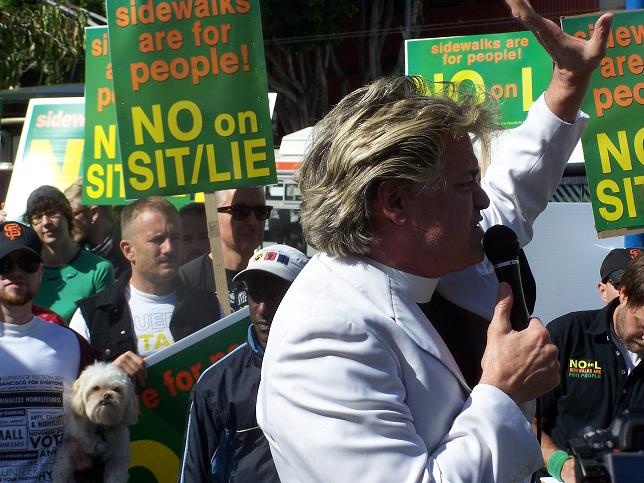
This afternoon in the Mission District, a crowd gathered to bear witness to an exorcism. Reverend Billy had come from New York City to banish the demon from SF. That demon was Prop L, an unholy measure to ban people from communing on San Francisco’s sidewalks.
“The only fundamentalism is the absence of fundamentalism!” bellowed the Rev. Bill, a former San Francisco performance artist turned pastor of NYC’s Church of Life After Shopping (which was in town to perform tonight (Mon/26) at the Victoria Theater for its Earth-a-llujah, Earth-a-llujah Revival Tour).

Rev. Billy cited constitutional dicta on behalf of civil rights: that we are all, even those without addresses, equal. The good reverend followed with a defense of the unadulterated and often unpredictable daily experience out there on the streets of San Francisco, apt to shape a human in good and thoughtful ways, that would find itself stifled if city regulations seep onto our sidewalks.

Rev. Billy’s choir ended his sidewalk sermon with a song that repeated, “Speaking freely sets us free,” and whose chorus built to:
“Standing up in public space…
Breaking in to public space…
Shouting out in public space!”

Sup. John Avalos spoke after Rev. Billy, and no sooner had he taken the mic than he accused Police Chief George Gascon of suffering a demon of his own: “hubris.” Avalos referred disapprovingly to Gascon’s previous attempts to tackle drugs and Critical Mass, the city’s monthly bicyclist phenomenon.

In reference to Prop L, Avalos shared that when he came to San Francisco, he knew “three people, had $1,000 in my pocket,” but would have been sleeping on the street if not for a friend’s couch and kindness. He called San Francisco a “sanctuary city,” where people can “find a pathway in life to something better, like I did.”

Gabriel Haaland, a Haight neighborhood resident and labor leader, took the mic and proclaimed that “I am, we are, you are, the riff raff! Because the rent is too damn high.” He questioned whether some have taken to the streets partially because of San Francisco’s high cost of living.

SF resident Selina Gomez Sutton said of Prop L: “a San Francisco without street performers and musicians? Crazy.”
But Prop L is also about something other than civil rights, street-side music, and “cleaning up” Haight Street. It’s also about tolerance.

Tellingly, just a few feet away from, and entirely throughout, Rev. Billy’s sermon, a man sat nearby barking and shouting gruffly at apparently nothing but for what (he must have thought) were good reasons indeed. I was there the entire time, and can say that not one attendee told him to stop. Perhaps they were simply jaded to such conduct — or perhaps it was because they respected his right to exist.

Wall Street hold ’em

0

arts@sfbg.com

FILM Inside Job is director Charles Ferguson’s second investigative documentary after his 2007 analysis of the Iraq War, No End in Sight, but it feels more like the follow-up to Alex Gibney’s Enron: The Smartest Guys in the Room (2005). Keeping with the law of sequels, more shit blows up the second time around. As with No End in Sight, Ferguson adeptly packages a broad overview of complex events in two hours, respecting the audience’s intelligence while making sure to explain securities exchanges, derivatives, and leveraging laws in clear English (doubly important when so many Wall Street executives hide behind the intricacy of markets).

The revolving door between banks, government, and academia is the key to Inside Job‘s account of financial deregulation. At times borrowing heist-film conventions (it is called Inside Job, after all), Ferguson keeps the primary players in view throughout his history so that the eventual meltdown seems anything but an accident. Even apparent detours prove narrowly targeted. The subject of Wall Street’s venal appetites for drugs and prostitutes, for instance, is introduced first as farce and second as potential traction for broader criminal investigations. Presumably a junior partner might give up valuable information so as not to be made into another Eliot Spitzer, who, incidentally, comes off quite well in Inside Man.

While the fat cats only show up thanks to the CSPAN archive, several free market economists do sit for interviews with Ferguson. They probably regret doing so now — he reserves special scorn for the academic class of boosters. Frederic Mishkin is a typical case. Formerly a member of the Board of Governors at the Federal Reserve, he quickly becomes a muttering mess under Ferguson’s questioning. Mishkin quit the Treasury in August 2008, at the height of the crisis, to return to Columbia University to finish more pressing work: a textbook. In 2006, Mishkin coauthored a rosy report on Iceland’s doomed markets, pocketing a nice commission from the country’s Chamber of Commerce. Mysteriously, the title of the report changed from “Financial Stability in Iceland” to “Financial Instability in Iceland” on Mishkin’s CV — confronted with the discrepancy, he croaks something about a typo.

Ferguson’s relentless focus on the insiders isn’t foolproof. Tarring Ben Bernanke, Henry Paulson, and Timothy Geithner as “made” guys, for example, isn’t a substitute for evaluating their varied performances over the last two years. Inside Job makes it seem that the entire crisis was caused by the financial sector’s bad behavior, and this too is reductive. To take just one example, China figures into the film only as laborers losing their jobs due to market volatility — part of the story, certainly, but so is that government’s devaluation of its currency.

Furthermore, Ferguson does not come to terms with the politicized nature of the economic fallout. In Inside Job, there are only two kinds of people: those who get it and those who refuse to. The political reality is considerably more contentious. Americans on the right and left may well share disgust at the bailouts, but they’re drawing very different conclusions from the government’s cash infusions. Ferguson builds something of a false consensus between his talking heads, never asking them, for example, whether they think Fannie Mae or Countrywide was a bigger boogeyman (politically, the answer says a lot). In this regard, a general assessment in a recent article by Paul Krugman and Robin Wells holds for Inside Job: “Books on the Great Recession are still pouring off the presses … but they don’t offer much guidance on the most pressing problem at hand, which is how to deal with the continuing consequences of the last [bubble].” 

INSIDE JOB opens Fri/22 in Bay Area theaters.

On the margins

3

Sarah@sfbg.com

Franklin is a 20-something computer programmer who shares an apartment with 10 other people around his age, an arrangement that helps him and his housemates come up with $3,500 each month for rent in the Mission, a rapidly gentrifying part of town.

“Everyone is pretty much working, but they are in and out at different times so the house isn’t ever really empty. But there’s usually only three or four of us at a time, ” Franklin told the Guardian, speaking on his cell phone as he rode his bike to work.

But how does an apartment that officially has only one bedroom sleep 10 people? Franklin said there are other rooms in the house — including a dining room and a double parlor that splits into two with sliding doors — and that each of these spaces has a couple sleeping in it. “And there is one person sleeping in a closet and another sleeping in a space atop the bathroom.”

While overcrowding has been a problem in immigrant communities in San Francisco, it’s reaching a new area: young people who have for generations flocked to the city to escape uncomfortable home lives, find a supportive community, and make a new start in life.

Ted Gullicksen, director of the San Francisco Tenants Union, said at least 1,250 housing units annually were lost to condominium and tenancy-in-common conversions in the dot.com and housing bubble years, a loss rate that has slowed only slightly since then.

“Right now, it’s about 1,000 units a year,” he said.

It’s become more common for young people to struggle to pay rent in a town where well-paying jobs are scarce and educational programs have been cut — a triple whammy that means youth with additional challenges are at risk of becoming homeless and getting trapped in vicious cycle of abuse and incarceration.

COMPOUNDING THE PROBLEM

Sherilyn Adams, executive director of Larkin Street Youth Services, which provides housing, medical, social, and educational services to at-risk homeless and runaway youth, says all young people in San Francisco face the same basic challenges.

“And if, in addition, these youth are part of a group like LGBTQ youth, or are youth of color, or immigrant youth, documented or not, then the circumstances and barriers are much more exacerbated,” she said.

Adams said San Francisco has done a lot to add resources for transitional age youth, a group that traditionally has been defined as ages 12 to 24. “But there is still a significant gap in resources, especially for the more disenfranchised groups, because the longer you’ve been on the street, the more complex your issues in terms of substance abuse and mental health.”

Civic leaders, including California Assembly member Tom Ammiano, recently held a rally and candlelight march to raise awareness of the tragic rise in homelessness and suicides among LGBTQ youth. Shortly after, Adams told us, “Youth who came here escaping homophobia in their family or city then face the harsh reality of San Francisco.”

Adams understands that some people see Proposition L, legislation on the November ballot to criminalize sitting or lying on city sidewalks, as a way to address disruptive and aggressive behavior on the streets. “But it becomes part of the larger divide, because youth who come here and are on the street are mostly there because they have no other place. So penalizing them in the absence of services, housing, and education is ineffective at best and really harmful at worst,” Adams said.

Many young people on the brink of homelessness are “somewhat invisible,” and therefore at high risk, she said. “Youth will double, triple up. They will couch surf as a way to be off the streets. And we hear the stories where youth are faced with a Sophie’s choice: Do you sleep on the street, or do you barter with what you have available so as to get shelter? And LGBTQ youth are at particular risk because the more disenfranchised and disconnected you are, the more you have to make impossible choices to survive.”

Jodi Schwartz, executive director at Lyric, an SF nonprofit that focuses on building community and inspiring change in LGBTQ youth, said the group serves 500 youth and reaches out to 800 to 1,000 more each year. “We go into classrooms and talk about hate speech, putting it in the context of racism and other forms of oppression,” she said.

“There’s a misconception that because we live in San Francisco and have a lot more dialogue and interaction with the LGBTQ community, that young people’s experience here is so much better. It may be different, but I wouldn’t say it’s better,” Schwartz said, noting that harassment levels, especially for transgendered youth in local schools, are very high.

HELPING THOSE IN NEED

Young women are another at-risk group, especially if they are pregnant, have kids, or are in the foster or juvenile justice system.

As executive director of the Center for Young Women’s Development in San Francisco’s gritty SoMa district, Marlene Sanchez tries to stabilize at-risk young women, then engage them in policy work so they can advocate for other young people they know.

“We work with young women who are involved in the underground street economies, doing prostitution, drug sales, and selling stolen goods like clothes,” Sanchez said. “We try to reach them on the streets and inside Juvenile Hall, so we take an inside-outside approach.”

Leajay Harper, who coordinates CYWD’s Young Mothers United program, works with young pregnant women inside Juvenile Hall.

“We have all experienced poverty, parents on drugs, and having to take care of younger siblings,” Harper said. “When young moms get incarcerated, they are at risk of having their children taken away at much higher rates. So we started parenting classes that are age and culturally relevant.”

City records show that while only about 12 percent of Juvenile Hall detainees are female, they are twice as likely as their male counterparts to land back in custody for probation violations.

“There are lots of young women with felonies struggling to pay their bills and feed their kids who look out the window and see they can sell drugs. And that often seems like the only option,” Sanchez explained.

City statistics also show that of the overwhelmingly male population at Juvenile Hall, almost half is African American, and that many are inside for what appear to be gang-related offenses.

Easop Winston, a 35-year-old local musician, church pastor, and member of the Visitacion Valley Peacekeepers, regularly visits young men inside Juvenile Hall, where gangs are a topic of discussion every week.

“The same guys that they have been fighting with, they are now incarcerated with,” Winston observed. “So one of the approaches I try to take is rehabilitating how they think about their neighbor. You are killing/fighting with someone who lives one block over. It’s plain genocide”

He credits the juvenile justice system for doing its best, but worries that it fails to rehabilitate youthful offenders with jobs skills, education, and counseling before sending them back into society.

He blames the churches for not doing a better job of making youth feel welcome. “Churches are part of the fabric of our community,” he said. “They need to do more outreach and not have so many rules. They need to accept youth as they are, with their tattoos, piercings, and styles of clothing.”

Winston believes politicians need to do a better job of making sure community-based organizations deliver on their promises to help working class communities of color. At the same time, as he acknowledges, “We can’t cure the world in one day.”

“Over the last five to 10 years, the African American population in SF has shrunk,” he observed. “Everybody is moving to Antioch and Fairfield because people can’t afford to live here. People are losing their jobs. And San Francisco has almost become impossible to live in unless you have a college degree. A lot of what I hear from youth is about economics. They want jobs. They want to be trained.”

PUSHING THEM OUT

Political disputes over the city’s sanctuary city policies on undocumented immigrants — which have left in limbo the question of whether arrested immigrants will get their days in court before being turned over to the federal government for possible deportation — have also been a source of instability for immigrant teens, many of whom are homeless and/or LGBTQ.

Police Commissioner Angela Chan, a staff attorney with the Asian Law Caucus, decried Mayor Gavin Newsom for refusing to implement Sup. David Campos’ due process legislation, which the board approved in November 2009.

“It’s been a little bit upsetting for the many groups that took the democratic process seriously. But these groups are still very committed to these kids,” Chan said. “We are hoping to work with the new U.S. Attorney Melinda Haag to clarify this issue and explain that the top priority of the Obama administration is not to deport undocumented youth.”

Other so-called tough-on-crime initiatives also threaten local at-risk young people. In September, City Attorney Dennis Herrera secured an injunction against 41 alleged gang members in Visitacion Valley, a strategy that progressives fear will accelerate the ongoing displacement of the African American community.

Court documents show that 66 percent of the men named in the injunction are 18 to 25 years old and that many have children in public housing, where lease holders are predominantly women of color.

San Francisco City College Trustee Chris Jackson, 27, is running for the District 10 seat on the Board of Supervisors. Noting that the southeast SF district has some of the highest numbers of poor people and children citywide, Jackson said that youth issues are similar to challenges that other voters face.

“But the context is different,” said Jackson, who previously served on the San Francisco Youth Commission. “Young people care about safe streets because it’s us or our friends who are on them. We care about schools because we are in them and want to go to college. And we are concerned about the future of employment because how do you tell folks to go to school if there are no jobs?”

Jackson notes that in the Bayview-Hunters Point, home to the city’s largest remaining African American community, kids don’t come back if they leave for college. “We see a brain drain. It’s really difficult to retain young people, so it’s important to first make sure that youth’s housing needs are met. And they also need access to careers so that when they graduate, they know there is a job in the city. But right now, youth can’t even find a summer job because of the recession.”

He called for city policies that are based on the needs of current city residents rather than developers’ profits or the desires of well-off outsiders to move here.

“San Francisco is more of an opportunity for Silicon Valley residents than for youth who were born and raised here. And part of the problem is city policies, ineffective programs, and a failure to provide job opportunities for youth,” he said. “Everything for youth has been gutted.”

And those evaporating opportunities are compounded by punitive policies like Prop. L, Jackson said, further alienating young people. “It comes down to how much money you have,” Jackson observes. “If you are rich, you can enjoy the parks, the clubs, the transit. But if you are low-income, especially low-income youth of color, it’s very hard to take advantage of everything the city has to offer.”

Noting that both City College and the San Francisco Unified School District canceled their summer school program, Jackson said, “it doesn’t look like youth are prioritized.”

Jackson was recently at Double Rock (a.k.a. the Alice Griffith Public Housing Project) and he saw four kids under 10 who were at home while their parents were at work. “Why aren’t they in school or in child care? And don’t give me the line that these are hard to serve communities. We have to serve them.”

N’tanya Lee, executive director of Coleman Advocates, agrees that while all young people are struggling in the city, African American children and youth are having one of the worst times.

“We don’t need 5,000 different strategies and initiatives when 90 percent of these kids live in extreme poverty, mostly concentrated in public housing, and you could fit the city’s entire black high school student population into one auditorium,” Lee said.

She wants the city to create a database of these youth and develop specific strategies to help this population before it’s too late.

“No one in city government feels accountable for the outcomes for black children and youth,” she said. “Instead you have one group who are about young people and another who are about economic development — and they have nothing to do with each other. Meanwhile, we’ve lost half of all black families with children in this city in the past 20 years.”

Our 44th Anniversary Issue also includes stories by Rebecca Bowe on ageing out of the foster care system, Caitlin Donohue’s account of the Haight street kids, and Tim Redmond’s editorial on the issues facing our rising generation

How they’re sitting

182

caitlin@sfbg.com

I’ve been hanging out with the Haight Street kids. Over the course of a week or so, I smoked weed, drank malt liquor, witnessed nasty run-ins with police officers — all events that anyone who has walked down the sidewalks of that legendary street would expect. But I also met people who’d give away their last dollar to a friend, people who know a thing or two about community, and people who don’t see sidewalks only as thoroughfares to commerce.

Ironically, though the homeless kids on Haight are the explicit inspiration for Proposition L, the sit-lie measure on the Nov. 2 ballot, their voices have been significantly absent from the vitriolic debate on its merits and faults. Ironic because of all people, it’s these young men and women — and the citizens of San Francisco who interact humanely with them — who could teach us the most about what public space in San Francisco could be.

I didn’t just stand with a notebook, fire questions, and walk away. I took a seat and spent time with the kids, to see for myself whether its true that they’re harassing people, letting their dogs run amok, and generally ruining everyone’s lives as much as sit-lie supporters say they are. That it turned out to be uplifting was an added bonus. I got to see what many don’t on their way to shop for souvenir bongs, retro dresses, and designer skateboards — the reason young people from around the country come to the neighborhood.

It doesn’t have anything to do with fancy Victorians and boutiques, which may explain the disconnect between the street kids and their detractors. They come for the legacy of individuals brave enough to slough off social mores that Haight-Ashbury residents are so ostensibly proud of — not to mention the companionship of others who are comfortable with their rejection of and by society. They come to share stories and pipes and encouragement, and it was cool to watch a streetscape in San Francisco that wasn’t geared solely to commerce.

And while the young people I talked to told me how much they liked to travel, to live free of convention and without ties to the workday world, after a while most acknowledged that they had left behind families who couldn’t or didn’t care for them, home situations that were uncomfortable enough to make life on the streets seem like a better alternative.

Although violent incidents, uncivil behavior, and threatening dogs are well-documented by other news sources, I didn’t see any of that when I was hanging out on Haight. That doesn’t mean that these things don’t exist — but it might suggest that some of the strident supporters of Prop. L are seeing what they want to see.

SPANGING

Steven, who asked us not to use his full name, is 20 and homeless. He grew up in Stockton, became a welder after high school, then decided he “didn’t want the hassle” of staying put for a wage job. His fingernails play host to an ungodly amount of dirt, but his tight blonde curls, pretty golden eyes (“they look like a lion’s!” says one friend in amazement) and mellow, generous demeanor make him a popular hub among his homeless peers.

It doesn’t hurt that he sells weed, small amounts at a time to passing tourists and acquaintances. He silently passes a pipe around to his companions with the slightest provocation. Steven approached me on the street before he knew I was a journalist, a fact that seemed to make little difference to him.

He says he came to the Haight “for the people,” for the area’s reputation of open souls and unconventional artists that originated in the glory days of Janis Joplin and the Grateful Dead. Like most of the kids I talked to, he eschewed the often dangerous shelter scene to sleep in Golden Gate Park or nearby Buena Vista Park despite the police surveillance that could result in spendy fines for park camping.

Although Steven’s worldly possessions fit into the large camping backpack he carries with him 24 hours a day, and even though he’s been living on Haight less than nine months — broken by a jaunt to Eugene, Ore., where he found it “too rainy” to join the town’s expansive street kid community — he doesn’t plan on being homeless forever. It’s just that nothing about this economic climate inspires him to sell his freedom for a paycheck. He plans to go to a four-year college eventually. He sees an education as the only way to get a “real” job. “But until then, why not do this?” he asks. I’m not sure if he’s waiting for my answer.

“This” is sit on Haight Street and “spange,” the term used for “flying a sign” and asking shoppers and neighbors walking by for money, often in a creative way. Of the many crimes street kids are guilty of in the eyes of supporters, spanging is the only one Prop. L would effect.

If Francisco voters approve it, anyone who sits or reclines on the sidewalk (with exceptions for the handicapped and those with permits — but not for the tired, workers on breaks, or people waiting for buses) will be subject to a fine of $50 to $100 for the first offense and $300 to $500, or a maximum of 10 days in jail, for someone found guilty twice within 24 hours of unduly supporting his or her body on the sidewalk between 7 a.m. and 11 p.m. Similar laws can be found up and down the West Coast — although Portland’s was pulled from the books last year after being found unconstitutional because it targeted the homeless.

I ask street kid after street kid why they’ve chosen this lifestyle. Many wouldn’t have it any other way. “Why do people want us off the street?” says Oz, a 21 year old from upstate New York who deals alongside Steven. “Probably because they can’t do this themselves.”

Though I’m skeptical at first, after a while I see why the unconventional group of “travelers” on Haight choose to spend their time spanging. Conversations get struck up with the most unusual people — the old hippie who bought a new Mad Hatter cap for the weekend, the suburban woman who might or might not like to buy some weed (she can’t decide). When a few businesses ask us to move so they can sweep the sidewalk or clear a doorway, the street kids I’m watching relocate with little protest. Many who walk past Steven seemed to find humor in his sign, which that day reads “Are you one paycheck away from having this be your job too?” He says he likes to switch his message daily. “Keep it fresh.”

By hanging out with the spangers, I get to see a Haight Street with human interaction at its core. People walk by, often dropping off surprisingly generous gifts: a ex-Grateful Dead roadie with a massive beard who lives in Fairfax and stopped by the neighborhood for a quick lunch with his daughter parks in front of Steven’s group and approaches them. “You kids hungry? You look like you could use a pizza.”

He emerges a half-hour later with a large cheese pie and drives away after chatting for a few minutes about the old days, to the glee of the group (many of the street kids are Dead Heads). The kids eat their fill, then start handing out the remaining pizza to people walking by, a comic role reversal. “I like to support the community — they get back all the money they get sucked out of them,” Steven tells me.

“NARCOTIC FUELED, ANTISOCIAL THUGS”

The campaign to put a sit-lie ordinance into effect in San Francisco kicked into gear with a Saturday morning stroll. As San Francisco Chronicle columnist C.W. Nevius — who regularly publicizes complaints against the Haight street kid culture — reported Feb. 27, Mayor Gavin Newsom recently relocated to the neighborhood and saw evidence of drug use on the main stretch of Haight where he was walking with his infant daughter. “As God as my witness, there’s a guy on the sidewalk smoking crack,” Newsom reportedly said.

The mayor threw his support behind a sentiment already being voiced by the Haight Ashbury Improvement Association, a resident-merchant alliance in the area. HAIA sees the street kids as disruptive outsiders. “These are not the flower children of the 1960s. It’s narcotic fueled, antisocial thugs who act like a quasi-gang,” Ted Loewenberg, president of the association, was quoted as saying in Business Week.

Adds the Prop L website: ” … the Haight-Ashbury district — once synonymous with peace and love — this corridor is now a hot spot for street bullies, pit bulls, and drug abuse.” It’s a deft cultural lobotomy that dissociates drugs from the Summer of Love, and a devious one that implies that street kids weren’t major players in that social revolution.

As for the bullies, I didn’t see any violence from the street kids in the days and nights I spent out on Haight Street.

I couldn’t get cops to talk to me about it, either. There were two police officers on foot traversing Haight’s main strip and I introduced myself when they stood chatting with a coffee shop owner in the afternoon sunshine and asked them about the sort of neighborhood complaints they regularly received about the street kids.

“No comment,” Cop No. 1 told me. Okay, Cop No. 2, your thoughts? “I don’t speak English.”

To my requests that they share their view of crime on Haight, I could get one response: “It’s complicated.” Later, when I returned to write down their badge numbers, they were standing silently, staring at a lone young man sitting against a wall next to his skateboard. The kid was looking at the ground. Eventually they handcuffed him and put him in a police car while he pleaded meekly about it “only being a little bit of weed — and I was only skateboarding on the sidewalk.”

The most aggression I witnessed from any party took place while I was tapping my feet to a group of traveling bluegrass musicians performing around 10 p.m. on a Thursday. Their cover of Del Shannon’s “Runaway” had inspired an older homeless man to strike up a curiously graceful stomp dance on the sidewalk. He was so drunk and fully immersed in the music that the bottle of Jim Beam in his flailing hand didn’t even register when the police officer approached him and asked, “What do you think you’re doing?”

The musicians began to pack up. “I could have told you this would happen 20 minutes ago,” one tells me, nodding toward the old man. “Don’t say a word or I’ll fucking take you in,” said the cop, who poured out the half-full bottle and wrote a ticket for the older man, who had made a few feeble protests that ended abruptly with the cop’s obscenity.

The officer said he’d received a complaint about the music, a line I heard from each cop I came into contact with on Haight — including one officer who cautioned a family with a toddler to pack up the bracelets they were selling to pay the towing charges on their van. “People don’t like to see people with kids out here, you better move it along,” the cop said.

“I’ve seen aggression because people start shit,” Steven tells me when I ask him about his experience with street violence. A man has just walked by chanting “dirty, dirty” in Steven’s and his friends’ faces. “They don’t like to see people sit on the ground.”

“There are people who come down here just to make themselves look better,” chimes in Oz. “Like ‘ha ha ha, I have air conditioning.’ All kinds of people start shit”

I asked if they knew they were the focus of a massive political debate in San Francisco. “No, what debate?” asked Steven.

“You mean sit-lie?” Oz asks. “It probably has to do with tourism. I don’t see why else they would do that.”

Even the most well-known recent case of Haight Street violence — which was reported June 11 by New York Times reporter Scott James as having “inspired a grass roots movement” that propelled Prop. L, seems to be a question of mutual aggression on the two sides of the street kids issue.

The story goes that a man named Thomas was hosing down the sidewalk in front of his house — a practice that is growing more common in the Haight to make property inhospitable to the homeless. He found himself “surrounded and engaged in a heated confrontation,” as James reports. Thomas reportedly shouted “Do you want a piece of me?” and a scuffle erupted between him and Chad Potter, a 26-year old homeless man, culminating with Potter being arrested and set free the next day. Thomas says Potter and friends continued to harass him after the incident.

James Orr, 24, is busking with his flute when I meet him sitting by a store that sells flowing hippie skirts and bumper stickers that command future tailgaters to “Coexist.” He’s looking to trade his wind instrument for a banjo, which he plays in addition to guitar. A rolling stone, Orr is in town for the Hardly Strictly Bluegrass festival that weekend — he travels the country going to festivals, and even scored a job recently at upstate New York’s Mountain Jam for the event’s blog site, taking photos with a borrowed camera of performances by (ex-member of The Band) Levon Helm and Michael Franti.

Orr’s quite erudite and eager to “say something articulate” about the situation of the street kids and travelers on Haight. He tells me that yeah, he’s seen aggression go down here on occasion. But he resents those situations leading to laws against sitting on the street.

“It’s another example of the few that do mess up casting a bad light on everyone else. Most of us just want to make some money, put a smile on someone’s face.” As a busker, he finds it baffling that people who are against the presence of the homeless would want him to stop plying his trade by making sitting illegal. “You should point out also that it’s how we make money!” he exclaims.

THE PIT BULLS

Snarling ruffians on frayed rope leashes stalking the city streets! As evidenced by the Civil Sidewalks campaign, dogs — specifically pit bulls — are another source of controversy on the pavement. Last December, SFist identified a C.W. Nevius tirade against the breed as example of its ongoing feature “Pit Bull Hate Watch.” The paper has pointed out that the demonized dogs can make great members of society and are often the subject of a media smear campaign.

But for many homeless youth, their dogs aren’t the means of imposing chaos on the gentry. They keep them for the same reasons we do: friendship, protection, love — and during the days I spent on Haight, it was a pleasure to pat the doggies while interviewing their owners. Most were as gentle and laid back as the kids they sprawled next to, a reasonably expected result from the 24 hours a day of socialization with humans that the homeless lifestyle affords.

Smiley is an inveterate street kid unlikely to go indoors anytime soon. “I don’t know how to do anything else,” she tells me. Now in her early 20s with a shock of magenta, purple, and dirty blonde hair and fanciful purple ear plugs that pierce her lobes before spiraling nearly to her shoulders, she’s been traveling since she was 12 — “a Bohemian by blood,” as she puts it. Not only did her parents move their household regularly throughout her childhood, but their heritage is Romani, from the traveling tribes of Eastern Europe.

For Smiley, travel outside the bounds of business trips and weekend vacations is her life’s norm, and Haight Street’s legacy resounds in her nomadic soul. “Most of the people that travelers idolize were here,” she tells me.

Smiley has a year-old behemoth black mutt with droopy eyes. He obliges her as she leans into him holding her spanging sign, which tells the world the pup needs Benadryl for an upcoming van ride to Southern California. “He’s carsick,” she tells me sheepishly. She admits that the dog can limit her mobility on public transportation, but his benefits outweigh his cost. He keeps her warm at night — and, more important for a young woman who is often on her own, he protects her. For a moment breaking out of tough girl mode, she tell me, “oh yeah, I don’t have to worry about anything when he’s around.”

We talk about the perceived threat of dogs on Haight Street. “They want us to leash them, which I guess I understand — but look at that!” A well-dressed woman in her 40s has her Chihuahua off its leash and it has run into the busy street, with her in hot pursuit. “That dog’s out of control,” Smiley smiles.

PISS

Sitting against a mural on a wall where Haight meets Clayton, I watch Piss, an outgoing, gangly guy in his early 20s with a curly blonde mohawk in a growing-out stage. I ask him where he got his unusual moniker. “I like to get drunk and piss on things,” he says.

Well. Originally from Billings, Mont., Piss has been traveling since his mid-teens. “Let’s just say me and my family don’t get along,” he tells me.

His answers to my questions about why he’s on the streets follow a path I see with many of the younger homeless youth: they insist that the lure of the open road was too hard to ignore, but eventually reveal that their parents kicked them out or were unable to care for them at a young age. Many, like Juju, another small-time weed dealer I met, bounced from family member to family member until frictions with them and their significant others left no recourse but the street.

Piss says he’s been to every state in the country, plus Canada and Mexico. With so many years on the road, he is, as they say, letting his freak flag fly. Piss has a blue, vaguely tribal tattoo that curls around his right eye. He’s wearing white tube socks on the dirty pavement. At first glance, he could be crazy — and maybe he is. Whatever his motivation for travel, it’s not to blend in with the locals.

Piss is also actively spanging passersby in a manner that oscillates between off-putting and charming. “You got some money for some crack and ice cream?” he inquires of a passing trio of young women. They shake their head, but before they’re gone completely he continues “I’m just kidding! I don’t like ice cream! Hey miss, you have a nice ass … day!”

Over the course of the hour that I watch him a stand up routine emerges. Beneath the grime, he’s a charismatic kid with an enviable sense of comedic timing.

As he ranges up and down a 20-foot stretch of sidewalk, belly laughs are elicited from a few targets, dollars surfacing here and there. One man carrying an accordion and wearing an expensive-looking pair of leather Chaco sandals donates a handful of strawberries to Piss and to those of us acting as his entourage.

But Piss’ play is a little rough — like a big puppy — and he’s alienating the people who don’t crack up over crack. A couple of people walk away quickly from his petitions shaking their heads over one of the zingers, their suspicions confirmed about those rowdy Haight Street kids.

He’s not doing anything more than what young travelers do all over the world. Thousands of families bid see you later to young adults en route to Prague, Peru, and Perth each year, where they lug their dirty backpacks through the world’s most wondrous towns.

Of course, these kids aren’t sleeping in the public parks of Cuzco — but in countries with plenty of cheap travelers’ hostels, you don’t have to. And though international flights cost more than the van rides and freight train hops that brought in most of the Haight Street kids, backpackers abroad do the same things: take fewer showers and flaunt social norms — not because they want to cause a problem for the natives of the lands they pass through, but because they are young, and discovering themselves for the first time, and can’t see much past that. Piss isn’t being violent, but he has lost the language to deal with “normies” and he’s seen as unpredictable to the not-traveling, not-disenfranchised around him. Which to those who see public space as a place that should be predictable, mean he’s a threat.

The clash between the settled and transient in the Haight is not new. Indeed, it’s what made the neighborhood famous. As far back as the mid-1960s, officials have been simultaneously fighting and publicizing the Haight’s worldwide reputation as a traveler’s meeting place, a place with a culture of loosened societal moorings and enlightenment through free love, drugs, and art.

Businesses claim that the omnipresent homeless drive away paying customers from Haight Street. It a curious claim in an area where the vagrant hippie culture made the place the tourist attraction it is today, and one that is belied by the entry of Whole Foods, which plans to open a branch this year at a lot at Haight and Stanyan vacant since 2006. When contrasted with the Tenderloin — another neighborhood with a visible street community — and its chronic problems attracting a grocery store, the Haight street kids’ effect on local commerce doesn’t seem to be all that grave.

They certainly aren’t making the place any less desirable of a neighborhood to live in for the wealthy. Real estate website Trulia.com puts the median listing price for homes in the Haight-Ashbury neighborhood at $962,264.

The Haight Street kids I spoke could all too easily see what sit-lie would mean for San Francisco. When you control public space, you control who is in public space — and they have no illusions about whether or not they’re included in the perfect world of those who push the measure. If it’s enacted, the subculture that made Haight famous — part of which still survives today in a different form — would be gone, leaving it sterile and safe for the head shops and clothing boutiques, an even less authentic version of the ’60s love fest their patrons come to the street for. One wonders if a scrubbed-clean Haight is even what the residents and business owners who have thrown their lot behind sit-lie truly want, or if they’ve been duped into sit-lie’s efficacy by the same forces that on a national level have convinced us that curtailing civil liberties will lead to freedom for the real Americans. It comes down to this: What do we want Haight Street to be? Do we want to capitalize and benefit from the accepting, messy, wildly creative legacy the 20th century endowed our streets, or do we want a clean, friendly, outdoor mall? The powers of homogenization and gentrification can demonize the little heathens on Haight Street all they want, but they’ve miscalculated if they think that they don’t belong in San Francisco — after all, Haight created them, not the other way around.

Our 44th Anniversary Issue also includes stories by Sarah Phelan on SF’s disadvantaged youth, Rebecca Bowe’s look at ageing out of the foster care system, and Tim Redmond’s editorial on the issues facing our rising generation

On the edge

0

rebeccab@sfbg.com

It’s a strange and daunting time for anyone just starting out, but youth who age out of foster care are up against particularly harsh challenges.

In July, the national unemployment rate for 16- to 24-year-olds reached a staggering 51 percent, according to the Bureau of Labor Statistics. A recent article in The New York Times Magazine described how, in the face of a bleak job market, 20-somethings today are far more likely than those in past generations to go back to school, travel, volunteer, or complete unpaid internships — extending a phase of impermanence and financial dependency for years beyond what used to be considered the norm. Studies show that nearly half of youth between ages 18 and 25 move back home with their parents at least once.

But young people aging out of the foster care system typically have to face this world of churning uncertainty without the benefit of a safety net. Many post-foster care youth don’t have the luxury of “failing to launch,” embarking on an early career path without pay, or landing back home if nothing else pans out. Foster youth lose their support base at 18, when the state ceases to be their legal guardian. For these young people, who are often the least equipped to achieve financial self-sufficiency, becoming emancipated as a legal adult is no cause for celebration; rather, it’s a source of anxiety.

Most foster youth lack the skills, connections, and resources they would need to transition to independence at age 18 — a prospect that would be difficult even for youth with greater access to resources and no major family history problems. Studies measuring the outcomes for this population paint a grim picture: many wind up homeless, incarcerated, or at risk of losing children of their own by the time they reach their early 20s.

There’s a growing awareness that many of the approximately 5,000 youth who age out of foster care in California every year are slipping through the cracks. Local and state programs have been initiated to improve their chances of achieving independence, but efforts on both fronts have run up against obstacles.

In Sacramento, Assembly Bill 12 — which extends key services for foster youth to age 21 — was signed into law several weeks ago, but the intentions behind it were undermined when Gov. Arnold Schwarzenegger issued a line-item veto of $80 million in funding for child welfare programs. In San Francisco, a housing facility designed for youth at risk of homelessness seems to hold promise as an effective model, yet it has encountered resistance from local neighborhood organizations.

The plight of these young people is both a measure of our compassion and potentially a harbinger of larger societal problems to come.

HIGH STAKES

Kirsten Johnson-Bell is an emancipated youth who turned 18 in January. She has six siblings still in foster care in the East Bay, and she says she has been in more than 20 foster care placements since 2007.

Johnson-Bell told the Guardian that she has housing assistance that will last for 18 months — but she’s already beginning to wonder what will happen after that. “Where am I supposed to go?” Johnson-Bell wondered. If the experience of her peers who’ve exited the system is any indication, her concern is well founded.

Nationwide, nearly 40 percent of post-foster-care youth have been homeless at some point by the time they turn 24, according to survey results released by the University of Chicago and Partners for Our Children at the University of Washington. Just 6 percent had completed college degrees by that age, and only 48 percent were working — mostly in low-wage jobs. More than half of the young men had been convicted of crimes, and roughly three-quarters of the young women had received government benefits to meet basic needs. Teen pregnancy is statistically higher among young women exiting foster care.

Most youth in foster care aren’t housed continuously with a single caregiver, but bounce from place to place, making it tough to form long-lasting relationships. “It’s a fairly rare experience that youth stay in one home, and that means moving schools and moving friends,” notes Rachel Antrobus, executive director of Transitional Age Youth San Francisco (TAY SF), a city-funded nonprofit. Many foster kids take medication for behavioral problems, and it’s common for them to experience emotional upheaval.

“It’s practically inevitable that they’re going to have long-term emotional impacts,” Antrobus said, noting many bear the long-term scars of abuse, neglect, or forced separation from their families for some other reason. “It’s a much longer road, and they have to do it with deeper wounds. Even the kids that are the most together … will likely experience some really dark places in their 20s.”

In San Francisco, there are 1,400 young people in the foster care system, and all but about 500 are in placements outside the city. Lynette Davis, who turned 18 this year, moved from San Francisco to Oakland when she first entered foster care in the eighth grade. Davis acknowledges that she was one of the lucky ones. Rather than move in with a stranger, she went to live with her godmother and remained there until her 18th birthday.

Davis is now living with her boyfriend and his family in Oakland — and the household was in the process of moving when the Guardian spoke with her. Her godmother offered to continue housing her after she turned 18, Davis noted. “But she’s got her own kids. I felt like I should be able to go off and do my own thing.” The requirement in either housing situation is that she must work, go to school, or both, Davis said. She’s attending classes at Oakland’s Merritt College. In the meantime, she’s mired in the frustrating exercise of applying for job after job.

“It’s been pretty ridiculous,” Davis said of her fruitless job hunt. “Sometimes it makes me want to stop and give up. But as long as you’ve got people around you who care about you, it’s okay.”

Many foster kids who didn’t have the support network that Davis did are up against alarmingly high stakes as they age out. “Some people are mothers and they have to pay rent and are looking for more than two jobs,” she said. Asked what she thought were the greatest challenges facing foster youth in San Francisco, she mentioned poverty, gangs, and a lack of job opportunities.

“To be successful, you have to be financially stable,” she said. “With some youth, that’s hard. They don’t have jobs, or they can’t get jobs. They want to find an easy way out.” That’s when they become more susceptible to gangs or drugs, she said. Davis says she was a “rebellious youth” at a younger age, but now she’s focused on her goal of obtaining a degree in psychology so that one day she can go into counseling. When she became a member of California Youth Connections, which aids youth with transitional support, she met other foster youth and realized she could really have an impact.

HELP OR HARM?

The difference between ages 18 and 21 can be critical, so foster youth advocates throughout the state cheered Sept. 30 when AB12, California’s Fostering Connections to Success Act, was signed into law. It allows California to make use of federal matching funds to provide transitional support for qualifying foster youth until age 21. It also authorizes the state to take advantage of a federal subsidy for an existing guardianship program for relatives of foster youth who want to become caregivers. Many foster youth advocates have thrown support behind the kin caregiver model — it can be less traumatic for youth to move in with a grandparent than being suddenly dropped into a strange place.

A major sponsor of A 12 was the John Burton Foundation for Children Without Homes, and policy director Amy Lemley hailed its passage as “the biggest child-welfare improvement in 20 years.” Studies show that youth who receive support beyond 18 are 200 percent more likely to be working toward completion of a high school diploma, 65 percent less likely to have been arrested, and 54 percent less likely to have been incarcerated than those who exit with no support. The benefits could also generate savings by reducing the number of people in prison, on welfare, or in need of publicly funded health and human services. The law will be implemented in 2012.

The law also will provide new housing options. The federal government will chip in to cover more placements in the Transitional Housing Program Plus — nearly axed during the last budget cycle — which offers supervised transitional housing for emancipated youth. Youth may also receive a rent subsidy that could apply in a dorm, a shared-living situation, or another arrangement that fits the youth’s needs. This flexibility is a positive change, Lemley noted. “We’re not telling young people ‘it’s our way or the highway,'<0x2009>” she said.

“If a state like California can do this in the context of its current fiscal deficit, it sends a strong signal to other states,” Lemley said. However, an unexpected line-item veto put a damper on the landmark achievement. Schwarzenegger dealt a blow to the child-welfare system by cutting $80 million in funding for programs the California Legislature had restored, which actually amounts to more like $133 million due to the loss of federal matching funds.

“It’s really just a schizophrenic policy on the governor’s part,” Lemley said. “We were hoping he would have a legacy of the foster care governor, but now it doesn’t seem as if he will have that legacy at all.”

While the deep budget cut isn’t aimed at AB12 directly, Lemley said, it erodes funding for child-welfare workers and forces counties to make painful funding cuts. The overarching effect is that abuse and neglect may go undetected more often, and youth in the system will have fewer available resources once they’re placed.

ANOTHER CHANCE

Of all the challenges facing foster youth who age out of the system, housing is among the most critical, particularly in San Francisco. A partnership between the city, Larkin Street Youth Services, and nonprofit developer Community Housing Partnership (CHP) aims to address this by providing a space for transitional-age youth who wouldn’t otherwise be able to afford housing in the city. Located at the King Edward II Inn near Cow Hollow and the Marina district, the facility would house 24 young people, ages 18 to 24, who are at risk of homelessness.

“By definition, that includes youth aging out of foster care,” explains David Schnur of CHP. The nonprofits are working in tandem with the city’s Human Services Agency and Mayor’s Office of Housing.

Youth housed at Edward II would have access to physical and mental health care, substance abuse and HIV-related services, education and job training, coaching in basic life skills such as budgeting and personal hygiene, and case management, Schnur said. They would be required to contribute a portion of their income, whatever the amount, toward rent.

However, an organized force of opposition has already surfaced from the surrounding community, which comprises one of San Francisco’s wealthiest neighborhoods. “I think people are just nervous about what it means to have a building of this type in the neighborhood,” Schnur noted. To assuage neighborhood concerns, the nonprofits have set up a project advisory committee in hopes of talking it out and bringing everyone on board.

Patricia Vaughey, with the Marina-Cow Hollow Neighbors, is actively opposed to the project but insists that it isn’t out of NIMBY (Not In My Backyard) concerns. “We are not NIMBYs,” she told the Guardian. “We want to find a location that’s suitable. We want to make sure those kids are safe.” She said that criminal activity in the neighborhood made the inn a poor choice. Yet advocates insist that for the youth, the program could mean the difference between a lifetime of hardship and a chance to get their lives on track at a crucial age. “The safety net for these young people is so thin,” Lemley noted. “You might have one person, you might have another. But then the winds of change blow and suddenly the bloom falls off the rose.”

Our 44th Anniversary Issue also includes stories by Sarah Phelan on SF’s disadvantaged youth, Caitlin Donohue’s account of the Haight street kids, and Tim Redmond’s editorial on the issues facing our rising generation