District Attorney

Could he be — the worst pope ever?

15

In The Decline and Fall of the Roman Empire, Gibbons reports on the trial of Pope John XXIII in 1415, during which “the most scandalous charges were suppressed: The Vicar of Christ was accused only of piracy, murder, rape, sodomy and incest.”

And he wasn’t even the worst of them. Jesus, there have been some bad popes over the years. Even in modern times, we’ve had a few serious losers; Pius XII, by many accounts, was way too friendly with Adolf Hitler.

So it’s pretty hard to call the current occupant of the Throne of St. Peter the worst pope ever; there’s plenty of competition.

But folks, the former Cardinal Ratzinger is turning out to be so awful that he’s going to go down in history as one of the all time horrible leaders of a crumbling Catholic Church. This guy was actively involved in covering up child abuse scandals. He knew what was going on, and he not only ignored it — he ordered the bishops to report the crimes only to Rome, and not to civil authorities. He’s guilty not only of protecting the worst kind of criminals — authority figures who prey on children — but of actively seeking to prevent them from facing the consequences of their crimes.

If Bill Clinton was charged with obstruction of justice for lying about a (consensual) blow job (involving two adults), then Pope Benedict XVI ought to be indicted in every country that has similar statutes, starting with the United States. All it takes is one district attorney, one grand jury. The evidence is pretty clear. Then Interpol can put out a warrant for his arrest.

Of course, all that would do is keep the guy holed up in his nice, big house in Rome; the Vatican is its own sovereign nation, with its own laws and rules — and I don’t think Canon Law provides for obstruction charges (or any charges) against the head of state.

See, that’s the thing: Nobody can touch the pope (bad metaphor). There’s no procedure for impeachment. He’s the least accountable head of state in the world; even military juntas and dictators can be overthrown by force, but I don’t see any revolutionary cadre of young Cardinals rising up and turning the Swiss guards on Il Papa. Too bad: A nice middle-ages-style coup in the Vatican might be just the thing to shake up that moribund institution and remind its leaders that the rest of the world will only take so much abuse. 

A great sit-lie debate

24

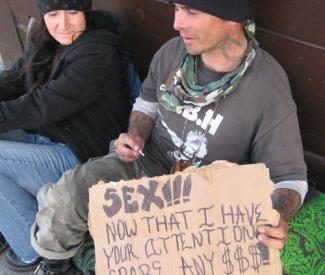
KPFA’s morning show had a great debate this morning around the sit-lie law, featuring Gabriel Haaland, a longtime Haight resident, and Ted Lowenberg, president of the Haight Ashbury Improvement Association. You can listen to it here.


In the discussion — nicely moderated by Brian Edwards-Tiekert — you could see the essential problem with the law emerging.


Haaland pointed out that blocking or obstructing the sidewalk is already illegal; so is aggressive panhandling, assault and all of the other behaviors Lowenberg complained about. Lowenberg’s response: Yes, that’s true, but it’s hard to arrest someone on those charges; you have to fill out paperwork. What we need is to give the police more discretion to use their judgment to make arrests when they think that’s what’s needed.


“The police need the immediate ability to respond without paperwork,” he said.


And that’s precisely what bothers a lot of us about this law.


The San Francisco police have a long history of abusing their “judgment” in cases involving marginalized populations. A lot of us don’t believe that arrests will be limited to violent bad actors — and we have many, many years of evidence to back us up.


Haaland pointed out that the last time a sit-lie law was enforced, in the 1970s when the cops wanted to crack down on the hippies on Haight Street, it wound up being used against gay men in the Castro. This time, it could be any of a wide range of people who wind up sitting on the sidewalks, for a lot of reasons.


Lowenberg kept talking about “street thugs” and complaining that the district attorney hasn’t prosecuted them when they’ve attacked people — in one case, gouging someone’s eyes and biting him. But attacking someone on the street is already illegal; does anyone really think that the D.A., and the law-enforcement model, will be any more effective with the new law in place?


It won’t — but that’s not the point. I think what Lowenberg and his allies want is to give the police more power, to let them “clean up the streets” as they see fit. It’s not about courts and prosecution; it’s about curbside justice. And that’s never worked well in San Francisco.


The new War on Fun

46

news@sfbg.com

For several years, the Guardian has been running regular stories chronicling what we’ve dubbed the Death of Fun, a trend of official crackdowns and shakedowns on people who throw parties and festivals in San Francisco. In the last year, that trend has started to morph into an often brutal War on Fun, with a growing list of atrocities and casualties associated with this overzealous new approach to killing the city’s entertainment industry.

Why this is happening is baffling to those most affected: nightclub owners and workers, party promoters, DJs and VJs, fundraising activists, and people just out to have a good time without being harassed by a cop. But in recent months, we’ve learned much more about what’s happening and who the main perpetrators are.

Two undercover enforcers have been at the center of just about every recent case of nightclubs or private parties being raided without warrants and aggressively shut down, their patrons roughed up (see “Fun under siege,” 4/21/09) and their money, booze, and equipment punitively seized “as evidence” (see “Police seize DJs laptops,” 11/24/09) even though few of these raids result in charges being filed in court.

Officer Larry Bertrand of the San Francisco Police Department’s Southern Station and Michelle Ott, an agent with the California Department of Alcoholic Beverage Control, are plainclothes partners who spend their weekends undercover, crashing parties, harassing disfavored nightclubs, brutalizing party-goers, and trying to send the unmistakable message that they’re in charge of San Francisco nightlife. Neither responded to our interview requests.

Isolated incidents of intolerant cops and NIMBY citizens who repeatedly complain about certain clubs or festivals has been a problem for years (see “Death of fun,” 5/24/06 and “Death of fun, the sequel,” 4/24/07). Top city officials have opted to cancel events such as Halloween in the Castro District rather than try to manage them better, and the nightlife community has tried to organize in defense of its interests (see “Fighting for the right to party,” 7/1/08) with mixed results.

But the personal War of Fun by Bertrand and Ott seems to have galvanized and united the nightlife and festival community like never before, leading to the creation of a new California Music and Culture Association and prompting threats of a federal lawsuit alleging the ABC-SFPD collaboration is a racketeering scheme designed to harass, disrupt, and extort people engaged in otherwise lawful activity.

The myriad horror stories associated with Bertrand and Ott have also finally begun to draw attention from the Mayor’s Office, which has quietly pushed the SFPD to rein in Bertrand and change its policies on raiding parties and seizing property. State Sen. Mark Leno also has gotten involved, brokering a March 12 meeting between club owners and Steve Hardy, director of ABC (which, in addition to cracking down on nightclubs — see “Busting bars,” 6/23/09 — has recently announced a campaign against fruit-infused liquor).

“They were going to see how they could unwind this a bit,” Leno told us, adding that he was “infuriated” by stories of abusive treatment of the public. “The fear that it spreads through the community is unacceptable.”

The question now is what Hardy, Mayor Gavin Newsom, and Police Chief George Gascón — who has ordered some crackdowns and wants greater authority to discipline problem officers — is going to do about it.


CHAOS AT A STUDENT PARTY

It was after midnight on Jan. 31 when Krystal Peak, a journalist with San Francisco State University’s Golden Gate Xpress, received a call from her managing editor. There was a commotion and a swarm of police cars outside a student party at Seventh and Minna streets near her home, and she was asked to investigate.

She came upon the aftermath of a melee between police and partygoers that had taken place after a fundraising event at a SoMa warehouse art space was upended. The benefit was organized to raise legal funds for students who staged a building occupation at the University of California at Berkeley, in defiance of budget cuts.

The event was clearly chaotic, and it’s hard to sort out exactly what happened and when. City officials say the partiers were throwing bottles and firecrackers at the police; people at the event say the cops started it all.

But the tales partygoers tell about the behavior of Bertrand and Ott, the undercover enforcers, are similar to a series of other stories involving the pair, stories published in the Guardian and elsewhere.

There had been multiple arrests by the time Peak arrived on the scene. Numerous witnesses asserted that things were going along without incident until a fire marshal arrived in response to a complaint, and in short order, two officers who’d been there in plainclothes for hours — Bertrand and Ott — began shouting, tackling people, and kicking in doors.

Police Chief George Gascón acknowledged that the department has been targeting underground parties. “We get a lot of resident complaints about it,” he said in a recent Guardian interview. “We’re talking about a lot of the underground parties, or the parties where the promoters are exceeding their authorities to a number of people.”

Several hundred attended this particular party. Of the 11 people arrested, eight were either detained or cited and released. None faced underage drinking or drug charges. At least five were charged with resisting arrest. One individual was charged with vandalism, two were charged with battery on an officer, and two detained for being drunk in public.

Peak began photographing the scene: busted-up chairs, uniformed officers guarding the entrance, police cars everywhere. She zoomed her lens to capture the wreckage inside. None of the uniformed officers seemed to have a problem with her — but when she spotted the undercover officers with exposed badges, that changed.

The cops broke through the door, yelling. “They said, ‘This is an investigation, you’re not allowed to be here.'<0x2009> she said. “We told them we were with the press.” They threatened to arrest her.

Shortly after, the plainclothes officers crossed in front of her to an unmarked car. She took another picture. Bertrand, a tall guy with a shaved head, allegedly turned and grabbed her arm, and both officers shouted at her. “[Ott] said to me, ‘Your flash has impeded my investigation,'” Peak recounted. She was cuffed and arrested on the spot, and her camera was confiscated.

She was cited for obstruction of justice, but the charges were dropped. And she got her camera back — but says the SD memory card, where all the photos were stored — was missing.

“I flipped [the camera] open … and found the SD card was missing,” she said. She asked Bertrand where it was. “He said, ‘I don’t know what you’re talking about,'” Peak recalled. Bertrand, she recalled, then looked around at a group of officers watching the exchange, and announced, “This woman is refusing to leave. I’m going to have to re-arrest her.” Ott appeared, according to Peak, and insisted that there was no evidence the memory card had been in the camera in the first place.

“My camera will not ignite a flash unless there’s a memory card in there,” Peak explained. In the end, she left empty-handed — without photos of the undercover officers.


BUSTING DOORS

Earlier, when the party was in full swing, a 24-year-old California State University, Fullerton student visiting from Los Angeles says when the fire marshal entered, Bertrand flashed his badge, yelling at everybody to get out. “It was really aggressive from the get-go,” said the Fullerton student, who spoke on condition of anonymity because he had a pending legal case. “It’s very hard for me to describe the intensity to which this guy was busting down doors.”

Later, the young man from L.A. said, he was following people who left in a rush, and ran to catch up. “Shortly after, I felt a blow to the back right of my head,” he said. “My glasses flew off, and I was tackled to the ground. My forehead was being pushed straight into the ground and they were holding my hair. I kept repeating … please, I can’t see — I’m legally blind. I thought three or four officers were on top of me, and they were saying, ‘Fuck you, you little anarchist punk.'<0x2009>”

That’s when he said he felt a sensation like “a bunch of really intense bee stings on my left side, just above my hipbone.” He thought he was Tasered — and photos he showed us depict a skin burn. SFPD officers are not authorized to carry Tasers.

“It sounds like a stun gun, not a Taser gun,” Ken Cooper, a firearms and Taser instructor based in New York, noted when the incident was described to him.

When we shared the photos with SFPD’s media relations department, Lt. Lyn Tomioka noted, “I can tell you that we do not have any tool that would produce the type of wounds shown in the picture that you attached, or produce a stinging sensation.”

The L.A. visitor said he was delivered this explanation from an officer while in the holding cell: “One of your anarchist buddies must’ve had a Taser, ran over to you trying to get one of our officers, got you instead, and ran away.”

Cooper Brislain, a Web developer from Santa Cruz, told us his iMac was destroyed that night. A friend of the owners of the art space, he was there doing video mixing for the party, he explained. After the trouble started, he began carrying his computer and mixing equipment toward the door. “The uniformed officers were going to let me go. I told them, ‘I just came here to perform.’ They seemed OK,” he said. Then he encountered Bertrand.

He … grabbed me by the collar, led me over toward the wall, and sat me down,” Brislain told us. He says Bertrand and Ott seized his computer. Brislain says no charges were filed against him.

The morning after, he found that his computer had been smashed up. His friends found it in pieces at the bottom of the stairs. To this day, he says he has not been able to retrieve his ID, which was seized that night. “I tried calling [Bertrand] on his extension to leave a message and never heard back,” he says. “They told me he probably wouldn’t return voicemails.” The District Attorney’s Office has a different perspective. D.A. spokesperson Brian Buckelew said the partygoers were drunk and “going nuts on police.” People were throwing firecrackers, he said. “It obviously got out of hand, and people were throwing bottles at police,” he said.

The student from L.A. allegedly shoved a female officer, Buckelew said. According to the report, he said, police officers were taking someone into custody, and he tried to pull them free.

Nevertheless, even Chief Gascón agrees that it’s not okay to destroy someone’s personal property. “If in fact the allegations were proven to be the case that an officer took somebody’s laptop and threw it down the stairs,” Gascón told us, “that would be inappropriate, and that officer would be sanctioned accordingly.” He noted that he met with an attorney from the Electronic Frontier Foundation about a recurring trend of officers — Bertrand in particular — seizing DJ laptops at underground parties. “We’ve met with them and we’ve agreed to actually tighten up the protocols in how this would be handled,” Gascón noted.


A RICO SUIT

The list of local nightclub clubs that have been recently targeted by Bertrand and Ott or subjected to ABC sanctions is long. It includes Great American Music Hall, Slim’s, DNA Lounge, Mist, Whisper, the Room, Vessel, Azul, Butter, and Club Caliente (which closed down after its mostly Latino customers were scared away by repeated raids).

“Using the now familiar pattern and ruse of ABC authority, these raids have been without warrant and without probable cause, under the pretext of finding liquor violations,” attorney Mark Webb wrote in a claim against the city, describing the harassment of Caliente owner Maurice Salinas and later adding, “Despite numerous raids, the invading officers [Bertrand and Ott] managed to ‘uncover’ a single infraction: one customer used his brother’s ID card, claiming he was over 21 to gain entry. For this reason, Mr. Salinas was cited and fined, bullied, intimidated, and yelled at on the spot.”

Webb said such behavior isn’t legitimate police work, but unlawful harassment. In fact, this experienced litigator said it’s far closer to the shakedowns and extortion rackets familiar to him from the start of his legal career in the late 1970s prosecuting organized crime cases in New York City.

That’s why he’s threatening to bring a novel lawsuit against the city and ABC under federal Racketeer Influenced and Corrupt Organization (RICO) Act, a law designed go after the mob, but which has since been adapted to target entities ranging from the tobacco industry to the Los Angeles Police Department.

Webb told us that interference with legitimate business operations, such as running a nightclub, is the essence of RICO suits. As part of the case, Webb plans to submit a surveillance video that shows Bertrand kneeling on the neck of bartender Javier Magallon from The Room and twisting his arm. Webb gave us a copy of the video.

Another element of making a RICO case is the use of intimidation and retaliation against those who complain — which was central to a March 17 SF Weekly story about promoter Arash Ghanadan being inappropriately singled out for arrest by Bertrand as retaliation for filing a complaint against the officer with the Office of Citizen Complaints.

Webb says he has a strong case that he intends to file soon, but that most of his clients just want the SFPD to rein in Bertrand and stop facilitating ABC actions. “I want to have a sit-down with Gavin Newsom,” Webb said. “I am calling on Mayor Newsom to come in and mediate what would be an expensive, divisive fight that will generate national interest … I think this thing can go way quickly without litigation.”

Newsom press secretary Tony Winnicker, who said Newsom has brought concerns about Bertrand to the chief’s attention, didn’t immediately embrace Webb’s offer. “The mayor would rather leave it to the chief,” Winnicker said.

So the question for Gascón is whether he’s willing to take on the cowboy cops within the SFPD’s ranks. After all, Bertrand is also on the San Francisco Police Officers Association Board of Directors.

The nightlife community is organized like never before and plotting its next move in fighting a war it didn’t initiate and barely understands. Whether that war continues now seems to be a question for the party crashers and their supervisors.

Yee asks DA to drop charges against reporters

0

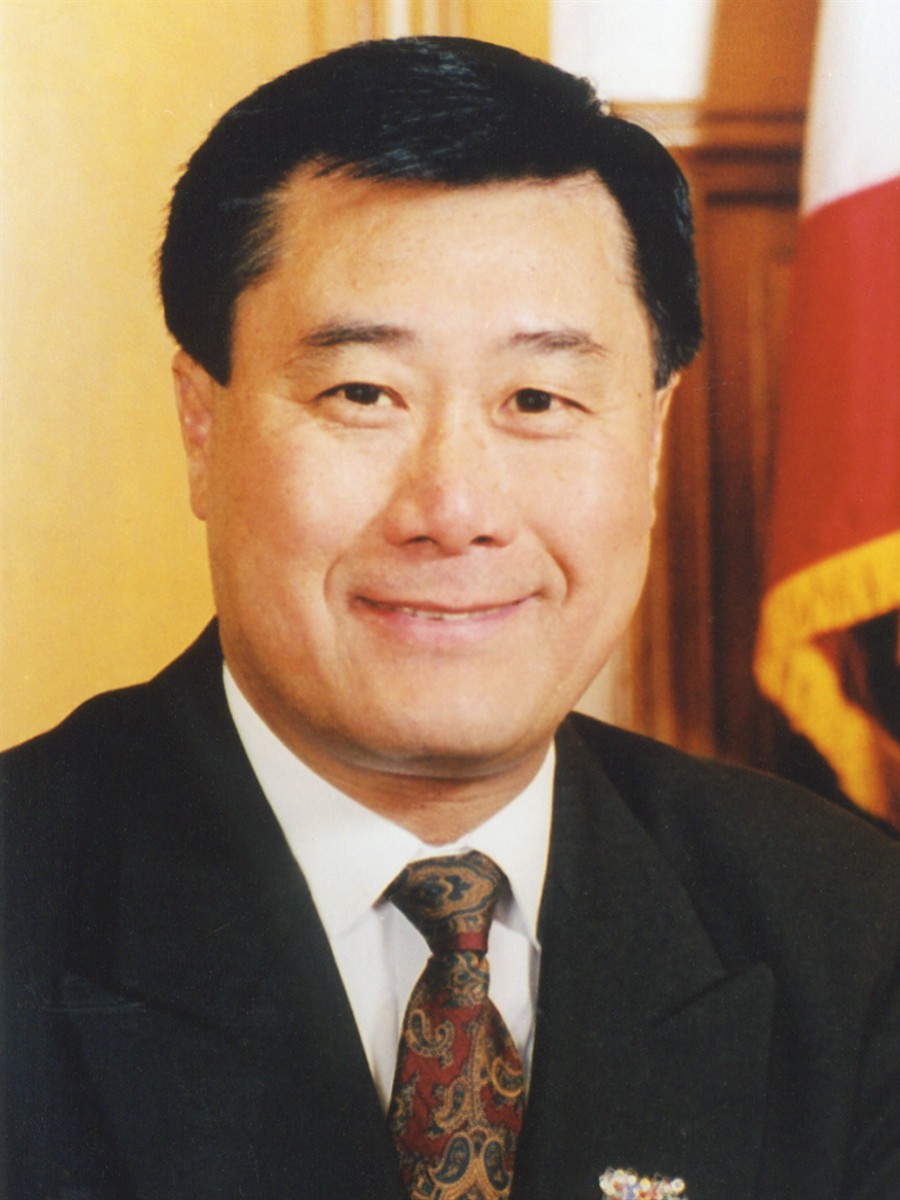
State Sen. Leland Yee has asked the Alameda County district attorney to drop all charges against reporters who were arrested while covering the protests over education cuts. In a March 8 letter to D.A. Nancy O’Malley, Yee noted that “at least two of the individuals arrested were journalists covering a legitimate news story.”


That adds to the pressure on O’Malley not to press charges against reporters. But we’re still waiting to hear from the D.A.’s office.


You can read the letter here.

Editor’s Notes

0

Tredmond@sfbg.com

For decades, the San Francisco City Charter has had a fairly simple process for filling vacancies in local elected offices: the mayor makes an appointment. A supervisor leaves office, or the district attorney leaves office, or the city attorney leaves office, or the controller leaves office, or the assessor leaves office, or the public defender leaves office … there’s no election. It’s up to the mayor to fill the job. It gives the person in Room 200 a tremendous amount of power.

Gavin Newsom’s a beneficiary of this system — he didn’t run for election the first time he took elected office. A mayor named Willie Brown appointed him to the Board of Supervisors.

If the mayor leaves office, on the other hand, the Board of Supervisors, by a majority vote, gets to fill that position. And while Newsom has never complained about any of this in the past, now that he thinks he’s going to get elected lieutenant governor, he’s got a campaign underway to make sure the current district-elected board doesn’t get to name his successor. He wants to change the City Charter to mandate a special election if a mayor leaves office before the end of his or her term.

It’s about as hypocritical and self-serving as you can imagine, although he carefully talks about “democracy” and “the voters choosing.”

I find it kind of silly (and expensive) to plan a special election for mayor in March or April of next year when there’s already a regular election for mayor in November. And special elections have notoriously low turnout (favoring candidates with money and name recognition). But let’s play this out.

I’ve always thought it was odd that the mayor got to appoint supervisors. The governor can’t appoint state legislators; the president doesn’t appoint members of Congress. So if we’re going to change things, let’s be sure to change that, too. And then let’s take away the mayor’s ability to fill any vacancy in any elected office.

But you see, Newsom’s office told me he’s against that. He doesn’t want to limit the mayor’s power — just the power of the supervisors. Go figure.


Downtown’s DCCC slate fizzles

9

I’m actually a bit surprised that Gavin Newsom’s allies haven’t made a bigger push to take back control of the San Francisco Democratic Party, which will play a key role in the fall supervisorial races. It looked for a while as if the downtown folks were organizing to put a slate of strong candidates with solid name recognition on the ballot. But when the Department of Elections closed Friday afternoon, and the deadline for filing passed, there weren’t that many new names on the ballot. Here’s the list. (PDF).


Twelve candidates will get elected in each of the two San Francisco Assembly districts. On the east side of town, in AD 13, eight progressive incumbents, including Sups. David Campos and David Chiu, former Sup. (and current DCCC chair) Aaron Peskin are running. So is School Board member Kim-Shree Maufas and former state Sen. Carole Migden. Supervisorial candidates (and incuments ) Rafael Mandelman and Debra Walker are running, as are former supervisorial candidates Eric Quezada and Alix Rosenthal.


Not a lot of star power in the more moderate camp. Other than former Sup. (and incumbent) Leslie Katz and sup. candidate (and incumbent) Scott Wiener, it’s not a powerful crew. So the progressives look to do well — as they usually do — in D 13.


D-12 is a little more conservative in general — and there are lots and lots of candidates, meaning name recognition is even more important. I’d thought maybe somebody would talk Sup. Sean Elsbernd or Sup Carmen Chu into running. But no: the only elected officials on the list are progressives, including Sups. John Avalos and Eric Mar, School Board member Sandy Fewer, and Community College Board member Milton Marks. Then there’s incumbent (and former Sup.) Jake Mcgoldrick.


The moderate, pro-Newsom camp — the folks who would try to shift the Democratic Party endorsements away from progressives in swing supervisorial districts — may be large, but not terribly deep. Incumbents Tom Hsieh and Megan Levitan are, of course, running again, and there’s Bill Fazio, who once ran for district attorney.


Myra Kopp, wife of former state Sen. (and retired judge) Quentin Kopp, is a candidate, and while she may be a little more politically conservative than Avalos and Mar, she’s not going to be in the Newsom camp, either; she’s more of an independent wild card.


Paul Hogart agrees with me that the progressives seem well situated to keep control of the DCCC, although it’s never a sure thing: there are no contribution limits for these races, and since it’s a low-profile office, big money can make a big difference. Let’s see what downtown tries to do to buff up and promote its candidates in the next two months.


Editorial: Needed — some teeth for the San Francisco sunshine law

2

EDITORIAL The San Francisco Sunshine Ordinance is a national model for open government, the first and strongest local sunshine law in the country. It was written to improve public access to government records and meetings, and to clear up some of the problems and loopholes in state law. On paper, it makes San Francisco a shining example of how concerned residents can come together and eliminate secrecy at City Hall.

But 17 years after its passage, it’s still not working. That’s because city officials routinely ignore the law — and the city attorney, the district attorney, and the Ethics Commission have utterly failed to enforce it.

Here’s how it works, in theory: A San Franciscan makes a request for records in the office of a public official. The official is supposed to make the documents available promptly — within 48 hours for immediate disclosure requests and within 10 working days for routine requests. If the records aren’t forthcoming, the resident can complain to the Sunshine Ordinance Task Force, which brings both sides in, holds a hearing, gets legal advice, and determines whether the complain is valid. If the task force finds that the official should have made the records available, the matter gets referred to the Ethics Commission, which can file charges of official misconduct.

Here’s how it happens in practice: Some officials, like Mayor Gavin Newsom, simply ignore sunshine requests, or delay responding well beyond the statutory limit, or refuse to release records on grounds that clearly violate the law. The task force holds a hearing, and nobody from the Mayor’s Office shows up. Then the task force finds in favor of the person seeking the records, sends the file to the Ethics Commission — and the whole thing dies.

Not once in the history of the ordinance has the Ethics Commission actually filed misconduct charges. Not once. Violating the Sunshine Ordinance is a crime, but D.A. Kamala Harris has never once prosecuted a miscreant. And public officials who disobey the law hide under the protection of advice from the city attorney — although that advice itself is secret.

The message to City Hall is clear: you can defy the sunshine law with impunity; nothing will ever happen.

The task force is offering a series of amendments to the law that would improve enforcement and give the measure some teeth. The supervisors ought to support those proposals — but the board ought to go even further.

The proposals would turn the task force into a commission, which is a fine idea. But more important, the new commission would have something extraordinary: a $50,000 litigation fund to pay for an outside lawyer — not the city attorney — to sue officials who flout the law. If those lawsuits succeed, the city would have to pay attorneys’ fees, which would replenish the fund. And the very threat of that could have a huge impact on the way City Hall responds to sunshine requests.

We support the plan — and since nobody else will enforce the law, we think the task force (or commission) needs the authority to do it. The body overseeing sunshine complaints should be able to force public officials to release records or open meetings; rulings from that body should have the force of law. That works well in Connecticut, where a state Freedom of Information Commission has the authority to order anyone, from the governor to a city council, to open up files. Government in that state hasn’t become unwieldy; officials secrets haven’t fallen into the hands of terrorists. But ordinary citizens who can’t afford a lawsuit have a forum to force reluctant public officials to do their business in public.

San Francisco should adopt that model, and the sooner the better.

Supes pass resolution protecting SF Patrol Special Police Officers

Jane Warner, or “Officer Jane” as she’s known throughout the Castro, had a rough Christmas Eve. It started when Warner, a San Francisco Patrol Special Police officer who was out walking the foot beat, was alerted that a fight had broken out at Trigger, a bar on Market Street. When she arrived, she says she encountered a drunk and belligerent man. “He got more excited and charged the doormen, he pushed me, I pushed him back, and I said, ‘You’re under arrest,’” Warner told the Guardian shortly after the incident occurred. “He started to walk away from me, I drew my baton, I hit him twice, and he turned around and he hit me and I went to block his punch and he broke my arm,” at which point she fell to the ground in pain. “It cracked the bone right between the elbow and the shoulder,” she said.

According to a police report, several San Francisco police officers arrived on the scene shortly after and arrested the man, James Crayton McCullough. But when they arrived at the police station and tried to get him out of the police car, according to the report, he wedged his body onto the floor of the vehicle and allegedly shouted at one of them, “I’m going to shoot you in the fucking head!” Later, he was transported to San Francisco General Hospital because he had a laceration on his head, where he allegedly threatened a nurse.

Before he was through that night, he’d amassed six felony charges and three misdemeanor charges, District Attorney spokesperson Brian Buckelew told us shortly after the incident. He somehow managed to make $250,000 bail. But he was issued orders to stay 150 yards away from Warner, as well as Castro bars Trigger and Badlands. McCullough also received an order to stay out of the entire Castro neighborhood — a move Buckelew says is highly unusual.

The incident prompted Sup. Bevan Dufty to introduce a resolution to encourage San Francisco Police Chief George Gascon to consider imposing an increase in penalties for an assault on a Patrol Special Police Officer. This past Tuesday, at the Board of Supervisors meeting, that resolution was approved.

Since Warner was assaulted, other incidents have occurred in which Patrol Special Officers were placed in harm’s way, according to a press release sent out yesterday by the organization.

San Francisco’s Patrol Special Police, roughly 40 strong, is a private force dating back to the days of the Gold Rush. In a rare arrangement, they’re authorized under the City Charter to patrol different neighborhoods, hired by private clients such as merchant associations, and they adhere to regulations set by the Police Commission. While they aren’t sworn officers, they undergo a training process similar to that of SFPD officers and they make arrests. Warner describes the patrol specials’ model as a form of “community policing” which she says emphasizes crime prevention.

When asked about Dufty’s resolution in an interview with the Guardian last week, Gascon was somewhat resistant to the idea. He said he had a problem with private policing in general. “This is more of a private police model,” he said. “Their uniforms are very similar to the San Francisco Police Department. So, quite frankly to the majority of the public, it is very hard to distinguish between one and the other.”

“I understand where Supervisor Dufty’s coming from,” Gascon added. “These are people that are certainly out there providing public safety services and they sometimes become the target of people that, for whatever reason or another, they don’t want to be subject to their authority. The problem that I have again is that it continues to blur the line of a very unusual process. … There’s no question that in some places there are people who certainly are in favor of having patrol specials. This is not to take away from the quality of service that patrol special officers provide because I think some of them are very professional and they are very courteous and very effective in what they do. ”

While it’s a felony to assault a San Francisco Police Officer, there are no special charges in the penal code for an individual who commits an assault on a patrol special officer. Dufty’s resolution asks the Police Commission and Gascon to provide Patrol Specials with “the same protections that San Francisco Police Department officers and a number of others who are protected under state code from being assaulted in the line of duty.”

Politics and redistricting: The madness in SF’s future

8

The political merry-go-round in San Francisco going to be whirling at light speed soon. It’s partially the fault of term limits — over the next couple of years, some very talented, ambitious politicians are going to be forced to leave local office, and they’re looking for the next step. Part of it is the confluence of a bunch of events, starting with Mayor Gavin Newsom and District Attorney Kamala Harris both seeking statewide office.


And there’s another factor that hasn’t been talked about much, but it’s really important: Next year, every Congressional, state Legislative and local supervisorial district is going to change.


After the decennial census, everyone has to draw new lines to reflect population shifts. At the state level (and Congressional redistricting is also a state function), that’s in the hands of a reapportionment commission, which I’m dubious about: The majority of the applicants are white people, and it’s supposed to have an equal number of Democrats and Republicans, although the state has far more Democratic voters. It’s anybody’s guess how they’ll actually draw the lines.


An elections task force will do the local lines, and it’s going to be harder to screw up; San Francisco supervisorial districts are supposed to reflect established neighborhood boundaries, and the population shifts within the city haven’t been that dramatic.And it’s unlikely anyone’s going to try to draw lines just to force an incumbent supervisor out of a district. But the districts will be a little bit different, and in San Francisco politics, a little bit can mean a lot.


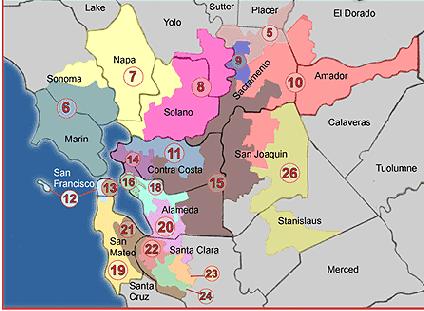
The state Legislative districts will change significantly — and could change the politics of this area, and the state, in dramatic ways. For example, suppose Mark Leno’s Senate District moves somewhat North, to include a majority of Marin and Sonoma residents and only a small minority of San Franciscans? Suppose that district no longer includes Marin or Sonoma, but includes all of San Francisco (which would put Leno and Leland Yee in the same district)?


Suppose the 12th and 13th Assembly Districts, which now divide about East/West, shift to North and South? What if Tom Ammiano and Fiona Ma end up in the same district? (Um, I think that’s a closer relationship than either of them wants ….)


What happens if Nancy Pelosi is redistricted out of her seat? (Heh heh, won’t happen, but in theory, she and Lynn Woolsey could wind up living in the same district.)


It’s going to change the dynamics in a city that’s already poised for some upsets to the political apple cart.


Ross Mirkarimi’s termed out in 2012, and if he doesn’t run for mayor (or doesn’t get elected) he’ll be looking for the next step, which could be a run for the state Assembly; Tom Ammiano will be termed out in 2014. Of course, that’s been a gay seat for a long time (Carole Migden, Mark Leno, Ammiano) and by them someone like David Campos might be interested.


Or the district lines might have changed so much that both of them – or neither of them – can get elected.


If Bevan Dufty doesn’t get elected mayor, he’s out of a job – and he’s a political junkie who won’t easily retire. He’ll be looking at other offices, too. So will Sean Elsbernd, I suspect.


And that doesn’t even count the mayor’s race, which could, at this point, involve both state Senators, Leno and Leland Yee, and if either one wins, that opens up a Senate seat. And at the same time, if Kamala Harris is elected district attorney, that job will be open, and it’s an open secret that Board of Supervisors President David Chiu, a former prosecutor, would love to be in that office some day.


And in the background is the question of who becomes mayor if Newsom becomes lt. governor


 (and what happens to Aaron Peskin, an astute politician if ever there were one, and a potential mayor if this board of supervisors gets to make the appointment ). At lot to think about – and trust me, the thinking is already going on.

SOC it to ’em

1

sarah@sfbg.com

On the same evening the Police Commission shot down Chief George Gascón’s plan to arm his officers with Tasers, a Sunshine Ordinance Task Force (SOTF) committee reviewed a proposal to give itself a set of enforcement tools that, if approved, could help nail governmental agencies and officials that violate public information laws.

These proposals include the right to appoint outside counsel to enforce serious, willful violations of the voter-approved Sunshine Ordinance against respondents who fail to comply with SOTF orders, thereby allowing enforcement actions to be brought in civil court.

Despite the potential significance of these amendments to the cause of open government and the history of SOTF findings being blatantly ignored by Mayor Gavin Newsom and other officials who have refused to release public documents, only a small posse of regular sunshine advocates attended the March 4 meeting of SOTF’s Compliance and Amendments Committee.

This lack of public interest underscores how the inability to enforce its findings has undercut its power, and why its members believe the legal equivalent of a stun gun is needed if people are going to start taking the work of this Board of Supervisors appointed body seriously.

Erica Craven-Green, an attorney who has served on SOTF for six years, has seen a number of departments not take the body’s proceedings seriously.

“There are very few penalties for individuals and departments that choose not to comply with the ordinance,” Craven-Green observed. “We’ve had numerous instances where representatives from city departments and the offices of elected officials failed to show up at our hearings and explain how they did or did not comply with the ordinance.”

Angela Chan, staff attorney of the Asian Law Caucus, filed a complaint with SOTF in October 2009 after the Mayor’s Office refused to explain why it gave a confidential City Attorney’s Office memo about sanctuary city reforms to the San Francisco Chronicle but not her organization for two full weeks, despite her requests.

At a December 2009 SOTF hearing, Brian Purchia of the Mayor’s Office of Communications handed SOTF a note that read, “I had to leave to respond to the press,” shortly before Chan’s complaint was heard. As a result, the task force decided to continue the matter to January so someone from the Mayor’s Office could attend. Yet despite repeated requests, no mayoral representatives attended that or subsequent SOTF’s meetings about Chan’s complaint.

“It is deeply disappointing that the Mayor’s Office has not shown any respect for the Sunshine Ordinance Task Force, which works hard to try to improve government transparency and accountability for the residents of San Francisco,” Chan told the Guardian. “The mayor appears to be acting like a monarch rather than a democratically-elected official who is accountable and responsive to the people. Reform is needed to ensure all city officials comply with our Sunshine Ordinance and heed [SOTF’s] orders.”

And it’s not just members of the public who feel their time is being wasted. “I think it is very frustrating and, quite frankly, a waste, not only of the task force’s [time], but of city resources as well, to have a hearing on a matter that the city decides not to reply to and/or show up for,” said Craven-Green, who steps down from SOTF later this year.

SOTF is seeking to address this sense of powerlessness by renaming SOTF the Sunshine Ordinance Commission (SOC), giving it the ability to hire an attorney and propose fines, and requiring that departments post notices of sunshine violations on their Web sites. The amendments also expand the list of public officials required to keep working calendars and clarify access requirements for electronic records and systems.

Craven Green said changing the SOTF’s name is a “nonsubstantive” amendment, but that it “makes it sound more permanent.”

The key difference between SOTF and SOC is that, under the proposed amendments, SOC could, with a two-thirds vote, appoint outside counsel to enforce serious and willful violations of the ordinance by bringing action against them in civil court. Right now, only the Ethics Commission and District Attorney’s Office can enforce SOTF decisions, and neither has been willing to do so.

Retired attorney and sunshine advocate Allen Grossman recently won a $25,000 settlement to cover legal fees in a lawsuit he brought against the Ethics Commission and its executive director John St. Croix to force the city to provide him with previously withheld public records about why Ethics dismissed 14 sunshine cases SOFT had referred to it. The amendment would give SOC that same authority.

“Where we feel there hasn’t been sufficient action by the Ethics Commission or sufficient compliance on issues we think are very important for public access, we could instigate outside counsel to prosecute serious and willful violations,” Craven-Green said.

The amendments also lay out penalties for officials who willfully flout sunshine laws. Government officers and employees found to have committed official misconduct would be required to personally pay $500 to $5,000, while public agency violations would have that amount taken from their budgets.

SOC would recommend the level of these fines, and any fines that Ethics decided to impose would be placed in SOC’s litigation fund. “That should be enough for most departments to comply,” Craven-Green said.

Terry Francke, general counsel of Californians Aware, a Sacramento-based center for public forum rights, has been consulting with SOTF on the changes. He says the Achilles’ heel of the Sunshine Ordinance, which the board enacted in 1993 and voters amended in 1999 through Proposition G, has been what happens to a department or official who refuses to comply with what SOTF thinks is required.

Under the state’s Brown Act open meeting law and the California Public Records Act, correcting the unlawful withholding of public information requires a civil lawsuit. “You go into court, tell them this or that practice violates the Brown Act and ask the court to order a correction,” Francke said. “Or you go to court with a request for public records that you believe are being unlawfully withheld.”

But now SOTF is folding Francke’s recommendations to hire a litigator into the SOC amendment package, along with establishing a $50,000 annual litigation fund. The amendments would require voter approval and the willingness of four members of the Board of Supervisors to place them on the ballot.

Francke acknowledges that this litigation fund could sound odd, “but it’s a kick start that’s needed” to encourage compliance. “It’s not so much a net outflow of funds as a kind of transfer of funds from the operating fund of a particular agency that violated law to the litigation fund of the SO commission.”

Francke says Grossman’s lawsuit is a good example of a successful effort to take the city to court. “But the difference, under the proposed amendments, is that $25,000 payment would go into SOC’s litigation fund,” Francke said. “If the lawsuit by Mr. Grossman had been filed by SOC with its enforcement attorney, that would not have meant a net loss by the city, it would mean a net gain to the commission’s litigation fund.”

The problem now, Francke observes, is that Ethics dismisses most complaints on the grounds that it was not official misconduct or willful failure because employees or officials were acting on City Attorney’s Office advice.

“It’s less important that the occasional willful violation of the Sunshine laws gets punished personally than that the violation gets stopped,” Francke said. “And someone saying, ‘Harry/Judy, what you did there cost $25, 000’ is not a career morale builder.”

Craven-Green agrees that the problem to date has been that departments rely on the advice of the City Attorney’s Office, and SOTF often disagrees with its positions. “One of the reasons we referred these cases to Ethics was so it would take a neutral look,” she explained. “What’s been frustrating is that the Ethics Commission has not done that. It’s simply sided with the City Attorney’s Office.”

Last year, following a joint meeting between the Ethics Commission and SOFT to discuss difficulties those bodies have had with one another, Ethics’ St. Croix introduced changes in how the agency handles SOTF referrals, including defining when he may simply dismiss a referral and allow some documents from its investigations to be made public.

“We are really working to resolve these difficulties,” St. Croix told us. “The core of the conflict has been that when they refer complaints, we investigate. But from their point of view, they’ve done an investigation, and our response should be to assign penalties.”

Grossman is hopeful that SOTF’s proposed amendment package will resolve some problems. As he told us, “It substantially reduces Ethics’ ability to dismiss cases arbitrarily.”

Some teeth for the sunshine law

1

EDITORIAL The San Francisco Sunshine Ordinance is a national model for open government, the first and strongest local sunshine law in the country. It was written to improve public access to government records and meetings, and to clear up some of the problems and loopholes in state law. On paper, it makes San Francisco a shining example of how concerned residents can come together and eliminate secrecy at City Hall.

But 17 years after its passage, it’s still not working. That’s because city officials routinely ignore the law — and the city attorney, the district attorney, and the Ethics Commission have utterly failed to enforce it.

Here’s how it works, in theory: A San Franciscan makes a request for records in the office of a public official. The official is supposed to make the documents available promptly — within 48 hours for immediate disclosure requests and within 10 working days for routine requests. If the records aren’t forthcoming, the resident can complain to the Sunshine Ordinance Task Force, which brings both sides in, holds a hearing, gets legal advice, and determines whether the complain is valid. If the task force finds that the official should have made the records available, the matter gets referred to the Ethics Commission, which can file charges of official misconduct.

Here’s how it happens in practice: Some officials, like Mayor Gavin Newsom, simply ignore sunshine requests, or delay responding well beyond the statutory limit, or refuse to release records on grounds that clearly violate the law. The task force holds a hearing, and nobody from the Mayor’s Office shows up. Then the task force finds in favor of the person seeking the records, sends the file to the Ethics Commission — and the whole thing dies.

Not once in the history of the ordinance has the Ethics Commission actually filed misconduct charges. Not once. Violating the Sunshine Ordinance is a crime, but D.A. Kamala Harris has never once prosecuted a miscreant. And public officials who disobey the law hide under the protection of advice from the city attorney — although that advice itself is secret.

The message to City Hall is clear: you can defy the sunshine law with impunity; nothing will ever happen.

The task force is offering a series of amendments to the law that would improve enforcement and give the measure some teeth. The supervisors ought to support those proposals — but the board ought to go even further.

The proposals would turn the task force into a commission, which is a fine idea. But more important, the new commission would have something extraordinary: a $50,000 litigation fund to pay for an outside lawyer — not the city attorney — to sue officials who flout the law. If those lawsuits succeed, the city would have to pay attorneys’ fees, which would replenish the fund. And the very threat of that could have a huge impact on the way City Hall responds to sunshine requests.

We support the plan — and since nobody else will enforce the law, we think the task force (or commission) needs the authority to do it. The body overseeing sunshine complaints should be able to force public officials to release records or open meetings; rulings from that body should have the force of law. That works well in Connecticut, where a state Freedom of Information Commission has the authority to order anyone, from the governor to a city council, to open up files. Government in that state hasn’t become unwieldy; officials secrets haven’t fallen into the hands of terrorists. But ordinary citizens who can’t afford a lawsuit have a forum to force reluctant public officials to do their business in public.

San Francisco should adopt that model, and the sooner the better.

Newsom’s sanctuary policy destroys MUNI worker’s family

12

“They used our son as bait, just to get the mother to come in,” Washington said.

When San Francisco native and MUNI bus driver Charles Washington married Tracey, his Australian girlfriend in Reno last April, he never imagined that she and her sons would be deported after her 13-year-old bullied another kid at school for 46 cents.

But that’s what will happen Friday, March 5, almost a year after their wedding, unless a miracle happens. And this travesty is happening thanks to Mayor Gavin Newsom’s overreaching juvenile sanctuary policy, a broken federal immigration system, and a couple who tried to do the right thing, but were told they didn’t need to apply for a green card in a hurry, when they called an immigration number for information last year.

‘What more could we have done other than call the number?” Washington asked, noting that once they were told it wasn’t urgent, they began saving up, so they could afford the several thousand dollars a green card for his wife and two kids was going to cost.


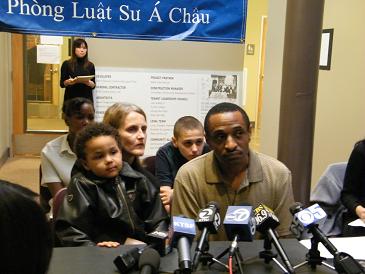
But now, thanks to a bullying incident at school, and the city’s overly draconian policy towards immigrant youth, Washington’s wife and her 13-year-old son will be deported to Australia on Friday, and her 5-year-old boy will accompany them, while Washington  stays in San Francisco to look after his 12-year old daughter (pictured in a photograph taken at the March 1 press conference at Asian Law Caucus).

“There are no laws that prevent me from going to Australia, but I have joint custody of my daughter from a previous marriage and her mother is not going to authorize the child to move, so I’m hoping for a miracle,” Washington explained.

His wife Tracey, who has been forced to wear a federal electronic monitoring bracelet since February, looked on in silence, flanked by her sons and step-daughter.

Washington, who grew up on Mt. Davidson Terrace, and was formerly in the military, had been driving a MUNI bus for a year and a half, when he woke one morning after he got home from his late-night MUNI shift, to hear the phone ringing with a call from his stepson’s school to say there where problems between him and a sixth grader.

“The school told me it was their policy to call the parents any time the police are going to talk to a child,” Washington said. Twenty minutes later, he and his wife were at the school, talking to an SFPD officer, who said a report had been filed by another parent about the incident and the police now wanted to talk to their kid.

After the interview with the police, Washington thought the worst thing that could happen was that the officer would write a citation to say his son needed to appear at juvenile court. Instead, the police arrested his stepson, putting him in handcuffs and saying that they were going to take him to the Juvenile Justice center.

“I think my son was in shock, as I was, “ Washington said. “What he actually did, and what the actual charges are, they are universes apart. Back when I was in school, at worst, a bully was sent home for the day, creating problems for them at home, when they explain to their parents why they’ve been sent home.”

Instead, Washington’s stepson was charged with felony robbery, extortion and assault after the parents of a sixth-grader at his school called the police, but his case has yet to be adjudicated by a juvenile justice, –and a bench warrant will be issued if he fails to attend a March 8 hearing in San Francisco—3 days after he and his mother are deported.

According to Washington, (pictured here (left) with Angela Chan, (right) staff attorney for the Asian Law Caucus) no weapons, no injuries and no witnesses were involved in his stepson’s incident. “And it was strictly one kids’ words against the other,” Washington said.

So, why did the police decide to refer his stepson to the federal immigration authorities?

“I think the officer picked up on the fact that he had an accent,” Washington said. “And when asked where he was born, my stepson said, ‘Australia.’ He is 13 years old. He doesn’t know if he is undocumented or not. As far as he is concerned, he was born in Australia, moved to San Francisco, and this is his family, his new family.”

Washington said his stepson was held for a week at Juvenile Hall for a week, during which the atmosphere at home became tense and stressful.

“We did not understand why this was happening,” Washington said. “Kids on my bus get on and do way worse things than he actually did, and the police usually make their presence known, but there is no worry about going to Juvenile Hall.”

But the worst was yet to come.
After his stepson had been at Juvenile Hall for about a week, Washington got a call from his stepson’s probation officer, saying that he was going to have to contact federal Immigration and Customs Enforcement (ICE).

“He said he had to contact ICE, that he was just doing his job, that it’s what’s required under his job title,” Washington said.

Under a new policy that Mayor Gavin Newsom ordered in the summer of 2008, the city’s juvenile probation officers are required to contact the feds when a juvenile is booked on suspected felony charges. This means, the probation officers are required to contact ICE before immigrant kids have even had a hearing before a juvenile judge to determine if they are in fact, guilty, as charged.

‘They didn’t say, ‘he might be deported,’” Washington said.” I was just told that there might be a ‘ICE hold put on him,’ but at this point I was still not understanding the importance of ICE.”

Once ICE picked up his stepson and transferred him to ICE’s facility on Sansome Street, Washington got a call from his stepson, who said he was OK.

“At this point, we were aware of the immigration issue, so I told my wife to stay at home and I went down there with a lawyer, and I was able to meet with my son,” Washington recalled.

But when he got back home, he received a call from his lawyer who notified him that if his wife was willing to go in and put on an electronic monitoring ankle bracelet, the feds would release their son.

“So, I drove my wife to Sansome Street, and that’s when we were informed that she was being handed her deportation orders, along with our 13-year-old son,” he said

His wife has been wearing the electronic monitoring ankle bracelet ever since.

“She wore pants today because it makes her feel ashamed, and she cries nightly over the fact that she feels like she’s being treated like an animal,” Washington said. “She says, ‘I feel like they think I’m a murderer, but I’m not, I haven’t done anything wrong.’”

According to Washington, his wife arrived in the country along with her kids on a 90-day visa-waiver, and the couple got married about 45 days into that visa.

“We had known each other for seven years, and we looked into getting a green card, two days after we were married, and we were told, not once, but twice, that if you enter on a visa-waiver, there is no deadline to apply for your green card. We were misinformed.”

But while Washington notes that the office that he spoke to was a contractor for the federal government and had its information wrong, he still can’t get over the fact that the federal government would treat him and his wife this way, using their son as bait.

‘This is all shocking to me,” Washington said. “I never dreamed America would treat not only someone from America, but someone not from America, this way. All we want is for our application to be reviewed based upon the facts. We are being told it’s too late.”

Equally upsetting for Washington was the experience of seeing his stepson used as bait.

‘They used our son as bait, just to get the mother to come in,” he said. “ Our son wasn’t there for more than 4 or 5 hours ,and we had no clue that the deportation papers would be served until we walked in. They hadn’t even put the monitoring bracelet on her. She could easily have run, but we still don’t want to break the law, regardless of the outcome. Even though we did something wrong according to ICE, it wasn’t intentionally. If we had been given the correct information, we wouldn’t be here. Yes, we couldn’t afford the money at that time, but we’d have made sacrifices.”

Washington said he is reaching out to the media in a last ditch effort to save his family.

“I don’t know any other way but to network, maybe someone might know someone else who can save my family,” he said. ‘My stepson, he’s just a nerd, he’s not a violent person, he’s not aggressive at all, he’s just being a boy, and he really hasn’t had a father figure in his life, until he moved here.”

Angela Chan, staff attorney for the Asian Law Caucus, which has been helping the Washington family try to get their green cards, said that if the son had never been reported to ICE, then the family likely would have received green cards.

“But now they are refusing to consider it, because of the ICE referral,” Chan said.

Chan also explained that if the boy was able to appear before a juvenile justice, he’d likely get informal probation for a first-time minor offense.

“He only had a hearing, but the juvenile proceedings were halted, when he got handed off to ICE,” Chan said. “The District Attorney had filed charges, but they had not yet been adjudicated, and a judge had not yet reduced the charges.”

Jane Kim, President of the San Francisco United School District said the School Board unanimously supported the amendment to Newsom’s policy that Sup. David Campos introduced last year and which a supermajority of the Board of Supervisors supports.

“We have seen how changes in the Juvenile Probation Department as of August 2008 have been used as a blunt tool to separate family members, regardless of whether the juvenile is convicted of the charges, and regardless of the family’s circumstances. And we don’t believe that the Campos amendment violates the US Constitution.”

“Newsom’s policy has put a lot of burden on our staff,’ Kim said, explaining how schools are now worried about calling the police, lest students end up being deported because the police referred them to ICE, based merely on accusations, 

“For those worried about public safety, I think this type of situation encourages under reporting,” Kim said.

Washington for his worries that his wife and her kids will be homeless in Australia.

‘My wife sold her furniture and gave up her apartment in Melbourne to come here, and her mother and father have a one-bedroom apartment, so there is no space for her and two kids,” he said

He also worries that if they ever manage to come back, his stepson will have a warrant out for his arrests:
 ‘Today we were notified that if my stepson doesn’t show up for his March 8 pre-hearing (in the juvenile justice system where the DA’s office is pressing charges), we’ll have to worry about a warrant for his arrest, which will make it even more difficult for him to move back” Washington said.

If a person is deported, they are barred from reentering the country for 3-10 years.

The Washingtons’ federal deportation will occur the day after the Board of Supervisors holds a hearing into why the city’s Juvenile Probation Department has failed to implement the city’s new policy towards immigrant youth: under the new policy, which the Board passed in 2009, a teenager like Tracey Washington’s son would get his day in court before being referred to federal immigration.

Since July 2008, when Newsom first began requiring probation officers to report all suspected undocumented youth for deportation right after arrest – before the youth  receives an attorney or a hearing on the alleged charges, over 160 children have been reported to ICE without regard to their innocence or how minor the offense.

In November 2009, a community-based based campaign resulted in the passage of a new policy that restores due process to immigrant youth. The new policy gives youth an opportunity to have a hearing and requires a finding that the youth committed a felony before any referral to ICE. If implemented, the new policy would boost public safety for all residents because it would put an end to the Mayor’s policy, which has caused immigrant residents to be afraid to have contact with city employees.

 “Until Mayor Newsom restores due process to all youth in San Francisco, many more hard-working families like the Washingtons will be torn apart,” said Chan.
On Thursday, March 4, the Board’s’ Rules Committee will hold a 10.30 am hearing at City Hall regarding Juvenile Probation Department’s refusal to implement the Campos amendment which would restore due process to youth.


No more silence on Prop. 16

0

EDITORIAL Pacific Gas and Electric Co. has found few allies in its effort to halt the spread of public power in California. The Sacramento Bee has come out strongly against PG&E’s initiative, Proposition 16 on the June ballot. Los Angeles Times columnists have denounced it. Six Democratic leaders in the California Senate have called for the company to withdraw the measure. Even the California Association of Realtors, hardly a radical environmental group, has come out strongly against the measure, in part because it’s so badly worded that it could halt residential and commercial development in large parts of the state.

But PG&E has already set aside $30 million to try to pass this thing — and since the cities and counties that would be hit hardest can’t use public money to defeat it, elected officials across the state need to be using every opportunity they have to speak out against it.

Prop. 16 is about the most anti-democratic measure you can imagine. It mandates that any local agency that wants to sell retail electricity to customers first get the approval of two-thirds of the local electorate. The two-thirds majority has been the cause of the debilitating budget gridlock in Sacramento, and it will almost certainly end efforts to expand public power or create community choice aggregation (CCA) co-ops in the state.

It actually states that no existing public power agency can add new customers or expand its delivery service without a two-thirds vote — which means, according to former California Energy Commissioner John Geesman, that no new residential or commercial development in the 48 California communities that have public power could be given electricity hook-ups.

It also, of course, eliminates the possibility of competition in the electricity business, making PG&E the only entity legally allowed to sell power in much of Northern California. That’s a radically anti-consumer position that most residents of the state would reject — if they understood it.

And there’s the problem. With PG&E spending $30 million (of our ratepayer money) promoting this, using misleading language and a campaign based on lies, and with very little money available for a counter-campaign, it’s going to be hard to get the message out.

That’s why every single elected official, candidate for office, and political group in the state that isn’t entirely bought off by PG&E needs to loudly oppose it, now.

And there’s still a lot of silence out there.

State Sen. Mark Leno and Assembly Member Tom Ammiano, to their credit, are not only opposing Prop. 16, they are helping lead the campaign against it. Sup. Ross Mirkarimi has helped build the coalition that’s running the No on 16 effort. The San Francisco Board of Supervisors has passed a resolution opposing the initiative. Sup. Bevan Dufty, who is running for mayor, is a public opponent. State Sen. Leland Yee’s office told us he opposes it (although he hasn’t made much of a big public issue of the measure). Same for City Attorney Dennis Herrera.

But where is Mayor Gavin Newsom? Where is District Attorney Kamala Harris, who is running for attorney general? Where’s Rep. Nancy Pelosi and Sens. Dianne Feinstein and Barbara Boxer? Where’s the City Hall press conference with the mayor and every other elected official in town denouncing Prop. 16 and urging San Franciscans to vote against it?

The silence is a disgrace, and amounts to a tacit endorsements of PG&E’s efforts.

And it’s happening at the same time that the supervisors are pushing against a tight deadline to get the city’s Community Choice Aggregation program up and running.

San Francisco is the only city in the United States with a federal mandate to sell public power, and the city is moving rapidly to set up a CCA system. This is a monumental threat to the city — and everyone either in office or seeking office needs to recognize that and speak out. Prop. 16 and CCA ought to be a factor in every local organization’s endorsements for Democratic County Central Committee and supervisor this year, and any candidate who can’t stand up to PG&E has no business seeking office in San Francisco.

Editorial: No more silence on PG&E’s statewide power grab

1

Every single elected official, candidate for office, and political group in the state that isn’t entirely bought off by PG&E needs to loudly oppose Prop. 16 – now

EDITORIAL Pacific Gas and Electric Co. has found few allies in its effort to halt the spread of public power in California. The Sacramento Bee has come out strongly against PG&E’s initiative, Proposition 16 on the June ballot. Los Angeles Times columnists have denounced it. Six Democratic leaders in the California Senate have called for the company to withdraw the measure. Even the California Association of Realtors, hardly a radical environmental group, has come out strongly against the measure, in part because it’s so badly worded that it could halt residential and commercial development in large parts of the state.

But PG&E has already set aside $30 million to try to pass this thing – and since the cities and counties that would be hit hardest can’t use public money to defeat it, elected officials across the state need to be using every opportunity they have to speak out against it.

Prop. 16 is about the most anti-democratic measure you can imagine. It mandates that any local agency that wants to sell retail electricity to customers first get the approval of two-thirds of the local electorate. The two-thirds majority has been the cause of the debilitating budget gridlock in Sacramento, and it will almost certainly end efforts to expand public power or create community choice aggregation (CCA) co-ops in the state.

It actually states that no existing public power agency can add new customers or expand its delivery service without a two-thirds vote &#151; which means, according to former California Energy Commissioner John Geesman, that no new residential or commercial development in the 48 California communities that have public power could be given electricity hook-ups.

It also, of course, eliminates the possibility of competition in the electricity business, making PG&E the only entity legally allowed to sell power in much of Northern California. That’s a radically anti-consumer position that most residents of the state would reject – if they understood it.

And there’s the problem. With PG&E spending $30 million (of our ratepayer money) promoting this, using misleading language and a campaign based on lies, and with very little money available for a counter-campaign, it’s going to be hard to get the message out.

That’s why every single elected official, candidate for office, and political group in the state that isn’t entirely bought off by PG&E needs to loudly oppose it, now.

And there’s still a lot of silence out there.

State Sen. Mark Leno and Assembly Member Tom Ammiano, to their credit, are not only opposing Prop. 16, they are helping lead the campaign against it. Sup. Ross Mirkarimi has helped build the coalition that’s running the No on 16 effort. The San Francisco Board of Supervisors has passed a resolution opposing the initiative. Sup. Bevan Dufty, who is running for mayor, is a public opponent. State Sen. Leland Yee’s office told us he opposes it (although he hasn’t made much of a big public issue of the measure). Same for City Attorney Dennis Herrera.

But where is Mayor Gavin Newsom? Where is District Attorney Kamala Harris, who is running for attorney general? Where’s Rep. Nancy Pelosi and Sens. Dianne Feinstein and Barbara Boxer? Where’s the City Hall press conference with the mayor and every other elected official in town denouncing Prop. 16 and urging San Franciscans to vote against it?

The silence is a disgrace, and amounts to a tacit endorsements of PG&E’s efforts.

And it’s happening at the same time that the supervisors are pushing against a tight deadline to get the city’s Community Choice Aggregation program up and running.

San Francisco is the only city in the United States with a federal mandate to sell public power, and the city is moving rapidly to set up a CCA system. This is a monumental threat to the city – and everyone either in office or seeking office needs to recognize that and speak out. Prop. 16 and CCA ought to be a factor in every local organization’s endorsements for Democratic County Central Committee and supervisor this year, and any candidate who can’t stand up to PG&E has no business seeking office in San Francisco.

Notes from the Sierra Club’s gala dinner

0

While I focused on Jerry Brown’s disappointing speech to the Sierra Club San Francisco Bay Chapter’s gala dinner on Wednesday night, there are a few more notable nuggets in my notebook worth posting here, starting with what appears to be the collapse of plans for a California Constitutional Convention.

The Guardian recently reported on the difficulties that the campaign was having, but consultant Clint Reilly told me that the effort is basically over, with fundraising shortfalls being the final nail in the coffin. That’s one more reason why “hope” seems to be in such short supply on the political landscape.

The event was held in the Merchant Exchange, a building owned by Reilly, who helped underwrite the gathering. So it was no surprise that the evening was MCed by his wife, Janet Reilly, who is running a strong campaign to replace Michela Alioto-Pier on the Board of Supervisors.

There were lots of political luminaries at the event (list to follow), but there was one particularly notable attendee and particularly notable absence. Los Angeles City Council member Janice Hahn was one of the few politicos from down south, making the rounds in support of her run for lieutenant governor. But Mayor Gavin Newsom, who is considering challenging her, didn’t show up.

Also a no-show was U.S. Sen. Barbara Boxer, who appeared by video to address the gathering and express appreciation for being the recipient of the Sierra Club’s first Phillip Burton Badge of Courage Award for environmental stewardship. Accepting the award on her behalf was California Democratic Party chair John Burton, who was his usual salty self, taking a dig at the San Francisco Chronicle by referring to someone who wrote “for the Chronicle back when that was a newspaper,” and describing the award’s namesake thusly: “My brother was an outstanding environmentalist who didn’t like the outdoors much.”

He also made this funny, self-effacing crack at the start of his speech: “I think a third of the people in this room would like to see the accelerator stuck on the rug of my Prius.” I was not among that third.

There was a strong turnout of local political leaders, but tellingly, only from the left side of the political spectrum. The members of the Board of Supervisors who turned out were David Chiu, Chris Daly, Ross Mirkarimi, Eric Mar, and John Avalos. Other political luminaries on hand included City Attorney Dennis Herrera, Sen. Leland Yee (Yee and Herrera are each running for mayor) City College trustee John Rizzo (who introduced Brown), Senator-turned-Oakland mayoral candidate Don Perata, District Attorney Kamala Harris, Rep. Jerry McNerney, and Sen. Loni Hancock.

The people vs. corporate power

2

steve@sfbg.com

The June 8 election is shaping up to be one that pits the people against powerful business interests, a contest that will demonstrate either that money still rules or that growing public opposition to corporate con-jobs has finally taken root.

On the state level, the five ballot measures include two brazen money-making schemes and two experiments in election reform, along with primary races that are still in flux. In San Francisco, where the ballot measures still have a few more weeks to shake out, the election will feature two rarely contested judges races, recession relief for renters, City Hall fiscal reforms, and a fight for control of the local Democratic Party.

So far, only four local measures have qualified for the San Francisco ballot, all placed there by members of the Board of Supervisors. Progressives qualified the Renters Economic Relief package (which limits rent increases during recessions and sets conditions for landlords passing costs to tenants), an initiative establishing community policing standards, and one affirming city support for making Transbay Terminal the northern high-speed rail terminus. Supervisors were unanimous in supporting a charter amendment governing the Film Commission.

But the board is still hashing out changes to the more controversial ballot proposals, a debate that will continue at its Feb. 23 meeting. They include an overhaul of how the city funds its pension program and an effort to remove Muni salary minimums from the city charter, both by Sup. Sean Elsbernd; a $652 million seismic safety bond proposed by Mayor Gavin Newsom; and a Sup. John Avalos charter amendment that would prevent the mayor from unilaterally defunding certain budget expenditures. All measures must be approved by March 5.

Also still forming up in the coming weeks are primary races for legislative seats (although no incumbents appear to be facing strong challenges) and all eight state constitutional offices, including governor (where Attorney General Jerry Brown seems poised to easily win the Democratic nomination), lieutenant governor, and attorney general (which District Attorney Kamala Harris is running for).

Candidates have until March 12 to declare themselves for statewide and legislative offices, as well as for the San Francisco Democratic County Central Committee, which could play a key role in this fall’s Board of Supervisors elections. Two years ago, a slate of progressives led by Aaron Peskin and Chris Daly launched a surprise attack to wrest control of the board away from the moderates who have long controlled it. Newsom, U.S. Sen. Dianne Feinstein, and their downtown allies are expected to try hard to regain control over their party’s purse-strings and endorsements.


JUDGING THE JUDGES

Another struggle from two years ago is also being replayed. In 2008, then-Sup. Gerardo Sandoval successfully challenged Superior Court Judge Thomas Mellon, arguing the Republican-appointed jurist was too conservative (and the entire court is not diverse enough) for San Francisco. This time the target is Judge Richard Ulmer, a conservative appointed by Gov. Arnold Schwarzenegger. Ulmer is being challenged by two LGBT attorneys, Daniel Dean and Michael Nava, the latter endorsed by Sen. Mark Leno, Assembly Member Tom Ammiano, and Peskin, who chairs the Democratic Party and could be helpful in the race. “He’s a brilliant guy,” Leno said of Nava.

Leno also has endorsed deputy public defender Linda Colfax, a Latina lesbian, in a four-way race to replace retiring Judge Wallace Douglass. The other candidates are Harry Dorfman, Roderick McLeod, and Robert Retana. If no candidate wins a majority of votes, the top two finishers square off in a runoff election in November.

Leno said he’s thrilled to see a diverse crowd of attorneys seeking judgeships: “This governor has failed horribly in his appointments, not only with the LGBT community, but with communities of color as well.”


TWO COMPANIES TRY TO BUY CALIF.

The struggle between the broad public interest and the wealthy power brokers that have long-dominated California politics is most apparent in the state propositions, which have been certified and for which ballot arguments are now being collected by the California Secretary of State’s Office.

Two of those ballot measures, Propositions 16 and 17, are blatantly self-serving efforts by a pair of powerful corporations to increase their profitability, however deceptively and with overwhelming amounts of campaign cash they are presented.

Prop. 16, sponsored by Pacific Gas & Electric Co., would require local governments to get two-thirds of voters to approve creation of energy programs like Clean Power SF, San Francisco’s plan for developing renewable energy projects and selling that power directly to citizens.

As we’ve reported (“Battle royale,” Jan. 13, and “PG&E attack mailer puts City Hall on defensive,” Dec. 22, 2009), PG&E placed the measure on the ballot to avoid having to repeatedly crush public power initiatives around the state with multimillion dollar campaigns, even though political leaders like Leno and Sup. Ross Mirkarimi say the measure violates the state’s community choice aggregation law. That law allows local governments to create energy programs and prohibits PG&E from interfering with those efforts.

“The unregulated behavior of corporate arrogance is killing our democracy. Prop. 17, sponsored by Mercury Insurance, would let companies increase car insurance premiums for a variety of reasons that are now prohibited by the 1988 measure Prop. 103. Mercury has continuously attacked that landmark law, using lawsuits, huge political contributions, sponsored legislation, and, according to newly released documents from the California Department of Insurance (see “The malevolence of Mercury Insurance,” Feb. 10, Guardian Politics blog), blatantly illegal activity in setting premiums and excluding certain customers, such as artists, bartenders, and members of the military.

“The Mercury initiative is even more pernicious than what it was doing before,” Harvey Rosenfield, who wrote Prop. 103 and works for Consumer Watchdog, told the Guardian. “Under Mercury’s initiative, if you’ve never had prior insurance, you can be surcharged for the first time. Then they’ve thrown in some other tricks and traps.”

Mercury spokesperson Coby King told us the company has been unfairly maligned and denies that the measure is simply about boosting its profits: “Prop. 103 is the law of the land, but to the extent there are improvements that can be made that are pro-business and pro-consumer, Mercury has not been shy about acting in the public interest.”

Yet few public interest groups or public officials believe the claims being made by Mercury or PG&E, and they hope that the public won’t be fooled.

“These are measures designed to give a financial advantage to a specific industry or company,” U.S. Rep. John Garamendi, who battled Mercury as California’s first insurance commissioner, told us. He strongly opposes both measures, but did say, “Money talks. It always has, particularly in propositions.”

Yet Leno said he’s a bit more hopeful: “Californians have been savvy in the past, and I do believe they’ll be able to see through the tens of millions of dollars in misleading ads.”

“To me, it’s a classic case study of what’s going on with the initiative process in California and with politics in general,” said Derek Cressman, western regional director of California Common Cause. “There are two initiatives literally sponsored by corporations to push very narrow interests.”

Yet Cressman said recent events could help. There’s been a big public outcry in recent weeks over the U.S. Supreme Court’s decision to allow unlimited corporate spending to influence elections, the role that insurance companies played in sinking federal health care reform efforts, and the way businesses interests are hindering efforts to deal with global warming.

“It makes people aware of the overwhelming role corporations are playing in dictating government policy,” Cressman said.


TAKE OUT THE MONEY

A pair of election reform measures might help lessen the influence of money and political parties. Prop. 14 is an open primaries measure that Sen. Abel Maldonado (R-Santa Maria) got placed on the ballot as a condition for breaking last year’s budget stalemate. It would create a single primary ballot and send the top two finishers to the general election, regardless of party.

Prop. 15, the California Fair Elections Act, takes direct aim at the corrupting influence of money in elections, creating a pilot public finance program in the secretary of state races for 2014 and 2018. The measure, which has broad support from politicians and good government groups in the Bay Area, is modeled on successful programs in Maine and Arizona.

“No elected official should be in the fundraising game the way they are now,” campaign chair Trent Lange told us. “This is a way to change how we fund elections.”

The idea is to create a model that will eventually be used for other offices. The campaign fund would be generated by a $350 annual fee on lobbyists, lobbying firms, and lobbyist employers. Currently lobbyists pay just $12.50 per year to register, which Lange said, “just shows the power of lobbyists in Sacramento.” *


The “Newsom wins” merry-go-round: What fun

10

Gavin Newsom still hasn’t said for sure that he’s in the race for lt. governor, although just about everyone in town now thinks he’s going for it.

But the very prospect of the mayor leaving office before his term is up has the political classes speculating: Who gets that job? And how does it happen?

It’s actually pretty interesting.

Under the City Charter, the president of the Board of Supervisors becomes acting mayor in the event that the mayor leaves office before the end of his or her term. Then the supervisors, by a six-vote majority, can appoint someone else to the job.

Melissa Griffin lays out one piece of the scenario, which is that the board could appoint a new mayor in advance, without anyone serving as acting mayor.

But there’s much more to the story.

According to a fascinating city attorney’s opinion issued in 1978 (PDF), when George Moscone and Harvey Milk were killed and Dianne Feinstein was board president, no supervisor is allowed to vote on his or her own appointment. Which would mean that if, say, Board President David Chiu wanted the job, he’d need six votes not including his own.

Now the plot thickens. Suppose nobody can round up six votes — that is, a majority of the supervisors can’t agree on a new mayor? Well, Chiu, as board president, would be acting mayor — potentially for the entire duration of Newsom’s term, roughly a year. He’d also remain as board president. It’s the same as if the mayor goes out of the state and names an acting mayor in his place; that person is still a supervisor. So Chiu would have all the powers of both the mayor and the board president — and immense amout of clout for one person at City Hall.

But wait, there’s more: Chiu is board president only until the board elected in November of this year takes office, which would be about five days after Newsom would become lite guv. So unless the current board can choose a new mayor, with six votes (not including the vote of any supervisor being nominated), the new board would elect a new board president — who would instantly become acting mayor at the same time.

And since supervisors are allowed to vote for themselves for board president, any member would be allowed to vote for him- or herself for acting mayor.

Confused yet? Clearly, the folks who wrote the City Charter never actually envisioned this scenario (or didn’t think about it very much).

Of course, what that means that with the current board split the way it is, with exactly six solid progressive votes, someone who isn’t currently on the board (say, Aaron Peskin — or Tom Ammiano, or Mark Leno, or whoever) would have a better chance of getting a majority than a current member, who would need at least one of the moderate bloc votes.

And if Newsom runs, it will make the fall supervisorial elections even more important, because potentially those newly elected supes will be choosing not only a board president but a mayor.

Here’s another fun twist: If District Attorney Kamala Harris is elected attorney general, the mayor gets to appoint a new D.A. But suppose Newsom also wins and is sworn in a few minutes before Harris. Presumably acting mayor David Chiu (a former prosecutor who rumor has it might like to be D.A. himself someday) would choose the new D.A. — and suppose Chiu knows he doesn’t have six votes to be mayor. There’s no reason why he couldn’t appoint himself D.A., leaving a vacancy on the board and a vacancy for board president, which would be filled by anyone who could get six votes, who would then be acting mayor and could appoint a new supervisor to Chiu’s seat. Who could then be the deciding vote on who gets to be mayor.

Whoa. I can’t wait. Run, Gavin, Run.

Why foot patrols make sense

0

By Tim Redmond

I had lunch with the chief of police yesterday. George Gascon is far sharper than the past few people to occupy that office, and seems to understand the need to reach out to the news media and to people who don’t agree with him. He’s actually a pretty skilled politician — which is a bit scary to folks who think he’s going in the wrong direction

And on a lot of things, I think he is.

We talked a lot about the sit-lie law that he’s been pushing, which I wrote about this week. Gascon insisted that he doesn’t want to use the law as a way to sweep homeless people off the streets; in fact, he told me, he doesn’t want to put anyone in jail, not at first, anyway. He’s rather use the law as a tool to get the young bullies and thugs (who are, by the way, a real problem on Haight St.) into the criminal justice system, where they might get access to services that could help them change their behavior.

I don’t see it working. What I see is either (a) the troublemakers will simply stand up when the cops arrive and walk to another part of the street or (b) some will get arrested, released, arrested, released, etc. — rejecting or ignoring all possible services — then ultimately, on the fourth or fifth offense, wind up in jail.

And all of of those arrests and court hearings are expensive.

In fact, Gascon and I agreed on two central points: (1) Putting two cops on foot patrol on Haight Street, between Buena Vista Park and Golden Gate Park, 13 hours a day, would end the problem pretty quickly and (2) the cost of doing that, which he put at close to $1 million a year (a bit high, I think), is probably lower than the cost of arresting, prosecuting, defending and incarcerating the Haight bullies.

This is something to look at.

Sup. Ross Mirkarimi wants to hold a hearing on the issue, and I think he ought to ask the controller or the budget analyst to examiner the real costs: What’s the price tag of foot patrols in the Haight? What’s the cost to the district attorney, the public defender, the courts and the Sheriff’s Office of implementing a sit-lie law? And could the foot patrols be a cheaper way of solving this problem?

And whatever Gascon says about his intent, once you pass a law like this — a law making it a crime to sit or lie on the sidewalk — it’s there, on the books, ripe for abuse. Gascon won’t be the chief forever. And he has to answer to the mayor, who may want to use the law a little differently.

So before we go that route, why not try foot patrols? According to Gascon, the department can’t afford it; with a huge budget deficit and cuts on the way for every agency, spending a million bucks on Haight Street doesn’t make sense. But the supervisors should look at this citywide; spending $1 million on preventing crime with foot patrols (if that’s what it would really cost) may be a lot more cost-effective than spending $2 million arresting, prosecuting, defending, sentencing and incarcerating people.

It’s at least worth a try.

Mirkarimi’s mandatory foot patrols ballot measure

0

Text by Sarah Phelan

Mirkarimi.jpg

Sup. Ross Mirkarimi, along with Sups. Eric Mar, David Chiu, John Avalos and David Campos, submitted a ballot initiative today that asks voters to require the San Francisco Police Department to implement community-based foot/ beat and MUNI patrols.

The legislation would require the Captain of each district police station, in consultation with neighbors, merchants and community stakeholders, to establish and assign officers to foot/beat patrols within their station’s
jurisdiction.

The measure would also require station commanders to coordinate with adjacent stations for the efficient policing of distressed MUNI lines.

“Foot/beat patrols work very well in deterring crime and building trust with the community – it’s proven throughout the United States,” Mirkarimi said in a press release. “Walking or bicycling police beats or riding Muni should not be a luxury for the one of the best funded per capita police departments in the nation.”

The measure, Mirkarimi said, would provide substantial discretion to the SFPD command staff and the City’s district stations to define and modify beats in response to crime statistics, community input and evolving realities on the street.

Mirkarimi also submittied a hearing request on the implementation of an “Anti-Sit/Lie” law.

“There has been a great deal of misinformation on how this law works – completely absent from the public
discussion is both the District Attorney and City Attorney to substantiate any of the presumed effects,” Mirkarimi stated. “There are questions that remain unanswered as to why current anti-loitering and
nuisance laws aren’t being enforced.”

The SF Weekly still gets it wrong

0

By Tim Redmond

I found it somewhat amusing that the SF Weekly’s writers, Benjamin Wachs and Joe Eskenazi, were really worried about whether we would be “professional” in responding to an inaccurate story about city finance:

We appreciate that the Guardian was kind enough to send us its letter prior to running its article, likely this week. Communications from the paper’s reporter have been thoughtful and professional — so we hold out hope that this may be an article that could do more than simply obscure San Francisco’s gaping weaknesses with analytical smokescreens. On the other hand, it may yet be a hit piece written for the benefit of the city political bodies the Guardian openly aligns itself with and shills for — and who are responsible for some of the misgovernment highlighted in our story

And then go on to respond to us with a piece that’s mostly snark – snark being the refuge of reporters who don’t really have facts to lean on.

I’m going on KQED’s Forum show Friday morning to debate the Weekly guys about this, which will be fun, but in the meantime I have to set something straight.

From the Weekly story:

The Guardian gets to break its own rules and compare San Francisco’s budget to L.A.’s and Chicago’s by “add[ing] to the L.A. and Chicago city budgets a percentage of the L.A. County and Cook County spending equal to each city’s percentage of the county population.”

This would make perfect sense — if it didn’t make no goddamn sense. You can’t just determine overlapping city and county budgets via long division; cities are cities and counties are counties because they have differing, separate services. L.A. City and County each have their own Departments of Public Works, Building Inspection Departments, road crews, parks departments, you name it. Cities pay for their own services because they usually don’t use the counties’. Simply adding a lump sum of county costs on to city costs makes about as much sense as multiplying the city numbers by Planck’s Constant.

Whoa – Planck’s Constant. Dude – you musta gone to college or something.

The fact is that you not only CAN compare SF to Los Angeles and Chicago by accounting for both city and county spending – you HAVE TO.

A little lesson in public finance here, since that’s one college class the Weekly boys apparently slept through.

Most communities in the U.S. have four basic levels of government – federal, state, county, and city (or township, or town). Some have even more (village etc.) and some have fewer (Connecticut abolished county-level government many years ago). And there are special districts, like BART and AC Transit and school districts and mosquito abatement districts and lots more.

But for this particular argument, we’re looking at state, county and city government. That’s what you get in California.

The counties, as operating arms of the state, provide many, many services – expensive services – to people who live in cities. In Los Angeles, for example, there’s a city police department that handles law enforcement. But after someone’s arrested by the LAPD, the COUNTY district attorney, the COUNTY public defender, and the COUNTY courts system take over. And if the perp is guilty, the COUNTY sheriff takes custody (or else the state does).

Los Angeles COUNTY provides much of the welfare money for poor residents of Los Angeles CITY. Los Angeles COUNTY runs the system that counts the ballots for Los Angeles CITY elections.

You get the point.

So if you want to compare spending in the city of Los Angeles to spending in the CITY AND COUNTY of San Francisco, you have to either (a) eliminate all of the functions that count as county services in San Francisco or (b) much simpler, estimate what percentage of the L.A. county budget goes to services in L.A. city.

We took a rational approach – take the population of L.A. city and the population of L.A. County, and apportion to L.A. city a percentage of the county budget equivalent to the proportion of county residents who live in the city. That’s probably a low estimate of county spending in L.A. city, since more of the crime and welfare needs of the county are situated in that one city than in any other part of the vast county.

But whatever, we’ll take the lowball number.

Not magic, not physics, not chemistry, just basic common-sense and a basic understanding of how finance works in American cities.

Is this perfect? No. What you really need to do is analyze exactly how much government money – state, federal, city, county, special district etc. – is spent in every city you want to compare. That’s a bigger task than either the Weekly or the Guardian has taken on so far.

And I admit – we may be wrong by a few percent one way or the other. But we aren’t the ones trying to claim that the city spends vastly more money than anyone else who compares to us.

Oh, and as for this:

On the other hand, it may yet be a hit piece written for the benefit of the city political bodies the Guardian openly aligns itself with and shills for — and who are responsible for some of the misgovernment highlighted in our story

Let me point out that most of the problems the Weekly points to are management issues that properly belong in the office of the Mayor of San Francisco.

And I don’t know in what possible universe – other than a Weekly hallucination – anyone could argue that Gavin Newsom is someone the Guardian is, or has ever been, aligned with.

The truth about San Francisco’s budget

0

“San Francisco,” SF Weekly recently proclaimed, “is arguably the worst-run big city in America.” That’s a hell of a claim — the levels of corruption and mismanagement in urban America are legendary. But the Weekly’s Benjamin Wachs and Joe Eskenazi set out to prove their case — with a series of mostly anecdotal points that looked at the usual targets: Nonprofits. Unions. And one senior Newsom administration staffer who pretty much everyone agrees was a horrible manager.

We were tempted to just let it go. Sure, there’s plenty of incompetence and waste in the Newsom administration. There’s a need for more accountability in some of the nonprofits that get city money. The police union got too big a raise in 2007.

That pattern also exists in a lot of other big cities. You wanna make a big headline by claiming SF is the very worst? Whatever.
But the heart of the Weekly’s factual analysis was a chart that purports to show that San Francisco spends vastly more per capita than other “comparable” cities. That’s a claim we hear all the time, one that the more conservative political forces constantly use to argue against higher taxes (and in favor of big spending cuts).

So it’s worth exploring a little further. Because when you look at all the facts, the Weekly analysis is just wrong.

Comparing cities is a complex task — urban areas in America are governed in very different ways. You can’t, for example, compare San Francisco to any other city in California because San Francisco is the only combined city and county. Get arrested in Berkeley, and the Alameda County sheriff locks you up, the Alameda County district attorney prosecutes you, the Alameda County public defender takes your case, and the Alameda County courts adjudicate it. And if you win, you ride home on AC Transit — a separate system that isn’t in the budget of either the city or the county.

In San Francisco, all those things are in the same city budget.

But Wachs and Eskenazi decided to get beyond that. “Any time someone tries to point out that San Francisco has serious systemic problems, the response (from the Mayor’s Office, from city bureaucrats, and sometimes even from city activists) is that ‘San Francisco is both a city and a county,’ as if that explained everything,” Wachs told us in an e-mail. “So the comparison was already being made as part of the city’s defense: San Francisco is a city-county, and what appear to be systemic problems are actually just features of being a city-county.

“We proved that isn’t the case: San Francisco’s per capita spending is significantly out of line even when compared to other large city-counties.”
Actually, it’s more than just the city-county distinction. The large cities-counties SF Weekly chose are so dramatically different in the services they do — and don’t — provide that the comparison comes close to being meaningless. Ken Bruce, a partner in the Harvey Rose Accountancy Firm, which serves as San Francisco’s budget analyst and does similar work in other cities, is no fan of wasteful spending. But he told us he wasn’t impressed with the Weekly chart: “I have yet to see a rigorous analysis done comparing San Francisco to other cities,” he said.

And the way the Weekly added up the numbers was, at best, misleading.

For starters, San Francisco runs (and includes in its city budget) an airport, port, public transit system, county hospital, and skilled nursing facility (Laguna Honda), for a total of more than $2 billion. None of the comparison cities do all those things. Or rather, some do those same things — but they aren’t in the local budget.

In Philadelphia, for example, the public transit system is a regional agency. Philly chips in $63 million from its general fund to help the Southeast Pennsylvania Transit Authority (SEPTA). SF pays almost three times that much to run its own Muni, because the overhead costs are included in the local budget. Philly taxpayers spend much more than $63 million on SEPTA — it just comes out of a different budget and funding stream, so it isn’t in the figures the Weekly used. Denver’s transit system is regional too, and thus not in the city-county budget.

In Indianapolis, the city transit system, Indygo, is far less complicated than ours. Jenny Brown, a spokesperson for Indygo, told us she was amazed her city was being compared to San Francisco: “Our transit system is not in the same league as yours,” she said.

Philadelphia also does not pay for a county hospital or include its port or airport in its budget. Neither does Denver.

There’s also a difference in most municipalities between the general fund (locally allocated spending) and the total budget, which includes federal and state money, self-sustaining departments, etc. In Philadelphia that’s a big distinction — more than $3 billion a year — but the Weekly compared Philly’s general fund to SF’s total budget (something Wachs admitted to us was his mistake).

So we took this a step further. First, in Chart A, we compare apples to apples — general funds to general funds. It turns out SF and Philly are relatively close in per capita spending. Then we adjusted the budgets to account for the fact that SF includes in its budget a lot of services other cities and counties budget somewhere else. That makes all the comparison cities a lot closer.

But can you really compare San Francisco — with its diverse and complex population and urban problems — to Indianapolis or Nashville? Even Denver? If even the folks in Indianapolis think that’s kind of bogus, we figured we could do better. So we set out to find some cities that make a more fair comparison. We included Philadelphia, but added Los Angeles and Chicago (New York, by the way, is so big, so complex, and has so many counties, boroughs, and budget items, that it’s not fair to compare that city to any other — even though is would help our case). To account for the city-county issue, we added to the L.A. and Chicago city budgets a percentage of the L.A. County and Cook County, Ill. spending equal to each city’s percentage of the county population. (Not a perfect yardstick, but pretty close).

As Chart C shows, all four big cities are within about 30 percent of each other in terms of per capita spending.

But there’s another big factor — cost of living. The vast majority of the budgets of these cities goes to employee pay and benefits — and it stands to reason that a city with a higher cost of living would have to pay its employees more. And San Francisco has by far the highest cost of living (according to the latest figures from the Council for Community and Economic Research’s ACCRA Cost of Living Index) of all the cities in this chart.

So we adjusted per capita spending by the cost of living index (SF = 169, L.A. 145.4; Philadelphia, 124.1; and Chicago, 110.8) and discovered that in fact all four big cities spend roughly the same per capita — although San Francisco spends the least.

So is San Francisco a service-rich city (like L.A., Philadelphia, and Chicago)? Absolutely. Is SF’s spending far out of whack with what other similar municipalities spend? No, not at all. All things considered, it’s a little low.

PS: The Weekly spent much of its article attacking the lack of accountability in the city’s $500 million’ worth of nonprofit spending. That’s a huge issue, but oddly, the Weekly didn’t quote a single person who supports the system San Francisco uses to distribute services through nonprofits.

We’ve been critical of many individual nonprofits, and some are over-funded, wasteful, and of dubious value. But overall, as labor activist Robert Haaland told us: “The fact that an individual nonprofit isn’t performing up to standard doesn’t mean that the services aren’t needed.”

And there are many who say the San Francisco model is, in fact, a national standard. Margaret Brodkin, former director of the Mayor’s Office for Children, Youth, and Families, helped develop the current system of nonprofit accountability in that office. She has been invited to speak all over the country about the standards and data system they developed. “Others have replicated the data system we had in place. It’s held up as a national model, the data system as well as the standards,” she explained.

So it’s not so simple — and to use a few anecdotes and some inaccurate and misleading figures to call San Francisco the worst managed city in the nation is, well, a bit of a stretch. To say the least.

San Gregorio

1

Rating: A

Still the USA’s longest continually used nude beach, San Gregorio even has its own website and live web cam. The privately run operation, which is located next to San Gregorio State Beach, recently began its 46th year of serving the clothing-optional community.

The beach often draws a large gay crowd, along with some nude and suited straight couples, singles, and families.

Nude use of San Gregorio began before 1966. Air Force veteran and San Francisco State College senior Darrell Tarver, 28, formed, with a “Committee For Free Beaches” with some of his friends to leaflet college campuses in San Francisco and Berkeley about the “free beach” in San Gregorio. Word spread rapidly. Soon, there were 500 nudists swarming onto the shore nearly every Sunday. “This is the best incentive I have to stay slim,” a UC Berkeley coed told a Time magazine reporter.

But problems soon cropped up. Gawkers began taking up positions, while small planes buzzed the beach. A father of a 14 year old girl tried to press charges after claiming that his daughter had been pressured into disrobing in public at the beach. The county district attorney’s office dropped the case after deciding that nothing lewd or obscene had taken place. But instead of dissuading visitors from disrobing, the news sent even more nudists onto the sand. Attempts to keep the hordes of naked people away by closing the access roads proved futile because they walked around the south end of the beach at low tide or even formed human chains down some dangerous cliff trails.

Today, the human chains are long gone and have been replaced by a privately managed attraction. “It’s a really romantic spot,” says a single woman. But make no mistake, the college coeds have mostly left. In fact, San Gregorio has, over the years, become mostly a gay hangout and pickup spot. Want to give it a try? First-timers are sometimes annoyed (as I was, years ago) by the driftwood structures on the sandy slope leading down to the beach, which are used by some visitors as “sex condos.” However, fans of the beach savor San Gregorio’s stunning scenery. It has “awesome natural beauty,” says regular visitor Bob Wood. Attractions of the 120 acre site include two miles of soft sand and tide pools to explore, as well as a lagoon, lava tube, and, if you look closely enough on the cliffs, the remains of an old railroad line.

Some 49 percent of over 1,000 persons surveyed at about.com advised “don’t go there,” 38% called it excellent, and 10% rated it “good, but with a few flaws.”

The beach is open weekends 9 a.m. until sunset on weekends and weekdays from 10 a.m.-7 p.m., with the last users admitted at 5 p.m. Weather report hotline: 415-765-7697.

Legal status:

Private property, leased land.

How to find it:

From San Francisco, drive south on Highway 1, past Half Moon Bay, and, between mileposts 18 and 19, look on the right side of the road for telephone call box number SM 001 0195, at the intersection of Highway 1 and Stage Road, and near an iron gate with trees on either side. From there, expect a drive of 1.1 miles to the entrance. At the Junction 84 highway sign, the beach’s driveway is just .1 mile away. Turn into a gravel driveway, passing through the iron gate mentioned above, which says 119429 on the gatepost. Drive past a grassy field to the parking lot, where you’ll be asked to pay an entrance fee. Take the long path from the lot to the sand; everything north of the trail’s end is clothing-optional. The beach is also accessible from the San Gregorio State Beach parking area to the south; from there, hike about a half-mile north. Take the dirt road past the big white gate with the Toll Road sign to the parking lot.

The beach:

You’ll find caves, cliffs, driftwood structures (common practice is to hang a t-shirt over a pole to indicate a structure is occupied), and a beach full of clean, rolling sand. Pets are OK (though dogs are not allowed on weekends or holidays); fires, cameras, and overnight camping are banned. Swimming is not recommended. There are chemical toilets in the parking lot.

The crowd:

On the warmest days 50 to 200 visitors may be spread thinly along the sprawling beach, which is so large it never feels crowded. “The wide open spaces give one the feeling of being very alone,” a reader named Paul says. “I was surprised, though, that even on warm weekends there were almost no heterosexuals in sight.” On the south end of the beach, there are sometimes dozens of straight couples and families, both naked and clothed. Gay men tend to hang out on the north side.

Problems:

Entrance fee, wind, riptides, cold water, summer fog, sex on the beach or in driftwood “condos,” not much of a social atmosphere.

Police showdown today

5

By Tim Redmond

The Board of Supervisors vote today on Sup. Ross Mirkarimi’s legislation requiring city officials to repay the taxpayers for the cost of police security while campaigning out of town is an early skirmish in next year’s budget battles.

The cops really, really don’t want this to pass, and they’re lobbying hard against it. They didn’t even want to release the annual cost of protecting the mayor and other dignitaries. Chief Gascon is treating this whole thing like the CIA’s black-ops budget — secret, untouchable, a matter of national security.

It’s silly: Yes, Mayor Newsom needs police protection; he’s a big-city mayor who supports same-sex marriage and there are all kinds of nuts out there. And San Francisco hosts politicians from all over the world, some of whom are controversial figures; they need security, too. But I don’t see how anyone’s safety is put at risk when the cops release the gross figures for the cost of that security.

And I don’t see how anyone could reasonably argue that when Newsom (or, say, District Attorney Kamala Harris) is out campaigning up and down the state for higher office, that campaign shouldn’t reimburse the city for police protection costs.

Part of what’s going on here, I think, is Gascon testing his political clout. The new chief has a lot of political capital right now, and he’s twisting arms to see if he can get some of the progressive supes to slide his way on this measure. If that happens, it could be an indication that the chief will be twisting the same arms to avoid any cuts to his budget.

Chances are that Newsom will veto the Mirkarimi bill anyway (at which point it may wind up on the ballot — and wouldn’t that be an interesting campaign?). But the breakdown of the vote today will be fascinating.