Corporations

Best of the Bay 2009: Sports and Outdoors

1

Editors Picks: Outdoors and Sports

BEST “HOLY SH*T!”

Although it has only been a mere season and a half since Barry Bonds went loudly into a toxic sunset, the San Francisco Giants have already refocused with a formidable team of unlikely upstarts that boasts one of the best records in the National League. Built around a colorful but humble lineup of players with nicknames like the Freak, Big Unit, and Kung Fu Panda, the current Giants roster is everything that Bonds was not — egoless, team-oriented, and free of baggage. And just as the Tim Lincecum-<\d>led pitching staff was shaping up as the team’s best asset for a successful playoff bid, along comes 26-year-old left-hander Jonathan Sanchez, from a demotion in the bullpen, to throw a masterpiece of a pitching performance. The Sanchez no-hitter against the Padres on July 10 was the team’s first since 1976. It provided an up-from-the-ashes victory that invoked tremendous optimism for the future, to the point where you can already hear it, clear with conviction and confidence: “Beat L.A.! Beat L.A.!”

BEST KID-FRIENDLY SUICIDE RUN

Never underestimate the urge — especially in somber, grizzle-haired grown-ups and perfectly sensible adults — to jam shiny, decal-stickered helmets on one’s head before shrieking downhill in plastic toy vehicles, playfully jockeying with others all the way to the bottom. Having just completed its triumphant ninth annual run this past Easter, the annual Bring Your Own Big Wheel race is spastic, daredevil fun. Any form of transport is legal, as long as it’s human-powered and about a third your size. Past races have seen some imaginative entries: office chairs figured in one racer’s wobbly run, while others constructed iffy rides from wood planks, masking tape, and a few ingeniously placed nails. Outlandish costumes never hurt, either: Big Bird, bunnies, and aliens run rampant. Once held on Lombard Street, the event now careens down Potrero Hill’s twistier Vermont Street. The only thing you can’t bring is alcohol. Shucks.

www.jonbrumit.com/byobw

BEST WORKOUT WITH A TWIST

Is it wrong to be kind of turned on by the Victorian-bondage-looking machines at San Francisco Gyrotonic? Even the word “Gyrotonic” makes us gyrate suggestively in our minds. (Pervs!) Intimately connected to the dance community, the Gyrotonic exercise program is an intriguing new approach to working out. The Gyrotonic Expansion System was invented in the 1950s by ballet dancer Juliu Horvath after an Achilles injury left him unable to dance. The workout uses a contraption with raised pulleys, similar to a Pilates machine, but moves your joints in a circular rather than linear motion, training the body to be more flexible. Classes are taught by former ballerinas who’ve danced in companies such as the San Francisco Ballet, New York’s School of American Ballet, the Metropolitan Opera’s American Ballet Theatre, and San Francisco’s Alonzo King’s LINES. In terms of dance workouts, nothing could be further from Billy Blanks’ Tae Bo. The studio attracts a fleet of nimble, limber dance-types, but beginners should not be intimidated, nor overexcited.

26 Seventh St. # 4, SF. (415) 863-3719, www.sfgyrotonic.com

BEST YO-YO WHAT’S UP

If we’ve learned anything from the most recent technological revolution, it’s that nerds are way cooler than we thought they were. “I’m a music nerd,” people will proudly say, or “I’m an art nerd.” Identifying as a nerd grants substantial cultural capital — and not just in a lame hipster sense, like when people wear glasses without lenses or pretend to appreciate B-movies. Skateboarders, cyclists, and gamers are good examples of this phenomenon, but none of these subcultures has a more nonconformist, fuck-you attitude than that of the gonzo yo-yo enthusiast. It’s true that yo-yo champion David Capurro and the other members of his local club, the Spin Doctors, probably spend their weekends practicing barrel rolls and smashers instead of drinking, dancing, and posing. But, well, come on, that shit’s for nerds. Cool people have better things to do … like winning tournaments, inventing new tricks, and traveling the world to battle other crews.

www.spindox.org

BEST WAY TO GET BLOWN AWAY

Perhaps you’ve seen kiteboarders skimming across the water like wakeboarders and flittering aloft, gliding like skydivers. If you’ve yearned to partake in the strange but intriguing sport of kiteboarding, but didn’t know where to start, look no further than Boardsports School and Shop. With three locations and plenty of certified instructors, it’s the most facilitative wind and board shop on the bay. Whether it’s kitesurfing, windsurfing, kiteboarding on land, or even stand-up paddle boarding, the staff can help you find what you’re after (don’t be put off by the dude-bro locutions) and teach you how to catch some major air safely. Boardsports has exclusive teaching rights in two of the bay’s best beginner spots, Alameda’s Crown Beach and Coyote Point in San Mateo, and offers lessons for first-time kite flyers or can arrange pro instruction for experienced boarders looking to push their skills to the next level. Boardsports also offers tidy deals on kite packages and equipment to help you lift off without lifting your wallet.

(415) 385-1224, www.boardsportsschool.com

BEST WET PUCKS

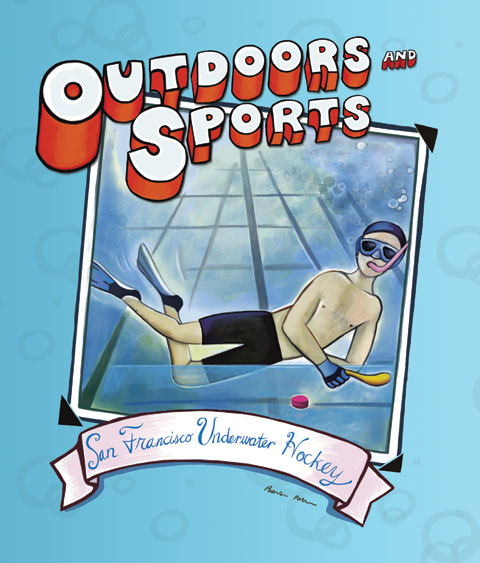
The Brits have started some internationally contagious sports, like football (soccer) and cricket. Now underwater hockey, which English divers created in the 1950s, is grabbing Americans’ attention. Locals are quickly jumping into the game with the San Francisco Underwater Hockey club. If you like swimming, dip your toes in new water and give it a shot. Sean Avent of the San Francisco Sea Lions club team explains its appeal: “Holding your breath, wearing a Speedo, and swimming after a lead puck on the bottom of a swimming pool is no more obtuse than trying to pummel a guy who is carrying a pigskin ball and armored in high-tech plastic. People, in general, are just more familiar with the latter of the two obtuse sports. And the first is just way more fun.” Pay $4 at the door of one of the games to try it out, or join the club and play in the Presidio or Bayview pools at a low cost.

www.underwater-society.org/uwhockey/sanfran

BEST YOGA WITH THE FISHES

Million Fishes Gallery, one of our favorite artist collectives in San Francisco, isn’t just an awesome place to see great exhibits by a revolving door of local artists and to catch raging late-night shows featuring bands like Jonas Reinhardt, Erase Errata, Tussle, and Lemonade. It also provides an effective and inexpensive way to get your rejuvenating twice-weekly yoga fix. Instructor Beth Hurley teaches a 90-minute vinyasa yoga class from 6:30 to 8 p.m. on Tuesdays and Thursdays at the gallery’s yoga studio (yeah, this artist space comes with its own yoga studio) that draws a nice mix of artists, Mission locals, yoga enthusiasts, and those who see the benefit in working out before hitting up El Metate next door. Hurley’s sessions are $7 to $11, which firmly places them among the least expensive yoga classes in San Francisco, and safeguards you from having to deal with yuppie yogis in head-to-toe Lululemon.

2829 23rd St., SF. www.millionfishes.com

BEST EYE-WATERING MEMORABILIA

Mission restaurateur Scott Youkilis has turned out quality American fare at Maverick for a few years now, while his brother Kevin continues to play at an MVP pace for the Boston Red Sox. Scott bottles a great homemade hot sauce; Kevin hits two-out home runs in the bottom of the ninth against the New York Yankees. Could there possibly be a way to merge these exceptional fraternal talents? Voilà: Youk’s Hot Sauce, a condiment that attempts to bottle the potency of Kevin’s hitting abilities with the flavor of Scott’s Southern-tinged cuisine. Available at Maverick or online, bottles go for $10 each, or $25 with Kevin’s autograph, and portions of all proceeds go to Kevin’s charity, Youk’s Hits for Kids. It’s a hot souvenir from a future Hall of Famer for the legions of Red Sox fans that make the Bay Area their home away from Fenway.

3316 17th St., SF. (415) 863-3061, www.sfmaverick.com, www.youkshotsauce.com

BEST NATIVE WORKOUT

When it comes to getting in shape, it’s almost a crime to have a gym membership in San Francisco. We live in the almost perpetually golden state of California, not Wisconsin in the third week of January. So get the hell outside and tackle some hills or run along the beaches. Better yet, do both with the Baker Beach Sand Ladder. Long known to local triathletes as an endurance-crushing beast, the sand ladder is 400 sheer steps of pulse-pounding “I think I’m gonna die” workout, set against the spectacular backdrop of the Pacfic Ocean flowing into the Golden Gate. Minus the cardiac arrest, it sure beats the fluorescent lighting, smelly funk, and steroidal carnival music of your local gym. The simple fact of the matter is that when you can run nonstop to the top of the sand ladder you’re officially in good shape. And best of all, it’s free.

25th Ave. and El Camino del Mar, SF. www.nps.gov

BEST BITCH-SLAP FOR THE ENVIRONMENT

Chevron has always been one of the Bay Area’s more vile corporations, whether it’s lobbying aggressively against global warming legislation or polluting communities from Richmond to Ecuador, all the while greenwashing its image with warm and fuzzy (and highly deceptive) advertising campaigns. That’s why we love to see groups such as the rainforest-protecting Amazon Watch and its anti-Chevron allies giving a little something back. Before this year’s Chevron shareholders meeting in San Francisco, activists plastered fake Chevron ads (“I will not complain about my asthma” and “I will give my baby contaminated water”) all over the city and staged creative protests outside the event. Ditto when Chevron CEO David O’Reilly spoke at the Commonwealth Club in May, sending Chevron goons into a paranoid frenzy. Amazon Watch and other groups are winning some key battles — voters recently approved steep tax increases on Chevron’s Richmond refinery, and a judge rejected plans to expand the facility. To which we can only say, “Hit ’em again!”

www.amazonwatch.org

BEST PUBLIC ACOUSTIC COCOON

Ear-piercing squeals, gut-rumbling skronks, the occasional wet fart sound — these are the unfortunate hallmarks of beginning brass instrumentalists. Those living in a city as dense and sensitive as our own have it rough when they want to work out their kinks: neighbors who sleep during the day or get up early yell at them, passersby take none too kindly to the squawking on busy sidewalks, and soundproofed studio space is economically out of reach. For all who need a place to practice, there’s the blessing of the Conservatory Drive tunnel, which passes under John F. Kennedy Drive in Golden Gate Park. An array of practicing jazz combos and amateur tooters take up residence at the tunnel’s entrance during the day, providing entertainment to nearby Conservatory of Flowers visitors. The tunnel actually seems to crave music pouring into and echoing through its abyss — it forms a protective acoustic cocoon around performers that amplifies mellifluous passages and somehow blurs out less felicitous ones. Spontaneous jam sessions are common, so don’t sit on the grass — pick up your brass.

Conservatory Dr. and John F. Kennedy Dr., Golden Gate Park, SF

BEST MOUSETRAP FOR MINOTAURS

Little-known and charmingly miniscule, the Eagle Point Labyrinth is a jumble of twisty turns perched on the lip of a cliff near an offshoot of Lands End Trail. To reach it, you must set out with a compass in hand, hope in your heart, and fingers crossed. The labyrinth, one of three outdoor mazes known to exist in San Francisco, is a mysterious wonder that has so far avoided being marked on any map (although it can be glimpsed via a Google satellite image for those too faint to blindly wander in search of it). The superlative views it affords of the Golden Gate certainly justify hiking, sometimes panicked, through yards of unpruned foliage. The stone-heaped maze is handmade, and while we speculate about its mysterious origins — a mousetrap for Minotaurs, perhaps? — we can’t help but appreciate the karmic offerings of those who have reached the center before us, leaving a small pile of baubles. Mythic etiquette mandates you scoop up one of these and leave something of your own behind.

Lands End, Sutro Heights Park, SF.

BEST COMMUNITY STRETCH

Yearning to try yoga but needing to stretch your dollar? Every Monday through Thursday from 7:45 p.m. to 9:15 p.m., YogaKula packs its San Francisco location with eager newcomers for its affordable community class, available on a sliding scale ($8 to $16). Especially lively are the Monday and Wednesday classes with quirky and entertaining instructor Skeeter Barker, who offers genuine, palatable optimism and inspiration along with some much-needed recentering. Barker is an inspirational teacher who, as her Web profile says, “welcomes you to your mat, however you find yourself there.” Along with the community classes, YogaKula offers Anusara, a therapeutic style of yoga, in addition to a variety of other wellness practices. Its two locations — one at 16th Street and Mission, and one in North Berkeley — offer courses in yoga training, yoga philosophy, specialized workshops, Pilates, massage, and one-on-one yoga instruction.

3030A 16th St., SF. (415) 934-0000; 1700 Shattuck, Berk. (510) 486-0264, www.yogakula.com

BEST PLACE TO HIDE A JET

To be precise, the best place to hide a jet is behind Door 14 on the Alameda Naval Air Station. While many of the buildings on the former military base have been converted to civilian uses, such as sports clubs and distilleries, some continue to serve military functions, like storing the jet that used to be on display at the base’s portside entrance (until high winds blew it off its pedestal two winters ago). The naval station is also the perfect place to hide domesticated bunnies. A herd of them live in and around a tumbledown shed opposite the Port of Oakland. Then there are the jackrabbits, which flash across the base’s open spaces at night, hind legs glinting in the moonlight. It’s easy to miss the flock of black-crowned night herons, which pose one-legged every winter on the lawns of “The Great Whites”-<\d>houses where the naval officers once lived. But who could forget the hawk that roosts atop the Hangar One distillery and periodically swoops to grab a tasty, unsuspecting victim off the otherwise empty runways where The Matrix Reloaded was shot?

1190 W. Tower, Alameda

BEST PUTT-PUTT ON THE ‘CIDE

Since 1998, Cyclecide has been enchanting — and sometimes scaring — audiences with its punk rock-<\d>inspired, pedal-powered mayhem. But after 11 years of taking its bicycle-themed carnival rides, rodeo games, and live band to places like Coachella, Tour de Fat, and Multnomah County Bike Fair, the bicycle club is putting down roots, or rather, fake grass. This year the crew famous for tall bikes, bicycle jousting, and denim jackets with a cackling clown on the back is building Funland, an 18-hole mini golf course in the Bayview. Though sure to be fun for the whole family, rest assured that Funland will retain all of Cyclecide’s boundary-pushing humor and lo-fi sensibility. Yes, there will be a replica of the Golden Gate Bridge built by master welder Jay Broemmel, but you can also putt through Closeupofmyass, a landscape of rubber tubes springing from brown Astroturf. What else would you expect from a crew whose interests are “bikes, beer, and building stuff”?

www.cyclecide.com

BEST NO FRILLS FIRST AID

It’s nice for big companies to notice that women buy things other than cleaning supplies and facial cream. But do they have to make everything targeted toward the female demographic so freakin’ floral and pink and cloyingly girlie? Adventure Medical Kits — the Oakland-based company famous in sports circles for outfitting everyone from backcountry skiers to weekend car-campers with durable, complete first-aid packages — says a resounding no. Its women’s edition outdoor medical kit comes jam-packed with all the fixings adventurous boys get — wound care materials, mini tweezers, insect-bite salve, a variety of medications, and a first-aid booklet — plus a couple things only ladies need, like tampons, leak-safe tampon bags, menstrual relief meds, and compact expands-in-water disposable towels. And it’s all packaged in a sporty blue nylon bag that weighs less than a pound. No lipstick? No diet pills? No frilly, lacy case made to look like a purse or a bra or a tiny dog? We’re buying it.

www.adventuremedicalkits.com

BEST PLACE TO GET ROLLIN’

When one thinks of skate shops these days, one’s thoughts travel naturally to wicked Bloodwizard decks, Heartless Creeper wheels, and Venture trucks — everything you’d need to trick out your board before you cruise to Potrero de Sol. All those goodies are available at Cruz Skate Shop, as well as Lowcard tees, recycled skateboard earrings, Protec helmets, and much more. But boarding is boring. You’ve done it since you were 13. Isn’t it time to ditch that deck and take up a real sport like, say, roller skating? Hell, yes. And Cruz has everything you need to get started down that sparkly, disco-bumpy Yellow Brick Road to eight-wheelin’ Oz. From the fiercest derby-ready model to mudflap girl bootie shorts, this store will kit you up in the best way for your Sunday afternoon Golden Gate Park debut. We’re partial to the Sure-Grip Rock Flame set of wheels with, you guessed it, pink flames streaming up the toes. But an enticing array of more professional-looking speed skates is available, as is a knowledgeable staff to get you rollin’.

3165 Mission, SF. (415) 285-8833, www.cruzskateshop.com

BEST OF THE BAY ON THE BAY

If you’re looking to get on the water without getting wet, Ruby Sailing is an affordable option for you and your friends to get a taste of adventure. The Ruby sailboat has been taking guests around the bay for 25 years. For just $40 per person, owner and operator Captain Josh Pryor will lead you on a two and a half hour tour of the bay, passing Alcatraz and looping around Sausalito. Snacks are provided, and the skipper sells wine and beer by the glass for cheap. The Ruby is also available for fishing expeditions, including poles, bait, and tackle; for private parties up to 30 guests; for weddings; and even for funerals at sea. And since the boat boards at the Ramp restaurant on the Dogpatch waterfront, you’re covered for pre- and post-splash food and drink, if you have the stomach. No prior sailing experience is required, but, in the words of the skipper, “no two trips are the same,” so be ready to hang on.

855 Terry Francois, SF. (415) 272-0631, www.rubysailing.com

Best of the Bay 2009: Shopping

0

Shopping

BEST NEW NECESSITIES

Sure, you can buy anything you want on the Internet, but there’s still a certain charm in entering a store whose items have been carefully chosen to delight the eye in three dimensions. That’s the idea behind Perch, Zoel Fages’s homage to all things charming and cheeky, from gifts to home décor. Do you need a set of bird feet salt-and-pepper shakers? A rhinoceros-head shot glass? A ceramic skull-shaped candleholder that grows “hair” as the wax drips? Of course not. But do you want them? The minute you enter the sunny, sweet Glen Park shop, the obvious answer will be yes. And for those gifty items you do need — scented candles and soaps, letterpress greeting cards, handprinted wrapping paper — Perch is perfect too. We’d recommend you stop by just to window-shop, but who are we kidding? You can’t visit here without taking something home.

654 Chenery, SF. (415) 586-9000, www.perchsf.com

BEST PENNYSAVERS FOR EARTHSAVERS

How many environmentalists does it take to change a light bulb? None: LED light bulbs last longer than environmentalists. If you think that joke’s funny — or at least get why it’s supposed to be — you might just be the target market for Green Zebra. Based on the idea that environmentally aware consumers like to save money as much as their Costco-loving neighbors, this book melds the concept of a coupon book with the creed of environmental responsibility. It’s a virtual directory of deals at local businesses trying to work outside the world of pesticidal veggies and gas-guzzling SUVs. Anne Vollen and Sheryl Cohen’s vision now comes in two volumes — one for San Francisco, and one for the Peninsula and Silicon Valley — featuring more than 275 exclusive offers from indie bookstores, art museums, coffee houses, organic restaurants, pet food stores, and just about anywhere else you probably already spend your money (and wouldn’t mind spending less).

(415) 346-2361, www.thegreenzebra.org

BEST ONE-STOP SHOP

So you need a salad spinner, some kitty litter, a birthday card for your sister, and a skein of yarn, but you don’t feel like going to four different stores to check everything off the list? Face it, you’re lazy. But, you’re also in luck. This year marks the 70th anniversary of the Standard 5 and 10, a one-stop wonderland in Laurel Village that caters to just about every imaginable whim, need, and desire of serious shoppers and procrastinators alike. Don’t be fooled by the large red Ace sign on the storefront — this is not merely a hardware store (although it can fulfill your hardware needs, of course). It’s an everything store. Walking the aisles here is a journey through consumerism at its most diverse. Greeting cards and tabletop tchotchkes fade into rice cookers then shower curtains, iron-on patches, Webkinz, motor oil…. It’s a dizzying array of stuff you need and stuff you simply want.

3545 California, SF. (415) 751-5767, www.standard5n10.com

BEST PLACE TO SINK A BATTLESHIP

Maybe we don’t have flying cars yet, but with video chatting, iPhones, and automated vacuum cleaners, we’re pretty close to living in the imaginary future The Jetsons made magical. Is it any wonder that, while loving our new technologies (hello, Kindle), we’ve also developed a culturewide nostalgia for simpler times? A perfect example is the emergence of steampunk — perhaps familiar to the mainstream as jewelry made of watch parts and cars crafted to look like locomotives. There also seems to be a less expensive, less industrial trend for the pastimes of yore: Croquet. Talk radio. And board games. The last of which is the basis of Just Awesome, the Diamond Heights shop opened by Portland escapee Erik Macsh as a temple to old-fashioned charms. Here you can pick up a myriad of boxes full of dice, cards, and plastic pieces. Head home with Clue, one of the Monopoly iterations (was Chocolate-opoly really necessary?), or a new game that came out while you were distracted by Nintendo Wii. You can even open the box and try a round or two in the shop. How’s that for old-world service?

816 Diamond, SF. (415) 970-1484, www.justawesomegames.com

BEST BORROWED CLOTHES

The nice thing about having a sister, a roommate, or a tolerable neighbor who’s exactly your size is that there’s always someone else’s closet to raid when your own is looking dismal. But what to do when you live alone, your neighbor’s not answering your calls, and you desperately need an attention-getting outfit right now? Make a new best friend: Shaye McKenney of La Library. The friendly fashionista will let you borrow a pair of leather hot pants for a Beauty Bar boogie or a German knit couture gown for that gold-digging date to the opera, all for a small pay-by-the-day price. You can even bring your makeup and get ready for the evening in front of the antique mirrors in her socialist street shop. It’s all the fun of sharing, without having to lend out any of your stuff.

380 Guerrero, SF. (415) 558-9481, www.la-library.com

BEST ROCKSTAR STYLES

Need clothes a rockstar would wear but a starving musician can afford? Look no further than Shotwell, whose blend of designer duds and vintage finds are worthy of the limelight and (relatively) easy on your budget. Think jeans with pockets the size of guitar picks, sculptural black dresses, handpicked grandpa sweaters, and reconstructed ’80s rompers that can be paired with lizard skin belts or dollar sign boots, all for less than the cutting-edge designer labels would suggest they should cost. And it’s not just for the ladies. Michael and Holly Weaver stock their adorable boutique with clothing and accessories for all chromosomal combinations. The concept’s become such a success that Shotwell’s moving from its old locale to a bigger, better space. All we can say is, rock on.

320 Grant, SF. (415) 399-9898, www.shotwellsf.com

BEST LOOKIN’

The best stores are like mini-museums, displaying interesting wares in such a way that they’re almost as fun to peruse as they are to take home. Park Life takes this concept one step further by being a store (wares in the front are for sale) and a gallery (featuring a rotating selection of local contemporary artists’ work). No need to feel guilty for window-shopping: you’re simply checking out the Rubik’s Cube alarm clock, USB flash drive shaped like a fist, and set of “heroin” and “cocaine” salt-and-pepper shakers on your way to appreciating the paintings in the back, right? And if you happen to leave with an arty coffee-table book, an ironic silk-screen T-shirt, or a Gangsta Rap Coloring Book, that’s just a bonus.

220 Clement, SF. (415) 386-7275, www.parklifestore.com

BEST LITTLE COOKING STORE THAT COULD

In a world replete with crates, barrels, Williams, and Sonomas, it’s easy to forget there’s such a thing as an independent cooking store. But Cooks Boulevard is just that: an adorable, one-stop shop for reasonably priced cooking paraphernalia, from a pastry scale or Le Creuset to a candy mold or stash of wooden spoons. And if the shop doesn’t have what you need, the friendly staff will order it for you. In fact, this Noe Valley gem has everything the big stores have, including online ordering, nationwide shipping, and a well-kept blog of missives about the foodie universe. It even offers cooking classes, on-site knife sharpening, community events such as food drives and book clubs, and CSA boxes of local organic produce delivered to neighborhood clientele. With knowledgeable service and well-stocked shelves, the Boulevard makes it easy for home cooks and professional chefs to shop local.

1309 Castro, SF. (415) 647-2665, www.cooksboulevard.com

BEST BROOKLYN ALTERNATIVE

No sleep ’til Brooklyn? Fine. But no style ’til you reach the Big Apple? We just can’t give you license for that kind of ill, especially since the Brooklyn Circus came to town last July. With its East Coast–style awning, living room vibe, and indie hip-hop style, this boutique might just be the thing to keep those homesick for NYC from buying that JetBlue ticket for one … more … week. Want to save your cash just in case? You’re welcome to chill out on the leather sofas and listen to Mos Def mixtapes. At the store you can soak in the charm of the Fillmore’s colorful energy and history, while checking out the trends that blend Frank Sinatra and Kanye West almost seamlessly. Sure, you could visit the Chicago outpost before going to the original in the store’s namesake city, but why bother? Next year’s selection will include an expanded line of locally produced goodies — all available without having to brave a sweltering Big City summer.

1525 Fillmore, SF. (415) 359-1999, www.thebkcircus.com

BEST YEAR-ROUND HOLIDAY GIFT BASKET

I know. It’s July. The last thing you want to do is think about that stupid holiday shopping season that’ll dominate the entire universe in about three months. But the gift baskets at La Cocina are worth talking about year-round, not only because purchasing one supports a fantastic organization (dedicated to helping low-income entrepreneurs develop, grow, and establish their businesses) but because the delightful packages really are great gifts for any occasion. Whether it’s your boss’s birthday, your friend’s dinner party, or simply time to remind your grandmother in the nursing home that you’re thinking of her, these baskets full of San Francisco goodness are a thoughtful alternative to flower bouquets and fruit collections ordered through corporations. Orders might include dark chocolate-<\d>covered graham crackers from Kika’s Treats, spicy yucca sticks, toffee cookies from Sinful Sweets, roasted pumpkin seeds, or shortbread from Clairesquare, starting at $23. Everything will come with a handwritten note and a whole lot of love.

www.lacocinasf.org

BEST UNDERWATERSCAPING

Aqua Forest Aquarium has reinvented the concept of fish in a bowl. The only store in the nation dedicated to a style of decorating aquariums like natural environments, Aqua Forest boasts an amazing display of live aquatic landscapes that seem directly transplanted from more idyllic waters. With good prices, knowledgeable staff, a focus on freshwater life, and a unique selection of tropical fish, the shop is not only proof that aquarium stores need not be weird and dingy, but that your home fish tank can be a thriving ecosystem rather than a plastic environment with a bubbling castle (OK, a thriving ecosystem with a bubbling castle). Part pet store, part live art gallery, Aqua Forest is worth a visit even if you’re not in the market for a sailfin leopard pleco.

1718 Fillmore, SF. (415) 929-8883, www.adana-usa.com

BEST FRIDGE FILLERS ON A BUDGET

Remember when we all joked that Whole Foods should be called Whole Paycheck? Little did we realize the joke would be on us when the only paper in our purses would be a Whole Pink Slip. In the new economy, some of us can’t afford the luxury of deciding between organic bananas or regular ones — we’re trying to figure out which flavor of ramen keeps us full the longest. Luckily, Duc Loi Supermarket opened in the Mission just in time. This neighborhood shop is big, bright, clean, well stocked, cheap, and diverse, with a focus on Asian and Latino foods. Here you can get your pork chops and pig snouts, salmon and daikon, tofu and tortilla chips — and still have bus fare for the ride home. In fact, young coconut milk is only 99 cents a can, a whole dollar less than at Whole Foods.

2200 Mission, SF. (415) 551-1772

BEST PLACE TO DISS THE TUBE

Some people go their entire lives buying replacement 20-packs of tube socks from Costco, socks whose suspicious blend of elastic, petroleum products, and God-knows-what signals to wearers and viewers alike: Warm, shwarm! Fit, shmit! Style, shmyle! Other people, even if they keep their socks encased in boots or shoes, want to know that their foot coverings are just one more indicator of their fashion — and common — sense. Those people go to Rabat in Noe Valley, where the sock racks look like a conjuring of the chorus of “Hair”: “curly, fuzzy, snaggy, shaggy, ratty, matty, oily, greasy, fleecy, shining, gleaming, streaming, flaxen, waxen, knotted, polka-dotted, twisted, beaded, braided, powdered, flowered, and confettied; bangled, tangled, spangled, and spaghettied.” Furthermore, the socks are mostly made from recognizable materials like wool, cotton, or fleece. As for you sensible-shoe and wingtip types, not to worry. Rabat also stocks black and white anklets and nude-colored peds.

4001 24th St., SF (415) 282-7861. www.rabatshoes.com

BEST BOOKS FOR KIDS YOU DON’T KNOW

Don’t let the small storefront at Alexander Book Company deter you — this three-story, independent bookstore is packed with stuff that you won’t find at Wal-Mart or the book malls. We’re particularly impressed with the children’s collection — and with the friendly, knowledgeable staff. If you’re looking for a birthday present for your kid’s classmate, or one for an out-of-town niece or nephew — or you just generally want to know what 10-year-old boys who like science fiction are reading these days — ask for Bonnie. She’s the children’s books buyer, and not only does she have an uncanny knack for figuring out what makes an appropriate gift, chances are whatever the book is, she’s already read it.

50 Second St., SF. (415) 495-2992, www.alexanderbook.com

BEST PLACE TO SELL THE CLOTHES OFF YOUR BACK

If you think Buffalo Exchange and Crossroads are the only places to trade your Diors for dollars, you’re missing out. Urbanity, Angela Cadogan’s North Berkeley boutique, is hands down the best place to consign in the Bay. The spot is classy but not uppity, your commission is 30 percent of what your item pulls in, and, best of all, you’d actually want to shop there. Cadogan has a careful eye for fashion, choosing pieces that deserve a spot in your closet for prices that won’t burn a hole in your wallet. Want an even better deal on those Miu Miu pumps or that YSL dress? Return every 30 days, when items that haven’t sold yet are reduced by 40 percent. But good luck playing the waiting game against Urbanity’s savvy regulars — they’ve been eyeing those Pradas longer than you have.

1887 Solano, Berk. (510) 524-7467, www.shopurbanity.com

BEST TIME MACHINE

Ever wish you could be a character in a period piece, writing love letters on a typewriter to your distant paramour while perched upon a baroque upholstered chair? We can’t get you a role in a movie, but we can send you to the Perish Trust, where you’ll find everything you need to create a funky antique film set of your very own. Proprietor-curator team Rod Hipskind and Kelly Ishikawa have dedicated themselves to making their wares as fun to browse through as to buy, carefully selecting original artwork, vintage folding rulers, taxidermied fowl, out-of-print books, and myriad other antique odds-and-ends from across the nation. As if that weren’t enough, this Divisadero shop also carries Hooker’s Sweet Treats old world-<\d>style gourmet chocolate caramels — and that’s definitely something to write home about.

728 Divisadero, SF. www.theperishtrust.com

BEST MISSION MAKEOVER

If Hayes Valley’s indie-retailer RAG (Residents Apparel Gallery) bedded the Lower Haight’s design co-op Trunk, their love child might look (and act) a lot like Mission Statement. With a focus on local designers and a philosophy of getting artists involved with the store, the 18th Street shop has all the eclectic style of RAG and all the collaborative spirit of Trunk — all with a distinctly Mission District vibe. Much like its namesake neighborhood, this shop has a little of everything: mineral makeup, fedoras adorned with spray-painted designs, multiwrap dresses, graphic tees, and more. Between the wares of the eight designers who work and play at the co-op, you might find everything you need for a head-to-toe makeover — including accessorizing advice, custom designing, and tailoring by co-owner Estrella Tadeo. You may never need to leave the Valencia corridor again.

3458-A 18th St., SF. (415) 255-7457, www.missionstatementsf.com

BEST WALL OF BEER

Beer-shopping at Healthy Spirits might ruin you. Never again will you be able to stroll into a regular suds shop, eye the refrigerated walk-in, and feign glee: “Oh, wow, they have Wolaver’s and Fat Tire.” The selection at Healthy Spirits makes the inventory at almost all other beer shops in San Francisco — nay, the fermented universe — look pedestrian. First-time customers sometimes experience sticker shock, but most quickly understand that while hops and yeast and grain are cheap, hops and yeast and grain and genius are not. Should you require assistance in navigating the intriguing and eclectic wall of beer, owner Rami Barqawi and his staff will guide you and your palate to the perfect brew. Once you’ve got the right tipple, you can choose from the standard corner-store sundries, including coffee, wine, ice cream, and snacks. Chief among them is the housemade hummus (strong on the lemon juice, just the way we like it). Being ruined never tasted so good.

2299 15th St., SF. (415) 255-0610, healthy-spirits.blogspot.com

BEST PLACE TO CHANNEL YOUR INNER BOB VILLA

When is a junkyard not just a junkyard? When you wander through its labyrinth of plywood, bicycle tires, and window panes only to stumble upon an intricately carved and perfectly preserved fireplace mantle which, according to a handwritten note taped to it, is “circa 1900.” This is the kind of thing that happens at Building Resources, an open air, DIY-er’s dream on the outskirts of Dogpatch, which just happens to be the city’s only source for recycled building and landscape materials. Maybe you’ll come here looking for something simple: a light fixture, a doorknob, a few pieces of tile. You’ll find all that. You’ll also find things you never knew you coveted, like a beautiful (and dirt cheap) claw-foot bathtub that makes you long to redo your own bathroom, even though you don’t own tools and know nothing about plumbing. No worries. That’s what HGTV is for.

701 Amador, SF. (415) 285-7814, www.buildingresources.org

BEST WAY TO SHOP LOCAL

It’s impossible not to be impressed with the selection at Collage, the tiny jewel-box of a shop perched atop Potrero Hill. The home décor store and gallery specializes in typography and signage, refurbished clocks and cameras, clothing, unique furniture, and all kinds of objects reinvented and repurposed to fit in a hip, happy home. But what we like best is owner Delisa Sage’s commitment to supporting the local community and economy. Not only does she host workshops on the art of fine-art collage, she carries a gorgeous selection of jewelry made exclusively by local woman artists. Whether you’re looking for knit necklaces, Scrabble pieces, typewriter keys, or an antiqued kitchen island, you’ll find ’em here. And every dollar you spend supports San Francisco, going toward a sandwich at Hazel’s, or a cup of joe at Farley’s, or an artist’s SoMa warehouse rent. Maybe capitalism can work.

1345 18th St., SF. (415) 282-4401, www.collage-gallery.com

BEST BRAND-NEW VINTAGE STYLE

There’s something grandmothers seem to understand that the Forever 21, H&M, Gap generation (not to mention the hippies in between) often miss: the value of elegant, tailored, designer classics that last a lifetime. Plus, thanks to living through the Great Depression, they know a good bargain. Luckily, White Rose got grandma’s memo. This tiny, jam-packed West Portal shop is dedicated to classy, timeless, well-made style, from boiled wool-<\d>embroidered black coats to Dolce handbags. Though the shelves (stacked with sweaters) and racks (overhung with black pants) may resemble those in a consignment or thrift store, White Rose is stocked full of new fashions collected from international travels, catalog sales, or American fabricators. In fact, it’s all part of the plan of the owner — who is reputed to have been a fashion model in the ’50s — to bring elegant chemises, tailored blouses, and dresses for all sizes and ages to the masses. The real price? You must have the patience to sort through the remarkable inventory.

242 W. Portal, SF. (415) 681-5411

BEST BOUTIQUE FOR BUNHEADS

It seems you can get yoga pants or Lycra leotards just about anywhere these days (hello, American Apparel). But elastic waists and spaghetti straps alone do not make for good sportswear. SF Dancewear knows that having clothes and footwear designed specifically for your craft — whether ballroom dance, gymnastics, theater, contact improv, or one of the good old standards like tap, jazz, or ballet — makes all the difference. This is why they’ve been selling everything from Capezio tap shoes to performance bras since 1975. The shop is lovely. There are clear boxes of pointe shoes nestled together like clean, shiny baby pigs; glittering displays of ballroom dance pumps; racks of colorful tulle, ruched nylon, patterned Lycra; and a rope draped with the cutest, tiniest tutus you ever did see. The store is staffed by professional dancers who’re not only trained to find the perfect fit but have tested most products on a major stage. And though your salesclerk may dance with Alonzo King’s Lines Ballet or have a regular gig at the S.F. Opera, they won’t scoff at middle-aged novice salsa dancers or plus-size burlesqueteers looking for fishnets and character shoes. Unlike the competitive world of dance studios, this retail shop is friendly and open to anyone who likes to move.

659 Mission, SF. (415) 882-7087; 5900 College, Oakl. (510) 655-3608,

www.sfdancewear.com

BEST GIFTS FOR YESTERYEAR’S KIDS

We weren’t sure it could get any better — or weirder — than Paxton Gate, that Mission District palace of science, nature, and dead things. But then the owner, whose first trade was landscape architecture, opened up Paxton Gate Curiosities for Kids down the street, and lo and behold, ever more awesomeness was achieved. Keeping the original store’s naturalist vibe but leaving behind some of its adults-only potential creepiness, this shop focuses on educational toys, vintage games, art supplies, and an eclectic selection of books sure to delight the twisted child in all of us. From handblown marbles to wooden puzzles, agate keychains to stop-motion booklets, and Lucite insects to Charlie Chaplin paper doll kits, everything here seems to be made for shorties from another time — an arguably better one, when kids rooted around in the dirt and made up rules for imaginary games and didn’t wear G-string underwear.

766 Valencia, SF. (415) 252-9990, www.paxtongate.com

BEST DAILY TRUNK SHOW

San Francisco sure does love its trunk shows: all those funky people hawking their one-of-a-kind wares at one-of-a-kind prices. The only problem? Shows happen intermittently (though with increasing frequency in the pre-<\d>Burning Man frenzy). Lucky for us, Miranda Caroligne — the goddess who makes magic with fabric scraps and a surger — co-founded Trunk, an eclectic indie designer showcase with a permanent address. The Lower Haight shop not only features creative dresses, hoodies, jewelry, and menswear by a number of artists, but also functions as an official California Cooperative Corporation, managed and run by all its 23 members. That means when you purchase your Kayo Anime one-piece, Ghetto Goldilocks vest, or Lucid Dawn corset, you’re supporting an independent business and the independent local artists who call it home.

544 Haight, SF. (415) 861-5310, www.trunksf.com

BEST PLACE TO GET IRIE WITH YOUR OLLIE

Skate culture has come a long way since its early surfer punk days. Now what used to be its own subculture encompasses a whole spectrum of subs, including dreadheaded, jah-lovin’, reggae pumpin’ riders. And Culture Skate is just the store for those who lean more toward Bob Marley than Jello Biafra. The Rasta-colored Mission shop features bamboo skate boards, hemp clothing, glass pipes, a whole slew of products by companies such as Creation and Satori, and vinyl records spanning genres like ska, reggaeton, dub, and, of course, good old reggae. Stop by to catch a glimpse of local pros — such as Ron Allen, Matt Pailes, and Karl Watson. But don’t think you have to be a skater to shop here: plenty of people stop by simply for the environmentally-friendly duds made with irie style.

214 Valencia, SF. (415) 437-4758, www.cultureskate.com

The Big Zero – SF version

0

By Steven T. Jones
bfz001.jpg
I can’t stop thinking about Paul Krugman’s wonderfully biting recent commentary, “The Big Zero,” and his persuasive point that in the last decade, “we achieved nothing and learned nothing.” The Nobel laureate economist was talking about the national economy, but I think his point can also be applied to other realms as well, and specifically to San Francisco.

Sprawl development and over-reliance on the automobile have strained public resources and contributed to global warming, bad air quality, and diminished quality of life. The bursting of the housing bubble and its related lies shows clearly that most people can’t afford to buy a home and must rent. Stagnant wages, decimated 401Ks, and the dead promise that we’ll be OK if we work hard and play by the rules show that we’re all in the same boat, equally vulnerable to hard times and ultimately dependent on government and each other if things really get bad.

So what are we doing with these lessons learned? The core of this city’s housing policy is to simply let an untrustworthy, financially weak corporation, Lennar, build 16,000 homes – the vast majority for sale at pricey market rates – in the two most isolated parts of the city: southeast SF and Treasure Island (which will need to be severely hardened against rising seas). And to make it worse, Mayor Gavin Newsom’s big revenue idea is to let rich people buy their way out of the condo conversion lottery, further depleting the rental stock relied on by two-thirds of city residents.

We’re promoting shitty private sector jobs at all cost (including refusing to adequately tax big corporations) and cutting public sector jobs that have good pay and benefits without a thought, in the process hurting our public health and social service functions. Newsom is still taking his cues from the realtors, landlords and Chamber of Commerce – who have all been so obviously wrong in their advocacy this decade – and refusing to even meet with advocates for tenants, immigrants, environmentalists, and the working class, the very people who most need the help and attention of the Mayor’s Office.

To me, being a progressive simply means that we can do better, that we can progress, that we can learn from the past to improve the future. So Krugman’s insightful column should be a wake-up call, a needed reminder that the economic conservatives like Newsom have been dangerously wrong and that we need to chart a new course.

FAIR: The 2009 P.U.-Litzer Awards

0

FAIR, the national media watch group, has been offering well-documented criticism of media bias and censorship since 1986.

The 2009 P.U.-Litzer Awards

For 17 years our colleagues Jeff Cohen and Norman Solomon have worked with FAIR to present the P.U.-Litzers, a year-end review of some of the stinkiest examples of corporate media malfeasance, spin and just plain outrageousness.

Starting this year, FAIR has the somewhat dubious honor of reviewing the nominees and selecting the winners. It’s a dirty job, but someone has to do it. So, without further ado, we present the 2009 P.U.-Litzers.

–The Remembering Reagan Award
WINNER: Joe Klein, Time

Time columnist Joe Klein (12/3/09), not altogether impressed by Obama’s announcement of a troop escalation in Afghanistan, wrote that a president “must lead the charge–passionately and, yes, with a touch of anger.”

He described the better way to do this:

Ronald Reagan would have done it differently. He would have told a story. It might not have been a true story, but it would have had resonance. He might have found, or created, a grieving spouse–a young investment banker whose wife had died in the World Trade Center–who enlisted immediately after the attacks…and then gave his life, heroically, defending a school for girls in Kandahar. Reagan would have inspired tears, outrage, passion, a rush to recruiting centers across the nation.

Ah, Reagan–now there was a president who could inspire people to fight and die based on lies.

–The Cheney 2012 Award
WINNER: Jon Meacham, Newsweek

Newsweek editor Jon Meacham declared (12/7/09) that Dick Cheney running for president in 2012 would be “good for the Republicans and good for the country.” He explained that “Cheney is a man of conviction, has a record on which he can be judged, and whatever the result, there could be no ambiguity about the will of the people…. A campaign would also give us an occasion that history denied us in 2008: an opportunity to adjudicate the George W. Bush years in a direct way.”

While the 2008 election might have seemed a sufficient judgment of the Bush years, it’s worth pointing out that at beginning of the year (1/19/09), Meacham was adamantly opposed to re-hashing Cheney’s record, calling it “the rough equivalent of pornography–briefly engaging, perhaps, but utterly predictable and finally repetitive.” The difference? That was in response to the idea that Cheney should be held accountable for lawbreaking. Apparently a few months later, the same record is grounds for a White House run.

–The Them Not Us Award
WINNER: Martin Fackler, New York Times

The New York Times (11/21/09) describes the severe problems with Japan’s elite media–a horror show where “reporters from major news media outlets are stationed inside government offices and enjoy close, constant access to officials. The system has long been criticized as antidemocratic by both foreign and Japanese analysts, who charge that it has produced a relatively spineless press that feels more accountable to its official sources than to the public. In their apparent reluctance to criticize the government, the critics say, the news media fail to serve as an effective check on authority.”

The mind reels.

–The Thin-Skinned Pundits Award
WINNER: Dana Milbank, Washington Post

Washington Post reporters Dana Milbank and Chris Cilizza got into trouble when, in an episode of their “Mouthpiece Theater” web video series, they suggested brands of beer that would be appropriate for various politicians. What would Hillary Clinton drink? Apparently something called “Mad Bitch.” The video, unsurprisingly, was roundly criticized, and was pulled from the Post site. So what lesson was learned? Milbank complained (8/6/09) that “it’s a brutal world out there in the blogosphere…. I’m often surprised by the ferocity out there, but I probably shouldn’t be.”

Yes, the problem with calling someone a “bitch” is the “ferocity” of your critics.

–The Sheer O’Reillyness Award
WINNER: Bill O’Reilly, Fox News Channel–TWICE!

1) Asked by a Canadian viewer, “Has anyone noticed that life expectancy in Canada under our health system is higher than the USA?,” Fox’s O’Reilly (7/27/09) responded: “Well, that’s to be expected, Peter, because we have 10 times as many people as you do. That translates to 10 times as many accidents, crimes, down the line.”

2) Drumming up fear of Democrats’ tax plans: “Nancy Pelosi and her far-left crew want to raise the top federal tax rate to 45 percent. That’s not capitalism. That’s Fidel Castro stuff, confiscating wages that people honestly earn.”

Perhaps Castro was president of the United States in 1982-86, when the top rate was 50 percent. Or maybe all of the 1970s, when it was 70 percent. Or from 1950-63, when it was 91 percent.

–The Less Talk, More Bombs Award
WINNER: David Broder, Washington Post

Post columnist Broder expressed the conventional wisdom on Barack Obama’s deliberations on the Afghanistan War, writing under the headline “Enough Afghan Debate” (11/15/09):

It is evident from the length of this deliberative process and from the flood of leaks that have emerged from Kabul and Washington that the perfect course of action does not exist. Given that reality, the urgent necessity is to make a decision–whether or not it is right.

–The Racism Is Dead Award
WINNER: Richard Cohen, Washington Post

Post columnist Richard Cohen wrote (5/5/09): “The justification for affirmative action gets weaker and weaker. Maybe once it was possible to argue that some innocent people had to suffer in the name of progress, but a glance at the White House strongly suggests that things have changed. For most Americans, race has become supremely irrelevant. Everyone knows this. Every poll shows this.”

For the record, “every poll” does not actually show this; the vast majority of Americans continues to recognize that racism is still a problem. Cohen went on to write months later–still presumably living in his racism-free world–that he did not believe Iran’s claims about its nuclear program, because “these Persians lie like a rug.”

–The When in Doubt, Talk to the Boss Award
WINNER: Matt Lauer, NBC News

Today show host Lauer announced a special guest on April 15: “If you really want to know how the economy is affecting the average American, he’s the guy to talk to.” Who was Lauer talking about? Wal-Mart CEO Mike Duke. The ensuing interview touched on the Employee Free Choice Act, which Lauer noted was supported by many unions but opposed by some large corporations–leading him to ask Duke, “What’s the truth?” Yes, look for “the truth” about a proposed pro-labor bill from the new CEO of an adamantly anti-labor corporation.

–The Socialist Menace Award
WINNER: Michael Freedman, Newsweek

Newsweek’s “We Are All Socialists Now” cover (2/16/09) certainly turned heads, but one of the stories inside explained in more detail the real threat. As senior editor Michael Freedman asked: “Have you noticed that Barack Obama sounds more like the president of France every day?”

The real problem, though, is what that’s going to do to us Americans, says Freedman: “If job numbers continue to look dismal, or get even worse, an ever-greater number of people will start looking to the government for support…. It’s very easy to imagine a chorus of former American individualists demanding cushy French-style pensions and free British-style healthcare if their private stock funds fail to recover and unemployment inches upward toward 10 percent and remains there.”

Pensions and healthcare for all–this is worse than we thought!

–The Iraq All Over Again Award
WINNER: Too Many to Name

After the invasion of Iraq, countless journalists who had treated allegations about Iraq’s weapons of mass destruction as facts were embarrassed when there were no such weapons to be found. So you’d think they’d be more careful about thinly sourced claims that Iran is seeking nuclear weapons. But in 2009, many journalists are still willing to treat such allegations as facts.

-NBC’s Chris Matthews (10/4/09): “As if Afghanistan were not enough, now there’s Iran’s move to get nuclear weapons.”

-NBC’s David Gregory (10/4/09). “Iran–will talks push that country to give up its nuclear weapons program?”

-Fox News Channel’s Bill O’Reilly (9/25/09): “All hell breaking loose as a new nuclear weapons facility is discovered in Iran, proving the mullahs have been lying for years…. Iran’s nuclear weapons program has now reached critical mass. And worldwide conflict is very possible. Friday, President Obama, British Prime Minister Brown and French President Sarkozy revealed a secret nuclear weapons facility located inside Iran.”

Some even went further, turning allegations of a nuclear weapons program into the discovery of actual nuclear weapons:

-ABC’s Good Morning America host Bill Weir (9/26/09): “President Obama and a united front of world leaders charge Iran with secretly building nuclear weapons.”

–The Talking Like a Terrorist Award
WINNER: Thomas Friedman, New York Times

In a January 14 column, New York Times superstar pundit Tom Friedman explained Israel’s war on Lebanon as an attempt to “educate” the enemy by killing civilians: The Israeli strategy was to “inflict substantial property damage and collateral casualties on Lebanon at large. It was not pretty, but it was logical.” Friedman added, “The only long-term source of deterrence was to exact enough pain on the civilians–the families and employers of the militants–to restrain Hezbollah in the future.” That strategy of targeting civilians to advance a political agenda is usually known as terrorism; Osama bin Laden couldn’t have explained it much better.

–The It Only Bothers Us Now Award
WINNER: Wall Street Journal editorial page

When Barack Obama only called on journalists from a list during a press conference, the Wall Street Journal did not like the new protocol (2/12/09):”We doubt that President Bush, who was notorious for being parsimonious with follow-ups, would have gotten away with prescreening his interlocutors.”

Actually, Bush was famous for calling only on reporters on an approved list; as he joked at a press conference on the eve of the Iraq War (3/6/03), “This is scripted.”

–The No Comment Award
WINNERS: MSNBC’s Mika Brzezinski and Rush Limbaugh

When asked by Politico (10/16/09) to name her favorite guest, MSNBC host Mika Brzezinski named arch-conservative Pat Buchanan “because he says what we are all thinking.”

Rush Limbaugh on Obama (Fox News Channel, 1/21/09): “We are being told that we have to hope he succeeds, that we have to bend over, grab the ankles…because his father was black.”

The human right to water

0

rebeccab@sfbg.com

At a recent San Francisco conference in a plush downtown hotel packed with big-business representatives, venture capitalists, and public relations practitioners, some insiders from high-profile multinational beverage corporations spoke about the moments they realized how crucial water is as a resource.

For Harry Ott, who formerly worked for the Coca-Cola Company, the epiphany struck in 1998 when he arrived at a Coke bottling plant in Darussalam, Tanzania for a routine inspection.

"When we walked into the plant … I noticed that there was no one there," Ott explained in a careful, Southern-accented voice. "And I said to the plant manager there, ‘Is it a holiday? Did I mess up in scheduling this?’ And he said, ‘No, we had a real severe outbreak of amoebic dysentery and all the employees have been affected by it.’ At that moment it really brought it home to me … every human should have access to clean water and sanitation to be able to maintain a healthy lifestyle."

But then Ott seemed to disavow this last statement, which implied support for what water rights activists have been pushing for: an inalienable right to clean drinking water, unmediated by corporations. As he told the crowd, "I don’t necessarily agree with the term ‘human right to water,’ because then the lawyers jump in here … and become rich off of this back-and-forth, knocking-heads process."

For corporations and advocacy groups alike, defining a human right to water is more than just a legal battle or academic exercise. As bottled-water companies weather mounting criticism for depleting aquifers to sustain profits and nongovernmental organizations point to the pitfalls of water privatization, control of the ultimate life-sustaining resource is becoming an increasingly important issue.

Widespread industrial contamination means less potable water to go around — particularly in developing countries, but in parts of California too — and intensifying drought due to climatic change means water scarcity is becoming a bigger problem. Water issues now represent a big financial risk for multinational companies and the top priority for communities that depend upon groundwater for their survival, so battle lines have been drawn for a struggle that is a matter of survival.

The second annual Corporate Water Footprinting conference, part of a corporate conference series called Action for Sustainable America, cost approximately $2,000 to attend. Unlike last year, when conference organizers denied press passes to both the Guardian and the San Francisco Chronicle, they opted to allow reporters in this time — perhaps as a show of goodwill after being publicly critiqued for a lack of transparency (see "Tap dreams," 12/10/08). The event was held at Le Meridien, a swank Financial District hotel, and was attended by businesspeople from a variety of high-profile companies.

Representatives from Coca-Cola, PepsiCo, and Nestle portrayed their respective corporations as model stewards of the environment, the opposite of the bad raps they’ve been branded with by social justice advocates, who complain that these corporate entities are responsible for exacerbating water shortages in drought-prone areas. Rather than profit-driven behemoths sapping communities of a critical resource, the spokespeople described their companies as environmentally-minded leaders acutely aware of the widespread lack of access to clean water and actively trying to hatch solutions to alleviate it.

Dan Bena, director of sustainability, health, safety and environment for PepsiCo International, kicked off with a presentation about how an estimated 1.5 billion impoverished people living in developing countries worldwide lack access to safe drinking water. Showing images of African children swimming naked in a river, he stressed the frequently repeated statistic that once every 15 seconds, another child in the developing world perishes from waterborne illness.

To hear Bena tell it, PepsiCo is emerging as a corporate trailblazer in protecting people from such a fate. In addition to its conservation efforts, it has donated to an organization that provides microloans to families for small-scale water infrastructure projects, he said. And at the urging of one of its shareholders, it recently agreed to sign a commitment supporting "the human right to water."

But when asked whether PepsiCo, the parent company of Aquafina, has a strategy for reducing the widespread use of bottled water — a flashpoint for environmentalists because it taxes aquifers, requires extensive shipping, and uses tons of plastic to produce — Bena didn’t have a straight answer. "We are evaluating it, but I can’t tell you," he said. "The critics are certainly very strong, but we think that people, by and large, want the convenience that bottled water provides."

In San Francisco, some of the beverage companies’ harshest critics organized a counter-conference to the 2008 Corporate Water Footprinting conference. This year, one of the counter-conference participants was seated on the same panel with Bena and the former Coca-Cola representative.

Mark Schlosberg, California director of Food & Water Watch, made it clear that he views the human right to water through a very different lens than the other panelists. "The ‘human right to water’ is not a concept for corporations to implement," Schlosberg said, relaying what was perhaps an unpopular message to a tough crowd. "Just as free speech is not a concept for corporations to implement. The human right to water is a concept which says that nobody should be denied access to clean water for basic human needs. It’s not a question of whether or not a corporation wants to adhere to that. It’s the responsibility of governments to create laws, and of corporations to follow laws. I don’t think that the basic human right to water … is alienable, just like certain constitutional rights are also inalienable and can’t be contracted away."

Speaking by phone several days later from New Delhi, India, Amit Srivastava, executive director of the India Resource Center, explained his perspective on the human right to water: "For us, the right to water means the community has control over its water resources. It is our fundamental human right to live free of pollution of water." As for PepsiCo’s efforts, "It sounds all good, but what is the reality on the ground?"

Srivastava, the driver behind the counter-conference to last year’s Corporate Water Footprinting Conference, spends half the year in India working in rural agrarian villages, where he says the impacts of Coca-Cola’s operations are hugely detrimental to people’s interests. PepsiCo has caused its share problems in India too, Srivastava said.

"Seventy percent of Indians make a living with agriculture," he explained. "They rely on groundwater — the same groundwater Coca-Cola uses to meet its production needs." Tens of thousands of farmers have been affected by a dearth of water in communities where Coca-Cola plants are sited, he says, and many have also been adversely affected by water contamination linked to the manufacturing facilities. As water becomes scarce, crops dry out and women must walk farther away to haul fresh water back home.

On Nov. 30, Srivastava said the India Resource Center helped bring 1,000 people out to a rally against Coca-Cola. "We’ve launched an international campaign to hold Coca-Cola accountable," he said, explaining that the goal is to "apply market pressure for the abuses they continue to commit in India."

Of particular concern is the village of Kala Dera, located in an area that was identified as a water-stressed region more than a decade ago, Srivastava said. Nonetheless, the construction of a new Coke bottling plant forged ahead there in 2000. A severe drought plagued the region this year, and Kala Dera experienced the sharpest drop in groundwater levels ever recorded, according to Srivastava. "When the rains didn’t come, the crops failed, and there was a sharp increase in the use of groundwater," he said. "For all its talk, Coca-Cola continued to mine for water, even as the community did not have ready access."

According to Denise Knight, a Coca-Cola Company representative who spoke at the Corporate Water Footprinting Conference, the multinational giant uses a total of 313 billion liters of water annually to produce 129 billion liters of soft drinks, juice, water, and other beverages.

Knight said Coca-Cola is committed to "replenish" the places it operates by returning the equivalent of the water it uses to communities and water bodies. Trumpeting a splashy green catchphrase, "Water Neutrality," Knight acknowledged that the term itself might be somewhat misleading because, "as our business grows, no matter how efficient we are, we’ll still use more water." This program essentially consists of making it a goal to live up to its self-guided wastewater treatment standards (wastewater is treated in 80 percent of its 1,000 facilities, Knight noted), stepping up conservation efforts and funding small-scale projects like rainwater harvesting.

Knight couched it in terms of fiduciary responsibility: in the past decade, Coca-Cola’s Securities and Exchange Commission filings have listed water shortages and poor water quality as financial risks to company profits. A third area of risk for the company is public perception, an uphill battle in India.

Srivastava summed up his opinion of Coca-Cola’s "Water Neutrality" pitch as "hogwash." In reality, the company is extracting clean, drinkable water from poor communities that need it, leaving behind processed wastewater that people can’t drink and calling it "neutral."
"It really is lies dreamed up by their PR department," he said. "They’re trying to suggest that Coca-Cola has no impact whatsoever on water resources. This is outrageous."
Srivastava said the conference is essentially a scam. "We see the Corporate Water Footprinting conference as nothing more than a greenwashing effort by companies that are the biggest abusers of water. We see it as just you guys in suits and ties. The communities that are suffering as a result, their voices are never there."

Cleaner air for Oakland — but no one wants to pay for it

0

news@sfbg.com

GREEN CITY On Jan. 1, the Port of Oakland and surrounding areas will get cleaner air — and as many as 1,000 truck drivers may lose their jobs.

That’s when the port’s Clean Truck Management Plan (CTMP) takes effect, setting strict requirements for trucks operating in the port. The new rules are an effort to address the public health crisis in communities near the port, where diesel exhaust fumes have been contributing to rampant asthma and increased cancer rates.

While no one questions the need for cleaner air, there’s still a raging battle over who should pay to overhaul old, dirty trucks — and how to make it possible for small independent truckers not to lose their livelihoods.

The new regulations, set by the California Air Resources Board (CARB), ban all trucks older than 1994 from entering the port. Trucks built between 1994 and 2003 are allowed if they’re retrofitted with a special filter, which by most estimates costs between $20,000 and $25,000.

Eventually CARB’s regulations will reduce diesel particulate matter emissions by 90 percent in areas most affected by the noxious pollution.

The problem — at least for some of the drivers — is that two-thirds of the trucks running cargo in and out of the Oakland port are run by independent owner-operators, who say they don’t make enough money on the cargo runs to pay for cleaner trucks or upgrades.

The Coalition for Clean and Safe Ports of Oakland (CCSP) is campaigning with Teamsters Union members and some truckers and Congress members to take the burden off independent owner-operators. But some say the industry model itself is the problem — that all the drivers should be employees of larger trucking firms that can pay for the latest equipment.

"The lack of resources among [independent owner-operators] and the inefficiencies in the current system strongly favor a more employee-oriented drayage sector," states an economic impact report on the issue commissioned by the port and prepared by Beacon Economics.

Currently the drivers wait, engines idling, an average of 3.6 hours at or in the terminal. That’s in part because they don’t get hourly pay — which gives the shippers and trucking contractors little incentive to hurry things.

As independent trucker Abdul Khan puts it: "Everybody certainly wants to have clean air. I might not be happy with this law, but I’m the one in this business being affected by this pollution." Still, with a 2003 engine in his truck, he expects to be out of a job come Jan. 1.

Khan has been a driver at the Port of Oakland for five years. He and his wife and child had to leave their home of 15 years to move in with his brother after fuel prices rose by 300 percent last year.

Khan has been without health insurance for his entire trucking career. The Beacon report states that "most [independent owner-operators] do not have health insurance from any source." Yet they are among those who suffer most from breathing the polluted air all day at work.

In some ways, the problem is the result of the 1990s-era deregulation of the trucking industry. In November, 24 members of California’s Congressional delegation, including East Bay Democratic Reps. Barbara Lee, Pete Stark, and George Miller, signed an open letter to the chairman of the House Transportation and Infrastructure committee encouraging members of the House to "consider making changes to [federal law] so that California ports can successfully implement and enforce needed truck management programs."

The Federal Aviation Administration Authorization Act was supposed to standardize the regulation of cargo carriers and encourage competition. But mistreatment of drivers and detrimental working conditions are, says CCSP director Doug Bloch, some of the consequences of deregulation, which essentially bars local or state governments from legisutf8g industry working conditions.

The Port of Oakland, the Environmental Protection Agency, and the Bay Area Air Quality Management District set up a grant fund to help drivers retrofit their equipment to meet the new standards, and some did. But others who sold their older trucks and bought upgradeable models lost out when the money ran dry.

Robert Bernardo, spokesperson for the port, told us the grants were unusual: "Typically, whenever a regulation comes into effect, by CARB or DMV, it’s incumbent upon business owners to purchase any upgrades," he explained.

That’s not a simple story, though, since the finances of port shipping are immensely complex. In theory, the bigger players in the industry — the large trucking companies and the corporations doing most of the shipping — have the access to capital for creating an ecologically-sound fleet and more power to negotiate shipping prices.

When items are shipped from overseas, shipping lines set the prices. Since the commerce is international, there’s no regulation of anything, including prices. The shipping lines set the prices for the trucking companies, which in turn tell the independent truckers what they’ll pay per load. The independently-contracted drivers have no leverage at all.

Matt Schrap, an intermodel transport expert at the California Truckers Association, notes that international shipping rates "are negotiated somewhere in Shanghai and set by steamship lines. Then you go into contract for two to three years at locked-in rate." Since the steamship lines aren’t subject to antitrust laws, he warns of their ability to collude in price-setting.

So the debate has become as much about labor issues as the environment. Some activists argue that the entire economic model of independent drivers contracting with trucking firms is unworkable, and would prefer to see all the drivers become employees. Not all drivers want that; some are happy with being independent. And the trucking contractors love the current system, since they pay no benefits.

Valerie Lapin, spokesperson for the Coalition of Clean and Safe Ports in Oakland, says that that port drivers are misclassified as independent. She explains that typically they can only work for one company, which tells them where and when to go. With the current classification, trucking companies "skirt all responsibility for paying taxes and benefits. Drivers have to pay for everything — trucks, fuel, maintenance, registration, and parking. And [the trucking companies] pay them really low wages."

The fate of the new regulations may depend on what happens to a legal battle at the Port of Los Angeles. L.A. has sought to mandate that trucking companies hire drivers as employees, and the port would allow only newer, cleaner trucks to enter.

But the American Trucking Association sued the port under FAAAA, saying the law bars the city from requiring employee-drivers. The courts put the program on hold until further hearings, scheduled for May 2010.

Paying with our Health, a 2006 report by the Pacific Institute assessing the practicality of "ditching dirty diesel" to improve health in the communities suffering from freight transport pollution, concluded that "the industry is quite capable of standing on its own and paying for cleaner technologies, instead of standing on the backs of California’s poor and minority communities."

It’s not clear what the truckers who own banned trucks will do come Jan. 1. Some say they will look for work elsewhere.

And there’s still the issue of whether the port will have enough clean trucks to haul all the cargo. Bernardo insists that won’t be a problem. Others, including Wayne Steinberg, terminal manager at Horizon Lines, an all-employee based trucking company with a fleet in full compliance, says the company is "extremely concerned about not having enough drivers Jan. 1."

Shades of green

0

news@sfbg.com

Can "green" consumerism help "green" the planet? In other words, can we spend our way to a better future? Or is the demand for more environmentally benign products and services just a way of making people feel better while delaying capitalism’s inevitable day of reckoning?

To explore these questions, consider the San Francisco Green Festival, the second-most attended green festival in the world and what organizers say is the country’s largest sustainability event. More than 40,000 people and 350 companies visited the eighth annual festival, held last month at the San Francisco Concourse Exhibition Center.

The emphasis of the event was on the power of purchasing. Just about everything was for sale, from fair-trade chocolate and hemp sweaters to paper journals made from Sri Lankan elephant dung. Certified "green" companies were happy to spend from $5,000 to $100,000 for their stalls and passersby shopped for guilt-free gifts. But critics of the trend question whether green consumption is ever better than no consumption at all.

"I believe we are getting to the point of urgency. We are beyond incremental reform and need significant structural change," said Brahm Ahmadi, cofounder and executive director of People’s Grocery. "What we really need to do is fundamentally shift the level of consumerism — not just shift into the consumption of more sustainable things — but realize that we need to consume less as a society."

The 2008 Living Planet Report, produced by the World Wildlife Fund, indicates that our global footprint now exceeds the world capacity to regenerate by about 30 percent. The report notes that if demands on the planet continue at the same rate, by the mid-2030s, we will need to the equivalent of two planets to maintain our lifestyles.

Ahmadi said trade-show events like the Green Festival can function as a good point of entry for people interested in reducing their own ecological footprint, but added that they don’t go nearly far enough in addressing the problem. They may even hinder people’s understanding of what needs to be done.

"The problem is that the words "green," "local," and "sustainable" can be used interchangeably now. They have become another sort of brand element in marketing," he said. "If this festival is the first step in a multistep strategy on how to change the planet, then that is great. But impressions aren’t set up in a way that puts the consumer on the path to a longer-term perspective."

For example, the Green Festival isn’t local. Although festival organizers say it promotes local companies that make green products, a spokeswoman admitted that about 40 percent of the exhibitors reside more than 150 miles from the site — the criteria one must meet to be deemed local by the festival.

Kevin Danaher, founder of Green Festivals and the cofounder of Global Exchange, told the Guardian that the festival costs almost $1 million to put on and makes $10,000–$30,000 in profit each year. He stressed that the aim of the event is to accelerate the transition to a green economy, an economy he says "will make better profits by saving nature rather than destroying it.

"We are trying to take enterprise away from big corporations and redefine it," Danaher continued. "For us, free enterprise should mean the freedom for everybody to be enterprising, the realization that alternative business models can make better profits than traditional ones."

Although Danaher claims the festival is an "enterprise-based event that encourages people to consume less," he believes it’s better to meet consumer demand with a green-mind business than leave it to be filled by a multinational corporation. "We know that people buy socks, toilet paper, and cat litter, and they can either buy the crappy corporate stuff or the good, green, socially-responsible stuff. That’s the choice," he said.

But Ahmadi sees a flaw in this premise. As long as progress is measured and defined by economic growth — the neverending requirement of the capitalist system — society will continue to fall short of sustainability targets, no matter what kind of products people buy, he said.

"At some point there is a threshold, even for green products, when the net benefits of producing the product will be surpassed," he said. "We need to go back to the framework that the economy is currently based on. At the moment, perpetual growth is the only way to assign value. But this linear way of thinking is dangerous to the sustainability of the planet. We must define value differently."

More than 125 speakers attended the event, including Democracy Now! founder Amy Goodman, nutrition expert Marion Nestle, and Mayor Gavin Newsom. Some even emphasized the tension inherent in staging the festival.

"It’s a good thing and a bad thing. People leave more conscious and aware, but they also leave a tremendous footprint getting here and leaving," said CEO of Gather restaurant Ari Derfel, who spoke on the main stage in front of a piece of art made from a year’s worth of his own trash. "People do engage in gross consumerist behavior. But they also get engaged with some companies that are doing incredible things."

Although he added that a green future must go beyond that represented at the Green Festival, he acknowledged that it represents the period of transition we now live in. "We can’t go from A to Z without touching on all the letters in between. And we are still in a consumer-based, material goods economy. We couldn’t make one wholesale swoop in one day."

Yet for Derrick Jensen, environmental activist and author of Endgame — a book that questions the inherently unsustainable nature of modern civilization — events like the Green Festival don’t really address the real problems at the center of the sustainability movement.

"I don’t see it as a transition," said Jensen, who made a speech at the event a few years ago. "It is not nearly sufficient. Now there is an attempt to add the word "green" before something and pretend that we’re actually going to make a significant difference. But this is problematic."

The problem, as he sees it, is that attendees simply learn to accept the existing economic system — and even believe it can become sustainable. They come to think that buying the right socks or toilet paper is helping to save the planet.

"Where is the overtly revolutionary material?" Jensen asked. "Where is the acknowledgement that capitalism needs to come down, or the discussion of the psychopathology of those in power? They talk only of alternative economies, but look what happened to every alternative economy — they get taken over and consumed by mainstream culture."

Jensen added that the notion of basing a revolution on changes to personal consumption is not only inherently flawed but dangerously misinformed. "This sort of festival is based on the mistaken notion that personal consumption represents a significant portion of the economy," he said. "In reality, 1,600 pounds of trash are produced per capita. If I reduce that to zero, it’s great. But per capita waste production by industries is on average 26 tons. That is 97 percent of all waste.

"This festival can make you feel good for one day, but then you just go back to normal life," he added. "And in some ways, it’s a real distraction. It makes people identify as consumers rather than citizens who have a whole range of resistance methods rather than just to buy or not buy."

Although Danaher stressed that each company at the festival went through Green America’s screening process — where they are subject to almost 250 questions analyzing their true social and environmental impact — Jensen said even "green" products often rely on the wasteful industrial system to be manufactured and transported.

"It is not difficult to see. You just can’t have infinite growth on a finite planet. The hyper-exploitation of even renewable resources won’t last, by definition. For any economic system to be sustainable, it has to benefit the land base it is based on."

Many of the companies at the event had obtained Green America’s sought-after Seal of Approval, which takes into account issues including the company’s manufacturing and marketing of products, as well as treatment of employees and effects on surrounding communities. At the same time, certain corporations that didn’t meet those criteria, like eBay, were invited anyway and labeled "corporate innovators."

Hamler said these are corporations that are moving toward social and environment responsibility, and they are still subject to a very strict review. Noting that only 60 out of every 300 corporations make the cut, she emphasized the changing nature of markets and the place for corporations within them.

Yet for Ahmadi, the very idea that large corporations can be a part of this change is misleading. "Even if a majority of their product line is green, the global ecological footprint of a corporation will almost always be beyond measure," he said. "The notion of consolidated corporations is counter to the diversity we need to create an equitable and sustainable economy."

While the Green Festival offsets the carbon emissions of its organizers and hosts carbon-offsetting companies, it doesn’t pretend to be a carbon-neutral event that covers anywhere near all its vendors and attendees. Indeed, environmental activist Josh Hart said that the system of carbon offsets — whereby people, companies, and states can claim to reduce their carbon emissions by investing in carbon-friendly projects elsewhere — represents yet another move in the wrong direction.

Hart went to festival as a representative of Cheatneutral, a satirical company that claims to offset romantic infidelity by paying someone else to be faithful. He said he wanted to expose the "pink elephant in the room" that no one else seemed to discuss at the festival.

"Offsetting is just another way of using the psychological technique of denial. It says you can carry on as normal but pay someone else to be green. This is the wrong approach and it is a fiction, not a reality," he told us. "The festival is putting itself forward as green, but people are doing this really unsustainable thing: flying out to the conference from all around the country for a few days and then leaving. This acts as a greater disservice to what we really need to be doing."

Although Lee did not yet know the carbon emissions total from this year’s festival, she said the five green festivals from last year produced about 900 tons of carbon –- the equivalent of roughly 355 roundtrip cross-continental flights — not including electricity, product consumption, or local travel.

But for Hart, this number represents a "massive underestimate" of the true carbon footprint, considering the number of people who attended the San Francisco event alone. He said the festival should take into account all the people who flew to the event, including company representatives and ticket-buyers, not just festival staff.

"The CO2 from a roundtrip flight from New York to San Francisco is around 2,280 kg, the equivalent of running a refrigerator for more than 22 years. It’s more than running a car all year," he said. "It’s staggering, really, how much carbon flying emits, and how incompatible aviation is with anything purporting to be green."

He added: "I think this issue goes straight to the battle over the heart of the green movement. Are we going to tell people that going green is easy and gloss over the difficult realities? Or are we going to be honest about the science that tells us that dramatic changes in lifestyles are required, in particular how we get around and what we consume?"

Yet for activists like Jenson, the extent to which the festival is carbon neutral is insignificant compared to the role the festival could play as a catalyst for future action.

"It is not the role of the activist to navigate systems of oppressive power, but instead to confront and take down those systems," Jensen said. "The point is, as far as an event like the Green Festival explicitly puts itself up as part of a larger culture of resistance, then I don’t have a problem with it. But if it suggests that in any way it is remotely sufficient to what we’re facing, then we have a problem."

Editor’s Notes

0

The people aren’t that weird in Oregon. They drink the same coffee we do, and the same beer, and they’re just as surprised as we are that a team from the land of Beavers and Ducks will be playing in the Rose Bowl. It rains a lot, so they don’t worry about water the way we do — in some places, you can actually take a shower with an old-fashioned spigot that pours an unconstrained and luxurious flow that would be illegal in most of California — but generally speaking, it’s not like an alien territory.
But the Oregon government took a radically different approach to the state’s budget problems over the summer. The governor and the Legislature passed measures to raise taxes on households with incomes of more than $260,000 a year and corporations with profits of more than $10 million. The bills also cut taxes on unemployment benefits. The deal would bring in $737 million and avoid deep cuts in essential public services.
Of course, some things don’t stop at state lines: antitax activists have forced a referendum on the new taxes, and in January, in a vote-by-mail ballot, Oregonians will decide whether to reject the tax plan. The newspapers are full of discussions on the impact, and the message is clear: Scrap the taxes and teachers will face layoffs, schools will face serious problems, and other public services will suffer.
I was up visiting over Thanksgiving, and I asked a friend what he thought would happen. He was pretty confident that the taxes would be retained: “I don’t know anyone who makes more than $260,000 a year.”
Of course, they don’t have a two-thirds majority requirement to raise taxes — and while Republicans all over have become little more than obstructionist troglodytes, Oregon Republicans haven’t all signed the “no-new-taxes” pledge required of every GOP legislator in California.
Even so, you have to wonder: Why can’t we do that here?
The answer, I think, is that we can — not necessarily on a statewide level (where anything progressive seems almost impossible today) but right here at home in San Francisco.
A poll commissioned by SEIU Local 1021, which came out while I was away, showed that a majority of San Francisco voters would support a broad range of new taxes, from a five-cent-a-drink tax on alcoholic beverages to a $10 a car tax on motor vehicles to an increase in the hotel tax. The poll didn’t ask about a tax on incomes of more than $260,000, but I bet the results would be about the same.
So what’s headed for the June ballot? Well, at this point all I hear is that the mayor wants to fund the expansion of Moscone Center with $140 million in revenue bonds — and might want to designate a hike in the hotel tax to pay for it. That’s a great way to set priorities — the health care system is in total collapse, Muni lines are getting shut down … and we’re going to use new tax revenue for a convention center expansion.
This comes just after the mayor announced he wasn’t going to spend the money to save critical public health services. Perhaps he’ll find some spiritual guidance on his trip to India.

SF leaders blew it on taxes

13

By Steven T. Jones
govmon.jpg
San Francisco missed an important opportunity to pass new taxes yesterday, and it was an opportunity missed because of a lack of political leadership in this city, which failed to put any tax measures on the ballot. Because there are signs in yesterday’s votes that, while people may not like new taxes, they hate the drastic downsizing of government even more.

As the Chronicle reported, tax measures passed in several Bay Area cities that are far less politically progressive than San Francisco. And in Maine, voters rejected same-sex marriage, but they voted overwhelming against measures to lower the car tax and require voter approval for tax increases (the latest battle in a right-wing crusade that began in California).

Here in San Francisco, where voters don’t like advertising signs or corporate sell-outs, we nonetheless voted to sell naming rights to Candlestick Park. And the nearly 40,000 people who went that way, 57.5 percent of the voters, was almost identical to the number who approved Prop. E, which banned new general advertising on public property.
To me, that’s not a contradiction, but a clear sign that people desperately want local government to have more money, even if it means accepting things they don’t like. Such as signs, or taxes.

Prop. D, which would have allowed billboards along a stretch of Market Street, was another indicator. Even some progressives supported the measure out of desperation to address blight in mid-Market, but it ultimately failed by 10 percentage points. But we don’t need to be that desperate, not if our political leaders start making the argument now for higher taxes on the wealthiest individuals and corporations in the city.

The Right (and that includes all those San Francisco economic conservatives who call themselves “moderates,” such as Gavin Newsom) is wrong. People no longer buy the Reagan mantra “government is the problem,” and perhaps, just maybe, they’re starting to realize that we need to begin to rescue the public sector from these anti-tax zealots.

Marching on Chevron

0

news@sfbg.com

GREEN CITY Although the 250-seat Roxie Theater auditorium was filled to capacity for the Nov. 1 screening of the controversial film “The Yes Men Fix the World,” the real action took place on the city’s streets when audience members took the film’s anticorporate message directly to an oil giant’s door.

Activists from Global Exchange co-organized the San Francisco film premiere to protest alleged human rights abuses and environmental devastation by Chevron Corporation, California’s largest corporation and the fifth largest in the world. The theatrical protest followed the film and ran from 16th Street to a Chevron station at Market and Castro streets.

Antonia Juhasz, director of Global Exchange’s Chevron Program, introduced the film, riling up the crowd when she said, “After viewing this film, we will be so inspired we won’t know what to do with ourselves. But we need to take this energy and direct it toward affecting change.”

The film chronicles the exploits of “Yes Men” Andy Bichlbaum and Mike Bonanno, following the pair as they perform various publicity stunts in an attempt to illustrate the greed and corruption of the free-market system and draw attention to their progressive causes.

Currently being sued by the U.S. Chamber of Commerce for recently staging a fake press conference on global warming, the duo have been called world-renowned troublemakers because of antics like announcing live on BBC that the Dow Chemical Company would finally clean up the site of the Bhopal, India, gas leak and compensate the victims.

Although the film does not directly reference Chevron, it aspires to hold corporations accountable for impacts to the communities they operate in. Juhasz said that although Chevron spends billions of dollars on advertising campaigns, it operates with blatant disregard for the environment.

Chevron spends less than 3 percent of its expenditures on alternative energy, operates a coal company, and is among the world’s largest corporate contributors to global warming, she said.

“We want to link communities in the struggle against this corporation, demanding policy changes and building pressure where Chevron operates,” Juhasz said. “By targeting one company, the whole industry is affected and eventually energy policies can be changed.”

The procession was led by protestors dressed as Chevron officials, cleaners, and absurd imaginary products. “Today we are demonstrating what Chevron is actually doing,” said Rae Abileah, grassroots coordinator for CodePink, the antiwar group that participated in the event. “We are just showing what a mockery this all is and that we can rise up as people to transform our world.”

As “I Will Survive” blared from speakers, the procession had a party-like atmosphere that attracted bystanders. Larry Bogad, an associate professor at UC Davis, came up with the concept and told us that “by using surprise, humor, imagination, and protest to engage people, we can stimulate thought and draw a deeper and wider attention to the issue.”

For David Solnit, organizer with the Mobilization for Climate Justice, the unusual nature of the event was exactly what made it so effective. “We are taking a popular film that deals with corporate power and trying to break down the barrier between consuming media and taking action,” he said.

Bichlbaum, one of the film’s stars, attended the protest and spoke about the importance of the grassroots movement. “If I can do it, anyone can … You need your feet and a bunch of friends. That is much more important than a business card.”

Juhasz said the destination for the procession was a symbolic choice. “This is an independently-owned Chevron station. The target is not the station, but a theatrical event to draw attention to the issue in the spirit of theater and fun.”

Although he didn’t attend the event, the station’s owner, David Sahagun, told the Guardian: “Employees told me that the crowd was well behaved and did a good job making their point.” As former president of the San Francisco Small Business Network, he stressed the struggles of locally-owned businesses in the face of large corporations and said he was “trying to be a community partner”

Chevron officials did not return calls seeking comment.

Anti-doofus agenda

0

arts@sfbg.com

LIT/MUSIC With influences ranging from the Cuban Revolution and Malcolm X to musical orishas such as Ornette Coleman, John Coltrane, Thelonius Monk, and Sun Ra, Amiri Baraka is renowned as the founder of the Black Arts Movement in Harlem in the 1960s that became, though short-lived, the virtual blueprint for a new American theater aesthetic. The movement and his published work — such as 1963’s signature study on African American music Blues People and the same year’s play Dutchman — practically seeded "the cultural corollary to black nationalism" of that revolutionary American milieu.

Baraka lives in Newark, N.J., with his wife and author Amina Baraka; they have five children and head the word-music ensemble Blue Ark: The Word Ship and co-direct Kimako’s Blues People, an art space housed in their theater basement for some 15 years. I spoke with him on the eve of an upcoming visit.

SFBG What brings you to the Bay Area this time around?

AMIRI BARAKA We’re doing two sets at Yoshi’s with Howard Wiley. Those are the kinds of musical things we have a nice time doing. I hope to bring the poetry and music to Oakland, San Francisco, and Los Angeles. And I’m giving a talk at the library.

SFBG What will you be discussing?

AB Obama and his first 10 months, based on an essay I wrote a few months ago called "We’re Already in the Future." I support Obama and I think that the people who supported him initially should keep supporting him because they are forgetting the huge difficulty he faces. This society, they don’t want any kind of change. They do not want him, first of all. Only 43 percent of the white people even voted for him, and a lot those people resent the fact that white America is now mulatto. That election proved that it’s not white America, it’s multinational America, so they’ve set up this roadblock to almost anything he does.

Anytime you can, you see how doofus Americans are, to oppose their own quality of life improvement, their own health care. They’d rather mope along with little health care or none simply because the corporations have convinced them it’s bad for them — it shows you that we have a real education gap in America. Not to mention the racism, which is behind a lot of it, big time.

The people who support Obama need to stand together to fight the right wing. It’s the right wing that is the enemy. Those huge corporations including those mouthpieces they have. The media is just absurd, with [Sean] Hannity, [Bill] O’Reilly, [Glenn] Beck, Rush Limbaugh. These guys are just too much. If they’re not racist, there is no such thing as racism.

SFBG I know that you spent some time in SF. What are your impressions of our city?

AB I was a visiting professor at San Francisco State for about three or four months, that was the extent of my residency. I like San Francisco. I’m drawn to the vibe there. The last time I was in San Francisco, I was reading at Ferlinghetti’s bookstore [City Lights]. Most of my stuff is in Oakland, but whenever I’m in Oakland, I stop by San Francisco.

Seems to me that San Francisco is very expensive, like New York. I live in Newark, N.J., which is 12 miles outside of New York City — it’s got that Oakland-San Francisco relationship. When you’re dealing with New York, you have that high-rent district all the way around. San Francisco is a beautiful city, but going there and being there are two different things.

SFBG Happy birthday. I know you just turned 75. Any wisdom to impart from three-quarters of a century?

AB I’ve been 75 for about five days. I can say that you really need to take care of yourself. That’s the cliché: "If I knew I was going be this old, I would have taken better care of myself," but it’s some better wisdom than what you hear generally.

SFBG You coined the term "Afrosurreal Expressionism." Can you share your definition?

AB If you know the African tales or even African writers and African cultures, then you know they understand the concept of having relationships reversed, which exposes new concepts and dimensions. They understood the power of the conscious and unconscious mind to change the dimensions of the world. The various forces of nature that people developed, that people saw as gods, these elemental forces: the wind, the water, the sun, the moon. They understood how human beings interrelate to those forces. Henry Dumas’ work dealt with these changing dimensions, and people who do strange things in realistic situations. It was Surrealism that changed the relationship to things. Dumas influenced Toni Morrison, who was his editor at Random House. He was a strong writer and he went out of here in a tragic way, being murdered by the police. His stories and poems are Afrosurreal, with African psychology imposing these dimensions on reality.

SFBG What is the role of the artist in the current climate, and what are the tools we can use to bring about social change?

AB The way things work: cause and effect, action and reaction. The ’60s and the ’70s were a period of intense struggle. The Black Arts Movement and the antiimperialist movement laid the foundation to get Obama elected. But then you get a reaction, and it has been quite evident. Imperialist commerce has taken over the arts. Once we were struggling to get black movies made — now we see what kinds of movies are being made by black people, and they are very backward. Act, react. We have to struggle anew to do something about these backwards elements.

Black people have 27 cities: we need 27 theaters, 27 galleries, 27 periodicals. We need to have poets, rappers, painters, actors struggling to raise the consciousness of the people. That is the role of the artist. Black people still live in these ghettos and these ‘hoods. There may be more of a black middle-class, but they often are the ones helping to keep us duped and bamboozled. This is a struggle that has to be. This is reality — like they say, "Keep it real." This is a struggle that has to be.

AMIRI BARAKA WITH THE HOWARD WILEY TRIO

Nov. 9, 8 p.m., $16–$20

Yoshi’s San Francisco

1330 Fillmore, SF

www.yoshis.com

We want free parking!

0

steve@sfbg.com

GREEN CITY The strong visceral reactions to extending parking meter hours in San Francisco and Oakland present a difficult challenge to those who seek to have motorists pay for more of their societal impacts and help offset declining public transit resources.

When the San Francisco Municipal Transportation Agency held an Oct. 20 public hearing on its proposal to extend parking meter hours to evenings and Sundays in order to better manage parking demand and raise $8.8 million for Muni in the process, the proposal was fiercely attacked as a tax on motorists and burden on businesses.

That outrage was expected from conservative factions — landlords, west side residents, and much of the business community — who consistently oppose progressive reforms. But it was surprising to hear the antiwar ANSWER coalition, an immigrant group, and self-described socialists also angrily opposing the proposal.

"The working class is being driven out, and I hope this is the straw that breaks the camel’s back," ANSWER’s Forrest Schmidt said at the hearing, calling for taxes on rich individuals and companies instead. "Someone else needs to pay for the budget deficit that giant corporations created."

"This is a class issue. The rich and the well-to-do don’t have to worry about where to park in this small and crowded city. They have garages or can afford to pay for parking. It is overwhelmingly working class people who are being hit and who will be hit much, much harder if the new policy goes into effect," ANSWER (which stands for Act Now to Stop War and End Racism) wrote in a press release the next day.

But it’s a demonstrably false statement that the working class will be disproportionately affected by the proposal. Average incomes for drivers are far higher than those of Muni riders, who have borne the brunt of MTA budget cuts and will be hit even harder if this proposal fails.

A recent Transportation Authority study associated with the stalled proposal to charge a congestion-pricing fee on motorists entering the city core found that only 6 percent of them earned less than $50,000 per year. And in the census tract around ANSWER’s Mission District office, where Schmidt said poor workers who need cars are being aggressively ticketed, less than half the households actually own cars.

Beyond the fact that drivers are generally richer than the carless, there’s the established fact that they don’t come anywhere close to paying for their full societal impacts, from road building and maintenance to health care costs from accidents and air pollution to global warming.

"These are facts that a lot of people ignore," said Tom Radulovich, executive director of Livable City, calling ANSWER’s position "just a very limited perspective that they haven’t thought through yet."

Indeed, when I discussed the campaign with ANSWER’s regional director, Richard Becker, his arguments were almost entirely anecdotal. "I participate in the scramble for parking on a daily basis," he said.

The emotional reactions to taking away free parking also cause critics to lose sight of the facts. The proposal only affects metered spots in commercial districts, not street parking in neighborhoods. And the study treats every neighborhood differently based on parking demand, with the goal of reaching 85 percent occupancy to make parking more available — the very thing many critics of the proposal are demanding.

"They don’t understand that if we don’t raise the price of parking, we’re going to raise the price of Muni. They are extremely naïve beyond all reason," said Jason Henderson, a San Francisco State University geography professor who has studied the politics of parking and is current writing a book on the subject.

"There are people who want to democratize unsustainable lifestyles," Radulovich said, calling it "a strategy without a future."

Transportation activist Dave Snyder got into a heated discussion with some ANSWER members outside the hearing room, faulting them for failing to oppose the Muni fare hikes and service cuts that were approved last spring and for refusing to accept the need to discourage environmentally damaging activities like driving cars.

"To use price to discourage that is indeed a regressive tax. It’s still worth doing, but we have to think about [ANSWER’s reaction]," Snyder later told us.

But Henderson, Snyder, and Radulovich see a silver lining in this discussion. "It’s a sign of progress," Henderson said. "The more this floats to the surface and we can deal with it now, the better we’ll all be in the long run."

The old Gov. Moonbeam shit

1

Okay, I’ve got a lot of problems with Jerry Brown. He was an awful mayor of Oakland, sided with the developers and the cops, and seemed to lose almost all of his progressive insticts. He’s against raising taxes on the rich. He won’t even support marijuana decriminalization.

There are good reasons to criticize the guy, and I’m right there at the front of the line.

But I fear that’s not what the press is going to do over the next year. It’s way too much fun to dredge up the old Gov. Moonbeam shit

Check out Carla Marinucci today:

now’s a good time to re-introduce you to author Jerry Brown, whose ’90s book “Dialogues” also contains a few memorable quotes that may end up in some 2010 gubernatorial campaign ads …. For Brown fans, the material illustrates the intellectual curiousity and independence that they say set him apart in the current pack of pols. For conservatives, it’s more proof he’s still that ultra-liberal, wacky “Moonbeam” character.

(btw, ultra-liberal is the Chron’s disparaging term for progressive. Although C.W. Nevius seems to like “militantly liberal.”)

So here are some of the examples of questions Brown asked in his interviews that the Chron thinks are utterly wacky:

*To author and philosopher Noam Chomsky:

*”How would you compare the propaganda system in the so-called free world to an authoritarian system? What are the differences?”

Umm, Chomsky is a brilliant linguist, an expert on the use of words. That’s a perfectly legit question to ask him. And it’s based on what anyone who follows the news media knows very well — that a lot of what is presented as unbiased news is actually slanted to promote a point of view. Why is that strange or wacky?

OR:

*To Judi Bari, late “Earth First!” enviromental activist:

*”None of us is an isolated monad with this bundle of private property rights outside the fabric of these larger obligations. So I very much believe that it’s time to take another step in the evolution of capitalism. Right now, I don’t think the federal government can make that happen…it can’t even operate what it owns, so that’s not the answer. But we’re on a track of real destruction socially and ecologically and we have to understand that as clearly as we can in order to come up with a better set of rules.”

*To Wolfgang Sachs, author and enviromental researcher:

*”As you observe modernizing projects in the world today that are operated by multinational corporations without much interference from national governments, do you see fascistic elements there? There are certainly enormous changes imposed without the consent of the governed.”

Again: Brown’s points are pretty basic, pretty clear — and almost indisputably correct.

The Sacramento Bee has had fun with some of Brown’s old lefty stuff on KPFA, but again, I have to ask: What did he say that was wrong?

He called capital punishment “state murder” and said U.S. Sens. Dianne Feinstein and Barbara Boxer, both Democrats, had “sold out” U.S. truck drivers by letting their Mexican counterparts drive uninspected vehicles into the United States.

In one of the most controversial excerpts, Brown called the prison system a racket that pumped profits out of the poor’s misfortunes and into the pockets of prison guards.

“The big lockup is about drugs,” Brown stated in an excerpt from late 1995. “Here’s the real scam. The drug war is one of the games to get more convictions and prisoners. There’s a lot of chemicals out there and when certain ones are made illegal, they become a huge profit opportunity and bring violence, crime and more people to imprison.”

Again: What, exactly, is wrong with anything he said? It’s all perfectly true.

More from the Bee:

Garry South, a top strategist for Democratic gubernatorial candidate Gavin Newsom, said the KPFA (94.1 FM) broadcasts would make Brown vulnerable if he reaches the general election.

Brown opened an exploratory committee for a gubernatorial run last month but has not officially announced his candidacy.

“California Democrats need to ponder very seriously the prospect of putting up a candidate for governor who comes with reams of radio-show rantings and ravings like Brown,” South wrote in an e-mail.

Rantings and ravings? Does Newsom support the death penalty? NAFTA? The drug war? If he does, that’s a bigger problem than Brown’s off-the-cuff radio remarks.

Parking meter proposal hit from the right and the left

40

By Steven T. Jones
parkcov.jpg
The politics of parking in San Francisco has always been intensively visceral, particularly among those who assert a right to park their cars on public property at little or no cost (and who often have a hard time finding a spot). So yesterday’s San Francisco Municipal Transportation Agency hearing on its proposal to extend parking meter hours was bound to get heated.

MTA chief Nat Ford anticipated the high emotions to come when he said in his introductory remarks, “It’s not easy to find parking in San Francisco, and it’s not easy to talk about parking in San Francisco…We know this study is creating a lot of discussion and feedback from elected officials and the general public.”

And just as predicted, representatives from the business community, landlords, westside residents, and other conservative interests decried the parking proposal as an unfair tax on motorists and an unnecessary intrusion of government do-gooders.

But the real surprise of the hearing was the angry opposition from a handful of leftists – self-described socialists, poor students, and other young members of the anti-war ANSWER Coalition – who blasted the proposal as a tax on working class motorists and called for the city to tax the rich and big corporations instead.

Attack of the right-wing nuts

0

news@sfbg.com

In April 2006, with the approval ratings of President George W. Bush plummeting, his senior political advisor, Karl Rove, began discussing a plan to turn things around.

His strategy: attack progressive organizations that were registering low-income people to vote and helping them fight corporate power — and claim it was about voter fraud.

The main White House target, newly released records show, was the Association of Community Organizations for Reform Now (ACORN). By the end of 2006, Rove would oversee the removal of eight U.S. attorneys, including two who refused to press bogus charges against ACORN in New Mexico and Missouri, and a third under similar suspicions in Washington state.

ACORN made a convenient target for Rove and his gang — and the well-orchestrated attacks on that group, which have exploded into the headlines this year, provide a compelling case study in how the right wing operates in this country.

Although it was the GOP that removed tens of thousands of likely Democratic voters from the rolls in the 2000 and 2004, the Republicans and their allies were able to make the issue of voter fraud all about ACORN, using a handful of isolated problems to undercut an organization focused on giving a voice to poor people.

Founded in Little Rock, Ark. at the end of the 1960s, ACORN has grown into the nation’s top community-organizer group, thanks to success in improving poor people’s housing, wages, and educational access. By the eve of the 2008 presidential election, ACORN had helped register more than 1.3 million voters — mostly young, low-income minorities — in 21 states, including the battleground states of Florida, Pennsylvania, Michigan, and Ohio.

As The Nation put it, these successes made ACORN “something of a right-wing bogeyman.”

And while the recent furor over a conservative videographer secretly taping ACORN employees saying dumb things has somehow become one of the big political stories of the year, the major media have mostly ignored how this attack is part of a larger conservative strategy.

In August, hundreds of pages of e-mails and transcripts related to the 2006 U.S. attorney-firing scandal were released to the press and public — but few news outlets mentioned that Rove was focused on attacking ACORN’s voter registration efforts, even though ACORN and voter fraud are repeatedly mentioned in these documents.

“This is about a campaign that goes back a decade to big business and that people who don’t like what ACORN does and is effective at — namely, helping groups to organize and put pressure on banks around sub[prime] mortgage loans to stop racial discrimination,” Peter Dreier, a professor of politics at Occidental College, told us.

It wasn’t really about voter fraud. As former U.S. Attorney David Iglesias, a Republican from New Mexico, recently stated on The Rachel Maddow Show: “They were looking at numbers [and] didn’t like the demographic tidal wave that was coming their way so they wanted to engage the machinery of the Justice Department to stop that wave.”

After two years of investigating ACORN and other supposed perpetrators of left-wing voter fraud, Igelias said, “I couldn’t find one case I could prosecute.”

But for the right-wing attack machine, it didn’t matter — the damage was done.


THEIR MASTERS’ VOICE

White House communications strategist Anita Dunn created a stir in mid-October when she told CNN host Howie Kurtz that Fox News “is really more of a wing of the Republican Party. … Let’s not pretend they’re a news network like everybody else is.”

It didn’t take long for Fox commentator Glenn Beck to retaliate. In a series of broadcasts, he attacked Dunn, compared the Obama administration to a communist dictatorship, and likened the criticism to the Holocaust. “Ask yourself this question,” Beck said during a radio segment, vaguely addressing people he called “good journalists” at other mainstream news networks. “When they’re done with Fox, and you decide to speak out on something — it’s the old ‘first they came for the Jews, and I wasn’t Jewish.'” Beck concluded the segment by warning his audience, “this is how a dictatorship always starts.”

Beck’s comment may strike San Francisco progressives as outrageous, but given the rhetoric routinely issuing from the right-wing megaphone, it’s also 100 percent predictable.

But when Dunn called Fox News Channel an arm of the GOP, she was dead on. Consider the history of its chairman and CEO, Roger Ailes, who ran Richard Nixon’s 1968 presidential campaign and later those of presidents Ronald Reagan and George H.W. Bush, guiding them all to victory through his brilliant and successful media campaign strategies.

“Roger Ailes is a newsman with a profound disdain for newsmen,” according to a New York magazine profile. “Fox News is being promoted as an anti-network, a news channel designed to appeal to the people … who don’t trust [the others].” Portrayed in the story as a “self-described paranoid,” Ailes reportedly resigned from an earlier position as head of CNBC after questions were raised about his desire to use his position as a weapon against his enemies.

Fox News is an outgrowth of its parent company, Rupert Murdoch’s News Corporation. A look at the board of directors of this multinational giant yields some startling insight into who controls the “fair and balanced” news network. Ailes himself has a seat at the table — but not every board member has a background in media.

News Corp. board member Viet Dinh, for example, is an attorney who came to the United States as a boy from Vietnam. In a 2002 interview with the Los Angeles Times, Dinh, who then served as an assistant attorney general at the Department of Justice, recalled an exchange he had with then-Attorney General John Ashcroft in the wake of the Sept. 11 attacks. “He told me: ‘The art of leadership is the redefinition of the possible. I want you to be the think tank to help me redefine the possible for the Department of Justice.'”

Dinh successfully redefined “the possible” by acting as a primary author of the USA PATRIOT Act, quickly propelling himself to prominence as a darling of conservatives and an enemy of civil liberties watchdog groups. A law professor at Georgetown University, Dinh is also founder and chief of Bancroft Associates PLLC, a consulting firm that specializes in helping Fortune 500 companies “navigate the federal and state criminal or civil investigations, congressional investigations, and complex litigation,” according to the firm’s Web site. It also specializes in public relations.

Another board member is José Maria Aznar, former prime minister of Spain. Aznar was born into a politically active, conservative family in Spain in 1953, and both his father and grandfather held government jobs under Gen. Francisco Franco, the fascist dictator. Aznar was handpicked by Manuel Fraga, a minister under Franco, to succeed him in leading Spain’s center-right People’s Party (Partido Popular), according to an article in the U.K.’s The Independent.

Aznar now serves as president of the Foundation for Social Studies and Analysis, a right-wing think tank based in Spain that, according to its Web site, works closely with the CATO Institute, the Heritage Foundation, and other conservative U.S. think tanks.

Occupying other seats at News Corp.’s board table is an assortment of professors, attorneys, public-relations experts, and businessmen with their fingers in a variety of banks and multinational corporations. Among the more familiar names are Phillip Morris, Ford Motor Co., Hewlett Packard, Goldman Sachs, HSBC North America, and JP Morgan Chase. Lesser known are the investment banking firms that have stakes in the petroleum industry, utilities, mining companies, and real estate.

While the connections between corporate interests and the country’s leading conservative propagandist are extensive and obvious, there’s a stark contrast between the message delivered by Fox News and the interests of its parent company.

Fox News plays up the theme of patriotism and reinforces the idea that there is a distinction between “real Americans” and outsiders. But Fox’s board is made up of members whose lives and economic interests are scattered across the globe, but have one common thread: they all control extraordinary sums of concentrated wealth.


PROPAGANDA AND EMOTIONS

While Dunn called Fox News Channel an arm of the Republican Party, others have gone so far as to label its content pure propaganda — and incredibly effective propaganda at that.

“This is very, very sophisticated propaganda,” says Bryant Welch, a clinical psychologist, author, and expert on political manipulation. “I don’t think progressives really get it that it’s a technique being used all the time.”

Welch said when he began working as a Washington, D.C., lobbyist on behalf of the American Psychological Association years ago, he started observing the tricky political maneuverings at play in the nation’s capital through the eyes of a psychotherapist who had spent some 30,000 hours helping patients confront their deep-seated hang-ups.

To his surprise, Welch found that some of the most successful right-wing political operatives also seemed to have an understanding of psychology — although they use the knowledge very differently. “A lot of it is psychological manipulation,” Welch asserts.

George Lakoff, a professor of linguistics at UC Berkeley and author of Don’t Think of an Elephant: Know Your Values and Frame the Debate, offered a similar analysis. He said Republicans approach issues as a marketing challenge. “They’ve learned from the cognitive scientists. Even if they don’t understand the science, they know how to do marketing.”

Welch, who is also an attorney and Huffington Post blogger, provides an analysis of how the right wing gets its message across in his book, State of Confusion: Political Manipulation and the Assault on the American Mind. He argues that public relations professionals, right-wing commentators, and others in the business of shaping public opinion are skilled at tapping into widespread feelings of anxiety and uncertainty.

“In this world, things are confusing,” he explains. “You’ve got to be constantly adapting and assimiutf8g new information. When times get confusing, people have a hard time forming a sense of what’s real.”

Right-wing television and radio personalities like Sean Hannity, Glenn Beck, or Rush Limbaugh prey on this widespread uncertainty, Welch argues, by providing viewers and listeners with an absolute version of reality that is easily grasped, neatly divided into right and wrong, and spelled out in very certain terms.

“The thing that Bill O’Reilly and Sean Hannity do is, they sound very powerful, certain, and aggressive,” Welch told us. “[Viewers] identify with that strength. They draw a sense of security from someone who has certainty about what is real.”

Viewers who find that their anxiety subsides when they tune in are hard-pressed to go back and reexamine their views later on, Welch said, because they’re satisfied with the answers they’ve been given. And in right-wing messaging, those answers consistently cast government as the enemy.

On Fox and AM radio, the use of repetition helps drive home an idea until it becomes a conviction in the mind of a listener. Television reinforces those key phrases with patriotic color schemes. The whole package is designed to transform an audience’s sense of bewilderment over a complex world into trust in spokespeople helping them make sense of it.

The right-wing commentators’ success lies partly in their ability to harness core human emotions such as paranoia or envy, Welch said. He pointed to the health care debate as an example, noting how Fox News has repeatedly played up the false concept of “death panels” to create fear.

To counter this tactic, Lakoff suggests that the left would do well to learn how to frame things in moral terms instead of playing defense against right-wing spin masters.

President Obama’s problem, Lakoff said, is that he is still trying to unify the country. “More power to him, but I don’t believe it’s possible,” Lakoff said. “Republican presidential candidate Sen. John McCain got 47 percent of the vote, bad as he was, and given how terrible a campaign he ran, and given that Obama ran a perfect campaign. So Obama’s election was not a landslide, even though he had one of the best campaign organizations and one of the best framed campaigns ever.” Obama doesn’t play the same manipulative games, Lakoff noted. “Obama believes that if you just tell the truth, it’ll be OK, and every day have a truth squad to find the conservative lies,” Lakoff said. “What he didn’t understand was that by focusing on the conservative lies, he was in fact helping the conservative cause. It’s like Richard Nixon saying, ‘I’m not a crook.'” That why Lakoff says it’s so important for Obama, and for the progressive movement in general, to define the moral imperative behind empowering the people and their government to create a better world, then aggressively push a campaign to do so. “It’s the ‘this is the right thing to do’ approach,” Lakoff explained. “And once it’s been framed that way, then you can say what’s false or true. But you should never go on the defensive first. As soon as you go point by point, you are on the defensive.”

The lesson of California

0

news@sfbg.com

Much of the right-wing agenda that has thrown this nation into economic chaos can be traced back to what was once called the Golden State.

The tax revolts that started here under Gov. Ronald Reagan and continued to sweep the country and the world under President Reagan never abated. Indeed, they have only been strengthened by the big business power that created and benefited from them.

But now that California is showing signs of being the country’s first failed state — caught in fiscal freefall and mired in political gridlock as a generation’s worth of neglected problems surge to the surface — this state has become a cautionary tale for that anti-government ideology.

Trends in America tend to start out west, and the economic and political disaster that California has become contains critical lessons for the rest of the country.

Lewis Uhler — president and founder of the National Tax Limitation Committee — speaks candidly and proudly of his key early role in helping build a conservative movement to limit the size of government and do battle with those who want the public sector to actively promote social and economic justice.

Uhler, a UC Berkeley Boalt Hall School of Law graduate who did legal work for conservative causes in the 1960s, was tapped by then-Gov. Reagan in 1970 to be the director of the Office of Economic Opportunity, a federally-funded legal assistance program created as part of President Lyndon Johnson’s war on poverty.

While that may seem like a strange role for an avowed conservative and former member of the John Birch Society, Uhler says Reagan basically brought him in to wreck the program and fight the feds. “I was asked to put my money where my mouth was for my conservative philosophy,” Uhler told the Guardian. “OEO was set up to ensure conflict and confrontation … The mission of legal services was to change public policy through lawsuits they decided to file. I thought it was a corruption of the legal system.”

At the time, public-interest law and liberal economic and social policies were on the rise in California and spreading to the rest of the nation. So the Reaganites fought back.

Rather than helping poor plaintiffs file environmental, consumer protection, equal rights, or other types of lawsuits designed to level the playing field with powerful interests, Uhler blocked lawsuits brought by attorneys he calls “ambulance-chasers” and gutted the program. “Ultimately,” he said, “we vetoed funding for California Rural Legal Assistance.”

And for his efforts, Uhler was rewarded with a cabinet-level position: assistance secretary of the Health and Welfare Agency. Again, his role wasn’t to make the agency more effective, but to make it less effective in a realm where he believes government was too big and too active.

“The problem was uncontrolled state and local spending,” Uhler said. “Intuitively, everyone who gathered around Reagan shared the same philosophy that government doesn’t really contribute anything to economic growth.”

In 1972, Reagan gave Uhler the opportunity to work more directly on the mission of cutting taxes and shrinking the size of government, naming him chair of the Governor’s Tax Reduction Task Force. It was, in many ways, the beginning of the vast right-wing conspiracy.

“I asked to be given the chance to go across the country and find the best free market minds in the country to develop these policies,” Uhler said, explaining that he wanted to borrow the liberal strategy of giving an academic veneer to their ideas, as presidents Kennedy and Johnson had done in the realm of foreign policy. “Our side had never really done that.”

Uhler’s first stop was the University of Chicago School of Economics, where he met with noted free market economists Milton Friedman, James Buchanan, and George Stigler, who were brought into the cause.

Today’s vast network of conservative think tanks didn’t exist at that time, so Uhler tapped conservative thinkers from the American Enterprise Institute and the Hoover Institute at Stanford University, as well as other conservative economists such as Peter Drucker from Claremont McKenna College.

“There were 35 people who helped us design the first effort at a constitutional initiative in California to limit year-over-year growth of the state’s general fund,” Uhler said. “All of us as free market enthusiasts and economists all shared the belief that government beyond a certain level eats the seed corn of the nation and doesn’t produce anything.”

While voters narrowly rejected their group’s first effort to cap government growth — Proposition 1 on the November 1973 ballot — the ground had been prepared and the seeds had been sown for the tax revolts that would sweep the country in the late 1970s, with many of the campaigns coordinated by Uhler and the organization he formed for that purpose in 1975, the National Tax Limitation Committee, and a rapidly growing network of similar, interconnected organizations.

As Uhler worked with Reagan to weaken California’s government from within, his fellow travelers were developing national and international strategies to create aggressive, coordinated, well-funded campaigns to attack government and spread the free market dogma.

In August 1971, Lewis Powell — a conservative corporate attorney who President Richard Nixon had just nominated to the U.S. Supreme Court (where he served from 1972-87) — wrote a confidential memorandum to the leadership of the U.S. Chamber of Commerce titled “Attack on the American Free Enterprise System.”

He sounded the alarm that the ascendant environmental and consumer movements were going to destroy capitalism in the country unless corporate America aggressively fought back in a coordinated fashion, which he spelled out in great detail.

He called for all major corporations to develop aggressive legal and public relations strategies for fighting the left, creation of a network of think tanks and media outlets to push the conservative message, manipulation of the legal system, and sponsorship of university programs to study conservative ideas and incubate future leaders — which all came to pass in the coming decades.

“American business [is] ‘plainly in trouble’; the response to the wide range of critics has been ineffective and has included appeasement: the time has come — indeed, it is long overdue — for the wisdom, ingenuity, and resources of American business to be marshaled against those who would destroy it,” Powell wrote.

Part of that strategy involved having the federal government promote and popularize free market economic theories being developed by Friedman and his colleagues at the University of Chicago, a movement that is well-documented by journalist Naomi Klein in her book The Shock Doctrine: The Rise of Disaster Capitalism.

In 1971, Friedman and his colleagues began working with rich conservatives in Chile who were allied with Gen. Augusto Pinochet, who in turn were conspiring with the CIA to overthrow and assassinate the democratically elected, leftist President Salvador Allende, which they successfully did on Sept. 11, 1973.

Friedman’s economic theories called for a radical restructuring of society — slashing taxes and social spending; removing most regulation and trade restrictions; crushing labor unions; promoting economic growth at any cost — and Pinochet executed the strategy in brutal fashion, ordering the death of at least 3,200 of his political opponents, including the car-bomb assassination of economist Orlando Letelier in Washington, D.C., in 1976.

Friedman and Pinochet consulted openly and shared a basic disdain for social programs and progressive taxation. “The major error, in my opinion,” Friedman wrote in a letter to Pinochet in 1975, referring to the government antipoverty programs Pinochet dismantled, was “to believe that it is possible to do good with other people’s money.”

The model Pinochet and Friedman developed in Chile would eventually go global — promoted by its top cheerleaders, Reagan and British Prime Minister Margaret Thatcher — and be implemented (with disastrous results for most citizens but creating huge profits for wealthy individuals and corporations) in Indonesia, Bolivia, Argentina, Peru, Russia, Poland, South Africa, Japan, and elsewhere.

But with the corporate media and conservative opinion-shapers focused mostly on economic growth — ignoring persistent poverty and the brutal tactics used to suppress the popular movements that tried to resist Friedman’s “economic shock therapy” — Friedman had become a sort of free-market prophet by the time he died in 2006.

“In the torrent of words written in eulogy to Milton Friedman, the role of shocks and crises to advance his worldview received barely a mention,” Klein wrote. “Instead, the economist’s passing provided an occasion for a retelling of the official story of how his brand of radical capitalism became government orthodoxy in almost every corner of the globe.”

California’s fiscal shackles have been in place since 1978, when Proposition 13 and subsequent measures capped property taxes and required an undemocratic two-thirds vote to either raise taxes or pass the annual budget.

A Republican landlord lobbyist named Howard Jarvis charged onto the field that Reagan, Uhler, and their team had prepared and took advantage of a gaping hole in political leadership to set off a movement that would cripple the United States of America.

There was some logic to it then. Times were good in California in the 1970s, good enough that people were flocking to the state by the millions. That was driving up property values — and thus property taxes.

Jarvis bought his home for $8,000 in 1946; 30 years later, it was assessed at $80,000. In fact, inflation was running at close to 10 percent a year in California. Homeowners were getting huge tax hikes each year, and tenants were getting huge rent hikes at a time when state government had a budget surplus.

Homeowners saw millions of dollars sitting in the coffers in Sacramento while they couldn’t pay their tax bills. Yet nobody in the Legislature or governor’s office came up with a solution.

So when Jarvis showed up with petitions to roll back property taxes and prevent future increases, he found a broad base of support. Even tenants went along — Jarvis and his gang promised that property-tax cuts would be passed on to tenants and would mean the end of the escautf8g rent hikes.

Jarvis collected signatures for a radical measure that essentially blocked all property tax increases and allowed new assessment only when a parcel sold. It was, in the end, a huge tax giveaway to major corporations. Since commercial property turned over far less often than residential property (and since commercial sales could be hidden as stock transfers), big businesses wound up paying far less of the state’s tax burden. Corporations used to pay about two-thirds of the state’s property taxes, and individuals one-third; now that is reversed.

It didn’t help tenants, either. Few of the landlords who saw the benefits of Prop. 13 passed the money along to their renters. Most just kept it. San Francisco activist Calvin Welch likes to say that Howard Jarvis was “the father of rent control.”

The campaign against Prop. 13 warned of the dangers of cutting local government; police and fire chiefs appeared in ads opposing it. But the No on 13 folks never talked about the huge windfall big corporations would get from the measure, or the huge disparities in wealth that would be created by defunding government and dereguutf8g corporations.

If the goal was to skew the concentration of wealth in the state, it worked brilliantly. According to the California Budget Project (CBP) of the Franchise Tax Board, recent data taken before the current economic recession illustrates an ever-widening chasm between the wealthiest taxpayer and the working-class person.

The total adjusted personal income for Californians rose by nearly $64 billion in 2006-07 — with approximately three-quarters of that increase going to the top fifth of wealthiest taxpayers, and 30 percent going to the top 1 percent. That left only $19 billion for everyone else.

“The average taxpayer in the top 1 percent experienced a $128,261 increase in AGI [adjusted gross income] between 2006 and 2007, which was more than three times the total AGI of the average middle-income taxpayer in 2007 ($36,115),” stated the June 2009 report.

This continues a long-term trend in which the wealthy continue to leave the average income-earner behind in a trail of dollar-sign dust. From 1995 to 2007, income gains for that top 1 percent come to a whopping 117.3 percent increase — nearly 13 times more than the gains of the middle-income taxpayer.

The nation’s income gap has reached a “level higher than any other since 1917,” according to a paper by University of California, Berkeley economic professor Emmanuel Saez. According to Saez’s analysis of census data, there’s been a steady increase in the income gap since the 1970s, rising 20 percent over the years.

Yet even today, the defenders of Prop. 13 continue to sound the same consistent themes. “Those who are directly involved in government are a militant special interest,” Howard Jarvis Taxpayer Association executive director Kris Vosburgh told us. “They don’t like anything that limits their revenue stream.”

While that last statement could be applied equally to corporations or other private sector enterprises, as Vosburgh reluctantly admitted when asked, he continues to imply malevolence to those who defend government. He said the state’s current fiscal collapse can only be solved by slashing government expenditures.

“It is not valid to be talking about revenue-side solutions,” he said. “Our position is the state has enough money to accomplish its goals.”

People have never liked paying taxes, but the antitax movement is about far more than just that basic individual desire to hold onto our money.

The attacks were well planned, carefully targeted, and part of a much larger effort aimed at maintaining corporate and conservative power, undermining the New Deal, reducing taxes on the rich, and radically reducing the size and scope of the public sector.

As Powell called for, corporations have aggressively challenged, in legal courts and those of public opinion, every significant progressive advance — from San Francisco’s attempt at universal health care to California’s tentative first steps to address global warming.

With a level of discipline unheard of on the left, conservative opinion-shapers pound their talking points and enforce party unity through mechanisms like the “no new taxes” pledge that every Republican in the California Legislature has signed and heeded, under the very real threat of recall.

Opposition to taxes is now so deeply embedded into the psyche of the California electorate, and such a core tenet of today’s Republican Party, that elected officials who tout fiscal responsibility allowed the state’s debts to go unpaid (destroying its credit rating in the process) and its education and transportation systems to be decimated rather considering new revenues.

Gov. Arnold Schwarzenegger’s spokesperson Aaron McLear told us, “He believes we ought to live within our means and pay for only the programs we can afford.”

That simple talking point gets repeated no matter how the question is asked, or when we point out that it means we’re being forced to live within historic lows this year. But they claim the people support them.

“We had tax increases on the May ballot and they were rejected by a 2-1 margin. We should listen to the will of the voters,” McLear said.

Never mind that this regressive, dishonest package of temporary tax hikes was opposed by the Guardian and a variety of pro-tax progressive groups. McLear wouldn’t even admit that point or respond to it honestly.

And he’s certainly right that most polls show a majority of Californians don’t want new taxes. But these polls also show that people want continued government services, more investment in our neglected state infrastructure, and a whole bunch of other contradictory things.

That’s why newspapers and analysts around the world are looking at California, the world’s eighth largest economy, and wondering (as the Guardian of London headline asked Oct. 4): “Will California become America’s first failed state?”

In many ways, it already is. The question now is whether we’ll try to learn from and correct our mistakes. Ryan Riddle contributed to this report. ———–

THE CONSERVATIVE RELIGION

When I asked Lewis Uhler, one of the architects of the Reagan revolution, what Americans believed in these days — where the people he likes to talk about who hate the government (but are also admittedly disillusioned with Wall Street) turn — he answered simply: religion.

It should come as no surprise that many religious fundamentalists tend to side with the free market conservatives — both ideologies require a leap of faith and ignoring certain troubling facts, such as increasing disparities of wealth, natural resource depletion, and global warming.

Their arguments mostly make sense — until these inconvenient truths come up.

Certainly, turning over more public resources to free market capitalists, cutting taxes, and slashing government regulation will spur private sector economic growth, just as advocates claim.

But that growth has a cost. The wealth won’t be shared by everyone. Indeed, poverty has persisted even through even the economic boom of the 1990s — but almost everyone will be affected by underfunded road, education, public safety, and other essential systems.

As the conservative movement has successfully limited taxes and cut regulation over the last 40 years, working class wages have stagnated as the rich have gotten richer. Many of the world’s oil reserves have peaked and gone into decline, and rapidly increasing carbon emissions have collected in the atmosphere and caused global warming.

So how do conservatives respond to these realities as they argue for the continued dismantling of government, which is the only entity with the scope and incentive to deal with these problems? They simply deny them.

Uhler decried the “pseudoscience of climate change” as hindering economic progress and claimed that there’s actually been a global cooling trend in the last 10 years. (Actually the last 10 years have been some of the hottest on record, causing glaciers around the world to melt, according to data and observations from a consensus of the world’s climate scientists, including NASA, the Union of Concerned Scientists, and the United Nations Climate Change Conference.)

It’s the same story with the consolidation of wealth, which hurts the free market fantasy that letting the super-wealthy keep more money will eventually trickle down to benefit us all. Uhler simply denied the growing disparity of wealth, saying the “movement between quintiles is significant.”

He was talking about people’s ability to go from poor to rich with a little hard work and initiative, the core idea of free market conservatives. But data from the U.S. Census Bureau and many other entities indicate that median wages have been stagnant for decades (which wouldn’t be true if there was lots of upward mobility) and that most of the wealth created in the U.S. over the last 40 years has pooled with the top 1 percent.

In fact, when it comes to measuring social impacts, Uhler has simply one metric: “Governments at all levels are twice the size they should be to maximize economic growth.” (Steven T. Jones)


Writers Issue: Along Telegraph

0

By Arisa White

East Bay Rats are across the street from Gold Coin Car Wash

Oaksterdam is across the street from Victory Stables

Greyhound is across the street from Social Services

The woman in sequins is across the street from EBT Cards Accepted

The cross on his chest made my body the more bare. Compelled to be a blanket, fur, however he would have me, he had me. His god was something to hang on to. A chain that made return possible. My reflection sullied the gold. It dimmed above or beneath me, a way a mother’s face turns off her love. She offers enough to guide you towards her but her withdrawal leaves a cold spot, hollowed earth after a stake’s been pulled.

The house we couldn’t build is across from the house I wouldn’t build

Makes miracles happen is across from when whiskey made my tongue thirsty for hers

Blue Bird Liquor is across the street from the bathroom whose orange walls could not muffle

Hotel California is across from Broaster’s Chicken coming soon

Men, when they do, cross their legs in the way of academics. Never in the way of churchwomen who keep the secret covered—there’s nothing to be implored, explored, discovered. In the way of academics, the whole body thinks. To the side, he shows a chin propped by a fist, between his cheeks thought is candy, eyes turn skyward. In the way of churchwomen their eyes look down, to their breast, beneath their shirt, to the source of much anxiety, a nipple, pleasured by the touch of rayon.

City Line is a hand hennaed and scarred

Retro the Victorian’s scaffolded face

Free Baby Jamaica from the bus’ accordion folds

Black & White the street for a frantic Dodge, a passenger lost

I cross my t’s and think men are dying. The bushes sing baritone and contralto, from someone’s gut a baby’s born. For every shattered platelet, men are folding into each other, bodies pressed like puzzles. There’s comfort knowing his edge has a home. In a t. In a cup or covering the chest, he values sunrise, for days to speed, for the soul to let go bone. He the more aware death’s a trespasser, and the heart will bark ’til a red meat turns it elsewhere—a man at the end of wait.

Rent-a-Relic is the fence that says this side, mine; this side, you stay

The rainbow an International Blvd where pussy is young and produce is wilted

The lake is the ocean whose skin is split by pirates who negotiate with corporations

The senior citizens home weeps willows in his and hers yards

Cross my heart and hope, a needle in the eye. The cross is an X, really. Is how to find a treasure. How to hug at an end of a letter. If you dig where I mark, what do you do with the gravel, the flesh that slips back into the hole? Mail it to my brother, he is the most poetic. He will blend it with oil-colors and spend nights on canvas, painting verse after verse, with the breathiest weather, a text you can prism.

SF vs. Frank Lembi

0

news@sfbg.com

One of San Francisco’s largest and most notorious landlords and the many shell corporations under his control have been withholding money from their tenants, the banks that financed their rapid real estate acquisitions, and even San Francisco’s public treasury.

But while the banks have acted, seizing property from the delinquent borrowers, city officials have let Skyline Realty, CitiApartments, Lembi Group, and related corporations stonewall the city and pay far less property taxes than they should have owed, depriving city programs of hundreds of thousands of dollars.

The various corporations run by real estate mogul Frank E. Lembi (who has not returned our calls seeking comment) have earned a terrible reputation in San Francisco, even as they’ve expanded their rental property holdings in recent years.

An award-winning, three-part Guardian series ("The Scumlords," March 2006) documented how the companies used intimidating goons and an arsenal of nefarious tactics meant to drive out low-income tenants from rent-controlled units, prompting City Hall hearings and an ongoing lawsuit against the enterprise by the City Attorney’s Office.

Then, earlier this year, many tenants joined a class action lawsuit against the Lembi enterprises, alleging the landlords have been illegally withholding deposits from departing tenants as a routine business practice, even after admitting that the tenants were entitled to full refunds (see "CitiApartments once again accused of mistreating tenants," Politics blog, July 15).

Attorneys for the firm Seeger Salvas LLP filed the complaint, which tells several appalling stories, including that of Joy Anderson. When Anderson went to retrieve the deposit she was owed, CitiApartments employees allegedly threatened her in front of her eight-year-old son, telling her that if she wanted her money back, she should talk to a lawyer.

Yet in that lawsuit and the one filed by City Attorney Dennis Herrera, which deals with harassment of tenants and other business practices that the city contends are illegal, Lembi’s empire has refused to cooperate, employing a variety of delay tactics. The city’s lawsuit has been stuck in the discovery process for years.

A court filing by the city alleges Lembi’s enterprise has participated in "well over a year of discovery gamesmanship." New counsel for the defendants has promised to speed things up, but Herrera told us it is still an ongoing battle. "It has been incredibly hard to get documents and information in this case. He’s been stonewalling us," Herrera told the Guardian.

Seegar Salvas attorney Brian Devine said six defendants named in his complaint didn’t respond to discovery requests and were found to be in default by the judge, meaning they basically opted not to contest their culpability. Meanwhile, 75 other defendants did respond but haven’t turned over any documents to the plaintiffs, dragging out the discovery process.

"It’ll take sometime for anything to happen," Devine told us. "There’s no Matlock moment where it all comes to a head. There are a lot of procedures to go through."

And apparently the Lembi enterprises know a little something about how to use legal and bureaucratic procedures to hang onto their money for as long as possible, judging from how they’ve worked the process to avoid paying the full amount of property taxes on their holdings.

At last count, there were 13 property foreclosure lawsuits pending on Lembi properties because he couldn’t pay the loans. The banks have seized many of his properties and started selling them off. But while the banks are getting their due, the Assessor’s Office and city taxpayers seem to be getting stiffed.

Lembi has been on the radar of city officials for quite awhile, but he is still managing to avoid getting some of his recently purchased properties reassessed, according to a Guardian investigation of city records. For example, one Lembi-controlled corporation — Trophy Properties X — snatched up a Russian Hill parking garage for $4.7 million in 2007.

Under Proposition 13, that property should have been reassessed when it was purchased, but it wasn’t. The current taxable price tag on the property is still slightly more than $443,000, a gap that costs the city upwards of $50,000 a year in taxes.

In general, property is reassessed at fair market value when there is a change in ownership, increasing the taxes owed on the property. According to the California Board of Equalization, the purchase price is the basis for reassessed value in most cases, although officials can also take into account comparable sales and other factors to increase value even more.

Yet nearly three years later, this property still hasn’t been reassessed.

Assessor-Recorder Phil Ting told the Guardian the reason for the delay is because Lembi hasn’t been cooperative in providing the information needed to do a reassessment. We obtained an October 2007 letter sent out by the Assessor’s Office requesting Lembi’s limited liability corporation provide information on the acquisition of the property and statistics on the garage itself. That letter and others went unanswered.

Common sense suggests that the sale price be used to reassess the garage and be done with it. Yet Ting said he fears that using that price would result in an inaccurate reassessment, which in turn might screw up the amount of taxes the city could ultimately collect. Then again, simply waiting on the unresponsive Lembi enterprise has resulted in less taxes being collected on the parking garage last year and again this year, according to public tax records.

"We try to get it right the first time. If we don’t get it right the first time, then oftentimes it creates a lengthier appeals process and a much lengthier, more adversarial [relationship] between us and the taxpayer," Ting said. "We absolutely don’t want to reassess that property too low because of Prop. 13. You only get one chance, so you have to be high."

Ting told us that the only recourse he has with an uncooperative taxpayer like Lembi is to reassess using information from similar properties in the same area. Once this is done, the negligent taxpayer can either agree with or challenge the new market value, a move that would switch the burden to Lembi. But that wasn’t done for the Russian Hill parking garage.

"That’s the only recourse we have, meaning that we can’t fine them; we can’t subpoena them; we can’t force them to give us the information," Ting said. "By law, they’re supposed to give us the information. But there are no real enforcement powers behind it."

According to Section 480 of the Revenue and Taxation Code, the assessor does have an option and can levy a penalty if a property owner fails to file a change in ownership statement, which can be up to 10 percent of the taxes due on the newly appraised value.

Several other Lembi-controlled properties have been reassessed recently after a delay, including 19,650-square-foot apartment building down the street from the parking garage at 2238 Hyde St. Before the reassessment, the property was valued at a little over $1 million. The current value is $11.7 million, which amounts to a tax bill of more than $137,000 this year.

Lembi bought the building in December 2005, and the Assessor’s Office got in just under the wire of the four-year statue of limitations for reassessments. Last year the taxes paid on the building came to a little more than $13,000, based on its previous $1 million value.

Then there is the 31,812-square-foot apartment building on 1735 Van Ness Ave. that Lembi bought back in June 2006. According the city records, the taxes paid last year on the property were nearly $48,000 based on a market value of $3.9 million. Recently the building was reassessed with a value of $9.6 million. This year’s taxes amount to more than $114,000. Whether or not the Van Ness Avenue building is a case in which the Lembi Group also withheld information is currently being looked into by the Assessor’s Office.

Yet on the Russian Hill parking garage, Lembi is still getting away with withholding the necessary documents for an accurate reassessment — and time is running out. In a little over a year, the statue of limitations runs out and the city will no longer be able to collect anything from Lembi.

Further complicating the city’s efforts to collect is the fact that some other the properties in question have been foreclosed on.

When the Russian Hill garage and other Lembi properties went back to the banks, the Assessor’s Office looked into what could be done to collect the city’s lost revenue. Its solution: a transfer tax. But that was not an option because the bank held the main mortgage, so it wasn’t considered a change of ownership.

Even though the parking garage and other properties have slipped out of Lembi’s control, he is still responsible for the taxes on them during his period of ownership, according to Ting. But given the experiences of others who have tried to collect money from Lembi, that could be a long, expensive process.

While the Lembi enterprises may be stingy in giving the city and tenants their money, they haven’t had a problem making political campaign contributions. Taylor Lembi, grandson of Frank, gave $500 to Mayor Gavin Newsom’s reelection campaign in 2006, according to public campaign contribution records, although Newsom’s campaign offices returned the money exactly two months later (Newsom’s campaign office didn’t respond to our questions about the contributions or reason for returning it).

Skyline Properties, parent of Skyline Realty, also donated $100 to Newsom’s initial mayoral campaign in 2003, and supported Mayor Willie Brown before that. Lembi continues to be a prominent landlord, the subject of a sympathetic profile by the San Francisco Apartment Association in August 2008.

Yet with lawsuits mounting, the banks foreclosing, and the real estate market slumping, the multigenerational Lembi empire that once controlled more rental units in San Francisco than any other entity appears to be in trouble.

And lest anyone slide under its control unaware, the Lembi empire’s many enemies have organized into a group called CitiStop, supported by groups that include the San Francisco Tenants Union and Pride at Work, which argues that "nothing frightens CitiApartments more than knowledgeable tenants."

www.citistop.live.radicaldesigns.org/index.php

www.sfaa.org/aug2008/0808chapleau.html

Film listings

0

Film listings are edited by Cheryl Eddy. Reviewers are Kimberly Chun, Michelle Devereaux, Max Goldberg, Dennis Harvey, Johnny Ray Huston, Louis Peitzman, Lynn Rapoport, Ben Richardson, Matt Sussman, and Laura Swanbeck. The film intern is Fernando F. Croce. For rep house showtimes, see Rep Clock. For first-run showtimes, see Movie Guide.

MILL VALLEY FILM FESTIVAL

The 32nd Mill Valley Film Festival runs October 8-18 at the Century Cinema, 41 Tamal Vista, Corte Madera; CinéArts@Sequoia, 25 Throckmorton, Mill Valley; 142 Throckmorton Theatre, 142 Throckmorton, Mill Valley; and Smith Rafael Film Center, 1118 Fourth St, San Rafael. Tickets (most shows $12.50) available by calling 1-877-874-MVFF or visiting www.mvff.org. For commentary, see article at www.sfbg.com. All times p.m. unless otherwise noted.

THURS/8

Sequoia The Boys Are Back 7 and 7:15. The Road 9:40.

Smith Rafael Precious: Based on the Novel Push By Sapphire 7.

FRI/9

Sequoia An Education 6:30. Saint Misbehavin’: The Wavy Gravy Movie 6:45. The Bass Player: A Song for Dad 9. Ricky 9:15.

Smith Rafael Aching Hearts 6. Bomber 6:30. "Spotlight on Clive Owen: Croupier" 7. Eat the Sun 8:30. Original 8:45.

SAT/10

Sequoia Ricky Rapper 1:30. Breath Made Visible 2. Race to Nowhere 3:30. Awakening from Sorrow 4:30. Here and There 6. Soundtrack for a Revolution 7. Fish Tank 8:30. Guy and Madeline on a Park Bench 9:30.

Smith Rafael The Ten Lives of Titanic the Cat 1. Stalin Thought of You 1:15. Miracle in a Box: A Piano Reborn 3. Four of a Kind 3:30. Aching Hearts 3:45. "Tribute to Uma Thurman: Motherhood" 6. Original 6:15. Passengers 6:30. Superstar 8:30. Imbued 9. Dark and Stormy Night 9:15.

Throck Zombie Girl: The Movie 1. Concert for a Revolution 9:30.

SUN/11

Sequoia Stella and the Star of the Orient 10:30am. Homegrown 1. Jim Thorpe, the World’s Greatest Athlete 1:15. Ricky 3:30. Icons Among Us: jazz in the present tense 4. Tapped 6. Motherhood 6:30. The Maid 8:15. Sorry, Thanks 9.

Smith Rafael The Letter for the King 12:30. Shylock 1:15. "New Movies Lab: Girl Geeks" 1. "Insight: Henry Selick and the Art of Coraline" 3:15. Guy and Madeline on a Park Bench 3:30. The Red Machine 3:45. Elevator 5:30. The Private Lives of Pippa Lee 5:45. Room and a Half 6. The Bass Player: A Song for Dad 7:30. The Eclipse 8:15. Imbued 9.

Throck "Children’s FilmFest Party" 12:30. "Live Show: Jazz Icons Among Us" 8.

MON/12

Sequoia "5@5: America is Not the World" (shorts program) 5. Barking Water 6. Storm 6:45. The Private Lives of Pippa Lee 7. Four of a Kind 8. Sparrow 9:30.

Smith Rafael Room and a Half 4. The Red Machine 4:30. "5@5: Oscillate Wildly" (shorts program) 5. Breath Made Visible 6:45. Linoleum 7. Jermal 7:15. A Year Ago in Winter 9. Here and There 9:15. Sorry, Thanks 9:30.

TUES/13

Cinema Youth in Revolt 7.

Sequoia "5@5: The More You Ignore Me, the Closer I Get" (shorts program) 5. The Horse Boy 6:30. Skin 6:45. Fish Tank 9. Passengers 9:15.

Smith Rafael "5@5: Sister I’m a Poet" 5. Pierrot le fou 6. HomeGrown 6:45. Saint Misbehavin’: The Wavy Gravy Movie 7. Shameless 8:45. Superstar 9. The Maid 9:15.

OPENING

The Boys Are Back "Inspired by a true story," as its poster trumpets, The Boys Are Back is truly all about inspiration. It hopes to propel its parenting-age demographic to be their better selves, wooing them with elusive shots of adorable, floppy-haired youngsters whooping it up — or at least to make them feel good about their own attempts at child-rearing. Director Scott Hicks (1996’s Shine) positively luxuriates in Australia’s countryside — its rippling, golden waves of grass, dazzling vistas of ocean — in way that seems to simulate the honey-hued memories of an adult looking back fondly on his or her own childhood. But alas, despite some lyrical cinematography, The Boys Are Back doesn’t rise far beyond its heart-tugging TV movie material. Clive Owen is a sports writer who finds his life torn asunder when his wife dies of cancer: like a true sportsman, he’s game to the task of learning to care, solo, for the scrumptiously shaggy 7-year-old Arthur (Nicholas McAnulty) as best he can — all is permissible in his household except swearing and do whatever dad says. And when his guarded older son Harry (George MacKay) jets in from boarding school in England, it’s as if The Dangerous Book for Boys has come to cinematic fruition, with a few mildly tough lessons to boot. Owen does his best to transfigure that scary, albeit sexy, rage lurking behind blue eyes into the stuff of parental panic, but for half the audience at least, that can’t save this feel-gooder designed for women about a man among boys. The gender breakdown at my screening could be encapsulated by the woman quietly sobbing at the start and the man gently snoring through two-thirds. (1:45) California, Embarcadero. (Chun)

Chelsea on the Rocks Abel Ferrara’s first documentary should be a sure thing: a storied New York extremist contemplates the place where others before him went to push the edge in a kind of ritualized bohemia. The Chelsea Hotel is a long poem of death at an early age, with a registry that includes Dylan Thomas’s chasers, Harry Smith’s debts, Warhol’s superstars, Leonard Cohen and Janis Joplin in a room, and Sid and Nancy at the end. One doesn’t expect a straight-laced historical record from the prowling Ferrara; what disappoints about Chelsea on the Rocks isn’t the film’s loose, marinating narration, but rather Ferrara’s refusal to pursue any conversational threads past a convivial but stultifying, "No fucking way." One wants more of the longtime residents’ molasses-slow anecdotes and further investigation of their own private Xanadus. The film is a fount of New York conversation, but it’s also teeming with irritating "wish you were here" postcards from a bygone underground. The question isn’t one of self-regard — the Chelsea wouldn’t exist without it — so much as editing. Milos Foreman’s Cheshire grin is fun, but do we really need to watch him network with Julian Schnabel’s daughter? At the heart of Chelsea on the Rocks is a fairly conventional underdog story: longtime manager and patron Stanley Bard has been cut out by a new board looking to cash in on the Chelsea’s legend, leaving the "real" bohemians in the lurch. But then, pace Ethan Hawke, hasn’t this hipster haunted house been cannibalizing its own past all along? (1:28) Lumiere, Shattuck. (Goldberg)

Couples Retreat Vince Vaughn heads up an ensemble cast in this comedy about four couples who unwittingly vacation at a resort for couples who need relationship therapy. (1:47) Grand Lake, Marina.

Eating Out 3: All You Can Eat A third entry in the low-budget gay franchise that goes mano-a-mano for crassness with mainstream teen sex comedies, this latest ages past even collegiate youth. That’s doubtless due to the expired jeune-fille status of series fave Rebekah Kochan, whose character Tiffani is a bitchy, potty-mouthed, horndoggie drag queen improbably inhabiting the person of an actual heterosexual born-female. Who operates a nail shop in West Hollywood, yet. That she bears no resemblance to credible real-world womanhood doesn’t entirely erase the line-snapping panache of Kochan herself, a gifted comedienne. If only she had better material to work with. After a truly horrific opening reel — duly tasteless but so, so unfunny — director Glenn Gaylord (is that really his name?) and scenarist Phillip J. Bartell’s sequel mercifully goes from rancid to semisweet. There’s little surprise in the Tiffani-assisted pursuit of slightly nelly dreamboat Zack (Chris Salvatore) by pseudo-nerdy, equally bodyfat-deprived new kid in town Casey (Daniel Skelton). But there is a pretty amusing climax involving a three-way (theoretically four) recalling the original’s hilarious phone-sex-coaching highlight. (1:23) Roxie. (Harvey)

*Paranormal Activity In this ostensible found-footage exercise, Katie (Katie Featherson) and Micah (Micah Sloat) are a young San Diego couple whose first home together has a problem: someone, or something, is making things go bump in the night. In fact, Katie has sporadically suffered these disturbances since childhood, when an amorphous, not-at-reassuring entity would appear at the foot of her bed. Skeptical technophile Micah’s solution is to record everything on his primo new video camera, including a setup to shoot their bedroom while they sleep — surveillance footage sequences that grow steadily more terrifying as incidents grow more and more invasive. Like 1999’s The Blair Witch Project, Oren Peli’s no-budget first feature may underwhelm mainstream genre fans who only like their horror slick and slasher-gory. But everybody else should appreciate how convincingly the film’s very ordinary, at times annoying protagonists (you’ll eventually want to throttle Micah, whose efforts are clearly making things worse) fall prey to a hostile presence that manifests itself in increments no less alarming for being (at first) very small. When this hits DVD, you’ll get to see the original, more low-key ending (the film has also been tightened up since its festival debut two years ago). But don’t wait — Paranormal‘s subtler effects will be lost on the small screen. Not to mention that it’s a great collective screaming-audience experience. (1:39) Metreon. (Harvey)

*A Serious Man You don’t have to be Jewish to like A Serious Man — or to identify with beleaguered physics professor Larry Gopnik (the grandly aggrieved Michael Stuhlbarg), the well-meaning nebbishly center unable to hold onto a world quickly falling apart and looking for spiritual answers. It’s a coming of age for father and son, spurred by the small loss of a radio and a 20-dollar bill. Larry’s about-to-be-bar-mitzvahed son is listening to Jefferson Airplane instead of his Hebrew school teachers and beginning to chafe against authority. His daughter has commandeered the family bathroom for epic hair-washing sessions. His wife is leaving him for a silkily presumptuous family friend and has exiled Larry to the Jolly Roger Motel. His failure-to-launch brother is a closeted mathematical genius and has set up housekeeping on his couch. Larry’s chances of tenure could be spoiled by either an anonymous poison-pen writer or a disgruntled student intent on bribing him into a passing grade. One gun-toting neighbor vaguely menaces the borders of his property; the other sultry nude sunbather tempts with "new freedoms" and high times. What’s a mild-mannered prof to do, except envy Schrodinger’s Cat and approach three rungs of rabbis in his quest for answers to life’s most befuddling proofs? Reaching for a heightened, touched-by-advertising style that recalls Mad Men in look and Barton Fink (1991) in narrative — and stooping for the subtle jokes as well as the ones branded "wide load" — the Coen Brothers seem to be turning over, examining, and flirting with personally meaningful, serious narrative, though their Looney Tunes sense of humor can’t help but throw a surrealistic wrench into the works. (1:45) Embarcadero. (Chun)

The Wedding Song Continuing the examination of Muslim-Jewish tensions and female sexuality that she started in La Petit Jerusalem (2005), writer-director Karin Albou’s sophomore feature places the already volatile elements in the literally explosive terrain of World War II. Set in Tunis in 1942, it charts the relationship between Nour (Olympe Borval), a young Arab woman engaged to her handsome cousin, and Myriam (Lizzie Brocheré), the outspoken Jew she’s known since childhood. Bombs rain down from the sky and toxic Nazi propaganda fills the air, but to Albou the most trenchant conflict lies between the two heroines, who bond over their place in an oppressive society while secretly pining for each other’s lives and loves. Jettisoning much of the didacticism that weighted down her previous film, Albou surveys the mores, rituals, and connections informing the thorny politics of female identity with an assured eye worthy of veteran feminist filmmaker Margarethe von Trotta (1986’s Rosa Luxemburg). (1:40) Smith Rafael. (Croce)

ONGOING

Amreeka Dreaming of freedom and white picket fences in the US, West Bank transplants Muna (Nisreen Faour) and son Fadi (Melkar Muallem) instead get racist slurs and White Castle. Despite being overqualified with previous experience as a banker, Muna must work at the restaurant chain to make ends meet while Fadi struggles with bigotry and culture shock in school. Set in the days following September 11, Amreeka (the Arabic word for "America") details the backlash against innocent, unsuspecting minorities who many labeled as terrorists. Cherien Dabis’ feature film debut is smart and enticing (a sign outside White Castle meant to spell "Support Our Troops" drops the "tr" to display a clever preternatural clairvoyance) and creates a lively debate on immigration and discrimination. Ending with a symbolic dance between two nationalities, Dabis recognizes that while people may be bombarded with empty promises of freedom and hope on the Internet, the real American Dream doesn’t exist online but, instead, in small pockets of the community where a Palestinian and a Polish Jew can dance side by side. (1:37) Opera Plaza. (Swanbeck)

*The Baader Meinhof Complex "The Baader Meinhof gang? Those spoiled, hipster terrorists?" That was the response of one knowledgeable pop watcher when I told her about The Baader Meinhof Complex, the new feature from Uli Edel (1989’s Last Exit to Brooklyn). The violence-prone West German anarchist group, otherwise known as the Red Army Faction (RAF), still inspires both venomous spew and starry-eyed fascinatio; Edel’s sober, clear-eyed view of the youthful and sexy yet arrogant and murderous, gun-toting radicals at the center of Baader-Meinhof’s mythology — a complex construct, indeed — manages to do justice to the core of their sprawling chronology, while never overstating their narrative’s obvious post-9/11 relevance. The director’s far from sympathetic when it comes to these self-absorbed, smug rebels, yet he’s not immune to their cocky, idealistic charms. Cool-headed yet fully capable of thrilling to his subjects’ eye-popping audacity, the filmmaker does an admirable job of contextualizing the group within the global student and activist movements and bringing the viewer, authentically, to the still timely question: how does one best (i.e., morally) respond to terrorism? (2:24) Opera Plaza. (Chun)

*Bright Star Is beauty truth; truth, beauty? John Keats, the poet famed for such works as "Ode on a Grecian Urn," and Jane Campion, the filmmaker intent on encapsuutf8g the last romance of the archetypal Romantic, would have undoubtedly bonded over a love of sensual details — and the way a certain vellum-like light can transport its viewer into elevated reverie. In truth, Campion doesn’t quite achieve the level of Keats’ verse with this somber glimpse at the tubercular writer and his final love, neighbor Fanny Brawne. But she does bottle some of their pale beauty. Less-educated than the already respected young scribe, Brawne nonetheless may have been his equal in imagination as a seamstress, judging from the petal-bonneted, ruffled-collar ensembles Campion outfits her in. As portrayed by the soulful-eyed Abbie Cornish, the otherwise-enigmatic, plucky Brawne is the singularly bright blossom ready to be wrapped in a poet’s adoration, worthy of rhapsody by Ben Whishaw’s shaggily, shabbily puppy-dog Keats, who snatches the preternaturally serene focus of a fine mind cut short by illness, with the gravitational pull of a serious indie-rock hottie. The two are drawn to each other like the butterflies flittering in Brawne’s bedroom/farm, one of the most memorable scenes in the dark yet sweetly glimmering Bright Star. Bathing her scenes in lengthy silence, shot through with far-from-flowery dialogue, Campion is at odds with this love story, so unlike her joyful 1990 ode to author Janet Frame, An Angel at My Table (Kerry Fox appears here, too, as Fanny’s mother): the filmmaker refuses to overplay it, sidestepping Austenian sprightliness. Instead she embraces the dark differences, the negative inevitability, of this death-steeped coupling, welcoming the odd glance at the era’s intellectual life, the interplay of light and shadow. (1:59) Marina, Piedmont, Sundance Kabuki. (Chun)

*Capitalism: A Love Story Gun control. The Bush administration. Healthcare. Over the past decade, Michael Moore has tackled some of the most contentious issues with his trademark blend of humor and liberal rage. In Capitalism: A Love Story, he sets his sights on an even grander subject. Where to begin when you’re talking about an economic system that has defined this nation? Predictably, Moore’s focus is on all those times capitalism has failed. By this point, his tactics are familiar, but he still has a few tricks up his sleeve. As with Sicko (2007), Moore proves he can restrain himself — he gets plenty of screen time, but he spends more time than ever behind the camera. This isn’t about Moore; it’s about the United States. When he steps out of the limelight, he’s ultimately more effective, crafting a film that’s bipartisan in nature, not just in name. No, he’s not likely to please all, but for every Glenn Beck, there’s a sane moderate wondering where all the money has gone. (2:07) California, Empire, Grand Lake, Marina, 1000 Van Ness, SF Center, Sundance Kabuki. (Peitzman)

Cloudy With a Chance of Meatballs (1:21) Grand Lake, 1000 Van Ness.

Coco Before Chanel Like her designs, Gabrielle "Coco" Chanel was elegant, très chic, and utterly original. Director Anne Fontaine’s French biopic traces Coco (Audrey Tautou) from her childhood as a struggling orphan to one of the most influential designers of the 20th century. You’ll be disappointed if you expect a fashionista’s up close and personal look at the House of Chanel, as Fontaine keeps her story firmly rooted in Coco’s past, including her destructive relationship with French playboy Etienne Balsar (Benoît Poelvoorde) and her ill-fated love affair with dashing Englishman Arthur "Boy" Capel (Alessandro Nivola). The film functions best in scenes that display Coco’s imagination and aesthetic magnetism, like when she dances with Capel in her now famous "little black dress" amidst a sea of stiff, white meringues. Tautou imparts a quiet courage and quick wit as the trailblazing designer, and Nivola is unmistakably charming and compassionate as Boy. Nevertheless, Fontaine rushes the ending and never truly seizes the opportunity to explore how Coco’s personal life seeped into her timeless designs that were, in the end, an extension of herself. (1:50) Albany, Clay, SF Center. (Swanbeck)

*District 9 As allegories go, District 9 is not all that subtle. This is a sci-fi action flick that’s really all about racial intolerance — and to drive the point home, they went and set it in South Africa. Here’s the set-up: 20 years ago, an alien ship arrived and got stuck, hovering above the Earth. Faster than you can say "apartheid," the alien refugees were confined to a camp — the titular District 9 — where they have remained in slum-level conditions. As science fiction, it’s creative; as a metaphor, it’s effective. What’s most surprising about District 9 is the way everything comes together. This is a big, bloody summer blockbuster with feelings: for every viscera-filled splatter, there’s a moment of poignant social commentary, and nothing ever feels forced or overdone. Writer-director Neill Blomkamp has found the perfect balance and created a film that doesn’t have to compromise. District 9 is a profoundly distressing look at the human condition. It’s also one hell of a good time. (1:52) Four Star, 1000 Van Ness, Sundance Kabuki. (Peitzman)

Fame Note to filmmakers: throwing a bunch of talented young people together does not a good film make. And that’s putting it mildly. Fame is an overstuffed mess, a waste of teenage performers, veteran actors, and, of course, the audience’s time. Conceptually, it’s sound: it makes sense to update the 1980 classic for a new, post-High School Musical generation. But High School Musical this ain’t. Say what you will about the Disney franchise — but those films have (at the very least) some semblance of cohesion and catchy tunes. Fame is music video erratic, with characters who pop up, do a little dance, then disappear for a while. The idea that we should remember them is absurd — that we should care about their plights even stranger. It doesn’t help that said plights are leftovers from every other teen song-and-dance movie ever: unsupportive parents, tough-love teachers, doomed romance. "Fame" may mean living forever, but I give this movie two weeks. (1:45) 1000 Van Ness. (Peitzman)

(500) Days of Summer There’s a warning at the tender, bruised heart of (500) Days of Summer, kind of like an alarm on a clock-radio set to MOPEROCK-FM, going off somewhere in another room. Tom (Joseph Gordon-Levitt), a student of architecture turned architect of sappy greeting card messages, opts to press snooze and remain in the dream world of "I’m the guy who can make this lovely girl believe in love." The agnostic in question is a luminous, whimsical creature named Summer (Zooey eschanel), who’s sharp enough to flirtatiously refer to Tom as "Young Werther" but soft enough to seem capable of reshaping into a true believer. Her semi-mysterious actions throughout (500) Days raise the following question, though: is a mutual affinity for Morrissey and Magritte sufficient predetermining evidence of what is and is not meant to be? Over the course of an impressionistic film that flips back and forth and back again through the title’s 500 days, mimicking the darting, perilous maneuvers of ungovernable memory, first-time feature director Marc Webb and screenwriters Scott Neustadter and Michael H. Weber answer this and related questions in a circuitous fashion, while gently querying our tendency to edit and manufacture perceptions. (1:36) Shattuck. (Rapoport)

*Five Minutes of Heaven Most bad guys were good guys once — it’s a process, not a natal condition. It’s unpleasant but valuable work to imagine exactly how fanaticism can create a sense of righteousness in violence. Who really knows what we’re be capable of after a few weeks, months, years of deprivation or indoctrination? It took Patty Hearst just 71 days to become machine-gun-wielding Tania. Who can blame her if she chose a life of John Waters cameos and never discussed the matter afterward? Alistair, the character played by Liam Neeson in Five Minutes of Heaven, deals with his terroristic youth in precisely the opposite fashion — it’s become both penitentiary cause and ruination of his life. At age 17, he assassinated a young Catholic local to prove mettle within a midsize Irish city’s pro-England, Protestant guerrilla sect. He served 12 years for that crime. But in mind’s eye he keeps seeing his young self committing murder — as witnessed by the victim’s little brother, Joe. Directed by Oliver Hirschbiegel, German director of 2004’s Downfall, Five Minutes of Heaven — the ecstatic timespan James Nesbitt’s flop-sweating adult Joe figures he’d experience upon killing Alistair — is divided into three acts. The first is a vivid, gritty flashback. The second finds our anxious protagonists preparing for a "reconciliation" TV show taping that doesn’t go as planned. Finally the two men face each other in an off-camera meeting that vents Joe’s pent-up lifetime of rage. Heaven has been labeled too theatrical, with its emphasis on two actors and a great deal of dialogue. But there’s nothing stagy in the skillful way both rivet attention. This very good movie asks a very human question: how do you live with yourself after experiencing the harm fanaticism can wreak, as perp or surviving victim? (1:30) Opera Plaza, Smith Rafael. (Harvey)

*Food, Inc. Providing a broader survey of topics already covered in prior documentaries like 2004’s Super Size Me and 2007’s King Corn, Robert Kenner’s feature taps the expertise of authors Eric Schlosser (Fast Food Nation), Michael Pollan (The Omnivore’s Dilemma), and others to explore how agribusiness’ trend toward "faster, fatter, bigger, cheaper" is bad news for your health, and that of the planet. Corporations have monopolized factory farming, slaughterhouses, and processing plants — and made themselves largely immune from regulatory agencies while creating more risks of food poisoning and diabetes through the use of food engineering, antibiotics, pesticides, and even ammonia. Lobbyists, in-pocket legislators (Clarence Thomas is just one of the many policy-setters still loyal to their behemoth ex-employer Monsanto), immigrant worker exploitation, grotesque livestock conditions, and much more figure among the appetite-suppressing news spread here. This informative, entertaining documentary with slick graphics ends on an upbeat note, stressing that your own consumer choices remain the most powerful tool for changing this juggernaut of bad culinary capitalism. (1:34) Roxie. (Harvey)

*In the Loop A typically fumbling remark by U.K. Minister of International Development Simon Foster (Tom Hollander) ignites a media firestorm, since it seems to suggest war is imminent even though Brit and U.S. governments are downplaying the likelihood of the Iraq invasion they’re simultaneously preparing for. Suddenly cast as an important arbiter of global affairs — a role he’s perhaps less suited for than playing the Easter Bunny — Simon becomes one chess piece in a cutthroat game whose participants on both sides of the Atlantic include his own subordinates, the prime minister’s rageaholic communications chief, major Pentagon and State Department honchos, crazy constituents, and more. Writer-director Armando Iannucci’s frenetic comedy of behind-the-scenes backstabbing and its direct influence on the highest-level diplomatic and military policies is scabrously funny in the best tradition of English television, which is (naturally) just where its creators hail from. (1:49) Lumiere, Shattuck. (Harvey)

Inglourious Basterds With Inglourious Basterds Quentin Tarantino pulls off something that seemed not only impossible, but undesirable, and surely unnecessary: making yet another of his in-jokey movies about other movies, albeit one that also happens to be kinda about the Holocaust — or at least Jews getting their own back on the Nazis during World War II — and (the kicker) is not inherently repulsive. As Rube Goldbergian achievements go, this is up there. Nonetheless, Basterds is more fun, with less guilt, than it has any right to be. The "basterds" are Tennessee moonshiner Pvt. Brad Pitt’s unit of Jewish soldiers committed to infuriating Der Fuhrer by literally scalping all the uniformed Nazis they can bag. Meanwhile a survivor (Mélanie Laurent) of one of insidious SS "Jew Hunter" Christoph Waltz’s raids, now passing as racially "pure" and operating a Paris cinema (imagine the cineaste name-dropping possibilities!) finds her venue hosting a Third Reich hoedown that provides an opportunity to nuke Hitler, Himmler, Goebbels, and Goering in one swoop. Tactically, Tarantino’s movies have always been about the ventriloquizing of that yadadada-yadadada whose self-consciousness is bearable because the cleverness is actual; brief eruptions of lasciviously enjoyed violence aside, Basterds too almost entirely consists of lengthy dialogues or near-monologues in which characters pitch and receive tasty palaver amid lethal danger. Still, even if he’s practically writing theatre now, Tarantino does understand the language of cinema. There isn’t a pin-sharp edit, actor’s raised eyebrow, artful design excess, or musical incongruity here that isn’t just the business. (2:30) Lumiere, 1000 Van Ness, SF Center, Shattuck. (Harvey)

*The Informant! The best satire makes you uncomfortable, but nothing will make you squirm in your seat like a true story that feels like satire. Director Steven Soderbergh introduces the exploits of real-life agribusiness whistleblower Mark Whitacre with whimsical fonts and campy music — just enough to get the audience’s guard down. As the pitch-perfect Matt Damon — laden with 30 extra pounds and a fright-wig toupee — gee-whizzes his way through an increasingly complicated role, Soderbergh doles out subtle doses of torturous reality, peeling back the curtain to reveal a different, unexpected curtain behind it. Informant!’s tale of board-room malfeasance is filled with mis-directing cameos, jokes, and devices, and its ingenious, layered narrative will provoke both anti-capitalist outrage and a more chimerical feeling of satisfied frustration. Above all, it’s disquietingly great. (1:48) Bridge, Empire, Four Star, Marina, Oaks, 1000 Van Ness, SF Center. (Richardson)

The Invention of Lying Great concept. Great cast. All The Invention of Lying needed was a great script editor and it might have reached classic comedy territory. As it stands, it’s dragged down to mediocrity by a weak third act. This is the story of a world where no one can lie — and we’re not just talking about big lies either. The Invention of Lying presents a vision of no sarcasm, no white lies, no — gasp —creative fiction. All that changes when Mark Bellison (Ricky Gervais) realizes he can bend the truth. And because no one else can, everything Mark makes up becomes fact to the rubes around him. If you guessed that hilarity ensues, you’re right on the money! Watching Mark use his powers for evil (robbing the bank! seducing women!) makes for a very funny first hour. Then things take a turn for the heavy when Mark becomes a prophet by letting slip his vision of the afterlife. Faster than you can say "Jesus beard," he’s rocking a God complex and the audience is longing for the simpler laughs, like Jennifer Garner admitting to some pre-date masturbation. (1:40) 1000 Van Ness, Piedmont, Shattuck. (Peitzman)

Irene in Time With a scheduled limited release following Father’s Day, Irene in Time no doubt hoped to capitalize on its father/daughter sob stories of altruism and abandonment alike. Set in modern-day L.A., the film opens with Irene, a neurotic, self-absorbed singer, listening eagerly to recollections of her late father, a compulsive gambler and philanderer whom she nonetheless idealizes. Plagued by "daddy issues," Irene believes that her father’s inconsistent presence has left her unable to form a mature and lasting relationship. When not strung along by a procession of two-timing suitors, she is scaring them away with her manic bravado. Additionally, her fundamental need to recapture her father in the form of a lover (can you say "Electra complex"?) comes across as creepy and borderline incestuous. This self-indulgent endeavor of epic proportions finally descends into soap-opera kitsch when a family secret surfaces (explaining Irene’s pipes but not her grating personality) and sinks further still with a slow-mo musical montage using old footage of Irene and her father frolicking in the surf. (1:35) Opera Plaza. (Swanbeck)

Julie and Julia As Julie Powell, disillusioned secretary by day and culinary novice by night, Amy Adams stars as a woman who decides to cook and blog her way through 524 of Julia Child’s recipes in 365 days. Nora Ephron oscillates between Julie’s drab existence in modern-day New York and the exciting life of culinary icon and expatriate, Julia Child (Meryl Streep), in 1950s Paris. As Julia gains confidence in the kitchen by besting all the men at the Cordon Bleu, Julie follows suit, despite strains on both her marriage and job. While Streep’s Julia borders on caricature at first, her performance eventually becomes more nuanced as the character’s insecurities about cooking, infertility, and getting published slowly emerge. Although a feast for the eyes and a rare portrait of a female over 40, Ephron’s cinematic concoction leaves you longing for less Julie with her predictable empowerment storyline and more of Julia and Streep’s exuberance and infectious joie de vivre. (2:03) Oaks, Piedmont. (Swanbeck)

My One and Only (1:48) Opera Plaza, Shattuck.

*9 American animation rarely gets as dark and dystopian as the PG-13-rated 9, the first feature by Shane Acker, who dreamed up the original short. The end of the world has arrived, the cities are wastelands of rubble, and the machines — robots that once functioned as the War of the Worlds-like weapons of an evil dictator — have triumphed. Humans have been eradicated — or maybe not. Some other, more vulnerable, sock-puppet-like machines, concocted with a combination of alchemy and engineering, have been created to counter their scary toaster brethren, like 9 (voiced by Elijah Wood), who stumbles off his worktable like a miniature Pinocchio, a so-called stitch-punk. He’s big-eyed, bumbling, and vulnerable in his soft knitted skin and deprived of his guiding Geppetto. But he quickly encounters 2 (Martin Landau), who helps him jump start his nerves and fine-tune his voice box before a nasty, spidery ‘bot snatches his new friend up, as well a mysterious object 9 found at his creator’s lab. Too much knowledge in this ugly new world is something to be feared, as he learns from the other surviving models. The crotchety would-be leader 1 (Christopher Plummer), the one-eyed timid 5 (John C. Reilly), and the brave 7 (Jennifer Connelly) have very mixed feelings about stirring up more trouble. Who can blame them? People — and machines and even little dolls with the spark of life in their innocent, round eyes — die. Still, 9 manages to sidestep easy consolation and simple answers — delivering the always instructive lesson that argument and dialogue is just as vital and human as blowing stuff up real good — while offering heroic, relatively complicated thrills. And yes, our heros do get to run for their little AI-enhanced lives from a massive fireball. (1:19) Four Star, 1000 Van Ness, SF Center. (Chun)

*Oblivion We go to documentaries to learn about the lives of others, but rarely are we put in touch with the patience, sensitivity, and grit required of listening. Heddy Honigmann’s films privilege the social aspect of these encounters and are the emotionally richer for it — I’d bet her hard-earned humanism would appeal to a wide cross-section of audiences if given the chance, but her documentaries remain woefully under-distributed. Oblivion is her first set in Lima since 1992’s Metal and Melancholy, still my favorite film of hers. Honigmann, who was born in Lima to Holocaust survivors but left the city to study and work in Europe, made that first film to clarify the everyday reality of Peru’s economic ruin. In Oblivion, Honigmann reverses angle, following children and adolescents as they flip cartwheels for stopped traffic, the crosswalk their stage. She also zeroes in on the more established service class, from a stunned shoeshine boy up to a dexterous master of the pisco sour. Slowly, we realize Honigmann’s interviews are an exercise in political geography: she talks to people in the near proximity of the presidential palace, the long shadow of Peru’s ignominious political history framing their discreet stories. Oblivion exhibits both class consciousness and formal virtuosity in its coterminous realizations of an Altman-numbered array of characters. As ever, Honigmann’s ability to transform the normally airless interview format into a cohesive band of intimate encounters is simply stunning. History consigned them to oblivion, but as Honigmann adroitly shows by periodic cut-aways to past presidential inaugurations, personal memory often outlasts the official record. (1:33) Sundance Kabuki. (Goldberg)

Pandorum (1:48) 1000 Van Ness.

*Paris Cédric Klapisch’s latest offers a series of interconnected stories with Paris as the backdrop, designed — if you’ll pardon the cliché — as a love letter to the city. On the surface, the plot of Paris sounds an awful lot like Paris, je t’aime (2006). But while the latter was composed entirely of vignettes, Paris has an actual, overarching plot. Perhaps that’s why it’s so much more effective. Juliette Binoche stars as Élise, whose brother Pierre (Romain Duris) is in dire need of a heart transplant. A dancer by trade, Pierre is also a world-class people watcher, and it’s his fascination with those around him that serves as Paris‘ wraparound device. He sees snippets of these people’s lives, but we get the full picture — or at least, something close to it. The strength of Paris is in the depth of its characters: every one we meet is more complex than you’d guess at first glance. The more they play off one another, the more we understand. Of course, the siblings remain at the film’s heart: sympathetic but not pitiable, moving but not maudlin. Both Binoche and Duris turn in strong performances, aided by a supporting cast of French actors who impress in even the smallest of roles. (2:04) Albany, Embarcadero. (Peitzman)

*Passing Strange: The Movie Spike Lee should do more concert films. His records of theatrical events like the all-star stand-up gathering in The Original Kings of Comedy (2000) or Roger Guenveur Smith’s one-man show in A Huey P. Newton Story (2001) are not without the director’s trademark stylistic bombast, yet they show how, when serving the material, Lee’s overheated camera tricks become rollicking rather than overbearing. So it goes with this kinetic filmed performance of the Tony-winning Broadway rock musical, shot during its last two nights at New York’s Belasco Theater. Starting slow but building to a cheering frenzy, the show takes its timbre from the rich rumble of writer-composer-narrator Stew (nee Mark Stewart), who regales the audience with an autobiographical tale of restless youth (energetically embodied by Daniel Breaker), clinging motherhood (Eisa Davis), and burgeoning artistic identity. Performed and directed with celebratory vigor, this is Lee’s most purely enjoyable work in nearly a decade. (2:15) Shattuck. (Croce)

*The September Issue The Lioness D’Wintour, the Devil Who Wears Prada, or the High Priestess of Condé Nasty — it doesn’t matter what you choose to call Vogue editor-in-chief Anna Wintour. If you’re in the fashion industry, you will call her — or at least be amused by the power she wields as the overseer of style’s luxury bible, then 700-plus pages strong for its legendary September fall fashion issue back in the heady days of ’07, pre-Great Recession. But you don’t have to be a publishing insider to be fascinated by director R.J. Cutler’s frisky, sharp-eyed look at the making of fashion’s fave editorial doorstop. Wintour’s laser-gazed facade is humanized, as Cutler opens with footage of a sparkling-eyed editor breaking down fashion’s fluffy reputation. He then follows her as she assumes the warrior pose in, say, the studio of Yves St. Laurent, where she has designer Stefano Pilati fluttering over his morose color choices, and in the offices of the magazine, where she slices, dices, and kills photo shoots like a sartorial samurai. Many of the other characters at Vogue (like OTT columnist André Leon Talley) are given mere cameos, but Wintour finds a worthy adversary-compatriot in creative director Grace Coddington, another Englishwoman and ex-model — the red-tressed, pale-as-a-wraith Pre-Raphaelite dreamer to Wintour’s well-armored knight. The two keep each other honest and craftily ingenious, and both the magazine and this doc benefit. (1:28) Presidio, Shattuck, Sundance Kabuki. (Chun)

*Still Walking Hirokazu Kore-eda’s 1998 After Life stepped into a bureaucratic beyond. His 2001 Distance probed the aftermath of a religious cult’s mass suicide. Likewise loosely inspired by fact, Nobody Knows (2004) charted the survival of an abandoning mother’s practically feral children in a Tokyo apartment. 2006’s Hana was a splashy samurai story — albeit one atypically resistant to conventional action. Despite their shared character nuance, these prior features don’t quite prepare one for the very ordinary milieu and domestic dramatics of Still Walking. Kore-eda’s latest recalls no less than Ozu in its seemingly casual yet meticulous dissection of a broken family still awkwardly bound — if just for one last visit — by the onerous traditions and institution of "family" itself. There’s no conceptually hooky lure here. Yet Walking is arguably both Kore-eda’s finest hour so far, and as emotionally rich a movie experience as 2009 has yet afforded. One day every summer the entire Yokohama clan assembles to commemorate an eldest son’s accidental death 15 years earlier. This duty calls, even if art restorer Ryota (Hiroshi Abe) chafes at retired M.D. dad’s (Yoshio Harada) obvious disappointment over his career choice, at the insensitivity of his chatterbox mum (Kiri Kirin), and at being eternally compared to a retroactively sainted sibling. Not subject to such evaluative harshness, simply because she’s a girl, is many-foibled sole Yokohama daughter Chinami (Nobody Knows‘ oblivious, helium-voiced mum You). Small crises, subtle tensions, the routines of food preparation, and other minutae ghost-drive a narrative whose warm, familiar, pained, touching, and sometimes hilarious progress seldom leaves the small-town parental home interior — yet never feels claustrophobic in the least. (1:54) Roxie. (Harvey)

Surrogates In a world where cops don’t even leave the house to eat doughnuts, Bruce Willis plays a police detective wrestling with life’s big questions while wearing a very disconcerting blond wig. For example, does it count as living if you’re holed up in your room in the dark 24/7 wearing a VR helmet while a younger, svelter, pore-free, kind of creepy-looking version of yourself handles — with the help of a motherboard — the daily tasks of walking, talking, working, and playing? James Cromwell reprises his I, Robot (2004) I-may-have-created-a-monster role (in this case, a society in which human "operators" live vicariously through so-called surrogates from the safe, hygienic confines of their homes). Willis, with and sans wig, and with the help of his partner (Radha Mitchell), attempts to track down the unfriendly individual who’s running around town frying the circuits of surrogates and operators alike. (While he’s at it, perhaps he could also answer this question: how is it that all these people lying in the dark twitching their eyeballs haven’t turned into bed-sore-ridden piles of atrophied-muscle mush?) Director Jonathan Mostow (2003’s Terminator 3) takes viewers through the twists and turns at cynically high velocity, hoping we won’t notice the unsatisfying story line or when things stop making very much sense. (1:44) Empire, 1000 Van Ness, Sundance Kabuki. (Rapoport)

Toy Story and Toy Story 2 Castro, Grand Lake, 1000 Van Ness, SF Center, Sundance Kabuki.

*We Live in Public Documentarian Ondi Timoner (2004’s DiG!) turns her camera on a longtime acquaintance, internet pioneer Josh Harris, as talented and maddening a subject as DiG! trainwreck Anton Newcombe. From the internet’s infancy, Harris exhibited a creative and forward-thinking outlook that seized upon the medium’s ability to allow people to interact virtually (via chat rooms) and also to broadcast themselves (via one of the internet’s first "television" stations). Though he had an off-putting personality — which sometimes manifested itself in his clown character, "Luvvy" (drawn from the TV-obsessed Harris’ love for Gilligan’s Island) — he racked up $80 million. Some of those new-media bucks went into his art project, "Quiet," an underground bunker stuffed full of eccentrics who allowed themselves to be filmed 24/7. Later, he and his girlfriend moved into a Big Brother-style apartment that was outfitted with dozens of cameras; unsurprisingly, the relationship crumbled under such constant surveillance. His path since then has been just as bizarre, though decidedly more low-tech (and far less well-funded). Though I’m not entirely sold on Timoner’s thesis that Harris’ experiments predicted the current social-networking obsession, her latest film is fascinating, and crafted with footage that only someone who was watching events unfurl first-hand could have captured. (1:30) Roxie. (Eddy)

Whip It What’s a girl to do? Stuck in small town hell, Bliss Cavendar (Ellen Page), the gawky teen heroine of Drew Barrymore’s directorial debut, Whip It, faces a pressing dilemma — conform to the standards of stifling beauty pageantry to appease her mother or rebel and enter the rough-and tumble world of roller derby. Shockingly enough, Bliss chooses to escape to Austin and join the Hurl Scouts, a rowdy band of misfits led by the maternal Maggie Mayhem (Kristin Wiig) and the accident-prone Smashley Simpson (Barrymore). Making a bid for grrrl empowerment, Bliss dawns a pair of skates, assumes the moniker Babe Ruthless, and is suddenly throwing her weight around not only in the rink, but also in school where she’s bullied. Painfully predictable, the action comes to a head when, lo and behold, the dates for the Bluebonnet Pageant and the roller derby championship coincide. At times funny and charming with understated performances by Page and Alia Shawcat as Bliss’ best friend, Whip It can’t overcome its paper-thin characters, plot contrivances, and requisite scenery chewing by Jimmy Fallon as a cheesy announcer and Juliette Lewis as a cutthroat competitor. (1:51) 1000 Van Ness, Presidio, SF Center, Sundance Kabuki. (Swanbeck)

A Woman in Berlin As titles go, A Woman in Berlin is rather vague. A clearer option, to borrow from a popular children’s books series, would be A Series of Unfortunate Events. Based on a true story published anonymously by, well, a woman in Berlin, the film recounts the tribulations faced by German women at the end of World War II. As the Russian army occupies Berlin, these ladies must defend themselves against rape and domination while they await their husbands’ return. It’s a dark chapter in history—and a frequently forgotten one at that. But though A Woman in Berlin may be an important film, it’s not a good one. Without the cinematic flair required to handle a story of this magnitude, writer-director Max Färberböck turns the movie into something monotonous and draining. The characters are morally ambiguous but not interesting; the plot is depressing but tedious. I’m reminded of a quote from The History Boys (2006), another film that touches on (albeit briefly) the atrocities of the second world war: "How do I define history? It’s just one fuckin’ thing after another." (2:11) Four Star. (Peitzman)

*Zombieland First things first: it’s clever, but it ain’t no Shaun of the Dead (2004). That said, Zombieland is an outstanding zombie comedy, largely thanks to Woody Harrelson’s performance as Tallahassee, a tough guy whose passion for offing the undead is rivaled only by his raging Twinkie jones. Set in a world where zombies have already taken over (the beginning stages of the outbreak are glimpsed only in flashback), Zombieland presents the creatures as yet another annoyance for Columbus (Jesse Eisenberg, who’s nearly finished morphing into Michael Cera), a onetime antisocial shut-in who has survived only by sticking to a strict set of rules (the "double tap," or always shooting each zombie twice, etc.) This odd couple meets a sister team (Emma Stone, Abigail Breslin), who eventually lay off their grifting ways so that Columbus can have a love interest (in Stone) and Tallahassee, still smarting from losing a loved one to zombies, can soften up a scoch by schooling the erstwhile Little Miss Sunshine in target practice. Sure, it’s a little heavy on the nerd-boy voiceover, but Zombieland has just enough goofiness and gushing guts to counteract all them brrraiiinss. (1:23) 1000 Van Ness, Shattuck, Sundance Kabuki. (Eddy)

REP PICKS

*"Pink Cinema Revolution: The Radical Films of Koji Wakamatsu" See article at www.sfbg.com. Yerba Buena Center for the Arts.


Censored!

0

news@sfbg.com

Peter Phillips, director of Project Censored for 13 years, says he’s finished with reform. It’s impossible, he said in a recent interview, to try to get major news media outlets to deliver relevant news stories that serve to strengthen democracy.

"I really think we’re beyond reforming corporate media," said Phillips, a professor of sociology at Sonoma State University and director of Project Censored. "We’re not going to break up these huge conglomerates. We’re just going to make them irrelevant."

Every year since 1976, Project Censored has spotlighted the 25 most significant news stories that were largely ignored or misrepresented by the mainstream press. Now the group is expanding its mission — to promote alternative news sources. But it continues to report the biggest national and international stories that the major media ignored.

The term "censored" doesn’t mean some government agent stood over newsrooms with a rubber stamp and forbid the publication of the news, or even that the information was completely out of the public eye. The stories Project Censored highlights may have run in one or two news outlets, but didn’t get the type of attention they deserved.

The project staff begins by sifting through hundreds of stories nominated by individuals at Sonoma State, where the project is based, as well as 30 affiliated universities all over the country.

Articles are verified, fact-checked, and selected by a team of students, faculty, and evaluators from the wider community, then sent to a panel of national judges to be ranked. The end product is a book, co-edited this year by Phillips and associate director Mickey Huff, that summarizes the top stories, provides in-depth media analysis, and includes resources for readers who are hungry for more substantive reporting.

Project Censored doesn’t just expose gaping holes in the news brought to you by the likes of Fox, CNN, or USA Today — it also shines a light on less prominent but more incisive alternative-media sources serving up in-depth investigations and watchdog reports.

Phillips is stepping down this year as director of Project Censored and turning his attention to a new endeavor called Media Freedom International. The organization will tap academic affiliates from around the world to verify the content put out by independent news outlets as a way to facilitate trust in these lesser-known sources. "The biggest question I got asked for 13 years was, who do you trust?" he explained. "So we’ve really made an effort in the last three years to try to address that question, in a very open way, in a very honest way, and say, these are [the sources] who we can trust."

Benjamin Frymer, a sociology professor at Sonoma State who is stepping into the role of Project Censored director, says he believes the time is ripe for this kind of push. "The actual amount of time people spend reading online is increasing," Frymer pointed out. "It’s not as if people are just cynically rejecting media — they’re reaching out for alternative sources. Project Censored wants to get involved in making those sources visible."

The Project Censored book this year uses the term "truth emergency."

"We call it an emergency because it’s a democratic emergency," Huff asserted. In this media climate, "we’re awash in a sea of information," he said. "But we have a paucity of understanding about what the truth is."

The top 25 Project Censored stories of 2008-09 highlight the same theme that Phillips and Huff say has triggered the downslide of mainstream media: the overwhelming influence of powerful, profit-driven interests. The No. 1 story details the financial sector’s hefty campaign contributions to key members of Congress leading up to the financial crisis, which coincided with a weakening of federal banking regulations. Another story points out that in even in the financial tumult following the economic downturn, special interests spent more money on Washington lobbyists than ever before.

Here’s this year’s list.

1. CONGRESS SELLS OUT TO WALL STREET


The total tab for the Wall Street bailout, including money spent and promised by the U.S. government, works out to an estimated $42,000 for every man, woman, and child, according to American Casino, a documentary about sub prime lending and the financial meltdown. The predatory lending free-for-all, the emergency pumping of taxpayer dollars to prop up mega banks, and the lavish bonuses handed out to Wall Street executives in the aftermath are all issues that have dominated news headlines.

But another twist in the story received scant attention from the mainstream news media: the unsettling combination of lax oversight from national politicians with high-dollar campaign contributions from financial players.

"The worldwide economic meltdown and the bailout that followed were together a kind of revolution, a coup d’état," Matt Taibbi wrote in "The Big Takeover," a March 2009 Rolling Stone article. "They cemented and formalized a political trend that has been snowballing for decades: the gradual takeover of the government by a small class of connected insiders who used money to control elections, buy influence, and systematically weaken financial regulations."

In the 10-year period beginning in 1998, the financial sector spent $1.7 billion on federal campaign contributions, and another $3.4 billion on lobbyists. Since 2001, eight of the most troubled firms have donated $64.2 million to congressional candidates, presidential candidates, and the Republican and Democratic parties.

Wall Street’s spending spree on political contributions coincided with a weakening of federal banking regulations, which in turn created a recipe for the astronomical financial disaster that sent the global economy reeling.

Sources: "Lax Oversight? Maybe $64 Million to DC Pols Explains It," Greg Gordon, Truthout.org and McClatchey Newspapers, October 2, 2008; "Congressmen Hear from TARP Recipients Who Funded Their Campaigns," Lindsay Renick Mayer, Capitol Eye, February 10, 2009; "The Big Takeover," Matt Taibbi, Rolling Stone, March 2009.

2. DE FACTO SEGREGATION DEEPENING IN PUBLIC EDUCATION


Latinos and African Americans attend more segregated public schools today than they have for four decades, Professor Gary Orfield notes in "Reviving the Goal of an Integrated Society: A 21st Century Challenge," a study conducted by UCLA’s Civil Rights Project. Orfield’s report used federal data to highlight deepening segregation in public education by race and poverty.

About 44 percent of students in the nation’s public school system are people of color, and this group will soon make up the majority of the population in the U.S. Yet this racial diversity often isn’t reflected from school to school. Instead, two out of every five African American and Latino youths attend schools Orfield characterizes as "intensely segregated," composed of 90 percent to 100 percent people of color.

For Latinos, the trend reflects growing residential segregation. For African Americans, the study attributes a significant part of the reversal to ending desegregation plans in public schools nationwide. Schools segregated by race and poverty tend to have much higher dropout rates, more teacher turnover, and greater exposure to crime and gangs, placing students at a major disadvantage in society. The most severe segregation is in Western states, including California.

Fifty-five years after the Supreme Court’s Brown vs. Board of Education ruling, Orfield wrote, "Segregation is fast spreading into large sectors of suburbia, and there is little or no assistance for communities wishing to resist the pressures of resegregation and ghetto creation in order to build successfully integrated schools and neighborhoods."

Source: "Reviving the Goal of an Integrated Society: A 21st Century Challenge," Gary Orfield, The Civil Rights Project, UCLA, January 2009

3. SOMALI PIRATES: THE UNTOLD STORY


Somali pirates off the Horn of Africa were like gold for mainstream news outlets this past year. Stories describing surprise attacks on shipping vessels, daring rescues, and cadres of ragtag bandits extracting multimillion dollar ransoms were all over the airwaves and front pages.

But even as the pirates’ exploits around the Gulf of Aden captured the world’s attention, little ink was devoted to factors that made the Somalis desperate enough to resort to piracy in the first place: the dumping of nuclear waste and rampant over-fishing their coastal waters.

In the early 1990s, when Somalia’s government collapsed, foreign interests began swooping into unguarded coastal waters to trawl for food — and venturing into unprotected Somali territories to cheaply dispose of nuclear waste. Those activities continued with impunity for years. The ramifications of toxic dumping hit full force with the 2005 tsunami, when leaking barrels were washed ashore, sickening hundreds and causing birth defects in newborn infants. Meanwhile, the uncontrolled fishing harvests damaged the economic livelihoods of Somali fishermen and eroded the country’s supply of a primary food source. That’s when the piracy began.

"Did we expect starving Somalians to stand passively on their beaches, paddling in our nuclear waste, and watch us snatch their fish to eat in restaurants in London and Paris and Rome?" asked journalist Johann Hari in a Huffington Post article. "We didn’t act on those crimes — but when some of the fishermen responded by disrupting the transit-corridor for 20 percent of the world’s oil supply, we begin to shriek about ‘evil.’"

Sources: "Toxic waste behind Somali piracy," Najad Abdullahi, Al Jazeera English, Oct. 11, 2008; "You are being lied to about pirates," Johann Hari, The Huffington Post, Jan. 4, 2009; "The Two Piracies in Somalia: Why the World Ignores the Other," Mohamed Abshir Waldo, WardheerNews, Jan. 8, 2009

4. NORTH CAROLINA’S NUCLEAR NIGHTMARE


The Shearon Harris nuclear plant in North Carolina’s Wake County isn’t just a power-generating station. The Progress Energy plant, located in a backwoods area, bears the distinction of housing the largest radioactive-waste storage pools in the country. Spent fuel rods from two other nuclear plants are transported there by rail, then stored beneath circuutf8g cold water to prevent the radioactive waste from heating.

The hidden danger, according to investigative reporter Jeffery St. Clair, is the looming threat of a pool fire. Citing a study by Brookhaven National Laboratory, St. Clair highlighted in Counterpunch the catastrophe that could ensue if a pool were to ignite. A possible 140,000 people could wind up with cancer. Contamination could stretch for thousands of square miles. And damages could reach an estimated $500 billion.

"Spent fuel recently discharged from a reactor could heat up relatively rapidly and catch fire," Robert Alvarez, a former Department of Energy advisor and Senior Scholar at the Institute for Policy Studies noted in a study about safety issues surrounding nuclear waste pools. "The fire could well spread to older fuel. The long-term contamination consequences of such an event could be significantly worse than Chernobyl."

Shearon Harris’ track record is pocked with problems requiring temporary shutdowns of the plant and malfunctions of the facility’s emergency-warning system.

When a study was sent to the Nuclear Regulatory Commission highlighting the safety risks and recommending technological fixes to address the problem, St. Clair noted, a pro-nuclear commissioner successfully persuaded the agency to dismiss the concerns.

Source: "Pools of Fire," Jeffrey St. Clair, CounterPunch, Aug. 9, 2008

5. U.S. FAILS TO PROTECT CONSUMERS AGAINST TOXICS


Two years ago, the European Union enacted a bold new environmental policy requiring close scrutiny and restriction of toxic chemicals used in everyday products. Invisible perils such as lead in lipstick, endocrine disruptors in baby toys, and mercury in electronics can threaten human health. The European legislation aimed to gradually phase out these toxic materials and replace them with safer alternatives.

The story that has gone unreported by mainstream American news media is how this game-changing legislation might affect the U.S., where chemical corporations use lobbying muscle to ensure comparatively lax oversight of toxic substances. As global markets shift to favor safer consumer products, the U.S. Environmental Protection Agency is lagging in its own scrutiny of insidious chemicals.

As investigative journalist Mark Schapiro pointed out in Exposed: The Toxic Chemistry of Everyday Products and What’s at Stake for American Power, the EPA’s tendency to behave as if it were beholden to big business could backfire in this case, placing U.S. companies at a competitive disadvantage because products manufactured here will be regarded with increasing distrust.

Economics aside, the implications of loose restrictions on toxic products are chilling: just one-third of the 267 chemicals on the EU’s watch list have ever been tested by the EPA, and only two are regulated under federal law. Meanwhile, researchers at UC Berkeley estimate that 42 billion pounds of chemicals enter American commerce daily, and only a fraction have undergone risk assessments. When it comes to meeting the safer, more stringent EU standard, the stakes are high — with consequences including economic impacts as well as public health.

Sources: "European Chemical Clampdown Reaches Across Atlantic," David Biello, Scientific American, Sept. 30, 2008; "How Europe’s New Chemical Rules Affect U.S.," Environmental Defense Fund, Sept. 30, 2008; "U.S. Lags Behind Europe in Reguutf8g Toxicity of Everyday Products," Mark Schapiro, Democracy Now! Feb. 24, 2009

6. AS ECONOMY SHRINKS, D.C. LOBBYING GROWS


In 2008, as the economy tumbled and unemployment soared, Washington lobbyists working for special interests were paid $3.2 billion — more than any other year on record. According to the Center for Responsive Politics, special interests spent a collective $32,523 per legislator, per day, for every day Congress was in session.

One event that triggered the lobbying boom, according to CRP director Sheila Krumholz, was the federal bailout — with the federal government ensuring that the lobbyists got a piece of the pie. Ironically, some of the first in line were the same players who helped precipitate the nation’s sharp economic downturn by engaging in high-risk, speculative lending practices.

"Even though some financial, insurance and real estate interests pulled back last year, they still managed to spend more than $450 million as a sector to lobby policymakers," Krumholz noted. "That can buy a lot of influence, and it’s a fraction of what the financial sector is reaping in return through the government’s bailout program."

The list of highest-ranking spenders on Washington lobbying reads like a roster of some of the most powerful interests nationwide. Topping the list was the health sector, which spent $478.5 million lobbying Congress last year. A close runner-up was the finance, insurance, and real-estate sector, spending $453.5 million. Pharmaceutical companies plunked down $230 million; electric utilities spent $156.7 million; and oil and gas companies paid lobbyists $133.2 million.

Source: "Washington Lobbying Grew to $3.2 Billion Last Year, Despite Economy," Center for Responsive Politics, Open Secrets.org

7. OBAMA’S CONTROVERSIAL DEFENSE APPOINTEES


President Barack Obama’s appointments to the Department of Defense have raised serious questions among critics who’ve studied their track records. Although the news media haven’t paid much attention, the defense appointees bring to the administration controversial histories and conflicts of interest due to close ties to defense contractors.

Obama’s decision to retain Robert Gates, Secretary of Defense under President George W. Bush, marks the first time in history that a president has opted to keep a defense secretary of an outgoing opposing party in power.

Gates, a former CIA director, has faced criticism for allegedly spinning intelligence reports for political means. In Failure of Intelligence: The Decline and Fall of the CIA, author and former CIA analyst Melvin Goodman described him as "the chief action officer for the Reagan administration’s drive to tailor intelligence reporting to White House political desires." Gates also came under scrutiny for questions surrounding whether he misled Congress during the Iran-contra scandal in the mid-1980s, and was accused of withholding information from intelligence committees when the U.S. provided military aid to Saddam Hussein during the Iran-Iraq war.

Critics are also uneasy about the appointment of Deputy Defense Secretary William Lynn, who formerly served as a senior vice president at defense giant Raytheon Company and was a registered lobbyist for Raytheon until July 2008. Lynn, who previously served as Pentagon comptroller under the Clinton administration, came under fire during his confirmation hearing for "questionable accounting practices." The Defense Department failed multiple audits under Lynn’s leadership because it was unable to properly account for $3.4 trillion in financial transactions made over the course of several years.

Sources: "The Danger of Keeping Robert Gates," Robert Parry, ConsortiumNews.com, Nov. 13, 2008; "Obama’s Defense Department Appointees- The $3.4 Trillion Question," Andrew Hughes, Global Research, Feb. 13, 2009; "Obama Nominee Admiral Dennis Blair Aided perpetrators of 1999 church Killings in East Timor," Allan Nairn, Democracy Now! Jan. 7, 2009; "Ties to Chevron, Boeing Raise Concern on Possible NSA Pick," Roxana Tiron, The Hill, Nov. 24, 2008


8. BIG BUSINESS CHEATS THE IRS


The Cayman Islands and Bermuda are magnets for Bank of America, Citigroup, American International Group, and 11 other financial giants that were the beneficiaries of the federal government’s 2008 Wall Street bailout. It’s not the balmy weather that inspires some of America’s wealthiest companies to open operations in the Caribbean archipelago: the offshore oases provide safe harbors to stash cash out of the reach of Uncle Sam.

According to a 2008 report by the Government Accountability Office, which was largely ignored by the news media, 83 of the top publicly-held U.S. companies, including some receiving substantial portions of federal bailout dollars, have operations in tax havens that allow them to avoid paying their fair share to the Internal Revenue Service. The report also spotlighted the activities of Union Bank of Switzerland (UBS), which has helped wealthy Americans to use tax schemes to cheat the IRS out of billions.

In December 2008, banking giant Goldman Sachs reported its first quarterly loss, and promptly followed up with a statement that its tax rate would drop from 34.1 percent to 1 percent, citing "changes in geographic earnings mix" as the reason. The difference: instead of paying $6 billion in total worldwide taxes as it did in 2007, Goldman Sachs would pay a total of $14 million in 2008. In the same year, it received $10 billion and debt guarantees from the U.S. government.

"The problem is larger than Goldman Sachs," U.S. Representative Lloyd Doggett, a Texas Democrat who serves on the tax-writing House Ways and Means Committee, told Bloomberg News. "With the right hand out begging for bailout money, the left is hiding it offshore."

Sources: "Goldman Sachs’s Tax Rate Drops to 1 percent or $14 Million," Christine Harper, Bloomberg News, Dec. 16, 2008; "Gimme Shelter: Tax Evasion and the Obama Administration," Thomas B. Edsall, The Huffington Post, Feb. 23, 2009

9. U.S. CONNECTED TO WHITE PHOSPHOROUS STRIKES IN GAZA


In mid-January, as part of a military campaign, the Israeli Defense Forces fired several shells that hit the headquarters of a United Nations relief agency in Gaza City, destroying provisions for basic aid like food and medicine.

The shells contained white phosphorous (referred to as "Willy Pete" in military slang), a smoke-producing, spontaneously flammable agent designed to obscure battle territory that also can ignite buildings or cause grotesque burns if it touches the skin.

The attack on the relief-agency headquarters is just one example of a civilian structure that researchers discovered had been hit during the January air strikes. In the aftermath of the attacks, Human Rights Watch volunteers found spent white phosphorous shells on city streets, apartment roofs, residential courtyards, and at a U.N. school in Gaza.

Human Rights Watch says the IDF’s use of white phosphorous violated international law, which prohibits deliberate, indiscriminate, or disproportionate attacks that result in civilian casualties. After gathering evidence such as spent shells, the organization issued a report condemning the repeated firing of white phosphorus shells over densely populated areas of Gaza as a war crime. Amnesty International, another human rights organization, followed suit by calling upon the United States to suspend military aid to Israel — but to no avail.

The U.S. was a primary source of funding and weaponry for Israel’s military campaign. Washington provided F-16 fighter planes, Apache helicopters, tactical missiles, and a wide array of munitions, including white phosphorus.

Sources: "White Phosphorus Use Evidence of War Crimes Report: Rain of Fire: Israel’s Unlawful Use of White Phosphorus in Gaza," Fred Abrahams, Human Rights Watch, March 25, 2009; "Suspend Military Aid to Israel, Amnesty Urges Obama after Detailing U.S. Weapons Used in Gaza," Rory McCarthy, Guardian/U.K., Feb. 23, 2009; "U.S. Weaponry Facilitates Killings in Gaza," Thalif Deen, Inter Press Service, Jan. 8, 2009; "U.S. military resupplying Israel with ammunition through Greece," Saed Bannoura, International Middle East Media Center News, Jan. 8, 2009.

10. ECUADOR SAYS IT WON’T PAY ILLEGITIMATE DEBT


When President Rafael Correa announced that Ecuador would default on its foreign debt last December, he didn’t say it was because the Latin American country was unable to pay. Rather, he framed it as a moral stand: "As president, I couldn’t allow us to keep paying a debt that was obviously immoral and illegitimate," Correa told an international news agency. The news was mainly reported in financial publications, and the stories tended to quote harsh critics who characterized Correa as an extreme leftist with ties to Venezuelan President Hugo Chavez.

But there’s much more to the story. The announcement came in the wake of an exhaustive audit of Ecuador’s debt, conducted under Correa’s direction by a newly created debt audit commission. The unprecedented audit documented hundreds of allegations of irregularity and illegality in the decades of debt collection from international lenders. Although Ecuador had made payments exceeding the value of the principal since the time it initially took out loans in the 1970s, its foreign debt had nonetheless swelled to levels three times as high due to extraordinarily high interest rates. With a huge percentage of the country’s financial resources devoted to paying the debt, little was left over to combat poverty in Ecuador.

Correa’s move to stand up against foreign lenders did not go unnoticed by other impoverished, debt-ridden nations, and the decision could set a precedent for developing countries struggling to get out from under massive debt obligation to first-world lenders.

Ecuador eventually agreed to a restructuring of its debt at about 35 cents on the dollar. Nonetheless, the move served to expose deficiencies in the World Bank system, which provides little recourse for countries to resolve disputes over potentially illegitimate debt.

Sources: "As Crisis Mounts, Ecuador Declares Foreign Debt Illegitimate and Illegal," Daniel Denvir, Alternet, November 26, 2008; "Invalid Loans to Ecuador: Who Owes Who," Committee for the Integral Audit of Public Credit, Utube, Fall 2008; "Ecuador’s Debt Default," Neil Watkins and Sarah Anders, Foreign Policy in Focus, Dec. 15, 2008

——–

OTHER STORIES IN THE TOP 25

11. Private Corporations Profit from the Occupation of Palestine

12. Mysterious Death of Mike Connell—Karl Rove’s Election Thief

13. Katrina’s Hidden Race War

14. Congress Invested in Defense Contracts

15. World Bank’s Carbon Trade Fiasco

16. US Repression of Haiti Continues

17. The ICC Facilitates US Covert War in Sudan

18. Ecuador’s Constitutional Rights of Nature

19. Bank Bailout Recipients Spent to Defeat Labor

20. Secret Control of the Presidential Debates

21. Recession Causes States to Cut Welfare

22. Obama’s Trilateral Commission Team

23. Activists Slam World Water Forum as a Corporate-Driven Fraud

24. Dollar Glut Finances US Military Expansion

25. Fast Track Oil Exploitation in Western Amazon

Read them all at www.projectcensored.org

How an online newspaper can succeed

0

EDITORIAL Dave Iverson, host of KQED’s Friday Forum show, introduced the Sept. 25 program with a pretty obvious comment: "Conversations about the future of journalism, and newspapers in particular, are rarely optimistic affairs." He went on to describe the new effort by Warren Hellman, KQED, and the UC Berkeley journalism school to create a new media outlet in San Francisco (a story that broke first in the Guardian‘s politics blog).

The guests, including Neil Henry, dean of the j-school; Carl Hall, the former San Francisco Chronicle reporter; and Jeff Clarke, president of KQED; talked in vague platitudes about the big new plans — and then spent much of the time defending and lauding the Chronicle, which one guest called "a great paper."

But that’s not how the callers saw it — and not how much of the Bay Area perceives San Francisco’s major daily newspaper. And therein is a critical lesson for the new journalistic effort.

For the record: we would hate to see the San Francisco Chronicle fail. A daily newspaper plays a crucial role in urban life, politics, and society. No number of part-time bloggers and citizen journalists will ever be able to perform the watchdog role of a fully-staffed newspaper.

And we welcome the new effort by Hellman and his crew. With the dramatic decline in the Chron‘s fortunes, there’s less and less coverage of crucial news in the city, and an aggressive new outlet could be very good news for San Francisco.

But the people who manage the new venture need to understand that the problems the Chronicle faces are not entirely due to the economy and changes in the newspaper business. Frankly, the Chron has consistently spurned, ignored, trivialized, and sought to discredit the entire progressive movement and a wide range of progressive issues. It’s been a conservative newspaper in one of the nation’s most liberal cities. It’s been a cautious publication, wary of serious challenges to the city’s power structure. There’s not a single liberal or progressive columnist at the paper. Opinion writers like C.W. Nevius seem to disdain everything about San Francisco and urban life in general. The political coverage tends to treat the left as something to be mocked. There’s no real labor reporting any more, no aggressive consumer reporting, little pursuit of big structural corruption issues.

It’s little wonder then that a significant percentage of San Franciscans (in particular, younger people) see no reason whatsoever to pick up the San Francisco Chronicle. And KQED (which gets big donations from some of the city’s biggest corporations and the social and political elite) is hardly the voice of young, progressive San Francisco. (Pacific Gas and Electric Co., for example, is one of the greatest corporate criminals in San Francisco history — and also a major KQED donor.)

As one local media observer told us, this new Web-based publication "can’t just be about getting the old band back together for another tour."

If a new online city newspaper is going to succeed, it’s going to have to take San Francisco — with all its diverse communities — seriously. It’s going to have to be willing to offend the big-business power structure. It’s going to need a strong, independent, editorial voice that includes, rather than marginalizes, the progressive point of view. And it’s going to have to attract writers who are interested in communicating to a generation that has abandoned the Chron.

That means Hellman and the gang have to hire a respected editor — and vow not to interfere if the stories and editorials don’t support the agendas of the members of the nonprofit board.

The nonprofit model is tricky for newspapers: foundations and big donors have their own interests, and they often want the organizations they bestow their largesse upon to behave in ways that are antithetical to good journalism. If this new group can make it work (and produce a locally- operated product — unlike the Chron, which is owned by Hearst Corporation in New York) we’re all for it. But a new model of journalism in San Francisco will require more than a new publishing technology. That’s going to be the hardest part.

Remembering Don Fisher

21

By Steven T. Jones

It’s rude to speak ill of the recently deceased, but as I read the laudatory obituary of Don Fisher in today’s San Francisco Chronicle, it seems appropriate for us to say a few words about the legacy of a man long criticized by the Guardian for his sponsorship of right-wing and corporatist causes.

Most of what Fisher is now being praised for is how he spent his vast fortune, accumulated through The Gap clothing chain he created. Some of those expenditures (such as children’s programs and buying great art, which he arranged days before his death to have SFMOMA display) were good and many of those expenditures we opposed.

But the point to consider now is why US tax policy has allowed the Don Fishers of the world to keep so much of the wealth they accumulated – in this particular case, largely through exploitive sweatshop labor around the world — and to use it to attack the public sector and empower corporations.

As we praise the philanthropy and generosity of Don Fisher, it’s worth asking whether the billions of dollars that he was allowed to keep (money the federal government would have appropriated for public use up until the late ‘70s, when the tax rate on top earners was as high as 90 percent) might have been better spent by our elected leaders.

A new California tax revolt

0

OPINION Don’t miss the struggle underway over the future of the University of California.

Some see it as just another chapter in the unfolding story of the state’s economic decline. That’s partly true. But what’s really interesting is what it could become.

If it’s played right, the showdown over university fees and salaries could inspire a revival of sorts of the California tax revolt. Except this time, the rebels wouldn’t be tax-haters, like we saw in 1978 with Prop. 13. This time, the protests would be coming from parents and future parents of UC kids, and future employers of UC graduates. They’d be protesting, alongside UC students and employees, the ever-steeper fee hikes — essentially an education tax — that threaten to make our public universities cost as much as any private school.

This pro-tax movement would force a rewrite of state law, arguing that higher education is a public good so important that property-owners and corporations are morally and economically obliged to chip in.

You already know the back story. The state and global financial crises have pushed the UC system into intense contraction, compounding years of rising student costs. Top UC administrators receive bonuses while issuing pay cuts, layoffs, mandatory furloughs, and sharply increasing student fees (undergraduate costs are rising by $2,500, to more than $10,000 next year, with more hikes likely soon).

Many people believe the fee hikes are inevitable. Is it true? Or have we been merely well-trained by the Thatcherian promise that there’s no alternative to a shrinking public sphere? In fact, the administration’s budget claims are impossible to verify because much of the university budget is, literally, a state secret.

What’s clear is that the UC system is less and less accessible to everyday Californians, who are already languishing in a flailing public school system. Meanwhile, the state’s economy depends heavily on UC graduates, who are both innovators and laborers in every economic sphere.

We know how we got here. Prop. 13’s budget-starving effects have intersected effectively with the prevailing inclination to privatize just about everything. The global financial crisis — and California’s particularly harsh variation of it — created the opening for long-imagined cuts across the board.

But the latest budget moves have jolted faculty and students awake. Bit by bit undergraduates, who are typically fairly mono-focused on their grades and individual futures, are paying attention. Graduate students from departments as diverse as English and chemistry are convincing colleagues to drop their dissertations (momentarily) to organize demonstrations.

If you know anything about academic life these days, in an age of constant budget cuts, economic restructuring, and individualistic competition, then you know how unusual this is. Widespread political mobilization on campus is rare. But on Thursday, Sept. 24, faculty are staging a systemwide walkout from classes. That same day, rallies, marches, direct action, and union pickets are planned in what could be the beginning of a season of protest on all ten campuses.

Let’s be real. In isolation these protests will simply be a marker on the steep downhill slide of our educational system.

But with broad and consistent community support, the campus insurrection could merge with tax-reform efforts already underway to form a California pro-tax revolt, a movement for property tax and budget reform to reverse Prop. 13’s ill effects. Pro-taxers could harness campus activism, arguing — perhaps even for the sake of the economy — to save public education in California. *

Rachel Brahinsky is a PhD candidate in the geography department at UC Berkeley. For more information, visit www.gradstudentstoppage.com/news-and-events.

PG&E resigns from US Chamber over climate change dispute

0

By Steven T. Jones

While we’ve regularly criticized Pacific Gas & Electric for its corrupting political influence and for not doing enough on climate change, but we were happy to hear the company has resigned from the U.S. Chamber of Commerce over the business association’s scurrilous campaign to dispute that climate change is real and caused by human activity.

“An intellectually honest argument over the best policy response to the challenges of climate change is one thing; disingenuous attempts to diminish or distort the reality of these challenges is quite another,” PG&E CEO Peter Darbee wrote to the Chambers, according to the company.

The recent efforts by conservatives and corporations to turn back the clock on our understanding of climate change (which even the San Francisco Examiner is promoting) are disgraceful and should have no place in honest political debate. After a weird summer of right-wing Red-baiting, gun-toting, epithet-spewing antics, it’s an indication of how low the political discourse in this country has fallen when PG&E is calling out corporate America.