Corporations

Mixed messages

0

steve@sfbg.com

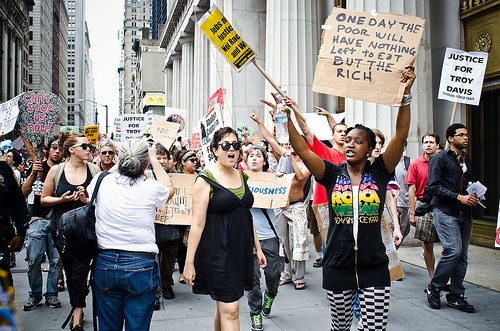
In San Francisco — the first major city to launch a midnight police raid to break up an Occupy encampment, which it repeated Oct. 16 — city officials are struggling with contradictions between claims of supporting the movement but opposing its tactic of occupation. Protesters have reacted to those mixed messages by erecting a growing tent city in defiance of Mayor Ed Lee’s public statements on the issue.

The situation remained fluid at Guardian press time, with OccupySF members unsure when and whether to expect another raid. That sort of standoff has repeated itself in cities around the country. But it seems particularly fraught here in the final weeks of a closely contested mayor’s race as Lee’s stated belief that “a balance is possible” is put to the test.

On Oct. 18, when hundreds of OccupySF protesters and their supporters entered City Hall to testify at the Board of Supervisors hearing — where Lee appeared for the monthly question time and was asked by Sup. Jane Kim to “describe the plan that our offices have been developing” to facilitate the OccupySF movement — it became clear there was no plan and that Lee was standing by the city’s ban on overnight camping.

“From the very beginning, I have fully supported the spirit of the Occupy movement…To those who have come today and who come day after day as part of this movement, let me say now that we stand with you in expressing anger and frustration at the so-called too big to fail and the big financial institutions,” Lee said at the hearing.

“Then don’t send the police in to destroy it,” yelled a woman from the crowd.

“Well, we are working with you,” Lee responded as Board President David Chiu banged his gavel at the interruption and said, “excuse me, you are out of order” and the packed hearing room erupted in shouts and applause at calling out the contradiction in the mayor’s position.

“Well, we are working with you. We are working with you to help raise your voice peacefully and will protect and defend your right to protest and your freedom of speech,” Lee continued, eliciting scattered groans from the crowd. “But that’s not the same thing as pitching tents and lighting fires in public places and parks that are meant for use by everyone in our city. But we can make accommodations and we have, and we can do this while not endangering public safety in any way.”

Afterward, as Lee was surrounded by a scrum of journalists asking about the issue, he made his stand even more clear. “We’re going to draw the line with overnight camping and especially structures,” Lee told reporters. Asked why the police raids have taken place in the middle of the night and why San Francisco is banning practices being allowed in other occupied cities, such as tents and kitchens, he offered only nonresponsive answers before being whisked away by his security detail.

Back inside the hearing room, Sup. John Avalos — who has led efforts to mediate the conflict and prevent police raids — called Lee’s comments “very frustrating. I’m alarmed that he is moving toward nightly standoffs with the Occupy movement.” After watching video of the chaotic Oct. 16 raid, at which several protesters were injured by police officers, Avalos called the situation “unsafe for both sides.”

Six of the 11 supervisors voiced support for OccupySF during the meeting, although Kim — who supports OccupySF and Lee’s mayoral campaign and whose District 6 includes the two protest encampments, in Justin Herman Plaza and outside the Federal Reserve — said at the hearing, “We’re all struggling to figure out the best way to accommodate it.”

Indeed, when the Guardian sought details on “the plan” Kim said she was developing with Lee, her staffers told us there was nothing in writing or major tenets they would convey. And mayoral Press Secretary Christine Falvey told us, “There’s not really a plan, per se, because the movement is so fluid,” although she confirmed that the city would not allow tents or other structures: “The tactic of camping overnight, he does not support.”

But OccupySF protesters were defiant as they streamed to the microphone by the dozens during public comment, decrying the city’s crackdown and claiming the right to occupy public spaces and to have the basic infrastructure to do so. As a woman named Magic proclaimed, “This can be a celebration or a battle, but we will not back down.”

The next afternoon, a large group of OccupySF protesters took their complaints about mistreatment by officers to the Police Commission meeting. Previously, Police Chief Greg Suhr had taken the same stance as Lee, with whom he had consulted before ordering the raid, claiming to support OccupySF but oppose overnight camping (see “Crackdown came from the top,” Oct. 11).

“We will surgically and as best as possible and with as much restraint as possible try to deal with the hazards while protecting people’s First Amendment rights,” Suhr had said, reiterating a ban on tents and infrastructure.

But by the end of the long Police Commission hearing — which was peppered by angry denunciations and chants of “SFPD where is your humanity?” — Suhr seemed to soften his position: “We have no future plans to go into the demonstration. We know that it’s for the long haul.”

OccupySF members interpreted Suhr’s remarks, which went on to raise concerns over potential future public health hazards that a growing encampment might present, as a change in the policy Lee had outlined a day earlier, erupting in the cheer, “Now that’s what I’m talking about!”

In the wake of that meeting, more than 40 tents — including a working kitchen and fully stocked medical tent — have been erected in Justin Herman Plaza, although neither the Police Department nor Mayor’s Office have answered Guardian inquiries seeking to clarify what current city policy is regarding OccupySF. But for now, protesters have declared victory over the city and are happy to be turning their full attention back toward powerful banks, corrupt corporations, and the rest of “the 1 percent.”

“I’m really proud of the OccupySF participants who went to the meeting today,” Zoe D’Hauthuille, a 19-year-old protester, told the Guardian after the Oct. 18 meeting. “I feel like they were really honest and super effective at getting people to realize that we need certain things, and that the city is violating our rights.”

Alerts

0

alert@sfbg.com

Editor’s Note: Protests and other events connected to the Occupy Wall Street movement, include OccupySF and Occupy Oakland, have been developing quickly. To take part, follow our Politics blog or check with the websites associated with this important economic justice movement: occupysf.com, occupyoakland.org, or occupytogether.org. And you can send tips about what’s happening to news@sfbg.com.

WEDNESDAY 26

San Francisco’s budget crisis

Youth from the Bay Area Urban Debate League opine on solving the budget crisis in San Francisco. These electrifying young orators seek to engage the community in conversation and share their research about the current economic atmosphere.

6 p.m., free

SFUSD Board Room

555 Franklin St, 1st Floor

www.baudl.org


THURSDAY 27

Progressive prospects in fall election

Bay Guardian Executive Editor Tim Redmond holds a talk on how the upcoming election will effect the progressive community. Join in discussion, sponsored by Progressive Democrats of America, and ask questions regarding mayoral candidates and city politics.

7-9pm, free

Unitarian Universalist Center, Martin Luther King Room

1187 Franklin, SF

TGTGTGTGTG@aol.com

www.pdamerica.org


FRIDAY 28

White Picket Fences Reception

This multi-media visual and performance art exhibit highlights queer perspectives on the family unit and reflections of contemporary marriage and relationships. Artists like Midori, Monica Canilao, Harrison Bartlett, Mev Luna, Amelia Reiff Hill and Madison Young conjure dialogue in and out of the LGBT community on the dynamics of progressive life. This family oriented event is open to all ages and will be catered with food, wine and performances of featured artists.

7:30-10 p.m.

Michelle O’Connor Gallery

2111 Mission, SF

www.feminapotens.org


SUNDAY 30

Organize and fight back

The Party for Socialism and Revolution is holding its NorCal Regional Conference, with discussions on how big corporations avoid taxes, endless U.S. Wars, the cost of higher education, the prospects for capitalism and socialism, and other topics.

10 a.m.-5 p.m., $7-10

2969 Mission, SF

(415) 821-6171

sf@pwlweb.org


Making Democracy Work

Celebrate 17 years of social justice service with keynote speakers Rep. Andre Carson (D-IN) and Imam Siraj Wahhaj, religious director of At-Taqwa Mosque in NY, at a dinner banquet. This fundraiser supports the Council on American-Islamic Relations, the largest Islamic grassroots civil rights and advocacy group in the country.

5-10 p.m.

Santa Clara Marriott

2700 Mission College, Santa Clara

(408) 986-9874

www.ca.cair.com/sfba/event/17thannualbanquet


Mail items for Alerts to the Guardian Building, 135 Mississippi St., SF, CA 94107; fax to (415) 437-3658; or e-mail alert@sfbg.com. Please include a contact telephone number. Items must be received at least one week prior to the publication date.

The selling of Ed Lee

0

steve@sfbg.com

Ed Lee has gone through a remarkable makeover in the last year, transformed from the mild-mannered city bureaucrat who reluctantly became interim mayor to a political powerhouse backed by wealthy special interests waging one of the best-funded and least transparent mayoral campaigns in modern San Francisco history.

The affable anti-politician who opened Room 200 up to a variety of groups and individuals that his predecessor had shut out — a trait that won Lee some progressive accolades, particularly during the budget season — has become an elusive mayoral candidate who skipped most of the debates, ducked his Guardian endorsement interview, and speaks mostly through prepared public statements peppered with contradictions that he won’t address.

The old Ed Lee is still in there somewhere, with his folksy charm and unshakable belief that there’s compromise and consensus possible on even the most divisive issues. But the Ed Lee that is running for mayor is largely a creation of the political operatives who pushed him to break his word and run, from brazen power brokers Willie Brown and Rose Pak to political consultants David Ho and Enrique Pearce to the wealthy backers who seek to maintain their control over the city.

So we thought it might be educational to retrace the steps that brought us to this moment, as they were covered at the time by the Guardian and other local media outlets.

Caretaker mayor

The story begins quite suddenly on Jan. 4, when the Board of Supervisors convened to consider a replacement for Gavin Newsom, who had been elected lieutenant governor but delayed his swearing-in to prevent the board from choosing a progressive interim mayor who might then have an advantage in the fall elections. Newsom and other political centrists insisted on a “caretaker mayor” who pledged to vacate the office after serving the final year of the current term.

It was the final regular meeting of the old board, four days before the four newly elected supervisors would take office. What had been a bare majority of progressive supervisors openly talked about naming former mayor Art Agnos, or Sheriff Michael Hennessey, or maybe Democratic Party Chair Aaron Peskin as a caretaker mayor.

When then-Sup. Bevan Dufty said he would support Hennessey, someone Newsom had already said was acceptable, the progressive supervisors decided to coalesce around Hennessey. That was mostly because the moderates on the board had suddenly united behind a rival candidate who had consistently said didn’t want the job: City Administrator Ed Lee.

Board President David Chiu was the first in the progressive bloc to breaks ranks and back Lee, saying that had long been his first choice. Dufty became the swing vote, and he abstained from voting as the marathon meeting passed the 10 p.m. mark, at which point he asked for a recess and walked down to Room 200 to consult with Newsom.

At the time, Dufty said no deals had been cut and that he was just looking for assurances that Lee wouldn’t run for a full term (Dufty was already running for mayor) and that he would defend the sanctuary city law. But during his endorsement interview with the Guardian last month, he confessed to another reason: Newsom told him that Hennessey had pledged to get rid of Chief-of-Staff Steve Kawa, a pro-downtown political fixer from the Brown era who was despised by progressive groups but liked by Dufty.

Chiu and others stressed Lee’s roots as a progressive tenants rights attorney, the importance of having a non-political technocrat close the ideological gap at City Hall and get things done, particularly on the budget. So everyone just hoped for the best.

“Run, Ed, Run”

The drumbeat began within just a couple months, with downtown-oriented politicos and Lee supporters urging him to run for mayor in the wake of a successful if controversial legislative push by Lee, Chiu, and Sup. Jane Kim to give million of dollars in tax breaks to Twitter and other businesses in the mid-Market and Tenderloin areas.

In mid-May, Pak and her allies created Progress for All, registering it as a “general civic education and public affairs” committee even though its sole purpose was to use large donations from corporations with city contracts or who had worked with Pak before to fund a high-profile “Run, Ed, Run” campaign, which plastered the city with posters featuring a likeness of Lee.

Initially, that campaign and its promotional materials were created by Pak (who refuses to speak to the Guardian) and political consultant Enrique Pearce (who did not return calls for this article) of Left Coast Communications, which had just run Kim’s successful D6 victory over progressive opponent Debra Walker, along with Pak protégé David Ho.

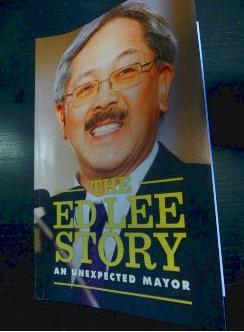
During that campaign, the Guardian and Bay Citizen discovered Pearce running an independent expenditure campaign called New Day for SF, funded mostly by Willie Brown, out of his office, despite bans of IEs coordinating with official campaigns. That tactic would repeat itself over the coming months, drawing criticism but never any sanctions from the toothless Ethics Commission. Pearce was hired by two more pro-Lee IEs: Committee for Effective City Management and SF Neighbor Alliance, for which he wrote the book The Ed Lee Story, a supposedly “unauthorized biography” filled with photos and personal details about Lee.

Publicly, the campaign was fronted by noted Brown allies such as his former planning commissioner Shelly Bradford-Bell, Pak allies including Chinatown Community Development Center director Gordon Chin, and a more surprising political figure, Christina Olague, a progressive board appointee to the Planning Commission. She had already surprised and disappointed some of her progressive allies on Feb. 28 when she endorsed Chiu for mayor during his campaign kickoff, and even more when she got behind Lee.

Olague recently told us the moves did indeed elicit scorn from some longtime allies, but she defends the latter decision as being based on Lee’s experience and willingness to dialogue with progressives who had been shut out by Newsom, noting that she had been asked to join the campaign by Chin. Olague also said the decision was partially strategic: “If we get progressives to support him early on, maybe we’ll have a seat at the table.”

Right up until the end, Lee told reporters that he planned to honor his word and not run. During a Guardian interview in July when we pressed him on the point, Lee said he would only run if every member of the Board of Supervisors asked him to, although about half the board publicly said that he shouldn’t, including Sup. Sean Elsbernd, who nominated him for interim mayor.

And then, just before the filing deadline in early August, Lee announced that he had changed his mind and was running for mayor, the powers of incumbency instant catapulting him into the frontrunner position where he remains today, according to the most recent poll by the Bay Citizen and University of San Francisco.

Lee the politician

With his late entry into the race and decision to forgo public financing and its attendant spending limits, one might think that Lee would have to campaign aggressively to keep his job. But most of the heavy lifting has so far been done by his taxpayer-financed Office of Communications (which issues press releases at least daily) and by corporate-funded surrogates in a series of coordinated “independent” groups (see Rebecca Bowe’s story, “The billionaires’ mayor”).

That has left Lee to simply act as mayor, where he’s made a series of decisions that favor the business community and complement the “jobs” mantra cited relentlessly by centrist politicians playing on people’s economic insecurities.

Yet Lee has been elusive on the campaign trail and to reporters who seek more detailed explanations about his stands on issue or contradictions in his positions, and his spokespersons sometimes offer only misleading doublespeak.

For example, Lee’s office announced plans to veto legislation by Sup. David Campos that would prevent businesses from meeting their city obligation to provide a minimum level of employee health benefits through health savings accounts that these businesses would then pocket at the end of the year, taking $50 million last year even though some of that money had been put in by restaurant customer’s paying 5 percent surcharges on their bills.

Although Campos, the five other supervisors who voted for the measure, four other mayoral candidates, and its many supporters in the labor and consumer rights movements maintained the money belonged to workers who desperately needed it to afford expensive health care, the San Francisco Chamber of Commerce said it was about “jobs” that would be protected only if businesses could keep that money.

Lee parroted the position but tried to push the political damage until after the election, issuing a statement entitled “Mayor Lee Convenes Group to Improve Health Care Access & Protect Jobs,” saying that he would seek to “develop a consensus strategy” on the divisive issue — one in which Campos said “we have a fundamental disagreement” — that would take weeks to play out.

After a frustrating back-and-forth with Lee Press Secretary Christine Falvey by email, it’s still unclear how to resolve the contradiction between whether businesses could seize these funds or whether they belonged to employees, with her latest statement being, “The Mayor absolutely wants these funds spent on providing access to quality primary and preventative health care because this is the business’s obligation under HCSO. Making sure that these funds go to pay for health care is the most important objective.”

Similarly, when police raided the OccupySF encampment on Oct. 5, Lee’s office issued a statement that was a classic case of politicians trying to have it both ways, expressing support for the movement and its goal to “occupy” public space, but also supporting the need to police to clear the encampment of those same occupiers.

But now, in the wake of a repeat raid on Oct. 16 that has inflamed passions on the issue, the question is whether Lee can run out the clock and retain the office he gained on the promise of being someone more than a typical politician.

The bad old days

0

tredmond@sfbg.com

Willie L. Brown, according to the Chronicle’s John Cote, is “a tremendously popular figure in the city, viewed by many as an avuncular man-about-town, elder statesman and a uniquely San Franciscan character.” The Ed Lee Story, a hagiographic campaign book, refers to Brown’s “characteristic showmanship and hypnotic charm.” Even Randy Shaw, the housing activist who clashed with Brown over gentrification once upon a time, now says in BeyondChron that Brown’s first term “was the most progressive of any mayor in modern San Francisco history.”

I feel as if I’m living in some sort of strange parallel universe, something out of Orwell or North Korea or the Soviet Union of the 1950s. It’s as if history never happened, as if the years between 1996 and 2004 have just vanished, have been deleted from San Francisco’s collective memory. It’s crazy.

I wonder:

What about the thousands and thousands of people who lost their homes and were tossed out of the city like refugees from a war? What about the rampant corruption at City Hall? What about the legions of unqualified political cronies who got good jobs and commission posts? What about the iron-fisted machine rule that kept local politics closed to all but the loyal insiders? Doesn’t any of that count?

Here are some things that absolutely, undeniable, demonstrably happened while Willie Brown was mayor:

Rents on the East Side of town, particularly in the Mission, tripled and sometimes quadrupled between 1996, when Brown took office, and 2004, when he left. Evictions more than tripled, too, and at one point more than 100 people a month were losing their homes. Most of those people were low-income, long-term tenants. They were forced out because richer people were moving into town during the dot-com boom and could pay more for those apartments. We called it the “Economic Cleansing of San Francisco.”

Every day, it seemed, we’d be out at another rally as the Tenants Union and the Mission Antidisplacement Coalition tried to save another family from the forces of gentrification. Every week, it seemed, another group house full of artists would be served an eviction notice. Everywhere you looked, nonprofits and small businesses were losing space to high-tech companies with plenty of money.

I watched the wrecking crew tear down a studio complex on Bryant Street, forcing more than 100 painters and photographers to leave, to make way for a high-tech office project that was approved even though it violated the local zoning laws — and then was never built. For two years, I walked to get my lunch past the empty hole in the ground that had once been a thriving community.

That was typical. Every developer who waved money in front of the mayor got a building permit, no matter how crazy, illogical or illegal the project was. The Planning Department and the Bureau of Building Inspection were little more than fronts for the lobbyists and Brown cronies who determined development policy in the city.

In October, 1999, the author Paulina Borsook wrote a famous piece in Salon called “How the Internet Ruined San Francisco.” I agreed with the sentiment; the influx of the dot-commers was wrecking all that was cool and weird about the city. But she got one point wrong: The Internet didn’t ruin anything. The Internet was, and is, a technology, a tool, something that, like most technological advances, can be used for good or evil.

Mayor Brown didn’t create the dot-com boom. Although he took credit for an awful lot of things, even Willie didn’t claim to have invented the Internet.

But what he did — and what ruined many San Francisco neighborhoods, and ruined the lives of many San Franciscans — was to let the economic cleansing of the city happen, without raising a finger to slow it down or prevent the evictions or protect the most vulnerable people in the city. Over and over, he encouraged it — by appointing commissioners and supervisors and department heads who allowed evictions and development and displacement in the name of growth and prosperity.

In fact, when reporters from the zine Maximum Rock ‘n’ Roll asked Brown about the problems facing poor people, he told them that the city had become so expensive that poor people would be better off living somewhere else.

Because he didn’t care about poor people, or tenants, or artists, or anyone who lacked money and flash and dazzle and clout. He was the worst kind of imperial mayor.

Here’s how we put in it in our 33rd anniversary issue in 1998:

“Let’s say the next major earthquake that hits San Francisco is of roughly the same magnitude of the Loma Prieta quake of 1989, or maybe just a bit stronger. Let’s say it wipes out right 1,000 houses and leave some 5,000 people homeless … and lets say a few unscrupulous profiteers take advantage of the shortages of critical supplies and charge desperate residents triple the normal rate for food, blankets and drinking water….

“The profiteers, speculators and charlatans would be exposed in the press and roundly, loudly denounced by every political and community leader in the city. The ones who didn’t wind up in jail would be forced to leave town in disgrace.”

Or else they wouldn’t. Because when an economic earthquake ravaged San Francisco during his term, Brown — the most powerful mayor in modern history, a guy who could have had an immense impact on what was happening — went to meet the speculators and profiteers with outstretched arms, welcomed them to the city and partied with them at night.

And when he ran for re-election, they thanked him by funding an astonishing $5 million campaign.

Then there was the corruption. Not only did Brown raise pay-to-play to a new art form, he filled the city payroll and key commissions with campaign workers, former political allies, and cronies, subverting the civil service system and undermining both the function of city agencies and public respect for local government. At least seven Brown appointees were indicted or investigated for criminal misconduct. While sentencing a Housing Authority official to five years in prison, U.S. District Judge Charles Legge decried what he called Third World-style corruption at San Francisco City Hall.

When Mayor Ed Lee, who is now seeking a full four-year term, was asked to give Brown a grade for his eight years in Room 200, Lee said: A-Plus.

Which makes us a little nervous. To say the least.

I’ve been going back through the Guardian archives over the past couple of weeks, picking out some great covers to reproduce (see page 18) and looking at four and a half decades of alternative news coverage of San Francisco. And if there’s one theme that emerges from the stacks and stacks and stacks of papers, it’s that local government matters.

In the 1960s, when the underground press was talking about sex, drugs and dropping out, the Guardian was talking about the ways big corporations were stealing the taxpayers’ money at City Hall. (Okay, the Guardian wrote about sex and drugs too. But sex and drugs and political scandals.)

The difference between the independent alternative press and the underground papers of the era was more than just thematic. The underground publishers were having a great time and celebrating culture, but none of those publications was built to last. From the day they published their first issue in October, 1966, Guardian founders Bruce Brugmann and Jean Dibble intended their paper to become a permanent part of San Francisco.

The Guardian quickly demonstrated that it had a different approach than a lot of the “New Left” — particularly when it came to electoral politics. At a time when some were saying that it made no difference whether Ronald Reagan or Pat Brown won the 1966 governor’s race, the Guardian made the key point about Reagan.

“California cannot afford the luxury of this kind of conservatism,” a Nov. 7, 1966 editorial stated. “Because of the millions of people coming to California, because San Francisco and Los Angeles soon will have the greatest concentration of urban power in history, because farm land and open space is vanishing at a suicidal rate, because technology is putting vast populations out of work, because of the social neglect of our cities and the uglification of our countryside, because we now have the knowledge to bridge the gap between the rich and the poor.”

And while the paper devoted considerable space to reporting on and opposing the war in Vietnam, it was also developing a reputation for local investigative reporting. One June 7, 1971 story showed how the city had all of its short-term deposits in local banks that paid no interest at all. The story parked an investigation by the city’s budget analyst, the resignation of the city treasurer — and a new investment policy that brought the city at least $1 million more revenue a year. (Adjusted for inflation, that’s about $5 million a year, times 40 years is a lot of money that the Guardian brought into the city coffers).

And from the start, the Guardian was a nonpartisan, independent foe of corruption, secrecy and undue influence at City Hall. So while the paper eagerly endorsed Phil Burton (and later his brother, John) for Congress and lauded their antiwar and environmental policies, the Guardian also blasted the Burtons for exercising undue influence back home. The paper strongly endorsed George Moscone for mayor — then denounced him when he fired Harvey Milk from a commission post after Milk had the gall to challenge the Moscone/Burton candidate for state Assembly.

The 1999 Sunshine Ordinance, which dramatically opened up City Hall records, was sponsored and promoted by the Guardian. Willie Brown and his cronies hated it.

It’s probably a misnomer to say that the Burtons, who were a dominant force in local politics in the 1970s and 1980s, ran an old-fashioned machine. They didn’t have the iron control over local politics and the patronage jobs system that the word “machine” implies.

But when Brown became mayor of San Francisco, he had all of that. Brown controlled eight solid votes on the Board of Supervisors (and through various political machinations, had managed to appoint most of them). “He ruled the building,” Assemblymember Tom Ammiano, who was a supervisor during those years, recalled. “If you defied him, you were radioactive.”

And one of the people who rose through the ranks as a loyal Brown appointee was Ed Lee. Who to this day thinks things in that administration were just dandy.


The Lee campaign complains about “guilt by association,” and that’s a legitimate point. Ed Lee isn’t Willie Brown. He’s a lot more open, a lot (a lot) more humble, and as numerous progressives have pointed out to us, his door is open. He doesn’t have the history of sleaze that pretty much defined Brown’s political career.

There will be no “Ed Lee Machine.” In fact, with district elections of supervisors pretty much guaranteeing more diffuse political power in the city, there will never be another mayor able to rule the way Brown did.

And these days, Brown’s clout could easily be overstated. Until he engineered the selection of Ed Lee as mayor, his power seemed to be waning. And even Mayor Lee hasn’t done everything that Brown wanted.

Of course, the Chronicle, which he helped immensely when Hearst Corp. bought the paper and had trouble with federal regulators, has helped Brown by giving him a column that created a new, sanitized persona.

But the important thing about the Brown administration was not so much who was in charge but who benefited. The landlords, the developers, the big corporations got pretty much what they wanted from City Hall. The rest of us got screwed.

And now those same interests — in some cases, the exact same people — who supported, promoted and worked with Willie Brown are backing Lee for mayor. If they thought he was going to be an independent progressive, that money and support wouldn’t be coming in. There are people who miss the machine days — and if they think Ed Lee is their guy, it’s reason to worry.

Corruption matters. When people lose faith in local government because they see the kind of sleaze that was daily business under Brown, then they stop wanting to pay taxes for public services. After all, the mayor is wasting our money already. Lee may be a decent guy — but some of the people he hangs out with, some of the people who are supporting him, have a long and very unpleasant history in this town. And all the time he was sitting there at City Hall, while Brown was running a corrupt operation that did lasting damage, Lee never raised a public finger in protest. I hate to see all the history forgotten when people decide who to support for mayor in November, 2011.

The case against C and D

68

By Brenda Barros, Riva Enteen, Joe Jacskon, Renee Saucedo, Dave Welsh, David H. Williams and Claire Zvanski

OPINION The Guardian started out right on Proposition C and D:

“Our initial instinct was to oppose both of these measures… There’s a basic unfairness about all of this that bothers us … city workers are being asked to give up part of their pay — but the wealthiest individuals and big corporations in San Francisco are giving up nothing. It’s part of the national trend — the poor and middle class are shouldering the entire burden of the economic crisis, and the rich aren’t suffering a bit.”

It’s too bad that the Guardian editors didn’t stick to their guns.

We all know why decent pensions and health care cost so much: corporate greed. And the identity of the corporate criminals who are driving the economy into the ground is no secret. It’s the Wall Street banks and financial speculators. It’s Bank of America and Wells Fargo. It’s the corporate CEOs. It’s the insurance companies.

All workers, whether they work for the city or not, have a right to affordable medical care and a decent retirement.

Take Ethel, who retired 10 years ago after working for the city for more than 20 years and collects a pension of only $17,000 a year. Both Prop C and Prop D would take money out of her check. Some city workers qualify for section 8 housing — Prop C and D would take money out of their paychecks too.

None of this is rocket science. But the corporate media pounds away daily at public employees and ignores the shenanigans of their buddies in the corporate boardrooms. And far too many fall for this bait and switch, or are just too confused to stand up and fight back.

Now, with Propositions C and D, the downtown bigwigs and their lapdog politicians are taking advantage of this confusion to sock it to the victims, and make workers pay for the party the rich have been having at our expense.

Unfortunately, there are those among us who think we should concede many of our hard-fought rights in order to appear reasonable and fend off future attacks.

Making these kinds of concessions is like putting a little blood in the water, and hoping that the corporate sharks will be satisfied. But the reality is that when sharks taste blood, they just get hungry for more.

The editors of the San Francisco Chronicle, the mouthpiece for Wall Street and its minions, said pretty much the same thing in a recent editorial:

“San Franciscans should have no illusions,” wrote the Chronicle editors. “Props C and D offer only modest down payments on the reforms [sic] that must be pursued… The very fact that business and labor leaders are supporting Prop C… sets the stage for… further reforms [sic] that will almost certainly be needed…”

Of course the “reforms” that the Chronicle is demanding are just more attacks on workers’ rights. That’s why many political leaders, including former Supervisor Chris Daly and Ted Gullicksen of the Tenants Union — opposed both Propositions C and D.

Enough is enough. Let’s take heart from the Occupy Wall Street movement. After decades of Reaganomics, Bushonomics, and Democratonomics, it is high time to draw the line, stand up to Wall Street, and fight back.

Join former Supervisor Chris Daly and Tenant’s Union leader Ted Gullicksen, and: Vote NO on C! Vote NO on D! Tax the Rich! 

Brenda Barros is vice-chair, Social Economic Committee, SEIU 1021. Riva Enteen is a member of SEIU 1021. Joe Jackson is co-chair of the S.F. African American Employee Association. Renee Saucedo is a member of SEIU 1021. Dave Welsh is a delegate to the S.F. Labor Council. David H. Williams and Claire Zvanski are retiree members of SEIU 1021.

Protesters disrupt Murdoch speech (VIDEO)

In the Grand Ballroom of the Palace Hotel in downtown San Francisco on Oct. 14, News Corporation CEO Rupert Murdoch delivered a keynote address to a crowd that included senators, businesspeople, and high-ranking education officials from throughout the country — yet he was interrupted repeatedly by activists, some of whom were dressed as Sesame Street characters.

Murdoch was there to speak at an annual summit held by the Foundation for Excellence in Education, a Florida-based nonprofit led by Jeb Bush. The billionaire media mogul, who came under pressure in recent months as the News of the World phone-hacking scandal erupted, spoke about revolutionizing education with technology.

Several moments after he began speaking, a man wearing a suit stood and yelled out, “Isn’t it time to resist corporate domination?” In what seemed like an odd statement, he added, “They’re occupying Wall Street — maybe they should be occupying Sesame Street!” He was quickly escorted out by hotel security, but this proved to be only the first of a handful of outbursts orchestrated by San Francisco U.S. Uncut, a grassroots organization that plans actions to draw attention to income inequality and low taxes for major corporations.

Murdoch referenced his friendship with Apple founder Steve Jobs, who passed away less than a week ago, and praised the iPad as an educational tool. But protesters dressed as characters from Sesame Street — Elmo and Count von Count, for instance — stood and spoke out of turn from tables throughout the room. “Mr. Murdoch, I’ve been doing some counting,” the activist dressed as the Count yelled out. “Seven corporations own all the media in the world — why shouldn’t they own all the education as well?”

There were five different interruptions in all, the final featuring a woman who yelled out, “Occupy, occupy, occupy!”

Why are Harris, Newsom, and other pols silent on the federal pot crackdown?

24

UPDATED BELOW As I worked on this week’s story about the federal crackdown on California’s marijuana industry, I tried to get a statement from California Attorney General Kamala Harris. After all, it’s her job to defend California’s medical marijuana laws, which she was fairly supportive of as our district attorney. And she was an early Barack Obama backer who could probably get him or U.S. Attorney General Eric Holder on the phone to say, “What the hell are you guys doing? Please, for your own sake and California’s, just back off.”

After all, as I reported, this multi-agency federal crackdown could destroy a thriving industry that is pumping billions of dollars into California’s economy and employing tens of thousands of people – at a cost of many millions of dollars in enforcement costs to simply destroy the state’s top cash crop, ruin the lives of people working in the industry, and strain our already overtaxed court and prison systems.

“It’s a policy with no upsides and all downsides,” Steve DeAngelo of Harborside Health Center correctly told me.

But when I finally got Harris’ Press Secretary Lynda Gledhill on the phone, she said Harris had nothing to say on the issue. “Nothing?” I asked, “Really?” What about off-the-record, I asked, how does she feel about it and might she make some statement in the future. Again, nothing to say, no comment.

So I tried Lieutenant Governor Gavin Newsom, another San Franciscan who as mayor helped oversee the creation of the city’s widely lauded system for regulating the dispensaries, which by all accounts has made it a legitimate and thriving member of the business community. Given Newsom’s current obession with job creation and how hungry he’s been for attention, surely he’d have something to say in defense of the good jobs that this sustainable industry has created in California. Again, nothing. I haven’t even gotten a call back yet from his press secretary, Francisco Castillo.

Also, no public statements have been issued by Mayor Ed Lee, David Chiu, or most other mayoral candidates who have put “jobs” at the center of their agendas – or from the SF Chamber of Commerce or other business groups that regularly deride bad government actions as “job killers – despite this move by the Obama Administration to destroy an important industry in California.

The only major politician from San Francisco (SEE UPDATE BELOW) to come out strongly against the federal crackdown was Assemblymember Tom Ammiano, author of measures to legalize and tax marijuana, who put out the following statement: “I am bitterly disappointed in the Obama Administration for this unwarranted and destructive attack on medical marijuana and patients’ rights to medicine.  Today’s announcement by the Department of Justice means that Obama’s medical marijuana policies are worse than Bush and Clinton.  It’s a tragic return to failed policies that will cost the state millions in tax revenue and harm countless lives. 16 states along with the District of Columbia have passed medical marijuana laws – whatever happened to the promises he made on the campaign trail to not prosecute medical marijuana or the 2009 DOJ memo saying that states with medical marijuana laws would not be prosecuted?  Change we can believe in?  Instead we get more of the same.”

But from most of the politicians who claim to support both jobs and the right of patients to access medical marijuana, we also get more of the same. They pander to people’s economic insecurities in order to give corporations and wealthy what they want – tax cuts, deregulation, union-busting, corporate welfare — but aren’t willing to risk any political capital defending the rest of us.

UPDATE (11/13): San Francisco’s other two representatives in the Legislature have also criticized the crackdown.


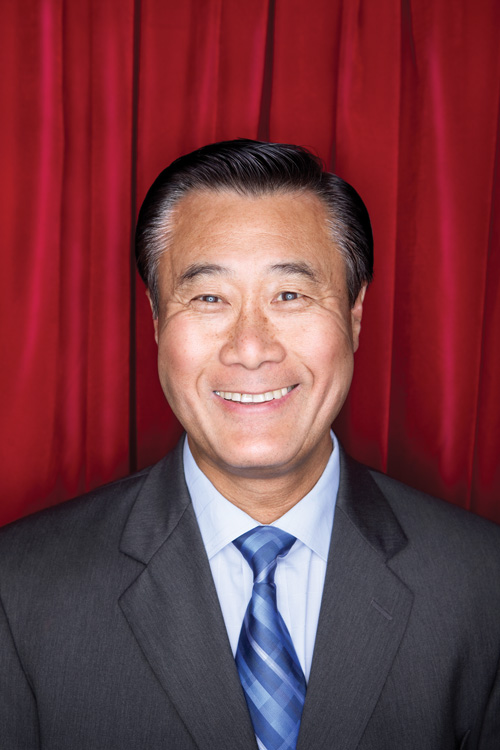
Sen. Leland Yee put out a statement saying: “Medical marijuana dispensaries are helping our economy, creating jobs, and most importantly, providing a necessary service for suffering patients. There are real issues and real problems that the US Attorney’s Office should be focused on rather than using their limited resources to prosecute legitimate businesses or newspapers. Like S-Comm, our law enforcement agencies – both state and local – should not assist in this unnecessary action. Shutting down state-authorized dispensaries will cost California billions of dollars and unfairly harm thousands of lives.”

Sen. Mark Leno, another medical marijuana support, also criticized the move. He told the Los Angeles Times, “”The concern here is that the intimidation factor will directly impact safe and affordable access for patients.” And he told Associated Press, “”I don’t understand the politics of it, and certainly if we haven’t learned anything over the past century, it’s that Prohibition does not work.”

The Ed Lee Story: Gack!

4

I finally got a copy of The Ed Lee Story — a 132-page paperback hagiography written by campaign flak Enrique Pearce — and it’s way, way over the top. I shouldn’t even compare it to the lives of the saints — I read that stuff in Catholic School, and none of it was a sappy, drippy and utterly lacking in perspective as this. The Ed Lee Story reads like what it is — a giant, extended campaign flier, produced by a supposedly independent group backing Lee for mayor.

Willie Brown appears in the first chapter, speaking with “characteristic showmanship and hypnotic charm.” Pearce once worked for Matt Gonzalez — who ran for supervisor as a strong opponent of Brown’s administration and was such a critic of the City Hall corruption that the mayor represented that he didn’t even return Brown’s call congratulating him on winning a seat on the board. But he has either forgotten or utterly sanitized that era.

Rose Pak appears a page later, described as a “community leader and Ed’s longtime friend,” which is one way of putting it.

I haven’t been able to reach Pearce; if he calls me I’ll update this post. But in other news accounts, Pearce insists that Lee had no role in the great work — it’s described as an “unauthorized biography,” and Tony Winnicker, the press spokesperson for the official Ed Lee for Mayor campaign, told me his crew had nothing to do with it. Pearce must have gone to great lengths to get all those high school and college photos.

Most of the footnotes cite the San Francisco Examiner and BeyondChron, but Pearce interviewed a number of Lee’s old friends. This was a fair amount of work, including a lot of research.

But here’s the thing: Pearce (who’s had problems with keeping independent campaigns independent in the past) supposedly wrote this book without any help or support from any of the people who are involved in the Lee adminstration or in his campaign. I don’t know, maybe he did. But that’s the problem with these “independent expenditure” committees — it’s hard to believe that there’s truly zero coordination between the various groups that are working to get Lee elected.

The Chron notes at least one indication that it’s not all as independent as it seems:

Pearce said he never spoke with Lee or his family for the book. However, at a golf tournament at the Olympic Club on Monday to benefit the nonprofit Chinese Hospital, Lee’s wife, Anita, beamed as she signed copies.

Plus, he clearly worked with Pak on the book:

Pearce swears all those family photos in the book were gleaned from various websites and family friends. And where did Pearce get Lee’s favorite recipe for “No-longer secret Poongaloong” (basically spaghetti with frozen peas, corn and a half-bottle of Del Monte ketchup thrown in)?

“The recipe was from Rose,” he said. Of course it was.

And we know that Pak meets with the mayor regularly.

Independent expenditure committees have a huge advantage — they can raise unlimited money, in unlimited amounts. In San Francisco, candidates for mayor can only take money in $500 chunks, and can’t accept contributions from corporations or entities that have contracts with the city. The folks who funded this book — and we still don’t know who they are — were under no such regulations.

The trade off is that the “real” campaign — the one financed with regulated money — can’t have any contact at all with the “independent” campaign.

Meantime, Enrique Pearce wrote 132 pages about Ed Lee, complete with childhood anecdotes, pictures, interviews with old friends and testimonial statements — and the mayor’s office and campaign had no input, connection, information, coordination or anything? Geez. Maybe Kitty Kelley’s got some competition.


Strive to fail

0

steve@sfbg.com

LIT As I watched Occupy Wall Street grow and spread to other cities in recent weeks, I’ve been alternating between reading two books by familiar figures — a pair of fearless entities that have helped pry open public spaces using the simple weapon of creative expression — and I’m struck by the lessons they offer at this strangely hopeful moment in our history.

Together, they’re like a one-two punch to the status quo and to the notion that we’re all essentially prisoners of the existing political and economic systems. They encourage their readers to strive for impossible goals, to be guided by something bigger than our tiny selves, and to embrace failure rather than fearing it. These are the same ideas embodied by protesters occupying the streets of San Francisco and other major U.S. cities, this sense that they have nothing to lose by making a stand now but everything to lose by continuing to be obedient to the powerful forces that seek to dampen their spirits and rob them of their futures.

The Reverend Billy Project: From Rehearsal Hall to Super Mall with the Church of Life After Shopping is by Savitri D and Billy Talen, the couple behind the performance art church that critiques hyper-capitalism by doing exorcisms and other telling rituals in banks, chain stores, and other examples of what they call the “devil monoculture.”

So the Occupy Wall Street movement that began Sept. 17 in their adopted hometown of New York City is right in their sweet spot. They’ve been down there almost every day delivering sermons, songs, and support — Savitri D as the group’s stage manager and creative director and Talen as his alter ego, Rev. Billy, the evangelical pastor of a large flock of creative activists they’re organized into a choir.

“It feels like the culture is breaking open,” Talen told me by phone as he surveyed the scene at Occupy Wall Street. “These kids are really going for it.”

I’ve long been an admirer of their work and I included Billy as a character in my own book, The Tribes of Burning Man: How an Experimental City in the Desert is Shaping the New American Counterculture, along with longtime burner and San Francisco-based showman Chicken John Rinaldi, the author of the other book I’m discussing.

The Book of the IS: Fail…TO WIN! Essays in engineered disperfection was launched by Chicken and the eclectic group of culture-shakers in his orbit during a spectacular free party on Sept. 30. The 111 Minna Gallery contained 50 unique, custom-designed covers to his already well-designed book, selling for a whopping $250 each — and they sold out! Outside, the closed-off alley was filled with variety acts, strange artsy spaces to explore, a buzzing Tesla-coil tree, and hundreds of people.

Both Chicken and Billy have run for mayor in their respective cities, Chicken in 2007 and Billy in 2009, both injecting art and unconventional creativity into their campaigns. Ironically, it is Chicken who discusses his campaign at some length in his book, despite his basic disdain for politics, while Billy and Savitri — whose art is performed in service of political principles they hold dear — don’t include the campaign in their book.

“We believe that the five freedoms of the First Amendment — religion, speech, press, assembly, and petition — that you need to have these freedoms flourish in public spaces, and that has been shut down in New York City since 9/11,” Billy told me from Occupy Wall Street. “We’ve suffered a loss of our public spaces in New York, and to have all these young people open that back up is very exciting.”

But it wasn’t the politics of their books that struck me as much as their sense of possibility and the way they agitate for a new kind of world. Chicken didn’t run for mayor to win or even to make a political statement. He ran because he sees San Francisco as a “city of art and innovation,” and because then-Mayor Gavin Newsom was more focused on keeping the real estate market booming than keeping the city a fun and interesting place.

“No one was stepping up to challenge him, because no one could beat him. It was in the bag. But Gavin didn’t represent San Francisco very well in a few key departments, and I wished that someone would provide a referendum on the values of the city. Or something. Whatever else it was, running for Mayor was an opportunity to bring my shtick to a bigger stage,” Chicken wrote.

And Chicken’s shtick was the show, his raison d’etre, the need to create culture that drove the various pursuits that he chronicles in his book, from his adventures with the Cacophony Society to his touring with Circus Redickuless and the hardcore punk Murder Junkies to piloting a fleet of boats built from garbage to hosting strange spectacles at his Odeon Bar.

“I mean it’s all a show, of course. And all shows are just stories. And in the end, it’s all the same story,” Chicken wrote. And that story is about what it means to be human, to strive for something authentic and important in this mediocre, manufactured culture that corporations create for us, to reach so far for that truth that we fail — in the process touching the divine, or achieving what Chicken calls Severe Comedy — and then to start that process all over again.

“You can never really say you gave your all unless you fail,” Chicken tells me, recognizing that same spirit in the Occupy Wall Street movement. “I think we’re literally witnessing history in the making. This is the dawn of new ideas.”

That same spirit has animated the work of Billy and Savitri, and their book tells stories from their many demonstrations and events from around the world, ping-ponging between their two perspectives on what happened. Some actions are well-planned and meticulously rehearsed, other more impromptu, like leading a group from a talk they gave in Barcelona to a nearby Starbucks to lick all the surfaces and take it into their bodies.

“Now! Now! Let your body tell you. Do you accept or reject this devil chain store? Will you allow the alien corporation Starbucks to come into your body, into your neighborhood, into your town? Do you accept the devil chain store?” Billy preached.

In reading their books, I got the sense that they didn’t always know what they were doing, that they were just acting, trying to stay in motion, to just do something and figure out what it really means later. Chicken even confirmed the observation when we spoke: “I never have any clue what the fuck I’m doing.”

But that’s okay. Maybe a lot the kids on Wall Street and in front of Federal Reserve building in San Francisco don’t know what the fuck they’re doing either. But, in the face of the greed and corruption that plague our economic and political systems, at least they’re doing something. And even if they fail — maybe especially if they fail big — we’re a better and more interesting country because of their efforts.

Lee backs crackdown; Avalos: “I stand with Occupy SF”

136

Mayor Ed Lee has just released a statement on last night’s police raid of the Occupy San Francisco encampment – claiming to basically support the movement but also support the harsh police crackdown and seizure of tents, food, and other personal property – that offers a sharp contrast to the position of his mayoral rival, John Avalos, who is condemning the SFPD’s actions.

Once again, as Lee also did this week in defending businesses that seize money set aside for employee health care costs, our “consensus and civility” mayor is showing that if you try to stand for everything, you end up standing for nothing. Yet Avalos understands that there are times when one side is simply wrong and that supporting the people means being willing to fight for them.

On both issues, Lee mouthed the meaningless “jobs” defense, claiming that he was trying to help working people by letting their employers raid their health care funds, allowing restaurants to fraudulently jack up their bills, or directing the police to seize their tents and food. That’s not just pandering, it’s insulting.

I’ve tried unsuccessfully to get Lee’s office to offer more detailed explanations of his positions, but they’re so far sticking to prepared statements that are riddled with contradictions. So we’re just going to run the full statements by Lee and Avalos and let you decide who makes more sense and best reflects San Francisco values.

Lee wrote:

“I understand and sympathize with the anxiety and frustration felt by so many in our country caused by a lingering recession and joblessness. That’s why I am doing everything I can to create jobs, get people back to work and make our families stronger here in San Francisco. I support the spirit of the Occupy Wall Street movement that calls for peacefully assembling to protest and bring national attention to disparity issues in our country.
“In San Francisco, protesters are acting within their First Amendment right to free speech and freedom to assemble. While allowing for peaceful protests, we also must ensure that our streets and sidewalks remain safe and accessible for everyone. I will continue to work closely with our Police Chief to ensure San Francisco responds appropriately to these demonstrations.  
“San Francisco is a city that embraces free speech and freedom to assemble like no other city.”

Indeed, no other city among the 60 or so that have followed the Occupy Wall Street example of occupying public spaces has sent police and trucks in to raid encampments in the middle of night, so San Francisco is indeed alone in its treatment of the movement that Lee shamelessly claims to support.

And now Avalos:

“Last night I gathered in solidarity with the protesters Occupying San Francisco. Like many people all over the country, I have been watching this protest gather strength and grow as more and more of us, more of the 99 percent, demand accountability from the corporations and people who are responsible for the destruction of our economy and devastation of our families.

“I came to down to observe the protest last night in response to summons from protesters and a notice from the police accusing their encampment of a number of minor infractions, ranging from open flames on a city street or sidewalk to serving food without a permit. I observed and negotiated with police in good faith to keep the peace and allow the encampment to remain, only to hear of a crackdown shortly after I left.

“This is not the San Francisco that I know. This is not the San Francisco I love. This City has served as a sanctuary for free speech and assembly for generations, and we must protect that legacy. With our unemployment rate nearing 10 percent, we have a responsibility to be a sanctuary for the 99 percent.

“Instead, last night we witnessed that 99 percent being detained, arrested, and intimidated with force.

“My vision is of a true sanctuary city – one that protects our right to free speech and assembly, and one that holds real criminals accountable. This should be a city for the rest of us – for the 99 percent. I stand with Occupy SF.”

On the streets with Occupy San Francisco

31

The messages sounded yesterday on the streets of San Francisco – delivered in speeches, chants, signs, songs, interviews, and the petition handed to Chase Bank officials by a half-dozen protesters before their arrest – should resonate with most Americans. After all, while rich corporations and individuals have been accruing ever more wealth, the vast majority of us have been falling behind.

“Banks get bailed out, we get sold out,” was one of those chants by the several hundred people who marched through the Financial District – our OccupySF effort building off the two-week Occupy Wall Street events – targeting some of the villains of the economic meltdown: JPMorgan Chase, Bank of America, Citibank, Charles Schwab, the Federal Reserve, and Goldman Sachs.

They may be relatively small and easy to ignore, these “occupations” of Wall Street and San Francisco and other cities that are entering their third week, but they’re being driven by a palpable anger and stirring critiques of economic and political systems that exploit the powerless. But as the foreclosures, layoffs, and other hardships continue, this nascent movement could have some staying power.

“I think it’s starting to wake people up out of their complacent distraction,” Robin Kralique, a 26-year-old SF resident holding a sign that read “Let’s have the GDP measure happiness,” told the Guardian. “We’re planting the seeds for a better future, and I’m hoping it wakes some people up.”

Like many of the young protesters gathered outside the corporate office building at 555 California at the start of the march, she was inspired by Occupy Wall Street. They’re angry watching their economic opportunities evaporate as more and more of the country’s wealth accumulates in fewer and fewer hands.

“There’s an insane amount of greed in this country,” 24-year-old Erin Kramer, a dancer and performance artist stuck in a corporate job she needs to get by, told me. Her sign read, “Don’t be afraid to say revolution!”

And many weren’t, with calls for revolution on the tips of many lips, albeit tempered with healthy doses of realism. “Even if it isn’t at critical mass yet, it sets the stage for the next revolution,” Kralique said when I asked her what she hoped this moment would accomplish.

Sup. John Avalos, a progressive mayoral candidate who spoke at the rally, is pushing legislation to create a municipal bank in San Francisco, one that would invest far more money in local projects and small businesses than Bank of America, which manages most of the city’s money.

“We have to figure out new ways to use our local dollars to help our economy,” Avalos told us. “The message here is we’re pulling our dollars out of these banks unless they help us.”

Before Avalos spoke – asking the boisterous crowd, “Have you ever felt like you’ve been had?” – activist Bobbi Lopez was on the microphone decrying the “lack of accountability for the people responsible for this decline.”

And then, the march was off – flanked by dozens of San Francisco Police officers on motorcycles, riding bicycles, and in cars – to deliver creative forms of protest around the Financial District, including a funny song and dance routine by Fresh Juice Party in front of the Schwab office, singing, “Land of the free, home of the brave, this is the street our labor paved.”

In fact, that was almost literally true at the San Francisco march, which was shepherded by off-duty city workers from SEIU Local 1021.

“This Wall Street thing is really spreading. The message of a small group of people in New York has really spread…Wall Street is a symbol of all this corruption, cronyism, and greed,” Gabriel Haaland, an organizer with SEIU Local 1021, told me at the start of the march. “It’s really resonated with our members…It’s been picking up steam as things have been unraveling over the last year.”

An hour or so later, Haaland was one of six people who staged an occupation of the Chase branch at Market and 2nd streets, along with two women in his union who have been unsuccessfully battling bank foreclosures on their homes – Brenda Reed and Tanya Dennis – and three other activists: William Chorneau, Manny S. Tucker, and Claire Haas.

Tipped off by Haaland, I was inside the bank lobby as the march approached and a police officer on a bicycle came inside to warn bank officials, “The protest is headed your way, you may want to secure the premises.”

He and another officer helped prevent protesters from getting inside, but the six protesters had already infiltrated the building. They began chanting and pulled blankets out of a suitcase, laying them out and placing them on the ground.

Reed spoke for the group, demanding to meet with JPMorgan Chase & Co. CEO Jamie Dimond to present a petition calling for a halt to the bank’s foreclosures. Through tears, she told the story of her long struggle to protect her home from foreclosure by Chase, which had taken her loan over from another lender.

SFPD Lt. M.E. Mahoney told the group, “You’re not going to be able to camp out here and wait for the CEO to come talk to you,” asking store managers whether they wanted to make a citizen’s arrest. They did, but Mahoney also told Reed that he would watch as she handed the petition to store managers.

“I’m here today because for two and a half years, I have desperately tried to get Chase to work with me,” Reed told a bank employee as hundreds of protesters outside looked on and chanted their support. “You have put me through hell. You’ve destroyed my health, you’ve destroyed my business, and it’s not fair what you’ve done.”

After she was finished, another bank manager (who refused to give his name) told Reed, “Just to let you know, we are compassionate to your cause,” drawing from the protesters the frustrated retort, “No you aren’t!” Through the day, protesters noted that the banks have been profitable and don’t need to be foreclosing on so many homes, sitting on so much capital, and funneling their profits out of desperate communities and into the accounts of wealthy investors – particularly after being bailed out by taxpayers in 2008.

Outside, the crowd chanted “Go, Brenda, go!” and “Let those people go, arrest the CEO!”

The crowd remained outside for more than an hour as police tried to wait them out, finally arresting the occupiers on trespassing charges and quickly citing and releasing them, apparently in the hope it would clear the people out of congested Market Street. “That was my quickest arrest ever,” Haaland, a veteran of many labor actions and progressive protests over the years, told me afterward.

Reed addressed the crowd on a bullhorn, explaining that she refinanced her home in 2007 with a shady “pretender lender” who misrepresented what her monthly payments would be. They ballooned to a level she was unable to cover and she sought a loan modification from Chase, which had taken over the loan from the now defunct Washington Mutual.

“Chase Bank is trying to steal my home of 38 years,” she told the crowd. “Jamie Dimond, come out from under your rock and let me talk to you.”

She decried how government bailed out the banks and then allowed them to aggressively foreclose on homes whose mortgages they didn’t originate, but who acquired the title out of the complex financial derivatives that has sliced and diced mortgages into complex financial instruments.

“It’s government-sanctioned fraud,” she said. Despite what she said were Chase’s plans to auction her home in Oakland next month, she pledged, “You will not get my home. You will not get what belongs to me.”

But whether that kind of fierce resolve – voiced over and over again, by hundreds of activists fed up with economic injustice – translates into any kind of real change is yet to be determined.

Censorship — or something else?

8

Project Censored highlight stories that didn’t make the national mainstream news media. And in this issue, we’ve got a story that shows something about how news judgments are made in two of San Francisco’s largest newsrooms.

Journalist Peter Byrne (who once worked at SF Weekly and wrote some critical stories about us) shares the tale of what happened to a story that the San Francisco Chronicle assigned him — but never published. The people at the Chron and the Bay Citizen (a nonprofit whose work runs in the New York Times) have different perspectives on what happened in this case — and whether powerful people like Richard Blum influence whether critical stories end up in print. Readers can decide for themselves how to see this situation.

But what was striking to us at the Guardian — and why we chose to print both Byrne’s account and the final story that the Chronicle chose not to print below — was that the suppressed story was actually quite tame and well-balanced after Chronicle writers, editors, and lawyers spent months working on it (Bay Citizen also invested weeks of work and never published anything relating to the story).

It simply raised the issue of whether the University of California should be doing private equity investment deals that are overseen by wealthy, politically connected people like Blum, whose own funds were also involved. It ultimately wasn’t a screaming indictment or accusation of illegal activity, but just a modest peek behind the curtain of an important institution whose focus has strayed from its core mission of serving college students.

We reviewed email exchanges that confirm the basic outline of Byrne’s story, conducted some interviews that guided our editing of this story, and included responses from the Chronicle and Bay Citizen at the end of the story. Ultimately, whether this is a case of censorship or something else, we thought it deserved to find its way into print. (Steven T. Jones)


BlumGate

Why two Bay Area newsrooms dismissed my story about conflicts of interest in UC investment deals


By Peter Byrne

news@sfbg.com

In September 2010, the journalism website Spot.us published my investigative series, “The Investors Club: How University of California Regents Spin Public Money into Private Profit.” It detailed how members of the UC Board of Regent’s investment committee oversaw the investment of nearly $1.5 billion of UC’s money into business deals in which they themselves held significant stakes.

One of the conflicted regents was Richard Blum, the financier husband of U.S. Sen., Dianne Feinstein (D-CA); another was Paul Wachter, a business partner of then-Gov. Arnold Schwarzenegger (who is also a regent).

The story caused a stir, particularly at a time when student groups were protesting draconian cuts and tuition hikes. Several newsweeklies published the series. The Los Angeles Times ran a story about my findings. And the investigation was honored with journalism awards by several local, state, and national organizations. So I was not surprised when Nanette Asimov, the higher education beat reporter for the San Francisco Chronicle, called me last October.

“I know it’s a Herculean task, but is it possible to charbroil your opus down to 800 words?” she asked. The paper offered to pay me $350 for the story.

Intrigued, I squeezed the investigation that Spot.us had paid $7,000 to produce into a few paragraphs. Little did I know that Asimov and I would be expanding and cutting and tweaking this story for the next eight months, as publication was delayed again and again by foot-dragging editors.

But I was patient. Even after Metro Editor Audrey Cooper told me that Blum had “threatened” Chronicle editors if they ran the tale, I waited several more months before going public. It is my belief that journalists must as accountable for what we do not print as for what we do print.

When Elizabeth Lesly Stevens, a staff writer at the Bay Citizen, inquired about the delay in publishing the story, I told her what I knew and gave her dozens of emails between myself and Chronicle staff. Ironically, the Bay Citizen never ran the story about the story.


THE GORY DETAILS

It quickly became obvious that the complex financial story would not easily squeeze into a few paragraphs. But since the Hearst Corporation had cut the Chronicle’s reportorial throat several years ago by laying off its investigative enterprise staff, there appeared to be no one left capable of editing it. Asimov had to constantly badger editors to work on the story.

Shortly before Thanksgiving 2010, Chronicle business reporter Tom Abate got involved. He sent me an outline indicating places where I should insert a “FIRE BREATHING QUOTE” and then a “QUOTE OF OUTRAGE.” The idea of daily news writing, he told me, was “make the readers spit up their coffee.” Okay! I dreamed that the streets of San Francisco would soon flow with rivers of regurgitated java.

By early January 2011, Asimov and I had worked up a coherent version, focusing on Blum and Wachter’s conflicts of interest. On January 31, Assistant City Editor Terry Robertson emailed, “I’m aiming to get it in the paper by the end of the week.” A few days later, he backtracked, “Well, I just found out that the story needs to be lawyered. That throws a bit of a wrench into the works. Sorry.”

By mid-February, Robertson had evidently lost interest. Determined to see it in print, Asimov recruited a veteran Chronicle reporter, John Wildermuth, to edit it. He whipped it into shape at 1,600 words. Now it was time for Asimov to call Blum for comment, since he refuses to talk to me.

According to Asimov, Blum was “spitting nails.” He called the allegations of conflicts of interest made by an array of ethics experts “obscene.” He said, “Nobody has ever told me that we had to ask UC for an OK before we invested in something. I wouldn’t be on the Board of Regents if I have to ask for permission to go to the bathroom.” And I was told he threatened the Chronicle with legal action if the story was published.

In late March, the copy was again sent to Cooper. On April 11, she decided it needed yet more attention from the lawyers.


COOPER GETS MAD

On April 14, the Daily Nexus, which is the student newspaper at UC Santa Barbara, reported on a group of students who had gathered hundreds of signatures on a petition to the state Attorney General asking for an investigation based upon the conflicts of interest identified in the Spot.us investigation. In the article, UC scholar Gray Brechin opined that the Chronicle was failing to print my story due “to the political influence of Blum and Feinstein.”

Shortly after the story was posted online, Cooper called Daily Nexus Editor Elliot Rosenfeld. She complained that Brechin’s comment about the Chronicle was “libelous.” The student editor removed the quote from the newspaper’s website.

When I asked Cooper about this, she emailed, “As for the Nexus, I think it’s a learning experience for them. As I told the paper’s editor and Dr. Brechin, I have never been intimidated into publishing anything—nor to refrain from publishing an article. And it won’t happen in the future, regardless of whether the pressure comes from a scientist, another journalist, or a senator.”

Then Cooper stopped responding to my emails.


THE PLOT THICKENS

On May 6, I received an email from the Bay Citizen’s Stevens. She had been at a dinner party with Brechin. She asked me why the Chronicle story was languishing. She said the Bay Citizen might publish it. I told her I was not ready to go public.

On May 18, I emailed Asimov about the status of the story. She said the lawyer had it.

I called Cooper. She told me, “I would like to get [the story] in for Memorial Day because we need the copy. … I am not responding to emails because I don’t want any of this shit in print. … Dick Blum can go fuck himself! Excuse my language. I don’t know the guy. I am not afraid of him. If he is doing something shady I want to publish that … [but] I am not going to be bullied into not printing it by Dick Blum and I’m not going to be bullied into printing it. … The fact that he’s called the editor and has an attorney in waiting makes us want to do it more. … I absolutely want to run it. I would like to run it next weekend.”

I asked if Blum was threatening the newspaper.

Cooper replied, “Yeah. The only people who know that are me and the executive editor and the managing editor. I don’t think Nanette knows that. So you are now like the fourth person that knows that besides Dick Blum. … People threaten to sue us all the time. But if we are going to mess with, you know, a billionaire, we are going to be a little cautious.”

A few weeks later, on June 2, I asked Asimov if she knew about Blum’s threat. She replied, “Of course, I knew. Heck, Blum told me as well. The presence of Blum’s lawyers won’t influence whether we run the piece, however. But this is getting increasingly ridiculous, and I’ve asked someone to find out the status for us.”

On June 27, Asimov told me that the “final version” of the story would “run over the weekend” and that it had been cut to 1,200 words. It did not run.

On July 6, I asked Asimov what was going on. She replied, “What happened is that the lawyer looked at it, and made some tweaks. Most were minor, but a small number of them struck me as simply wrong—like he didn’t understand the point. So I told Audrey, and its been the big chill ever since. So I don’t currently know what’s happening.”

That same day, July 6, the Chronicle ran a profile of Feinstein praising her as “the most effective politician in California.” Her well-documented conflicts of interest with her husband’s various businesses were not mentioned.

A week later, July 12, the Chronicle printed an op-ed by Blum in which he said online education is the future. He did not mention that Blum Capital has a multi-billion-dollar stake in two of the nation’s largest for-profit education corporations, each with a growing online component. Nor did the oped note that UC had invested $53 million in these companies after Blum joined the investment committee in 2004.

On July 19, Asimov told me, “The story was re-sent to the attorneys last night with the latest edits.” She said that nothing was likely to happened for at least two weeks since people were going on vacation. She said she would “leave [Cooper] a note saying that if the lawyer approves it, you must approve the final version.” And that was the last time I heard from anyone at the Hearst Corporation.

A few days later, Stevens contacted me again. She wanted to write about my story for the Bay Citizen’s section in The Sunday New York Times. Not being gifted with second sight, I did not know if the Chronicle would ever run the story, but they damn sure had let it get rigor mortis. So, I gave Stevens the email trail. I warned her that she might run into a similar problem at the Bay Citizen, which was founded by Wall Street financier Warren Hellman. It turns out that Hellman sits on the Board of Directors of the Berkeley Endowment Management Company, which controls half a billion dollars in UC Berkeley Foundation investments. Public records show that Hellman’s investment bank is partnered with the same two private equity funds that count both UC and Blum Capital as limited partners. And one of the Founding Patrons of Bay Citizen is the Blum Family Foundation. And one of the board members of the nonprofit Bay Citizen is Jeffery Ubben, a former managing partner of Blum Capital. But I digress.

[Editor’s Note: The Bay Citizen’s newsroom is run independently of its board members, and journalists there say none of the funders have influenced the selection or editing of news stories.]

A week later, Stevens informed me that the story was being pushed to the following week. And then she went on a month-long vacation and the story died. Go figure.

But Stevens did alert the Chronicle staff to my complaints, and the fact that I had provided her with emails and documentation to back up my claim that the Chronicle had bowed to Blum’s threat.

On August 8, Asimov emailed a UC instructor, Kathryn Klar, who had inquired about the status of my story. Asimov recounted, “I worked for nearly a year to get Peter Byrne’s—frankly awful—story in good enough shape to run in the Chronicle. It was poorly written and confusing. He will tell you how hard I worked to get that thing ready for publication. … By the end of July, the story was in great shape and the lawyers were taking a final look.

“And then Peter did the unthinkable. He forwarded a year’s worth of my private correspondence to another journalistic organization—not a newspaper—who then contacted me and others at the paper threatening to write a story about how the Chronicle had suppressed Peter’s story. … They behaved like blackmailers. Of course they had no story to write, and they didn’t. Needless to say, Peter’s story will not run in the Chronicle now. But it was his actions, not ours, that led to its death. We, my editors included, liked the story and were pleased that it was finally in great shape. Even the lawyers agreed.

“Its such a shame.”

Editors note: We asked Chronicle Managing Editor Steve Proctor for his response. He told us:

“The decision not to publish the story was made by the paper’s two top editors, me and Ward Bushee. After reviewing Mr. Byrne’s previously published articles and his interactions with the Chronicle, we decided that we were not comfortable publishing his work.

“The story was brought to the Chronicle after having been previously published on a journalism web site. The editors here who worked with Mr. Byrne decided that his reporting would need to be double-checked if the piece were to appear in some form in the Chronicle. This was done intermittently, over a period of time, as there was no urgency to publish given that a version of the story had already appeared.

“We want to be clear on one point. The Chronicle is never intimidated by threats made prior to the publication of a newspaper story — and they are hardly infrequent. We make all of our decisions about publishing stories based on the high standards for journalism that we seek to uphold in the newspaper every day.” Bay Citizen reporter Elizabeth Lesly Stevens told us: “After much reporting we ultimately decided that Peter’s story was a lot less interesting than he thought it was, and wouldn’t make for a very worthwhile column in the NY Times.”

Editors note: This is the final version of the story that was supposed to run in the Chron:

By Peter Byrne

news@sfbg.com

The University of California has invested hundreds of millions of dollars in business deals in which two regents who have helped oversee UC’s investment portfolio also had financial interests, records show.

Since 2003, UC has invested in five private equity deals in which Regent Richard Blum also had investment interests, according to federal, state and university documents. Regent Paul Wachter had a substantial financial interest in one of those deals.

In such cases, Blum and Wachter were in a position to benefit — or lose — from university investments they oversaw. Blum served on the investment committee from 2004 to February 2010. Wachter joined in 2004 and is its current chairman.

Both regents deny any wrongdoing. The university’s chief attorney has examined the investment overlap and concluded they were likely coincidental.

Yet some ethics experts say the overlapping investments create an appearance of conflicted interests. Critics say the deals may violate state and UC ethics guidelines.

Blum, an investment banker and financier who was appointed to the regents in 2002 by then-Gov. Gray Davis, is the husband of Sen. Dianne Feinstein. Wachter is CEO of Main Street Advisors,?a financial management company. He was named to the board by Gov. Arnold Schwarzenegger in 2004.

The regents’ 10-member investment committee sets policy for and oversees the management of UC’s $70.8 billion as of March 2011 portfolio of investments, which includes the retirement, endowment and campus foundation funds. UC’s chief investment officer, Marie Berggren, regularly reports to the committee, explaining where the money is being invested and how well the investments are doing.

The investment committee’s conflict-of-interest policy prohibits committee members from telling the investment officer what specific funds to invest in. But they can, and do, direct her to invest greater or lesser amounts in certain categories of funds.

Committee members must also adhere to conflict-of-interest guidelines established by the state and UC, both of which prohibit officials from influencing or voting on matters in which there is even an appearance of a personal conflict of interest. In particular, UC’s policy says a conflict exists “if it is reasonably foreseeable that the decision will have a material financial effect on one or more of your economic interests.” A material interest is defined as being worth more than $2,000.

DEALS EXAMINED

Blum had investments of more than $1 million in a number of the business partnerships that UC put money into, while Wachter had up to $1 million invested in one of the deals.

UC’s general counsel, Charles Robinson, examined these investments in 2010. Robinson concluded that the investment overlap was probably coincidental, and that neither Blum nor Wachter improperly steered public funds.

“Any overlap is substantially more likely to be the result of independent decisions by like-minded investors than the result of coordination,” Robinson reported.

Blum called the idea that he would coordinate investments and profit from UC’s financial dealings “ridiculous” and even “obscene.”

“Nobody has ever told me that we had to ask the UC for an OK before we invested in something,” Blum told The Chronicle. “I wouldn’t be on the Board of Regents if I have to ask for permission to go to the bathroom.”

Wachter also dismissed the idea that the overlapping investments represent a conflict. “It just doesn’t make sense at all,” Wachter said, adding that he’s surprised that he and Blum had so few overlapping investments over the years, given the extent of their holdings. “The key thing is that you’re not telling each other what to do.”

But ethics experts say conflict of interest laws and regulations do not allow for such overlaps. “The regents’ overlapping investments pose clear conflicts of interest,” said Kirk Hanson, executive director of the Markkula Center for Applied Ethics at Santa Clara University. “It is really striking that members of the investment committee stood to gain so significantly from co-investing with UC.”

Robert Weissman, president of the government watchdog group Public Citizen, was more direct: “A third-grader can see that what the regents on the investment committee were doing is unethical.”

FINANCIAL DETAILS

Minutes from committee meetings show Blum and Wachter consistently voted to instruct the investment officer to increase the amount of money invested in private equity funds, a sector in which the two regents have substantial financial interests.

More importantly, some of those investments were tied to private equity deals in which Blum and Wachter held financial stakes.

In one example, Blum, Wachter, and UC all invested in private equity funds that partnered to buy the Las Vegas casino corporation Harrah’s Entertainment in 2008.

It worked this way: The regents’ investment committee oversaw an investment of $199 million in four private equity funds that helped finance the $30 billion Harrah’s deal, according to documents filed with the U.S. Securities and Exchange Commission and UC financial records.

Blum held “more than $1 million” in one these funds, called TPG Capital V, according to Feinstein’s economic disclosure statement. Wachter owned “up to $1 million” in two of the funds that financed the Harrah’s buyout, according to his financial disclosure statements.

Blum denied any conflict. He said the money resulted from a 2006 merger between Blum’s Newbridge Capital and TPG Capital. Newbridge became TPG Asia, with Blum as its co-chairman.

As a result of the merger, “I wound up having some extremely minor — less than 1 percent — interest in some of (TPG Capital’s) funds,” Blum said, referring to his $1 million-plus asset.

Blum said he did not engineer the arrangement, and is never consulted on matters concerning TPG Capital, which did the deal with Harrah’s.

“You couldn’t pay me to invest in a casino,” he said. Wachter agreed that the Harrah’s case presents no conflict. “With investors, there will always be overlap. The point is, if one of the regents told the UC to invest in a particular fund, manager or company, that would be a different conversation. But that’s what our policy prohibits.”

OTHER DEALS

During his six years on the investment committee, Blum had a financial interest in four other deals in which UC was involved, according to SEC filings and UC records.

They involved Univision and Freescale Semiconductor in 2007, Sungard Data Systems in 2005, and Kinetic Concepts in 2004.

Blum said he had no control over any of the deals involving TPG Capital, but said his firm, Blum Capital Investments, was very involved with Kinetic Concepts.

He scoffed at the idea that he engineered any UC investment to enrich himself. “This is how ridiculous it is,” Blum said. “So someone’s going to whine because of $1 million? And somehow I’m taking advantage of the UC? I probably give away a bigger percentage of my net worth” than many people.

Private equity, in any case, has not been a cash cow for the university. In February, investment officer Berggren reported that the 10-year rate of return on the private equity portion of the UC retirement fund was averaging less than 1 percent annually, far less than the 6.5 percent return of UC’s fixed-income portfolio during the same period. Nanette Asimov contributed to this report.

Defy the business community’s shameless ultimatum

3

On the same day that a Wall Street Journal investigation revealed that many San Francisco restaurants are scamming their customers by tacking an employee health care surcharge onto bills and them simply pocketing the money, the Examiner reports that San Francisco business leaders are threatening to withdraw support for pension reform and other measures if the Labor Council supports legislation that would regulate a similar scam.

So, because labor leaders and progressive Sup. David Campos think that employees should actually get health care benefits from the money that city law requires employers to set aside for that purpose — money that many restaurants are supplementing with surcharges on customers of up to 5 percent — the business community is pitching a fit.

We really shouldn’t be surprised that business leaders are acting in such a hostile manner to the city and their own employees. After all, the SF Chamber of Commerce and Golden Gate Restaurant Association bitterly fought the Healthy San Francisco plan created by Tom Ammiano, appealing it all the way to the Supreme Court and losing every step of way.

Then, rather than being gracious losers, they devised deceptive schemes to: 1) jack up people’s dinner bills and make it appear that the city was requiring such a surcharge; and 2) satisfy the letter of the law by creating difficult-to-access health savings accounts for employees, then pocketing what was left unclaimed at the end of the year, which amounted to $50 million last year.

And now, because labor supporters are trying to now, you know, support workers and their rights, the business community has turned on pension reform? Hilarious! I say, good, call their bluff, and let ‘em stop supporting Prop. C. Then next year, we can come around with a new pension reform plan that’s coupled with tax increases on big business, sharing the burden for reforming long-term city finances in a way that it should have been done in the first place.

C’mon, Labor Council, stay strong and show these greedy corporations what we all think of their attacks on their employees, customers, and the city.    

SF Labor Council makes surprising dual endorsements

5

The San Francisco Labor Council made a pair of dual endorsements last night that reflect the wide ideological range of local unions — stretching from the progressive SEIU Local 1021 that represents city workers to the more conservative members of the trade unions — as well as the power of behind-the-scenes politicking.

For mayor, the council made a dual endorsement of Leland Yee — who secured an early endorsement from the trade unions and has significant progressive support as well — and Dennis Herrera, whose supporters deftly worked to secure the long-shot endorsement for his ascendant campaign.

Similarly, the council gave a dual endorsement in the sheriff race to Ross Mirkarimi, the progressive candidate who has a long list of labor union endorsements, and Chris Cunnie, whose base of support is the police unions and other more conservative groups and individuals. There was no endorsement in the DA’s race.

So how did Herrera and Cunnie manage to land such influential support despite having secured only a few endorsements from individual labor unions? Several of those in attendance wondered the same thing, but several sources say both dual endorsements were engineered by Labor Council President Mike Casey, who heads UNITE-HERE Local 2, whose hotel worker members have been locked in a bitter labor dispute with the big hotel corporations. Casey did not immediately return a call for comment, but I’ll update this post if and when I hear back.   

Fresh and Easy displacement

20

OPINION You could cut the hate with a knife. All eyes were on my fumbling fingers, unable to sign my WIC coupons fast enough with one hand while holding my 13-month-old son with the other. “Somebody’s using welfare checks to pay for their food,” A 20 something man in a polo shirt shouted into his phone next to me.

I spend so many days like this while trying to shop as a poor mama, its hard to even think about them. The life of a poor parent in the U.S. is always a scarcity model rollercoaster ride of hate, system abuse, subsistence crumbs and criminalization, best exemplified in the supermarket experience where the so-called paying customers suffer through the bother of waiting for poor parents to pay with our WIC coupons, working poor mamas to pay with payroll checks or indigenous elders to count out their multiple coupons.

I began to reflect on this when I heard about the new fresh and Easy Markets opening in the Bayview-Hunters Point, the Mission and the Portola district. It’s a new supermarket chain from England that by policy doesn’t accept WIC coupons.

WIC — the federal Women, Infants and Children’s program, is not welfare, but rather a supplemental program that allows low-income parents to get milk, grains, cereal and other basic foodstuffs. It’s a program used by many working poor as well as mamas on government crumbs so we can feed our children a balanced diet.

The Bayview, Mission, and Portola neighborhoods are peopled with a lot of multi-generational, multi-lingual mamas, and families in poverty like mine, who need access to affordable fruits and vegetables and non-hormone-filled meat like Fresh and Easy has, but are these stores really being built for us?

Like so much of San Francisco and the whole Bay Area, these communities are under attack from redevelopment and gentrification efforts. Removal and evictions of poor families and elders happen everyday in the city to make way for the corporate veneer of Lennar and John Stewart properties, condominiums, lofts and the rich young people who they are built for.

So who is Fresh and Easy for? They don’t take coupons, personal checks or WIC — and like their Whole Paycheck counterparts, they don’t hire union employees, or ultimately many employees at all, as they have the new self-pay check-out stands.

Fresh and Easy claims it doesn’t except the manufacturers’ coupons for the same reasons it doesn’t accept paper personal checks, W.I.C. vouchers, or cash payroll checks: That elimination of manual paper processing, combined with its self-service checkout system, saves money.

Pressured by community members who protested outside the Bayview store on its opening day, Fresh and Easy CEO Tim Mason now claims that Fresh and Easy in the Bayview will eventually begin taking WIC.

As this poor mama tries to move out from under the lie of criminalized government crumbs and the non-existent, bootstraps centered, corporate underwritten American dream, I have come to realize our collective, self-determined liberation begins with growing our own food in our poor neighborhoods with people-led community gardens, taking back stolen indigenous land and resources with organized poor people led/indigenous people-led efforts and whenever we have the energy, after all the other things we have to do to survive in this capitalist society fighting the exclusion and removal efforts of us by the smooth talking corporations who don’t see us as part of their grand profit-making plans.

Tiny aka Lisa Gray-Garcia, daughter of Dee and mama of Tiburcio is the co-founder of POOR Magazine/PoorNewsNetwork and author of Criminal of Poverty: Growing up Homeless in America

Team Avalos

63

When Supervisor John Avalos chaired the Budget & Finance Committee in 2009 and 2010, his office became a bustling place in the thick of the budget process. To gain insight on the real-life effects of the mayor’s proposed spending cuts, Avalos and his City Hall staff played host to neighborhood service providers, youth workers, homeless advocates, labor leaders, and other San Franciscans who stood to be directly impacted by the axe that would fall when the final budget was approved. They camped out in City Hall together for hours, puzzling over which items they could live without, and which required a steadfast demand for funding restoration.

“One year, we even brought them into the mayor’s office,” for an eleventh-hour negotiating session held in the wee morning hours, recounted Avalos’ legislative aide, Raquel Redondiez. That move came much to the dismay of Steve Kawa, mayoral chief of staff.

Avalos, the 47-year-old District 11 supervisor, exudes a down-to-earth vibe that’s rare in politicians, and tends to display a balanced temperament even in the heat of high-stakes political clashes. He travels to and from mayoral debates by bicycle. He quotes classic song lyrics during full board meetings, keeps a record player and vinyl collection in his office, and recently showed up at the Mission dive bar El Rio to judge a dance competition for the wildly popular Hard French dance party.

Yet casual observers may not be as familiar with the style Avalos brings to conducting day-to-day business at City Hall, an approach exemplified that summer night in 2010 when he showed up to the mayor’s office flanked by grassroots advocates bent on preserving key programs.

“My role is, I’m an insider, … but it’s really been about bringing in the outside to have a voice on the inside,” Avalos said in a recent interview. “People have always been camped out in my office. These are people who represent constituencies — seniors, recipients of mental health care, unions, people concerned about violence. It’s how we change things in City Hall. It’s making government more effective at promoting opportunities, justice, and greater livelihood.” Part of the thrust behind his candidacy, he added, is this: “We want to be able to have a campaign that’s about a movement.”

That makes Avalos different from the other candidates — but it also raises a crucial question. Some of the most important advances in progressive politics in San Francisco have come not just from electoral victories, but from losing campaigns that galvanized the left. Tom Ammiano in 1999 and Matt Gonzalez in 2003 played that role. Can Avalos mount both a winning campaign — and one that, win or lose, will have a lasting impact on the city?

Workers and families

No budget with such deep spending cuts could have left all stakeholders happy once the dust settled, but Avalos and other progressive supervisors did manage to siphon some funding away from the city’s robust police and fire departments in order to restore key programs in a highly controversial move.

“There’s a Johnny Cash song I really like, written by Tom Petty, called ‘I Won’t Back Down.’ I sang it during that time, because I didn’t back down,” Avalos said at an Aug. 30 mayoral forum hosted by the Potrero Hill Democratic Club. “We made … a symbolic cut, showing that there was a real inequity about how we were doing our budgets. Without impacting public safety services, we were able to get $6 million from the Fire Department. A lot of that went into Rec & Park, and health care programs, and to education programs, and we were able to … find more fat in the Police Department budget than anybody had ever found before, about $3 million.”

Last November, Avalos placed a successful measure on the ballot to increase the city’s real-estate transfer tax, which so far has amassed around $45 million in new revenue for city coffers, softening the blow to critical programs in the latest round of budget negotiations. “Without these measures that community groups, residents, and labor organizations worked for, Mayor Ed Lee would not have been able to balance the budget,” Avalos said.

More recently, he emerged as a champion of the city’s Local Hire Ordinance, designed as a tool for job creation that requires employers at new construction projects to select San Francisco residents for half their work crews, to be phased in over the next several years. That landmark legislation was a year in the making, Redondiez said, describing how union representatives, workers, contractors, unemployed residents of Chinatown and the Bayview, and others cycled through Avalos’ City Hall office to provide input.

His collaborative style stems in part from his background. Avalos formerly worked for Service Employees International Union Local 1877, where he organized janitors, and served as political director for Coleman Advocates for Children & Youth. He was also a legislative aide to former District 6 Sup. Chris Daly, who remains a lightning rod in the San Francisco political landscape.

Before wading into the fray of San Francisco politics, Avalos earned a masters degree in social work from San Francisco State University. But when he first arrived in the city in 1989, with few connections and barely any money to his name, he took a gig at a coffee cart. He was a Latino kid originally from Wilmington, Calif. whose dad was a longshoreman and whose mom was an office worker, and he’d endured a climate of discrimination throughout his teenage years at Andover High in Andover, Mass.

Roughly a decade ago, Avalos and a group of youth advocates were arrested in Oakland following a protest against Proposition 21, which increased criminal penalties for crimes committed by youth. Booked into custody along with him was his wife, Karen Zapata, whom he married around the same time. She is now a public school teacher in San Francisco and the mother of their two children, ages 6 and 9, both enrolled in public schools.

“John has consistently been a voice for disenfranchised populations in this city,” said Sharen Hewitt, who’s known Avalos for more than a decade and serves as executive director of The Community Leadership Academy & Emergency Response Project (CLAER), an organization formed to respond to a rash of homicides and alleviate violence. “He understands that San Francisco is at a major turning point in terms of its ability to keep families and low-income communities housed. With the local hiring ordinance, most of us who have been working around violence prevention agree — at the core of this horrible set of symptoms are root causes, stemming from economic disparity.”

Asked about his top priorities, Avalos will invariably express his desire to keep working families rooted in San Francisco. District 11, which spans the Excelsior, Ingleside, and other southeastern neighborhoods, encompasses multiracial neighborhoods made up of single-family homes — and many have been blunted with foreclosure since the onset of the economic crisis.

“Our motto for building housing in San Francisco is we build all this luxury housing — it’s a form of voodoo economics,” Avalos told a small group of supporters at a recent campaign stop in Bernal Heights. “I want to have a new model for how we build housing in San Francisco. How can we help [working-class homeowners] modify their loans to make if more flexible, so they can stay here?” He’s floated the idea of creating an affordable housing bond to aid in the construction of new affordable housing units as well as loan modifications to prevent foreclosures.

“That’s what is the biggest threat to San Francisco, is losing the working-class,” said community activist Giuliana Milanese, who previously worked with Avalos at Coleman Advocates for Youth and has volunteered for his campaign. “And he’s the best fighter. Basically, economic justice is his bottom line.”

Tenants Union director Ted Gullicksen gave Avalos his seal of approval when contacted by the Guardian, saying he has “a 100 percent voting record for tenants,” despite having fewer tenants in his district than some of his colleagues. “David Chiu, had he not voted for Parkmerced, could have been competitive with John,” Gullicksen said. “But the Parkmerced thing was huge, so now it’s very difficult to even have David in same ballpark. Dennis [Herrera] has always taken the right positions — but he’s never had to vote on anything,” he said. “After that, nobody comes close.”

Cash poor, community rich

There’s no question: The Avalos for Mayor campaign faces an uphill climb. Recent poll figures offering an early snapshot of the crowded field peg him at roughly 4 percent, trailing behind candidates with stronger citywide name recognition like City Attorney Dennis Herrera or the incumbent, Mayor Ed Lee, who hasn’t accepted public financing and stands to benefit from deep-pocketed backers with ties to big business.

Yet as Assembly Member Tom Ammiano phrased it, “he’s actually given progressives a place to roost. He doesn’t pussy-foot around on the issues that are important,” making him a natural choice for San Francisco voters who care more about stemming the tides of privatization and gentrification than, say, rolling out the red carpet for hi-tech companies.

One of Avalos’ greatest challenges is that he lacks a pile of campaign cash, having received less than $90,000 in contributions as of June 30, according to an Ethics Commission filing. “He can’t call in the big checks,” said Julian Davis, board president of Booker T. Washington Community Service Center, “because he hasn’t been doing the bidding of big business interests.” A roster of financial contributions filed with the Ethics Commission shows that his donor base is comprised mainly of teachers, nonprofit employees, health-care workers, tenant advocates, and other similar groups, with almost no representatives of real-estate development interests or major corporations.

Despite being strapped for cash, he’s collected endorsements ranging from the Democratic County Central Committee, to the Harvey Milk Democratic Club, to the city’s largest labor union, SEIU 1021; he’s also won the backing of quintessential San Francisco characters such as renowned author Rebecca Solnit; San Francisco’s radical bohemian poet laureate, Diane di Prima; and countercultural icon Diamond Dave.

While some of Avalos’ core supporters describe his campaign as “historic,” other longtime political observers have voiced a sort of disenchantment with his candidacy, saying it doesn’t measure up to the sweeping mobilizations that galvanized around Gonzalez or Ammiano. Ammiano has strongly endorsed Avalos, but Gonzalez — who now works for Public Defender (and mayoral candidate) Jeff Adachi — has remained tepid about his candidacy, stating publicly in an interview on Fog City Journal, “I like [Green Party candidate Terrie Baum] and John fine. I just don’t believe in them.”

Ironically, Sup. Sean Elsbernd, often Avalos’ political opposite on board votes, had kinder words for him. “John is intelligent, John is honest, and John has integrity,” Elsbernd told the Guardian. “I don’t think he knows the city well enough to serve as chief executive … but I’ve seen the good work he’s done in his district.”

Meanwhile, Avalos is still grappling with the fallout from the spending cut he initiated against the police and fire departments in 2009. Whereas those unions sent sound trucks rolling through his neighborhood clamoring for his recall from office during that budget fight, the San Francisco Police Officers Association (SFPOA), the San Francisco Fire Fighters union, and the plumbers’ union, Local 38, have teamed up now that Avalos is running for mayor to form an independent expenditure committee targeting him and Public Defender Jeff Adachi, a latecomer to the race.

“We’ll make sure we do everything we can to make sure he never sees Room 200,” SFPOA President Gary Delagnes told the Guardian. “I would spend as much money as I could possibly summon to make sure neither ever takes office.” Delagnes added that he believes the political makeup of San Francisco is shifting in a more moderate direction, to Avalos’ disadvantage. “People spend a lot of money to live here,” he said, “and they don’t want to be walking over 15 homeless people, or having people ask them for money.”

If it’s true that the flanks of the left in San Francisco have already been supplanted with wealthy residents whose primary concern is that they are annoyed by the sight of destitute people, then more has already been lost for the progressive movement than it stands to lose under the scenario of an Avalos defeat.

The great progressive hope?

Despite these looming challenges, the Avalos campaign has amassed a volunteer base that’s more than 1,000 strong, in many cases drawing from grassroots networks already engaged in efforts to defend tenant rights, advance workplace protections for non-union employees, create youth programs that aim to prevent violence in low-income communities, and advance opportunities for immigrants. According to some volunteers, linking these myriad grassroots efforts is part of the point. Aside from the obvious goal of electing Avalos for mayor, his supporters say they hope his campaign will be a force to re-energize and redefine progressive politics in San Francisco.

“All the candidates that are running are trying to appeal to the progressive base,” Avalos said. But what does it really mean? To him, being progressive “is a commitment to a cause that’s greater,” he offered. “It’s about how to alter the relationship of power in San Francisco. My vision of progressivism is more inclusive, and more accountable to real concerns.”

N’Tanya Lee, former executive director of Coleman Advocates, was among the people Avalos consulted when he was considering a run for mayor. “The real progressives in San Francisco are the folks on the ground every day, like the moms working for public schools … everyday families, individual people, often people of color, who are doing the work without fanfare. They are the unsung heroes … and the rising progressive leaders of our city,” she said. “John represents the best of what’s to come. It’s not just about race or class. It’s about people standing for solutions.”

When deciding whether to run, Avalos also turned to his wife, Zapata, who has held leadership positions in the San Francisco teacher’s union in the past. She suggested rounding up community leaders and talking it through. “The campaign needed to be a movement campaign,” Zapata told the Guardian. “John Avalos was not running because he thought John Avalos was the most important person in the world to do this job. Our question was, if John were to do this, how would it help people most affected by economic injustice?”

Hewitt, the executive director of CLAER, also weighed in. “My concern is that he has been painted as a leftist, rooted in some outdated ideology,” she said. “I think [that characterization] is one-dimensional, and I think he’s broader than that. My perception of John is that he’s a pragmatist — rooted in listening, and attempting to respond.”

Others echoed this characterization. “He doesn’t need to be the great progressive hope,” said Rafael Mandelman, an attorney who ran as a progressive in District 8 last year. “If people are looking for the next Matt Gonzalez, I’m not sure that’s what John is about. He’s about the communities he’s representing.”

As to whether or not he has a shot at victory, Mandelman said, “It’s a very wide field, and I think John is going to have a very strong base. I think he will get enough first-choice votes to be one of the top contenders. And with ranked choice voting, anything can happen.”


The America’s cup confusion

19

If the sponsors (and city officials) are right, the America’s Cup is going to be a huge event, attracting hundreds of thousands of spectators, many of whom will want to be on the San Francisco waterfront to watch. But it’s never been clear to me exactly how that’s going to work — how are all those (rich) people who are used to getting around in limos going to travel from their downtown hotels to the viewing areas? If the city wanted to do this right, we should close down the Embarcadero and some of the feeder streets to all vehicles (except ambulances — always needed when rich old people get excited) and force everyone to travel by pedicab. Buy up a fleet of several hundred of the human-powered vehicles and let all the unemployed teenagers get a shot at driving them. Job creation for youth; environmentally sound transportation; potentially fun bumper-car action with well-heeled patrons screaming in fear.


Remember: The f-line, even with improvements, can’t possibly handle the necessary traffic. And the AC types aren’t going to ride the train anyway. No way private cars can all fit without massive gridlock.


So: Pedicabs. My suggestion.


In the meantime, there’s this little problem of 8 Washington.


See, the developer of what would be the city’s most expensive condos ever is planning on excavating 110,000 cubic yards of soil for a massive underground parking garage — right along the Embarcadero, and right during the America’s Cup events. The Draft Environmental Impact Report for 8 Washington indicates that the dump trucks (about 20 big trucks per day, and possibly a lot more) would be using that roadway to get to 101 or 280.


Actually, if activist Brad Paul is correct, there’s no way the developer can excavate that much dirt in the time frame that it’s supposed to happen unless the number of trucks is closer to 300 a day. Imagine all of that happening while 100,000 people are trying to get to the waterfront to watch the show. Oh, and according to the DEIR for the America’s Cup, the Embarcadero will be CLOSED during that period.


The fact is, the 8 Washington project is not only a terrible idea (just what the city needs — more condos for mega-millionaires) but would directly screw up the whole America’s Cup effort. And the amazing thing is that the AC people and the Mayor’s Office don’t seem to be paying attention.


Paul has put together a lengthy critique of the whole mess that makes great reading if you’re into this sort of thing. So I thought I’d just post it all here. Warning: It’s long. Enjoy.


August 15, 2011                                                                                                         


Bill Wycko
Environmental Review Officer
San Francisco Planning Department
1650 Mission Street, Suite 400
San Francisco, CA  94103


Re: COMMENTS ON DRAFT EIR FOR 8 WASHINGTON STREET/
SEAWALL LOT 351 PROJECT    
Case No. 2007.0030E


Dear Mr. Wycko:


I am writing to my provide my comments on the Draft Environmental Impact Report (“DEIR”) for this project, a document that is incomplete, inadequate and in places quite misleading. I’ve organized my comments in sections beginning with a detailed discussion of how the project’s construction schedule has been greatly underestimated. This is followed by discussions of the DEIR’s failure to address key Housing and Population issues, misstatements regarding historic obligations related to Golden Gateway, comments on recreation issues, and more.  In general, I believe the DEIR fails to present objective information and analysis, it omits a number of relevant issues that are critical to the ability of public officials to make objective and informed decisions about the project and it is filled with judgments and assertions that are not supported by facts.


The DEIR is incomplete and inadequate in the following areas:


I. THE DEIR CONSTRUCTION SCHEDULE FOR 8 WASHINGTON IS BOTH INACCURATE AND MISLEADING.


The DEIR construction schedule is based on overly optimistic assumptions that are totally unrealistic; the ramifications of these erroneous assumptions need to be carefully considered as they will cascade throughout the project requiring major revisions to the DEIR before it can be considered accurate and complete.


At the bottom of page II.19 it states:
 
      Project construction, including demolitions, site and foundation work,
      construction of the parking garage, and construction of the buildings,
      would take 27-29 months. Assuming that construction would begin in 2012,   
      the buildings would be ready for occupancy in 2014. The first phase of the
      construction would take about 16 months and would include demolition       
     (2 months), excavation and shoring (7 months), and foundation and below
      grade construction work (7 months).


While the DEIR unequivocally states the project will take 27-29 months to construct, from 2012 to 2014, facts provided elsewhere in the DEIR together with current city policies,  the City’s America’s Cup Host and Venue Agreement and basic math indicate that this schedule is not tenable. The remainder of this section provides the data and analysis that lead to the conclusion that construction of 8 Washington will take much longer than 27-29 months, almost TWICE AS LONG, with excavation taking 2.5 to 3 TIMES longer.  


Table 1: Requested Changes to the overall DEIR construction schedule


          ACTIVITY             MINIMUM           MAXIMUM


    DEIR’s construction schedule: 27 months    to    29 months  


    Actual excavation schedule:  18 months           22 months
    — DEIR estimate for excavation – 7 months            – 7 months
    + Increased excavation time  11 months      to       15 months 
    + Archeology delays                .5 months      to         2 months
    +  America’s Cup delays                  2.5 months       to         5 months
    +  Weather delays                        .25 months      to         1 months


   ACTUAL CONSTRUCTION TIME 41 months       to      52 months


To refute the numbers in Table 1, project sponsors must present additional, verifiable data supporting their unrealistic assumptions, beginning with the claim that the first phase of construction takes 16 months with a mere seven months allocated for excavation/shoring.


A. The DEIR fails to accurately ascertain and analyze the excavation/shoring schedule.


The DEIR states on page II.20 that “approximately 110,000 cubic yards of soil” will be excavated from the site for an underground garage (approximately 90,000 cubic yards) and other foundation work during the seven (7) month “excavation” portion of the projected timeline. It later states excavation will take place 6.5 hours per day with an average of 20 truck trips per day (pg.IV.D.31). Assuming the average dump truck holds 12 cubic yards of dirt (typical payload for a dump truck), that would mean:


      · 110,000 cu. yards/12 cubic yards per truck = 9,166 truck trips


      · 20 trucks/day X 12 cubic yards/trip = an average of 240 cu. yards/day


      · 110,000 cu. yards/240 cu. yards per day = 458 working days for this task


Could this task be completed in seven (7) months as claimed in the DEIR?  NO.


     ·5 working days per week X 52 weeks = 260 working days per year
             – 11 holidays per year
                   249  total working days/year


     ·458 days to finish task/249 working days per year = 22 months  (not 7)
     
For this to take 7 months as the DEIR asserts, the following would have to be true:


   · 20 trucks/day X 7 months (145 working days ) = 2,900 total truck trips


   · 110,000 cu. yards/2,900 trucks = each truck must average 38 cubic yards/trip
Empirical evidence exists, however, proving the DEIR’s claim that the excavation portion of the schedule will take seven months is inaccurate and misleading:


        CASE STUDY #1: San Francisco General Hospital Rebuild Project


A recent SF General Hospital (SFGH) Newsletter reports the hospital’s contractor just finished hauling 120,000 cu. yards of dirt from the 45’ deep hole that was dug to build two basement levels and the foundation for a new hospital building. This is as close as anyone is likely to get to replicating what 8 Washington proposes, a three level 40’ deep underground garage accounting for most of the 110,000 cubic yards of dirt that must be removed from the site. 


A call to the SFGH Rebuild office revealed their excavation process took seven (7) months with an average truck load of 13 cu. yards per trip. How was that possible?


“The average truck load was 13 cubic yards. Some days we had
over 300 truck loads hauled in one day. This volume was possible
through use of a paved drive that allowed trucks to enter the side, be
loaded up then tires washed to prevent dirt on road causing storm-            
water pollution and dust.”


The SF General site is just a few blocks from U.S. 101 with direct access via Potrero Ave., thus minimizing potential traffic conflicts. The 8 Washington site will require driving long distances on city streets including “The Embarcadero, Harrison Street, and King Street… likely the primary haul and access routes to and from I-80, U.S. 101, and I-280 (pg. IV.D.31).” Imagine 300 trips a day on one of these streets.


               CASE STUDY #2: SF PUC’s New Hetch Hetchy Reservoir Tunnel


A recent Oakland Tribune story (4/8/11) describes construction of a new 3.5-mile tunnel designed to protect the water supply from SF’s Hetch Hetchy reservoir from major earthquakes by boring a 2nd, state-of-the-art tunnel from Sunol to Fremont alongside the existing 81-year-old Irvington Tunnel. The article states:


      “By the time the New Irvington Tunnel is completed in 2014, crews will have
        excavated about 734,000 cubic yards of material—the equivalent of 61,000
        dump-truck trips, said officials with the SF Public Utilities Commission.”


Dividing 734,000 cubic yards of soil by the 61,000 dump truck trips that the PUC says are necessary equals 12 cubic yards per truck trip. Given this job’s overall size and $227 million budget, it would seem to confirm the fact that the most efficient excavation equipment for the 8 Washington site will be 12 cubic yard dump trucks.


In light of these facts and the analysis provided above, the only way 8 Washington could meet its proposed seven (7) month excavation schedule would be to:


a) schedule up to 300 TRUCK TRIPS A DAY, over 10 TIMES the average number of trips per day (20) stated in the DEIR and 3 TIMES the absolute maximum of 100 truck trips per day (pg. IV.D.31)  along the Northeast Embarcadero during a period of time that directly overlaps with the major America’s Cup events and activities, something specifically prohibited by the City’s America’s Cup Host and Venue Agreement ,        


         OR


b) average 38 cubic yards of dirt per truck trip, 3 TIMES the average truck payload of both the PUC’s Irvington Tunnel project and SF General Hospital’s 120,000 cubic yard excavation project—assuming that 38 cubic yard trucks:  a) exist in sufficient quantity in   the Bay Area, b) would be available during that period of time described and c) would be allowed on The Embarcadero, Harrison St., King St., Washington St. and Drumm St. by     the City. [see photo comparison of 12 cubic yard vs. 30 cubic yard trucks below]


Unless the project sponsor can demonstrate that one of these two highly unlikely scenarios is possible, then the EIR must reanalyze a number of impacts (e.g. Land Use, Air Quality, Greenhouse Gases) based on a revised excavation schedule, one that takes 2.5 to 3 TIMES as long as the one described in DEIR to complete excavation work, and this 22 month timeline assumes NO archeological remains are found on site and the City imposes NO stop work orders related to America’s Cup (see below).


This 15-month difference between the excavation period analyzed in the DEIR and the ACTUAL time it will take to complete the excavation (22 months vs. 7 months) is a major deficiency in the DEIR with profound impacts.  For instance, some of the most significant unavoidable negative impacts described in the DEIR involve degraded air quality both during and after construction. Adjusting the environmental analysis to reflect how long excavation will actually take means significant air quality impacts related to excavation (with the greatest detrimental effect on seniors, children and people exercising) will persist for 2.5 to 3 TIMES LONGER than described in the DEIR.  This flaw also requires significant revisions to other sections of the DEIR.


In light of this new information, the next draft of the EIR must contain an analysis of    this longer overall construction period—two months for demolition; a range of 18 to 22 months for excavation (not seven months); a built-in range of time for the shutting down of the site when archeological artifacts are uncovered, documented and extracted (something the DEIR’s archeology consultant states is “likely” ); and the building construction period. Finally, given these overly aggressive excavation schedule estimates, all other estimates for later construction phases must now to be cross checked for accuracy by independent contractors (e.g. not working for 8 Washington developer    or the source of the prior DEIR excavation estimate).


B. The actual construction timeline for 8 Washington will be 41-52 MONTHS. 
If the project sponsors disagree with this assessment, they must provide the Planning Department with much more detailed information on how they expect to achieve a shorter construction period given the restrictions described in the DEIR itself as well as mathematical analysis described above. For instance,


– Did the developers err when they reported that the average number of truck
   trips per day would be 20 as analyzed in the DEIR?  If so, what number do they 
   choose to use now and how does that impact various aspects of the DEIR analysis
   such as air quality, conflicts with pedestrians, MUNI and America’s Cup, etc.. 


– Does the developer plan to raise the limit of truck trips per day from 100 (as
   per the DEIR) to 300 truck trips per day? If so, how often will this happen and 
   how will these changes impact various aspects of the previous EIR analysis (e.g. air
   quality, traffic/transit/pedestrian conflicts, America’s Cup)?


– Does the developer plan to lengthen the average workday or work six days a
   week? If so, how often and how would this impact the previous DEIR analysis?
   NOTE: The DEIR construction schedule (27-29 months) was not predicated on the
   trucks operating 6 days a week EVERY WEEK. But even if the developer ran dump  
   trucks 6 days a week for the ENTIRE excavation period it would still take TWICE AS
   LONG as the DEIR states to remove 110,000 cubic yards of dirt .


– Where is the project sponsor planning to route 100 to 300 trucks a day as they
   leave the site, particularly during the various America’s Cup trials (2012) and
   finals (2013) when vehicular traffic will be severely limited or prohibited?
   Washington Street? The Embarcadero? Drumm Street? Clay Street?, where exactly?


– Have the developers located a source of 30+ cubic yard trucks and secured
   city permission to use them on the specific streets described in the DEIR?
   It seems fair to assume the SF General Hospital’s excavation contractor would have
   done this if it were possible (and the SF PUC’s Irvington Tunnel contractor). See the  
   three photos below to get a sense of the size difference between a typical 12 cubic yard
   dump truck and the type of tractor-trailer rig required to carry 30 cubic yards or more.


As the questions and examples (SF General Hospital) above demonstrate, the DEIR’s claim that 110,000 cubic yards can be excavated in seven months defies the laws of physics and math, not to mention the America’s Cup Host & Venue Agreement between the City and Larry Ellison’s Oracle BMW Racing Team 


 A thorough reading of the DEIR’s Archeology section and the America’s Cup Host and Venue Agreement indicate that additional time must be built into the construction schedule for predictable work stoppages related to both issues.


KNOWN ARCHEOLOGICAL RESOURCES IDENTIFIED ON THIS SITE IN THE DEIR


On page IV.C.12, the DEIR’s archeology consultant, Archeo-Tec, identifies the Gold Rush ship Bethel as located under a portion of the site and states that “If discovered, the Bethel would be the oldest known (and perhaps most intact) archeological example of an early Canadian built ship (Pg. IV.C.3)”. On page IV.C.11, the archeology consultant states “Significant archeological resources are likely to exist at this site”.  The DEIR, goes on to state the proposed project will destroy a portion of city’s original Seawall causing “the largest disturbance of the Old Seawall to date”.


As a result of these DEIR findings, the archeology consultant should now be asked for an estimate of the time required to mitigate the discovery of the Bethel and other likely finds (e.g. original Seawall, other Gold Rush ships, original Chinatown). This “likely” work delay should be built into the construction schedule and stated as a range. For purposes of the matrix below (Table 1) we chose a time of two weeks to two months based on anecdotal information from other similar sites. Archeo-Tec, the archeology consultant, should be able to come up with a more precise estimate.


KNOWN AMERICA’S CUP SCHEDULING CONFLICTS


Based on recent MTA staff presentations on protocols for the America’s Cup, it seems clear that traffic, particularly construction dump trucks, will be banned from Washington Street, Drumm Street and The Embarcadero during major America’s Cup events that include, at a minimum, the America’s Cup World Series warm-up races (July/Sept. 2012), the penultimate Louis Vuitton Cup Series (July/August 2013) and the America’s Cup finals (Sept. 2013).  


This represents a minimum of 2.5 months that must be added to the construction schedule, something the DEIR authors should have included if they had read the America’s Cup DEIR which states there are 9+ weeks of races associated with this event in 2012/2013. The extra few weeks added to the low end range in Table 1 (below) are there to accommodate last minute weather delays and various large non-racing events held along the waterfront that will require closure of The Embarcadero, Washington Street, Drumm Street, etc.


Table 1 below lays out a more credible and realistic construction schedule based on the factors described at length above, taken directly from the DEIR or readily available from the city (e.g. America’s Cup DEIR) and the America’s Cup Host and Venue Agreement.


Table 1: Requested Changes to the overall DEIR construction schedule


          ACTIVITY             MINIMUM           MAXIMUM 


    DEIR’s construction schedule: 27 months    to    29 months  


    Actual excavation schedule:  18 months           22 months
    — DEIR estimate for excavation – 7 months            – 7 months
    + Increased excavation time  11 months      to       15 months 
    + Archeology delays                .5 months      to         2 months
    + America’s Cup delays                   2.5 months        to         5 months
    + Weather delays                        .25 months      to         1 months


   ACTUAL CONSTRUCTION TIME 41 months       to      52 months


To refute these numbers, the project sponsors must not only present a verifiable and detailed plan to remove 110,000 cubic yards (9,167 truck trips) in seven months that the City has signed off on but also produce a letter from the City and Oracle BMW Racing granting a waiver from Section 10.4 of the America’s Cup Host and Venue Agreement that would allow 20 to 300 trucks a day to drive along The Embarcadero, Washington Street   or Drumm Street during major America’s Cup events in 2012 and 2013.


D. Significant Transportation and Energy issues that were not addressed in DEIR.


More specific information related to the construction process needs to be provided and analyzed in the EIR, particularly regarding the far reaching impacts of those 9,166 dump truck trips, impacts that go beyond the immediate Northeast Waterfront.


The DEIR states “While the exact routes that construction trucks would use would depend on the location of the available disposal sites, The Embarcadero, Harrison Street, and King Street would likely be the primary haul and access routes to and from I-80, U.S. 101, and I-280”. At a minimum, The EIR needs to include information on where the two or three most likely disposal sites are located, based on recent experience (SF General Hospital excavation) so that one can analyze the extent of potential conflicts on the Bay Bridge or 101 South where other trucks will be transporting dirt to and/or from the Transbay Terminal project, Hunters Point Shipyard, Mission Bay, Treasure Island, etc. Without this information, the City could find itself creating significant traffic conflicts on the Bay Bridge or highway 101 that greatly increase air quality, traffic and transit problems without having analyzed these potential impacts in a flawed EIR.


Simply saying “While the exact routes that construction trucks would use would depend on the location of the available disposal sites” isn’t adequate or acceptable. Assumptions must be made regarding most likely disposal sites and routes to those sites and what additional cumulative impacts these routes (and 9,166 trucks) will create. The EIR must provide a MAP of the route to be used for hauling soil, all the way from the departure point at 8 Washington to the final destination(s) with an explanation of where trucks will drive and what restrictions there are on hours, size of payload, safety, etc. for the various streets, highways and bridges they will travel on. If the options include trucking the soil to San Francisco’s southern waterfront to transfer it to barges, then this needs to be disclosed and analyzed, including the potential routes and destinations of those barges.
In addition, to accurately compare the environmental impacts of the project sponsor’s ‘Preferred Project’ to the “No Project” alternative (energy consumption, traffic impacts, air quality degradation, etc.), one needs to know not only the destination of the approximately 9,166 dump truck trips but also the average miles per gallon of a typical dump truck. For instance, if the final destination for the soil was 100 miles away and a typical dump truck averages 8 miles per gallon of diesel fuel, then:


      9,166 truck trips X 200 miles per round trip = 1,833,200 miles for all dump trucks;


      1,833,200 gallons/8 MPG = 229,150 gallons of diesel fuel that would be burned. 


In other words, the city’s choices would be:


     229,150 gallons of diesel fuel used to transfer 110,000 cubic yards 1,833,200 miles


VS.


    ZERO (O) gallons of diesel fuel used if the NO PROJECT alternative were approved.


E. Importance of accurate, detailed information re: the construction process.


Given the above discussion, it is clear that the construction schedule set forth in the DEIR is inaccurate at best and has led, in many cases, to the significant understating of major negative impacts associated with this project. The lack of a detailed discussion of some of the key aspects of the construction process, e.g. the route and destination of 9,166 dump trucks, is also highly problematic.


Without a complete and thorough analysis of the impacts of a of an overall construction schedule that is TWICE AS LONG as the one analyzed in this DEIR, city officials will be missing much of the critical information they need to determine whether or not the developer’s ‘Preferred Project’ is necessary, desirable or feasible. A complete and factual analysis of this issue must be included in the next draft of the EIR which, given this and  other major inaccuracies and omissions (see below), should be recirculated in draft form.


II. THE DEIR FAILS TO DISCUSS OR ANALYZE ANY CRITICAL HOUSING ISSUES RELEVANT TO 8 WASHINGTON OR UNIQUE ENVIRONMENTAL AND ENERGY IMPACTS THOSE HOUSING ISSUES CREATE. 


A. Impacts of the project on the City’s Housing Needs were Not Analyzed in DEIR.  The DEIR states that potentially significant impacts to Population and Housing will not be discussed because the 2007 NOP/Initial Study found that the proposed project would not adversely affect them. Unfortunately the DEIR lacks the basic information needed to reach such a conclusion and, as we will demonstrate, an objective review of relevant 2008-2011 housing data contradicts this conclusion.


The world, particularly regarding housing, has changed radically since 2007. Relying   on housing and population information from 2007 ignores the financial and housing meltdown of 2008 and is simply indefensible. In addition, back in 2007, the EIR consultants were relying on stale, seven-year-old census data while today they have access to a multitude of fresh 2010 census data. No one can dispute that the housing environment today could not be more unlike the housing environment in 2007.
By relying solely on pre-2008 housing data from the 2007 NOP/Initial Study, this DEIR    lacks any of the basic information needed to conclude that this project would not have adverse effects on Population and Housing and must now revisit and thoroughly analyze these issues.


B. The DEIR fails to analyze how the type and price of housing proposed for
8 Washington determines whether or not it meets the city’s housing needs.


One of the project objectives (Pg II.14) is to “help meet projected City housing
needs.” How is that possible, given the fact that the developer has publicly stated
that these will be “the most expensive condominiums in the history of SF” ? With a
$345,000,000 project cost , 8 Washington’s 165 units will cost $2.0 million a unit
just to build . To secure financing and a ‘reasonable’ profit, each unit will have to
sell for $2.5-$5 million with penthouses selling for $8-$10 million.


Nowhere in the DEIR is ANY of this discussed. There is no analysis of how these
very high sales prices will determine who lives at 8 Washington (e.g. how many San
Francisco families could afford these prices?) and how the incomes of these new
residents ($250,000 to over $1 million/year) will dramatically change a number of
the environmental impacts of the project, with major implications for sustainability
and energy use, among other things.


The final EIR must state the average cost to build each unit and the range of
sales prices expected so that public officials can assess for themselves whether
the proposed condos will or will not  “help meet projected City housing needs.” 


The 2009 Housing Element, signed into law by Mayor Ed Lee on June 29, 2011, states that 61% of the housing need in San Francisco is for below-market-rate housing—serving families making 30-120% of Area Median Income (AMI), and only 39% of the city’s housing need is for market rate housing (120% to 500+% AMI).


As Planning staff and Commissioners know from their Housing Element discussions, the luxury condos proposed for this project are so expensive they will not help the city meet its current unmet housing needs. If this project objective (Pg II.14) is left in the final EIR, it should include a note explaining that the project, as proposed, is unlikely to meet this objective for the following reasons:


Condominiums selling for $2.5 million and more fall into the one segment of the city’s housing market that is currently overbuilt and has historically been over represented in relation to the state’s Regional Housing Needs Allocation (RHNA) goals that underpin the updated 2009 Housing Element of the city’s General Plan. An ABAG report on housing needs vs. housing production in SF (1999-2006) that came out in 2007—a report that should have informed the 2007 NOP/Initial Study for 8 Washington—states RHNA Allocations (Goal), Permits Issued (Permitted) and % of Allocation Permitted (% of RHNA Goal) by income category as follows:


Table 2: SF Housing Production (1999-2006)*


Housing Type  Very Low    Low              Moderate       Market Rate 
by Income    Income Income  Income           Housing
____________________________________________________________________________________________________________
  % of AMI:    21-50%  51-80%  81-120%         120-500+%
  Annual income: [21-50K] [57-81K] [85-123K]   [123K-$1million+]
———————————————————————————————————-
·RHNA Goal (units)   5,244       2,126   5,639                7,363


·Permitted    4,203       1,101      661                        11,474


·% of RHNA Goal     80%      52%       12%             156%


        * from a 2007 ABAG report entitled: A Place to Call Home


A chart like this, showing housing goals by income group (based on RHNA numbers from the State Office of Housing and Community Development), must be included in the DEIR so public officials can analyze what portion of the city’s unmet affordable and middle income housing needs, if any, the proposed project would meet. It illustrates something local housing experts have long known, that the city consistently comes in well above its RHNA goals for market rate condos, and has historically fallen short of its goals in all other categories for affordable housing, the housing that serves the 61% of San Franciscans that cannot afford ‘market rate’ housing.
C. Dramatic changes to the San Francisco housing market since the 2007 NOP/ Initial Study were not acknowledged and analyzed in the DEIR. All the traditional (pre-2007) sources of funding for the city’s affordable housing programs have dried up since the 2008 housing crash. Redevelopment tax increment funds will either be significantly reduced to pay the state to avoid closure of the SF Redevelopment Agency, or they will be eliminated altogether. Proceeds from the state’s $2.8 billion Affordable Housing Bond (Prop. 1C) are all spent. The federal Low Income Housing Tax Credit, a major source of funding for affordable housing, is under attack by House and Senate Republicans and may not survive.


This indicates that San Francisco won’t come close to meeting its pre-2007 affordable housing production levels  until we find a new permanent local source of funding for affordable housing. How long will that take? The DEIR must address this issue.


Another chart that must be included in the DEIR shows the city’s RHNA goals by income category combined with a summary of a recent SF Business Times (6/24/2011) chart showing all San Francisco residential projects under construction, permitted or  in the planning pipeline . Such a chart would look something like Table 3 below:


Table 3: Where does the city need help in meeting its RHNA goals?


          Extremely Low       Very Low            Low             Moderate          Market Rate   
                 Income          Income           Income            Income               Housing
         Below 30% AMI          31-50%            51-80%           81-120%              120-500+% 
      [21K-30K]         [35K-50]        [57K-81K]      [85K-120K]        [120K-$1M+]
____________________________________________________________________________________________________________


RHNA      439/yr.                   439/yr.           738/yr.            901/yr.                    1,632/yr.
Goals:      10.5%        +          10.5%      +      18%        +     22%  =  61%           39%
# of units                    of total        of total
% of goal
                             All Affordable Categories Combined            Market Rate_


Underway:          470 units                 1,557 units


Approved:                  8,751 units             30,878 units


In Pipeline:                   780 units                     4,184 units 
________________________________________________________________________
                          10,000 units             36,619 units 
            or                     or
          21.5% of all units                 78.5% of all units


                        56% of RHNA goals                                300% of RHNA goal
                in all affordable categories                        in market rate category
Some version of Table 3 must be included in the revised DEIR to help public officials determine whether the significant negative environmental impacts this project creates are outweighed by the ‘need’ for the type of housing that 8 Washington provides given the priorities set forth in the Housing Element of the General Plan and what the above-mentioned SF Business Times chart tells us about likely housing production for each segment of the city’s housing needs (from 2011-2014). 


Table 3 demonstrates that in a few years, if nothing changes, the city will have approved and built out 300% of its RHNA goal for Market Rate projects (such as 8 Washington) but only 56% of its RHNA goals for all other housing that serves San Franciscans making 30% AMI to 120% AMI. But given what we now know about the current lack of funding for affordable housing, the exact opposite of what was true in 2007 (when the city had significant amounts of Redevelopment tax increment and other affordable housing funds), many of the affordable housing projects listed by the Business Times are now on hold and unlikely to come on line by 2014. This means the mismatch between market rate (39% of need but 300% of production) and all categories of affordable will be even greater than Table 3 indicates.


To be fair, one could argue that some of the market rate housing on the Business Times chart may not be built soon either given that banks have been reluctant to lend money lately. However, a recent article in the SF Chronicle (8/11/11) entitled “Rents Go Through Roof” indicates that the city’s housing market is roaring back; Dennis Robal, property manager with Chandler Properties, reports “Noe Valley apartments that were $2,000 a month a year ago are now going for $2,400”. These kinds of increases, driven by new renters from the tech sector, are prompting major increases in investments by financial institutions in new rental housing.


Regarding the condo market, the one group of potential condominium buyers that
have not suffered financially from the economic meltdown are the very people who
caused it, the Wall Street investors, derivatives specialists, hedge fund managers,
etc. who are now making record salaries and bonuses. These are some of the people
8 Washington will be marketing to because they have the cash to spend $2.5-$10
million on a second, third or fourth home in San Francisco.


NONE of this housing analysis appears in the DEIR yet including it in the DEIR is
critical to the ability of public officials to make informed, rational decisions on this
project, particularly claims by the developer that this project will “help meet
projected City housing needs”. The information and analysis described above is
necessary to allow city officials and all readers to determine accurately and
objectively what portion of San Francisco’s unmet affordable and middle income
housing needs, if any, 8 Washington would meet.


Each year, as the City assesses how well it is meeting its RHNA (state) housing goals, the one area that has consistently over produced is high-end market rate housing affordable to people making $250,000 to $1 million+ a year.
How does building second, third and fourth homes for this demographic “help the city meet its housing needs?”


The unmet housing needs in San Francisco are for people making from 30%-50% of median income all the way up to 100-120%, not people making $250,000 to $1,000,000+ a year (200-500% or more of area median income). The DEIR needs to discuss the following questions to be considered complete, adequate and accurate, questions such as:


How does this project relate to the objectives, policies and goals of San Francisco’s recently enacted 2009 Housing Element of the General Plan?


What portion of San Francisco’s affordable and middle-income housing needs will this proposed project actually meet?


How many other projects under construction, approved or in the pipeline (see June 24,
2011 SF Business Times chart) will meet the needs of San Franciscans who can afford market rate housing vs. those that meet the needs of  the 61% of SF residents needing below market housing?


What percentage of “residents” of these condos will be using this housing as their primary residence vs. as second, third and fourth vacation homes?


Given that numerous studies show transit use goes down as income goes up,
how likely is it that these new owners will use public transit?


Again, the answer to each of these questions provides critical information that public
officials need to assess for themselves whether the proposed condos will or will
not “help meet the projected City housing needs.” 


Everything that’s happened since the 2008 economic/housing meltdown has made our housing problems worse, something the DEIR doesn’t attempt to analyze, arguing instead that a 2007 NOP/Initial Study—competed a year before the housing bubble burst—absolves it of all such responsibility, an argument that is factually absurd.


D. The DEIR fails to acknowledge, measure or analyze the unique environmental impacts generated by owners who can pay $2.5 to $10 million for luxury condos.


Building housing for this demographic has measurable impacts on transit and energy use that were not included in the DEIR. We know from national studies that low-and middle- income residents are far greater consumers of public transit than people with higher incomes. Imagine how much different public transit use will be when this inverse relationship includes people who can afford $2.5-10 million condos that come with             1-for-1 parking (costing almost $100,000 a space to build).


But a far greater environmental impact than driving private cars was not addressed in this DEIR, an impact resulting from lifestyle differences one can anticipate with some members of this highest of high-end demographics: owning and/or using private jets.


It’s reasonable to assume that five of the 165 condo buyers at 8 Washington (just 3% of   all buyers) are Wall Street hedge fund managers, derivatives traders or venture capitalists using these condos as second, third or fourth homes. It’s also reasonable to assume that these five buyers will use their condos 1.5 times a month on average and commute to and from SF aboard private business jets, a perfectly rational assumption for Wall Street executives making tens of millions in salary and bonuses each year. Why would they fly private jets rather than take Southwest…because they can. The fact that a handful of  people that are this wealthy will buy units at 8 Washington must be factored into any environmental analysis of a project that will explicitly market to this high-end demographic. That analysis must include, among others, the following:


                           Table 4: The Jet Fuel Burn Rate for Luxury Condominiums
___________________________________________________________________________
Mid to large size business jets used to fly cross country (e.g. Hawker 800XP, Gulfstream G2/G3, Bombardier Global Express) average 400 gallons of jet fuel per hour and take six hours to fly New York to SF and five hours to fly back for an 11 hour round trip  :


     · 11 hours X 400 gallons per hour = 4,400 gallons of jet fuel per trip
          a typical family car burns 1,200 gallons of gas per year so one flight from
          NYC to SF equals almost four years of driving a typical family car.
               ————————————————————————————————————————————————————————————————————-
       
        ·  1.5 trips/mo. = 6,600 gallons/mo. X 12 mo. = 79,200 gallons of jet fuel/year


        ————————————————————————————————————————————————————————————————————-
Using our example of 5 residents, the numbers over one year and 20 years are:


        ·  5 X 79,200 gallons/per year = 396,000 GALLONS OF JET FUEL A YEAR or
         equivalent to driving a family car 330 years, A THIRD OF A MILENNIUM, per year.


        ·  396,000 gallons/year X 20 years = 7,920,000 GALLONS of jet fuel in 20 years
         equivalent to driving family car 6,600 years, OVER 6 MILLENIUM, in 20 years.


Given these condos cost $2+ million to build and will sell for $2.5 to $8 million or more,    it seems quite reasonable to assume a mere 3% of these buyers—just five (5) buyers out of 165 —will be part-time residents wealthy enough to commute to San Francisco by business jet. If this is a reasonable assumption , then the DEIR must include the mathematical calculations above to show the true energy costs of this project. In fact, it would also be reasonable to assume a few other buyers will use private business jets to commute from LA, San Diego, Denver, etc. The only way to prevent this, forbidding buyers to own or use corporate jets, is of course impossible.
This is just one example of how housing prices—and who lives in that housing—greatly changes environmental impacts and why this analysis must be included in the DEIR for    8 Washington. As condo prices reach $2.5-10 million, it’s reasonable to assume a number of buyers will use them as a second, third or fourth homes and that some of those buyers will travel here by jet, not car or public transit. On the other hand, if units at 8 Washington were affordable or market rate rental or affordable-by-design condos (80%-150% AMI), it’s very unlikely any of its residents would own or use business jets. Price does matter with regard to energy consumption and transit use.


Given these facts, the 8 Washington DEIR must analyze such questions as:


How many solar panels do you need to make up for 396,000 gallons of jet fuel per year?


How many low flow toilets make up for 396,000 gallons of jet fuel per year?


How many double pane windows make up for 396,000 gallons of jet fuel per year?


How many on-demand hot water heaters make up for 396,000 gallons of jet fuel per year?


Looking at the longer term impacts of this excessive consumption of energy resources:


How many solar panels compensate for 7,920,000  gallons of jet fuel over 20 years?


How many low flow toilets make up for 7,920,000 gallons of jet fuel over 20 years?


How many double pane windows make up for 7,920,000 gallons of jet fuel over 20 years?


How many on demand water heaters make up for 7,920,000 gallons of jet fuel over 20 years?


Having this information in the DEIR is necessary for the Planning Commissioners or Board of Supervisors to make informed decisions about 8 Washington, especially when the project sponsor keeps touting it as state-of-the-art, sustainable, LEED certified (at Gold or Platinum level), etc. When added to the project sponsor’s insistence on building a 420-car underground (below sea level) garage, one has to question how one can call this a model of sustainable development or let the DEIR include sustainability as a project objective.


Unless the DEIR seriously and objectively addresses questions of how the price of housing and who lives in that housing impacts environmental sustainability, we risk creating a backlash against things like LEED certification and terms like “sustainability”. They could easily become just another example of slick marketing and “greenwashing”. Everyone agrees that building 10,000 s.f. McMansions in the Sierra Foothills on 2-acre lots—even if they’re LEED certified at the highest level—is NOT sustainable development. Why is it any less absurd to use “green” and “sustainable” to describe $2.5-$10 million condos built as second and third homes for extremely wealthy part-time residents, some of whom commute from their primary residence by private jet?


The DEIR must provide public officials with the data and information they need to analyze all the significant impacts that units this expensive have on the environment. With this information, decision makers might choose to require a much smaller garage or no garage at all (insisting on more efficient use of nearby existing garages). They might also choose to support a much smaller project or no project at all, based on the lack of demonstrable need for this housing type and all the other negative impacts described above. But they cannot make any of these decisions in a rational and objective manner without all the facts, many of which are missing from this DEIR.


E. The DEIR confuses project “objectives” with city mandated requirements with regard to Inclusionary Housing, then fails to discuss any of the relevant issues around this city policy.


The project objective (Pg II.14) that talks about the project’s ability “to help meet
projected City housing needs” reads in full:


 “To develop a high-quality, sustainable and economically feasible
   high-density, primarily residential, project within the existing
   density designation for the site, in order to help meet projected
   City housing needs and satisfy the City’s inclusionary affordable
         housing requirement;” 


Satisfying the city’s inclusionary affordable housing requirement, for this or any market  rate housing development, IS NOT an Objective, and stating it as such is misleading. It is,  in fact, legally mandated by city ordinance. The developer doesn’t have a choice in the matter and it should be stricken from this Objective. However, this reference to inclusionary housing leads one to ask several questions that are never addressed in the DEIR but should be. An Inclusionary Housing section must be added that answers questions such as:


What are the specific requirements for including permanent below market rate (BMR) units in all market rate projects and how many would be required on-site for this one?


Did the developer ever consider building on-site BMR units and if not, why not?


If the developer did consider and reject on-site BMR units, why?


If the developer has decided to pay the in-lieu affordable housing fee, what would it be and how and where (e.g. within a 1-mile radius of the project) would it be spent?


Given that the in-lieu fee charged developers to buy out of providing BMR units on-site is based on construction costs and sales prices for “average” condos, how will the extraordinarily high construction costs and sales prices for these condos impact the in-lieu fee? If it doesn’t impact the fee, would an appropriate mitigation measure be amending the Inclusionary Housing policy so that it does?


Mentioning the inclusionary requirement as part of an objective stating that the project seeks to “help meet projected City housing needs” is misleading and inaccurate. It tries to infer that the funding for 30 affordable units provided by the developer’s inclusionary requirement is helping to meet this objective when, in fact, relying on inclusionary payments to advance the city’s affordable housing goals will only drive the city further   out of compliance with its state mandated RHNA goals. The following example clearly demonstrates the validity of this claim:


TNDC’s proposed affordable family apartment project at Eddy and Taylor Streets is typical of the projects now stalled in the city’s affordable housing pipeline due to the lack of affordable housing funding from traditional sources. But the Eddy and Taylor project is a 150 unit development, not 30 units. For it to go forward, you would need the inclusionary housing funds from FIVE market rate projects like 8 Washington. What would that do to San Francisco’s RHNA goals:


         If:  165 market rate units are needed to fund 30 affordable units,
  Then:   825 market units (5X) are needed to fund 150 affordable units (975 total units).
      
         If:  out of a every 975 new housing units, 825 are market rate & 150 are affordable,
   Then:  for each new 975 units built in SF: 85% are market rate, 15% affordable.


But the 2009 Housing Element of San Francisco’s General Plan (based on the state RHNA goals) calls for 39% OF NEW HOUSING TO BE MARKET RATE (NOT 85%). Relying on Inclusionary Housing off-site payments to fund affordable housing clearly runs counter to the housing production goals set forth in the 2009 Housing Element in the General Plan as well as the RHNA goals for San Francisco established by the state of California. Furthermore, as SB375 Sustainable Development funding criteria begins influencing state funding decisions, by driving our RHNA numbers toward 85% market rate, projects like 8 Washington could jeopardize San Francisco’s ability to apply for and receive state and federal infrastructure and transit funding.


The only way to bring San Francisco’s housing production numbers back into line with the goals in the Housing Element (and RHNA numbers) is to create a new local permanent and dedicated source of funding for affordable housing. These relevant facts regarding the impacts of inclusionary housing must be included in the DEIR.


III. THE DEIR IGNORES THE GENTRIFICATION/DISPLACEMENT IMPACTS OF THIS PROJECT THAT WILL RESULT IN THE LOSS OF HUNDREDS OF RENT CONTROLLED UNITS IN THE GOLDEN GATEWAY BY ENCOURAGING THE FURTHER HOTELIZATION OF ITS 1,200 RENTAL APARTMENTS


The other ‘partner’ in this project is Timothy Foo, who bought Golden Gateway from Perini Corp. about 20 years ago. Only 20% of the 8 Washington site is on Port land, while 80% of the site is on land owned by Mr. Foo and currently occupied by Golden Gateway’s community recreation center. However, Mr. Foo’s only mention in the DEIR is in a footnote to the first sentence of the Introduction which states: “On January 3, 2007, an environmental evaluation application (EE application) was filed by San Francisco Waterfront Partners II (the “project sponsor”) on behalf of the Golden Gateway Center*”. That footnote says “*Golden Gateway Center, Authorization Letter from Timothy Foo, December 27, 2006”).


In addition to violating the original Golden Gateway development agreement that required Perini (and future owners) to preserve the recreation center in exchange for deep discounts in land prices charged by Redevelopment, for some time now Mr. Foo has also been converting rent controlled apartments in the Golden Gateway to short term rental use (e.g. on one floor of a high-rise tower, a third of the units are rented this way). These conversions have been documented by the Golden Gateway Tenants Association, the Affordable Housing Alliance and the San Francisco Tenants Union. While such conversions are not unique to the Golden Gateway Center (see attached Bay Citizen article), they are illegal and violate city zoning, rent control and apartment conversion ordinances.


The DEIR must address this issue by posing the following questions to Mr. Foo and incorporating his answers into the DEIR. He must provide this information because as the owner of 80% of the underlying land that comprises the 8 Washington site, he has had and continues to have a direct financial stake in this project. He must be asked the following questions:


How many of Golden Gateway’s 1,200 rental apartments are currently being used as hotel rooms and/or short-term rentals and/or rented to persons other than those using them as primary residences or directly related to the person residing there (e.g. corporations, business organizations, apartment brokers).


Has Mr. Foo consulted with either the Rent Board or the Planning Department as to the legality of his use of apartments in Golden Gateway as hotel rooms or short-term rentals under applicable city zoning codes, the San Francisco Rent Control ordinance or the city’s Apartment Conversion Ordinance?


Upon receiving and analyzing this information from Mr. Foo, the DEIR must then answer the following questions:


Is the ‘hotelization’ of Golden Gateway and other large apartment complexes likely to increase with the approval of 8 Washington, a development that:


a) builds 165 high-end luxury condos ($2.5 – $10 million each)
 on Mr. Foo’s property—creating a much more upscale
environment adjacent to his Golden Gateway apartments;


b) provides Mr. Foo with $10-15 million (what he’s likely to
be paid for his 80% of the site) that can be used to upgrade
his rent controlled apartments at Golden Gateway in order                             to attract even more higher paying hotel users; and


c) if no mention of these conversions is made in the DEIR, after                     these written comments have been submitted, will send a clear
message to Mr. Foo and others that the City has no intention of
enforcing its own zoning, rent control and apartment conversion
ordinances, thereby encouraging even more conversions.


If conversions like those at Golden Gateway are not stopped soon, the city is at risk of losing thousands of residential apartments in its downtown neighborhoods.


What kind of mitigations would prevent the further hotelization of the Golden Gateway’s 1,200 rent controlled apartments?


With larger apartment complexes such as Golden Gateway, Parkmerced and Fox Plaza, owners get around the current prohibition on renting residential apartments for less than 30 days as hotel rooms (an action that is legally prohibited by the San Francisco Apartment Conversion Ordinance) by leasing them for more than 30 days to third parties (e.g. corporations, apartment brokers). These intermediaries then rent the apartments for anywhere from a day or two to a few weeks to a month or two.


A simple amendment to the Apartment Conversion Ordinance that changes “you cannot rent an apartment for less than 30 days” to “you cannot rent or occupy an apartment for less than 30 days” would prevent Golden Gateway and others from renting apartments for anywhere from a few days to up to four weeks. Preventing 30-60 day rentals would be a more complicated matter.


The DEIR must address how constructing 8 Washington could encourage, help fund and accelerate Mr. Foo’s conversion of the 1,200 units at Golden Gateway from rent controlled apartments to hotel use as well as the impacts this would have on the city’s housing goals as set forth in the San Francisco’s 2009 Housing Element and its RHNA goals. For instance, if we’re converting housing to non-housing (hotel) uses as fast or faster than we are creating new housing units, we will never dig ourselves out of our current housing crisis and that outcome would have catastrophic impacts on the environmental and economic sustainability of San Francisco as a city.


The DEIR must also describe, in detail, the kind of mitigations (see above) that, if enacted, could mitigate the potential impact of losing more that 165 rent controlled apartments at the Golden Gateway, erasing the gain, on paper, of 165 luxury condos.


IV. FREQUENT USE OF THE WORD “PRIVATE” AS A MODIFIER OF THE GOLDEN GATEWAY RECREATION FACILITIES THROUGHOUT THE DEIR  IS BOTH MISLEADING AND INNACCURATE IN LIGHT OF THE RECENT PRIVITIZATION AND FEE STRUCTURES IMPOSED ON THE CITY’S “PUBLIC’ RECREATION FACILITIES AND SWIMMING POOLS.


The current fee structure for public recreation facilities in San Francisco results in situations where the cost of attending ‘public’ pools can often exceed fees charged by    the “private” Golden Gate Tennis & Swim Center (GGTSC).


The use of the term “private” in this context throughout the DEIR appears to be an attempt to justify the loss of GGTSC facilities for the 3-4 years that it would be shut down if the “preferred project” were approved (see section I.A for actual construction schedule) as well as the permanent loss of five of nine tennis courts, the basketball court and the current, family-friendly ground level swimming pools, Jacuzzi and open space.


In the past, the city’s public recreation facilities, including its swimming pools, were  “public” in every sense of the word—open long-hours, open 6-7 days a week and “free” to residents. In recent years, however, the San Francisco Recreation & Parks Department has increased resident user fees, reduced hours and increased the privatization of its facilities in response to ongoing budget deficits. Today, both the ‘private’ Golden Gateway facility and ‘public’ pools are open to anyone, anyone who is willing to pay   the fees that they charge. Neither is free.


A. The DEIR fails to discuss the privatization of the City’s  recreation centers: According to a 7/9/11 SF Chronicle article, the city is now leasing 23 of its 47 recreation centers to outside interests (e.g. nursery schools, private classes) with the city staffing only a dozen (12) of the 47 former “public” recreation centers. Seven (7) of the remaining recreation centers are under renovation and five (5) are vacant, unavailable for any kind of use “because no one has leased them and there is no money for city workers to run them”. Out of a total of 47 city recreation centers, only 12 are staffed by city workers who run programs for residents, many of them for a fee, during reduced days and hours.


The City also runs nine “public” swimming pools in neighborhoods such as North Beach, the Mission, Bayview, Visitacion Valley, etc. These pools used to be open five or six days a week and were free for residents. Today, residents pay $5 for each swim and $7 for adult swim lessons/water exercise. Children under 17 pay $1 per swim and $2 for swim lessons/water exercise ($3 for a swim & a class together).


Active Recreation Facilities: Public vs. Private… is there a difference anymore?


Each time a family of two adults goes to a city pool it costs $10 per visit to swim and up to $14 per visit if they participate in swim lessons or water exercise. If that family went three times a week, it would cost them $120-$168 per month depending upon how many times they took a swim vs. participated in swim lessons/water exercise. That comes to at least $1,440 dollars per year. Additional swim lessons/water exercise classes drive costs of using a “public” pool even higher.


Now imagine a family of two adults living at the Golden Gateway who currently       swim every day at the Golden Gate Tennis and Swim Center. At the city’s North Beach (public) pool, it would cost them $200 a month ($10/swim X 20 days) to swim Tuesday through Saturday (the pool is closed Sunday/Monday) and their schedules would have to match specific windows each day when the pool is available for adult lap swimming. Compare that to the two pools at the Golden Gateway Tennis and Swim Center—one just for swimming laps; one for kids, families and seniors that are open seven days a week for longer hours.


B. Comparative Costs. Because our hypothetical couple live at the Golden Gateway Apartments they automatically receive a discounted membership of about $170  per month ($85 each) to use the two pools, full gym across the street and have the ability to reserve tennis courts at $20 per use. Since the Golden Gateway was built (1960’s), residents have always received discounted membership at this facility, one of two community benefits Redevelopment required, along with Sidney Walton Square, in exchange for entitlements to build both the Golden Gateway (1,150 rental units) and the adjacent Gateway Commons (condominiums). Redevelopment felt both amenities were needed to meet the open space and active recreation needs of what was to become one of the densest residential communities in San Francisco and discounted the land for the GGTSC and Gateway Commons in exchange for the owner maintaining an active recreation facility at the GGTSC in perpetuity.


Even for those who don’t get the Golden Gateway resident discount, memberships to the Tennis and Swim Center that don’t include automatic access to the tennis courts cost about $220 a month to swim 30 days a month, the same price two adults would pay to swim only 20 days a month at the North Beach pool, a facility with no gym and only   one pool and therefore greater restrictions on when they could swim laps. It should also be noted that over 300 “guests” are admitted free to the Golden Gateway recreation facility each month, a total of 3,000 to 4,000 guests each year. We are not familiar with   a similar policy for free guests at the North Beach pool (or any other city pools).


Clearly, the recent privatization and escalating fee structures at the city’s “public” recreation centers/swimming pools have erased any real distinctions between public facilities and private facilities as viewed by local families and residents. But one of          8 Washington’s main justifications for closing the Golden Gateway Tennis and Swim Center for 3-4 years during construction—and downsizing the replacement facility—
is that it is a “private” club maintained for the selfish interests of the few.


Putting aside the fact that 8 Washington’s condos will cost $2 million each to build  and will sell for $2.5 to $5 million each and up (for upper floors), making them unaffordable to 97% of all San Franciscans (talk about catering to “the few”), the issue of who uses the current recreation facilities on this site is an important one that the DEIR must address. The similarities outlined above between today’s Golden Gateway recreation facilities and the City’s current “public” recreation centers/swimming pools contradicts the impression created by the DEIR in its current form with so many derogatory references to GGTSC as a ‘private’ club.


It is imperative that public officials have the information outlined above regarding the current costs of “public” recreation in front of them so they can decide for themselves what distinctions, if any, exist in today’s world between this ‘private’ club and so called “public” alternatives. This information is precisely what an EIR is suppose to provide to officials charged with making these kinds of decisions.


For these reasons, we must insist that you provide—in the Comments and Responses document—a clear, complete explanation of this issue, with a chart (see attached for potential template) that compares the facilities, hours, programs and costs to San Francisco residents of the city’s nine (9) “public” swimming pools with the current Golden Gateway recreation facility fee structure. Without such an analysis critical information will be lacking, information that Planning Commissioners, Park and Recreation Commissioners, Port Commissioners and the Board of Supervisors will clearly need as they assess the validity of the developer’s claims about who is served by the current facilities (and what environmental impacts they have) versus those who’ll be served by the proposed project (and its environmental impacts).


Without this information, it will be difficult for these public bodies to make informed decisions as to whether to grant or not grant the conditional use authorizations, upzonings and dozens of separate approvals and permits needed for this complicated and controversial project to proceed.


V. THE DEIR FAILS TO ADDRESS OR ANALYZE ANY OF THE MAJOR ECONOMIC ISSUES RELATED TO THIS PROJECT, ISSUES THAT HAVE SIGNIFICANT ENVIRONMENTAL AND FINANCIAL IMPACTS ON THE NEIGHBORHOOD AND THE CITY.


Several of the project sponsor’s and the Port’s objectives for this project speak to the “economic” benefits of the project for the developers, the Port and the City. The DEIR and other Port documents talk about the need to develop SWL 351 in order to generate revenue for badly needed Port infrastructure work. But the Port’s financial term sheet for this project is unrealistic, misleading and relies on depriving the city of $32 million in general fund dollars as part of a proposed Infrastructure Financing District.


This section addresses the DEIR’s lack of analysis or scrutiny regarding the ‘alleged’ financial benefits of the project as described in the Port’s Term Sheet for Seawall Lot 351 with San Francisco Waterfront Partners (“Term Sheet”) and how that Term Sheet, if executed, would have very real environmental impacts with regard to transit, open space, recreation, housing and population.  An examination of the Term Sheet demonstrates that the stream of income on which the term sheet’s finances rely cannot be achieved.  An objective analysis of “payments” described in this Term Sheet leads one to a much more pessimistic set of income projections than those presented in the September 23, 2010 Director’s Recommendation to the Port Commission. That report describes three payment sources as follows:


(1)  a land lease with annual payments of $120,000 per year;
(2)  future payments triggered by resale of condos created by the Project;
(3)  a to-be-established Infrastructure Financing District (IFD) that allows
              a portion of growth in property taxes to be reinvested in public facilities;  
 
That third source of funding is particularly troubling since it requires a sizeable appropriation of City General Fund revenues ($32 million) by the Port for its own purposes. We will now examine each of these proposed “payment” schemes to determine how realistic they are as well as the potential environmental and economic consequences they create for San Francisco’s residents and taxpayers:
1.  Lease Payments. It is easy to refute the likelihood of the $120,000/year lease payment for parcels to be used as open space with related facilities.  The second paragraph of Director’s Recommendation (page 5) states: “If engineering and cost analyses deem additional funding is needed to finance agreed upon public improve- ments, the Port agrees to designate some or all of the $120,000 per year park rent to augment financing of these public improvements.”  If the developer produces “engineering and cost analyses” showing “additional funding is needed to finance agreed upon public improvements,” the Port will “designate some or all of the $120,000/year in park rent to finance public improvements,” improvements that the developer is responsible for.  Suddenly this $120,000 of alleged “rent” could become no rent. Is that likely to happen? You be the judge:


A Little Recent History


The developer of 8 Washington is San Francisco Waterfront Partners, a partnership between Pacific Waterfront Partners and CALSTRS, the same partnership that  developed Piers 1½, 3 and 5 across the street. According to the Port’s rent rolls, San Francisco Waterfront Partners makes rent payments for Piers 1½, 3  and 5 of  $41,666.67 per month or $500,000 annually. But 90% of this is wiped out by a rent credit of a $450,000 annual rent credit ($37,500.00 per month). This means that the actual rent for Piers 1½, 3 and 5 paid by San Francisco Waterfront Partners isn’t $500,000/year, but $50,000/year or 1/10 of the original rent. Knowing this, it seems highly likely that the Port will grant a similar rent credit to 8 Washington, a credit that it has already offered in the Term Sheet approved last year.


The DEIR needs to discuss this and ask the following questions to help establish for public officials whether or not 8 Washington has the possibility of generating resources to fix up the Port’s historic infrastructure.


Was the $450,000 rent rebate given Piers 1½, 3 and 5 given for “public improvements” in the same way the 8 Washington Term Sheet proposes to give      8 Washington an up-to-$120,000/year (100%) rebate for “public improvements?


How much of this $120,000/year lease payment to the Port is guaranteed?


Based on recent history with this developer (see above box), it would appear that claiming a $120,000 per year lease payment is, at best, a gross overestimate.


2.  Future payments triggered by resale of condos (aka increased transfer tax). The second source of payments (around $25 MILLION over life of the lease) involves the developer recording covenants “committing all owners to transfer payments to the Port of ½ percent of sale value for all sales of the residential condominiums and all re-sales of commercial condominiums” (from Director’s Report, Page 4), in other words, a ‘voluntary’ increase in the transfer tax.  


This idea of obligating future owners to a special transfer “fee” was already tried, unsuccessfully, several years ago by then Mayor Gavin Newsom’s office as a way to provide ‘stimulus’ for large condo developers with approved projects who were trying to get financing. In exchange for agreeing to binding future condo owners to ‘voluntarily’ pay a 1% increase in the real estate transfer tax (but not calling it a “tax”), the Mayor’s Office proposed relieving the developers of 1/3 of their affordable housing requirement. That idea failed to get off the ground for both legal and political reasons. Regarding this proposal:


How does the Port plan to argue this increase in the real estate transfer TAX is not really a tax and do so in a way that convinces the Pacific Legal Foundation, Howard Jarvis Taxpayers Association and SF Board of Realtors not to sue?
Mayor Newsom’s failed proposal did trigger an multi-stakeholder discussion of a broader, legally defensible strategy, going to the voters for a permanent, across the board increase in the transfer tax on ALL real estate transactions (above the median home price) generating tens of millions of dollars a year for affordable housing. A portion of this new money would fund traditional affordable housing built by non- profit housing development corporations, but a portion would also be available to for-profit housing developers to buy down their affordable housing obligations. All sides agreed to this compromise and to place it on the November 2010 ballot, because it HAD to go to the voters, just as the ½% transfer tax increase proposed     in this Term Sheet would need voter approval.


NOTE: The reason that this proposal was not on the ballot that November, as reported in the New York Times, was because Mayor Newsom refused to support it or ANY tax increase, no matter how much support it had, for fear of giving his Republican opponent in the Lt. Governor’s race an issue to use against him in the 2010 election.


If the best legal and political minds in the city couldn’t figure out a way to “voluntarily” increase the real estate transfer tax without going to the voters then, how does the Port propose to do the same thing for 8 Washington now?


3.  New IFD Funding Mechanism. The third weak link in this financing plan is the as yet “to-be-established Infrastructure Financing District (IFD) that will allow a portion of growth in property taxes to be reinvested in public facilities.”  Port Director’s Recommendation, page 2.   While the concept is an interesting one, it is in its infancy in San Francisco. The Board of Supervisors is in the process of setting up a pilot IFD with seven or eight property owners on Rincon Hill to test this model.


To date, citywide discussions about the use of tax increment financing tools, such as the IFD, have linked their use to funding a larger set of neighborhood infrastructure needs and public benefits previously identified through adopted Area Plans such as Eastern Neighborhoods, Market Octavia and Rincon Hill and not for the specific needs of individual projects or developers (e.g. 8 Washington).


Looking ahead, it isn’t hard to imagine the kind of criteria the Board of Supervisors might adopt to determine what developments could avail themselves of IFDs. Those with significant legal, political and financial challenges, such as 8 Washington, would not score well.  Nor would projects that dramatically reduce and eliminate active recreation facilities serving middle-income families and seniors for over 45 years.  Finally, projects that undo decades old community benefits agreements, provided as part of a Redevelopment plan (e.g. Golden Gateway’s permanent active recreation center), probably wouldn’t pass muster .


Assuming the city eventually creates IFDs in certain circumstances, how does the Port make the case for THIS project, given the growing political and legal opposition to it, the long standing community resource that it destroys and the fact that the Board of Supervisors won’t give up $32 million for it (see below).


 4. Diversion of property taxes from the General Fund to the Port. The majority of the 8 Washington/SWL 351 site is NOT Port property, but under the jurisdiction of the City and County of San Francisco. Exhibit A of the Term Sheet shows the boundary of the 0.64 acre under Port control (SWL 351) and the 2.51 acres portion currently privately owned by Golden Gateway on AB168, 171, 291 (80% of the site). SWL 351 (the Port land) is only 20% of the total development site.


While these blocks were under the jurisdiction of the Redevelopment Agency, the property tax increment was diverted from the City’s General Fund to that Agency.  Following termination of the Redevelopment project area several years ago, however, ALL property tax revenue from this land flows to the General Fund.  The Port now proposes to divert the property tax increment from the portion of this site NOT UNDER PORT JURISDICTION away from the General Fund and to the Port.


The Port Director’s Term Sheet Recommendation on page 6 proposes “a new Port IFD” covering both SWL 351 and the Golden Gate Tennis and Swim Club (WHICH IS NOW ENTIRELY UNDER THE CITY’S JURISDICTION AND TAXING AUTHORITY).  Under the “new Port IFD” all the property tax increment from development on non-Port property would be diverted FROM the General Fund TO the Port.  Toward the end of the Term Sheet recommendation the Port Director does state that the Board of Supervisors would have to agree to this arrangement, which prompts several questions that should have been asked and answered in the DEIR:


Who from the city, not the Port, agreed to including these IFD financial terms in the Term Sheet?


Which members of the Board of Supervisors were consulted regarding this planned appropriation of property tax revenue from the city’s general fund?


What would lead the Port to think ANY current or future Board of Supervisors would  ‘voluntarily’ turn over $32 million in General Fund dollars to the Port, providing a $32 MILLION CITY SUBSIDY FOR LUXURY CONDOS when the Board is struggling with massive budget deficits, layoffs and cuts to vital city programs?


The DEIR must address whether or not this project is financially viable because if it is not, then the public facilities and infrastructure the project has promised to provide cannot be built. The DEIR must also assess the likelihood of the Board of Supervisors turning over $32 million in General Fund monies as a subsidy to the Port for this and other Port projects and analyze what environmental impacts this loss of $32 million to the city would create over time: what parks wouldn’t be maintained, which parks and recreation centers closed, what transit lines discontinued or run less frequently, etc.; actions that would not have been necessary had the city kept that $32 million. Specifically, the DEIR must answer the following questions:


Can 8 Washington’s public facilities (e. g. Jackson Commons, other open space) ever  be built with IFD funding, given that:


a) the IFD is predicated on the Port capturing 100% of the tax increment generated by 8 Washington even though the Port only owns 20% of the site, and


b) according to recent testimony before the Planning Commission by Michael Yarne (OEWD), under state law IFD’s are prohibited on land that “is currently,  or was previously part of a redevelopment area”?
 
Under what circumstances does the Port anticipate that the current (or a future) 
Board of Supervisors would voluntarily give up its 80% of this tax increment
($32 million out of $40 projected by the Port) to fund public improvements for   
LUXURY CONDOS at 8 Washington or other Port projects?


Has the Port had any discussions with the Board of Supervisors regarding this?


If so, what was the Board’s reaction?
    
Has the Port or project sponsor had state legislation passed (or introduced) that
provides the necessary waivers from the current state prohibition against
setting up IFD’s in former redevelopment areas?


Again, this is information that public officials must have to make informed, objective
decisions about the impacts of this project.


VI. THE DEIR FAILS TO DISCLOSE THAT 8 WASHINGTON IS THE FOURTH ATTEMPT TO CONVERT THE GOLDEN GATEWAY TENNIS & SWIM CLUB FROM CITY MANDATED ACTIVE RECREATION USE TO CONDOMINIUMS. IT PRESENTS VERY BRIEF AND MISLEADING INFORMATION REGARDING THE HISTORIC RECORD SUPPORTING THE REQUIREMENT TO PRESERVE THE CURRENT ACTIVE RECREATION FACILITIES ON SITE IN PERPETUITY.


The DEIR addresses this issue very briefly in a footnote on page II.3 that states:


2 The original development agreement governing the Golden Gateway Center Lots required the developer to provide non-profit community facilities as part of the overall development with the Golden Gateway Center. In Section 4 (a) of the Agreement for Disposition of Land for Private Development (“Agreement”) between Perini-San Francisco Associates (the “Developer’) and the Redevelopment Agency, dated August 27, 1962, the Developer agreed to maintain “community facilities of  a permanent nature… designed primarily for use on a nonprofit basis” (page 25 of the Agreement). Subsequent to the Agreement, the Agency and Golden Gateway Center (the successor to the Developer) entered into a Second Supplement and Amendment to the Agreement (“Second Supplement”) on March 14, 1976. Section 1(d) of the Second Supplement deleted Section 4(a) of the agreement (page 12 of Second Supplement) and thereby removed the requirement to maintain community facilities on the property in exchange for the dedication of Sydney Walton Park for perpetual use as a public park.


This interpretation of those documents contradicts evidence previously by individuals with intimate, first hand knowledge of those Golden Gateway redevelopment agreements. Those comments are attached as:


Exhibit A: A May 9, 1984 letter from then Mayor Dianne Feinstein that begins:“As a supervisor and as mayor, I have a long history with the redevelopment plan and agree with those who maintain that this site has always been considered set aside for recreation and open space.”


Exhibit B: An August 8, 1990 letter from Robert Rumsey to then redevelopment director Ed Helfeld that states:


  “I happened to be Deputy Director of Redevelopment in the late 1950’s and early  
    1960’s when the Golden Gateway redevelopment plan was adopted by the city and
    when Perini Corp. was subsequently selected as the developer of the Golden Gateway
    over eight other competitors… I feel it is important to place on the record the view of  
    the staff and commissioners of the agency at the time of selection: The provision of that
    open space and recreational space was a significant factor in the selection of the
    Perini proposal. And clearly, the space was presumed to be kept that way in
    perpetuity” (underlining Mr. Rumsey’s).


Exhibit C: A January 24, 2003 letter from Senator Dianne Feinstein reiterating that: 
  
   “I have a long history with the redevelopment area at Washington and Drumm Streets     
    and concur with those who believe this space was intended for recreation and open
    space. Please oppose further development of the Golden Gateway Tennis & Swim Club.”


These letters came in reaction to THREE previous unsuccessful attempts to develop the Golden Gateway Recreation Center as condominiums. Those attempts included:


1. Perini Corp. (early 80’s). The original developer of the Golden Gateway project proposed replacing the Golden Gate Tennis & Swim Club (GGT&SC) with a 9-story condominium project, in violation of its original approvals for the larger project that called for the GGTSC to serve as one of two major community benefits (along with Sidney Walton Sq.) in perpetuity. NOTE: This took place after the Second Supplement and Amendment to the Agreement referenced in Footnote 2 (above) was executed. Clearly, then Mayor Feinstein, had a very different interpretation of the Second Supplement than that of the author of Footnote 2 when she says in her letter that  “I agree with those who maintain that this site has always been considered set aside for recreation and open space.”


2. Perini Corp. (early 90’s). Again the owners of the Golden Gateway proposed replacing the project’s active recreation center with a condo project. This time, a letter from former Redevelopment Director Robert Rumsey date 8/8/90 provides extensive evidence that the interpretation of events contained in Footnote 2 is neither complete nor accurate. His detailed first hand description of that transaction which took place in the 1970’s is quite instructive. In addition to his comment that:


     “I feel it is important to place on the record the view of the staff and commissioners  
      of the agency at the time of selection: The provision of that open space and
      recreational space was a significant factor in the selection of the Perini proposal.
      And clearly, the space was presumed to be kept that way in perpetuity”


his letter states that “if it is now proposed that there is a loophole permitting that space to be invaded by condominiums, I would consider that to be most unfortunate for the city” and describes the land use negotiations that allowed Perini to substitute 155 low-rise condos for the four remaining high-rise rental towers that were suppose to be built as Phase III of the redevelopment plan. According to Rumsey, the agency finally, “albeit reluctantly” agreed to let Perini make this change “because some seven years had elapsed since completion of Phase II and there was otherwise no prospect for building on those long-barren blocks”.


Rumsey then states that the Agency’s October 28, 1975 minutes show the debate over what the Agency should charge Perini for the land that made up Phase III (now Gateway Commons condominiums) focused on “whether it should be $8.45 a square foot, the price established 15 years earlier, or a more realistic 1975 price of $15-$20 a square foot”. He then states:


      “My new successor, Arthur F. Evans, said he might agree with the higher number if
      the land was offered without restrictions, such as requirements of open space. And
      he added: Amenities such as Sidney Walton Square and the Golden Gateway tennis
      courts were on land that was not income producing, and since no one could build
      highrise buildings on this area, its value could be considered zero.”


As a result of this discussion, according to Rumsey, “Evans and the commission agreed to hold the land sales price to the original $8.45 a square foot, as the agency continued to view the open and recreation space to be in perpetuity.”


Based on Rumsey’s letter and substantial community opposition, this second attempt to replace the GGT&SC was defeated.


3. John Hamilton, developer (2003-04). In the mid-90’s Perini sold Golden Gateway to Timothy Foo and a group of investors. In 2003, developer John Hamilton proposed another condo tower on the site. Senator Feinstein’s January 24, 2003 letter was responding to that proposal. After reiterating her conclusion that “this space was intended for recreation and open space”,  she goes on to say, “increasing the height of the Club would drastically change the picturesque panorama of the Bay and would create shadow effects on the newly constructed Embarcadero. Further, development of more residential units would increase traffic noise and pollution, and disregard the original understanding between City officials and area residents that open space and recreational amenities should be preserved.”


4. Current 8 Washington Street/SWL 351 proposal is the 4th Attempt (2006-present) to develop condos on this site and demolish the Golden Gateway’s active recreation center, a facility that’s successfully fulfilled its intended purpose for almost 50 years.


In his written comments on 8 Washington’s DEIR dated August 11, 2010, Mr. Edward Helfeld, Director of the Redevelopment during the second attempt to demolish the Golden Gateway Tennis and Swim Club speaks to the original purpose of the facility, how it has successfully served San Francisco’s recreation needs for over four decades and how relatively inexpensive it is compared to other tennis facilities in the city. He also writes that “As Executive Director (1987-1994) I was in total support of retaining Golden Gateway Tennis and Swim Club”.


Any public official or member of the general public reading the current DEIR would have no knowledge of these three previous attempts to build on this site, their outcome and the role former city officials have played in confirming that the Golden Gateway active recreation center was meant to be preserved as an active recreation center in perpetuity. The Comments and Responses to the 8 Washington Street/SWL 351 DEIR must include this historic information in order to be considered accurate, complete and objective.


VII. ADDITIONAL COMMENTS ON THE 8 WASHINGTON DEIR


A.  The DEIR’s Introduction presents confusing and conflicting information regarding how, when and by whom environmental review for this project was initiated. The first two paragraphs of the DEIR’s Introduction (pg. Intro.1) raise some troubling questions about how environmental review for 8 Washington was carried out that need to be addressed more completely and forthrightly. The timeline for environmental review is described as follows (quoting from the DEIR):


1. “On January 3, 2007, an environmental evaluation application (EE application) was filed by San Francisco Waterfront Partners II (the “project sponsor”) on behalf of the Golden Gateway Center for a project at 8 Washington Street and the adjacent Seawall Lot 351, which is owned by the Port….(the Port is not a co-sponsor of the proposed project, but has authorized San Francisco Waterfront Partners II to submit an EE application that includes Seawall Lot 351).”


2. “On August 15, 2008, the Port issued a Request for Proposals (RFP) for the development of Seawall Lot 351. Two parties submitted timely proposals: SF Waterfront Partners II and a development group led by Dhaval Panchal (which later withdrew its proposal).”


3. “On November 10, 2008, the Port reissued the RFP for this project.”


4. “On February 24, 2009, the Port Commission authorized Port staff to enter into an exclusive negotiating agreement with SF Waterfront Partners II, finding that the proposal submitted by SF Waterfront Partners II meets the requirements of the RFP and meets the Port’s objectives for Seawall Lot 351.”


It appears from this timeline that the ‘project sponsor’, SF Waterfront Partners, was selected to carry out the 8 Washington project on January 3, 2007 when they were “authorized” (by the Port) to submit an Environmental Evaluation (EE) application officially beginning environmental review. However, there’s no explanation in the DEIR as to why, 18 months later (August 2008), the Port decided to issue an official RFP to select a developer for Seawall Lot 351.


This makes no sense given that Seawall Lot 351 was included in the January 3rd EE application submitted by SF Waterfront Partners (if not as designated developer, then in what capacity?). Then three months later (November 2008), we’re told the Port reissued the RFP with no explanation as to why. Finally, on Feb. 24, 2009, twenty five months after SF Waterfront Partners filed the EE application and began the environmental review process, the Port Commission authorizes staff to enter into an exclusive negotiating agreement with SF Waterfront Partners (SFWP) to develop  SWL 351. This raises troubling questions that need to be addressed in the DEIR to give public officials (and the general public) a clearer sense of the appropriateness, completeness and legality of the current environmental review process.


The DEIR must explain:


1. Is this how environmental review is normally sequenced? Is it routine for a developer that has not yet been selected by the Port to undertake a specific project, let alone negotiated an Exclusive Negotiating Agreement (ENA) with the Port for said project, to submit an EE application to Planning for this project that they haven’t yet been selected to develop and then for the Port, eighteen months later, to issue the first RFP to select a developer for the project and have a developer other than the one who submitted the EE respond to the RFP—then drop out (with     no explanation why in the DEIR), then have the RFP reissued six months later and then finally,
25 months after the current developer of 8 Washington submitted the EE, the Port finally selects said developer (SFWP) as the official developer of 8 Washington and begins negotiating an ENA? Is this NORMAL procedure?


2. How could the Port authorize SFWP’s EE application without a written agreement designating SFWP as the approved developer of SWL351? Is this standard procedure in these matters?


3. If this EE process was, in fact, legal prior to August 2008, why did the Port reverse course on August 15, 2008 and issue an RFP for SWL 351 (a site already included in the EE application filed 18 months earlier)? Doesn’t the initial applicant in the EE process have to be either the property owner or his designated developer and be able to demonstrate site control? How would that have been possible back in January 3, 2007 for SWL 351?


4. What role did SFWP play in drafting the RFP (and Port’s objectives for SWL351)?


5. What reasons did the second respondent to RFP give for “withdrawing his proposal?”


6. Why was the RFP reissued on November 10, 2008?


7. When on January 3, 2007, the Planning Department accepted an environmental evaluation application (EE) “filed by San Francisco Waterfront Partners II (the “project sponsor”) on behalf of Golden Gateway Center for a project at 8 Washington Street and the adjacent Seawall Lot 351”, was Planning aware that San Francisco Waterfront Partners had not been and could not be legally designated as “project sponsor” for SWL 351 at that time?


8. Why didn’t the fact that SFWP had no legal basis to claim that it was the “project sponsor” for SWL 351 invalidate the EE application? The DEIR states that the Port “authorized San Francisco Waterfront Partners II to submit an EE application that includes Seawall Lot 351” but wouldn’t that imply SFWP would eventually be selected as the developer and discourage other developers from submitting responses to the Port’s August 15, 2008 RFP given that SFWP had been working with Planning staff on the environmental evaluation for 18 months already?


9. Is what happened in January 2007 legal? If not, when did the Planning Department become aware of this problem and what did it do about it?


10. Having now publicly described this chronology in the DEIR, what legal impact does this have today on the environmental and project review process?


11. Would any other developer be allowed to begin the environmental review process on a project for which they had neither been designated developer nor had site control?


These questions MUST be answered in the DEIR given the bizarre and confusing chronology that now appears in it regarding how environmental review was initiated for this project.


B. In other Port documents related to 8 Washington, San Francisco Waterfront Partners II is described as a partnership between Pacific Waterfront Partners (PWP) and California State Teachers Retirement System (CalSTRS). However, the involvement of CalSTRS in this project appears nowhere in the DEIR. Given that CalSTRS has already spent over $23 million dollars in predevelopment funds for 8 Washington, the DEIR must contain some mention of CalSTRS as a member of this partnership and the fact that the same partnership (PWP and CalSTRS) developed Piers 1½, 3 and 5 across The Embarcadero from this site.


Finally, the first sentence of the Introduction to the DEIR refers to the fact that “on January 3, 2007 an environmental evaluation application (EE) was filed by SF Waterfront Partners on behalf of the Golden Gateway Center   for a project at 8 Washington”. That footnote references “Golden Gateway Center, Authorization Letter from Timothy Foo dated Dec. 27, 2006.”


For this DEIR to be complete and accurate it must address several key questions including:


1. Who is developing this project? Pacific Waterfront Partners?  CalSTRS? Golden Gateway Center (Timothy Foo)? What are their relationships to each other and the proposed project?


2. What precisely is the relationship between these three entities and the Port?


3. What was the understanding between SFWP, Timothy Foo and the Port when SFWP submitted its EE application on behalf of Golden Gateway Center? All three are mentioned in the relevant discussion in the DEIR.


C. The DEIR is inadequate and incomplete due to its failure to include A Community Vision for San Francisco’s Northeast Waterfront. The DEIR is inadequate and biased in discussing the Planning Department’s Northeast Embarcadero Study (NES), while failing to include an equally detailed discussion of the background and recommendations of the study prepared by Asian Neighborhood Design entitled A Community Vision for San Francisco’s Northeast Waterfront, dated February 2011, which was presented to the Planning Commission on July 7, 2011. 


The second sentence in the third paragraph of the Introduction states that the purpose of the Northeast Embarcadero Study (NES) was “to foster consensus on the future of Seawall Lot 351 and at other seawall lot properties on the northern waterfront” and leaves the reader with the impression that it succeeded in this goal by stating how many public workshops were held (five) and “on July 8, 2010, the San Francisco Planning Commission adopted a resolution that it ‘recognizes the design principles and recommendations of the Study’ and urges the Port of San Francisco to consider the recommendations of the NES when considering proposals for new development in this area”.


To be accurate and truthful, the DEIR should mention the level of anger and frustration expressed by the majority of the public that attended these five workshops who felt the Port, who was paying for the NES, was dictating its conclusions in order to facilitate the approval of the
8 Washington. For example, when 30-40 people at a workshop opposed the notion advanced by Planning staff that The Embarcadero needed a “hard edge” and that “higher heights” were appropriate for the 8 Washington site and only 6-8 people expressed support for these ideas, the notes from that meeting would later say that opinion was divided on these matters. To its credit, the Planning Department states clearly in the final draft of the NES that they failed in their goal   of achieving consensus on the future of SWL 351.


The DEIR needs to include this information to provide a more accurate representation of the outcome of the NES process.


People were so upset by what they perceived as a transparent attempt to ‘justify’ 8 Washington, that they began their own community-based planning process to address the larger issues of reconnecting Chinatown, North Beach, Russian Hill and Telegraph Hill to the Waterfront; healing the wounds left by the ramps to the Embarcadero Freeway by making Broadway, Washington and Clay Streets more pedestrian, bicycle and transit friendly; and fostering consensus on the future of Seawall Lot 351 and at other seawall lot properties on the northern waterfront.


Four major community organizations representing thousands of local residents, small businesses        and property owners became the primary sponsors/organizers of this “Community Vision for the Northeast Waterfront” and hired Asian Neighborhood Design to assist them in developing it.    These organizations included: Friends of Golden Gateway; Golden Gateway Tenants Association; Telegraph Hill Dwellers and Barbary Coast Neighborhood Association. Stakeholders from Chinatown, Russian Hill, Nob Hill, Fisherman’s Wharf and other neighborhoods also participated.


On July 7, 2010, when the Planning Department staff presented the NES to the Planning Commission, AND and the four sponsors of the “Community Vision for the Northeast Waterfront” were invited to present a summary of their planning work to date.


The DEIR fails to make any mention of the alternative plan created by these four community groups with AND’s help. It needs to describe this study, how it differs from Planning’s NES and include it in the final EIR so public officials can evaluate the merits of both studies for themselves.
 
The DEIR must describe the reasons why this alternative community planning process was undertaken and include a detailed discussion how the proposed project would or would not conform to each of the recommendations contained in A Community Vision for San Francisco’s Northeast Waterfront?


I am attaching a copy of the AND Study: A Community Vision for San Francisco’s Northeast Waterfront to these comments and ask that it be included in the EIR so that readers and public officials can gauge for themselves if it was more successful in “fostering consensus on the future of Seawall Lot 351 and at other seawall lot properties on the northern waterfront” than the Planning Department’s Northeast Embarcadero Study (NES).


D. The DEIR tries, unsuccessfully, to minimize the loss of iconic views of Coit Tower and Telegraph Hill from in front of the Ferry Building with its argument about ‘episodic’ views and a new claim that “trees” already obscure the views of Coit Tower from in front of the Ferry Building, views enjoyed by millions of tourists, residents and office workers each year.  As demonstrated in Figure IV.B-3: View B (page IV.B.7), the height and mass of the proposed project would completely obstruct views of Coit Tower and Telegraph Hill currently seen from the Embarcadero Promenade at the northern end of the Ferry Building. This significant adverse effect on the visual quality and scenic vistas enjoyed by the public puts the project in direct conflict with a number of city and Port planning policies. The DEIR’s conclusion that this would not create a substantial adverse effect on a scenic vista because “Coit Tower and Telegraph Hill would continue to be visible from numerous vantage pointes in the vicinity of the Project site and the City” is a biased and subjective judgment that is not based on fact. This ‘episodic’ argument could be used to claim that NO building ever blocks an important view because if you walk far enough past the offending structure, you might get the view back.
The comment about trees blocking the view of Coit Tower from in front of the Ferry Building must be stricken from the document. I just came from standing at the main entrance of the Ferry Building and I could clearly see Coit Tower and most of Telegraph Hill. While several trees in front of the F-line stop across the street did impede the view around the edges, these trees could easily be pruned to eliminate the problem.


E. The DEIR’s Traffic and Transit Data is Seriously Out of Date.


The traffic data relied upon by the DEIR in reaching its conclusions is incredibly stale, having been based on surveys done in 2006-2007 and with 2000 census data (page IV.D.5 of the DEIR).  These studies must be updated.  For example, the assumptions made in the DEIR that the existing conditions at the Embarcadero/Broadway and Embarcadero/Washington intersections are “satisfactory” (at LOS D) defy logic.  Anyone familiar with the real time conditions at these intersections knows that this assessment could not be based on a factual analysis of current conditions at peak periods which, by the way, often occur on weekends (not studied in DEIR).


Also out of date is the transit information relied upon by the DEIR in reaching its conclusion that the project would not result in significant transportation impacts to transit systems (Impact TR-2), having been based upon data on capacity and utilization of individual MUNI lines from 2007 (page IV.D.9 of the DEIR).  This data should also be updated. For example, whoever was responsible for the assumption in the DEIR that the F-Line is not at capacity during peak periods has never ridden the F-line at peak periods. The America’s Cup will only make this worse.


F. The DIER belittles Pedestrian Safety Issues. The DEIR states that: “Conflicts between pedestrians and vehicles could occur at the project garage driveway, which could cause the potential inbound vehicles to queue onto Washington Street. Outbound vehicles would queue inside the garage and would not affect street traffic. Conflicts between outbound vehicles and pedestrians could still occur, but their effect on pedestrians would be reduced because pedestrians on the sidewalk have the right-of-way.” (page IV.D.25). I’m sure the fact that pedestrians have the right-of-way is of great comfort to families of children and seniors who’ve been struck and killed by cars. This statement is insulting and MUST be stricken from the DEIR. It’s also not true.


In the very next paragraph the DEIR makes the following statement about these potential vehicular and pedestrian conflicts at the garage driveway:


“The number of vehicles and pedestrians per minute are relatively small (about one vehicle and three pedestrians every 30 seconds on average) and it is therefore not anticipated that the proposed project would cause any major conflict or interfere with pedestrian movements in the area.” (page IV.D.25)


These numbers translate to 2 cars and 6 pedestrians every minute or 120 cars and 360 pedestrians an hour (or approximately 1,440 cars and 4,320 pedestrians coming into potential conflict in any given 7 am to 7 pm period).  The DEIR’s conclusion that such conflict between vehicles and pedestrian movement would be “less than significant” makes no logical sense and is simply not supported by the facts presented in the DEIR. 


G. The DEIR must include a new fence around the Golden Gateway Tennis and Swim Club in its NO PROJECT Alternative. Finally, the comments often heard about the “ugly green fence” around the GGTSC reminds us that the DEIR must let the reader know that it is the owner of the property, Mr. Timothy Foo, who is responsible for the ugly “green fence”. First, he has put the GGTSC operator on a month-to-month lease making it difficult for them to make a substantial investment in a nicer fence. Second, Mr. Foo himself stands to gain financially if 8 Washington is approved, so he has no incentive to fix the fence since its unsightliness is being used as an argument for demolishing the current facility. This simplest way to correct this bias would be to:


Include a rendering of the site with a new, attractive fence in the NO PROJECT alternative .


For the reasons stated in this letter, I believe this DEIR is seriously incomplete and inadequate to address the potentially significant impacts of this project.  I urge you to revise the document and re-circulate it in draft form.


Sincerely,


Brad Paul



Where’s the “tax the rich” move in SF?

20

Warren Buffett may have actually set off a movement with his NY Times oped calling for higher taxes on the rich. That’s what Carla Marinucci, who is not known as a socialist radical, reports today in the Chronicle. 


Billionaire Warren Buffett may not seem to have much in common with angry laborers at town hall meetings or armies of California nurses protesting in the streets.


But these days, the executive celebrity in his boardroom and working folks on the front lines have found a common mantra as the economy continues to sputter and the 2012 election approaches: “Tax the rich.”


It’s a great time to be talking about this — The Institute for Policy Studies just released a report showing that a lot of major corporations paid their CEOs more money last year than they paid in federal taxes. And as the economy continues to sputter, voters are going to keep asking why the rich are doing so well and the rest of us are doing worse and worse.


So let’s make this the center of the mayor’s race in San Francisco.


The nurse’s union is taking on the tax issue directly. The nurses’ candidate for mayor of San Francisco, Leland Yee, doesn’t even mention “taxes” on his list of issues in the race.


Progressive leader John Avalos talks about bringing in $40 million in new revenue, and he has told me many times that he supports taxing the rich. But those words aren’t on his issues page, either. Phil Ting supports repealing part of Prop. 13, but his website talks only of bringing in new revenue without raising taxes. David Chiu wants to reform the business tax, which is a good idea — but again, the word “tax” isn’t on his issue list, and there’s nothing about the rich at all. Bevan Dufty? Nothing about taxes at all. Ed Lee? Zero.


The only leading candidate whose website actually mentions tax reform as a leading issue is Dennis Herrera, who mentions repealing the payroll tax and holding a “tax summit.” His analysis of the payroll tax is dubious, but at least he uses the word “fair.” He doesn’t, however, use the word “rich.”


So here was have the mainstream of the Democratic Party and even ol’ Nancy Pelosi talking about making the wealthy pay their fair share, and in San Francisco, which is supposed to be the most liberal big city in America, it’s not even on the agenda.


Am I the only one who thinks this is a problem?


P

Dick Meister: VIVA EL BOICOTTEO!

2

By Dick Meister

(Third part of a five part daily series)

Although the United Farm Workers initially relied solely on strikes in its drive to win union contracts for California’s farm workers, it soon switched to the much more effective weapon of the boycott.

Growers could easily replace strikers, and often did. But they couldn’t do much about customers – individuals and institutions – who heeded the UFW’s call to not buy any grapes, lettuce or wine from growers who continued to rebuff the UFW demands for union recognition.

The boycotts helped forge a potent coalition of clergymen, industrial unionists, young activists and civil rights advocates, liberal Democratic politicians, socially conscious shoppers and others. They also waved crimson banners, sang the farm workers’ songs, chanted their slogans and espoused non-violence, on city streets, outside supermarkets, in meeting halls, wherever they could. There were an estimated 17 million of them worldwide between 1968 and 1975, including 10 to 12 percent of all U.S. adults. Later boycotts drew less support but were nevertheless effective in winning new contracts.

John Giumarra Jr., a young lawyer who spoke for the grape growers who signed the first UFW contracts, declared that boycott pressures had been threatening to “destroy a number of farmers.” Lionel Steinberg, a major Coachella Valley grape grower who was the first to agree to a UFW contract, urged others to quickly reach an agreement, lest they continue losing millions of dollars in sales.

Steinberg told his fellow growers, “It is costing us more to produce and sell our grapes than we are getting paid for them. We are losing maybe 20 percent of our market. The boycott is illegal and immoral, but it also is a fact.”

The signing of the union contracts with grape growers in Delano signaled the inevitable. California’s farm workers were going to be organized, and the next target would be those in the nearby Salinas and Santa Maria valleys, which produced 70 percent of the nation’s iceberg lettuce and much of its other vegetables. It was called “America’s Salad Bowl,” a flat, fertile place where morning fog hung heavy over land carpeted green for miles.

Men and women hovered over the land, gripping hoes so short their handles scarcely protruded above their fast-moving hands as they stooped and cut, stooped and cut. Most worked under the supervision of men with the broad accents of Texas, Oklahoma and Arkansas who had wielded hoes for small independent growers before giant corporations bought up the land and hired them to manage their new holdings. These men were among the Dust Bowl Refugees of the 1930s who had made their own violently opposed demands for better working lives during the Great Depression.

Many of the former Dust Bowl Refugees were lured into urban employment when the depression ended, but those who remained as managers joined the farm corporations to oppose the demands of the Chicano and Filipino American farm workers who replaced the at the bottom of the economic totem pole.

The demands were for union recognition elections in which the UFW seemed a certain winner. But if they didn’t agree to elections, the growers faced the certain prospect of a boycott like that which had been so costly to grape growers.

There was, however, an alternative that the growers had overlooked until the inevitability of unionization arrived with the UFW demands. They might arrange to bypass elections and sign with another union that would demand less than the aggressive, unorthodox UFW and at the same time ease the sting of a boycott by enabling by enabling growers to point out that their workers were unionized.

The growers found their alternative in the Teamsters Union, which feared that UFW strikes and boycotts would endanger the flow of produce handled by truck drivers, cannery workers and other Teamster members. What’s more, Teamster officials were eager for representation rights that would allow them to control the field workers. The potential was immense: more than 30,000 farm workers in the two valleys alone. That would bring a lot of new money into the dues and pension funds used by leaders of the corruption-ridden Teamsters to gain power, influence and fat salaries for themselves.

Virtually all the 170 growers in the two valleys soon announced they had signed Teamster contracts, even though the Teamsters had no farm worker members. The growers and Teamsters hadn’t even agreed on specific contract terms. They were in so great a rush to head off the UFW, they merely signed agreements that the terms would be filled in later. The terms, however, would not be decided in consultation with the workers or their union. Terms were left solely to grower and Teamster representatives.

The workers were not even allowed to ratify the contracts, although they would be required to join the Teamsters and have union dues deducted from their paychecks. If they didn’t join the Teamsters, they’d be fired. Most workers got basic pay raises of 10 to 50 cents an hour in return for forced membership in the Teamsters and some minimal health and welfare benefits – but that was all.

Teamster recognition was a very small price for growers to pay in exchange for maintaining their ability to make decisions on pay and working conditions in isolation from the direct collective demands of their employees. Since the Teamsters’ main interest lay elsewhere, in transportation and food processing, growers also could expect that even the minimal terms of the contracts would not be fully enforced and that strikes and boycotts were hardly a possibility. But on the slim chance that the growers might still feel insecure, the contracts were written to stand for five years.

Chavez was outraged at the Teamsters’ “act of treason against the legitimate aspirations of farm workers.” He declared “all-out war against the Teamsters and the bosses ” and marched into Salinas with several hundred farm workers and an AFL-CIO contingent headed by Organizing Director Bill Kircher. Pickets went immediately to a farm where 250 workers had been fired for not joining the Teamsters. Hundreds of workers struck at other farms and the UFW began preparing for legal action and a nationwide lettuce boycott.

Growers got a court order against what was ruled an illegal jurisdictional dispute, but the pickets and boycotters kept marching nevertheless and Chavez began “a penitential fast against injustice.”

In less than two weeks, the Teamsters were asking for a treaty with the UFW. It was quickly reached. The Teamsters agreed to reallocate jurisdiction over field workers to the UFW and agreed that growers who had signed with the Teamsters could switch to the UFW without penalty.

But there was a catch. Growers who had signed Teamster contracts would not give them up. Finally, UFW members voted to strike. It was, at the start, the largest and most effective farm strike since the mid-1930s. More than 5000 workers left their jobs at nearly 150 farms, and produce shipments were cut from 200 carloads a day to 75 or less. Growers were losing an average of $500,000 a day.

Unlike the vineyard strike, this dispute was violent, with beatings suffered by UFW and Teamster partisans alike. Some of the turmoil was caused by officials of a Teamster cannery workers local who were charged with using $25,000 in union funds to hire some of the local’s burly members to “guard” fields from UFW organizers.

A judge ruled there could only be one informational picket at 22 of the Salinas Valley farms that made up the strikers’ main targets, none at the eight others. Nor would the UFW be allowed to call a boycott against any of the 170 growers who held Teamster contracts. The union nevertheless called a boycott. Officially, the strike continued, but the major effort was at food markets in 64 cities across the country, where UFW members and supporters urged shoppers to bypass lettuce from the struck growers.

A judge ordered Chavez arrested. He went to jail accompanied by more than 2000 UFW members and supporters, including Coretta King and Ethel Kennedy. They cheered Chavez’ parting advice to “boycott the hell out of them!” and then began a series of prayer vigils and other highly publicized demonstrations. After three weeks, Chavez was released, pending the outcome of a UFW appeal.

The boycott continued at an intensified pace throughout the early months of 1971 until a committee of Catholic bishops mediated a settlement between national Teamster and AFL-CIO leaders. But growers still refused to give up their Teamster contracts. They held them for a half-dozen years more, until the Teamsters, beaten badly in a series of union representation elections under California’s new farm worker bargaining law, finally abandoned as futile the fierce fight they had waged against the UFW for more than a decade.

Meanwhile, the boycott continued, as the UFW expanded its organizing efforts to Florida and Arizona. The UFW’s victory in California was truly spectacular. Imagine, one of the youngest and smallest unions in the country, representing the most oppressed of American workers, decisively beating the country’s largest and most powerful union.

It was the UFW’s incredible use of the boycott that did it,  the major non-violent weapon available to all who would seek justice from an oppressor.

Dick Meister, former labor editor of the SF Chronicle and KQED-TV Newsroom, has covered labor and politics for more than a half-century. Contact him through his website, www.dickmeister.com, which includes more than 350 of his columns.


The real Leland Yee

53

tredmond@sfbg.com

It’s early January 2011, and the Four Seas restaurant at Grant and Clay is packed. Everyone who is anyone in Chinatown is there — and for good reason. In a few days, the Board of Supervisors is expected to appoint the city’s first Asian mayor.

The rally is billed as a statement of support for Ed Lee, the mild-mannered bureaucrat and reluctant mayoral hopeful. But that’s not the entire — or even, perhaps, the central — agenda.

Rose Pak, who describes herself as a consultant to the Chinese Chamber of Commerce but who is more widely known as a Chinatown powerbroker, is the host of the event. She stands in front of the room, takes the microphone, and, in Cantonese, delivers a remarkable political speech.

According to people in the audience, she says, in essence, that the community has come out to celebrate and support Ed Lee — but that’s just the start. She also urges them not just to promote their candidate — but to do everything possible to prevent Leland Yee from becoming mayor.

She continues on for several minutes, lambasting Yee, the state Senator who lived in Chinatown as a child, accusing him of about every possible political sin — and turning the Lee rally into an anti-Yee crusade. And nobody in the crowd seems terribly surprised.

Across Chinatown, from the liberal nonprofits to the conservative Chamber of Commerce, there’s a palpable fear and distrust of the man who for years has been among San Francisco’s most prominent Asian politicians — and who, had Lee not changed his mind and decided to run for a full term this fall, was the odds-on favorite to become the city’s first elected Chinese mayor.

The reasons for that fear are complex and say a lot about the changing politics of Asian San Francisco, the power structure of a city where an old political machine is making a bold bid to recover its lucrative clout — and about the career of Yee himself.

Senator Leland Yee is a political puzzle. He’s a Chinese immigrant who has built a political base almost entirely outside of the traditional Chinatown community. He’s a politician who once represented a deeply conservative district, opposed tenant protections, voted against transgender health benefits and sided with Pacific Gas and Electric Co. on key environmental issues — and now has the support of some of the most progressive organizations in the city. He’s taken large sums of campaign money from some of the worst polluters in California, but gets high marks from the Sierra Club.

His roots are as a fiscal conservative — yet he’s been the only Democrat in Sacramento to reject budget compromises on the grounds that they required too many spending cuts.

He’s grown, changed, and developed his positions over time. Or he’s become an expert at political pandering, telling every group exactly what it wants to hear. He’s the best chance progressives have of keeping the corrupt old political machine out of City Hall — or he’s a chameleon who will be a nightmare for progressive San Francisco.

Or maybe he’s a little bit of all of that.


Leland Yin Yee was born in Taishan, a city in China’s Guangdong province on the South China Sea. The year was 1948; Mao Zedong’s Communist Party of China had taken control of much of the countryside and was moving rapidly to take the major cities. The nationalist army of General Chiang Kai-Shek was falling apart, and Yee’s father, who owned a store, decided it was time for the family to leave.

The Yees made it to Hong Kong, and since Mee G. Yee had previously lived in the United States and served in the U.S. Army during World War II, he was ultimately able to move the family to San Francisco. In 1951, the three-year-old Leland Yee arrived in Chinatown.

For four years, Yee lived with his sister and mother in a one-room apartment with a shared bathroom while his father worked as a sailor in the merchant marine. It was, Yee recalled in a recent interview, a tight, closed, and largely self-sufficient community.

“The movie theater, the shoe store, the barber shop, food — everything you needed you could get in Chinatown,” Yee said. “You never had to leave.”

Of course, after a while, Yee and his mom started to venture out, down Stockton Street to Market, where they’d shop at the Emporium, the venerable department store. “It was like walking into a different country,” he said. “If you didn’t know English, they didn’t have time for you.”

Yee, like a lot of young Chinese immigrants of his era, put much of his time into his studies — in the San Francisco public schools and in a local Chinese school. “My mom spoke a village dialect, and we had to learn Cantonese,” he said. “Every little kid had to go to Chinese school. We hated it.”

When Yee was eight, his parents managed to buy a four-unit building on Dolores Street, and the family moved to the Mission, where he would spend not only the rest of his childhood but much of his early adult life. He graduated from Mission High School, enrolled in City College, studied psychology and after two years won admission to UC Berkeley.

Berkeley in 1968 was a very different world from Chinatown and even the relatively controlled environment he’d experienced at home in the Mission. “You didn’t protest in school. You’d have been sent home, and your mother would kill you,” he said.

At Berekely, all hell was breaking loose, with the antiwar protests, the People’s Park demonstrations, the campaign to create a Third World College (which led to the first Ethnic Studies Department), and a general attitude of mistrust for authority. “I developed a sense of activism,” Yee said. “I realized I could speak out.”

That spirit quickly vanished when Yee lost faith in some of his fellow activists. “People would work with us, then get into positions of power and use that against you,” he recalled. “A lot of my friends said ‘forget it.’ I left the scene.”

Yee once again devoted his energy to school, earning a masters at San Francisco State University and a Ph.D in child psychology from the University of Hawaii. Along the way, he met his wife, Maxine.

With his new degree, the Yees moved back to San Francisco — and back in with his parents at the Dolores property, where he, Maxine and a family that would grow to four kids would live for more than a decade.


Yee worked as a child psychologist for the San Francisco Department of Public Health, starting the city’s first high school mental-health clinic. He went on to become a child psychologist at the Oakland Unified School District, then joined a nonprofit mental health program in San Jose.

In 1986, Yee decided to get active in politics for the first time since college, and ran for the San Francisco School Board. He lost — and that would be the only election he would ever lose. In 1988, he won a seat, and established himself as an advocate for students of color, fighting school closures in minority neighborhoods. He also tried to get the district to modify its harsh disciplinary rules, arguing against mandatory expulsions.

On fiscal issues, though, Yee was a conservative. For his first term, despite the brutal cutbacks of the recession of the late 1980s and early 1990s, he insisted that the district make do with the money it had. His solution to the red ink: Cut waste. Only in 1992, when he was up for re-election, did he acknowledge that the district needed more cash; at that point, he supported a statewide initiative to tax the rich to bring money to the schools.

The sense of fiscal conservatism — of holding the line on taxes, but mandating open and fair contracting procedures and tight financial controls — was a hallmark of much of his political career. When the Guardian endorsed him for re-election to the board in 1992, we wrote that “there’s real value in his continuing vigilance against administrative fat and favoritism in contracts.”

Over the next four years, Yee worked with then-Superintendent Waldemar “Bill” Rojas, a deeply polarizing figure who pushed his own personal theory of “reconstitution” — firing all the staff at low-performing schools — and later was enmeshed in a scandal that led to prison time for a contractor he’d hired. Yee told me he was the only board member to vote against hiring Rojas, but people who were watching the board closely back then say he didn’t always stand up to the superintendent.

He also became what some say was a bit too close with Tim Tronson, a consultant hired by the district as a $1,000-a-day facilities consultant. Tronson wound up getting indicted on 22 counts of grand theft, embezzlement, and conspiracy in a scheme to steal $850,000 from the schools, and was sentenced to four years in state prison.

In 1998, when some school board members wanted to build housing for teachers on property that the district owned in the Sunset, Yee led the opposition — with Tronson’s help. At one meeting at Sunset Elementary School, Yee went so far as to say, according to people present, that “Tim Tronson is my man, and I rely on him for advice.”

Yee acknowledged that he worked closely with Tronson to defeat that housing project. “He was the facilities manager,” Yee explained, “and I said that I trusted his judgment.”


Yee has either a great sense of political timing or exceptional luck. He ran for the Board of Supervisors in 1996, facing one of the weakest fields in modern San Francisco history. He was the only Chinese candidate and one of just two Asians (the other, appointed incumbent Michael Yaki, barely squeaked to re-election). In an at at-large election with the top five winning seats, Yee came in third, with 103,000 votes.

He was never a progressive supervisor. In 2000, the Guardian ranked the good votes of what we referred to as Willie Brown’s Board, and Yee scored only 43 percent. He was against campaign finance reform. He supported the brutal gentrification and community displacement represented by the Bryant Square development. He voted to kill a public-power feasibility study and opposed the Municipal Utility District initiative. He opposed a moratorium on uncontrolled live-work development.

In 2002, Yee was one of only three supervisors to oppose Proposition D, a crucial public-power measure that would have broken up PG&E’s monopoly in the city. He stood with PG&E (and then-Sups. Tony Hall and Gavin Newsom) in opposition to the measure, then signed a pro-PG&E ballot argument packed with PG&E lies.

When I asked him about that stand, Yee at first didn’t recall opposing Prop. D, but then said he “stood with labor” on the issue. In fact, the progressive unions didn’t oppose Prop. D at all; the opposition was led by PG&E’s house union, IBEW Local 1245.

Yee was particularly bad on tenant issues. He not only voted to deny city funding for the Eviction Defense Collaborative, which helped low-income tenants fight evictions; he actually tried to get the city to put up money for a free legal fund to help landlords evict their tenants. He opposed a ballot measure limiting condo conversions. He opposed a measure to limit the ability of landlords to pass improvement costs on to their tenants.

In 2001, Yee voted to uphold a Willie Brown veto of legislation to limit tenancies in common, a backdoor way to get around the city’s condo conversion ordinance. Only Hall and Newsom, then the most conservative supervisors on the board, joined Yee. At one point, he started asking whether the city should consider repealing rent control.

He opposed an affordable housing bond in 2002, joining the big landlord groups in arguing that it would raise property taxes. Every tenant group in town supported the measure, Proposition B; every landlord group opposed it.

I asked Yee about his tenant record, and he told me that he now supports rent control. But he said that he was always on the side of homeowners and small landlords, and that property ownership was central to Chinese culture. “I was responding to the Chinese community and the West Side,” he said.

He wasn’t much of an environmentalist, either — at least not in today’s terms. He was one of the only city officials to support a “Critical Car” rally in 1999, aimed at promoting the rights of vehicle drivers (and by implication, criticizing Critical Mass and the bicycle movement).

His record on LGBT issues was mixed. While he supported a counseling program for queer youth when he was on the school board, he also supported JROTC, angering queer leaders who didn’t want a program in the public schools run by, and used as a recruiting tool for, the military, which at that point open discriminated against gay and lesbian people.


Yee was also one of only two supervisors who voted in 2001 against extending city health benefits to transgender employees.

That was a dramatic moment in local politics. Nine votes were needed to pass the measure, and while eight of the supervisors were in favor, Yee and Hall balked. At one point, Board President Tom Ammiano had to direct the Sheriff’s Office to go roust Sup. Gerardo Sandoval, who was ducking the issue in his office, to provide the crucial ninth vote.

Yee didn’t just vote against the bill. According to one reliable source who was there at the time, Yee spoke to a community meeting out on Ulloa Street in the Sunset and berated his colleagues, quipping that the city should have better things to do than “spend taxpayer money on sex-change operations.”

It was a bit shocking to trans people — Yee had, over the years, befriended some of the most marginalized members of what was already a marginalized community. “There was one person at the rail crying, saying ‘Leland, how could you do this to us,'” Ammiano recalled.

The LGBT community was furious with Yee. “I didn’t speak to him for at least a year,” Gabriel Haaland, one of the city’s most prominent transgender activists, told me.

Yee now says the vote was a mistake — but at the time, he told me, he was under immense pressure. When he voted for the queer youth program, he said, “the elders of the Chinese community ripped me apart. They called my mother’s friends back in the village [where he was born] and said her son was embarrassing the Chinese community.”

That must have been difficult — and he said that “if I had known the pain I had caused, I wouldn’t have voted that way.” But it was hard to miss that pain his vote caused.

On the other hand, people learn from their experiences, attitudes evolve, we all grow up and get smarter, and the way Yee describes it, that’s what happened to him.

In 2006, when he was running for state Senate, Yee met with a group of trans leaders and formally — many now say sincerely — apologized. It was an important gesture that made a lot of his critics feel better about him.

“He didn’t have to do that,” Haaland said. “People change, and he paid for his crime, and that’s genuine enough for me.”

As a former school board member, Yee kept an interest in the schools — but not always a healthy one. At one point, he actually proposed splitting SFUSD into two districts, one on the (poorer) east side of town and one on the (richer) west. “We strongly opposed that,” recalled Margaret Brodkin, who at the time ran Coleman Advocates for Children and Youth. “Eventually he dropped the idea.”

For all the problems, in his time on the Board of Supervisors, Yee developed a reputation for independence from the Brown Machine, which utterly dominated much of city politics in the late 1990s. His weak 43 percent rating on the Guardian scorecard was actually third-best among the supervisors, after Ammiano and the late Sue Bierman.

In 1998, he was one of the leaders in a battle to prevent the owners of Sutro Tower from defying the city’s zoning administrator and placing hundreds of new antennas on Sutro Tower. He, Bierman, and Ammiano were the only supervisors opposing Brown’s crackdown on homeless people in Union Square.

When he ran in the first district elections, in 2000, against two opponents who had Brown’s support and big downtown money, the Guardian endorsed him, noting that while he “can’t be counted on to support worthy legislation … He’s one of only two board members who regularly buck the mayor on the big issues.”

(He never liked district elections, and used to take any opportunity to denounce the system, at times forcing Ammiano to use his position as president to tell Yee to quit dissing the electoral process and get to the point of his speech.)


In 2002, the westside state Assembly district seat opened up, and both Yee and his former school board colleague Dan Kelly ran in the Democratic primary. Yee won, and went on to win the general election with only token opposition.

His legislative record in the Assembly wasn’t terribly distinguished. Yee never chaired a policy committee — although he did win a leadership post as speaker pro tem. And he cast some surprisingly bad votes.

In 2003, for example, then-Assemblymember Mark Leno introduced a bill that would have exempted single-room occupancy hotels from the Ellis Act, which allows landlords to evict tenants for no reason. Yee refused to vote for the bill. Leno was furious — he was one vote short of a majority and Yee’s position would have doomed the bill. At the last minute, a conservative Republican who had grown up in an SRO hotel voted in favor.

When he ran for re-election in 2004, we noted: “What’s Leland Yee doing up in Sacramento? We can’t figure it out — and neither, as far as we can tell, can his colleagues or constituents. He’s introduced almost no significant bills — compared, for example, to Assemblymember Mark Leno’s record, Yee’s is an embarrassment. The only high-profile thing he’s done in the past several years is introduce a bill to urge state and local governments to allow feng shui principles in building codes.”

In 2006, Yee decided to move up to the state Senate, and he won handily, beating a weak opponent (San Mateo County Supervisor and former San Francisco cop Mike Nevin) by almost 2-1. His productivity increased significantly in the upper chamber — and in some ways, he moved to the left. He’s begun to support taxes — particularly, an oil severance tax — and when I’ve questioned him, he somewhat grudgingly admits that Prop. 13 deserves review.

He’s done some awful stuff, like trying to sell off the Cow Palace land to private developers. But he has consistently been one of the best voices in the Legislature on open government, and that’s brought him some national attention.

Yee has been a harsh critic of spending practices and secrecy at the University of California, and when UC Stanislaus refused in 2010 to release the documents that would show how much the school was paying Sarah Palin to speak at a fundraiser, Leland flew into action. He not only blasted the university and introduced legislation to force university foundations to abide by sunshine laws; he worked with two Stanislaus students who had found the contract in a dumpster and made headlines all over the country.

He’s fought for student free speech rights and this year pushed a bill mandating that corporations that get tax breaks for job creation prove that they’ve actually created jobs — or pay the tax money back. He’s also won immense plaudits from youth advocates and criminal justice reformers for his bill that would end life-without-parole sentences for offenders under 18.

Along the way, he compiled a 100 percent voting record from the major labor unions, including the California Nurses Association and SEIU, and with the Sierra Club. All three organizations have endorsed him for mayor.

Yee told me that he thinks he’s become more progressive over the years. “My philosophy has shifted,” he said.

Yet when you talk to his colleagues in Sacramento, including Democrats, they aren’t always happy with him. Yee has a tendency to be a bit of a loner — he’s never chaired a policy committee and in some of the most bitter budget fights, he’s refused to go along with the Democratic majority. Yee insists that he’s taken principled stands, declining to vote for budget bills that include deep service cuts. But the reality in Sacramento is that budget bills have until this year required a two-thirds vote, meaning two or three Republicans have had to accept the deal — and losing a Democratic vote has its cost.

“You have to give up all sorts of things, make terrible compromises, to get even two Republicans,” one legislative insider told me. “When a Democrat goes south, you have to find another Republican, and give up even more.”

In other words: It’s easy to take a principled stand, and make a lot of liberal constituencies happy, when you aren’t really trying to make the state budget work.


I met Rose Pak on a July afternoon at the Chinatown Hilton. She brought along her own loose tea, in a paper package; the waitress, who clearly knew the drill, took it back to the kitchen to brew. Pak and I have not been on the greatest of terms; she’s called the Guardian all kinds of names, and I’ve had my share of critical things to say about her. But on this day, she was polite and even at times charming.

After we got the niceties out of the way (she told me I was unfair to her, and I told her I didn’t like the way she and Willie Brown played politics), we started talking about Yee. And Pak (unlike some people I interviewed for this story) was happy to speak on the record.

She told me Yee had “no moral character.” She told me she couldn’t trust him. She told me a lot of stories and made a lot of allegations that we both knew neither she nor I could ever prove.

Then we got to talking about the politics of Chinatown and Asians in San Francisco, and a lot of the animosity toward Yee became more clear.

For decades, Chinatown and the institutions and people who live and work there have been the political center of the Chinese community. Nonprofits like the Chinatown Community Development Center have trained several generations of community organizers and leaders. The Chinese Chamber of Commerce, the Six Companies, and other business groups have represented the interests of Chinese merchants. And while the various players don’t always get along, there’s a sense of shared political culture.

“In Chinatown,” Gordon Chin, CCDC’s director, likes to say, “it’s all about personal connections.”

There’s a lively infrastructure of community-service programs, some of which get city money. There’s also a sense that any mayor or supervisor who wants to work with the Chinese community needs to at least touch base with the Chinatown establishment.

Yee doesn’t do that. “He doesn’t give a shit about them,” David Looman, a political consultant who has worked with many Chinese candidates over the years, told me.

Yee’s Asian political base is outside of Chinatown; he told me he sees himself representing more of the Chinese population of the Sunset and Richmond and the growing Asian community in Visitacion Valley and Bayview.

Pak is connected closely to Brown, who Yee often clashed with. For Pak, Brown, and their allies, strong connections to City Hall mean lucrative lobbying deals and public attention to the needs of Chinatown businesses. Then there’s the nonprofit sector.

CCDC and other nonprofits do important, sometimes crucial work, building and maintaining affordable housing, taking care of seniors, fighting for workers rights, and protecting the community safety net. Yee, Pak said, “has never shown any interest in our local nonprofits. We all work together here, and he doesn’t seem to care what we do.” Yee told me he has no desire to see funding cut for any critical social services in any part of town. But he has also made no secret of the fact that he questions the current model of delivering city services through a large network of nonprofits, some of which get millions of taxpayer dollars. And the way Pak sees it, all of that — the nonprofits, the business benefits, the contracts — are all at risk. “If Leland Yee is elected mayor,” she told me, “we are all dead.”

I ran into an old San Francisco political figure the other day, a man who has been around since the 1970s, inside and outside of City Hall, who remains an astute observer of the players and the power relationships in the local scene. At the time we talked, he wasn’t supporting any of the mayoral candidates, but he had a thought for me. “This town,” he said, “is being taken over by a syndicate. Willie Brown is the CEO, and Rose Pak is the COO, and it’s all about money and influence.”

That’s not a pleasant thought — I’ve lived through the era of political machine dominance in this town, and it was awful. In the days when Brown ran San Francisco, politics was a tightly controlled operation; only a small number of people managed to get elected to office without the support of the machine. Developers made land-use policy; gentrification and displacement were rampant; corruption at City Hall turned a lot of San Franciscans off, not only to the political process but to the whole notion that government could be a positive force in society.

A few years ago, I thought those days were over — and to a certain extent, district elections will always make machine politics more difficult. But when I see signs of the syndicate popping up — and I see a candidate like Ed Lee, who’s close friends with Brown, leading the Mayor’s Race — it makes me nervous. And for all his obvious flaws, at least Leland Yee isn’t part of that particular operation. If there’s a better reason to vote for him, I don’t know what it is.

YEE HOME PURCHASE RAISES SUSPICIONS

Rose Pak has a question about Leland Yee. “How,” she asked me, “did the guy manage to buy a million-dollar house on a $30,000 City Hall salary?”

Pak isn’t the only one asking — numerous media reports over the years have examined how Yee raised a family of four and bought a house in the Sunset on very little visible income. And while I’m not usually that interested in the personal finances of political candidates, I decided that it was worth a look.

Here’s what I found: Public records show that in July 1999, Yee and his wife, Maxine, purchased a house on 24th Avenue for $875,000 (it’s now assessed at slightly more than $1 million). At the time, Yee was a San Francisco supervisor, earning a little more than $30,000 a year. (The salary of the supervisors was raised dramatically shortly after Yee left the board and went to the state Assembly.) His wife wasn’t working. And his economic interest statements for that period show no other outside earnings. So the disposable, after-tax income of the entire Yee family couldn’t have been much more than $25,000.

That, by any normal standard, shouldn’t have been enough to float a mortgage that, records show, totaled $516,000. In fact, the interest payments alone on that mortgage alone would total $3,600 a month — more than Yee’s gross income.

Documents in the Assessor’s Office show another paper trail, too. In 1989, Jung H. Lee, Yee’s mother, transferred the deed on a four-unit Dolores St. building where the family had been living to Maxine and Leland Yee — for no money. And a few months before the Yees bought the Sunset house, they took out a $320,000 home-equity loan on that property. That was the down payment on the Sunset property.

Still: At that point, the Yees would have been paying off two mortgages, with a total nut of about $5,000 a month — and supporting four kids, in San Francisco. In 2002, Yee’s economic interest statement’s show some modest income from teaching at Lincoln University — but nowhere near enough to pay that level of expenses.

What happened? Yee explains it this way: “For more than 10 years, we were living rent-free in my parents’ property,” he told me I an interview. “We were a close Chinese family, and my parents provided the food and helped pay for the children’s clothing. So we had almost no expenses and we lived very frugally.”

During that period, Yee was working for the San Francisco Department of Public Health, the Oakland Unified School District, and a San Jose nonprofit, earning, he said, between $50,000 and $90,000 a year. If he saved almost all of that money, he would have had more than a half-million dollars in the bank when he bought the Sunset house.

There’s nothing on any of his economic disclosure forms showing any ownership of stocks or other reportable financial interests during that period, so he wasn’t investing the money. In fact, he says, it was, and is, all in simple savings accounts. A bit unusual for that large a sum of money.

How did he get a mortgage? “Back then,” he said, “banks were willing to lend a lot more freely than they do today.”

Starting in 2003, Yee was in the state Assembly, making a higher salary — but still not much in excess of $100,000 a year. After taxes, he was probably taking home about $75,000 — and $60,000 was going to the two mortgages.

How did he do it? “We have been supplementing our income with our savings,” he said. “We don’t take vacations, we are very careful with our money.” And they clearly aren’t desperate for cash — Yee’s daughter occupies two of the four units in the Dolores St. building they own, but the other two units are vacant.

It’s possible. It’s plausible. But I don’t blame people for wondering how he managed to pull it off. (Tim Redmond, with research assistance by Oona Robertson) 


BIG CORPORATIONS HAVE BACKED YEE

Yee became a prodigious fundraiser in Sacramento — and a lot of the money came from big corporations that had business in the Legislature. And while he has perfect scores from the Sierra Club and the big labor unions, he’s taken tens of thousands of dollars from some of the biggest corporations, agribusiness interests, and polluters in the state. And at times, he’s voted their way.

Since 1993, for example, campaign finance records show Yee has taken more than $20,000 from Chevron, ExxonMobil, Valero, Conoco Phillips, and BP. He’s received another $22,450 from the chemical industry (and industry employees). Most of it came from Clorox, Dow Chemical, and Dupont.

And while the Sierra Club may not have considered it a priority, Sen. Mark Leno has worked hard to pass a bill limiting chemical fire retardants in furniture. In 2008, Yee voted against Leno’s AB 706.

That year he also refused to support a bill that would prohibit the use of the chemical diacetyl in workplaces. The industries that opposed AB 514 (including Bayer, Abbott Laboratories, Pfizer, and Johnson & Johnson) have given Yee a total of more than $60,000.

In 2003, Yee voted against a crucial tenant bill, one that would have prevented the owners of single room occupancy hotels from using the Ellis Act to evict tenants. He received a campaign check for $2,500 from the San Francisco Apartment Association the next day. Landlords in general have given Yee close to $40,000.

Then there’s agribusiness. Yee gets a lot of money from the farming industry, despite the fact that there obviously aren’t many farms in his district. Why, for example, would the California Poultry Association, the California Cattlemen’s Association, and the California Farm Bureau give him money? The Poultry Association’s Bill Mattos told us that Yee “has taken a keen interest in California’s poultry industry.”

Yee also took immense flak from the San Francisco Chronicle and other papers over a 2003 vote against a bill to limit emissions from farm vehicles. In an editorial, the paper wrote that he was “doing dirty work for the lobbyists.” In the end, under immense public pressure, he switched positions and voted for the bill. I asked Yee about all that money from all those bad operators, and he told me — as most politicians will — that campaign cash has never influenced any of his votes.

So why do all these groups give him money? “It’s about whether you will sit down and listen,” Yee said. “I will talk to all sides and at least consider the arguments as a thoughtful human being. Then I vote my conscience.” (Tim Redmond, with research by Oona Robertson)