City Hall

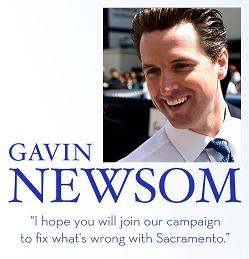
Stories highlight Newsom’s hypocrisy

4

A pair of interesting stories in today’s Chronicle paint Mayor Gavin Newsom as a self-serving hypocrite, highlighting how his cuts-only budget proposals ignore the city’s long-term needs and have led Moody’s to lower the city’s credit rating, and how his green rhetoric is belied by his oil industry investments, including in the company responsible for the ongoing oil leak in the Gulf.

The Guardian has long noted how fiscally irresponsible Newsom’s budgets have been, with our latest editorial calling for Newsom to finally offer support for some of the revenue measures now being explored by the Board of Supervisors, which will need strong support from everyone in City Hall to have a chance of winning voter approval.

The Controller’s Office and now Moody’s have confirmed that Newsom’s reckless and gimmicky budget leaves a long-term budget hole even as it does short-term damage to the city’s social safety net and public health programs. But instead of acknowledging that reality, Newsom flak Tony Winnicker is still offering snide, Republican-style put-downs of the supervisors who are actually working hard to improve the city’s fiscal health while Newsom is out running for state office, afraid he will be criticized for supporting the tax revenue this city desperately needs.

As for Newsom’s oil industry investments, well, they speak for themselves. His whole political career, and even the restaurant and bar career before that, was built on a foundation of oil money heaped upon him by the Gettys. And even after he found there was political gold to be mined from green rhetoric, he has continued to financially support and profit from the oil industry.

Many Guardian readers have long said that we should just give up on Newsom, calling him a shameless and self-serving politician of the very worst sort. Maybe they’re right. But if Newsom wants to earn our support in his race for lieutenant governor – whose most important responsibilities are his key votes in deciding whether to support new offshore oil drilling in California and whether to continue pushing myopic cuts-only budgets for the public university systems – then now is the time for him to show some political courage by disinvesting from the oil industry and supporting a responsible city budget that includes new revenue measures for which he should actively campaign this fall.

Editorial: Put new taxes in the budget

5

Mayor Gavin Newsom still wants to balance this year’s municipal budget with no new taxes (although he’s happy to raise the fees to use city facilities). The supervisors are looking at a different approach: John Avalos, chair of the budget committee, told us he’d like to see $100 million in new revenue on the table.

Some of that might come from a fee on liquor sales. There’s a hotel tax measure being circulated, and the supervisors are also looking at a raising the real estate transfer tax on high-end properties and imposing a commercial rent tax. All but the liquor fee would require a majority vote on the November ballot.

So far, Newsom hasn’t given any indication that he’ll support any new taxes — and that’s due in significant part to his campaign for lieutenant governor. The mayor doesn’t want to get hit by his Republican opponent as a tax-and-spend liberal, so he’s holding the line, cutting essential services instead of looking for progressive ways to bring in new revenue.

But voters up and down the state have shown their willingness to approve new taxes to save essential services, and it’s likely that San Franciscans will do the same — particularly if the folks at City Hall are united in their support.

So here’s an idea for the supervisors: why not include that new revenue as part of this year’s budget?

There’s no legal reason the budget can’t be balanced in part on the assumption of new income. November is almost halfway through the fiscal year, but more than $50 million of that revenue would be available for the 2010-11 budget.

There are distinct advantages to including that money in the budget, starting with fewer budget cuts and layoffs now. There’s also a clear political advantage: if the voters realize what’s at stake — that the money has already been earmarked and that voting it down would mean immediate reduction in vital services — the message of the importance of approving the tax measures would be even stronger.

Equally important, it would force the mayor to show his hand. Newsom would almost certainly prefer to duck the issue, to take a neutral stand on the tax measures (“let the voters decide”). He might wind up opposing all of them. But if the money’s already in the budget, what can he do? Without that tax money, the budget won’t be legally balanced. Without his support, that tax money might not come through.

It’s a risky move. If the voters reject the tax hikes, the supervisors and the mayor would be forced to make painful midyear cuts. But they’ll have to make those cuts anyway, either now or in November. And once you shut down services or eliminate nonprofit contracts, it’s much harder and more expensive to start them up again.

So this might be the year to take the calculated gamble: assume that money’s going to be there. Then everyone, including the mayor, can help make sure that it actually is.

Put new taxes in the budget

2

EDITORIAL Mayor Gavin Newsom still wants to balance this year’s municipal budget with no new taxes (although he’s happy to raise the fees to use city facilities). The supervisors are looking at a different approach: John Avalos, chair of the budget committee, told us he’d like to see $100 million in new revenue on the table.

Some of that might come from a fee on liquor sales. There’s a hotel tax measure being circulated, and the supervisors are also looking at raising the real estate transfer tax on high-end properties and imposing a commercial rent tax. All but the liquor fee would require a majority vote on the November ballot.

So far, Newsom hasn’t given any indication that he’ll support any new taxes — and that’s due in significant part to his campaign for lieutenant governor. The mayor doesn’t want to get hit by his Republican opponent as a tax-and-spend liberal, so he’s holding the line, cutting essential services instead of looking for progressive ways to bring in new revenue.

But voters up and down the state have shown their willingness to approve new taxes to save essential services, and it’s likely that San Franciscans will do the same — particularly if the folks at City Hall are united in their support.

So here’s an idea for the supervisors: why not include that new revenue as part of this year’s budget?

There’s no legal reason the budget can’t be balanced in part on the assumption of new income. November is almost halfway through the fiscal year, but more than $50 million of that revenue would be available for the 2010-11 budget.

There are distinct advantages to including that money in the budget, starting with fewer budget cuts and layoffs now. There’s also a clear political advantage: if the voters realize what’s at stake — that the money has already been earmarked and that voting it down would mean immediate reduction in vital services — the message of the importance of approving the tax measures would be even stronger.

Equally important, it would force the mayor to show his hand. Newsom would almost certainly prefer to duck the issue, to take a neutral stand on the tax measures ("let the voters decide"). He might wind up opposing all of them. But if the money’s already in the budget, what can he do? Without that tax money, the budget won’t be legally balanced. Without his support, that tax money might not come through.

It’s a risky move. If the voters reject the tax hikes, the supervisors and the mayor would be forced to make painful midyear cuts. But they’ll have to make those cuts anyway, either now or in November. And once you shut down services or eliminate nonprofit contracts, it’s much harder and more expensive to start them up again.

So this might be the year to take the calculated gamble: assume that money’s going to be there. Then everyone, including the mayor, can help make sure that it actually is.

Editor’s Notes

23

Tredmond@sfbg.com

Jane Kim, the San Francisco school board president running for supervisor in District 6, has a tough question to answer. When there’s already a solid progressive in the race, Debra Walker, someone who has lived in the district for years and agrees with Kim on almost all the key issues, why is Kim running?

She gave a hint at her campaign kickoff June 24 on how she’s going to portray herself: "I’m not part of anyone’s machine, and I’m certainly not part of anyone’s master plan." It’s an attractive statement — nobody likes machine politics — and the idea that she’s an independent candidate makes her all the more appealing.

Except that it also says something about the progressive movement in San Francisco — and that’s a little disturbing. Because no matter how you try to spin it, when you say you aren’t part of anyone’s machine, you’re implying that maybe your opponents are.

Let me take a step back here, because this is important stuff. There’s a fine line between an effective, organized political coalition that can actually win elections and a political machine, which stifles political innovation and grassroots candidates. And in part it’s about motivation.

When Willie Brown ran San Francisco, it was all about Willie Brown. I’ve never believed the guy had much of an ideology or that any political cause really mattered to him; he loved power, he knew how to use it and he didn’t want to give it up. That was the bottom line.

Now that he’s pretty much out of the picture — although he was at Kim’s party, he’s not a factor anymore — there’s a very different power balance in this city. There’s nobody at City Hall (or in Sacramento, or Washington, or downtown, or anywhere else) who has machine-style control of local politics.

There are people who can build coalitions that work — Aaron Peskin, for example, did exceptionally well with putting together a campaign to elect progressive Democratic County Central Committee elections. And there are people who would love to be power brokers.

But I’ve been around politics here a long time, and I can tell you: Aaron Peskin doesn’t have a machine. Neither does Mark Leno, or Gavin Newsom, or Tom Ammiano, or David Chiu, or anyone else. Thanks in part to district elections, there aren’t many call-up votes on the Board of Supervisors these days. In fact, the left in San Francisco is famously unable to agree on much of anything half the time. Note, for example, the fact that Chiu — often called a Peskin ally — is not supporting Peskin’s candidate in D-6. He’s with Jane Kim.

The thing is, unlike the players in a typical political machine, most of the progressives care about issues. It’s about a shared ideology more than it’s about power. That’s a hugely important difference.

The way the mainstream media has it, the San Francisco left is either fatally fractured and can’t do anything — or it’s becoming a machine. For the moment — a great moment — neither is true. Let’s all keep that in mind. Because when we beat each other up with words like "machine," we undermine the whole progressive movement.

Bad way to start a campaign.

25 ideas for our queer future

1

What does the future hold in store for us? In an age of mainstream assimilation and aspiration, is there even such a thing as the queer future? We asked 25 queer leaders, artists, and activists to offer visions in their areas of expertise. The results — philosophical, poetic, practical, and priceless — are inspiring. One thing’s for sure, we’ll never lose our creative spark. Nor will we lose our motivational zeal. Fate is for the lazy: take action now. (Marke B.)

>>Click here for ideas from our amazing 2010 Hot Pink List

>>Click here for our Pride listings, and get out there!

THE FUTURE OF QUEER ACTIVISM We need to take back the power and stop being led by what the other side is doing. We need to empower ourselves enough so that we are no longer reacting but acting. We must use online social networks the way we used the streets and bullhorns to show our strength, speak out against wrongdoing, change minds, and win back our rights. We also must unite with our allies in other communities that are underrepresented and maligned in much of the same ways we are. When we stand with one another, we have that much stronger a voice.

Kelly Rivera Hart is the founder of Poz Activists Network (pansf.blogspot.com).

THE FUTURE OF QUEER COMMUNITY The difference between straight and gay cultures seems to be breaking down more and more, which is one of our goals, but we still need to support our own businesses, nonprofits, and leaders. We need to continue interacting with each other in the real world and not lose sight of who we are and what we share. Despite how the rest of the world sees us, there is still a lot of loneliness and isolation in the queer community. I think many of us have forgotten even simple things, like how to make actual friends, not just online. And it’s so easy! Renewing that spirit of interaction, freeing ourselves from fear of judgment, and moving outside our “safe zone” can lead to the greatest rewards.

Mark Rhoades is a charitable event planner and fundraiser who throws the annual Cupid’s Back and City Hall Pride parties.

THE FUTURE OF QUEER FASHION The past decade has witnessed an obsession with bulky, voluminous silhouettes disguised as “futuristic avant-garde” and inspired by GaGa and the ’80s. Let’s move on. Through clean lines, elegance, and wearable pieces, the future of queer fashion will shine light on socially relevant issues like bottom shame, positive-negative status reinforcement, and elite subcultures by using gay textiles and forgotten, non-era-specific imagery.

Allán Herrera is the design head of fashion house Homo Atelier (www.homoatelier.com) and a founder of HomoChic (www.homochic.com).

THE FUTURE OF QUEER FILM Future queer film will depend on the gays being at the forefront of distribution technology in the same way we pioneered social networking 15 years ago, spreading provocative and sexually honest/explicit films beyond the film festival circuit and toward a global audience. Special attention must be paid to the creeping homophobia of cultural and technological juggernauts like Apple. Our stories will need to bust through the pigeonhole, weaving our traditional themes (AIDS, coming-of-age) into larger storylines that are relevant to multicultural and transcontinental viewers.

Leo Herrera is a video artist, filmmaker, and a founder of HomoChic (www.homochic.com).

THE FUTURE OF QUEER YOUTH To be a true leader, one must envision the future. The future is a diverse society where LGBTQQ youth are embraced for who they are and encouraged to be who they want to be. In my pursuit for LGBTQQ youth rights, leadership has been about fostering the awareness in LGBTQQ young people about their own power as individuals and as a group, supporting them to access, develop, and master the skills and knowledge they need to transform their power into action, and building bridges to opportunities where their action can create just communities.

Jodi Schwartz is the executive director of LYRIC Lavender Youth Recreation and Information Center (www.lyric.org).

THE FUTURE OF QUEER LABOR Storm of protest drives Congress to pass trans-inclusive ENDA! Support by labor unions critical to passage of this landmark legislation. Screaming, “We’re too queer for this bullshit!” workers hold drag-runway picket lines at transphobic companies across the country. Activists redefine the crisis of trans poverty and unemployment as the most critical queer civil rights issue of our time.

Bad hotel boycott forces Hyatt to sign a fair contract and treat their employees with respect. LGBTQ organizations rally with labor unions for immigration reform, hold signs reading “No borders on my cunt, no border on our countries!

Jane Martin is a queer labor activist and community organizer with SF Pride at Work (www.sfprideatwork.org).

THE FUTURE OF QUEER DRAG (PART ONE) My vision for the future of queer drag requires you to take a moment, stop, look, and listen to our past. We have such a rich history of fierce and amazing queens to learn from. The key is to get involved with a queer family that supports and loves you and what you do. Next, figure out your niche — whether it’s high drag or low camp, just be sure to always do it like you don’t need the money! Then pull it together and serve it up with lots of love and generosity. And, of course, top it all off with a fabulous wig!

Juanita More! (www.juanitamore.com) is the queen. Attend her boisterous Pride party on Sun/27 (see Pride listings), benefiting Bay Area Young Positives (www.baypositives.org).

THE FUTURE OF QUEER DRAG (PART TWO) Meg Whitman will become president of the United States and hire Lady Bunny as one of her speech writers. Oprah and Gayle will finally come out, and gender illusionist shows will dominate the OWN Network — every other channel will follow. In 2050, Heklina will clone herself, twice, and perform the hospital-convalescent home circuit as the Del Rubio Triplets. Apple will come out with a product called the iDrag, that transforms anyone into anything.

Fudgie Frottage is the king. He puts on the annual, wonderful SF Drag King Contest (www.sfdragkingcontest.com).

THE FUTURE OF QUEER DANCE FLOORS Lets start with a nice, clean piece of paper. Black paper. A clean slate. Say, for example, a deliriously rich and tasteful daddy were to buy the Stud. Step one: a deep, five-stage gay cleaning. Step two: gut the interior, maybe keep the bar and choo-choo train intact, they are cute. Otherwise keep it simple. Step three: install an exact copy of the sound system used by Dave Mancuso at the Loft parties in New York City. The tasteful daddy would have a matte gray private jet at our disposal to bring guests of our choosing. For the launch party we would have an all Kenny line-up: Kenny Dixon Jr., Kenny Hawkes, Kenny Carpenter, and Ken Collier (back from the dead) would DJ. Live PA by Kenny Bobien. Oh, and Kenny Kenny on the door. At the end, everyone would get together and cry like they do on those exploitative renovation reality shows. Daddy would miss the ribbon-cutting, but that’s OK — he sent flowers and bought an $80 Diptyque candle for the new bathroom. That would be a good start.

Honey Soundsystem is a future-past DJ collective. Catch the old-school house Honey Pride party on Sun/27 (see Pride listings).

THE FUTURE OF QUEER COMEDY The future is here. And now that gay marriage is mandatory for everyone, queer and straight, the same goes for comedy. All comedians, regardless of sexual orientation, are now required to do at least 75 percent queer comedy in their acts unless they obtain Permit No. 758219B through the Comedy Board, allowing for the special provision to do only 50 percent queer material. That’s right: comedy is now regulated by law. No jokes are allowed to have homophobic content, especially if you’re performing for tourists. Remember, you are ambassadors now. If you’re straight and have no queer material, just ask your aunt or your second cousin or your bachelor uncle whose best friend of 40 years, Bruce, comes to all the family functions.

Lisa Geduldig (www.koshercomedy.com) is a comic and MC who puts on such shows as Kung Pao Kosher Comedy, Funny Girlz, and Comedy Returns to El Rio!

THE FUTURE OF QUEER HOUSING It is beyond time for us queers to focus our fabulous and substantial God-given talents toward a vision of the future of queer housing. We are the trailblazers, the social entrepreneurs, the avant-garde. Imagining and creating the future is what we do best. Let’s put those substantial talents to work to realize our very own “No Place Like Home” dream of a home for our LGBT elders, our homeless LGBT youth, our people with HIV/AIDS, our artists, our activists, and everything in between. I’ll show you mine: the largest affordable housing for people with HIV/AIDS in the nation next to the Castro Theater and an LGBT homeless shelter at Geary and Polk. Now you show me yours.

Brian Basinger is the director of AIDS Housing Alliance/SF (www.ahasf.org).

THE FUTURE OF QUEER COMICS The future of LGBT comics will be about creators moving out of the traditional queer media ghetto and into new digital undergrounds, indie markets, and even the publishing mainstream. Web comics, graphic novels, minicomics, and zines … Queer comics will have to continue to diversify their formats to survive. At the core, though, remains the need to tell good stories! Look for more poignant narratives about the intersection of queer identities and the human condition. Also, robo-dykes, super-powered trannies, bisexual Lotharios, and zombie fags!

Justin Hall, a queer and erotic comics artist, runs All Thumbs Press (www.allthumbspress.com).

THE FUTURE OF QUEER LAW We would like to see the law catch up with the reality of transgender lives. Your gender identity is an innate and deeply felt sense of who you are. Whether you feel male, female, both, or neither, we envision a future where your legal gender will be exclusively determined by you and not by doctors or lawyers. By respecting your autonomy and your ability to know yourselves better than anyone else, the law will finally reflect society at large. The law is not far from fully recognizing that fact of life, but there is still work to be done. So break out your queer legal briefs and join in the fight for transgender civil rights!

Executive Director Masen Davis and the staff of the Transgender Law Center (www.transgenderlawcenter.org)

THE FUTURE OF QUEER SPIRIT As I look toward the future, I want to see the consciousness shift that Harry Hay and other gay pioneers were pushing for manifest itself more fully in both the gay culture and the larger hetero culture. As queer liberationists, we’ve already taught the world that we are a people. I want to see us recognized as always having been a people. I want to see us given the opportunity to cocreate a new, more beautiful world. To paraphrase: what if there were no “faggots,” only master healers, teachers, shamans? I hope to see the end of shame.

Zac Benfield is the president of the radical faerie Church of Nomenus. Attend his “Woo 101 for Hipster Faggots” workshop, part of the Faetopia Festival (See “Ongoing” in our Pride listings)

THE FUTURE OF QUEER SCIENCE

The alien scientist pipettes liquid
Into a flask to be shaken vigorously.
The origins of gay life.

On Earth, planets align, exposing
Realities once thought to be utterly impossible:
Gays are outta this world!

Queer scientists make the future
Always brighter, cleaner, sexier, and more fabulous
Stopping only for a cocktail.

Quietly, the gay scientist works,
Inching closer to the final answer that
Will change the world forever.

In the future of science
We see the world with different eyes,
All judged by ability alone.

Chris Waddling is a PhD scientist at UCSF.

THE FUTURE OF THE QUEER PAST The future of the queer past has always been fragile — and despite some positive developments in the past 25 years, it remains fragile today. The legacy of LGBT people is still largely invisible in the settings where our society formalizes its history. Our stories are rarely told in high school classrooms, in the galleries of museums, on the plaques of public monuments. Supporting the efforts and the growth of such organizations as the GLBT Historical Society and other pioneering queer history institutions will be key to ensuring that the memory of LGBT lives, struggles, setbacks, and triumphs can inform and inspire future generations.

Writer, editor, and antiquarian book dealer Gerard Koskovich is a founding member of the GLBT Historical Society and a member of the board of directors of the Mémorial de la Déportation Homosexuelle, a French national group that commemorates the homosexual victims of the Nazis.

THE FUTURE OF THE QUEER FUTURE My future selves are always popping back from the year 2023 or 2034 for the weekend, mostly because they know I’ll be their sex slave. They remember what 2010-me was like. (And apparently in the mid-2020s, time-traveling self-flagellation becomes a big fetish.) They’re not supposed to tell me anything about The Future, but they let slip wee details here and there — the 20-teens are a troubling time, but then we discover queer telepathy, and everybody starts secreting empathy endorphins and building communal gardens in the upper atmosphere. Hang in there until we get the first queer president, they always say. Once she comes out during her second term, that’s when the government really starts building something.

Charlie Anders is the managing editor of science fiction-forward site io9.com

Editorial: PG&E’s greed backfires

1

The defeat of Prop. 16 showed that unlimited corporate spending on a ballot initiative doesn’t guarantee victory.

EDITORIAL The single most important number to come out of San Francisco on election night was this: 67.49 percent. That’s how many people in this city voted against Pacific Gas and Electric Co.’s monopoly measure, Proposition 16. It’s a statistic that ought to be posted somewhere on a wall at City Hall to remind everyone in local government that the voters sided overwhelmingly against PG&E and in favor of a public option for local electricity.

It’s a landmark victory. On the state level, the defeat of Prop. 16 showed that unlimited corporate spending on a ballot initiative doesn’t guarantee victory, that an underfunded coalition can defeat a giant utility — and that a majority of those in PG&E’s own service area are unhappy with their electricity provider. Public power activists all over the state should take this as a signal that PG&E, and its once-formidable political clout, are on the wane.

In San Francisco — the only city in the nation with a legal mandate for public power — the vote was the most lopsided of any California county. It was the strongest local mandate for public power since the passage of the Raker Act in 1913.

That should be a huge boost for the city’s community choice aggregation (CCA) program. Sup. Ross Mirkarimi, who has been leading the fight for CCA, was pushing hard to get a contract signed before the June 8 vote; like a lot of observers, he feared that PG&E’s vast war chest would overwhelm the opposition. But now that Prop. 16 is dead — and nothing like it will be back in the near future, if at all — the city has a bit of a breather.

That doesn’t mean all work on the contract should slow down. The San Francisco PUC has been mucking around with this deal for more than a year, and needs to bring it to a close. And the city needs to start preparing to answer PG&E’s propaganda campaign with a concerted effort — from the mayor’s office on down — to remind San Franciscans that CCA power will be greener, safer, and in the long run, cheaper than the energy we’re now forced to buy from PG&E.

Any San Francisco politician who stands with PG&E and opposes CCA will do so at his or her peril.

And while San Francisco is moving to implement a modest public power program, state Sen. Mark Leno is moving in Sacramento to limit PG&E’s ability to try another Prop. 16 move — or to spend tens of millions of dollars trying to block local power initiatives. Leno has introduced a bill that would limit the utility’s ability to use ratepayer money on political or public relations campaigns.

The measure doesn’t have a number yet, but the language is brilliant. It directs the California Public Utilities Commission to disallow any political spending that PG&E tries to add into its regulated rates. And since the company has no source of income other that the money it gets from ratepayers, the impact would be to deny PG&E the ability to spend money working against the interests of ratepayers and the public.

"Over the past 10 years, PG&E has probably spent $150 million on political campaigns — and that’s money that came from the ratepayers," Leno said. "This bill is to protect ratepayers."

PG&E will howl about its First Amendment rights — and, indeed, the Supreme Court has of late given corporations who want to influence political campaigns and legislative issues a good bit of leeway. But the fact remains that PG&E is a regulated utility in California, and the state has every right to determine how much the company can charge its customers and to limit how that money is used.

Leno’s bill, of course, could radically change local politics. If PG&E couldn’t spend millions to defeat public power measures, the city would have far more options — and activists should be thinking about how a future campaign to take over the company’s infrastructure might work.

The Board of Supervisors should pass a resolution endorsing Leno’s bill, and the coalition that worked to defeat Prop. 16 should be working to get other cities and counties around the state to sign on.

PG&E’s greed in putting Prop. 16 on the ballot is starting to backfire — and it can’t happen too soon.

PG&E’s greed backfires

0

EDITORIAL The single most important number to come out of San Francisco on election night was this: 67.49 percent. That’s how many people in this city voted against Pacific Gas and Electric Co.’s monopoly measure, Proposition 16. It’s a statistic that ought to be posted somewhere on a wall at City Hall to remind everyone in local government that the voters sided overwhelmingly against PG&E and in favor of a public option for local electricity.

It’s a landmark victory. On the state level, the defeat of Prop. 16 showed that unlimited corporate spending on a ballot initiative doesn’t guarantee victory, that an underfunded coalition can defeat a giant utility — and that a majority of those in PG&E’s own service area are unhappy with their electricity provider. Public power activists all over the state should take this as a signal that PG&E, and its once-formidable political clout, are on the wane.

In San Francisco — the only city in the nation with a legal mandate for public power — the vote was the most lopsided of any California county. It was the strongest local mandate for public power since the passage of the Raker Act in 1913.

That should be a huge boost for the city’s community choice aggregation (CCA) program. Sup. Ross Mirkarimi, who has been leading the fight for CCA, was pushing hard to get a contract signed before the June 8 vote; like a lot of observers, he feared that PG&E’s vast war chest would overwhelm the opposition. But now that Prop. 16 is dead — and nothing like it will be back in the near future, if at all — the city has a bit of a breather.

That doesn’t mean all work on the contract should slow down. The San Francisco PUC has been mucking around with this deal for more than a year, and needs to bring it to a close. And the city needs to start preparing to answer PG&E’s propaganda campaign with a concerted effort — from the mayor’s office on down — to remind San Franciscans that CCA power will be greener, safer, and in the long run, cheaper than the energy we’re now forced to buy from PG&E.

Any San Francisco politician who stands with PG&E and opposes CCA will do so at his or her peril.

And while San Francisco is moving to implement a modest public power program, state Sen. Mark Leno is moving in Sacramento to limit PG&E’s ability to try another Prop. 16 move — or to spend tens of millions of dollars trying to block local power initiatives. Leno has introduced a bill that would limit the utility’s ability to use ratepayer money on political or public relations campaigns.

The measure doesn’t have a number yet, but the language is brilliant. It directs the California Public Utilities Commission to disallow any political spending that PG&E tries to add into its regulated rates. And since the company has no source of income other that the money it gets from ratepayers, the impact would be to deny PG&E the ability to spend money working against the interests of ratepayers and the public.

"Over the past 10 years, PG&E has probably spent $150 million on political campaigns — and that’s money that came from the ratepayers," Leno said. "This bill is to protect ratepayers."

PG&E will howl about its First Amendment rights — and, indeed, the Supreme Court has of late given corporations who want to influence political campaigns and legislative issues a good bit of leeway. But the fact remains that PG&E is a regulated utility in California, and the state has every right to determine how much the company can charge its customers and to limit how that money is used.

Leno’s bill, of course, could radically change local politics. If PG&E couldn’t spend millions to defeat public power measures, the city would have far more options — and activists should be thinking about how a future campaign to take over the company’s infrastructure might work.

The Board of Supervisors should pass a resolution endorsing Leno’s bill, and the coalition that worked to defeat Prop. 16 should be working to get other cities and counties around the state to sign on.

PG&E’s greed in putting Prop. 16 on the ballot is starting to backfire — and it can’t happen too soon.

On the Cheap listings

0

On the Cheap listings are compiled by Paula Connelly. Submit items for the listings at listings@sfbg.com. For further information on how to submit items for the listings, see Picks.

THURSDAY 10

"We Were There" African American Art and Culture Complex, 762 Fulton, SF; (415) 922-2049. 6pm, $5. Attend this film screening of "We Were There," about the lesbian response to AIDS among gay men in the 1980’s, followed by a discussion moderated by Andrea Shorter of Equality California. Part of the National Queer Arts Festival.

BAY AREA

Weapons of Mass Seduction Good Vibrations, 2504 San Pablo, Berk.; (510) 841-8987?. 6:30pm, free. At this interactive workshop, hosted by Emmy award-winning writer Lori Bryant-Woolridge, learn how you can find the sensual side to your feminine confidence with tips on how to embrace your inner flirt, excel in the art of seduction, and make your life a more passionate experience.

FRIDAY 11

Accordion Day San Francisco City Hall, 1 Dr. Carlton B. Goodlett Place, SF; www.ladyofspain.com. 11:30am, free. Celebrate the 20th anniversary of the accordion being San Francisco’s official musical instrument at this mini concert featuring the Blazing Bellows Accordion Ensemble, a presentation of the Accordion Day proclamation, and free accordion-shaped cookies.

Art in Storefronts: Chinatown Launch party at Chinese Culture Center, 3rd floor, 750 Kearny, SF; www.sfartscommission.org. 5pm, free. Art on storefronts and walls on blocks bordered by Grant, Sacramento, Kearny, and Jackson streets. Check out art that has been temporarily placed in vacant storefront windows and walls in order to engage local artists and reinvigorate neighborhoods that have suffered in the economic downturn. Launch celebration to feature an art walk, live music, refreshments, tea tastings, and more.

BAY AREA

Enigma FLOAT, Floatation Center and Art Gallery, Unit # 116, 1091 Calcot, Oak.; (510) 535-1702. 6pm, free. Hear artists Dave Meeker and J.B. MacKinnon discuss their work at this artist mixer featuring free libations, music by DJ fflood. To get even more in touch with your inner muse, take advantage of FLOAT spa, which specializes in floatation therapy.

SATURDAY 12

Cartoon Story-Telling Cartoon Art Museum, 655 Mission, SF; (415) CAR-TOON. 12:30pm, free with $7 museum entry. Watch drawings come to life as Joe Wos presents his blend of storytelling and live cartoon illustration to tell original tales and to also re-tell some of the classics.

Crystal Fair Fort Mason Center, Building A, Marina at Buchannan, SF; (415) 383-7837. Sat. 10am-6pm, Sun. 10am-4pm; $6. Browse through a magical mix of crystals, minerals, beads, and jewelry while also learning more about the healing arts at this fair featuring over 40 vendors selling affordable wares, including massage, psychic readings, singing bowls, and more.

Modern Eden Modern Eden, 403 Powell, SF; (415) 420-2898. 7pm, free. Toast North Beach’s newest art destination at this gallery grand opening showcasing work from over a dozen local artists, including painting, sculpture, and hand-crafted jewelry.

San Francisco Free Folk Festival Presidio Middle School, 450 30th Ave., SF; www.sffolkfest.org. Sat.-Sun. Noon-11pm, free. Check out more than 50 concert performers, dance workshops, family activities, and more at this free two day folk festival for the whole family.

Succulent and Cactus Sale County Fair Building, 9th Ave. at Lincoln, Golden Gate Park, SF; (415) 789-0703. Sat.-Sun. 9am-5pm, free. Find your much needed water thrifty garden additions at this annual sale of hundreds of affordable succulents and cacti also featuring pottery, garden supplies, books, and an "ask an expert" information table where an expert will help you find the best plant for your garden.

BAY AREA

Live Oak Park Fair Live Oak Park, 1301 Shattuck, Berk.; (510) 227-7110. 10am-6pm, free. Support local artisans and craftspeople while finding great values on hand-made treasures at this family festival in the trees featuring contemporary art, crafts, jewelry, clothing, handmade quilts, festive food, live music, a kidzone, and more.

Rhythmix Anniversary Jam Rhythmix Cultural Works, 2513 Blanding, Alameda; www.rhythmix.org. 10am, free. Rhythmix Cultural Works, which opened in 2007 as a community arts center providing affordable gallery and classroom space, is offering free performances and demonstrations all day for people of all ages. Learn about belly dance, Capoeira, Circus Arts, Taiko, take hands-on workshops, check out art exhibits, and much more.

For Lit, Talks, and Benefits listings, visit the Pixel Vision blog at

Get your kicks

1

culture@sfbg.com

SPORTS The Olympics may get the most props for bringing sports fans of all nationalities together in (mostly) friendly competition. But as futbol fans know, a simple “gooooaaaallll!” translates thrillingly into any language. Like millions of World Cup soccer enthusiasts around the globe, I’ll be parking my particulars in front of the biggest screens in town for this year’s spectacle (June 11-July 11). And fortunately, no matter where you are in the city, you should be able to do the same. Here’s a short list of some of the best places to go and check out a match or 10. Too numerous to list are the many sports bars and Irish/English pubs that will undoubtedly be open (Bus Stop, Kezar Pub, the Phoenix, Mad Dog in the Fog, Balompie Café — here’s looking at you!), but you’ll find them easily enough on your own. Just follow the sounds of “ole, ole, ole, ole” wafting in the breeze, grab a stripy scarf, and plunge into the fray.

Civic Center: If you can’t force your soccer-loving employees to come to work during the big matches, at least you can cut down on their commute by installing a giant 13-by-18-foot screen in front of City Hall and inviting the neighbors ’round. Jens-Peter Jungclaussen, the “teacher-with-the-bus” who almost single-handedly wrangled 10,000 people to a screening of the 2006 final at Dolores Park, is helping spearhead the city’s ambitious 2010 operation, with 10 days of screenings including all quarterfinal, semifinal, and final matches, and a corresponding youth soccer tournament organized by America SCORES.

1 Dr. Carlton B. Goodlett Place, SF. www.worldcupsf.com, www.teacherbus.com

AT&T Park: “Take me out to the ballgame” gets a brand new meaning at AT&T Park where they’ll be screening the big USA-England match on June 12 for free. Open from 10 a.m. to 3 p.m., the ballpark expects 5,000 fans to show up. If you ever wanted to give soccer hooliganism a try, this might well be the place. Just try not to get all Bill Buford about it.

24 Willie Mays Plaza, SF. (415) 972-2000

Goethe Institute: Even though the games aren’t being played in the vaterland this year, native German-speakers and we amis who love them will be gathering at the institute to watch the Germany-Australia game on June 13, and the Germany-Ghana match on June 23. Kickoff time for both games is 11:30 a.m., more screenings will be announced presuming Germany progresses to the next levels.

530 Bush, SF. (415) 263-8760, www.goethe.de/sanfrancisco

Mercury Lounge: Who would have thought that a relatively innocuous den of SoMa-style iniquity would decide to open its doors to the rough-and-tumble world of footie fandom? If you can get through the somewhat self-indulgent event webpage, you’ll come away pretty excited about the prospect of seeing matches every day from 6 a.m., with drink specials, breakfast menu, and (ick) bar-staff “eye candy”. Don’t get me started on that, but do expect to see me put in an appearance or two for half-volleys and hash browns.

1582 Folsom, SF. (415) 551-1582, www.sfworldcup2010.com

Horatius: The proprietor of this Potrero Hill café, Horacio Gomes, has thrown down the “best place to watch the World Cup” gauntlet by promising to be open for every single match — including those that start at 4:30 a.m. — and screening simultaneous games when they occur. Plus, the venue boasts a 15-by-15-foot projection screen that you won’t find at your run-of-the-mill sports bar and a capacity for up to 300 people. Free coffee will be served during the early morning matches, and light breakfast at 6 a.m.

350 Kansas, SF. (415) 252-3500, www.horatius.com

Steps of Rome Caffe: This North Beach stronghold is also planning to be open for every game — including those 4:30 matches that only the most diehard fans would consider attending (New Zealand vs. Slovakia anyone?). If you’re not yet a diehard fan, this might be the place that turns you into one, what with all that Italian coffee, pizza, and overseas-bred enthusiasm for the world’s greatest game flowing like a robust house red.

348 Columbus, SF. (415) 397-0435, www.stepsofromecaffe.com

Cutting from the bottom

7

By Alex Emslie

news@sfbg.com

When Mayor Gavin Newsom unveiled his proposed city budget on June 1, he downplayed the severity of cuts to the city’s Department of Public Health, noting that they amounted to less than 2 percent. But if Newsom’s uneven program chopping becomes a reality, critical social services for some of San Francisco’s poorest and most vulnerable residents will be cut by almost one-third.

The DPH was able to shrink its budget by nearly $31 million, according to a budget proposal currently before the Board of Supervisors, in part by slashing community nonprofit clinics providing outpatient mental health services to some of San Francisco’s most difficult to treat mental health cases.

“It’s very possible you could see more people who are homeless, people who are homeless not getting as much care — they’ll be sicker,” said Dr. Eric Woodard, medical director of psychiatric emergency services at San Francisco General Hospital. “And you could reasonably expect more deaths on the street to occur.”

State and federal matching funding to the DPH dwarfs the amount of money the department receives from the city. What isn’t spelled out in Newsom’s budget is that every dollar cut by the city results in more than another dollar lost in federal funding for social services.

The DPH proposed a nearly 9 percent cut to outpatient community-based health services, and an 11 percent cut to residential inpatient services to meet the mayor’s request that all city departments submit a 30 percent budget reduction to his office. Newsom reversed the proposed cuts to residential services but kept the outpatient cuts.

“I believe in the efficacy of residential [treatment],” Newsom said during his budget unveiling. “I believe there are a lot of question marks around outpatient drug treatment.”

But the cuts affect more than just outpatient drug treatment. While many of the clinics that were cut focus on treating mental illnesses, they are funded through the DPH category that includes substance abuse treatment. Newsom’s office declined to answer our inquiries about the reasons for and implications of his cuts, referring us to DPH.

Walden House CEO Vitka Eisen, whose organization serves people suffering from mental illness and substance abuse in inpatient and outpatient clinics, said she was relieved that residential funding was added back. However, she is concerned about the proposed $4.1 million cut spread across several nonprofit outpatient services.

“There’s a very large cut to outpatient services citywide, and that’s obviously problematic because outpatient services are an important part of our system of care in the city,” she told the Guardian. “You can’t really cut one or the other.”

DPH Community Behavioral Health Services Director Dr. Robert Cabaj is hoping the Board of Supervisors will restore some of the cuts to outpatient clinics. “Unfortunately, they [the Mayor’s Office] left these in,” he told the Guardian. “I’m not sure why — I’m not sure what the mayor was thinking at the time.”

Citywide Case Management and Community Focus, an outpatient clinic serving some of San Francisco’s most severely mentally ill, is one of the hardest hit nonprofit clinics in the mayor’s proposed budget. The agency will lose $1.22 in federal funding for every $1 cut from the city, division director Dr. David Fariello said.

That’s how its 15 percent, $1.3 million cut proposed by the DPH and accepted by the mayor, ballooned into a 33 percent, $2.8 million loss for one of the city’s most comprehensive and best-performing community behavioral health services.

Citywide, at 982 Mission St., boasts the facilities, network, and location to serve one of San Francisco’s most vulnerable populations. The typical Citywide client suffers from schizophrenia, bipolar disorder, borderline personality disorder, or severe depression. They are likely homeless, grappling with substance abuse, and many have posttraumatic stress disorder.

Citywide employees, doctors, and administrators, as well as physicians from outside the clinic, speculate that cutting outpatient mental health services in a city with one of the highest per capita populations of mentally ill homeless people will ultimately cost the city more money than it saves now. Use of expensive city services like psychiatric emergency rooms, jails, police, and ambulance could all rise.

“Frankly, a lot of these budget cuts do not seem to be very well thought out in terms of what the real cost is going to be,” Woodard said. “If you look into the not very distant future, you’re going to incur costs that are probably much greater than your savings were initially by making the cuts.”

Cabaj said that past funding cuts haven’t resulted in higher use of psychiatric emergency services because the DPH prioritizes funding for the most severe cases and screens for those who could possibly be moved into cheaper services. Citywide clients are consistently high users of San Francisco General Hospital acute inpatient psychiatric care, at an average cost to the city of $1,200 per patient, per day, if they don’t have insurance or Medical benefits.

Many end up in costly in-patient psychiatric care facilities or are arrested and land in the city’s Behavioral Health Court, which hears cases in which defendants have been diagnosed with a mental illness that is suspected of being a factor in their crime. More than 70 percent of the Behavioral Health Court’s mandated treatment slots are at Citywide.

“We can manage behaviors that get people thrown out of every other clinic in the city,” Fariello said. “Where is that capacity going to be picked up? These are not clients who, if they don’t get treatment, maybe their doctor will give them some medicine and it’ll be OK. These are clients who are going to continue to be high users unless we intervene.”

Citywide figures show a 40 percent decrease in violent reoffenses for clients referred to their clinic from the Behavioral Health Court. Nearly three-quarters who were homeless are able to maintain housing, and more than 25 percent of clients who were frequent users of inpatient psychiatric services have stayed out of the hospital.

“Citywide really is one of the best,” said Woodard, who works with Citywide’s Linkage Team to stabilize patients from SFGH’s psychiatric emergency room. “They provide excellent care for these really fragile, very ill patients. I would say of the community programs, they’re really at the top of the list.”

Fariello estimates having to reduce the 1,035 clients receiving treatment at his clinic by 400 if the cuts are finalized. He may have to scale back some of his clinic’s innovative and successful categories of service — such as employment support and dialectical behavioral therapy, a highly specialized form of therapy with proven success in treating borderline personality disorder. Citywide has the largest DBT team in San Francisco.

Citywide administrators are baffled by DPH’s decision-making process, given that it serves the city’s sickest, poorest, and homeless — characteristics that should have reduced its cuts, according to the department’s priorities outlined in its budget reduction proposal.

Since founding the agency nearly 30 years ago, Fariello has worked with the city to implement innovative techniques in treating San Francisco’s highest users of expensive psychiatric emergency services. And it has been consistently successful. In a review last year of 15 similar programs conducted by the DPH, Citywide received an average 92.1 out of 100, the highest score. It scored a 4.0 out of 4.0 on another recent program review.

Several divisions within Citywide contribute to its inclusive approach to mental health services. Citywide’s forensics program works exclusively with clients involved in the criminal justice system. Community Focus provides culturally sensitive therapy in several languages. The Linkage Team stabilizes emergency psychiatric patients from SFGH.

Employment support for Citywide clients helps them get and retain jobs, emblematic of the entire agency’s goal of treating clients as complete people, not just mental health patients. “What we’ve found out is that people who have an investment in purposeful activity have an investment in getting better,” Fariello said. “A lot of clients have a notion that their career is being a mental health client. What we’re trying to do is change that.”

Citywide supported employment services supervisor Greg Jarasitis told a story of one client who said she liked her job as a bookkeeper because while she was at work she felt like a “normy,” then added: “These are people who have been marginalized for so long.” *

Get involved: The Board of Supervisors holds a public comment hearing on the deep proposed health cuts, as state law requires, June 15 at 3 p.m. in Board Chambers at City Hall. The board’s Budget and Finance Committee departmental hearings for the DPH are scheduled for June 21 and June 28.

Public employees step up; when will Newsom and downtown?

7

With news that Muni union leaders are backing salary givebacks to help close San Francisco’s $483 million budget deficit, all city employees are now making sacrifices to preserve city services that we all rely on. But as we eagerly await the release of the mayor’s budget on June 1 – in which some city departments have been asked to make cuts of up to 30 percent – the question is whether Mayor Gavin Newsom will find the courage to ask other San Francisco entities to help.

For example, will he support the 2 percent increase in the hotel tax that labor is pushing (and which polls show would probably pass muster with voters if Newsom backed it), a real estate transfer tax that would hit the comfortably rich, or a downtown transit assessment district that would make corporations finally help pay for the transit services their employees rely on?

So far, it’s doesn’t look like it (and his Communications Office won’t respond to the question). Instead, Newsom has cynically engaged in deceptive blame games that scapegoat public employees for a problem he created (for example, by approving bloated police and fire contracts to win political support and then blocking efforts to seek new revenue sources), while still pushing gimmicky new spending programs designed to burnish his political image as he runs for state office.

This could be Newsom’s last chance to finally show some leadership, and now is the time when it’s needed most. After offering cuts-only city budgets his entire tenure in office, most city departments are unable to go any further without sacrificing needed services.

The situation has become dire, as workers said Wednesday during a budget rally outside City Hall. Guardian news intern Kaitlyn Paris was there covering the action and offers this report:

Community groups from around San Francisco rallied in front of City Hall on Wednesday to protest the drastic reductions that health and human services face in the Governor’s proposed state budget and Mayor Newsom’s impending city budget.

A graveyard of tombstones representing each of the organizations stuck out of the sand next to the grassy square where participants gathered. Identifiable by their maroon sweatshirts, the largest faction present was the Community Housing Partnership. The proposed budget would cut over $100,000 from the agency and its programs that provide help with employment, substance abuse, and habitation development.

“Supervisors need to be constantly reminded of the merits of these services,” CHP employee Gabriel Haywood told us.

The partnership runs a jobs retention program that Haywood says has exceeded its city-mandated job retention rate by 25 percent, keeping 75 percent of the people it serves employed for longer than three months. Still, Cameron McHenry told the Guardian the city thinks the groups services are duplicative. [Editor’s Note: information in this paragraph has been corrected since his article was posted].

The city’s OneStop employment service is suited to workers displaced by the recession, not the multiple-burdened clients helped by CHP, said McHenry: “We can’t take a 30 percent cut and still do the work we do.”

After speakers from various groups addressed the crowd from a flatbed truck, District 5 Sup. Ross Mirkarimi took to the stage to demand alternative ways of generating revenue. The progressive revenue tactics championed mainly involved increased hotel tax to reduce the budget burden felt by community service groups. Mirkarimi and members of the crowd also criticized the city for its continued funding of Sharp golf course in Pacifica.

“We’re trying to force the Mayor to have a fair budget,” Coalition on Homelessness Director Jennifer Fredenbach told us. “We believe he can do it through alternative revenue like the hotel tax, a more progressive tax base, and a property transfer tax on high end real estate. It has real consequences for poor San Franciscans, not only in quality of life, but in the ability to live.”

Beating the reaper

1

rebeccab@sfbg.com

The wholesome-looking woman in the Pacific Gas and Electric Co.-funded Yes on Proposition 16 commercial seems trustworthy. "Voters should have the final say," she intones over a background of soothing music, "because we’re paying the bills."

TV-friendly slogans aside, many have deemed PG&E’s $45 million (a new figure well over the $35 million initially committed by the company — paid for by ratepayers who had no say) Prop. 16 campaign to be a subversion of the democratic process and corporate deception at its worst. And it’s aimed in part at stopping San Francisco — one of PG&E’s most lucrative territories and the home of its central office — from implementing a modest public power program called community choice aggregation (CCA).

But San Francisco may be slipping under the deadline. With a last-minute push by Sup. Ross Mirkarimi and other public-power supporters, it appears that the city will have the legal underpinning of a CCA program in place before the June 8 election.

It’s still complicated and a bit tricky, but under questioning by Mirkarimi April 21, SF Public Utilities Commission general manager Ed Harrington said that the city is going to meet all the necessary deadlines.

Prop. 16 seeks to require a two-thirds majority vote before a local government can move forward with a municipal electricity program. Voter approval of the measure on June 8 would effectively weed out any potential competition within PG&E’s service territory, particularly given that PG&E overwhelms all campaigns with multimillion dollar propaganda blitzes.

Paul Fenn helped craft the state law that created CCA, which allows local governments to purchase power on behalf of their citizens, a vision for an alternative to PG&E that lies squarely in the crosshairs of Prop 16. "Unfortunately, it’s mostly up to Republicans in Southern California how it turns out," Fenn said, because this election will attract conservatives to the polls to decide between gubernatorial candidates in the GOP primary. "Unless people in the Bay Area become aware."

BEAT THE CLOCK


Public power advocates are fighting to stop Prop. 16 — but at the same time, in San Francisco, there’s a frantic effort to gets its own CCA in place. The city is poised to have completed a CCA contract by June 8 — election day.

Although the contract will not be finally approved by committees, the Board of Supervisors, and the mayor until after the election, City Attorney Dennis Herrera says the steps are solid enough to protect the city against the inevitable PG&E lawsuit.

The approaching election day has sent the SFPUC scrambling in a months-long race against the clock to seal the deal on CleanPower SF, the CCA program that envisions offering energy customers the choice of a climate-friendly, 51 percent renewable mix by 2019.

Had the city agency failed to strike a deal with Power Choice Inc. (PCI), the program’s service provider, before the June 8 election, years of effort to get the clean power program off the ground could have gone down the tubes. Mirkarimi, City Hall’s strongest advocate for CleanPower SF, urged the SFPUC to get into gear, nicknaming Prop. 16 "the grim reaper."
Things grew tense in April and May as contract negotiating sessions wore on without success, green-power advocates sparred publicly with the SFPUC, and the "grim reaper" approached. A breakthrough came May 21: the SFPUC announced at a meeting of the city’s Local Agency Formation Commission (LAFCo) that it had finally signed a term sheet agreement with PCI.

A contract based on the terms is expected to be prepared by early June, Harrington said, adding that it could be introduced to the Board of Supervisors on June 8. A month-long review period is expected to follow.

"Today was an announcement of a very critical milestone," Mirkarimi, who chairs LAFCo, noted after the meeting. "I’m delighted to see us turn a corner, and I think … having a term-sheet signed, having a CCA implementation plan approved by the CPUC, and having literature sent out in three different languages to 250,000 households in San Francisco is all a testament that we are, as a city, absolutely serious in implementing and delivering our clean power energy program."

He nonetheless kept cracking the whip on advancing the goals of the program during the meeting. "Any hiccup whatsoever on timelines is a dangerous hiccup," Mirkarimi said.

"We fully expect to meet all deadlines," Harrington responded.

Public power advocate Eric Brooks, who has helped move the CCA program forward since the outset, expressed trepidation at a stakeholders meeting about the SFPUC’s commitment to the program, saying he believed that the city could have cleared the deadline months earlier without having to worry about Prop. 16 as a deadline.

Brooks advocated for Local Power, Fenn’s firm and a city contractor, to play a more central role in program design, saying that as long as the SFPUC remained at the helm, the program would be shaped by "the same inside-the-box thinking" and limited enthusiasm.

LITIGATION LIKELY


Despite recent leaps forward, the common wisdom around City Hall is that CleanPower SF is nonetheless unlikely to escape PG&E’s litigious wrath — particularly if Prop. 16 gets a thumbs up at the polls. If it passed, Prop. 16 would become effective immediately, according to the City Attorney’s Office.

"It’s not a foregone conclusion that Prop 16 will pass," City Attorney’s Office spokesperson Matt Dorsey pointed out. And if it does? "In our view," he said, "San Francisco has already implemented its CCA program," making it capable of withstanding a legal challenge.

"We are talking to the city attorney every single day," Harrington noted during a recent SFPUC stakeholders meeting.

But Fenn warned that a complicated lawsuit could still inflict damage. "Litigation processes can outlast political possibility," he cautioned. "San Francisco may be caught up in the courts." Or, if Prop 16 passes and the program moves forward as planned, "[CCA] might be a weird new variant that only exists in San Francisco and Marin."

Marin County’s CCA program is already up and running, and the Marin Energy Authority recently began providing power to its customers. PG&E — which is bound by state law to "cooperate fully" with CCA implementation — fought it by contacting customers to persuade them to opt out of the program via mailers sent in violation of CPUC laws that only allow CCAs to solicit opt-outs. PG&E earned a sharp rebuke in a May 3 letter from CPUC executive director Paul Clanon, specifically warning the company to "refrain from sending any mailers of this nature in the future."

On May 12, Clanon was back with a second letter. "On May 4, PG&E mailed a letter to every customer that had not opted out of MEA’s service, formatted in a manner that directly conflicts with the direction I provided to PG&E just one day earlier," he wrote. This time, he warned the utility that it was "in danger of the commission’s imposing significant and continuing fines and other penalties."

PG&E responded by saying the mass mailing of illegal opt-out notices had been an accident, and apologized. "They accidentally licked envelopes, accidentally stuck the stamps, and accidentally sent them out?" asked an incredulous Ben Zolno, a Prop 16 opponent, in a phone conversation with the Guardian.

"Nobody quite remembers PG&E acting so outrageously," Sen. Mark Leno remarked to the Guardian in the wake of the debacle. The CPUC later determined that any opt-outs solicited by PG&E’s illegal mailers were void.

At a May 20 meeting, the CPUC bolstered restrictions prohibiting PG&E from printing false statements about CCA programs in mailers but made no move to impose penalty fines. City officials characterized the decision as falling short of the action needed to halt the utility’s attempts to sabotage Bay Area CCAs.

"We would expect the CPUC to tell them to cooperate," Harrington told the Guardian. "What the CPUC said was ‘you can’t lie.’"

Meanwhile it’s up to the CPUC to decide whether to honor PG&E’s request for a $4 billion rate hike, which will amount to an average 30 percent increase on customer bills over three years. "They’re not always guaranteed to get what they ask for," CPUC spokesperson Andrew Kotch noted. Public hearings on the increase are coming soon, with a final decision scheduled for December.

"There have been other sizable rate increases and PG&E keeps coming back for more," says Dwight Cocke of The Utility Reform Network (TURN), which is also part of the Prop. 16 opposition campaign. "Up until recently, PG&E was shutting off 15,000 customers per month" for nonpayment, forcing customers to pay extra deposits and reconnect fees to get their electric service back.

"For a lot of people on fixed incomes and low incomes," he said, "it spirals out of control."

Read up: www.prop16.org; www.powergrab.info

Media experiments

1

news@sfbg.com

With traditional journalism outlets still struggling through the Great Recession and into an uncertain future, some interesting new media experiments have been popping in San Francisco, including much-anticipated The Bay Citizen, an initially well-funded newsroom that launches this week.

It will join a media landscape filled with a wide range of new ventures: general news websites ranging from the nonprofit SF Public Press to the theoretically for-profit SF Appeal; niche sites such as the popular SF Streetsblog; the Spot.us media funding experiment; and the MediaBugs accountability project. And it isn’t all online — McSweeney’s magazine put out the one-time San Francisco Panorama newspaper in December and SF Public Press plans to print a similar demonstration newspaper next month.

But for all the high hopes and talk of using strategic partnerships and new funding models to overcome economic and readership trends that have hobbled the San Francisco Chronicle and other big media companies, those who run The Bay Citizen and other start-ups still need to prove their worth and sustainability.

Whatever The Bay Citizen becomes, it will break new ground — nobody has ever put this level of money into creating a nonprofit, online-only daily newspaper in a major market, or had such significant media partners, ranging from UC Berkeley’s Graduate School of Journalism to The New York Times, which will run the newsroom’s content as its twice-weekly Bay Area section.

Some people think this is the future of journalism; San Francisco-based financier Warren Hellman, who provided the seed money, thinks it’s worth $5 million or more to get the project off the ground. But since there’s no model out there, the crew at The Bay Citizen will be making it up as they go along. And at this point, even with what most Web publications would consider a huge amount of money, it’s clear that The Bay Citizen will not be replacing the Chronicle any time soon.

Jon Weber, the publication’s editor, knows the world of mainstream daily journalism (he was a writer for the Los Angeles Times); the world of high-paced big-money startups (he ran the Industry Standard); and the world of low-budget fledgling operations (he founded the small online magazine New West). And the first thing he had to figure was exactly what this new online daily was going to look like.

With a staff of just six news writers — and a regional focus — The Bay Citizen can’t try to cover breaking news the way the Chronicle, Examiner, or even Bay City News Service do. So the publication will be different from a traditional daily, with more enterprise reporting and less of the types of features dailies typically offer.

There will, for example, be no daily sportswriter. “There won’t be stories on every game, every day,” Weber told me. “We’ll pick our spots with enterprise reporting.” The Bay Citizen won’t try to compete with the Chronicle on national or international stories, either: “It’s a Bay Area focused site,” Weber said. “That doesn’t mean we won’t cover national stories when they impact the Bay Area. But that’s not part of our beats.”

The reporters will cover land use and environmental issues; health and science; education and social issues; business and finance; crime; and government and politics. The politics reporter won’t be able to cover San Francisco City Hall every day, either — he or she (that’s the one slot still open) will have to stay on top of local and statewide issues.

But what could make the Bay Citizen truly unusual is the extent to which Weber plans to partner with existing local bloggers and nontraditional news outlets. “We hope we can be a supporter of the local media ecosystem,” he said.

That could eventually set The Bay Citizen apart — and provide a new model for daily journalism. The publication has pending agreements with a dozen local Web sites and bloggers, some of them well-established and funded, and some more homegrown efforts. It’s also working with New American Media, which for many years has represented and encouraged ethnic news outlets.

Yet this isn’t exactly a new idea. SF Gate, the Chronicle’s Web site, has been running content from local blogs, including SF Streetsblog, for more than a year. But it doesn’t pay for that content and so far there have been few discernible benefits for either side of the equation.

“That’s been an experiment for us, but I’m not sure we see much of a return,” Streetsblog SF Editor Bryan Goebel told us. “The question is how you make these partnerships sustainable.”

That’s a question he’ll continue to explore with his newest partner, The Bay Citizen, which is promising to pay bloggers $25 for each post they run and to partner with them on larger projects. Although he’s still waiting to see a contract from Weber, Goebel said, “The model Bay Citizen is using could potentially work.”

Goebel needs something that will work. After 16 months in business, he said SF Streetsblog has 14,000 weekly readers and a loyal following among those interested in transportation and urbanism, but it’s funding (primarily from two rich individuals) has dried up to the point where he’s worried about the site’s future.

“I was hired to be the editor, but now the onus is on me to also keep it going,” Goebel said. “If the community likes this valuable resource … then the community needs to step up and support it.”

The Bay Citizen is also relying on that community-supported paradigm, using a four-part plan to pay the bills. At first The Bay Citizen will be heavily dependent on big donations. But Weber wants to see the operation transition to a more independent program that will rely on public broadcasting-style memberships (small donations), sponsorships (read: ad sales), and the sale of original content (syndication).

There’s already been some grumbling in the local blogosphere about Bay Citizen, from noting the outsized salary of the project’s president and CEO Lisa Frazier (a media consultant who led the search and then took the job at a reported $400,000 per year) to concerns about this big venture exploiting small local partners.

Frazier answered the salary question by noting that she has been working on the project for 14 months and emphasizing her business development experience. “This is a difficult problem we’re taking on and we need to put together a sustainable business model,” she told us. “It’s about results and our fundraising response has been fantastic.”

Another eyebrow-raiser is the background of The Bay Citizen’s Chief Technology Officer Brian Kelley, founder of the Web site ReputationDefender, which promises to remove negative items from the Internet searches of its paying clients — an antithetical mission for news organizations that expose the misdeeds of powerful figures.

Kelley downplayed his former company’s role in countering good journalism, telling us, “I do intend to take that knowledge here to promote our online content.”

Weber said the new venture won’t use its considerable initial resources to try to steal the show, and they’re bringing something truly valuable to the local media scene: a paid staff of journalists to counter the steep declines in local news-gathering.

“Listen,” Weber told us, “I was there for five years. I was running a little start-up with no resources. The last thing I want to do is hurt the smaller outfits. We think we can work together in ways that benefit everyone.”

SF Public Press has pursued a model like Bay Citizen’s for two years. But without millions of dollars in seed money, it’s still hobbling along as basically a volunteer newsroom despite getting around $35,000 from San Francisco Foundation, another Hellman-funded enterprise. “It’s an uncertain model. It’s a leap of faith for the writers to get involved with this,” said project manager Michael Stoll.

Yet Public Press is still moving forward with a newspaper (due out June 15) featuring content culled from a wide variety of local partners ranging from the Commonwealth Club and World Affairs Council to local public radio stations, local blogs, and The Bay Citizen. “We’re calling it both a pilot and a prototype,” Stoll said. “We want to get people’s reactions.”

Weber says he’s also eager to see how people react to The Bay Citizen when it launches May 26, because it will need to quickly establish itself. At the rate The Bay Citizen is spending, Hellman’s money won’t last more than a couple of years, and the financier told us he may be willing to put in a bit more, but he’s going to want to see a plan for financial stability that doesn’t involve him underwriting operations forever. It’s an experiment, but one most observers say is worth trying.

“We need to keep experimenting,” Goebel said, “because not every experiment is going to work.”

DTS voters must re-register to cast DCCC ballots

10

Like nearly 30 percent of San Franciscans, I’m not registered with a political party, but when I got a letter from the Department of Elections a few weeks ago letting me know that I had the option of choosing either a Democratic or Republican ballot, I thought that I was all set to be able to vote for my favorite Democrats in the June 8 primarily election.

So last night, I sat down with my “(NP) Democratic Party” absentee ballot to vote, I made strong and clear “No” votes on state Propositions 16 and 17, I voted for Jerry Brown and other Democrats for statewide office, and I flipped the ballot over and over to find the Democratic County Central Committee race – but it wasn’t there.

It turns out, only registered Democrats are allowed to vote for the DCCC, the body that controls San Francisco’s Democratic Party operations and will be hugely influential in the fall elections for the Board of Supervisors. Even some DCCC candidates weren’t aware of the restrictions and are now scrambling to let their supporters know to re-register as Democrats.

May 24 is the deadline to register – or to re-register – for the June 8 primarily election. And Elections officials say that if you’ve already received your absentee ballot, it’s best if you bring it with you down to the Department of Elections in the basement of City Hall and turn it in as a spoiled ballot as you re-register.

And once you do, click here to vote for the Guardian’s slate of progressive DCCC candidates.

The Mitchell sister

3

sarah@sfbg.com

Porn heiress Meta Jane Mitchell Johnson is running a little late when I arrive at the Mitchell Brothers O’Farrell Theater, the adult entertainment establishment her father Jim Mitchell and uncle Artie Mitchell founded on the edge of the Tenderloin, just blocks from City Hall, July 4, 1969.

Johnson, 32, recently became co-owner of the theater and invited me over to discuss her vision for this notoriously hardcore strip club and the challenges she faces in an industry dominated by the Déjà Vu corporate strip club chain, in a town whose political leaders are still trying to figure out how best to regulate the clubs to ensure that their predominantly female workforce is properly compensated and protected from harassment in safe, sanitary conditions.

A young guy on the front register ushers me into a side room. The walls are decorated with photographs that recall the people and players who have made this club such a storied San Francisco institution and a landmark in the history of the sex industry.

There’s an image of a topless Marilyn Chambers, the star of Behind the Green Door, the porn film the Mitchell brothers shot and screened at the theater in 1972 and was a major hit after it became known that Chambers was also the wholesome face on Ivory Snow soap flakes box.

There is a photo of Artie with a young raven perched over his shoulder. It was taken in 1990 during a trip to Aspen, Colo., to support gonzo journalist Hunter S. Thompson, who worked at the club in the 1980s and was facing serious charges, including sexual assault and possession of drugs and explosives, that eventually got dropped.

Another shows both the Mitchell brothers, photographed when they were still young and rakish and battling the vice squad, even as they entertained the local political elite.

Today the brothers are dead, Artie from bullet wounds inflicted when Jim shot him with a rifle in February 1991; Jim from a heart attack in July 2007. And now Jim’s oldest son, James Mitchell, 28, is in jail awaiting trial for allegedly beating his ex-girlfriend Danielle Keller to death with a baseball bat in July 2009 and abducting their baby daughter, Samantha.

Unlike his father, who continued to run the Mitchell porn empire after serving less than three years for voluntary manslaughter, James is facing life behind bars.

“He is charged with six serious felonies and is facing life imprisonment with no possibility of parole,” Marin County Deputy Chief District Attorney Barry Borden said recently. Johnson told me that her brother no longer owns stock in Cinema 7, the corporation the Mitchell brothers founded to oversee their burgeoning sex business.

This latest family tragedy occurred in the wake of a $3.74 million class action suit that was settled in 2008. Brought by three MBOT dancers, the suit led to valid claims by 370 dancers who complained about Cinema 7’s “piece-rate” wage system. Under that system, the club compensated dancers solely for the number of private dances performed, waived meal and rest periods, and failed to reimburse dancers for costumes, props, and makeup.

Since then the club ended the piece-rate system, but introduced chips customers must buy to procure lap dances and encounters in small, curtained private rooms. On a recent night, the girls at the O’Farrell Theater remained smiling and bright-eyed as they succeeded in getting some customers to purchase chips for lap dances and private encounters. But the rest of the crowd remained largely silent and mostly tight-fisted as customers watched the club’s exotic dancers perform on its disco-balled stage.

All of which left me wondering if Johnson can succeed in overcoming her family history and reputation to make a difference for her workers and community while facing a nationwide recession in an industry dominated by an out-of-state chain.


THE UNLIKELY SAVIOR

Johnson greets me dressed in Ugg boots and jeans, apologizes for being tardy, and leads the way upstairs to the theater’s office so we can talk.

I first met Johnson in 2007 (“Behind the Mitchell’s Door,” 07/22/09) when she arrived at the theater in knee-high boots, clutching a massive lime handbag and a tiny dog named Baby. During that first encounter, three months after her father died, Johnson confided that when she took over the office, it was full of dildos dancers had given the Mitchell brothers. Placing her dog on the pool table that dominated the office, she said she planned to massage all this male energy toward femininity.

Today it looks as if she has started to deliver on that promise. The pool table is gone. The sofa where Hunter S. Thompson used to sit remains in the room. But now a clothesline runs between the office walls, draped with a stripper’s glove, stilettos, and a G-string emblazoned with the word “Gonzo,” presumably in honor of Thompson.

“It was a little thing we made to give away,” Johnson laughs.

She introduces her youngest brother and club co-owner, Justin. “Me and Justin are close. We are the owners and we are making some changes,” Johnson explains. “We are making the prices more reasonable so customers don’t have to spend an arm and a leg just to get a lap dance. And we’re going to hold events like poetry slams. We are trying to make the club fun again. We definitely see a hit due to the economy, but we’ve also been hit by the decision from the class action lawsuit.”

Johnson insists she and her brother aren’t “your typical strip club owners.”

Were in a symbiotic relationship with our dancers, she says. That sets us apart from other clubs. The dancers are our employees. We pay them minimum wage and workers comp. We cover their Healthy San Francisco costs. We incur a lot of expenses legally employing our dancers. But instead of crying about our handicap,’ she said, referring to treating dancers as employees, my goal is to show we can manage the club without a pimp mentality, without a How much can you shake them down for? approach.

“A lot of our employees have been here a long time and have had to deal with all the painful violent stuff too,” she continued. “And folks are still here, even though their hours got cut and they are not making as much money.

In 2007, Johnson told me that she resented the family business when she was growing up. “The boys could go inside, and I couldn’t,” she recalled. It wasn’t until 2004, when she was working as a mortgage consultant in a cubical farm in San Ramon that Johnson began to take pride in the business “as something that had taken care of us through the years.”

Johnson, who became the club’s scheduling manager in 2005, recalls the shock of losing her dad in 2007. “It was like being dumped in icy water,” she says. “At first we didn’t know how to handle it. But we learned. Five years ago, I was much more liable to listen to advice. But I need to be able to fall asleep feeling good. That involves treating people a certain way. I don’t think any other strip club in the country is being run the way this one is.”

Johnson got married and went on maternity leave in 2008. ” When my son was six months old, I came back for the club’s 40th anniversary party and I realized, they need me both of us [she and her brother]— as owners, steering the proverbial ship. No one else wants to be held accountable. We never discussed selling. Our father built this place. It’s completely shaped our lives. Good or bad, it’s ours.”


TOUGH INDUSTRY

As a nude strip club, Mitchell Brothers’ O’Farrell Theatre stands in direct competition with Crazy Horse on Market Street and the Déjà Vu-owned clubs including the Market Street Theaters, Gold Clubs and other spots in SoMa, and most of the clubs in North Beach. The exception is Lusty Lady, the only unionized, worker-owned peepshow in the country.

If you walk into the Gold Club in San Francisco, well, there are 50 other Gold Clubs in the country, so, its generic, Johnson says. But theyve got their business model. Were not trying to copy Déjà Vu or Crazy Horse. Were the Mitchell Brothers. Its been part of us and our whole history.

Dancers agree that the Lusty Lady isn’t in competition with Déjà Vu.

“They’re Walmart, and we’re the mom and pop store on the corner,” Lorelei*, a dancer at Lusty Lady, said. “At the Lusty, we pride ourselves on being alternative and having tattoos and piercings.”

Some dancers, who we’ve indicated with an asterisk after their altered names, voiced fear of being identified as critics of Déjà Vu’s business model.

“If Deja Vu found out I was shit-talking them I would probably get fired and be blacklisted from all their clubs,” Sugar* said. “If I were to get blacklisted, I’d be totally screwed because there are no other clubs in San Francisco,” where she doesn’t feel pressure to do more than dance, “which is not my thing.”

“Or the Lusty Lady, which doesn’t pay enough to cover my bills,” she continued. “But Deja Vu is notorious for being a terrible company to work for, mainly because of their outrageously high stage fees.”

Other dancers say they had to pay stage fees at the Déjà Vu-owned Hungry I, and sometimes went home empty-handed after eight-hour shifts when uninvited touching was common.

“The number one thing that would improve our work experience is if someone actually forced Deja Vu to stop charging us stage fees,” Amber* said. “Almost no one outside the industry knows that dancers pay money to go to work. A lot of customers think the clubs pay us, like, thousands of dollars. In San Francisco we pay between $100–$200 per shift, sometimes more.”

By law, dancers have the right to choose employee status, versus being considered independent contractors. “But that’s a joke,” Amber added. “If we choose employee status, we’re required to do a minimum of 10 lap dances per shift. The club keeps all that money, and we would get paid $12–$15 an hour.”

But Edi Thomas, counsel for Déjà Vus Centerfolds club, flatly denies that the dancers who perform at Centerfolds (the only nightclub in San Francisco authorized to operate as a Deja Vu Showgirls club) pay stage fees.

Rather, entertainers who perform at Centerfolds (and/or at Hungry I, the Condor, and Market Street) are paid a substantial percentage of the patron revenues generated from individual dance sales, Thomas stated.

The entertainers are issued Forms 1099 at year-end, reflecting the amounts they were paid by the nightclub, she said, which means the dancers are independent contractors, not employees. These nightclubs operate within the law and make every effort to assure that entertainers are well compensated and perform in safe and lawful environments.

There are, as in any industry, former and disgruntled workers carrying a desire to harm a nightclub or the industry for their own personal reasons, Thomas added. “But those workers do not represent the voice of the majority.


CENTER OF THE STORM

When the Mitchell Brothers founded their empire, it was against a backdrop of organized crime trying to exercise a monopoly on the porn industry. According to a 1977 U.S. Department of Justice report, members of La Cosa Nostra tried to request exclusive distribution of Mitchell Brothers’ porn films.

The Mitchells resisted for years, but DOJ claims they eventually entered into a contract with LCN’s Michael Zaffarano to distribute “Autobiography of a Flea.” the Mitchells also fought City Hall.

During the 1980s, Mayor Dianne Feinstein’s vice squad tried to close the Mitchell Brothers’ operations. But under Mayor Willie Brown, the former attorney for late Déjà Vu strip club owner Sam Conti, SFPD enforcement reportedly eased.

Then in 1997, Déjà Vu started to take control of the city’s sex clubs, introducing stage fees and private rooms. In 2002, three former MBOT dancers filed their suit against Cinema 7. The next year, three other dancers brought suits against Market Street Cinema and Century Theater. And in 2005, Deja Vu settled a class action labor suit with its dancers. Attorney Greg Walston, representing the dancers, said at the time that minimum pay rate would protect dancers from being forced into prostitution to make money.

Deja Vu threatened a counter-suit based on the allegations of prostitution at their clubs, but Walston told reporters: “The record speaks for itself.” Walston used police reports with prostitution allegations to bolster his case and said he was doing the job the District Attorney’s Office should have done.

In July 2008, when MBOT reached its $3.74 million class action settlement, Cinema 7 president Jeffrey Armstrong said that the corporation was “not able to pay the entire amount up front.” Instead, Mitchell matriarch Georgia Mitchell and her business partner John P. Morgan, then cotrustees of the Jim Mitchell 1990 Family Trust, which holds two-thirds of Cinema 7’s shares, pledged stock certificates as security interest.

But the debate about how to treat sex work in San Francisco continues. In November 2008, District Attorney Kamala Harris and Mayor Gavin Newsom opposed Proposition K, a local measure that tried to decriminalize prostitution by forbidding local authorities from investigating, arresting or prosecuting sex workers. They argued that the measure would increase prostitution on the streets, give pimps cover, and hamper efforts to stop sex trafficking. The measure failed.

At the time, Prop. K advocate Carol Leigh and cofounder of the Bay Area Sex Workers Advocacy Network said, “We feel that repressive policies don’t help trafficking victims, and that human rights-based approaches, including decriminalization, are actually more effective.”

Today, erotic dancers must identify which of a tangle of regulatory entities is the appropriate venue to lodge complaints. District Attorney spokesperson Erica Derryck said Harris is dedicated to prosecuting violent crimes committed against all San Franciscans, regardless of whether they happen in a club or an alley.

“If there are two drug dealers and one attacks the other, we’d prosecute. But that’s not to say there won’t also be consequences for underlying criminal behavior too,” she said. “But anyone who has been victimized should be confident of going to the police and reporting any incident.”

Derryck said public health and safety complaints can be lodged at entities that provide permits and licenses, including the Planning Department and Entertainment Commission.

“There might not be any criminal activity involved, but this route hits clubs in the pocket and is worth considering if dancers want to represent their grievances,” she said.

Meanwhile dancers say there is still pressure to do more than just dance in some clubs. “For some dancers, the clubs feel fine,” Lorelei says. “It’s a safe space where no ads are needed. They see it as a fair exchange. But if you just want to dance — when one girl is doing this, and another that, how are you supposed to make money?”

Other dancers wish managers wouldn’t abuse their power. “Sometimes they back you up,” Amber said. “Other nights, someone insults you and they won’t help.” And many wish management would try to make the clubs fun again.

“It used to be a party, but now it’s about the cheapest dirtiest fuck you can get,” Lorelei said. “Taking stage fees created a dark environment that carries over to the customers. It’s like we’re goats in a petting zoo begging, saying give me money, give me coke.”


FAMILY BUSINESS

Attorney Jim Quadra, who represented the dancers in the MBOT class action suit, said that for all the talk about treating dancers right, the Mitchells’ interest was money.

“At the time, a group of people thought the agenda was to get dancers to do more than dancing because that’s what brings in the revenue,” Quadra said. “But Meta comes off much better than the rest of her family.”

During the trial, Jim was asked if there were meetings where Cinema 7 personnel defined what they meant by a “lap dance” in the piece rate system.

“You need a lap for a lap dance,” Mitchell replied. “You are getting down to like, you know, lap dance, erotic theater, America. And your question is like just a waste of the public’s slender resources, like drop[ping] a basketball in the ghetto and asking, ‘Did you define what that is for them?'<0x2009>”

Johnson, who voluntarily took the witness stand, was asked if there was any reason dancers would be afraid of her father. “He can be a little gruff and he can be cranky, a grouchy old man,” she replied.

Today Johnson is moving ahead with a vision she began to outline in 2007, then put on hold until December 2009, when a law suit about the family trust fund was settled.

“We settled everything out of court in December with my grandmother, which was a nice Christmas present,” she says, confirming that she and her siblings succeeded in removing their 83-year grandmother, Georgia Mae Mitchell, as trustee of the Jim Mitchell family fund. They replaced her with their mother, Jim Mitchell’s ex-wife, Mary Jane Whitty-Grimm, who also has custody of James’s baby daughter, Samantha.

“Danielle’s mother has some personal problems … that made the court reluctant to give her custody of the baby. so they gave Samantha to Mary, who is a nice woman, who is married with a family,” former San Francisco D.A. Terence Hallinan told me, after James Mitchell replaced him with another private criminal defense attorney, Douglas Horngrad, in March.

In court filings related to the family trust fund, Mitchell matriarch Georgia Mae claimed her grandchildren’s lawsuit was intended to deny her jailed grandson James his share of the trust to defend against his serious felony charges.

“Justin asked me to take money out of the trust account of his brother James, and send it to his mother instead of paying his criminal defense attorney, Terence Hallinan,” the Mitchell matriarch claimed.

I asked Hallinan if the trust fund was the reason James Mitchell changed attorneys. “Yes and no,” Hallinan said. “It definitely had to do with money and who was going to run the club. The poor grandma, she is such a nice person. She was trying to play fair and be nice to all the kids. It’s not a really healthy family. ‘Rafe’ [James] is where he is. In my opinion, he is still not clear what happened or why.”

Johnson, for her part, says her brother James has mental health issues. “I don’t accept what he did,” she said. “I’m not making any excuses for it. He’s either insane or he’s a monster. But the family has an obligation to make sure he has legal defense. He was always a beneficiary of the trust. But he fired his lawyer, which is the worst thing he could have done.”

A restraining order Keller secured five days before she was murdered claims Mitchell abused her for years, had mood swings, used cocaine, and was addicted to methamphetamines.

“Danny should have left,” Johnson said.

It’s been painful to read the comments people leave,” she continued, referring to online reaction to her brother’s arrest that suggest the Mitchells are bad seed and should be wiped out. It’s not because James is a Mitchell, or because there’s some bad gene.”

Rather, she said he had serious unaddressed problems, “a time bomb that was going to explode and then it did in just about the most horrific way imaginable.”

“When I was 13, my father shot my uncle Artie. And when I was 31, James killed Danny,” she adds. “So I hope I don’t live to be 103.”


WOMEN’S WORK

In 1985, the O’Farrell Theater’s marquee famously read, “For show times call … ” followed by Mayor Feinstein’s phone number. But that was another era.

“I don’t know Dianne Feinstein,” Johnson says, as she shows me a cartoon R. Crumb drew in 1985 of then-Mayor Feinstein as Little Bo Peep, with a bunch of men, including political and law enforcement leaders, peeking out from under her skirts. “I know my father was never very fond of her. And I’m sure her reasons for wanting to shut the club down were based on the idea that women are being exploited and that we need to save them.”

Johnson says some of their dancers are single moms; some are young girls who can’t get enough work at retail jobs to pay their bills; and others are college students and graduates.

“There are as many stories as there are dancers. But the stereotype is that dancers are being exploited and have to be protected because they can’t protect themselves and no one really wants to dance. But when I came through the club door, I realized that many women want to do this and get upset if people try to save them. Some people feel that working in a strip club is bad, wrong, dirty. No. But it can be if you are pushed into it and don’t want to do it.”

Dancers the Guardian spoke to confirmed that they dislike being framed as victims. When we are painted as victims, we look stupid, Lorelei said. All we want is to make sure that folks are following the labor code and providing the same basic, decent working conditions youd get if you were working at a coffee shop.

But dancers know that some people are titillated by the idea of women being taken advantage of. “They don’t want that fantasy to go away, that she’s really a good girl and doesn’t want to do it,” Lorelei said. “If it turns out we are not traumatized, horrified, or disenfranchised, it ruins the whole fantasy.”

She fears that political leaders know bad things are happening but don’t want to talk about them for fear it implies they are permitting them. “The attitude is these women aren’t real, they are sex workers, so if they get raped or go missing, who cares?” Lorelei claimed. “We can’t admit they are the babysitter, the girl who sits next to you at the office.”

When Johnson began working at MBOT, she was shocked that the dancers were naked. “But no one is forcing anyone to be here,” she says. “Sure, some women dance out of necessity. But there are women who are really into it … What’s bad is the exploitation.”

It’s hard to tell from the outside whether the MBOT dancers are feeling better about their working conditions these days or whether having a woman in charge makes a big difference.

On a recent Saturday night, we were charged $40 to enter the club. The ticket gave us access to the theater’s main stage, where a succession of ethnically diverse and athletically built girls pranced, pole danced, and eventually took it all off — in tasteful fashion — as the customers threw tips on stage.

A friendly girl asked if we’d like some company but backed off gracefully when we declined to do more than chat. No one else tried to hustle us for the next hour, and we didn’t get the sense that these women were desperate to make more money. The private rooms remained empty during our visit. But there are VIP rooms that we didn’t have access to, and it’s possible more hardcore stuff was going on elsewhere in the club.

As we left, a tour bus pulled up outside, full of tourists who pressed their noses against the bus windows to eyeball the famed Mitchell Brothers establishment, drawn just to gawk at this titillating and complicated San Francisco institution.

Johnson and Mitchell believe their club gives women a path to financial independence and that having a female in charge makes a difference. They don’t need a man,” Johnson says. “In most strip clubs, the pay is all under the table, and the girls keep cash in shoe box under the bed.”

“Dodging the IRS,” Mitchell adds.

But they recognize that some dancers may be coming from abusive situations. Johnson said she realized one dancer was in trouble when she asked to be booked for every shift. “I looked at the situation and saw 16-hour days in stilettos and an exhausting schedule. It took a woman’s insight to work out what was going on.”

“It goes back to a woman’s touch, ” Mitchell says.

Johnson blames this nation’s puritanical roots for the abiding disapproval toward the sex industry and those who work in it.

“But it’s come a long way,” Mitchell interjects.” When this place first started, it got raided non-stop. Now it’s much more acceptable than 20 years ago. In the next 20 years, I’m optimistic that prostitution will be decriminalized, at least in our city, if not in our state.”

So is prostitution happening as much as some dancers say it is? “You can’t penalize people for surviving,” Johnson says. “What dancers do outside clubs is their business. We don’t have control over them. All we can do is worry about them. We don’t condone illegal activity inside the club. We don’t encourage or support it. That’s our official take.”

Johnson acknowledges the O’Farrell Theater may have the reputation for being perhaps the most hardcore club in the city. “But everything that happens here, happens elsewhere,” she says. “It’s the same exact deal except they don’t care at all, and we’re a family-run business.”

Mitchell observes that the O’Farrell Theater is huge part of the city’s tourism industry. “When conventions come through, we’re one of the prime tourist spots, along with Fisherman’s Wharf and the Golden Gate Bridge,” he said.

“San Francisco is known for its freewheeling sexuality, like the Folsom Street Fair,” Johnson adds. “People say San Francisco is Oakland’s slutty sister. And people come here because this club is an institution, a landmark in San Francisco.”

So can Johnson make a difference against this convoluted backdrop?

“It’s a benefit to have a female in management,” Johnson claims. “When we come up with an idea, I think: How will the dancers feel? We’re on the same team. I treat them like teammates. We’re not in a battle over who gets the most money. I can see through things. Women manipulate men, and dancers are in the business of manipulating men. It’s a sale. It’s a hustle. They have that mindset. But I say, no, you don’t need to make up situations. You just tell us what’s up. But that’s not the normal attitude. In most clubs, it’s ‘Shut up, do what we say, and pay your fees.'”

Johnson says she was recently at the AT&T store, and the girl asked where she worked. “I said, at a strip club. People find that incredibly interesting. This girl was 23 and she was not comfortable with the idea of dancing, but at the same time she was fascinated by it. And it’s not going away, women dancing and stripping, You can hate it; you can love it — it doesn’t matter.”

After so many years on the San Francisco scene, MBOT is striving to be a legitimate part of its neighborhood and the city’s business community. And to Johnson, some of that involves unfinished business.

Lou Silva was the artist who did the original mural of whales on the clubs wall. Thats what I remember as a child. My dad and uncle were connected to that community and the underground comic movement in the late 1970s. They made money, they wanted to spread the love around, so they did a giant art project on the side wall. And a couple of years before my uncle died, they started to redo it. But the project stopped when my uncle was shot. We are going to bring the whales back. Were working on it with an Academy of Art class. It will be far more peaceful and calm than a crazy jungle scene on the wall. We want to redo whales to demonstrate that we are interested in more than just sex and exploitation. We want to be connected to our community again.

Noting that the new mural is part of the beautification of Polk Street, Johnson concludes: The mural on the wall is unfinished because of Arties death. Now its time to finish it, not to have unfinished art on the wall because of some horrible, violent incident. Its an investment to show we are not the Mitchells everyone thinks we are.

Alerts

0

alert@sfbg.com

WEDNESDAY, MAY 19

Solutions for Survival

Empower young people, support vivacious media, and support work on climate justice at this launch/fundraiser for this global youth media program that aims to uncover local, equitable solutions for climate change. Featuring guest speakers, food and wine, DJs, a silent art auction, and more.

7:30 p.m., free

Women’s Building

3543 18th St., SF

www.projectsurvivalmedia.org

THURSDAY, MAY 20

"Stand-In" for Safety


Protest the proposed "sit/lie" ordinance, which would make it illegal to sit or lie on SF sidewalks. The law would target sex workers, homeless people, youths, and immigrants, pushing them further underground and into more isolated, dangerous situations and areas.

Noon, free

Corner of Polk and Sutter, SF

www.allwomencount.net

FRIDAY, MAY 21

Rally for Peace


Say no to the war in Afghanistan, where deaths of U.S. troop Afghan civilians continue to rise. Demand that we bring our troops home now.

2 p.m., free

Corner of Acton and University, Berk.

(510) 841-4143

Berkeleygraypanthers.mysite.com

SATURDAY, MAY 22

Live in Peace March


Join KIPP Bayview Academy (KBA) students and community members for this peace march through the Bayview neighborhood to promote peaceful resolutions to social issues culminating in a scholarship ceremony. The Live in Peace March offers students and community members the opportunity to take a public stance against issues plaguing southeastern SF and attempts to ignite social change from within neighborhoods.

Noon, free

KIPP Bayview Academy

1060 Key, SF

www.kippbayarea.org

Walk to End Poverty


Help raise awareness about poverty at this walk around Lake Merritt followed by a multicultural family party featuring jazz, dance, kids activities, a community awards ceremony, and more.

10 a.m. walk, 11 a.m. party; free

Lake Merritt Bandstand

666 Bellevue, Oakl.

(510) 238-2362

SUNDAY, MAY 23

Beach cleanup


Celebrate World Turtle Day by removing plastic litter and garbage from Ocean Beach to help endangered leatherback sea turtles. The waters off San Francisco are popular with leatherbacks looking to feed on jellyfish, but ingesting plastic bags and other human garbage is known to kill leatherbacks worldwide.

10 a.m., free

Meet at north Ocean Beach

1000 Great Highway, SF

www.seaturtles.org

Rally against the pope


Join San Francisco and East Bay atheists in a call for a transparent investigation into the policies of the Catholic Church, which have perpetuated the sexual abuse of children all over the world. Demand the resignation of Pope Benedict XVI.

9:30 a.m., free

St. Mary’s of the Assumption Catholic Church

111 Gough, SF

www.atheists.meetup.com

Save the Whales


Show your opposition to the International Whaling Commission’s proposal to remove the ban on commercial whaling at this rally featuring SF Sup. Ross Mirkarimi and others.

Noon, free

Steps of San Francisco City Hall

1 Dr. Carlton B. Goodlett Place, SF

www.greenpeace.org 2

Mail items for Alerts to the Guardian Building, 135 Mississippi St., SF, CA 94107; fax to (415) 255-8762; or e-mail alert@sfbg.com. Please include a contact telephone number. Items must be received at least one week prior to the publication date.

Supes to SF: Let’s opt out of ICE’s automatic fingerprint referral program

8

Just two weeks before a controversial collaboration between local police and ICE is set to get switched on in San Francisco, Sups. Eric Mar, John Avalos, David Campos, Chris Daly and Sophie Maxwell are introducing a  resolution that calls on the city to opt out of a program that could undermine public safety and threaten innocent community members with deportation.

Sheriff Michael Hennessey, who blew the whistle on this program, and Labor Council Executive Director Tim Paulson will join the supervisors May 18,  9 a.m. on the steps of City Hall. The resolution will be formally introduced at the Board’s afternoon meeting.

Sup. Mar’s legislative aide Lin-Shao Chin told the Guardian that it looks like an opt-out option is possible.
“It’s very vague, the way it’s written,” Chin said, referring to the contract that the Department of Homeland Security has drafted and that cities are required to sign onto, via a statement of intent.”So, while it doesn’t say you can opt out, it’s very vague, and from what we’ve heard, so far it’s all just been verbal communication between the law enforcement agencies.”

The fed’s proposed Secure Communities Initiative (SCI) has been criticized by civil rights experts.They say the program causes immigrants to be reported for deportation without due process and that it destroys trust between the police and immigrant communities.

The program seeks to check the immigration status of anyone whose fingerprints are taken by law enforcement personnel by cross-checking fingerprints through a federal database. They warn that  immigrants who are simply charged with very  minor charges – such as selling ice cream bars without a permit– or those who are overcharged on arrest–could end up torn from their families without due process and reported for deportation.
 
Advocates see similarities between the program and Arizona’s SB1070, since SCI gives discretion to individual police officers, who may mistakenly arrest or overcharge innocent immigrant residents, thereby triggering their deportation. 

“ICE’s own statistics, cited in news reports, indicate that some 88 percent of the 33,000 immigrants deported to date under the program had committed non-violent offenses or no offense at all,” community advocates note.

“Five percent of people tagged are actually documented, and only 10 percent are actually felons,” Chin claimed, warning that there is also, “the  potential for a whole bunch of databases, including those containing information on legal citizens, to be hooked together in ways that pose civil liberty concerns.”

Earlier this month, Washington, DC’s City Council unanimously introduced legislation that would prohibit local police from sharing arrest and booking information with ICE. But the Board’s resolution will be the first in the nation to urge an opt-out.

“The feds didn’t present opting-out as an option, they made it sound compulsory, but immigrant groups who met with ICE were verbally told the could opt out,” Chin claimed.
“Immigrant advocates in Contra Costa and Alameda counties didn’t even know their cities had opted into the program, until folks were referred to ICE. The good news is that we are touching this before we have been hooked into the program.”

Chin said it seems the SFPD CHief George Gascon’s office is “under the impression that the program is mandatory, but that’s not the impression we get from ICE.”
Chin also noted that the SCI is an “unfunded mandate,” since there could be costs to cities and municipalities who have to hold folks in jail longer than usual, while they wait for the feds to come and pick them up.

“From what we have heard, these [SCI] contracts are negotiated at the state level,” Chin added, suggesting that the ball on this issue in California lies within Attorney General and gubernatorial candidate Jerry Brown’s court.
 

Democratizing the streets

steve@sbg.com

It’s hard to keep up with all the changes occurring on the streets of San Francisco, where an evolving view of who and what roadways are for cuts across ideological lines. The car is no longer king, dethroned by buses, bikes, pedestrians, and a movement to reclaim the streets as essential public spaces.

Sure, there are still divisive battles now underway over street space and funding, many centered around the San Francisco Municipal Transportation Agency, which has more control over the streets than any other local agency, particularly after the passage of Proposition A in 2007 placed all transportation modes under its purview.

Transit riders, environmentalists, and progressive members of the Board of Supervisors are frustrated that Mayor Gavin Newsom and his appointed SFMTA board members have raised Muni fares and slashed service rather than tapping downtown corporations, property owners, and/or car drivers for more revenue.

Board President David Chiu is leading the effort to reject the latest SFMTA budget and its 10 percent Muni service cut, and he and fellow progressive Sups. David Campos, Eric Mar, and Ross Mirkarimi have been working on SFMTA reform measures for the fall ballot, which need to be introduced by May 18.

But as nasty as those fights might get in the coming weeks, they mask a surprising amount of consensus around a new view of streets. “The mayor has made democratizing the streets one of his major initiatives,” Newsom Press Secretary Tony Winnicker told the Guardian.

And it’s true. Newsom has promoted removing cars from the streets for a few hours at a time through Sunday Streets and his “parklets” in parking spaces, for a few weeks or months at a time through Pavement to Parks, and permanently through Market Street traffic diversions and many projects in the city’s Bicycle Plan, which could finally be removed from a four-year court injunction after a hearing next month.

Even after this long ban on new bike projects, San Francisco has seen the number of regular bicycle commuters double in recent years. Bike to Work Day, this year held on May 13, has become like a civic holiday as almost every elected official pedals to work and traffic surveys from the last two years show bikes outnumbering cars on Market Street during the morning commute.

If it wasn’t for the fiscal crisis gripping this and other California cities, this could be a real kumbaya moment for the streets of San Francisco. Instead, it’s something closer to a moment of truth — when we’ll have to decide whether to put our money and political will into “democratizing the streets.”


RECONSIDERING ROADWAYS

After some early clashes between Newsom and progressives on the Board of Supervisors and in the alternative transportation community over a proposal to ban cars from a portion of John F. Kennedy Drive in Golden Gate Park — a polarizing debate that ended in compromise after almost two acrimonious years — there’s been a remarkable harmony over once-controversial changes to the streets.

In fact, the changes have come so fast and furious in the last couple of years that it’s tough to keep track of all the parking spaces turned into miniparks or extended sidewalks, replacement of once-banished benches on Market and other streets, car-free street closures and festivals, and healthy competition with other U.S. cities to offer bike-sharing or other green innovations.

So much is happening in the streets that SF Streetsblog has quickly become a popular, go-to clearinghouse for stories about and discussions of our evolving streets, a role that the San Francisco Bicycle Coalition — itself the largest grassroots group in the city, with more than 11,000 paid members — recently recognized with its Golden Wheel award.

“I think we are at a tipping point. All these little things have been percolating,” said San Francisco Planning Urban Research Association director Gabriel Metcalf, listing examples such as the creative reuse of San Francisco street space by Rebar and other groups (see “Seizing space,” 11/18/09), experiments in New York and other cities to convert traffic lanes to bicycle and pedestrian spaces, a new generation of more forward-thinking traffic engineers and planning professionals working in government, and more aggressive advocacy work by the SFBC, SPUR, and other groups.

“I think it’s all starting to coalesce,” Metcalf said. “Go to 17th and Valencia [streets] and feel what it’s like to have a sidewalk that’s wide enough to be comfortable. Or go ride in the physically separated bike lane on Market Street. Or take your kids to the playground at Hayes Green that used to be a freeway ramp.”

Politically, this is a rare area of almost universal agreement. “This is an issue where this mayor and this board have been very aligned,” Metcalf said. Winnicker, Newsom’s spokesperson, agreed: “The mayor and the board do see this issue very similarly.”

Mirkarimi, a progressive who chairs the Transportation Authority, also agreed that this new way of looking at the streets has been a bright spot in board-mayoral relations. “It is evolving and developing, and that’s a very good thing,” Mirkarimi said.

Both Winnicker and Mirkarimi separately singled out the improvements on Divisidero Street — where the median and sidewalks have been planted with trees and vegetation and some street parking spaces have been turned into designated bicycle parking and outdoor seating — as an example of the new approach.

“It really is a microcosm of an evolving consciousness,” Mirkarimi said of the strip.

Sunday Streets, a series of events when the streets are closed to cars and blossom with life, is an initiative proposed by SFBC and Livable City that has been championed by Newsom and supported by the board as it overcame initial opposition from the business community and some car drivers.

“There is a growing synergy toward connecting the movements that deal with repurposing space that has been used primarily for automobiles,” Sunday Streets coordinator Susan King told us.

Newsom has cast the greening initiatives as simply common sense uses of space and low-cost ways of improving the city. “A lot of what the mayor and the board have disagreements on, some of that is ideological,” Winnicker said. “But streets, parks, medians, and green spaces, they are not ideological.”

Maybe not, but where the rubber is starting to meet the road is on how to fund this shift, particularly when it comes to transit services that aren’t cheap — and to Newsom’s seemingly ideological aversion to new taxes or charges on motorists.

“We’re completely aligned when it comes to the Bike Plan and testing different things as far as our streets, but that all changes with the MTA budget,” said board President David Chiu, who is leading the charge to reject the budget because of its deep Muni service cuts. “Progressives are focused on the plight of everyday people who can’t afford to drive and park a car and have to rely on Muni. So it’s a question of on whose back will you balance the MTA budget.”


WHOSE STREETS?

The MTA governs San Francisco’s streets, from deciding how their space is allocated to who pays for their upkeep. The agency runs Muni, sets and administers parking policies, regulates taxis, approves bicycle-related improvements, and tries to protect pedestrians.

So when the mayoral-appointed MTA Board of Directors last month approved a budget that cuts Muni service by 10 percent without sharing the pain with motorists or pursuing significant new revenue sources — in defiance of pleas by the public and progressive supervisors over the last 18 months — it triggered a real street fight.

The Budget and Finance Committee will begin taking up the MTA budget May 12. And progressive supervisors, frustrated at having to replay this fight for a second year in a row, are pursuing a variety of MTA reforms for the November ballot, which must be submitted by May 18.

“We’re going to have a very serious discussion about MTA reform,” Chiu said, adding, “I expect there to be a very robust discussion about the MTA and balancing that budget on the backs of transit riders.”

Among the reforms being discussed are shared appointments between the mayor and board, greater ability for the board to reject individual initiatives rather than just the whole budget, changes to Muni work rules and compensation, and revenue measures like a local surcharge on vehicle license fees or a downtown transit assessment district.

Last week Chiu met with Newsom on the MTA budget issue and didn’t come away hopeful that there will be a collaborative solution such as last year’s compromise. But Chiu said he and other supervisors were committed to holding the line on Muni service cuts.

“I think the MTA needs to get more creative. We have to make sure the MTA isn’t being used as an ATM with these work orders,” Chiu said, referring to the $65 million the MTA pays to the Police Department and other agencies every year, a figure that steeply increased after 2007. “My hope is that the MTA board does the right thing and rolls back some of these service reductions.”

Transit riders have been universal in condemning the MTA budget. “The budget is irresponsible and dishonest,” said San Francisco Transit Riders Union project director Dave Snyder. “It reveals the hypocrisy in the mayor’s stated environmental commitments. This action will cut public transit permanently and that’s irresponsible.”

But the Mayor’s Office blames declining state funding and says the MTA had no choice. “It’s an economic reality. None of us want service reductions, but show us the money,” Winnicker said.

That’s precisely what the progressive supervisors are trying to do by exploring several revenue measures for the November ballot. But they say Newsom’s lack of leadership on the issue has made that difficult, particularly given the two-third vote requirement.

“There’s been a real failure of leadership by Gavin Newsom,” Mirkarimi said.

Newsom addressed the issue in December as he, Mirkarimi, and other city officials and bicycle advocates helped create the city’s first green “bike box” and honor the partial lifting of the bike injunction, sounding a message of unity on the issue.

“I can say this is the best relationship we’ve had for years with the advocacy community, with the Bicycle Coalition. We’ve begun to strike a nice balance where this is not about cars versus bikes. This is about cars and bikes and pedestrians cohabitating in a different mindset,” Newsom said.

Yet afterward, during an impromptu press conference, Newsom spoke with disdain about those who argued that improving the streets and maintaining Muni service during hard economic times requires money, and Newsom has been the biggest impediment to finding new revenue sources.

“Everyone is just so aggressive on trying to raise revenue. We’ve been increasing the cost of going on Muni the last few years. I think people need to consider that,” Newsom said. “We’ve increased the cost of parking tickets, increased the cost of using a parking meter, and we’ve raised the fares. It’s important to remind people of that. The first answer to every question shouldn’t be, OK, we’re going to tax people more or increase their costs.

“You have to be careful about that,” he continued. “So my answer to your question is two-fold. We’re going to look at revenue, but not necessarily tax increases. We’re going to look at revenue, but not necessarily fine increases. We’re going to look at revenue, but not necessarily parking meter increases. We’re going to look at new strategies.”

Yet that was six months ago, and with the exception of grudgingly agreeing to allow a small pilot program in a few commercial corridors to eliminate free parking in metered spots on Sunday, Newsom still hasn’t proposed any new revenue options.

“The voters aren’t receptive to new taxes now,” Winnicker said last week. Mirkarimi doesn’t necessarily agree, citing polling data showing that voters in San Francisco may be open to the VLF surcharge, if we can muster the same kind of political will we’re applying to other street questions.

“It polls well, even in a climate when taxation scares people,” Mirkarimi said.


BIKING IS BACK

It was almost four years ago that a judge stuck down the San Francisco Bicycle Plan, ruling that it should have been subjected to a full-blown environmental impact report (EIR) and ordering an injunction against any projects in the plan.

That EIR was completed and certified by the city last year, but the same anti-bike duo who originally sued to stop the plan again challenged it as inadequate. The case will finally be heard June 22, with a ruling on lifting the injunction expected within a month.

“The San Francisco Bicycle Plan project eliminates 56 traffic lanes and more than 2,000 parking spaces on city streets,” attorney Mary Miles wrote in her April 23 brief challenging the plan. “According to City’s EIR, the project will cause ‘significant unavoidable impacts’ on traffic, transit, and loading; degrade level of service to unacceptable levels at many major intersections; and cause delays of more than six minutes per street segment to many bus lines. The EIR admits that the “near-term” parts of the project alone will have 89 significant impacts of traffic, transit, and loading but fails to mitigate or offer feasible alternatives to each of these impacts.”

Yet for all that, elected officials in San Francisco are nearly unanimous in their support for the plan, signaling how far San Francisco has come in viewing the streets as more than just conduits for cars.

City officials deny that the bike plan is legally inadequate and they may quibble with a few of the details Miles cites, but they basically agree with her main point. The plan will take away parking spaces and it will slow traffic in some areas. But they also say those are acceptable trade-offs for facilitating safe urban bicycling.

The city’s main overriding consideration is that we must do more to get people out of their cars, for reasons ranging from traffic congestion to global warming. City Attorney’s Office spokesperson Matt Dorsey said that it’s absurd that the state’s main environmental law has been used to hinder progress toward the most environmentally beneficial and efficient transportation option.

“We have to stop solving for cars, and that’s an objective shared by the Board of Supervisors, and other cities, and the mayor as well,” Dorsey said.

Even anti-bike activist Rob Anderson, who brought the lawsuit challenging the bike plan, admits the City Hall has united around this plan to facilitate bicycling even if it means taking space from automobiles, although he believes that it’s a misguided effort.

“It’s a leap of faith they’re making here that this will be good for the city,” Anderson told us. “This is a complicated legal argument, and I don’t think the city has made the case.”

A judge will decide that question following the June 22 hearing. But whatever way that legal case is decided, it’s clear that San Francisco has already changed its view of its streets and other once-marginalized transportation choices like the bicycle.

Even the local business community has benefited from this new sensibility, with bicycle shops thriving around San Francisco and local bike messenger bag companies Timbuk2 and Rickshaw Bags experiencing rapid growth thanks to a doubling of the number of regular bicyclists in recent years.

“That’s who we’re aiming at, people who bike every day and make bikes a central part of their lives,” said Mike Waffenfels, CEO of Timbuk2, which in February moved into a larger location to handle it’s growth. “It’s about a lifestyle.”

For urban planners and advocates, it’s about making the streets of San Francisco work for everyone. As Metcalf said, “People need to be able to get where they’re going without a car.”

Time travel

0

arts@sfbg.com

LIT Sometimes when I’m bored walking around Union Square, I wonder how many of the well-heeled white guys heading toward the Financial District are really criminal types who should be followed. Say, maybe some higher-up at Wells Fargo or Citigroup who helped rip off thousands through subprime loans before getting a nice slice of that sweet Wall Street bailout money.

When I’m feeling that way, I’m under the influence of a seminal 20th century writer who spent his most productive years in San Francisco. Here’s a passage that sends me there:

She walked on down Post Street to Kearny, stopping, stopping every now and then to look — or to pretend to look — in store windows; while I ambled along sometimes beside her, sometimes, almost by her side, and sometimes in front.

She was trying to check the people around her, trying to determine whether she was being followed or not. But here, in the busy part of town, that gave me no cause for worry. On a less crowded street it might have been different, though not necessarily so.

There are four rules for shadowing: Keep behind your subject as much as possible; never try to hide from him; act in a natural manner no matter what happens; and never meet his eye. Obey them, and, except in unusual circumstances, shadowing is the easiest thing that a sleuth has to do.

The narrator so hep to the ways of the tail is Dashiell Hammett’s “Continental Op,” an operative for the fictional Continental Detective Agency, whose adventures in print include some of Hammett’s finest San Francisco tales.

Don Herron’s walking tour of landmarks associated with Hammett’s time in San Francisco is well worth making for anyone curious about the history of the author of The Maltese Falcon and The Thin Man, who helped create hardboiled crime fiction and was one its greatest practitioners. At three to four hours of often hilly trekking, it’s a bit of a commitment, but at $10, it’s an affordable way to engage in the next best thing to time travel.

Herron, author of books about pulp actioneer Robert Howard and noir craftsman Charles Willeford, has been informally conducting the tour for three decades. It started in 1977 as part of a “free college” known as Communiversity. The Dashiell Hammett Tour: Thirtieth Anniversary Guidebook (2009), which updates earlier versions, is a nifty package that belongs on the shelf of any self-respecting San Francisco denizen with a passion for our city’s often twisted past. It’s a lively combination of biographical material about Hammett, assorted related trivia that never seems trivial, and Herron’s memories from 30 years of accompanying a broad spectrum of writers, fans, and eccentrics through the former stomping grounds of Hammett and his fictional creations.

The tour starts near the former site of the San Francisco Library Main Branch, now the Asian Art Museum. In an era of economic collapse papered over with massive subsidies to the same financial entities that brought us to collapse in the first place, lessons from earlier belt-tightening eras are useful. Hence it’s only appropriate to tip our fedoras to the memory of an autodidact left-winger who never finished high school but, by devoting years to reading in public libraries, got a better education than most who did. Though Hammett was making good money from writing crime fiction by the late 1920s, when he lived at 620 Eddy St. in the early 1920s, he couldn’t afford books and the library was a lifeline. The 1923 photo on page 66 of the guidebook, of what Heron calls “Hammett’s Reading Room” in the old main library branch at 200 Larkin St., is a beaut.

When Hammett and his family lived at 620 Eddy, their landlady was a bootlegger. Hammett’s wife later recalled cops rousting people in front of their window to the street. As Herron notes, today’s prohibition on hard drugs is about as effective at deterring users as the earlier one on alcohol, and equally effective at creating endless business opportunities for motivated entrepreneurs. If you’re not legally blind and are paying any attention at all, it’s likely you may see one or two such enterprising businesspeople on the streets of the Hammett tour. It’s also a safe bet they might bear a resemblance to the Continental Op’s self-description: “My face doesn’t scare children, but it’s a more or less truthful witness to a life that hasn’t been overburdened with refinement and gentility.”

The 1920s in San Francisco were wild, wide-open years full of fast living and dodgy characters. The late venerable columnist Herb Caen wrote of the period: “The Hall of Justice was dirty and reeked of evil. The City Hall, the D.A., and the cops ran the town as though they owned it, and they did … You could play roulette in the Marina, shoot craps on O’Farrell, play poker on Mason, and get rolled at 4 a.m. in a bar on Eddy.”

Hammett toiled on his used Underwood typewriter late into the night, creating characters and stories based on what he’d seen in that milieu. During World War I, he contracted both Spanish influenza and tuberculosis. When his TB got so bad that it was hazardous to the health of his wife and baby to maintain a family abode, he moved out and lived in a succession of apartments, including one up the hill from Eddy Street at 891 Post St., at the corner of Hyde. In a corner apartment on the fourth floor of that building, Hammett pounded out his first three novels. If you’re lucky, on Herron’s tour you’ll be buzzed in and get to see where Hammett typed, ate, drank, and smoked furiously — and sometimes pulled down the Murphy bed to sleep. The apartment of The Maltese Falcon‘s tough detective Sam Spade was based on the snug little dwelling.

The current occupant is Bill Arney, an architect and Hammett fan. When he showed the tour I was on around the small one-bedroom unit, I noticed a great compilation of “crime jazz,” soundtrack music from black and white crime movies and TV shows, on top of a pile of CDs. Appropriate, since Arney serves as announcer for the Noir City film festival local mover and shaker Eddie Muller puts on at the Castro Theatre every January.

Hammett left a permanent mark on San Francisco. Specifically, on the block-long street that used to be called Monroe, which runs south off Pine in the block between Powell and Stockton. From what is now called Dashiell Hammett Street, walk east on Bush and on the right, at Burritt Street, just before the Stockton tunnel overpass, ponder the plaque that reads: ON APPROXIMATELY THIS SPOT/MILES ARCHER,/PARTNER OF SAM SPADE,/WAS DONE IN BY/BRIGID O’SHAUGHNESSY.

We are lucky to be in a city that commemorates one of its most accomplished past local residents with a plaque honoring a killing that was a product of that writer’s imagination. *

MORE ON SFBG.COM: Johnny Ray Huston’s illustrated look at the Vertigo tour


Our Weekly Picks

0

WEDNESDAY 12

MUSIC

Fishtank Ensemble

It takes more than a swift set of strings or a Balkan backbeat to be able to stake a claim on the Gypsy music bandwagon, but the Bay Area’s Fishtank Ensemble slides smartly into what basically amounts to an ephemeral category by embracing its wider implications. From sinuous, sepia-toned swing to muscular gitano Flamenco to Serbian drinking standards, Fishtank Ensemble’s new CD Woman in Sin highlights their flexible musicality. Its tightly-knit collaborative compositions evoke both the roving influences of the Roma, and their far-flung connectivity. Skillfully balancing the talents of an operatic saw-playing chanteuse, Romani-trained violinist, slap-happy Serbian bassist, and Andalusian-inspired ax man, their endless variety leads to sublime cohesion. (Nicole Gluckstern)

8 p.m., $18.50–$19.50

Freight and Salvage Coffeehouse

2020 Addison, Berk.

(510) 548-1761

www.thefreight.org

THURSDAY 13

EVENT

A Fundraiser for the Haight-Ashbury Street Fair

Bands will battle, cars will crash, people will rage — tonight is not for the faint of heart. Join five Bay Area bands as they duke it out on stage to win the headlining slot at the 33rd annual Haight-Ashbury Street Fair. The contestants are the Jugtown Pirates, the Tell-Tale Heartbreakers, Project Pimento, Franco Nero, and the Swamees. All proceeds benefit the street fair, a cultural celebration for San Francisco that spotlights emerging and established bands and artists. The night concludes with a crash-up derby contest. (Lilan Kane)

9 p.m. (doors at 8 p.m.), $7

Paradise Lounge

1501 Folsom, SF

(415) 252-5017

www.paradisesf.com

FRIDAY 14

FILM

The Big Surf Weekend

Despite the fact that the ocean in these parts scares the shit out of me, I harbor a dreamy fondness for surfing. Tan boys with nice upper backs, VW vans — oh, and the zen of riding the waves, obviously. Viz Cinema’s surfing film festival provides an excellent reason to paddle out to Japantown — they’ll be showing a double header of the first two Endless Summers, and a unique triple feature of Japanese shorts. It includes the daredevil beach bums of Monster Wave in Cape Ashizuri, and Glacier Diary, which is not about surfing, but as the Viz Cinema website assures us, employs “similar filming techniques used to capture waves.” Pretty sure they mean the film crew pulled a wake and bake, and used “brah” as endearment while filming. (Caitlin Donohue)

Various show times (through Sat/15), $10

Viz Cinema @ New People

1746 Post, SF

(415) 525-8000

www.newpeopleworld.com

SATURDAY 15

EVENT

Tejiendo Justicia en Chiapas

Chiapas, Mexico is home to some of the most badass populist activists the world has ever seen. Merely witness the Zapatistas 1994 takeover of San Cristobol de las Casas City Hall when NAFTA took effect (you can, too — the Zapatistas’ skilled use of media marked them as early freedom fighters of the information age). But resistance takes less combative forms in the state, also. This free bilingual presentation highlights the efforts of Tzotzil and Tseltal indigenous women who have formed an artisan co-operative in their villages to autonomously improve their economic circumstances, preserve artistic heritage, and remain independent from domestic servitude and forced matrimony. Co-founder Celia Santiz-Ruiz is ready to teach. ¡Viva la lucha! (Donohue)

2 p.m. and 4 p.m., free

Mission Cultural Center for Latino Arts

2868 Mission, SF

(415) 821-1155

www.missionculturalcenter.org

PERFORMANCE

Kevin Simmonds’ MASS (Making All St. Sebastian)

Next to a crucified Christ, the most prolific image of Christian martyrdom is St. Sebastian. Sebastian was led by soldiers to a stake in a field, whereupon they “shot at [him] till he was as full of arrows as an urchin.” For artist Kevin Simmonds, Sebastian’s arrow-laden body — which healed completely, hence the saintliness — is a sex symbol and a reason for “celebrating and recasting male sexuality.” Simmonds has gathered over 25 men and had them pose as the hapless holy and hole-y figure in MASS (Making All St. Sebastian), a multimedia work that updates the martyr and culminates with a quasi Catholic mass. That’s good blasphemy right there. (Miller)

7–8:30 p.m., free

Good Vibrations

1620 Polk, SF

(415) 345-0500

www.goodvibes.com

LIT

Naked Girls Reading: The Wild Party

The Wild Party by Joseph M. March is a narrative poem that has to be read to be believed. Banned in 1928, the story captured the decadent age of prohibition and has called forth the wild and wicked natures of readers for nearly 100 years. William Burroughs claimed it as “the book that made me want to be a writer.” Could there be anything more alluring than an all-female cast reading this smoky, gin-soaked homage to lust, kink, and betrayal? How about if they’re naked? Founded one year ago in Chicago by burlesque queen Michelle L’Amour, Naked Girls Reading has inspired franchises all over the world, including this inaugural event in San Francisco organized by “Queen of the Fire Tassels,” Lady Monster. The regular readers on board tonight are Dottie Lux, Isis Starr, Kimberlee Cline, Lady Monster, Ruby Vixen and special guest Carol Queen. See you there. (Paula Connelly and D. Scot Miller)

7 p.m., $15 ($20 for the front row)

Center for Sex and Culture

1519 Mission, SF

www.nakedgirlsreading.net

EVENT

SF Vintage Paper Fair

Encompassing a vast array of what was at one time considered disposable paper products — now beloved as archival gems by those in the know — the ever-growing ephemera market places great value on artifacts. Revealing a sizable portion of our culture’s history, a treasure trove of these goods will be available at this weekend’s annual Vintage Paper Fair, be they original pin-up calendars by artists such as Alberto Vargas, historic post cards of places long gone, timetables of discontinued railways, or posters for classic films. Discerning collectors and amateur hobbyists alike are bound to find a priceless paper gem. (Sean McCourt)

10–6 p.m. (also Sun./16), free

Hall of Flowers, SF County Fair Building

Ninth Ave. and Lincoln, SF

(415) 668-1636

www.vintagepaperfair.com

DANCE/EVENT

Hip-Hop 4 Hope Dance Competition

If you like America’s Next Best Dance Crew, then tune in to this event. The Asian American Donor Program (AADP) is presenting the first Hip-Hop 4 Hope Dance Competition, a showcase for Bay Area dance crews with special guest judges. The crews include Soulidified Project, For the Cause, FUSION, FMC, VIP Vallejo, Alliance Streetdance, Eight Count, and Hydef. They’ll compete for a chance to win a $1,000 grand prize, while the rest of the proceeds will benefit AADP. You can purchase combo tickets for the after party at Suite 181 online. (Lilan Kane)

7 p.m., $15

Palace of Fine Arts

3301 Lyon , SF

(415) 567-6642

www.palaceoffinearts.org

FOOD/EVENT

SF Oysterfest

Oysters have long been associated with stout — when the dark beer was first emerging in the 1700s, the tasty bivalves were common food in pubs. Presented by O’Reilly’s, one of the city’s favorite Irish pubs, the 11th annual Oysterfest brings great food — there are plenty of other options besides the briny treats of the sea — and voluminous drink together, once again. Along for the ride is this year’s impressive live music lineup, including Cake and the Raveonettes. There will be cooking demos. (McCourt)

11 a.m., $30 (14 and under free)

Great Meadow at Fort Mason Center

Laguna and Bay, SF

www.oreillysoysterfestival.com

SUNDAY 16

EVENT

Forbidden Island’s Luau

If you can’t make it to Hawaii this year, you can still get leied by a native on the exotic island of Alameda, during Forbidden Island’s third annual Luau. Tiki lovers have suffered some setbacks lately with the closing of the San Francisco Trader Vic’s, and the rumored closing of the Tonga Room in the Fairmont Hotel to make way for some (gag) condos. But local tiki culture is far from dead: there’s a hot new tiki bar in Hayes Valley called Smuggler’s Cove, and Forbidden Island continues to celebrate the tiki spirit, with a straw thatched interior, giant statues, and a long cocktail menu of scorpion bowls, flaming drinks, and other rum-based, fresh-squeezed fruity surprises. So don your best Hawaiian shirt and haole smile and head to the, um, island for some live hula and fire dancing, Hawaiian BBQ, and live surf music by the Faux Hawaiians and Drifting Sand. (Connelly)

2 p.m.–10 p.m., free

Forbidden Island Tiki Lounge

1304 Lincoln, Alameda

(510) 749-0332

www.forbiddenislandalameda.com

FOOD/EVENT

SF Food Wars: Amuse Brunch (Brunch in a Bite)

Food culture in San Francisco is always changing. Whether it involves downing tasty treats from the Crème Brulée Cart, eating $50 truffle hamburgers, or spending $11 on a cocktail from Bourbon and Branch, foodies are on the scene. So whenever SF Food Wars has a new event around the corner, tickets sell out — fast. With past installments revolving around mini cupcakes, gourmet macaron and cheese, and chocolate cookies, the savory food competition has built a reputation. This time, competitors are crafting up unique brunch dishes capable of bringing your grandma’s frittata recipe to its knees. Warning: this event is not for tiny appetites. (Elise-Marie Brown)

12 p.m., $15

Thirsty Bear Brewery

661 Howard

(415) 974-0905

www.sffoodwars.com

EVENT

Bay to Breakers 2010

It’s been a long time since 1912, the year the first Bay to Breakers took place, raising the city’s morale after the big quake in 1906. Ninety-eight years later, the tradition lives on, as drunken debauchery specialists, nudists, and people in eccentric costumes all strive forward with one goal in mind — making it from one end of the peninsula to the other without passing out. So pull up that gorilla suit, pump the keg, and lace up those Asics, because running outside with your San Francisco brothers

and sisters beats a boring day inside watching reruns of Entourage. (Brown)

8:00 a.m., $39–$50

Steuart and Howard, SF

(415) 359-2800

www.ingbaytobreakers.com

TUESDAY 18

MUSIC

Shout Out Louds

In 2005, the world was introduced to Stockholm quintet the Shout Out Louds, thanks to their upbeat debut album Howl Howl Gaff Gaff. After worldwide success, tours and two successful records, these indie darlings decided to hide away and record their third album Work in a barn on the outskirts of Seattle. The results, as ever, are melodious and danceable and worthy of praise. (Brown)

8 p.m., $17

Great American Music Hall

859 O’Farrell, SF

(415) 885-0750

www.gamh.com

The Guardian listings deadline is two weeks prior to our Wednesday publication date. To submit an item for consideration, please include the title of the event, a brief description of the event, date and time, venue name, street address (listing cross streets only isn’t sufficient), city, telephone number readers can call for more information, telephone number for media, and admission costs. Send information to Listings, the Guardian Building, 135 Mississippi St., SF, CA 94107; fax to (415) 487-2506; or e-mail (paste press release into e-mail body — no text attachments, please) to listings@sfbg.com. We cannot guarantee the return of photos, but enclosing an SASE helps. Digital photos may be submitted in jpeg format; the image must be at least 240 dpi and four inches by six inches in size. We regret we cannot accept listings over the phone.


Alerts

0

alert@sfbg.com

WEDNESDAY, MAY 12

Fix California’s budget


Ever wonder if you could do a better job balancing the California budget than the professionals? Now’s your chance to take part in a simulated Budget Challenge that mirrors the decisions the Legislature will make in the next few weeks, accounting for all revenue and expenditures, the governor’s cuts, and more. Share your responses with the Legislature.

6 p.m., free

Richmond City Hall

450 Civic Center Plaza, Richmond

(510) 286-1400

THURSDAY, MAY 13

Ride ’em, city slickers


Join thousands of SF commuters in cycling solidarity at this year’s Bike to Work Day. Slip into the commuter convoy, which provides cool company and the safety of riding in a group; stop by an energizer station, where you can fuel up with free coffee, snacks, and goodies; and use the complimentary downtown bike parking station located at Market and Battery streets.

All day, free

Everywhere SF

www.sfbike.org/btwd

FRIDAY, MAY 14

Berkeley Critical Mass


Live in the carfree world you dream of for an evening at this monthly critical mass ride promoting self-powered commuting and community. Fill the streets with human interaction and DIY transportation!

6 p.m., free

Meet at Berkeley BART Station

Center and Shattuck, Berk.

www.berkeleycriticalmass.org

SATURDAY, MAY 15

Mourning Mothers’ March


Help raise awareness for ongoing homicide violence in Oakland and the impact it has on victims, survivors of victims, and the community at large. Mourn the senseless loss of life and spread hope for the future at this march around Lake Merritt.

Noon, free

Meet at Lake Merritt bandstand

Grand and Bellevue, Oak.

(510) 581-0100

Peace Flag-raising Ceremony


Celebrate International Conscientious Objector’s Day at this raising of a second Peace flag with war resisters from World War II, the Korean War, the Vietnam War, the Gulf War, and the Iraq and Afghanistan wars.

11 a.m., free

Civic Center Park, flagpole

2180 Milvia, Berk.

www.couragetoresist.org

Stop the Tea Party


Attend "Tea Party: Corporate and Racist Politics in Disguise," a public forum on how to fight back against extremist Tea Party politics. The event features Marsha Feinland from the Peace and Freedom Party, Don Belcher from Single-Payer Now, and Mark Ostapiak from Socialist Action.

7 p.m., $3–$5 donation

Center for Political Education

522 Valencia, SF

(415) 401-7471

TUESDAY, MAY 18

"Oakland’s Health Disparities in Black and White"


According to a report produced by the Alameda County Public Health Department, "compared to a white child in the Oakland Hills, African American children born in West Oakland can expect to die almost 15 years earlier." Hear Dr. Muntu Davis, one of the authors of the report, and representatives from the African People’s Education and Defense Fund (APEDF) discuss how the African American community can control of health care as part of the solution to the current community health crisis in Oakland.

7 p.m., free

Humanist Hall

390 27th St., Oakl.

(510) 763-3342 2

Mail items for Alerts to the Guardian Building, 135 Mississippi St., SF, CA 94107; fax to (415) 255-8762; or e-mail alert@sfbg.com. Please include a contact telephone number. Items must be received at least one week prior to the publication date.

Benefits: May 5-May 11

0

Ways to have fun while giving back this week

Thursday, May 6

Art Changes Lives 2010: Celebrating Color
Attend this benefit auction for Creativity Explored programs, that positively impact the lives of artists with developmental disabilities and the community that is connected to them. Featuring mistress of ceremonies Peaches Christ, cuisine by Foreign Cinema, cocktails, live music, and more. Auction features original art by Creativity Explored artists. Guests are encouraged to wear chromatic attire.
6:30 p.m., $125
Foreign Cinema
2534 Mission, SF
www.creativityexplored.org

Hysteria
Attend this benefit for the Women’s Community Clinic, a non-profit health care provider for women in San Francisco, featuring a silent auction and a comedy performance by Maria Bamford.
6 p.m., $100
Jewish Community Center
3200 California, SF
hysteria.womenscommunityclinic.org

Kestral Sound Review
Enjoy this benefit project from a local collaborative of music lovers, where curators will showcase up and coming talent through a series of mini festivals they call “Volumes.” Proceeds from the first installment will go to help fight breast cancer. The festival to feature live performances by Bye Bye Blackbirds, Grand Lake, Misirlou, and more, art by Ted Folstand and KC Skinner, photography by Christine Zona, and more.
8 p.m., $5 donation
The Tempest
431 Natoma, SF
www.kestral.org

SF AIDS Foundation Leadership Recognition Dinner
Join other community members and allies in commending vanguards in the community’s efforts to end HIV and AIDS by honoring Dr. Grant Colfax, Director of the HIV Prevention and Research Section in the SF Department of Public Health AIDS Office, Lonnie Payne-Clark, California AIDS Hotline volunteer, fundraiser, and former board member of San Francisco AIDS Foundation and Pangaea Global AIDS Foundation, and Sports Basement, a sponsor and community partner of AIDS/LifeCycle and the Greater Than One training program.
6 p.m., $200
InterContinental Hotel
Grand Ballroom, 888 Howard, SF
(415) 487-3013

Friday, May 7

First Graduate
Attend this Cap and Gown celebration and help support First Graduate, an organization that helps local youth finish high school and become the first in their families to graduate from college. Featuring live jazz, food, dancing, and dessert.
6 p.m., $175
San Francisco City Hall
1 Dr. Carlton B. Goodlett Place, SF
www.firstgraduate.org

Saturday, May 8

National Kidney Walk
Take part in this fundraising walk to help provide resources and raise awareness for the 20 million people with kidney disease in the U.S.
9 a.m.; free to walk, walkers encouraged to raise $200
One Maritime Plaza
300 Clay, SF
www.kidneywalk.org

Peralta Elementary School Community Festival
Help support Peralta Elementary, an Oakland public school for kindergarten through fifth grades, at this spring festival featuring carnival games, sing a song and pot a plant, climbing wall, music, and edible carnival treats.
Noon – 4 p.m., free
Peralta Elementary School
460 63rd St., Oak.
(510) 658-8161

Sunday, May 9

Space Odyssey
Attend Southern Exposure’s annual fundraiser and art auction featuring live and silent art auction, creative projects, food and drink, and music. Proceeds help SoEx continue to be an independent local hub for the Bay Area visual arts community.
7:30 p.m., $35-$65
Southern Exposure
3030 20th St., SF
www.soex.org

Walk to Empower
Join over 1, 000 walkers participating in this Mother’s Day Breast Cancer Walk with a goal of raising $190,000 for those affected by breast cancer.
9 a.m., minimum group purchase of $50.00
Justin Herman Plaza
Market at Embarcadero, SF
www.networkofstrength.org

Spotted today at City Hall

That’s right, folks, this “Stand Against Sit/ Lie” sticker was slapped onto a fire extinguisher locked inside a glass case in the City Hall corridor just outside the Board of Supervisors’ Chambers. Obviously, the message this totally badass sit/lie critic is trying to get across is that it’s possible to oppose sit/lie and still care about public safety. The proposed law to ban sitting or lying down on the sidewalk, which has triggered a smoldering citywide debate, is slated to go before the Public Safety Committee on Monday, May 10.

Luis Echegoyen’s old school Mission cool

3

Back when he was a television star in El Salvador, Luis Echegoyen could have little guessed that fifty year later he’d be performing in his own poetry reading in San Francisco of classic Spanish authors (Sat/8, Mission Cultural Center for Latino Arts). But it’s not the least probable feat that legendary Spanish language Bay area news anchor Echegoyen has accomplished — after all, poetry is his retirement project.

Echegoyen was famous in El Salvador when he made his first trip to the United States. A television and stage star, he had joined a troupe of artists who were performing in high schools and colleges across the country in a sort of cultural education tour for North American students. But when he arrived in San Francisco in November of 1962, he stayed. His sister lived here, and he heard that San Francisco State had a top-shelf drama program, where he planned on continuing the five years of formal stage education he had received back home.

But “I didn’t have the English,” Echegoyen tells me. He’s now a stately older gent in a turned-out suit, reminiscent of his days as a storied San Franciscan Spanish language news anchor. He shares his memories with me in a room at the Mission Cultural Center, and they’re fascinating, scenes set in the familiar streets of the Mission, but with reality set at a different angle from historical currencies.

With the education system unassailable, he turned to what he knew best; Spanish language show biz. His first major project was a radio show called Escala de Fama, which was being recorded in front of a live audience at the Victoria Theater. Echegoyen was a rookie at KOFY, which broadcasted Escala, but he could tell the hosts of the variety show needed help.

“The audience was very rowdy,” he recalls. “The announcers were afraid of the audience, they would hide behind the curtains!” He grabbed the mic, and drew on his years of experience during El Salvador‘s golden age of show business, cracking jokes and walking through the aisles of the Victoria. The spotlights followed him, and he hosted Escala for the next 13 years. Luis had arrived in San Francisco.

It’s fascinating to hear someone talk, as Luis does, about the way the Mission neighborhood was generations ago. It doesn’t sound so very different — sure, less fixed gear bikes — but the immigrant families packed into subdivided Victorians were already there, without many of the resources they needed to thrive. This was back before the advent of the social organizations that today call the Mission home. “Kids didn’t have anywhere to go; no parks, no gyms, no after school programs. I said, ‘okay, we need a park, we need a gym,’” says Luis.

Avance Luis! The man in magazine covers

And if talking with the man taught me one thing, it was this; what Echegoyen decides to do, Echegoyen does. To fix the issues he saw, he got in deep with a whole laundry list of community organizations; Bay Area Neighborhood Development, Mission Coalition Organization, and the Economic Opportunity Council, to name a few. He started working on seniors’ issues, delinquency issues, economic issues. Most importantly, he parlayed his growing radio and television celebrity into making change.

At one point, the Parks & Recreation department responded to his entreaties to build a park almost sarcastically, saying that if he wanted a park for his adopted neighborhood, they’d build it — if he could find an empty lot in the well-populated Mission neighborhood. On his way to shoot a news story with his camera crew, Echegoyen saw one, a dump site in the outer Mission/Bernal Hieghts.

He broadcasted from the site, sitting amidst the rubble. “I said ‘this is an empty lot, and we can use it to build a park. Let’s go to City Hall, and ask for a park to be built in this place.” Which of course, he did himself, only to find that Parks & Rec themselves were the property’s owners. Today, the park is there, testament to Echegoyen’s ability to use his broadcast skills and community position to effect change.

“You have to use the media to benefit the community. I went out on the streets, I found problems. Some of the problems were solved, some not,” he says, looking back at his activist career.

Today Echegoyen is retired, the first Latino inductee in the silver and gold circles of the National Academy of Television Arts and Sciences, a winner of a Lifetime Achievement Special Emmy.

“Luis has always been a leader in the community,” says Cynthia Harris, anchor of Univision KDTV’s En la Bahia, a local Spanish language news show of which Echegoyen was producer and host for many years. During his tenure, Luis brought in neighborhood leaders, as well as  local and international Latino artists. Harris says it was projects like these that reflect Echegoyen’s startling impact on San Francisco. “It was an opportunity for the Latino community to have a say — something that previously that hasn’t existed.”

Clearly, this is a man who’s earned his retirement. Although Echegoyen is active in senior education through AARP, two scholarship organizations for low income students, and is currently toying with the idea of organizing an artists’ flea market in the Mission, his pet project of the moment takes the stage at Mission Cultural Center for Latino Arts this weekend.

He’ll be reading poetry, the Spanish language masters. He’s a connoisseur of the art form, having recently recorded four volumes of poetic anthologies he‘s releasing one at a time on CD. “Poetry is so ample,” he tells me, proudly handing over a copy of volume one. “It’s really painful to be choosing which to include on the CDs.”

Sat/8 7 p.m., $15
Mission Cultural Center for Latino Arts
2868 Mission, SF
(415) 643-5001
www.missionculturalcenter.org