City Attorney Dennis Herrera

Why is the Potrero Power Plant still going strong?

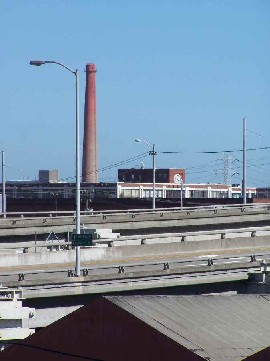
The Potrero Power Plant, a longtime source of pollution and health concerns for residents of San Francisco’s southeastern neighborhoods, is slated for partial closure once the Trans Bay Cable begins transmitting electricity into the city.

The Trans Bay Cable is an undersea cord that will transmit 400 megawatts of power underneath the San Francisco Bay from power plants in the Pittsburg / Antioch area. Last we heard, from a January article in the San Francisco Examiner, the project was running a full month ahead of schedule.

From the Examiner update:

“The cable was scheduled to become operational in March. However, the $505 million project is moving ahead of schedule, according to PJ Johnston, a spokesman for the joint venture that’s financing and installing the cable. The planned date to switch on the cable is now Feb. 1, according to Johnston.”

Well, Feb. 1 came and went. March came and went. Now, it’s April – and the Potrero Power Plant is still going strong, its telltale plume issuing from the tall brick smokestack.

We called PJ Johnston, the spokesperson, for another update. “We’re still testing,” he explained. “We’re going to be testing at least into the next month or longer. We’re working with the [California Independent System Operator] to determine a commercial operation date.”

The construction of the Trans Bay Cable and the converter stations were completed last year; and the system was energized in December; Johnston noted.

“We won’t speculate on a latest start date,” he responded after being asked when, at the very latest, it would go into service.

That elusive date is key, because that’s when the city can kiss the primary unit of its only remaining power plant goodbye. Unit 3, which accounts for the lion’s share of harmful emissions, will no longer be required to operate by the California Independent System Operator (Cal-ISO) once the alternative source is in place, clearing a major obstacle that stood in the way of the plant’s closure for years. Three smaller diesel-fired units at the plant will remain in service until a Pacific Gas & Electric Co. cabling project is finished later this year, but they’ll run far less frequently than the workhorse Unit 3, according to Cal-ISO spokesperson Gregg Fishman.

“We had heard March too,” Fishman commented. He confirmed that “the large unit at Potrero will no longer be needed,” once the cable comes online, and referred us to Johnston for more information. In an accord reached with City Attorney Dennis Herrera last year, Mirant — the company that owns the Potrero plant — agreed that it would shutter the plant once the Cal-ISO gives the nod.

When the cable comes online and Unit 3 finally does become history, the air quality in San Francisco’s Bayview Hunter’s Point neighborhood is sure to improve. Yet as the Guardian has noted in the past, there are environmental justice questions surrounding a project that essentially shifts the pollution impact of the city’s energy needs from one low-income community to a similar neighborhood, farther away. 

Herrera stands up to PG&E

Yesterday, at the California Public Utilities Commission, PG&E executives raised some eyebrows with their presentation about Proposition 16, the ballot initiative designed to make it difficult for municipalities to enter the electricity business. CPUC President Michael Peevey expressed his skepticism about a measure that would require only a simple majority vote to set up a two-thirds majority system.

Today, PG&E might suddenly have bigger problems on its hands than scolding remarks from the CPUC and the Legislature, thousands of pissed off SmartMeters customers, the threat of competition from municipalities, and a slew of editorials from newspapers throughout the state chiding the utility giant for trying to amend the state’s constitution for its own financial gain.

San Francisco City Attorney Dennis Herrera is leading a lawsuit to strike Proposition 16 from the June ballot. The complaint calls Prop 16 “wholly false and misleading” and said the company “profoundly misled the citizens who were induced to sign the petition.”

“We’re not seeking to fix it, we’re seeking to nix it,” Herrera’s press secretary Matt Dorsey explained.

The lawsuit was filed jointly by the San Francisco Local Agency Formation Commission, the City and County of San Francisco, the Sacramento Municipal Utility District, the City of Moreno Valley, the City of Redding, the California Municipal Utilities Association, the San Joaquin Valley Power Authority, the Modesto Irrigation District, and the Merced Irrigation District.

A hearing date has been set for May 4 in Sacramento Superior Court, according to Dorsey.

Thawing ICE

0

sarah@sfbg.com

Top San Francisco officials are still refusing to implement legislation approved by the Board of Supervisors that requires due process to play out before immigrant youth accused of felonies are turned over to the federal government, despite recent developments that call into question arguments that have been made against that policy.

Mayor Gavin Newsom, whose veto of the legislation was overridden by the board in November 2009, has been the main obstacle to putting the new policy in place. He has argued that it violates federal law, that the city faces civil liability for harboring undocumented immigrants accused of crimes, and that only serious criminals have been affected by his unilateral 2008 decision to turn minors over to federal authorities before they have been convicted.

But then Muni bus driver Charles Washington’s wife, Tracey Washington, and 13-year-old stepson, undocumented immigrants from Australia, were placed under the control of U.S. Immigration and Customs Enforcement and ordered deported after the boy got into a fight at his middle school.

The case generated sympathetic media coverage because the felony charges and deportation order seemed excessive, so the federal government issued a 60-day reprieve to allow the family to finish applying for green cards and so the boy could have his day in juvenile court.

“All this got triggered by the non-implementation of a law that the board duly enacted last year,” Washington said March 11, a week after getting his reprieve, expressing exasperation with city officials. “The police are overcharging kids and waiting for someone else to whittle the charges down, and the probation officers are referring the kids to ICE, waiting for someone else to deal with the situation.”

Newsom’s policy required the city’s juvenile probation department to refer Washington’s stepson to federal immigration authorities after local police charged the boy with felony robbery, assault, and extortion in a dispute over 46 cents. Authorities then required his mother, rather than his stepfather, to come pick him up and placed an electronic monitoring device on her pending a deportation hearing.

Newsom’s policy has had a big impact in the city’s immigrant communities. Since July 2008 when the mayor ordered changes to Sanctuary City policies that had been in place for two decades, 125 youths have been referred to ICE, according to a March 9 report from the city’s Juvenile Probation Department.

In addition to the Mayor’s Office, the JPD has refused to enforce policies enacted through legislation by Sup. David Campos that are technically supposed to be the new city policy on referring undocumented youth, and the City Attorney’s Office has not required city employees to follow the new law, arguing it can only give advice and not compel departments to take action.

“With the benefit of legal advice provided by the City Attorney’s Office and outside legal counsel, and in light of current restrictions imposed by federal law, particularly the position taken by federal law enforcement authorities, the department has concluded that it cannot modify its policies and practices,” probation chief William Siffermann said at a March 4 hearing of the Board of Supervisors Rules Committee on why his department didn’t implement the legislation.

Grilled by Campos, Siffermann could not identify a federal law that requires city officials to report kids to federal immigration authorities upon arrest. Instead, Sifferman pointed to what many in the criminal justice community see as U.S. Attorney Joseph Russoniello’s overly broad interpretation of federal immigration laws, including his allegation that transporting arrested juveniles to court hearings amounts to “harboring aliens.”

But the Washingtons’ case struck a raw nerve at City Hall, and the Obama administration’s conciliatory response, along with other recent legal developments, indicate that it isn’t the feds that are preventing implementation of Campos’ legislation.

In February, Superior Court Judge Charlotte Woolard ruled in a civil case that the Bologna family — of which three members were murdered in 2008, allegedly by Edwin Ramos, an undocumented immigrant who had been in city custody as a juvenile — can’t hold the city liable for failing to prevent the murders.

That crime had been sensationalized by the San Francisco Chronicle, the San Francisco Examiner, and nativist groups, putting pressure on Newsom to change the Sanctuary City policy. Newsom’s spokespeople repeatedly have referred to it as an example of the civil liability the city faced.

On March 1 (the same day Washington first went public), City Attorney Dennis Herrera replied to allegations that his office has not done enough to implement Campos’ amendment by citing its victory in the Bolognas’ civil case, which sought punitive damages and to invalidate the city’s sanctuary ordinance.

Herrera also asked Gary Grindler, acting deputy attorney general at the U.S. Department of Justice, to direct the U.S. Attorney’s Office in the Northern District of California to “not use its limited resources to criminally prosecute local officials and employees who abide by California and local laws regarding the reporting of undocumented juvenile immigrants to the federal immigration authorities.”

Herrera based his March 12 request on an Oct. 19, 2009 memo that Grindler’s predecessor, David Ogden, issued curtailing federal action against medical marijuana dispensaries, which Herrera argued could serve as the model for clarifying the federal position on the city’s sanctuary law.

“If city officials and employees follow the mandates of state law, including those regarding the confidentiality of records of juvenile detainees, and the requirements of the amendment permitting the reporting to ICE of juveniles only after they have been adjudicated as wards of the court for criminal conduct, then the U.S. Attorney should not make it a priority to use its scarce federal resources to prosecute those city officials on the theory that by not reporting them at an earlier point, the city officials or employees are guilty of harboring,” Herrera wrote.

Campos said he welcomes any effort to get clarification from the feds, but believes such clarification is not necessary — and may not be forthcoming anyway. “So San Francisco should move forward. The law, in my view, allows us to do so, and it’s the right thing to do.”

No more silence on Prop. 16

0

EDITORIAL Pacific Gas and Electric Co. has found few allies in its effort to halt the spread of public power in California. The Sacramento Bee has come out strongly against PG&E’s initiative, Proposition 16 on the June ballot. Los Angeles Times columnists have denounced it. Six Democratic leaders in the California Senate have called for the company to withdraw the measure. Even the California Association of Realtors, hardly a radical environmental group, has come out strongly against the measure, in part because it’s so badly worded that it could halt residential and commercial development in large parts of the state.

But PG&E has already set aside $30 million to try to pass this thing — and since the cities and counties that would be hit hardest can’t use public money to defeat it, elected officials across the state need to be using every opportunity they have to speak out against it.

Prop. 16 is about the most anti-democratic measure you can imagine. It mandates that any local agency that wants to sell retail electricity to customers first get the approval of two-thirds of the local electorate. The two-thirds majority has been the cause of the debilitating budget gridlock in Sacramento, and it will almost certainly end efforts to expand public power or create community choice aggregation (CCA) co-ops in the state.

It actually states that no existing public power agency can add new customers or expand its delivery service without a two-thirds vote — which means, according to former California Energy Commissioner John Geesman, that no new residential or commercial development in the 48 California communities that have public power could be given electricity hook-ups.

It also, of course, eliminates the possibility of competition in the electricity business, making PG&E the only entity legally allowed to sell power in much of Northern California. That’s a radically anti-consumer position that most residents of the state would reject — if they understood it.

And there’s the problem. With PG&E spending $30 million (of our ratepayer money) promoting this, using misleading language and a campaign based on lies, and with very little money available for a counter-campaign, it’s going to be hard to get the message out.

That’s why every single elected official, candidate for office, and political group in the state that isn’t entirely bought off by PG&E needs to loudly oppose it, now.

And there’s still a lot of silence out there.

State Sen. Mark Leno and Assembly Member Tom Ammiano, to their credit, are not only opposing Prop. 16, they are helping lead the campaign against it. Sup. Ross Mirkarimi has helped build the coalition that’s running the No on 16 effort. The San Francisco Board of Supervisors has passed a resolution opposing the initiative. Sup. Bevan Dufty, who is running for mayor, is a public opponent. State Sen. Leland Yee’s office told us he opposes it (although he hasn’t made much of a big public issue of the measure). Same for City Attorney Dennis Herrera.

But where is Mayor Gavin Newsom? Where is District Attorney Kamala Harris, who is running for attorney general? Where’s Rep. Nancy Pelosi and Sens. Dianne Feinstein and Barbara Boxer? Where’s the City Hall press conference with the mayor and every other elected official in town denouncing Prop. 16 and urging San Franciscans to vote against it?

The silence is a disgrace, and amounts to a tacit endorsements of PG&E’s efforts.

And it’s happening at the same time that the supervisors are pushing against a tight deadline to get the city’s Community Choice Aggregation program up and running.

San Francisco is the only city in the United States with a federal mandate to sell public power, and the city is moving rapidly to set up a CCA system. This is a monumental threat to the city — and everyone either in office or seeking office needs to recognize that and speak out. Prop. 16 and CCA ought to be a factor in every local organization’s endorsements for Democratic County Central Committee and supervisor this year, and any candidate who can’t stand up to PG&E has no business seeking office in San Francisco.

Editorial: No more silence on PG&E’s statewide power grab

1

Every single elected official, candidate for office, and political group in the state that isn’t entirely bought off by PG&E needs to loudly oppose Prop. 16 – now

EDITORIAL Pacific Gas and Electric Co. has found few allies in its effort to halt the spread of public power in California. The Sacramento Bee has come out strongly against PG&E’s initiative, Proposition 16 on the June ballot. Los Angeles Times columnists have denounced it. Six Democratic leaders in the California Senate have called for the company to withdraw the measure. Even the California Association of Realtors, hardly a radical environmental group, has come out strongly against the measure, in part because it’s so badly worded that it could halt residential and commercial development in large parts of the state.

But PG&E has already set aside $30 million to try to pass this thing – and since the cities and counties that would be hit hardest can’t use public money to defeat it, elected officials across the state need to be using every opportunity they have to speak out against it.

Prop. 16 is about the most anti-democratic measure you can imagine. It mandates that any local agency that wants to sell retail electricity to customers first get the approval of two-thirds of the local electorate. The two-thirds majority has been the cause of the debilitating budget gridlock in Sacramento, and it will almost certainly end efforts to expand public power or create community choice aggregation (CCA) co-ops in the state.

It actually states that no existing public power agency can add new customers or expand its delivery service without a two-thirds vote — which means, according to former California Energy Commissioner John Geesman, that no new residential or commercial development in the 48 California communities that have public power could be given electricity hook-ups.

It also, of course, eliminates the possibility of competition in the electricity business, making PG&E the only entity legally allowed to sell power in much of Northern California. That’s a radically anti-consumer position that most residents of the state would reject – if they understood it.

And there’s the problem. With PG&E spending $30 million (of our ratepayer money) promoting this, using misleading language and a campaign based on lies, and with very little money available for a counter-campaign, it’s going to be hard to get the message out.

That’s why every single elected official, candidate for office, and political group in the state that isn’t entirely bought off by PG&E needs to loudly oppose it, now.

And there’s still a lot of silence out there.

State Sen. Mark Leno and Assembly Member Tom Ammiano, to their credit, are not only opposing Prop. 16, they are helping lead the campaign against it. Sup. Ross Mirkarimi has helped build the coalition that’s running the No on 16 effort. The San Francisco Board of Supervisors has passed a resolution opposing the initiative. Sup. Bevan Dufty, who is running for mayor, is a public opponent. State Sen. Leland Yee’s office told us he opposes it (although he hasn’t made much of a big public issue of the measure). Same for City Attorney Dennis Herrera.

But where is Mayor Gavin Newsom? Where is District Attorney Kamala Harris, who is running for attorney general? Where’s Rep. Nancy Pelosi and Sens. Dianne Feinstein and Barbara Boxer? Where’s the City Hall press conference with the mayor and every other elected official in town denouncing Prop. 16 and urging San Franciscans to vote against it?

The silence is a disgrace, and amounts to a tacit endorsements of PG&E’s efforts.

And it’s happening at the same time that the supervisors are pushing against a tight deadline to get the city’s Community Choice Aggregation program up and running.

San Francisco is the only city in the United States with a federal mandate to sell public power, and the city is moving rapidly to set up a CCA system. This is a monumental threat to the city – and everyone either in office or seeking office needs to recognize that and speak out. Prop. 16 and CCA ought to be a factor in every local organization’s endorsements for Democratic County Central Committee and supervisor this year, and any candidate who can’t stand up to PG&E has no business seeking office in San Francisco.

Notes from the Sierra Club’s gala dinner

0

While I focused on Jerry Brown’s disappointing speech to the Sierra Club San Francisco Bay Chapter’s gala dinner on Wednesday night, there are a few more notable nuggets in my notebook worth posting here, starting with what appears to be the collapse of plans for a California Constitutional Convention.

The Guardian recently reported on the difficulties that the campaign was having, but consultant Clint Reilly told me that the effort is basically over, with fundraising shortfalls being the final nail in the coffin. That’s one more reason why “hope” seems to be in such short supply on the political landscape.

The event was held in the Merchant Exchange, a building owned by Reilly, who helped underwrite the gathering. So it was no surprise that the evening was MCed by his wife, Janet Reilly, who is running a strong campaign to replace Michela Alioto-Pier on the Board of Supervisors.

There were lots of political luminaries at the event (list to follow), but there was one particularly notable attendee and particularly notable absence. Los Angeles City Council member Janice Hahn was one of the few politicos from down south, making the rounds in support of her run for lieutenant governor. But Mayor Gavin Newsom, who is considering challenging her, didn’t show up.

Also a no-show was U.S. Sen. Barbara Boxer, who appeared by video to address the gathering and express appreciation for being the recipient of the Sierra Club’s first Phillip Burton Badge of Courage Award for environmental stewardship. Accepting the award on her behalf was California Democratic Party chair John Burton, who was his usual salty self, taking a dig at the San Francisco Chronicle by referring to someone who wrote “for the Chronicle back when that was a newspaper,” and describing the award’s namesake thusly: “My brother was an outstanding environmentalist who didn’t like the outdoors much.”

He also made this funny, self-effacing crack at the start of his speech: “I think a third of the people in this room would like to see the accelerator stuck on the rug of my Prius.” I was not among that third.

There was a strong turnout of local political leaders, but tellingly, only from the left side of the political spectrum. The members of the Board of Supervisors who turned out were David Chiu, Chris Daly, Ross Mirkarimi, Eric Mar, and John Avalos. Other political luminaries on hand included City Attorney Dennis Herrera, Sen. Leland Yee (Yee and Herrera are each running for mayor) City College trustee John Rizzo (who introduced Brown), Senator-turned-Oakland mayoral candidate Don Perata, District Attorney Kamala Harris, Rep. Jerry McNerney, and Sen. Loni Hancock.

Gavin watch: The Lt. Gov. rumors

14

The rumors that Newsom is going to announce imminently that he’s running for Lt. Governor turned out to be a bit premature.

But I am still hearing from very solid sources that he’s seriously considering jumping into the race — and while the San Francisco left didn’t back his run for governor, this would be a very different campaign. The Lt. Gov. isn’t really in charge of anything, but has a certain amount of power, not just from the platform and the ability to issue press statements (one of Newsom’s favorite hobbies), but because that person gets a seat on the state Lands Commission (offshore oil drilling) and the U.C. Regents (education cuts). Newsom would most likely be fine on both issues.

And the truth is, we all know Newsom doesn’t really want to be a wine clerk.

And lieutenant governors are often well positioned to move on to higher offices it worked for John Kerry, for example (and for Gray Davis, if you call that working). I think Newsom would love to position himself to run for U.S. Senate when Dianne Feinstein, who will be 79 when her current term expires in 2012, decides to retire.

And, of course, from the perspective of progressives infuriated with what he’s done as mayor, it would get him out of town a year early, and let this district-elected board appoint a new chief executive.

That’s got all sorts of talk started, with the typical Chronicle-style “Oh My God Aaron Peskin could be mayor” stuff (and let’s be serious — Peskin would be a way better mayor than the current occupant of Room 200) to serious discussion about how this will affect the 2011 mayor’s race.

If any of the current contenders could round up six votes, it would be a major boost; that person could then run as an incumbent.

I don’t think this board would ever choose state Sen. Leland Yee, who is positioning himself for the run. City Attorney Dennis Herrera? Maybe — but given how pissed some of the progressives are about the Sanctuary Ordiance, it would be a stretch.

Sfist is running a poll, and right now it looks like the readers like Ross Mirkarimi but think Peskin or David Chiu is a more likely winner.

And trust me, even the thought of Gavin leading town has that scramble already heating up.


Sitting boundaries

0

Aggressive lobbying efforts by the San Francisco Police Department and some of its allies who are pushing a proposed sit/lie ordinance have irked some current and former members of the Board of Supervisors.

The legislation was privately created by new Police Chief George Gascón and then played up in the mainstream media. It would make it illegal to sit or lie down on public sidewalks. Supporters say it would make it easier for cops to target people who harass neighborhood residents.

But in other cities where similar laws have been passed, protests have erupted from homeless-advocacy organizations and civil liberties groups, which say criminalizing this behavior unfairly (and unconstitutionally) targets homeless people who have nowhere else to go.

In Portland, Ore., a similar law was enacted then overturned by the courts. In Los Angeles, an ordinance against sleeping on the sidewalk was challenged by the American Civil Liberties Union, resulting in the 9th Circuit Court of Appeals ruling in 2006 that unless adequate shelter is available for homeless people in L.A., arresting them for sleeping on the sidewalk amounted to cruel and unusual punishment.

But an e-mail action alert included in SFPD Central Station Capt. Anna Brown’s monthly community newsletter encouraged people to contact the mayor and the Board of Supervisors to support the creation of a sit/lie ordinance. “Naturally, there is resistance from the left-leaning Board of Supervisors who feel this is an attack on the homeless population,” it noted.

That unusually overt political plea caught the eye of Aaron Peskin, former president of the Board of Supervisors and current chair of the San Francisco Democratic Party, who called it “funky.” Peskin told us he’d never seen an advocacy pitch like this go out in a captain’s newsletter before, and he questioned whether this was an appropriate use of city resources.

But the City Attorney’s Office says this doesn’t fall under city laws banning electioneering by city employees, who are barred from using government resources to endorse a candidate or ballot initiative, or from doing any campaign-related work on city property.

Yet this kind of pitch “is not considered political activity,” Jack Song, a spokesperson for City Attorney Dennis Herrera, told the Guardian.

But Sup. David Campos, a former police commissioner, frowned upon it nonetheless. “Something like this is not really helpful to the Board of Supervisors and the Police Department working together,” Campos said.

Sup. Ross Mirkarimi took a similar view. At a recent Board of Supervisors meeting, he requested a hearing about the ordinance because he said the media-driven public debate had occurred without formal discussion. Anti-loitering and public nuisance laws are already on the books, Mirkarimi pointed out.

“What makes those laws inadequate?” he asked. “How would the proposed law augment what is already in effect?”

The alert wasn’t actually written by Capt. Brown, who included it in her newsletter. It was drafted by the Community Leadership Alliance, an organization headed by David Villa-Lobos, a longtime resident of the Tenderloin and a candidate for the District 6 Supervisor seat.

Since Gascón floated the idea of creating a sit/lie ordinance, CLA has kicked into high gear to mobilize support, most recently issuing its action alert e-mail to 8,000 recipients. Police captains were included in the e-mail blast, Villa-Lobos told us, but each captain decides independently what to include in his or her newsletter.

People sitting and lying on sidewalks is “a really, really big problem, especially in the crime-ridden areas,” Villa-Lobos said. “God bless the homeless, but it’s a big problem there too.” Several years ago, his organization tried to mount a campaign for a sit/lie ordinance, but it didn’t go anywhere. “People came out and said we were trying to violate civil rights,” he said.

The Community Leadership Alliance is active in the Tenderloin, SoMa, and the mid-Market Street area, and the group occasionally holds monthly meetings at the Infusion Lounge, an upscale nightclub owned by Scott Caroen, the chair of the organization.

Gascón worked with deputy city attorneys to draft the ordinance and all district police stations have submitted to their commanders a list of areas that they feel could benefit from the law, according to a Tenderloin district newsletter. Mirkarimi told the Guardian that some supervisors were kept in the dark for weeks about the fact that an ordinance had been drafted. “This wasn’t collaborative at all,” Mirkarimi told us. “We never received it until we demanded to see it.”

The Haight-Ashbury, where residents and visitors have been complaining about harassment from wayward traveling youth, has been ground zero for discussion about a sit/lie ordinance. A small group of irate residents there and the Park Station Capt. Teresa Barrett have rallied in support of the law, saying it would give police a new tool to target these disruptive street kids.

But it’s clear that the ordinance’s supporters want to see it applied broadly and to be used to roust the homeless in neighborhoods throughout the city.

“CLA feels that our sidewalks should be enjoyable and a place of social gathering, and that the ordinance could go a long way in helping our neighborhoods feel safer,” reads the Community Leadership Alliance alert that was included in the police captain’s newsletter. “It may also reduce the overall homeless population in San Francisco by discouraging people from coming to the city to beg for money.”

Herrera defends CCA against attacks

0

By Rebecca Bowe

San Francisco City Attorney Dennis Herrera filed a petition with the California Public Utilities Commission today urging it to restrict Pacific Gas & Electric Co.’s hostile attacks against Community Choice Aggregation (CCA), a program that allows local governments to establish alternative power programs.

The petition asks the CPUC to modify one of its decisions by inserting clear language spelling out that that investor-owned utilities are prohibited from sending out anti-CCA marketing materials, making misleading statements, or engaging in other activities that interfere with the creation of these alternative energy programs.

San Francisco’s CCA, dubbed CleanPower SF, is in the phase of reviewing five different applications from prospective electricity service providers. The goal of the program is to offer San Franciscans electricity derived from 51 percent renewable sources by 2017 at rates that match or beat PG&E prices. Contract negotiations with the highest-scoring candidate could begin as early as next month.

PG&E initially supported to the 2002 legislation, AB 117, which enabled the creation of CCAs statewide and prohibited utilities from interfering with efforts to set them up. But in recent months, California’s largest utility has made a complete turnaround, spending $5 million on a proposed ballot initiative that would require a two-thirds majority vote in local jurisdictions before governments could implement CCAs.

As Marin County and San Francisco move forward with their respective attempts to set up greener alternatives to PG&E, the pressure is intensifying. Several weeks ago, a wave of attack mailers paid for by PG&E crashed into San Francisco homes and businesses. This is the sort of activity Herrera is seeking to prevent by filing today’s petition with the CPUC. Because the city is short on time, he requested an expedited review.

“We cannot let Californians be denied the benefits of cleaner, cost-effective energy alternatives — consumer choice is simply too important to ratepayers and the environment,” Herrera said. “The California Public Utilities Commission exists to police giant utilities, to assure that their monopoly advantages aren’t abused to exploit consumers or frustrate the policy objectives of our state lawmakers. Yet that is exactly what has happened since PG&E locked CCA into its crosshairs. It is critical for state regulators to move quickly and decisively to tighten regulations, and restore teeth to the law as the legislature intended.”

Dennis Herrera’s (mostly) most excellent swearing-in

0

Text, photos and video by Sarah Phelan

Dennis Herrera’s son believes his dad will do a great job–and here he says so in Mandarin.

There were a lot of things to like about City Attorney Dennis Herrera’s Jan. 7 swearing-in ceremony.

tourkpeskin.jpg
Alex Tourk and Aaron Peskin chat each other up.

It brought together a who’s who of Democratic elected officials, past and present, a string of supervisorial candidates, department heads, union leaders and other party cling-ons. In other words, prime feeding ground for sharky journalists in search of juicy pieces of chum.

lockeyer.jpg
State treasurer (and former State Attorney General) Bill Lockeyer did a good job of kicking off the event.

And it ended with cupcakes–in other words, prime feeding ground for snarky journalists in desperate need of calories.

chiunewha.jpg
Board President David Chiu, Mayor Gavin Newsom and City Attorney Dennis Herrera await the swearing-in.

And, as an unexpected bonus, we got to see Herrera’s eight-year-old son Declan get up and say, “I know you’ll do great, Dad,” (amongst other things) in English–and then switch into seemingly fluent Mandarin–a skill he apparently picked up by attending Chinese school, according to his obviously proud dad.

Dek.jpg
Declan wows the crowd with his bilingual prowess (and we suspect he speaks Spanish, too.)

But there was a protest action that marred Herrera’s otherwise flawless swearing-in–and it bothered the City Attorney no end, even though it was a silent protest and did not interrupt his ceremony.
ICEadvice.jpg

Organized by the San Francisco Immigrant Legal and Education Network (SFILEN), (oops, supporters of the action subsequently contacted me to say it was organized by the San Francisco Immigrant Rights Defense Committee) the protest sought to keep the limelight on the city’s newly amended sanctuary legislation, which the Board of Supervisors approved with a veto-proof majority last fall, but which Mayor Gavin Newsom has repeatedly said he intends to ignore.

Hererra, for his part, says he will doing everything he can to defend the amended legislation, which seeks to ensure that juveniles get their day in court before being referred to federal immigration authorities.

The legislation was amended in fall 2009, 16 months after Newsom ordered city officials to start referring suspected undocumented juveniles to ICE, when they are booked on felony charges.

Since then, immigrant advocates have documented how Newsom’s policy has needlessly ripped families apart and had a chilling effect on the local immigrant community. And they believe it’s within Herrera’s powers to tell the mayor that he must implement the new policy, which Sup. David Campos authored, personal preferences notwithstanding.

This is why a string of immigrant rights advocates showed up at Herrera;s swearing-in and silently held up signs that, pieced together, read, “Herrera’s advice sends kids to ICE”. But while their message was intended to goad Herrera into pressuring Newsom into implementing the newly amended sanctuary law, it obviously succeeded in exasperating the City Attorney, who says he is doing everything within his powers around this legislation,

Reached by the cupcakes, Herrera told me that “nothing could be farther from the truth” than the protestors’ message.

“I just say what the law is and what the risks are,” Herrera said. “Folks spreading misinformation are doing a disservice to a very serious issue. The policy objective is important. We don’t want innocent kids deported. I’ve had good meetings with immigrant advocates and lawyers. We are working with them to see what sort of arenas that might allow us some possible implementation.”

Herrera also noted that the letter his office sent to the US Attorney Joseph Russoniello, warning of possible legal action, was simply laying out a standard legal option.

“It’s not saying we are going to do it,” Herrera explained, addressing advocates’ concerns that the City was going to enter into a legal suit instead of implementing duly-enacted legislation.

Editorial: The mayor’s race starts now

2

Ross and Jeff and any other progressive candidates need to decide soon if they are serious about running for mayor and either announce that they are running or step out of the way so someone else can step forward

EDITORIAL Back in 2007, when no leading progressive stepped in to run against Gavin Newsom, Sup. Chris Daly called a convention in the hope that someone would come forward and take up the challenge. All the major potential candidates showed up and spoke, but none announced a campaign.

Let’s not go there again.

We’re two years into Newsom’s second term, and the city’s a mess. After absorbing a round of brutal cuts last year, the budget’s still half a billion dollars out of whack. The mayor’s only answer at this point is to cut more (then raffle off to landlords the right to get rich by evicting tenants and turning apartments into condos). The Newsom agenda hasn’t created jobs or addressed the housing crisis or resolved the unfairness of the tax code or taken even the first steps toward energy self-sufficiency. Over the past year, he’s been largely inaccessible and hostile to the press, a mayor who won’t even tell the public where he is and what he does all day.

A candidate who wants to change the direction at City Hall should have no problem getting political traction in 2011. But the progressives are still floundering. And while the race is two years away, the more centrist candidates are already out the door. Sup. Bevan Dufty has announced he’s in the race, and state Sen. Leland Yee might as well have announced since everyone knows he’s running. Same for City Attorney Dennis Herrera. And at a certain point — in the not-too-distant future — those candidates will be starting to line up endorsers and making promises to major financial backers and constituency groups, which aren’t going to wait around forever for the progressives to settle on someone willing to make the immense effort to mount a serious campaign for mayor.

So the potential candidates — starting with Sup. Ross Mirkarimi and Public Defender Jeff Adachi — need to decide, soon, whether they’re serious about this or not, and either announce that they’re running or step out of the way so someone else can step forward.

With public financing, a candidate in San Francisco doesn’t have to be as well-heeled as Newsom was his first time around. It won’t take $6 million in contributions to win. But a progressive who wants to be the next mayor needs to demonstrate he or she can do a few key things, including:

<\!s>Motivate and unite the base. Labor (or at least the progressive unions), the tenants, the left wing of the queer community (represented to a great extent by the Harvey Milk LGBT club), the environmentalists, and the progressive elected officials have to be fairly consistent in backing a candidate or downtown’s money will carry the day. So Mirkarimi and Adachi (and anyone else who’s interested) ought to be making the rounds, now. If that critical mass isn’t there, the campaign isn’t going to work.

<\!s>Develop and promote a signature issue. Newsom won in part because he came up with the catchy “care not cash” initiative. Voters frustrated with years of failed homeless policies (and an incumbent, Willie Brown, who said the problem could never be solved) were willing to try something new (however bogus it turned out to be). Nobody’s developed a populist way to approach city finance. Nobody’s got a workable housing or jobs plan. What’s the central issue, or set of issues, that’s going to define the next progressive mayoral campaign?

<\!s>Put together a central brain trust. This city’s full of smart progressives who have experience and ideas and can help put together a winning platform and campaign strategy. A good candidate will have them on board, early.

<\!s>Herrera, Yee, Dufty, and others who might run (including Assessor-Recorder Phil Ting) are already out there looking for progressive supporters and allies, but none has yet offered an agenda the city’s left can support. Dufty pissed off the tenants by refusing to back stronger eviction protections. Herrera pissed off immigrant advocates by refusing to be as aggressive in supporting the city’s sanctuary law as he was in defending same-sex marriage (and because he hasn’t officially announced yet, he’s still not taking stands on political issues). Yee tried to sell off the Cow Palace. Ting has taken some great initiatives (forcing the Catholic Church to pay its fair share of property transfer taxes), but hasn’t developed or spoken out on the broader issues of city revenue. More of those candidates have been leaders in the public power movement.

It would be inexcusable if the progressives, who control the Board of Supervisors, are forced to pick a mayoral candidate by default. It’s time to end the speculation and dancing and find a candidate who can carry the progressive standard in 2011.

PG&E attack mailer puts City Hall on defensive

0

GREEN CITY On a Pacific Gas & Electric Co. conference call in late October, with top PG&E executives and analysts from Goldman Sachs, Deutsche Bank, and other prominent investment firms on the line, PG&E president Chris Johns explained how a company-sponsored ballot initiative could save millions of dollars for the utility.

“We have faced potential takeovers multiple times over the last several years and we have had to expend significant resources to oppose these efforts,” Johns explained, referring to attempts by public agencies to set up independent electricity programs that threaten to compete with PG&E. “The success of this initiative, if placed on the ballot, could significantly reduce the need for taxpayers and utilities to oppose these local government takeover attempts.”

His comments appeared in a transcript from an earnings call posted on a financial Web site called SeekingAlpha.com. When pressed by an analyst about how PG&E had come up with the idea, company CEO Peter Darbee chimed in. “What occurred to us was we were repeatedly faced with this, and we were spending significant amounts of money year after year,” Darbee said, according to the transcript. “So we asked ourselves: what would be something that could discourage this over the longer term?”

What surfaced was a proposal for a statewide ballot initiative that would amend the state constitution to require a two-thirds majority vote at the ballot before any local government could develop its own electricity program. With such a high hurdle in place, efforts to move forward with publicly-owned power programs would essentially come to a standstill. But with San Francisco’s own stab at it expected to get underway long before the proposed initiative is placed on the ballot, PG&E is back to its default tactic of pouring millions into an opposition campaign.

San Francisco’s community choice aggregation (CCA) initiative, called CleanPowerSF, took a leap forward last month when a request for proposals (RFPs) went out to potential electricity service providers. The program aims to provide 51 percent renewable electricity by 2017, a meaningful step toward reducing greenhouse gas emissions.

But on the heels of this milestone, a wave of mailers bearing PG&E’s name in fine print crashed into San Francisco homes and businesses, screaming “Business Beware” in 1.5-inch type and proclaiming CleanPowerSF to be a “costly energy scheme.” The mailer cites a city controller’s report projecting that customer bills could be 24 percent higher under CCA.

But the San Francisco Local Agency Formation Commission (LAFCo), which is working in partnership with the San Francisco Public Utilities Commission to craft the emerging power program, responded in a press statement that this claim is misleading, since a fee structure has not yet been nailed down. While the controller’s report also noted that it was too early to say just what the pricing structure would be, it’s been a primary goal of the city’s CCA all along to offer customer billing rates that meet or beat PG&E prices.

Meanwhile, the city appears ready to fight back — and questions have already been raised about whether it was legal to distribute the attack mailer. Sup. Ross Mirkarimi, who chairs LAFCo, announced at the Dec. 15 Board of Supervisors meeting that he was requesting that the city attorney examine whether PG&E had violated state law by distributing the mailer. According to the state law that laid the groundwork for CCAs to exist, investor-owned utilities are required to “cooperate fully” with the public power efforts of cities. “PG&E has blanketed this city … with mailers that distort and misrepresent what CCA is doing,” Mirkarimi said. “I believe this is a potential violation of California Public Utility Commission law.”

Several days before Mirkarimi’s announcement, the Guardian received confirmation from City Attorney Dennis Herrera that his office is looking into the matter.

The mailer included a link to the Web site CommonSenseSF.com, launched by an entity called the “Coalition for Reliable and Affordable Electricity.” A call to Townsend, Raimundo, Besler & Usher, a Sacramento public-relations firm that has worked with PG&E in the past, revealed that this coalition is one of the firm’s clients, and that the person handling that client is Bob Pence. The proponent listed on the statewide ballot initiative is Robert Lee Pence — evidently the same person. The Guardian left a message for Pence inquiring who, besides PG&E, the coalition members are (the mailer claims there are 50,000), but he did not return the call. Multiple calls to PG&E were not returned either.

Meanwhile, the Guardian has received a handful of anecdotal reports that when clipboard-wielding signature gatherers were out on the streets circulating a petition in support of the PG&E-backed ballot initiative, people were fed some fishy stories about what the proposed constitutional amendment would actually do.

A voter who lives in Bakersfield contacted the Guardian to say she’d signed the petition because she was told that the ballot initiative would limit PG&E expansion — but she later did some research and found that PG&E was the primary force behind it, so she called the Registrar of Voters to have her name struck from the list.

Mark Toney of the Utility Reform Network told the Guardian that he’d also been misinformed. But as someone familiar with the issue, he knew better. “I ran across signature gatherers in Emeryville. They told me that if I signed the petition, I’d be supporting a two-thirds majority vote to raise PG&E rates,” Toney said. “I said, ‘Well that’s interesting. The language here doesn’t say PG&E at all.

John Srebalus of Pasadena wrote in an e-mail that he was also misled by a signature gatherer. After he signed a petition to legalize marijuana, he said the woman with the clipboard flipped a few pages and asked him to sign again, as if in duplicate. But there was a rubber band securing the top half of this second page, hiding the text. When he peeled it back, he found that it was actually PG&E’s ballot initiative, which he had already refused to sign once before.

According to a source familiar with the campaign who asked not to be named, the petition was a particularly hard sell for signature gatherers, many of whom stake their entire livelihoods on earning less than $2 per signature. According to this individual, the erratic sales pitches caught on like wildfire because without a compelling hook, it was nearly impossible to convince random passersby to support something that came off as convoluted and wonky. This person said PG&E became alarmed when it caught wind of all the distorted representations and tried to put a stop to them.

Campaign spokesperson Greg Larsen told the Guardian he hadn’t heard anything about that, but he did emphasize the importance of the signed document, as opposed to the signature gatherers’ pitch. “The hope is that you read what you’re signing,” he said. “That’s really what the issue is — it’s what’s on this piece of paper.” Larsen added that the campaign had submitted 1.1 million signatures, “far in excess of the number of required certified signatures” to have the initiative placed on the ballot.

Herrera to Campos: duck and cover

4

LouisNewsom2.jpg
Louis XIV’s weakness was liking to hear people sing his praises. Is the same true of Newsom? And is this why he is refusing to meet with immigrant advocates, who have been critical of his sanctuary policy cave-in, and do the right thing for immigrant youth?

Text by Sarah Phelan

City Attorney Dennis Herrera replied today to Sup. David Campos’ request that he tell Newsom that he’s not a monarch. Campos made his request after Newsom said he intends to ignore the Board’s veto-proof amendment to the sanctuary ordinance.

Herrera also replied to Campos’ request that the Juvenile Probation Department could comply with the ordinance’s directive by adopting a proposed policy thqt was drafted by the Asian Law Caucus.

And the answer seems to be yes, Newsom’s not a monarch, and yes, JPD could adopt ALC’s proposed policy, but it all comes down “to the extent permitted by state and federal law,” which sounds like a massive passing of the buck.

Russoniello has to go

0

EDITORIAL When you look behind the problems San Francisco has had with its sanctuary city policy — the arrest and threatened deportation of kids as young as 15, the threats to city officials trying to protect juveniles, the threats to the new policy Sup. David Campos won approval for — there’s one major figure lurking: U.S. Attorney Joe Russoniello.

He’s the same one who was behind the raids on medical marijuana clubs. He’s a Republican whose former law firm, Cooley, Godward, gets hefty legal fees from representing Pacific Gas and Electric Co. — one of the biggest federal criminals in the land. He served under Presidents Ronald Reagan and George W. Bush.

And it’s a mystery to us why this holdover from a discredited administration is still running the Justice Department in one of the most liberal parts of the United States.

The Obama administration has been slowly replacing Bush appointees with more progressive U.S. attorneys. Some say the process has been dragging on too long — after all, Bill Clinton fired every one of the nearly 100 U.S. attorneys shortly after taking office and started putting his own people in place right away. But in many states, the process has moved forward; 20 jurisdictions have new U.S. attorneys, and nominations are pending in about 10 more.

So why is the process taking so long in California?

Choosing a top federal prosecutor isn’t entirely the job of the president. Under long-held Washington traditions, the senior U.S. senator of the president’s party has tremendous influence over the selection process, and in California, Sens. Barbara Boxer and Dianne Feinstein have split up the duties. Boxer is screening candidates for the Northern District, and Feinstein is handling the Central and Southern Districts. So for all practical purposes, Russoniello’s replacement is going to be chosen by Boxer.

The senator ought to be asking all the candidates the same question San Francisco City Attorney Dennis Herrera recently asked Russoniello: Will you promise not to prosecute individual city workers who follow the San Francisco Sanctuary Ordinance? And she should finalize her choice quickly and send that name to the White House with all due dispatch. Russoniello has to go, and his departure is way overdue.

Herrera, meanwhile, has his own Sanctuary Ordinance challenges: Sup. David Campos has asked Herrera to formally advise the supervisors on the legality of Mayor Newsom’s refusal to follow the immigration policies that a veto-proof majority of the board passed. Newsom claims that the Campos law, which overturns Newsom’s policy of mandating that all juvenile offenders be reported to immigration authorities at the time of arrest, violates federal statutes.

In a Dec. 10 letter to Herrera, Campos warned that Newsom’s move would "establish the dangerous precedent that a mayor can disregard legislation that the board has properly passed.

"To say that this would undermine the board’s authority is an understatement. This is to say nothing of the fact that it would mean that undocumented children would continue to lack basic rights in San Francisco."

So that puts the city attorney — who is almost certainly going to run for mayor himself — on the hot seat. He needs to make a clear ruling that the mayor can’t just ignore city law. And he and Newsom should both be in touch with Boxer to urge her to move rapidly on a new U.S. attorney who will be more favorable to progressive immigration policies.

Campos to Herrera: tell Newsom he’s not a king

12

LoiusNewsom.jpg
Louis XIV didn’t exactly have a good rap as king of France. Is Newsom in danger of becoming Louis’ SF equivalent?

Text by Sarah Phelan

‘We may have a strong-mayor system of government, but it is not a monarchy,” writes Sup. David Campos in a Dec. 10 letter to City Attorney Dennis Herrera, sent the day that the Board’s veto-proof civil rights legislation to restore due process to undocumented kids is supposed to kick in—except Mayor Gavin Newsom has said he intends to ignore it.

“Nothing short of unprecedented,” is how Campos describes Newsom’s posture—as he urges Herrera to issue a written legal opinion on whether the mayor has “the authority to unilaterally refuse to implement the duly-enacted civil rights legislation at issue, where such legislation was reviewed and approved as to form by you and your office.”

Dufty loses the tenant vote

8

By Tim Redmond

Sup. Bevan Dufty, the first candidate to formally enter the San Francisco mayor’s race, just took a big political hit. By voting against a bill that would have protected tenants from unjust evictions, he’s angered one of the city’s largest and most powerful voting blocs.

The bill, by Sup. John Avalos, was important to the tenant movement. It extends to renters in buildings constructed after 1979 the same protections that the occupants of older buildings enjoy. It’s particularly important now, when so many buildings are facing foreclosure; under city law, foreclosure isn’t a “just cause” for eviction, but some tenants are losing their homes after foreclosure actions anyway.

Dufty has never been a great tenant vote, but this one should have been easy. The Avalos bill doesn’t put any more housing under rent control, or limit rent hikes, or impose any taxes or fees. There’s no direct economic impact on any landlords.

I couldn’t reach Dufty for comment today, but if the Chronicle quoted him accurately, his explanation was pretty weak:

Dufty told The Chronicle he would have supported the legislation had it simply addressed foreclosure-driven evictions. He feared that as drafted, the proposed law “would have too many unintended consequences,” particularly when it comes to condominium owners who want to move back into units that have been rented out. The burden on owners who try to evict on that basis could prove too harsh when it comes to time and money, he said.

The problem with that arugment is that owner move-in has always been a just cause for eviction. The Avalos bill wouldn’t change that. You own a condo, you rent it out and you want to move back in, you can evict the tenant.

The real problem here is what landlords think of as “rent-control creep.” Once you start allowing eviction protections on newer buildings, they fear, the next step might be actual rent controls on those buildings. So they fought against the bill.

The landlords have money, and if they see Dufty as their ally, they may reward him with campaign contributions. But the progressive vote is going to be important in the next mayor’s race, and so far — unless Sup. Ross Mirkarimi or Public Defender Jeff Adachi jumps in the race — the progressives don’t have a clear candidate. And while there will be a lot of issues in the race, this will be a big one, and I think the vote will hurt Dufty.

Of course, that assumes there’s a more pro-tenant candidate — and that’s not clear at this point. The others who are widely mentioned as potential contenders are state Sen. Leland Yee, Assessor Phil Ting and City Attorney Dennis Herrera. Herrera has traditionally declined to comment on issues like this, in part because he’s the city’s chief legal officer and has to defend the legislation and also because city law bars him from endorsing candidates or taking stands on ballot measures. But he told me several weeks ago that if he announces for mayor, he will openly discuss any issues facing the city.

When I called him today, he made the same promise again — then told me that he hasn’t announced for mayor yet, and so is declining to comment on whether he supports the Avalos bill. Ting told me he wasn’t familiar enough with the bills details, although, like Dufty, he said he supports eviction protections for tenants in foreclosed buildings.

I’m still waiting to hear from Yee.

Empty threats

0

sarah@sfbg.com

A controversial change to San Francisco’s sanctuary city policy — requiring due process to play out before city officials turn arrested undocumented immigrant minors over to federal authorities — officially becomes city law this week. But its implementation is still in limbo.

Last month, the Board of Supervisors voted 8-3 to override a veto of the legislation by Mayor Gavin Newsom, who says he won’t implement it anyway because he thinks it violates federal law. Authored by Sup. David Campos, the legislation goes into effect Dec. 10, and the city’s Juvenile Probation Department has 60 days to implement it, meaning the new policy kicks in Feb. 8.

City Attorney Dennis Herrera sought assurances from Joe Russoniello, the US Attorney for Northern California, that he wouldn’t prosecute local officials who follow the amended sanctuary city policy, as Russoniello had intimated to reporters. Russoniello refused to do so.

"I have no authority, discretionary or otherwise, to grant amnesty from federal prosecution to anyone who follows the protocol set out in the referenced ordinance," Russoniello wrote in a Dec. 3 letter.

But as UC Davis law professor Bill Ong Hing said Russoniello hasn’t cited any case law to support his position that following the ordinance could amount to harboring a fugitive from justice.

"It’s no more than hot air," Hing wrote Dec. 4 in a San Francisco Immigrant Rights Defense Coalition Dec. 4 press release. "While Russoniello has been vocally opposed to San Francisco’s pro-immigrant policies for two decades now, nothing will come of his empty threats…There has never been a federal prosecution anywhere in the country against city officials for following sanctuary ordinances."

In fact, it’s possible that Russoniello — a holdover appointee by President George W. Bush — won’t even get the opportunity."

The legal newspaper The Recorder reported Dec. 4 that the Obama administration is close to announcing Melinda Haag, a former federal prosecutor, as Russoniello’s replacement.

"Recently the Justice Department informed Russoniello that he could not hire any more personnel for the office, multiple sources said, which could suggest a choice for his successor is coming soon," the article stated, although it also noted that FBI background checks have yet to be completed. "So even if a successor is chosen soon, it would be several weeks before a name is submitted to the U.S. Senate, much less confirmed."

Despite Newsom’s public statements that he won’t enforce the new law, City Attorney’s Office spokesperson Matt Dorsey recently assured a group of civil rights advocates that Newsom’s comments have "no legal effect," and that Herrera intends to vigorously defend the new sanctuary law.

Representatives of 70 community groups last week showed up at the office to urge Herrera to enforce the law. "Hundreds of community members and community organizations poured our hearts into the democratic process for over a year," Cynthia Muñoz-Ramos of the St. Peter’s Housing Committee told Dorsey. " We worked hard to pass a policy to restore due process rights to undocumented youth. Our city officials must be open and accountable to us. City Attorney Herrera should advise the mayor that he cannot refuse to implement the due process policy. It’s past time to restore due process rights for all of our city’s youth. Justice delayed is justice denied."

After the meeting, Muñoz and more than a dozen community advocates told us they were frustrated by Newsom’s stance and that innocent kids were already being ripped from their families, creating deep-seated fear within the immigrant community that cooperating with local police could result in racial profiling and referral to the feds.

Angela Chan, staff attorney at the Asian Law Caucus, told us, "We agree with City Attorney Herrera’s stated intention to vigorously defend the duly-enacted, legally sound policy. It is paramount for Herrera to take immediate steps to uphold the law, including advising the mayor that he cannot refuse to implement this law."

Russoniello to Herrera: No Way. Kinda.

5

Text and photos by Sarah Phelan

Russo11a.jpg
The City Attorney’s office has been trying to smoke out Russoniello for weeks on the city’s sanctuary ordinance.

And finally, US Attorney Joe Russoniello has replied in writing to City Attorney Dennis Herrera’s Nov. 10 request that Russoniello provide “reasonable assurance” that his office won’t prosecute local officials who follow the city’s new sanctuary policy.

And it seems that Russoniello’s answer is “no way,” though it’s qualified by conditions that suggest that the feds are only interested in deporting convicted juvenile felons, even as their policies rip innocent kids from their families.

“I have no authority, discretionary or otherwise, to grant amnesty from federal prosecution to anyone who follows the protocol set out in the referenced ordinance,” Russoniello wrote in his Dec. 3 letter to Herrera.

Dorseysmi215.jpg
Meanwhile, a group of community advocates shared their concerns that the sanctuary legislation be duly enacted with City Attorney spokesperson Matt Dorsey (left) today. (See end of this post for further details.)

“We present a case for indictment when there is a reasonable basis for believing that a federal crime has been committed and a conviction can be obtained,” Russoniello wrote, noting that, ”not every case that meets this test is necessarily brought.”

“A number of factors may come into play… including, as you correctly referenced with respect to so-called ‘medical marijuana’ cases, our need to prioritize cases, given our limited resources,” Russoniello stated.

Under the city’s new sanctuary policy, juveniles will get their day in court before being referred to federal immigration authorities in an effort to prevent needless deportations.

This new policy, which takes effect Dec. 10, gives the city’s Juvenile Probation Department 60 days (Feb. 8, 2010) to figure out how to implement the new legislation.

But Mayor Gavin Newsom has said he intends to ignore the policy, claiming it violates federal law, as has Gabe Calvillo, president of the city’s probation officers union. They also cite a federal Grand Jury that Russoniello convened last year to investigate the actions of Juvenile Probation Department officers, who tried to repatriate Honduran teenagers accused of selling drugs, instead of referring them to the feds forl deportation.

conference15.jpg
City Attorney spokesperson Matt Dorsey listens as community advocates express frustration over Newsom’s comments that he intends to ignore the sanctuary legislation, even as Herrera has promised to aggressively defend the policy.

Russoniello has claimed that JPD’s former activities were tantamount to “harboring.” But that procedure was discontinued last year, and it won’t be reinstated, when the city’s amended policy kicks in, in February.

But while Sup. David Campos has repeatedly stated that his sanctuary policy amendments won’t shield anyone found guilty of a felony, Russoniello claims the new policy violates federal law, even as he admits that cases are typically prosecuted by his office in the belief that a conviction can be obtained, and on a priority basis.

Cinthya15.jpg
Dorsey (second right) listens as Cynthia Muñoz-Ramos of the St. Peter’s Housing Committee (far right) requests that Herrera provide the local community with written assurances that the new sanctuary policy will be duly implemented.

Judge partially lifts SF bicycle injunction

29

By Steven T. Jones
bike69.jpg
San Francisco bicycle riders finally have something to be thankful for.

Judge Peter Busch today issued a ruling lifting much of the three-year-old injunction against bicycle-related improvements in San Francisco, allowing city workers to immediately begin installing new bike racks and “sharrow” road markings, as well as working on the 10 bike lane projects that will have the least impacts to automobiles.

Pending a hearing next year on a legal challenge to the adequacy of the Bicycle Plan’s Environmental Impact Report – which the city completed earlier this year after the court said it was required by the California Environmental Quality Act (CEQA) – Busch wrote that “the City may proceed with those projects within the Bicycle Plan that are least intrusive and most easily reversible should it turn out that the City has not satisfied its CEQA obligations for some reason.”

The bike lanes projects that city officials say they plan to soon construct, and which Busch is allowing, are on Beale, Howard, Otis, Scott, Mississippi, Kansas, and Clipper streets, JFK Drive, Claremont Boulevard, and 7th Avenue. There are another 35 bike projects that have been approved by the city that the judge is not allowing to move forward yet.

While I immediately couldn’t reach bike community leaders or plaintiff Rob Anderson, City Attorney Dennis Herrera issued a statement saying, “This is an important step in the right direction that enables the City to enact significant safety improvements for bicyclists and pedestrians in San Francisco.”

Checkout time

0

news@sfbg.com

Two consecutive three-day strikes by hotel workers signaled a change in strategy for local labor, which is struggling to hold on to past gains in an increasingly bitter contract dispute during this economic downturn.

Hotel employees affiliated with UNITE HERE! Local 2 walked off the job at the Grand Hyatt on Nov. 6, kicking off a 72-hour work stoppage that labor organizers said was centered on the Hyatt but aimed at more than a dozen luxury hotels staffed by Local 2 workers.

Another strike, in front of the Palace Hotel, started Nov. 10 and ended at midnight Nov. 12. In both actions, hundreds of Local 2 members and other supporters expressed frustration at the hotels, claiming the hotel industry is scaling back employee benefits while reaping impressive profits.

"The hotel industry pulled down $110 billion in profits last year," said Mike Casey, president of Local 2, which represents approximately 12,000 hospitality workers in San Francisco and San Mateo. "Despite the so-called down economy, we feel like we should be able to move forward, at least modestly."

Casey and other Local 2 organizers pointed to the recent windfall of the Hyatt chain’s owners, the Pritzger family, who scooped up $950 million in an initial public offering for the company. "One family is getting all this money, and they’re quibbling over $250,000," said Casey, referring to the amount he says it would take to meet all of the local union’s demands.

Meanwhile, stalled negotiations have left workers without a contract since Aug. 14. Key factors in the dispute involve proposed rule changes for new hires and cuts in health care coverage that striking workers called unacceptable.

"We’re seeing an average increase in health care costs of about 12 percent per year," said Jeff Myers, a banquet waiter at the Westin St. Francis, and a member of Local 2’s 125-person negotiating team. "The hotel is paying for 2 percent of that."

"We expect to be in a long fight," said Carlos Narvaez, a 13-year employee at the Palace Hotel, where he works as a purchasing clerk. "But it’s a fight for justice, not only for us, but for new hires, who would be most affected."

Narvaez explained that under the new contract proposed by the hotels, new hires would be ineligible for pensions, and probationary periods for benefits would be extended from months to years. "If they’re planning to replace us, (new employees) don’t know what’s coming."

The tactic of going after one hotel at a time, rather than a blanket work stoppage, indicated the union’s desire to put pressure on hotel owners while limiting economic hardship to the rest of the city, and the potential for negative blowback. The latest round of negotiations broke down Nov. 12 when Hyatt rejected Local 2’s proposal for a one-year contract with some concessions on pay, rather than the customary five-year deal.

"You can’t have it both ways. If you want a cheap contract, fine, we’ll do it for a limited time. You can’t have a cheap long-term contract," Casey said, noting a one-year contract is partly a bet by Local 2 that the economy will be in better shape next year.

It also happens to line up with contract expiration dates for UNITE HERE! hotel workers in several cities throughout the U.S. and Canada, potentially giving the union greater leverage in contract negotiations next year.

At the Grand Hyatt strike, workers marched several blocks to the Westin St. Francis, where they held an impromptu picket for 20 minutes before returning to the Grand Hyatt. "It’s just a taste of what could happen," Casey said, splitting the group into two disciplined forces that filled the sidewalk while leaving the entrance to the St. Francis clear.

"They’re afraid it’s going to turn into 2004," Casey said of hotel owners, referring to a two-week stalemate in 2004 in which hotels reacted to the strike by locking out employees of several hotels and bringing in workers from other locations in an attempt to break the strike. But Casey said new times call for new tactics.

"If we did it the same way each time, [management] would be ready for us," Casey said. "We have to keep them on their toes" while staying visible and building incremental support for strikes. "If the strikes last long enough, a boycott could build that would be truly widespread. But let’s hope the hotels come to their senses before then."

The picket lines were festive and noisy, with union members banging drums and shouting catchy call-and-response slogans into no fewer than six bullhorns.

"What time is it?" the bullhorns blared. "It’s checkout time!" the picket line called back. Valets and bellhops at the Grand Hyatt, most wearing foam earplugs and sunglasses, winced as one man beat a large, ornate kettle drum less than five feet from the lobby entrance.

"This is designed to be measured and escautf8g," Casey said of the single-hotel strike approach. Though the two strikes have ended, Casey said boycotts remain in place for both the Grand Hyatt and the Palace Hotel, whose lavish centennial gala last weekend was marred by an additional Local 2 protest outside.

Hotel representatives have been taciturn about the dispute and its impact, issuing short, carefully-worded responses expressing disappointment at Local 2’s actions, and offering sheepish apologies to surprised guests. No hotel representatives were available to speak on record as of press time

Elena Duran, a server at the Palace Hotel, said behind-the-scenes operations have been thrown into disarray by the strikes. "Yesterday there was a fire in the kitchen," Duran said during the Palace strike, "because the new workers don’t know what they’re doing."

Any hotel labor dispute invariably invites comparisons with the 2004 strike. In that conflict, Mayor Gavin Newsom personally intervened, shaking hands with striking workers and declaring that San Francisco would not do business across picket lines. The mayor’s office did not respond to queries about the latest dispute. Local 2 press coordinator Riddhi Mehta said Casey and other union members, as well as their counterparts from the hotels, met with Newsom Nov. 10 for "informational purposes."

City Attorney Dennis Herrera, a likely mayoral candidate, stopped by the picket lines at the Grand Hyatt to offer words of support, telling the cheering strikers: "We are a world-class city. It’s not about the Golden Gate Bridge. It’s not about the views. It’s not about the cable cars. It’s about the work that you do every day."

While Local 2 organizers would welcome Newsom’s renewed support, they aren’t holding their breath. Rumors that Newsom had cut short his vacation to help defuse the situation were greeted with cautious optimism by negotiating team members.

Myers said the hotels were essentially attempting to externalize their employee’s health care costs, which would impose a burden on the city budget. Because of San Francisco’s universal health care program, Myers said, "If hotel workers can’t pay their co-pay, that cost will go to the city. That is abundantly clear to the mayor."


Herrera to Russoniello: Back off or we’ll see you in court!

8

By Steven T. Jones

In the wake of today’s Board of Supervisors vote to override Mayor Gavin Newsom’s veto of requiring due process to play out before city officials turn undocumented juveniles over to federal immigration authorities, City Attorney Dennis Herrera sent an fascinating letter to U.S. Attorney Joseph Russoniello, a conservative who had threatened to bring charges against employees who follow the new law.

Herrera is walking a thin line between Newsom, who unilaterally weakened the city’s long-standing Sanctuary City law last year under pressure from nativists and the San Francisco Chronicle; and supervisors and immigrant rights activists who say the mayor’s new policy violates the principle that people are innocent until proven guilty. Newsom has threatened not to enforce the new policy, which becomes law in 30 days, citing the legal threat to city employees.

But Herrera has now attempted to remove that threat by asking Russoniello to withdraw it, and issuing a threat of his own if the holdover Republican attorney doesn’t back down: San Francisco may turn to the courts to overturn Russoniello’s interpretation of federal law, which Herrera calls “broad.”

The important part of the letter states: “Because of the Board of Supervisor’s adoption of the Amendment, and in view of your earlier assertions that certain City officials may have violated federal criminal laws regarding their past handling of certain juvenile arrestees and your seemingly broad interpretation of the harboring statute, I ask that the U.S. Attorney’s Office provide an assurance that if the city proceeds to implement this Amendment in accordance with its terms, City law enforcement officers and employees will not be prosecuted for violating federal criminal laws. I would appreciate your timely response to this letter, preferably by December 7, 2009. If the U.S. Attorney’s Office does not provide us with an adequate assurance that it will not prosecute City officials or employees who would implement the Amendment, my Office may be compelled to explore with City policymakers other options regarding the implementation and enforcement of the Amendment, including the possibility of filing a declaratory relief action in federal court.”

For a complete interpretation of the frightening implications of Newsom’s policy stance, read tomorrow’s Guardian cover story.

Okay, we’ve got numbers

6

By Tim Redmond

And a couple of surprises.

With just the absentee ballots in — traditionally the most conservative votes — Prop. A is cruising to victory. No surprise there — that one was going to win easy.

Prop. B, which would take out of the City Charter the mandate that the supervisors hire no more than two staffers — is actually ahead in the absentees. That’s a big surprise — I suspected that the more conservative voters would buy the argument that the supes will just run wild and hire armies of staffers.

But there’s a message here — people LIKE district elections, and for the most part (while the reputation of legislative bodies in general ain’t that great) people seem to LIKE the San Francisco Board of Supervisors. They seem to realize that the board members have a huge amount of work to do, and need more help to properly serve voth the city and their own districts.

Prop. C, allowing the city to sell naming rights to Candlestick, is winning and will will handily.

Prop. D — the controversial measure to allow electronic billboards in Mid-Market — is losing, narrowly — but as the more progressive votes come in, that will widen and Prop. D will go down.

Oh — City Attorney Dennis Herrera and Treasurer Jose Cisneros are getting re-elected.

Gavin Newsom, lawbreaker

0

EDITORIAL Mayor Gavin Newsom has set off something of a crisis in San Francisco government by insisting that he will defy the city law that seeks to protect immigrant youth from deportation. While Newsom claims that the sanctuary policy approved 8-2 by the supervisors last week violates federal law (something the same-sex marriage advocate hasn’t worried so much about in the past), this is really a matter of politics. Newsom, candidate for governor of California, doesn’t want to seem soft on crime — so Newsom, mayor of San Francisco, is siding with the federal immigration authorities.

He’s also putting out a misleading message about the law.

The sanctuary legislation, by Sup. David Campos, is an attempt to deal with a very real — and serious — problem. Under the city’s current policy, any time a young person is arrested and the juvenile probation department thinks he or she might lack documentation, the officers involved contact Immigration Control and Enforcement. That means kids who have lived in this country for years and have no ties to their birth nation can be deported — just on the basis of an arrest that could turn out to be groundless.

Campos’ law establishes a city policy that prohibits local law enforcement from reporting juvenile offenders to ICE until they’ve been convicted of a crime. That’s just basic due process.

Newsom insists (and the city attorney’s office agrees) that no city employee can be penalized for contacting ICE. But that’s not the point of this law. Right now, juvenile officers are required to call ICE when they have someone in custody who may be undocumented. There’s no federal law saying this has to happen. And it’s perfectly legal — and appropriate — to lift that mandate and to say, in effect, that no city employee should be penalized for declining to turn a kid over to the feds.

At this point, the city attorney hasn’t argued that the Campos bill is illegal or unenforceable, and no judge has overturned it. When, as expected, the supervisors override Newsom’s certain veto, the bill will become city law — presumptively valid until a court rules otherwise. And Newsom has a legal obligation as mayor to abide by and enforce that law.

City Attorney Dennis Herrera is in something of a bind here since he has to represent both the mayor and the supervisors. But he needs to make clear, in public, that while he warned of possible legal implications of the Campos legislation, right now there is nothing preventing the law from taking effect — and that the mayor, like any other city official, is required to follow it.

The supervisors need to keep pushing the issue, too. And they need to be prepared to go to court to seek a writ mandating that the city’s chief executive follow his sworn oath and faithfully execute the law.

None of this needs to happen. Newsom could have worked with Campos on the legislation. Instead, the mayor continues to defy the board and act like the sort of imperial executive who is utterly unqualified for any higher office. For the sake of innocent kids facing the horrors of deportation, San Francisco’s reputation as a sanctuary city and Newsom’s own political future, he needs to back off and agree to abide by the city’s own laws.

Board changes sanctuary policy to give kids day in court

1

Text and images by Sarah Phelan

Civil rights groups celebrated today, as the Board of Supervisors amended the city’s sanctuary policy to ensure that immigrant youth get their day in court before being handed over to the feds for deportation.

Under the new policy, which Sup. David Campos, Eric Mar, Ross Mirkarimi, Sophie Maxwell, Chris Daly, John Avalos, Bevan Dufty and Board President David Chiu co-sponsored, juveniles won’t be handed over to federal immigration authorities unless they are found guilty of a felony.

That marks a shift from the draconian olicy that Newsom ordered last year, the day after he announced his gubernatorial run. Under that policy, kids were referred to the feds at booking, meaning US citizens and immigrants who hadn’t committed a felony could be wrongly deported.

A huge crowd, including immigrants, civil rights experts, teachers and local high school kids, cheered when Board President Chiu announced that the Campos amendment (so-called because Sup. David Campos spearheaded the effort to move this legislation) passed on its first reading

“This is really for our youth, for our kids, because they deserve nothing more, nothing less, than just full equality when it comes to how the law treats them,” Campos said after the vote.

“The fact that you’re undocumented doesn’t mean you’re not a person under the United States Constitution,,” he said. “ If we can’t stand up for the Constitution in San Francisco, then where can we stand up for it in this country?”

Campos worked for over a year to fashion today’s amendment, working with civil rights experts and immigration lawyers to come up with a proposal that City Attorney Dennis Herrera has deemed legally tenable.

Mayor Gavin Newsom’s office vowed today to ensure that probation officers aren’t forced to break federal law in order to abide by the Campos legislation.

But Campos said the city’s CEO can’t pick and choose which city laws to follow.
“We expect the mayor’s office to follow the laws of the city and county of San Francisco – that’s his job,” Campos said. . “If he refuses to do that, the board will have to figure out what our options are.”

Meanwhile, Juvenile Probation Chief William Siffermann said he can’t prohibit officials from reporting instances where there’s a reasonable belief that civil immigration laws have been violated.