California

Film Listings

0

Film listings are edited by Cheryl Eddy. Reviewers are Kimberly Chun, Max Goldberg, Dennis Harvey, and Lynn Rapoport. For rep house showtimes, see Rep Clock. For complete film listings, see www.sfbg.com.

OPENING

Beasts of the Southern Wild See "Delta Delight." (1:31) Embarcadero.

Katy Perry: Part of Me The candy-colored pop star makes the logical leap to big-screen 3D. (1:57) Metreon.

Marina Abramovic: The Artist is Present Matthew Akers’ sleek and telling doc explores the career and motivations of the legendary Serbian-born, New York-based performance artist on the occasion of 2010’s major retrospective and new work at the New York Museum of Modern Art. Abramovic, self-styled the "grandmother of performance art" at an eye-catching 63, steels herself with rare energy — and a determination to gain equal status for performance in the world of fine art — for an incredibly demanding new piece, The Artist Is Present, a quasi-mystical encounter between herself and individual museum patrons that takes the form of a three-month marathon of silent one-on-one gazing. Meanwhile, 30 young artists re-perform pieces from her influential career. Akers gains intimate access throughout, including Abramovic’s touching reunion with longtime love and artistic collaborator Ulay, while providing a steady pulse of suspense as the half-grueling, half-ecstatic performance gets underway. A natural charmer, Abramovic’s charismatic presence at MoMA is no act but rather a focused state in which audiences are drawn into — and in turn shape — powerful rhythms of consciousness and desire. (1:45) SF Film Society Cinema. (Robert Avila)

Nobody Else But You The Marilyn Monroe pop-culture resurgence continues with director and co-writer Gérald Hustache-Mathieu’s appealingly low-key mystery, which pays homage to the iconic blonde while borrowing liberally from a pair of noir Lauras: Vera Caspary’s back-from-the-dead heroine, and Twin Peaks‘ unfortunate Ms. Palmer. Fortunately, Nobody Else But You is original enough to remain both suspenseful and highly entertaining. David (Jean-Paul Rouve), a detective novelist with writer’s block, travels from Paris to a small village where a Monroe-esque local beauty named Candice (Sophie Quinton) has just been found dead in a snowdrift. The official word is suicide, but David suspects something more sinister. With the help of a local cop (Guillaume Gouix), the newly inspired author investigates, urged onward by Candice’s evocative diary entries. Though it tries a little hard at times (drinking game: keep track of how many times the number five appears onscreen), Nobody Else But You is well worth seeking out; it layers European flair (translation: lots of casual nudity) over a plot that wouldn’t be out of place in an American indie — but relocated, memorably, to "the coldest town in France." (1:42) Lumiere, Shattuck. (Eddy)

Savages Weed dudes (Aaron Johnson and Taylor Kitsch) break bad, bro, by taking on a Mexican cartel in Oliver Stone’s latest. (1:57) Four Star, Marina.

Take this Waltz See "Sad Romance." (1:56) Embarcadero, Shattuck, Smith Rafael.

ONGOING

The Amazing Spider-Man A mere five years after Sam Raimi and Tobey Maguire’s Spider-Man 3 — forgettable on its own, sure, but 2002’s Spider-Man and especially 2004’s Spider-Man 2 still hold up — Marvel’s angsty web-slinger returns to the big screen, hoping to make its box-office mark before The Dark Knight Rises opens in a few weeks. Director Marc Webb (2009’s 500 Days of Summer) and likable stars Andrew Garfield (as the skateboard-toting hero) and Emma Stone (as his high-school squeeze) offer a competent reboot, but there’s no shaking the feeling that we’ve seen this movie before, with its familiar origin story and with-great-power themes. A little creativity, and I don’t mean in the special effects department, might’ve gone a long way to make moviegoers forget this Spidey do-over is, essentially, little more than a soulless cash grab. Not helping matters: the villain (Rhys Ifans as the Lizard) is a snooze. (2:18) Metreon, 1000 Van Ness, Presidio. (Eddy)

The Connection The first re-release in a project to restore all of quintessential 1960s American independent director Shirley Clarke’s features, this 1961 vérité-style drama was adapted from a controversial off-Broadway play by Jack Gelber. Set exclusively in a dingy Greenwich Village crash pad, it captures a little time in the lives of several junkies there — many off-duty jazz musicians — listlessly waiting for the return of their dealer, Cowboy. To mimic the stage version’s breaking of the fourth wall between actors and spectators, Clarke added the device of two fictive filmmakers who are trying to record this "shocking" junkie scene, yet grow frustrated at their subjects’ levels of cooperation and resistance. With actors often speaking directly to the camera, and all polished stage language and acting preserved, The Connection offers a curious, artificial realm that is nonetheless finally quite effective and striking. A prize-winner at Cannes, it nonetheless had a very hard time getting around the censors and into theaters back home. Hard-won achievement followed by frustration would be a frequent occurrence for the late Clarke, who would only complete one more feature (a documentary about Ornette Coleman) after 1964’s Cool World and 1967’s Portrait of Jason, before her 1997 demise. She was a pioneering female indie director — and her difficulty finding projects unfortunately
also set a mold for many talented women to come. (1:50) Roxie. (Harvey)

Magic Mike Director Steven Soderbergh pays homage to the 1970s with the opening shot of his male stripper opus: the boxy old Warner Bros. logo, which evokes the gritty, sexualized days of Burt Reynolds and Joe Namath posing in pantyhose. Was that really the last time women, en masse, were welcome to ogle to their heart’s content? That might be the case considering the outburst of applause when a nude Channing Tatum rises after a hard night in a threesome in Magic Mike‘s first five minutes. Ever the savvy film historian, Soderbergh toys with the conventions of the era, from the grimy quasi-redneck realism of vintage Reynolds movies to the hidebound framework of the period’s gay porn, almost for his own amusement, though the viewer might be initially confused about exactly what year they’re in. Veteran star stripper Mike (Tatum) is working construction, stripping to the approval of many raucous ladies and their stuffable dollar bills. He decides to take college-dropout blank-slate hottie Adam (Alex Pettyfer) under his wing and ropes him into the strip club, owned by Dallas (Matthew McConaughey, whose formidable abs look waxily preserved) and show him the ropes of stripping and having a good time, much to the disapproval of Adam’s more straight-laced sister Brooke (Cody Horn). Really, though, all Mike wants to do is become a furniture designer. Boasting Foreigner’s "Feels like the First Time" as its theme of sorts and spot-on, hot choreography by Alison Faulk (who’s worked with Madonna and Britney Spears), Magic Mike takes off and can’t help but please the crowd when it turns to the stage. Unfortunately the chemistry-free budding romance between Mike and Brooke sucks the air out of the proceedings every time it comes into view, which is way too often. (1:50) 1000 Van Ness, Presidio, SF Center. (Chun)

Ted Ah, boys and their toys — and the imaginary friends that mirror back a forever-after land of perpetual Peter Pans. That’s the crux of the surprisingly smart, hilarious Ted, aimed at an audience comprising a wide range of classes, races, and cultures with its mix of South Park go-there yuks and rom-commie coming-of-age sentiment. Look at Ted as a pop-culture-obsessed nerd tweak on dream critter-spirit animal buddy efforts from Harvey (1950) to Donnie Darko (2001) to TV’s Wilfred. Of course, we all know that the really untamable creature here wobbles around on two legs, laden with big-time baggage about growing up and moving on from childhood loves. Young John doesn’t have many friends but he is fortunate enough to have his Christmas wish come true: his beloved new teddy bear, Ted (voice by director-writer Seth MacFarlane), begins to talk back and comes to life. With that miracle, too, comes Ted’s marginal existence as a D-list celebrity curiosity — still, he’s the loyal "Thunder Buddy" that’s always there for the now-grown John (Mark Wahlberg), ready with a bong and a broheim-y breed of empathy that involves too much TV, an obsession with bad B-movies, and mock fisticuffs, just the thing when storms move in and mundane reality rolls through. With his tendency to spew whatever profanity-laced thought comes into his head and his talents are a ladies’ bear, Ted is the id of a best friend that enables all of John’s most memorable, un-PC, Hangover-style shenanigans. Alas, John’s cool girlfriend Lori (Mila Kunis) threatens that tidy fantasy setup with her perfectly reasonable relationship demands. Juggling scary emotions and material that seems so specific that it can’t help but charm — you’ve got to love a shot-by-shot re-creation of a key Flash Gordon scene — MacFarlane sails over any resistance you, Lori, or your superego might harbor about this scenario with the ease of a man fully in touch with his inner Ted. (1:46) California, Four Star, Marina, Metreon, 1000 Van Ness, Sundance Kabuki. (Chun)

To Rome with Love Woody Allen’s film legacy is not like anybody else’s. At present, however, he suffers from a sense that he’s been too prolific for too long. It’s been nearly two decades since a new Woody Allen was any kind of "event," and the 19 features since Bullets Over Broadway (1994) have been hit and-miss. Still, there’s the hope that Allen is still capable of really surprising us — or that his audience might, as they did by somewhat inexplicably going nuts for 2011’s Midnight in Paris. It was Allen’s most popular film in eons, if not ever, probably helped by the fact that he wasn’t in it. Unfortunately, he’s up there again in the new To Rome With Love, familiar mannerisms not hiding the fact that Woody Allen the Nebbish has become just another Grumpy Old Man. There’s a doddering quality that isn’t intended, and is no longer within his control. But then To Rome With Love is a doddering picture — a postcard-pretty set of pictures with little more than "Have a nice day" scribbled on the back in script terms. Viewers expecting more of the travelogue pleasantness of Midnight in Paris may be forgiving, especially since it looks like a vacation, with Darius Khondji’s photography laying on the golden Italian light and making all the other colors confectionary as well. But if Paris at least had the kernel of a good idea, Rome has only several inexplicably bad ones; it’s a quartet of interwoven stories that have no substance, point, credibility, or even endearing wackiness. The shiny package can only distract so much from the fact that there’s absolutely nothing inside. (1:52) Albany, Balboa, Embarcadero, Sundance Kabuki. (Harvey)

The People’s School

0

yael@sfbg.com

Oakland elementary schools that were packed with kids until a few weeks ago are now closed for the summer — and five are closed for good. In October the school board voted to close them in a move that would save about $2 million per year.

But many Oakland Unified School District (OUSD) residents are not pleased. At the Oct. 26 meeting where the vote was cast, 500 protested. Concerned parents and teachers have been petitioning and meeting with school board members and Superintendent Tony Smith for months, trying to reverse the decision.

“No one wants to close schools, but the OUSD made this difficult decision because it’s in the best long-term interest of students,” reads a June 22 press release.

Resistance to that decision now continues at one school that was supposed to close June 18. To the dismay of the district, it remains open. Lakeview Elementary is the site of a sit-in and free school, orchestrated by parents and teachers.

“Lakeview has strengths,” the June 22 press release goes on to say. “It has shown improved academic performance in recent years and, boasts a strong sense of community and close alignment with its afterschool programs.” But low rankings in attendance and test scores overshadowed those strengths in the decision to close the school.

Yet it seems that “strong sense of community” seems to be more powerful than the school board thought.

SENSE OF COMMUNITY

Joel Velasquez, a parent of three and PTA member who has had children at Lakeview for 10 years, didn’t think it would come to this.

“I’ve watched everything that went on as a parent here for 10 years,” Velasquez said. When the school was threatened, “I probably spent 20 hours a week meeting, talking, emailing, researching, sending, forwarding — I mean, this is something that has been ongoing.”

“I met with Tony Smith for an hour,” Velasquez said. “I sat with board members.”

But as the end of the school year approached, he was growing more desperate, so he ended up making an announcement: “On the last day of school, I’m not going to leave. And I hope that people join me.”

They did. Lakeview’s building is slated to be turned into administrative offices, and that process was scheduled to begin two weeks ago.

Now, the school that should be filling up with district employees’ office supplies still has children running around its grounds. Organizers opened the People’s School for Public Education, and classes, taught by an army of credentialed teachers and qualified volunteers, run from 9am to 3pm, Monday through Friday.

At a June 27 visit, I toured the school and sat in during a Social Justice class. In the People’s School’s organic garden, a smiling gardening teacher had to stop an overzealous six-year-old from drowning the kale. “They love watering!” he shrugged. Another child, still mesmerized 30 minutes after the official end of music class, improvised on the djembe along with the drumming teacher. From a balcony, a volunteer called to him: “There’s ice cream!” he looked up, considered, and then kept drumming.

The group of kids has grown since the school opened June 15, as parents hear about the summer school and come see it for themselves. The Lakeview sit-in is unlike other recent occupations in the careful vetting process each visitor gets. After all, protecting the kids and their education is the most important goal of the project. But during school hours, parents are permitted to come inside and stay with their children as long as they want, seeing what the school is like.

Still, getting parents to send their children to a summer camp that isn’t technically legal isn’t always easy. “I think our society, not just parents, are really reluctant to do something like this,” Velasquez said. “But I see it as a positive service to the community. We’re using the building for what it’s intended to be used for.”

Julia Fernandez, a high school math teacher, got involved with the effort to save the schools through the Occupy Oakland Education Committee, and her two children, ages 2 and 4, are enrolled in the summer school.

As a nine-year resident of Oakland, Fernandez says, the cuts affect her and her family. She’s taking part in the demonstration partly “for my own kids,” Fernandez said. She said the cuts “affect the school where my kids would go. It’s likely that it’s going to be closed or turned into a charter school.”

“But the thing that motivates me the most is all these attacks that are happening against people,” Fernandez said. She guessed that it was adversity of many kinds, not just school closures, that motivated many parents to join the protest and send their kids to the People’s School.

“People are really upset about all the attacks that are being done on regular working class people. People are losing their homes, they’re getting laid off, and now their schools are closing. It just seems like all these services, all these rights people should have, are being taken away”

MORE THAN MONEY

Organizers emphasize that the money saved seems paltry, just $2 million for five functioning schools.

“Think about it, this is not very much,” Velasquez said. “And they’re wasting almost $4 million to do these transitions to close the schools. They’re spending more than the savings.”

OUSD spokesperson Troy Flint confirmed that the savings will be “in the $2 million range,” and that the total cost of the transition is about $3.7 million.

These expenses include about $117,000 one-time moving related costs and about $200,000 in staffing, including paying a transition director.

They also include $95,000 in transportation costs, which may not be one-time expenditures; they may “as needed for an additional year or more,” Flint said in an email.

Meanwhile, about 1,000 students will be displaced by the move. Many will move to Grass Valley and Burckhalter, and these school’s capacities will be expanded with portable classrooms.

“The promise that we made to students was that we would guarantee students at the closing school a place at a school that was higher performing than the one we were leaving. We were able to live up to that promise,” Flint said.

However, there was a problem: “Most of the schools that perform in the top tier are already subscribed to capacity, so we had to expand the capacity using portables.”

Will these high performing schools remain high-performing as an influx of new students show up at their doors in the fall? After all, Oakland has many more elementary schools than comparable districts, a result of the small schools movement, a policy adopted in 2000 that led to the closure of some larger schools, which were replaced by smaller ones. According to a study conducted by Brown University’s Annenburg Institute for Education Reform, Oakland small schools are “safer, calmer, and more welcoming to families” than the schools they replaced.

But as private donations from those excited about small schools, notably the Bill and Melinda Gates Foundation, run out — along with federal and state money — Oakland may be reverting to larger institutions.

And as the OUSD sees it, that may not be a bad thing.

“To build toward the day when every OUSD school is a high-quality school, we need to concentrate our time, attention and resources in a manageable number of sites instead of spreading ourselves too thin,” he said in an email. “Quality over quantity is the goal when we can’t do both and the current financial environment prevents us from properly caring for 101 schools.

THE NEIGHBORHOOD PROBLEM

One of the reasons for the stated school closure is that it ranked in “the bottom quarter of elementary schools in terms of the number of children living within a half-mile of the school or within the attendance area” and the “lowest percentage of neighborhood students attending the school (30 percent).”

The school is also 99 percent children of color.

As Oakland Tribune education reporter Katy Murphy has written, about half of students in Oakland attend schools outside their district. As a statement from the group Decolonize Oakland points out, “We have to question why the families of black and brown students who live outside of Adams Point have chosen Lakeview.”

Maybe it’s that strong sense of community? All of the other schools slated for closure are also in the flatlands and serve mostly African American and Latino students.

Root, formerly Occupy the Hood Oakland, has played a big part in the organizing. So has Education for the 99 Percent, Occupy Oakland’s education working group, and other Occupy Oakland volunteers.

“A lot of people from Occupy have been extremely supportive and we wouldn’t be able to do this action without that support,” Velasquez said. “For example, the food, they have come every single day to feed, not just breakfast, lunch and dinner, but snacks and drinks.”

The sit-in has also received support from labor groups. A letter signed by more than 50 teachers’ union leaders and local school employees declares, “An injury to one is an injury to all. Let’s seize this opportunity to fight alongside parents, students, and community. We will mobilize our members to support this struggle.”

LEADERSHIP?

The demonstration has not, however, received support from the city of Oakland. Officers from the OUSD Police Service has visited the school several times (and Velasquez says they have done so without warning, despite agreeing to call first to avoid scaring children). Oakland police have been on site as well, and the protesters have received warnings to leave.

“I still remain hopeful that the protesters will see that the most forward-looking resolution to the standoff is to disperse peacefully and to concentrate their efforts on improving the school district for the year 2012/2013 and beyond,” Flint told me. “Right now we still believe that if there’s a relatively prompt resolution to the standoff, we’ll be able to meet our targets to get the facilities ready.”

“It’s not clear why they’re doing this sit-in in Oakland, an overwhelmingly Democratic district where Republicans can’t get elected,” Flint said. “The fundamental problem with this issue is all the Republicans have taken a no taxes pledge.”

Velasquez agrees. “It’s criminal what the state of California is doing right now,” he said. “But we’re focusing our attention on Tony Smith and the board because they’re accepting these conditions, and they shouldn’t…So if they feel that way, why are they not doing something about it, instead of accepting the conditions, and hurting the families and the students? Most importantly the kids.” Flint said the board would be willing to work with the group, but that the sit-in is pointless. “I don’t view this current action as something that is providing us any additional leverage,” he said, though he noted that his office had not attempted to use the sit-in to pressure the state. “We’ve coordinated people across the state, sending in postcards and petitions,” he explained. But when asked what worked best, he said nothing has. “I can’t name a time we’ve been successful,” he said, “because I don’t think we’ve been successful.” As budget cuts sweep the country many governments are feeling this kind of defeatism. The Peoples School for Public Education may not last forever. But they’ve taught 30 kids for free for more than two weeks now, and despite limited time and resources, show no sign of stopping.

Sit-in at Lakeview elementary raided, free classes continue, rally at 5pm

1

This post has been updated

A sit-in at Oakland’s Lakeview Elementary School ended early this morning as police from the Oakland School Police force entered the school building, making two arrests.

The dispersal was calm by all accounts, although protesters say that officers threatened to use chemical weapons to disperse the crowd, which included young children.


Officers from the Oakland School Police force, the Oakland Housing Authority Police force, Oakland Police Department, and California Highway Patrol were deployed to end the protest, according to a statement from OUSD Superintendent Tony Smith.

“There were children there, parents and teachers and a few occupiers,” said Lola, an organizer with Occupy Oakland who was supporting the sit-in on 4am security duty when police arrived.

There were 20-25 sit-in participants present when police arrived, according to Lola and another Occupy Oakland participant who was on the scene, Alyssa Eisenberg. “There were at least 15 police cars when I drove up,” Eisenberg said.

“The officers were saying, we’ve given you notices now we’re going to give you 15 minutes to leave. Then they gave an official dispersal order and they said, ‘If you do not disperse we’ll use chemical agents against you,’” Lola recounts.

Oakland parents, teachers, elementary school-aged children and supporters had been demonstrating at the school for 17 days. The school is one of five marked for closure by the Oakland School Board, a move that parents and teachers opposed.

The demonstration consisted of a free day camp for children called the People’s School for Public Education, a community garden, and a 24-hour sit-in involving half a dozen tents on the school property.

As protesters left the school, “it was very calm,” Lola said. “All the people that were there left willingly except two,” a parent organizer and an alum of the school who sat in a classroom rather than leave when police arrived. The two were cited for trespassing and released.

Police then erected a new fence outside the public school, and demonstrators went to a park across the street with the goal of continuing to teach free classes to children.

“Officers wouldn’t let [National Lawyers Guild] legal observers or journalists into the building,” said Lola, describing these observers standing on concrete structures outside the gates of the school in order to see what happened.

Organizers have planned a rally in protest of the raid and the ongoing school closures. They plan to meet today at 5pm outside of Lakeview Elementary.

“People who were occupying said this isn’t the end, they have more direct action civil disobedience plans,” Lola said.

Leaked documents add to CPMC’s credibility problems

10

Three key members of the Board of Supervisors today presented what they say are documents leaked by a whistleblower within California Pacific Medical Center showing it will likely shut down St. Luke’s Hospital by invoking an escape clause in the development agreement that the Mayor’s Office negotiated and the board is now considering.

The CPMC internal financial documents sent to the supervisors Sunday from an anonymous whistleblower predict a financial scenario in which the operating revenue will fall below a 1 percent margin by 2018.  The predicted loss would allow CPMC to exit its 20-year commitment to St. Luke’s and close the hospital in 2020, just five years after its scheduled reopening.  Sups. David Chiu, Malia Cohen, and Christina Olague say they worry the financial shortfall would also limit CPMC’s charitable donations while its Sutter Health parent company cuts hundreds of hospital jobs to save a projected $70 million per year.

 CPMC has promised to seismically retrofit St. Luke’s and run it for 20 years. In return, the medical group gets to build a massive hospital on Cathedral Hill. Inserted into the deal is what Chiu calls the fine print, which states if CPMC operating margin falls below 1 percent for two years it may close the hospital. Chiu said CPMC presented the escape clause as a very unlikely event, occurring only in a catastrophic scenario.

Instead, the leaked documents present a negative operating margin as an incredibly probably situation that CPMC has known about for months and misrepresented to city officials. “CPMC knew it was possible and likely they would default on their commitment,” Cohen said, adding that her greatest grievance is CPMC’s refusal to do anything about the situation.

Cohen said the financial revelations aren’t surprising considering Sutter Health has a reputation for shady practices. She said we should all wonder how a supposedly not-for-profit corporation is able to make so much profit.

CPMC spokesman Sam Singer said the documents are fraudulent, flawed financial reports that CPMC threw away a long time ago. He suggested someone must have dug them out of the garbage in a conspiracy like fashion. Singer said the mayor had learned about the document a few weeks ago.

Chui said that may help explain why  the Mayor’s Office recently acknowledged it reentered negotiations with the CPMC after becoming concerned about the viability of St. Luke’s, telling supervisors it was based on CPMC’s revised revenue estimates, sparking a controversy during last week’s hearing.

Whatever the reason, the three supervisors want more time to investigate the matter.

“Let’s be clear,” said Cohen said, “these contract negotiations should be informed by actual financial information and not just by the word of CPMC leadership, which we’ve unfortunately found to be untrustworthy.”


Generations confer over La Peña’s second skin

3

I’m sitting in on a meeting between two generations of muralists. In name, our encounter was designed as an interview about La Peña Cultural Center’s plans to redo its decades-old facade, a historic piece that right now is a 3-D tableau named “Song of Unity” and meant to represent the people of North and South America coming together in art.

But it has become clear to me the interviewer that’s it’s way more momentous to let these groups talk largely unimpeded by my questions. Two people who created the mural in 1978 are speaking with two people who will design its rebirth in 2012 about changes in the world of street art over the last 34 years. It’s the first time the four have met together. Assasinated Chilean artist-activist Victor Jara‘s detached hands strum a guitar in silent soundtrack over us as we sit on folding chairs in front of the mural in question. 

In contrast to his “Song of Unity’s” figurative style, “graffiti is an abstract art,” says Osha Neumann.

Neumann was able to pay his original mural crew largely with funds from government-sponsored community arts program meant to train and employ creative types. La Peña’s wasn’t the only piece the group worked on — they also masterminded the piece on Berkeley’s Amoeba Music and a large wall at People’s Park. Their work was inspired, he says, by the school of Mexican muralists that included Diego Rivera, José Orozco — the masters that gave birth to the last mural renaissance in the United States. 

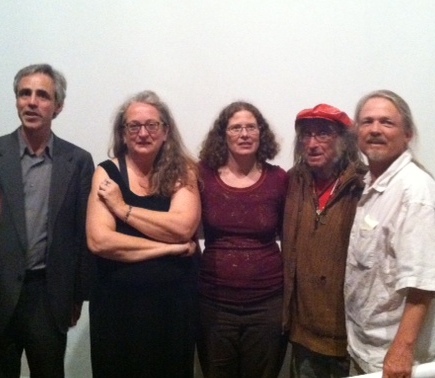
Osha Neumann, Cece Carpio, and O’Brien Thiele — two generations of La Peña artists. All Guardian photos by Caitlin Donohue

“Song of Unity” was meant to illustrate the coming-together of two continents through activist culture, at a time with US interventionism in Latin America was reaching a fevered pitch of corruption and when Bay Areans and Latin American refugees were coming together to form La Peña. It was a heavy moment. Jara’s hands, by way of illustration, are portrayed severed from his body for a reason. After the 1973 Chilean coup, they were said to have been cut from his body by military junta.

“Graffiti has no connection at all to the work of the Mexican muralists,” Neumann continues in response to my question about how street art has changed since his time.

“Graffiti artists don’t usually work collectively,” adds O’Brien Thiele, Neumann’s co-artist.

But here, Robert Trujillo must step in. Trujillo is a member of the Trust Your Struggle collective, the team of California-bred young people that have been elected to take up this historic mantle.

“But there are graffiti crews that are really well-established,” he interjects gently. “CPS from Los Angeles. TKO and MSK have crews worldwide. These are the groups that pioneered graffiti art on the West Coast.”

Trujillo should know — in a time in which street art has come into vogue and become a big-money game, TYS is a sterling example of what is still great about the genre. TYS travels the world connecting with communities in parts of the developing world like Latin America and the Phillipines. It uses graffiti-inspired murals to illustrate social problems, solutions. The center already bears the group’s mark — its superlative Cafe Valparaiso, which serves Chilean food at lunch and dinner, is adorned with a striking mural done by TYS members.


“When you’re in school, writing on the walls — that’s the thing they tell you not to do,” Trujillo tells us, by way of explaining the power of graffiti. “You don’t have a voice. With graffiti, suddenly you have a voice. People have to realize that it exists because of society.” He pauses, then hits upon an eloquent sum-up. “Graffiti is the perfect answer to society.”

“This is a really huge project for us,” says TYS member Cece Carpio. Carpio is La Peña’s program manager, one of many ties the local group has to the center. “This is a place of gathering. [With the new mural] we want to honor the history of Latin American activism here, but also the diversity that the place has now.”

This comes to the heart of why La Peña wants a new mural. Certainly, “Song of Unity” is in bad shape. It is crumbling at the junctures of its panels. Water is seeping in through the cracks, a death sentence for its three-dimensional figures. 

“Song of Unity” today

But perhaps even more importantly, the re-envisioning of the center’s facade will represent something rather extraordinary — that a radical institution that has been relevant in this community for decades has found itself in the hands of a new, dedicated generation.

La Peña’s programming has continued to diversify. Upcoming events include July 13’s Asian Rock Fest and this year has seen the fifth year of Queendom, DJ Zita’s all-female celebration of the five elements of hip-hop — not to mention the Immigrant Voices Festival that brought openly undocumented journalist Jose Antonio Vargas to the center last week. The Immigrant Voices Festival is a project explicitly sponsored by this “second generation” group — referred to as LP2G by the center. 

“I was sorry when they said they wanted to take [“Song of Unity”] down,” Neumann admits to the group that is assembled that sunny Sunday afternoon. “But they said they wanted new blood. What could I say to that?”

What indeed? Because if there is one good reason to donate to La Peña’s campaign to step, facade-first, into the new generation of activism — and you can! The last day to contribute to its Indie Gogo campaign is today, Mon/2 — it is to celebrate that a radical institution started in the fire of the ’70s has successfully found relevance today among the Internet generation. 

So what is TYS going to paint on this wall? Will it be three-dimensional, like Jara’s memorialized fingers and guitar? The final design won’t be determined until the collective’s done more meetings like this with the community members of La Peña. But you can rest easy on one point. Says Trujillo: “We all know it’s going to be fresh though.”

Occupy brings the noise to the Canadian consulate for Quebec students

8

Activists with Occupy San Francisco, Occupy Education Northern California and other groups staged a small demonstration outside the building that houses the Canadian consulate to express solidarity with student strikes in Quebec.

Protesters brought pots and pans to the building at 580 California, banging them in tribute to the casserole marches that have characterized the Quebec strikes.

Students in Quebec province have been on strike since February. School has let out for the summer, but the uprising shows no sign of stopping- in a massive demonstration June 22, some reports showed 100,000 marching in the streets of Montreal, and recently teachers have pledged to join students. 

“Last Friday, they had 100,000 people in the streets,” cried Stephan Georgiou, a former CCSF and UC Berkeley student. “The students of Quebec have continued to take to the streets despite Bill 78.”

Bill 78, passed as an emergency measure May 18 by the National Assembly of Quebec, forbids protests on or near school grounds, requires that march organizers submit their route to police in advance of demonstrations, and attempts insure that all classes resume in late summer.

Security guards allowed two protesters into the building and representatives from the consulate came to the lobby to receive a list of demands written by the group, which included the release and dismissal of charges against imprisoned students, the repeal of Bill 78, and “the end of all austerity measures for students, because education is a human right.”

Protests in Quebec began over proposed tuition hikes, and at yesterday’s rally, students from area high school and colleges told stories of their student loan debt during the rally.

“I was a senior in high school in the 2011/2012 school year. I applied to SF State,” said Hannah Stutz, 17. “My parents are currently in debt, so I needed to apply for financial aid.”

With a loan offered by FAFSA, Stutz said, “I was awarded $70 if I take out a $30,000 loan.”

“I’m a single father, I have yet to graduate college, and I’m $60,000 in debt,” said another protester.

Last March, US total student loan debt surpassed $1 trillion.

“It’s approaching the amount of the bank bail outs,” said one protester. “They should have just bailed out all the student debt. The money would have gone to the banks anyway.”

Indeed, activists and polticians have thrown around the idea of widespread student loan debt forgiveness, as well as a debt strike– simply refusing to pay.

“The average debt people graduate with is now $25,000,” said Beezer de Martelly, a graduate student at UC Berkeley, “and we all know how quickly these prices are escalating.”

“On November 9, we were beaten in exchange for trying to keep dept down for future generations,” she said, recalling Occupy Cal protests against tuition hikes during which students were notoriously beaten by police.

“There is a large group of students here in California planning on forming our own student union,” said Georgiou.

After leaving the building’s lobby, satisfied with proof that the consulate had faxed the group’s demands to Canadian Premier Jean Charest, Occupy CCSF organizer Janice Suess thanked the crowd for coming out.

“Not only are we in solidarity with the students in Quebec,” said Suess, “but we’re building our own movement here.”

Appetite: Spring weekend in Los Angeles yields intriguing tastes

0

I recently returned to my old SoCal stomping grounds for yet another long weekend. This time I stayed at funky, restored motel, The Farmer’s Daughter, gazing over a pool filled with giant rubber duckies, the hotel’s birds greeting me each morning in the lobby. Colorful and quirky, the hotel (with welcoming, engaging staff) is a worthwhile home base, ideally located across the street from the original LA Farmers Market. You won’t find farmers here, rather, it’s a permanent, open air mall of food purveyors.

Though not always gourmet, a few newcomers add foodie cred to the market. However, I hope to never see the demise of old school diners, pie shops and vendors selling unnaturally bright red popcorn and the like – it’s a charming slice of LA history.


On the newer side of things, Short Cake is one of the top Farmers Market destinations. I spent every morning there, happily downing shakeratos ($5 – four shots of espresso shaken with ice and simple syrup) and cappuccinos from one of my favorites, Verve Coffee of Santa Cruz. SF local TCHO chocolate shows up in Short Cake’s mochas, while Amy Pressman’s baked goods are among the best in all of LA.

She trained at Spago with friend and partner Nancy Silverton (Mozza, Pizzeria Mozza). At Short Cake she crafts ridiculously good eats like a curry raisin scones or bacon-cheddar-three chili croissant bread pudding. I rarely repeat places, but this one was worth returning to for breakfast three days in a row.

Another pleasing return this trip? A sunny, playful lunch at Roy Choi’s A-Frame, which I reviewed soon after it opened last year and still find an affordable winner.

BIERBEISL, Beverly Hills

I’m a sucker for cuisines done well, particularly the less commonly seen like Scandinavian, Eastern European or Burmese. I don’t get enough Austrian food. The new BierBeisl, just off Rodeo Drive in Beverly Hills (though not at all like Rodeo Drive – instead, it’s casual, spare and cozy), is one of the better Austrian restaurants around.

Starting with a cool BierBeisl carpaccio, thinly sliced pork roast is delicately doused in a Styrian Gold (Austrian pumpkin seed oil) vinaigrette – a unique, elegant starter. Assorted Austrian charcuterie ($18) and cheeses (add $10) are a brilliant example of the best to come out of the country, vivid with house spreads and rustic rye and pretzel breads.

There’s modern, fresh dishes like seared lamb loin with goat cheese polenta (the most expensive dish, a pricey $36), but I veer towards the traditional, like Vienna Schnitzel ($19-25 for pork, turkey or veal) garnished with lemon and lingonberries plus choice of side: potato salad, roasted parsley potatoes, fries, mixed green salad. House sausages from their sausage menu are a highlight, particularly a Swiss cheese-infused Käsekrainer ($10), lightly peppery and similar to a Polish sausage, while a traditional bratwurst with sauerkraut ($9) likewise satisfies.

Sausages come with a slice of rustic bread and dollops of tarragon mustard and fresh horseradish. The bratwurst is particularly zippy with the Radler Grapefruit: half Stiegl Goldbräu beer, half all-natural grapefruit soda ($6 for 10 oz.; $8 for 16.9 oz.)

Something unusual behind the bar? Reisetbauer Austrian Whisky. Yes, Austrian whisky – distilled in copper pot stills from malted barley, aged in Chardonnay and Trockenbeerenauslese oak wine casks. I appreciated the rogue, hearty spirit of this whisky, lively with chocolate, caramel, hazelnut, bread.

FORMOSA, West Hollywood

Formosa is a Hollywood classic bar/restaurant since 1925 with a storied past. There’s John Wayne’s regular booth which was extended a few feet to hold his long frame when he’d crash after a few drinks. Stars like Bette Davis or Dean Martin would take a cocktail break in between filming at the studios next door (once Pickford-Fairbanks Studio and now The Lot), connected to Formosa by underground walkways. Heavy on history and ghost stories of famed patrons whose photographs line the walls, Formosa has not been known for quality food or drink for years.

But this is not your mama’s Formosa. Though still slowly undergoing its transformation (including mischievous new menu offerings like a fried, spicy peanut butter sandwich), visiting the bar a few times in April I witnessed new bar manager Kate Grutman (previously at Sotto) refreshing the menu and bottle selection – not with fussy cocktails but with well-crafted, playful turns on the likes of a banana daiquiri, aka John Cazale ($10), the secret ingredient being a Fernet rinse, adding a minty, herbal layer. Her Bloody Mary twist is brilliant. Duck Down ($11) is Akvinta Vodka washed with duck confit, mixed with Vince’s original Formosa Bloody Mary mix, lime, Siracha hot sauce, and — wait for it — pickled gobo root (crisp, sweet, and earthy, it’s a member of the burdock root family). I tasted the washed vodka on its own: savory confit imparts a meaty, lush, joyously decadent spirit. It makes for a superior Bloody Mary.

Grutman upgrades dive bar favorites with quality ingredients, as with the Formosa Sour ($9), essentially an improved Midori Sour made from her house Midori liqueur: French honeydew, sugar, orange flower water and lychees with a hint of green food coloring to maintain the neon spirit of the junk food liqueur. Start with an aperitif of The Seven Year Itch ($10), referencing Marilyn Monroe’s potato chips and champagne scene in the film – they go one step further serving housemade chips with a cocktail of bubbles, Cynar, sugar, cherry liqueur and lemon. A perfect finish is Joan Crawford’s Chained ($9), essentially a Sherry Flip with Harvey’s Bristol Cream, Punt e Mes sweet vermouth, garnished with cinnamon. Creamy and savory, it’s dessert.

Grutman is clearly having fun with this menu – and drinking it is likewise a pleasure. Her grandfather was once a Formosa regular so she clearly maintains respect for the unique history of the place, studying old menus, celebrity clientele and films they made at the studios next door, which she’s naming cocktails after. Though there are minor updates happening throughout the building, the place retains its musty, classic Hollywood charm with dim lighting, red booths, rooftop bar, and circa 1930’s Chinese decor. You could still call it a dive but one where you don’t have to check taste at the door. I love witnessing one of the remnants of Old Hollywood reinvent itself while retaining its rich character, ready for more decades ahead.

LUKSHON by Sang Yoon, Culver City

Friends and fellow reviewers have found Lukshon http://www.lukshon.com/read uneven. In my experience, there were a couple brilliant dishes intermingled with a couple disappointments, though my overall meal was strong. I’d return.

The outdoor patio is a mellow alternative to a chic but cacophonous dining room. On a gorgeous LA night, the patio, fronted by a modern rock fireplace, becomes an urban respite.

Attentive, relaxed service made me immediately a fan of Lukshon, while a menu of single origin teas (from San Francisco’s special Red Blossom Tea Co.) and expertly-prepared cocktails confirm the restaurant’s “whole package” status. Asian twists on classic cocktails work, like a vividly tart Lukshon Sour ($11 – Michter’s Rye, lemon, tamarind, palm sugar, kumquats), a smoky Fujian Cure ($11 – Isle of Skye 8yr Scotch, lemon, galangal root, lapsang souchong black tea), or the savory, martini-spirited Formosa ($11): Ethereal gin, Lillet Blanc, atomized mizhiu tou (Taiwanese rice wine), and ginger pearl onions.

Green papaya salad ($9) was a less-than-pleasing version of the classic Thai salad, tasting oddly funky though ingredients were fresh. Chiang Mai curry noodles ($13) read as an enticing list of ingredients (coconut, chile, tumeric, lemongrass, chicken, prawn, yu choy, rice noodles), but came off a tad bland though still satisfying.

The kitchen excelled, however, with fantastic sweetbreads fried “orange chicken” style ($11) in a sweet-sour orange sauce, tender and tossed in scallion, ginger, and pickled lettuce. I’m dreaming of returning just for this dish. A side of yu choy ($7 – a Chinese vegetable), cooked in shaoxing wine and garlic with savory, aged ham is quite a pleasurable way to eat your greens. Short rib rendang ($17) is like the ultimate meatloaf, one cooked in malay spices, red chile lemongrass rempah (a spice paste), drizzled with coconut cream. Sigh.

A simple dessert of flan-like palm sugar caramel custard layered with rice krispies is a delicate finish, with a side of candy cap mushroom ice cream. Lukshon is trendy, yes, but talented chef Sang Yoon hints at the joys of California dining, where our dense Asian cultures and year-round, unparalleled produce combine with classic European cooking technique in inventive dishes.

ink.sack, West Hollywood

Top Chef star Michael Voltaggio smartly opened a sandwich shop half block from his casually hip fine dining restaurant ink., cheekily named ink.sack. Sandwiches come on the mini side at a cheap $4-7, though big enough that I’m unable to finish two. I wish all sandwich shops offered mini versions to vary tastes – and had staff as friendly as ink.sack’s.

Miso-cured albacore tuna is dubbed “spicy tuna” though I could have used more Sriracha mayo to make the sandwich actually spicy and offset a bit of dryness to the tuna. I delighted in sandwiches like The Jose Andres, aka “The Spanish Godfather”, a tribute to the man himself (of The Bazaar, one of my top LA restaurants), filled with Serrano ham, chorizo, and Manchego cheese. But my favorite is a twist on a Reuben with thinly shaved corned beef tongue, Swiss, sauerkraut, and Russian dressing.

EVELEIGH, West Hollywood

True: Eveleigh is the moneyed hipster’s hangout, from a bone marrow, charcuterie-heavy food menu to craft cocktails. But it stands out with a gorgeous setting off a trendy stretch of Sunset Boulevard and quality food and drink. You first pass through the front patio, green with trees and astro turf, into an open dining room with a center bar and ubiquitous fireplace, animal heads and book-lined, gastropub décor. The back of the restaurant is a huge patio covered in plastic with LA views. The space enchants, while my perch at the bar interfaced with busy, disengaged (but still professional, mannered) bartenders.

Though I’ve seen the like of these dishes countless times over the years, each one was well-executed and gratifying, whether bright crushed peas, mint, almonds, Arbequina olive oil and burrata cheese ($12) or a juicy, medium-rare Eveleigh burger (expensive at $19) topped with fontina cheese, pickles and tomato-chorizo relish.

Cocktails ($12) likewise are vivid, balanced and worth a stop on their own. Though, like a thousand cocktailian bars these days, they craft fine, spirituous classics, I’m most pleased with the farm fresh, seasonal side of the menu where they shine with fresh California ingredients and drinks like a Lucky Louie: rhum argicole, kumquats, star anise, ginger, fresh lime.

CURRYWURST, Mid-City West

I “heart” currywurst, that Berlin specialty of grilled dogs doused in German curry. Add chips (fries) if you wish. Currywurst, a few steps from my Farmers Daughter hotel base, is an affordable winner in the currywurst realm (like Berlin Currywurst in Silver Lake). With housemade sausages (my tops is the Hungarian pork) topped with satisfying curry (red German curry is akin to an amped-up, curry laden ketchup), friendly staff and cheap prices make this an ideal snack or lunch.

POUR VOUS, Mid-Wilshire

My bar disappointment this visit was Pour Vous, a sexy, French-influenced den with gorgeous décor, particularly a sunken, circular section with fireside seating. I thrilled to a French-heavy spirit menu highlighting Calvados, absinthe, Armagnac, Cognac. In theory, this could be a dream bar – an underdone concept I’d be thrilled to see well-executed. Maybe it is better early on a weeknight or depending on the bartender?

But on a Friday near midnight, it’s cacophonous, mobbed and irritating. The elegant space is dominated by well-dressed, middle-aged guys with young, blonde girlfriends (sporting breast implants, of course) with a pick-up scene of well-heeled 20-40-somethings on the prowl.

Though such a scene is always irritating (that cliché LA, Vegas, Miami feel), the clash of this crowd in such a romantic setting would be slightly lessened if drinks were excellent. At $14-15 a pop for many cocktails, they should be stellar.

Though it sounded amazing, a medicinally sweet, cloying Le Samourai ($14 – Armagnac, framboise, rhubarb, “umami”) was virtually undrinkable, while a Vadouvan Lassi ($15) could have been brilliant with rhum agricole, lime, coconut, falernum, Vadouvan curry and bitters, but ended up tasting like bland, minimally spiced milk on ice, the curry and the agricole lost in the milk. Tasting my friends’ drinks didn’t get me much further, while disengaged bartenders and a costly bill confirmed just how unsatisfying the entire experience was. I left convinced this is not so much a cocktail-spirits aficionado’s destination as a meat market dressed in pretty clothes.

Subscribe to Virgina’s twice-monthly newsletter, The Perfect Spot, www.theperfectspotsf.com

CPMC’s new numbers threaten St. Luke’s and the mayor’s deal

9

Can San Franciscans trust California Pacific Medical Center (CPMC) not to shutter St. Luke’s Hospital once the company gets what it wants from the city? And has the Mayor’s Office, in its desire to please the business community and building trades, accepted and promoted a bad deal that doesn’t adequately protect the city’s interests?

Those are some of the questions that arose Monday during a hearing on CPMC’s $2.5 billion, multi-hospital development proposal before the Board of Supervisors Land Use Committee when officials from the Mayor’s Office revealed that the development agreement they negotiated with CPMC might not be good enough to keep St. Luke’s open.

As we’ve reported, CPMC (a subsidiary of Sutter Health, a not-for-profit corporation that nonetheless has a well-earned reputation for profiteering and other bad corporate behavior) is seeking to build a 550-bed regional luxury hospital atop Cathedral Hill. In exchange, the development deal requires CPMC to rebuild St. Luke’s, a seismically unsafe hospital in the Mission District that is relied on by many low-income San Franciscans (as well as the city, which would otherwise have to shoulder more of that burden at General Hospital).

After years of stalled negotiations between CPMC and two consecutive mayors, Mayor Ed Lee announced a deal in March that would have CPMC build a smaller version of St. Luke’s (with just 80 beds) and agree to keep it open for at least 20 years as long as CPMC’s operating margins didn’t dip below 1 percent in two consecutive years.

Activists had criticized the deal as too small, too short, and without enough guarantees, but Mayor’s Office officials have consistently said they were confident it was enough to keep St. Luke’s from being shuttered. But now, based on new revenue projections offered by CPMC, even those officials have lost confidence in the deal and say it needs to be renegotiated.

“These new 2012 projections, while still showing CPMC will not breach the 1 percent margin, do not offer the same comfort level we previously had,” Ken Rich of the Mayor’s Office of Economic and Workforce Development told the committee.

The news hit like a bombshell, shaking the confidence of even supervisors who strongly supported the deal, such as Sup. Scott Wiener, who called it a “surprising, critical piece of information” and said, “It’s very, very important that this issue is quickly resolved.”

For supervisors who were already skeptical of the deal and CPMC – such as Sup. David Campos, whose District 9 includes St. Luke’s – it was further evidence that this was a bad deal that needed more work before being brought to the board. The Planning Commission has already approved the project and the full board was scheduled to consider it in just a few weeks.

“What does that say about the way the negotiation was done?” Campos told us. “How half-baked can something be? What have we done to verify the numbers that CPMC gave us? And what does this say about CPMC?…If the numbers on St. Luke’s aren’t accurate, how can we trust the rest of what they’re telling us?”

Yet during the hearing, when Campos tried to get reassurances from CPMC officials and requested that the board be allowed to review the company’s financial records, he was rebuffed and belittled by CPMC attorney Pam Duffy – who later tersely apologized for her comments after Committee Chair Eric Mar criticized them as “insulting to the board.”

Campos had questioned Rich about why the city was relying on CPMC rather than independently assessing the numbers. “Maybe if you had done an audit, you wouldn’t be in this position of being surprised by the numbers that were given to you,” Campos told Rich.

But Rich said “projections are guesses, we can’t ever guarantee that they are right,” noting that CPMC had revised its revenue estimates downward for the years after St. Luke’s would open (when it would be absorbing the high costs of construction), making its profit margin slimmer. “CPMC took a more conservative approach to forecasting the rate of increase in hospital charges as well as patient volumes in light of the greater uncertainty in health care finance,” Rich said.

So Campos asked whether the supervisors could review CPMC’s data. Rich, who has reviewed it, replied, “The conditions under which we were shown CPMC’s projections is that those are confidential.”

Campos noted that it is the board’s job to review and approval this deal to determine whether it’s in the city’s best interests, which shouldn’t simply involve trusting CPMC. “Why should the executive branch of the government see those numbers but not the legislative branch?” he asked.
“It’s really not our call,” said Rich, noting that he had no objections to the request.

But when Campos asked CPMC’s Duffy, she offered a legalistic refusal, and when Campos tried to explain his reasoning, she said, “I heard your speech a moment ago” and added, “this isn’t really a game of gotcha.”

When Campos said the board was simply exercising its due diligence over an important project. she said “nothing unusual or untoward has occurred here, and the suggestion that might be the case, I think it unfair.”

But Campos wasn’t alone in wanting more reassurance from CPMC, who supervisors, labor leaders, and community activists have criticized for its secrecy and bad faith negotiating tactics with both the city and its employee unions.

“This announcement is shocking, on a number of levels,” Board President David Chiu said at the hearing, noting that he had met with CPMC officials just days earlier and they hadn’t mentioned the new developments, instead assuring him that their operating margins were high and the deal protected St. Luke’s. “It’s not a great way to build the trust we’ll need to move this forward.”

Rich said he had learned of the new numbers 12 days earlier, drawing a rebuke from Campos and others who said the supervisors should have been notified earlier. But Rich said that he was hoping that the problem would be solved through negotiations with CPMC before the hearing, but that talks over the issue have so far been fruitless.

“We would have vastly preferred to have an agreement in hand,” Rich told the committee, reassuring the supervisors that the Mayor’s Office will not support the project until the St. Luke’s issue is resolved to its satisfaction.

But Sup. Malia Cohen criticized CPMC as an untrustworthy negotiating partner. “CPMC has an interesting corporate culture,” she said, noting that the company has repeatedly misled supervisors and community leaders, accusing it of being “disingenuous in its negotiations.”

Chiu emphasized that this is a make-or-break issue: “This is an escape clause that could allow St. Luke’s – and what St. Luke’s means to the city – to not be operational. So this is an incredibly important question.”

Campos said this latest episode only added to his suspicion that CPMC will play games with its finances to shutter St. Luke’s – whose construction must be completed before CPMC can build Cathedral Hill Hospital – once it gets the lucrative regional medical center that it really wants.

“How do we know they aren’t transferring money out of CPMC into Sutter in order to shut down St. Luke’s?” Campos said, adding that he wants to see a clear guarantee that St. Luke’s will remain open as a full-service hospital. “This deal, as far as I’m concerned, is not ready for prime time.”

Resisting the police state: Berkeley activists demand local control

17

Editor’s Note: This article supplements this week’s cover story on FBI surveillance

By Sasha Hippard

As the federal government battles presumed threats to national security in this post-9/11 world, once-important distinctions between local and national police agencies have been blurred. But as local officers get drawn into federal counterterrorism operations and immigration crackdowns, and as their departments beef up with tanks and other military hardware, citizens and civil libertarians are pushing back on the creeping police state.

In the last year, San Francisco, Portland, Ore., and other cities have set limits on the participation by local officers in FBI’s surveillance operations of law-abiding citizens. San Jose has refused to honor federal immigration holds, creating a model for other sanctuary cities. And in Berkeley, citizens and politicians have taken a deliberate approach to limit their police department’s cooperation with the feds on several fronts.

“I don’t think most people understand just how dramatically the balance between government power and individual liberties has shifted in the last 10 years,” says Shahid Buttar, executive director of the Bill of Rights Defense Committee, a Washington DC-based nonprofit that has worked with Berkeley, San Francisco, and other cities on the issue.

Local activist group Coalition for a Safe Berkeley, the city’s Peace and Justice Commission, and the ACLU of Northern California have asked the Berkeley City Council to bring police practices in line with local values and state constitutional standards.

They held a special town hall meeting on June 9 to discuss ways to limit the Berkeley Police Department’s cooperation with the larger police state, the latest step in a methodical political process that began last year (see “Policing the police,” 12/12/11).

Concerned citizens were joined by representatives from the Northern California Regional Intelligence Center (NCRIC), Berkeley Police Department, and the Berkeley Police Review Commission. The workshop highlighted how federal partnerships with local law enforcement take the power from the hands of the city and place it under the control of the federal government.

Activists urged the city to terminate its relationship with the NCRIC, a so-called “fusion center” that culls information gathered by local, state, and federal agencies in ways they believe violates the right to privacy that is enshrined in the California Constitution, at least until limits on the gathering and use of that information can be clearly established.

Like all fusion centers, NICRIC’s primary goal is to promote information-sharing between state and local government and various federal agencies such as the FBI, CIA, and Department of Homeland Security. Of particular concern are reports NICRIC issues about people who have caught the attention of authorities for one reason or another.

Suspicious Activity Reports, or SARs, serve as the primary source of information gathering for fusion centers, which ask law enforcement agents and civilians to report activity based on whether or not it would “rouse suspicion in a reasonable person.” NCRIC’s Mike Sean listed off a number of possible report-worthy actions that ranged from cyber attacks and theft to photographing a building and “questioning personnel beyond a level of curiosity.” SARs rely on the vague “reasonable suspicion standard” to determine whether or not there is criminal intent behind activities.

Buttar said many citizens assume that the federal police state excesses of old — such as the FBI’s notorious COINTELPRO program, which spied on and sabotaged people who were critical of the government — are no longer happening. But with technology making it easier to gather ever-more information about private citizens, “there’s even more reason to be concerned by this government surveillance now.”

State and local privacy protections, as well as court rulings interpreting them, generally require an “articulable criminal predicate” — or reasonable suspicion that the target is doing something illegal — before police agencies can conduct surveillance on people. 

But SARs flood local authorities with potentially false reports of criminal activity, opening the door to racial profiling and unwarranted surveillance and potentially pitting groups of citizens against one another, with implications that can last for years.

“What happens if my neighbor who really doesn’t like me makes a report and it makes it to the level of filing?” Berkeley City Council member Linda Maio asked at the meeting,  “How does that effect my future interactions with law enforcement?”

Civil libertarians say the answers to those questions are as unsettling as they are unclear, deliberately so, despite efforts to seek a fuller understanding on how the police state gathers and processes information.

“[The ACLU] has concerns about the plethora of information gathered by NICRIC” Julia Mass, an ACLU staff attorney, said at the hearing. She said police should be looking at reports of “reasonable suspicion of criminal activity, not reasonable suspicion of suspicious activity.”

The counterterrorism tactics taken on by local police forces are not limited to policy change. In Berkeley, a grant of $200,000 by the Department of Homeland Security’s Urban Areas Security Initiative (UASI) allowed the Berkeley Police Department to purchase a military-grade armored vehicle. This purchase went unnoticed by the City Council.

Berkeley Cop Watch, an all-volunteer organization that monitors police action, only discovered information about the purchase through a public records request. The police department’s request for the grant was a one-time cash request and therefore not presented to the council for approval.

While Police Chief Michael Meehan insisted the vehicle has “only defensive not offensive capabilities,” there is no difference between the tank in Berkeley and the tanks used by the military except that the weapons have been removed. As one audience member proclaimed during the meeting: “If they’ve got it, they’ll use it.”

The police chief went on to say that the decision to buy this vehicle was based on the “need to protect our officers” and an agreement between the city police and UC Berkeley Police Department has been made to store the tank on a campus with a history of clashes between police and peaceful protesters.

The purchase of the tank raises concerns not only about the increasing militarization of local police forces, but the lack of transparency in regards to agreements between federal agencies and local law enforcement. Sharon Adams of the Coalition for a Safe Berkeley said she feels “a level of betrayal that the police were doing this the whole time and we only found out through Cop Watch.”

The coalition seeks to terminate the relationship between Berkeley Police Department and UASI, which also funds NICRIC fusion centers. The increasingly close relationship between local police and federal agencies has had a particularly significant impact on immigration reform.

Through the Secure Communities database the federal government uses to track and hold detainees in local jails across the country, the Immigration and Customs Enforcement (ICE) essentially coopts local police to act as federal immigration agents.   works with local police authorities to target and detain suspected undocumented immigrants. The Department of Homeland Security has recently made ICE a requirement for all jurisdictions in the nation, but the increase in non-crime related deportations that have occurred have caused many communities in the Bay Area to resist the partnership.

In response, Assembly memeber Tom Ammiano has been pushing for the approval of the state-wide TRUST Act, which would allow communities to op-out of Secure Communities, undoing what Mass calls “the lynch pin between local law enforcement and federal immigration officials.”

The city is not reimbursed for the holding fees by the federal government and it unfairly targets individuals who are not be involved in any criminal activity. While the Coalition and ACLU recommend the Berkeley Police Department not enforce civil immigration detainers under any circumstances, the Police Review Commission suggests instead that enforcement would only occur where an arrestee has been charged with a serious or violent felony offense in the last five years.

Although the work session was intended to present Council members with enough information to vote on various motions of revision to the Berkeley Police Department’s mutual aid memoranda of understanding with federal agencies, no decisions were made during the later City Council meeting. All proposals will be revisited in September.

Walk this way

2

arts@sfbg.com

DANCE If you’ve ever had to create a multi-course meal from random fridge contents, or pulled together a smashing outfit moments before a big party, you are well familiar with the fine art of making do.

ODC Theater Director Christy Bolingbroke might have been thinking along these lines as she put together the Walking Distance Dance Festival — SF, a three-day marathon of 12 companies both local and national, with one from Singapore thrown in for good measure. These are the ingredients that she had to work with; the occasion is that Dance/USA, the national service organization for dance, is in town. That’s a big opportunity to show the rest of the country who we are and what we do.

The ten-year-old but little-known Scuba, a multi-city initiative between San Francisco, Seattle, Minneapolis, and Philadelphia, offers touring opportunities to mid-career artists to and from participating cities. ODC has a long tradition of offering developmental residencies to local choreographers. And last, but not least, ODC has an elegant multi-venue “campus,” as they call it, suitable for simultaneously showcasing performances both intimate and large. For Walking Distance, Bolingbroke curated a mix of Scuba and former ODC resident artists performing in three ODC venues.

But she also had something else in mind. Walking Distance presents most works in shared line-ups. “We know that audiences follow individual artists,” she explains. “We wanted to create opportunities for them to see different artists in one sitting to get a taste of a variety of choreographies.”

It’s a model that has been the norm in other performing arts, such as symphony orchestras. Dance companies, however, have for the most part stuck to one-artist programs, though Robert Moses’ Kin Dance Company’s recent “The BY Series” and Amy Seiwert and Imagery’s upcoming “Sketch 2” may be indications of change to come.

One of Walking Distance’s most intriguing pairings just might be ODC Dance with Maya Dance. Maya is a five-year-old contemporary ensemble from Singapore that bases its work on Asian esthetics and traditional dance forms. In May, ODC and Maya performed in a shared program in Singapore. Both groups performed Brenda Way’s 2008 Unintended Consequences: A Meditation; KT Nelson set a work on Maya, and Kavitha Krishnan set one on ODC. The repeat will be Maya’s first US appearance.

Making their first appearance in San Francisco are three Scuba artists; it’s impossible not to be impressed with the sheer variety of dance being created outside the Eastern corridor. A colleague from Seattle described Alice Gosti’s Spaghetti Co — Are you Still Hungry? as “basically a food fight with kinetically interesting things happening.” For her Halo, Gabrielle Revlock is bringing one prop — a hoop — from Philly. And then there is the German-born Minneapolis choreographer Angharad Davies, who in Security examines the effect of tedious shift work on relationships.

Of the work by former ODC Theater residents, only the excerpt of Catherine Galasso’s Fall of the Rebel Angels is new. Perhaps that’s not what festivals traditionally do, but for Bolingbroke this one is an opportunity to gather works that have proven themselves.

Walking Distance also reflects the theatrical strengths among former ODC resident artists. There is no pure dance, and no ballet unless you count the revival of Kunst-Stoff’s deliciously deconstructed Less Sylphide. The festival’s choreographers — Ben Levy, Monique Jenkinson, Ryan Smith and Wendy Rein, and Shinichi Iova Koga — have extraordinarily broad perspectives on how dance communicates.

“It’s a taster, a sampler of many different things,” Bolingbroke says of Walking Distance, which was inspired by a 2011 version held in the Mendocino County town of Willits. At that festival, several theaters in close proximity to each other collaborated to present BARE Dance (from Los Angeles), AXIS Dance Company, and Na Lei Hulu I Ka Wekiu; it focused local attention on California dance in an informal, easily accessible manner. This approach just might work in San Francisco as well — now and at future incarnations of the fest.

WALKING DISTANCE DANCE FESTIVAL — SF

Fri/29-Sat/30, 6:30pm; Sun/1, 2pm, $20-$75

ODC Theater

3153 17th St., SF

www.odctheater.org

Music Listings

0

Since club life is unpredictable, it’s a good idea to call ahead or check the venue’s website to confirm bookings and hours. Prices are listed when provided to us. Visit www.sfbg.com/venue-guide for venue information. Submit items for the listings at listings@sfbg.com. For further information on how to submit items for the listings, see Picks.

WEDNESDAY 27

ROCK/BLUES/HIP-HOP

Adios Amigo, Dreamdate, Garrett Pierce Rickshaw Stop. 8pm, $10.

Civil War Rust, Air Show Disaster, Why I Hate Bottom of the Hill. 9pm, $8.

Keith Crossan Invitational Pro Blues Jam Biscuits and Blues. 8 and 10pm, $15.

Trini Lopez Rrazz Room. 8pm, $40-$45.

Jason Marion vs. Lee Huff Johnny Foley’s Dueling Pianos. 9:30pm.

Terry Savastano Johnny Foley’s. 9pm, free.

Symbolick Jews, Konichiwa Baby, Impersonations Hemlock Tavern. 9pm, $6.

Tanlines, Aaron Axelsen, Miles the DJ Brick and Mortar Music Hall. 9pm, $10.53.

JAZZ/NEW MUSIC

Cat’s Corner with Nathan Dias Savanna Jazz. 9pm, $10.

Cosmo AlleyCats Le Colonial, 20 Cosmo Place, SF; www.lecolonialsf.com. 7-10pm.

Dink Dink Dink, Gaucho, Michael Abraham Amnesia. 7pm, free.

Ricardo Scales Top of the Mark, 999 California, SF; www.topofthemark.com. 6:30pm, $5.

FOLK/WORLD/COUNTRY

Nachito Herrera Trio Yoshi’s. 8pm, $20.

DANCE CLUBS

Booty Call Q-Bar, 456 Castro, SF; www.bootycallwednesdays.com. 9pm. Juanita MORE! and Joshua J host this dance party.

Coo-Yah! Som., 2925 16th St, SF; (415) 558-8521. 10pm, free. DJs Daneekah and Green B spin reggae and dancehall with weekly guests.

Full-Step! Tunnel Top. 10pm, free. Hip-hop, reggae, soul, and funk with DJs Kung Fu Chris and Bizzi Wonda.

Mary Go Round Lookout, 3600 16th St, SF; www.lookoutsf.com. 10pm, $5. Drag with Suppositori Spelling, Mercedez Munro, and Ginger Snap.

Megatallica Fiddler’s Green, 1333 Columbus, SF; www.megatallica.com. 7pm, free. Heavy metal hangout.

Shutter Elbo Room. 10pm, $5. With DJs Nako, Omar, and Justin.

Southern Fried Soul Knockout. 9:30pm, $3. With Selectors Medium Rare, Psychy Mikey spinning barbecue greasy soul.

THURSDAY 28

ROCK/BLUES/HIP-HOP

Anthem Johnny Foley’s. 9pm, free.

AVICII, Chuckle, Cazzette Bill Graham Civic Auditorium. 8pm, $49.50.

Harper Blynn, Madi Diaz Cafe Du Nord. 8pm, $10.

Butch Whacks & the Glass Packs Bimbo’s. 8pm, $45.

Shane Dwight Biscuits and Blues. 8 and 10pm, $16.

Fake Your Own Death, Glass Trains, Le Panique Hemlock Tavern. 8:30pm, $6.

High and Tight, Flexx Bronco, Lonely Kings, Parachute on Fire Thee Parkside. 9pm, $7.

Lee Huff vs. Jason Marion Johnny Foley’s Dueling Pianos. 9:30pm.

Japonize Elephants Amnesia. 9pm, $7-$10.

J Boog, Katchafire, Irie Dole, Hot Rain Mezzanine. 9pm $35.

Trini Lopez Rrazz Room. 8pm, $40-$45.

Magic Trick California Academy of Sciences, 55 Music Concourse, SF; www.calacademy.org. 6pm, $10-$12.

Russian Circles, An So I Watch You From Afar, Deafheaven Great American Music Hall. 8pm, $14.

Sister Sparrow & the Dirty Birds Boom Boom Room. 8pm, $15.

Terry Malts, Rat Columns, Synthetic ID Bottom of the Hill. 9pm, $10.

JAZZ/NEW MUSIC

Chuchito Valdes Latin Jazz Band Yoshi’s. 8pm, $18; 10pm, $12.

Stompy Jones Top of the Mark, 999 California, SF; www.topofthemark.com. 7:30pm, $10.

Ned Boynton Trio Bottle Cap, 1707 Powell, SF; www.bottlecapsf.com. 7-10pm.

FOLK/WORLD/COUNTRY

Twang! Honky Tonk Fiddler’s Green, 1330 Columbus, SF; www.twanghonkytonk.com. 5pm. Live country music, dancing, and giveaways.

DANCE CLUBS

Afrolicious Elbo Room. 9:30pm, $5-$7. With DJ/host Senor Oz and guests DJ Oneman, B Sears & Coolhands.

Andy Rourke (DJ set) Rickshaw Stop. 10pm, $12. Popscene vs the Smiths.

Afrolicious Elbo Room. 9:30pm, $5. DJs Pleasuremaker and Señor Oz spin Afrobeat, Tropicália, electro, samba, and funk.

Get Low Som., 2925 16th St, SF; (415) 558-8521. 10pm, free. Jerry Nice and Ant-1 spin Hip-Hop, ’80s and Soul with weekly guests.

Ritual Dubstep Thursdays Temple Nightclub, 540 Howard, SF; www.templesf.com. 10pm, $5. Dubstep with alternating DJs.

Thursdays at the Cat Club Cat Club. 9pm, $6 (free before 9:30pm). Two dance floors bumpin’ with the best of 80s mainstream and underground with DJ’s Damon, Steve Washington, Dangerous Dan, and guests.

Tropicana Madrone Art Bar. 9pm, free. Salsa, cumbia, reggaeton, and more with DJs Don Bustamante, Apocolypto, Sr. Saen, Santero, and Mr. E.

FRIDAY 29

ROCK/BLUES/HIP-HOP

Baby Dee, Carletta Sue Kay Brick and Mortar Music Hall. 8pm, $12-$15.

Back Pages Johnny Foley’s. 9pm, free.

Blues Brothers Review Yoshi’s. 8pm, $30; 10pm, $25.

Bpos Showdown, 10 Sixth St, SF; www.showdownsf.com. 9pm, free.

Butch Whacks & the Glass Packs Bimbo’s. 8pm, $50.

Delta Rae, Victoria George, Helena Independent. 9pm, $12.

El-P, Killer Mike, Mr. Muthafuckin’ eXquire, Despot Regency Ballroom. 8pm, $25.

Ian Franklin & Infinite Frequency Rockit Room. 9:30pm, $5.

Noah Griffin Union Room at Biscuits and Blues. 7:30pm, $10.

Growlers, Extra Classic, Cosmonauts Rickshaw Stop. 8:30pm, $13-$15.

Guido, Jason Marion, Lee Huff Johnny Foley’s Dueling Pianos. 9pm.

Paula Harris Biscuits and Blues. 8 and 10pm, $20.

Austin Hastings, Stellar J, Mischa Pollack Brainwash Cafe, 1122 Folsom, SF; www.brainwash.com. 8pm.

Trini Lopez Rrazz Room. 8pm, $40-$45.

Laura Marling Grace Cathedral, 1100 California, SF; www.lauramarling.com. 9pm, $39.50.

Moggs, Sons of Huns, Porch Hemlock Tavern. 9:30pm, $7.

Mrs. Magician, Mantles, Kids on a Crime Spree Bottom of the Hill. 10pm, $12.

Rad Cloud, Assateague, Sean Flinn and the Royal We, Sparrow’s Gate Amnesia. 9pm, $7-$10.

Chris Sprague & His 18 Wheelers, Mitch Polzak and 10-4, Kit & the Branded Men Cafe Du Nord. 9pm, $10-$12.

Justin Townes Earle, Tristen Great American Music Hall. 9pm, $21.

JAZZ/NEW MUSIC

Audium 1616 Bush, SF; www.audium.org. 8:30pm, $20. Theater of sound-sculptured space.

Black Market Jazz Orchestra Top of the Mark, 999 California, SF; www.topofthemark.com. 9pm, $10.

Terry Disely Bottle Cap, 1707 Powell, SF; www.bottlecapsf.com. 5:30-8:30pm, free.

FOLK/WORLD/COUNTRY

El Sonido Callejero, Santos De Los Angeles Slim’s. 8pm, $13-$15.

Taste Fridays 650 Indiana, SF; www.tastefridays.com. 8pm, $18. Salsa and bachata dance lessons, live music.

DANCE CLUBS

Bloke Salutes Roxy Music Truck. 8pm, free. With DJ Bobby Please.

DJ What’s His Fuck Riptide Tavern, 3639 Taraval, SF; www.riptidesf.com. 9pm, free.

Joe Lookout, 3600 16th St.,SF; www.lookoutsf.com. 9pm. Eight rotating DJs, shirt-off drink specials.

Old School JAMZ El Rio. 9pm. Fruit Stand DJs spinning old school funk, hip-hop, and R&B.

Paris to Dakar Little Baobab, 3388 19th St, SF; (415) 643-3558. 10pm, $5. Afro and world music with rotating DJs including Stepwise, Steve, Claude, Santero, and Elembe.

Pledge: Fraternal Lookout. 9pm, $3-$13. Benefiting LGBT and nonprofit organizations. Bottomless kegger cups and paddling booth with DJ Christopher B and DJ Brian Maier.

Sandwell District Showcase Public Works. 9pm, $15. With Function, Silent Servant, RRose, and more.

Sweater Funk Elbo Room. 10pm, $10. With DJs Jon Guillermo, Selecter DJKirk, Sabrina, Chun-Tech, special guests Mark Grusane and Mike Cole, and more.

Teenage Dance Craze Knockout. 10pm, $5. DJs Russell Quan, Okie Oran, and dX the Funky Granpaw spin surf, soul, garage, and more.

SATURDAY 30

ROCK/BLUES/HIP-HOP

Alaric, La Corde, Crimson Scarlet, DJ Brown Amy El Rio. 10pm, $7.

Ben Benkert, Caldecott, Lifted Roots, Speed Goat Slim’s. 9pm, $14.

Big Tree, City Tribe, Yesway Rickshaw Stop. 8pm, $10.

Blisses B, Green Door Hemlock Tavern. 6pm, $5.

Blues Brothers Review Yoshi’s. 8pm, $35; 10pm, $30.

Butch Whacks & the Glass Packs Bimbo’s. 8pm, $50.

Glitter Wizard, Shrine, Hot Lunch Hemlock Tavern. 9:30pm, $8.

Growlers, Extra Classic, Summer Twins Independent. 9pm, $15.

He’s My Brother She’s My Sister, Assemble Head in Sunburst Sound, Strange Vine Cafe Du Nord. 9:30pm, $10.

Kafana Balkan, Brass Menazeri, Fishtank Ensemble Great American Music Hall. 9pm, $15.

Trini Lopez Rrazz Room. 8pm, $40-$45.

Major Powers & the Lo-Fi Symphony, Billy Cramer & Share the Land, Prairiedog Amnesia. 9pm, $8-$10.

New Monsoon, Tim Carbone Brick and Mortar Music Hall. 9pm, $12-$15.

Northerlies, Raven Marcus, Slow Motion Cowboys Amnesia. 5:30pm, $8-$10.

Quintron & Miss Pussycat, Dent May, Shannon and the Clams Elbo Room. 9:30pm, $12.

Royal Deuces, Jinx Jones & the King Tones, Miss Lonely Hearts Knockout. 10pm, $6.

Earl Thomas & the Blues Ambassadors Biscuits and Blues. 8 and 10pm, $22.

Thundercult, Vir, Lotus Moons Thee Parkside. 9pm, $5.

Top Secret Band Johnny Foley’s. 9pm, free.

Trainwreck Riders Riptide Tavern, 3639 Taraval, SF; www.riptidesf.com. 9:30pm, free.

Via Coma, I The Mighty, Atlas Bottom of the Hill. 9pm, $10.

Voco, Minot Thee Parkside. 3pm, free.

Greg Zema, Lee Huff, Jason Marion Johnny Foley’s Dueling Pianos. 9:30pm.

JAZZ/NEW MUSIC

Audium 1616 Bush, SF; www.audium.org. 8:30pm, $20. Theater of sound-sculptured space.

Elliot Simpson Unitarian Universalist Society of San Francisco, 1187 Franklin, SF; www.tangentguitarseries.com. 7:30pm, $15.

Two Grands One Heart: Lynn Yew Evers and Margie Balter Salle Pianos, 1632 C Market, SF; www.lynnyewevers.com. 7-9pm.

FOLK/WORLD/COUNTRY

Craig Ventresco & Meredith Axelrod Atlas Cafe, 3049 20th St, SF; www.atlascafe.net. 4-6pm, free.

DANCE CLUBS

Icee Hot: Robert Hood Public Works Loft. 10pm, $10.

Paris to Dakar Little Baobab, 3388 19th St, SF; (415) 643-3558. 10pm, $5. Afro and world music with rotating DJs including Stepwise, Steve, Claude, Santero, and Elembe.

Woogie Nights with Alex Rose, Alexi Delano, Sammy Bliss, Sex Pixels Public Works. 9pm.

SUNDAY 1

ROCK/BLUES/HIP-HOP

Apparitions, Rat Columns, Bad Backs Hemlock Tavern. 9pm, $6.

Con Brio, Dia, Steer the Stars Cafe Du Nord. 9pm, $10.

Delicate Steve, Yalls, Al Lover Brick and Mortar Music Hall. 8:30pm, $8-$10.

Dream Theater, Crimson Projekct Warfield. 8pm, $52-$65.

Kally Price Old Blues and Jazz Band Amnesia. 8pm, $5.

Trini Lopez Rrazz Room. 5pm, $40-$45.

Lower Dens, No Joy, Ellie Beziat Independent. 8pm, $15.

Terry Savastano Johnny Foley’s. 9pm, free.

Vastum, Whitehorse, Laudanum Elbo Room. 4pm, $6.

JAZZ/NEW MUSIC

Dwaine Spurlin Band Bliss Bar, 4026 24 St, SF; www.blissbar.com. 4:30-7:30pm, $10.

Preservation Hall Jazz Band, Stone Foxes Sigmund Stern Grove, 19th Avenue and Sloat Boulevard, SF; www.sterngrove.com. 2pm, free.

FOLK/WORLD/COUNTRY

Twang Sunday Thee Parkside. 4pm, free. With Lone Star Retrobates.

DANCE CLUBS

Dub Mission Elbo Room. 9pm, $6. Dub, roots, and classic dancehall with DJ Sep, Maneesh the Twister, DJ Shockman.

Jock Lookout, 3600 16th St, SF; www.lookoutsf.com. 3pm, $2. Raise money for LGBT sports teams while enjoying DJs and drink specials.

La Pachanga Blue Macaw, 2565 Mission, SF; www.thebluemacawsf.com. 6pm, $10. Salsa dance party with live Afro-Cuban salsa bands.

MONDAY 2

ROCK/BLUES/HIP-HOP

Bass Drum of Death, DZ Deathrays, Warm Soda Bottom of the Hill. 9pm, $10.

Damir Johnny Foley’s. 9pm, free.

French Cassettes, Butcher Brown, West Wingz Elbo Room. 9pm, $5.

Theo Katzman, Joey Dosik Cafe Du Nord. 8pm, $10.

Mates of State, Stepkids Independent. 8pm, $18.

JAZZ/NEW MUSIC

Bossa Nova Tunnel Top, 601 Bush, SF; (415) 722-6620. 8-11:30pm, free. Live acoustic Bossa Nova.

FOLK/WORLD/COUNTRY

Vieux Farka Toure Yoshi’s. 8pm, $22.

DANCE CLUBS

Death Guild DNA Lounge. 9:30pm, $3-5. Gothic, industrial, and synthpop with Joe Radio, Decay, and Melting Girl.

Krazy Mondays Beauty Bar, 2299 Mission, SF; www.thebeautybar.com. 10pm, free. Hip-hop and other stuff.

M.O.M. Madrone Art Bar. 6pm, free. DJs Timoteo Gigante, Gordo Cabeza, and Chris Phlek playing all Motown every Monday.

Vibes’N’Stuff El Amigo Bar, 3355 Mission, SF; (415) 852-0092. 10pm, free. Conscious jazz and hip-hop from 1960s-early ’90s with DJs Luce Lucy, Vinnie Esparza, and more.

TUESDAY 3

ROCK/BLUES/HIP-HOP

Driftless Pony Club Cafe Du Nord. 8pm, $10.

Family Folk Expolision Amnesia. 9:15pm, free.

Colleen Green, White Fang, Pamela Brick and Mortar Music Hall. 9pm, free.

“Hip Hop, Hope, and Harmony” Elbo Room. 9pm, $10. SF AIDS Walk benefit with Junior Toots, Zamico, DJ Lady Ryan.

Libyans, Adults, Face the Rail Hemlock Tavern. 9pm, $7.

Sad Ladders El Rio. 8pm, $5.

Valient Thorr, Holy Grail, Royal Thunder, Kickass Bottom of the Hill. 8:30pm, $12.

Young Empire, Humans, Rio Rio Thee Parkside. 8pm, $10.

JAZZ/NEW MUSIC

Gaucho Bottle Cap, 1707 Powell, SF; www.bottlecapsf.com. 7-10pm.

DANCE CLUBS

Eclectic Company Skylark, 9pm, free. DJs Tones and Jaybee spin old school hip hop, bass, dub, glitch, and electro.

Post-Dubstep Tuesdays Som., 2925 16th St, SF; (415) 558-8521.10pm, free. DJs Dnae Beats, Epcot, Footwerks spin UK Funky, Bass Music.

Film Listings

0

Film listings are edited by Cheryl Eddy. Reviewers are Kimberly Chun, Max Goldberg, Dennis Harvey, and Lynn Rapoport. For rep house showtimes, see Rep Clock.

OPENING

The Amazing Spider-Man Spidey returns in a post-Raimi reboot. (Opens Tue/3.) (2:18)

Beyond the Black Rainbow Sci-fi in feel and striking look even though it’s set in the past (1983, with a flashback to 1966), Canadian writer-director Cosmatos’ first feature defies any precise categorization — let alone attempts to make sense of its plot (such as there is). Arboria is a corporate “commune”-slash laboratory where customers are promised what everyone wants — happiness — even as “the world is in chaos.” Just how that is achieved, via chemicals or whatnot, goes unexplained. In any case, the process certainly doesn’t seem to be working on Elena (Eva Allan), a near-catatonic young woman who seems to be the prisoner as much as the patient of sinister Dr. Nyle (Michael Rogers). The barely-there narrative is so enigmatic at Arboria that when the film finally breaks out into the external world and briefly becomes a slasher flick, you can only shrug — if it had suddenly become a musical, that would have been just as (il-)logical. Black Rainbow is sure to frustrate some viewers, but it is visually arresting, and some with a taste for ambiguous, metaphysical inner-space sci-fi à la Solaris (1972) have found it mesmerizing and profound. As they are wont to remind us, half of its original audience found 1968’s 2001: A Space Odyssey boring, pointless and walk out-worthy, too. (1:50) Roxie. (Harvey)

The Connection The first re-release in a project to restore all of quintessential 1960s American independent director Shirley Clarke’s features, this 1961 vérité-style drama was adapted from a controversial off-Broadway play by Jack Gelber. Set exclusively in a dingy Greenwich Village crash pad, it captures a little time in the lives of several junkies there — many off-duty jazz musicians — listlessly waiting for the return of their dealer, Cowboy. To mimic the stage version’s breaking of the fourth wall between actors and spectators, Clarke added the device of two fictive filmmakers who are trying to record this “shocking” junkie scene, yet grow frustrated at their subjects’ levels of cooperation and resistance. With actors often speaking directly to the camera, and all polished stage language and acting preserved, The Connection offers a curious, artificial realm that is nonetheless finally quite effective and striking. A prize-winner at Cannes, it nonetheless had a very hard time getting around the censors and into theaters back home. Hard-won achievement followed by frustration would be a frequent occurrence for the late Clarke, who would only complete one more feature (a documentary about Ornette Coleman) after 1964’s Cool World and 1967’s Portrait of Jason, before her 1997 demise. She was a pioneering female indie director — and her difficulty finding projects unfortunately also set a mold for many talented women to come. (1:50) Roxie. (Harvey)

Corpo Celeste A 13-year-old girl comes of age in Italy’s deeply Catholic Calabrian region. (1:40) SF Film Society Cinema.

Magic Mike A movie about male strippers with an unlikely director (Steven Soderbergh) and a predictably abs-tastic cast: Channing Tatum, Matthew McConaughey, and Joe Manganiello. (1:50)

People Like Us The opening song — James Gang’s can’t-fail “Funk #49” — only partially announces where this earnest family drama is going. Haunted by a deceased music-producer patriarch, barely sketched-out tales of his misadventures, and a soundtrack of solid AOR, this film has mixed feelings about its boomer bloodlines, much like the recent Peace, Love and Misunderstanding: these boomer-ambivalent films are the inverse of celebratory sites like Dads Are the Original Hipsters. Commodity-bartering wheeler-dealer Sam (Chris Pine) is skating on the edges of legality — and wallowing in his own kind of Type-A prickishness — so when his music biz dad passes, he tries to lie his way out of flying back home to see his mother Lillian (Michelle Pfeiffer), with his decent law student girlfriend (Olivia Wilde). He doesn’t want to face the memories of his self-absorbed absentee-artist dad, but he also doesn’t want to deal with certain legal action back home, so when his father’s old lawyer friend drops a battered bag of cash on him, along with a note to give it to a young boy (Michael Hall D’Addario) and his mother Frankie (Elizabeth Banks), he’s beset with conflict. Should he take the money and run away from his troubles or uncover the mysterious loved ones his father left behind? Director and co-writer Alexa Kurtzman mostly wrote for TV before this, his debut feature, and in many ways People Like Us resembles the tidy, well-meaning dramas about responsibility and personal growth one might still find on, say, Lifetime. It’s also tough to swallow Banks, as gifted as she is as an actress, as an addiction-scarred, traumatized single mom in combat boots. At the same time People Like Us isn’t without its charms, drawing you into its small, specific dramas with real-as-TV touches and the faintest sexy whiff of rock ‘n’ roll. (1:55) Shattuck. (Chun)

Pink Ribbons, Inc. This enraging yet very entertaining documentary by Canadian Léa Pool, who’s better known for her fiction features (1986’s Anne Trister, etc.), takes an excoriating look at “breast cancer culture” — in particular the huge industry of charitable events whose funds raised often do very little to fight the cease, and whose corporate sponsors in more than a few cases actually manufacture carcinogenic products. It’s called “cause marketing,” the tactic of using alleged do gooderism to sell products to consumers who then feel good about themselves purchasing them. Even if said product and manufacturer is frequently doing less than jack-all to “fight for the cure.” The entertainment value here is in seeing the ludicrous range to which this hucksterism has been applied, selling everything from lingerie and makeup to wine and guns; meanwhile the march, walk, and “fun run” for breast cancer has extended to activities as extreme (and pricey) as sky-diving. Pool lets her experts and survivors critique misleading the official language of cancer, the vast sums raised that wind up funding very little prevention or cure research (as opposed to, say, lucrative new pharmaceuticals with only slight benefits), and the products shilled that themselves may well cause cancer. It’s a shocking picture of the dirt hidden behind “pink-washing,” whose siren call nonetheless continues to draw thousands and thousands of exuberant women to events each year. They’re always so happy to be doing something for the sisterhood’s good — although you might be doing something better (if a little painful) by dragging friends inclined toward such deeds to see this film, and in the future question more closely just whether the charity they sweat for is actually all that charitable, or is instead selling “comforting lies.” (1:38) Opera Plaza, Shattuck, Smith Rafael. (Harvey)

Ted Here’s that crass comedy about a talking teddy bear from Seth MacFarlane you didn’t ask for. (1:46) California.

To Rome with Love See “Midnight in Woodyland.” (1:52) Albany, Embarcadero.

Tyler Perry’s Madea’s Witness Protection Pretty sure Madea has made more movies than James Bond at this point. (1:54)

ONGOING

Abraham Lincoln: Vampire Hunter Are mash-ups really so 2001? Not according to the literary world, where writer Seth Graham-Smith has been doing brisk trade in gore-washing perfectly interesting historical figures and decent works of literature — a fan fiction-rooted strategy that now reeks of a kind of camp cynicism when it comes to a terminally distracted, screen-aholic generation. Still, I was strangely excited by the cinematic kitsch possibilities of Graham-Smith’s Lincoln alternative history-cum-fantasy, here in the hands of Timur Bekmambetov (2004’s Night Watch). Historians, prepare to fume — it helps if you let go of everything you know about reality: as Vampire Hunter opens, young Lincoln learns some harsh lessons about racial injustice, witnessing the effects of slavery and the mistreatment of his black friend Will. As a certain poetic turn would have it, slave owners here are invariably vampires or in cahoots with the undead, as is the wicked figure, Jack Barts (Marton Csokas), who beats both boys and sucks Lincoln’s father dry financially. In between studying to be a lawyer and courting Mary Todd (Mary Elizabeth Winstead), the adult Lincoln (Benjamin Walker) vows to take revenge on the man who caused the death of his mother and enters the tutelage of vampire hunter Henry (Dominic Cooper), who puts Abe’s mad skills with an ax to good use. Toss in a twist or two; more than few freehand, somewhat humorous rewrites of history (yes, we all wish we could have tweaked the facts to have a black man working by Lincoln’s side to abolish slavery); and Bekmambetov’s tendency to direct action with the freewheeling, spectacle-first audacity of a Hong Kong martial arts filmmaker (complete with at least one gaping continuity flaw) — and you have a somewhat amusing, one-joke, B-movie exercise that probably would have made a better short or Grindhouse-esque trailer than a full-length feature — something the makers of the upcoming Pride and Prejudice and Zombies should bear in mind. (1:45) 1000 Van Ness, SF Center, Sundance Kabuki. (Chun)

Bel Ami Judging from recent attempts to shake off the gloomy atmosphere and undead company of the Twilight franchise, Robert Pattinson enjoys a good period piece, but hasn’t quite worked out how to help make one. Last year’s Depression-era Water for Elephants was a tepid romance, and Declan Donnellan and Nick Ormerod’s belle epoque–set Bel Ami is an ungainly, oddly paced adaptation of the Guy de Maupassant novel of the same name. A down-and-out former soldier of peasant stock, Georges Duroy (Pattinson) — or “Bel Ami,” as his female admirers call him — gains a brief entrée into the upper echelons of France’s fourth estate and parlays it into a more permanent set of social footholds, campaigning for the affections of a triumvirate of Parisian power wives (Christina Ricci, Uma Thurman, and Kristin Scott Thomas) as he makes his ascent. His route is confusing, though; the film pitches forward at an alarming pace, its scenes clumsily stacked together with little character development or context to smooth the way, and Pattinson’s performance doesn’t clarify much. Duroy shifts perplexingly between rapacious and soulful modes, eyeing the ladies with a vaguely carnivorous expression as he enters drawing rooms, dining rooms, and bedrooms, but leaving us with little sense of his true appetites or other motivations. (1:42) Lumiere, Smith Rafael. (Rapoport)

Bernie Jack Black plays the titular new assistant funeral director liked by everybody in small-town Carthage, Tex. He works especially hard to ingratiate himself with shrewish local widow Marjorie (Shirley MacLaine), but there are benefits — estranged from her own family, she not only accepts him as a friend (then companion, then servant, then as virtual “property”), but makes him her sole heir. Richard Linklater’s latest is based on a true-crime story, although in execution it’s as much a cheerful social satire as I Love You Philip Morris and The Informant! (both 2009), two other recent fact-based movies about likable felons. Black gets to sing (his character being a musical theater queen, among other things), while Linklater gets to affectionately mock a very different stratum of Lone Star State culture from the one he started out with in 1991’s Slacker. There’s a rich gallery of supporting characters, most played by little-known local actors or actual townspeople, with Matthew McConaughey’s vainglorious county prosecutor one delectable exception. Bernie is its director’s best in some time, not to mention a whole lot of fun. (1:39) Balboa, Embarcadero, Shattuck, SF Center, Smith Rafael. (Harvey)

The Best Exotic Marigold Hotel (1:42) Albany, Piedmont, Sundance Kabuki.

Brave Pixar’s latest is a surprisingly familiar fairy tale. Scottish princess Merida (voiced by Kelly Macdonald) would rather ride her horse and shoot arrows than become engaged, but it’s Aladdin-style law that she must marry the eldest son of one of three local clans. (Each boy is so exaggeratedly unappealing that her reluctance seems less tomboy rebellion than common sense.) Her mother (Emma Thompson) is displeased; when they quarrel, Merida decides to change her fate (Little Mermaid-style) by visiting the local spell-caster (a gentle, absent-minded soul that Ursula the Sea Witch would eat for brunch). Naturally, the spell goes awry, but only the youngest of movie viewers will fear that Merida and her mother won’t be able to make things right by the end. Girl power is great, but so are suspense and originality. How, exactly, is Brave different than a zillion other Disney movies about spunky princesses? Well, Merida’s fiery explosion of red curls, so detailed it must have had its own full-time team of animators working on it, is pretty fantastic. (1:33) Balboa, 1000 Van Ness, Shattuck, Sundance Kabuki. (Eddy)

A Cat in Paris This year’s Best Animated Film nominees: big-budget entries Kung Fu Panda 2, Puss in Boots, and eventual winner Rango, plus Chico and Rita, which opened just before Oscar night, and French mega-dark-horse A Cat in Paris. Sure, Jean-Loup Felicioli and Alain Gagnol’s film failed to cash in on 2011’s Paris craze, but it’s still a charming if featherweight noir caper, being released stateside in an English version that features the voices of Marcia Gay Harden and Anjelica Huston. A streetwise kitty named Dino spends his days hanging with Zoey, a little girl who’s gone mute since the death of her father — a cop killed in the line of duty. Zoey’s mother (Harden), also a cop, is hellbent on catching the murderer, a notorious crook named Costa who runs his criminal empire with Reservoir Dogs-style imprecision. At night, Dino sneaks out and accompanies an affable burglar on his prowlings. When Zoey falls into Costa’s clutches, her mom, the thief, and (natch) the feisty feline join forces to rescue her, in a series of rooftop chase scenes that climax atop Notre Dame. At just over an hour, A Cat in Paris is sweetly old-fashioned and suitable for audiences of all ages, though staunch dog lovers may raise an objection or two. (1:07) Opera Plaza. (Eddy)

The Dictator As expected, The Dictator is, yet again, Sacha Baron Cohen doing his bumbling-foreigner shtick. Said character (here, a ruthless, spoiled North African dictator) travels to America and learns a heaping teaspoon of valuable lessons, which are then flung upon the audience — an audience which, by film’s end, has spent 80 minutes squealing at a no-holds-barred mix of disgusting gags, tasteless jokes, and schadenfreude. If you can’t forgive Cohen for carbon-copying his Borat (2006) formula, at least you can muster admiration for his ability to be an equal-opportunity offender (dinged: Arabs, Jews, African Americans, white Americans, women of all ethnicities, and green activists) — and for that last-act zinger of a speech. If The Dictator doesn’t quite reach Borat‘s hilarious heights, it’s still proudly repulsive, smart in spite of itself, and guaranteed to get a rise out of anyone who watches it. (1:23) Metreon, Shattuck. (Eddy)

Elena The opening, almost still image of breaking dawn amid bare trees — the twigs in the foreground almost imperceptibly developing definition and the sky gradually growing ever lighter and pinker in the corners of the frame — beautifully exemplifies the crux of this well-wrought, refined noir, which spins slowly on the streams of dog-eat-dog survival that rush beneath even the most moneyed echelons of Moscow. Sixtyish former nurse Elena (Nadezhda Markina) is still little more than a live-in caretaker for Vladimir (Andrey Smirnov), her affluent husband of almost 10 years. She sleeps in a separate bed in their modernist-chic condo and dutifully funnels money to her beloved layabout son and his family. Vladimir has less of a relationship with his rebellious bad-seed daughter (Yelena Lyadova), who may be too smart and hedonistic for her own good. When a certain unlikely reunion threatens Elena’s survival — and what she perceives as the survival of her own spawn — a kind of deadly dawn breaks over the seemingly obedient hausfrau, and she’s driven to desperate ends. Bathing his scenes in chilled blue light and velvety dark shadows, filmmaker Andrey Zvyagintsev (2003’s The Return) keeps a detached but close eye on the proceedings while displaying an uncanny talent for plucking the telling detail out of the wash of daily routine and coaxing magnetic performances from his cast. (1:49) Lumiere. (Chun)

Found Memories The literal Portuguese-to-English translation of this film’s title — “stories that exist only when remembered” — is clunky, but more poignantly accurate than Found Memories. At first, it’s not entirely clear if Brazilian Júlia Murat is making a narrative or a documentary. In an tiny, isolated community populated by elderly people, Madalena (Sonia Guedes) follows a schedule she’s kept for years, probably decades: making bread, attending church, doing chores, tending the cemetery gates, writing love letters to a long-absent partner (“Isn’t it strange that after all these years, I still find your things around the house?”), and grousing at the “annoying old man” who grinds the town’s coffee beans. One day, young photographer Rita (Lisa Fávero) drifts into the village, an exotic import from the outside, modern world. Slowly, despite their differences, the women become friends. That’s about it for plot, but as this deliberately-paced film reflects on aging, dying, and memories (particularly in the form of photographs), it offers atmospheric food for thought, and a few moments of droll humor. Note, however, that viewer patience is a requirement to reap its rewards. (1:38) SF Film Society Cinema. (Eddy)

Headhunters Despite being the most sought-after corporate headhunter in Oslo, Roger (Aksel Hennie) still doesn’t make enough money to placate his gorgeous wife; his raging Napoleon complex certainly doesn’t help matters. Crime is, as always, the only solution, so Roger’s been supplementing his income by stealthily relieving his rich, status-conscious clients of their most expensive artworks (with help from his slightly unhinged partner, who works for a home-security company). When Roger meets the dashing Clas Greve (Nikolaj Coster-Waldau of Game of Thrones) — a Danish exec with a sinister, mysterious military past, now looking to take over a top job in Norway — he’s more interested in a near-priceless painting rumored to be stashed in Greve’s apartment. The heist is on, but faster than you can say “MacGuffin,” all hell breaks loose (in startlingly gory fashion), and the very charming Roger is using his considerable wits to stay alive. Based on a best-selling “Scandi-noir” novel, Headhunters is just as clever as it is suspenseful. See this version before Hollywood swoops in for the inevitable (rumored) remake. (1:40) Lumiere. (Eddy)

The Hunger Games Katniss Everdeen (Jennifer Lawrence) is a teenager living in a totalitarian state whose 12 impoverished districts, as retribution for an earlier uprising, must pay tribute to the so-called Capitol every year, sacrificing one boy and one girl each to the Hunger Games. A battle royal set in a perilous arena and broadcast live to the Capitol as gripping diversion and to the districts as sadistic propaganda, the Hunger Games are, depending on your viewpoint, a “pageant of honor, courage, and sacrifice” or a brutal, pointless bloodbath involving children as young as 12. When her little sister’s name comes up in the annual lottery, Katniss volunteers to take her place and is joined by a boy named Peeta Mellark (Josh Hutcherson), with whom she shares an old, unspoken bond. Tasked with translating to the screen the first installment of Suzanne Collins’s rabidly admired trilogy, writer-director Gary Ross (2003’s Seabiscuit, 1998’s Pleasantville) telescopes the book’s drawn-out, dread-filled tale into a manageable two-plus-hour entertainment, making great (and horrifying) use of the original work’s action, but losing a good deal of the narrative detail and emotional force. Elizabeth Banks is comic and unrecognizable as Effie Trinket, the two tributes’ chaperone; Lenny Kravitz gives a blank, flattened reading as their stylist, Cinna; and Donald Sutherland is sufficiently creepy and bloodless as the country’s leader, President Snow. More exceptionally cast are Woody Harrelson as Katniss and Peeta’s surly, alcoholic mentor, Haymitch Abernathy, and Stanley Tucci as games emcee Caesar Flickerman, flashing a bank of gleaming teeth at each contestant as he probes their dire circumstances with the oily superficiality of a talk show host. (2:22) 1000 Van Ness. (Rapoport)

Hysteria Tanya Wexler’s period romantic comedy gleefully depicts the genesis of the world’s most popular sex toy out of the inchoate murk of Victorian quackishness. In this dulcet version of events, real-life vibrator inventor Mortimer Granville (Hugh Dancy) is a handsome young London doctor with such progressive convictions as a belief in the existence of germs. He is, however, a man of his times and thus swallows unblinking the umbrella diagnosis of women with symptoms like anxiety, frustration, and restlessness as victims of a plague-like uterine disorder known as hysteria. Landing a job in the high-end practice of Dr. Robert Dalrymple (Jonathan Pryce), whose clientele consists entirely of dissatisfied housewives seeking treatments of “medicinal massage” and subsequent “parosysm,” Granville becomes acquainted with Dalrymple’s two daughters, the decorous Emily (Felicity Jones) and the first-wave feminist Charlotte (Maggie Gyllenhaal). A subsequent bout of RSI offers empirical evidence for the adage about necessity being the mother of invention, with the ever-underused Rupert Everett playing Edmund St. John-Smythe, Granville’s aristocratic friend and partner in electrical engineering. (1:35) Opera Plaza. (Rapoport)

The Intouchables Cries of “racism” seem a bit out of hand when it comes to this likable albeit far-from-challenging French comedy loosely based on a real-life relationship between a wealthy white quadriplegic and his caretaker of color. The term “cliché” is more accurate. And where were these critics when 1989’s Driving Miss Daisy and 2011’s The Help — movies that seem designed to make nostalgic honkies feel good about those fraught relationships skewed to their advantage—were coming down the pike? (It also might be more interesting to look at how these films about race always hinge on economies in which whites must pay blacks to interact with/educate/enlighten them.) In any case, Omar Sy, portraying Senegalese immigrant Driss, threatens to upset all those pundits’ apple carts with his sheer life force, even when he’s shaking solo on the dance floor to sounds as effortlessly unprovocative, and old-school, as Earth, Wind, and Fire. In fact, everything about The Intouchables is as old school as 1982’s 48 Hrs., spinning off the still laugh-grabbing humor that comes with juxtaposing a hipper, more streetwise black guy with a hapless, moneyed chalky. The wheelchair-bound Philippe (Francois Cluzet) is more vulnerable than most, and he has a hard time getting along with any of his nurses, until he meets Driss, who only wants his signature for his social services papers. It’s not long before the cultured, classical music-loving Philippe’s defenses are broken down by Driss’ flip, somewhat honest take on the follies and pretensions of high culture — a bigger deal in France than in the new world, no doubt. Director-writer Olivier Nakache and Eric Toledano aren’t trying to innovate —they seem more set on crafting an effervescent blockbuster that out-blockbusters Hollywood — and the biggest compliment might be that the stateside remake is already rumored to be in the works. (1:52) Embarcadero. (Chun)

The Invisible War Kirby Dick’s searing documentary takes a look at the prevalence of rape within U.S. military ranks, a problem whose unbelievably high levels of occurrence would long ago have caused huge public outcry and imposed reform in any other institutional context. Yet because it’s the military — where certain codes of loyalty, machismo, and insularity dominate from the grunt level to the highest ranks — the issue has not only been effectively kept secret, but perpetrators almost never suffer any disciplinary measures, let alone jail time or dishonorable discharges. Meanwhile the women — some studies estimate 20% of all female personnel (and 1% of the men) suffer sexual assault from colleagues — are further traumatized by an atmosphere that creates ideal conditions for stalking, rape, and “blame the victim” aftermaths from superiors. (Indeed, for many the superior to whom they would have reported an attack was the one who attacked them.) Most end up quitting promising service careers (often pursued because of generations of family enlistment), dealing with the serious mental health consequences on their own. The subjects who’ve come forward on the issue here are inspiring in their bravery, and dedication to a patriotic cause and vocation that ultimately, bitterly betrayed them. Their stories are so engrossing that The Invisible War is as compulsively watchable as its topic and statistics are inherently appalling. (1:39) Metreon. (Harvey)

Jiro Dreams of Sushi Celebrity-chef culture has surely reached some kind of zeitgeist, what with the omnipresence of Top Chef and other cooking-themed shows, and the headlines-making power of people like Paula Deen (diabetes) and Mario Batali (sued for ripping off his wait staff). Unconcerned with the trappings of fame — you’ll never see him driving a Guy Fieri-style garish sports car — is Jiro Ono, 85-year-old proprietor of Sukiyabashi Jiro, a tiny, world-renowned sushi restaurant tucked into Tokyo’s Ginza station. Jiro, a highly-disciplined perfectionist who believes in simple, yet flavorful food, has devoted his entire life to the pursuit of “deliciousness” — to the point of sushi invading his dreams, as the title of David Gelb’s reverential documentary suggests. But Jiro Dreams of Sushi goes deeper than food-prep porn (though, indeed, there’s plenty of that); it also examines the existential conflicts faced by Jiro’s two middle-aged sons. Both were strongly encouraged to enter the family business — and in the intervening years, have had to accept the soul-crushing fact that no matter how good their sushi is, it’ll never be seen as exceeding the creations of their legendary father. (1:21) Bridge. (Eddy)

Madagascar 3: Europe’s Most Wanted (1:33) Metreon, 1000 Van Ness.

Marvel’s The Avengers The conflict — a mystical blue cube containing earth-shattering (literally) powers is stolen, with evil intent — isn’t the reason to see this long-hyped culmination of numerous prequels spotlighting its heroic characters. Nay, the joy here is the whole “getting’ the band back together!” vibe; director and co-writer Joss Whedon knows you’re just dying to see Captain America (Chris Evans) bicker with Iron Man (a scene-stealing Robert Downey Jr.); Thor (Chris Hemsworth) clash with bad-boy brother Loki (Tom Hiddleston); and the Hulk (Mark Ruffalo) get angry as often as possible. (Also part of the crew, but kinda mostly just there to look good in their tight outfits: Jeremy Renner’s Hawkeye and Scarlett Johansson’s Black Widow.) Then, of course, there’s Nick Fury (Samuel L. Jackson) running the whole Marvel-ous show, with one good eye and almost as many wry quips as Downey’s Tony Stark. Basically, The Avengers gives you everything you want (characters delivering trademark lines and traits), everything you expect (shit blowing up, humanity being saved, etc.), and even makes room for a few surprises. It doesn’t transcend the comic-book genre (like 2008’s The Dark Knight did), but honestly, it ain’t trying to. The Avengers wants only to entertain, and entertain it does. (2:23) Metreon, 1000 Van Ness. (Eddy)

Men in Black III Why not? It’s been ten years since Men in Black II (the one where Lara Flynn Boyle and Johnny Knoxville — remember them? — played the villains), Will Smith has barely aged, and he hasn’t made a full-on comedy since, what, 2005’s Hitch? Here, he does a variation on his always-agreeable exasperated-guy routine, clashing with his grim, gimlet-eyed partner Agent K (Tommy Lee Jones, and in a younger incarnation, a spot-on Josh Brolin) in a plot that involves a vicious alien named Boris (Flight of the Conchords’ Jermaine Clement), time travel, Andy Warhol, the moon (as both space-exploration destination and modern-day space-jail location), and lines that only Smith’s delivery can make funny (“This looks like it comes from planet damn.“) It’s cheerful (save a bit of melodrama at the end), crisply paced, and is neither a must-see masterpiece nor something you should mindfully sleep through if it pops up among your in-flight selections. Oh, and it’s in 3D. Well, why not? (1:42) 1000 Van Ness, SF Center, Shattuck. (Eddy)

Moonrise Kingdom Does Wes Anderson’s new film mark a live-action return to form after 2007’s disappointingly wan Darjeeling Limited? More or less. Does it tick all the Andersonian style and content boxes? Indubitably. In the most obvious deviation Anderson has taken with Moonrise, he gives us his first period piece, a romance set in 1965 on a fictional island off the New England coast. After a chance encounter at a church play, pre-teen Khaki Scout Sam (newcomer Jared Gilman) instantly falls for the raven-suited, sable-haired Suzy Bishop (Kara Hayward, ditto). The two become pen pals, and quickly bond over the shared misery of being misunderstood by both authority figures and fellow kids. The bespectacled Sam is an orphan, ostracized by his foster parents and scout troop (much to the dismay of its straight-arrow leader Edward Norton). Suzy despises her clueless attorney parents, played with gusto by Bill Murray and Frances McDormand in some of the film’s funniest and best scenes. When the two kids run off together, the whole thing begins to resemble a kind of tween version of Godard’s 1965 lovers-on the-lam fantasia Pierrot le Fou. But like most of Anderson’s stuff, it has a gauzy sentimentality more akin to Truffaut than Godard. Imagine if the sequence in 2001’s The Royal Tenenbaums where Margot and Richie run away to the Museum of Natural History had been given the feature treatment: it’s a simple yet inspired idea, and it becomes a charming little tale of the perils of growing up and selling out the fantasy. But it doesn’t feel remotely risky. It’s simply too damn tame. (1:37) California, Metreon, Piedmont, Sundance Kabuki, Vogue. (Michelle Devereaux)

Oslo, August 31st Heroin movies are rarely much fun, and Oslo is no exception, though here the stress lies not in grisly realism but visceral emotional honesty. Following an abortive, Virginia Woolf-esque suicide attempt during evening leave from his rehab center, recovering addict Anders visits Oslo for a job interview. He reconnects bittersweetly with an old friend, tries and fails to meet up with his sister, and eventually submerges himself in the nightlife that once fueled his self-destruction. Expressionistic editing conveys Anders’ sense of detachment and urge for release, with scenes and sounds intercut achronologically and striking sound design which homes in on stray conversations. A late intellectual milieu is signified throughout, quite humorously, by serious discussions of popular television dramas, presumably an update of similar concerns addressed in Pierre Drieu La Rochelle’s 1931 novel Le Feu follet, on which the film is based. (1:35) Opera Plaza, Smith Rafael. (Sam Stander)

Peace, Love and Misunderstanding How is that even as a bona fide senior, Jane Fonda continues to embody this country’s ambivalence toward women? I suspect it’s a testament to her actorly prowess and sheer charisma that she’s played such a part in defining several eras’ archetypes — from sex kitten to counterculture-heavy Hanoi Jane to dressed-for-success feminist icon to aerobics queen to trophy wife. Here, among the talents in Bruce Beresford’s intergenerational chick-flick-gone-indie as a loud, proud, and larger-than-life hippie earth mama, she threatens to eclipse her paler, less colorful offspring, women like Catherine Keener and Elizabeth Olsen, who ordinarily shine brighter than those that surround them. It’s ostensibly the tale of high-powered lawyer Diane (Keener): her husband (Kyle MacLachlan) has asked for a divorce, so in a not-quite-explicable tailspin, she packs her kids, Zoe (Olsen) and Jake (Nat Wolff), into the car and heads to Woodstock to see her artist mom Grace (Fonda) for the first time in two decades. Grace is beyond overjoyed — dying to introduce the grandchildren to her protests, outdoor concerts, and own personal growhouse — while urbanite Diane and her kids find attractive, natch, diversions in the country, in the form of Jude (Jeffrey Dean Morgan), Cole (Chace Crawford), and Tara (Marissa O’Donnell). Yet there’s a lot of troubled water for the mother and daughter to cross, in order to truly come together. Despite some strong characterization and dialogue, Peace doesn’t quite fly — or make much sense at its close — due to the some patchy storytelling: the schematic rom-com arch fails to provide adequate scaffolding to support the required leaps of faith. But that’s not to deny the charm of the highly identifiable, generous-spirited Grace, a familiar Bay Area archetype if there ever was one, who Fonda charges with the joy and sadness of fallible parent who was making up the rules as she went along. (1:36) Smith Rafael. (Chun)

Prometheus Ridley Scott’s return to outer space — after an extended stay in Russell Crowe-landia — is most welcome. Some may complain Prometheus too closely resembles Scott’s Alien (1979), for which it serves as a prequel of sorts. Prometheus also resembles, among others, The Thing (1982), 2001: A Space Odyssey (1968), and Event Horizon (1997). But I love those movies (yes, even Event Horizon), and I am totally fine with the guy who made Alien borrowing from all of them and making the classiest, most gorgeous sci-fi B-movie in years. Sure, some of the science is wonky, and the themes of faith and creation can get a bit woo-woo, but Prometheus is deep-space discombobulation at its finest, with only a miscast Logan Marshall-Green (apparently, cocky dude-bros are still in effect at the turn of the next millennium) marring an otherwise killer cast: Noomi Rapace as a dreamy (yet awesomely tough) scientist; Idris Elba as Prometheus‘ wisecracking captain; Charlize Theron as the Weyland Corportation’s icy overseer; and Michael Fassbender, giving his finest performance to date as the ship’s Lawrence of Arabia-obsessed android. (2:03) Metreon, 1000 Van Ness, Sundance Kabuki. (Eddy)

Rock of Ages (2:03) 1000 Van Ness, SF Center, Sundance Kabuki.

Safety Not Guaranteed San Francisco-born director Colin Trevorrow’s narrative debut feature Safety Not Guaranteed, written by Derek Connolly, has an improbable setup: not that rural loner Kenneth (Mark Duplass) would place a personal ad for a time travel partner (“Must bring own weapons”), but that a Seattle alt-weekly magazine would pay expenses for a vainglorious staff reporter (Jake Johnson, hilarious) and two interns (Aubrey Plaza, Karan Soni) to stalk him for a fluff feature over the course of several days. The publishing budget allowing that today is true science-fiction. But never mind. Inserting herself “undercover” when a direct approach fails, Plaza’s slightly goth college grad finds she actually likes obsessive, paranoid weirdo Kenneth, and is intrigued by his seemingly insane but dead serious mission. For most of its length Safety falls safely into the category of off-center indie comedics, delivering various loopy and crass behavior with a practiced deadpan, providing just enough character depth to achieve eventual poignancy. Then it takes a major leap — one it would be criminal to spoil, but which turns an admirable little movie into something conceptually surprising, reckless, and rather exhilarating. (1:34) Metreon, Shattuck. (Harvey)

Seeking a Friend for the End of the World A first directorial feature for Lorene Scafaria, who’d previously written Nick and Norah’s Infinite Playlist (2008) — another movie dubiously convinced that sharing its Desert Island Discs equals soulfulness — Seeking is an earnest stab at something different that isn’t different enough. Really, the film isn’t anything enough — funny, pointed, insightful, surprising, whatever. Lars von Trier’s Melancholia (2011), for all its faults, ended the world with a bang. This is the whimper version. An asteroid is heading smack toward Earth; we are fucked. News of this certainty prompts the wife of insurance company rep Dodge Peterson (Steve Carell) to walk out — suggesting that with just days left in our collective existence, she would rather spend that time with somebody, anybody, else. When vandals force Dodge to flee his apartment building, he teams up with “flaky, irresponsible” neighbor Penny (Keira Knightley) for a tepid road-trip dramedy. Carell’s usual nuanced underplaying has no context to play within — Dodge is a loser because he’s … what? Too nice? His character’s angst attributable to almost nothing, Carell has little to play here but the same put-upon nice guy he’s already done and done again. So he surrenders the movie to Knightley, who exercises rote “quirky girl” mannerisms to an obsessive-compulsive degree, her eyes alone overacting so hard it’s like they’re doing hot yoga on amphetamines. It’s an empty, showy performance whose neurotically artificial character one can only imagine a naturally reserved man like Dodge would flee from. That we’re supposed to believe otherwise stunts Scafaria’s parting exhale of pure girly romanticism — admirable for its wish-fulfillment sweetness, lamentable for the extent that good actors in two-dimensional roles can’t turn passionate language into emotion we believe in. (1:41) Metreon, 1000 Van Ness, Piedmont, Shattuck, Sundance Kabuki. (Harvey)

Snow White and the Huntsman It’s unclear why the zeitgeist has blessed us this year with two warring iterations of the Snow White fairy tale, one broadly comedic (April’s Mirror Mirror), one starkly emo. But it was only natural that Kristen Stewart would land in the latter rendering, breaking open the hearts of swamp beasts and swordsmen alike with the chaste glory of her mien. As Snow White flees the henchmen and hired killers dispatched by her seriously evil stepmother, Queen Ravenna (Charlize Theron), and traverses a blasted, virulent forest populated with hallucinogenic vapors and other life-threatening obstacles, Stewart need not act so much as radiate a dazzling benignity, weeping the tears of a martyr rather than a frightened young girl. (Unfortunately, when required to deliver a rallying declaration of war, she sounds as if she’s speaking in tongues after a heavy hit on the crack pipe.) It’s slightly uncomfortable to be asked, alongside a grieving, drunken huntsman (The Avengers’ Chris Hemsworth), a handful of dwarfs (including Ian McShane and Toby Jones), and the kingdom’s other suffering citizenry, to fall worshipfully in line behind such a creature. But first-time director Rupert Sanders’s film keeps pace with its lovely heroine visually, constructing a gorgeous world in which armies of black glass shatter on battlefields, white stags dissolve into hosts of butterflies, and a fairy sanctuary within the blighted kingdom is an eye-popping fantasia verging on the hysterical. Theron’s Ravenna, equipped in modernist fashion with a backstory for her sociopathic tendencies, is credible and captivating as an unhinged slayer of men, thief of youth, destroyer of kingdoms, and consumer of the hearts of tiny birds. (2:07) Metreon, 1000 Van Ness, Shattuck. (Rapoport)

That’s My Boy (1:55) SF Center.

Ultrasonic Is it madness to imagine a stylish new twist on the claustrophobic conspiracy thriller? Multi-hyphenate director, co-writer, and cinematographer (and musician and software engineer) Rohit Colin Rao manages just that with this head-turning indie feature film debut, while managing to translate a stark indie aesthetic encapsulated by Dischord and Touch and Go bands, lovers of Rust Belt warehouses and waffle houses, culture vultures who revere both Don DeLillo and Wisconsin Death Trip, and critics who lean too hard on the descriptor “angular.” Musician Simon York (Silas Gordon Brigham) is one denizen firmly placed in that cultural landscape, but the pressures of funding his combo’s album, coping with the diminishing returns of his music teacher livelihood, and anticipating the arrival of a baby with his wife, Ruth (Cate Buscher), seem to be piling on his murky brow. Simon begins to hear a hard-to-pin-down sound that no one else can detect, though Ruth’s eccentric and possibly certified conspiracy-theorist brother Jonas (Sam Repshas) is quick to affirm — and build on — his fears. Painting his handsome, stylized mise-en-scène in noiry blacks and wintry whites, Rohit positively revels in this post-punk jewel of a world he’s assembled, and it’s a compelling one even if it’s far from perfect and ultimately shies away from the deepest shadows. (1:30) Roxie. (Chun)

Your Sister’s Sister The new movie from Lynn Shelton — who directed star and (fellow mumblecore director) Mark Duplass in her shaggily amusing Humpday (2009) — opens somberly, at a Seattle wake where his Jack makes his deceased brother’s friends uncomfortable by pointing out that the do-gooder guy they’d loved just the last couple years was a bully and jerk for many years before his reformation. This outburst prompts an offer from friend-slash-mutual-crush Iris (Emily Blunt) that he get his head together for a few days at her family’s empty vacation house on a nearby island. Arriving via ferry and bike, he is disconcerted to find someone already in residence — Iris’ sister Hannah (Rosemarie DeWitt), who’s grieving a loss of her own (she’s split with her girlfriend). Several tequila shots later, two Kinsey-scale opposites meet, which creates complications when Iris turns up the next day. A bit slight in immediate retrospect and contrived in its wrap-up, Shelton’s film is nonetheless insinuating, likable, and a little touching while you’re watching it. That’s largely thanks to the actors’ appeal — especially Duplass, who fills in a blunderingly lucky (and unlucky) character’s many blanks with lived-in understatement. (1:30) Embarcadero, Shattuck, Sundance Kabuki. (Harvey)

On the Cheap Listings

0

Submit items for the listings at listings@sfbg.com. For further information on how to submit items for the listings, see Picks.

WEDNESDAY 27

Swing in the Square Union Square Park, SF. www.unionsquarelive.org. Fourth Wednesdays, 6pm-8pm, free. All you jazzy cats can get your groove on in 1930s and ’40s style at this outdoor party. Move to the Western swing sounds of the B-Stars, who will play live all evening. If you show up early, professional dance instructors await to give you lessons.

San Francisco’s 236th birthday Presidio, SF. www.presidio.gov/calendar. 11am-midnight, free. Join Los Californianos in celebrating SF’s anniversary at the location of the city’s founding, the Presidio. Commemorate the people of early California with music and a horse riding ceremony performed by the Amigos de Anza drill team.

Music on the Main 12th Street and Macdonald, Richmond. www.richmondmainstreet.org. 5pm, free. Enjoy some classic rhythm and blues as it floats over the children’s activities and outdoor bazaar at the first installment of this annual concert series. Blues artist Jesse James will lay down his soul, R&B crooner Reed Fromer will make your hair stand tall, and pop performers from the Richmond Police Activities League will keep your feet tappin’

THURSDAY 28

“So You Think You Can Paint” art party Club Six, 60 6th St., SF. www.clubsix1.com. Thursdays, 6pm-11pm, free. All you have to bring is a friend to this self-titled “world’s most creative happy hour.” The venue will provide all the paint, brushes, tunes, and cheap drinks you need to paint a masterpiece on one of Club Six’s walls. The idea is to complete as many eight-foot-long walls as possible prior to the end of the night, as a party.

Jazz Summerfest Citizen Rhythm Project Stanford Shopping Center, 180 El Camino Real, Palo Alto. www.sfjazz.org. 6pm-7:30pm, free. Citizen Rhythm is an award winning Bay Area fusion group. Come jam with Bay Area fusion group Citizen Rhythm – they’ll be infusing the works of Mingus, Monk, Miles, and more with funk, hard rock, and hip-hop.

Costume roller disco party Mighty, 119 Utah, SF. www.mighty119.com. 9pm, $5. Ladies and gents rolling around in revealing disco outfits? Check. Saturday night classics all night long? Check. Bring a pair of quads or rent skates from David “Skate Godfather” Myles who will be at the front desk. Costumes are optional, boogie is mandatory.

Underground Market Public Works, 161 Erie, SF. www.publicsf.com. 5pm, $10. It’s been away for a year (dang health inspectors, let us live!) but ForageSF’s DIY market of mealtime is back, and better than ever. All food items – prepared by such rad local vendors as Rice Paper Scissors and Homeroom – will be under $5, and sustainable sweeties abound. A date auction will go off, another facet of the evening that’ll contribute to a drive for a new community kitchen space run by ForageSF.

FRIDAY 29

Circus Bella in the park Yerba Buena Gardens, Third St. and Mission, SF. www.circusbella.com. Noon, free. It was the shared dream of David Hunt and Abigail Munn to create this open air, one-ring circus, so in 2008 they made it come true. Ever since, lucky park-goers have been known to happen across Munn’s loping aerial acrobatics and ground-level clowning by the rest of Bella’s talented pack. Bring a blanket and enjoy a picnic lunch as you watch their antics set to live music.

Sonny and the Sunsets concert Amoeba Music, 1855 Haight, SF. www.amoeba.com. 6pm, free. Sonny Smith recorded his album Longtime Companion (out June 26 on Polyvinyl Records) directly onto tape in a musty basement that smelt of beer and tobacco. By way of acoustic guitars, intimate lyrics, and pedal steel, Smith explores love and heartache with songs that sound a little like the results of a Johnny Cash-Kinks-Gene Clark jam session. Hear him perform live today.

SATURDAY 30

Flickr photo walk Treasure Island, 1 Avenue of the Palms, SF. www.meetup.com/flickr. 2pm-4pm, $5. Snag your real camera and give Instagram a break for this photo walk through the man-made island in the middle of the Bay. Flickr peeps will guide you to spectacular views of the city, bay, and the construction that’s underway on the eastern span of the Bay Bridge.

Toothpick Golden Gate Bridge Exhibit final day Hyatt Regency, 5 Embarcadero, SF. www.sanfranciscoregency.hyatt.com. 9am-midnight, free. Ripley’s Believe It Or Not presents this 13-foot model of the Golden Gate Bridge, constructed out of 30,000 toothpicks. You can also gawk at a scale model of a cable car made from matchsticks, and enormous 3-D portraits of Jerry Garcia and legendary Spanish guitarist Carlos Santana made from chicken wire.

French cinema night with wine Alliance Francaise, 1345 Bush, SF. www.afsf.com. 6:45pm, $5 donation. This evening was designed to help non-French speakers discover French cinema. Enjoy wine, refreshments, and free popcorn — and learn to speak French through conversing with cinema buffs.

Russian River water carnival and fireworks show Monte Rio Public Beach, Monte Rio. www.mrrpd.org. Enjoy Independence Day in high California-style — at a beach crowded with people and BBQ. This annual event features a water boat parade, and a “water curtain” — patriotic images projected onto a curtain of water that flows from the Monte Rio bridge. Plus, yes, fireworks.

SUNDAY 1

Sonoma Winery charity classic car show B.R. Cohn Winery, 15000 Sonoma Highway, Glen Ellen. www.brcohn.com. Noon-5pm, free. Visitors can enjoy live music as they gaze at a hand-picked collection of vintage cars from various eras. Food from local vendors will be available, and B.R. Cohn wines will abound. Bring your wallet if you’d like to support Redwood Empire Food Bank of Santa Rosa, donations will be accepted on site.

Park electronic dance music party Pioneer Log Cabin picnic area, Stow Lake Dr. East, Golden Gate Park, SF. www.goldengateparkparty.com. 2pm, free. Bring dancing shoes, something to BBQ, face paint, beer to share, perhaps some earplugs, and boogie down with fellow house music fans at this all-day dance extravaganza.

Preservation Hall Jazz Band Stern Grove, 19th Ave. and Sloat, SF. www.sterngrove.org. 2pm, free. Have you gotten your Stern Grove Festival fix yet this summer? The Sunday free concert series is once more in glorious swing – pack up your hummus and homies and head to the leafy glade for Big Easy brass from Preservation Hall, headlining a bill that also includes bluesers the Stone Foxes.

Monday 2

Beatles karaoke night Café Royale, 800 Post, SF. www.caferoyale-sf.com. 8pm, free. Pianist Joshua Raoul Brody plays your blackbird singing in the dead of night – sit back and let the evening go with beer and cocktails at this Tenderloin neighborhood bar. Brody’s turning it into a Beatle-driven piano bar tonight.

Women of Jazz fan appreciation night Yoshi’s Jazz Club, 510 Embarcadero, Oakl. www.yoshis.com. 8pm, $5. Celebrate the female jazz world as you tap your feet (and enjoy delicious sushi, if you like) to the tunes of “Sweet” Sue Terry, an internationally-known soloist on the sax and clarinet. Then hear composer Peggy Stern riff on everything from her original work to re-harmonized standards.

TUESDAY 3

Colleen Green Brick and Mortar Music Hall, 1710 Mission, SF. www.brickandmortar.com. 8pm, free. Colleen Green sings catchy, heart-wrenching songs that range from psychedelic drone to ’80s pop goulash and ’90s power punk. She plays her Daniel Johnston-inspired live shows alone on stage with only an electric guitar and a drum machine to accompany her. Come down to this free show and see.

A’s post-game fireworks show Oakland Coliseum, 7000 Coliseum Way, Oakl. www.oakland.athletics.mlb.com. 10pm, free. As soon as the Athletics (hopefully) defeat the Boston Red Sox, just make sure you’re anywhere near the Coliseum. If you are, you can enjoy this spectacle of fireworks that will boom over the stadium following the game in celebration of our nation’s independence from Great Britain. And baseball, obviously baseball.


Seeking local control

0

news@sfbg.com

As a potentially troublesome court decision threatens the existence of cannabis dispensaries in cities throughout California, San Francisco City Attorney Dennis Herrera submitted an amicus brief last week urging the California Supreme Court to reverse the decision.

In October, the state Court of Appeal ruled in the case of Pack v. City of Long Beach that city ordinances regulating medical cannabis dispensaries are preempted by federal law. Local jurisdictions across the state have adopted discretionary rules for permitting cannabis dispensaries that vary by jurisdiction. The court decision throws out local ordinances, making it illegal for cities and counties to develop regulations.

“The Court of Appeal’s decision strips cities of an essential tool for protecting public health and welfare,” reads Herrera’s amicus brief, which is joined by Santa Cruz Counsel Dana McRae. An amicus brief is commonly filed in an appeal concerning broad public interest by parties not directly involved the court proceedings.

The ruling could have drastic consequences for cannabis dispensaries and the clients they serve. Most cities in the state, including San Francisco, rely on local ordinances to regulate the medical marijuana industry. Herrera says cities will be forced to choose between banning cannabis dispensaries altogether or allowing their operation without local controls, such as San Francisco’s extensive regulations on where and how dispensaries can operate.

In the absence of local regulations, he argues that ” dispensaries and cultivation sites have the potential to generate serious impacts on surrounding communities, including electrical fires, criminal activity, hazards to children’s safety, pollution, harm to wildlife, traffic, noise and odors.”

The appellate court ruled local ordinances go beyond Prop. 215, the California voter-approved decriminalization of medical marijuana, and cross into the realm of actually legalizing it, conflicts with the federal Controlled Substance Act.

In the wake of the court’s decision, the impact was felt immediately. Across the state, cities suspended all new permit activity.

Since the decision was sent to the state Supreme Court in January, where it is currently under review, San Francisco resumed its permitting process. Not all cities resumed. Herrera noted that as many as 12 jurisdictions continue to suspend or severely limit new cannabis dispensary permits, including Santa Cruz.

Rory Bartle, a lawyer at Pier 5 law offices and medical marijuana advocate, says that if the decision isn’t overturned, the entire industry could be upended. However, Bartle says the ruling isn’t widely supported, many counties have filed amicus briefs, and in his opinion the ruling will be overturned.

It is hard to imagine Ryan Pack and Anthony Gale, plaintiffs in the Pack v. City of Long Beach case and members of a cannabis collective that was shut down because of local ordinances, realized the implication of challenging such regulations. Long Beach required a $14,000 non-refundable application fee and annual $10,000 fee.

“Long Beach has some crazy regulations designed to pull as much money as they can out of the medical marijuana industry,” says Bartle. “It’s stupid and unfair.”

In San Francisco, the fees for an application permit are $8,656 and another $4,019 for a license and re-inspection.

The Feds are watching — badly

9

yael@sfbg.com

So, you’re a law enforcement officer in training for participation on a local Joint Terrorism Task Force. Or a student at the United States Military Academy at West Point, involved in the counterterrorism training program developed in partnership with the FBI. Or you’re an FBI agent training up to deal with terrorist threats.

Get ready for FBI training in dealing with Arab and Muslim populations.

Take note that “Western cultural values” include “rational, straight line thinking” and a tendency to “identify problems and solve them through logical decision-making process” — while “Arab cultural values” are “emotional based” and “facts are colored by emotion and subjectivity.”

Be advised that Arabs have “no concept of privacy” and “no concept of ‘constructive criticism'” and that in Arab culture it is “acceptable to interrupt conversations to convey information or make requests.”

“Westerners think, act, then feel,” an FBI powerpoint briefing notes, while “Arabs feel, act, then think.”

Those are some of the most dramatic examples of racial profiling and outright racist stereotyping revealed in thousands of pages of documents obtained under the Freedom of Information Act by the Bay Guardian, the ACLU of Northern California and the Asian Law Caucus.

The documents show a pattern of cultural insensitivity, sometimes bordering on the ridiculous, not only tolerated by promoted as official instructions by the FBI. The records also show a broad pattern of surveillance of people who have engaged in no criminal activity and aren’t even suspected of crimes, but have been targeted because of their race or religion.

Pieces of this story have come out over the past year as the ACLU has charged the FBI with racial profiling and Attorney General Eric Holder has insisted it’s not happening. And some of the documents — which are not always properly dated — may be a few years old.

But none of it is ancient history: All of the material has been used by the FBI in the past few years, under the Obama administration.

This is the first complete report with the full details on a pattern of behavior that is, at the very least, disturbing — and in some parts, reminiscent of the notorious (and widely discredited) COINTELPRO program that sought to undermine and disrupt political groups in the 1960s.

The information suggests that the federal government is using methods that are not only imprecise and xenophobic but utterly ineffective in protecting the American public.

“This is the worst way to pursue security,” Hatem Bazian, professor of Near East Studies at UC Berkeley, told us.

CULTURAL STEREOTYPES

Dozens of documents attempt to describe “Arabs and Muslims” but other groups aren’t left out of the sweeping stereotyping and blatant racism and xenophobia that the FBI has used in its training guides. One training presentation is titled “The Chinese.” The materials give such tips as “informality is perceived as disrespectful.” The presentation warns “expect your gift (money) to be refused” but advises to give “a simple gift with significant meaning- tangerines or oranges (with stems/leaves.)” But “never give a clock as a gift! (death!)”

And if those in the training on “The Chinese” find themselves in “interactions with the opposite sex,” then “touching, too many compliments, may imply a romantic liaison is desired — be careful!”

The vast majority of the “cultural awareness” training materials imply that the authors believe that the law enforcement personnel receiving the training will never be female or interact with female members of the groups they describe. Some warn repeatedly to never ask Arabs how “females in their family” are doing in polite conversation.

A presentation on “Arab and Muslim culture” compares the western thought process with that of all Arabs. According to the FBI, westerners are “rational” thinkers; Arabs, on the other hand, are “emotion based.” A slideshow on cross-cultural interrogation techniques says, “It is characteristic of the Arabic mind to be swayed more by words than ideas and more by ideas than facts.”

Bazian said the FBI’s generalizations about the Arab intellect are “ideological constructs reflective of the orientalist discourse.”

“Many of these individuals have not done any primary sociological, psychological, or historical work in the Arab/Muslim world,” said Bazian, who works on UC Berkeley’s Islamophobia Research & Documentation Project. “What they basically do is take a text from a particular historical period and pick these points and put it as reflective of contemporary Muslim society. Most of these statements have no basis in any critical analysis. They’re not rooted in any type of research.”

Included in the FBI’s recommended reading list for counterterrorism agents-in-training is the “Politically Incorrect Guide to Islam,” in which “Islam expert Robert Spencer reveals Islam’s ongoing, unshakeable quest for global conquest and why the West today faces the same threat as the Crusaders did.”

It’s not exactly an academically sound piece of work, Bazian told us. Spencer and his cohorts are “political hacks,” the professor said. “They come from neo-con backgrounds. Even saying ‘extreme right wing’ is giving them credit; they’re way down below the cliff. They create this contrast between western society and the rest of the world based on a nostalgic idea of western society.”

Arab culture is often the target these days, but the rhetoric recalls that used during the Chinese Exclusionary Act era, and toward Latinos in the United States today, Bazian said.

“They pick on the weakest, most vulnerable people in western society at a particular time and lay blame on them,” he said.

The FBI’s xenophobic approach to interrogation training—which involves warning new agents that “If an Arab is scared, he will often lie to try to avoid trouble”—is not even productive, Bazian said.

“If you go to people with professional training in interrogation and investigation, they’ll say none of this gives them access to security. If anything, it creates a greater global misunderstanding.”

RACIAL MAPPING

And the creation of misunderstanding doesn’t stop there. The FBI is also involved in an intelligence-gathering method known as racial mapping. Racial mapping involves local FBI offices tracking groups in their “domains” based on race and ethnicity.

In blog post, the ACLU writes, “Empirical data show that terrorists and criminals do not fit neat racial, ethnic, nation-origin or religious stereotypes, and using such flawed profiles is a recipe for failure.” In the Counterterrorism Textbook read by all trainees the FBI seems to agree, warning multiple times that there is no such thing as a typical terrorist and that making assumptions based on stereotypes is dangerous and unproductive.

Yet the FBI files we’ve acquired reveal that the bureau consistently does just that. Though the Department of Justice prohibited race from being “used to any degree” in law enforcement investigations in 2003, a convenient and potentially unconstitutional exception allows racial profiling in national security matters.

When the FBI created its Domestic Investigation and Operations Guide in 2008, it used that loophole to permit the mapping of racial and ethnic demographic information and to keep tabs on “behavioral characteristics reasonably associated with a particular criminal or terrorist element of an ethnic community,” the ACLU reported.

Communities in San Francisco have been the victims of this prejudicial loophole more than once. In 2009, the ACLU reported that the FBI justified mapping and investigating the Chinese American population in the city because “within this community there has been organized crime for generations.” Likewise, the bureau collected demographic data on the Russian population because of the “Russian criminal enterprises” known to exist in San Francisco.

The loophole, however, may not even apply to these investigations in the first place.

According to Michael German, a 16-year veteran of the FBI and senior analyst with the ACLU, these investigations don’t fit the national security description. “In intelligence notes on Chinese and Russian organized crime, those are not national security issues,” German told us. “Those are all clearly criminal investigations.”

German has brought attention to another troubling use of racial mapping — documents revealing that the FBI’s Atlanta bureau tracks Georgia’s African American population.

The stated reason is a threat of black separatist groups; the documents name the New Black Panther Party and the Black Hebrew Israelites as the black separatist groups that pose a threat.

German wrote about this problematic practice in a May 29 article on the website Firedoglake.

“The problem with these documents,” German told us, “is that it’s not black separatists or alleged black separatists who are being tracked — it’s the entire black community in Georgia.”

“Those individuals and those communities are being targeted only for their race,” German said. “Were it not for their race they wouldn’t be part of that assessment. There is no reason to do that, accept to treat that community differently than the way it treats other communities. It’s problematic from a constitutional standpoint.”

The New Black Panther Party was founded in Dallas and has mostly East Coast chapters. According to the Southern Poverty Law Center, which tracks hate United States hate groups, “The group portrays itself as a militant, modern-day expression of the black power movement (it frequently engages in armed protests of alleged police brutality and the like), but principals of the original Black Panther Party of the 1960s and 1970s— a militant, but non-racist, left-wing organization — have rejected the new Panthers as a ‘black racist hate group’ and contested their hijacking of the Panther name and symbol.” The Black Hebrew Israelites is another fringe group, an apocalyptic group whose ideology holds that black Americans are God’s chosen people.

Both groups have written and spoken record of racist and violent rhetoric, but record of violent or criminal acts are hard to find.

“I’d say they’re a fairly small part of the radical right, and generally quite small. As far as we know, there is virtually no connection between these groups and criminal activity,” Mark Potok, a senior fellow with the SPLC, told the Guardian.

According to Potok, the center’s list of hate groups in operation in 2011 includes four organizations classified as black separatist, which, between them, have 140 chapters. Those chapters are counted as 140 of the list’s 1,018 groups.

“Most of the rest of the list are white supremacist groups,” Potok notes. “There are some exceptions — anti-gay groups and anti-Muslim groups.” After a quick count, Potok found 688 groups to be “straight-up white supremacist.”

The majority of these hate groups may be white supremacist — but the FBI is not involved in tracking white populations.

Last October, the FBI’s press office responded to the ACLU’s concerns with racial mapping. “These efforts are intended to address specific threats, not particular communities,” the agency’s statement reads.

“These domain management efforts seek to use existing, available government data to locate and better understand the communities that are potential victims of the threats. There must be an understanding of the communities we protect in order to focus our limited human and financial resources in the areas where those resources are most needed.”

With that defense, resources continue to pour into racial mapping efforts.

Black separatist organizations are not the only groups to be targeted for political beliefs. Groups such as “anarchist extremists” and “animal rights/environmental extremists” are also, according to the FBI, groups to watch out for.

A training presentation for the Bay Area’s Joint Terrorism Task Force includes a list of those groups: “animal rights/eco terrorism, anarchists, white separatists, black separatists, militia/sovereign citizens, and ‘lone offender’.”

How do you spot a potential “animal rights extremist”? According to the documents, “ideology and concepts” found among this group includes a “complete vegan lifestyle,” and activities include the promotion of “anti-capitalist literature.” In other words, your roommate is probably a terrorist.

SPYING ON MUSLIMS

Racial mapping is not the only FBI practice that targets people just for being members of groups “associated with crimes.” The FBI routinely gathers information on Muslims through deceptive “community outreach” programs.

Memoranda we’ve obtained reveal that FBI agents, operating under the guise of community outreach, attended various events hosted by local Muslim organizations in order to gather intelligence between 2007 and 2009.

When agents attended Ramadan Iftar dinners in San Francisco, they wrote down participants’ contact information and documented their conversations and opinions. At an alleged outreach event at CSU Chico, they recorded a conversation with a student about the Saudi Student Association’s activities and even took the student’s picture. That information was sent to the FBI in Washington, DC, the ACLU reported.

Writing down information on individuals’ First Amendment activities—in this case without any evidence that they were notified or asked—violates the federal Privacy Act, the ACLU says. Using access to community events to gather personal information undermines the FBI’s stated effort to form relationships with Muslim leaders and community members.

And covert surveillance can also have an immediate and hazardous impact on the unwitting subjects.

“It’s becoming more of a public discourse that these FBI background checks are affecting immigration status, the ability to send money back home, and generally creating an environment of fear,” said Miriam Zouvounis, membership coordinator with San Francisco’s Arab Resource and Organizing Center.

The organization has helped clients who have been detained for months because their names were mistakenly placed on a no-fly list, and others whose immigration processes have taken up to ten years because they were erroneously perceived as threatening, Zouvounis said.

“The process of information collecting on covert and overt levels is accelerating, and definitely a present reality in San Francisco. People don’t want to be civically engaged if that material’s being used against them,” she said.

ONLINE SPYING

“Extremism online is the most serious international terrorist threat in the world.” Or so says FBI training materials in a presentation entitled “Extremism online,” meant for those training to be online covert employees. The documents teach OCEs to scan through comment threads and enter chat rooms, searching for people whose speech may be “operational.”

This surveillance has led to investigations.

Some of the documents are individual files and summaries of individual files, and many note that the person (often someone who was convicted, so the name isn’t redacted in the documents) was “detected via the Internet.” Some examples: “Mohamad Osman Mohamud, detected via the Internet, discussing Jihad plans” and “Hosam Smadi, detected via the Internet: online chats.” Both men were 19 when they were convicted of crimes.

These men — and the many more who have not been accused of any criminal activity but are likely under surveillance or investigation by OCEs — could have been “detected via the Internet” in a variety of ways, according to German.

“It could be that the chats were open source, or that an informant was in the chat room, or a person participating simply turned them over to the FBI, none of which would require any legal process,” German explained.

“It could also be monitored under FISA [ the Foreign Intelligence Surveillance Act] or traditional criminal wiretaps, which would require court warrants (secret ones under FISA). Finally, the stored chat logs retained on third party servers could have been obtained with Patriot Act Section 215 orders, or what’s called a “D” order under the Stored Communications Act (if held for over 180 days),” German detailed in an email.

So what kind of speech are OCEs looking out for to peg potential terrorist threats? The Extremism Online presentation has a list of “major themes and language used in online extremist writings,” which includes Islam-related terms such as “Caliphate, Al-Ansar, Al-Rafidah, Mushrik, and Munafiq” as well as the Arabic words “Akhi, Uhkti, Ameen, Du’aa, Shari’ah, and Iman” (brother, sister, amen, prayer, Islamic law, and faith.) Other words the agents are told to look out for: “crusaders, hypocrites, dogs and pigs,” and any discussion of “occupation of Muslim lands.”

The FBI can really get into your business if agents confiscate your possessions. Personal computers, cell phones, and other electronic devices, according to the documents, are routinely checked out at Regional Computer Forensics Labs.

The nearest one to San Francisco is in Menlo Park, where employees brag of having investigated thousands of pieces of data.

Law enforcement routinely confiscates property after arrests, and if local cops are involved with the FBI through the Joint Terrorism Task Forces or other partnerships, they may very well send the belongings of those arrested to be checked out at a local RCFL. But there are other ways the FBI can obtain your electronics.

“Certainly the FBI has the authority to obtain computers and other devices with search warrants, either traditional search warrants where the individual is given notice or expedited warrants where the person isn’t aware,” German told the Guardian, noting that the second type of warrant is the preferred method, for obvious reasons, when the Feds plan to search a confiscated computer.

“The FBI also works with immigrations and customs enforcement, so laptops and other devices seized at the border the FBI can gain access to. There are myriad ways they can get them.”

“DISRUPTION”

A 2009 FBI memorandum on investigating suspected terrorists reveals that the Bureau encourages its agents to implement a “disruption strategy” that German wrote is “eerily reminiscent” of the COINTELPRO tactics used to stop political organizers in the1960s. “If the risk to public safety is too great, or if all significant intelligence has been collected, and/or the threat is otherwise resolved, investigators may, with substantive desk coordination and concurrence, implement a disruption strategy,” one memo reads. Investigators can conduct interviews, make arrests, or use any number of other undefined “tools” to “effectively disrupt subject’s [sic] activities.” Such disruption strategies have been used in the past to investigate and shut down First Amendment-protected activity, German said. The reintroduction of such tactics could open the door for a major breach of the subjects’ constitutional rights.

A MATTER OF PRIORITIES 

“After September 11th, 2001, the FBI realigned its mission and purpose to reflect the global and domestic threats that face the US,” begins an orientation packet for members of Joint Terrorism Task Forces. “FBI director Robert M. Meuller III defined the following as the top ten priorities (in order of importance) that confront the Bureau today,” Number one on the list: Protect the United States from terrorist attack.

Indeed, after 9/11, the FBI prioritized terrorism investigations, a shift from the previous focus on criminal investigations. Classified as national security threats, these investigations are not subject to the same type of privacy and anti-racial discrimination protections that other criminal investigations might be.

Terrorist threats, apparently, are to be found in mosques, in online conversations that involve criticism of US foreign policy, in entire populations of African Americans or Chinese Americans in given areas. In recent years, simply speaking Arabic online or being black makes a person a suspect and potential target of surveillance.

Look out America, especially members of that celebrated “melting pot.” The feds are watching.

Conservative attitudes cost California, but the kids are on the case

57

I hope you’ll all indulge me a proud papa moment, because it’s one that also has important public policy implications for California as state officials and voters wrestle with serious budget problems and a severely overcrowded prison system against the backdrop of conservative interests wielding more political and fiscal power than their numbers should indicate.

My oldest daughter, Breanna Jones, last week graduated with honors from Stanford University with a degree in public policy. At the ceremony, she received an award for her honors thesis – “California’s Tragedy of the Commons: How a Few Voters Disproportionately Influence County Use of State Prisons” – which I’m attaching as a PDF.

“California’s prison system has overrun maximum capacity, causing a public health conundrum, constitutional violations, and hemorrhaging finances. Even the public – which overwhelmingly endorsed past ‘tough-on-crime’ policies – has expressed its outrage about this waste of tax dollars. Recently, new research revealed that some California counties incarcerate more prisoners than the crime rate should dictate. That ‘surplus incarceration’ disproportionately contributes to the prison problem and thereby poses a significant tax burden on the state,” her report’s abstract begins.

Her research isolated a multitude of variables to show how it is the decisions that district attorneys in conservative counties make in how they charge crimes – with those prosecutors becoming especially aggressive after closely contested district attorneys races – that has the biggest impact on these high incarceration rates.

In other words, conservative attitudes toward crime and criminals are causing these usually small counties to have big impacts on the state’s prison budget – not to mention being unfair to those being sent to prison – something that ought to concern all of us.

Couple this with other studies showing that conservative counties also tend to use a disproportionate share of other state resources – and with the requirement of a two-thirds vote in the Legislature to raise taxes, which Democrats fall just a couple votes short of – and it becomes clear that these right-wing political attitudes aren’t benign. Indeed, we’re all suffering from the outsized influence of a vocal minority of state residents.

Luckily, voters will have some opportunities to correct this imbalance in November when there will be revenue measures that need only a simply minority to be approved, as well as measures that would repeal the death penalty and reform the Three Strikes You’re Out law, approval of which would begin to undo some of the damage done by these tight-fisted hypocrites.

California has lost its way and its balance. Luckily, the younger generation understands the situation and is willing to help us clean up the messes we’ve created for ourselves. It is the only thing that gives me hope for the future.

The cost of shorter school days

13

Everyone agrees that Jerry Brown is taking a huge gamble, putting big automatic education cuts in his budget in the hope that he’ll convince voters to approve his tax hikes in November. It may be a wise political move: Most voters in California seem to support education spending, even if they still (wrongly) think the state wastes too much money on other services. And they seem to like teachers, even if they think (wrongly) that most other public employees are overpaid and get overly generous pensions. In other words, if you ask voters whether the state needs more money in general, you might get a No — but if you ask whether schools should be cut even further, you might get a better answer.

Still: If this thing goes down, California’s got a disaster on its hands. Already, local school districts are making deep cuts in budgets that were already way too small. And since everything else is already gone, the main thing on the block is the length of the school year.

It used to be 180 days. Now it’s down to 176. And it could go as low as 160. That’s terrible for students — you really can’t eliminate class time and not harm education. It’s also really bad for working parents who have kids too young to be left alone (and some of us have good reason to believe that even high school students shouldn’t be left alone at home all day with nothing to do except get in trouble).

What do parents do when there’s an unexpected furlough day that isn’t a work holiday? How about if there are suddenly 20 (twenty) furlough days, four full weeks of additional time that the kids aren’t in school?

Well, if it’s a day or two they take time off from work if they can — costing both worker and employer money — or they pay someone to watch the kids, costing the worker money. This isn’t trivial for any of us, and it certainly isn’t trivial for low-income families. It means some kids will be home alone, which is fine for the Model Middle Schooler, but really, how many of them do we know?

And Jesus — nobody gets four weeks of paid vacation time. It’s already costing parents a fortune to put kids in summer camp for eight or ten weeks; add four more and I don’t know what people will do.

So basically, furlough days are a tax on working parents (and their employers). Which means it’s a regressive tax that his hardest on those least able to pay. And that’s assuming the tax plan actually passes — if it goes down, expect the furlough days to go up — and the hidden tax burden on working parents to get worse.

Then there’s class size, which is going up now, and could go up a lot more. I’ve volunteered in the SF public schools and I’ve seen the difference between a classroom of 20 kids and a classroom of 30, and it’s huge. At the K-3 level, more than 20 students in the classroom seriously hinders learning. Even in 5th grade, 30 kids is too many for one teacher.

I realize there’s not a lot left to cut in the state budget (although I think I could shift enough money from the prison system to fully fund the schools, but that’s not even on the table). K-12 education is a huge ticket and is going to have to take big hits.

And again: As a political move, threatening to hack the legs out from under the state’s education system will probably bring in some votes in November. But I agree with Calitics — it’s a really scary bet.

Heads Up: 7 must-see concerts this week

0

There must be something about living in California that makes people want to pick up an instrument and strum, pluck, or smash. Be it surf-infused rock’n’rollers in San Diego dedicated to the Church of John Swami Reis (Mrs. Magician), illustrious weirdo harpists (Nevada City, Calif. born Joanna Newsom), San Francisco psych poppers (Magic Trick) or sticky LA streets punks (the Shrine), the sounds of the state continue to boil.

Sure, California boasts hundreds of miles of beachy coast, Hollywood streets lined with gold flecked stars, the bubbling Disney-pocalypse, camp-friendly mountainous ranges, and craggy tourist pits. It’s endless and sunny, (even when it’s foggy). And in different cities throughout this unwieldy giant of a region, scenes of sound have popped up decade after decade. It’s all rather inspiring and decadent if you take a step back and listen.

Here are your must-see Bay Area concerts this week/end:

Joanna Newsom & Philip Glass
It’s a (likely) once-in-a-lifetime opportunity to catch the revered composer and the tree-fairy harpist with pipes of chirping gold, together, in concert. And of course, the show is a benefit for Big Sur’s Henry Miller Memorial Library, which typically hosts forested indie concerts throughout the summer months.
Mon/25, 8pm, $62.50-$140
Warfield
982 Market, SF
(415) 345-0900
www.warfieldtheatre.com
http://www.youtube.com/watch?v=mb5Jp_duKNM

K-Holes
To be in a k-hole is essentially to remain stuck in a drugged, spaced-out soup of one’s own mind. So is all that all that rage funneled into punishing, grinding guitar lines and scratchy howls necessary for K-Holes, the NYC five-piece named after such a state, but which sounds more like an extrovert coke binge than an introvert k-hole? Perhaps not, but it gets the point across. K-Holes (a.k.a Jack Hines of Black Lips, Julie Hines, Sarah Villard, Cameron Michel, and Golden Triangle’s Vashti Windish) have a dragged-from-the-pits-of-hell sonic spark and the anti-capitalist lyrics to back the sludge punk ambiance.
With Dirty Ghosts, Blasted Canyons
Tues/26, 9pm, $8-$10
Brick and Mortar Music Hall
1710 Mission, SF
(415) 371-1631
www.brickandmortarmusic.com
http://www.youtube.com/watch?v=WLgKjlLN-uQ

Gallery Crawl Nightlife: Tim Cohen’s Magic Trick
Here’s yet another win in the brilliant series of Thursday nightlife events at the Cal Academy of Sciences. This time, the earthly sciences wonderland gets transformed into a pop-up museum with guest curators picking the best things to see and hear. Use your senses, friends. Along with a whole lot of bold pop-up art, there’ll be a performance by San Francisco’s own moony rock’n’roll treasure trove Tim Cohen’s Magic Trick, and additional music by folkYEAH! founder-DJ Britt Govea.
Thu/28, 6pm, $10-$12
California Academy of Sciences
55 Music Concourse Drive, SF
(415) 379-8000
www.calacademy.org
http://www.youtube.com/watch?v=zTgs7LjCh60

Mrs. Magician
Check dystopic Zombies-esque single “There’s No God” off this year’s salty Strange Heaven (released by Swami – John “Swami” Reis’ label; FYI, Reis also produced the record). The rolling waves of fuzz, upbeat melodies matched to deathly serious lyrics, and classic surf guitar wobbling should draw you in quick. “There’s no god/la la la la.”
With Mantles, Kids On A Crime Spree
Fri/29, 10pm, $12
Bottom of the Hill
1233 17th St., SF
(415) 621-4455
www.bottomofthehill.com
http://www.youtube.com/watch?v=Bq4r_aBBwC8

Dent May
“With his new release, Do Things — a slice of sun that sounds like the product of playing with a drum machine after listening to “Wouldn’t It Be Nice” on repeat/acid — May proves that the party is wherever he goes.” — Ryan Prendiville
With Quintron and Miss Pussycat
Fri/29, 9pm, $9-$12
New Parish
579 18th St., Oakl.
www.thenewparish.com

Sat/30 9:30pm, $10-$12
With Quintron and Miss Pussycat, Shannon and the Clams
Elbo Room
647 Valencia, SF
(415) 552-7788
www.elbo.com
http://www.youtube.com/watch?v=qXS_C77rbME

The Shrine
LA’s the Shrine just signed to Tee Pee Records, and is about to release growly punk sophomore album Primitive Blast (July 10). From a preliminary and rudimentary listen, I gather the LP is steeped in shredding and skating on sticky Los Angeles nights, which makes sense – the band’s debut album was recorded with the help of pal Chuck Dukowski, he of hardcore punk/City of Lost Angels skateboarders Black Flag fame.
With Glitter Wizard, Hot Lunch
Sat/30, 9:30pm, $8
Hemlock Tavern
1131 Polk Street, SF
(415) 923-0923
www.hemlocktavern.com
http://www.youtube.com/watch?v=r4amJTck5rM

Lower Dens

“The Baltimore outfit’s breakthrough record, Nootropics, doubles down on thick, Krautrockabilly grooves, with the Zen-like propulsion of Lou Reed cruising the Autobahn. The production aesthetic is fascinating, in its ability to sound dry, and soaked in reverb, both at once, and the album’s second half reveals a newfound interest in musique concrete, giving the material an artieredge.” — Taylor Kaplan
With No Joy, Alan Resnick
Sun/1, 8pm, $15
Independent
628 Divisadero, SF
(415) 771-1421
www.theindependentsf.com
http://www.youtube.com/watch?v=GafB7NQvQWg

Free classes for all

0

Why should you need an expensive libereral arts education to ponder the question of realism, or pricey equipment to take a film making class? You don’t- the University of the Commons (UOTC) dove into its schedule of free, open to all classes a few weeks ago, and the effort is growing.

In a panel discussion at the summer session’s launch June 2, speakers placed the school in a radical context, mentioning other efforts such as D-Q University and Black Panther liberation schools like the Oakland Community School. 

The group’s mission statement says that the UOTC “aims to inspire participants to evolve more equitable and just societies and live more empowered and fulfilling lives.” The school isn’t accredited and students won’t get any formal acknowledgment of having taken classes there. 

It does, however, have some system-approved teachers. Dr. Barbara-Ann Lewis, who is teaching a class called Science Literacy to any and all who show up, is no newbie. She received her PhD in Soil Science from UC Berkeley in 1971, worked as a scientist at Argonne National Laboratory for seven years, and then taught environmental engineering at Northwestern for another 27. Since then she worked a stint as a violin-maker (“it’s good to have a trade,” she told me).

So what’s a pro like Lewis doing in a place like this? For her, its almost civic duty. “I want to teach the public,” she said. “The public votes, but has no idea about some of the real science behind the environmental issues.”

But in many of her university classes, “I had the standard students. They pay tuition, they come in, they don’t know too much about what’s going on in the world. They’ve lost their curiosity.”

She found students with that curiosity in her experience teaching with the Free University of San Francisco last year, Lewis says. “I had an 18-year-old and I had a 50-year-old in the class, lots of kinds of people, who all wanted to learn.”

Warren Lake of the San Francisco Free School, a similar effort that teaches free classes in the city, attended the launch in hopes of joining forces in some way with the UOTC. The Free School, Lake says, started with free yoga classes and has naturally offered movement, dance and other “right-brain pursuits,” compared to the UOTC’s heady academic offerings. Lake sees the Free School as “both a place to incubate teachers and for students to get together.” But when it comes to transferable skills and help along career paths, the picture is more complicated.

The Free School has been around for a few years now, and Lake says the accreditation issue is something he’s “thought about a lot.”

“There are different ways to show expertise,” said Lake. “Making a documentary or writing a book can often work as well as a college degree for showing you are interested of invested in something. There are different ways to market the experience.”

The University of the Commons is a great effort. But it brings up some questions. Who is it for? People who want an education but can’t afford one, now that the cost-free California community college system is a thing of the past? People who are already pretty well educated but always enjoy learning, not to mention generally fulfilling experiences? Students who want to supplement un-creative traditional schooling? People looking for friends and community who enjoy some learning on the side? Real change, liberation?

A Guardian article on a similar effort last year- the San Francisco Free University- pointed out that their effort was promising, admirable, and potentially very beneficial. It was also very white.

June 18, the pretty white- though, as members pointed out, also pretty female and queer- UOTC collective spent the majority of their meeting talking about “diversity and outreach.” They talked about teaching ethnic studies and women’s studies courses that are being cut out of public university curriculum. They talked about ideas for partnerships with organizations around the city that work with different groups, asking to see what kinds of free classes people there might want to participate in or teach. They talked about resources for classes in Mandarin and Spanish. They hope to plug in to existing efforts, and they hope to grow.

As of now, the classes range in the attendance. The students of Occupy U, a class discussing what worked and what didn’t in recent social justice efforts that focuses on Occupy, is about 11 mostly activist types, while From Mahler to the Music Video, a class tracing the history of music, has about 70 students that the instructor John Smalley says includes everyone from “professional musicians to homeless people.”

Next week will be the third week of classes, but you can still join in, although it might be a good idea to contact the instructor beforehand.

Science Literacy w/ Barbara-Ann Lewis

Tuesdays 5:30-7:30pm, Modern Times, 2919 24th St., SF

Responsive Cinema w/ Rand Crook

Tuesdays 7-9pm, the Emerald Tablet, 80 Fresno, SF

Intro to Western music: from Mahler to the music video w/ John Smalley

Saturdays 11am-1pm, Latino/Hispanic Community Meeting Room B, Main San Francisco Public Library, 100 Larkin, SF

History in digital culture w/ Molly Hankwitz

Sundays 6-8pm

Mutiny Radio Café, 2781 21st St

Occupy U w/ Stardust

Sundays 6-8pm, Modern Times, 2919 24th St., SF

www.uotc.org/wordpress