California

California healthcare workers spar over medical facility rallies

4

By Rebecca Bowe

Service Employees International Union-United Healthcare Workers West (SEIU-UHW) is holding a series of rallies today at eight different Bay Area medical facilities to “mark the approval of their new contract and organize to enforce it; and throw out an outside organization that is trying to undermine their progress,” according to a press release.

The “outside organization” refers to the National Union of Healthcare Workers (NUHW), a young union formed early last year in the wake of a deep rift created when SEIU brought UHW workers under its representation through a trusteeship. NUHW later decried the move as a “hostile takeover.”

Workers at the hospitals, which include five medical centers in the Daughters of Charity Health System, are expected to vote soon on whether they would rather remain under the SEIU-UHW umbrella or break away to join NUHW. The eight medical centers employ roughly 3,500 SEIU-UHW members. SEIU-UHW also plans to deliver an open letter to NUHW tomorrow, Feb. 19, at NUHW’s offices in Emeryville.

In conversations with the Guardian about the events, representatives from SEIU-UHW and NUHW each charged that the other side was engaged in spreading lies.

Richard Gutierrez, a member of SEIU-UHW who has been working as a physical therapy aid at the Seton Coastside facility in Moss Beach for a little more than two years, said the rallies were meant to signal to management and NUHW “that we are a united front … united to work against management.”

Gutierrez said he’d been involved in contract negotiations for 18 months, but worried that the newly secured contract would be undermined by pending votes on union representation. “It’s not as strong, because management can drag their tail, and say that right now we’re not going to deal with it,” he said.

Kathleen Blocher, a union member who has worked in the radiology division at Seton Medical Facility in Daly City for more than 30 years, said she didn’t think much of SEIU-UHW’s rallies. “I don’t understand why we’re spending money on a picket when we already have a contract,” she said. “They’re picketing against NUHW, which is not the union of record — yet.” Blocher believes there is strong support for NUHW, in part because she said it is more member-driven than SEIU.

Blocher also took a dim view of the contract secured by SEIU-UHW, because she said certain provisions that were previously in place had been given up.

“To hear that is a slap in the face,” Gutierrez said when we shared this viewpoint. “97 percent of our membership voted to ratify the contract.” He said he believed the contract was strong, pointing to a provision that grants part-time workers eligibility for healthcare benefits, a rare perk in this economy and job market.

According to Gutierrez and Adriana Surfas, who handles communications for SEIU-UHW, NUHW has been trying to delay the vote on union representation because they fear a lack of support for transitioning to NUHW. “I hope it’s done soon,” Gutierrez said. “The sooner it is, the sooner it shows that we are actually SEIU-UHW.”

Blocher dismissed this charge as completely false. “That makes absolutely no freaking sense to me,” she said. “We should’ve had our vote more than a year ago. And SEIU has put up roadblocks the whole way.”

For more on local labor shakeups, read this week’s report.

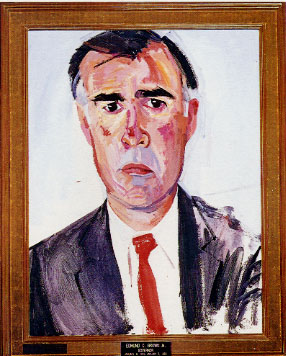
Rambling Jerry Brown speech raises fear among Dems

22

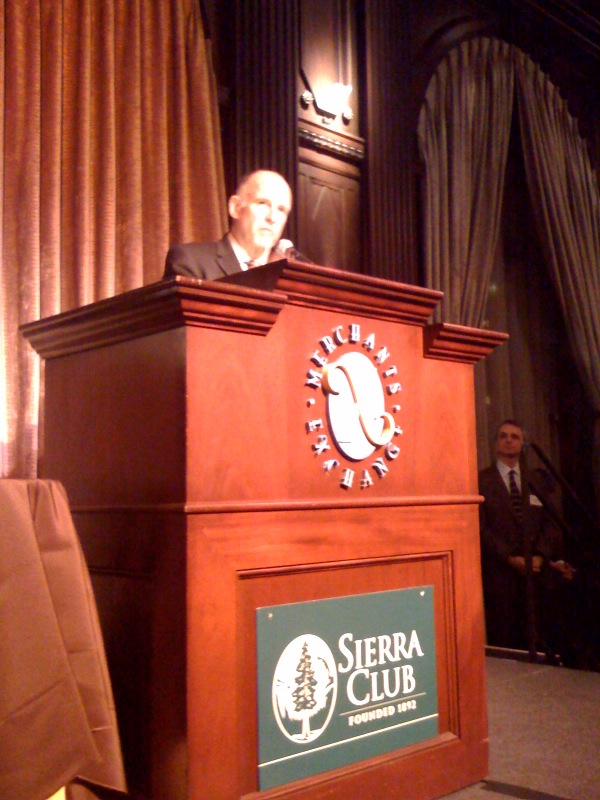
If Jerry Brown’s keynote speech last night to a gala environmentalist dinner is any indication, the Democratic Party faces an uphill battle to win this year’s governor’s race. The rambling, alternately vague and academic, and often pointless address did little to inspire or excite a large, sympathetic crowd that was loaded with top Democrats. In fact, some party luminaries were openly aghast at the poor performance, with one making this succinct (if off-the-record) assessment: “We’re fucked.”

Brown has never been a dynamic speaker, but the unscripted, half-hour speech – given at the Sierra Club San Francisco Bay Chapter’s David Brower Dinner in San Francisco, a $250 per head affair that drew top Bay Area Democrats – illustrates the danger of letting a primary be decided by legend and money rather than political persuasion.

Brown’s fundraising prowess and strong poll numbers chased Gavin Newsom and other potential rivals out of the Democratic Party gubernatorial primary, even though Brown hasn’t really outlined his political vision for California, given many extended speeches since being discussed as a candidate for governor, or even officially declared his candidacy (he and others have until March 12 to do so).

“This thing is really daunting,” Brown said of the governor’s race toward the end of the speech, seemingly unsure that he was ready to run, but saying he would make an announcement sometime in the next couple weeks.

Brown started his speech by telling the crowd that he didn’t know what he was going to talk about, so when he arrived (late) for the speech, he asked San Francisco Democratic Party chair Aaron Peskin what he should say, and Peskin told him to talk about how there were more salmon in the streams and better overall environmental health back when Brown was governor in the ‘70s.

But rather than taking that advice and giving a forceful call to strengthen environmental regulation or conjure up California’s better days, Brown meandered around and mused on that and other topics, feeding fears that the 71-year-old candidate might come off as a nostalgic, slightly senile former-Governor Moonbeam rather than an effective agent of needed change.

“During that period when I was governor, I’m not going to call it the golden age because some people think I’m in the golden age, so I don’t want to get people confused. That’s why I don’t want to talk about way back then, because there are a number of people I can see weren’t even born then, so it gets a little embarrassing and I like to pretend it was just yesterday. But in that period, California created almost twice as many jobs as the nation did. We created jobs at about 24 percent over eight years and the nation grew jobs at 13 percent, so almost twice as much. And then Deukmejian did pretty good, he had about the same, maybe half a percent more,” Brown rambled, ticking off statistics, hedging his point by noting how little governors can really do to create jobs, before working up to a decent line that was flatly delivered: “It was a time when the environment got its biggest boost, as far as public policy.”

Nobody applauded, so he continued. “I was thinking tonight, I was trying to figure out that if I did announce, what the hell would I say? And so I decided to go back and read my first announcement, January 24, 1974. I was 35 then, it was another time, I’m now a little older than that. But I talked about clean air, I talked about the energy crisis and getting new sources of energy. I talked about statewide land use planning” – that last item drawing some applause – “and I talked about jobs. And I was thinking, wow, we still got a jobs problem, we got an energy problem, we have a land use problem that feeds into the energy problem, and while the air is cleaner in many respects, it’s not clean enough, or it isn’t healthy enough.”

On substance, Brown had his moments. But even on the need for better statewide land use planning, he went off on a tangent, saying he didn’t even know what that meant when he filled out a Sierra Club questionnaire back in the ‘70s, and he’s not sure how to accomplish it now. 

“You have to make it easier to live closer to where you work,” Brown said in what of his few lines of the night that drew applause, although he didn’t begin to explain how he might achieve this goal. And on a controversial subject that is easily attacked by the right – big government wants more control over private property – Brown’s lackadaisical discussion of the issue was disconcerting.

He even rankled a few Sierra Club members by vaguely criticizing East Bay growth controls designed to reduce sprawl, which the Attorney General’s Office is seeking to overturn: “Pleasanton wants to create 50,000 jobs, but they have a housing cap – for all I know, Sierra Club probably supported that housing cap, so I want to just rub your nose in the housing cap for just a minute – the trouble with the housing cap is they want to create all these jobs.”

Brown tried to argue that allowing more housing in Pleasanton is a strategy for combating global warming because there are jobs there and it would reduce commutes, but he’s going to need to be more on his game than he is right now to win that argument. Instead, we get his fairly dismissive summary of this important issue: “Land use is a big deal, it’s difficult, lots to do on that.”

Against businesswoman Meg Whitman, the Republican gubernatorial primary frontrunner, there is real potential in Brown’s basic belief that markets need to be regulated and that running the government isn’t just like running a business. And somehow, Brown will need to find a way to better distill and deliver that message to counter the right’s pro-business sound bites. 

“There are people saying business knows best,” Brown said, meandering off about companies and widgets for a minute before continuing his point. “But when you look at what we really have to deal with, it’s not just about economics and the market. It’s also about ecology and morality, and morality is about customs, it’s about traditions, it’s about our deepest patterns of how we all relate to one another and that can’t just be assimilated into market incentives. The market assumes honesty, you meet your promises, and also assumes there’s a framework, because things can just run off the cliff and that’s exactly what’s happening. As you add more people, you have more cars, and when you have more cars, they burn fossil fuel and what’s happening in California is you have cars reproducing faster than people…That’s the real challenge here, that we’re trying to get the idea out that we’re trying to save the future.”

Loose in Obamalandia: Dead man walking through CA

1

I am on a low-rent book tour with my new cult classic El Monstruo – Dread & Redemption In Mexico City.  For the next three months, I will stumble across this land from sea to stinking sea probing the underbelly of Obama’s America.  The findings will be posted on these pages.

1.
First stop was the near north woods, Humboldt County USA, to wheedle the medicos into granting me a clean bill of health before I hit the road.  A year ago this February, my doctor who has poked and probed my old broken cadaver for nearly 20 years, pronounced me dead. “Liver Cancer” he parsed gravely — but I am still alive and kicking. The class enemy be warned: I am not dead yet.

Humboldt had just been wracked by a 6.5 earthquake that cut a swath through Oldtown Eureka’s antique shops but was not quite Haiti.  Nonetheless, the shake-up worked its usual bad mojo and implanted the seeds of fear and loathing in every soul.  On January 22nd, three separate police agencies shut down the north end of Arcata and evacuated hundreds of residents after a scruffy hippie-type tried to fed ex a suspicious package to Berkeley that leaked, according to the clerk at Kinko’s, “a chemical odor.” The offending package was blown up in a back alley.

The next day, the local rag commonly known as the Times-Slander conceded in front-page headlines that the “bomb” was “Actually a brake light.” The paranoia was symptomatic.  A commercial jetliner to Kentucky was forced down by air force jet fighters after an orthodox Jewish kid pulled out his Tefillin to pray and, in a spasm of extreme religious irony, the panicked stewardess took him for some Muslim terrorist and confused the leather straps and little prayer boxes with bomb components that would blow the paying customers to kingdom come. 

Nine years ago, just weeks after 9/11, I got on the road to preach Zapatismo to the North Americanos. Flags flew from every home, a sort of Talisman against the terrorist devils.  It was not a healthy ambiance for spreading revolution and resistance in Amerikkka.  Prospects for the Monster Tour suddenly turned ominous.

2.  
San Francisco’s Mission District gets shabbier day by day as the “Great Recession” (read “Depression”) gallops towards economic Armageddon. The Miracle Mile is lined with empty storefronts and 98 Cent Stores (marked down from 99.)  The homeless sleep under their shopping carts – the Mission Local reports that 40 homeless families are living in 16th Street Single Room Occupancy hotels, twice the occupancy rate of a year ago.  In this Sanctuary City for the rich, the yuppie Mayor, who now aspires to be nothing more than a yuppie clerk in a yuppie wine store, is deporting undocumented teenagers convicted of no crime and the class divide seems more brutal than ever.

We posted up on Market Street in front of the Commonwealth Club, where torture enabler John Yoo was hawking his new book to the City’s elite. Financial District drones en route back to the ‘burbs asked Yoo Who?
I checked my watch.  It was time to hit the rails.

3.
The Central Valley was the first stop on the Monster Tour, the most deadly stretch of soil in North American California. The water plumes are all poisoned by agrochemicals and when one turns on the faucet on the west side of the valley, deformed babies pop out. 

This cesspool of chemical effluvia is populated by perhaps the most ethnically diverse crazyquilt in all of Obama’s America.  Anglo bigwigs and white Armenians rule the roost but down below Mixteco is spoken on the radio, communicating the bad news to the out-of-work Oaxacans who once toiled in the fields and packing sheds. The humongous Hmung community is up in arms over the FBI’s harassment of their spiritual leader, General Vang Pau who authorities accuse of conspiring to overthrow the doctrinaire Communist government of Laos.  Unemployed Palestinians and Pakistanis, Filipinos, white trash, and historic enclaves of Blacks, survive in this fulminating chemical stew by their wits. On every street corner, the down-at-the-heels don shabby green gowns and sagging Styrofoam Statue-of-Liberty crowns, holding up cardboard arrows pointing towards strip mall tax return scammers.

I stepped out into Catherine Campbell’s unplanted garden.  Police helicopters hovered overhead, searching out suspected gangbangers. Catherine is a veteran prison rights attorney who pays particular attention to what goes on behind bars at Corcoran and Chowchilla, two of the cruelest his & her lock-ups in the state. Recently, she put her know-how to work defending anarchists who had been beaten into the sidewalk by the Fresno pigs for handing out graphic leaflets depicting the torture of elephants during Ringling Brothers Barnum & Bailey’s annual visit to town, and she and a gaggle of advocates have been trying to keep the cops off a venerable homeless encampment. Now the City Council is seeking to felonize panhandling on Fresno’s median strips as a “safety hazard.” 

The Fresno gendarmes are particularly keen on persecuting young adults of color for alleged gang activities. An article in the Morning Bee reported on the so-called “Bulldog Gang” (the bulldog is the icon of the Fresno State football team so gang colors are readily available) whose members were accused of smashing windows and barking at the cops over on the decrepit west side.  Catherine says the bulldogs’ bark is more a growl.  Such are the sounds of hope in the second year of Obama’s lacerated reign.

Sam Stoker is a child of the Valley. One night last summer, I bought him a beer at the counter of my beloved Café La Blanca back home in the Centro Historico of Mexico City.  Sam, an acculturated Chicano, had journeyed to Mexico to connect with his family in Tamaulipas and bum around, sniffing out what was left of the 2006 rebellion in Oaxaca. When he went home to Winton near Merced, he spoke enough Spanish to delight his grandma. 

Sam is also an anarchist and a budding journalist who has been up to his neck in the struggle for justice for Oscar Grant in Oakland. Now he had come to the Valley to spread the virus of anarchism. Rebellion in the fields could bring California to its knees, he confided. I was only too happy to help out. 

Anarchism has a beachhead in Fresno at the Infoshop where 70 folks turned out to hear me preach revolution. Not all of the fellow workers were young punks. One gentleman in attendance told me he had been an organizer for Cuauhtemoc Cardenas’s foiled presidential campaign in 1988 in Sinaloa and fled Mexico when dozens of his companeros were gunned down by the mal gobierno.  He was still here, still waiting for the revolution. 

Over in Merced, I shouted out my poems in a long dark bar, The Partisan, on Superbowl Sunday.  A “digital remix” of Guy Debord’s “Society of The Spectacle ” preceded my incendiary words.  Maybe Sam Stoker’s pipedream is not as wacky as it sounds.

4.
So it was goodbye to Fresno and hello to Hollywood. I accessed the City of Fallen Angels over the Grapevine with a pit stop at Bob Hope airport and a bar in Santa Monica to watch the Lakers kick booty. My gigs were spread out all over this pedestrian unfriendly megalopolis and the signs of hard times were hard to avoid.  On the beach in Santa Monica, excruciatingly gaunt old men jogged against debilitating cancers and aging hippies scoured the sands with metal detectors for spare change.

Even out in ritzy Claremont, where I hobnobbed with a Palestinian restaurateur about the Nakba, Obama’s America seemed out of synch.  A student at Pomona College where I spieled had just been handcuffed and interrogated by transit security cops in Philadelphia for transporting 200 Arabic-English flashcards across state lines and some cad ripped off my cane down at the train station.  The Inland Empire, which abuts this restricted enclave, has the fifth highest mortgage foreclosure rates in the nation.

In Hollywood, where I spent a night on my favorite sofa, the glitz was tempered by the homeless with all their possessions piled high atop their shopping carts around the new Metro station. How many of them were out-of-work script doctors is not yet known.

Down in South Central, where anger is endemic, I spoke to a handful of Afro-Americans at Eso Won, an admirable black bookstore. The proprietor sported a prototypical pork pie hat and told me that when he sees the Mexicans coming over the border, he sees black people. We talked animatedly for a few hours about Afro-Mexicans who were a third of the population of Mexico at liberation from Spain in 1810 and whose history has been pointedly ignored south of the border.             

L.A. is gearing up for the trial of killer BART cop Johannes Mehserle, Oscar Grant’s assassin, that will be held in the same court house where O.J. won acquittal — if it’s not moved to Ensenada, taking a cue from outgoing Governor Terminator’s plan to build California prisons south of the border.

Students at Cal State L.A., the most Chicano university in Califas, honed in attentively when I expounded on the revolution that is brewing down south.  1810-1910-2010 – every hundred years on the tenth year of the century, Mexico explodes in violent social upheaval and even the Wall Street Journal is worried (see WSJ front pager January 15th.)

Looking at Obamalandia through the eyes of students is a useful handle for understanding what comes next.  Classes and services have been bludgeoned by budget cuts and the profs at Cal State furlough one day a week to make ends meet in this damaged economy that the President lies is booming again because only a half a million workers filed first time unemployment claims last month.  The light at the end of the tunnel is a bullet train pointed straight at the heart of the people.

All of this bad news is healthy for fightback.  The day I hit El Ley, Muslim students at U.C.-Irvine rose up against the Israeli consul ten times in a single speech until the university president sicced the campus cops on them. The next day a whole coast away, kids at Georgetown shouted down General Betrayus. Throw in the cutbacks and the furloughs and the hopelessness and it could be a long, hot spring semester and it won’t be just because of global warming.  I will do my best to fan the flames as I stumble front one campus to the next in the coming months.

On my last days in the late great golden state, I slept in a yoga house under a colorful banner of Ganesh, the elephant guy who gets fat eating others’ obstacles.  Lets hope he’s on my side. A year ago I was sentenced to death and although I’m still kicking, the future is laced with sharpened punji sticks, not the least of which incubates on my liver.

Talking truth to power is still the best medicine to beat back Nuestra Senora Santa Muerte.

John Ross and The Monstruo will be visiting the Narciso Martinez Cultural Center in the heart of the Rio Grande Valley Sat. Feb 20th. The Monster Tour plays El Paso, Las Cruces, and Albuquerque from Feb. 21st-28th.  Consult the Nation Books page for details or write johnross@igc.org

Playtime

0

“It’s like he was waiting for someone to find him. It was overwhelming at first because I was just this little person trying to write a dissertation, and here was someone I thought needed to be recognized by history.”

Filmmaker and University of San Francisco professor Melinda Stone is telling me about Sid Laverents, the backyard auteur whose Multiple SIDosis (1970) is unlike any other work enshrined by the National Registry. Laverents died last May, at 100, but not before receiving the Library of Congress honor in 2000 — the result of years of faithful barnstorming by Stone and other enthusiasts (notably filmmaker and preservationist Ross Lipman). The 35mm UCLA restoration of SIDosis screening at a Pacific Film Archive tribute fits with Lipman’s ongoing historiographic missive to refurbish exemplars of Southern California’s “minor cinemas.” Charles Burnett, Kent Mackenzie, John Cassavetes, and Kenneth Anger are heady company, but then Laverents may yet be seen as San Diego’s own Georges Méliès.

So then, what is Multiple SIDosis? Film archivist David Francis’ description of the nine-minute short as a “technical comedy” is apt. The film opens in Laverents’ conservative San Diego spread. It’s Christmas morning, and his wife has given him a reel-to-reel machine. He records a little banjo jaunt and listens to the playback, grabbing a few more instruments. Partly due to Laverents’ straight appearance, we begin to think we’re watching an ordinary demonstration. We’re not. Following a slightly psychedelic title card, Laverents’ trusty metronome is telescoped into a masked, locket-shaped image in the top-left of the frame. His banjo, ukulele, and whistling parts are split into three other miniatures, Brady Bunch style. Then, an amazing geometric panoply of six Sids, nine Sids, 16 Sids; chimes over here, harp over there, Sid, Sid, everywhere.

Laverents created these pre-digital effects with a syncing system of his own devising (he honed his one-man band chops touring the Southern vaudeville circuit in the 1920s and ’30s). Multiple SIDosis is not merely inventive; it is, in some real way, an invention. “It’s so perfectly that confluence of aeronautical engineer and vaudeville performer,” Stone gushes. Local film buffs still drunk on a month’s worth of Jacques Tati screenings at various venues may well note a family resemblance in the way Laverents bends modern technology to his own idiosyncratic vision.

Multiple SIDosis is not your typical home movie, but Laverents didn’t work in a vacuum — he was a proud member of the San Diego Amateur Moviemakers Club (motto: “If it moves, we’ll shoot it”), a once-thriving community group that, like many such organizations, provided encouragement, tech support, and elevated expectations. In proper club fashion, Stone graciously brings out tea and cookies when we meet.

“I really came to believe in the cinema clubs and what they might tell us about the longevity of civic engagement,” she muses. But the number of clubs is dwindling. Even before YouTube presented a virtual forum (but definitely no tea and cookies), film schools attracted the young, would-be filmmakers who might have replenished the clubs’ stocks. Without wanting to disparage university programs, their emphasis on specialization comes at a cost — not to mention that the clubs offered a lifetime membership rather than a two- to four-year shot at community.

The Pacific Film Archive’s “For the Love of It” program features a few recent selections from clubs in Cupertino, San Jose, and Los Angeles, along with one minor masterpiece from the now-defunct, SF-based Westwood Movie Club. Moods of a City (1972) may be the closest San Francisco ever gets to its Berlin: Symphony of a Great City (1927). To make the film, the club split into different teams covering fog, architecture, the sea, public gatherings, and typical San Franciscans.

It’s a patchwork, but one with surprisingly perceptive seams: a perfect graphic match between a gleaming spider’s web and the Golden Gate Bridge’s cables, for instance, or the hard cut between a flock of suits rolling the Financial District and scattered hobos down and out in the urban wilderness. The postcard views all come at a local slant, and the architecture segment, with its minute focus on variations in windows and doorframes, reminds us that the etymological root of amateur is lover. The fog slides off, and we’re treated to a North Beach round of bocce. Better yet are the gestures (spitting, cigarettes held on the lower lip) that have disappeared — like so many buildings, but not so easily memorialized by a plaque.

Moods of a City is a collective work, made during a period when avant-garde circles grappled with questions of authorship and community. Though Stone admits being somewhat resigned about bridging these worlds, she hasn’t stopped trying. When San Jose Movie Club rep Bernard Wood gave her a few rolls of discontinued Kodachrome stock — coincidentally, Nathaniel Dorsky’s last Kodachrome film, Compline (2009), premiers Feb. 23 at PFA — Stone distributed the film to a quartet of top Bay Area experimentalists. Their three-minute rolls will run with the club films at PFA. Refreshments to follow.

“FOR THE LOVE OF IT: SEVENTH ANNUAL FESTIVAL OF AMATEUR FILMMAKING”

Sun/21, 3 p.m.

“SID’S CINEMA: A TRIBUTE TO AMATEUR FILMMAKER SID LAVERENTS”

Feb. 28, 3 p.m.

Both events $5.50–$9.50

Pacific Film Archive

2575 Bancroft, Berk.

(510) 642-5249

www.bampfa.berkeley.edu


The people vs. corporate power

2

steve@sfbg.com

The June 8 election is shaping up to be one that pits the people against powerful business interests, a contest that will demonstrate either that money still rules or that growing public opposition to corporate con-jobs has finally taken root.

On the state level, the five ballot measures include two brazen money-making schemes and two experiments in election reform, along with primary races that are still in flux. In San Francisco, where the ballot measures still have a few more weeks to shake out, the election will feature two rarely contested judges races, recession relief for renters, City Hall fiscal reforms, and a fight for control of the local Democratic Party.

So far, only four local measures have qualified for the San Francisco ballot, all placed there by members of the Board of Supervisors. Progressives qualified the Renters Economic Relief package (which limits rent increases during recessions and sets conditions for landlords passing costs to tenants), an initiative establishing community policing standards, and one affirming city support for making Transbay Terminal the northern high-speed rail terminus. Supervisors were unanimous in supporting a charter amendment governing the Film Commission.

But the board is still hashing out changes to the more controversial ballot proposals, a debate that will continue at its Feb. 23 meeting. They include an overhaul of how the city funds its pension program and an effort to remove Muni salary minimums from the city charter, both by Sup. Sean Elsbernd; a $652 million seismic safety bond proposed by Mayor Gavin Newsom; and a Sup. John Avalos charter amendment that would prevent the mayor from unilaterally defunding certain budget expenditures. All measures must be approved by March 5.

Also still forming up in the coming weeks are primary races for legislative seats (although no incumbents appear to be facing strong challenges) and all eight state constitutional offices, including governor (where Attorney General Jerry Brown seems poised to easily win the Democratic nomination), lieutenant governor, and attorney general (which District Attorney Kamala Harris is running for).

Candidates have until March 12 to declare themselves for statewide and legislative offices, as well as for the San Francisco Democratic County Central Committee, which could play a key role in this fall’s Board of Supervisors elections. Two years ago, a slate of progressives led by Aaron Peskin and Chris Daly launched a surprise attack to wrest control of the board away from the moderates who have long controlled it. Newsom, U.S. Sen. Dianne Feinstein, and their downtown allies are expected to try hard to regain control over their party’s purse-strings and endorsements.


JUDGING THE JUDGES

Another struggle from two years ago is also being replayed. In 2008, then-Sup. Gerardo Sandoval successfully challenged Superior Court Judge Thomas Mellon, arguing the Republican-appointed jurist was too conservative (and the entire court is not diverse enough) for San Francisco. This time the target is Judge Richard Ulmer, a conservative appointed by Gov. Arnold Schwarzenegger. Ulmer is being challenged by two LGBT attorneys, Daniel Dean and Michael Nava, the latter endorsed by Sen. Mark Leno, Assembly Member Tom Ammiano, and Peskin, who chairs the Democratic Party and could be helpful in the race. “He’s a brilliant guy,” Leno said of Nava.

Leno also has endorsed deputy public defender Linda Colfax, a Latina lesbian, in a four-way race to replace retiring Judge Wallace Douglass. The other candidates are Harry Dorfman, Roderick McLeod, and Robert Retana. If no candidate wins a majority of votes, the top two finishers square off in a runoff election in November.

Leno said he’s thrilled to see a diverse crowd of attorneys seeking judgeships: “This governor has failed horribly in his appointments, not only with the LGBT community, but with communities of color as well.”


TWO COMPANIES TRY TO BUY CALIF.

The struggle between the broad public interest and the wealthy power brokers that have long-dominated California politics is most apparent in the state propositions, which have been certified and for which ballot arguments are now being collected by the California Secretary of State’s Office.

Two of those ballot measures, Propositions 16 and 17, are blatantly self-serving efforts by a pair of powerful corporations to increase their profitability, however deceptively and with overwhelming amounts of campaign cash they are presented.

Prop. 16, sponsored by Pacific Gas & Electric Co., would require local governments to get two-thirds of voters to approve creation of energy programs like Clean Power SF, San Francisco’s plan for developing renewable energy projects and selling that power directly to citizens.

As we’ve reported (“Battle royale,” Jan. 13, and “PG&E attack mailer puts City Hall on defensive,” Dec. 22, 2009), PG&E placed the measure on the ballot to avoid having to repeatedly crush public power initiatives around the state with multimillion dollar campaigns, even though political leaders like Leno and Sup. Ross Mirkarimi say the measure violates the state’s community choice aggregation law. That law allows local governments to create energy programs and prohibits PG&E from interfering with those efforts.

“The unregulated behavior of corporate arrogance is killing our democracy. Prop. 17, sponsored by Mercury Insurance, would let companies increase car insurance premiums for a variety of reasons that are now prohibited by the 1988 measure Prop. 103. Mercury has continuously attacked that landmark law, using lawsuits, huge political contributions, sponsored legislation, and, according to newly released documents from the California Department of Insurance (see “The malevolence of Mercury Insurance,” Feb. 10, Guardian Politics blog), blatantly illegal activity in setting premiums and excluding certain customers, such as artists, bartenders, and members of the military.

“The Mercury initiative is even more pernicious than what it was doing before,” Harvey Rosenfield, who wrote Prop. 103 and works for Consumer Watchdog, told the Guardian. “Under Mercury’s initiative, if you’ve never had prior insurance, you can be surcharged for the first time. Then they’ve thrown in some other tricks and traps.”

Mercury spokesperson Coby King told us the company has been unfairly maligned and denies that the measure is simply about boosting its profits: “Prop. 103 is the law of the land, but to the extent there are improvements that can be made that are pro-business and pro-consumer, Mercury has not been shy about acting in the public interest.”

Yet few public interest groups or public officials believe the claims being made by Mercury or PG&E, and they hope that the public won’t be fooled.

“These are measures designed to give a financial advantage to a specific industry or company,” U.S. Rep. John Garamendi, who battled Mercury as California’s first insurance commissioner, told us. He strongly opposes both measures, but did say, “Money talks. It always has, particularly in propositions.”

Yet Leno said he’s a bit more hopeful: “Californians have been savvy in the past, and I do believe they’ll be able to see through the tens of millions of dollars in misleading ads.”

“To me, it’s a classic case study of what’s going on with the initiative process in California and with politics in general,” said Derek Cressman, western regional director of California Common Cause. “There are two initiatives literally sponsored by corporations to push very narrow interests.”

Yet Cressman said recent events could help. There’s been a big public outcry in recent weeks over the U.S. Supreme Court’s decision to allow unlimited corporate spending to influence elections, the role that insurance companies played in sinking federal health care reform efforts, and the way businesses interests are hindering efforts to deal with global warming.

“It makes people aware of the overwhelming role corporations are playing in dictating government policy,” Cressman said.


TAKE OUT THE MONEY

A pair of election reform measures might help lessen the influence of money and political parties. Prop. 14 is an open primaries measure that Sen. Abel Maldonado (R-Santa Maria) got placed on the ballot as a condition for breaking last year’s budget stalemate. It would create a single primary ballot and send the top two finishers to the general election, regardless of party.

Prop. 15, the California Fair Elections Act, takes direct aim at the corrupting influence of money in elections, creating a pilot public finance program in the secretary of state races for 2014 and 2018. The measure, which has broad support from politicians and good government groups in the Bay Area, is modeled on successful programs in Maine and Arizona.

“No elected official should be in the fundraising game the way they are now,” campaign chair Trent Lange told us. “This is a way to change how we fund elections.”

The idea is to create a model that will eventually be used for other offices. The campaign fund would be generated by a $350 annual fee on lobbyists, lobbying firms, and lobbyist employers. Currently lobbyists pay just $12.50 per year to register, which Lange said, “just shows the power of lobbyists in Sacramento.” *


The “Newsom wins” merry-go-round: What fun

10

Gavin Newsom still hasn’t said for sure that he’s in the race for lt. governor, although just about everyone in town now thinks he’s going for it.

But the very prospect of the mayor leaving office before his term is up has the political classes speculating: Who gets that job? And how does it happen?

It’s actually pretty interesting.

Under the City Charter, the president of the Board of Supervisors becomes acting mayor in the event that the mayor leaves office before the end of his or her term. Then the supervisors, by a six-vote majority, can appoint someone else to the job.

Melissa Griffin lays out one piece of the scenario, which is that the board could appoint a new mayor in advance, without anyone serving as acting mayor.

But there’s much more to the story.

According to a fascinating city attorney’s opinion issued in 1978 (PDF), when George Moscone and Harvey Milk were killed and Dianne Feinstein was board president, no supervisor is allowed to vote on his or her own appointment. Which would mean that if, say, Board President David Chiu wanted the job, he’d need six votes not including his own.

Now the plot thickens. Suppose nobody can round up six votes — that is, a majority of the supervisors can’t agree on a new mayor? Well, Chiu, as board president, would be acting mayor — potentially for the entire duration of Newsom’s term, roughly a year. He’d also remain as board president. It’s the same as if the mayor goes out of the state and names an acting mayor in his place; that person is still a supervisor. So Chiu would have all the powers of both the mayor and the board president — and immense amout of clout for one person at City Hall.

But wait, there’s more: Chiu is board president only until the board elected in November of this year takes office, which would be about five days after Newsom would become lite guv. So unless the current board can choose a new mayor, with six votes (not including the vote of any supervisor being nominated), the new board would elect a new board president — who would instantly become acting mayor at the same time.

And since supervisors are allowed to vote for themselves for board president, any member would be allowed to vote for him- or herself for acting mayor.

Confused yet? Clearly, the folks who wrote the City Charter never actually envisioned this scenario (or didn’t think about it very much).

Of course, what that means that with the current board split the way it is, with exactly six solid progressive votes, someone who isn’t currently on the board (say, Aaron Peskin — or Tom Ammiano, or Mark Leno, or whoever) would have a better chance of getting a majority than a current member, who would need at least one of the moderate bloc votes.

And if Newsom runs, it will make the fall supervisorial elections even more important, because potentially those newly elected supes will be choosing not only a board president but a mayor.

Here’s another fun twist: If District Attorney Kamala Harris is elected attorney general, the mayor gets to appoint a new D.A. But suppose Newsom also wins and is sworn in a few minutes before Harris. Presumably acting mayor David Chiu (a former prosecutor who rumor has it might like to be D.A. himself someday) would choose the new D.A. — and suppose Chiu knows he doesn’t have six votes to be mayor. There’s no reason why he couldn’t appoint himself D.A., leaving a vacancy on the board and a vacancy for board president, which would be filled by anyone who could get six votes, who would then be acting mayor and could appoint a new supervisor to Chiu’s seat. Who could then be the deciding vote on who gets to be mayor.

Whoa. I can’t wait. Run, Gavin, Run.

Ammiano reviving Prop. 13 reform

13

Assemblymember Tom Ammiano is trying to put property-tax reform back on the California agenda. He’s introducing a measure that would call for taxing commercial and residential property at different rates — which would involve a significant change to Prop. 13. It’s been tried before, and big business interests have always managed to shoot it down, but as Ammiano puts it, these are different times:

“For over thirty years, Proposition 13 has allowed corporate landowners to benefit from tax loopholes while shifting the real tax burden to individual homeowners and reducing California’s tax base. “We cannot continue to cut funding from our schools, our parks and our vital human services without addressing the need for new revenue and an equitable tax system.  Reforming Proposition 13 will not solve all of the state’s budget problems but it’s a crucial step in the right direction.”

 It’s not exactly clear at this point what form the legislation will take; it might be a resolution followed by a Constitutional amendment. And I don’t think even Ammiano believes that both houses of the Legislature will happily vote to make big commercial property owners pay their fair share of the state’s tax burden. But it’s worth talking about, worth pushing, worth reminding people that one of the reasons the state is so broke is that the property tax system is frozen in time, a legacy of a very different era in California.For over thirty years, Proposition 13 has allowed corporate landowners to benefit from tax loopholes while shifting the real tax burden to individual homeowners and reducing California‘s tax base.  We cannot continue to cut funding from our schools, our parks and our vital human services without addressing the need for new revenue and an equitable tax system.  Reforming Proposition 13 will not solve all of the state’s budget problems but it’s a crucial step in the right direction.”


And a split roll is probably the only way to amend Prop. 13 at this point, since so many homeowners are so happy with it.


Snap your fingers for our new poet laureate

0

“The only war that matters is the war against the imagination.” Diane di Prima, San Francisco’s new poet laureate as of last year, should be an expert on imagination’s primacy. Her work in such volumes as The Revolutionary Letters (1971) helped to shine a light on the role women played in Bohemia- not always the most well-lit arena. On Fri/19, the Mission Cultural Center for Latino Arts holds a reception to laud the most well known female voice of the Beat movement, and celebrate her turn as our city’s bard.

Here’s the bio-in-a-nutshell; born Italian-American in Brooklyn, Di Prima was a precocious writer, corresponding with Ezra Pound by the age of 19. After attending Swarthmore she starting gettin’ wierd with in with the Beats in Manhattan, in 1966 spending time on Timothy Leary’s Millbrook psychedelic community. She’s worked closely with Amiri Baraka, and the two co-founded the New York Poet’s Theatre. She became a connective figure between the Beats and hippies, moving to California permanently in the ’60s where got in with the radical improv group, the Diggers, and started studying world religions. She’s written over 48 books. 48 books! Would that we all could have a paragraph like that written on our lives.

And the poetry? The words often often personal, serving to widen Di Prima’s scope beyond an individual life to constancies in the human condition. But rather than stretch my capacity as a poetry critic, let us just revel in the glory of the words themselves. Below, “Revolutionary Letter #1” from Revolutionary Letters.


I have just realized the stakes are myself

I have no other

ransom money, nothing to break or barter but my life

my spirit measured out, in bits, spread over

the roulette table, I recoup what I can

nothing else to shove under the nose of the maȋtre de jeu

nothing to thrust out the window, no white flag

this flesh all I have to offer, to make the play with

this immediate head, what it comes up with, my move

as we slither over this go board, stepping always

(we hope) between the lines


The poet laureate honor was first bestowed on Lawrence Ferlinghetti by Willie Brown in 1998. MCCLA’s event will also feature past honorees Devorah Major, Jack Hirschman and Janice Mirikitani, amongst other members of the rhymey profession.

Celebrate Diana di Prima

Fri/19 7:30 p.m., free

Mission Cultural Center for Latino Arts

2868 Mission, SF

(415) 821-1155

www.missionculturalcenter.org

Alerts

0

alerts@sfbg.com

WEDNESDAY, FEB. 17

Same Sex Marriage Forum

Attend this forum about which entity — the state or the federal government — should define marriage. The forum is led by a panel of experts from human rights organizations and SF Chief Deputy City Attorney Therese Stewart, attorney for the plaintiffs in the current court case challenging Proposition 8.

6:30 p.m., $20

Commonwealth Club

595 Market, 2nd floor, SF

(415) 597-6700


THURSDAY, FEB. 18

Human rights in Chiapas

Hear Victor Hugo López of Fray Bartolomé de las Casas Human Rights Center (Frayba) in San Cristóbal de las Casas, Chiapas, Mexico. López will discuss human rights and the prospects for political change in the region in 2010. Frayba produces human rights reports, defends cases in court, and supports indigenous communities under attack.

7:30 p.m., $5–$10 sliding scale

La Peña Cultural Center

3105 Shattuck, Berk.

(510 654-9587


Wreaking HavoQ

Attend this organizing meeting for Pride at Work, a queer advocacy group fighting for economic and social justice. The meeting will cover upcoming projects such as fighting the gentrification of queer neighborhoods, resisting attacks on immigrants, and advocating for queer workers’ rights.

6 p.m., free

UNITE HERE Local 2

209 Golden Gate, SF

sfprideatwork.org


SUNDAY, FEB. 21

Day of Remembrance

Commemorate the anniversary of Executive Order 9066, which led to the incarceration of 120,000 people of Japanese descent in 1942 during World War II. The event features a speech by California Assembly Member Warren Furutani (D-Long Beach), a performance by Purple Moon Dance Project, a candle- lighting ceremony, and more. Reception to follow at the Japanese Cultural and Community Center at 1840 Sutter.

2 p.m., free

Kabuki Sundance Cinema

1881 Post, SF

(415) 921-5007


Peacemas

Celebrate the anniversary of the peace symbol with an evening of entertainment that includes inspirational clown Wavy Gravy, Selma Vincent as Mrs. T. Bill Banks of the National Association of Rich People, jazz violinist India Cooke, and more.

7 p.m., free

Redwood Gardens

2950 Derby, Berk.

(510) 845-5481


Yeasayers for Prop. 15

Hear Sen. Mark Leno (D-SF), Assembly Member Tom Ammiano (D-SF), and other luminaries speak in support of the California Fair Elections Act, or Proposition 15, on the upcoming June ballot. The act would pilot a voluntary system of public financing for secretary of state campaigns, which means elected officials can spend less time fund-raising and more time solving California’s problems.

1 p.m., free

San Francisco Main Library

100 Larkin, SF

(415) 648-6740


TUESDAY, FEB. 23


A chicken in every yard

Learn the logistics of raising chickens in a urban environment at this workshop with Alexis Koefoed. The Soul Food Farm maven will answer questions about the legality of raising chickens in your area, what it costs to raise chickens, where to buy chicks, and more. There are two sessions.

6 p.m. and 7:30 p.m., $20

18 Reasons

593 Guerrero, SF email info@18reasons.org 2 Mail items for Alerts to the Guardian Building, 135 Mississippi St., SF, CA 94107; fax to (415) 255-8762; or e-mail alert@sfbg.com. Please include a contact telephone number. Items must be received at least one week prior to the publication date.

Event Listings

0

Events listings are compiled by Paula Connelly. Submit items for the listings at listings@sfbg.com. For further information on how to submit items for the listings, see Picks.

WEDNESDAY 17

LGBT Job Fair SF LGBT Center, 1800 Market, SF; (415) 865-5555. 11am, free with registration at jobfair.sfcenter.org. All levels of job seekers are welcome at this Bay Area diversity LGBT workforce recruitment event.

THURSDAY 18

Trotsky: Downfall of a Revolutionary Mechanics’ Institute, 57 Post, SF; (415) 393-0100. 6pm, $12. Hear Stanford University lecturer and author Bertrand M. Patenaude discuss the dark and tumultuous last days of revolutionary Leon Trotsky in Mexico, while hiding from Stalin’s secret police.

BAY AREA

“Teaching What Really Happened” First Unitarian Church of Oakland, 685 14th St., Oak.; (510) 601-0182 ext. 302. 7pm, $10-15 sliding scale. Hear author James W. Loewen discuss his new book Teaching What Really Happened: How to avoid the tyranny of textbooks and get students excited about history, a book that attempts to overturn myths and misinformation that pass for U.S. history.

FRIDAY 19

California Media in Crisis Commonwealth Club, 2nd floor, 595 Market, SF; (415) 597-6700. Noon, $15. Hear a panel of experts from New American Media, Oakland Tribune, Los Angeles Times, and more discuss “Who will hold California institutions accountable” at a time when traditional media is in a state of crisis.

SATURDAY 20

Jamaica Dyer Cartoon Art Museum, 655 Mission, SF; (415) CAR-TOON. Noon, free. Hear Bay Area native Jamaica Dyer talk about cartooning and view some of her work, including her recent book Weird Fishes about two outsider kids coming to terms with their identities.

Found Art Workshop Meet at Mina Dresden Gallery, 312 Valencia, SF; (415) 863- 8312. 10am, $40. Learn how to reuse, reimagine, and repurpose found objects with artists Truong Tran, who will begin by discussing his own process followed by a treasure hunt throughout the streets and thrift stores in the Mission.

BAY AREA

“Art of Revolution” Joyce Gordon Gallery, 406 14th St., Oak.; (510) 465-8928. Sat. and Sun. 3pm, $5-10 sliding scale. In honor of Black History Month hear featured poets Tureeda Mikell as the storyteller, Michael Lange as Malcolm X, Dough Howerton performing readings from “Firing Banks and Moving Targets”, and Charles Dubois performing the “History of the Black Panther Party”.

“Do It for Haiti” NIMBY, 8410 Amelia, Oak.; (510) 633-0506. 2pm, $10. Enjoy live music, art installations, and performances at this benefit and clothing drive for Bay Area organizations working in Haiti. Donations of summer clothing for children and adults welcome.

SUNDAY 21

Evolutionary Biology Today Humanist Hall, 390 27th St., Oak.; (510) 681-699. 1pm, $5 suggested donation. In honor of Darwin Day, attend this talk led by evolutionary biologist David Seaborg on what science knows today about adaptation, the evolution of altruistic behavior, sexuality and mating behavior, mass extinctions, and more.

WordUp Wine Tasting Fort Mason Center, Conference Center, Beach at Laguna, SF; (415) 626-7512 ext. 107. 2pm, $50. Meet artisan winemakers from the Richmond, Presidio, Marina, Excelsior, and more and enjoy handcrafted wines, hors d’oeuvres, and a silent auction. All proceeds to benefit the Neighborhood Library Campaign.

BAY AREA

Try! Magazine 21 Grand, 416 25th St., Oak.; newyipes.blogspot.com. 6pm, $10. Attend this fundraiser for Try! Magazine, celebrating their first two years as a voice for the Bay Area writing community. Featuring presentations from past issues by readers, DJs, drinks, and plenty of things to look at, listen to, and purchase.

MONDAY 22

Community Benefit Districts AIA San Francisco, Suite 600, 130 Sutter, SF; (215) 546-4128 to RSVP. Noon, free. Attend this Next American City lecture titled, “Community Benefit Districts: The Future of San Francisco Development?,” featuring a panel discussion with planning and development professionals that will explore what implications CBDs may have beyond streetscape improvement and beautification.

Joseph Stiglitz Commonwealth Club, 2nd floor, 595 Market, SF; (415) 597-6700. 6pm, $18. Hear Nobel Prize winner and economist Joseph Stiglitz speak about restoring the balance between markets and governments and addressing the inequalities of the global financial system.

TUESDAY 23

Reimagining Market Street San Francisco Planning and Urban Research, 654 Mission, SF;

(215) 546-4128. 6pm, $20. Take part in this interactive design collaboration from Next American City, SPUR, and the American Institute of Architecture titled, “Reimagining Market Street: Creating our own Champs-Elyssees.” Participants will discuss what it takes to make a great street before breaking into groups facilitated by leaders in local public space projects, transit, public art, bike activism, and more.

Labor’s love lost

4

Note: This file has been corrected from an earlier version.

rebeccab@sfbg.com

Two recent events could have major implications for Service Employees International Union Local 1021 — San Francisco’s largest public-sector union and an important ally for progressives — for better or for worse. And this union’s fate seems closely tied to that of the progressive movement in San Francisco.

The first event was likened to a “nuclear bomb in the morning paper” by one observer, and might be interpreted as the kickoff to a fierce budget battle. Mayor Gavin Newsom announced that he is considering a plan to help solve next year’s budget deficit by laying off 10,000 full-time city workers and rehiring them at 37.5 hours, which would amount to a sweeping 6.25 percent pay cut for workers and an estimated $50 million in savings for a fiscally impaired city.

Though it was framed by Newsom spokesperson Tony Winnicker as one preliminary cost-saving option among many, the proposal received prominent front-page coverage in the San Francisco Chronicle, even before official discussions were called between the mayor and public sector unions. Since SEIU Local 1021 represents 17,000 members in San Francisco and a majority of the city’s 26,000 total employees, it would likely absorb the greatest impact if such a plan went through.

At the same time the mayor’s startling announcement hit newsstands, SEIU was in the midst of mailing out ballots to its membership for union elections. “I don’t know whether it’s a coincidence, or if the city is taking advantage of the fact that SEIU is absorbed in its elections,” Sin Yee Poon, an SEIU chapter president for Human Services Agency workers, told us while pointing out that the events happened simultaneously.

With three separate slates of candidates vying for control of SEIU Local 1021, grudges between warring internal factions have intensified into bitter sparring matches. The timing is unfortunate — just as SEIU’s internal turmoil is coming to a head, one of its greatest battles is pending over an unprecedented $522 million budget shortfall that looms like a dark cloud over the city. The deficit will surely result in job losses, and the public sector union’s ability to mount resistance even as it wrestles with internal strife is shaping up to be a key question.

This pivotal moment carries wider political implications considering that the progressive organization has in the past helped seal an alliance between San Francisco’s left-leaning leaders and organized labor through the San Francisco Labor Council.

With SEIU besieged by infighting and soon to be hurting from wage slashes and layoffs, more conservative factions of the labor community, such as the San Francisco Firefighters Union and the Building and Construction Trades Council, have recently been butting heads with progressive members of the Board of Supervisors.

At the same time, forces on all sides are beginning to eye the coveted seats up for election in June at the Democratic County Central Committee, a Democratic Party hub that is a cornerstone of local political influence, as well as the seats that will open up on the Board of Supervisors in November. Negotiations between unions and the mayor are ongoing, and mayoral spokesperson Tony Winnicker was quick to note that Newsom is open to options, other than reconfiguring 10,000 city jobs, that organized labor brings to the table. At the same time, the Guardian heard from numerous sources that city workers felt outraged and blindsided by Newsom’s decision to air the plan in the Chronicle instead of bringing stakeholders to the table.

SEIU Local 1021 President Damita Davis-Howard told us she thinks the idea of taking $50 million out of the pockets of working people in a rocky economy is wrong-headed.

“This was devastating,” said Davis-Howard, who is running for a newly created union position called chief elected officer, which is different from the union president, and similar to an executive-director post. “The mayor might as well have raised their taxes, because if you decrease their pay by 6.25 percent, they will still have the same amount of work, they will still have to pay the same mortgage, they will still have to buy the same food, the same PG&E, and they’ll be doing it with a lot less money. If any idea like this were to go through, it would actually remove the very fabric or fiber of San Francisco. It would really cut to the core of the very being of San Francisco. … I don’t see how anybody could believe that we could continue being the city that we love being with this kind of action.”

Winnicker, the mayoral spokesperson, cast it as a plan that could avert hundreds or even thousands of layoffs. “This year the easy decisions are behind us,” he noted in a recent discussion with the Guardian.

Solving last year’s fiscal shortfall was far from easy — budget tussles between frontline city workers and the mayor got ugly, and even then, the city received millions in federal stimulus dollars to cushion the blow. A similar plan of sweeping hourly cuts was floated then too, but it didn’t gain enough traction to move forward.

“The mayor is facing a huge budget deficit, there’s no question about it — but he has not lifted one finger to raise a dime in revenue,” charged SEIU member Ed Kinchley, who works at San Francisco General Hospital. As for how the union might respond if such a proposal went through, he speculated, “I think it’s the kind of thing that could lead to a strike. A big fight.”

While the city charter bars strikes by public employees, Kinchley’s comment indicates the level of frustration among SEIU’s rank-and-file.


The proposal could present a common enemy and a rallying point for a union in disarray. Internal jockeying for elected positions can be fierce in any organization, but for San Francisco’s service-workers union, the rifts are particularly deep.

The elections, which will be decided Feb. 28, mark the first time since a radical restructuring in 2007 that members will collectively decide who should lead. In 2007, the face of SEIU was changed across California when the international president, Andy Stern, began consolidating dozens of far-flung locals into centralized, beefier entities in a bid to maximize political effectiveness (California comprises roughly one-third of the entire union’s membership).

Local 1021 came into existence when 10 locals were conglomerated into one 54,000-member giant — hence the “10-to-one” label — representing health care and frontline service workers from the Bay Area to the Oregon border. 

In San Francisco, where a large segment of its members are based, the shift was interpreted by some as a power grab, and it triggered a period of ongoing strife between those allied with Stern and the international wing on one side, and those dissatisfied with changes they saw as antithetical to the democratic ideals championed by Local 790, its predecessor, on the other.

In the years following the reorganization, Stern began trying to aggregate members by raiding other unions to consolidate power. But campaigns to bring in members from United Healthcare Workers (UHW) and fend off membership losses to the newly created National Union of Healthcare Workers (NUHW) have consumed money and resources that some members told the Guardian would’ve been better spent bolstering national support for health-care reform and the Employee Free Choice Act. According to one source, SEIU spent $10 million on a Fresno battle against NUHW.*

A fight waged between SEIU Local 1021 and UNITE HERE Local 2, a hotel-workers union that was historically allied with Local 1021’s predecessor, left some members especially stung because it marred a longstanding relationship between two groups of frontline workers.

“Andy Stern has concentrated more and more power into the hands of a group of so-called elite members of the union,” Kinchley told the Guardian. Stern’s top-down leadership style and growth-oriented objectives “run pretty harshly against what many of us believe is in the best interest of our workers locally,” he added.

In recent weeks, divisions have deepened further. A staff person who preferred not to be identified for fear of retribution filed charges with the U.S. Department of Labor against a supervisor, who is aligned with the international faction, for alleged harassment and bullying. Another complaint was filed with union leadership alleging that union bylaws were violated when membership money was authorized, but not spent, to conduct a poll without proper approval.*

“There’s a fiscal rogue-ness about it. [Davis-Howard] does whatever she wants, and she spends our dues money without authorization from anybody,” Kinchley charged.

Stern appointed Davis-Howard, and now she is running for election on a slate aligned with the international wing. When the Guardian tried to reach her to discuss union elections, spokesperson Carlos Rivera told us that Davis-Howard found it inappropriate to publicly discuss internal divisions.

Sin Yee Poon is running as her opponent on a reform slate, formed by members disaffected by the international’s modus operandi. “For the whole reform group, we’re disappointed with the general direction of corporate unionism,” Poon told the Guardian. Stressing that she believes grassroots, democratic ideals have eroded since the restructuring, she said members in her camp are agitated when they see resources siphoned into raids on other unions such as UNITE HERE and UHW. “We want it to be member-driven,” she said. “The raiding of other unions is absolutely not OK.”


The internal strife could have a wider ripple effect. SEIU Local 1021 has historically been influential in securing an alliance between the city’s labor community and San Francisco’s progressive leadership. During the last round of elections for San Francisco’s Board of Supervisors, Sups. John Avalos and Eric Mar campaigned and ultimately were elected with strong fundraising support from the labor council.

Yet in recent weeks, several skirmishes pitted certain factions of the labor community against progressive members of the Board of Supervisors. Outrage bubbled up from the firefighters — and ultimately the labor council as a whole — against a charter amendment proposed by Sup. John Avalos that would have extended the minimum number of work hours for firefighters.

Billed as a cost-saving measure, the proposal might have ultimately resulted in fewer firefighter jobs, but it was designed to spread the pain of budget cuts more equitably by grazing public safety departments instead of just inflicting blows on frontline and healthcare workers.

After Labor Council Executive Director Tim Paulson came out strongly against it, Avalos abandoned the idea. A source from within the labor council, who spoke on background only, described it as an opportunity for the labor council to come together and unite on class interests.

The political posturing that came out of that fight shook even Sup. David Campos, who vocally called for equitably sharing the pain during last year’s budget debacle. “This isn’t the way to do it,” Campos said when asked about Avalos’ failed charter amendment. “And I worry about the negative impact on labor and the progressive board. There are larger issues at play here. The entire progressive agenda is at stake. We need to think long-term about the specific issues plus the future of the progressive movement.”

Sup. Sean Elsbernd’s bid to reform the pension system to save money has provoked yet another fight with SEIU Local 1021. Union members argue that if they are asked to contribute to their own retirement funds, which would become mandatory under this proposal, then they should be given the same wage increase that other unions were granted when they agreed to similar terms.

But when Sup. Eric Mar tried to amend Elsbernd’s proposal by inserting language guaranteeing that pay increase, Elsbernd said it would cost the city millions more. If Mar’s amended version goes forward, “you’ll be going to the voters by yourself,” Elsbernd told the progressive-leaning supervisor at a Feb. 9 board meeting.


Another fight has erupted over 555 Washington, a tower proposed to go up beside the TransAmerica Pyramid, which was debated at a joint hearing Feb. 11 between the Planning Commission and the Recreation and Park Commission. For members of the Building & Construction Trades Council, which represents unionized carpenters, plumbers, and other workers in development-related trades, the project represented jobs — the screaming priority in an economy where funding for new construction has trickled to almost nil.

“There is, in general in San Francisco progressive politicians, a knee-jerk reaction to development projects,” Building & Trades Council Secretary Treasurer Michael Theriault told us. As a council representing people whose livelihoods depend on private sector construction, “We have a particular quandary,” he said. “We need politicians who at the same time are friendly to labor and understand that development is an economic tool that can help the city.”

The arm of labor representing Theriault’s council has been slammed with job losses due to the economic downturn, and he’s publicly expressed frustration when projects of this scale are shot down.

“What the mayor did, what Elsbernd did, and what Avalos did are all the same thing: They all staked out a position, put a provocative idea on the table, and forced unions to have a discussion with a gun to their head in a non-constructive way,” Mike Casey, president of UNITE HERE Local 2 and a member of the labor council’s Executive Committee.

A source familiar with the inner workings of the labor council said the tension between building trades and firefighters versus more left-leaning members of the labor community has been in existence for decades, and it isn’t anything new — particularly in the months preceding election season.

Casey challenged the very notion that there is a subculture of the labor council that isn’t progressive, pointing out that labor came together as whole to support Sups. Avalos, Mar, and David Chiu — “and I personally would do it again in a heartbeat,” he added. Internal catfights and struggles for control come with the territory in a democratic, diverse organization, he said. “As a group of working people, I have great regard for the membership [of SEIU Local 1021],” he said. “Occasionally there’s a dustup. In my experience, after the dust settles, more often that not, unions come out stronger for it.”.

*Corrections made to the original file.

Snap Sounds: Myles Cooper (and High Fantasy)

0

MYLES COOPER

“Gonna Find Boyfriends Today”

(demo; www.myspace.com/mylescooper)


Yeah, 2010 needs some anthems, so thank Mr. Cooper for bringing one, dedicated to all those who want to “find guys to buy us drinks / And tell us that we’re young and funny.” The whimsical reggaeton touch, the yearning keyboard lines, Cooper’s friendly and understated vocal, and most of all the backing choir send this one over. It’s a shame the Passionistas aren’t releasing music, but if this and California Sunshine are what we get instead, it’s all good (and it’s ready to inspire fab YouTube vids). Gimme gimme more.

PS:

If you want to go out on a Tuesday night, you can’t do much better than High Fantasy, the new night Cooper puts on with Alexis Penney at Aunt Charlie’s. Rumor has it that a blitz of Boy George is on the agenda of this week’s edition.


HIGH FANTASY

Tuesdays, 9:30 p.m.

133 Turk, SF

www.auntcharlieslounge.com


Editor’s Notes

1

Tredmond@sfbg.com

I have been watching and listening to the Meg Whitman for Governor ads, and they all seem to have the same basic message, one we’ve heard many times before from rich former executives wanting to get into politics. Whitman thinks that her experience in private business will make her a good governor, that she can run the state the same way she ran eBay.

Her policy proposals are horrible (just check out what she wants to do to the schools and how she plans to cut the state workforce by 40,000 people, a brilliant move in a recession). But beyond that, there’s a serious disconnect here.

See, California isn’t a business. And private-sector training, private-sector models, and private-sector management don’t translate very well.

At eBay, Whitman’s goal was to make money for shareholders. The idea was to expand markets, grow market share, increase revenue, and keep expenses low enough that at the end of the year, there’s a nice profit left over. Not to go all Marxist or anything, but you had to pay every employee a bit less than actual value of their work; that’s how investors make money.

California is — at best — a nonprofit, and even that model doesn’t directly apply. Forget the political skills it takes to work with the Legislature and thousands of interest groups and stakeholders. Just consider the basic economics.

The state doesn’t exist to make money, but to provide public services. Fiscal prudence may be necessary to keep things afloat, but it’s not the point. As the late, great David Brower used to say, any environmental group that isn’t busting its budget, isn’t doing enough work. Revenue doesn’t exist to pay dividends, or even big salaries. In a well-run state, just about every dollar that comes in gets spent. And many of the outcomes — the results that CEOs are always looking for — can’t be easily quantified, certainly not in the short term. (Spend an extra $20 billion on public education and you’ll definitely get better schools — but you might not get better test scores, certainly not for the first few years.)

There’s a reason that CEOs don’t tend to do well in politics. It’s a different game.


Newsom’s war on the public sector

2


By Calvin Welch

OPINION With the Feb. 10 release of the Controller’s Office economic analysis of Mayor Gavin Newsom’s proposed tax cuts to businesses, combined with its December 2009 analysis of the Newsom administration’s proposed fee cuts to market-rate condo developers, we now have a clear and objective measurement of this administration’s response to the biggest economic collapse in San Francisco since the Great Depression: the mayor hopes to create 4,400 jobs (of the 39,000 jobs lost in San Francisco since the start of the downturn) and 40 to 50 new market-rate condos over the next two years at the cost of $72 million in lost tax revenues.

The plan includes no affordable housing — zero, zip, nada — below-market rate housing for moderate-income San Franciscans. Instead, the developer fees that fund parks, transit, and other critical neighborhood infrastructure projects promised for the Market Street, Octavia Street, and eastern neighborhoods plan areas will be postponed indefinitely.

Those impacts don’t include the loss of public sector jobs and services. The report rather coyly notes that “the potential impacts of the city revenue decline on public services, and indirectly on the economy, is not considered because the city could adjust to that impact in many ways.” The analysis warns: “However, if the stimulus does not directly incentivize job creation, it may not overcome the loss of public sector employment that the subsidy’s revenue would pay for.”

That last point that needs some attention.

Newsom’s “stimulus” is targeted solely at the private sector, with no requirement that the companies slated to get tax breaks and fee reductions actually perform — either through job growth or housing development. It cuts public sector employment and public sector-led infrastructure development — affordable housing, transit lines, parks and playgrounds — when it’s clear that both public employment and infrastructure development would be a direct stimulus to the local economy.

Quick, name the biggest employer in San Francisco. How about the second biggest — or fourth, sixth, or seventh? Well, they’re all in the public sector: the City and County of San Francisco, the University of California, San Francisco, the State of California, the San Francisco Unified School District, and the U.S. Postal Service top the list. As of 2008, some 85,000 jobs in San Francisco — 15 percent of all jobs in the city — were in the public sector. More than half were in education, and the bulk of the rest were in health and human services.

The Newsom administration’s war, and it is a war, on the public sector is economic suicide. We should look at stimulus as saving as many public sector jobs — especially in education and health and human services — as we can and finance as much local infrastructure development as we can afford. That’s real economic stimulus. What Newsom is proposing is the same old, inside-the-box, tried and failed trickle-down that got us in this ditch in the first place.

Calvin Welch has spent the last four decades working for sane economic development policies in San Francisco.

Blow your mind on this lecture, man

5

It was a convergence that may have been responsible for the rise of psychedelic drugs, yoga, vegetarianism, and the new age spiritual movement in the western world. And it happened at Harvard University? Don Lattin’s talk on his book The Harvard Psychedelic Club (Harper Collins) next week (Thur/18) narrates one of history’s most momentous groups of college buddies and how their scientific studies on the effects of tripping balls changed American culture in the 1960s.


Sure, we all expanded horizons in college — but these guys set the gold standard. LSD and psilocybin had yet to be codified by the man in 1960, when Timothy O’Leary and Richard Alpert began the Harvard Psilocybin Project, in between trips to Mexico where they dabbled in the indigenous folks’ teonanácatl. The project tested, among other things, the effects of psilocybin on the anti-social behavior of prisoners and facilitation of religious ecstasy in divinity students. They also administered LSD to over 300 students and faculty members. It was during these studies that Leary and Alpert fell in with Andrew Weil and Huston Smith. A quartet of intellects was formed and the rest, as the hippies would say, is history.


Basically, they all got fired from traditional academia, the drugs got banned for use by law abiding citizens, and each “club” member became a leader in a different aspect of counter culture- Smith in world religions, Alpert in guruism, Weil in promoting integrative medicine within traditional psychology and Leary to… well we all know what Leary got up to.


But first they kicked it at Harvard, and their ensuing escapades are also the subject of Lattin’s lecture- which apparently included some total buzzkill “backstabbing, jealousy, and outright betrayal,” according to the event’s press release. E tu, Ram Dass? The lecture is but one mind expanding night brought to us by the California Institute of Integral Studies, who is also sponsoring a talk on “The Way of the Shaman (Fri/12 through Sat/13) and a performance by the Soweto Gospel Choir (March 27) this spring.


“The Harvard Psychedelic Club” with Don Lattin


Thur/18 7 p.m., $15


CIIS Main Building


1453 Mission, SF


(415) 575-6100


www.ciis.edu

Baker and Banker

0

“Banker” might not be the most auspicious word to attach to yourself in these parlous times — people used to rob banks; now it seems to be the other way around — but what if it’s your surname? In a series of small ironies and convolutions, you’re a chef not a banker — a chef named Banker, Jeffrey Banker — and you’re married to a baker named Baker (Lori Baker), and you open a restaurant. The restaurant is called Baker & Banker, which sounds formidably institutional. Your patronage might expect a building with fluted marble columns and an ATM-like machine that dispenses pastry to holders of valid cards.

But no. Baker & Banker (which opened in early December) actually occupies the space, once an apothecary shop, that used to house the Meetinghouse (where Banker worked as a cook), and later Quince, before its move to the Financial District. The building, at the corner of Bush and Octavia streets, is authentically Victorian, right down (or up) to its flat roof; it looks like the sort of structure that would carry a small brass plaque saying Mark Twain once slept there. But of the old apothecary shop there is no longer, alas, any sign. The wallsful of small drawers that gave the Meetinghouse such a distinctive cast have been removed. The dining room is sleeker than it used to be, and also slightly roomier, although it’s still on the snug side. Wall banquettes upholstered in dark brown leather, plenty of dark wood, and a caramel paint scheme lend the room an urban warmth, maybe a little like that of an exclusive steakhouse on the Upper East Side.

One new design wrinkle involves placing chalkboards on the windowless walls. The chalkboards announce various specials, from cheese plates to beers and wines by the glass. The wine list, and indeed the menu as a whole, has a more Teutonic flavor than one is accustomed to finding on what is basically a California-cuisine menu. How about, for instance, a glass of German red wine, a spätburgunder from Georg Breuer ($13) — a pinot noir, in other words, as pale and delicately balanced as a young ballerina on her tiptoes, with a pronounced presence of cherry?

Actual cherry turned up, as a reduced juice, to sauce a plate of bacon-wrapped pork tenderloin ($24.50). The meat, which appeared as a pair of upright cylinders with beveled tops, was roasted medium-rare to a lovely rose color and accompanied by shreds of savoy cabbage dotted with spätzle, to continue our Teutonic theme. But I am getting ahead of myself.

As we might expect at a place where one of the principals is a baker named Baker, the baked goods are superlative, beginning with the basket of still-warm items — slices from a honey-wheat loaf, a pair of honey-rosemary buns — that reach your table not long after you do. Desserts are comparably fine … but again, I leap ahead.

The core of Banker’s menu is seasonal and eclectic — more like that of the Meetinghouse than Quince. You might start with a rather Italianish white-bean soup ($8.75) deepened by bits of pancetta, shreds of kale, and a creamy green-garlic sofrito. From there you could move on to a filet of seared black bass ($25.50), a pad of flaky white flesh plated atop a Thai-style shellfish risotto ringed with crispy shallots. Banker’s is a world without borders.

Or — since one of the less-advertised pleasures of winter is salad — a beautifully composed winter salad ($13) of Monterey calamari à la plancha, arugula, frisee, fried chickpeas, and sections of mild, juicy Oro Blanco grapefruit. Citrus, for all its sunniness, is largely a winter crop.

Dessert can get short shrift these days, since few of us need the extra expense or calories, and a certain repetitiveness haunts local dessert menus — crèmes brûlées flavored with lavender or Meyer lemon, flourless chocolate cake, profiteroles — but not Baker & Banker’s. The possibilities offered by Lori Baker are original and exquisite, from a holiday-worthy, coffee-black sticky toffee pudding ($8) — thickened with kumquat and prune, topped by a cap of candied-kumquat-peel ice cream, and napped by a blood-orange sauce — to a trio of brown-butter doughnuts ($8) filled with huckleberries (a petite cousin of the blueberry) and presented with a dish of lemon curd. Let the bankers have their bonuses! This stuff is better.

BAKER AND BANKER

Dinner: Tues.-Sun., 5:30–10 p.m.

1701 Octavia, SF

(415) 351-2500

www.bakerandbanker.com

Beer and wine

AE/MC/V

Somewhat noisy

Wheelchair accessible


A gate so golden

0

Van Dyke Parks — who’ll be perfoming Fri/12 at Swedish American Hall — boasts an outstanding resume as an arranger, producer, lyricist, and studio musician for the likes of the Byrds, the Everly Brothers, Randy Newman, Tim Buckley, Phil Ochs, Rufus Wainwright, Frank Black, the Doobie Brothers, Sonny and Cher, Joanna Newsom, Ringo Starr, Saint Etienne … the list goes on. Under the heading “additional experience,” Parks could include actor: he was a minor child star, appearing in the Grace Kelly vehicle The Swan 1956), and in 1990, he showed up on David Lynch’s Twin Peaks. He’s also written film scores.

Considering this array of accomplishments, it’s surprising that Parks is still primarily renowned as a musical whiz within niche circles. Perhaps this is a consequence of his intricate and somewhat inaccessible solo albums, commercial failures to roughly the same the degree that they are creative successes. Whatever the case, he has a keen awareness of his legacy. “I prefer not being celebrated because I think that it brings only dangerous results,” he says, when the topic is broached during a recent phone interview. “It brings a self-importance. The best thing I can say is that I’ve created some works that I think have a shelf-life that is longer than a jar of yogurt.”

Born in Mississippi, Parks gravitated toward music early in life. He was deemed a child prodigy, and his interests led him to Carnegie Tech (now Carnegie Mellon) in Pennsylvania. But California is his “adopted reality,” the place where he’s lived for more than 40 years. He began to fill up his now extensive resume as a studio musician, arranger and, songwriter in Los Angeles. In 1966, Brian Wilson commissioned him to write lyrics for the now-legendary SMiLE (Nonesuch). In 1968, at the age of 24, Parks released his first solo record, Song Cycle (Warner Bros.).

This year, Parks is finally adding “touring” to the “additional qualifications” section of his resume. For the first time, he’s going on the road with his material, from Song Cycle to Orange Crate Art (Warner Bros.), which was released in 1995.

When I called Parks to interview him, one of the first things we touched on was the similarity between our names. For me, multiple names make for a confusing mouthful. VDP explained that he was named for his paternal grandmother’s “beloved” cousin, who was killed over the English Channel by the Nazis the same week he was born. He also said he’s never sobered up — I think this was a joke — because he can’t take his name to AA meetings. Hearing this, I realized that the complications of having a two-part first name might be more inconvenient than a three-part last name. After VDP initiated questions about our names, he continued as an interviewer and asked me my musical tastes and my age, at which point we established that we have 43 years between us.

“My goal is just to try and create things that will stand the test of time, Parks said. “That’s always been my goal. I have a great work ethic, and I put my heart into everything I do hoping it’ll be my life-defining moment.” At the moment, Parks is finishing a new album that he hopes to put out at the end of the summer. It’s been more than 15 years since he has released any of his own material. “I believe my work is better than it’s ever been,” he asserts. “And in a town [L.A.] that celebrates and worships youth at the expense of any other consideration, I think I’m going to be able to prove that my best work is ahead of me — and that’s what gets me up every day.”

Parks’ manner of speaking has a similarity with the music he creates, nonchalantly integrating influences from far and wide. Explaining himself, he blends in metaphors and proverbs: “I’m a black ant on a watermelon.” “It’s like going from zero to hero.” “There may be snow on the roof, but a fire rages within.” When making music, he moves through and fuses musical genres from every direction, finding new points of entry and exit. In 32 minutes, Song Cycle spans almost every American musical genre, from bluegrass to jazz to show tunes. It’s an idiosyncratic soundtrack of America’s musical history.

Parks’ solo work has the feel of a soundtrack, or even a Disney score, with its oddball yet familiar style of joining orchestration and instrumentation (i.e. strings with banjo and harmonica, or French horn with mandolin). The literate and witty lyrics — “Palm Desert” turns L.A. into Never-Never Land; “San Francisco” is a lovers’ paradise “with a gate so golden” — conjure vivid imagery like a film projected onto the inside of one’s skull.

Perhaps VDP is a culture-sponge. As he says about his musical tastes, “I like it all. I eat everything that’s good.” But his gift is more complex than a talent for simply absorbing sounds and spitting them out again. He has a tendency to find connections in unlikely places and among unusual things. One man’s genius is another man’s idiot, or however it goes. But Parks doesn’t care what either of those guys think — he just wants to make songs.

“A song is the lightest piece of cultural goods,” he says. “You don’t need to pick it up in your hands. You can take it out in your head. It encourages you to do something, hopefully the right thing. It’s why we shall overcome. It’s what gives peace a chance. The song moves people to political or social action like nothing else because it has melody. And melody creates feelings, and the words, of course, address the thoughts. And no kidding, I want to keep writing and being surrounded with song forever. I want to bop till I drop.”

As the saying goes, genius is patience.

VAN DYKE PARKS

Feb. 12, 6:30 p.m., $22/25

With Clare and the Reasons and Josh Mease

Swedish American Hall

2174 Market, SF

www.swedishamericanhall.com

L.A. Times writer takes on PG&E initiative

0

Los Angeles Times writer Michael Hiltzik weighs in again on the PG&E initiative, which is now on the ballot as Prop. 16.


He argues that the deck is stacked in PG&E’s favor here — the utility can spend all the money it wants — $30 million, $40 million, whatever — and the public agencies that will be hurt by the measure have no ability to fight back since they can’t spend taxpayer money that way PG&E can spend ratepayer money.


His conclusion:


Every candidate for governor should be required to state, for the record, whether he or she thinks it’s OK for PG&E to subvert the electoral process by spending $6.5 million (and counting) exclusively for its own corporate benefit. Thus far the GOP candidates, Meg Whitman and Steve Poizner, have been silent as far as I can tell, as has the putative Democratic nominee, Attorney General Jerry Brown.

And the rest of us should turn out to vote June 8, by the millions, to make a statement about who owns the state of California: the people, or PG&E?


Let’s push Jerry Brown on PG&E initiative

3

When the state Legislature approved the law allowing cities to create local public power co-ops, the bill specifically barred private utilities from interfering. So it’s easy to argue that Pacific Gas and Electric Co.’s ballot initiative to squash public power is, in fact, direct interference.

After all, the measure would create an almost insurmountable obstacle to creating community choice aggregation.

And the attorney general of California ought to be making that precise argument in court and trying to get this ballot initiative thrown out.

Sen. Mark Leno, a strong foe of the measure, told us he’s been in touch with Attorney General Jerry Brown’s staff, and is urging them to take action. He said he’s been assured the office is looking into the issue.

It will be interesting to see what Brown does. As governor, he was a strong opponent of PG&E’s Diablo Canyon nuclear power plant, and spoke at anti-nuclear rallies, but since then, he’s been awful wishy washy (and has, for example, never been an open supporter of public power.)

Now, however, he’s running for governor — and PG&E is one of the most hated institutions in the state. The old Jerry took on corporate power and positioned himself as a populist; this latest incarnation of Jerry could pick up a lot of progressive support (which he badly needs) and force Meg Whiman into a corner (what, is she going to support PG&E?).

So how about it, Jerry?

(And by the way, the San Francisco supervisors ought to pass a resolution calling on Brown to sue to get this evil measure off the ballot.)


Black History Month in SF kicks off with dancing, future visions

0

By the time I made it to the 2010 Black History Month kickoff ceremony at San Francisco City Hall, on Friday, Feb. 5, California Public Utilities Commissioner Tim Simon was talking about how the African American community can make sure it doesn’t get left on the sidelines in future.

Simon advised folks to know their resources, community and strategy to ensure that people of color are included in the burgeoning Green economy—a topic in keeping with the history-of-black-economic-empowerment theme.

“And I want to encourage all of us to celebrate the month of Black History and teach it to our children, because we could lose this generation,” Smith said, noting that just three blocks away from City Hall in the Western Addition/Filmore, “young men talk about and celebrate it when they reach 25 years old.”

California Public Utilities Commissioner Tim Simon advised folks how not to get left behind in the Green economy.

The community was encouraged to attend the Human Rights Commission’s Feb. 18 meeting in the Bayview and to get involved in the 2010 Census, which will provide temporary, part-time jobs with flexible hours.

Destined to Dance enlivens the corridors of power at San Francisco’s City Hall.

And then dancers with Destined to Dance wowed the audience by infusing the typically staid marble corridors of power with a “Swing low, sweet chariot” inspired blend of energy, grace and light-footed gaiety.

After the main program concluded, a who’s who of San Francisco’s black community lingered for a moment to chat.

Sup. Sophie Maxwell told me that she saw the failed attempt to recall her as “democracy at work.” She also repeated earlier statements that she is not yet ready to endorse any of the candidates vying to replace her when she is termed out in January 2011.

“It’s not just about Bayview Hunters Point,” Maxwell observed. “The common thread is the entire District 10 community.”


D. 10 candidates Eric Smith and Tony Kelly smile for the camera.

Kelly told me that to his mind the common thread is that residents of the district, which is home to the worst toxic hot spots in the city, can’t rely on corporations to solve their problems.

“District 10 can think for itself,” Kelly said. “They don’t have to look outside. But to my mind, up until now, the approach in city hall has been that there is no mess in D. 10 that can’t be fixed by a friendly corporation.”

Kelly observed that folks in the eastern neighborhoods came up with a better revitalization plan than what the city proposed, and that community activists managed to close the power plant, after the city said it was impossible.

“We have the worst schools, transportation and pollution,” Kelly said. “Candidates in the D. 10 race tend to fall into one of two groups: those that are responsive to Lennar and PG&E’s plans, and those who oppose them.”

D. 10 candidate Kristine Enea, who attended the Navy’s Feb. 2 “community involvement plan” meeting at the Bayview YMCA told me that at least the Navy showed some willingness to let the community speak at that meeting,

Chris Jackson San Francisco Community College Board Trustee chats with D. 10 candidates Tony Kelly and Kristine Enea.

“But they need to stop being so defensive,” Enea said, as she questioned why the Navy refuses to speak in public about why it dissolved the Shipyard Restoration Advisory Board.

D 10 candidate Lynette Sweet told me that she thought California PUC commissioner Tim Simon “hit it on the head with his comments,” at the Black History Month kickoff event.

D. 10 candidate Lynette Sweet poses for the camera.

“We’re not the sum of our parts, we’re not murderers and poverty pimps, there is some real leadership and quality people within our community,” Sweet observed.

Logging helps the planet?

2

By Jobert Poblete

news@sfbg.com

The Center for Biological Diversity (CBD), an environmental group with offices in San Francisco, filed a series of lawsuits last month challenging the state’s approval of 15 logging plans it says do not adequately address greenhouse gas emissions and climate impacts. But the loggers take the opposite stance, arguing that their trees capture carbon and lessen global warming.

The logging plans submitted by Sierra Pacific Industries (SPI) involve more than 5,000 acres of forests in the Sierra Nevada and Cascade regions. With 1.7 million acres in land holdings, SPI is the largest private landowner in the state and, CBD claims, the largest clear-cutting operation.

The lawsuits, which allege violations of the California Environmental Quality Act and the Forest Practice Act, represent a new line of attack against clear-cutting in California forests. They follow greenhouse gas challenges filed by CBD in August that resulted in SPI’s withdrawal and revision of three logging plans covering 1,600 acres. Previous challenges have focused on logging’s impact on endangered species, water quality, and other environmental measures.

The lawsuits come amid legislative and regulatory efforts to reduce the state’s greenhouse gas emissions. The California Global Warming Solutions Act (or AB 32), which required the state to develop regulations to reduce emissions. So companies like SPI have begun to incorporate greenhouse gas analyses into plans they submit for state approval.

California Department of Forestry spokesperson Daniel Bearlant defended the approval of the SPI plans, insisting its heeded relevant environmental laws. SPI Director of Corporate Affairs and Sustainability Mark Pawlicki called the lawsuits “groundless” and claimed that his company’s practices actually produce net carbon benefits.

“Our harvesting results in a net sequestration rate of carbon dioxide that far exceeds any emissions that might occur,” Pawlicki told us. “The people drafting the lawsuits don’t understand carbon sequestration as well as state experts who are supported by other experts. California has the most environmentally stringent laws anywhere in the world and the most environmentally knowledgeable technical experts.”

Pawlicki cited state data showing that the industry acts as a net carbon sink. “In California, forestry is the only sector that has a positive effect on air quality,” he said.

CBD disputed these claims. “There are [greenhouse gas] sources and emissions that they’re not including at all,” Brian Nowicki, CBD’s California climate policy director, told us. “And there are many accounting tricks that they are using to undercount their emissions.” Nowicki pointed specifically to SPI’s failure to account for carbon emissions from soil and from the decomposition of roots and understory vegetation.

Nowicki also accused SPI of relying on unproven assumptions and processes outside its control. For example, SPI’s logging plans assume that the carbon stored in harvested wood will continue to be stored in wood products, noting that carbon is released when wood burns or rots. SPI also discounts its emissions by the amount of carbon it expects to be stored in new growth on its managed forests.

“As a result of our forest management, we are increasing the amount of stored carbon exponentially over the amount that would be stored in trees under forestry practices that did not include the investments we make in our lands,” Pawlicki said.

But Nowicki criticized SPI’s statements as nothing but a public relations move, one that could produce financial windfalls for the company as carbon offset schemes take hold. “It’s not that they’re improving their management of the forest,” Nowicki said. “They’re only reframing and repackaging the business practices they’ve been using before.”

Mark Harmon, professor of forest science at Oregon State University, echoed CBD’s criticisms, calling SPI’s claims misleading and scientifically invalid. Harmon was quoted in CBD’s lawsuit saying: “Harvesting forests generally reduces carbon stores and results in a net release of carbon to the atmosphere.”

While the science remains unsettled, CBD claims progress. Three years ago, the organization convinced the state to conduct greenhouse gas analyses. “Now,” Nowicki said, “[we’ve] established that these analyses need to be there.”

The malevolence of Mercury Insurance

9

Yesterday’s San Francisco Chronicle reports on a long history of illegal practices by Mercury Insurance – including discrimination against soldiers, artists, bartenders, and other professions in auto insurance coverage and rates – and the long-overdue political and regulatory attention being paid to the company.

But that’s just the tip of the iceberg. The real story of Mercury’s dealings in California is even more insidious, and it has implications to the health care reform legislation being pushed by President Obama and congressional Democrats, which would require all Americans to buy health insurance, just as all California motorists are required to buy car insurance from Mercury and other companies.  

Documents from the California Department of Insurance (275 pages worth, which we also obtained and which you can download here) detail the Mercury’s deceptive practices, but it was hardly a secret how Mercury operated, brazenly and openly defying standards and regulations that voters created in 1988 by approving Prop. 103.

The author of that measure, respected activist Harvey Rosenfield of Consumer Watchdog, has been sounding the alarm about Prop. 17, a measure that Mercury has placed on the June ballot that would overturn key parts of Prop. 103, allowing insurance companies to jack up premiums for those who haven’t been loyal and continuous insurance customers that paid every bill on time.

Rosenfield recently stopped by the Guardian and offered a fascinating history of insurance regulation in California – and his battles with his number one nemesis, Mercury Insurance.

“Prior to the passage of Prop. 103, which the voters approved in 1988, insurance companies were not regulated in California. They could basically get away with anything and they did. In 1984, the state Legislature mandated that people buy auto insurance and guess what happened? After that, everyone in the marketplace is required to buy insurance and there’s no protection against how much insurance companies could charge you for it or even if they refused to sell it to you because of where you lived or the color of your skin, there were just no protections,” Rosenfield told us.

“One of the most pernicious practices after the Legislature said you have to buy insurance was that when you went to the insurance companies and said, ‘OK, I’m required by law to buy insurance, now sell it to me.’ They’d say, well you didn’t have it before, so we’re not going to sell it to you now. Or, you didn’t have it before so therefore we’re going to surcharge you and double the price of insurance. Talk about a Catch 22.”

So consumer groups sued and Rosenfield started writing Prop. 103. In 1987, the courts said this was a legislative issue, not a judicial one, so the groups turned to the California Legislature.

“Of course, the Legislature was too beholden to the insurance lobbyists to do any of the proposals that we were offering, so we went to the ballot box in 1988. Prop. 103 did many things: it called for a rollback, requires insurance companies to open up their books and justify premiums, it requires auto insurance companies to base your premium on your driving record, the number of miles you drive every year, and your driving experience. No longer would your ZIP code be the dominant determinant for how much you pay. And that battle, just to get that put it in place, we didn’t win that until 20 years after 103 began. We won in basically in 2006, 18 years later, after court challenges and going to the commissioner.”

While Prop. 103 allows the insurance commissioner to set additional reasonable factors in setting insurance premiums, Rosenfield said, “The one rating factor that Proposition 103 prohibits is the one that insurance companies used before. Prop. 103 says you cannot base insurance premiums or refusing to insure somebody on the absence of prior insurance.”

But as the new documents and other court findings showed, Mercury ignored that provision and used it as a factor anyway, setting a surcharge of about 45 percent of the premium price if you hadn’t had insurance before, for which they were again sued.

“Mercury realizes they’re going to lose the civil suit, goes to Sacramento, spreads a fortune in campaign contributions, and lo and behold, gets a bill passed overriding this provision of Prop. 103, legalizing its surcharges. [Gov. Gray] Davis vetoes it in 2002 on the grounds that it violates Prop. 103. Another year goes by, Mercury spreads even more money around, and this time Davis is up in a recall election and needs Mercury’s money. So he takes the money, it’s $100,000 or more, and Davis signs the bill. We have to go to court and challenge the bill as an unconstitutional amendment to Proposition 103, which we finally succeed in doing and it’s upheld by the Court of Appeals in 2005. All that time, Mercury is overcharging people. Ultimately, Mercury is told, the law you sponsored is invalid and you can’t do it anymore, so it stops in 2005 – 10 years of wanton, brazen violation of the law. And that brings us to the Mercury initiative.”

But because these surcharges are so lucrative – in some states, a Consumer Watchdog investigation found, doubling or tripling premiums – Mercury decided to spend millions of dollars to place Prop. 17 on the June ballot, and it will spend millions more to fool consumers into believing that its somehow good for them.  

“The Mercury initiative is even more pernicious than what it was doing before, and here’s why. Under Mercury’s initiative, if you’ve never had prior insurance, you can be surcharged for the first time. It overturns the Prop. 103 provision and legalizes these surcharges. Then they’ve thrown in some other tricks and traps, as you’d expect an insurance company to do on a ballot measure.”

What are those tricks and traps? How have they been able to get away with this for so long? Why did Attorney General Jerry Brown, a candidate for governor, give the measure such a favorable and misleading ballot title and summary? Why has the Democratic Party been so unwilling to challenge them? We’ll have much more on Mercury and its corrupting corporate influence in future issues of the Guardian.

Coby King, Mercury’s vice president and spokesperson, wouldn’t speak directly about the newly revealed documents or the concerns they’re causing among regulators and politicians, sending us the same prepared statement he send to Chronicle, which says consumer groups are trying to “mislead consumers and rehash old allegations.”

Yet I pressed him on why Mercury has for decades shown such contempt for the regulatory framework created by Prop. 103, which the company has now challenged through lawsuits, sponsored legislation, lavish political contributions, the new ballot measure, and even through blatant violations of the law. He tried to refer me to Kathy Fairbanks, who headed the Mercury-backed front group, Californians for Fair Auto Insurance Rates, which is pushing Prop. 17.

But when I noted that the group is supposedly independent of Mercury, and it is the company’s hostility to Prop. 103 that I was asking about, he finally said this: “Prop. 103 is the law of the land, but to the extent there are improvements that can be made that are pro-business and pro-consumer, Mercury has not been shy about acting in the public interest.”

Ah, so it’s the public interest that Mercury has been acting in. Got it.


Souls and stars

0

le.chicken.farmer@gmail.com

CHEAP EATS Dear Earl Butter,

I have accidentally fallen into the hands of hippies. They come from Pleiades, which is not a planet but a star cluster. How cool is that?

I used to love to be able to say, "I come from San Francisco." Suddenly it seems boring. Still, I bet we have better Mexican food than they do on Pleiades. Or in the Pleiades. (Not sure how to say this. I’ll have to ask.)

Other important points to remember are the number seven, some thing (or place or person or pizza joint) called "the Source," and that the universe is pure love. Like every other believer in reincarnation I have met, these ones claim to be "old souls."

I asked what I always ask: if time doesn’t really exist, as they also claim, how can one soul be any older than another?

They look at me like I’m a very young soul — which I would rather be, between me and you, because your face isn’t wrinkly yet and you sleep better. But technically I haven’t figured out yet about soul, meaning I don’t believe I exactly have one.

As for the universe being pure love … all I can say is I miss the smell of chicken shit and the feel of cold, dead, free-range chicken hearts in my small white hands. Not to mention the livers, and the taste of liver. And the fresh scallops we cut still pulsing from their shells and fried in butter with garlic. I miss these things, and love.

It was hard to be in Paris, too, without a heart. My brother-in-law’s brother and his girlfriend were immediate sympaticos, but they had to go to work, and so I wandered the streets and museums in almost utter amazement and disbelief — mostly that I was alone, but also the architecture and art.

I should have never left Paris, like I should have never left the chicken farm before that. But here I am in the South of France, which reminds me of Northern California, except substitute olive trees for vineyards. Jean Gene the Frenchman, who met me here, is traveling with a German disaster of his own. She’s more depressed than I am, in spite of being an old soul from the Pleiades, and her German accent is not good for me.

Back at the car after a day of hiking and sitting on cliffs high over the Mediterranean Sea, she offered me her hand and said, "Let’s make a pact. We each give it six more months, and then kill ourselves."

I just looked at her like she was from some other planet, or star cluster. "I only have one life," I said, finally. "For me, suicide is not an option."

She seemed surprised. Nevertheless, she’s a very good driver. Today we went to visit an obscure half-ruined chapel in the mountains called Notre Dame de Oeufs, or Our Lady of Eggs. No lie. People light candles and leave eggs there. The hippies said some prayers. I looked at the eggs.

Dearest Dani,

That is great. I should stop saying so much great stuff about Joel, but here is one thing. He will eat lunch with you if you are in a pinch. We went to Schmidt’s. It is right near Joel’s office. It is a little pricey for me for lunch, but I enjoyed myself nevertheless. We had lunch for $10 each.

We each got the grilled sausage. Joel got the kielbasa, which I am familiar with from my childhood and from Timmy Binko. And I got the smoked wild boar.

Modest size plates with a good-sized sausage, delicious potato salad, and sauerkraut, sweet and hot mustards, absolutely great! We both picked the wrong day to go, because neither of us could have a beer, but they’ve got a beer list longer than the menu. We were both dying to have one. Plenty of other stuff on the menu, and chalkboards of specials. This place is dark and elegant, but simple. And what I enjoyed most was that it was quiet. If there was music playing, I didn’t hear any, and I found this very refreshing.

SCHMIDT’S

Daily: 11 a.m.–3 p.m., 5:30 p.m.–11 p.m.

2400 Folsom, SF

(415) 401-0200

Beer and wine

Cash only

Tragically hip

0

arts@sfbg.com

THEATER The Oedipus of Sophocles gets transposed to the California prison system and East L.A. in Luis Alfaro’s lively Oedipus el Rey, playing at the Magic Theatre in a world premiere slickly staged by artistic director Loretta Greco. Neither the classic nor contemporary terrain is new turf for Alfaro, whose Electricidad similarly reset the Electra myth. But San Francisco is another story, this being the acclaimed L.A.-based Latino playwright’s first professional Bay Area production.

Slipping into Alfaro’s lyrical mix of the sacred and vernacular, his intuitive sense of comic timing, and his larger dramatic purposes proves relatively easy. Despite many appeals to artistic license — including a sometimes cumbersome substitution of a Christian universe for fate-bound Greek pantheism and the more intriguing revisioning of Oedipus as a barrio gangster on the make — the story remains familiar in outline, not least the beloved plot points “kills father, marries mother.” And decades into the work of playwrights like Luis Valdez, José Rivera, and Octavio Solis, there’s something already familiar as well about the setting’s wry, poetical, classically bound barrio.

But Alfaro is a knowing and competent progenitor of the style. The use of a four-cholo chorus, or Coro, is particularly deft, with the actors in orange prison smocks occupying the extreme corners of a mystically bare stage and calling on us to consider “this man” — played with a jagged, bounding innocence by Joshua Torrez — in a tough, sardonic but elegant litany that pounds open the themes of the play from the outset like a piñata idol.

But the less abstract scenes are among the most effective, especially the riveting relationship between Oedipus and his lover and unrecognized mother Jocasta (a winningly strong yet vulnerable Romi Dias), which unfolds as an incestuous but tender and strangely compelling meeting of damaged souls. If the play doesn’t cohere with quite the authority or intensity it aims for, what remains is a set of images and moments that set the prophetic and profane in vital relation to one another.


KEEPING IT REAL, OR PRÊT-À-PORTER

Drag performance artist and dancer Monique Jenkinson, a.k.a. Fauxnique, recently saw the weekend run of her new solo show Luxury Items at ODC Theater sell out in the bat of an eyelash. (See SFBG photographer Ariel Soto’s shots of that perfomance here.) So the current remounting at CounterPULSE comes highly anticipated. It doesn’t disappoint, and given the charisma and talent of its writer-choreographer-performer, not to mention the love lavished on her by adoring audiences, it’s hard to imagine how an intimate evening like this could. And considering its general execution and not least its ambition and scope — at once surprising and altogether apt — it’s well worth seeing at any stage in its ongoing development. At the same time, in the uneven arc of its dramatic line and somewhat choppy melding of themes, it remains a work-in-progress.

But what a work! Beginning in glorious repose across a deluxe chaise longue, Luxury Items revels in haute couture fantasy. But it soon acknowledges essential truths about our obsession with opulence in general and haute couture in particular. One: it’s built around an ersatz encounter with luxury that comes courtesy of media and advertising (“obsession,” in other words, is first of all a perfume ad). And two: it’s tacitly premised on a political economy whose principal characteristic is the ruthless class-based exploitation of laboring bodies.

If this makes drag sound like a drag, all the more reason to laud what Jenkinson is crafting here. It retains all requisite insouciance and wit even while deconstructing, in compellingly personal and historical terms, the “real” material bargain being made in every rarified, Chanel-clouded embrace of precious materialism.

OEDIPUS EL REY

Through Feb. 28

Wed.–Sat., 8 p.m. (also Sat., 2:30 p.m.);

Sun., 2:30 p.m.; Tues., 7 p.m., $20-$55

Magic Theatre

Bldg B, Fort Mason Center, SF

(415) 441-8822

www.magictheatre.org

LUXURY ITEMS

Through Feb. 21

Thurs.–Sat., 8 p.m. (except Feb. 20, 10 p.m.), $20

CounterPULSE

1310 Mission, SF

(415) 626-2060

www.counterpulse.org