California

Appetite: Hungry for Oscar coverage

0

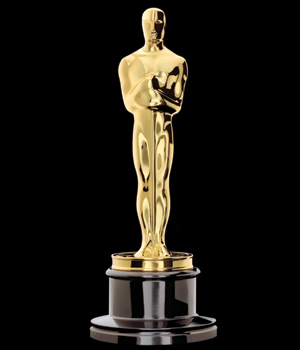
Food lovers can be film lovers, too. So in an unconventional “Appetite” this week, we go to the Oscars. Despite unworthy nominees and a slew of lackluster films, as a lifelong film fanatic, I still relish the event every year. There’s fun in joining with like-minded film buffs and fashion hounds to rave and rant about all the missteps or underdogs who should have won. And I’ll take any excuse to dress up.

This year I’m hoping the dynamic duo hosting team of Alec Baldwin and Steve Martin will add some spark to the hours’ long telecast. I’m more skeptical about the first go-round of 10 Best Picture nominees, however. We may not be Hollywood, but SF still gets into the act with events to suit everyone: those who want to enjoy the Oscars in style and those who want to bash the hell out of them.

Old Hollywood Glamour at Top of the Mark
Pull out your vintage or evening gown attire for a night of “Old Hollywood Glamour” at Top of the Mark. With the glorious lights and waters of SF shimmering below, enjoy champagne, Tsar Nicoulai caviar and other hors d’oeuvres. There’s no admission cost, rather, you order a la carte off the regular menu or from special menus like “The Nominees Are…”, including a bottle of Piper Sonoma Brut and shrimp cocktails ($60), or “…the Oscar goes to”: Moet & Chandon Brut Imperial with 1 oz. of Tsar Nicoulai California Estate Osetra Caviar ($110). With friends or that special someone in tow, pretend you’re at the Oscars as you watch from two screens near the dance floor, mentally composing your own Oscar acceptance speech. 

Sun/7, 5-10pm

Top of Mark/InterContinental Mark Hopkins

One Nob Hill, SF

(415) 616-6916

www.intercontinentalmarkhopkins.com/top_of_the_mark

Up the Oscars Benefit Bash at the Roxie
For 18 years running, dingy but loveable Roxie Theater is the place for all you haters… or rather, true film buffs who can’t stomach the idea of James Cameron winning any more awards. With the playful moniker of “Up the Oscars Benefit Bash,” you’re actually encouraged to shout at the movie screen, critique gowns or choose sides on the Best Actor front (Firth or Bridges?) There’s prizes and a costume contest, so come in anything from Cher-like weirdness to favorite film character. Shawerma-type snacks will be provided by neighboring Truly Mediterranean, but you can also bring your own food and drink as it’s gonna get long. You’ll need your energy for expressing outrage that a movie lacking plot, acting or substance, could (once again) win Best Picture.

Sun/7, 3:45pm (Red Carpet at 4pm; Oscars at 5:30pm)

$12-$15

Roxie Theater

3117 16th St, SF

(415) 863-1087

www.roxie.com

Homeowners for Prop. 13 reform

32

The Chron’s headline says “most want cuts, not taxes, to fix state budget.” The story cites a new Field poll, and the Chron’s not the only paper to spin it that way. The Sacramento Bee also claims that the poll shows widespread support for cuts instead of taxes.


But the folks at Calitics drew a different, more encouraging conclusion:


The responses, of statewide registered voters:
Cuts only: 31%
Mostly cuts: 19%
Equal mix of cuts and taxes: 29%
Mostly taxes: 9%
Taxes only: 4%
No opinion: 8%
So the way this is being reported in the media strikes me as being pretty flawed. The way I read this says 61% of voters want taxes to be some element of the solution to the budget mess, and only 31% want cuts-only.


And as people take to the streets March 4th to protest cuts to education and public services, I think that message will get reinforced. I certainly hope so — and I hope when protesters are interviewed, they don’t make the mistake of saying that “there’s plenty of waste in the budget” or that resources need to be better deployed.


The truth is that we need to raise taxes, particularly on the wealthy, to close this budget gap without destroying the state. I’m a homeowner who wants higher property taxes and better schools; anyone want to join me in Homeowners For Prop. 13 Reform?

Music listings

0

Music listings are compiled by Paula Connelly and Cheryl Eddy. Since club life is unpredictable, it’s a good idea to call ahead to confirm bookings and hours. Prices are listed when provided to us. Submit items at listings@sfbg.com.

WEDNESDAY 3

ROCK/BLUES/HIP-HOP

Backyard Tire Fire, Arcadio Hotel Utah. 9pm, $10.

Jello Biafra and the Guantanamo School of Medicine, Fracas, Abu Ghraib Bottom of the Hill. 9pm, $12.

Big John Bates and the Voodoo Dollz, Quarter Mile Combo, Reverend Deadeye Thee Parkside. 8pm, $7.

For Fear the Hearts of Men Are Failing, Cousin Chris Show, Jamie Wong El Rio. 8pm, $5.

Generalissimo, Cartographer, Assistant Cobra Elbo Room. 9pm, $7.

Guitar Shorty Biscuits and Blues. 8pm, $15.

La Corde, Stirling Says, Only Sons Hemlock Tavern. 9pm, $6.

Jason Movrich Abbey Tavern, 4100 Geary, SF; (415) 221-7767. 9pm, free.

Phantogram Rickshaw Stop. 8pm, $10.

Snoop Dogg Fillmore. 8pm, $55.

*Alan Toussaint Great American Music Hall. 8pm, $35.

FOLK/WORLD/COUNTRY

Bluegrass Country Jam Plough and Stars. 9pm.

Faye Blais, Sarah Burton Café Royale, 800 Post, SF; (415) 441-4099. 8pm, free.

DANCE CLUBS

Afreaka! Attic, 3336 24th St; souljazz45@gmail.com. 10pm, free. Psychedelic beats from Brazil, Turkey, India, Africa, and across the globe with MAKossa.

Booty Call Q-Bar, 456 Castro; www.bootycallwednesdays.com. 9pm. Juanita Moore hosts this dance party, featuring DJ Robot Hustle.

Hands Down! Bar on Church. 9pm, free. With DJs Claksaarb, Mykill, and guests spinning indie, electro, house, and bangers.

Hump Night Elbo Room. 9pm, $5. The week’s half over – bump it out at Hump Night!

Jam Wednesday Infusion Lounge. 10pm, free. DJ Slick Dee.

Mary-Go-Round LookOut, 3600 16th St., SF; (415) 431-0306. 10pm, $5. A weekly drag show with hosts Cookie Dough, Pollo Del Mar, and Suppositori Spelling.

RedWine Social Dalva. 9pm-2am, free. DJ TophOne and guests spin outernational funk and get drunk.

Respect Wednesdays End Up. 10pm, $5. Rotating DJs Daddy Rolo, Young Fyah, Irie Dole, I-Vier, Sake One, Serg, and more spinning reggae, dancehall, roots, lovers rock, and mash ups.

Synchronize Il Pirata, 2007 16th St.; (415) 626-2626. 10pm, free. Psychedelic dance music with DJs Helios, Gatto Matto, Psy Lotus, Intergalactoid, and guests.

Yoruba Dance Sessions Bacano! Som., 2925 16th St., SF; (415) 558-8521. 9pm, free. With resident DJ Carlos Mena and guests spinning afro-deep-global-soulful-broken-techhouse.

THURSDAY 4

ROCK/BLUES/HIP-HOP

Big Light, Everest, Guns for San Sebastian Independent. 8pm, $14.

Chauncey Evans Quintet Coda. 9pm, $7.

Dashing Suns, Sunbeam Rd. Adobe Books, 3166 16th St, SF; http://adobebooksbackroomgallery.blogspot.com. 7pm, free.

Lloyd Gregory Biscuits and Blues. 8pm, $15.

Gun and Doll Show, Pollux Rickshaw Stop. 8pm, $20. Benefit for the George Mark Children’s House.

*Hunx and His Punkettes, Splinters, Magic Bullets Amnesia. 9pm, $7.

Midlake, Matthew and the Arrogant Sea Great American Music Hall. 9pm, $18.

Ash Reiter, Tippy Canoe and Mikie Lee Prasad, Anna Ash Hemlock Tavern. 9pm, $6.

*Saviours, Lecherous Gaze, Futur Skullz Eagle Tavern. 10pm, $8.

Rocky Votolato, Adam Stephens, Tin Can Notes Bottom of the Hill. 9pm, $14.

Veil Veil Vanish Popscene at 330 Ritch. 10pm.

JAZZ/NEW MUSIC

"Other Minds Festival of New Music" Kanbar Hall, Jewish Community Center of San Francisco, 3200 California, SF; www.otherminds.org. 8pm, $35.

Poncho Sanchez Band with Nicholas Payton Yoshi’s San Francisco. 8 and 10pm, $16-24.

FOLK/WORLD/COUNTRY

Circle R Boys Atlas Café. 8pm, free.

Heather Combs, Matthew Hansen, Dave Gleason Hotel Utah. 8pm, $8.

Shana Morrison Café du Nord. 8pm, $15.

Shannon Céilí Band Plough and Stars. 9pm.

Oliver Rajamani Ensemble Swedish American Hall (upstairs from Café du Nord). 8pm, $20.

DANCE CLUBS

Afrolicious Elbo Room. 9:30pm, $5-6. DJs Pleasuremaker and Señor Oz spin Afrobeat, Tropicália, electro, samba, and funk.

Caribbean Connection Little Baobab, 3388 19th St; 643-3558. 10pm, $3. DJ Stevie B and guests spin reggae, soca, zouk, reggaetón, and more.

Club Jammies Edinburgh Castle. 10pm, free. DJs EBERrad and White Mice spinning reggae, punk, dub, and post punk.

Drop the Pressure Underground SF. 6-10pm, free. Electro, house, and datafunk highlight this weekly happy hour.

Electric Feel Lookout. 9pm, $2. With DJs subOctave and Blondie K spinning indie music videos.

Funky Rewind Skylark. 9pm, free. DJ Kung Fu Chris, MAKossa, and rotating guest DJs spin heavy funk breaks, early hip-hop, boogie, and classic Jamaican riddims.

Good Foot Yoruba Dance Sessions Bacano! Som., 2925 16th St., SF; (415) 558-8521. 9pm, free. A James Brown tribute with resident DJs Haylow, A-Ron, and Prince Aries spinning R&B, Hip hop, funk, and soul.

Heat Icon Ultra Lounge. 10pm, free. Hip-hop, R&B, reggae, and soul.

Holy Thursday Underground SF. 10pm, $5. Bay Area electronic hip hop producers showcase their cutting edge styles monthly.

Kick It Bar on Church. 9pm. Hip-hop with DJ Jorge Terez.

Koko Puffs Koko Cocktails, 1060 Geary; 885-4788. 10pm, free. Dubby roots reggae and Jamaican funk from rotating DJs.

Lacquer Beauty Bar. 10pm-2am, free. DJs Mario Muse and Miss Margo bring the electro.

Love Them Phishes DNA Lounge. 8pm, $15-20. Gypsy punk with Alxndr, Bombgoddess, Ra-So, and Globalruckus.

Mestiza Bollywood Café, 3376 19th St., SF; (415) 970-0362. 10pm, free. Showcasing progressive Latin and global beats with DJ Juan Data.

Peaches Skylark, 10pm, free. With an all female DJ line up featuring Deeandroid, Lady Fingaz, That Girl, and Umami spinning hip hop.

Popscene 330 Rich. 10pm, $10. Rotating DJs spinning indie, Britpop, electro, new wave, and post-punk.

Represent Icon Lounge. 10pm, $5. With Resident DJ Ren the Vinyl Archaeologist and guest. Rock Candy Stud. 9pm-2am, $5. Luscious Lucy Lipps hosts this electro-punk-pop party with music by ReXick.

Solid Club Six. 9pm, $5. With resident DJ Daddy Rolo and rotating DJs Mpenzi, Shortkut, Polo Mo’qz and Fuze spinning roots, reggae, and dancehall.

Studio SF Triple Crown. 9pm, $5. Keeping the Disco vibe alive with authentic 70’s, 80’s, and current disco with DJs White Girl Lust, Ken Vulsion, and Sergio.

FRIDAY 5

ROCK/BLUES/HIP-HOP

Barcelona, Mata Leon, Lia Rose Slim’s. 9pm, $15.

Barn Owl, Carlton Melton, Electric Jellyfish Hemlock Tavern. 9:30pm, $7.

Diego’s Umbrella, Yung Mars, Funky C Café du Nord. 9:30pm, $12.

Flexx Bronco, Corruptors, Spitting Cobras, All Bets on Death Bottom of the Hill. 9pm, $10.

Galactic feat. Cyril Neville and Big Freedia Fillmore. 9pm, $29.50.

Joe Henry, Dayna Stephens Great American Music Hall. 9pm, $20.

Hightower, Lozen, Sugar Sugar Sugar Pissed Off Pete’s, 4528 Mission, SF; www.pissedoffpetes.com. 10pm, $5.

*Hillstomp, Luke Franks, Black Crown Stringband Rickshaw Stop. 8:30pm, $12.

*No Bunny, TV Ghost, Outdoorsmen, Mom Thee Parkside. 9pm, $8.

Jackie Payne and Steve Edmonson Band Biscuits and Blues. 8 and 10pm, $20.

Melonumba, Cloverleaf Drive DNA Lounge. 5:30pm, $12.

Stockholm Syndrome, These United States Independent. 9pm, $25.

Tremor Low, Alright Class, Photons, Grand Atlantic Hotel Utah. 9pm, $6.

JAZZ/NEW MUSIC

Audium 9 1616 Bush, SF; (415) 771-1616. 8:30pm, $15.

Black Market Jazz Orchestra Top of the Mark. 9pm, $10.

Eric Kurtzrock Trio Ana Mandara, Ghirardelli Square, 891 Beach, SF; (415) 771-6800. 8pm, free.

"Other Minds Festival of New Music" Kanbar Hall, Jewish Community Center of San Francisco, 3200 California, SF; www.otherminds.org. 8pm, $35.

Poncho Sanchez Band with Nicholas Payton Yoshi’s San Francisco. 8 and 10pm, $20-28.

Kally Price Revolution Café, 3248 22nd St, SF; (415) 642-0474. 8:45pm, free.

SFJAZZ Collective Palace of Fine Arts Theatre, 3301 Lyon, SF; www.sfjazz.org. 8pm, $25-60.

Shotgun Wedding Symphony Coda. 10pm, $10.

FOLK/WORLD/COUNTRY

Audiodub, Kapakahi Elbo Room. 10pm, $12.

Jarrod Gorbel Swedish American Hall (upstairs from Café du Nord). 7:30pm, $12.

Prasant Radhakrishnan’s VidyA Red Poppy Art House. 8pm, $15.

Quinn DeVeaux and the Blue Beat Review Plough and Stars. 9pm.

DANCE CLUBS

Activate! Lookout, 3600 16th St; (415) 431-0306. 9pm, $3. Face your demigods and demons at this Red Bull-fueled party.

Bar on Church 9pm. Rotating DJs Zax, Zhaldee, and Nuxx.

Deeper 222 Hyde, 222 Hyde, SF; (415) 345-8222. 9pm, $10. With rotating DJs spinning dubstep and techno.

Dirty Rotten Dance Party Madrone Art Bar. 9pm, $5. With DJs Morale, Kap10 Harris, and Shane King spinning electro, bootybass, crunk, swampy breaks, hyphy, rap, and party classics.

Exhale, Fridays Project One Gallery, 251 Rhode Island; (415) 465-2129. 5pm, $5. Happy hour with art, fine food, and music with Vin Sol, King Most, DJ Centipede, and Shane King.

Fat Stack Fridays Koko Cocktails, 1060 Geary, SF; (415) 885-4788. 10pm, free. With rotating DJs Romanowski, B-Love, Tomas, Toph One, and Vinnie Esparza.

Gay Asian Paradise Club Eight, 1151 Folsom, SF; www.eightsf.com. 9pm, $8. Featuring two dance floors playing dance and hip hop, smoking patio, and 2 for 1 drinks before 10pm.

Good Life Fridays Apartment 24, 440 Broadway, SF; (415) 989-3434. 10pm, $10. With DJ Brian spinning hip hop, mashups, and top 40.

Hot Chocolate Milk. 9pm, $5. With DJs Big Fat Frog, Chardmo, DuseRock, and more spinning old and new school funk.

Look Out Weekend Bambuddha Lounge. 4pm, free. Drink specials, food menu and resident DJs White Girl Lust, Swayzee, Philie Ocean, and more.

M4M Fridays Underground SF. 10pm-2am. Joshua J and Frankie Sharp host this man-tastic party.

Rockabilly Fridays Jay N Bee Club, 2736 20th St., SF; (415) 824-4190. 9pm, free. With DJs Rockin’ Raul, Oakie Oran, Sergio Iglesias, and Tanoa "Samoa Boy" spinning 50s and 60s Doo Wop, Rockabilly, Bop, Jive, and more.

Strangelove Cat Club, 1190 Folsom, SF; (415) 703-8965. 9pm, $6. With DJs Tomas Diablo, Lowlife, Fact50, and Death Boy spinning goth and industrial.

SATURDAY 6

ROCK/BLUES/HIP-HOP

Appleseed Cast, Dreamend Bottom of the Hill. 10pm, $14.

Badstrip, Pins of Light, Space Vacation Thee Parkside. 9pm, free.

Mike Beck and the Bohemian Saints Riptide. 9pm, free.

Mike Doughty, Christina Courtin Slim’s. 9pm, $22.

Galactic feat. Cyril Neville and Big Freedia Fillmore. 9pm, $29.50.

Little Teeth, Hermit Thrushes, Woom Hemlock Tavern. 9pm, $7.

McCabe and Mrs. Miller Makeout Room. 7pm.

Natron Blue, FishBiteFish, Bro Hotel Utah. 9pm, $7.

Elliot Randall and the Deadmen, Famous, Cyndi Harvell Café du Nord. 9pm, $12.

Stockholm Syndrome, These United States Independent. 9pm, $25.

Joe Louis Walker Biscuits and Blues. 8 and 10pm, $22.

JAZZ/NEW MUSIC

Audium 9 1616 Bush, SF; (415) 771-1616. 8:30pm, $15.

Eric Kurtzrock Trio Ana Mandara, Ghirardelli Square, 891 Beach, SF; (415) 771-6800. 8pm, free.

George Cole Quintet and Fishtank Ensemble Noe Valley Ministry, 1021 Sanchez, SF; www.noevalleymusicseries.com. 8:15pm, $20.

Tim Nunn and Blake McGee Meridian Gallery, 535 Powell, SF; www.meridiangallery.org. 8pm, $10.

"Other Minds Festival of New Music" Kanbar Hall, Jewish Community Center of San Francisco, 3200 California, SF; www.otherminds.org. 8pm, $35.

Poncho Sanchez Band with Nicholas Payton Yoshi’s San Francisco. 8 and 10pm, $28.

Rev Allstars Revolution Café, 3248 22nd St, SF; (415) 642-0474. 8:45pm, free.

Ricardo Scales Top of the Mark. 9pm, $15.

FOLK/WORLD/COUNTRY

Brent Amaker and the Rodeo, Apache Thunderbolt Amnesia. 9pm, $7.

George Cole and the Fishtank Ensemble Noe Valley Ministry, 1021 Sanchez, SF; (415) 454-5238. 8:15pm, $22.

Dust Bowl Cavaliers vs Misisipi Rider Plough and Stars. 9pm.

Qadim Ensemble Red Poppy Art House. 8pm, $15-$20.

Shackleton, Eskmo, Eprom, Kush Arora Darkroom, Club Six. 10pm, $15. Playing live bass music.

DANCE CLUBS

Bar on Church 9pm. Rotating DJs Foxxee, Joseph Lee, Zhaldee, Mark Andrus, and Niuxx.

Debaser Knockout. 11pm, $5. Wear your flannel and get in free before 11pm to this party, where DJ Jamie Jams and Emdee play alternative hits from the 1990s.

Everlasting Bass 330 Ritch. 10pm, $5-10. Bay Area Sistah Sound presents this party, with DJs Zita and Pam the Funkstress spinning hip-hop, soul, funk, reggae, dancehall, and club classics.

Fire Corner Koko Cocktails, 1060 Geary; 885-4788. 9:30pm, free. Rare and outrageous ska, rocksteady, and reggae vinyl with Revival Sound System and guests.

Gemini Disco Underground SF. 10pm, $5. Disco with DJ Derrick Love and Nicky B. spinning deep disco.

HYP Club Eight, 1151 Folsom, SF; www.eightsf.com. 10pm, free. Gay and lesbian hip hop party, featuring DJs spinning the newest in the top 40s hip hop and hyphy.

*J-Boogie’s Dubtronic Science with Skins and Needles featuring DJ Jeph and Max MacVeety Coda. 10pm, $10.

Kontrol Endup, 401 6th St., SF; (415) 541-9422. 10pm, $20. With resident DJs Alland Byallo, Craig Kuna, Sammy D, and Nikola Baytala spinning minimal techno and avant house.

Leisure Paradise Lounge. 10pm, $7. DJs Omar, Aaron, and Jet Set James spinning classic britpop, mod, 60s soul, and 90s indie.

New Wave City DNA Lounge. 9pm, $7-12. "Ladies of the 80s" dance party with Skip and Shindog.

Pure Behrouz Mighty. 10pm, $15. With DJs Behrouz, Julius Papp, and Rooz spinning house.

Rebel Girl Rickshaw Stop. 10pm, $5. "Electroindierockhiphop" and 80s dance party for dykes, bois, femmes, and queers with DJ China G and guests.

Saturday Night Soul Party Elbo Room. 10pm, $10. Sixties soul with DJs Lucky, Phengren Oswald, and Paul Paul.

So Special Club Six. 9pm, $5. DJ Dans One and guests spinning dancehall, reggae, classics, and remixes.

Social Club LookOut, 3600 16th St., SF; (415) 431-0306. 9pm. Shake your money maker with DJs Lee Decker and Luke Fry.

Soundscape Vortex Room, 1082 Howard, SF. With DJs C3PLOS, Brighton Russ, and Nick Waterhouse spinning Soul jazz, boogaloo, hammond grooves, and more.

Spirit Fingers Sessions 330 Ritch. 9pm, free. With DJ Morse Code and live guest performances.

SUNDAY 7

ROCK/BLUES/HIP-HOP

Abe Vigoda, Lovvers, High Castle Bottom of the Hill. 9pm, $10.

"Battle of the Bands" DNA Lounge. 5:30pm, $10-12. With High Like Five, Sol, Supernaculum, Animojams, and more.

Black Dahlia Murder, Obscura, Augery, Hatesphere Slim’s. 7pm, $15.

Killswitch Engage, Devil Wears Prada, Dark Tranquillity Warfield. 7:30pm, $32.

Lindsay Mac Band, Natalia Zuckerman Hotel Utah. 8pm, $12.

Leslie and the Lys, Christopher the Conquered, Planet Booty Rickshaw Stop. 8pm, $14.

*Shrinebuilder, Harvestmen, A Storm of Light Independent. 8pm, $17.

Two Dollars Out the Door, Birthday Suits, Rank/Xerox Hemlock Tavern. 9pm, $5.

JAZZ/NEW MUSIC

Kate McGarry Trio with Keith Granz and Clarence Penn Swedish American Hall (upstairs from Café du Nord). 7pm, $25.

Le Jazz Hot Café Royale, 800 Post, SF; (415) 441-4099. 6pm, free.

Poncho Sanchez Band with Nicholas Payton Yoshi’s San Francisco. 5 and 7pm, $5-28.

FOLK/WORLD/COUNTRY

Shane Cooley Kimo’s. 6pm, $5.

Frank French Sherman and Clay, 647 Mission, SF; (415) 543-1888. 4pm, free.

Raul Malo Café du Nord. 8:30pm, $20.

"Te Gusto Musical" Coda. 8pm, $10. With Hector Lugo and Mixta Criolla.

Linda Tillery and the Cultural Heritage Choir, Eric Bibb Great American Music Hall. 8pm, $21.

Quin and friends Plough and Stars. 9pm.

Wooden Fish Ensemble Old First Concerts, 1751 Sacramento, SF; (415) 474-1608. 4pm, $14-$17. Celebrating the music of Hyo-shin Na.

DANCE CLUBS

Afterglow Nickies, 466 Haight, SF; (415) 255-0300. An evening of mellow electronics with resident DJs Matt Wilder, Mike Perry, Greg Bird, and guests.

DiscoFunk Mashups Cat Club. 10pm, free. House and 70’s music.

Dub Mission Elbo Room. 9pm, $6. Dub, roots, and classic dancehall with DJ Sep, Vinnie Esparza, and guest Selector Shockman.

Gloss Sundays Trigger, 2344 Market, SF; (415) 551-CLUB. 7pm. With DJ Hawthorne spinning house, funk, soul, retro, and disco.

Good Clean Fun LookOut, 3600 16th St., SF; (415) 431-0306. 3pm, $2. With drink specials, DJs and tasty food.

Honey Soundsystem Paradise Lounge. 8pm-2am. "Dance floor for dancers – sound system for lovers." Got that?

Jock! Lookout, 3600 16th St; 431-0306. 3pm, $2. This high-energy party raises money for LGBT sports teams.

Kick It Bar on Church. 9pm. Hip-hop with DJ Zax.

Lowbrow Sunday Delirium. 1pm, free. DJ Roost Uno and guests spinning club hip hop, indie, and top 40s.

Religion Bar on Church. 3pm. With DJ Nikita.

Stag AsiaSF. 6pm, $5. Gay bachelor parties are the target demo of this weekly erotic tea dance.

MONDAY 8

ROCK/BLUES/HIP-HOP

Anuhea and the Green Band, Sage Broadway Studios. 8pm, $40.

Blank Tapes, Mystery Lights, Nectarine Pie, Manhattan Murder Mystery Elbo Room. 9pm, $6.

Delta Spirit, We Barbarians, Elephant Micah Bottom of the Hill. 9pm, $12.

Dirty Heads, Simpkin Project, Pacific Dub Slim’s. 8pm, $15.

Amber Rubarth, Jim Bianco, Ryan Auffenberg Café du Nord. 9:30pm, $12.

DANCE CLUBS

Bacano! Som., 2925 16th St., SF; (415) 558-8521. 9pm, free. With resident DJs El Kool Kyle and Santero spinning Latin music.

Black Gold Koko Cocktails, 1060 Geary; 885-4788. 10pm-2am, free. Senator Soul spins Detroit soul, Motown, New Orleans R&B, and more — all on 45!

Death Guild DNA Lounge. 9:30pm, $3-5. Gothic, industrial, and synthpop with Decay, Joe Radio, and Melting Girl.

M.O.M. Madrone Art Bar. 6pm, free. With DJ Gordo Cabeza and guests playing all Motown every Monday.

Manic Mondays Bar on Church. 9pm. Drink 80-cent cosmos with Djs Mark Andrus and Dangerous Dan.

Monster Show Underground SF. 10pm, $5. Cookie Dough and DJ MC2 make Mondays worth dancing about, with a killer drag show at 11pm.

Network Mondays Azul Lounge, One Tillman Pl; www.inhousetalent.com. 9pm, $5. Hip-hop, R&B, and spoken word open mic, plus featured performers.

Spliff Sessions Tunnel Top. 10pm, free. DJs MAKossa, Kung Fu Chris, and C. Moore spin funk, soul, reggae, hip-hop, and psychedelia on vinyl.

TUESDAY 9

ROCK/BLUES/HIP-HOP

Black Rebel Motorcycle Club, Whigs Slim’s. 8pm, $30.

*Cave Singers, Dutchess and the Duke, Moondoggies Independent. 8pm, $14.

Clientele, Wooden Birds Great American Music Hall. 8pm, $15.

Extra Life, Ora Corgan, Chelsea Wolfe, Neighbors Hemlock Tavern. 9pm, $7.

Dominique Leone, 3 Leafs, William Winant Amnesia. 7pm, $8.

Fromagique Elbo Room. 9pm, $8. Live band and burlesque show.

Little Boots, Dragonette, Class Actress Fillmore. 8pm, $20.

Jared Mees and the Grown Children, Rock Cookie Bottom Grant and Green. 9pm, free.

Holly Miranda Café du Nord. 9:30pm, $10.

Sevendust, Drowning Pool, Digital Summer, Flood Regency Ballroom. 7:30pm, $27.

*Mike Watt and the Missingmen, Lite, Low Red Land Bottom of the Hill. 9pm, $12.

DANCE CLUBS

Eclectic Company Skylark, 9pm, free. DJs Tones and Jaybee spin old school hip hop, bass, dub, glitch, and electro.

La Escuelita Pisco Lounge, 1817 Market, SF; (415) 874-9951. 7pm, free. DJ Juan Data spinning gay-friendly, Latino sing-alongs but no salsa or reggaeton.

Share the Love Trigger, 2344 Market, SF; (415) 551-CLUB. 5pm, free. With DJ Pam Hubbuck spinning house.

Womanizer Bar on Church. 9pm. With DJ Nuxx.

Stage listings

0

Stage listings are compiled by Molly Freedenberg. Performance times may change; call venues to confirm. Reviewers are Robert Avila, Rita Felciano, and Nicole Gluckstern. Submit items for the listings at listings@sfbg.com.

THEATER

OPENING

Caddyshack: Live! Dark Room, 2263 Mission; 401-7987, brownpapertickets.com. $5-$20. Opens Fri/5. Runs Fri-Sat, 8pm. Through March 27. The Dark Room presents Jim Fourniadis’ live adaptation of the iconic movie.

Death Play EXIT Theatre, 156 Eddy; 289-6766, www.thunderbirdtheatre.com. $15-$20. Opens Sun/7. Runs Thurs-Sat, 8pm. Through March 27. Thunderbird Theatre Company presents the third installment in the critically acclaimed sketch comedy series "Serve By Expiration" by Sang S. Kim.

Men Who Have Fallen In and Out of Love with Me Off-Market Theatre, 965 Mission; www.fallenmadlyinlove.com. Opens Fri/5. Runs Fri-Sat, 8pm. Through March 20. Award-winning SF playwright and journalist Beth Soloway teams up with her daughter for the world premiere of this comedy about romance.

Now and at the Hour EXIT Stage Left, 156 Eddy; 673-3847, www.theexit.org. $15-$25. Opens Fri/5. Runs Fri-Sat, 8pm. Through March 27. EXIT presents the subtly unnerving show by theatrical magician Christian Cagigal.

Something You Might Want Stagewerx Theatre, 533 Sutter; catchynametheatre.org. $16. Opens Fri/5. Runs Fri-Sat, 8pm; Sun, 3pm. Through March 28. CatchyNameTheatre presents this dark comedy written and directed by Jim Strope.

The Sugar Witch New Conservatory Theatre Center, 25 Van Ness; 861-4914, www.nctcsf.org.

Opens Sat/6. Runs various days and times through April 4. NCTC presents the premiere of Nathan Sanders’ crime story.

BAY AREA

Singin’ in the Rain Julia Morgan Center for the Arts, 2640 College Ave, Berk; www.berkeleyplayhouse.org. Opens Sun/7. Runs Fri-Sun, times vary. Through March 21. Berkeley Playhouse presents an exciting stage adaptation of the ’20s classic.


ONGOING

Bay One Acts Festival Boxcar Theatre, 505 Natoma; 776-7427, www.threewisemonkeys.org. $12-$24. Dates and times vary. Through March 13. Three Wise Monkeys presents eleven short plays by Bay Area playwrights, including Cris Barth, Stuart Bousel, and Lauren Yee.

Beauty of the Father Phoenix Theatre, 414 Mason; (800) 838-3006, www.offbroadwaywest.org. $30. Thurs-Sat, 8pm. Through March 13. Off-Broadway West’s season opener offers the Bay Area a first look at the somewhat messy but ultimately rewarding 2006 drama by Cuban American Pulitzer Prize–winner Nilo Cruz ("Anna in the Tropics"). Set in contemporary Andalusia, in the south of Spain, it’s the story of an aging painter named Emiliano (Durand Garcia) whose best friend and near-constant companion is the ghost of Federico García Lorca (Michael Carlisi), poet and playwright long ago murdered by the fascists during the Spanish Civil War. Emiliano also lives with his mostly platonic sweetheart (Jeanette Sarmiento), whom he plans to marry after she divorces his other housemate, a young Moroccan immigrant named Karim (Chris Holland) who is tied to her for the green card but is also Emiliano’s sometime lover. When his long-estranged ex-wife back in the U.S. dies, he invites his grown daughter (Natasha Chacon) to come live with him, feeling the urge "to father her" again. She arrives for an indefinite stay instead, shedding the gloom of her mother’s death in the embrace of life under the Andalucian sun—and a smitten Karim in particular. There’s some piquancy to the unraveling of this romantic ménage, and real poetry in the language and perspective afforded through the magical realistic presence of Lorca, but despite Cruz’s muscular writing and ambitious thematic canvas, the drama flags at points and sometimes seems unsure of where it would take us or even the proper tone or color to employ. Nevertheless, artistic director Richard Harder helms a strong cast, which helps make the going worthwhile. (Avila)

*The Caucasian Chalk Circle A.C.T., 415 Geary; www.act-sf.org. $10-$82. Tues-Sat, 8pm; Wed, Sat, and Sun, 2pm. Through March 14. After bringing his acclaimed pared-down "Sweeney Todd" to ACT in 2007, director John Doyle returns with Bertolt Brecht’s inspired take on the biblical Judgment of Solomon, a story whose faith in the essential decency of people—especially those not completely corrupted by power over, and under, others—is here counterpart to a damning and rousing dissection of war, politics and the justice system/racket. Newly translated in fresh and piquant tones by Domenique Lozano, the text rings with contemporary significance, including a chiding reference to "change we can believe in" that neatly updates Brecht’s radical insistence on popular action over hopeful acquiescence to powerful leaders. The set is a junk-strewn yard, with various bits of theater rigging doubling as stage properties (like a descending bank of stage lights during a battle sequence). The ensemble cast, meanwhile, sings profusely—a cappella or to its own spare accompaniment—and renders characters in a hodgepodge of accents not entirely arbitrary (rulers talking like New York mobsters, for example, or upper-class war refugees speaking like Southern belles). The comedy can veer distractingly toward the hammy, and there’s probably a bit too much stylized abstraction at the outset (hard to imagine anyone unfamiliar with the story understanding exactly what’s going on from the chorus), but despite faults this is a welcome, timely production, engagingly realized in Doyle’s winkingly "makeshift" staging and the bold, eclectic performances he garners from ACT’s core company members, conservatory students and associates. (Avila)

Eccentrics of San Francisco’s Barbary Coast: A Magical Escapade San Francisco Magic Parlor, Chancellor Hotel Union Square, 433 Powell; 1-800-838-3006. $30. Fri-Sat, 8pm. Ongoing. This show celebrates real-life characters from San Francisco’s colorful and notorious past.

The Gilded Thick House, 1695 18th St. www.thegilded.com. $18-$30. Thurs/4, 7pm; Fri/5-Sat/6, 8pm; Sun/7, 2pm. The Curiouser Group presents a new musical by Reynaldi Lolong.

The Greatest Bubble Show on Earth Marsh, 1062 Valencia. (800) 838-3006, www.themarsh.org. $7-$50. Sun, 11am. Through April 3. The Amazing Bubble Man returns with his extraordinary family-friendly show.

Hearts on Fire Teatro ZinZanni, Pier 29; 438-2668, www.zinzanni.org. $117-$145. Wed-Sat, 6pm; Sun, 5pm. Through May 16. Teatro ZinZanni celebrates its 10th anniversary with this special presentation featuring Thelma Houston, El Vez, and Christine Deaver.

*Loveland The Marsh, 1074 Valencia; 826-5750, www.themarsh.org. $15-$50. Sat, 8:30pm; Sun, 7pm. Through April 11. Los Angeles–based writer-performer Ann Randolph returns to the Marsh with a new solo play partly developed during last year’s Marsh run of her memorable Squeeze Box. Randolph plays loner Frannie Potts, a rambunctious, cranky and libidinous individual of decidedly odd mien, who is flying back home to Ohio after the death of her beloved mother. The flight is occasion for Frannie’s own flights of memory, exotic behavior in the aisle, and unabashed advances toward the flight deck brought on by the seductively confident strains of the captain’s commentary. The singular personality and mother-daughter relationship that unfurls along the way is riotously demented and brilliantly humane. Not to be missed, Randolph is a rare caliber of solo performer whose gifts are brought generously front and center under Matt Roth’s reliable direction, while her writing is also something special—fully capable of combining the twisted and macabre, the hilariously absurd, and the genuinely heartbreaking in the exact same moment. Frannie Potts’s hysteria at 30,000 feet, as intimate as a middle seat in coach (and with all the interpersonal terror that implies), is a first-class ride. (Avila)

Mirrors In Every Corner Intersection for the Arts, 446 Valencia; 626-2787, www.theintersection.org. Thurs-Sun, 8pm. Through March 21. Intersection for the Arts, Campo Santo, and the Living Word Project present the world premiere of Chinaka Hodge’s provocative show exploring race and identity from new perspectives.

Oedipus el Rey Magic Theatre, Building D, Fort Mason Center; 441-8822, www.magictheatre.org. $20-$55. Days and times vary. Through March 14. Luis Alfaro transforms Sophocles’ ancient tale into an electrifying myth, directed by Loretta Greco.

Pearls Over Shanghai Hypnodrome, 575 Tenth St.; 1-800-838-3006, www.thrillpeddlers.com. $30-69. Sat, 8pm; Sun, 7pm. Through April 24. Thrillpeddlers presents this revival of the legendary Cockettes’ 1970 musical extravaganza.

The Real Americans The Marsh, 1062 Valencia; 826-5750, www.themarsh.org. $15-$50. Thurs-Fri, 8pm; Sat, 5pm. Through April 18. The Marsh presents the world premiere of Dan Hoyle’s new solo show.

Suddenly Last Summer Actors Theatre, 855 Bush; 345-1287, www.actorstheatresf.org. $15-$35. Thurs-Sat, 8pm. Through March 27. Actors Theatre presents one of Tennessee Williams’ finest and most famous plays.

What Just Happened? The Marsh, 1062 Valencia; (800) 838-3006, www.themarsh.org. $20-$50. Fri-Sat, 8pm. Through March 13. The Marsh presents Nina Wise’s improvisation-based sow about personal and political events which have transpired over the previous 24 hours.

What Mama Said About ‘Down There Our Little Theater, 287 Ellis; 820-3250, www.theatrebayarea.org. $15-$25. Thurs-Sun, 8pm. Through July 30. Writer/performer/activist Sia Amma presents this largely political, a bit clinical, inherently sexual, and utterly unforgettable performance piece.

Wicked Orpheum Theatre, 1182 Market; 512-7770, www.shnsf.com. $30-$99. Tues, 8pm; Wed, 2pm; Thurs-Fri, 8pm; Sat, 2 and 8pm; Sun, 2pm. Ongoing. Assuming you don’t mind the music, which is too TV-theme–sounding in general for me, or the rather gaudy décor, spectacle rules the stage as ever, supported by sharp performances from a winning cast. (Avila)


BAY AREA

An Anonymous Story by Anton Chekhov Berkeley City Club, 2315 Durant, Berk; (510) 558-1381, centralworks.org. $14-$25. Thurs-Sat, 8pm; Sun, 5pm. Through March 28. Central Works presents a new play adapted from the Checkhov novella.

Beebo Brinker Chronicles Brava Theater Center, 2781 24th St; 641-2822, www.brava.org. $20-$30. Thurs-Sun, 8pm. Through March 13. The regional premiere of Kate Moira Ryan and Linda S. Chapman’s play adapted from a series of pulp novels.

Concerning Strange Devices from the Distant West Roda Theatre, 2015 Addison, Berk; (510) 647-2949, berkeleyrep.org. $13.50-$27. Days and times vary. Through April 11. Berkeley Rep presents a sexy and intriguing new show from Naomi Iizuka.

*East 14th Laney College Theatre, 900 Fallon St, Oakl. www.east14thoak.eventbrite.com. $10-$50. Fri-Sat, 8:30pm. Through March 28. Also at the the Marsh Berkeley in March. Don Reed’s solo play, making its Oakland debut after an acclaimed New York run, is truly a welcome homecoming twice over. It returns the Bay Area native to the place of his vibrant, physically dynamic, consistently hilarious coming-of-age story, set in 1970s Oakland between two poles of East 14th Street’s African American neighborhood: one defined by his mother’s strict ass-whooping home, dominated by his uptight Jehovah’s Witness stepfather; the other by his biological father’s madcap but utterly non-judgmental party house. The latter—shared by two stepbrothers, one a player and the other flamboyantly gay, under a pimped-out, bighearted patriarch whose only rule is "be yourself"—becomes the teenage Reed’s refuge from a boyhood bereft of Christmas and filled with weekend door-to-door proselytizing. Still, much about the facts of life in the ghetto initially eludes the hormonal and naïve young Reed, including his own flamboyant, ever-flush father’s occupation: "I just thought he was really into hats." But dad—along with each of the characters Reed deftly incarnates in this very engaging, loving but never hokey tribute—has something to teach the talented kid whose excellence in speech and writing at school marked him out, correctly, as a future "somebody." (Avila)

*Learn to be Latina La Val’s Subterranean, 1834 Euclid, Berk. impacttheatre.com. $10-$20. Thurs-Sat, 8pm. Through March 27. Impact Theatre continues its 14th season with the world premiere of Enrique Urueta’s play.


PERFORMANCE

AIRspace Queer Performance Showcase The Garage, 975 Howard; 885-4006, 975howard.com. Wed-Thurs, 8pm. $10-$20. Kirk Read, Philip Huang, Baruch Porras-Hernandez, Dominika Bednarska, Jorge De Hoyos, and Awilda Rodriguez Lora perform.

"All Star Magic & More" SF Playhouse, Stage 2, 533 Sutter; 646-0776, www.comedyonthesquare.com. Sun, 7pm. Ongoing. Magician RJ Owens hosts the longest running magic show in San Francisco.

30th Anniversary Celebration of New Works African American Art and Culture complex, 762 Fulton; 292-1850, www.culturalodyssey.org/tickets. Thurs-Sat, 8pm; Sun, 3pm. Through March 14. $20. In celebration of Black History Month and National Women’s Month, Cultural Odyssey presents a festival featuring The Love Project, The Breach, and Dancing with the Clown of Love.

BATS Improv Theatre Bayfront Theater, Fort Mason Center, B350 Fort Mason; 474-6776, www.improv.org. Fri-Sat, 8pm. $17-$20. The Theatresports show format treats audiences to an entertaining and engaging night of theater and comedy presented as a competition.

"Celestial Science" EXIT Theatre, 156 Eddy; 440-8825, www.stallionmagic.com. Wed-Sat, 8pm. $15-$25. Stallion presents an interstellar voyage designed to empower, enlighten, erich, and encourage.

Don Carbone Dark Room, 2263 Mission; 401-7987, darkroomsf.com. Sat, 10pm. $8. The absurdist writer and performer presents an evening of two award-winning solo performances.

"In the Loop" Space Gallery, 1141 Polk; audreyheller.com. Sat, 8pm. Space Gallery presents a multi-media event featuring looped photography, video, installations, dance, and music.

"A Musical Seance" Hypnodrome, 575 10th St; www.brownpapertickets.com. Sun-Mon, 7:30pm. $20. Jill Tracy and Paul Mercer present their latest collaboration.

PianoFight Studio 250 at Off-Market, 965 Mission; www.pianofight.com. Mon, 8pm. Through March 29. $20. The female-driven variety show Monday Night ForePlays returns with brand new sketches, dance numbers, and musical performances.

"Reply/catalog for circles and unfinished cities" The Garage, 975 Howard; 885-4006, 975howard.com. Fri-Sat, 8pm; Sun, 4pm. $10-$20. RAW presents this performance work by Tableau Stations/Floor of Sky.

"Sex and the Bible: The Opera (Part I)" Community Music Center, 544 Capp; (707) 474-7273, www.goathall.org. Fri-Sat, 8pm; Sun, 7pm. Through March 14. $10-$15. San Francisco Cabaret Opera presents the world premiere of Mark Alburger’s 8-=minute work-in-progress.

"Slaughter City" Ezellerbach Playhouse, UC Berkeley Campus, Berk; (510) 642-8827, tdps.berkeley.edu. Fri-Sat, 8pm; Sun, 2pm. Through March 14. $10-$15. UC Berkeley’s Department of Theater, Dance, and Performance Studies presents a play by Naomi Wallace.

"Unscripted: unscripted" Off-Market Theater, Studio 205, 965 Mission; 869-5384, www.un-scripted.com. Thurs-Sat, 8pm. Through March 13. The Un-Scripted Theater Company kicks off its eighth season with an improvised improv show.

Virgin Play Series Locations vary. Mon, 6pm. Through March 29. Magic Theatre presents Martha Heasley Cox’s series of staged readings of works currently in development.

Zambaleta Carnaval Zambaleta, 2929 19th St; www.zambaleta.org. Sat, 11am-11pm. Free. San Francisco’s new school for world music and dance will transform its campus into an eclectic all-day jam session celebrating the spirit of Carnaval.


BAY AREA

"Hamlet: Blood in the Brain" Oakland Tech Auditorium, 4351 Broadway, Oakl; (510) 548-9666, www.calshakes.org. Mon, 6:30pm. California Shakespeare Theater and Oakland Tech High School host an evening of select scenes from the Advanced Drama Department’s award-winning production moderated by Jonathan Moscone.
"Something to be Proud of" PMCCA, 1428 Alice, Oakl; www.ticketweb.com. Sat, 7pm. $10-$20. Malonga Casquelourd Center for the Arts Dimensions Extensions Performance Ensemble presents this youth performance.
Upright Citizens Brigade Pan Theater, 2135 Broadway, Oakl; www.pantheater.com. Fri, 8 and 9:10pm. Ongoing. $14-$18. Upright Citizens Brigade Touring Co. brings the NYC funny to Oakland with this improve comedy show with guest performing troupes.

Events listings

0

Events listings are compiled by Paula Connelly. Submit items for the listings at listings@sfbg.com.

WEDNESDAY 3

Confessions of a Teenage Jesus Jerk City Lights Bookstore, 261 Columbus, SF; (415) 362-8193. 7pm, free. Attend this reading and book signing with local author Tony DuShane about his experience growing up as a Jehova’s Witness, a novel which he anticipates will get him shunned from his family still involved in the church.

Susan Stamberg Jewish Community Center of San Francisco, 3200 California, SF; (415) 292-1233. 8pm, free with pre-registration. Listen to NPR Special Correspondent Susan Stamberg speak on everything from Jewish mothers to the little-known story of the Jews of Shanghai.

Understanding the Opposition to Same-Sex Marriage San Francisco Center for Psychoanalysis, 4th floor auditorium, 2340 Jackson, SF; (415) 563-5815. 7:30pm, free. Attend this lecture where Gary Grossman, Ph.D. will discuss the psychological impact of marriage on lesbian and gay couples, in addition to the role of homophobia, prejudice, and unconscious anxieties in arguments supporting traditional marriage.

BAY AREA

Practical Applications of Mythology Northbrae Community Church, 941 The Alameda, Berk.; (510) 526-3805. 7:30pm, free. Hear Dr. Carolyn West discuss the role myths play in the human psyche and in art, music, poetry, and ritual.

THURSDAY 4

Alfonso Gatto Italian Cultural Institute, Suite 200, 425 Washington, SF; (415) 788-7142 ext.18. 6:30pm, free. Celebrate the 100th anniversary of painter, poet, essayist, critic, editor, and film actor Alfonso Gatto. Jack Hirschman and actress Antonella Soldaini will read a selection of Gatto’s poems from the anthology Magma, the first major English translation of poems by Gatto.

My Refuge House Project 1, 251 Rhode Island, SF; (415) 938-7173. 6pm, free. Attend this fundraising event for My Refuge House, an organization devoted to the rehabilitation of people freed from sex trafficking.

FRIDAY 5

"Challenges and Possibilities in South Asia" California Institute of Integral Studies, 4th floor, room 425, 1453 Mission, SF; (415) 575-6254. 6:30pm, free. Hear Meenakshi Ganguly, from the Human Rights Watch, discuss the possibilities for advocacy in South Asia when examining the human rights violations that occur there and the possibilities for justice.

"Foursquared" Project 1, 251 Rhode Island, SF; (415) 938-7173. 7pm, free. Enjoy the work of local artists at this opening for this collaborative exhibit "Foursquared," featuring a mural created using differing mediums by artists Chorboogie, Jet Martinez, David Choong Lee and Apex.

Girldrive: Criss-crossing America, Redefining Feminism Modern Times Bookstore, 888 Valencia, SF; (415) 282-9246. 7pm, free. Hear Nona Willis Arnowitz and Emma Bee Bernstein discuss their cross country road trip where they chronicled the struggles, concerns, successes, and insights of young women grappling to define and fight for gender equality.

Monster Drawing Rally Verdi Club, 2424 Mariposa, SF; (415) 863-2141. 6pm, $10-$20 donation. Observe over 130 artists in the act of creation and get the opportunity to purchase each work of art for $60, minutes after its completion, at this fundraiser to support Southern Exposure’s exhibitions and artists in education programs.

SATURDAY 6

Babylon Salon Cantina SF, 580 Sutter, SF; (415) 398-0195. 7:30pm, free. Attend this reading and performance series featuring authors Peter Orner, Toni Mirosevich, Kemble Scott, and more reading and discussing their recent works.

"Beyond Breast Cancer" Golden Gate Club, 135 Fisher Loop, Presidio, SF; 1-888-315-5988. 8am, $20. Hear cancer experts and survivors controversial mammography guidelines, the latest treatments, side-effect management, and more at this conference for breast cancer survivors, their families and friends, and medical professionals.

Crystal Fair Fort Mason Conference Center, Building A, 99 Marina, SF; (415) 383-7837. Sat. 10am-6pm,Sun. 10am-4pm; $6. Enjoy this exhibition and sale of crystals, minerals, beads, jewelry, and other accessories of the healing arts.

"Embracing the Cycles of Womanhood" Women’s Building, 3543 18th St., SF; (415) 469-5425. 2pm, $10-$25 sliding scale. Join in a body, mind, and spirit celebration of being a woman at this Women’s Day celebration featuring information about menstrual cycle hormones, salsa dancing, first period stories, and how to go with the flow of your period.

Miraloma Cooperative Nursery School St. Mary’s Cathedral, St. Mary’s Event Center, 111 Gough, SF; (415) 585-6789. 6pm, $15. Help raise funds for this parent-run cooperative with an auction of items like getaways, tickets, and activities.

BAY AREA

March Madness Craft Sale Knit One One, 3360 Adeline, Berk.; (510) 420-8706. 10am, free. Find nifty, unusual gorgeous goodies from crafters including Bead Origami, Leon Leaf, Panoply, Eristotle, Kimono Momo, Papa Vert, and more.

SUNDAY 7

Heeb Magazine at the Oscars Elixir, 3200 16th St., SF; (415) 552-1633. 5pm, free. Celebrate the year in Jewish and Israeli cinema, including Inglourious Basterds, A Serious Man, and Ajami, at this Oscar- watching party sponsored by Heeb magazine featuring drink specials and a live broadcast of the Oscars.

BAY AREA

How to Defeat Your Own Clone Diesel, A Bookstore, 5433 College, Oak.; (510) 653-9965. 3pm, free. Hear Kyle Kurpinski and Terry D. Johnson, two bioengineering experts, discuss their new funny and informative book on how to survive and thrive in an age of weird science.

MONDAY 8

Howard Zinn Herbst Theater, 401 Van Ness, SF; (415) 392-4400. 8pm, $20. Join Alan Jones to celebrate the life and work of Howard Zinn, historian, activist, social critic, and award-winning author of A People’s History of the United States.

Film listings

0

Film listings are edited by Cheryl Eddy. Reviewers are Kimberly Chun, Michelle Devereaux, Max Goldberg, Dennis Harvey, Johnny Ray Huston, Erik Morse, Louis Peitzman, Lynn Rapoport, Ben Richardson, and Matt Sussman. The film intern is Peter Galvin. For rep house showtimes, see Rep Clock. For first-run showtimes, see Movie Guide.

OPENING

Alice in Wonderland Tim Burton and Johnny Depp go down the 3D rabbit hole. (1:48)

Brooklyn’s Finest "Really? I mean, really?" asked the moviegoer beside me as the final freeze-frame of Brooklyn’s Finest slapped our eyeballs. Yes, that’s the sound of letdown, despite the fact that Brooklyn’s Finest initially resembled a promisingly gritty juggling act in the mode of The Wire and Cop Land (1997), Taxi Driver (1976) and Training Day (2001). Bitter irony flows from the title — and from the lives, loves, bad habits, pressure-cooker stress, and unavoidable moral dilemmas of three would-be everyday cops, all occupying several different rungs on a food chain where right and wrong have an unpleasant way of switching sides. Eddie (Richard Gere) is the veteran officer just biding his time till he gets his pension, all while comforting himself with the meager sensuous attentions of hooker Chantel (Shannon Kane). Sal (Ethan Hawke) is the bad detective, stealing from the dealers to fund a dream home for his growing family with Angela (Lili Taylor). Tango (Don Cheadle) is the undercover detective who has cultivated friendships with dealers like Caz (Wesley Snipes) and sacrificed his marriage for a long-promised promotion from his lieutenant (Will Patton) and his superior (Ellen Barkin, in likely the most misogynist portrayal of a lady with a badge to date). You spend most of Brooklyn’s Finest waiting for these cops to collide in the most unfortunate, messiest way possible, but instead the denouement leaves will leave one wondering about unresolved threads and feeling vaguely unsatisfied. In any case, director Antoine Fuqua and company seem to pride themselves on their tough-minded if at times cartoonish take on law enforcement, with Hawke in particular turning in a memorably OTT and anguished performance. (2:13) Shattuck. (Chun)

*Prodigal Sons See "My Son, My Son." (1:26) Lumiere, Shattuck.

*A Prophet See "Education of a Felon." (2:29) Embarcadero, Shattuck.

The Yellow Handkerchief The Yellow Handkerchief is one of those quiet, character-driven dramas that get mistaken for subtle classics. It’s not bad, just bland. In fact, there’s something pleasant about the way the film’s three unlikely friends forge a lasting bond, but the movie as a whole is never quite that cohesive. William Hurt stars as Brett Hanson, an ex-con with a dark past. (The Yellow Handkerchief tries to make this mysterious by way of vague flashbacks, but the audience gets there faster than the film does.) His inadvertent sidekicks are the troubled Martine (Kristen Stewart) and the awkward Gordy (Eddie Redmayne). The talented cast, rounded out by Maria Bello as the wife Brett left behind, does solid work with the material, but no one really stands out enough to elevate The Yellow Handkerchief to greatness. Redmayne is perhaps the most impressive, ditching his British accent to play a character so quirky, he’s almost Rain Man. But after taking a step back, the big picture is muddled. People are fascinating, but what does it all mean? (1:36) Albany. (Peitzman)

ONGOING

*"Academy Award-Nominated Short Films: Animated" Just because it’s animation doesn’t mean it’s just for kids. Like the live-action Oscar-nominated shorts, this year’s animated selections have got range, from the traditionally child-friendly to downright vulgar. Skewing heavily towards CG fare, the shorts vary from a Looney Tunes-style chase for an elderly woman’s soul (The Lady and the Reaper) to the Wallace and Gromit BBC special, A Matter of Loaf and Death. Most entertaining by far is Logorama, an action-packed tale set in a world populated by familiar trademarked logos. Any film that casts the Michelin man as a garbage-mouthed cop on the case of a renegade Ronald McDonald deserves to win all the awards in the universe. (1:35) Opera Plaza, Shattuck. (Galvin)

*"Academy Award-Nominated Short Films: Live Action" Aren’t you tired of wondering what all the fuss is about when the Academy awards their Oscar for Best Short? In an effort to give audiences a chance to play along, Shorts International is screening these less-seen works together. Though one or two of the five nominated films threaten to adhere to the Academy’s penchant for either heartbreaking or heartwarming, the majority are surprisingly oddball picks. Perhaps most odd of all is Denmark/U.S. submission The New Tenants. Feeling a tad forced but no less funny for it, Tenants draws on celebrities like Vincent D’Onofrio and comedian Kevin Corrigan to bring life to this surreal adaptation by Anders Thomas Jensen (2006’s After the Wedding). My pick would be Sweden’s gloriously goofy Instead of Abracadabra, which stars a stay-at-home slacker as he puts on a magic show for his father’s birthday. Obviously, some selections are going to be better than others, but hey, they’re shorts. If you don’t like one, just wait 10 minutes and you’ll find yourself somewhere completely different. (1:35) Opera Plaza, Shattuck. (Galvin)

Avatar James Cameron’s Avatar takes place on planet Pandora, where human capitalists are prospecting for precious unobtainium, hampered only by the toxic atmosphere and a profusion of unfriendly wildlife, including the Na’vi, a nine-foot tall race of poorly disguised cliches. When Jake Sully (Sam Worthington), a paraplegic ex-marine, arrives on the planet, he is recruited into the "Avatar" program, which enables him to cybernetically link with a part-human, part-Na’vi body and go traipsing through Pandora’s psychedelic underbrush. Initially designed for botanical research, these avatars become the only means of diplomatic contact with the bright-blue natives, who live smack on top of all the bling. The special effects are revolutionary, but the story that ensues blends hollow "noble savage" dreck with events borrowed from Dances With Wolves (1990) and FernGully: The Last Rainforest (1992). When Sully falls in love with a Na’vi princess and undergoes a spirit journey so he can be inducted into the tribe and fight the evil miners, all I could think of was Kevin Bacon getting his belly sliced in The Air Up There (1994). (2:42) 1000 Van Ness, Sundance Kabuki. (Richardson)

The Blind Side When the New York Times Magazine published Michael Lewis’ article "The Ballad of Big Mike" — which he expanded into the 2006 book The Blind Side: Evolution of a Game — nobody could have predicated the cultural windfall it would spawn. Lewis told the incredible story of Michael Oher — a 6’4, 350-pound 16-year-old, who grew up functionally parentless, splitting time between friends’ couches and the streets of one of Memphis’ poorest neighborhoods. As a sophomore with a 0.4 GPA, Oher serendipitously hitched a ride with a friend’s father to a ritzy private school across town and embarked on an unbelievable journey that led him into a upper-class, white family; the Dean’s List at Ole Miss; and, finally, the NFL. The film itself effectively focuses on Oher’s indomitable spirit and big heart, and the fearless devotion of Leigh Anne Tuohy, the matriarch of the family who adopted him (masterfully played by Sandra Bullock). While the movie will delight and touch moviegoers, its greatest success is that it will likely spur its viewers on to read Lewis’ brilliant book. (2:06) Oaks. (Daniel Alvarez)

Broken Embraces Pedro Almodóvar has always dabbled in the Hitchcockian tropes of uxoricide, betrayal, and double-identity, but with Broken Embraces he has attained a polyglot, if slightly mimicking, fluency with the language of Hollywood noir. A story within a story and a movie within a movie, Embraces begins in the present day with middle-aged Catalan Harry Caine (Lluís Homar), a blind screenwriter who takes time between his successful writing career to seduce and bed young women sympathetic to his disability. "Everything’s already happened to me," he explains to his manager, Judit (Blanca Portillo). "All that’s left is to enjoy life." But this life of empty pleasures is brought to a sudden halt when local business magnate Ernesto Martel (José Luis Gómez) has died; soon after, Ernesto Jr. (Rubén Ochandiano), who has renamed himself Ray X, visits Caine with an unusual request. The action retreats 14 years when Caine was a young (and visually abled) director named Mateo Blanco; he encounters a breathtaking femme fatale, Lena (Penelope Cruz) — an actress-turned-prostitute named Severine, turned secretary-turned-trophy wife of Ernesto Martel — when she appears to audition for his latest movie. If all of the narrative intricacies and multiplicitous identities in Broken Embraces appear a bit intimidating at first glance, it is because this is the cinema of Almodóvar taken to a kind of generic extreme. As with all of the director’s post-’00 films, which are often referred to as Almodóvar’s "mature" pictures, there is a microscopic attention to narrative development combined with a frenzied sub-plotting of nearly soap-operatic proportions. But, in Embraces, formalism attains such prominence that one might speculate the director is simply going through the motions. The effect is a purposely loquacious and overly-dramatized performance that pleasures itself as much by setting up the plot as unraveling it. (2:08) Opera Plaza, Smith Rafael. (Morse)

Cop Out I think there was a plot to Cop Out — something involving a stolen baseball card and a drug ring and Jimmy (Bruce Willis) trying to pay for his daughter’s wedding. Frankly, it’s irrelevant. Kevin Smith’s take on the buddy cop genre, which partners Willis with Tracy Morgan, is more a string of dick jokes and toilet humor than anything else. Not that there’s anything wrong with that. Sometimes it’s nice to sit back and turn off your brain, as Morgan’s Paul describes his bowel movements or when hapless thief Dave (Seann William Scott) begins imitating everything our heroes say. At the same time, Cop Out is easily forgettable: Smith directed the film, but writing duties went to the Cullen Brothers of TV’s Las Vegas. All judgments about that series aside, the script lacks Smith’s trademark blend of heart and vulgarity. Even Mallrats (1995) had a beginning, a middle, and a satisfying end. Without Smith as auteur, Cop Out is worth a few laughs but destined for the bargain bin. (1:50) Oaks, 1000 Van Ness. (Peitzman)

The Crazies Disease and anti-government paranoia dovetail in this competent yet overwhelmingly non-essential remake of one of George A. Romero’s second-tier spook shows. In a small Iowa hamlet overseen by a benevolent sheriff (Timothy Olyphant) and his pregnant wife (Radha Mitchell), who’s also the town doctor, a few odd incidents snowball into all-out chaos when a mysterious, unmarked plane crashes into the local water supply. Before long, the few residents who aren’t acting like homicidal maniacs are rounded up by an uber-aggressive military invasion. Though our heroes convey frantic panic as they try to figure out what the hell is going on, The Crazies never achieves full terror mode. It’s certainly watchable, and even enjoyable at times. But memorable? Not in the slightest. (1:41) 1000 Van Ness. (Eddy)

Crazy Heart "Oh, I love Jeff Bridges!" is the usual response when his name comes up every few years for Best Actor consideration, usually via some underdog movie no one saw, and the realization occurs that he’s never won an Oscar. The oversight is painful because it could be argued that no leading American actor has been more versatile, consistently good, and true to that elusive concept "artistic integrity" than Bridges over the last 40 years. It’s rumored Crazy Heart was slotted for cable or DVD premiere, then thrust into late-year theater release in hopes of attracting Best Actor momentum within a crowded field. Lucky for us, this performance shouldn’t be overlooked. Bridges plays "Bad" Blake, a veteran country star reduced to playing bars with local pickup bands. His slide from grace hasn’t been helped by lingering tastes for smoke and drink, let alone five defunct marriages. He meets Jean (Maggie Gyllenhaal), freelance journalist, fan, and single mother. They spark; though burnt by prior relationships, she’s reluctant to take seriously a famous drunk twice her age. Can Bad handle even this much responsibility? Meanwhile, he gets his "comeback" break in the semi-humiliating form of opening for Tommy Sweet (Colin Farrell) — a contemporary country superstar who was once Bad’s backup boy. Tommy offers a belated shot at commercial redemption; Jean offers redemption of the strictly personal kind. There’s nothing too surprising about the ways in which Crazy Heart both follows and finesses formula. You’ve seen this preordained road from wreckage to redemption before. But actor turned first-time director Scott Cooper’s screenplay honors the flies in the windshield inherited from Thomas Cobb’s novel — as does Bridges, needless to say. (1:51) California, Embarcadero, Empire, Piedmont, Presidio, 1000 Van Ness, Sundance Kabuki. (Harvey)

Dear John As long as you know what you’re getting yourself into, Dear John is a solid effort. Not extraordinary by any means, it’s your standard Nicholas Sparks book-turned-film: boy meets girl — drama, angst, and untimely death ensue. Here, Channing Tatum stars at the titular John, a soldier on leave who falls in love with the seemingly perfect Savannah (Amanda Seyfried). Both actors are likable enough that their romance is charming, if not always believable. And Dear John‘s plot turns, while not quite surprising, are at least dynamic enough to keep the audience engaged. But at the end of the day, this is still a Nicholas Sparks movie — even with the accomplished Lasse Hallström taking over directorial responsibilities. There are still plenty of eye-roll moments and, more often than not, Dear John employs the most predictable tearjerking techniques. By the time you realize why the film is set in 2001, it’s September 11. Sad? Surely. Cheap? You betcha. (1:48) 1000 Van Ness, SF Center. (Peitzman)

Edge of Darkness (1:57) SF Center.

*An Education The pursuit of knowledge — both carnal and cultural — are at the tender core of this end-of-innocence valentine by Danish filmmaker Lone Scherfig (who first made her well-tempered voice heard with her 2000 Dogme entry, Italian for Beginners), based on journalist Lynn Barber’s memoir. Screenwriter Nick Hornby breaks further with his Peter Pan protagonists with this adaptation: no man-boy mopers or misfits here. Rather, 16-year-old schoolgirl Jenny (Carey Mulligan) is a good girl and ace student. It’s 1961, and England is only starting to stir from its somber, all-too-sober post-war slumber. The carefully cloistered Jenny is on track for Oxford, though swinging London and its high-style freedoms beckon just around the corner. Ushering in those freedoms — a new, more class-free world disorder — is the charming David (Peter Sarsgaard), stopping to give Jenny and her cello a ride in the rain and soon proffering concerts and late-night suppers in the city. He’s a sweet-faced, feline outsider: cultured, Jewish, and given to playing fast and loose in the margins of society. David can see Jenny for the gem she is and appreciate her innocence with the knowing pleasure of a decadent playing all the angles. The stakes are believably high, thanks to An Education‘s careful attention to time and place and its gently glamored performances. Scherfig revels in the smart, easy-on-eye curb appeal of David and his friends while giving a nod to the college-educated empowerment Jenny risks by skipping class to jet to Paris. And Mulligan lends it all credence by letting all those seduced, abandoned, conflicted, rebellious feelings flicker unbridled across her face. (1:35) Opera Plaza, Presidio, SF Center, Shattuck, Smith Rafael. (Chun)

*Fish Tank There’s been a string of movies lately pondering what Britney once called the not-a-girl, not-yet-a-woman syndrome, including 2009’s An Education and Precious: Based on the Novel Push By Sapphire. Enter Fish Tank, the gritty new drama from British filmmaker Andrea Arnold. Her films (including 2006’s Red Road) are heartbreaking, but in an unforced way that never feels manipulative; her characters, often portrayed by nonactors, feel completely organic. Fish Tank‘s 15-year-old heroine, Mia (played by first-time actor Katie Jarvis), lives with her party-gal single mom and tweenage sister in a public-housing high-rise; all three enjoy drinking, swearing, and shouting. But Mia has a secret passion: hip-hop dancing, which she practices with track-suited determination. When mom’s foxy new boyfriend, Connor (Michael Fassbender, from 2008’s Hunger) encourages her talent, it’s initially unclear what Connor’s intentions are. Is he trying to be a cool father figure, or something far more inappropriate? Without giving away too much, it’s hard to fear too much for a girl who headbutts a teenage rival within the film’s first few minutes — though it soon becomes apparent Mia’s hard façade masks a vulnerable core. Her desire to make human connections causes her to drop her guard when she needs it the most. In a movie about coming of age, a young girl’s bumpy emotional journey is expected turf. But Fish Tank earns its poignant moments honestly — most coming courtesy of Jarvis, who has soulfullness to spare. Whether she’s acting out in tough-girl mode or revealing a glimpse of her fragile inner life, Arnold’s camera relays it all, with unglossy matter-of-factness. (2:02) Smith Rafael. (Eddy)

Formosa Betrayed The turbulent modern history of Taiwan is certainly deserving of increased international attention, but writer-producer Will Tao’s strategy of structuring Formosa Betrayed as a political thriller is too often at odds with imparting facts and information. Set in the early 80s, the film thrusts viewers into an unraveling government conspiracy that has FBI agent Jake Kelly (James Van Der Beek) trailing the suspected murderers of a Chicago professor to Taipei. Initially, selling Dawson’s Creek alum Van Der Beek as an FBI agent seems a strange choice, but undoubtedly his name will fill seats, and Formosa Betrayed is shooting for maximum awareness. There are some scenes of real tension, but just when you are beginning to get wrapped up in the inherent drama of conspiracy and murder, the suspense is interrupted by a long-winded bout of soapboxing. Formosa Betrayed might enlighten some audiences about Taiwan’s controversial history, but it too often does so at the expense of its own watchability. You start to wonder why Tao didn’t just make a documentary. (1:43) SF Center, Shattuck. (Galvin)

From Paris with Love Every so often, I walk out of a film feeling like I’ve been repeatedly buffeted by blows to the face. Transformers 2: Revenge of the Fallen (2009) had this effect, and it is now joined by From Paris With Love, a movie so aggressively stupid that the mistaken assumption that it was adapted from a video game could be construed as an insult to video games. John Travolta shows up chrome-domed as Charlie Wax, a loose-cannon CIA operative with a lot of transparently screenwritten machismo and an endless appetite for violence. He is joined by Jonathan Rhys Meyers, sporting a risible American accent, and the two embark on a frantic journey across the French capital that is almost as racist as it is misogynistic. I could fill an entire issue of this newspaper eviscerating this movie —suffice to say, don’t see it. (1:35) SF Center. (Richardson)

*The Ghost Writer Roman Polanski’s never-ending legal woes have inspired endless debates on the interwebs and elsewhere; they also can’t help but add subtext to the 76-year-old’s new film, which is chock full o’ anti-American vibes anyway. It’s also a pretty nifty political thriller about a disgraced former British Prime Minister (Pierce Brosnan) who’s hanging out in his Martha’s Vineyard mansion with his whip-smart, bitter wife (Olivia Williams) and Joan Holloway-as-ice-queen assistant (Kim Cattrall), plus an eager young biographer (Ewan McGregor) recently hired to ghost-write his memoirs. But as the writer quickly discovers, the politician’s past contains the kinds of secrets that cause strange cars with tinted windows to appear in one’s rearview mirror when driving along deserted country roads. Polanski’s long been an expert when it comes to escalating tension onscreen; he’s also so good at adding offbeat moments that only seem tossed-off (as when the PM’s groundskeeper attempts to rake leaves amid relentless sea breezes) and making the utmost of his top-notch actors (Tom Wilkinson and Eli Wallach have small, memorable roles). Though I found The Ghost Writer‘s ZOMG! third-act revelation to be a bit corny, I still didn’t think it detracted from the finely crafted film that led up to it. (1:49) California, Embarcadero, Sundance Kabuki. (Eddy)

The Hurt Locker When the leader of a close-knit U.S. Army Explosive Ordnance Disposal squad is killed in action, his subordinates have barely recovered from the shock when they’re introduced to his replacement. In contrast to his predecessor, Sgt. James (Jeremy Renner) is no standard-procedure-following team player, but a cocky adrenaline junkie who puts himself and others at risk making gonzo gut-instinct decisions in the face of live bombs and insurgent gunfire. This is particularly galling to next-in-command Sanborn (Anthony Mackie). An apolitical war-in-Iraq movie that’s won considerable praise for accuracy so far from vets (scenarist Mark Boal was "embedded" with an EOD unit there for several 2004 weeks), Kathryn Bigelow’s film is arguably you-are-there purist to a fault. While we eventually get to know in the principals, The Hurt Locker is so dominated by its seven lengthy squad-mission setpieces that there’s almost no time or attention left for building character development or a narrative arc. The result is often viscerally intense, yet less impactful than it would have been if we were more emotionally invested. Assured as her technique remains, don’t expect familiar stylistic dazzle from action cult figure Bigelow (1987’s Near Dark, 1989’s Blue Steel, 1991’s Point Break) — this vidcam-era war movie very much hews to the favored current genre approach of pseudo-documentary grainy handheld shaky-cam imagery. (2:11) Opera Plaza, Shattuck. (Harvey)

Invictus Elected President of South Africa in 1995 — just five years after his release from nearly three decades’ imprisonment — Nelson Mandela (Morgan Freeman) perceives a chance to forward his message of reconciliation and forgiveness by throwing support behind the low-ranked national rugby team. Trouble is, the Springboks are currently low-ranked, with the World Cup a very faint hope just one year away. Not to mention the fact that despite having one black member, they represent the all-too-recent Apartheid past for the country’s non-white majority. Based on John Carlin’s nonfiction tome, this latest Oscar bait by the indefatigable Clint Eastwood sports his usual plusses and minuses: An impressive scale, solid performances (Matt Damon co-stars as the team’s Afrikaaner captain), deft handling of subplots, and solid craftsmanship on the one hand. A certain dull literal-minded earnestness, lack of style and excitement on the other. Anthony Peckham’s screenplay hits the requisite inspirational notes (sometimes pretty bluntly), but even in the attenuated finals match, Eastwood’s direction is steady as she goes — no peaks, no valleys, no faults but not much inspiration, either. It doesn’t help that Kyle Eastwood and Michael Stevens contribute a score that’s as rousing as a warm milk bath. This is an entertaining history lesson, but it should have been an exhilarating one. (2:14) Oaks. (Harvey)

*The Last Station Most of the buzz around The Last Station has focused on Helen Mirren, who takes the lead as the Countess Sofya, wife of Leo Tolstoy (Christopher Plummer). Mirren is indeed impressive — when is she not? — but there’s more to the film than Sofya’s Oscar-worthy outbursts. The Last Station follows Valentin Bulgakov (James McAvoy), hired as Tolstoy’s personal secretary at the end of the writer’s life. Valentin struggles to reconcile his faith in the anarchist Christian Tolstoyan movement with his sympathy for Sofya and his budding feelings for fellow Tolstoyan Masha (Kerry Condon). For the first hour, The Last Station is charming and very funny. Once Tolstoy and Sofya’s relationship reaches its most volatile, however, the tone shifts toward the serious — a trend that continues as Tolstoy falls ill. After all the lighthearted levity, it’s a bit jarring, but the solid script and accomplished cast pull The Last Station together. Paul Giamatti is especially good as Vladimir Chertkov, who battles against Sofya for control of Tolstoy’s will. You’ll never feel guiltier for putting off War and Peace. (1:52) Albany, Embarcadero, Empire, Piedmont, Sundance Kabuki. (Peitzman)

*Leonard Cohen: Live at the Isle of Wight 1970 The dawn of the Me Decade saw the largest-ever music festival to that date —albeit one that was such a logistical, fiscal and hygenic disaster that it basically killed the development of similar events for years. This was the height of "music should be free" sentiments in the counterculture, with the result that many among the estimated six to eight hundred thousand attendees who overwhelmed this small U.K. island showed up without tickets, refused to pay, and protested in ways that included tearing down barrier walls and setting fires. It was a bummer, man. But after five days of starry acts often jeered by an antsy crowd — including everyone from Joni, Hendrix, Dylan, Sly Stone, the Who and the Doors to such odd bedfellows as Miles Davis, Tiny Tim, Voices of East Harlem, Supertramp, and Gilberto Gil — Canadian troubador Cohen appeared at 4 a.m. on a Monday to offer balm. Like director Murray Lerner’s 1995 Message to Love, about the festival as a whole, this footage has been shelved for decades, but it bounces right back from the dead — albeit soothingly. Cohen seems blissed out, pupils like black marbles, his between-song musings are as poetical as those fascinating lyrics, and his voice is suppler than the rasp it would soon become. Kris Kristofferson, Judy Collins, Joan Baez, and bandmate Bob Johnson offer reflections 40 years later. But the main attraction is obviously Cohen, who is magnetic even if an hour of (almost) nothing but ballads reveals how stylistically monotone his songwriting could be. (1:04) Roxie. (Harvey)

*The Most Dangerous Man in America: Daniel Ellsberg and the Pentagon Papers For many, Daniel Ellsberg is a hero — a savior of American First Amendment rights and one of the most outspoken opponents of the Vietnam war. But as this documentary (recently nominated for an Academy Award) shows, it’s never an an easy decision to take on the U.S. government. Ellsberg himself narrates the film and details his sleepless nights leading up to the leak of the Pentagon Papers — the top secret government study on the Vietnam war — to the public. Though there are few new developments in understanding the particulars of the war or the impact the release of the Papers had on ending the conflict, the film allows audiences to experience the famous case from Ellsberg’s point of view, adding a fresh and poignantly human element to the events; it’s a political documentary that plays more like a character drama. Whether you were there when it happened or new to the story, there is something to be appreciated from this tale of a man who fell out of love with his country and decided to do something about it. (1:34) Bridge, Shattuck. (Galvin)

*North Face You’ll never think of outerwear the same way again — and in fact you might be reaching for your fleece and shivering through the more harrowing climbing scenes of this riveting historical adventure based on a true tale. Even those who consider themselves less than avid fans of outdoor survival drama will find their eyes frozen, if you will, on the screen when it comes to this retelling/re-envisioning of this story, legendary among mountaineers, of climbers, urged on by Nazi propaganda, to tackle the last "Alpine problem." At issue: the unclimbed north face of Switzerland’s Eiger, a highly dangerous and unpredictable zone aptly nicknamed "Murder Wall." Two working-class friends, Toni Kurz (Benno Fürmann of 2008’s Jerichow) and Andi Hinterstoisser (Florian Lukas) — here portrayed as climbing fiends driven to reach summits rather than fight for the Nazis — take the challenge. There to document their achievement, or certain death, is childhood friend and Kurz’s onetime sweetheart Luise (Johanna Wokalek, memorable in 2008’s The Baader Meinhof Complex), eager to make her name as a photojournalist while fending off the advances of an editor (Ulrich Tukur) seeking to craft a narrative that positions the contestants as model Aryans. But the climb — and the Eiger, looming like a mythical ogre — is the main attraction here. Filmmaker Philipp Stölzl brings home the sheer heart-pumping exhilaration and terror associated with the sport — and this specific, legendarily tragic climb — by shooting in the mountains with his actors and crew, and the result goes a way in redeeming an adventure long-tainted by its fascist associations. (2:01) Lumiere, Shattuck, Smith Rafael. (Chun)

*Percy Jackson and the Olympians: The Lightning Thief It would be easy to dismiss Percy Jackson and the Olympians: The Lightning Thief as an unabashed Harry Potter knock-off. Trio of kids with magic powers goes on a quest to save the world in a Chris Columbus adaptation of a popular young adult series — sound familiar? But The Lightning Thief is sharp, witty, and a far cry from Columbus’ joyless adaptation of Harry Potter and the Sorcerer’s Stone (2001). Logan Lerman stars as Percy Jackson, the illegitimate son of Poseidon and Catherine Keener. Once he learns his true identity at Camp Half-Blood, he sets off on a quest with his protector, a satyr named Grover, and potential love interest Annabeth, daughter of Athena. Along the way, they bump into gods and monsters from Greek mythology — with a twist. Think Percy using his iPhone to fight Medusa (Uma Thurman), or a land of the Lotus-Eaters disguised as a Lady Gaga-blasting casino. A worthy successor to Harry Potter? Too soon to say, but The Lightning Thief is at least a well-made diversion. (1:59) 1000 Van Ness. (Peitzman)

*Precious: Based on the Novel Push By Sapphire This gut-wrenching, little-engine-that-could of a film shows the struggles of Precious, an overweight, illiterate 16-year-old girl from Harlem. Newcomer Gabourey Sidibe is so believably vigilant that her performance alone could bring together the art-house viewers as well as take the Oscars by storm. But people need to actually go and experience this film. While Precious did win Sundance’s Grand Jury and Audience Award awards this year, there is a sad possibility that filmgoers will follow the current trend of "discussing" films that they’ve actually never seen. The daring casting choices of comedian Mo’Nique (as Precious’ all-too-realistically abusive mother) and Mariah Carey (brilliantly understated as an undaunted and dedicated social counselor) are attempts to attract a wider audience, but cynics can hurdle just about anything these days. What’s most significant about this Dancer in the Dark-esque chronicle is how Damien Paul’s screenplay and director Lee Daniels have taken their time to confront the most difficult moments in Precious’ story –- and if that sounds heavy-handed, so be it. Stop blahging for a moment and let this movie move you. (1:49) Presidio, Roxie, Shattuck. (Jesse Hawthorne Ficks)

*"Red Riding Trilogy" There’s a "wolf" of sorts and several unfortunate little girls, but no fairy tale whimsy whatsoever in this trilogy of features originally made for U.K. broadcast. Based on David Pearce’s literary mystery quartet (the second volume goes unadapted here), it’s a complicated dive into conspiracy, cover-up, and murder in England’s North Country. Directed by Julian Jarrold (2008’s Brideshead Revisited), first installment Red Riding: 1974 centers on ambitious young journalist Eddie (Andrew Garfield), who at first sees a string of abducted, then grotesquely mutilated children as a career-making opportunity. The deeper in he gets, though, the more troubling are the case’s murky connections to police and private-sector corruption. 1980, directed by James Marsh (2008’s Man on Wire), finds a new protagonist in Hunter (Paddy Considine). Now local fears are focused on the "Yorkshire Ripper" a savage (real-life) killer of at least 13 women between 1975 and 1981 whose so-far hapless police investigation Hunter has been assigned to audit. Finally, 1983 (directed by Anand Tucker of 2005’s Shopgirl) divides its attention between Yorkshire chief detective Jobson (David Morrissey) and low-rent lawyer Piggot (Mark Addy). After the first copycat child slaying in years occurs, both become convinced a mentally challenged man (Daniel Mays) was framed for the original murders. The nearly six hours this serpentine tale takes can’t help but impress as a weighty experience (at least on your posterior), and it’s duly won some sky-high critical acclaim ("better than the Godfather trilogy", etc.) Certainly Red Riding is rich in period detail, fine characterizations, and bleak atmospherics. But the cumulative satisfaction expected of a true epic is broken up by the sole ongoing characters being supporting ones — heroes who eventually "know too much" don’t survive long. In each segment (Marsh’s Super-16-shot one being most stylistically distinctive), women deployed as romantic interests seem largely superfluous. The whole fussy, cipherous narrative points toward a heart of jet-black darkness its climactic revelations are at once too banal and implausible to deliver. So, worthwhile? Yes, if you’ve got the time to spare. A hype-justifying masterpiece? No. (1974, 1:45; 1980, 1:36; 1983, 1:44) Lumiere. (Harvey)

Shutter Island Director Martin Scorsese and muse du jour Leonardo DiCaprio draw from oft-filmed novelist Dennis Lehane (2003’s Mystic River, 2007’s Gone Baby Gone) for this B-movie thriller that, sadly, offers few thrills. DiCaprio’s a 1950s U.S. marshal summoned to a misty island that houses a hospital for the criminally insane, overseen by a doctor (Ben Kingsley) who believes in humane, if experimental, therapy techniques. From the get-go we suspect something’s not right with the G-man’s own mind; as he investigates the case of a missing patient, he experiences frequent flashbacks to his World War II service (during which he helped liberate a concentration camp), and has recurring visions of his spooky dead wife (Michelle Williams). Whether or not you fall for Shutter Island‘s twisty game depends on the gullibility of your own mind. Despite high-quality performances and an effective, if overwrought, tone of certain doom, Shutter Island stumbles into a third act that exposes its inherently flawed and frustrating storytelling structure. If only David Lynch had directed Shutter Island — it could’ve been a classic of mindfuckery run amok. Instead, Scorsese’s psychological drama is sapped of any mystery whatsoever by its stubbornly literal conclusion. (2:18) California, Four Star, 1000 Van Ness, Presidio. (Eddy)

A Single Man In this adaptation of Christopher Isherwood’s 1964 novel, Colin Firth plays George, a middle-aged gay expat Brit and college professor in 1962 Los Angeles. Months after the accidental death of Jim (Matthew Goode), his lover for 16 years, George still feels worse than bereft; simply waking each morning is agony. So on this particular day he has decided to end it all, first going through a series of meticulous preparations and discreet leave-takings that include teaching one last class and having supper with the onetime paramour (Julianne Moore) turned best friend who’s still stuck on him. The main problem with fashion designer turned film director Tom Ford’s first feature is that he directs it like a fashion designer, fussing over surface style and irrelevant detail in a story whose tight focus on one hard, real-world thing — grief — cries for simplicity. Not pretentious overpackaging, which encompasses the way his camera slavers over the excessively pretty likes of Nicholas Hoult as a student and Jon Kortajarena as a hustler, as if they were models selling product rather than characters, or even actors. (In fact Kortajarena is a male supermodel; the shocker is that Hoult is not, though Hugh Grant’s erstwhile About a Boy co-star is so preening here you’d never guess.) Eventually Ford stops showing off so much, and A Single Man is effective to the precise degree it lets good work by Goode, Moore and especially the reliably excellent Firth unfold without too much of his terribly artistic interference. (1:39) Embarcadero, 1000 Van Ness, Piedmont, Shattuck. (Harvey)

*Terribly Happy The Coen Brothers’ Blood Simple (1984) is the obvious corollary for this coolly humorous Danish import, though director/co-writer Henrik Ruben Genz’s firmly dampened-down thriller of sorts is also touched by David Lynch’s parochial surrealism and Aki Kaurismäki’s backwater puckishness. Happy isn’t quite the word for handsome, seemingly upstanding cop Jakob (Robert Hansen), reassigned from the big city of Copenhagen to a tiny village in South Jutland. There he slowly learns that the insular and self-sufficient locals are accustomed to fixing problems on their own and that cows, trucks, and other troubles have a way of conveniently disappearing into the bog. When buxom blonde Ingerlise (Lene Maria Christensen) whispers to him that her husband Jørgen (Kim Bodnia) beats her, Jakob begins to find his moral ground slipping away from him — while his own dark secrets turn out to be not so secret after all. More of a winkingly paranoid, black-hearted comedy about the quicksand nature of provincial community and small-town complicity than a genuine murder mystery, Terribly Happy wears its inspirations on its sleeve, but that doesn’t stop this attractively-shot production from amusing from start to finish, never tarrying too long to make a point that it gets mired in the bog that swallows all else. (1:42) Opera Plaza. (Chun)

Up in the Air After all the soldiers’ stories and the cannibalism canards of late, Up in the Air‘s focus on a corporate ax-man — an everyday everyman sniper in full-throttle downsizing mode — is more than timely; it’s downright eerie. But George Clooney does his best to inject likeable, if not quite soulful, humanity into Ryan Bingham, an all-pro mileage collector who prides himself in laying off employees en masse with as few tears, tantrums, and murder-suicide rages as possible. This terminator’s smooth ride from airport terminal to terminal is interrupted not only by a possible soul mate, fellow smoothie and corporate traveler Alex (Vera Farmiga), but a young tech-savvy upstart, Natalie (Anna Kendrick), who threatens to take the process to new reductionist lows (layoff via Web cam) and downsize Ryan along the way. With Up in the Air, director Jason Reitman, who oversaw Thank You for Smoking (2005) as well as Juno (2007), is threatening to become the bard of office parks, Casual Fridays, khaki-clad happy hours, and fly-over zones. But Up in the Air is no Death of a Salesman, and despite some memorable moments that capture the pain of downsizing and the flatness of real life, instances of snappily screwball dialogue, and some more than solid performances by all (and in particular, Kendrick), he never manages to quite sell us on the existence of Ryan’s soul. (1:49) 1000 Van Ness, Piedmont, SF Center, Shattuck, Sundance Kabuki. (Chun)

Valentine’s Day Genre moviemaking loves it a gimmick — and nothing gets more greeting-card gimmicky or sell-by-date corny than the technique of linking holidays and those mandatory date nights out. You’re shocked that nobody thought of this chick flick notion sooner. Valentine’s Day is no My Bloody Valentine (1981, 2009) — it aspires to an older, more yupscale lady’s choice-crowd than the screaming teens that are ordinarily sought out by horror flicks. And its A-list-studded cast — including Oscar winners Julia Roberts, Jamie Foxx, and Kathy Bates as well as seemingly half of That ’70s Show‘s players — is a cut above TV tween starlets’ coming-out slasher slumber parties. It partly succeeds: bringing Valentine’s haters into the game as well as lovers is a smart ploy (although who believes that the chic-cheekbones-and-fulsome-lips crew of Jessica Biel and Jennifer Garner would be dateless on V-Day?), and the first half is obviously structured around the punchlines that punctuate each scene — a winning if contrived device. Juggling multiple storylines with such a whopping cast lends an It’s a Mad Mad Mad Mad World (1963) quality to the Jessica- and Taylor-heavy shenanigans. And some tales get a wee bit more weight than others (the charisma-laden scenes with Bradley Cooper and Roberts cry out for added screentime), creating a strangely lopsided effect that adds unwanted tedium to an affair that should be as here-today-gone-tomorrow as a Whitman’s Sampler. (1:57) Empire, 1000 Van Ness, Shattuck, Sundance Kabuki. (Chun)

*The White Ribbon In Michael Haneke’s The White Ribbon, his first German-language film in ten years, violence descends on a small northern German village mired in an atmosphere of feudalism and protestant repression. When, over the course of a year, a spate of unaccountable tragedies strikes almost every prominent figure as well as a powerless family of tenant farmers, the village becomes a crucible for aspersion and unease. Meanwhile, a gang of preternaturally calm village children, led by the eerily intense daughter of the authoritarian pastor, keep appearing coincidentally near the sites of the mysterious crimes, lending this Teutonic morality play an unsettling Children of the Corn undertone. Only the schoolteacher, perhaps by virtue of his outsider status, seems capable of discerning the truth, but his low rank on the social pecking order prevent his suspicions from being made public. A protracted examination on the nature of evil — and the troubling moral absolutism from which it stems. (2:24) Clay, Shattuck. (Nicole Gluckstern)

The Wolfman Remember 2000’s Hollow Man, an update of 1933’s The Invisible Man so over-the-top that it could only have been brought to you by a post-Starship Troopers (1997) Paul Verhoeven? Fear not, Lon Chaney, Jr. fanclub members — The Wolfman sticks fairly true to its 1941 predecessor, setting its tale of a reluctant lycanthrope in Victorian England, where there are plenty of gypsies, foggy moors, silver bullets, angry villagers, and the like. Benicia Del Toro plays Lawrence Talbot, who’s given an American childhood backstory to explain his out-of-place stateside accent (and a Mediterranean-looking mother to make up for the fact that he’s supposed to be the son of Anthony Hopkins). Soon after returning to his estranged father’s crumbling manor, Lawrence is chomped by a you-know-what. Next full moon, Lawrence realizes what he’s become; murderous rampages and much angst ensue. (He’s kind of like the Incredible Hulk, except much hairier). Director Joe Johnston (a tech whiz who worked on the original Star Wars movies, and helmed 2001’s Jurassic Park III), doesn’t offer much innovation on the werewolf legend (or any scares, for that matter). But the effects, including transformation scenes and claw-tastic gore, are predictably top-notch. (2:05) 1000 Van Ness, SF Center, Sundance Kabuki. (Eddy)

REP PICKS

*The Hellcats The problem with most old biker movies is that there’s waaaaay too much aimless hog riding occasionally interrupted by repetitious fist and/or chain-fighting. This obscure 1967 entry, however, gets its priorities right: the characters are pretty seldom on the road, for that would leach precious time away from the hilarious quasi-hipster dialogue, fascinating personalities (with names like "Six Pack," "Heinie" and "Zombie"), and complex intrigue. Ross Hagen and Dee Duffy play the military-officer brother and fianceé, respectively, of a freshly assassinated police detective. To investigate they go undercover as the new biker couple in town, infiltrating the Hellcats’ clubhouse where booze, acid ("You ran into a bad cube, man!"), drug-running, and chick-swapping are the usual entertainment. These are hippie bikers, though they talk like Hollywood "beatniks" circa 1959 — which is to say, like no one who ever actually lived. They call each other Mamma, Daddy, and Baby a lot, and it’s presumably this familial spirit that leads both motorcycle gang and undercover pigs to finally join forces in defeating the real bad guys, some big-league mobster types. You know this movie is going to rock from the start, as blobular psychedelic paintings background opening credits to the sound of the lamest Farfisa organ-driven theme song ever. This was the first narrative feature by director Robert F. Slatzer, who for years claimed he was married to Marilyn Monroe for three days in 1952 (and subsequently milked two books out of that tall tale). His second (and last) was the even more ludicrous 1970 Bigfoot, in which bikers rescue pretty girls kidnapped and kept chained in a cave by horny sasquatches. A past Mystery Science Theater fave that requires no snarky commentary to entertain, Hellcats is presented as a double-feature with a better-known wanton-youth nugget, 1964’s Kitten With a Whip, starring a very naughty Ann-Margret. Thurs/4, 9 p.m., $5, Vortex Room, 1082 Howard, SF; www.myspace.com/thevortexroom. (Harvey)

Alerts

0

alerts@sfbg.com

THURSDAY, MARCH 4


Day of Action

Join thousands of teachers, parents, students, public sector workers, union members, and social justice activists to protest two years of devastating budget cuts to California’s public education system and other vital public services and to demand the creation of revenue measures to help solve the budget crisis.

Main rally

5 p.m., free

San Francisco Civic Center

Polk at Larkin


CCSF Rally

10 a.m. Rally featuring speak outs, teach-ins, and direct action. Corner of Ocean and Phelan, SF

Rally attendees will later join the 5 p.m. rally at Civic Center.

SFSU

12:15 p.m. Picket line march to Malcolm X Plaza, SFSU campus

12:30 p.m. Theater, spoken word, stenciling, and teach-In at Malcolm X Plaza, SFSU campus

3:30 p.m. Board Muni or shuttle to BART. Those at 19th St. Muni with a march T-shirt get a free pass

4:00 p.m. Gather at the steps of the Asian Art Museum, 200 Larkin, SF

5 p.m. Join the San Francisco Civic Center rally


Save Our Schools

March with parents, educators, and students from southeast area San Francisco public K-12 schools.

3 p.m. meet at 24th St. and Mission, SF

3:15 p.m. March to 16th St. and Mission to State Building at Van Ness and McAllister 4:30 p.m. Rally with United Educators of San Francisco (UESF) at the State Building, 455 Golden Gate 5 p.m. March to San Francisco Civic Center


Defend Public Services

Public transit supporters join educators to protest service cuts, with open mike and street theater.

1:30 p.m. Civic Center Plaza


March to Oakland

Join the picket lines with participants from UC Berkeley, Oakland Tech, Skyline High, Oakland Education Association, University Professional and Technical Employees, Coalition of University Employees, and the American Federation of Teachers and march to Oakland’s Frank Ogawa Plaza. Attendees join the 5 p.m. rally at Civic Center.

Frank Ogawa Plaza

Broadway at 14th St., Oakl.

Berkeley Public K-12 Schools

4 p.m. Join the community to line Martin Luther King Way from University to Dwight, Berk.


CSU East Bay Walkout

Noon Campus walkout and open mic speak out to defend public funding for public education featuring a delivery of demands to California State University East Bay President Mohammad H. Qayoumi. California State University East Bay, Agora Stage, Off Harder Road, Hayward

Chabot College

Noon Walkout and rally, 25555 Hesperian, Hayward

3:30 p.m. Leave for Civic Center rally


Laney College

11 a.m. walkout and rally

1 p.m.– 4 p.m. march to Frank Ogawa Plaza

Fruitvale BART

Meet at 11 a.m.

11:30 a.m.– 4 p.m. march to Frank Ogawa Plaza Oakland Public Schools

9:15 a.m. district wide “California’s Budget is a Disaster!” drill

11:30 a.m.–4 p.m. march to Frank Ogawa Plaza

UC Berkeley

7 a.m. Campus picketing

Noon Rally and action at entrance to Sproul Plaza, Telegraph at Bancroft

1 p.m. March to Oakland’s Frank Ogawa Plaza

Mail items for Alerts to the Guardian Building, 135 Mississippi St., SF, CA 94107; fax to (415) 255-8762; or e-mail alert@sfbg.com. Please include a contact telephone number. Items must be received at least one week prior to the publication date.


MTA board ponders bad options

2

By Adam Lesser

If Friday’s San Francisco Municipal Transportation Agency decision to cut Muni service by 10 percent was met with a backlash, it didn’t get much better this afternoon as MTA Chief Financial Officer Sonali Bose laid out further options for closing next fiscal year’s $56.4 million projected budget deficit.

One option that was very unpopular but potentially lucrative is the possibility of eliminating transfers. That’s right. Going from the Sunset to North Beach, and need to transfer from the N to the 8X? You’ll be paying twice if the MTA Board of directors goes with this option. It would generate $20.4 million to help close the budget gap.

Other proposed changes included a consolidation of transit stops in the system, charging for metered street parking on Sundays, extending meter hours into the evenings, a reduction in work orders requiring payments to other city departments, window wrapping advertising on MTA buses, and dedicated tax measures that would raise additional funding for Muni.

A further 5 percent service reduction was also not ruled out, though CEO Nathaniel Ford suggested that Bose remove it as part of the list of solutions to the budget crunch. For every 5 percent reduction in service, the MTA saves $7.2 million.

Ford tried to strike a conciliatory tone. “Last Friday was a very difficult day. People were understandably upset,” he said. “We must recognize we can only deliver the services we can afford. Going forward our choices are going to get that much more difficult.”

The criticism of the MTA Board was diverse. Tom Radulovich, Executive Director of Livable City, questioned the future of the board. “I think there’s a very good chance the MTA in it current form won’t see its 11th anniversary because it isn’t doing what voters want it to do.” Radulovich said the MTA had failed to live up to its charter mandate by not seeking new funding for the agency.

Many pro-transit groups argued that the Board should extend meter hours and eliminate free parking on Sunday. They felt the best way to promote public transportation and deal with the budget is to increase costs on drivers in San Francisco.

“There is some easily implementable low hanging fruit,” said Marc Caswell, program manager for the San Francisco Bicycle Coalition. “By increasing parking meters, you will help make transit affordable. You must extend meter hours.” Caswell suggested the board was receiving “political pressure” from the mayor’s office not to extend meter hours or eliminate free Sunday parking.

Two issues from Friday’s meeting were continued this afternoon. One was the proposal to exclude the 8X bus lines from the premium pass. Eric Williams from Transport Workers Union Local 250-A was vocal. “You’re putting these raises on the less fortunate. The 8X are coming from the Sunnydale neighborhood. They’re going to get on the local 9 and pack buses. These people are coming off housing projects to get to work.”

The second continued item surrounded the proposed elimination of free parking for employees who work at city garages, effectively charging them to park in the garage where they work. The irony of the proposal was not lost on Mission and Fifth Garage Supervisor Jorge Carrillo who showed up at the hearing to explain to the MTA board that one of his security guards will have to work 30 hours just to pay the monthly 300 dollar parking fee. “It’s outrageous. I live 50 miles away from the garage. That’s two to three hours to get home on public transportation.”

In line with projected budge deficits was a request to extend the current state of fiscal emergency through 2012. Declaring a fiscal emergency allows the MTA to avoid the California Environment Quality Act (CEQA) requirements should it decide to cut service or increase fares over the next two years.

Bose concluded her presentation with a reminder that there will be a town hall meeting on the proposals next Wednesday, March 10th at 6:00pm at 1 South Van Ness on the second floor. The SFMTA Board meets again March 30th.

SF leaders condemn SEIU tactics

104

San Franciscans seem to be turning against Service Employee International Union and its national President Andy Stern this week, first with the vote by SEIU Local 1021 members to oust Stern’s leadership team, and now with a letter signed by a broad array of top political officials condemning SEIU tactics against the National Union of Healthcare Workers.

As the Guardian reported last year, NUHW President Sal Rosselli and his management team broke away from SEIU’s United Healthcare Workers after a protracted conflict that culminated in a hostile SEIU takeover of the local, placing it under a Stern-controlled trusteeship. NUHW had criticized Stern’s autocratic leadership style and undemocratic methods while SEIU accused Rosselli of using union funds to undermine Stern’s decisions.

Since then, a majority of SEIU-UHW workers statewide has filed petitions asking to decertify with SEIU-UHW and affiliate with NUHW, which has won seven of the nine elections that have been held so far. So SEIU filed various complaints with the National Labor Relations Board to try to block those elections, while NUHW has complained of worker harassment and ballot meddling by SEIU.

Earlier today, SEIU-UHW sent out a press release touting an NLRB ruling that clears the way for elections at 51 facilities around the state covering 6,845 voters, blaming NUHW for “violating members’ democratic rights” in opposing those elections.

But NUHW leaders say SEIU-UHW has been “cherry-picking” selected sites where they think their chances of winning are good and keeping their NLRB complaints in place to block other sites, often dividing up bargaining units in the process to raise fears in workers that they might lose bargaining clout if they switch unions. NUHW is a relatively small organization compared to the massive SEIU.

NUHW leaders say they want a fair, up-or-down vote among all of the SEIU-UHW members statewide who have asked for elections, and they’ve asked SEIU to sign a Fair Election Agreement to prevent harassment and intimidation, something that SEIU often asks employers to sign.

Supporting that request is an open letter signed by 116 San Francisco political leaders from across the spectrum, including every member of the Board of Supervisors except Sup. Carmen Chu, Assembly members Tom Ammiano and Fiona Ma, Sen. Mark Leno, Democrat Party chair Aaron Peskin and nine other members of the DCCC, all four major candidates for the Dist. 8 Board of Supervisors seat, United Educators of San Francisco President Dennis Kelly, and representatives from a board array of unions and grassroots organizations, including UNITE-HERE, POWER, Young Workers United, Chinese Progressive Association, Coleman Advocates, and many others.

Interestingly, in addition to his critics on the left within the labor movement, Stern is also being criticized by conservatives right now after President Barack Obama appointed him to his National Commission on Fiscal Responsibility and Reform.

The Guardian has forwarded the letter and allegations to SEIU-UHW officials and is awaiting a response, which I’ll post in the comments section when I hear back.


The letter reads:

WE, THE UNDERSIGNED community leaders of San Francisco, are deeply troubled by allegations that the Service Employees International Union (SEIU) committed multiple, serious violations of state labor law during the union representation election between SEIU United Healthcare Workers – West (SEIU-UHW) and the National Union of Healthcare Workers (NUHW) for 10,000 Fresno County homecare workers this June.

These allegations, made in sworn testimony before the California Public Employment Relations Board, include that SEIU officials directed staff to open, mark, and alter workers’ ballots; threaten the deportation of immigrants; and tell workers they would suffer the loss of wages, benefits and hours to scare them into voting for SEIU. The complaint alleges further that SEIU organizers physically removed ballots from workers’ mailboxes and homes.

Caregivers in San Francisco have complained of similar intimidation and harassment at the hands of SEIU officials trying to block union representation elections requested by them and tens of thousands of other California healthcare workers who have petitioned to join NUHW.

Over the next year, as thousands of San Francisco homecare workers, private sector nursing home workers, and private sector hospital workers make their choice for union representation between SEIUUHW and NUHW, we are committed to see that these workers can make their decision democratically, without intimidation, harassment, threats or coercion of any kind, from any party.

NUHW officials have communicated to us their willingness to enter into Fair Election Agreements, which are common in California’s healthcare industry, and which SEIU officials have long championed throughout the nation, to govern their campaign conduct and protect caregivers’ freedom of choice in their upcoming union representation elections.

Therefore, we are asking that you and San Francisco’s healthcare employers join NUHW in negotiating Fair Election Agreements to establish ground rules for these elections and guarantee that workers can choose their representatives for themselves. Please know that regardless of your decision, we will stand united to ensure that San Francisco’s healthcare workers have the fair elections they deserve.

Jerry Brown and the Rose Bird factor

16

Jerry Brown hadn’t even formally announced that he was running for governor when the San Francisco Chronicle brought up the name of Rose Bird.


It’s fine to talk about where Brown is vulnerable, and there’s no shortage of material. The guy has a long public record; anyone who served two terms as governor in the 1970s and early 1980s, and two terms as mayor of Oakland, and one term as chair of the state Democratic Party, and did a couple of years as a KPFA talk show host, is going to have baggage. He’s also got a wealth of experience.


But the Rose Bird stuff is a cheap shot.


Here’s how the Chron describes it:


Rose Bird: As governor, Brown appointed Bird to be chief justice of the state Supreme Court. After she invalidated the death sentence of every case she reviewed, voters in 1986 made her and two others the first judges unseated from the court. To voters older than 45, Bird’s name is shorthand for “liberal judges.”


Actually, voters ousted her after a savage campaign funded by big business interests who were mad at her pro-labor and pro-free speech rulings. The death penalty was their weapon, and even then it was pretty bogus: The Bird Court consistently upheld the constitutionality of the death penalty.


But in the early 1980s, death-penalty law was unsettled in the United States; the U.S. Supreme Court had in 1977 ruled that executions were legal in America, but set strict standards for states to follow. Most states were struggling to sort out what the ruling meant and to figure out how to comply. By 1986, when Bird was under assault, 38 states had adopted death-penalty laws, but only 13 had actually executed anyone. In conservative states like Arkansas, Kentucky, Mississippi and Tennessee, judges were trying to determine if the laws fit the Supreme Court’s standards — essentially what the Bird Court was doing in California.


And in California, the death-penalty statute had been written by John Briggs, the guy who wanted to keep gay people from teaching in the schools. The Briggs law was, by all accounts, poorly drafted, unclear and convoluted, and applying it under the federal standard was a challenge.


In other words, as we wrote at the time (In Defense of Rose Bird, Sept. 3, 1986):


The charge that the Bird court has refused to enforce the death penalty is simply inaccurate … the California Supreme Court has simply been doing what most state and federal courts have done over the past ten years: carefully scrutinizing death sentences to ensure that they are valid under the federal and state constitutions and complex and ever-changing standards of the U.S. Supreme Court.


The real issue didn’t make the press. Again, from our cover story at the time:


For nine years, the California Supreme Court, headed by Chief Justice Bird, has led the nation in advancing the causes of free speech, civil liberties, environmental protection and the rights of tenants, senior citizens, women, minorities and organized labor.


 Big-business interests organized and funded a massive campaign to get rid of Bird — not because of the death penalty but for purely economic reasons.


The Chronicle got it wrong back then, and is getting it wrong again today.

Marshall amps

1

johnny@sfbg.com

VISUAL ART/MUSIC I’m walking with Jim Marshall from his apartment in the Castro to his favorite restaurant just around the corner. The T-shirt he’s wearing showcases one of his more famous photos, of Johnny Cash flipping the bird. Marshall tells me and his friend and assistant of 13 years, Amelia Davis, about another time he was wearing the shirt. When the person he was with said he wanted one, he promptly took it off and gave it to him. We sit down at a table, I turn on my old tape recorder, and Marshall asks me for my first question. I say, “Well, it’s not a question, but I guess the first thing I could observe about you is that you’ll give someone the shirt off your back.” He laughs.

This story, itself born from a story from Marshall, suits an article about him, because as the title of his one of his new books makes clear, a major foundation of his photography is trust. Almost every page of Trust: Photographs of Jim Marshall (Vision On, 165 pages, $34.95) illustrates the deep implicit bond between photographer and subject in Marshall’s work, an element largely lacking from the prefab realm of music photography today. At times, this trust makes for startling juxtapositions: more than once Marshall’s camera catches a singer — Mahalia Jackson at Carnegie Hall; BB King at the Fillmore West; Janis Joplin at an outdoor concert in San Jose; Big Mama Thornton in a San Francisco recording studio; Nina Simone at New York Town Hall; Big Joe Turner at Berkeley Folk Festival — wholly unguarded, with arms open wide. The gesture reflects Marshall’s wholehearted embrace of music, an approach that makes his best images sing.

Marshall is a San Francisco photographer. “I was just starting out during the Beat era, in 1959, hanging out in North Beach,” he says. “They called me Jaguar Jim because I had a Jag 120. I photographed at the Hungry Eye. Lenny Bruce was the first roll of color I ever shot — 10 frames. Fantasy Records called me up about 10 years ago and said, ‘Jim, we’ve got some of your shots here.’ I figured there was some Creedence [Clearwater Revival] stuff, or Otis Redding. But there were 10 slides [of Bruce] that had been stuck under a cabinet for 35 years.” One of those 10 frames can be found in Match Prints (HarperCollins, 208 pages, $40), a just-published collaborative monograph that juxtaposes photos by Timothy White with photos by Marshall. In the shot, Bruce is standing before a brick wall, and he has his arms outstretched — almost like he’s expecting to be arrested. He’s on stage.

The back and forth between White’s photos and Marshall’s in Match Print — also on display at New York’s Staley-Wise Gallery later this month — is partly a conversation between on-the-scene verité images and the carefully set designed studio shots that tend to dominate magazine profiles. But it’s also about iconography and a memorable pose: Jim Morrison taking a drag from a cigarette for Marshall, Robert Mitchum inhaling (unlike Bill Clinton) for White. Match Prints has a casual sense of humor, evident in the pairing of Cash giving the finger with a White shot of Elizabeth Taylor flipping two birds after stepping out of a limo. (It’s also made clear by Alice Cooper’s playfully catty comments about his sister-in-leopard-skin-boots Lil’ Kim.) But the lingering moments of the book, and ironically, the most contemporary visions, come from older black and white Marshall photos, such as one of a zaftig Mama Cass in the back of a car, or bouffant-and-eyeliner beauty Little Richard lost in thought. Cass’s style and Richard’s drag are very Bay Area rock n’ roll 2010.

Marshall’s photography is 2010 enough to be lodged in the White House at the moment. President Obama has a Marshall shot of John Coltrane (also within Trust) on the wall. “He [Obama] had a White House photographer take a picture of him reflected in the [frame’s] glass,” Marshall explains with pride. “He signed it, ‘To Jim — I’m a big fan of your work … and Coltrane!” A little later, back at Marshall’s apartment, I look at this photo, and think of Obama’s image and trust. In deed, is the President doing right by the artists?

At lunch, Marshall zooms in on a telling moment from Obama’s recent State of the Union address. “He said, ‘This administration this year will end discrimination against gays in the military.’ The camera was on four generals and admirals in front of Obama. The whole place stood up and applauded. Those motherfuckers didn’t blink, didn’t move — nothing. They just sat there stone-faced. That’s the last thing they wanted to hear.”

The trust recorded in Trust is a different kind of commitment than one offered by a political figure. The photo of Coltrane — itself reflective, a bit melancholy, even haunted — that Obama sees himself within is a chief example. “Miles [Davis] saw my pictures of Coltrane and saw that John trusted me, and that was good enough for Miles,” Marshall explains, after I tell him about a great Davis interview in which he proclaimed that his favorite thing to do was watch white people act stupid on TV. “Miles, he didn’t like white people a whole lot. But for some reason he liked me. He said, ‘You’re as crazy as me.'” The truth is, in America, then and now, that’s as good a reason as any to like someone.

Truth is another strong element of Trust. Marshall’s investment in emotional truth means that his opinions aren’t always orthodox. Trust contains some photos of the infamous 1972 Rolling Stones American tour — “I must have done two pounds of blow on that tour,” Marshall crows — also documented by Robert Frank in the movie Cocksucker Blues. “I was never a big Robert Frank fan, and I’ll tell you why,” Marshall says, with trademark intimate candor. “As good as [Frank’s classic 1958 monograph] The Americans is — and it’s one of the all-time great photo books, damn near as great as [1955’s] Family of Man — what Frank failed to do is this: he didn’t show in one picture, as far as I can remember, the joy of being an American. It’s cynical. That bothers the shit out of me.”

As much as Frank, Marshall is a primary documentarian of 20th century America, well aware of a time when great filmmakers and photographers had enough faith in the government to work for it. “I had a Baby Brownie [camera] when I was a kid,” he says, when asked how he found his calling. “Everything was blurry — you had to take the picture when the sun was at your back. But I won a track meet, the 50 yard dash, and a guy was taking pictures for the school. He had an early Leica. When we go back to my apartment I’ll show you my scrapbook — it has pictures of cameras cut out of magazines and pasted on the paper, with their prices written in pencil. He took a picture of me that was razor sharp, and I thought, ‘This guy has a magic box.'”

Marshall’s Leica images have their own magic, evident in monographs such as Tomorrow Never Knows — The Beatles’ Last Concert (1987), Monterey Pop (1992), Not Fade Away (1997), Proof (2004), and Jazz (2005). Trust distinguishes itself by the dominance of color images — Marshall laughs heartily when I tell him that the blue sky found in a pair of outdoor concert photos of Joplin is a California blue. The color in Marshall’s photos is super-real, to re-deploy a word Anthony DeCurtis applies to White in the introduction to Match Prints. It isn’t the cliché hallucinogenic vision found in so many recreations of drug trips or the ’60s, but instead an extra intensity, utterly pure.

“The single greatest performance I ever saw in my life was Otis Redding in Monterey [at Monterey Pop in 1967],” Marshall says, as we page through Trust. “Brian Jones was there as a guest, and he said, ‘I think Mick [Jagger] is one of the greatest singers, and our band is one of the best, but personally, you couldn’t give me a million pounds to follow Otis Redding on stage.’ It was that shattering of a performance.” The photo we’re looking at as he says this is deep black and rich blue, with fists to the fore. It’s a cry — a shout — into the night.

A pair of photos in Trust capture confidences exchanged between Johnny Cash and a top-of-the-world Bob Dylan — a country-folk echo of the gestures of confidence between Marshall, Coltrane, and Davis. Marshall laughs when I tell him of an anecdote about the great folk artist-archivist and magician Harry Smith slamming the door of his Chelsea Hotel room in the young Dylan’s face with a loud “Fuck off!” When Marshall first began to photograph Cash and Dylan, the upstart musician was uncooperative, until his idol set him straight about the man behind the lens. “Bob Dylan respected without equivocation two people,” says Marshall. “Johnny Cash and Pete Seeger.” Indeed, Trust’s American history isn’t just a rock star history, it’s a secret history, a braided folk tale that extends from Elizabeth Cotten to the unlikely yet perfectly logical friendship between Sly Stone and Doris Day. Its stunning photos of the Carter Family can inspire a conversation about Redding’s and Anita Carter’s individually magnificent versions of “I’ve Been Loving You Too Long.”

Back at Marshall’s apartment, a photo of his late friend Tim Hardin at Woodstock broods as quietly as one of Hardin’s ballads, near the fireplace. “A million people around him, and he’s totally alone,” Marshall says, as if he took the shot yesterday. The hallway is lined with photos, not just by Marshall, but more often by famous acuaintances, many of them layered gestures of friendship that need no inscription. Marshall takes out his teenage scrapbook and sets it down on a table by his autographed images of Obama and Joe DiMaggio. “This was from the late 1940s!” he says, his voice rising in amazement. “Isn’t that a mindfuck?” It sure is. Another mindfuck would be for the best musicians and biggest personalities of the Bay Area to step in front of Marshall’s Leica today.


A NEW LOOK: JIM MARSHALL AND FRIENDS PUT THE FOCUS ON MS

VISUAL ART/EVENT This month, from March 5–19, one of Jim Marshall’s iconic images of Janis Joplin will be showcased in Union Square. The shot, of Joplin at the Palace of Fine Arts with arms outstretched as she sits atop a colorful Volkswagen Beetle, is just one of a number of prints being auctioned up for sale by photographers such as Baron Wolman, Michael Zagaris, Herb Greene, Robert Altman, Bobby Klein, and Marshall.

The cause is treatment of — and public awareness and conversation about — multiple sclerosis. All of the proceeds from sales of the photography goes to MSFriends, a grass-roots nonprofit begun by Marshall’s longtime friend Amelia Davis. Marshall hired Davis as an assistant knowing she had MS, and one encounter with Davis makes it easy to see why: she’s committed and dedicated. In the case of MSFriends, this dedication involves providing 24/7 telephone peer support, running an organization staffed by people who have MS, in an effort to help people with MS and others understand and respond to a misdiagnosed and misunderstood disease. 

For more information about MSFriends Rock for MS and MSFriends, go to www.msfriends.org  


Expanding movement

1

rebeccab@sfbg.com

When University of California Berkeley students staged building occupations last fall, their furious, brazen response to startling tuition hikes and staff cutbacks captured the attention of the world, recalling the radical actions of earlier generations.

Yet the thrust behind the March 4 Strike and Day of Action, a mass mobilization for public education and services that is reaching into all corners of the state and spreading nationwide, appears to stem from widespread agitation that extends well beyond the flare-ups on college campuses.

"What’s historic about this is that pre-K through PhD has never walked together," said Lillian Taiz, president of the California Faculty Association, which represents faculty in the California State University system. "We have often been pitted against one another, and I think everyone feels finally, in the end, there is no difference in importance between pre-K and PhD. We need it all."

The historic new alliance faces an uphill climb in an environment characterized by a devastating budget crisis at the state level. California — the world’s eighth-largest economy — hovers around 47th in the nation in terms of per-pupil spending, and the most recent wave of budget rollbacks has cut to the bone.

Students and teachers across the Bay Area argue that with dramatic slashes in funding, the educational system is failing youth. Class sizes are ballooning to claustrophobic levels, students are unable to take their desired courses, fees are going up, bathrooms are getting cleaned less frequently, and staffers are getting stressed by overwhelming workloads. "Classes are jam-packed," Taiz says. "You have kids sitting on the floor. You have students just begging to be allowed in a class."

As University of California students decry a 32 percent hike in fees, the California State University system is suffering from damage inflicted by 2,000 faculty layoffs over the past year. The San Francisco Unified School District, meanwhile, is staring down an estimated $113 million budget deficit over the next two years, and 900 layoff notices recently were issued to teachers, librarians, secretaries, and other school employees to warn them that their jobs could be slashed by the end of the school year.

When San Francisco’s school district faced a gaping budget shortfall during the last budget cycle, it was propped up by a combination of Rainy Day Fund reserve dollars and stimulus funding from the American Recovery and Reinvestment Act. With no such safety nets in place this time around, anxiety levels are higher and the outlook is uncertain.

March 4 is shaping up to be more than an opportunity to vent frustrations to elected leaders. Instead, organizers describe it as a rallying point for a movement to defend public education that has caught on like wildfire, uniting people from different worlds. Pickets and rallies will be staged throughout the region. Thousands are expected to swarm Civic Center Plaza in San Francisco. Students from a handful of East Bay campuses are organizing marches to Frank Ogawa Plaza in downtown Oakland. Students and faculty from Berkeley will be boarding buses to take the message to Sacramento. The Oakland Unified School district will host a districtwide mock "disaster drill" to call attention to the disastrous budget. Even public transit activists opposed to the latest round of Muni service cuts and fare hikes are joining the protests, hoping to expand the discussion to support vital public services (for details on these and other events, see "Alerts" opposite this page).

"We’ve never gotten this level of activism over anything in SF since I’ve been here," says Matthew Hardy, communications director for United Educators of San Francisco. "There’s a growing movement for progressive taxation and budget reform instead of draconian cuts."

Taiz, who teaches history at Cal State Los Angeles, described March 4 as an opportunity to fill a void in leadership. "Historically, in these moments where ordinary people step up to the plate, you end up leading the leaders," she said. "We are kind of shocked, but in truth, we do know what has to be done." Quality education isn’t just important for young people, but for society as a whole, she argued. "I am a baby boomer, and if the folks coming up behind me don’t have really, really good jobs, I’m going to be eating dog food. Because those are the people who pay Social Security and pay the taxes."

In the week preceding March 4, teachers and students throughout the Bay Area were in a frenzy of preparation.

Carlos Baron, a theater professor at SF State, was wondering whether the grand procession of papier-mâché puppets his theater students will unveil on the March 4 Day of Action should take a V-shape or some other form. "The main puppet is the Draculator," explained Baron, a Chilean who directed plays in the Salvador Allende era before he began teaching at SF State in 1978. "It’s a cross between the Terminator-Governor and Dracula. But also it doubles as a banker and a general."

When asked how funding cutbacks affect students, Baron didn’t hesitate. "It impedes the creation of a positive vision for themselves and this society," he said. It stunts "the development of the imagination," he added. "We are trained as individuals to accept our failure and our smallness because we’re familiar with it. They don’t want an educated population, a sensitive population, a dreaming population. Would we select Schwarzenegger?"

Nicole Abreu Shepard, a first-grade teacher at Buena Vista Elementary in San Francisco’s Mission District, was collecting permission slips from parents to take her students to a rally and march down 24th Street. "The entire school is walking out," Abreu Shepherd said. Buena Vista’s art program exists solely because parents volunteer their time, she explained. More than half the students qualify for free or reduced lunch, and many incoming kindergarteners or preschoolers are new to the English language. Now there are proposals on the table to increase kindergarten class sizes to 25 or possibly even 30 students. "It’s sort of tying their hands behind their back and asking them to teach on one foot," she noted, and worried about the eventual result. "It’s going to be harder and harder to keep parents who could afford private school in a public school system."

Meanwhile, at the UC Berkeley campus, Krystof Cantor was sitting behind a table heaped with piles of radical literature bearing titles such as "After the Fall: Communiques from an Occupied California." Cantor, who earned his PhD in vision science in 2005, was joining student organizers in making one last push to drum up student interest in March 4 events at a multi-faceted event called "Rolling University." Late on the evening of Feb. 26, a dance party on the Berkeley campus morphed into a street riot — replete with ignited Dumpsters — in downtown Berkeley. The incident attracted media attention and drew public criticism from administrative officials.

The radicalized student movement that has erupted on the UC Berkeley campus is "very much about seizing power," Cantor told the Guardian several days before. "It’s been disruptive, it’s been militant, and it’s been creative. That’s very scary," to the administrators the movement is targeting, he added.

That focused pressure on UC administrators sets these students apart from the coalition of UC Berkeley faculty members and student government members and allies who are coordinating bus trips to protest in Sacramento March 4, he explained. "Sacramento’s not innocent, but it’s not like the administrators are just doing what they have to do," he charged, pointing to new construction projects on campus even as workers are hit with layoffs and furloughs, plus an increasing trend of privatizing on-campus jobs and services. "You can save the public sector by pouring money into it. But it won’t work if the people in charge … want to privatize everything."

Jasper Bernes, a graduate student in English who was seated next to Cantor, noted that the occupation tactic is catching on at other campuses. "I have no doubt that March 4 will greet us with news of many occupations," he said.

Baron, the Chilean theater professor, noted that some SF State students had occupied a business school building in protest of budget cuts. "They were pissed," he said. "They wanted to do something radical. They really inconvenienced a lot of people — but they took chances nonetheless. I went there, and I locked arms with them for awhile." At the same time, he wondered about how effective it was, he said.

And for all the months of preparation and visioning, Baron said he also wonders what will ultimately be borne out of the marches, rallies, pickets, and procession of lovingly crafted street puppets he helped breathe life into. For all the hard work and planning, he says, "My problem is not so much March 4. It’s March 5."

Questioning Prop. 16

4

rebeccab@sfbg.com

GREEN CITY In Sacramento, at a Feb. 26 joint legislative committee hearing about Proposition 16, a ballot initiative that Pacific Gas & Electric Corp. plans to sink $35 million into, PG&E executive Ed Bedwell found himself in the hot seat. Sen. Mark Leno and Assembly Member Tom Ammiano, who both represent San Francisco, joined Assembly Member Jared Huffman (D-San Rafael) in grilling Bedwell about an initiative that seems to be aimed directly at the efforts of San Francisco and Marin counties to establish alternative power providers to PG&E.

"What this measure is really about is limiting competition," Leno charged as the hearing got underway. "It’s not about anything else, right? In effect, this will do nothing but limit competition."

San Francisco and Marin are both in the process of creating community choice aggregation (CCA) programs, public entities that would offer electricity from clean, renewable technologies. Prop. 16, on the June ballot, would require two-thirds of voters to approve CCAs.

None of the state’s other investor-owned utilities have supported into the initiative, but representatives from the California Chamber of Commerce and the California Taxpayer’s Association joined Bedwell in testifying in favor of Prop 16.

Bedwell said he didn’t believe there is any motive behind it, a statement that prompted laughter from the audience. He argued that Prop. 16 would "give Californians the right to choose who would serve them." He quoted a professor at UC Berkeley’s Haas School of Business who said CCA is "fraught with danger" and added, "We couldn’t agree more."

But if Prop 16 passes, the likelihood that San Franciscans will be able to choose between PG&E or a power provider that offers 51 percent green electricity will be significantly decreased. And if PG&E rates continue to climb, customers will have no choice but to go along for the ride with this energy monopoly.

Mark Toney, executive director of the Utility Reform Network who testified against Prop. 16, said PG&E has requested rate increases amounting to 30 percent by 2013. In rural communities where unemployment is high and farmers rely on energy-intensive water pumping for irrigation, these ballooning energy costs would hurt the economy.

Michael Boccadoro of the Agricultural Energy Consumers Association, an organization representing 40,000 growers that usually partners with PG&E, testified against Prop. 16. "This will have a chilling effect, not just on CCA, but on the irrigation districts as well," he said. In the midst of a recession, "we’re in a very significant water crisis," he said. "Rate increases have a chilling effect on the farming community because we’re paying for higher-priced power from PG&E and we have to pump groundwater."

Paul Hauser, representing municipally-owned Redding Electric Utility, testified that if customers in his economically depressed territory were paying PG&E prices instead of the municipal rates, they would pay an extra $440 per year.

"Never … have I seen political activity by a regulated utility so far outside the bounds of acceptable conduct as PG&E’s sole sponsorship of the Constitutional Amendment politely referred to as Proposition 16," said John Geesman, former executive director of the California Energy Commission. Geesman noted that PG&E Corp. derives all its funding from PG&E Co., which is regulated by the California Public Utilities Commission, meaning ratepayer dollars are being siphoned into the $35 million devoted to the Prop 16 campaign.

"It ought to be illegal to take ratepayer dollars and use it against ratepayer interests," Geesman said.

San Francisco Sup. Ross Mirkarimi testified that the opposition could never amass as much funding for a fight against Prop. 16 as PG&E will spend to promote it. "It should be laughed out of the political arena anywhere near Sacramento," Mirkarimi said.

Yet it’s moving forward. Despite stern warnings from Leno that PG&E is flouting a state law saying utility companies must cooperate fully with CCA programs, Bedwell was free to leave after the tough questioning session from elected officials. Clustered in the hallway just after their pro-Prop. 16 testimony, the men in expensive suits were the ones laughing.

Bill Bennett, Public-Interest Fighter, dies at 92

0

On the front page of the Oct. 19, l988 issue of the Guardian, we ran a big picture of Bill Bennett with a caption that read: “Bill Bennett, the only public official in California to take on PG&E.” The California Public Utilities Commission was poised to make yet another multibillion giveaway to the Pacific Gas and Electric Co. — and not one public official in San Francisco was on hand to monitor the CPUC hearings and testify about the horrible impacts the rate hike to pay for the Diablo Canyon nuclear power plant would have on the public. Our editorial noted, “The only public official in California who has taken on the case is Bill Bennett, a member of the State Board of Equalization and a former member of the CPUC, a determined old warrior who fought Diablo from the start and continues to do so, on his own, against the odds and at considerable personal cost.” William Morgan Bennett, the public official who for more than five decades fought the corporate goliaths, died Feb. 9 at his home in Kentfield after a short illness. He was 92. Today, there are other public officials out there fighting PG&E, but there is nobody who could take on PG&E and its private utility allies as effectively as Bennett.

For the full obituary, see the Bruce Blog at sfbg.com


Jerry Brown releases forceful announcement speech

6

Jerry Brown announced his candidacy for governor by posting a three-minute speech on You Tube that was forceful and direct, making the case that California is in crisis and needs experienced, knowledgeable leadership, not an anti-government outsider who’s new to politics.

“We tried that and it doesn’t work. We found out that not knowing is not good,” Brown said in a veiled swipe at both Gov. Arnold Schwarzenegger and likely Republican nominee Meg Whitman, a former CEO with no political experience who has rarely even voted.

This speech was right on the money, and a sharp contrast to his recent Sierra Club speech, which I criticized here – demonstrating that when Brown gets his game face on, he’s still a formidable political pro.

“It’s no secret that Sacramento isn’t working today. Partisanship has become poisonous, political posturing has replaced leadership, and the budget: it’s always late, it’s always in the red, and it’s always wrong,” he said.

It was short on specifics, but that’s probably understandable at this stage. He talked about created a “leaner” state government, but also decried the cuts in education spending, and ended up staking out an interesting position on the critical issue of taxes, pledging, “No new taxes unless you the people vote for them.”

Perhaps Brown is just the guy to begin to persuade Californians that we can’t have it all, and that we’ll have to raise taxes on rich individuals and corporations if we want to do something about our underfunded infrastructure and declining public services. After all, he described our current situation as “a crisis” and said, “You deserve the truth and that’s what you’ll get from me.”

If he wins, this will likely be this septuagenarian’s last job in politics, one in which he’ll hopefully be willing to push for what needs to be done, even if that hurts his popularity. “At this stage in my life, I’m prepared to focus on nothing else but fixing the state I love.”   


Bill Bennett, the only public official in California to take on PG&E

0

William Morgan Bennett, 1918-2010

On the front page of the Guardian of Oct. 19, 1988, we ran a big picture of Bill Bennett with a caption that read: “Bill Bennett, the only public official in California to take on PG&E.”

The reason we featured Bennett was because the California Public Utilities Commission was poised to make yet another multi-billion giveaway to the Pacific Gas & Electric Company.

This time the CPUC would force the public to pay $3.4 billion worth of PG&E’s mistakes  at its Diable Canyon nuclear power plant and not one public official in San Francisco, home of the PG&E/Raker Act scandal, and not one from any other public agency or public institution was on hand to monitor the CPUC hearings and testify about the horrible impacts the Diablo rate hike will have on the public.

The lone, honorable exception was Bill Bennett. Our editorial noted, “The only public official in California who has taken on the case is Bill Bennett, a member of the State Board of Equalization and a former member of the CPUC, a determined old warrior who fought Diablo from the start and continues to do so today, on his own, against the odds and at considerable personal cost.”

To drive the point home about Bennett’s couirageous stand, we continued, “Those who ignored the case–for example, the supervisors, mayor and city attorney of San Francisco, the board of directors of BART, the regents of the University of California and their counterparts in every other public agency and institution that pays or represents people who pay PG&E bills–ought to be ashamed. The citizens of every city, county and district ought to look at their representatives and ask: Where were you when PG&E walked away with all the marbles.”

 The press in Northern California was ignoring the story, despite the colorful,  forceful and newsworthy campaign that Bennett was waging. He said he had called the  Chronicle and Examiner reporters to try to interest them in the story, but “it was useless so I gave up.”  Guardian Reporter Jim Balderston did the story and quoted Bennett  as saying, among other things, “This commission (the CPUC) must think long and hard of the welfare of the ratepayers and the shareholders of PG&E.” With no Bill Bennett on the CPUC, PG&E once again quietly walked away with billions in ratepayer money.

William Morgan Bennett, the public attorney  who for more than five decades fought the corporate goliaths from taking all the marbles, died Feb.9th at his home in Kentfield after a short illness. He was 91. An overflow crowd paid tribute  to his extraordinary life and career at services held on Feb. 12th at St. Patrick’s Church in Larkspur

When his daughter Joan phoned me about Bennett’s death, I realized once again how much the Guardian and the consumer and the rate-payer would miss Bennett. We are in the middle of PG&E’s biggest monopoly scam ever –Prop l6 and PG&E’s initiative to kill public power and community choice aggregation (CCA)– and Bennett is alas missing in action, for one of the first times in his life. Today, there are other public officials out there fighting PG&E, but there is nobody who can  take on PG&E and its allies as effectively as Bennett.

Our 1988 story had a sidebar with the head, “Bennett vs. PG&E: The 30 years war.” The sidebar recounted an incident characteristic of Bennett and the way he gave new meaning to the term public service.  In 1959 the El Paso/Pacific Northwest natural gas pipeline merger was all but approved by the CPUC, except for an appeal from Bennett as CPUC general counsel.  Before Bennett could file the appeal, he got a phone call from Gregory Harrison, a partner in the politically powerful law firm of Brobeck, Phleger and Harrison. Harrison asked Bennett if he was going to file. Bennett said yes and Harrison responded, “I told them you would say that.”

Harrison told Bennett he would be removed from the case if he filed the appeal. Bennett told Harrison he was going to call a press conference. Harrison responded. “I told them you would say that,” and hung up. Shortly thereafter, Bennett got a call from Gov. Brown, who asked him if he was going to file the appeal. Bennett said yes and Brown refused to discuss the matter further.

Twenty minutes later, Bennett got a telegram from Brown that stated, “You no longer represent me or the State of California in USA v El Paso.” This infuriated Bennett and fueled his relentless 14-year crusade to compel El Paso to divest itself of Pacific Northwest. because of its price-fixing and monopolistic implications for California. In 1969, appearing as a private citizen, he successfully argued the final U.S. Supreme Court appeal in the case, the last oral argument heard by the Earl Warren court.

The Washington Monthly caught the drama and precedent of Bennett’s appearance in its November 1971 issue. “His last appearance before the court in 1969
needs to have been witnessed. Standing alone against an array of the best legal talent that could be provided by El Paso, the states of California and Utah, lawyers for other gas companies and the U.S. government, represented personally by Solicitor General Erwin Griswold, Bennett attacked as the lone surviving avenging angel of the original antitrust action. Finger in the air, voice crying out in toners of retribution, he spoke brilliantly and forcefully without notes for an hour…In the process, Bennett impressed at least one justice privately, and many more observers, as one of the most brilliant and effective lawyers to have gotten to his feet to present oral arguments to the court during the last 14 years.”

 As the final footnote in this legal saga, Bennett  stopped El Paso’s efforts in Congress to pass legislation to void the breakup of El Paso. The result: the largest refund for California ratepayers in the history of regulation to date.  The decision set a  national precedent in antitrust law.

Bennett was born Feb. 20, 1918 in San Francisco to Lt. William M. Bennett of the San Francisco Police Department and Eva Curran of Amador. He attended Most Holy Redeemer Elementary School, St. Ignatius High School, the University of San Francisco and the Hastings College of Law. At the outbreak of World War II, he suspended his law studies and joined the U.S. Army Air Corps.

He was a B-17 pilot in the North African, Mediterranean and European theater of operations, l5th Air Force, 483rd Bombardment Group, 815th Squadron, stationed in North Africa and then in Foggia, Italy. The 483rd flew a total of 215 combat missions during 14 months of combat duty and Bennett was in the middle of it all. “Wherever there were major oil refineries, aircraft and parts factories, tank works, railroad terminals and marshaling yards, supply dumps, bridges and communication networks, he saw action,” Jane Bennett said.  He flew 35 missions and encountered severe flak and fighter attacks at some of the most heavily defended targets in Europe:  Linz’ Herman Goering Tank Works; Berlin’s Daimler-Benz Tank Works; Innsbruck; Vienna; Regensburg; Blechhhammer; Schweinfurt; Salzburg; Landshut; Moosbierbaum, and Ruhland where ME 262 German jets attacked his squadron.

The Tuskegee Airmen, the famous black squadron, escorted Bennett’s missions. “Their base was right next to my father’s,” Joan Bennett said. “They were separated on the ground but equal in the air. That is, they were  equal targets for the Germans.” Bennett often visited some of the fighters across the runway that segregated the blacks.   George McGovern,  the bomber pilot who later became a presidential candidate in l972, was stationed at a nearby base.  He flew B-24s.

Bennett flew some of the first shuttle missions into Russia.  As the bomber squadrons flew deeper into Germany, the planes did not have fuel or were too shot up  to return to their base in Italy. So the squadrons continued on to Poltova,  Russia, to get refueled  and repaired, and  then either flew back  immediately back to their base or stayed over night and flew back the next day.  The missions were kept secret during the war  but later became known as the “Poltova missions.”

 Of the original 646 crew members sent to Italy in March 1944, 38 per cent were killed or missing in action. His bomb group received numerous battle awards, including two outstanding unit presidential citations. Bennett was highly decorated and won three Oak Leaf Clusters, four Bronze Stars and the Distinguished Flying Cross. He was awarded the DFC  for his courage and skill in miraculously bringing his plane back from a mission over Worgi, Austria, in February, 1945.  Bennett’s plane was hit by heavy enemy fire and the two right engines were shot out. He told his crew to bail out but they refused because they counted on Bennett to pull  them through.  Bennett did, safely piloting his crippled plane over the Alps. When the plane limped back to its base in Italy, there was nothing left inside, because the crew had ditched everything to lighten the load.


Col. Paul L. Barton, Bennett’s commanding officer, pins the Distinguished Flying Cross on Bennett in a ceremony on May 12, l945, at the air base on the Sterparone farm in Foggia, Italy.  Gen. Twining, head of the l5th Air Force who ended up as Chief of Staff of the USAF after the war,  attended the ceremony.  “There was no Tom Hanks, Brad Pitt, Tom Cruise WWII move glamor,”  Bennett’s daughter Jane told me.  “The base itself was primitive: steel mats for runways.  Ankle deep mud in the winter along with snow, ice and rain. Open latrines, no toilet paper, tent-living with one crew per tent. No mess halls. One canteen of water per day, etc.”  She said the Bennetts visited the farm in l982.  “The runways were vineyards,” she recalled. “The briefing hall for the men still stands. The interior of white plaster is still lined with drawings of pinup girls. The young girl who lived on the farm during the war is now the owner of the family land. She was very gracious.  She invited us in for coffee.”

 After the war, Bennett finished  law school at the University of San Francisco and then embarked upon a remarkable career of public service. Until I started working on his obituary,  I knew nothing about Bennett’s distinguished war record as a bomber pilot.   But it is clear to me that, having followed Bennett through the years, that  his combat experience under artillery fire and with flak coming at him from all directions served him well in public life.  He spent most of his public career  as a tough, smart and  aggressive attorney who relished  taking on the big cases and the big corporate behemoths who were screwing the public on illegal mergers or monopoly rate increases. To him, this was just combat in a different theater of operations. Sometimes as a public attorney, sometimes acting as an individual citizen, he handled precedent-setting cases  in antitrust, regulatory and criminal law and argued six times before the U.S. Supreme Court. He earned the nickname “the legal Houdini” but I always thought of him as “Fighting Bill” Bennett.

 As a deputy attorney general, he successfully prosecuted public corruption trials in 1954-55 against the State Board of Equalization in San Diego and put l3 public officials in jail. From 1957-59, he handled the celebrated case of Caryl Chessman, known as “the redlight bandit.” After his argument before the U.S. Supreme Court, the court clerk quietly handed him a note from Associate Justice Felix Frankfurter. He wrote, “There is no reason why I should not tell you how admirably you represented the state in this important case.” The clerk told Bennett he should save the note because it was only the second such note that Frankfurter had ever written.

From 1957-58, Bennett represented the state before the CPUC and won many cases against utilities that resulted in hundreds of millions of dollars in ratepayer rebates. Gov. Brown appointed him chief counsel of the PUC in 1958.

In 1960 Bennett was invited to join Sen. John F. Kennedy’s campaign as an advance man canvassing a territory from Chicago to New York.  He became friends with JFK and was considered part of Kennedy’s “Irish mafia.” Kennedy asked him to head the Federal Power Commission but he rejected it to remain with his family.

Bill Bennett and then presidential candidate John F. Kennedy  are pictured in 1960 as they got off the campaign plane at O’Hare field in Chicago.  Bennett was an advance man for JFK and helped stage several rallies in Chicago. Then JFK and Bennett headed east to Hamtramck, Michigan, and finished up at the garment center in New York.  JFK asked Bennett to be head of the Federal Power Commission but Bennett turned the appointment down to remain in California with his family.

In 1962, after Brown appointed Bennett to the CPUC, he promptly took on PG&E with gusto.  With the support of the Sierra Club, Bennett filed the lone dissenting opinion against the CPUC’s approval of a nuclear power plant upwind of San Francisco at Bodega Bay. The  Bodega fight was started in the living room of Prof. Joe Neilands, a UC-Berkeley biochemistry professor and stoked along by the Neilands/CharlieSmith/David Pesonen gang, with help from the Chronicle and its executive editor Scott Newhall and environmental writer Harold Gilliam.  The battle caught on and became a national story and focal point for the emerging anti-nuclear movement. PG&E was forced by public opinion to withdrew its application and skedall down  to Diablo Canyon. And so did Bennett.
Bennett was later visited by the chairman of PG&E, Robert Gerdes. told Bennett, “We don’t mind you dissenting, but do you realize the Russians are trying to stop us from building atomic plants.”

During his CPUC tenure, Bennett led the commission to regularly reduce electricity and gas rates in response to rate cases before the commission. In 1968, then Gov. Ronald Reagan refused to reappoint Bennett to the commission and sent Bennett a letter apologizing for not being able to reappoint him. Reagan did not explain the reason. Before Reagan could kick him off the CPUC,  Bennett  had saved the consumers hundreds of millions of dollars. Ever after Bennett, the CPUC has operated on a supine  basis with PG&E and other utilities and has handed down rate increases and goodies to them on a virtual assembly line basis.  

I first met Bennett in 1967 in his CPUC office overlooking the Civic Center  in the  state building. Lee Fremstad, then the San Francisco correndent for the Sacramento Bee, took me in and introduced me. I had rarely seen a public official like Bennett. He knew about the Guardian and me, had some juicy story ideas for me, and a batch more for Fremstad. Fremstad bantered back and forth with Bennett, noting a couple of ideas but rejecting others as too much even for the Bee and its longtime public power posture.  Bennett was open, expansive,  full of Irish humor,  a populist Democrat full of opinions I liked, jutting the Bennett jaw to make a point, and the kind of guy  who might be good for a lively  three martini lunch.

I thought he would have made a wonderful newspaper columnist or editorial writer, if he could find a newspaper that would publish his  tough consumer-oriented opinions that so  agitated the PG&Es and Hearsts  of the region.  We always enjoyed  Bennett at the Guardian, endorsed and supported him and used him as a friendly source and inspiration.all through the years. 

When Bennett left the CPUC, Neilands and Smith held an appeciation dinner for him in Berkeley that brought together the Bodega Bay/public power warriors of the era.   This was a watershed moment for the Guardian and me.  My wife Jean and I went, met Bennett and Neilands et al and got initiated. We also met Peter Petrakis, a fan of Bennett’s, and a graduate student of Neilands. Neilands did our pioneering expose of the PG&E/Raker Act  scandal in l969.   Petrakis joined the Guardian and  followed up Neilands’ work with a series of investigative storiies that revived the scandal and  the public power movement in San Francisco.  Bennett, as I realized, was a catalyst.  

Bennett’s next move to stay in public service was to run for the State Board of Equalization and Franchise Tax Board. He won his first campaign in l970 even though his opponent outspent him $450,000 to $4,000, all his own money. He was relected to five more terms, despite refusing to accept campaign contributions, and continued to fight the good fight against the special interests in Sacramento and beyond. He was also a professor of law at Hastings while on the board.

Bill Bennett with his wife Jane in 1943 at the primary cadet school in King City, Calif. They were married 67 years.

Bennett is survived by his wife of 67 years, Jane, and sons William (wife Gwendolyn) of Lafayette, James (Paula) of Kentfield, Michael (Roxanne) of Manhattan, Kansas, and daughter Joan of Kentfield and grandsons Jimmy, Will, Jack, and Brendan of Kentfield.

The Bennett family obituary  sums up their patriarch: “Despite his friendships with president and esteemed jurists, his out-going nature was such that he was a friend to all. He was a populist democrat, consumer rights advocate, and a veritable David against the corporate world’s Goliaths, in the vein of his mentor and ultimately friend, Earl Warren. Even with such achievements, his most important and cherished career was as a father and family man. Upon retirement, he embarked upon his most rewarding and enjoyable career: a devoted, loving, entertaining husband, father, and grandfather. For them and through them, he will live forever ‘in his way.'” 

For me, I will stick with our cutline under Bennett’s picture on our l988 front page: “Bill Bennett, the only public official in California to take on PG&E.”


The Bennett family photo was taken in May,  2009, at the Napa airport. A B-l7 was touring the country and Bennett wanted to see it. Jane Bennett said he actually went through the plane. “It was not easy. The access was a skinny, steep, metal ladder to the cockpit. I don’t know how he got up it. He refused a ride in the plane. As he said, ‘If I cannot fly it, what’s the point.'”

It’s so easy to go after public employees

4

The always-insightful Robert Cruickshank has a fascinating piece on Calitics today talking about the investigative reports showing that some state employees save up all their vacation time and get big payouts when they retire. It’s true that some state workers walk away with upwards of $100,000, and it’s true that it pisses people off, and it’s true that there probably ought to be some reforms that limit the amount of vacation time you can save and cash in.


But as Cruickshank notes, the payouts have cost the state $486 million since 2006, and:


$486 million sounds like a lot of money. But that is just 2.43% of the current $20 billion deficit. In other words, if we had eliminated that practice in 2006, or capped it, the budget deficit would not be meaningfully impacted. In fact, given that we’ve had about $60 billion in budget shortfalls since 2007, these vacation payouts are 0.81% of the overall deficit.


He explains:


Of course, these kinds of articles help build a larger narrative that the budget problem is in large part caused by greedy public sector workers who are paid too much. The actual numbers here indicate that the vacation payouts are not a meaningful part of the budget problem at all. Similarly, Meg Whitman’s desire to layoff 40,000 state workers would probably save about $2.5 billion (assuming those workers make the state average). That’s a bigger chunk of the projected $20 billion deficit, but it’s still only 12.5%. Whitman and other critics of public employees need to come up with solutions for the other 87.5% of the deficit.


Maybe one place to start is by looking at how the rich evade their tax obligations. Last week the LA Times’s Michael Hiltzik showed that Frank and Jamie McCourt paid no federal or state income tax between 2004 and 2009. Many wealthy Californians and large corporations have similarly evaded taxes.


So why do the relatively minor excesses by state employees get much more press attention that the vast cheating and looting of the public treasury by the rich and by big businness? Well, after 30 years in journalism, I can tell you one reason:


It’s easy.


State employee payrolls are public record. It’s easy to find out how much overtime Muni drivers make, or how many city workers earn more than $100,000 a year, or what the firefighters contract allows. Editors love these kinds of stories, because they always stir up populist indignation and outrage.


I’ve done it myself. We all do.


On the other hand, try to figure out how a big commercial property owner is using complicated stock transfers to hide a change in ownership and avoid tens of millions of dollars in property-tax liability. It’s a bitch. That kind of work takes weeks, months of investigation and requires some sophisticated legal and financial knowledge. See, the private sector — particularly the folks who are hiding behind tax shelters and scams — is big on secrecy, and the laws don’t help reporters.


Investigative reporting on the private sector is expensive. And in these days of diminished news budgets, not that much of it happens any more.


So the message you get in the press is that public employees are busting the budgets, and if we could just quit paying them so much money all would be fine. And the real budget busters, the real scam artists, the real crooks who are sucking the public treasury dry … they just keep right one going. And nobody’s paying attention.

SEIU members oust the old guard

0

In a stunning repudiation of the union leadership installed by Service Employees International Union President Andy Stern – whose autocratic style, aggressive expansion, and friendly relationships with big employers has caused a rift in the national labor movement – members of SEIU Local 1021 have voted overwhelmingly for a reform slate of new leaders.

As we wrote recently, the stakes were high here in San Francisco, where the old guard leaders threatened to undermine the union’s progressive tendencies just as Mayor Gavin Newsom is threatening mass layoffs and pay cuts for city employees, and the San Francisco Labor Council’s ideological balance was being tipped by the pro-development push of the building trades.

But the results couldn’t have been more clear in the first local election since Stern installed the Local 1021 after merging 10 union locals together, including the former Local 790, which represents most city employees. Stern’s whole slate was voted out by a substantial margin, including current President Damita Davis-Howard, who had 1445 votes to the 2141 votes garnered by Sin Yee Poon, who now takes over the top spot after having led SF Human Services Agency workers.

Also pushed out was James Bryant, a political ally of Newsom and enabler of Pacific Gas & Electric and other downtown power brokers, who was defeated in his run for Political Action Committee Chair. Alysabeth Alexander, who is in her 20s, beat him by a vote of 2552-1506.

The vote will certainly strengthen the hand of progressives in San Francisco going into what’s expected to be a tough budget fight with Newsom, as well as helping progressive supervisorial candidates in the November election against what is expected to be a strong push by downtown to break the progressive majority on the Board of Supervisors.

In addition, it could roil SEIU’s internal politics after a turbulent year, in which Stern created divisive clashes with his own local health care workers (causing Sal Rosselli to create the rival National Union of Healthcare Workers), UNITE-HERE, and the California Nurses Association.


The press release from the winning reform slate follows: 

Reformers Sweep in SEIU 1021 Election; Members Vote for Transparency and Democracy for Northern California’s Largest Public Sector Union 

On Friday, thousands of public sector votes were counted to determine the future leadership of one of the largest unions in Northern California.  This is the first election for SEIU 1021, formed only three years ago after the merging of 10 locals.

The reform slate, Change 1021, swept the elections taking a clear majority of the executive leadership seats. This all-member slate easily defeated the former administration-appointees by the International SEIU.  Some candidates won by a 3 to 1 margin while others enjoyed a comfortable 2 to 1 lead on their opponents. See attached list of election results.

“We are excited about the opportunity to give the leadership of this Union back to the membership,” stated Karen Bishop, the San Francisco County Area Representative Elect.  Former San Francisco Board of Supervisors President and current Chair of the San Francisco Democratic Party  Aaron Peskin agreed, affirming, “It is very heartening to see that real democracy has prevailed.”

Change 1021 campaigned on a platform for reform, seeking a stronger union that would prioritize member representation at work sites; fiscal transparency; and an internal democratic structure. “Members spoke with their votes, sending a clear message about priorities,” said Roxanne Sanchez, President Elect.

The challenges for the new board are daunting-they must reunite and reinvigorate a membership hit hard by the economic downturn, with thousands to receive lay-off notices this week.  The Board Elect is ready to make the budget fight a priority to fight layoffs and preserve important public and non-profit services for our communities.

 “Our members have spoken, loudly and clearly, that business as usual is absolutely no longer tolerable and that a fundamental change in the focus of our union towards the needs and priorities of our members are in prompt order,” says Sin Yee Poon, Chief Elected Officer Elect. For now, there is cause for celebration as the congratulatory calls have been flooding across California from members, elected officials, labor leaders, and community partners.

Newly  elected members will assume office at the next Executive Board meeting, March 9th.   International Union leaders are expected to be in attendance.           

Change 1021 Candidates who were elected are: Chief Elected Officer, Sin Yee Poon; President, Roxanne Sanchez; First Vice President, Gary Jimenez; Second Vice President, Crawford Johnson; Third Vice President, Larry Bradshaw; Secretary, Pamela Morton; Treasurer, Kathy O’Neil; Political Action Comm. Chair, Alysabeth Alexander; Social & Economic Justice Comm. Chair, Gladys Gray; Capital Stewardship Comm. Chair, Harry Baker; Cities Industry Chair, Renita Terry; Counties Industry Chair, Ken Tam; Special Districts Industry Chair, Saul Almanza; Schools Industry Chair, Mynette Theard; Sacramento County Rep, Ken Bloomberg; Registered Nurses Industry Chair, David Fleming; City & County of SF Industry Chair, Kathy Basconcillo; San Francisco Area Reps- Karen Bishop, David Turner, Jacqueline Sowers; Alameda County Area Reps,- Amy Dooha, Eric Stern, Gregory Correa; Sonoma County Area Rep, Nancy Atwell; Budget & Finance Comm Region 3, Michael Tong; and Budget & Finance Comm. Region 4, Mary Jane Logan.

Bombers kick off derby days with home opener

6

Perhaps the snarling theatrics of Whip It have rubbed off on yours truly, but I think it’s no stretch to say that the upcoming bout between the Bay Bombers and the Brooklyn Red Devils (Sat/6, Kezar Stadium) will not only be a showdown between east and west, but also a fight between good and evil. This is co-ed roller derby at its most epic. Why? Your ignorance is regrettable, but forgiven. Let me brief you on the history that has lead up to this momentous event.

Jim Fitzpatrick, an ex firefighter, current general manager of our American Roller Skating Derby home team and a Bomber himself from 1977 to 1987, was injured on his day job years ago. After a long struggle with physical therapy and attempts to regain his athleticism, he was offered his old team’s GM position in 2007. He’s never looked back, winning the league championship and GM of the year award every season since. “Roller derby might seem like a strange outlet,” Fitzpatrick humbly says, “but if I can inspire someone go forward and not give up- no matter how difficult life can be at times- then I’ll feel I’ve accomplished something special.” Fitzpatrick’s daughter’s Alta Loma middle school band will be playing the national anthem before the Bombers’ bout on Saturday. Let’s say it all together; awwwwww.


Bay Bombers bust out their league champion blocking skills

And who is his team defending these hard-won accolades against? In the other corner! The Red Devils are managed by the “Demonic Dame of Derby,” Georgia Hase, who started skating professionally in 1964 but rose to fame as a supervillan on the ‘90s TV show Rollergames, where she screamed at her own players when they fell, broke up sister-sister teams and made families everywhere screw up their faces at the boob tube and say “I don’t like her at all!” And she’s started taunting our Bombers already, people! The Red Devils’ website says “our skaters are taught to skate hard and dirty the way we want them to- not the way the pansy San Francisco Bay Bombers or those San Diego Firebirds are taught to skate.” Oooooo! Talk bad about California, will you?! It’s on!

This year marks the return of Bombers stars Roman Lacson and Brian Perry, plus the newly signed speed skating champ/derby legend Patsy Delgado. The SF team, who have been in the bay since 1954,  longer even than the Giants, will also feature seven rookies who made it on the team fresh off of this winter’s banked track boot camp. The team is offering wannabe bruisers like yourself the chance to skate their track before this weekend’s game- the perfect chance to see for yourself what it feels like to bomb. 


San Francisco Bay Bombers vs. Brooklyn Red Devils

Sat/6 8 p.m., $10-20

Kezar Stadium

755 Stanyan, SF

www.arsdbombers.com


The Chronicle’s dishonest hit on district elections

8

The move to get rid of district elections – which is based entirely on the fact that big business and more conservative voices (including the Chron) don’t like the progressive policy positions of the current board – is now well under way. The Chron devoted its Insight section to the issue Feb. 28, leading with a long editorial that wandered back and forth between points and never really made the case.


An example of the Chron’s logic:


But sitting atop the decision-making tree [in San Francisco] are small-time politicos, some elected with fewer than 10,000 votes in a city with a population of 808,976.


Horrifying! It’s as if the United States Congress – which has to decide issues like war and peace — was made up of local politicos who were elected with as few as 100,000 votes in a nation of 350 million.


Or as if the California Assembly – which has to deal with a $28 billion budget deficit – was made up of local politicos who were elected with as few as 50,000 votes in a state of more than 35 million.


A district supes votes could represent about 1.2 percent of the entire city. A state Assembly member could represent only 0.1 percent of the population of the state. And yet, I don’t hear the Chron calling for the state Assembly to be replaced with an at-large body.


More:


A town with sweeping plans to develop two empty Navy bases at Hunters Point and Treasure Island, fill vacant offices with new jobs, and cut its budget by more than a half billion dollars isn’t getting the thought, expertise – and citywide vision – it needs for these challenges.
This lack of broad leadership obstructs the city’s future. A major cause is the district election system that magnifies neighborhood and tight-knit interest groups to produce officeholders with little stake in citywide questions. If all politics is local, as former House Speaker Tip O’Neill famously declared, then San Francisco has pushed this dictum to the max. It’s all about me and my neighborhood.


That’s absolutely, factually untrue – the district elected board has done more to advance citywide issues – from minimum wage to health care to the rainy day fund to infrastructure planning – than any at-large board in the previous 20 years.


And the Chron’s own editorial contradicts that argument:


Supervisor David Campos (a winner with 9,440 votes) led a move to keep illegal immigrants who are juveniles accused of felonies from being turned over to federal authorities, despite a city legal opinion that the idea wouldn’t fly. Supervisor John Avalos (6,918 votes) dreamed up the “must spend” order directing the mayor to maintain expenditures in a record deficit year. Thankfully, he dropped the idea at the 11th hour


Okay, I get that the Chronicle editorial board doesn’t like the Campos sanctuary bill or the Avalos must-spend legislation – but that are both citywide issues. They have nothing to do with “me and my neighborhood.”


Which is really the entire point here. The Chron doesn’t like the outcome of district elections – because over the past ten years, the progressives have shown they can win district races. There’s a good reason for that; in district races, you don’t need to raise huge amounts of money.


As Assemblymember Tom Ammiano and Supervisor David Chiu point out in an opposing editorial:


Part of that increased accessibility to government is the result of the decrease in the cost of running a district versus a citywide election. In the 1994 citywide elections, the average winning candidate spent $456,000 in today’s dollars. That’s 225 percent greater than the amount spent today: In 2008, the winning candidates spent an average of $204,000. Candidates needing to raise money for a citywide race will inevitably turn to special interests for contributions. If you believe elected representatives should speak up for people, not just the special interests that donated to their campaigns, today’s district system serves you better.


They also note:


Before district elections were passed, under a citywide election system, many neighborhoods – the Excelsior, the Sunset, the Mission and Bayview-Hunters Point – had no supervisor of their own. Today, all residents can pick up the phone and reach an office responsible for their neighborhood and responsive to their concerns – a broken streetlight, a dangerous pothole or a consistently tardy Muni line.


A lot of people don’t like Chris Daly’s personality, and some don’t like his politics, but if you’re a person living on SSI in a grubby little hotel room in the Tenderloin and you need help, you can walk into his office and get a welcome reception and assistance with your needs. You won’t get that from the mayor.


On the other hand, do you think, Don Fisher ever needed to stand in line and try to make a 15-minute appointment to talk to Gavin Newsom? Seriously?


And while we’re on the personality stuff: Yeah, some of Daly’s antics have been over the top. But he’s no worse than some of the others who have served on citywide boards. Former Sup. Bill Maher once accused one of his opponents of having a small penis, and waved around two fingers spread about an inch apart to the press and public.


More important, we had supervisors who did nothing. We had supervisors who did exactly what the mayor said without any question. We had supervisors who were wholly-owned subsidiaries of major local corporations. I’ll take Chris Daly over those folks any day.


By any rational standard, the district board over the past ten years has been more productive, more accountable, more representative and more accessible than any at-large board I’ve seen in my almost 30 years of covering this city.


So the Chron needs to shut up about “citywide perspective”’ and personalities. If the paper wants to oppose district elections, it needs to drop the poll-tested downtown talking points and tell the truth:


The current board is too liberal for the Chron. The moderate candidates the paper prefers can’t win in districts. So they want to change the rules.


That’s the story, beginning, middle and end.


Marching on Sacramento

15

Angry parents, hundreds of them, met in Marina Middle School to demand an end to cuts in education.

Angry Muni riders, hundreds of them, jammed City Hall to oppose Muni fare hikes and service cuts.

Angry students from the University of California — thousands of them — will hold a huge event March 4th to push for better education funding and lower fees.

There’s something going on here — because in every case, grassroots activists in huge numbers (numbers that dwarf the so-called Tea Party events) want to force the state of California to change its budget priorities. And they are starting to talk seriously about taxes.

The Republicans are pretty intransigent up in Sacramento. But if these groups — the public school parents, the UC students, the transit users and the wide range of other middle-class folks who are sick to death of California’s budget mess and how it’s screwing them — could start working together, we could see a powerful coalition emerging.

And what that coalition needs to do, among other things, is push for Assemblyman Tom Ammiano’s legislation to change Prop. 13 and Sen. Mark Leno’s efforts to allow a local vehicle license fee, and a Constitutional amendment to get rid of the two-thirds majority for budget approval and tax hikes.

The Republicans have all signed this no-new-taxes pledge and it’s going to be hard to move them. Any attempt to change Prop. 13 will be met with huge opposition from big business. I used to think that it was hopeless even to talk about that … but maybe it’s not. Maybe if everyone who’s angry about government cuts understood that the only way to solve the problem in the end is to allow local government to raise money for the schools through property taxes, and allow state government to raise income taxes on the rich and impose taxes on big businesses, we’d be able to build a movement that could make some progress.

It’s worth thinking about.


PG&E’s laughable Prop 16: Who needs friends when you’ve got $35 million?

Last month, when the Guardian sent an intern to cover a debate between Pacific Gas & Electric Co. spokesperson David Townsend and California Sen. Mark Leno, the reporter was ejected from the event at Townsend’s request.

I figured I’d be immune from such nonsense when I ventured to the state capitol yesterday for a joint informational hearing about Proposition 16, the ballot initiative that PG&E has bankrolled for the June ballot for the purpose of extinguishing competition in its service territory. The initiative would establish a two-thirds majority vote before any municipal electricity program could get up and running, and its sole sponsor is PG&E.

But just after I snapped a photo of Sen. Mark Leno and Assemblyman Tom Ammiano chuckling sardonically at a PG&E executive who had mistakenly referred to the ballot initiative as “Prop 13,” a guard swooped in and ordered me to stop photographing and turn off my voice recorder.

I shot him a dirty look at first, but then realized that I could wind up meeting the same fate as our unfortunate intern if I didn’t cooperate. He informed me that it’s protocol to provide advance notification before photographing or recording a public meeting at the capitol (despite the fact that the hearing is televised and open to the public). Then he asked for my name and affiliation, and said he would have to ask committee members for permission before he could allow me to do any more recording or photographing. Presumably, the decision would be based on who was asking. He vanished and, a few minutes later, returned to say that the answer was “no.”

Thus, I was reduced to frantically scribbling down notes, which means the exchanges transcribed below aren’t as complete as they could be. (Anyone know of an acupuncturist who can soothe muscle stiffness in the forearm?)

Yesterday’s hearing made it clear that PG&E has little support for the ballot initiative other than its own war chest of funding, and it’s royally pissed off the Legislature besides. PG&E Senior Director Ed Bedwell blushed a bright red hue more than once when he was assailed with statements such as, “Alienating those who are usually in your camp is not a good sign,” an admonishment delivered by Assembly Member Tom Ammiano when pointing out that not even California’s other investor-owned utilities are behind the initiative.

Apparently, not even the Republican members of the Senate Energy, Utilities and Communications Committee and the Assembly Utilities and Commerce Committee could stand the smell of the PG&E’s bullshit, as every one of them had walked out of the room by the end. Not a single member of either legislative committee had a positive word for the proposition, but Assembly Member Jared Huffman plainly stated his opinion: “I think this is a terrible initiative.”

Nor was there any evidence of the “coalition” supporting Prop 16 that the PG&E-funded public relations firm that orchestrated this campaign claims exists. Every single member of the public who commented voiced strong opposition, and most had traveled there on their own dime.

Even the conservative-leaning Agricultural Energy Consumers Association, which represents 40,000 growers, is against it. “It would have a chilling effect on the farming community,” Michael Boccadoro of the Agricultural Energy Consumers testified. A representative from the California Chamber of Commerce spoke in favor, but local Chambers of Commerce are not unified in their support.

Paul Hauser, of Redding Electric Utility, testified that if customers in his territory —  which has been slammed with high unemployment — were paying PG&E prices instead of the municipal electricity rates, every single man, woman, and child would have to fork over an extra $440 per year.

The Pacific Gas & Electric Corporation, which is the parent company of the regulated Pacific Gas & Electric Company, has vowed to spend $35 million on Prop 16. Since the corporation derives all of its funding from the company, which is regulated by the California Public Utilities Commission and earns its money through customer billing, this means that every PG&E ratepayer is pitching in. Speaking of bills, PG&E rates will increase 30 percent by 2013 if PG&E is granted its requested hikes, according to The Utility Reform Network.

“Maybe it’s time the Legislature took a very hard look at whether that parent corporation needs to exist,” Boccadoro, of the agricultural group, commented. “Maybe it’s time for a vote on rate increases as well.”

One point that came up over and over again during questioning was the fact that instead of proposing changes to legislation, PG&E sought to use the initiative process to get its way, a move that Leno argues is flouting the democratic process. A second point was that its move is inconsistent with a statute that requires utilities to “cooperate fully” with community-choice aggregation programs. Below are some exchanges between members of the Legislature and Bedwell, the PG&E executive.

Leno: Can you describe to us how Prop 16 exemplifies your abiding by the statute of AB 117 in “cooperating fully?”
Bedwell: Can you repeat that?
Leno: (repeats language of statute)
Bedwell: … “I don’t see how that’s necessarily inconsistent. The cooperation aspect is in the implementation…”
(Leno takes issue with this, saying that they could have proposed that such language be included in the bill at the time it was being drafted. He points out that Prop 16 would present a “hurdle” to municipal power programs, and asks Bedwell if he agrees.)
Bedwell: Says he thinks it would create “a high bar.”
Leno: “A high bar. How is a high bar in any way consistent with ‘cooperate fully?’”
Bedwell: … “I don’t see it’s a matter of cooperation or lack of cooperation. …”

Bedwell: “We value our customers. I think you know through the last six or seven years in San Francisco, you know that we’re very committed to retaining our customers.”
Leno: (Explains that he is a PG&E customer in San Francisco, and a Sacramento Municipal Utility District [SMUD] customer in Sacramento.) “I pay PG&E 25 percent more, and I get more green power here in Sacramento. [In PG&E’s San Francisco territory] my business suffers regularly from blackouts. I’ve never had a blackout here in Sacramento.”

How the UC regents avoided a PR mess with Bill Clinton

0

Things were calm and peaceful outside San Francisco’s Fairmont Hotel, perched high atop a windy hill on Mason Street, as dark shiny vehicles rolled up to the stately entrance and well-dressed patrons filed in on the evening of Feb. 24. They were there to hear former President Bill Clinton deliver a speech titled “Don’t Stop Thinking About Tomorrow: Building a Better World,” as a benefit for the American Himalayan Foundation. The AHF is chaired by Richard Blum, a member of the University of California Board of Regents who is married to Sen. Diane Feinstein.

As guests arrived, a small group of workers tried to thrust neon green fliers into their hands. The fliers were headlined, “Tell Richard Blum to Stop Poverty at UC!” and charged that the UC Regents had approved a package of raises for UC executives on Jan. 21 even as front-line UC workers faced layoffs and cuts. The stack of Xeroxed fliers was a mere blip compared with what AFSCME Local 3299, the union that represents workers throughout the University of California system, had originally planned.

The union had organized a picket against Blum’s AHF event, which would have forced Clinton to cross a picket line in order to go in. Not only would this have created an unwanted spectacle, it could have marred the entire event. As AFSCME Local 3299 member Tim Thrush put it, “Bill Clinton is a friend of labor. AFSCME has worked with him a lot in the past … And Clinton will not cross the picket line.”

UC workers have been reeling in the face of massive layoffs and budget cuts. While the university administration contends that there is little it can do in the face of a decimated state budget, union workers point to examples of privatization on the UC campus as an alarming trend that is supplanting public-sector jobs and eroding California’s renowned public-education system.

AFSCME Local 3299 laid out three demands, according to organizer Danielle DiSilverio. While two — involving benefits for custodians at the Irvine campus and concerns about “reductions in time” at the Santa Cruz and San Diego campuses — have not been met, they did secure an agreement to abandon a plan to contract out jobs for shuttle drivers at UC Berkeley. Since the UC Berkeley shuttle drivers would be able to keep their jobs, Local 3299 called off the picket.

“We would prefer to not have to do this kind of stuff,” Thrush told the Guardian. “But unfortunately, in the world that Dick Blum operates in, we can’t get his attention unless we do stuff like this. As he works hard on poverty issues and gives money and time to poverty issues, he also makes decisions at UC that further the poverty problem of our lowest-paid workers. We want to keep reminding him that it’s not OK to do that.”

In the Whispering Pines

11

This is the year when your scribing cowgirl returns wholly to the barn — or at least the fabled Cabin-in-the-Ppines where folks used to pick, grin, and get up to no good throughout my father’s youth in southwest Georgia. And sho’nuff the Whispering Pines’ fine, self-released debut, Family Tree (self-released), will be in tow alongside the potbelly stove, vintage Akan gold weights, and patchwork spreads courtesy of my late great-aunt, the hedonistic quilter Kate.

Family Tree served as fitting accompaniment not just to holiday doldrums but also the tail end of sonic voting season — when the results of the Nashville Scene‘s ninth annual Country Music Critics Poll, which I contributed to, heralded the genre’s likely future. While I don’t disagree with anointing Brad Paisley and Miranda Lambert for a soon-come twang Mount Rushmore, and would give my right pinky toe to cut a record with the great outlaw heir Jamey Johnson, the psychedelicized wing of cowboy music needs more recognition as its revival reaches its maturity. And it seems we ought not to wait a year or more to claim what’s worthy. So here’s stepping out in Topanga dirt at the ghost site of the ole Corral on behalf of the Whispering Pines’ efforts.

Family Tree, reaching back to twang’s glorious midcentury of pioneering fusions to fetch sounds for envisioning the near-future, is surely as much of an aesthetic atlas for country’s current progression as Brother Johnson’s stunning commingled pathos and mirth on “Mowin’ Down the Roses” or “Women.” Of course, the long-haired and denim-clad quintet of Brian Filosa (bass, vocals), Joe Bourdet (guitar, vocals), Dave Baine (keys, guitar, vocals), Joe Zabielski (drums, percussion), and David Burden (harmonica, percussion, vocals) abide and create in a vastly different space than Music Row or the plains and Rust Belt enclaves of Midwestern alt-country. This is reflected in the sunny clarity of their sound and sometimes mellower lyrical concerns. Silver Lake’s Whispering Pines is part of a loose, freewheeling confederacy of young SoCal-based solo artists and groups who purvey what some used to call “wooden music” and my friend Zach a.k.a. DJ Turquoise Wisdom has taken to terming “bootcut.”

This movement has bubbled under during recent years, yet has seemed to enjoy quite a spike recently. Over the last 18 months, several colleagues released histories of Laurel Canyon; maxi dresses (or “town gowns”) were deemed chic in downtown Manhattan and Los Angeles’ Echo Park; and Kamara Thomas’ Honky Tonk Happy Hour at assorted New York City venues reminded audiences that the East Coast has a rich stake in cosmic country, too. Likewise, Hair‘s ballyhooed Broadway run and Taking Woodstock reacquainted the fickle masses with festivals and freaky-deak; Neil Young dropped volume one of his storied Archives; SoHo sported a vintage store actually called Laurel Canyon, replete with embroidered western shirts, perfectly-scuffed boots, and Gunne Sax; my friend Henry Diltz’ iconic images of CSN and their friends crowned a blockbuster exhibit at the Brooklyn Museum; and Levon Helm just won a Grammy for Electric Dirt (Dirt Farmer Music/Vanguard Records). This past month, New Jersey’s Wiser Time put out their strongest evidence of a northeastern-minted “Southern rock,” Beggars and Thieves (Wiser Time). A slate of Essra Mohawk reissues is in the wings.

The network for the emerging acts intent upon reinfusing the “western” part of what used to be country and western into their sounds stretches in an illusory but potent line from New York, where Filosa used to hold down the low end for the lovely Maplewood, to Northern California, where assorted Devendra Banhart boys hold sway. Indeed, I first became aware of Whispering Pines via its association with folk-rock magus Jonathan Wilson. Less than six degrees of separation from Wilson tends to yield artists with a deep host of ideas excavated from the lode overseen by beloved Gram Parsons and the Band’s Richard Manuel. Whispering Pines is definitely in the Cosmic Americana camp: deriving its name from Manuel’s fragile beauty; covering the likes of J.J. Cale (“Crazy Mama”); spinning as far out as Les Brers and their San Franciscan soul mates from the Grateful Dead on “Stars Above” and the rollicking boogie of “Grapevine Blues.” The band displays clear affection for Scott Boyer’s lost, lamented Capricorn label gem, Cowboy.

Maybe it’s just because I spent the entire fall in thrall to pre-Sufi Mighty Baby, but I can dig where Whispering Pines is comin’ from; there is a winning light in the chorusing of the four voices. Although neither hillbilly-tooled enough to compete with Trace Adkins nor polemical enough to address the amber waves’ current disarray, Family Tree is still a great record for 2010, militant in its mellow as corrective to the gray of our times. Early adopters and ecstatic praise for Family Tree have typically come from Europe, where they’re unafraid to unfetter their ears.

Back East and down the road from Nashvegas, Valerie June is also pointing a fierce way forward for country by looking even farther back. She harks back to the prewar mountains of the Carter Family and rural blues vainglory of Jessie Mae Hemphill and Elizabeth Cotten. Born in Jackson, Tenn., the Memphis-based Valerie June has been percolating on her local scene, with several forays to busk in California and make connections in the East, independently releasing collections of her “organic moonshine roots music” such as 2006’s The Way of the Weeping Willow and 2009’s Mountain of Rose Quartz along the way. It’s not that we haven’t seen such leanings before from assorted folk revivalists over the past two decades, but they almost never spring from the soul of a black woman in her 20s. Sistagirl’s womanist, unabashedly burlap manifesto “No Draws Blues” delineates these tensions.

While our brothers and sisters of European descent were riding the wave of Woodstock/Altamont’s 40th anniversaries last year, and the country establishment was wrapping its heads and resources around the chart- and Opry-bound breakouts of former Hootie Darius Rucker and Rissi Palmer, alternative black country artists were not really traveling the canyon circuit, even if they popped up at Merlefest or Bonnaroo. During his downtime from the Mayercraft, David Ryan Harris’ solo turns and the Soul of John Black’s great, underrated Black John (Eclecto Groove) showed new fire in the so-called soul-folk vein, even as Still Bill, Damani Baker and Alex Vlack’s stirring documentary on the genre’s grand master Bill Withers, made its way from SXSW ’09 to a theatrical run in Manhattan.

Several NYC-area events honoring the late folk titan Odetta provided another necessary spotlight for rising luminaries of the “black banjo movement,” like the legendary Ossie Davis and Ruby Dee’s son, Guy Davis. Bela Fleck’s Africa project Throw Down Your Heart traces from Western Sudan to the Southeast’s hollers. The sad passing of Jim Dickinson unleashed two cross-cultural celebrations on Memphis International of world boogie and twang reclamation from his elder son, Luther: the dirge catharsis with the Sons of Mudboy, Onward and Upward, and the South Memphis String Band’s deep tread into bluenotes via Home Sweet Home. Even John Legend has surprised with a riveting spin on Richie Havens’ chamber-rock rearrangement of “Motherless Child” at George Clooney’s Haiti telethon.

Considering this, when sister Valerie recently rode into NYC to play Mercury Lounge — with Clyde (her trusty six-string), Mose (her banjo), and them boys from Old Crow Medicine Show in tow — her real pretty renditions of “Wildwood Flower” and original songs all seemed part of an auspicious moment. It only remains for the two strains of independent roots music to truly have a reckoning some time this year. This would likely be even more hallowed if it goes down far from the thronged fields of Manchester, Tenn. in June. I’m scooting my boots now toward that distant point of power-light.