California

Quick Lit: April 21-April 27

0

Literary readings, book tours, and talks this weekincluding NYT Dot Earth blogger Andrew Revkin, local activist Peter Berg, McSweeny’s Issue 34, poetry readings in honor of National Poetry month, and more.


Wednesday, April 21

Cosmic Conversation
Join KQED for a conversation with Dr. Neil deGrasse Tyson, host of NOVA scienceNOW, and Paula Apsell, senior executive producer of NOVA and NOVA scienceNOW, for a behind-the-scenes look at the science series and a discussion about the show’s “Pluto files.”
8 p.m., $15
Palace of Fine Arts
3301 Lyon, SF
(415) 392-4400
www.cityboxoffice.com

 
Greenpeace’s New Rainbow Warrior
Hear from Kumi Naiboo, the new Executive Director of Greenpeace International, discuss how to lead a grassroots group at a crucial point in the international environmental movement.
6:30 p.m., $20
Commonwealth Club
595 Market, 2nd floor, SF
(415) 597-6700

Daniele Mastrogiacomo
Hear Italian journalist Daniele Mastrogiacomo discuss his new book, Days of Fear, about how the Taliban kidnapped him, his driver, and his translator, about his subsequent travel throughout a system of Taliban underground hide-outs, the televised brutal murder of his driver, and his eventual release.
6:30 p.m., free
Italian Cultural Institute
425 Washington, Suite 200, SF
(415) 788-7142


Wherever There’s a Fight

Hear authors Elaine Elinson and Stan Yogi read from and sign their new book at this installment of Betty’s List Literary Salon.
6 p.m., free
Duboce Park Café
2 Sanchez, SF
www.wherevertheresafight.com


Thursday, April 22

Reza Aslan
Hear Reza Aslan, author of How to Win a Cosmic War: Confronting religious fundamentalism, discuss her theory that in a post 9/11 world, the U.S.’s “war on terror” adopts the same religiously polarizing rhetoric and cosmic worldview as the jihadists, and is therefore fighting a war that can’t be won.
8 p.m., $10-18
Jewish Community Center of San Francisco
Kanbar Hall
3200 California, SF
(415) 292-1233

Envisioning Sustainability
Hear author and environmental activist Peter Berg discuss his new collection of essays that helped to define the bioregional movement and shape the sustainability revolution.
7 p.m., free
Modern Times Bookstore
888 Valencia, SF
www.mtbs.com

How to Cool the Planet
Hear author Jeff Goodell discuss his new book that talks about the Earth’s possibilities for geoengineering, the idea that we can use technology to reduce global warming on Earth, which was recently made more popular by the eruption of Iceland’s Eyjafjallajokull volcano.
7 p.m.,free
Books Inc.
1760 4th St., Berk.
(510) 525-7777

“Medicean Music and Francesca Caccini”
Hear a presentation from Kip Cranna, from the SF Opera, about music from the Medicean world and hear Richard Savino, from CSU Sacramento, discuss Francesca Caccini, composer of the first published opera by a woman.
6 p.m., $15
Mechanics’ Institute
57 Post, SF
(415) 393-0100

“The Natural and Unnatural History of Yerba Buena Island and What Might be Next”
Hear a panel of experts present an illustrated overview of Yerba Buena Island’s history, ecological treasures, threats, and possible plans for the future.
7:30 p.m., free
Randall Museum
199 Museum Way, SF
www.natureinthecity.org

Poetry at Pegasus
Celebrate National Poetry Month at this reading with poets Kathleen Weaver, Gretchen Stengel, Susan Elliot Jardin, Cynthia Carmichael, and Jane Downs.
7:30 p.m., free
Pegasus Books Downtown
2349 Shattuck, Berk.
www.pegasusbookstore.com

RuPaul
Attend this book signing with the world’s most famous drag queen RuPaul, celebrating her recent book, Workin’ It! RuPaul’s Guide to Life, Liberty, and the Pursuit of Style.
7:30 p.m., free
Books Inc.
2275 Market, SF
(415) 864-6777

“Truth Emergency Interantional: Censorship, propaganda, and empire”
Attend this talk and booksigning with Peter Philips and Mickey Huff, co-editors of Project Censored 2010: The top 25 stories of 2010.
7 p.m., $5-20 sliding scale
Berkeley Unitarian Universalists
1924 Cedar, Berk.
http://www.bfuu.org

Friday, April 23

“The Contradictory Legacy of Haiti’s Revolution”
Attend this talk with Robert Fatton, Jr., author, scholar, and Professor of Government and Foreign Affairs at the University of Virginia, titled, “The Contradictory Legacy of Haiti’s Revolution: History and the earthquake crisis.”
6:30 p.m., free
California Institute of Integral Studies
Social and Cultural Anthropology Department
1453 Mission, Room 308, 3rd floor, SF
(415) 575-6249

Mark Kurlansky
Hear about Mark Kurlansky’s new book, The Eastern Stars: How baseball changed the Dominican town of San Pedro de Marcoris, about one small impoverished area in the Dominican Republic that has produced a suprising number of Major League Baseball talent.
7:30 p.m., free
Booksmith
1644 Haight, SF
(415) 863-8688

WritersCorps Reading Series
Attend this “Claim the Block” reading series featuring readings by young writers.
7:30 p.m., free
Yerba Buena Center for the Arts
701 Mission, SF
(415) 252-4655 to RSVP

Saturday, April 24

“America’s Muslim Roots”
Hear Bay Area Muslim journalists Hamza van Boom and Yahsmin Binti Bobo in conversation with Jonathan Curiel about his new book, Al’ America: Travels through America’s Arab and Islamic roots, which details the historic influence of Arab and Muslim culture on America from Columbus to the modern age.
6 p.m., $7
Islamic Cultural Center of Northern California
1433 Madison, Oak.
(510) 219-2431

“Outspoken: Vietnamese Poets of the Diaspora II”
Attend this event that celebrates the thriving Vietnamese community in the Bay Area with readings by poets Anh Vu Buchanan, Andrew Lam, Kim-An Lieberman, Trinh T. Minh-Ha, Dao Strom, and Lan Tran.
7 p.m., free
Fort Mason Center
Laguna at Marina, Fleet Room, SF
www.friendssfpl.org


Sunday, April 25


I Love You and I’m Leaving You Anyway
Mad Men writer Tracy McMillan tells the story about her relationship with her father, who was a convicted pimp, drug dealer, and felon, and what it has meant for her relationships with men.
3 p.m., free
Books Inc.
2251 Chestnut, SF
(415) 931-3633

Monday, April 26

The Immortal Life of Henrietta Lacks
As part of the Ask a Scientist lecture series, scientist and author Rebecca Skloot will discuss her new book about the life of a poor tobacco farmer who died of cervical cancer in 1951 but whose cells are still alive today and used for scientific research. Skloot will discuss bioethics, race issues, history, and family.
7 p.m., free
Horatius
350 Kansas, SF
(415) 252-3500

A Thousand Sisters
Hear author Lisa Shannon discuss her book which cronicles her journey to the Congo to meet the women there and share their stories.
7:30 p.m., free
Books Inc.
2251 Chestnut, SF
(415) 931-3633

Will Grayson, Will Grayson
Not Your Mother’s Book Club (NYMBC) presents John Green and David Levithan,
the authors of Will Grayson, Will Grayson, about two teens with the same name who cross paths in Chicago.
7 p.m., free
Books Inc.
601 Van Ness, SF
(415) 776-1111

Tuesday, April 27

Andrew Revkin
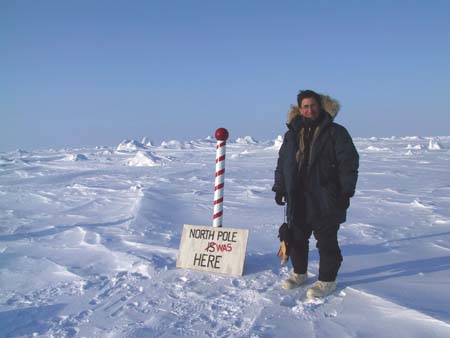
Hear award winning environmental journalist and author Andrew Revkin discuss his work on the New York Times’ Dot Earth blog, 25 years covering environmental and social subjects, and his previously published books, like The North Pole Was Here.
8 p.m., $20
Herbst Theater
401 Van Ness, SF
www.cityboxoffice.com

Hunting Eichmann
Hear author Neal Bascomb discuss his new book about a Nazi who escapes American POW camps and hides in the mountains in Buenos Aires before he is eventually caught and brought to trial.
7 p.m., free
Books Inc.
1760 4th St., Berk.
(510) 525-7777

McSweeny’s Issue 34
Attend this release of the highly anticipated Issue 34 of McSweeny’s presented by Nick McDonell, Tom Barbach, and Daniel Handler.
7:30 p.m., free
Books Inc.
2251 Chestnut, SF
(415) 931-3633

Noir Literary Night
Attend the 5th annual Nior Literary Night featuring Cara Black, author of Murder in the Palais Royal, David Corbett, author of Do They Know I’m Running?, and Joe Gores, author of Spade & Archer: The prequel to Dashiell Hammett’s the Maltese Falcon.
6 p.m., $12
Mechanic’s Institute
57 Post, SF
(415) 393-0100
www.milibrary.org

Karin Sanders
Attend a reading and discussion of Karin Sanders’ new book, Bodies in the Bog and the Archaeological Imagination, in conversation with Mark Sandberg.
5:30 p.m., free
University Press Books
2430 Bancroft, Berk.
(510) 548-0585

Crime Bomb

1

Editors note: This story was originally published May 31,  2001.


They found Virginia Lowery lying in the garage of her Excelsior home, an electrical cord around her throat, an ice pick jammed through her skull — in one ear and out the other. For the next 11 years San Francisco homicide detectives made no progress on the case. Promising leads turned into dead ends. Theories collapsed. The cops assigned to the case retired. It looked like Lowery’s 1987 slaying would never be solved.


Then in April 1998, by pure chance, police found Robert C. Nawi. Or rather, they found his fingertips.


When Nawi, a 57-year-old carpenter, got in a shouting match in a North Beach watering hole, he was picked up by the cops on misdemeanor charges and shuttled to county jail, where he was fingerprinted and booked. The computer spat out some interesting news: Nawi’s digits, according to the database, resembled a fingerprint found at the scene of Lowery’s slaying.


Soon thereafter, police evidence analyst Wendy Chong made a positive print match, and the new suspect found himself facing murder charges and life in a cage.


Nawi’s fate, to be decided at trial next year, rests largely on police readings of his fingerprints, as well as some DNA gathered by the coroner. Which raises some questions: How, exactly, did the cops and their computers analyze the evidence? Did they get it right? Is anybody checking their work?


Making a match between the distinguishing ridges and whorls, often microscopic, of two fresh fingerprints is a relatively simple task for a print expert. However, cases like Nawi’s aren’t so clear-cut: the print collected in Lowery’s garage is faint, smudged, and missing in patches.


Michael Burt, the resident forensicscience guru at the San Francisco Public Defender’s Office, shows me an 8-by-10-inch enlargement of the print discovered at the murder scene; it’s blurry, grainy, and only about 60 percent complete. To my layperson’s eye, it bears little resemblance to the clear, fresh mark left by Nawi at his booking. “The one print is so washed out you can’t see anything,” says Burt, who is representing Nawi. “This is not science at all; it’s subjective and shouldn’t be allowed.”


Burt, a 22-year veteran defense lawyer known around the Hall of Justice for his trademark cart full of documents, has plenty of cause to doubt the cops’ evidence. Despite what you may have seen on Law and Order, fingerprint examiners can — and often do — get it wrong. Last year 141 of America’s top forensic labs were tested to see if they could accurately match two fingerprints: 39 percent failed; 11 labs made false IDs. San Francisco analysts are rarely, if ever, graded for accuracy.


Jim Norris, head of the San Francisco Police Department’s forensics division, argues that new computer imaging tools are making it possible to match even sketchy, partial prints. “When somebody shows a print that was originally collected at the crime scene, and it looks very difficult to deal with, what they’re not looking at is the image that has been [digitally] enhanced,” Norris explains. “It’s a lot easier to deal with.” Norris admits that the department has seldom tested its print examiners for accuracy, but he says their work is constantly checked by superiors.


According to Burt, in this particular instance analysts didn’t turn to computers but simply enlarged the prints before making the call. The district attorney’s DNA evidence against Nawi is equally flawed, he says. When coroner Boyd Stephens autopsied the corpse, he — per routine — snipped the woman’s fingernails with a household nail clipper and stuck them in an envelope. Unrefrigerated, the clippings slowly rotted for more than a decade, until, in the wake of Nawi’s arrest, prosecutor John Farrell had them tested for DNA.


When the crime lab got the evidence, in 1998, DNA analyst Alan Keel scraped all 10 nails with a single cotton swab, combined the scrapings into one tiny pile, and dropped them into a genetic-typing device. According to standard forensic procedure, each nail should’ve been swabbed and tested separately.


Now, Burt contends, the sample has deteriorated because of a lack of refrigeration and has been contaminated with the DNA of more than one person. “[Keel] says there are three, possibly four different individuals underneath her fingernails,” the lawyer says. “He’s trying to grab my client out of that mixture. There’s no scientific way to do that.”


Norris disagrees: “There are ways to deal with [DNA] mixtures; it’s not a common problem luckily, but it’s something that comes up — for example, in rape cases where there are multiple assailants. There are ways to deal with it.”


I run down the scenario for Dr. Simon Ford, a Ph.D. biochemist and DNA expert who heads up San Francisco–based Lexigen Science and Law Consultants. “That’s not good,” Ford tells me. “You should deal with each hand separately, at least, and probably each nail separately. I don’t think combining all the nails together is a good idea.”


The dispassionate examination of crime scene evidence — narcotics, fingerprints, hair and fibers, genetic material, firearms, and everything else — is a cornerstone of the American justice system. The work, which can mean the difference between life and death for a suspect, is carried out by more than 500 labs nationwide, most of them run by law enforcement agencies.


In the public imagination — as shaped by endless cops-and-lawyers TV shows — forensic science is a perfectly impartial arbiter of justice. Eyewitnesses get confused. Police may be corrupt. Lawyers can corkscrew facts. Juries, not always composed of the brightest lights, can be swayed by mob dynamics. But science doesn’t lie. If the analyst says the bullet came from the suspect’s gun, then it must have.


It’s a comforting thought.


There’s just one problem: All forensic science is performed by humans, and all people make blunders. They mislabel samples. They use malfunctioning equipment. They inadvertently drop a flake of skin in a vial of blood, thus adding their own DNA to the sample.


Subjectivity, too, plays a starring role in forensic science, much of which depends on human-made comparisons. In one case heard last year by San Francisco Superior Court Judge Robert Dondero, two DNA experts couldn’t agree on the meaning of a genetic sample.


In addition to honest mistakes born of incompetence and overwork, there are continuously uncovered examples of fraud: the lab analyst, believing that the verdict justifies the means, willing to lie on the stand or fake test results. While the scientific question of DNA accuracy has been hashed out extensively in court rooms and the media, the issue of police crime lab accuracy has gone ignored, both by press and government regulators.


Each year California cops make 1.5 million arrests. Each of the state’s 19 local crime labs — run by sheriffs, prosecutors, and cops — performs thousands of analyses annually. Each of those tests, if faulty, could put an innocent person behind bars, or set a guilty soul free.


And in the wild world of forensics there are precious few safeguards against human bias and error: Crime labs are almost entirely unregulated. There are virtually no federal laws governing their operation; no law that says, “Bullet comparisons must be done using the best, most accurate techniques”; no law that says, “DNA examiners must meet these basic educational criteria”; no requirement that crime labs be audited and inspected. In California only DUI-<\h>testing procedures are regulated by state law.


“There’s more regulation in whether some clinical lab can give a test for strep throat than there is on whether you can use a test to put somebody in the gas chamber,” public defender Burt says. “That to me seems backwards. The stakes are the highest in the criminal justice system. These people are deciding who lives or dies.”


The ramifications spread beyond individual cases. While billions of dollars have been poured into police departments and prisons over the past two decades, pols and badge wearers have shown little interest in adequately funding or regulating crime labs. California’s facilities need hundreds of millions of dollars in repairs and equipment upgrades. The idea of public oversight is off the radar entirely.


The nonprofit American Society of Crime Laboratory Directors (ASCLD) is the closest thing forensics has to a regulatory agency. Created in the early 1970s to “improve the quality of laboratory services provided to the criminal justice system,” the group runs a voluntary accreditation program for forensic facilities. To get the society’s stamp of approval, a facility must pass a 149-point inspection. (Sample question: “Are the procedures used generally accepted in the field or supported by data gathered in a scientific manner?”) To maintain the certification, a lab must be tested annually and be reinspected every five years.


Of the approximately 500 labs in the United States, a mere 187 are accredited by the ASCLD. Only 11 of California’s 19 local crime labs have the group’s seal of approval. The San Francisco police facility isn’t one of them. Neither is the Contra Costa sheriff’s lab. Nor the San Mateo sheriff’s forensic unit.


“Got dope?” asks the white-coated woman who opens the locked door to the SFPD crime lab. She’s expecting cops bearing drug-filled baggies, to be weighed and tested and filed away until the courtroom beckons. Crime lab chief Martha “Marty” Blake steps out of her windowless office to greet me.


A few months back, Blake and her 18-person team traded overstuffed quarters in the city’s central cop shop at Eighth Street and Bryant for expansive new $1.5 million digs out in the asphalt wastes of the Hunters Point shipyard. “I’m getting ready to apply for accreditation, hopefully by next spring,” she says, pointing to a file cabinet emblazoned with the ASCLD seal. “We couldn’t get accredited in that facility when we were downtown at the Hall of Justice. It was too cramped. There was no way we could guarantee there would never be any chance for any contamination of the evidence when we had four people crammed into a little room trying to look at clothing, for example.”


Blake’s operation has taken its lumps over the years. In 1994 analyst Allison Lancaster was canned after she was videotaped faking drug tests. Last year Superior Court Judge Dondero slammed the lab’s lead DNA expert for “engaging in shortcuts,” “performing missteps,” and harboring a questionable “degree of bias” against defendants. Defense lawyers like Burt continue to hammer the lab for its lack of credentials.


With her eyeglasses and graying hair Blake looks more like a schoolteacher than a cop. She pulls a xeroxed sheet of paper out of a drawer and eagerly places it in front of me. “We just switched to a new case review process. This is the sort of thing we have to implement for accreditation. Every case we produce has to go through a review by a supervisor,” she explains. “This wasn’t happening before; a review happened before, but you’d just glance over [the work] and say, ‘Hmm, looks good to me,’ and initial it. It was sort of lightweight.” Bolstered by an increased budget and a growing staff, the lab’s procedures are improving across the board, according to Blake.


Why should forensic labs, which can land someone on death row, go without government oversight? “I’d like to think we can do this ourselves,” Blake replies, noting that the state’s management of the DUI testing program has been less than stellar. “I’m a little nervous about other agencies getting involved in regulation,” she says, because they don’t “really know the science.”


Nationally, the accountability vacuum is producing a steady stream of scandals, raising unsettling questions about the way we administer justice in this locked-down nation. A small sampling:
• Let’s start with the trial of the century, wherein O.J.’s defense team put the forensic bunglings of the Los Angeles Police Department on display for “unacceptable sloppiness,” pointing out a dozen major instances of possible evidence contamination. After losing the Simpson trial, the lab promptly began a thorough overhaul.
• In 1993 the West Virginia Supreme Court found a police blood expert guilty of fabricating or misrepresenting evidence in a staggering 134 cases. The man, one Fred Zain — employed by the state cops during the 1980s — was put on trial for perjury, while the state freed several unjustly imprisoned death row inmates and paid out millions to people who had been wrongfully convicted. Bexar County, Texas, where Zain worked in the early ’90s, also prosecuted him for perjury.
• A few years later, in 1997, the reputation of the Federal Bureau of Investigation crime lab — at the time widely regarded as the pinnacle of forensic science — was shredded by the allegations of a whistle-blowing scientist. The bureau’s lab practiced shoddy science and regularly presented inaccurate, pro-prosecution testimony, charged Dr. Frederic Whitehurst, one of the agency’s top explosives experts. The FBI denied the allegations and tried to discredit Whitehurst, but a scathing 517-page report by the Justice Department’s inspector general corroborated many of the scientist’s major claims and recommended disciplinary action against five agents.


• An April 1997 front-page story in the Wall Street Journal brought more unflattering publicity to the FBI lab, scrutinizing the track record of agent Michael Malone, a hair and fiber analyst. The paper quoted three well-known forensic scientists who challenged Malone’s analyses (one labeled him a “fraud”), illustrated numerous cases where the agent seemed to be fudging the evidence — and noted that courts were busy overturning convictions obtained with his testimony. “The guy’s a total liar,” one defense lawyer told the Wall Street Journal.
• In 1998 San Diego jurors convicted a top county police DNA expert of embezzling $8,100 in cash seized as evidence in murder cases. That same year the San Diego Police Department embarked on a 10-month internal investigation into charges of sloppy work and missing evidence at its crime lab, and it admitted that it had lost crucial evidence in an unsolved homicide case.
• Last year a crime lab chemist in Prince George’s County, Md., claimed that the police department was using improperly calibrated drug analysis equipment. Defense lawyers promptly challenged some 100 pending drug cases.


California is one of the few states that has actually scoped the inner workings of its local crime labs. The results of that onetime review, performed in 1998 by the state auditor’s office, are disturbing. Quality control was lacking at most of the facilities. Many of the labs were using “outdated and improperly working equipment.” As in San Francisco, many didn’t make their scientists undergo regular proficiency testing.


Without quality assurance measures — minimal at 13 of the 19 labs — the potential for error shoots through the roof. California auditor Elaine Howel says the study raised serious questions. “There are several issues,” she says. “Is the evidence being handled appropriately so there’s no potential for contamination?” Labs, according to Howel, should “make sure they are consistently applying the methodology so one forensic examiner isn’t using one technique and someone is using a different technique to conduct the same type of testing. That ties back to the credibility of the results.”


Ten of the outfits were relying on “outmoded” technology that needed replacement. At the Huntington Beach Police Department lab, staffers worked up a Rube Goldberg–<\d>esque scheme to revive a broken arson analysis gadget. Sort of. “Because the laboratory does not have the funds to replace this equipment, staff found a creative way to cool the [machine] using hoses rigged to a faucet,” auditors found. But, they noted, “this method could negatively affect the analysis of the evidence processed by this instrument.”


Then there was the question of whether the analysts themselves were up to par. “We think forensic examiners need to be tested every year to make sure they’re maintaining competence in their ability to perform the forensic examinations they’re doing,” Howel tells me. Eight of the labs had no proficiency testing for their staffers.


“It helped us put our operation in perspective to the rest of the state,” says S.F. lab chief Blake, who thinks the audit was fair. “We did look like we were swamped. It helped us get our additional staff.”


Whitehurst, the former top explosives expert at the FBI, doesn’t like the term ‘whistle-blower.’ “We’re simply scientists, and we disagree with the type of science that’s being practiced — because it’s not science,” he told me. “Our forensic labs are dictating truth; they’re not discovering it.” Whitehurst says he constantly hears from irate crime lab scientists claiming their operations are riddled with improprieties.


The Ph.D. chemist spent eight years at the bureau combing the rubble of bomb blasts for clues. And complaining. During his tenure with the bureau, he made 237 written complaints concerning what he saw as a pattern of bunk science and bogus testimony on the part of his colleagues. The charges spurred an 18-month probe by the Justice Department, the phone-book-size results of which were made public in 1997, undoubtedly marking one of the FBI’s worst public embarrassments.


The special-inspection team, an international panel of renowned forensic scientists, had few kind words for the lab, finding “significant instances of testimonial errors, substandard analytical work, and deficient practices” in numerous investigations, including the Unabomber, Oklahoma City, and World Trade Center bombings. Among the skeletons in the bureau’s closet: “scientifically flawed reports”; examiners devoid of the “requisite scientific qualifications”; and five agents who couldn’t be trusted.


Whitehurst’s experiences have led him to believe that crime labs should be overseen by federal or state authorities, rather than by ASCLD and its voluntary certification program. “It’s a foregone conclusion; there’s no question in my mind in five years forensic labs will be regulated, and they will be audited,” said Whitehurst, who now lives in Bethel, N.C., and acts as an expert witness in criminal trials. “There’s too much discovery happening.”


Lab directors argue that their work is constantly reviewed by the courts — juries don’t have to believe a forensic expert; judges can overturn verdicts based on forensic evidence — making their profession among the most scrutinized.
Whitehurst disagrees, saying juries, defense lawyers, and judges are often baffled by the science presented to them. “Listen to this phrase: pyrolisis-gas chromatography/mass spectrometry,” he says. “Do you know what that is? Let’s try this one: fourier transform infrared spectrometry. I’ve got a doctorate in chemistry and a jurisdoctorate also. What I’m saying to you are completely foreign concepts. When I try to explain how a ultraviolet spectraphatometer works, or how a micro spectraphatometer works, just saying the words begins the glass-over of the eyes.”


The Alameda County Sheriff’s crime lab is housed in a two-story building in the foothills just off 150th Avenue in San Leandro. On the second floor, in a series of linoleum-tiled rooms connected by a cluttered hallway, the lab’s technicians scope the physical remnants of crime, putting bullets beneath microscopes, lifting latent fingerprints from knife handles, culling DNA strands from splattered blood.


Each year the operation, which analyzes evidence for most of the county’s police forces, handles some 200 “major” investigations, most of them murders and rapes. But drug cases (1,800 to 2,000) and DUIs (more than 4,700) make up the bulk of the work. There are only eight lab technicians to handle the massive load.


“Every analytical report has to be right on the mark,” said lab director Tony Sprague, who has worked at the facility for 30 years. “We have a huge responsibility to make sure all the results are accurate.”


Sprague guides me through the building, showing me a single lead particle, as magnified 10,000 times by a monstrous, $270,000 scanning electron microscope. Next door a white-<\h>coated technician sits glued to a conventional microscope, studying a handgun cartridge. Across the hall are the analysts’ personal workstations: on one of the wide-topped tables sit the innards of an auto; on another lie sheets of paper covered with boot prints.


Sprague is an amiable gearhead and explains in detail how each of the machines works. The gas chromatograph/mass spectrometer, an ovenlike slab of a machine, can detect the presence of gasoline or kerosene in air samples collected at the scene of a suspected arson fire. Another device uses infrared light to determine the chemical composition of a given substance — a bag of white powder for instance.


The lab’s ASCLD accreditation in June 1999 was a huge undertaking, according to Sprague. “It took us about two years [to get certified],” he says. “It was costly from the standpoint that you have to take dedicated staff time away from analytical work to get the paperwork done for the accreditation process. In our case we really didn’t change our ways of doing forensic science to meet accreditation standards. There was really no issue about doing things differently — the thing we had to do, we had to document all the policies, the procedures, all of our quality assurance records had to be brought up to a little bit higher level.”


Voluntary reviews by the nonprofit ASCLD are enough regulation for Sprague, who views government oversight as a losing proposition. “Some mandated federal program? I don’t know that that’s really the answer,” he says. “That would involve a huge bureaucracy. It would be a very difficult situation.”


Ralph Keaton, executive director of ASCLD’s accrediting board, agrees. “I think crime laboratories should have some kind of program to review the quality of the work being produced by the laboratory — and that’s the reason we came into existence,” he tells me via telephone from the organization’s headquarters in Garner, N.C. “It’s my opinion that no one can evaluate the type of work being done better than the actual practitioners of that discipline. Just like the oversight of the medical profession is best done by the doctors themselves.”


Speaking to me in his office library, Sprague tells me he is proud of the work his team does, proud to be acknowledged by his peers. But he admits to a certain frustration, saying that his lab is seriously short-staffed: “We’re about one-third the strength we should be at for what we’re doing.”

Crime Bomb

0

Editors note: This story was originally published in 2001.


They found Virginia Lowery lying in the garage of her Excelsior home, an electrical cord around her throat, an ice pick jammed through her skull — in one ear and out the other. For the next 11 years San Francisco homicide detectives made no progress on the case. Promising leads turned into dead ends. Theories collapsed. The cops assigned to the case retired. It looked like Lowery’s 1987 slaying would never be solved.
Then in April 1998, by pure chance, police found Robert C. Nawi. Or rather, they found his fingertips.
When Nawi, a 57-year-old carpenter, got in a shouting match in a North Beach watering hole, he was picked up by the cops on misdemeanor charges and shuttled to county jail, where he was fingerprinted and booked. The computer spat out some interesting news: Nawi’s digits, according to the database, resembled a fingerprint found at the scene of Lowery’s slaying.
Soon thereafter, police evidence analyst Wendy Chong made a positive print match, and the new suspect found himself facing murder charges and life in a cage.
Nawi’s fate, to be decided at trial next year, rests largely on police readings of his fingerprints, as well as some DNA gathered by the coroner. Which raises some questions: How, exactly, did the cops and their computers analyze the evidence? Did they get it right? Is anybody checking their work?


Making a match between the distinguishing ridges and whorls, often microscopic, of two fresh fingerprints is a relatively simple task for a print expert. However, cases like Nawi’s aren’t so clear-cut: the print collected in Lowery’s garage is faint, smudged, and missing in patches.
Michael Burt, the resident forensic-<\h>science guru at the San Francisco Public Defender’s Office, shows me an 8-by-10-inch enlargement of the print discovered at the murder scene; it’s blurry, grainy, and only about 60 percent complete. To my layperson’s eye, it bears little resemblance to the clear, fresh mark left by Nawi at his booking. “The one print is so washed out you can’t see anything,” says Burt, who is representing Nawi. “This is not science at all; it’s subjective and shouldn’t be allowed.”
Burt, a 22-year veteran defense lawyer known around the Hall of Justice for his trademark cart full of documents, has plenty of cause to doubt the cops’ evidence. Despite what you may have seen on Law and Order, fingerprint examiners can — and often do — get it wrong. Last year 141 of America’s top forensic labs were tested to see if they could accurately match two fingerprints: 39 percent failed; 11 labs made false IDs. San Francisco analysts are rarely, if ever, graded for accuracy.
Jim Norris, head of the San Francisco Police Department’s forensics division, argues that new computer imaging tools are making it possible to match even sketchy, partial prints. “When somebody shows a print that was originally collected at the crime scene, and it looks very difficult to deal with, what they’re not looking at is the image that has been [digitally] enhanced,” Norris explains. “It’s a lot easier to deal with.” Norris admits that the department has seldom tested its print examiners for accuracy, but he says their work is constantly checked by superiors.
According to Burt, in this particular instance analysts didn’t turn to computers but simply enlarged the prints before making the call. The district attorney’s DNA evidence against Nawi is equally flawed, he says. When coroner Boyd Stephens autopsied the corpse, he — per routine — snipped the woman’s fingernails with a household nail clipper and stuck them in an envelope. Unrefrigerated, the clippings slowly rotted for more than a decade, until, in the wake of Nawi’s arrest, prosecutor John Farrell had them tested for DNA.
When the crime lab got the evidence, in 1998, DNA analyst Alan Keel scraped all 10 nails with a single cotton swab, combined the scrapings into one tiny pile, and dropped them into a genetic-<\h>typing device. According to standard forensic procedure, each nail should’ve been swabbed and tested separately.
Now, Burt contends, the sample has deteriorated because of a lack of refrigeration and has been contaminated with the DNA of more than one person. “[Keel] says there are three, possibly four different individuals underneath her fingernails,” the lawyer says. “He’s trying to grab my client out of that mixture. There’s no scientific way to do that.”
Norris disagrees: “There are ways to deal with [DNA] mixtures; it’s not a common problem luckily, but it’s something that comes up — for example, in rape cases where there are multiple assailants. There are ways to deal with it.”
I run down the scenario for Dr. Simon Ford, a Ph.D. biochemist and DNA expert who heads up San Francisco–<\d>based Lexigen Science and Law Consultants. “That’s not good,” Ford tells me. “You should deal with each hand separately, at least, and probably each nail separately. I don’t think combining all the nails together is a good idea.”
Blinding them with science
The dispassionate examination of crime scene evidence — narcotics, fingerprints, hair and fibers, genetic material, firearms, and everything else — is a cornerstone of the American justice system. The work, which can mean the difference between life and death for a suspect, is carried out by more than 500 labs nationwide, most of them run by law enforcement agencies.
In the public imagination — as shaped by endless cops-and-<\h>lawyers TV shows — forensic science is a perfectly impartial arbiter of justice. Eyewitnesses get confused. Police may be corrupt. Lawyers can corkscrew facts. Juries, not always composed of the brightest lights, can be swayed by mob dynamics. But science doesn’t lie. If the analyst says the bullet came from the suspect’s gun, then it must have.
It’s a comforting thought.
There’s just one problem: All forensic science is performed by humans, and all people make blunders. They mislabel samples. They use malfunctioning equipment. They inadvertently drop a flake of skin in a vial of blood, thus adding their own DNA to the sample.
Subjectivity, too, plays a starring role in forensic science, much of which depends on human-<\h>made comparisons. In one case heard last year by San Francisco Superior Court Judge Robert Dondero, two DNA experts couldn’t agree on the meaning of a genetic sample.
In addition to honest mistakes born of incompetence and overwork, there are continuously uncovered examples of fraud: the lab analyst, believing that the verdict justifies the means, willing to lie on the stand or fake test results.
While the scientific question of DNA accuracy has been hashed out extensively in court rooms and the media, the issue of police crime lab accuracy has gone ignored, both by press and government regulators.
Each year California cops make 1.5 million arrests. Each of the state’s 19 local crime labs — run by sheriffs, prosecutors, and cops — performs thousands of analyses annually. Each of those tests, if faulty, could put an innocent person behind bars, or set a guilty soul free.
And in the wild world of forensics there are precious few safeguards against human bias and error: Crime labs are almost entirely unregulated. There are virtually no federal laws governing their operation; no law that says, “Bullet comparisons must be done using the best, most accurate techniques”; no law that says, “DNA examiners must meet these basic educational criteria”; no requirement that crime labs be audited and inspected. In California only DUI-<\h>testing procedures are regulated by state law.
“There’s more regulation in whether some clinical lab can give a test for strep throat than there is on whether you can use a test to put somebody in the gas chamber,” public defender Burt says. “That to me seems backwards. The stakes are the highest in the criminal justice system. These people are deciding who lives or dies.”
The ramifications spread beyond individual cases. While billions of dollars have been poured into police departments and prisons over the past two decades, pols and badge wearers have shown little interest in adequately funding or regulating crime labs. California’s facilities need hundreds of millions of dollars in repairs and equipment upgrades. The idea of public oversight is off the radar entirely.
The nonprofit American Society of Crime Laboratory Directors (ASCLD) is the closest thing forensics has to a regulatory agency. Created in the early 1970s to “improve the quality of laboratory services provided to the criminal justice system,” the group runs a voluntary accreditation program for forensic facilities. To get the society’s stamp of approval, a facility must pass a 149-point inspection. (Sample question: “Are the procedures used generally accepted in the field or supported by data gathered in a scientific manner?”) To maintain the certification, a lab must be tested annually and be reinspected every five years.
Of the approximately 500 labs in the United States, a mere 187 are accredited by the ASCLD. Only 11 of California’s 19 local crime labs have the group’s seal of approval. The San Francisco police facility isn’t one of them. Neither is the Contra Costa sheriff’s lab. Nor the San Mateo sheriff’s forensic unit.
Renewing the review process
“Got dope?” asks the white-<\h>coated woman who opens the locked door to the SFPD crime lab. She’s expecting cops bearing drug-filled baggies, to be weighed and tested and filed away until the courtroom beckons. Crime lab chief Martha “Marty” Blake steps out of her windowless office to greet me.
A few months back, Blake and her 18-person team traded overstuffed quarters in the city’s central cop shop at Eighth Street and Bryant for expansive new $1.5 million digs out in the asphalt wastes of the Hunters Point shipyard. “I’m getting ready to apply for accreditation, hopefully by next spring,” she says, pointing to a file cabinet emblazoned with the ASCLD seal. “We couldn’t get accredited in that facility when we were downtown at the Hall of Justice. It was too cramped. There was no way we could guarantee there would never be any chance for any contamination of the evidence when we had four people crammed into a little room trying to look at clothing, for example.”
Blake’s operation has taken its lumps over the years. In 1994 analyst Allison Lancaster was canned after she was videotaped faking drug tests. Last year Superior Court Judge Dondero slammed the lab’s lead DNA expert for “engaging in shortcuts,” “performing missteps,” and harboring a questionable “degree of bias” against defendants. Defense lawyers like Burt continue to hammer the lab for its lack of credentials.
With her eyeglasses and graying hair Blake looks more like a schoolteacher than a cop. She pulls a xeroxed sheet of paper out of a drawer and eagerly places it in front of me. “We just switched to a new case review process. This is the sort of thing we have to implement for accreditation. Every case we produce has to go through a review by a supervisor,” she explains. “This wasn’t happening before; a review happened before, but you’d just glance over [the work] and say, ‘Hmm, looks good to me,’ and initial it. It was sort of lightweight.” Bolstered by an increased budget and a growing staff, the lab’s procedures are improving across the board, according to Blake.
Why should forensic labs, which can land someone on death row, go without government oversight? “I’d like to think we can do this ourselves,” Blake replies, noting that the state’s management of the DUI testing program has been less than stellar. “I’m a little nervous about other agencies getting involved in regulation,” she says, because they don’t “really know the science.”
Beyond O.J.
Nationally, the accountability vacuum is producing a steady stream of scandals, raising unsettling questions about the way we administer justice in this locked-down nation. A small sampling:
• Let’s start with the trial of the century, wherein O.J.’s defense team put the forensic bunglings of the Los Angeles Police Department on display for “unacceptable sloppiness,” pointing out a dozen major instances of possible evidence contamination. After losing the Simpson trial, the lab promptly began a thorough overhaul.
• In 1993 the West Virginia Supreme Court found a police blood expert guilty of fabricating or misrepresenting evidence in a staggering 134 cases. The man, one Fred Zain — employed by the state cops during the 1980s — was put on trial for perjury, while the state freed several unjustly imprisoned death row inmates and paid out millions to people who had been wrongfully convicted. Bexar County, Texas, where Zain worked in the early ’90s, also prosecuted him for perjury.
• A few years later, in 1997, the reputation of the Federal Bureau of Investigation crime lab — at the time widely regarded as the pinnacle of forensic science — was shredded by the allegations of a whistle-<\h>blowing scientist. The bureau’s lab practiced shoddy science and regularly presented inaccurate, pro-<\h>prosecution testimony, charged Dr. Frederic Whitehurst, one of the agency’s top explosives experts. The FBI denied the allegations and tried to discredit Whitehurst, but a scathing 517-page report by the Justice Department’s inspector general corroborated many of the scientist’s major claims and recommended disciplinary action against five agents.
• An April 1997 front-page story in the Wall Street Journal brought more unflattering publicity to the FBI lab, scrutinizing the track record of agent Michael Malone, a hair and fiber analyst. The paper quoted three well-known forensic scientists who challenged Malone’s analyses (one labeled him a “fraud”), illustrated numerous cases where the agent seemed to be fudging the evidence — and noted that courts were busy overturning convictions obtained with his testimony. “The guy’s a total liar,” one defense lawyer told the Wall Street Journal.
• In 1998 San Diego jurors convicted a top county police DNA expert of embezzling $8,100 in cash seized as evidence in murder cases. That same year the San Diego Police Department embarked on a 10-month internal investigation into charges of sloppy work and missing evidence at its crime lab, and it admitted that it had lost crucial evidence in an unsolved homicide case.
• Last year a crime lab chemist in Prince George’s County, Md., claimed that the police department was using improperly calibrated drug analysis equipment. Defense lawyers promptly challenged some 100 pending drug cases.
Under the microscope
California is one of the few states that has actually scoped the inner workings of its local crime labs. The results of that onetime review, performed in 1998 by the state auditor’s office, are disturbing. Quality control was lacking at most of the facilities. Many of the labs were using “outdated and improperly working equipment.” As in San Francisco, many didn’t make their scientists undergo regular proficiency testing.
Without quality assurance measures — minimal at 13 of the 19 labs — the potential for error shoots through the roof. California auditor Elaine Howel says the study raised serious questions. “There are several issues,” she says. “Is the evidence being handled appropriately so there’s no potential for contamination?” Labs, according to Howel, should “make sure they are consistently applying the methodology so one forensic examiner isn’t using one technique and someone is using a different technique to conduct the same type of testing. That ties back to the credibility of the results.”
Ten of the outfits were relying on “outmoded” technology that needed replacement. At the Huntington Beach Police Department lab, staffers worked up a Rube Goldberg–<\d>esque scheme to revive a broken arson analysis gadget. Sort of. “Because the laboratory does not have the funds to replace this equipment, staff found a creative way to cool the [machine] using hoses rigged to a faucet,” auditors found. But, they noted, “this method could negatively affect the analysis of the evidence processed by this instrument.”
Then there was the question of whether the analysts themselves were up to par. “We think forensic examiners need to be tested every year to make sure they’re maintaining competence in their ability to perform the forensic examinations they’re doing,” Howel tells me. Eight of the labs had no proficiency testing for their staffers.
“It helped us put our operation in perspective to the rest of the state,” says S.F. lab chief Blake, who thinks the audit was fair. “We did look like we were swamped. It helped us get our additional staff.”
Busting the FBI
Whitehurst, the former top explosives expert at the FBI, doesn’t like the term ‘whistle-blower.’ “We’re simply scientists, and we disagree with the type of science that’s being practiced — because it’s not science,” he told me. “Our forensic labs are dictating truth; they’re not discovering it.” Whitehurst says he constantly hears from irate crime lab scientists claiming their operations are riddled with improprieties.
The Ph.D. chemist spent eight years at the bureau combing the rubble of bomb blasts for clues. And complaining. During his tenure with the bureau, he made 237 written complaints concerning what he saw as a pattern of bunk science and bogus testimony on the part of his colleagues. The charges spurred an 18-month probe by the Justice Department, the phone-book-<\h>size results of which were made public in 1997, undoubtedly marking one of the FBI’s worst public embarrassments.
The special-inspection team, an international panel of renowned forensic scientists, had few kind words for the lab, finding “significant instances of testimonial errors, substandard analytical work, and deficient practices” in numerous investigations, including the Unabomber, Oklahoma City, and World Trade Center bombings. Among the skeletons in the bureau’s closet: “scientifically flawed reports”; examiners devoid of the “requisite scientific qualifications”; and five agents who couldn’t be trusted.
Whitehurst’s experiences have led him to believe that crime labs should be overseen by federal or state authorities, rather than by ASCLD and its voluntary certification program. “It’s a foregone conclusion; there’s no question in my mind in five years forensic labs will be regulated, and they will be audited,” said Whitehurst, who now lives in Bethel, N.C., and acts as an expert witness in criminal trials. “There’s too much discovery happening.”
Lab directors argue that their work is constantly reviewed by the courts — juries don’t have to believe a forensic expert; judges can overturn verdicts based on forensic evidence — making their profession among the most scrutinized.
Whitehurst disagrees, saying juries, defense lawyers, and judges are often baffled by the science presented to them. “Listen to this phrase: pyrolisis-gas chromatography/mass spectrometry,” he says. “Do you know what that is? Let’s try this one: fourier transform infrared spectrometry. I’ve got a doctorate in chemistry and a jurisdoctorate also. What I’m saying to you are completely foreign concepts. When I try to explain how a ultraviolet spectraphatometer works, or how a micro spectraphatometer works, just saying the words begins the glass-over of the eyes.”
Understaffed in Alameda
The Alameda County Sheriff’s crime lab is housed in a two-<\h>story building in the foothills just off 150th Avenue in San Leandro. On the second floor, in a series of linoleum-<\h>tiled rooms connected by a cluttered hallway, the lab’s technicians scope the physical remnants of crime, putting bullets beneath microscopes, lifting latent fingerprints from knife handles, culling DNA strands from splattered blood.
Each year the operation, which analyzes evidence for most of the county’s police forces, handles some 200 “major” investigations, most of them murders and rapes. But drug cases (1,800 to 2,000) and DUIs (more than 4,700) make up the bulk of the work. There are only eight lab technicians to handle the massive load.
“Every analytical report has to be right on the mark,” said lab director Tony Sprague, who has worked at the facility for 30 years. “We have a huge responsibility to make sure all the results are accurate.”
Sprague guides me through the building, showing me a single lead particle, as magnified 10,000 times by a monstrous, $270,000 scanning electron microscope. Next door a white-<\h>coated technician sits glued to a conventional microscope, studying a handgun cartridge. Across the hall are the analysts’ personal workstations: on one of the wide-<\h>topped tables sit the innards of an auto; on another lie sheets of paper covered with boot prints.
Sprague is an amiable gearhead and explains in detail how each of the machines works. The gas chromatograph/mass spectrometer, an ovenlike slab of a machine, can detect the presence of gasoline or kerosene in air samples collected at the scene of a suspected arson fire. Another device uses infrared light to determine the chemical composition of a given substance — a bag of white powder for instance.
The lab’s ASCLD accreditation in June 1999 was a huge undertaking, according to Sprague. “It took us about two years [to get certified],” he says. “It was costly from the standpoint that you have to take dedicated staff time away from analytical work to get the paperwork done for the accreditation process. In our case we really didn’t change our ways of doing forensic science to meet accreditation standards. There was really no issue about doing things differently — the thing we had to do, we had to document all the policies, the procedures, all of our quality assurance records had to be brought up to a little bit higher level.”
Voluntary reviews by the nonprofit ASCLD are enough regulation for Sprague, who views government oversight as a losing proposition. “Some mandated federal program? I don’t know that that’s really the answer,” he says. “That would involve a huge bureaucracy. It would be a very difficult situation.”
Ralph Keaton, executive director of ASCLD’s accrediting board, agrees. “I think crime laboratories should have some kind of program to review the quality of the work being produced by the laboratory — and that’s the reason we came into existence,” he tells me via telephone from the organization’s headquarters in Garner, N.C. “It’s my opinion that no one can evaluate the type of work being done better than the actual practitioners of that discipline. Just like the oversight of the medical profession is best done by the doctors themselves.”
Speaking to me in his office library, Sprague tells me he is proud of the work his team does, proud to be acknowledged by his peers. But he admits to a certain frustration, saying that his lab is seriously short-staffed: “We’re about one-third the strength we should be at for what we’re doing.”<\!s>v

Stage listings

0

Stage listings are compiled by Guardian staff. Performance times may change; call venues to confirm. Reviewers are Robert Avila, Rita Felciano, and Nicole Gluckstern. Submit items for the listings at listings@sfbg.com.

THEATER

OPENING

Peter Pan Threesixty Theater, Ferry Park (on Embarcadero across from the Ferry Bldg); www.peterpantheshow.com. $30-125. Previews Tues/27 and April 29, 7pm; April 30-May 1, 7:30pm (also May 1, 2pm); April 28 and May 5, 2pm; May 2, 1 and 5pm. Opens May 8, 7:30pm. Runs Tues and Thurs, 7pm; Fri-Sat, 7:30pm (also Sat, 2pm); Wed, 2pm; Sun, 1 and 5pm. Through August 29. JM Barrie’s tale is performed in a specially-built 360-degree CGI theater.

Tartuffe Studio 205 at Off-Market Theater, 965 Mission; 377-5882, http://generationtheatre.com. $20-25. Opens Fri/23, 8pm. Runs Fri-Sat, 8pm; Sun, 3pm. Through May 16. Generation Theatre performs a new English translation of Molière’s classic, in Alexandrine verse.

BAY AREA

Oliver! Julia Morgan Center for the Arts, 2640 College, Berk; www.berkeleyplayhouse.org. $24-33. Opens Sat/24, 7pm. Runs Fri, 7:30pm; Sat, 2 and 7pm; Sun, 1 and 6pm. Through May 16. Berkeley Playhouse performs the Dickens-based musical.

ONGOING

An Accident Magic Theatre, Bldg D, Fort Mason Center, Marina at Laguna; 441-8822, www.magictheatre.org. $25-55. Opens Wed/21, 8pm. Runs Wed-Sat, 8pm (also Sat, 2:30pm); Sun, 2:30pm; Tues, 7pm. Through May 9. Magic Theatre closes their season with Lydia Stryk’s world premiere drama.

*…And Jesus Moonwalks the Mississippi Cutting Ball Theater, 277 Taylor; 1-800-838-3006, www.cuttingball.com. $15-30. Thurs/22-Sat/24, 8pm; Sun/25, 5pm. In this inspired poetical-historical counter-narrative from Bay Area playwright Marcus Gardley, Greek mythology, African American folklore, personal family history, and Christian theology are all drawn irresistibly along in a great sweep of wild and incisive humor, passion, pathos and rousing gospel music as buoyant and wide as the Mississippi — or rather Miss Sippi (the impressive Nicole C. Julien), personification of the mighty and flighty river. The Cutting Ball-Playwrights Foundation coproduction, lovingly directed by Amy Mueller, sports exquisite design touches from Cutting Ball regulars like Michael Locher, whose gorgeous plank-wood set serves as the ideal platform for a work both magnificently simple and eloquently evocative. (Avila)

Andy Warhol: Good For the Jews? Jewish Theatre, 470 Florida; 292-1233, www.tjt-sf.org. $15-45. Thurs-Sat, 8pm; Sun, 2 and 7pm. Through May 16. Renowned monologist Josh Kornbluth is ready to admit his niche is a narrow one: he talks about himself, and more than that, he talks about his relationship to his beloved late father, the larger-than-life old-guard communist of Kornbluth’s breakthrough Red Diaper Baby. So it will not be surprising that in his current (and still evolving) work, created with director David Dower, the performer-playwright’s attempt to "enter" Warhol’s controversial ten portraits of famous 20th-century Jews (neatly illuminated at the back of the stage) stirs up memories of his father, along with a close family friend — an erudite bachelor and closeted homosexual who impressed the boyhood Josh with bedtime stories culled from his dissertation. The scenes in which Kornbluth recreates these childhood memories are among the show’s most effective, although throughout the narrative Kornbluth, never more confident in his capacities, remains a knowing charmer. But the story’s central conceit, concerning his ambivalence over presenting a showing of "Warhol’s Jews" at San Francisco’s Contemporary Jewish Museum, feels somehow artificial. It’s almost a stylized rendition of the secular-Jewish moral quandary and neurotic obsession driving Kornbluth works of the past — or in other words, all surface, not unlike the work of another shock-haired artist, but less meaningfully so. (Avila)

The Diary of Anne Frank Next Stage, 1620 Gough; 1-800-838-3006, www.custommade.org. $10-28. Thurs-Sat, 8pm; Sun, 7pm. Through May 1. Custom Made performs Wendy Kesselman’s modern take on the classic.

"DIVAfest" Exit Theatre, 156 Eddy; 673-3847, www.theexit.org. Check website for dates and times. Through May 1. The ninth annual festival features plays and performances by women artists.

Eat, Pray, Laugh! Off-Market Theaters, 965 Mission; www.brownpapertickets.com. $20. Wed, 8pm. Through April 28. Off-Market Theaters presents stand up comic and solo artist Alicia Dattner in her award-winning solo show.

Frau Bachfeifengesicht’s Spectacle of Perfection Stage Werx Theatre, 533 Sutter; 1-800-838-3006, www.circusfinelli.com. $15-20. Fri/23-Sun/25, 8pm. San Francisco’s all-women clown troupe, Circus Finelli, performs their comedy show inspired by European circus acts and American vaudeville.

*Loveland The Marsh, 1074 Valencia; 826-5750, www.themarsh.org. $15-50. Sat/24, 8:30pm; Sun/25, 7pm. Starting May 8, runs Sat, 5pm and Sun, 2pm at the Marsh Berkeley, 2120 Allston, Berk. Through June 13. Los Angeles–based writer-performer Ann Randolph returns to the Marsh with a new solo play partly developed during last year’s Marsh run of her memorable Squeeze Box. Randolph plays loner Frannie Potts, a rambunctious, cranky, and libidinous individual of decidedly odd mien, who is flying back home to Ohio after the death of her beloved mother. The flight is occasion for Frannie’s own flights of memory, exotic behavior in the aisle, and unabashed advances toward the flight deck brought on by the seductively confident strains of the captain’s commentary. The singular personality and mother-daughter relationship that unfurls along the way is riotously demented and brilliantly humane. (Avila)

Macho Bravado Thick House, 1695 18th St; http://machobravado.eventbee.com. $15-25. Thurs/22-Sat/24, 8pm. Asian American Theater Company performs Alex Park’s drama about a Korean-American soldier dealing with life on the home front after fighting in the Middle East.

*Master Class New Conservatory Theatre Center, 25 Van Ness; 861-8972, www.nctcsf.org. $22-40. Wed-Sat, 8pm; Sun, 2pm. Through May 2. Terrence McNally’s lovingly clever and thoroughly engaging portrait-play about opera icon Maria Callas takes the inspired notion of post-career Callas (Michaela Greeley) teaching a Julliard master class of eager young singers, while naturally finding herself unable to resist dominating the stage once more. Through a set of arias performed to piano accompaniment (by Kenneth Helman) by a cast of actor-singers (Alyssa Stone, Holly Nugent, Gustavo Hernández), Callas’s unselfconsciously curt and even brutal interactions with the students finally evoke for this deeply proud yet insecure woman both past theatrical glories and backstage heartaches. The play receives an impressive, all-around satisfying production at New Conservatory Theatre under Arturo Catricala’s astute direction. Of course, even with decent to excellent work on and off stage by the entire production team — including a stately mood-setting scenic design by Kuo-Hao Lo — it would no doubt amount to little without a formidable lead actor to fill Callas’s elegant but slightly over-the-top shoes. Here a marvelously imposing yet charming Greeley delivers the part as if she were born to play it, and all goes swimmingly as a result. (Avila)

Pearls Over Shanghai Hypnodrome, 575 Tenth St.; 1-800-838-3006, www.thrillpeddlers.com. $30-69. Fri-Sat, 8pm; starting July 10, runs Sat, 8pm and Sun, 7pm. Extended through August 1. Thrillpeddlers presents this revival of the legendary Cockettes’ 1970 musical extravaganza.

The Real Americans The Marsh, 1062 Valencia; 826-5750, www.themarsh.org. $18-50. Wed-Thurs and May 28, 8pm; Sat, 5pm; Sun, 3pm. Through May 30. The Marsh presents the world premiere of Dan Hoyle’s new solo show.

SexRev: The José Sarria Experience Mama Calizo’s Voice Factory, 1519 Mission; 1-800-838-3006, www.therhino.org. $10-25. Previews Wed/21-Fri/23, 8pm. Opens Sat/24, 8pm. Runs Wed-Sat, 8pm; Sun, 2pm. Through May 2. Theatre Rhinoceros presents John Fisher’s musical celebration of America’s first queer activist.

Shopping! The Musical Shelton Theater, 533 Sutter; 1-800-838-3006, www.brownpapertickets.com. $27-29. Fri-Sat, 8pm. Ongoing. The musical is now in its fifth year at Shelton Theater.

Tell It Slant Southside Theater, Fort Mason Center, Bldg D, Marina at Laguna; www.tixbayarea.com. $20-40. Fri-Sun, 8pm (also Sun, 2pm; no 8pm show May 16). Through May 16. BootStrap Foundation presents Sharmon J. Hilfinger and Joan McMillen’s musical about Emily Dickinson.

"Wanton Darkness: Two Plays By Harold Pinter and Conor McPherson" Phoenix Theatre, 414 Mason; 335-6087. $24-28. Thurs-Sat, 8pm; Sun, 2pm. Through May 8. 2nd Wind Productions performs Ashes to Ashes and St. Nicholas in repertory.

What Mama Said About Down There Our Little Theater, 287 Ellis; 820-3250, www.theatrebayarea.org. $15-25. Thurs-Sun, 8pm. Through July 30. Writer-performer-activist Sia Amma presents this largely political, a bit clinical, inherently sexual, and utterly unforgettable performance piece.

BAY AREA

*East 14th: True Tales of a Reluctant Player Marsh Berkeley, 2120 Allston, Berk; www.themarsh.org. $20-35. Sun/25, 2pm; April 30 and May 7, 9pm; May 1 and 8, 8pm. Through May 8. Don Reed’s solo play, making its Oakland debut after an acclaimed New York run, is truly a welcome homecoming twice over. (Avila)

Equivocation Marin Theatre Company, 397 Miller, Mill Valley; (415) 388-5208, www.marintheatre.org. $34-54. Tues and Thurs-Sat, 8pm (also Sat/24 and May 1, 2pm; no show April 30); Wed, 7:30pm; Sun, 2 and 7pm. Through May 2. Marin Theatre Company presents playwright Bill Cain’s award-winning hit, a sparksy drama that steeps itself in the history of Shakespeare’s life, labors and times to, among other things, draw pointed references to a barbaric period of fear, witch-hunting and state-sponsored torture ("Politics is religion for people who think they’re god," as one character has it). As staged by artistic director Jasson Minadakis, the play is nervously kinetic and pitched rather high by a cast of first-rate actors delivering surprisingly lackluster performances. The fact is Cain also bites off quite a bit in Equivocation, including "Shagspeare"’s (Charles Shaw Robinson) fraught relationship with his morosely clever daughter (Anna Bullard), neglected twin of the beloved son he lost — which is perhaps why some of it seems only half chewed by the end. The play — set in designer J.B. Wilson’s metallic two-tiered semi-circle representing the storied Globe Theatre, where the Bard wrote and occasionally acted alongside his fellow King’s Men as co-proprietor — has also a wearying tendency to spell its morals in block letters. Some genuine insight into the plays and their meaning then and now lifts interest in the fictionalized action, which otherwise skirts by on mild amusement, somewhat strained dialogue and familiar post-9/11 indignation. (Avila)

Girlfriend Berkeley Repertory Theatre, Thrust Stage, 2025 Addison, Berk; (510) 647-2949, www.berkeleyrep.org. $27-71. Wed, 7pm; Thurs-Sat and Tues, 2pm (also Sat, 2pm); Sun, 2 and 7pm. Through May 9. If you like Matthew Sweet’s songs you’ll probably like the spirited renditions in this new boy-meets-boy musical, which borrows its title from Sweet’s famous 1991 album. The songs, backed by a solid band in a recessed fake-wood-paneled den at the back of the stage, underscore the fraught but exhilarating emotional bond between two Nebraska teens at the end of their high school careers and the cusp of an anxious, ambiguous independence. The performances and chemistry generated by actors Ryder Bach and Jason Hite under Les Waters’ sharp direction are marvelous, delivering perfectly the inherent honesty and feeling in Todd Almond’s book, while Joe Goode’s beautifully understated choreography adds a fresh, youthful insouciance to the staging. But the story is a small one, not just a small town story, and its short, predictable arc makes for a slackness not altogether compensated for by the evocative tension between the lovers. (Avila)

A History of Human Stupidity LaVal’s Subterranean Theatre, 1834 Euclid, Berk; (510) 499-0356, www.randt.org. $16-20. Thurs/22-Sat/24, 8pm; Sun/25, 7pm. Rough and Tumble presents a new play about an old subject, human folly. Actually, Andy Bayiates’ play — which under Cliff Mayotte’s direction takes the form of an out-to-the-audience physicalized history lesson before a blackboard wall — is less than comprehensive, leaping from a Dawn-of-Man slugfest to a familiar recounting of Western imperial history under an evolving definition of stupidity — initially, "a good idea gone bad." Performed unevenly by a five-member female cast, the wordier humor leans toward the quirky or goofy, while the slapstick lacks much of a punch, despite a fair amount of punching. In the end, the insights and irreverence are too pedestrian to sustain even those theoretically receptive to a wacky lecture on familiar themes. (Avila)

John Gabriel Borkman Aurora Theatre, 2081 Addison, Berk; (510) 843-4822, www.auroratheatre.org. $34-55. Tues and Sun, 7pm (also Sun, 2pm); Wed-Sat, 8pm. Through May 9. A former bank manager (James Carpenter) who did time for illegally speculating with customer accounts to the ruin of all now paces like a lone wolf (in the operative metaphor) in his upstairs study, planning a return to respectability, as his estranged wife (Karen Grassle) occupies the rooms below along with a testy housekeeper (Lizzie Calogero), where her sister (Karen Lewis) competes for the love and loyalty of the patriarch’s grown son (Aaron Wilton), who contrary to the designs of all his elders is determined to marry a charming widow (Pamela Gaye Walker) and "live," as he is compelled to reiterate. Ibsen’s play has an enduring topicality that is hard to miss of course, but Aurora’s production, directed by veteran hand Barbara Oliver, also inadvertently suggests why this leaden, slightly ridiculous work is so rarely produced, despite some solid acting, especially from an imposing yet slyly comical Carpenter in the title role. (Avila)

The Lysistrata Project Regent House, 2836 Regent, Berk; www.crowdedfire.org. $10-15. Thurs/22-Fri/23, 8pm. Crowded Fire presents Elana McKernan’s Aristophanes-inspired tale as part of its Matchbox Production development program for new works.

*A Seagull in the Hamptons Ashby Stage, 1901 Ashby, Berk; www.shotgunplayers.org. $15-30. Wed/21, 7pm; Thurs/22-Sat/24, 8pm; Sun/25, 5pm. Emily Mann’s free adaptation of Chekhov’s Seagull captures the essence of his early "comedy" — very much a human comedy, brimming with pain, turmoil and tragedy in equal measure with laughter, love and folly — and yet manages to be completely of its own (our own) time and place, so effortlessly as to seem a little miraculous. It helps, naturally, that director Reid Davis has assembled a very solid and enjoyable ensemble cast for this wonderfully tailored Shotgun Players production. (Avila)

To Kill a Mockingbird Mountain View Center for the Performing Arts, 500 Castro, Mtn View; (650) 463-1960, www.theatreworks.org. $27-62. Tues-Wed, 7:30pm; Thurs-Sat, 8pm (also Sat, 2pm); Sun, 2 and 7pm. Through May 9. TheatreWorks performs Christopher Sergel’s adaptation of Harper Lee’s literary masterpiece.

PERFORMANCE/DANCE

Alonzo King LINES Ballet Novellus Theater, Yerba Buena Center for the Arts, 700 Howard; 978-2787, www.linesballet.org. Wed-Thurs, 7pm; Fri-Sat, 8pm; Sun, 5pm. The company performs its 2010 spring season.

"Bay Area National Dance Week" Various locations; www.bayareadw.org. April 23-May 2. Over 400 free events, including performances and classes, hightlight this 12th annual celebration of dance.

"The Cat’s Pajamas" Make-Out Room, 2335 22nd St; www.makeoutroom.com. Mon, 8pm, $5. Cabaret show featuring a variety of acts under the theme "ModMambo."

"CubaCaribe Festival of Dance and Music" Dance Mission Theater, 3316 24th St; www.cubacaribe.org. Fri-Sat, 8pm; Sun, 7pm; Sun/25, 3pm. Through May 2. $12-22. The sixth annual fest showcases Cuban and Caribbean performers from the U.S. and abroad.

"Diaspora Tales #2: 1969" CounterPULSE, 1310 Mission; www.brownpapertickets.com. Fri-Sat, 8pm. $15. Asian Improv Arts, Asian Pacific Islander Cultural Center, and Oakland Asian Cultural Center collaborate on this interdisciplinary work.

"Evolution of a Kiss" Shotwell Studios, 3252-A 19th St; www.brownpapertickets.com. Fri-Sat, 8pm. Through May 1. $10-15. Cynthia Brinkman performs her solo show based on real-life accounts of first kisses.

"Kindergarde: Avant-Garde Poems, Plays, Stories, and Songs for Children" California College of Arts, 1111 Eighth St; www.sptraffic.org. Sun, 5:30pm, $5. Small Press Traffic presents this eclectic performance.

"Performance Art in Front of an Audience Ought to Be Entertaining" Marsh Studio Theater, 1062 Valencia; www.themarsh.org. Wed, 7:30pm. $10-20. Phillipe Coquet and Carla Pauli perform Sean Fletcher and Isabel Reichert’s drama set amid the 1980s avant garde art scene.

"La Semilla Caminante/The Traveling Seed" Intersection for the Arts, 446 Valencia; 626-2787. Fri-Sun, 8pm. $5-15. Intersection and Campo Santo present a new multimedia performance work by Celia Herrera Rodriguez, Cherrie Moraga, and Alleluia Panis.

"Springboard V" Meridian Gallery, 535 Powell; www.brownpapertickets.com. Fri-Sat, 8pm; Sun, 7pm. $10-25. Jump! Theater presents this staged reading of excerpts from plays by local writers.

Events listings

0

Event Listings are compiled by Paula Connelly. Submit items for the listings at listings@sfbg.com.

WEDNESDAY 21

"Out in Israel" Various locations, visit www.outinisraelsf.org for more details. It’s not too late to catch some of the events taking place across the Bay Area in celebration of queer Israeli culture. On Wed/20 folk singer Yael Deckelbaum will be performing at Muse Gallery (614 Alabama, SF; (415) 279-6281) at 8:30pm, free. On Thurs/21 Israeli chef and TV personality Gil Hovav will takeover Regalito’s Restaurant (3481 18th St., SF; (415) 503-0650) for a 6pm and 8pm seating wherehe will entertain guests while making traditional Israeli cuisine with a Mexican influence available at two pre fix price points of $25 or $40. For more free events, talks, and performances, visit www.outinisraelsf.org.

"Water Dilemma – Bottled or Tap?" San Francisco Main Library, Latino Hispanic Room, 100 Larkin, SF; (415) 557-4400. 6pm, free. Consumers are provided with yearly test results on contaminant levels in tap water, but the bottled water industry is not required to disclose any testing results. Hear the Director of the California Office of the Environmental Working Group (EWG) Renee Sharp discuss this disparity and the EWG’s recent discovery of array of chemical contaminants found in every bottled water brand.

THURSDAY 22

Book Arts and Environmental Awareness San Francisco Center for the Book, 300 DeHaro, SF; (415) 565-0545. 1pm, free. Celebrate Earth Day by taking part in free activities like free printmaking, green typography, making "Save – Don’t Pave – the Bay" postcards that can be mailed to elected representatives, and more.

FRIDAY 23

Academy of Sciences Neighborhood Days California Academy of Sciences, 55 Music Concourse, Golden Gate Park, SF; www.calacademy.org. Through June 13. Look up which weekend your zip code gets you a free pass into the Academy of Science, grab your housemates and photo ID with proof of residency, and get your science on. The Parkside and Sunset (94116, 94122) neighborhoods are up first.

Earth Day at City College City College of San Francisco, 50 Phelan, SF; (415) 239-3580. 11am, free. Attend this environmental fair featuring live music, instructions on how to compost including information about the new city ordinance, how to fix your bike, how to recycle, and more.

Free Dance Classes ODC Dance Commons, 351 Shotwell, SF; (415) 863-6606. Various times through May 2, free. In honor of National Dance Week, ODC is offering free dance classes in many different styles, like Afro-Cuban modern, tango, hip hop, ballet, contemporary, flamenco, belly dancing, and more.

SATURDAY 24

Swan Day Hanuman Center, 4450 18th St., SF; www.womenarts.org. 10am; $35 all day pass, individual event passes available for less. Show your support for women in the arts at this all day festival featuring a multicultural blessing, a Haitian dance workshop, an open mic, screenings of short films, and more.

Twin Peaks Bioregion Meet in Golden Gate Park, SF; call (415) 564-4107 or email iris@natureinthecity.org to RSVP and for exact meeting location. 4pm, $10-20 donation to support nature in the city. Explore the wilderness of the live oak woodlands of Golden Gate Park, Mt. Sutro, Twin Peaks, and Glen Canyon and learn about species and habitats, issues and controversies.

BAY AREA

Salute to the Women of Congo Fotovision, 5515 Doyle, Emeryville; (415) 725-1636. 1pm, $1-35 suggested donation. Make creative cards to show your support and recognition of the courageous women in the Democratic Republic of Congo. Postcards will be distributed to women on the Congo as an act of solidarity and compassion. Materials are provided, but you are welcome to bring your own photographs.

SUNDAY 25

Hot.Fat.Femmes Good Vibrations, 603 Valencia, SF; (415) 522-5460. 7pm, free. Enjoy a fiercely intellectual panel of voluptuous vixens, fattiesexuals, and fat activists at this evening of body positive, sex positive and size affirming fat girl love hosted by Virgie Tovar. Tovar will read from her most recent work and there will be a photo exhibit featuring hot fatties.

People’s Earth Day Women’s Building, 3543 18th St., SF; www.greenaction.org. 2pm, $10-$50 suggested donation. Join Greenaction and youth and women community leaders from Kettleman City and Bayview Hunters Point for an afternoon of live theater, local foods, and solidarity with these polluted communities that are fighting for health and justice.

Poem for Mother Earth Galeria de la Raza, 2857 24th St., SF; (415) 826-8009. 4pm, $5. Take part in this indigenous healing day for Earth Day featuring poets, artists, musicians, and story-tellers of all ages presenting an afternoon of Bi-lingual performance and action. In conjunction with POOR magazine, a poor and indigenous people led, non-profit grassroots arts organization.

BAY AREA

People’s Park Anniversary Concert People’s Park, Telegraph at Dwight, Berk.; www.peoplespark.org. Noon, free. Enjoy music from Antioquia, Funky Nixons, Phoenix, Wingnut Breakfast, and many more as well as activities, a circus workshop, drum circle and more to celebrate the 41st anniversary of People’s Park.

MONDAY 26

"Leaders at the Lab" Margaret Jenkins Dance Lab, suite 200, 301 8th St., SF; (415) 861-3940. 7pm, free. Choreographers, dancers, dance-makers, and enthusiasts are invited to attend this talk with choreographer Alonzo King, who will discuss the career choices he made in order to succeed in the ever-changing climate of dance-making art.

TUESDAY 27

Underground Market San Francisco Art Institute, 800 Chestnut Street, SF; foragesf.com. 4pm, free. Taste and purchase food that is being produced in backyards and home kitchens in the Bay Area at this underground market presented by Forage SF. The market will feature live music, homemade baked goods, raw chocolate, raw honey, jams, jellies, pickles, kombucha, and more.

The danger of Props. 16 and 17

2

The problem here is not just two awful laws – it’s the idea that a single company, with loads of cash, can utterly subvert the basic premise of Democracy

EDITORIAL The California Democratic Party voted at its statewide convention April 17 to oppose Propositions 16 and 17. The San Francisco Chronicle — no friend of public power and consumer rights — endorsed strongly against both measures April 18. In fact, most major newspapers and civic groups have come out against what amounts to the most blatant attempt in California history by a pair of big corporations to buy favorable legislation at the ballot box.


And for Pacific Gas and Electric Co. and Mercury Insurance, none of that matters much.

This campaign is all about money — big gobs of money — and PG&E and Mercury have it and their opponents, so far, don’t. And if that doesn’t change in the next few weeks — if Democratic Party leaders, starting with Speaker of the House Nancy Pelosi and Sens. Dianne Feinstein and Barbara Boxer — don’t immediately start making the defeat of these two measures a priority, California will send a signal to every big corporate interest in the world that its laws and policies are for sale.

Prop. 16 is being sold — in slick TV ads and mailers so deceptive they can only be called intentional lies — as giving the voters the right to have a say before local government gets into the business of selling electricity. The proposition, one PG&E flyer notes, “is our best protection against government spending your money to get into a business they [sic] know nothing about.”

Actually, government knows a lot about the electricity business. All over California, public power agencies offer better service and lower rates than the private utilities. Nationwide, residents of more than 2,000 communities have public power — and few want to give it up and return to buying electricity from private utilities.

But that’s not the point. Prop. 16 exists entirely because PG&E wanted to stop competition. The company is spending at least $35 million of its money to pass a law that would require a two-thirds vote (a nearly insurmountable obstacle) before any local agency can offer or expand local electricity service. The Chronicle, which has always opposed public power in San Francisco, argues that “Californians should be skeptical of any local government’s claim that it can deliver cheaper and cleaner power than an established utility. But they should be at least as wary when that monopoly utility wants to deprive them of that choice.”

Prop. 17 is another blatant single-interest measure, sponsored and underwritten entirely by one giant insurance company, to change the way car insurance is regulated in California. It would, among other things, allow insurers to raise rates for people who don’t already have coverage. Give up your car for a year (because you lost your job and couldn’t afford it, or decided that you could commute just as well by bicycle, or for any other reason) and the next time you buy insurance, your rates could soar — even if your driving record was clean.

The problem here is not just two awful laws — it’s the idea that a single company, with loads of cash, can utterly subvert not only the intent of California’s initiative law but the basic premise of Democracy. PG&E and Mercury were unable to get the state Legislature to do what they wanted, so they hired campaign consultants, paid millions for people to gather signatures on petitions, put the self-serving measures on the ballot, and are now flooding airwaves and mailboxes with well-crafted, effective lies. If they succeed, what’s going to stop every other sleazy big-money interest from doing the same?

Well, right now, nothing.

It’s absolutely critical, both for the issues of public power and consumer rights and for the fundamental notion that you can’t simply buy a new law, that Props. 16 and 17 are defeated. But we’re not seeing a lot of evidence that any of the most influential people in California are taking this seriously.

State Sen. Mark Leno has done tremendous work in getting the state party to oppose Prop. 16. Assembly Member Tom Ammiano has been working nonstop in Sacramento to try to get some money into the No on 16 coffers. San Francisco Sup. Ross Mirkarimi has led the statewide organizing efforts. And San Francisco City Attorney Dennis Herrera joined a lawsuit to invalidate the law.

But in all the speeches and public statements that Pelosi, Boxer, Attorney General Jerry Brown, Lt. Gov. candidates Janice Hahn and Gavin Newsom, party chair John Burton, and others delivered at the state party convention, there was nary a mention of the fundamental importance of voting no on 16 and 17. None of the people who are capable of raising millions of dollars, the sort of money needed to defeat these measures, is making much of an effort to do it.

Props. 16 and 17 can be defeated. All it takes is a massive campaign to educate voters in a low turnout election about what these two measures actually are. But if the state’s political leaders allow these two measures to pass, California in 2010 will go down in history as the most corrupt and ungovernable state in America. And it’s very close to happening.


The danger of Props. 16 and 17

0

EDITORIAL The California Democratic Party voted at its statewide convention April 17 to oppose Propositions 16 and 17. The San Francisco Chronicle — no friend of public power and consumer rights — endorsed strongly against both measures April 18. In fact, most major newspapers and civic groups have come out against what amounts to the most blatant attempt in California history by a pair of big corporations to buy favorable legislation at the ballot box.

And for Pacific Gas and Electric Co. and Mercury Insurance, none of that matters much.

This campaign is all about money — big gobs of money — and PG&E and Mercury have it and their opponents, so far, don’t. And if that doesn’t change in the next few weeks — if Democratic Party leaders, starting with Speaker of the House Nancy Pelosi and Sens. Dianne Feinstein and Barbara Boxer — don’t immediately start making the defeat of these two measures a priority, California will send a signal to every big corporate interest in the world that its laws and policies are for sale.

Prop. 16 is being sold — in slick TV ads and mailers so deceptive they can only be called intentional lies — as giving the voters the right to have a say before local government gets into the business of selling electricity. The proposition, one PG&E flyer notes, "is our best protection against government spending your money to get into a business they [sic] know nothing about."

Actually, government knows a lot about the electricity business. All over California, public power agencies offer better service and lower rates than the private utilities. Nationwide, residents of more than 2,000 communities have public power — and few want to give it up and return to buying electricity from private utilities.

But that’s not the point. Prop. 16 exists entirely because PG&E wanted to stop competition. The company is spending at least $35 million of its money to pass a law that would require a two-thirds vote (a nearly insurmountable obstacle) before any local agency can offer or expand local electricity service. The Chronicle, which has always opposed public power in San Francisco, argues that "Californians should be skeptical of any local government’s claim that it can deliver cheaper and cleaner power than an established utility. But they should be at least as wary when that monopoly utility wants to deprive them of that choice."

Prop. 17 is another blatant single-interest measure, sponsored and underwritten entirely by one giant insurance company, to change the way car insurance is regulated in California. It would, among other things, allow insurers to raise rates for people who don’t already have coverage. Give up your car for a year (because you lost your job and couldn’t afford it, or decided that you could commute just as well by bicycle, or for any other reason) and the next time you buy insurance, your rates could soar — even if your driving record was clean.

The problem here is not just two awful laws — it’s the idea that a single company, with loads of cash, can utterly subvert not only the intent of California’s initiative law but the basic premise of Democracy. PG&E and Mercury were unable to get the state Legislature to do what they wanted, so they hired campaign consultants, paid millions for people to gather signatures on petitions, put the self-serving measures on the ballot, and are now flooding airwaves and mailboxes with well-crafted, effective lies. If they succeed, what’s going to stop every other sleazy big-money interest from doing the same?

Well, right now, nothing.

It’s absolutely critical, both for the issues of public power and consumer rights and for the fundamental notion that you can’t simply buy a new law, that Props. 16 and 17 are defeated. But we’re not seeing a lot of evidence that any of the most influential people in California are taking this seriously.

State Sen. Mark Leno has done tremendous work in getting the state party to oppose Prop. 16. Assembly Member Tom Ammiano has been working nonstop in Sacramento to try to get some money into the No on 16 coffers. San Francisco Sup. Ross Mirkarimi has led the statewide organizing efforts. And San Francisco City Attorney Dennis Herrera joined a lawsuit to invalidate the law.

But in all the speeches and public statements that Pelosi, Boxer, Attorney General Jerry Brown, Lt. Gov. candidates Janice Hahn and Gavin Newsom, party chair John Burton, and others delivered at the state party convention, there was nary a mention of the fundamental importance of voting no on 16 and 17. None of the people who are capable of raising millions of dollars, the sort of money needed to defeat these measures, is making much of an effort to do it.

Props. 16 and 17 can be defeated. All it takes is a massive campaign to educate voters in a low turnout election about what these two measures actually are. But if the state’s political leaders allow these two measures to pass, California in 2010 will go down in history as the most corrupt and ungovernable state in America. And it’s very close to happening.

What do you get for your tax dollars?

0

By Steven Hill

OPINION Most Americans seem to regard April 15 — the day income tax returns are due — as a recurring tragedy akin to a biblical plague. Europe frequently plays the punching bag role during these moments because there is a perception that the poor Europeans are overtaxed serfs.

But a closer look reveals that this is a myth that prevents Americans from understanding the vast shortcomings of our own system.

The fact is, in return for their taxes, Europeans receive a generous support system for families and individuals that Americans must pay for exorbitantly, out-of-pocket, if we are to receive it at all. That includes high-quality health care for every single citizen, the average cost of which is about half what Americans pay, even as various studies show that Europeans achieve healthier results.

But that’s not all. In return for their taxes, Europeans also receive affordable childcare, a decent retirement pension, free or inexpensive university education, job retraining, paid sick leave, paid parental leave, ample vacations, affordable housing, senior care, efficient mass transportation, and more. To receive the same level of benefits as Europeans, most Americans fork out a ton of money in out-of-pocket payments, in addition to our taxes.

For example, while 47 million Americans have no health insurance, many who do pay escalating premiums and deductibles. Anthem Blue Cross of California announced that its premiums will increase by up to 40 percent. But all Europeans receive health care in return for a modest amount deducted from their paychecks.

Friends have told me they are saving nearly $100,000 for their children’s college education, and most young Americans graduate with tens of thousands of dollars in debt. But European children attend for free or nearly so (depending on the country).

Childcare in the U.S. costs over $12,000 annually for a family with two children; in Europe, it costs about one-sixth that amount, and the quality is far superior. Millions of Americans are stuffing as much as possible into their IRAs and 401(k)s because Social Security provides only about half the retirement income needed. But the more generous European retirement system provides about 75 percent to 85 percent (depending on the country) of retirement income. Either way, you pay.

Americans’ private spending on old-age care is nearly three times higher per capita than in Europe because Americans must self-finance a significant share of their own senior care. Americans also tend to pay more in local and state taxes, as well as in property taxes. Americans also pay hidden taxes, such as $300 billion annually in federal tax breaks to businesses that provide health benefits to their employees.

That’s something to keep in mind as you pay your income taxes.

Steven Hill is the author of the recently published Europe’s Promise: Why the European Way is the Best Hope in an Insecure Age (www.EuropesPromise.org) and director of the Political Reform Program for the New America Foundation.

Alerts

0

alert@sfbg.com

THURSDAY, APRIL 22

Oakland Teacher Strike


Demand improved learning conditions for students and for re-prioritizing next year’s Oakland Unified School District budget at this protest against a top-heavy administration, increase in private contracts, and continued layoffs of teachers and support staff.

6 a.m. picket at your local Oakland public school, free

Noon rally at Frank Ogawa Plaza

14th St. at Broadway, Oakl.

Oaklandcoalition@gmail.com

Stop the Gang Injunction


Protest the proposed gang injunctions in North Oakland as a vehicle for racial profiling and criminalizing the day-to-day activities of youth of color. Demand that the city invest these resources in addressing root causes of violence and finding solutions toward building affordable communities for everyone. Protest scheduled to coincide with the preliminary hearing for the injunction.

Noon, free

Superior Court of California, Alameda County

1221 Oak, Dept. 20, Oakl.

Stoptheinjunction.wordpress.com

SATURDAY, APRIL 24

Million Meals for Haiti


Thousands of volunteers are needed to help pack and ship 1 million meals in less than 24 hours to feed earthquake survivors in Haiti. The Salvation Army plans to distribute 1 million meals per week in Haiti for the next six to nine months and has issued a call for help.

8 a.m., free

Cow Palace

2600 Geneva, Daly City

(415) 553-3568

www.sfsalvationarmy.org

Sidewalks Are For People!


Celebrate San Francisco’s public space, vibrant and diverse culture, and tradition of tolerance and compassion by doing what you love on any city sidewalk. Barbecue! Make art! Play chess! Read! Knit! Do yoga! Converse! Stand idly! This follow-up to last month’s event is in protest of the proposed Sit/Lie Ordinance that will make it illegal to sit or lie on sidewalks in San Francisco.

All day, free

A sidewalk near you, SF

Visit www.standagainstsitlie.org to find out about scheduled events

MONDAY, APRIL 26

Environmental Emergency Conference


Attend this conference organized by Revolution Books in response to the failure of the Copenhagen climate talks to initiate any significant measures to address our climate change crisis. The speakers bring a wide range of political perspectives, experience, and expertise in sounding the alarm for action.

7 p.m., free

UC Berkeley

Stanley Hall Auditorium

Mining Circle, off Gayley road, Berk.

www.ucbemergencyenviroconf.org

TUESDAY, APRIL 27

Hold Big Banks Accountable


Join the march to Wells Fargo’s annual shareholders meeting and protest the mass evictions of California families by big banks that are guilty of predatory lending, refusing to make necessary loan modifications to save neighborhoods, and continuing to reap record profits after being bailed out by taxpayers.

Noon march, free

Meet at Justin Herman Plaza, Embarcadero at Market, SF

1 p.m. rally, free

Merchants Exchange Building, 465 California, SF

(415) 864-3980

Mail items for Alerts to the Guardian Building, 135 Mississippi St., SF, CA 94107; fax to (415) 255-8762; or e-mail alert@sfbg.com. Please include a contact telephone number. Items must be received at least one week prior to the publication date.

Leno & TURN team up for a “ratepayers’ right to vote act”

California Sen. Mark Leno has introduced legislation that would give utility customers the right to have a say over how investor-owned utilities, like Pacific Gas & Electric Co., distribute their profits. Under the proposal, which is being heard today, April 20, by the California Senate Energy Committee, ratepayers would have an opportunity to vote before PG&E transferred millions in profits to its shareholder entity, parent company Pacific Gas & Electric Corp.

Sponsored by The Utility Reform Network (TURN), the leading advocacy group opposing Prop 16, the measure is a clear response to the PG&E-bankrolled “Taxpayer’s Right to Vote Act.” The utility giant is poised to spend up to $35 million on the campaign to pass Prop 16, a ballot initiative requiring a two-thirds majority vote for municipal electricity programs. The proposed change in the state constitution could serve to eliminate the utility’s competition and secure its monopoly.
 
“Ratepayers should definitely have a say,” Leno told the Guardian. “Some of these ratepayer-generated profits go to very expensive political campaigns.”

In a press release issued about the proposed legislation, titled Senate Bill 1441, Leno highlighted an array of service problems PG&E customers have had to contend with, including “small service outages, some resulting from underground explosions, due to the utility company’s failure to invest adequate resources in routine preventive maintenance and upgrades on its aging delivery system.”

Not surprisingly, PG&E sent a letter of opposition to the bill, charging that it would have “significant negative impacts on utility operations, reliability, and costs to customers,” the opposite argument that Sen. Leno has used to promote it. Supporters include TURN, the Agricultural Energy Consumers Association, and the South San Joaquin Irrigation District.

If the legislation passes, the earliest it could take effect would be the first of the year.

Connecting the dots between Lennar’s vendors

4

Tomorrow (April 20), the Board of Supervisors will decide whether to support Sup. Chris Daly’s resolution to urge the Lennar Corp. to issue a formal, written apology to members of the Stop Lennar Action Movement and the City and County of San Francisco for irresponsible and potentially dangerous behavior.

At issue is a Feb. 18 incident in which a retired SFPD officer took a concealed weapon to a community meeting at the Nation of Islam’s Third Street mosque, where he gave a false name–and ended up handcuffed to a light pole.

If the past is any indication, plenty of allegations will be swirling tomorrow. So, before that drama unfolds, here is what’s in the public record, so far.

After questions arose as to whether the retired SFPD officer was employed by Lennar’s public relations subcontractor Sitrick and Company, or global security giant Andrews International, which swallowed up Lennar’s security subcontractor Verasys LLC, last fall, Lennar Urban’s president Kofi Bonner sought to clarify the Feb. 18 incident.

In an April 15 letter, Bonner tried to reassure Daly, other elected officials and the community, “that we are working to ensure that such an episode will never happen again.”

“You can be assured that no one from Lennar has any wish to escalate the atmosphere of blame and suspicion that led to this incident, which we truly regret happened,” Bonner said.

“As part of this effort the vendor and subcontractor most directly involved have expressed their apologies and clarified the record and facts surrounding this unfortunate occurrence,” Bonner said.

Bonner was referring to an April 14 letter that Verasys’ managing partner D.C. Page sent to San Francisco’s Board of Supervisors.
“Verasys was requested by our client, Lennar, to send a consultant to take notes at the public hearing,” Page wrote. “Lennar did not at any time ask that the consultant carry a firearm to the meeting and was not informed in advance that he had a concealed weapon.”

“Similarly, we had no way of knowing that the retired police officer whom we assigned to attend the meeting was going to a mosque or a house of worship,” Page continued. “Had we known, we would have ensured that the consultant did not bring a firearm to the meeting. We apologize to anyone who was offended by the presence of a weapon at a community meeting.”

Daly also received an April 14 letter from consultant Denise LaPointe, who clarified that Sitrick and Company has worked for Lennar and its subsidiaries since 2007.
“The Miami office originally hired the public relations firm to work on various matters relating to Lennar, which is a publicly traded company,” LaPointe wrote.

“As a result, the Los Angeles office of Sitrick became engaged with Lennar’s efforts in California including, but not limited to, the Hunter’s Point Shipyard project,” LaPointe continued, noting that Sitrick has offices in the Silicon Valley, San Francisco and New York, in addition to its Miami and Los Angeles offices.

(Sitrick’s office in Miami is located at 66 West Flagler Street, in Suite 410, which sounds like just a short stroll from Verasys’s office in Miami, which is located at 66 West Flagler Street, in Suite 401.)

‘In my experience, Sitrick and Company has worked in concert with Singer and Associates, a firm with a contractual agreement with Lennar dating back to 2000,” LaPointe continued, noting that Sitrick and Singer are both “communications firms specializing in large companies with complex public relations needs.”

Finally, LaPointe noted that the retired police officer didn’t have a contract with Andrews International.
“I have been informed that no contract exists,” LaPointe wrote.

Last but not least, an attorney for the retired SFPD officer sent the Board an apology, dated April 15, on behalf of his client.

“I would like to sincerely apologize for taking a concealed and un-displayed firearm to a community meeting held at the Nation of Islam center in Bayview Hunters Point on Feb. 18,” reads the apology, which was submitted by attorney James A. Lassart, who works in the San Francisco offices of Ropers, Majeski, Kohn & Bentley.

“I was assigned by a security firm, Verasys LLC, to attend a public meeting to make a record of a lecture concerning a draft environmental impact report,” Lassart’s client continues. “As a retired police officer in good standing with the San Francisco Police Department after 33 years of service, I routinely carry a concealed firearm and am licensed by the state of California to do so. Neither Verasys nor Lennar was aware that I had a firearm that night, nor did they request that I take one.”

”Notwithstanding my legal right to carry a firearm, I was unaware that the presence of my firearm would result in so much controversy,” Lassart’s client continues. “Had I known the meeting was being held in a house of worship, I would not have brought a weapon.”

“I am hopeful that my own ordeal that night is not forgotten,” the retired SFPD officer’s apology letter concludes. “I am withholding my identity because I was terrified by what happened to me and continue to fear for my safety. I was held against my will for nearly an hour, handcuffed to a light pole and repeatedly threatened with death by members of the Nation of Islam.”

Reached by phone, Daly said the letters don’t do what the resolution asks of Lennar.

“First, they are not addressed to the coalition,” Daly said, referring to the Stop Lennar Action Movement. “And I don’t need an apology.”

Daly said the letters seem to apologize for not knowing the meeting was held at a mosque, but not for sending an armed guy into a community meeting.

“It almost seems as if the letters were constructed in such a way as to avoid taking responsibility,” Daly said.

Calls to Lassart, the attorney for the retired police officer, remained unreturned as of this blog’s posting time.

At tomorrow’s Board meeting, there will be public comment on Daly’s resolution, but not a hearing into what happened Feb. 18, since a Board committee examined that incident at an April 12 meeting. So, in an effort to shine light on the serious issues that were raised on both sides of the equation, here are the main points from the SFPD report on the Feb. 18 incident:

According to the SFPD report, two officers were dispatched to 5048 Third Street, which houses the Nation’s Center for Self Improvement and Community Development, around 11.14 p.m, Feb. 18, regarding a “possible gun call” that involved “an approximately 50-year-old white male with a gun, surrounded by a group of eight black males.”

When the officers arrived, they found “a white male”, who identified himself as Robert “Bob” Tarantino* (the name given on the police report is not the real name of the retired SFPD officer) with his arms handcuffed in front of him around a light pole, and several black males surrounding him,” the report states.

The police asked Bob if he had a gun and he said yes, it was located in his left, rear pants pocket. The police removed the gun. Bob then told them that he was “a retired Q50 (Sergeant)”.
In the man’s wallet, police found a retired SFPD ID card that bore a CCW-approved logo on it, “thus allowing him to legally carry a concealed weapon,” the police report observes.
The retired officer also had a California Guard registration card in his wallet.

The report notes that Nation of Islam member Mark Muhammad told the police that night that he was responsible for handcuffing the retired officer and that he wanted to make a citizen’s arrest.
“However, he did not have the key in his possession and would have to go home to get it,” the report states, adding that Muhammad returned a few minutes later and unlocked the handcuffs on Bob, who willingly agreed to return to the Bayview Station, pending further investigation.

When the police interviewed Mark Muhammad, he said it was brought to his attention that Bob, who arrived at the meeting around 7 p.m. with an associate, was attempting to record what was said in the meeting. Muhammad told the police that The Nation doesn’t allow recordings, “unless they have our permission.”

Muhammad said he asked Bob if he could speak with him outside, where he advised him that he could not record the meeting. After speaking with Bob, Muhammad cross-referenced the man’s alleged name with the sign-in sheet and found a different name.
Two other Nation members informed Mark that they had seen, “the imprint of a firearm in the man’s left rear pants pocket as he went to sit at his seat.”
According to the police report, when the Nation members confronted Bob, he denied having a firearm, at which point they physically escorted him from the building.

Once outside, Muhammad told Bob he was going to make a citizen’s arrest.
Muhammad subsequently told the police that at no point did Bob, “brandish a firearm, gesture as if he had a pistol, nor did he physically assault him, or any other members of the congregation throughout the entire incident.”

Muhammad told police that Bob said to him, “You are making a mistake Mark! You’re going about this the wrong way! You are going about this completely wrong! You’ll see!”

The police report notes that Muhammad told police that he interpreted these words as threats. However, the police told Muhammad that since nothing Bob said was an actual threat, he could not be arrested.

Muhammad then told the police that he wanted to make a citizen’s arrest for trespassing, and the officers accepted the citizen’s arrest “pending further investigation of the allegation.”

At the Bayview station, Bob produced a flyer advertising the meeting.
“The flyer stated that the meeting was open to the public, and anyone in the community was welcome to attend,” the police report states.

Bob told the police that he admitted having a tape recorder to the Nation’s Miles Muhammad, but denied taping the meeting.
Bob said Miles at first demanded the recorder, but eventually requested Bob’s name and contact information, then returned with Mark Muhammad, who questioned the validity of his contact information and then asked him to leave.

Bob told the police that as he got up and walked to the door, Mark Muhammad grabbed his right arm and Miles grabbed his left arm, forcing him out of the building.
Bob said that as he was being forced out, Mark said,” You have a gun,” and “You brought a gun in here.”
Bob told the police that he denied having a gun and said it was his wallet.

Outside the building, Bob said Mark, Miles, Terrance Muhammad, and an unknown person threw him against a wall.

Bob said he asked to leave, but was held against his will for approximately half an hour.

According to the police report, Bob said Mark yelled “You white motherfucker!” and “You come to our place.”
The report states that when Bob asked to leave again, Terrance said, “If you move I’ll break your fucking arm.”

Bob said Mark eventually had him call his supervisor in Florida.

Bob said that conversation “lasted for ten minutes of Mark screaming at [Bob’s] supervisor.”

Bob said he feared the Nation members would take his firearm from him. He said he told them he had a legal right to carry a firearm and had documentation to prove it.
“At that point Mark grabbed his left wrist and handcuffed it and forced him to the light pole and handcuffed him to the light pole,”  the police report states.

Bob said he pleaded with the Nation to call 9-11.
According to the police report, “Mark replied, ‘Don’t tell us what to fucking do,’ and ‘You ain’t going nowhere.’”

Bob said he was handcuffed to the light pole for about ten minutes before police arrived.
He again said he was in fear of his life and his associates’ life and believed Mark, Miles, Terrance and the unknown suspect were going to physically harm him. Bob also said during the entire time he never made any threats towards any one and was fully cooperating with the nation.

SFPD’s Captain Jimenez, who headed the police’s investigation into the incident, “decided that due to the fact that the meeting was open to the public and anyone in the community was invited to attend and the fact that Bob did not refuse to leave the meeting once ordered by Muhammad, he could not be cited for trespassing and he was subsequently released.

“Prior to leaving, Bob gladly provided the SFPD with his personal information however requested it be kept confidential as he was concerned with the possible retaliation by the individuals involved in the incident,” the report concludes, noting that Sgt. Daniels took all evidence and took it into custody at the Bayview Station.

Hidden folds at the Cherry Blossom Festival

0

In Japantown yesterday, pet owners walked small dogs dressed in mini kimonos to the beat of taiko drums. The festivities were on account of the 43rd annual Northern California Cherry Blossom Festival, one of the state’s largest celebrations of Japanese culture. The Sapporo beer gardens lubricated sale of T shirts and bento boxes, and Safeway had erected a pop up grocery store near the main stage.

But in the basement of the Kabuki hotel, one could follow makeshift signs to a cultural display without brand names and ID checks. Small meeting rooms held samurai swords and their aficionados, traditional paper doll creations and creators. The Cherry Blossom Festival had created this peaceful forum for an array of Japanophile collecters and crafters.

Oh, but the origami room!

Here, amidst improbably wonderful paper polar bears and geometrically complicated paper bowls, sat Jonathan Miller and Charles Knuffke. Two of the origami artists whose work was on display, they were teaching the random souls who’d stumbled upon the room of folded riches how to create simple creatures — a swimming fish, a box for secrets.

Charles Esseltine’s origami space magic. Photo by Caitlin Donohue

Next to them in a glass case on their card table, were works that the fledgling crafters they taught could only aspire to; Star Wars spaceships, weapon brandishing warriors.

Knuffke, who discovered origami when he was a mere 12 years old, held up the creature who’d pointed the way to fold and crease nirvana; the flapping bird. “This was just about as cool as it gets in middle school,” he said, the crane mimicking flight with a few deft movements of his fingers.

Watching their tired joy in the last of the day’s lessons in mountain, valley, and rabbit folds, it was easy to see why origami’s stuck with the human race since the 17th century. There’s something calming in the thought that with certain, almost mathematical techniques, one can create nearly anything in the universe.

And that, looking at the faces of young and old who’d stopped to pick up a fold from Miller and Knuffke, is cool — even beyond the teen years.

“This was just about as cool as it gets.” Photo by Caitlin Donohue

Jerry Brown rambles about Prop. 13

9

Jerry Brown’s speech at the state Democratic convention was apparently well received, and his gimmicky call for a three-way debate got him a lot of good press. But if you want to see Brown’s essential problem — his inability to articulate a real vision for the future of the state, and his utter cluelessness on tax issues — check out this somewhat alarming video that Sweet Melissa captured at a NARAL event April 11. His answer to a Prop. 13 question was rambling, incoherent, and completely off point. Not good news.


I mean, Meg Whitman has already poured $60 million of her own money into the race, and now she’s getting ready to put in more. Why? Because despite spending more cash than the gross national product of some small countries, all she’s been able to do is pull even with Brown at about 42 percent. Nobody in California who has any access to media can have missed Whitman’s blitz; she’s got her name recognition up, and everyone knows what her message is. But so far, a majority of the state isn’t buying it.


So Brown has a chance here. He can tag Whtman as a friend of Goldman Sachs, as an example of everything that’s wrong with American politics and finance, as another Schwarzenegger (whose ratings are in the toilet) and as someone who doesn’t offer any credible solutions to the state’s problems.


But first Brown needs to offer some credible solutions himself. And he’s not doing it. 

Newsom didn’t win in Los Angeles

5

I usually go to the California state Democratic Conventions, but I missed this one, so I’ve had to rely on news coverage to find out what happened — and it’s been pretty slim pickins. To read the Chron’s politics blog, you’d think the whole thing was silliness and parties, although Carla Marinucci got a fun comment from party Chair John Burton, who thinks the only thing that will drive the youth vote in November is pot.


But the news for people following the fate Gavin Newsom is that our mayor didn’t get the party’s endorsement for lieutenant governor. Matier and Ross spin it as a sorta, kinda victory:


Mayor Gavin Newsom didn’t get the state Democratic Party endorsement in his race for lieutenant governor, but he got the next best thing: keeping rival L.A. City Councilwoman Janice Hahn from getting it.


And technically, that’s true — Hahn ran hard for the endorsement, and really needed a boost, since she’s far behind in name recognition and money. But it was hardly a resounding win for the front-runner.


Newsom got 52 percent of the vote, short of the 60 percent needed for an endorsement. His campaign says, correctly, that he whupped Hahn, who got 42 percent.


But what’s remarkable is that Newsom had the support of all the party bigwigs — Nancy Pelosi, Dianne Feinstein, Burton — the folks who can usually pull strings and make sure that their candidate gets the nod. The truth is, Hahn never had a chance here; there was absolutely no way the L.A. council member was going to get enough votes to win the endorsement. Her only real play was to block Newsom — and she pulled it off.


So I wouldn’t call this a win for Newsom; I’d say it’s a sign that the grassroots Democrats are not entirely sold on the San Francisco mayor.

Sit/lie debate takes a strange new turn

Emails are rocketing around San Francisco political circles in anticipation of an April 21 meeting of the Democratic County Central Committee (DCCC), the policy-making body for the Democratic Party in San Francisco. Committee members are slated to discuss the city’s proposed sit/lie ordinance, a controversial measure backed by Mayor Gavin Newsom and Police Chief George Gascon meant to afford police more powers for dealing with hostile youth occupying sidewalk space.

Labor activist Gabriel Haaland, a DCCC committee member, touched off a small firestorm early this week when he submitted a resolution against the sit/lie ordinance. Haaland, who has lived in the Haight for around 15 years, said wayward youth have been flocking to that neighborhood and hurling occasional barbs at passersby (including himself) since he can remember, and recent interest in the issue does not make it a new problem. “What would actually solve the problem?” Haaland asked, and offered that sit/lie is not the answer. According to a post on Fog City Journal, his resolution for the Democratic Party to oppose sit/lie was co-sponsored by Assemblymember Tom Ammiano, Supervisor David Campos, Supervisor Chris Daly, Supervisor Eric Mar, Aaron Peskin, Hene Kelly, Rafael Mandelman, Michael Goldstein, Joe Julian, Jane Morrison, Jake McGoldrick, Michael Bornstein, and Debra Walker.

While some might look at a grungy street kid and see a menace to smooth business functioning or an unruly vagrant not being properly dealt with because the laws are too weak, Haaland said he perceives a kid from a broken home who already feels alienated from society. Incarceration for a nonviolent crime such as lying on the sidewalk would only further alienate these youths, he argued, possibly nudging them toward criminal behavior instead.

“This legislation will not solve longstanding, complex problems,” Haaland’s resolution reads. “City Hall has openly and repeatedly admitted in the press that the criminal justice system is failing to deal with similar issues in the Tenderloin, and has created an alternative known as the Community Justice Court (CJC) that is founded on principles of Restorative Justice.”

Restorative Justice is an alternative approach to dealing with crime that involves bringing together those who are directly affected to understand and address the harm that has been done, with emphasis on personal accountability and transformation. Some models also seek to change the conditions in which harmful actions occurred.

Haaland’s resolution urges the Board of Supervisors and the Mayor to oppose sit/lie, and to explore successful alternatives to incarceration.

The proposal sparked a second resolution, this one from committee member Scott Wiener, who is a candidate for the District 8 seat on the Board of Supervisors. Wiener submitted that the Democratic Party should officially get behind the CJC, and should acknowledge its error in opposing the court, a Newsom pet project, in 2008. “When I saw Gabriel’s resolution … I noticed it contained a positive reference to the [CJC],” Wiener told the Guardian. “I was pleasantly surprised.”

Furthermore, his resolution “encourages the Mayor and Board of Supervisors, budget permitting and based on careful analysis, to consider future expansion of the CJC’s geographic boundaries to include the Haight-Ashbury.”

Wiener is fully behind the sit/lie ordinance. “Right now, the police do not have enough enforcement tools to deal with some of the behavior on the streets,” he said. The measure has been an issue in the District 8 race, since progressive candidate Rafael Mandelman opposes the ordinance.

The resolution contest wasn’t over yet. In response to resolution No. 2, Haaland submitted yet another resolution — along with a personal note that appeared to extend an olive branch — revising Wiener’s proposal by urging support for “the restorative justice model as an alternative to incarceration.” (Haaland wrote an in-depth piece about restorative justice in a recent Guardian editorial.)

“I appreciated him doing that,” Wiener said when asked what he thought about resolution No. 3. “But I’m not convinced that that’s the way to go. That’s why I did not agree to it.”

Perhaps there won’t be any kum-ba-ya moments after all.

Along other email-blast circuits, Haaland’s initial proposal prompted David Villa-Lobos, a strong sit/lie advocate and District-6 contender, to sound his own alarm by urging SFPD officers to attend the April 21 meeting and defend the sit/lie ordinance.

The city Planning Commission recently voted 6-1 against the measure, and a grassroots group that brought opponents of the rule onto city sidewalks last month will hold another Stand Against Sit Lie citywide protest on April 24. The measure is expected to go before the Board of Supervisors near the end of the month.

The DCCC meeting will be held on Wednesday, April 21, at 6 p.m. in the basement auditorium of the California State Building, 455 Golden Gate Ave.

Josh Wolf in the eye of the storm (again)

Josh Wolf has landed in hot water again — this time in connection with his reporting from inside the student occupation at Wheeler Hall on the University of California Berkeley campus to protest budget cuts.

The blogger and videographer was jailed in 2006 after resisting a subpoena to testify before a Federal grand jury because he had taken footage at a 2005 San Francisco protest against the G8 summit. His case was widely reported on, in part because he set a record for jail time served — 226 days — for refusing to give up newsgathering materials. Police believed Wolf possessed footage that could be used to press charges for vandalism of a police car and an assault on an officer. He didn’t.

Now the 27-year-old filmmaker, a student at the Graduate School of Journalism at UC Berkeley, faces a possible seven-month suspension in the wake of a student occupation of Wheeler Hall last November 20. Wolf was one of two reporters whose footage from inside Wheeler Hall was included in a Democracy Now! broadcast about the occupation — but he was the only UC Berkeley student who has said he was there documenting the event as a member of the press.

Wolf says he wore a police-issued press badge around his neck during the Wheeler Hall occupation. Press passes can serve to flag journalists as being in a separate category from civilians in situations involving law enforcement, but displaying one does not always provide a reporter immunity from arrest. The video he shot was integrated into a report produced with independent journalist Brandon Jourdan, who was also inside the building. Wolf and Jourdan were both arrested — but their footage was widely viewed on Democracy Now!, a national alternative news outlet.

In an “informal resolution” issued April 9, UC Berkeley’s Center for Student Conduct found that Wolf “participated in a disturbance of the peace,” charging him with multiple violations of the student conduct code. Wolf’s role as a journalist is not discussed in the list of charges, making it seem as if he’s being lumped in with the student protesters, despite being there as a reporter.

But the fact that he wears another hat as a journalist clearly hasn’t escaped the campus enforcers of the student conduct code. As part of the disciplinary measure, Wolf was also directed to write a 10-page essay reflecting on a list of questions, including: “How do you consider and reconcile the roles of being a student and being a journalist? At what points does either role become more important to you and why? What are your limits as a journalist? Where and how do you draw lines for yourself in terms of things you will or will not do to pursue professional goals?”

Wolf is being given the option of writing the paper and taking the seven-month suspension (a plea bargain of sorts), or moving on to a formal adjudication process that would entail going before a five-member hearing panel, like a court trial. His plan is to try and get an extension for the informal resolution process as a means of getting the charges dropped altogether.

Berkeley Associate Dean of Students Christina Gonzales, whose office oversees the Center of Student Conduct, was unable to discuss Wolf’s particular case because of a federal law prohibiting public disclosure on such matters. Nonetheless, she offered some general comments. “In the big picture, whenever you’re dealing with conduct, you do take into consideration circumstances,” Gonzales said. “If some one reported, ‘I have special credentials’ or whatever, then [the Center for Student Conduct] will go back as part of their research on any of the cases and try to find out as much information they can to determine if that was a known fact, whatever it is that the student’s telling us.” She stressed that the informal resolution was only a first step in the disciplinary process, and that no formal decision has been made at this point in time.

 “There’s always information that comes from others that’s taken into consideration with the whole picture,” Gonzales added.

Wolf says that when he asked Laura Bennett, Assistant Director at the Center for Student Conduct, whether it would impact the outcome of his case if he submitted a letter from Jourdan confirming that he was there as a reporter, he didn’t get a straightforward response. “Her response was, well, that kind of a letter would simply lead me to have more questions, such as, ‘how did you get into the building, who did what, what happened inside the building,’ a whole bunch of stuff that I’m not inclined to help with for any number of reasons,” Wolf said. “Some of this was given on a privileged basis. … And admittedly it’s like, wait, I went down this rabbit hole before, with the grand jury, and I’m not about to deviate from that path.”

Jourdan, who has contributed to the Huffington Post, Reuters, and the New York Times, among other outlets, told the Guardian that he wrote a letter supporting Wolf in this case. “To the best of his ability, he was there to capture a moment in history,” Jourdan said. Wolf is holding off on submitting the letter for now.

“I think what’s happening in the UC system is there’s a sort of crackdown,” added Jourdan, who faces his own charges after reporting on a March 4 demonstration against budget cuts to education that broke onto a West Oakland freeway. “When journalists are charged with criminal offenses … it’s impeding the work. The information is not free flowing. It’s imperative that journalists be given access to cover something … that in time will be seen as an historic movement.”

Pick up next week’s issue or visit us online for a more detailed report.

Listen to a blue whale call (without getting seasick)

Under just the right ocean conditions, the low-frequency call of a blue whale off the coast of California can be detected by another whale off the coast of Hawaii. As part of our annual Green Issue, we report this week on the noise impacts of shipping traffic on marine mammals that rely upon sound for their basic survival behaviors. Click on the player to hear a blue whale call, a form of communication that is often masked by shipping traffic.

Pacific Environment, a nonprofit that leads whale watch excursions featuring hydrophones to capture the underwater noise, has shared this sound clip from one of their ventures to Gulf of the Farallones National Marine Sanctuary. The call below has been sped up so that it can be detected in our hearing range.

Blue Whale Call by SFBG

Brown investigates destruction of Palin documents

0

Attorney General Jerry Brown, who is also running for governor, announced that his office has launched “a broad investigation” of CSU Stanislaus and its foundation following yesterday’s revelations that officials may have destroyed documents related to an upcoming speech by Sarah Palin.

Both Brown and Sen. Leland Yee, whose inquiries into how much Palin is being paid triggered the investigation, emphasized that this isn’t about a controversial conservative speaking at the university, but about government transparency and how scarce public resources are being used.

In his announcement, Brown echoed Yee’s criticism of how foundations can be used improperly and to hide public scrutiny. Officials from CSU Stanislaus haven’t returned Guardian calls, but they denied wrongdoing to the Chronicle without specifically addressing how or why the documents were destroyed.

Here is Brown’s complete announcement:

Brown Expands Probe into CSU Stanislaus Foundation

SAN FRANCISCO – Attorney General Edmund G. Brown Jr. announced today that he has launched a broad investigation into the California State University Stanislaus Foundation to include an examination of its finances and the alleged dumping of documents into a university dumpster.

This action follows an inquiry Brown began last week into whether the CSU Stanislaus Foundation violated the California Public Records Act. On April 7, State Senator Leland Yee asked Brown to investigate the refusal of California State University Stanislaus to turn over records, under the Public Records Act, pertaining to the $500-a-plate June 25 speaking engagement of former vice presidential candidate Sarah Palin at the university’s 50th anniversary gala. Palin’s compensation for speaking at the CSU Stanislaus gala hasn’t been disclosed, but she earned $100,000 for speaking in February at a Tea Party convention in Nashville.

The expanded inquiry will seek to determine whether the foundation, which has assets of more than $20 million, is spending its money to benefit the campus, as it promises donors, the university and the public. The CSU Stanislaus Foundation spends more than $3 million each year on university endeavors. The Attorney General is asking university officials to preserve foundation documents.

“We are taking this action to make sure that the money raised goes toward the intended educational purposes and not a dollar is wasted or misspent,” Brown said, “Prudent financial stewardship is crucial at a time in which universities face vastly decreased funding and increased student fees.”

The Attorney General oversees charitable organizations to make sure that they comply with the law. Brown’s office has recently sought records of several foundations following allegations of improprieties including a no-bid contract to a foundation board member, a loan — with a large loss — to a former foundation board member, a $1.5 million-dollar loss because of bad debts, a questionable real estate deal and a $200,000 low-interest loan to a university president.

The university foundations provide crucial financial help to state universities, supplementing student fees and state support for scholarships, academic programs, buildings and operating expenses.

Brown said his office would also review documents obtained from Yee today, including part of Palin’s speech contract, which students say they plucked out of a dumpster near the CSU Stanislaus administration building. Investigators will first attempt to determine whether the documents are authentic and how they ended up in the dumpster.

“This is not about Sarah Palin,” Brown said. “She has every right to speak at a university event, and schools should strive to bring to campus a broad range of speakers. The issues are public disclosure and financial accountability in organizations embedded in state-run universities. We’re not saying any allegation is true, but we owe it to the taxpayers to thoroughly check out every serious allegation.”

The assets controlled by 95 auxiliary bodies and foundations associated with the entire CSU system amount to $1.34 billion, according to the CSU chancellor’s office. UC system foundations control another $4 billion in assets.

The Attorney General’s investigation is being conducted by its Charitable Trusts Section, which works with charities to make sure they comply with the law and their articles of incorporation. The Attorney General is also authorized to bring legal actions against charities if they misuse funds under their control.

For more information on the Attorney General’s Charitable Trusts Division, see http://ag.ca.gov/charities.php.


RN74

0

paulr@sfbg.com

DINE As we wait for someone to open a restaurant called Highway 29 — the ultimate Napa Valley wine-country spot — we are comforted in the knowledge that we already have RN74. You are absolved for not knowing that RN74, the road, is the Highway 29 of Burgundy. It runs south from the provincial capital of Dijon to Beaune, in the heart of the Burgundian wine country.

I am not thrilled with the local trend toward naming restaurants after European highways — the names sound too much like car names — but there is no denying the force behind RN74. That force is Michael Mina, and if there is a more lustrous name in the recent annals of San Francisco restauranting, that name has escaped my notice. Mina was the man who, for a decade, guided the kitchen at Aqua (after an opening starburst of George Morrone); he then went on to open his (first) eponymous restaurant in the Westin St. Francis in the summer of 2004, with another following at the Bellagio in Las Vegas.

The themes here would seem to be luxe and empire, but in both of those senses, RN74 upsets expectations. It is beautiful and elegant inside but not overwrought, and it is (so far) one-of-a-kind. The main disappointment, for me, pertains to location; as at nearby Roy’s, the windows gaze out onto Mission Street and the romantic spell fades. Maybe that’s why such effort has been spent on the window treatments, with row after row of louvered screens lending a sense of warm summer evenings while subtly filtering out much of the actual view.

The other tremendous design element is the huge wine board hanging high above the east end of the dining room. It resembles the big boards you see in French railway stations, black with ever-changing white letters, like a huge mechanized chalkboard. In train stations, the board gives destinations and platforms; at RN74, the data involves last bottles of wine.

Given the immense scope of the wine list, the mechanized chalkboard must be close to indispensable. You could easily get lost in the printed version, which runs for many pages in small print and includes bottlings from France, Italy, Spain, California, and elsewhere, more than a few of them running into the hundreds of dollars. But the big board flashes deals — we snagged the last of an Italian gamay for $42 — while the prix-fixe option, three courses for $39, also includes a crack at the sommelier’s choice of red or white Burgundy for $30.

The food is exemplary: much less intricate and overbearing than at Michael Mina while losing little or nothing in inventiveness and polish. I was especially impressed by the smoked-sturgeon rillettes ($9), which incorporated a responsibly farmed fish into a classic French technique to produce a beguiling result — a kind of shmear to be spread on toast points. (The fish had been combined with crème fraïche for extra velvetiness.)

When your risotto wins the approval of someone who dislikes risotto, you must be making pretty good risotto. RN74’s leek version ($15) included plenty of Parmesan cheese, green peas, trumpet mushrooms, and watercress; it had the look and texture of corn snow, and the grains were perfectly cooked al dente, with just a hint of chalkiness. No mush. And when your grilled Monterey Bay sardines ($14) are gobbled up by someone who doesn’t like sardines … well, Q.E.D.

The main courses are marginally less compelling, mainly because they are star-driven and tend to rely on large masses of protein rather than artful interlacings of varied ingredients. Still, protein has its charms: halibut ($27) poached in olive oil to an almost confit-like denseness and plated with asparagus and snap peas; a pair of rounds of center-cut ribeye ($30), still gorgeously purple-pink in the middle and riding a coarse magic carpet woven from green garlic and trumpet mushrooms, while a ravioli filled with potato mousseline sat to one side like a cupcake; a filet of striped bass ($28), intoxicatingly scented with herbs and served with little pebbles of crisped chorizo.

Beignets seem to be well on their way to joining crème brûlée and molten chocolate cakes on just about every dessert menu around. At RN74, the beignets ($9) look like little throw pillows someone spilled sugar all over, and you dip them in a whiskey-caramel sauce with a little whipped cream. More interesting was a chocolate-praline bar ($9) — if your tailor made bespoke candy bars, they’d be something like this. You can get throw pillows anywhere.

RN74

Dinner: Sun.–Thurs., 5:30–10 p.m.; Fri.-Sat., 5:30-10:30 p.m.

Lunch: Mon.–Fri., 11:30 a.m.–2 p.m.

301 Mission, SF

(415) 543-7474

www.RN74.com

Full bar

AE/DS/MC/V

Bearable noise even when full

Wheelchair accessible


Drowned out

0

rebeccab@sfbg.com

GREEN ISSUE The tiny, rigid-hull inflatable boats that researchers at Scripps Institution of Oceanography use for whale tagging are a mere fraction of the size of the blue whales they are deployed to search for. But Scripps PhD candidate Megan McKenna says there’s no reason to worry about the mammoth creatures — which can weigh as many tons as 27 elephants put together — bumping up against the boat when she reaches overboard with a pole to tag them.

“They’re just pretty mellow, I guess,” McKenna says. “There’s no flailing or anything. Some barely even notice that we’re there.” For two summers, she’s ventured out in pursuit of the endangered whales, popping short-term monitoring tags on them to learn how they behave when massive cargo shipping vessels motor past.

It’s an important question for a couple of reasons. Government funding was provided for the Scripps study after two blue whales were struck and killed by commercial shipping vessels in 2007, tragedies magnified by the fact that the marine mammals are still struggling for survival. If even two die in such collisions every few years, the entire species could be imperiled, McKenna says.

At the same time, a less-understood phenomenon has marine scientists worried that the deep-blue giants’ survival is being undermined by a subtler problem, that Jackie Dragon of San Francisco-based Pacific Environment likens to “death by a thousand cuts.” Noise generated by whirring ship propellers registers at the same frequency as the low tones whales use to communicate and forage for food, and researchers are concerned that the constant interruption is affecting their ability to engage in basic survival behavior.

Put together with an array of concerns including chemical pollution, marine debris, over-fishing, and ocean acidification, noise pollution is just coming onto the sonar of local marine sanctuary councils and federal environmental agencies, and proposed solutions are only in the fledgling stages.

Pacific Environment is one of several environmental organizations advocating for shipping vessels to travel at slower speeds, a quieter practice that also reduces the chances of hitting a whale. Despite growing evidence that noise pollution and ship strikes pose big problems for the planet’s largest mammals, it’s likely to be an uphill battle in an growing global industry where time is money, and on-time delivery is paramount.

Endangered whales favor the Gulf of the Farallones and Cordell Bank sanctuaries, not far from San Francisco, so Pacific Environment has chartered a catamaran to take ecologically-minded whale watchers out to what Dragon dubs the “Yosemites of the sea.” Using hydrophones, they capture the deep, rumbling whale calls. They also pick up noise generated by commercial ships, whose designated lanes cut directly through the protected areas.

Under just the right ocean conditions, the low, eerie mating call of a male blue whale off the coast of California can be heard by a female off the coast of Hawaii. “That just has to do with the physics of sound in the ocean,” McKenna explains. “They’re vocal animals. You can think of sound in the ocean as our vision. Sound travels so much better in water than light does, so it’s really an acoustic environment that they’re living in.”

McKenna is working with whale researchers John Calambokidis of the Cascadia Research Collective and John Hildebrand of Scripps Institution. While they’ve observed that some whales linger at the surface longer than usual after a ship has passed, leaving them vulnerable to a strike, there are no conclusive results as of yet.

To explain the noise impacts, Dragon uses an analogy of trying to communicate in a crowded bar where it’s difficult to hear. “In the ocean, sound is king,” she says. “This chronic, noisy, foggy environment … has a masking effect. It might mean whales will not be able to navigate correctly, or may not be able to communicate with mates or offspring.”

The Gulf of the Farallones National Marine Sanctuary supports a rare concentration of blue whales, partly because the water is rich in nutrients, biodiversity, and tiny, shrimp-like creatures called krill. Blue whales and endangered humpbacks forage there from April through November, the colossal blues consuming an astounding 4 tons of krill each day.

At an April 8 joint meeting between the Gulf of the Farallones and Cordell Bank marine sanctuary advisory councils, the groups discussed creating a working group — bringing together stakeholders from the U.S. Coast Guard, shipping industries, and others — to establish a set of recommendations for how to regulate noise pollution in the sanctuaries.

“The purpose is to better understand the issue from the standpoint of the sanctuary,” explains Lance Morgan, who chairs the Cordell Bank council. “Ideally, we’d produce a report that says, here’s what we think the issues are.”

Yet Morgan acknowledges that it won’t be easy to get the federal government to impose new sanctuary regulations since there are still so many outstanding questions. “We’re learning a lot about the acoustic environment,” he says. One concern is whether whales are actually able to perceive the sound of the giant shipping vessels, he notes, since the environment has become so noisy. If they can’t hear the ships, they’re at a much higher risk of collision. “We certainly know we can drown out whale calls in certain situations,” he says, “but what does that mean in the long term?”

There are around 14,000 blue whales left across the entire watery globe, according to the most optimistic estimates, just a sliver of the estimated 300,000 that lived before they were nearly harpooned to extinction during a ruthless whaling era. Scientists are encouraged that their numbers have climbed since the mid-1960s when they were listed as endangered.

Yet even with this mild success story as a backdrop, there is growing concern about potential long-term effects of underwater industrial noise. Navy sonar, military air guns, and blasts from seismic surveys all contribute to the problem at varying frequencies. The collective din of ocean noise has doubled every decade since the 1950s, and the shipping business is only expected to grow.

Maersk, the world’s largest shipping company, runs weekly container ships from Hong Kong to ports in Oakland and Long Beach, a journey lasting more than two weeks. Getting the goods there on time is “the most important thing to our customers,” says Lee Kindberg, the company’s environment director.

The container ships arrive crammed full of everything from electronics — which require special climate-controlled containers — to clothing, bath products, household items, and pharmaceuticals. Perishable items are transported in refrigerators, consuming a third more energy and powered by auxiliary engines. Up to 8,000 containers can be packed onto a single ship, and the average vessel size has expanded around 20 percent in the past five years. More than 90 percent of the world’s traded goods are transported by water, with shipments on container vessels increasingly rapidly.

If ever there was an icon for globalization, and all that the buy-local and sustainability movements rail against, it would be a diesel-powered container ship transporting heavily packaged stuff halfway across the globe.

“Clearly it’s not a good thing if we hit a whale,” Kindberg says. Undersea noise pollution “is certainly an issue that we’ve been made aware of. But there doesn’t seem to be any real clarity as to what the impacts are,” she notes. Maersk would support certain speed reductions to protect the whales, Kindberg says, but “if you slow down in one place, you need to speed up someplace else, and that can take more fuel.”

Regulations in certain waters off the eastern seaboard already require ships to move at slower speeds to minimize harm, and Kindberg says Maersk has voluntarily opted to operate at slower speeds to reduce greenhouse gas emissions (it saves on fuel costs too). But when going along at 10 knots (around 11 m.p.h.), the speed environmental organizations say is safest for marine mammals, it’s harder to maneuver the ship, Kindberg says. Sailing around the marine sanctuaries is not an option in California, she adds, since ships have to pass through them to get to the ports.

Other efforts to solve the shipping-noise problem focus on ship design. “We’re building larger and larger ships, and they’re getting noisier and noisier,” says marine ecologist Leila Hatch of the National Oceanic and Atmospheric Administration (NOAA), who studies the effects of underwater sound on marine mammals.

The International Maritime Organization accepted a plan in 2008 to form a working group and to pin down guidelines for making commercial ships quieter, according to Hatch. Although the guidelines aren’t enforceable and are unlikely to be implemented any time soon, she sees it as an opportunity for a win-win scenario. If new ships featured a design with more efficient propulsion, they could be quieter, cheaper to operate, and more energy-efficient — which would also improve the air-quality problems associated with giant commercial ships.

The California Air Resources Board, meanwhile, initiated an effort last year for a program to get commercial vessels to slow down near the coastline, a bid to reduce emissions of smog-causing chemicals and the greenhouse gas carbon dioxide. Not much is happening on that front to date, but such a program could have the positive side effect of quieting underwater noise.

Hatch has been trying to quantify the decline in hearing ranges for marine mammals as the seas grow increasingly crowded with larger, noisier ships. “Much of the space they used to have is taken up by shipping noise. What is that likely to mean in terms of their ability to communicate effectively and find food?” she asks.

To find answers, she’s engaged in a research project at the Stellwagen Bank National Marine Sanctuary off the coast of Massachusetts that blends GPS ship-tracking data with profiles from sound-monitoring devices planted on the sea floor. Results suggest that whales’ communication ranges have diminished by 80 percent in some places.

There are few easy answers, however, since scientists are still trying to piece it all together. One certainty is that “we’re changing the environment they’re trying to live in,” notes McKenna, who says she now finds herself wondering if she’ll end up purchasing something that’s packed onto a massive containership when she spies one out on the horizon. “To what degree is it impacting them?”

She can’t say exactly, and that’s part of the problem, because the global shipping industry wants to see some concrete facts before the battleship can be turned. In the meantime, Kindberg says the captains helming Maersk line are just trying to avoid hitting the whales.

An inconvenient war

4

By Christopher D. Cook

news@sfbg.com

For two weeks, in the marble-walled modernist grandeur of the Ninth Circuit U.S. District court in San Francisco, I watched nearly a dozen well-dressed lawyers for the Service Employees International Union — long my favorite union and one I’ve written about and marched with over the years — sue the bejeezus out of two-dozen former SEIU comrades-in-arms, some of labor’s most committed soldiers.

Judge William Alsup’s courtroom was packed and tense every day for two weeks, patrolled watchfully by U.S. marshals as former coworkers shot glares across the aisle and rushed by each other in the hallway outside. “This is like a bad family reunion,” one told me. Indeed, there’s a painful, often quite personal fight inside the family of labor — a fight one can only hope will lead to strong, deep democratic unionism down the road.

In the latest chapter of a saga that’s simmered to a boil over four years, SEIU sued 24 former staffers of its powerful 150,000-member Bay Area local, United Healthcare Workers West (UHW), alleging they used the union’s money and resources to create a rival organization. Since SEIU took over the old local in a bitter trusteeship fight in January 2009, the National Union of Healthcare Workers (NUHW), led by former UHW president Sal Rosselli, has been organizing workers in droves, challenging SEIU’s hold on health care workers in California.

In the end, following grueling testimonies and cross-examinations, it came to this: on April 9, the jury hit NUHW and 16 of its leaders with a $1.5 million penalty (which might be reduced to $737,850 depending on Alsup’s interpretation of the jury’s intent). It’s a lot of money, but far less than SEIU’s original claim seeking $25 million, and the appeals are likely to drag on into next year.

After dozens of interviews and whispered conversations in the hallways outside Alsup’s courtroom, I was left wondering: how could this be happening? At a time of historic lows in union membership (7.2 percent in the private sector last year) and a recession that may never end for workers, how could SEIU, once the darling of the progressive labor movement, be embroiled in a brutal war with one of its flagship former locals? How could these two unions be tearing each other apart, exchanging ugly accusations that threaten to further tarnish labor’s tenuous reputation? All at a time when California unemployment sits stubbornly at 12.5 percent and more than 90 percent of workers remain unorganized. Hospital executives who are accustomed to tangling with a unified labor front must be thanking their lucky stars.

But this isn’t some union corruption story or simply a scuffle for personal power. Beyond the name-calling lie crucial questions about how unions function, about whose voices are heard both in union offices and on the shop floor. How much voice will workers have in union decisions, not just about break rooms and arguments with the boss, but in the shape and direction of the labor movement?

Ultimately this fight won’t be decided by any jury or judge: despite the verdict, NUHW and its volunteer organizers are pressing on with SEIU for the right to represent California’s health care workers, 400,000 of whom currently pay dues to SEIU. Over the past year, more than 80,000 of those dues-payers have signed petitions to join NUHW, which has won seven of nine elections of health care workers called so far. With more big elections coming soon, most notably among 47,000 Kaiser Permanente workers this June, the stakes are only getting higher.

In a nutshell, the two sides argue thus: SEIU contends that Rosselli and company flouted the will of President Andy Stern, and ultimately its members, by refusing to abide by Stern’s decisions on a union consolidation. That led to a trusteeship of Rosselli’s local, with its leaders allegedly using SEIU resources to form their own union. Rosselli and NUHW insist they were boxed into an untenable corner by Stern’s centralization of power in Washington, D.C., at the expense of locals and workers and that they tried many times to resolve disputes internally, and only broke away to form a new union after they were forced out by Stern.

To convince a jury of its claims, SEIU amassed a formidable legal team drawing from four firms at a cost of roughly $5 million, according to SEIU spokesman Steve Trossman. (An expert witness hired by SEIU testified the union paid him roughly $300,000 just to prepare testimony for the case; defendants say the trial cost SEIU closer to $10 million.) Whatever the number, it’s an awful lot of time and money that could be spent organizing new workers and winning strong contracts instead.

Asked if he thinks the trial is worth the expense, Trossman said, “I think members of the union, when this is over, are going to get the truth of what happened — that they directly used union resources … to hold onto personal power.”

Dan Siegel, NUHW’s chief attorney, casts it differently: “This case is about punishing the defendants and sending a message” to other union dissidents across the country.


A LONG-TERM BATTLE

The rift that ended up in federal court has its roots in a 2006 move by Stern to consolidate California’s long-term health care workers, such as home care and nursing home employees, into a single statewide local — a move that would peel away 65,000 long-term care workers from Rosselli’s union.

The most likely beneficiary of the consolidation was the Los Angeles-based Long-Term Care Workers Union, local 6434, headed by Tyrone Freeman, who had been fending off corruption charges (allegedly stealing more than $1 million in union funds for personal gain) since 2002, according to the Los Angeles Times.

“Nowhere else but in California did SEIU attempt splitting long-term care and acute care workers into different unions,” said John Marshall, an SEIU strategic researcher who resigned in protest of UHW’s trusteeship, but who remains active in the labor movement. “But it’s worse than that — here SEIU proposed forcing long-term care workers into a local that was widely known to be corrupt, that had contracts with substandard wages and benefits. And on top of it all Stern and SEIU refused to allow those workers to vote on whether or not the transfer should occur.”

When Freeman’s alleged corruption became front-page news in the Times in 2008, and even after SEIU put the L.A. local in trusteeship later that year, Stern continued to push the consolidation. Rosselli resisted, arguing the shift would weaken workers’ voice and standards; wages for workers in Local 6434 were often far lower than those for their counterparts up north, and the mounting corruption charges didn’t bode well for union bargaining power or democracy.

SEIU’s Trossman insists union leaders were not aware of the Freeman allegations until they appeared in the L.A. Times, though one of those stories quotes an unnamed inside source saying Trossman knew of the charges as early as 2002. But Trossman said the issue was not Freeman. “The proposal was to create a new long-term care local in California, and by the time that decision was made in January 2009, Tyrone Freeman was already long out of the picture,” he told us, insisting the long-term care decision was made after hearings and an “advisory member vote.”

Yet 15 months after the takeover of UHW, the consolidation of long-term care workers remains on hold.

Friction between Stern and Rosselli — over the merger, leadership, and labor movement strategy — heated up throughout 2007 and 2008; Rosselli was unanimously booted off of Stern’s “kitchen cabinet” of labor leaders, and removed from his post as president of SEIU’s California State Council.

Then on Jan. 22, 2009, an SEIU-commissioned report by former Labor Secretary Ray Marshall recommended trusteeship — if Rosselli’s union didn’t abide by the transfer of its long-term care workers. A few days later Rosselli and the UHW executive board sent Stern a letter saying they would abide by the merger — if the UHW rank and file could vote on it first. No deal: on Jan. 27, UHW was put into trusteeship: its buildings were locked up, security guards patrolled the perimeters, and many of the deposed union staff camped out on the floors of their old offices.

On the afternoon of the 27th, Rosselli, who had been reelected UHW president earlier that month, spoke to cheering supporters: “[It’s] your right to determine what union you want to be in!”

NUHW members insist it’s never been about Rosselli or the other defendants. “We are not just a bunch of lemmings — we do what we believe,” said Tonya Britton, a Fremont convalescent home worker. “They couldn’t make it this far if there weren’t all of us members … When I heard about the trusteeship, I wanted a union that was for members, not top-down. We were making gains. Now it seems we’re doing nothing but fighting.”


Christopher D. Cook is a former Bay Guardian city editor. He has written on labor for Mother Jones, Harper’s, The Economist and others. This story was funded in part by spot.us.

In the company of bees

0

Sarah@sfbg.com

GREEN ISSUE On a rainy afternoon in April, I’m standing on an abandoned military base on Alameda Island counting bees on a wild rosemary bush. In the three minutes I’ve been standing here, I’ve spotted five large, furry bumblebees, flitting from flower to flower, performing the function that keeps the whole ecosystem buzzing.

But the honeybees I often see here are absent. I’m not surprised. As I learned from Bernd Heinrich’s Bumblebee Economics (Harvard University Press, 1979) bumblebees are tundra-adapted insects that are better able to forage at low temperatures than sun-loving Italian honeybees.

I’ve been obsessed with bees for years. My sister says it began when I got stung on the bum as a toddler. My daughter says it started the day we rescued a swarm of half-drowned honeybees that had gotten stranded in high winds on a beach in Santa Cruz. All I know is that my bee obsession really bloomed when we lived on a lavender farm on the north coast of California and I found bumblebees asleep on the lavender, at night.

A beekeeper on the farm explained that, unlike honeybees, bumblebees don’t form permanent colonies. Instead, they nest in empty mouse holes and form small social groups that die out each fall. The bees sleeping on the flowers were probably male, he added; they tend to be lazier, while the females do most of the work.

He told me that only the young pregnant bumblebee queens hibernate in the fall, emerging alone the next spring to start new colonies. There are more than 4,000 species of native bees in North America. Some are the size of ants; others are territorial and drive other bees off the flowers they guard. Most are solitary, nonaggressive loners, and some aren’t that busy at all.

Curious, I bought a book about beekeeping from a clerk who told me his father once kept bees in Oakland. “Urban honey is the best,” he said, explaining that urban gardens often contain unusual and diverse collections of plants. “City bees have far more exotic choices of nectar.”

Fast-forward to the present and it seems that the general public also has taken a much more active interest in bees, particularly since 2006 when colony collapse disorder decimated honeybee populations, triggering warnings of a coming agricultural crisis and potential devastation to the ecosystem.

Scientists estimate that bees pollinate nearly three-fourths of the world’s flowering plants. These plants provide food and shelter for many species of animals. A 2008 survey by the U.S. Department of Agriculture shows that 36 percent of the 2.4 million hives in the U.S. have been lost to colony collapse disorder, which translates into billions of honeybees.

Some species of bumblebees also are vanishing. Robbin Thorp, professor emeritus of entomology at UC Davis, blames their disappearance on commercially reared bumblebees that are imported to pollinate hothouse tomatoes and then escape into the wild, where they leave pathogens on flowers (see “Buzz Kill,” 01/27/10).

But amid such big news, I’m still keeping a diary of notes on bees and focusing on my own backyard on Alameda Island, wondering how I can attract more bees. Xerces Society for Invertebrate Conservation heeded Thorp’s thesis and petitioned to stop the cross-country movement of bumblebees, but the Portland, Ore.,-based group has also produced handy pocket guides to help people like me identify bumblebees in the field.

So far I haven’t spotted the missing Western bumblebee, Bombus occidentalis. But I did see a bumblebee queen spiraling through a Potrero Hill garden on a mild day in early January. Reached by phone, Heinrich, professor emeritus of the biology department of the University of Vermont, told me that the queen would retreat into her underground hole when the weather got cold and wet again, which it soon did.

When he was writing Bumblebee Economics, which explores biological energy costs and payoffs using bumblebees as the model, Heinrich studied Bombus terricola, the yellow-banded bumble bee that was plentiful around Maine bogs in the 1970s.

“I could see dozens all at once. But since then, for years I didn’t see any at all, and since then I’ve only seen a few,” Heinrich said “Nobody figured out what happened.”

Gordon Frankie, professor and research entomologist at UC Berkeley, told me he’s happy to see the increased interest in urban bees. “People have begun to recognize that bees have a major role to play in agriculture,” Frankie said, as he and Rollin Coville, who has a doctorate in entomology from UC Berkeley and a passion for photographing insects, showed me around the experimental urban bee garden they created in 2003 at the edge of a field in downtown Berkeley.

“Bees love blues, purples, pinks, and yellows,” Frankie said, explaining that bees can see ultraviolet hues but not red flowers as we observe bees busily foraging on a blue lilac bush.

He also said bees love hanging out in open meadows where the sun shines and where they can see the flowers. “In the forest is no damn good if you’re a bee,” he said.

In July 2009, Frankie, Coville, and Thorp published an article in California Agriculture that outlined the results of bee surveys in gardens in Berkeley, La Canada Flintridge, Sacramento, San Luis Obispo, Santa Barbara, Santa Cruz, and Ukiah.

“Evidence is mounting that pollinators of crop and wild land plants are declining worldwide,” they wrote. “Results indicate that many types of residential gardens provide floral and nesting resources for the reproduction and survival of bees, especially a diversity of native bees. Habitat gardening for bees — using targeted ornamental plants — can predictably increase bee diversity and abundance and provide clear pollinator benefits.”

Frankie and Coville also helped produce a 2010 native bee calendar that features Coville’s photographs of bumble, squash, mason, carpenter, leafcutter, mining, wool carder, cuckoo, and ultragreen sweat bees, plus tips on how to attract these pin-ups by planting a variety of bee-friendly plants, avoiding pesticides, and refraining from over-mulching.

Researchers have observed almost 50 species of native bees at UC Berkeley’s bee garden, out of 85 species recorded citywide. UC Berkeley’s urban bee gardens’ Web site, (www.nature.Berkeley.edu/urbanbeegardens) notes that bees have preferences for gardens as well as flowers.

“Gardens with 10 or more species of attractive plants attracted the largest number of bees,” the Web site states, cautioning people against hanging around plants too long. “If an observer spends too long in one place hovering over the same patch of flowers, the bees will gradually begin to move on to other flowers where they won’t be bothered. To facilitate counts, it is sometimes a good idea to create little paths through the garden so that all patches are accessible to the observer.”

Here in California, high real estate prices have led to the increased paving over of bee habitat. And bees have come under additional stress in the wake of a 2006 E. coli outbreak that sickened more than 200 individuals and resulted in at least three deaths on the Central Coast. Growers have since been pressured to eliminate hedgerows, wetlands, habitat, and wildlife around farms.

But as a February 2010 Nature Conservancy report on food safety and ecological health notes, “certain on-farm food safety requirements may do little to protect human health and might in fact damage the natural resources on which agriculture and all life depend.”

These concerns have a direct, if hidden, impact on Bay Area residents, whose food supply comes almost exclusively from outside urban limits. Take San Francisco, where crop production consists of $1 million worth of orchids, flower cuttings, and sprouts on two acres of land, according to a 2008 Department of Public Health report.

Missing from that equation is the honey that local bees produced. As San Francisco beekeeper Robert MacKimmie recently noted, mites hit his hives hard in 2009. “And the summer and fall were pretty brutal since we were in the third year of drought,” MacKimmie said.

He hopes El Nino-related rains will be good for this year’s bees: more water means more flowers for bees, which rely on nectar and pollen to sustain themselves and their developing brood.

MacKimmie doesn’t have a garden and uses other people’s yards to keep his bees. “The honey serves as rent,” he said, noting that he only places two hives in each yard to disperse the bees in more equitably and sustainably. He points to the work of Gretchen LeBuhn, a San Francisco State University professor who started the Great Sunflower Project in 2008, as a fairly easy way to gather information about bee populations.

Reached by e-mail, LeBuhn said her project has more than 80,000 people signed up to plant sunflowers this year. “Participants create habitat by planting sunflowers and then contribute data to our project by taking 15 minutes to count the number of bees visiting their sunflower,” she wrote.

“The Great Sunflower Project empowers people from preschoolers to scientists to do something about this global crisis by identifying at risk pollinator communities,” LeBuhn said. “By volunteering to collect data as a group, these citizen scientists provided huge leverage on a minimal investment in science and created the first detailed international survey of pollinator health and its implications for food production.

“Getting this kind of critical scientific data at thousands of locations using traditional scientific methods would cost so much money that it is untenable,” she added.

LeBuhn encourages people to submit their bee count data at www.greatsunflower.org, which recommends growing bee balm, cosmos, rosemary, tickseed, purple coneflowers, and sunflowers. Unfortunately her data shows that “at least 20 percent of the gardens are getting very poor pollinator service.”

The public is encouraged to visit the UC Berkeley bee garden in May when public tours begin. But you might want to brush up on your Latin, the language experts speak when they hang out with the bees.

Coville saw a mason bee land on a lavender-flowered sage and said, “I think I just saw an Osmia on a Salvia mellifera!”

Frankie smiled at me and said, “It’s bee talk.”

The dawn of Earth Day

2

tredmond@sfbg.com

GREEN ISSUE The heavens welcomed Earth Day to America. All over the country, April 22, 1970 dawned clear and sunny; mild weather made it even easier to bring people into the streets. The Capitol Mall was packed, and so many members of Congress were making speeches and appearing at events that both houses adjourned for the day.

Mayors, governors, aldermen, village trustees, elementary school kids, Boy Scout troops, labor unions, college radicals, and even business groups participated. In fact, the only organization in the nation that actively opposed Earth Day was the Daughters of the American Revolution, which warned ominously that "subversive elements plan to make American children live in an environment that is good for them."

By nightfall, more than 20 million people had participated in the First National Environmental Teach-In, as the event was formally known. It established the environmental movement in the United States and helped spur the passage of numerous laws and the creation of hundreds of activist groups.

It was, by almost all accounts, a phenomenal success, an event that dwarfed the largest single-day civil rights and antiwar demonstrations of the era — and the person who ran it, 25-year-old Denis Hayes, wasn’t happy.

His concern with the nascent movement back then says a lot about where environmentalism is 40 years later.

Gaylord Nelson, a mild-mannered U.S. senator from Wisconsin, came up with the idea of Earth Day on a flight from Santa Barbara to Oakland. Nelson was the kind of guy who doesn’t get elected to the Senate these days — a polite, friendly small-town guy who was anything but a firebrand.

A balding, 52-year-old World War II veteran who survived Okinawa, Nelson was a Democrat and generally a liberal vote, but he got along fine with the die-hard conservatives. He kept a fairly low profile, and did a lot of his work behind the scenes.

But long before it was popular, Nelson was an ardent environmentalist — and he was always looking for ways to bring the future of the planet into the popular consciousness.

In August 1969, Nelson was on a West Coast speaking tour — and one of his mandatory stops was the small coastal city that seven months earlier had become ground zero for the environmental movement. Indeed, a lot of historians say that Earth Day 1970 was the coming out party for modern environmentalism — but the spark that made it possible, the event that turned observers into activists, took place Jan. 28, 1969 in Santa Barbara.

About 3:30 on a Tuesday afternoon, a photographer from the Santa Barbara News Press got the word that something had gone wrong on one of the Union Oil drilling platforms in the channel just offshore. The platforms were fairly new — the federal government had sold drilling rights in the area in February 1968 for $603 million, and Union was in the process of drilling its fourth offshore well. The company had convinced the U.S. Geological Survey to relax the safety rules for underwater rigs, saying there was no threat of a spill.

But shortly after the drill bit struck oil 3,478 feet beneath the surface, the rig hit a snag — and when the workers got the equipment free, oil began exploding out. Within two weeks, more than 3 million gallons of California crude was on the surface of the Pacific Ocean, and a lot of it had washed ashore, fouling the pristine beaches of Santa Barbara and fueling an angry popular backlash nationwide.

Nelson received an overwhelming reception at his Santa Barbara talk — and horrified as he was by the spill, he was glad that an environmental concern was suddenly big news. But, as he told me in an interview years ago, he still wasn’t sure what the next steps ought to be — until, bored on an hour-long flight to his next speech in Berkeley, he picked up a copy of Ramparts magazine.

The radical left publication, once described as having "a bomb in every issue," wasn’t Nelson’s typical reading material. But this particular issue was devoted to a new trend on college campuses — day-long "teach-ins" on the Vietnam War.

Huh, Nelson thought. A teach-in. That’s an intriguing idea.

Hayes was a student in the prestigious joint program in law and public policy at Harvard. He’d been something of a campus activist, protesting against the war, but hadn’t paid much attention to environmental issues. He needed a public-interest job of some sort for a class project, though, so when he read a newspaper article about the senator who was planning a national environmental teach-in, he called and offered to organize the effort in Boston. Nelson invited him to Washington, was impressed by his Harvard education and enthusiasm, and hired him to run the whole show.

The senator was very clear from the start: the National Environmental Teach-In would not be a radical Vietnam-style protest. The event would be nonpartisan, polite, and entirely legal. Hayes and his staffers chafed a bit at the rules (and the two Senate staffers Nelson placed in the Earth Day office to keep an eye on things), and they ultimately set up a separate nonprofit called the Environmental Action Foundation to take more aggressive stands on issues.

Meanwhile, Hayes did the job he was hired to do — and did it well. Everywhere he turned, from small towns to big corporations, people wanted to plug in, to be a part of the first Earth Day. Many wanted to do nice, noncontroversial projects: In Knoxville, Tenn., students decided to scour rivers and streams for trash to see if they could each clean up the five pounds of garbage the average American threw away each day. In dozens of communities, people organized tree-plantings. In New York, Mayor John Lindsay led a parade down Fifth Avenue.

A few of the actions were more dramatic. A few protesters smashed a car to bits, and in Boston, 200 people carried coffins into Logan International Airport in a symbolic "die-in" against airport expansion. In Omaha, Neb., so many college students walked around in gas masks that the stores ran out. But it was, Hayes realized, an awful lot of talk and not a lot of action. The participants were also overwhelmingly white and middle-class.

Hayes wasn’t the only one feeling that way. In New York, author Kurt Vonnegut, speaking from a platform decorated with a giant paper sunflower, added a note of cynicism.

"Here we are again, the peaceful demonstrators," he said, "mostly young and mostly white. Good luck to us, for I don’t know what sporting event the president [Richard Nixon] may be watching at the moment. He should help us make a fit place for human beings to live. Will he do it? No. So the war will go on. Meanwhile, we go up and down Fifth Avenue, picking up trash."

Hayes finally broke with the politics of his mentor early on Earth Day morning when it was too late to fire him. The next day, the National Environmental Teach-In office would close and the organization would shut down. From that moment on, he could say what he liked and not worry who he offended.

"I suspect," he told a crowd gathered at the Capitol Mall, "that the politicians and businessmen who are jumping on the environmental bandwagon don’t have the slightest idea what they are getting into. They are talking about filters on smokestacks while we are challenging corporate irresponsibility. They are bursting with pride about plans for totally inadequate municipal sewage plants. We are challenging the ethics of a society that, with only 6 percent of the world’s population, accounts for more than half the world’s annual consumption of raw materials.

"We are building a movement," he continued, "a movement with a broad base, a movement that transcends traditional political boundaries. It is a movement that values people more than technology and political ideologies, people more than profit.

"It will be a difficult fight. Earth Day is the beginning."

I first met Hayes in 1990, near the office in Palo Alto where he was planning the 20th anniversary of Earth Day. He’d continued his environmental work inside and outside government, at one point running the National Energy Laboratory under President Jimmy Carter. Earth Day 20 was shaping up as a gigantic event, one that would ultimately involve 200 million people around the globe. Earth Day was becoming the largest secular holiday on the planet.

Hayes was excited about the event, which he was running this time without the moderating influence of a U.S. senator. And he was aiming for a much more activist message — in fact, at that point, he was pretty clear that the U.S. environmental movement was running out of time.

"Twenty years ago, Earth Day was a protest movement," he told a crowd of more than 300,000 in Washington, D.C. "We no longer have time to protest. The most important problems facing our generation will be won or lost in the next 10 years. We cannot protest our losses. We have to win."

And now another 20 years have passed — and by many accounts, we are not winning. Climate change continues, and even accelerates; an attempt at a global accord just failed; and Congress can’t even pass a mild, watered-down bill to limit carbon emissions.

And Hayes, now president of the Bullitt Foundation, a sustainability organization in Seattle, thinks the movement has a serious problem. "Earth Day has succeeded in being the ultimate big tent," he told me by phone recently. "To some rather great extent, is had some measure of success."

But he noted that "in American politics these days, it’s not the breadth of support, it’s the intensity that matters. Environmentalists tend to be broadly progressive people who care about war and the economy and health care. They aren’t single-issue voters. And somehow, the political intensity is missing."

Hayes isn’t advocating that environmentalists forget about everything else and ignore all the other issues — or that the movement lose its broad-based appeal — but he said it’s time to bring political leaders and policies under much, much sharper scrutiny and to "stop accepting a voting record of 80 percent."

It’s hard today to be bipartisan, and compromise is unacceptable, Hayes told me. "I was probably right [in 1990]," he said. "If what you’re aspiring to do is stop the greenhouse gases before they do significant damage to the environment, it’s too late." At this point, he said, it’s all about keeping the damage from turning into a widespread ecological disaster.

"I would like to see Earth Day 50 be a celebration," he said. "I would like to see by then a real price on carbon, nuclear power not proliferating, and a profound, stable investment in cost-effective, distributed renewable energy." But for that to happen, "we need to have a very intense core of environmental voters who realize that these threats to life on the planet are more important than a lot of other things."

Tim Redmond is the author, with Marc Mowrey, of Not In Our Back Yard: The People and Events that Shaped America’s Modern Environmental Movement (William Morrow, 1993) which can still be found in the remainder bins of a few used book stores.